Questions as text
Q1 · An electric pump is used to raise water from a well, as shown in Fig 0625/31 May/June 2006
3 An electric pump is used to raise water from a well, as shown in Fig. 3.1. For Examiner’s Use pump ground well Fig. 3.1 (a) The pump does work in raising the water. State an equation that could be used to calculate the work done in raising the water. … [2] (b) The water is raised through a vertical distance of 8.0 m. The weight of water raised in 5.0 s is 100 N. (i) Calculate the work done in raising the water in this time. work done = … [1] (ii) Calculate the power the pump uses to raise the water. power = … [1] (iii) The energy transferred by the pump to the water is greater than your answer to (i). Suggest what the additional energy is used for. … [1]
5 marks
Mark scheme: 3 (a) work = force x distance C1 = force of gravity/weight x (vertical) distance/height A1 2 (b) (i) work = (100 x 8) = 800 J A1 A1 2 (ii) power = (800/5) = 160 W (iii) increases the k.e. of the water (ignore heat/sound) B1 1 [5]
This question in 0625/31 May/June 2006
Q2 · Water falling over a dam 0625/31 Oct/Nov 2006
3 Fig. 3.1 shows water falling over a dam. For Examiner’s Use dam falling water 7.0 m Fig. 3.1 (a) The vertical height that the water falls is 7.0 m. Calculate the potential energy lost by 1.0 kg of water during the fall. potential energy = … [2] (b) Assuming all this potential energy loss is changed to kinetic energy of the water, calculate the speed of the water, in the vertical direction, at the end of the fall. speed = … [3] (c) The vertical speed of the water is less than that calculated in (b). Suggest one reason for this. … … [1]
6 marks
Mark scheme: 3 (a) p.e. lost = mgh or 1 x 10 x 7 C1 = 70 J A1 [2] (b) 70 = 0.5 x m x v2 or ecf C1 v2 = 140 or 2 x p.e. C1 v = 12 m/s A1 [3] (c) some p.e. changed to heat/sound/either one/work done against air resistance air/resistance acts against the motion B1 [1] [Total: 6]
This question in 0625/31 Oct/Nov 2006
Q3 · A student wishes to work out how much power she uses to lift her body when climbing a… 0625/31 May/June 2007
3 A student wishes to work out how much power she uses to lift her body when climbing a flight of stairs. Her body mass is 60 kg and the vertical height of the stairs is 3.0 m. She takes 12 s to walk up the stairs. (a) Calculate (i) the work done in raising her body mass as she climbs the stairs, work = … [2] (ii) the output power she develops when raising her body mass. power = … [2] (b) At the top of the stairs she has gravitational potential energy. Describe the energy transformations taking place as she walks back down the stairs and stops at the bottom. … … … … [2] [Total: 6]
6 marks
Mark scheme: 3 (a) (i) work done = force x dist or 600 x 3 or 60 x 3 or fd or mgh C1 work = 1800 J c.a.o. accept j or Nm for unit A1 [2] (ii) power = work/time or 1800/12 e.c.f. C1 power = 150 W e.c.f. accept J/s or NM/s for unit A1 [2] (b) P.E. decreases/transformed (ignore mention of KE) C1 all the decrease becomes heat (ignore mention of sound) A1 [2] [Total: 6]
This question in 0625/31 May/June 2007
Q4 · A student’s attempt to estimate the specific latent heat of fusion of ice by adding ice… 0625/31 May/June 2007
4 Fig. 4.1 shows a student’s attempt to estimate the specific latent heat of fusion of ice by adding ice at 0 °C to water at 20 °C. The water is stirred continuously as ice is slowly added until the temperature of the water is 0 °C and all the added ice has melted. glass rod thermometer stirrer ice glass beaker water top-pan balance Fig. 4.1 (a) Three mass readings are taken. A description of the first reading is given. Write down descriptions of the other two. reading 1 the mass of the beaker + stirrer + thermometer reading 2 … reading 3 … [2] (b) Write down word equations which the student could use to find (i) the heat lost by the water as it cools from 20 °C to 0 °C, … [1] (ii) the heat gained by the melting ice. … [1] Examiner’s Use (c) The student calculates that the water loses 12 800 J and that the mass of ice melted is 30 g. Calculate a value for the specific latent heat of fusion of ice. specific latent heat of fusion = … [2] (d) Suggest two reasons why this value is only an approximate value. Reason 1 … … Reason 2 … … [2] [Total: 8]
8 marks
Mark scheme: 4 (a) total mass before ice added B1 total mass after all ice melted B1 [2] (b) (i) mass × sp ht cap × change in temp or 20 OR mcθ B1 [1] (ii) mass (of melted ice) × sp latent ht OR ml OR (heat gained by ice) = heat lost by water B1 [1] (c) heat/mass or 12 800/30 C1 427 J/g OR 426667 J/kg any no s.f. ğ 2 A1 [2] (d) heat gained from surroundings OR no lagging B1 heat needed to cool beaker/stirrer and thermometer ) any 2 + too much ice added or similar point ) B1 [2] allow stirring gives energy, allow evaporation/condensation (ignore “mistakes when taking readings” or similar) [Total: 8] IGCSE – May/June 2007 0625 03
This question in 0625/31 May/June 2007
Q5 · A track for a model car 0625/31 Oct/Nov 2007
2 Fig. 2.1 shows a track for a model car. P S Q 0.5 m 0.4 m 0.4 m T R Fig. 2.1 The car has no power supply, but can run down a sloping track due to its weight. (a) The car is released at Q. It comes to rest just before it reaches S and rolls back. (i) Describe the motion of the car after it starts rolling back and until it eventually comes to rest. … … … [2] (ii) Explain in terms of energy transformations why the car, starting at Q, cannot pass S. … … … [1] (b) A second car, of mass 0.12 kg, is released from P. It continues until it runs off the track at T. Calculate the maximum speed that the car could have at T assuming friction in the car is negligible. speed = … [3] [Total: 6]
6 marks
Mark scheme: 2 (a) (i) down to R and up towards Q/S, then reverse OR equivalent OR back towards Q, then reverse B1 continues backward and forward until stops (at R) B1 (ii) idea of energy loss OR because of friction NOT PE/KE B1 (b) (PE lost =) 1.2 × 0.5 OR 0.6 (J) OR 0.12 × 10 × 0.5 OR mgh OR wt × dist C1 i.e. evidence of mgh 0.5 × 0.12 × v2 = mgh OR 0.6 etc. e.c.f. C1 i.e. evidence of ½mv2 3.16 OR 3.2 m/s c.a.o. A1 [Total: 6] IGCSE – October/November 2007 0625 03
This question in 0625/31 Oct/Nov 2007
Q6 · A wind turbine has blades, which sweep out an area of diameter 25 m 0625/31 May/June 2009
5 A wind turbine has blades, which sweep out an area of diameter 25 m. For Examiner’s Use 25 m blades Fig. 5.1 (a) The wind is blowing directly towards the wind turbine at a speed of 12 m / s. At this wind speed, 7500 kg of air passes every second through the circular area swept out by the blades. (i) Calculate the kinetic energy of the air travelling at 12 m / s, which passes through the circular area in 1 second. kinetic energy = … [3] (ii) The turbine converts 10% of the kinetic energy of the wind to electrical energy. Calculate the electrical power output of the turbine. State any equation that you use. power = … [3] (b) On another day, the wind speed is half that in (a). For Examiner’s (i) Calculate the mass of air passing through the circular area per second on this day. Use mass = … [1] (ii) Calculate the power output of the wind turbine on the second day as a fraction of that on the first day. fraction = … [3] [Total: 10]
10 marks
Mark scheme: 5 (a) (i) ½mv2 C1 ½ × 7500 × 12 × 12 C1 540 000 J OR 540 kJ A1 (ii) W = E/t in any form B1 10% × his (a) C1 54 000 W OR 54 kW e.c.f. A1 (b) (i) 3750 kg B1 (ii) [If ecf from (i) and no other errors, maximum mark is 2] mass: ½ OR correct sub in ½mv2 C1 speed: ½ OR 6750 (J) C1 fraction = ⅛ / 0.125 / 1:8 ? 12.5 % (c.a.o.) A1 [10]
This question in 0625/31 May/June 2009
Q7 · A farmer uses an electric pump to raise water from a river in order to fill the… 0625/31 Oct/Nov 2009
5 A farmer uses an electric pump to raise water from a river in order to fill the irrigation channels For that keep the soil in his fields moist. Examiner’s Use water pours electric into channel pump field water rises 3 m up tube irrigation channel river Fig. 5.1 Every minute, the pump raises 12 kg of water through a vertical height of 3 m. (a) Calculate the increase in the gravitational potential energy of 12 kg of water when it is raised 3 m. increase in gravitational potential energy = … [3] (b) Calculate the useful power output of the pump as it raises the water. power = … [3] [Total: 6]
6 marks
Mark scheme: 5 (a) (P.E.) = mgh C1 12 × 10 × 3 Accept g = 9.8 or 9.81 C1 360 J g = 9.8 gives 352.8 J (minimum 2 s.f.) A1 g = 9.81 gives 353.16 J (minimum 2 s.f.) (b) (P =) E/t C1 360/60 C1 6 W 352.8 J gives 5.88 W 353.16 J gives 5.886 W (minimum 2 s.f.) A1 [6]
This question in 0625/31 Oct/Nov 2009
Q8 · Alternating current electricity is delivered at 22 000 V to a pair of transmission lines 0625/31 Oct/Nov 2009
10 Alternating current electricity is delivered at 22 000 V to a pair of transmission lines. For The transmission lines carry the electricity to the customer at the receiving end, where Examiner’s the potential difference is V. This is shown in Fig. 10.1. Each transmission line has a Use resistance of 3 Ω. 22 000 V 3 Ω V 3 Ω Fig. 10.1 (a) The a.c. generator actually generates at a much lower voltage than 22 000 V. (i) Suggest how the voltage is increased to 22 000 V. … [1] (ii) State one advantage of delivering electrical energy at high voltage. … [1] (b) The power delivered by the generator is 55 kW. Calculate the current in the transmission lines. current = … [2] (c) Calculate the rate of loss of energy from one of the 3 Ω transmission lines. rate of energy loss = … [2] (d) Calculate the voltage drop across one of the transmission lines. For Examiner’s Use voltage drop = … [2] (e) Calculate the potential difference V at the receiving end of the transmission lines. V = … [2] [Total: 10] Question 11 is on the next page.
10 marks
Mark scheme: 10 (a) (i) step-up transformer B1 (ii) less heat/energy/power loss (from lines) / thinner wires (possible) B1 OR lower current NOT more efficient (b) P = V × I in any form, figures or symbols / (P =) VI C1 2.5 A A1 (c) P = I2R in any form, figures or symbols / (P =) I2R C1 18.75 W e.c.f. from (b) A1 (d) V = IR in any form, figures or symbols OR (V =) IR OR P = V2 / R in any form, figures or symbols OR (P =) V2 / R OR V = (PR)1/2 C1 7.5 V e.c.f. from (b) or (c) A1 IGCSE – October/November 2009 0625 31 (e) 22,000 – 7.5 – 7.5 OR 22,000 – 7.5 ecf C1 21,985 V e.c.f. (minimum 4 s.f.in this case) A1 OR 55,000 – 37.5 = 54962.5 (C1) 54962.5 / 2.5 = 21985 V (minimum 4 s.f. in this case) (A1) [10]
This question in 0625/31 Oct/Nov 2009
Q9 · A farmer uses an electric pump to raise water from a river in order to fill the… 0625/32 Oct/Nov 2009
5 A farmer uses an electric pump to raise water from a river in order to fill the irrigation channels For that keep the soil in his fields moist. Examiner’s Use water pours electric into channel pump field water rises 3 m up tube irrigation channel river Fig. 5.1 Every minute, the pump raises 12 kg of water through a vertical height of 3 m. (a) Calculate the increase in the gravitational potential energy of 12 kg of water when it is raised 3 m. increase in gravitational potential energy = … [3] (b) Calculate the useful power output of the pump as it raises the water. power = … [3] [Total: 6]
6 marks
Mark scheme: 5 (a) (P.E.) = mgh C1 12 × 10 × 3 Accept g = 9.8 or 9.81 C1 360 J g = 9.8 gives 352.8 J (minimum 2 s.f.) A1 g = 9.81 gives 353.16 J (minimum 2 s.f.) (b) (P =) E/t C1 360/60 C1 6 W 352.8 J gives 5.88 W 353.16 J gives 5.886 W (minimum 2 s.f.) A1 [6]
This question in 0625/32 Oct/Nov 2009
Q10 · Alternating current electricity is delivered at 22 000 V to a pair of transmission lines 0625/32 Oct/Nov 2009
10 Alternating current electricity is delivered at 22 000 V to a pair of transmission lines. The For transmission lines carry the electricity to the customer at the receiving end, where the Examiner’s potential difference is V. This is shown in Fig. 10.1. Each transmission line has a resistance Use of 3 . 22 000 V 3 X V 3 X Fig. 10.1 (a) The a.c. generator actually generates at a much lower voltage than 22 000 V. (i) Suggest how the voltage is increased to 22 000 V. … [1] (ii) State one advantage of delivering electrical energy at high voltage. … [1] (b) The power delivered by the generator is 55 kW. Calculate the current in the transmission lines. current = … [2] (c) Calculate the rate of loss of energy from one of the 3 transmission lines. rate of energy loss = … [2] (d) Calculate the voltage drop across one of the transmission lines. For Examiner’s Use voltage drop = … [2] (e) Calculate the potential difference V at the receiving end of the transmission lines. V = … [2] [Total: 10] Question 11 is on the next page.
10 marks
Mark scheme: 10 (a) (i) step-up transformer B1 (ii) less heat/energy/power loss (from lines) / thinner wires (possible) B1 OR lower current NOT more efficient (b) P = V × I in any form, figures or symbols / (P =) VI C1 2.5 A A1 (c) P = I2R in any form, figures or symbols / (P =) I2R C1 18.75 W e.c.f. from (b) A1 (d) V = IR in any form, figures or symbols OR (V =) IR OR P = V2 / R in any form, figures or symbols OR (P =) V2 / R OR V = (PR)1/2 C1 7.5 V e.c.f. from (b) or (c) A1 (e) 22,000 – 7.5 – 7.5 OR 22,000 – 7.5 ecf C1 21,985 V e.c.f. (minimum 4 s.f.in this case) A1 OR 55,000 – 37.5 = 54962.5 (C1) 54962.5 / 2.5 = 21985 V (minimum 4 s.f. in this case) (A1) [10] IGCSE – October/November 2009 0625 32
This question in 0625/32 Oct/Nov 2009
Q11 · A car of mass 900 kg is travelling at a steady speed of 30 m / s against a resistive… 0625/31 May/June 2010
2 A car of mass 900 kg is travelling at a steady speed of 30 m / s against a resistive force of For 2000 N, as illustrated in Fig. 2.1. Examiner’s Use 30 m / s 2000 N resistive force Fig. 2.1 (a) Calculate the kinetic energy of the car. kinetic energy = … [2] (b) Calculate the energy used in 1.0 s against the resistive force. energy = … [2] (c) What is the minimum power that the car engine has to deliver to the wheels? minimum power = … [1] (d) What form of energy is in the fuel, used by the engine to drive the car? For Examiner’s … [1] Use (e) State why the energy in the fuel is converted at a greater rate than you have calculated in (c). … … [1] [Total: 7]
7 marks
Mark scheme: 2 (a) ½mv2 OR ½ × 900 x 302 C1 405 000 J A1 (b) force x distance OR 2000 x 30 C1 60 000 J OR 60 kJ A1 (c) 60 000 W OR 60 000 J/s OR 60kW OR 60 kJ/s ecf from (b) B1 (d) chemical B1 (e) idea of energy loss / heat / sound / inefficiency / energy used within car / possibility of increase in P.E. Ignore work done against against friction B1 [7] nd
This question in 0625/31 May/June 2010
Q12 · A certain substance is in the solid state at a temperature of –36 °C 0625/31 May/June 2010
5 A certain substance is in the solid state at a temperature of –36 °C. It is heated at a constant For rate for 32 minutes. The record of its temperature is given in Fig. 5.1. Examiner’s Use time / min 0 1 2 6 10 14 18 22 24 26 28 30 32 temperature / °C –36 –16 –9 –9 –9 –9 32 75 101 121 121 121 121 Fig. 5.1 (a) State what is meant by the term latent heat. … … [2] (b) State a time at which the energy is being supplied as latent heat of fusion. … [1] (c) Explain the energy changes undergone by the molecules of a substance during the period when latent heat of vaporisation is being supplied. … … … [2] (d) (i) The rate of heating is 2.0 kW. Calculate how much energy is supplied to the substance during the period 18 – 22 minutes. energy supplied = … [2] (ii) The specific heat capacity of the substance is 1760 J / (kg °C). For Examiner’s Use the information in the table for the period 18 – 22 minutes to calculate the Use mass of the substance being heated. mass heated = … [3] [Total: 10]
10 marks
Mark scheme: 5 (a) energy / heat required to change state / phase / any example of change of state / phase M1 with no change in temperature / at a specified temperature A1 OR energy to break bonds between molecules /atoms M1 with no change in K.E. A1 (b) any time or range of time between 1.6 (min) and 14.0 (min) inclusive [no UP] B1 (c) turns substance to gas / vapour OR causes evaporation OR escape from liquid C1 energy to break bonds/separate molecules/overcome intermolecular forces Ignore move faster / PE increases A1 (d) (i) Pt / 2 × 4 / 2000 × 4 / 2 × 240 / 2000 × 240 / 8 / 8000 / 480 / 480000 C1 480 000 J OR 480 kJ A1 (ii) (θ =) 43 (°C) seen anywhere C1 Q = mcθ OR 480000 = m x 1760 × 43 in any form ecf. from (i) C1 6.34 kg or 6.3 kg ecf. A1 [10]
This question in 0625/31 May/June 2010
Q13 · A coil of wire is connected into a circuit containing a variable resistor and a battery 0625/31 May/June 2010
11 (a) A coil of wire is connected into a circuit containing a variable resistor and a battery. For Examiner’s The variable resistor is adjusted until the potential difference across the coil is 1.8 V. Use In this condition, the current in the circuit is 0.45 A. Calculate (i) the resistance of the coil, resistance = … [1] (ii) the thermal energy released from this coil in 9 minutes. energy released = … [3] (b) The coil in part (a) is replaced by one made of wire which has half the diameter of that in (a). When the potential difference across the coil is again adjusted to 1.8 V, the current is only 0.30 A. Calculate how the length of wire in the second coil compares with the length of wire in the first coil. length of wire in second coil is ………………………… the length of wire in first coil [4]
8 marks
Mark scheme: 11 (a) (i) 4 Ω B1 (ii) IVt OR I2Rt OR V2t/R in any form or words or numbers Condone t = 9 if substituted possible ecf from (i) C1 540 (s) C1 437.4 J possible ecf if 4 Ω from (i) used A1 (b) R = ρL/A OR R ∝ L/A OR R ∝ L and R ∝ 1/A or 1/d2 or 1/r2 C1 A2 = ¼A1 OR A2 = 0.25A1 C1 R2 = (0.45/0.3) × R1 OR (3/2) x R1 C1 ⅜ OR 0.375 OR 37.5 % A1 OR R = ρL/A OR R ∝ L/A OR R ∝ L and R ∝ 1/A or 1/d2 or 1/r2 C1 Resistance of thinner wire with same length as thicker wire = 4 × 4 = 16 Ω C1 Actual resistance of thinner wire = 1.8 /0.3 = 6.0 Ω C1 Ratio: L of thinner wire / L of thicker wire = 6.0 / 16 = 3/8 = 0.375 = 37.5 % A1 [8]
This question in 0625/31 May/June 2010
Q14 · A ball player bounces a ball of mass 0.60 kg 0625/32 May/June 2010
1 A ball player bounces a ball of mass 0.60 kg. Its centre of mass moves down through a For distance of 0.90 m, as shown in Fig. 1.1. Ignore air resistance throughout this question. Examiner’s Use 0.90 m Fig. 1.1 (a) Calculate the decrease in gravitational potential energy of the ball as it moves down through the 0.90 m. decrease in PE = … [2] (b) The ball hits the ground at 7.0 m/s. Calculate the initial energy given to the ball by the player. energy given = … [3] (c) On another occasion, the player throws the ball into the air, to a height of 4.0 m above For the ground. The ball then falls to the ground. Examiner’s Use During the impact, 22% of the ball’s energy is lost. (i) Suggest one reason why energy is lost during bouncing. … … [1] (ii) Calculate the height to which the ball rises after the bounce. [2] (iii) An observer who sees the ball bounce says, “That ball should be slightly warmer after that bounce.” Explain why the observer’s statement is true. … … … [1] [Total: 9]
9 marks
Mark scheme: 1 (a) mgh in any form, numbers, words, symbols C1 5.4 J OR 5.297 J OR 5.292 J OR 5.3 J OR 5.29 J A1 (b) ½mv2 in any form, numbers, words, symbols C1 14.7 (J) C1 (energy given by player =) 9.3 J OR his (b) – (a) correctly evaluated A1 (c) (i) friction with floor / inside ball OR energy to deform ball OR sound OR idea of hysteresis of rubber ignore heat / air resistance B1 (ii) 78% OR ratio of PEs accept (14.7 × 0.78 =) 11.47 (J) OR (0.78 × 0.9 =) 0.702 (m) C1 3.12 m to at least 2 sig figs A1 (iii) idea of (some of) energy lost / becomes / converted / transferred to heat in ball ignore friction B1 [9]
This question in 0625/32 May/June 2010
Q15 · An ornamental garden includes a small pond, which contains a pumped system that causes… 0625/32 May/June 2010
3 An ornamental garden includes a small pond, which contains a pumped system that causes For water to go up a pipe and then to run down a heap of rocks. Examiner’s Use Fig. 3.1 shows a section through this water feature. water runs down rocks pumped water rises through pipe 0.8 m rocks water inlet pump to pump Fig. 3.1 The density of water is 1000 kg / m3. A volume of 1 litre is equal to 0.001 m3. (a) Calculate the mass of 1 litre of water. mass = … [2] (b) Calculate the work done raising 1 litre of water through a height of 0.8 m. work = … [2] (c) The pump lifts 90 litres of water per minute. For Examiner’s Calculate the minimum power of the pump. Use power = … [2] (d) The pump is switched off. Immediately after the pump is switched off, what is the value of the water pressure at the bottom of the 0.8 m pipe, due to the water in the pipe? pressure = … [2] [Total: 8]
8 marks
Mark scheme: 3 (a) M = V × D in any form OR 103 × 10-3 C1 1 kg A1 (b) mgh OR his (a) × 10 × 0.8 C1 8 J (Nm) OR 7.85 J OR 7.84 J e.c.f. from (a) A1 (c) P = E/t OR (his 8 × 90) / 60 e.c.f. from (b) C1 12 W (J/s or Nm/s) OR 11.77 W OR 11.76 W A1 (d) ρgh in any form, words, letters, numbers C1 8000 Pa (N/m2) OR 7850 Pa OR 7840 Pa A1 [8]
This question in 0625/32 May/June 2010
Q16 · The circuit in Fig 0625/32 May/June 2010
9 The circuit in Fig. 9.1 contains a 4.0 V battery, whose resistance can be ignored. For Examiner’s There are also three resistors, a 3-position switch, S, and another component, P. Use 22 2 A S B 8 C P 4.0 V Fig. 9.1 (a) State the name of component P. … [1] (b) Deduce the resistance of the circuit when switch S is connected to (i) point A, resistance = … [1] (ii) point B. resistance = … [3] (c) State the current in component P when S is in position C, and explain your answer. For Examiner’s current = … Use explanation … … … … [2] (d) The 22 resistor is removed as shown in Fig. 9.2. 2 A S B 8 C P 4.0 V Fig. 9.2 Showing your working, decide which switch position will result in energy release from the circuit at the rate of 2.0 W. switch position = … [3] [Total: 10]
10 marks
Mark scheme: 9 (a) diode B1 (b) (i) 2 Ω B1 (ii) 24 OR 22 + 2 (Ω) seen C1 R 1R 2 1 / R = 1 / R1 + 1 / R2 (+ 1 / R3) OR (R =) R 1 + R 2 seen or used with any 2 resistors ignore extra resistance added to expression for R in equation C1 6 Ω A1 (c) N.B. marks may be scored anywhere in (c) (current =) zero / very small M1 diode reverse biased OR polarity wrong OR facing wrong way OR diode only conducts R / + to L / - A1 IGCSE – May/June 2010 0625 32 (d) use I = V / R OR P = VI OR P=V2 / R symbols, numbers or words M1 use of R = 8 (Ω) & correct calculation to give 2W OR R = 4 / 0.5 = 8 (Ω) OR R = 42 / 2 = 8 (Ω) OR any other calculation(s) using (I = V / R & P = VI) OR P = V2 / R to deduce 8 (Ω) M1 switch position B (NOTE: this is dependent on both M1s being scored) ignore any calculations using 2 Ω A1 [10]
This question in 0625/32 May/June 2010
Q17 · A ball player bounces a ball of mass 0.60 kg 0625/33 May/June 2010
1 A ball player bounces a ball of mass 0.60 kg. Its centre of mass moves down through a For distance of 0.90 m, as shown in Fig. 1.1. Ignore air resistance throughout this question. Examiner’s Use 0.90 m Fig. 1.1 (a) Calculate the decrease in gravitational potential energy of the ball as it moves down through the 0.90 m. decrease in PE = … [2] (b) The ball hits the ground at 7.0 m/s. Calculate the initial energy given to the ball by the player. energy given = … [3] (c) On another occasion, the player throws the ball into the air, to a height of 4.0 m above For the ground. The ball then falls to the ground. Examiner’s Use During the impact, 22% of the ball’s energy is lost. (i) Suggest one reason why energy is lost during bouncing. … … [1] (ii) Calculate the height to which the ball rises after the bounce. [2] (iii) An observer who sees the ball bounce says, “That ball should be slightly warmer after that bounce.” Explain why the observer’s statement is true. … … … [1] [Total: 9]
9 marks
Mark scheme: 1 (a) mgh in any form, numbers, words, symbols C1 5.4 J OR 5.297 J OR 5.292 J OR 5.3 J OR 5.29 J A1 (b) ½mv2 in any form, numbers, words, symbols C1 14.7 (J) C1 (energy given by player =) 9.3 J OR his (b) – (a) correctly evaluated A1 (c) (i) friction with floor / inside ball OR energy to deform ball OR sound OR idea of hysteresis of rubber ignore heat / air resistance B1 (ii) 78% OR ratio of PEs accept (14.7 × 0.78 =) 11.47 (J) OR (0.78 × 0.9 =) 0.702 (m) C1 3.12 m to at least 2 sig figs A1 (iii) idea of (some of) energy lost / becomes / converted / transferred to heat in ball ignore friction B1 [9]
This question in 0625/33 May/June 2010
Q18 · An ornamental garden includes a small pond, which contains a pumped system that causes… 0625/33 May/June 2010
3 An ornamental garden includes a small pond, which contains a pumped system that causes For water to go up a pipe and then to run down a heap of rocks. Examiner’s Use Fig. 3.1 shows a section through this water feature. water runs down rocks pumped water rises through pipe 0.8 m rocks water inlet pump to pump Fig. 3.1 The density of water is 1000 kg / m3. A volume of 1 litre is equal to 0.001 m3. (a) Calculate the mass of 1 litre of water. mass = … [2] (b) Calculate the work done raising 1 litre of water through a height of 0.8 m. work = … [2] (c) The pump lifts 90 litres of water per minute. For Examiner’s Calculate the minimum power of the pump. Use power = … [2] (d) The pump is switched off. Immediately after the pump is switched off, what is the value of the water pressure at the bottom of the 0.8 m pipe, due to the water in the pipe? pressure = … [2] [Total: 8]
8 marks
Mark scheme: 3 (a) M = V × D in any form OR 103 × 10-3 C1 1 kg A1 (b) mgh OR his (a) × 10 × 0.8 C1 8 J (Nm) OR 7.85 J OR 7.84 J e.c.f. from (a) A1 (c) P = E/t OR (his 8 × 90) / 60 e.c.f. from (b) C1 12 W (J/s or Nm/s) OR 11.77 W OR 11.76 W A1 (d) ρgh in any form, words, letters, numbers C1 8000 Pa (N/m2) OR 7850 Pa OR 7840 Pa A1 [8]
This question in 0625/33 May/June 2010
Q19 · The circuit in Fig 0625/33 May/June 2010
9 The circuit in Fig. 9.1 contains a 4.0 V battery, whose resistance can be ignored. For Examiner’s There are also three resistors, a 3-position switch, S, and another component, P. Use 22 2 A S B 8 C P 4.0 V Fig. 9.1 (a) State the name of component P. … [1] (b) Deduce the resistance of the circuit when switch S is connected to (i) point A, resistance = … [1] (ii) point B. resistance = … [3] (c) State the current in component P when S is in position C, and explain your answer. For Examiner’s current = … Use explanation … … … … [2] (d) The 22 resistor is removed as shown in Fig. 9.2. 2 A S B 8 C P 4.0 V Fig. 9.2 Showing your working, decide which switch position will result in energy release from the circuit at the rate of 2.0 W. switch position = … [3] [Total: 10]
10 marks
Mark scheme: 9 (a) diode B1 (b) (i) 2 Ω B1 (ii) 24 OR 22 + 2 (Ω) seen C1 R 1R 2 1 / R = 1 / R1 + 1 / R2 (+ 1 / R3) OR (R =) R 1 + R 2 seen or used with any 2 resistors ignore extra resistance added to expression for R in equation C1 6 Ω A1 (c) N.B. marks may be scored anywhere in (c) (current =) zero / very small M1 diode reverse biased OR polarity wrong OR facing wrong way OR diode only conducts R / + to L / - A1 IGCSE – May/June 2010 0625 33 (d) use I = V / R OR P = VI OR P=V2 / R symbols, numbers or words M1 use of R = 8 (Ω) & correct calculation to give 2W OR R = 4 / 0.5 = 8 (Ω) OR R = 42 / 2 = 8 (Ω) OR any other calculation(s) using (I = V / R & P = VI) OR P = V2 / R to deduce 8 (Ω) M1 switch position B (NOTE: this is dependent on both M1s being scored) ignore any calculations using 2 Ω A1 [10]
This question in 0625/33 May/June 2010
Q20 · A model cable-car system 0625/31 Oct/Nov 2010
5 Fig. 5.1 shows a model cable-car system. It is driven by an electric motor coupled to a gear system. gears m 6.0 electric 2.0 m motor model cable-car smooth pulley Fig. 5.1 The model cable-car has a mass of 5.0 kg and is lifted from the bottom pulley to the top pulley in 40 s. It stops automatically at the top. (a) Calculate (i) the average speed of the cable-car, average speed = … [2] (ii) the gravitational potential energy gained by the cable-car, gravitational potential energy gained = … [2] (iii) the useful output power of the driving mechanism. power = … [2] (b) How would the electrical power input to the motor compare with your answer to (a)(iii)? … [1] [Total: 7]
7 marks
Mark scheme: 5 (a) (i) (speed =) distance/time in any form, words, letters, numbers C1 0.15 m/s or 15 cm/s A1 (if answer only, 1 mark for either if no units) (ii) (PE =) mgh OR mgh OR Wh symbols, words or numbers C1 100 J OR 98.1 J OR 98 J A1 (iii) his (ii)/40 OR his (ii)/4 C1 2.5 W OR 2.45 W e.c.f. from (ii) A1 (b) (input) greater/output less NOT a numerical factor B1 [Total: 7]
This question in 0625/31 Oct/Nov 2010
Q21 · The circuit in Fig 0625/31 Oct/Nov 2010
8 The circuit in Fig. 8.1 contains a 2.0 V cell, whose resistance you should ignore. There are also three resistors, a 3-position switch, an ammeter and another component, P. 5.0 A S B 20.0 C A P 2.0 V Fig. 8.1 (a) State the name of component P. … [1] (b) Deduce the resistance of the circuit when switch S is (i) in position A, resistance = … [1] (ii) in position B. resistance = … [3] (c) Describe and explain what is seen on the ammeter when S is moved to position C. … … … … [2] (d) With S in position A, calculate how long it takes for the circuit to transfer 320 J of electrical energy to other forms. time taken = … [3] [Total: 10]
10 marks
Mark scheme: 8 (a) capacitor/capacitance/condenser B1 (b) (i) 5 Ω B1 (ii) 5 and 20 both used OR 25 C1 R 1 R 2 1/R = 1/R1 + 1/R2 OR (R =) seen or used C1 R 1 + R 2 4 Ω A1 (c) EITHER OR ammeter reading falls (to zero) no current/reading M1 as capacitor charges P already charged/does not conduct d.c. A1 (d) Formula for calculation of I (I = V/R) OR P (P = V2/R) C1 Use of energy = power × time in any form C1 400 s A1 [Total: 10]
This question in 0625/31 Oct/Nov 2010
Q22 · A bob of mass of 0.15 kg is tied at the end of a cord to form a simple pendulum 0.70 m… 0625/32 Oct/Nov 2010
2 A bob of mass of 0.15 kg is tied at the end of a cord to form a simple pendulum 0.70 m long. The upper end of the cord is fixed to a support and the pendulum hangs vertically. A peg is fixed 0.50 m vertically below the support, as shown in Fig. 2.1. support 0.50 m peg 0.10 m bob 0.20 m 0.30 m ground Fig. 2.1 The mass is pulled to the right, until it is in the position shown in Fig. 2.1. Ignore air resistance throughout this question. (a) Calculate the gravitational potential energy of the bob, relative to the ground, when the bob is in the position shown in Fig. 2.1. gravitational potential energy = … [2] (b) The bob is released and swings to the left. (i) Calculate the maximum kinetic energy of the bob. kinetic energy = … [4] (ii) Calculate the maximum velocity of the bob. velocity = … [2] (iii) As the pendulum swings to the left of vertical, state the maximum height above the ground that is reached by the bob. … [1] (iv) On Fig. 2.1, use your ruler to draw carefully the pendulum when the bob is at its maximum height on the left. [3] [Total: 12]
12 marks
Mark scheme: 2 (a) mgh OR 0.15 × 10 × 0.3 C1 0.45 J A1 (b) (i) idea of max KE at lowest point OR h = 0.1 C1 idea of PE lost = KE gained C1 0.15 × 10 × 0.1 OR 0.15 × 10 × 0.2 C1 0.15 J c.a.o. A1 (ii) (KE =) ½mv2 OR 0.15 = ½ × 0.15 × v2 e.c.f. OR gh = ½v2 OR 10 × 0.1 = ½v2 e.c.f. C1 (v =) 1.4 m/s e.c.f. as long as mass correct A1 (iii) 0.3 m B1 (iv) cord straight B1 bob at same height as original M1 straight cord at approx 30° to vertical, by eye A1 [Total: 12] IGCSE – October/November 2010 0625 32
This question in 0625/32 Oct/Nov 2010
Q23 · When he leaves work at 6.30 p.m 0625/32 Oct/Nov 2010
7 When he leaves work at 6.30 p.m. (18:30) one evening, a caretaker forgets to switch off the 100 W lamp in his office. He doesn’t discover this until he returns at 7.30 a.m. (07:30) the next morning. The mains electricity supply is 250 V. (a) Calculate how much energy the caretaker has wasted. energy wasted = … [2] (b) Calculate the charge that passed through the lamp during this time. charge = … [3] (c) What happened to the energy wasted by the lamp? … … [1] [Total: 6]
6 marks
Mark scheme: 7 (a) (E =) Pt symbols or numbers OR 100 × 13 × 3600 OR 0.1 × 13 OR 3 960 000 OR 4 320 000 C1 4 680 000 J OR 4.68 MJ OR 1.3 kWh OR 1300 Wh A1 (b) EITHER I = P/V in any form OR P/V OR 100/250 OR 0.4 A C1 Q = It OR 0.4 × 13 × 3600 OR candidate’s current × 13 × 3600 OR candidate’s current × candidate’s time in s C1 18 720 C e.c.f A1 OR volts = joules/coulombs in any form C1 4680000/250 OR candidate’s E/250 C1 18 720 C e.c.f A1 (c) (lost as/changed to) heat/light OR lost to air/surroundings B1 [Total: 6] IGCSE – October/November 2010 0625 32
This question in 0625/32 Oct/Nov 2010
Q24 · A boy drops a ball of mass 0.50 kg 0625/33 Oct/Nov 2010
6 A boy drops a ball of mass 0.50 kg. The ball falls a distance of 1.1 m, as shown in Fig. 6.1. Ignore air resistance throughout this question. 1.1 m Fig. 6.1 (a) Calculate the decrease in gravitational potential energy of the ball as it falls through the 1.1 m. decrease in potential energy = … [2] (b) The ball bounces and only rises to a height of 0.80 m. (i) Calculate the energy lost during the bounce. energy lost = … [1] (ii) Suggest one reason why energy is lost during the bounce. … … [1] (c) On another occasion, the boy throws the ball down from a height of 1.1 m, giving it an initial kinetic energy of 9.0 J. Calculate the speed at which the ball hits the ground. speed = … [3] [Total: 7]
7 marks
Mark scheme: 6 (a) mgh OR 0.5 × 10 × 1.1 C1 5.5 J A1 (b) (i) 1.5 (J) B1 (ii) energy used to deform ball/ground OR strain energy stored in (deformed) ball/ground OR heat generated in deformed ball/ground B1 (c) (initial energy =) 9 + answer to (a), correctly evaluated C1 use of ½mv2 C1 7.6 m/s B1 [Total: 7]
This question in 0625/33 Oct/Nov 2010
Q25 · Some builders decide to measure their personal power ratings using apparatus they already… 0625/31 May/June 2011
2 Some builders decide to measure their personal power ratings using apparatus they already have on site. Fig. 2.1 shows the arrangement they use. pulley rope load pulley Fig. 2.1 (a) In the table below, list the three quantities they must measure in order to calculate one man’s power, and the instrument they would use for each measurement. quantity to be measured instrument used for measurement 1. 2. 3. [3] (b) One workman is measured as having a power of 528 W. His weight is 800 N. He can develop the same power climbing a ladder, whose rungs are 30 cm apart. How many rungs can he climb in 5 s? number of rungs = … [3] (c) The human body is only about 15% efficient when climbing ladders. Calculate the actual energy used from the body of the workman in (b) when he climbs 20 rungs. energy used = … [2] [Total: 8]
8 marks
Mark scheme: 2 (a) distance/height AND tape measure/(metre) rule(r) B1 weight OR load OR force AND balance/scale(s) OR newton-meter/spring balance/force meter B1 time AND watch/clock/timer B1 (b) power = work/time OR energy/time in any form OR Pt words or numbers seen anywhere e.g. 528 x 5 C1 (work =) force × distance in any form C1 11 A1 (c) efficiency = Eout/Ein OR Pout/Pin seen anywhere, clearly identified OR 520 × (20/11) × 5 OR (work done =) 800 × 20 × 0.3 OR 800 × 20 × 30 OR 4800 (J) OR 720 (J) C1 (energy used =) 32,000 J A1 [8] IGCSE – May/June 2011 0625 31
This question in 0625/31 May/June 2011
Q26 · A conveyor belt transporting a package to a raised platform 0625/32 May/June 2011
2 Fig. 2.1 shows a conveyor belt transporting a package to a raised platform. The belt is driven by a motor. conveyor belt package motor Fig. 2.1 (a) State three types of energy, other than gravitational potential energy, into which the electrical energy supplied to the motor is converted. 1. … 2. … 3. … [2] (b) The mass of the package is 36 kg. Calculate the increase in the gravitational potential energy (p.e.) of the package when it is raised through a vertical height of 2.4 m. increase in p.e. = … [2] (c) The package is raised through the vertical height of 2.4 m in 4.4 s. Calculate the power needed to raise the package. power = … [2] (d) Assume that the power available to raise packages is constant. A package of mass greater than 36 kg is raised through the same height. Suggest and explain the effect of this increase in mass on the operation of the belt. … … … … … [3] [Total: 9]
9 marks
Mark scheme: 2 (a) kinetic energy (of the package / belt / motor) heat / thermal / internal energy / work done against friction sound energy B2 (b) mgh OR 36 × 10 × 2.4 C1 = 864 J OR N m A1 (c) P = E/t in any form: words, symbols or numbers OR E/t OR 864 / 4.4 C1 = 196 W OR J / s A1 (d) P = E/t in any form, words or symbols OR mass is increased AND power is constant B1 increase in potential energy of mass is greater OR work done / energy used (to raise mass) is greater B1 speed reduced / time taken is longer B1 [9]
This question in 0625/32 May/June 2011
Q27 · A conveyor belt transporting a package to a raised platform 0625/33 May/June 2011
2 Fig. 2.1 shows a conveyor belt transporting a package to a raised platform. The belt is driven by a motor. conveyor belt package motor Fig. 2.1 (a) State three types of energy, other than gravitational potential energy, into which the electrical energy supplied to the motor is converted. 1. … 2. … 3. … [2] (b) The mass of the package is 36 kg. Calculate the increase in the gravitational potential energy (p.e.) of the package when it is raised through a vertical height of 2.4 m. increase in p.e. = … [2] (c) The package is raised through the vertical height of 2.4 m in 4.4 s. Calculate the power needed to raise the package. power = … [2] (d) Assume that the power available to raise packages is constant. A package of mass greater than 36 kg is raised through the same height. Suggest and explain the effect of this increase in mass on the operation of the belt. … … … … … [3] [Total: 9]
9 marks
Mark scheme: 2 (a) kinetic energy (of the package / belt / motor) heat / thermal / internal energy / work done against friction sound energy B2 (b) mgh OR 36 × 10 × 2.4 C1 = 864 J OR N m A1 (c) P = E/t in any form: words, symbols or numbers OR E/t OR 864 / 4.4 C1 = 196 W OR J / s A1 (d) P = E/t in any form, words or symbols OR mass is increased AND power is constant B1 increase in potential energy of mass is greater OR work done / energy used (to raise mass) is greater B1 speed reduced / time taken is longer B1 [9]
This question in 0625/33 May/June 2011
Q28 · Energy from the Sun evaporates water from the sea 0625/31 Oct/Nov 2011
2 (a) Energy from the Sun evaporates water from the sea. Some of this water eventually drives a hydroelectric power station. Give an account of the processes and energy changes involved. … … … … … … … … … … [4] (b) In a hydroelectric power station, 200 000 kg of water per second fall through a vertical distance of 120 m. The water passes through turbines to generate electricity, and leaves the turbines with a speed of 14 m / s. (i) Calculate the gravitational potential energy lost by the water in 1 second. Use g = 10 m / s2. potential energy lost = … [2] (ii) Calculate the kinetic energy of the water leaving the turbines in 1 second. kinetic energy = … [2] [Total: 8]
8 marks
Mark scheme: 2 (a) two processes from: vapour rising condensation rain falling water falling from lake / through pipes water turns turbine / generator electricity generated. max B2 energy changes: PE to KE matched to a process B1 KE to electricity energy for turbine / power station B1 (b) (i) (PE =) mgh OR 2 × 105 × 10 × 120 allow g = 9.8 or 9.81 C1 2.4 × 10⁸ J A1 (ii) (KE of water =) ½mv2 OR ½ × 2 × 105 × 142 C1 1.96 × 10⁷ J OR 2.0 × 10⁷ J A1 [8] IGCSE – October/November 2011 0625 31
This question in 0625/31 Oct/Nov 2011
Q29 · A simple pendulum being used by a student to investigate the energy changes at various… 0625/32 Oct/Nov 2011
1 Fig. 1.1 shows a simple pendulum being used by a student to investigate the energy changes at various points in the pendulum’s swing. pivot string light sensor 2.000 m (connected to timing circuit) (from pivot to centre of mass of cylinder) narrow light beam small cylinder light source mass 80 g Fig. 1.1 (a) When the string is displaced by a small angle from the vertical, the height of the cylinder changes so that its centre of mass is now 1.932 m below the pivot. Determine the gravitational potential energy gained by the cylinder. Use g = 10 m / s2. gravitational potential energy gained = … [3] (b) The cylinder is released from the displaced position in (a). Calculate the expected speed of the cylinder when the string is vertical. expected speed = … [2] (c) As the string passes through the vertical, the narrow beam of light is interrupted by the cylinder for 22 ms. The cylinder has a diameter of 2.5 cm. (i) Calculate the actual speed of the cylinder. actual speed = … (ii) Suggest how the difference between the actual and expected speeds could occur. … … … … [3] [Total: 8]
8 marks
Mark scheme: 1 (a) ∆h = 0.068 m C1 use of mgh C1 0.054 J/Nm A1 [3] (b) ½mv2 = candidate’s (a) C1 1.2 m/s ecf from (a) A1 [2] (c) (i) use of distance ÷ time C1 = 1.1 m/s A1 (ii) air or wind resistance / friction / heat / thermal energy OR correct mention of experimental error e.g. width of cylinder B1 [3]
This question in 0625/32 Oct/Nov 2011
Q30 · The racing car shown in Fig 0625/32 Oct/Nov 2011
2 The racing car shown in Fig. 2.1 uses a Kinetic Energy Recovery System (KERS). This system stores within the car some of the kinetic energy lost when the car slows down for a corner. The driver can later release the stored energy when maximum power is required. Fig. 2.1 (a) The car approaches a corner and decelerates from 82 m / s to 61 m / s in 0.90 s. Calculate the deceleration. deceleration = … [2] (b) (i) The energy lost during the braking in (a) is 8.4 × 10⁵ J. 40% of this lost energy is directed to the KERS system. Determine the amount of energy stored. energy stored = … (ii) The driver later uses all of this stored energy to give 60 kW of useful extra power for 3.0 s. Calculate the energy released. energy released = … (iii) Calculate the efficiency of the KERS system. efficiency = … [4] (c) Suggest a possible device to store energy when a moving vehicle slows down. For this device, state the change that occurs as more energy is stored. device … change … … … [2] [Total: 8]
8 marks
Mark scheme: 2 (a) (i) use of a = ∆v/t in any form C1 23.3 m/s2 ignore sign A1 [2] (b) (i) 336 000 J B1 [1] (ii) use of power × time C1 = 180 000 J A1 [2] (iii) 54% OR 0.54 ecf from (i) and (ii) B1 [1] accept (= 180 000/840 000) 21% OR 0.21 (c) anything sensible for a moving vehicle, e.g. flywheel / capacitor / battery M1 appropriate change for this device, for example: flywheel: speed or kinetic energy capacitor: voltage or charge or electrical energy battery: voltage or charge or electrical or chemical energy A1 [2]
This question in 0625/32 Oct/Nov 2011
Q31 · Two workmen are employed on a building project, as shown in Fig 0625/33 Oct/Nov 2011
5 Two workmen are employed on a building project, as shown in Fig. 5.1. workman 1 workman 2 Fig. 5.1 (a) Workman 1 drops a hammer, which falls to the ground. The hammer has a mass of 2.0 kg, and is dropped from a height of 4.8 m above the ground. (i) Calculate the change in gravitational potential energy of the hammer when it is dropped. change in gravitational potential energy = … [2] (ii) Describe the energy changes from the time the hammer leaves the hand of workman 1 until it is at rest on the ground. … … … … [2] (b) Workman 2 picks up the hammer and takes it back up the ladder to workman 1. He climbs the first 3.0 m in 5.0 s. His total weight, including the hammer, is 520 N. (i) Calculate the useful power which his legs are producing. power = … [2] (ii) In fact his body is only 12% efficient when climbing the ladder. Calculate the rate at which energy stored in his body is being used. rate = … [1] [Total: 7]
7 marks
Mark scheme: 5 (a) (i) mgh in any form OR 2.0 × 10 × 4.8 C1 96 J A1 (ii) GPE → KE (+ heat and/or sound) → heat and/or sound –1 e.e.o.o. B2 (b) (i) force × distance/time OR 520 × 3/5 C1 312 W A1 (ii) 2600 W ecf (i) B1 [7]
This question in 0625/33 Oct/Nov 2011
Q32 · The descent of a sky-diver from a stationary balloon 0625/31 May/June 2013
3 Fig. 3.1 shows the descent of a sky-diver from a stationary balloon. For Examiner’s Use 2000 m sky-diver parachute 500 m Fig. 3.1 (not to scale) The sky-diver steps from the balloon at a height of 2000 m and accelerates downwards. His speed is 52 m / s at a height of 500 m. He then opens his parachute. From 400 m to ground level, he falls at constant speed. (a) The total mass of the sky-diver and his equipment is 92 kg. (i) Calculate, for the sky-diver, 1. the loss of gravitational potential energy in the fall from 2000 m to 500 m, loss of gravitational potential energy = … [2] 2. the kinetic energy at the height of 500 m. kinetic energy = … [2] (ii) The kinetic energy at 500 m is not equal to the loss of gravitational potential energy. For Explain why there is a difference in the values. Examiner’s Use … … … [1] (b) State (i) what happens to the air resistance acting on the sky-diver during the fall from 2000 m to 500 m, … [1] (ii) the value of the air resistance during the fall from 400 m to ground. air resistance = … [1] [Total: 7]
7 marks
Mark scheme: 3 (a) (i) 1. (loss of P.E. =) mgh OR 92 × 10 × 1500 C1 1.38 × 10⁶ J A1 correct use of mgh with h = 500 or 2000 gains 1 mark only (ii) 2. (K.E. =) ½ mv2 OR ½ × 92 × 522 C1 1.244 × 10⁵ J at least 2 sig. figs A1 (a) (ii) difference is due to: (work done in overcoming) air resistance/drag OR energy converted to/lost as heat (by air resistance/drag) B1 (b) (i) increases B1 (ii) 920 N B1 [Total 7]
This question in 0625/31 May/June 2013
Q33 · Water molecules evaporate from a puddle and escape to the atmosphere 0625/32 May/June 2013
3 Water molecules evaporate from a puddle and escape to the atmosphere. Water molecules For also escape to the atmosphere from water boiling in a kettle. Examiner’s Use (a) State two ways in which evaporation differs from boiling. 1. … … 2. … … [2] (b) This part of the question is about an experiment to determine the specific latent heat of vaporisation of water. (i) Suggest apparatus that will provide thermal energy (heat) and state the readings needed to determine the amount of thermal energy provided. apparatus … … readings … … … [2] (ii) Suggest apparatus required for determining the mass of liquid vaporised and state the readings needed to determine that mass. apparatus … … readings … … … [2] [Total: 6]
6 marks
Mark scheme: 3 (a) any two from: at surface / not within liquid (if other way round must be explicit) B1 at any temperature / not at boiling point (if other way round must be explicit) B1 [2] (evaporation) causes cooling boiling requires a heat source bubbles rising (b) (i) viable heat source clearly described e.g. electrical/immersion heater B1 appropriate readings e.g. V, I, t or P & t or joulemeter readings B1 [2] OR combustion heater but only with some mention of amount of fuel used B1 correct measurement of amount of fuel used B1 (ii) viable mass measuring device clearly described B1 e.g. (top pan) balance/scales appropriate readings B1 [2] e.g. mass of water before and after / change of mass of water OR measuring cylinder B1 volume of water before and after / change of volume of water B1 [Total: 6]
This question in 0625/32 May/June 2013
Q34 · The solar charger shown in Fig 0625/32 May/June 2013
7 The solar charger shown in Fig. 7.1 is used to charge portable electronic devices in a part of For the world without any other electricity supply. Examiner’s Use solar panels Fig. 7.1 The dimensions of each of the solar panels are 0.25 m × 0.20 m. The solar power incident on 1.0 m2 of flat ground in this part of the world is 260 W. (a) Calculate the total solar power incident on the two panels of the charger. solar power = … [2] (b) The output of the charger is 0.95 A at 20 V. Calculate the efficiency of the charger. efficiency = … [3] (c) Three devices A, B and C are connected together and then connected to the 20 V For charger. The potential difference (p.d.) across A is measured as 14 V, across B it is 14 V Examiner’s and across C it is 6 V. Use Complete Fig. 7.2 to show the arrangement of the devices connected to the charger. Draw devices B and C as similar boxes to the box shown for device A. output from charger 20 V device A Fig. 7.2 [2] (d) Two other devices, D and E, have resistances of 20 Ω and 30 Ω. Calculate the total resistance of D and E when they are connected in parallel. total resistance = … [2] [Total: 9]
9 marks
Mark scheme: 7 (a) (Pi =) 260 (× 2) × length × breadth (= 260 × 0.1), words, symbols or numbers C1 note: gets this mark if omits factor of 2 (Pi = 2 × 260 × 0.25 × 0.2 =) 26 W A1 [2] (b) (Po = 0.95 × 20 =) 19 (W) B1 efficiency = output (energy) / input (energy) accept power for energy E = candidate’s Po/candidate’s Pi evaluated (= 0.73 or 73%), accept fraction (19/26) C1 0.73% or bald 73 gets unit penalty A1 [3] (c) A OR B in series with C connected across 20 V M1 parallel combination of A and B only A1 [2] (d) 1 / R = 1 / R1 + 1 / R2 OR R = R1R2 / (R1 + R2) in any form OR R1R2 / (R1 + R2) C1 words, symbols or numbers 12 Ω A1 [2] [Total: 9]
This question in 0625/32 May/June 2013
Q35 · Water is stored in a reservoir at an average vertical height of 350 m above the turbines… 0625/33 May/June 2013
2 Water is stored in a reservoir at an average vertical height of 350 m above the turbines of a For hydroelectric power station. Examiner’s Use During a 7.0 hour period, 1.8 × 10⁶ m3 of water flows down from the reservoir to the turbines. (a) The density of water is 1000 kg / m3. For this 7.0 hour period, calculate (i) the mass of water that flows from the reservoir to the turbines, mass = … [2] (ii) the gravitational potential energy transformed as the water flows to the turbines, energy = … [2] (iii) the maximum possible average output power. power = … [2] (b) A hydroelectric power station generates electricity from a renewable energy source. (i) Explain what is meant, in this context, by renewable. … … [1] (ii) State two other renewable energy sources. 1. … 2. … [2] [Total: 9]
9 marks
Mark scheme: 2 (a) (i) (m = ) ρV OR 1000 × 1.8 × 106 C1 1.8 × 10⁹ kg A1 (ii) (g.p.e. = )mgh OR 1.8 × 109 × 10 × 350 (e.c.f. from (a)(i)) C1 6.3 × 10¹² J (e.c.f. from (a)(i)) A1 (iii) (P = )E/t OR 6.3 × 10¹²/7 OR 6.3 × 10¹²/(7 × 60) OR 6.3 × 10¹²/(7 × 3600) C1 (ecf from (a)(i)(ii)) 2.5 × 10⁸ W (e.c.f. from (a)(i)(ii)) A1 (b) (i) continuously regenerated / not used up / everlasting supply IGNORE used again / recycled / can be renewed B1 (ii) any two of: biomass/geothermal/solar/ tidal/wave/wind energy/wood (NOT nuclear/light) B2 [9]
This question in 0625/33 May/June 2013
Q36 · A remote ski lodge receives 18 kW of electric power from a 120 V supply 0625/33 May/June 2013
11 A remote ski lodge receives 18 kW of electric power from a 120 V supply. For Examiner’s (a) Calculate Use (i) the current that the ski lodge draws from the supply, current = … [2] (ii) the electrical energy supplied to the ski lodge in 30 minutes. energy = … [2] (b) The power supply to the ski lodge is from a nearby transformer that is connected to long-distance transmission cables. The voltage of the transmission cables is very much larger than 120 V. Explain why energy losses in the transmission cables are lower when the voltage is high. … … … … … [3] [Total: 7]
7 marks
Mark scheme: 11 (a) (i) (I = )P/V OR 18 000/120 OR 18/120 C1 150 A A1 (ii) (E = )Pt OR 18 000 × 30 × 60 OR 18 000 × 1800 OR 18 000 × 30 OR 5.4 × 10⁵ C1 3.2 × 10⁷ J OR 9.0 kW h A1 (b) any three of: (high voltage means) low(er) current for given supply power (low(er) current means) less heat/thermal energy (generated in cables) OR P = I2R for given resistance (of cables) cables heated by current B3 [7]
This question in 0625/33 May/June 2013
Q37 · State the energy changes that take place when For Examiner’s (i) a cyclist rides down a… 0625/31 Oct/Nov 2013
4 (a) State the energy changes that take place when For Examiner’s (i) a cyclist rides down a hill without pedalling, Use … … (ii) a cyclist pedals up a hill at a constant speed. … … [3] (b) A car of mass 940 kg is travelling at 16 m / s. (i) Calculate the kinetic energy of the car. kinetic energy = … [2] (ii) The car is brought to rest by applying the brakes. The total mass of the brakes is 4.5 kg. The average specific heat capacity of the brake material is 520 J / (kg °C). Calculate the rise in temperature of the brakes. Assume there is no loss of thermal energy from the brakes. rise in temperature = … [3] [Total: 8]
8 marks
Mark scheme: 4 (a) (i) (gravitational) potential energy to kinetic energy B1 (ii) chemical energy to (gravitational) potential energy B1 reference in (i) or (ii) to heat / thermal / internal energy produced OR work done against air resistance or friction B1 (b) (i) (K.E. =) ½mv2 OR 0.5 × 940 × 162 C1 1.2 × 10⁵ J A1 (ii) in words or symbols Q = mcθ OR θ = Q/mc C1 1.203 × 105 = 4.5 × 520 × θ OR θ = 1.203 × 10⁵ / (4.5 × 520) C1 51 oC or K A1 [Total: 8]
This question in 0625/31 Oct/Nov 2013
Q38 · A fork-lift truck lifting a crate on to a high shelf in a warehouse 0625/33 Oct/Nov 2013
3 Fig. 3.1 shows a fork-lift truck lifting a crate on to a high shelf in a warehouse. For Examiner’s Use crate fork-lift truck Fig. 3.1 The fork-lift truck lifts a crate of weight 640 N through a vertical distance of 3.5 m in 4.0 s. (a) Calculate the useful work done in lifting the crate. work done = … [2] (b) A motor drives a mechanism to lift the crate. The current in the motor is 25 A. The motor is connected to a 75 V battery. Calculate (i) the energy supplied to the motor in 4.0 s, energy = … [2] (ii) the overall efficiency of the fork-lift truck in lifting the crate. efficiency = … [2] (c) Not all of the energy supplied is used usefully in lifting the crate. For Examiner’s Suggest two mechanisms by which energy is wasted. Use 1. … 2. … [2] [Total: 8]
8 marks
Mark scheme: 3 (a) (W.D. =) F × d or 640 × 3.5 C1 2240 J to 2 or more sig. figs. A1 [2] (b) (i) (E =) VIt or 75 × 25 × 4.0 or 75 × 100 (accept (E =) VQ and Q = It) C1 7500 J A1 [2] (useful) energy output (ii) (efficiency =) (× 100%) or 2240/7500 energy input (accept power for energy) (e.c.f. from 3(a)(i) or 3(b)(i)) C1 0.3 or 0.30 or 0.299 or 30 % or 29.9 % (e.c.f. from 3(a)(i) or 3(b)(i)) A1 IGCSE – October/November 2013 0625 33 (c) any two from: electrical heating friction W.D. lifting supports sound B2 [2] [Total: 8]
This question in 0625/33 Oct/Nov 2013
Q39 · A child’s toy launches a model parachutist of mass 0.40 kg vertically upwards 0625/33 Oct/Nov 2013
4 A child’s toy launches a model parachutist of mass 0.40 kg vertically upwards. The model For parachutist reaches a maximum height of 8.5 m. Examiner’s Use (a) Calculate (i) the gravitational potential energy gained by the model parachutist, energy = … [2] (ii) the minimum possible speed with which the model parachutist was launched. speed = … [3] (b) In practice, the launch speed must be greater than the value calculated in (a)(ii). Explain why. … … … [2] (c) As the model parachutist returns to the ground, it loses gravitational potential energy. Explain what happens to this energy as the model parachutist falls through the air at constant speed. … … [1] [Total: 8]
8 marks
Mark scheme: 4 (a) (i) (GPE =) mgh or 0.40 × 10 × 8.5 (accept 9.8 for 10) C1 34 J A1 [2] (ii) KE = GPE in any form or ½ mv2 or 2 gh or 2 × 10 × 8.5 (e.c.f. from 4(a)(i)) C1 (v2 =) 170 or (v =)√170 (e.c.f. from 4(a)(i)) C1 13 m / s e.c.f. from 4(a)(i) A1 [3] (b) drag or air resistance or friction with air (ignore wind for air) B1 WD or energy lost as heat or more KE needed to overcome drag etc. B1 [2] (c) transformed to thermal energy/heat or friction/air resistance slows parachutist down or lost to air particles (not KE (accept KE of air), not GPE → KE → heat; ignore sound) B1 [1] [Total: 8]
This question in 0625/33 Oct/Nov 2013
Q40 · The Sun is a large sphere of high temperature gas 0625/33 Oct/Nov 2013
5 The Sun is a large sphere of high temperature gas. An extremely large quantity of energy For radiates from the Sun into space every second. Examiner’s Use (a) A process releases energy inside the Sun and its temperature stays high. State the name of this process. … [1] (b) A gardener stores water in a large, cylindrical metal drum. The drum is painted black and has no lid. On a bright, sunny day, the water evaporates quickly and the water level in the drum falls. (i) Suggest how, by using a drum of a different shape, the gardener can reduce the quantity of water lost by evaporation. … … [1] (ii) The gardener is told that, by painting the drum white, he can reduce the quantity of radiation absorbed and so reduce the rate of evaporation. Describe an experiment to show that black surfaces are better absorbers of radiation than white surfaces. You may include a diagram. … … … … … [4] [Total: 6]
6 marks
Mark scheme: 5 (a) (nuclear) fusion B1 [1] (b) (i) smaller (surface) area (accept thinner, narrower(at top), ignore reference to lid) B1 [1] (ii) apparatus: black object, white object, thermometer(s)/ball-bearing with wax/level of water in vessel B1 source of heat e.g. Sun/radiant heater (condone light bulb/Bunsen burner) B1 action: (fill cans with water and) measure temperature rise or wax melts or compare volumes of water B1 observation: water in black can (better absorber) has greater temperature increase / wax melts first / less water note: emission experiment gains max. 2 B1 [4] [Total: 6] IGCSE – October/November 2013 0625 33
This question in 0625/33 Oct/Nov 2013
Q41 · A student uses a 2400 W electric kettle to obtain a value for the specific heat capacity… 0625/33 Oct/Nov 2013
6 A student uses a 2400 W electric kettle to obtain a value for the specific heat capacity of For sunflower oil. Examiner’s Use Fig. 6.1 shows the apparatus. thermometer measuring kettle jug plug watch Fig. 6.1 The student uses a measuring jug and pours 1.5 kg of sunflower oil into the empty kettle. He uses a thermometer to measure the temperature of the oil. The kettle is switched on and left on for 50 s. The temperature of the oil increases by 32 °C. The student assumes that all the electrical energy is transferred as thermal energy to the oil. (a) Calculate the value for the specific heat capacity of sunflower oil obtained by the student. specific heat capacity = … [4] (b) State and explain whether the value for the specific heat capacity obtained by the student is too large or too small. … … [1] [Total: 5]
5 marks
Mark scheme: 6 (a) (Q/E =) Pt or 2400 × 50 C1 1.2 × 10⁵ (J) C1 (c =) Q/m∆T or 1.2 × 10⁵/(1.5 × 32) (condone 2400/(1.5 × 32)) (allow e.c.f. from candidate’s Q = 1.2 × 10⁵) C1 2.5 × 10³ J/(kg °C) or 2.5 J/(g °C) (condone missing brackets) (allow e.c.f. from candidate’s Q = 1.2 × 10⁵) A1 [4] (b) (student’s value) too large and heat lost to surroundings/kettle/evaporation B1 [1] [Total: 5]
This question in 0625/33 Oct/Nov 2013
Q42 · On a day with no wind, a fountain in Switzerland propels 30 000 kg of water per minute to… 0625/31 May/June 2014
3 (a) On a day with no wind, a fountain in Switzerland propels 30 000 kg of water per minute to a height of 140 m. Calculate the power used in raising the water. power = … [4] (b) The efficiency of the pump which operates the fountain is 70%. Calculate the power supplied to the pump. power = … [3] (c) On another day, a horizontal wind is blowing. The water does not rise vertically. Explain why the water still rises to a height of 140 m. … … [1] [Total: 8]
8 marks
Mark scheme: 3 (a) Fd OR weight × d OR mgh OR 30 000 × 10 × 140 OR 4.2 × 10⁷ seen anywhere C1 (P = ) E / t OR W / t OR mgh / t symbols or words C1 4.2 × 10⁷ / 60 C1 7.0 ×10⁵ W / 700 kW / 0.7 MW A1 (b) efficiency = output / input OR (Pin =) 100 × Pout / efficiency C1 (Pin =) 100 × 7 × 105 / 70 C1 1.0 × 10⁶ W OR 1 000 000 W OR 1.0 MW A1 (c) (horizontal) wind has no effect on P.E gained / vertical force on water OR same upward / vertical force acts on water OR force from wind is horizontal B1 [Total: 8]
This question in 0625/31 May/June 2014
Q43 · The following are three statements about boiling 0625/31 May/June 2014
7 (a) The following are three statements about boiling. • A liquid boils at a fixed temperature. • During boiling, vapour can form at any point within the liquid. • Without a supply of thermal energy, boiling stops. Complete the following equivalent statements about evaporation. • A liquid evaporates at … … . • During evaporation … … . • Without a supply of thermal energy, evaporation … . [3] (b) A pan containing water boiling at 100 °C is standing on an electrically heated hot-plate. In 20 minutes, 0.075 kg of water is lost as steam. The specific latent heat of vaporisation of water is 2.25 × 10⁶ J / kg. (i) Calculate the energy used in converting 0.075 kg of boiling water to steam. energy = … [2] (ii) The hot-plate operates at 240 V, 0.65 A. Calculate the energy supplied to the hot-plate in 20 minutes. energy = … [2] (iii) Suggest why the answers to (b)(i) and (b)(ii) are not the same. … … [1] [Total: 8]
8 marks
Mark scheme: 7 (a) (a liquid evaporates) at any temperature / below the boiling point / over a range of temperatures / below 100 oC / at different temperatures / not at a fixed temperature B1 (during evaporation) vapour forms at / escapes from the surface of the liquid B1 (without a supply of thermal energy,) evaporation continues / occurs / doesn’t stop OR causes liquid to cool / is slower / reduces B1 (b) (i) (Q =) mL C1 OR 0.075 × 2.25 × 106 1.7 × 10⁵ J A1 (ii) (E =) VIt OR 240 × 0.65 × (20 × 60) C1 OR P = IV and P = E / t OR energy / time 1.9 × 10⁵ J A1 (iii) energy is transferred to the surroundings OR in heating the surroundings / air / atmosphere / hot-plate B1 [Total: 8]
This question in 0625/31 May/June 2014
Q44 · When a salmon swims up a river to breed, it often has to jump up waterfalls 0625/32 May/June 2014
3 When a salmon swims up a river to breed, it often has to jump up waterfalls. Fig. 3.1 shows a salmon jumping above the surface of the water. On this occasion the salmon falls back down into the river. salmon waterfall river Fig. 3.1 The salmon has a mass of 2.0 kg. (a) The salmon leaves the water vertically with a kinetic energy of 16.2 J. (i) Calculate the speed of the salmon as it leaves the water. speed = … [2] (ii) Calculate the maximum height gained by the salmon. Ignore air resistance. gain in height = … [3] (iii) After the salmon has re-entered the river, it has lost nearly all its original kinetic energy. State what has happened to the lost energy. … … … … [2] (b) Another salmon, of much greater mass, leaves the water vertically with the same speed. State and explain how the height of this salmon’s jump compares to the height reached by the first salmon. … … … [2] [Total: 9]
9 marks
Mark scheme: 3 (a) (i) ½mv2 in words, symbols or numbers C1 (v = √(2 × ½ × 16.2) =) 4.0 m / s accept 4 A1 (ii) mgh or KE / mg or v = √(2gh) or v2 = u2 + 2as words, symbols or numbers C1 correct substitution e.g. h = 16.2 / 2 × 10 C1 0.81 m allow e.c.f. from 3(a)(i) A1 (iii) heating of water o.w.t.t.e. B2 compensation mark: award B1 for one of heat, internal energy, sound, KE of water ignore intermediate states throughout 3(a)(iii) e.g. KE / PE of splashed water IGCSE – May/June 2014 0625 32 (b) same height M1 m affects both KE and GPE (in same way) / v2 = u2 + 2as applies in both cases ignore “height doesn’t depend on mass” A1 special case : M1 for logical argument about not all KE becoming GPE A1 for consequent statement about height gained [Total: 9]
This question in 0625/32 May/June 2014
Q45 · During both boiling and evaporation, liquid water is converted into water vapour 0625/33 May/June 2014
5 During both boiling and evaporation, liquid water is converted into water vapour. The rate at which the mass of boiling water decreases depends only on the rate at which the water is gaining thermal energy. (a) The specific latent heat of vaporisation of water is 2.3 × 10⁶ J / kg. Thermal energy is supplied to boiling water in a kettle at a rate of 460 W. Calculate the mass of water that is boiled away in 180 s. mass = … [2] (b) The rate at which the mass of evaporating water decreases depends on other factors. (i) State two of these factors. 1. … 2. … [2] (ii) State two other ways in which evaporation is different from boiling. 1. … 2. … [2] [Total: 6]
6 marks
Mark scheme: 5 (a) (m =) Pt / l OR 460 × 180 / 2.3 × 10⁶ OR 82 800 / 2.3 × 10⁶ C1 0.036 kg OR 36 g A1 (b) (i) any two from: (surface) area draught temperature (of water / room) humidity of air B2 (ii) any two from: evaporation at any temperature / below boiling point evaporation (only) at the surface evaporation influenced by surface area / draught / temperature / humidity (not if given in (b)(i)) B2 [Total: 6] IGCSE – May/June 2014 0625 33
This question in 0625/33 May/June 2014
Q46 · A diver climbs some steps on to a fixed platform above the surface of the water in a… 0625/31 Oct/Nov 2014
2 A diver climbs some steps on to a fixed platform above the surface of the water in a swimming-pool. He dives into the pool. Fig. 2.1 shows the diver about to enter the water. 8.0 m Fig. 2.1 The mass of the diver is 65 kg. The platform is 8.0 m above the surface of the water. (a) Calculate (i) the increase in the gravitational potential energy of the diver when he climbs up to the platform. increase in gravitational potential energy = … [1] (ii) the speed with which the diver hits the surface of the water. Ignore any effects of air resistance. speed = … [4] (b) In another dive from the same platform, the diver performs a somersault during the descent. He straightens, and again enters the water as shown in Fig. 2.1. Discuss whether the speed of entry into the water is greater than, less than or equal to the speed calculated in (a)(ii). Ignore any effects of air resistance. … … … … [3] [Total: 8]
8 marks
Mark scheme: 2 (a) (i) (increase in g.p.e. = mgh OR 65 × 10 × 8 =) 5200 J B1 (ii) EITHER k.e. gained = g.p.e. lost C1 ½ mv2 = 5200 in any form C1 v2 = 5200 / (0.5 × 65) OR 160 C1 v = 12.6 m / s e.c.f. (a)(i) A1 OR v2 = u2 + 2as / v2 = 2 gh (C1) v2 = 2 × 10 × 8 (C1) v2 = 160 (C1) v = 12.6 m / s e.c.f. (a)(i) (A1) (b) speed is the same B1 EITHER loss in g.p.e. is the same B1 k.e. gained is the same B1 OR acceleration is the same (B1) distance fallen is the same (B1) [Total: 8]
This question in 0625/31 Oct/Nov 2014
Q47 · Some of the apparatus that a student uses to determine the specific heat capacity of… 0625/31 Oct/Nov 2014
4 Fig. 4.1 shows some of the apparatus that a student uses to determine the specific heat capacity of aluminium. connections to electric circuit electric heater insulating lid thermometer aluminium block insulating container Fig. 4.1 (a) State the measurements the student needs to make, including those from the electric circuit. For each quantity measured, state a symbol. … … … … … … … [4] (b) Use your symbols from (a) to complete the formula used to determine the specific heat capacity c. specific heat capacity c = … [2] (c) Another student performs the experiment without using insulation. He obtains a higher value for c. Explain why this student’s measurements lead to this higher value. … … [1] [Total: 7]
7 marks
Mark scheme: 4 (a) mass of block m B1 initial temperature θ1 and final temperature θ2 B1 time of heating t B1 voltage / p.d. V AND current I B1 (b) (c = ) VIt ÷[m (θ2 – θ1)] OR Pt ÷ [m (θ2 – θ1)] OR E ÷ [m (θ2 – θ1)] as appropriate to symbols defined in (a) numerator correct B1 denominator correct B1 (c) (more) thermal energy / heat lost (to surroundings) so temperature rise is less OR more thermal energy / heat input required for same temperature rise B1 [Total: 7]
This question in 0625/31 Oct/Nov 2014
Q48 · A small wind-turbine used to generate electricity 0625/32 Oct/Nov 2014
4 Fig. 4.1 shows a small wind-turbine used to generate electricity. Fig. 4.1 The wind-turbine drives an electric generator. The wind blows with a velocity of 7.0 m / s at right angles to the plane of the turbine. The mass of air passing per second through the turbine is 6.7 kg. (a) (i) Calculate the kinetic energy of the air blown through the turbine per second. kinetic energy = … [2] (ii) Only 8% of this energy is converted to electrical energy. Calculate the power output of the electric generator. power output = … [2] (b) The volume of air passing through the turbine each second is 5.6 m3 (flow rate is 5.6 m3 / s). Calculate the density of the air. density of air = … [2] (c) The turbine turns a generator. Describe the essential action within the generator that produces electricity. … … … [2] [Total: 8]
8 marks
Mark scheme: 4 (a) (i) KE = ½ mv2 in any form OR ½ mv2 C1 (KE = 24.5 × 6.7 =) 164 J OR 160 J A1 (ii) efficiency = output (power) ÷ input (power) OR useful power ÷ input (power) C1 0.08 × candidate’s (a)(i) correctly evaluated A1 (b) use of ρ = m÷V in any form OR m÷V C1 ( ρ = 6.72÷5.6 =) 1.2 kg / m3 A1 (c) rotation/movement of wire/coil OR rotation/movement of magnet B1 consistent with above mark: in magnetic field / between magnetic poles / cutting magnetic field OR in coil / near wire B1 [Total: 8]
This question in 0625/32 Oct/Nov 2014
Q49 · A long, plastic tube, sealed at both ends 0625/33 Oct/Nov 2014
3 Fig. 3.1 shows a long, plastic tube, sealed at both ends. The tube contains 0.15 kg of small metal spheres. small metal spheres Fig. 3.1 A physics teacher turns the tube upside down very quickly and the small metal spheres then fall through 1.8 m and hit the bottom of the tube. (a) Calculate (i) the decrease in gravitational potential energy as the spheres fall 1.8 m, decrease in gravitational potential energy = … [2] (ii) the speed of the spheres as they hit the bottom of the tube. speed = … [3] (b) The gravitational potential energy of the spheres is eventually transformed to thermal energy in the metal spheres. The physics teacher explains that this procedure can be used to determine the specific heat capacity of the metal. (i) State one other measurement that must be made in order for the specific heat capacity of the metal to be determined. … … [1] (ii) Suggest a source of inaccuracy in determining the specific heat capacity using this experiment. … … [1] (iii) The teacher turns the tube upside down and lets the spheres fall to the bottom 100 times within a short period of time. Explain why turning the tube upside down 100 times, instead of just once, produces a more accurate value of the specific heat capacity. … … … [2] [Total: 9]
9 marks
Mark scheme: 3 (a) (i) (g.p.e. =) mgh OR 0.15 × 10 × 1.8 C1 2.7 J ignore minus sign A1 (ii) (k.e. OR 2.7 =) ½mv2 OR ½ × 0.15v2 C1 (v2 =) 36 C1 6.0 m / s A1 (b) (i) initial temperature (of metal) OR final temperature (of metal) OR temperature change (of metal) B1 (ii) thermal energy transferred to something specific e.g. air / tube / stopper / thermometer / surroundings / environment OR small spheres lost before / after weighing OR not all the spheres fall the same distance B1 (iii) higher temperature increase OR calculate mean of (100) readings M1 small measurements less accurate owtte A1 [Total: 9] 5
This question in 0625/33 Oct/Nov 2014
Q50 · A scientist finds that the temperature of the water at the bottom of waterfalls is… 0625/32 Feb/March 2015
4 A scientist finds that the temperature of the water at the bottom of waterfalls is greater than the temperature of the water at the tops of those waterfalls. (a) (i) State the type of energy that falling water has because of its motion. … [1] (ii) In one waterfall, the water falls 300 m. Calculate the decrease in the gravitational potential energy (g.p.e.) of 1.0 kg of water as it falls through this distance. decrease in g.p.e. = … [2] (iii) Assume that the increase in internal energy of the 1.0 kg of water is equal to its decrease in g.p.e. Calculate the rise in temperature of the water. The specific heat capacity of water is 4200 J / (kg °C). rise in temperature = … [2] (iv) Suggest a reason why the actual increase in temperature of the water is less than the value calculated in (a)(iii). … … [1] (b) State why the thermometer used to measure the temperature of the water in the scientist’s experiment required a high sensitivity. … … [1] [Total: 7]
7 marks
Mark scheme: 4 (a) (i) kinetic B1 (ii) (GPE =) mgh OR 1.0 × 10 × 300 C1 3000 J A1 (iii) Q = mc∆θ in any form OR Q÷mc OR 3000÷[(1.0 ×) 4200] C1 0.71 °C A1 (iv) Energy used to heat air (via air resistance) / Heat lost to surroundings B1 OR Energy retained as KE of water (at bottom of waterfall) OR Sound (energy) produced (b) Temperature change/difference is (very) small B1 [Total: 7]
This question in 0625/32 Feb/March 2015
Q51 · An early water-powered device used to raise a heavy load 0625/31 May/June 2015
3 Fig. 3.1 shows an early water-powered device used to raise a heavy load. The heavy load rests on piston B. cylinder A cylinder B water load piston A piston B connecting rod connecting rod pivot beam Fig. 3.1 (not to scale) Initially, a large weight of water in cylinder A pushes piston A down. This causes the left-hand end of the beam to move down and the right-hand end of the beam to move up. Piston B rises, lifting the heavy load. (a) The weight of water in cylinder A is 80 kN. Calculate the mass of water in cylinder A. mass = … [2] (b) The density of water is 1000 kg / m3. Calculate the volume of water in cylinder A. volume = … [2] (c) Piston A moves down a distance of 4.0 m. Calculate the gravitational potential energy lost by the water. loss of gravitational potential energy = … [2] (d) The heavy load lifted by piston B gains 96 kJ of gravitational potential energy. Calculate the efficiency of the device. efficiency = … [2] [Total: 8]
8 marks
Mark scheme: 3 (a) W = m g in any form OR (m =) W ÷ g OR 80 000 ÷ 10 C1 8000 kg A1 (b) ρ = m ÷ V in any form OR (V =) m ÷ ρ OR 8000 ÷ 1000 C1 = 8.0 m3 ecf (a) A1 (c) m g h OR weight × h OR 8000 × 10 × 4 C1 = 320 000 J OR 320 kJ ecf (a) A1 (d) (efficiency = ) output (energy) ÷ input (energy) (× 100) OR 96 ÷ 320 (× 100) C1 = 0.30 OR 30% ecf (c) A1 [Total: 8]
This question in 0625/31 May/June 2015
Q52 · State what is meant by the specific heat capacity of a substance 0625/31 May/June 2015
5 (a) State what is meant by the specific heat capacity of a substance. … … … [2] (b) A student carries out an experiment to find the specific heat capacity of aluminium. He uses an electric heater and a thermometer, inserted into separate holes in an aluminium block. The following data are obtained. mass of aluminium block = 2.0 kg power of heating element = 420 W time of heating = 95 s initial temperature of block = 19.5 °C final temperature of block = 40.5 °C Calculate the value of the specific heat capacity of aluminium given by this experiment. specific heat capacity = … [4] (c) In the experiment in (b), no attempt is made to prevent loss of thermal energy from the surfaces of the block. Suggest two actions the student could take to reduce the loss of thermal energy from the surfaces of the block. 1. … 2. … [2] [Total: 8]
8 marks
Mark scheme: 5 (a) energy/heat required to increase temperature • of 1 kg / 1 g / unit mass (of the substance) B1 • by 1 °C / 1 K / unit temperature B1 (b) E = m c ∆θ in any form OR (c =) E ÷ m ∆θ C1 E = P t in any form OR 420 × 95 (= 39 900) C1 ∆θ = [40.5 – 19.5] OR 21 C1 (c = 39 900÷42 =) 950 J / (kg °C) A1 (c) any two separate points from: max. B2 • lagging / insulation (around block) OR insulate (the block) • raise temperature of block by a smaller amount OR heat for a shorter time OR use lower power heater for same time OR higher power for same temperature rise / shorter time • polish the surface of the block OR wrap the block in shiny material OR paint (shiny) white • reduce initial temperature of block (to below room temperature) OR raise temperature of room • reduce draughts [Total: 8]
This question in 0625/31 May/June 2015
Q53 · An athlete of mass 64 kg is bouncing up and down on a trampoline 0625/32 May/June 2015
3 An athlete of mass 64 kg is bouncing up and down on a trampoline. At one moment, the athlete is stationary on the stretched surface of the trampoline. Fig. 3.1 shows the athlete at this moment. springs Fig. 3.1 (a) State the form of energy stored due to the stretching of the surface of the trampoline. … [1] (b) The stretched surface of the trampoline begins to contract. The athlete is pushed vertically upwards and she accelerates. At time t, when her upwards velocity is 6.0 m / s, she loses contact with the surface. (i) Calculate her kinetic energy at time t. kinetic energy = … [2] (ii) Calculate the maximum possible distance she can travel upwards after time t. maximum distance = … [3] (iii) In practice, she travels upwards through a slightly smaller distance than the distance calculated in (ii). Suggest why this is so. … … [1] (c) The trampoline springs are tested. An extension-load graph is plotted for one spring. Fig. 3.2 is the graph. extension X 0 0 load Fig. 3.2 (i) State the name of the point X. … [1] (ii) State the name of the law that the spring obeys between the origin of the graph and point X. … [1] [Total: 9]
9 marks
Mark scheme: 3 (a) strain / elastic (potential) (energy) B1 (b) (i) (KE =) ½ m v2 in any form C1 1200 J A1 (ii) (G)PE (gained) = KE (lost) in any form C1 (G)PE = m g h OR h = PE ÷ mg in any form C1 1.8 m e.c.f. from (b)(i) A1 (iii) friction with air OR air resistance OR thermal energy / heat produced/lost B1 (c) (i) limit of proportionality B1 (ii) Hooke’s law B1
This question in 0625/32 May/June 2015
Q54 · An electric train is initially at rest at a railway station 0625/33 May/June 2015
2 An electric train is initially at rest at a railway station. The motor causes a constant force of 360 000 N to act on the train and the train begins to move. (a) State the form of energy gained by the train as it begins to move. … [1] (b) The train travels a distance of 4.0 km along a straight, horizontal track. (i) Calculate the work done on the train during this part of the journey. work done = … [2] (ii) The mass of the train is 450 000 kg. Calculate the maximum possible speed of the train at the end of the first 4.0 km of the journey. maximum possible speed = … [3] (iii) In practice, the speed of the train is much less than the value calculated in (ii). Suggest one reason why this is the case. … … [1] (c) After travelling 4.0 km, the train reaches its maximum speed. It continues at this constant speed on the next section of the track where the track follows a curve which is part of a circle. State the direction of the resultant force on the train as it follows the curved path. … [1] [Total: 8]
8 marks
Mark scheme: 2 (a) kinetic (energy) B1 (b) (i) (work done =) F × x in any form: words, symbols, numbers C1 1.4 x 10⁹ J A1 (ii) work done = kinetic energy OR ½ mv2 seen C1 (v2 = )2WD ÷ m OR 2 × 1.4 (4) × 109 ÷ 4.5 × 10⁵ OR 6400 C1 80 m / s ecf (i) A1 (iii) (work done against) friction / (air) resistance / drag B1 ACCEPT energy converted to thermal energy (c) perpendicular (to curved path) OR centripetal OR towards centre (of circle) B1 [Total: 8]
This question in 0625/33 May/June 2015
Q55 · The boxes on the left contain the names of some sources of energy 0625/33 May/June 2015
3 (a) The boxes on the left contain the names of some sources of energy. The boxes on the right contain properties of some sources of energy. Draw two straight lines from each box on the left to the two boxes on the right which describe that source of energy. renewable solar energy not renewable polluting natural gas not polluting [2] (b) Coal-fired power stations are polluting. State an advantage of using coal as a source of energy. … … [1] (c) A coal-fired power station generates electricity at night when it is not needed. Some of this energy is stored by pumping water up to a mountain lake. When there is high demand for electricity, the water is allowed to flow back through turbines to generate electricity. On one occasion, 2.05 × 10⁸ kg of water is pumped up through a vertical height of 500 m. (i) Calculate the weight of the water. weight = … [1] (ii) Calculate the gravitational potential energy gained by the water. energy gained = … [2] (iii) The electrical energy used to pump the water up to the mountain lake is 1.2 × 10¹² J. Only 6.2 × 10¹¹ J of electrical energy is generated when the water is released. Calculate the efficiency of this energy storage scheme. efficiency = … [2] [Total: 8]
8 marks
Mark scheme: 3 (a) lines from solar energy to boxes 1 AND 4 only B1 lines from natural gas to boxes 2 AND 3 only B1 (b) (relatively) cheap OR widely available OR can be used on a large scale OR always available B1 (c) (i) 2.05 × 10⁹ N B1 (ii) use of mgh OR weight × h C1 1.03 × 10¹² J NOT ecf from (i) A1 (iii) output energy ÷ input energy OR 6.2 × 10¹¹ ÷ 1.2 × 10¹² C1 0.52 OR 52 % A1 [Total: 8]
This question in 0625/33 May/June 2015
Q56 · A skier taking part in a downhill race 0625/31 Oct/Nov 2015
3 Fig. 3.1 shows a skier taking part in a downhill race. Fig. 3.1 (a) The mass of the skier, including his equipment, is 75 kg. In the ski race, the total vertical change in height is 880 m. Calculate the decrease in the gravitational potential energy (g.p.e.) of the skier. decrease in g.p.e. = … [2] (b) The skier starts from rest. The total distance travelled by the skier during the descent is 2800 m. The average resistive force on the skier is 220 N. Calculate (i) the work done against the resistive force, work done = … [2] (ii) the kinetic energy of the skier as he crosses the finishing line at the end of the race. kinetic energy = … [2] (c) Suggest why the skier bends his body as shown in Fig. 3.1. … [1] [Total: 7]
7 marks
Mark scheme: 3 (a) (g.p.e.=) mgh OR 75 × 10 × 880 C1 = 6.6 × 10⁵ J / Nm OR 660 kJ / kNm A1 (b) (i) (work =) Fs / Fd OR 220 × 2800 C1 = 6.2 × 10⁵ J / Nm OR 620 kJ / kNm A1 (ii) answer to (a) – answer to (b)(i) C1 e.g. (k.e.=) 6.6 × 10⁵ – 6.2 × 105 = 4.0 × 10⁴ J OR 44 kJ OR 6.6 × 10⁵ – 6.16 × 105 = 4.0 × 10⁴ J OR 44 kJ A1 (c) (to go faster by) reduced air resistance / drag / resistive force OR to lower centre of mass OR increase stability / balance B1 [Total: 7]
This question in 0625/31 Oct/Nov 2015
Q57 · An object of mass m and specific heat capacity c is supplied with a quantity of thermal… 0625/31 Oct/Nov 2015
4 (a) An object of mass m and specific heat capacity c is supplied with a quantity of thermal energy Q. The temperature of the object increases by Δθ. Write down an expression for c in terms of Q, m and Δθ. c = … [1] (b) Fig. 4.1 shows the heating system of a hot water shower. power supply cold water in hot water out heating element Fig. 4.1 Cold water at 15 °C flows in at the rate of 0.0036 m3 / minute. Hot water flows out at the same rate. (i) Calculate the mass of water that passes the heating element in one minute. The density of water is 1000 kg / m3. mass = … [2] (ii) The power of the heating element is 8.5 kW. Calculate the temperature of the hot water that flows out. The specific heat capacity of water is 4200 J /(kg °C). temperature = … [4] [Total: 7]
7 marks
Mark scheme: 4 (a) c = Q / (m∆θ) B1 (b) (i) d = m / V in any form OR (m =) Vd OR 0.0036 × 1000 C1 3.6 kg A1 (ii) (E =) Pt OR 8500 × 60 OR 510 000 J OR 5.1 × 10⁵ J C1 ∆θ = Q / mc OR ∆θ = Pt / mc in any form OR 5.1 × 10⁵ / (3.6 × 4200) C1 = 34 (oC) A1 OR ∆θ = P / (mass per second × c) (C1) = 8500 / [(0.0036 / 60) × 4200 (C1) = 34 (oC) (A1) outflow temp = 15 + 33.73 = 49 oC B1 [Total: 7]
This question in 0625/31 Oct/Nov 2015
Question 58 0625/32 Oct/Nov 2015
3 (a) (i) Define power. … [1] (ii) In the following list, tick the two boxes next to the two quantities needed to calculate the work done on an object. mass of the object force acting on the object speed of the object acceleration of the object distance moved by the object [1] (b) A lift (elevator) in a high building transports 12 passengers, each of mass 65 kg, through a vertical height of 150 m in a time of 64 s. (i) Calculate the power needed to transport the passengers through this height. power = … [4] (ii) The lift (elevator) is driven by an electric motor. State a reason, other than friction, why the power supplied by the motor is greater than the power needed to transport the passengers. … … [1] [Total: 7]
7 marks
Mark scheme: 3 (a) (i) (power =) work (done) / time (taken) OR energy (supplied) / time (taken) OR rate of doing work OR rate of supplying energy B1 (ii) box 2 (force acting on the object) AND box 5 (distance moved by the object) B1 (b) (i) multiplies mass of all passengers by h C1 (increase in gpe =) mgh OR uses 12 × 650 × 150 C1 (power = increase in) gpe / time C1 1.8 × 10⁴ W OR 18 kW A1 (ii) energy to raise the lift OR weight / load / mass of lift OR more weight / load / mass B1 [Total: 7]
This question in 0625/32 Oct/Nov 2015
Q59 · A top view of a tourist vehicle in a game park and two elephants pushing against the… 0625/32 Oct/Nov 2015
4 (a) Fig. 4.1 shows a top view of a tourist vehicle in a game park and two elephants pushing against the vehicle. The two forces indicated are at right angles to each other. vehicle 4.0 kN 6.0 kN elephant elephant Fig. 4.1 In the space below, draw a scale vector diagram to determine the magnitude of the resultant force. Label the two forces applied and the resultant, and clearly state the scale you use. magnitude of resultant force = … [3] (b) Fig. 4.2 shows another elephant pushing horizontally against a vehicle with a force of 11 kN at a distance 1.8 m above the ground. Point M is the centre of mass of the vehicle. elephant vehicle 11 kN M 1.8 m A 1.25 m Fig. 4.2 (i) Calculate the moment about point A of the force exerted by the elephant. moment = … [2] (ii) The mass of the vehicle is 1900 kg, and it does not slide when pushed by the elephant. Determine whether the elephant tips the vehicle over. Show your working. calculation conclusion … [2] [Total: 7]
7 marks
Mark scheme: 4 (a) 2 vectors correct direction AND relative length by eye B1 correct triangle OR rectangle with resultant on correct diagonal B1 7.2 kN tolerance 7.0 – 7.4 kN B1 (b) (i) (moment =) force × distance C1 (moment = 11 000 × 1.8 =) 20 kNm A1 (ii) (moment of weight = 19 000 x 1.25 =) 24 (kNm) B1 correct statement based on two moments seen B1 [Total: 7]
This question in 0625/32 Oct/Nov 2015
Q60 · Part of the extension-load graph for a spring 0625/33 Oct/Nov 2015
3 Fig. 3.1 shows part of the extension-load graph for a spring. extension / cm 3.0 B A 00 12.0 load / N Fig. 3.1 The spring obeys Hooke’s law between points A and B. (a) (i) On Fig. 3.1, complete the graph between A and B. [1] (ii) State the name of point B. … [1] (b) The average value of the load between A and B is 6.0 N. Calculate the work done in extending the spring from A to B. work done = … [2] (c) The spring has an unstretched length of 4.0 cm. An object is hung on the spring and the spring length increases from 4.0 cm to 6.0 cm. (i) Calculate the mass of the object. mass = … [3] (ii) The object is immersed in a liquid but remains suspended from the spring. The liquid exerts an upward force on the object and the length of the spring decreases to 5.0 cm. Calculate the upward force exerted on the object by the liquid. upward force = … [2] [Total: 9]
9 marks
Mark scheme: 3 (a) (i) straight line between A and B B1 (ii) limit of proportionality B1 (b) (WD =) 12 F × d OR Fave × d OR 6.0 × 0.030 OR 18 (J) C1 0.18 J A1 (c) (i) (x =) 2.0 (cm) OR 6.0 – 4.0 OR F = kx OR 4.0 (N / cm) C1 12.0 × 2.0 / 3.0 OR 4.0 × 2.0 OR 8.0 (N) C1 0.80 kg OR 800 g A1 (ii) (e =) 1.0 (cm) OR (∆e = –)1.0 (cm) C1 4.0 N OR 4.0 N A1 [Total: 9]
This question in 0625/33 Oct/Nov 2015
Q61 · A soft rubber ball of mass 0.15 kg is dropped, in a vacuum, from a height of 2.0 m on to… 0625/33 Oct/Nov 2015
4 A soft rubber ball of mass 0.15 kg is dropped, in a vacuum, from a height of 2.0 m on to a hard surface. The ball then bounces. (a) State the main energy changes taking place when (i) the ball is falling, … (ii) the ball hits the surface and is changing shape, … (iii) the ball is regaining its shape and is rising from the surface. … [3] (b) Calculate the speed with which the ball hits the surface. speed = … [4] (c) After rebounding from the surface, the ball rises to a height of 1.9 m. Suggest why the height to which the ball rises is less than the height from which the ball falls. … … [1] [Total: 8]
8 marks
Mark scheme: 4 (a) (i) gravitational (potential energy) to kinetic (energy) B1 (ii) kinetic (energy) to elastic / strain (potential energy) B1 (iii) elastic / strain (potential energy) to kinetic (energy) B1 (b) mgh OR 0.15 × 10 × 2.0 OR 3(.0 J) C1 1 2 mv 2 OR v 2 = 2gh C1 v 2 = 2 × 3.0 / 0.15 OR 40 C1 6.3(24555) m / s A1 (c) heat / thermal / internal energy lost OR ball / surface gains heat / thermal / internal energy B1 [Total: 8]
This question in 0625/33 Oct/Nov 2015
Question 62 0625/32 Feb/March 2016
5 Fig. 5.1 shows a wave-powered generator. It generates electricity from the movement of sea waves. turbine and chamber generator air incoming waves waves make water rise and fall Fig. 5.1 (a) The sentences below describe how the wave-powered generator works. A Air is pushed through the turbine, making it spin. B Water rises and falls in the chamber. C The turbine turns a generator. D The generator produces electrical energy. E Waves travel towards the chamber. Write letters in the boxes below to arrange the sentences in the correct order. The first one is done for you. E [3] (b) More electricity needs to be generated from renewable sources instead of from burning fossil fuels. State three benefits of generating electricity from renewable sources rather than from fossil fuels. … … … … … [3] [Total: 6]
6 marks
Mark scheme: 5 (a) correct order: E B A C D B3 1 mark for B immediately before A 1 mark for C immediately before D 3 marks for all correct i.e. B, A, C then D (b) any three from: B3 • conserve non-renewable reserves • less atmospheric pollution / acid rain • reduces greenhouse gases / global warming • (renewable) energy source will not run out • reduces dependence on fossil fuels (from other countries) [Total: 6]
This question in 0625/32 Feb/March 2016
Q63 · A simplified diagram of a geothermal power station 0625/31 May/June 2016
4 Fig. 4.1 is a simplified diagram of a geothermal power station. power lines turbine generator steam cooling steam tower very water hot water X Fig. 4.1 (a) Describe the energy resource labelled X in Fig. 4.1. … [1] (b) Identify the useful energy transformation that takes place in the geothermal power station. Tick one box in each column. input energy output energy chemical chemical electrical electrical gravitational gravitational sound sound thermal thermal [2] (c) State two disadvantages of obtaining energy from fossil fuels. 1. … … 2. … … [2] [Total: 5]
5 marks
Mark scheme: 4(a) hot rocks B1 4(b) input: thermal B1 output: electrical B1 4(c) any two from: air pollution OR atmospheric pollution B2 climate change OR global warming OR greenhouse gases use up diminishing resources OR non-renewable Total: 5
This question in 0625/31 May/June 2016
Q64 · Two circuits, A and B 0625/32 May/June 2016
5 Fig. 5.1 shows two circuits, A and B. circuit A circuit B Fig. 5.1 Both circuits contain a 6 V power supply and two 6 V lamps. (a) State two advantages of circuit B compared to circuit A. … … … … [2] (b) Fig. 5.2 shows the energy input and outputs, in one second, for one electric lamp. useful energy output energy input 10.0 J wasted energy 8.2 J Fig. 5.2 (i) Calculate the useful energy output, in one second, of the lamp. useful energy output = … J [1] (ii) In the space below draw a labelled diagram, similar to Fig. 5.2, for a more efficient lamp. [1] (c) Electricity can be generated using wind turbines. Fig. 5.3 shows two wind turbines. Fig. 5.3 State two advantages and two disadvantages of using wind turbines, rather than fossil fuels, to generate electricity. advantages … … … … disadvantages … … … … [4] [Total: 8]
8 marks
Mark scheme: 5(a) any two from: lamps all have 6 V or full voltage (across them) OR lamps are brighter if one (lamp) breaks, little / no effect on other lamps can be switched on and off independently B2 5(b)(i) 10 – 8.2 OR 1.8 (J) B1 5(b)(ii) diagram indicating smaller proportion of energy wasted (e.g. greater useful energy output OR smaller wasted energy output OR smaller energy input for same output) B1 5(c) any two advantages from: renewable (energy source) does not contribute to global warming does not contribute to atmospheric pollution conserves fossil fuel reserves any two disadvantages from: not a reliable supply of electricity large area of land needed (for a wind farm) unsightly threat to birds large number needed to replace one power station infrastructure more expensive (per MW) than fossil fuel power stations needs a suitable (windy) location B2 B2 Total: 8
This question in 0625/32 May/June 2016
Q65 · Two circuits, A and B 0625/33 May/June 2016
5 Fig. 5.1 shows two circuits, A and B. circuit A circuit B Fig. 5.1 Both circuits contain a 6 V power supply and two 6 V lamps. (a) State two advantages of circuit B compared to circuit A. … … … … [2] (b) Fig. 5.2 shows the energy input and outputs, in one second, for one electric lamp. useful energy output energy input 10.0 J wasted energy 8.2 J Fig. 5.2 (i) Calculate the useful energy output, in one second, of the lamp. useful energy output = … J [1] (ii) In the space below draw a labelled diagram, similar to Fig. 5.2, for a more efficient lamp. [1] (c) Electricity can be generated using wind turbines. Fig. 5.3 shows two wind turbines. Fig. 5.3 State two advantages and two disadvantages of using wind turbines, rather than fossil fuels, to generate electricity. advantages … … … … disadvantages … … … … [4] [Total: 8]
8 marks
Mark scheme: 5(a) any two from: lamps all have 6 V or full voltage (across them) OR lamps are brighter if one (lamp) breaks, little / no effect on other lamps can be switched on and off independently B2 5(b)(i) 10 – 8.2 OR 1.8 (J) B1 5(b)(ii) diagram indicating smaller proportion of energy wasted (e.g. greater useful energy output OR smaller wasted energy output OR smaller energy input for same output) B1 5(c) any two advantages from: renewable (energy source) does not contribute to global warming does not contribute to atmospheric pollution conserves fossil fuel reserves any two disadvantages from: not a reliable supply of electricity large area of land needed (for a wind farm) unsightly threat to birds large number needed to replace one power station infrastructure more expensive (per MW) than fossil fuel power stations needs a suitable (windy) location B2 B2 Total: 8
This question in 0625/33 May/June 2016
Q66 · A load is hung from a spring, as shown in Fig 0625/33 Oct/Nov 2016
3 A load is hung from a spring, as shown in Fig. 3.1. load Fig. 3.1 The load is pulled down a few centimetres and then released. The spring and load oscillate up and down. (a) State the position of the load (i) when the spring has maximum elastic (strain) energy, … [1] (ii) when the load has maximum kinetic energy. … [1] (b) The spring oscillates up and down for a short time. (i) State the principle of conservation of energy. … … [1] (ii) Describe the energy changes as the spring and load oscillate and suggest why the load and spring eventually stop moving. … … … … … … … … … … … [3] [Total: 6]
6 marks
Mark scheme: 3(a)(i) maximum displacement owtte B1 3(a)(ii) moving with maximum speed OR mid-point of oscillation B1 3(b)(i) energy cannot be created or destroyed (but can be changed) owtte B1 3(b)(ii) any three from: stretched spring has elastic potential energy potential energy converted to kinetic energy each oscillation energy transferred to surroundings oscillations become smaller (in amplitude) B3 Total 6
This question in 0625/33 Oct/Nov 2016
Q67 · Part of an electricity transmission system 0625/33 Oct/Nov 2016
11 Fig. 11.1 represents part of an electricity transmission system. transmission lines X Y power station transformers house Fig. 11.1 (a) Transformers can be step-up or step-down. State the type of transformer shown at X and the type of transformer shown at Y. X … Y … [1] (b) A transformer has a primary coil of 24 000 turns, a secondary coil of 2000 turns and an input voltage of 132 000 V. Calculate the output voltage. output voltage = … V [2] (c) State two advantages of transmitting electricity at high voltages. 1. … 2. … [2] [Total: 5]
5 marks
Mark scheme: 11(a) X = step up AND Y = step down B1 11(b) Vp/Vs = Np/Ns OR Vs = 132 000 /(24 000/2000) OR turns ratio, 12 calculated C1 11 000 (V) A1 11(c) any two from: less heating OR less energy OR power wasted OR more efficient thinner wires OR cables fewer power stations lower current in cables transmit longer distances (without drop in power) B2 Total: 5
This question in 0625/33 Oct/Nov 2016
Q68 · Nuclear power stations produce a useful form of energy 0625/32 Feb/March 2017
4 Nuclear power stations produce a useful form of energy. Fig. 4.1 shows part of a nuclear reactor. control rod steam to drive turbines concrete casing fuel rod cold water from turbines pump Fig. 4.1 (a) State the name of the process that releases energy in the nuclear reactor. … [1] (b) Suggest a suitable radioactive material used for the fuel rods. … [1] (c) Below are four statements that describe the operation of a nuclear power station. They are not in the correct order. J The generator produces electricity. K The energy is used to boil water. L The nuclei split, releasing energy. M The steam drives a turbine. Place the statements in the correct order. [3] (d) The nuclear reactor is contained in a very thick concrete casing. Suggest why. … … [2] (e) Suggest one advantage and one disadvantage of a nuclear power station compared with a wind turbine. advantage … … disadvantage … … [2] (f) Wind turbines use a renewable source of energy. State the name of another renewable source of energy. … [1] [Total: 10]
10 marks
Mark scheme: 4(a) fission B1 4(b) plutonium OR uranium B1 4(c) L in first box B1 K and M in second and third boxes respectively B1 J in fourth box B1 4(d) dangerous to humans / ionising radiation B1 (concrete) prevents leaks / absorbs radioactivity B1 Question Answer Marks 4(e) no polluting gases / saves fossil fuels / does not need wind to operate owtte B1 waste products difficult to deal with / last long time B1 4(f) wind OR wave / tidal OR solar OR wood OR biofuel OR HEP OR geothermal OR hydroelectric B1 Total: 10
This question in 0625/32 Feb/March 2017
Q69 · A hydroelectric power system located in the mountains 0625/31 May/June 2017
4 Fig. 4.1 shows a hydroelectric power system located in the mountains. reservoir B reservoir A reservoir C pipeline pumping pipeline station hydroelectric station city Fig. 4.1 (a) The reservoirs store energy. State the terms used to describe the energy stored in the reservoirs. … [1] (b) Describe how the energy stored in reservoir C becomes useful energy for the city at the hydroelectric station. … … … … … … … [3] (c) Some of the stored energy is wasted. Explain what happens to this energy. … … [2] (d) Water from reservoirs A and B may flow into reservoir C. It is more efficient to fill reservoir C using water from reservoir B only. Suggest a reason for this. … … [1]
7 marks
Mark scheme: 4(a) (gravitational) potential (energy)/(G)PE B1 4(b) any 3 from: water flows down OR water flows at constant speed water drives turbine OR turbine rotates owtte turbine turns generator (at constant speed) electricity generated/produced owtte B3 4(c) transferred to thermal OR sound B1 dissipated to the surroundings owtte B1 4(d) shorter (travelling) distance/water in B higher than A/water from A has to be pumped (up to C) owtte B1 Total: 7
This question in 0625/31 May/June 2017
Q70 · A student has a laptop computer 0625/33 May/June 2017
2 A student has a laptop computer. The computer is powered by a battery. (a) State the word used to describe the energy stored in the battery. … [1] (b) The student opens the laptop using a force of 3.0 N, as shown in Fig. 2.1. 3.0 N 25.0 cm pivot Fig. 2.1 (i) Calculate the moment of the 3.0 N force about the pivot. moment = … N cm [3] (ii) The student does work as he opens the laptop. Explain how the principle of conservation of energy applies to this example. … … [2] (c) The student is in a country with many hours of sunshine each day. He charges his laptop using a solar panel. Give two advantages of using a solar panel, compared with using a mains electrical supply. 1. … 2. … [2] (d) A mains battery charger has a power output of 80 W. The solar panel has a power output of 16 W. Describe one disadvantage of using the solar panel, compared with using the mains battery charger. … [1] [Total: 9]
9 marks
Mark scheme: 2(a) chemical B1 2(b)(i) Moment = force × (perpendicular) distance (from pivot) in any form C1 3.0 × 25.0 C1 75 (N cm) A1 2(b)(ii) any two from: idea that work done = energy gained total energy does not change the student loses chemical energy laptop gains (gravitational) PE (of lid) energy dissipated as thermal energy in the environment B2 2(c) any two from: laptop can be charged anywhere owtte cost of charging is zero (Sun is a) renewable energy (source)/not using fossil fuels B2 2(d) (Takes 5 times) longer to (re-)charge (battery) B1 Total: 9
This question in 0625/33 May/June 2017
Q71 · A nuclear power station generates electricity 0625/33 May/June 2017
5 A nuclear power station generates electricity. (a) The main stages in the operation of a nuclear power station are listed below. They are not in the correct order. A the turbine turns a generator B fission produces thermal energy C water in the boiler becomes hot D steam turns a turbine E nuclei split apart in the reactor F electromagnetic induction produces the output energy G steam is produced Complete the flow chart to describe how a nuclear power station works. Insert the missing letters in the empty boxes. E C D [3] (b) Some people are opposed to the use of nuclear power stations. Give two disadvantages of using nuclear power stations. 1. … … 2. … … [2] (c) One use of electricity is to turn an electric motor. The efficiency of an electric motor is always less than 100 %. State the meaning of the term efficiency. … … [2] [Total: 7]
7 marks
Mark scheme: 5(a) B between E and C B1 G between C and D B1 A followed by F in last two boxes B1 5(b) any 2 from: risk of radioactive material escaping into environment products of nuclear fission are radioactive many isotopes produced have long half-lives reactors can be used to produce material for nuclear weapons B2 5(c) useful energy output compared to total energy input B2 Total: 7
This question in 0625/33 May/June 2017
Q72 · Two methods for generating electricity using renewable sources 0625/31 Oct/Nov 2017
4 Fig. 4.1 shows two methods for generating electricity using renewable sources. Fig. 4.1a Fig. 4.1b Fig. 4.1 (a) Name the energy source for each method. In Fig. 4.1a, the energy source is … In Fig. 4.1b, the energy source is … [2] (b) (i) State two advantages of using renewable sources for generating electricity compared to using a coal-fired power station. 1. … … 2. … … [2] (ii) State one disadvantage of using renewable sources for generating electricity compared to using a coal-fired power station. … … [1] [Total: 5]
5 marks
Mark scheme: 4(a) 1 solar / Sun B1 2 wind B1 4(b)(i) any two from: (renewable sources) are replaceable in a short time no (atmospheric) pollution conserves fossil fuels do not contribute to global warming no fuel costs B2 4(b)(ii) any one from: dilute source of energy owtte dependent on weather / intermittent supply B1
This question in 0625/31 Oct/Nov 2017
Q73 · Nuclear power stations generate electricity 0625/32 Oct/Nov 2017
1 (a) Nuclear power stations generate electricity. Which of these statements describe an advantage of using nuclear power stations, and which of them describe a disadvantage? Put a tick (✓) in the correct column for each statement. The first one is done for you. statement advantage disadvantage nuclear power stations require high levels of security ✓ nuclear power stations produce small amounts of carbon dioxide nuclear power stations have a small effect on climate change waste radioactive material can take a very long time to decay [3] (b) Describe how electricity may be generated using geothermal resources. … … … … … … … [3] [Total: 6]
6 marks
Mark scheme: 1(a) 2nd line – advantage B1 3rd line – advantage B1 4th line – disadvantage B1 1(b) any three from: (cold) water is pumped into the ground warm rocks heat water / hot water turns to steam / water boils (steam) drives or turns or moves turbine (turbine) drives or turns or moves generator B3
This question in 0625/32 Oct/Nov 2017
Question 74 0625/32 Oct/Nov 2017
4 Fig. 4.1 shows a fairground ride. pylon pylon starting position path of cabin cabin Fig. 4.1 People sit inside a cabin suspended between two pylons. The cabin is lifted to the starting position shown in Fig. 4.1. (a) State the name of the type of energy gained by the cabin as it rises. … [1] (b) The cabin is released and swings down between the two pylons. The path of the cabin is shown on Fig. 4.1. The cabin has maximum kinetic energy at one point on its path. Draw this point on Fig. 4.1 and label this point X. [1] (c) A force opposes the motion of the cabin as it falls. State the name of this force. … [1] (d) After a few swings, a brake system stops the cabin (not shown on the diagram). Use ideas about energy transfer to suggest how the brake system stops the cabin. … … … … [3] [Total: 6]
6 marks
Mark scheme: 4(a) (gravitational) potential (energy) B1 4(b) arrow at the lowest point of swing B1 4(c) friction / air resistance / drag B1 4(d) any three from: cabin has kinetic energy two surfaces rub together / friction thermal energy generated / KE transferred to thermal dissipated to surroundings / air B3
This question in 0625/32 Oct/Nov 2017
Q75 · A catapult consists of a rubber band attached to a handle 0625/33 Oct/Nov 2017
4 A catapult consists of a rubber band attached to a handle. A student uses the catapult to fire a ball towards a target. Fig. 4.1 shows the catapult just before the student releases the rubber band. rubber band ball handle Fig. 4.1 (a) When the student releases the rubber band, the ball moves towards the target. Complete the following sentences about energy transfers during this process. Use words from the box. You may use each word once, more than once or not at all. elastic force friction gravitational kinetic thermal (i) As the rubber band is pulled back, the work done is transferred into … potential energy. [1] (ii) When the student releases the rubber band, the ball moves forward horizontally. Stored … potential energy is transferred into … energy. [2] (iii) As the ball travels through the air there is friction with air molecules. This causes some of the ball’s … energy to be transferred into … energy. [2] (b) The ball does not reach the target, as shown in Fig. 4.2. path of ball Fig. 4.2 Describe how the student can increase the energy of the ball, using the same catapult. … [1] [Total: 6]
6 marks
Mark scheme: 4(a)(i) elastic B1 4(a)(ii) elastic B1 kinetic B1 4(a)(iii) kinetic B1 thermal B1 4(b) pull band further back / exert greater force on band / increase elastic potential energy B1
This question in 0625/33 Oct/Nov 2017
Q76 · A geothermal power station 0625/31 May/June 2018
5 Fig. 5.1 shows a geothermal power station. It generates electricity. generating station cold water hot water pumped down rises to the surface Fig. 5.1 (a) In a geothermal power station, the process of generating electricity includes seven stages. Four of the stages are shown below. P steam turns a turbine Q hot underground rocks heat the cold water R the turbine spins a generator S hot water rises to the surface The flow chart in Fig. 5.2 shows the seven stages, but it is incomplete. Complete the flow chart by adding the letters P, Q, R and S in the correct sequence. cold water is pumped down hot water produces steam electricity is generated Fig. 5.2 [3] (b) The cost of electrical energy obtained from a geothermal power station is similar to the cost of electrical energy obtained from wind turbines. Describe one advantage and one disadvantage of using a geothermal power station to generate electricity compared with using wind turbines. advantage … … disadvantage … … [2] [Total: 5]
5 marks
Mark scheme: 5(a) Q S P R 3 5(b) any one advantage from: continuous supply/steady supply or reverse argument any one disadvantage from: only available in certain areas/thin crust/near geysers or can damage water table OR limited lifespan/rocks can cool 2
This question in 0625/31 May/June 2018
Q77 · Nuclear fission is used in nuclear power stations to release thermal energy 0625/32 May/June 2018
6 Nuclear fission is used in nuclear power stations to release thermal energy. (a) Describe how the thermal energy is used to generate electricity. … … … … … … [3] (b) Describe two environmental problems that are due to using nuclear power stations. 1. … … 2. … … [2] [Total: 5]
5 marks
Mark scheme: 6(a) (thermal energy is used) to produce steam 1 steam turns a turbine 1 (turbine) turns a generator 1 6(b) any two from: radioactive material/waste produced problems storing waste long half-life of waste/fission products (accidental) leak of nuclear/radioactive material 2
This question in 0625/32 May/June 2018
Q78 · A tidal barrage (dam) produces electricity using tides 0625/31 Oct/Nov 2018
5 A tidal barrage (dam) produces electricity using tides. Fig. 5.1 shows a diagram of a tidal barrage (simplified). tide coming in tide going out high tide barrage low tide barrage flow of flow of water water river river ocean ocean turbine turbine Fig. 5.1 (a) The water behind the barrage (dam) is a store of energy. State the name of this stored energy. … [1] (b) Explain how the tidal barrage (dam) produces electricity. … … … … [3] [Total: 4]
4 marks
Mark scheme: 5(a) (gravitational) potential energy B1 5(b) Any 3 from: water flows through tunnel / has kinetic energy when tide coming in / going out (moving) water causes turbines / (component) X to rotate / turn (the turbine)turns a generator B3
This question in 0625/31 Oct/Nov 2018
Q79 · A drone is a machine that can fly 0625/32 Oct/Nov 2018
4 A drone is a machine that can fly. Fig. 4.1 shows a drone rising into the air, lifting a camera. camera Fig. 4.1 The drone obtains energy from a battery of cells. (a) Complete the sequence of useful energy transfers as the drone rises into the air. One part is done for you. … electrical energy … [2] (b) The drone can move in any direction up or down, backwards or forwards, left or right. It can also remain stationary above the ground. Describe the motion and position of the drone when it has both a large quantity of potential energy and a small quantity of kinetic energy. … … [2] (c) When the drone moves, it wastes some energy. State the form of wasted energy and describe what happens to this energy. form of energy … description … … [2] [Total: 6]
6 marks
Mark scheme: 4(a) chemical gravitational potential energy OR kinetic B2 4(b) hovering OR stationary OR moving slowly owtte B1 at max height B1 4(c) thermal dissipated to the air / surroundings B2
This question in 0625/32 Oct/Nov 2018
Q80 · Devices that generate electricity 0625/33 Oct/Nov 2018
3 Fig. 3.1 shows devices that generate electricity. Fig. 3.1 (a) Describe how the devices shown in Fig. 3.1 generate electrical energy. … … … … [3] (b) Describe the advantages and disadvantages of generating electrical energy by using a coal-fired power station compared with the devices shown in Fig. 3.1. … … … … … … … … [4] [Total: 7]
7 marks
Mark scheme: 3(a) Kinetic OR movement energy from wind OR moving air B1 turns turbine B1 turbine turns generator (to generate electricity) B1 3(b) Any two advantages from: reliable supply of electricity owtte large amount of electrical energy produced / power output plentiful supply of fuel B2 Any two disadvantages from: non-renewable (energy source) greenhouse gases / carbon dioxide produced / increases global warming contributes to atmospheric / air pollution / acid rain B2
This question in 0625/33 Oct/Nov 2018
Q81 · A load is attached to a spring, as shown in Fig 0625/32 Feb/March 2019
3 A load is attached to a spring, as shown in Fig. 3.1. Two arrows indicate the vertical forces acting on the load. The spring and the load are stationary. support spring 4.0 N load Fig. 3.1 (a) (i) State the name of the force acting vertically downwards. … [1] (ii) The vertical force that acts upwards is 4.0 N. State the value of the force acting vertically downwards. force = … N [1] (b) The load is pulled downwards and then released. The load moves up and down. Fig. 3.2 represents the vertical forces acting on the load at some time after it is released. 7.6 N 2.8 N Fig. 3.2 Calculate the resultant force on the load and state its direction. resultant force = … N direction = … [2] (c) (i) State the principle of conservation of energy. … … [1] (ii) Eventually the load stops moving up and down. Describe and explain why the load stops moving. Use your ideas about conservation of energy. … … … … [2] [Total: 7]
7 marks
Mark scheme: 3(a)(i) gravity OR weight B1 3(a)(ii) 4.0 (N) B1 Question Answer Marks 3(b) 4.8 (N) B1 Up(wards) B1 3(c)(i) energy cannot be created or destroyed (but can be transformed) B1 3(c)(ii) PE / KE / elastic energy of load / spring decreases / is transformed B1 Any one from: to thermal energy (which is) dissipated (to surroundings) B1
This question in 0625/32 Feb/March 2019
Q82 · A truck lifting a heavy load 0625/32 Feb/March 2019
4 Fig. 4.1 shows a truck lifting a heavy load. load truck pivot Fig. 4.1 (a) (i) The truck is stationary. Identify the quantities that determine the work done as it lifts the load. Tick the box next to each correct quantity. distance force time [1] (ii) Draw a ring around the unit for work done from the list. joule newton pascal watt [1] (b) Identify the quantities that determine the power of the truck. Tick the box next to each correct quantity. energy transferred temperature time [1] (c) The truck has a pivot near the front wheel. Fig. 4.2 represents the pivot and the vertical forces acting on the truck. 1.5 m 1.0 m 30 000 N pivot load Fig. 4.2 The truck is in equilibrium. Calculate the load. load = … N [3] (d) Fig. 4.3 shows another truck lifting a pile of identical bricks. pile of bricks Fig. 4.3 (i) On Fig. 4.3, draw a cross to indicate the centre of mass of the pile of bricks. [1] (ii) The truck can tilt the pile of bricks backwards, as shown in Fig. 4.4. Fig. 4.4 Explain how tilting the pile of bricks backwards makes the truck more stable. … … … … [1] [Total: 8]
8 marks
Mark scheme: 4(a)(i) tick in top two boxes: distance AND force B1 4(a)(ii) first word circled: joule B1 4(b) tick in top AND bottom boxes: energy transferred AND time B1 4(c) clockwise moment = anticlockwise moment C1 1.5 × 30 000 = 1 × (load) C1 (load =) 45 000 (N) A1 4(d)(i) centre of mass in centre of load B1 4(d)(ii) centre of mass (moves) closer to pivot (point) B1
This question in 0625/32 Feb/March 2019
Q83 · Part of a solar farm 0625/32 Feb/March 2019
5 Fig. 5.1 shows part of a solar farm. The solar panels tilt and rotate. solar panel support Fig. 5.1 (a) The solar farm converts energy from a source into a different, useful form of energy. State the energy source and the useful form of energy. source … useful form of energy … [2] (b) Solar farms have advantages and disadvantages. (i) State two advantages of a solar farm. 1. … 2. … [2] (ii) State one disadvantage of a solar farm. … [1] (c) Suggest why it is useful that the panels can tilt and rotate. … … [1] [Total: 6]
6 marks
Mark scheme: 5(a) sun(light) B1 electrical B1 5(b)(i) Any two from: uses a renewable source of energy no cost for source of energy no polluting / greenhouse gases OR no carbon dioxide produced easy to erect and dismantle conserves fossil fuels B2 5(b)(ii) Any ONE from: does not work at night need large area of land (for sufficient output) B1 5(c) idea that (panel can) follow the sun as it moves across the sky OR will absorb more energy OR transfer energy / work more efficiently B1
This question in 0625/32 Feb/March 2019
Q84 · Coal is a non-renewable source of energy 0625/31 May/June 2019
5 Coal is a non-renewable source of energy. (a) (i) Explain what is meant by the term non-renewable. … … [1] (ii) There are other non-renewable sources of energy. Place a tick in the box by each non-renewable source of energy. nuclear oil solar wave wind [1] (b) State two advantages and two disadvantages of using natural gas as an energy source. advantages 1. … … 2. … … disadvantages 1. … … 2. … … [4] [Total: 6]
6 marks
Mark scheme: 5(a)(i) It will be used up / cannot be replaced (easily) owtte B1 5(a)(ii) nuclear AND oil B1 5(b) Advantages– any two from easy to store less atmospheric pollution than other fossil fuels cheaper than other fossil fuels concentrated energy source large reserves can respond to demand reliable Disadvantages – any two from (produces / releases) carbon dioxide (waste gases produce) acid rain (waste gases produced) contribute to global warming non-renewable danger of explosion danger of carbon monoxide poisoning long pipelines needed (from some gas fields) B4
This question in 0625/31 May/June 2019
Q85 · A simple pendulum swinging backwards and forwards between P and Q 0625/32 May/June 2019
3 Fig. 3.1 shows a simple pendulum swinging backwards and forwards between P and Q. One complete oscillation of the pendulum is when the bob swings from P to Q and then back to P. support string P Q R pendulum bob Fig. 3.1 (a) A student starts two stopwatches at the same time while the pendulum bob is swinging. The student stops one stopwatch when the pendulum bob is at P. He stops the other stopwatch when the pendulum bob next is at Q. Fig. 3.2 shows the readings on the stopwatches. reading at P reading at Q min s 1 s min s 1 s 100 100 0 : 2 : 22 0 : 2 : 77 Fig. 3.2 (i) Use readings from Fig. 3.2 to determine the time for one complete oscillation of the pendulum. time = … s [2] (ii) The method described in (a) does not give an accurate value for one complete oscillation of the pendulum. Describe how the student could obtain an accurate value for one complete oscillation of the pendulum. … … … … … … [4] (b) As the pendulum bob moves from R to Q it gains 0.4 J of gravitational potential energy. Air resistance can be ignored. State the value of kinetic energy of the pendulum bob at 1. R … J 2. Q … J [2] [Total: 8]
8 marks
Mark scheme: 3(a)(i) 2.77 – 2.22 OR 0.55 B1 1.1(0) (s) B1 3(a)(ii) any four from: (idea of) use of fiducial mark start watch as pendulum passes fiducial mark OR when pendulum released count large number (must be >=10) of swings stop watch as pendulum passes marker OR starting point divide total time by the number of swings timing to centre of swing B4 3(b) 1 0.4(J) B1 2 0 or zero or no (J) B1
This question in 0625/32 May/June 2019
Q86 · A nuclear power station generates electrical energy 0625/32 May/June 2019
5 (a) A nuclear power station generates electrical energy. The main stages in the operation of the nuclear power station are listed. They are not in the correct order. E Electrical energy is produced. F The fission of uranium nuclei releases thermal energy. G A turbine drives a generator. H Thermal energy heats water to produce steam. Complete the flow chart to describe how a nuclear power station works. In each empty box, insert the letter for the correct statement. The nuclear power station uses uranium as a fuel. ↓ ↓ ↓ The steam drives a turbine. ↓ ↓ Electrical energy is transmitted. [2] (b) Electrical energy from the power station is used to power two different lamps. Fig. 5.1 shows how the light outputs from two types of lamp vary with the power input. 1000 power input filamentto lamp / W lamp 800 600 400 200 LED lamp 0 0 20 40 60 80 100 120 light output J/s Fig. 5.1 (i) An experiment requires a lamp with a light output of 70 J / s. For the LED lamp and for the filament lamp determine the input power required to give a light output of 70 J / s. Use information from Fig. 5.1. 1. For the LED lamp, input power = … W 2. For the filament lamp, input power = … W [2] (ii) Explain why using LED lamps is better for the environment. Use information from Fig. 5.1 in your answer. … … … … [2] [Total: 6]
6 marks
Mark scheme: 5(a) F then H B1 G then E B1 5(b)(i) 1 100 (W) B1 2 500 (W) B1 5 (b)(ii) less power OR energy used (by LED) B1 less CO2 OR greenhouse gases OR global warming B1
This question in 0625/32 May/June 2019
Q87 · Part of a roller coaster track 0625/33 May/June 2019
5 Fig. 5.1 represents part of a roller coaster track. A C D car and passengers B E Fig. 5.1 (a) The car is lifted to point A and then released. It continues along the track. Complete the sentences about the energy of the car using letters from Fig. 5.1. The car has maximum gravitational potential energy at point … The car has maximum kinetic energy at point … [2] (b) (i) State the principle of conservation of energy. … … [2] (ii) A machine lifts the car to point A. The machine is not 100% efficient. Suggest why the machine is not 100% efficient. Use your ideas about energy. … … [1] [Total: 5]
5 marks
Mark scheme: 5(a) A (at end of sentence) B1 B (at end of sentence) B1 5(b)(i) energy cannot be created or destroyed B1 but can be transformed/changed (from one form to another) B1 5(b)(ii) Energy losses as heat or sound (to surroundings) B1
This question in 0625/33 May/June 2019
Q88 · Here are some statements about energy and energy resources 0625/31 Oct/Nov 2019
5 Here are some statements about energy and energy resources. Some statements are correct. Put a tick (✓) in the box alongside each of these. Building hydroelectric power stations has an impact on the environment. Burning fossil fuels produces atmospheric pollution. Wind turbines are turned using gravitational potential energy. Coal and crude oil are sources of renewable energy. Geothermal energy is obtained from hot rocks below the ground. [3] [Total: 3]
3 marks
Mark scheme: 5 Box 1 3 B3 Box 2 3 Box 3 Box 4 Box 5 3
This question in 0625/31 Oct/Nov 2019
Q89 · Energy sources used to generate electricity are shown in the box 0625/32 Oct/Nov 2019
5 (a) Energy sources used to generate electricity are shown in the box. gas oil tides waves wind Which energy sources are non-renewable? Draw a ring around each energy source that is non-renewable. [1] (b) The diagram shows a geothermal power station. generating station cold water steam and pumped down hot water hot cracks in rocks rocks Fig. 5.1 Describe how the geothermal power station generates electricity. … … … … … … [4] [Total: 5]
5 marks
Mark scheme: 5(a) gas AND oil both circled B1 5(b) water is heated / changed to steam as it passes through (fractures in) rocks B1 steam turns a turbine B1 the turbine drives a generator B1 generator produces electricity B1
This question in 0625/32 Oct/Nov 2019
Q90 · A man is working on a platform 0625/33 Oct/Nov 2019
4 (a) A man is working on a platform. He uses a rope to raise a bag from the ground to the platform as shown in Fig. 4.1. man platform rope bag Fig. 4.1 (i) State the type of energy gained by the bag as it is lifted at constant speed. … [1] (ii) The man then lifts a second bag from the ground to the platform. The first bag weighs 100 N and the second bag weighs 150 N. On which bag of materials does the man do more work? … Explain your answer. … … [1] (iii) The man wants to determine his useful power as he lifts one of the bags. He knows the weight of the bag. State the two other quantities he needs to know. 1 … 2 … [2] (b) The statements describe processes in a coal-fired power station. They are not in the correct order. A Thermal energy boils water. B Coal burns to produce thermal (heat) energy. C Electricity is transmitted to a step-up transformer. D A turbine turns coils in a magnetic field. E Steam turns a turbine. Use the letters A, B, C, D and E to complete the flow chart explaining how the power station works. Coal is crushed to a fine powder. Hot air blows the coal powder into a furnace. Boiling water produces steam. Electricity is generated. [3] [Total: 7]
7 marks
Mark scheme: 4(a)(i) (gravitational) potential energy B1 4(a)(ii) 2nd (bag) as it has a greater load / force / weight (moved through same distance) B1 4(a)(iii) time (taken) (vertical) height (raised) / distance B1 B1 4(b) B A E D C B3
This question in 0625/33 Oct/Nov 2019
Question 91 0625/32 Feb/March 2020
4 Fig. 4.1 shows an electric circuit. Fig. 4.1 An electric current transfers energy from the battery to the filament lamp. (a) State the two forms of energy emitted by the filament lamp. 1. … 2. … [2] (b) State which form of energy in the battery is decreasing. … [1] (c) Explain how the principle of conservation of energy applies to this circuit. … … … [1] [Total: 4]
4 marks
Mark scheme: 4(a) thermal (energy) B1 light (energy) B1 4(b) chemical (energy) B1 4(c) energy transferred from cell = energy dissipated in lamp B1
This question in 0625/32 Feb/March 2020
Question 92 0625/32 Feb/March 2020
5 Fig. 5.1 shows a wind turbine. Fig. 5.1 (a) Describe how the wind turbine produces electrical energy. … … … … [3] (b) Wind turbines are used in many countries to replace coal-fired power stations. (i) State one disadvantage of using wind turbines compared to coal-fired power stations. … … [1] (ii) State two advantages of using wind turbines instead of coal-fired power stations. 1. … 2. … [2] [Total: 6]
6 marks
Mark scheme: 5(a) Any three from: kinetic energy (of wind / air) turns / drives turbine (blades) (turbine blades) turn generator coil turns in magnetic field B3 5(b)(i) any one from: a dilute source of energy dependent on weather / intermittent supply B1 5(b)(ii) any two from: renewable source of energy no atmospheric pollution conserves fossil fuels owtte do not contribute to global warming B2
This question in 0625/32 Feb/March 2020
Q93 · An archer pulling the string of a bow 0625/32 May/June 2020
3 Fig. 3.1 shows an archer pulling the string of a bow. string arrow fingers on string hand pushing bow archer bow Fig. 3.1 (a) The archer uses a force of 120 N. The force acts on an area of 0.5 cm2 on the archer’s fingers. Calculate the pressure on the archer’s fingers. pressure on fingers = … N / cm2 [3] (b) The archer’s other hand is pushing the bow with the same force of 120 N. This force acts on a larger area than the force in (a). State whether the pressure on this hand is greater than, the same as or less than the pressure on the fingers holding the string. … [1] (c) State the type of energy stored in the bow when the archer bends it as shown in Fig. 3.1. … [1] [Total: 5]
5 marks
Mark scheme: 3(a) P = F ÷ A in any form C1 120 ÷ 0.5 C1 240 (N / cm2) A1 3(b) Less (than) B1 3(c) elastic OR strain OR potential B1
This question in 0625/32 May/June 2020
Q94 · Three horizontal forces acting on a car as it moves along a straight road 0625/31 Oct/Nov 2020
3 Fig. 3.1 shows three horizontal forces acting on a car as it moves along a straight road. The horizontal forces act along the same straight line. 250 N 900 N 300 N Fig. 3.1 (a) (i) Calculate the size of the resultant horizontal force on the car and state its direction. size of resultant force = … N direction of resultant force … [3] (ii) The driver presses the brake pedal and the car slows down. As the car slows down, the kinetic energy of the car decreases by 100 kJ. Describe and explain what happens to this 100 kJ of energy. … … [2] (b) Fig. 3.2 shows the force applied to the brake pedal by the driver’s foot. pivot 20 cm 35 N brake pedal Fig. 3.2 Calculate the moment of the force about the pivot. Include the unit. moment = … unit … [4] [Total: 9]
9 marks
Mark scheme: 3(a)(i) 900 – (300 + 250) C1 350 (N) A1 (direction of resultant force =) forwards B1 3(a)(ii) any two from: • friction (in the brakes) • (transfers 100 kJ OR kinetic energy) into thermal energy (store) OR internal energy (store) • of brakes / car / surroundings OR is dissipated OR (transferred) into surroundings / environment B2 3(b) (moment =) force × (perpendicular) distance (from pivot) C1 (moment =) 35 × 20 C1 (moment =) 700 A1 Ncm B1
This question in 0625/31 Oct/Nov 2020
Q95 · Electrical energy is provided to homes and industry from a coal-fired power station 0625/31 Oct/Nov 2020
4 Electrical energy is provided to homes and industry from a coal-fired power station. (a) The main stages in the operation of a coal-fired power station are listed below. They are not in the correct order. A The boiler produces steam. B The turbine turns a generator. C Thermal energy transfers to water in a boiler. D Chemical energy in coal transfers to thermal energy. E The generator produces electrical energy. F Steam turns a turbine. G Coal burns in a furnace. Complete the flow chart to describe how a coal-fired power station works. Insert the missing letters in the empty boxes. G C F [3] (b) Some people are against the use of coal-fired power stations. Give two environmental problems caused by coal-fired power stations. 1. … … 2. … … [2] (c) In the power station, a conveyor belt lifts coal from a coal supply to a furnace. An electric motor moves the conveyor belt. Fig. 4.1 shows this arrangement. coal supply conveyor belt coal input to furnace Fig. 4.1 The speed of the electric motor increases and the coal supply rate is increased. The conveyor belt lifts more coal each second. State the effect, if any, of increasing the motor speed on: (i) the work done on each kilogram of coal … [1] (ii) the output power of the motor. … [1] [Total: 7]
7 marks
Mark scheme: 4(a) G D C A F B E B3 4(b) any two from: • produces CO2 OR contributes to global warming / greenhouse effect • mining damages landscape • produces atmospheric pollution • produces SO2 / NOx / acid rain • soot / particulates / smoke (produced) • pollution caused by transporting coal (from mine) B2 4(c)(i) no change (in work done) OR (work done is) same owtte B1 4(c)(ii) (output power) increases B1
This question in 0625/31 Oct/Nov 2020
Q96 · A car driver needs to remove one of the wheels on his car 0625/32 Oct/Nov 2020
2 A car driver needs to remove one of the wheels on his car. He puts a spanner on a wheel nut. wheel 50 cm 200 N wheel nut spanner tyre Fig. 2.1 (a) The driver applies a force of 200 N, as shown in Fig. 2.1. Calculate the moment of the 200 N force about the centre of the wheel nut. moment of force = … N cm [3] (b) The moment in (a) does not release the wheel nut. The driver cannot increase the force but can increase its moment. State and explain how the driver can increase the moment of the force. statement … explanation … … [2] (c) The driver releases a second wheel nut in a shorter time than the first wheel nut. The driver uses the same amount of energy in releasing both wheel nuts. less than the same as greater than Complete the sentences using the phrases in the box. Each phrase may be used once, more than once or not at all. The work done in releasing the second wheel nut is … the work done in releasing the first wheel nut. The power produced in releasing the second wheel nut is … the power produced in releasing the first wheel nut. [2] [Total: 7]
7 marks
Mark scheme: 2(a) (Moment) = F × d C1 200 × 50 C1 10 000 (Ncm) A1 2(b) use a longer spanner / move force to end of spanner owtte B1 (to) increase the distance (from force to wheel nut or pivot) OR distance (from force to wheel nut or pivot) is greater than 50 cm B1 2(c) (work done is the) same (as) B1 (power produced is) greater (than) B1
This question in 0625/32 Oct/Nov 2020
Q97 · A man lifts 40 blocks onto a platform, as shown in Fig 0625/33 Oct/Nov 2020
3 (a) A man lifts 40 blocks onto a platform, as shown in Fig. 3.1. He lifts 10 blocks at once and does this four times. A machine can lift 40 blocks at once onto the same platform, as shown in Fig. 3.2. 10 blocks platform man 40 blocks machine Fig. 3.1 Fig. 3.2 (i) State the term used for energy gained by the blocks when they are lifted onto the platform. … [1] (ii) State how the energy gained by 40 blocks when lifted by the man compares with the energy gained by 40 blocks when lifted by the machine. … … [1] (b) Here are descriptions of four situations. Indicate the situations in which work is done. Put a tick (3) in each correct box. A child is sitting at the top of the stairs. A picture is hanging on a wall. A student is stretching a spring. A person is moving a chair. [1] (c) Electrical appliances transfer energy. Some of the energy transferred is useful. Draw a line from each electrical appliance to the correct useful energy output. Only draw three lines. electrical appliance useful energy output torch sound light radio chemical kinetic electric fan [3] [Total: 6]
6 marks
Mark scheme: 3(a)(i) (gravitational) potential (energy) B1 3(a)(ii) the same B1 3(b) A child is sitting at the top of the stairs. A picture is hanging on a wall. A student is stretching a spring. A person is moving a chair. B1 3(c) torch – light B1 radio – sound B1 fan - kinetic B1
This question in 0625/33 Oct/Nov 2020
Q98 · A box dropped from an aeroplane 0625/32 Feb/March 2021
1 Fig. 1.1 shows a box dropped from an aeroplane. The box contains supplies. A parachute is attached to the box. The parachute is opened when the time is 6.0 s. parachute box containing supplies Fig. 1.1 The graph in Fig. 1.2 shows the vertical speed of the box as it falls. 50 40 30 speed m / s 20 10 0 0 2.0 4.0 6.0 8.0 10.0 12.0 14.0 16.0 18.0 time / s Fig. 1.2 (a) State and explain what happens to the kinetic energy of the box during the first 6.0 s of its descent. … … … [2] (b) State and explain what happens to the gravitational potential energy of the box during the first 6.0 s. … … … [2] (c) (i) Use the graph in Fig. 1.2 to determine the speed of the object when the object is moving with a constant speed. speed of the object at constant speed = … m / s [2] (ii) State the size of the resultant vertical force on the box when it is falling at a constant speed. … [1] (d) Use the graph in Fig. 1.2 to determine the distance travelled by the box during the first 6.0 s. distance travelled in first 6.0 s = … m [3] (e) Without calculation, describe how Fig. 1.2 shows that the deceleration of the box is greater than the acceleration of the box. … … [1] [Total: 11]
11 marks
Mark scheme: 1(a) (kinetic energy / it) increases B1 (because) speed / velocity (of box) increases OR faster B1 1(b) (gravitational potential energy) decreases M1 (because) height (of box) decreases A1 1(c)(i) any indication on graph / in text that horizontal section represents steady speed C1 10 (m / s) A1 1(c)(ii) (resultant vertical force =) zero OR 0 (N) B1 1(d) distance = area under graph OR ½ × b × h C1 (distance =) ½ × 6.0 × 45 C1 135 (m) A1 1(e) deceleration (line) is steeper OR higher gradient than acceleration (line) B1
This question in 0625/32 Feb/March 2021
Q99 · An outline of the main parts of a geothermal power station used to generate electricity 0625/32 Feb/March 2021
4 Fig. 4.1 shows an outline of the main parts of a geothermal power station used to generate electricity. Some parts of the power station are labelled. A steam B electrical energy cooling station steam production well injection well hot water / steam hot rocks water Fig. 4.1 (Not to scale) (a) State the names of the parts of the power station labelled A and B. part A … part B … [2] (b) Geothermal energy is one source of renewable energy. State two other sources of renewable energy. 1. … 2. … [2] (c) State two environmental advantages, other than being renewable, of a geothermal power station compared to a coal-fired power station. 1. … 2. … [2] [Total: 6]
6 marks
Mark scheme: 4(a) (part A) turbine B1 (part B) generator B1 4(b) any 2 valid examples of renewable energy from: sunlight wind wave hydroelectric biofuels/biomass tidal B2 4(c) any 2 from: does not produce carbon dioxide OR does not contribute to global warming no sulphur dioxide or nitrous oxides produced no mining needed for fuel B2
This question in 0625/32 Feb/March 2021
Q100 · A country needs to build new power stations to provide electricity for homes and industry 0625/31 May/June 2021
4 A country needs to build new power stations to provide electricity for homes and industry. One type of power station is a coal-fired power station. (a) Describe how the energy stored in the coal is used in a coal-fired power station to generate electrical energy. … … … … … … [4] (b) Some people in the country argue against building a new coal-fired power station. They say that the power station is expensive and not very efficient. Explain the meaning of not very efficient. … … [1] (c) Apart from cost and efficiency, give two other reasons for not building a coal-fired power station. 1. … 2. … [2] [Total: 7]
7 marks
Mark scheme: 4(a) any four from: (coal/it is) burnt/burned (thermal energy from coal used to) heat/boil water steam (produced) turns/spins/moves turbine (which) turns/spins/moves generator 4(b) idea that only a small proportion/fraction of the input energy is usefully transferred OR most of the input energy is wasted B1 Question Answer Marks 4(c) any two from: releases sulphur dioxide/nitrogen oxide(s) OR produces acid rain releases CO2/greenhouse gases OR (contributes to) global warming idea of need to transport coal idea of environmental impact of mining non-renewable fuel water pollution B2
This question in 0625/31 May/June 2021
Q101 · A student investigates energy changes when a ball rolls down a curved track 0625/32 May/June 2021
4 A student investigates energy changes when a ball rolls down a curved track. The student holds the ball at a starting point on the curved track, as shown in Fig. 4.1. starting point curved track stopping point table top Fig. 4.1 The ball is released. It rolls down the track, up the other side to the stopping point and then back down again. (a) Describe the energy changes that take place as the ball rolls from the starting point to the stopping point. … … … … [4] (b) The height of the stopping point is less than the height of the starting point. Describe how the principle of conservation of energy explains the difference between the height of the stopping point and the height of the starting point. … … … [2] [Total: 6]
6 marks
Mark scheme: 4(a) • (gravitational) potential energy (of ball) • (is) transformed/transferred to OR becomes kinetic energy (of ball) • as it falls or moves down slope must be linked to energy (change) • kinetic energy transferred to (gravitational) potential energy • (as) ball rises or moves up slope must be linked to energy (change) • (transferred to) thermal energy (due to friction) Question Answer Marks 4(b) any two from: • some (of the initial) (G)PE/energy is transferred • (to) thermal energy • (due to) friction/air resistance • ball has less (G)PE/energy at stopping point B2
This question in 0625/32 May/June 2021
Q102 · A power station burns fossil fuel to produce electrical energy 0625/33 May/June 2021
4 (a) A power station burns fossil fuel to produce electrical energy. (i) State the form of the energy stored in the fuel. … [1] (ii) Some of the energy stored in the fuel is not converted to electrical energy. Suggest how energy is wasted in the generator. … … … [2] (b) Solar panels produce electrical energy. State two advantages and two disadvantages of using solar panels, rather than fossil fuels, to produce electrical energy. advantages 1. … … 2. … … disadvantages 1. … … 2. … … [4] [Total: 7]
7 marks
Mark scheme: 4(a)(i) chemical (energy) B1 4(a)(ii) any two from: friction thermal / heat vibrations / sound resistance in wires B2 Question Answer Marks 4(b) any two advantages: free fuel renewable no air pollution / no SO2 / no acid rain no greenhouse gases / CO2 emissions little / no maintenance quiet B2 any two disadvantages: needs a lot of space no energy at night less energy when cloudy / winter D.C. B2
This question in 0625/33 May/June 2021
Q103 · A simplified diagram of a geothermal power station 0625/32 Oct/Nov 2021
8 Fig. 8.1 shows a simplified diagram of a geothermal power station. turbine generator steam cooling tower cold steam water Fig. 8.1 (a) (i) State the energy source for a geothermal power station. … [1] (ii) Complete the sentence about useful energy transfer in the power station. The generator converts … energy into … energy. [2] (b) (i) State two advantages of a geothermal power station compared to a coal-fired power station. 1 … 2 … [2] (ii) State one disadvantage of using geothermal energy rather than coal in a power station. … [1] [Total: 6]
6 marks
Mark scheme: 8(a)(i) hot / molten rocks B1 8(a)(ii) kinetic (to) B1 electrical B1 8(b)(i) Any two from: no sulphur dioxide OR acid rain produced no carbon dioxide / greenhouse gases produced OR no (contribution to) global warming no need to transport coal renewable (energy source) no fuel costs B2 8(b)(ii) locations limited / land instability / distribution costs high / water pollution / smaller energy output / rocks may cool (over time) B1
This question in 0625/32 Oct/Nov 2021
Q104 · State the principle of conservation of energy 0625/33 Oct/Nov 2021
4 (a) (i) State the principle of conservation of energy. … … [1] (ii) Fig. 4.1 shows a type of light bulb. Energy changes occur when electrical energy is supplied to the light bulb, as shown in Fig. 4.1. useful output = 50 J of light wasted energy total input = 500 J of electrical energy Fig. 4.1 Calculate the wasted energy when the total input energy is 500 J. Use information from Fig. 4.1. wasted energy = … J [2] (iii) Describe the effect of the wasted energy on the air surrounding the light bulb. … [1] (b) Table 4.1 lists situations in which energy is stored. Complete Table 4.1 by naming the form of energy stored in each situation. Table 4.1 situation form of energy stored battery in a mobile phone coal in the ground a rotating turbine water stored behind a hydroelectric dam [4] [Total: 8]
8 marks
Mark scheme: 4(a)(i) energy cannot be created or destroyed OR energy can only be transferred from one form to another OR total energy remains the same B1 4(a)(ii) 500 – 50 C1 450 (J) A1 4(a)(iii) temperature (of air) increases / increases internal energy B1 4(b) situation form of energy stored a mobile phone battery chemical B1 situation form of energy stored a piece of coal chemical B1 situation form of energy stored a rotating wheel kinetic B1 situation form of energy stored water behind a hydroelectric dam (gravitational) potential B1
This question in 0625/33 Oct/Nov 2021
Q105 · Some masses on a mass hanger attached to an elastic band 0625/32 Feb/March 2022
1 Fig. 1.1 shows some masses on a mass hanger attached to an elastic band. The elastic band is stretched by the masses. rigid support elastic band mass hanger masses Fig. 1.1 (a) The total mass of the masses and the mass hanger is 300 g. Calculate the total weight of the masses and the mass hanger. total weight = … N [3] (b) A student pulls the mass hanger down and then releases it. The mass hanger and masses oscillate up and down. The student uses a stop-watch to time 20 oscillations. Fig. 1.2 shows the time reading on the stop-watch after the 20th oscillation. s min s 1001 Fig. 1.2 (i) Determine the time in seconds for 20 oscillations from the time shown in Fig. 1.2. time for 20 oscillations = … s [1] (ii) Calculate the time in seconds for one oscillation. time for one oscillation = … s [2] (c) When the student pulls the mass hanger down, energy is stored in the elastic band as elastic potential energy. Describe what happens to this energy store when the student releases the mass hanger and it moves upwards. … … [2] [Total: 8]
8 marks
Mark scheme: 1(a) (weight =) 3(.0) (N) A3 300 g = 0.3 kg (B1) (weight =) mass × g (C1) 1(b)(i) 66.4(0) (s) B1 1(b)(ii) 3.3(2) (s) A2 66.4 ÷ 20 (C1) 1(c) any two from: (stored energy OR elastic potential energy OR it) decreases kinetic energy (of masses) increases gravitational potential energy increases B2
This question in 0625/32 Feb/March 2022
Q106 · Coal-fired power stations provide electricity for homes and industry 0625/32 Feb/March 2022
4 Coal-fired power stations provide electricity for homes and industry. A government decides to replace a coal-fired power station with a hydroelectric power station. (a) Describe how electrical energy may be obtained from the gravitational potential energy of the water behind a hydroelectric dam. … … … … … [3] (b) Apart from cost, state two advantages of generating electricity using a hydroelectric power station compared with using a coal-fired power station. 1. … 2. … [2] (c) Apart from cost, state two disadvantages of generating electricity using a hydroelectric power station compared with using a coal-fired power station. 1. … 2. … [2] [Total: 7]
7 marks
Mark scheme: 4(a) water flows / falls / moves (through pipes to turbines) B1 (water) turns / drives / spins turbine B1 turbine drives / turns / spins generator B1 4(b) any two from: renewable (form of energy) no greenhouse gases OR CO2 produced (during operation) no SO2 OR nitrous oxides produced OR acidic gases produced (during op.) no fuel to transport power output adjustable to meet demand creates lakes for recreation / tourism B2 Question Answer Marks 4(c) any two from: large area of land flooded / needed damage to wildlife habitats population displacement limited number of suitable sites changes to water provision (downstream) (output) can be affected by lack of rain/drought B2
This question in 0625/32 Feb/March 2022
Q107 · An electric motor and pulley wheel being used to raise a load M 0625/31 May/June 2022
4 Fig. 4.1 shows an electric motor and pulley wheel being used to raise a load M. The electric motor uses a belt to turn the pulley wheel. pulley pivot wheel belt electric motor load M Fig. 4.1 (a) When the electric motor lifts the load, it transfers energy. Fig. 4.2 shows the energy transfers. Write on Fig. 4.2 to complete the label in each box. The first label is done for you. useful energy electrical transfers … … …………… + … …………… energy energy energy wasted energy … …………… energy Fig. 4.2 [3] (b) Fig. 4.3 shows the force on the pulley from the load M. pulley pivot wheel 20 cm 2.5 N Fig. 4.3 The weight of load M is 2.5 N and the weight acts at a distance of 20 cm from the pivot of the pulley wheel. Calculate the moment of the weight of load M about the pivot. moment = … N cm [3] [Total: 6]
6 marks
Mark scheme: 4(a) (useful energy transfers:) kinetic (energy) B1 in either order gravitational potential (energy) B1 (wasted energy transfer:) thermal (energy) B1 4(b) 50 (N cm) A3 2.5 20 (C2) (moment of force =) force (perpendicular) distance (of force from pivot) (C1)
This question in 0625/31 May/June 2022
Q108 · Describe how a wind turbine generates electricity from energy in the wind 0625/31 May/June 2022
5 (a) Describe how a wind turbine generates electricity from energy in the wind. … … … [3] (b) Apart from cost, state two advantages of generating electricity using wind turbines compared with using a power station that burns coal. 1. … 2. … [2] (c) Apart from cost, state two disadvantages of generating electricity using wind turbines compared with using a power station that burns coal. 1. … 2. … [2] [Total: 7]
7 marks
Mark scheme: 5(a) any three from: (moving) air has kinetic energy OR wind has kinetic energy (moving) air / wind turns turbine/blades turbine turns generator (rotating) generator produces/generates electricity B3 5(b) any two from: (wind is) renewable (energy source) no greenhouse gases / CO2 produced (during operation) no SO2 OR acidic gases produced (during operation) OR no nitrous oxides produced B2 5(c) any two from: large(r) area of land needed OR dilute energy source intermittent/inconsistent/unreliable supply OR cannot work if wind too strong/weak (possible) harm to (migrating) birds difficult to maintain (particularly if off-shore) B2
This question in 0625/31 May/June 2022
Q109 · Parts of a coal-fired power station 0625/32 May/June 2022
4 Fig. 4.1 shows parts of a coal-fired power station. transformer transmission lines X Y coal steam boiler cold water Fig. 4.1 (a) (i) State the names of the parts of the power station labelled X and Y. X … Y … [2] (ii) Describe two useful energy transfers in this power station. 1. … 2. … [2] (b) The power station contains a transformer. The primary voltage Vp for the transformer is 25 000 V. The number of turns on the primary coil Np is 600. The number of turns on the secondary coil Ns is 4800. Calculate the secondary voltage Vs for the transformer. Vs = … V [3] (c) Give two reasons for transmitting electrical energy at very high voltages. 1. … … 2. … … [2] [Total: 9]
9 marks
Mark scheme: 4(a)(i) (X is a) turbine B1 (Y is a) generator B1 4(a)(ii) any two from: chemical energy (in coal) to thermal/internal energy (in boiler) thermal/internal energy (of steam/water) to kinetic energy (of steam) kinetic energy of steam to kinetic energy of turbine/generator kinetic energy (of generator) to electrical energy B2 4(b) 200 000 (V) A3 Vs / 25 000 = 4800/600 OR Vs = (4800/600) 25 000 OR Vs = 25 000 8 OR 4800/600 = ? / 25 000 (C2) Vs/Vp = Ns/Np in any form (C1) Question Answer Marks 4(c) any two from: reduces current (in cables) less energy or power wasted or less heating or more efficient enables use of thinner cables (so) lower cost for cable and supporting pylons transmit (electricity over) longer distances (without drop in p.d.) B2
This question in 0625/32 May/June 2022
Q110 · Two identical metal blocks, A and B, being lifted 3.0 m from ground level 0625/33 May/June 2022
2 Fig. 2.1 shows two identical metal blocks, A and B, being lifted 3.0 m from ground level. Block A is lifted by a motor. Block B is lifted by a person. block A block B mass = 70 kg mass = 70 kg 3.0 m ground electric level motor Fig. 2.1 (a) Complete the following sentences. (i) As the motor starts turning, it usefully transfers … energy to … energy. [2] (ii) Both blocks gain … energy. [1] (b) Both blocks are lifted at the same steady speed. The blocks are then held at a height of 3.0 m. (i) Compare the energy gained by block A with the energy gained by block B. … [1] (ii) Explain why the energy input to the motor is more than the energy gained by block A. … … … [2] (iii) An engineer determines the power output of the motor. State the three measurements that the engineer needs to determine the power output of the motor. 1. … 2. … 3. … [2] (c) The volume of block A is 0.0089 m3. The mass of block A is 70 kg. Calculate the density of block A. density = … kg / m3 [3] [Total: 11]
11 marks
Mark scheme: 2(a)(i) electrical B1 (to) kinetic OR (gravitational) potential B1 2(a)(ii) (gravitational) potential B1 2(b)(i) same B1 2(b)(ii) any two from the following: energy transferred to surroundings thermal (energy) / heat lost work done against friction motor less than 100% efficient B2 Question Answer Marks 2(b)(iii) weight/force/mass AND height/distance moved B1 time B1 2(c) 7900 OR 7870 A3 70 ÷ 0.0089 (C2) (density = ) mass ÷ volume in any form (C1)
This question in 0625/33 May/June 2022
Q111 · A sailor uses a winch to raise a sail on a boat 0625/31 Oct/Nov 2022
3 A sailor uses a winch to raise a sail on a boat. Fig. 3.1 shows the sailor turning the winch. sail winchwinch Fig. 3.1 (a) The sailor applies a force of 200 N at a distance of 30 cm from the pivot in the winch, as shown in Fig. 3.2. 200 N winch pivot 30 cm Fig. 3.2 Calculate the moment of this force about the pivot. moment of force = … N cm [3] (b) (i) Describe two useful energy transfers when the sailor uses the winch to raise the sail. 1 … 2 … [2] (ii) Describe one non-useful energy transfer when the sailor uses the winch to raise the sail. … [1] [Total: 6]
6 marks
Mark scheme: 3(a) 6000 (N cm) A3 (moment of force =) 200 30 C2 (moment of force =) force (perpendicular) distance (of force from pivot) C1 3(b)(i) any two from: B2 • chemical energy to (gravitational) potential energy (of sail) • chemical energy to kinetic energy • kinetic energy (of winch) to kinetic energy (of rope / sail) • kinetic energy (of rope / sail) to (gravitational) potential energy (of sail). 3(b)(ii) chemical energy OR kinetic energy to thermal OR sound (energy) B1
This question in 0625/31 Oct/Nov 2022
Q112 · A student has an object with a mass of 5.0 kg 0625/31 Oct/Nov 2022
4 (a) A student has an object with a mass of 5.0 kg. Calculate the weight of the object. weight of object = … N [2] (b) The student lifts the 5.0 kg object from the floor onto a table. He does 75 J of work on the object in lifting it onto the table. State the amount of gravitational potential energy gained by the object due to being lifted onto the table. gravitational potential energy gained by object = … J [1] (c) The weight of a table is 280 N. The table has four legs. The area of each table leg in contact with the floor is 18 cm2. Calculate the pressure of the table on the floor. Give the correct unit. pressure on the floor = … unit … [5] [Total: 8]
8 marks
Mark scheme: 4(a) (weight =) 50 (N) A2 (weight =) mass g OR 5 10 C1 4(b) 75 (J) B1 4(c) 3.9 A4 280 / 72 C3 (P =) F / A OR (pressure =) force / area C1 (area = 4 18 =) 72 (cm2) C1 N / cm2 B1
This question in 0625/31 Oct/Nov 2022
Q113 · Table 3.1 contains incomplete information about the input energy and the useful output… 0625/33 Oct/Nov 2022
3 (a) Table 3.1 contains incomplete information about the input energy and the useful output energy for a number of devices. The table is only complete for the microphone. Complete Table 3.1 by writing in each blank space. Table 3.1 device input energy useful output energy microphone sound electrical electric fire electrical wind turbine electrical electrical sound [3] (b) A tennis player hits a ball over the net and it bounces as shown in Fig. 3.1. tennis racket net path of the ball Fig. 3.1 (i) Complete the sentences about energy transfers. 1. When the player swings the tennis racket, his body converts … energy to … energy. [1] 2. When the tennis ball is moving upwards, the ball gains … energy. [1] (ii) Explain why the height gained by the ball decreases with each successive bounce. … [1] [Total: 6]
6 marks
Mark scheme: 3(a) thermal B1 kinetic B1 (loud)speaker / buzzer / bell / headphones / earbuds B1 3(b)(i) 1 chemical (to) kinetic B1 2 gravitational OR potential B1 3(b)(ii) energy transferred to ground / surroundings / thermal energy B1
This question in 0625/33 Oct/Nov 2022
Q114 · During an experiment, a heater supplies thermal energy to a substance 0625/33 Oct/Nov 2022
4 (a) During an experiment, a heater supplies thermal energy to a substance. Initially, the substance is a solid. The substance is heated until it becomes a gas. The temperature of the substance varies with time as shown in Fig. 4.1. 200 temperature / °C 180 gas 160 140 B 120 100 80 60 A 40 solid 20 0 0 2 4 6 8 10 12 14 16 18 20 22 24 26 28 30 time / min Fig. 4.1 (i) Give the state of the substance between A and B on Fig. 4.1. … [1] (ii) State the process that is occurring at: A … B … [2] (b) The experiment is repeated using a heater with a greater power output. All other variables are kept constant. Suggest how the temperature of the substance varies with time. Draw on Fig. 4.1. [3] (c) Describe the arrangement and movement of the molecules in a solid and in a gas. Write your answer in Table 4.1. Table 4.1 solid gas arrangement of molecules … … … … … … … … movement of molecules … … … … … … … … [4] [Total: 10]
10 marks
Mark scheme: 4(a)(i) liquid B1 4(a)(ii) A ... melting B1 B ... boiling B1 4(b) line starts below freezing point and ends above boiling point B1 line ends before 30 min B1 horizontal lines at melting point AND boiling point at correct temperature B1 4(c) arrangement: B1 solid: regular OR close together owtte gas: irregular / random OR far apart B1 movement: B1 solid: vibration owtte gas: fast moving OR colliding OR random B1
This question in 0625/33 Oct/Nov 2022
Q115 · This question is about work, energy stores and energy transfers 0625/32 Feb/March 2023
5 This question is about work, energy stores and energy transfers. (a) Fig. 5.1 shows a child pulling a toy trolley across the floor. toy trolley 12 N Fig. 5.1 The child pulls the toy trolley with a horizontal force of 12 N. The distance moved by the trolley is 5.0 m. Calculate the mechanical work done on the toy trolley by the 12 N force. mechanical work done = … J [3] (b) Fig. 5.2 shows a candle burning. Fig. 5.2 Describe the energy transfers taking place as the candle burns. Your answer should refer to energy stores as well as transfers between energy stores. … … … … [3] [Total: 6]
6 marks
Mark scheme: 5(a) (work done =) 60 (J) A3 (work done =) 12 5(.0) (C2) (work done =) force distance in any form (C1) 5(b) chemical store (in candle) decreases B1 energy is transferred by radiation / light / em / IR waves B1 thermal store of surroundings has increased owtte B1
This question in 0625/32 Feb/March 2023
Q116 · Electricity is distributed from wind turbines to homes and industry 0625/31 May/June 2023
3 Electricity is distributed from wind turbines to homes and industry. (a) Statements A–F describe the main stages in the transfer of energy from the Sun to electrical energy in a wind turbine generator. The statements A–F are not in the correct order. A Air moves from regions of high pressure to regions of low pressure. B The turbine blades turn a generator. C Energy from the Sun heats the atmosphere unevenly. D Uneven heating of the atmosphere produces regions of different atmospheric pressure. E The generator produces electrical energy. F Moving air turns the turbine blades. Complete the flow chart to describe how a wind turbine uses energy from the Sun to generate electrical energy. Insert the missing letters in the empty boxes. D A [3] (b) State two disadvantages, apart from cost, of using wind turbines to produce electrical energy for homes and industry. 1 … 2 … [2] [Total: 5]
5 marks
Mark scheme: 3(a) C (energy from the Sun heats the atmosphere unevenly) D A F (moving air turns the turbine blades) B (the turbine blades turn a generator) E (the generator produces electrical energy) 4 correct – 3 marks 3 or 2 correct – 2 marks 1 correct – 1 mark 3(b) any two from: idea of large(r) area of land needed intermittent supply OR cannot work if wind too strong / weak idea that energy output is small / not very large (possible) harm to (migrating) birds difficult to maintain (particularly if off-shore) noise OR visual pollution B2
This question in 0625/31 May/June 2023
Q117 · A student uses an electric motor to lift a load 0625/31 May/June 2023
4 A student uses an electric motor to lift a load. Fig. 4.1 shows the arrangement. motor cable to motor shaft power supply bench string load Fig. 4.1 (not to scale) (a) (i) The motor exerts a force of 25 N on the load. It lifts the load a vertical distance of 2.0 m. Calculate the work done by the motor on the load. work done on the load = … J [3] (ii) State the useful energy output of the electric motor when it lifts the load 2.0 m. useful energy output = … J [1] (iii) The useful energy output of the motor is less than the energy input to the motor. Explain why the useful energy output is less than the energy input. … … [2] (b) The student uses the motor to lift a different load. The motor does 80 J of work when it lifts this load. It takes 5.0 s to lift the load. Calculate the power output of the electric motor. power output = … W [3] [Total: 9]
9 marks
Mark scheme: 4(a)(i) 50 (J) A3 (work done =) 25 2.0 (C2) (work done =) force distance (moved in the direction of the force) (C1) 4(a)(ii) same as answer to (a)(i) OR 50 (J) B1 4(a)(iii) (some input energy is transferred as) thermal energy B1 to surroundings / motor B1 4(b) (power output =) 16 (W) A3 (power output =) 80 5(.0) (C2) (power output =) energy output time (C1)
This question in 0625/31 May/June 2023
Q118 · A student has a battery-powered torch 0625/32 May/June 2023
3 A student has a battery-powered torch. Fig. 3.1 shows the torch. base of torch Fig. 3.1 (a) Fig. 3.2 shows the energy transfers when the torch is switched on. The diagram is incomplete. electrical working … energy store … energy 100 J 70 J thermal energy store … J Fig. 3.2 Show the energy transfers in the torch by completing the labels on Fig. 3.2. [3] (b) The weight of the torch is 8.5 N. The student lifts the torch a vertical distance of 0.80 m to place it on a shelf. Calculate the work done on the torch by the student. work done = … J [3] (c) The student places the torch on its base on a shelf. The area of the base of the torch is 44 cm2. The weight of the torch is 8.5 N. Calculate the pressure on the shelf due to the torch. pressure on shelf = … N / cm2 [3] [Total: 9]
9 marks
Mark scheme: 3(a) chemical (energy) B1 light (energy) B1 30 (J) B1 3(b) 6.8 (J) A3 (work done =) 8.5 0.8(0) (C2) (work done =) force distance (moved) (C1) 3(c) 0.19 (N / cm2) A3 (P =) 8.5 ÷ 44 (C2) (P =) F ÷ A in any form (C1)
This question in 0625/32 May/June 2023
Q119 · A student uses the circuit in Fig 0625/32 May/June 2023
8 A student uses the circuit in Fig. 8.1 to measure the resistance of the heater in the circuit. variable resistor heater Fig. 8.1 (a) The symbols for the meters in Fig. 8.1 are incomplete. Complete the symbols for the two meters by writing in the circles in Fig. 8.1. [2] (b) The current in the heater is 1.4 A and the potential difference (p.d.) across the heater is 8.0 V. Calculate the resistance of the heater. resistance = … Ω [3] (c) The heater is switched on for 30 s. The current in the heater is 1.4 A and the p.d. across it is 8.0 V. Calculate the electrical energy transferred by the heater during the 30 s. energy transferred = … J [3] [Total: 8]
8 marks
Mark scheme: 8(a) ammeter symbol correct B1 voltmeter symbol correct B1 8(b) (R =) 5.7 () A3 (R =) 8(.0) ÷ 1.4 (C2) V = IR in any form OR (R =) V ÷ I (C1) 8(c) (E =) 340 (J) A3 (E =) 8(.0) 1.4 30 (C2) (E =) V I t (C1)
This question in 0625/32 May/June 2023
Q120 · An engineer working with wind turbines 0625/33 May/June 2023
2 Fig. 2.1 shows an engineer working with wind turbines. Fig. 2.1 (a) Complete the sentences describing how electrical power is generated by energy in the wind. (i) The source of the wind energy is … . [1] (ii) When the blades turn, electrical power is generated in the … . [1] (b) Describe two advantages, apart from cost, of generating electrical power by using wind turbines compared with using a coal-fired power station. 1 … … 2 … … [2] [Total: 4]
4 marks
Mark scheme: 2(a)(i) (the) Sun B1 2(a)(ii) generator B1 2(b) any two from: no gaseous / SO2 emissions / air pollution does not contribute to global warming / CO2 do not use fossil fuels renewable B2
This question in 0625/33 May/June 2023
Q121 · A student investigates an electric circuit 0625/31 Oct/Nov 2023
9 A student investigates an electric circuit. Fig. 9.1 shows the student’s circuit. 6.0 V A heater Fig. 9.1 (a) (i) Describe the purpose of the variable resistor in Fig. 9.1. … … [1] (ii) The student uses cells with an electromotive force (e.m.f.) of 1.5 V. Determine the number of cells needed for the 6.0 V battery in Fig. 9.1. number of cells needed = … [1] (iii) The student connects another component to measure the potential difference (p.d.) across the heater. On Fig. 9.1, draw the electrical symbol and connections for this component. [2] (b) The p.d. across the heater is 4.0 V. The current in the heater is 1.6 A. Calculate the energy transferred electrically by the heater in 40 s. energy transferred = … J [3] [Total: 7]
7 marks
Mark scheme: 9(a)(i) (to) change / control current (in circuit / heater) B1 OR change / control p.d. voltage (across heater) 9(a)(ii) (6.0 ÷ 1.5 =) 4 (cells) B1 9(a)(iii) symbol for voltmeter seen or used B1 connected in parallel with heater B1 9(b) (E =) 260 (J) A3 (E =) 1.6 40 4.0 (C2) (E =) I t V OR P = I V AND (E =) P t (C1)
This question in 0625/31 Oct/Nov 2023
Q122 · State the principle of conservation of energy 0625/32 Oct/Nov 2023
2 (a) State the principle of conservation of energy. … [1] (b) Fig. 2.1 shows the energy flow diagram for a car powered by a petrol engine. chemical kinetic energy energy store store 100% internal (thermal) energy store and sound 70% Fig. 2.1 (i) Using the information in Fig. 2.1, calculate the percentage of energy transferred from the chemical store to the kinetic store. percentage = … % [2] (ii) Fig. 2.2 shows the energy flow diagram for an electric car. The electric car is driven by an electric motor which is powered by a battery. chemical kinetic energy energy store store 100% 70% internal (thermal) energy store 30% Fig. 2.2 Using the information in Fig. 2.1 and Fig. 2.2, state which car is more efficient. Give a reason for your answer. car … reason … … [1] [Total: 4]
4 marks
Mark scheme: 2(a) energy cannot be created or destroyed OR B1 energy is only transformed or transferred (from one store / form / type to another) 2(b)(i) 30 (%) A2 100 – 70 (C1) 2(b)(ii) electrical car M0 greater kinetic energy (output) OR less energy wasted owtte A1
This question in 0625/32 Oct/Nov 2023
Q123 · A student holds a pile of books 0625/32 Oct/Nov 2023
4 A student holds a pile of books. The mass of the books is 3.2 kg. (a) Calculate the weight of the books. weight = … N [2] (b) The student carries the books from the bottom to the top of the stairs shown in Fig. 4.1. The vertical height of the stairs is 4.5 m. 4.5 m Fig. 4.1 (i) Show that the work done on the books when they are carried to the top of the stairs is approximately 140 J. [3] (ii) Determine the gravitational potential energy gained by the books. Give a reason for your answer. gravitational potential energy = … J reason … [2] [Total: 7]
7 marks
Mark scheme: 4(a) 31 (N) A2 (weight =) mass gravitation field strength OR m g OR m 9.8 OR 3.2 9.8 (C1) 4(b)(i) 141(.12) (J) OR 139(.5) (J) B1 3.2 9.8 4.5 OR 31.36 4.5 OR 31 4.5 B1 (work =) force distance OR (W =) F × d B1 4(b)(ii) 141(.12) (J) OR 139(.5) (J) OR 140 (J) B1 work done = gain in (g)PE B1
This question in 0625/32 Oct/Nov 2023
Question 124 0625/32 Oct/Nov 2023
5 Fig. 5.1 shows a tidal turbine. A tidal turbine generates electricity from the energy stored in tides. sea level direction of water flow cable turbine seabed Fig. 5.1 (a) State two advantages of using the energy stored in tides for generating electricity compared with using a coal‑fired power station. Ignore building and other costs. 1 … 2 … [2] (b) State two disadvantages of using the energy stored in tides for generating electricity compared with using a coal‑fired power station. Ignore building and other costs. 1 … 2 … [2] [Total: 4]
4 marks
Mark scheme: 5(a) any two from: B2 no sulfur dioxide (emission) OR acid rain (produced) no CO2 / greenhouse gases (emitted) OR no / reduces (impact on) global warming renewable (source of energy) no fuel predictable source owtte conserves coal / fossil fuel reserves 5(b) any two from: B2 suitable locations limited OR locations remote marine ecosystems disrupted difficult to maintain limited production time owtte silt build up electrical transmission difficult disrupts shipping storm damage
This question in 0625/32 Oct/Nov 2023
Q125 · A farmer uses a rope to lift a barrel of fruit from the ground to a platform, as shown in… 0625/33 Oct/Nov 2023
2 A farmer uses a rope to lift a barrel of fruit from the ground to a platform, as shown in Fig. 2.1. farmer platform rope barrel of 3.2 m fruit ground Fig. 2.1 (a) The farmer lifts the barrel of fruit at a constant speed. (i) State the energy store of the barrel of fruit that increases as the barrel rises. … [1] (ii) The weight of the barrel of fruit is 140 N. Show that the work done on the barrel of fruit in lifting it from the ground to the platform is approximately 450 J. [2] (b) The farmer wants to make the process faster. He buys a machine to lift the barrels of fruit. (i) The output power of the machine is 75 W. The work done in lifting a barrel of fruit onto the platform is 450 J. Calculate the time taken for the machine to lift a barrel of fruit onto the platform. time = … s [3] (ii) The machine uses an electric motor. The farmer installs some wind turbines to supply electrical power for the farm. Suggest one environmental reason for using wind turbines rather than using a diesel (fossil fuel) generator. … … [1] [Total: 7]
7 marks
Mark scheme: 2(a)(i) gravitational potential B1 2(a)(ii) (work done =) force distance OR (W =) F × d B1 140 3.2 OR 448 B1 2(b)(i) 6(.0) (s) A3 450 / 75 (C2) (time =) work done / power OR ()E / power (C1) 2(b)(ii) any one from: B1 no gaseous / SO2 emissions / air pollution does not contribute to global warming / CO2 renewable (source of energy)
This question in 0625/33 Oct/Nov 2023
Q126 · A student using a battery-powered device 0625/32 Feb/March 2024
4 Fig. 4.1 shows a student using a battery-powered device. battery 14 N Fig. 4.1 (a) State the energy store in the battery. … [1] (b) The student pushes the device along the floor at a constant speed with a horizontal force of 14 N. The student pushes the device for a distance of 4.5 m. Calculate the mechanical work done by the force pushing the device. work done = … J [3] (c) The student uses the device for a time of 30 s. The energy input to the device is 5400 J. Calculate the power input to the device. power input = … W [3] [Total: 7]
7 marks
Mark scheme: 4(a) chemical (potential energy) B1 4(b) 63 (J) A3 (work done =) 14 4.5 (C2) (work done =) force distance (moved in direction of force) (C1) 4(c) 180 (W) A3 (power input =) 5400 ÷ 30 (C2) (power input =) energy input ÷ time OR E ÷ t (C1)
This question in 0625/32 Feb/March 2024
Q127 · The government of a country decides to reduce the amount of fossil fuel burned for… 0625/31 May/June 2024
4 The government of a country decides to reduce the amount of fossil fuel burned for generating electrical power. (a) State two reasons, apart from cost, for reducing the amount of fossil fuel burned. 1 … … 2 … … [2] (b) (i) Describe how a hydroelectric power station generates electrical power. … … … … … [3] (ii) Hydroelectric power stations are expensive to build. State two other disadvantages of using a hydroelectric power station to generate electrical power. 1 … … 2 … … [2] (c) The government plans to build some wind turbines. The government plans to store some of the electrical energy generated by the wind turbines. Suggest one method of storing the electrical energy generated by a wind turbine. … … [1] [Total: 8]
8 marks
Mark scheme: 4(a) any two from: (they) (contribute to) global warming (they) (contribute to) atmospheric / air pollution (they are) non-renewable (energy source) idea of energy security (for the country) B2 4(b)(i) any three from: water is stored behind a dam / in reservoir / lake water (behind dam) has gravitational OR potential energy water flows down / moves in / goes through pipe OR through (HEP) station OR through turbine water turns / moves / rotates / spins turbine (turbine) turns / moves / rotates / spins generator B3 4(b)(ii) any two from: (large area of) land flooded relocation of population damage to (land / valley) habitats OR migration of fish (upriver) interrupted owtte vulnerable to drought idea of limited suitable sites reduced water supply downstream owtte B2 4(c) any one from: (energy stored) in battery idea of pumping water / raising weight to higher level B1
This question in 0625/31 May/June 2024
Q128 · Describe the arrangement, separation and motion of gas particles 0625/31 May/June 2024
5 (a) Describe the arrangement, separation and motion of gas particles. … … … … … [3] (b) Fig. 5.1 shows some gas in a container with a piston. The piston can move into the container. piston 30 N gas container Fig. 5.1 (i) A force of 30 N pushes the piston into the container for a distance of 0.18 m. Calculate the work done by the 30 N force. work done = … J [3] (ii) When the piston moves into the container, the temperature of the gas does not change. Describe and explain any change in the pressure on the walls of the container. … … … [2] [Total: 8]
8 marks
Mark scheme: 5(a) any three from (particles / molecules of gas are / have): random arrangement widely spaced (compared to solid / liquid) random motion colliding (with each other / walls) high speed / KE 5(b)(i) 5.4 (J) A3 (work done =) 30 0.18 (C2) (work done =) force distance (moved in direction of force) (C1) 5(b)(ii) (pressure) increases M1 (because) collisions are more frequent / often (of gas particles with walls) A1
This question in 0625/31 May/June 2024
Q129 · A flow diagram for the energy transferred in a television 0625/32 May/June 2024
4 Fig. 4.1 shows a flow diagram for the energy transferred in a television. useful energy output = 30 J energy input = 100 J wasted energy output Fig. 4.1 (a) (i) State two ways in which useful energy is transferred from the television. 1 … 2 … [2] (ii) Determine the value of the wasted energy output from the television. wasted energy = … J [1] (b) Fig. 4.2 represents a hydroelectric power station. pipe reservoir power station Fig. 4.2 (i) Describe how a hydroelectric power station generates electrical power. … … … … … [3] (ii) Apart from cost, state one advantage and one disadvantage of generating electrical power using a hydroelectric power station compared to a coal-fired power station. advantage … … disadvantage … … [2] [Total: 8]
8 marks
Mark scheme: 4(a)(i) light B1 sound B1 4(a)(ii) (100 – 30 =) 70 (J) B1 4(b)(i) any three from: water (behind dam) has gravitational OR potential energy water flows down / moves in / goes through pipe OR through (HEP) station OR through turbine water turns / moves / rotates / spins turbine (turbine) turns / moves / rotates / spins generator B3 Question Answer Mark 4(b)(ii) any one advantage from: renewable form of energy no greenhouse gases OR no CO2 no atmospheric / air pollution short start-up time owtte B1 any one disadvantage from: (large area of) land flooded relocation of population damage to (land / valley) habitats OR migration of fish (upriver) interrupted owtte vulnerable to drought idea of limited suitable sites reduced water supply downstream owtte B1
This question in 0625/32 May/June 2024
Q130 · The battery in a laptop computer is connected to a battery charger for 20 minutes 0625/32 May/June 2024
8 (a) The battery in a laptop computer is connected to a battery charger for 20 minutes. The potential difference (p.d.) across the battery is 14 V. The current in the battery is 1.8 A. Calculate the energy transferred to the battery in 20 minutes. energy transferred = … J [4] (b) The battery charger includes a transformer. Fig. 8.1 shows the transformer. core input voltage output voltage = 240 V a.c. = 16 V a.c. primary coil secondary coil Fig. 8.1 (not to scale) (i) State the name of the material used for the core of the transformer. … [1] (ii) The transformer has 4800 turns on the primary (input) coil. Calculate the number of turns on the secondary (output) coil. Use information from Fig. 8.1. number of turns = … [3] [Total: 8]
8 marks
Mark scheme: 8(a) (E =) 30 000 (J) A4 (E =) 1.8 1200 14 OR 2160 14 (C3) (E =) 1.8 20 14 OR 36 14 (C2) (E =) I t V OR E = P t AND P = I V (C1) conversion 20 (minutes) = 1200 (s) (C1) 8(b)(i) (soft) iron B1 8(b)(ii) 320 (turns) A3 16 / 240 = Ns / 4800 OR 240 / 16 = 4800 / Ns OR Ns = 4800 {16 / 240} (C2) (Vs / Vp) = (Ns / Np) in any form (C1)
This question in 0625/32 May/June 2024
Q131 · A hydroelectric power station transmitting electrical energy to homes and factories far… 0625/33 May/June 2024
3 Fig. 3.1 represents a hydroelectric power station transmitting electrical energy to homes and factories far away. water behind dam hydroelectric power station 200 km pipeline cables factories homes transformer Fig. 3.1 (a) (i) State the energy store for the water behind the dam. … [1] (ii) In the list of equipment, draw a ring around each item that a hydroelectric power station requires. boiler cooling tower generator solar cell turbine [1] (b) (i) State the type of transformer shown in Fig. 3.1. … [1] (ii) Give two reasons why the power station uses high voltages to transmit electrical energy over long distances. 1 … … 2 … … [2] (c) Hydroelectric power stations may replace coal‑fired power stations. State two advantages and two disadvantages of using hydroelectric power stations compared with coal‑fired power stations. Do not include building or maintenance costs. advantages 1 … … 2 … … disadvantages 1 … … 2 … … [4] [Total: 9]
9 marks
Mark scheme: 3(a)(i) gravitational OR potential B1 3(a)(ii) generator AND turbine B1 3(b)(i) step-down B1 3(b)(ii) any two from: lower current (in cables) reduced power / energy loss / increased efficiency OR reduced heating losses thinner / cheaper / lighter cables pylons can be further apart / not so strong B2 3(c) any two advantages from: no fuel costs renewable no air pollution / no SO2 / no acid rain no greenhouse gases / CO2 emissions no fuel to transport creates lakes for recreation / tourism quick start-up time owtte B2 any two disadvantages from: large area of land flooded damage to wildlife habitats population displacement limited number steep sided valleys owtte changes to water provision (downstream) (output) can be affected by lack of rain / drought B2
This question in 0625/33 May/June 2024
Q132 · A person pushes a pushchair 0625/31 Oct/Nov 2024
2 A person pushes a pushchair. A young child rides in the pushchair. Fig. 2.1 shows horizontal forces acting on the front wheel of the pushchair. 30 N 10 N Fig. 2.1 (not to scale) (a) Calculate the resultant of the horizontal forces shown in Fig. 2.1. resultant force = … N direction = … [2] (b) (i) Another person pushes a shopping trolley with a force of 40 N. The shopping trolley moves at a constant speed along a horizontal path. Calculate the work done by the 40 N force to move the shopping trolley a distance of 50 m. work done = … J [3] (ii) The work done on the shopping trolley as it starts moving is transferred into other energy stores. State two such energy stores. 1 … 2 … [2] (c) In (a), the weight of the pushchair and child is 240 N. The total area of contact with the ground is 38 cm2. Calculate the pressure on the ground due to the pushchair and child. pressure on ground = … N / cm2 [3] [Total: 10]
10 marks
Mark scheme: 2(a) (30 – 10 =) 20 (N) B1 forwards OR in direction of 30 N force B1 2(b)(i) (work done =) 2000 (J) A3 (work done =) 40 50 (C2) (work done =) force distance (moved in direction of force) OR (W) = F × d (C1) 2(b)(ii) internal OR thermal energy (of surroundings / tyres) B1 kinetic energy B1 2(c) (pressure =) 6.3 (N / cm2) A3 (pressure =) 240 38 (C2) (pressure =) force area OR (p) = F A (C1)
This question in 0625/31 Oct/Nov 2024
Q133 · The energy transfers in a lamp 0625/31 Oct/Nov 2024
4 (a) Fig. 4.1 shows the energy transfers in a lamp. input = 40 J of useful output electrical energy = 28 J of light energy wasted output energy Fig. 4.1 (not to scale) (i) State the value of the wasted output energy. wasted output energy = … J [1] (ii) The energy that is wasted is transferred to an energy store. State the energy store that is increased by the wasted energy. … [1] (b) A 15 W lamp is switched on for 5.0 minutes. Calculate the electrical work done in the lamp circuit during this time. electrical energy supplied = … J [4] (c) The lamp uses electrical energy that is generated by a wind turbine. Fig. 4.2 shows a wind turbine. turbine blades Fig. 4.2 Describe three energy transfers that take place when energy from the Sun causes electrical energy to be generated by the wind turbine. … … … [3] [Total: 9]
9 marks
Mark scheme: 4(a)(i) (wasted output energy = ) 12 (J) B1 4(a)(ii) (form of energy wasted is) internal OR thermal (energy) B1 4(b) (energy =) 4500 (J) A4 (energy =) 15 300 (C3) power = energy time OR (energy =) power time (C1) 5.0 minutes = 300 s (C1) 4(c) any three from: B3 • infrared OR e-m waves (from Sun) heat atmosphere • thermal energy transfers to kinetic energy of wind • kinetic energy of wind transfers to KE of turbine / blades • KE of turbine transfers to KE of generator • generator transfers kinetic energy to electrical energy
This question in 0625/31 Oct/Nov 2024
Q134 · In an experiment, a student uses an electrical heater connected to a power supply 0625/31 Oct/Nov 2024
10 In an experiment, a student uses an electrical heater connected to a power supply. (a) The current in the electrical heater is 2.2 A. The voltage (p.d.) across the heater is 12 V. Calculate the energy transferred to the heater in 90 s. energy transferred = … J [3] (b) The power supply is connected to the electrical mains by a cable that consists of three wires. State the name for each of the three wires in the cable. 1 … 2 … 3 … [2] (c) The power supply includes a transformer. The voltage (Vp) across the primary coil of the transformer is 228 V. The voltage (Vs) across the secondary coil of the transformer is 12 V. The number of turns on the primary coil (Np) is 760. Calculate the number of turns (Ns) on the secondary coil. number of turns on secondary coil = … [3] [Total: 8]
8 marks
Mark scheme: 10(a) (energy =) 2400 (J) A3 (energy =) 2.2 90 12 (C2) (energy =) current time voltage OR(E) = V I t OR (energy =) power time OR P t (C1) 10(b) live OR line earth OR ground neutral B2 10(c) 40 A3 (Ns) = (12 228) 760 OR 228 / 12 = 760 / Ns (C2) Ns / Np = Vs / Vp (C1)
This question in 0625/31 Oct/Nov 2024
Q135 · A car has a fault 0625/32 Oct/Nov 2024
3 A car has a fault. A mechanic uses a machine to pull the car onto a recovery vehicle as shown in Fig. 3.1. handle mechanic machine rope recovery vehicle ramp Fig. 3.1 (a) Fig. 3.2 shows how the mechanic applies a force to the handle of the machine. handle 26 N machine 0.94 m pivot Fig. 3.2 (i) Calculate the moment of the 26 N force about the pivot. Use the information in Fig. 3.2. moment = … N m [3] (ii) Describe one way the mechanic can increase the moment of the 26 N force about the pivot. … [1] (b) The car is lifted vertically 0.78 m onto the recovery vehicle, as shown in Fig. 3.3. 0.78 m ground Fig. 3.3 The weight of the car is 14 000 N. Calculate the minimum work done on the car in lifting it onto the recovery vehicle from the ground. Include the unit. work done = … unit … [4] [Total: 8]
8 marks
Mark scheme: 3(a)(i) 24 (N m) A3 26 0.94 (C2) (moment =) force (perpendicular) distance (from pivot) (C1) 3(a)(ii) increase distance between pivot and force owtte B1 3(b) 11 000 A3 14 000 0.78 (C2) (work =) force distance OR (W =) F d (C1) J B1
This question in 0625/32 Oct/Nov 2024
Q136 · Energy stored in the water behind hydroelectric dams is an example of a renewable energy… 0625/32 Oct/Nov 2024
4 (a) Energy stored in the water behind hydroelectric dams is an example of a renewable energy source. (i) State what is meant by a renewable energy source. … [1] (ii) State the name of one other renewable energy source. … [1] (b) Electrical power is generated from the energy store in nuclear fuels. Fig. 4.1 shows an energy flow diagram for transferring energy from the nuclear store. nuclear energy store electrical working 100% kinetic energy store 15% thermal energy store 50% Fig. 4.1 Using the information in Fig. 4.1, calculate: (i) the percentage of energy wasted to thermal and kinetic energy stores energy wasted = … % [1] (ii) the percentage of energy transferred as electrical working. electrical working = … % [1] (c) Electrical power is also generated from the water behind hydroelectric dams. State two disadvantages of generating electricity from the water behind hydroelectric dams compared with using the energy store in nuclear fuels. Ignore costs of construction and maintenance. 1 … 2 … [2] [Total: 6]
6 marks
Mark scheme: 4(a)(i) doesn’t get depleted / continuously replenished / does not run out owtte B1 4(a)(ii) (energy stored in) biofuels / tides / water waves / wind / geothermal / the Sun / solar B1 4(b)(i) 65 B1 4(b)(ii) 35 B1 4(c) any two from: B2 • depends on rainfall /drought • needs deep valleys / high hills owtte • relocation of community • disrupts habitats • disrupts community downstream
This question in 0625/32 Oct/Nov 2024
Q137 · State the principle of conservation of energy 0625/33 Oct/Nov 2024
4 (a) State the principle of conservation of energy. … … [1] (b) Fig. 4.1 shows a stop-watch that is powered by a battery. The stop-watch measures a time period in minutes and seconds. minute second 60 hand 55 5 hand 50 10 45 15 40 20 35 25 30 Fig. 4.1 Complete the sentences about energy transfers in the stop-watch that is measuring a time period. (i) The type of energy stored in the battery is … energy. [1] (ii) The type of energy stored in the stop-watch’s second hand is … energy. [1] (iii) The stop-watch has a bell. When the bell rings, energy is transferred to the surroundings as … energy. [1] [Total: 4]
4 marks
Mark scheme: 4(a) energy can neither be created nor be destroyed OR B1 energy only transferred / transformed from one form / store to another. 4(b)(i) chemical B1 4(b)(ii) kinetic B1 4(b)(iii) sound B1
This question in 0625/33 Oct/Nov 2024
Q138 · A power station uses biofuels to generate electrical power 0625/32 Feb/March 2025
4 A power station uses biofuels to generate electrical power. (a) Describe how the power station generates electrical power from the chemical energy stored in biofuels. … … … … … … [4] (b) State one advantage and one disadvantage, apart from cost, of generating electrical power using biofuels compared with generating electrical power using fossil fuels. advantage … disadvantage … [2] [Total: 6]
6 marks
Mark scheme: 4(a) any FOUR from: B4 idea of burning (bio)fuel burning fuel produces thermal energy (this is) used to heat water OR to produce steam (steam) turns / powers / rotates / spins turbine (turbine) turns generator 4(b) any one advantage from: B1 (use a) renewable form of energy less contribution to global warming less atmospheric pollution can be grown in most / many countries reduce dependence on foreign oil / fossil fuels any one disadvantage from: B1 not enough biofuel to meet demand loss of land for food production use of fertilisers use of water (for irrigation) problems with monoculture / growing same crop (for fuel each year)
This question in 0625/32 Feb/March 2025
Q139 · An electric motor lifts a load, as shown in Fig 0625/32 Feb/March 2025
5 An electric motor lifts a load, as shown in Fig. 5.1. electric motor battery cable load Fig. 5.1 (a) After lifting the load, the motor is switched off. Fig. 5.2 represents the transfer of energy from the battery to the load in Fig. 5.1. In Fig. 5.2, add the names of the energy stores. kinetic energy in … … the electric motor and energy store in the battery energy store in the load the moving load Fig. 5.2 [2] (b) The weight of the load is 8.0 N. The motor lifts the load through a vertical distance of 0.60 m. Calculate the work done on the load. work done on load = … J [3] (c) The current in the motor is 0.40 A. The potential difference across the motor is 6.0 V. Calculate the power of the electric motor. power of electric motor = … W [3] [Total: 8]
8 marks
Mark scheme: 5(a) chemical (energy) B1 gravitational potential (energy) B1 5(b) 4.8 (J) A3 (work done =) 8(.0) 0.6 (C2) (work done =) force distance (moved in direction of force) (C1) 5(c) 2.4 (W) A3 (power input =) 0.4(0) 6(.0) (C2) (power input =) I V (C1)
This question in 0625/32 Feb/March 2025
Q140 · An electric motor lifts a load 0625/31 May/June 2025
4 An electric motor lifts a load. Fig. 4.1 shows the arrangement. power supply electric motor load Fig. 4.1 (a) (i) The weight of the load is 15 N. The load is raised a vertical distance of 0.80 m. Calculate the work done on the load. work done on load = … J [3] (ii) Describe one way in which energy is wasted as the electric motor lifts the load. … … [2] (b) A hydroelectric power station generates electrical power using the energy stored in water behind a dam. Describe how a hydroelectric power station generates electrical power. … … … … [3] [Total: 8]
8 marks
Mark scheme: 4(a)(i) 12 (J) A3 (work done =) 15 0.8(0) C2 (work done =) force distance (moved in the direction of the force) C1 4(a)(ii) EITHER (some input energy is transferred) as thermal / internal energy B1 to surroundings / motor / power supply B1 OR (energy) used against / to overcome / work done (B1) (against) friction (in motor) (B1) OR idea of electrical (current causes) heating (B1) in motor / power supply / connecting wires / in electrical resistance (B1) 4(b) any three from: B3 • water has energy in gravitational potential store (behind dam) • idea of water moving / flowing OR water has energy in kinetic store • (water) turns turbine(s) • (turbines) turns generator(s)
This question in 0625/31 May/June 2025
Question 141 0625/31 May/June 2025
9 Fig. 9.1 shows a router. The router emits Wi-Fi signals. router Fig. 9.1 (a) The power input to the router circuit is 9.0 W. The potential difference across the router circuit is 12 V. Calculate the current in the router circuit. current in router circuit = … A [3] (b) The energy used by the router each hour is 0.0090 kW h. One unit (kW h) of energy costs 50 cents. Calculate the cost of using the router for 24 hours. cost for 24 hours = … cents [3] (c) The router uses a transformer. The number of turns Np on the primary coil of the transformer is 3600. The primary voltage Vp to the transformer is 240 V. The secondary voltage Vs of the transformer is 12 V. Calculate the number of turns Ns on the secondary coil of the transformer. number of turns on secondary coil = … [3] (d) The mains plug for the router includes a fuse that protects the router. Explain how a fuse works. … … … [3] [Total: 12]
12 marks
Mark scheme: 9(a) (current =) 0.75 (A) A3 (current =) 9 ÷ 12 C2 power = IV OR (I =) P ÷ V C1 9(b) 11 (cents) A3 (cost =) 0.009(0) 24 50 OR 0.216 50 OR 0.009 1200 OR 0.45 24 C2 (cost =) (energy in) kW h (number of) hours cost (of one unit) C1 9(c) (Ns =) 180 A3 (Ns =) {12 3600} ÷ 240 OR (Ns =) 3600 ÷ 20 OR 240 ÷ 12 = 3600 ÷ Ns C2 Vs ÷ Vp = Ns ÷ Np C1 9(d) any three from: B3 • idea of large current (in fuse or any part of circuit) • (large current causes) heating in fuse • idea that fuse is made from low melting point wire • fuse / (fuse) wire melts • (and) idea disconnects / isolates (router / wires / circuit) from supply / mains
This question in 0625/31 May/June 2025
Q142 · Some buildings are built on large, strong metal rods that are pushed deep into the ground 0625/32 May/June 2025
2 Some buildings are built on large, strong metal rods that are pushed deep into the ground. A machine drops a heavy hammer onto each metal rod to push it into the ground, as shown in Fig. 2.1. heavy hammer machine strong metal rod ground Fig. 2.1 (not to scale) The weight of the heavy hammer is 25 000 N. (a) Calculate the mass of the heavy hammer. mass = … kg [3] (b) The machine lifts the heavy hammer through 0.72 m vertically. Calculate the work done by the machine in lifting the heavy hammer. Include the unit. work done = … unit … [4] (c) The heavy hammer falls onto the metal rod and pushes it into the ground. Describe the energy transfers from the heavy hammer to the metal rod. Your answer should refer to energy stores as well as transfers between energy stores. … … … … [2] [Total: 9]
9 marks
Mark scheme: 2(a) 2600 (kg) A3 25 000 ÷ 9.8 C2 (mass =) weight ÷ gravitational field strength OR W ÷ g OR W ÷ 9.8 C1 2(b) 18 000 A3 25 000 0.72 C2 (W =) force distance (moved in direction of force) C1 J OR joule B1 2(c) (initial energy store) gravitational potential (of heavy hammer) B1 (transfers to) any one from: B1 • kinetic (of metal rod) • internal / thermal (of ground) / sound
This question in 0625/32 May/June 2025
Q143 · Some buildings are built on large, strong metal rods that are pushed deep into the ground 0625/33 May/June 2025
2 Some buildings are built on large, strong metal rods that are pushed deep into the ground. A machine drops a heavy hammer onto each metal rod to push it into the ground, as shown in Fig. 2.1. heavy hammer machine strong metal rod ground Fig. 2.1 (not to scale) The weight of the heavy hammer is 25 000 N. (a) Calculate the mass of the heavy hammer. mass = … kg [3] (b) The machine lifts the heavy hammer through 0.72 m vertically. Calculate the work done by the machine in lifting the heavy hammer. Include the unit. work done = … unit … [4] (c) The heavy hammer falls onto the metal rod and pushes it into the ground. Describe the energy transfers from the heavy hammer to the metal rod. Your answer should refer to energy stores as well as transfers between energy stores. … … … … [2] [Total: 9]
9 marks
Mark scheme: 2(a) 2600 (kg) A3 25 000 ÷ 9.8 C2 (mass =) weight ÷ gravitational field strength OR W ÷ g OR W ÷ 9.8 C1 2(b) 18 000 A3 25 000 0.72 C2 (W =) force distance (moved in direction of force) C1 J OR joule B1 2(c) (initial energy store) gravitational potential (of heavy hammer) B1 (transfers to) any one from: B1 • kinetic (of metal rod) • internal / thermal (of ground) / sound
This question in 0625/33 May/June 2025
Q144 · A student doing some repetitive ‘step-up’ exercises 0625/31 Oct/Nov 2025
4 Fig. 4.1 shows a student doing some repetitive ‘step-up’ exercises. In each ‘step-up’, the student steps up from the floor onto a box and then back down to the floor. box floor 0.40 m Fig. 4.1 (a) (i) The height of the box is 0.40 m. The weight of the student is 600 N. Calculate the work done by the student in rising 0.40 m. work done = … J [3] (ii) The chemical energy store in the student’s body decreases as she does ‘step-up’ exercises. State the energy stores that increase as a result of energy transfers from the student’s chemical energy store. … … … [2] (b) Another student transfers 3600 J of energy in a time of 30 s. Calculate the student’s power when transferring this energy. student’s power = … W [3] [Total: 8]
8 marks
Mark scheme: 4(a)(i) 240 (J) A3 (work done = ) 600 0.4(0) (C2) (work done = ) force distance (moved in the direction of the force) (C1) 4(a)(ii) any TWO from: B2 (energy is transferred to) kinetic energy (store) gravitational potential energy (store) thermal/internal energy (store) 4(b) 120 (W) A3 (energy transferred = ) 3600 ÷ 30 (C2) (power = ) energy transferred ÷ time (taken to do work) (C1)
This question in 0625/31 Oct/Nov 2025
Q145 · A television uses many electrical components 0625/31 Oct/Nov 2025
8 A television uses many electrical components. (a) The potential difference (voltage) across a component is 72 V. The current in the component is 0.024 A. Calculate the resistance of the component. resistance = … Ω [3] (b) The television uses a transformer. The input voltage (Vp) to the transformer is 120 V. The number of turns (Np) on the input coil is 560. The number of turns (Ns) on the output coil is 70. Calculate the output voltage (Vs) of the transformer. output voltage = … V [3] (c) The potential difference (voltage) across a resistor is 64 V. The current in the resistor is 2.2 mA. Calculate the power of the resistor. power = … W [4] (d) The energy used by the television in one hour is 0.14 kWh. The cost of one kWh of energy is 36 cents. Calculate the cost of using the television for 6.0 hours. cost for 6 hours = … cents [3] [Total: 13]
13 marks
Mark scheme: 8(a) 3000 () A3 72 / 0.024 (C2) V = IR OR (R = )V / I (C1) 8(b) (output voltage Vs =) 15 (V) A3 Vs / 120 = 70 / 560 OR (Vs =) (70 / 560) 120 (C2) Vs / Vp = Ns / Np in any form (C1) 8(c) (power = ) 0.14 (W) A4 (power = ) 2.2 10-3 64 (C3) (power = ) I V (C1) 2.2 (mA) = 0. 0022 (A) OR 2.2 x 10⁻³ (A) (C1) 8(d) 30 (cents) A3 (cost = ) 0.14 6(.0) 36 OR 0.84 36 OR 0.14 216 OR 5.04 6 (C2) (cost = ) (energy in) kW h (number of) hours cost (of one unit) (C1)
This question in 0625/31 Oct/Nov 2025
Q146 · State the principle of conservation of energy 0625/32 Oct/Nov 2025
3 (a) State the principle of conservation of energy. … … … [2] (b) Fig. 3.1 shows a student working on a battery-powered laptop computer. Fig. 3.1 The diagram in Fig. 3.2 shows the energy flow from the battery to the surroundings. The diagram is incomplete. … … chemical energy … thermal energy thermal energy store … store store … … battery laptop computer surroundings Fig. 3.2 Show the energy transfers by completing the labels on Fig. 3.2. [3] (c) Fig. 3.3 shows a person using a machine to push a large box along a flat horizontal floor. machine large box 860 N Fig. 3.3 (i) The machine pushes the large box with a constant horizontal force of 860 N for a distance of 15 m. Show that the work done by the machine is about 13 000 J. [3] (ii) The work done by the machine in (c)(i) takes 18 s. Calculate the power of the machine. Include the unit. power = … unit … [4] [Total: 12]
12 marks
Mark scheme: 3(a) energy cannot be created or destroyed B1 energy can (only) be transferred / transformed (from one form to another) B1 3(b) B1 B2 3(c)(i) 12 900 (J) A3 860 15 C2 (work done =) force distance OR f d C1 3(c)(ii) 720 A3 12 900 ÷ 18 or 13 000 ÷ 18 or (860 15) ÷ 18 C2 (power =) work done ÷ time or (force distance) ÷ time C1 W or watts B1
This question in 0625/32 Oct/Nov 2025
Q147 · A builder uses a metal bar to raise one end of the rock 0625/33 Oct/Nov 2025
2 (a) A builder uses a metal bar to raise one end of the rock. builder rock metal bar 320 N pivot 1.2 m Fig. 2.1 (not to scale) Calculate the moment of the 320 N force about the pivot. moment = … Nm [3] (b) The builder lifts another rock using a truck as shown in Fig. 2.2. truck position 2 0.60 m position 1 Fig. 2.2 (not to scale) The truck lifts the rock through a vertical height of 0.60 m. The weight of the rock is 4800 N. Calculate the work done in lifting the rock. work done … J [3] (c) The work done by the truck in lifting a different rock is 5800 J. The truck lifts the rock in a time of 7.4 s. Calculate the power of the truck in lifting the rock. Include the unit. power = … unit … [4] [Total: 10]
10 marks
Mark scheme: 2(a) 380 (Nm) A3 1.2 320 C2 (clockwise moment =) force (perpendicular) distance C1 2(b) 2900 (J) A3 4800 0.6 C2 (work done =) force distance C1 2(c) 780 (W) A3 5800 / 7.4 C2 (power =) work(done) / time or energy / time C1 W or watts B1
This question in 0625/33 Oct/Nov 2025
Q148 · Whether some energy resources are renewable and whether they cause air pollution when… 0625/33 Oct/Nov 2025
5 (a) Table 5.1 shows whether some energy resources are renewable and whether they cause air pollution when being used to generate electrical power. For each energy resource, complete Table 5.1 by writing yes or no in each space. The solar energy resource has been done for you. Table 5.1 energy resource is it renewable? does it cause air pollution? solar yes no fossil fuels wind nuclear fuel tidal [4] (b) A solar cell is one way of using the solar energy resource. Solar cells use visible light from the Sun to generate electrical power. (i) State the property that allows visible light to travel through space from the Sun to a solar cell. … [1] (ii) A frequency of visible light for a solar cell is 6.0 × 10¹⁴ Hz. The speed of visible light is 3.0 × 10⁸ m / s. Calculate the wavelength of this visible light. wavelength = … m [3] (c) State one region of the electromagnetic spectrum which has a frequency lower than that of visible light. Describe a use of this region. region … use of the region … [2] [Total: 10]
10 marks
Mark scheme: 5(a) B1 energy resource is it renewable? does it cause air pollution? B1 solar yes no B1 fossil fuels no yes B1 wind yes no nuclear fuel no no tidal yes no 5(b)(i) (light) travels through a vacuum or (light) does not need a medium B1 5(b)(ii) 5(.0) 10–7 (m) A3 3.0 ( 108) ÷ 6.0 ( 1014) C2 (wavelength =) speed ÷ frequency C1 5(c) infrared or microwaves or radio (waves) B1 matching use B1
This question in 0625/33 Oct/Nov 2025
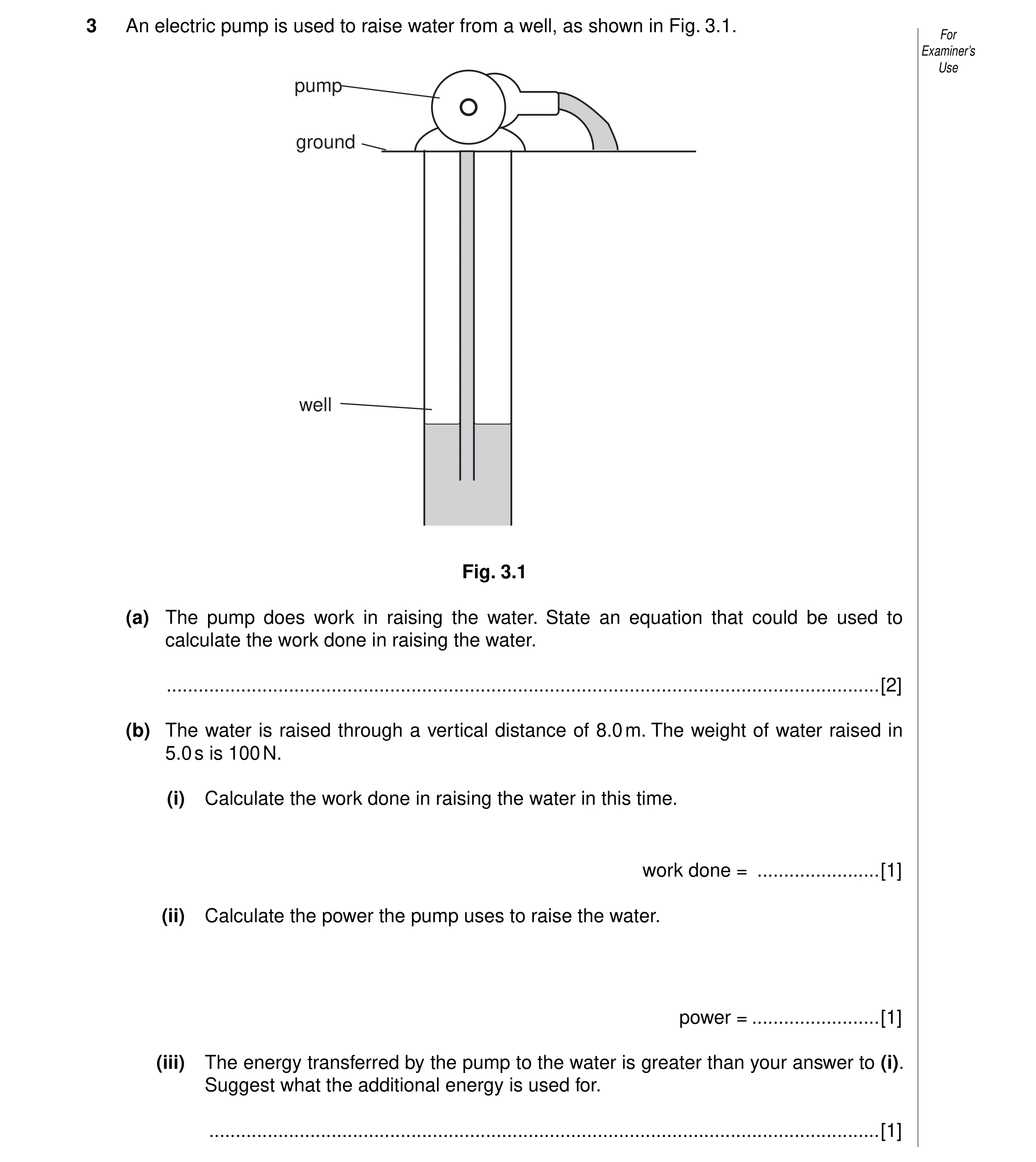 1 / 181
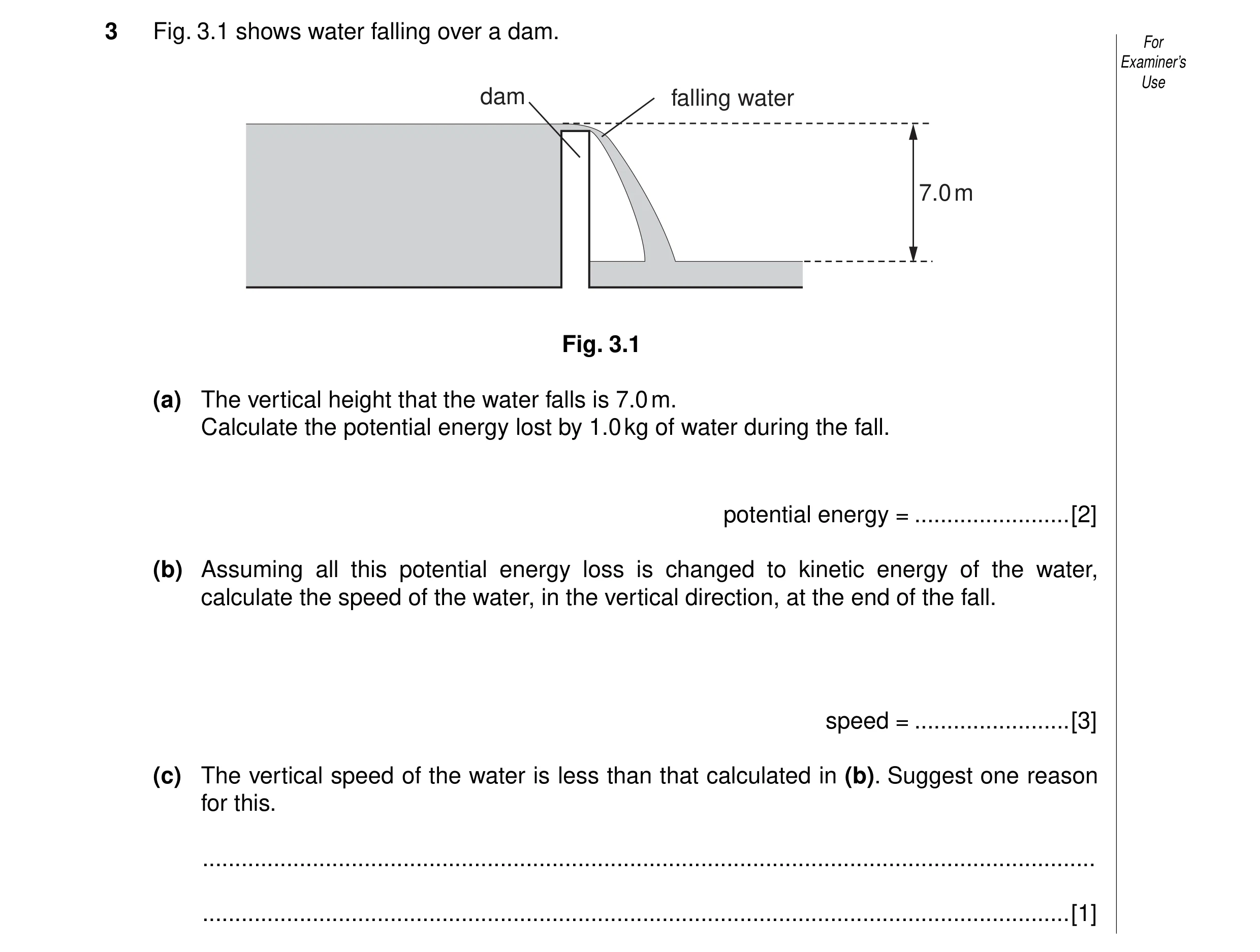 2 / 181
 3 / 181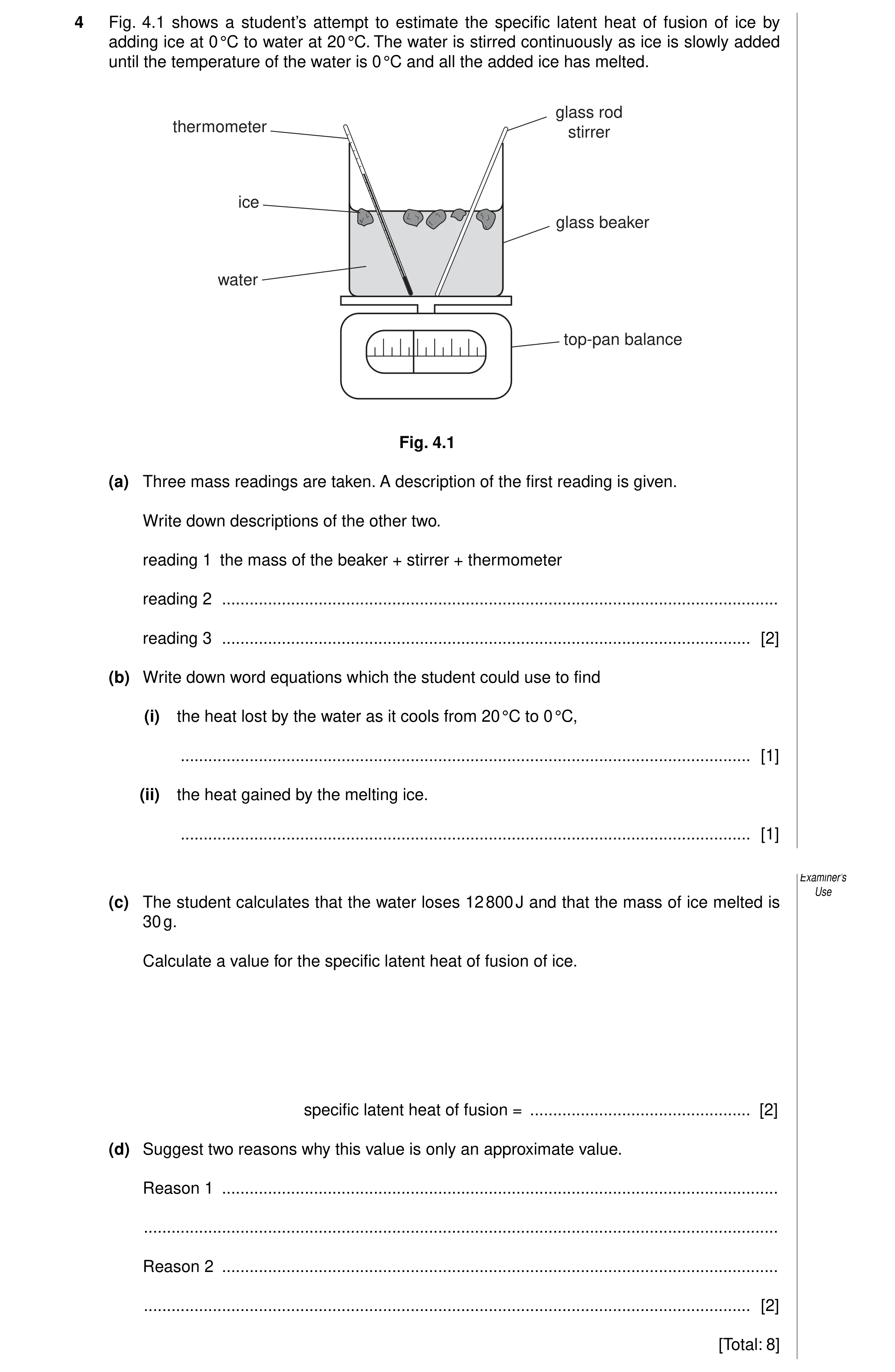
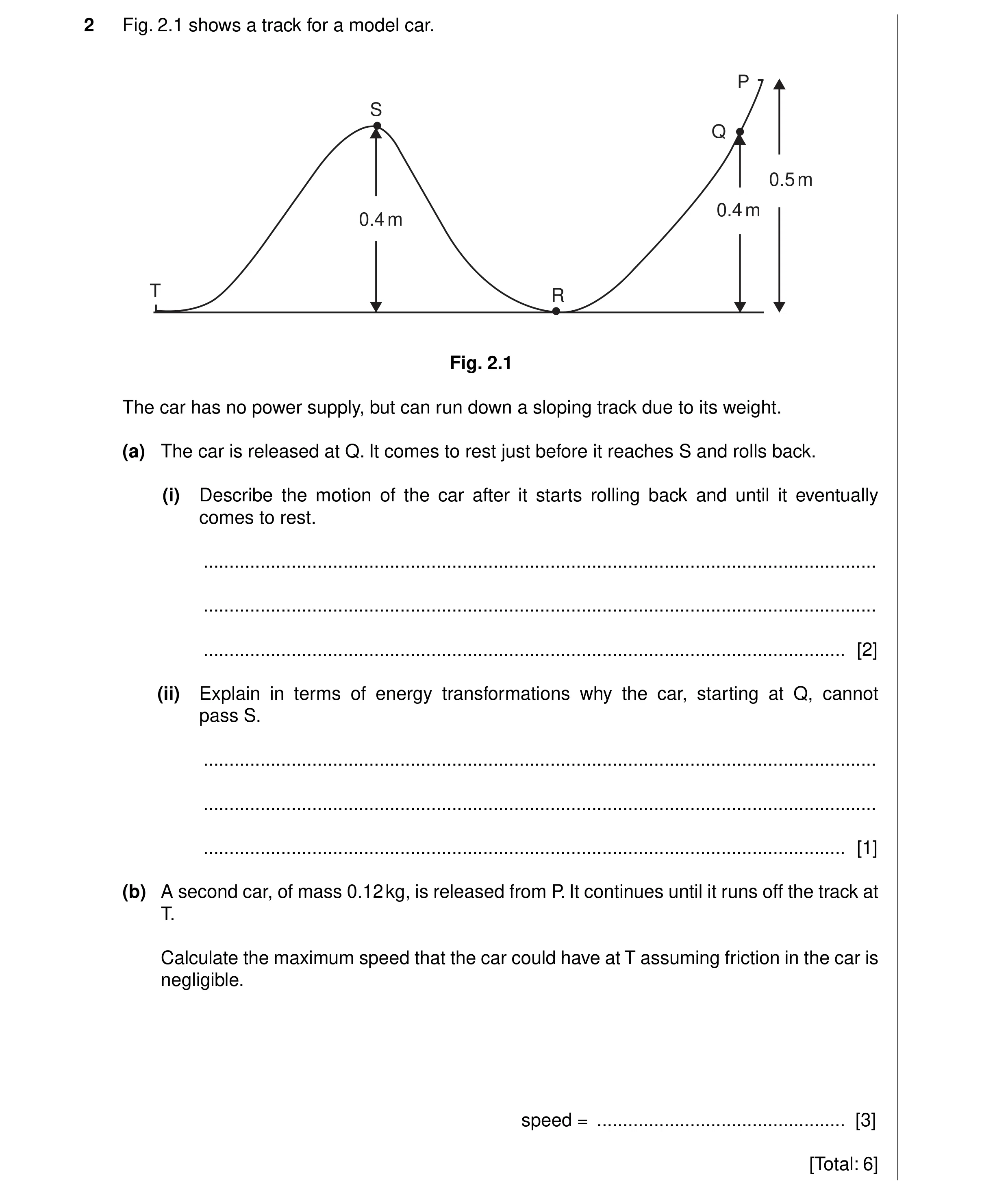 6 / 181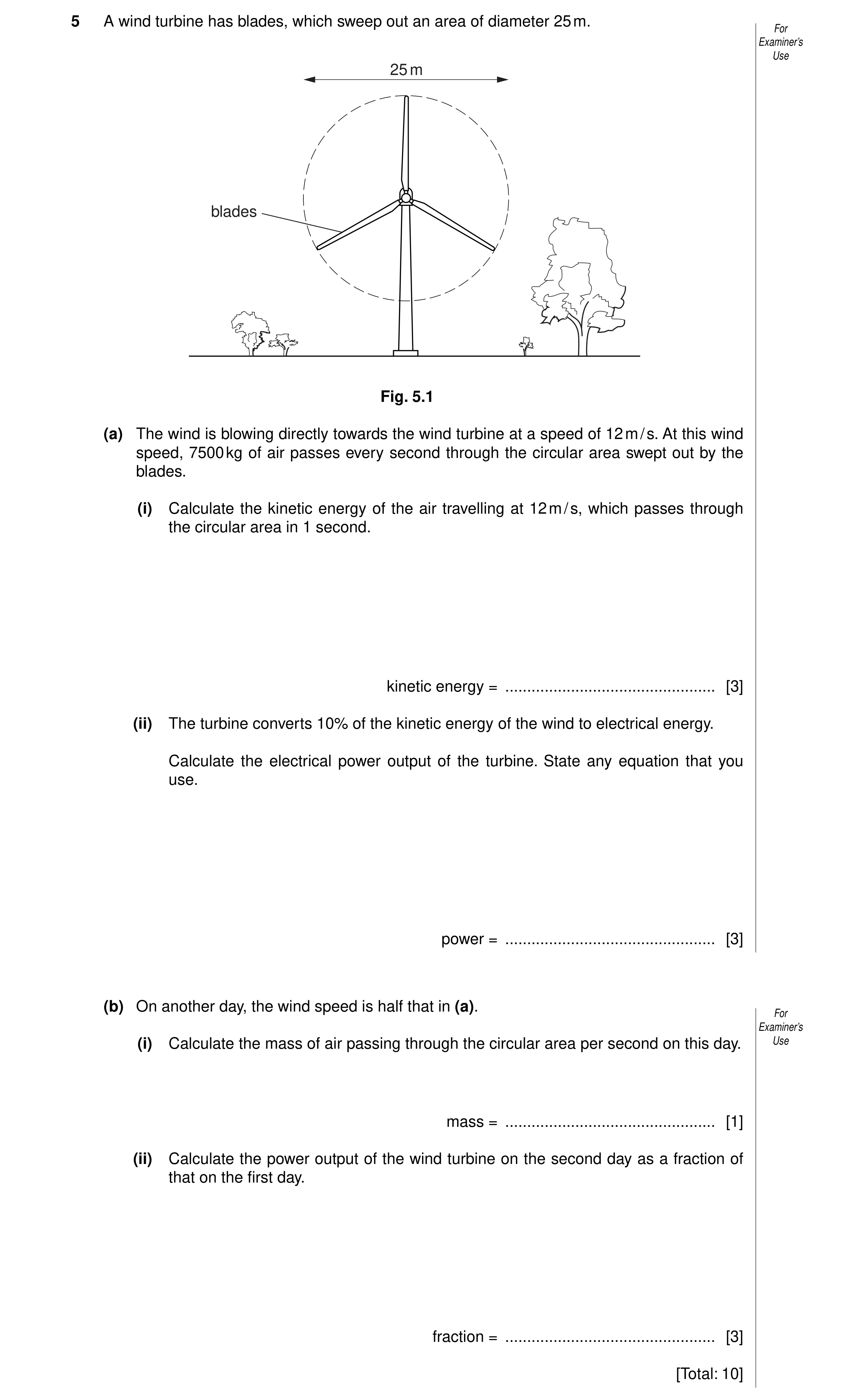
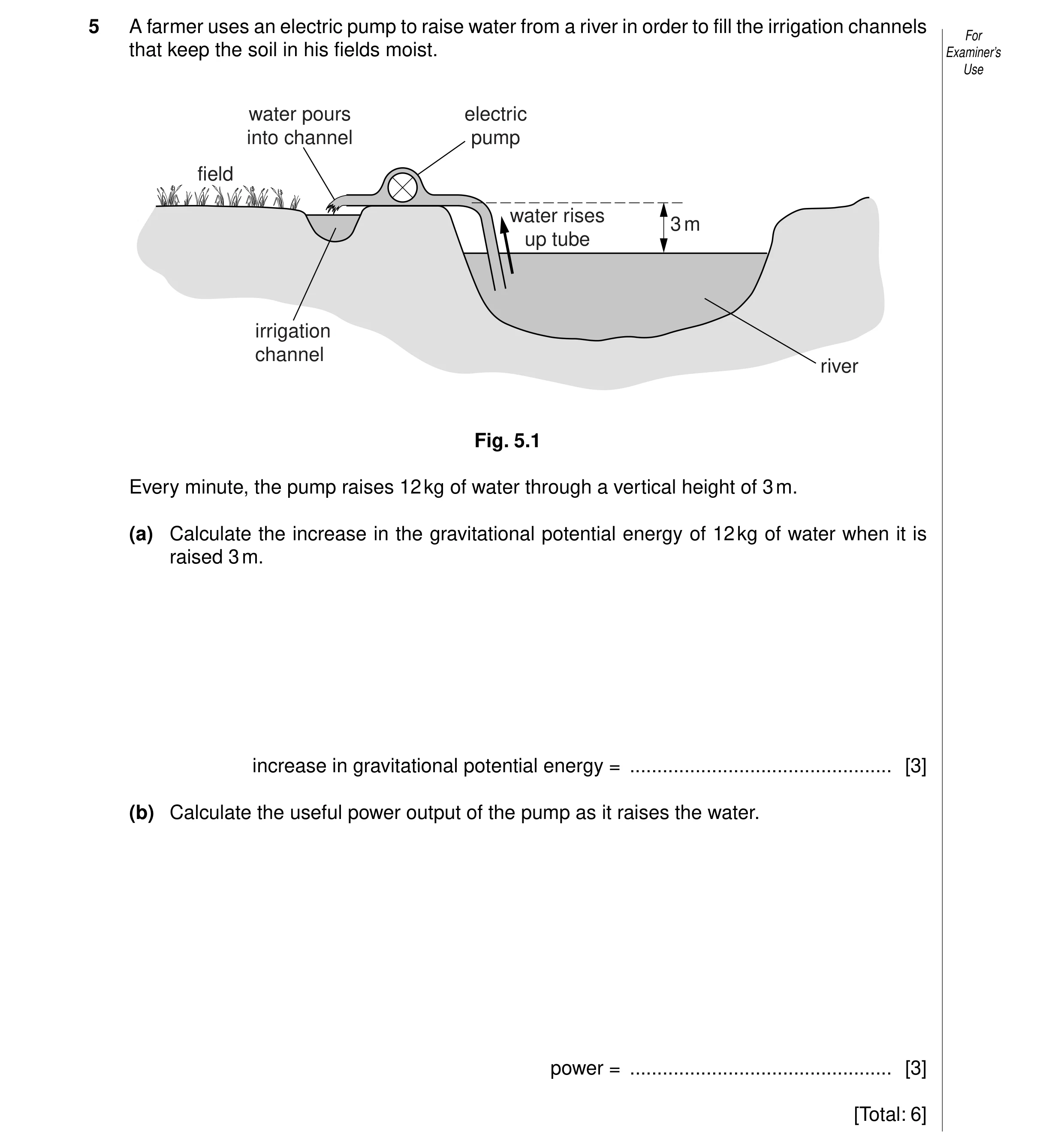 9 / 181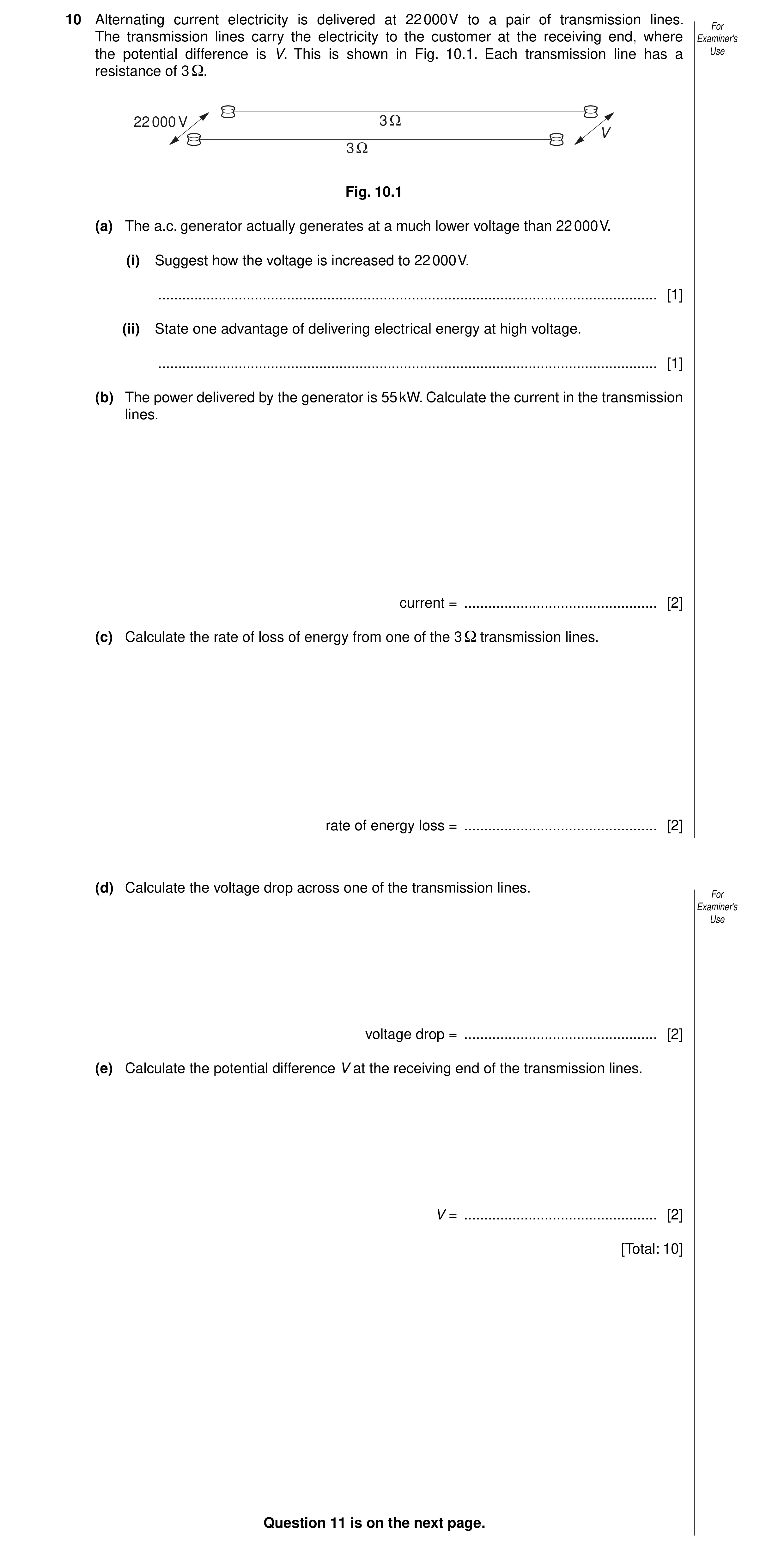
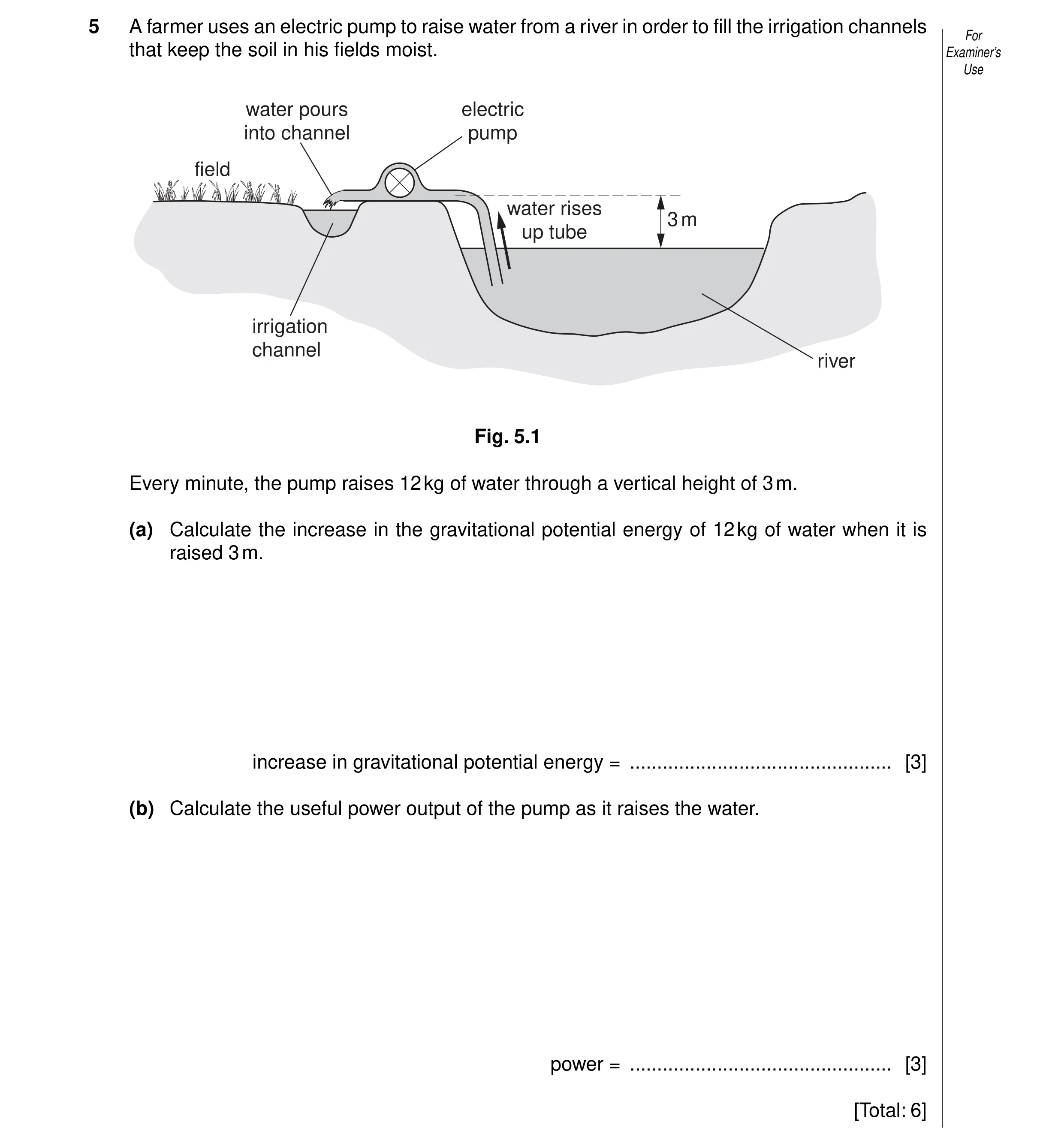 12 / 181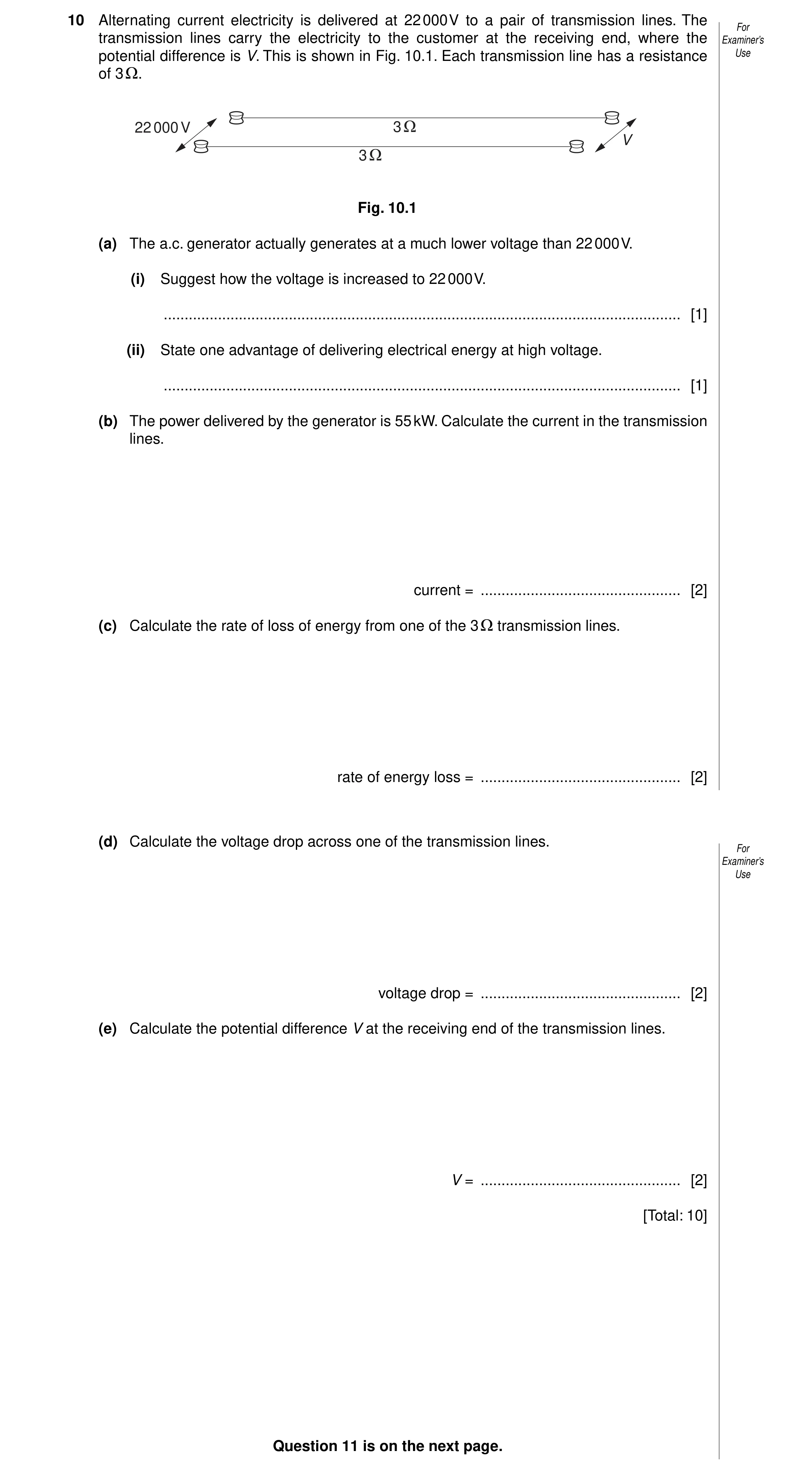
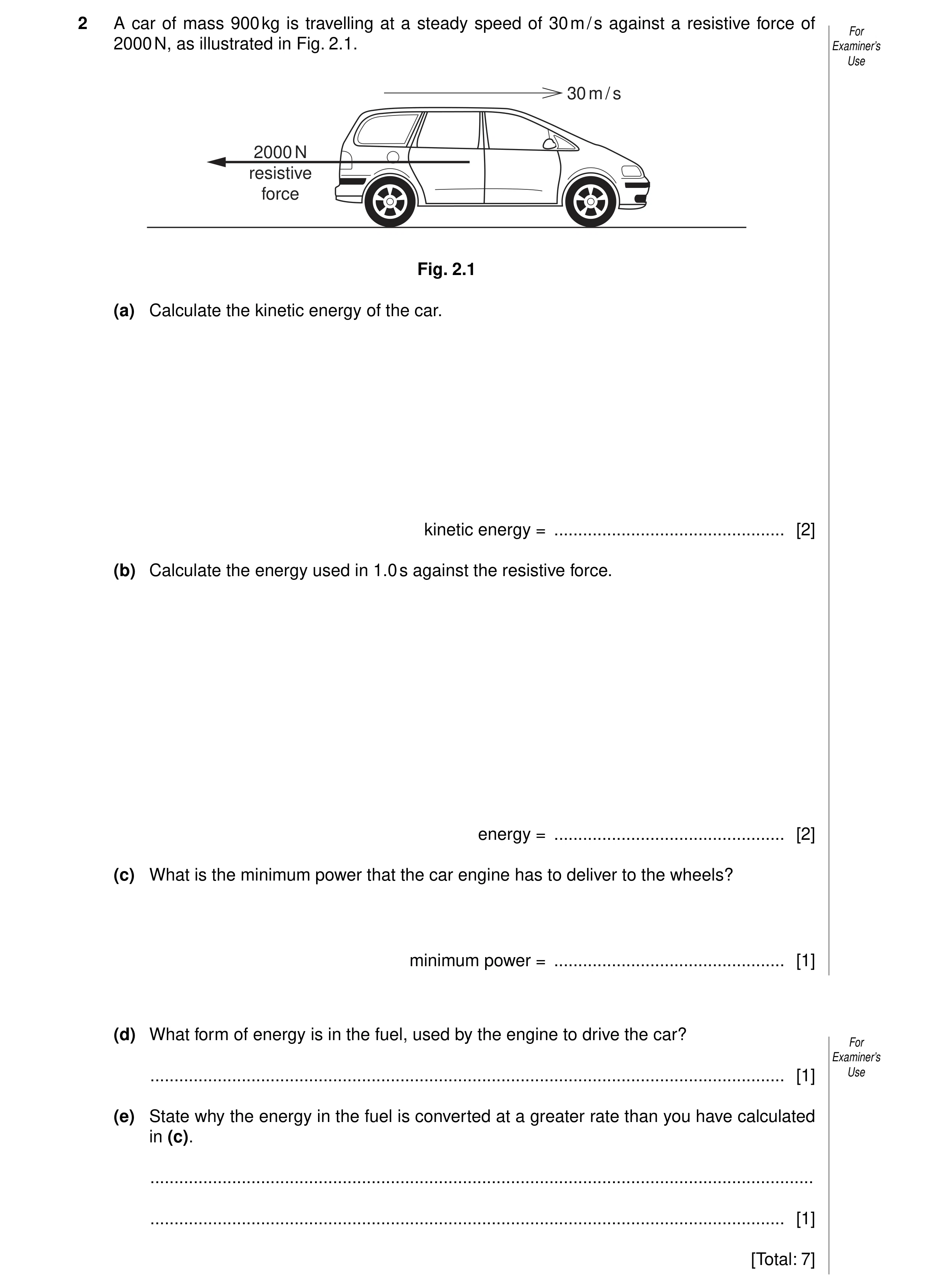 15 / 181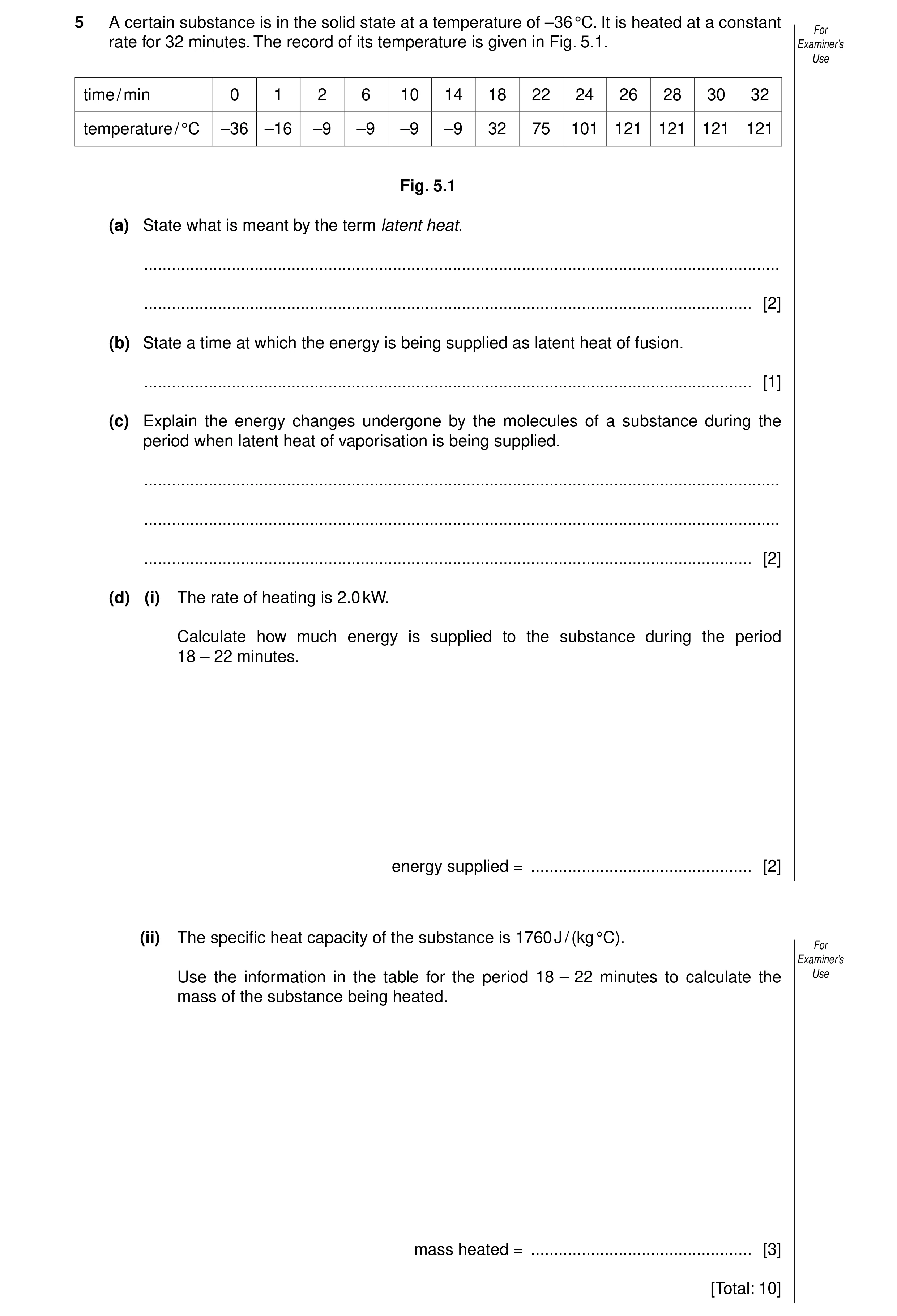
 18 / 181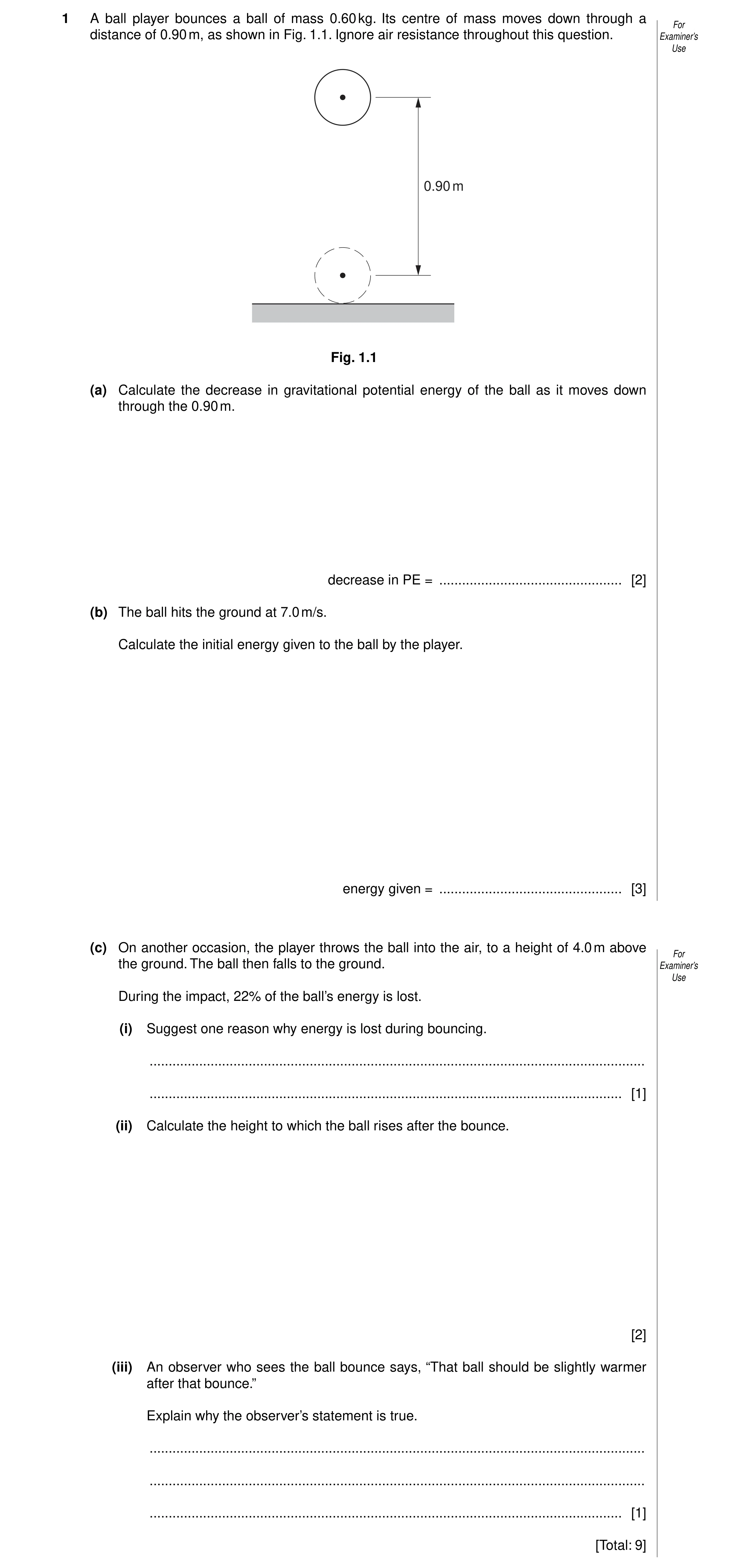
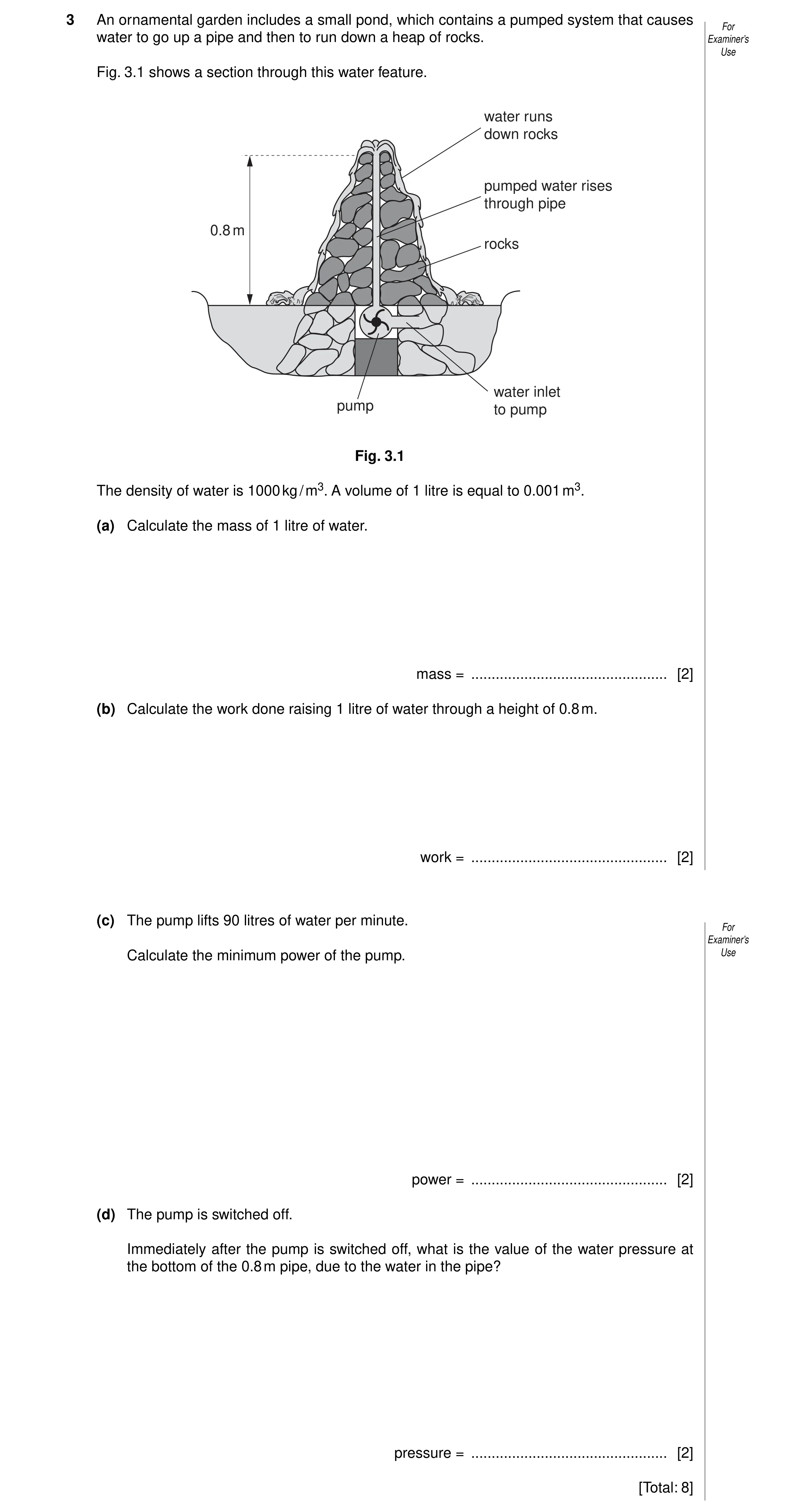
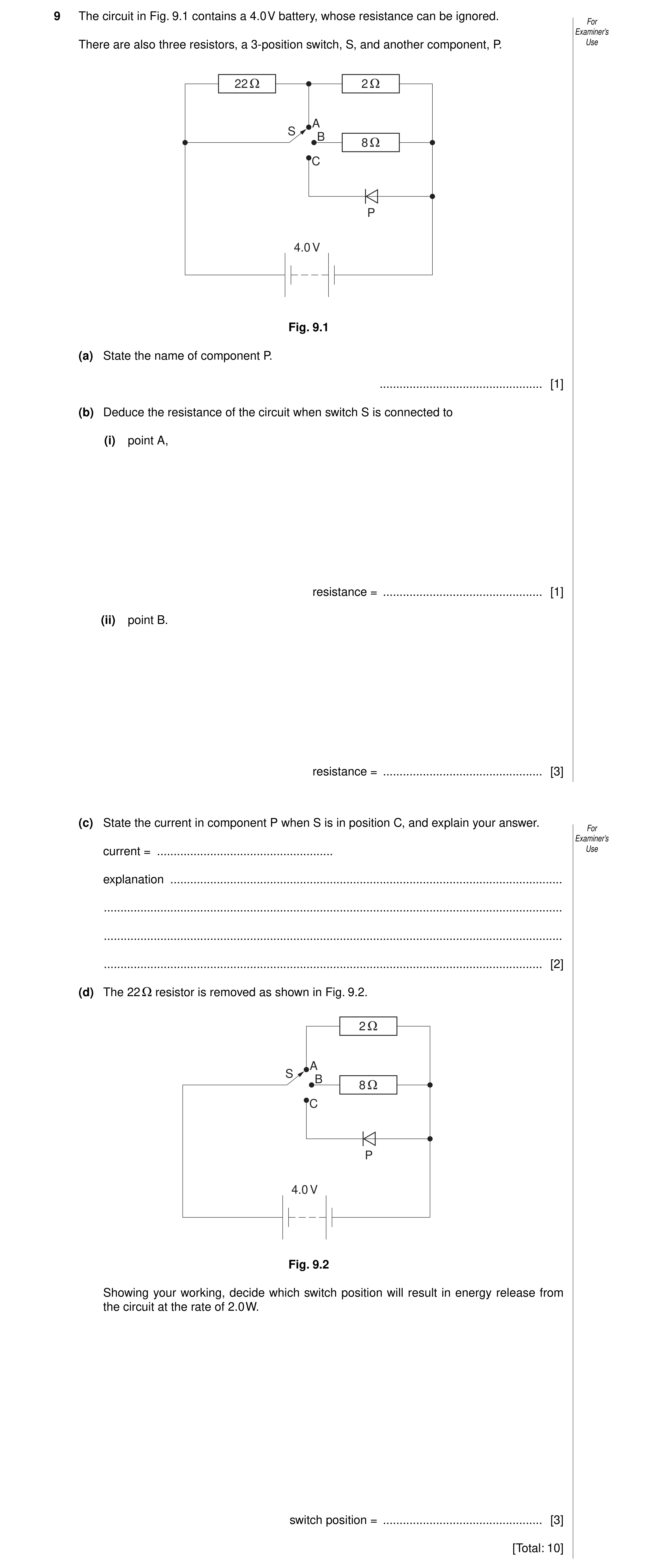
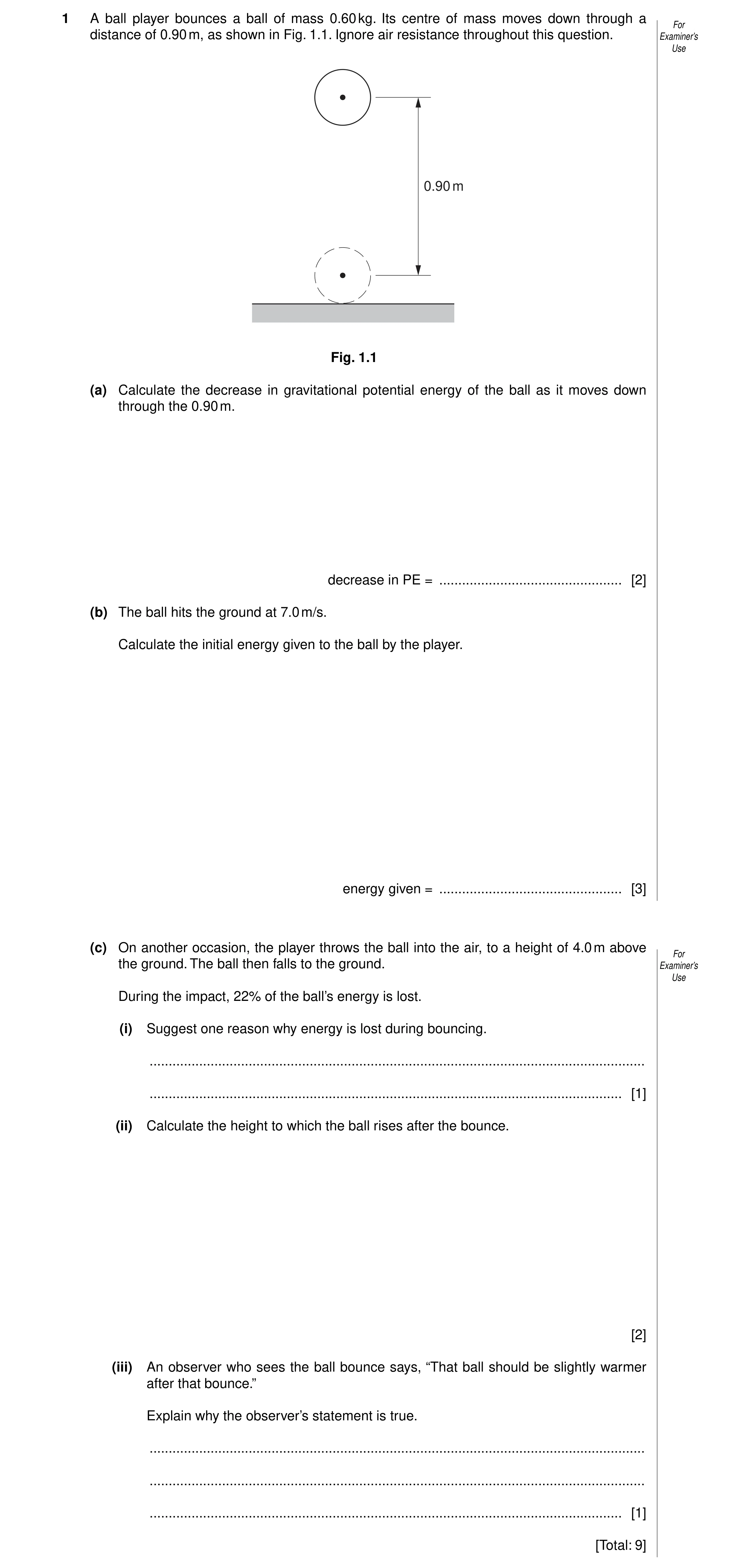
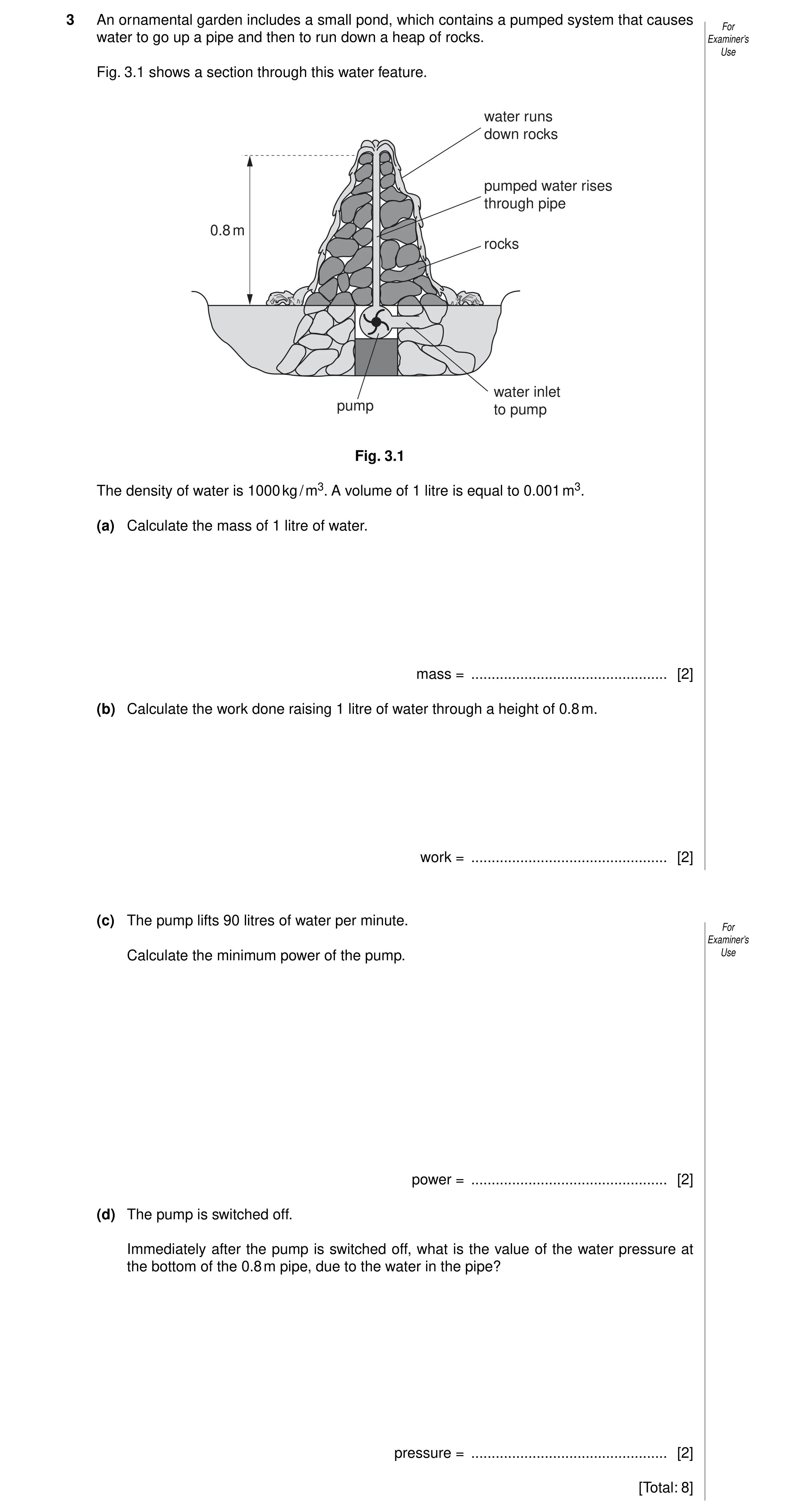
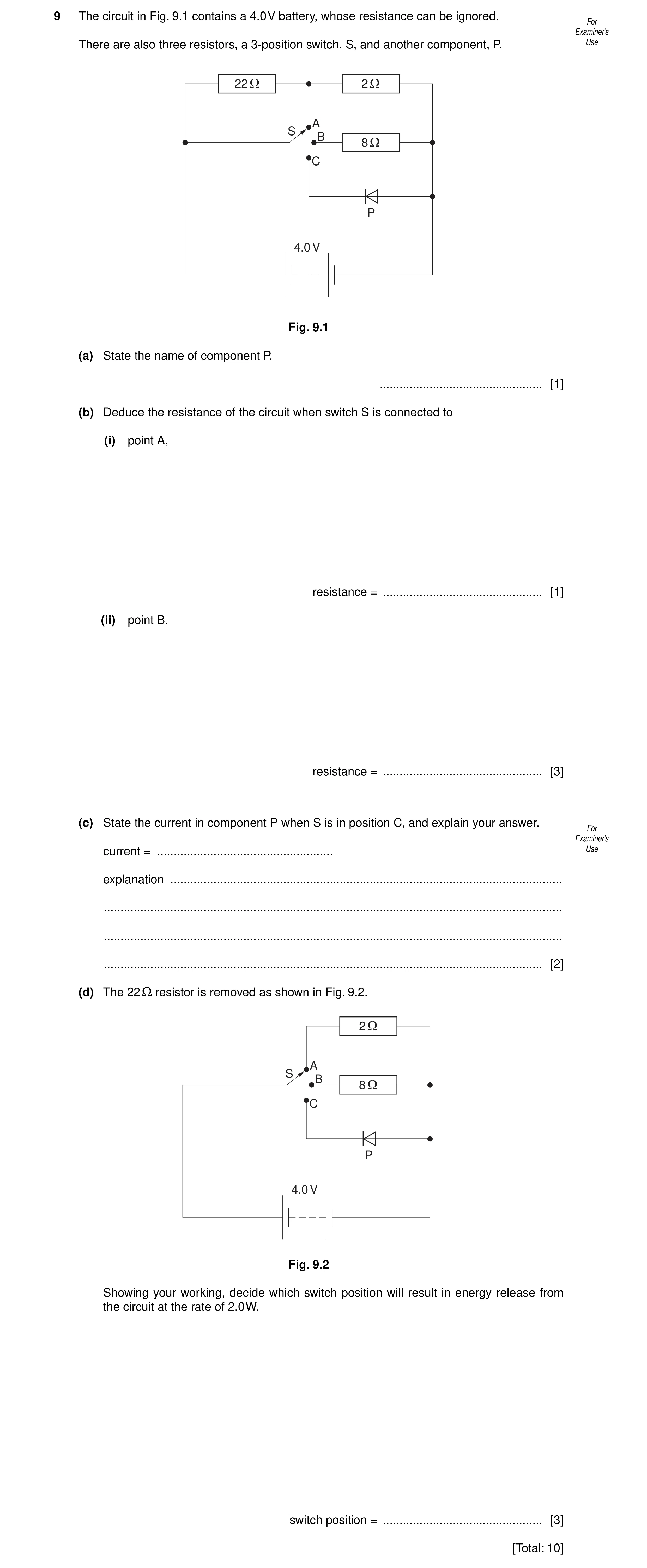
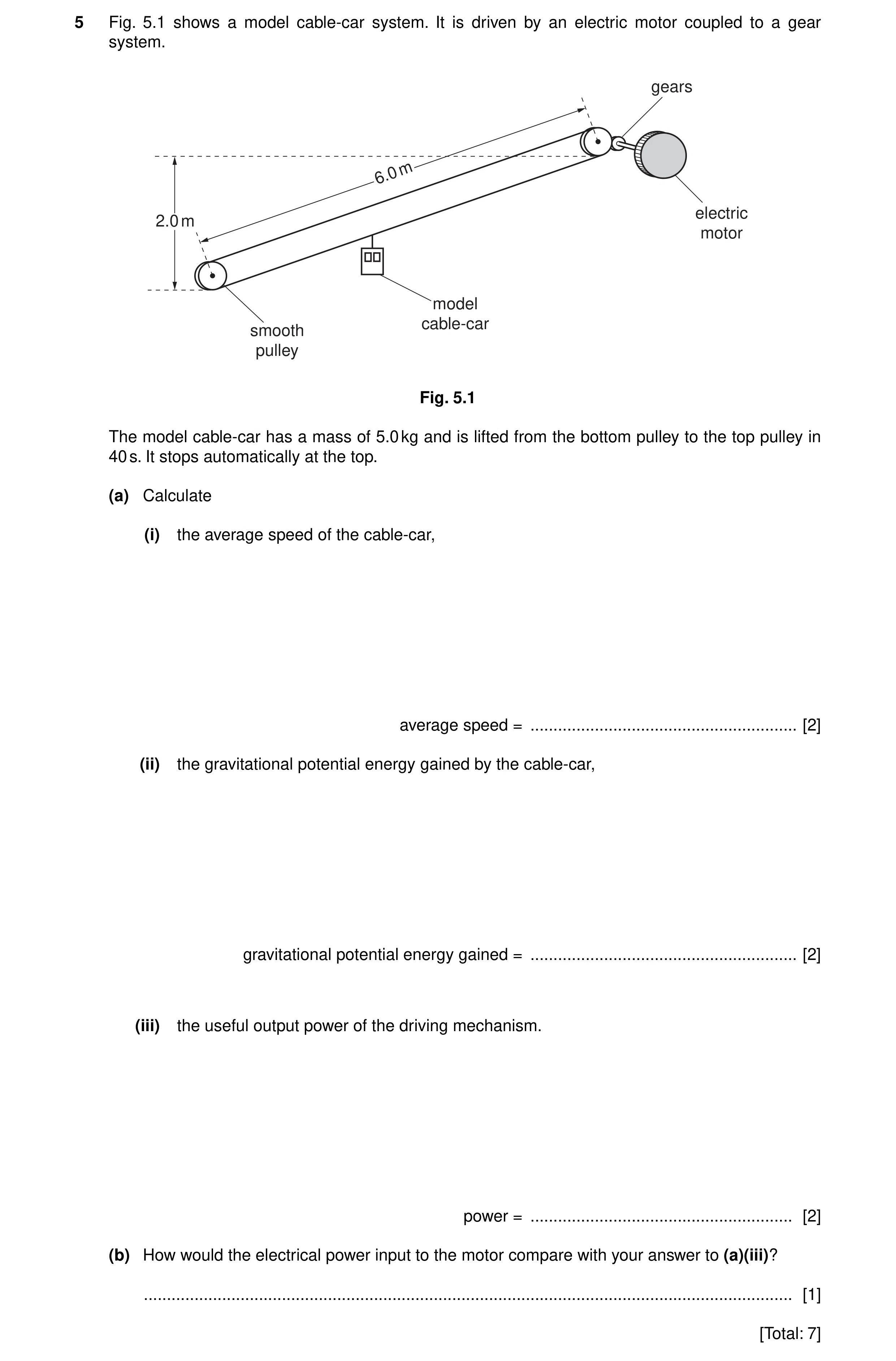
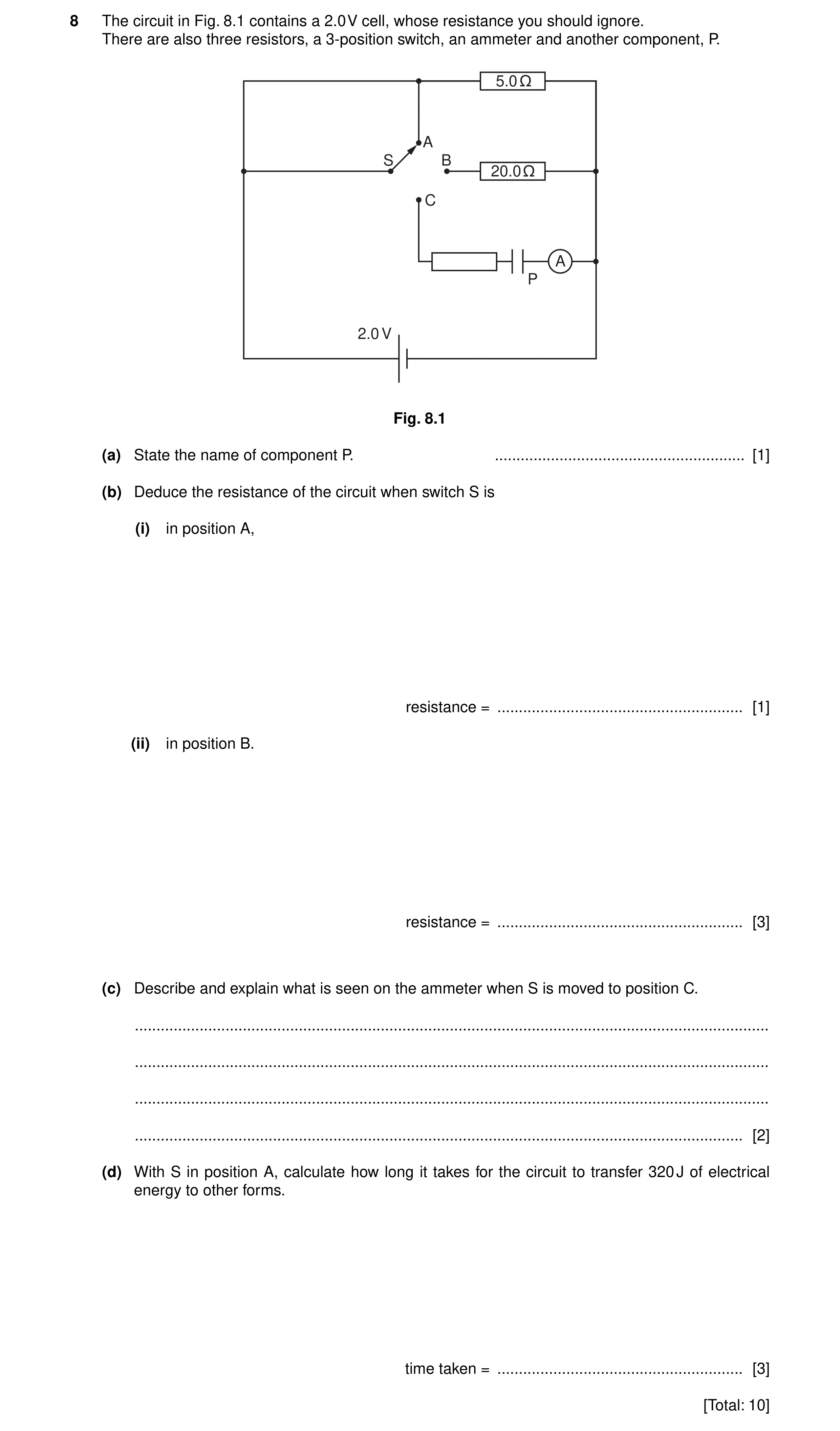
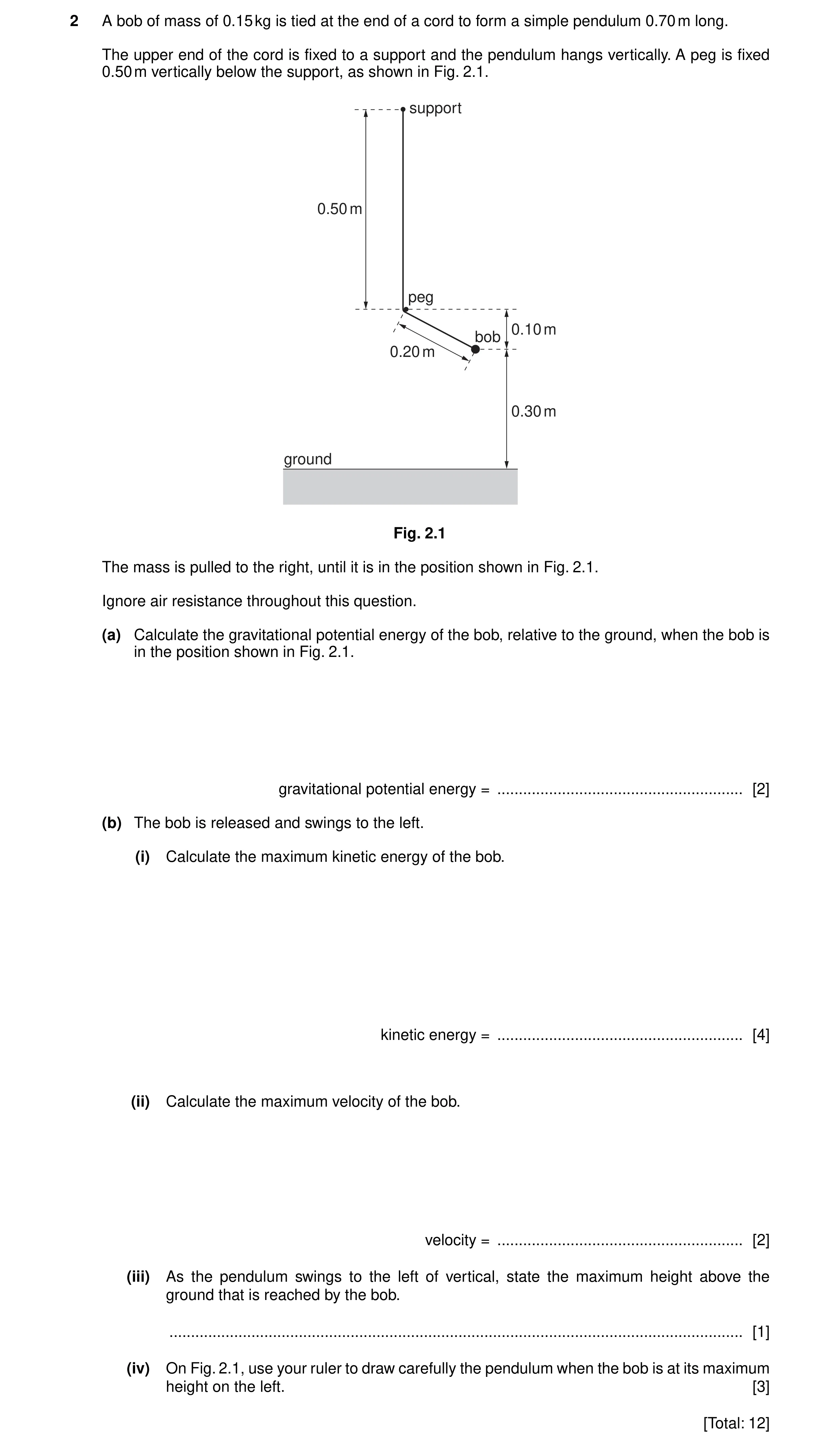
 35 / 181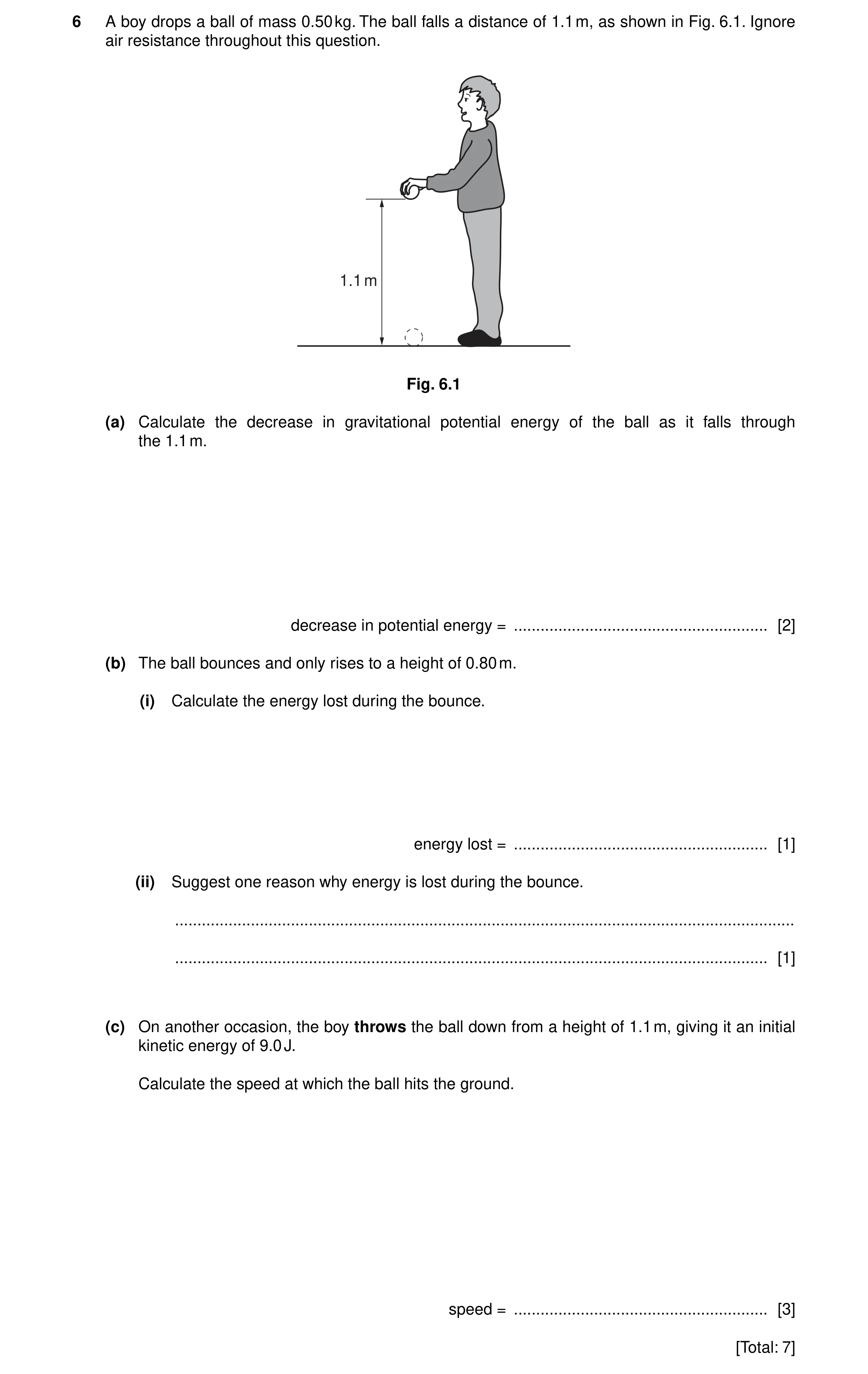
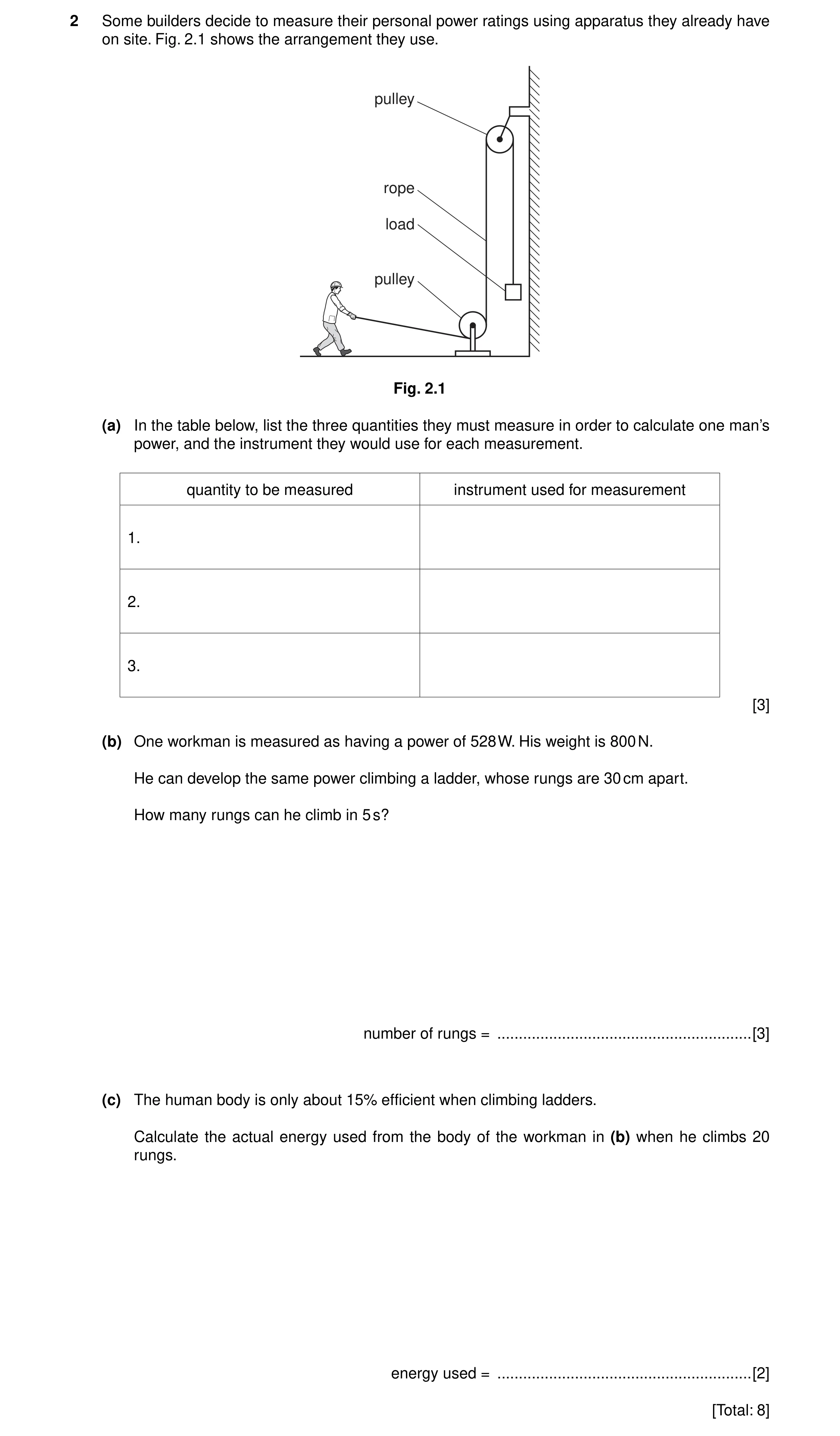
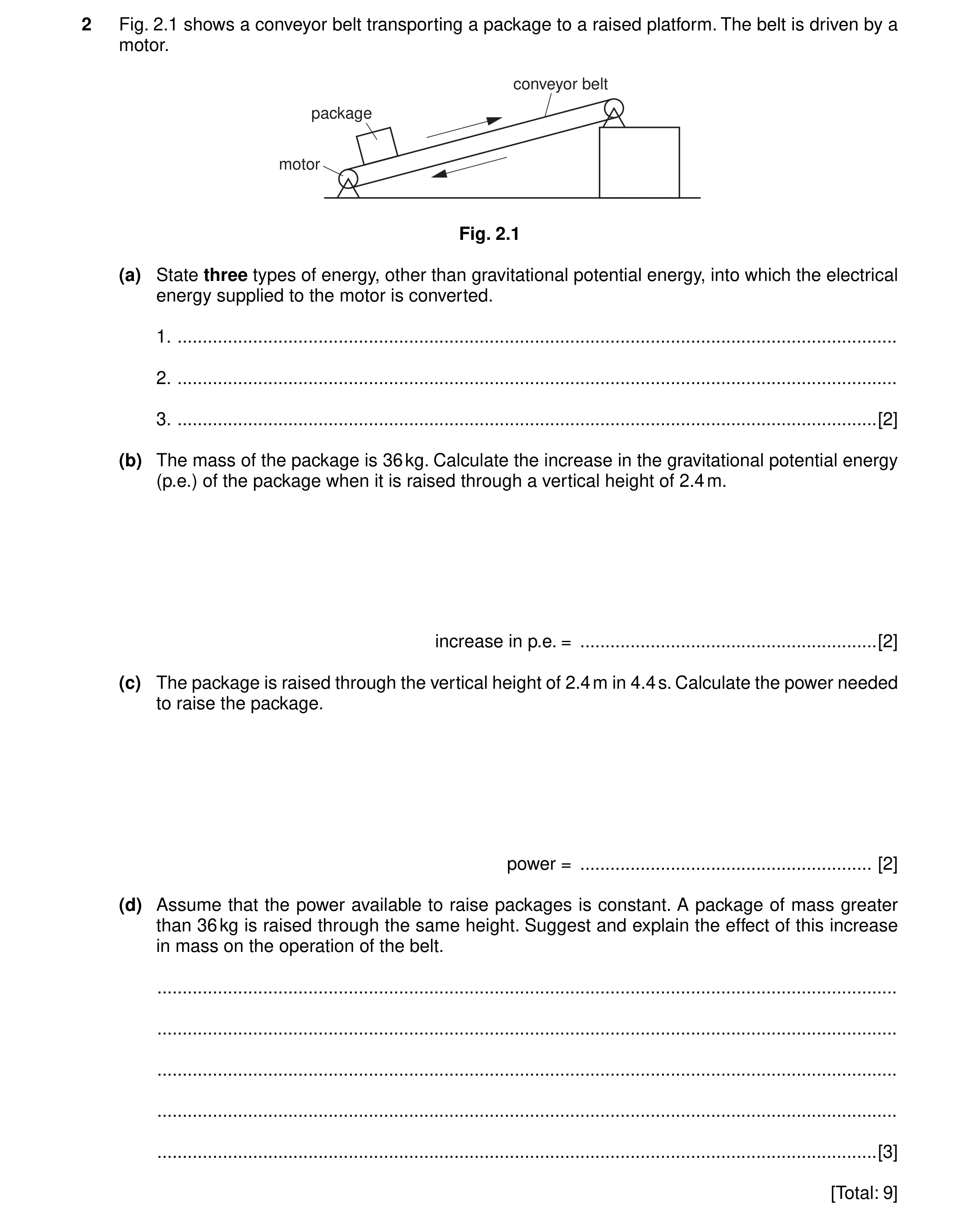 39 / 181
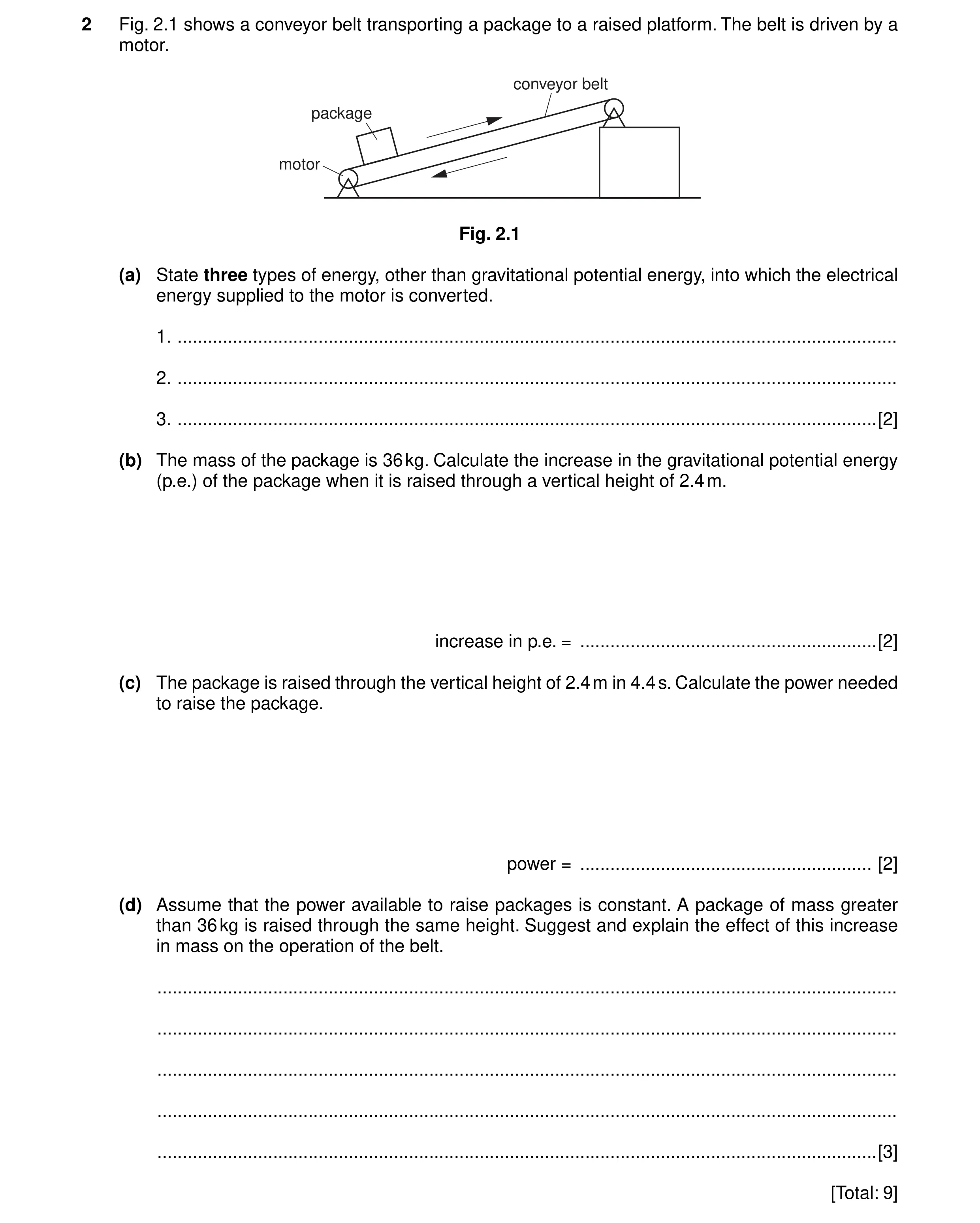 40 / 181
 41 / 181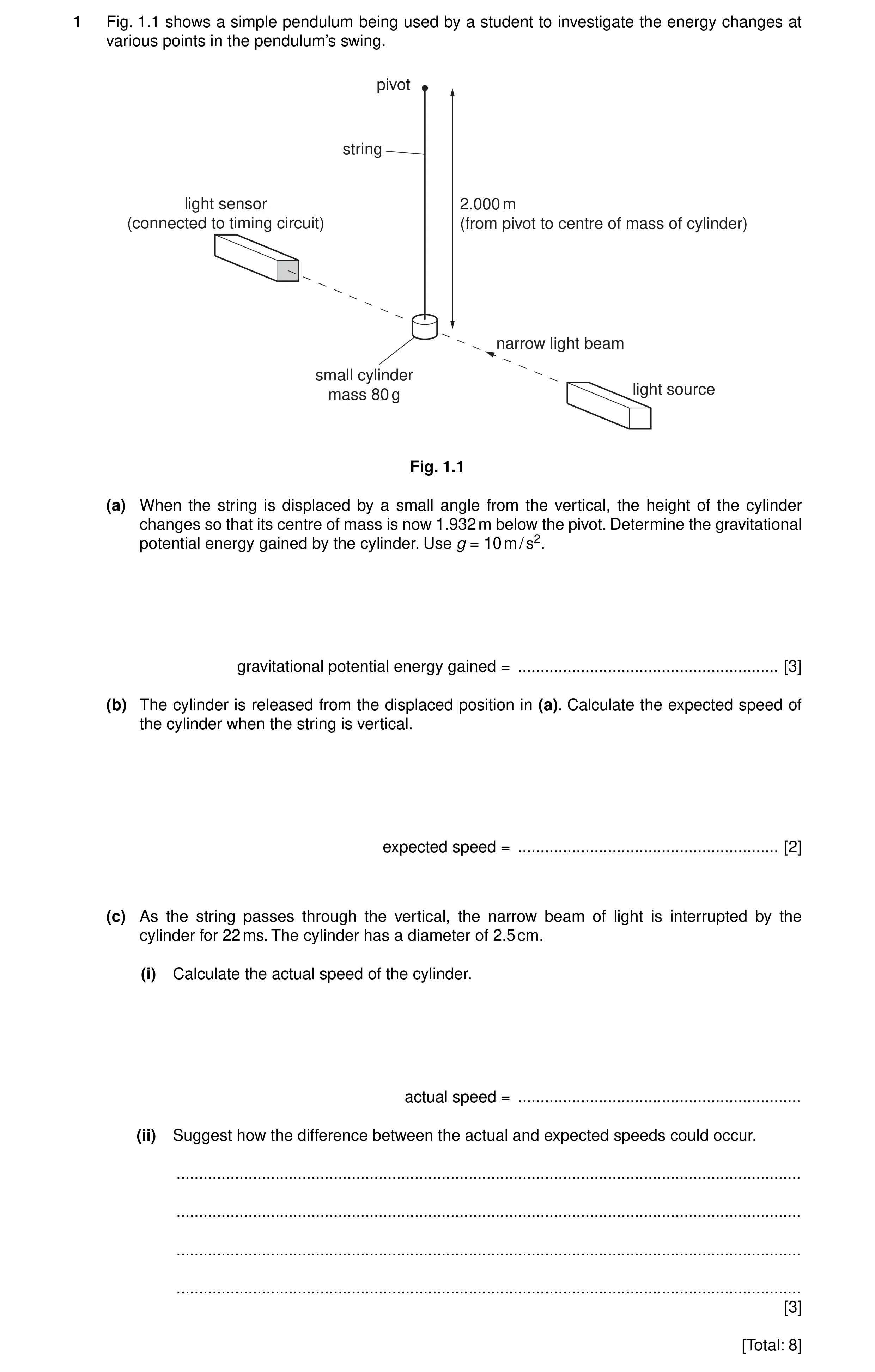
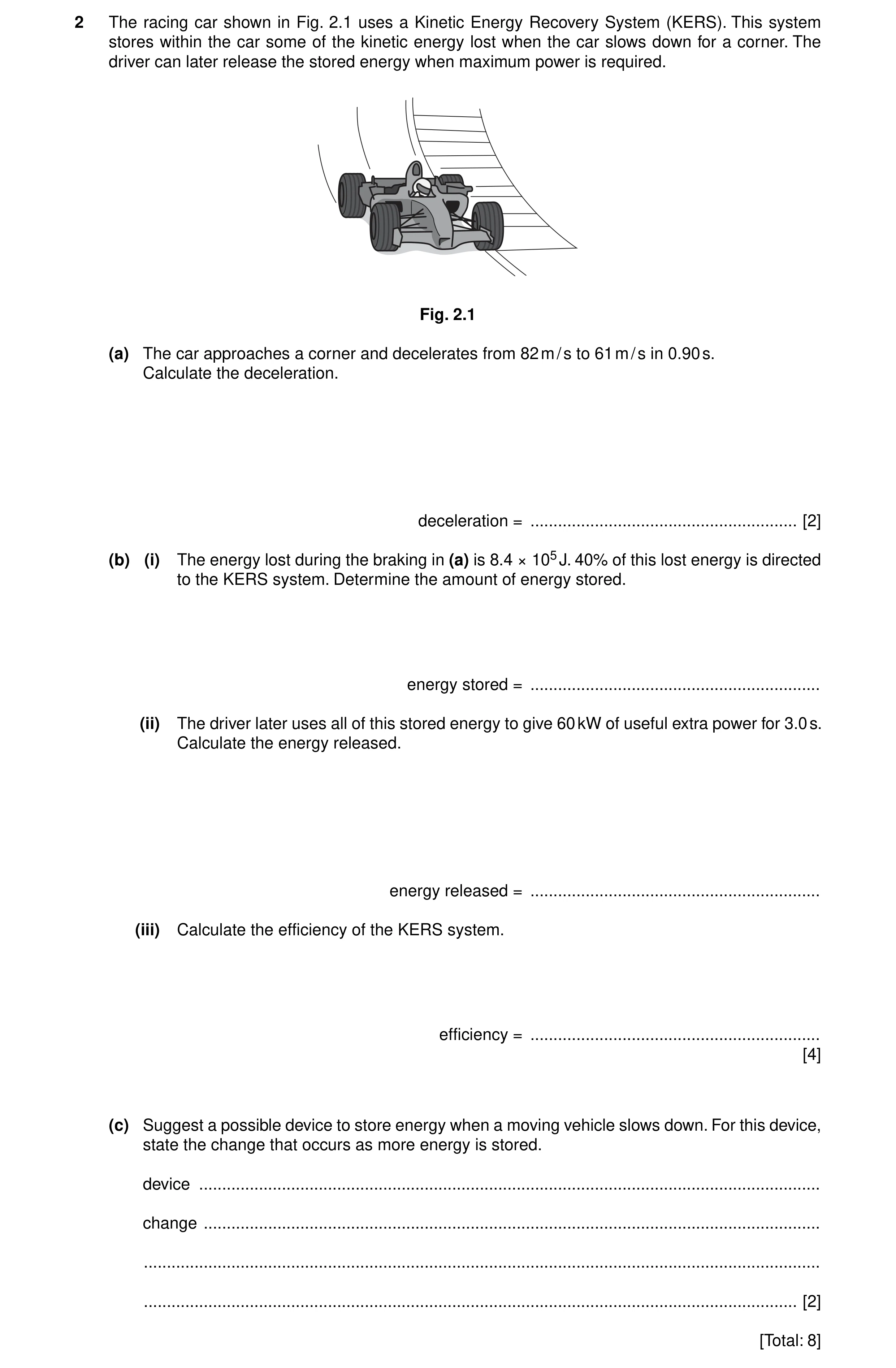
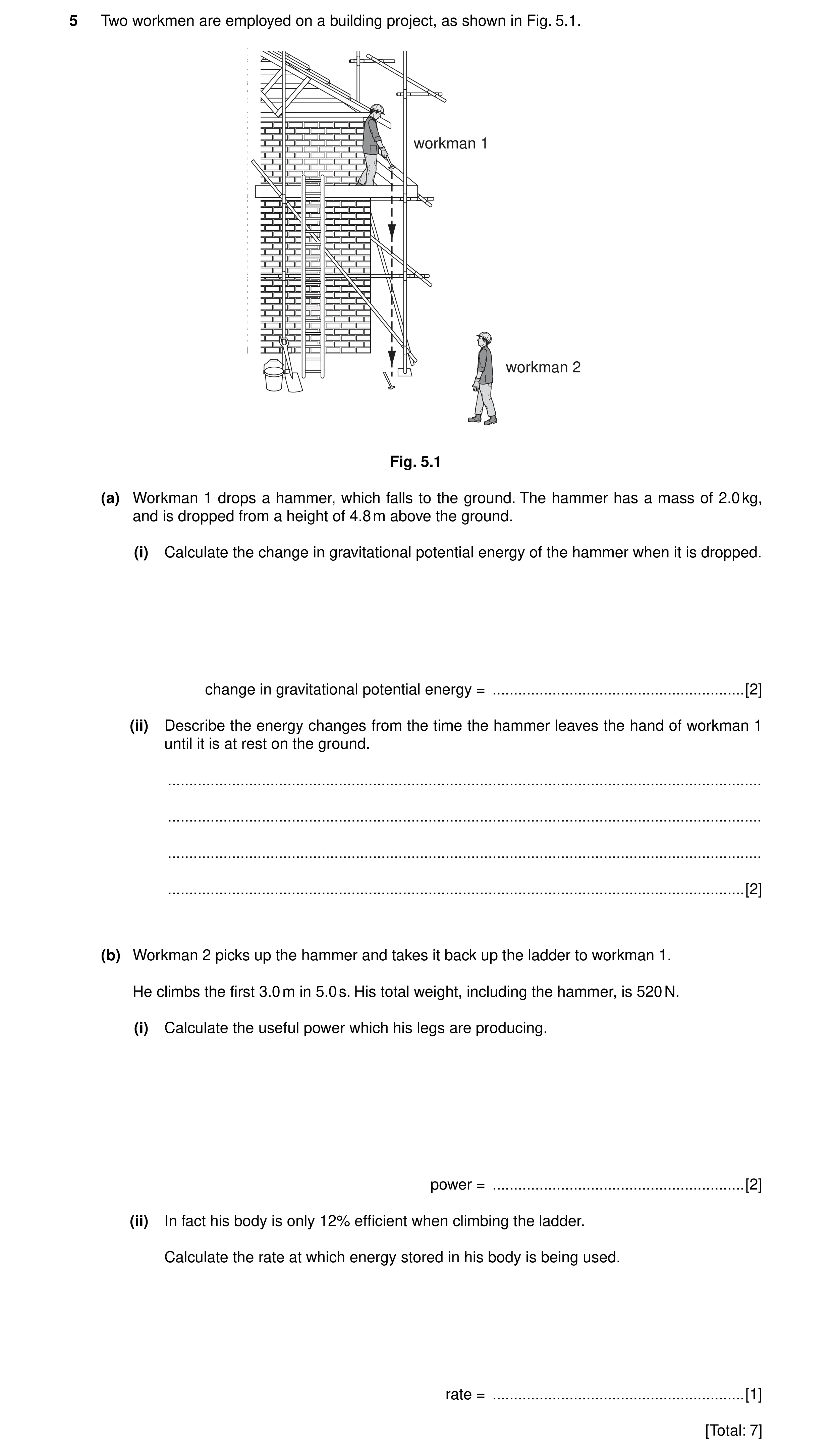
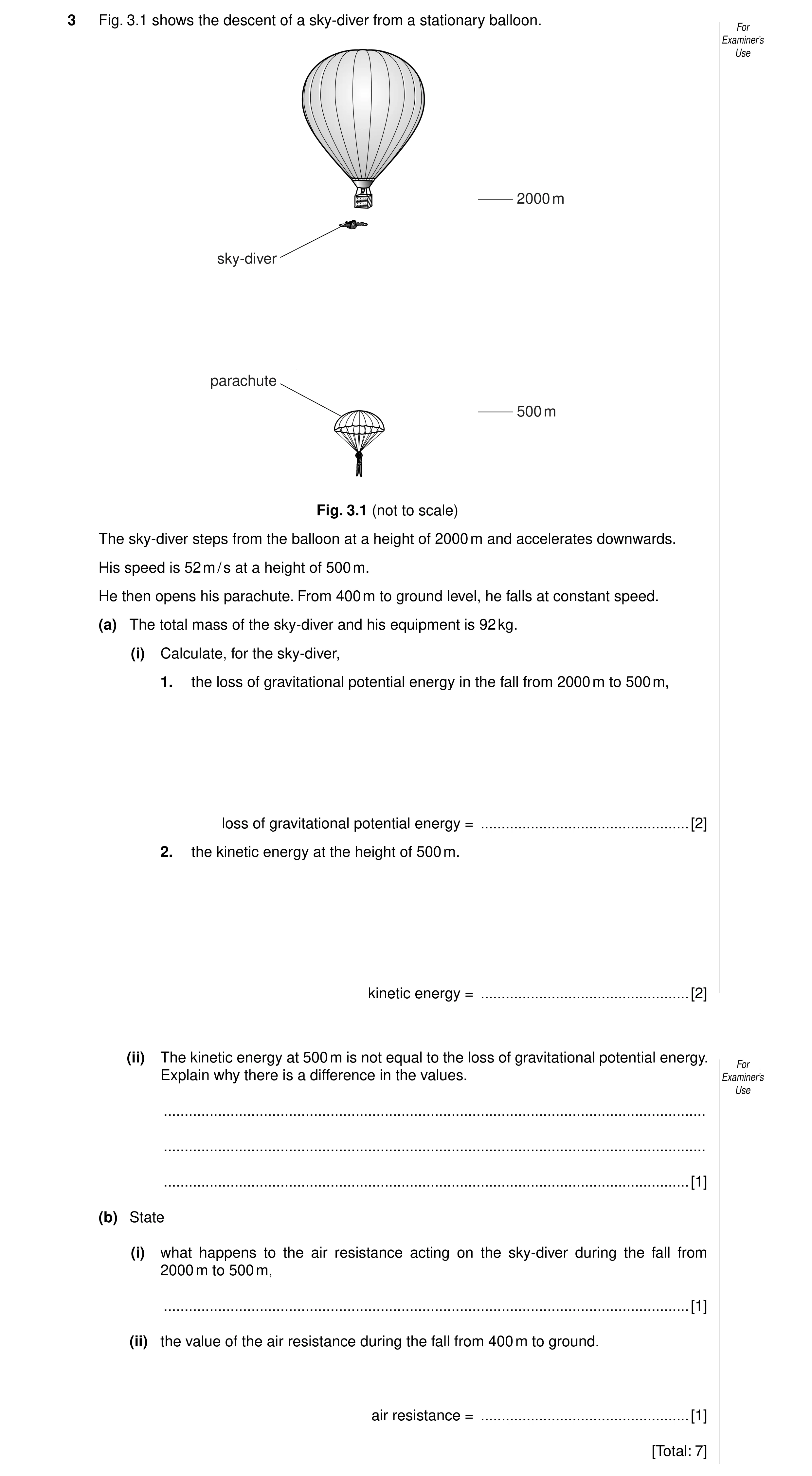
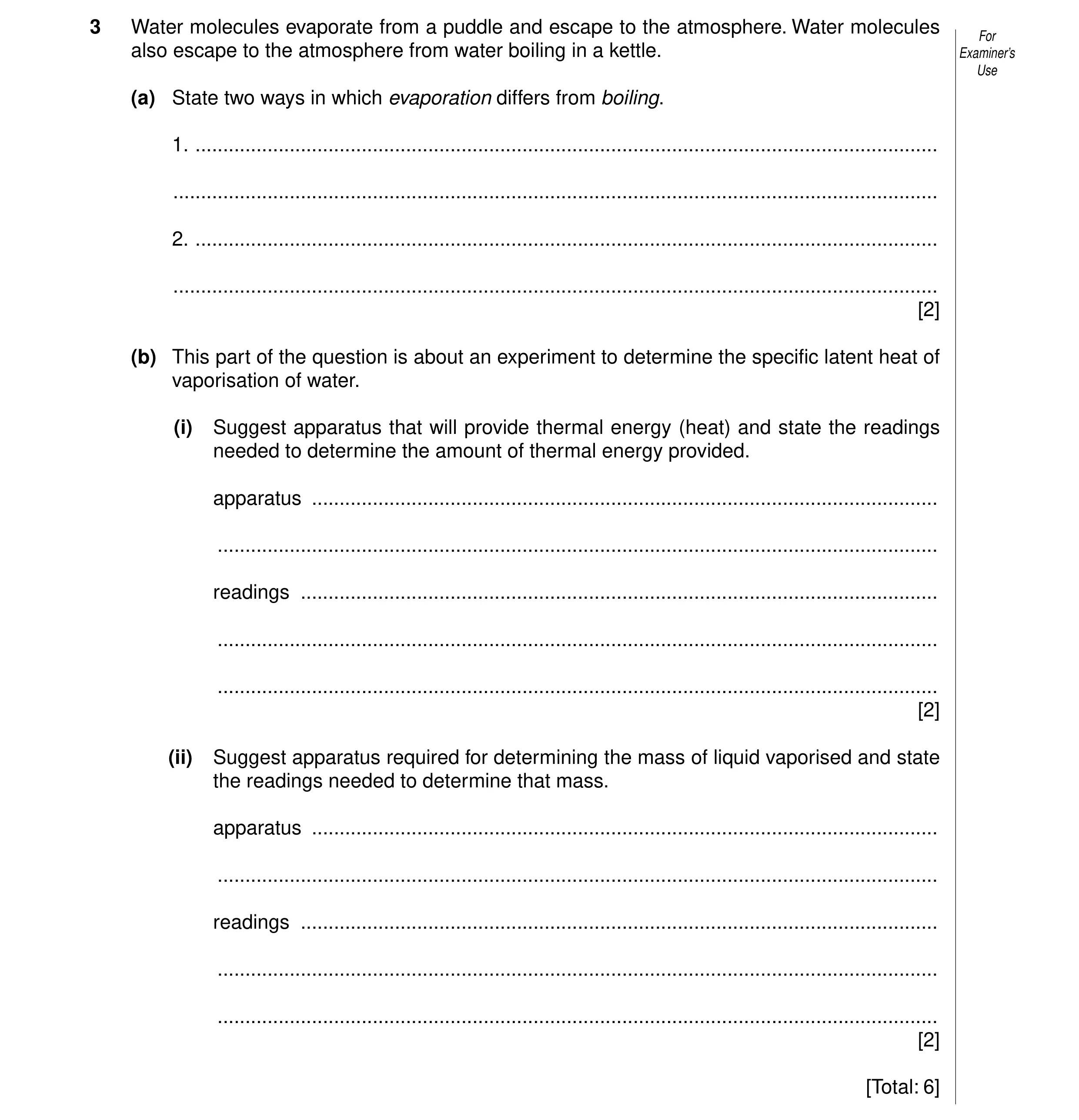 48 / 181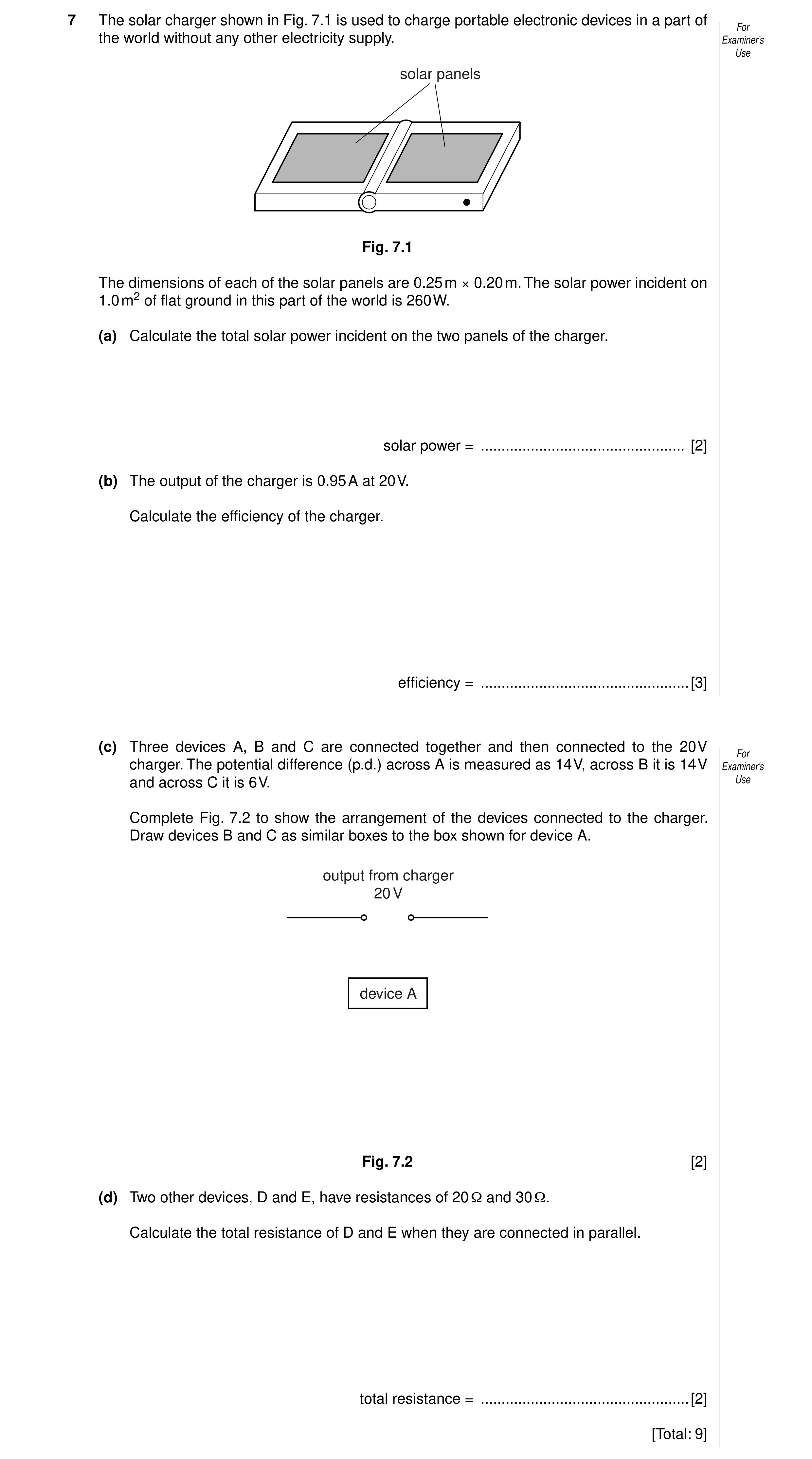
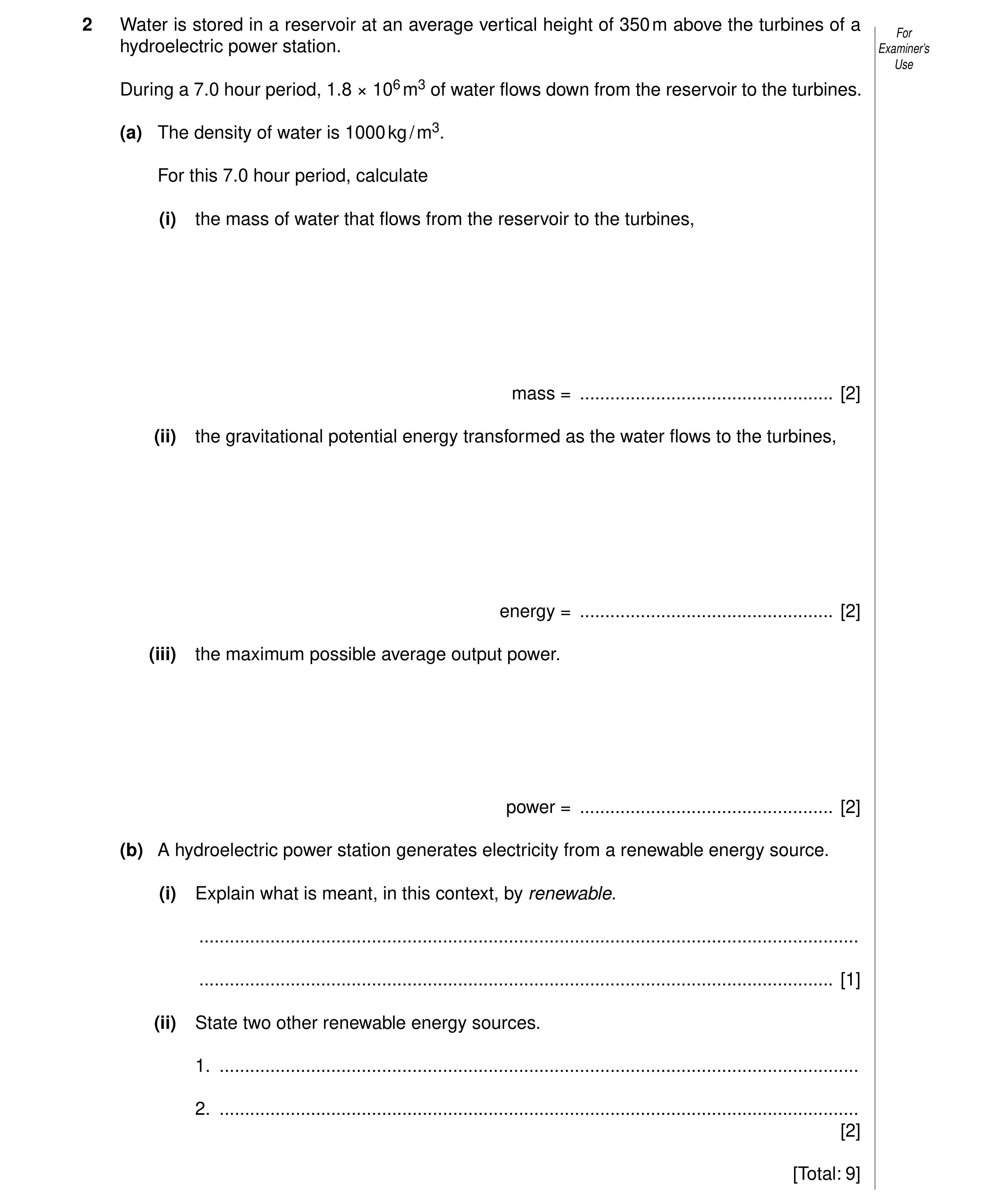 51 / 181
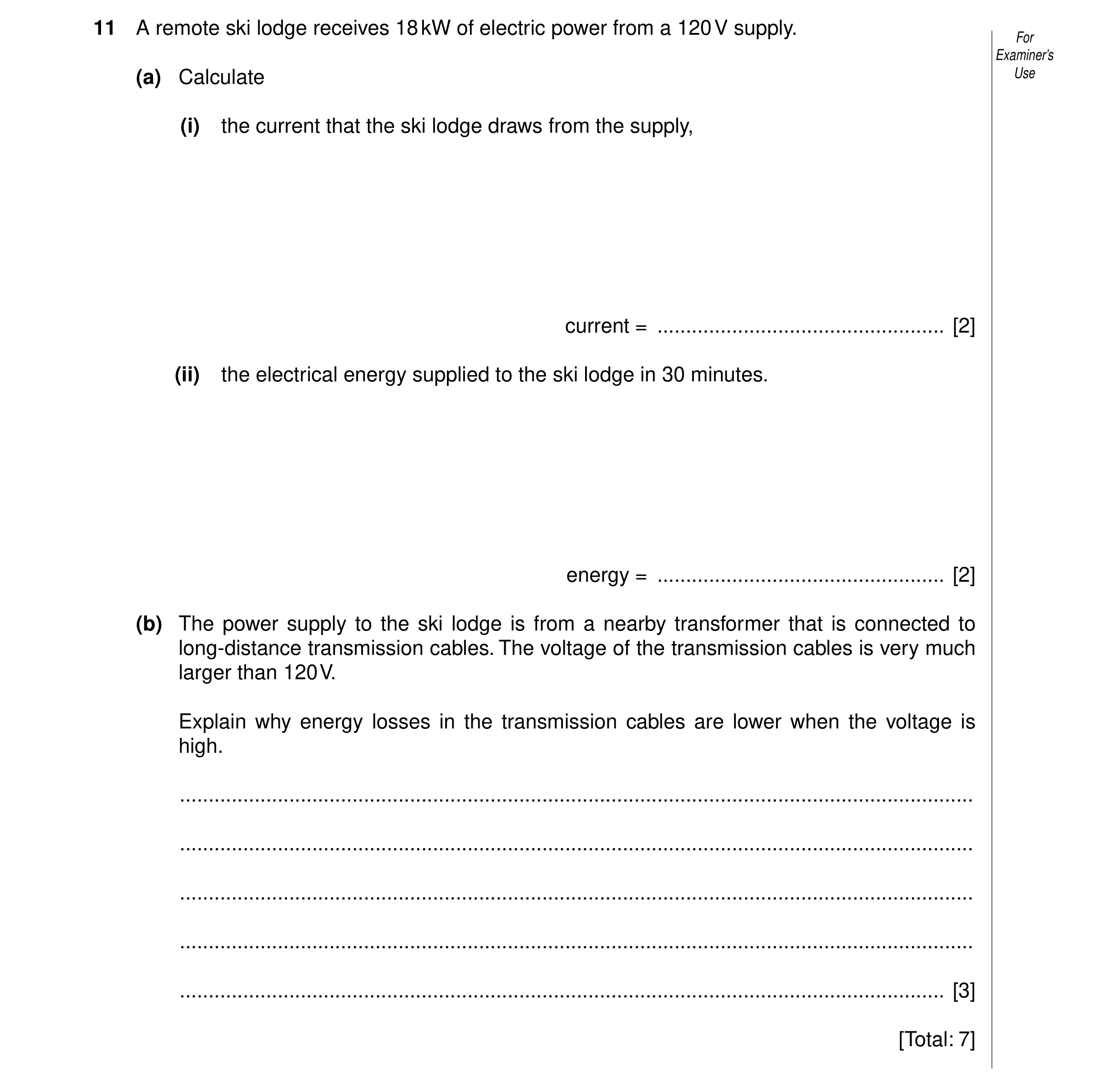 52 / 181
 53 / 181
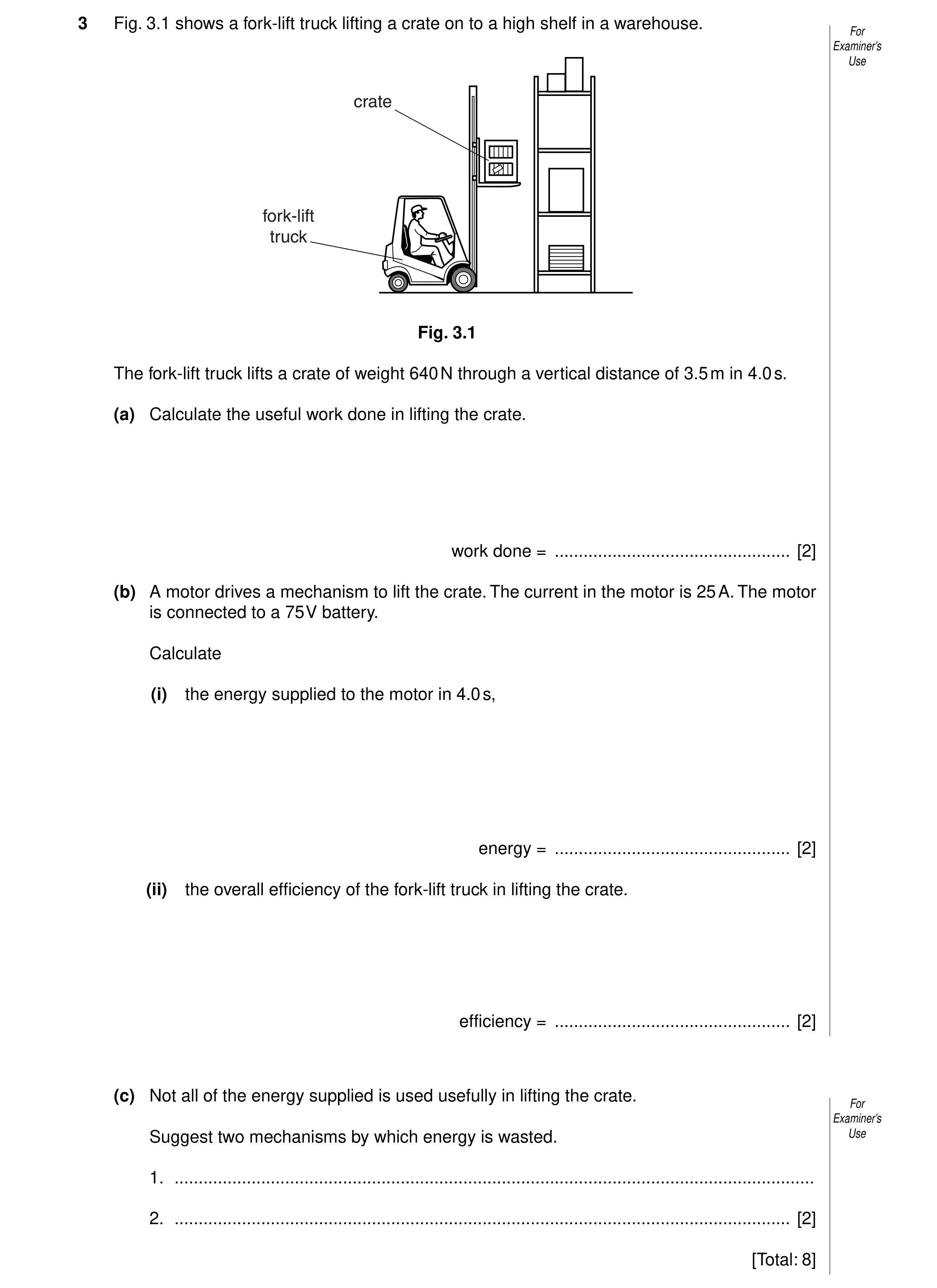 54 / 181
 55 / 181
 56 / 181
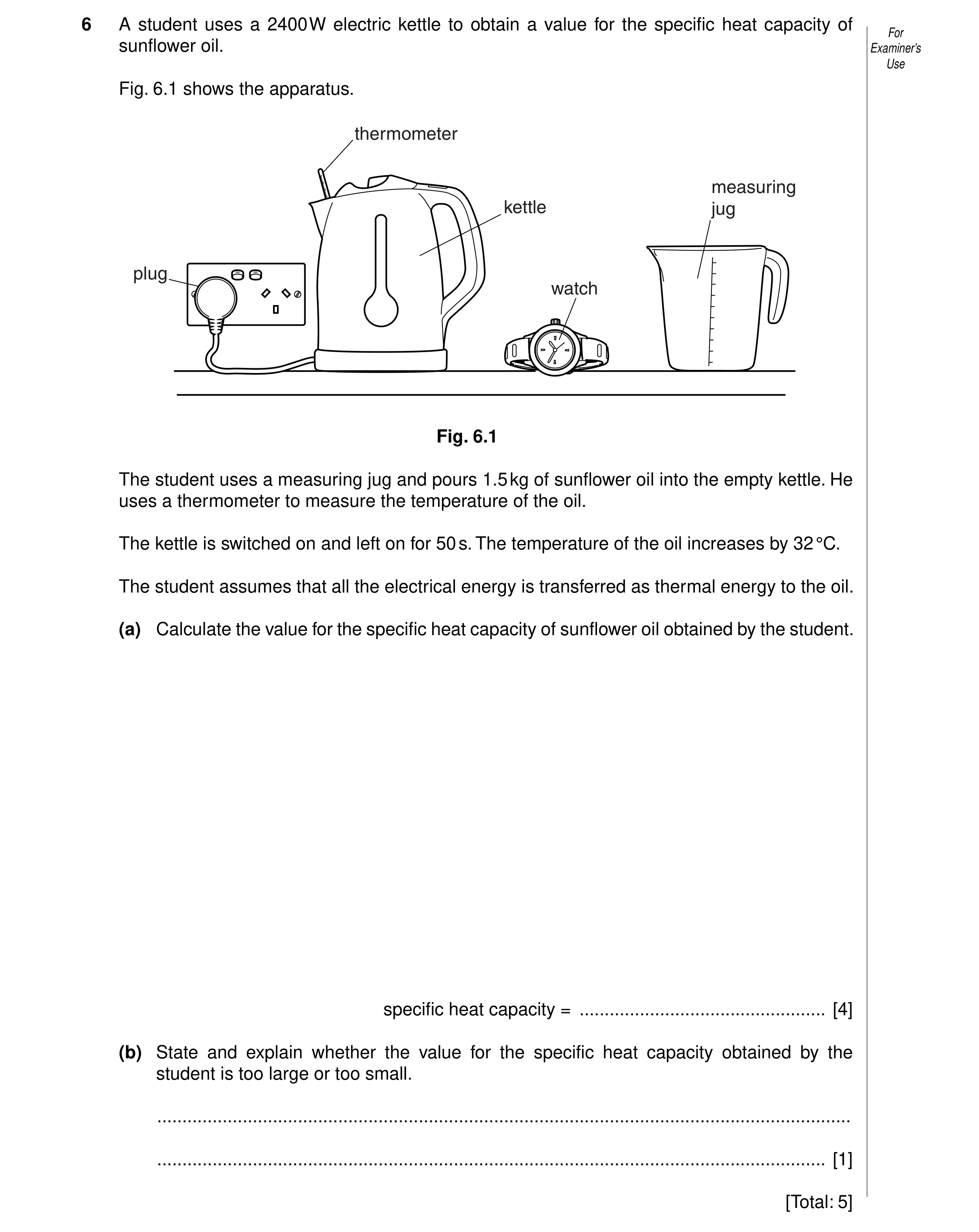 57 / 181
 58 / 181
 59 / 181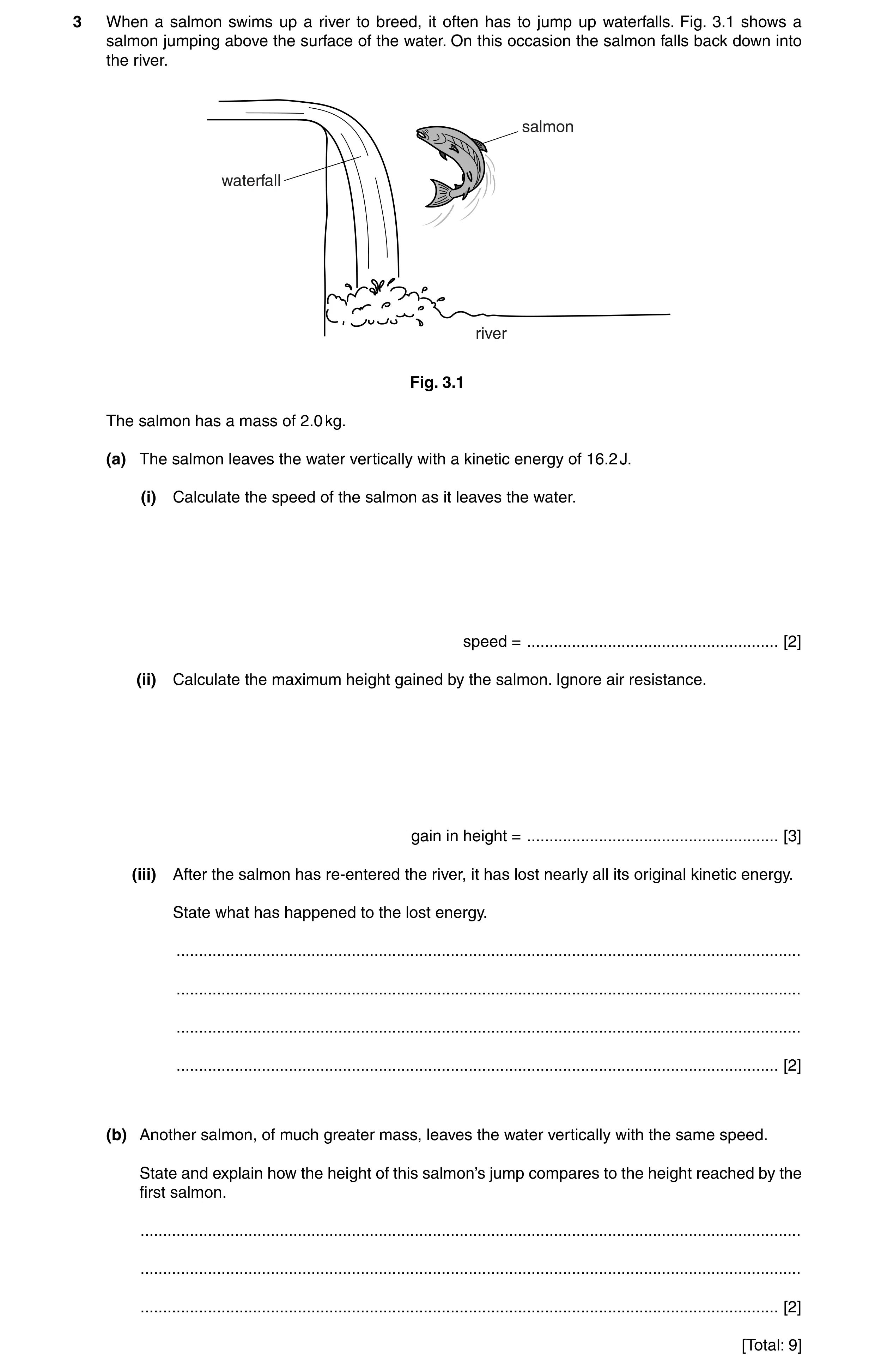
 61 / 181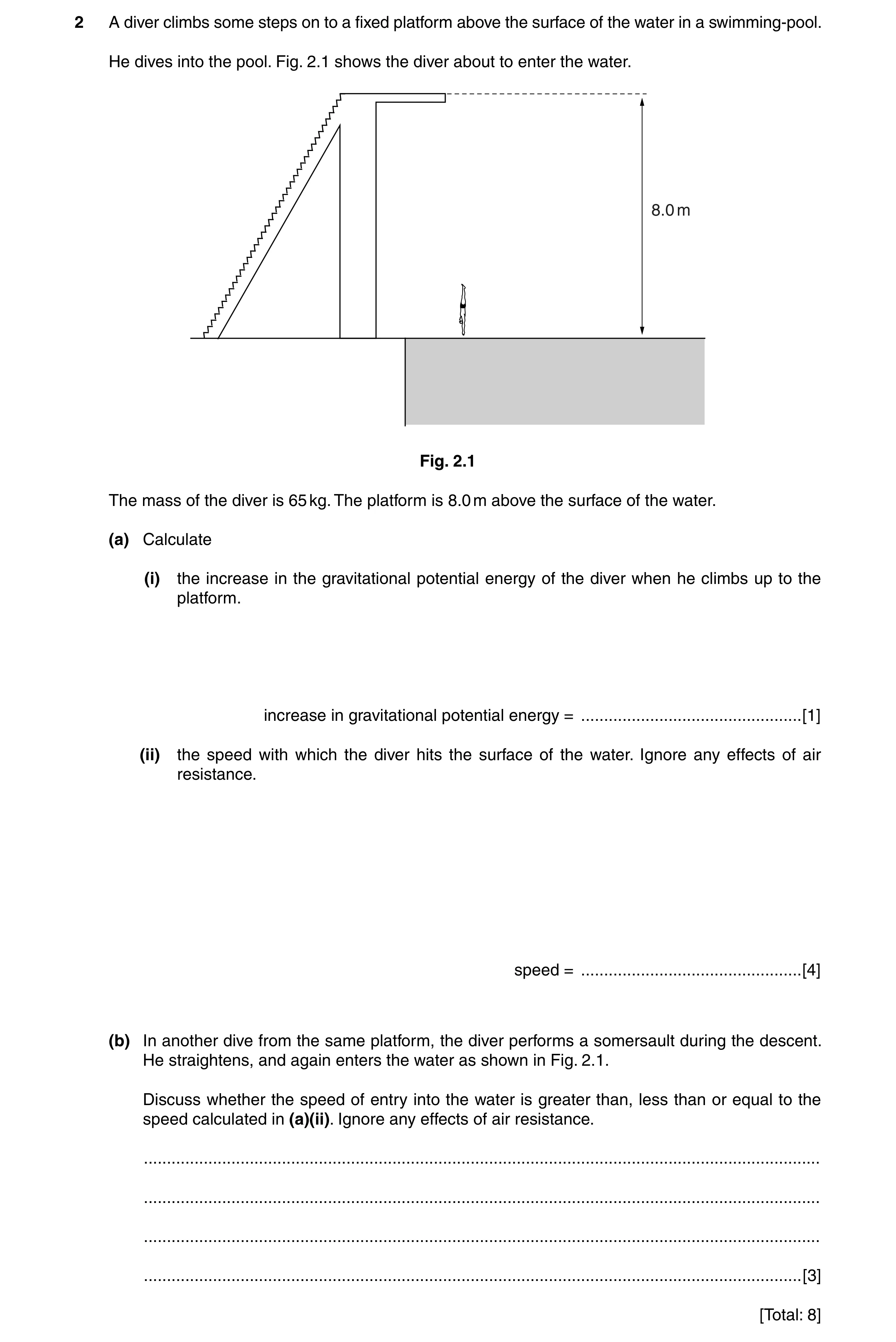
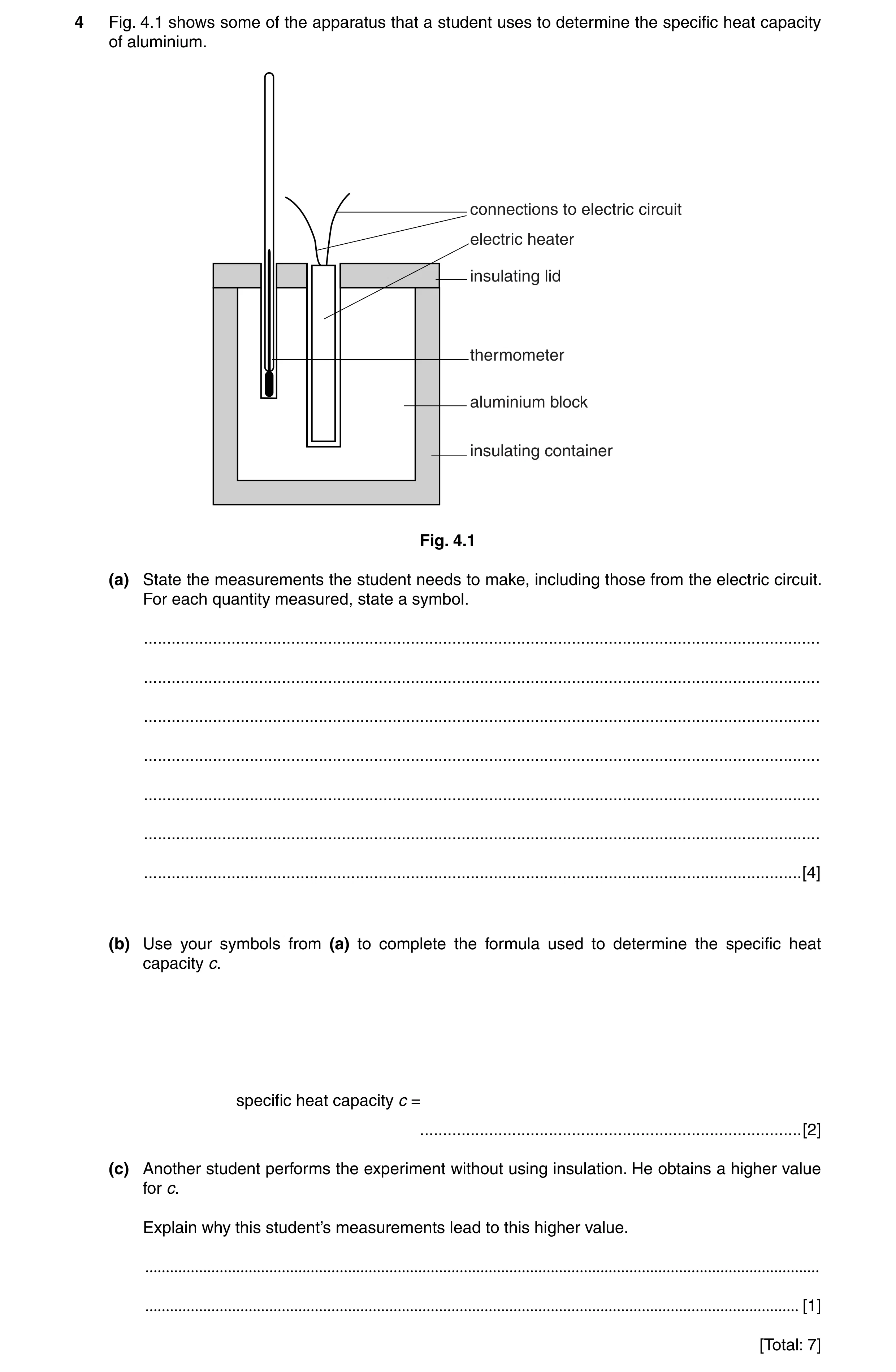
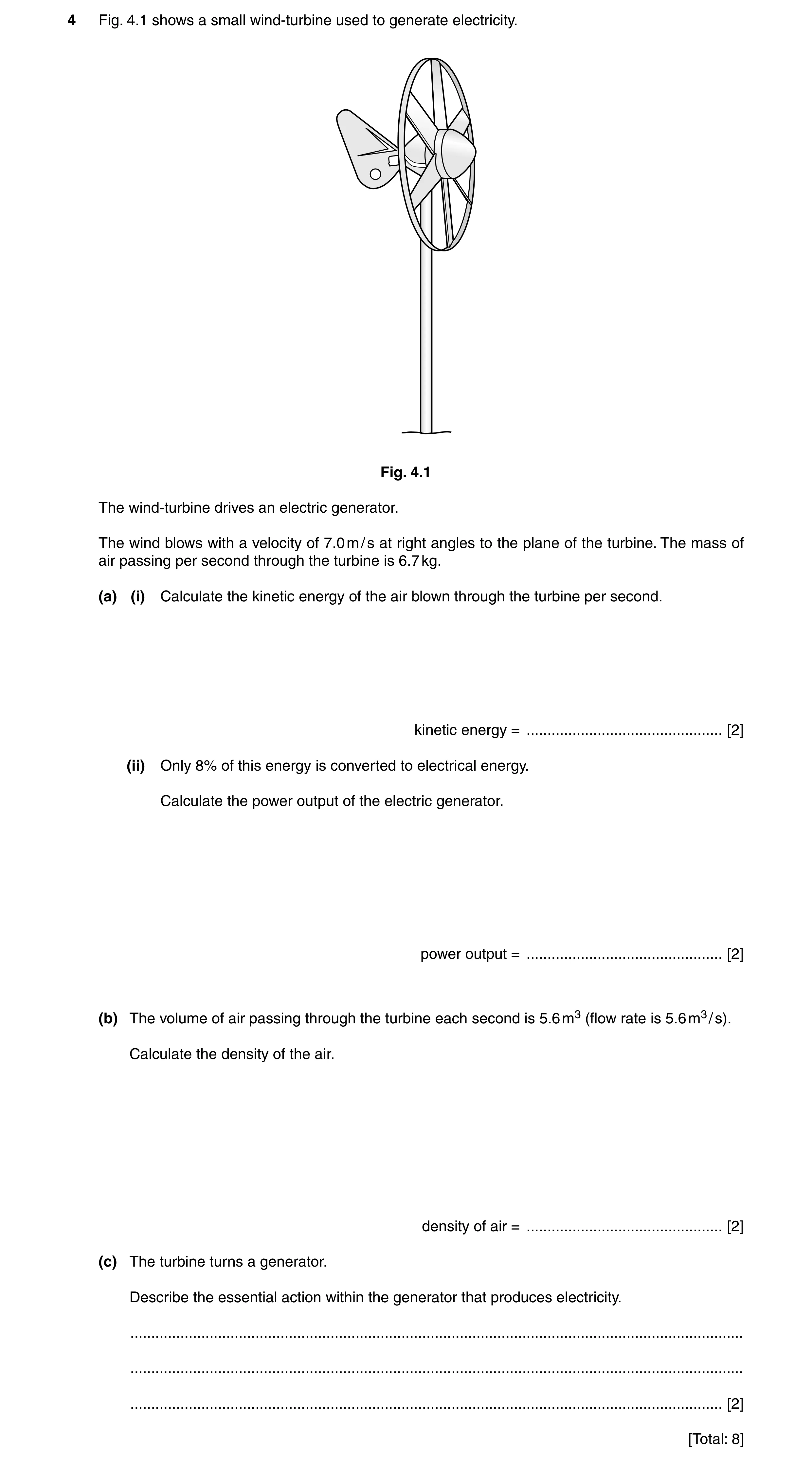
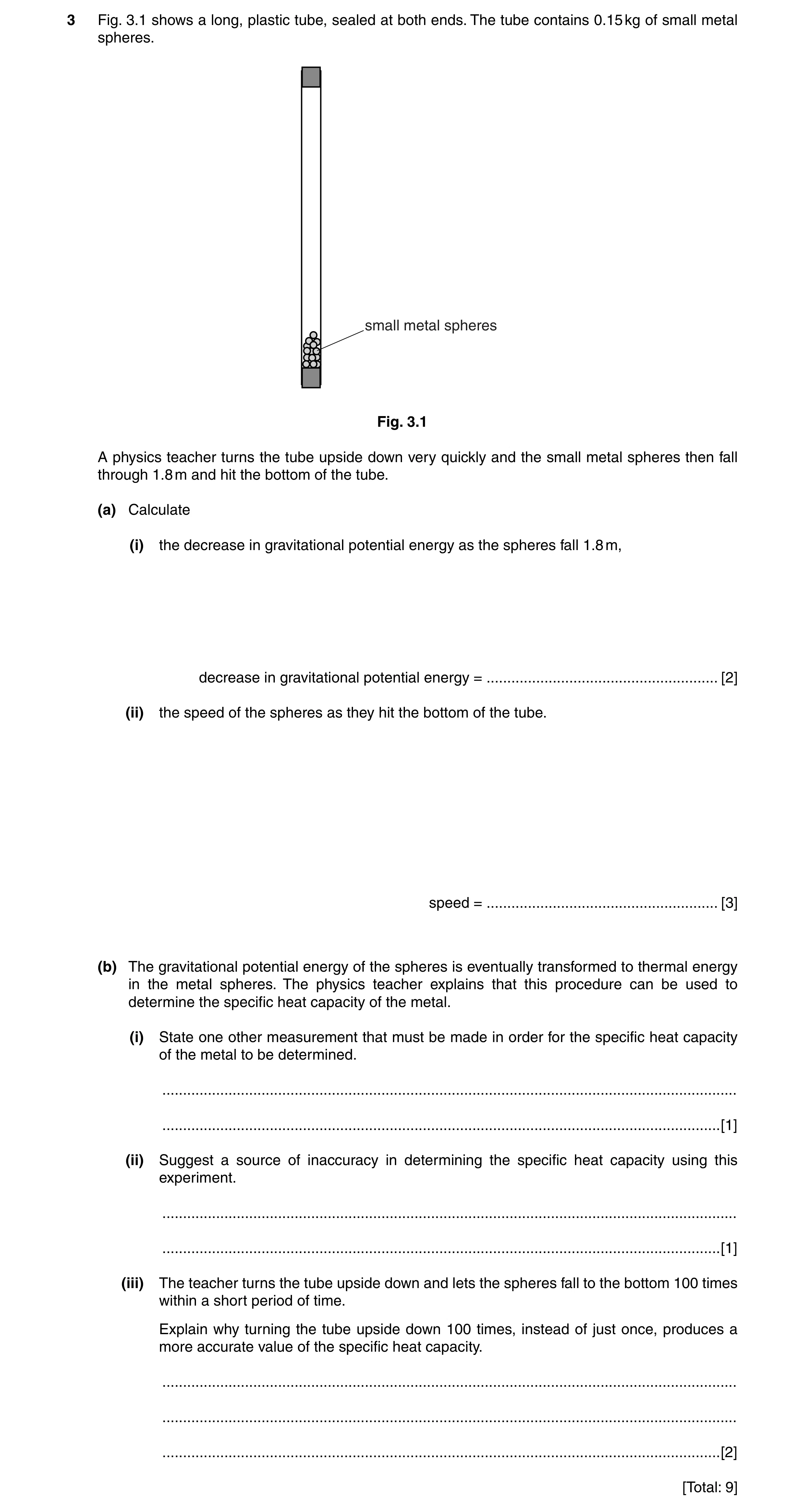
 68 / 181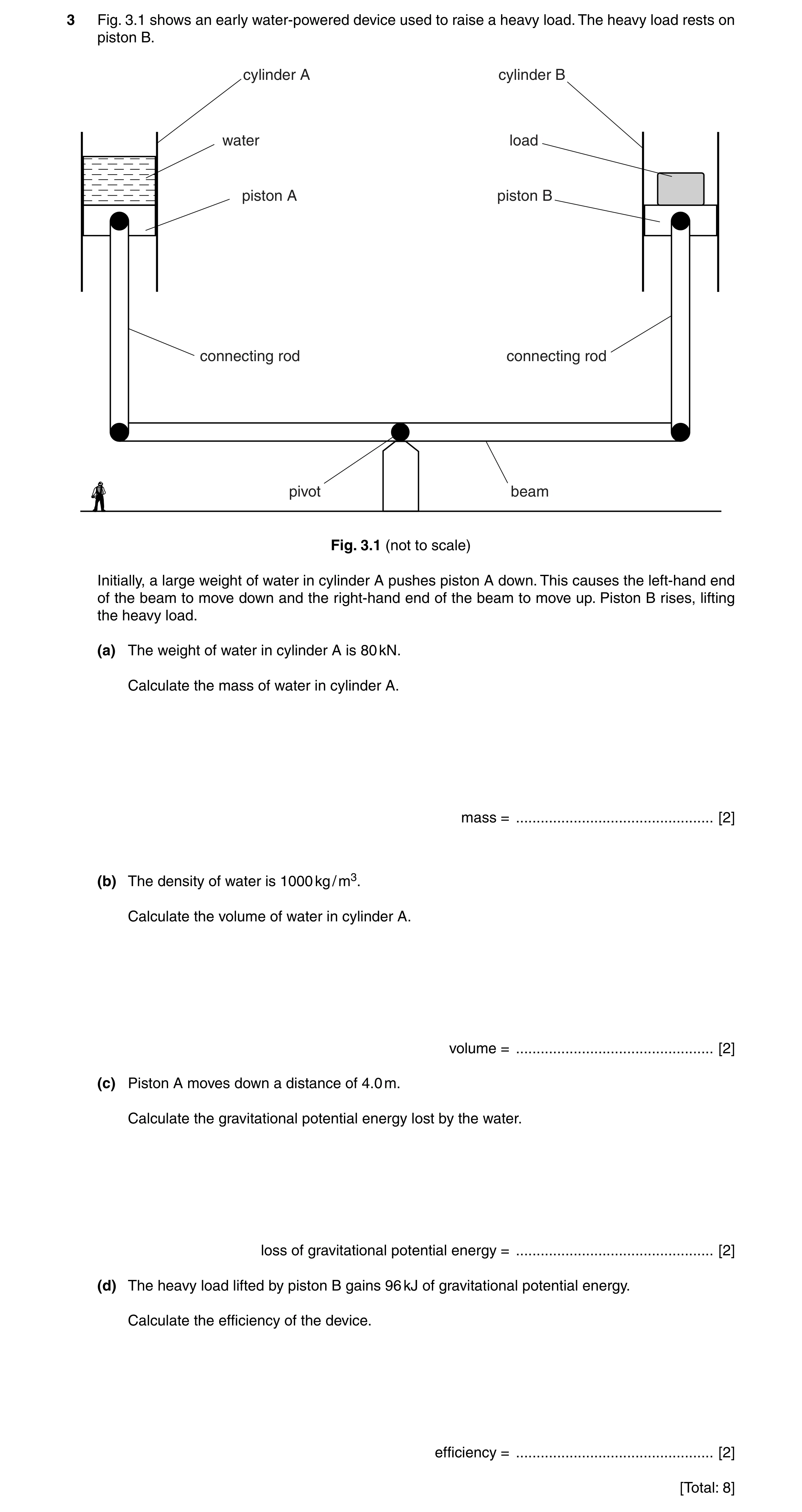
 71 / 181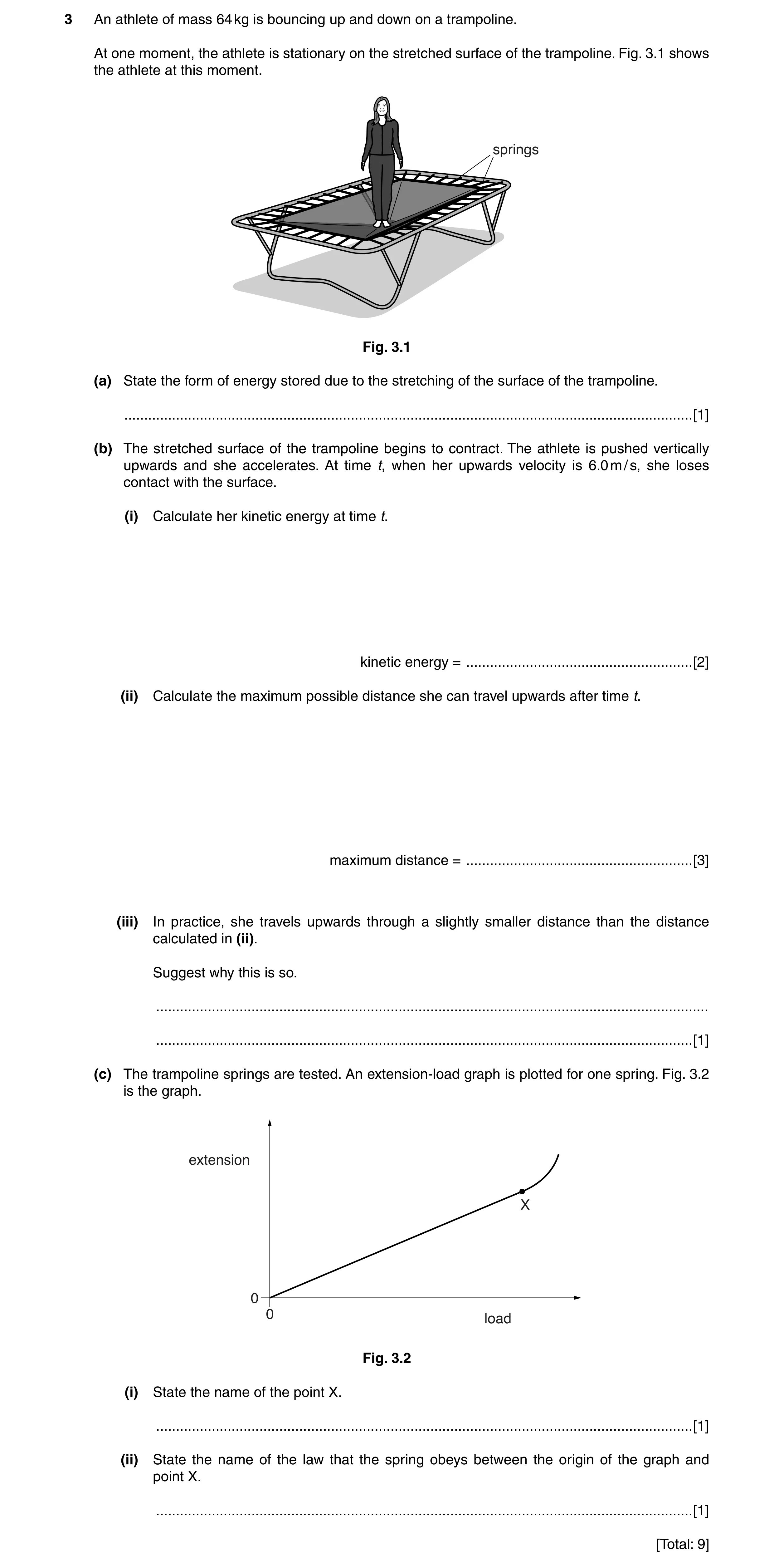
 74 / 181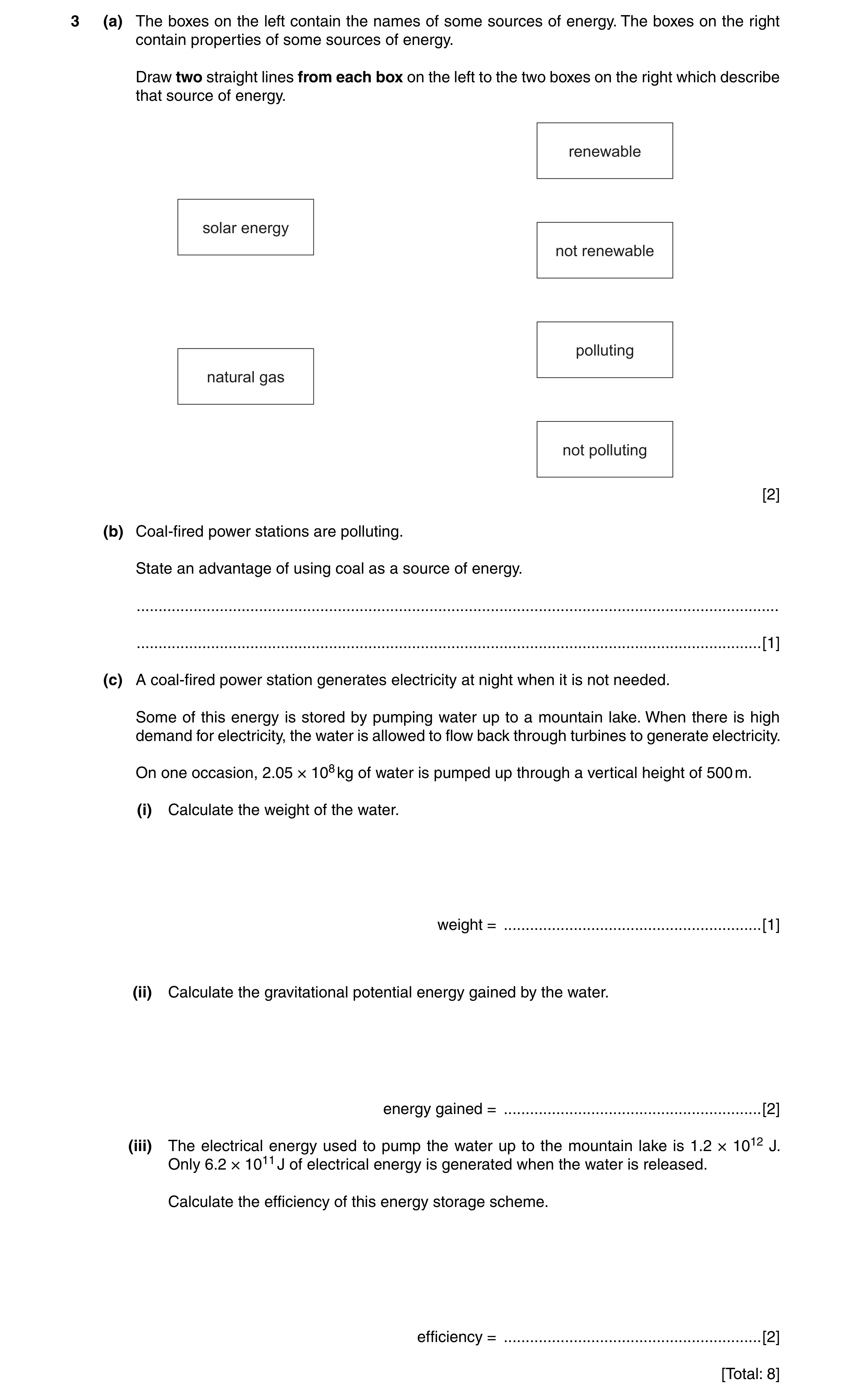
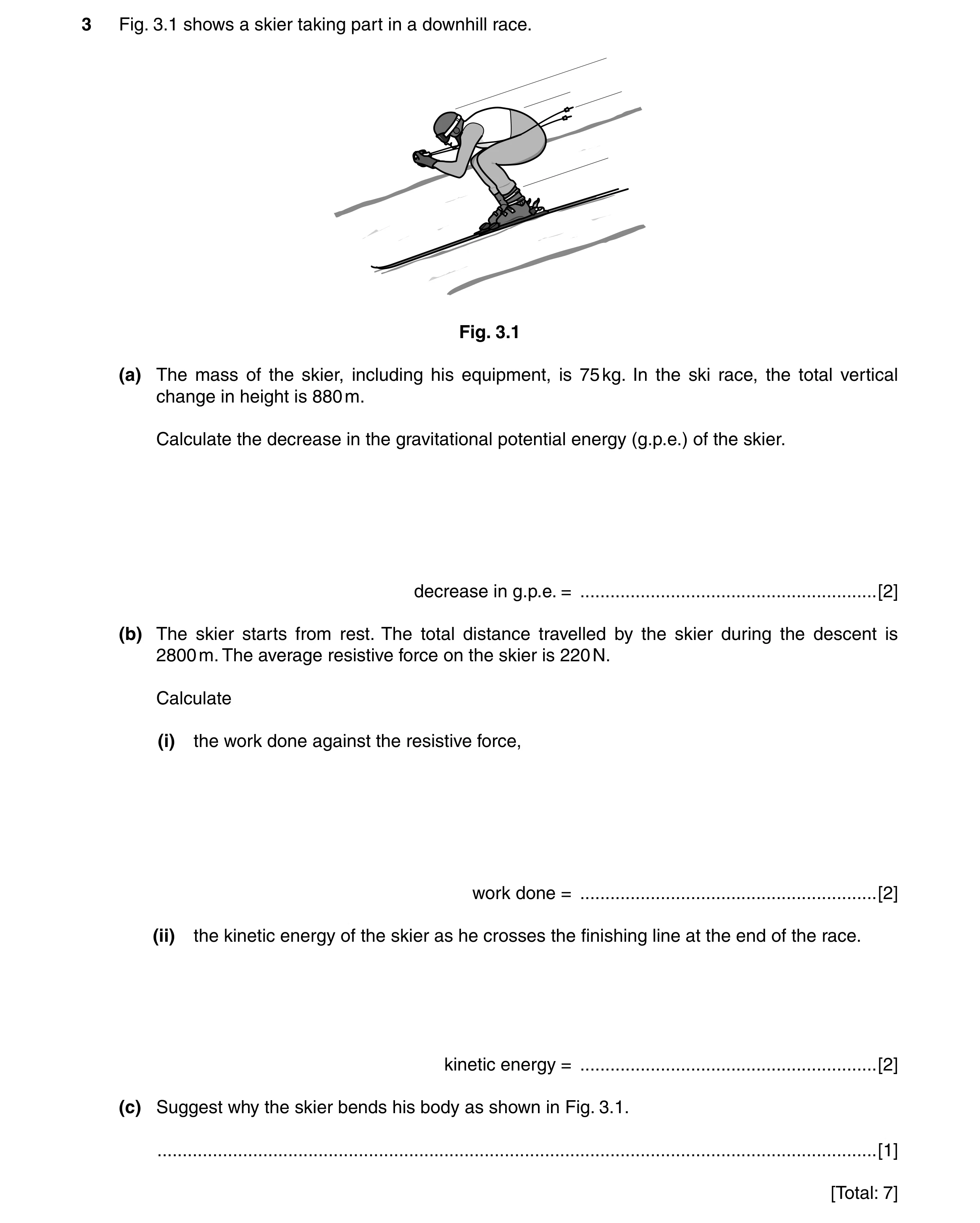 77 / 181
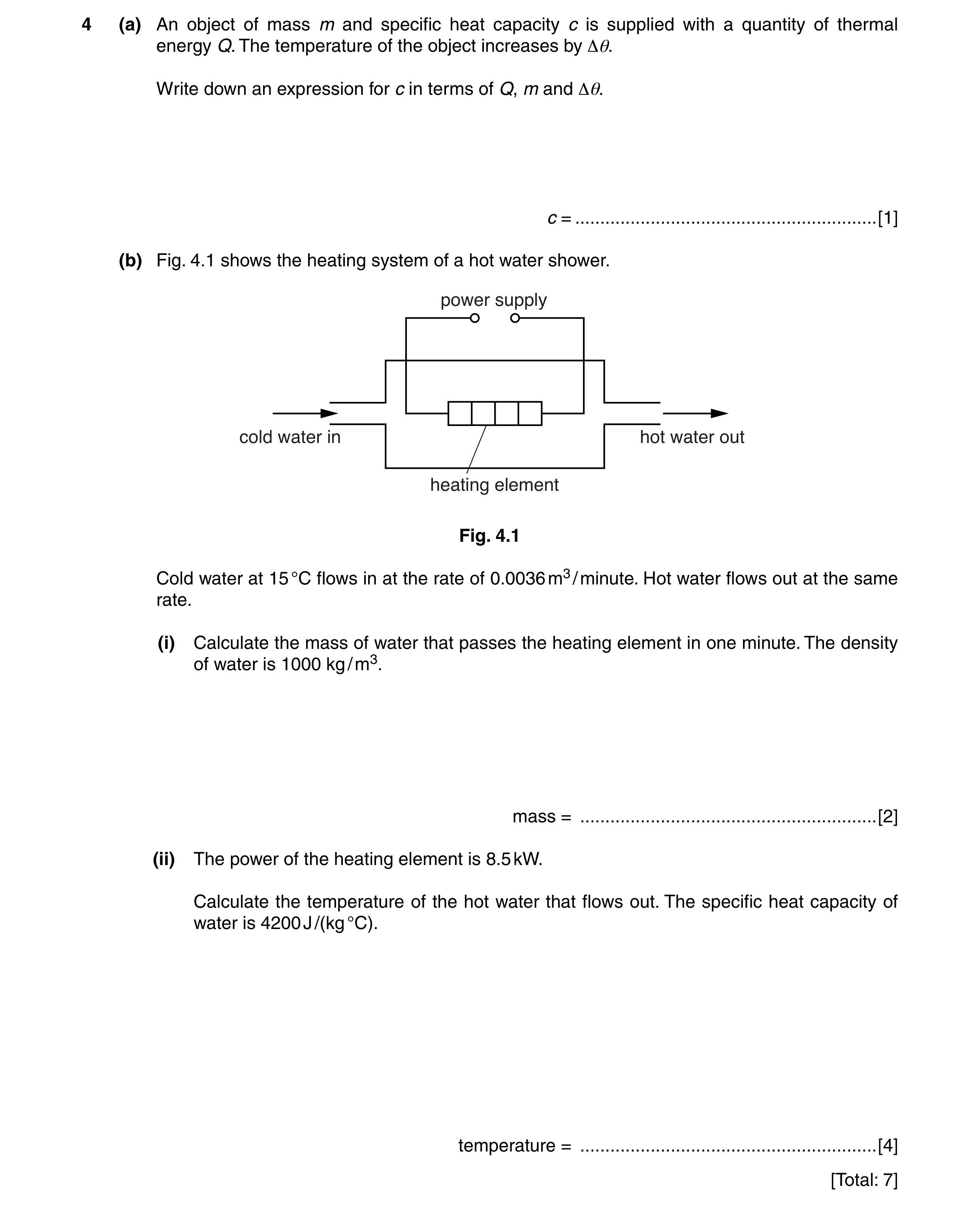 78 / 181
 79 / 181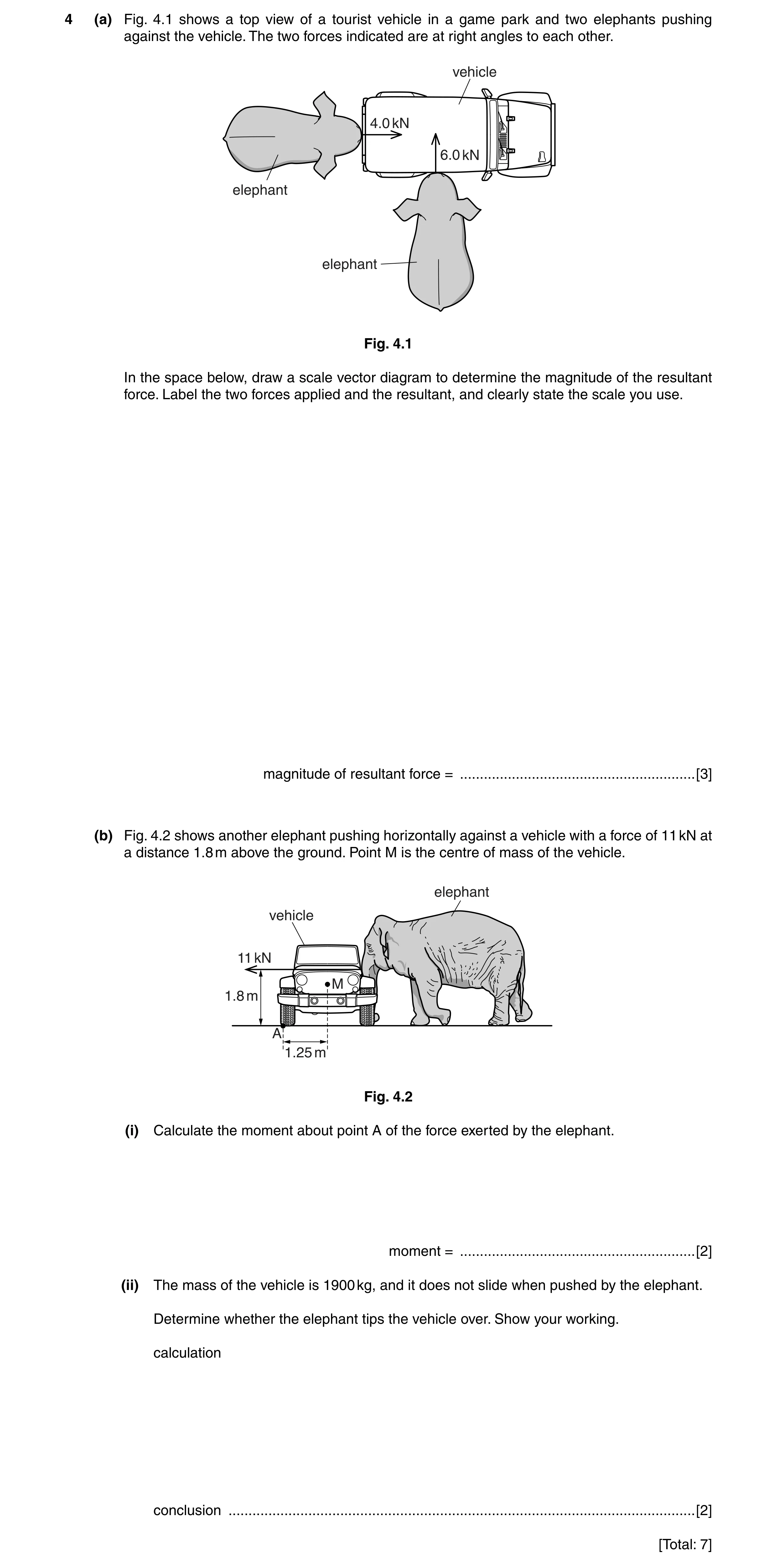
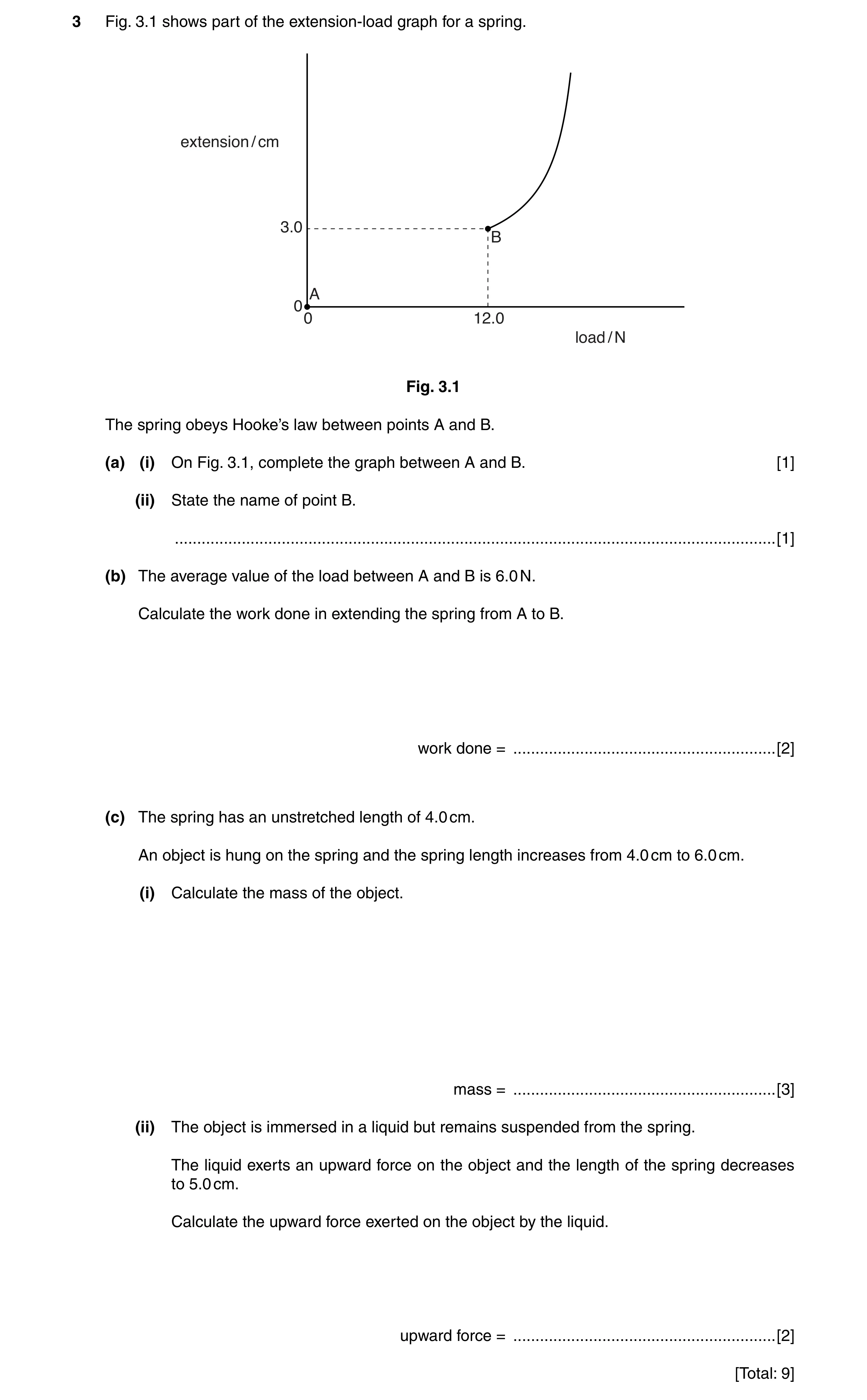
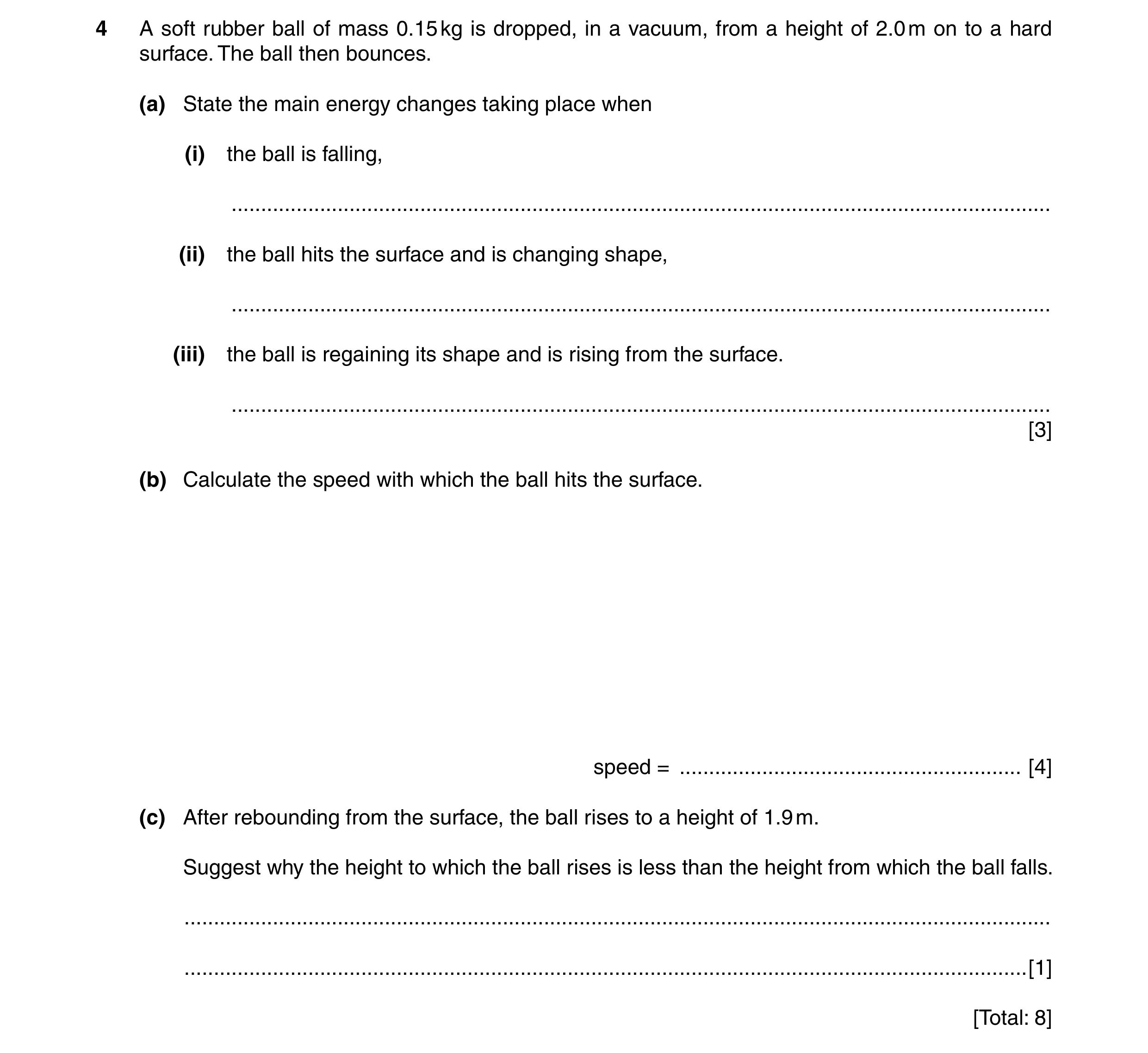 83 / 181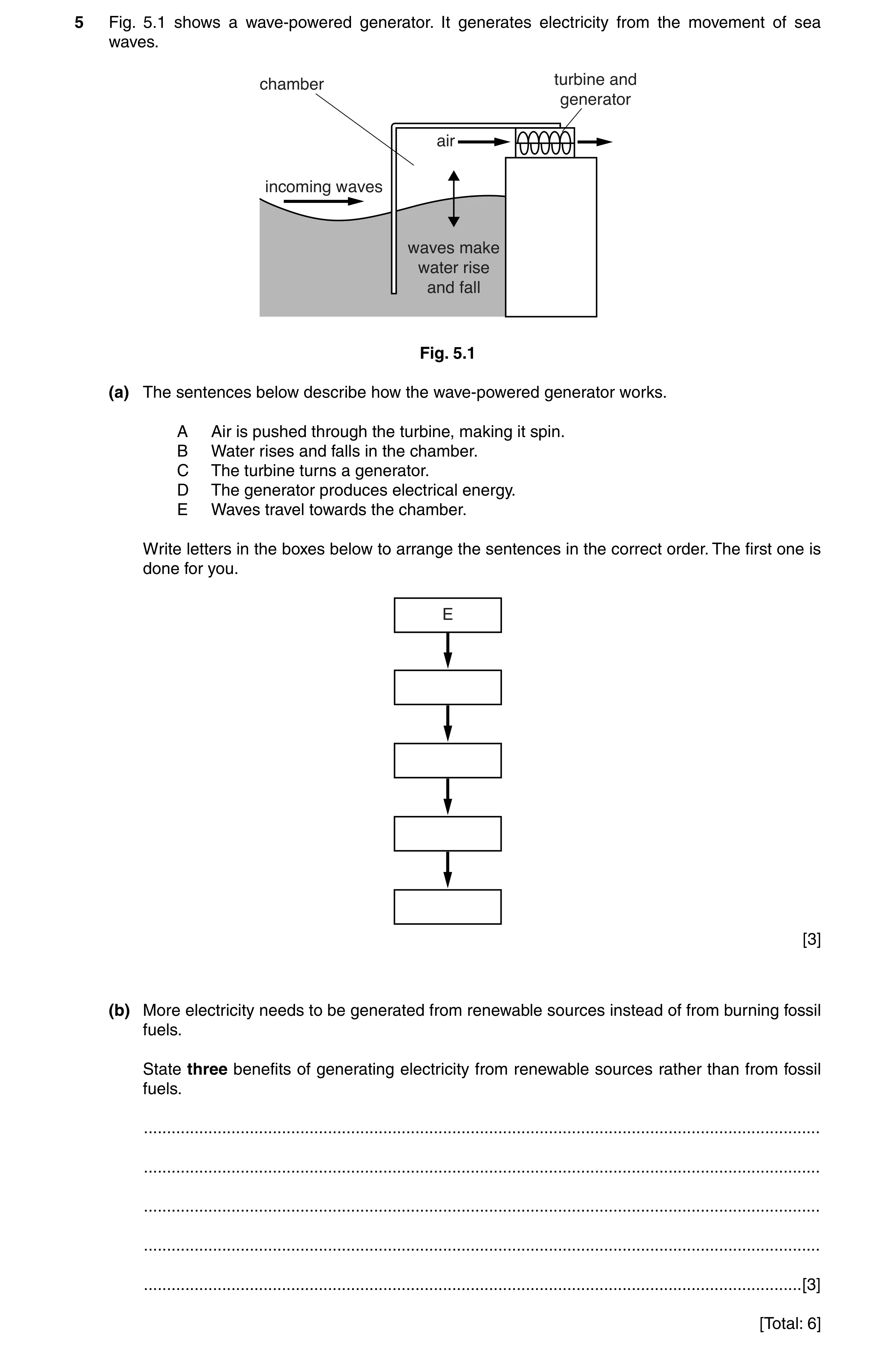
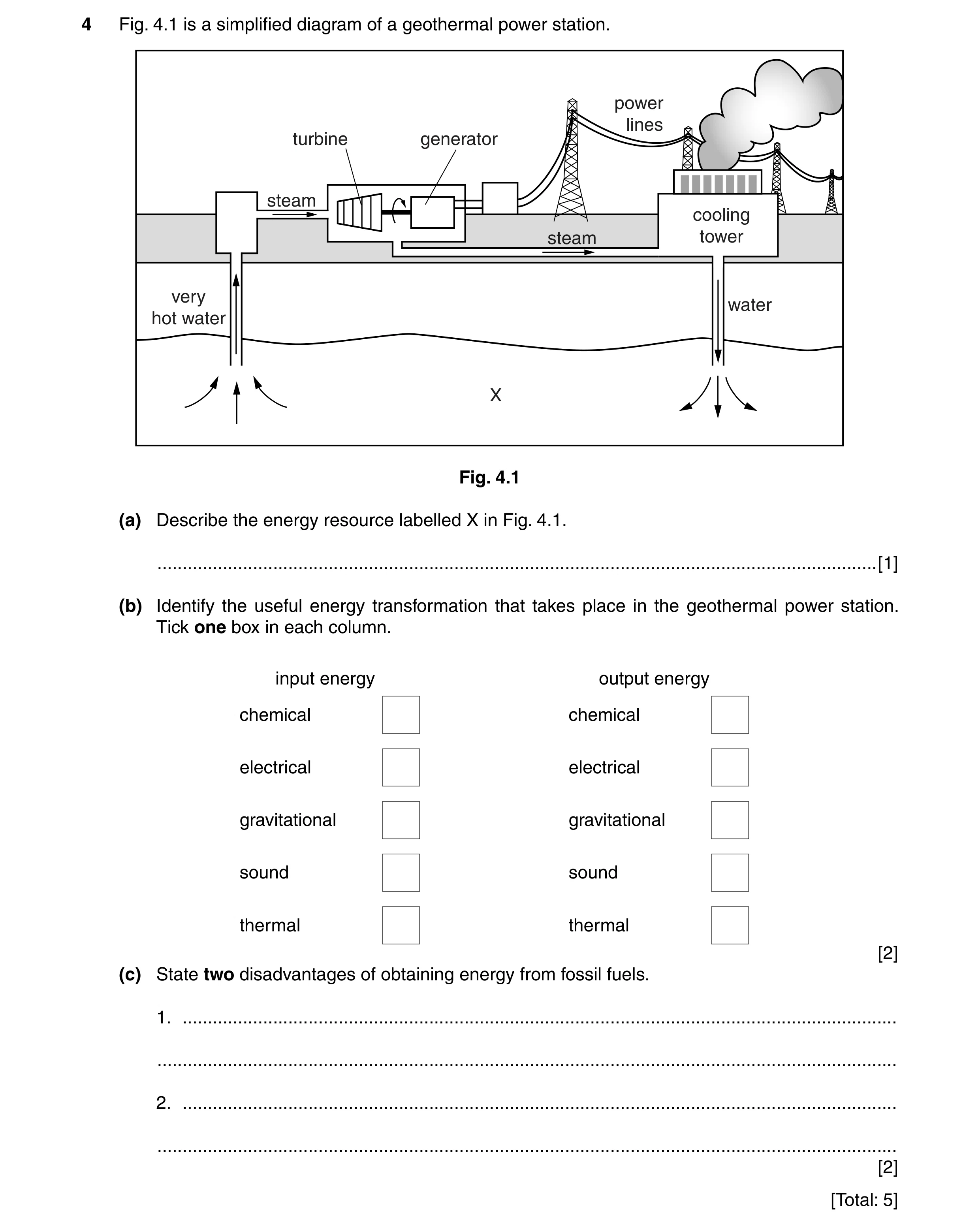 85 / 181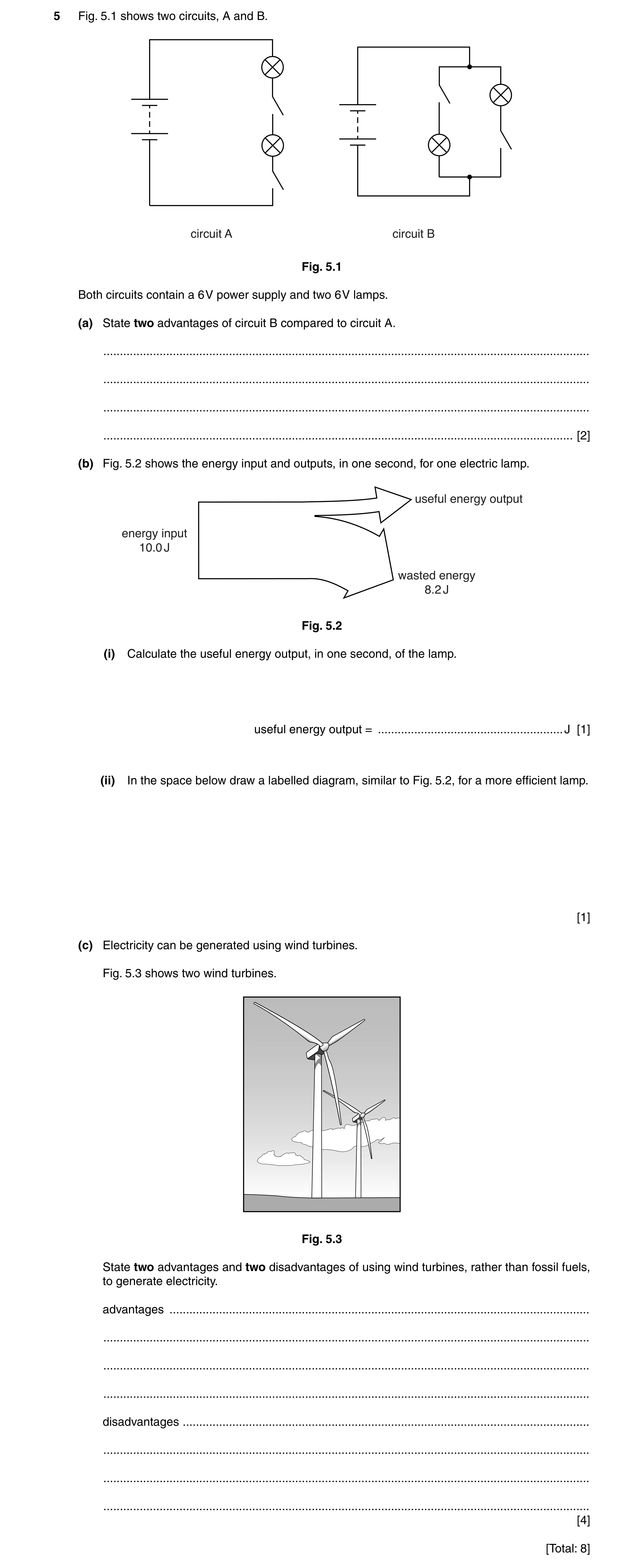
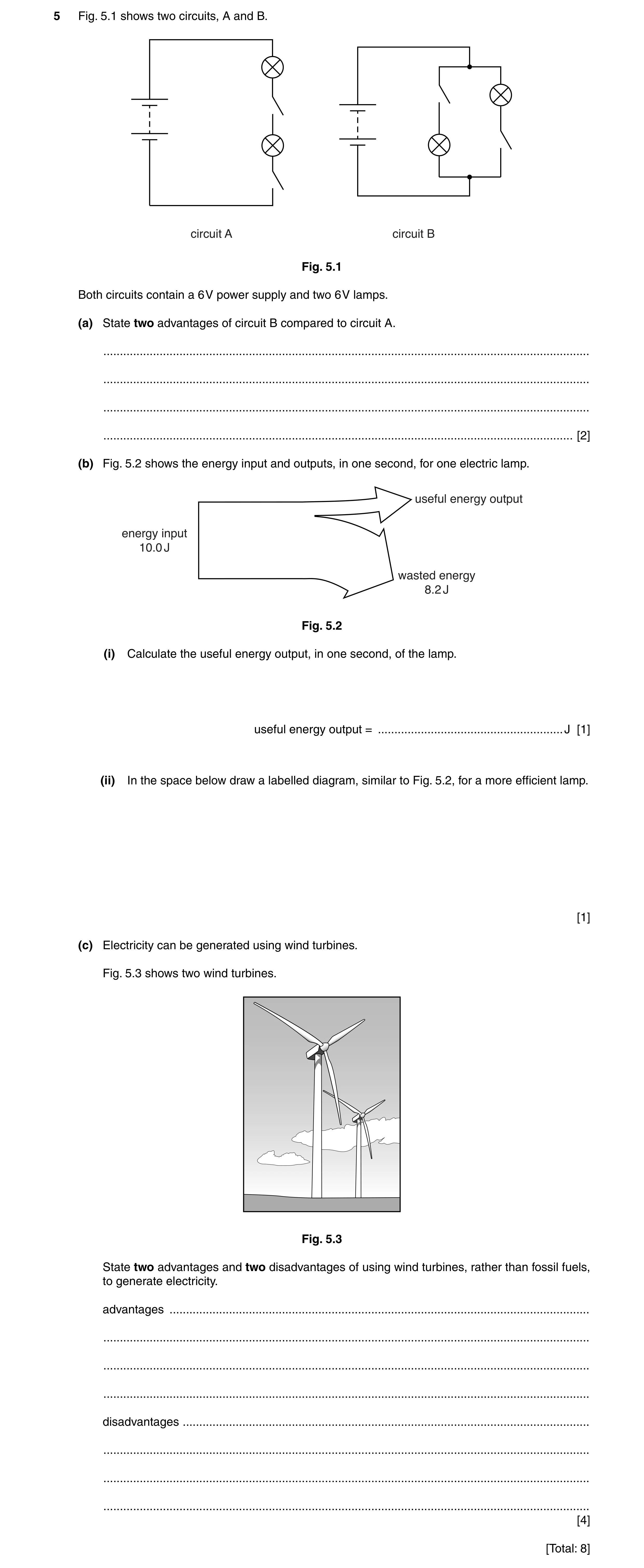
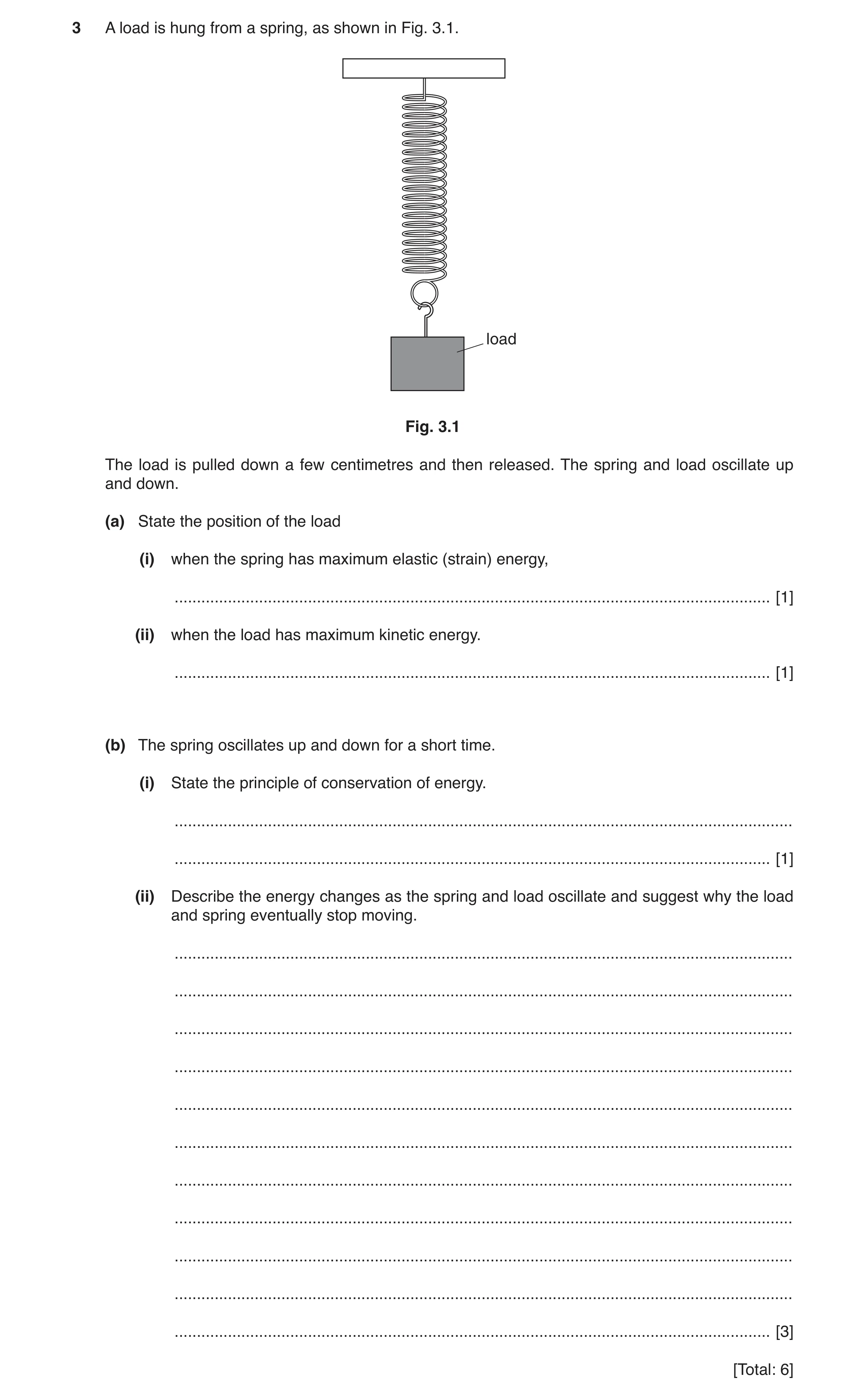
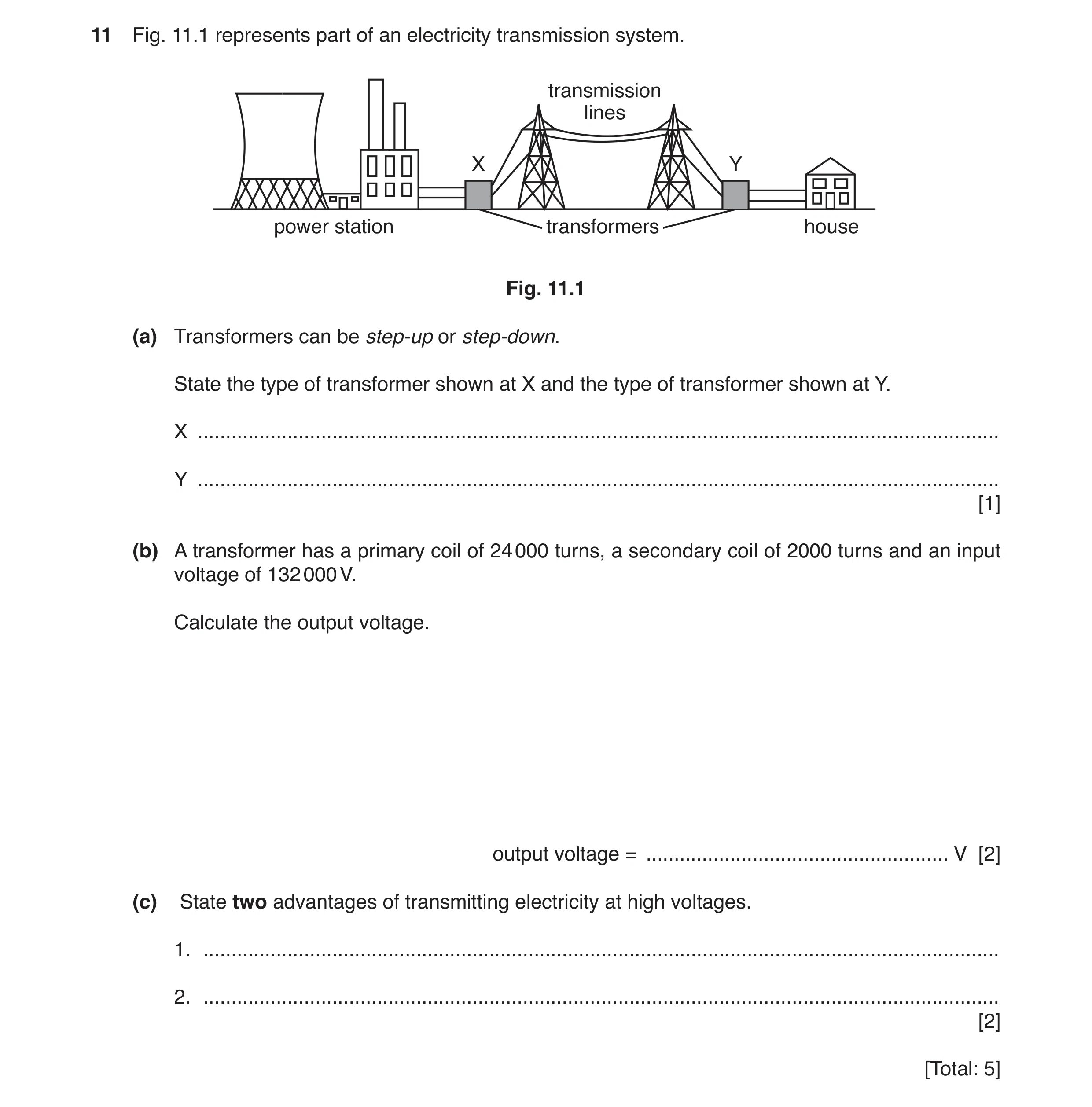 91 / 181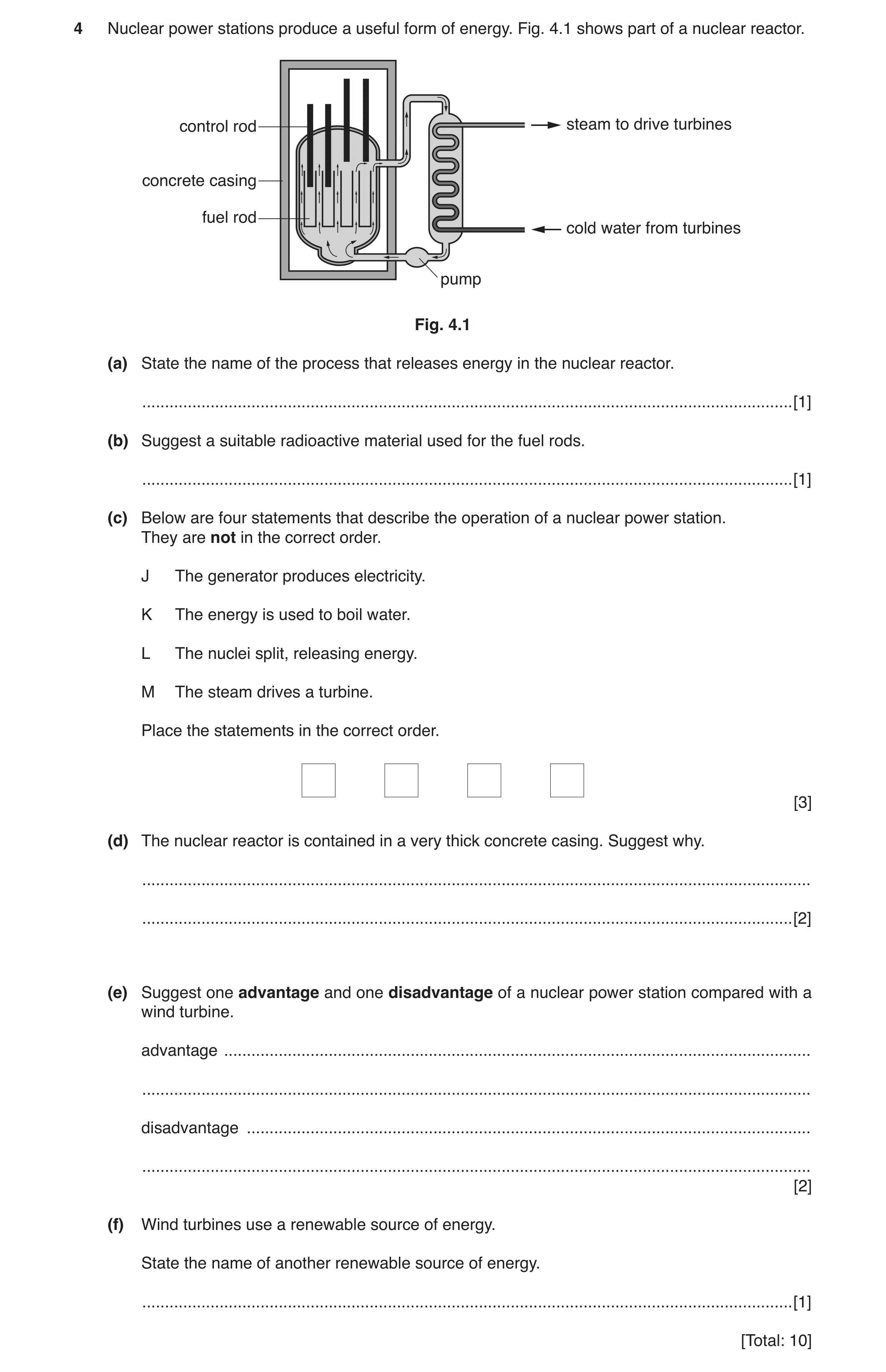
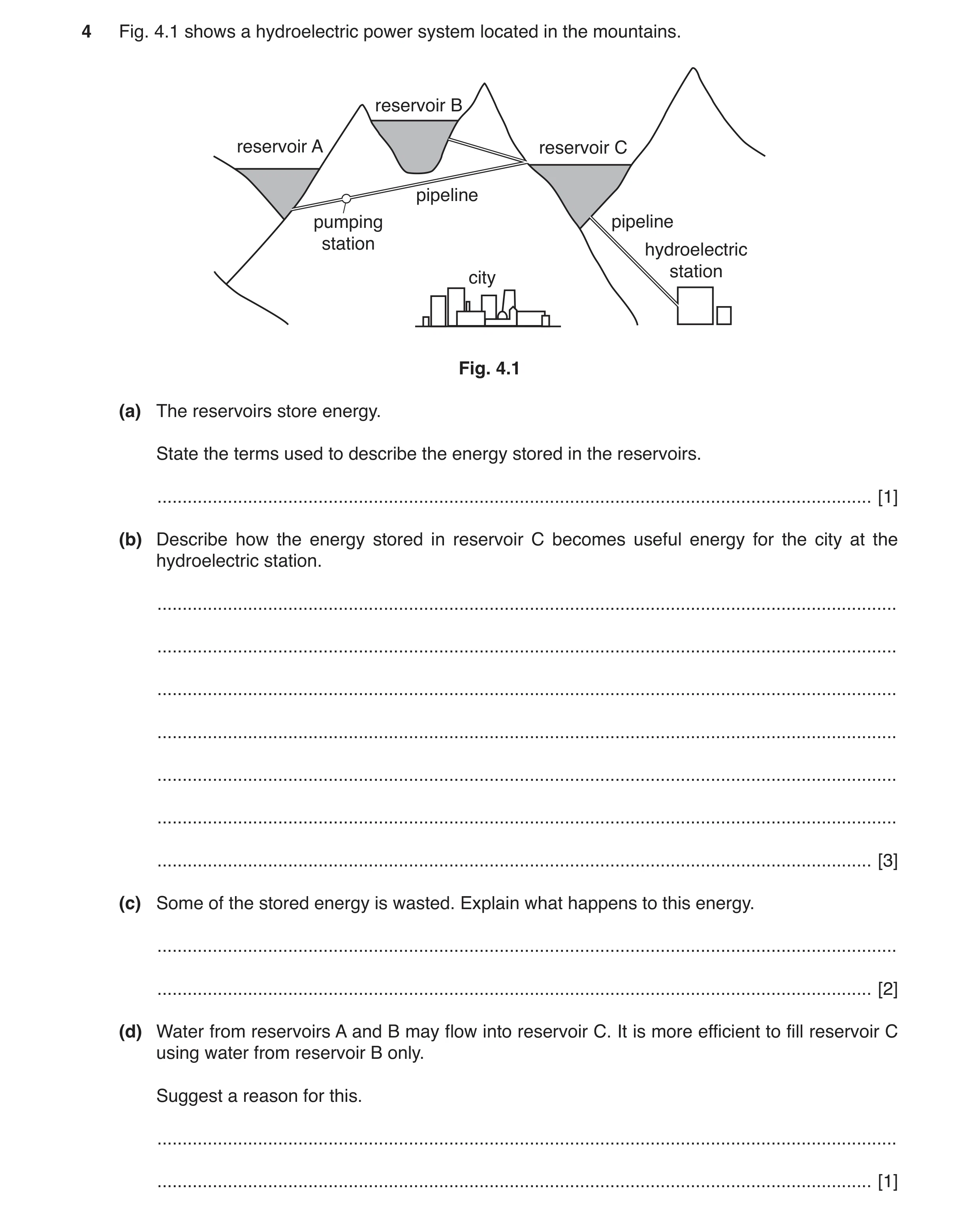 93 / 181
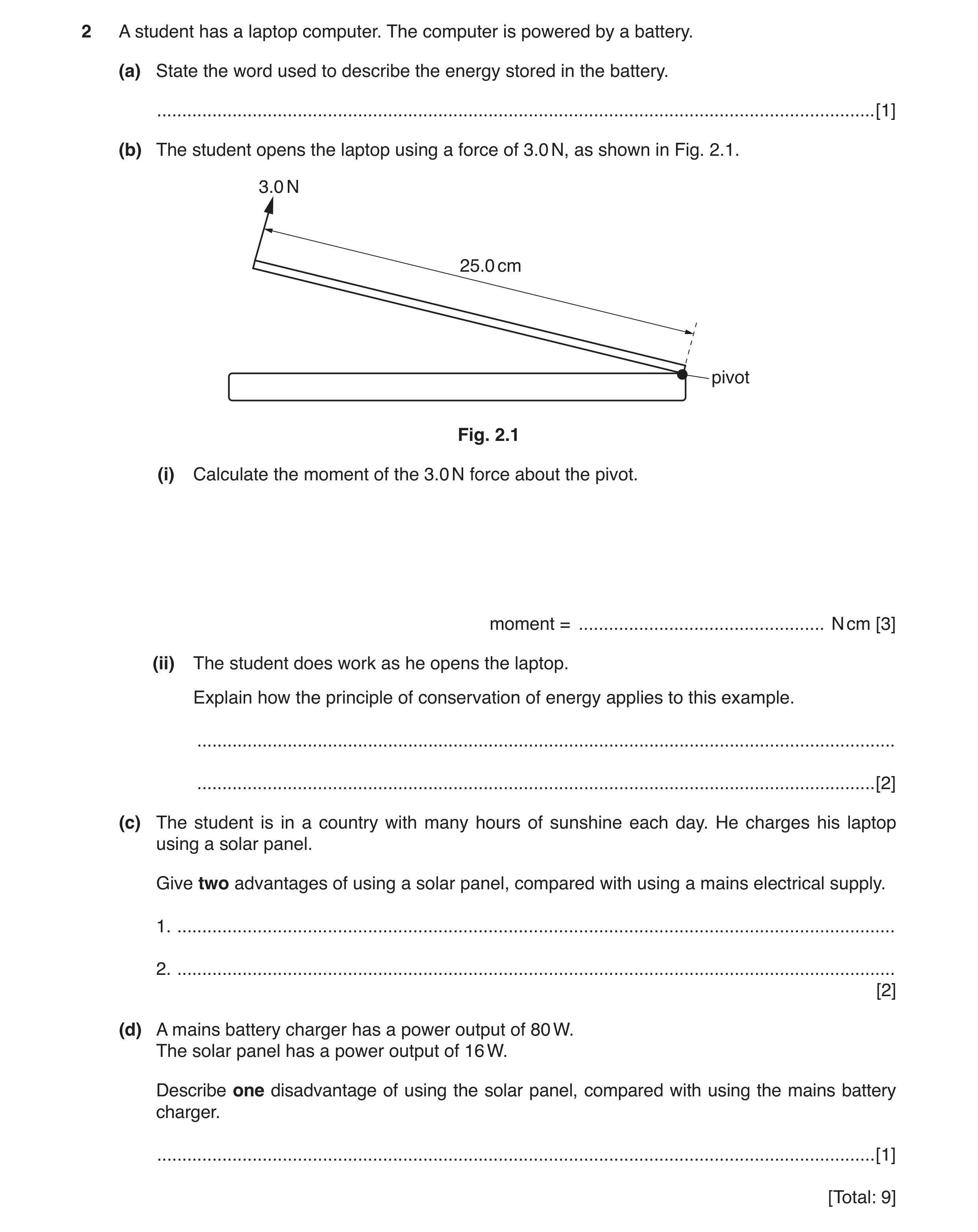 94 / 181
 95 / 181
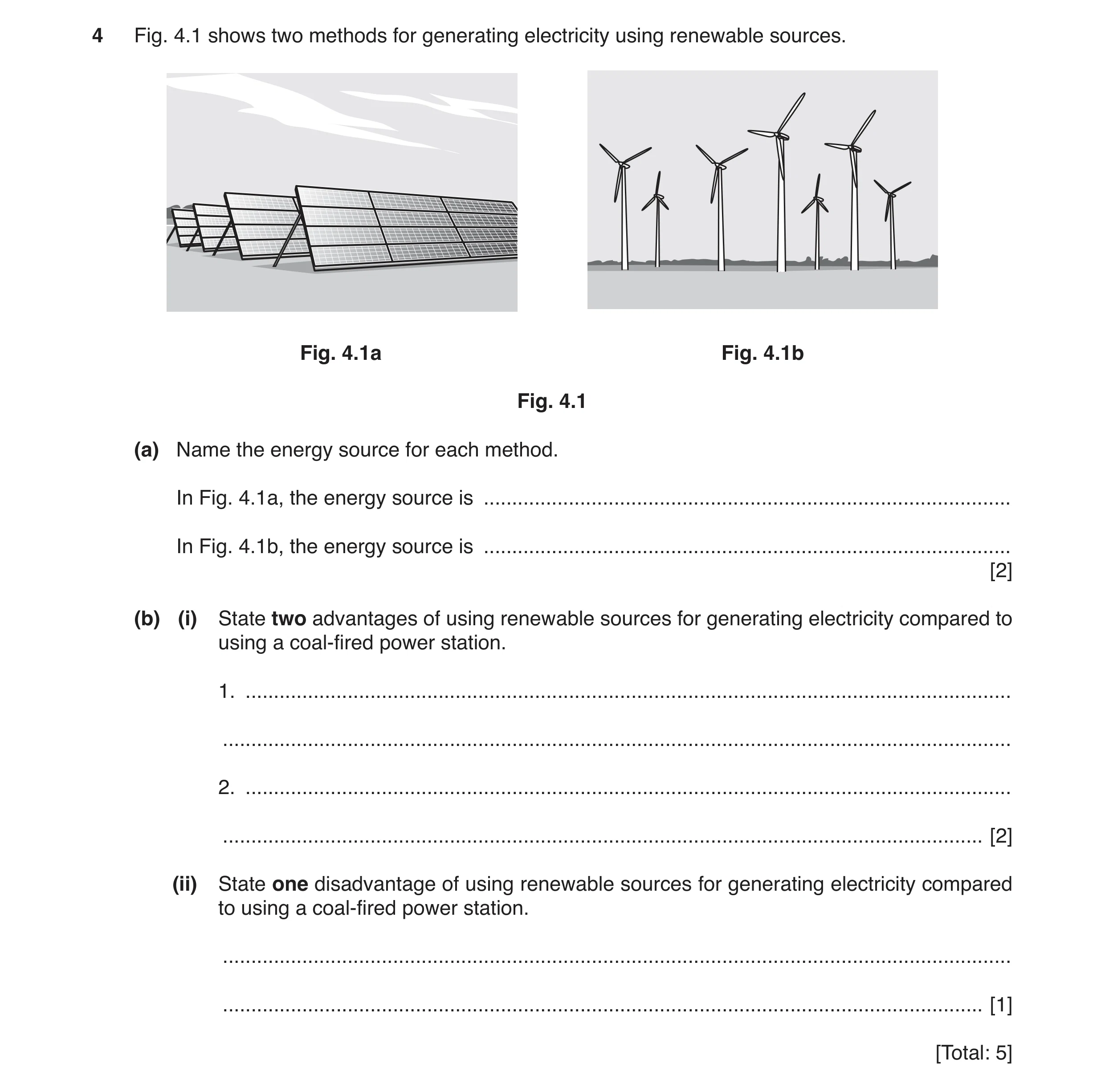 96 / 181
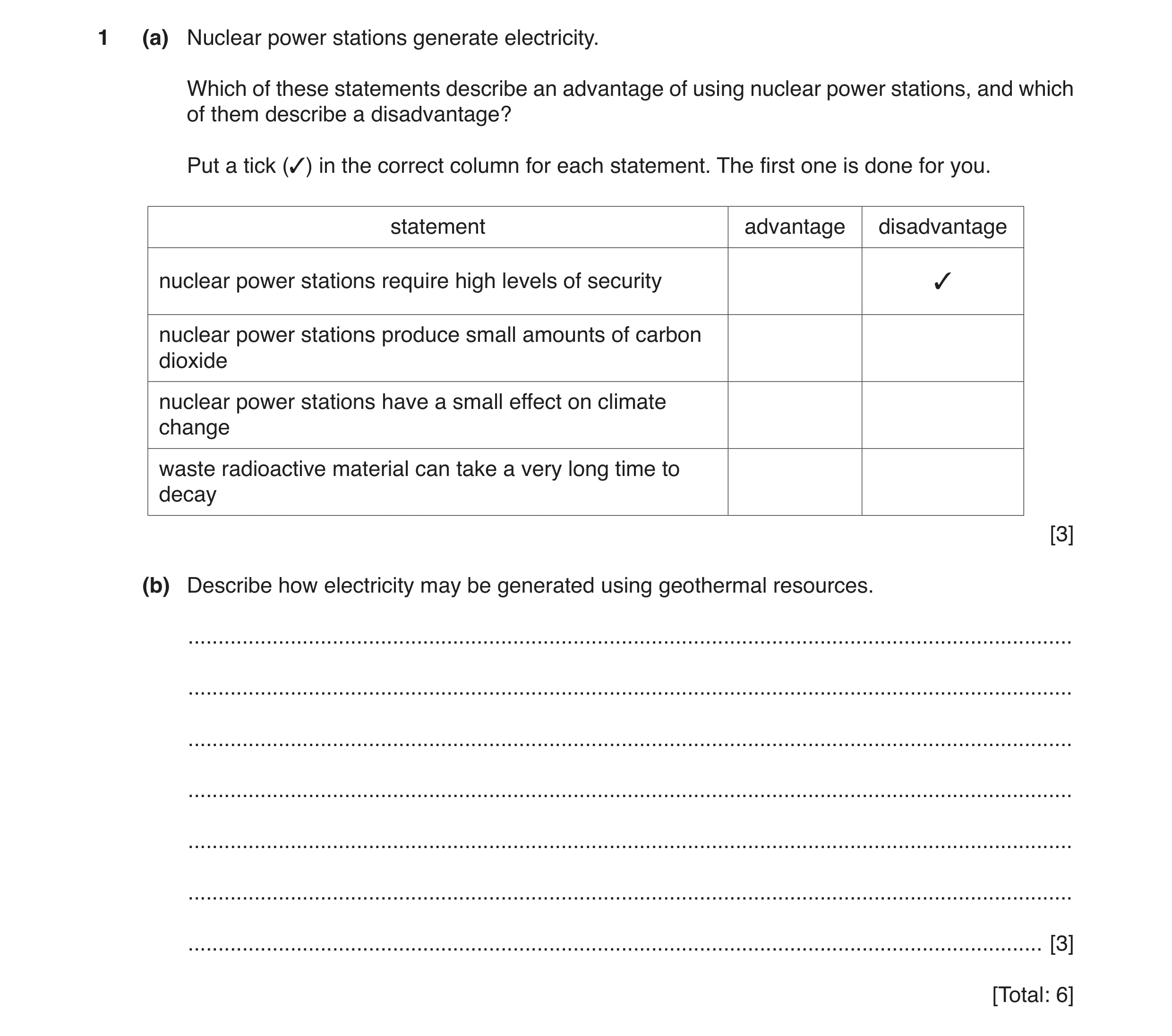 97 / 181
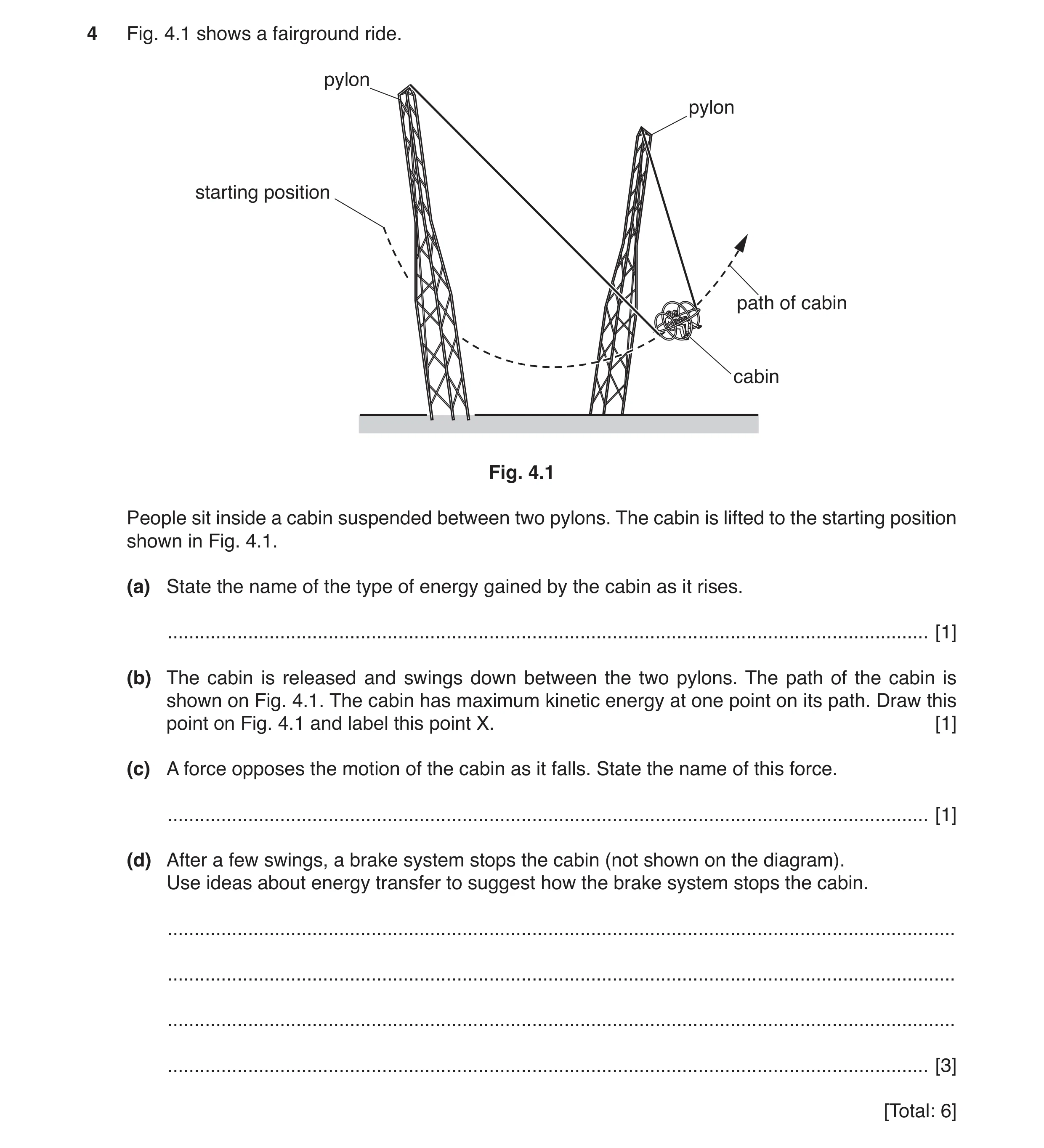 98 / 181
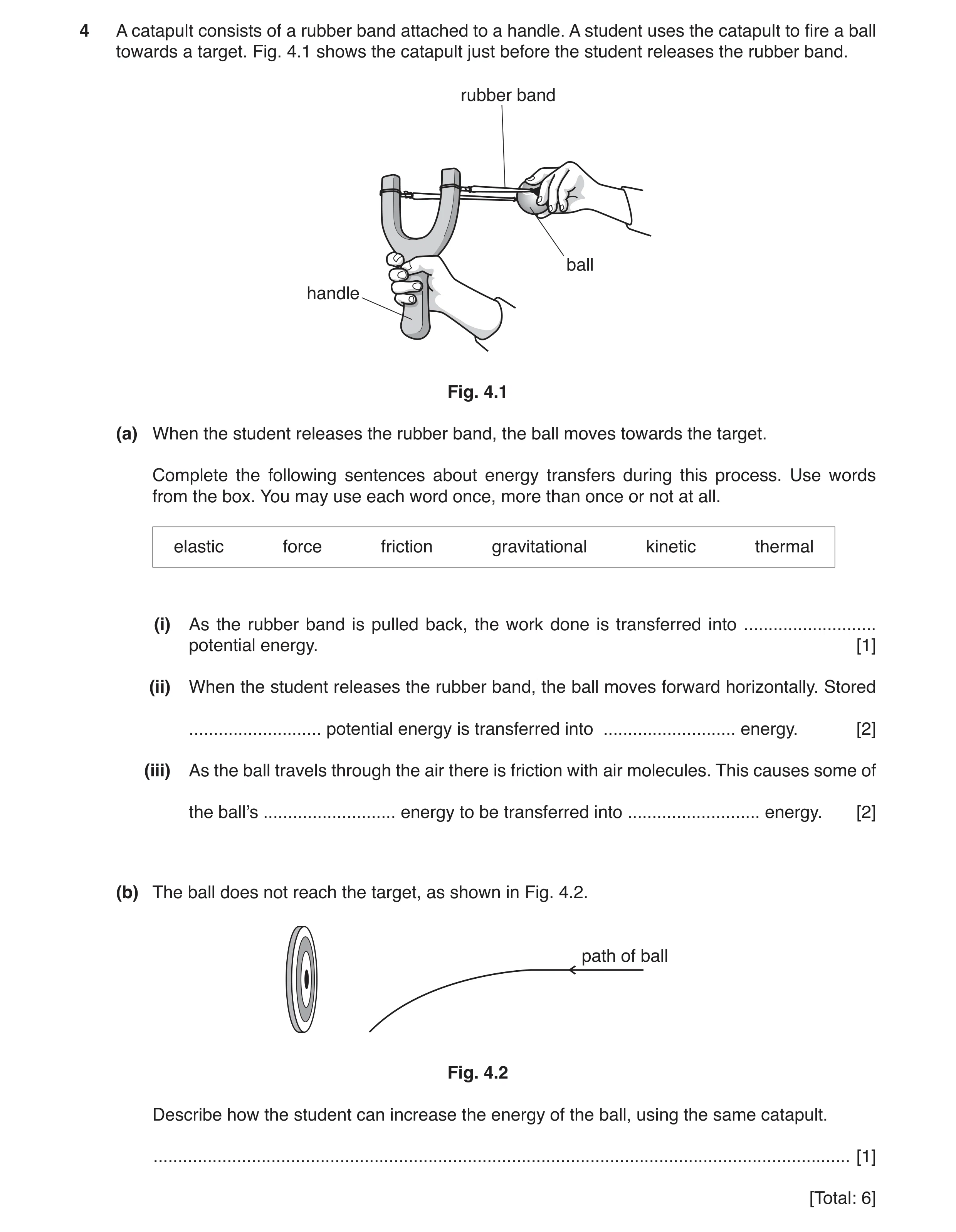 99 / 181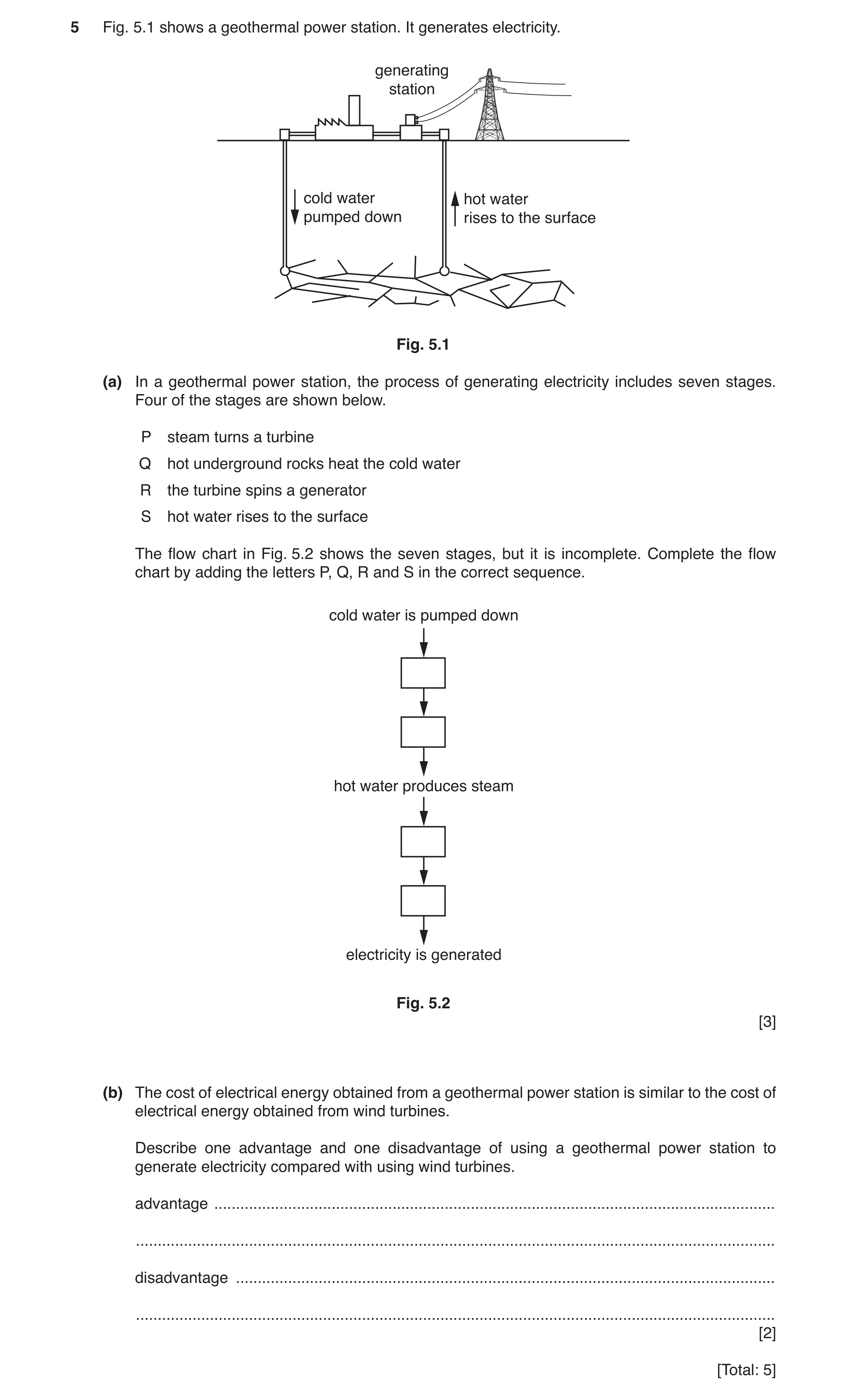
 101 / 181
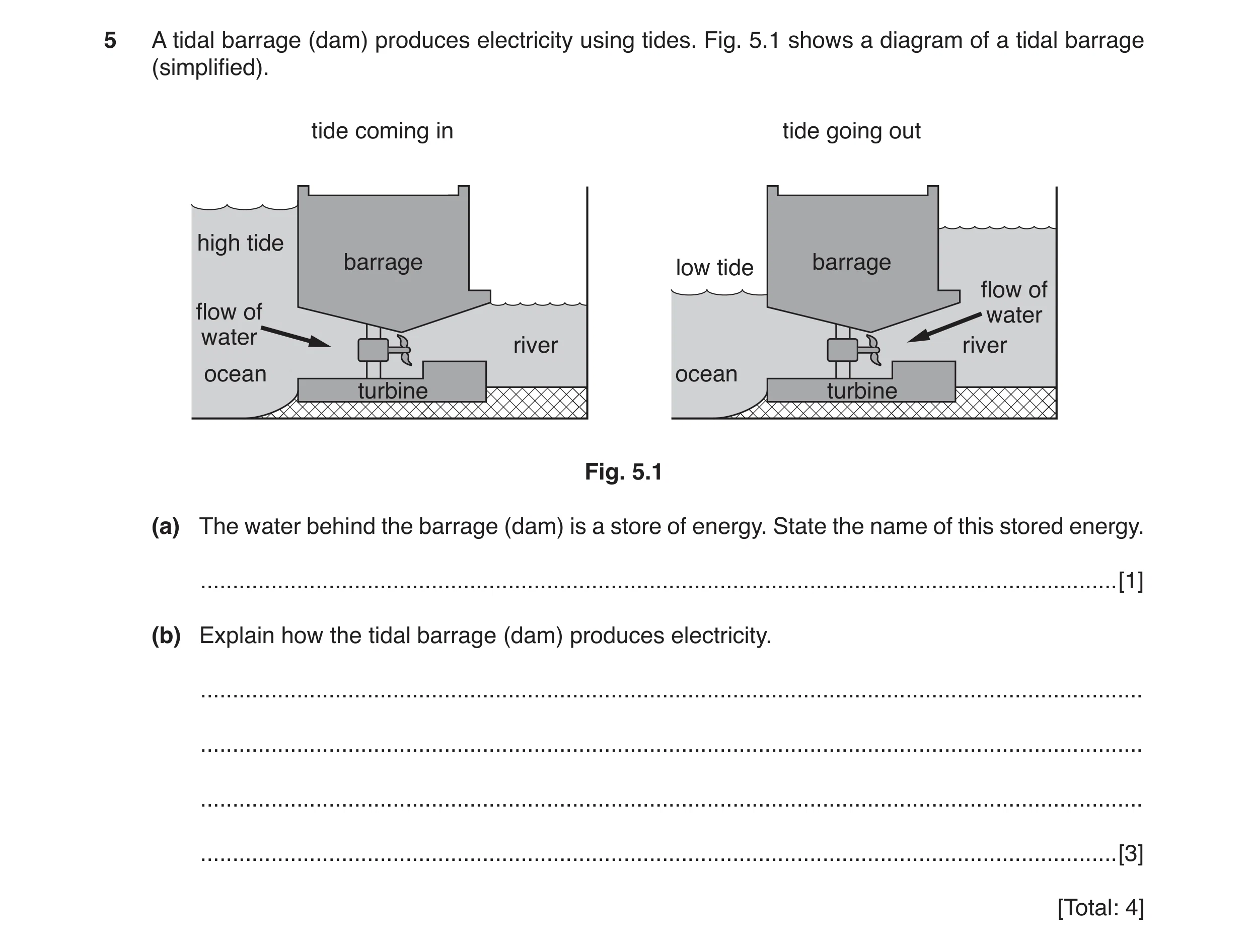 102 / 181
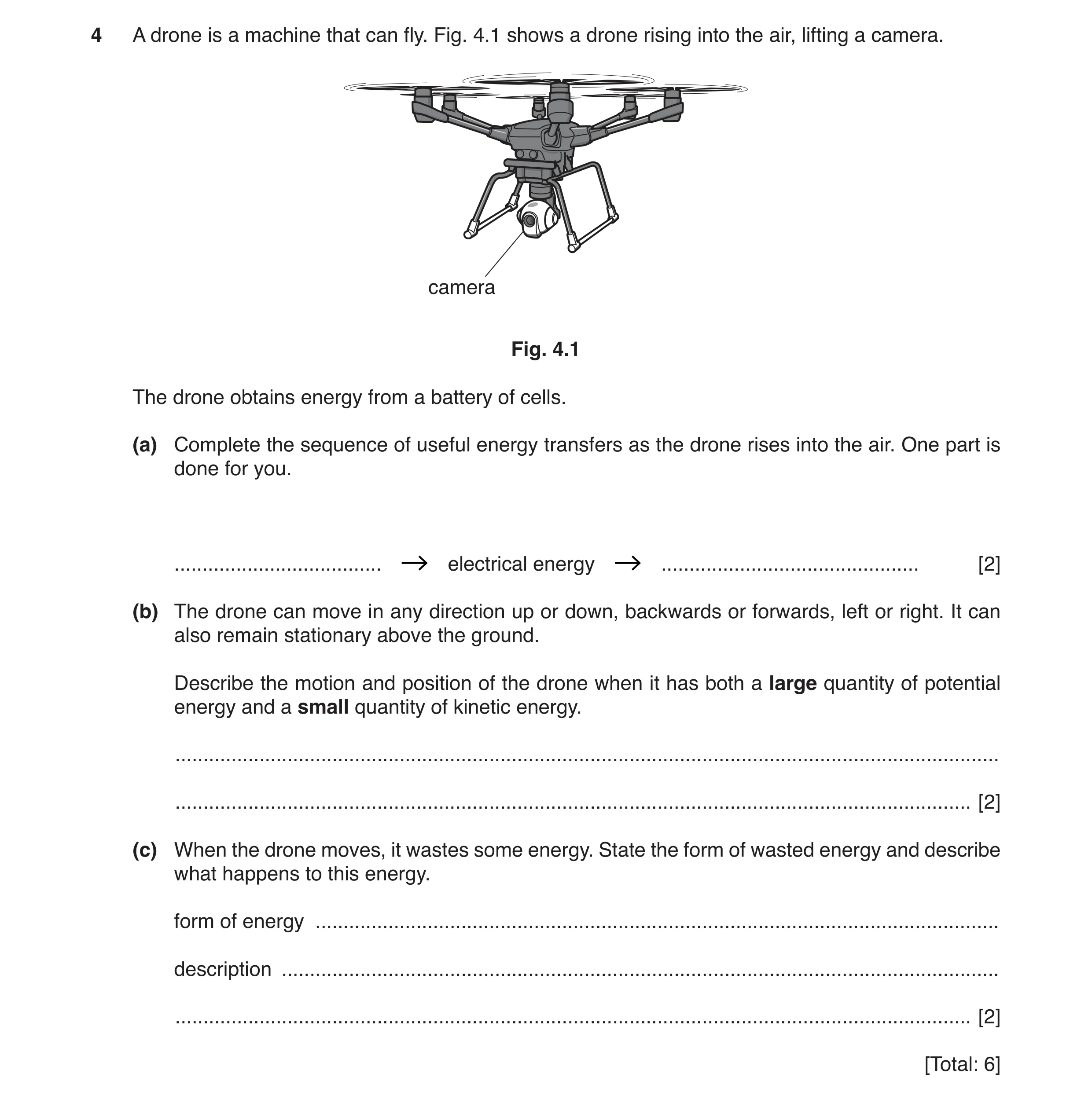 103 / 181
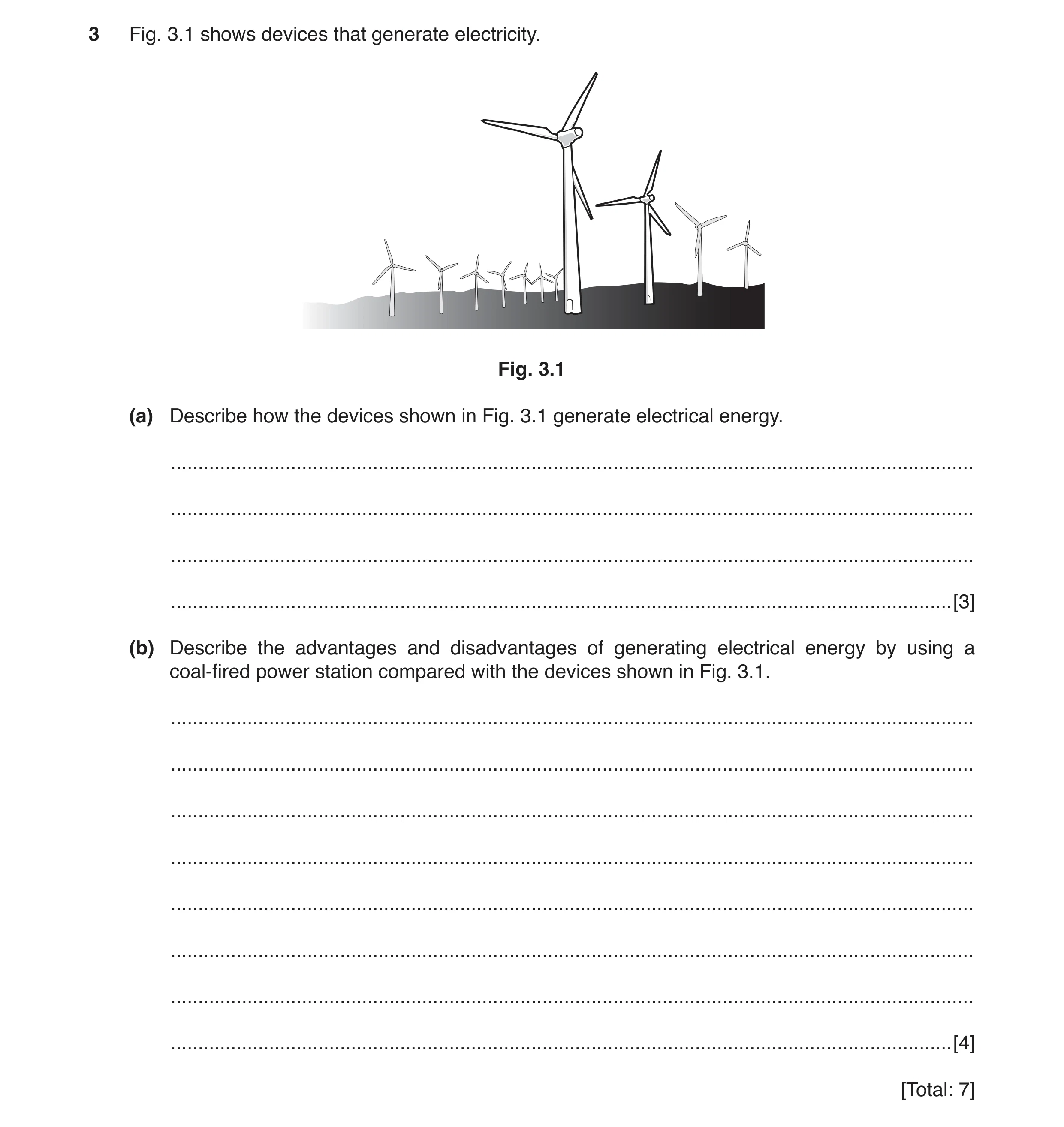 104 / 181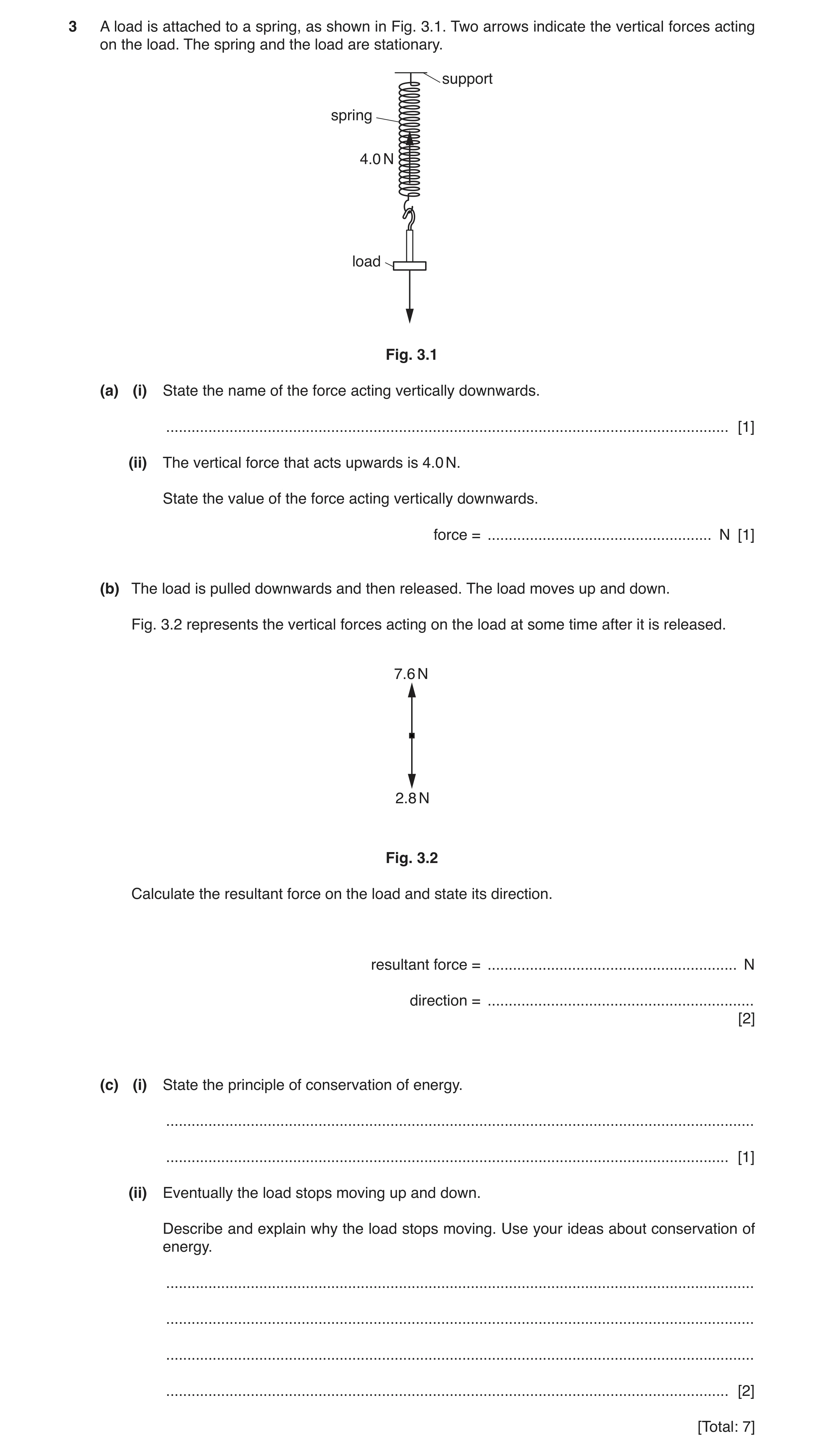
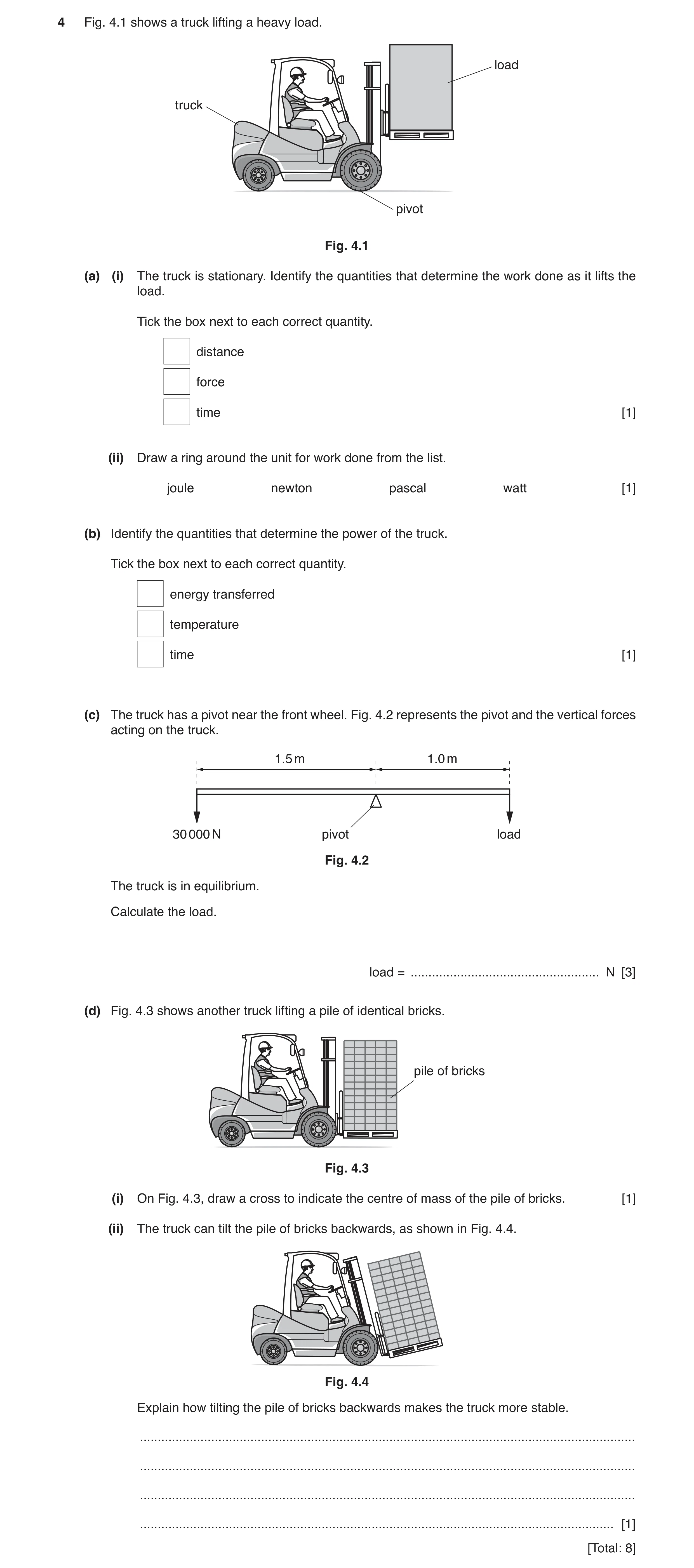
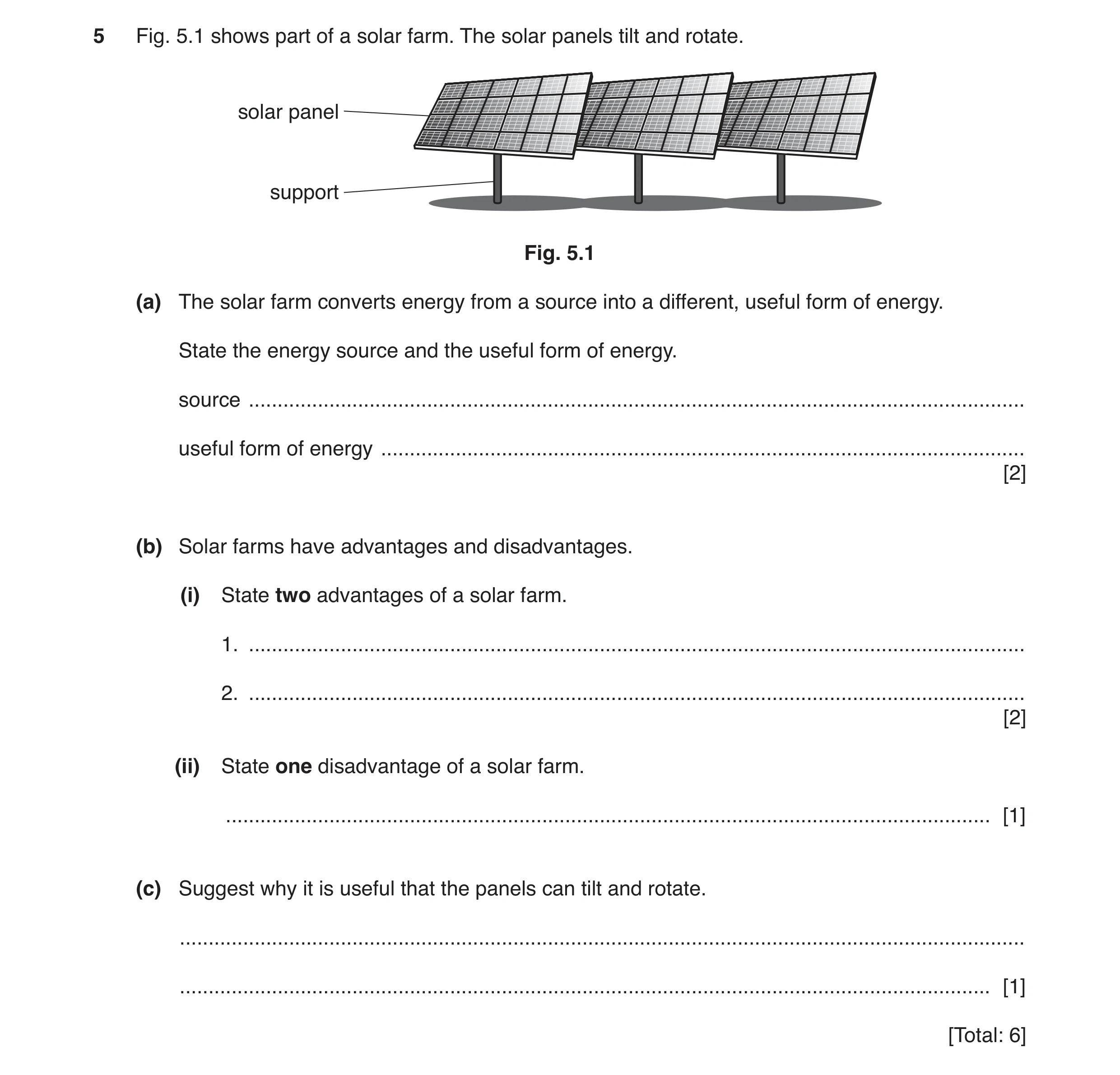 108 / 181
 109 / 181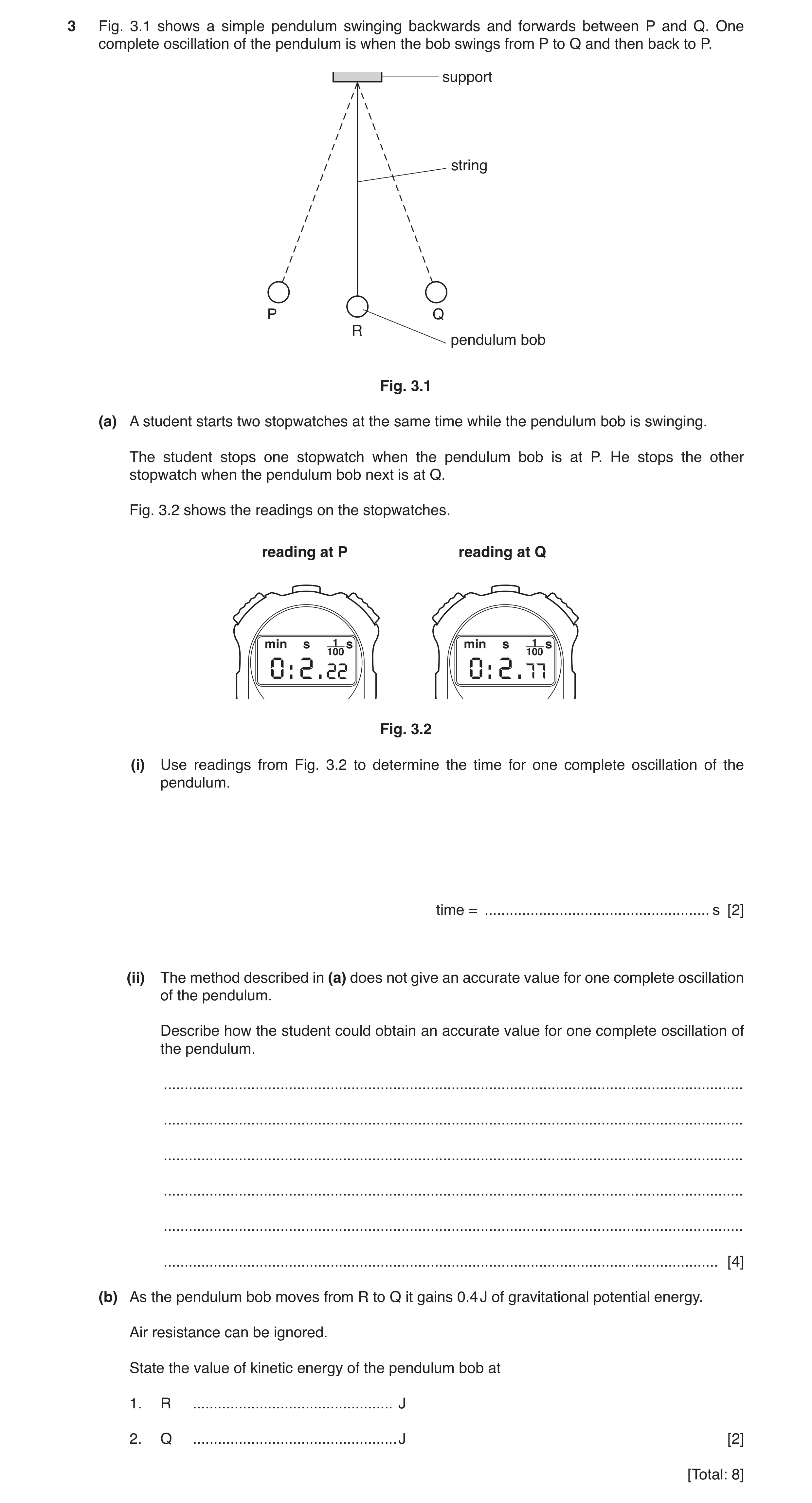
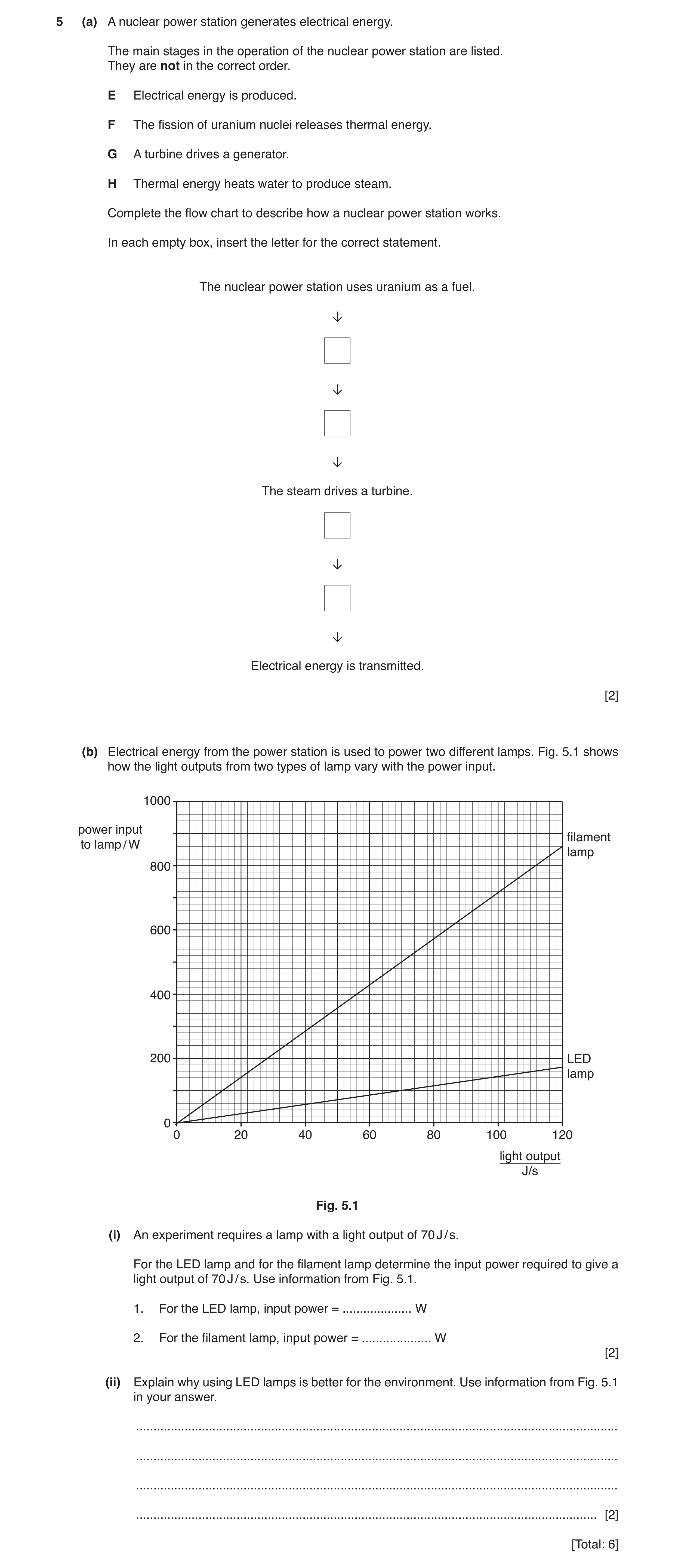
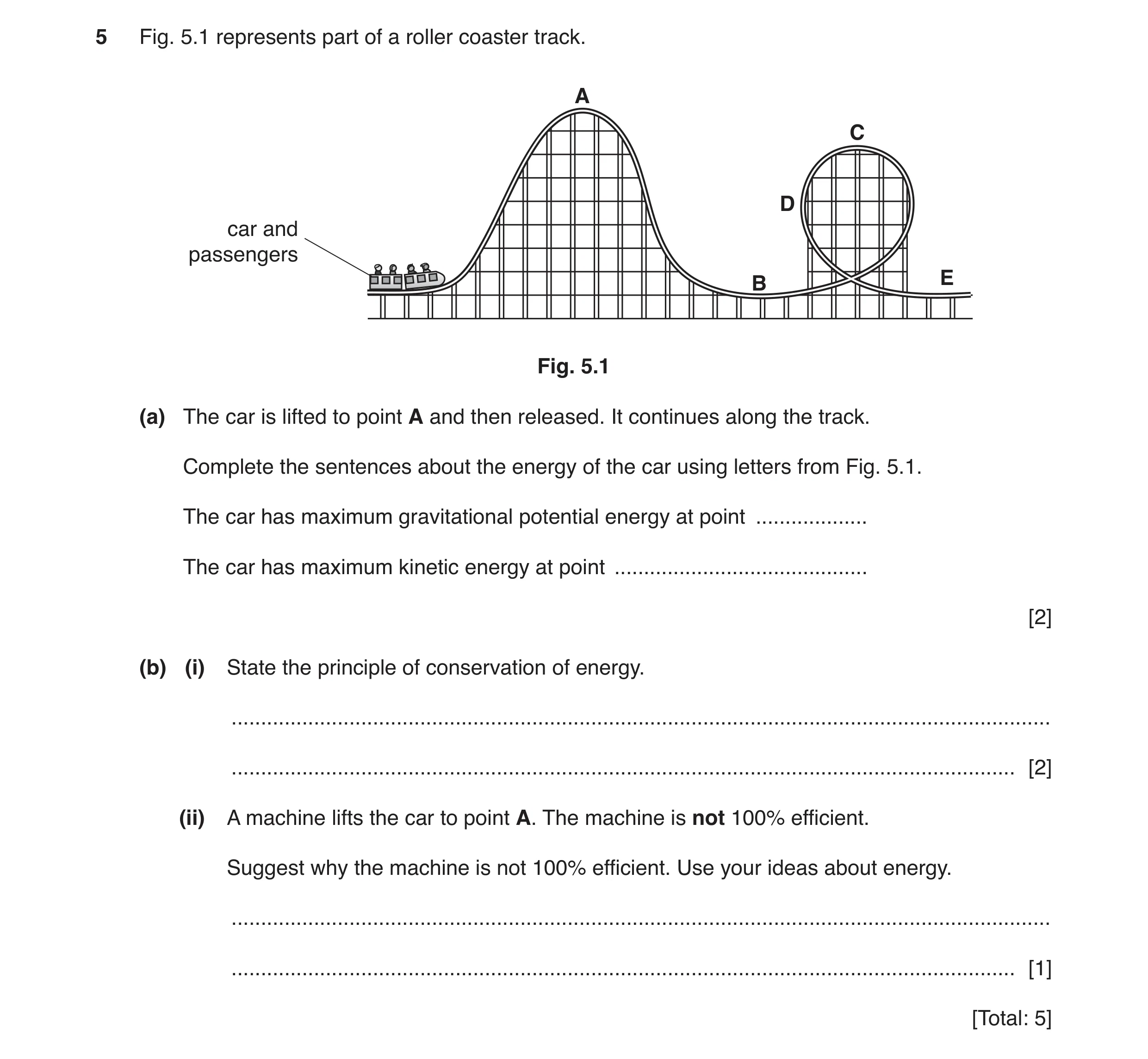
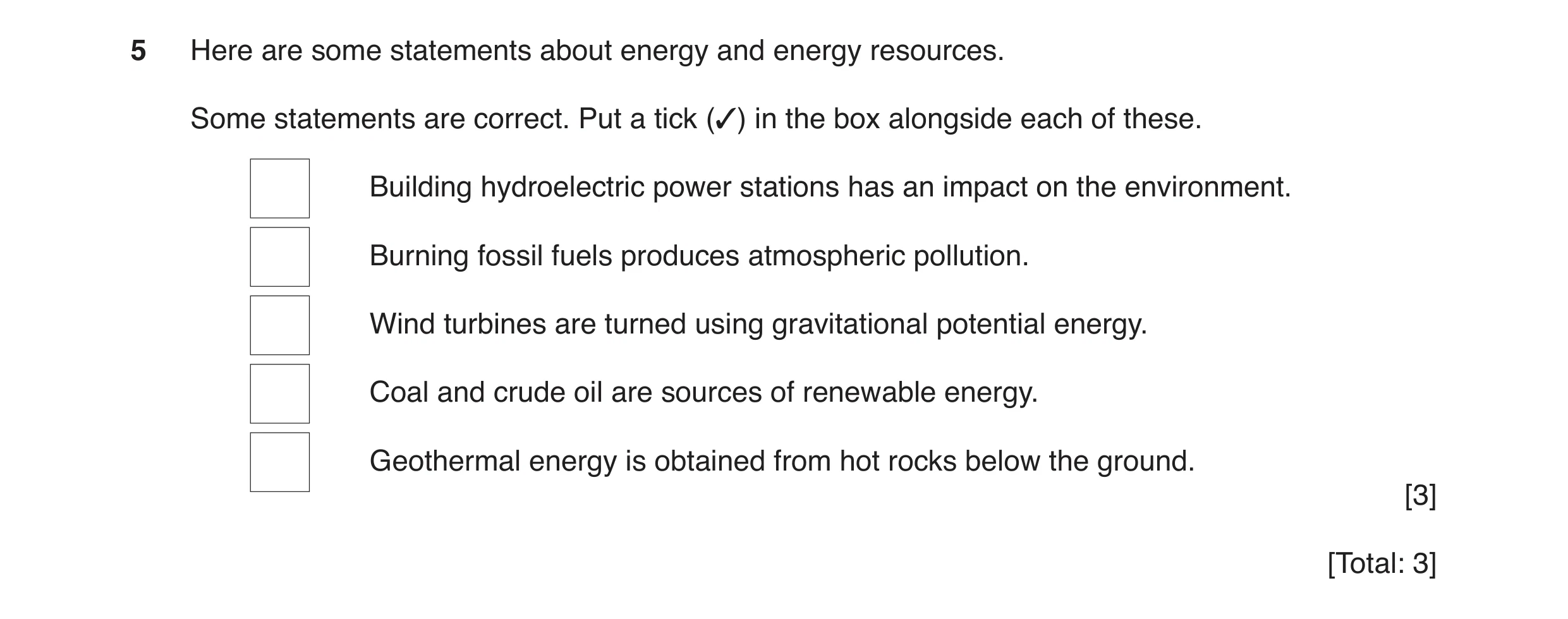 113 / 181
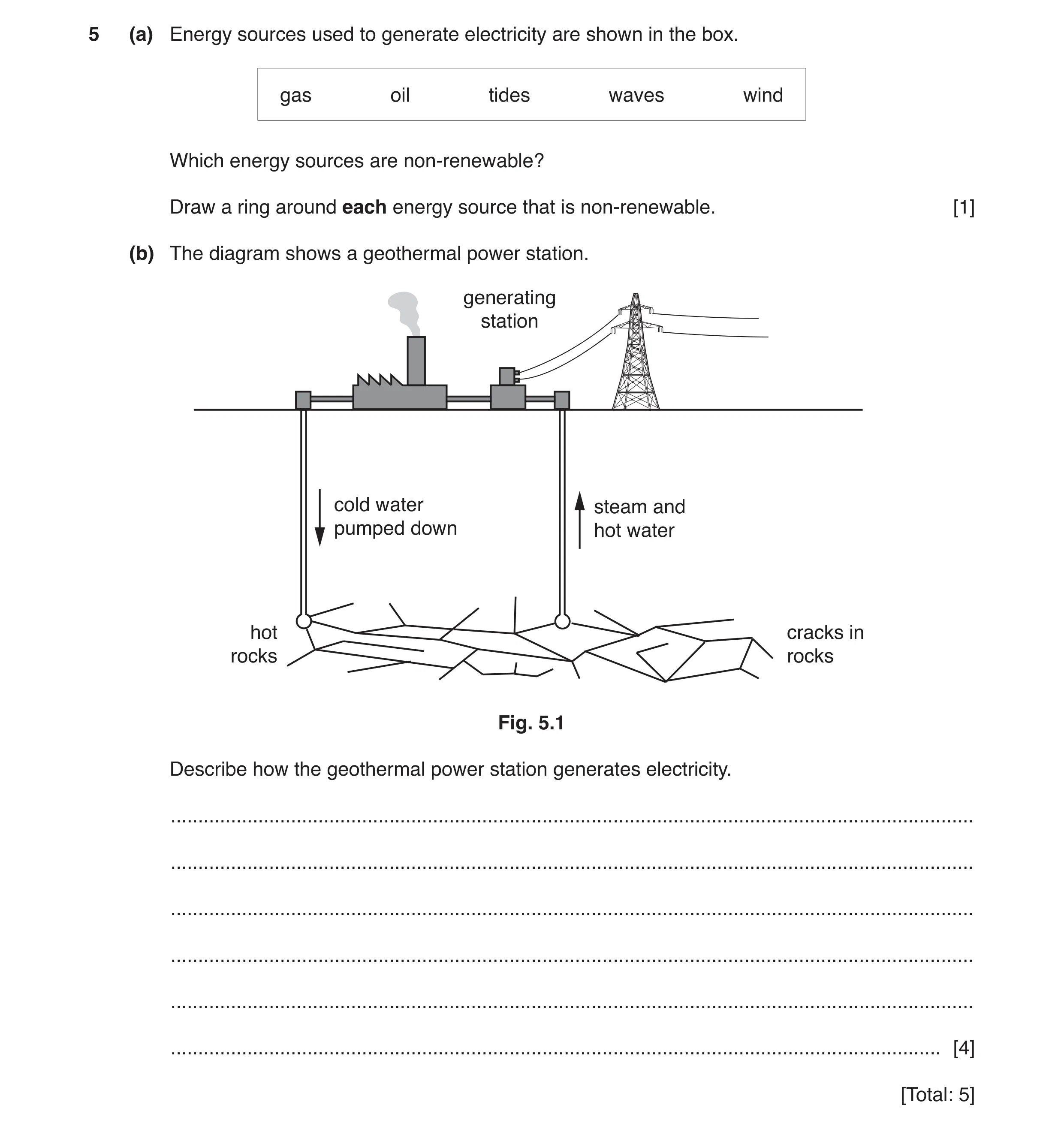 114 / 181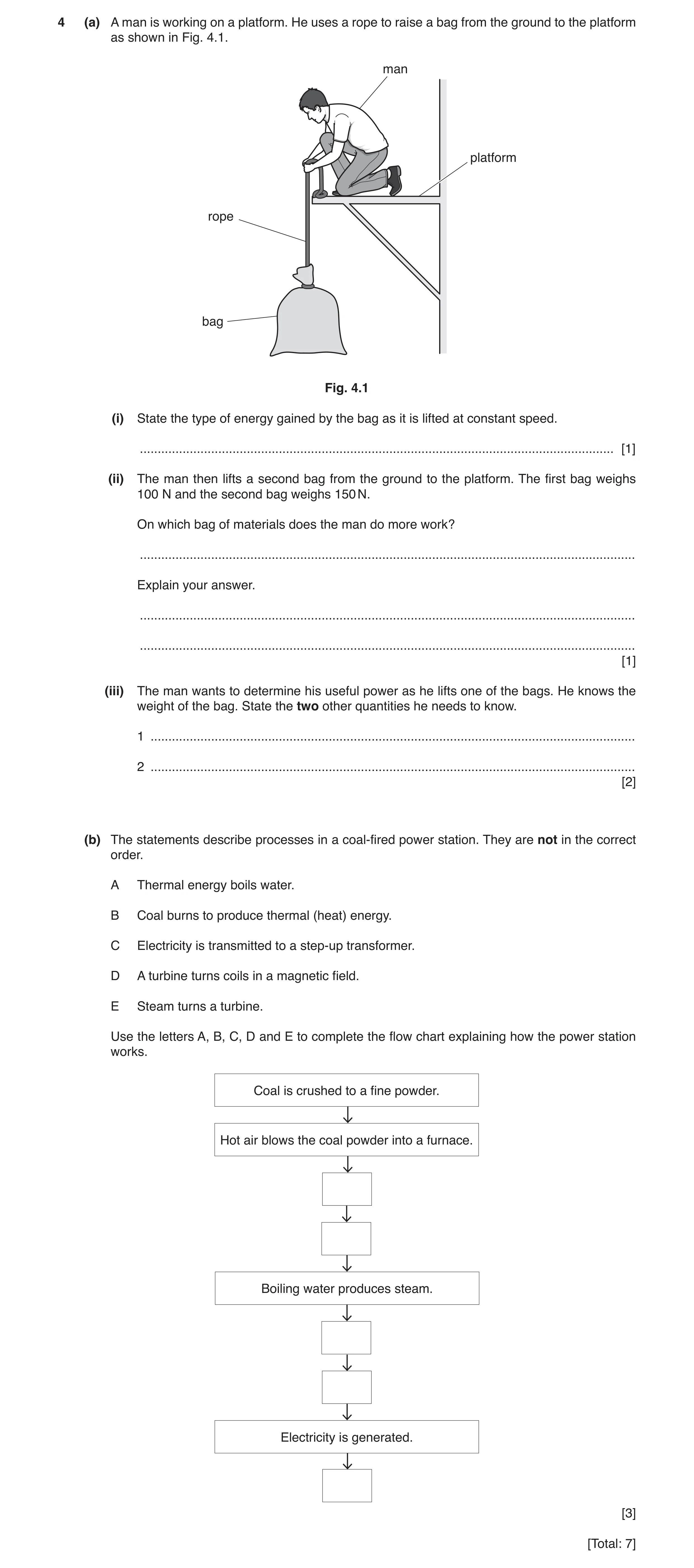
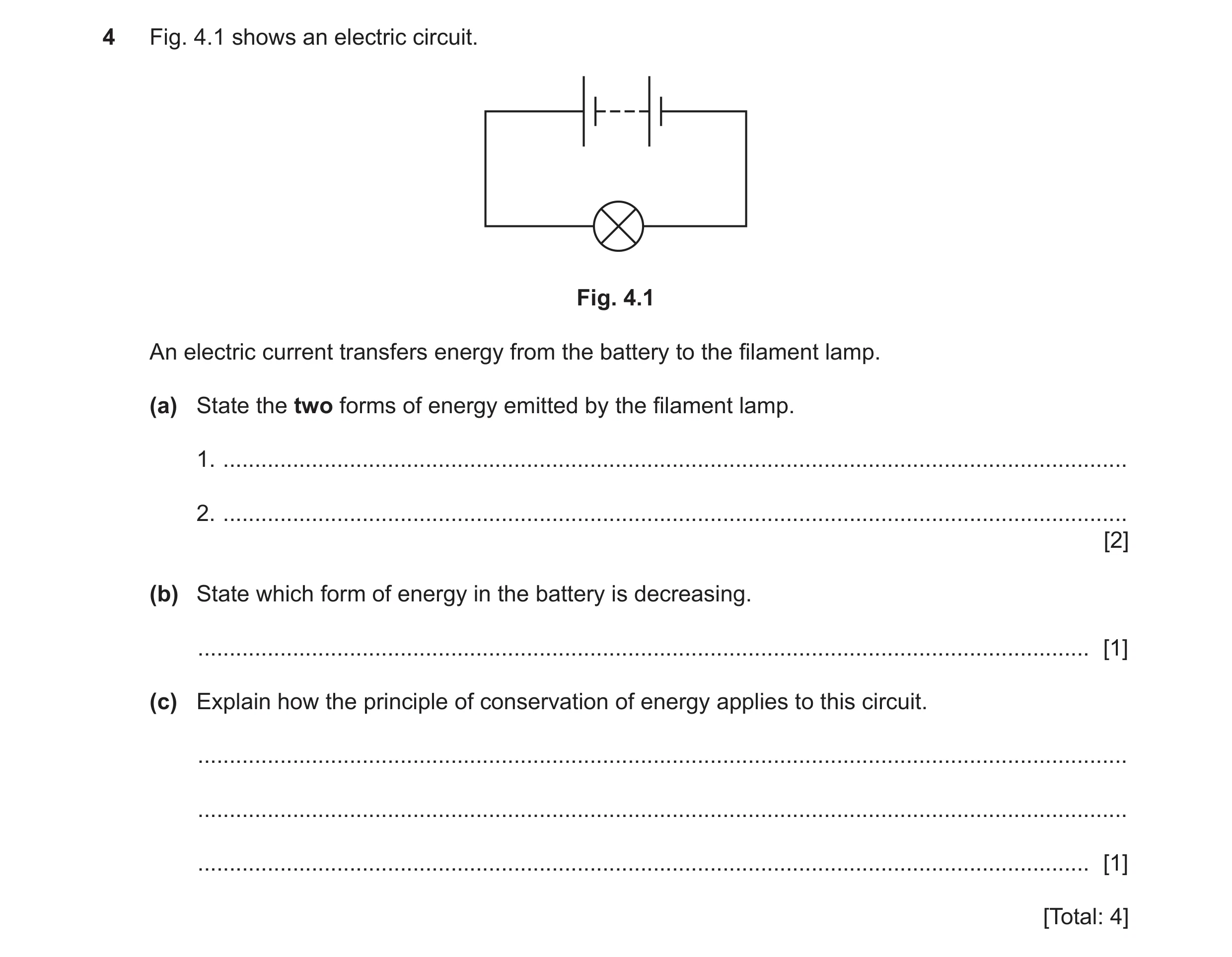 117 / 181
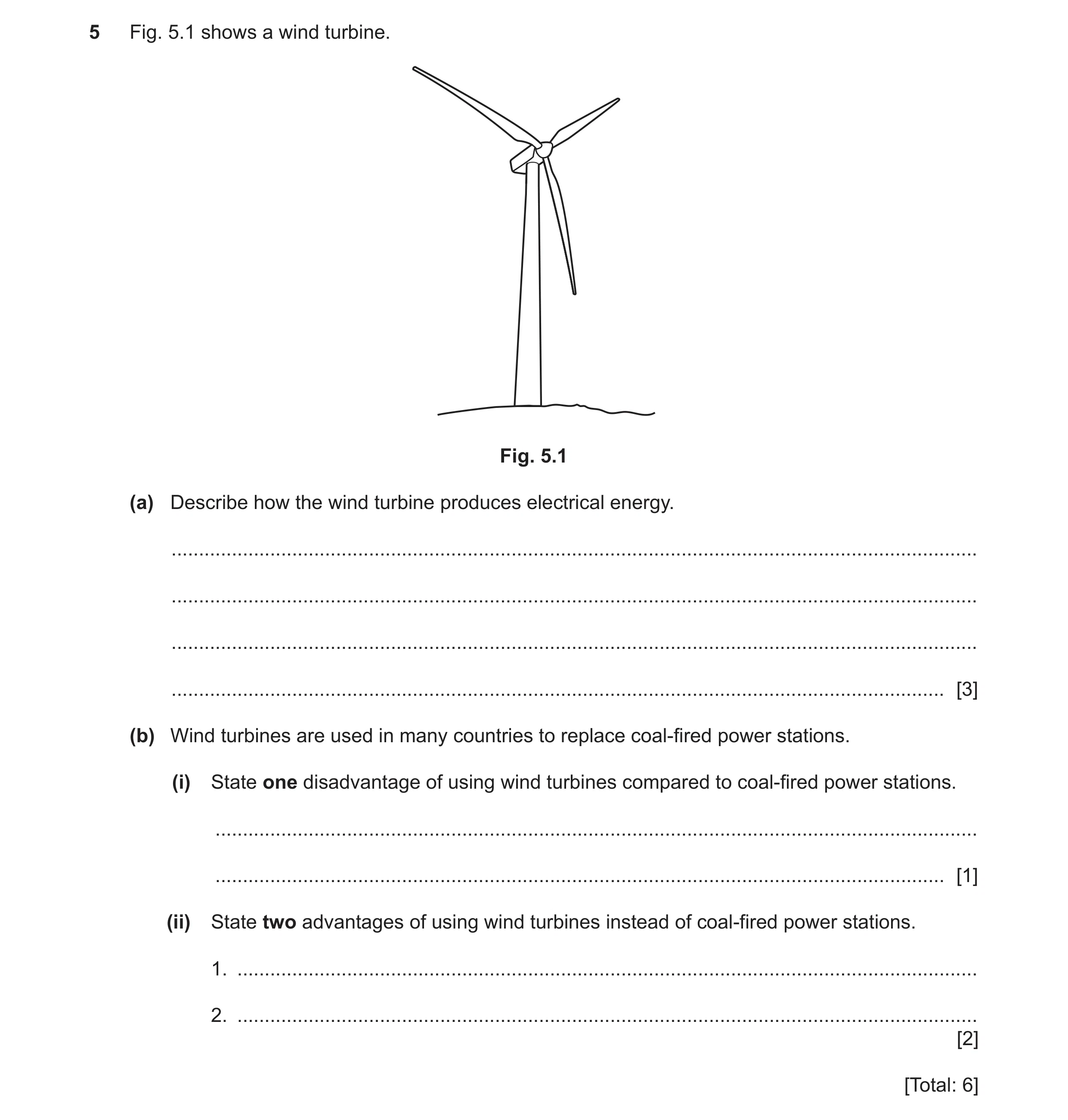 118 / 181
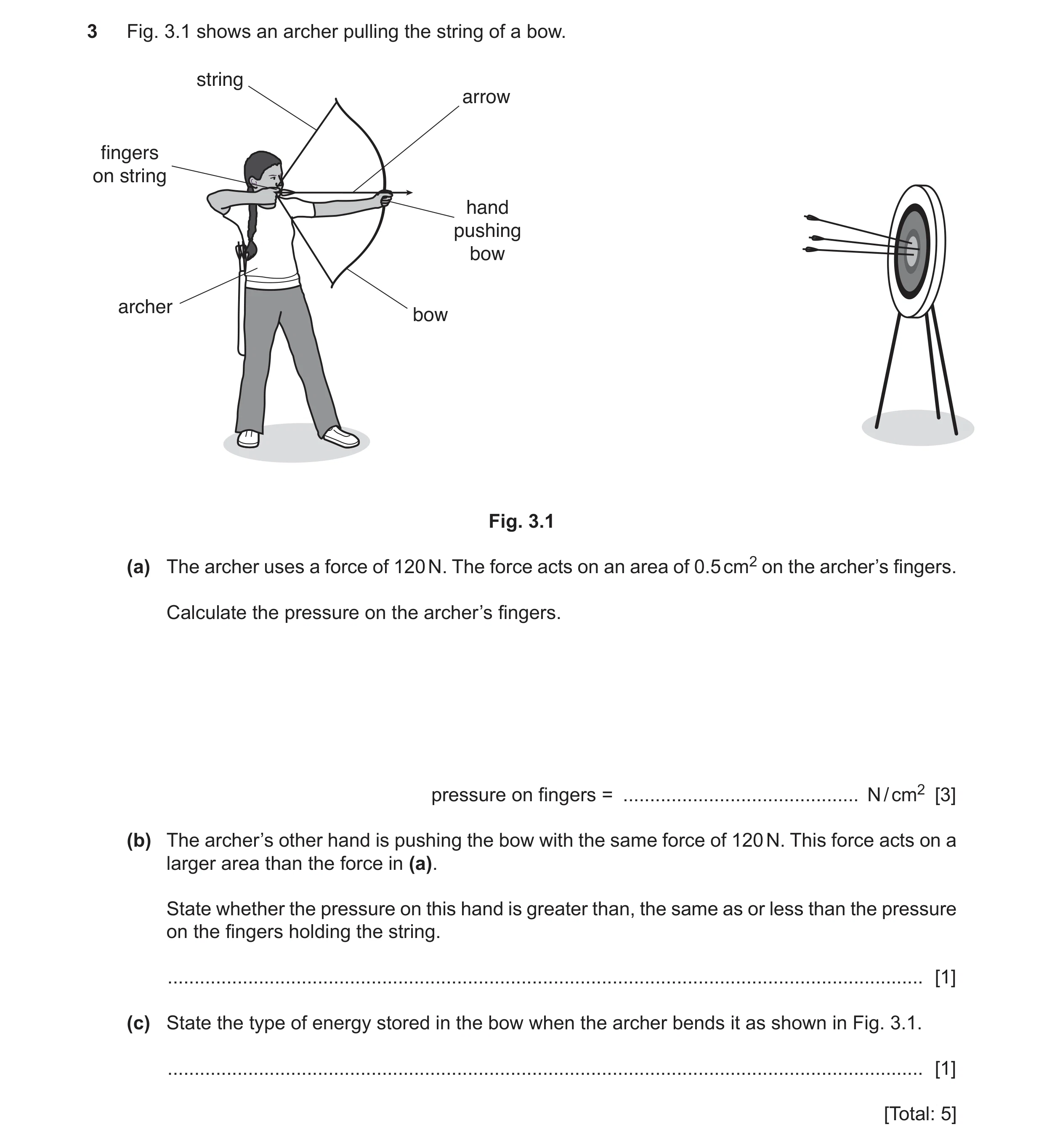 119 / 181
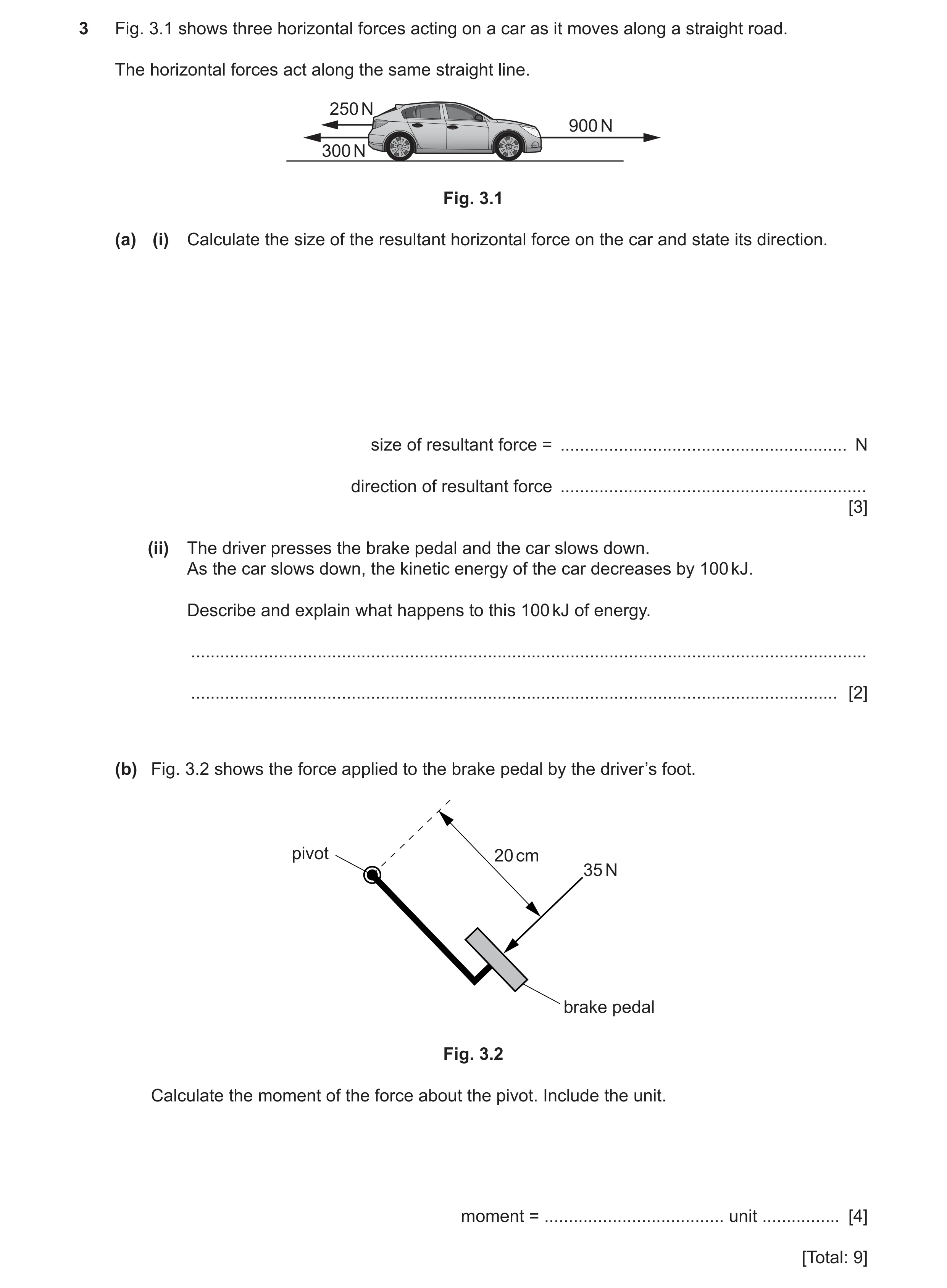 120 / 181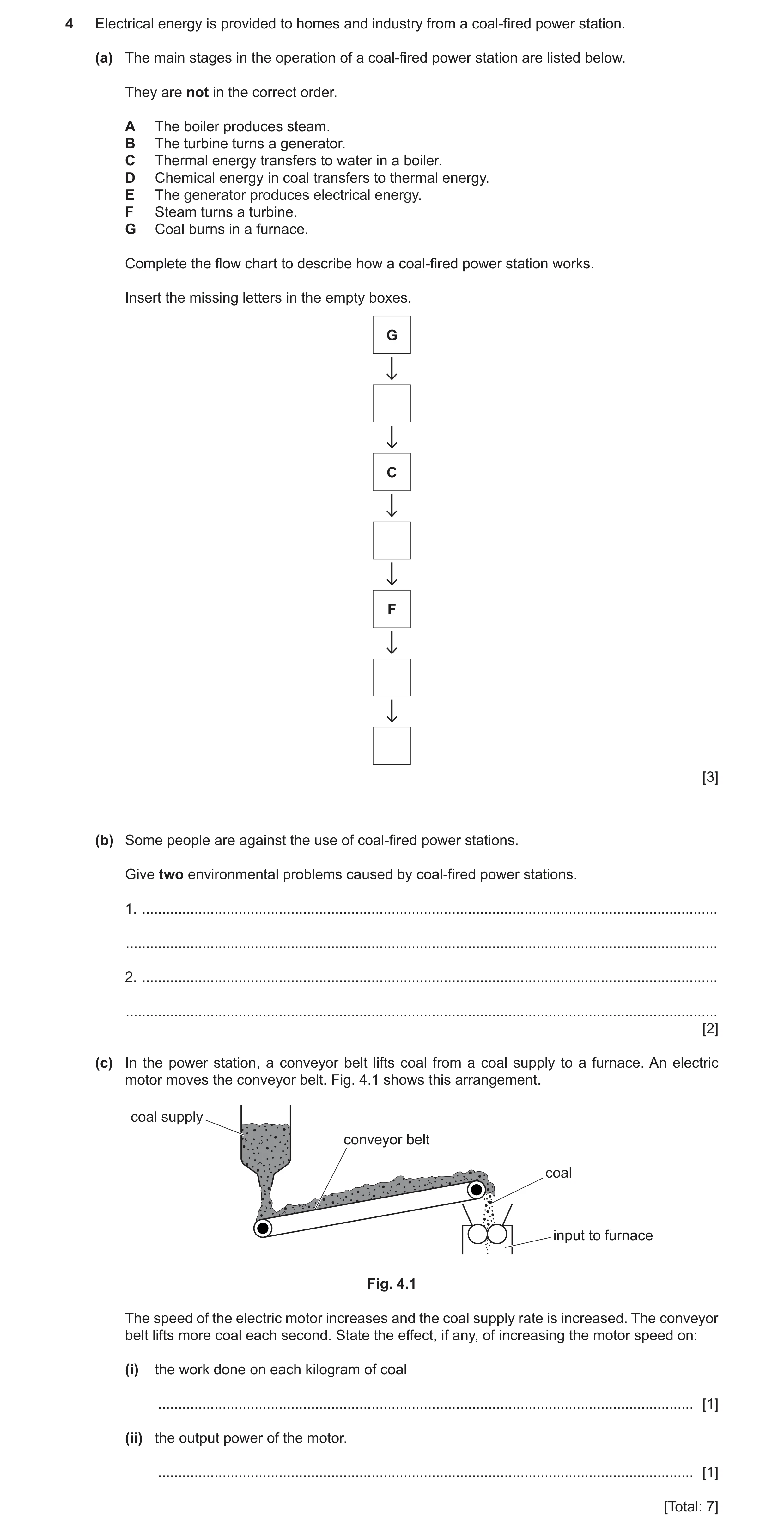
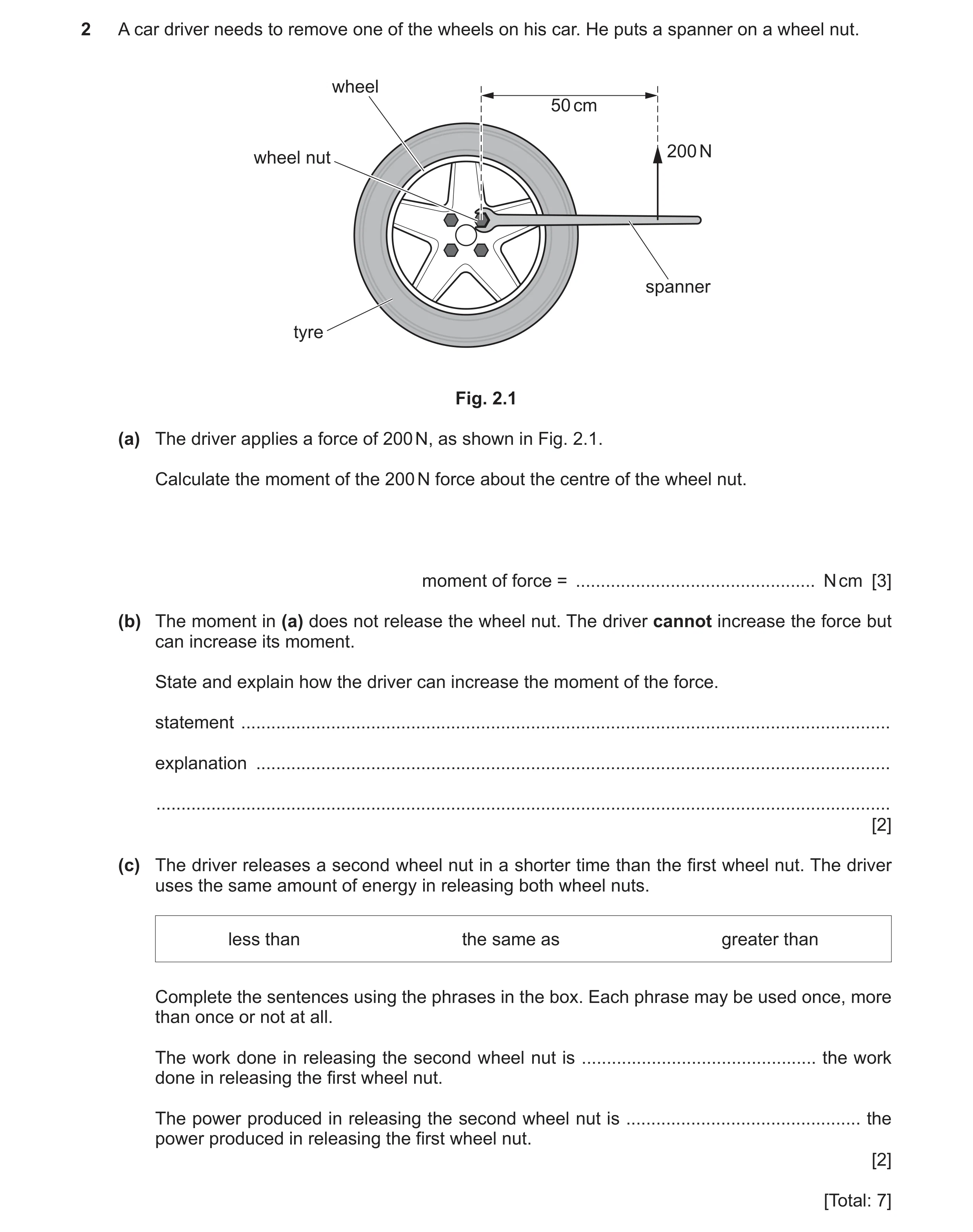 123 / 181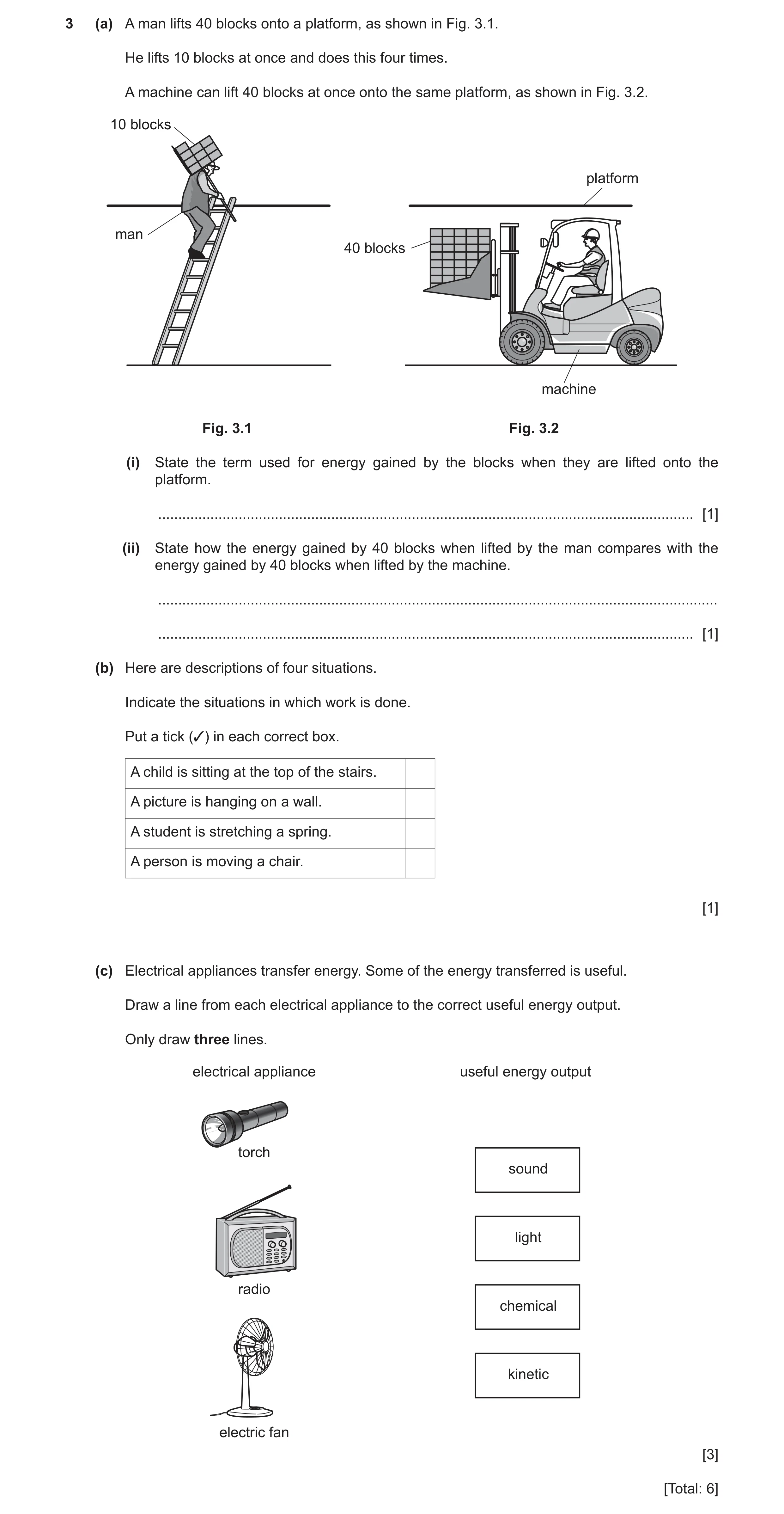
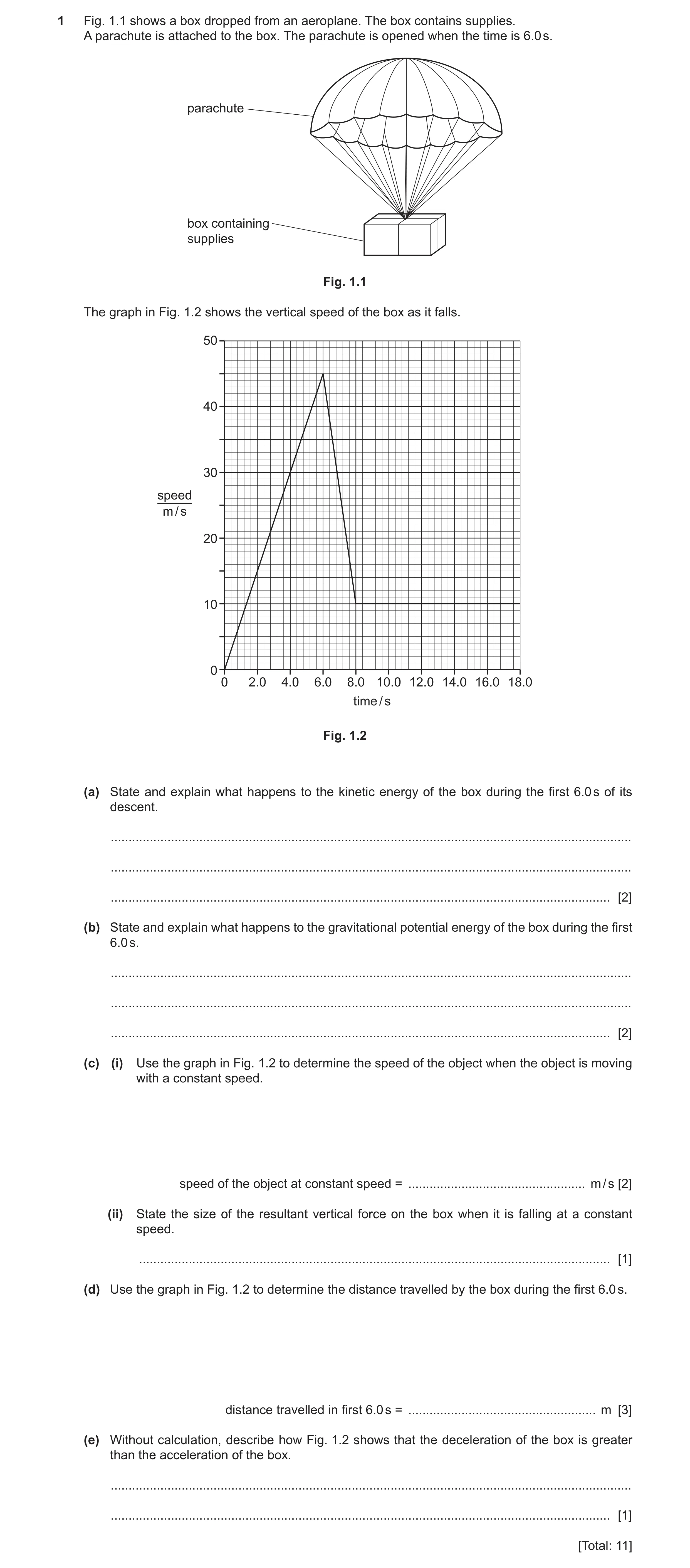
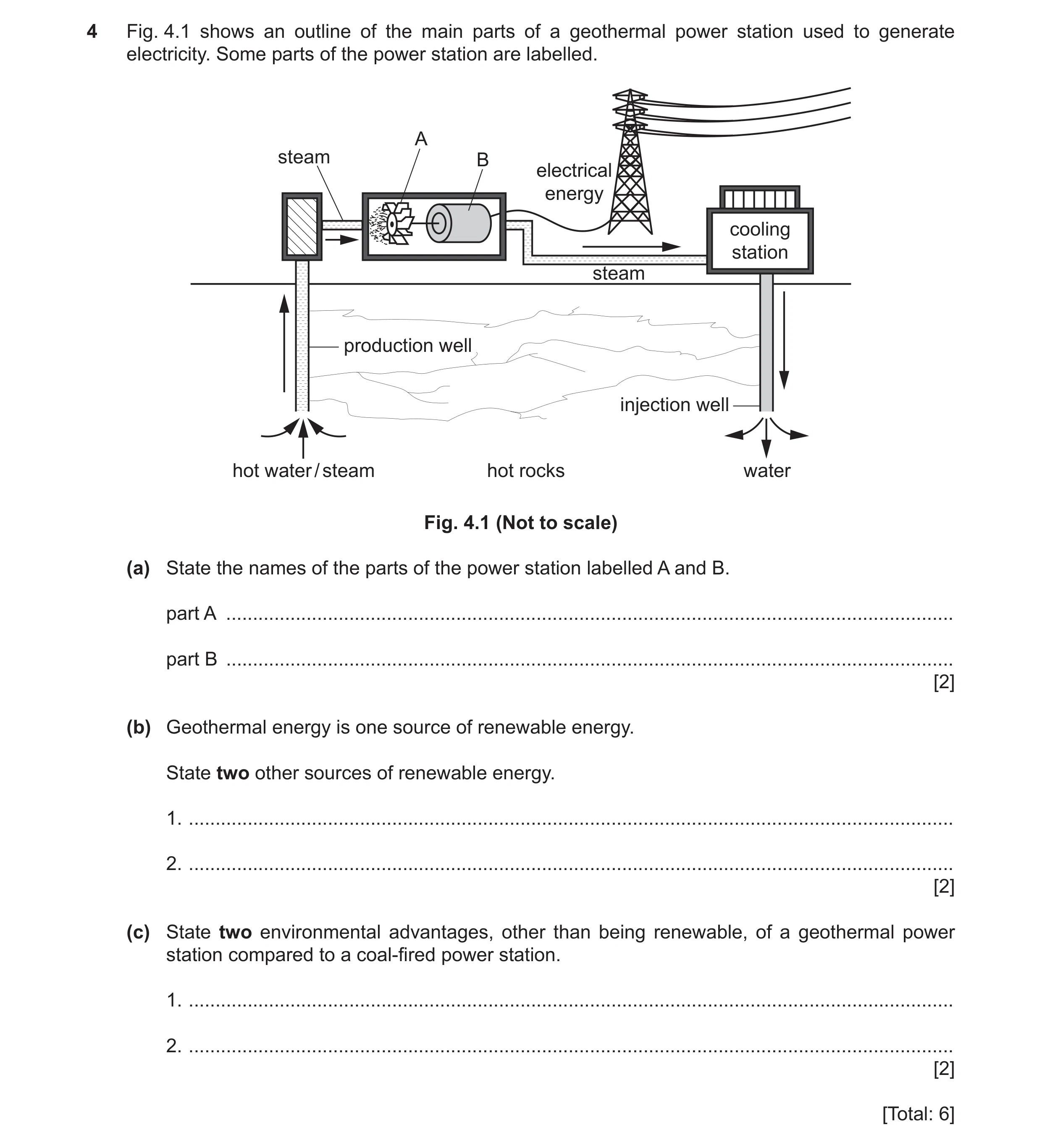 128 / 181
 129 / 181
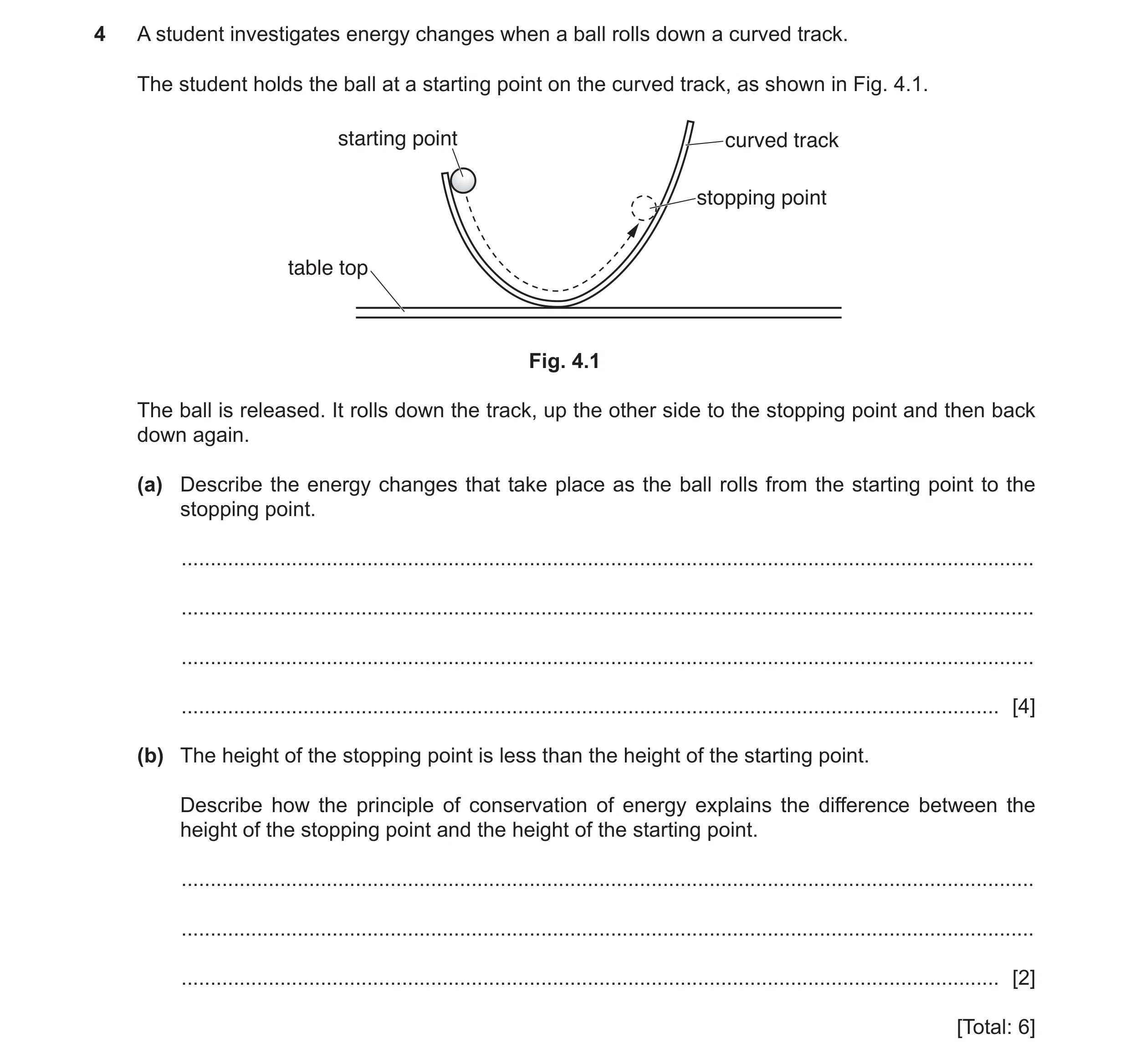 130 / 181
 131 / 181
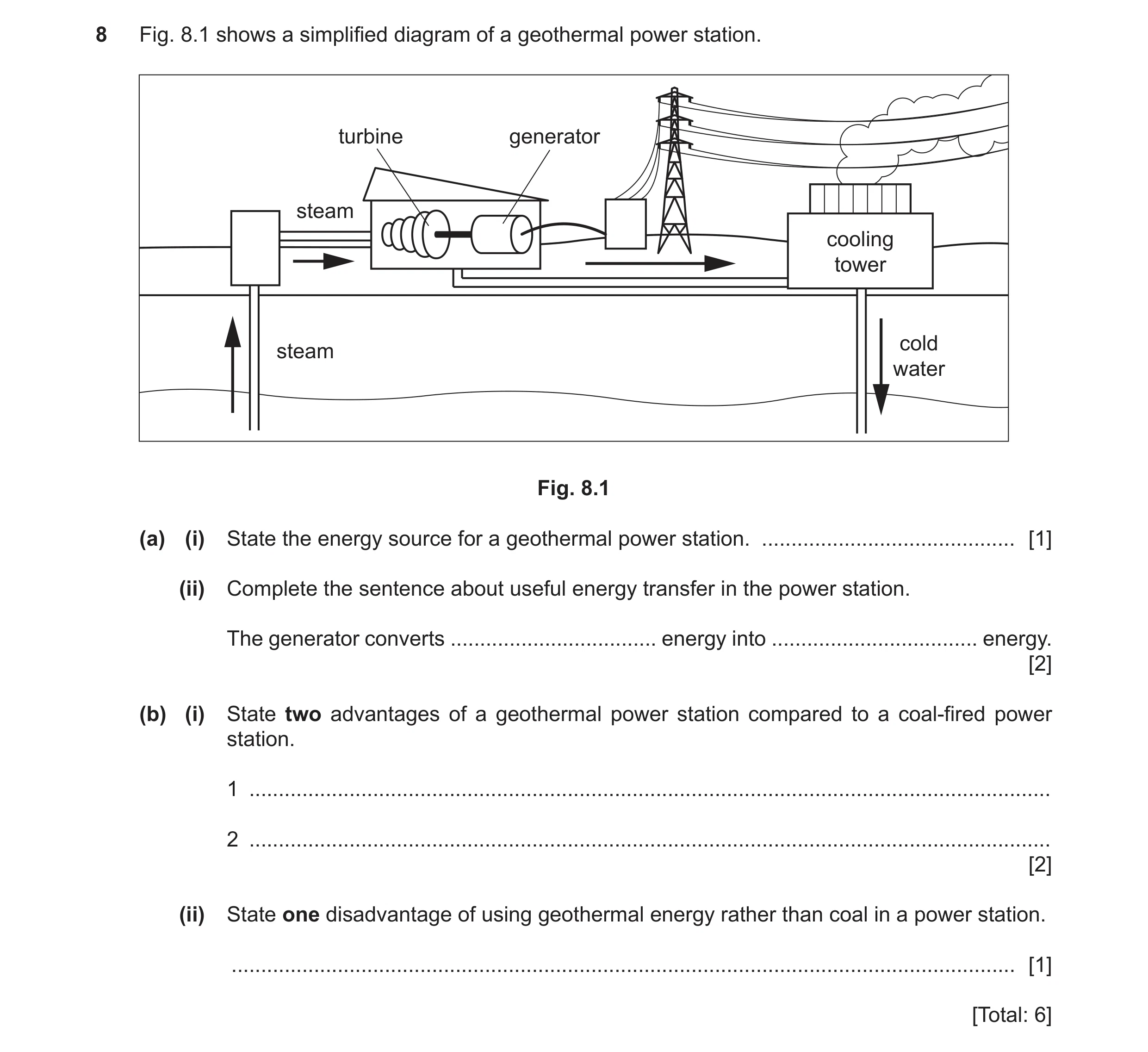 132 / 181
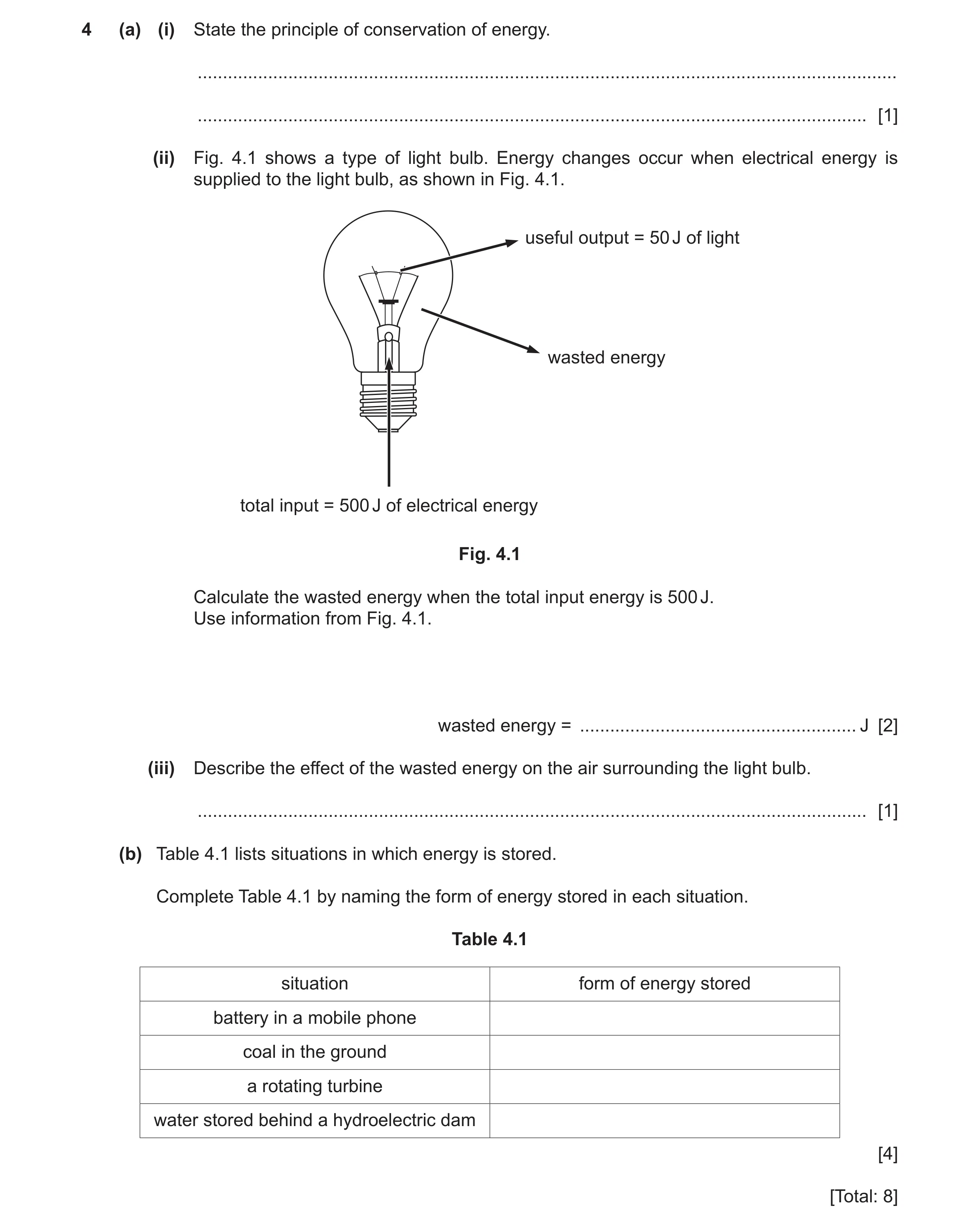 133 / 181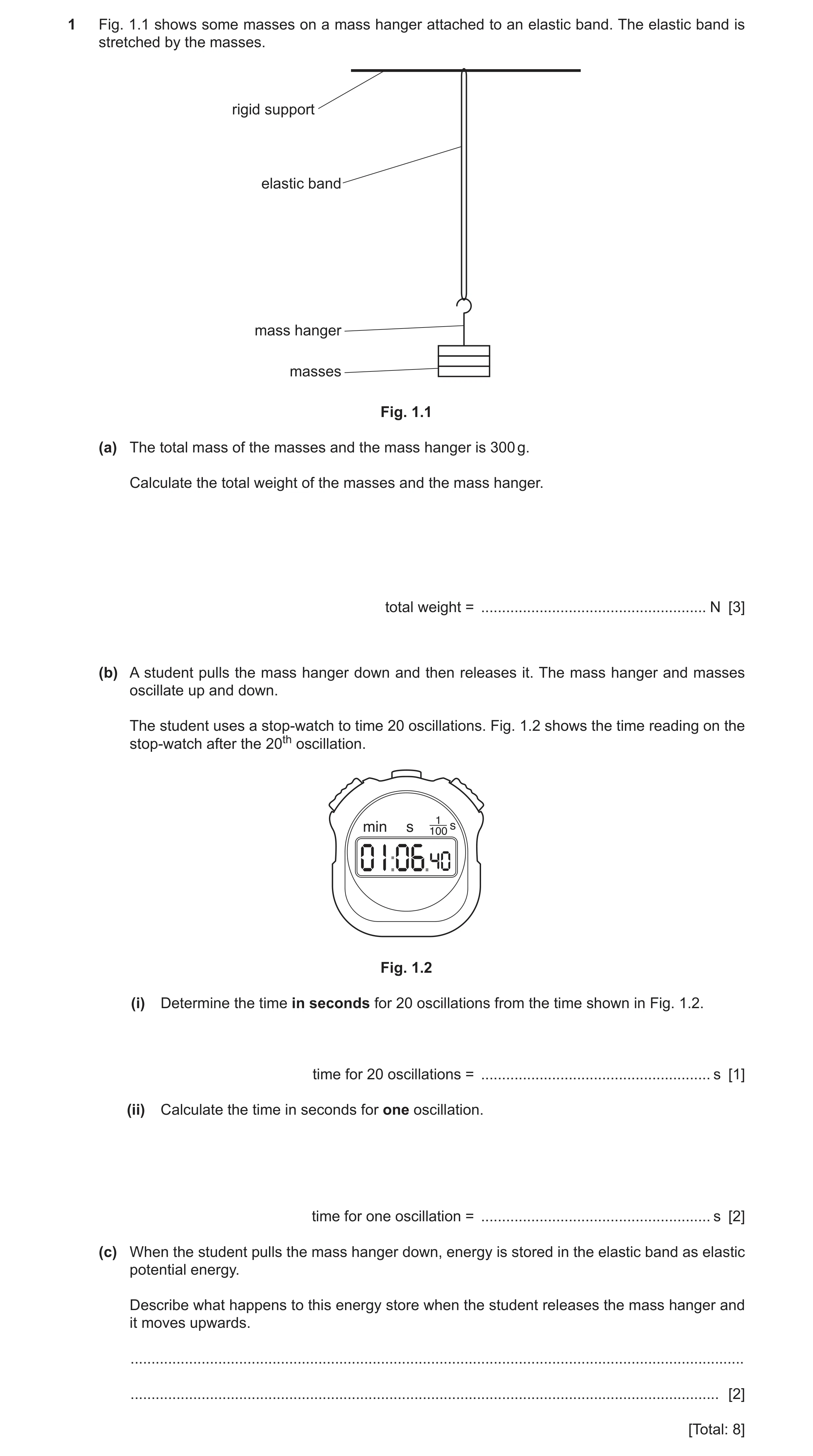
 135 / 181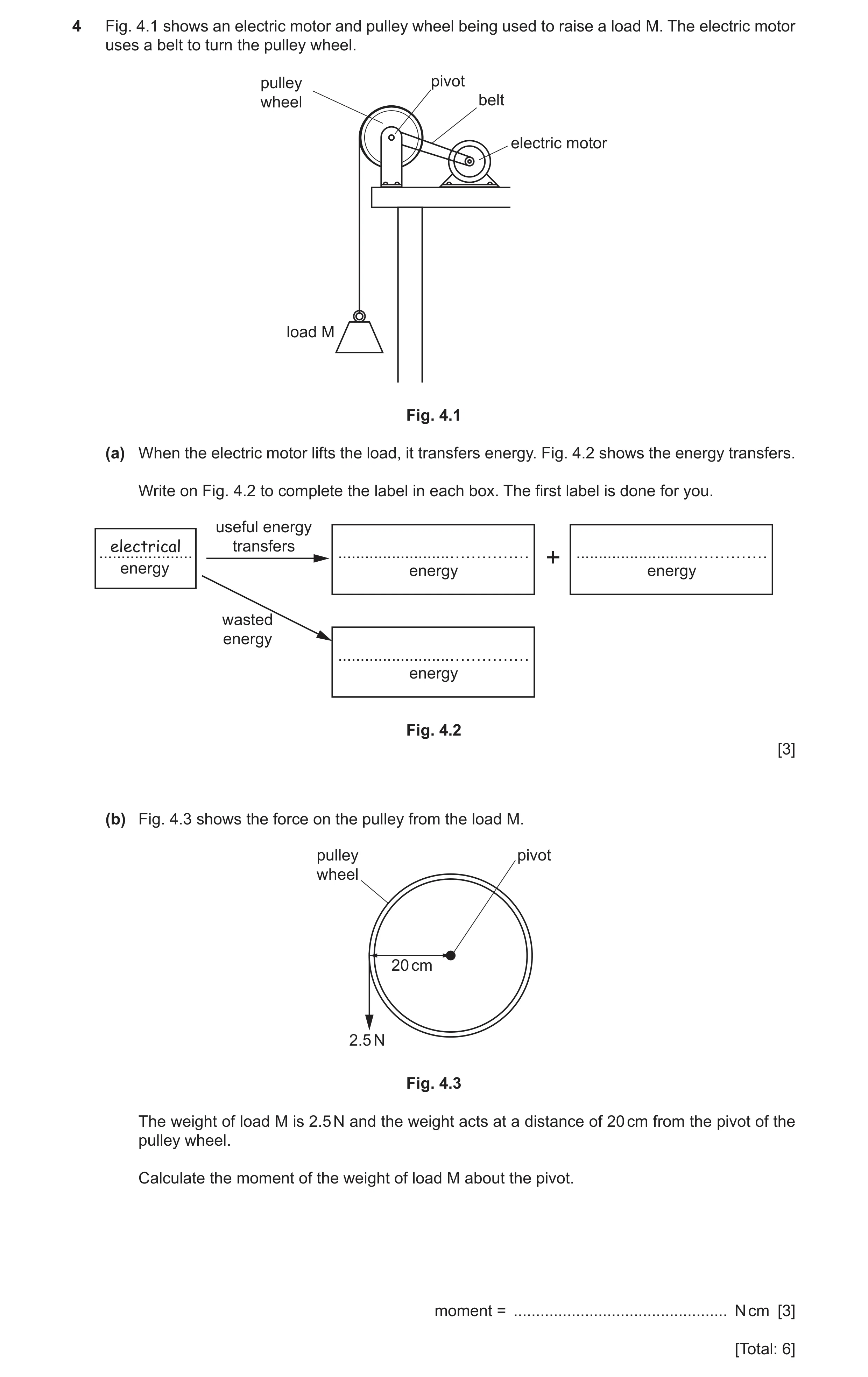
 137 / 181
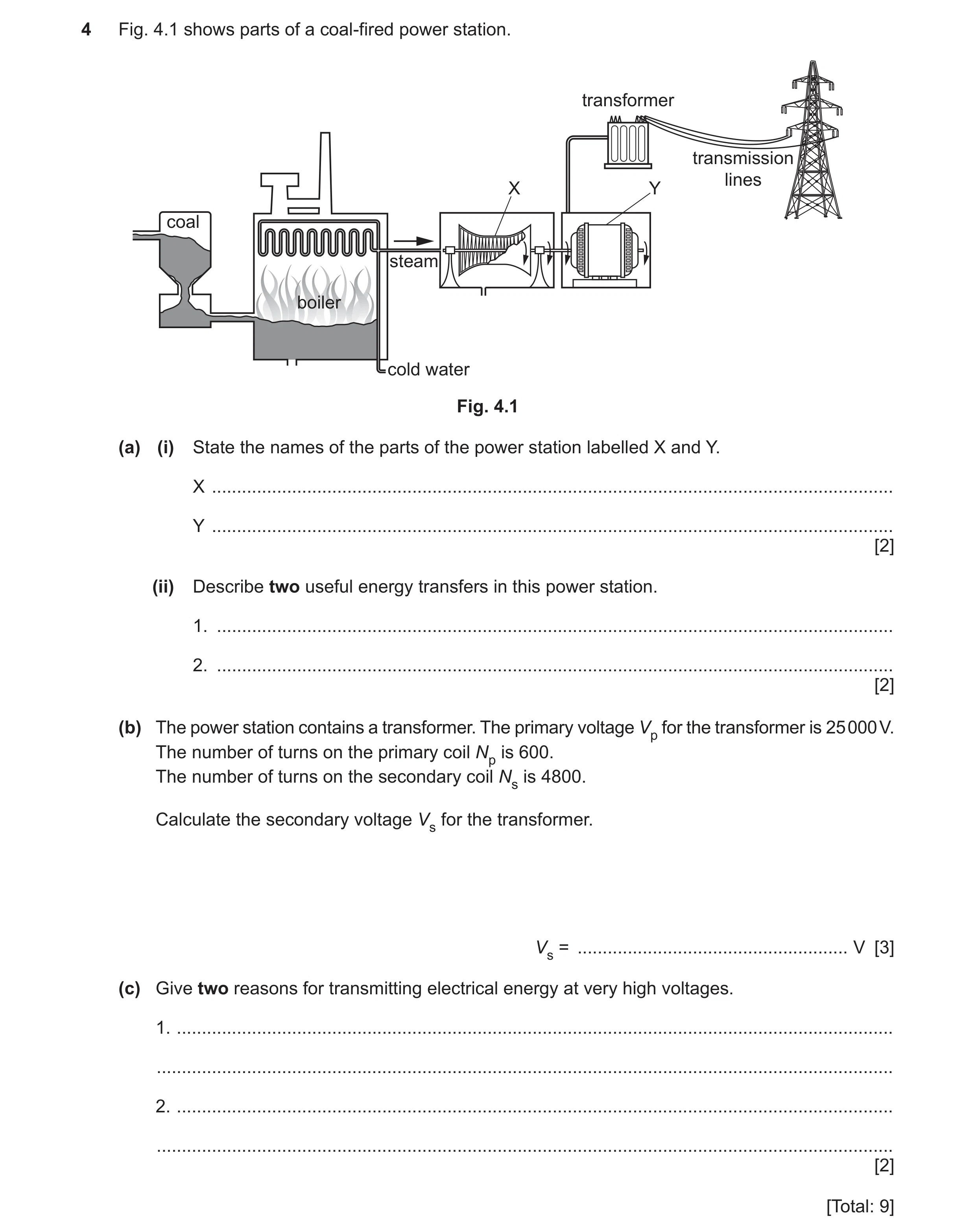 138 / 181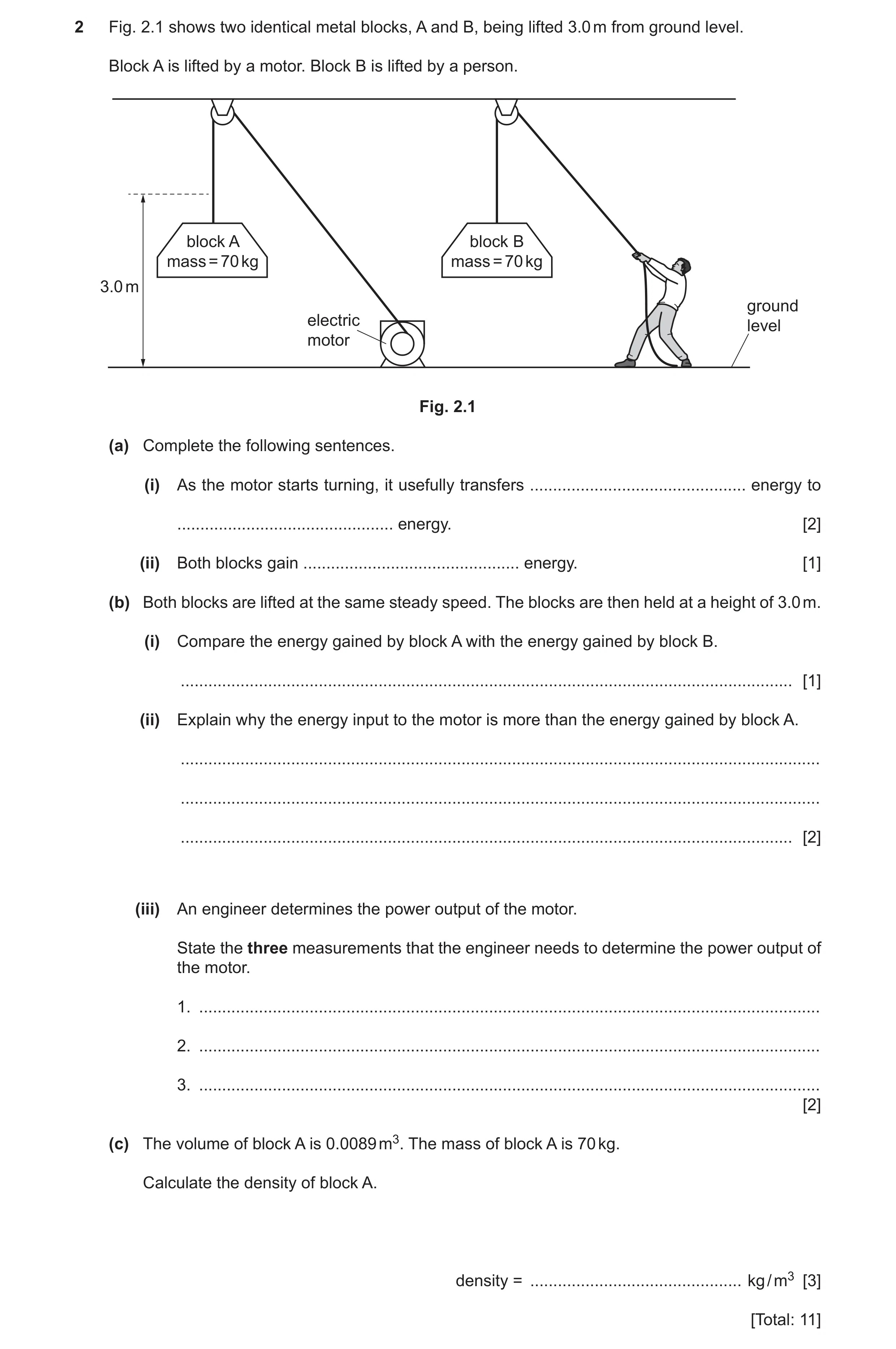
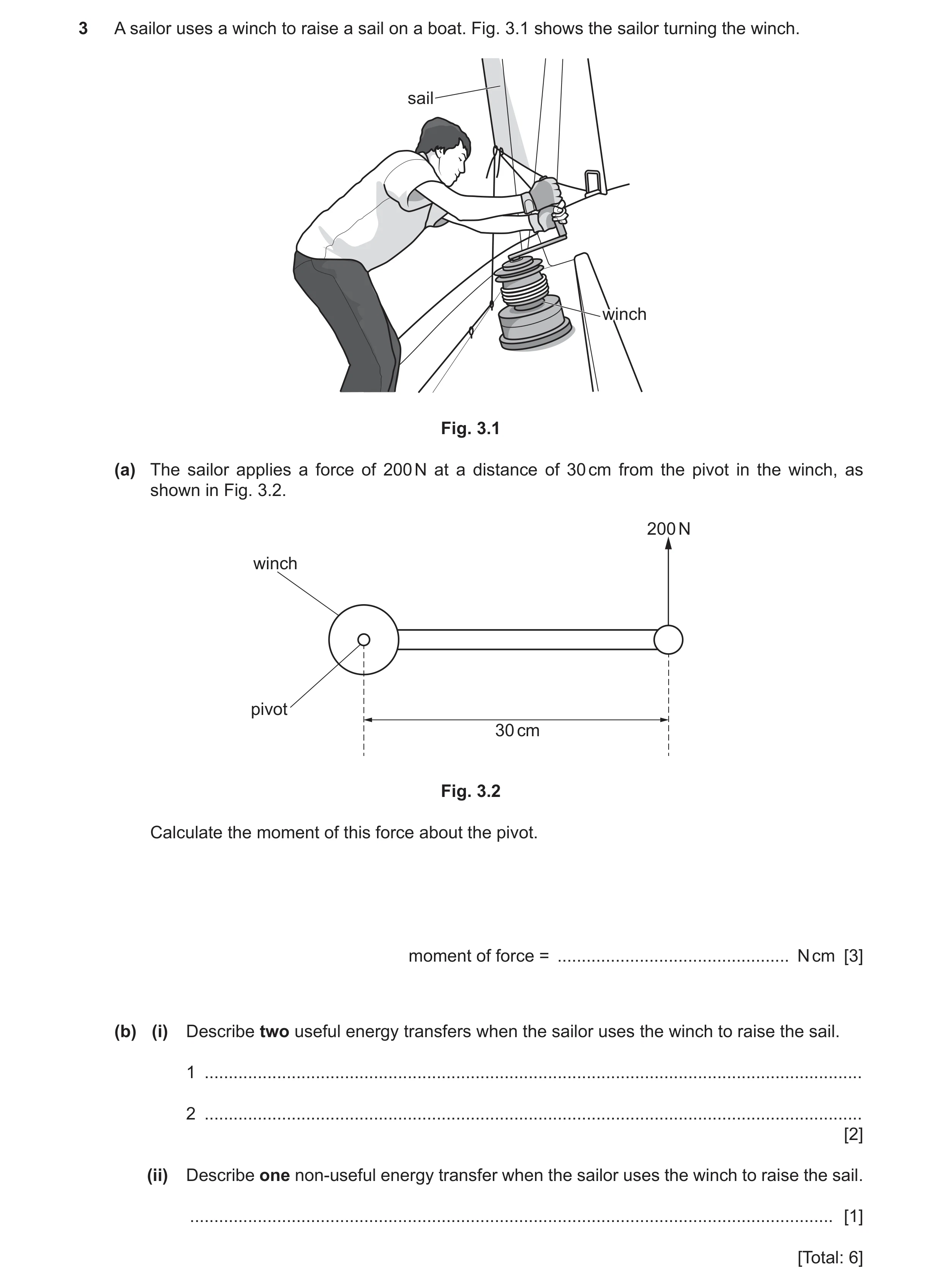 141 / 181
 142 / 181
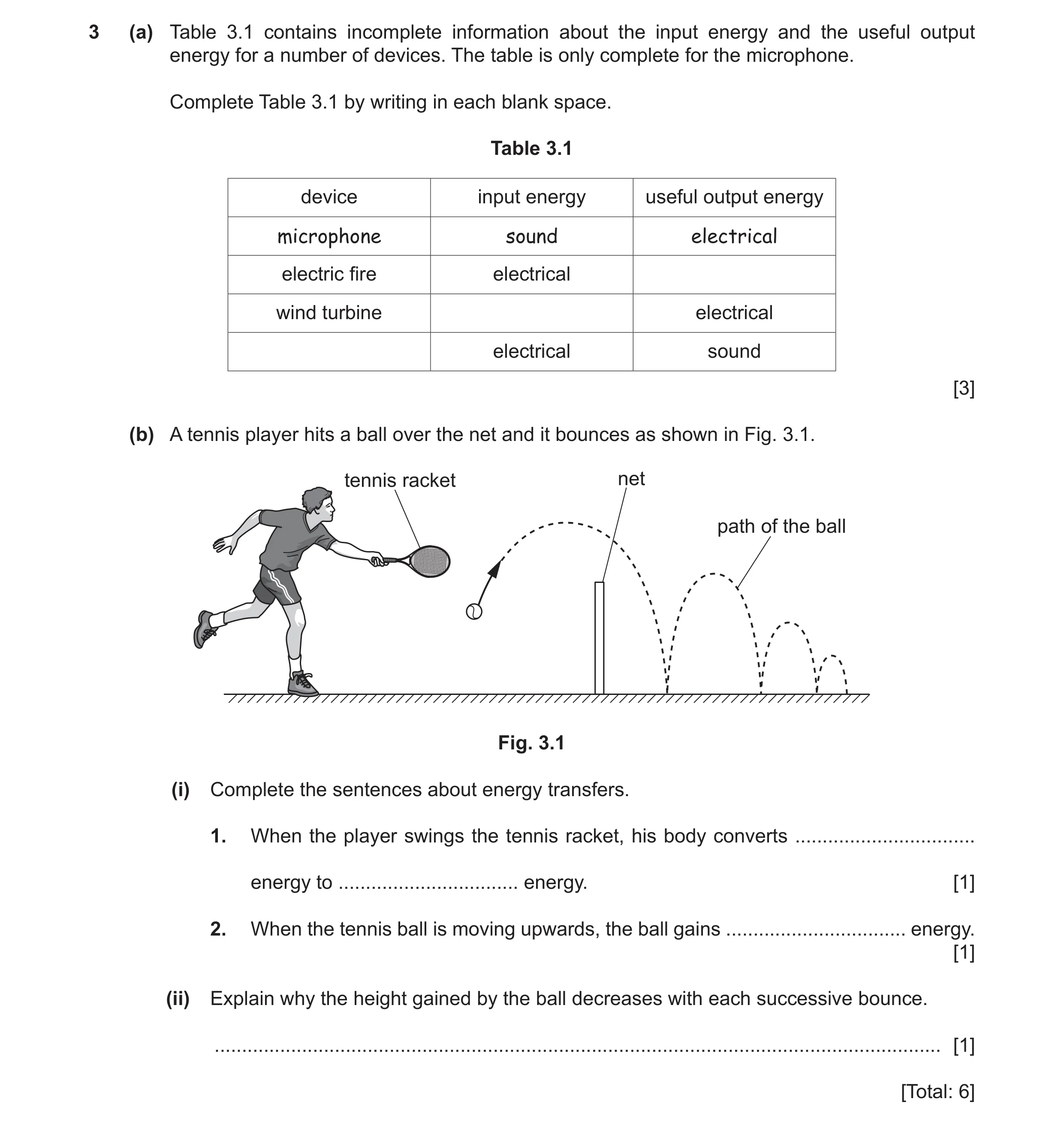 143 / 181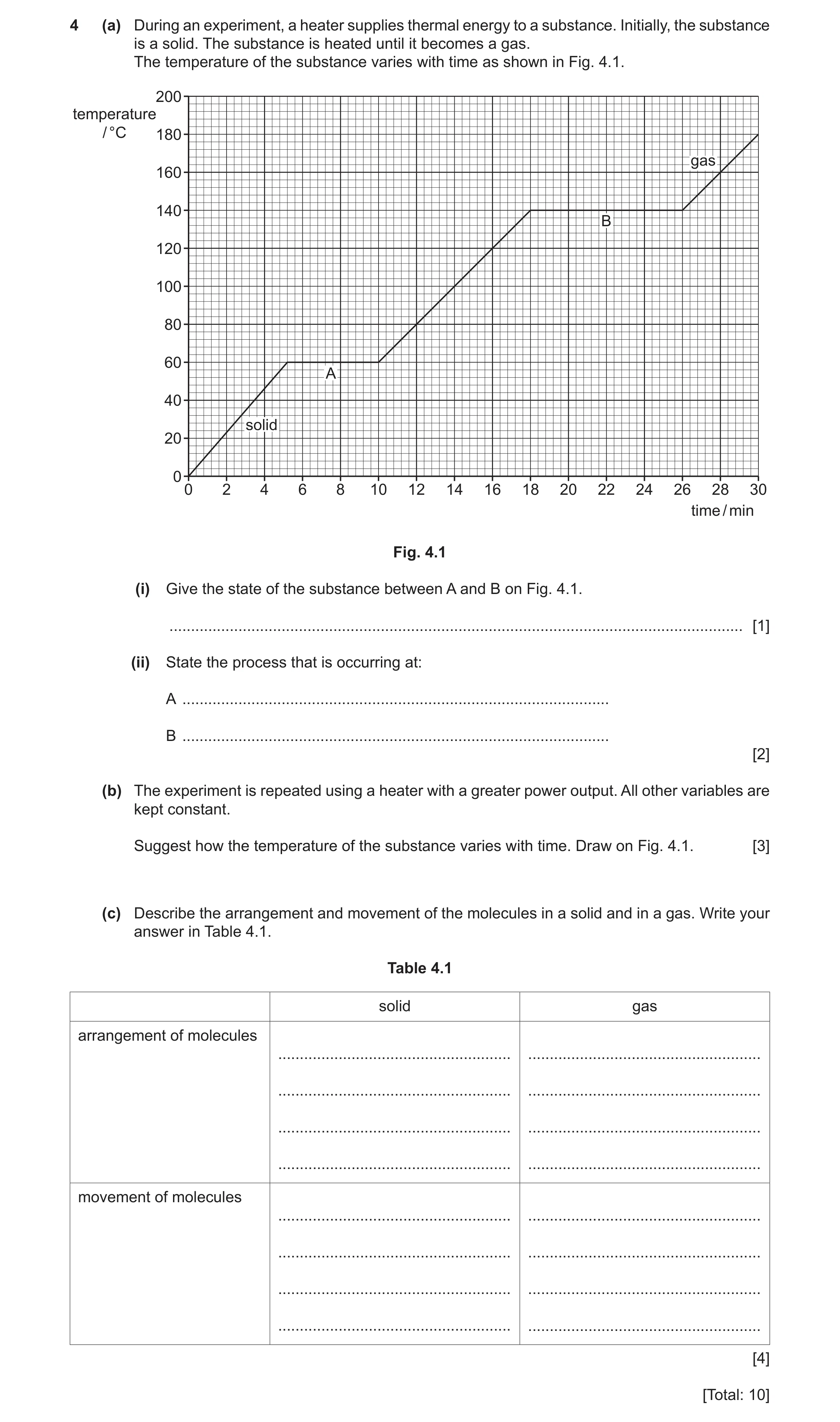
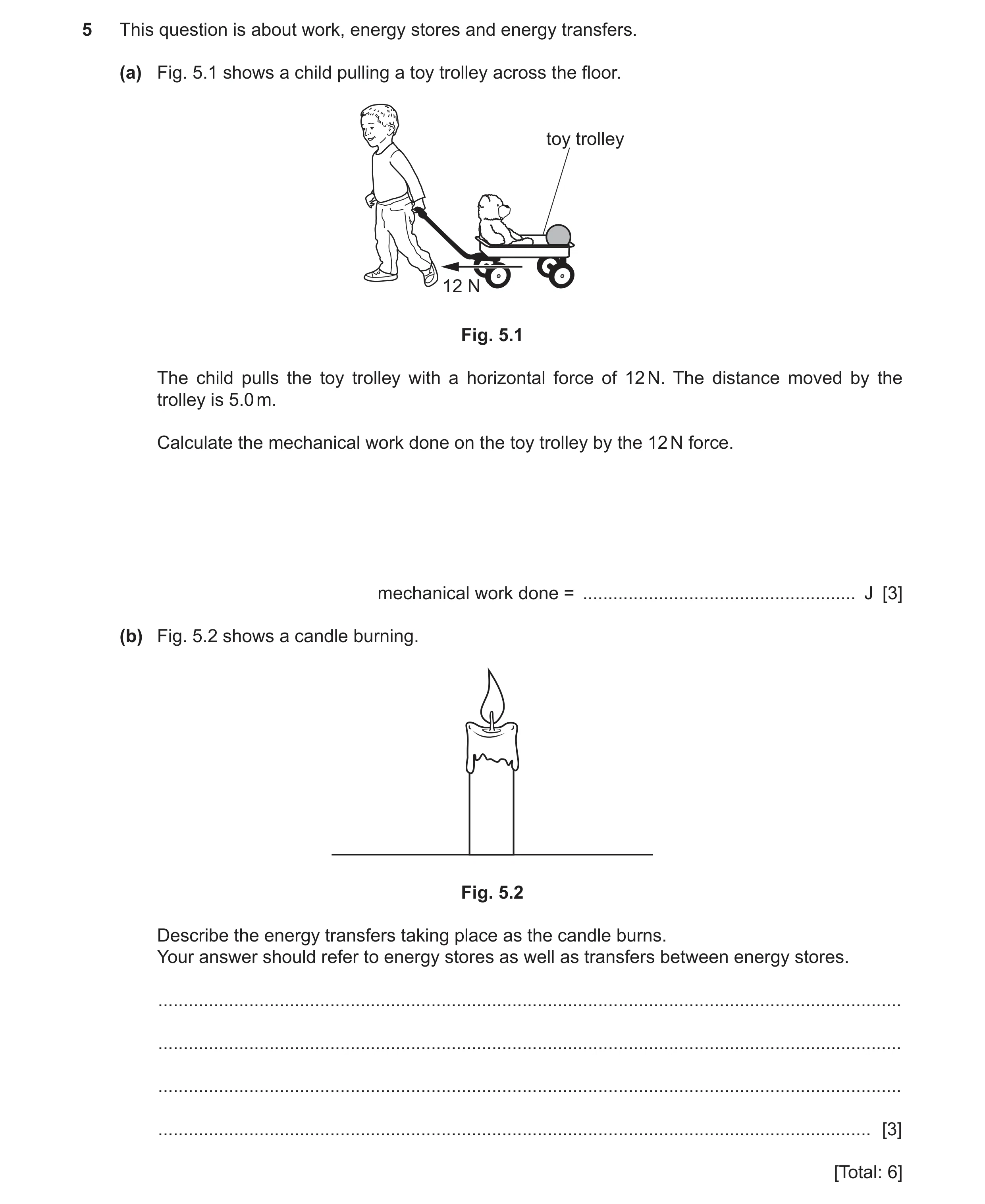 146 / 181
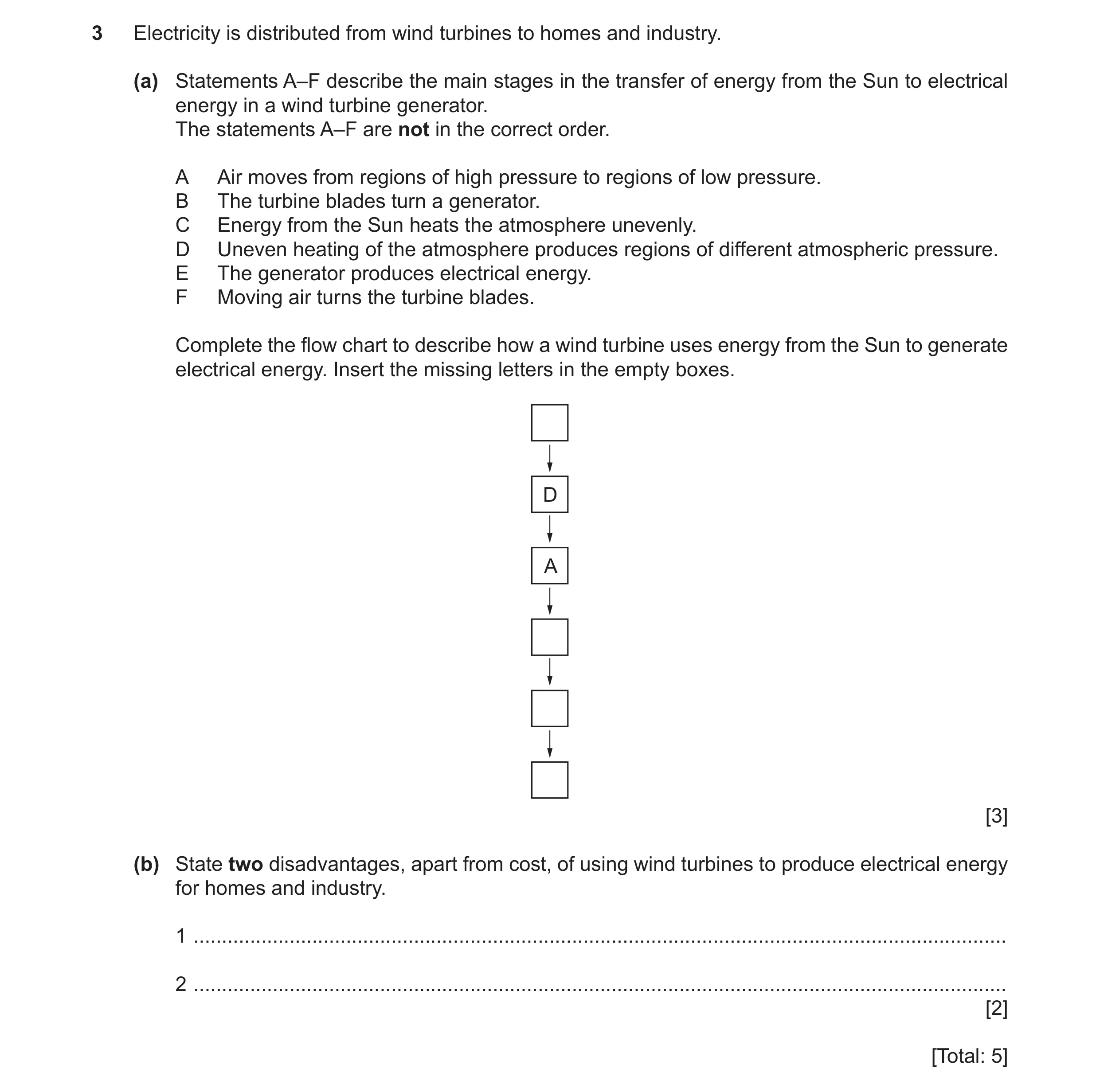 147 / 181
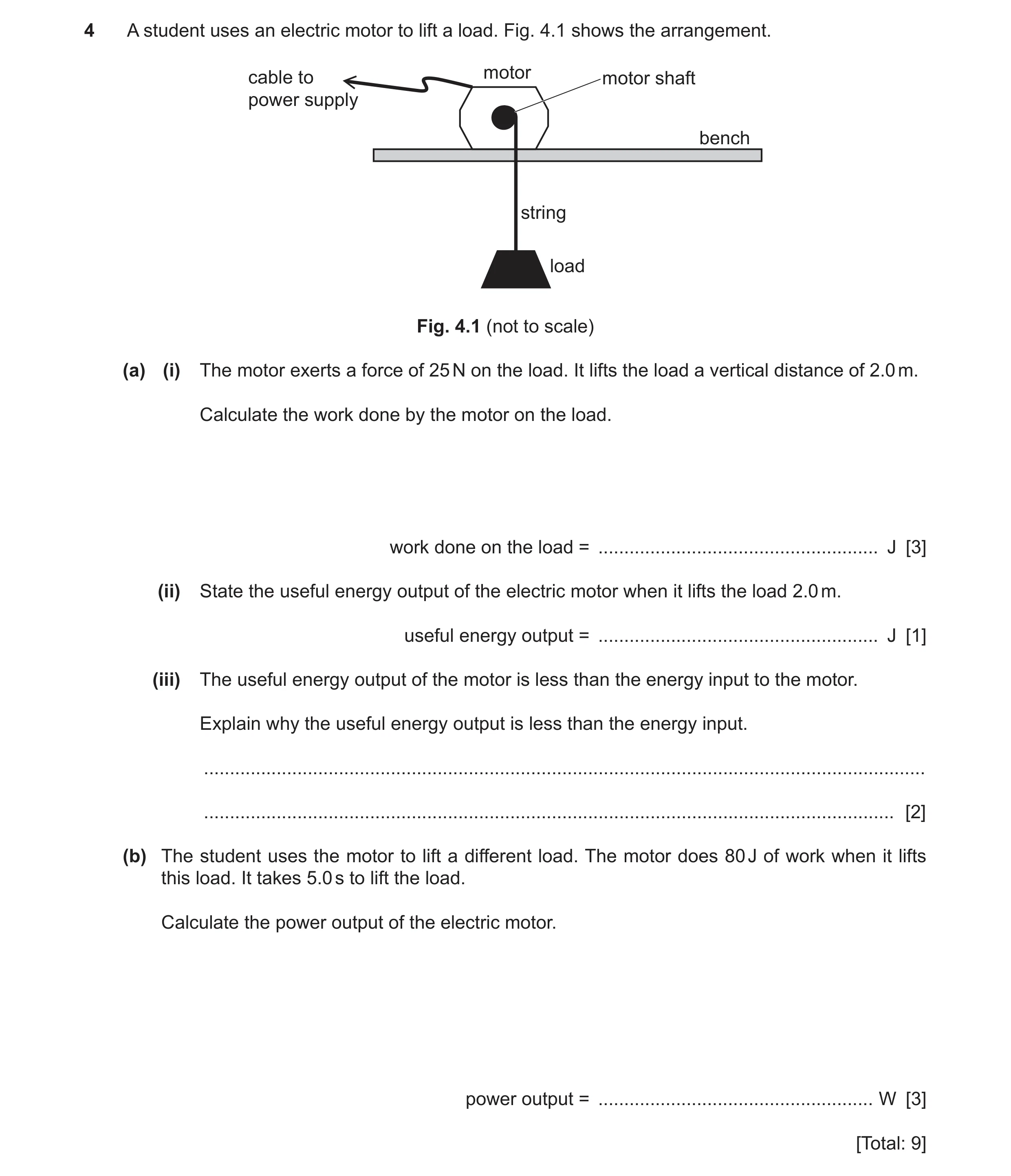 148 / 181
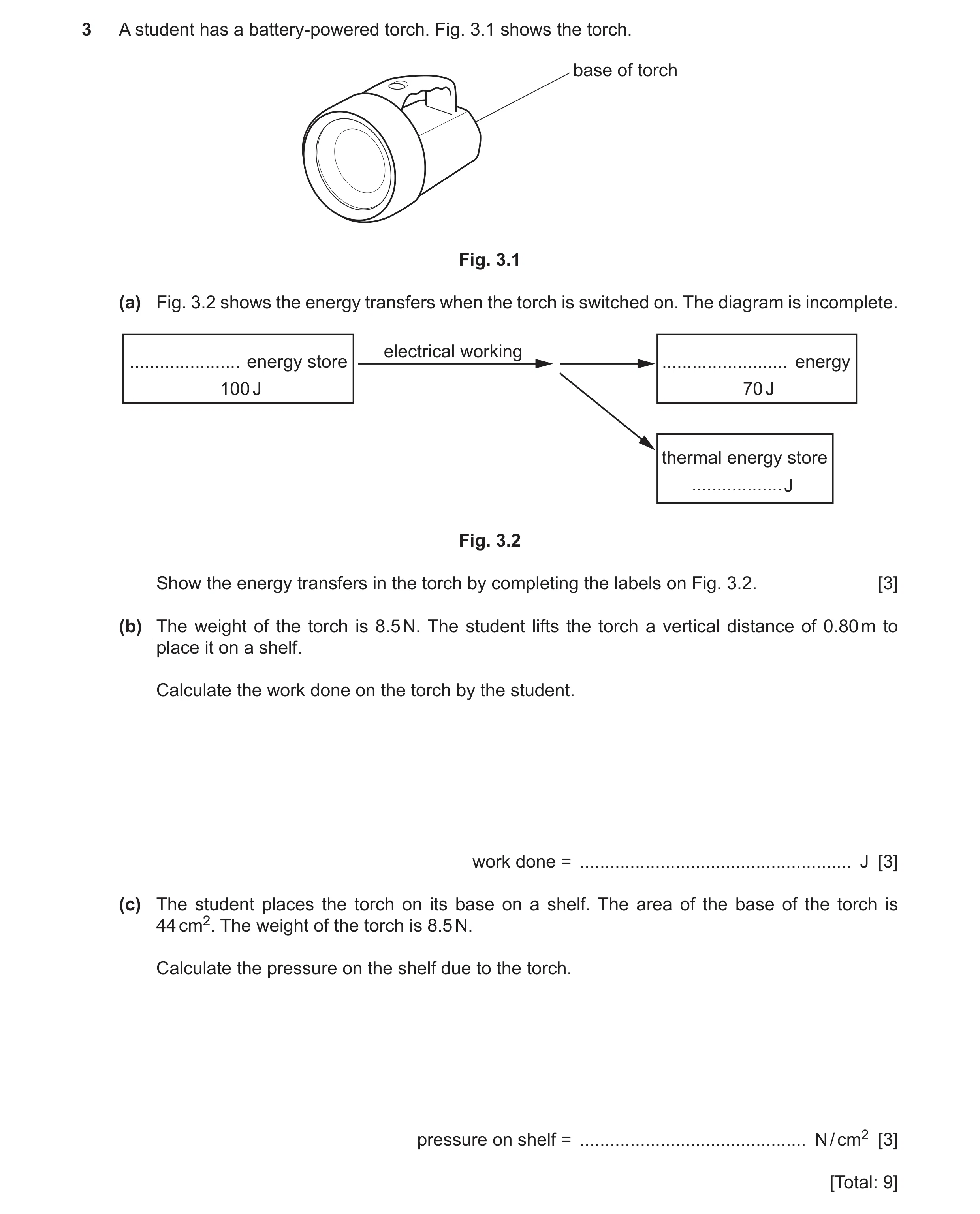 149 / 181
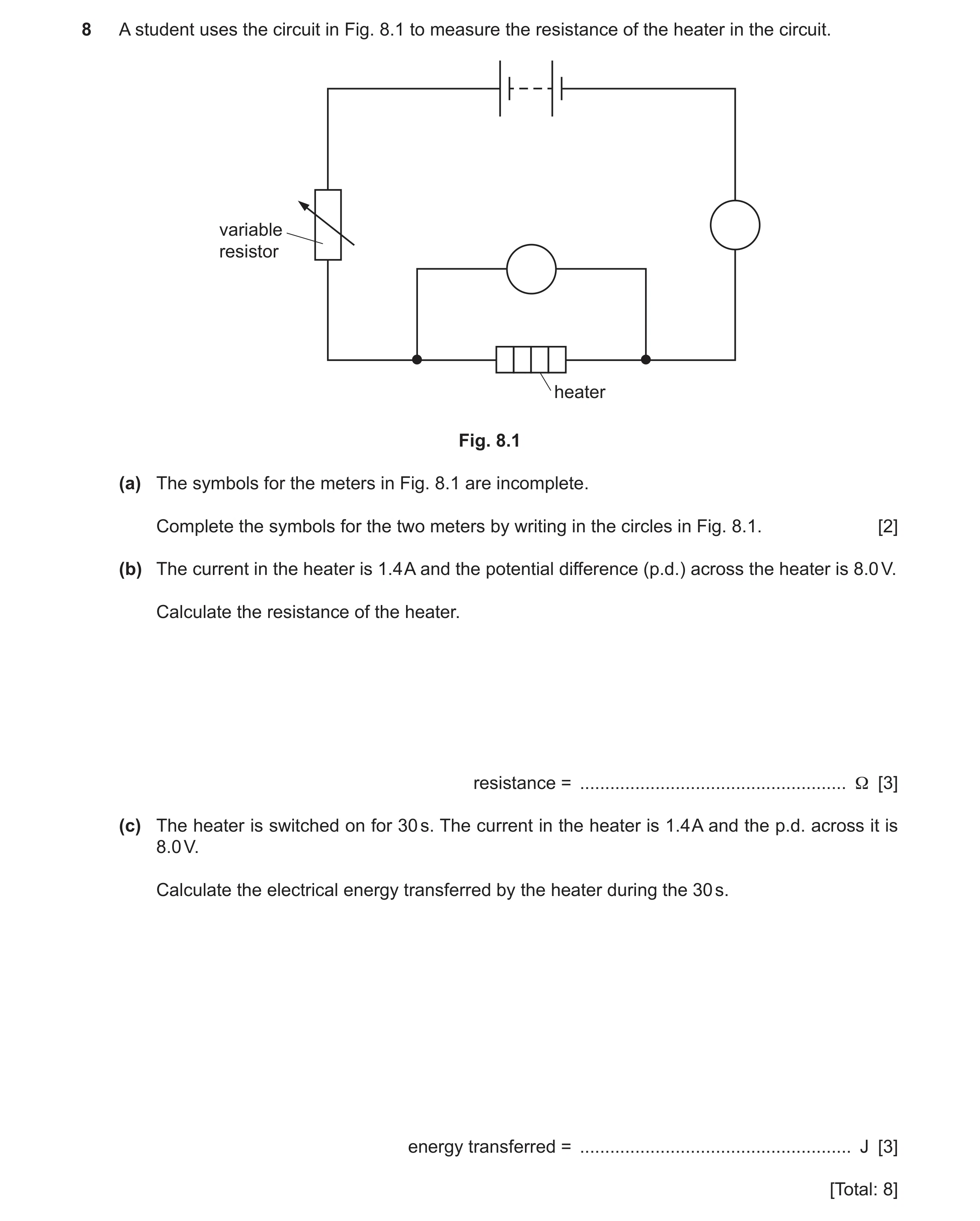 150 / 181
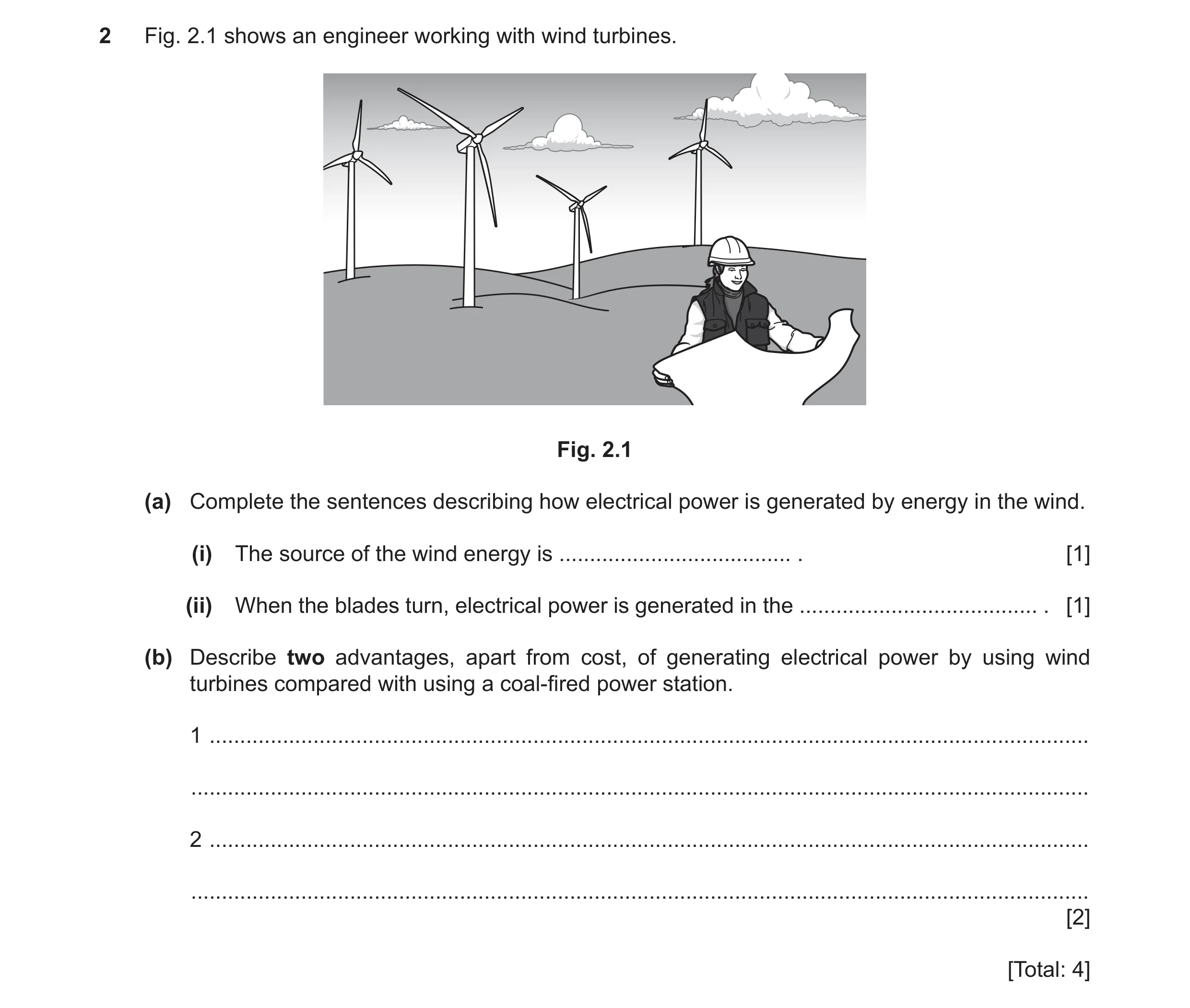 151 / 181
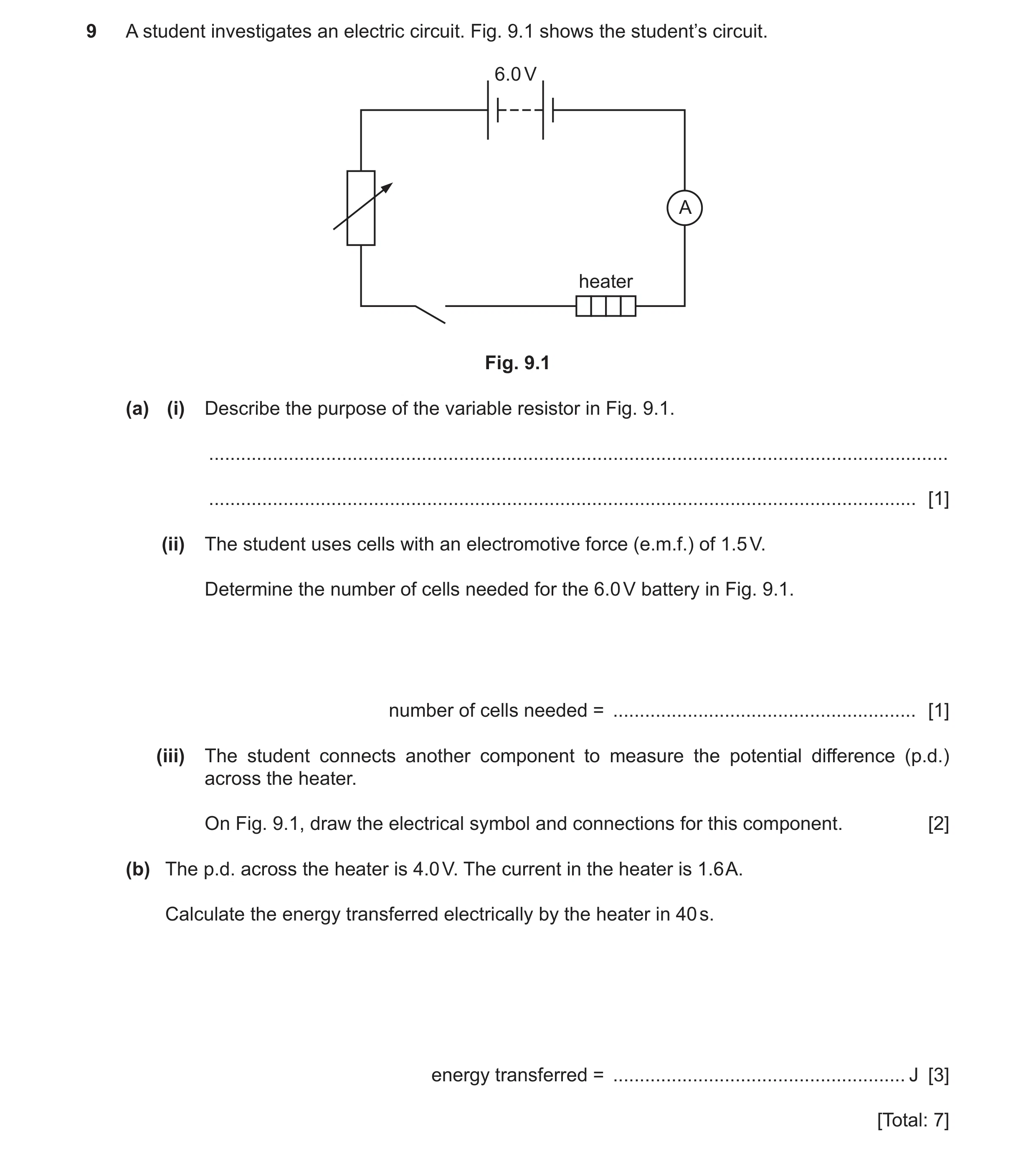 152 / 181
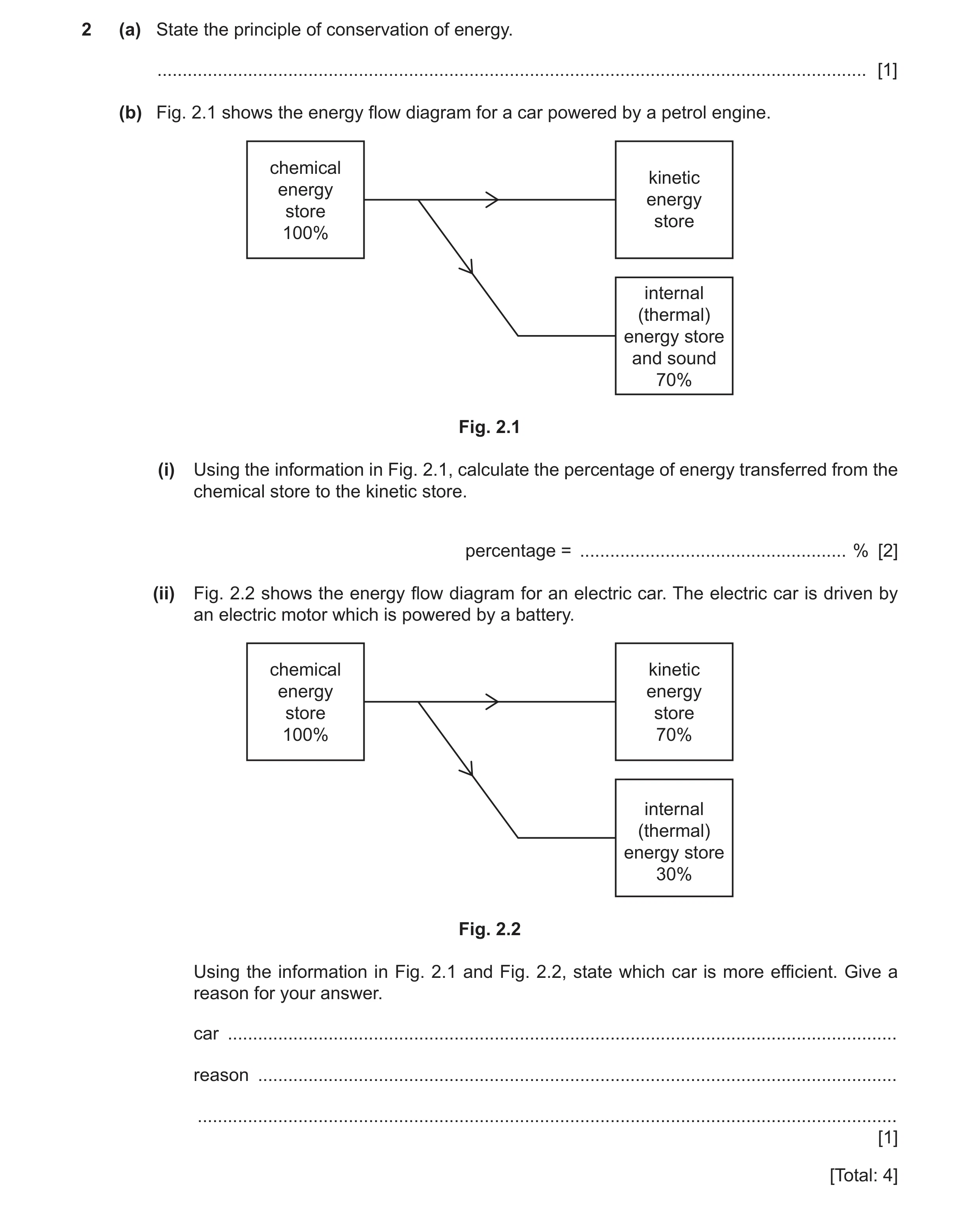 153 / 181
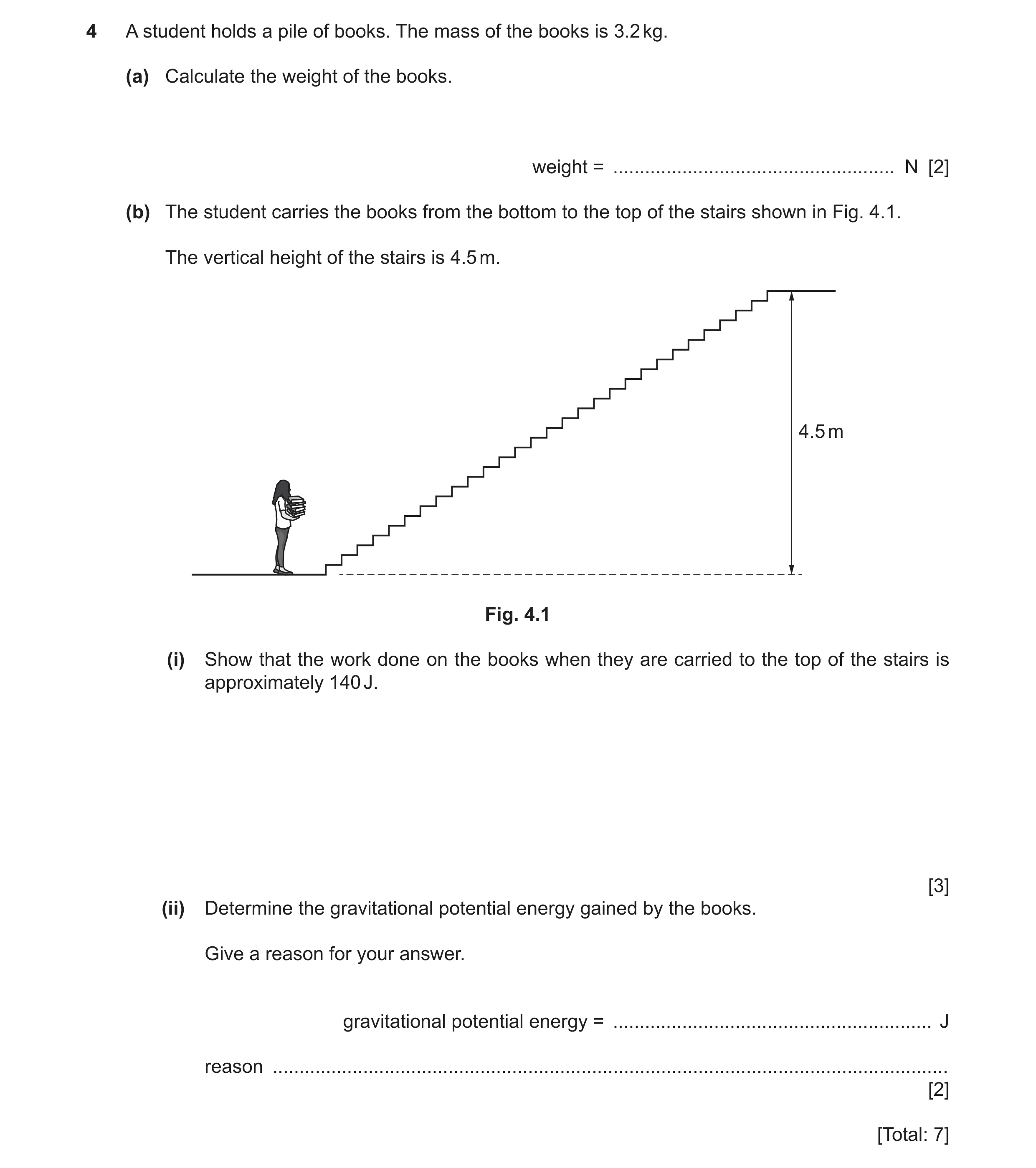 154 / 181
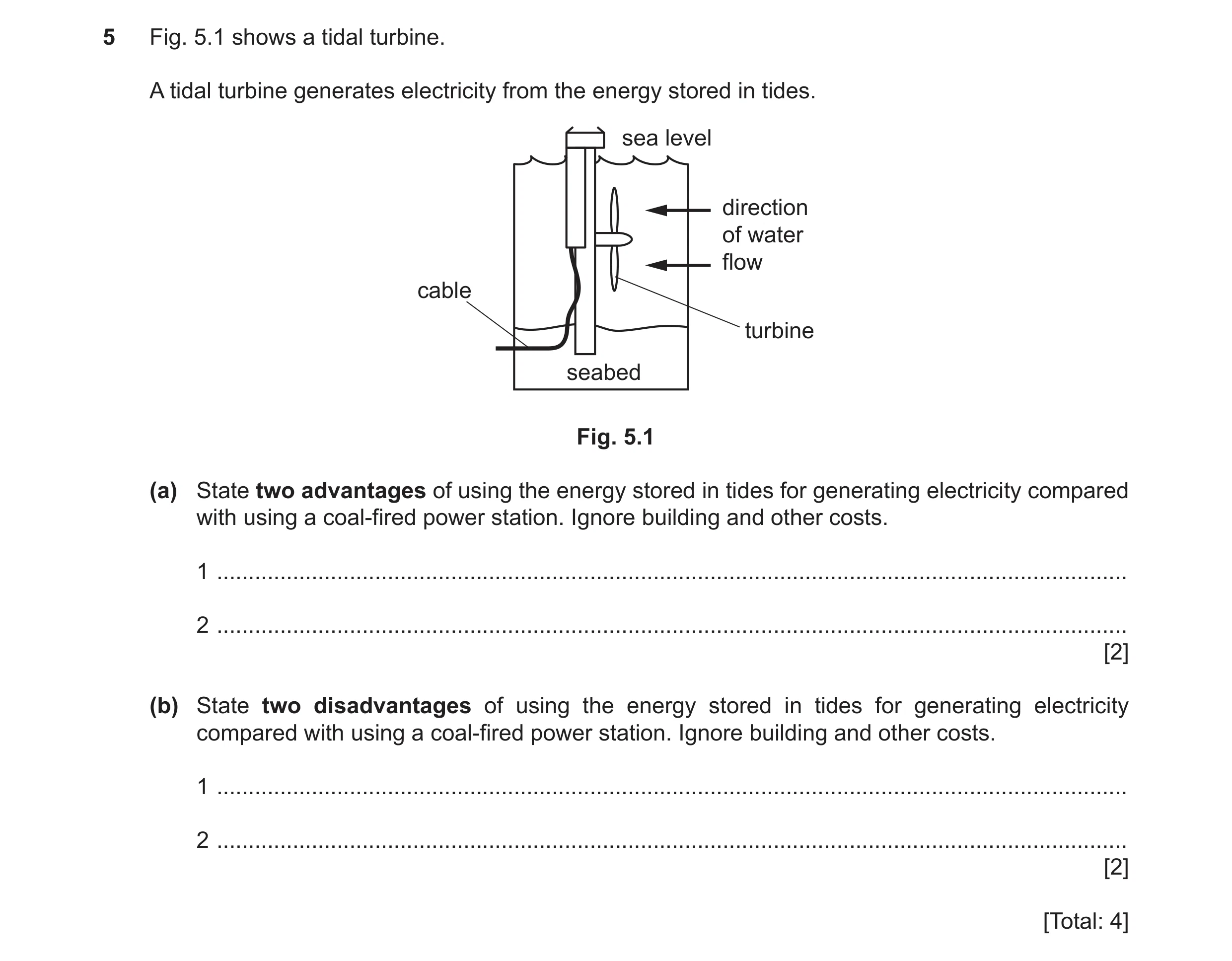 155 / 181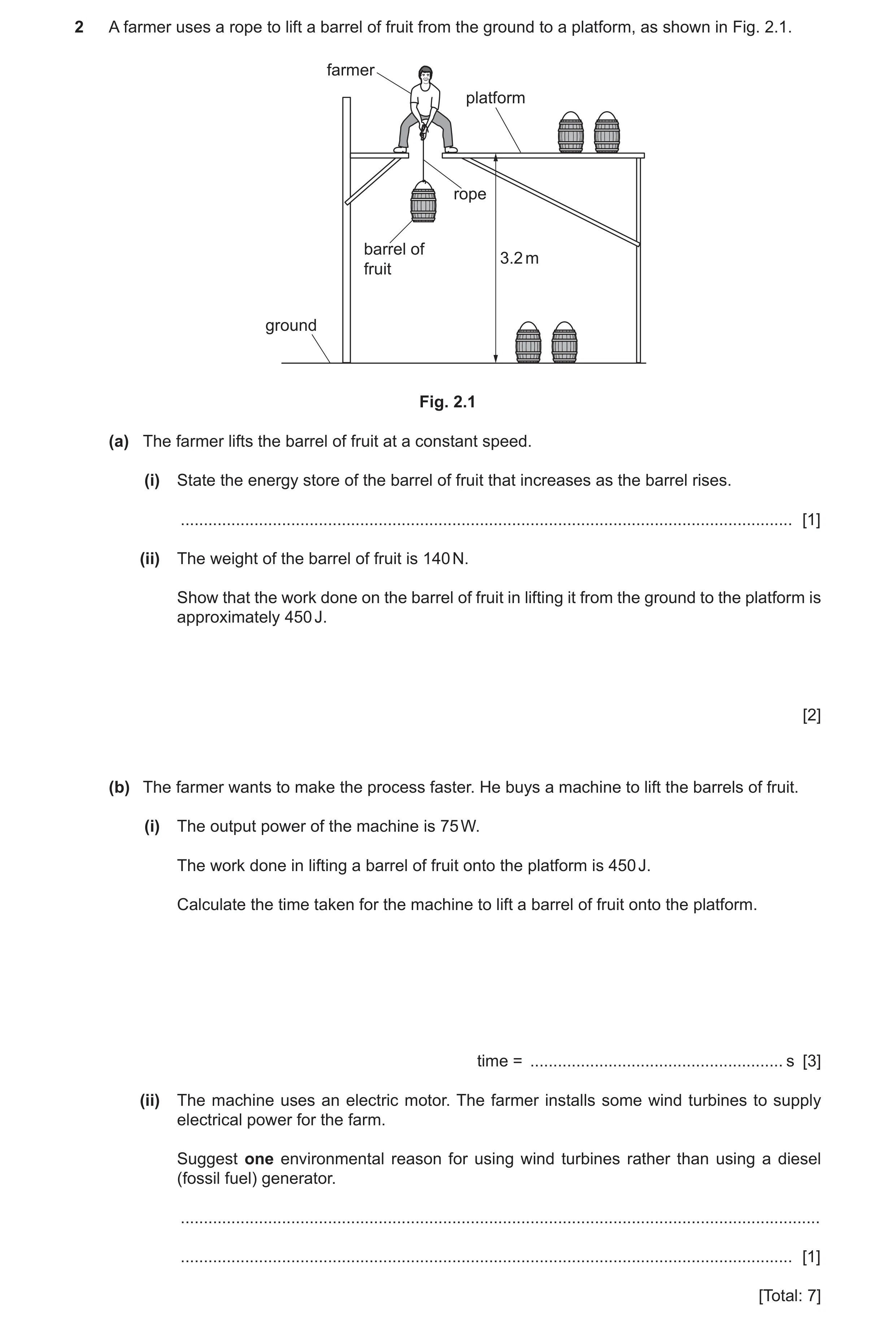
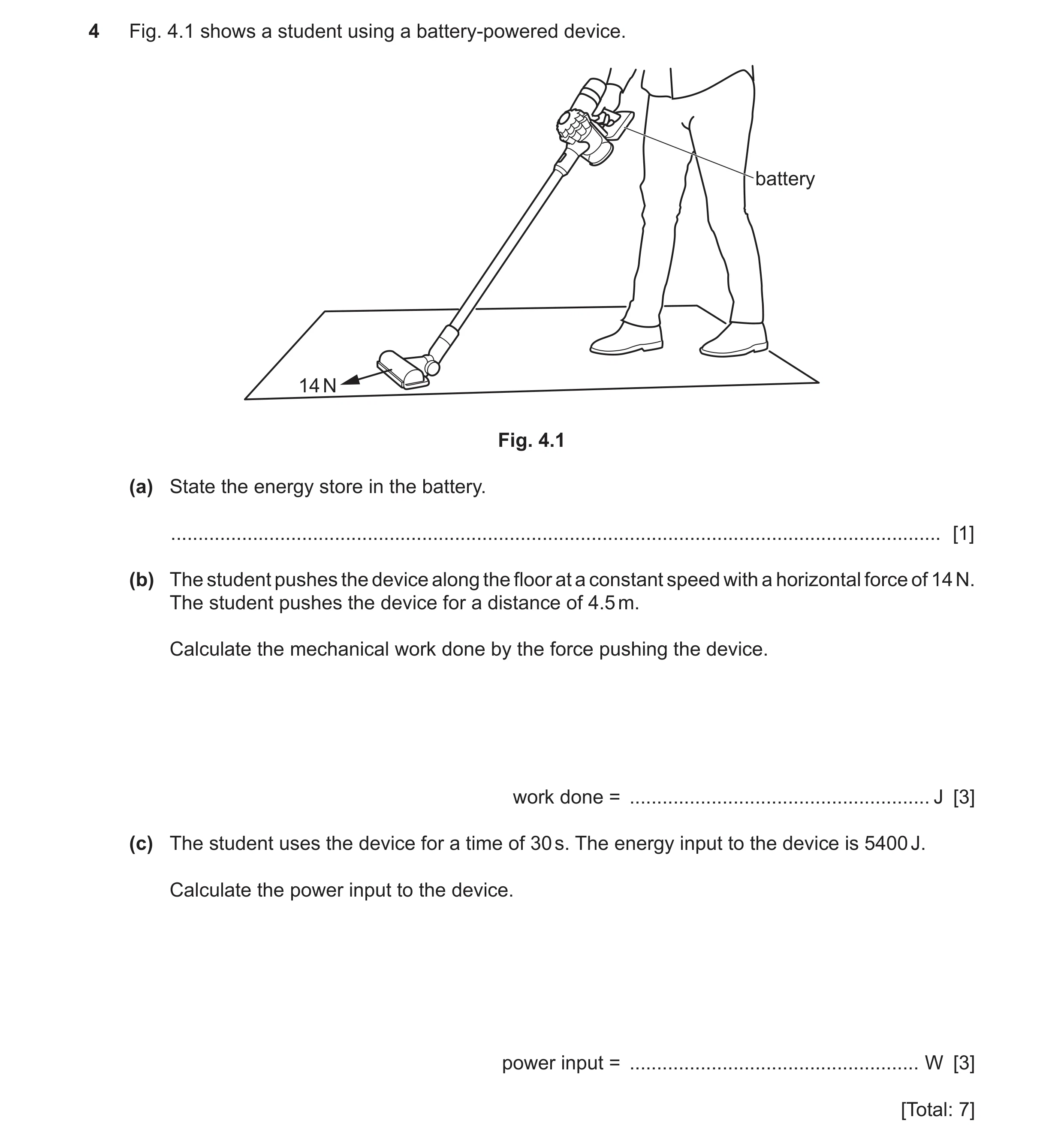 157 / 181
 158 / 181
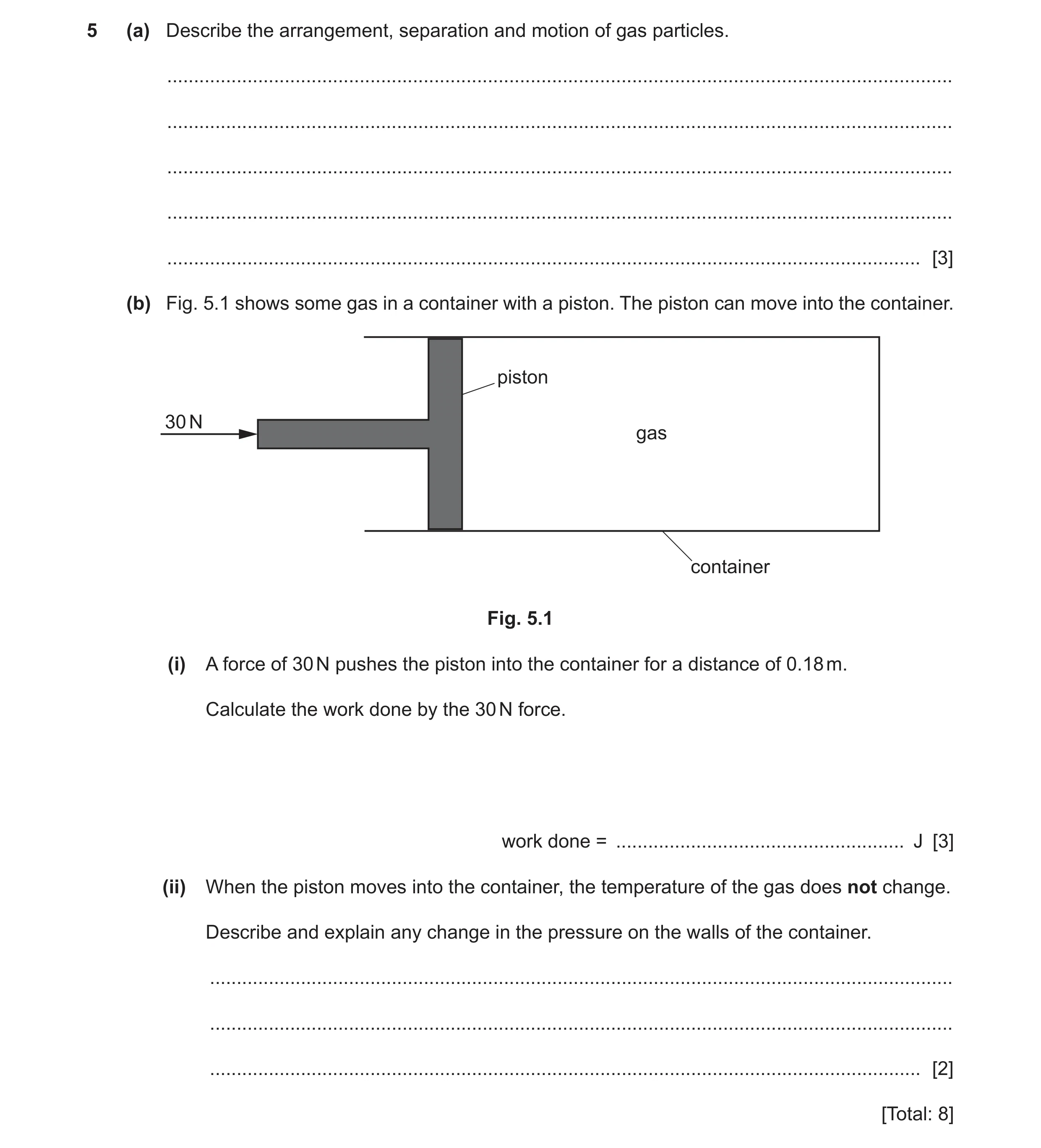 159 / 181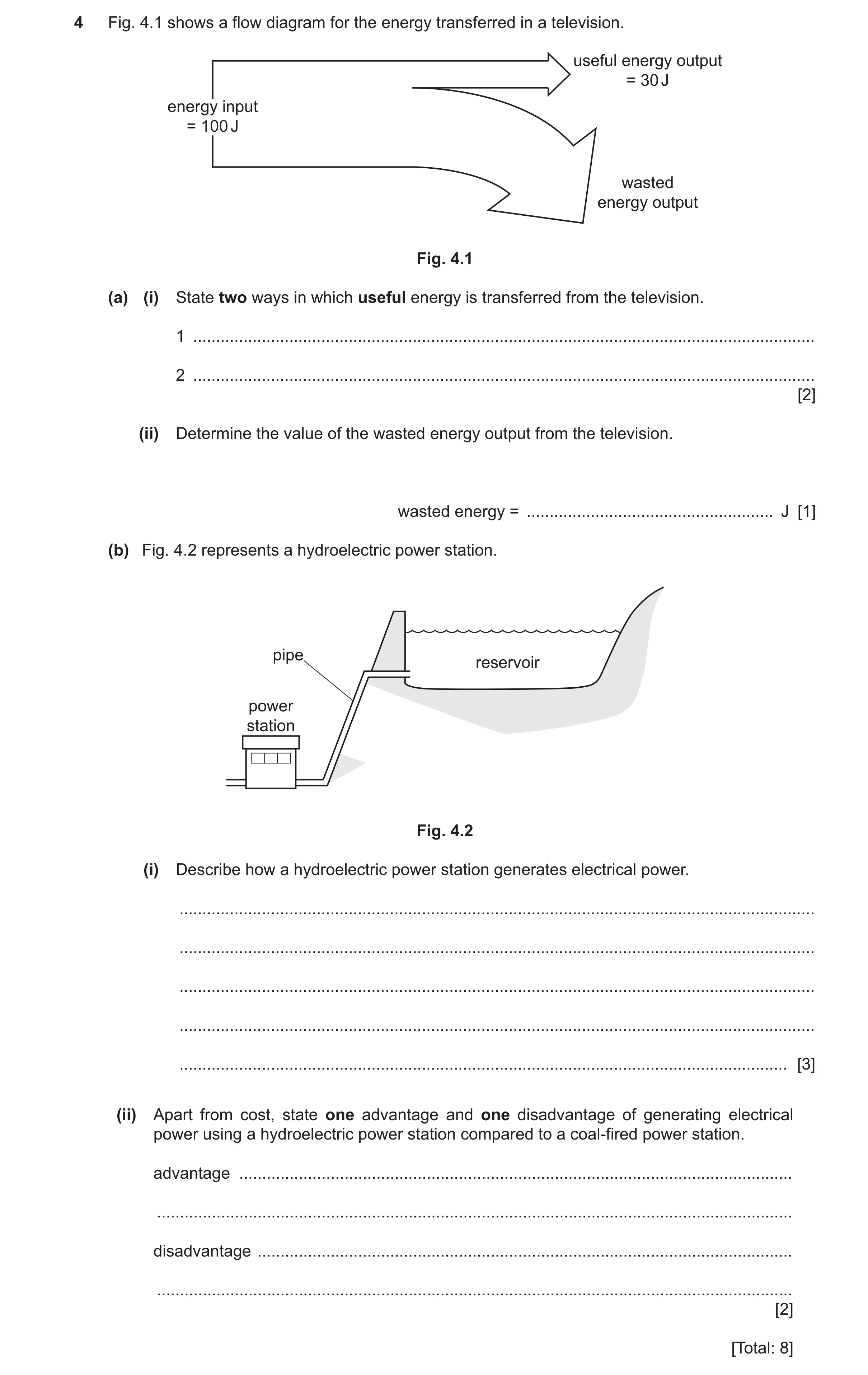
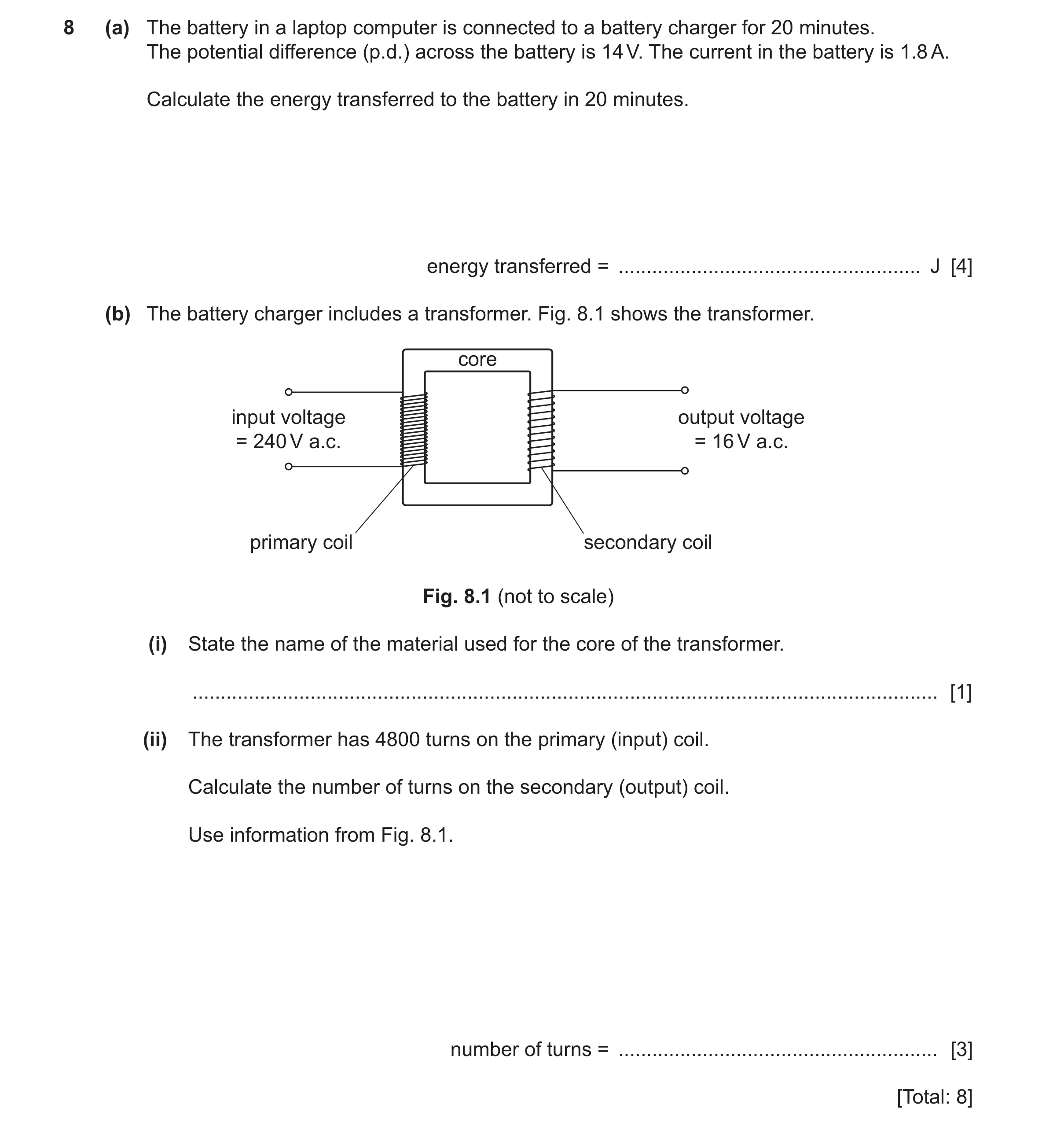 161 / 181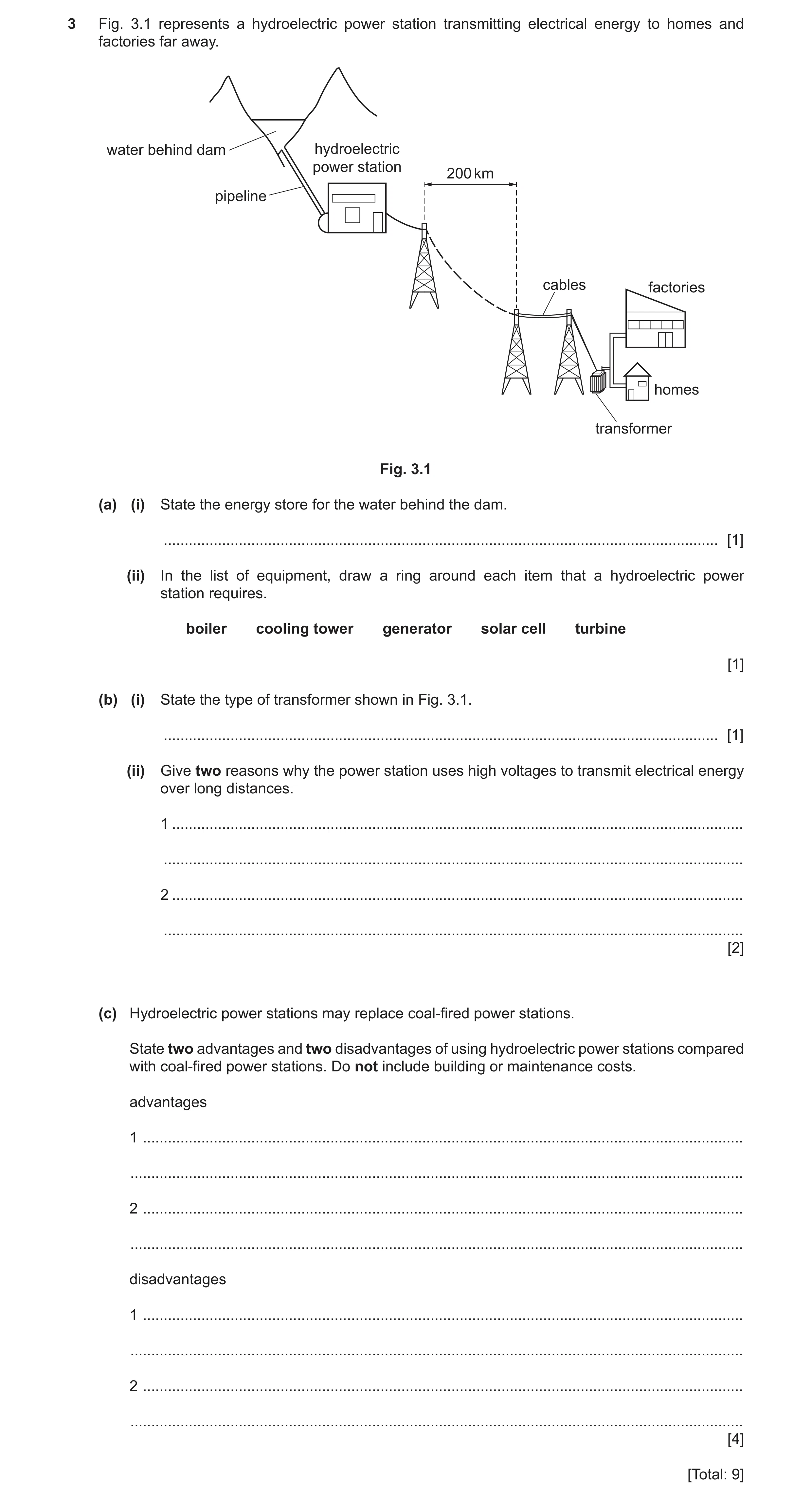
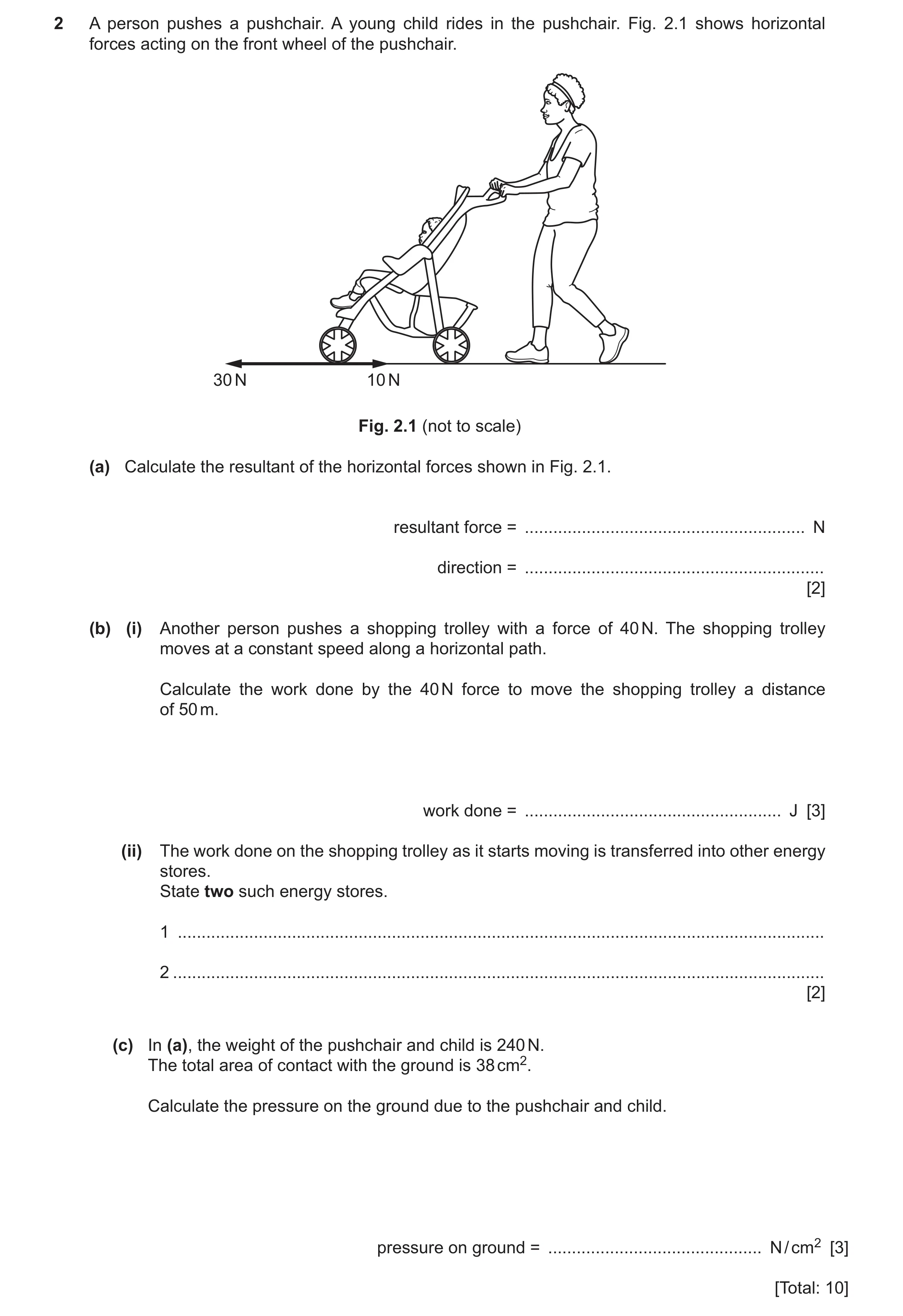
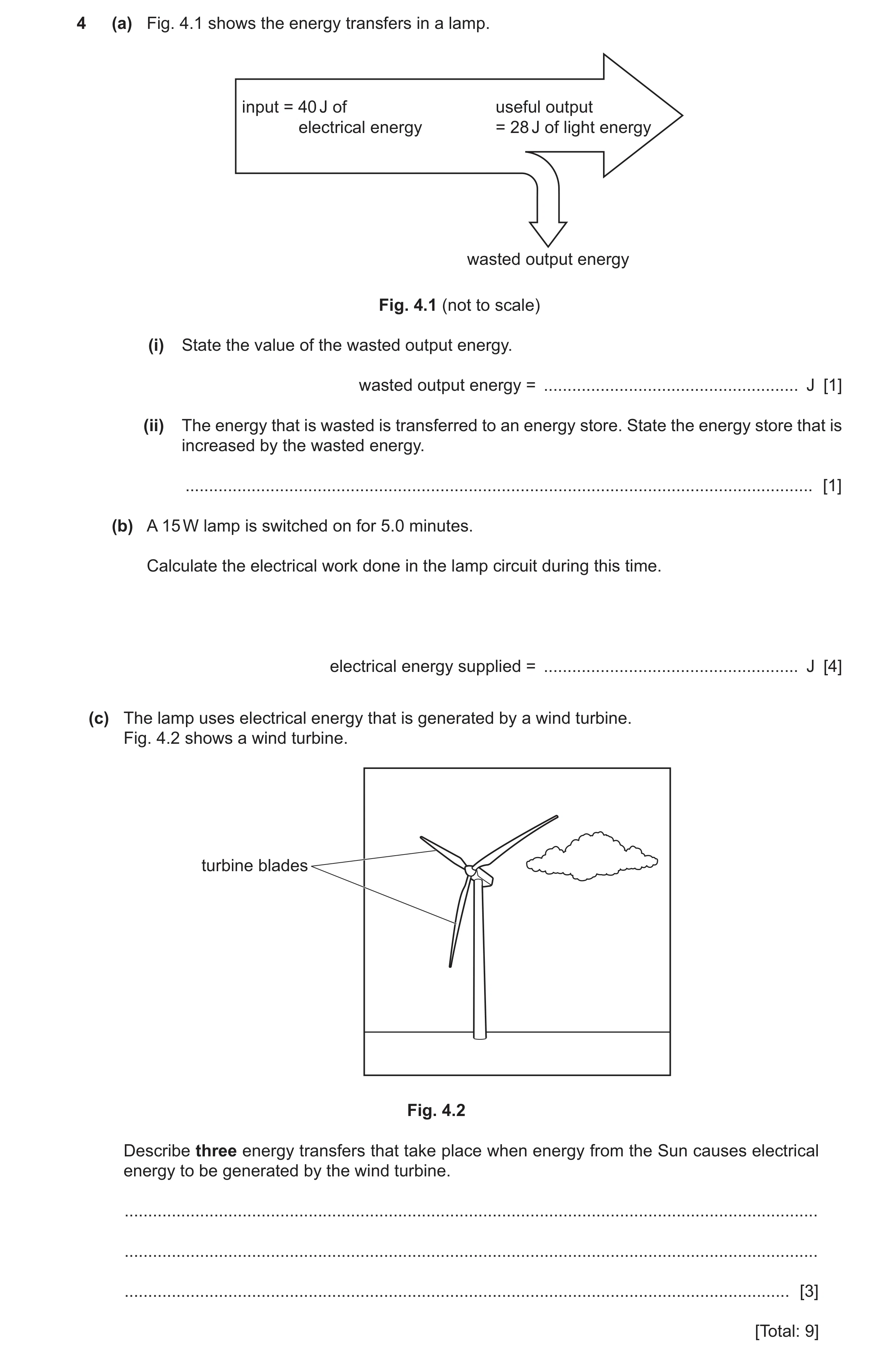
 166 / 181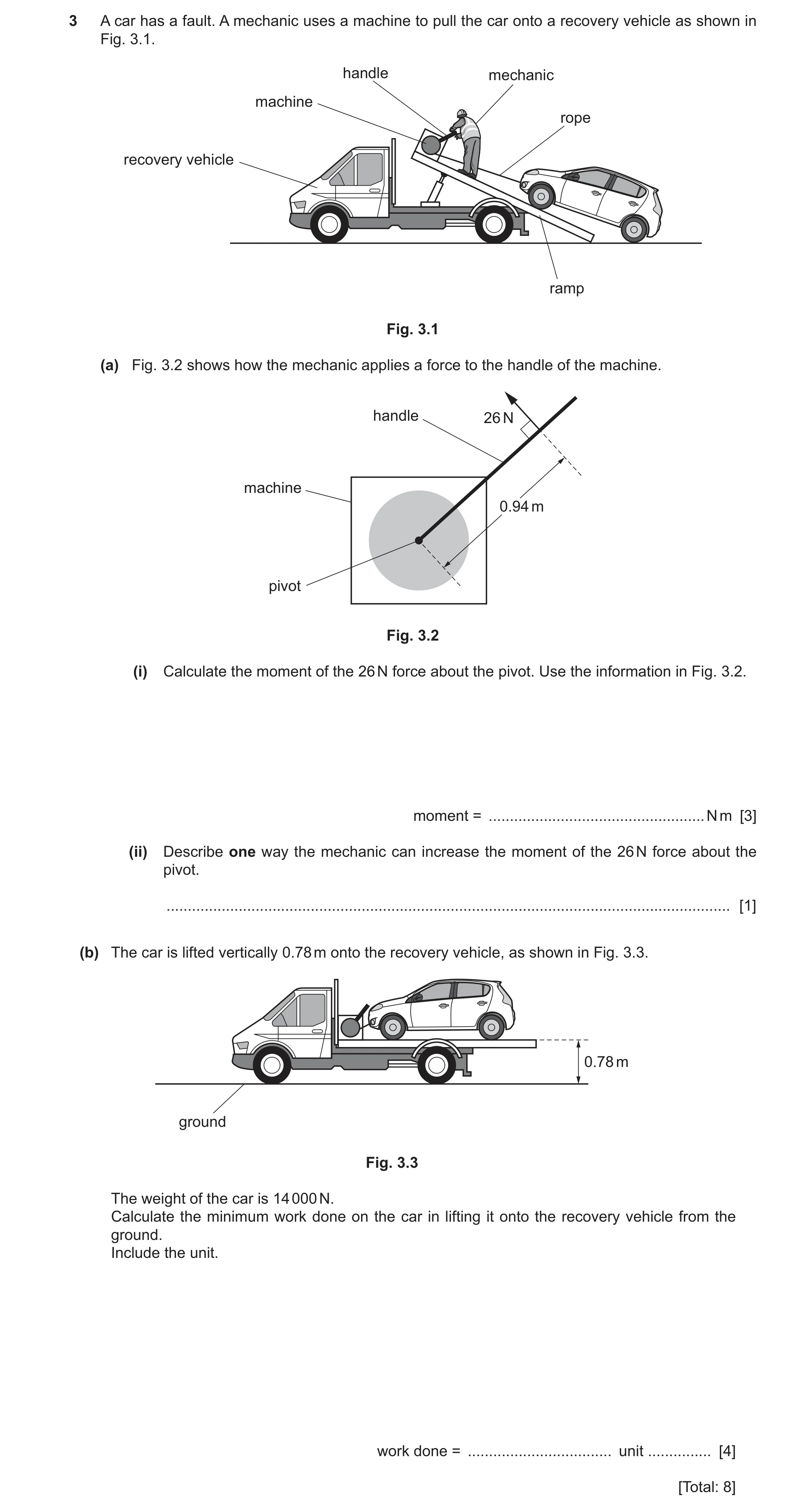
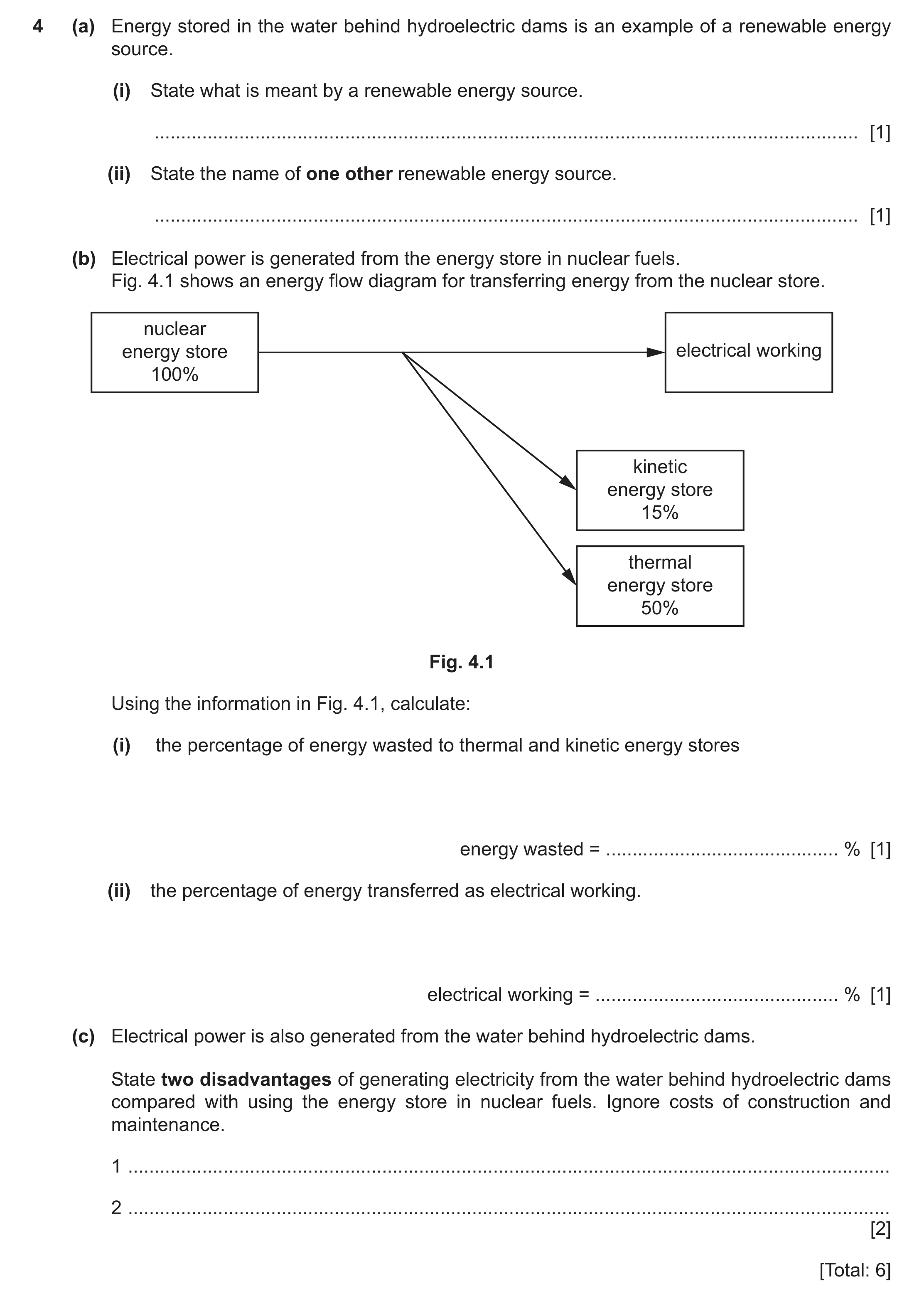 168 / 181
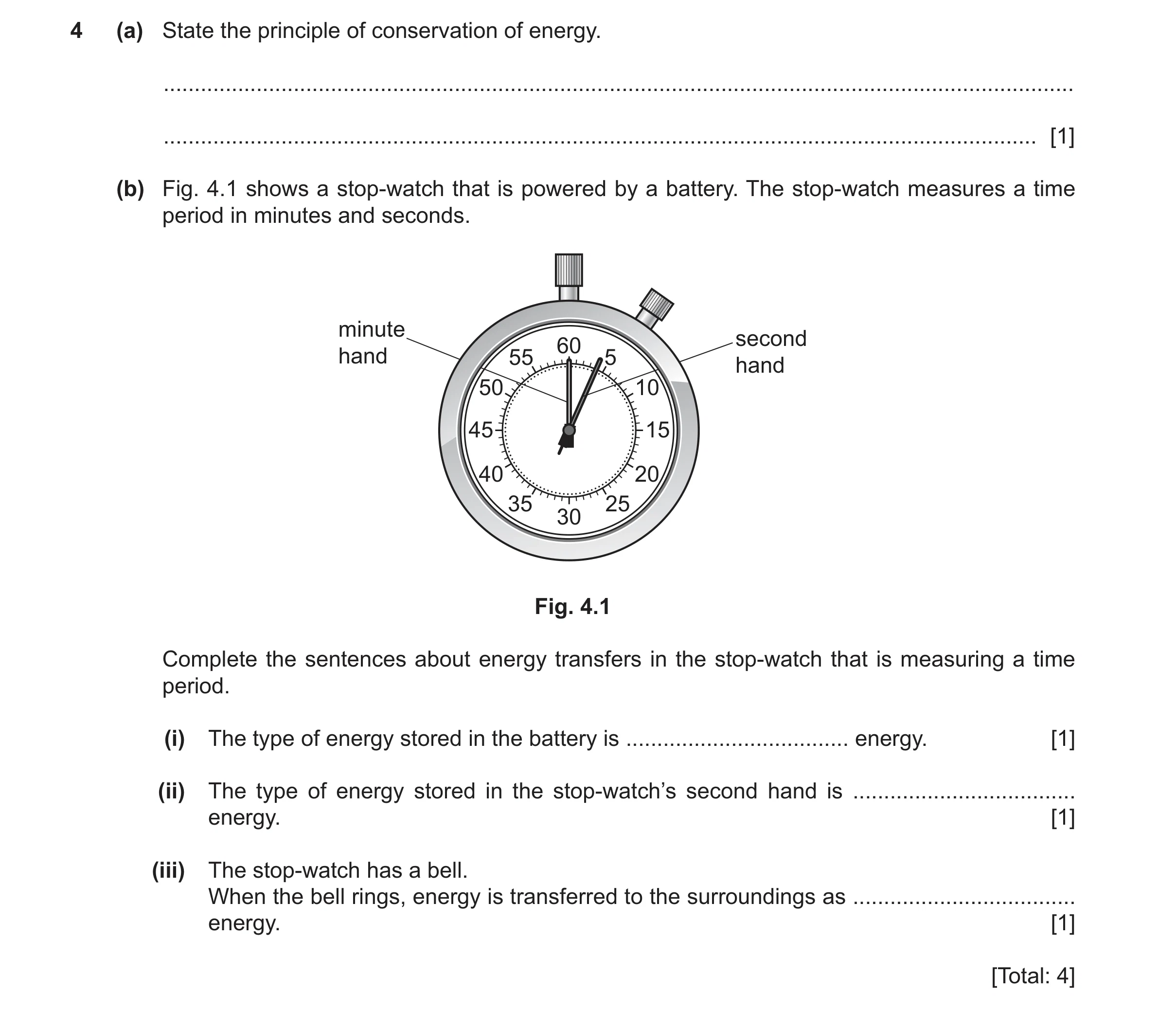 169 / 181
 170 / 181
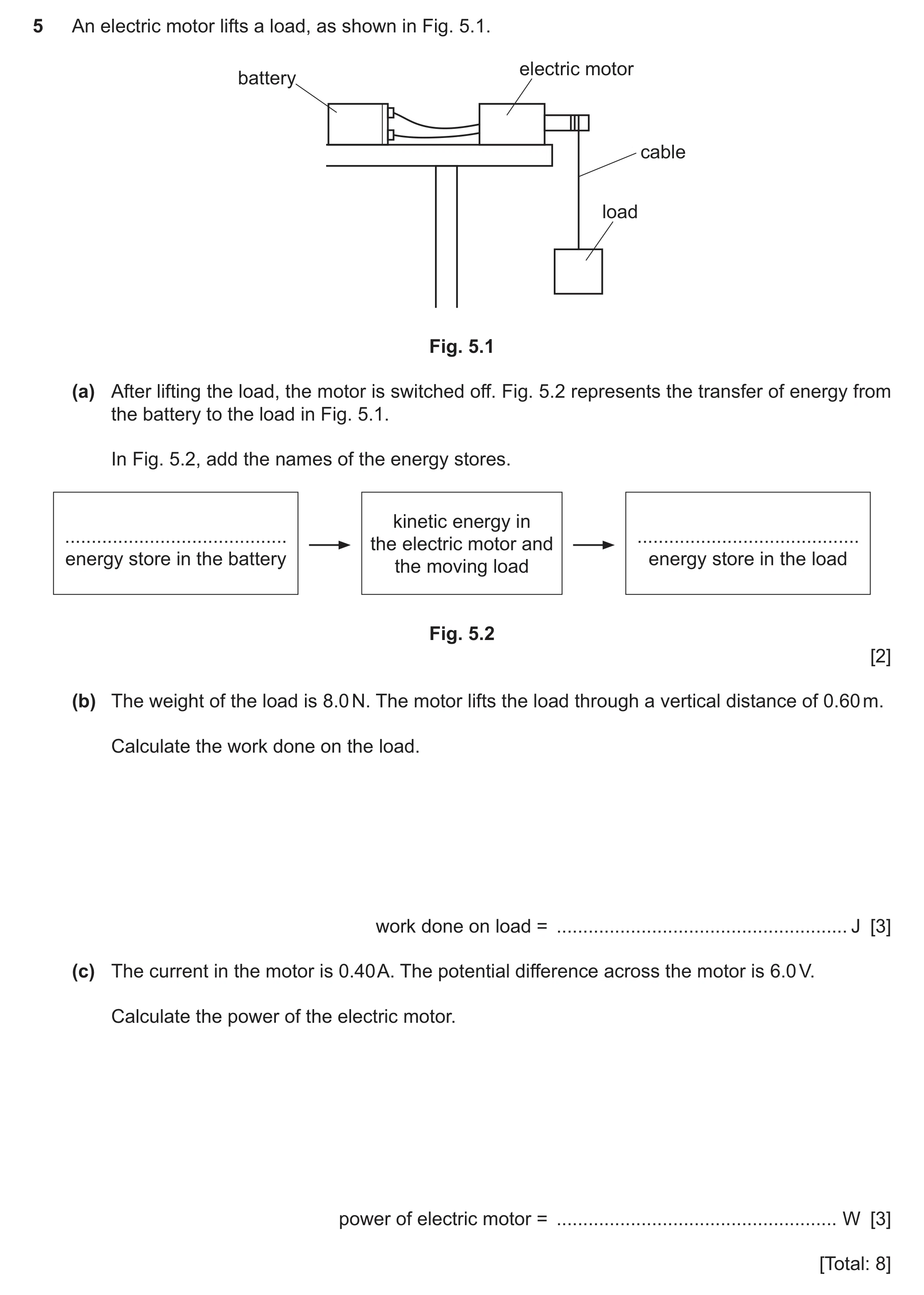 171 / 181
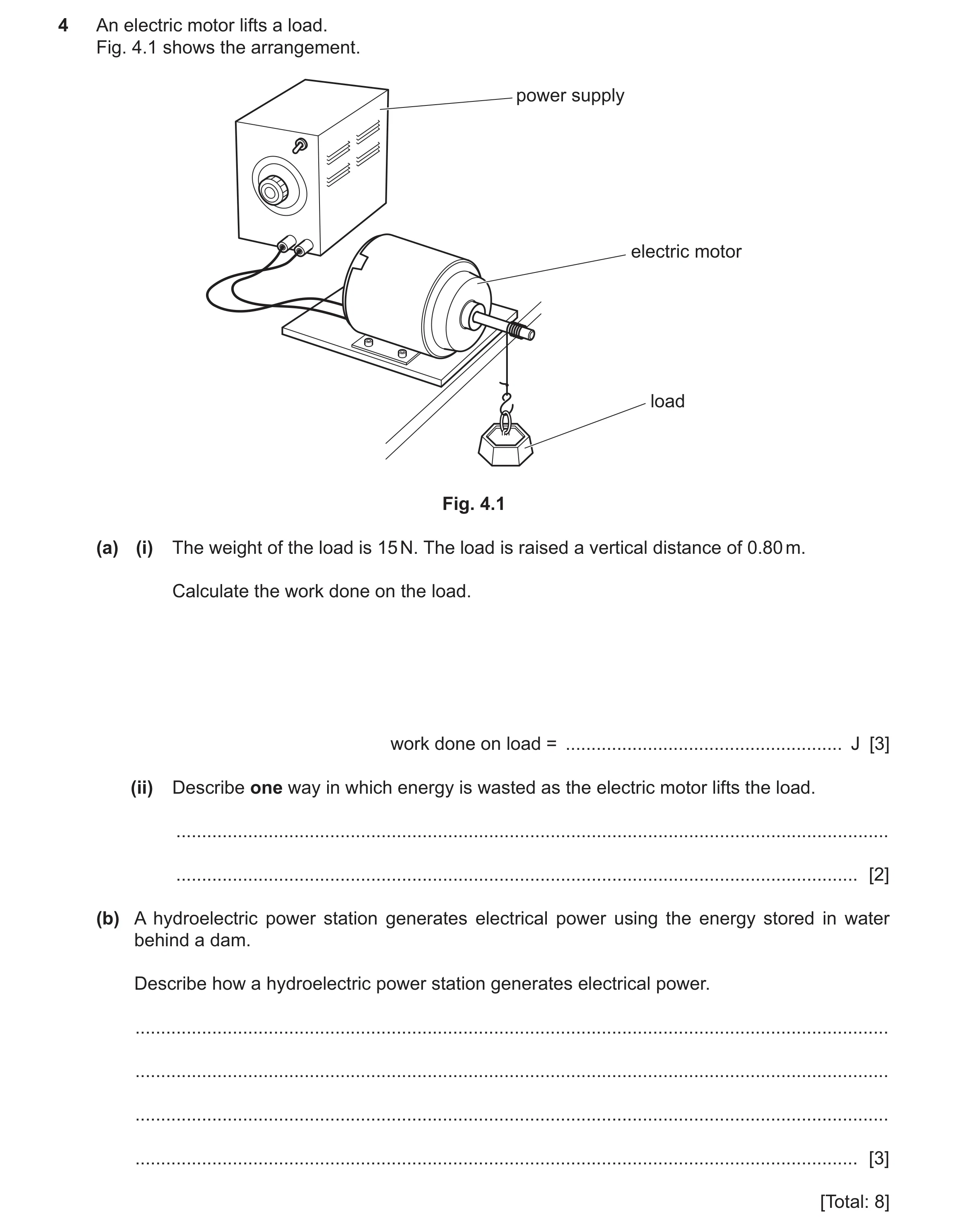 172 / 181
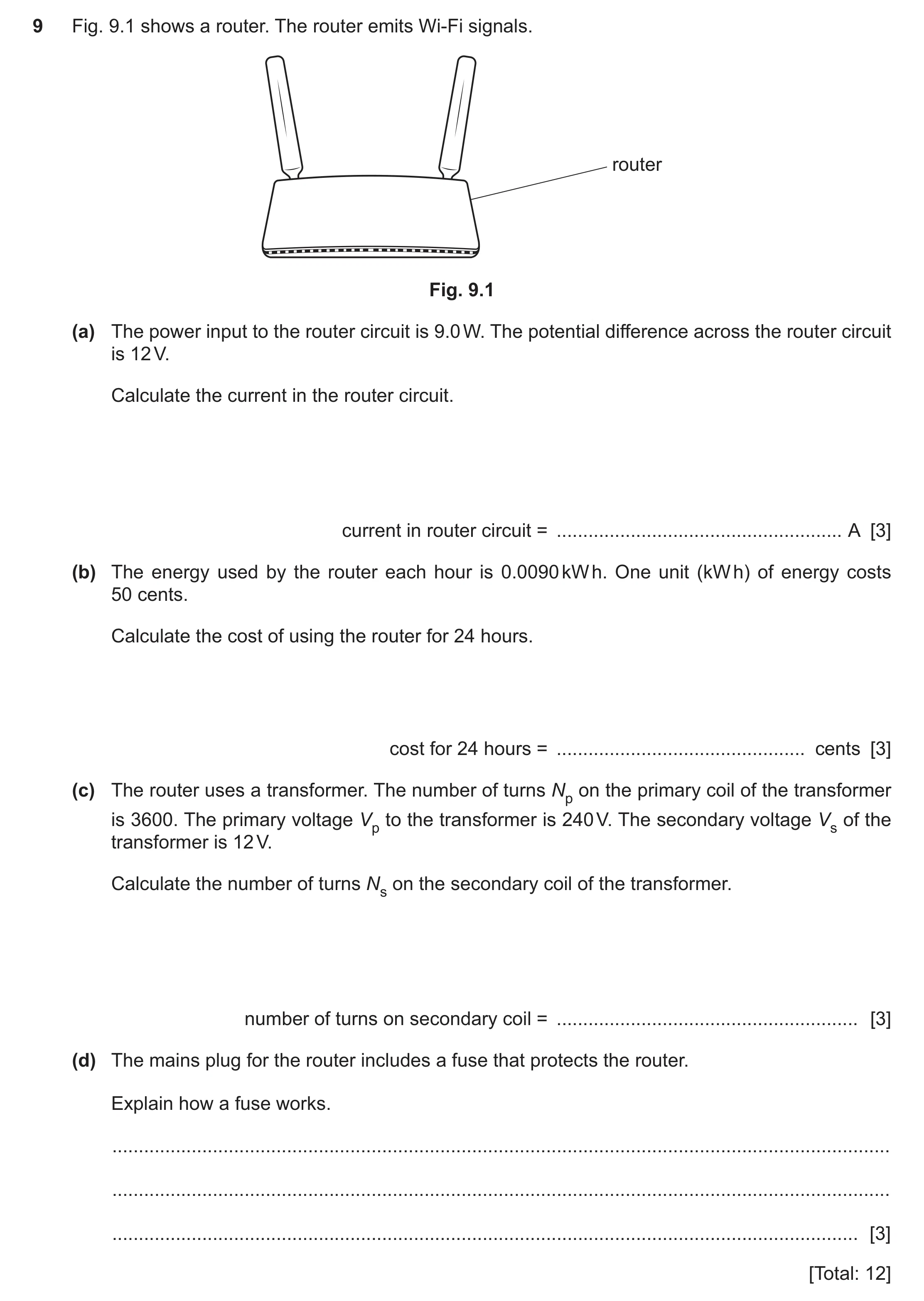 173 / 181
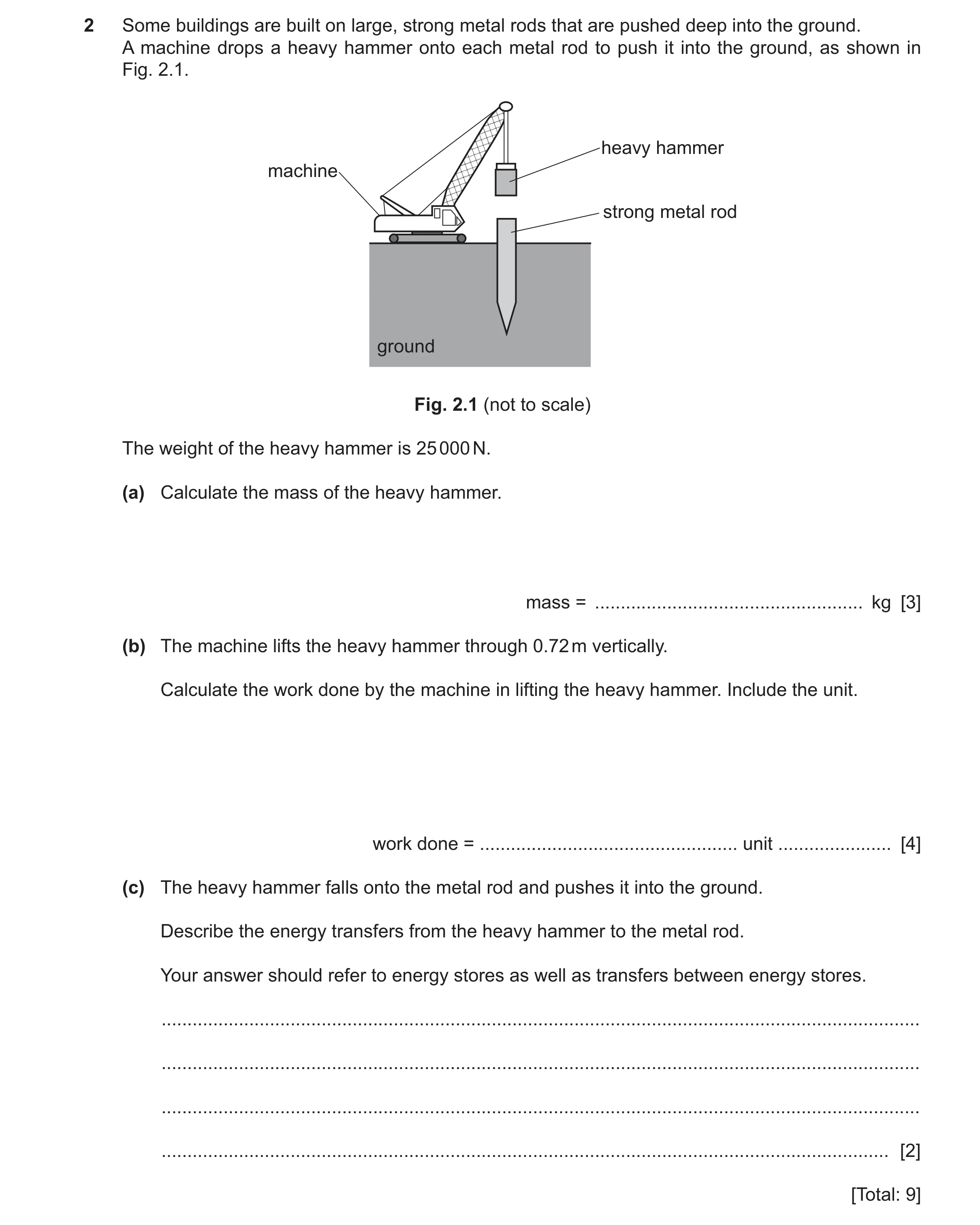 174 / 181
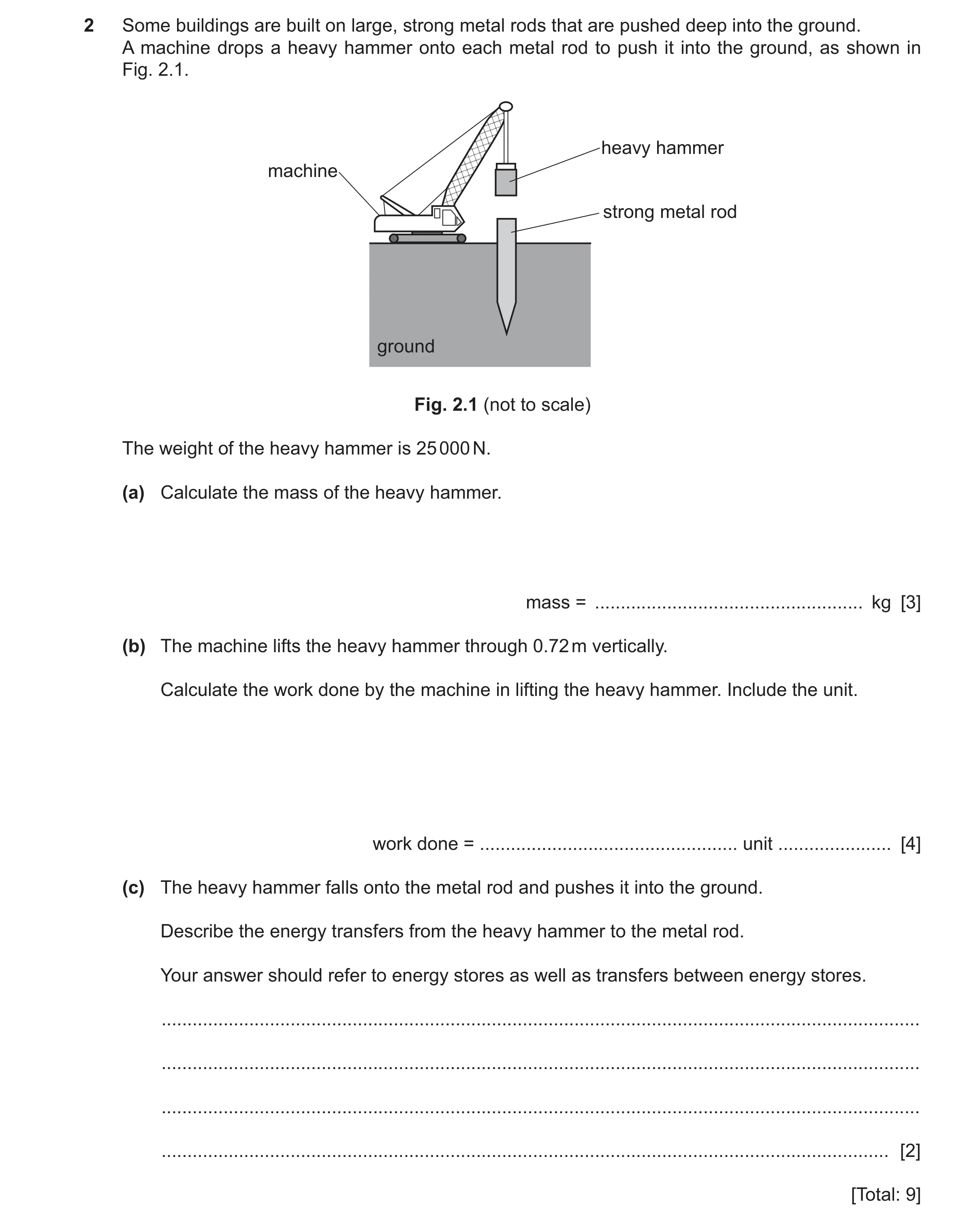 175 / 181
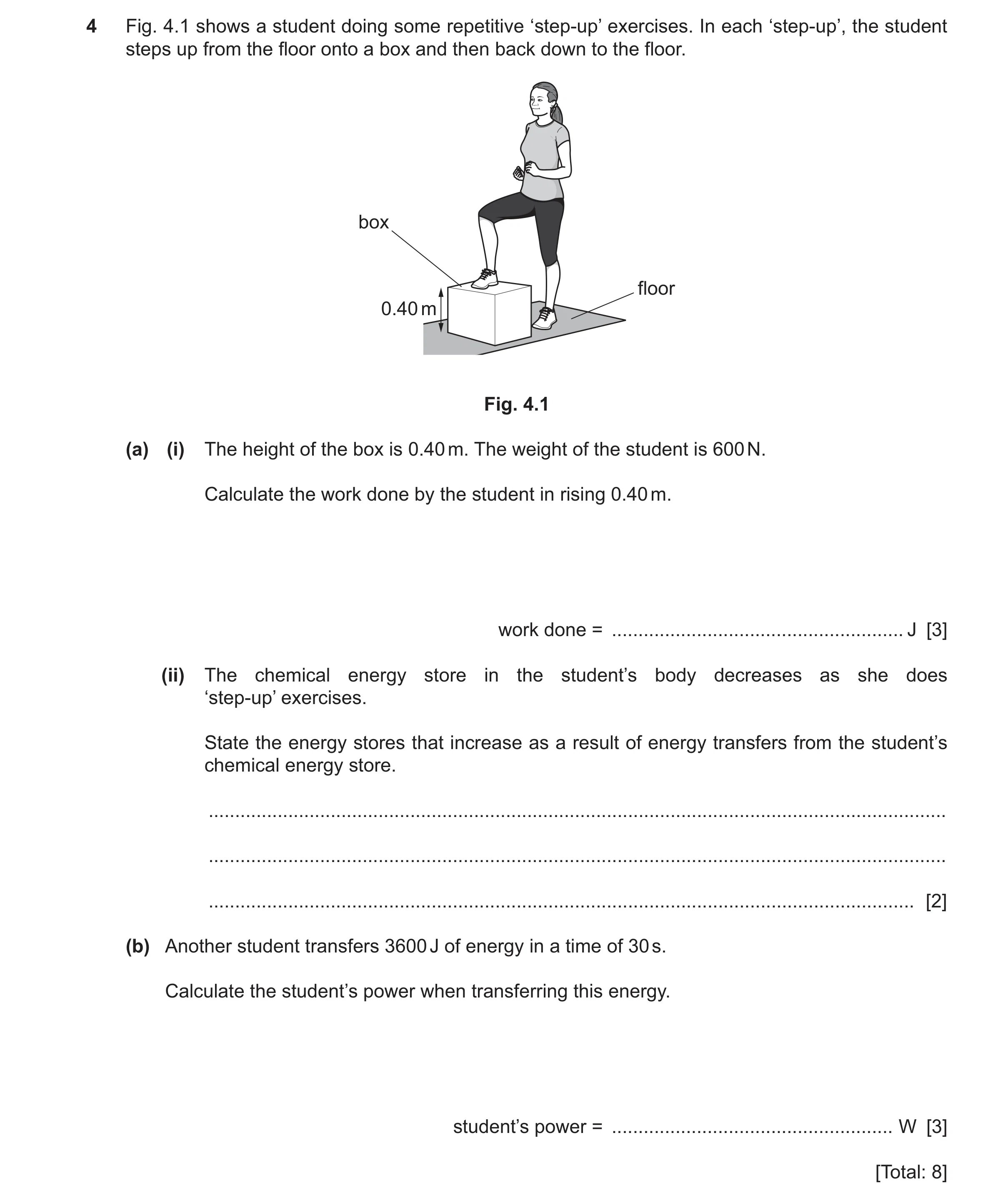 176 / 181
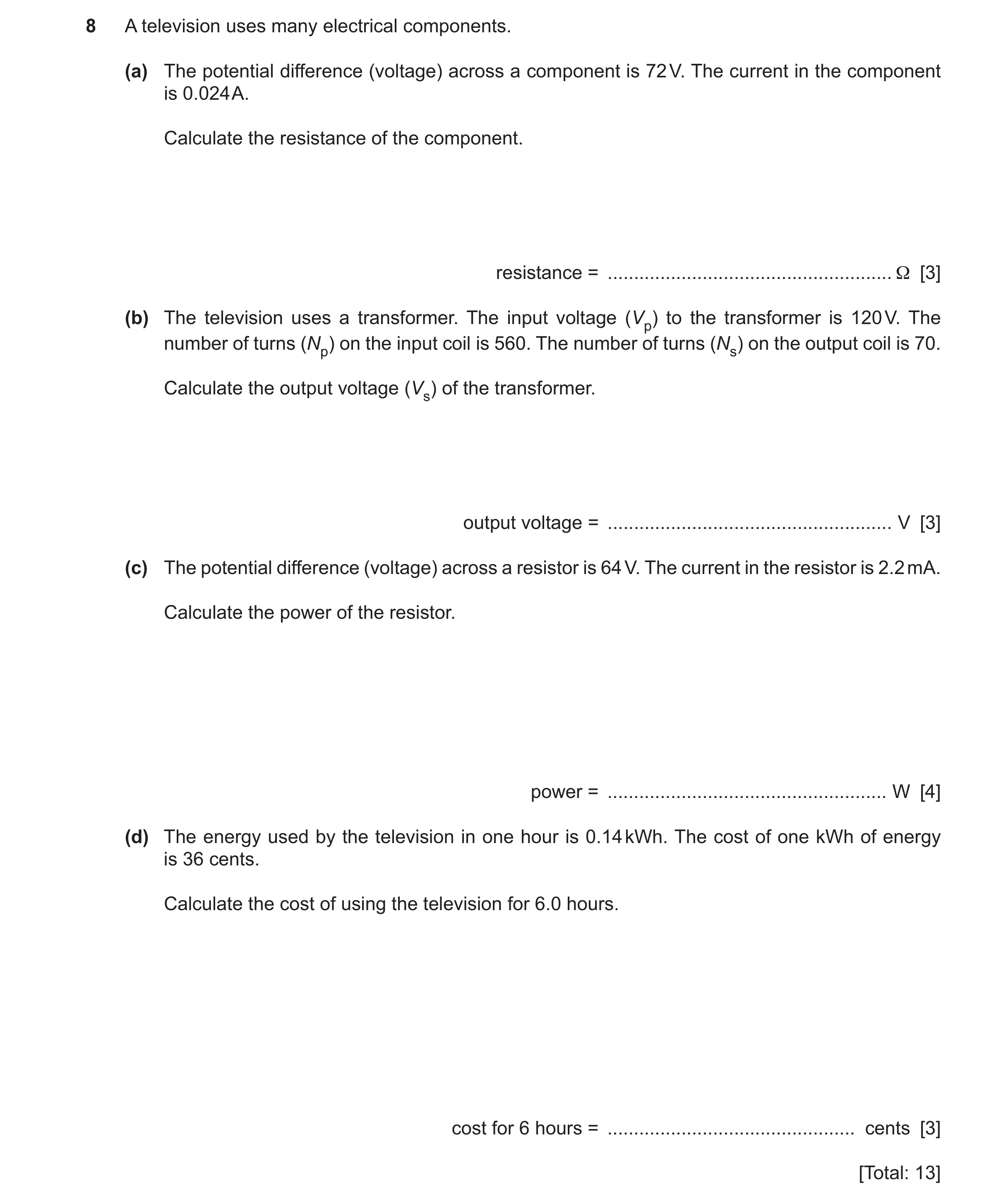 177 / 181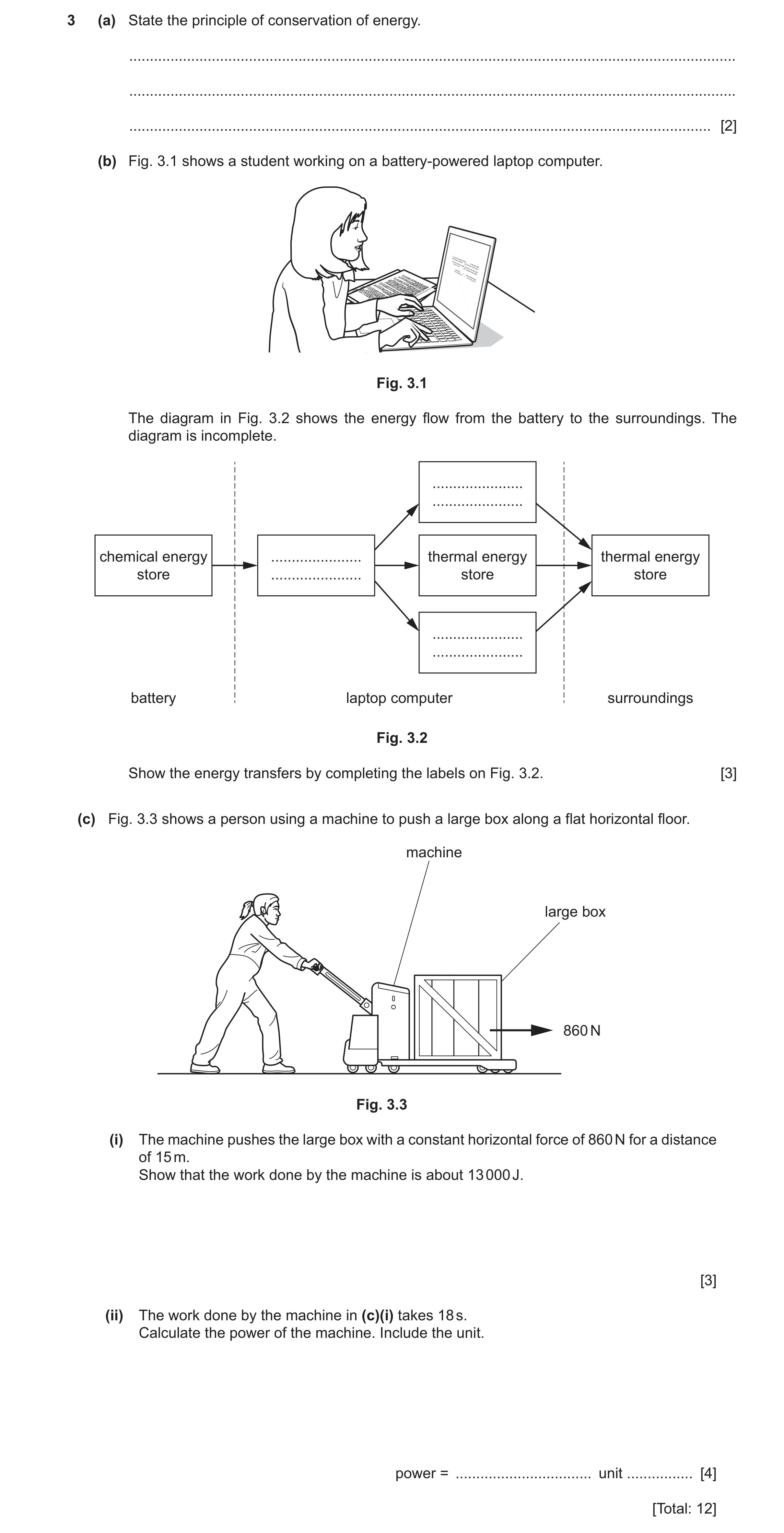
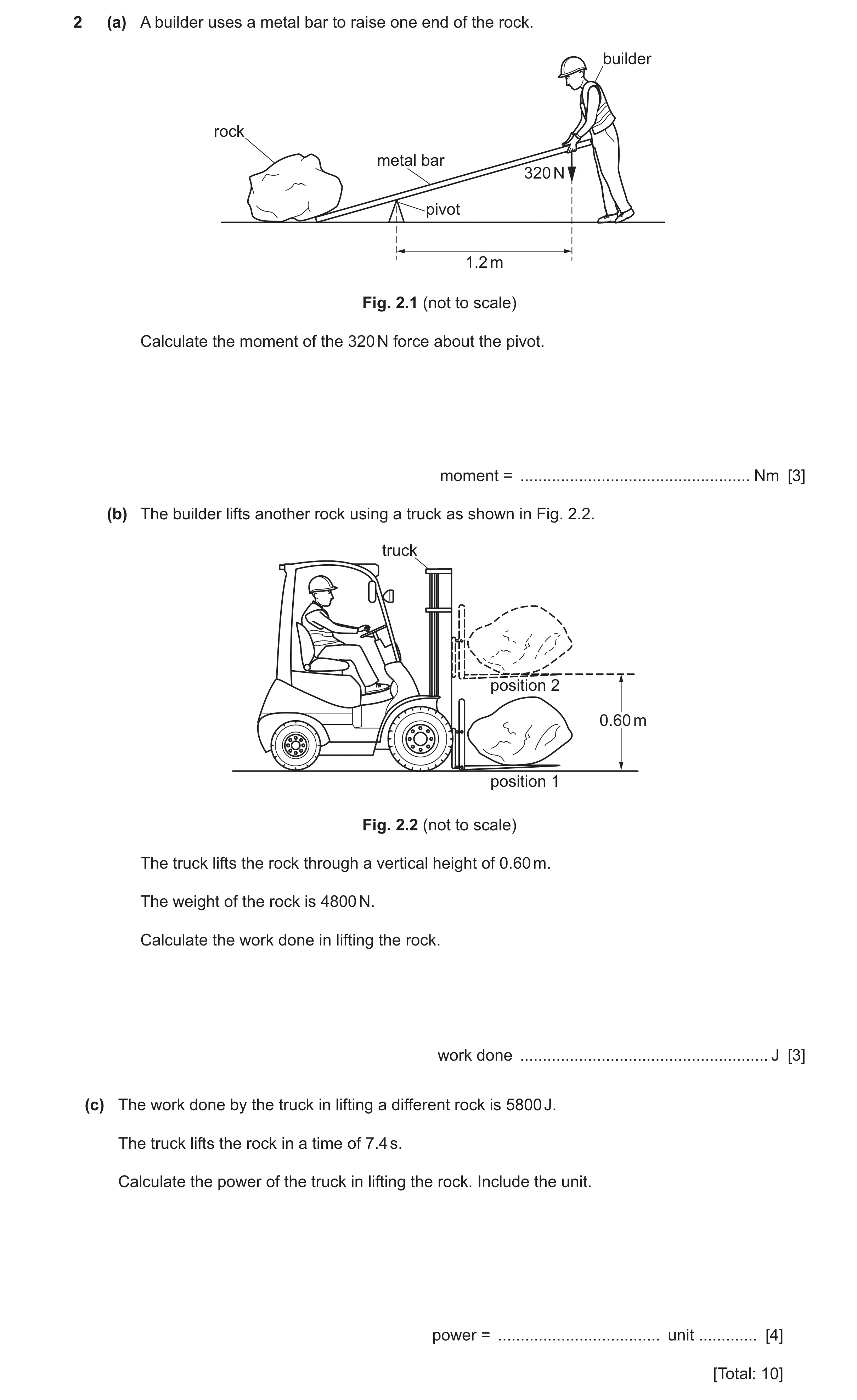
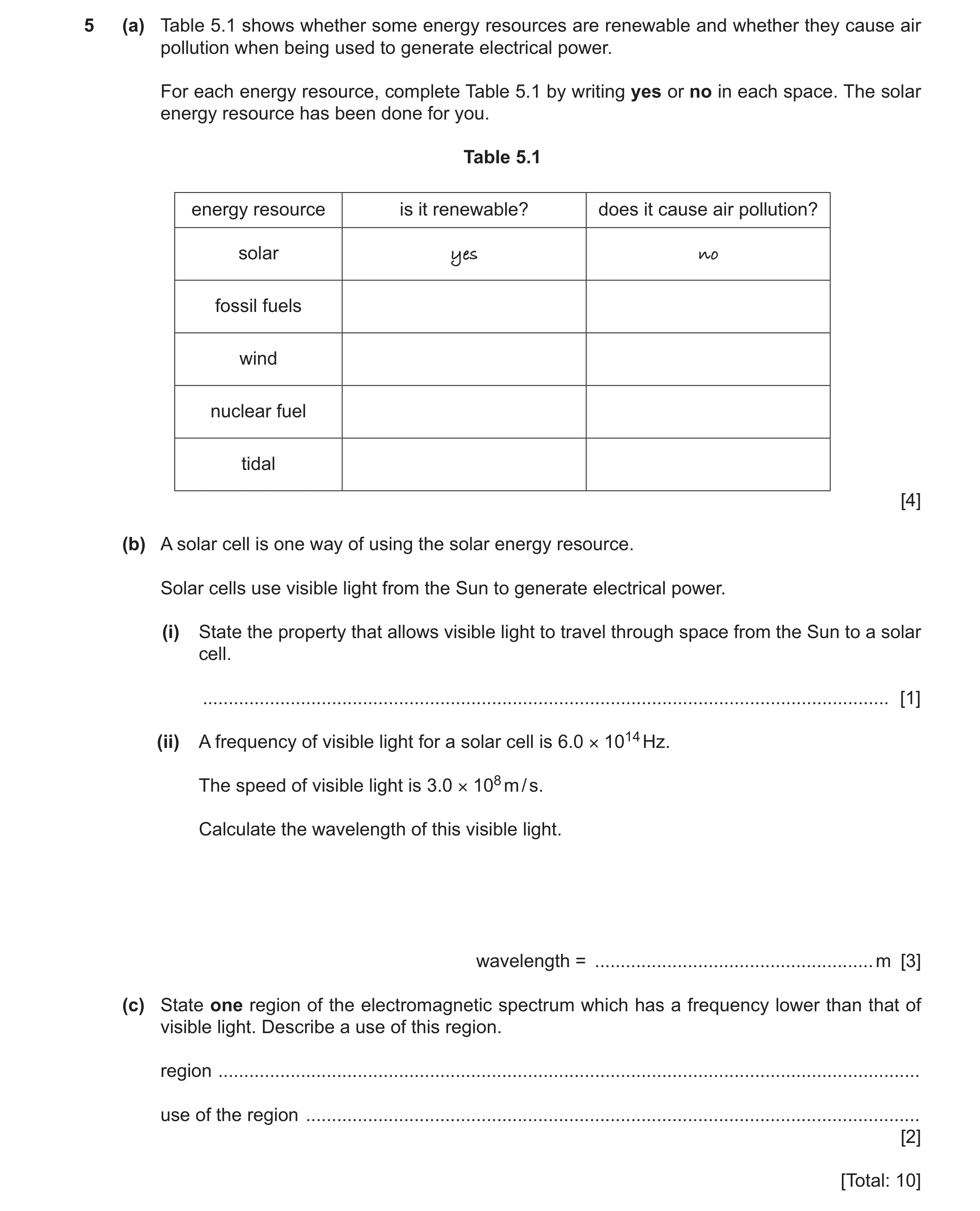 181 / 181
 5
5 6
6 6
6 8
8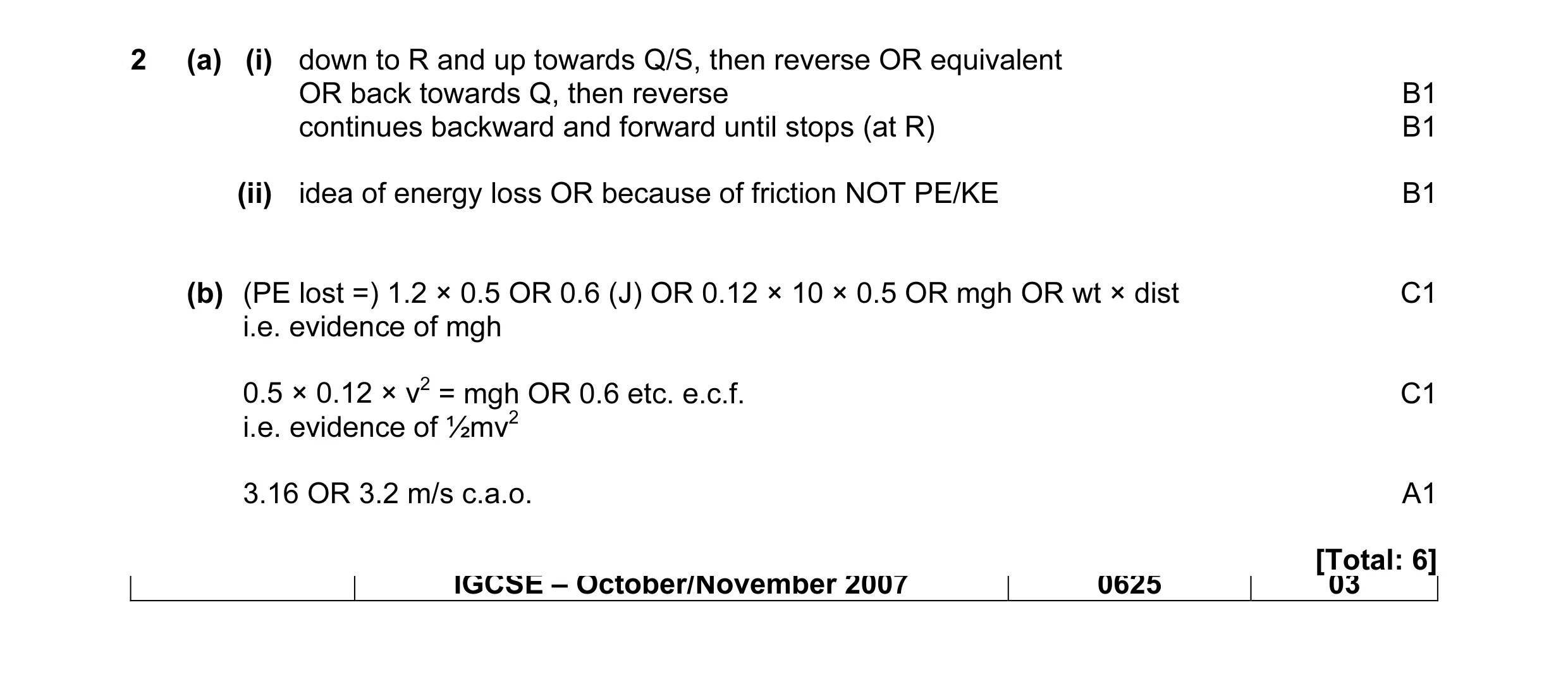 6
6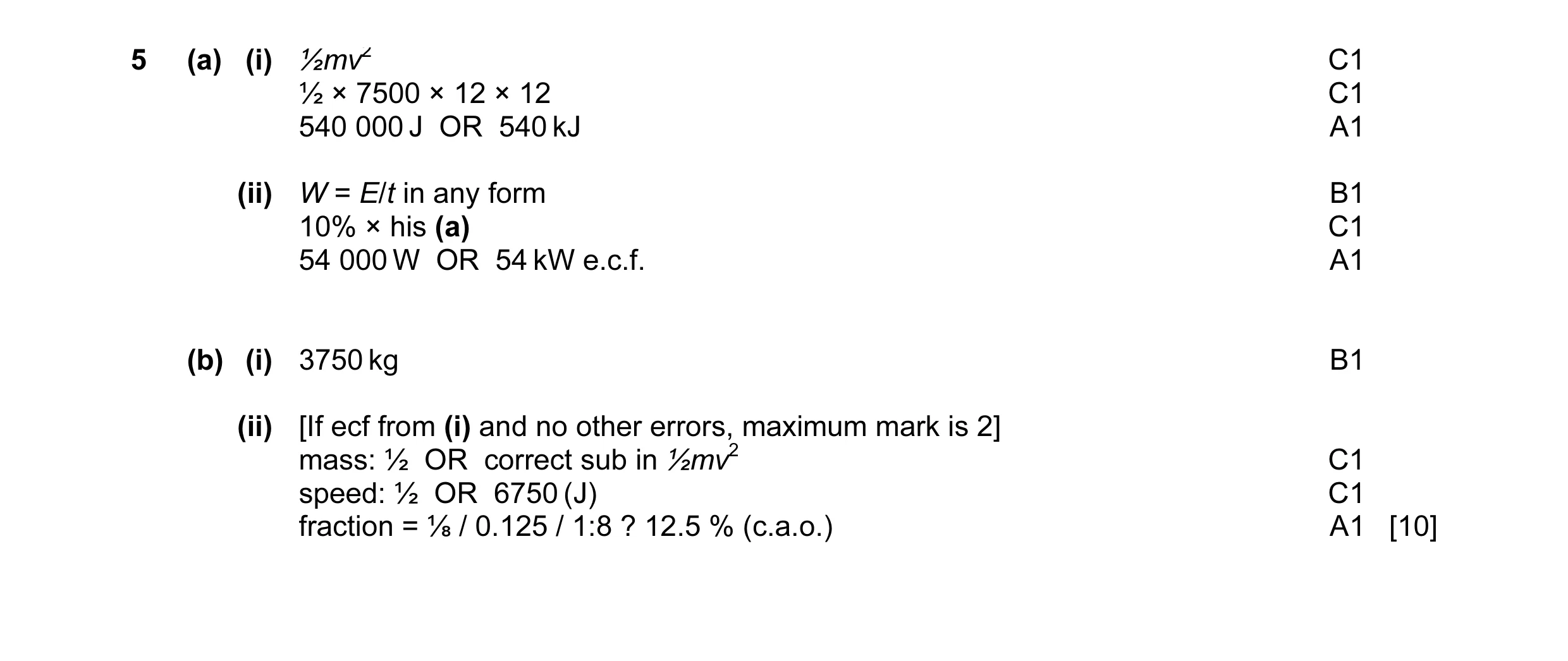 10
10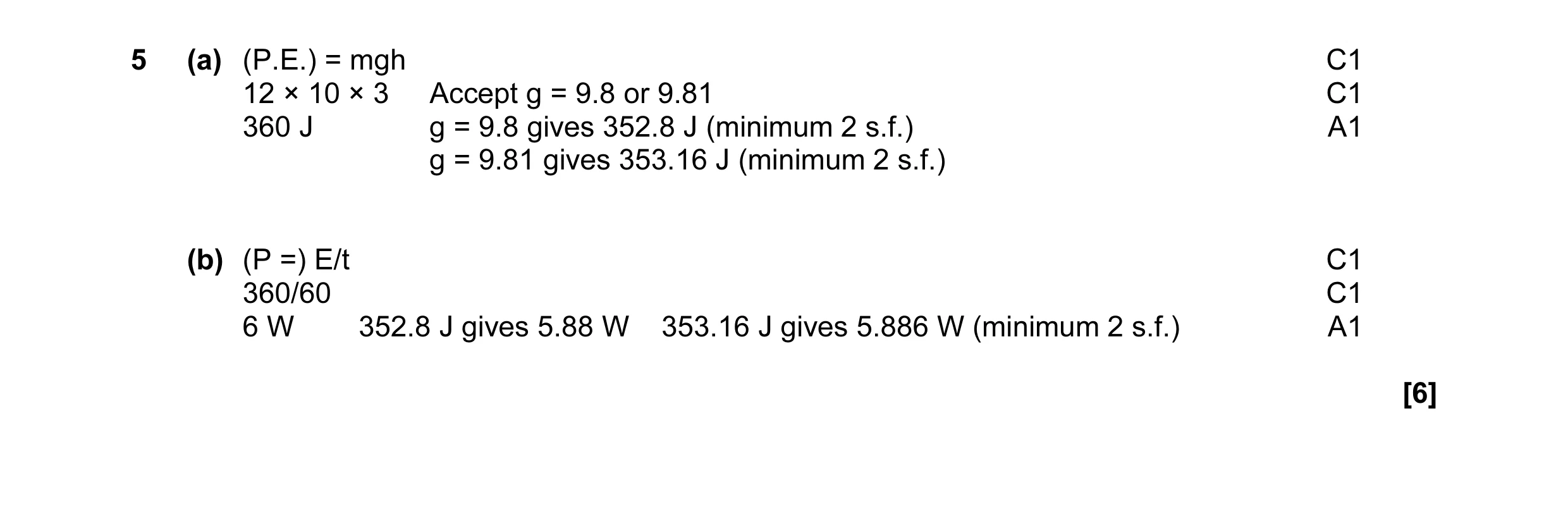 6
6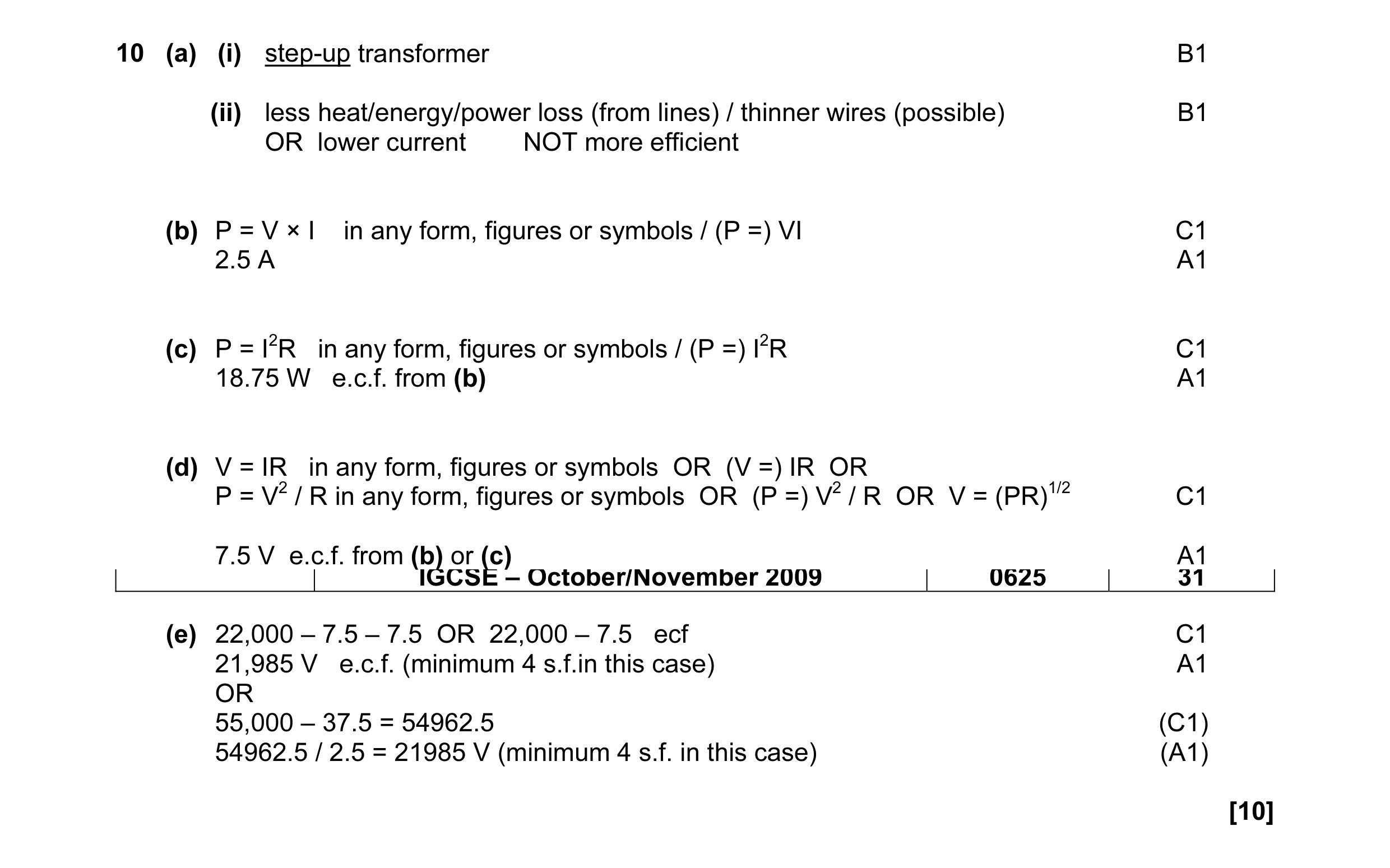 10
10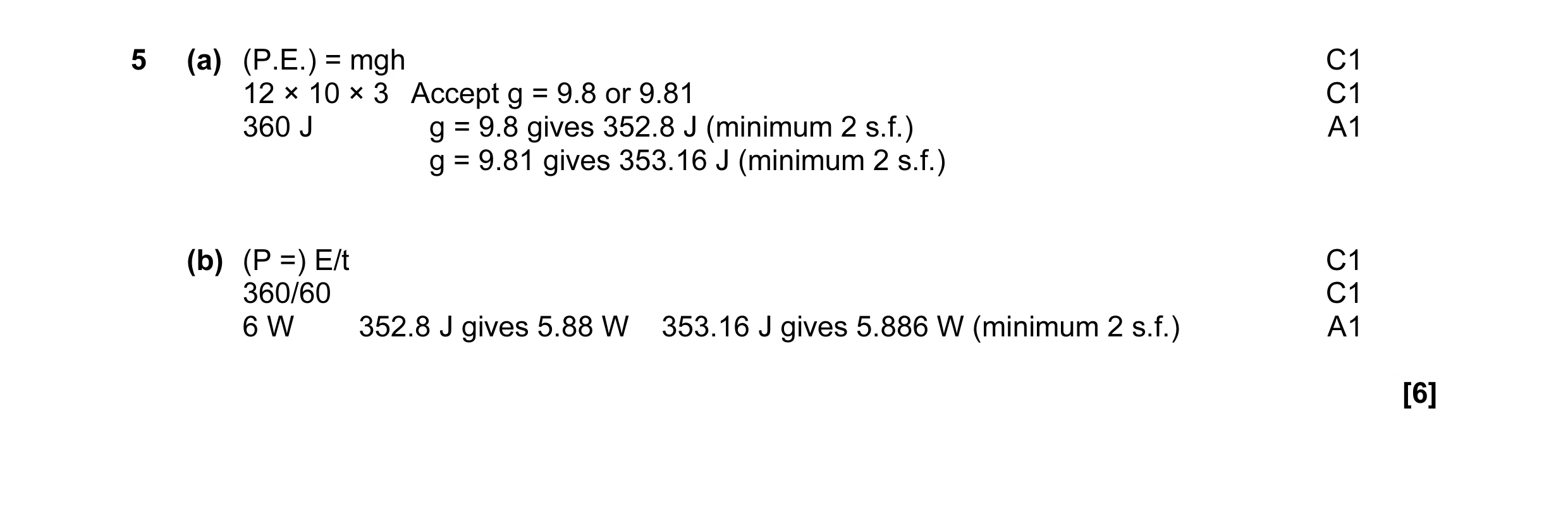 6
6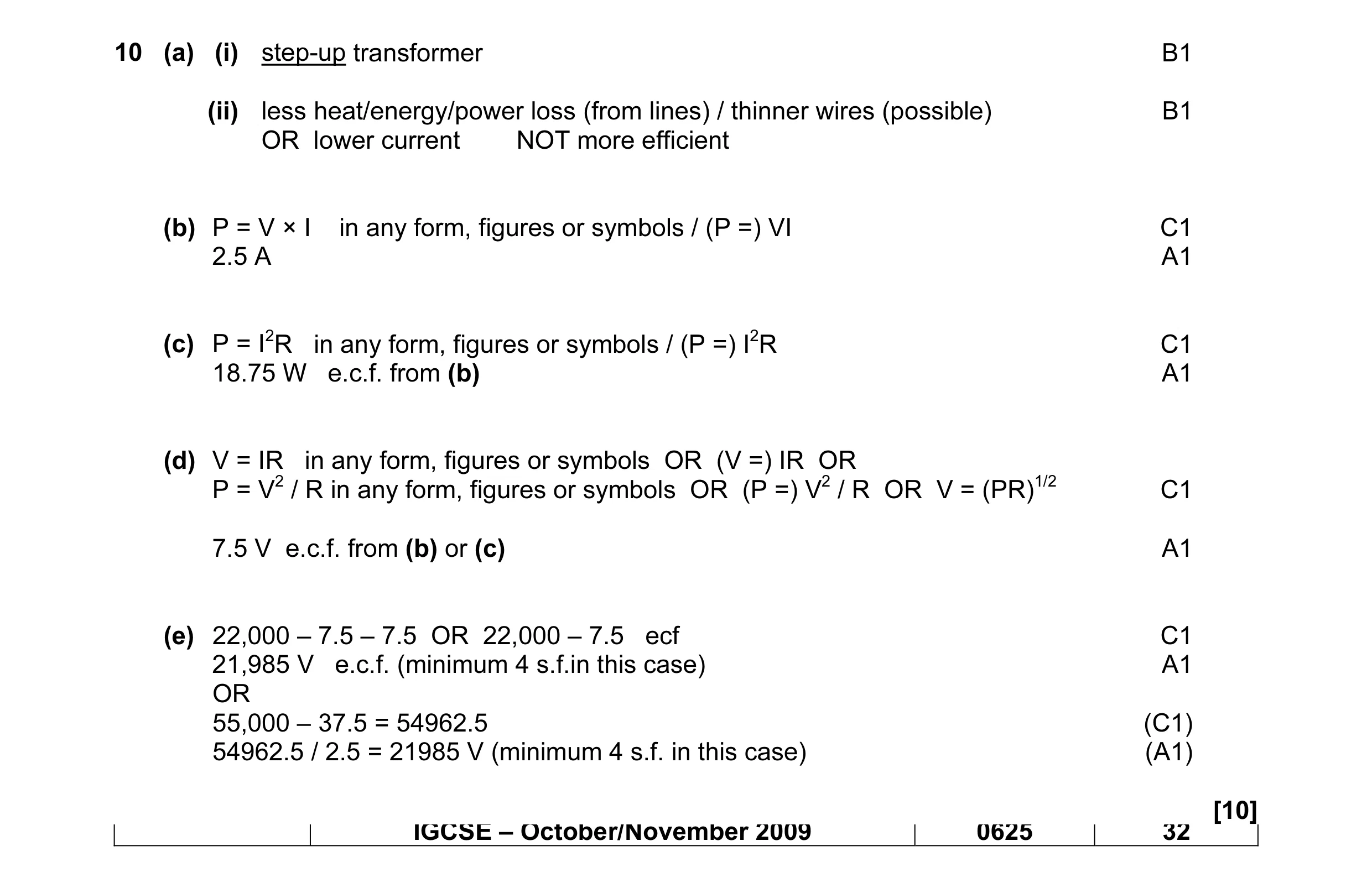 10
10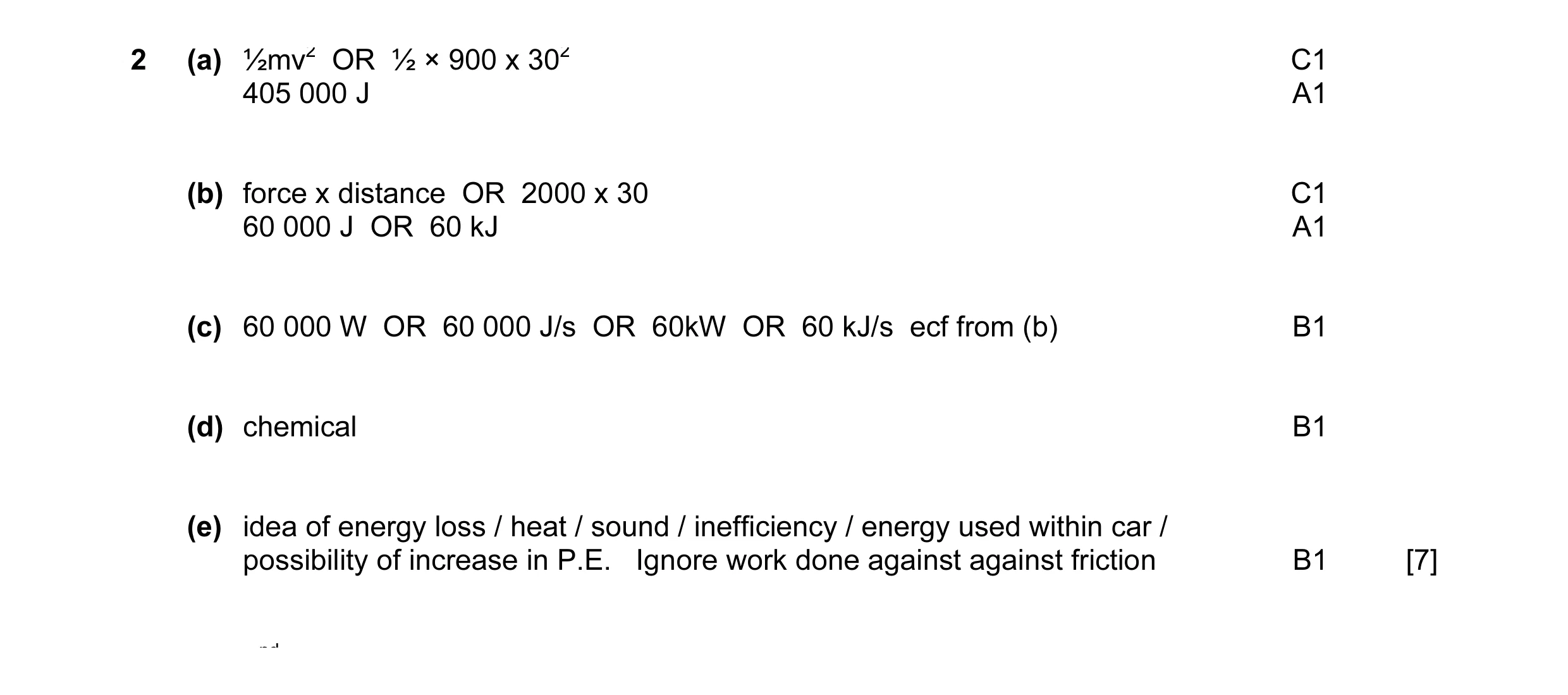 7
7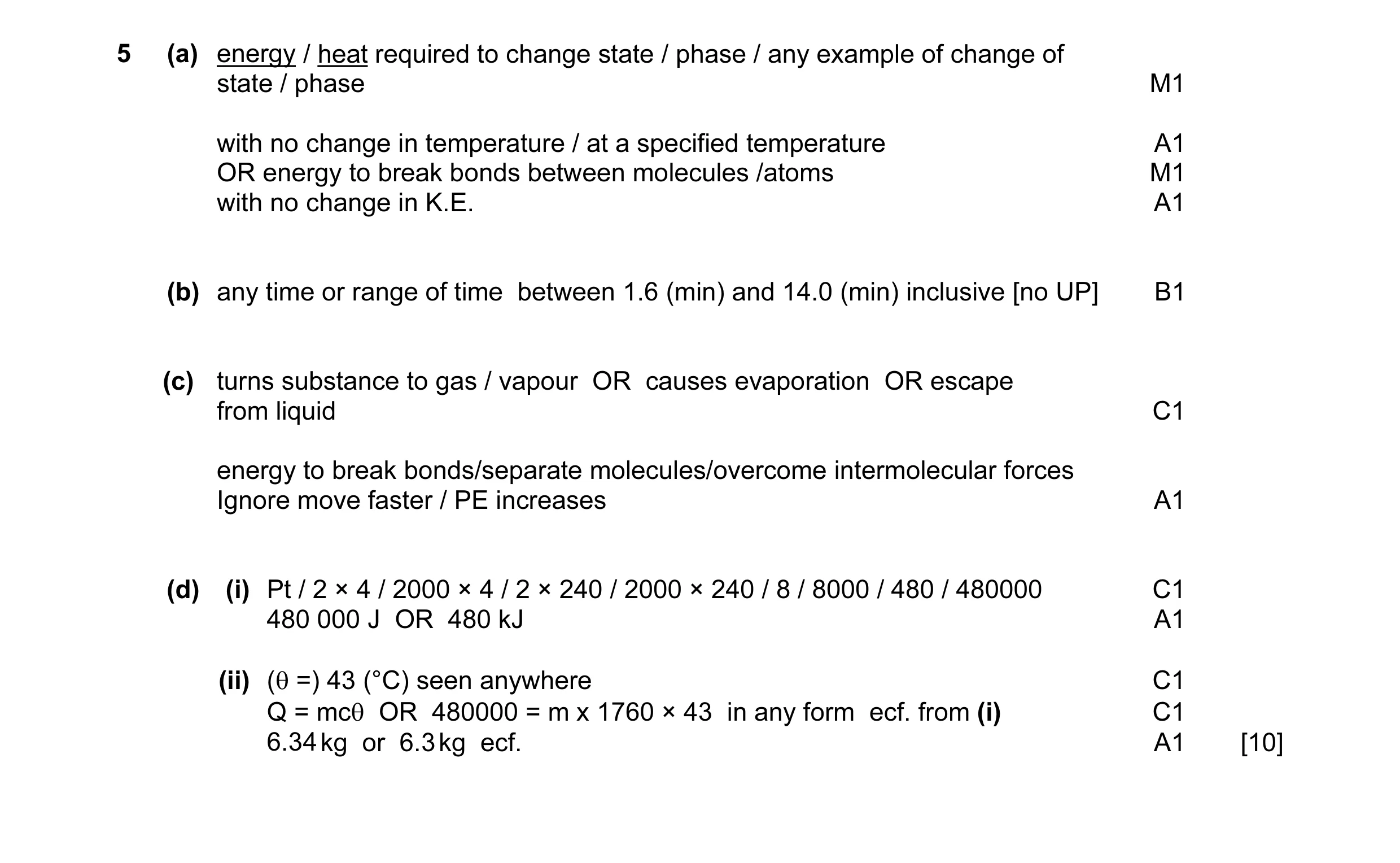 10
10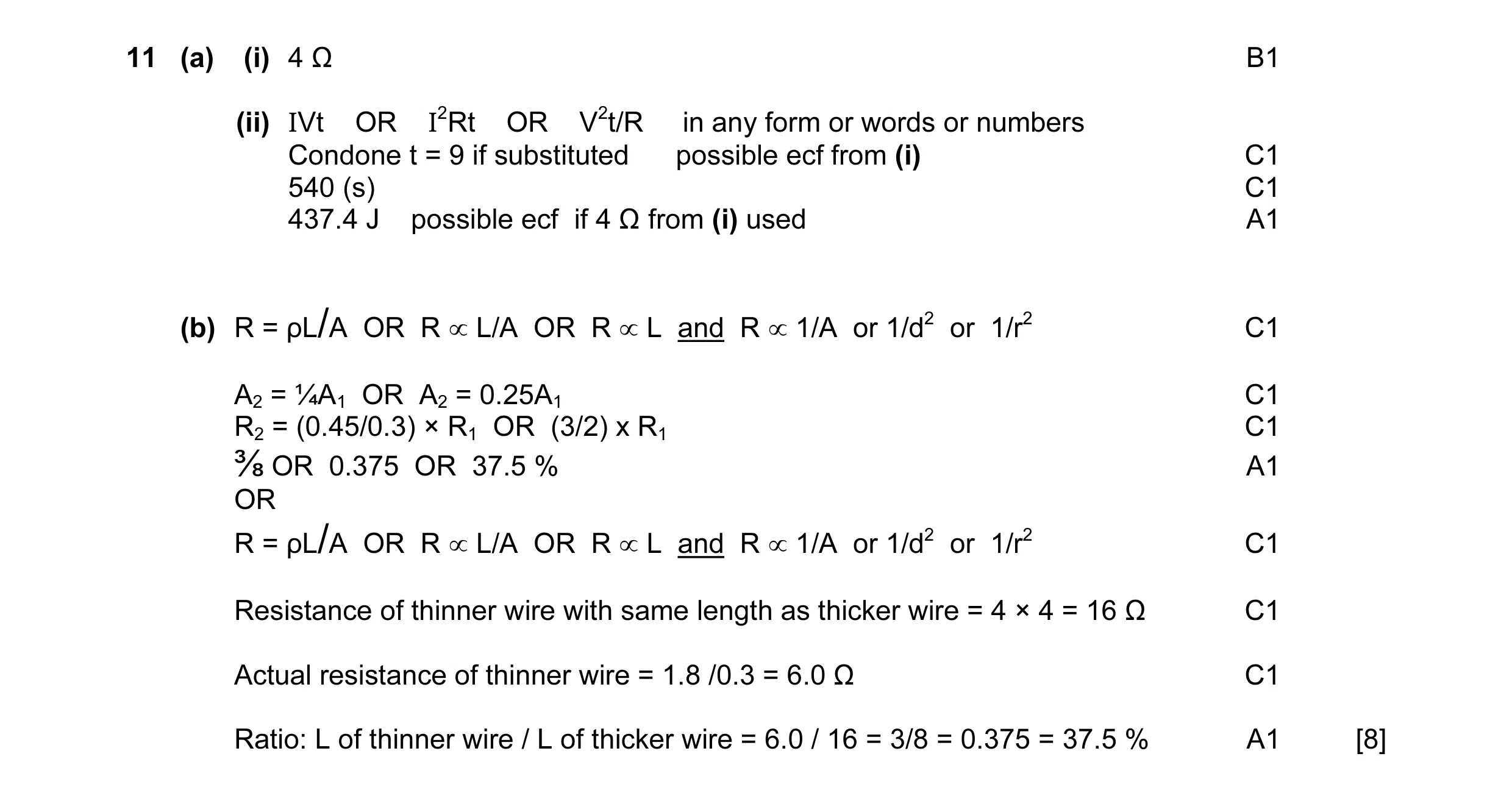 8
8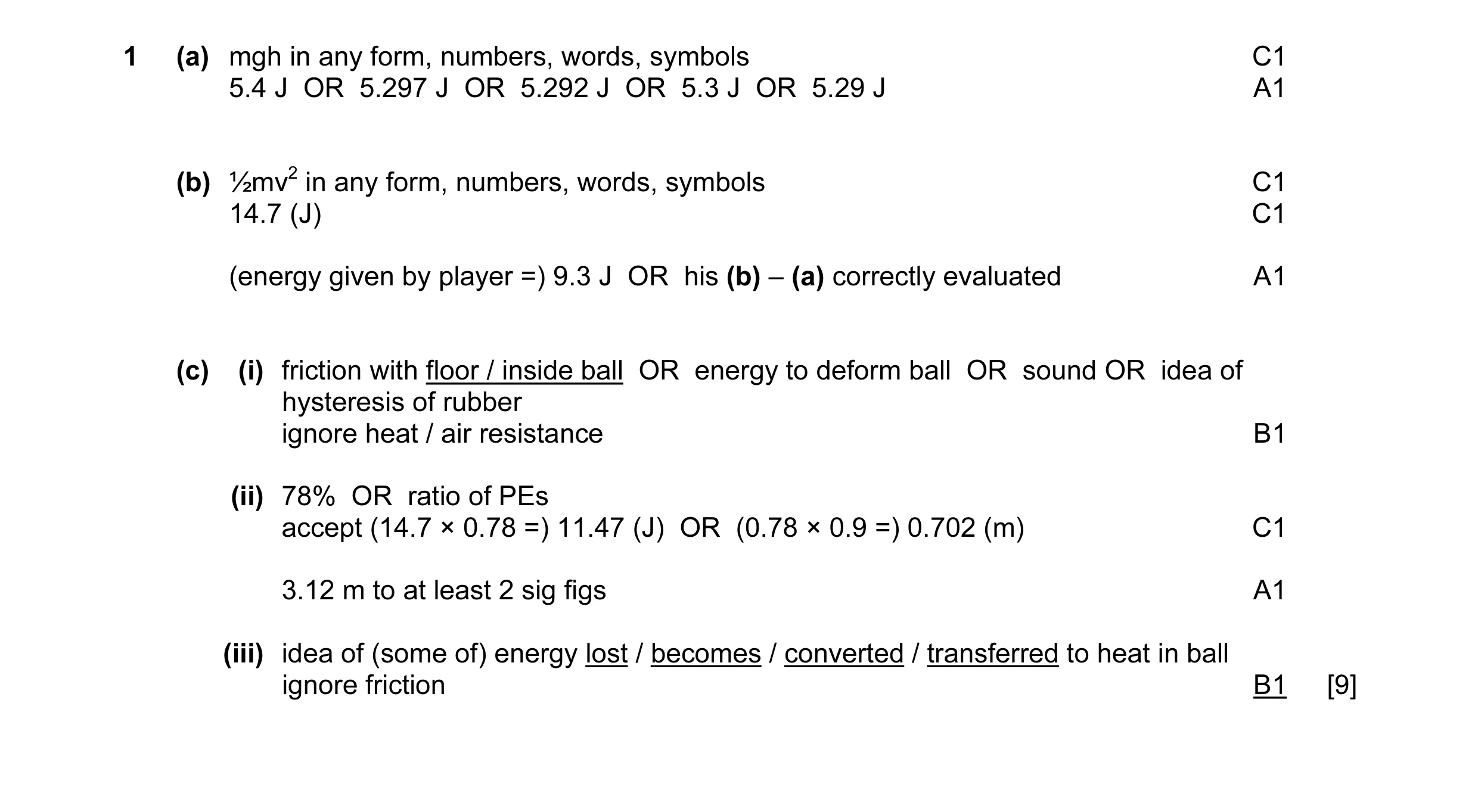 9
9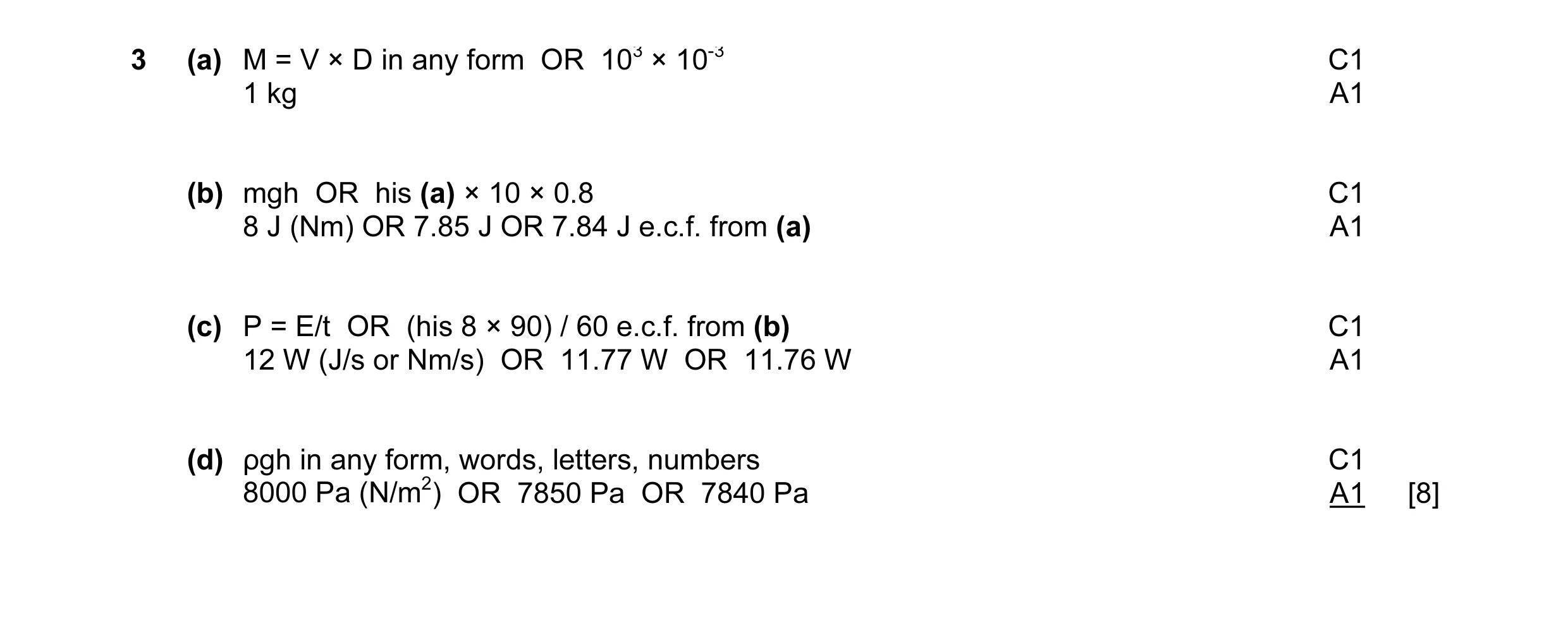 8
8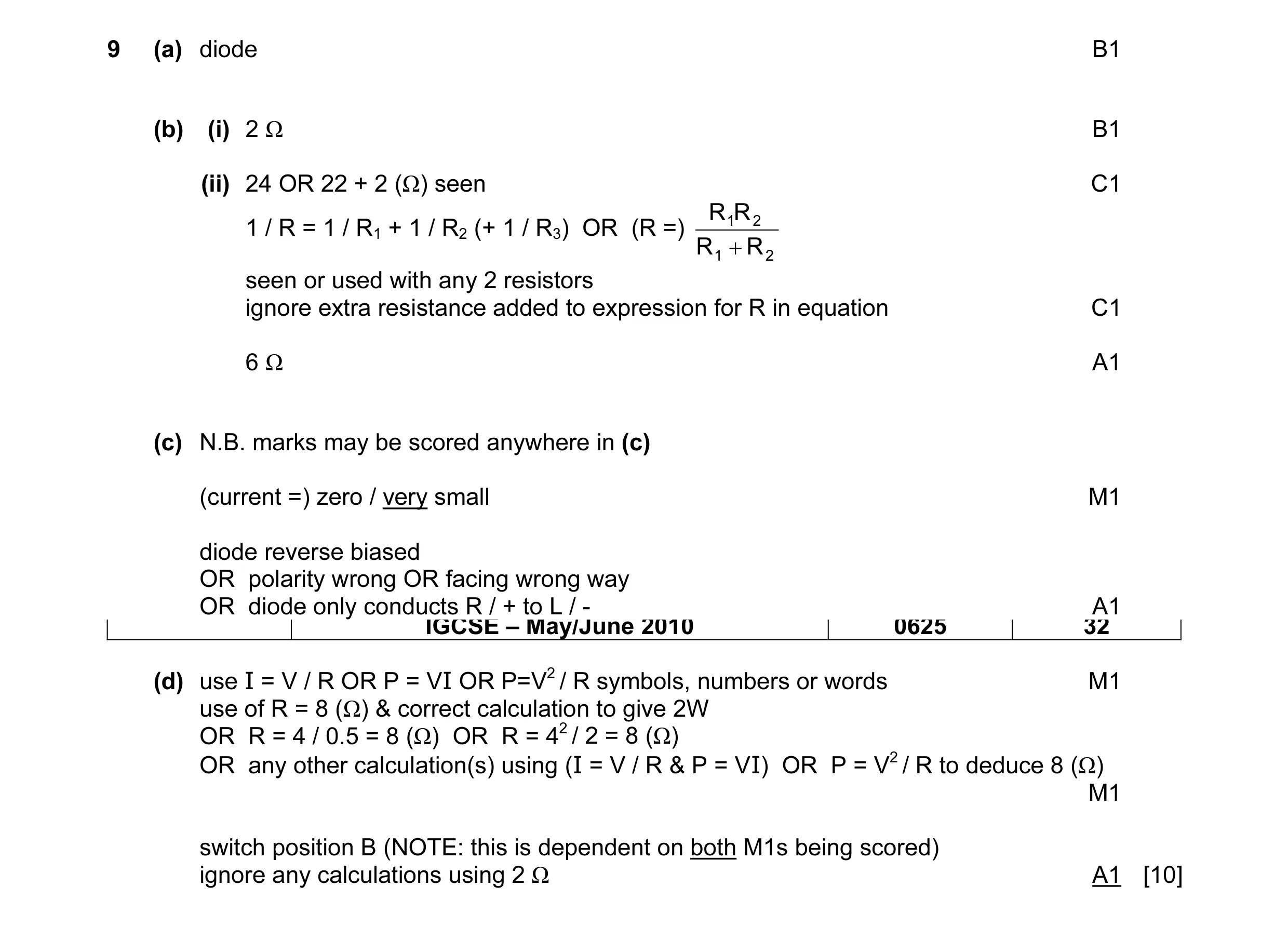 10
10 9
9 8
8 10
10 7
7 10
10 12
12 6
6 7
7 8
8 9
9 9
9 8
8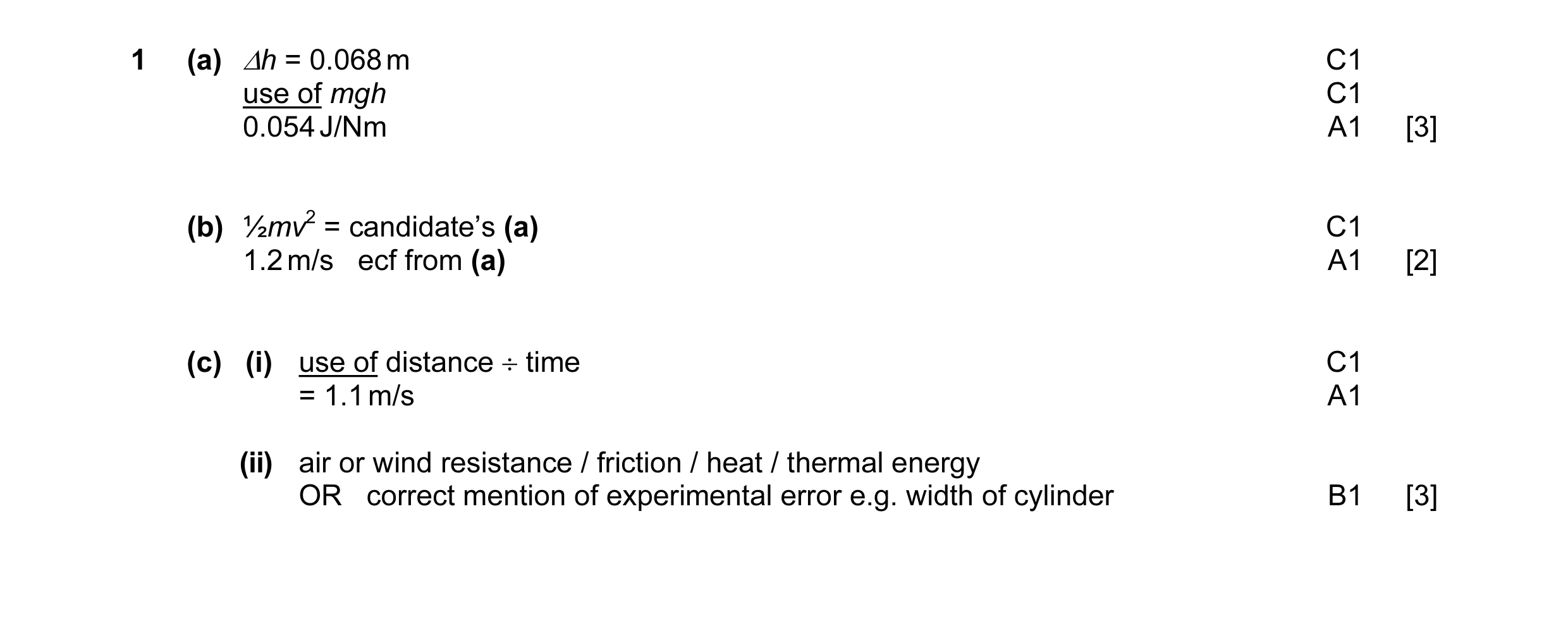 8
8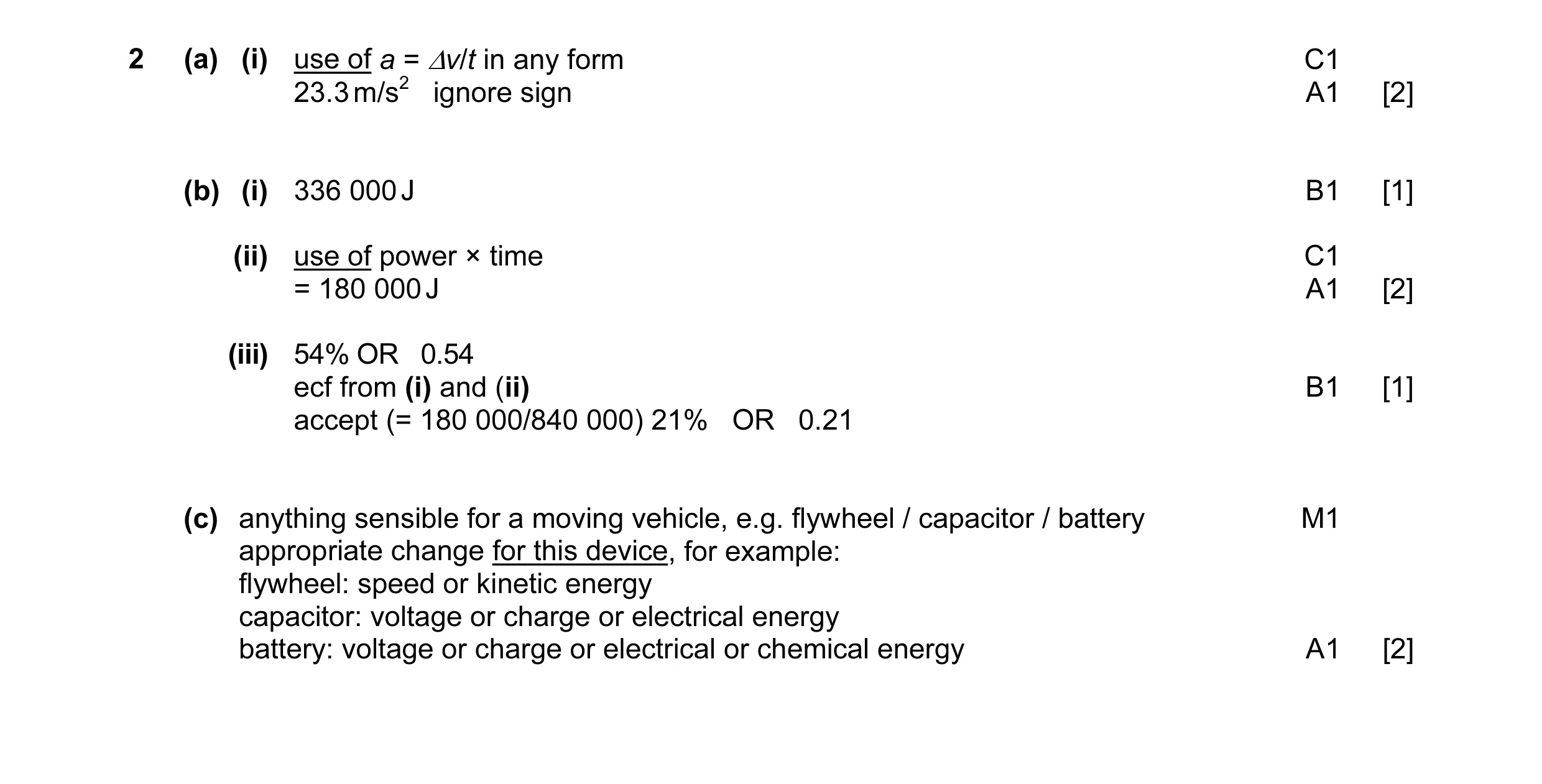 8
8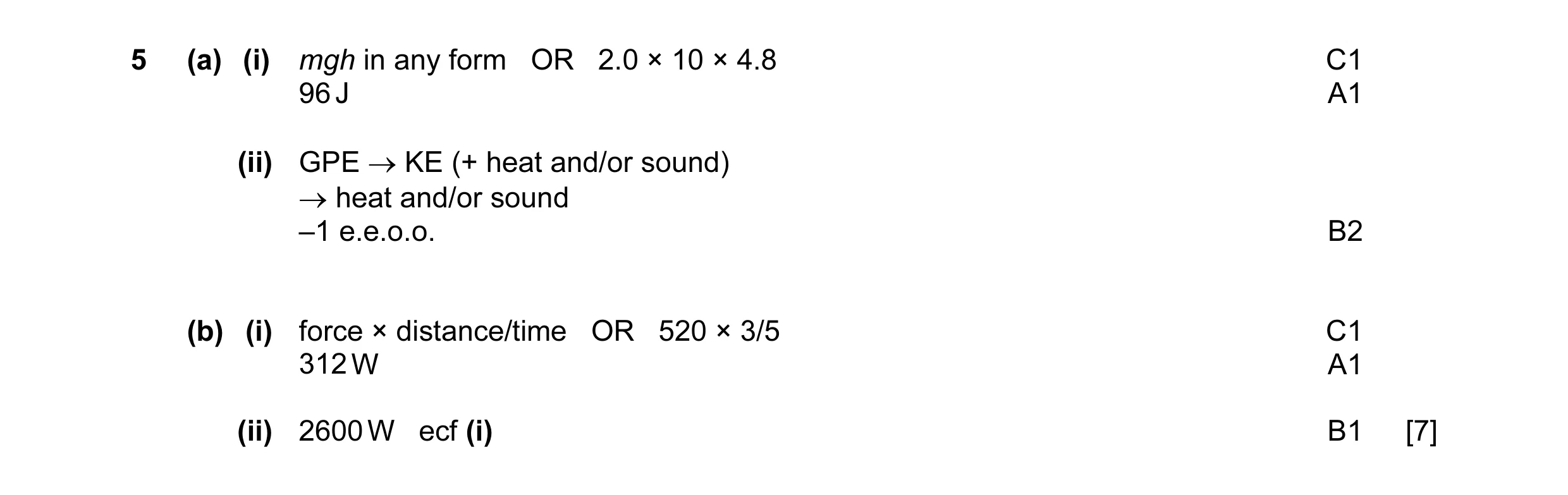 7
7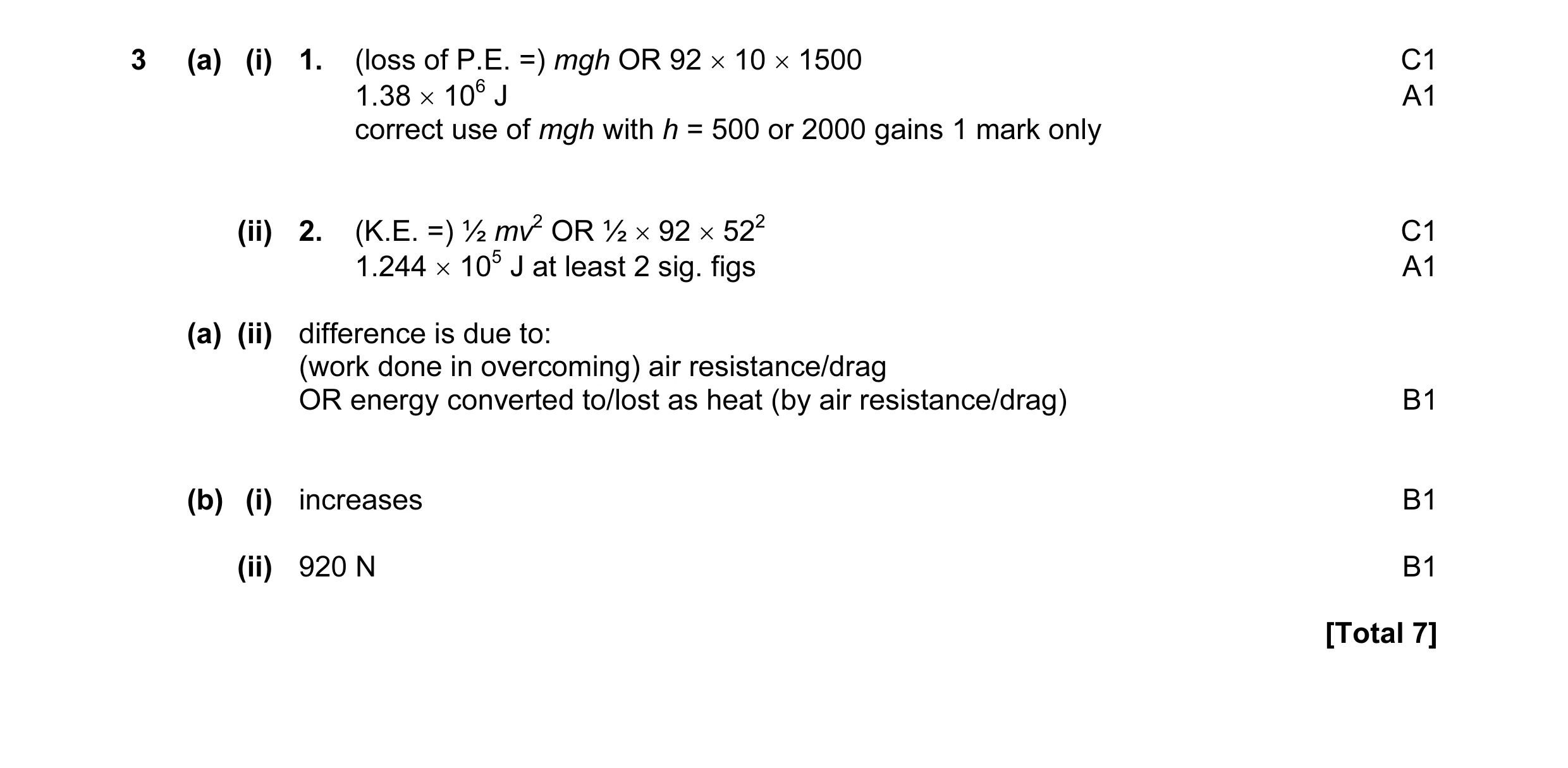 7
7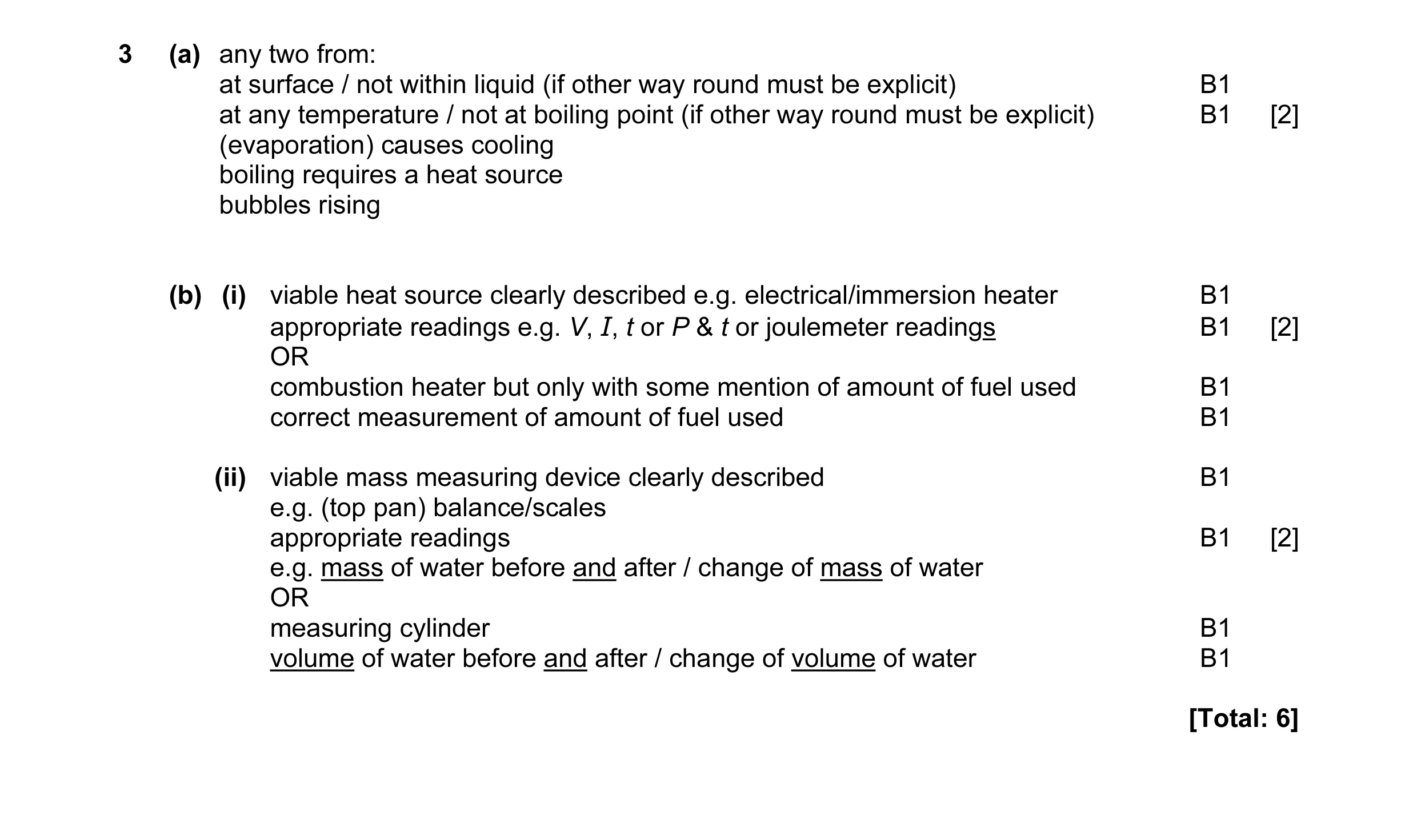 6
6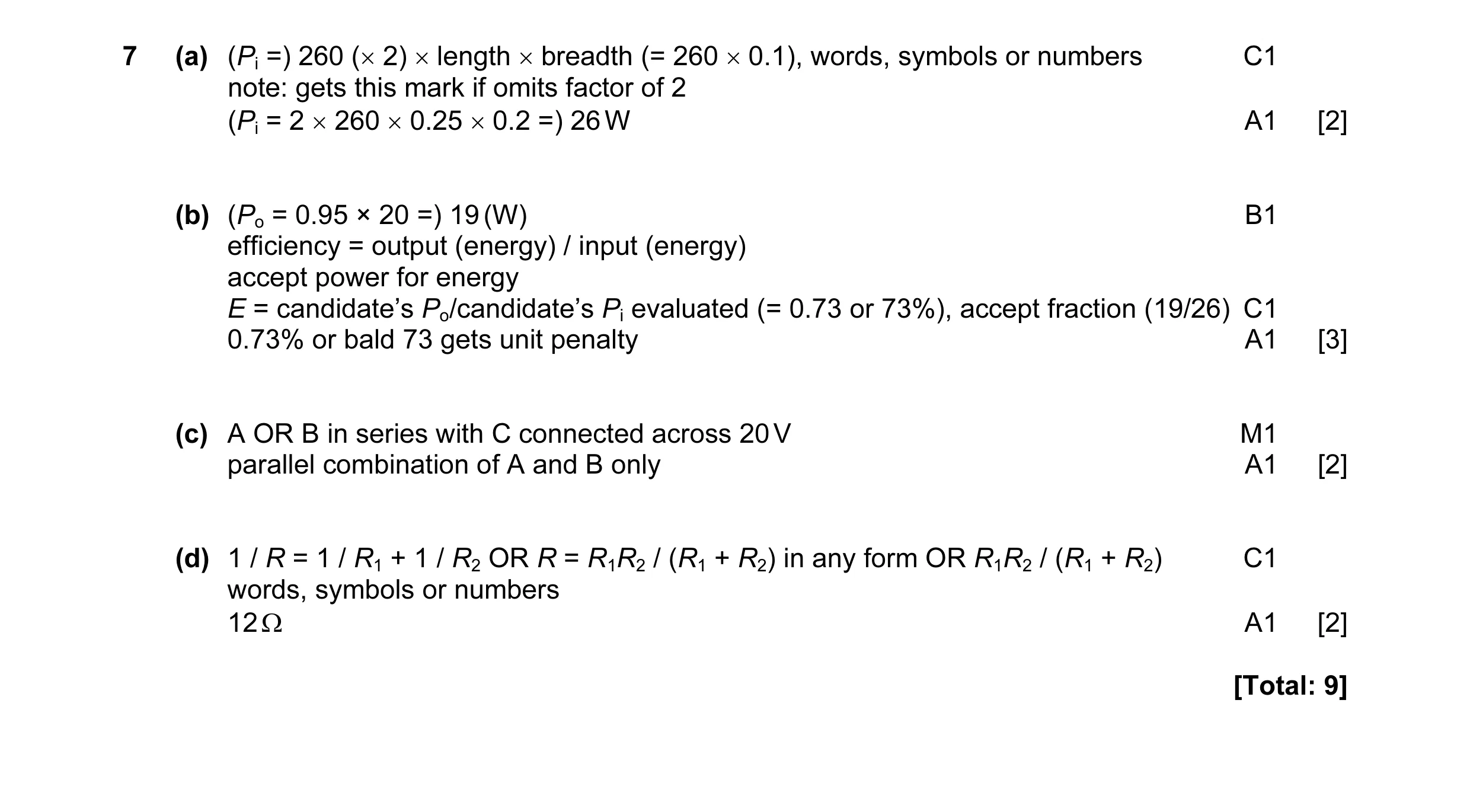 9
9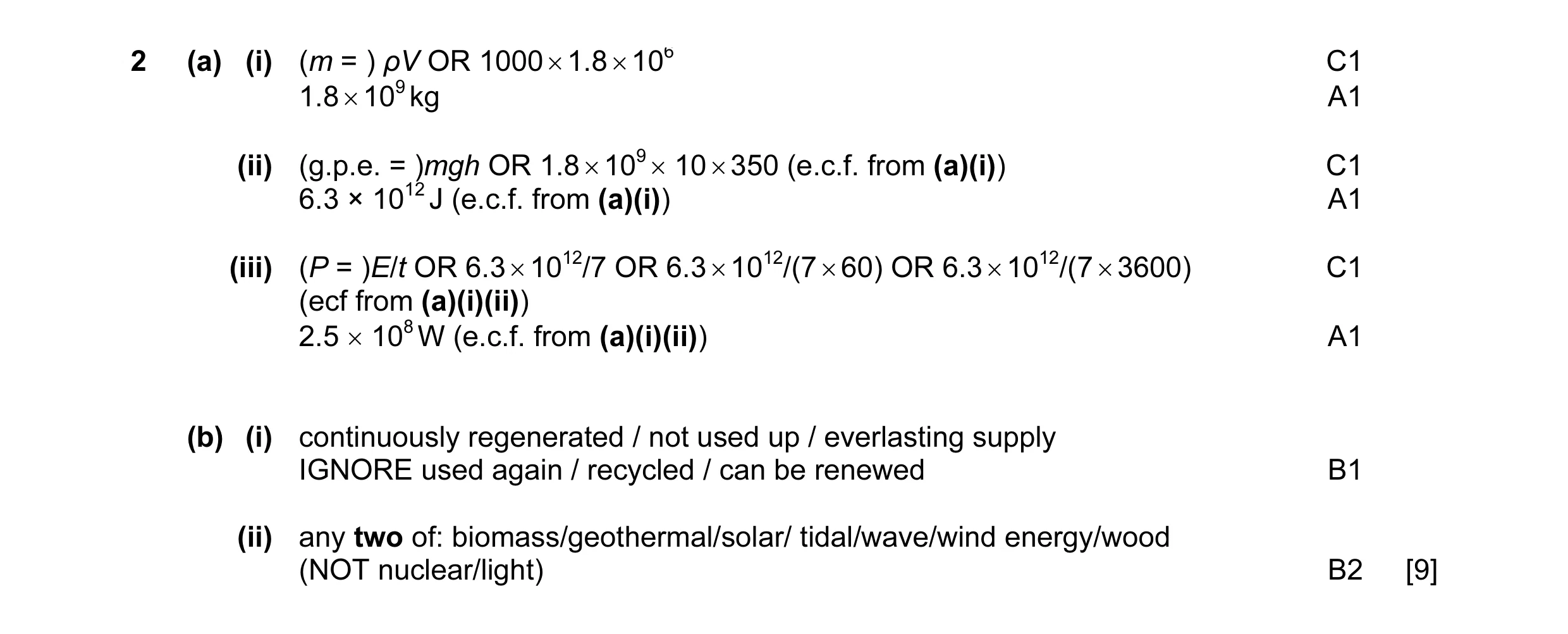 9
9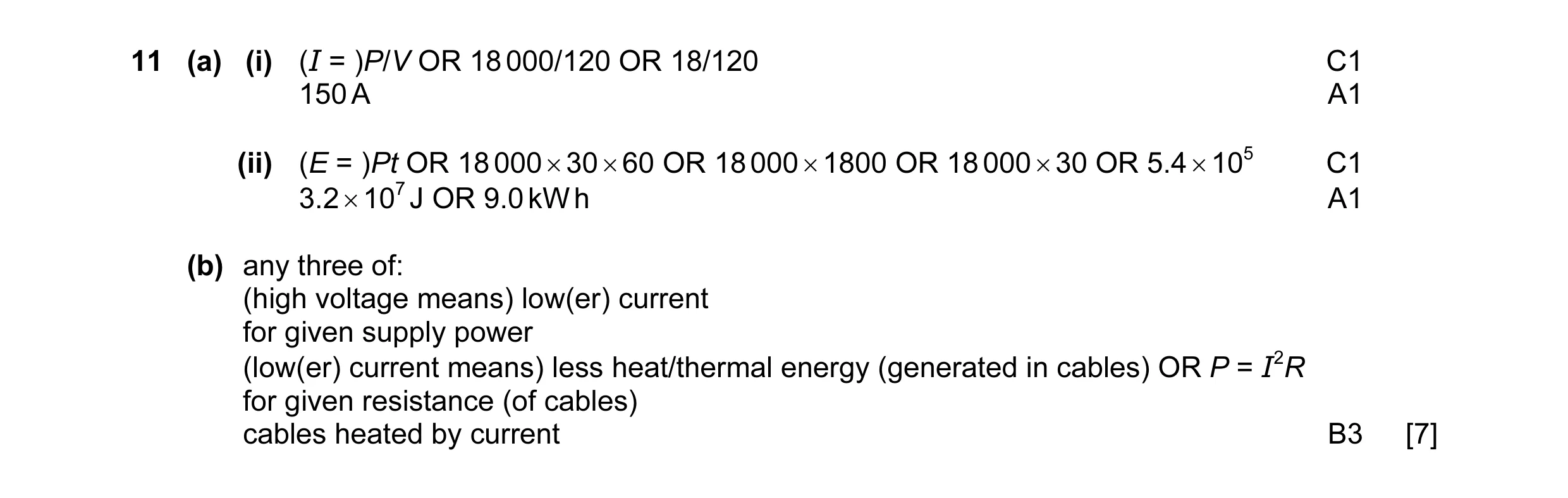 7
7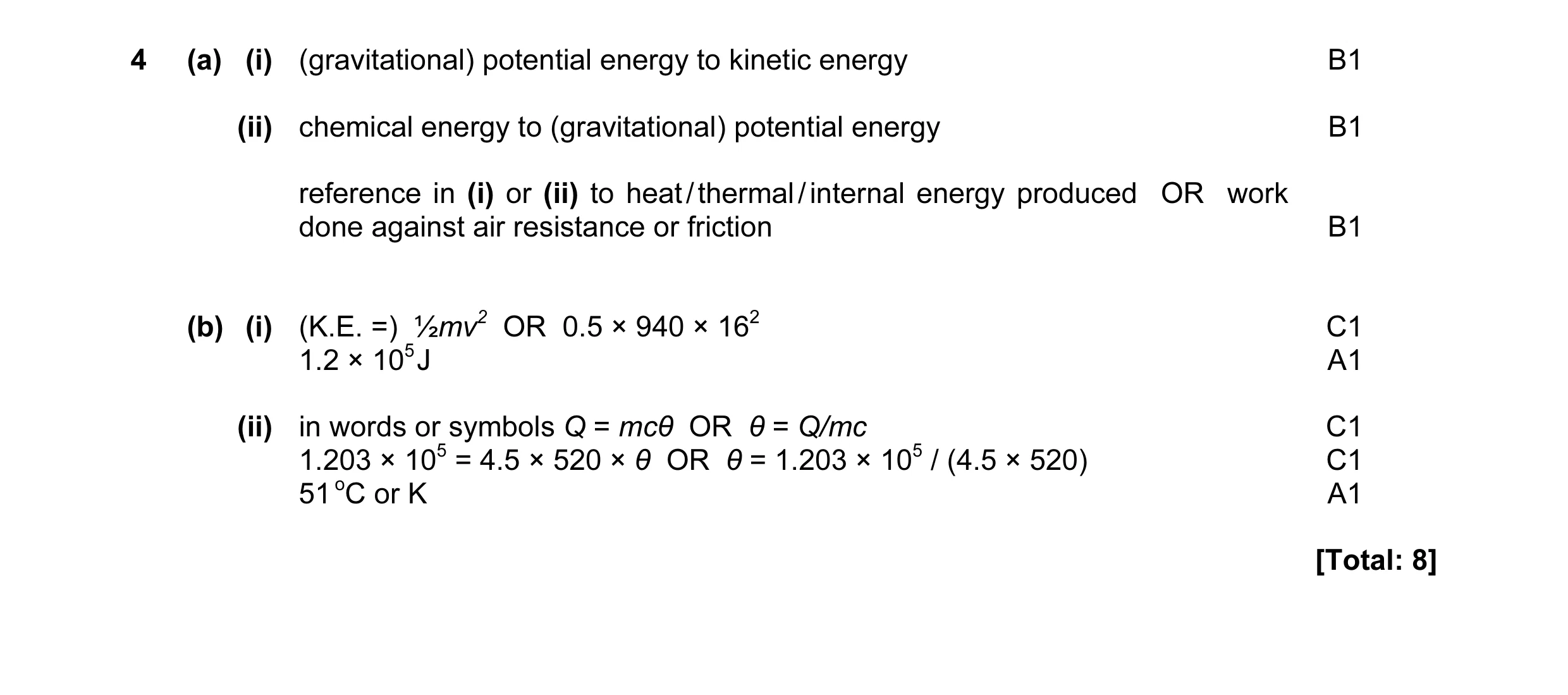 8
8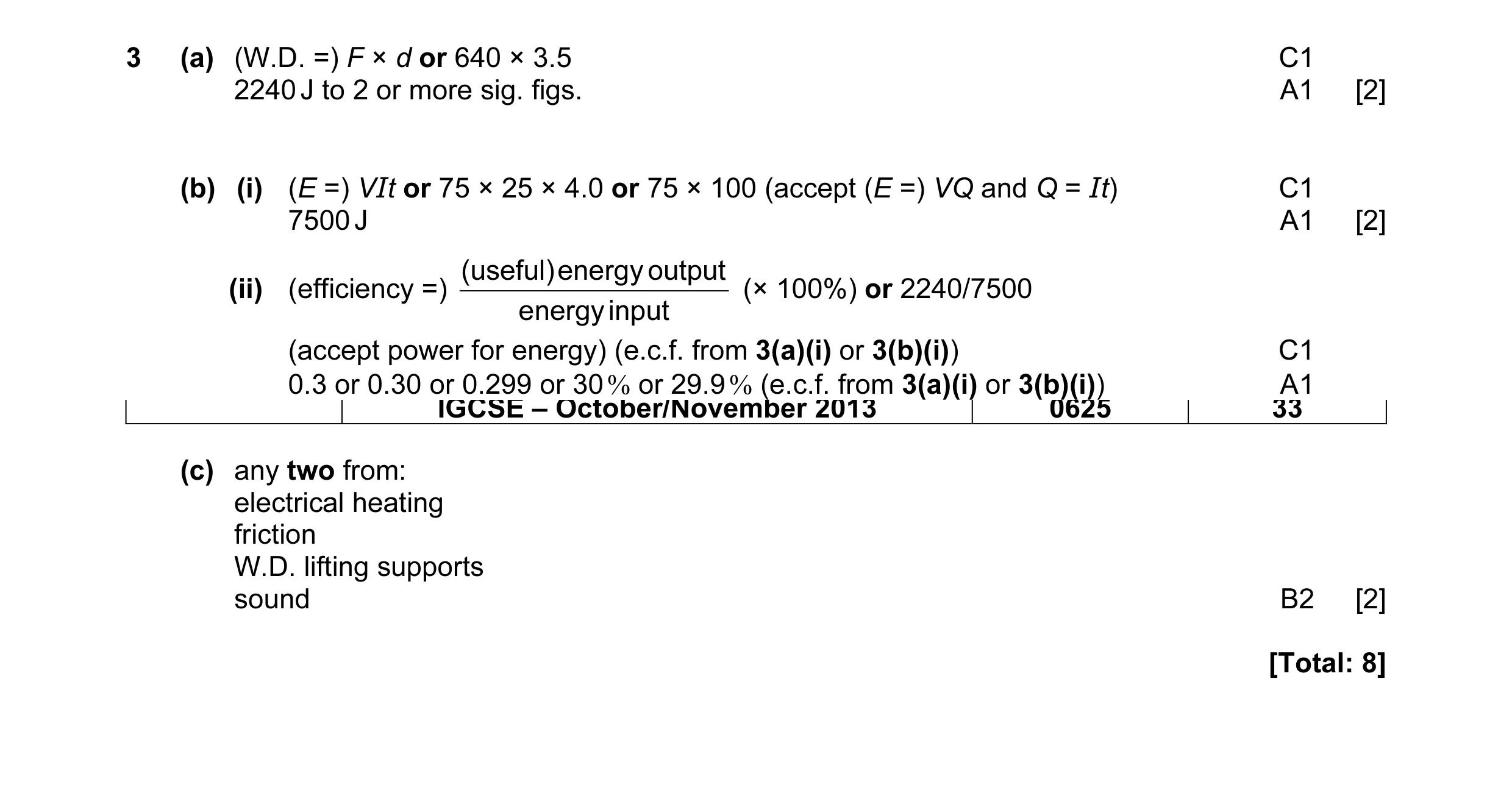 8
8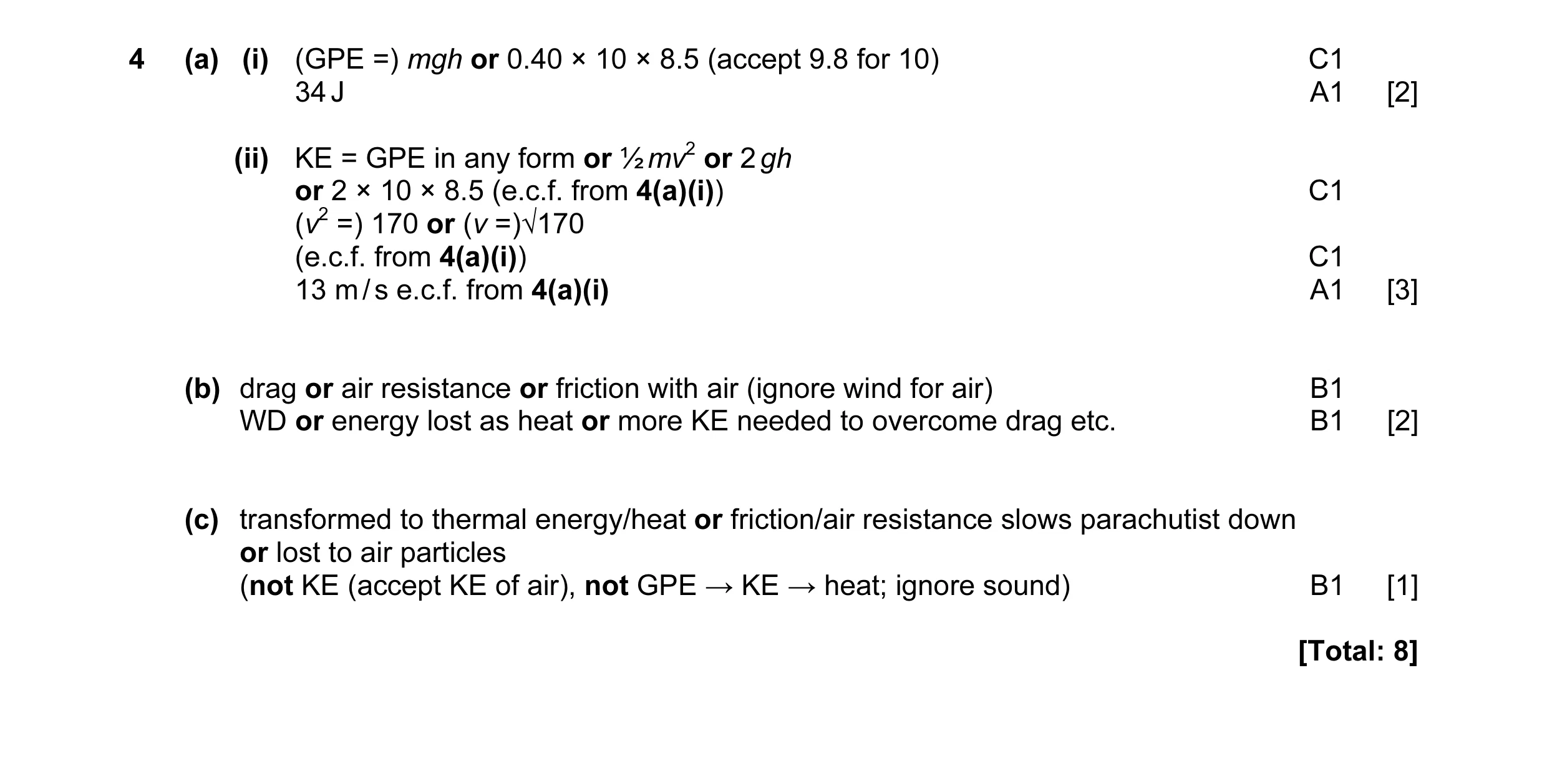 8
8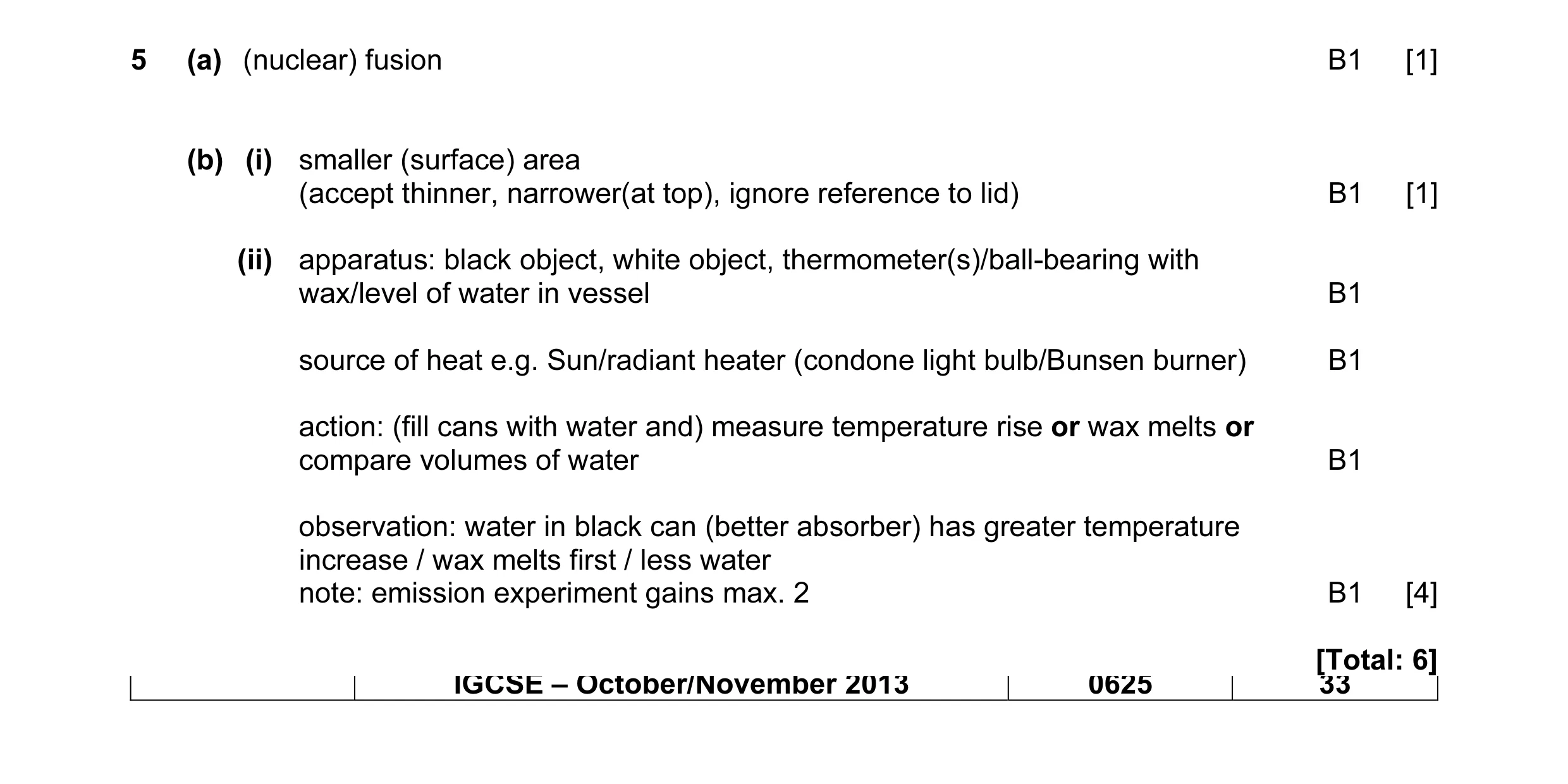 6
6 5
5 8
8 8
8 9
9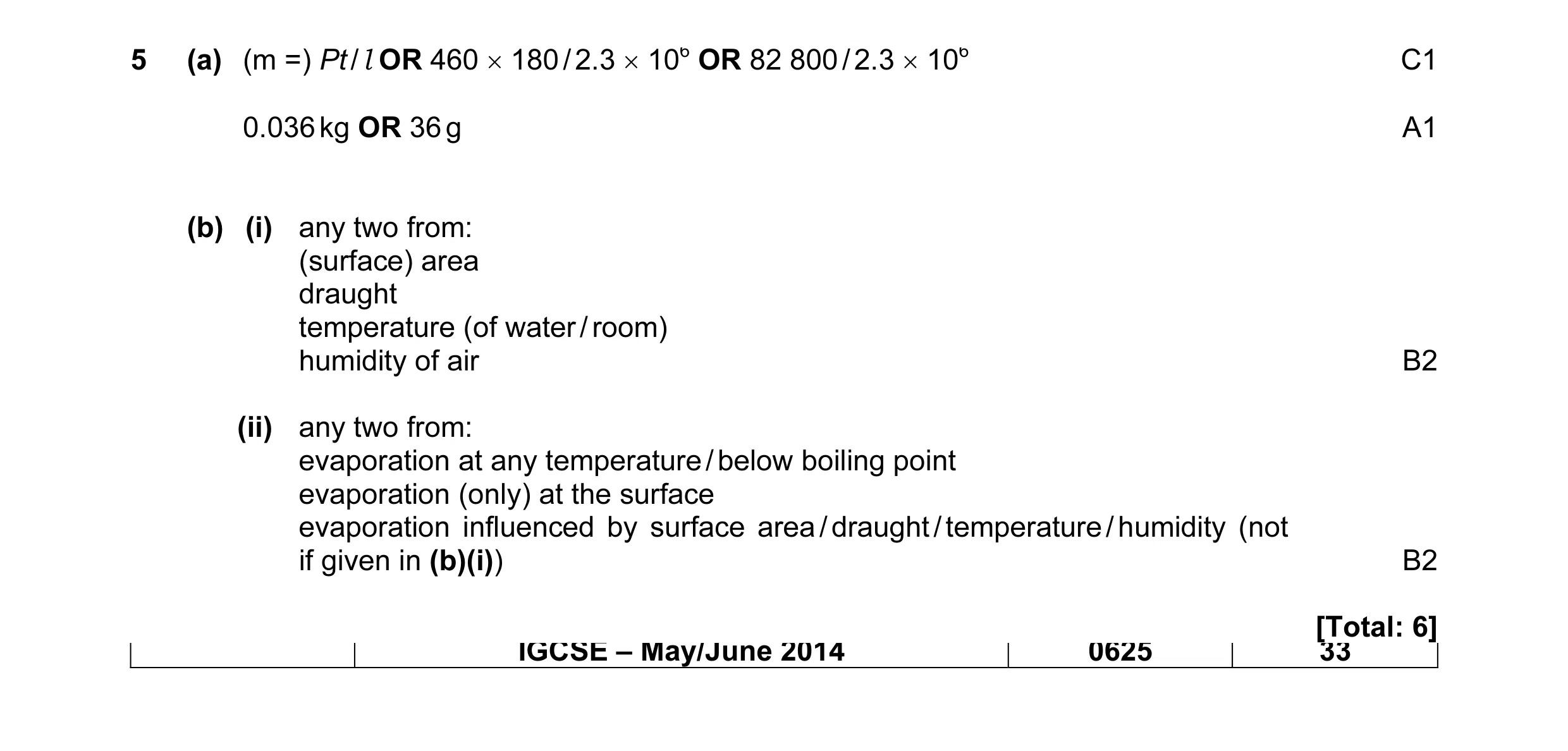 6
6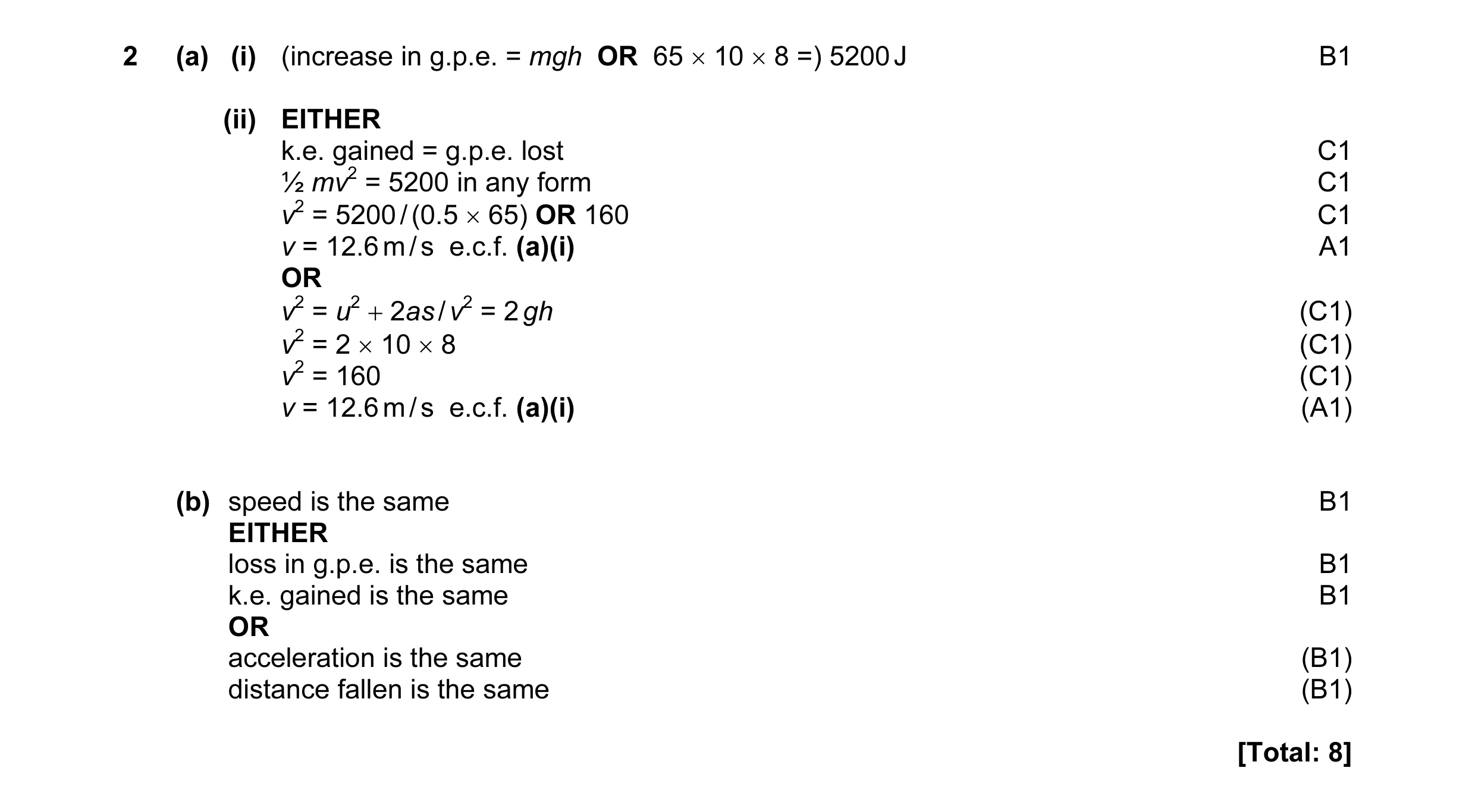 8
8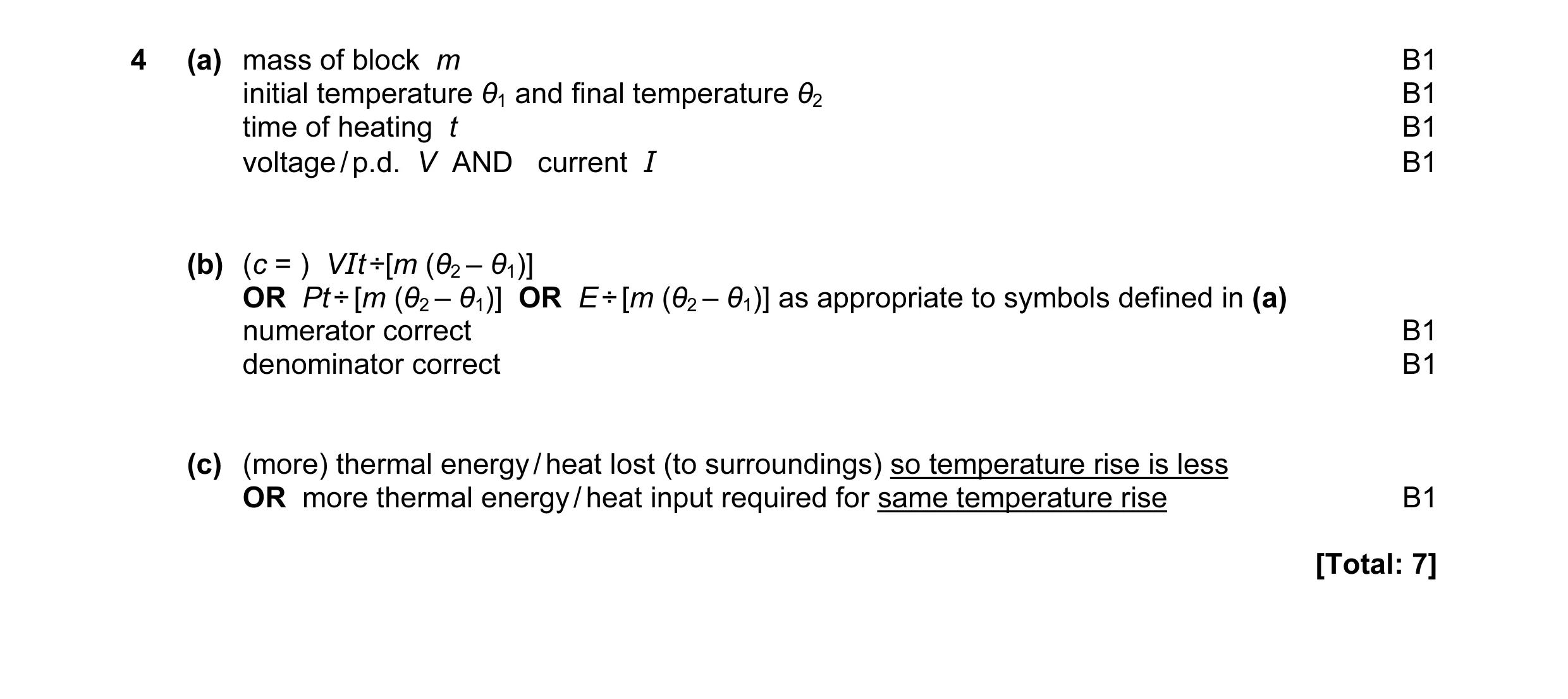 7
7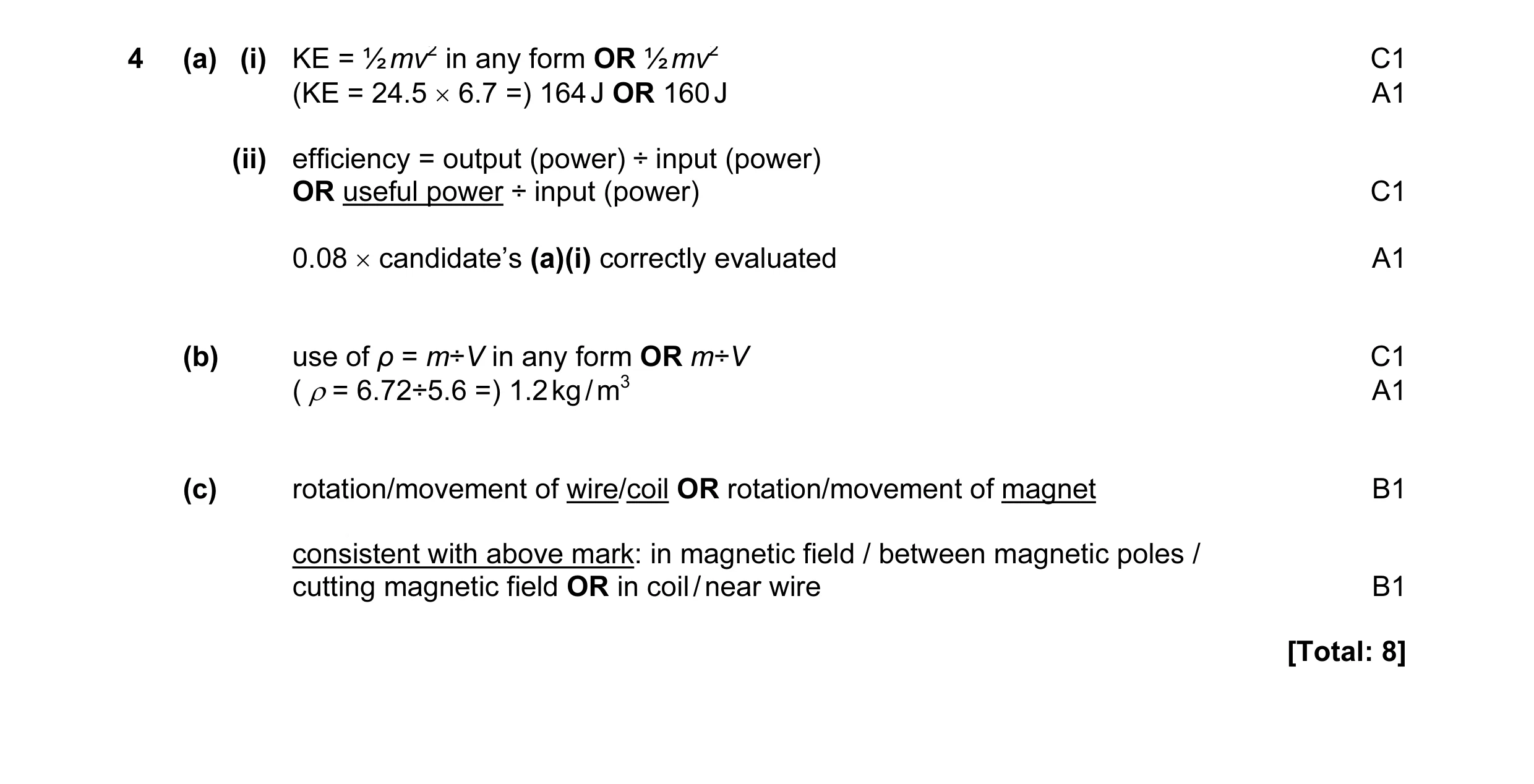 8
8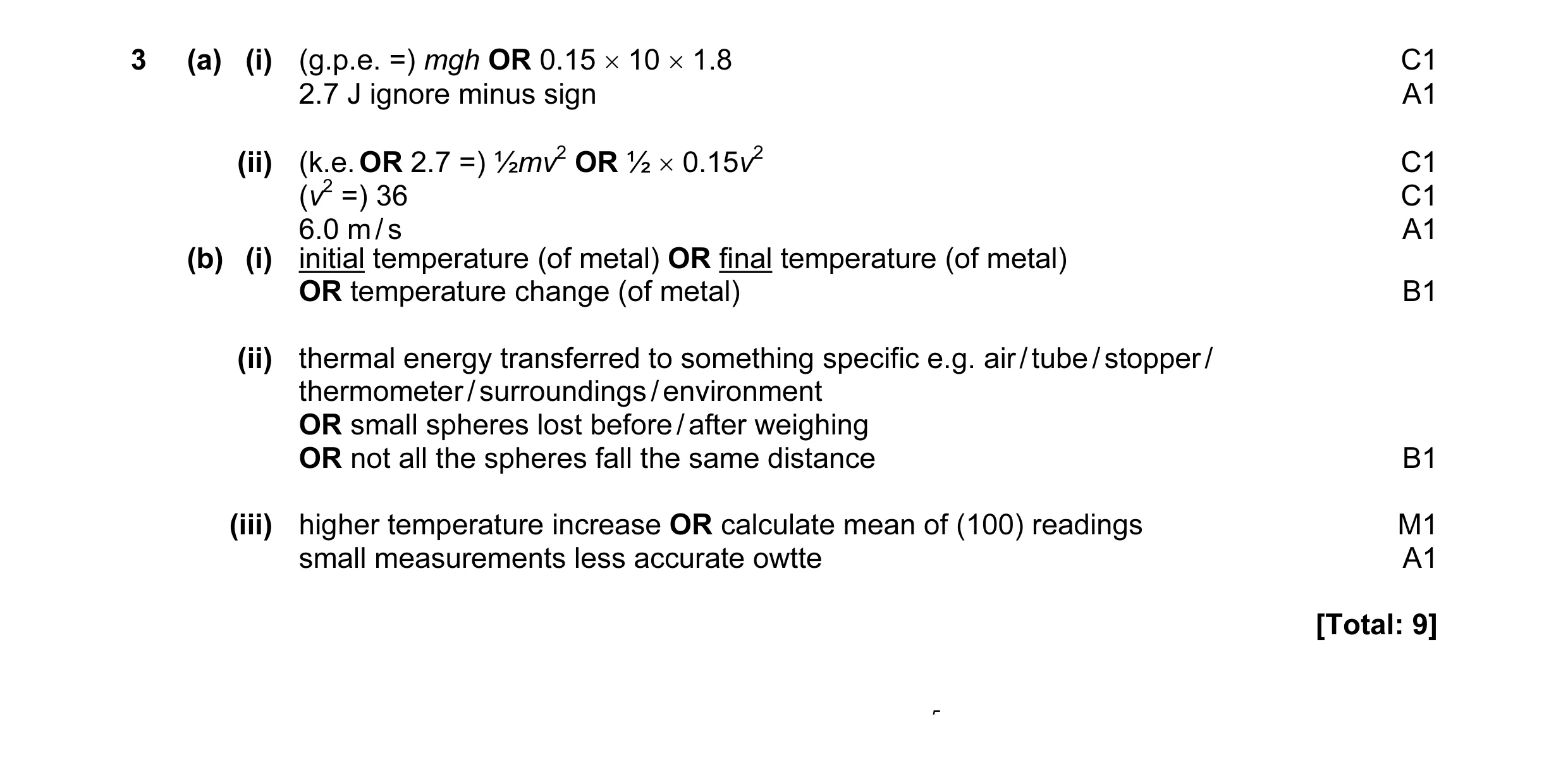 9
9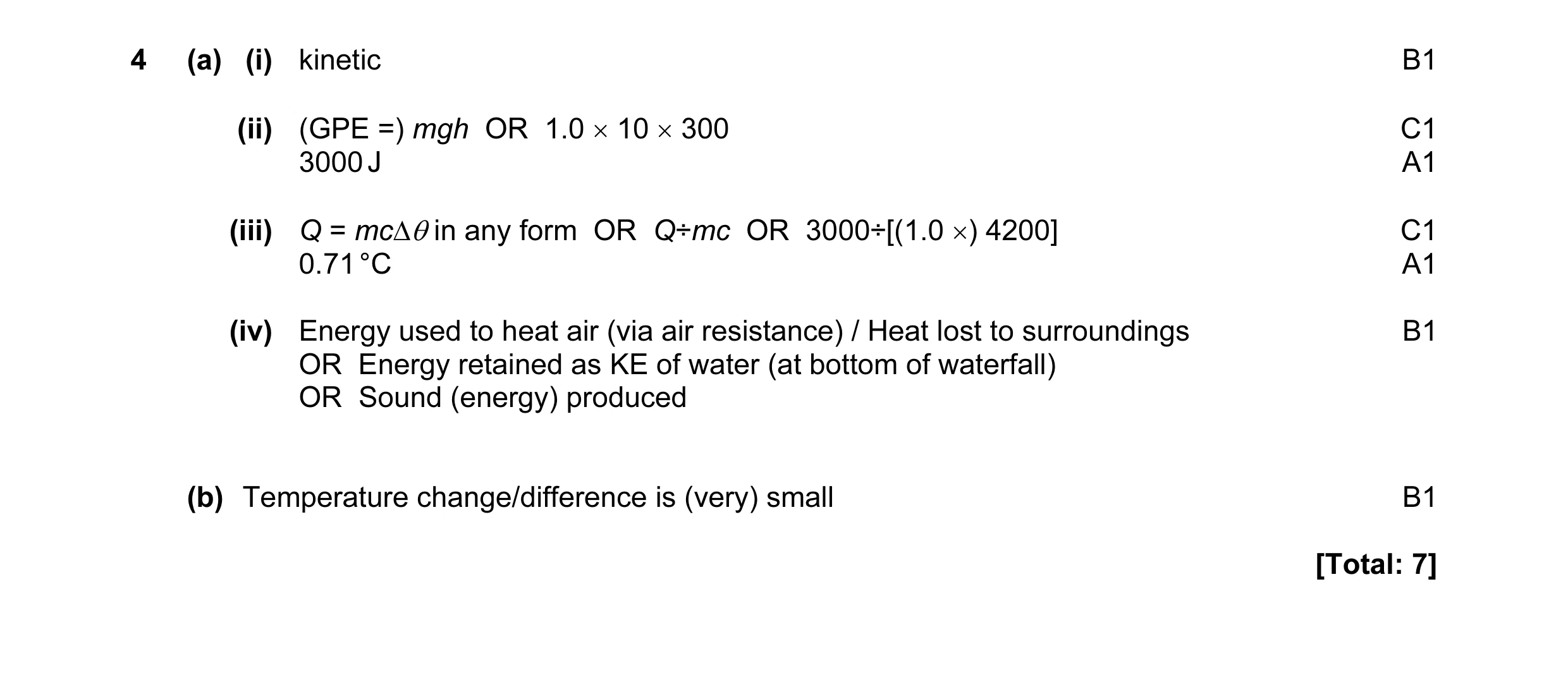 7
7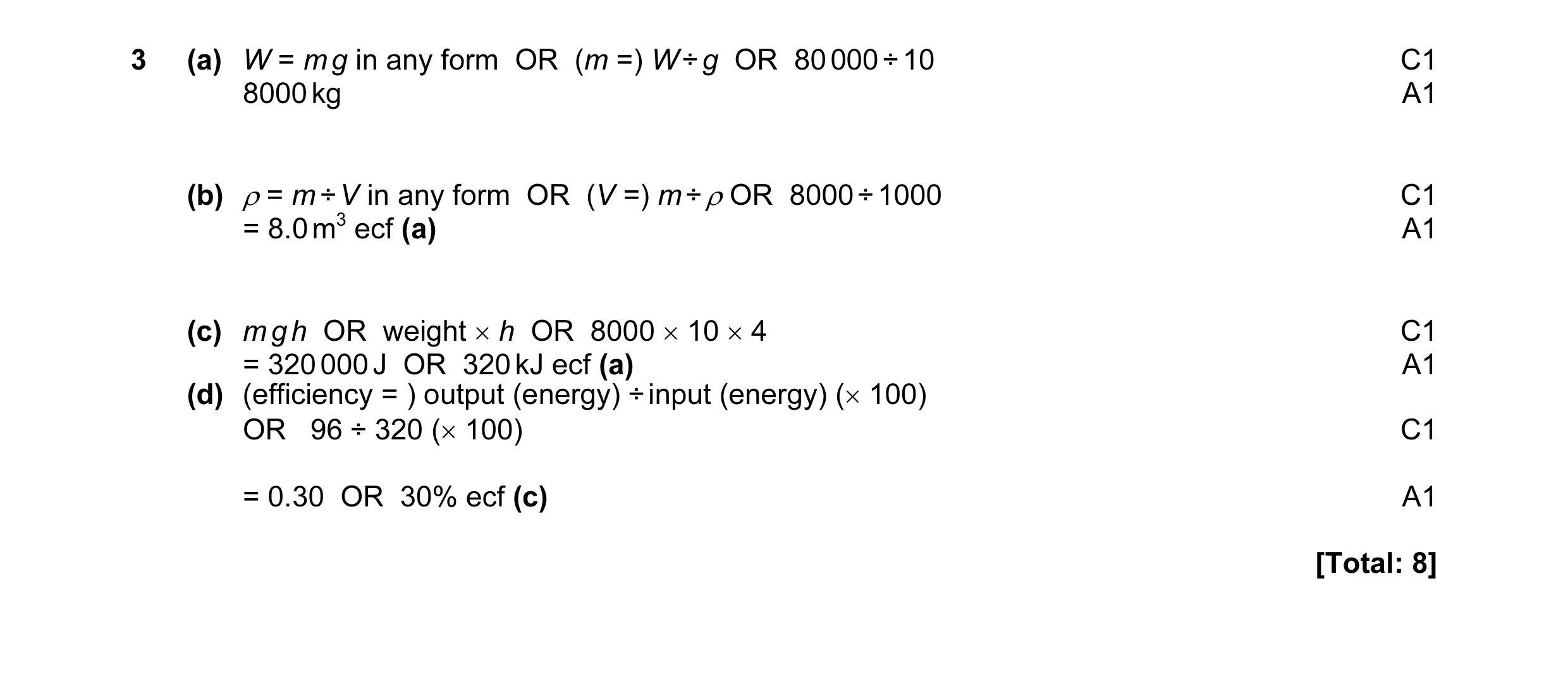 8
8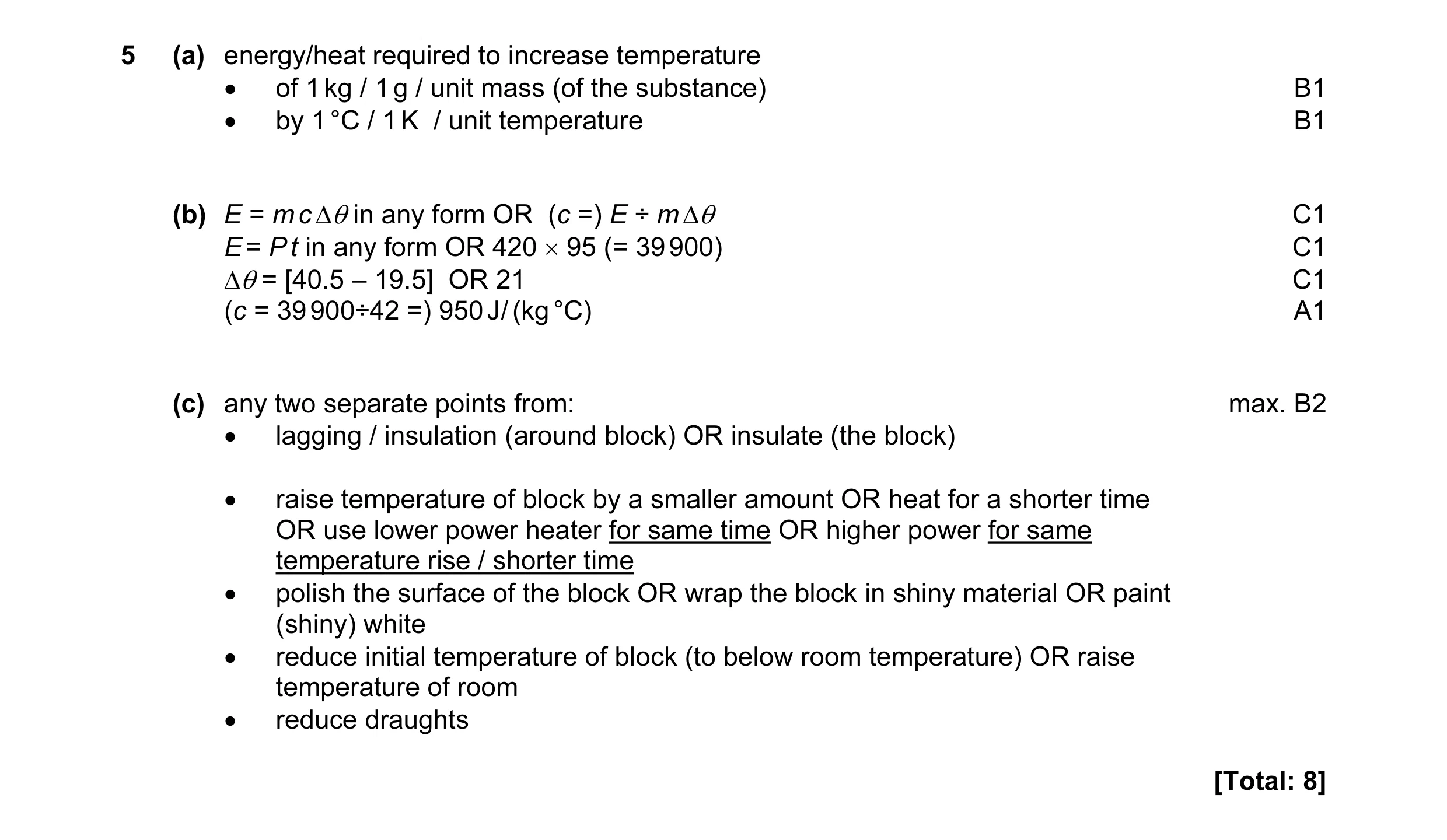 8
8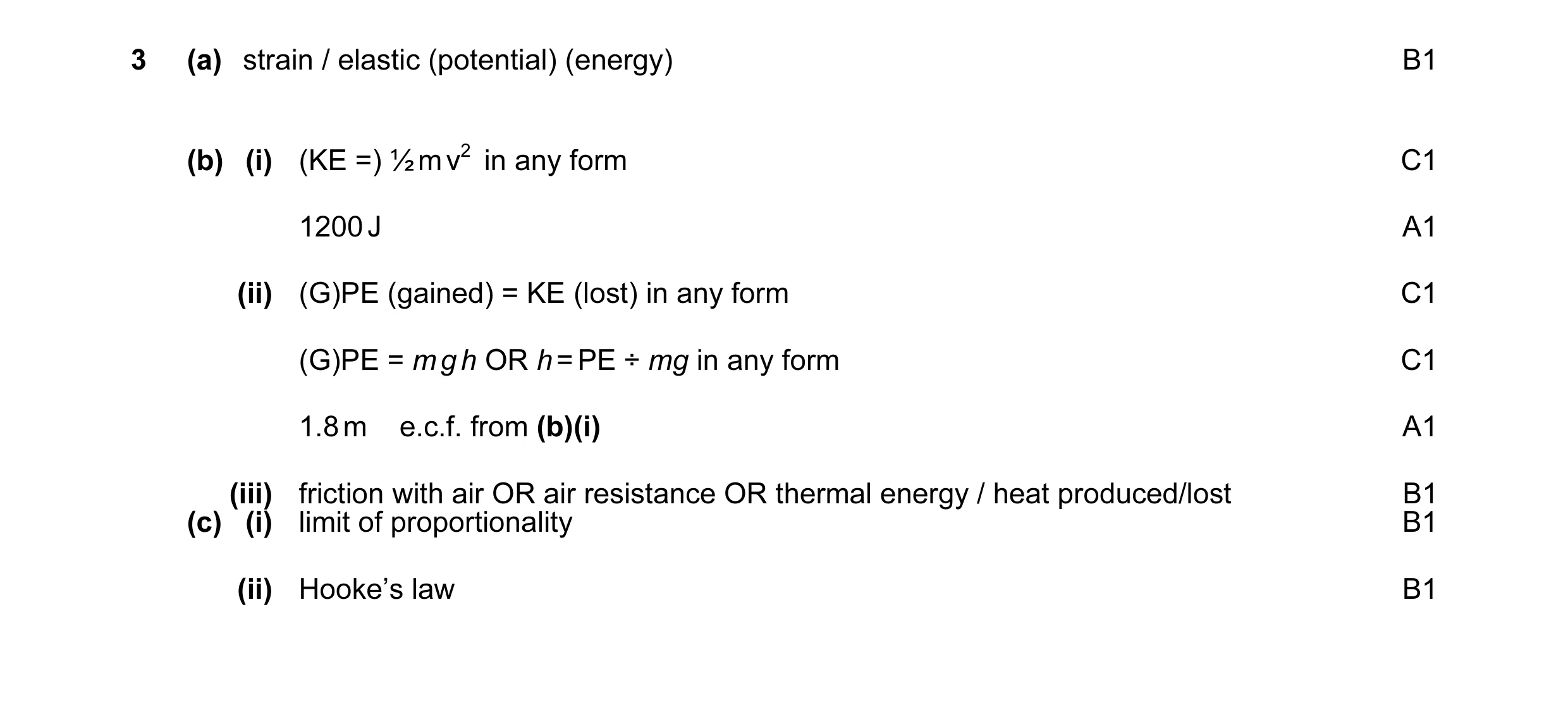 9
9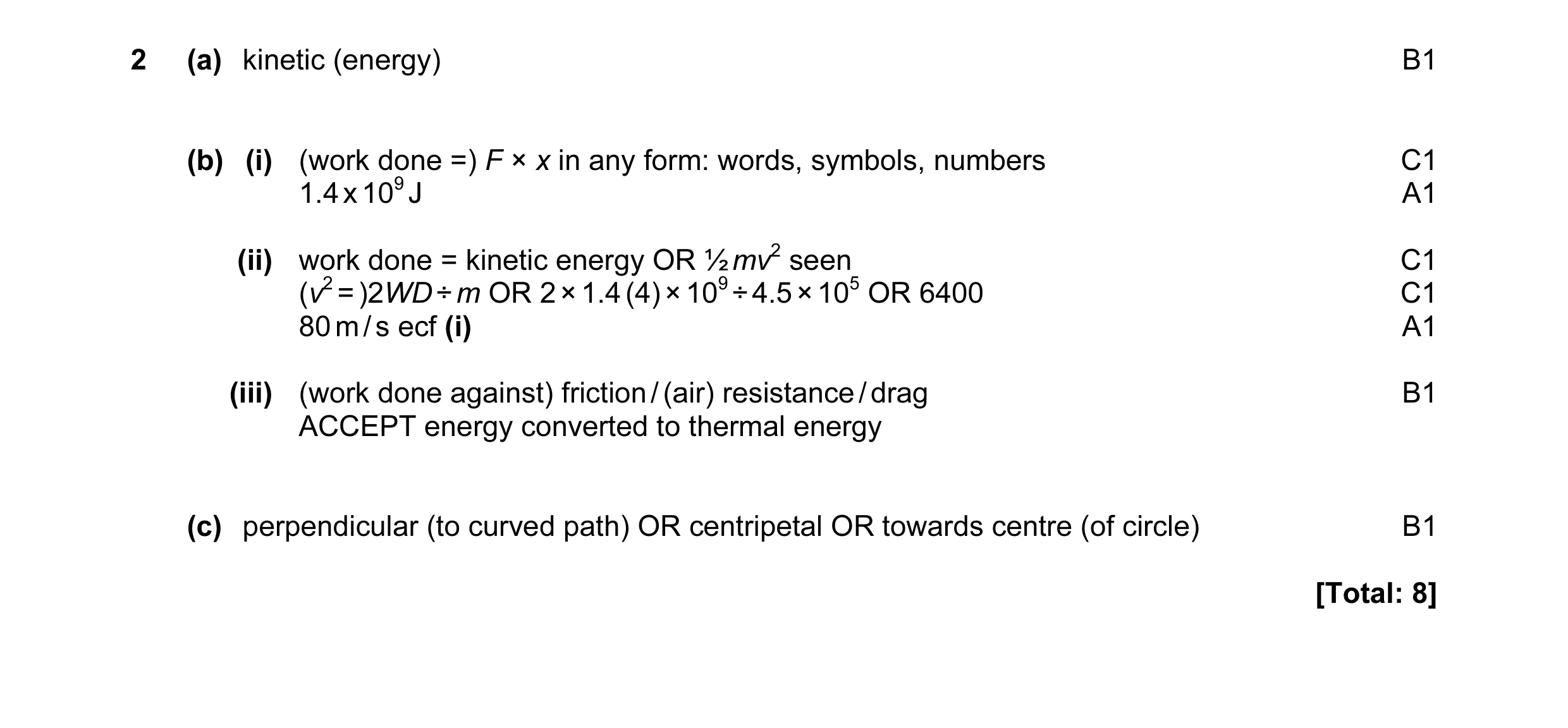 8
8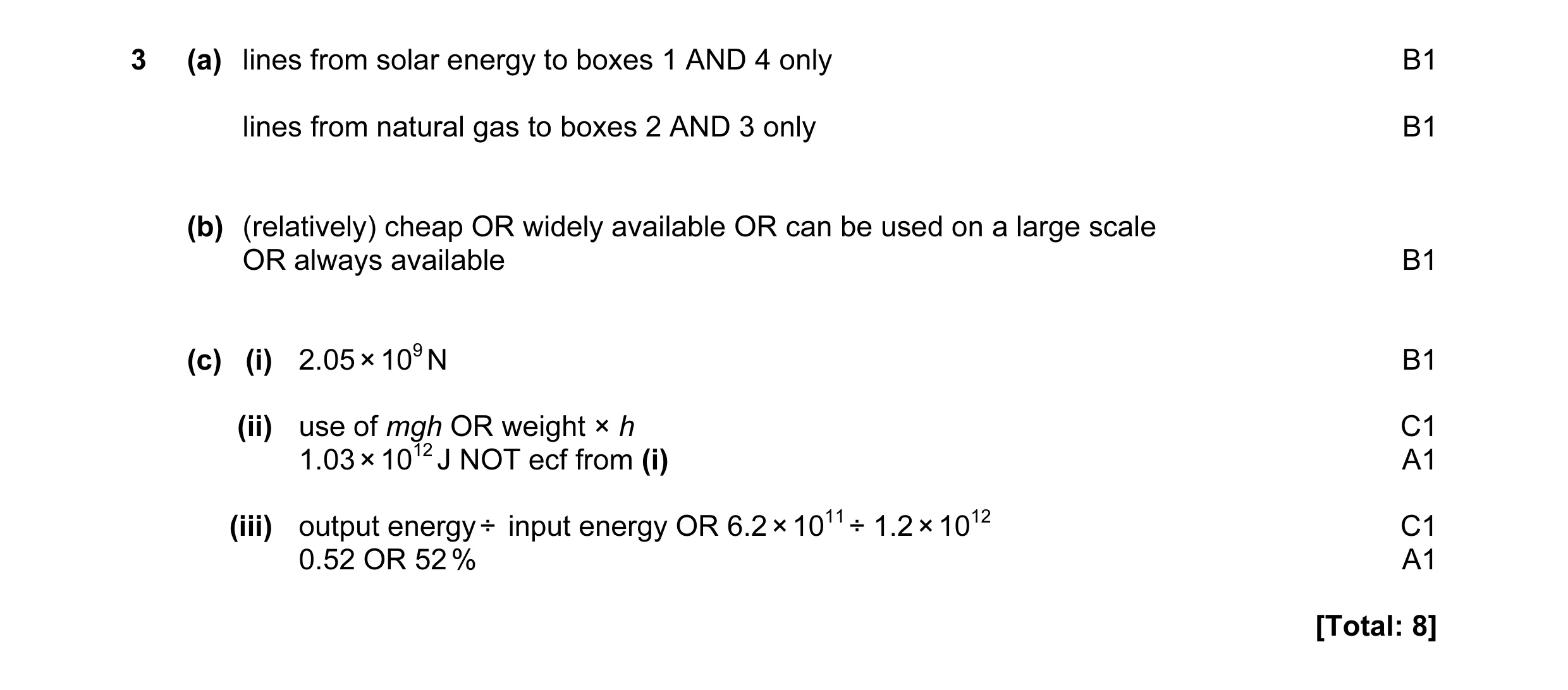 8
8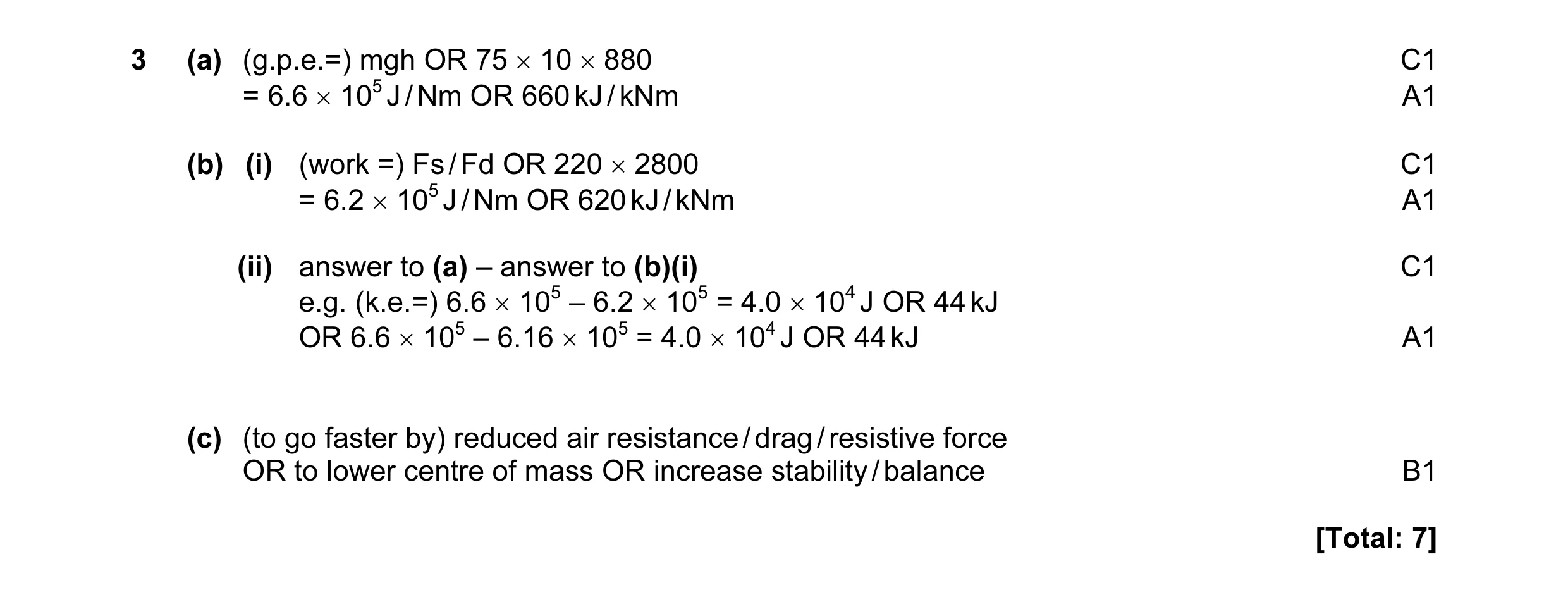 7
7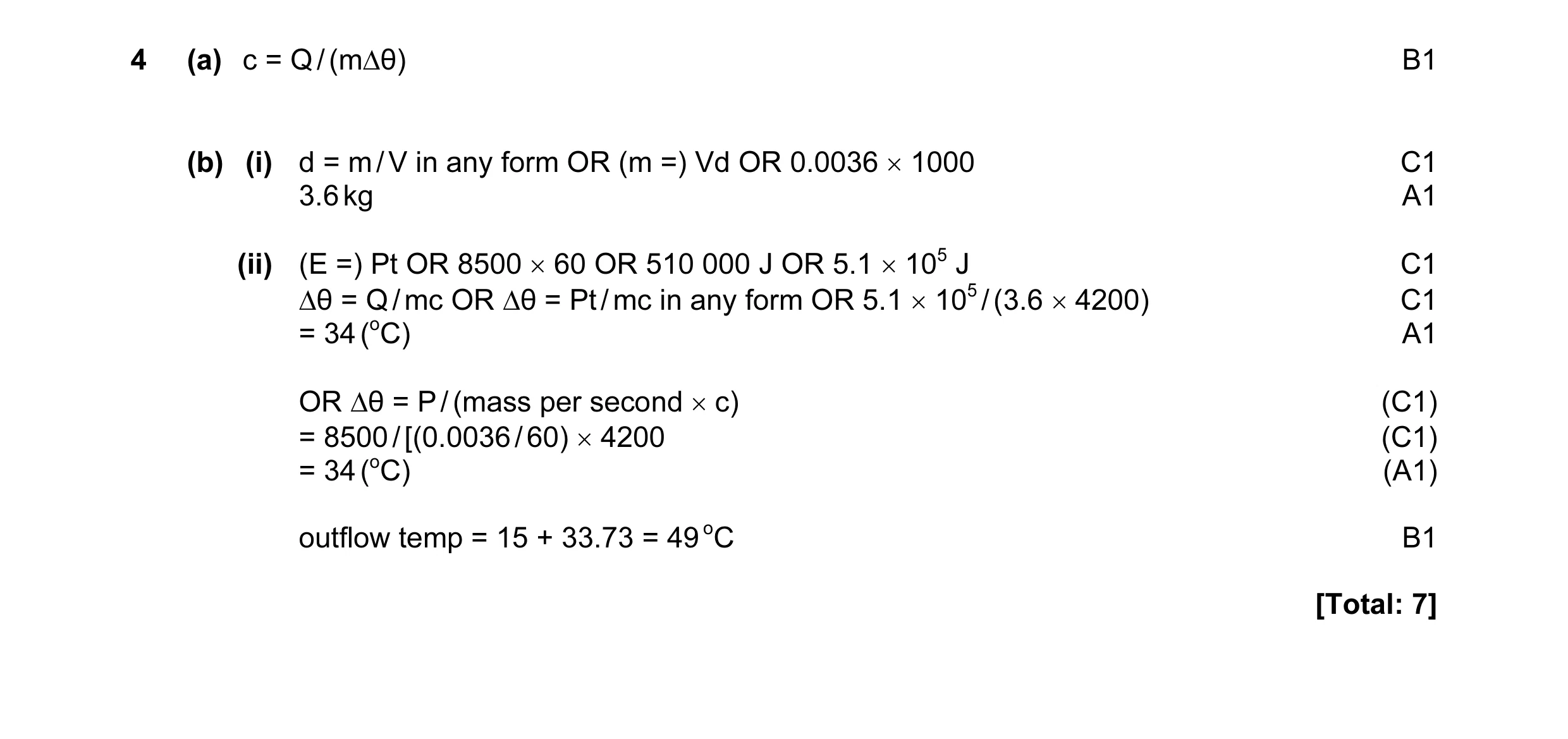 7
7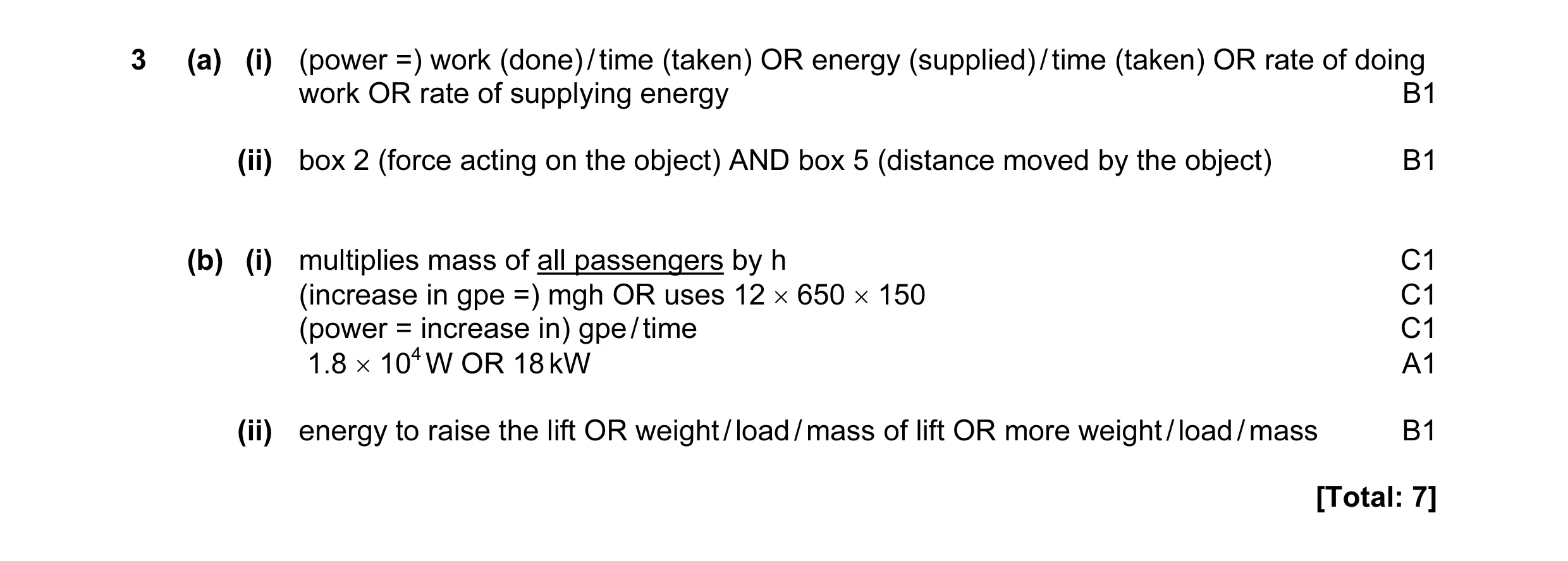 7
7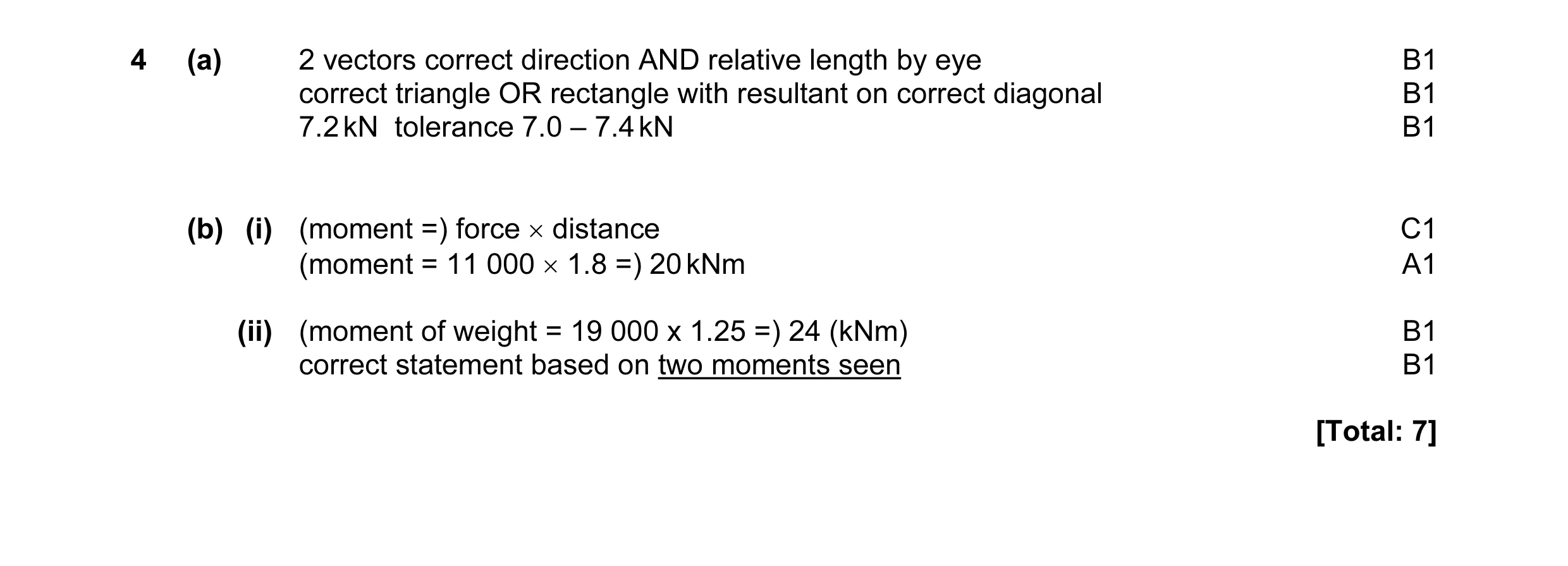 7
7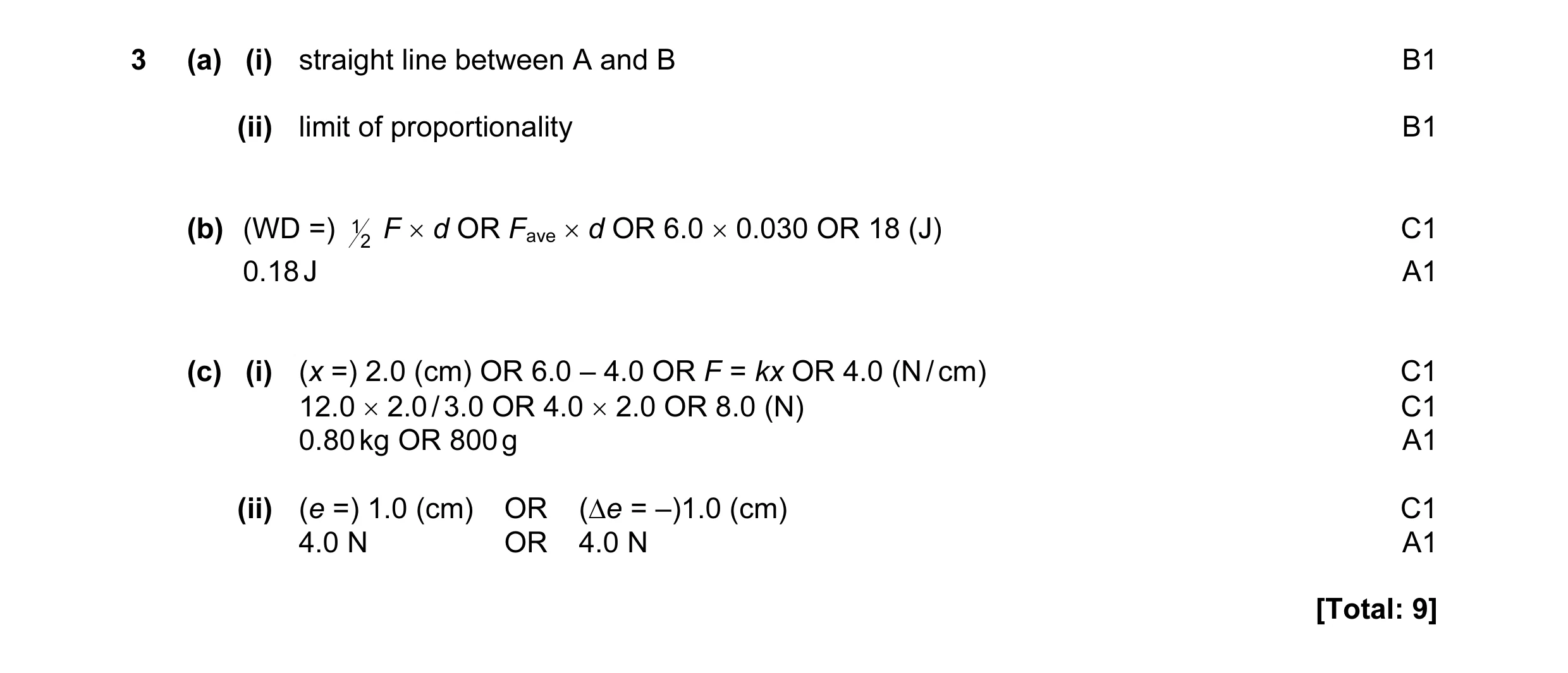 9
9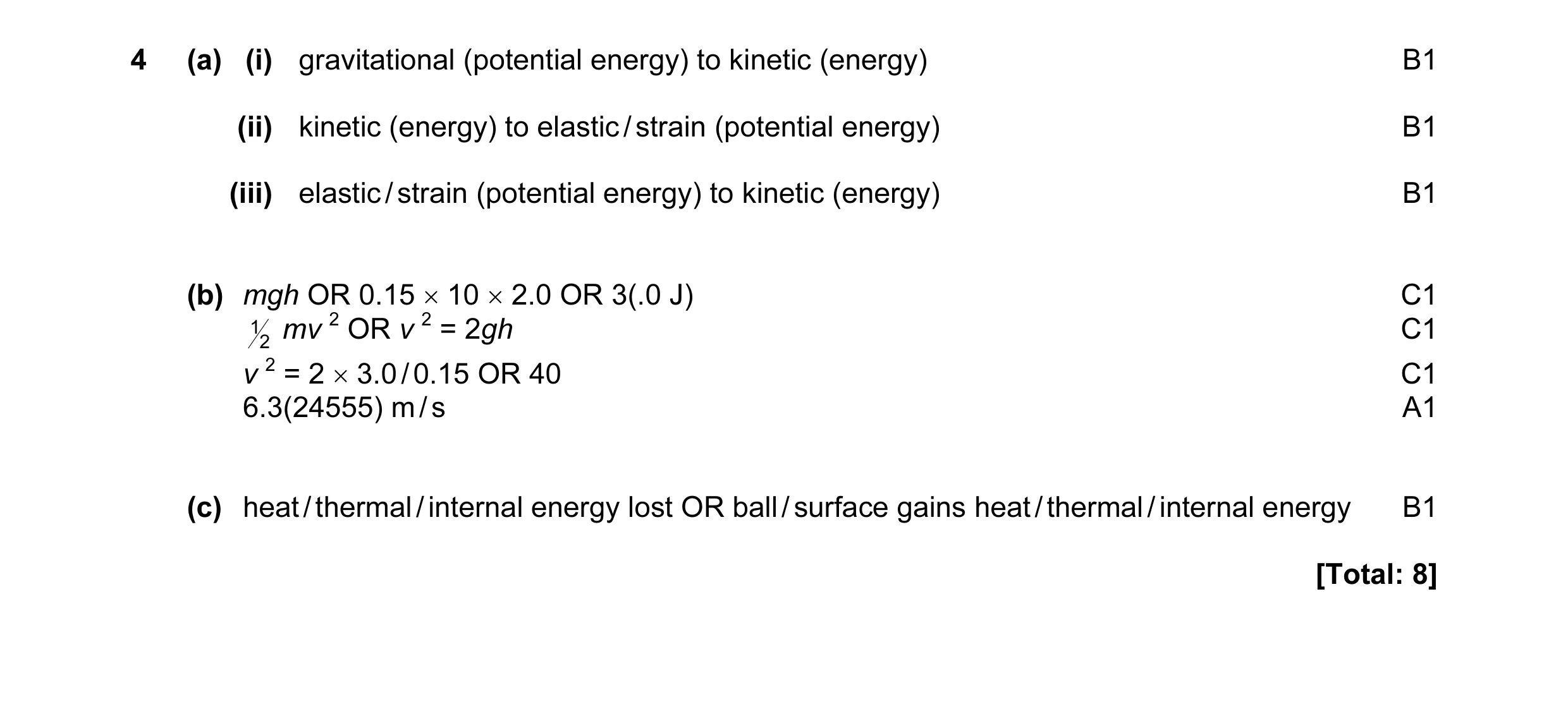 8
8 6
6 5
5 8
8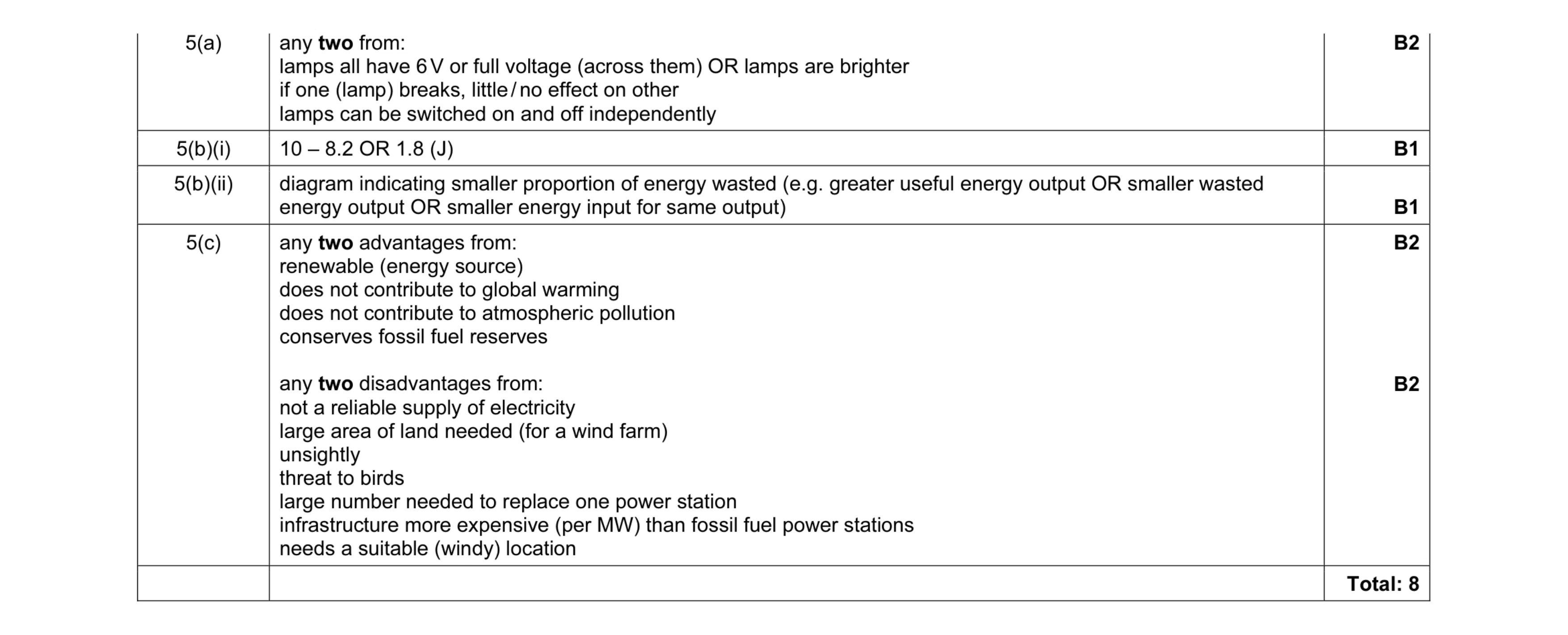 8
8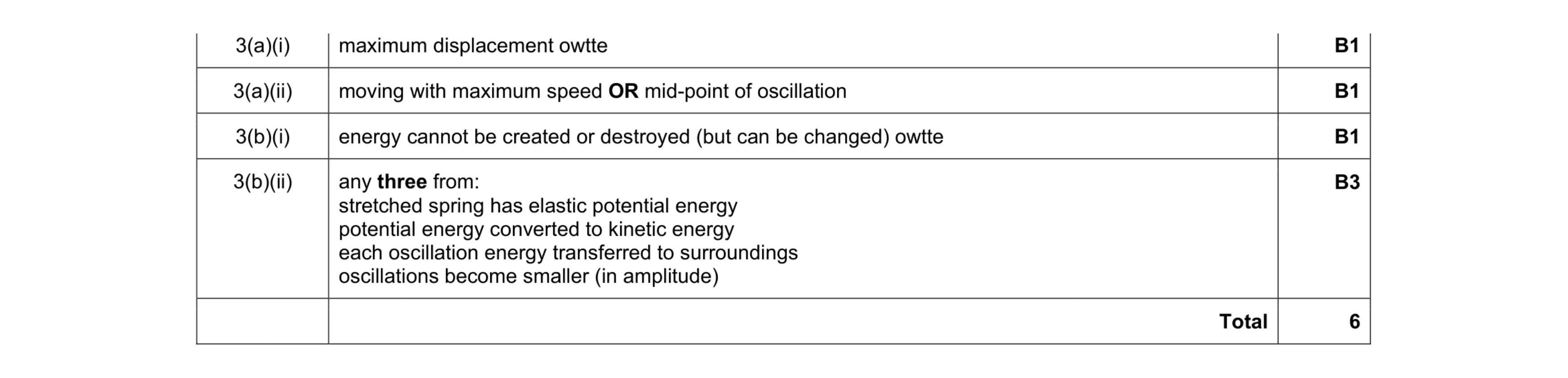 6
6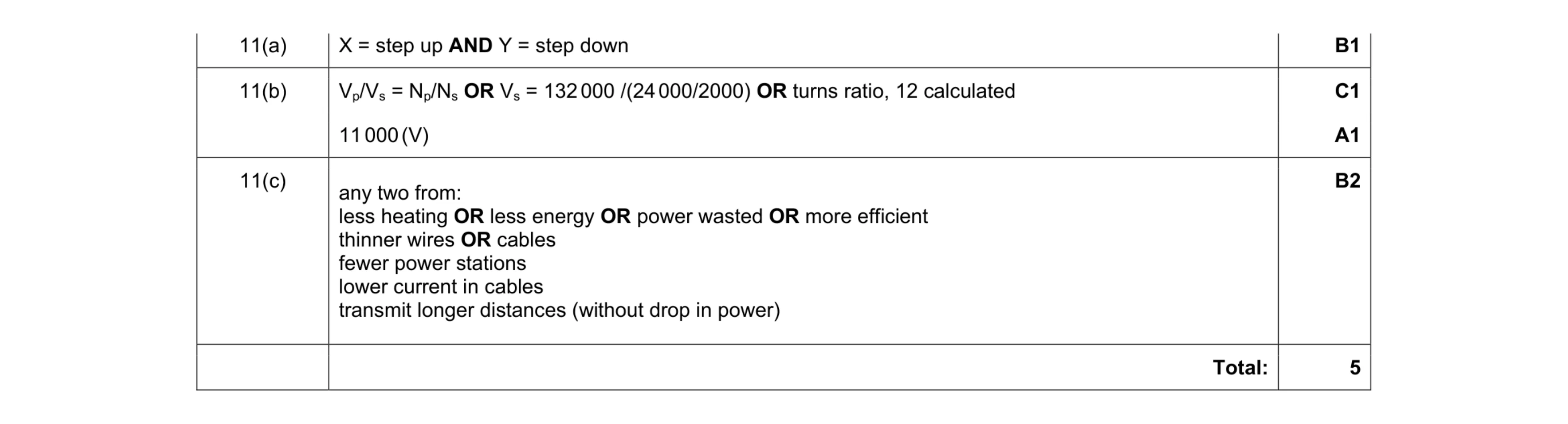 5
5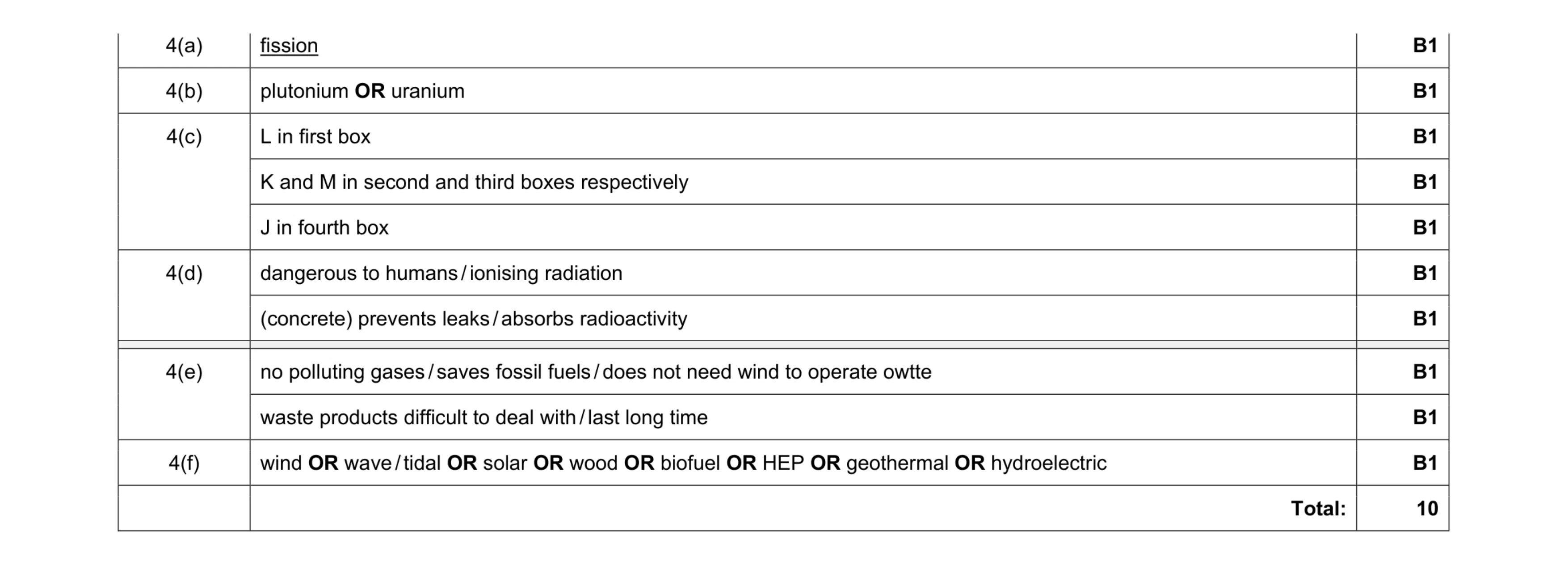 10
10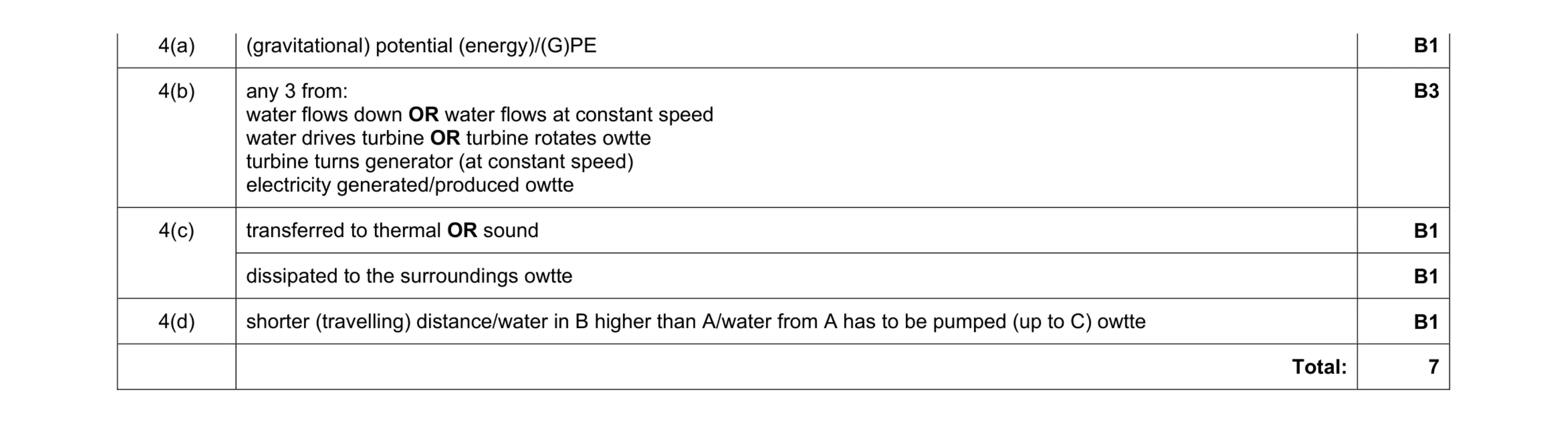 7
7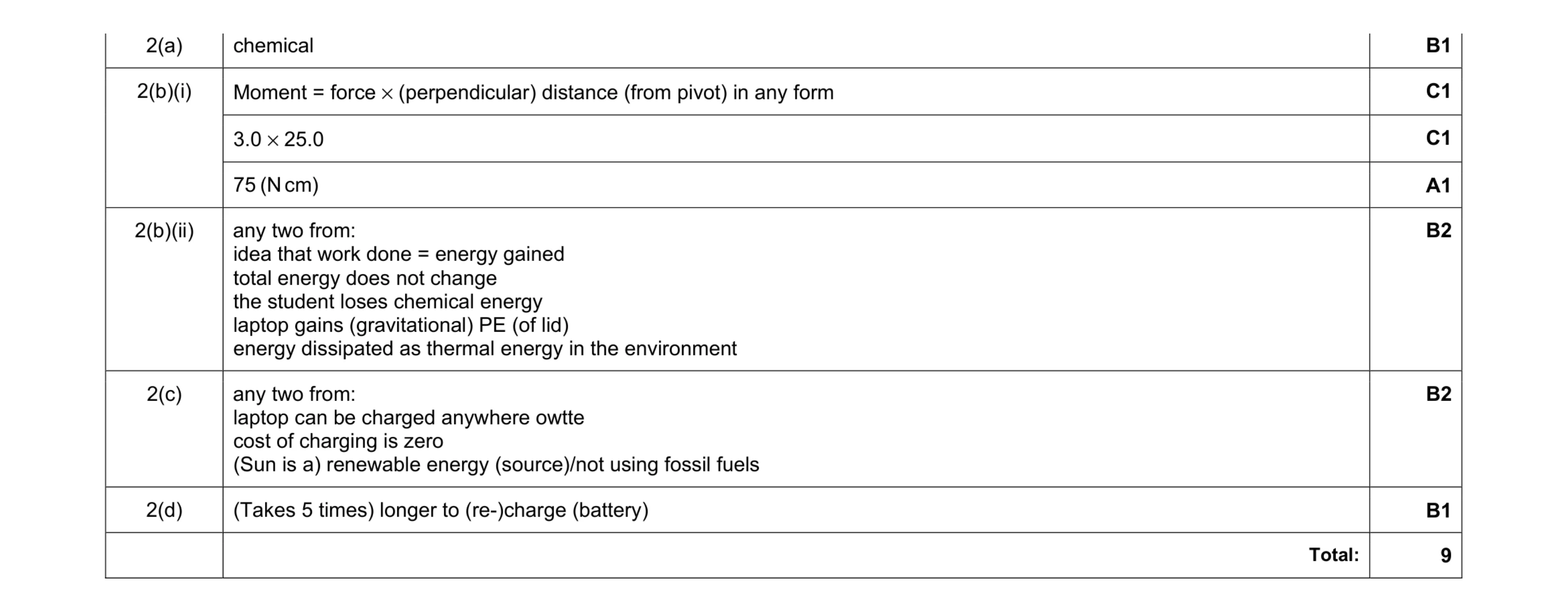 9
9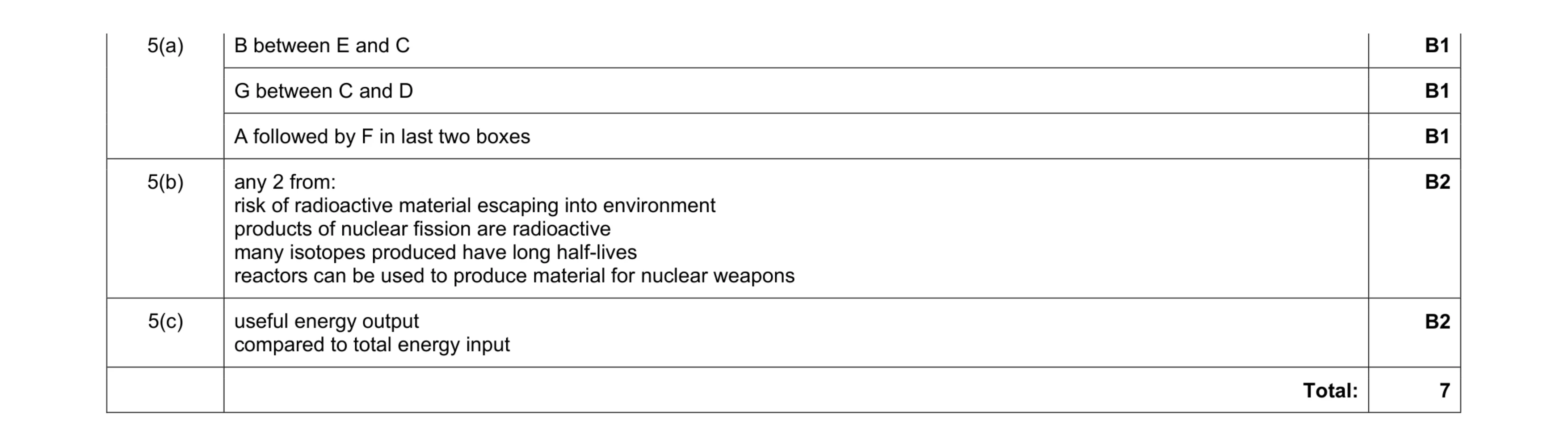 7
7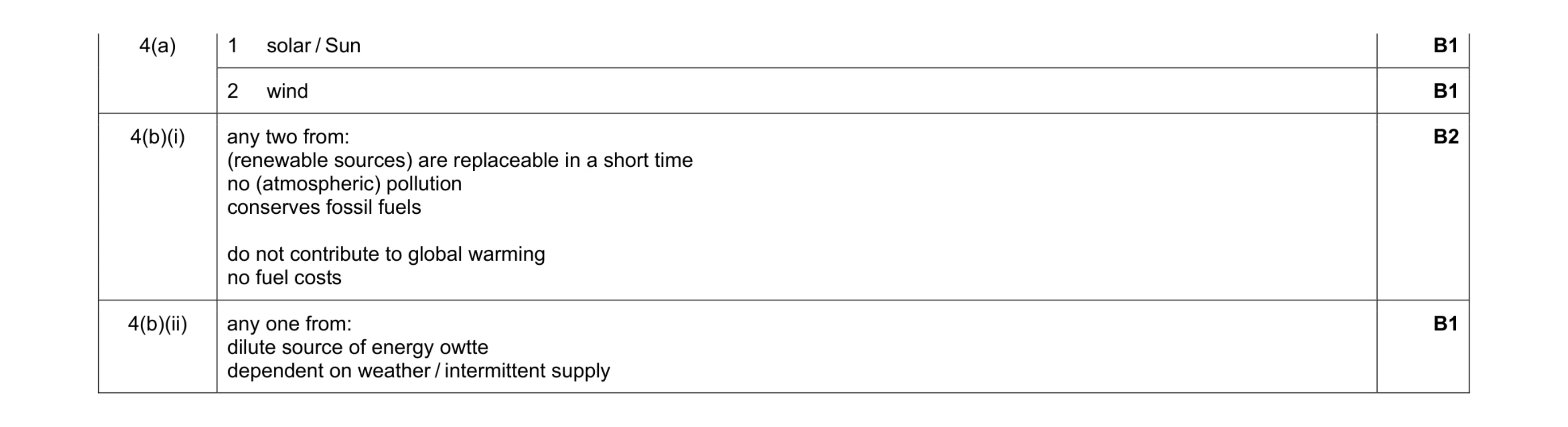 5
5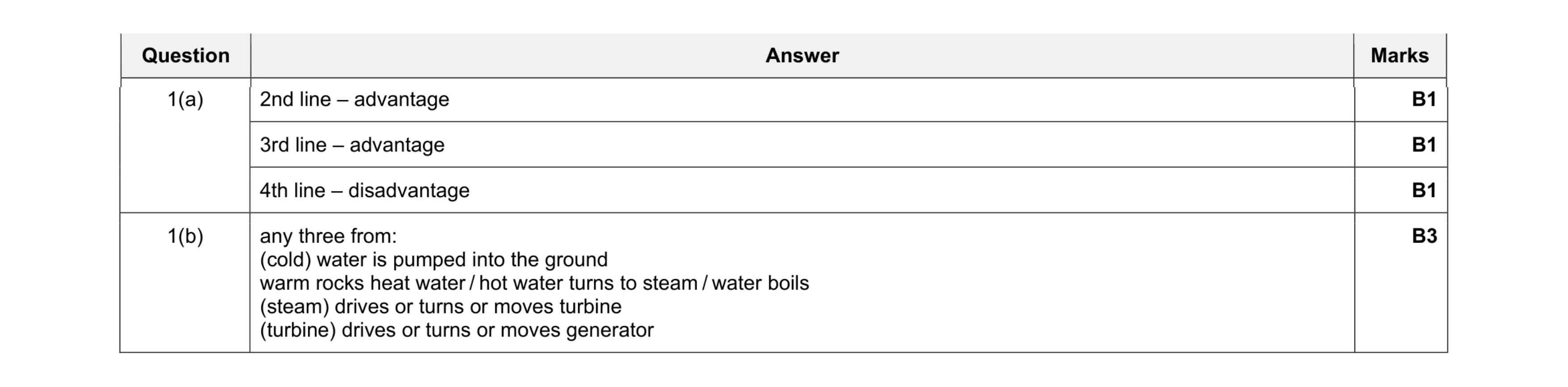 6
6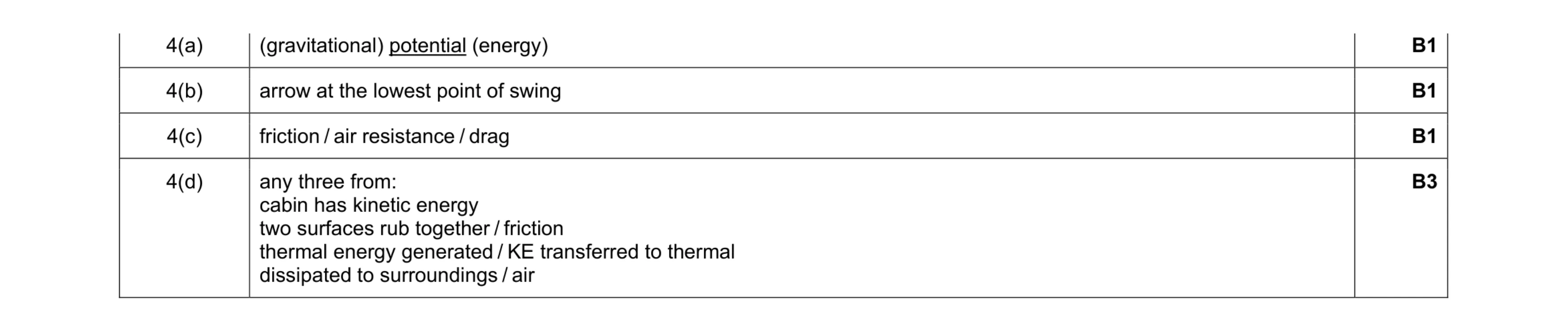 6
6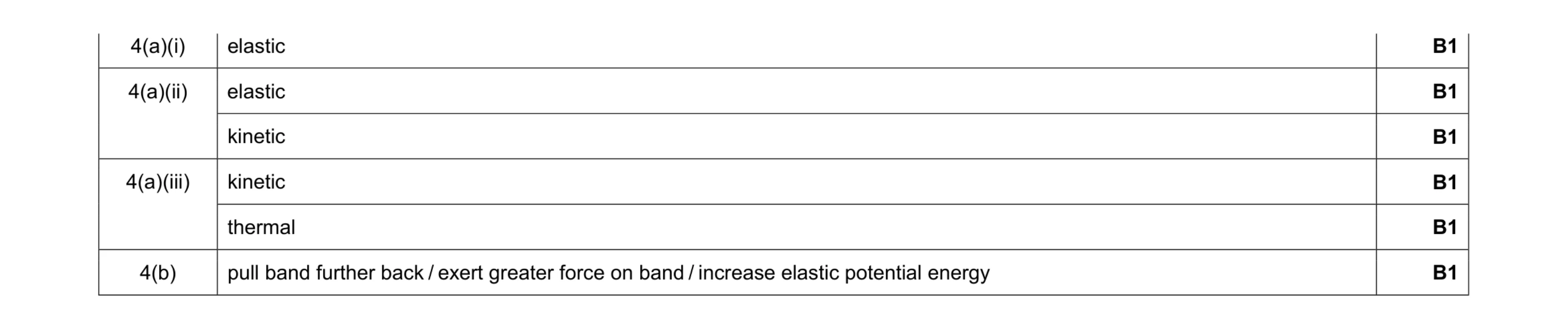 6
6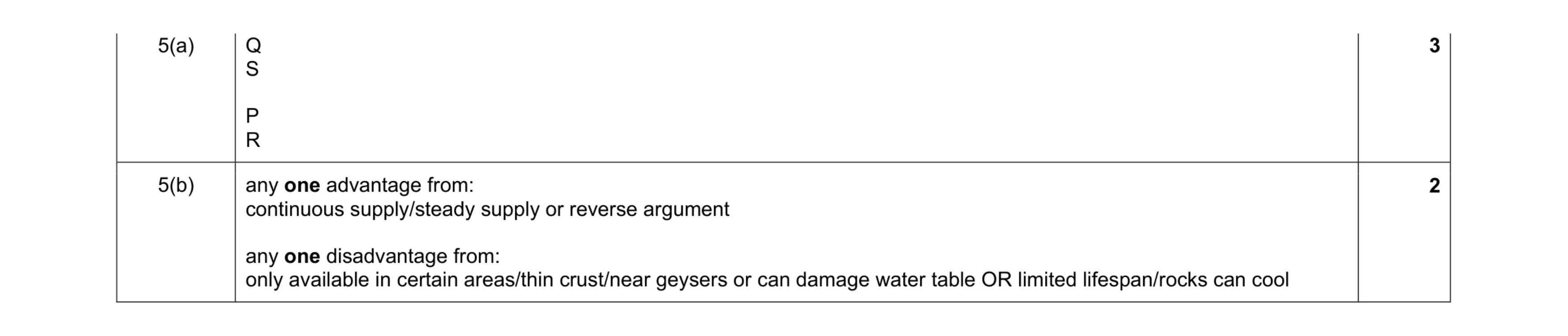 5
5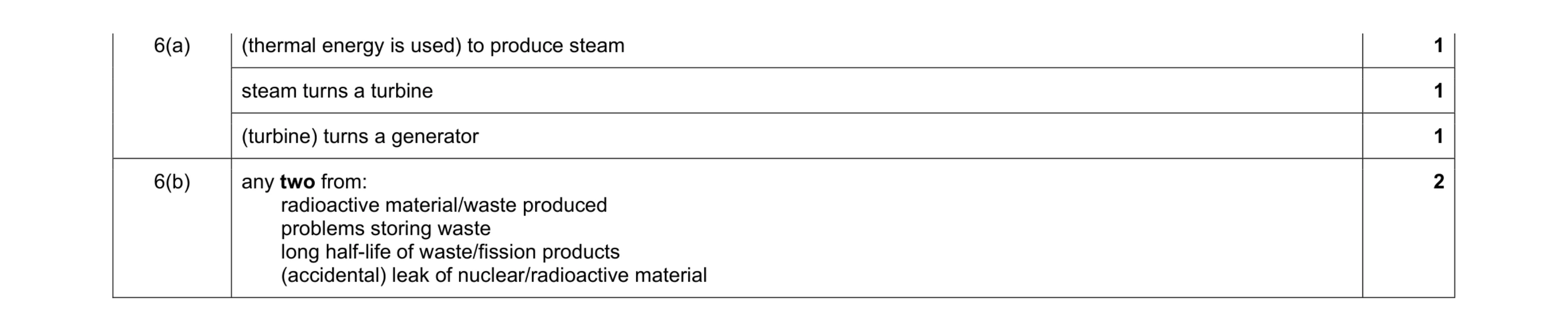 5
5 4
4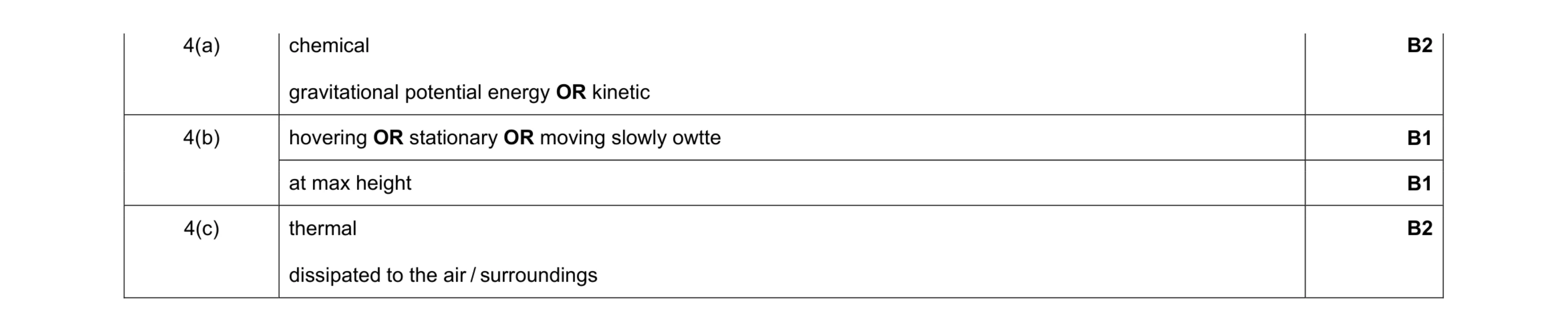 6
6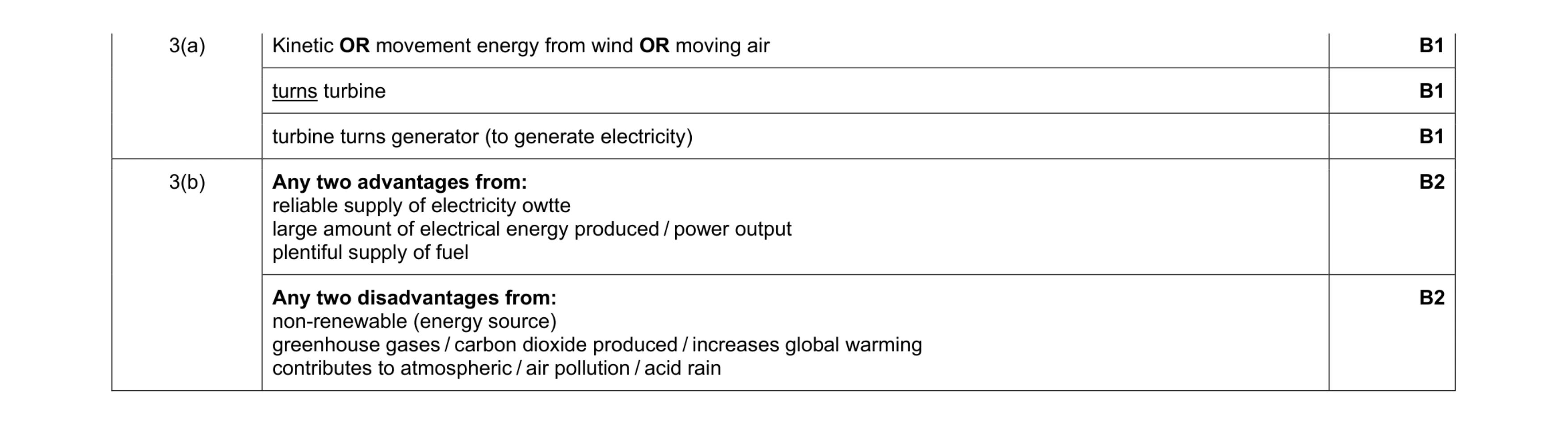 7
7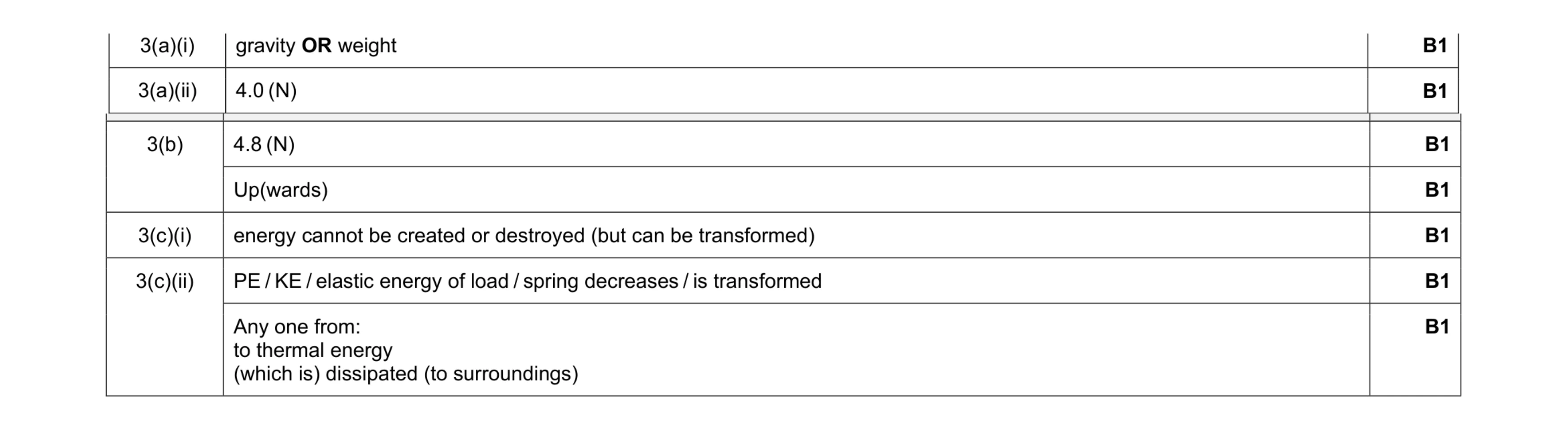 7
7 8
8 6
6 6
6 8
8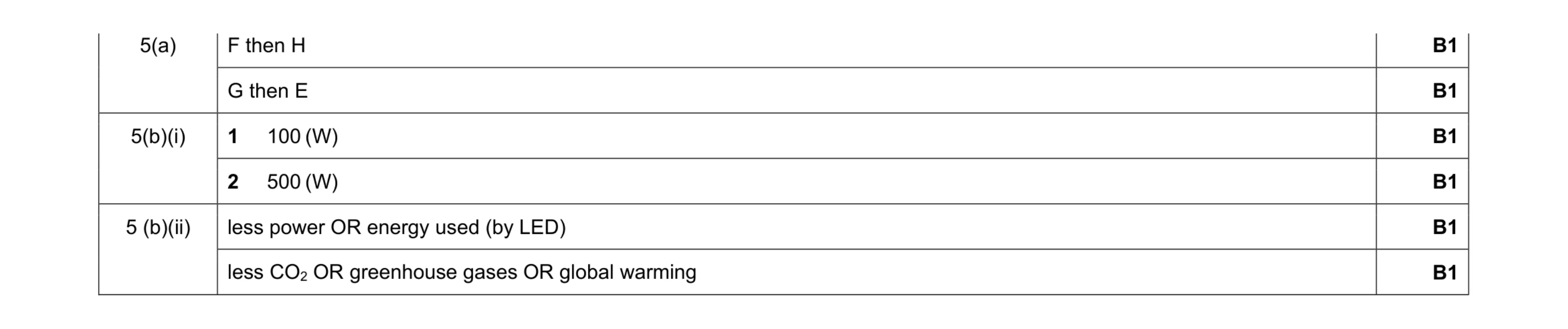 6
6 5
5 3
3 5
5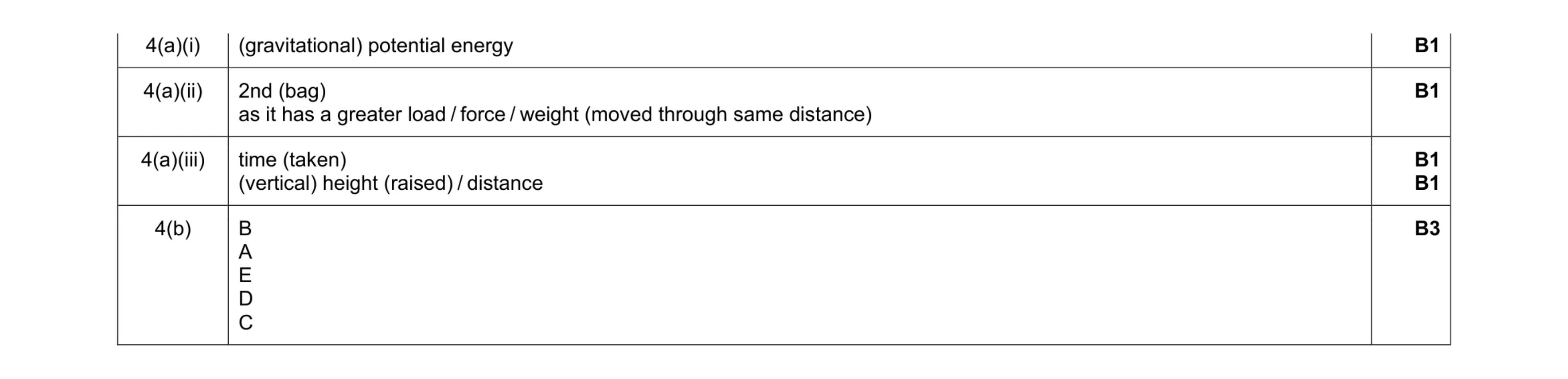 7
7 4
4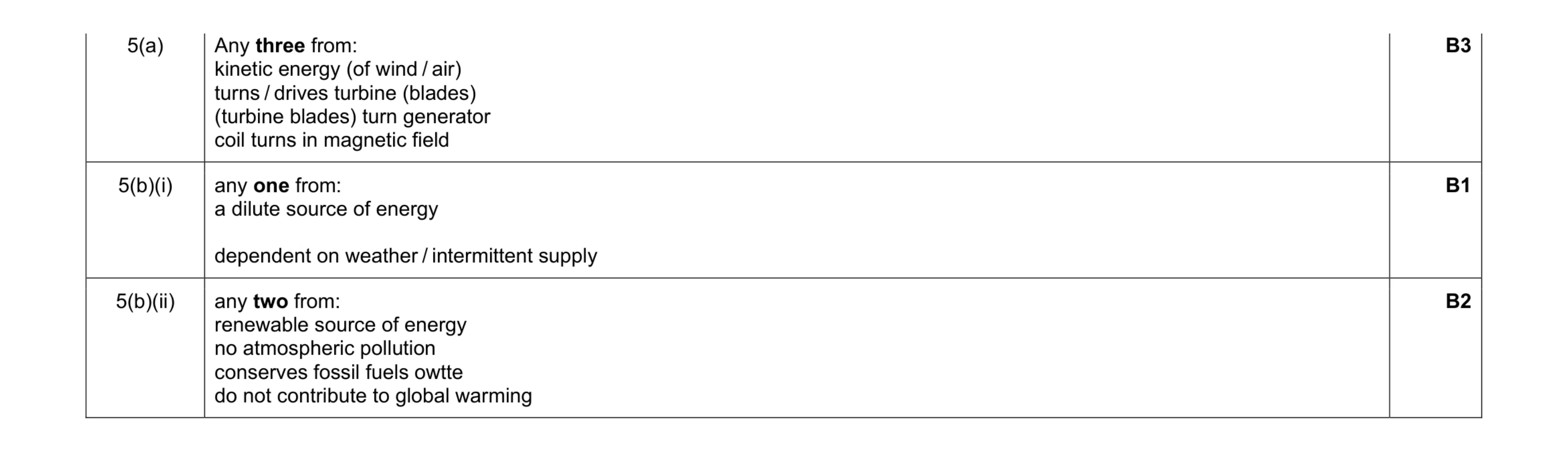 6
6 5
5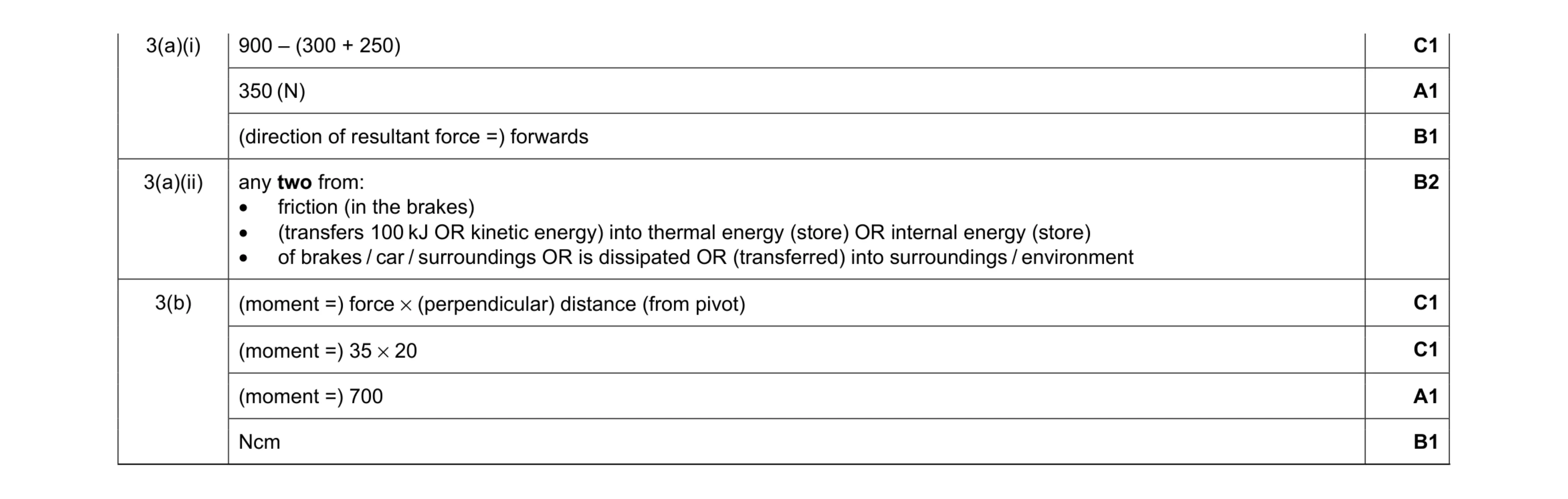 9
9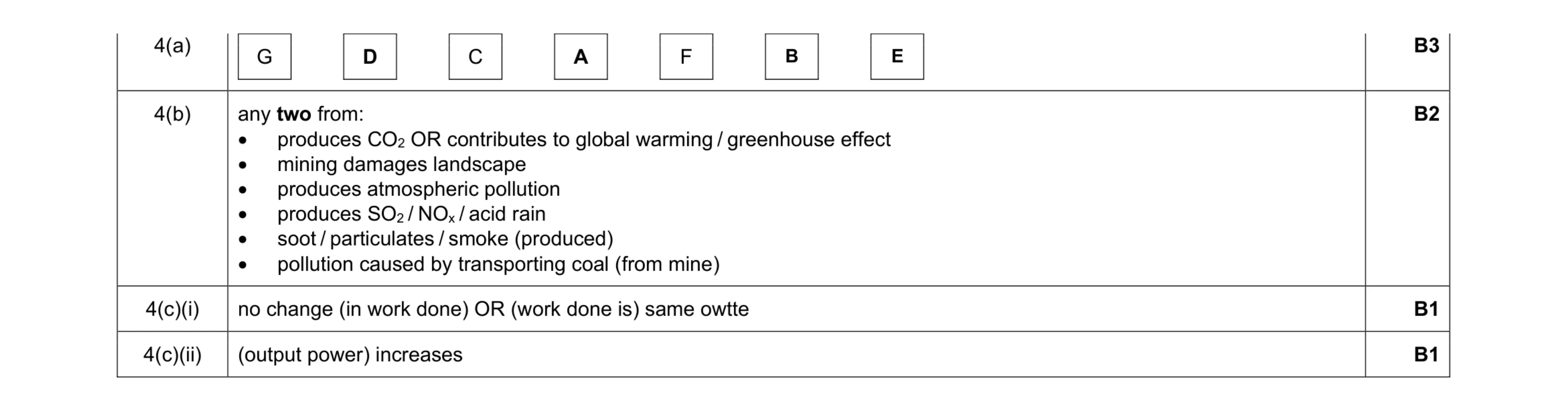 7
7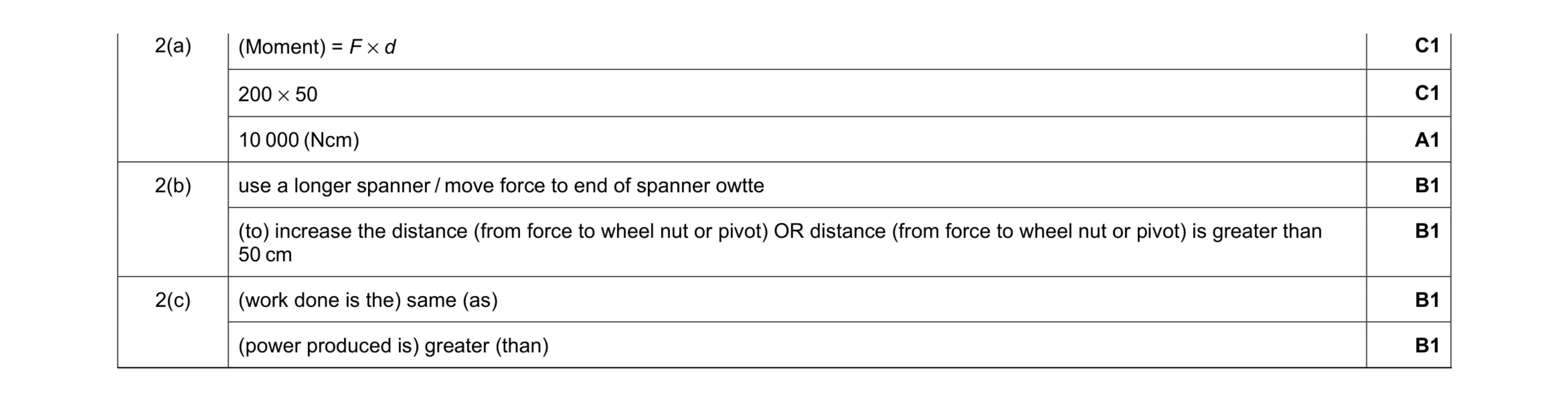 7
7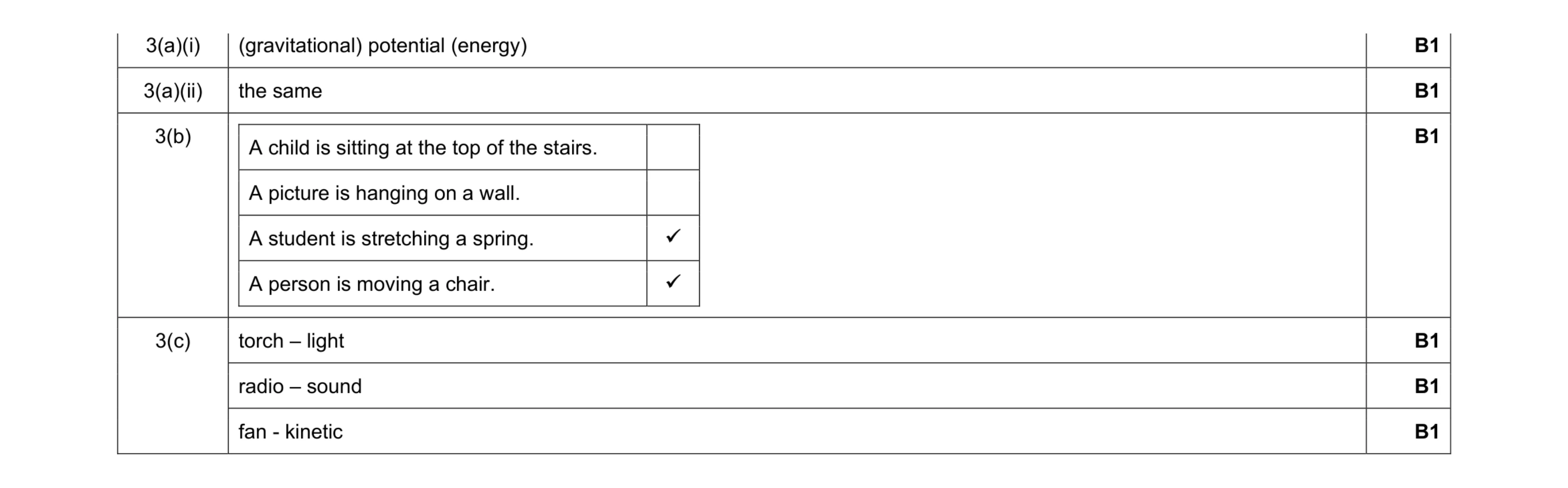 6
6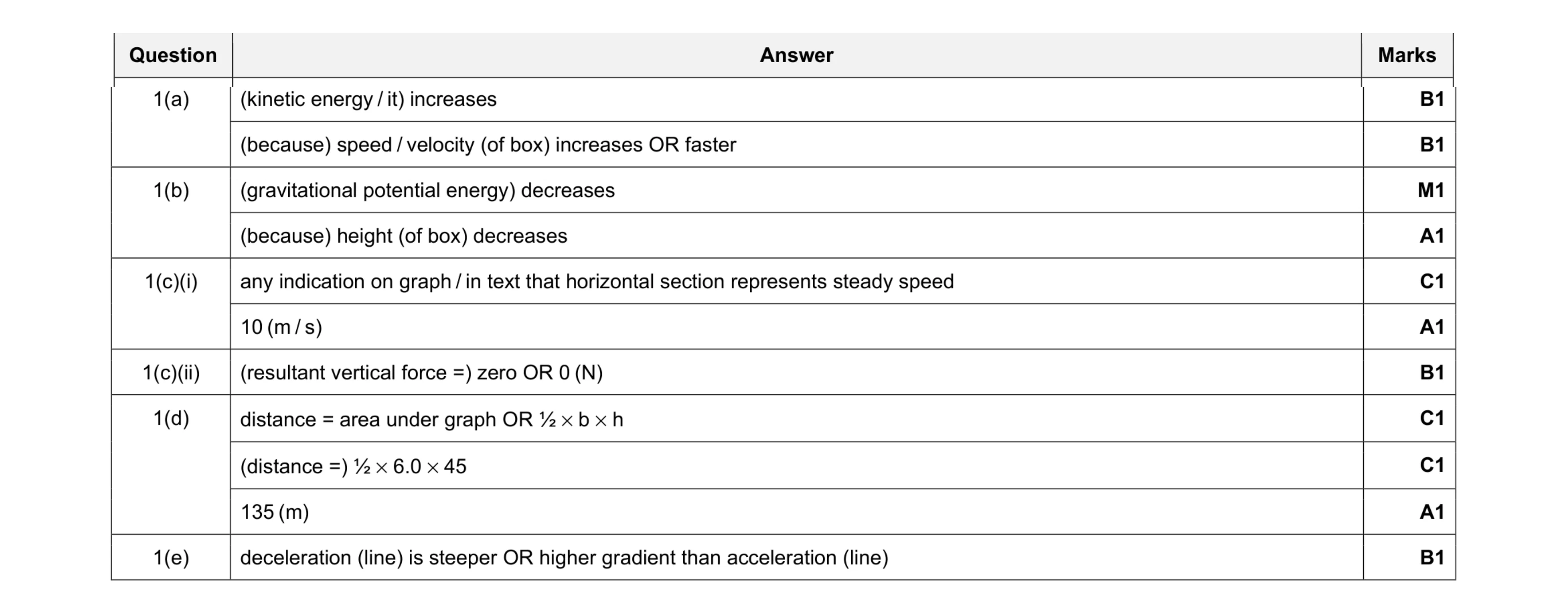 11
11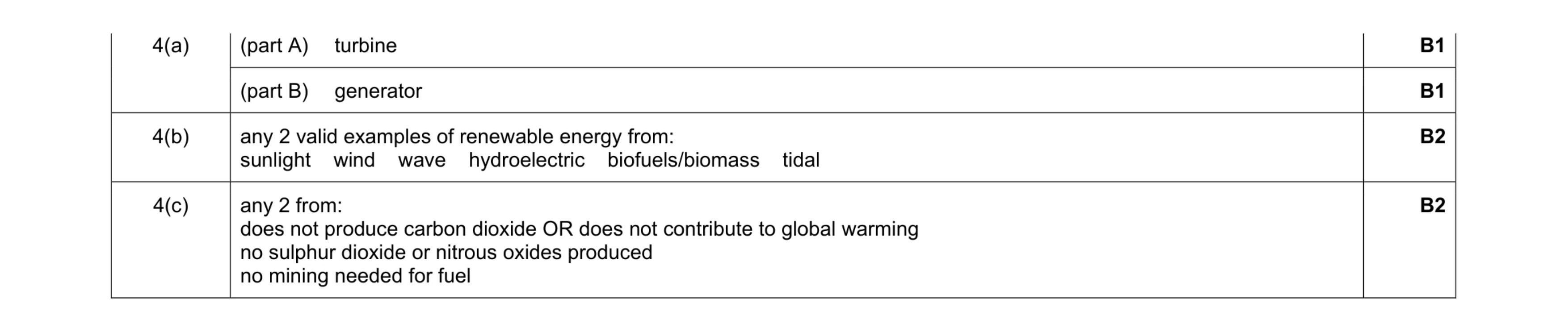 6
6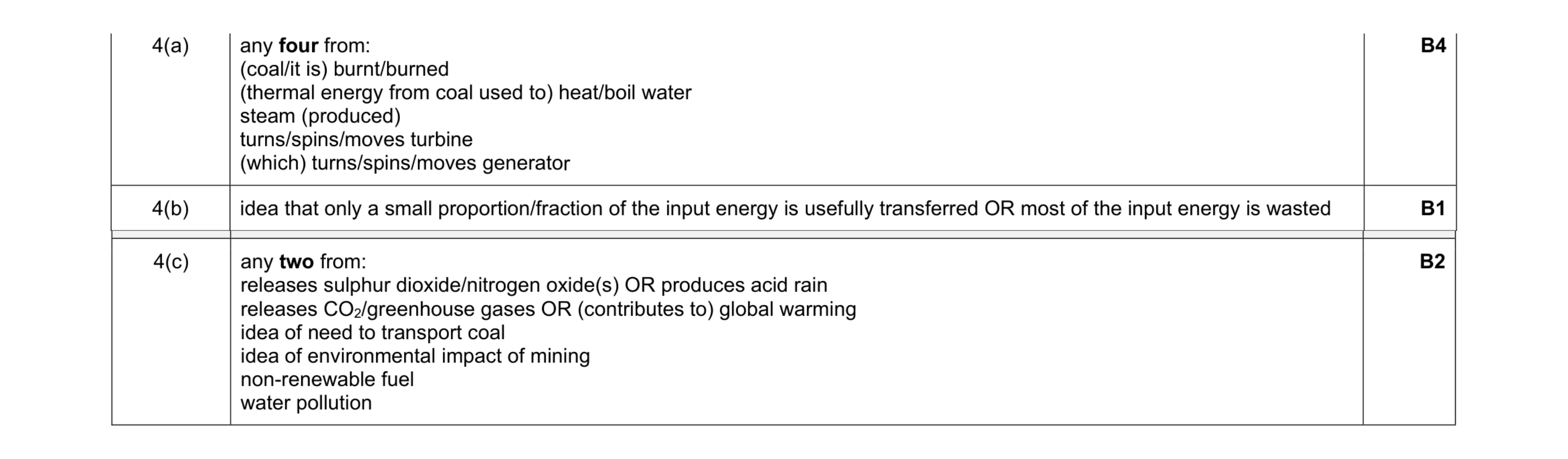 7
7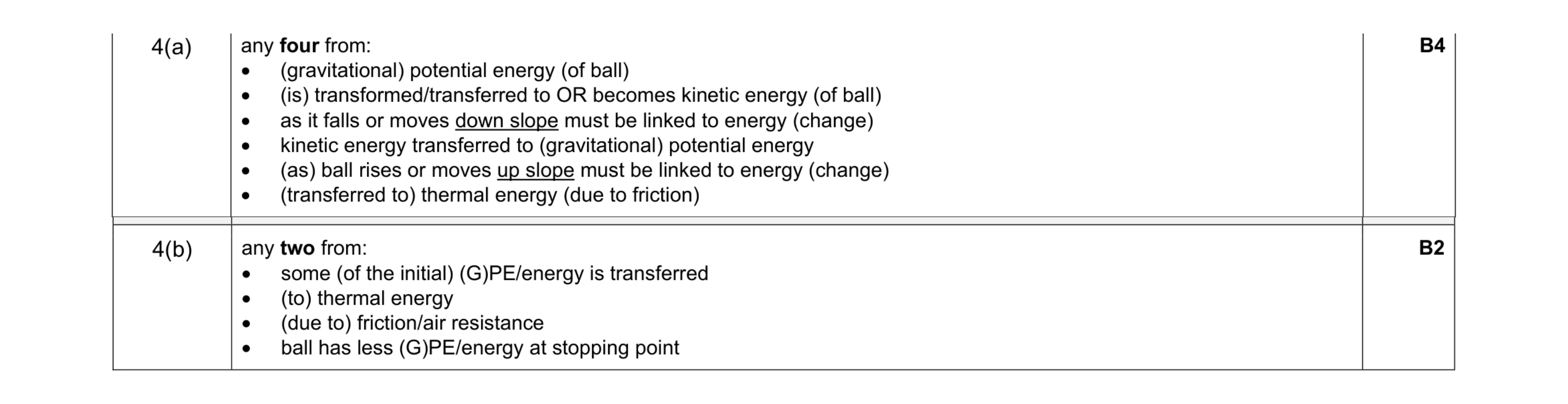 6
6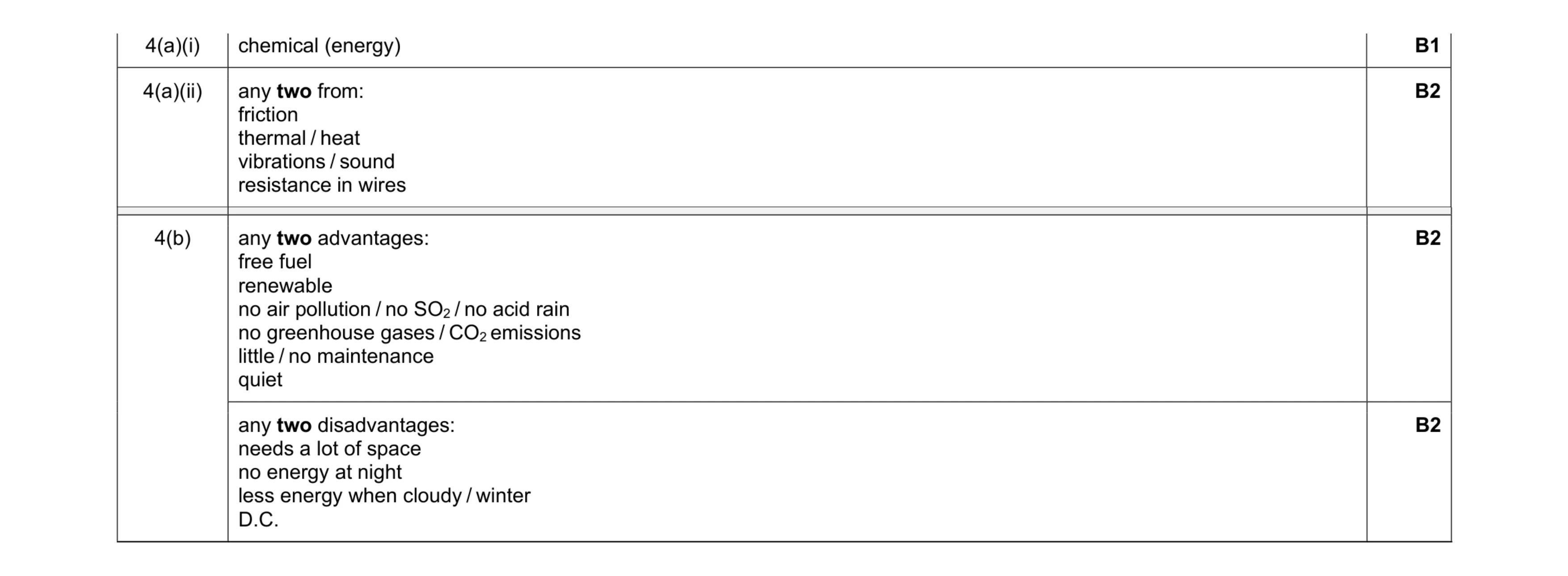 7
7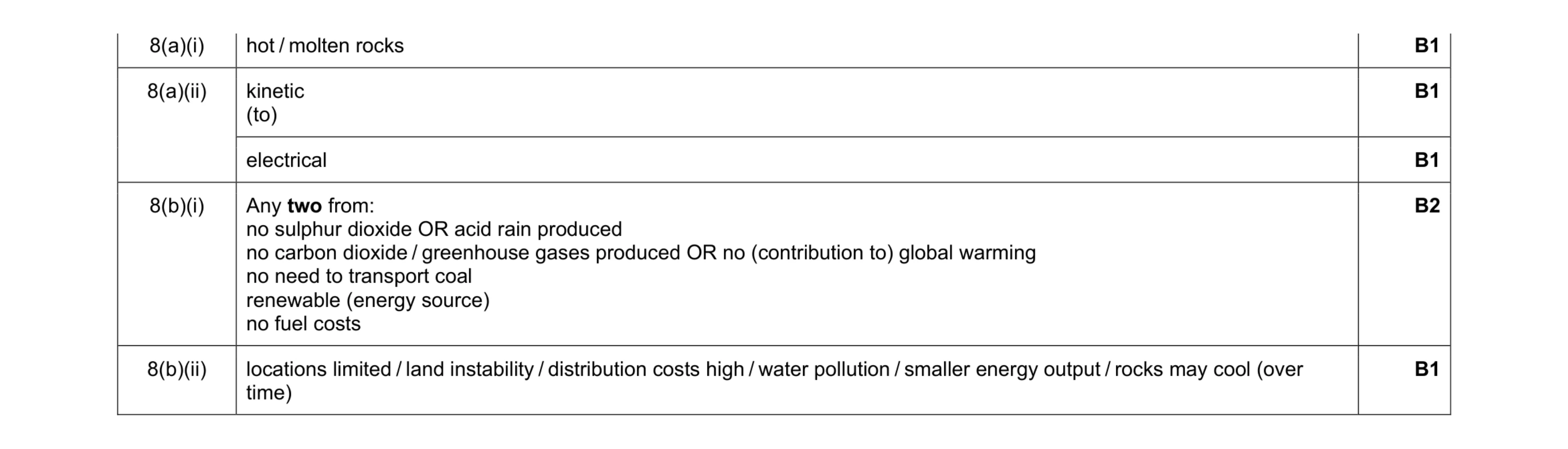 6
6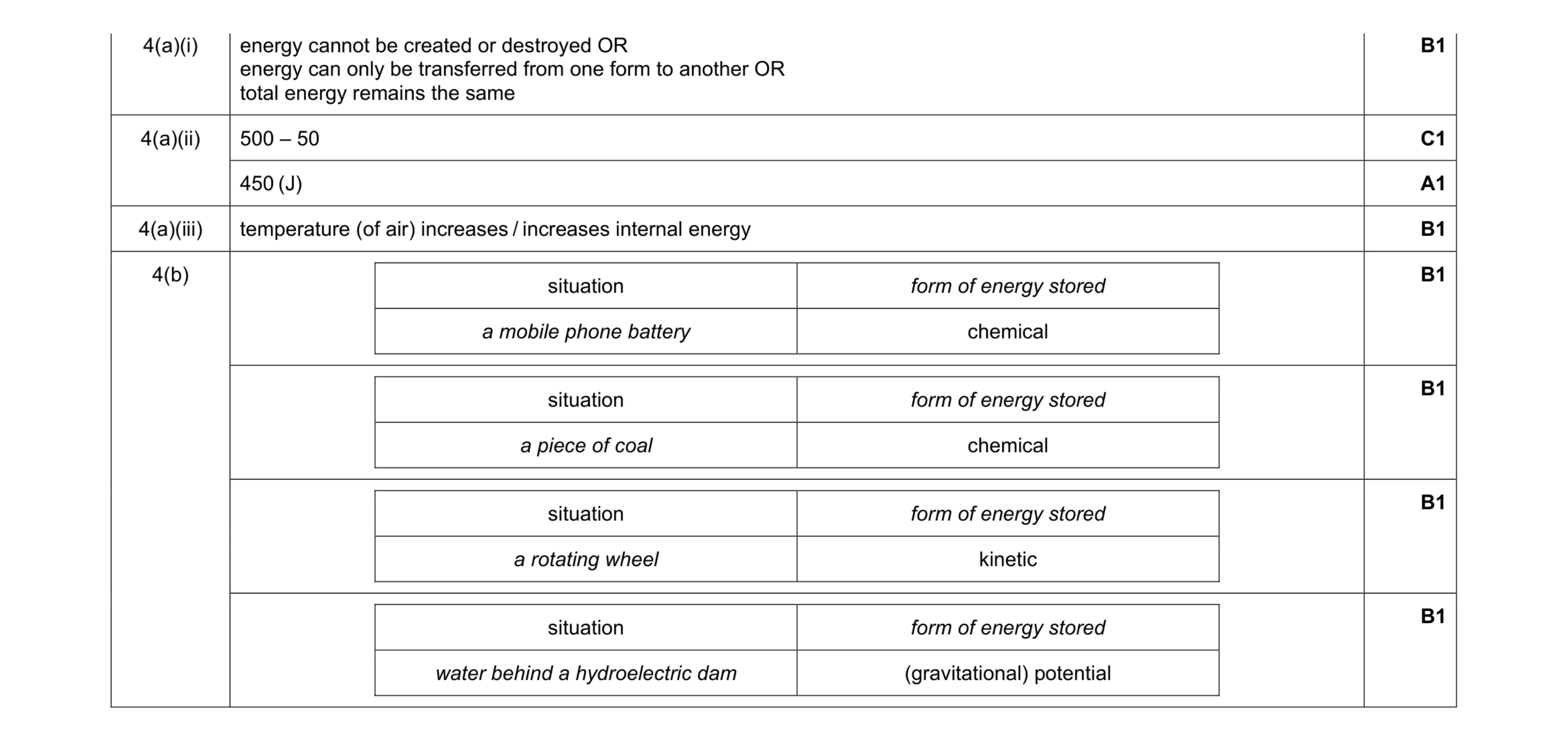 8
8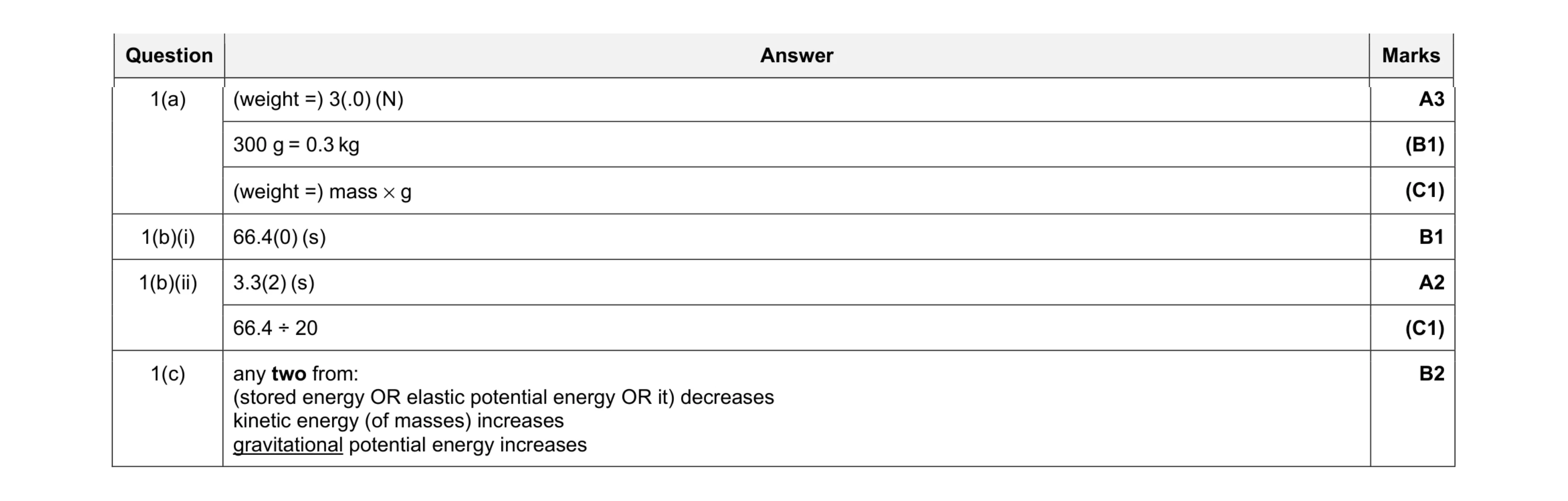 8
8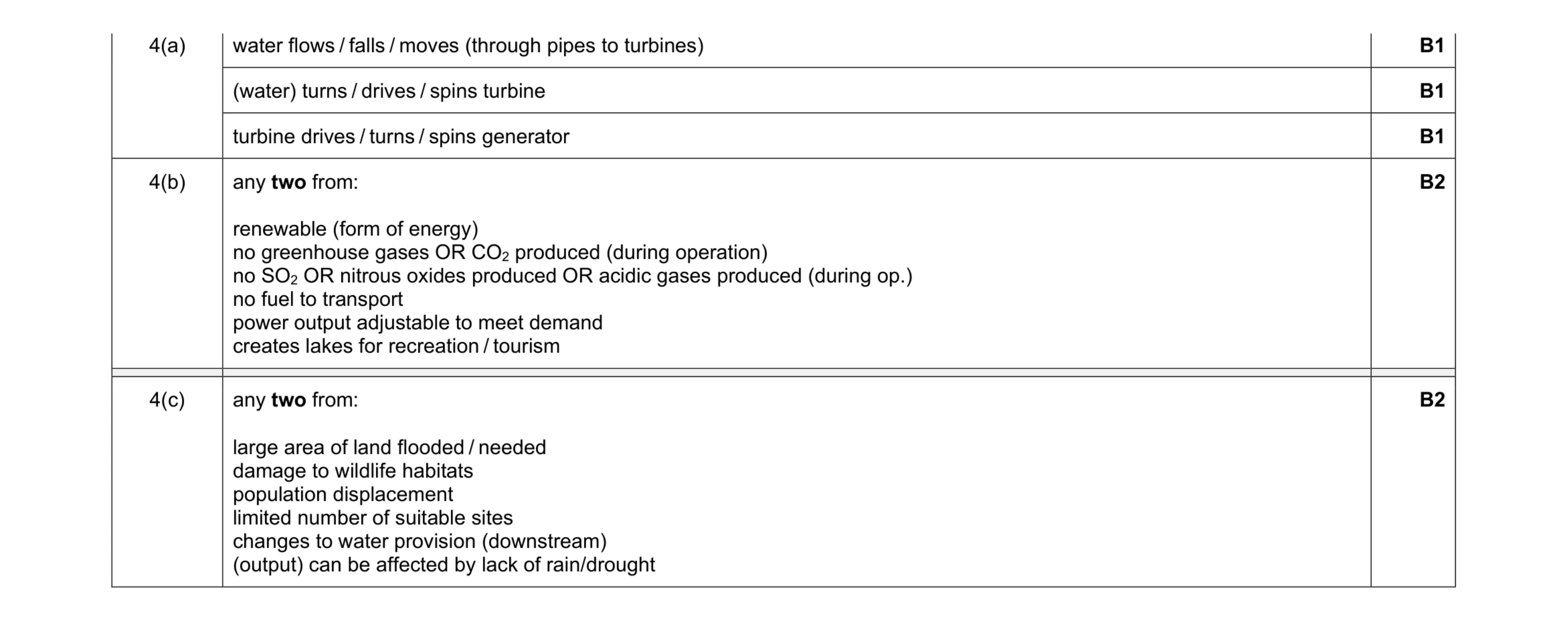 7
7 6
6 7
7 9
9 11
11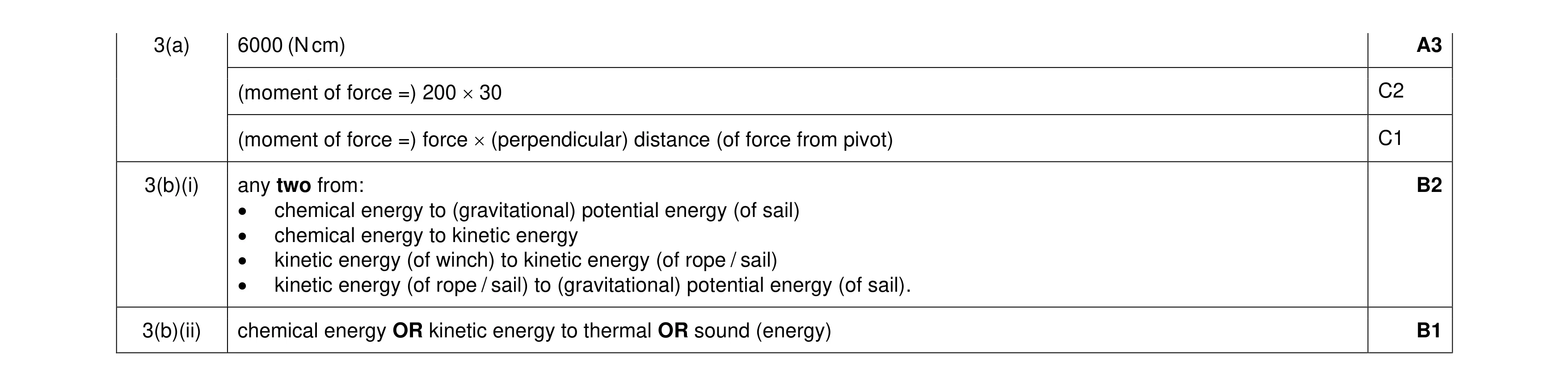 6
6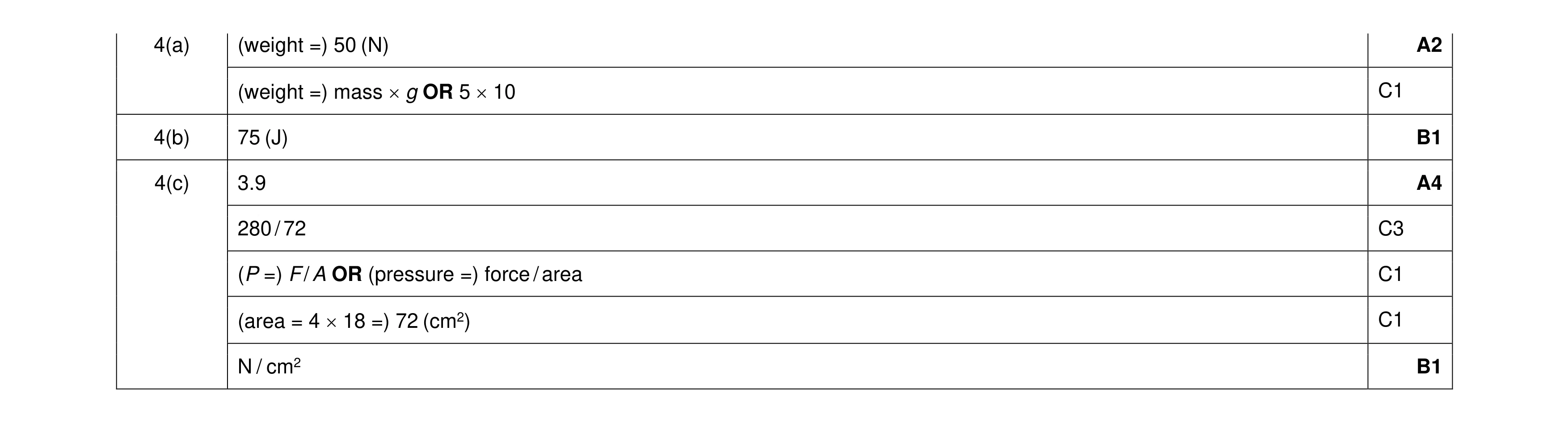 8
8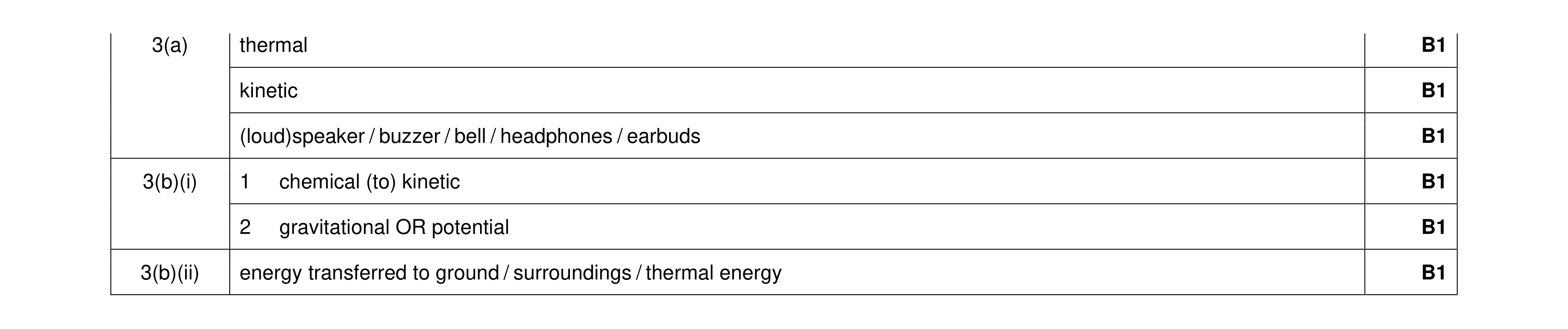 6
6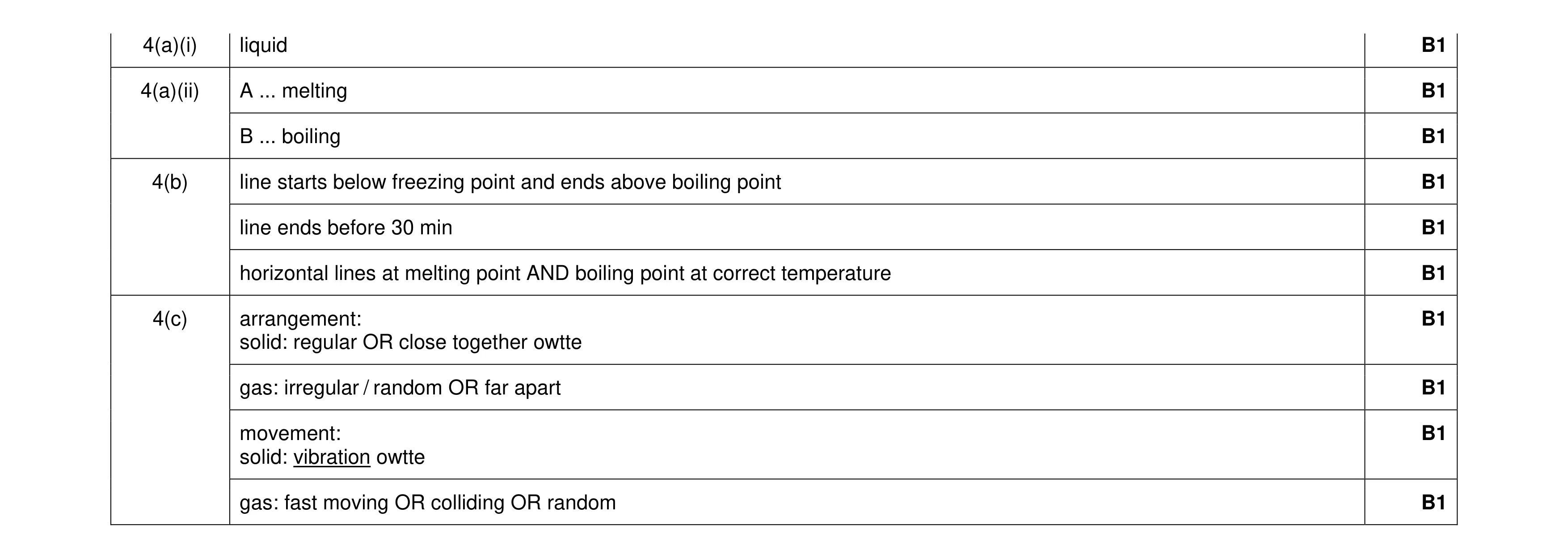 10
10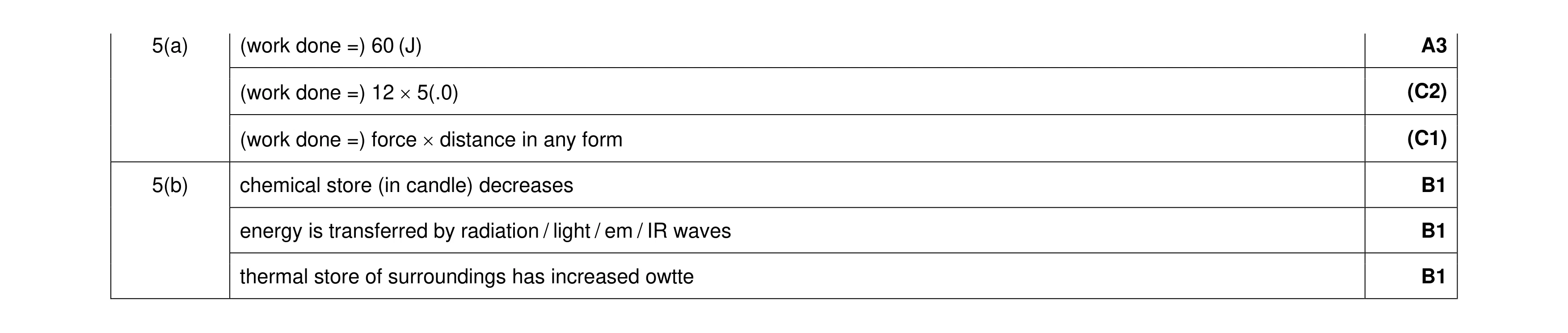 6
6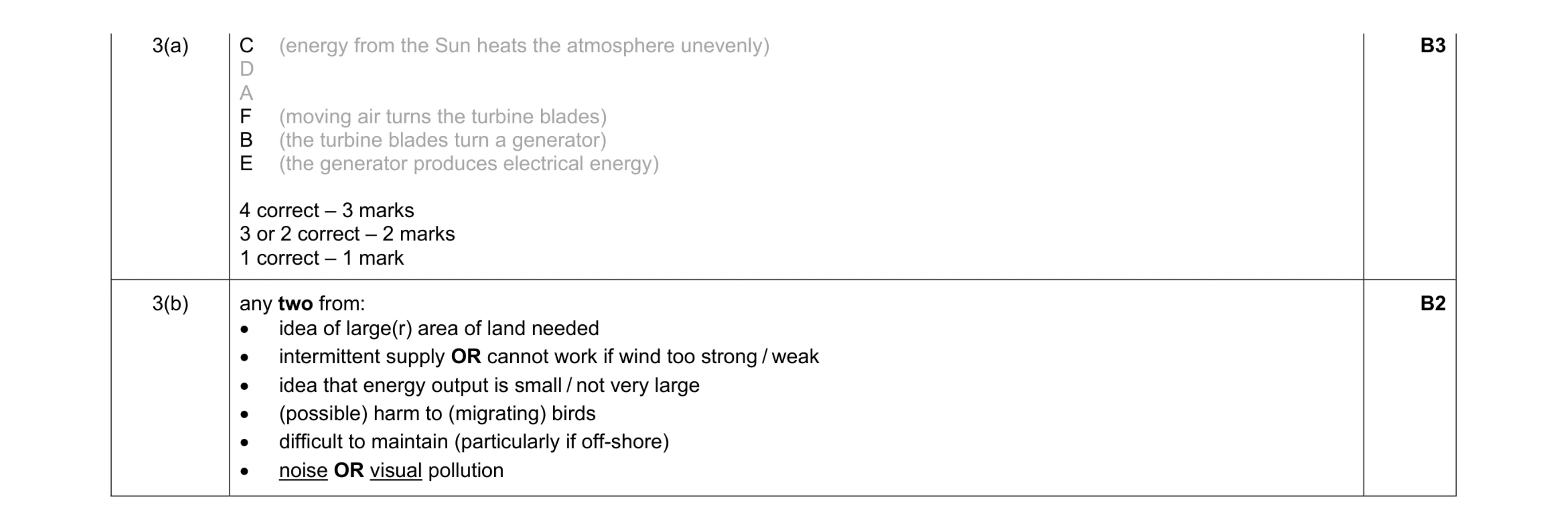 5
5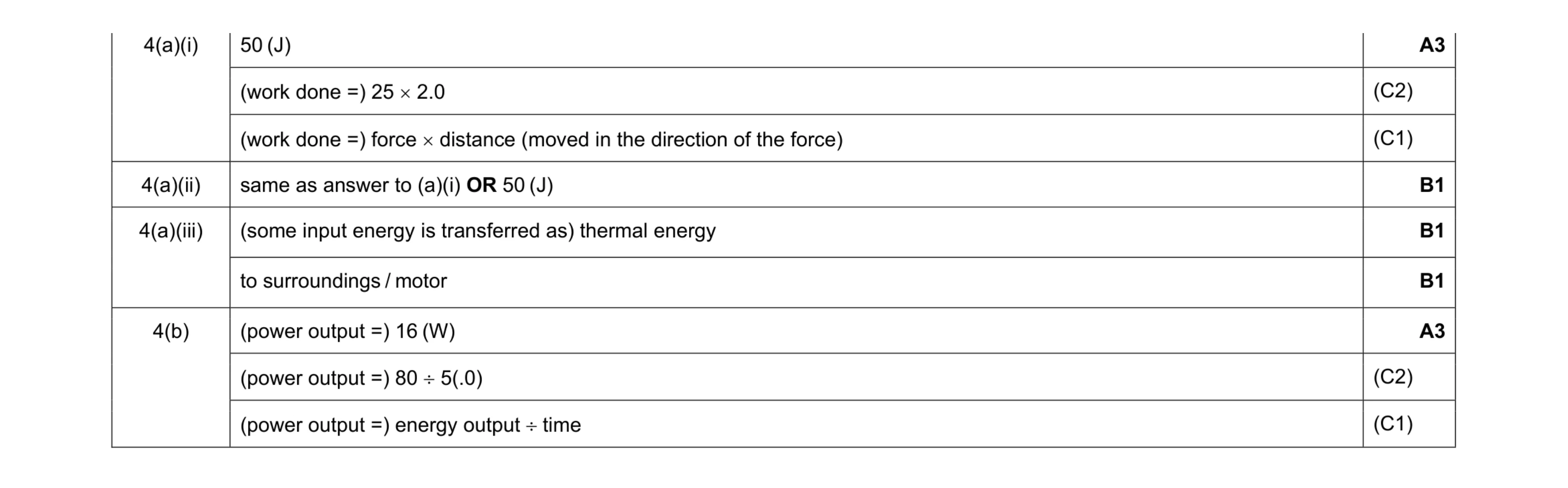 9
9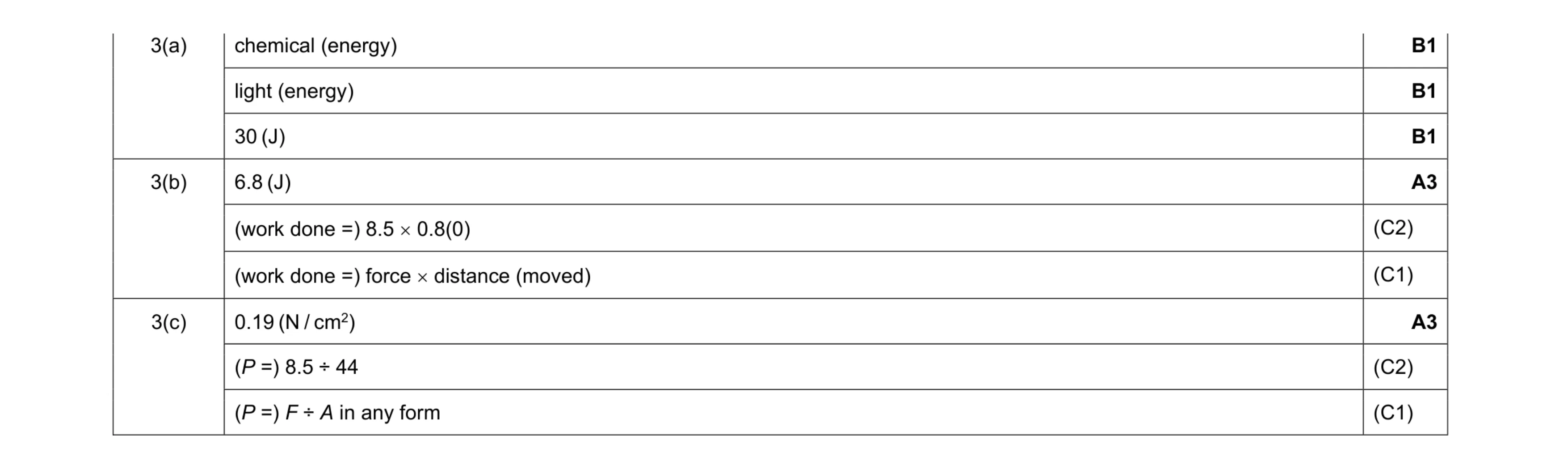 9
9 8
8 4
4 7
7 4
4 7
7 4
4 7
7 7
7 8
8 8
8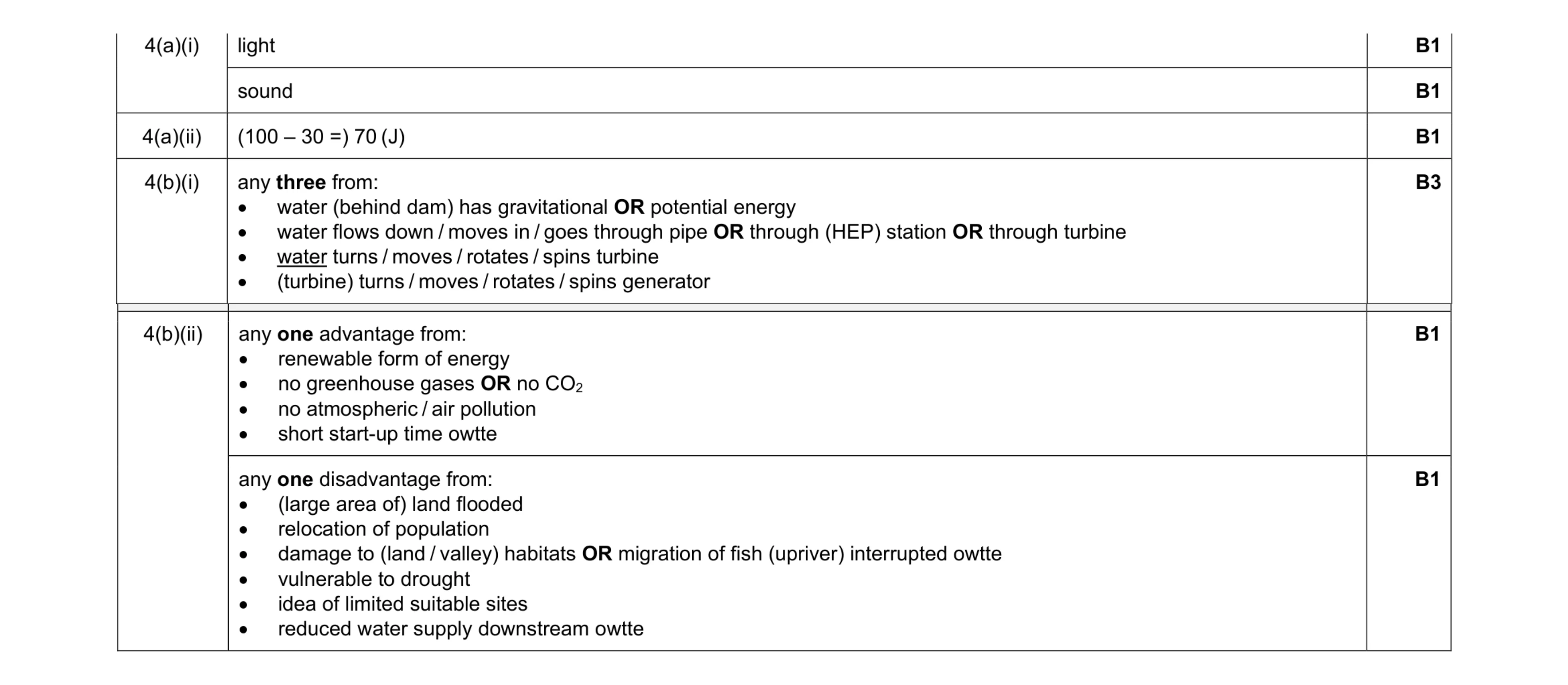 8
8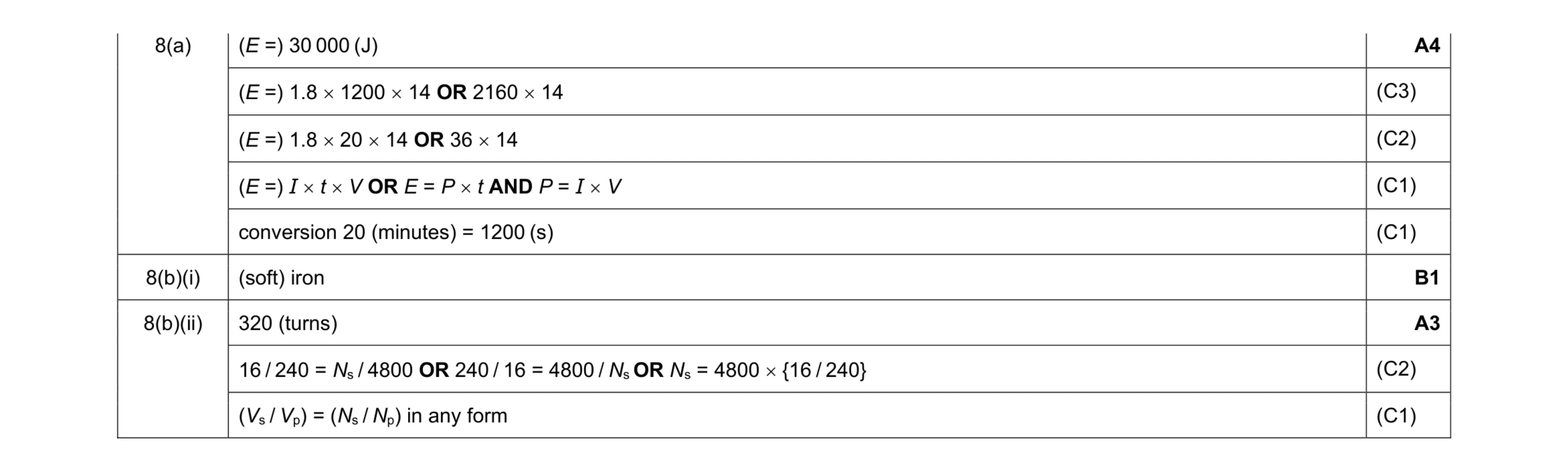 8
8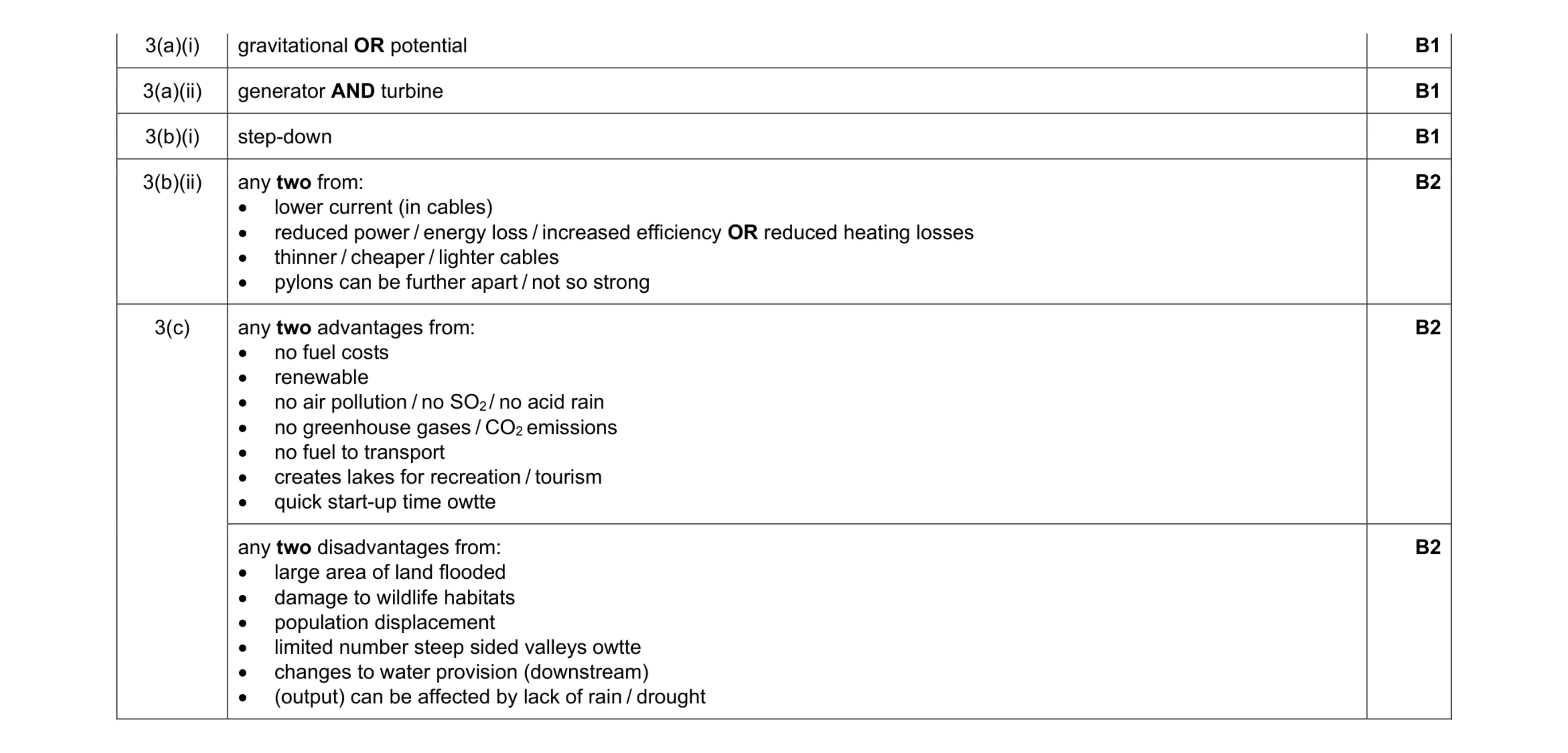 9
9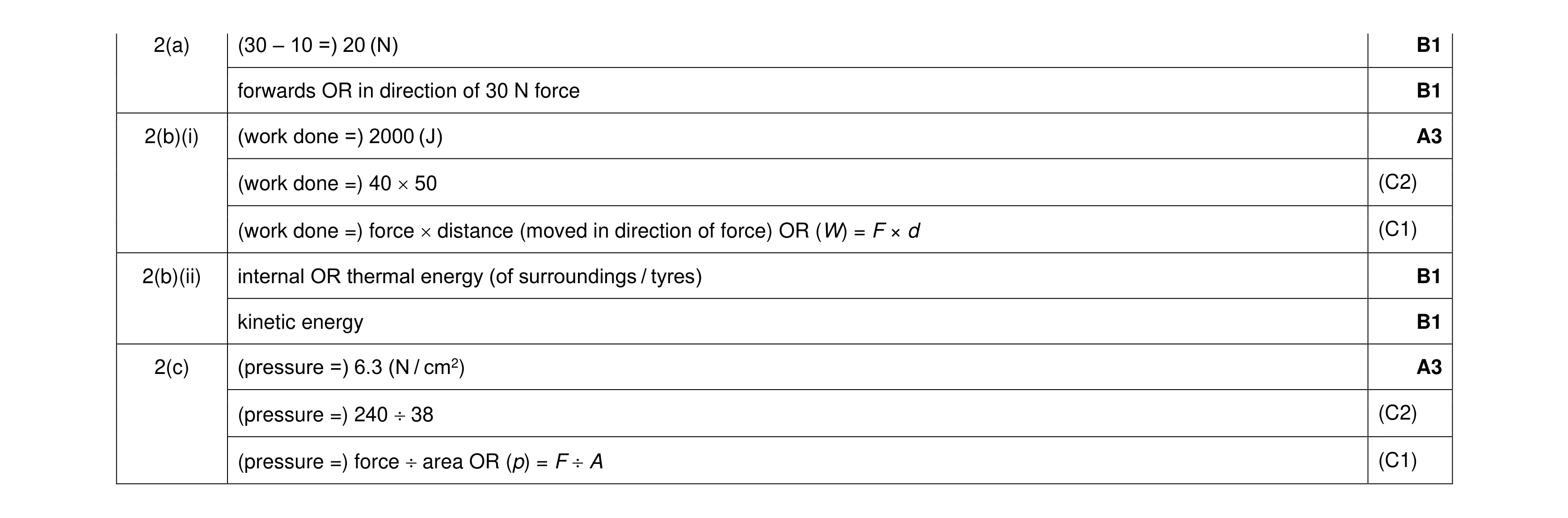 10
10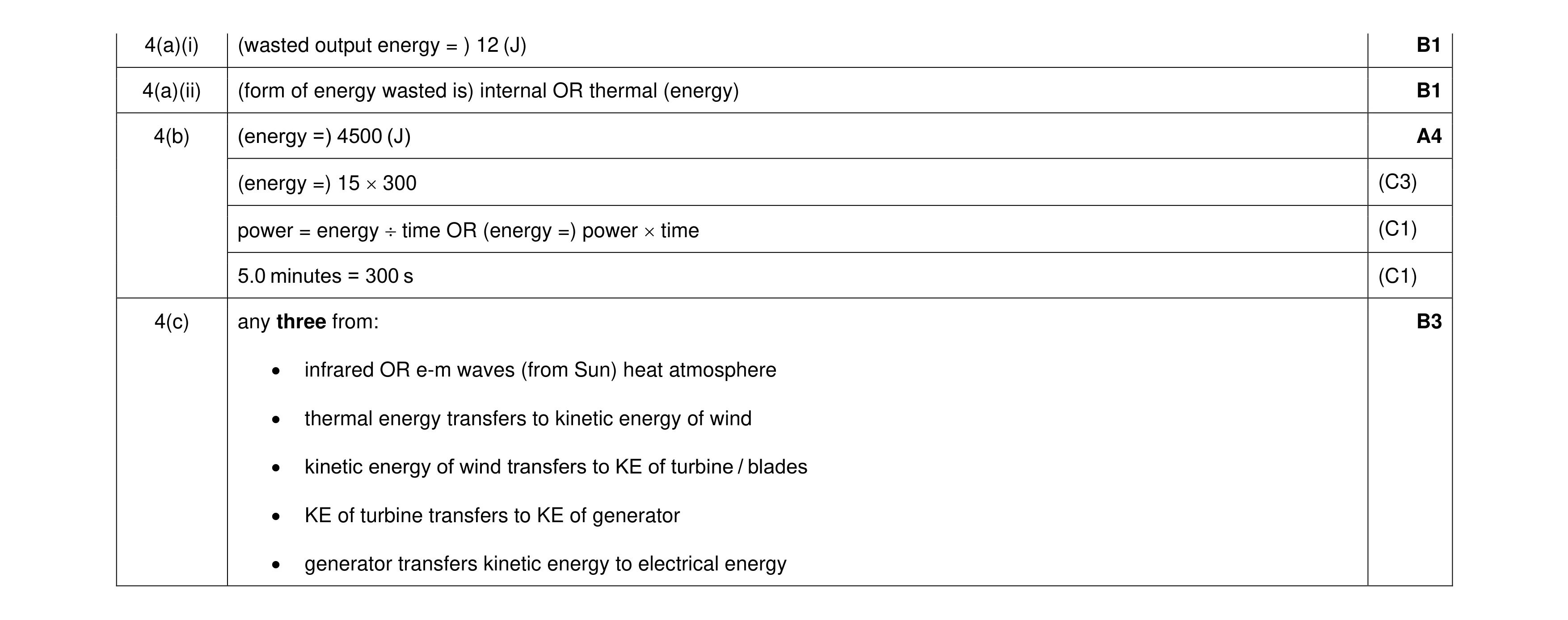 9
9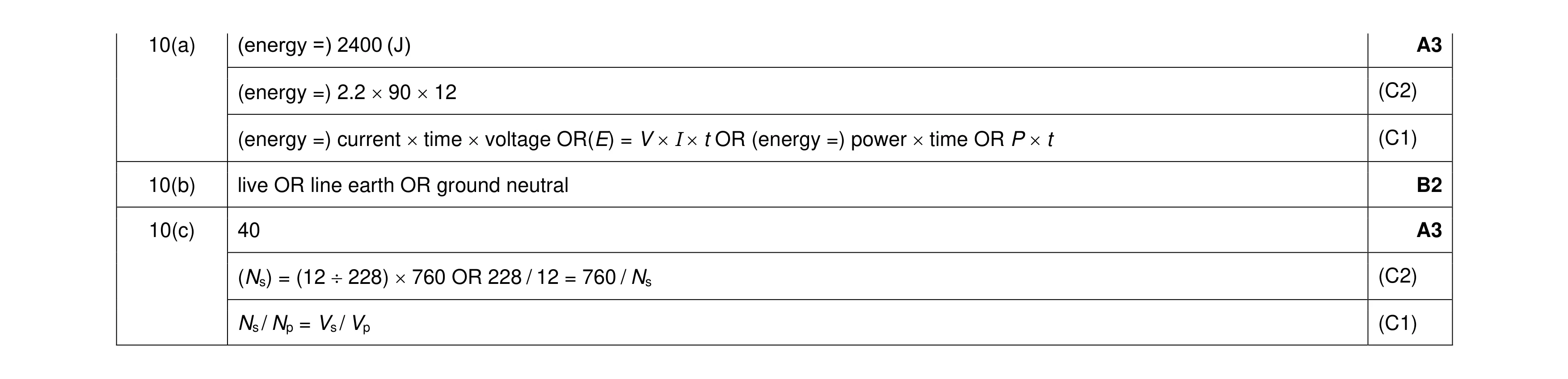 8
8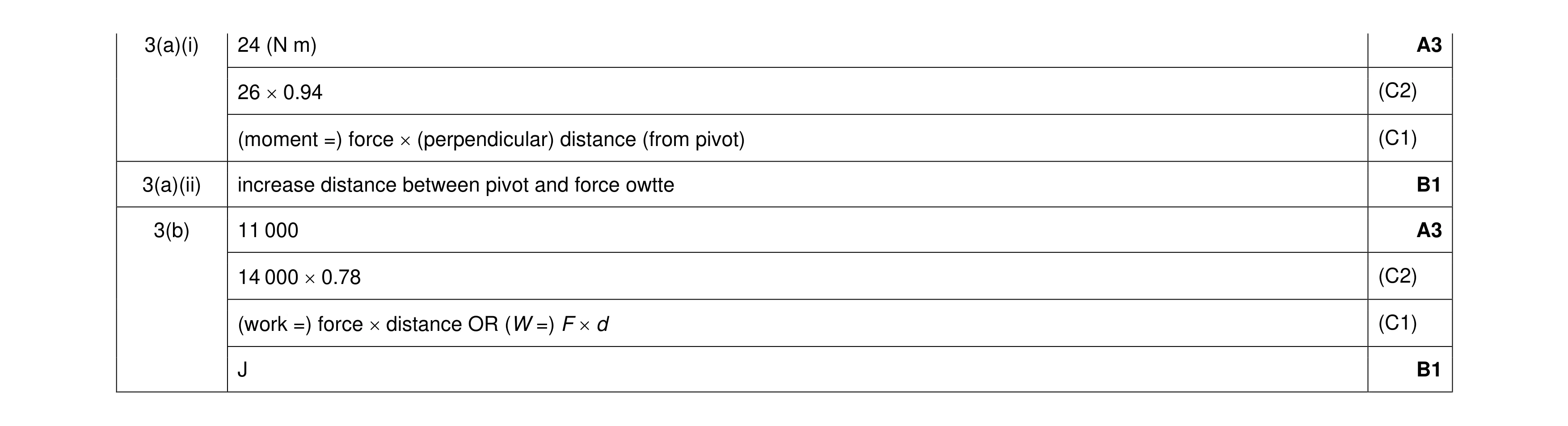 8
8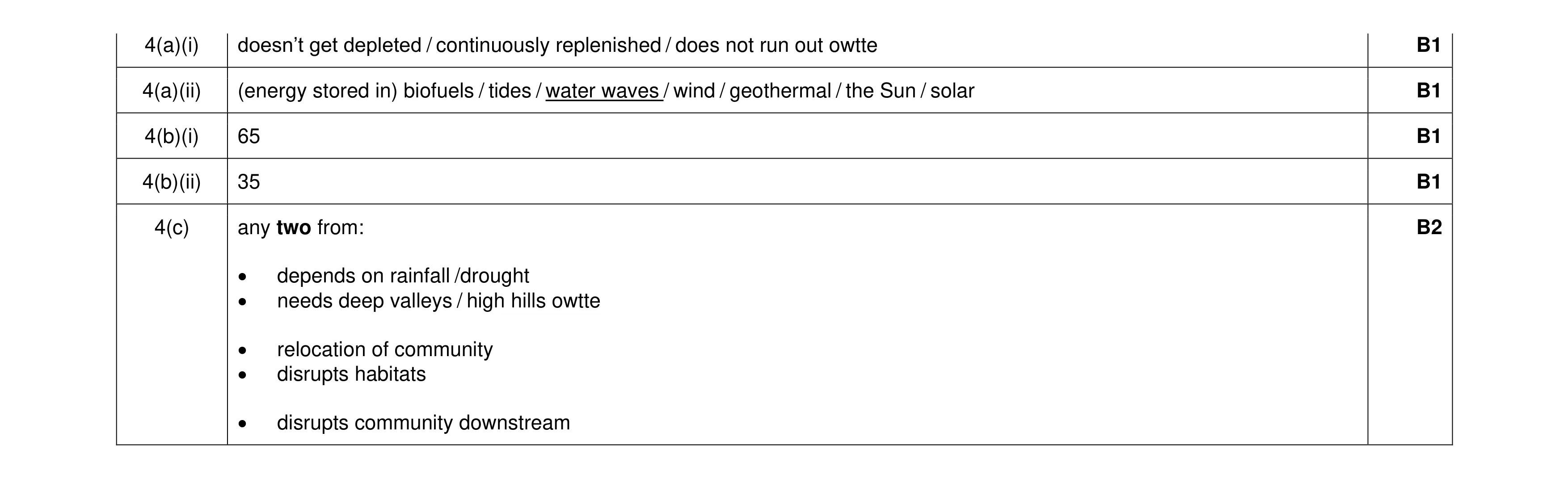 6
6 4
4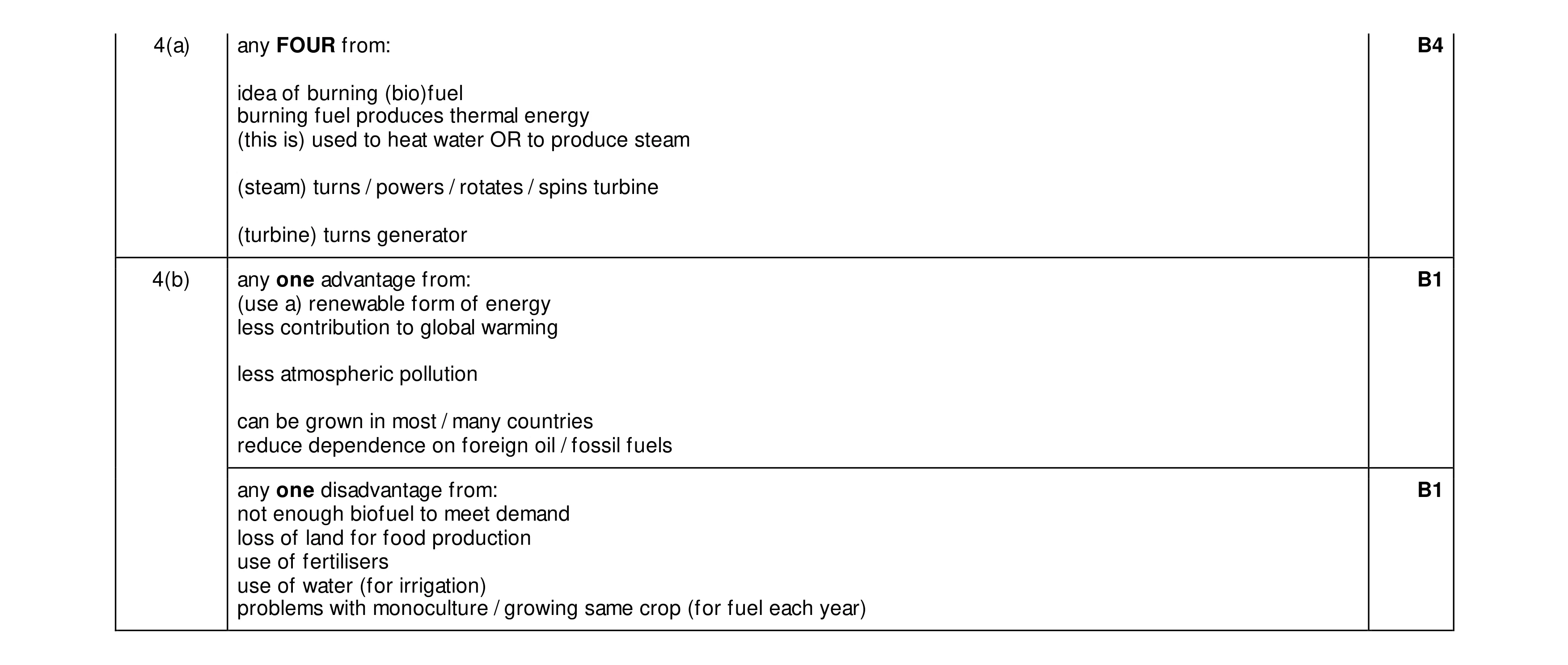 6
6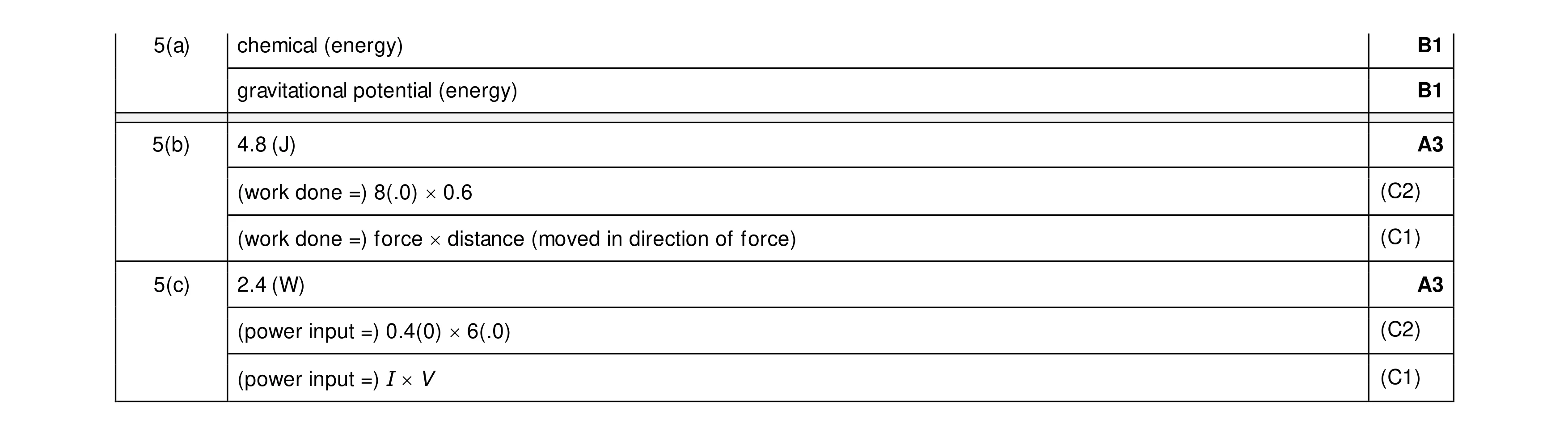 8
8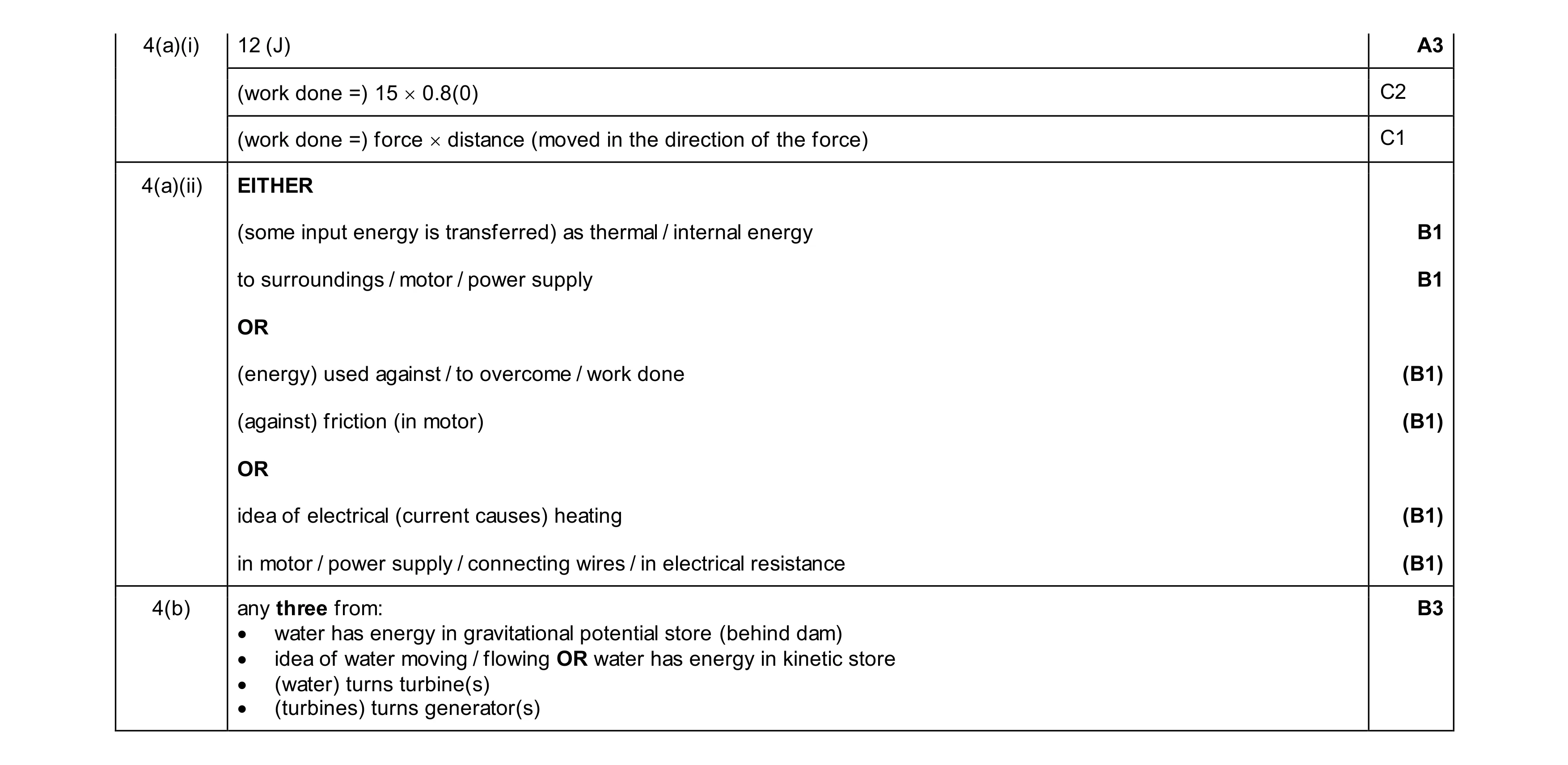 8
8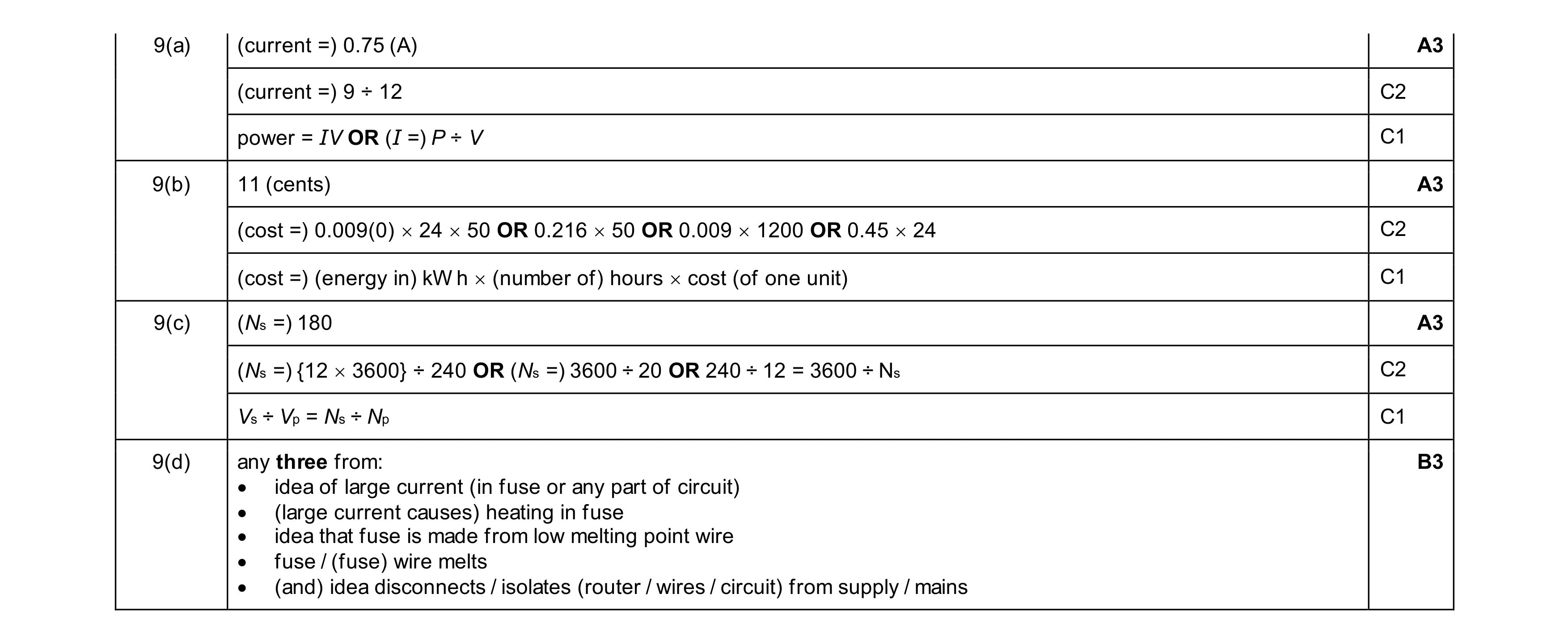 12
12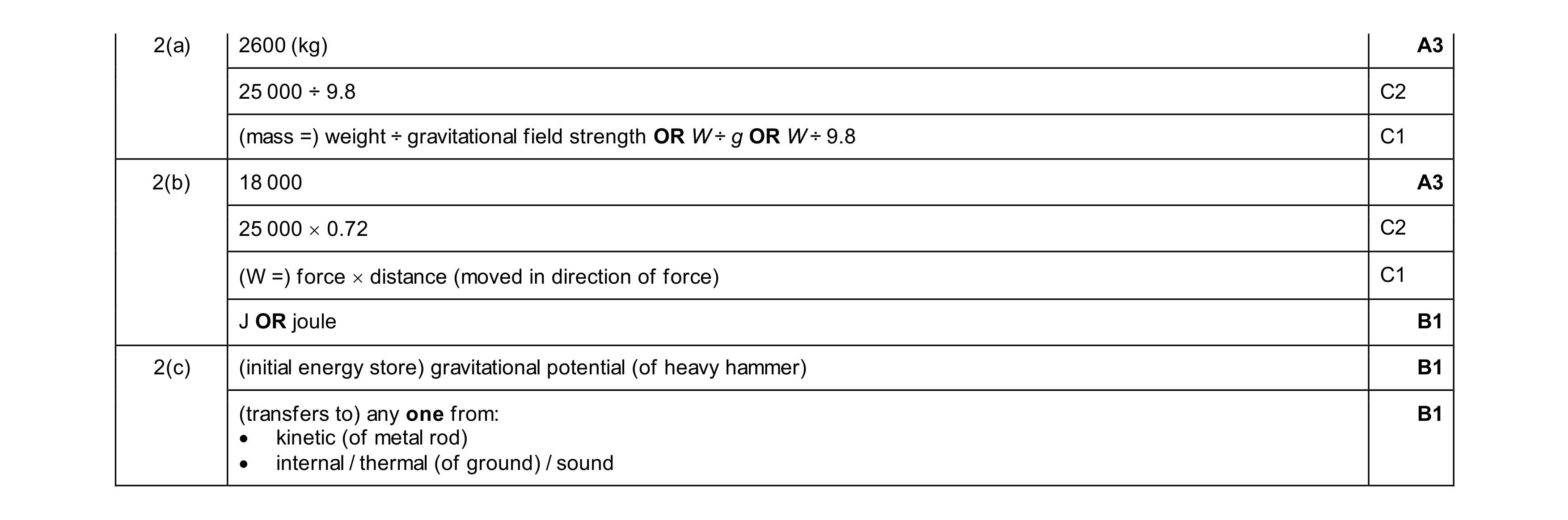 9
9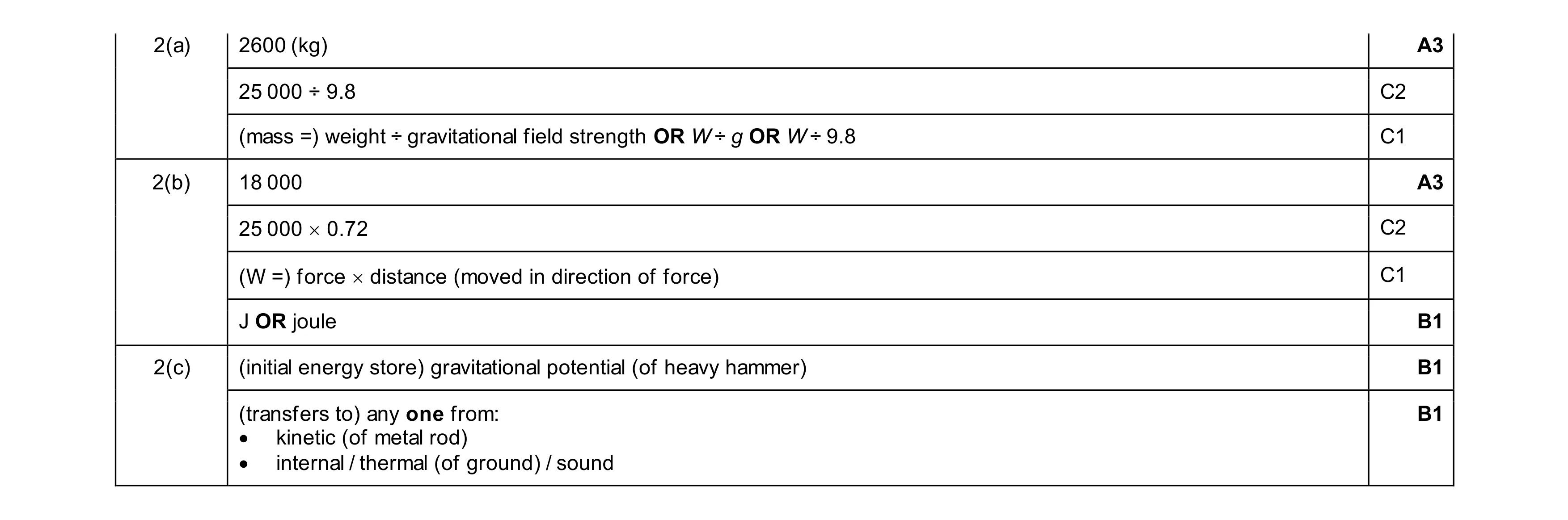 9
9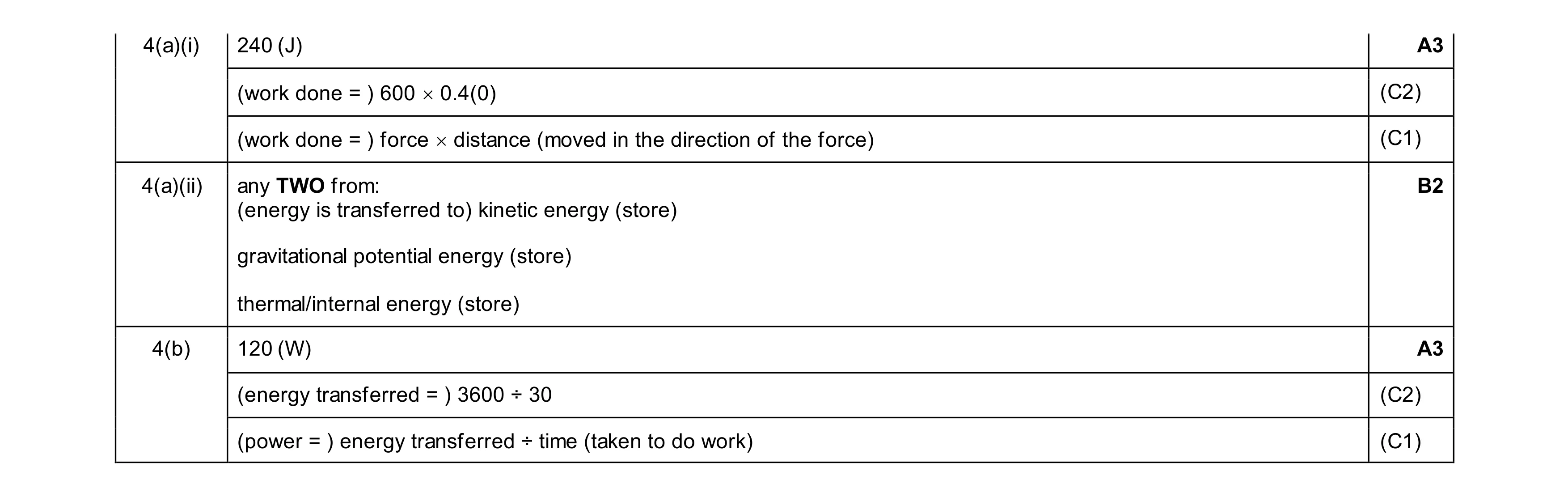 8
8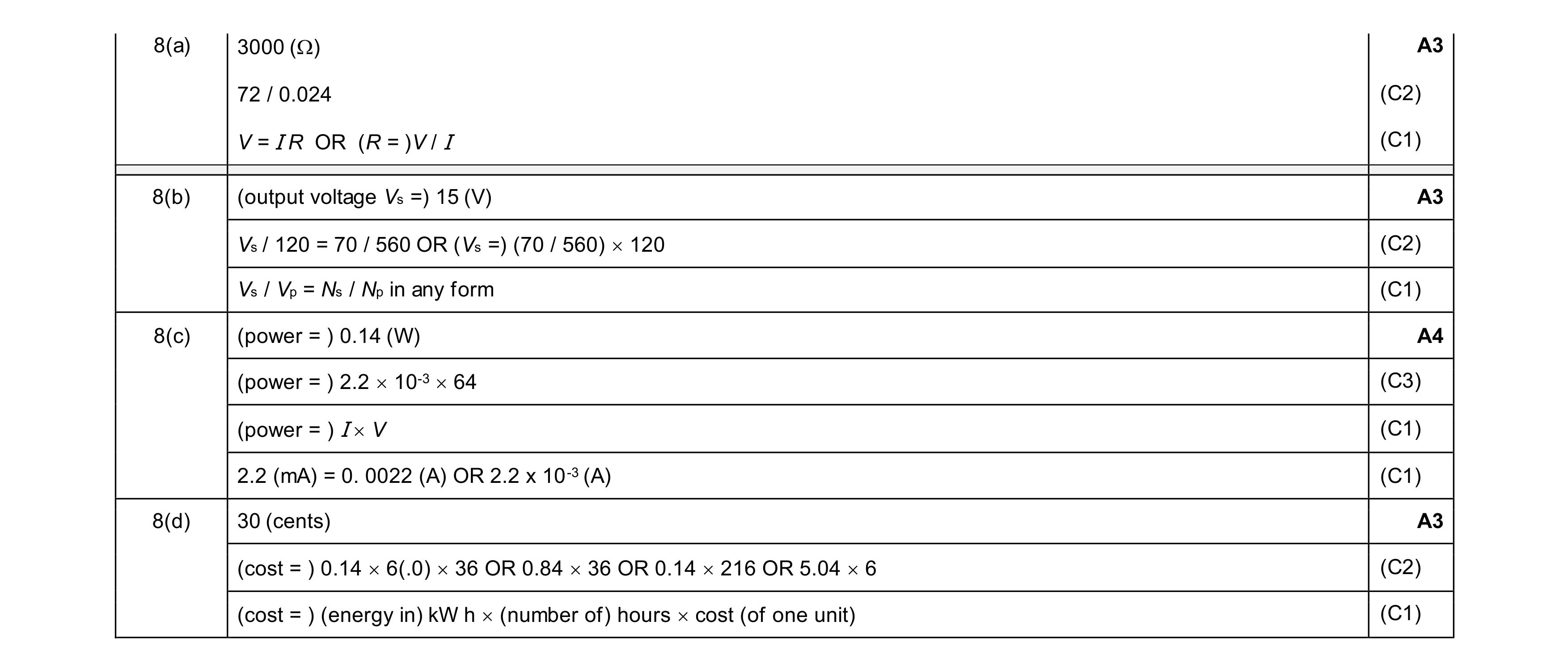 13
13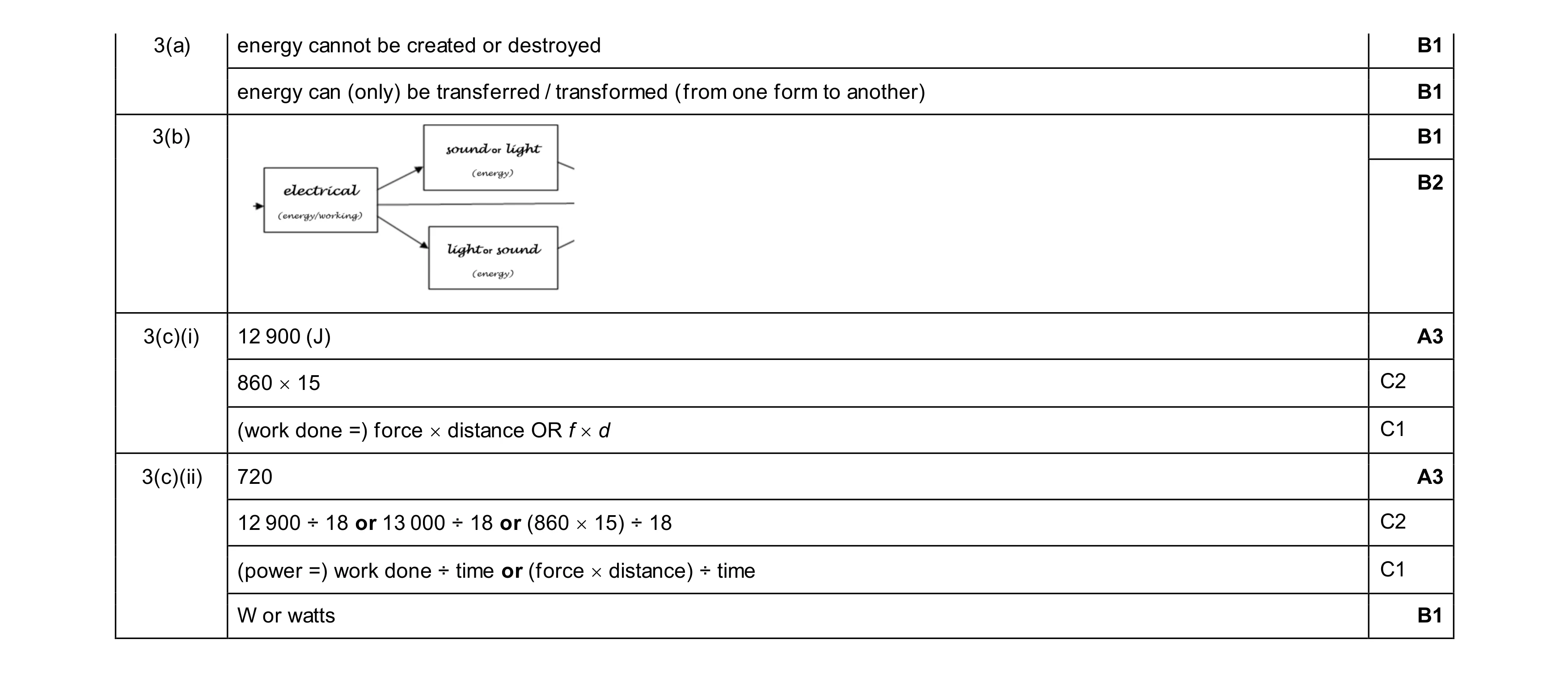 12
12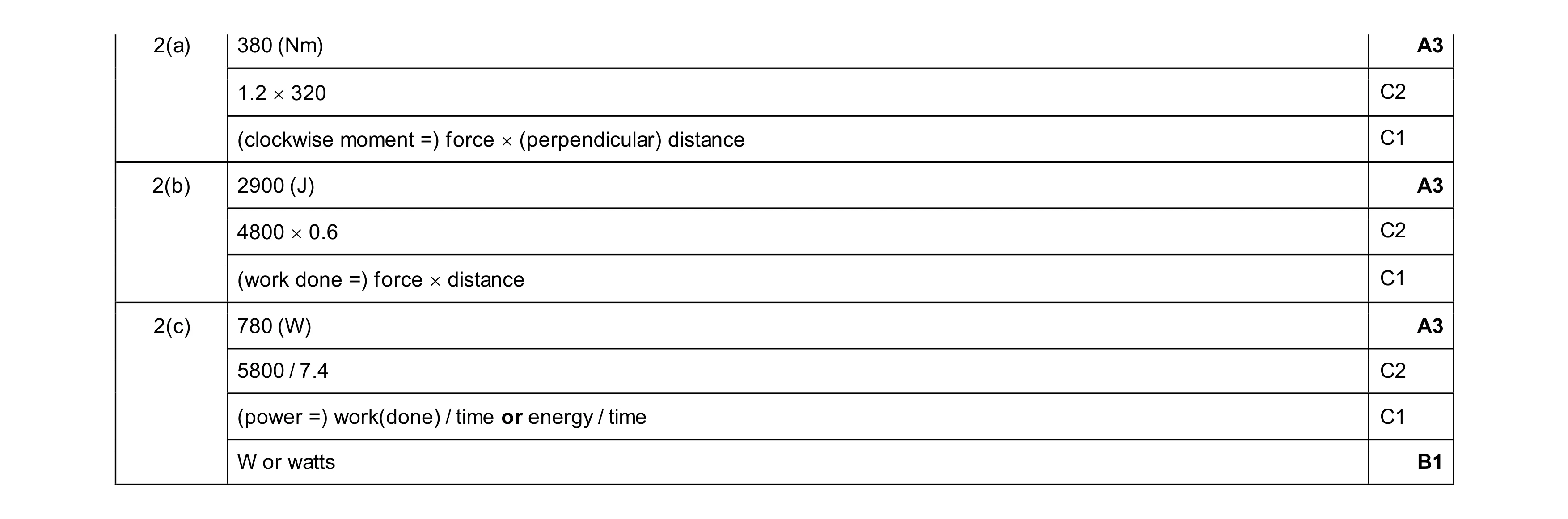 10
10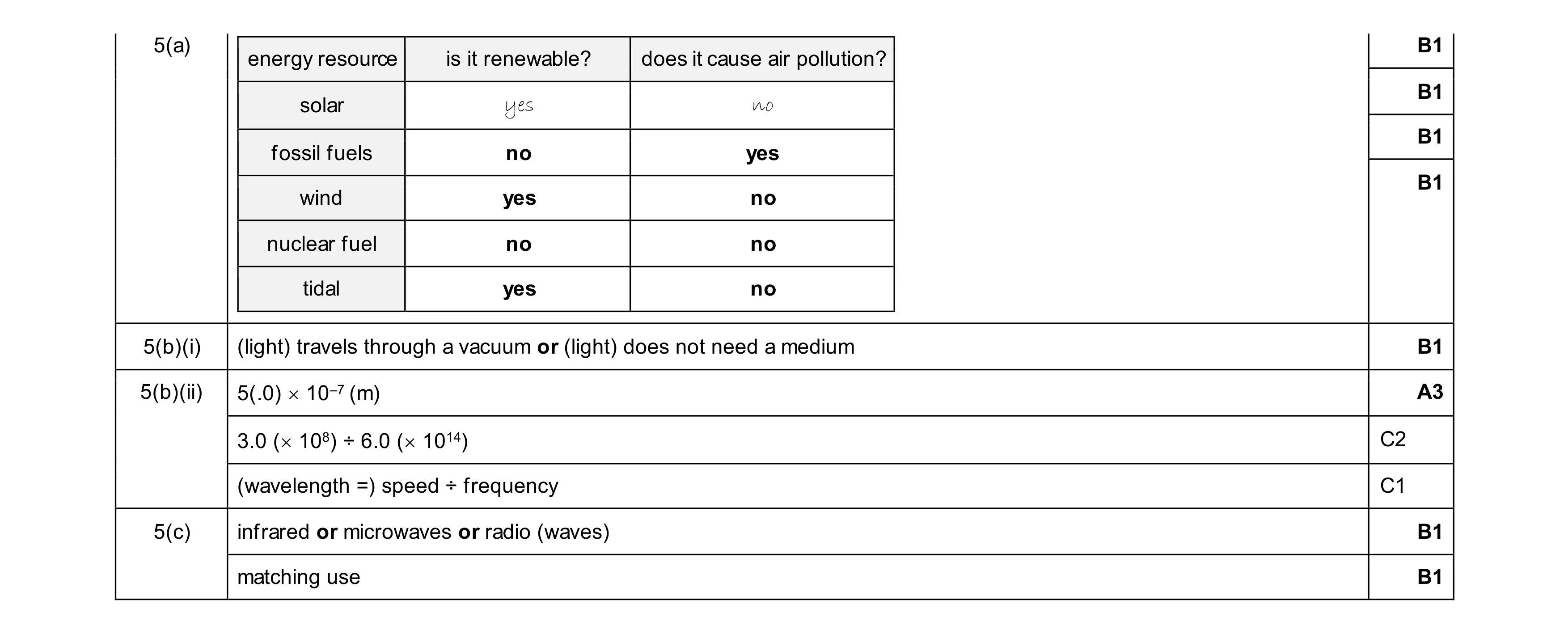 10
10