Cambridge IGCSE Physics 0625 — 2016 Feb/March Paper 3 · Variant 2
0625/32/F/M/16 · 12 questions · 80 marks · ≈90 min
The question paper and its mark scheme, free to read here and free to download. This is Cambridge’s own paper, exactly as it was sat.
Question paper24 pages
Mark scheme7 pages
Answers below. Sit the paper first if you are practising.
Questions as text
Q1 · A student is investigating volume and density
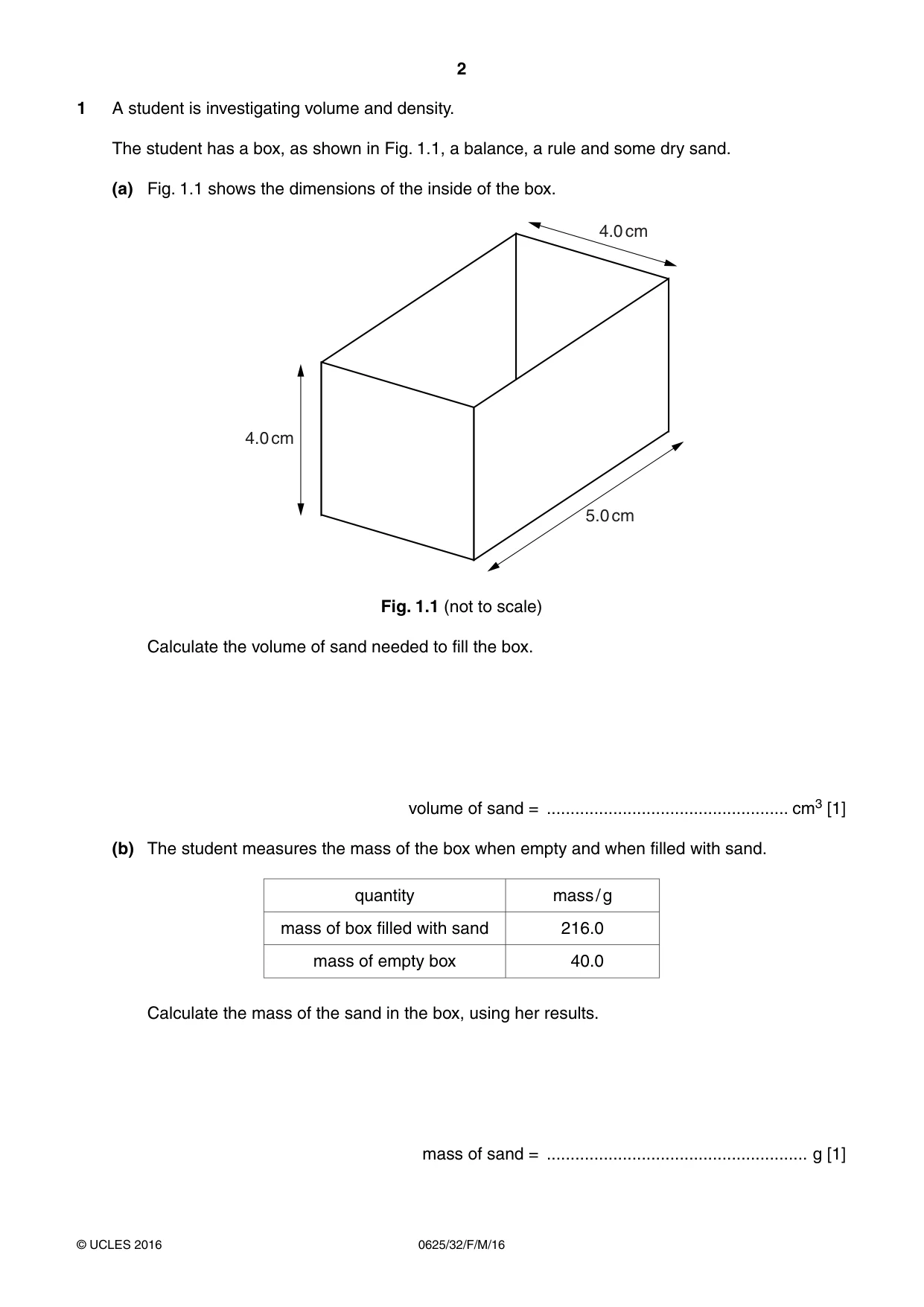
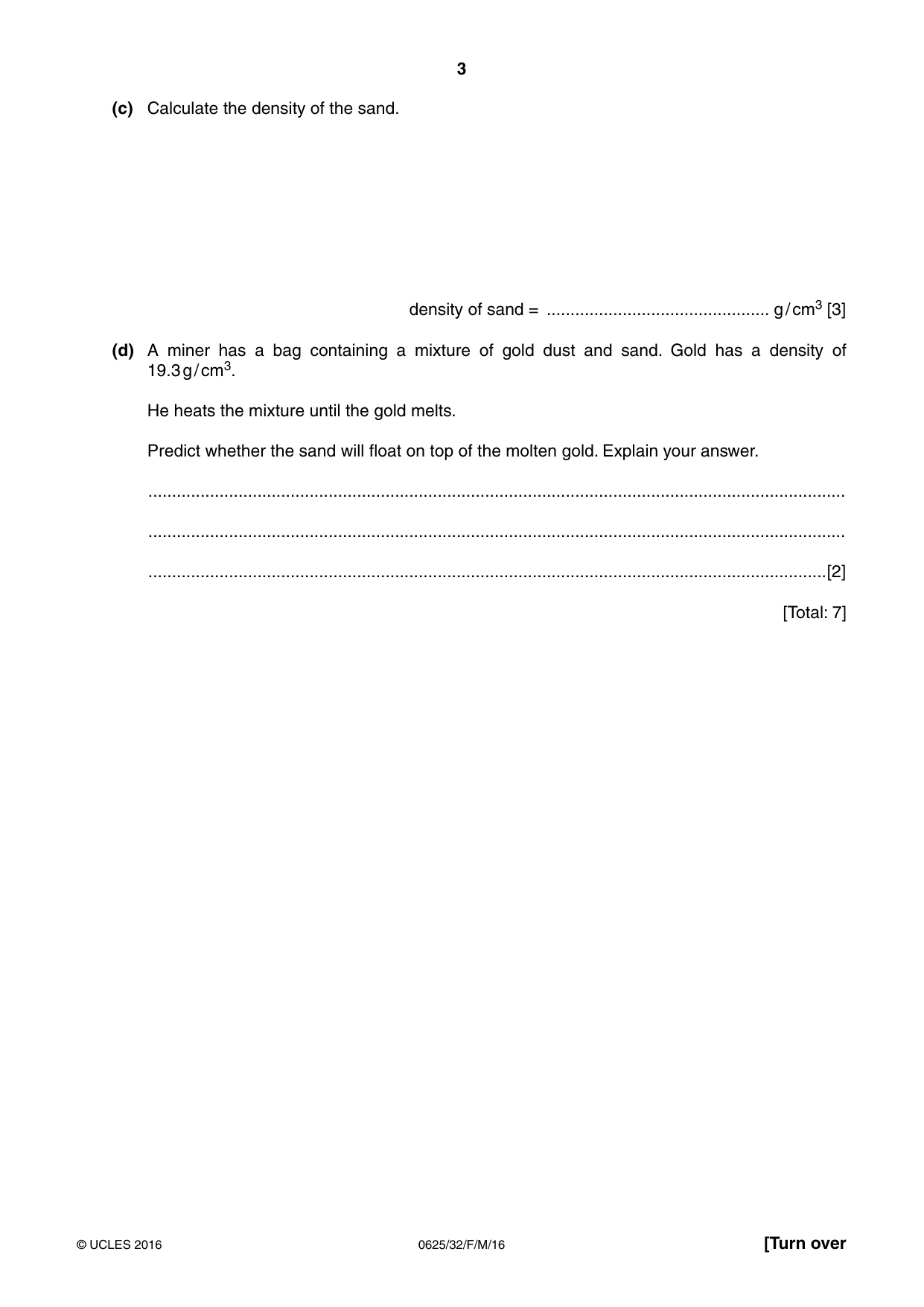
1 A student is investigating volume and density. The student has a box, as shown in Fig. 1.1, a balance, a rule and some dry sand. (a) Fig. 1.1 shows the dimensions of the inside of the box. 4.0 cm 4.0 cm 5.0 cm Fig. 1.1 (not to scale) Calculate the volume of sand needed to fill the box. volume of sand = ................................................... cm3 [1] (b) The student measures the mass of the box when empty and when filled with sand. quantity mass / g mass of box filled with sand 216.0 mass of empty box 40.0 Calculate the mass of the sand in the box, using her results. mass of sand = ....................................................... g [1] (c) Calculate the density of the sand. density of sand = ............................................... g / cm3 [3] (d) A miner has a bag containing a mixture of gold dust and sand. Gold has a density of 19.3 g / cm3. He heats the mixture until the gold melts. Predict whether the sand will float on top of the molten gold. Explain your answer. ................................................................................................................................................... ................................................................................................................................................... ...............................................................................................................................................[2] [Total: 7]
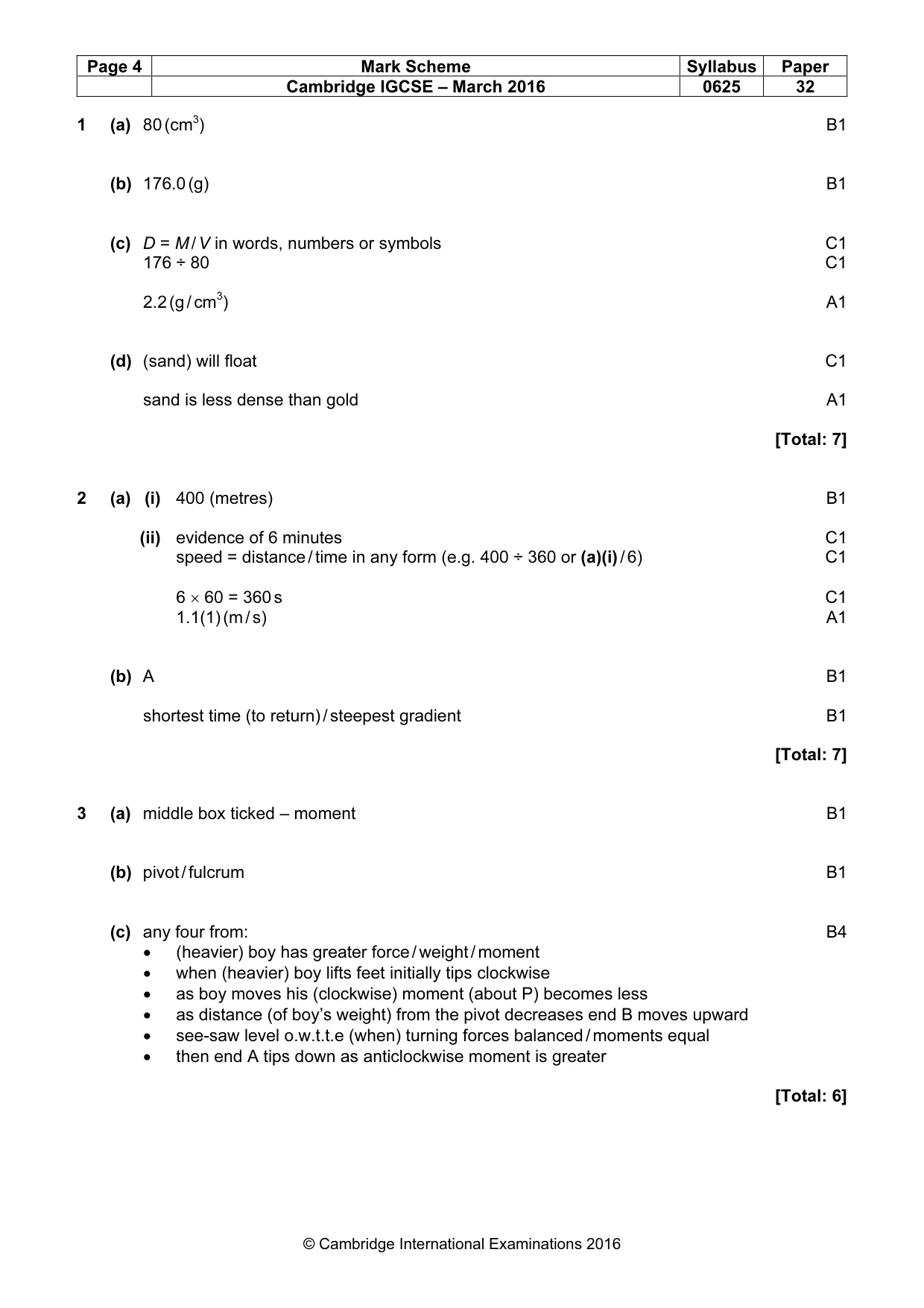
Mark scheme: 1 (a) 80 (cm3) B1 (b) 176.0 (g) B1 (c) D = M / V in words, numbers or symbols C1 176 ÷ 80 C1 2.2 (g / cm3) A1 (d) (sand) will float C1 sand is less dense than gold A1 [Total: 7]
Q2 · Three students walk together from school to a bridge
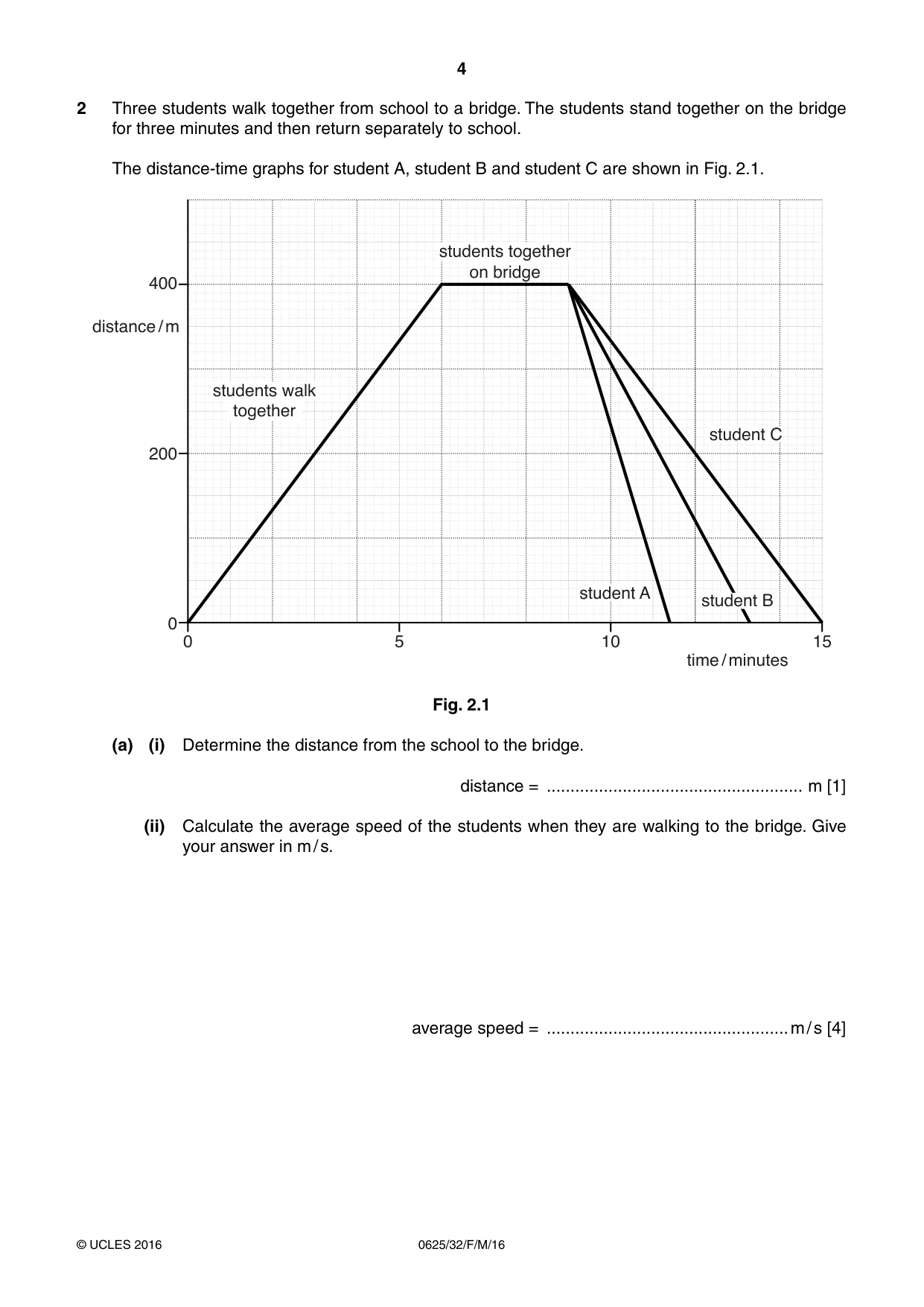
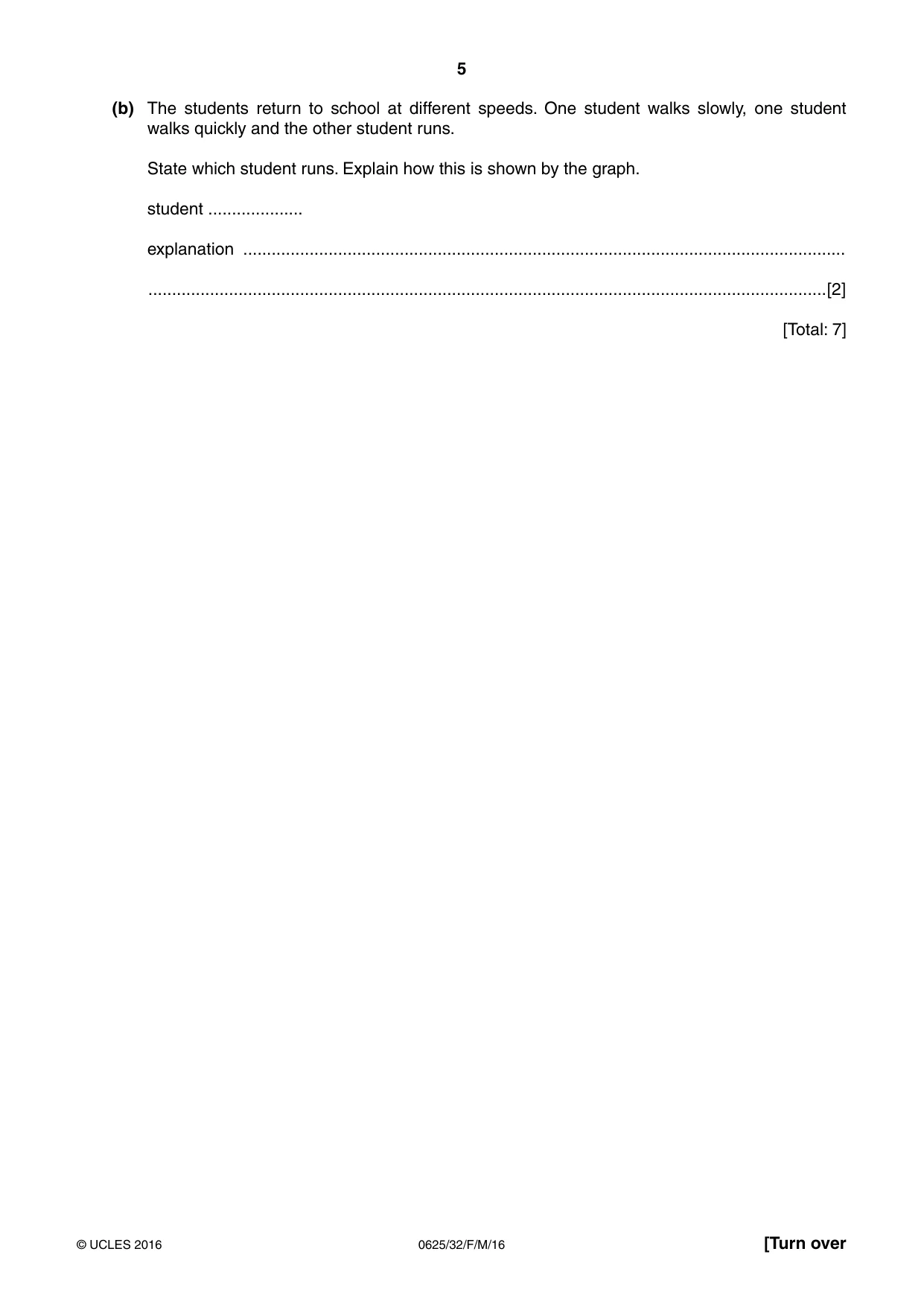
2 Three students walk together from school to a bridge. The students stand together on the bridge for three minutes and then return separately to school. The distance-time graphs for student A, student B and student C are shown in Fig. 2.1. students together on bridge 400 distance / m students walk together student C 200 student A student B 0 0 5 10 15 time / minutes Fig. 2.1 (a) (i) Determine the distance from the school to the bridge. distance = ...................................................... m [1] (ii) Calculate the average speed of the students when they are walking to the bridge. Give your answer in m / s. average speed = ...................................................m / s [4] (b) The students return to school at different speeds. One student walks slowly, one student walks quickly and the other student runs. State which student runs. Explain how this is shown by the graph. student .................... explanation ............................................................................................................................... ...............................................................................................................................................[2] [Total: 7]
Mark scheme: 2 (a) (i) 400 (metres) B1 (ii) evidence of 6 minutes C1 speed = distance / time in any form (e.g. 400 ÷ 360 or (a)(i) / 6) C1 6 × 60 = 360 s C1 1.1(1) (m / s) A1 (b) A B1 shortest time (to return) / steepest gradient B1 [Total: 7]
Question 3
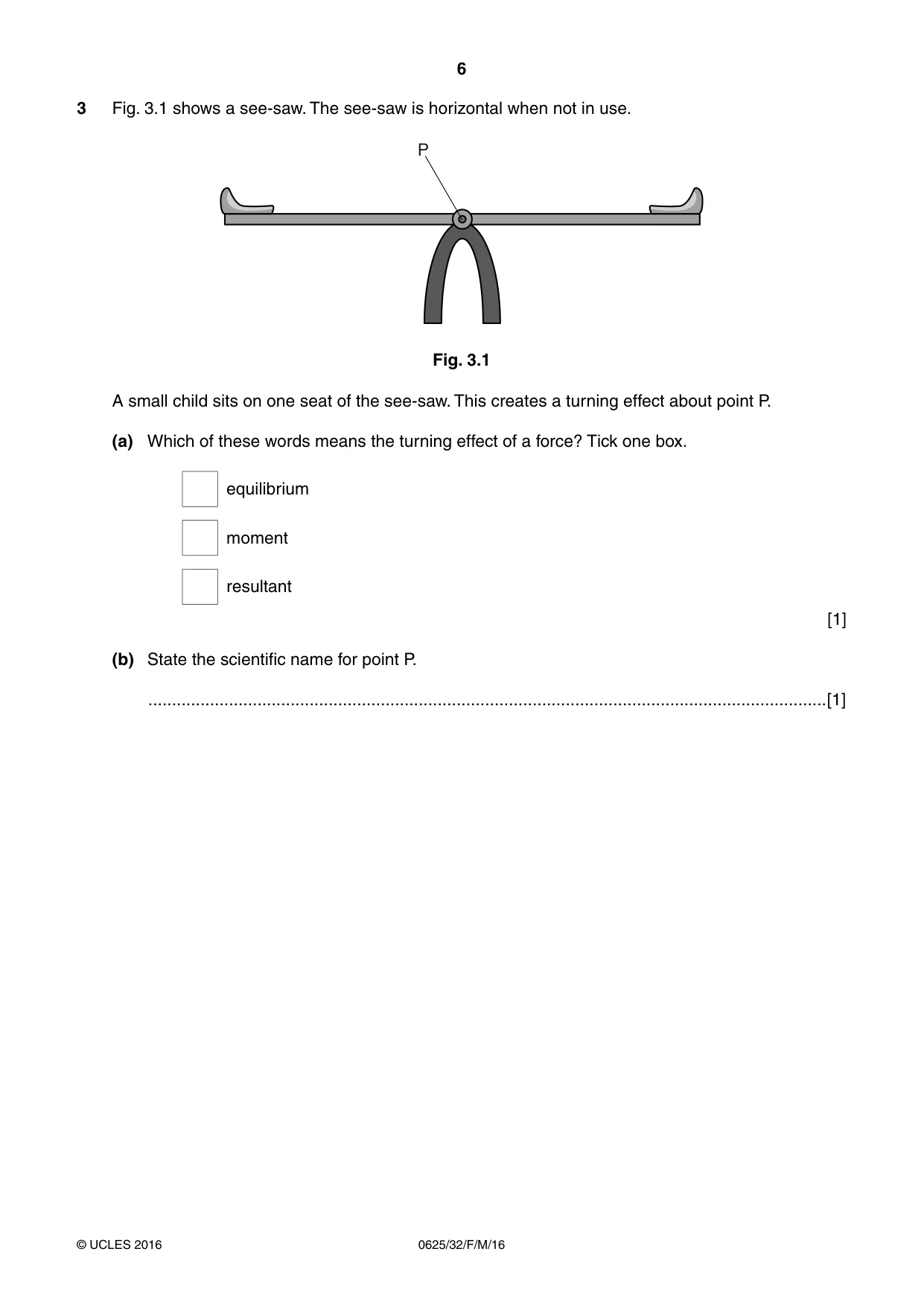
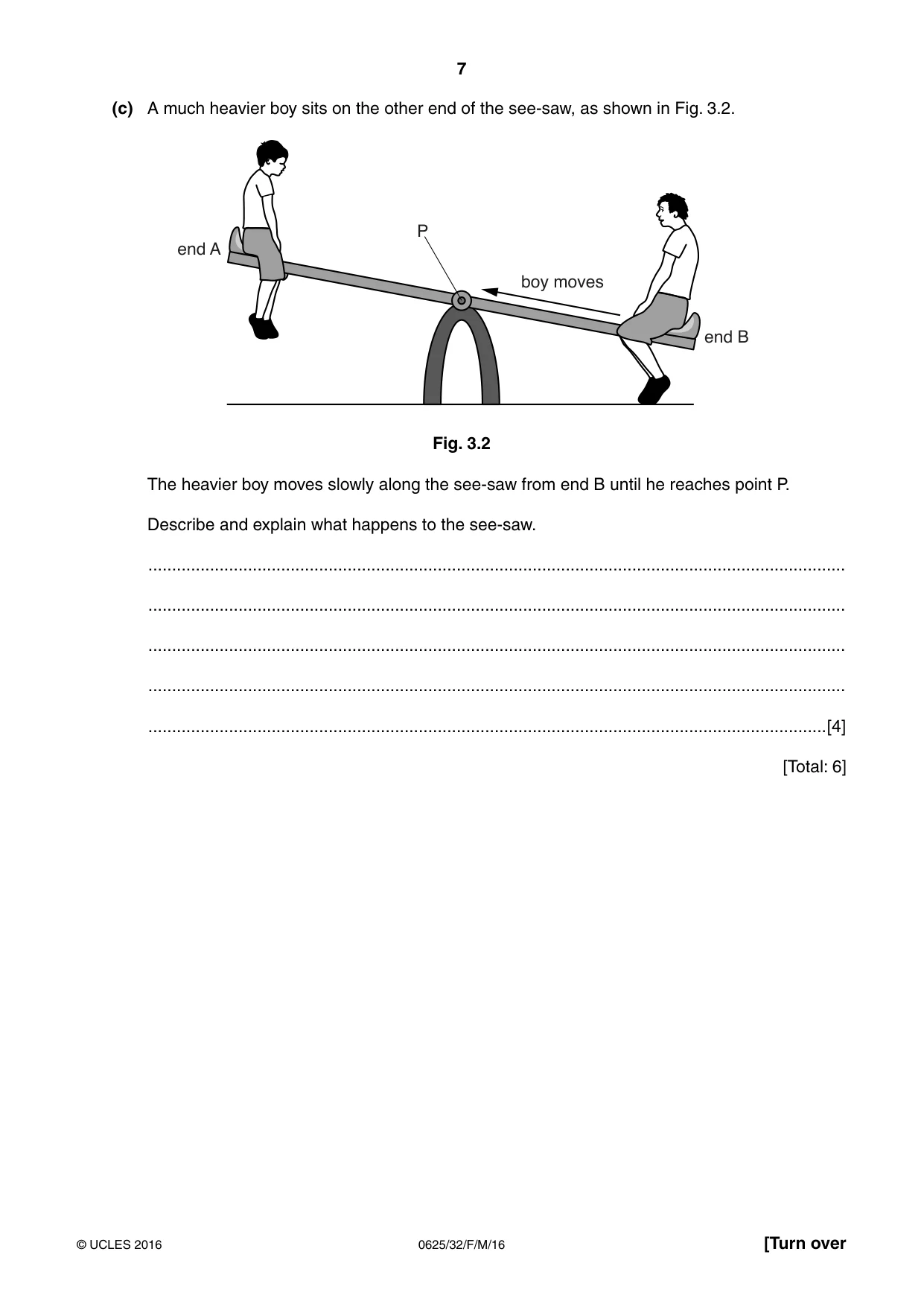
3 Fig. 3.1 shows a see-saw. The see-saw is horizontal when not in use. P Fig. 3.1 A small child sits on one seat of the see-saw. This creates a turning effect about point P. (a) Which of these words means the turning effect of a force? Tick one box. equilibrium moment resultant [1] (b) State the scientific name for point P. ...............................................................................................................................................[1] (c) A much heavier boy sits on the other end of the see-saw, as shown in Fig. 3.2. P end A boy moves end B Fig. 3.2 The heavier boy moves slowly along the see-saw from end B until he reaches point P. Describe and explain what happens to the see-saw. ................................................................................................................................................... ................................................................................................................................................... ................................................................................................................................................... ................................................................................................................................................... ...............................................................................................................................................[4] [Total: 6]
Mark scheme: 3 (a) middle box ticked – moment B1 (b) pivot / fulcrum B1 (c) any four from: B4 • (heavier) boy has greater force / weight / moment • when (heavier) boy lifts feet initially tips clockwise • as boy moves his (clockwise) moment (about P) becomes less • as distance (of boy’s weight) from the pivot decreases end B moves upward • see-saw level o.w.t.t.e (when) turning forces balanced / moments equal • then end A tips down as anticlockwise moment is greater [Total: 6]
Q4 · A balloon near a window on a warm sunny day
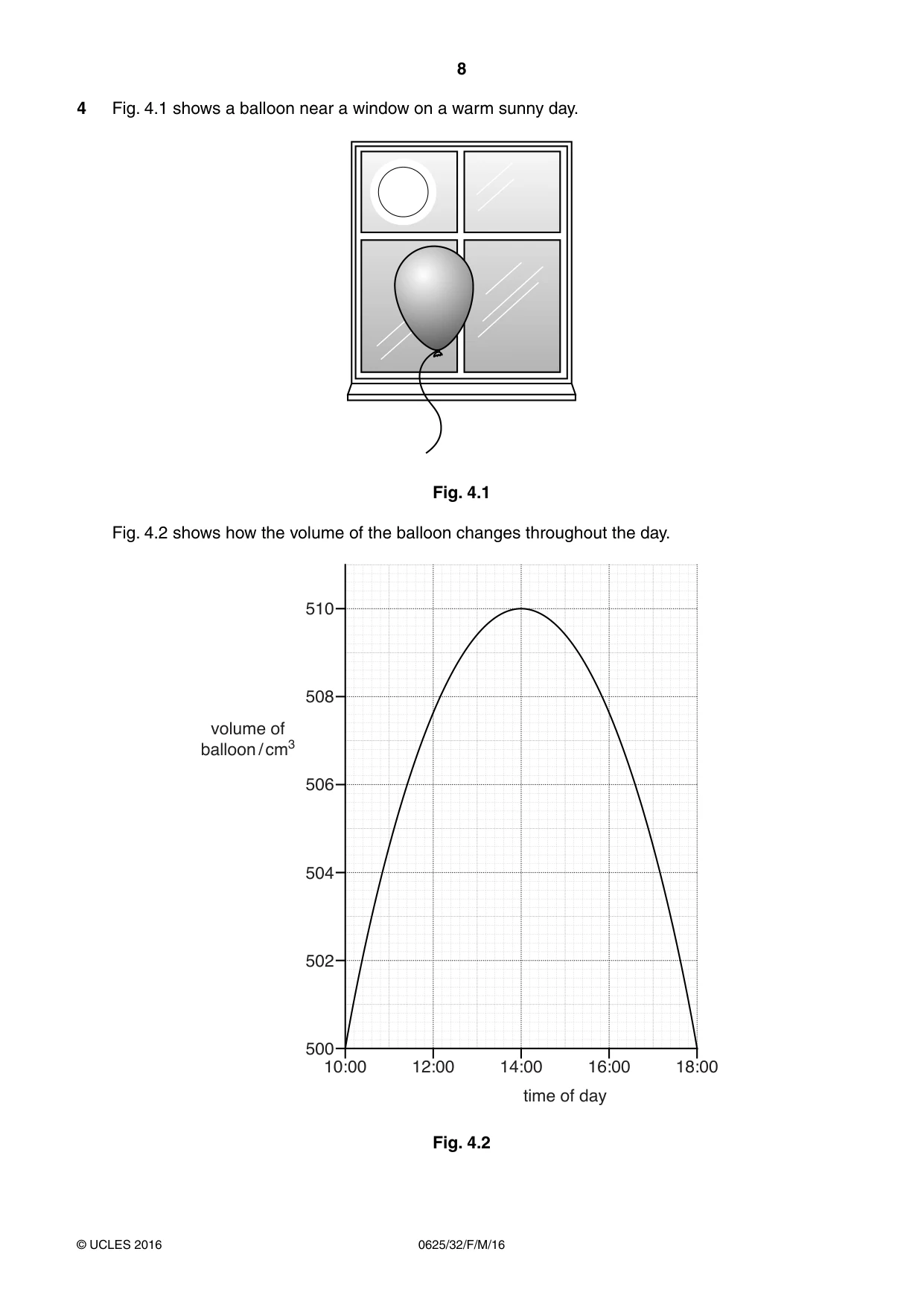
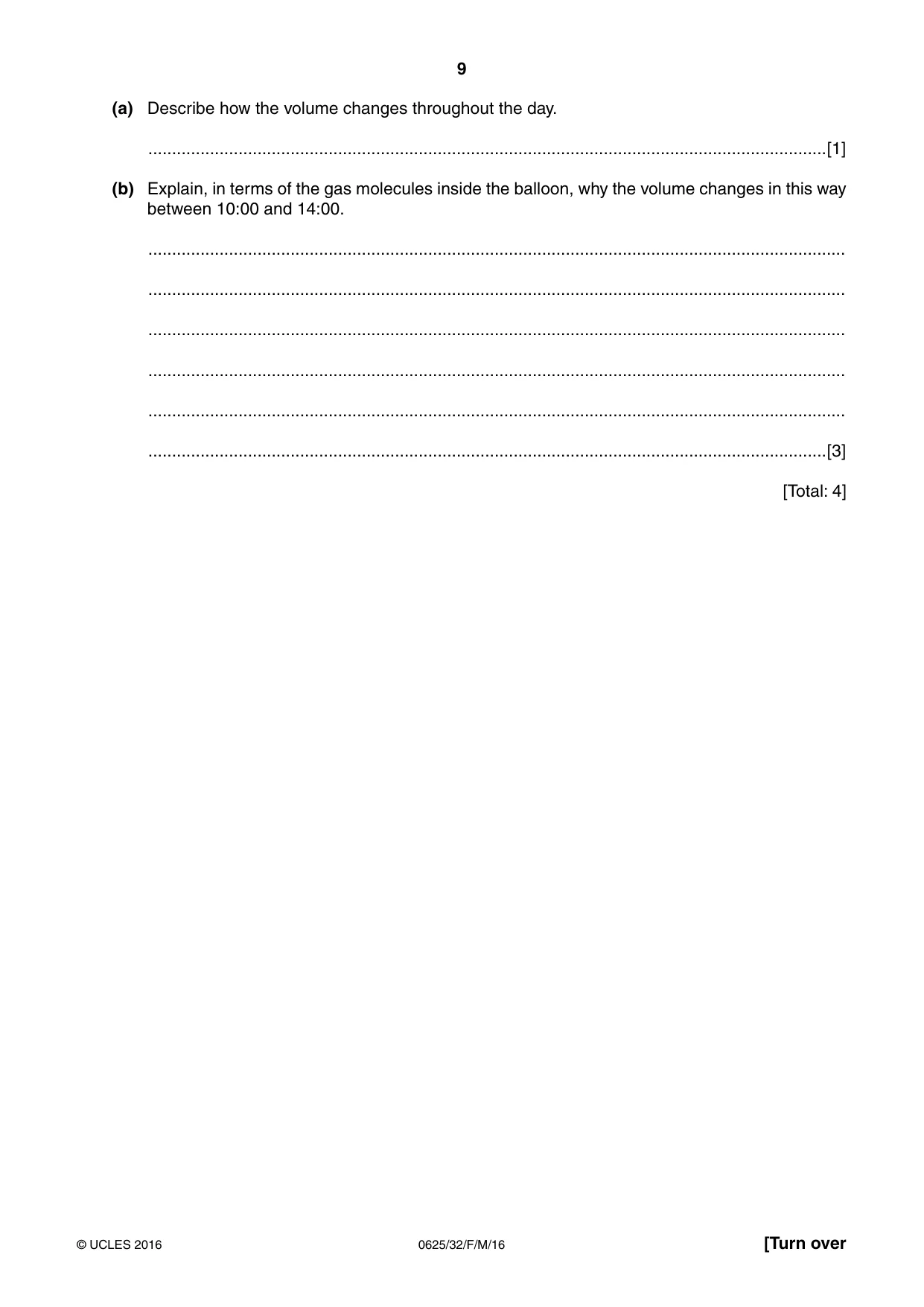
4 Fig. 4.1 shows a balloon near a window on a warm sunny day. Fig. 4.1 Fig. 4.2 shows how the volume of the balloon changes throughout the day. 510 508 volume of balloon / cm3 506 504 502 500 10:00 12:00 14:00 16:00 18:00 time of day Fig. 4.2 (a) Describe how the volume changes throughout the day. ...............................................................................................................................................[1] (b) Explain, in terms of the gas molecules inside the balloon, why the volume changes in this way between 10:00 and 14:00. ................................................................................................................................................... ................................................................................................................................................... ................................................................................................................................................... ................................................................................................................................................... ................................................................................................................................................... ...............................................................................................................................................[3] [Total: 4]
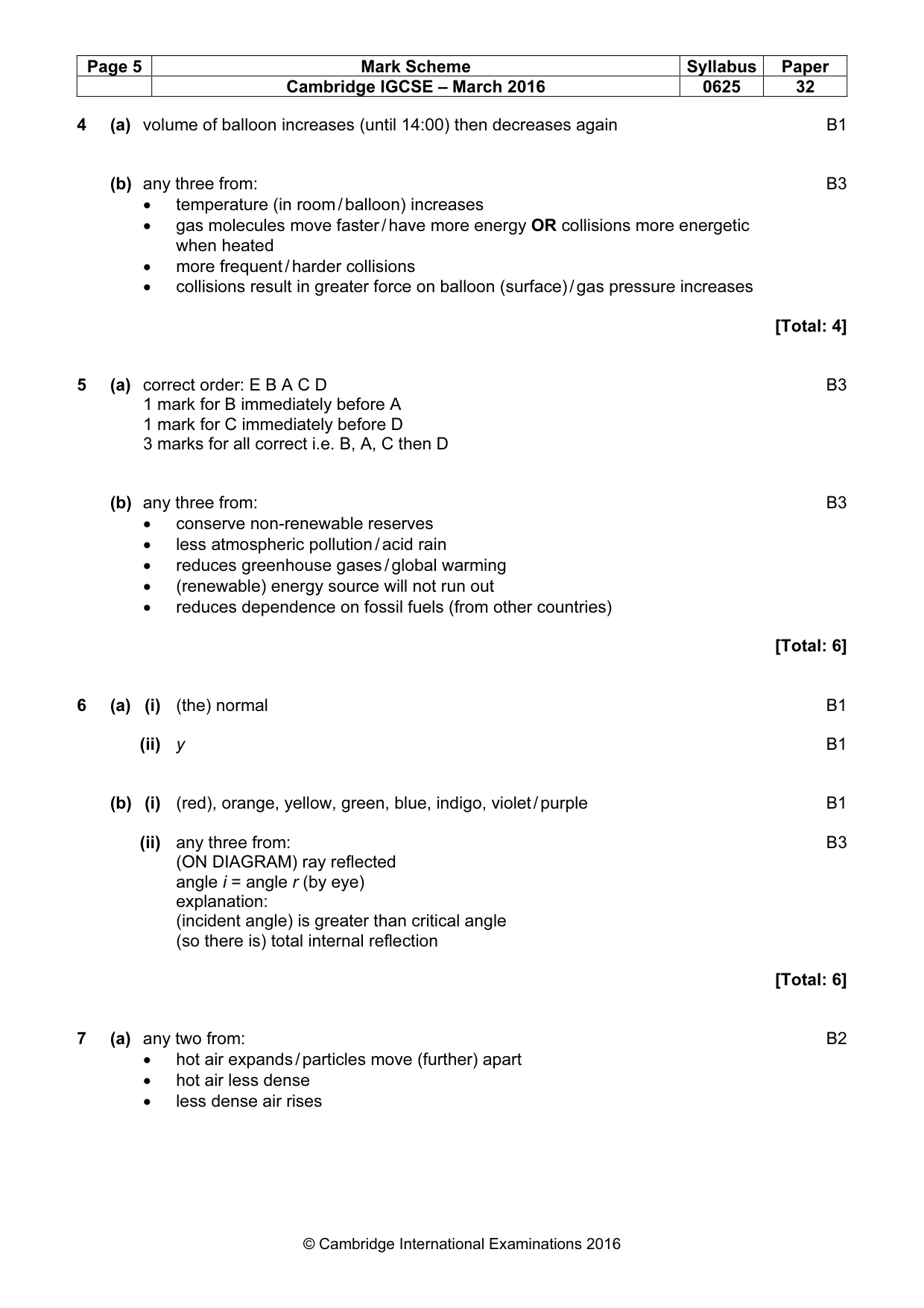
Mark scheme: 4 (a) volume of balloon increases (until 14:00) then decreases again B1 (b) any three from: B3 • temperature (in room / balloon) increases • gas molecules move faster / have more energy OR collisions more energetic when heated • more frequent / harder collisions • collisions result in greater force on balloon (surface) / gas pressure increases [Total: 4]
Question 5
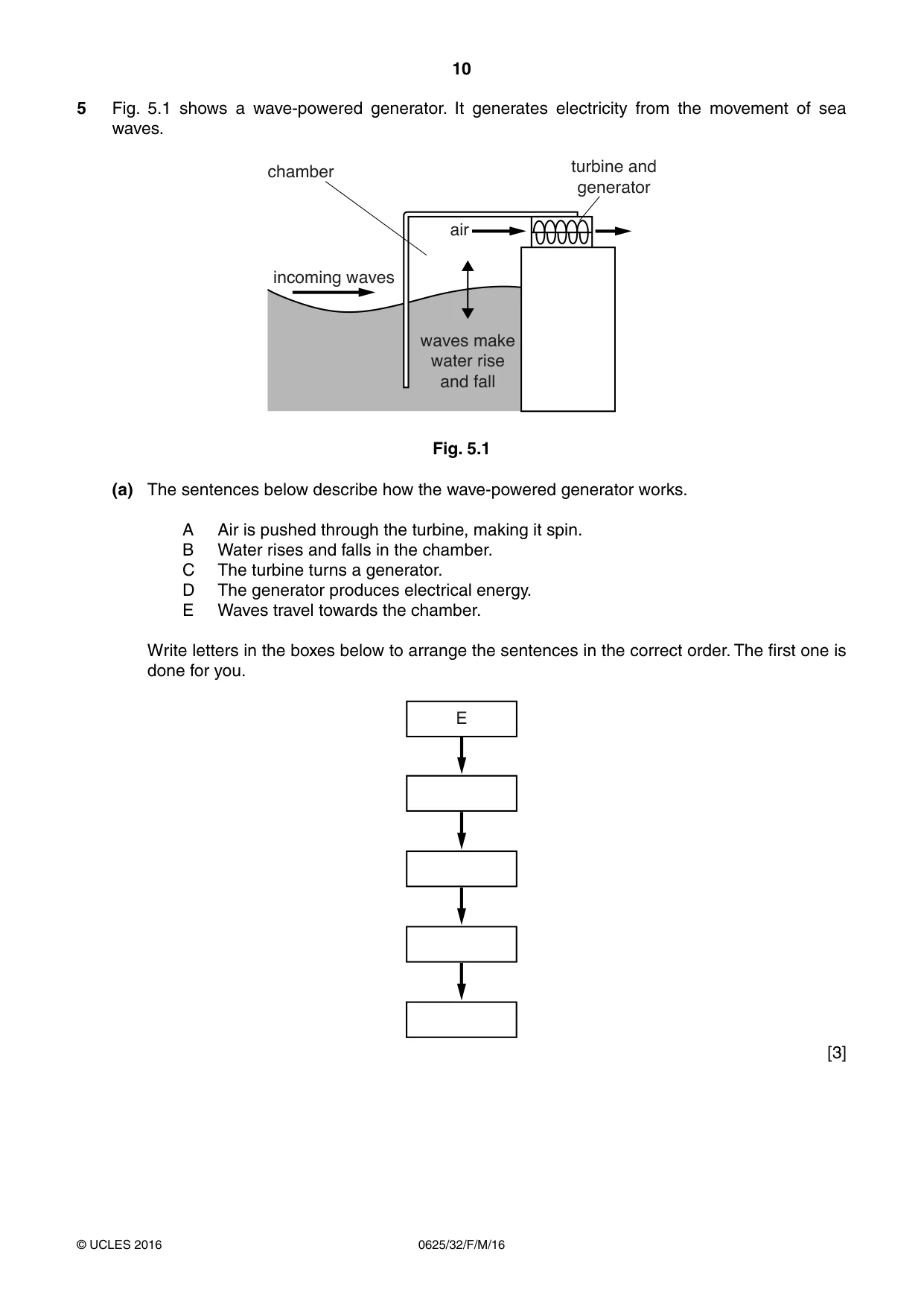
5 Fig. 5.1 shows a wave-powered generator. It generates electricity from the movement of sea waves. turbine and chamber generator air incoming waves waves make water rise and fall Fig. 5.1 (a) The sentences below describe how the wave-powered generator works. A Air is pushed through the turbine, making it spin. B Water rises and falls in the chamber. C The turbine turns a generator. D The generator produces electrical energy. E Waves travel towards the chamber. Write letters in the boxes below to arrange the sentences in the correct order. The first one is done for you. E [3] (b) More electricity needs to be generated from renewable sources instead of from burning fossil fuels. State three benefits of generating electricity from renewable sources rather than from fossil fuels. ................................................................................................................................................... ................................................................................................................................................... ................................................................................................................................................... ................................................................................................................................................... ...............................................................................................................................................[3] [Total: 6]
Mark scheme: 5 (a) correct order: E B A C D B3 1 mark for B immediately before A 1 mark for C immediately before D 3 marks for all correct i.e. B, A, C then D (b) any three from: B3 • conserve non-renewable reserves • less atmospheric pollution / acid rain • reduces greenhouse gases / global warming • (renewable) energy source will not run out • reduces dependence on fossil fuels (from other countries) [Total: 6]
Q6 · A plane mirror reflecting a ray of light
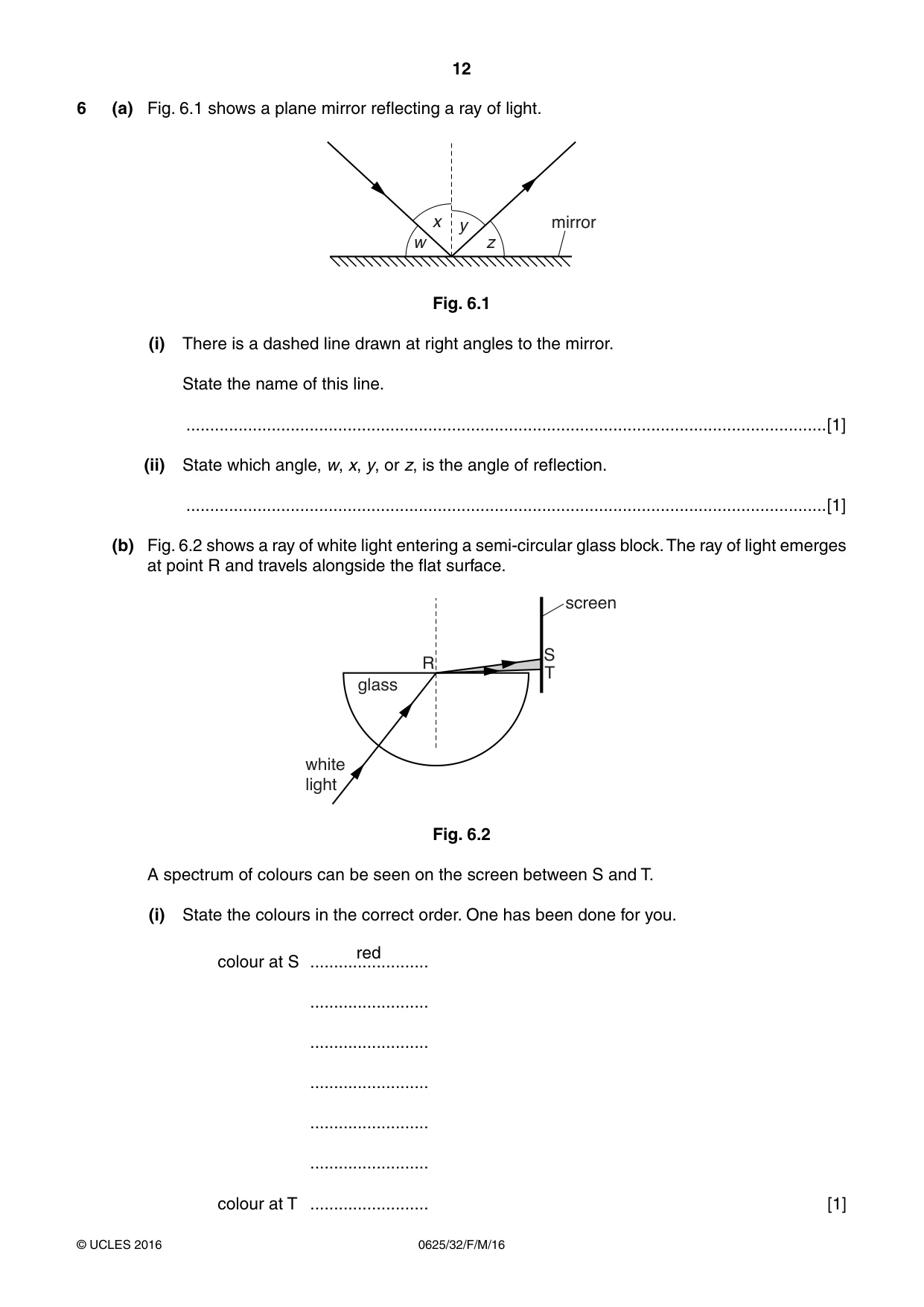
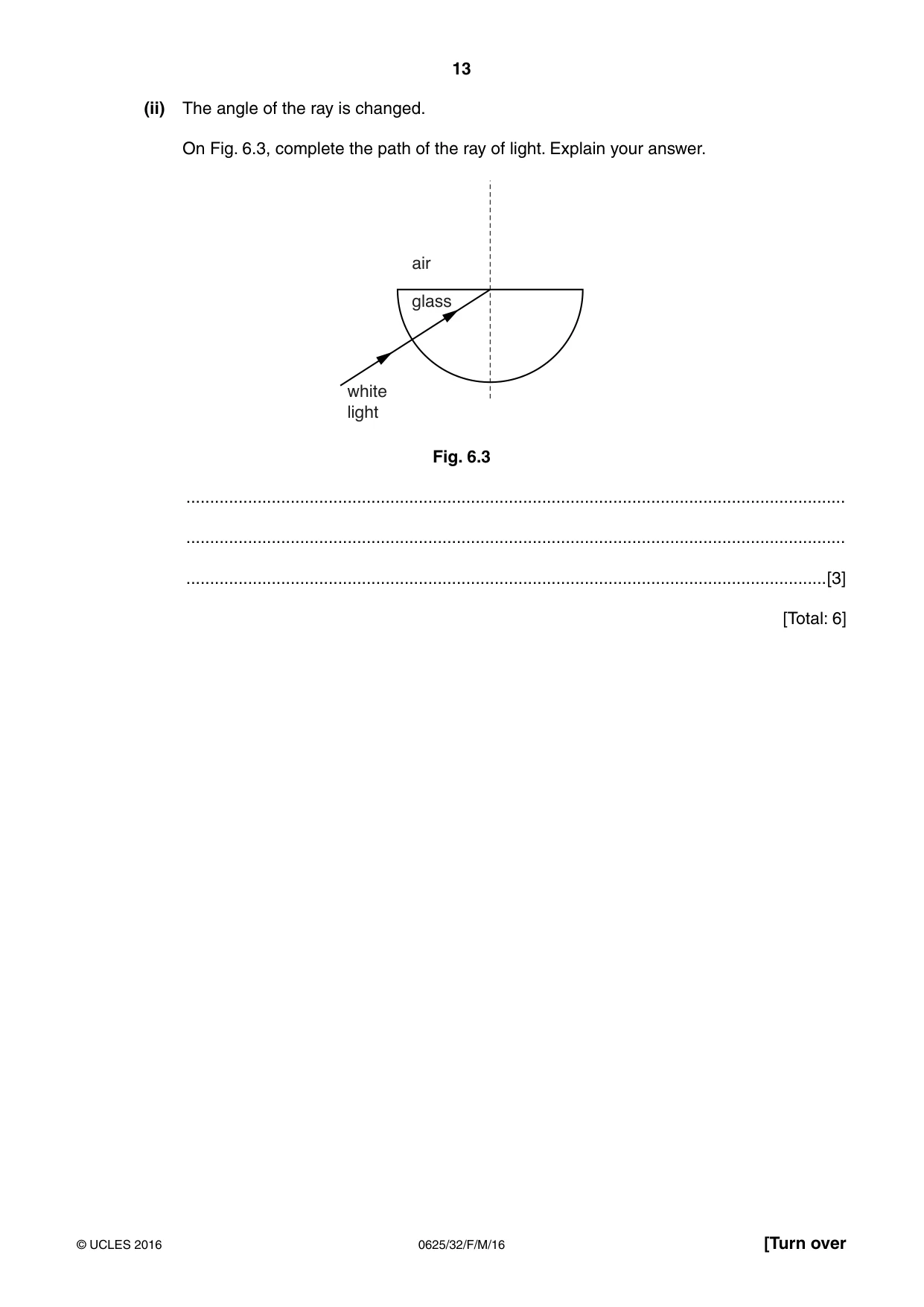
6 (a) Fig. 6.1 shows a plane mirror reflecting a ray of light. x y mirror w z Fig. 6.1 (i) There is a dashed line drawn at right angles to the mirror. State the name of this line. .......................................................................................................................................[1] (ii) State which angle, w, x, y, or z, is the angle of reflection. .......................................................................................................................................[1] (b) Fig. 6.2 shows a ray of white light entering a semi-circular glass block. The ray of light emerges at point R and travels alongside the flat surface. screen S R T glass white light Fig. 6.2 A spectrum of colours can be seen on the screen between S and T. (i) State the colours in the correct order. One has been done for you. red colour at S ......................... ......................... ......................... ......................... ......................... ......................... colour at T ......................... [1] (ii) The angle of the ray is changed. On Fig. 6.3, complete the path of the ray of light. Explain your answer. air glass white light Fig. 6.3 ........................................................................................................................................... ........................................................................................................................................... .......................................................................................................................................[3] [Total: 6]
Mark scheme: 6 (a) (i) (the) normal B1 (ii) y B1 (b) (i) (red), orange, yellow, green, blue, indigo, violet / purple B1 (ii) any three from: B3 (ON DIAGRAM) ray reflected angle i = angle r (by eye) explanation: (incident angle) is greater than critical angle (so there is) total internal reflection [Total: 6]
Q7 · A room with a heater
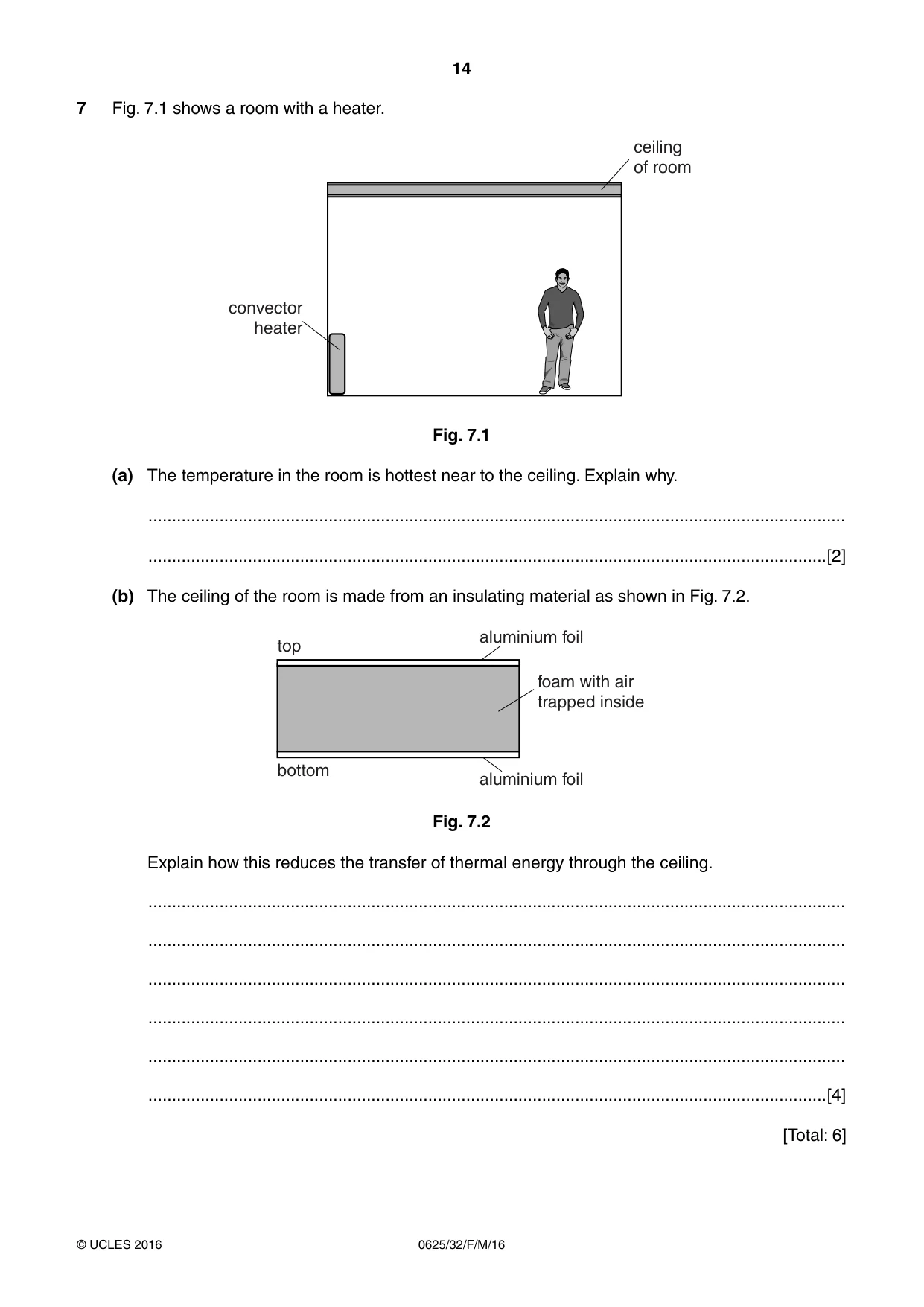
7 Fig. 7.1 shows a room with a heater. ceiling of room convector heater Fig. 7.1 (a) The temperature in the room is hottest near to the ceiling. Explain why. ................................................................................................................................................... ...............................................................................................................................................[2] (b) The ceiling of the room is made from an insulating material as shown in Fig. 7.2. aluminium foil top foam with air trapped inside bottom aluminium foil Fig. 7.2 Explain how this reduces the transfer of thermal energy through the ceiling. ................................................................................................................................................... ................................................................................................................................................... ................................................................................................................................................... ................................................................................................................................................... ................................................................................................................................................... ...............................................................................................................................................[4] [Total: 6]
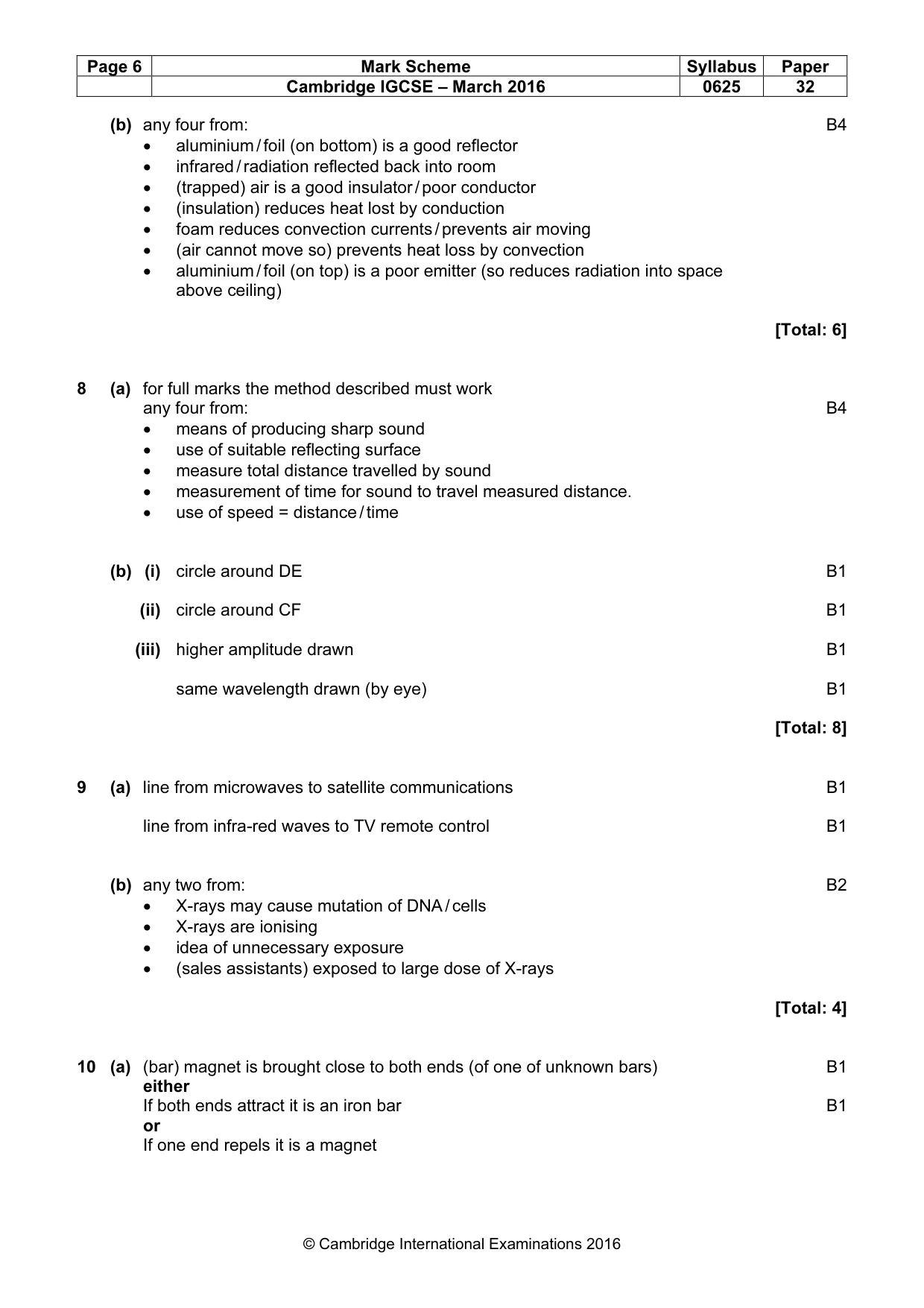
Mark scheme: 7 (a) any two from: B2 • hot air expands / particles move (further) apart • hot air less dense • less dense air rises (b) any four from: B4 • aluminium / foil (on bottom) is a good reflector • infrared / radiation reflected back into room • (trapped) air is a good insulator / poor conductor • (insulation) reduces heat lost by conduction • foam reduces convection currents / prevents air moving • (air cannot move so) prevents heat loss by convection • aluminium / foil (on top) is a poor emitter (so reduces radiation into space above ceiling) [Total: 6]
Q8 · Some students want to determine the speed of sound in air
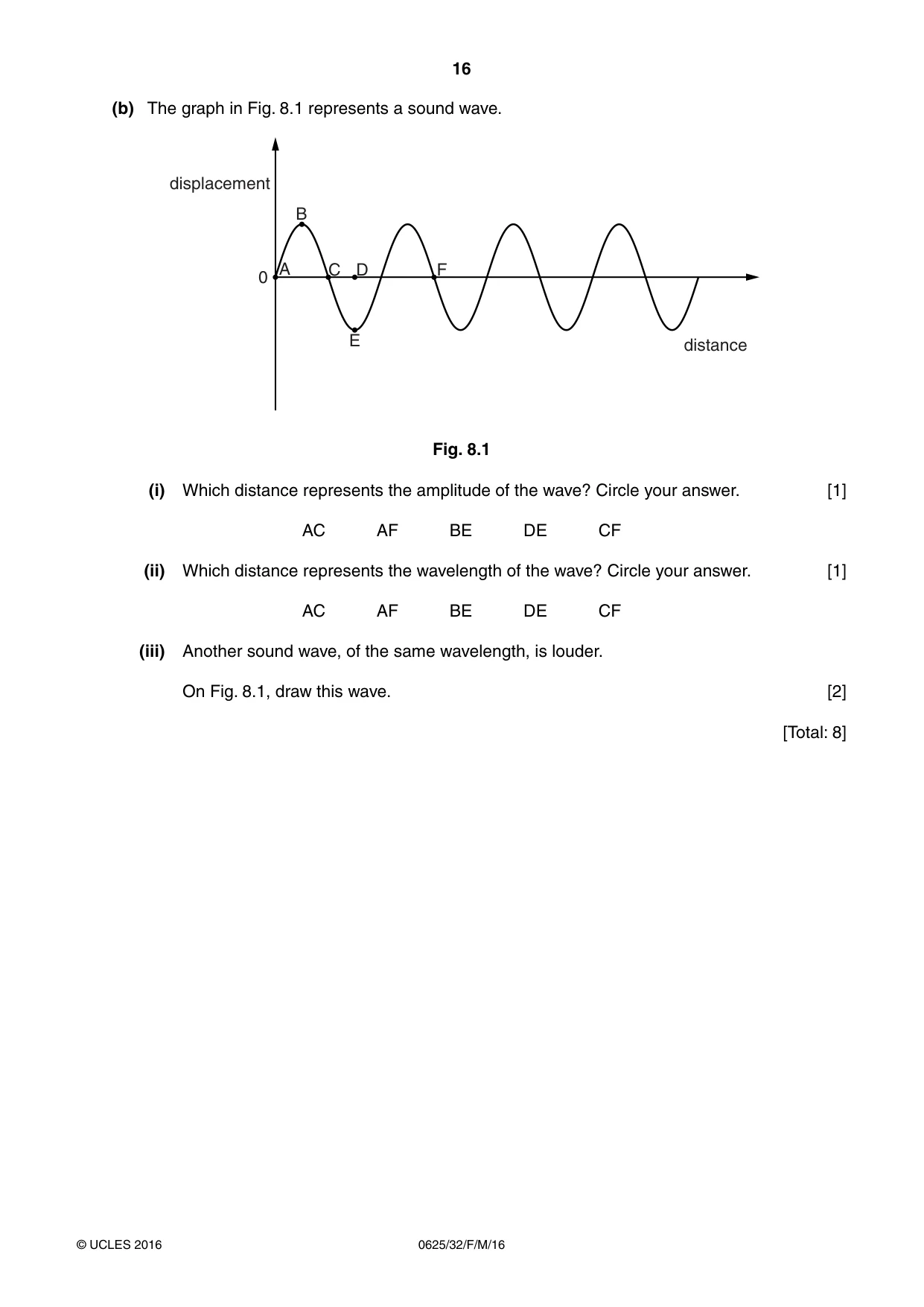
8 (a) Some students want to determine the speed of sound in air. Describe a method they could use. Include the measurements they must make. ................................................................................................................................................... ................................................................................................................................................... ................................................................................................................................................... ................................................................................................................................................... ................................................................................................................................................... ................................................................................................................................................... ................................................................................................................................................... ................................................................................................................................................... ................................................................................................................................................... ................................................................................................................................................... ................................................................................................................................................... ...............................................................................................................................................[4] (b) The graph in Fig. 8.1 represents a sound wave. displacement B A C D F 0 E distance Fig. 8.1 (i) Which distance represents the amplitude of the wave? Circle your answer. [1] AC AF BE DE CF (ii) Which distance represents the wavelength of the wave? Circle your answer. [1] AC AF BE DE CF (iii) Another sound wave, of the same wavelength, is louder. On Fig. 8.1, draw this wave. [2] [Total: 8]
Mark scheme: 8 (a) for full marks the method described must work any four from: B4 • means of producing sharp sound • use of suitable reflecting surface • measure total distance travelled by sound • measurement of time for sound to travel measured distance. • use of speed = distance / time (b) (i) circle around DE B1 (ii) circle around CF B1 (iii) higher amplitude drawn B1 same wavelength drawn (by eye) B1 [Total: 8]
Q9 · Waves from different regions of the electromagnetic spectrum have different uses
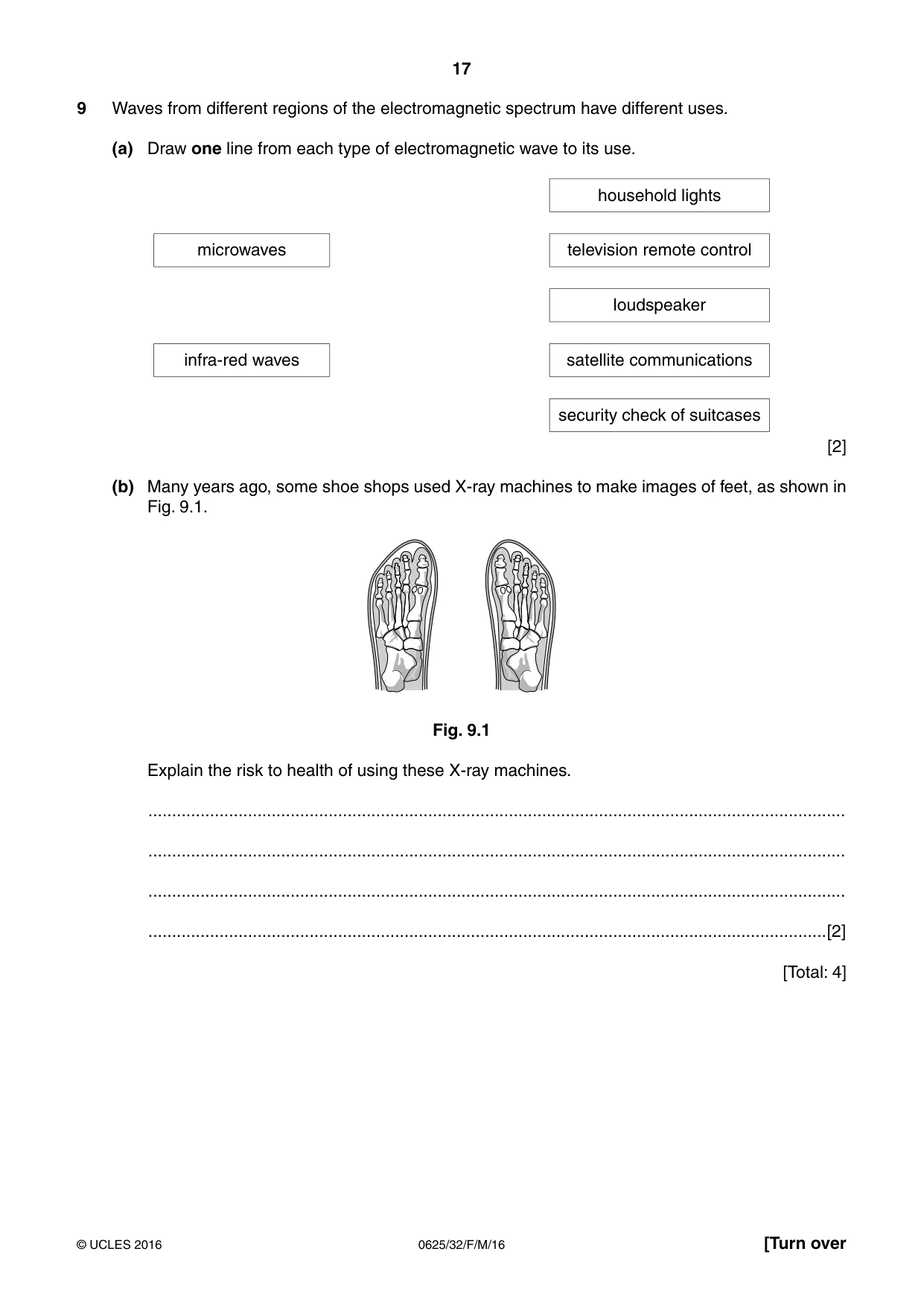
9 Waves from different regions of the electromagnetic spectrum have different uses. (a) Draw one line from each type of electromagnetic wave to its use. household lights microwaves television remote control loudspeaker infra-red waves satellite communications security check of suitcases [2] (b) Many years ago, some shoe shops used X-ray machines to make images of feet, as shown in Fig. 9.1. Fig. 9.1 Explain the risk to health of using these X-ray machines. ................................................................................................................................................... ................................................................................................................................................... ................................................................................................................................................... ...............................................................................................................................................[2] [Total: 4]
Mark scheme: 9 (a) line from microwaves to satellite communications B1 line from infra-red waves to TV remote control B1 (b) any two from: B2 • X-rays may cause mutation of DNA / cells • X-rays are ionising • idea of unnecessary exposure • (sales assistants) exposed to large dose of X-rays [Total: 4]
Q10 · A student uses a bar magnet to distinguish between an unlabelled magnet and an iron bar
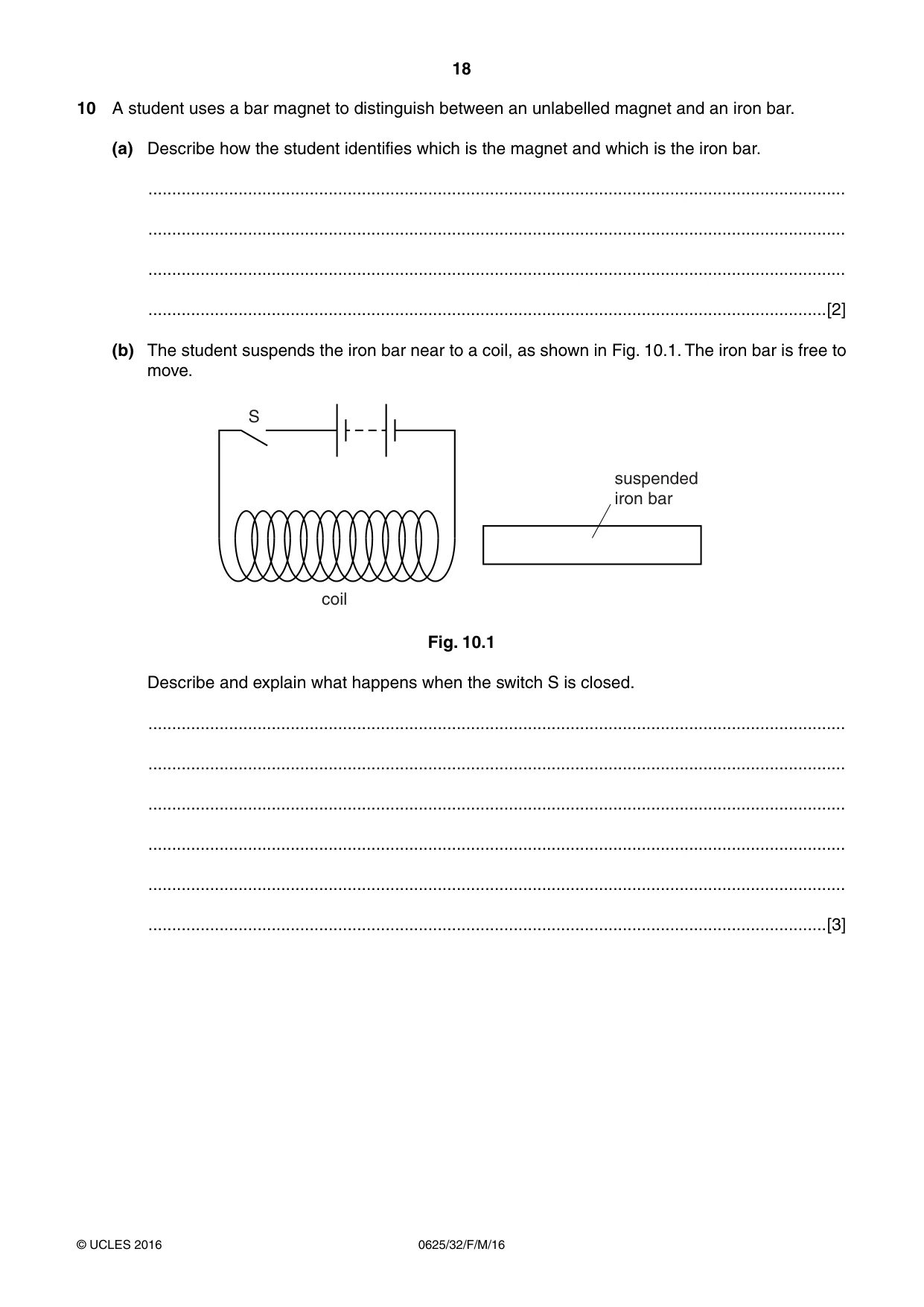
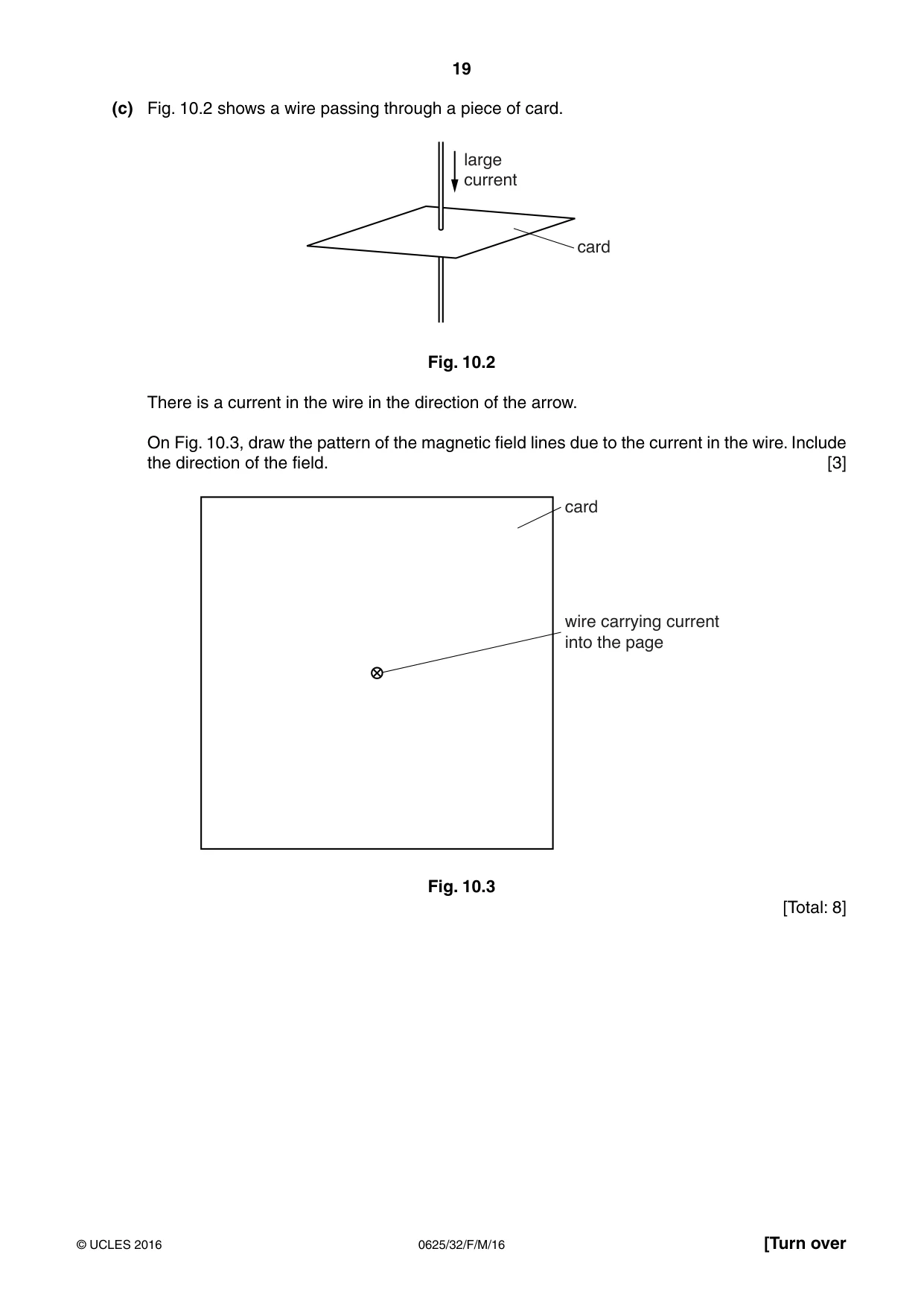
10 A student uses a bar magnet to distinguish between an unlabelled magnet and an iron bar. (a) Describe how the student identifies which is the magnet and which is the iron bar. ................................................................................................................................................... ................................................................................................................................................... ................................................................................................................................................... ...............................................................................................................................................[2] (b) The student suspends the iron bar near to a coil, as shown in Fig. 10.1. The iron bar is free to move. S suspended iron bar coil Fig. 10.1 Describe and explain what happens when the switch S is closed. ................................................................................................................................................... ................................................................................................................................................... ................................................................................................................................................... ................................................................................................................................................... ................................................................................................................................................... ...............................................................................................................................................[3] (c) Fig. 10.2 shows a wire passing through a piece of card. large current card Fig. 10.2 There is a current in the wire in the direction of the arrow. On Fig. 10.3, draw the pattern of the magnetic field lines due to the current in the wire. Include the direction of the field. [3] card wire carrying current into the page Fig. 10.3 [Total: 8]
Mark scheme: 10 (a) (bar) magnet is brought close to both ends (of one of unknown bars) B1 either If both ends attract it is an iron bar B1 or If one end repels it is a magnet (b) iron bar moves toward coil B1 any two from: • current in coil • coil becomes an electromagnet B2 • soft iron attracted to coil • iron bar becomes (an induced) magnet (with opposite pole nearest coil) (c) at least one circle centred on wire (by eye) M1 two or more circles centred on wire (by eye) B1 arrow showing clockwise direction on at least one circle B1 [Total: 8]
Q11 · A student changes the current in a filament lamp
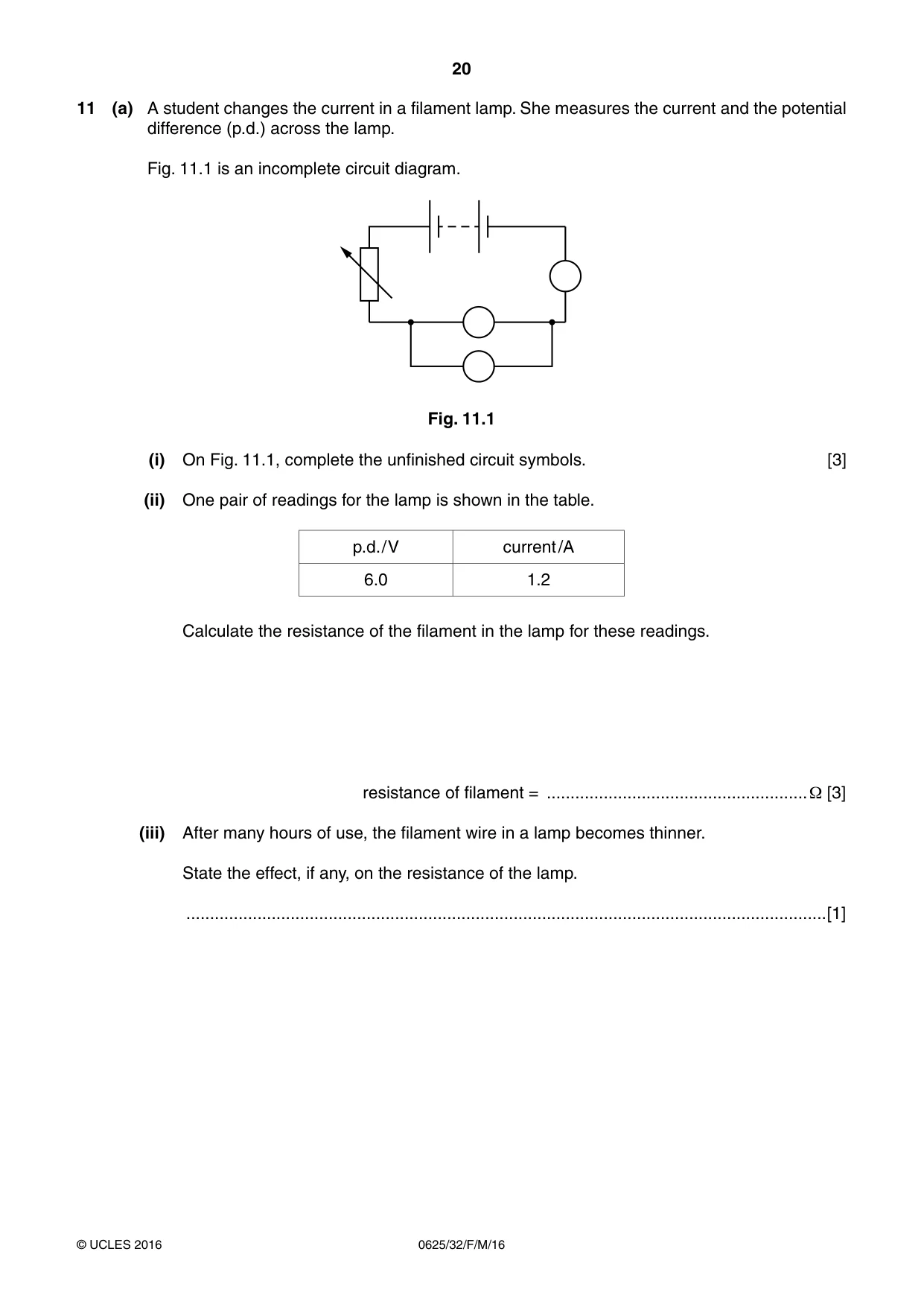
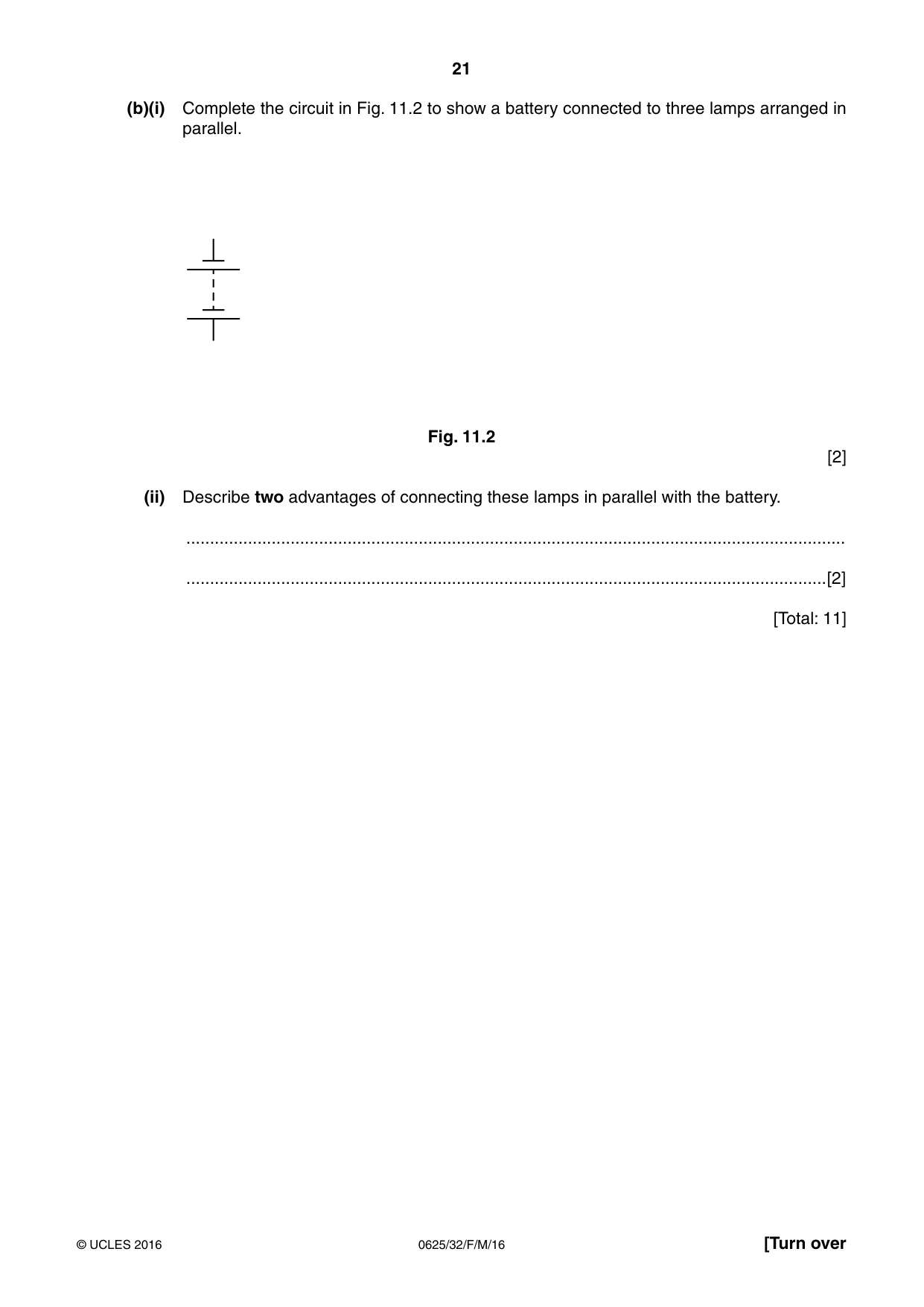
11 (a) A student changes the current in a filament lamp. She measures the current and the potential difference (p.d.) across the lamp. Fig. 11.1 is an incomplete circuit diagram. Fig. 11.1 (i) On Fig. 11.1, complete the unfinished circuit symbols. [3] (ii) One pair of readings for the lamp is shown in the table. p.d. / V current /A 6.0 1.2 Calculate the resistance of the filament in the lamp for these readings. resistance of filament = .......................................................Ω [3] (iii) After many hours of use, the filament wire in a lamp becomes thinner. State the effect, if any, on the resistance of the lamp. .......................................................................................................................................[1] (b)(i) Complete the circuit in Fig. 11.2 to show a battery connected to three lamps arranged in parallel. Fig. 11.2 [2] (ii) Describe two advantages of connecting these lamps in parallel with the battery. ........................................................................................................................................... .......................................................................................................................................[2] [Total: 11]
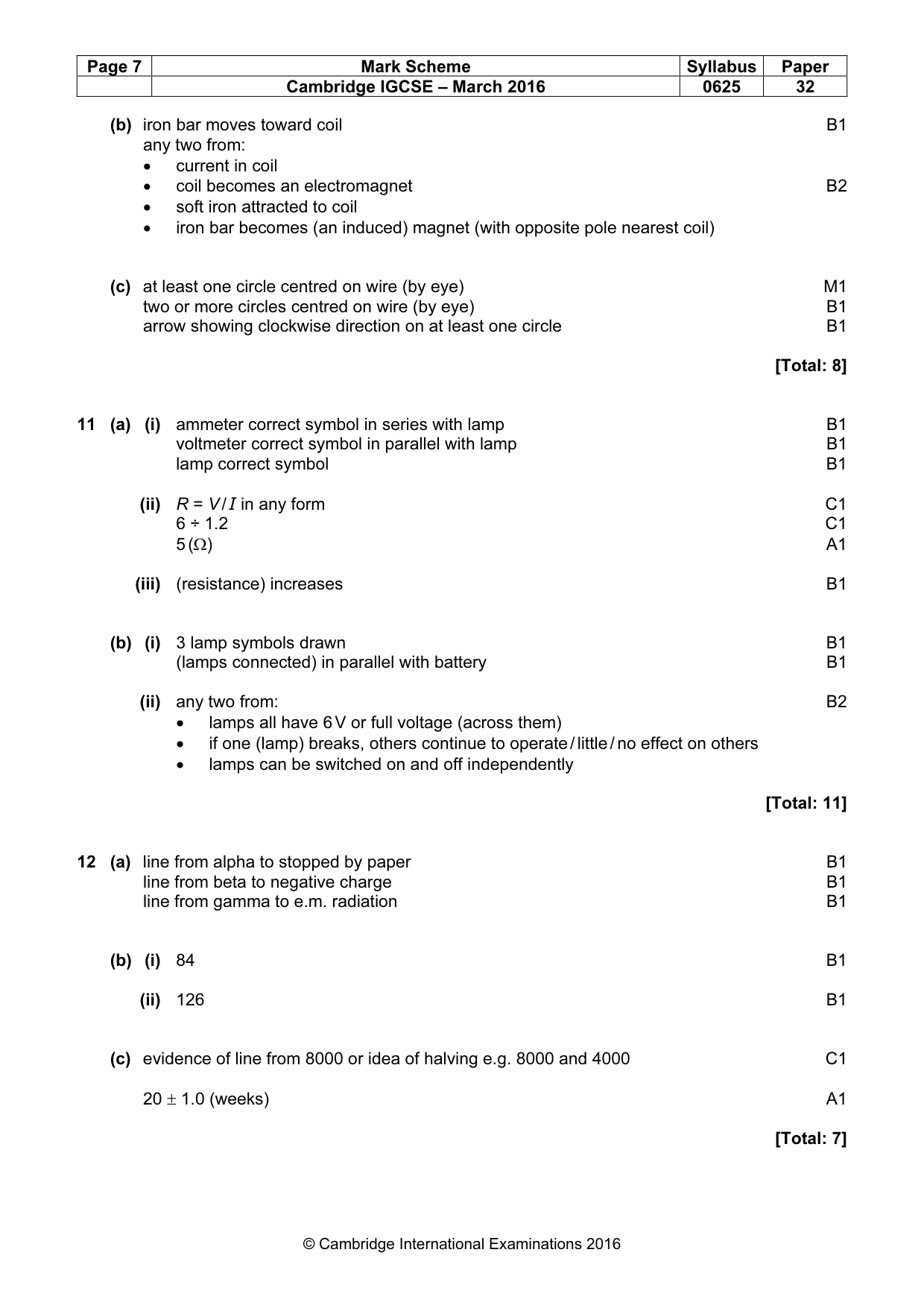
Mark scheme: 11 (a) (i) ammeter correct symbol in series with lamp B1 voltmeter correct symbol in parallel with lamp B1 lamp correct symbol B1 (ii) R = V / I in any form C1 6 ÷ 1.2 C1 5 (Ω) A1 (iii) (resistance) increases B1 (b) (i) 3 lamp symbols drawn B1 (lamps connected) in parallel with battery B1 (ii) any two from: B2 • lamps all have 6 V or full voltage (across them) • if one (lamp) breaks, others continue to operate / little / no effect on others • lamps can be switched on and off independently [Total: 11]
Q12 · Three types of ionising radiation are alpha, beta and gamma
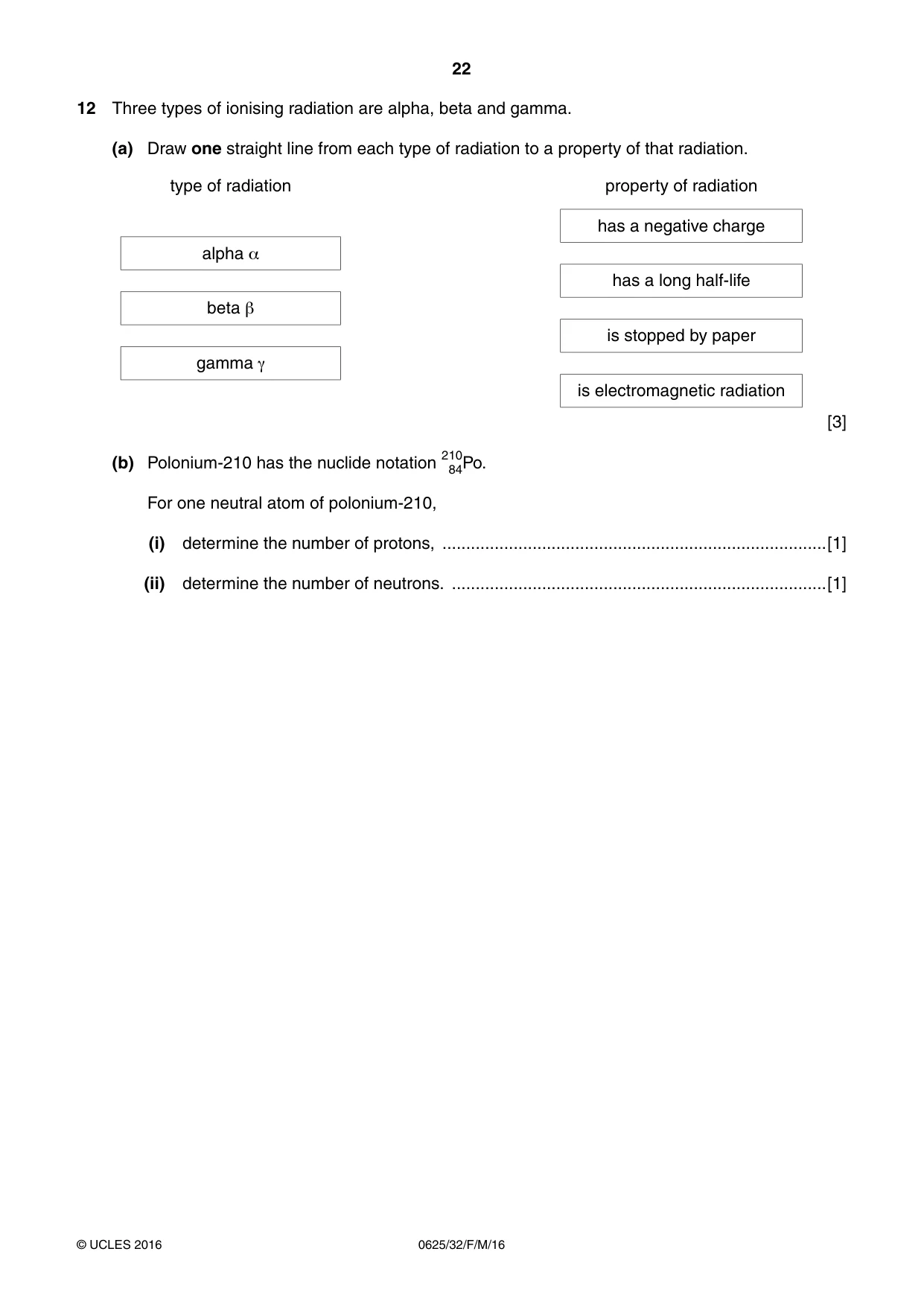
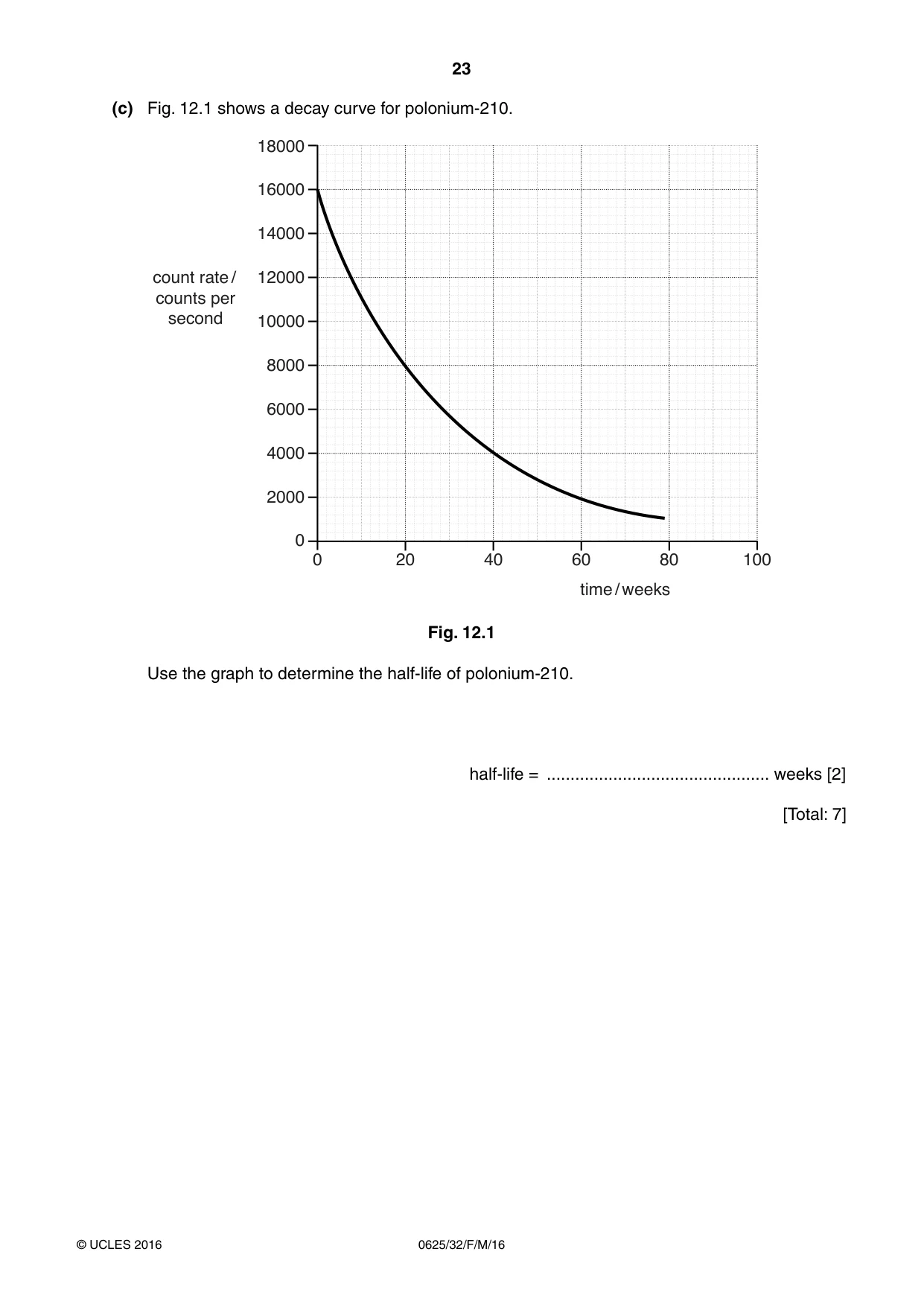
12 Three types of ionising radiation are alpha, beta and gamma. (a) Draw one straight line from each type of radiation to a property of that radiation. type of radiation property of radiation has a negative charge alpha α has a long half-life beta β is stopped by paper gamma γ is electromagnetic radiation [3] 210 (b) Polonium-210 has the nuclide notation 84Po. For one neutral atom of polonium-210, (i) determine the number of protons, .................................................................................[1] (ii) determine the number of neutrons. ...............................................................................[1] (c) Fig. 12.1 shows a decay curve for polonium-210. 18000 16000 14000 count rate / 12000 counts per second 10000 8000 6000 4000 2000 0 0 20 40 60 80 100 time / weeks Fig. 12.1 Use the graph to determine the half-life of polonium-210. half-life = ............................................... weeks [2] [Total: 7]
Mark scheme: 12 (a) line from alpha to stopped by paper B1 line from beta to negative charge B1 line from gamma to e.m. radiation B1 (b) (i) 84 B1 (ii) 126 B1 (c) evidence of line from 8000 or idea of halving e.g. 8000 and 4000 C1 20 ± 1.0 (weeks) A1 [Total: 7]
What was in this paper
The subtopics covered by these 12 questions, and how many questions each got. Open one in a new tab to see every Cambridge question on it.
What you needed in this session
Cambridge’s own grade thresholds for 2016 Feb/March, Paper 3 · Variant 2. A higher threshold means an easier paper — the bar moves with how the cohort did.