Questions as text
Q1 · Chlorine dioxide is produced on a large scale as it is used for bleaching paper pulp 9701/11 Oct/Nov 2005
9 Chlorine dioxide is produced on a large scale as it is used for bleaching paper pulp. It is made by the following reaction. 2Cl O (aq) + SO2(g) → 2Cl O2(g) + SO − 2 4 (aq) − 3 How do the oxidation numbers of chlorine and sulphur change in this reaction? chlorine sulphur A decreases by 1 increases by 1 B decreases by 1 increases by 2 C decreases by 3 increases by 1 D decreases by 3 increases by 2
1 marks
Answer: B
This question in 9701/11 Oct/Nov 2005
Q2 · Chlorine reacts with hot concentrated aqueous sodium hydroxide according to the equation… 9701/11 Oct/Nov 2005
36 Chlorine reacts with hot concentrated aqueous sodium hydroxide according to the equation below. 3Cl2(g) + 6NaOH(aq) → NaCl O3(aq) + 5NaCl (aq) + 3H2O(l) Which conclusions can be drawn from this information? 1 The oxidation state of the chlorine in one of the products is +5. 2 The chlorine undergoes disproportionation. 3 The sodium hydroxide acts as a reducing agent.
1 marks
Answer: B
This question in 9701/11 Oct/Nov 2005
Q3 · The nickel-cadmium rechargeable battery is based upon the following overall reaction 9701/11 May/June 2006
9 The nickel-cadmium rechargeable battery is based upon the following overall reaction. Cd + 2NiOOH + 4H2O → Cd(OH)2 + 2Ni(OH)2.H2O What is the oxidation number of nickel at the beginning and at the end of the reaction? beginning end A +1.5 +2 B +2 +3 C +3 +2 D +3 +4
1 marks
Answer: C
This question in 9701/11 May/June 2006
Q4 · What happens when chlorine is bubbled through aqueous potassium iodide? 9701/11 May/June 2006
17 What happens when chlorine is bubbled through aqueous potassium iodide? A Chlorine is oxidised to chloride ions. B Hydrochloric acid is formed. C Iodide ions are oxidised to iodine. D Potassium iodide is reduced to iodine.
1 marks
Answer: C
This question in 9701/11 May/June 2006
Q5 · Aldehydes and ketones are carbonyl compounds 9701/11 May/June 2006
29 Aldehydes and ketones are carbonyl compounds. Which of them react both with NaBH4 and with Tollens’ reagent? A both aldehydes and ketones B aldehydes only C ketones only D neither aldehydes nor ketones
1 marks
Answer: B
This question in 9701/11 May/June 2006
Q6 · Ammonia and chlorine react in the gas phase 9701/11 May/June 2006
36 Ammonia and chlorine react in the gas phase. 8NH3 + 3Cl2 → N2 + 6NH4Cl Which statements are correct? 1 Ammonia behaves as a reducing agent. 2 Ammonia behaves as a base. 3 The oxidation number of the hydrogen changes.
1 marks
Answer: B
This question in 9701/11 May/June 2006
Q7 · In some early paintings, lead(II) carbonate was used as a white pigment 9701/11 Oct/Nov 2006
10 In some early paintings, lead(II) carbonate was used as a white pigment. In the 19th century hydrogen sulphide from burning coal reacted with this pigment to form black lead(II) sulphide, PbS. The original colour of the painting may be restored by carefully treating the area with dilute hydrogen peroxide, producing lead(II) sulphate which is also white. What is the role of the hydrogen peroxide? A catalyst B oxidising agent C reducing agent D solvent
1 marks
Answer: B
This question in 9701/11 Oct/Nov 2006
Q8 · What happens when chlorine is bubbled through aqueous sodium hydroxide solution? 9701/11 Oct/Nov 2006
35 What happens when chlorine is bubbled through aqueous sodium hydroxide solution? 1 In cold solution, ClO–(aq) ions are formed. 2 In hot solution, ClO3 –(aq) ions are formed. 3 Disproportionation of chlorine occurs in both cold and hot aqueous solutions.
1 marks
Answer: A
This question in 9701/11 Oct/Nov 2006
Q9 · The first stage in the manufacture of nitric acid is the oxidation of ammonia by oxygen 9701/11 Oct/Nov 2007
3 The first stage in the manufacture of nitric acid is the oxidation of ammonia by oxygen. wNH3(g) + xO2(g) → yNO(g) + zH2O(g) Which values for w, x, y and z are needed to balance the equation? w x y z A 4 5 4 6 B 4 6 4 5 C 5 6 5 4 D 6 5 6 4
1 marks
Answer: A
This question in 9701/11 Oct/Nov 2007
Q10 · In an experiment, 50.0 cm3 of a 0.10 mol dm–3 solution of a metallic salt reacted exactly… 9701/11 Oct/Nov 2007
9 In an experiment, 50.0 cm3 of a 0.10 mol dm–3 solution of a metallic salt reacted exactly with 25.0 cm3 of 0.10 mol dm–3 aqueous sodium sulphite. The half-equation for oxidation of sulphite ion is shown below. SO 3 (aq) + H2O(I) → SO 2 − 2 4 (aq) + 2H+(aq) + 2e– − If the original oxidation number of the metal in the salt was +3, what would be the new oxidation number of the metal? A +1 B +2 C +4 D +5
1 marks
Answer: B
This question in 9701/11 Oct/Nov 2007
Q11 · Carbon monoxide burns readily in oxygen to form carbon dioxide 9701/11 Oct/Nov 2007
32 Carbon monoxide burns readily in oxygen to form carbon dioxide. What can be deduced from this information? 1 The +4 oxidation state of carbon is more stable than the +2 state. 2 The standard enthalpy change of formation of carbon dioxide is more negative than that of carbon monoxide. 3 The value of the equilibrium constant for the reaction, 2CO(g) + O2(g) 2CO2(g), is likely to be high.
1 marks
Answer: A
This question in 9701/11 Oct/Nov 2007
Q12 · When the yellow liquid NCl3 is stirred into aqueous sodium hydroxide, the reaction that… 9701/11 May/June 2008
36 When the yellow liquid NCl3 is stirred into aqueous sodium hydroxide, the reaction that occurs can be represented by the following equation. 2NCl3(l) + 6NaOH(aq) → N2(g) + 3NaCl (aq) + 3NaOCl (aq) + 3H2O(l) What will be the result of this reaction? 1 The nitrogen is oxidised. 2 A bleaching solution remains after the reaction. 3 The final solution gives a precipitate with acidified silver nitrate.
1 marks
Answer: C
This question in 9701/11 May/June 2008
Q13 · In some fireworks there is a reaction between powdered aluminium and powdered barium… 9701/11 May/June 2009
11 In some fireworks there is a reaction between powdered aluminium and powdered barium nitrate in which heat is evolved and an unreactive gas is produced. What is the equation for this reaction? A 2Al + Ba(NO3)2 → Al2O3 + BaO + 2NO B 4Al + 4Ba(NO3)2 → 2Al2O3 + 4Ba(NO2)2 + O2 C 10Al + 3Ba(NO3)2 → 5Al2O3 + 3BaO + 3N2 D 10Al + 18Ba(NO3)2 → 10Al(NO3)3 + 18BaO + 3N2
1 marks
Answer: C
This question in 9701/11 May/June 2009
Q14 · Which conversion involves a reduction of chromium? 9701/11 Oct/Nov 2009
7 Which conversion involves a reduction of chromium? A CrO 2 − → CrO3 4 B CrO 2 − → Cr 2O 2 − 4 7 C CrO2Cl2 → CrO 2 − 4 D CrO2Cl2 → Cr2O3
1 marks
Answer: D
This question in 9701/11 Oct/Nov 2009
Q15 · Photochromic glass, used for sunglasses, darkens when exposed to bright light and becomes… 9701/11 Oct/Nov 2009
11 Photochromic glass, used for sunglasses, darkens when exposed to bright light and becomes more transparent again when the light is less bright. The depth of colour of the glass is related to the concentration of silver atoms. The following reactions are involved. reaction 1 Ag+ + Cl – Ag + Cl reaction 2 Cu+ + Cl → Cu2+ + Cl – reaction 3 Cu2+ + Ag → Cu+ + Ag+ Which statement about these reactions is correct? A Cu+ and Cu2+ ions act as catalysts. B Cu+ ions act as an oxidising agent in reaction 2. C Reaction 2 is the one in which light is absorbed. D Ag+ ions are oxidised in reaction 1.
1 marks
Answer: A
This question in 9701/11 Oct/Nov 2009
Q16 · Which statements about the reaction of solid sodium bromide with concentrated sulfuric… 9701/11 Oct/Nov 2009
36 Which statements about the reaction of solid sodium bromide with concentrated sulfuric acid are correct? 1 Hydrogen bromide is a product of the reaction. 2 Sulfuric acid is oxidised to sulfur dioxide. 3 Bromide ions are reduced to bromine.
1 marks
Answer: D
This question in 9701/11 Oct/Nov 2009
Q17 · Ammonium nitrate, NH4NO3, can decompose explosively when heated 9701/11 May/June 2010
6 Ammonium nitrate, NH4NO3, can decompose explosively when heated. NH4NO3 → N2O + 2H2O What are the changes in the oxidation numbers of the two nitrogen atoms in NH4NO3 when this reaction proceeds? A –2, –4 B +2, +6 C +4, –6 D +4, –4
1 marks
Answer: D
This question in 9701/11 May/June 2010
Q18 · How does concentrated sulfuric acid behave when it reacts with sodium chloride? 9701/11 May/June 2010
13 How does concentrated sulfuric acid behave when it reacts with sodium chloride? A as an acid only B as an acid and oxidising agent C as an oxidising agent only D as a reducing agent only
1 marks
Answer: A
This question in 9701/11 May/June 2010
Q19 · Which reactions are redox reactions? 9701/11 May/June 2010
32 Which reactions are redox reactions? 1 CaBr2 + 2H2SO4 → CaSO4 + Br2 + SO2 + 2H2O 2 CaBr2 + 2H3PO4 → Ca(H2PO4)2 + 2HBr 3 CaBr2 + 2AgNO3 → Ca(NO3)2 + 2AgBr
1 marks
Answer: D
This question in 9701/11 May/June 2010
Q20 · Sodium hydrogensulfide, NaSH, is used to remove hair from animal hides 9701/11 May/June 2010
33 Sodium hydrogensulfide, NaSH, is used to remove hair from animal hides. Which statements about the SH– ion are correct? 1 It contains 18 electrons. 2 Three lone pairs of electrons surround the sulfur atom. 3 Sulfur has an oxidation state of +2.
1 marks
Answer: B
This question in 9701/11 May/June 2010
Q21 · In a car engine, non-metallic element X forms a pollutant oxide Y 9701/11 May/June 2010
35 In a car engine, non-metallic element X forms a pollutant oxide Y. Further oxidation of Y to Z occurs in the atmosphere. In this further oxidation, 1 mol of Y reacts with ½ mol of gaseous oxygen. What can X be? 1 carbon 2 nitrogen 3 sulfur
1 marks
Answer: C
This question in 9701/11 May/June 2010
Q22 · Sulfur dioxide and sulfites are used in food preservation 9701/11 May/June 2010
36 Sulfur dioxide and sulfites are used in food preservation. Why are they used for this purpose? 1 They are reducing agents so retard the oxidation of food. 2 They inhibit the growth of aerobic bacteria. 3 They react with NO2(g) converting it to NO(g).
1 marks
Answer: B
This question in 9701/11 May/June 2010
Q23 · Ammonium nitrate, NH4NO3, can decompose explosively when heated 9701/12 May/June 2010
6 Ammonium nitrate, NH4NO3, can decompose explosively when heated. NH4NO3 → N2O + 2H2O What are the changes in the oxidation numbers of the two nitrogen atoms in NH4NO3 when this reaction proceeds? A –2, –4 B +2, +6 C +4, –6 D +4, –4
1 marks
Answer: D
This question in 9701/12 May/June 2010
Q24 · How does concentrated sulfuric acid behave when it reacts with sodium chloride? 9701/12 May/June 2010
14 How does concentrated sulfuric acid behave when it reacts with sodium chloride? A as an acid only B as an acid and oxidising agent C as an oxidising agent only D as a reducing agent only
1 marks
Answer: A
This question in 9701/12 May/June 2010
Q25 · Sodium hydrogensulfide, NaSH, is used to remove hair from animal hides 9701/12 May/June 2010
31 Sodium hydrogensulfide, NaSH, is used to remove hair from animal hides. Which statements about the SH– ion are correct? 1 It contains 18 electrons. 2 Three lone pairs of electrons surround the sulfur atom. 3 Sulfur has an oxidation state of +2.
1 marks
Answer: B
This question in 9701/12 May/June 2010
Q26 · Which reactions are redox reactions? 9701/12 May/June 2010
33 Which reactions are redox reactions? 1 CaBr2 + 2H2SO4 → CaSO4 + Br2 + SO2 + 2H2O 2 CaBr2 + 2H3PO4 → Ca(H2PO4)2 + 2HBr 3 CaBr2 + 2AgNO3 → Ca(NO3)2 + 2AgBr
1 marks
Answer: D
This question in 9701/12 May/June 2010
Q27 · In a car engine, non-metallic element X forms a pollutant oxide Y 9701/12 May/June 2010
35 In a car engine, non-metallic element X forms a pollutant oxide Y. Further oxidation of Y to Z occurs in the atmosphere. In this further oxidation, 1 mol of Y reacts with ½ mol of gaseous oxygen. What can X be? 1 carbon 2 nitrogen 3 sulfur
1 marks
Answer: C
This question in 9701/12 May/June 2010
Q28 · Sulfur dioxide and sulfites are used in food preservation 9701/12 May/June 2010
36 Sulfur dioxide and sulfites are used in food preservation. Why are they used for this purpose? 1 They are reducing agents so retard the oxidation of food. 2 They inhibit the growth of aerobic bacteria. 3 They react with NO2(g) converting it to NO(g).
1 marks
Answer: B
This question in 9701/12 May/June 2010
Q29 · Ammonium nitrate, NH4NO3, can decompose explosively when heated 9701/13 May/June 2010
7 Ammonium nitrate, NH4NO3, can decompose explosively when heated. NH4NO3 → N2O + 2H2O What are the changes in the oxidation numbers of the two nitrogen atoms in NH4NO3 when this reaction proceeds? A –2, –4 B +2, +6 C +4, –6 D +4, –4
1 marks
Answer: D
This question in 9701/13 May/June 2010
Q30 · How does concentrated sulfuric acid behave when it reacts with sodium chloride? 9701/13 May/June 2010
11 How does concentrated sulfuric acid behave when it reacts with sodium chloride? A as an acid only B as an acid and oxidising agent C as an oxidising agent only D as a reducing agent only
1 marks
Answer: A
This question in 9701/13 May/June 2010
Q31 · Which reactions are redox reactions? 9701/13 May/June 2010
31 Which reactions are redox reactions? 1 CaBr2 + 2H2SO4 → CaSO4 + Br2 + SO2 + 2H2O 2 CaBr2 + 2H3PO4 → Ca(H2PO4)2 + 2HBr 3 CaBr2 + 2AgNO3 → Ca(NO3)2 + 2AgBr
1 marks
Answer: D
This question in 9701/13 May/June 2010
Q32 · Sodium hydrogensulfide, NaSH, is used to remove hair from animal hides 9701/13 May/June 2010
32 Sodium hydrogensulfide, NaSH, is used to remove hair from animal hides. Which statements about the SH– ion are correct? 1 It contains 18 electrons. 2 Three lone pairs of electrons surround the sulfur atom. 3 Sulfur has an oxidation state of +2.
1 marks
Answer: B
This question in 9701/13 May/June 2010
Q33 · In a car engine, non-metallic element X forms a pollutant oxide Y 9701/13 May/June 2010
34 In a car engine, non-metallic element X forms a pollutant oxide Y. Further oxidation of Y to Z occurs in the atmosphere. In this further oxidation, 1 mol of Y reacts with ½ mol of gaseous oxygen. What can X be? 1 carbon 2 nitrogen 3 sulfur
1 marks
Answer: C
This question in 9701/13 May/June 2010
Q34 · Sulfur dioxide and sulfites are used in food preservation 9701/13 May/June 2010
36 Sulfur dioxide and sulfites are used in food preservation. Why are they used for this purpose? 1 They are reducing agents so retard the oxidation of food. 2 They inhibit the growth of aerobic bacteria. 3 They react with NO2(g) converting it to NO(g).
1 marks
Answer: B
This question in 9701/13 May/June 2010
Q35 · Sulfur dioxide, SO2, is added to wines to prevent oxidation of ethanol by air 9701/11 Oct/Nov 2010
4 Sulfur dioxide, SO2, is added to wines to prevent oxidation of ethanol by air. To determine the amount of SO2, a sample of wine is titrated with iodine, I2. In this reaction, one mole of SO2 is oxidised by one mole of I2. What is the change in oxidation number of sulfur in this reaction? A +2 to +4 B +2 to +6 C +4 to +5 D +4 to +6
1 marks
Answer: D
This question in 9701/11 Oct/Nov 2010
Q36 · Ammonium sulfate in nitrogenous fertilisers in the soil can be slowly oxidised by air… 9701/11 Oct/Nov 2010
15 Ammonium sulfate in nitrogenous fertilisers in the soil can be slowly oxidised by air producing sulfuric acid, nitric acid and water. How many moles of oxygen gas are needed to oxidise completely one mole of ammonium sulfate? A 1 B 2 C 3 D 4
1 marks
Answer: D
This question in 9701/11 Oct/Nov 2010
Q37 · Sulfur dioxide is used to bleach wood pulp in the production of paper 9701/11 Oct/Nov 2010
18 Sulfur dioxide is used to bleach wood pulp in the production of paper. It is also used as an additive in the production of jam and marmalade, often in the form of sulfite compounds. When it is present in quantities greater than 10 mg / kg it is required to be listed as an ingredient of the jam. Why is sulfur dioxide added to jam? A It is a bleaching agent and removes the undesirable colours from the fruit used in the jam. B It is a preservative that destroys unwanted bacteria and enzymes. C It is a reducing agent and removes the acids that give the jam a sharp taste. D It is an acidic gas and maintains the pH of the jam at a suitable value to give it a sharp taste.
1 marks
Answer: B
This question in 9701/11 Oct/Nov 2010
Q38 · Disproportionation is the term used to describe a reaction in which a reactant is… 9701/11 Oct/Nov 2010
35 Disproportionation is the term used to describe a reaction in which a reactant is simultaneously both oxidised and reduced. To which incomplete equations does the term disproportionation apply? 1 Cl2(g) + 2OH–(aq) → H2O(l) + Cl –(aq) + …… 2 3Cl2(g) + 6OH–(aq) → 3H2O(l) + ClO3 –(aq) + …… 3 2NO2(g) + H2O(l) → HNO3(aq) + ……
1 marks
Answer: A
This question in 9701/11 Oct/Nov 2010
Q39 · In aqueous solution, the acid HIO disproportionates according to the following equation… 9701/12 Oct/Nov 2010
13 In aqueous solution, the acid HIO disproportionates according to the following equation where m, n, p and q are simple whole numbers in their lowest ratios. mHIO → nI2 + pHIO3 + qH2O This equation can be balanced using oxidation numbers. What are the values for n and p? n p A 1 2 B 2 1 C 4 1 D 4 2
1 marks
Answer: B
This question in 9701/12 Oct/Nov 2010
Q40 · What happens when chlorine is bubbled through aqueous potassium iodide? 9701/12 Oct/Nov 2010
16 What happens when chlorine is bubbled through aqueous potassium iodide? A Chlorine is oxidised to chlorate(V) ions. B Chlorine is oxidised to chloride ions. C Iodide ions are oxidised to iodine. D There is no observable reaction.
1 marks
Answer: C
This question in 9701/12 Oct/Nov 2010
Q41 · Which pair of reagents will take part in a redox reaction? 9701/12 Oct/Nov 2010
26 Which pair of reagents will take part in a redox reaction? A CH3CH2OH + concentrated H2SO4 B CH3CHO + Tollens’ reagent C CH3CO2C2H5 + dilute H2SO4 D CH3COCH3 + Fehling’s solution
1 marks
Answer: B
This question in 9701/12 Oct/Nov 2010
Q42 · Zirconium, Zr, proton number 40, is a metal which is used in corrosion-resistant alloys 9701/12 Oct/Nov 2010
32 Zirconium, Zr, proton number 40, is a metal which is used in corrosion-resistant alloys. Zirconium metal is extracted from the oxide ZrO2 by the following sequence of reactions. reaction 1 ZrO2 + 2Cl 2 + 2C → ZrCl 4 + 2CO reaction 2 ZrCl 4 + 2Mg → Zr + 2MgCl 2 Which statements about this extraction process are correct? 1 Carbon in reaction 1 behaves as a reducing agent. 2 Magnesium in reaction 2 behaves as a reducing agent. 3 Chlorine in reaction 1 behaves as a reducing agent.
1 marks
Answer: B
This question in 9701/12 Oct/Nov 2010
Q43 · Sulfur dioxide, SO2, is added to wines to prevent oxidation of ethanol by air 9701/13 Oct/Nov 2010
4 Sulfur dioxide, SO2, is added to wines to prevent oxidation of ethanol by air. To determine the amount of SO2, a sample of wine is titrated with iodine, I2. In this reaction, one mole of SO2 is oxidised by one mole of I2. What is the change in oxidation number of sulfur in this reaction? A +2 to +4 B +2 to +6 C +4 to +5 D +4 to +6
1 marks
Answer: D
This question in 9701/13 Oct/Nov 2010
Q44 · Ammonium sulfate in nitrogenous fertilisers in the soil can be slowly oxidised by air… 9701/13 Oct/Nov 2010
15 Ammonium sulfate in nitrogenous fertilisers in the soil can be slowly oxidised by air producing sulfuric acid, nitric acid and water. How many moles of oxygen gas are needed to oxidise completely one mole of ammonium sulfate? A 1 B 2 C 3 D 4
1 marks
Answer: D
This question in 9701/13 Oct/Nov 2010
Q45 · Disproportionation is the term used to describe a reaction in which a reactant is… 9701/13 Oct/Nov 2010
34 Disproportionation is the term used to describe a reaction in which a reactant is simultaneously both oxidised and reduced. To which incomplete equations does the term disproportionation apply? 1 Cl2(g) + 2OH–(aq) → H2O(l) + Cl –(aq) + …… 2 3Cl2(g) + 6OH–(aq) → 3H2O(l) + ClO3 –(aq) + …… 3 2NO2(g) + H2O(l) → HNO3(aq) + ……
1 marks
Answer: A
This question in 9701/13 Oct/Nov 2010
Q46 · In flooded soils, like those used for rice cultivation, the oxygen content is low 9701/11 May/June 2011
2 In flooded soils, like those used for rice cultivation, the oxygen content is low. In such soils, anaerobic bacteria cause the loss of nitrogen from the soil as shown in the following sequence. In which step is the change in oxidation number (oxidation state) of nitrogen different to the changes in the other steps? A B C D NO3 –(aq) NO2 –(aq) NO(g) N2O(g) N2(g)
1 marks
Answer: A
This question in 9701/11 May/June 2011
Q47 · X, Y and Z represent different halogens 9701/11 May/June 2011
15 X, Y and Z represent different halogens. The table shows the results of nine experiments in which aqueous solutions of X2, Y2 and Z2 were separately added to separate aqueous solutions containing X –, Y – and Z – ions. X –(aq) Y –(aq) Z –(aq) X2(aq) no reaction no reaction no reaction Y2(aq) X2 formed no reaction Z2 formed Z2(aq) X2 formed no reaction no reaction Which row in the following table contains the ions X –, Y – and Z – in order of their decreasing strength as reducing agents? strongest weakest A X – Y – Z – B X – Z – Y – C Y – Z – X – D Z – X – Y –
1 marks
Answer: B
This question in 9701/11 May/June 2011
Q48 · A student observed the reactions when sodium chloride and sodium iodide were each reacted… 9701/11 May/June 2011
16 A student observed the reactions when sodium chloride and sodium iodide were each reacted separately with concentrated sulfuric acid and with concentrated phosphoric acid. The observations are recorded in the table. sodium chloride sodium iodide conc. H2SO4 colourless acidic gas formed purple vapour formed conc. H3PO4 colourless acidic gas formed colourless acidic gas formed Which deduction can be made from these observations? A Concentrated phosphoric acid is a stronger oxidising agent than concentrated sulfuric acid. B Concentrated phosphoric acid is a stronger oxidising agent than iodine. C Concentrated sulfuric acid is a stronger oxidising agent than chlorine. D Concentrated sulfuric acid is a stronger oxidising agent than iodine.
1 marks
Answer: D
This question in 9701/11 May/June 2011
Q49 · Concentrated sulfuric acid can behave both as a strong acid and as an oxidising agent 9701/12 May/June 2011
17 Concentrated sulfuric acid can behave both as a strong acid and as an oxidising agent. With which compound does concentrated sulfuric acid react in this way? A ethanol B magnesium carbonate C propanenitrile D sodium bromide
1 marks
Answer: D
This question in 9701/12 May/June 2011
Q50 · Which compound contains two different elements with identical oxidation states? 9701/12 May/June 2011
19 Which compound contains two different elements with identical oxidation states? A HCl O B Mg(OH)2 C Na2SO4 D NH4Cl
1 marks
Answer: A
This question in 9701/12 May/June 2011
Q51 · When the yellow liquid NCl 3 is stirred into aqueous sodium hydroxide, the reaction that… 9701/12 May/June 2011
35 When the yellow liquid NCl 3 is stirred into aqueous sodium hydroxide, the reaction that occurs can be represented by the following equation. 2NCl 3(l) + 6NaOH(aq) → N2(g) + 3NaCl (aq) + 3NaOCl (aq) + 3H2O(l) What will be the result of this reaction? 1 The nitrogen undergoes a redox reaction. 2 A bleaching solution remains after the reaction. 3 The final solution gives a precipitate with acidified silver nitrate.
1 marks
Answer: A
This question in 9701/12 May/June 2011
Q52 · In a car engine pollutant oxide Y, which contains non-metallic element X, is formed 9701/12 May/June 2011
36 In a car engine pollutant oxide Y, which contains non-metallic element X, is formed. Further oxidation of Y to Z occurs in the atmosphere. In this further oxidation, 1 mol of Y reacts with 0.5 mol of gaseous oxygen. X could be either nitrogen or sulfur. Which statements about X, Y and Z can be correct? 1 The oxidation number of X increases by two from Y to Z. 2 Y may have an unpaired electron in its molecule. 3 Y is a polar molecule.
1 marks
Answer: A
This question in 9701/12 May/June 2011
Q53 · In flooded soils, like those used for rice cultivation, the oxygen content is low 9701/13 May/June 2011
4 In flooded soils, like those used for rice cultivation, the oxygen content is low. In such soils, anaerobic bacteria cause the loss of nitrogen from the soil as shown in the following sequence. In which step is the change in oxidation number (oxidation state) of nitrogen different to the changes in the other steps? A B C D NO3 –(aq) NO2 –(aq) NO(g) N2O(g) N2(g)
1 marks
Answer: A
This question in 9701/13 May/June 2011
Q54 · X, Y and Z represent different halogens 9701/13 May/June 2011
16 X, Y and Z represent different halogens. The table shows the results of nine experiments in which aqueous solutions of X2, Y2 and Z2 were separately added to separate aqueous solutions containing X –, Y – and Z – ions. X –(aq) Y –(aq) Z –(aq) X2(aq) no reaction no reaction no reaction Y2(aq) X2 formed no reaction Z2 formed Z2(aq) X2 formed no reaction no reaction Which row in the following table contains the ions X –, Y – and Z – in order of their decreasing strength as reducing agents? strongest weakest A X – Y – Z – B X – Z – Y – C Y – Z – X – D Z – X – Y –
1 marks
Answer: B
This question in 9701/13 May/June 2011
Q55 · When chlorine and aqueous sodium hydroxide are heated together the following overall… 9701/11 Oct/Nov 2011
7 When chlorine and aqueous sodium hydroxide are heated together the following overall reaction occurs. 3Cl 2(aq) + 6NaOH(aq) → 5NaCl (aq) + NaCl O3(aq) + 3H2O(l) What are the oxidation numbers for chlorine in each of the following species? Cl 2 NaCl NaCl O3 A 0 +1 –5 B +2 –1 +3 C 0 –1 +5 D –2 +1 –3
1 marks
Answer: C
This question in 9701/11 Oct/Nov 2011
Q56 · Sulfur dioxide is used as a preservative in wine making 9701/11 Oct/Nov 2011
8 Sulfur dioxide is used as a preservative in wine making. The following equations describe how sulfur dioxide dissolves. H2O + SO2 HSO3 – + H+ HSO3 – + H+ SO3 2– + 2H+ Which statement about these two reactions is correct? A HSO3 – acts as a base. B SO2 acts as an oxidising agent. C SO3 2– acts as an acid. D SO3 2– acts as a reducing agent.
1 marks
Answer: A
This question in 9701/11 Oct/Nov 2011
Q57 · Which of the halide ions, chloride, bromide or iodide, acts as a reducing agent when its… 9701/11 Oct/Nov 2011
35 Which of the halide ions, chloride, bromide or iodide, acts as a reducing agent when its sodium salt reacts with concentrated sulfuric acid? 1 at least one of Cl –, Br – and I – 2 at least two of Cl –, Br – and I – 3 all three of Cl –, Br – and I –
1 marks
Answer: B
This question in 9701/11 Oct/Nov 2011
Q58 · Which pollutant, present in the exhaust fumes of an internal combustion engine, has an… 9701/12 Oct/Nov 2011
8 Which pollutant, present in the exhaust fumes of an internal combustion engine, has an element in the +2 oxidation state and an odd number of electrons in one molecule of the pollutant? A CO B H2S C NO D NO2
1 marks
This question in 9701/12 Oct/Nov 2011
Q59 · The amount of titanium dioxide in an ore can be determined by using the following reaction 9701/12 Oct/Nov 2011
11 The amount of titanium dioxide in an ore can be determined by using the following reaction. 3TiO2 + 4BrF3 → 3TiF4 + 2Br2 + 3O2 Which element increases in oxidation number in this reaction? A bromine B fluorine C oxygen D titanium
1 marks
This question in 9701/12 Oct/Nov 2011
Q60 · Sodium iodide reacts with concentrated sulfuric acid 9701/12 Oct/Nov 2011
16 Sodium iodide reacts with concentrated sulfuric acid. The equation which represents one of the reactions that takes place is shown. 8NaI + 9H2SO4 → 8NaHSO4 + 4I2 + H2S + 4H2O Which species has been oxidised in this reaction? A H+ B I– C Na+ D SO4 2–
1 marks
This question in 9701/12 Oct/Nov 2011
Q61 · In a car engine, non-metallic element X forms a pollutant oxide Y 9701/12 Oct/Nov 2011
36 In a car engine, non-metallic element X forms a pollutant oxide Y. Further oxidation of Y to Z occurs spontaneously in the atmosphere. In this further oxidation, 1 mol of Y reacts with 0.5 mol of gaseous oxygen. Which statements about X, Y and Z are correct? 1 The oxidation number of X increases by 2 from Y to Z. 2 The molecule of Y has no unpaired electrons. 3 The molecule of Z contains three oxygen atoms.
1 marks
This question in 9701/12 Oct/Nov 2011
Q62 · Use of the Data Booklet is relevant to this question 9701/13 Oct/Nov 2011
1 Use of the Data Booklet is relevant to this question. Lead(IV) chloride will oxidise bromide ions to bromine. The Pb4+ ions are reduced to Pb2+ ions in this reaction. If 6.980 g of lead(IV) chloride is added to an excess of sodium bromide solution, what mass of bromine would be produced? A 0.799 g B 1.598 g C 3.196 g D 6.392 g
1 marks
Answer: C
This question in 9701/13 Oct/Nov 2011
Q63 · When chlorine and aqueous sodium hydroxide are heated together the following overall… 9701/13 Oct/Nov 2011
6 When chlorine and aqueous sodium hydroxide are heated together the following overall reaction occurs. 3Cl 2(aq) + 6NaOH(aq) → 5NaCl (aq) + NaCl O3(aq) + 3H2O(l) What are the oxidation numbers for chlorine in each of the following species? Cl 2 NaCl NaCl O3 A 0 +1 –5 B +2 –1 +3 C 0 –1 +5 D –2 +1 –3
1 marks
Answer: C
This question in 9701/13 Oct/Nov 2011
Q64 · Sulfur dioxide is used as a preservative in wine making 9701/13 Oct/Nov 2011
10 Sulfur dioxide is used as a preservative in wine making. The following equations describe how sulfur dioxide dissolves. H2O + SO2 HSO3 – + H+ HSO3 – + H+ SO3 2– + 2H+ Which statement about these two reactions is correct? A HSO3 – acts as a base. B SO2 acts as an oxidising agent. C SO3 2– acts as an acid. D SO3 2– acts as a reducing agent.
1 marks
Answer: A
This question in 9701/13 Oct/Nov 2011
Q65 · Which of the halide ions, chloride, bromide or iodide, acts as a reducing agent when its… 9701/13 Oct/Nov 2011
33 Which of the halide ions, chloride, bromide or iodide, acts as a reducing agent when its sodium salt reacts with concentrated sulfuric acid? 1 at least one of Cl –, Br – and I – 2 at least two of Cl –, Br – and I – 3 all three of Cl –, Br – and I –
1 marks
Answer: B
This question in 9701/13 Oct/Nov 2011
Q66 · The oxide of titanium, TiO2, is used as a ‘whitener’ in toothpaste 9701/11 May/June 2012
10 The oxide of titanium, TiO2, is used as a ‘whitener’ in toothpaste. It is obtained from the ore iron(II) titanate, FeTiO3. What is the change, if any, in the oxidation number (oxidation state) of titanium in the reaction FeTiO3 → TiO2? A It is oxidised from +3 to +4. B It is reduced from +3 to +2. C It is reduced from +6 to +4. D There is no change in the oxidation number.
1 marks
Answer: D
This question in 9701/11 May/June 2012
Q67 · The diagram shows a cell for the manufacture of aluminium 9701/11 May/June 2012
11 The diagram shows a cell for the manufacture of aluminium. graphite anodes mixture of Al 2O3 and molten cryolite graphite lining acting as cathode molten aluminium Which statement is incorrect? A Aluminium ions are oxidised in this process. B Aluminium is liberated at the cathode by the reaction Al 3+ + 3e– → Al . C The cryolite acts as a solvent. D The graphite anode burns away.
1 marks
Answer: A
This question in 9701/11 May/June 2012
Q68 · In the treatment of domestic water supplies, chlorine is added to the water to form HCl O 9701/11 May/June 2012
16 In the treatment of domestic water supplies, chlorine is added to the water to form HCl O. Cl 2(aq) + H2O(I) → H+(aq) + Cl –(aq) + HCl O(aq) The HCl O reacts further to give Cl O– ions. HCl O(aq) + H2O(I) → H3O+(aq) + Cl O–(aq) Both HCl O and Cl O– kill bacteria by oxidation. What is the overall change in oxidation number of chlorine when forming the Cl O– ion from the aqueous chlorine? A –1 B 0 C +1 D +2
1 marks
Answer: C
This question in 9701/11 May/June 2012
Q69 · Carbon monoxide, CO, nitrogen monoxide, NO, and sulfur dioxide, SO2, may all be present… 9701/11 May/June 2012
19 Carbon monoxide, CO, nitrogen monoxide, NO, and sulfur dioxide, SO2, may all be present in the exhaust fumes from a car engine. Which reaction concerning these compounds occurs in the atmosphere? A CO is spontaneously oxidised to CO2 B NO2 is reduced to NO by CO C NO2 is reduced to NO by SO2 D SO2 is oxidised to SO3 by CO2
1 marks
Answer: C
This question in 9701/11 May/June 2012
Q70 · Ammonia and chlorine react in the gas phase 9701/11 May/June 2012
34 Ammonia and chlorine react in the gas phase. 8NH3 + 3Cl 2 → N2 + 6NH4Cl Which statements are correct? 1 Ammonia behaves as a reducing agent. 2 Ammonia behaves as a base. 3 The oxidation number of the hydrogen changes
1 marks
Answer: B
This question in 9701/11 May/June 2012
Q71 · In which substance does nitrogen exhibit the highest oxidation state? 9701/12 May/June 2012
11 In which substance does nitrogen exhibit the highest oxidation state? A NO B N2O C N2O4 D NaNO2
1 marks
Answer: C
This question in 9701/12 May/June 2012
Q72 · Chlorine shows oxidation states ranging from –1 to +7 in its compounds 9701/12 May/June 2012
16 Chlorine shows oxidation states ranging from –1 to +7 in its compounds. What are the reagent(s) and conditions necessary for the oxidation of elemental chlorine into a compound containing chlorine in the +5 oxidation state? A AgNO3(aq) followed by NH3(aq) at room temperature B concentrated H2SO4 at room temperature C cold dilute NaOH(aq) D hot concentrated NaOH(aq)
1 marks
Answer: D
This question in 9701/12 May/June 2012
Q73 · Ammonia and chlorine react in the gas phase 9701/12 May/June 2012
32 Ammonia and chlorine react in the gas phase. 8NH3 + 3Cl 2 → N2 + 6NH4Cl Which statements are correct? 1 Each nitrogen atom is oxidised. 2 Each chlorine atom is reduced. 3 Ammonia behaves as a base.
1 marks
Answer: C
This question in 9701/12 May/June 2012
Q74 · Two conversions are outlined below 9701/13 May/June 2012
6 Two conversions are outlined below. NH4 + → NH3 C2H4 → C2H6 What similar feature do these two conversions have? A a lone pair of electrons in the product B change in oxidation state of an element C decrease in bond angle of the species involved D disappearance of a π bond
1 marks
Answer: C
This question in 9701/13 May/June 2012
Q75 · The diagram shows a cell for the manufacture of aluminium 9701/13 May/June 2012
9 The diagram shows a cell for the manufacture of aluminium. graphite anodes mixture of Al 2O3 and molten cryolite graphite lining acting as cathode molten aluminium Which statement is incorrect? A Aluminium ions are oxidised in this process. B Aluminium is liberated at the cathode by the reaction Al 3+ + 3e– → Al . C The cryolite acts as a solvent. D The graphite anode burns away.
1 marks
Answer: A
This question in 9701/13 May/June 2012
Q76 · The oxide of titanium, TiO2, is used as a ‘whitener’ in toothpaste 9701/13 May/June 2012
10 The oxide of titanium, TiO2, is used as a ‘whitener’ in toothpaste. It is obtained from the ore iron(II) titanate, FeTiO3. What is the change, if any, in the oxidation number (oxidation state) of titanium in the reaction FeTiO3 → TiO2? A It is oxidised from +3 to +4. B It is reduced from +3 to +2. C It is reduced from +6 to +4. D There is no change in the oxidation number.
1 marks
Answer: D
This question in 9701/13 May/June 2012
Q77 · In the treatment of domestic water supplies, chlorine is added to the water to form HCl O 9701/13 May/June 2012
17 In the treatment of domestic water supplies, chlorine is added to the water to form HCl O. Cl 2(aq) + H2O(I) → H+(aq) + Cl –(aq) + HCl O(aq) The HCl O reacts further to give Cl O– ions. HCl O(aq) + H2O(I) → H3O+(aq) + Cl O–(aq) Both HCl O and Cl O– kill bacteria by oxidation. What is the overall change in oxidation number of chlorine when forming the Cl O– ion from the aqueous chlorine? A –1 B 0 C +1 D +2
1 marks
Answer: C
This question in 9701/13 May/June 2012
Q78 · Carbon monoxide, CO, nitrogen monoxide, NO, and sulfur dioxide, SO2, may all be present… 9701/13 May/June 2012
20 Carbon monoxide, CO, nitrogen monoxide, NO, and sulfur dioxide, SO2, may all be present in the exhaust fumes from a car engine. Which reaction concerning these compounds occurs in the atmosphere? A CO is spontaneously oxidised to CO2 B NO2 is reduced to NO by CO C NO2 is reduced to NO by SO2 D SO2 is oxidised to SO3 by CO2
1 marks
Answer: C
This question in 9701/13 May/June 2012
Q79 · Ammonia and chlorine react in the gas phase 9701/13 May/June 2012
36 Ammonia and chlorine react in the gas phase. 8NH3 + 3Cl 2 → N2 + 6NH4Cl Which statements are correct? 1 Ammonia behaves as a reducing agent. 2 Ammonia behaves as a base. 3 The oxidation number of the hydrogen changes.
1 marks
Answer: B
This question in 9701/13 May/June 2012
Q80 · In which reaction does an element undergo the largest change in oxidation state? 9701/11 Oct/Nov 2012
1 In which reaction does an element undergo the largest change in oxidation state? A Cl 2 + 2OH– → OCl – + Cl – + H2O B 3Cl 2 + 6OH– → Cl O3 – + 5Cl – + 3H2O C Cr2O7 2– + 6Fe2+ + 14H+ → 2Cr3+ + 6Fe3+ + 7H2O D 3MnO4 2– + 4H+ → MnO2 + 2MnO4 – + 2H2O
1 marks
Answer: B
This question in 9701/11 Oct/Nov 2012
Q81 · In a car engine, non-metallic element X forms a pollutant oxide Y 9701/11 Oct/Nov 2012
16 In a car engine, non-metallic element X forms a pollutant oxide Y. Y can be further oxidised to Z. Two students made the following statements. Student P The molecule of Y contains lone pairs of electrons. Student Q The oxidation number of X increases by 1 from Y to Z. X could be carbon or nitrogen or sulfur. Which student could be correct if X were any of these elements? A P only B Q only C both P and Q D neither P nor Q
1 marks
Answer: A
This question in 9701/11 Oct/Nov 2012
Q82 · One of the reactions taking place in a catalytic converter in a car exhaust system is… 9701/11 Oct/Nov 2012
25 One of the reactions taking place in a catalytic converter in a car exhaust system is between nitrogen oxide and octane (unburned petrol). The products of this reaction are non-toxic. Which is the correct equation for the reaction? A C8H16 + 16NO → 8CO + 8N2 + 8H2O B C8H16 + 24NO → 8CO2 + 12N2 + 8H2O C C8H18 + 17NO → 8CO + 8 2 1 N2 + 9H2O D C8H18 + 25NO → 8CO2 + 12 2 1 N2 + 9H2O
1 marks
Answer: D
This question in 9701/11 Oct/Nov 2012
Q83 · How may nitrogen exist in compounds? 9701/11 Oct/Nov 2012
31 How may nitrogen exist in compounds? 1 bonded by a triple covalent bond 2 as part of a cation 3 having lost 3 electrons to form an anion
1 marks
Answer: B
This question in 9701/11 Oct/Nov 2012
Q84 · In which reaction does an element undergo the largest change in oxidation state? 9701/12 Oct/Nov 2012
1 In which reaction does an element undergo the largest change in oxidation state? A Cl 2 + 2OH– → OCl – + Cl – + H2O B 3Cl 2 + 6OH– → Cl O3 – + 5Cl – + 3H2O C Cr2O7 2– + 6Fe2+ + 14H+ → 2Cr3+ + 6Fe3+ + 7H2O D 3MnO4 2– + 4H+ → MnO2 + 2MnO4 – + 2H2O
1 marks
Answer: B
This question in 9701/12 Oct/Nov 2012
Q85 · In a car engine, non-metallic element X forms a pollutant oxide Y 9701/12 Oct/Nov 2012
16 In a car engine, non-metallic element X forms a pollutant oxide Y. Y can be further oxidised to Z. Two students made the following statements. Student P The molecule of Y contains lone pairs of electrons. Student Q The oxidation number of X increases by 1 from Y to Z. X could be carbon or nitrogen or sulfur. Which student could be correct if X were any of these elements? A P only B Q only C both P and Q D neither P nor Q
1 marks
Answer: A
This question in 9701/12 Oct/Nov 2012
Q86 · One of the reactions taking place in a catalytic converter in a car exhaust system is… 9701/12 Oct/Nov 2012
25 One of the reactions taking place in a catalytic converter in a car exhaust system is between nitrogen oxide and octane (unburned petrol). The products of this reaction are non-toxic. Which is the correct equation for the reaction? A C8H16 + 16NO → 8CO + 8N2 + 8H2O B C8H16 + 24NO → 8CO2 + 12N2 + 8H2O C C8H18 + 17NO → 8CO + 8 2 1 N2 + 9H2O D C8H18 + 25NO → 8CO2 + 12 2 1 N2 + 9H2O
1 marks
Answer: D
This question in 9701/12 Oct/Nov 2012
Q87 · Aluminium is extracted by the electrolysis of a molten mixture containing aluminium oxide 9701/13 Oct/Nov 2012
4 Aluminium is extracted by the electrolysis of a molten mixture containing aluminium oxide. By a similar method, magnesium is extracted by the electrolysis of a molten mixture containing magnesium chloride. Which statement about this electrolysis is correct? A Chloride ions travel to the anode and are oxidised to chlorine gas. B Chloride ions travel to the anode and are reduced to chlorine gas. C Chloride ions travel to the cathode and are oxidised to chlorine gas. D Chloride ions travel to the cathode and are reduced to chlorine gas.
1 marks
Answer: A
This question in 9701/13 Oct/Nov 2012
Q88 · The reaction between KI and concentrated H2SO4 is a redox reaction 9701/13 Oct/Nov 2012
15 The reaction between KI and concentrated H2SO4 is a redox reaction. 5H2SO4 + 8KI → 4K2SO4 + 4I2 + H2S + 4H2O What is the change in oxidation state of the element that is reduced? A 1 B 4 C 6 D 8
1 marks
Answer: D
This question in 9701/13 Oct/Nov 2012
Q89 · Deposits of ammonium sulfate have been discovered in areas of high atmospheric pollution 9701/13 Oct/Nov 2012
19 Deposits of ammonium sulfate have been discovered in areas of high atmospheric pollution. They are believed to arise from the following reaction. SO3 + H2O + 2NH3 → (NH4)2SO4 What does not occur in this reaction? A acid / base neutralisation B dative bond formation C ionic bond formation D oxidation / reduction
1 marks
Answer: D
This question in 9701/13 Oct/Nov 2012
Q90 · How may nitrogen exist in compounds? 9701/13 Oct/Nov 2012
31 How may nitrogen exist in compounds? 1 bonded by a triple covalent bond 2 as part of a cation 3 in an oxidation state of +5
1 marks
Answer: A
This question in 9701/13 Oct/Nov 2012
Q91 · An element X and compound YZ react separately with acid as shown 9701/13 Oct/Nov 2012
34 An element X and compound YZ react separately with acid as shown. X(s) + 2H+(aq) → X2+(aq) + H2(g) YZ(s) + 2H+(aq) → Y2+(aq) + H2Z(g) When 1.0 g of either X or YZ is reacted with an excess of acid, the total volume of gas formed is the same. Which statements are correct? 1 Ar(X) = Mr(YZ) 2 X and Y are metals. 3 X and Y must both be in the same Group of the Periodic Table.
1 marks
Answer: B
This question in 9701/13 Oct/Nov 2012
Q92 · Which pairs of reagents will react together in a redox reaction? 9701/13 Oct/Nov 2012
38 Which pairs of reagents will react together in a redox reaction? 1 CH3CHO + Fehling’s reagent 2 CH4 + Cl 2 3 CH3COCH3 + Tollens’ reagent
1 marks
Answer: B
This question in 9701/13 Oct/Nov 2012
Q93 · Solutions containing chlorate(I) ions are used as household bleaches and disinfectants 9701/11 May/June 2013
1 Solutions containing chlorate(I) ions are used as household bleaches and disinfectants. These solutions decompose on heating as shown. 3Cl O– → Cl O3 – + 2Cl – Which oxidation state is shown by chlorine in each of these three ions? Cl O– Cl O3 – Cl – A +1 +3 –1 B –1 +3 +1 C +1 +5 –1 D –1 +5 +1
1 marks
Answer: C
This question in 9701/11 May/June 2013
Q94 · The diagram shows an electrolytic cell for the extraction of aluminium 9701/11 May/June 2013
3 The diagram shows an electrolytic cell for the extraction of aluminium. graphite anode Al 2O3 in molten cryolite graphite lining acting as cathode molten aluminium Which statement is correct? A Aluminium ions are oxidised in this process. B Aluminium is liberated at the anode by the reaction Al 3+ + 3e– → Al. C Cryolite is purified aluminium oxide. D The graphite anode burns away.
1 marks
Answer: D
This question in 9701/11 May/June 2013
Q95 · A solution of Sn2+ ions will reduce an acidified solution of MnO4 – ions to Mn2+ ions 9701/11 May/June 2013
11 A solution of Sn2+ ions will reduce an acidified solution of MnO4 – ions to Mn2+ ions. The Sn2+ ions are oxidised to Sn4+ ions in this reaction. How many moles of Mn2+ ions are formed when a solution containing 9.5 g of SnCl 2 (Mr: 190) is added to an excess of acidified KMnO4 solution? A 0.010 B 0.020 C 0.050 D 0.125
1 marks
Answer: B
This question in 9701/11 May/June 2013
Q96 · What happens when iodine solution is added to a solution of sodium bromide? 9701/11 May/June 2013
14 What happens when iodine solution is added to a solution of sodium bromide? A A reaction occurs without changes in oxidation state. B Bromide ions are oxidised, iodine atoms are reduced. C Bromide ions are reduced, iodine atoms are oxidised. D No reaction occurs.
1 marks
Answer: D
This question in 9701/11 May/June 2013
Q97 · Element 85, astatine, is in Group VII 9701/11 May/June 2013
15 Element 85, astatine, is in Group VII. Concentrated sulfuric acid is added to sodium astatide. The mixture of products includes astatine, hydrogen astatide, hydrogen sulfide, and sodium sulfate. Which product is formed by the oxidation of one of the constituents of sodium astatide? A astatine B hydrogen astatide C hydrogen sulfide D sodium sulfate
1 marks
Answer: A
This question in 9701/11 May/June 2013
Q98 · In which reactions is the organic compound oxidised by the given reagent? 9701/11 May/June 2013
38 In which reactions is the organic compound oxidised by the given reagent? 1 CH3CH2CHO + Fehling’s reagent 2 CH3CH2CH2CHO + Tollens’ reagent 3 CH3CHO + 2,4-dinitrophenylhydrazine reagent
1 marks
Answer: B
This question in 9701/11 May/June 2013
Q99 · During the electrolysis of molten aluminium oxide to produce aluminium, using carbon… 9701/12 May/June 2013
1 During the electrolysis of molten aluminium oxide to produce aluminium, using carbon electrodes, two consecutive reactions occur at the anode, each producing a different gas. How does the oxidation number of oxygen change in these reactions? A decreases by 2, then increases by 2 B increases by 2, then decreases by 2 C increases by 2, then decreases by 4 D no change, then decreases by 2
1 marks
Answer: B
This question in 9701/12 May/June 2013
Q100 · What happens when bromine solution is added to a solution of sodium iodide? 9701/12 May/June 2013
18 What happens when bromine solution is added to a solution of sodium iodide? A A reaction occurs without changes in oxidation state. B Bromine atoms are oxidised, iodide ions are reduced. C Bromine atoms are reduced, iodide ions are oxidised. D No reaction occurs.
1 marks
Answer: C
This question in 9701/12 May/June 2013
Q101 · Sulfur dioxide is an atmospheric pollutant that causes acid rain 9701/12 May/June 2013
36 Sulfur dioxide is an atmospheric pollutant that causes acid rain. One of the reactions in this process is the oxidation of sulfur dioxide to sulfur trioxide. This oxidation takes place by a two stage reaction involving oxygen and nitrogen monoxide, NO. NO + 2 1 O2 → NO2 NO2 + SO2 → SO3 + NO Which statements are correct? 1 Nitrogen monoxide is acting as a catalyst for the oxidation. 2 Nitrogen atoms are oxidised in the second stage. 3 Oxygen atoms are first reduced and are then oxidised.
1 marks
Answer: D
This question in 9701/12 May/June 2013
Q102 · In the redox reaction shown, how do the oxidation states of vanadium and sulfur change? 9701/13 May/June 2013
1 In the redox reaction shown, how do the oxidation states of vanadium and sulfur change? VO2 + + SO2 → V3+ + SO4 2– vanadium sulfur from to from to A +1 +3 0 –2 B +1 +3 +4 +6 C +5 +3 0 –2 D +5 +3 +4 +6
1 marks
Answer: D
This question in 9701/13 May/June 2013
Q103 · A space shuttle’s upward thrust came from the following reaction between aluminium and… 9701/13 May/June 2013
31 A space shuttle’s upward thrust came from the following reaction between aluminium and ammonium perchlorate. 10Al + 6NH4Cl O4 → 4Al 2O3 + 2Al Cl 3 + 12H2O + 3N2 Which statements about this reaction are correct? 1 Aluminium is oxidised. 2 Chlorine is reduced. 3 Nitrogen is oxidised.
1 marks
Answer: A
This question in 9701/13 May/June 2013
Q104 · In which reaction does a single nitrogen atom have the greatest change in oxidation… 9701/11 Oct/Nov 2013
2 In which reaction does a single nitrogen atom have the greatest change in oxidation number? A 4NH3 + 5O2 → 4NO + 6H2O B 3NO2 + H2O → 2HNO3 + NO C 2NO + O2 → 2NO2 D 4NH3 + 6NO → 5N2 + 6H2O
1 marks
Answer: A
This question in 9701/11 Oct/Nov 2013
Q105 · The following half reactions occur when potassium iodate(V), KIO3, in hydrochloric acid… 9701/11 Oct/Nov 2013
3 The following half reactions occur when potassium iodate(V), KIO3, in hydrochloric acid solution oxidises iodine to ICl 2 –. IO3 – + 2Cl – + 6H+ + 4e– → ICl 2 – + 3H2O I2 + 4Cl – → 2ICl 2 – + 2e– What is the ratio of IO3 – to I2 in the balanced chemical equation for the overall reaction? A 1 : 1 B 1 : 2 C 1 : 4 D 2 : 1
1 marks
Answer: B
This question in 9701/11 Oct/Nov 2013
Q106 · Solid potassium halides react with concentrated sulfuric acid, according to the following… 9701/11 Oct/Nov 2013
16 Solid potassium halides react with concentrated sulfuric acid, according to the following equations. reaction 1 2KCl + H2SO4 → K2SO4 + 2HCl reaction 2 2KBr + 2H2SO4 → K2SO4 + SO2 + Br2 + 2H2O reaction 3 8KI + 5H2SO4 → 4K2SO4 + H2S + 4I2 + 4H2O What is the largest change in the oxidation number of sulfur in each of these reactions? reaction 1 reaction 2 reaction 3 A 0 0 4 B 0 2 4 C 0 2 8 D 0 4 8
1 marks
Answer: C
This question in 9701/11 Oct/Nov 2013
Q107 · Primary alcohols can be oxidised to aldehydes using either acidified potassium… 9701/11 Oct/Nov 2013
27 Primary alcohols can be oxidised to aldehydes using either acidified potassium dichromate(VI) or acidified potassium manganate(VII). Both these oxidising agents change colour as they are reduced. What is the colour of each oxidising agent before and after it has reacted? acidified potassium dichromate(VI) acidified potassium manganate(VII) before after before after A green orange purple colourless B orange green colourless purple C orange green purple colourless D purple colourless orange green
1 marks
Answer: C
This question in 9701/11 Oct/Nov 2013
Q108 · In which reaction is the organic compound oxidised? 9701/11 Oct/Nov 2013
28 In which reaction is the organic compound oxidised? A CH3CH2OH + concentrated H3PO4 B CH3CH2CH2CHO + Tollens’ reagent C CH3COCH3 + 2,4-dinitrophenylhydrazine reagent D CH3CN + dilute H2SO4
1 marks
Answer: B
This question in 9701/11 Oct/Nov 2013
Q109 · Sulfur dioxide and sulfites are used in food preservation 9701/11 Oct/Nov 2013
36 Sulfur dioxide and sulfites are used in food preservation. Why are they used for this purpose? 1 They are reducing agents which slow down the oxidation of food. 2 They inhibit the growth of aerobic bacteria. 3 They react with NO2(g) converting it to NO(g).
1 marks
Answer: B
This question in 9701/11 Oct/Nov 2013
Q110 · In which reaction does a single nitrogen atom have the greatest change in oxidation… 9701/12 Oct/Nov 2013
2 In which reaction does a single nitrogen atom have the greatest change in oxidation number? A 4NH3 + 5O2 → 4NO + 6H2O B 3NO2 + H2O → 2HNO3 + NO C 2NO + O2 → 2NO2 D 4NH3 + 6NO → 5N2 + 6H2O
1 marks
Answer: A
This question in 9701/12 Oct/Nov 2013
Q111 · The following half reactions occur when potassium iodate(V), KIO3, in hydrochloric acid… 9701/12 Oct/Nov 2013
3 The following half reactions occur when potassium iodate(V), KIO3, in hydrochloric acid solution oxidises iodine to ICl 2 –. IO3 – + 2Cl – + 6H+ + 4e– → ICl 2 – + 3H2O I2 + 4Cl – → 2ICl 2 – + 2e– What is the ratio of IO3 – to I2 in the balanced chemical equation for the overall reaction? A 1 : 1 B 1 : 2 C 1 : 4 D 2 : 1
1 marks
Answer: B
This question in 9701/12 Oct/Nov 2013
Q112 · Solid potassium halides react with concentrated sulfuric acid, according to the following… 9701/12 Oct/Nov 2013
16 Solid potassium halides react with concentrated sulfuric acid, according to the following equations. reaction 1 2KCl + H2SO4 → K2SO4 + 2HCl reaction 2 2KBr + 2H2SO4 → K2SO4 + SO2 + Br2 + 2H2O reaction 3 8KI + 5H2SO4 → 4K2SO4 + H2S + 4I2 + 4H2O What is the largest change in the oxidation number of sulfur in each of these reactions? reaction 1 reaction 2 reaction 3 A 0 0 4 B 0 2 4 C 0 2 8 D 0 4 8
1 marks
Answer: C
This question in 9701/12 Oct/Nov 2013
Q113 · Primary alcohols can be oxidised to aldehydes using either acidified potassium… 9701/12 Oct/Nov 2013
27 Primary alcohols can be oxidised to aldehydes using either acidified potassium dichromate(VI) or acidified potassium manganate(VII). Both these oxidising agents change colour as they are reduced. What is the colour of each oxidising agent before and after it has reacted? acidified potassium dichromate(VI) acidified potassium manganate(VII) before after before after A green orange purple colourless B orange green colourless purple C orange green purple colourless D purple colourless orange green
1 marks
Answer: C
This question in 9701/12 Oct/Nov 2013
Q114 · In which reaction is the organic compound oxidised? 9701/12 Oct/Nov 2013
28 In which reaction is the organic compound oxidised? A CH3CH2OH + concentrated H3PO4 B CH3CH2CH2CHO + Tollens’ reagent C CH3COCH3 + 2,4-dinitrophenylhydrazine reagent D CH3CN + dilute H2SO4
1 marks
Answer: B
This question in 9701/12 Oct/Nov 2013
Q115 · Sulfur dioxide and sulfites are used in food preservation 9701/12 Oct/Nov 2013
36 Sulfur dioxide and sulfites are used in food preservation. Why are they used for this purpose? 1 They are reducing agents which slow down the oxidation of food. 2 They inhibit the growth of aerobic bacteria. 3 They react with NO2(g) converting it to NO(g).
1 marks
Answer: B
This question in 9701/12 Oct/Nov 2013
Q116 · Ammonium nitrate, NH4NO3, can decompose explosively when heated 9701/13 Oct/Nov 2013
1 Ammonium nitrate, NH4NO3, can decompose explosively when heated. NH4NO3 → N2O + 2H2O What are the changes in the oxidation numbers of the two nitrogen atoms in NH4NO3 when this reaction proceeds? A –2, –4 B +2, +6 C +4, –6 D +4, –4
1 marks
Answer: D
This question in 9701/13 Oct/Nov 2013
Q117 · A 10 cm3 sample of 0.30 mol dm–3 Tl +NO3 – required 20 cm3 of 0.10 mol dm–3 acidified… 9701/13 Oct/Nov 2013
3 A 10 cm3 sample of 0.30 mol dm–3 Tl +NO3 – required 20 cm3 of 0.10 mol dm–3 acidified NH4VO3 to oxidise it to Tl 3+ in solution. Vanadium is the only element reduced in this reaction. What is the oxidation number of the vanadium in the reduced form? A +1 B +2 C +3 D +4
1 marks
Answer: B
This question in 9701/13 Oct/Nov 2013
Q118 · The Contact process is used in the manufacture of sulfuric acid 9701/11 May/June 2014
7 The Contact process is used in the manufacture of sulfuric acid. The equation for the main reaction is shown below. 2SO2(g) + O2(g) 2SO3(g) ∆H = –196 kJ mol–1 Which statement about this reaction is incorrect? A Increased pressure gives a higher yield of SO3. B Increased temperature gives a higher yield of SO3. C In the forward reaction the oxidation state of sulfur changes from +4 to +6. D Vanadium(V) oxide is used as a catalyst.
1 marks
Answer: B
This question in 9701/11 May/June 2014
Q119 · Redox reactions occur very frequently in the chemistry of Group VII 9701/11 May/June 2014
12 Redox reactions occur very frequently in the chemistry of Group VII. Which statement is correct? A Chlorine will oxidise bromide ions but not iodide ions. B Fluorine is the weakest oxidising agent out of F2, Cl 2, Br2 and I2. C Iodide ions are the weakest reducing agent out of F –, Cl –, Br – and I –. D When chlorine reacts with water, chlorine is both oxidised and reduced.
1 marks
Answer: D
This question in 9701/11 May/June 2014
Q120 · Pollutant oxide Y, which contains non-metallic element X, is formed in a car engine 9701/11 May/June 2014
35 Pollutant oxide Y, which contains non-metallic element X, is formed in a car engine. Further oxidation of Y to Z occurs in the atmosphere. In this further oxidation, 1 mol of Y reacts with 0.5 mol of gaseous oxygen molecules. X could be either nitrogen or sulfur. Which statements about X, Y and Z can be correct? 1 The oxidation number of X increases by two from Y to Z. 2 Y has an unpaired electron in its molecule. 3 Y is a polar molecule.
1 marks
Answer: A
This question in 9701/11 May/June 2014
Q121 · In which reaction is the species in bold acting as an oxidising agent? 9701/12 May/June 2014
6 In which reaction is the species in bold acting as an oxidising agent? A 2Ca + O2 → 2CaO B Cr2O7 2– + 8H+ + 3SO3 2– → 2Cr3+ + 4H2O + 3SO4 2– C Mg + Fe2+ → Mg2+ + Fe D SO2 + 2H2O + 2Cu2+ + 2Cl – → H2SO4 + 2H+ + 2CuCl
1 marks
Answer: C
This question in 9701/12 May/June 2014
Q122 · Ammonium sulfate in the soil is slowly oxidised by air, producing sulfuric acid, nitric… 9701/12 May/June 2014
14 Ammonium sulfate in the soil is slowly oxidised by air, producing sulfuric acid, nitric acid and water as the only products. How many moles of oxygen gas are needed for the complete oxidation of one mole of ammonium sulfate? A 1 B 2 C 3 D 4
1 marks
Answer: D
This question in 9701/12 May/June 2014
Q123 · When solid sodium iodide reacts with concentrated sulfuric acid, the products include… 9701/12 May/June 2014
17 When solid sodium iodide reacts with concentrated sulfuric acid, the products include NaHSO4, H2S, SO2 and S. In the formation of which product has the oxidation state of sulfur changed by a value of 8? A H2S B NaHSO4 C S D SO2
1 marks
Answer: A
This question in 9701/12 May/June 2014
Q124 · Menthol is a naturally-occurring alcohol found in peppermint oil 9701/12 May/June 2014
38 Menthol is a naturally-occurring alcohol found in peppermint oil. OH menthol Which reagents will react with menthol? 1 aqueous bromine 2 sodium metal 3 aqueous acidified manganate(VII)
1 marks
Answer: C
This question in 9701/12 May/June 2014
Q125 · Which pairs of reagents will take part in a redox reaction under suitable conditions? 9701/12 May/June 2014
39 Which pairs of reagents will take part in a redox reaction under suitable conditions? 1 CH3(CH2)4CHO + Tollens’ reagent 2 CH3(CH2)4CH3 + Br2 3 CH3CO(CH2)4CH3 + Fehling’s reagent
1 marks
Answer: B
This question in 9701/12 May/June 2014
Q126 · The free radical substitution reaction between methane and chlorine involves initiation… 9701/13 May/June 2014
30 The free radical substitution reaction between methane and chlorine involves initiation, propagation and termination stages. Which row is correct? involved in radical produced in initiation stage a propagation stage A heterolytic fission H• B heterolytic fission CH3• C homolytic fission H• D homolytic fission CH3•
1 marks
Answer: D
This question in 9701/13 May/June 2014
Q127 · Many crude oils contain H2S 9701/13 May/June 2014
33 Many crude oils contain H2S. During refining, by the Claus process, the H2S is converted into solid sulfur, which is then removed. reaction I 2H2S(g) + 3O2(g) → 2H2O(l) + 2SO2(g) reaction II 2H2S(g) + SO2(g) → 2H2O(l) + 3S(s) Which statements about the Claus process are correct? 1 H2S is oxidised in reaction I. 2 SO2 oxidises H2S in reaction II. 3 Hydrogen is oxidised in reaction II.
1 marks
Answer: B
This question in 9701/13 May/June 2014
Q128 · Which statements explain why sulfur dioxide is used as a food preservative? 9701/13 May/June 2014
35 Which statements explain why sulfur dioxide is used as a food preservative? 1 It is a reducing agent and therefore an anti-oxidant. 2 It prevents alcohols in foods forming sour-tasting acids. 3 It does not smell and therefore can be used in large quantities.
1 marks
Answer: B
This question in 9701/13 May/June 2014
Q129 · In which reaction does hydrogen behave as an oxidising agent? 9701/11 Oct/Nov 2014
2 In which reaction does hydrogen behave as an oxidising agent? A H2 + Cl 2 → 2HCl B C2H4 + H2 → C2H6 C N2 + 3H2 → 2NH3 D 2Na + H2 → 2NaH
1 marks
Answer: D
This question in 9701/11 Oct/Nov 2014
Q130 · Which property is not associated with the element sodium? 9701/11 Oct/Nov 2014
13 Which property is not associated with the element sodium? A It can react with cold water to form hydrogen. B It forms a basic oxide. C It forms a neutral chloride. D It is an oxidising agent.
1 marks
Answer: D
This question in 9701/11 Oct/Nov 2014
Q131 · Chlorine gas reacts with cold aqueous sodium hydroxide 9701/11 Oct/Nov 2014
16 Chlorine gas reacts with cold aqueous sodium hydroxide. It can also react with hot aqueous sodium hydroxide. What are the oxidation numbers of chlorine in the products of these reactions? cold aqueous hot aqueous sodium hydroxide sodium hydroxide A –1, +1 –1, +5 B –1, +1 +1, +6 C –1, +2 –1, +5 D –1, +2 +1, +6
1 marks
Answer: A
This question in 9701/11 Oct/Nov 2014
Q132 · In which reaction does hydrogen behave as an oxidising agent? 9701/12 Oct/Nov 2014
2 In which reaction does hydrogen behave as an oxidising agent? A H2 + Cl 2 → 2HCl B C2H4 + H2 → C2H6 C N2 + 3H2 → 2NH3 D 2Na + H2 → 2NaH
1 marks
Answer: D
This question in 9701/12 Oct/Nov 2014
Q133 · Chlorine gas reacts with cold aqueous sodium hydroxide 9701/12 Oct/Nov 2014
16 Chlorine gas reacts with cold aqueous sodium hydroxide. It can also react with hot aqueous sodium hydroxide. What are the oxidation numbers of chlorine in the products of these reactions? cold aqueous hot aqueous sodium hydroxide sodium hydroxide A –1, +1 –1, +5 B –1, +1 +1, +6 C –1, +2 –1, +5 D –1, +2 +1, +6
1 marks
Answer: A
This question in 9701/12 Oct/Nov 2014
Q134 · Under standard conditions, which statement is correct? 9701/12 Oct/Nov 2014
17 Under standard conditions, which statement is correct? A Cl –(aq) can oxidise Br2(aq). B Cl –(aq) can reduce Br2(aq). C Cl 2(aq) can oxidise Br –(aq). D Cl 2(aq) can reduce Br –(aq).
1 marks
Answer: C
This question in 9701/12 Oct/Nov 2014
Q135 · Use of the Data Booklet is relevant to this question 9701/13 Oct/Nov 2014
8 Use of the Data Booklet is relevant to this question. Ferrochrome is an alloy of iron and chromium. Ferrochrome can be dissolved in dilute sulfuric acid to produce a mixture of FeSO4 and Cr2(SO4)3. The FeSO4 reacts with K2Cr2O7 in acid solution according to the following equation. 14H+ + 6Fe2+ + Cr2O7 2– → 2Cr3+ + 6Fe3+ + 7H2O When 1.00 g of ferrochrome is dissolved in dilute sulfuric acid, and the resulting solution titrated, 13.1 cm3 of 0.100 mol dm–3 K2Cr2O7 is required for complete reaction. What is the percentage by mass of Fe in the sample of ferrochrome? A 1.22 B 4.39 C 12.2 D 43.9
1 marks
Answer: D
This question in 9701/13 Oct/Nov 2014
Q136 · In a solution that contains both Br2 and Cl 2, a process takes place that produces BrO3… 9701/13 Oct/Nov 2014
31 In a solution that contains both Br2 and Cl 2, a process takes place that produces BrO3 – ions. The process is represented by the following equations. equation 1 Br2 + H2O → HBr + HBrO equation 2 3HBrO + Cl 2 → 2Cl – + BrO3 – + Br2 + 3H+ Which statements about these reactions are correct? 1 Chlorine is reduced in equation 2. 2 Bromine is oxidised in both equation 1 and equation 2. 3 Bromine is reduced in both equation 1 and equation 2.
1 marks
Answer: A
This question in 9701/13 Oct/Nov 2014
Q137 · In oxygen difluoride, OF2, fluorine has an oxidation number of –1 9701/11 May/June 2015
4 In oxygen difluoride, OF2, fluorine has an oxidation number of –1. OF2 will react with sulfur dioxide according to the following equation. OF2 + SO2 → SO3 + F2 What is oxidised and what is reduced in this reaction? oxygen fluorine sulfur in OF2 A oxidised oxidised reduced B oxidised reduced oxidised C reduced oxidised reduced D reduced reduced oxidised
1 marks
Answer: B
This question in 9701/11 May/June 2015
Q138 · Photochromic glass, used for sunglasses, darkens when exposed to bright light and becomes… 9701/12 May/June 2015
10 Photochromic glass, used for sunglasses, darkens when exposed to bright light and becomes more transparent again when the light is less bright. The darkness of the glass is related to the concentration of silver atoms. The following reactions are involved. reaction 1 Ag+ + Cl – Ag + Cl reaction 2 Cu+ + Cl → Cu2+ + Cl – reaction 3 Cu2+ + Ag → Cu+ + Ag+ Which statement about these reactions is correct? A Cu+ and Cu2+ ions act as catalysts. B Cu+ ions act as an oxidising agent in reaction 2. C Reaction 3 increases the darkness of the glass. D Silver atoms are reduced in reaction 3.
1 marks
Answer: A
This question in 9701/12 May/June 2015
Q139 · Carbon monoxide, CO, nitrogen dioxide, NO2, and sulfur dioxide, SO2, are all atmospheric… 9701/12 May/June 2015
18 Carbon monoxide, CO, nitrogen dioxide, NO2, and sulfur dioxide, SO2, are all atmospheric pollutants. Which reaction concerning these compounds occurs in the atmosphere? A CO is spontaneously oxidised to CO2 B NO2 is reduced to NO by CO C NO2 is reduced to NO by SO2 D SO2 is oxidised to SO3 by CO2
1 marks
Answer: C
This question in 9701/12 May/June 2015
Q140 · Chlorate(V) ions, Cl O3 –, are produced in the redox reaction between chlorine and hot… 9701/12 May/June 2015
19 Chlorate(V) ions, Cl O3 –, are produced in the redox reaction between chlorine and hot aqueous sodium hydroxide. Oxidation numbers can be used to help balance the equation for this reaction. What will be the values of coefficients v, x and y in the balanced equation? vCl 2(g) + wOH–(aq) → xCl –(aq) + yCl O3 –(aq) + zH2O(l) v x y A 2 3 1 B 3 4 2 C 3 5 1 D 7 12 2
1 marks
Answer: C
This question in 9701/12 May/June 2015
Q141 · Which of these reactions are redox reactions? 9701/12 May/June 2015
34 Which of these reactions are redox reactions? 1 6NO(g) + 4NH3(g) → 5N2(g) + 6H2O(g) 2 2SO2(g) + O2(g) → 2SO3(g) 3 SO3(g) + H2O(g) → H2SO4(g)
1 marks
Answer: B
This question in 9701/12 May/June 2015
Q142 · Arsenic chloride, AsCl 3, reacts with sodium borohydride, NaBH4 9701/12 Oct/Nov 2015
2 Arsenic chloride, AsCl 3, reacts with sodium borohydride, NaBH4. pAsCl 3 + qNaBH4 → rAsH3 + sNaCl + tBCl 3 What are the numbers p, q, r, s and t when this equation is balanced correctly? p q r s t A 2 3 2 3 1 B 3 3 3 3 2 C 4 3 4 3 3 D 4 4 4 4 3
1 marks
This question in 9701/12 Oct/Nov 2015
Q143 · Calcium forms an ionic compound with carbon, called calcium carbide 9701/12 Oct/Nov 2015
5 Calcium forms an ionic compound with carbon, called calcium carbide. The oxidation number of carbon in calcium carbide is –1. Calcium carbide is readily hydrolysed by water giving two products only. What could be the formulae of calcium carbide and the two products of hydrolysis? calcium carbide products A Ca2C CaO and C2H4 B Ca2C Ca(OH)2 and C2H2 C CaC2 CaO and C2H4 D CaC2 Ca(OH)2 and C2H2
1 marks
This question in 9701/12 Oct/Nov 2015
Q144 · Ammonia and chlorine react in the gas phase 9701/12 Oct/Nov 2015
34 Ammonia and chlorine react in the gas phase. 8NH3 + 3Cl 2 → N2 + 6NH4Cl Which statements are correct? 1 Each nitrogen atom is oxidised. 2 Each chlorine atom is reduced. 3 Ammonia behaves as a base.
1 marks
This question in 9701/12 Oct/Nov 2015
Q145 · Which compound contains two different elements with identical oxidation states? 9701/12 Feb/March 2016
1 Which compound contains two different elements with identical oxidation states? A HCl O B Mg(OH)2 C Na2SO4 D NH4Cl
1 marks
Answer: A
This question in 9701/12 Feb/March 2016
Q146 · After black and white photographic film has been developed, unreacted silver bromide is… 9701/12 Feb/March 2016
19 After black and white photographic film has been developed, unreacted silver bromide is removed by reaction with sodium thiosulfate. AgBr + 2Na2S2O3 → 4Na+ + Br – + [Ag(S2O3)2]3– What is the function of the thiosulfate ion? A to make the silver ions soluble B to oxidise the silver ions C to reduce the bromine D to reduce the silver ions
1 marks
Answer: A
This question in 9701/12 Feb/March 2016
Q147 · A sample containing 0.40 mol of calcium nitrate was decomposed by heating in a roaring… 9701/12 Feb/March 2016
36 A sample containing 0.40 mol of calcium nitrate was decomposed by heating in a roaring Bunsen burner flame until there was no further decomposition. What are the products of this reaction? 1 0.40 mol of calcium oxide 2 0.40 mol of nitrogen, N2(g) 3 0.40 mol of oxygen, O2(g)
1 marks
Answer: D
This question in 9701/12 Feb/March 2016
Q148 · Which pair of reagents will take part in a redox reaction? 9701/11 May/June 2016
22 Which pair of reagents will take part in a redox reaction? A CH3CHCH2 + Br2 B CH3CH2CH2OH + concentrated H3PO4 C CH3COCH3 + HCN D HCO2C2H5 + dilute H2SO4
1 marks
Answer: A
This question in 9701/11 May/June 2016
Q149 · Bromine reacts with water 9701/11 May/June 2016
33 Bromine reacts with water. Br2 + H2O HOBr + HBr Which oxidation states of bromine are present in the equilibrium mixture? 1 +3 2 0 3 –1
1 marks
Answer: C
This question in 9701/11 May/June 2016
Q150 · In the treatment of domestic water supplies, chlorine is added to the water to form HCl O 9701/12 May/June 2016
9 In the treatment of domestic water supplies, chlorine is added to the water to form HCl O. Cl 2(aq) + H2O(I) → H+(aq) + Cl –(aq) + HCl O(aq) The HCl O reacts further to give Cl O– ions. HCl O(aq) + H2O(I) H3O+(aq) + Cl O–(aq) Both HCl O and Cl O– kill bacteria by oxidation. What is the change in oxidation number of chlorine when forming the Cl O– ion from aqueous chlorine? A –1 B 0 C +1 D +2
1 marks
Answer: C
This question in 9701/12 May/June 2016
Q151 · Nitrogen(II) oxide, NO, nitrogen(IV) oxide, NO2, carbon monoxide, CO, and unburnt… 9701/12 May/June 2016
17 Nitrogen(II) oxide, NO, nitrogen(IV) oxide, NO2, carbon monoxide, CO, and unburnt hydrocarbons are present in the exhaust gases of internal combustion engines. When catalytic converters are used to remove these compounds from the exhaust gases, redox reactions occur. What happens to each compound in the catalytic converter? NO NO2 CO hydrocarbons A oxidised oxidised reduced oxidised B oxidised oxidised oxidised oxidised C reduced reduced oxidised oxidised D reduced reduced reduced reduced
1 marks
Answer: C
This question in 9701/12 May/June 2016
Q152 · In which reaction is the organic compound oxidised? 9701/12 May/June 2016
27 In which reaction is the organic compound oxidised? A CH3CH2CH2CHO + Tollens’ reagent B CH3CH2CH2CHO + LiAl H4 C CH3CH2CH2OH + concentrated H3PO4 D CH3CO2C2H5 + dilute H2SO4
1 marks
Answer: A
This question in 9701/12 May/June 2016
Q153 · Sulfur dioxide is used as a preservative in wine making 9701/13 May/June 2016
10 Sulfur dioxide is used as a preservative in wine making. The following equations describe the reactions that occur when sulfur dioxide dissolves in water. H2O + SO2 HSO3 – + H+ HSO3 – + H+ SO3 2– + 2H+ Which statement about these two reactions is correct? A HSO3 – acts as a base. B SO2 acts as an oxidising agent. C SO3 2– acts as an acid. D SO3 2– acts as a reducing agent.
1 marks
Answer: A
This question in 9701/13 May/June 2016
Q154 · When KCl O3 is heated, the following reaction occurs 9701/13 May/June 2016
34 When KCl O3 is heated, the following reaction occurs. 4KCl O3 → 3KCl O4 + KCl Which statements are correct? 1 The oxidation state of Cl in KCl O3 is +5. 2 The oxidation state of some Cl atoms decreases by 6. 3 The reaction involves disproportionation.
1 marks
Answer: A
This question in 9701/13 May/June 2016
Q155 · The reaction between acidified dichromate(VI) ions, Cr2O7 2–, and aqueous Fe2+ ions… 9701/11 Oct/Nov 2016
3 The reaction between acidified dichromate(VI) ions, Cr2O7 2–, and aqueous Fe2+ ions results in the dichromate(VI) ions being reduced to Cr3+ ions. What is the correct equation for this reaction? A Cr2O7 2– + Fe2+ + 14H+ → 2Cr3+ + Fe3+ + 7H2O B Cr2O7 2– + 2Fe2+ + 14H+ → 2Cr3+ + 2Fe3+ + 7H2O C Cr2O7 2– + 3Fe2+ + 14H+ → 2Cr3+ + 3Fe3+ + 7H2O D Cr2O7 2– + 6Fe2+ + 14H+ → 2Cr3+ + 6Fe3+ + 7H2O
1 marks
Answer: D
This question in 9701/11 Oct/Nov 2016
Q156 · Sodium chromate(VI), Na2CrO4, is manufactured by heating chromite, FeCr2O4, with sodium… 9701/11 Oct/Nov 2016
9 Sodium chromate(VI), Na2CrO4, is manufactured by heating chromite, FeCr2O4, with sodium carbonate in an oxidising atmosphere. Chromite contains Cr2O4 2– ions. 2FeCr2O4 + 4Na2CO3 + 3 2 1 O2 → 4Na2CrO4 + Fe2O3 + 4CO2 What happens in this reaction? A Chromium and iron are the only elements oxidised. B Chromium, iron and carbon are oxidised. C Only chromium is oxidised. D Only iron is oxidised.
1 marks
Answer: A
This question in 9701/11 Oct/Nov 2016
Q157 · X, Y and Z represent different halogens 9701/11 Oct/Nov 2016
19 X, Y and Z represent different halogens. The table shows the results of nine experiments in which aqueous solutions of X2, Y2 and Z2 were separately added to separate aqueous solutions containing X –, Y – and Z – ions. X –(aq) Y –(aq) Z –(aq) X2(aq) no reaction no reaction no reaction Y2(aq) X2 formed no reaction Z2 formed Z2(aq) X2 formed no reaction no reaction Which row of the following table contains the ions X –, Y – and Z – in order of their decreasing strength as reducing agents? strongest weakest A X – Y – Z – B X – Z – Y – C Y – Z – X – D Z – X – Y –
1 marks
Answer: B
This question in 9701/11 Oct/Nov 2016
Q158 · The reaction between acidified dichromate(VI) ions, Cr2O7 2–, and aqueous Fe2+ ions… 9701/13 Oct/Nov 2016
3 The reaction between acidified dichromate(VI) ions, Cr2O7 2–, and aqueous Fe2+ ions results in the dichromate(VI) ions being reduced to Cr3+ ions. What is the correct equation for this reaction? A Cr2O7 2– + Fe2+ + 14H+ → 2Cr3+ + Fe3+ + 7H2O B Cr2O7 2– + 2Fe2+ + 14H+ → 2Cr3+ + 2Fe3+ + 7H2O C Cr2O7 2– + 3Fe2+ + 14H+ → 2Cr3+ + 3Fe3+ + 7H2O D Cr2O7 2– + 6Fe2+ + 14H+ → 2Cr3+ + 6Fe3+ + 7H2O
1 marks
Answer: D
This question in 9701/13 Oct/Nov 2016
Q159 · Sodium chromate(VI), Na2CrO4, is manufactured by heating chromite, FeCr2O4, with sodium… 9701/13 Oct/Nov 2016
9 Sodium chromate(VI), Na2CrO4, is manufactured by heating chromite, FeCr2O4, with sodium carbonate in an oxidising atmosphere. Chromite contains Cr2O4 2– ions. 2FeCr2O4 + 4Na2CO3 + 3 2 1 O2 → 4Na2CrO4 + Fe2O3 + 4CO2 What happens in this reaction? A Chromium and iron are the only elements oxidised. B Chromium, iron and carbon are oxidised. C Only chromium is oxidised. D Only iron is oxidised.
1 marks
Answer: A
This question in 9701/13 Oct/Nov 2016
Q160 · X, Y and Z represent different halogens 9701/13 Oct/Nov 2016
19 X, Y and Z represent different halogens. The table shows the results of nine experiments in which aqueous solutions of X2, Y2 and Z2 were separately added to separate aqueous solutions containing X –, Y – and Z – ions. X –(aq) Y –(aq) Z –(aq) X2(aq) no reaction no reaction no reaction Y2(aq) X2 formed no reaction Z2 formed Z2(aq) X2 formed no reaction no reaction Which row of the following table contains the ions X –, Y – and Z – in order of their decreasing strength as reducing agents? strongest weakest A X – Y – Z – B X – Z – Y – C Y – Z – X – D Z – X – Y –
1 marks
Answer: B
This question in 9701/13 Oct/Nov 2016
Q161 · In some fireworks there is a reaction between powdered aluminium and powdered barium… 9701/12 May/June 2017
3 In some fireworks there is a reaction between powdered aluminium and powdered barium nitrate. Heat is evolved, an unreactive gas is produced, and all nitrogen atoms are reduced. What is the equation for this reaction? A 2Al + Ba(NO3)2 → Al 2O3 + BaO + 2NO B 4Al + 4Ba(NO3)2 → 2Al 2O3 + 4Ba(NO2)2 + O2 C 10Al + 3Ba(NO3)2 → 5Al 2O3 + 3BaO + 3N2 D 10Al + 18Ba(NO3)2 → 10Al (NO3)3 + 18BaO + 3N2
1 marks
Answer: C
This question in 9701/12 May/June 2017
Q162 · A reaction sequence is shown 9701/12 May/June 2017
8 A reaction sequence is shown. 1 2 3 4 SO2 SO3 H2SO4 H2S SO2 In each stage of this sequence the sulfur is oxidised, reduced or neither oxidised nor reduced. Which row is correct? 1 2 3 4 A neither oxidised reduced reduced B oxidised neither reduced reduced C oxidised neither reduced oxidised D oxidised oxidised reduced oxidised
1 marks
Answer: C
This question in 9701/12 May/June 2017
Q163 · Element X reacts with cold, dilute, aqueous sodium hydroxide to form two different… 9701/12 May/June 2017
16 Element X reacts with cold, dilute, aqueous sodium hydroxide to form two different chlorine-containing products, Y and Z. What are the oxidation states of chlorine in Y and Z? Y Z A 0 +1 B 0 +5 C –1 +1 D –1 +5
1 marks
Answer: C
This question in 9701/12 May/June 2017
Q164 · Two conversions are shown 9701/13 May/June 2017
4 Two conversions are shown. NH4 + → NH3 C2H4 → C2H6 Which similar feature do these two conversions have? A change in oxidation state of an element B decrease in bond angle C formation of a lone pair of electrons D loss of a π bond
1 marks
Answer: B
This question in 9701/13 May/June 2017
Q165 · Vanadium reacts with dilute sulfuric acid to form V2(SO4)3 and hydrogen gas 9701/13 May/June 2017
7 Vanadium reacts with dilute sulfuric acid to form V2(SO4)3 and hydrogen gas. What happens to vanadium atoms in this reaction? A They lose three electrons and are oxidised. B They lose three electrons and are reduced. C They lose two electrons and are oxidised. D They lose two electrons and are reduced.
1 marks
Answer: A
This question in 9701/13 May/June 2017
Q166 · Na2S2O3 reacts with HCl as shown 9701/13 May/June 2017
8 Na2S2O3 reacts with HCl as shown. Na2S2O3(aq) + 2HCl (aq) → 2NaCl (aq) + H2O(l) + SO2(g) + S(s) When calculating the oxidation number of sulfur in Na2S2O3, the average oxidation number of the two sulfur atoms should be found. What is the oxidation number of sulfur in each of Na2S2O3, SO2, and S? Na2S2O3 SO2 S A +2 +2 +1 B +2 +4 0 C +4 +4 0 D +5 +4 0
1 marks
Answer: B
This question in 9701/13 May/June 2017
Q167 · Which row correctly describes the reactions of calcium and strontium with water? 9701/13 May/June 2017
15 Which row correctly describes the reactions of calcium and strontium with water? substance reduced substance oxidised more vigorous reaction A calcium or strontium water calcium + water B calcium or strontium water strontium + water C water calcium or strontium calcium + water D water calcium or strontium strontium + water
1 marks
Answer: D
This question in 9701/13 May/June 2017
Q168 · Chlorine gas is added to cold, aqueous sodium hydroxide 9701/13 May/June 2017
16 Chlorine gas is added to cold, aqueous sodium hydroxide. In a separate experiment, chlorine gas is added to hot, aqueous sodium hydroxide. Which oxidation states of chlorine are found in the reactants and products of the two reactions that take place? A 0, –1, +1 and +5 B 0, –1 and +1 only C 0, –1 and +5 only D 0, +1 and +5 only
1 marks
Answer: A
This question in 9701/13 May/June 2017
Q169 · Which statements about the atoms 23Na and 24Mg are correct? 9701/13 May/June 2017
31 Which statements about the atoms 23Na and 24Mg are correct? 1 They have the same number of filled electron orbitals. 2 They have the same number of neutrons. 3 They are both reducing agents.
1 marks
Answer: C
This question in 9701/13 May/June 2017
Q170 · One of the reactions in a lead / acid cell is shown 9701/11 Oct/Nov 2017
6 One of the reactions in a lead / acid cell is shown. Pb(s) + PbO2(s) + 4H+(aq) + 2SO4 2–(aq) → 2PbSO4(s) + 2H2O(l) Which statement about this reaction is correct? A Lead is both oxidised and reduced. B Lead is neither oxidised nor reduced. C Lead is oxidised only. D Lead is reduced only.
1 marks
Answer: A
This question in 9701/11 Oct/Nov 2017
Q171 · 71.0 g of chlorine, Cl 2, react with an excess of sodium hydroxide solution at a… 9701/11 Oct/Nov 2017
17 71.0 g of chlorine, Cl 2, react with an excess of sodium hydroxide solution at a particular temperature. The reaction produces exactly 35.5 g of product X. What is product X? A H2O B NaCl C NaCl O D NaCl O3
1 marks
Answer: D
This question in 9701/11 Oct/Nov 2017
Q172 · One way of recovering tin from old printed circuit boards is to dissolve it in a mixture… 9701/11 Oct/Nov 2017
33 One way of recovering tin from old printed circuit boards is to dissolve it in a mixture of concentrated hydrochloric acid and concentrated nitric acid. The tin dissolves because it reacts with the mixture of these concentrated acids. Sn + 4HCl + 2HNO3 → SnCl 4 + NO2 + NO + 3H2O Which statements about this reaction are correct? 1 Nitrogen is present in three different oxidation states in the reactants and products. 2 The oxidation state of tin increases from 0 to +4. 3 The oxidation state of chlorine remains the same.
1 marks
Answer: A
This question in 9701/11 Oct/Nov 2017
Q173 · Which statement is always correct for an oxidation reaction? 9701/12 Oct/Nov 2017
8 Which statement is always correct for an oxidation reaction? A It involves the gain of oxygen by an element. B For one reactant to be oxidised a different reactant must be reduced. C The element or ion being oxidised will gain electrons. D The oxidation number of the element being oxidised will increase.
1 marks
Answer: D
This question in 9701/12 Oct/Nov 2017
Q174 · Hydrogen sulfide can be oxidised to form sulfur dioxide 9701/12 Oct/Nov 2017
33 Hydrogen sulfide can be oxidised to form sulfur dioxide. 2H2S + 3O2 → 2SO2 + 2H2O Which statements are correct? 1 The oxidation number of sulfur increases by 6. 2 The oxidation number of oxygen increases by 2. 3 The oxidation number of hydrogen decreases.
1 marks
Answer: D
This question in 9701/12 Oct/Nov 2017
Q175 · Modern cars are fitted with catalytic converters to reduce atmospheric pollution caused… 9701/12 Oct/Nov 2017
36 Modern cars are fitted with catalytic converters to reduce atmospheric pollution caused by unwanted reactions during the combustion of the fuel. Which statements are correct? 1 Carbon monoxide is oxidised to carbon dioxide in a catalytic converter. 2 Catalytic converters have a very large surface area. 3 Nitrogen dioxide is reduced to nitrogen monoxide in a catalytic converter.
1 marks
Answer: B
This question in 9701/12 Oct/Nov 2017
Q176 · One of the reactions in a lead / acid cell is shown 9701/13 Oct/Nov 2017
6 One of the reactions in a lead / acid cell is shown. Pb(s) + PbO2(s) + 4H+(aq) + 2SO4 2–(aq) → 2PbSO4(s) + 2H2O(l) Which statement about this reaction is correct? A Lead is both oxidised and reduced. B Lead is neither oxidised nor reduced. C Lead is oxidised only. D Lead is reduced only.
1 marks
Answer: A
This question in 9701/13 Oct/Nov 2017
Q177 · One way of recovering tin from old printed circuit boards is to dissolve it in a mixture… 9701/13 Oct/Nov 2017
33 One way of recovering tin from old printed circuit boards is to dissolve it in a mixture of concentrated hydrochloric acid and concentrated nitric acid. The tin dissolves because it reacts with the mixture of these concentrated acids. Sn + 4HCl + 2HNO3 → SnCl 4 + NO2 + NO + 3H2O Which statements about this reaction are correct? 1 Nitrogen is present in three different oxidation states in the reactants and products. 2 The oxidation state of tin increases from 0 to +4. 3 The oxidation state of chlorine remains the same.
1 marks
Answer: A
This question in 9701/13 Oct/Nov 2017
Q178 · Which reaction is not a redox reaction? 9701/12 Feb/March 2018
10 Which reaction is not a redox reaction? A Mg + 2HNO3 → Mg(NO3)2 + H2 B 2Mg(NO3)2 → 2MgO + 4NO2 + O2 C SO2 + NO2 → SO3 + NO D SO3 + H2O → H2SO4
1 marks
Answer: D
This question in 9701/12 Feb/March 2018
Q179 · Bromine is extracted from sea-water 9701/12 Feb/March 2018
17 Bromine is extracted from sea-water. In the final stages of the process two redox reactions take place. Br2(aq) + SO2(g) + 2H2O(l) → 2HBr(aq) + H2SO4(aq) 2HBr(aq) + Cl 2(g) → Br2(g) + 2HCl (aq) Which row is correct? strongest weakest oxidising agent oxidising agent A Br2 SO2 Cl 2 B Cl 2 Br2 SO2 C Cl 2 SO2 Br2 D SO2 Br2 Cl 2
1 marks
Answer: B
This question in 9701/12 Feb/March 2018
Q180 · When burned, sulfur forms a gaseous product X which can be oxidised to produce a gas Y 9701/12 Feb/March 2018
18 When burned, sulfur forms a gaseous product X which can be oxidised to produce a gas Y. Gas Y reacts with water to produce a product Z. Which row correctly shows the oxidation states of sulfur in X, Y and Z? X Y Z A –2 +4 +4 B –2 +4 +6 C +4 +6 +4 D +4 +6 +6
1 marks
Answer: D
This question in 9701/12 Feb/March 2018
Q181 · Ammonia and chlorine react together in the gas phase 9701/12 Feb/March 2018
33 Ammonia and chlorine react together in the gas phase. 8NH3 + 3Cl 2 → N2 + 6NH4Cl Which statements are correct? 1 Ammonia behaves as a reducing agent. 2 Ammonia behaves as a base. 3 The oxidation number of hydrogen changes.
1 marks
Answer: B
This question in 9701/12 Feb/March 2018
Q182 · Chlorine reacts with hot aqueous sodium hydroxide 9701/12 Feb/March 2018
35 Chlorine reacts with hot aqueous sodium hydroxide. Which oxidation states does chlorine show in the products of this reaction? 1 –1 2 +3 3 +1
1 marks
Answer: D
This question in 9701/12 Feb/March 2018
Q183 · In which different forms does nitrogen exist in compounds? 9701/12 Feb/March 2018
36 In which different forms does nitrogen exist in compounds? 1 bonded by a triple covalent bond 2 as part of a cation 3 in an oxidation state of +5
1 marks
Answer: A
This question in 9701/12 Feb/March 2018
Q184 · Ethanedioate ions, C2O4 2–, react with a suitable reagent to form CO2 9701/11 May/June 2018
8 Ethanedioate ions, C2O4 2–, react with a suitable reagent to form CO2. A half-equation for this reaction is shown. C2O4 2– → 2CO2 + 2e– Which row is correct? oxidation state of 2– type of reaction carbon in C2O4 A +3 oxidation B +3 reduction C +5 oxidation D +5 reduction
1 marks
Answer: A
This question in 9701/11 May/June 2018
Q185 · Oxidation numbers should be used to answer this question 9701/11 May/June 2018
9 Oxidation numbers should be used to answer this question. A redox reaction takes place between hydroxylammonium ions, [NH3OH]+, and acidified iron(III) ions, Fe3+. The products are iron(II) ions, Fe2+, H+ ions, water and a compound of nitrogen. The mole ratio of reacting hydroxylammonium ions to reacting iron(III) ions is 1 : 2. Which nitrogen-containing compound could be formed in the reaction? A NH3 B N2O C NO D NO2
1 marks
Answer: B
This question in 9701/11 May/June 2018
Q186 · Chlorine reacts with cold aqueous sodium hydroxide to produce sodium chloride, water and… 9701/11 May/June 2018
14 Chlorine reacts with cold aqueous sodium hydroxide to produce sodium chloride, water and compound X. Chlorine reacts with hot aqueous sodium hydroxide to produce sodium chloride, water and compound Y. What are the oxidation states of chlorine in compound X and compound Y? X Y A –1 –5 B –1 +5 C +1 –5 D +1 +5
1 marks
Answer: D
This question in 9701/11 May/June 2018
Q187 · Each of the three mixtures shown can result in a chemical reaction 9701/11 May/June 2018
35 Each of the three mixtures shown can result in a chemical reaction. Which mixtures result in a redox reaction? 1 bromine + hydrogen 2 sodium chloride + concentrated sulfuric acid 3 potassium iodide + silver nitrate
1 marks
Answer: D
This question in 9701/11 May/June 2018
Q188 · Sulfur reacts with concentrated nitric acid in a redox reaction 9701/12 May/June 2018
8 Sulfur reacts with concentrated nitric acid in a redox reaction. S + 4HNO3 → SO2 + 4NO2 + 2H2O What are the changes in oxidation number of sulfur and of nitrogen in this reaction? sulfur nitrogen A +2 –3 B +2 –1 C +4 –3 D +4 –1
1 marks
Answer: D
This question in 9701/12 May/June 2018
Q189 · Xenon hexafluoride, XeF6, reacts with water 9701/13 May/June 2018
8 Xenon hexafluoride, XeF6, reacts with water. XeF6 + 3H2O → XeO3 + 6HF Which statement is correct? A Hydrogen is reduced in this reaction. B Hydrogen is the only element oxidised in this reaction. C The only element oxidised in this reaction is xenon. D This is not a redox reaction.
1 marks
Answer: D
This question in 9701/13 May/June 2018
Q190 · When calcium and calcium hydride, CaH2, react separately with water, they each produce a… 9701/13 May/June 2018
15 When calcium and calcium hydride, CaH2, react separately with water, they each produce a white solid and a colourless gas. The white solid is the same compound in each reaction. Which statement is correct? A Both Ca and CaH2 produce H2. B Both Ca and CaH2 produce O2. C Ca produces H2 and CaH2 produces O2. D Ca produces O2 and CaH2 produces H2.
1 marks
Answer: A
This question in 9701/13 May/June 2018
Q191 · When concentrated sulfuric acid is added to solid sodium chloride, HCl is formed but not… 9701/13 May/June 2018
16 When concentrated sulfuric acid is added to solid sodium chloride, HCl is formed but not Cl 2. When concentrated sulfuric acid is added to solid sodium iodide, I2 is formed. Which statement explains these observations? A Sulfuric acid is an oxidising agent and chloride ions are more easily oxidised. B Sulfuric acid is an oxidising agent and iodide ions are more easily oxidised. C Sulfuric acid is a reducing agent and chloride ions are more easily reduced. D Sulfuric acid is a reducing agent and iodide ions are more easily reduced.
1 marks
Answer: B
This question in 9701/13 May/June 2018
Q192 · Ammonia and chlorine react as shown 9701/13 May/June 2018
33 Ammonia and chlorine react as shown. 8NH3 + 3Cl 2 → N2 + 6NH4Cl Which statements are correct? 1 Each nitrogen atom is oxidised. 2 Each chlorine atom is reduced. 3 Ammonia behaves as a base.
1 marks
Answer: C
This question in 9701/13 May/June 2018
Q193 · Nitric acid is known to take part in the oxidation of atmospheric sulfur dioxide 9701/11 Oct/Nov 2018
7 Nitric acid is known to take part in the oxidation of atmospheric sulfur dioxide. One possible reaction is shown. SO2 + HNO3 → NO+ + HSO4 – Which row shows the correct changes in oxidation numbers of nitrogen and sulfur? nitrogen sulfur A –3 +3 B –2 +2 C –2 +3 D –1 +2
1 marks
Answer: B
This question in 9701/11 Oct/Nov 2018
Q194 · A transition metal ion, M2+, reacts with acidified dichromate(VI) ions to form M4+ ions… 9701/11 Oct/Nov 2018
8 A transition metal ion, M2+, reacts with acidified dichromate(VI) ions to form M4+ ions, Cr3+ ions, and H2O. Which equation correctly represents this reaction? A Cr2O7 2– + 14H+ + M2+ → 2Cr3+ + 7H2O + M4+ B Cr2O7 2– + 14H+ + 2M2+ → 2Cr3+ + 7H2O + 2M4+ C Cr2O7 2– + 14H+ + 3M2+ → 2Cr3+ + 7H2O + 3M4+ D Cr2O7 2– + 14H+ + 6M2+ → 2Cr3+ + 7H2O + 6M4+
1 marks
Answer: C
This question in 9701/11 Oct/Nov 2018
Q195 · Reaction 1: chlorine reacts with cold aqueous sodium hydroxide to form solution Z 9701/11 Oct/Nov 2018
17 Reaction 1: chlorine reacts with cold aqueous sodium hydroxide to form solution Z. Reaction 2: solution Z is heated and forms Cl O3 –(aq) and Cl –(aq). Which equations represent reaction 1 and reaction 2? A reaction 1 2Cl 2 + 4OH– → Cl O2 – + 3Cl – + 2H2O reaction 2 3Cl O2 – → 2Cl O3 – + Cl – B reaction 1 2Cl 2 + 4OH– → Cl O2 – + 3Cl – + 2H2O reaction 2 3Cl O– → Cl O3 – + 2Cl – C reaction 1 Cl 2 + 2OH– → Cl O– + Cl – + H2O reaction 2 2Cl O– + 2OH– → Cl O3 – + Cl – + H2O D reaction 1 Cl 2 + 2OH– → Cl O– + Cl – + H2O reaction 2 3Cl O– → Cl O3 – + 2Cl –
1 marks
Answer: D
This question in 9701/11 Oct/Nov 2018
Q196 · Ammonium metavanadate, NH4VO3, can be used to make a solution containing VO2Cl, which… 9701/12 Oct/Nov 2018
8 Ammonium metavanadate, NH4VO3, can be used to make a solution containing VO2Cl, which contains chloride ions. What is the change in the oxidation number of vanadium in this reaction? A –1 B 0 C +1 D +2
1 marks
Answer: B
This question in 9701/12 Oct/Nov 2018
Q197 · Chlorine reacts with both hot and cold sodium hydroxide to form products containing… 9701/12 Oct/Nov 2018
17 Chlorine reacts with both hot and cold sodium hydroxide to form products containing chlorine. Cold sodium hydroxide forms sodium chlorate(X) and hot sodium hydroxide forms sodium chlorate(Y). X and Y are oxidation numbers. Which equation is correct? A Y = X – 6 B Y = X – 4 C Y = X + 4 D Y = X + 6
1 marks
Answer: C
This question in 9701/12 Oct/Nov 2018
Q198 · Aqueous iron(II) sulfate can take part in redox reactions 9701/12 Oct/Nov 2018
33 Aqueous iron(II) sulfate can take part in redox reactions. 6FeSO4 + 7H2SO4 + Na2Cr2O7 → 3Fe2(SO4)3 + Cr2(SO4)3 + Na2SO4 + 7H2O Which redox changes occur during this reaction? 1 Fe(II) is oxidised to Fe(III). 2 Cr(VI) is reduced to Cr(III). 3 Oxygen is reduced to water.
1 marks
Answer: B
This question in 9701/12 Oct/Nov 2018
Q199 · Nitric acid is known to take part in the oxidation of atmospheric sulfur dioxide 9701/13 Oct/Nov 2018
7 Nitric acid is known to take part in the oxidation of atmospheric sulfur dioxide. One possible reaction is shown. SO2 + HNO3 → NO+ + HSO4 – Which row shows the correct changes in oxidation numbers of nitrogen and sulfur? nitrogen sulfur A –3 +3 B –2 +2 C –2 +3 D –1 +2
1 marks
Answer: B
This question in 9701/13 Oct/Nov 2018
Q200 · A transition metal ion, M2+, reacts with acidified dichromate(VI) ions to form M4+ ions… 9701/13 Oct/Nov 2018
8 A transition metal ion, M2+, reacts with acidified dichromate(VI) ions to form M4+ ions, Cr3+ ions, and H2O. Which equation correctly represents this reaction? A Cr2O7 2– + 14H+ + M2+ → 2Cr3+ + 7H2O + M4+ B Cr2O7 2– + 14H+ + 2M2+ → 2Cr3+ + 7H2O + 2M4+ C Cr2O7 2– + 14H+ + 3M2+ → 2Cr3+ + 7H2O + 3M4+ D Cr2O7 2– + 14H+ + 6M2+ → 2Cr3+ + 7H2O + 6M4+
1 marks
Answer: C
This question in 9701/13 Oct/Nov 2018
Q201 · Reaction 1: chlorine reacts with cold aqueous sodium hydroxide to form solution Z 9701/13 Oct/Nov 2018
17 Reaction 1: chlorine reacts with cold aqueous sodium hydroxide to form solution Z. Reaction 2: solution Z is heated and forms Cl O3 –(aq) and Cl –(aq). Which equations represent reaction 1 and reaction 2? A reaction 1 2Cl 2 + 4OH– → Cl O2 – + 3Cl – + 2H2O reaction 2 3Cl O2 – → 2Cl O3 – + Cl – B reaction 1 2Cl 2 + 4OH– → Cl O2 – + 3Cl – + 2H2O reaction 2 3Cl O– → Cl O3 – + 2Cl – C reaction 1 Cl 2 + 2OH– → Cl O– + Cl – + H2O reaction 2 2Cl O– + 2OH– → Cl O3 – + Cl – + H2O D reaction 1 Cl 2 + 2OH– → Cl O– + Cl – + H2O reaction 2 3Cl O– → Cl O3 – + 2Cl –
1 marks
Answer: D
This question in 9701/13 Oct/Nov 2018
Q202 · Acidified potassium manganate(VII) reacts with iron(II) ethanedioate, FeC2O4 9701/12 Feb/March 2019
10 Acidified potassium manganate(VII) reacts with iron(II) ethanedioate, FeC2O4. The reactions taking place are shown. MnO4 – + 8H+ + 5e– → Mn2+ + 4H2O Fe2+ → Fe3+ + e– C2O4 2– → 2CO2 + 2e– How many moles of iron(II) ethanedioate react with one mole of potassium manganate(VII)? A 0.60 B 1.67 C 2.50 D 5.00
1 marks
Answer: B
This question in 9701/12 Feb/March 2019
Q203 · Under standard conditions, which statement is correct? 9701/12 Feb/March 2019
18 Under standard conditions, which statement is correct? A Cl 2(aq) can oxidise Br –(aq). B Cl 2(aq) can reduce Br –(aq). C Cl –(aq) can oxidise Br2(aq). D Cl –(aq) can reduce Br2(aq).
1 marks
Answer: A
This question in 9701/12 Feb/March 2019
Q204 · Ammonia, NH3, and hydrazine, NH2NH2, are two compounds of nitrogen, N2 9701/12 Feb/March 2019
19 Ammonia, NH3, and hydrazine, NH2NH2, are two compounds of nitrogen, N2. Which statement is correct? A The N–N bond in NH2NH2 is polar. B NH3 and NH2NH2 have lone pairs of electrons but N2 does not. C The oxidation number of each nitrogen in NH2NH2 is +2. D The reaction of nitrogen with hydrogen has a high activation energy.
1 marks
Answer: D
This question in 9701/12 Feb/March 2019
Q205 · In which reactions is the underlined element or compound reduced? 9701/12 Feb/March 2019
33 In which reactions is the underlined element or compound reduced? 1 NaCl O + H2O2 → O2 + NaCl + H2O 2 2NH3 + 2Li → 2LiNH2 + H2 3 3CH3CH2OH + K2Cr2O7 + 4H2SO4 → 3CH3CHO + Cr2(SO4)3 + K2SO4 + 7H2O
1 marks
Answer: D
This question in 9701/12 Feb/March 2019
Q206 · Ethanedioic acid, HO2CCO2H, can be oxidised by KMnO4 in dilute sulfuric acid 9701/11 May/June 2019
9 Ethanedioic acid, HO2CCO2H, can be oxidised by KMnO4 in dilute sulfuric acid. The products of this reaction are carbon dioxide, water, potassium sulfate and manganese(II) sulfate. In this reaction each ethanedioic acid molecule loses two electrons as it is oxidised. A half-equation for this process is shown. HO2CCO2H → 2CO2 + 2H+ + 2e– How many water molecules are produced when five ethanedioic acid molecules are oxidised by KMnO4 in dilute sulfuric acid? A 5 B 8 C 10 D 16
1 marks
Answer: B
This question in 9701/11 May/June 2019
Q207 · Concentrated sulfuric acid is added to separate solid samples of sodium chloride, sodium… 9701/11 May/June 2019
16 Concentrated sulfuric acid is added to separate solid samples of sodium chloride, sodium bromide and sodium iodide. With which samples does sulfuric acid act as an oxidising agent? A sodium chloride only B sodium chloride and sodium bromide C sodium bromide and sodium iodide D sodium iodide only
1 marks
Answer: C
This question in 9701/11 May/June 2019
Q208 · X is either chlorine or an oxide of chlorine 9701/12 May/June 2019
9 X is either chlorine or an oxide of chlorine. X reacts with water, under suitable conditions, to form the two acids HCl and HCl O3 in the mole ratio of 1 (HCl ) : 5 (HCl O3). What could be X? A Cl 2 B Cl 2O C Cl O2 D Cl 2O7
1 marks
Answer: C
This question in 9701/12 May/June 2019
Q209 · Which reaction gives a product that is an atmospheric pollutant causing acid rain? 9701/12 May/June 2019
19 Which reaction gives a product that is an atmospheric pollutant causing acid rain? A 3Mg(s) + SO2(g) → MgS(s) + 2MgO(s) B (NH4)2SO4(s) + Ca(OH)2(s) → 2NH3(g) + CaSO4(s) + 2H2O(l) C 2MnO4 –(aq) + 5SO2(g) + 2H2O(l) → 2Mn2+(aq) + 4H+(aq) + 5SO4 2–(aq) D 2FeSO4(s) → Fe2O3(s) + SO2(g) + SO3(g)
1 marks
Answer: D
This question in 9701/12 May/June 2019
Q210 · When O2 reacts with H2S the products are SO2 and H2O 9701/12 May/June 2019
31 When O2 reacts with H2S the products are SO2 and H2O. Mixture Y contains an equal number of the two molecules shown, and no other molecules. 16 O = 18 O H 1 – 32 S – H 1 8 8 1 16 1 Which statements about Y are correct? 1 The average Mr in Y is 34. 2 If some oxygen molecules are removed from Y, the average Mr of the mixture remains the same. 3 When mixture Y is ignited, some H2S remains unreacted.
1 marks
Answer: A
This question in 9701/12 May/June 2019
Q211 · In which reactions are nitrogen atoms reduced? 9701/12 May/June 2019
33 In which reactions are nitrogen atoms reduced? 1 2NO2 → N2 + 2O2 2 4NO2 → 2N2O + 3O2 3 4NO2 + 6H2O → 4NH3 + 7O2
1 marks
Answer: A
This question in 9701/12 May/June 2019
Q212 · A small quantity of hot, concentrated sulfuric acid is added separately to solid samples… 9701/12 May/June 2019
36 A small quantity of hot, concentrated sulfuric acid is added separately to solid samples of potassium halides, KX. Which potassium halides react and produce a mixture of products that include a halogen, X2? 1 potassium iodide 2 potassium bromide 3 potassium chloride
1 marks
Answer: B
This question in 9701/12 May/June 2019
Q213 · Manganese and nitrogen can show a range of different oxidation states 9701/13 May/June 2019
1 Manganese and nitrogen can show a range of different oxidation states. Calculate the sum of the oxidation states of Mn and N in each row of the table. In which row is this sum the smallest? manganese-containing nitrogen-containing species species A MnCl 4 N2 B MnCO3 NO2 – C K2MnO4 NH4 + D Mn(OH)3 NH2OH
1 marks
Answer: D
This question in 9701/13 May/June 2019
Q214 · Ethanol can be oxidised to ethanal by dilute acidified dichromate(VI) ions 9701/13 May/June 2019
8 Ethanol can be oxidised to ethanal by dilute acidified dichromate(VI) ions. The oxidation reaction equation is C2H5OH → C2H4O + 2H+ + 2e–. The reduction reaction equation is Cr2O7 2– + 14H+ + 6e– → 2Cr3+ + 7H2O. Which equation is correct? A Cr2O7 2– + 8H+ + 3C2H5OH → 2Cr3+ + 7H2O + 3C2H4O B Cr2O7 2– + 12H+ + C2H5OH → 2Cr3+ + 7H2O + C2H4O C Cr2O7 2– + 12H+ + 3C2H5OH → 2Cr3+ + 6H2O + 3C2H4O D Cr2O7 2– + 14H+ + 3C2H5OH → 2Cr3+ + 6H2O + 3C2H4O
1 marks
Answer: A
This question in 9701/13 May/June 2019
Q215 · What is the oxidation number of sulfur in each species? 9701/11 Oct/Nov 2019
6 What is the oxidation number of sulfur in each species? H2S SO2 H2SO3 A –2 +4 +4 B –2 +4 +6 C +2 –4 +4 D +2 –4 +6
1 marks
Answer: A
This question in 9701/11 Oct/Nov 2019
Q216 · In the chemical equation, w, x, y and z are all whole numbers 9701/11 Oct/Nov 2019
9 In the chemical equation, w, x, y and z are all whole numbers. wCl O3 – + xMnO4 – + yH+ → wCl O4 – + xMnO2 + zH2O When the equation is balanced, what are w, x and y? w x y A 1 1 2 B 2 2 2 C 2 3 8 D 3 2 2
1 marks
Answer: D
This question in 9701/11 Oct/Nov 2019
Q217 · (NH4)2Cr2O7 decomposes when heated 9701/12 Oct/Nov 2019
8 (NH4)2Cr2O7 decomposes when heated. (NH4)2Cr2O7 → N2 + 4H2O + Cr2O3 Which element is oxidised and which element is reduced? oxidised reduced A chromium nitrogen B hydrogen chromium C nitrogen chromium D nitrogen hydrogen
1 marks
Answer: C
This question in 9701/12 Oct/Nov 2019
Q218 · When lead(II) sulfide, PbS, is heated in air, sulfur dioxide and lead(II) oxide are formed 9701/12 Oct/Nov 2019
9 When lead(II) sulfide, PbS, is heated in air, sulfur dioxide and lead(II) oxide are formed. What is the equation for the reaction between PbS and oxygen? A PbS + 2O2 → SO2 + PbO2 B PbS + 2 2 1 O2 → SO3 + PbO2 C PbS + 1 2 1 O2 → SO2 + PbO D PbS + 2O2 → SO3 + PbO
1 marks
Answer: C
This question in 9701/12 Oct/Nov 2019
Q219 · Chlorate(V) ions, Cl O3 –, are produced in the redox reaction between chlorine and hot… 9701/12 Oct/Nov 2019
15 Chlorate(V) ions, Cl O3 –, are produced in the redox reaction between chlorine and hot aqueous sodium hydroxide. Oxidation numbers can be used to help balance the equation for this reaction. vCl 2(g) + wOH–(aq) → xCl –(aq) + yCl O3 –(aq) + zH2O(l) What are the values of v, x and y in the balanced equation? v x y A 2 3 1 B 3 4 2 C 3 5 1 D 7 12 2
1 marks
Answer: C
This question in 9701/12 Oct/Nov 2019
Q220 · Solid sodium iodide reacts with concentrated sulfuric acid to form more than one product… 9701/12 Oct/Nov 2019
17 Solid sodium iodide reacts with concentrated sulfuric acid to form more than one product that contains sulfur. What is the lowest oxidation number of sulfur in these products? A –2 B 0 C +4 D +6
1 marks
Answer: A
This question in 9701/12 Oct/Nov 2019
Q221 · What is the oxidation number of sulfur in each species? 9701/13 Oct/Nov 2019
6 What is the oxidation number of sulfur in each species? H2S SO2 H2SO3 A –2 +4 +4 B –2 +4 +6 C +2 –4 +4 D +2 –4 +6
1 marks
Answer: A
This question in 9701/13 Oct/Nov 2019
Q222 · In the chemical equation, w, x, y and z are all whole numbers 9701/13 Oct/Nov 2019
9 In the chemical equation, w, x, y and z are all whole numbers. wCl O3 – + xMnO4 – + yH+ → wCl O4 – + xMnO2 + zH2O When the equation is balanced, what are w, x and y? w x y A 1 1 2 B 2 2 2 C 2 3 8 D 3 2 2
1 marks
Answer: D
This question in 9701/13 Oct/Nov 2019
Q223 · In the redox reaction shown, how do the oxidation states of vanadium and sulfur change? 9701/12 Feb/March 2020
5 In the redox reaction shown, how do the oxidation states of vanadium and sulfur change? VO2 + + SO2 → V3+ + SO4 2– vanadium sulfur from to from to A +1 +3 0 –2 B +1 +3 +4 +6 C +5 +3 0 –2 D +5 +3 +4 +6
1 marks
Answer: D
This question in 9701/12 Feb/March 2020
Q224 · When the equation is correctly balanced, what is the value of c? 9701/12 Feb/March 2020
10 When the equation is correctly balanced, what is the value of c? aC2H4 + bH2O + cH+ + 2MnO4 – → dC2H6O2 + eMn2+ A 3 B 4 C 5 D 6
1 marks
Answer: D
This question in 9701/12 Feb/March 2020
Q225 · Hot aqueous sodium hydroxide reacts with chlorine 9701/12 Feb/March 2020
14 Hot aqueous sodium hydroxide reacts with chlorine. 6NaOH(aq) + 3Cl 2(g) → 5NaCl (aq) + NaCl O3(aq) + 3H2O(I) Which statement is correct? A The oxidation numbers of chlorine and hydrogen both change in the reaction. B The oxidation numbers of chlorine in the products are –1 and +1. C If the aqueous sodium hydroxide is cold the reaction produces NaCl O instead of NaCl O3. D Sodium undergoes disproportionation in this reaction.
1 marks
Answer: C
This question in 9701/12 Feb/March 2020
Q226 · How does concentrated sulfuric acid behave when it reacts with sodium chloride? 9701/12 Feb/March 2020
18 How does concentrated sulfuric acid behave when it reacts with sodium chloride? A as an acid only B as an acid and oxidising agent C as an oxidising agent only D as a reducing agent only
1 marks
Answer: A
This question in 9701/12 Feb/March 2020
Q227 · Cobalt can form the positive ion Co(NH3)4Cl 2 + 9701/11 May/June 2020
2 Cobalt can form the positive ion Co(NH3)4Cl 2 +. What is the oxidation number of cobalt in this ion? A +1 B +2 C +3 D +6
1 marks
Answer: C
This question in 9701/11 May/June 2020
Q228 · In this question you should use changes in oxidation numbers to balance a chemical… 9701/11 May/June 2020
8 In this question you should use changes in oxidation numbers to balance a chemical equation. Acidified potassium dichromate(VI) solution can oxidise a solution of V2+ ions. The equation for this reaction is shown. a Cr2O7 2– + b V2+ + c H+ → d Cr3+ + e VO3 – + f H2O What is the ratio a : b in the correctly balanced equation? A 1 : 1 B 1 : 2 C 2 : 1 D 4 : 1
1 marks
Answer: B
This question in 9701/11 May/June 2020
Q229 · Carbon monoxide burns readily in oxygen to form carbon dioxide 9701/11 May/June 2020
34 Carbon monoxide burns readily in oxygen to form carbon dioxide. What does this information suggest? 1 The +4 oxidation state of carbon is more stable than the +2 state. 2 The standard enthalpy change of formation of carbon dioxide is more negative than the standard enthalpy change of formation of carbon monoxide. 3 The value of the equilibrium constant for the reaction, 2CO(g) + O2(g) 2CO2(g), is likely to be high.
1 marks
Answer: A
This question in 9701/11 May/June 2020
Q230 · The catalytic converters fitted to cars remove pollutants from the exhaust gases 9701/11 May/June 2020
35 The catalytic converters fitted to cars remove pollutants from the exhaust gases. Some of the reactions that occur involve oxygen, which comes from the air. Which pollutants in the exhaust gases will react with oxygen on the surface of the catalytic converter? 1 NO2 2 unburnt fuel 3 CO
1 marks
Answer: C
This question in 9701/11 May/June 2020
Q231 · Chlorine reacts with sodium hydroxide in two different ways depending upon the temperature 9701/11 May/June 2020
36 Chlorine reacts with sodium hydroxide in two different ways depending upon the temperature. reaction 1 Cl 2 + 2OH– → Cl – + Cl O– + H2O reaction 2 3Cl 2 + 6OH– → 5Cl – + Cl O3 – + 3H2O Which statements about these reactions are correct? 1 Reaction 2 requires a higher temperature than reaction 1. 2 The products of reaction 1 show chlorine in two different oxidation states. 3 The products of reaction 2 show oxygen in two different oxidation states.
1 marks
Answer: B
This question in 9701/11 May/June 2020
Q232 · In which of the reactions is the organic compound oxidised by the given reagent? 9701/11 May/June 2020
37 In which of the reactions is the organic compound oxidised by the given reagent? 1 CH3CHO + HCN reagent 2 CH3CH2CH2CHO + Tollens’ reagent 3 CH3CH2CHO + Fehling’s reagent
1 marks
Answer: C
This question in 9701/11 May/June 2020
Q233 · In this question you should use changes in oxidation numbers to balance a chemical… 9701/12 May/June 2020
5 In this question you should use changes in oxidation numbers to balance a chemical equation. The following reaction occurs when MnO2 is warmed with dilute H2SO4. a MnO2 + b H+ → c Mn2+ + d MnO4 – + e H2O What is the ratio of c : d in the correctly balanced equation? A 1 : 1 B 1 : 2 C 2 : 3 D 3 : 2
1 marks
Answer: D
This question in 9701/12 May/June 2020
Q234 · In which reaction does an element undergo the largest change in oxidation number? 9701/12 May/June 2020
10 In which reaction does an element undergo the largest change in oxidation number? A Cl 2 + 2OH– → OCl – + Cl – + H2O B 3Cl 2 + 6OH– → Cl O3 – + 5Cl – + 3H2O C Cr2O7 2– + 6Fe2+ + 14H+ → 2Cr3+ + 6Fe3+ + 7H2O D 3MnO4 2– + 4H+ → MnO2 + 2MnO4 – + 2H2O
1 marks
Answer: B
This question in 9701/12 May/June 2020
Q235 · Nitrogen reacts with oxygen to form nitrogen monoxide, NO, and nitrogen dioxide, NO2 9701/13 May/June 2020
5 Nitrogen reacts with oxygen to form nitrogen monoxide, NO, and nitrogen dioxide, NO2. Nitrogen dioxide reacts with water and with hydroxide ions. N2(g) + O2(g) → 2NO(g) 2NO(g) + O2(g) → 2NO2(g) 2NO2(g) + H2O(l) → HNO2(aq) + H+(aq) + NO3 –(aq) 2NO2(g) + 2OH–(aq) → NO2 –(aq) + NO3 –(aq) + H2O(l) What can be deduced using only the information from these equations? A HNO2 is a strong acid. B HNO3 is a weak acid. C NO2 is a neutral gas. D NO is a reducing agent.
1 marks
Answer: D
This question in 9701/13 May/June 2020
Q236 · When solid KCl O3 is heated in the absence of air, a mixture of two chlorine compounds in… 9701/13 May/June 2020
10 When solid KCl O3 is heated in the absence of air, a mixture of two chlorine compounds in the mole ratio of 3 : 1 is formed. Chlorine is the only element whose oxidation number changes in this reaction. What could be the oxidation numbers of chlorine in the two compounds that are formed? A +3 and –1 B +6 and +4 C +7 and –1 D +7 and +1
1 marks
Answer: C
This question in 9701/13 May/June 2020
Q237 · Which element, when burned in oxygen, can form an oxide that is a reducing agent? 9701/13 May/June 2020
15 Which element, when burned in oxygen, can form an oxide that is a reducing agent? A Na B Mg C Al D S
1 marks
Answer: D
This question in 9701/13 May/June 2020
Q238 · Nitrogen oxides are removed from the exhaust gases of internal combustion engines by the… 9701/13 May/June 2020
16 Nitrogen oxides are removed from the exhaust gases of internal combustion engines by the action of a catalyst in a catalytic converter. Which row is correct? change in oxidation type of catalyst number of nitrogen A decrease heterogeneous B decrease homogeneous C increase heterogeneous D increase homogeneous
1 marks
Answer: A
This question in 9701/13 May/June 2020
Q239 · In which reaction does the greatest change in the oxidation number of sulfur occur? 9701/11 Oct/Nov 2020
8 In which reaction does the greatest change in the oxidation number of sulfur occur? A S(s) + O2(g) SO2(g) B SO2(g) + 2 1O2(g) SO3(g) C SO3(g) + H2SO4(l) H2S2O7(l) D H2S2O7(l) + H2O(l) 2H2SO4(l)
1 marks
Answer: A
This question in 9701/11 Oct/Nov 2020
Q240 · The first stage in the chloride process for the manufacture of titanium consists of the… 9701/11 Oct/Nov 2020
9 The first stage in the chloride process for the manufacture of titanium consists of the following reaction. 2TiO2 + 4Cl 2 + 3C 2TiCl 4 + 2CO + CO2 What is reduced in this reaction? A carbon B chlorine C oxygen D titanium
1 marks
Answer: B
This question in 9701/11 Oct/Nov 2020
Q241 · With which compound does concentrated sulfuric acid react both as a strong acid and as an… 9701/11 Oct/Nov 2020
16 With which compound does concentrated sulfuric acid react both as a strong acid and as an oxidising agent? A magnesium carbonate B potassium chloride C sodium bromide D sulfur trioxide
1 marks
Answer: C
This question in 9701/11 Oct/Nov 2020
Q242 · Nitrogen forms a number of oxides 9701/11 Oct/Nov 2020
31 Nitrogen forms a number of oxides. Their enthalpies of formation are given. [NO(g)] = +90 kJ mol–1 [N2O(g)] = +82 kJ mol–1 [NO2(g)] = +33 kJ mol–1 Which statements are correct? 1 If N2O(g) is oxidised by O2(g) to NO2(g), 16 kJ is released per mole of N2O. 2 The decomposition of N2O(g) to N2(g) and O2(g) is exothermic. 3 The reaction between NO and oxygen is exothermic.
1 marks
Answer: A
This question in 9701/11 Oct/Nov 2020
Q243 · What is the average oxidation number of sulfur in each compound? 9701/12 Oct/Nov 2020
1 What is the average oxidation number of sulfur in each compound? Ca(HSO3)2 Na2S2O3 A 4 2 B 4 4 C 6 2 D 6 4
1 marks
Answer: A
This question in 9701/12 Oct/Nov 2020
Q244 · Chlorine dioxide, Cl O2, reacts with sodium hydroxide in the reaction shown 9701/12 Oct/Nov 2020
9 Chlorine dioxide, Cl O2, reacts with sodium hydroxide in the reaction shown. 2Cl O2 + 2OH– → Cl O2 – + Cl O3 – + H2O Which statement correctly describes this redox reaction? A Chlorine atoms are oxidised and oxygen atoms are reduced. B Chlorine atoms are reduced and oxygen atoms are oxidised. C Some chlorine atoms are oxidised and some chlorine atoms are reduced. D Some oxygen atoms are oxidised and some oxygen atoms are reduced.
1 marks
Answer: C
This question in 9701/12 Oct/Nov 2020
Q245 · In which reaction does the greatest change in the oxidation number of sulfur occur? 9701/13 Oct/Nov 2020
8 In which reaction does the greatest change in the oxidation number of sulfur occur? A S(s) + O2(g) SO2(g) B SO2(g) + 2 1O2(g) SO3(g) C SO3(g) + H2SO4(l) H2S2O7(l) D H2S2O7(l) + H2O(l) 2H2SO4(l)
1 marks
Answer: A
This question in 9701/13 Oct/Nov 2020
Q246 · The first stage in the chloride process for the manufacture of titanium consists of the… 9701/13 Oct/Nov 2020
9 The first stage in the chloride process for the manufacture of titanium consists of the following reaction. 2TiO2 + 4Cl 2 + 3C 2TiCl 4 + 2CO + CO2 What is reduced in this reaction? A carbon B chlorine C oxygen D titanium
1 marks
Answer: B
This question in 9701/13 Oct/Nov 2020
Q247 · With which compound does concentrated sulfuric acid react both as a strong acid and as an… 9701/13 Oct/Nov 2020
16 With which compound does concentrated sulfuric acid react both as a strong acid and as an oxidising agent? A magnesium carbonate B potassium chloride C sodium bromide D sulfur trioxide
1 marks
Answer: C
This question in 9701/13 Oct/Nov 2020
Q248 · Nitrogen forms a number of oxides 9701/13 Oct/Nov 2020
31 Nitrogen forms a number of oxides. Their enthalpies of formation are given. [NO(g)] = +90 kJ mol–1 [N2O(g)] = +82 kJ mol–1 [NO2(g)] = +33 kJ mol–1 Which statements are correct? 1 If N2O(g) is oxidised by O2(g) to NO2(g), 16 kJ is released per mole of N2O. 2 The decomposition of N2O(g) to N2(g) and O2(g) is exothermic. 3 The reaction between NO and oxygen is exothermic.
1 marks
Answer: A
This question in 9701/13 Oct/Nov 2020
Q249 · VO2Cl reacts with NaI under acidic conditions 9701/12 Feb/March 2021
8 VO2Cl reacts with NaI under acidic conditions. 2VO2Cl + 2H2SO4 + 2NaI VOCl 2 + VOSO4 + I2 + Na2SO4 + 2H2O The oxidation state of Cl is –1 in VO2Cl and in VOCl 2. Which row about this reaction is correct? vanadium iodine A is oxidised is oxidised B is oxidised is reduced C is reduced is oxidised D is reduced is reduced
1 marks
Answer: C
This question in 9701/12 Feb/March 2021
Q250 · Chlorine gas is reacted with aqueous sodium hydroxide 9701/12 Feb/March 2021
16 Chlorine gas is reacted with aqueous sodium hydroxide. The oxidation number of chlorine changes from 0 to –1 and also from 0 to +1. Under which conditions does this reaction occur and what is the colour of the solid silver salt with chlorine in the oxidation state –1? reaction conditions colour of silver salt A cold, dilute alkali white B cold, dilute alkali yellow C hot, concentrated alkali white D hot, concentrated alkali yellow
1 marks
Answer: A
This question in 9701/12 Feb/March 2021
Q251 · When concentrated sulfuric acid reacts with sodium iodide the products include sulfur… 9701/12 Feb/March 2021
17 When concentrated sulfuric acid reacts with sodium iodide the products include sulfur, iodine, hydrogen sulfide and sulfur dioxide. Which statement is correct? A Hydrogen sulfide is the product of a reduction reaction. B Iodide ions are stronger oxidising agents than sulfate ions. C Sulfur atoms from the sulfuric acid are both oxidised and reduced. D Sulfur atoms from the sulfuric acid are oxidised to make sulfur dioxide.
1 marks
Answer: A
This question in 9701/12 Feb/March 2021
Q252 · NO, NO2, CO and unburnt hydrocarbons are present in the exhaust gases of internal… 9701/12 Feb/March 2021
18 NO, NO2, CO and unburnt hydrocarbons are present in the exhaust gases of internal combustion engines. When catalytic converters are used to remove these compounds from the exhaust gases, redox reactions occur. What happens to each compound in the catalytic converter? unburnt NO NO2 CO hydrocarbons A oxidised oxidised reduced oxidised B oxidised oxidised oxidised oxidised C reduced reduced oxidised oxidised D reduced reduced reduced reduced
1 marks
Answer: C
This question in 9701/12 Feb/March 2021
Q253 · When hydrogen iodide is reacted with concentrated sulfuric acid, several reactions occur… 9701/11 May/June 2021
9 When hydrogen iodide is reacted with concentrated sulfuric acid, several reactions occur, including: 8HI + H2SO4 H2S + 4H2O + 4I2 Which row gives the change in oxidation number of iodine and of sulfur in this reaction? change in oxidation change in oxidation number of iodine number of sulfur A –1 +6 B –1 +8 C +1 –6 D +1 –8
1 marks
Answer: D
This question in 9701/11 May/June 2021
Q254 · When an organic compound is oxidised, any oxygen atom gained by the organic molecule is… 9701/11 May/June 2021
25 When an organic compound is oxidised, any oxygen atom gained by the organic molecule is considered to be from a water molecule also producing 2H+ + 2e–. Any hydrogen atom lost may be considered to be lost as H+ + e–. These changes can be represented by the following two equations. H2O [O] + 2H+ + 2e– [H] H+ + e– Compound X is oxidised by heating under reflux with hot, acidified potassium dichromate(VI) for one hour. The half-equation for the reduction reaction is shown. Cr2O7 2– + 14H+ + 6e– 2Cr3+ + 7H2O Under these conditions, one mole of potassium dichromate(VI) oxidises three moles of X. What could X be? A propanal B propan-1-ol C propan-1,2-diol D propan-1,3-diol
1 marks
Answer: A
This question in 9701/11 May/June 2021
Q255 · The equation for a redox reaction is shown 9701/12 May/June 2021
9 The equation for a redox reaction is shown. SnCl 2(aq) + 2HgCl 2(aq) SnCl 4(aq) + Hg2Cl 2(s) Which species is being oxidised in this reaction? A Sn2+ B Cl – C Hg+ D Hg2+
1 marks
Answer: A
This question in 9701/12 May/June 2021
Q256 · Copper dissolves in dilute nitric acid producing a blue solution of Cu(NO3)2, water and… 9701/13 May/June 2021
9 Copper dissolves in dilute nitric acid producing a blue solution of Cu(NO3)2, water and nitrogen(II) oxide as the only products. How many moles of acid react with three moles of copper in the balanced equation? A 2 B 4 C 6 D 8
1 marks
Answer: D
This question in 9701/13 May/June 2021
Q257 · Two reactions are shown 9701/13 May/June 2021
25 Two reactions are shown. Only one product is identified in each reaction. ethanol + acidified Cr2O7 2– ethanal ethanol + sodium sodium ethoxide Which statement about these reactions is correct? A The formations of both ethanal and sodium ethoxide are redox reactions. B The formations of both ethanal and sodium ethoxide result in colour changes. C The formation of ethanal is catalysed by potassium dichromate. D The formation of sodium ethoxide is a dehydration reaction.
1 marks
Answer: A
This question in 9701/13 May/June 2021
Q258 · The equation shows the decomposition of three moles of an ion containing chromium in an… 9701/13 May/June 2021
32 The equation shows the decomposition of three moles of an ion containing chromium in an acid solution. 3CrO4 3–(aq) + 8H+(aq) 2CrO4 2–(aq) + Cr3+(aq) + 4H2O(l) Which statements are correct? 1 One mole of CrO4 3– is reduced. 2 Two moles of CrO4 3– are oxidised. 3 Three moles of electrons are transferred.
1 marks
Answer: B
This question in 9701/13 May/June 2021
Q259 · Zinc atoms can be oxidised to Zn2+ ions by dichromate(VI) ions in acid solution 9701/11 Oct/Nov 2021
9 Zinc atoms can be oxidised to Zn2+ ions by dichromate(VI) ions in acid solution. Chromium is reduced to Cr3+ in this reaction. Which equation is correct? A Cr2O7 2– + Zn + 14H+ 2Cr3+ + Zn2+ + 7H2O B Cr2O7 2– + Zn + 14H+ 2Cr3+ + 3Zn2+ + 7H2O C Cr2O7 2– + 3Zn + 14H+ 2Cr3+ + 3Zn2+ + 7H2O D 2Cr2O7 2– + 3Zn + 14H+ 2Cr3+ + 3Zn2+ + 7H2O
1 marks
Answer: C
This question in 9701/11 Oct/Nov 2021
Q260 · Z is a compound of sodium, chlorine and oxygen 9701/11 Oct/Nov 2021
17 Z is a compound of sodium, chlorine and oxygen. It contains 45.1% by mass of oxygen. Z is prepared by reacting sodium hydroxide with chlorine. Which row shows the conditions used for the reaction and the oxidation state of chlorine in Z? reaction conditions oxidation state of Cl in Z A cold dilute NaOH +1 B cold dilute NaOH +5 C hot concentrated NaOH +1 D hot concentrated NaOH +5
1 marks
Answer: D
This question in 9701/11 Oct/Nov 2021
Q261 · Which statements about calcium oxide are correct? 9701/11 Oct/Nov 2021
36 Which statements about calcium oxide are correct? 1 It can be reduced by heating with magnesium. 2 It is produced when calcium nitrate is heated. 3 It reacts with cold water.
1 marks
Answer: C
This question in 9701/11 Oct/Nov 2021
Q262 · In a catalytic converter in the exhaust system of a car, carbon monoxide is oxidised to… 9701/12 Oct/Nov 2021
10 In a catalytic converter in the exhaust system of a car, carbon monoxide is oxidised to carbon dioxide, and nitrogen monoxide is reduced to nitrogen. What are the changes in oxidation number of carbon and nitrogen in these two processes? carbon nitrogen A –2 +2 B –1 +1 C +1 –1 D +2 –2
1 marks
Answer: D
This question in 9701/12 Oct/Nov 2021
Q263 · Redox reactions are common in the chemistry of Group 17 elements 9701/12 Oct/Nov 2021
15 Redox reactions are common in the chemistry of Group 17 elements. Which statement is correct? A Br – ions will reduce Cl 2 but not I2. B Cl 2 will oxidise Br – ions but not I– ions. C F2 is the weakest oxidising agent out of F2, Cl 2, Br2 and I2. D I– ions are the weakest reducing agent out of F –, Cl –, Br – and I–.
1 marks
Answer: A
This question in 9701/12 Oct/Nov 2021
Q264 · Which reactions are redox reactions? 9701/12 Oct/Nov 2021
33 Which reactions are redox reactions? 1 Mg + 2HCl MgCl 2 + H2 2 2K2CrO4 + 2H+ K2Cr2O7 + 2K+ + H2O 3 CuCO3 + 2HCl CuCl 2 + H2O + CO2
1 marks
Answer: D
This question in 9701/12 Oct/Nov 2021
Q265 · Zinc atoms can be oxidised to Zn2+ ions by dichromate(VI) ions in acid solution 9701/13 Oct/Nov 2021
9 Zinc atoms can be oxidised to Zn2+ ions by dichromate(VI) ions in acid solution. Chromium is reduced to Cr3+ in this reaction. Which equation is correct? A Cr2O7 2– + Zn + 14H+ 2Cr3+ + Zn2+ + 7H2O B Cr2O7 2– + Zn + 14H+ 2Cr3+ + 3Zn2+ + 7H2O C Cr2O7 2– + 3Zn + 14H+ 2Cr3+ + 3Zn2+ + 7H2O D 2Cr2O7 2– + 3Zn + 14H+ 2Cr3+ + 3Zn2+ + 7H2O
1 marks
Answer: C
This question in 9701/13 Oct/Nov 2021
Q266 · Z is a compound of sodium, chlorine and oxygen 9701/13 Oct/Nov 2021
17 Z is a compound of sodium, chlorine and oxygen. It contains 45.1% by mass of oxygen. Z is prepared by reacting sodium hydroxide with chlorine. Which row shows the conditions used for the reaction and the oxidation state of chlorine in Z? reaction conditions oxidation state of Cl in Z A cold dilute NaOH +1 B cold dilute NaOH +5 C hot concentrated NaOH +1 D hot concentrated NaOH +5
1 marks
Answer: D
This question in 9701/13 Oct/Nov 2021
Q267 · Which statements about calcium oxide are correct? 9701/13 Oct/Nov 2021
36 Which statements about calcium oxide are correct? 1 It can be reduced by heating with magnesium. 2 It is produced when calcium nitrate is heated. 3 It reacts with cold water.
1 marks
Answer: C
This question in 9701/13 Oct/Nov 2021
Q268 · A student reacts 1 mol of copper with concentrated nitric acid to produce 1 mol of… 9701/11 May/June 2022
4 A student reacts 1 mol of copper with concentrated nitric acid to produce 1 mol of copper(II) nitrate, 2 mol of water and substance X. No other product is formed. Substance X does not contain copper or hydrogen. What could be substance X? A N2 B N2O C NO D NO2
1 marks
Answer: D
This question in 9701/11 May/June 2022
Q269 · A student reacts 4 mol of ammonia with oxygen to produce an oxide of nitrogen and water… 9701/11 May/June 2022
11 A student reacts 4 mol of ammonia with oxygen to produce an oxide of nitrogen and water only. Each nitrogen atom increases its oxidation state by 5 in the reaction. How many moles of oxygen gas react with 4 mol of ammonia in this reaction? A 4 mol B 5 mol C 7 mol D 10 mol
1 marks
Answer: B
This question in 9701/11 May/June 2022
Q270 · In the treatment of domestic water supplies, chlorine is added to water to kill bacteria 9701/11 May/June 2022
12 In the treatment of domestic water supplies, chlorine is added to water to kill bacteria. Some Cl O– ions are formed. What is the change in oxidation number of chlorine when forming the Cl O– ion from aqueous chlorine? A –1 B 0 C +1 D +2
1 marks
Answer: C
This question in 9701/11 May/June 2022
Q271 · Solid sodium iodide reacts with concentrated sulfuric acid to form more than one product… 9701/11 May/June 2022
17 Solid sodium iodide reacts with concentrated sulfuric acid to form more than one product that contains sulfur. What is the lowest oxidation number of sulfur in these products? A –2 B 0 C +4 D +6
1 marks
Answer: A
This question in 9701/11 May/June 2022
Q272 · In a catalytic converter, 5.6 g of carbon monoxide react with an excess of nitrogen… 9701/11 May/June 2022
24 In a catalytic converter, 5.6 g of carbon monoxide react with an excess of nitrogen monoxide. What is produced in this reaction? A 2.4 g of C and 6.0 g of NO2 B 2.4 g of C and 9.2 g of NO2 C 8.8 g of CO2 and 1.4 g of N2 D 8.8 g of CO2 and 2.8 g of N2
1 marks
Answer: D
This question in 9701/11 May/June 2022
Q273 · Carbon monoxide, CO, nitrogen dioxide, NO2, and sulfur dioxide, SO2, are all atmospheric… 9701/11 May/June 2022
29 Carbon monoxide, CO, nitrogen dioxide, NO2, and sulfur dioxide, SO2, are all atmospheric pollutants. Which reaction occurs in the atmosphere? A CO is spontaneously oxidised to CO2. B NO2 is reduced to NO by SO2. C NO2 is reduced to NO by CO. D SO2 is oxidised to SO3 by CO2.
1 marks
Answer: B
This question in 9701/11 May/June 2022
Q274 · NCl 3 reacts with H2O 9701/12 May/June 2022
11 NCl 3 reacts with H2O. NCl 3 + 3H2O NH3 + 3HCl O The oxidation state of nitrogen does not change in this reaction. Which statement is correct? A Chlorine is reduced. B Chlorine is oxidised. C Hydrogen is both oxidised and reduced. D This is not a redox reaction.
1 marks
Answer: D
This question in 9701/12 May/June 2022
Q275 · In which row do the oxidation numbers of vanadium increase? 9701/12 May/June 2022
12 In which row do the oxidation numbers of vanadium increase? smallest largest A VO4 3– VO3 – VO2 + B VO2+ V2O3 VO4 3– C V2O3 VO2+ VO3 – D VO4 3– VO2 + VO2+
1 marks
Answer: C
This question in 9701/12 May/June 2022
Q276 · Chlorine reacts with aqueous sodium hydroxide forming two chlorine-containing products 9701/12 May/June 2022
23 Chlorine reacts with aqueous sodium hydroxide forming two chlorine-containing products. Which row shows the oxidation states of chlorine in the products under the conditions stated? oxidation state conditions of Cl in products A cold NaOH(aq) –1 and +3 B cold NaOH(aq) –1 and +5 C hot NaOH(aq) –1 and +3 D hot NaOH(aq) –1 and +5
1 marks
Answer: D
This question in 9701/12 May/June 2022
Q277 · A catalytic converter reduces the amount of pollutants in the fumes from a car exhaust 9701/12 May/June 2022
24 A catalytic converter reduces the amount of pollutants in the fumes from a car exhaust. Which row identifies a pollutant and shows how it is removed by the action of the catalyst? pollutant chemical removal A carbon dioxide reduced to carbon B carbon monoxide oxidised to carbon dioxide C oxides of nitrogen oxidised to nitric acid D unburnt hydrocarbons oxidised to carbon dioxide and hydrogen
1 marks
Answer: B
This question in 9701/12 May/June 2022
Q278 · Solid R is added to a solution of ammonium nitrate and the mixture is heated 9701/12 May/June 2022
25 Solid R is added to a solution of ammonium nitrate and the mixture is heated. A gas is given off which turns red litmus to blue. What could be R? A aluminium chloride B magnesium chloride C sodium oxide D phosphorus oxide
1 marks
Answer: C
This question in 9701/12 May/June 2022
Q279 · Which reaction is a redox reaction? 9701/12 May/June 2022
37 Which reaction is a redox reaction? A ethanenitrile heated under reflux with dilute hydrochloric acid B ethanoic acid reacted with aqueous sodium hydroxide C ethanoic acid reacted with sodium D ethyl ethanoate heated under reflux with dilute hydrochloric acid
1 marks
Answer: C
This question in 9701/12 May/June 2022
Q280 · NH4NO3 decomposes into N2O and H2O on heating 9701/13 May/June 2022
11 NH4NO3 decomposes into N2O and H2O on heating. Which statements are correct? 1 The ammonium ion is behaving as a reducing agent. 2 The nitrate(V) ion is behaving as an oxidising agent. 3 It is a redox reaction. 4 It is a disproportionation reaction. A 1, 2, 3 and 4 B 1, 2 and 3 only C 3 and 4 only D 3 only
1 marks
Answer: B
This question in 9701/13 May/June 2022
Q281 · A student adds 3 mol of acidified K2Cr2O7 to an excess of I– ions 9701/13 May/June 2022
12 A student adds 3 mol of acidified K2Cr2O7 to an excess of I– ions. The chromium is all reduced to Cr3+ and I– ions are oxidised to I2. The I2 released is reduced back to I– ions by X mol of S2O3 2– ions. 1 mol of I2 is reduced by 2 mol of S2O3 2– ions. What is the value of X? A 3 B 6 C 9 D 18
1 marks
Answer: D
This question in 9701/13 May/June 2022
Q282 · Ammonium ions are converted into nitrate ions by bacteria 9701/11 Oct/Nov 2022
11 Ammonium ions are converted into nitrate ions by bacteria. What is the change in the oxidation number of nitrogen? A –6 B +6 C +8 D +9
1 marks
Answer: C
This question in 9701/11 Oct/Nov 2022
Q283 · Sodium dichromate(VI), Na2Cr2O7, reacts with hydrogen peroxide, H2O2, producing Cr3+… 9701/11 Oct/Nov 2022
12 Sodium dichromate(VI), Na2Cr2O7, reacts with hydrogen peroxide, H2O2, producing Cr3+ ions, water and oxygen. What is the correctly balanced ionic equation for this reaction? A Cr2O7 2– + 2H+ + H2O2 → 2Cr3+ + 2H2O + 4O2 B Cr2O7 2– + 8H+ + 3H2O2 → 2Cr3+ + 7H2O + 3O2 C Cr2O7 2– + 8H+ + 6H2O2 → 2Cr3+ + 10H2O + 6O2 D Cr2O7 2– + 14H+ + 3H2O2 → 2Cr3+ + 7H2O + 3O2
1 marks
Answer: B
This question in 9701/11 Oct/Nov 2022
Q284 · Which pair of reagents react together in a redox reaction? 9701/11 Oct/Nov 2022
28 Which pair of reagents react together in a redox reaction? A CH3CHCH2 + Br2 B CH3CH2CH2OH + concentrated H3PO4 C CH3COCH3 + HCN D HCO2C2H5 + dilute H2SO4
1 marks
Answer: A
This question in 9701/11 Oct/Nov 2022
Q285 · Two moles of VO2 + ions react with one mole of zinc atoms in the presence of dilute acid 9701/12 Oct/Nov 2022
5 Two moles of VO2 + ions react with one mole of zinc atoms in the presence of dilute acid. The products include Zn2+ ions and an ion, Y. Ion Y contains vanadium. Only zinc and vanadium change oxidation state in the reaction. What is ion Y? A VO3 – B VO+ C VO2+ D VO2 2+
1 marks
Answer: C
This question in 9701/12 Oct/Nov 2022
Q286 · The compound potassium bismuthate(V), KBiO3, is a powerful oxidising agent 9701/12 Oct/Nov 2022
6 The compound potassium bismuthate(V), KBiO3, is a powerful oxidising agent. What is the significance of the (V) in potassium bismuthate(V)? A It is the oxidation number of the bismuth atom. B It is the charge of the bismuthate ion. C It is the oxidation number of the bismuthate ion. D It is the sum of the charges of the two ions present.
1 marks
Answer: A
This question in 9701/12 Oct/Nov 2022
Q287 · What is the oxidation state of the chlorine-containing species that kills bacteria in… 9701/12 Oct/Nov 2022
21 What is the oxidation state of the chlorine-containing species that kills bacteria in drinking water? A –1 B +1 C +3 D +5
1 marks
Answer: B
This question in 9701/12 Oct/Nov 2022
Q288 · Ammonium ions are converted into nitrate ions by bacteria 9701/13 Oct/Nov 2022
11 Ammonium ions are converted into nitrate ions by bacteria. What is the change in the oxidation number of nitrogen? A –6 B +6 C +8 D +9
1 marks
Answer: C
This question in 9701/13 Oct/Nov 2022
Q289 · Sodium dichromate(VI), Na2Cr2O7, reacts with hydrogen peroxide, H2O2, producing Cr3+… 9701/13 Oct/Nov 2022
12 Sodium dichromate(VI), Na2Cr2O7, reacts with hydrogen peroxide, H2O2, producing Cr3+ ions, water and oxygen. What is the correctly balanced ionic equation for this reaction? A Cr2O7 2– + 2H+ + H2O2 2Cr3+ + 2H2O + 4O2 B Cr2O7 2– + 8H+ + 3H2O2 2Cr3+ + 7H2O + 3O2 C Cr2O7 2– + 8H+ + 6H2O2 2Cr3+ + 10H2O + 6O2 D Cr2O7 2– + 14H+ + 3H2O2 2Cr3+ + 7H2O + 3O2
1 marks
Answer: B
This question in 9701/13 Oct/Nov 2022
Q290 · Which pair of reagents react together in a redox reaction? 9701/13 Oct/Nov 2022
28 Which pair of reagents react together in a redox reaction? A CH3CHCH2 + Br2 B CH3CH2CH2OH + concentrated H3PO4 C CH3COCH3 + HCN D HCO2C2H5 + dilute H2SO4
1 marks
Answer: A
This question in 9701/13 Oct/Nov 2022
Q291 · Four equations representing reactions of nitrogen or one of its compounds are given 9701/12 Feb/March 2023
1 Four equations representing reactions of nitrogen or one of its compounds are given. Which equation represents a disproportionation reaction? A 2HNO3 + CaCO3 →Ca(NO3)2 + CO2 + H2O B N2 + 3H2 →2NH3 C NH4Cl + NaOH →NH3 + NaCl + H2O D 2NO2 + H2O →HNO3 + HNO2
1 marks
Answer: D
This question in 9701/12 Feb/March 2023
Q292 · The ore psilomelane may be considered to have the general formula Ba(Mnx+)(Mny+)8O16(OH)4 9701/12 Feb/March 2023
6 The ore psilomelane may be considered to have the general formula Ba(Mnx+)(Mny+)8O16(OH)4. In this general formula, x+ and y+ are the two different oxidation states of manganese in psilomelane. What could be the values of x and y? x y A 2 4 B 6 4 C 6 3 D 7 3
1 marks
Answer: A
This question in 9701/12 Feb/March 2023
Q293 · Silicon reacts with a mixture of calcium oxide and magnesium oxide at 1200 °C 9701/12 Feb/March 2023
7 Silicon reacts with a mixture of calcium oxide and magnesium oxide at 1200 °C. 2MgO + 2CaO + Si →2Mg + Ca2SiO4 Which statement about this reaction is correct? A Calcium is reduced and silicon is neither oxidised nor reduced. B Magnesium is reduced and calcium is neither oxidised nor reduced. C Magnesium is reduced and silicon is neither oxidised nor reduced. D Silicon is reduced and calcium is neither oxidised nor reduced.
1 marks
Answer: B
This question in 9701/12 Feb/March 2023
Q294 · Exhaust gases from an internal combustion engine are made less harmful by passing them… 9701/12 Feb/March 2023
30 Exhaust gases from an internal combustion engine are made less harmful by passing them through a catalytic converter. A number of reactions take place in the catalytic converter. Two such reactions are described in the table. Which row is correct? the type of reaction that the type of reaction that removes unburned removes carbon monoxide hydrocarbons A oxidation oxidation B oxidation reduction C reduction reduction D reduction oxidation
1 marks
Answer: A
This question in 9701/12 Feb/March 2023
Q295 · The ionic equation shows iodide ions reacting with manganate(VII) ions in acidic solution 9701/13 May/June 2023
2 The ionic equation shows iodide ions reacting with manganate(VII) ions in acidic solution. – + vH+ + wI – →xMn2+ + yH2O + zI2 uMnO4 The letters u, v, w, x, y and z all represent whole numbers. Two or more of u, v, w, x, y and z are the same as each other. What is the lowest possible value of v? A 2 B 8 C 10 D 16
1 marks
Answer: D
This question in 9701/13 May/June 2023
Q296 · Electronegativity differences can be used to help determine the oxidation number of an… 9701/13 May/June 2023
6
Electronegativity differences can be used to help determine the oxidation number of an atom in
different species. A number of rules are used which include:
e The more electronegative atom is given a negative oxidation number.
e — Hydrogen is more electronegative than Group 1 metals.
e Oxygen is more electronegative than hydrogen.
Which row is correct?
equation of reaction redox reaction disproportionation reaction
A | 2CrO0,* + 2H* > Cr,0,7 + H,O V x
B NaH + H,O — NaOH + H, Jv Jv
Cc 3Mn0,~ + 4H" — MnO, + 2MnO, Jv Jv
D VO, + 2H’ > VO, + H,O J x
1 marks
Answer: C
This question in 9701/13 May/June 2023
Q297 · Which particle contains nitrogen in the same oxidation state as in the ion N2O2 2–? 9701/13 May/June 2023
14 Which particle contains nitrogen in the same oxidation state as in the ion N2O2 2–? A NH2F B N2O4 C NO3 – D HNF2
1 marks
Answer: D
This question in 9701/13 May/June 2023
Q298 · HOCl(aq) is the molecule that kills bacteria when chlorine is added to water 9701/11 Oct/Nov 2023
11 HOCl(aq) is the molecule that kills bacteria when chlorine is added to water. The following reaction produces this molecule. Cl 2(g) + H2O(I) ⇋HOCl(aq) + H+(aq) + Cl –(aq) Which statement about this reaction is correct? A Chlorine is both oxidised and reduced. B Chlorine is oxidised but not reduced. C Hydrogen is both oxidised and reduced. D Hydrogen is oxidised but not reduced.
1 marks
Answer: A
This question in 9701/11 Oct/Nov 2023
Q299 · Which row correctly describes the separate reactions of calcium and strontium with water? 9701/11 Oct/Nov 2023
19 Which row correctly describes the separate reactions of calcium and strontium with water? substance reduced substance oxidised more vigorous reaction A calcium or strontium water calcium + water B calcium or strontium water strontium + water C water calcium or strontium calcium + water D water calcium or strontium strontium + water
1 marks
Answer: D
This question in 9701/11 Oct/Nov 2023
Q300 · Zinc reacts with concentrated nitric acid giving three products only: zinc nitrate, an… 9701/12 Oct/Nov 2023
3 Zinc reacts with concentrated nitric acid giving three products only: zinc nitrate, an oxide of nitrogen and water. 3.0 moles of zinc react with 8.0 moles of nitric acid. Zinc nitrate contains Zn2+ ions. What could be the formula of the oxide of nitrogen? A N2O B NO C N2O3 D NO2 A 3.7g sample of copper(II) carbonate is added to 25cm3 of 2.0moldm–3 hydrochloric acid.
1 marks
Answer: B
This question in 9701/12 Oct/Nov 2023
Q301 · Chlorine reacts with sodium bromide 9701/12 Oct/Nov 2023
12 Chlorine reacts with sodium bromide. Cl 2 + NaBr →NaCl + Br2 Which words correctly describe this reaction? 1 redox 2 displacement 3 disproportionation A 1, 2 and 3 B 1 and 2 only C 1 only D 2 only
1 marks
Answer: B
This question in 9701/12 Oct/Nov 2023
Q302 · The equation for the reaction between aqueous copper ions and aqueous iodide ions is as… 9701/12 Oct/Nov 2023
13 The equation for the reaction between aqueous copper ions and aqueous iodide ions is as follows. 2Cu2+(aq) + 4I–(aq) →2CuI(s) + I2(aq) What is the change in oxidation state of copper? A +2 to –1 B +2 to 0 C +2 to +1 D +4 to +2
1 marks
Answer: C
This question in 9701/12 Oct/Nov 2023
Q303 · Q is a mixture of two compounds of Group 2 elements 9701/12 Oct/Nov 2023
23 Q is a mixture of two compounds of Group 2 elements. Q undergoes thermal decomposition to produce a white solid and only two gaseous products. One of the gaseous products relights a glowing splint. What could be the components of mixture Q? A MgCl 2 and CaCO3 B MgCO3 and Ca(NO3)2 C Mg(NO3)2 and Ca(NO3)2 D MgO and CaO
1 marks
Answer: C
This question in 9701/12 Oct/Nov 2023
Q304 · When concentrated sulfuric acid is added to solid sodium chloride, HCl is formed but not… 9701/12 Oct/Nov 2023
25 When concentrated sulfuric acid is added to solid sodium chloride, HCl is formed but not Cl 2. When concentrated sulfuric acid is added to solid sodium iodide, I2 is formed. Which statement explains these observations? A Sulfuric acid is an oxidising agent and chloride ions are more easily oxidised than iodide ions. B Sulfuric acid is an oxidising agent and iodide ions are more easily oxidised than chloride ions. C Sulfuric acid is a reducing agent and chloride ions are more easily reduced than iodide ions. D Sulfuric acid is a reducing agent and iodide ions are more easily reduced than chloride ions.
1 marks
Answer: B
This question in 9701/12 Oct/Nov 2023
Q305 · HOCl(aq) is the molecule that kills bacteria when chlorine is added to water 9701/13 Oct/Nov 2023
11 HOCl(aq) is the molecule that kills bacteria when chlorine is added to water. The following reaction produces this molecule. Cl 2(g) + H2O(I) ⇋HOCl(aq) + H+(aq) + Cl –(aq) Which statement about this reaction is correct? A Chlorine is both oxidised and reduced. B Chlorine is oxidised but not reduced. C Hydrogen is both oxidised and reduced. D Hydrogen is oxidised but not reduced.
1 marks
Answer: A
This question in 9701/13 Oct/Nov 2023
Q306 · Which row correctly describes the separate reactions of calcium and strontium with water? 9701/13 Oct/Nov 2023
19 Which row correctly describes the separate reactions of calcium and strontium with water? substance reduced substance oxidised more vigorous reaction A calcium or strontium water calcium + water B calcium or strontium water strontium + water C water calcium or strontium calcium + water D water calcium or strontium strontium + water
1 marks
Answer: D
This question in 9701/13 Oct/Nov 2023
Q307 · One of the reactions in the rechargeable lead / acid battery is shown 9701/12 Feb/March 2024
11 One of the reactions in the rechargeable lead / acid battery is shown. Pb(s) + PbO2(s) + 4H+(aq) + 2SO4 2–(aq) 2PbSO4(s) + 2H2O(l) Which statement about this reaction is correct? A Lead is both oxidised and reduced. B Lead is neither oxidised nor reduced. C Lead is oxidised only. D Lead is reduced only.
1 marks
Answer: A
This question in 9701/12 Feb/March 2024
Q308 · KMnO4 is an oxidising agent 9701/12 Feb/March 2024
12 KMnO4 is an oxidising agent. Its reaction with Fe2+ is shown in the following ionic equation. ...X...MnO4 – + … Fe2+ + … H+ … Mn2+ + ...Y...Fe3+ + … H2O What are X and Y when the equation is balanced? X Y A 1 1 B 1 3 C 1 5 D 5 1
1 marks
Answer: C
This question in 9701/12 Feb/March 2024
Q309 · The equations for three reactions involving chlorine or its compounds are listed 9701/12 Feb/March 2024
23 The equations for three reactions involving chlorine or its compounds are listed. 1 2KCl O3 2KCl + 3O2 2 4KCl O3 3KCl O4 + KCl 3 6KOH + 3Cl 2 3H2O + 5KCl + KCl O3 Which statement about these equations is correct? A Equation 1 describes the formation of a compound used to kill bacteria in drinking water. B Equation 1 does not represent a redox reaction. C Equation 2 describes the formation of potassium chlorate(IV). D Equations 2 and 3 both represent disproportionation reactions.
1 marks
Answer: D
This question in 9701/12 Feb/March 2024
Q310 · Nitrogen monoxide, NO, is a primary pollutant produced by petrol engines and is found in… 9701/12 Feb/March 2024
24 Nitrogen monoxide, NO, is a primary pollutant produced by petrol engines and is found in their exhaust gases. Which reaction occurs in a catalytic converter and decreases the emission of nitrogen monoxide? A NO(g) + CO(g) NO2(g) + C(s) B NO(g) + CO2(g) NO2(g) + CO(g) C 2NO(g) + 2CO(g) N2(g) + 2CO2(g) D 2NO(g) + CO2(g) 2NO2(g) + C(s)
1 marks
Answer: C
This question in 9701/12 Feb/March 2024
Q311 · Sodium chromate(VI), Na2CrO4, is manufactured by heating chromite, FeCr2O4, with sodium… 9701/11 May/June 2024
11 Sodium chromate(VI), Na2CrO4, is manufactured by heating chromite, FeCr2O4, with sodium carbonate in an oxidising atmosphere. Chromite contains Cr2O4 2– ions. 2FeCr2O4 + 4Na2CO3 + 3 2 1 O2 4Na2CrO4 + Fe2O3 + 4CO2 What happens in this reaction? A Chromium and iron are the only elements oxidised. B Chromium, iron and carbon are oxidised. C Only chromium is oxidised. D Only iron is oxidised.
1 marks
Answer: A
This question in 9701/11 May/June 2024
Q312 · Oxygen can be prepared by the reaction of potassium manganate(VII), KMnO4, hydrogen… 9701/11 May/June 2024
12 Oxygen can be prepared by the reaction of potassium manganate(VII), KMnO4, hydrogen peroxide, H2O2, and sulfuric acid, H2SO4. Each H2O2 molecule loses two electrons in this reaction. The other products of the reaction are potassium sulfate, manganese(II) sulfate and water. How many moles of oxygen gas are produced when 1.0 mol of KMnO4 reacts with an excess of H2O2 in acidic conditions? A 2.0 mol B 2.5 mol C 4.5 mol D 5.0 mol
1 marks
Answer: B
This question in 9701/11 May/June 2024
Q313 · A solid sodium halide, NaX, is reacted with concentrated sulfuric acid 9701/11 May/June 2024
21 A solid sodium halide, NaX, is reacted with concentrated sulfuric acid. The lowest oxidation state of sulfur in the products is +4. Halogen Y2 is less volatile than halogen X2. What are the identities of sodium halide NaX and halogen Y2? sodium halide NaX halogen Y2 A sodium bromide chlorine B sodium bromide iodine C sodium iodide bromine D sodium iodide astatine
1 marks
Answer: B
This question in 9701/11 May/June 2024
Q314 · In which pairs are both species free radicals? 9701/12 May/June 2024
4 In which pairs are both species free radicals? 1 Cl and O 2 Cl – and O2– 3 Cl and O– 4 Cl + and O2+ A 1, 3 and 4 B 1 and 3 only C 1 only D 2 only
1 marks
Answer: A
This question in 9701/12 May/June 2024
Q315 · Nitrogen dioxide reacts with water 9701/12 May/June 2024
11 Nitrogen dioxide reacts with water. 2NO2 + H2O HNO2 + HNO3 Which statement about this reaction is correct? A Both products are formed because oxygen atoms gain electrons. B Nitrogen atoms undergo disproportionation. C The oxidation number of hydrogen is increased. D Water acts as an oxidising agent.
1 marks
Answer: B
This question in 9701/12 May/June 2024
Q316 · Phosphorus reacts with concentrated sulfuric acid to produce phosphoric acid, sulfur… 9701/12 May/June 2024
12 Phosphorus reacts with concentrated sulfuric acid to produce phosphoric acid, sulfur dioxide and water. aH2SO4 + bP cH3PO4 + dSO2 + eH2O a, b, c, d and e are all whole numbers. The equation can be balanced by using oxidation numbers. What is the value of the sum a + b + c + d + e? A 10 B 14 C 15 D 16
1 marks
Answer: D
This question in 9701/12 May/June 2024
Q317 · Chlorine gas is reacted with cold aqueous sodium hydroxide 9701/12 May/June 2024
19 Chlorine gas is reacted with cold aqueous sodium hydroxide. Which statement is correct for this reaction? A Chlorine is both oxidised and reduced. B Chlorine is neither oxidised nor reduced. C Chlorine is oxidised but not reduced. D Chlorine is reduced but not oxidised.
1 marks
Answer: A
This question in 9701/12 May/June 2024
Q318 · In which reaction does the oxidation number of chlorine change by the largest amount? 9701/13 May/June 2024
11 In which reaction does the oxidation number of chlorine change by the largest amount? A 2KCl O3 2KCl + 3O2 B 2Cl O– Cl – + Cl O2 – C Cl 2 + H2O HCl + HCl O D 2NaCl O2 + Cl 2 2NaCl + 2Cl O2
1 marks
Answer: A
This question in 9701/13 May/June 2024
Q319 · W moles of HNO2 undergoes a disproportionation reaction to produce U moles of HNO3 and V… 9701/13 May/June 2024
13 W moles of HNO2 undergoes a disproportionation reaction to produce U moles of HNO3 and V moles of NO. ● No other nitrogen containing product is produced. ● Nitrogen is the only element oxidised or reduced. What are the values of W, U and V? W U V A 2 1 1 B 3 1 2 C 5 3 2 D 5 1 4
1 marks
Answer: B
This question in 9701/13 May/June 2024
Q320 · ICl is made when Cl 2 and I2 react together 9701/13 May/June 2024
22 ICl is made when Cl 2 and I2 react together. Cl 2 + I2 2ICl ICl reacts with water. 5ICl + 3H2O 5HCl + HIO3 + 2I2 Which row is correct? oxidation number reaction occurring of I in ICl when ICl reacts with H2O A +1 the iodine atoms are oxidised to form I2 B +1 the iodine atoms are oxidised to form HIO3 C –1 the chlorine atoms are reduced to form HCl D –1 the iodine atoms are oxidised to form HIO3
1 marks
Answer: B
This question in 9701/13 May/June 2024
Q321 · In alkaline solution, MnO4 – ions oxidise SO3 2– ions to SO4 2– ions 9701/11 Oct/Nov 2024
11 In alkaline solution, MnO4 – ions oxidise SO3 2– ions to SO4 2– ions. The MnO4 – ions are reduced to MnO2. What is the ratio of the two ions in the balanced chemical equation for this reaction? MnO4 – SO3 2– A 2 3 B 3 2 C 4 7 D 7 4
1 marks
Answer: A
This question in 9701/11 Oct/Nov 2024
Q322 · Which species contains a different number of electrons from the other three? 9701/12 Oct/Nov 2024
1 Which species contains a different number of electrons from the other three? A Cl O4 – B H2SO4 C SO4 2– D Te2–
1 marks
Answer: D
This question in 9701/12 Oct/Nov 2024
Q323 · Equations for some reactions of hydrogen peroxide are given 9701/12 Oct/Nov 2024
11 Equations for some reactions of hydrogen peroxide are given. 1 2Fe2+ + H2O2 + 2H+ 2Fe3+ + 2H2O 2 2MnO4 – + 5H2O2 + 6H+ 2Mn2+ + 8H2O + 5O2 3 2Fe3+ + H2O2 + 2OH– 2Fe2+ + O2 + 2H2O In which reactions is hydrogen peroxide acting as a reducing agent? A 1 and 3 B 1 only C 2 and 3 D 2 only
1 marks
Answer: C
This question in 9701/12 Oct/Nov 2024
Q324 · The equation for the reaction of aqueous thiosulfate ions, S2O3 2–, and aqueous… 9701/12 Oct/Nov 2024
12 The equation for the reaction of aqueous thiosulfate ions, S2O3 2–, and aqueous dioxo-vanadium ions, VO2 +, is shown. 2S2O3 2– + xVO2 + + yH+ S4O6 2– + zVO2+ + 2H2O Which row shows two correct statements about the equation for this reaction? change in oxidation comparison of x and y to z number of vanadium A x and z are the same value from +4 to +5 and quarter the value of y B x and z are the same value from +5 to +4 and quarter the value of y C x and z are the same value from +5 to +4 and half the value of y D x and z are the same value from +4 to +5 and half the value of y
1 marks
Answer: C
This question in 9701/12 Oct/Nov 2024
Q325 · The name ‘chlorate’ is used for an anion consisting of chlorine and oxygen only 9701/12 Oct/Nov 2024
23 The name ‘chlorate’ is used for an anion consisting of chlorine and oxygen only. In a molecule of ICl, the iodine atom has oxidation number x and the chlorine atom has oxidation number y. When ICl is added to H2O, iodine is reduced. 4ICl + 2H2O 4HCl + O2 + 2I2 Which statement about the value of x or y is correct? A x is the same as the oxidation number of Cl in the chlorate ion formed when Cl 2(aq) is added to cold NaOH(aq). B x is the same as the oxidation number of Cl in the chlorate ion formed when Cl 2(aq) is added to hot NaOH(aq). C y is the same as the oxidation number of Cl in the chlorate ion formed when Cl 2(aq) is added to cold NaOH(aq). D y is the same as the oxidation number of Cl in the chlorate ion formed when Cl 2(aq) is added to hot NaOH(aq).
1 marks
Answer: A
This question in 9701/12 Oct/Nov 2024
Q326 · In alkaline solution, MnO4 – ions oxidise SO3 2– ions to SO4 2– ions 9701/13 Oct/Nov 2024
11 In alkaline solution, MnO4 – ions oxidise SO3 2– ions to SO4 2– ions. The MnO4 – ions are reduced to MnO2. What is the ratio of the two ions in the balanced chemical equation for this reaction? MnO4 – SO3 2– A 2 3 B 3 2 C 4 7 D 7 4
1 marks
Answer: A
This question in 9701/13 Oct/Nov 2024
Q327 · The equation for a reaction of KCl O3 is shown 9701/12 Feb/March 2025
11 The equation for a reaction of KCl O3 is shown. 4KCl O3 KCl + 3KCl O4 Which row is correct? disproportionation oxidation number reaction of chlorine in KCl O4 A yes +4 B yes +7 C no +4 D no +7
1 marks
Answer: B
This question in 9701/12 Feb/March 2025
Q328 · Copper reacts with nitric acid under certain conditions 9701/12 Feb/March 2025
14 Copper reacts with nitric acid under certain conditions. The products are copper(II) nitrate, water and an oxide of nitrogen. 3 mol of copper reacts with exactly 8 mol of nitric acid. What is the oxidation state of nitrogen in the oxide produced? A +1 B +2 C +3 D +4
1 marks
Answer: B
This question in 9701/12 Feb/March 2025
Q329 · U, V and W represent different halogens 9701/12 Feb/March 2025
19 U, V and W represent different halogens. The table shows the results of nine experiments in which aqueous solutions of U2, V2 and W2 were separately added to separate aqueous solutions containing U–, V – and W – ions. U–(aq) V –(aq) W –(aq) U2(aq) no reaction no reaction no reaction V2(aq) U2 formed no reaction W2 formed W2(aq) U2 formed no reaction no reaction Which row contains the ions U–, V – and W – in order of their decreasing strength as reducing agents? strongest weakest A U– V – W – B U– W – V – C V – W – U– D W – U– V –
1 marks
Answer: B
This question in 9701/12 Feb/March 2025
Q330 · Two nitrates decompose on heating according to the equations shown 9701/12 Feb/March 2025
25 Two nitrates decompose on heating according to the equations shown. 2Pb(NO3)2(s) 2PbO(s) + 4NO2(g) + O2(g) 2NH4NO3(s) 2N2(g) + O2(g) + 4H2O(l) One mole of each nitrate is heated separately. The gas produced in each reaction is bubbled through NaOH(aq). The volume of any gas that does not react with NaOH(aq) is then collected and measured. Which nitrate: ● shows the greater percentage loss in mass ● produces the greater volume of gas collected? greater percentage greater volume loss of mass of gas collected A NH4NO3 NH4NO3 B NH4NO3 Pb(NO3)2 C Pb(NO3)2 NH4NO3 D Pb(NO3)2 Pb(NO3)2
1 marks
Answer: A
This question in 9701/12 Feb/March 2025
Q331 · ICl3 reacts with water in a redox reaction 9701/11 May/June 2025
1 ICl3 reacts with water in a redox reaction. vICl3 + wH2O xHCl + yHI + zHIO3 + zHClO3 What are the numbers v, x and z in the correctly balanced equation? v x z A 2 8 1 B 2 5 1 C 3 8 1 D 3 5 1
1 marks
Mark scheme: Question Answer Marks 1 C 1
This question in 9701/11 May/June 2025
Q332 · A reaction involving ammonium ions is shown 9701/11 May/June 2025
16 A reaction involving ammonium ions is shown. NH4 + + OH– NH3 + H2O Four statements about this reaction are listed. 1 The ammonium ions are reduced. 2 In the reverse reaction, ammonia acts as a Brønsted–Lowry base. 3 The ammonium ion and the ammonia molecule have the same bond angle. 4 This reaction is not a redox reaction. Which statements are correct? A 1 and 2 B 1 and 3 C 2 and 4 D 3 and 4
1 marks
Answer: C
This question in 9701/11 May/June 2025
Q333 · Which reagent or reagents and conditions will oxidise chlorine, Cl2, into a compound… 9701/11 May/June 2025
19 Which reagent or reagents and conditions will oxidise chlorine, Cl2, into a compound containing chlorine in the +5 oxidation state? A AgNO3(aq) followed by NH3(aq) at room temperature B concentrated H2SO4 at room temperature C cold dilute NaOH(aq) D hot concentrated NaOH(aq)
1 marks
Answer: D
This question in 9701/11 May/June 2025
Q334 · ‘Red lead’ is a red pigment with the formula Pb3O4 9701/12 May/June 2025
5 ‘Red lead’ is a red pigment with the formula Pb3O4. Every formula unit of ‘red lead’ is the same. Each formula unit contains three lead ions and four oxide ions. Lead has two different oxidation states in ‘red lead’. What are the oxidation states of lead in ‘red lead’? A +1 and +2 B +1 and +3 C +2 and +4 D +2 and +6
1 marks
Answer: C
This question in 9701/12 May/June 2025
Q335 · Sodium bromide is warmed with concentrated sulfuric acid 9701/12 May/June 2025
20 Sodium bromide is warmed with concentrated sulfuric acid. Which row describes the change in the oxidation number of the sulfur and the role of the bromide ions in the reaction? change in role of oxidation number bromide ions of sulfur A +6 to +4 oxidising agent B +6 to +4 reducing agent C +4 to 0 oxidising agent D +4 to 0 reducing agent
1 marks
Answer: B
This question in 9701/12 May/June 2025
Q336 · Chromium is present in compound X 9701/13 May/June 2025
4 Chromium is present in compound X. ● Two moles of compound X react with exactly 3 moles of silicon. ● The only products of this reaction are 4 moles of chromium and 3 moles of a silicon compound in which the oxidation state of the silicon is +4. ● Chromium and silicon are the only elements that change their oxidation states in this reaction. What could be the identity of compound X? A Cr2O3 B Cr2H6 C Cr2H4 D Cr2O4
1 marks
Answer: A
This question in 9701/13 May/June 2025
Q337 · In this question, the average oxidation state of sulfur in S2O3 2– and sulfur in S2O4 2… 9701/14 May/June 2025
6 In this question, the average oxidation state of sulfur in S2O3 2– and sulfur in S2O4 2– should be used. In which reaction does the underlined element have the largest increase in oxidation state? A 3CrO4 3–(aq) + 8H+(aq) 2CrO4 2–(aq) + Cr3+(aq) + 4H2O(l) B 2NO2(g) + H2O(l) HNO3(aq) + HNO2(aq) C S2O3 2–(aq) + 2H+(aq) S(s) + SO2(g) + H2O(l) D 2S2O4 2–(aq) + H2O(l) S2O3 2–(aq) + 2HSO3 –(aq)
1 marks
Answer: C
This question in 9701/14 May/June 2025
Q338 · When K2MnO4 reacts with concentrated hydrochloric acid, the products include chlorine… 9701/14 May/June 2025
14 When K2MnO4 reacts with concentrated hydrochloric acid, the products include chlorine molecules and MnCl 2. All of the manganese atoms are reduced to MnCl 2. Both Mn and Cl change their oxidation numbers during the reaction. No other element is oxidised or reduced. Using these changes in oxidation number, how many moles of chlorine will be produced when 1.0 mol of K2MnO4 reacts with an excess of hydrochloric acid? A 2.0 mol B 2.5 mol C 3.0 mol D 4.0 mol
1 marks
Answer: A
This question in 9701/14 May/June 2025
Q339 · Sulfite ions, SO3 2–, react separately with zinc and with manganese dioxide 9701/11 Oct/Nov 2025
9 Sulfite ions, SO3 2–, react separately with zinc and with manganese dioxide. a, b, c, d, w, x, y and z are all whole numbers. aSO3 2–(aq) + bH2O(l) + Zn(s) Zn2+(aq) + cOH–(aq) + dS2O4 2–(aq) MnO2(s) + wSO3 2–(aq) + xH+(aq) Mn2+(aq) + yS2O6 2–(aq) + zH2O(l) Which numbers are correct for a, b, w and x? a b w x A 1 2 2 4 B 2 2 2 4 C 1 2 4 2 D 2 2 4 2
1 marks
Answer: B
This question in 9701/11 Oct/Nov 2025
Q340 · Which equation shows hydrogen acting as an oxidising agent? 9701/11 Oct/Nov 2025
10 Which equation shows hydrogen acting as an oxidising agent? A H2 + 2K 2K+H– B H2 + I2 2HI C H2 + Cu2S + ZnO 2Cu + ZnS + H2O D 3H2 + N2 2NH3
1 marks
Answer: A
This question in 9701/11 Oct/Nov 2025
Q341 · Photochromic glass, used for sunglasses, darkens when exposed to bright light and becomes… 9701/11 Oct/Nov 2025
14 Photochromic glass, used for sunglasses, darkens when exposed to bright light and becomes more transparent again when the light is less bright. The darkness of the glass is due to the presence of silver atoms. The following reactions are involved. reaction 1 Ag+ + Cl– Ag + Cl reaction 2 Cu+ + Cl Cu2+ + Cl– reaction 3 Cu2+ + Ag Cu+ + Ag+ Which statement about these reactions is correct? A Cu+ and Cu2+ ions act as catalysts. B Cu+ ions act as an oxidising agent in reaction 2. C Reaction 3 increases the darkness of the glass. D Silver atoms are reduced in reaction 3.
1 marks
Answer: A
This question in 9701/11 Oct/Nov 2025
Q342 · What happens when iodine solution is added to a solution of sodium bromide? 9701/11 Oct/Nov 2025
22 What happens when iodine solution is added to a solution of sodium bromide? A A reaction occurs without changes in oxidation state. B Bromide ions are oxidised; iodine atoms are reduced. C Bromide ions are reduced; iodine atoms are oxidised. D No reaction occurs.
1 marks
Answer: D
This question in 9701/11 Oct/Nov 2025
Q343 · The reaction of hydrogen sulfide with sulfur dioxide gives sulfur as one of the products 9701/12 Oct/Nov 2025
3 The reaction of hydrogen sulfide with sulfur dioxide gives sulfur as one of the products. The two relevant redox equations are shown. H2S(aq) S(s) + 2H+(aq) + 2e– SO2(aq) + 4H+(aq) + 4e– S(s) + 2H2O(l) How many moles of hydrogen sulfide are needed to react with sulfur dioxide to produce 1 mol of sulfur? 1 mol 2 mol C 3 mol A B D 2 mol 3 3 2
1 marks
Answer: B
This question in 9701/12 Oct/Nov 2025
Q344 · One commercially available ‘heat pad’ contains iron, activated carbon and water 9701/12 Oct/Nov 2025
10 One commercially available ‘heat pad’ contains iron, activated carbon and water. The ‘heat pad’ is activated by air. This causes the pad to get hotter. Which statement describes the chemical reaction occurring in the ‘heat pad’ when it is exposed to air? A The reaction is endothermic and iron gains electrons. B The reaction is endothermic and iron loses electrons. C The reaction is exothermic and iron gains electrons. D The reaction is exothermic and iron loses electrons.
1 marks
Answer: D
This question in 9701/12 Oct/Nov 2025
Q345 · In which substance is the average oxidation number of sulfur the highest? 9701/12 Oct/Nov 2025
11 In which substance is the average oxidation number of sulfur the highest? A S8 B Na2S4O6 C Na2S2O3 D SO2Cl 2
1 marks
Answer: D
This question in 9701/12 Oct/Nov 2025
Q346 · In an experiment, 0.600 mol of chlorine gas, Cl 2, is reacted with an excess of hot… 9701/12 Oct/Nov 2025
21 In an experiment, 0.600 mol of chlorine gas, Cl 2, is reacted with an excess of hot aqueous sodium hydroxide. One of the products is NaCl O3. Which mass of NaCl O3 is formed? A 21.3 g B 44.7 g C 63.9 g D 128 g
1 marks
Answer: A
This question in 9701/12 Oct/Nov 2025
Q347 · Sulfite ions, SO3 2–, react separately with zinc and with manganese dioxide 9701/13 Oct/Nov 2025
9 Sulfite ions, SO3 2–, react separately with zinc and with manganese dioxide. a, b, c, d, w, x, y and z are all whole numbers. aSO3 2–(aq) + bH2O(l) + Zn(s) Zn2+(aq) + cOH–(aq) + dS2O4 2–(aq) MnO2(s) + wSO3 2–(aq) + xH+(aq) Mn2+(aq) + yS2O6 2–(aq) + zH2O(l) Which numbers are correct for a, b, w and x? a b w x A 1 2 2 4 B 2 2 2 4 C 1 2 4 2 D 2 2 4 2
1 marks
Answer: B
This question in 9701/13 Oct/Nov 2025
Q348 · Which equation shows hydrogen acting as an oxidising agent? 9701/13 Oct/Nov 2025
10 Which equation shows hydrogen acting as an oxidising agent? A H2 + 2K 2K+H– B H2 + I2 2HI C H2 + Cu2S + ZnO 2Cu + ZnS + H2O D 3H2 + N2 2NH3
1 marks
Answer: A
This question in 9701/13 Oct/Nov 2025
Q349 · What happens when iodine solution is added to a solution of sodium bromide? 9701/13 Oct/Nov 2025
22 What happens when iodine solution is added to a solution of sodium bromide? A A reaction occurs without changes in oxidation state. B Bromide ions are oxidised; iodine atoms are reduced. C Bromide ions are reduced; iodine atoms are oxidised. D No reaction occurs.
1 marks
Answer: D
This question in 9701/13 Oct/Nov 2025
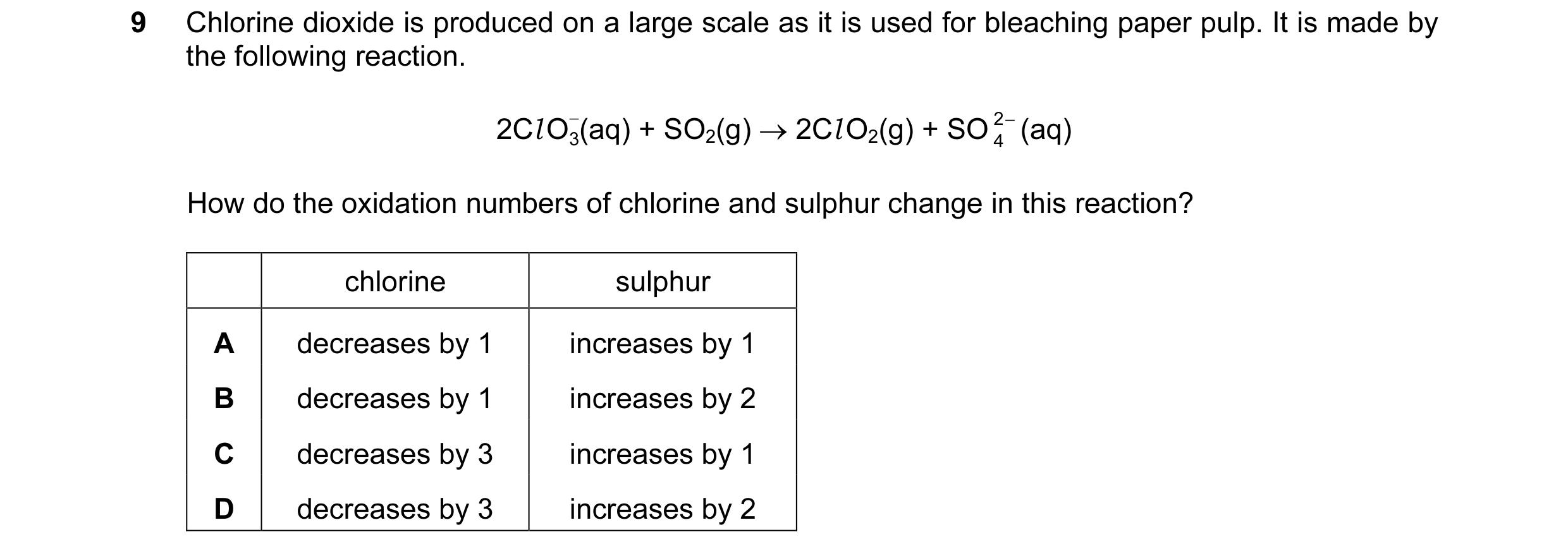
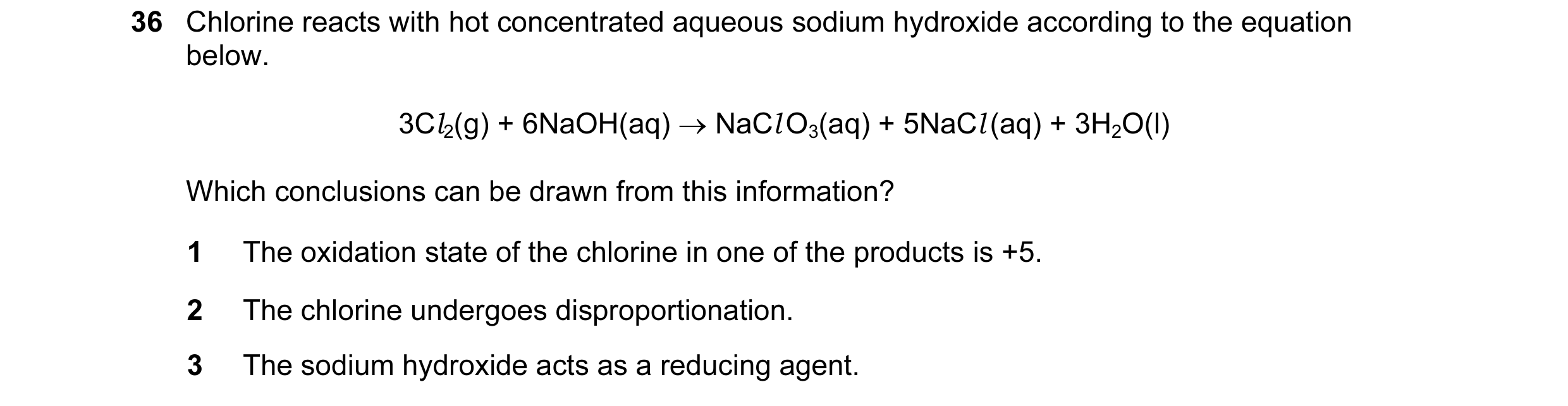
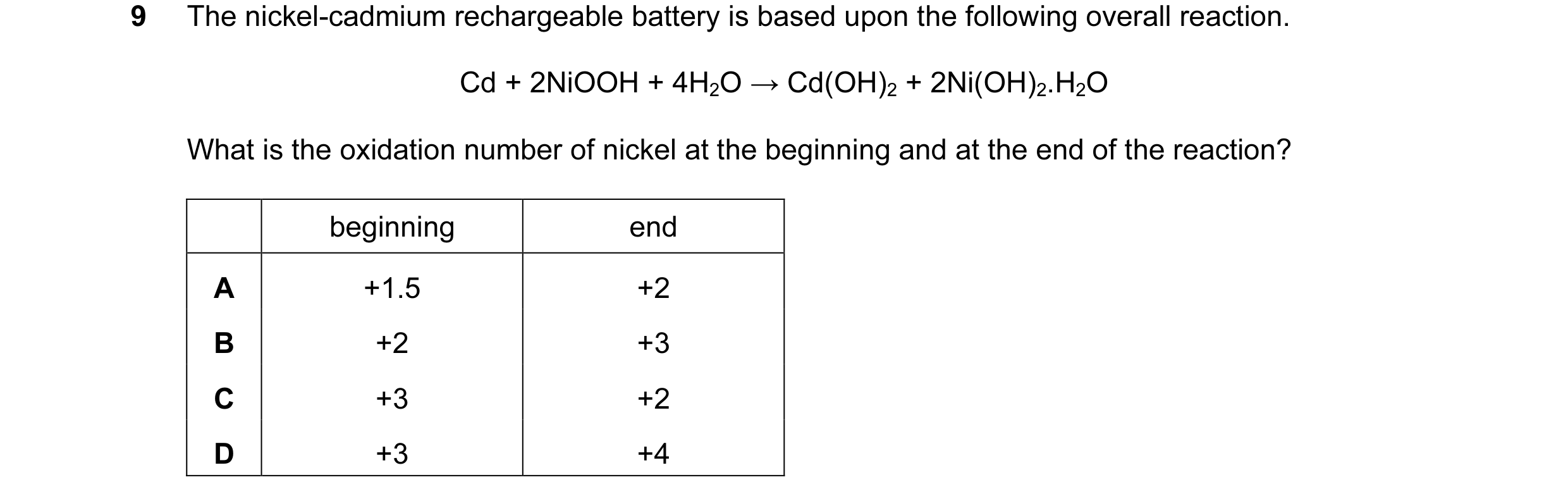
 1 / 78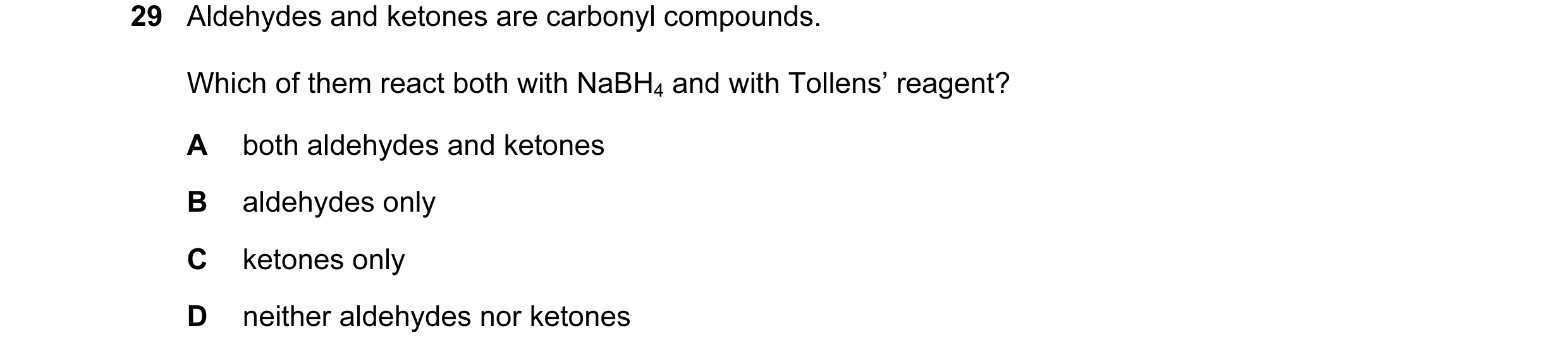
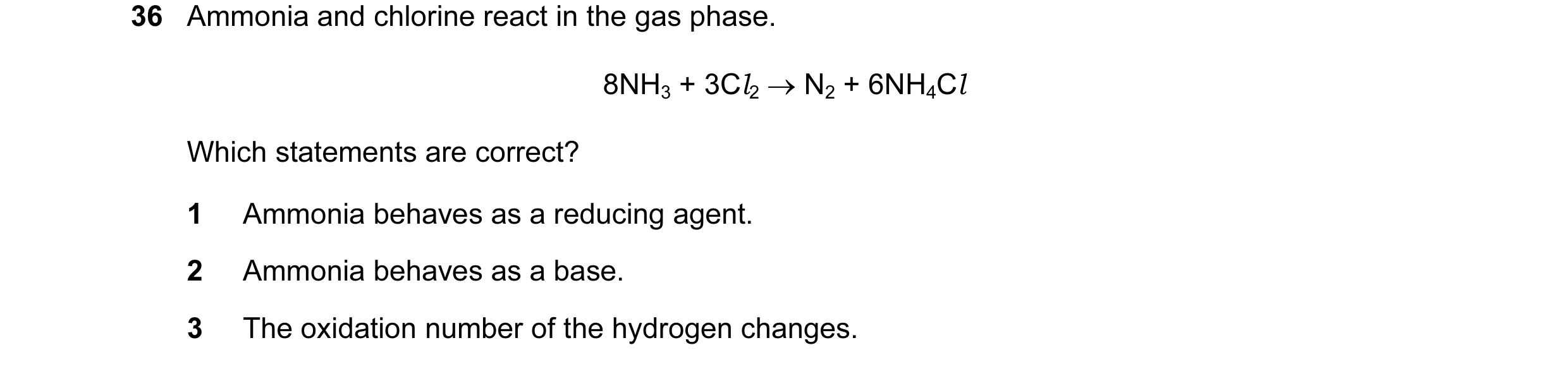
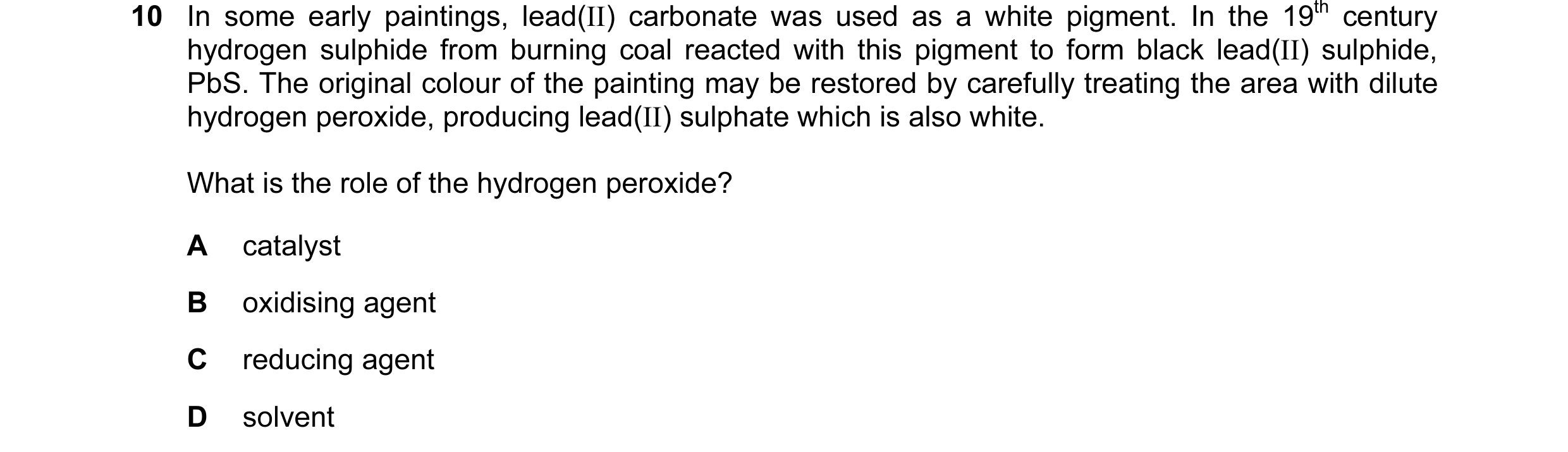

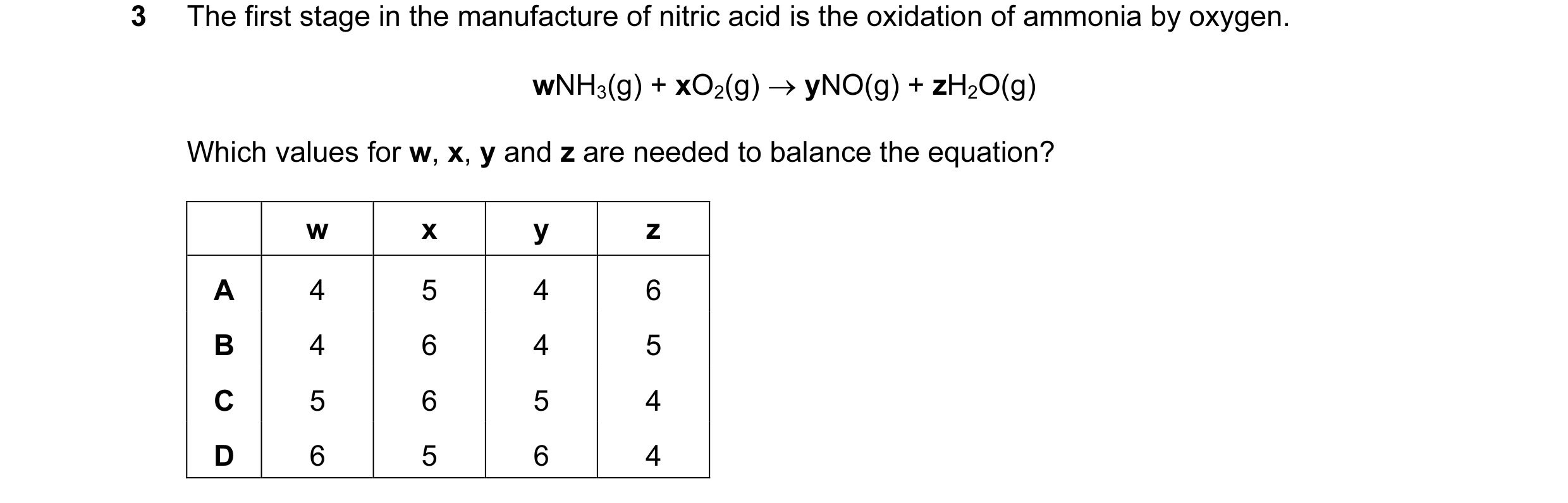 2 / 78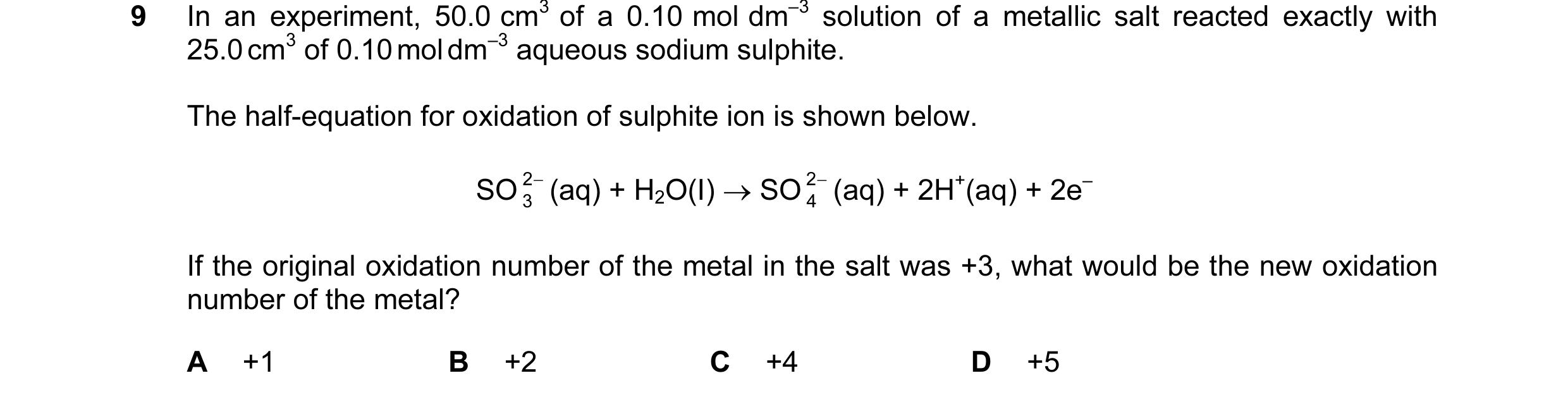
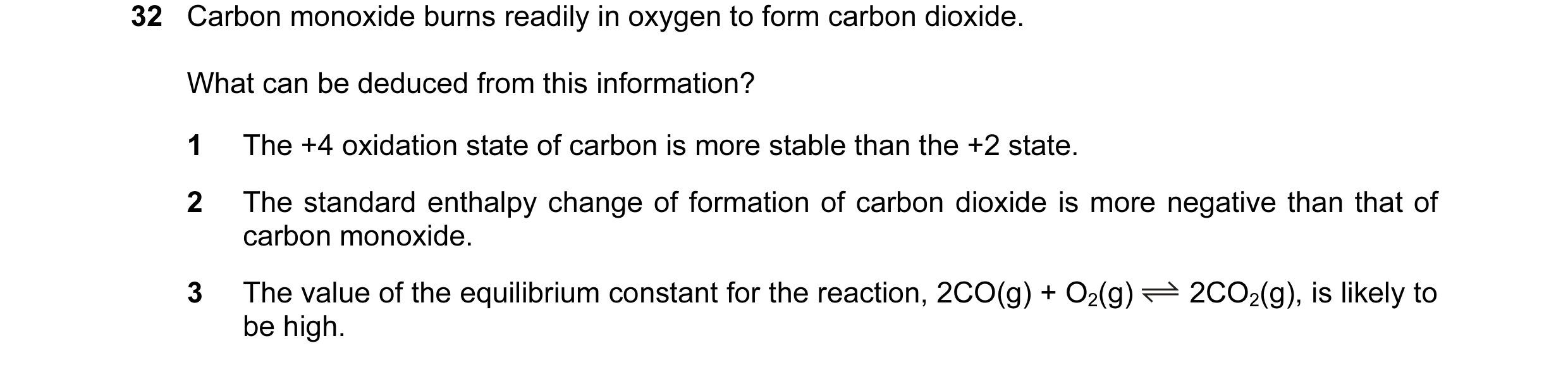
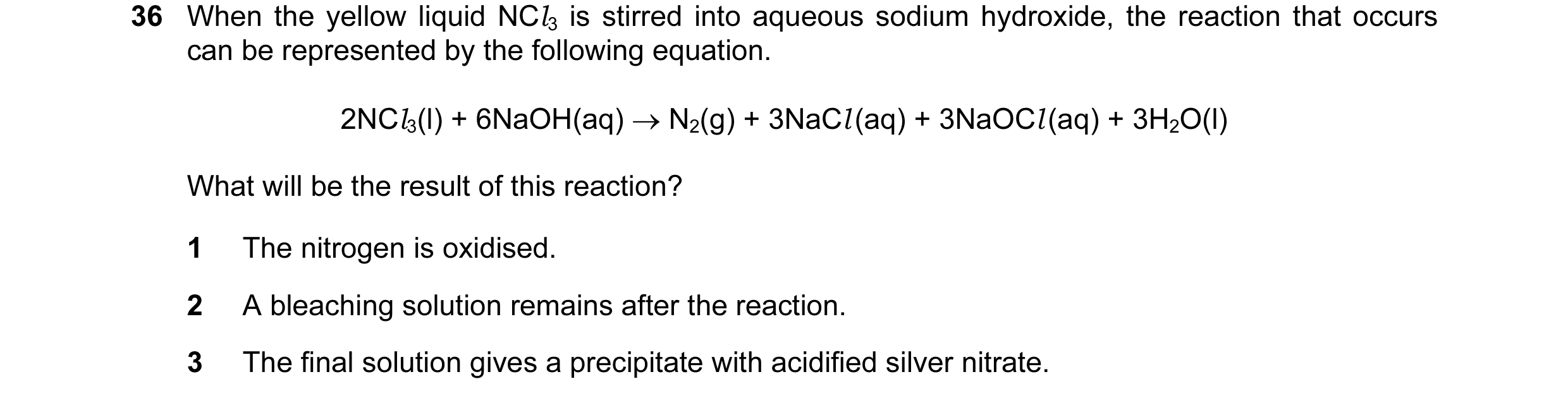
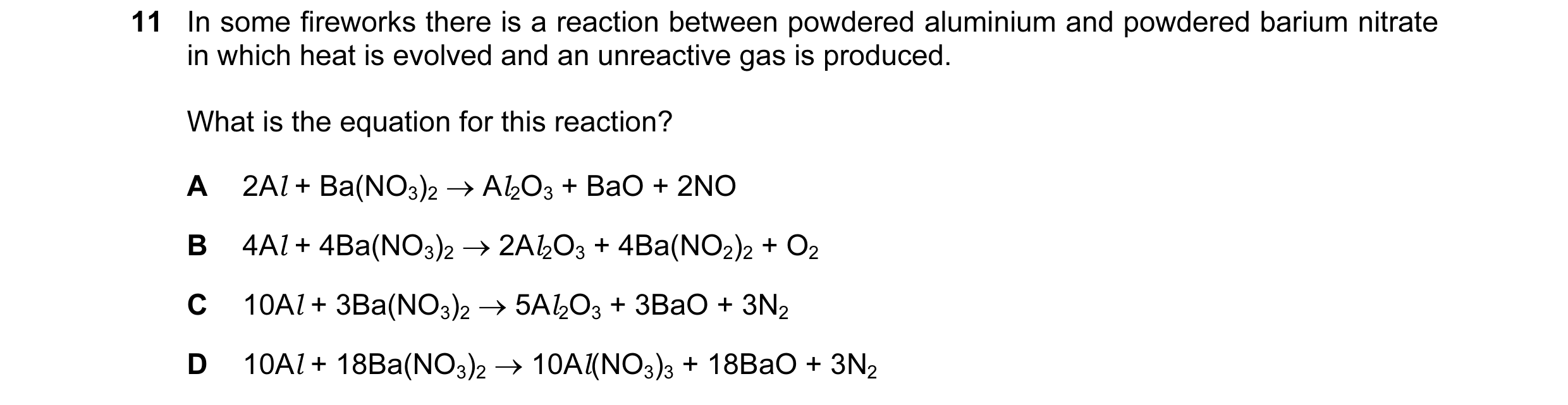
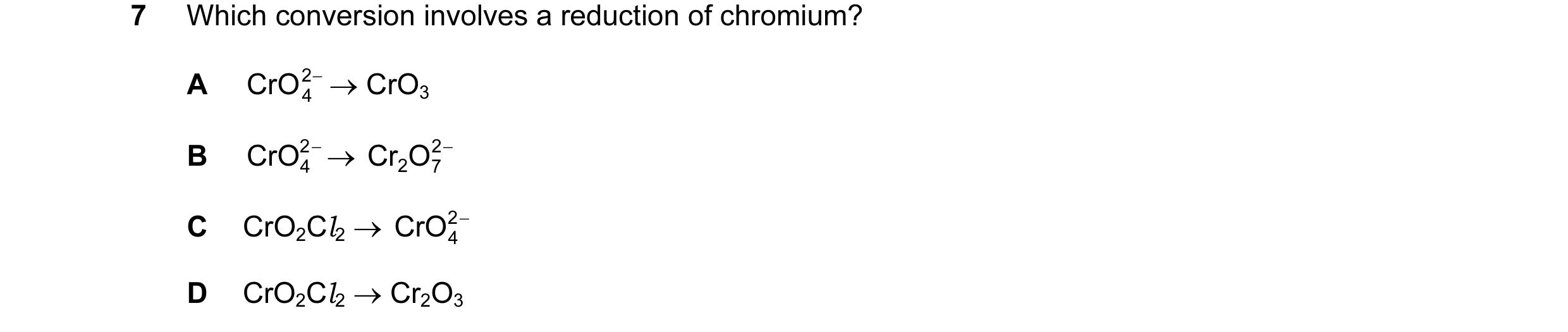 3 / 78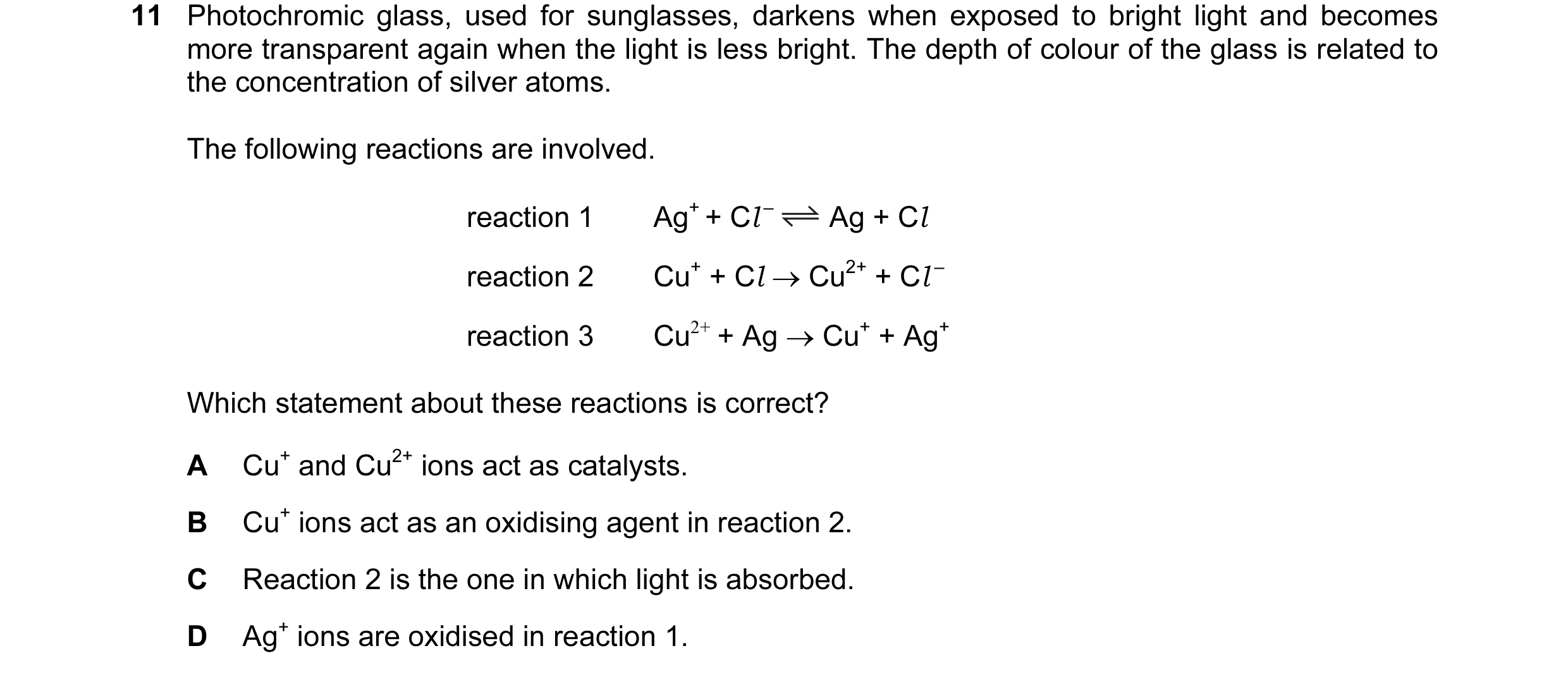



 4 / 78
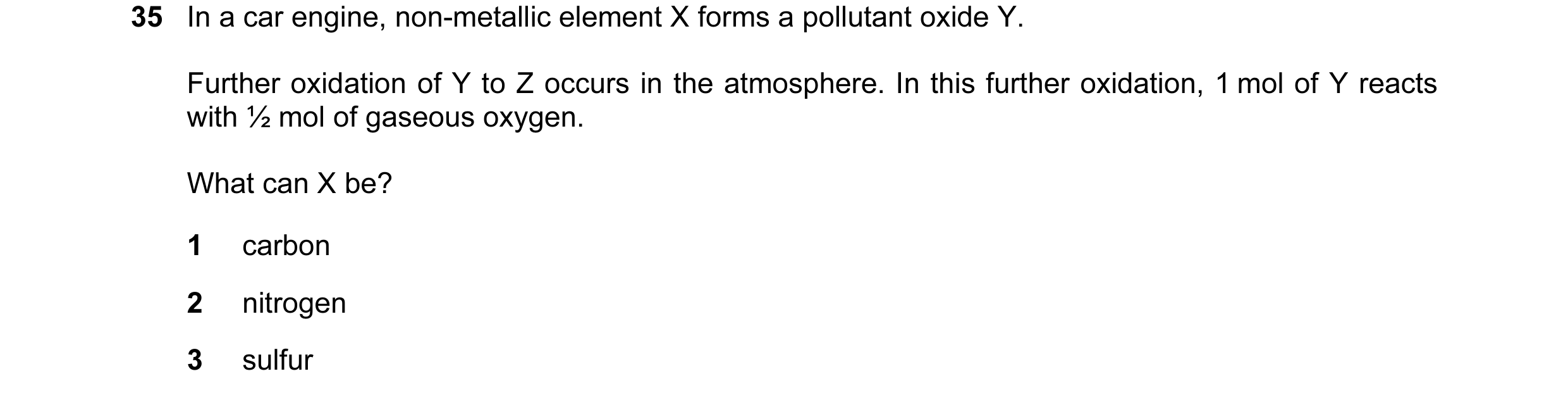

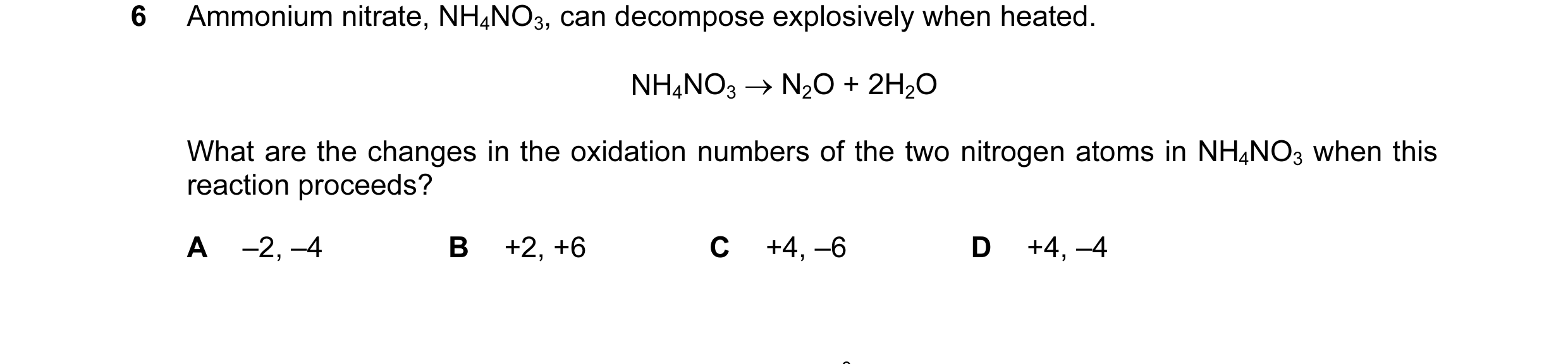

 5 / 78
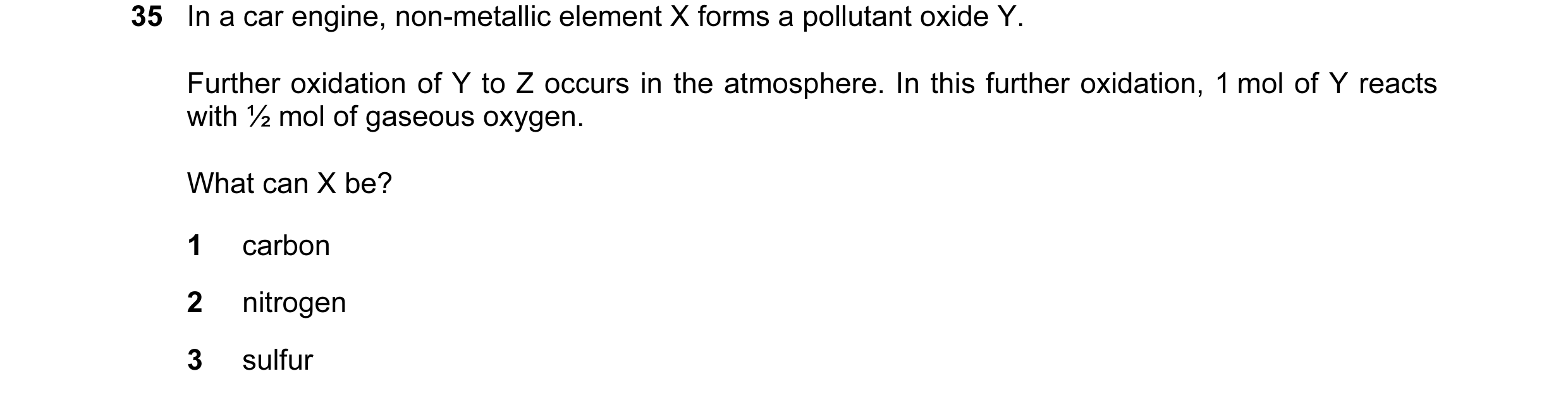



 6 / 78
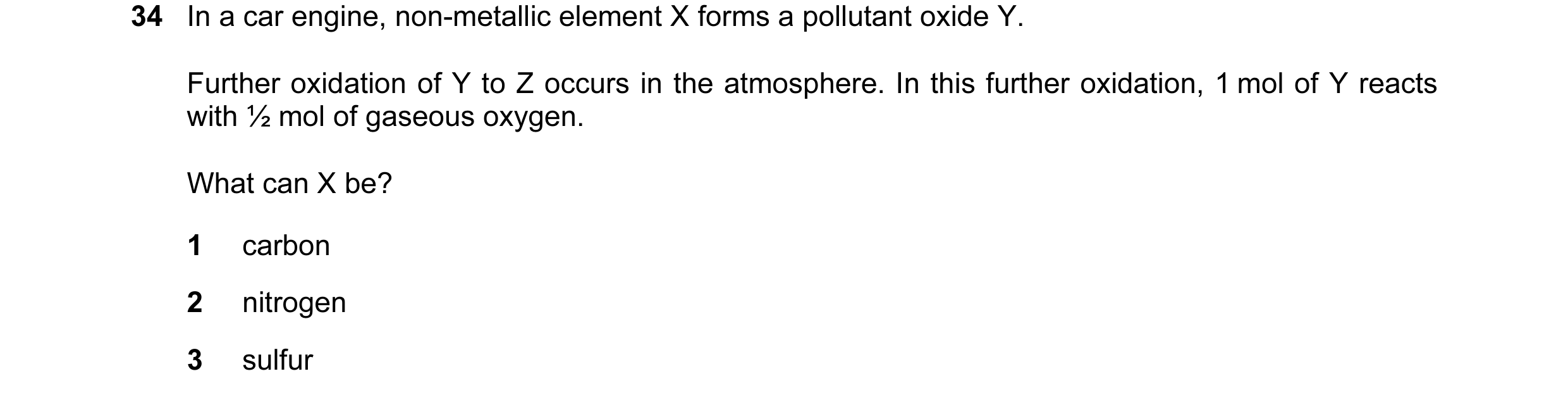



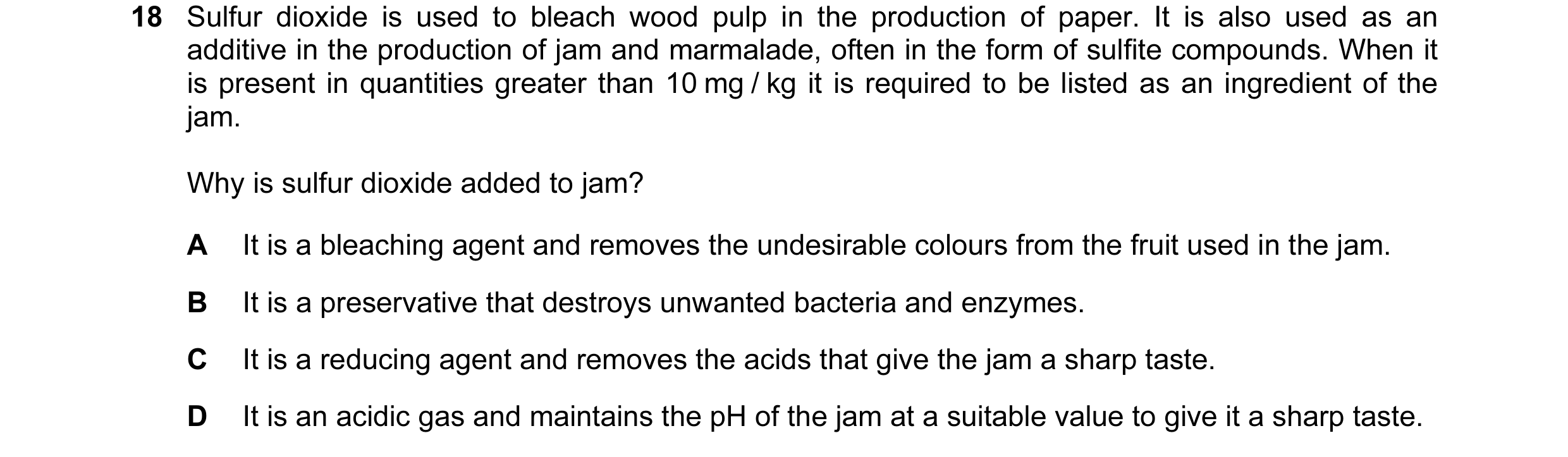 7 / 78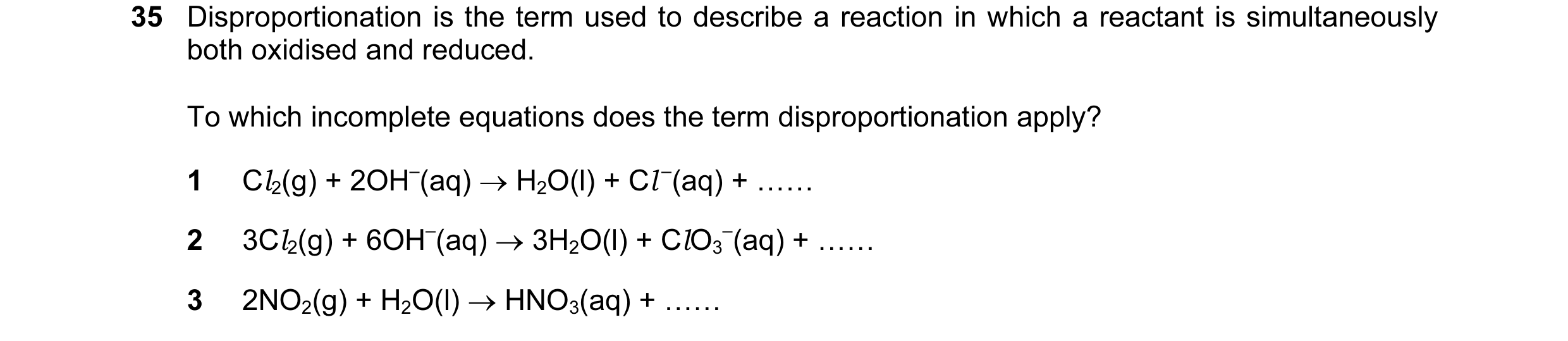
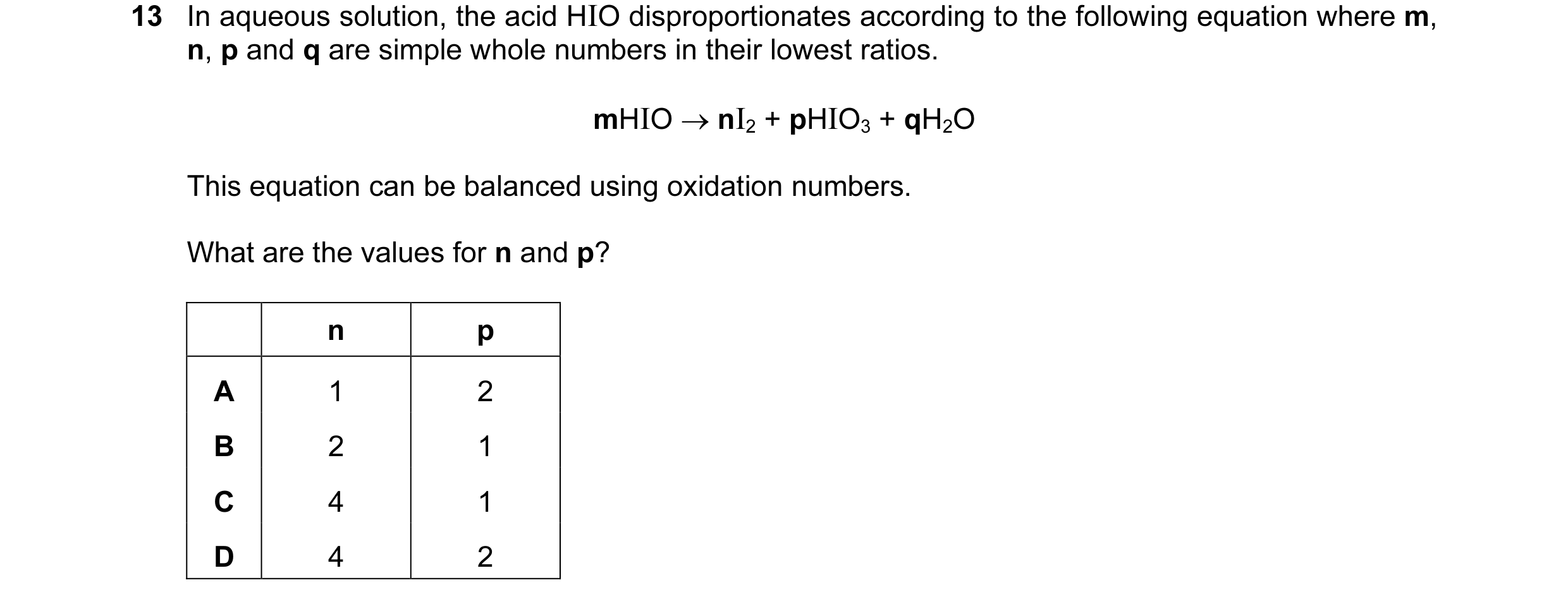


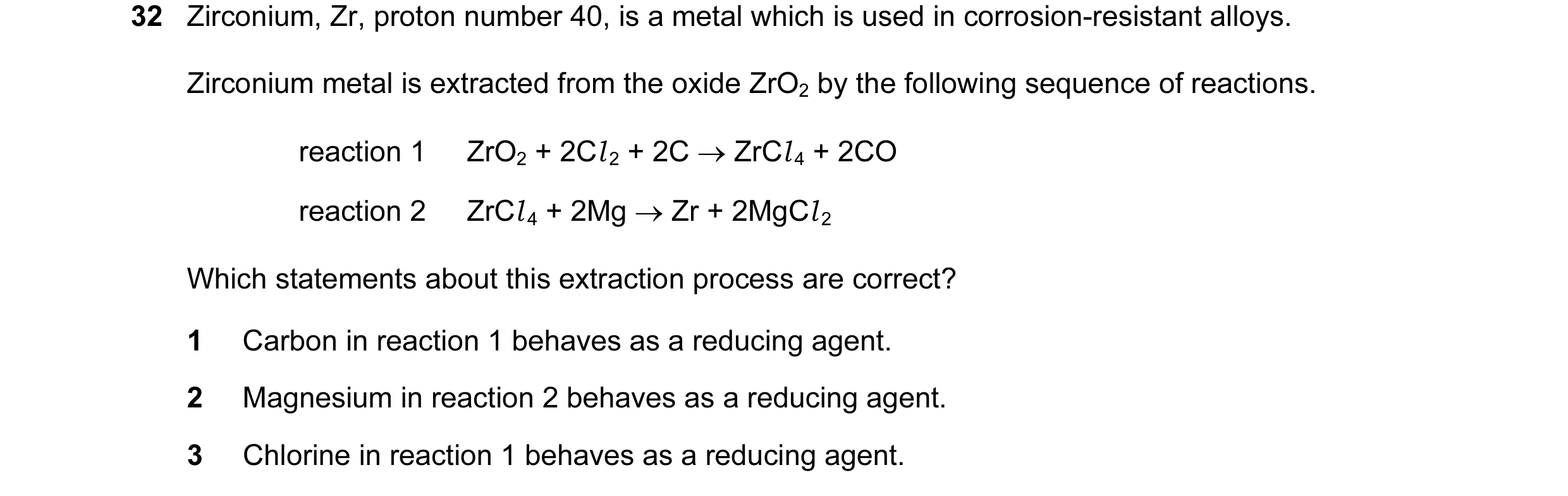 8 / 78

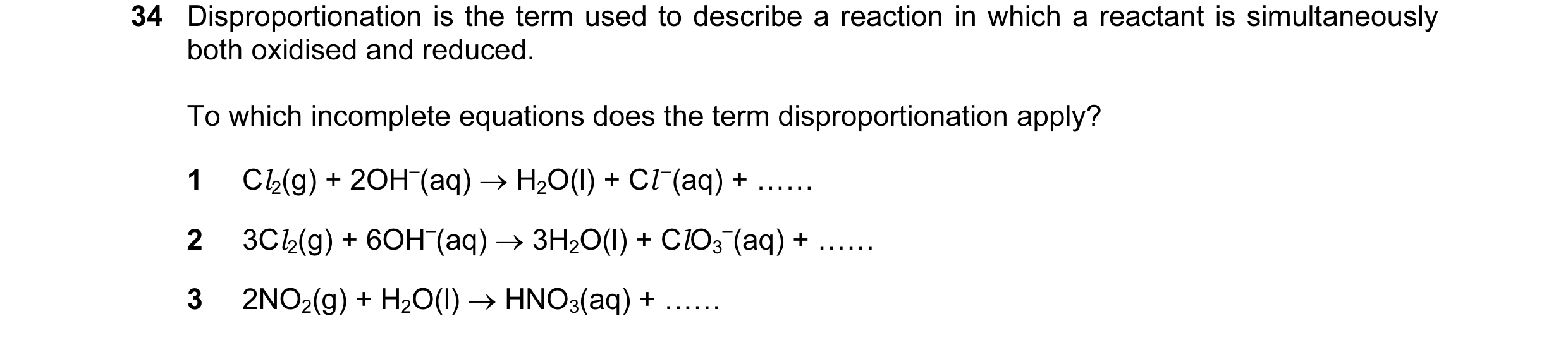

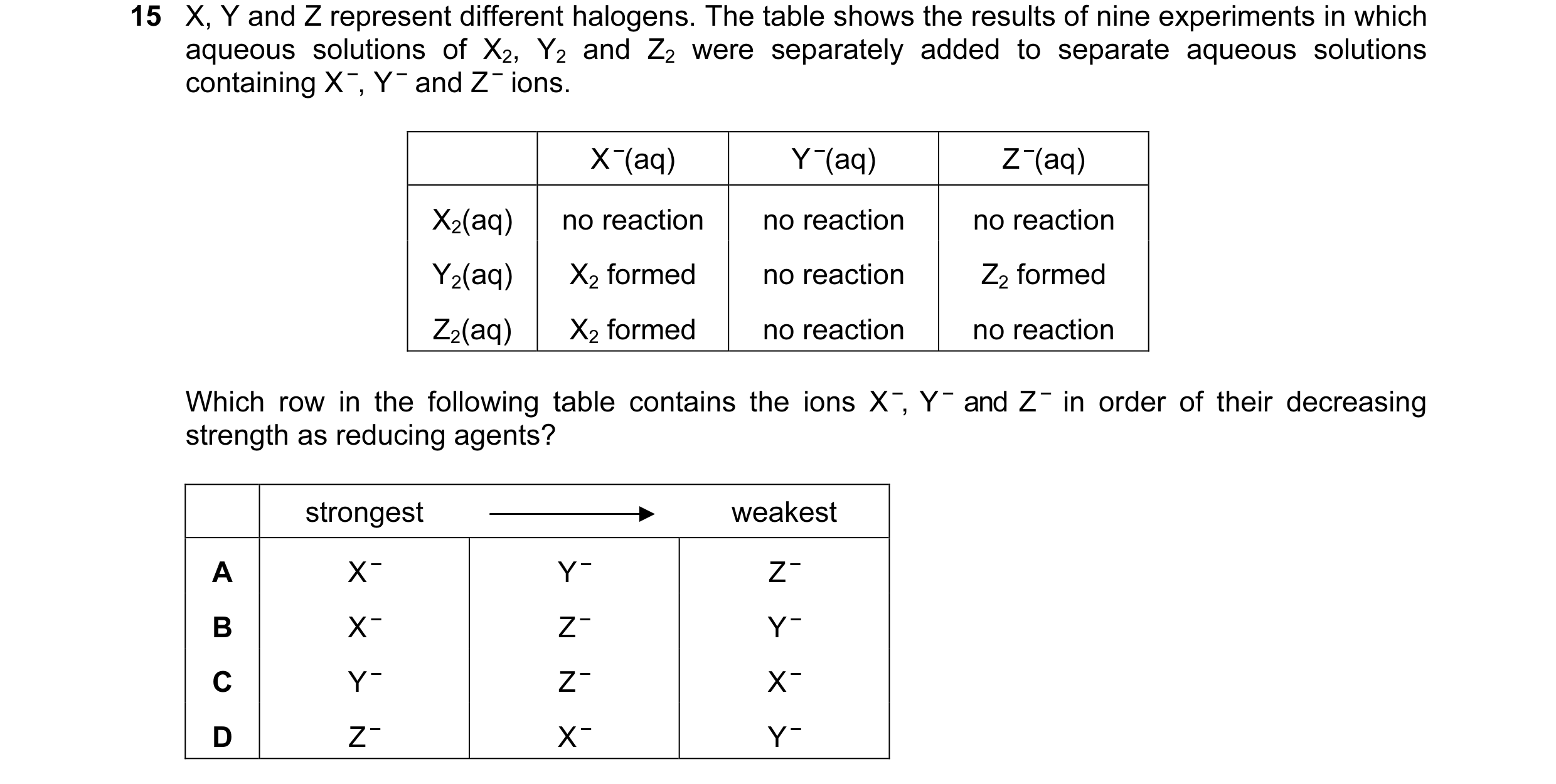 9 / 78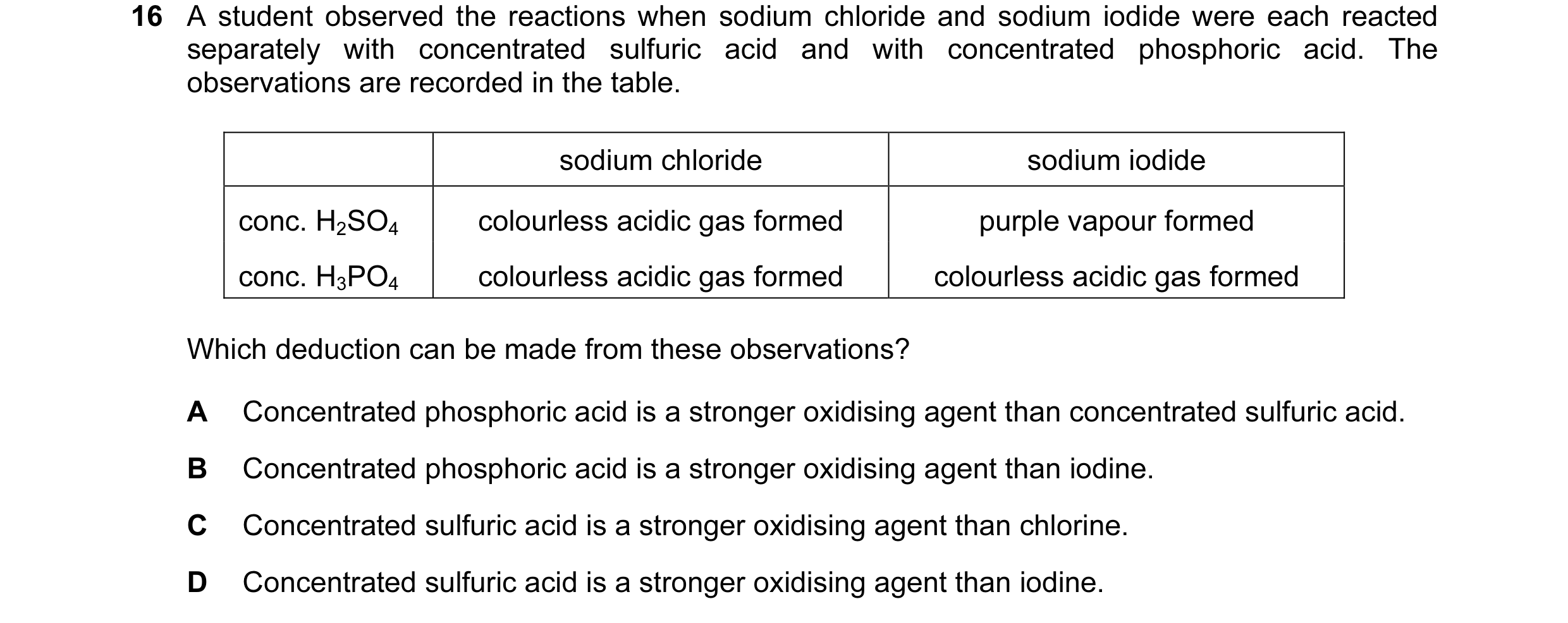

 10 / 78
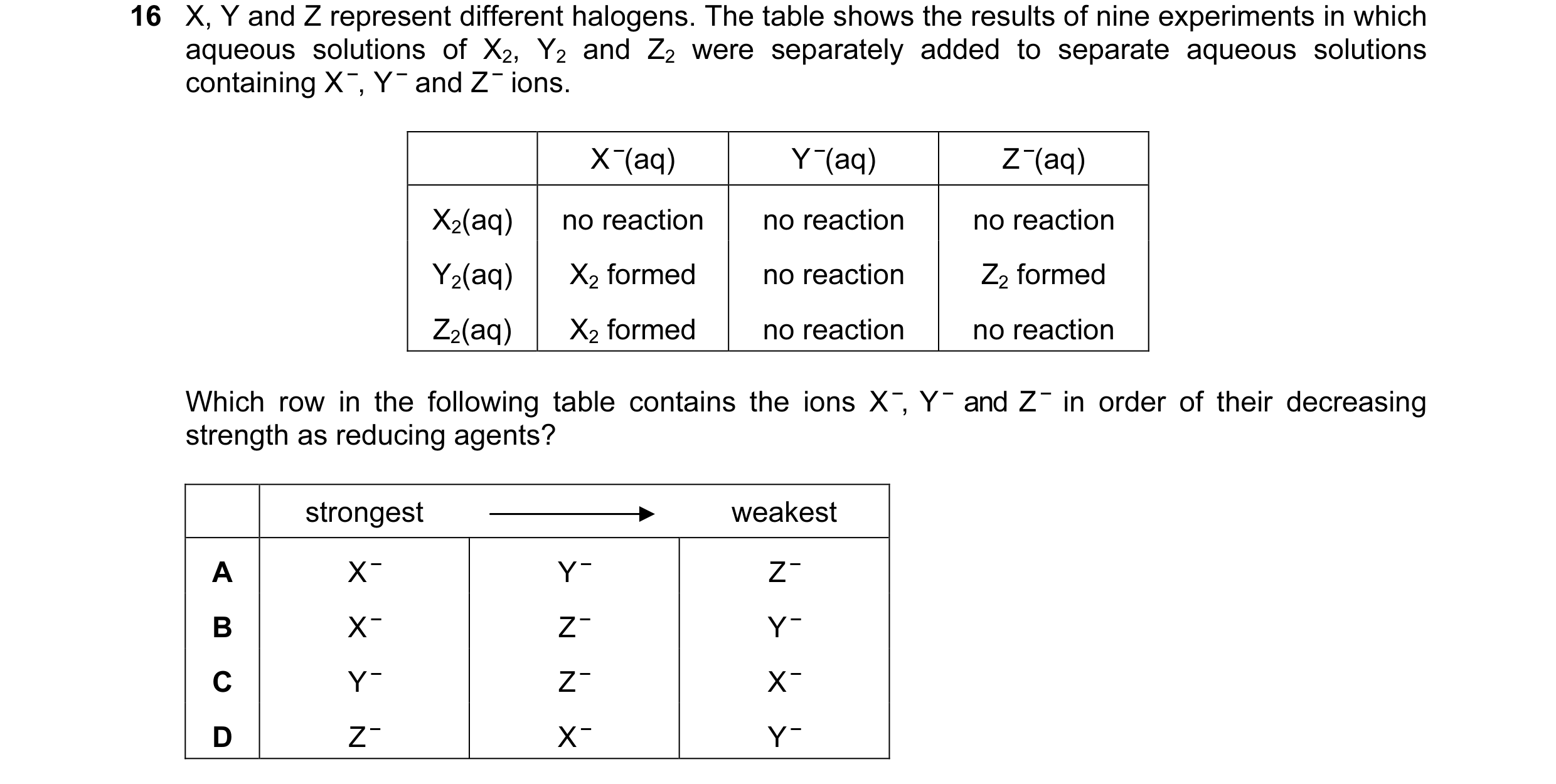
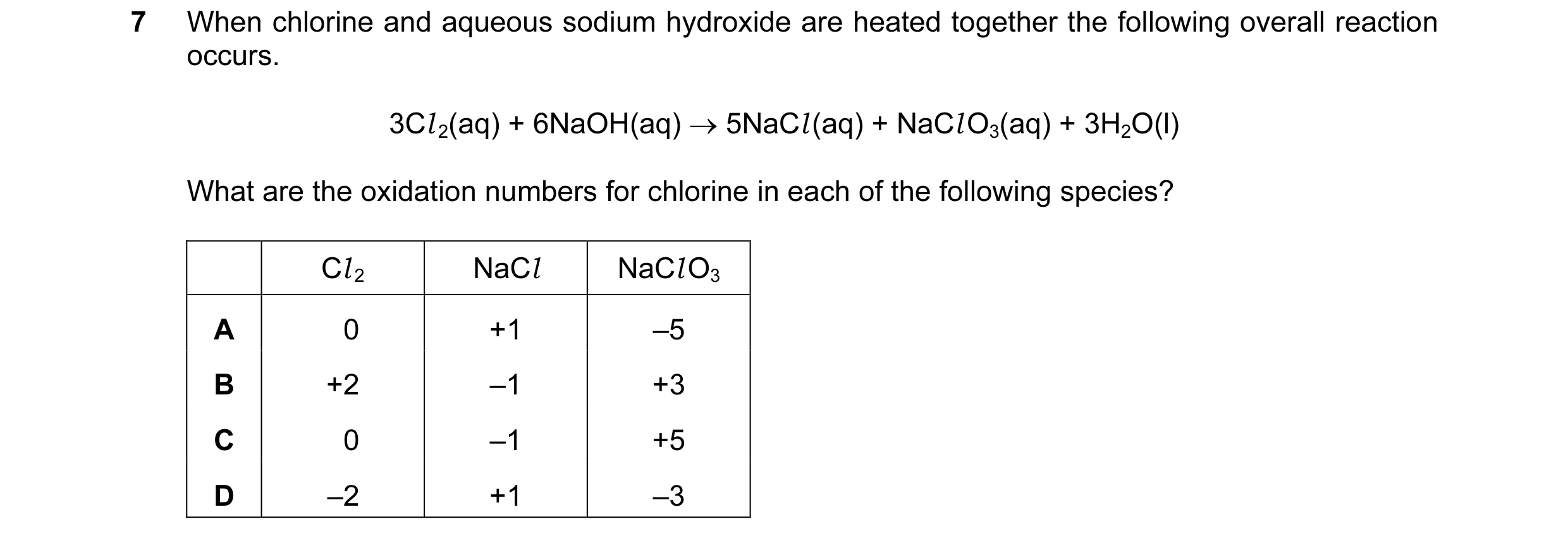 11 / 78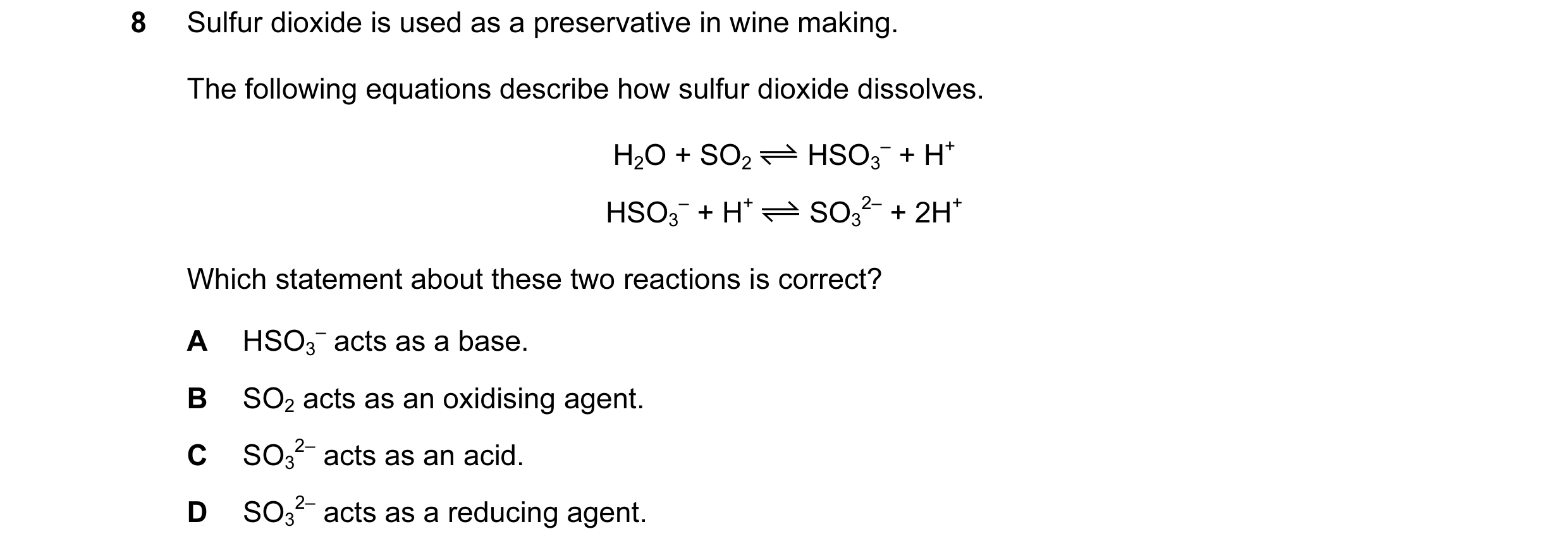


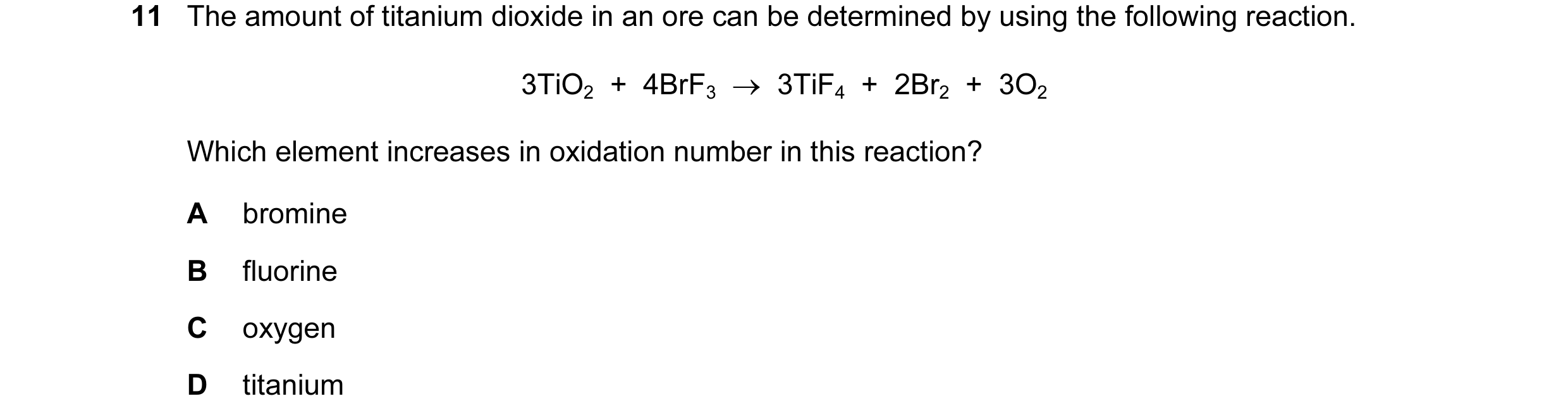
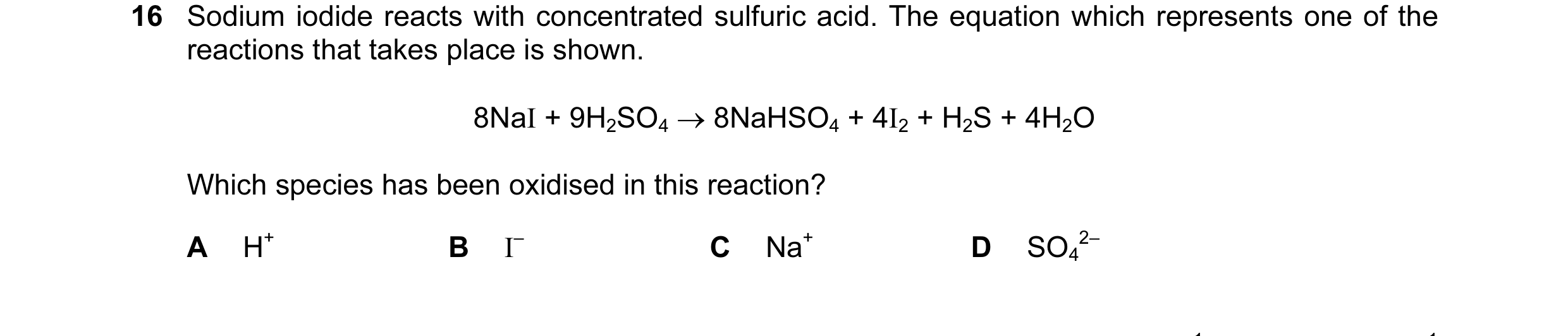 12 / 78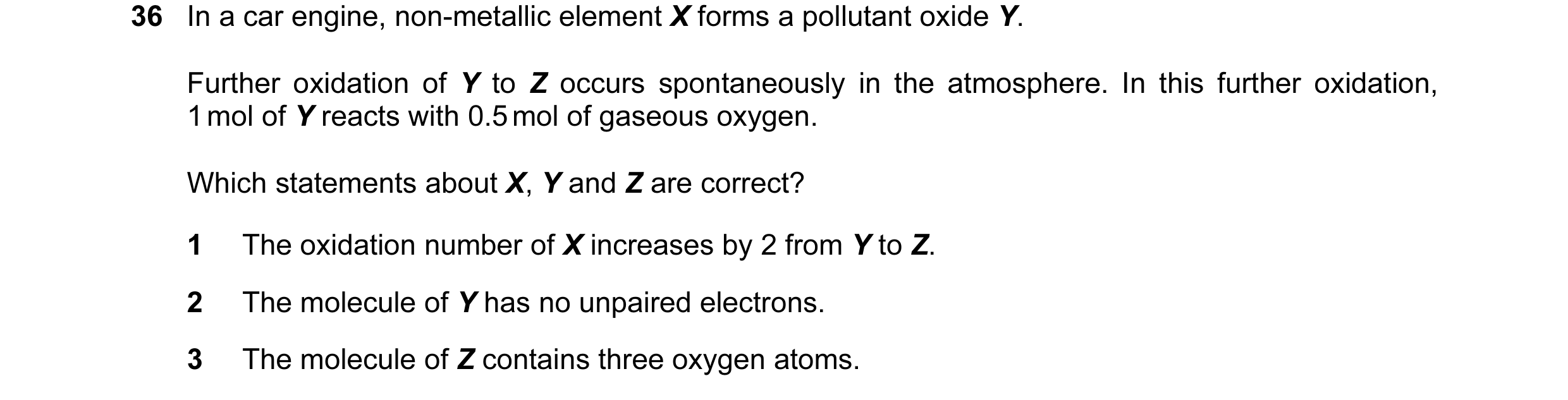
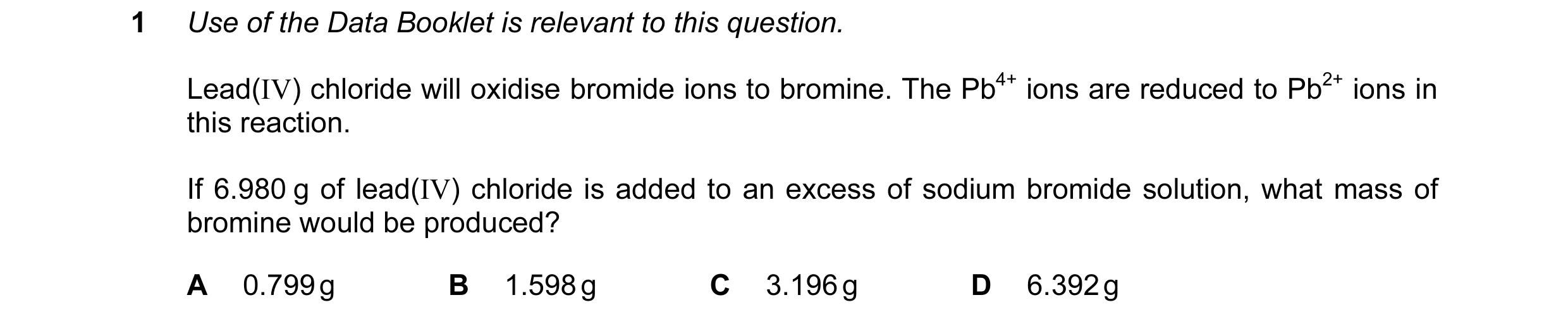
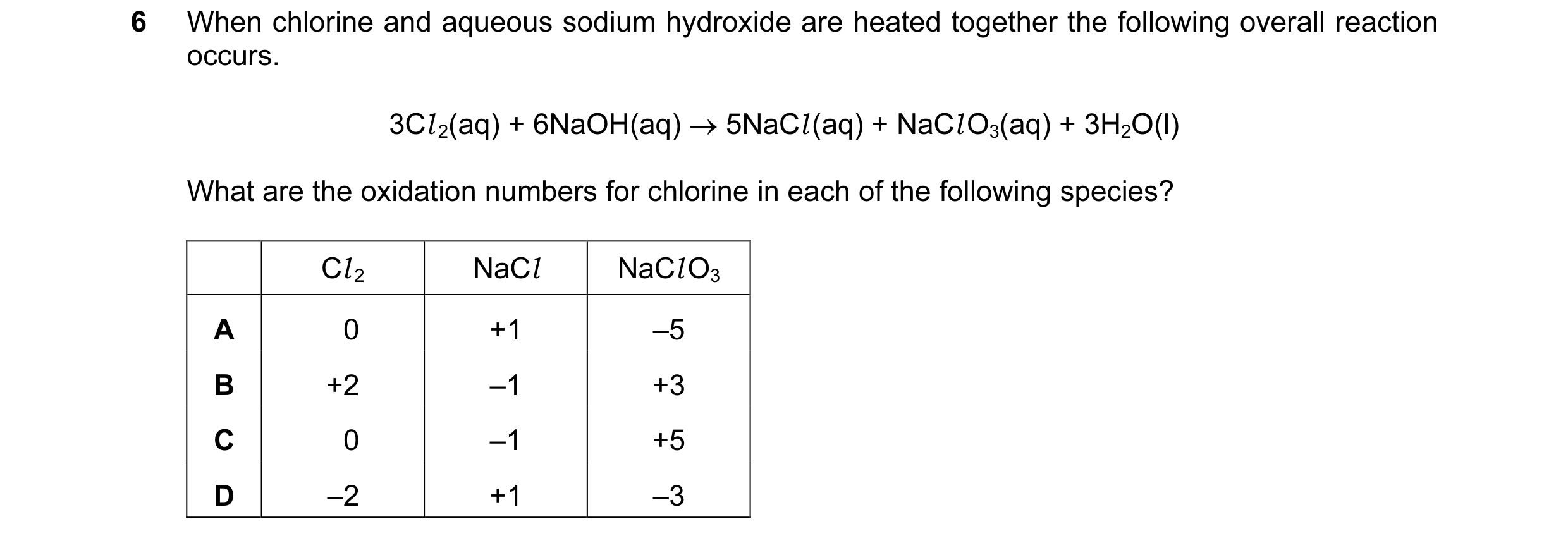
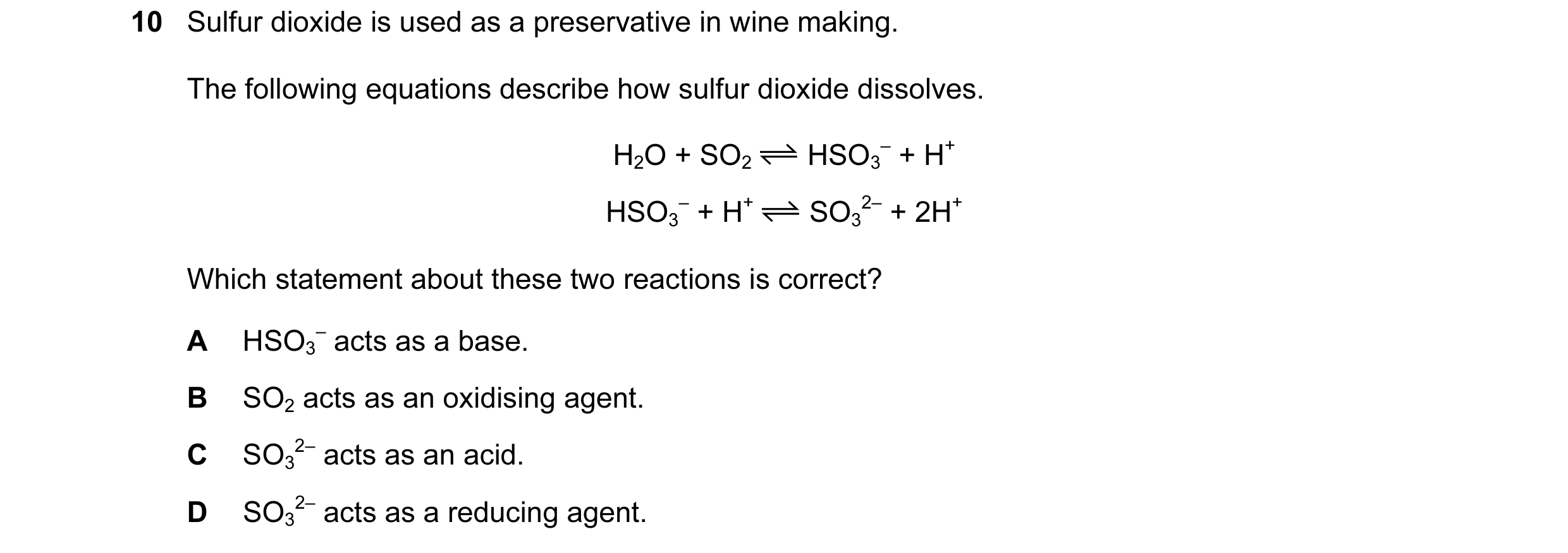 13 / 78
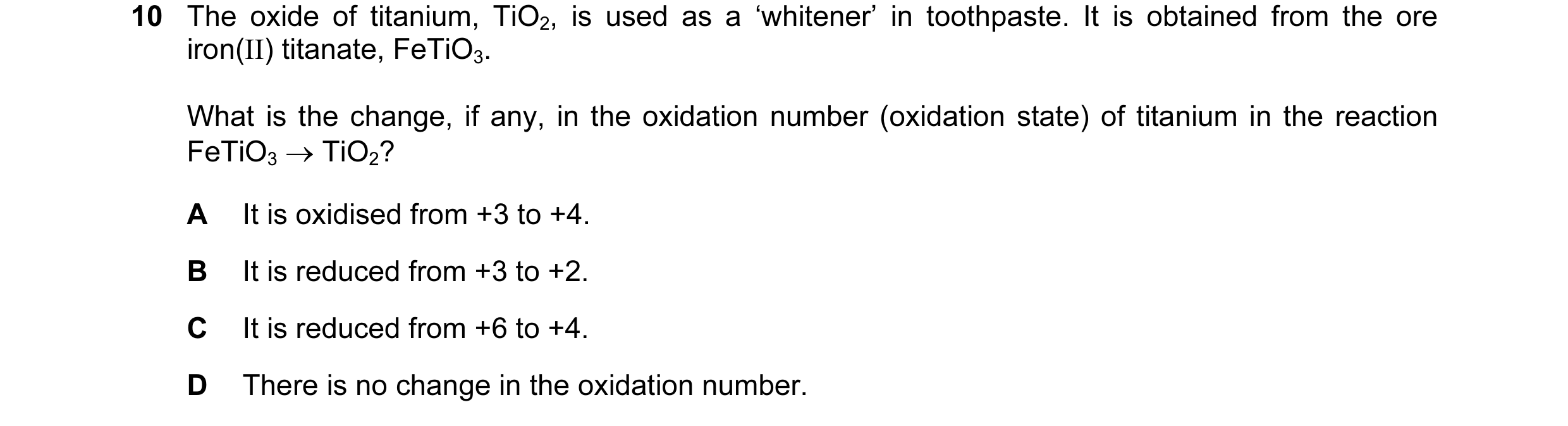
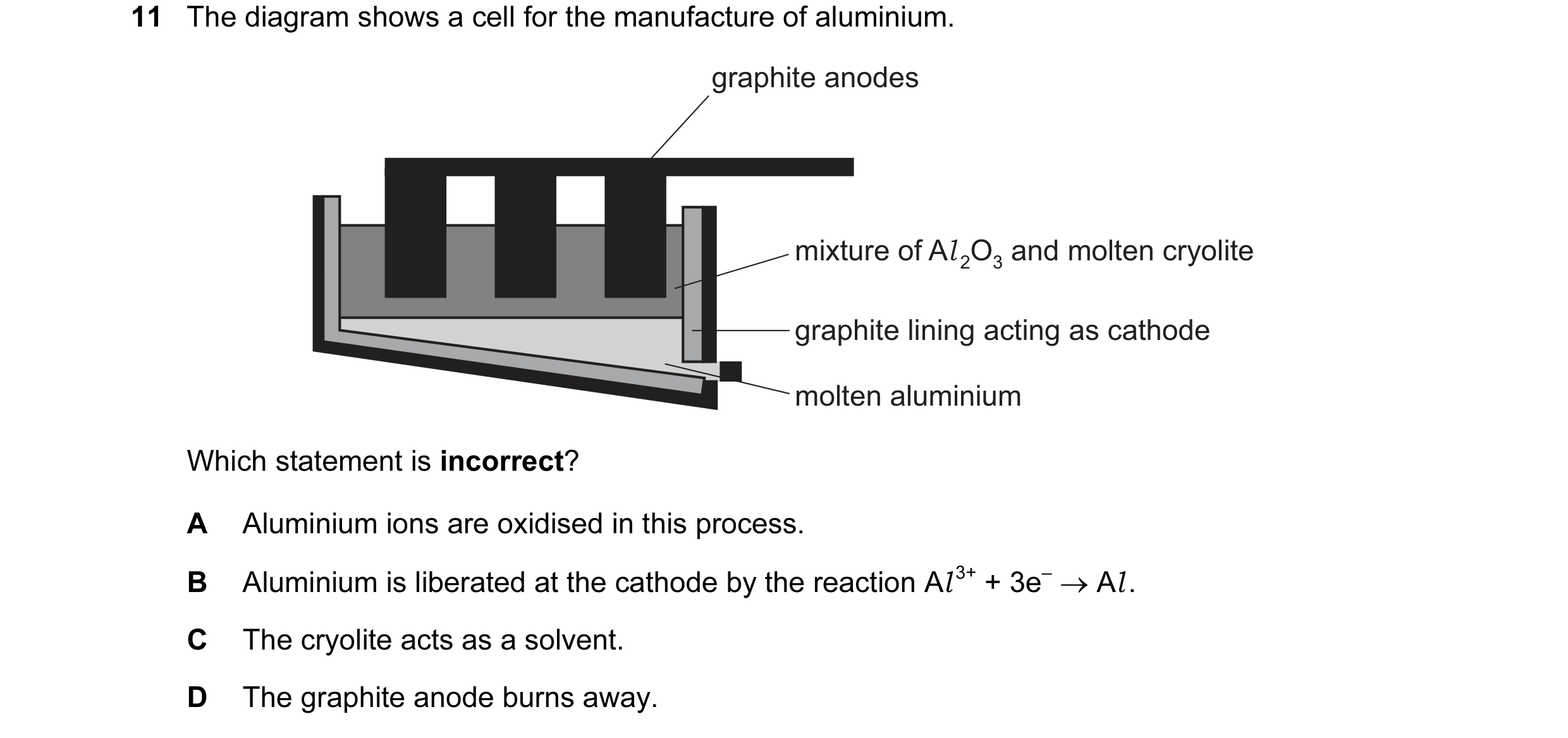
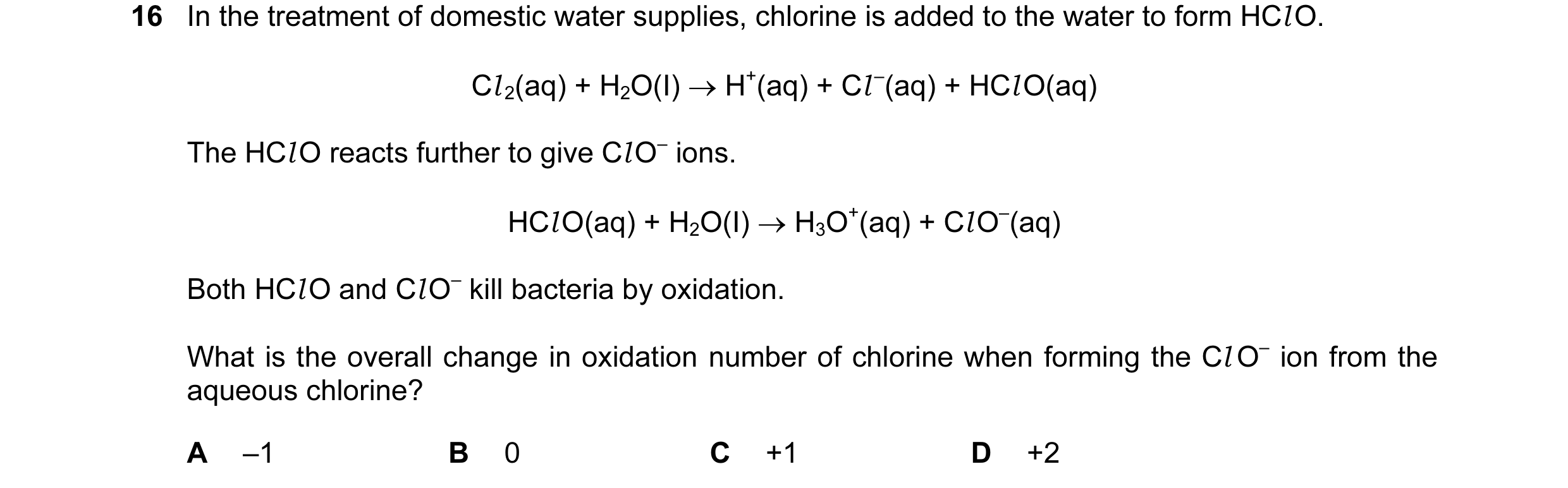 14 / 78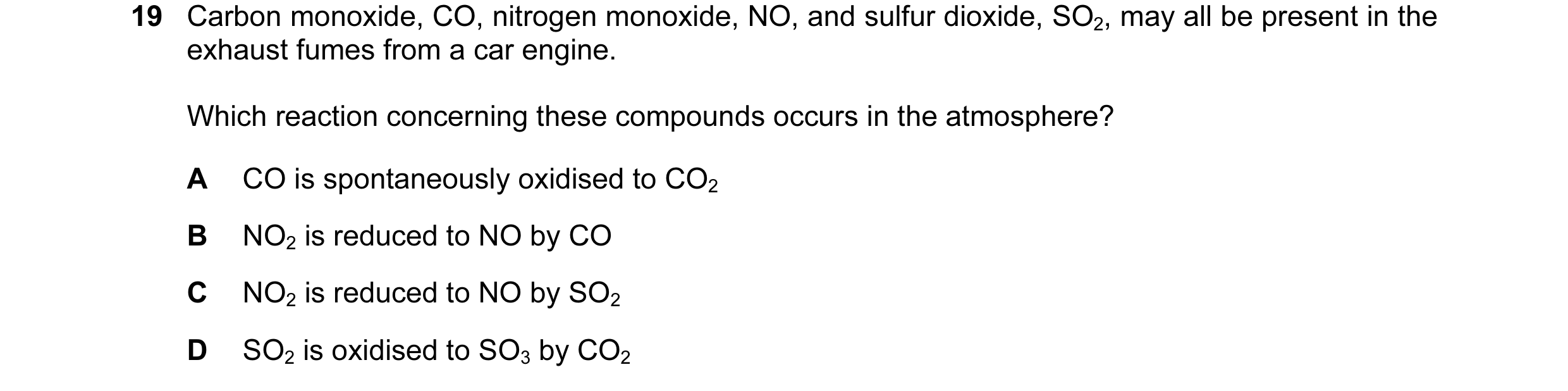
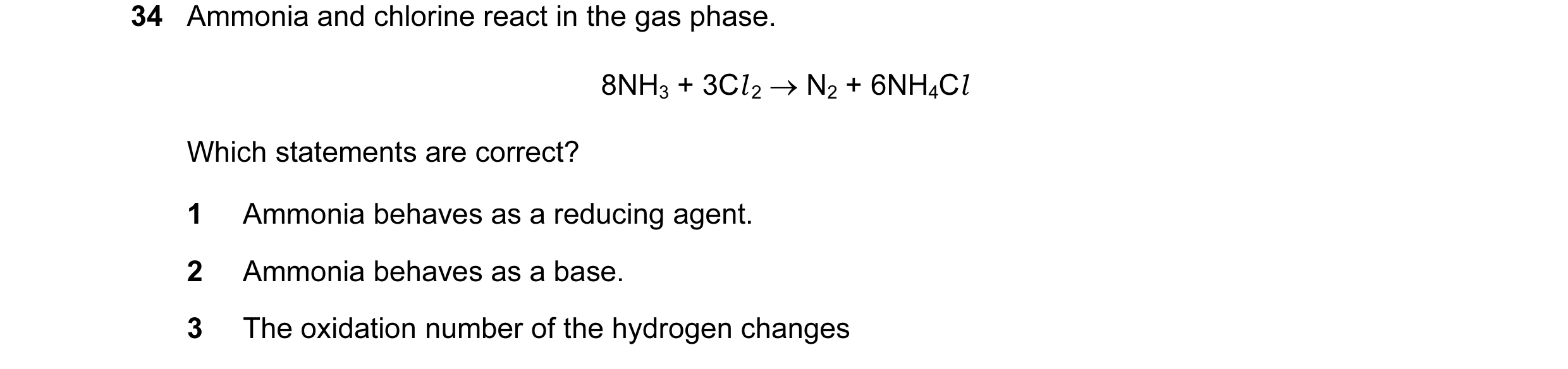

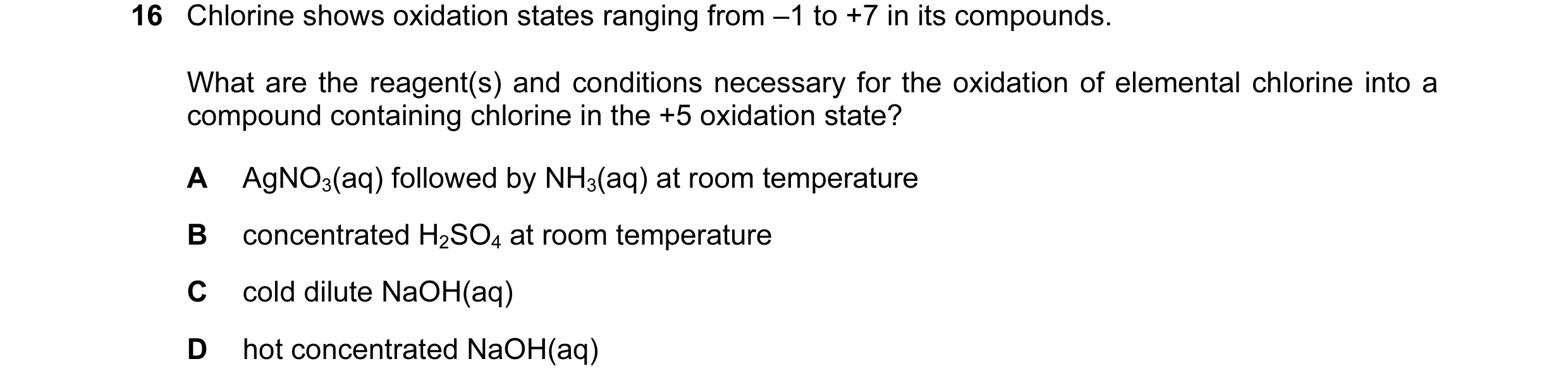
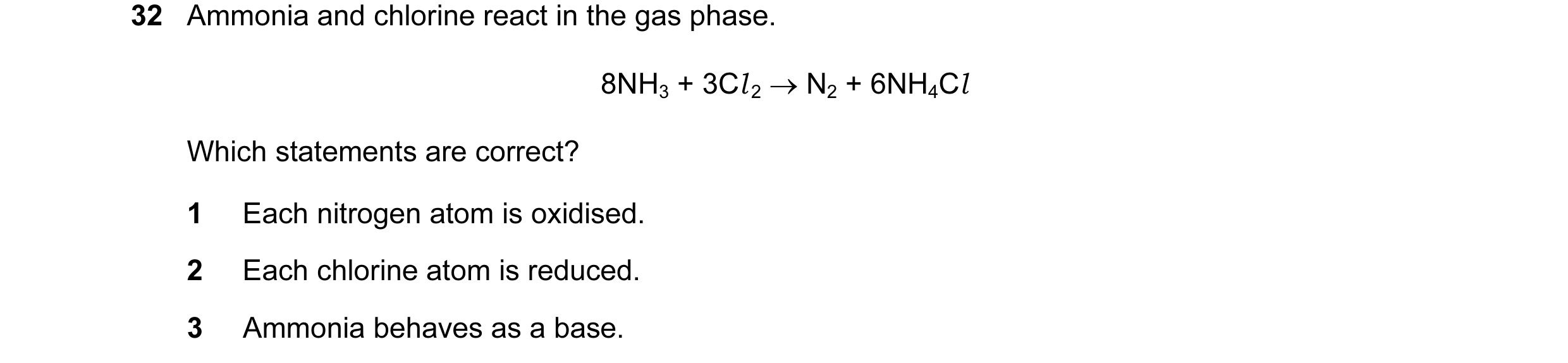 15 / 78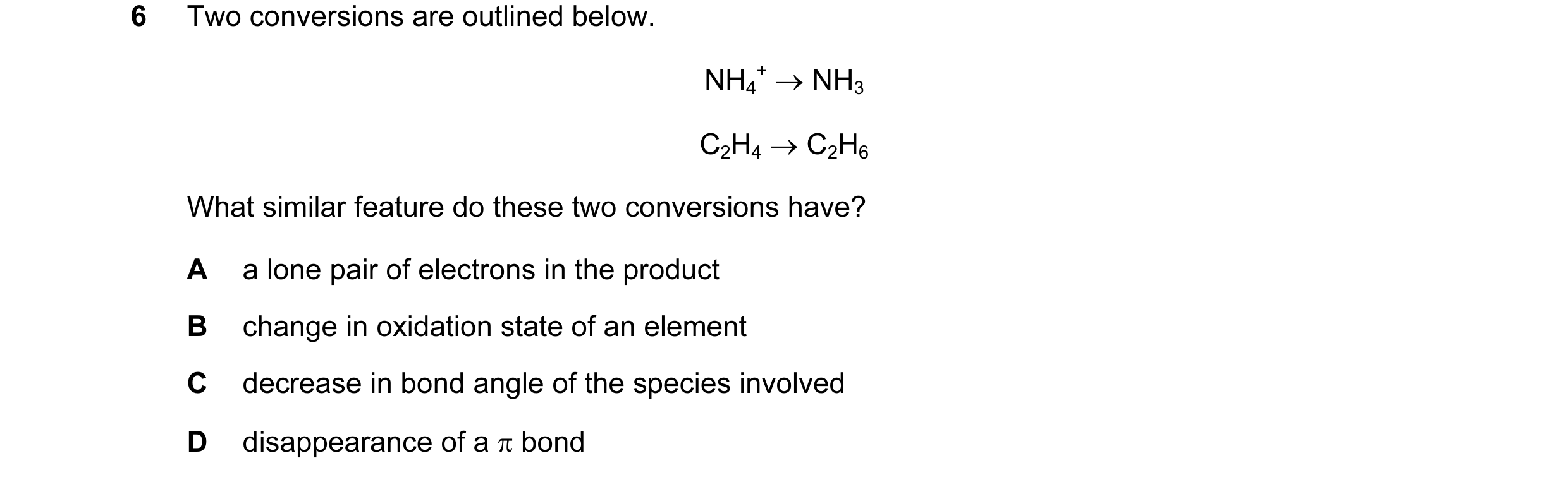
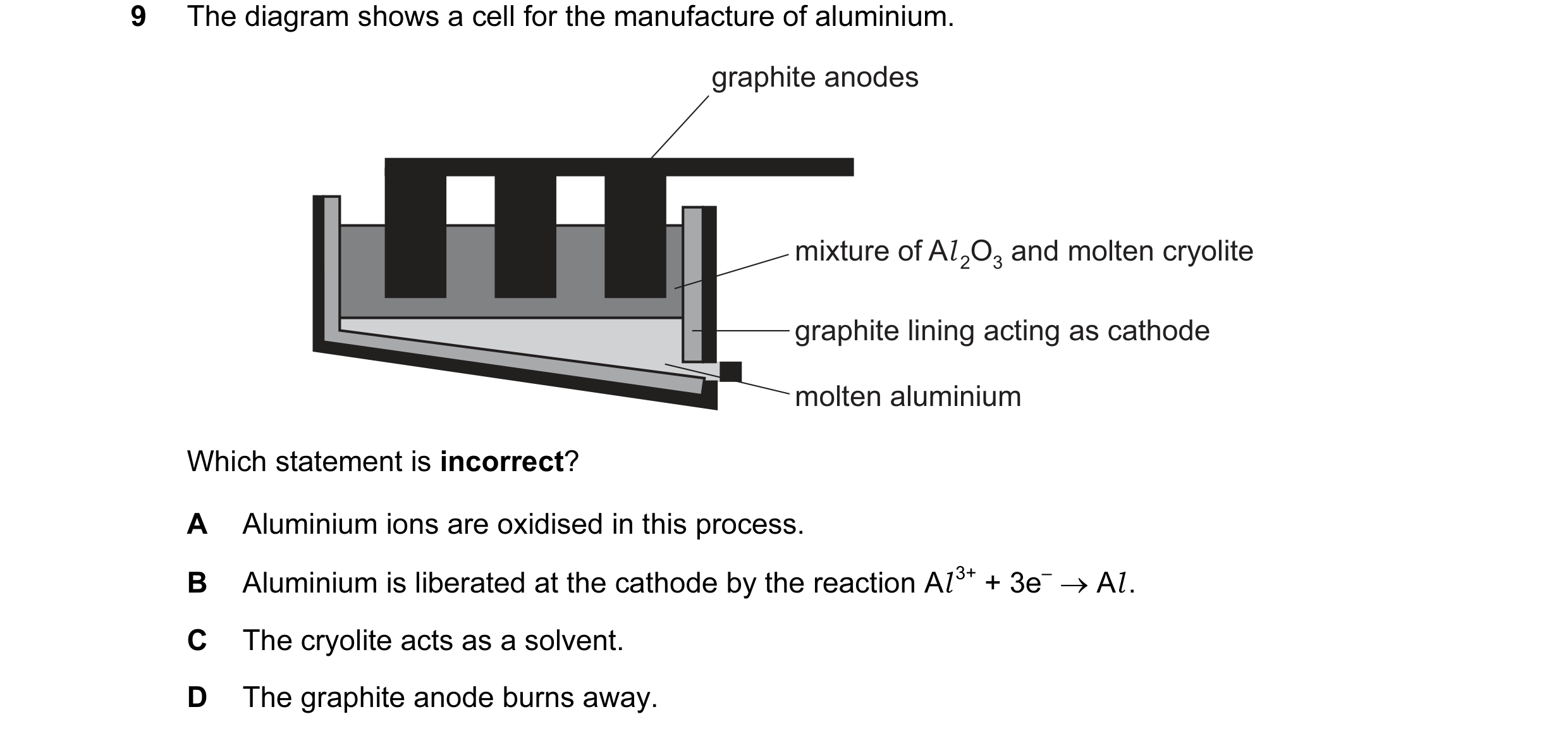
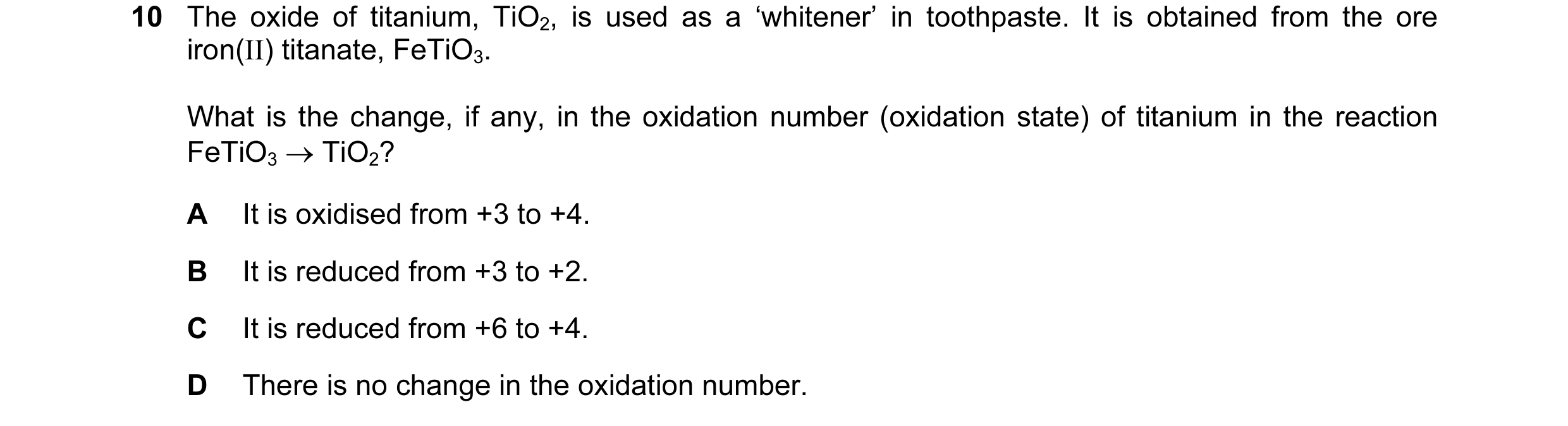 16 / 78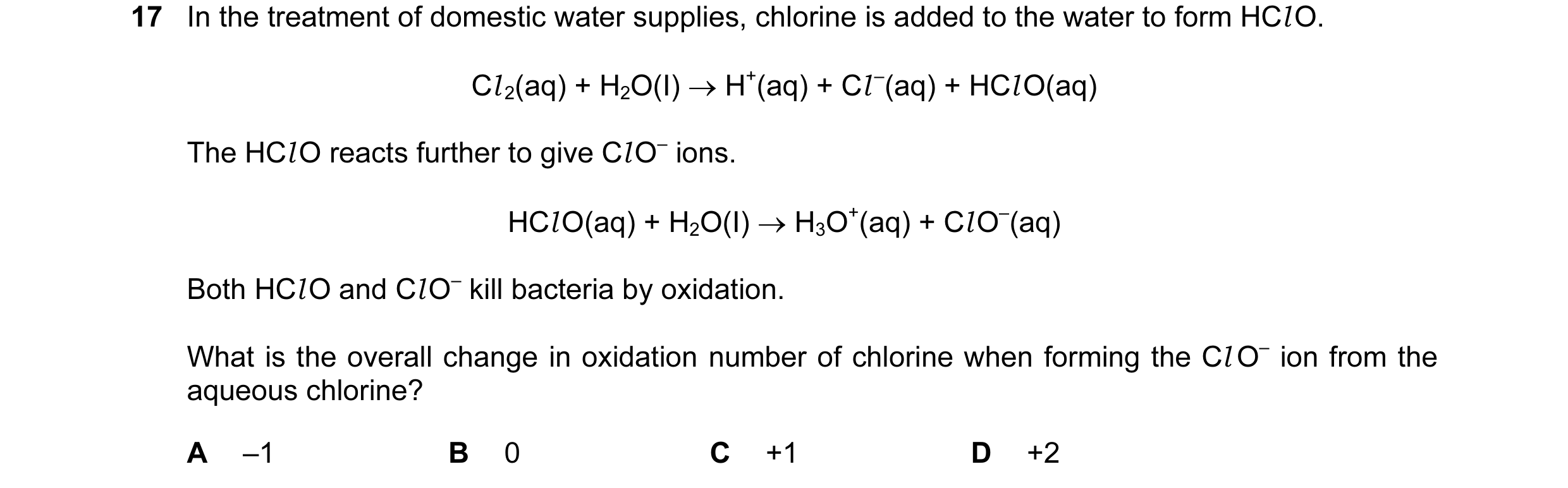
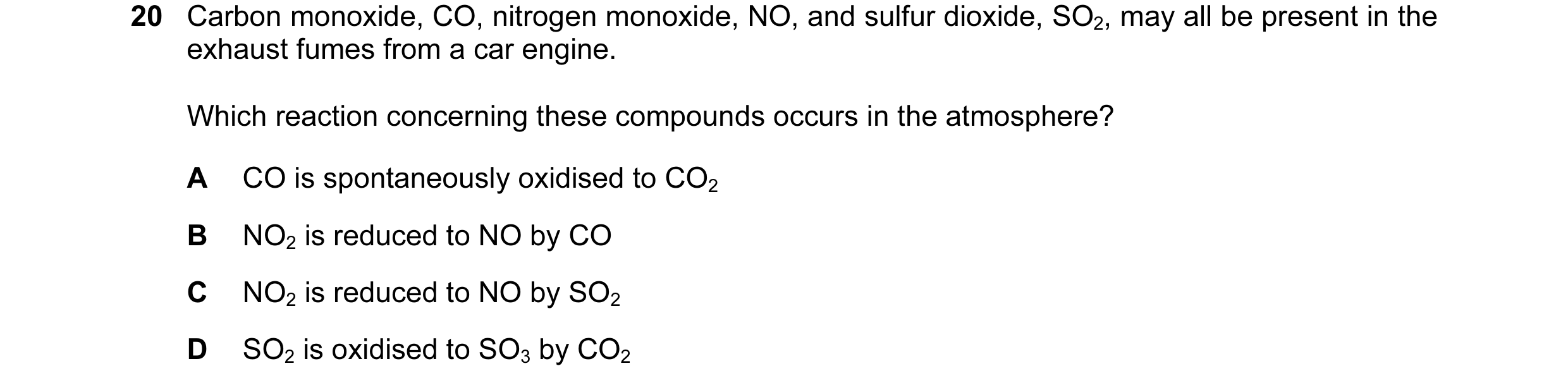
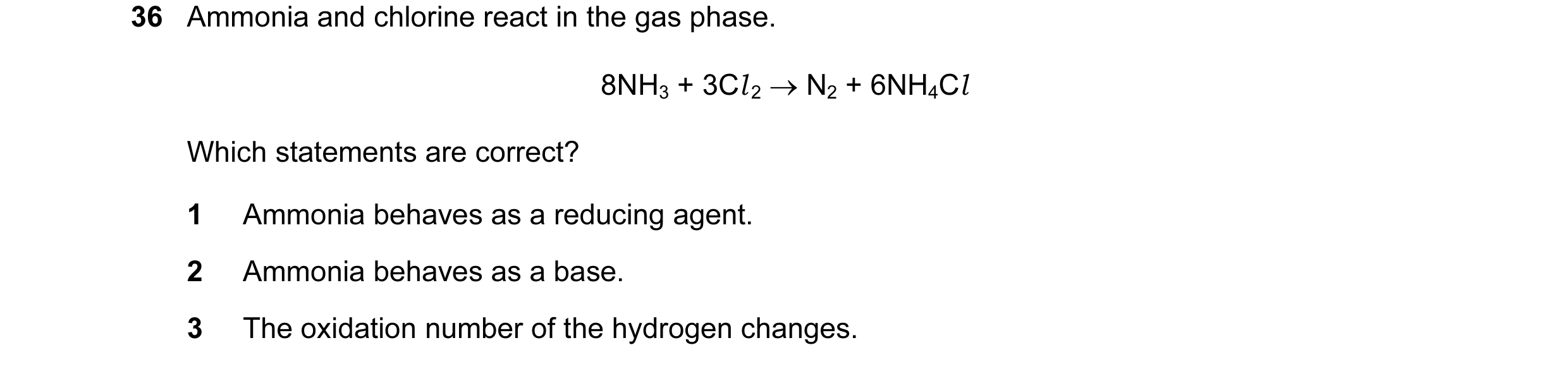
 17 / 78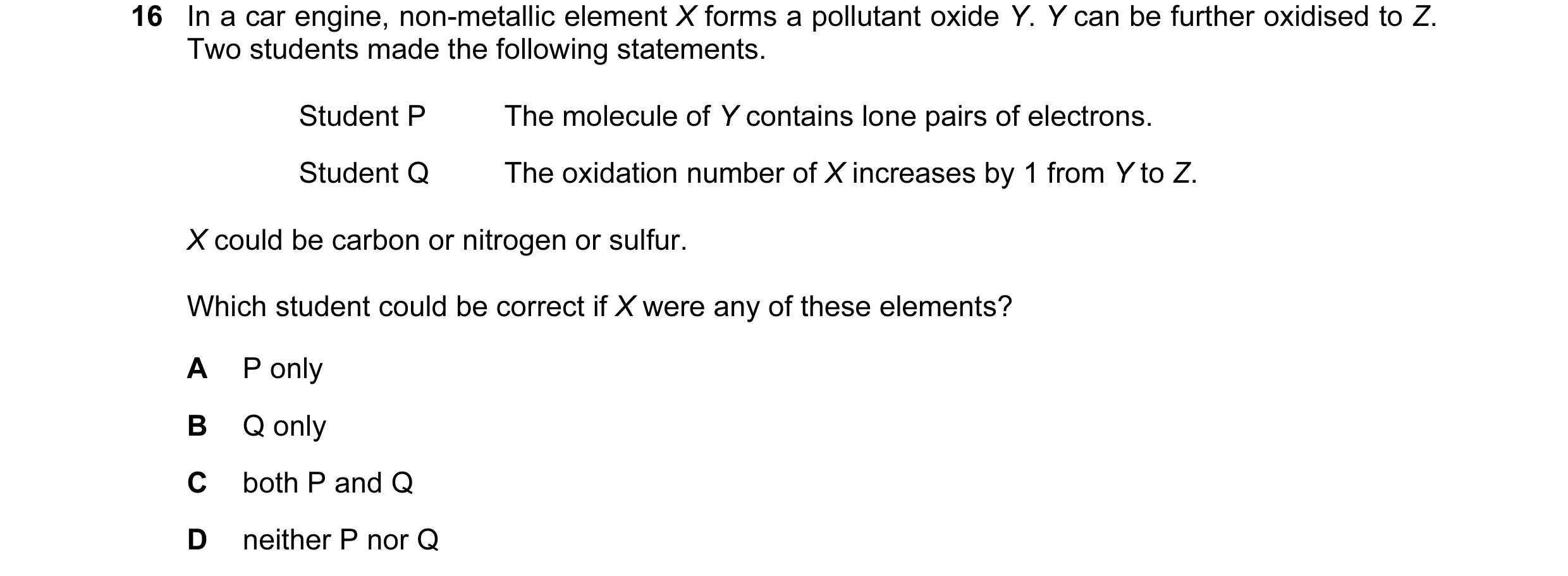
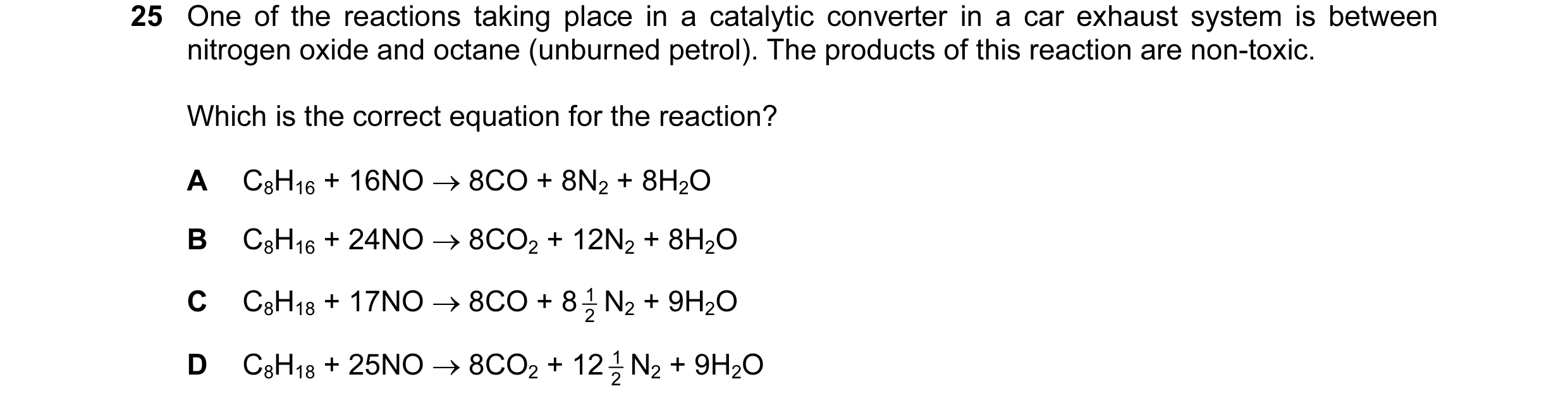

 18 / 78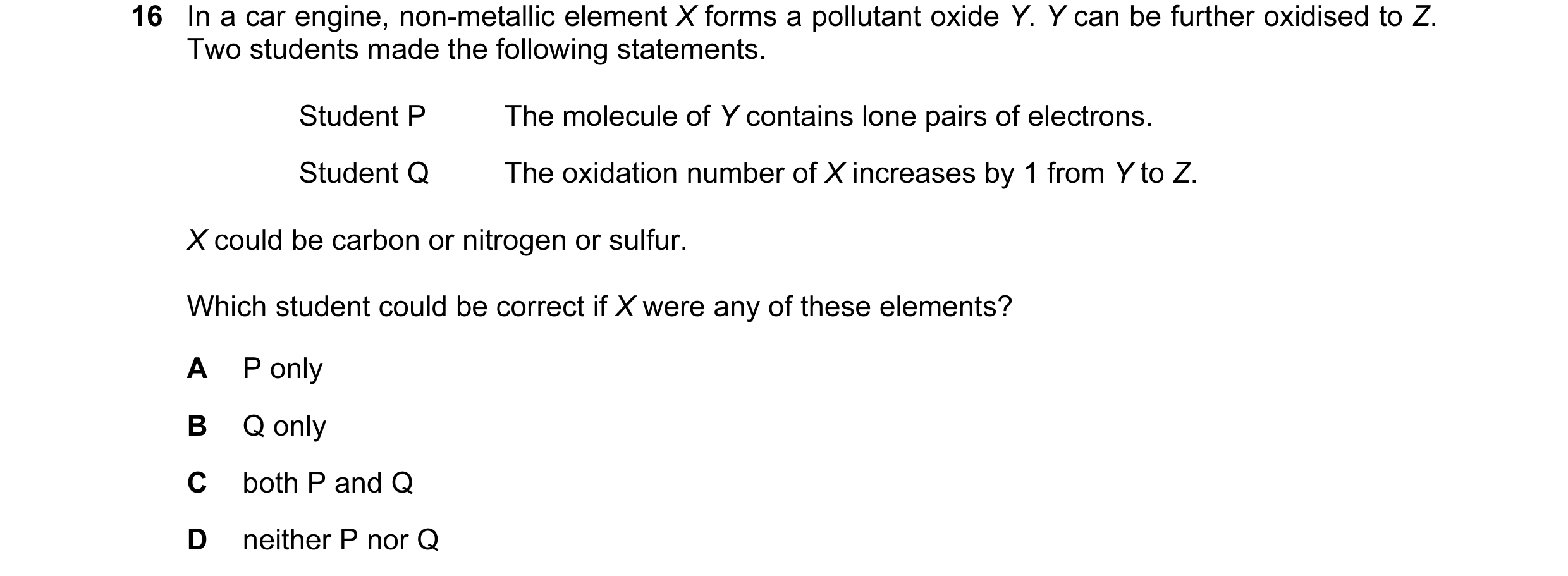
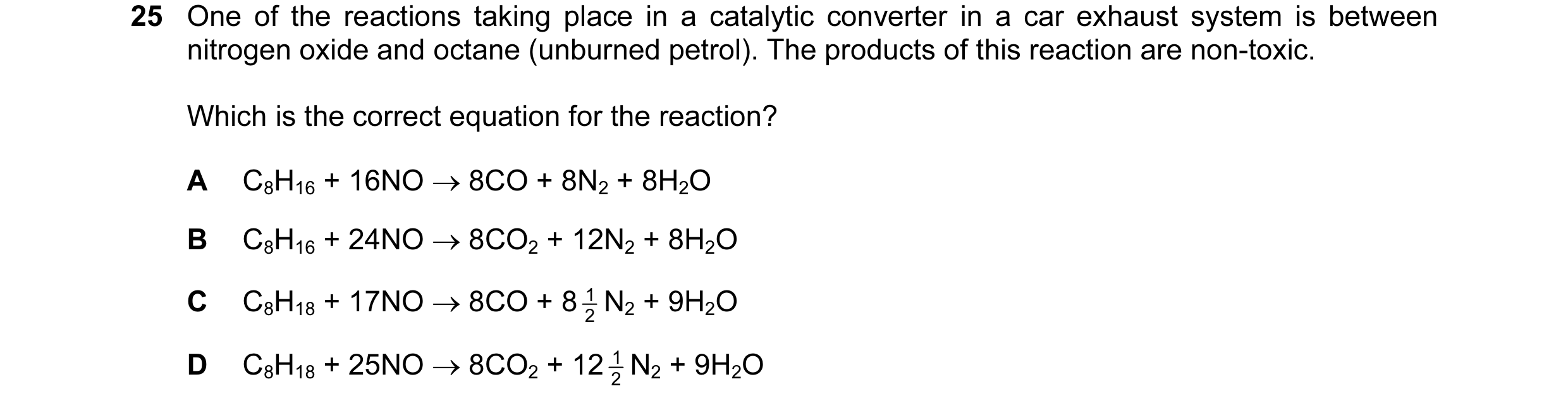
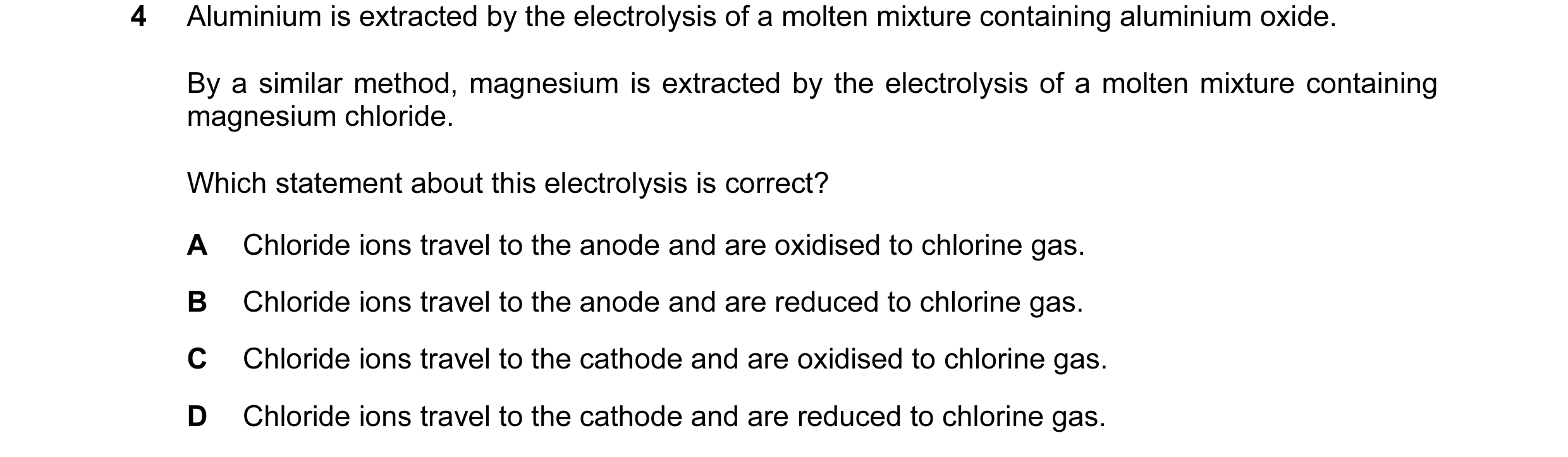
 19 / 78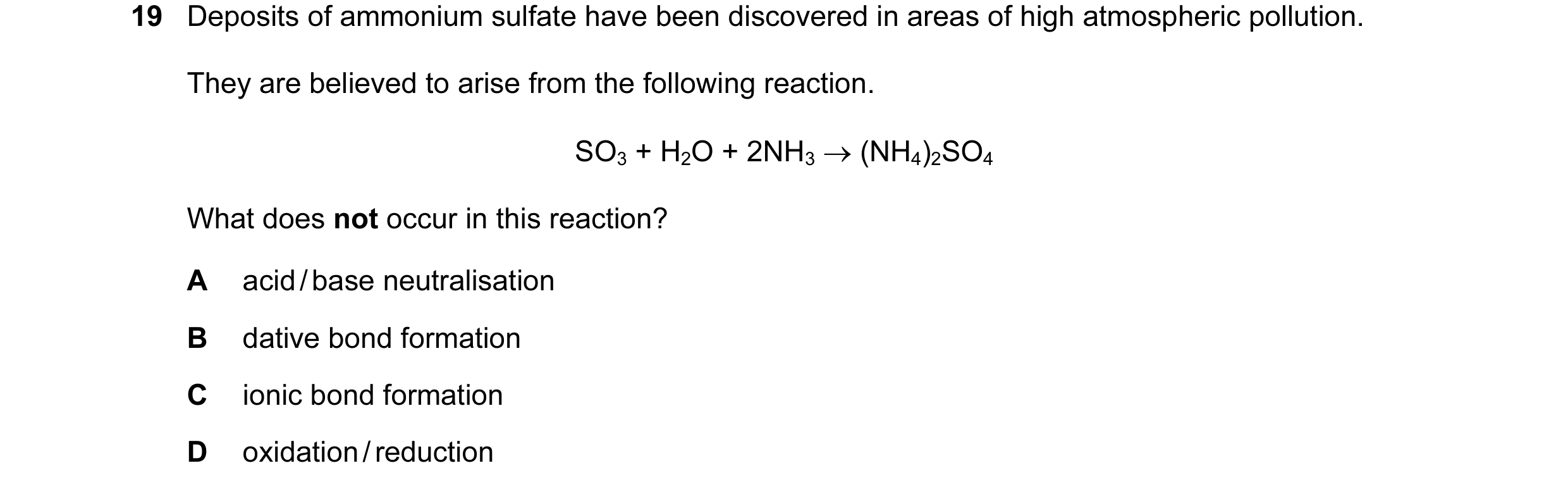

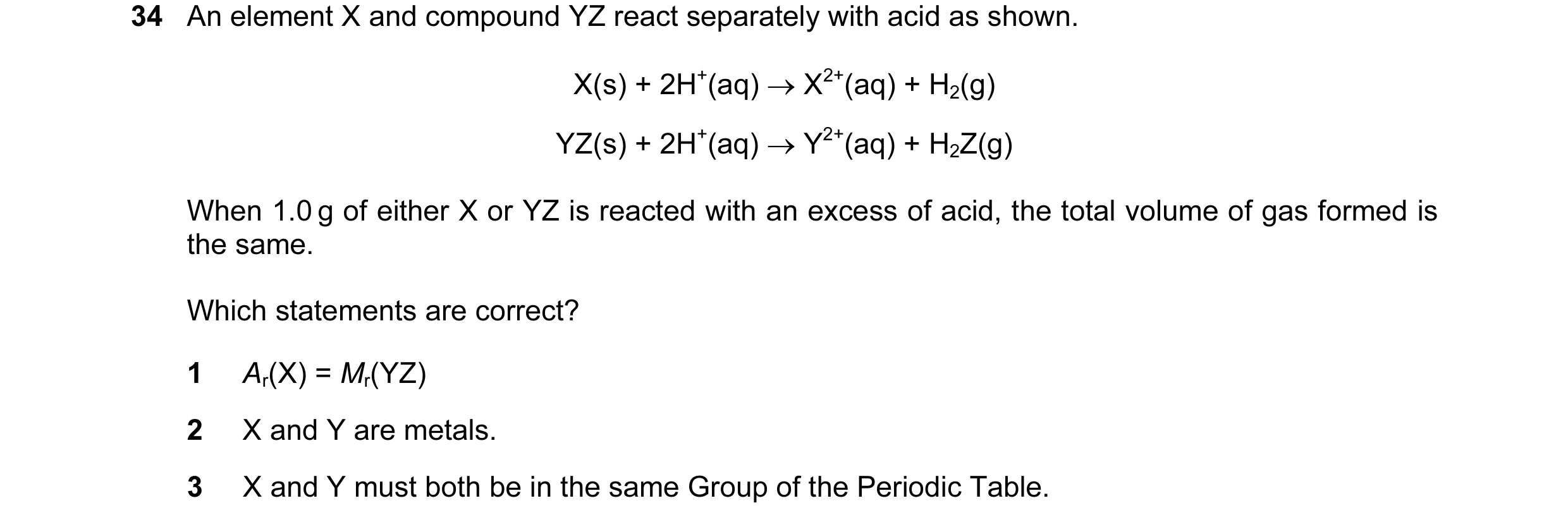
 20 / 78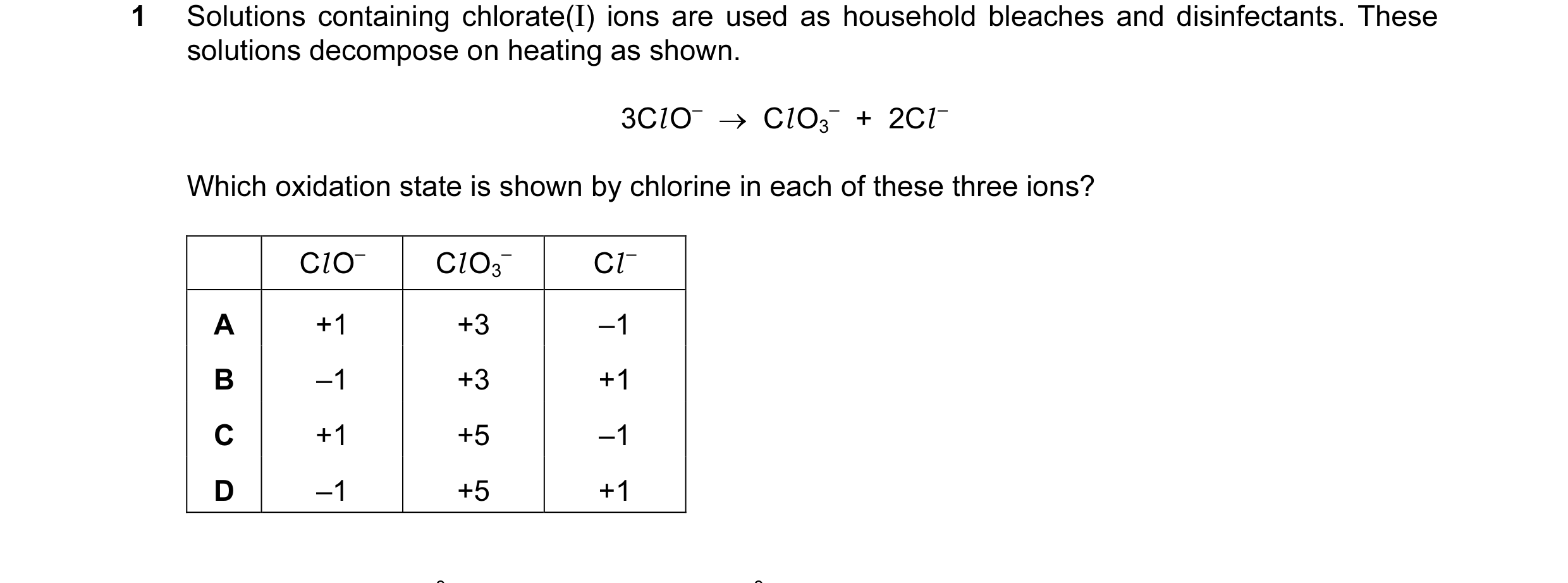
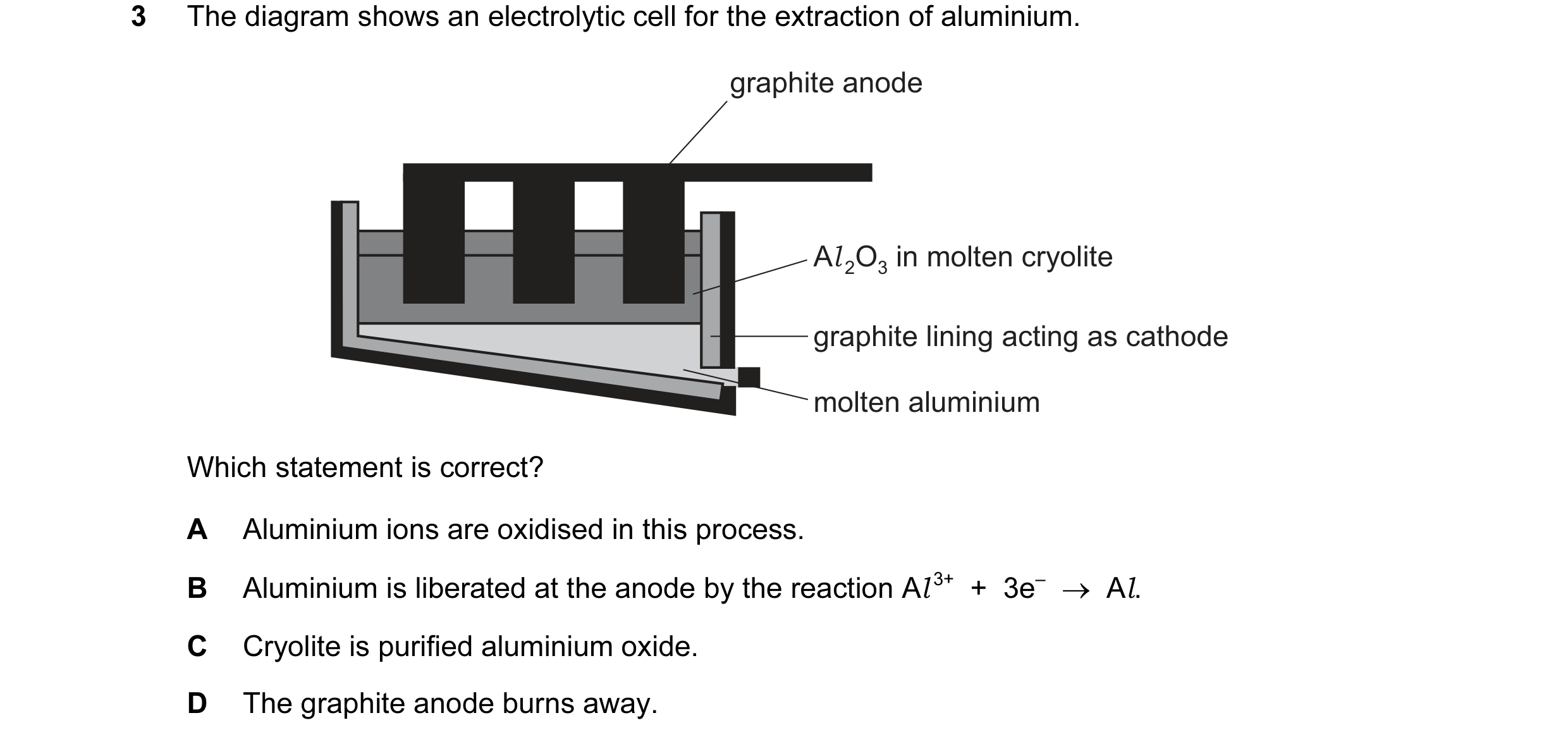

 21 / 78


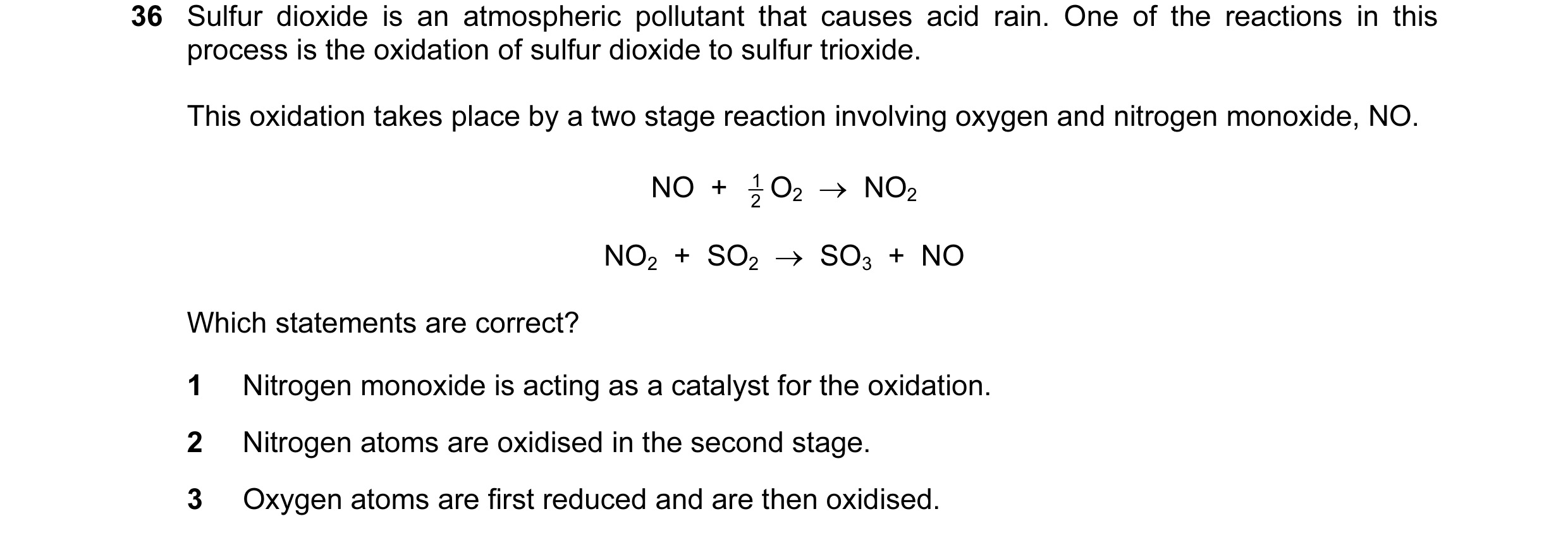 22 / 78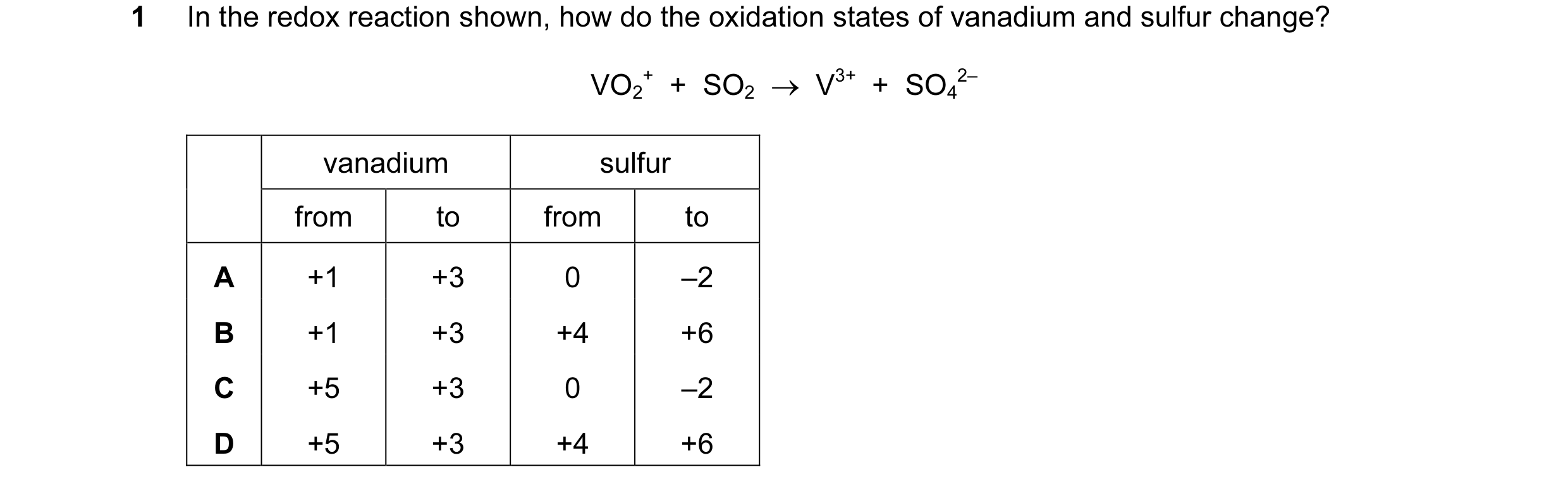
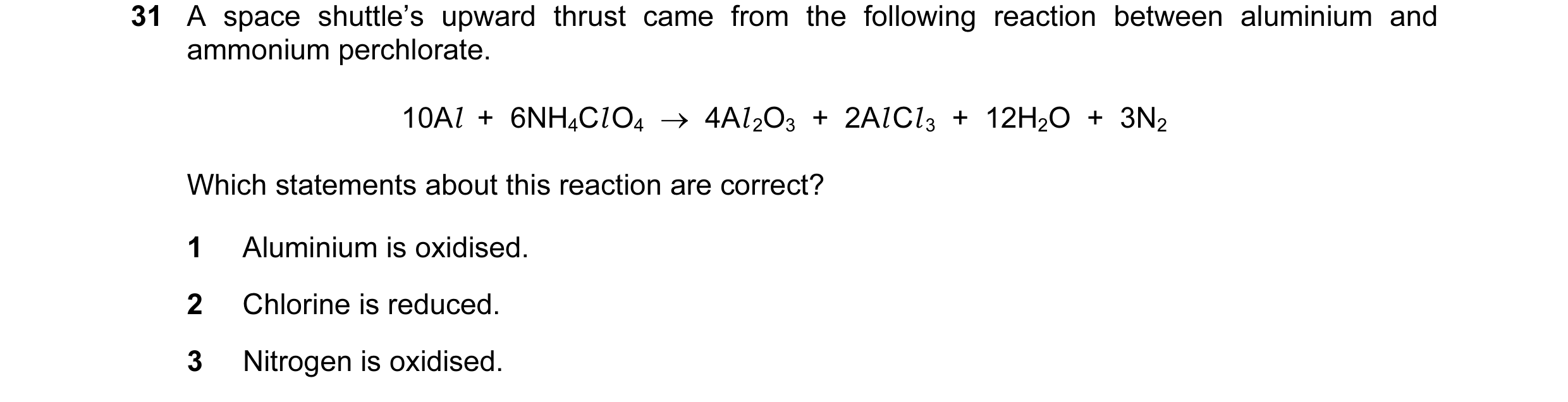

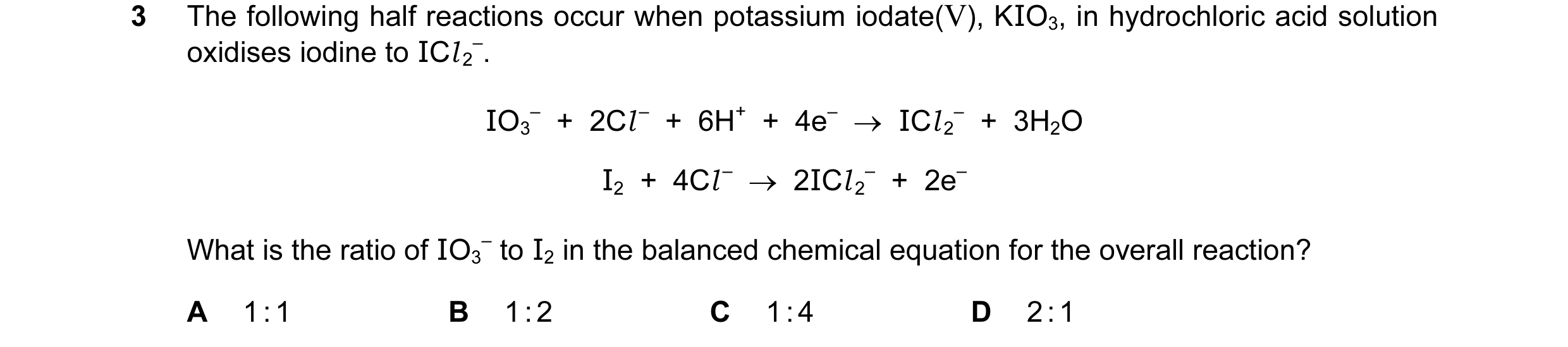 23 / 78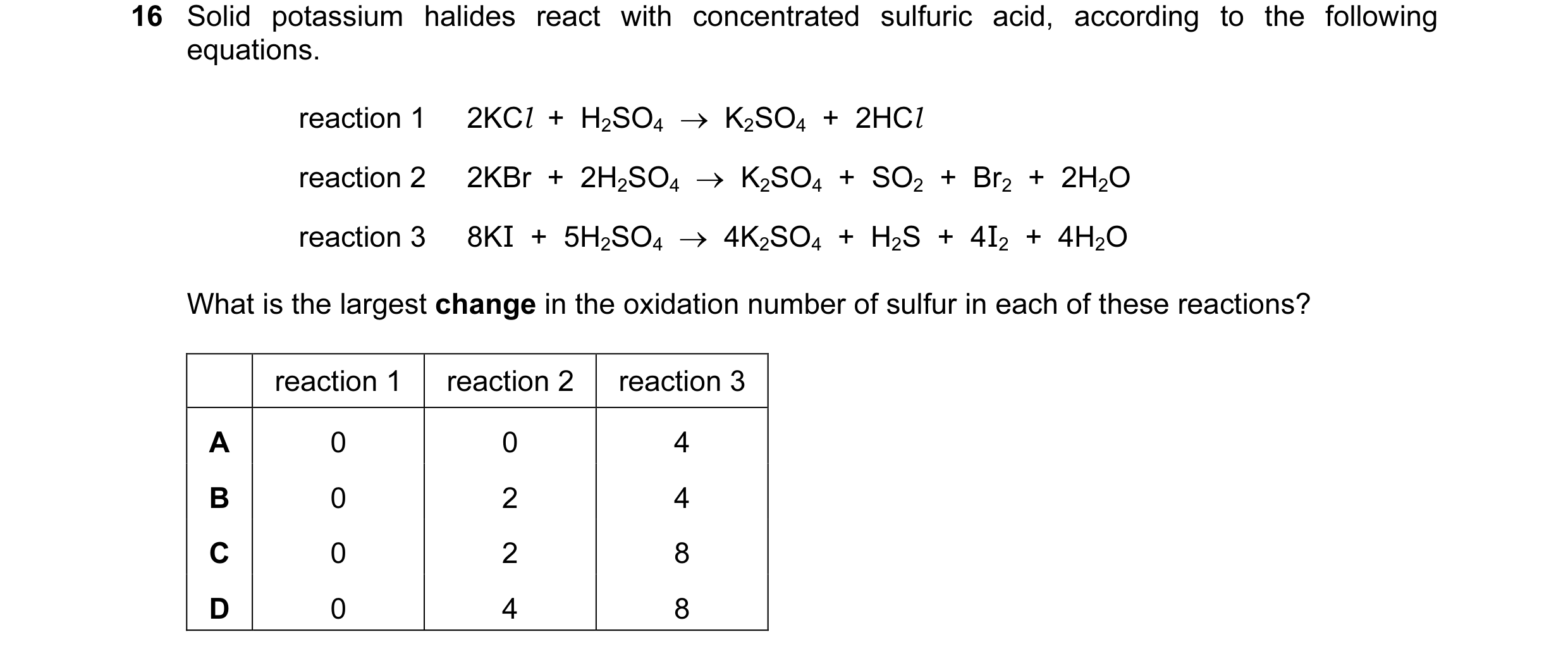
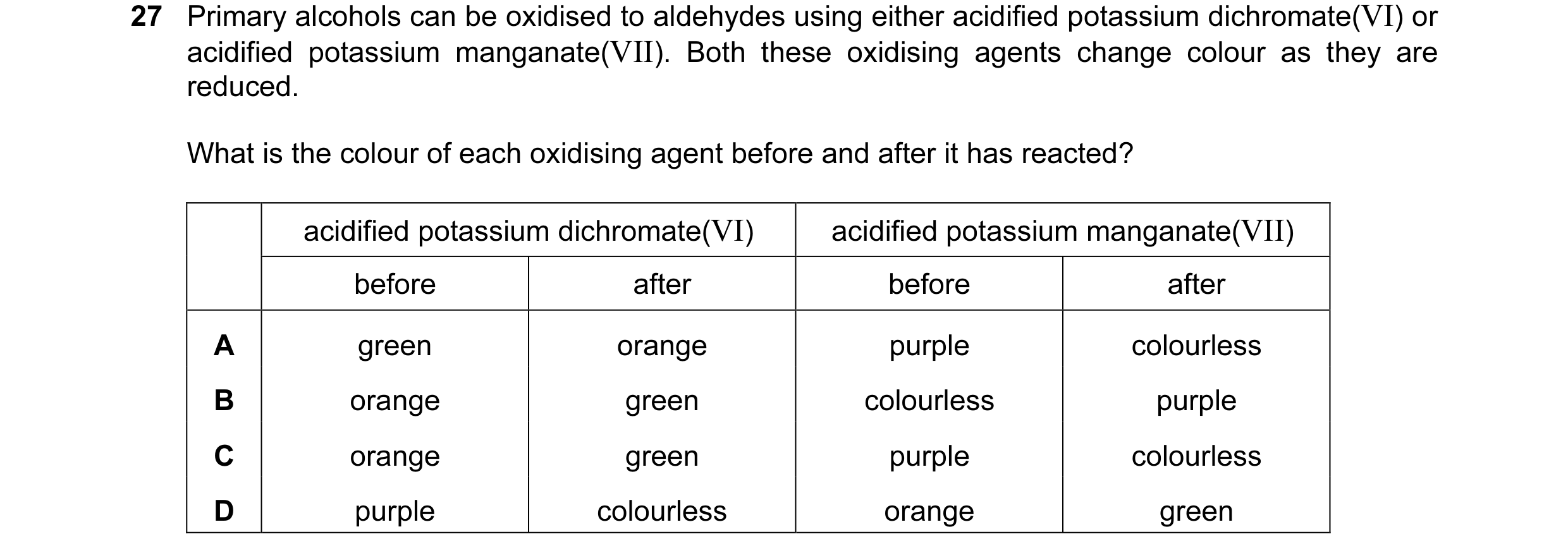

 24 / 78
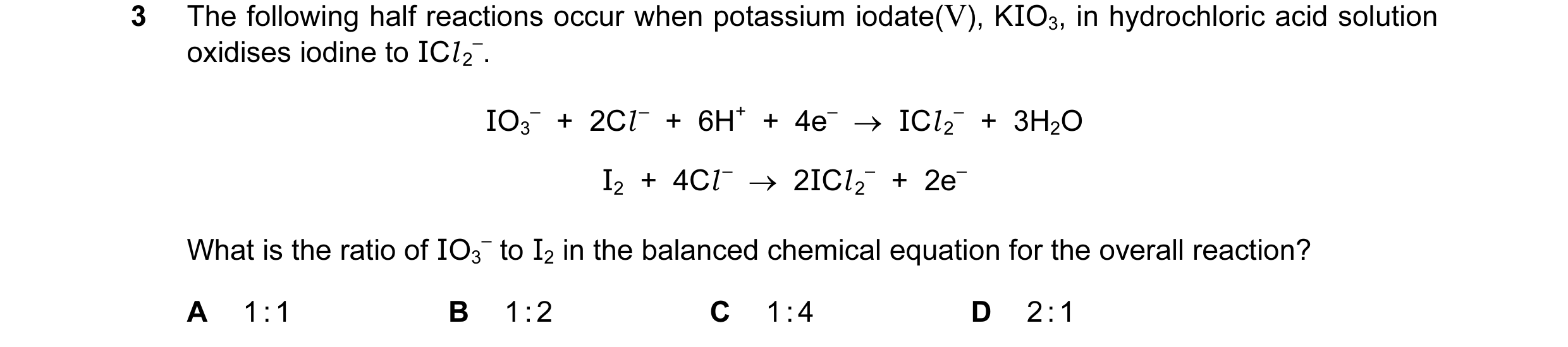
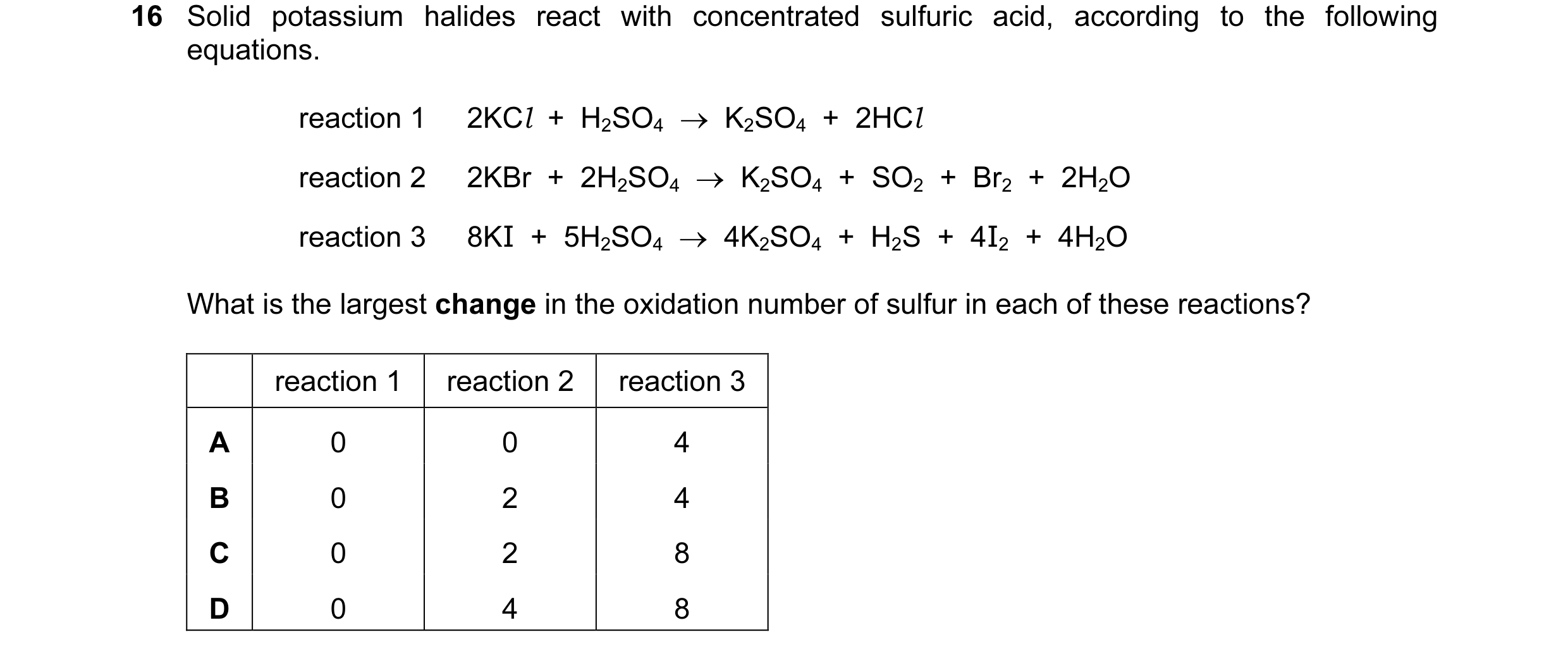
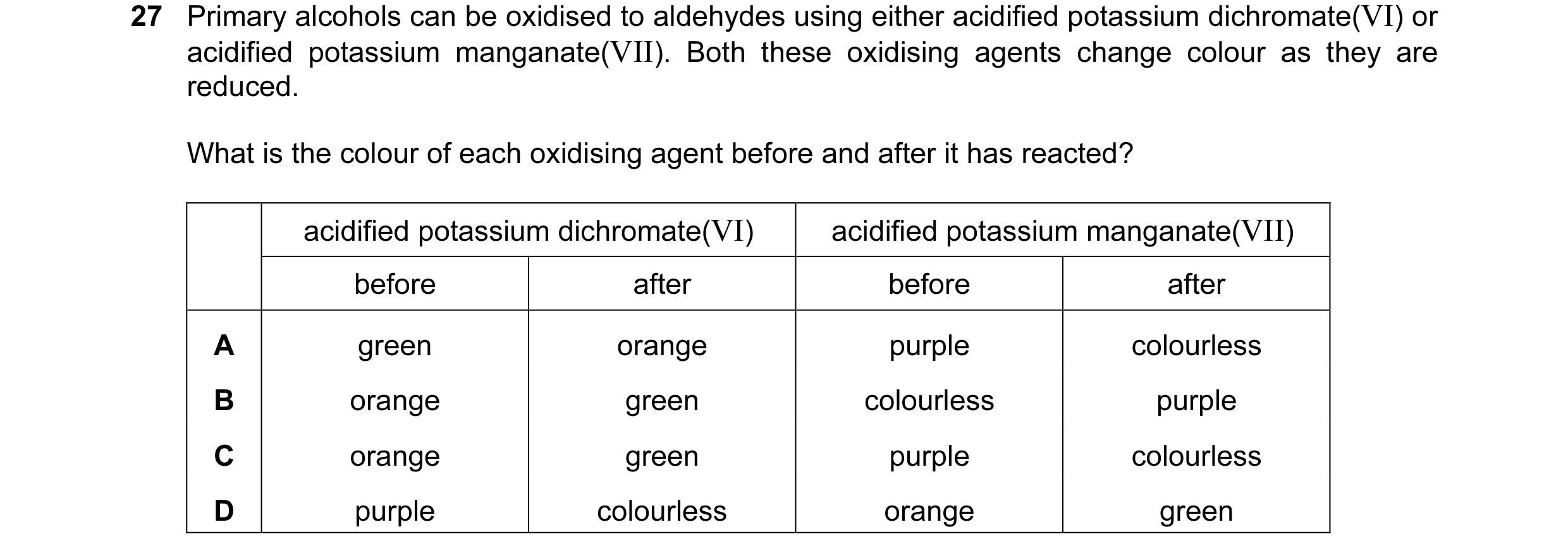 25 / 78



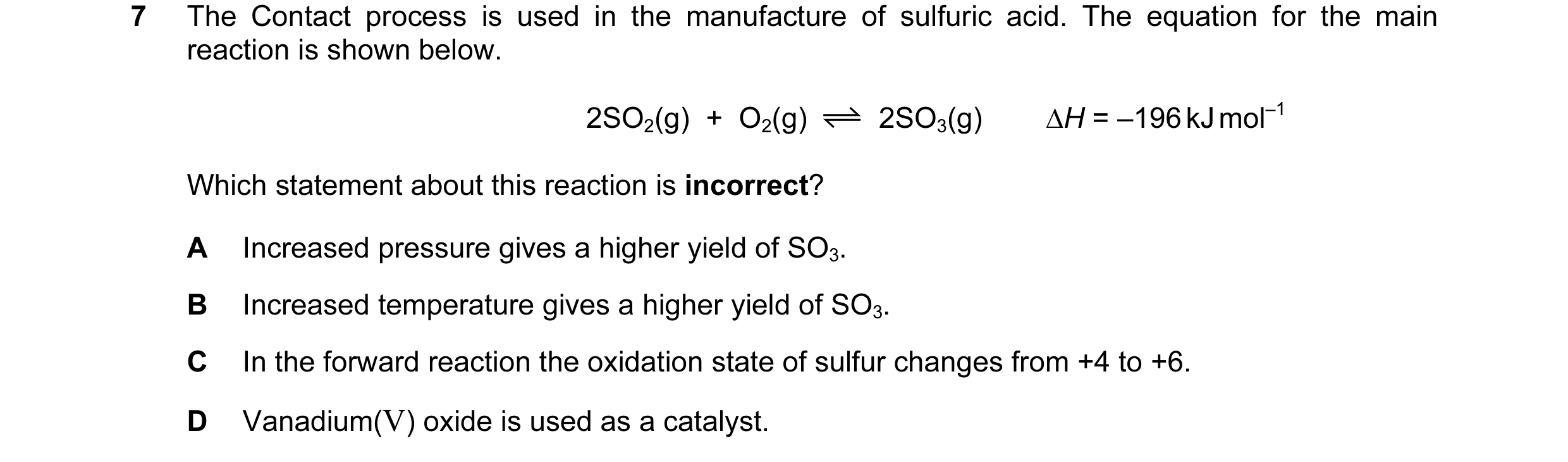
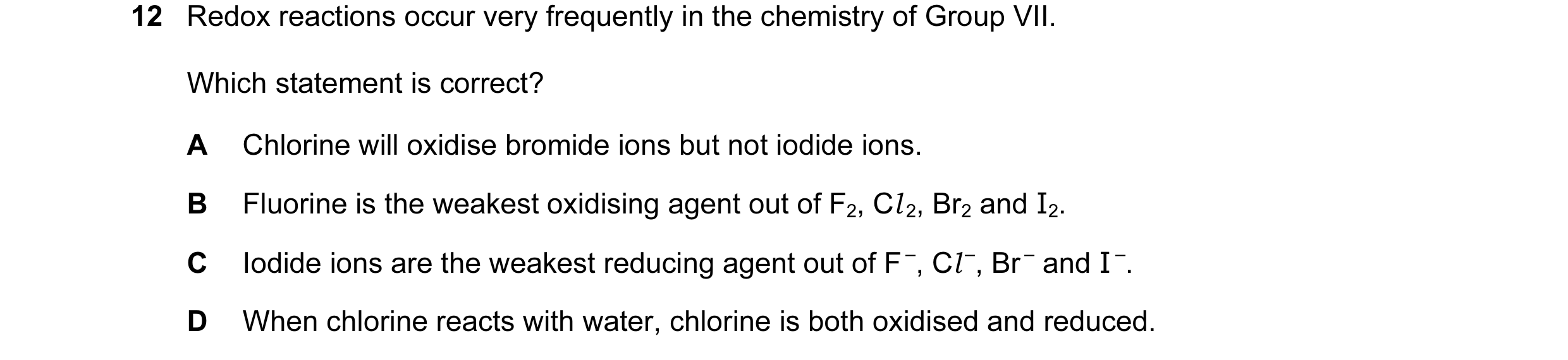 26 / 78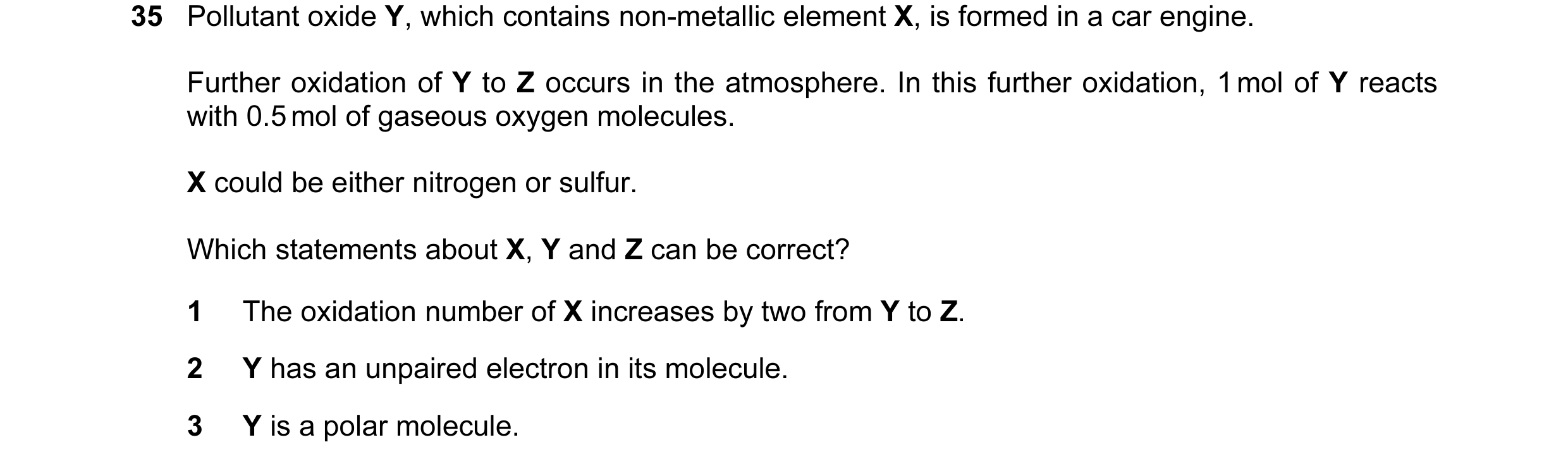



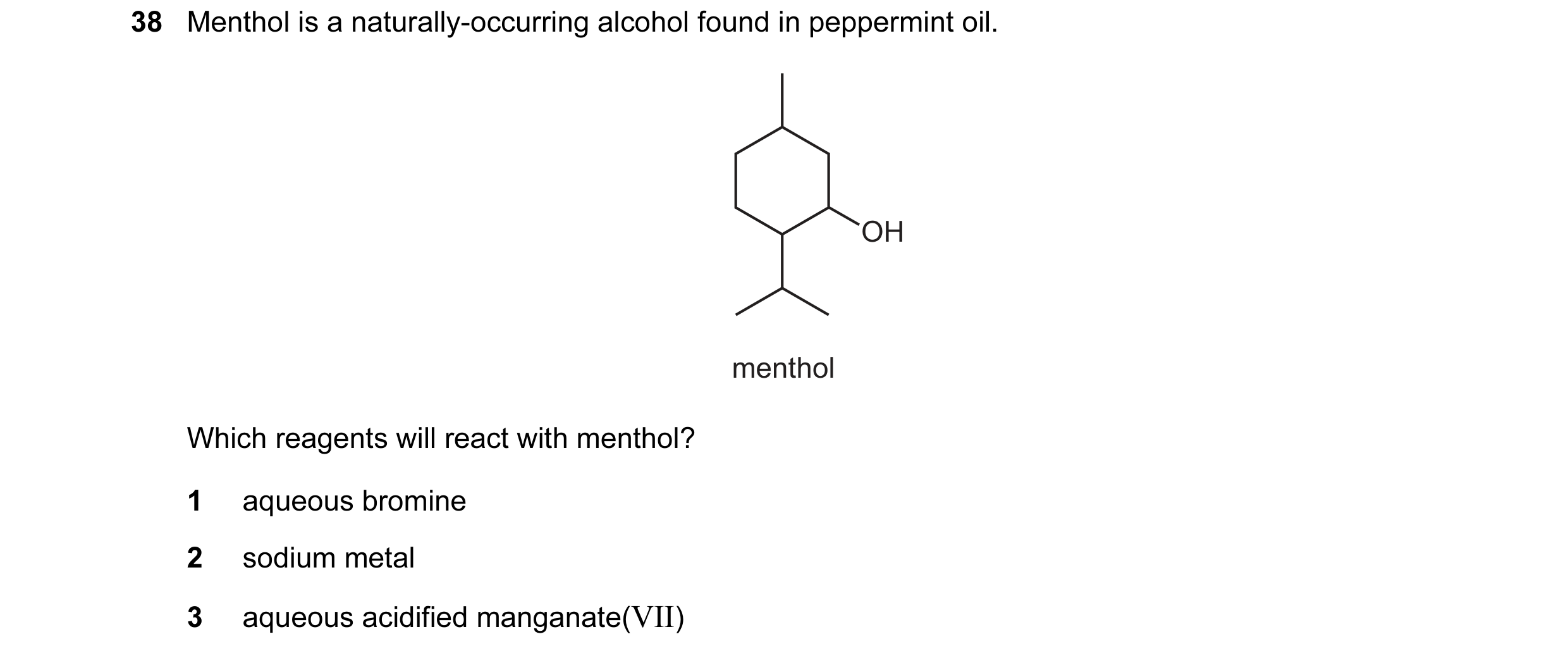 27 / 78
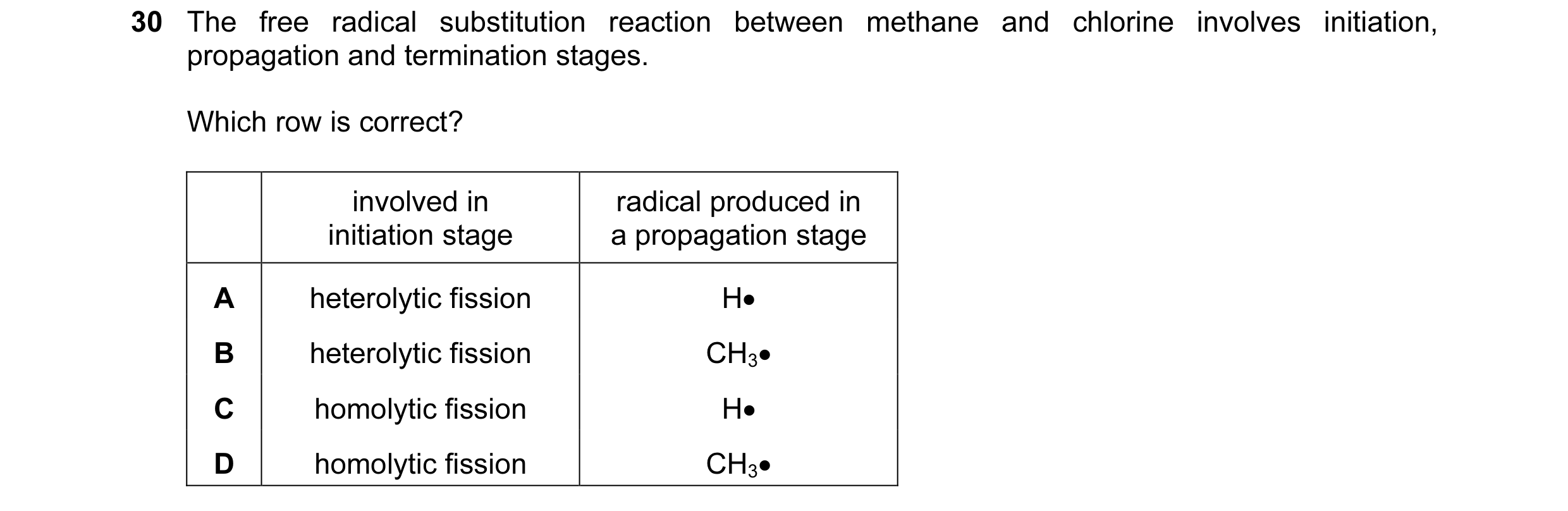
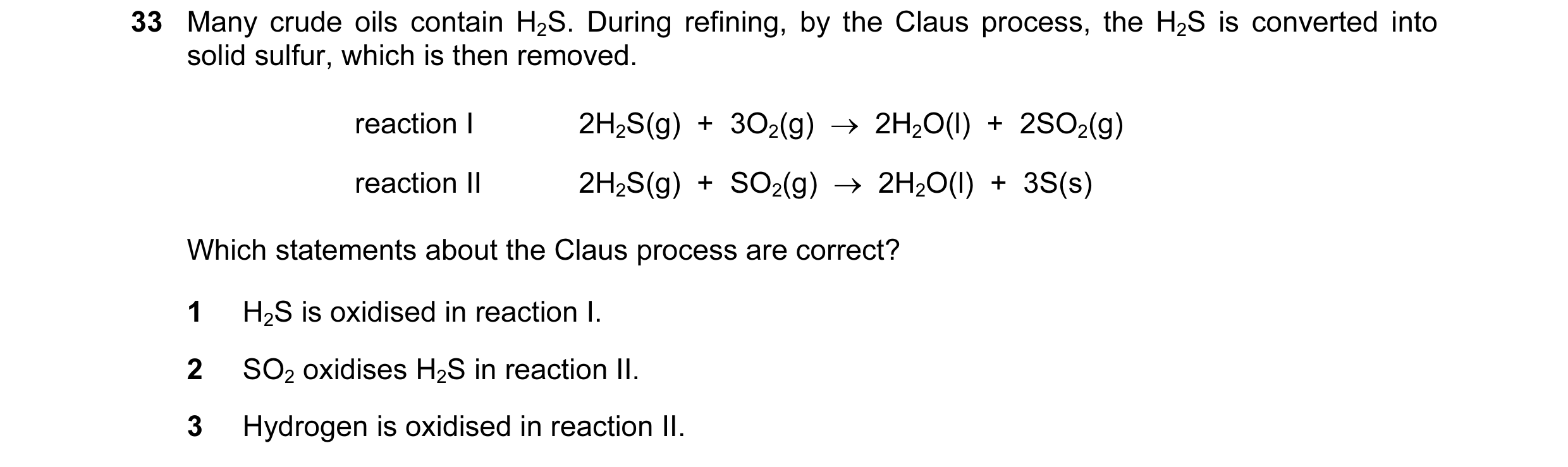

 28 / 78
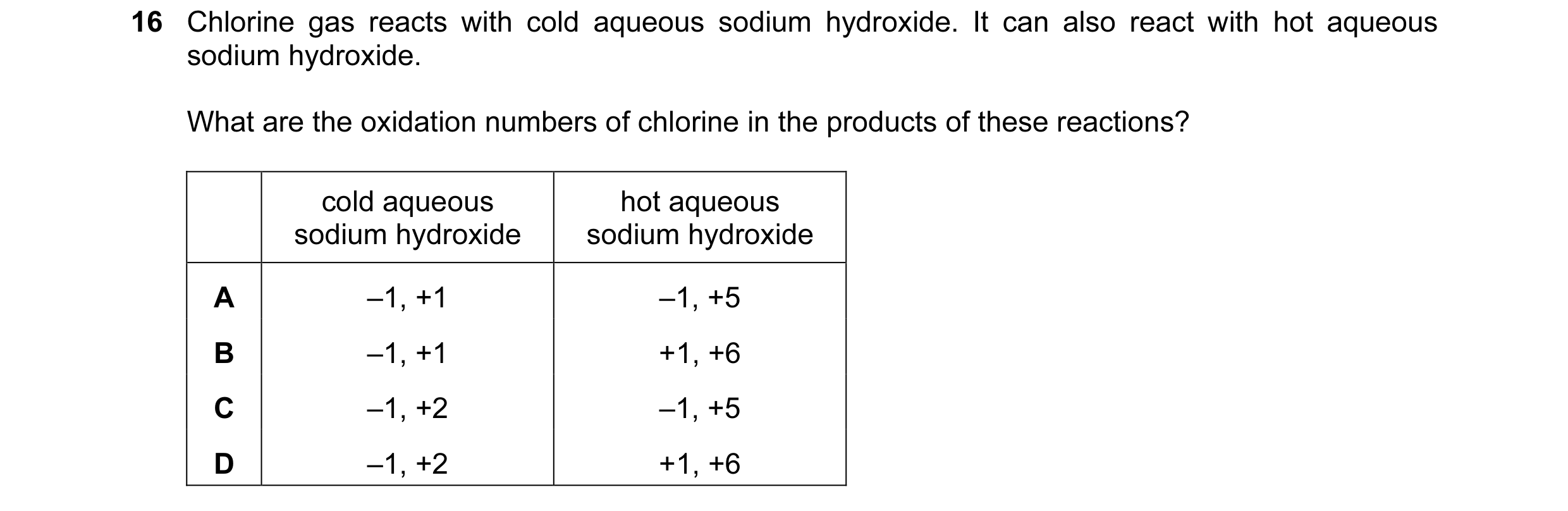

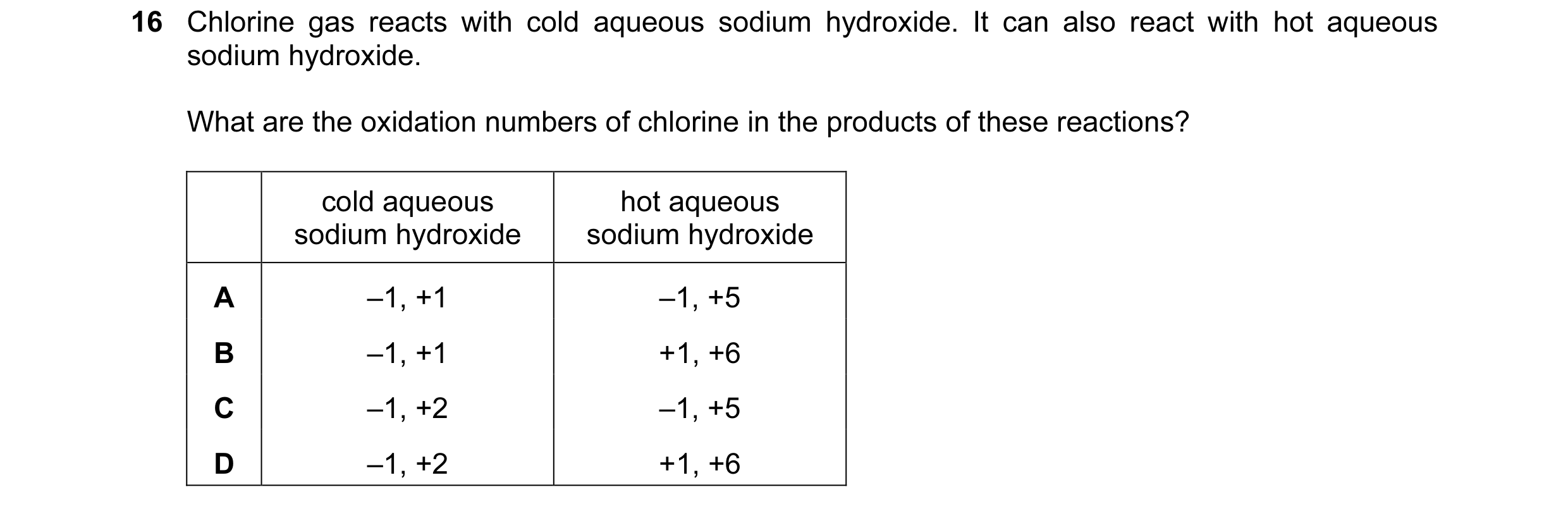
 29 / 78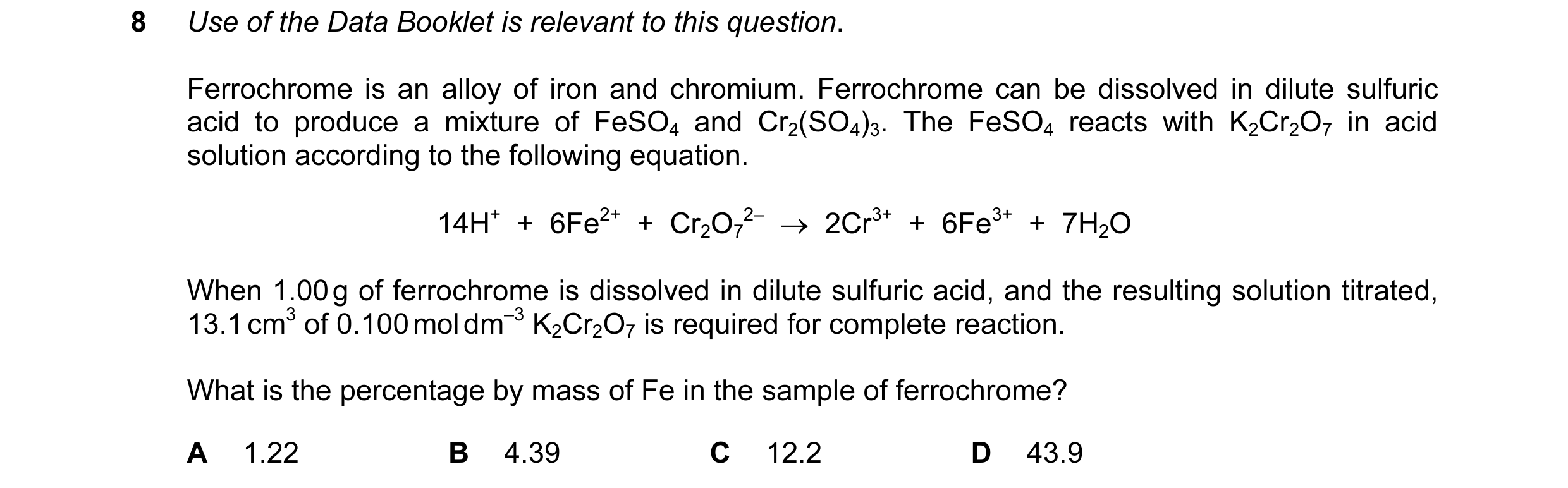
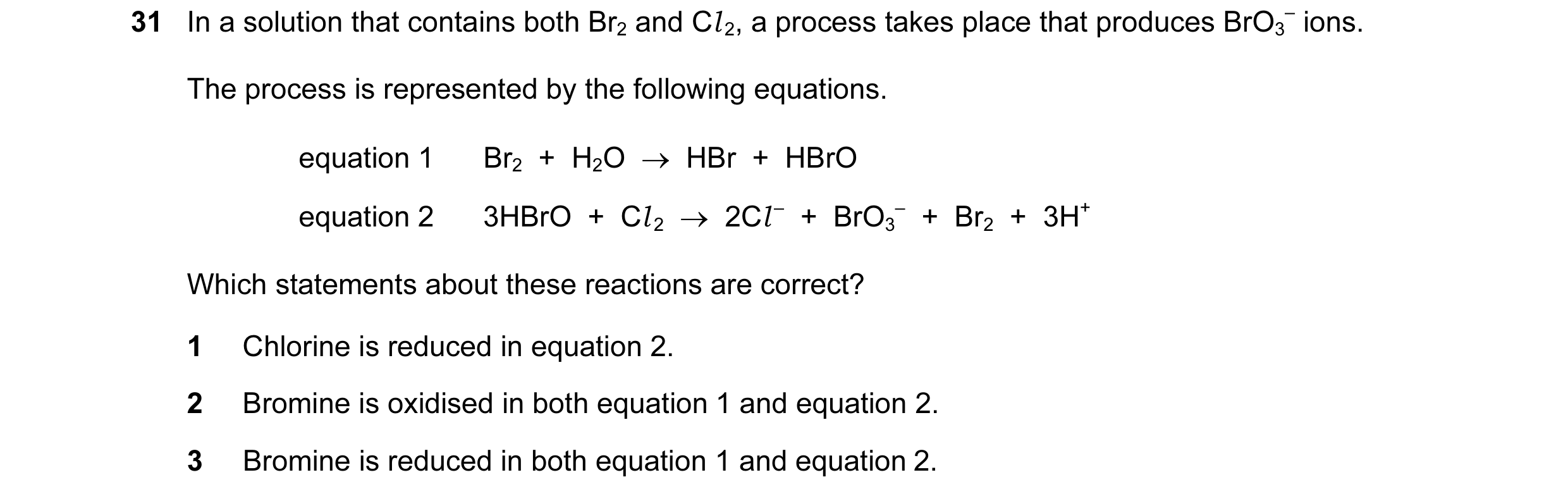
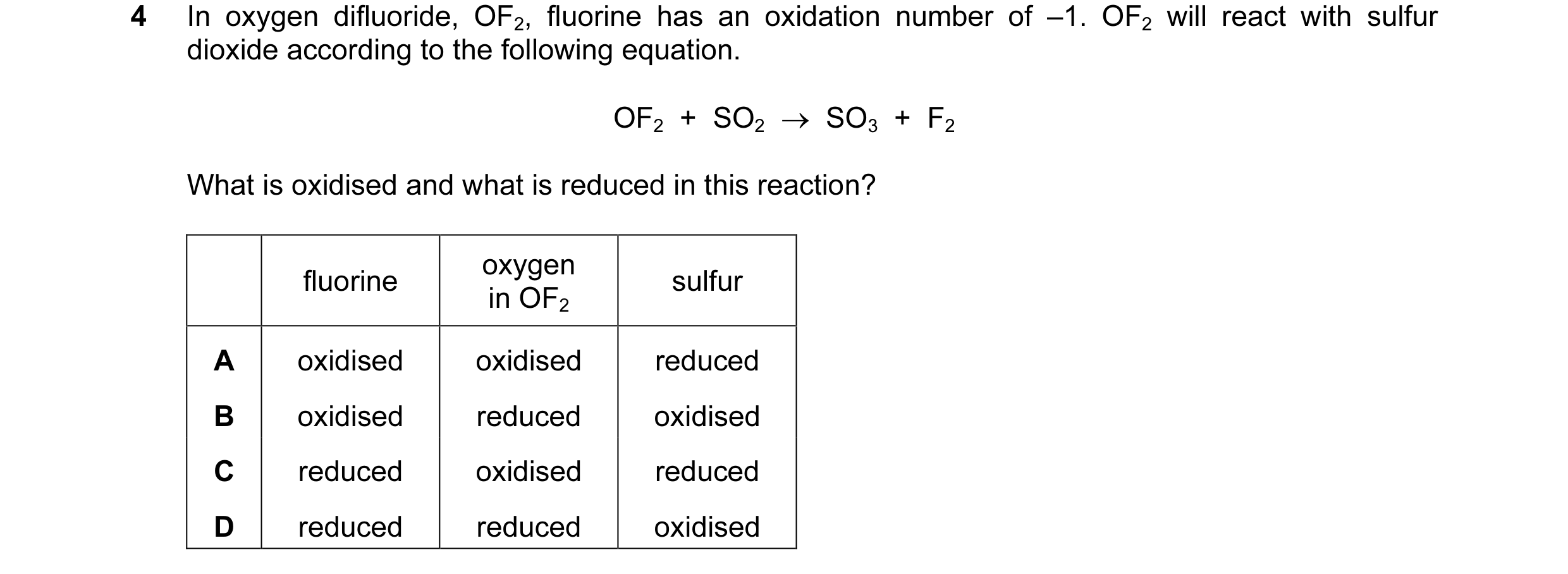 30 / 78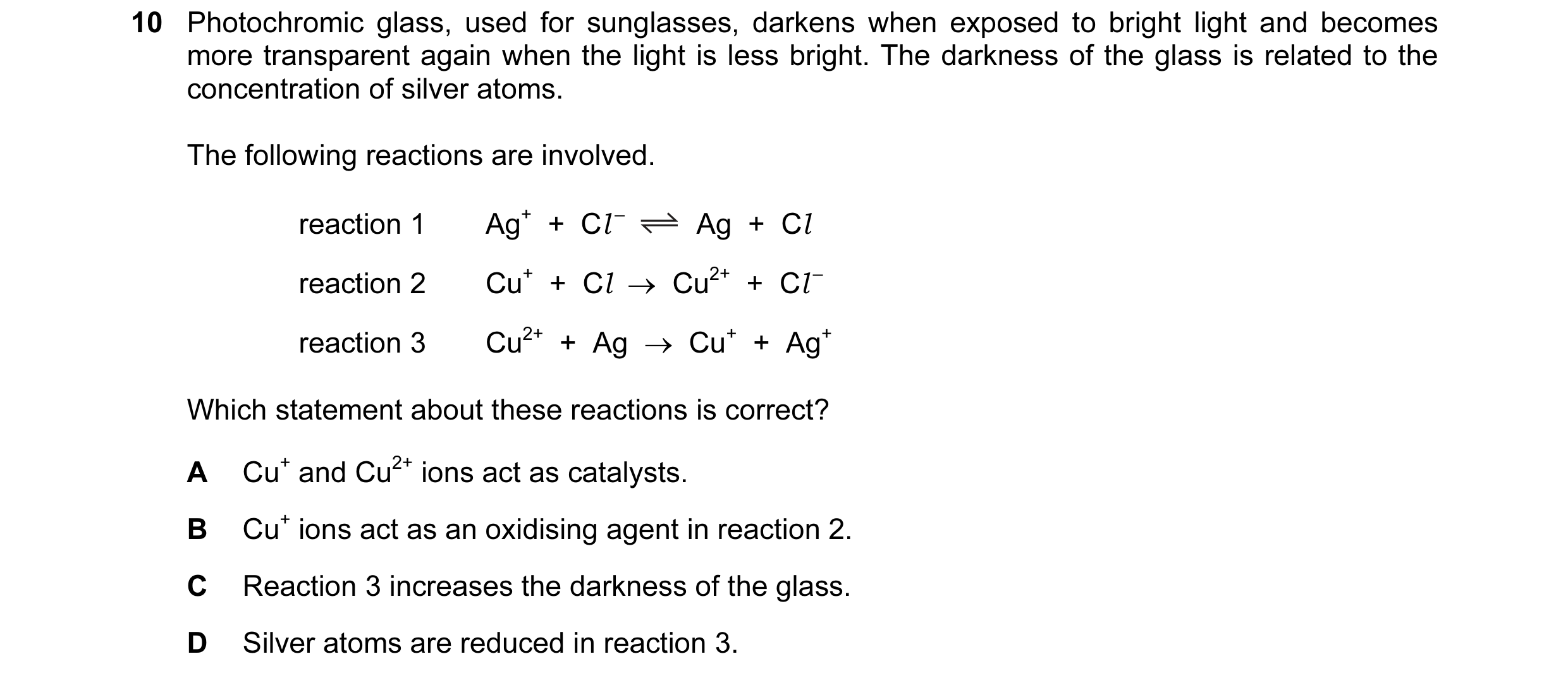
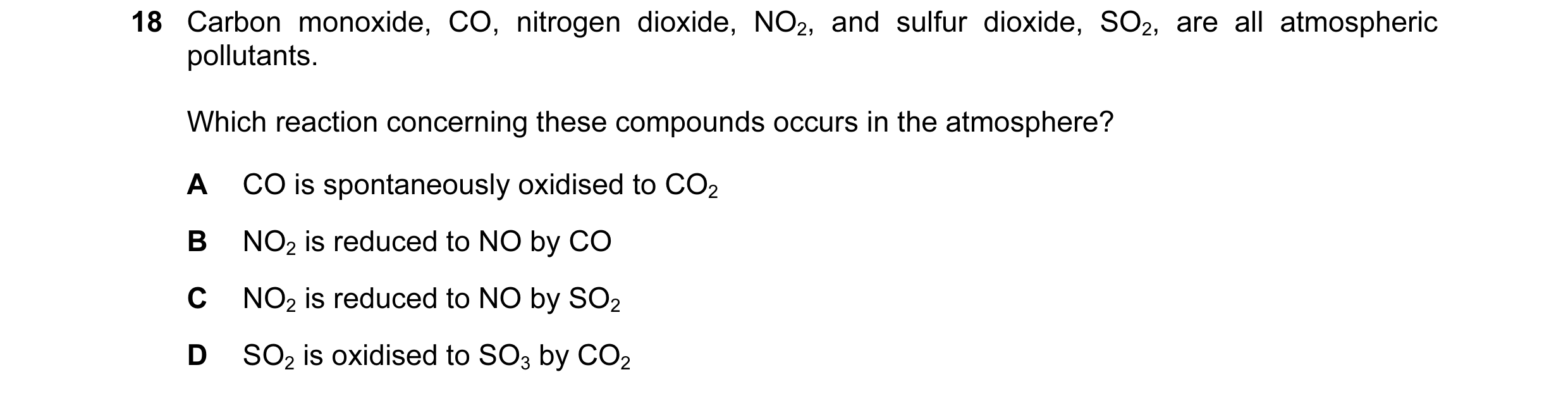
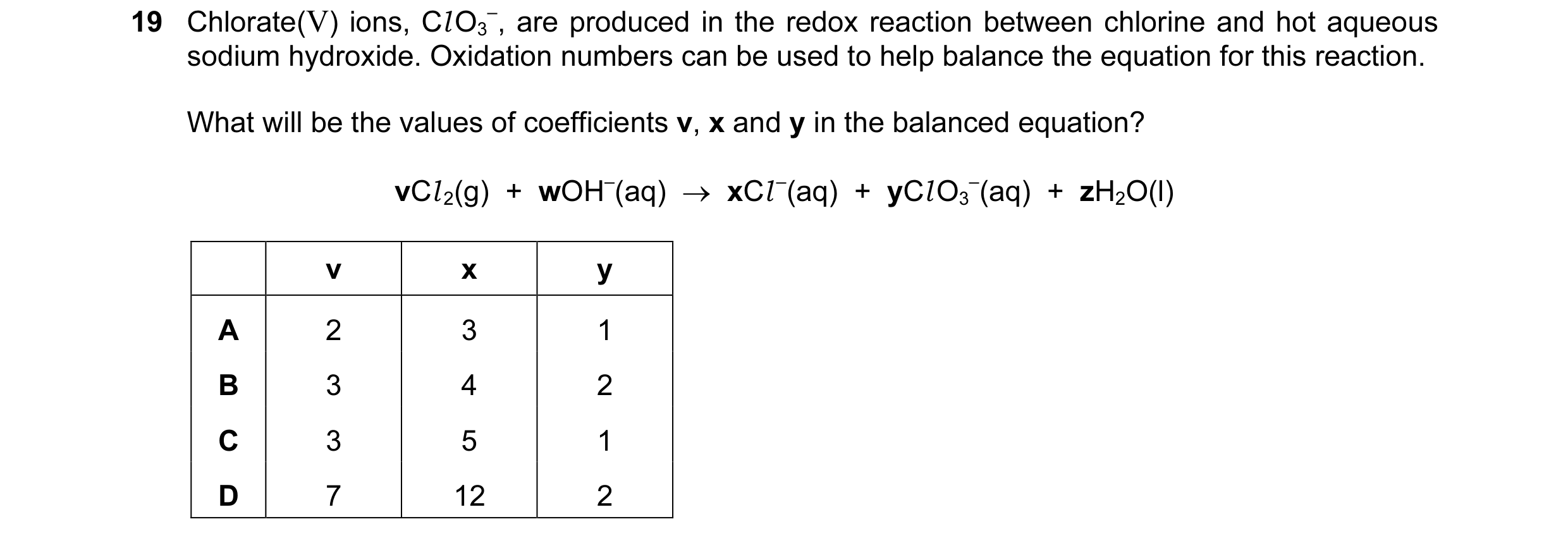
 31 / 78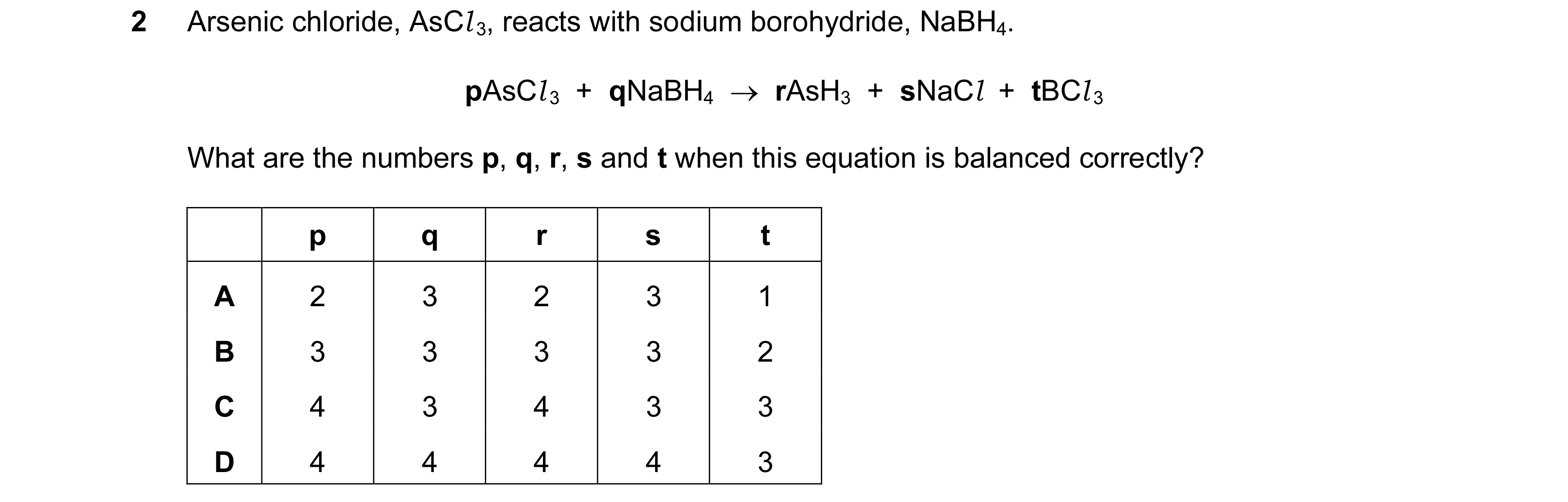

 32 / 78

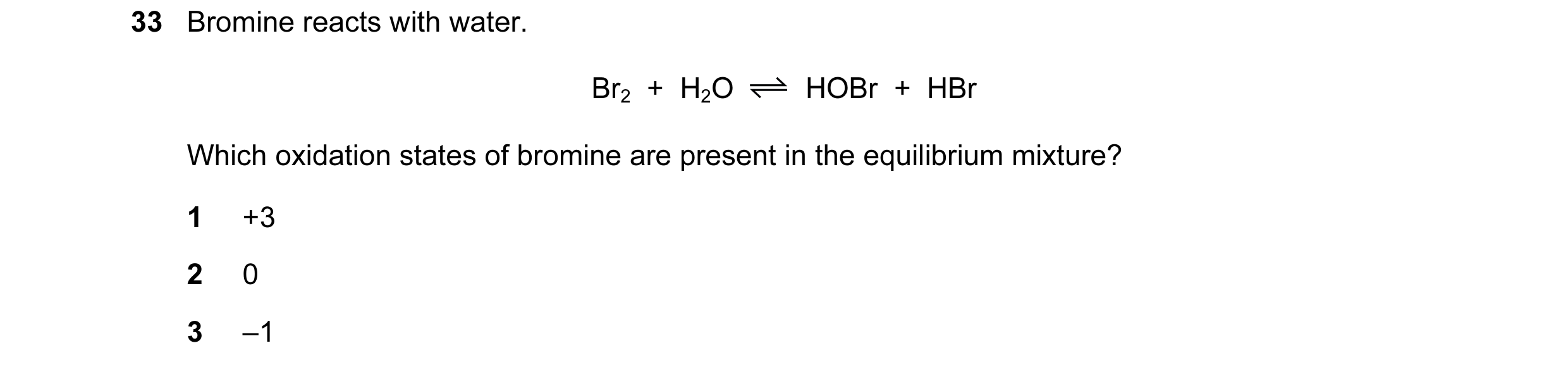
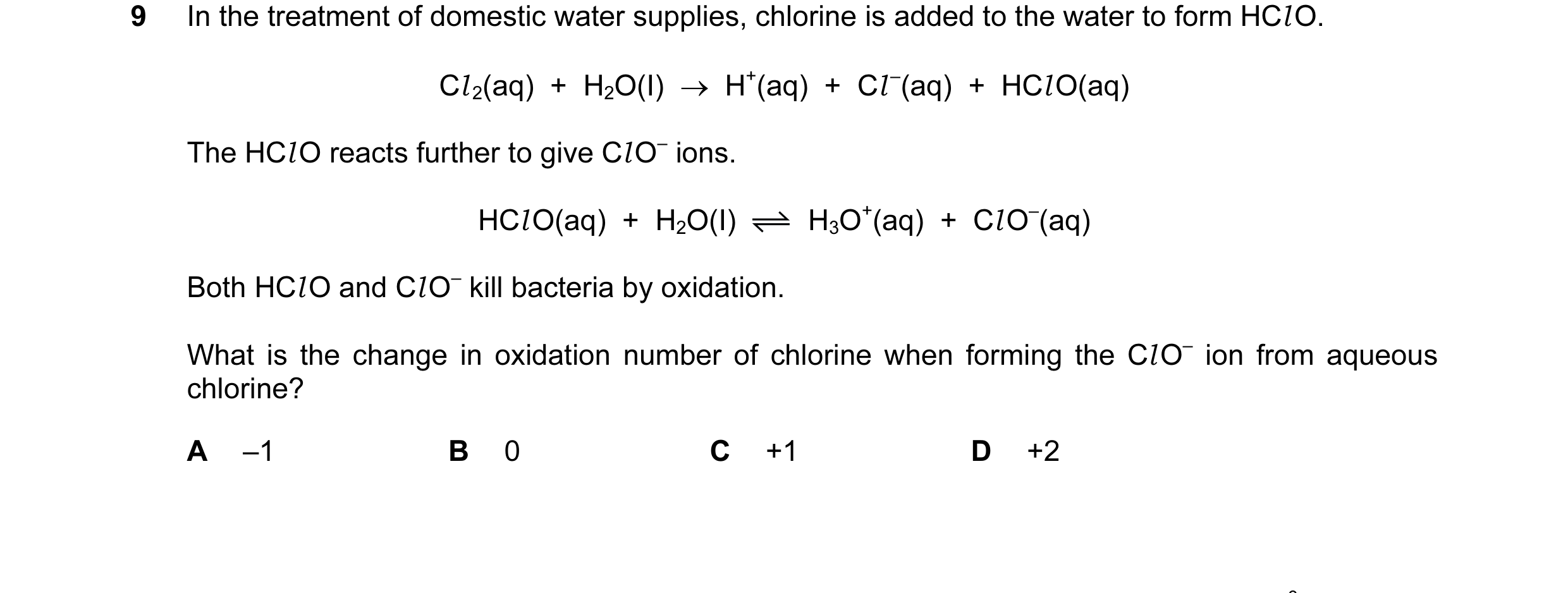 33 / 78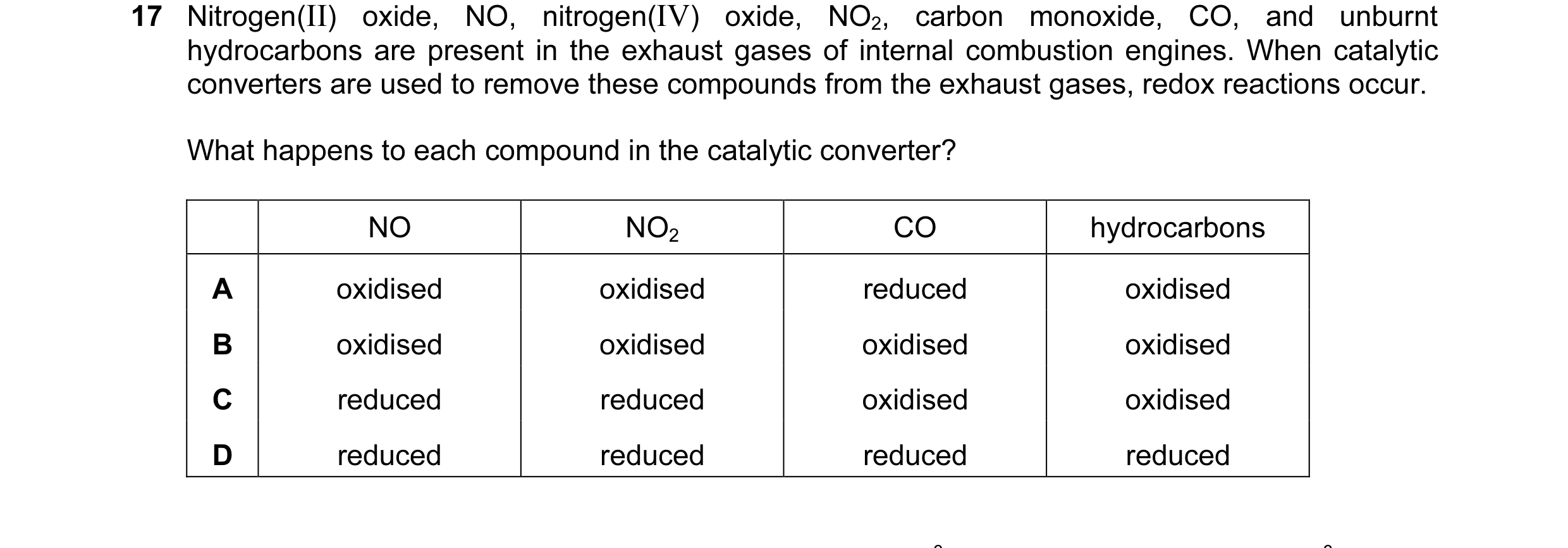

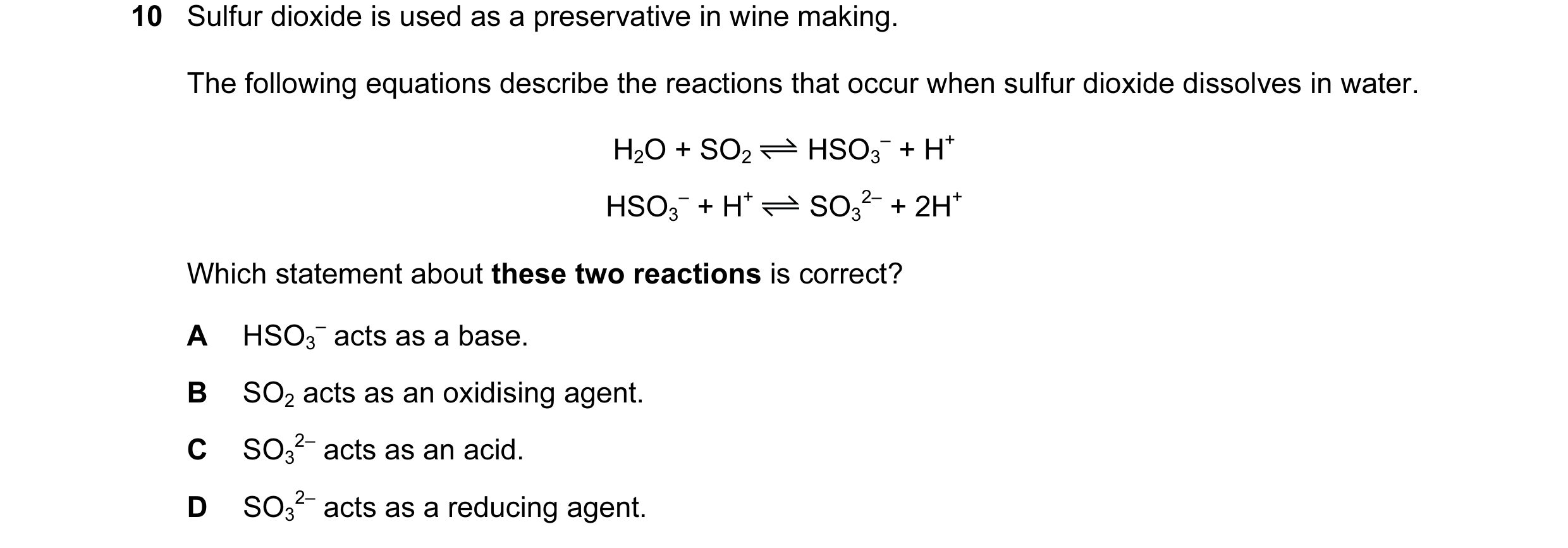
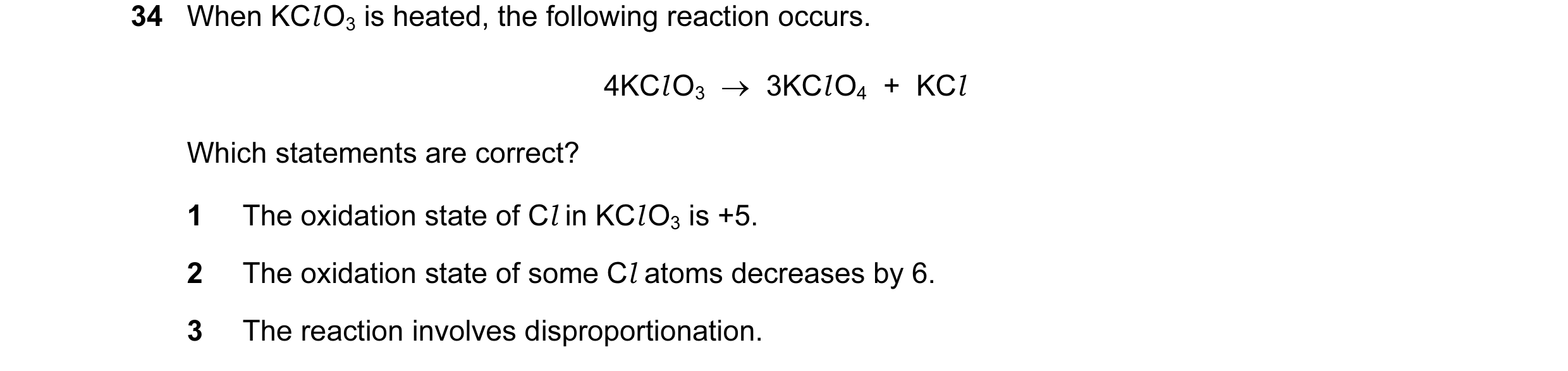 34 / 78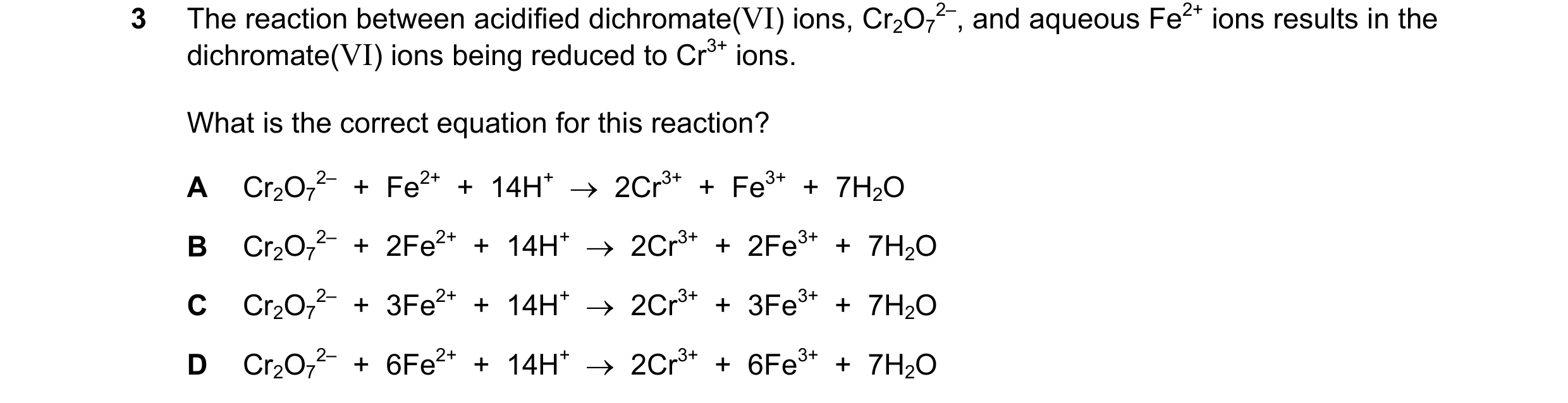
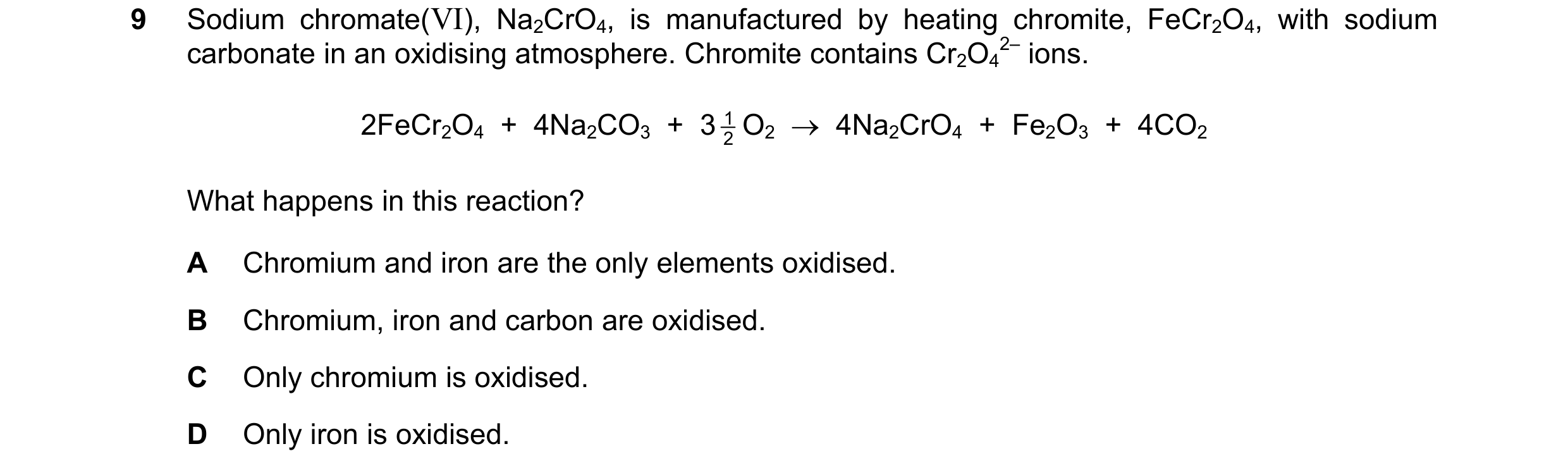
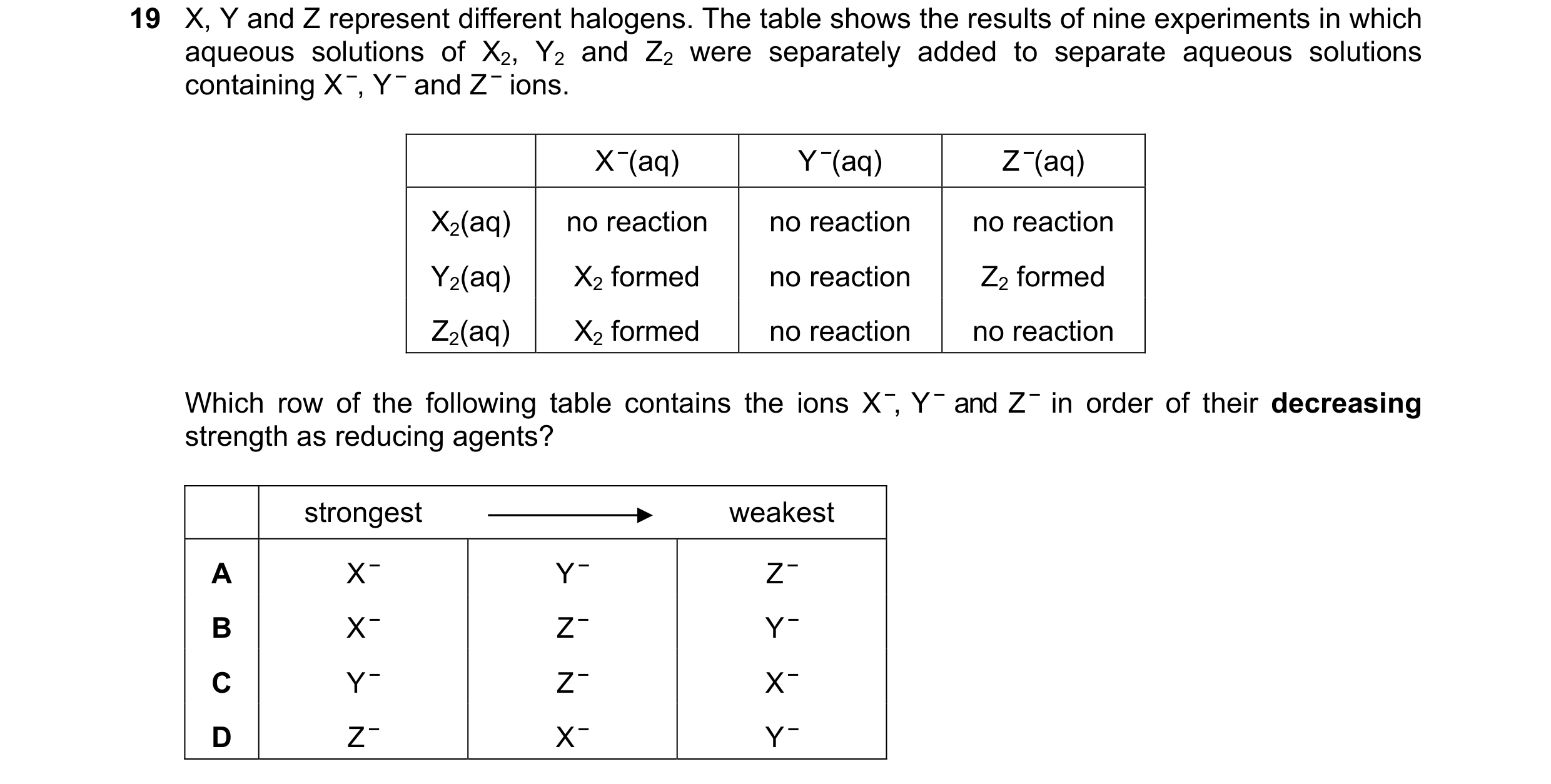
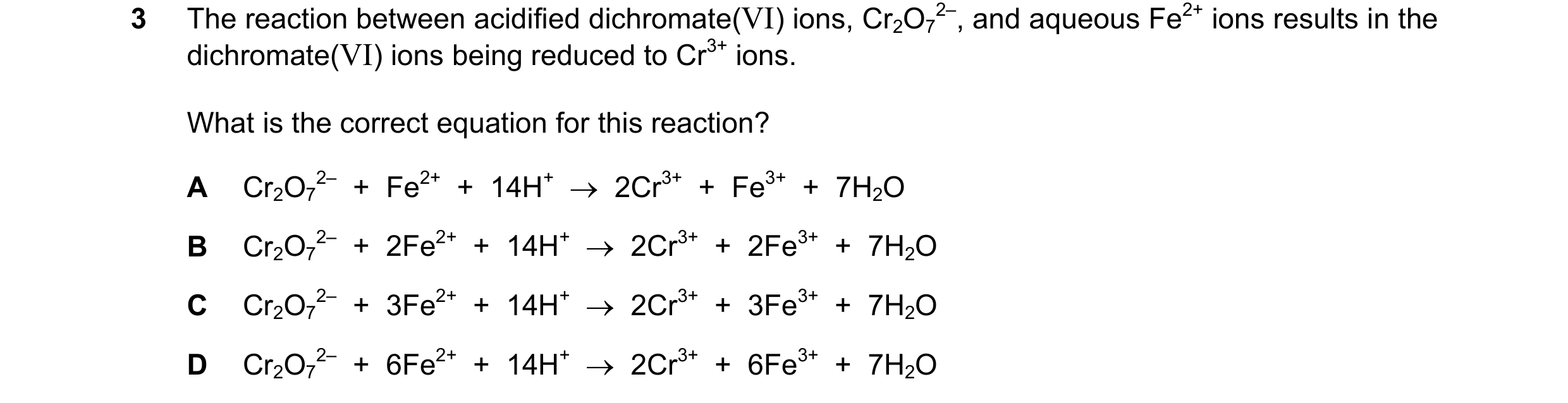 35 / 78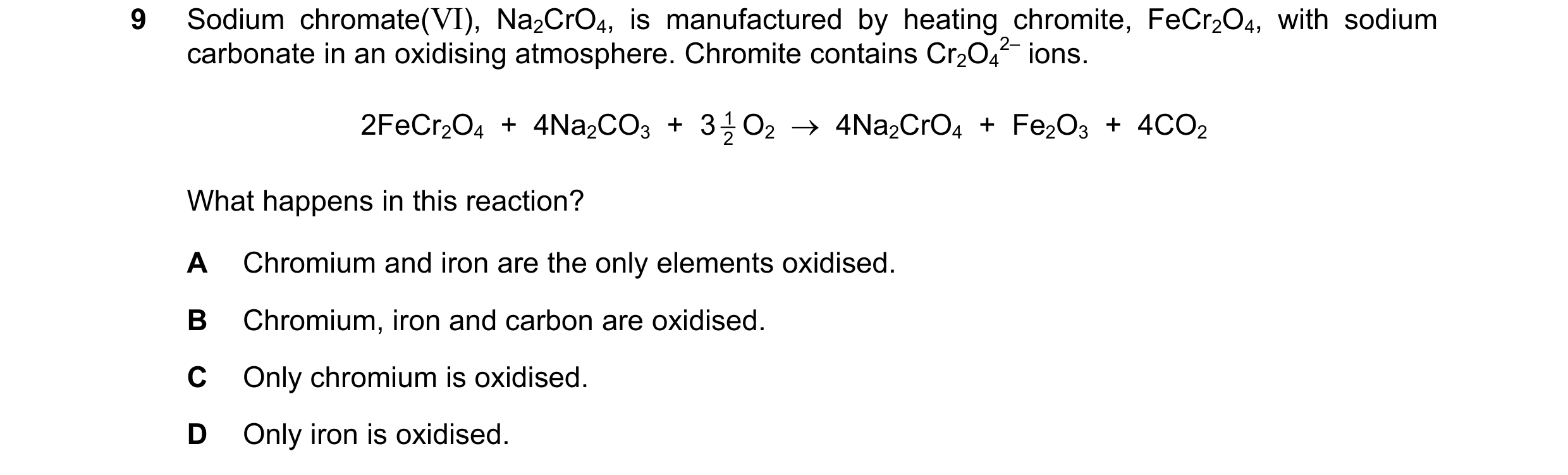
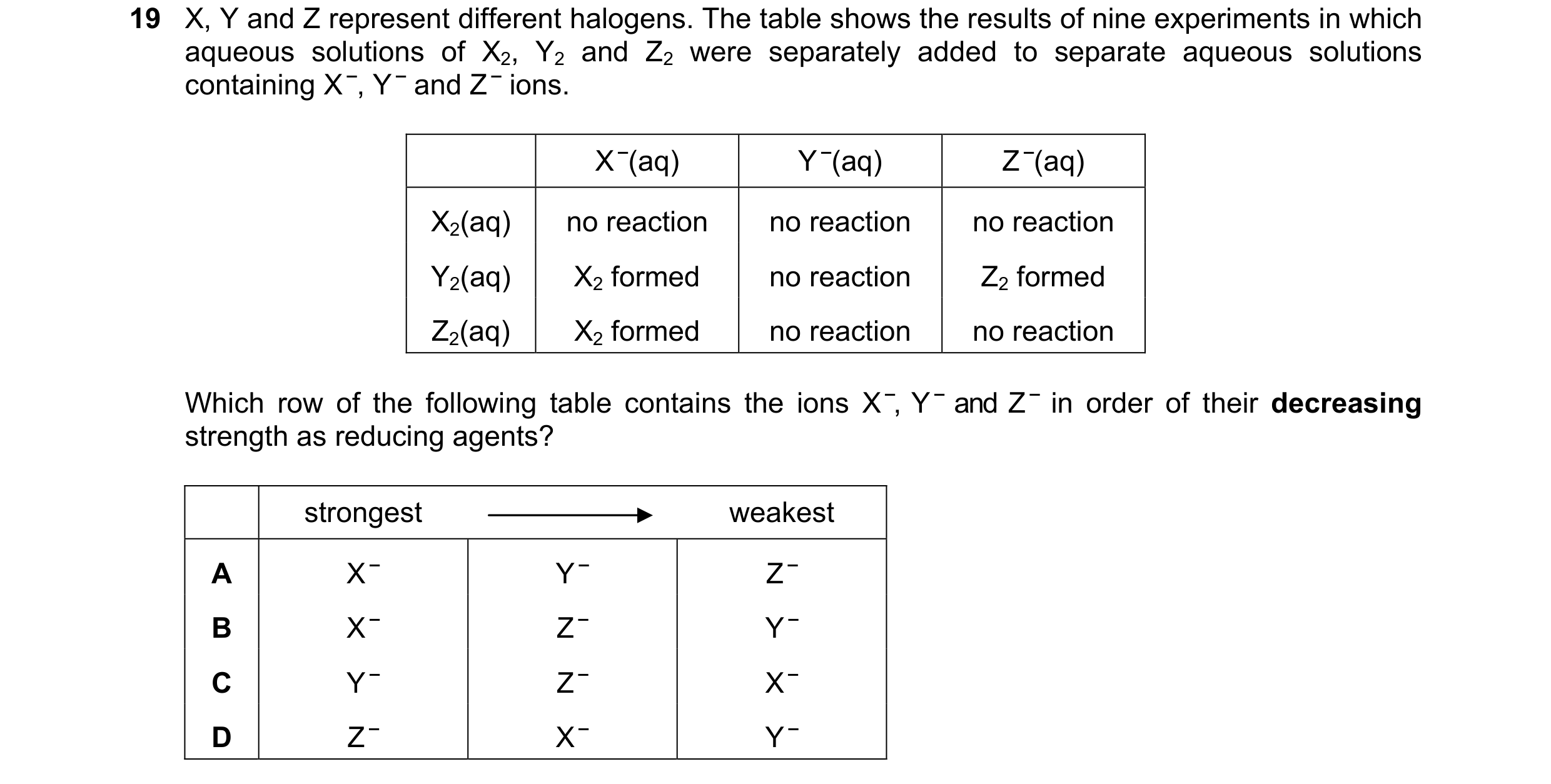
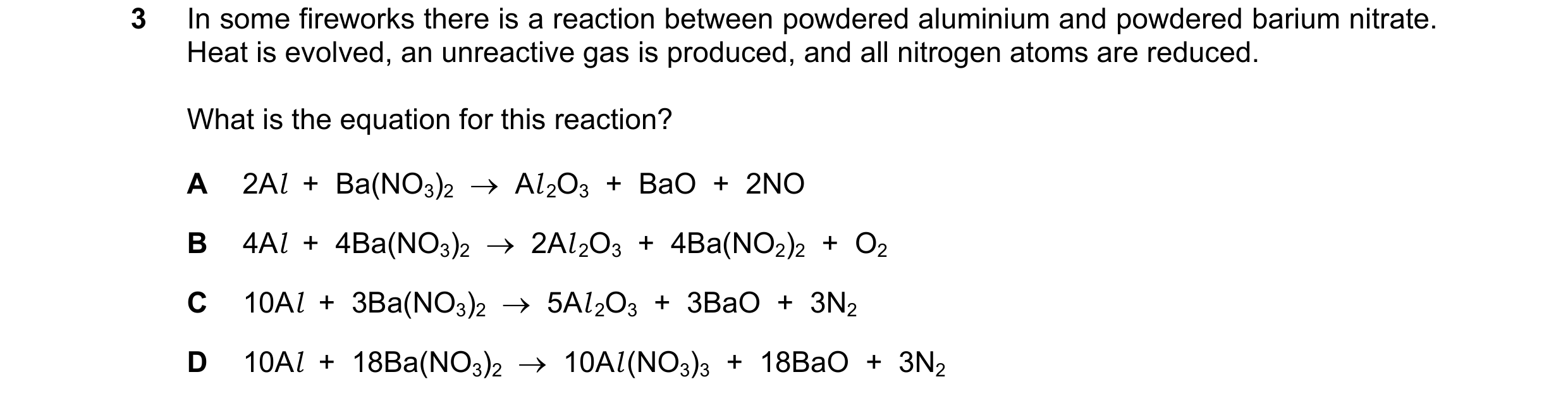 36 / 78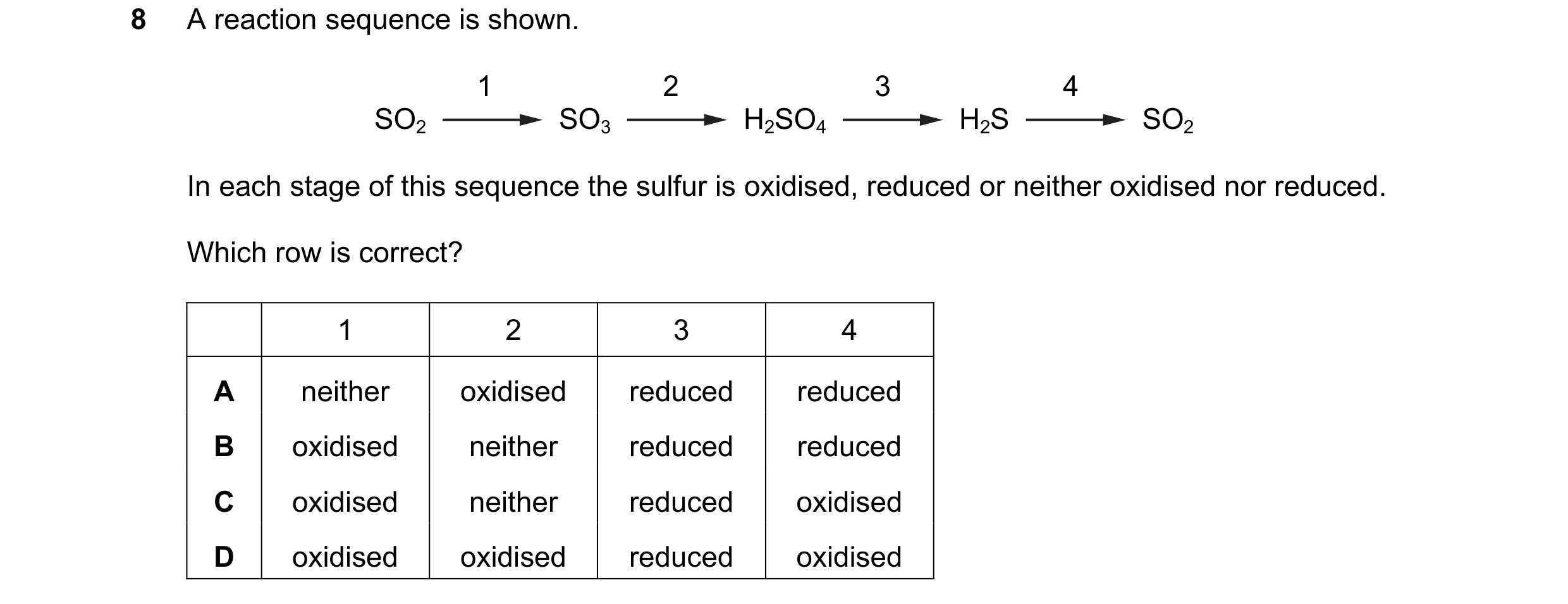
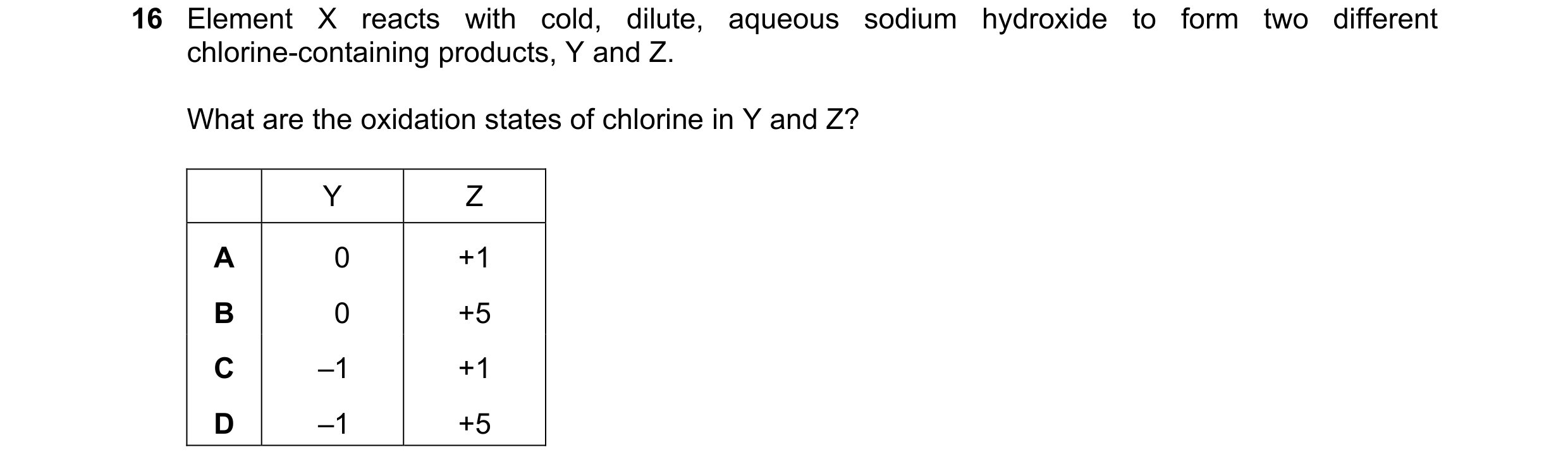
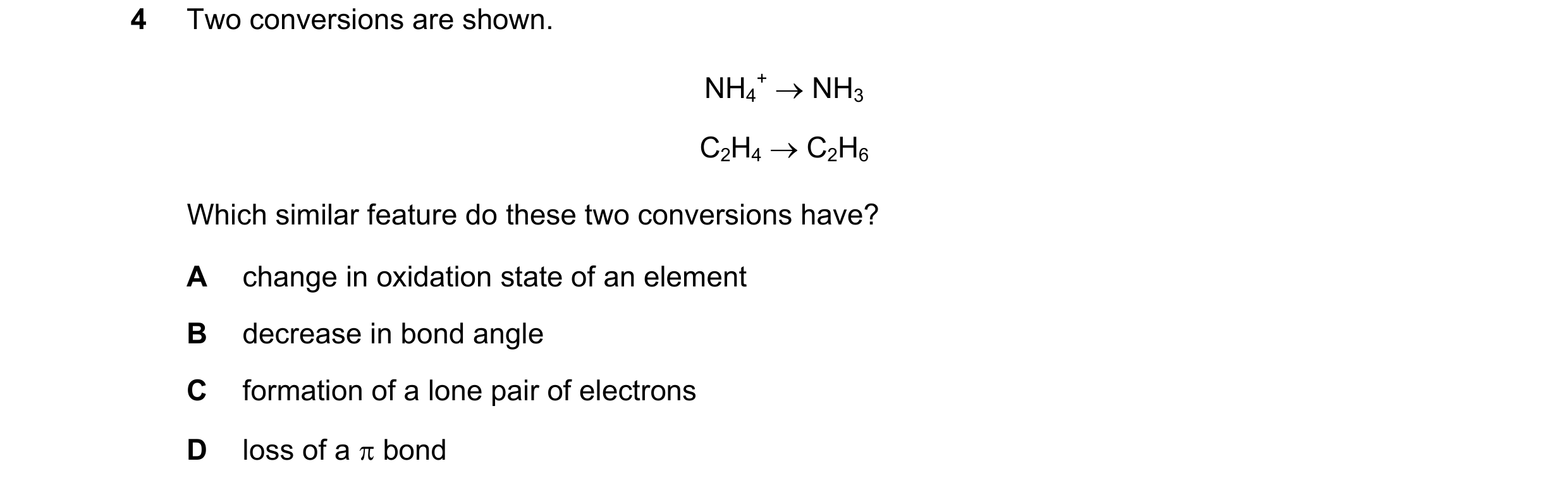
 37 / 78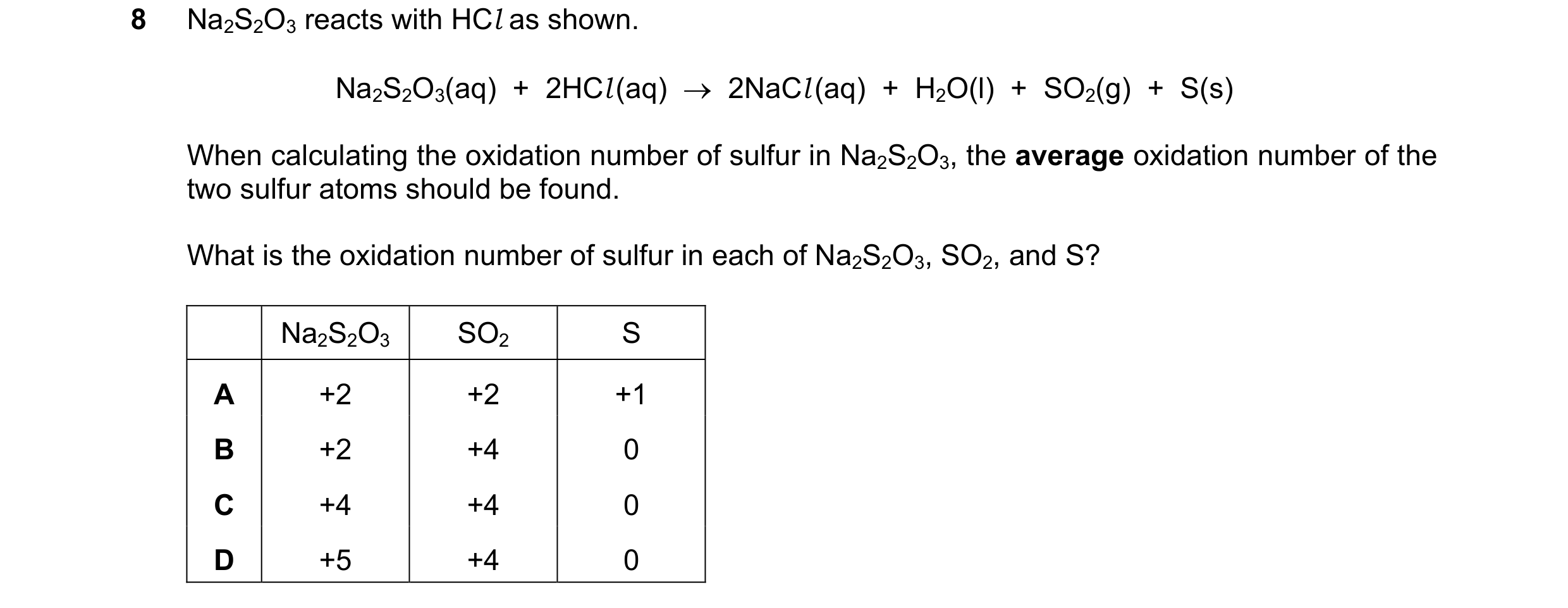
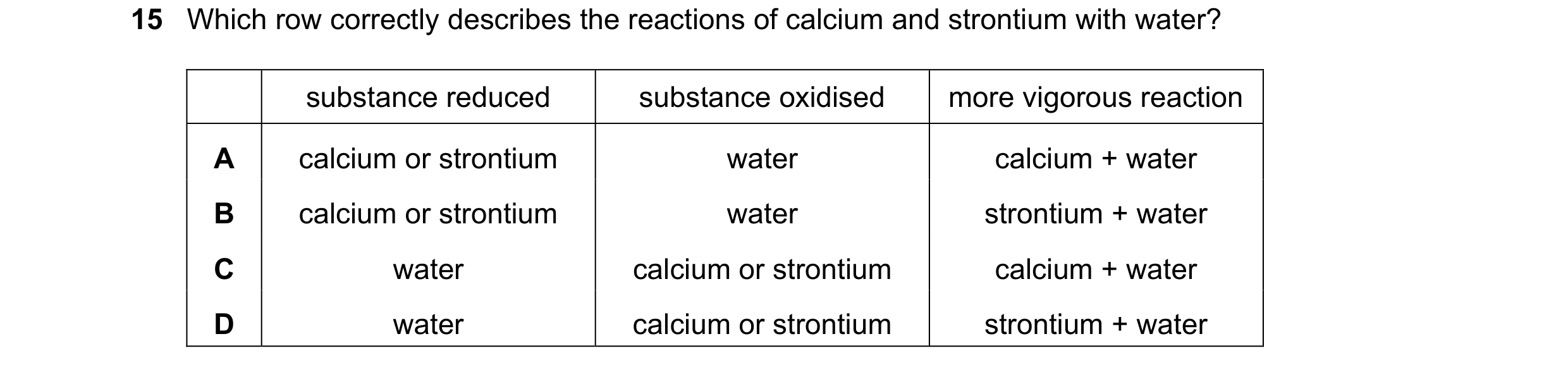
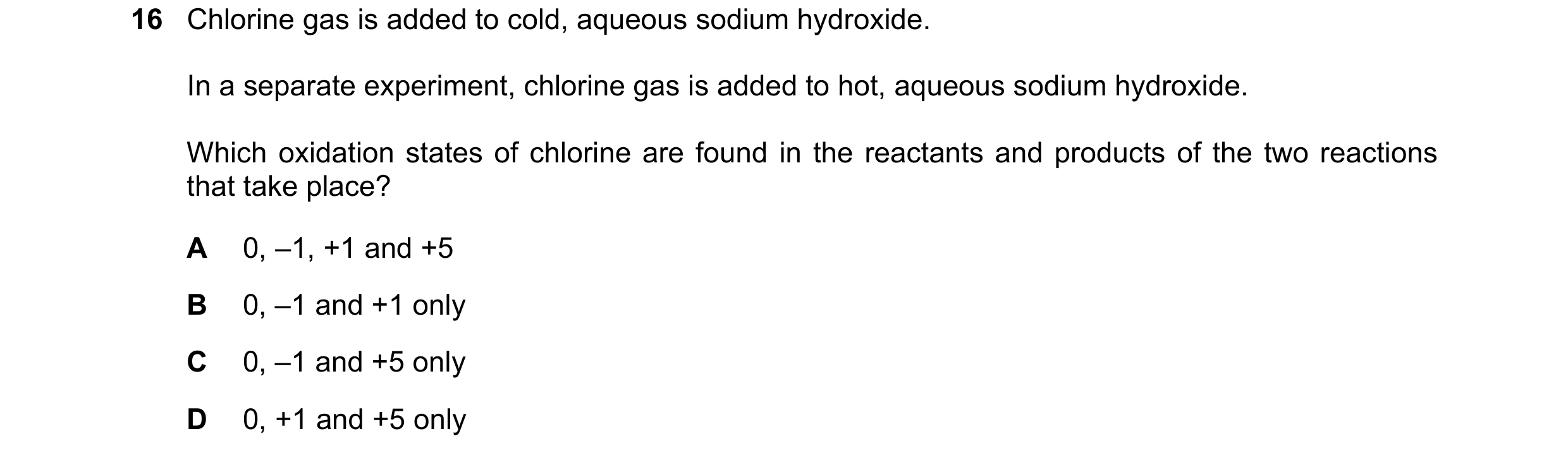
 38 / 78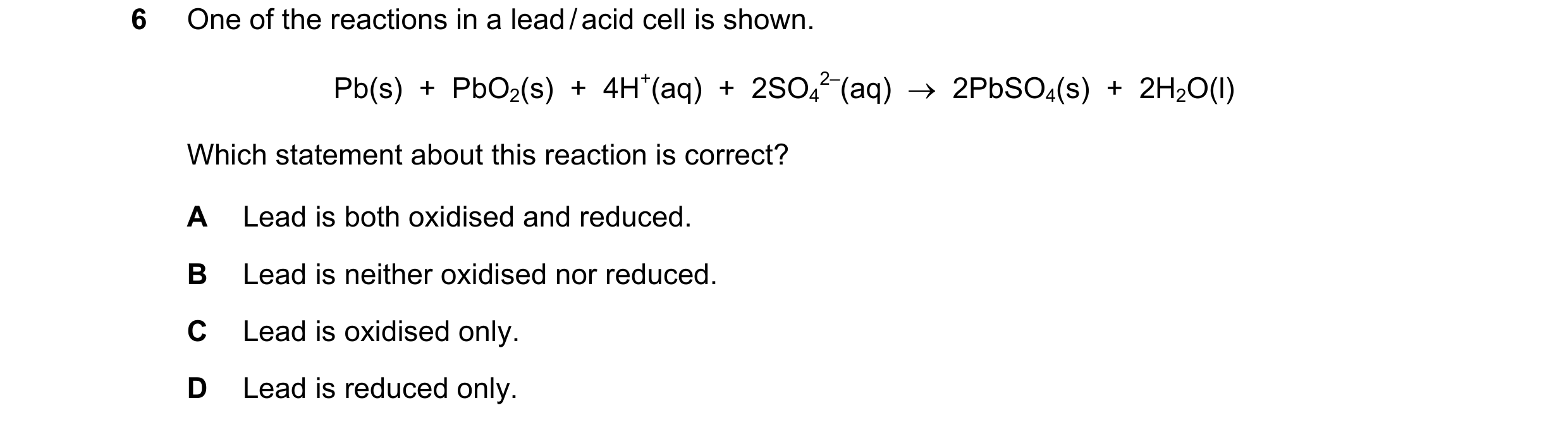

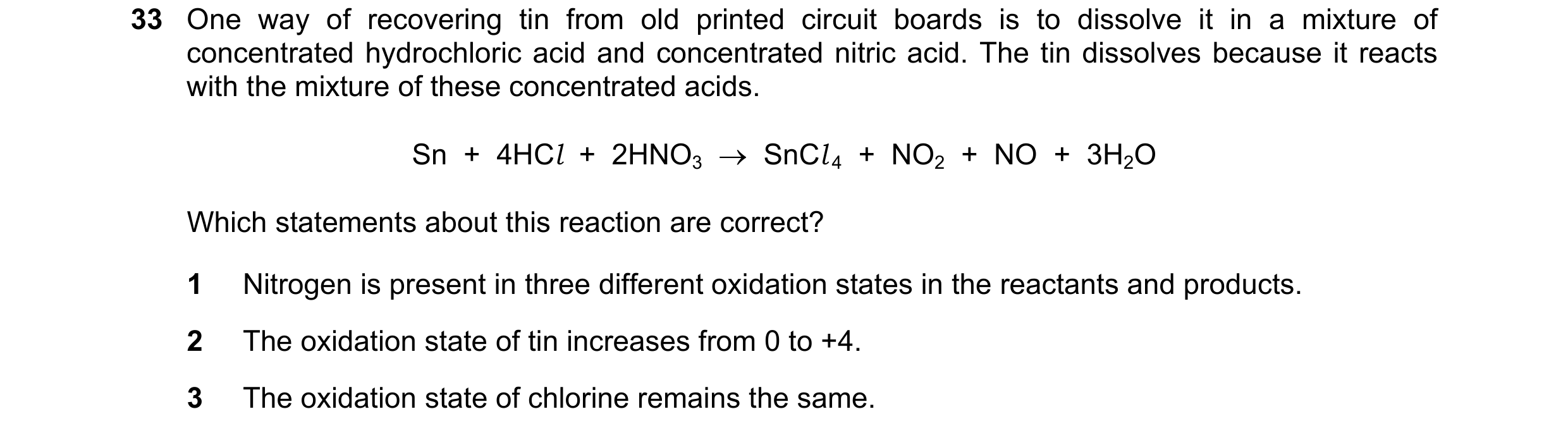

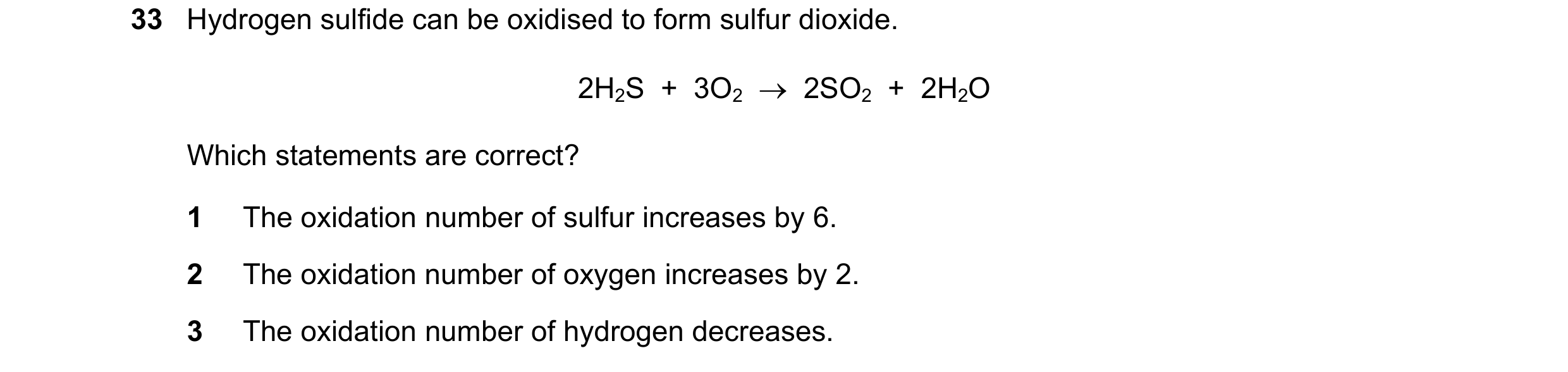 39 / 78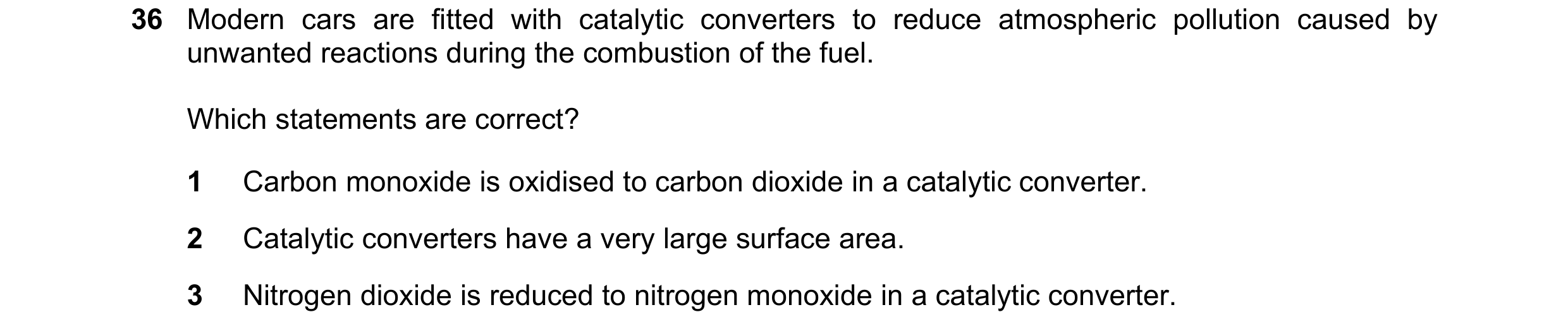
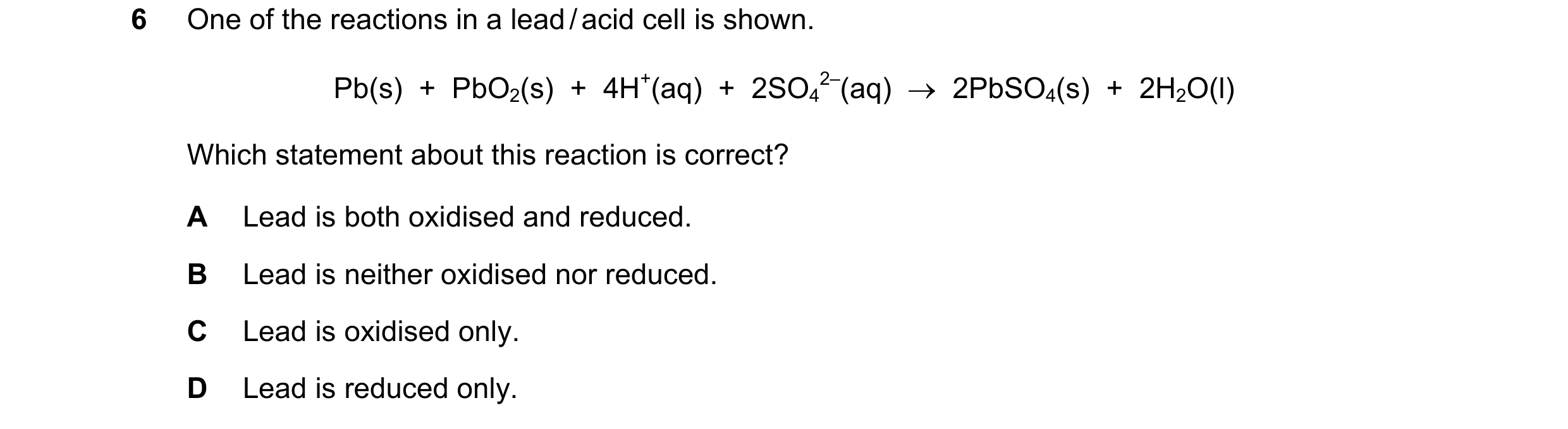
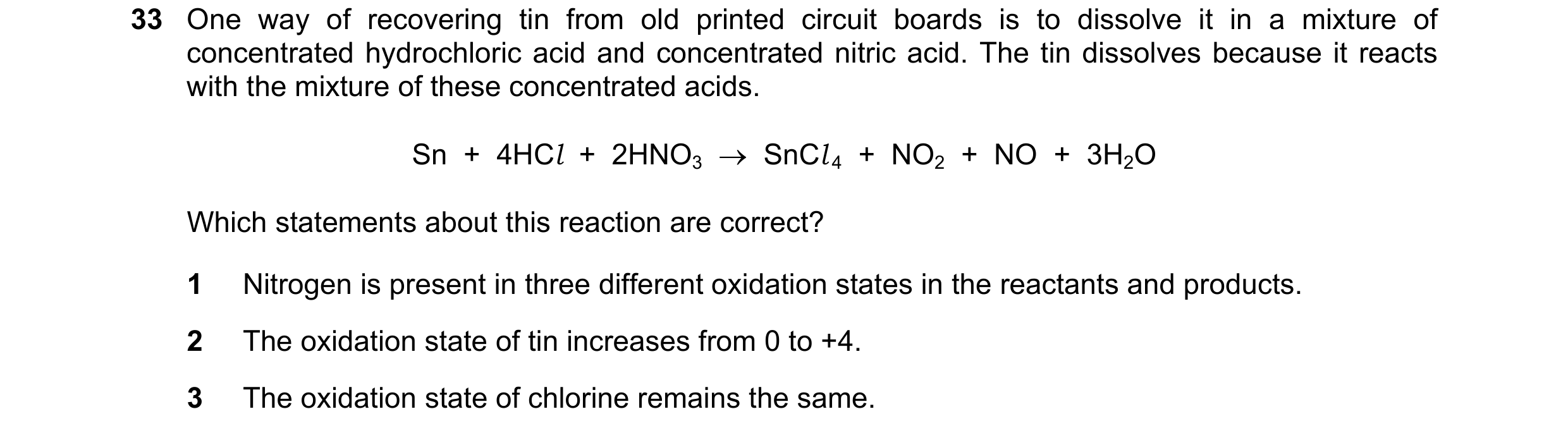
 40 / 78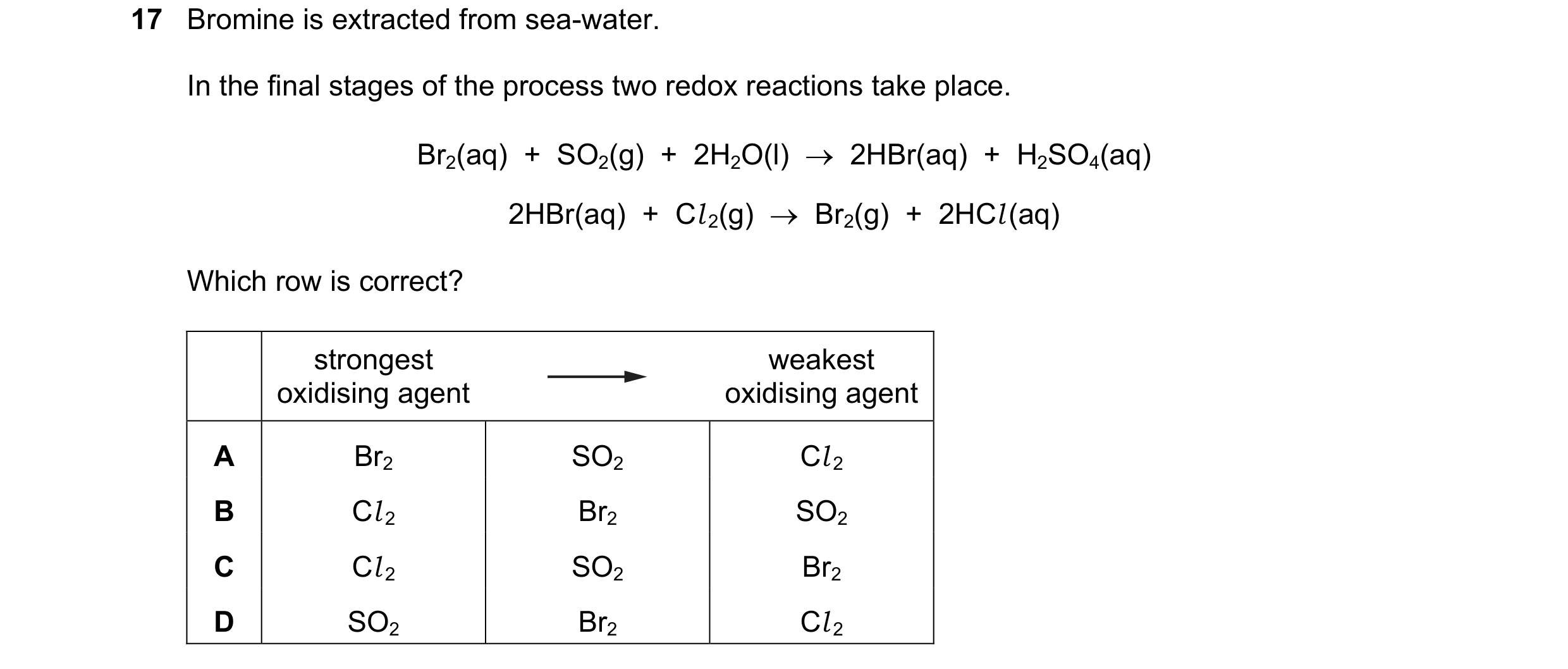
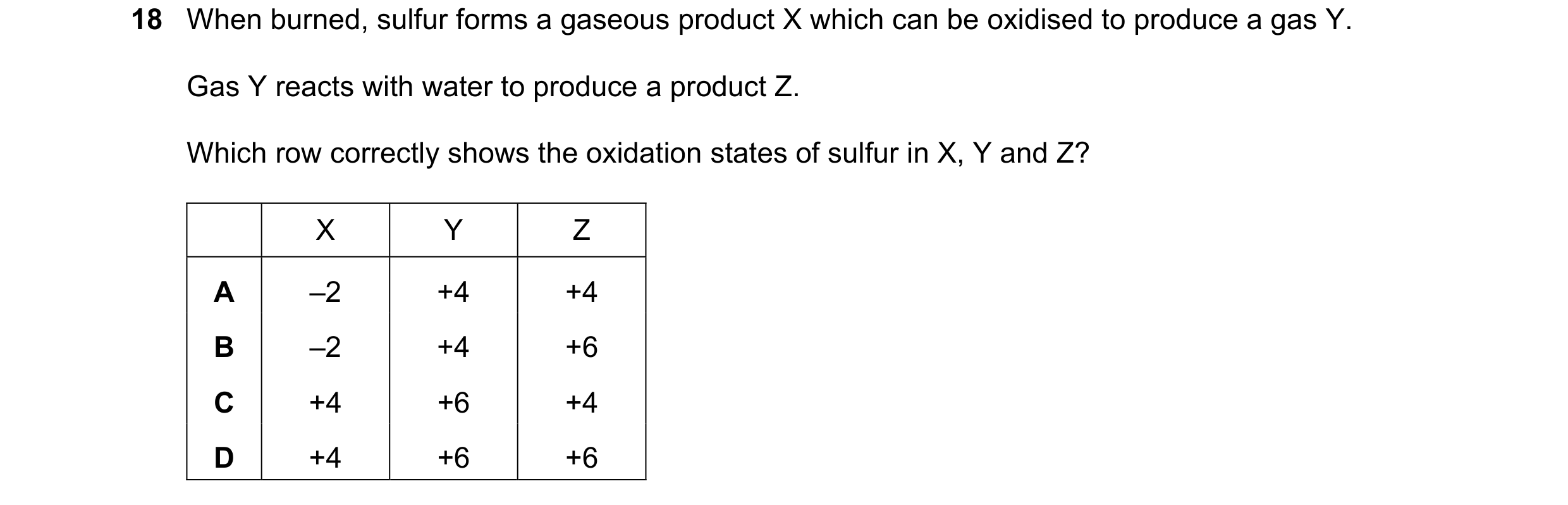
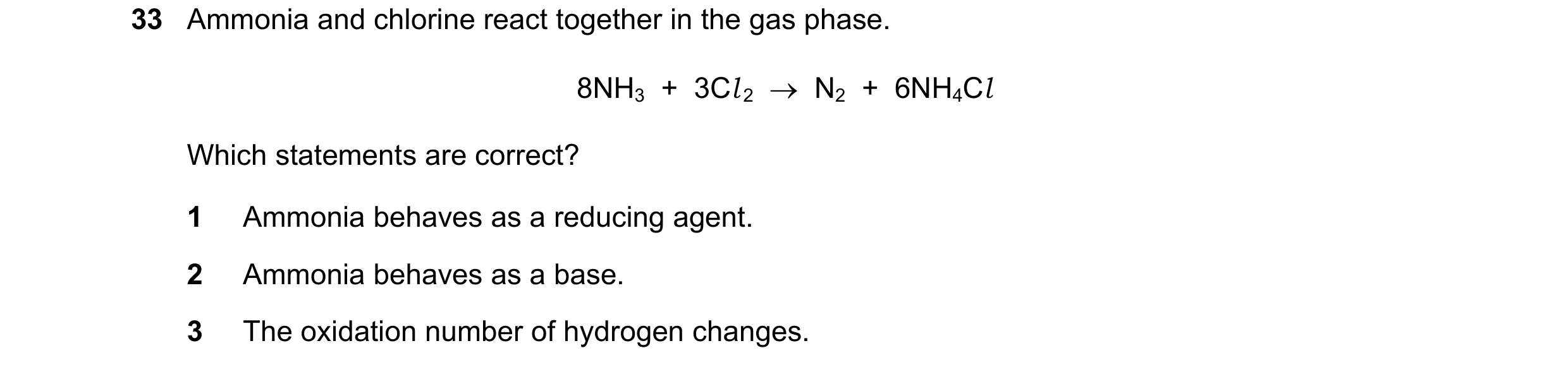

 41 / 78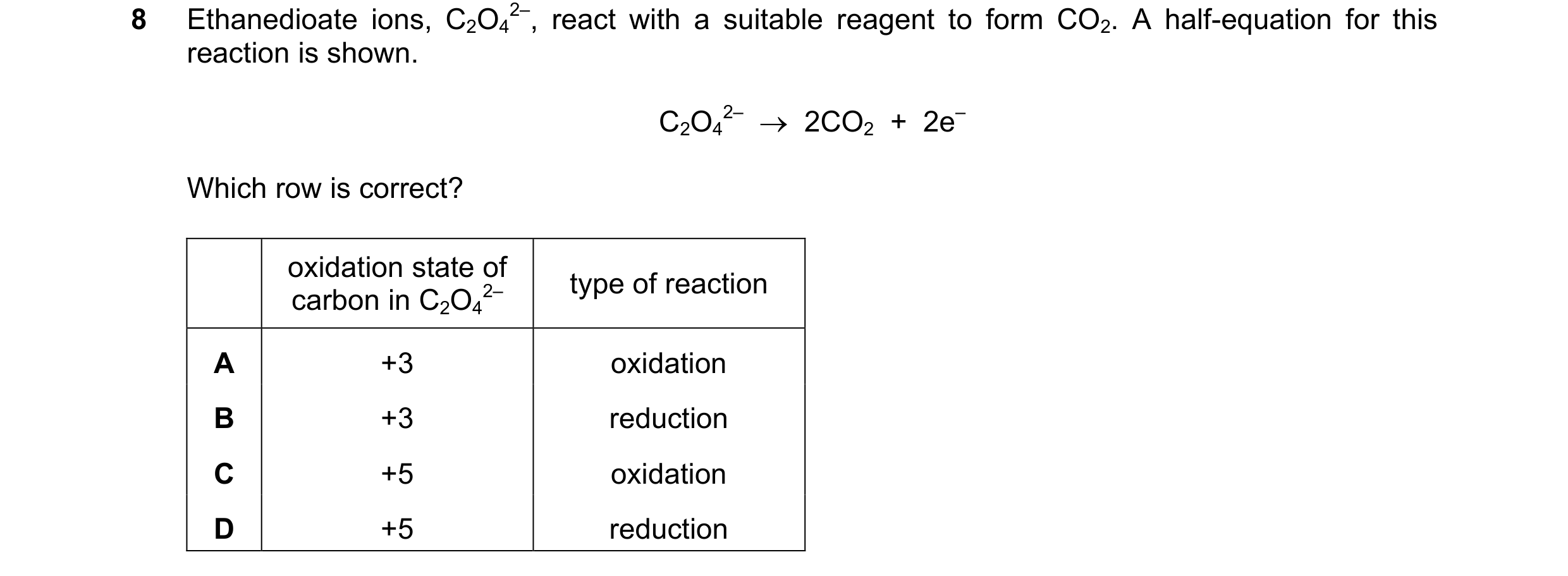
![Question 185: Oxidation numbers should be used to answer this question. A redox reaction takes place between hydroxylammonium ions, [NH3OH]+, and acidifi…](https://img.pastlit.com/crops/8219abb9-5285-4167-a7ad-1bf5875ec349/q9.png)
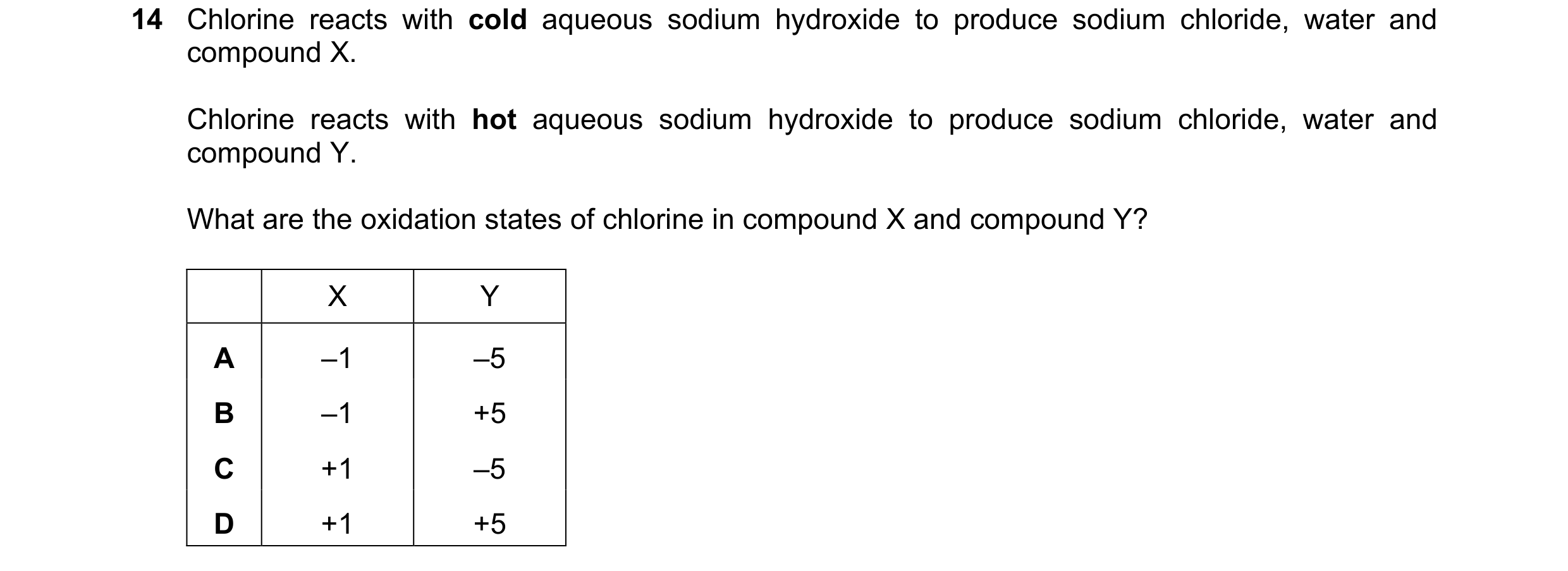
 42 / 78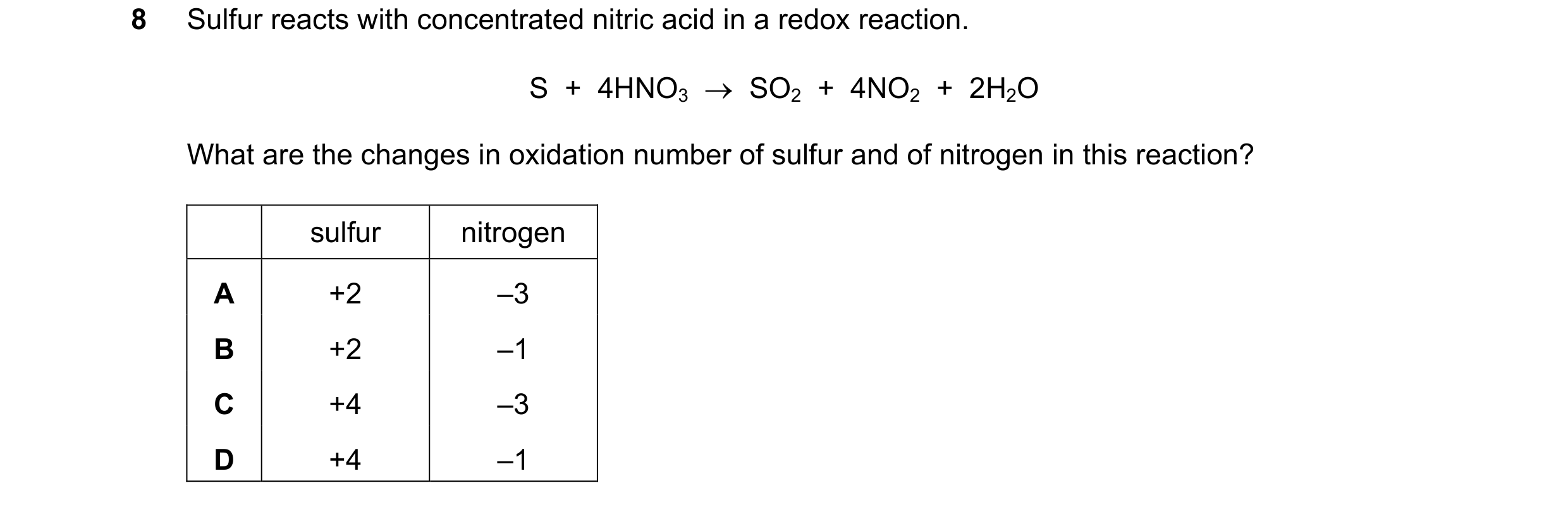
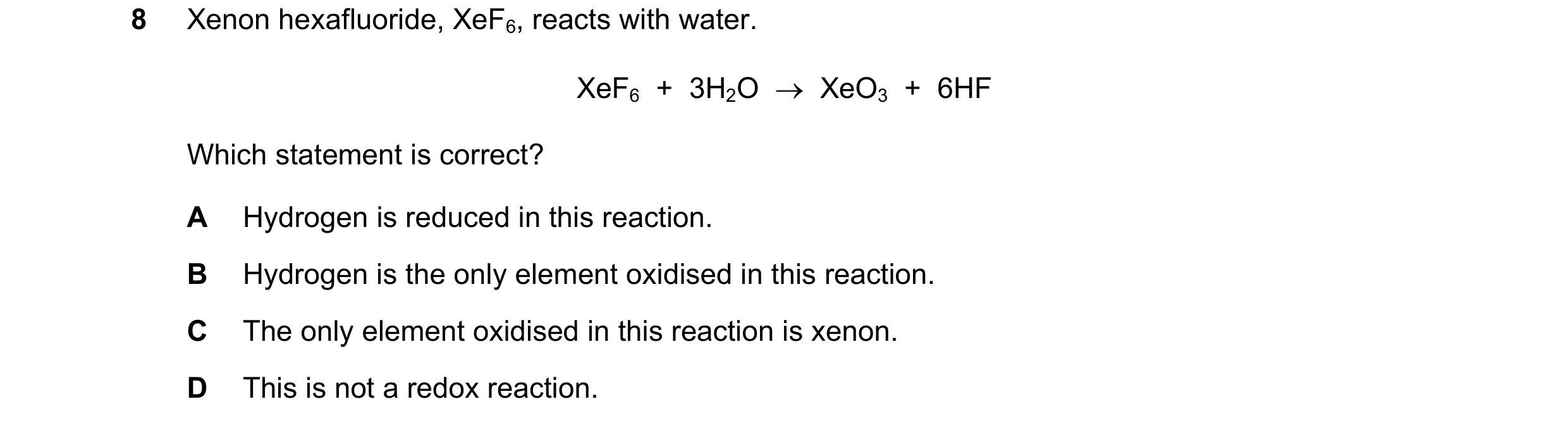
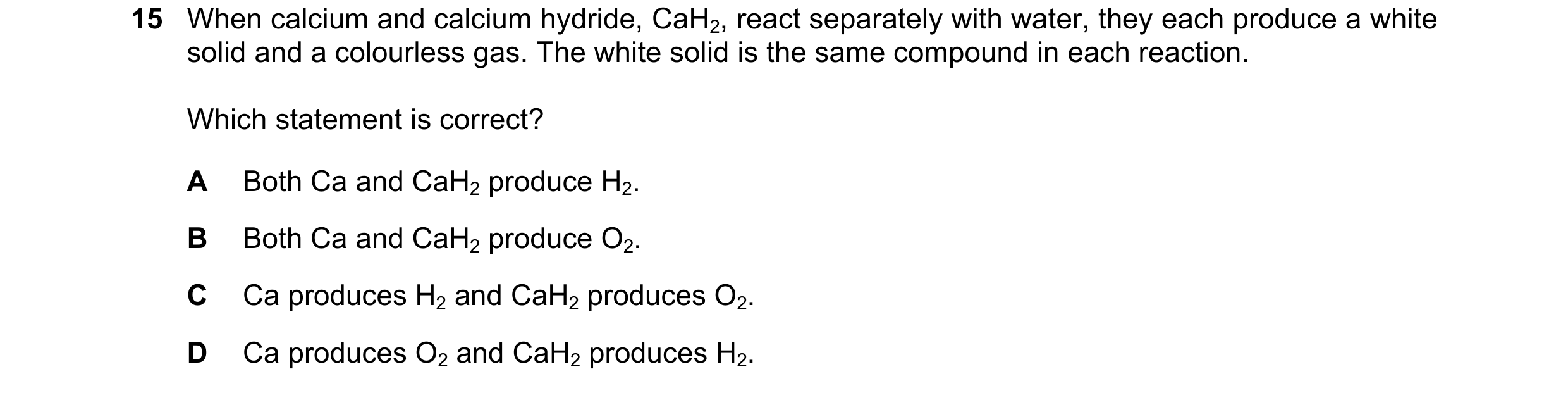
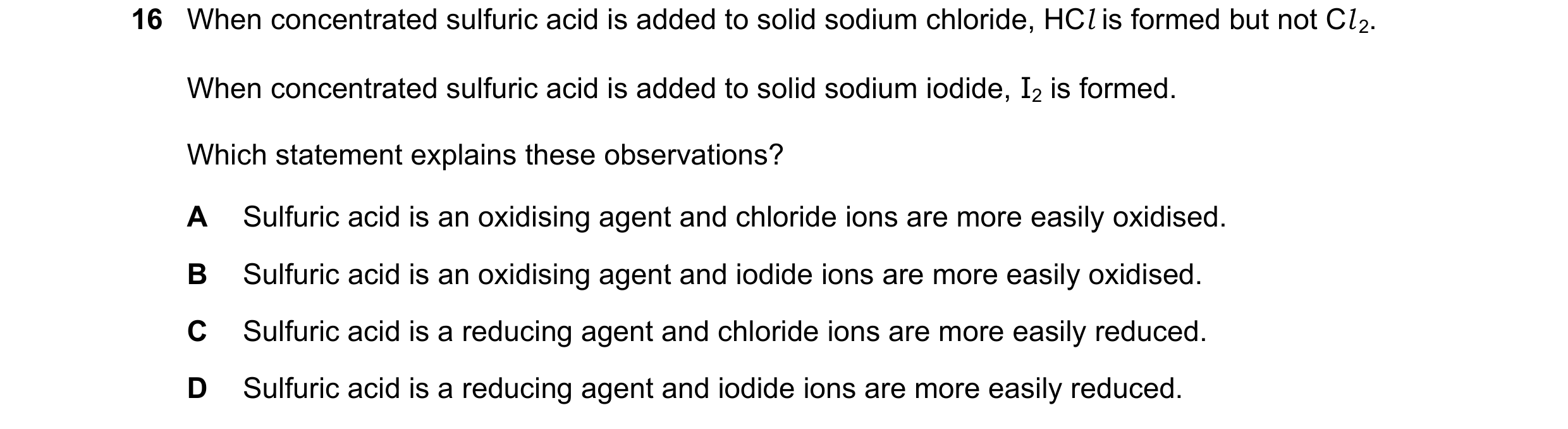 43 / 78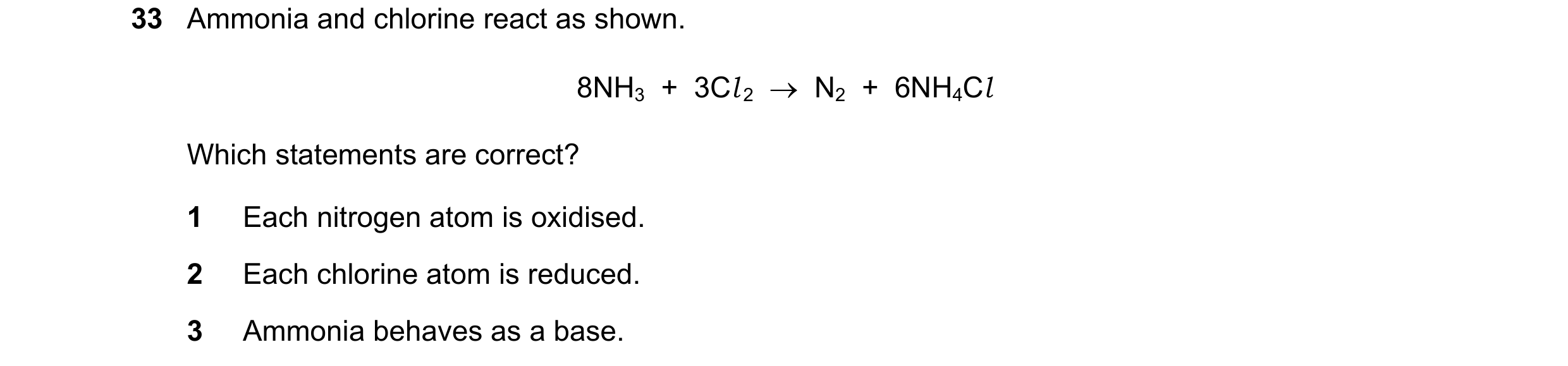
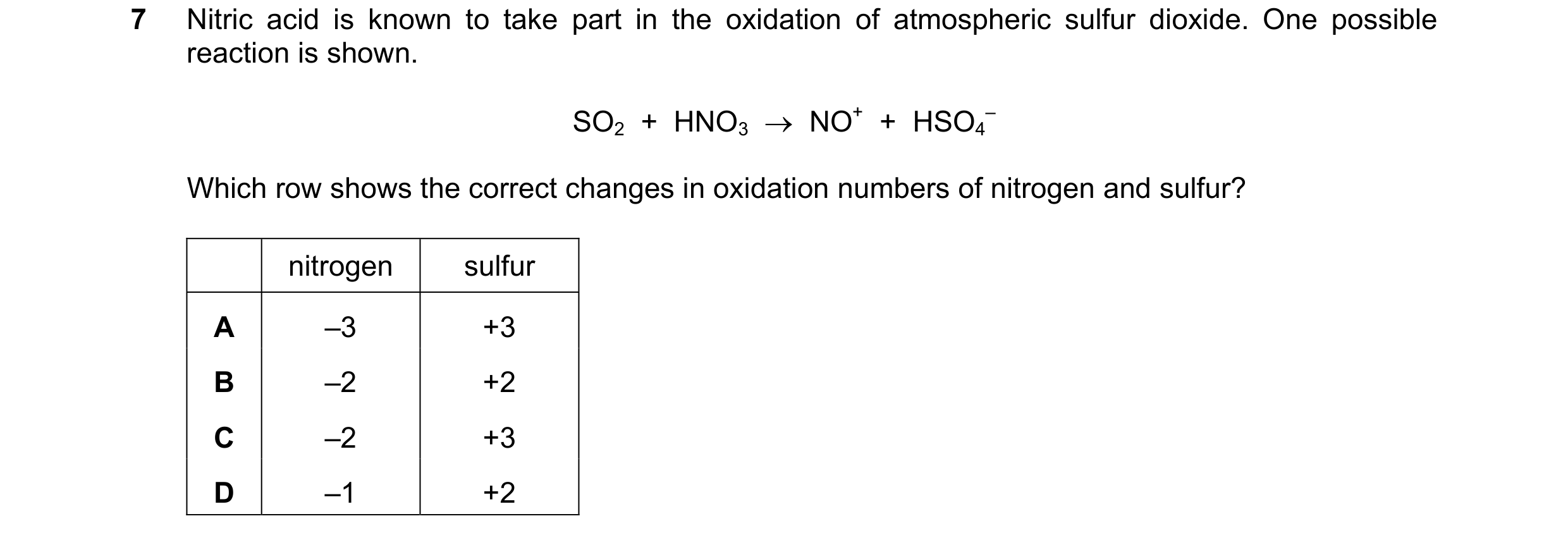
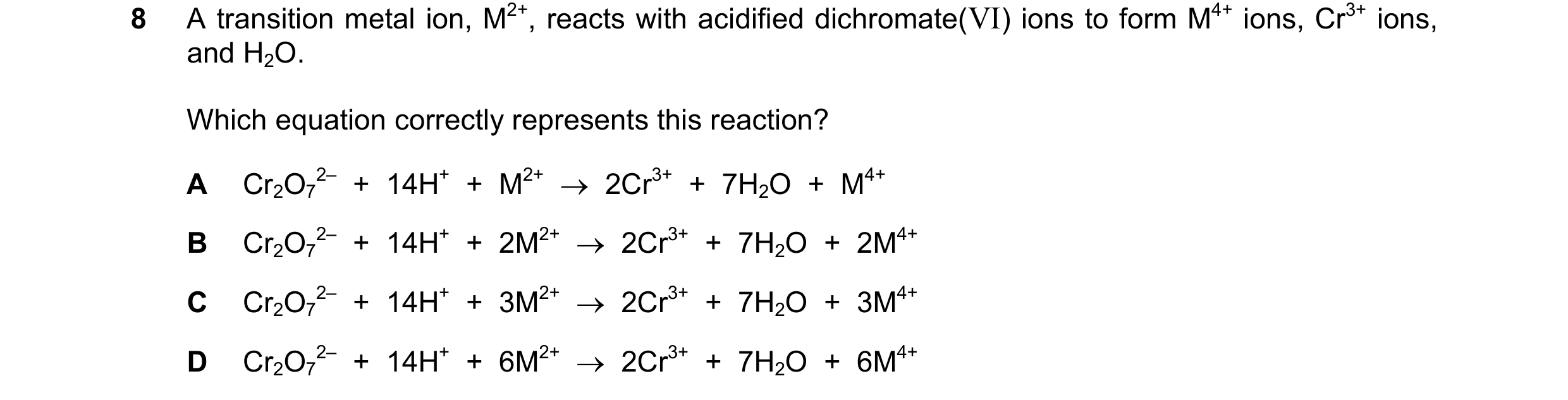
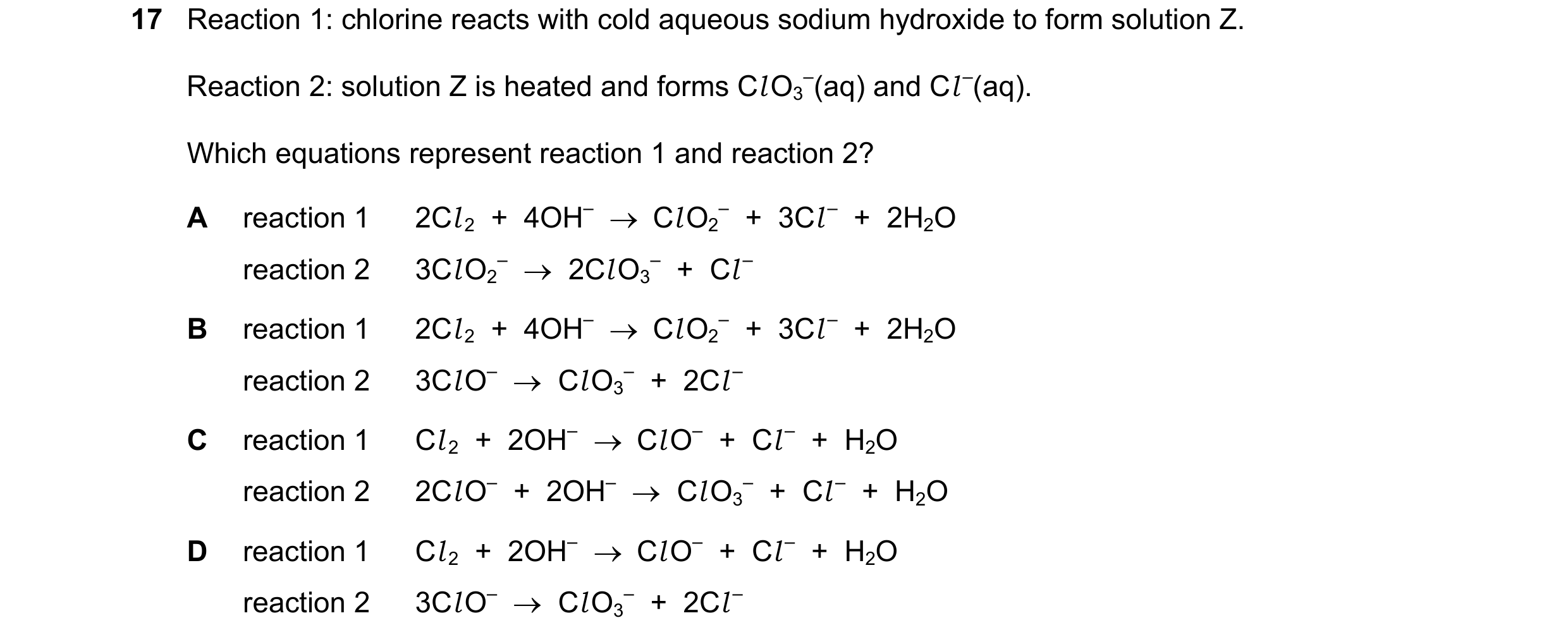 44 / 78

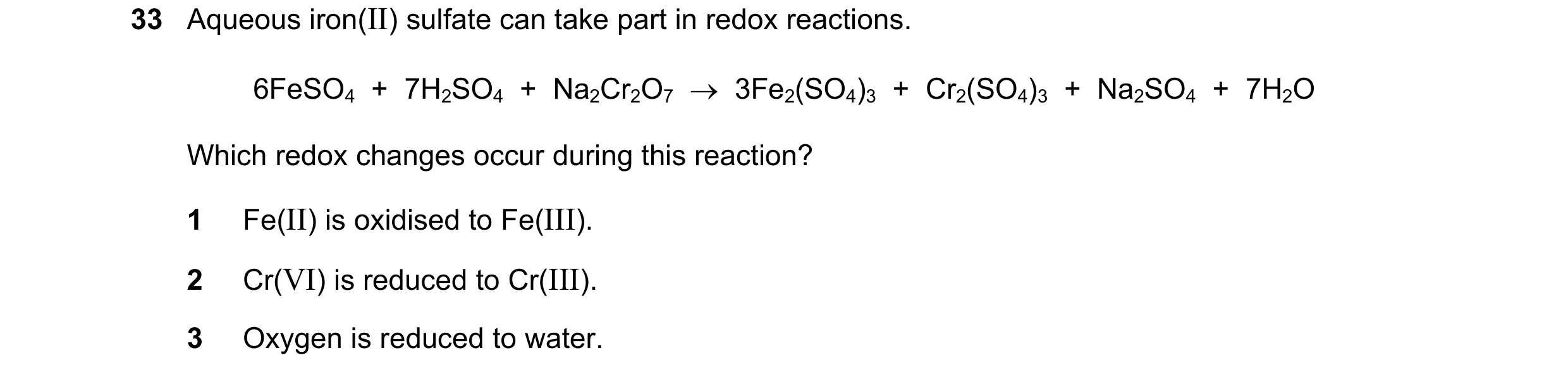
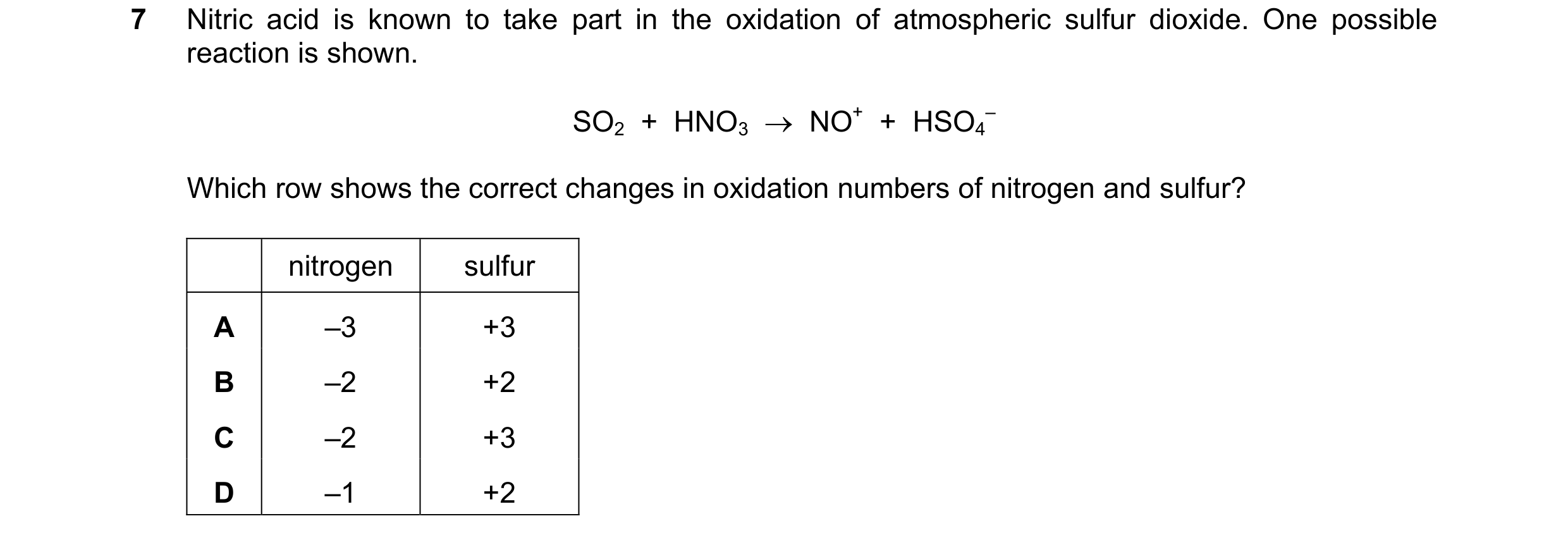
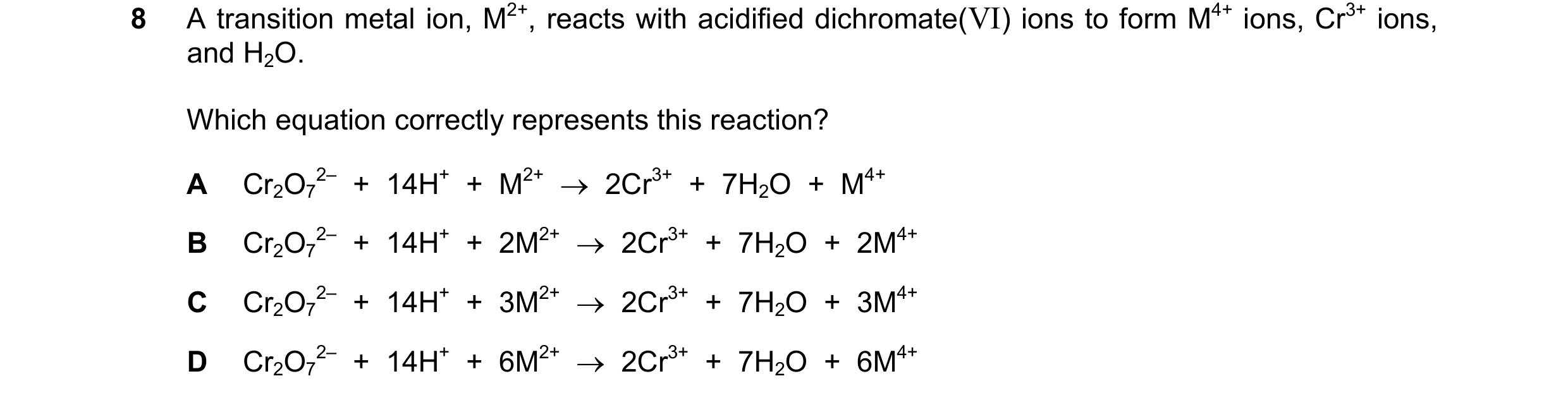 45 / 78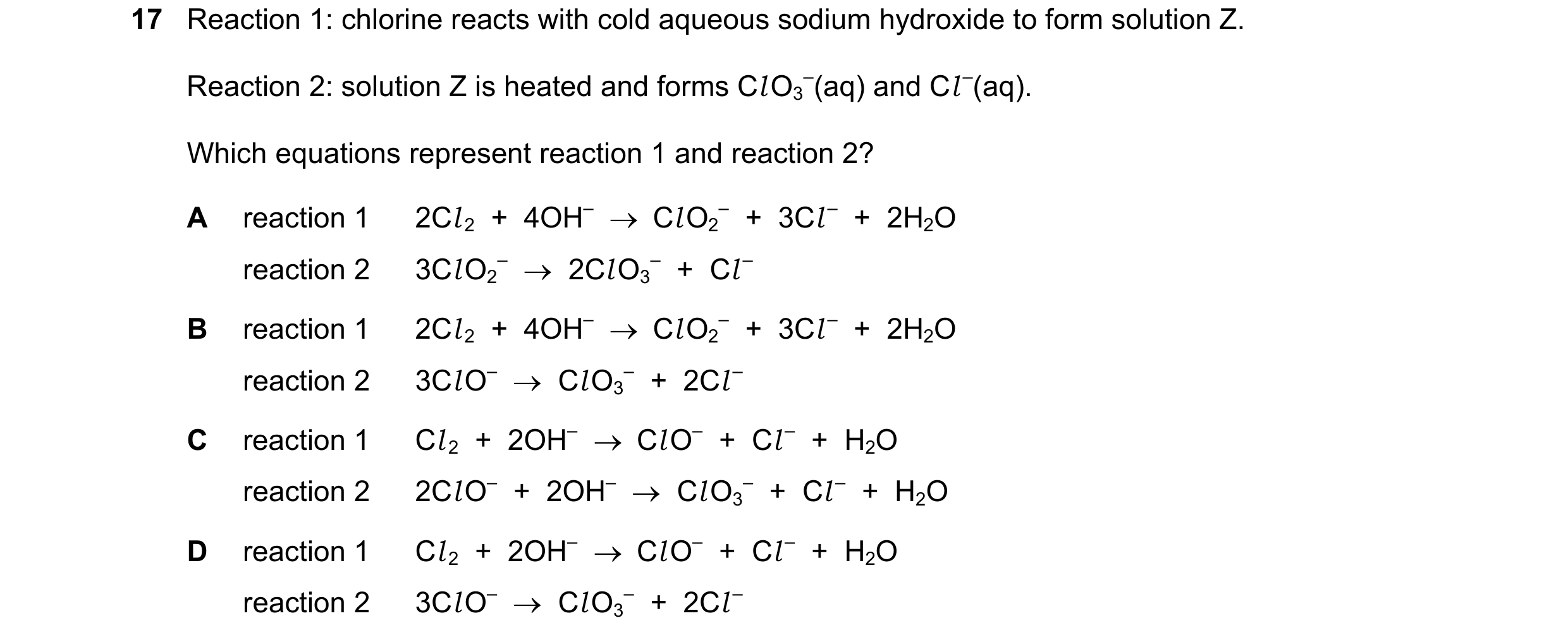
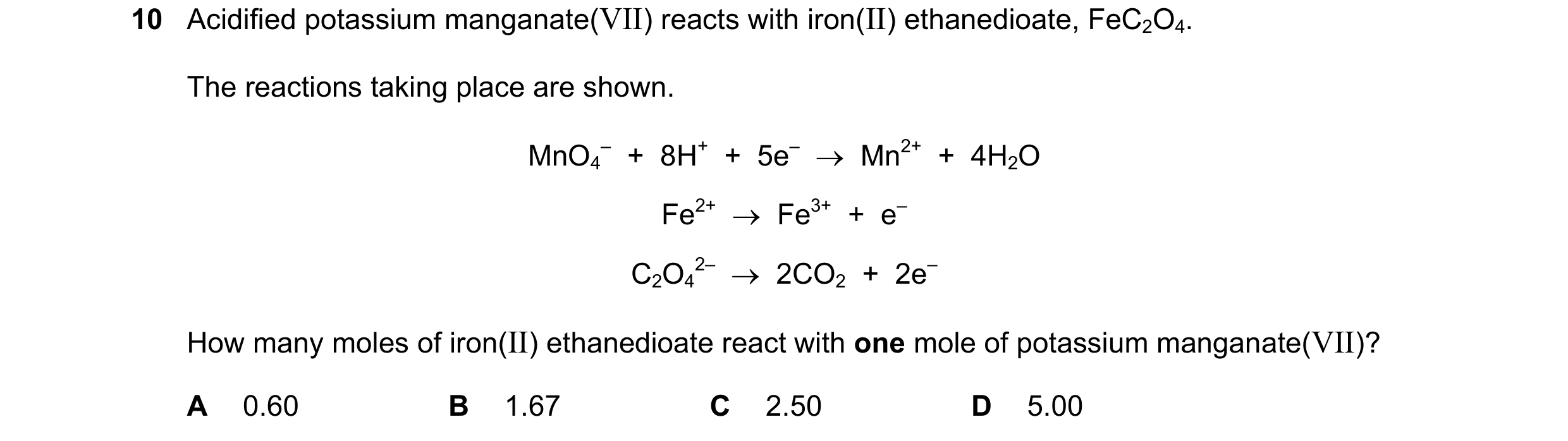

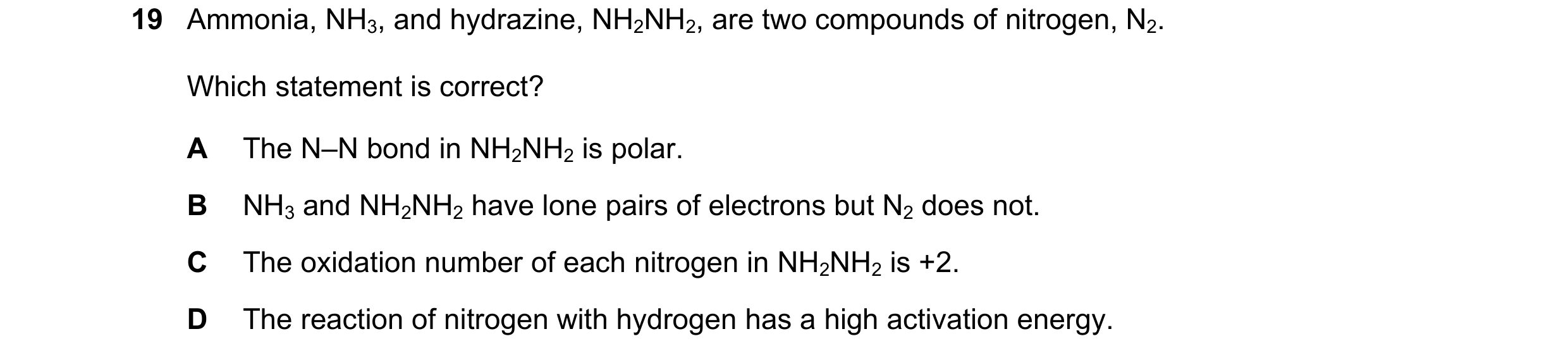
 46 / 78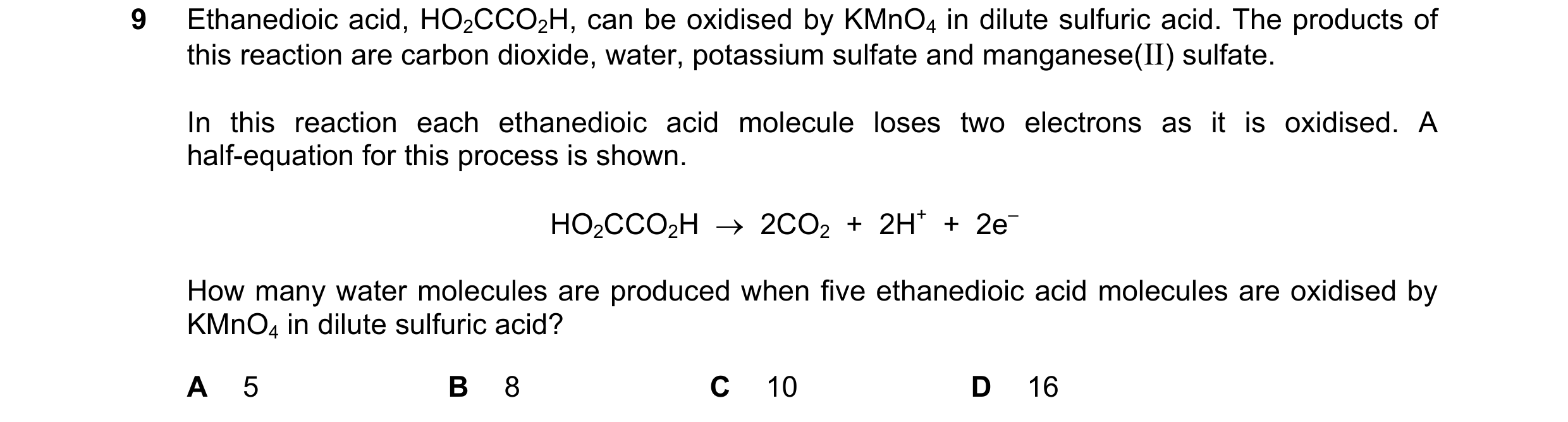
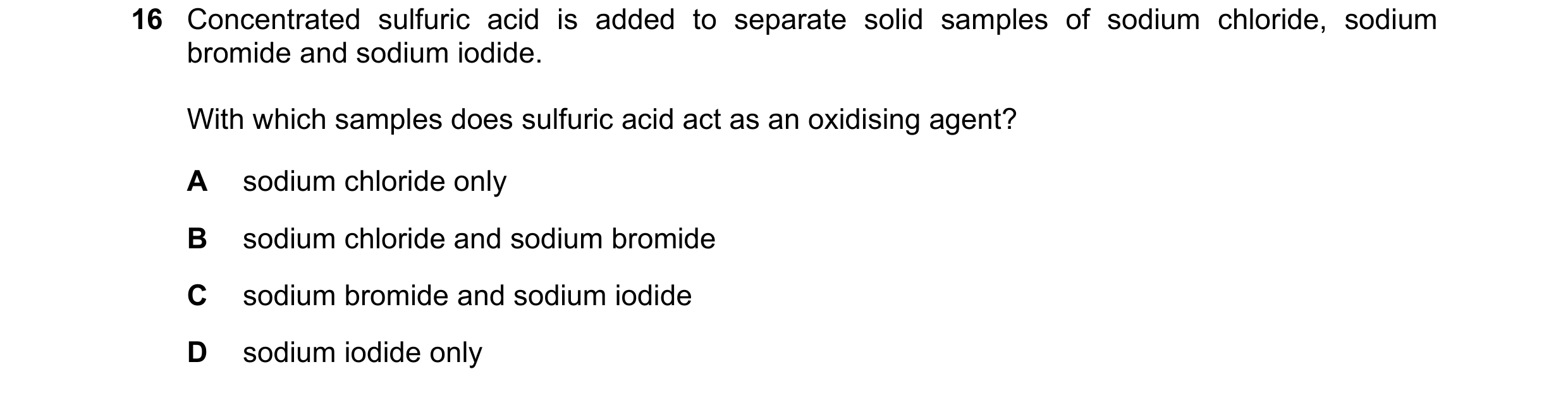


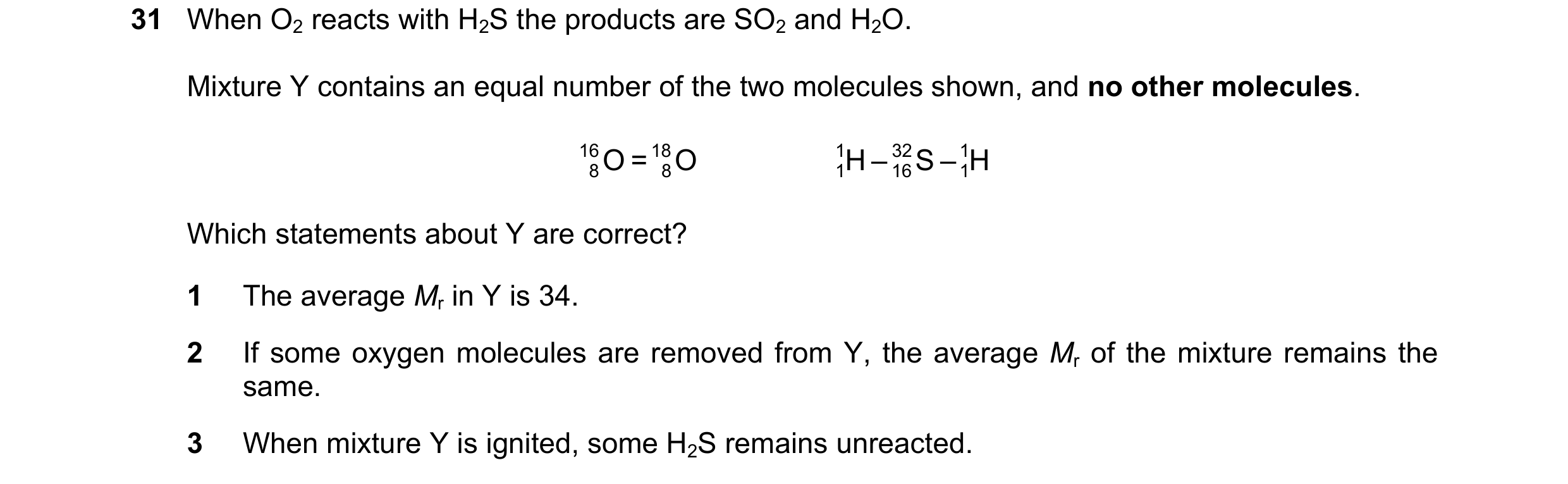 47 / 78
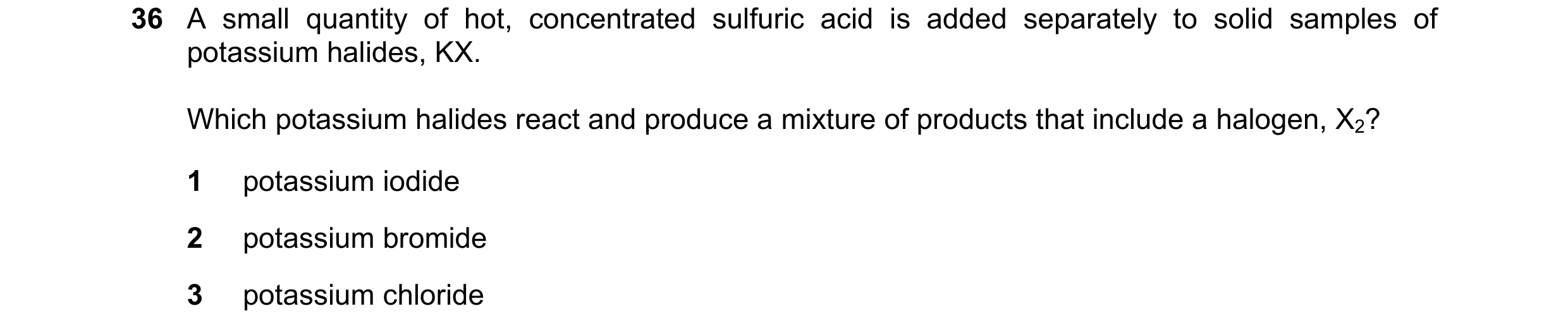
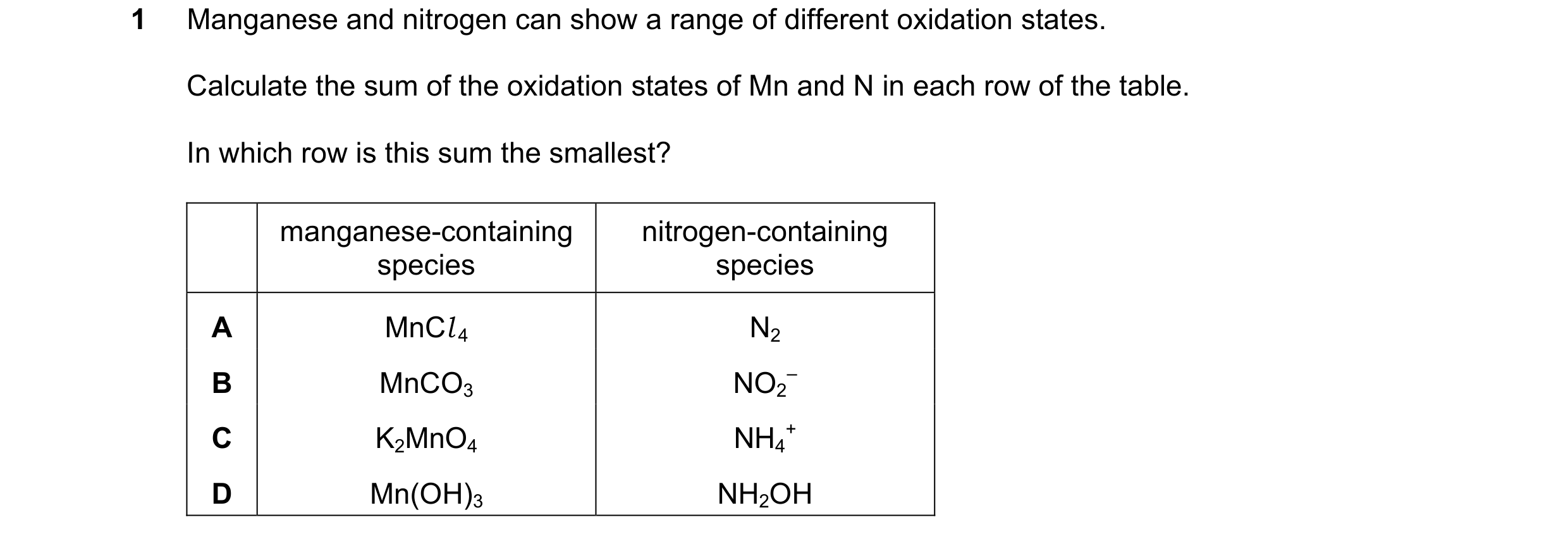
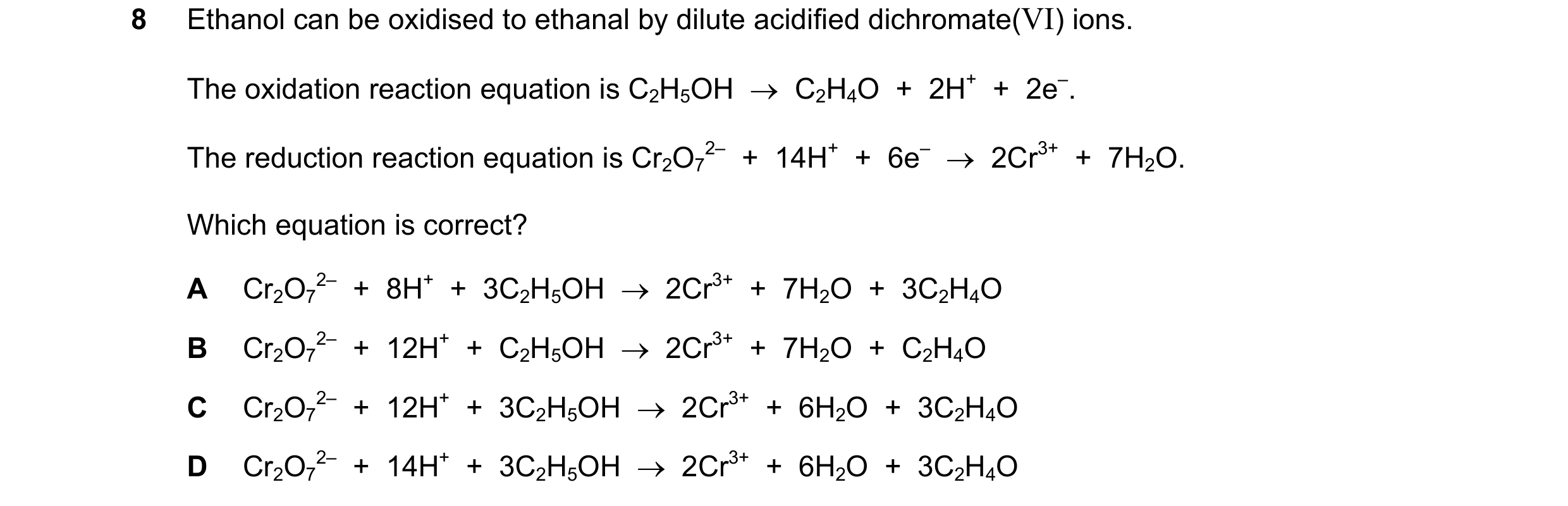
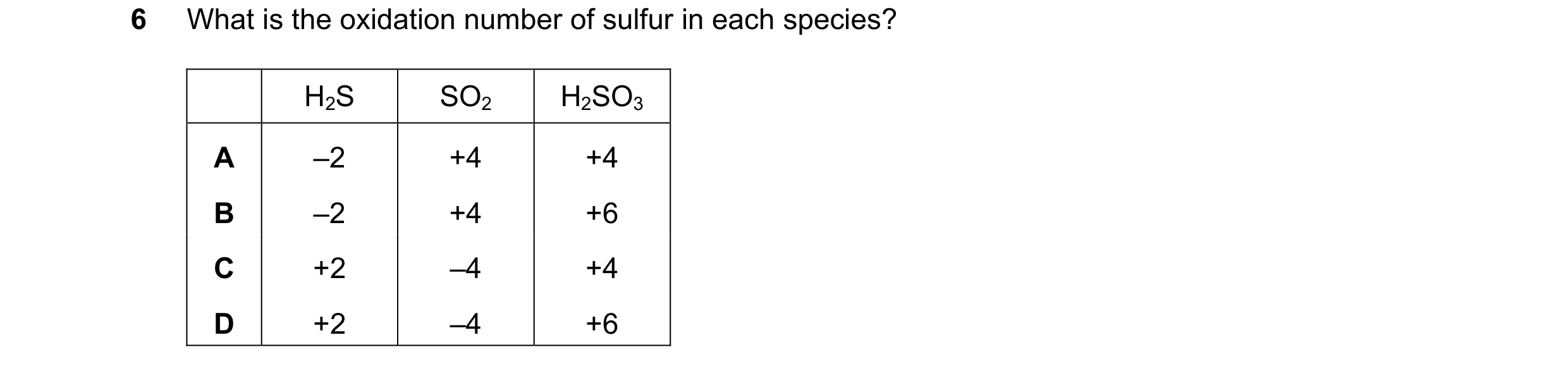 48 / 78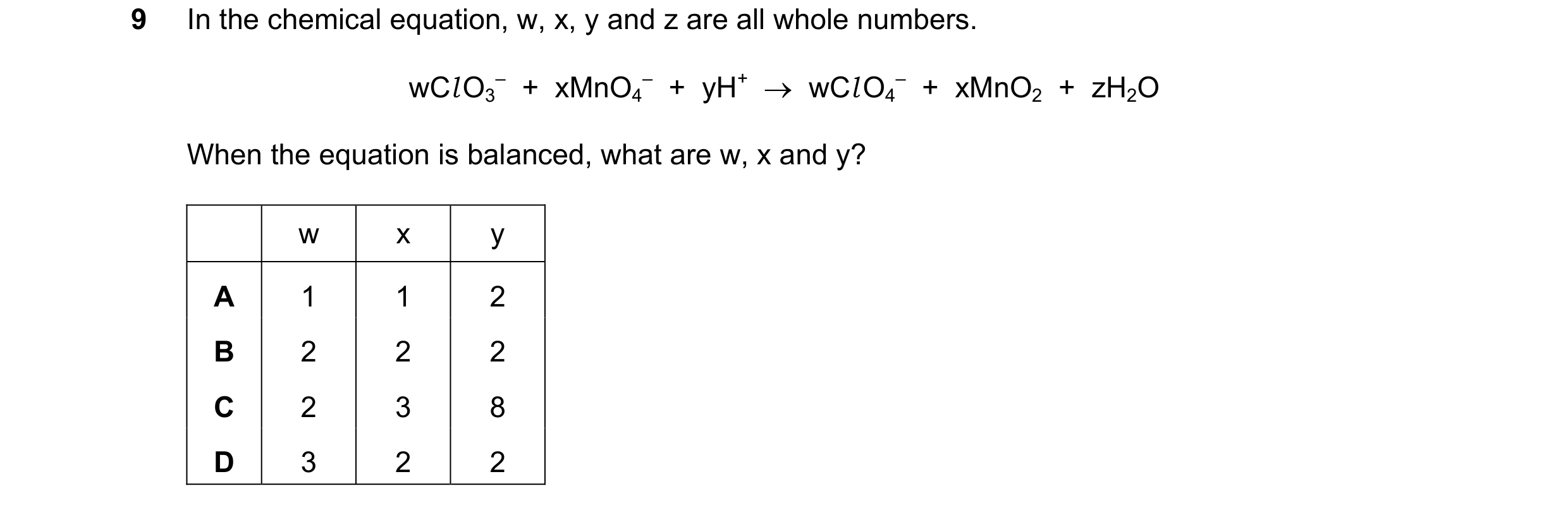
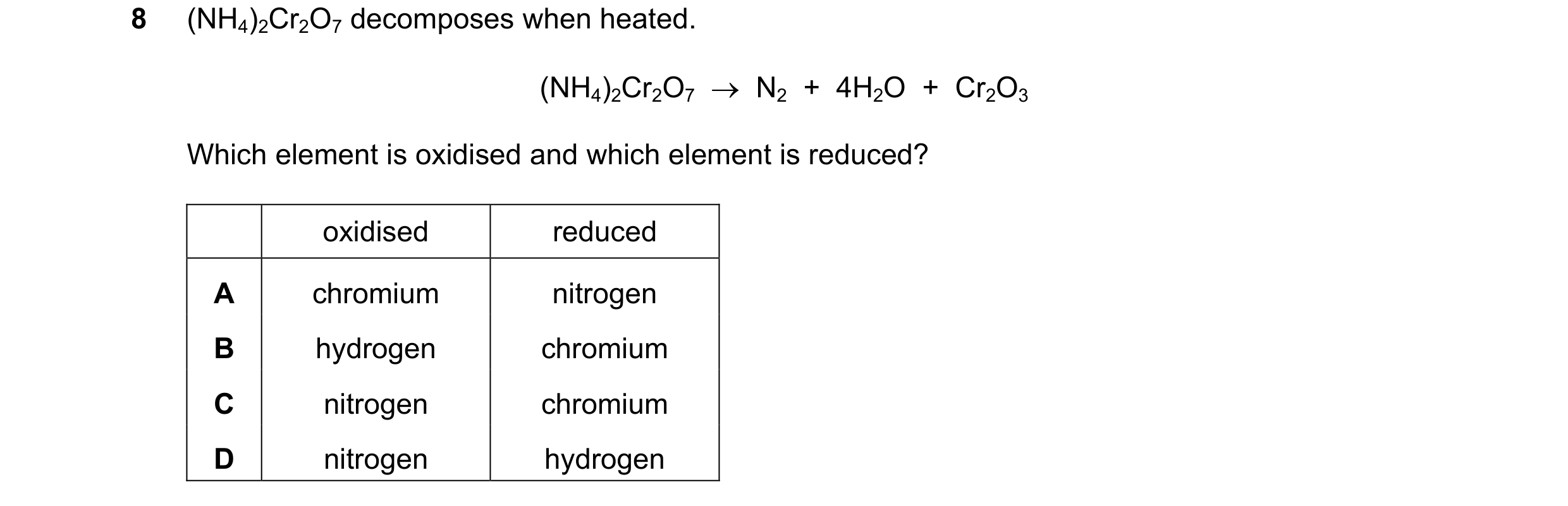
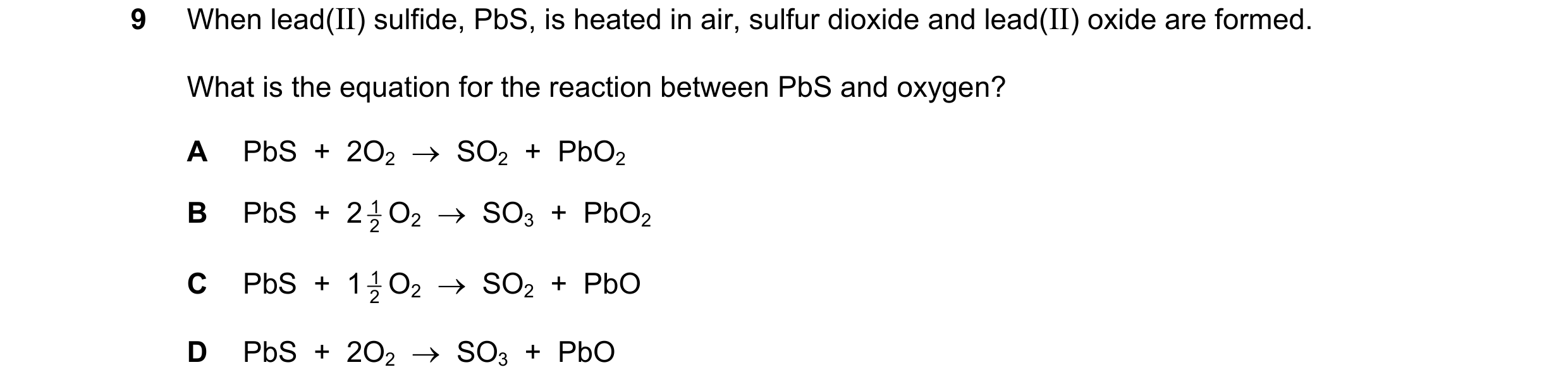
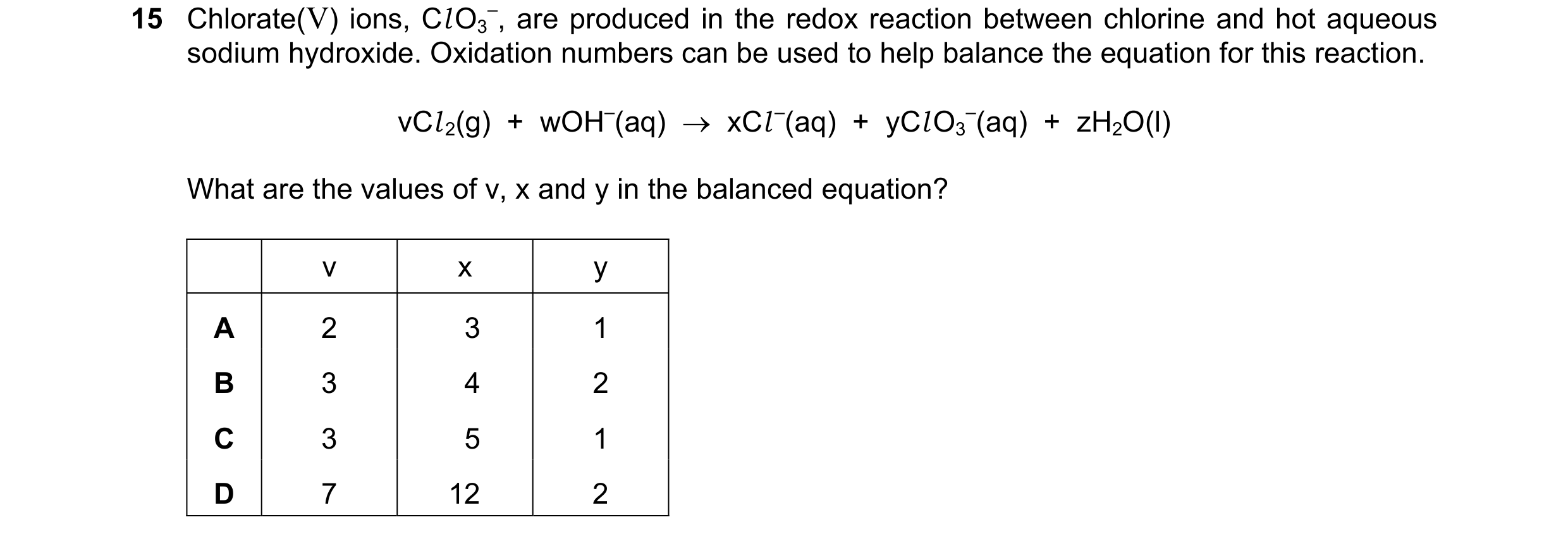 49 / 78
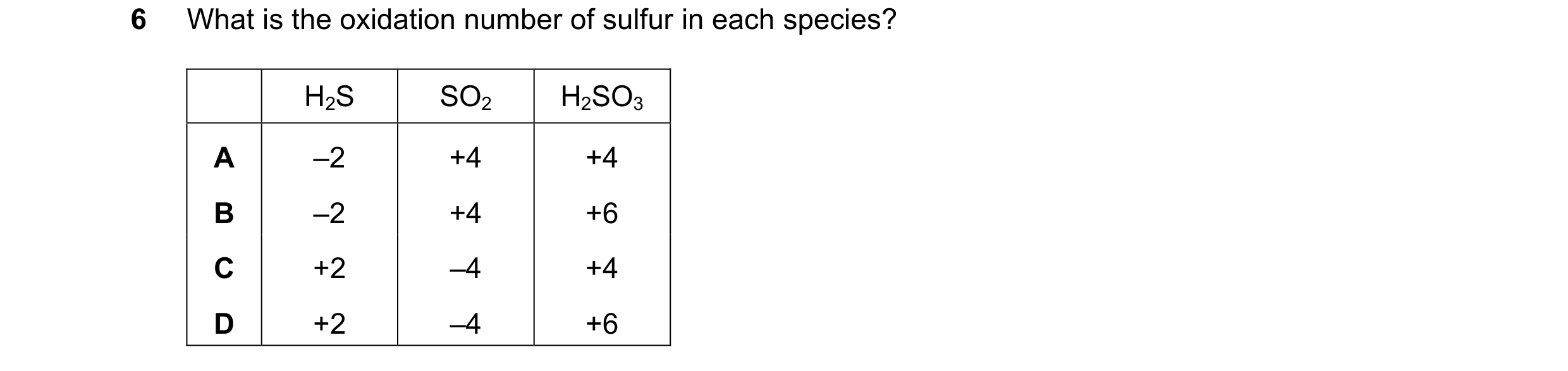
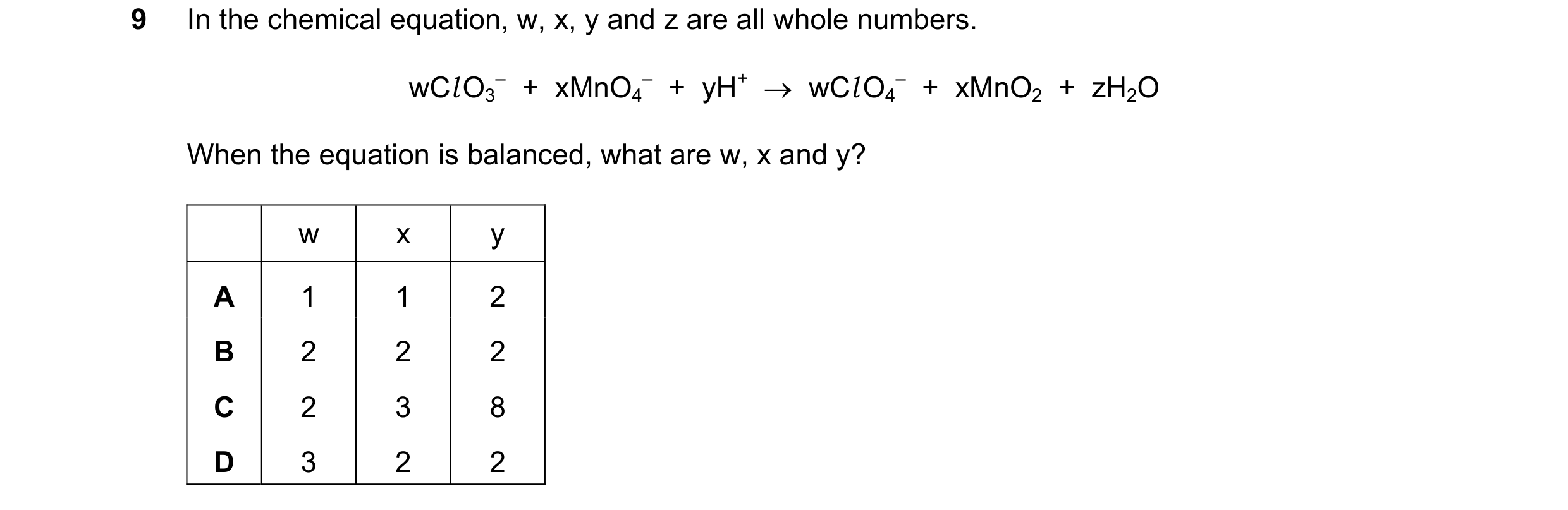
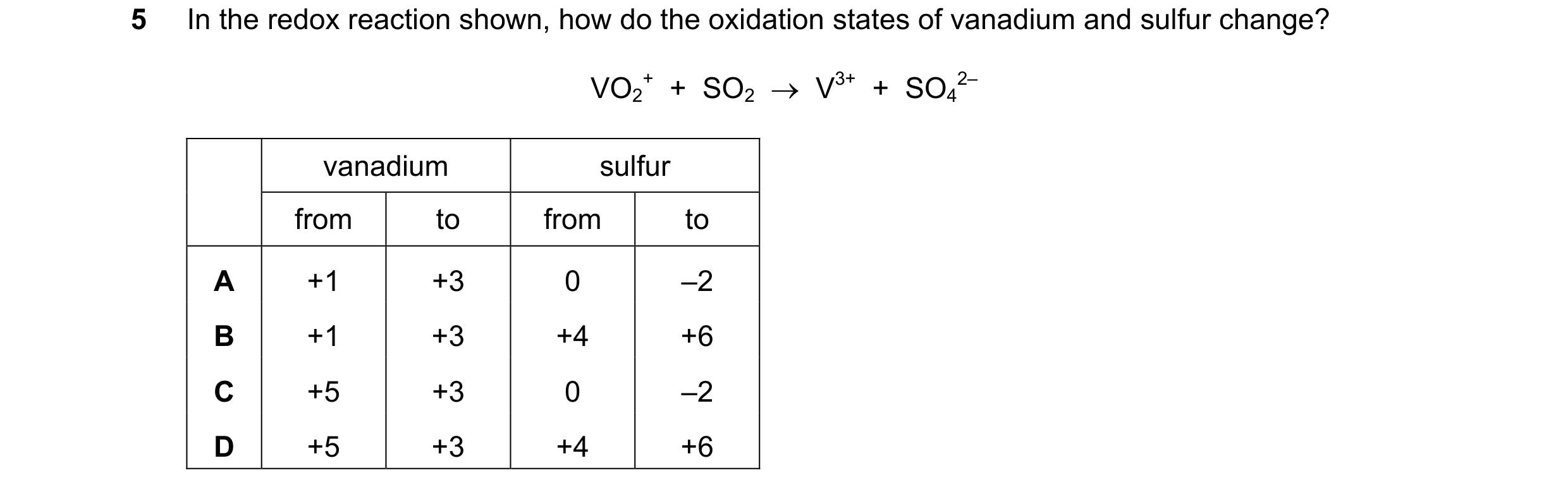
 50 / 78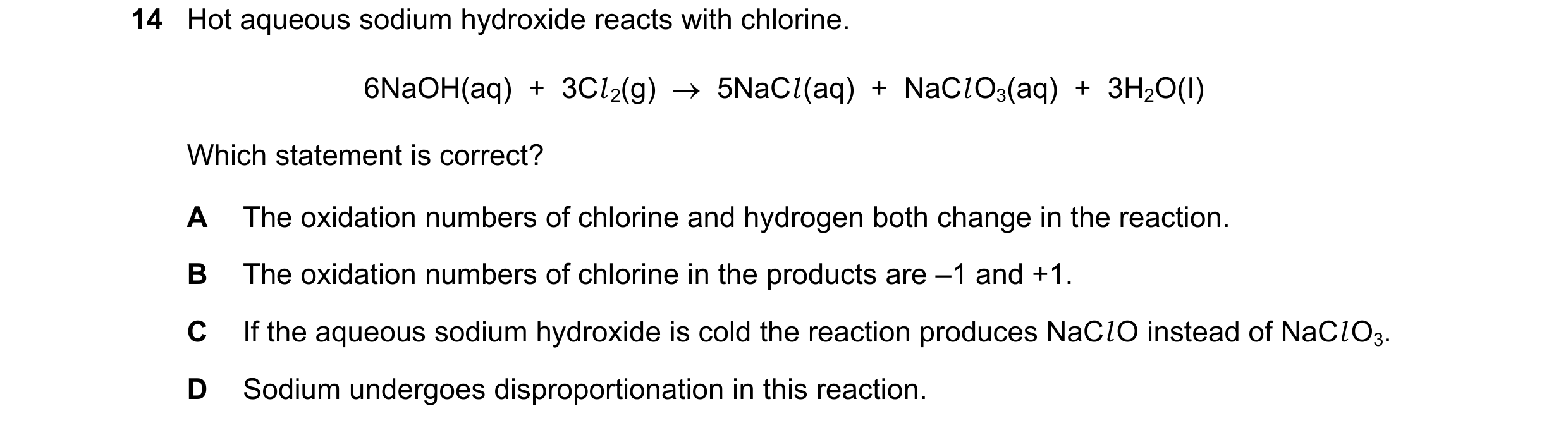


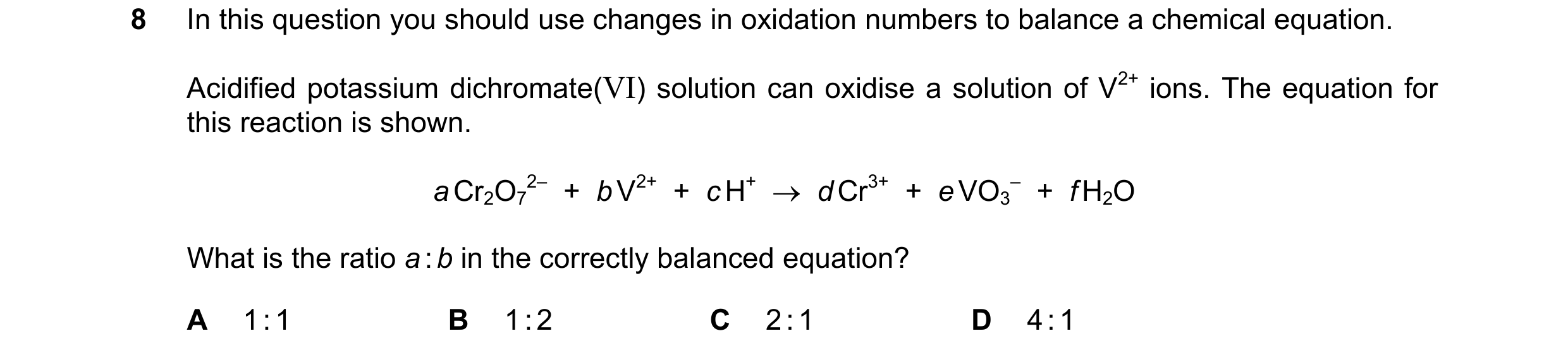
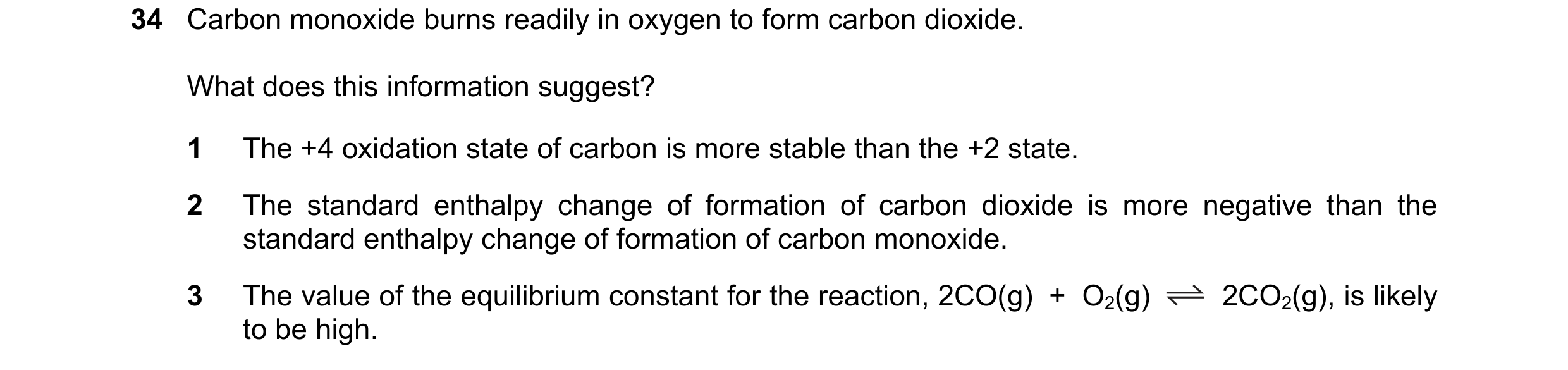
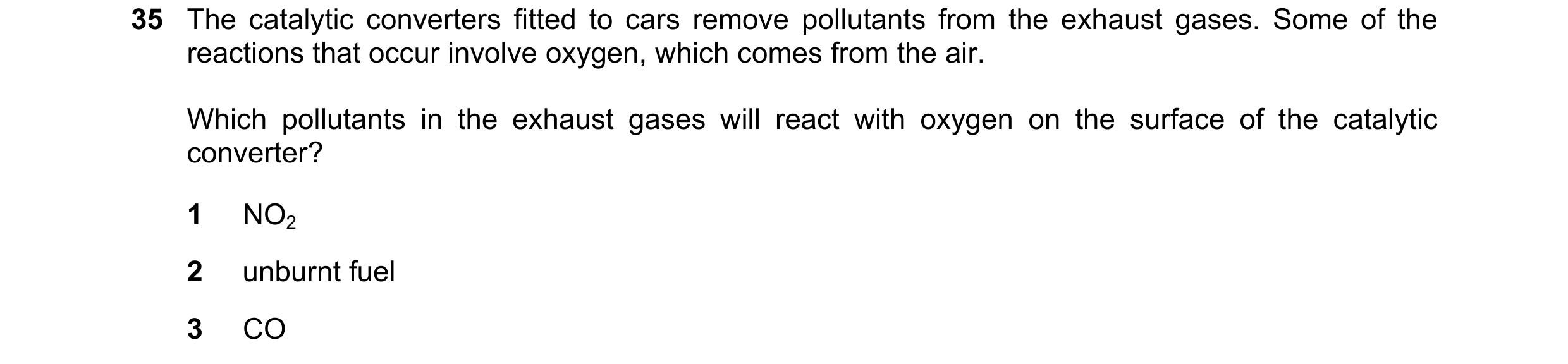 51 / 78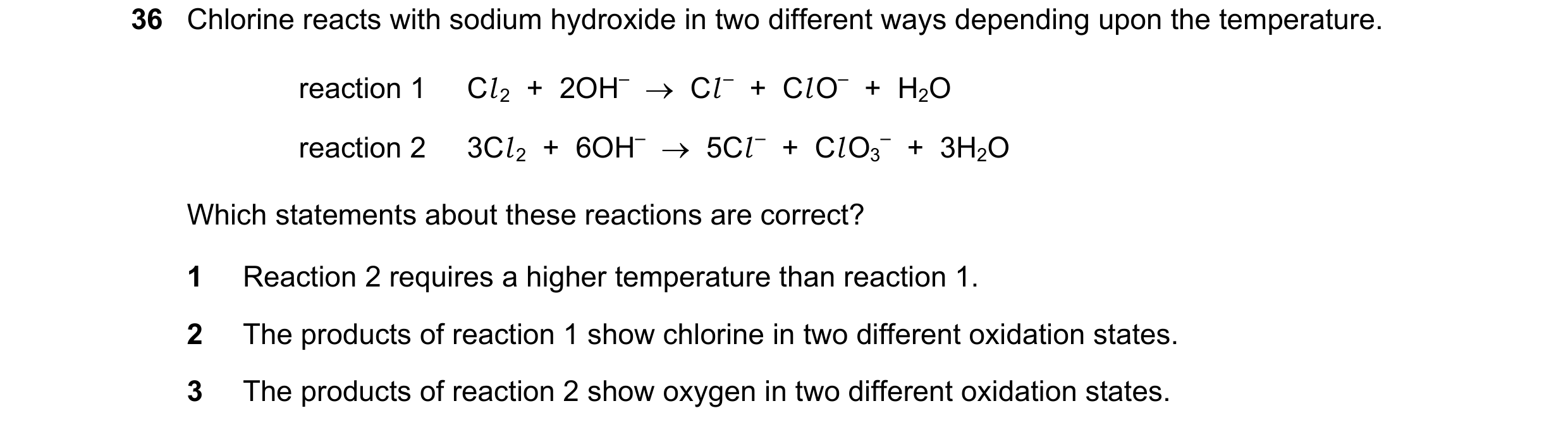

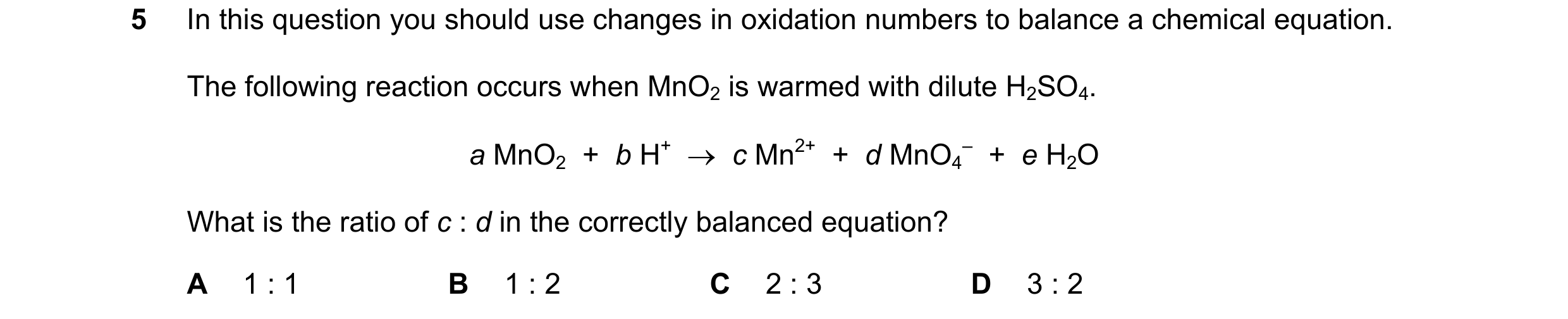

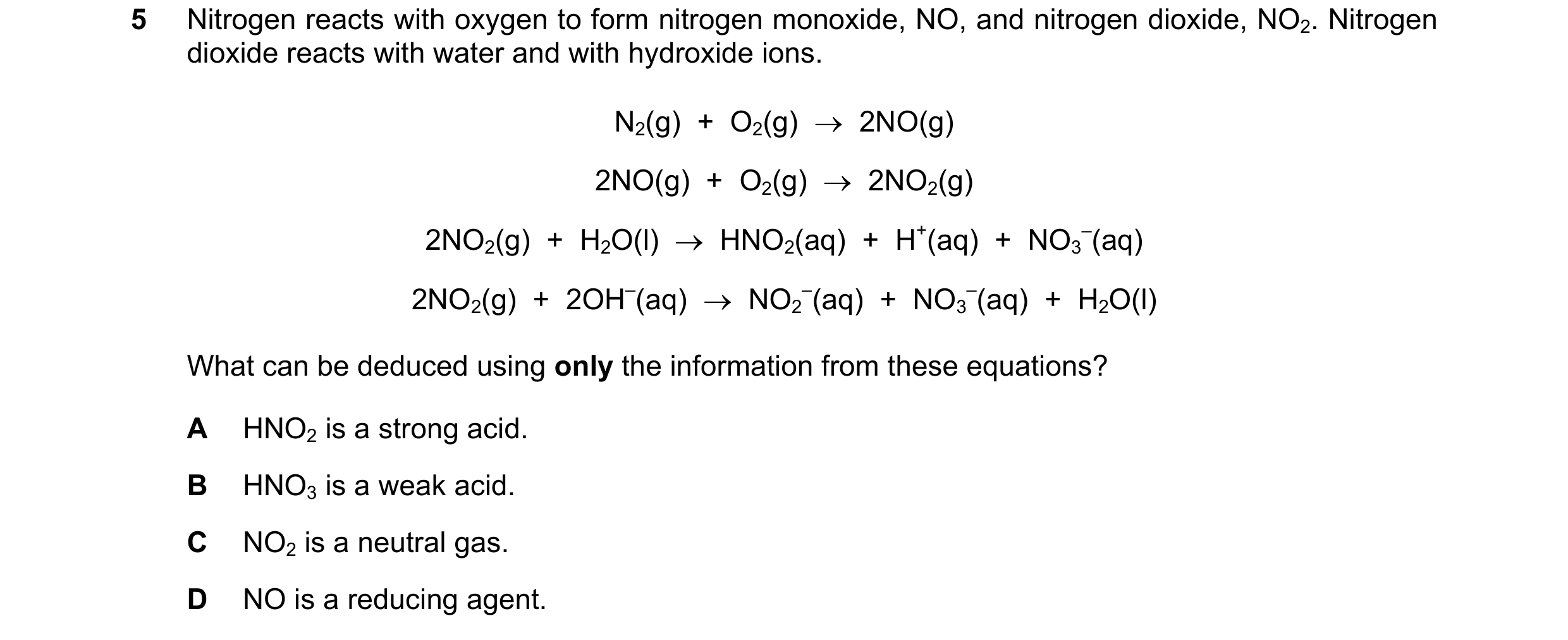 52 / 78

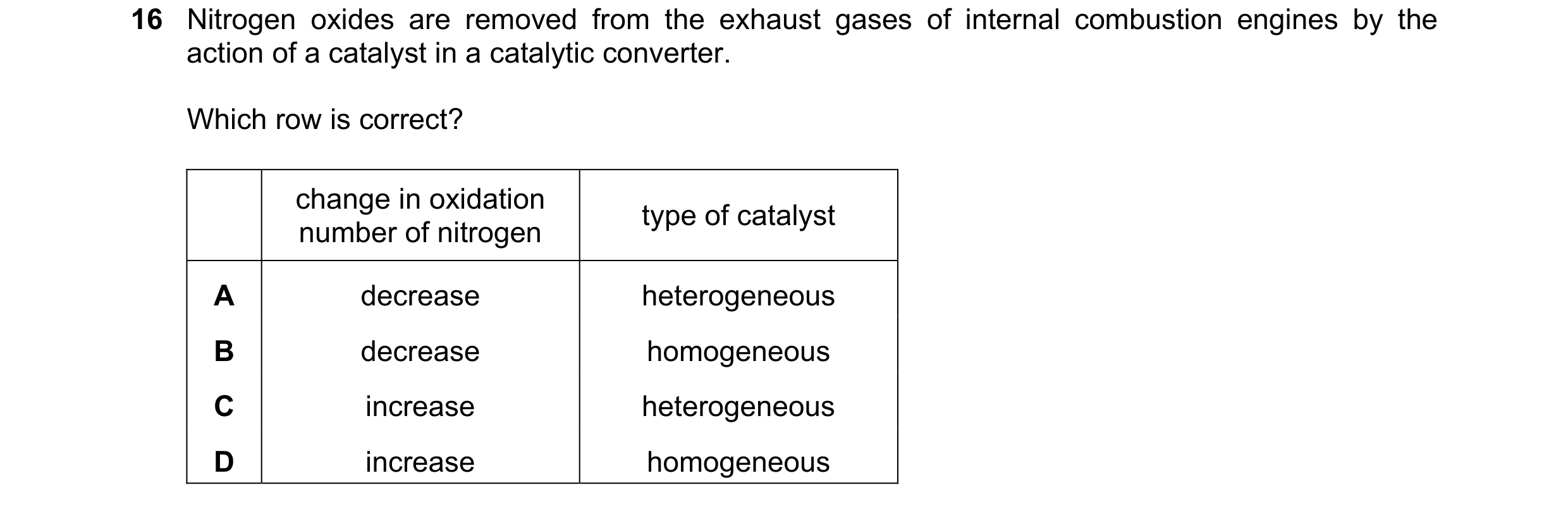
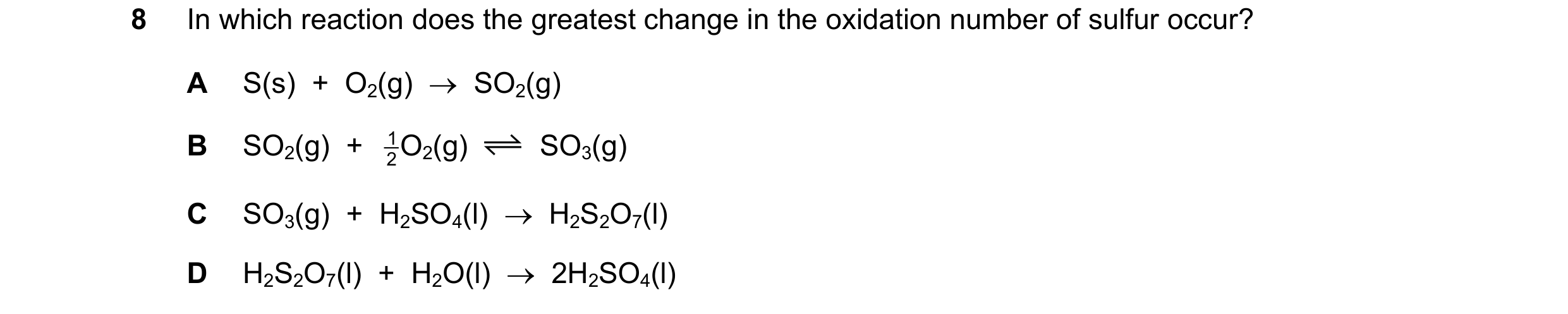
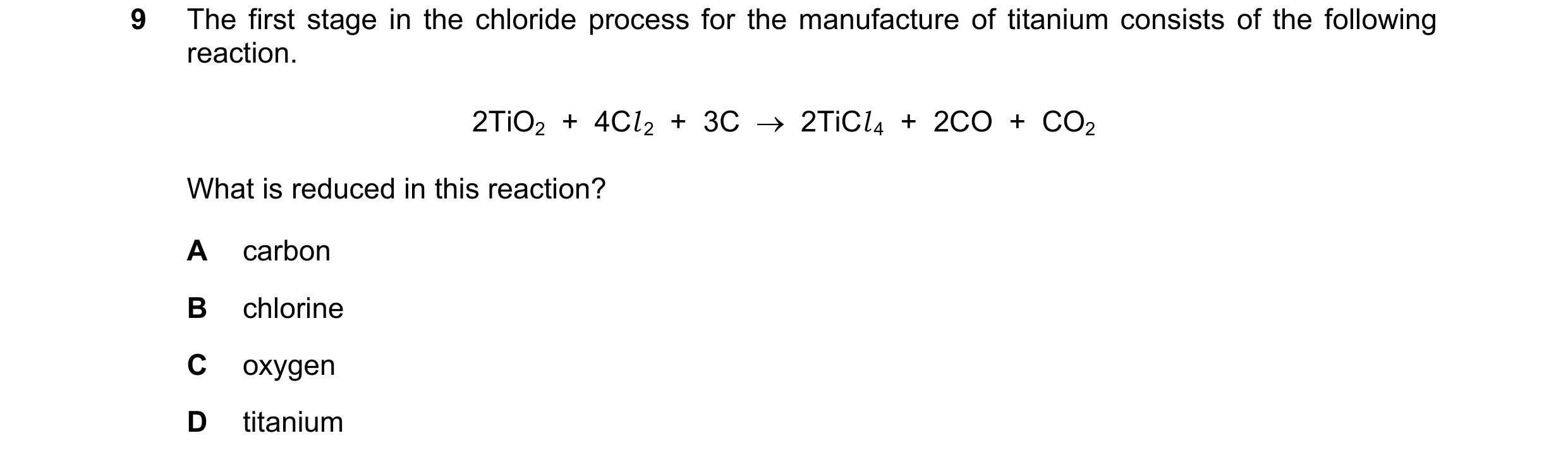
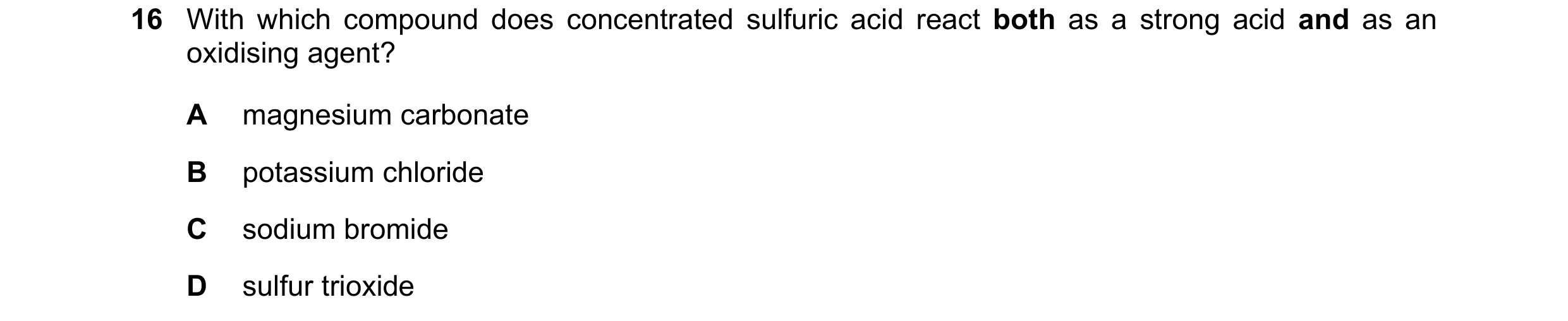 53 / 78
![Question 242: Nitrogen forms a number of oxides. Their enthalpies of formation are given. [NO(g)] = +90 kJ mol–1 [N2O(g)] = +82 kJ mol–1 [NO2(g)] = +33 k…](https://img.pastlit.com/crops/d557025c-59a9-447a-9c12-f004d99155f1/q31.png)
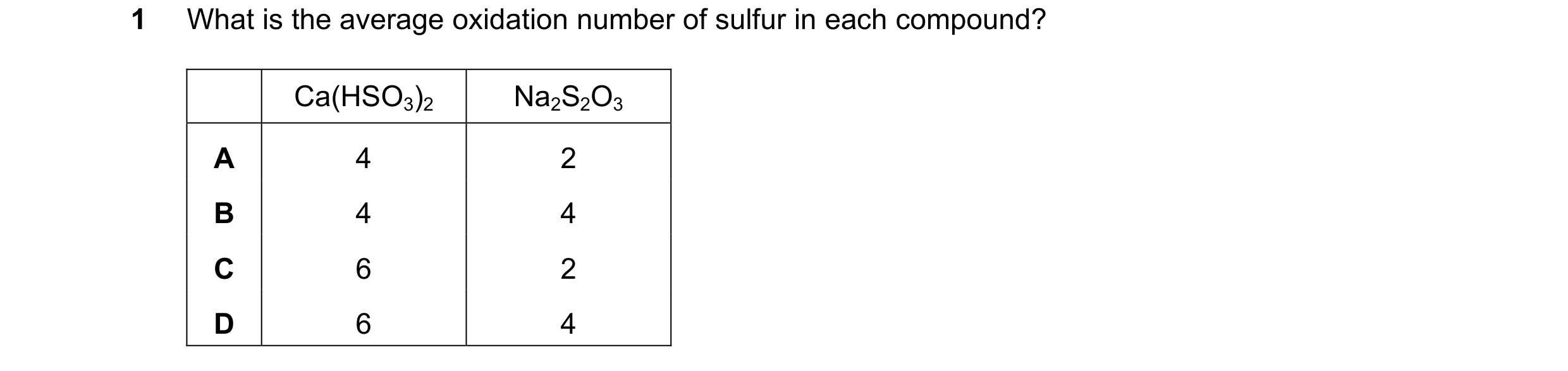
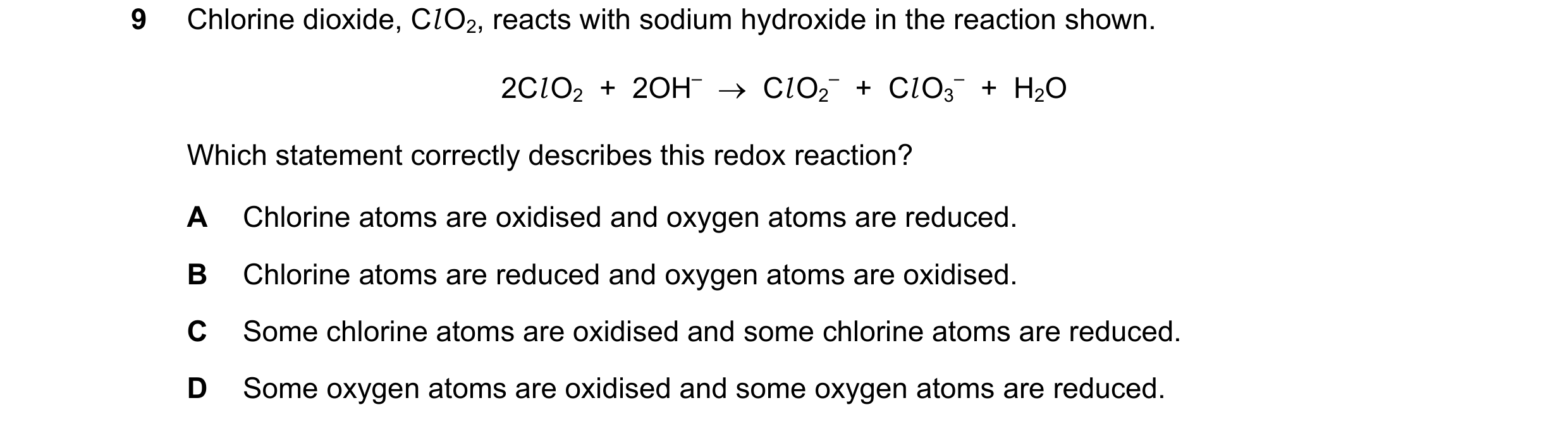
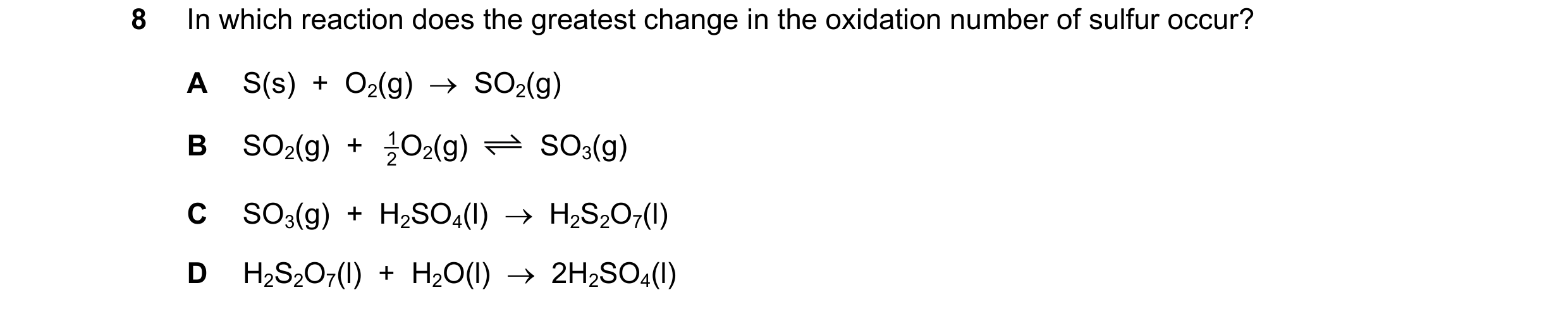
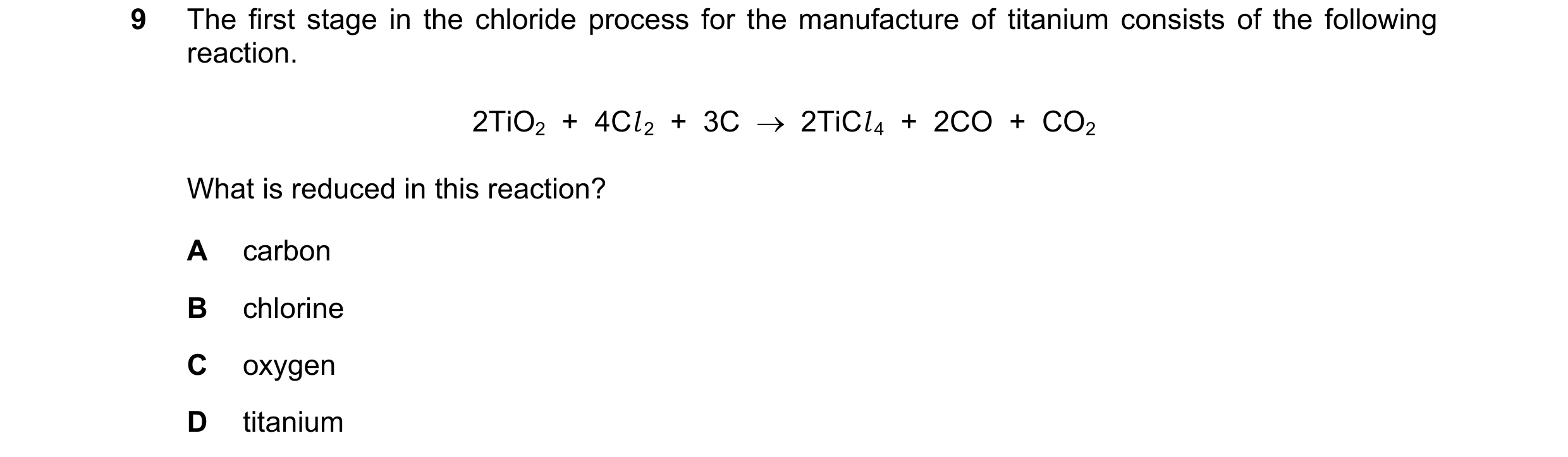 54 / 78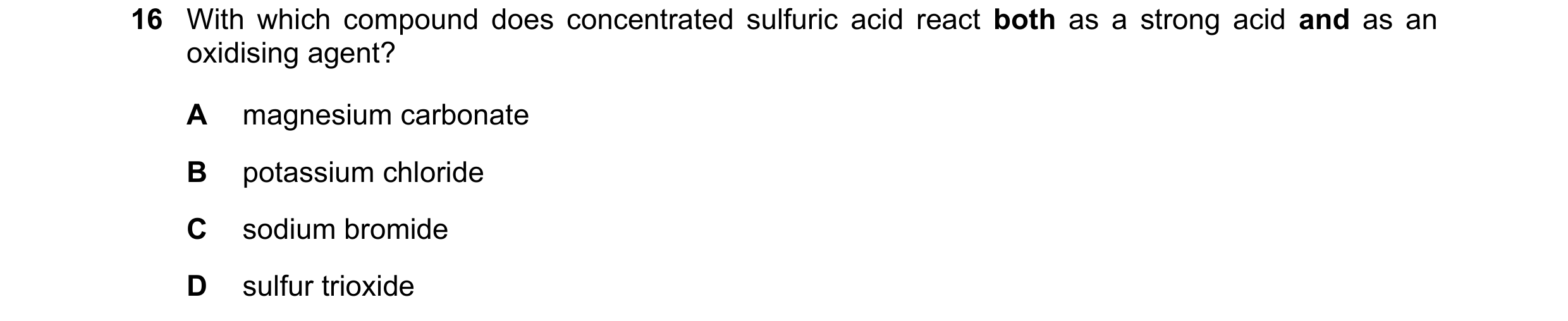
![Question 248: Nitrogen forms a number of oxides. Their enthalpies of formation are given. [NO(g)] = +90 kJ mol–1 [N2O(g)] = +82 kJ mol–1 [NO2(g)] = +33 k…](https://img.pastlit.com/crops/1a6b7faf-29a3-45e6-8a4f-170464a7f20d/q31.png)
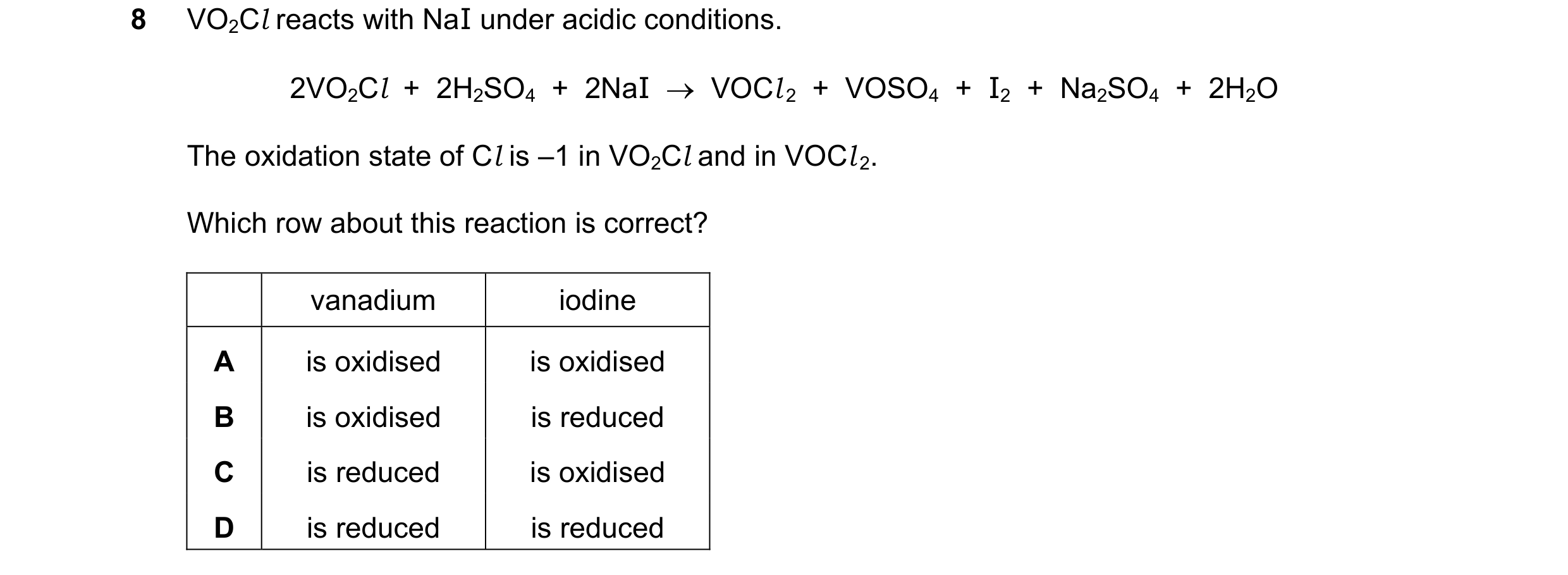
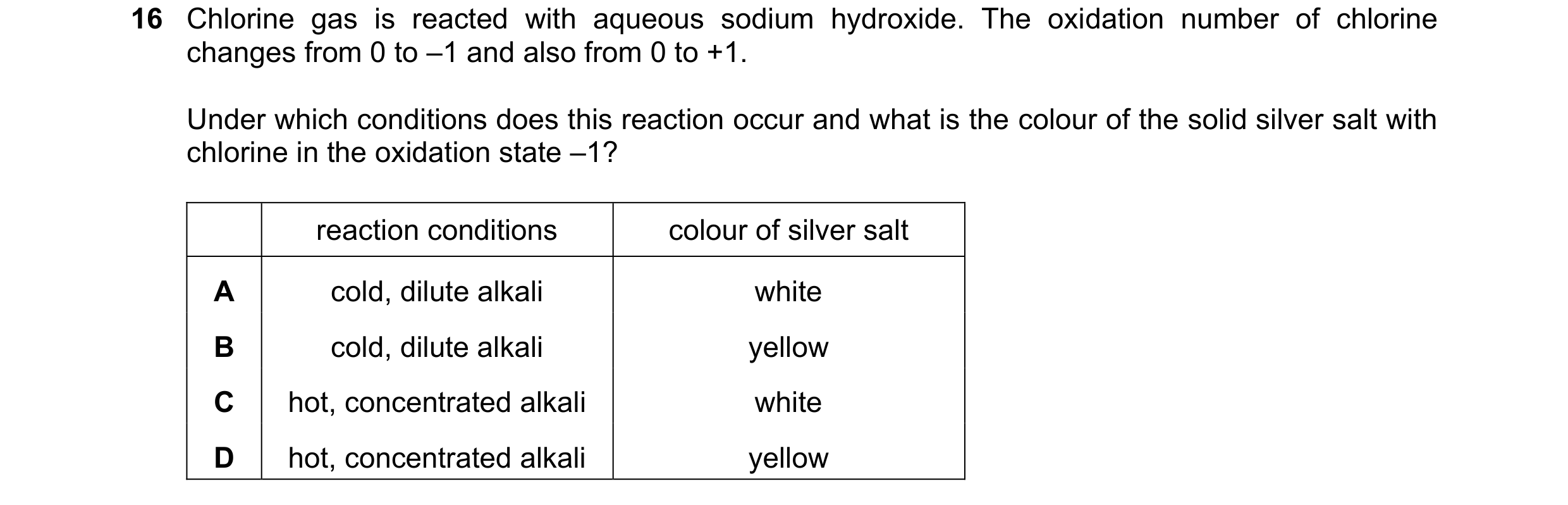 55 / 78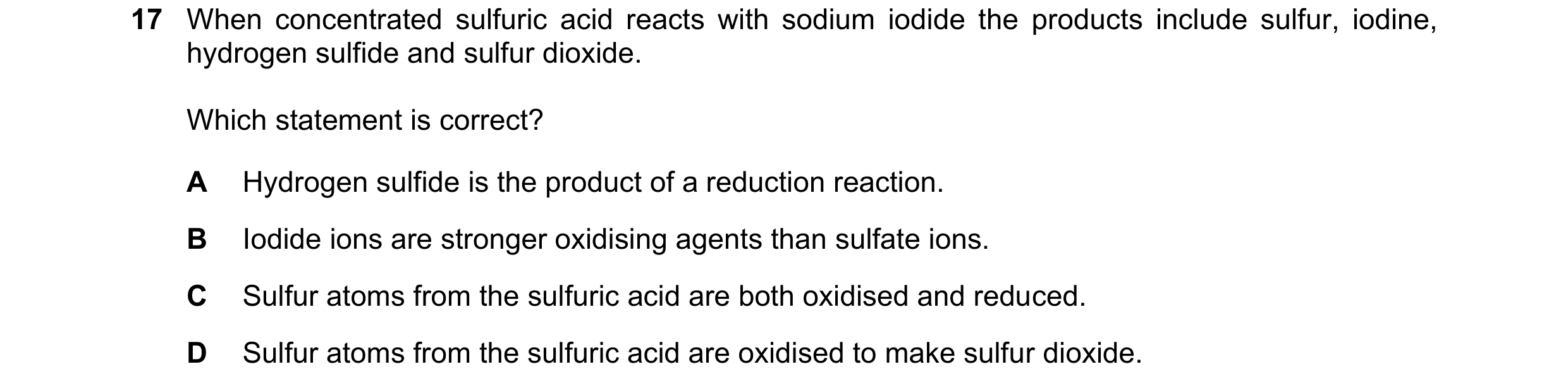
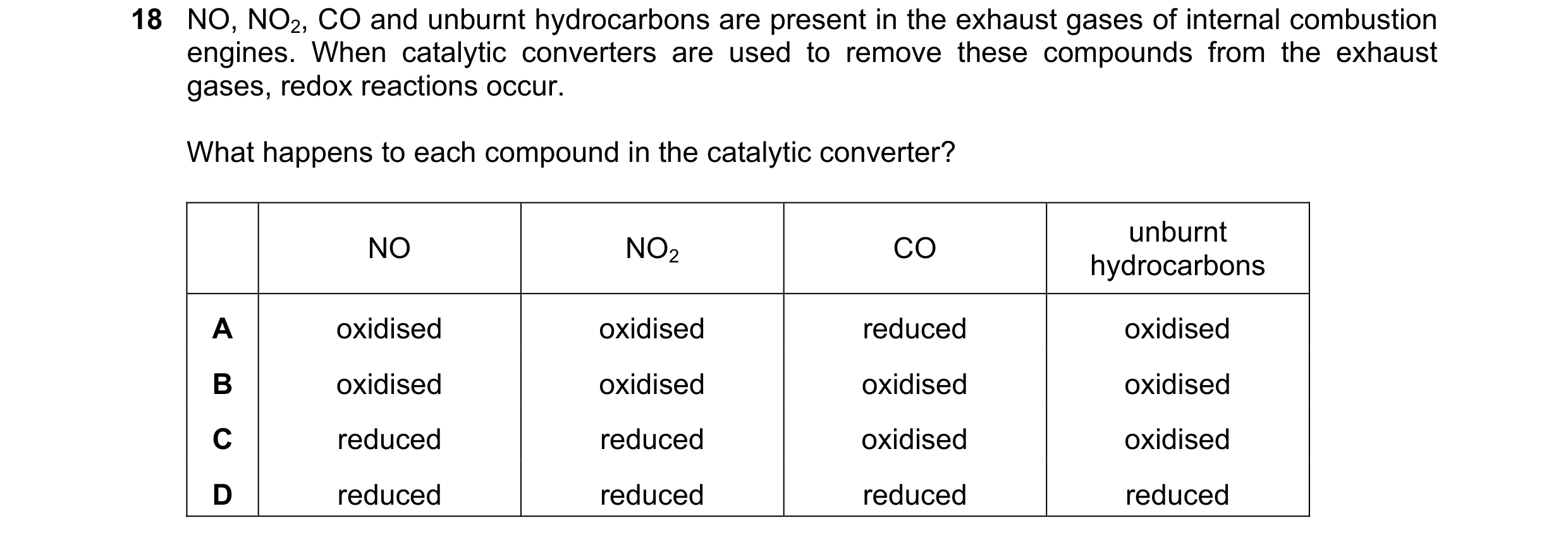
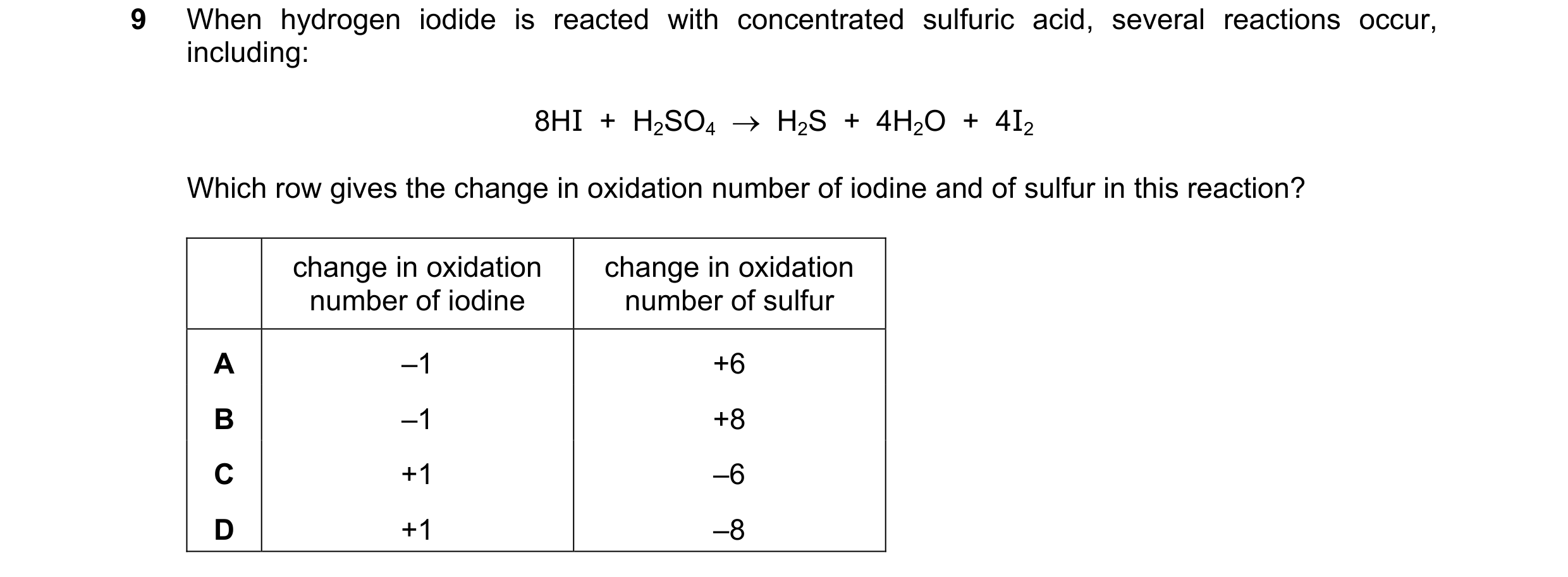 56 / 78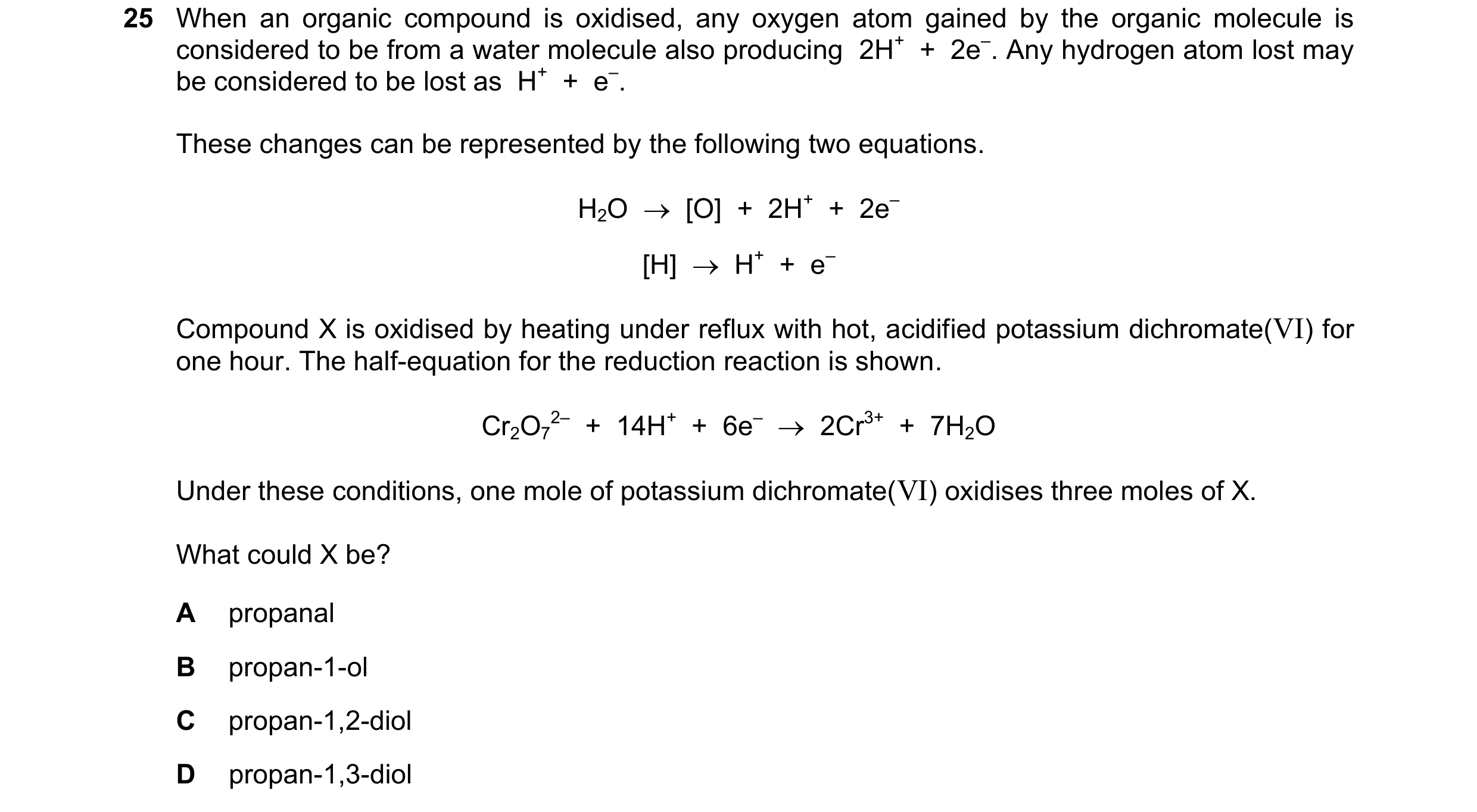


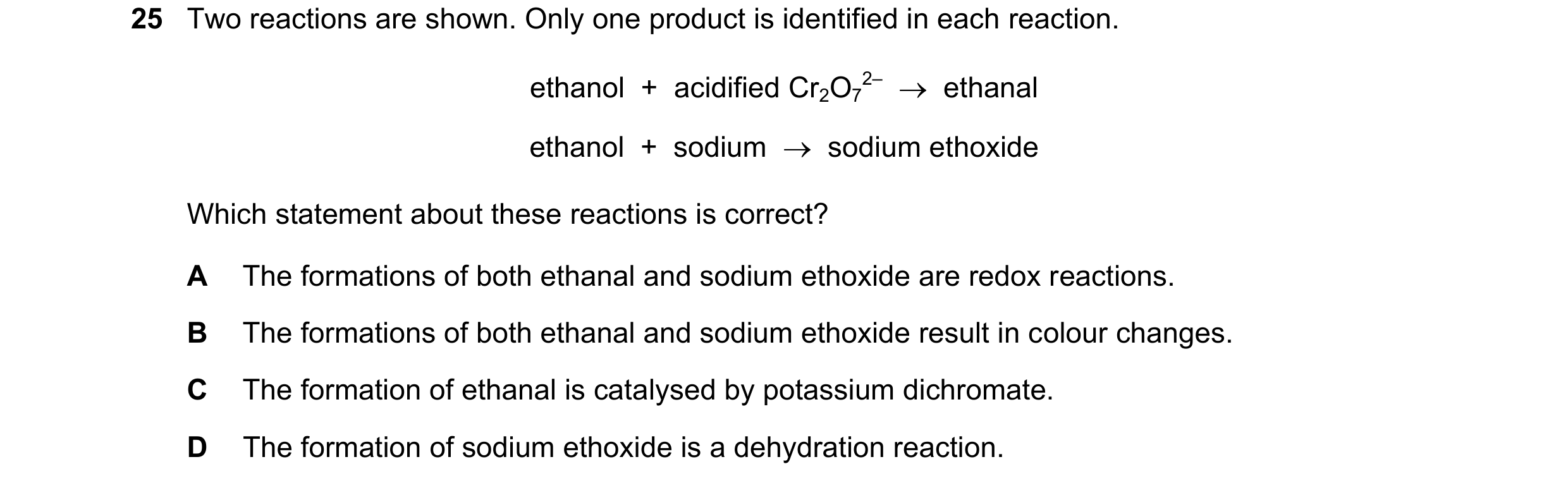 57 / 78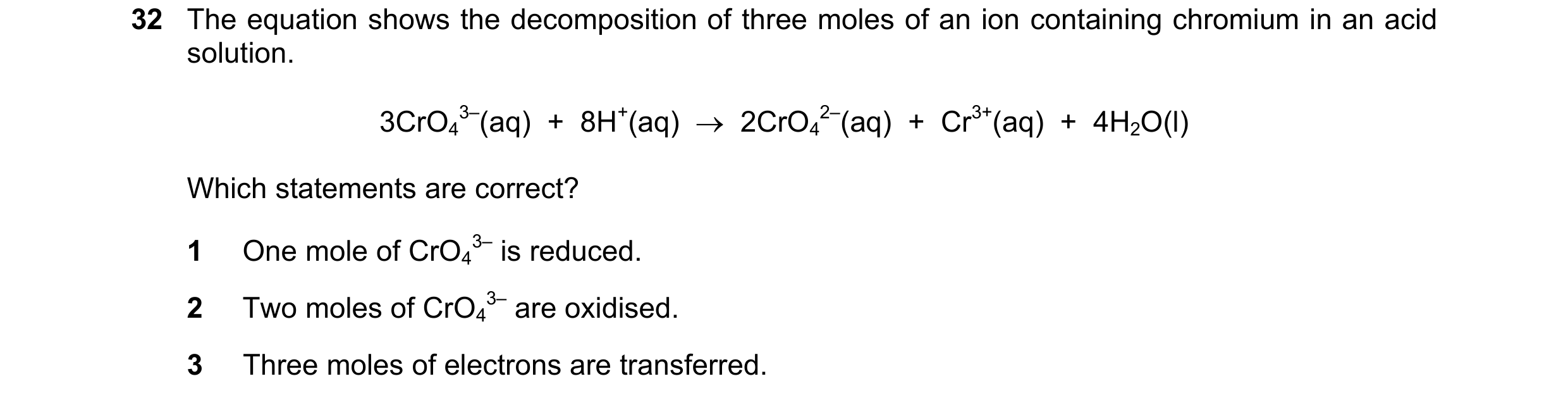
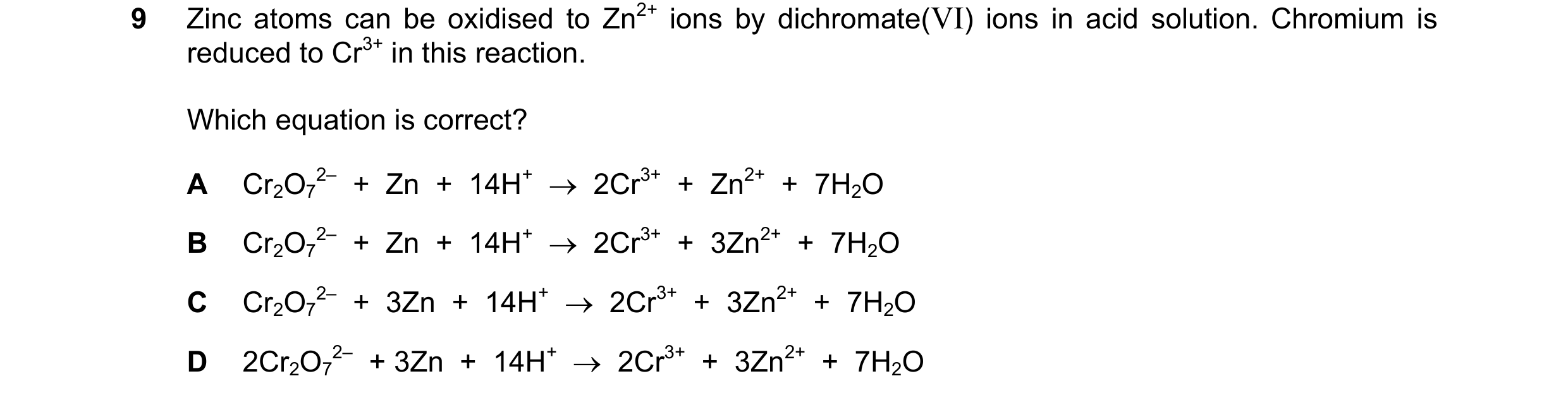
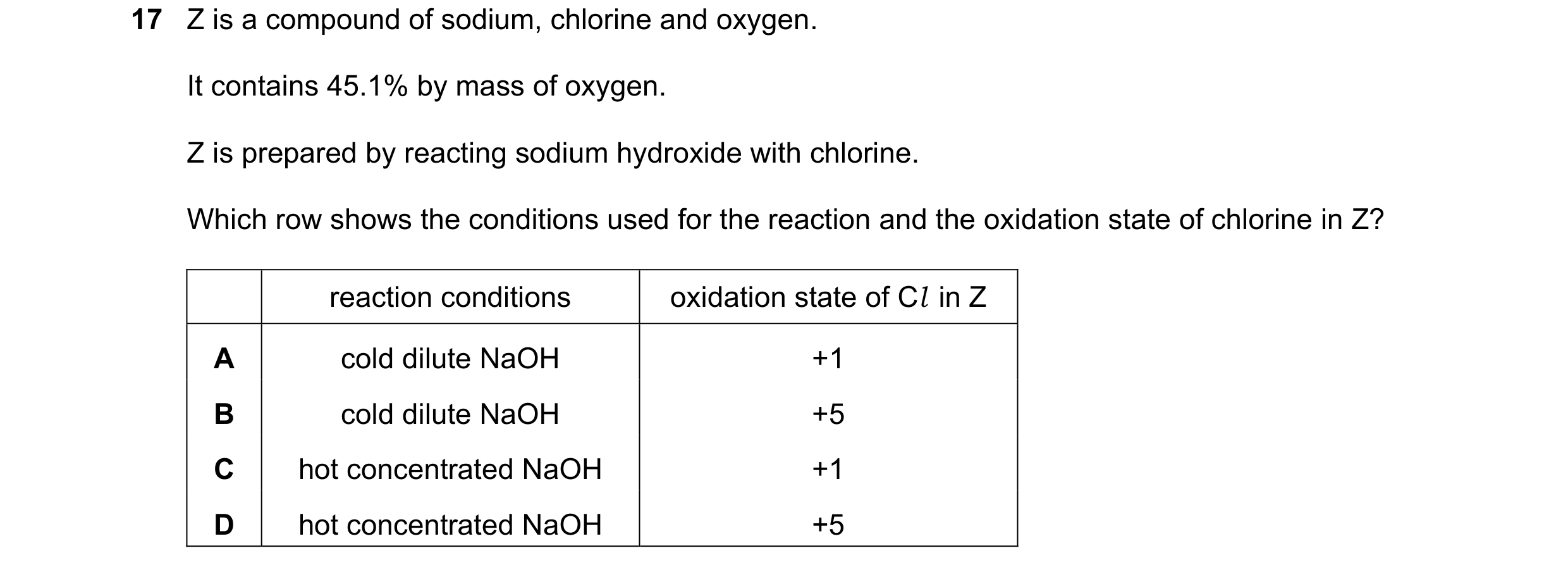

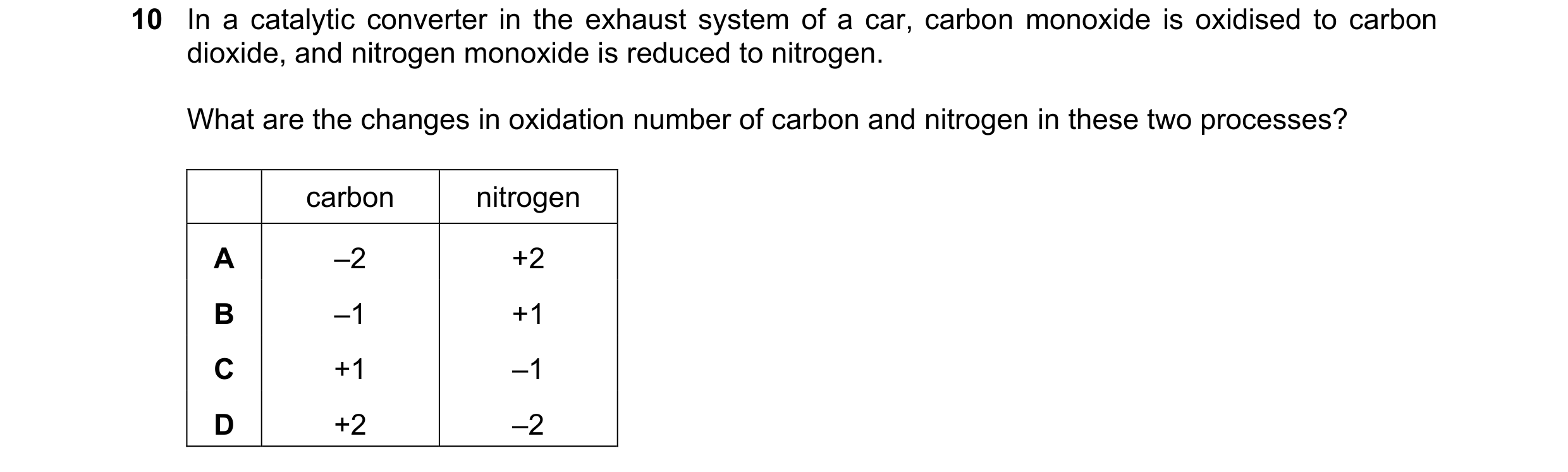 58 / 78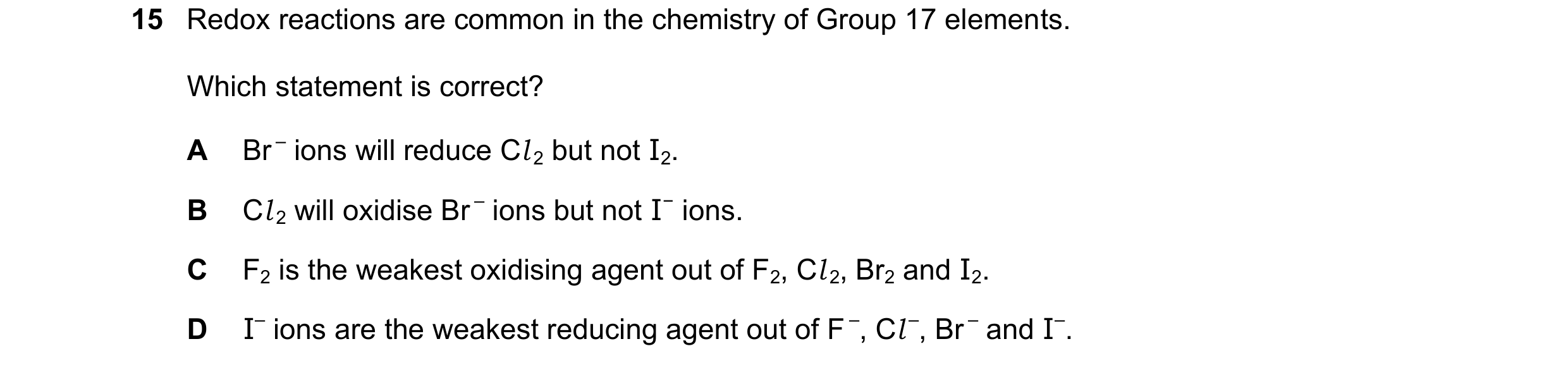

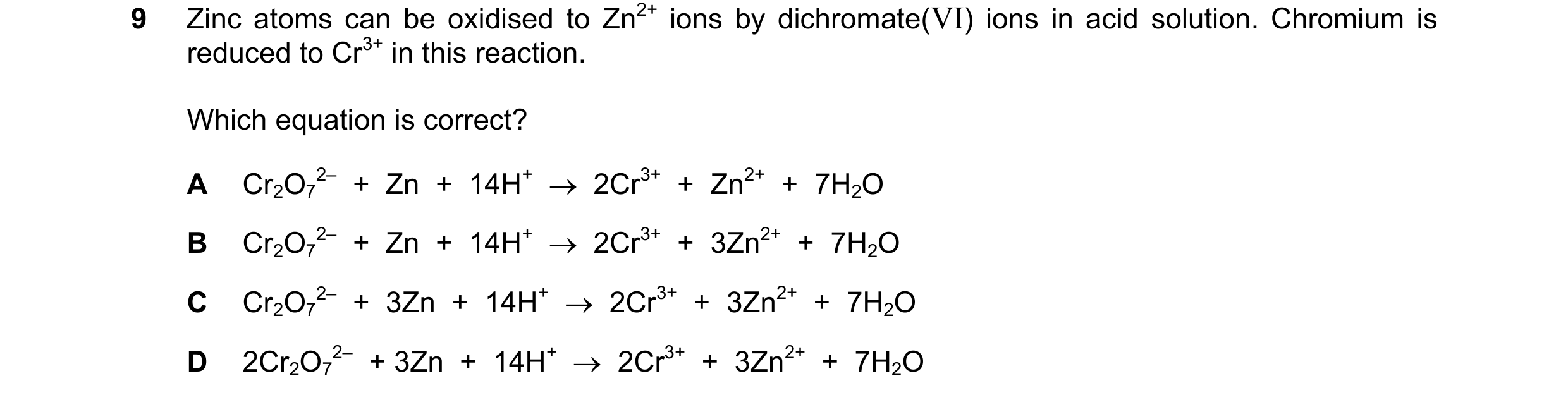
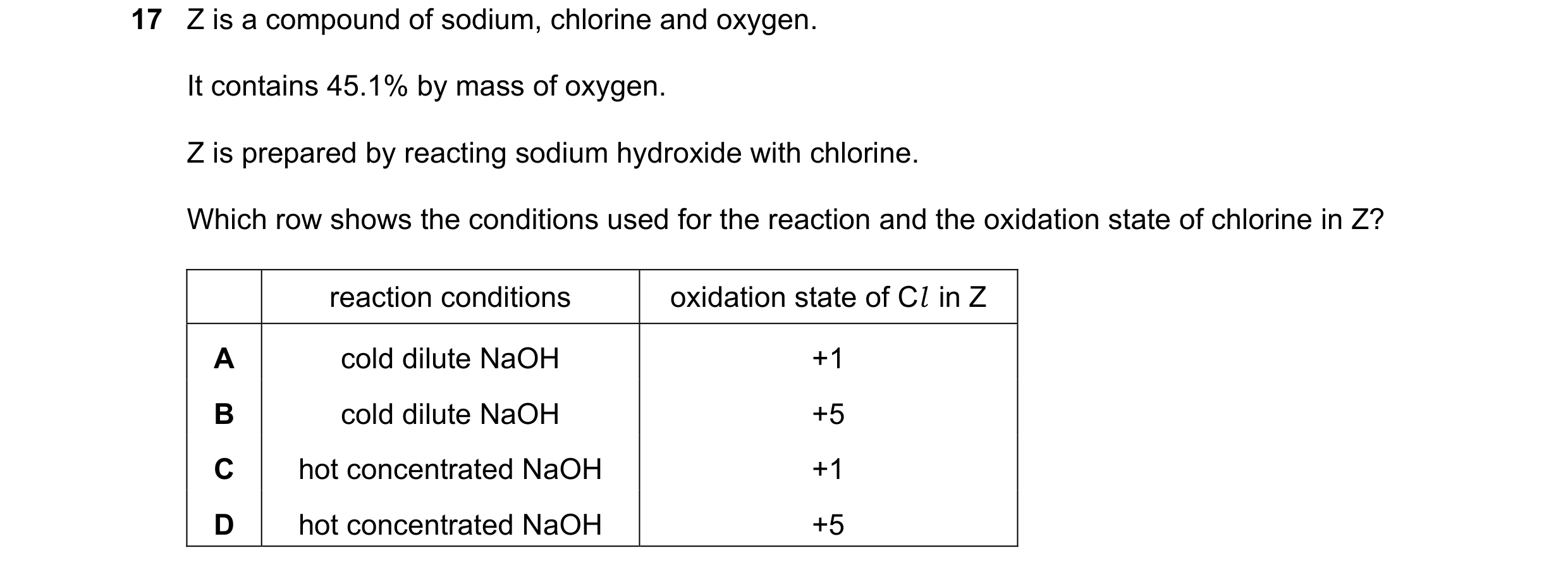
 59 / 78



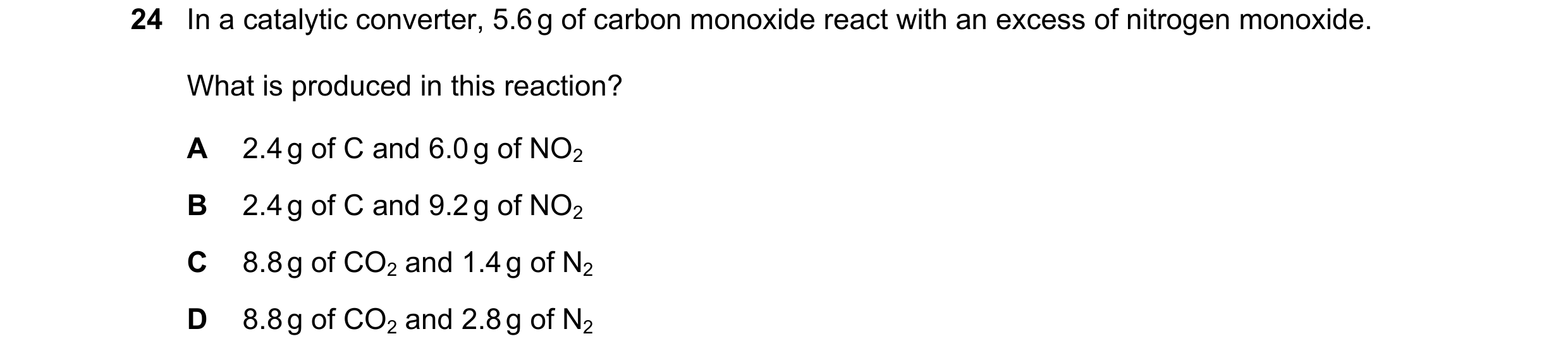
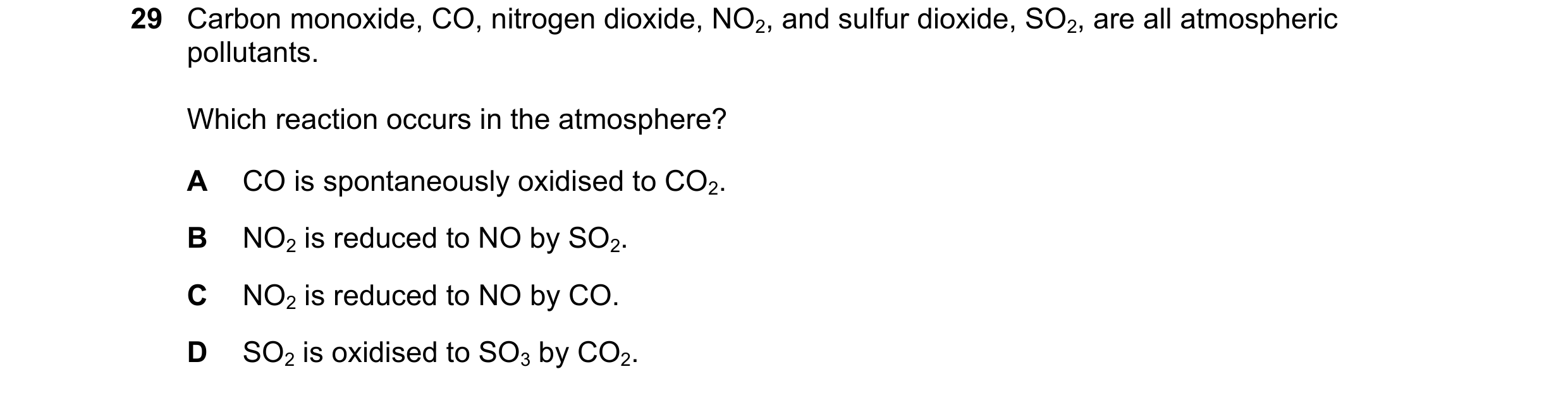 60 / 78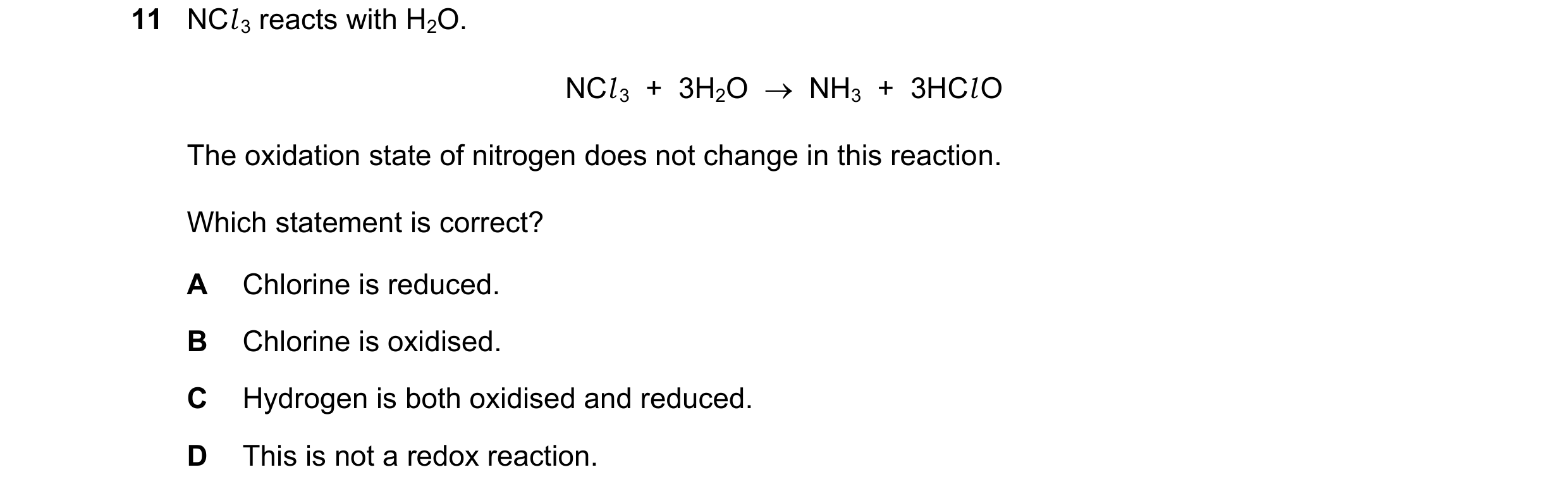
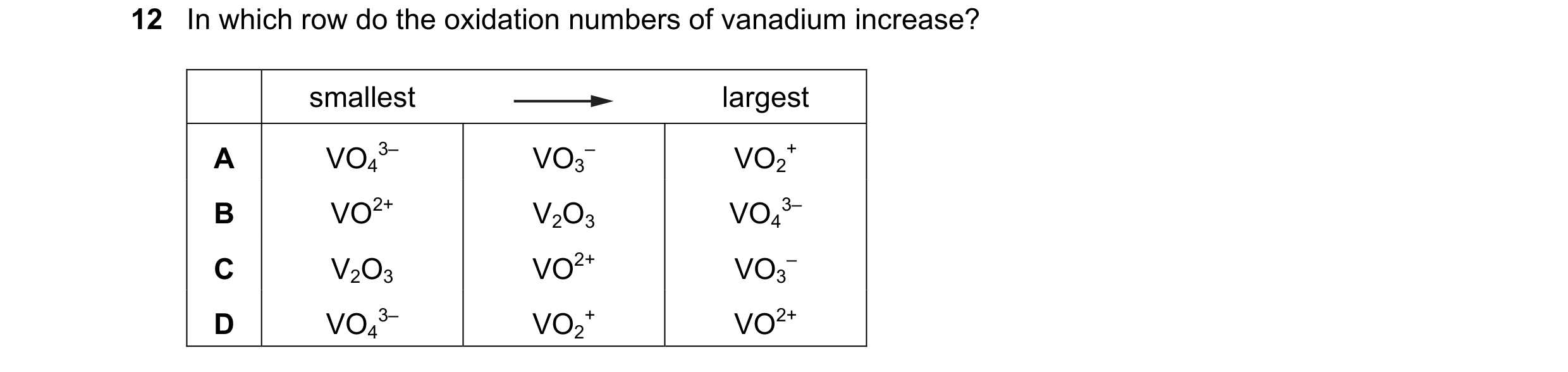
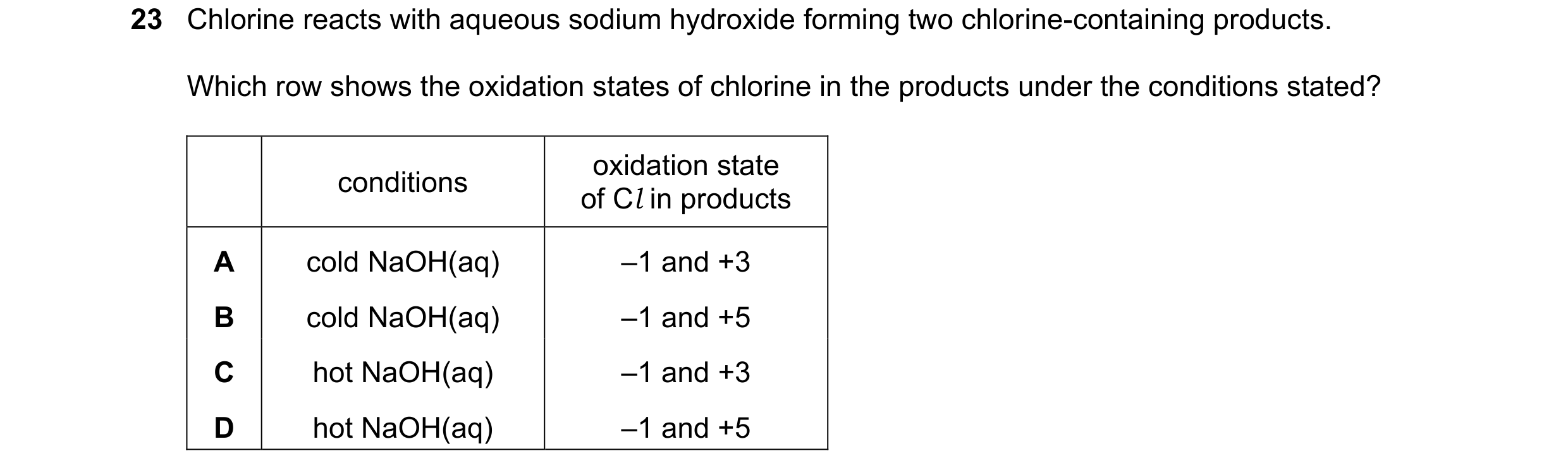
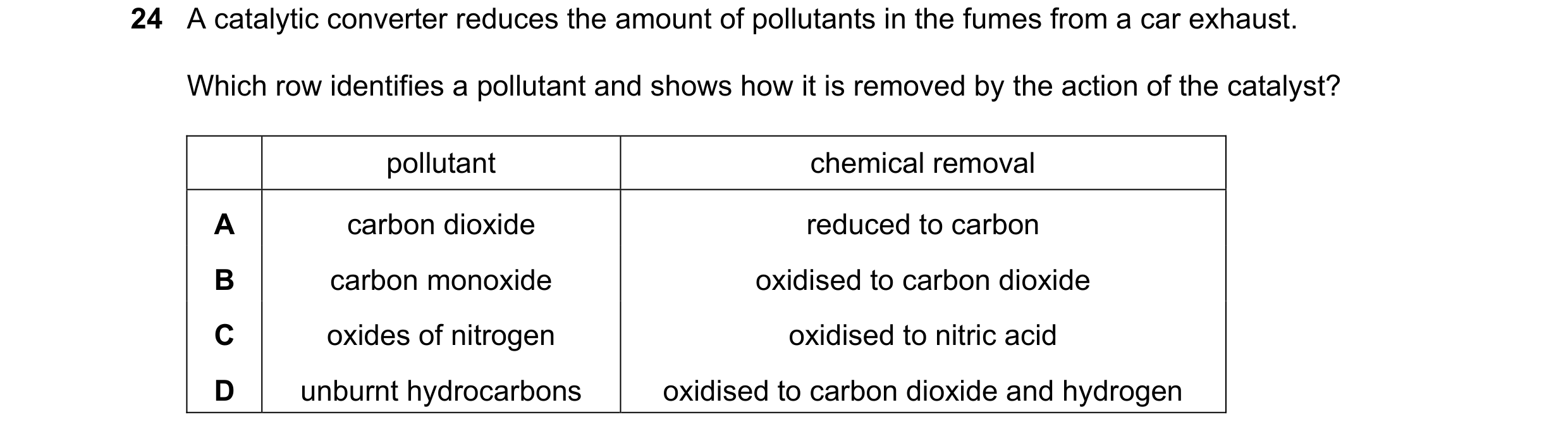 61 / 78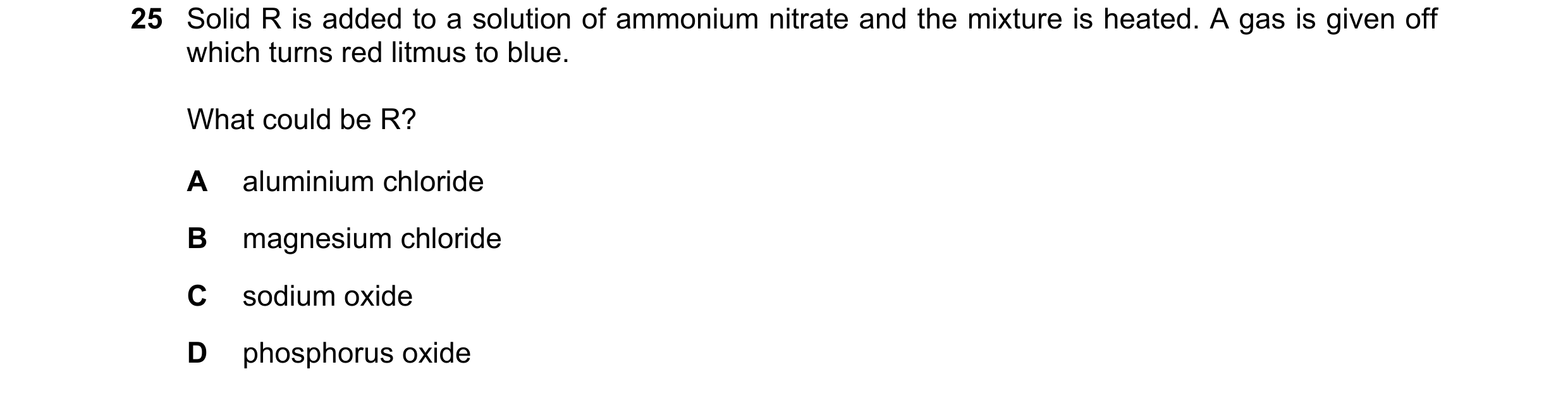

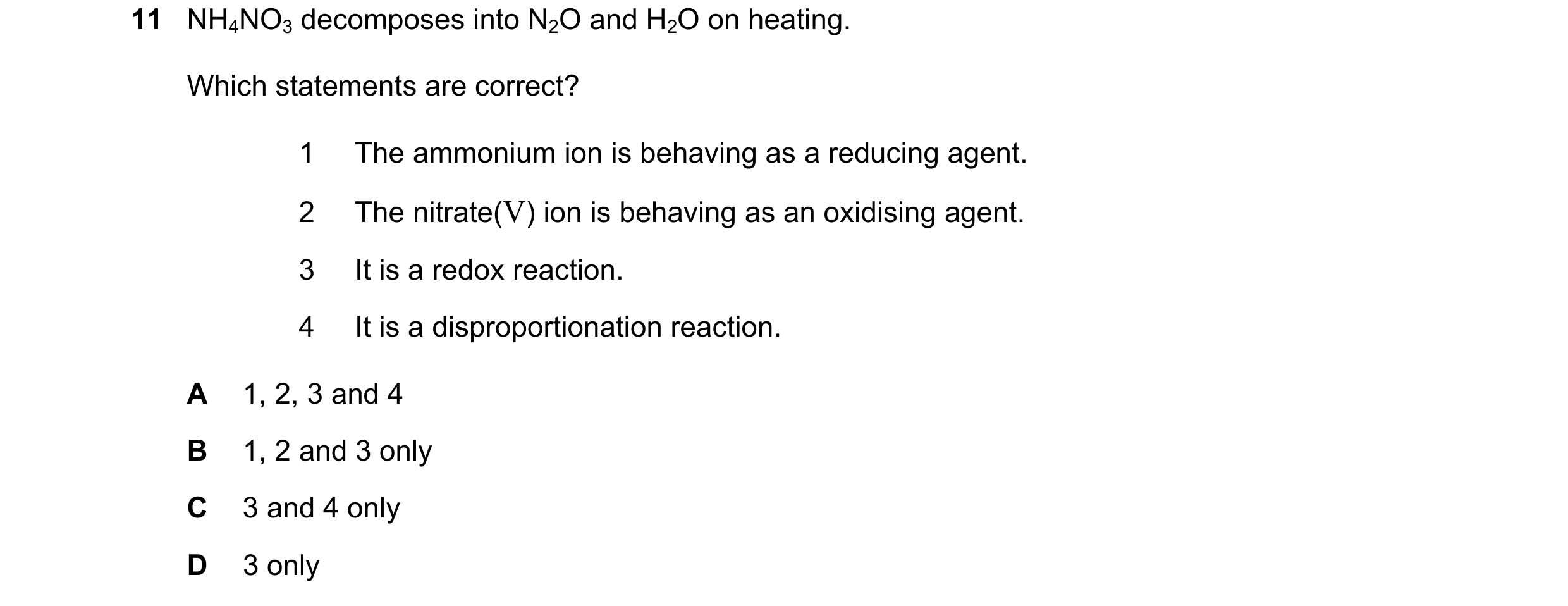
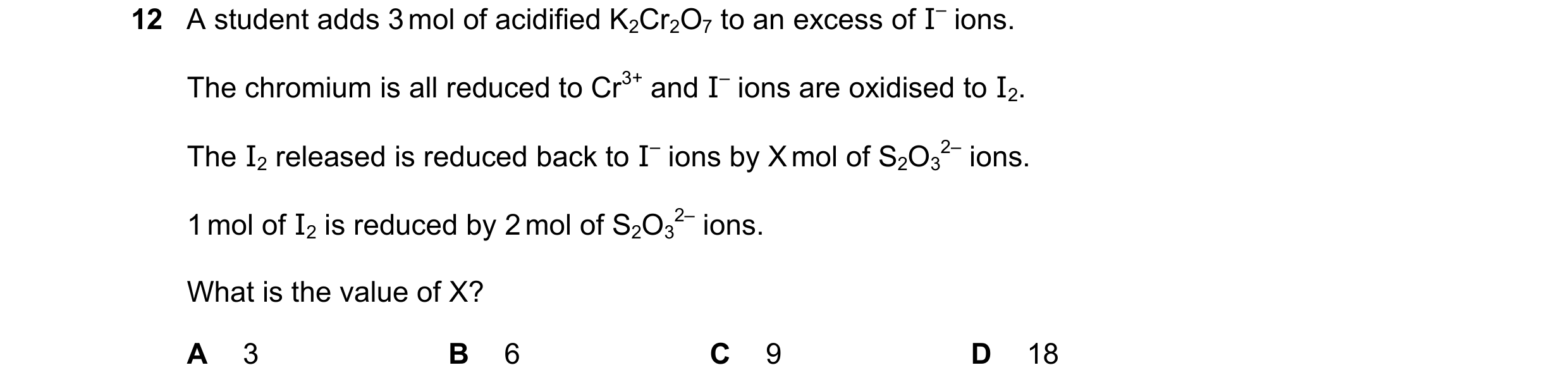
 62 / 78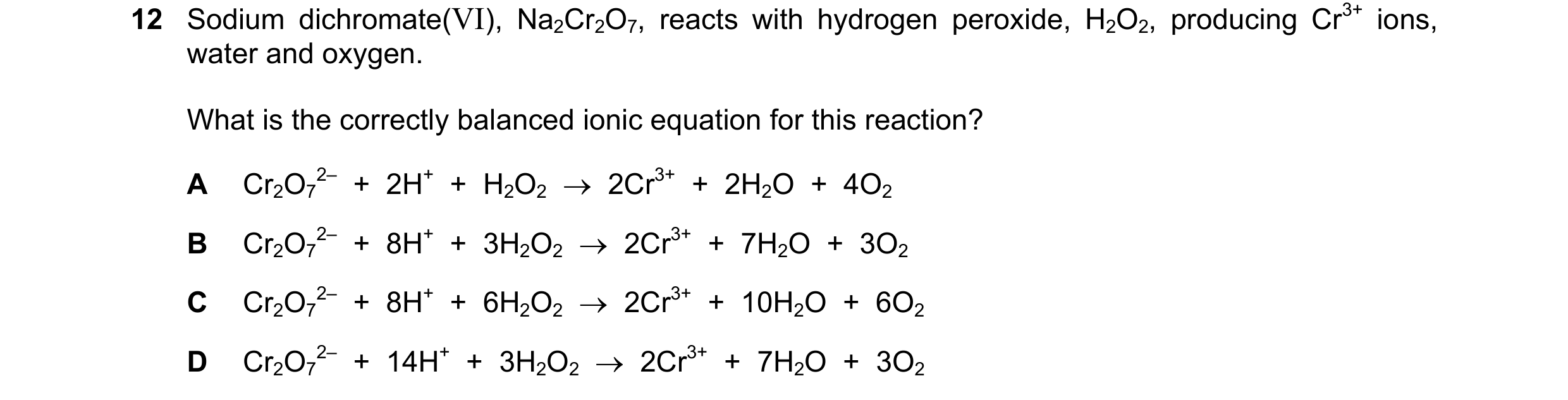


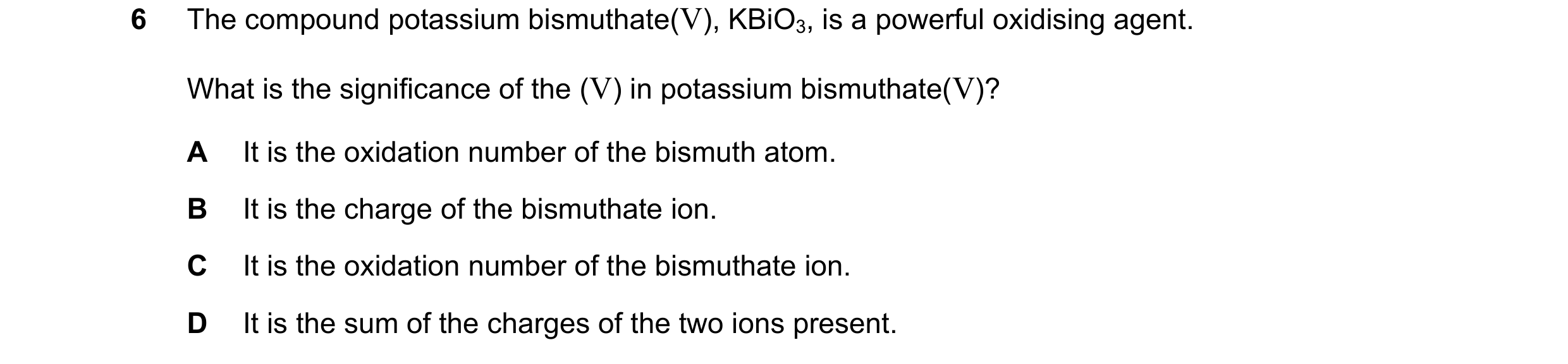

 63 / 78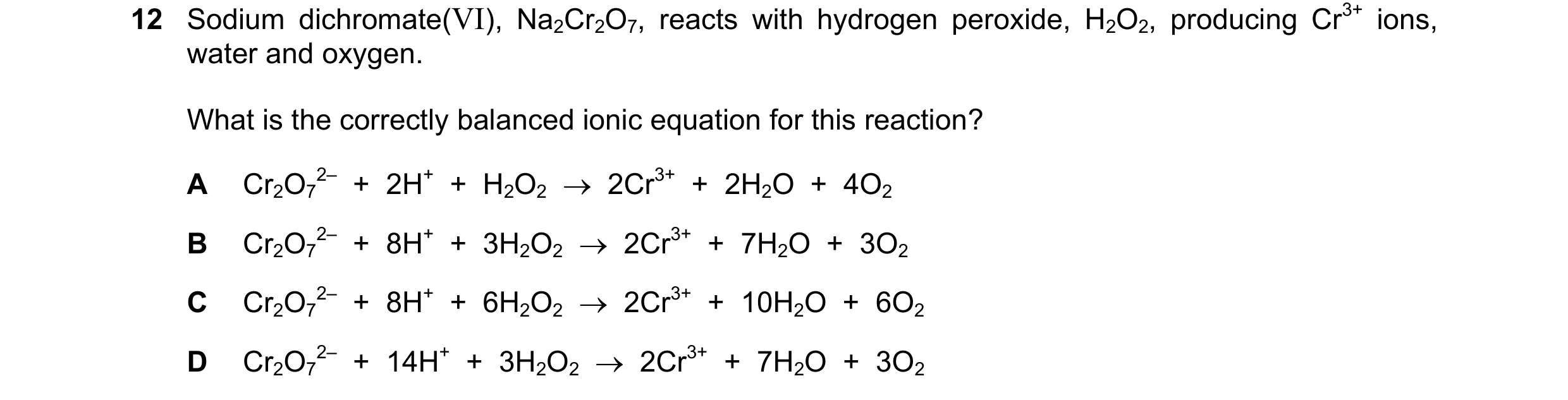

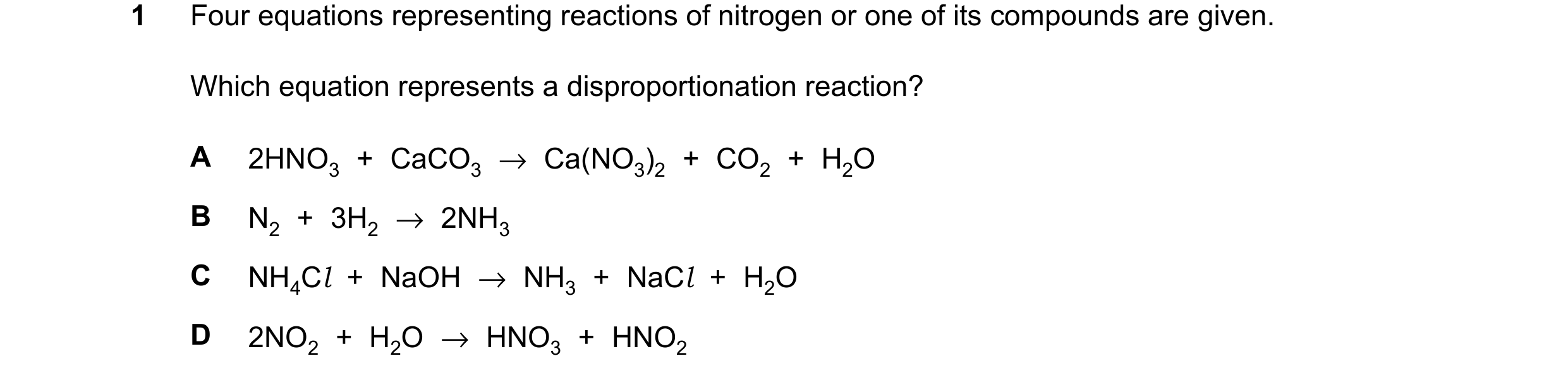
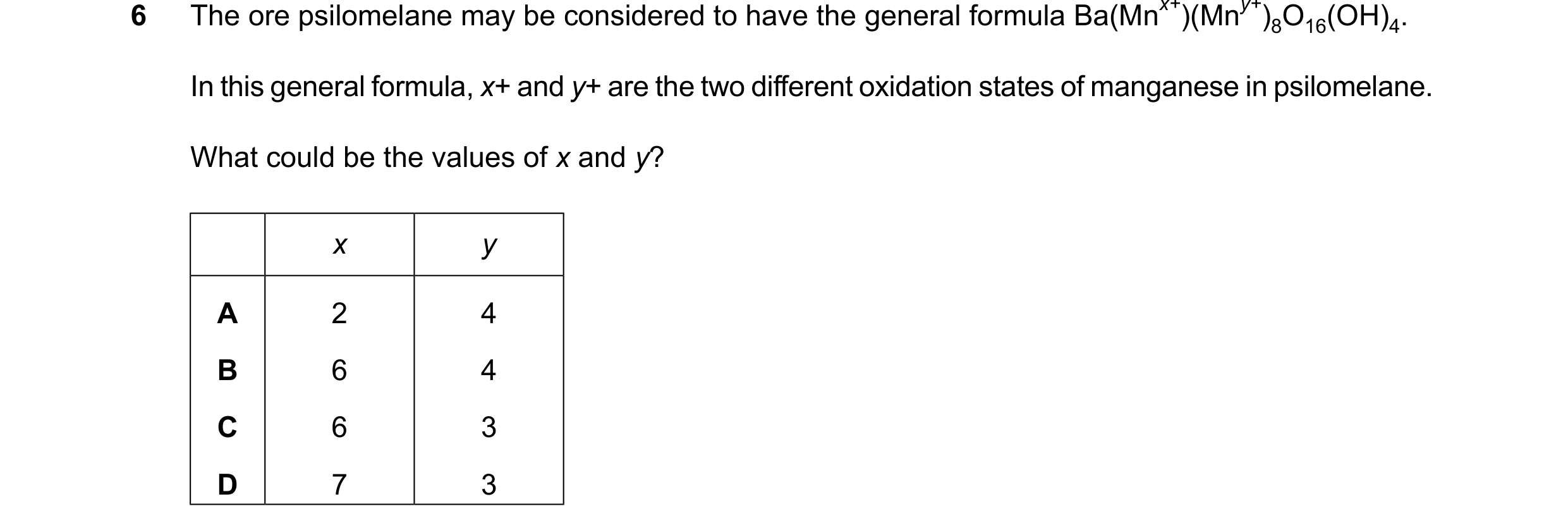
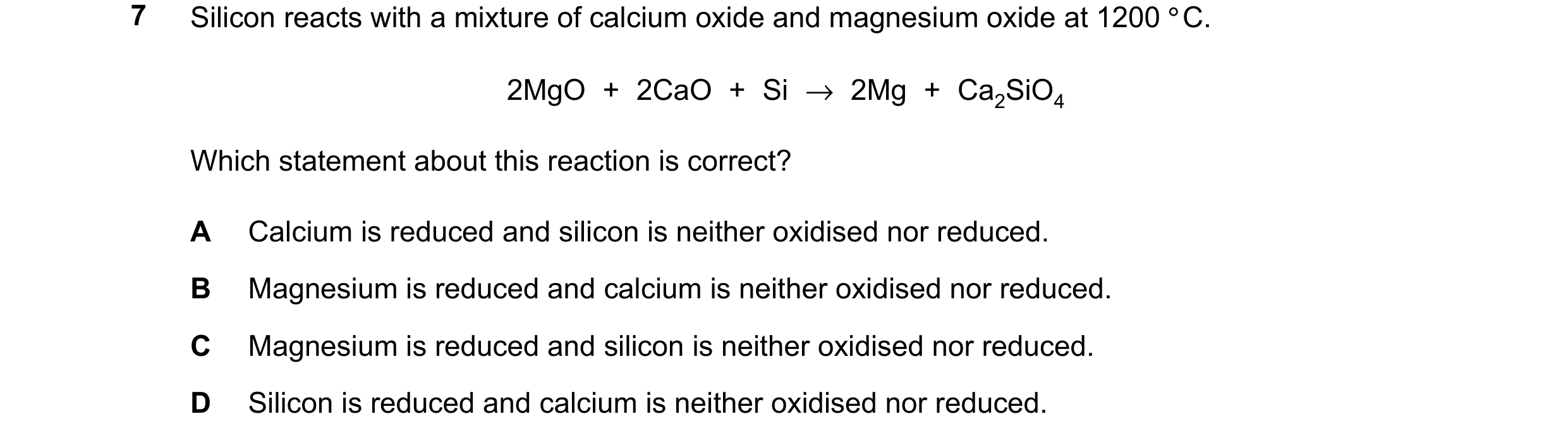 64 / 78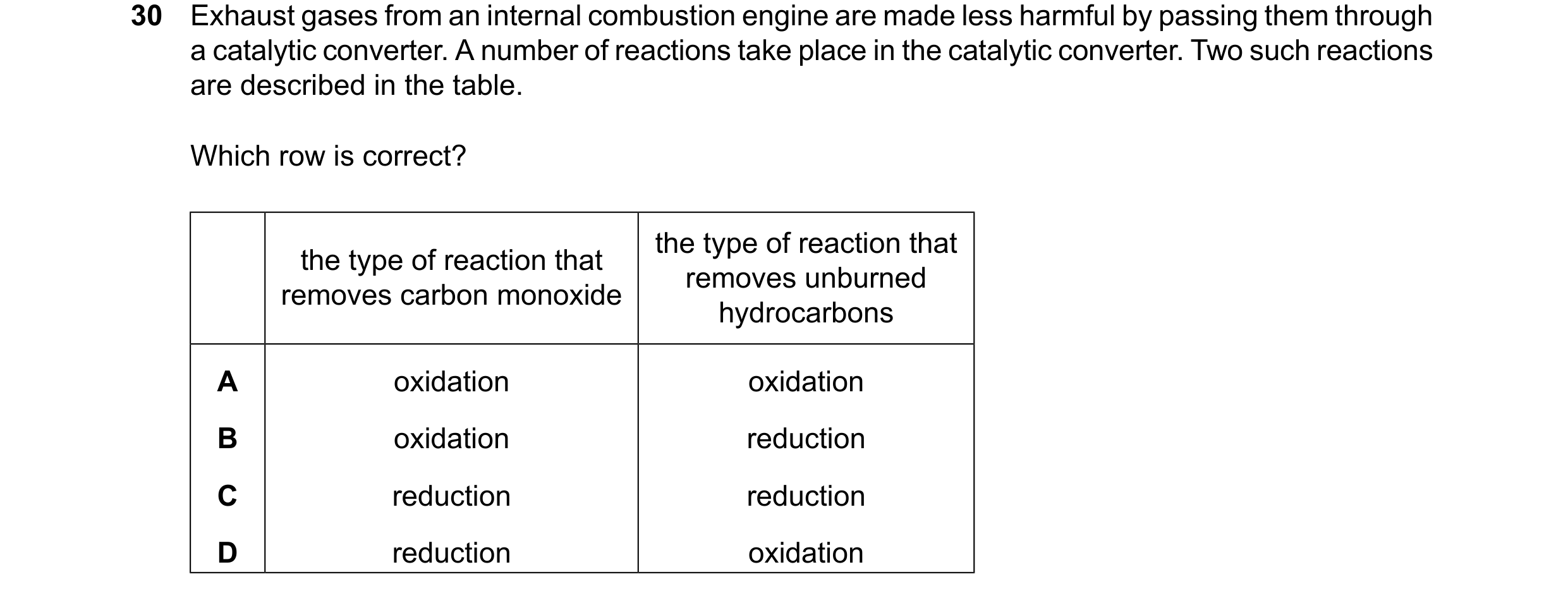
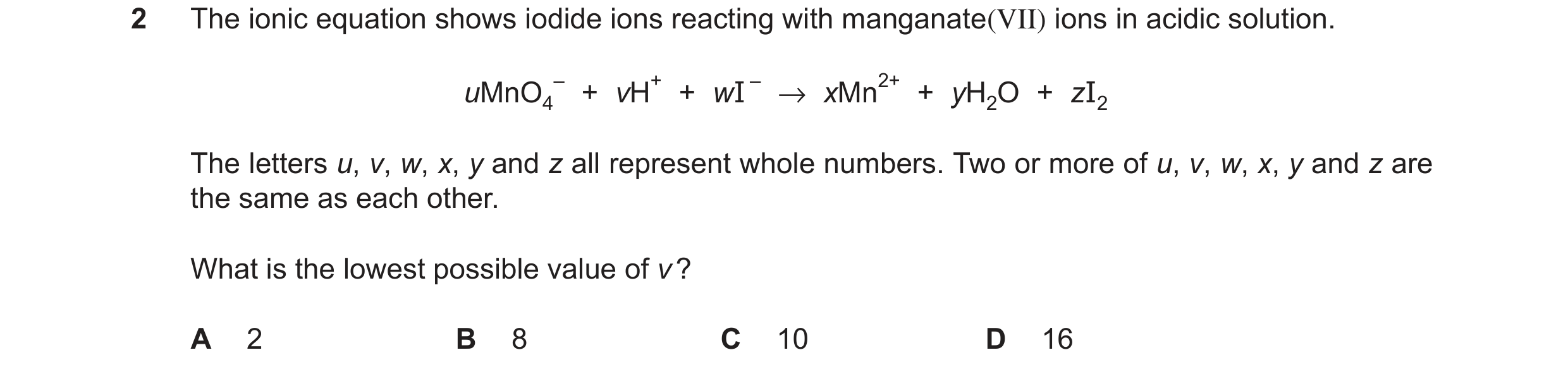
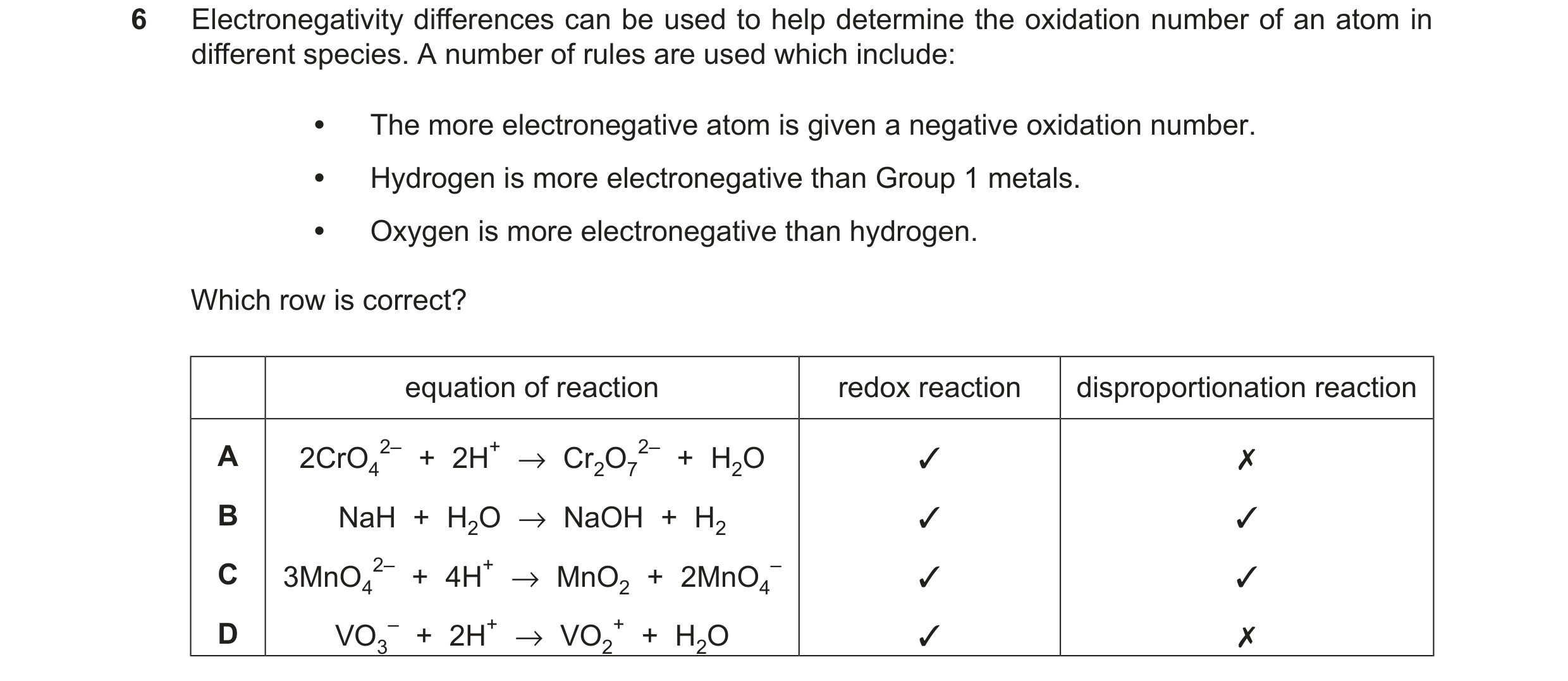
 65 / 78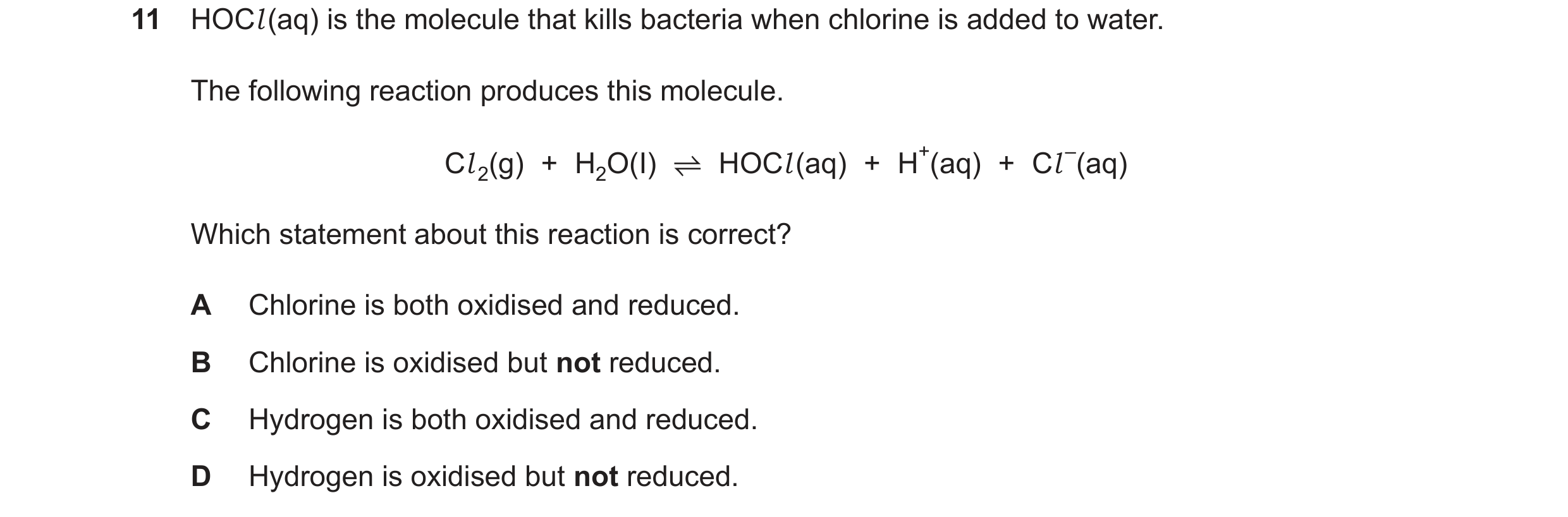
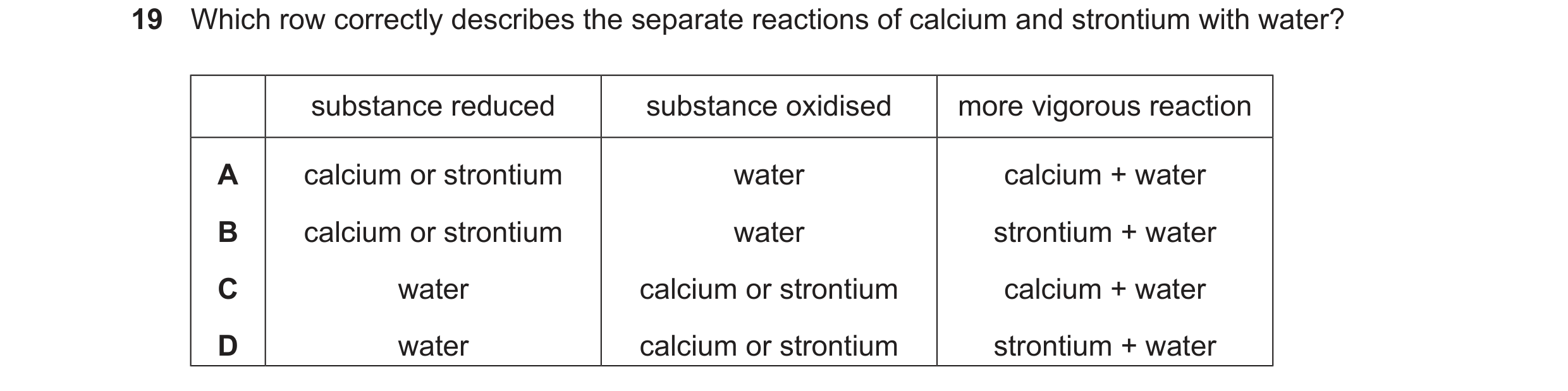
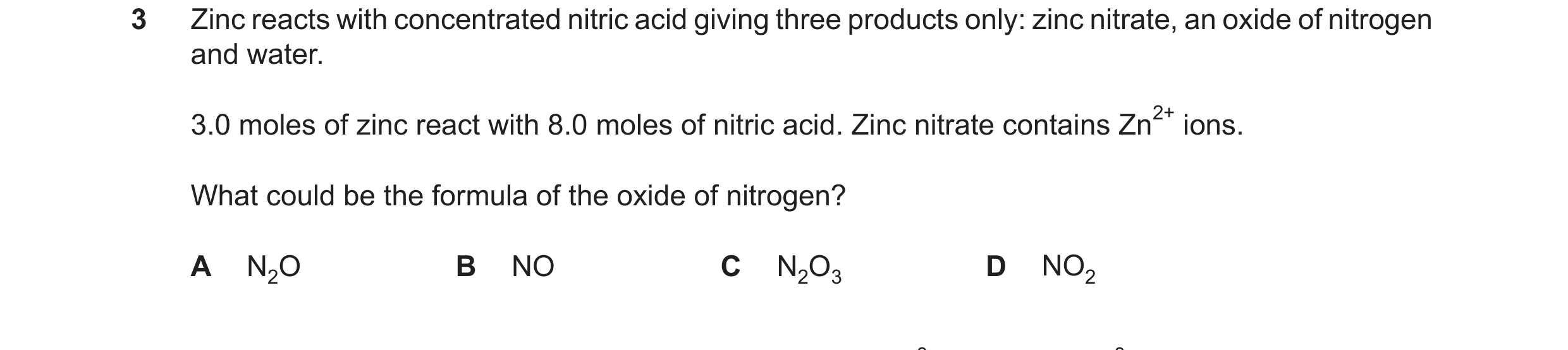
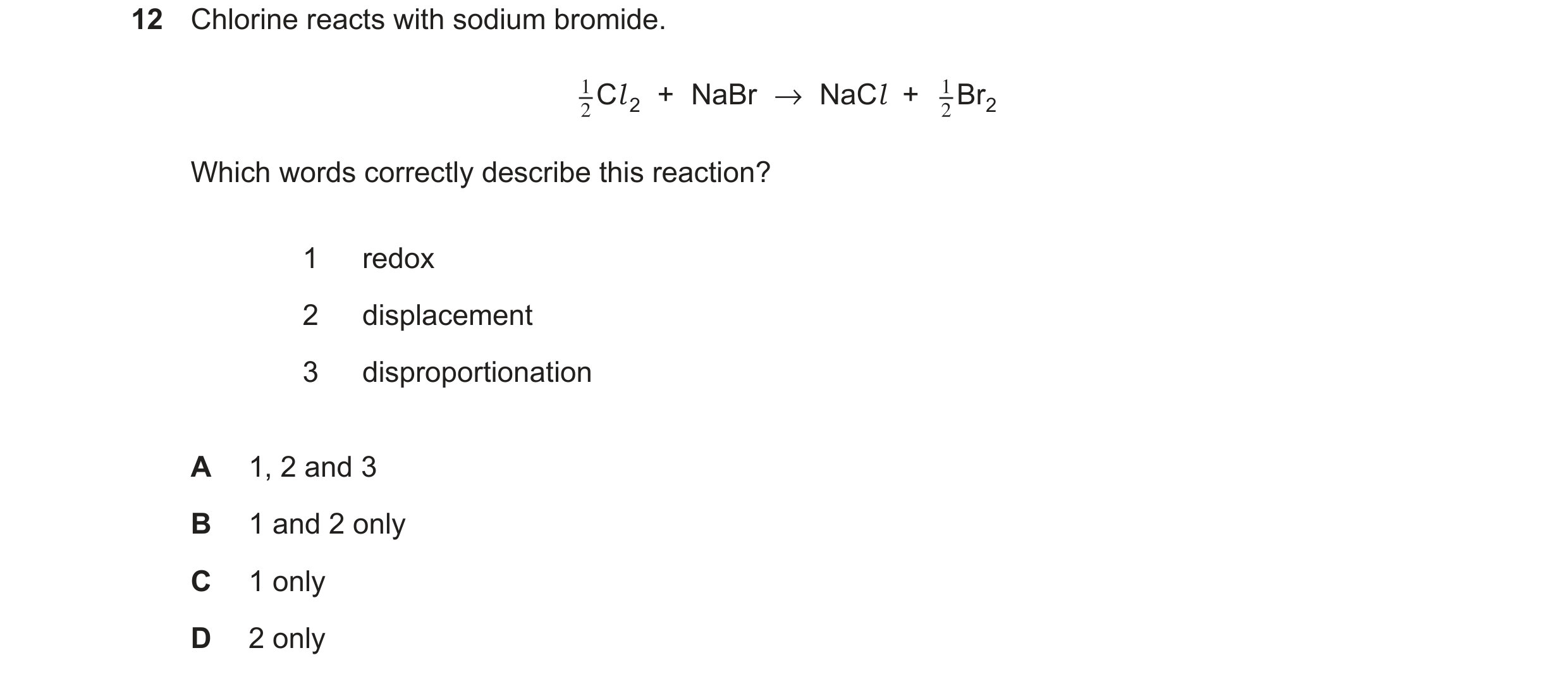 66 / 78
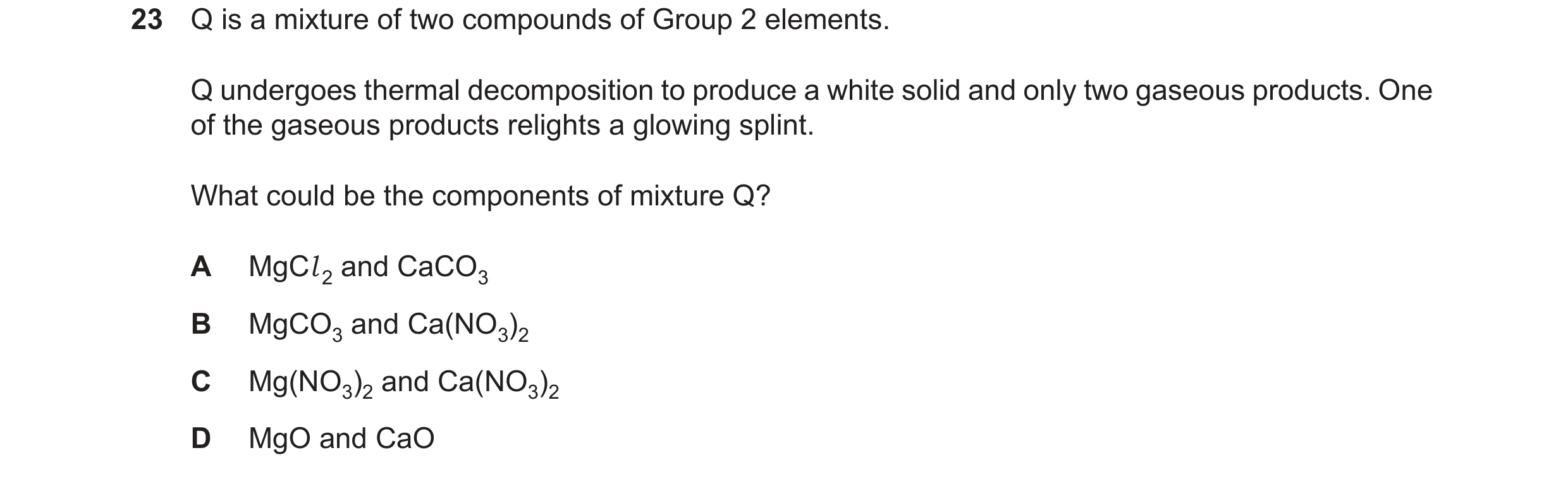
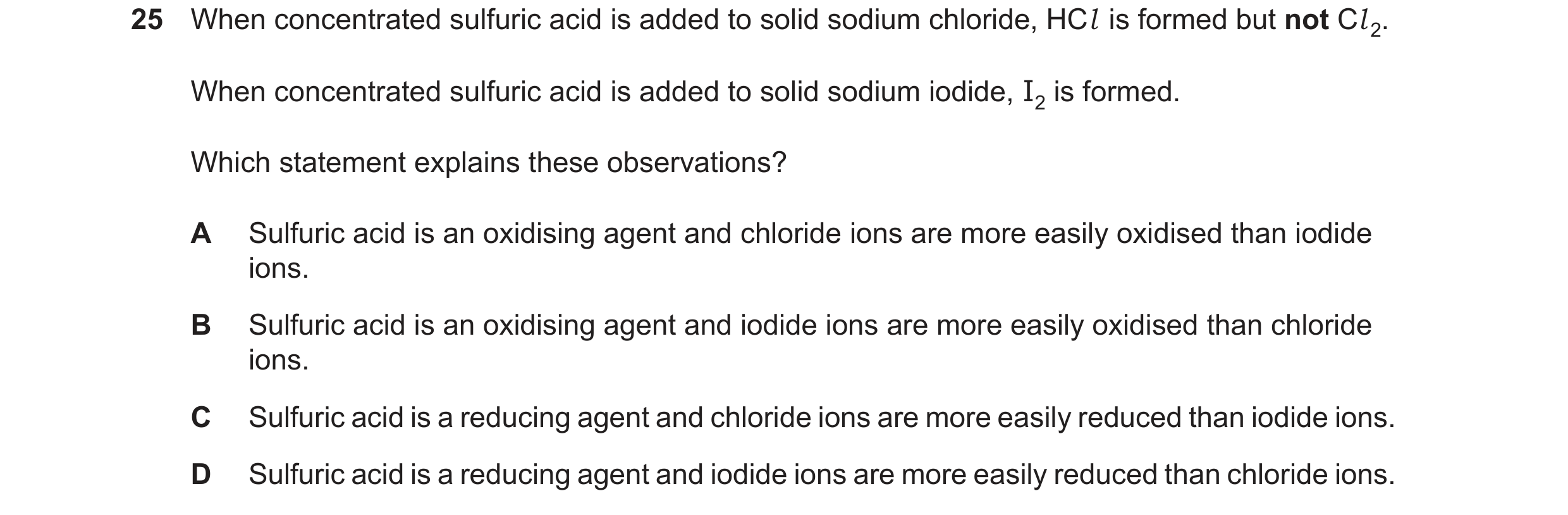
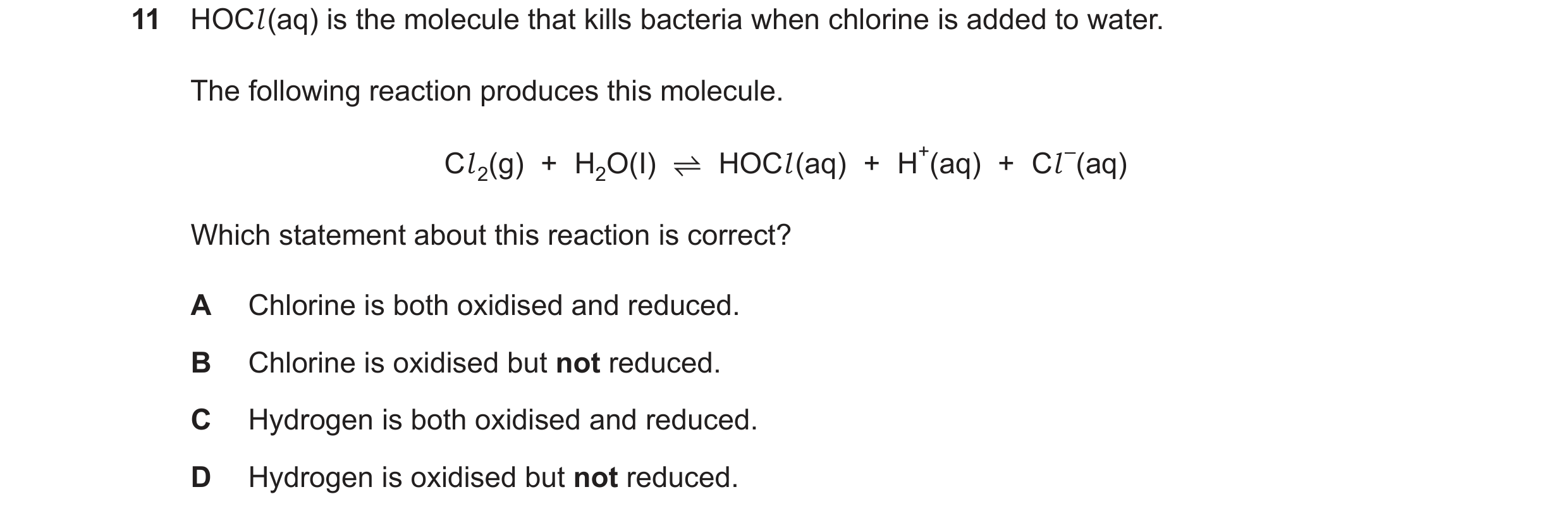 67 / 78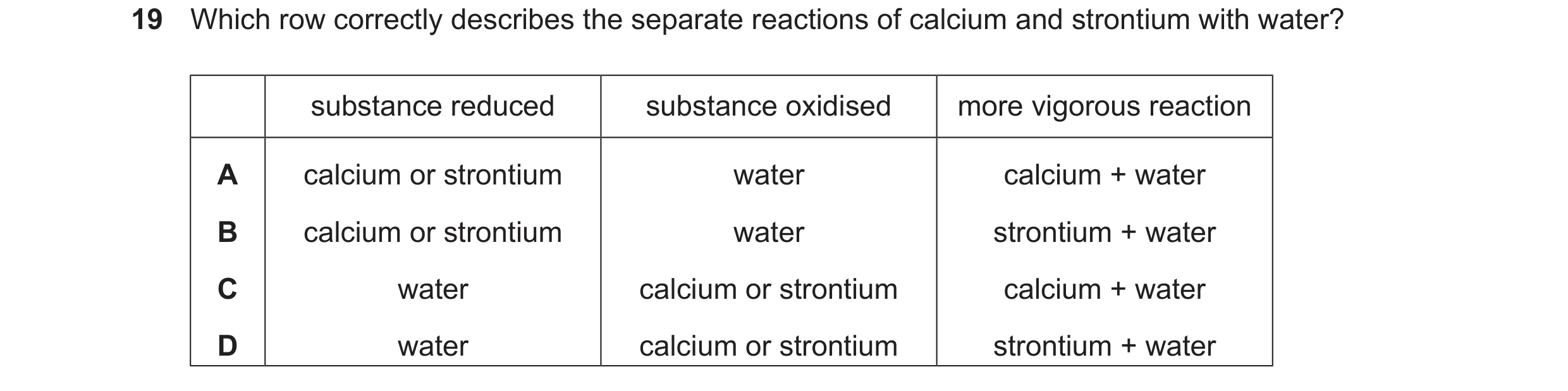
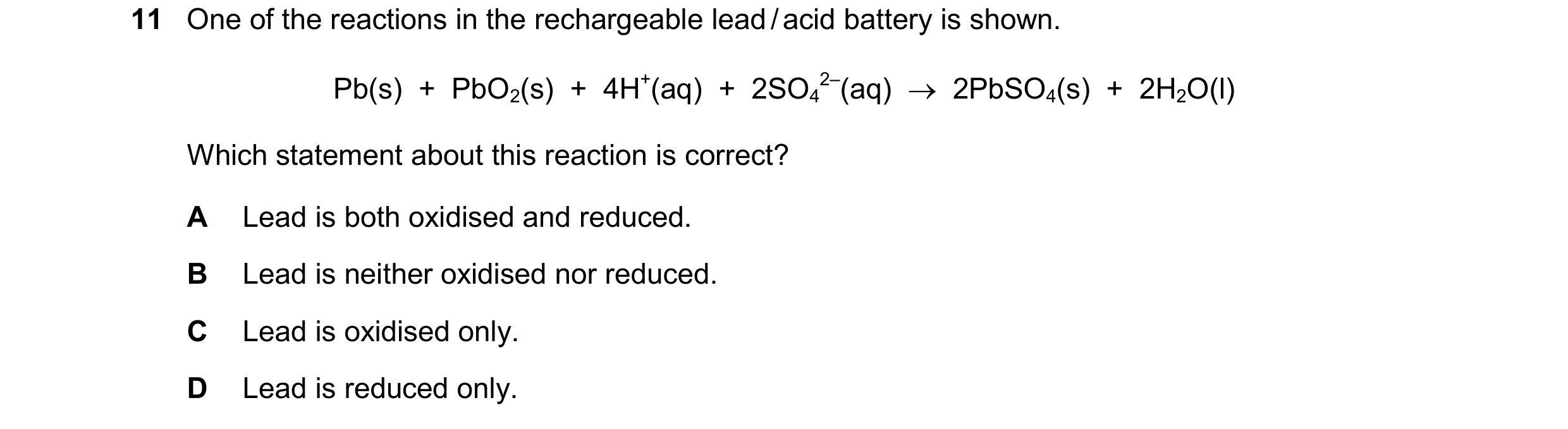
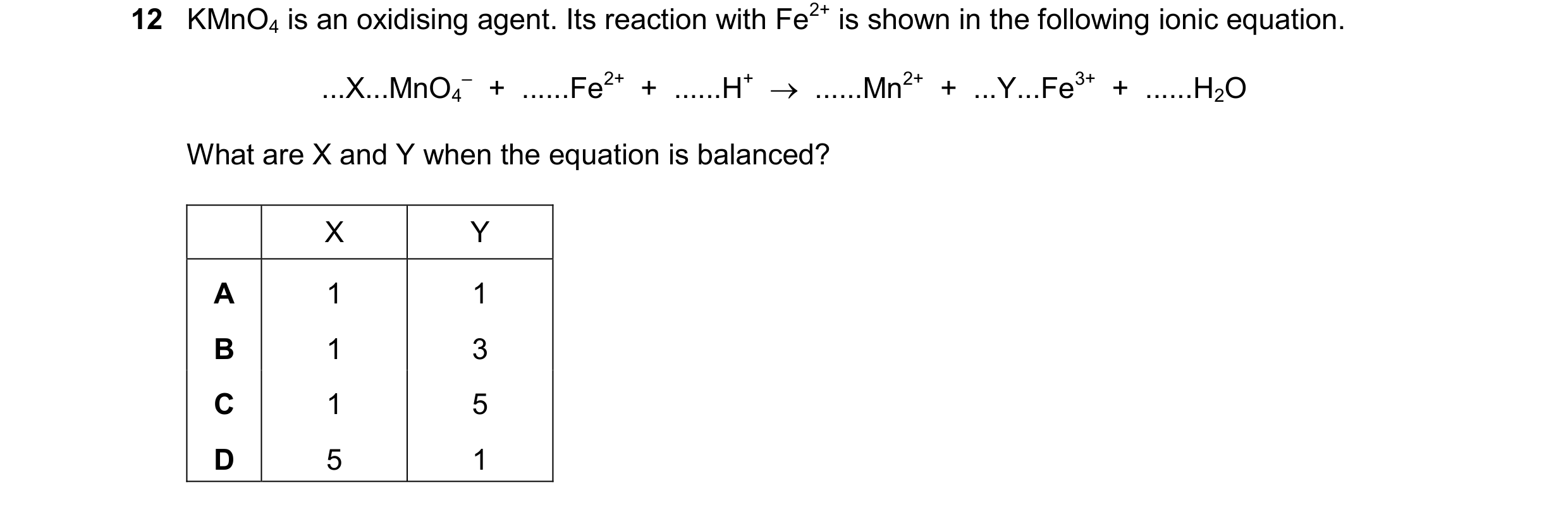
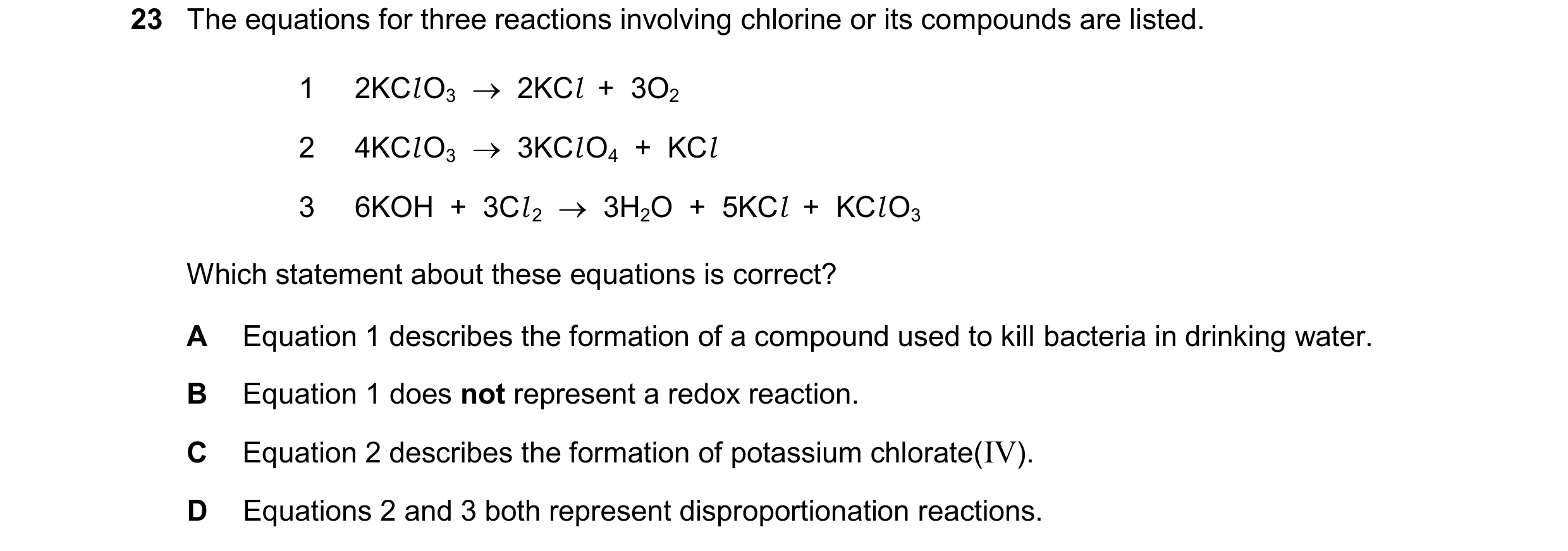 68 / 78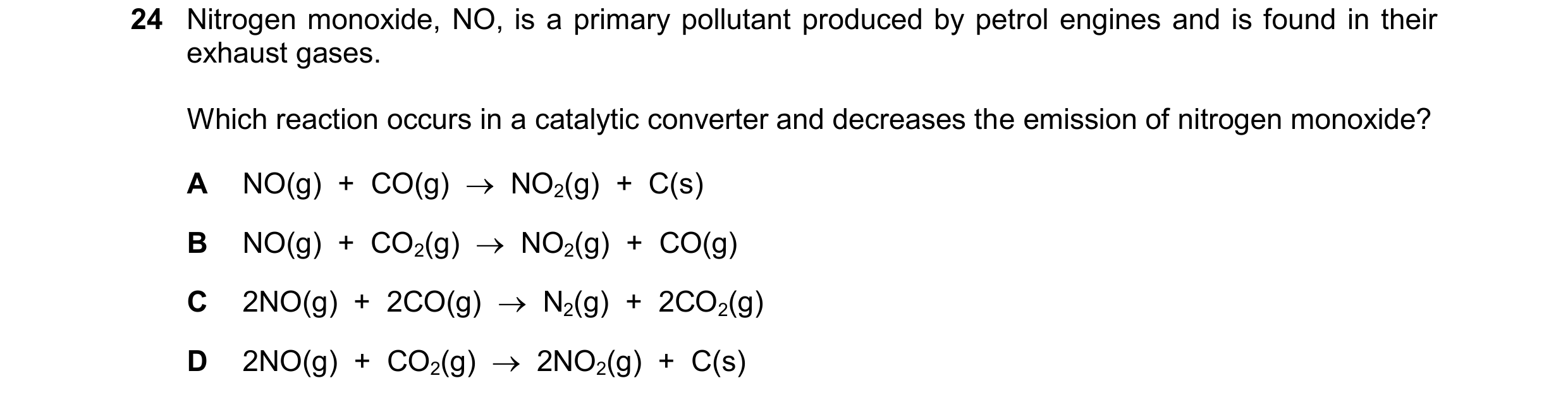
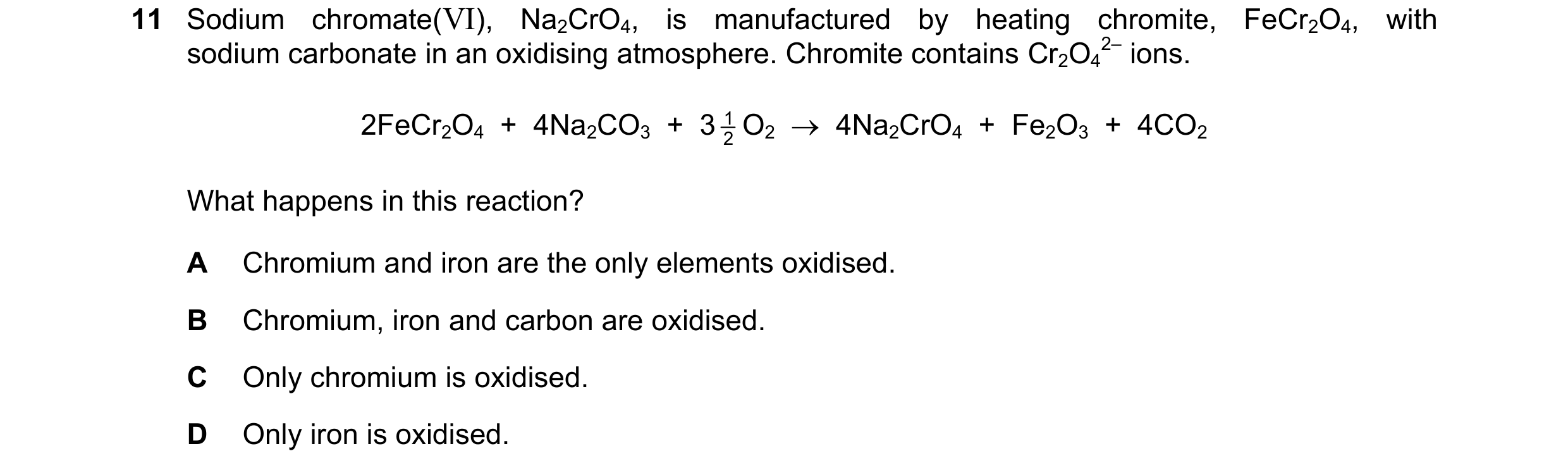
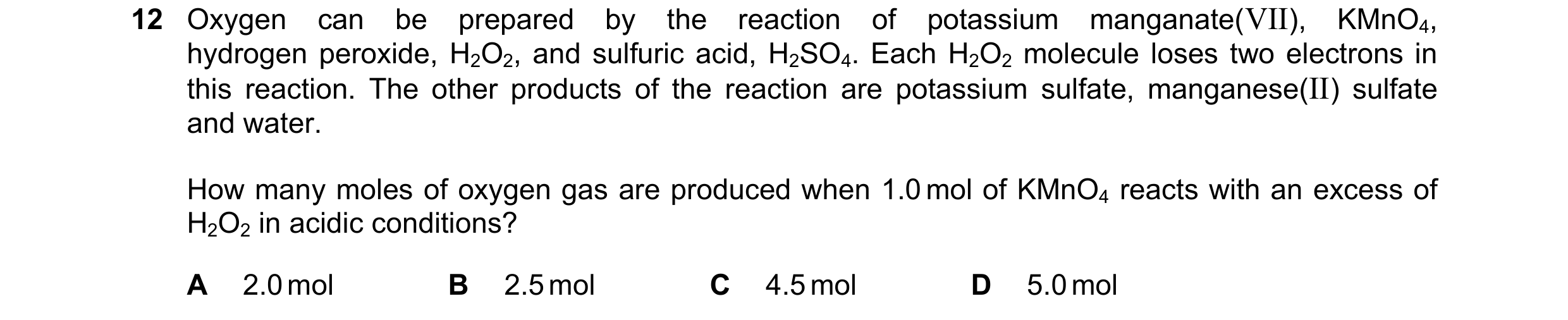
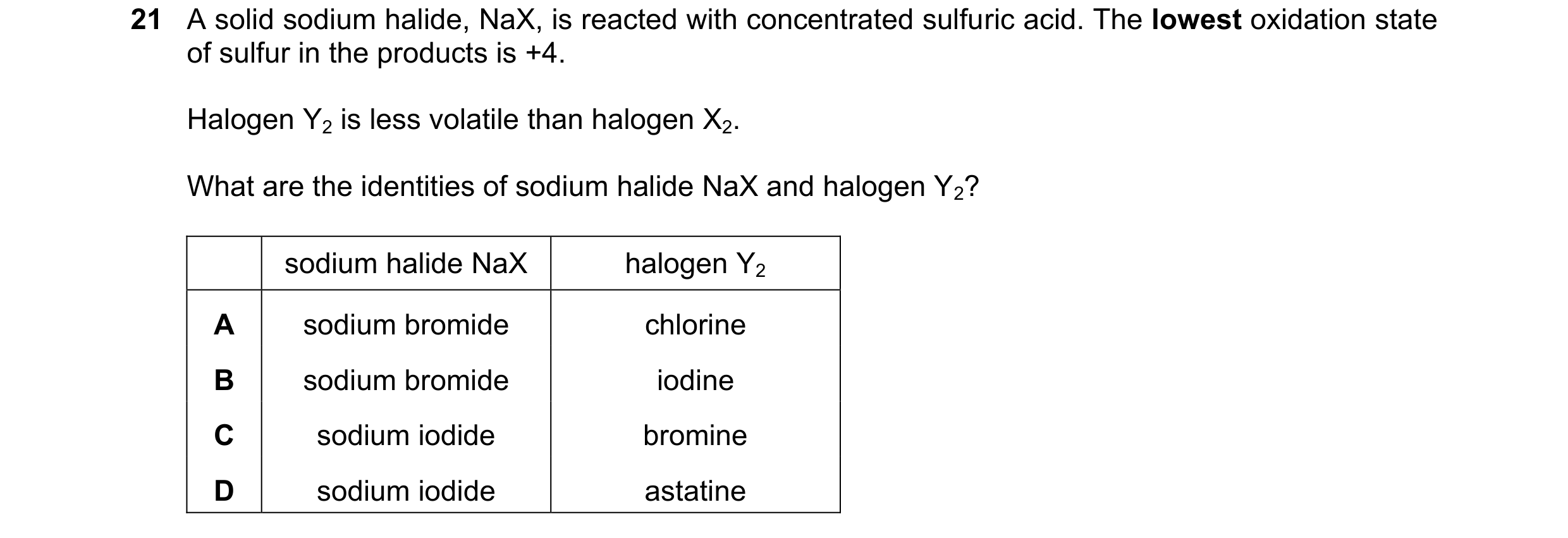 69 / 78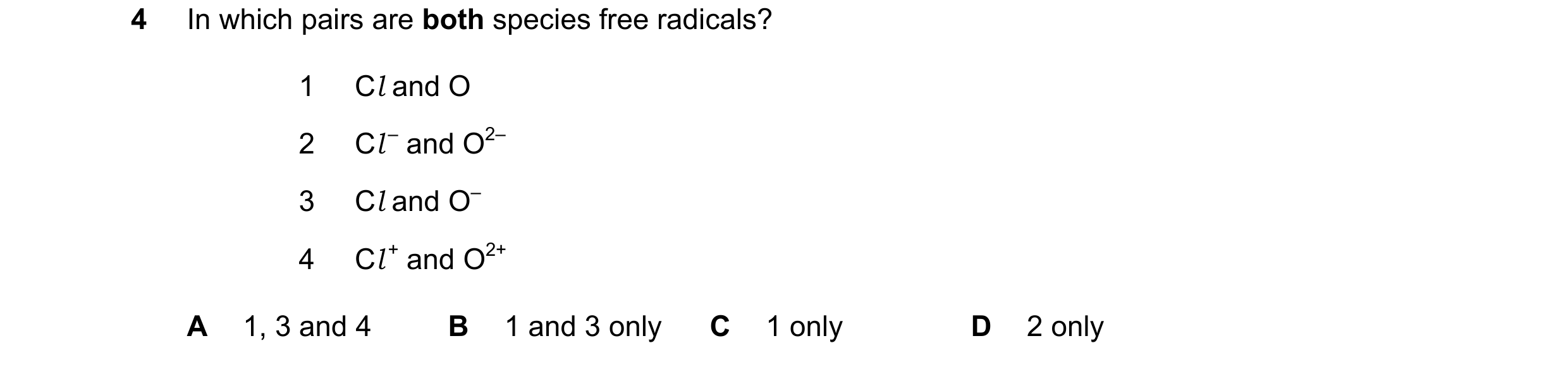
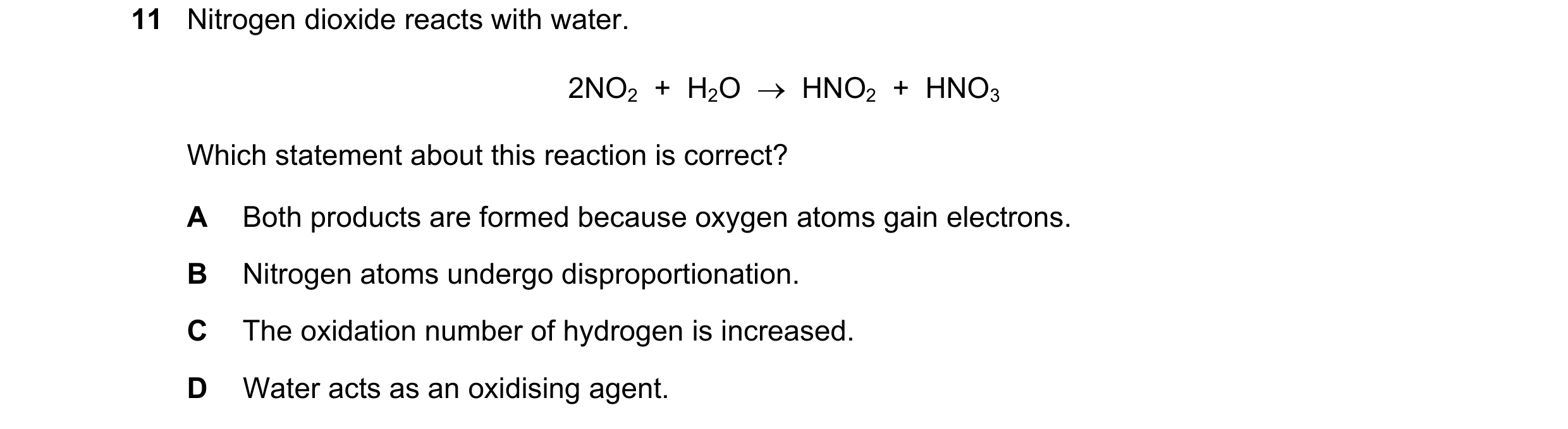
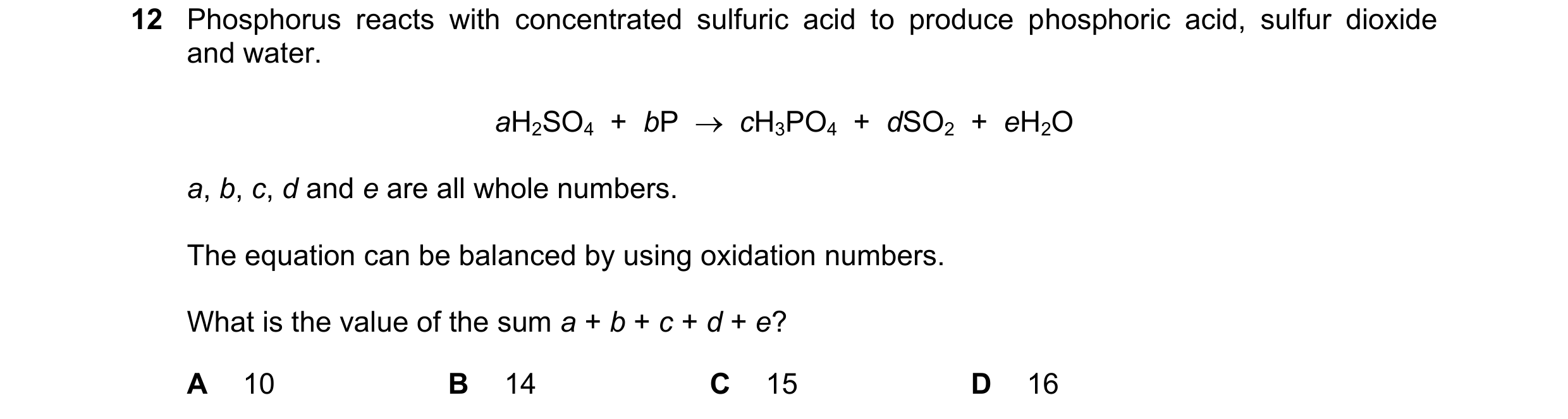
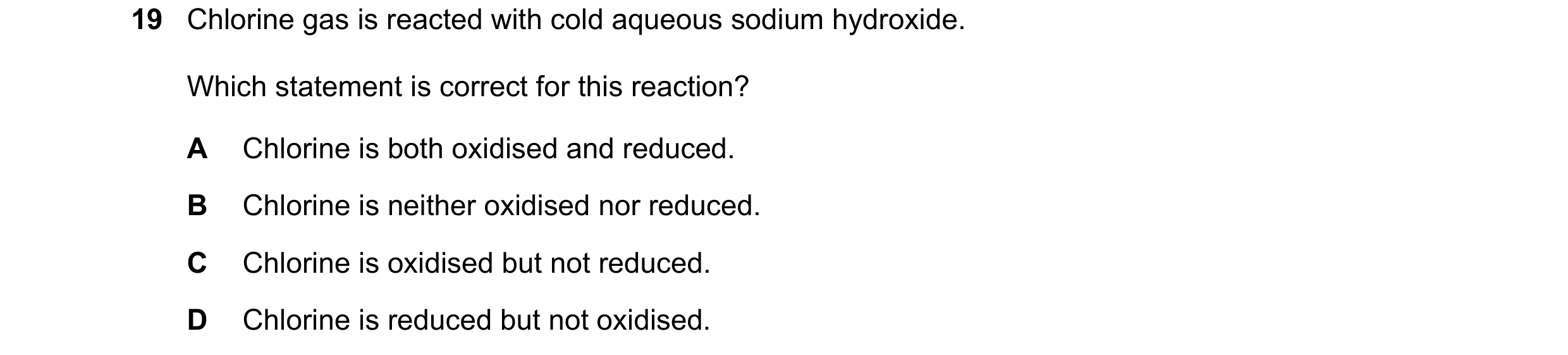
 70 / 78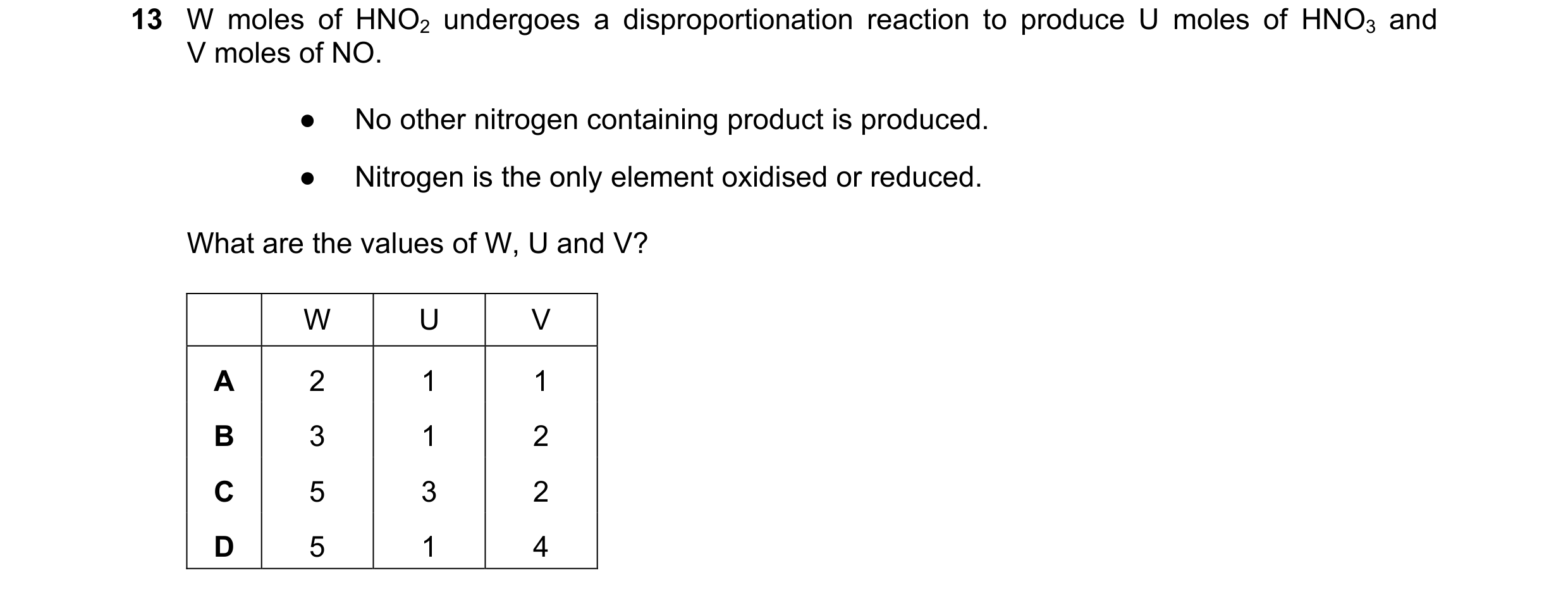
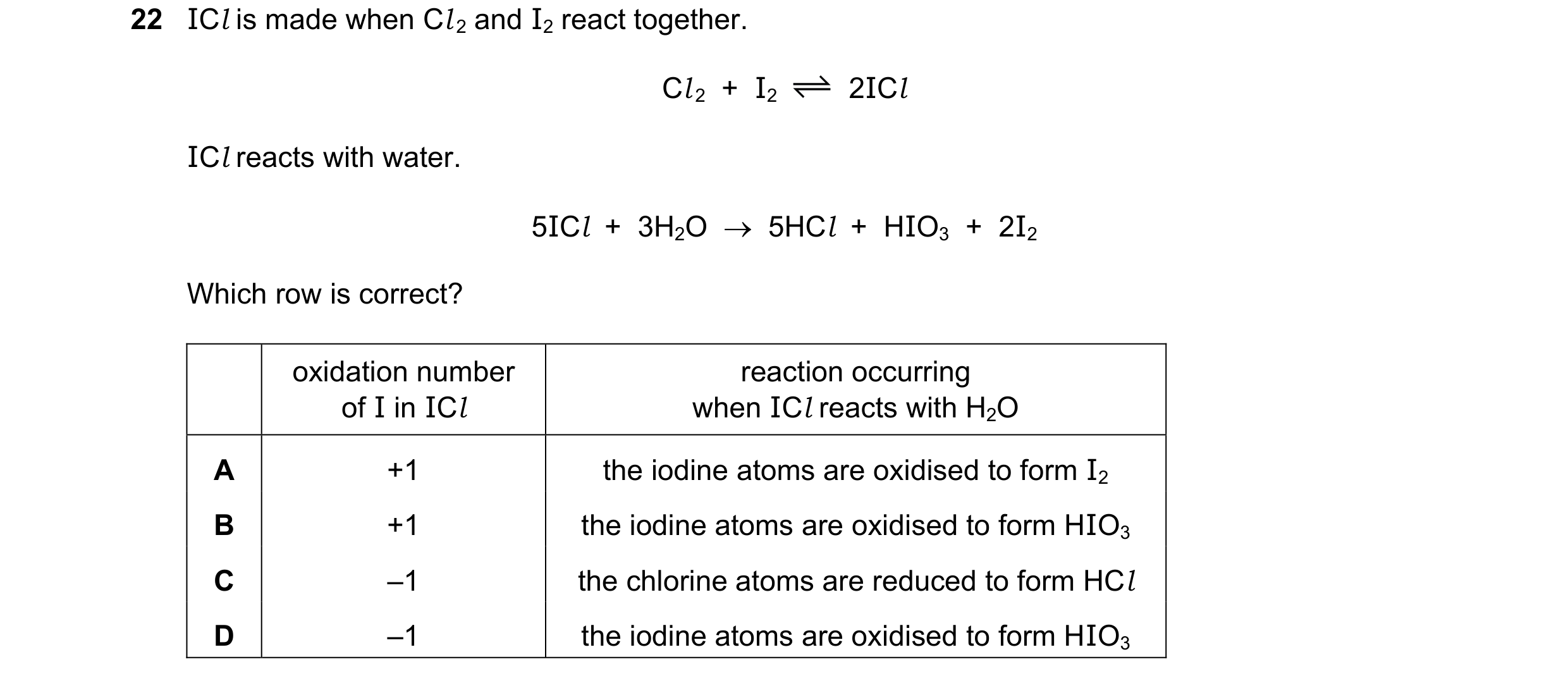
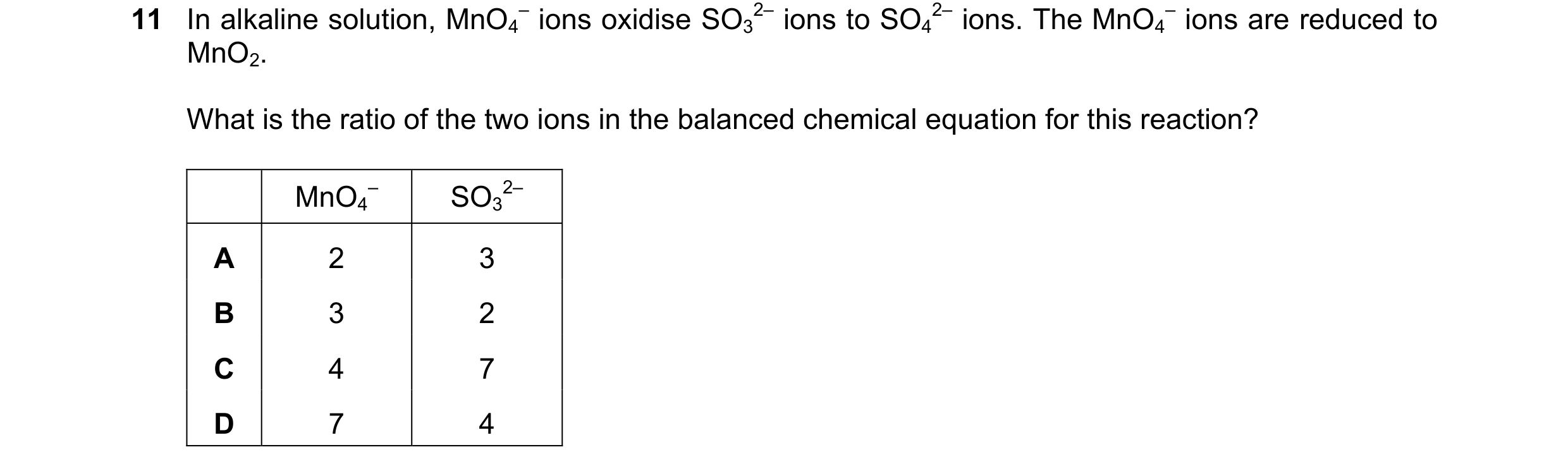
 71 / 78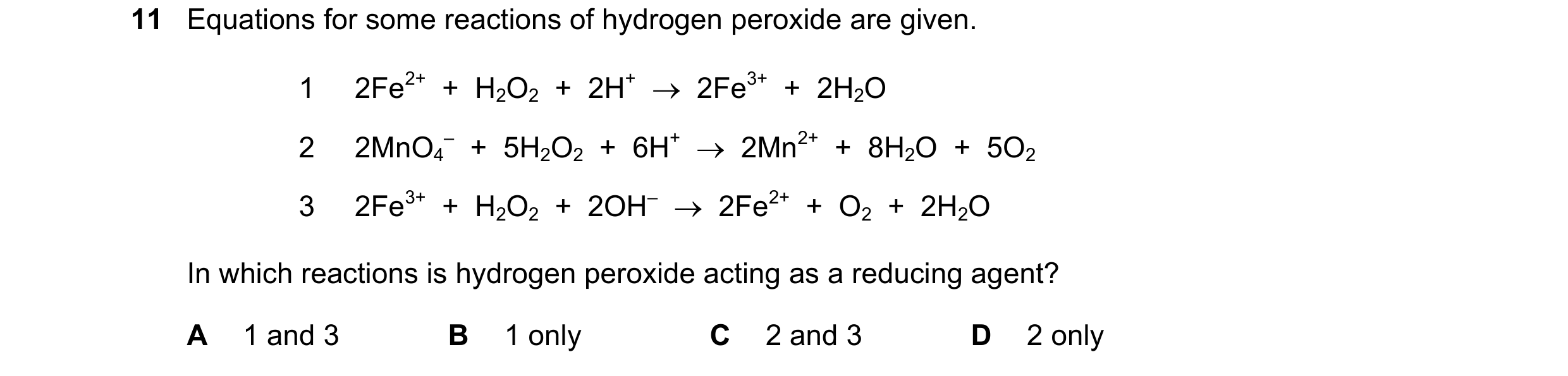
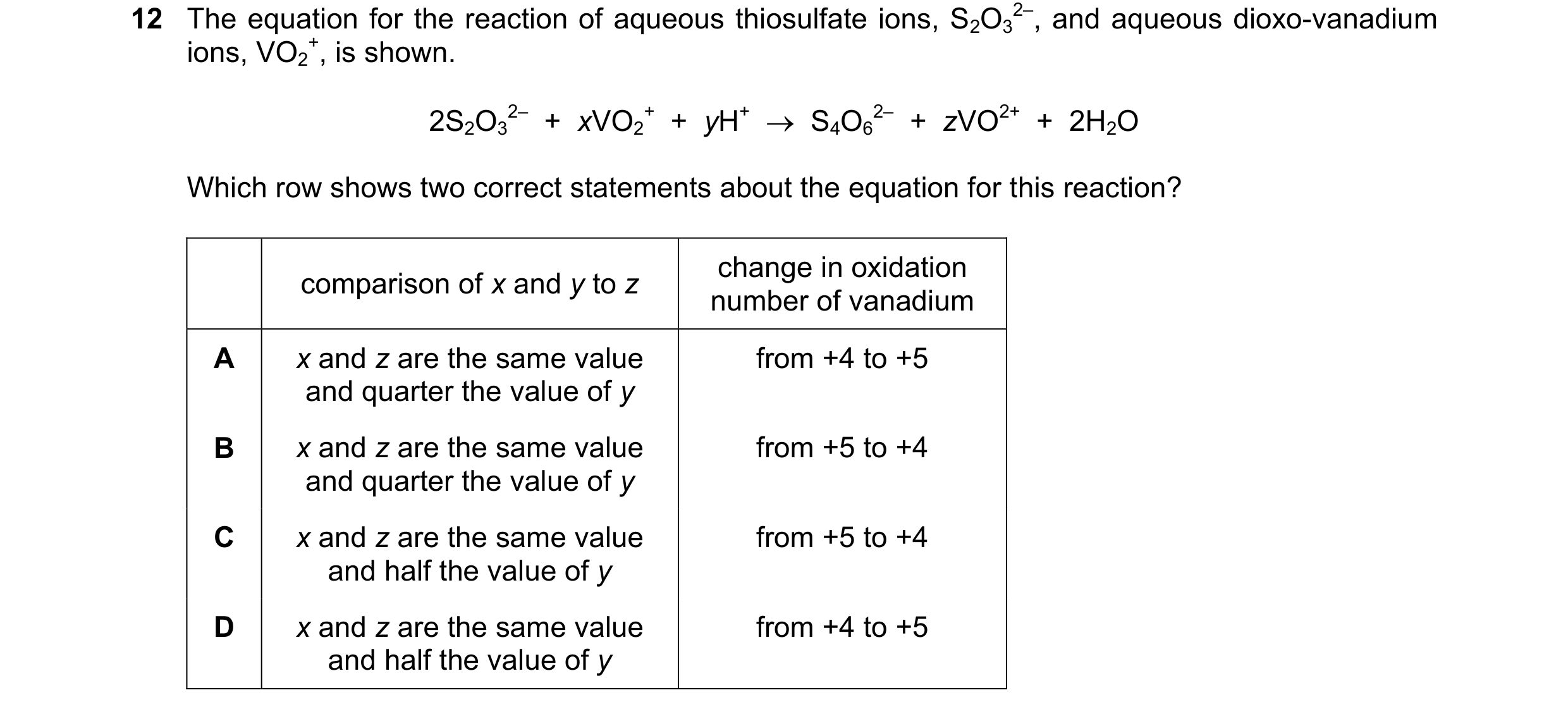
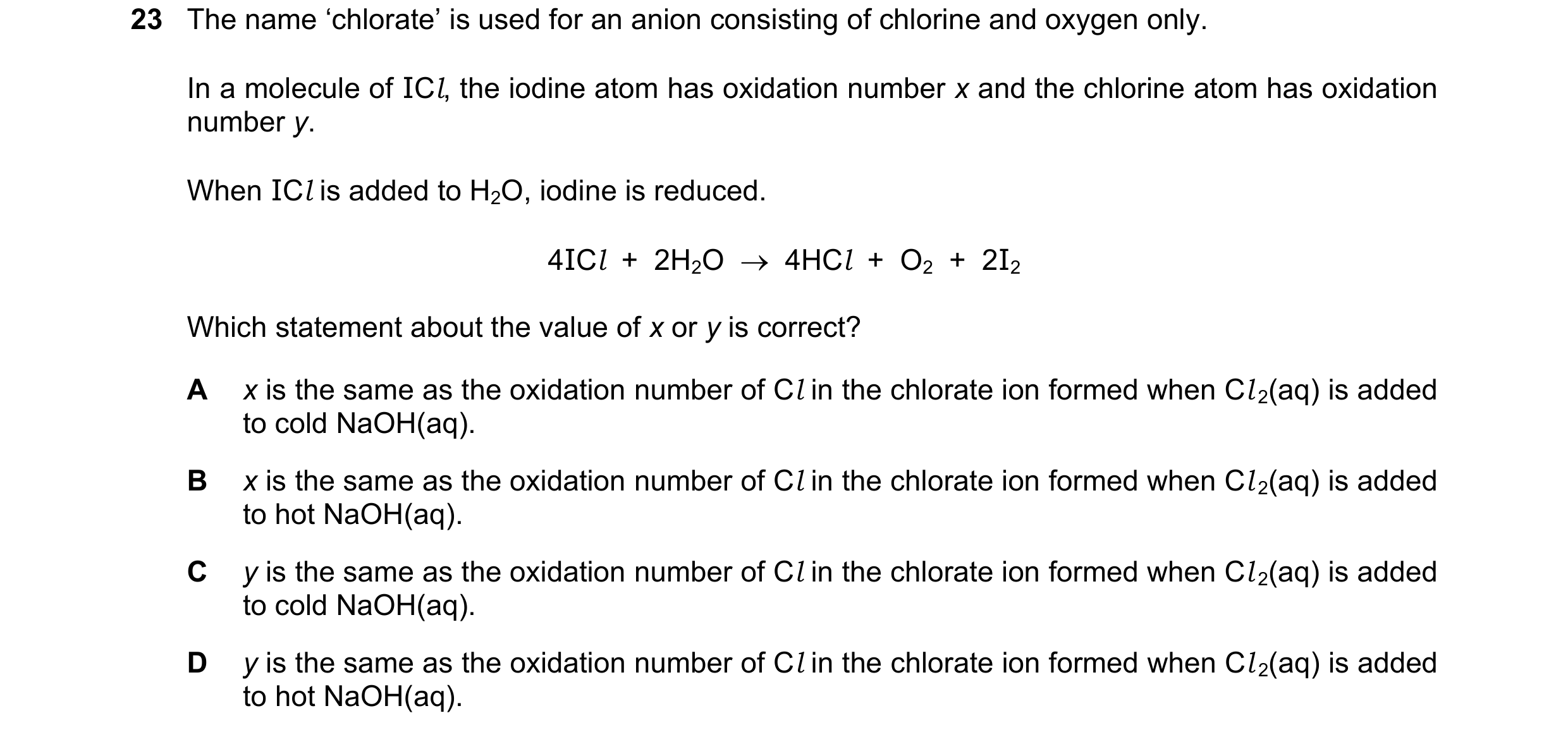 72 / 78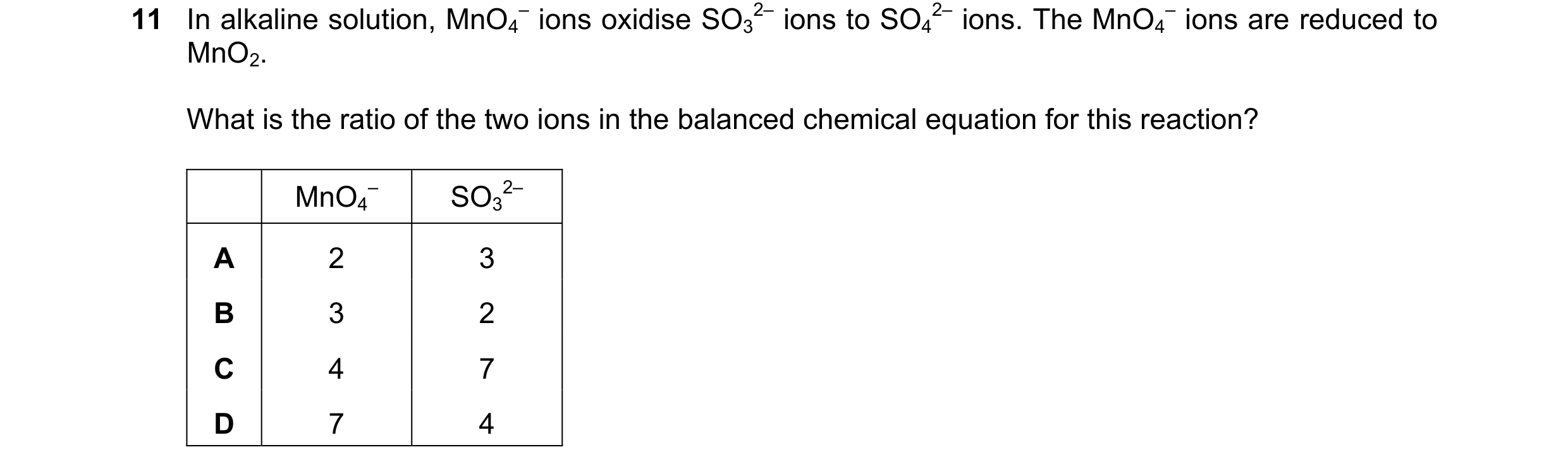
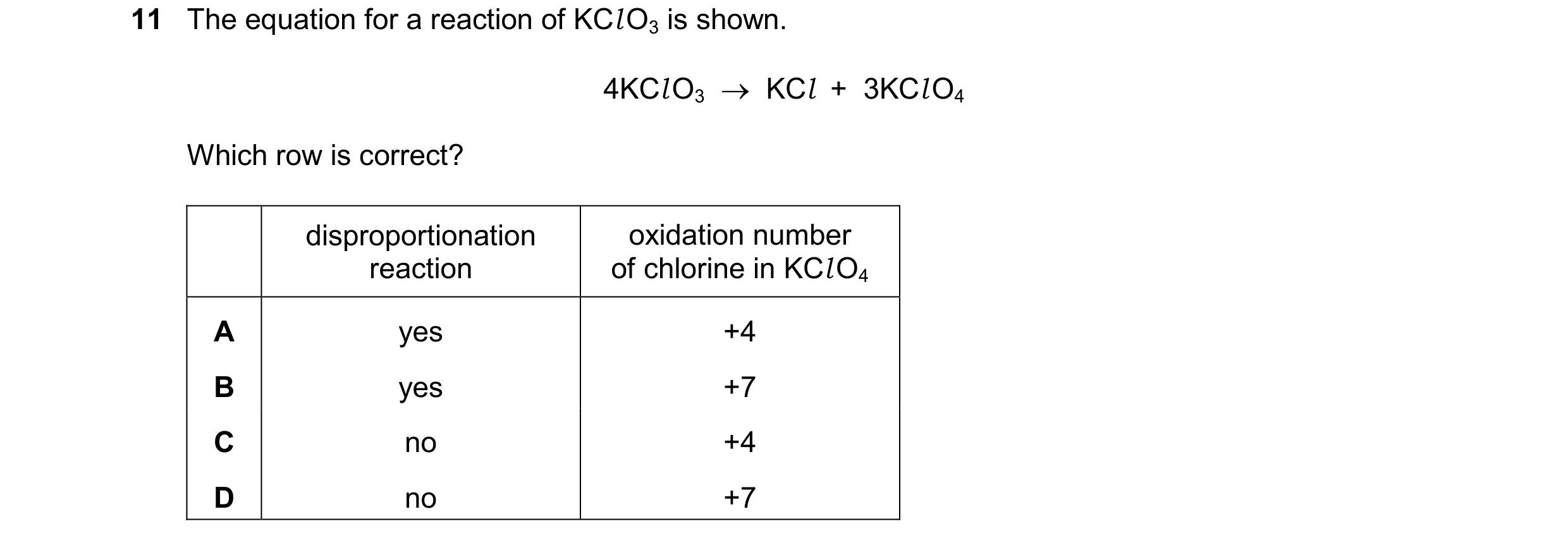

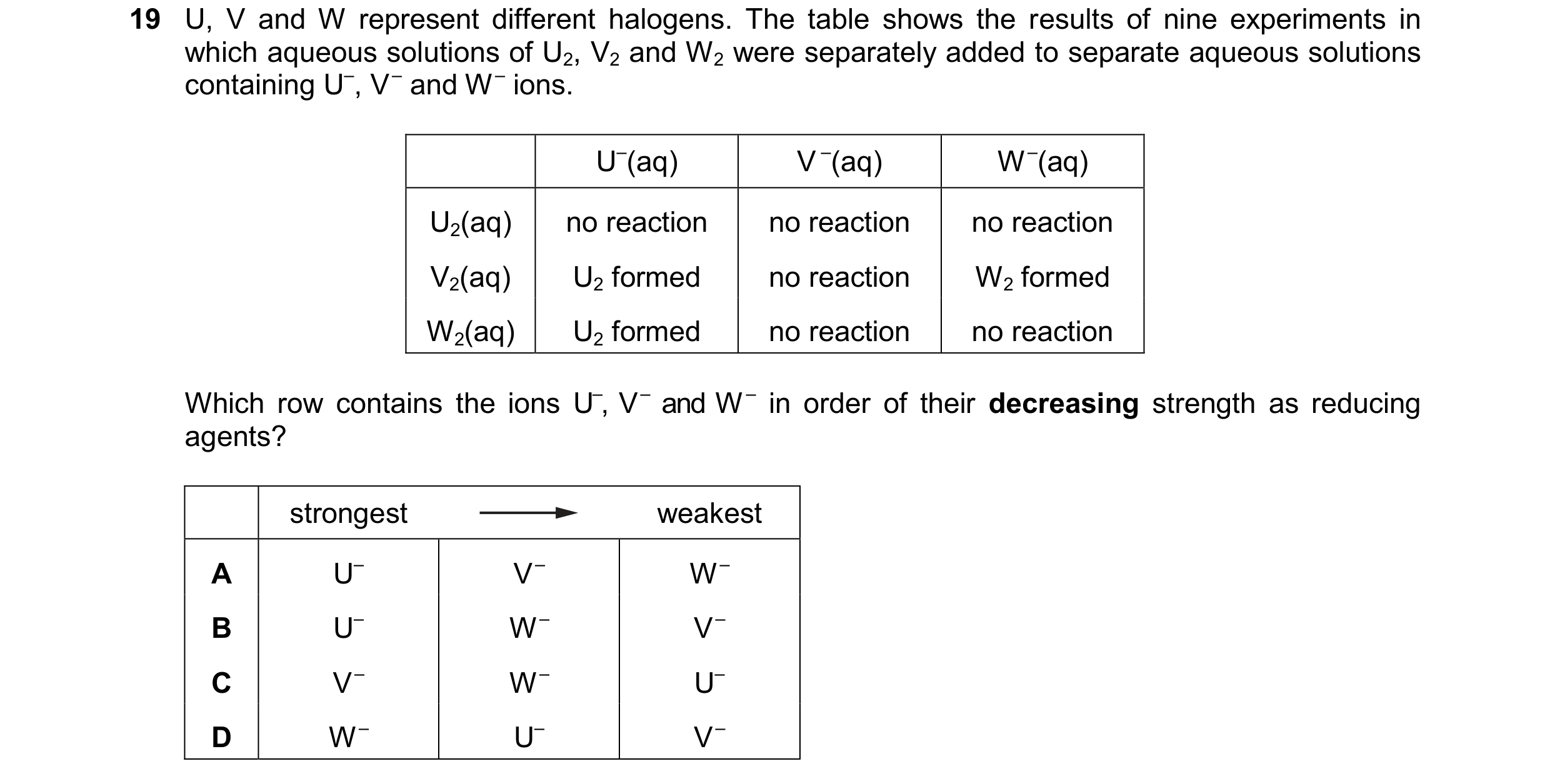 73 / 78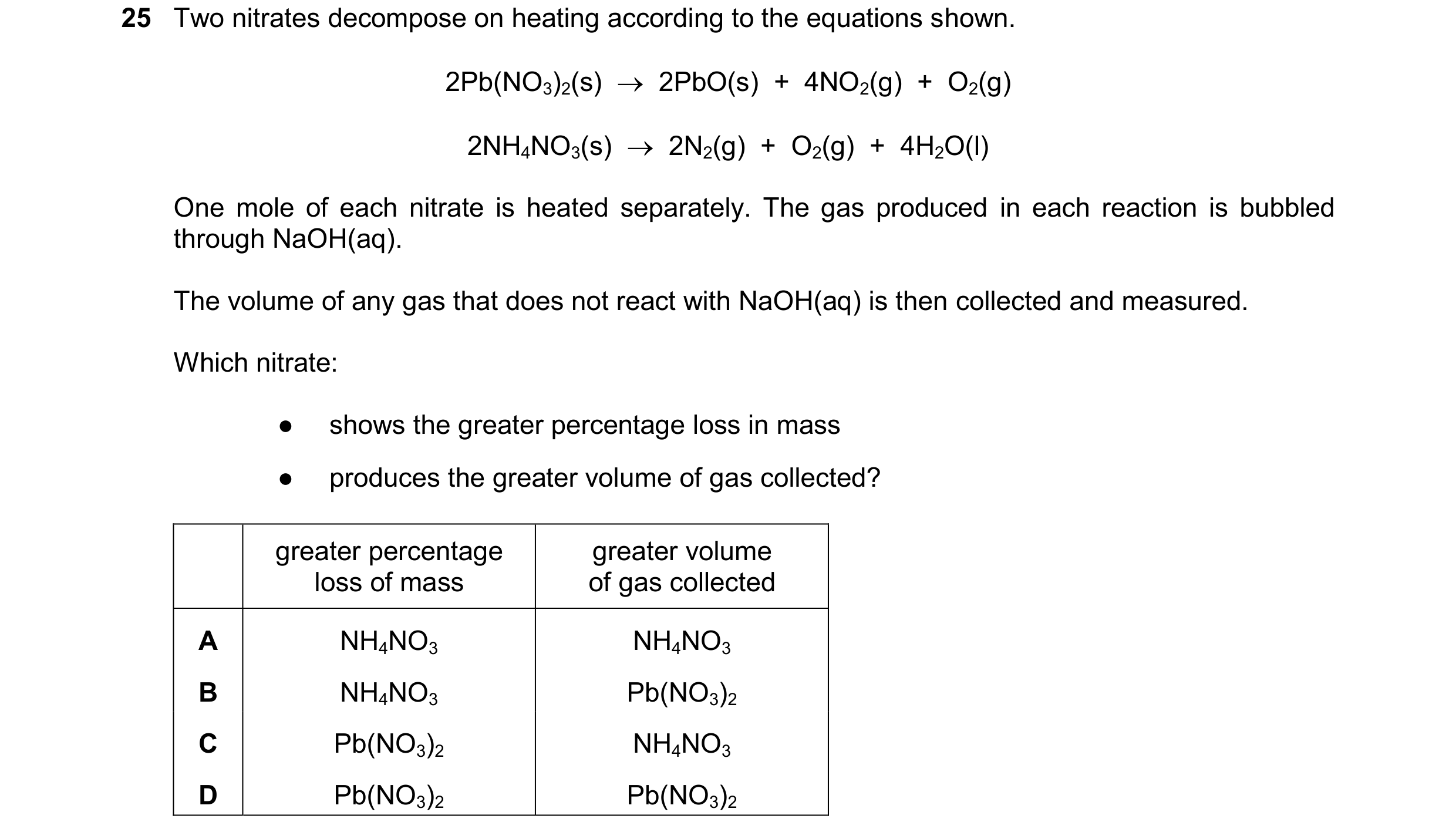
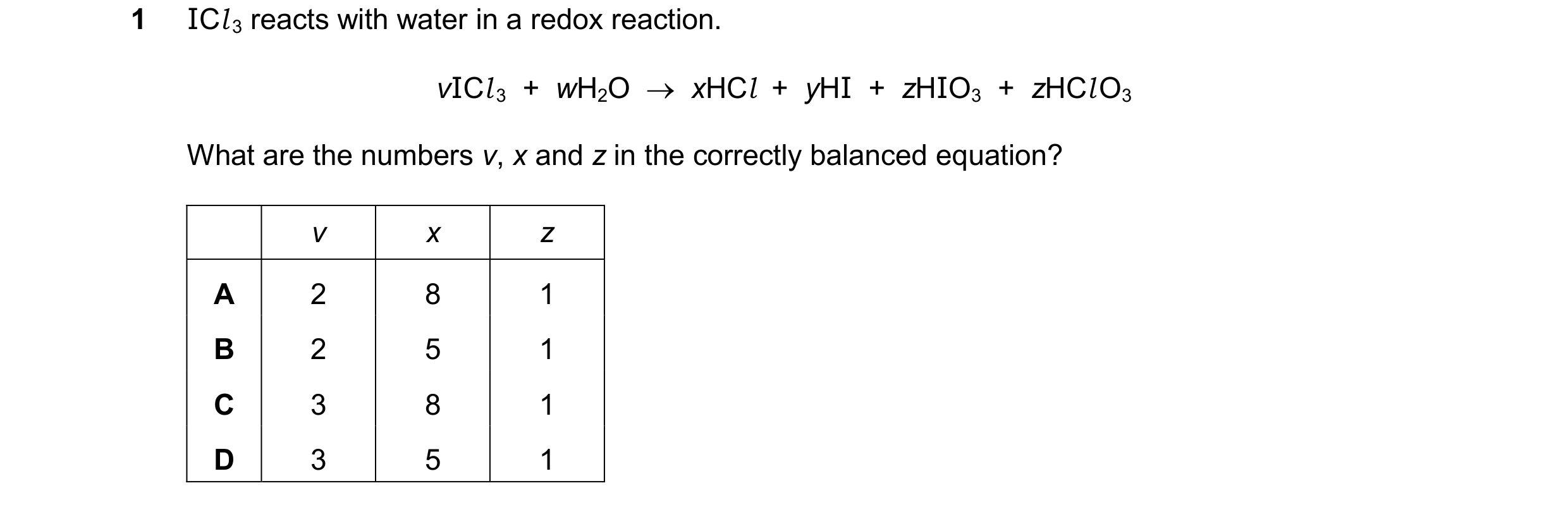
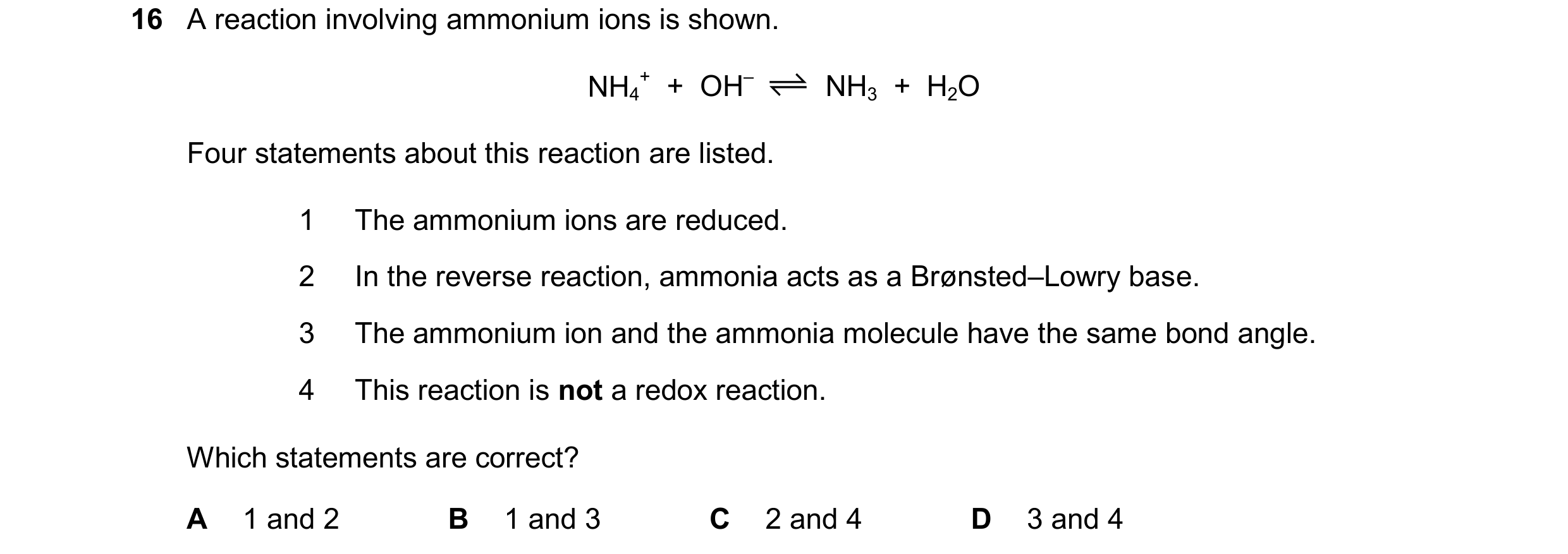 74 / 78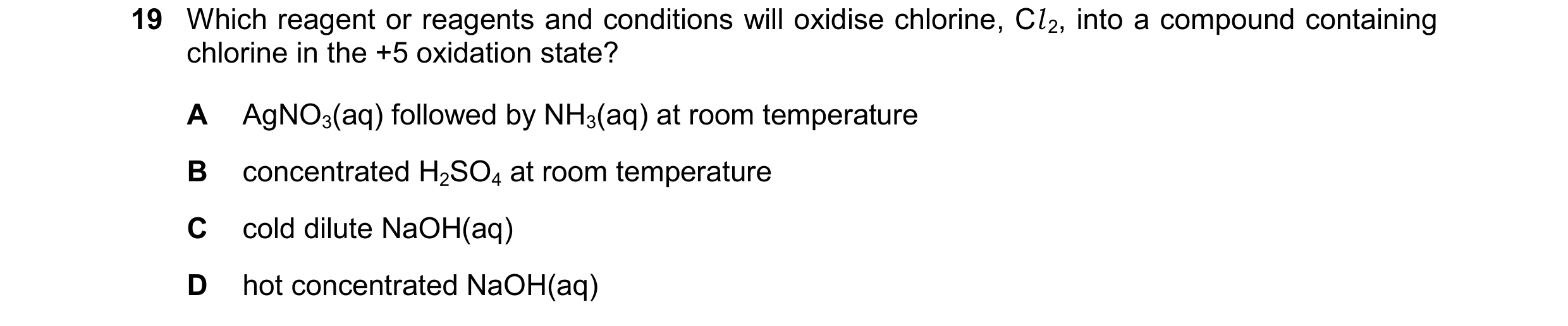

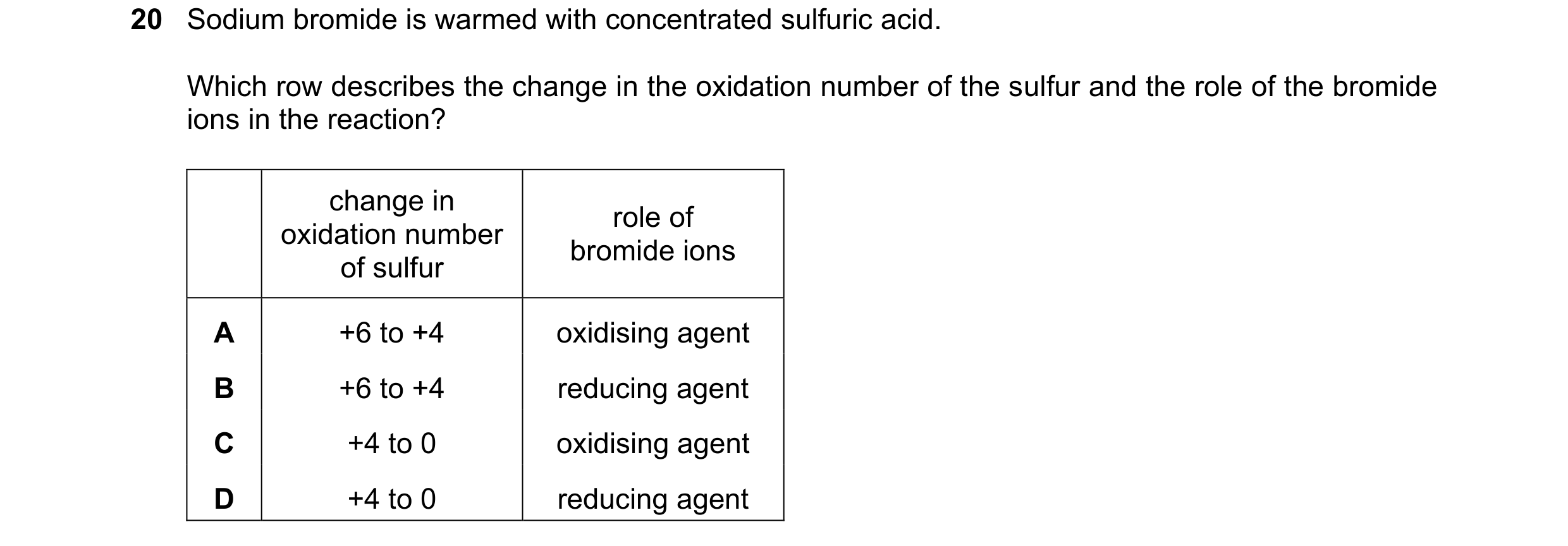
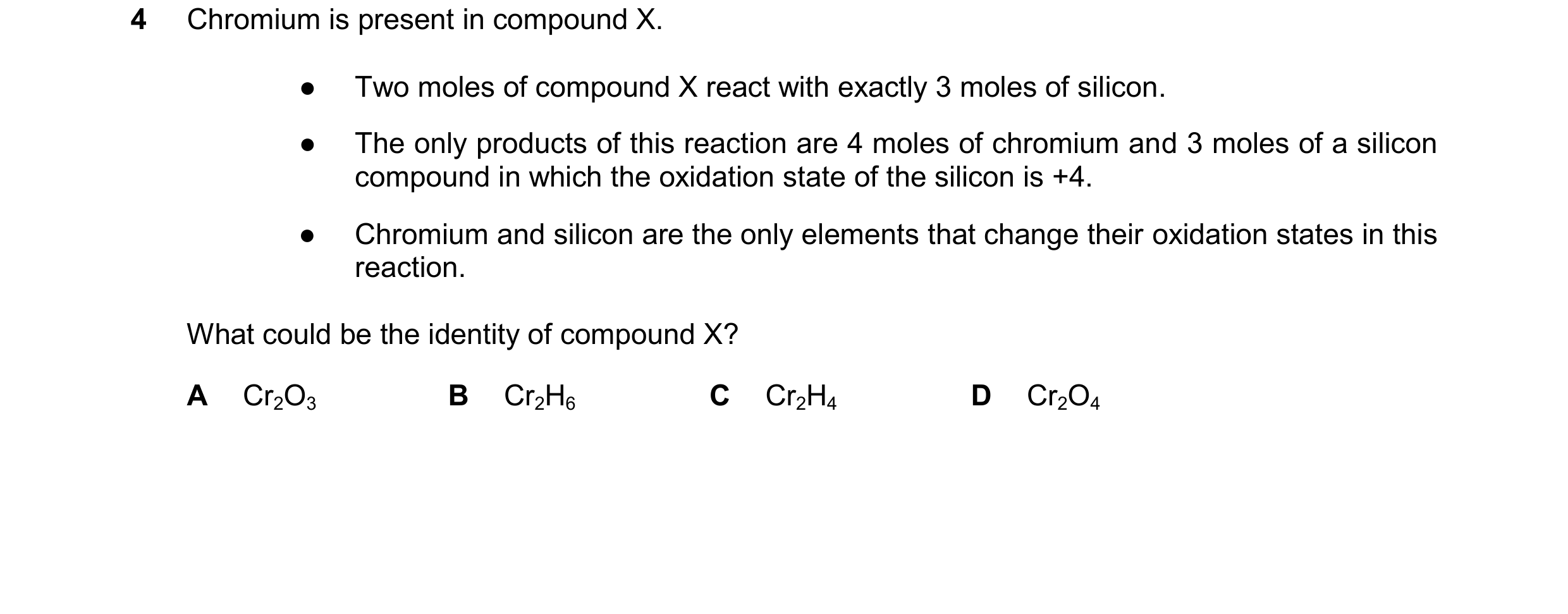 75 / 78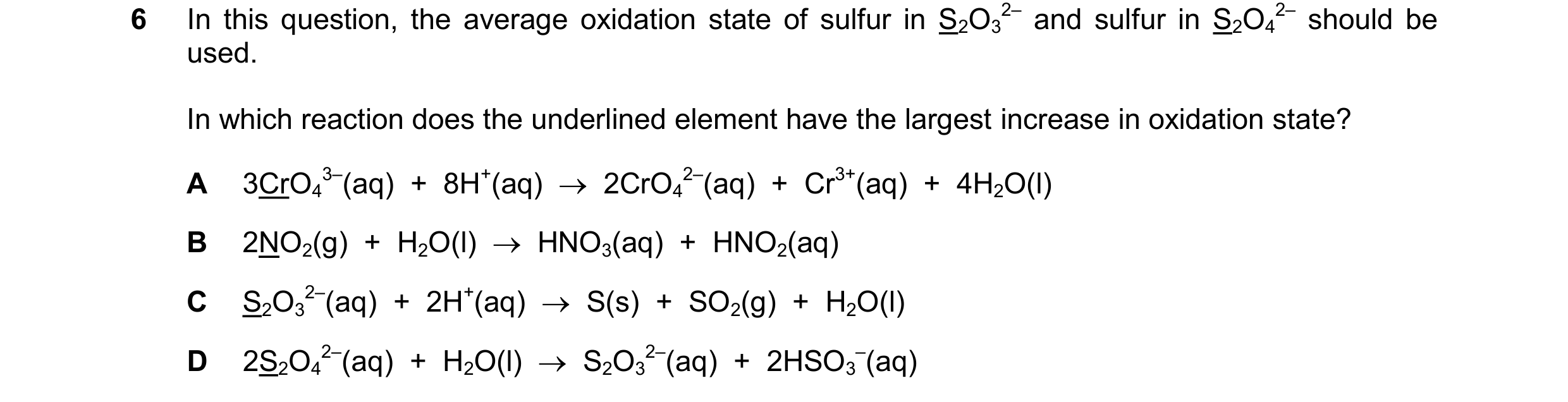
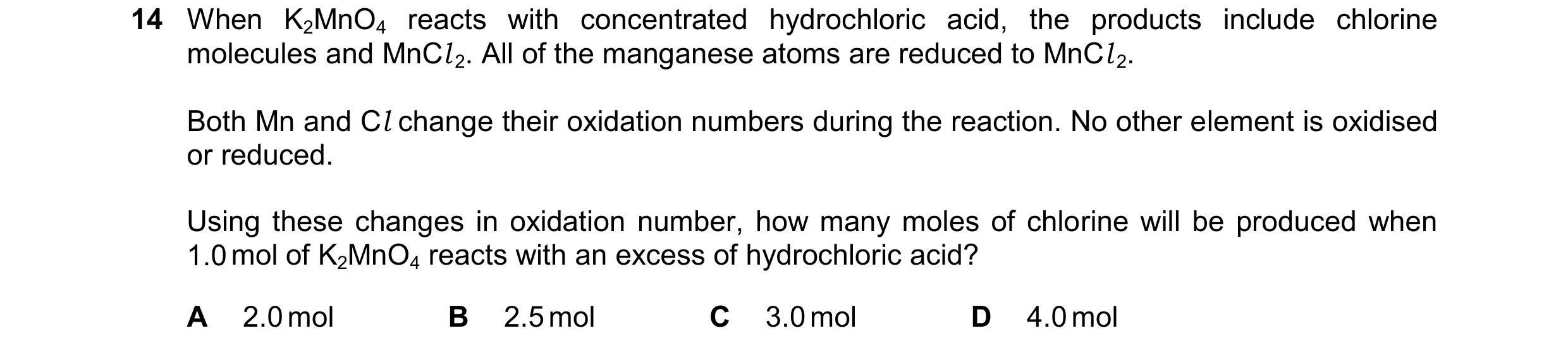
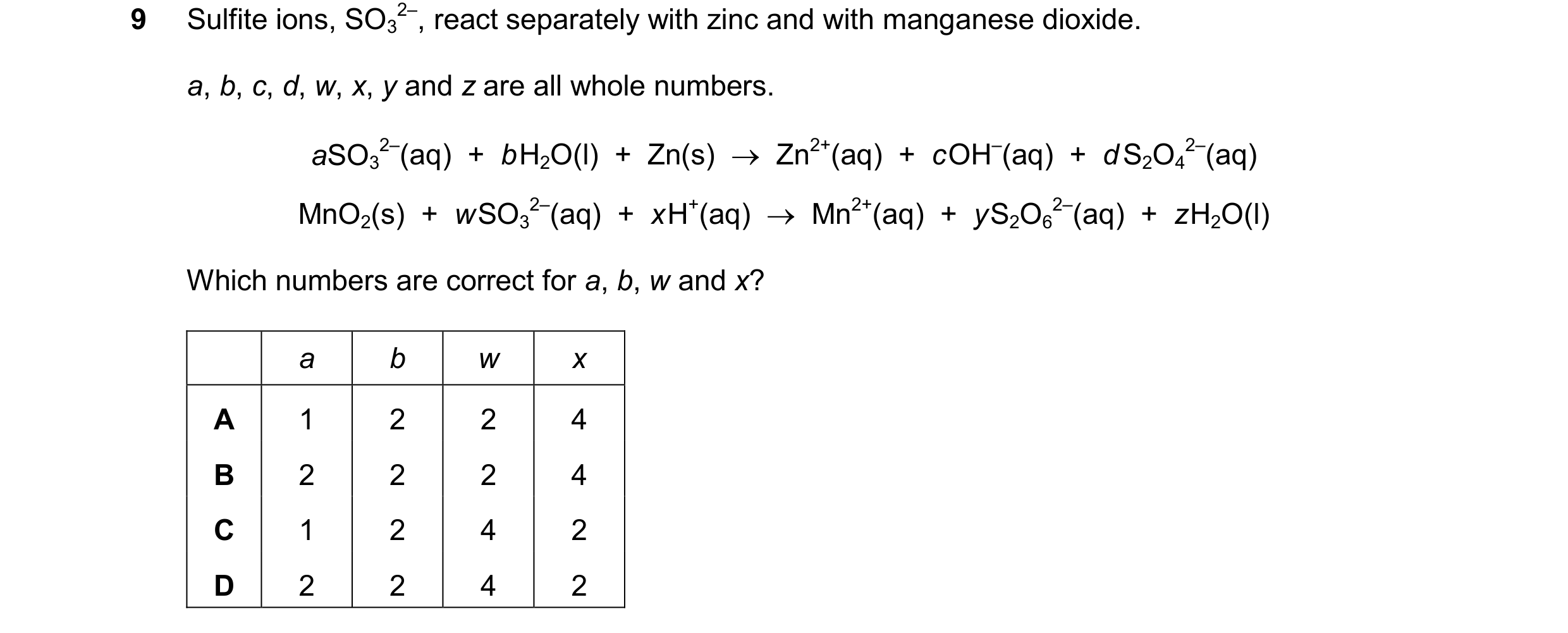
 76 / 78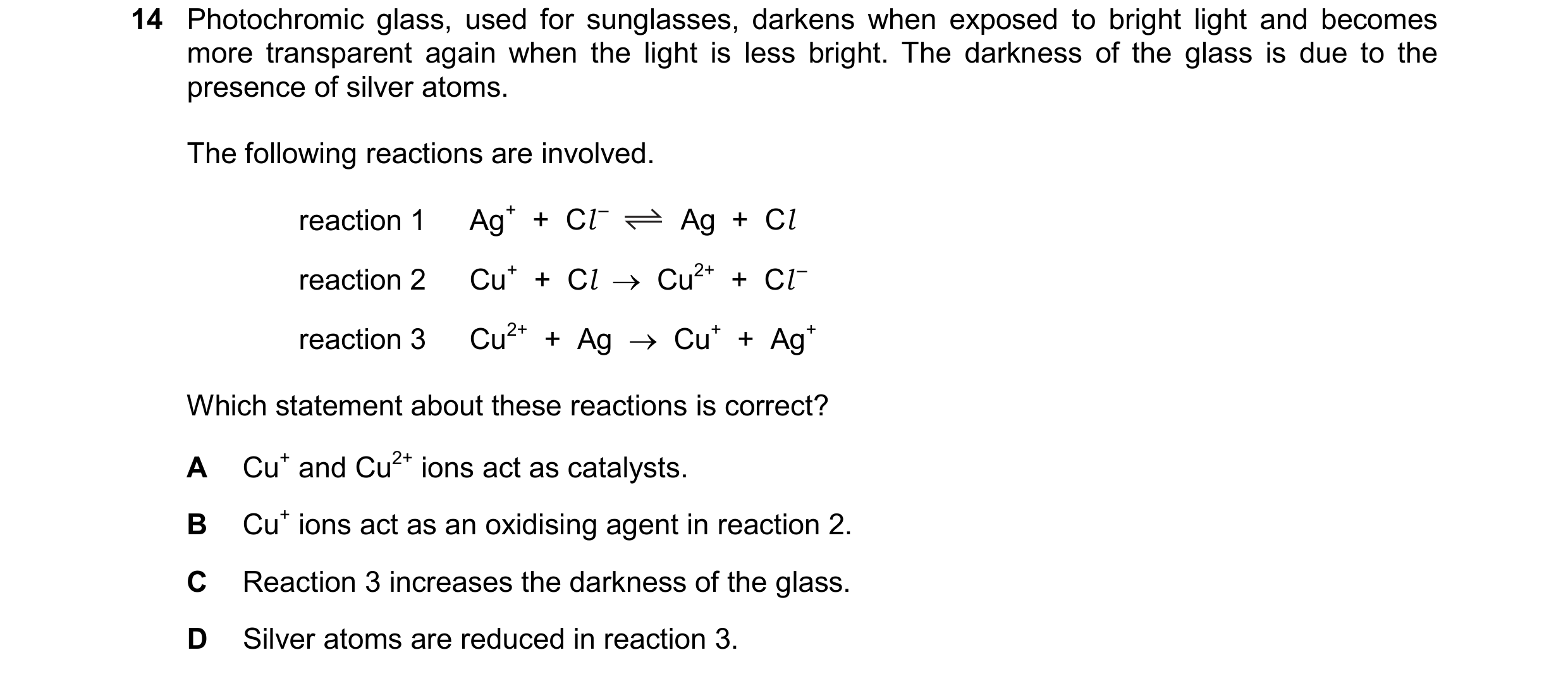

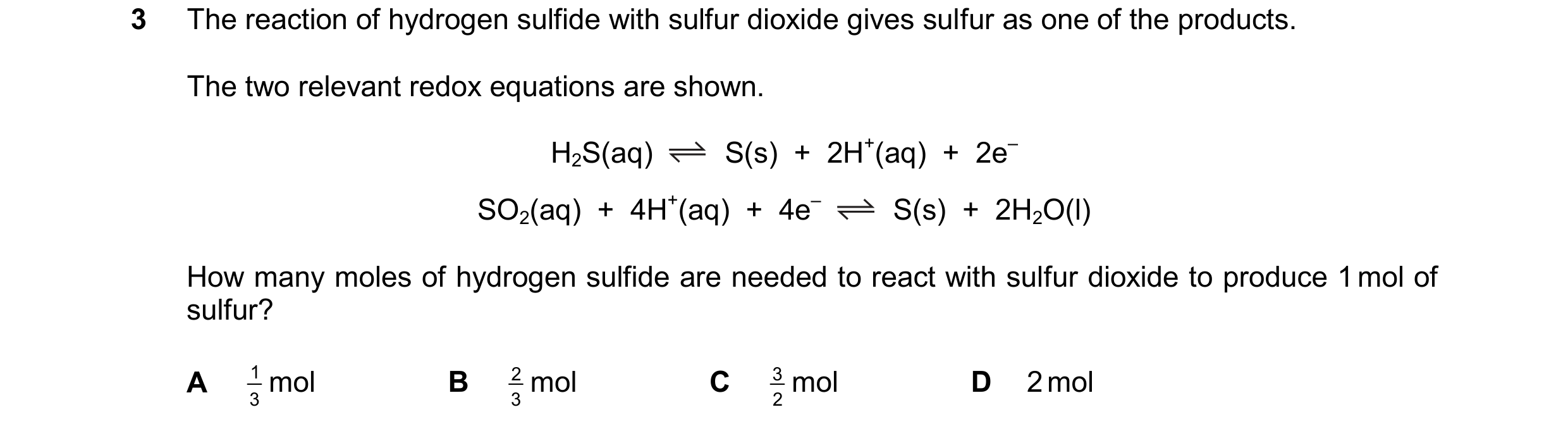
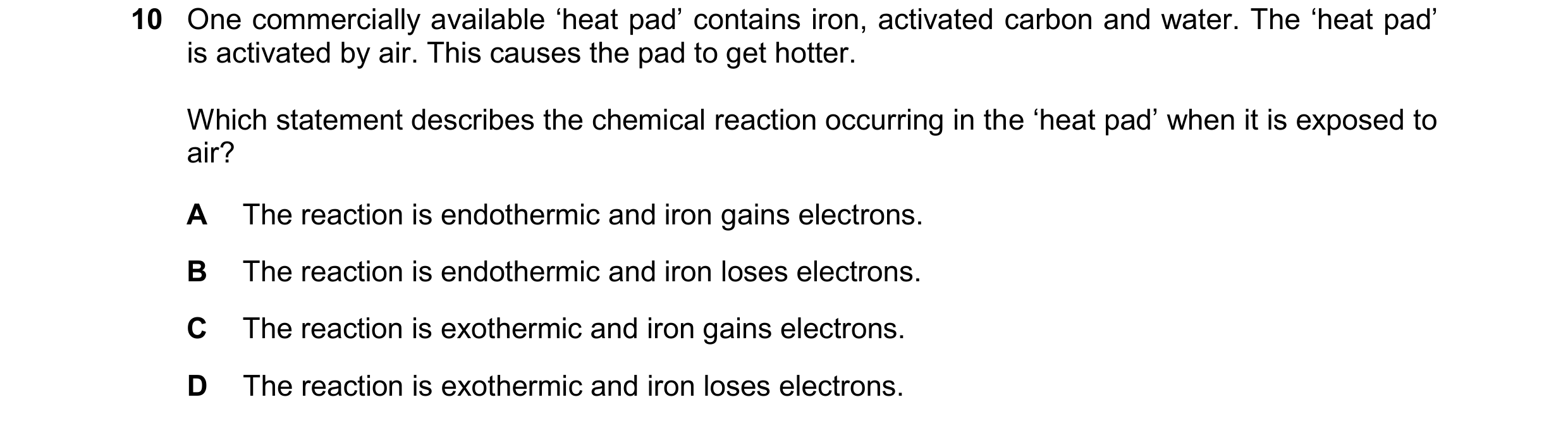 77 / 78

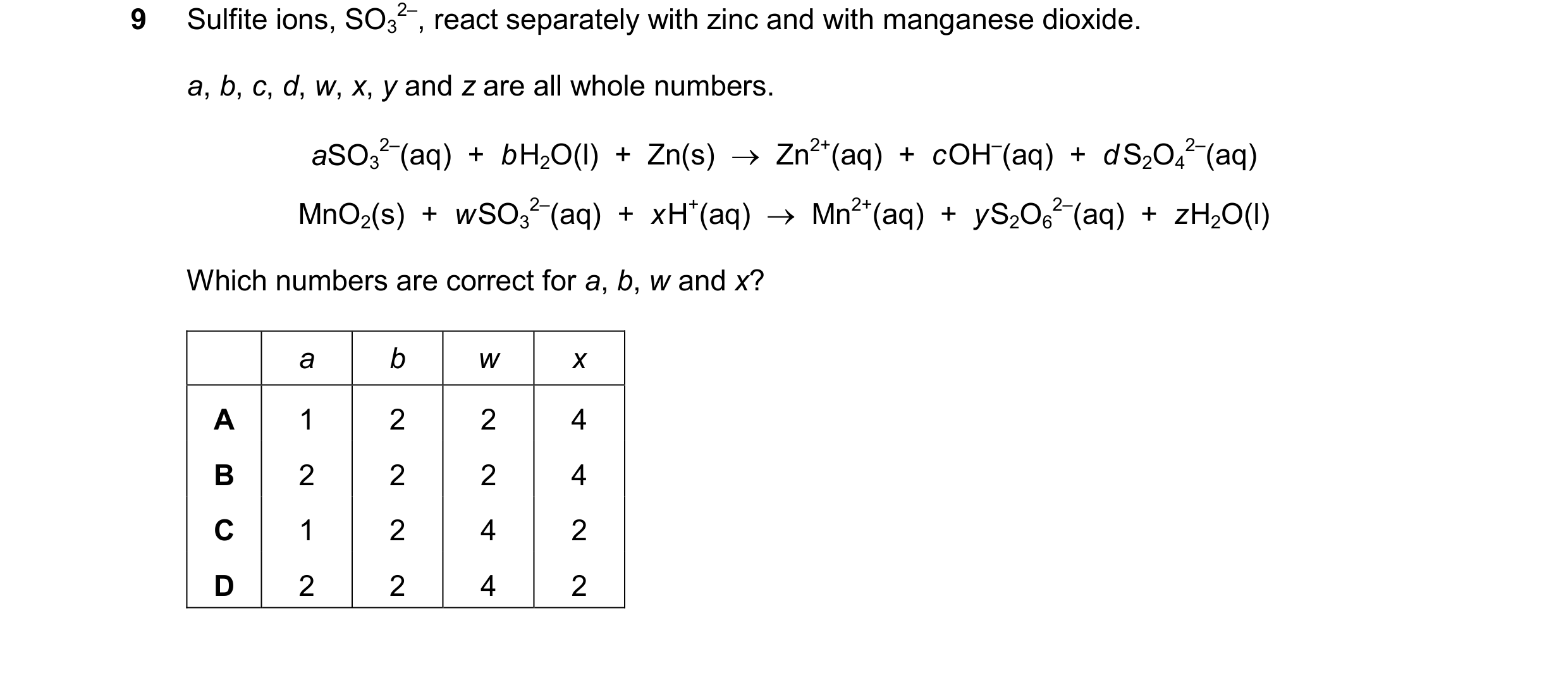
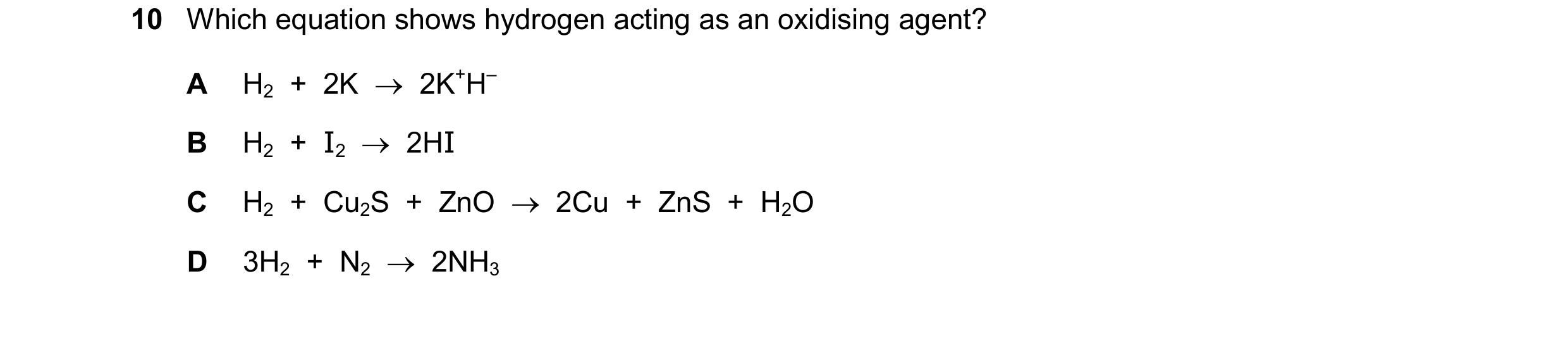
 78 / 78