Questions as text
Q1 · At a total pressure of 1.0 atm, dinitrogen tetraoxide is 50 % dissociated at a… 9701/11 May/June 2006
10 At a total pressure of 1.0 atm, dinitrogen tetraoxide is 50 % dissociated at a temperature of 60 oC, according to the following equation. N2O4 2NO2 What is the value of the equilibrium constant, Kp, for this reaction at 60 oC? A 1/3 atm B 2/3 atm C 4/3 atm D 2 atm
1 marks
Answer: C
This question in 9701/11 May/June 2006
Q2 · Swimming pool water can be kept free of harmful bacteria by adding aqueous sodium… 9701/11 May/June 2006
11 Swimming pool water can be kept free of harmful bacteria by adding aqueous sodium chlorate(I), NaOCl. This reacts with water to produce HOCl molecules which kill bacteria. OCl –(aq) + H2O OH–(aq) + HOCl (aq) In bright sunshine, the OCl – ion is broken down by ultra-violet light. OCl –(aq) + uv light → Cl –(aq) + ½O2(g) Which method would maintain the highest concentration of HOCl (aq)? A acidify the pool water B add a solution of chloride ions C add a solution of hydroxide ions D bubble air through the water
1 marks
Answer: A
This question in 9701/11 May/June 2006
Q3 · The equilibrium constant, Kc, for the reaction to form ethyl ethanoate from ethanol and… 9701/11 Oct/Nov 2006
11 The equilibrium constant, Kc, for the reaction to form ethyl ethanoate from ethanol and ethanoic acid, C2H5OH + CH3CO2H CH3CO2C2H5 + H2O, at 60 oC is 4.00. When 1.00 mol each of ethanol and ethanoic acid are allowed to reach equilibrium at 60 oC, what is the number of moles of ethyl ethanoate formed? A 1 B 2 C 1 D 3 3 3 4 4
1 marks
Answer: B
This question in 9701/11 Oct/Nov 2006
Q4 · In the Contact process for the production of sulphuric acid, sulphur dioxide is mixed… 9701/11 Oct/Nov 2006
19 In the Contact process for the production of sulphuric acid, sulphur dioxide is mixed with air and passed over a vanadium(V) oxide catalyst at about 450 oC and a pressure slightly above atmospheric pressure. 2SO2 + O2 2SO3 ; ∆H negative What affects the choice of conditions for this reaction? A A lower temperature would not raise the concentration of SO3 at equilibrium. B At a lower temperature of 300 oC the V2O5 catalyst would not be effective. C At 450 oC nitrogen and oxygen from the air combine to form nitrogen oxides which are needed as additional catalysts. D The heat generated by the reaction raises the temperature of the catalyst bed to 600 oC at which temperature the reaction begins to take place.
1 marks
Answer: B
This question in 9701/11 Oct/Nov 2006
Q5 · A reversible reaction is catalysed 9701/11 Oct/Nov 2006
33 A reversible reaction is catalysed. Which statements about the effects of the catalyst on this system are correct? 1 The catalyst alters the mechanism of the reaction. 2 The catalyst reduces the energy of activation (the energy barrier) for both the forward and the backward reaction. 3 The catalyst alters the composition of the equilibrium mixture.
1 marks
Answer: B
This question in 9701/11 Oct/Nov 2006
Q6 · Nitrogen dioxide decomposes on heating according to the following equation 9701/11 Oct/Nov 2007
10 Nitrogen dioxide decomposes on heating according to the following equation. 2NO2(g) 2NO(g) + O2(g) When 4 mol of nitrogen dioxide were put into a 1 dm3 container and heated to a constant temperature, the equilibrium mixture contained 0.8 mol of oxygen. What is the value of the equilibrium constant, Kc, at the temperature of the experiment? 0 . 8 2 × 0 . 8 1 . 6 × 0 . 8 1 . 6 2 × 0 . 8 1 . 6 2 × 0 . 8 A B C D 4 2 2 . 4 2 4 2 2 . 4 2
1 marks
Answer: D
This question in 9701/11 Oct/Nov 2007
Q7 · There are three stages in the Contact process for the production of sulphuric acid 9701/11 Oct/Nov 2007
17 There are three stages in the Contact process for the production of sulphuric acid. 1 S + O2 → SO2 2 SO2 + 1 2 O2 → SO3 3 SO3 + H2O → H2SO4 Which statement about this process is correct? A In the first stage a large excess of air under high pressure is used to improve the yield. B Two of the three stages are equilibria. C All three stages are exothermic. D In the final stage SO3 is absorbed by water droplets.
1 marks
Answer: C
This question in 9701/11 Oct/Nov 2007
Q8 · Phosphorus pentachloride is introduced into an empty gas syringe which has a movable… 9701/11 Oct/Nov 2007
33 Phosphorus pentachloride is introduced into an empty gas syringe which has a movable, tightly- fitting plunger. The gas is allowed to expand until equilibrium is reached at a temperature at which the phosphorus pentachloride partially dissociates. PCl5(g) PCl3(g) + Cl2(g) self-sealing cap for introducing gas plunger sample syringe oven Which statements are correct? 1 The equilibrium pressure inside the syringe will be greater than atmospheric pressure. 2 When the plunger is pushed in the equilibrium adjusts to produce more PCl5(g). 3 The volume of gas in the syringe at equilibrium will be greater than if no dissociation had occurred.
1 marks
Answer: C
This question in 9701/11 Oct/Nov 2007
Q9 · For the reaction W(aq) + 2X(aq) 2Y(aq) + 3Z(aq) what are the correct units for the… 9701/11 May/June 2008
11 For the reaction W(aq) + 2X(aq) 2Y(aq) + 3Z(aq) what are the correct units for the equilibrium constant Kc? A mol dm–3 B mol2 dm–6 C mol–1 dm3 D mol–2 dm6
1 marks
Answer: B
This question in 9701/11 May/June 2008
Q10 · The diagram represents the Haber process for the manufacture of ammonia from nitrogen and… 9701/11 May/June 2008
18 The diagram represents the Haber process for the manufacture of ammonia from nitrogen and hydrogen. heat exchanger N2 + H2 catalytic converter condenser NH3 What is the purpose of the heat exchanger? A to cool the incoming gas mixture to avoid overheating the catalyst B to cool the reaction products and separate the NH3 from unused N2 and H2 C to warm the incoming gas mixture and shift the equilibrium to give more NH3 D to warm the incoming gas mixture and speed up the reaction
1 marks
Answer: D
This question in 9701/11 May/June 2008
Q11 · Catalysts are used in many reversible reactions in the chemical industry 9701/11 May/June 2008
32 Catalysts are used in many reversible reactions in the chemical industry. Vanadium(V) oxide is used in this way in the Contact process for the formation of SO3. 2SO2(g) + O2(g) 2SO3(g) What effect does vanadium(V) oxide have on this equilibrium? 1 It speeds up the forward reaction. 2 It increases the value of Kp. 3 It increases the value of Ea for the reverse reaction.
1 marks
Answer: D
This question in 9701/11 May/June 2008
Q12 · For the equilibrium 2SO2(g) + O2(g) 2SO3(g), what will change the value of Kp? 9701/11 Oct/Nov 2008
10 For the equilibrium 2SO2(g) + O2(g) 2SO3(g), what will change the value of Kp? A adding a catalyst B adding more O2 C increasing the pressure D increasing the temperature
1 marks
Answer: D
This question in 9701/11 Oct/Nov 2008
Q13 · Dinitrogen tetroxide dissociates into nitrogen dioxide on heating 9701/11 Oct/Nov 2008
11 Dinitrogen tetroxide dissociates into nitrogen dioxide on heating. N2O4(g) 2NO2(g) In an experiment the partial pressures of the gases at equilibrium were found to be NO2, 0.33 atm; N2O4, 0.67 atm. What is the numerical value of Kp at the temperature of the experiment? A 0.16 B 0.49 C 0.65 D 2.03
1 marks
Answer: A
This question in 9701/11 Oct/Nov 2008
Q14 · Which statements about the Haber process for the industrial production of ammonia are… 9701/11 Oct/Nov 2008
36 Which statements about the Haber process for the industrial production of ammonia are correct? 1 The equilibrium constant Kp increases with pressure. 2 As the temperature increases, the equilibrium constant for the forward reaction becomes smaller. 3 The process is usually carried out at between 450 °C and 550 °C at a pressure of at least 150 atm.
1 marks
Answer: C
This question in 9701/11 Oct/Nov 2008
Q15 · The equilibrium N2(g) + O2(g) == 2NO(g) AH= +180kJ mol" contributes to a series of… 9701/11 Oct/Nov 2009
8 The equilibrium
N2(g) + O2(g) == 2NO(g) AH= +180kJ mol"
contributes to a series of reactions producing photochemical smog.
Which factors would affect the value of K, of the above equilibrium?
change in change in presence or absence
pressure temperature of a catalyst
A v v x
B v x v
Cc x v v
D x v x
1 marks
Answer: D
This question in 9701/11 Oct/Nov 2009
Q16 · PCl5 dissociates as follows 9701/11 Oct/Nov 2009
9 PCl5 dissociates as follows. PCl5(g) → PCl3(g) + Cl2(g) The extent of dissociation is 13 % at 160 °C and 100 % at 300 °C. Which pair of statements about this formation of PCl3 is correct? shape of PCl3 molecule the reaction is A pyramidal endothermic B pyramidal exothermic C trigonal endothermic D trigonal exothermic
1 marks
Answer: A
This question in 9701/11 Oct/Nov 2009
Q17 · Four reactions of the type shown are studied at the same temperature 9701/11 Oct/Nov 2009
10 Four reactions of the type shown are studied at the same temperature. X (g) + Y (g) → Z (g) Which is the correct reaction pathway diagram for the reaction that would proceed most rapidly and with the highest yield? A B energy energy reactant product reactant product C D energy energy reactant product reactant product
1 marks
Answer: C
This question in 9701/11 Oct/Nov 2009
Q18 · When sulfur trioxide is manufactured from sulfur dioxide and oxygen, using the Contact… 9701/11 Oct/Nov 2009
17 When sulfur trioxide is manufactured from sulfur dioxide and oxygen, using the Contact process, which condition affects the value of the equilibrium constant, Kc? A adjusting the temperature B adjusting the pressure C using a catalyst D removing SO3 from the equilibrium mixture
1 marks
Answer: A
This question in 9701/11 Oct/Nov 2009
Q19 · Which equilibria, in which all species are gaseous, would have equilibrium constants, Kp… 9701/11 Oct/Nov 2009
33 Which equilibria, in which all species are gaseous, would have equilibrium constants, Kp, with no units? 1 sulfur dioxide and oxygen in equilibrium with sulfur trioxide 2 hydrogen and iodine in equilibrium with hydrogen iodide 3 carbon monoxide and steam in equilibrium with carbon dioxide and hydrogen
1 marks
Answer: C
This question in 9701/11 Oct/Nov 2009
Q20 · The Haber process for the manufacture of ammonia is represented by the following equation 9701/11 May/June 2010
7 The Haber process for the manufacture of ammonia is represented by the following equation. N2(g) + 3H2(g) 2NH3(g) ∆H = –92 kJ mol–1 Which statement is correct about this reaction when the temperature is increased? A Both forward and backward rates increase. B The backward rate only increases. C The forward rate only increases. D There is no effect on the backward or forward rate.
1 marks
Answer: A
This question in 9701/11 May/June 2010
Q21 · Swimming pool water can be kept free of harmful bacteria by adding aqueous sodium… 9701/11 May/June 2010
11 Swimming pool water can be kept free of harmful bacteria by adding aqueous sodium chlorate(I), NaOCl. This reacts with water to produce HOCl molecules which kill bacteria. OCl –(aq) + H2O OH–(aq) + HOCl (aq) In bright sunshine, the OCl – ion is broken down by ultra-violet light. OCl –(aq) + uv light → Cl –(aq) + ½O2(g) Which method would maintain the highest concentration of HOCl (aq)? A acidify the pool water B add a solution of chloride ions C add a solution of hydroxide ions D bubble air through the water
1 marks
Answer: A
This question in 9701/11 May/June 2010
Q22 · The percentage of ammonia obtainable, if equilibrium were established during the Haber… 9701/11 May/June 2010
15 The percentage of ammonia obtainable, if equilibrium were established during the Haber process, is plotted against the operating pressure for two temperatures, 400 °C and 500 °C. Which diagram correctly represents the two graphs? A B 40 400 °C 40 500 °C % NH3 at % NH3 at 20 500 °C 20 400 °C equilibrium equilibrium 0 0 0 0 10 20 10 20 pressure / 103 kPa pressure / 103 kPa C D 40 40 400 °C 500 °C % NH3 at % NH3 at 20 20 equilibrium equilibrium 500 °C 400 °C 0 0 0 0 10 20 10 20 pressure / 103 kPa pressure / 103 kPa
1 marks
Answer: A
This question in 9701/11 May/June 2010
Q23 · The Haber process for the manufacture of ammonia is represented by the following equation 9701/12 May/June 2010
10 The Haber process for the manufacture of ammonia is represented by the following equation. N2(g) + 3H2(g) 2NH3(g) ∆H = –92 kJ mol–1 Which statement is correct about this reaction when the temperature is increased? A Both forward and backward rates increase. B The backward rate only increases. C The forward rate only increases. D There is no effect on the backward or forward rate.
1 marks
Answer: A
This question in 9701/12 May/June 2010
Q24 · The percentage of ammonia obtainable, if equilibrium were established during the Haber… 9701/12 May/June 2010
11 The percentage of ammonia obtainable, if equilibrium were established during the Haber process, is plotted against the operating pressure for two temperatures, 400 °C and 500 °C. Which diagram correctly represents the two graphs? A B 40 400 °C 40 500 °C % NH3 at % NH3 at 20 500 °C 20 400 °C equilibrium equilibrium 0 0 0 0 10 20 10 20 pressure / 103 kPa pressure / 103 kPa C D 40 40 400 °C 500 °C % NH3 at % NH3 at 20 20 equilibrium equilibrium 500 °C 400 °C 0 0 0 0 10 20 10 20 pressure / 103 kPa pressure / 103 kPa
1 marks
Answer: A
This question in 9701/12 May/June 2010
Q25 · Swimming pool water can be kept free of harmful bacteria by adding aqueous sodium… 9701/12 May/June 2010
12 Swimming pool water can be kept free of harmful bacteria by adding aqueous sodium chlorate(I), NaOCl. This reacts with water to produce HOCl molecules which kill bacteria. OCl –(aq) + H2O OH–(aq) + HOCl (aq) In bright sunshine, the OCl – ion is broken down by ultra-violet light. OCl –(aq) + uv light → Cl –(aq) + ½O2(g) Which method would maintain the highest concentration of HOCl (aq)? A acidify the pool water B add a solution of chloride ions C add a solution of hydroxide ions D bubble air through the water
1 marks
Answer: A
This question in 9701/12 May/June 2010
Q26 · The Haber process for the manufacture of ammonia is represented by the following equation 9701/13 May/June 2010
8 The Haber process for the manufacture of ammonia is represented by the following equation. N2(g) + 3H2(g) 2NH3(g) ∆H = –92 kJ mol–1 Which statement is correct about this reaction when the temperature is increased? A Both forward and backward rates increase. B The backward rate only increases. C The forward rate only increases. D There is no effect on the backward or forward rate.
1 marks
Answer: A
This question in 9701/13 May/June 2010
Q27 · Swimming pool water can be kept free of harmful bacteria by adding aqueous sodium… 9701/13 May/June 2010
12 Swimming pool water can be kept free of harmful bacteria by adding aqueous sodium chlorate(I), NaOCl. This reacts with water to produce HOCl molecules which kill bacteria. OCl –(aq) + H2O OH–(aq) + HOCl (aq) In bright sunshine, the OCl – ion is broken down by ultra-violet light. OCl –(aq) + uv light → Cl –(aq) + ½O2(g) Which method would maintain the highest concentration of HOCl (aq)? A acidify the pool water B add a solution of chloride ions C add a solution of hydroxide ions D bubble air through the water
1 marks
Answer: A
This question in 9701/13 May/June 2010
Q28 · The percentage of ammonia obtainable, if equilibrium were established during the Haber… 9701/13 May/June 2010
15 The percentage of ammonia obtainable, if equilibrium were established during the Haber process, is plotted against the operating pressure for two temperatures, 400 °C and 500 °C. Which diagram correctly represents the two graphs? A B 40 400 °C 40 500 °C % NH3 at % NH3 at 20 500 °C 20 400 °C equilibrium equilibrium 0 0 0 0 10 20 10 20 pressure / 103 kPa pressure / 103 kPa C D 40 40 400 °C 500 °C % NH3 at % NH3 at 20 20 equilibrium equilibrium 500 °C 400 °C 0 0 0 0 10 20 10 20 pressure / 103 kPa pressure / 103 kPa
1 marks
Answer: A
This question in 9701/13 May/June 2010
Q29 · The value of the equilibrium constant, Kc, for the reaction to form ethyl ethanoate from… 9701/11 Oct/Nov 2010
10 The value of the equilibrium constant, Kc, for the reaction to form ethyl ethanoate from ethanol and ethanoic acid is 4.0 at 60 °C. C2H5OH + CH3CO2H CH3CO2C2H5 + H2O When 1.0 mol of ethanol and 1.0 mol of ethanoic acid are allowed to reach equilibrium at 60 °C, what is the number of moles of ethyl ethanoate formed? A 1 B 2 C 1 D 3 3 3 4 4
1 marks
Answer: B
This question in 9701/11 Oct/Nov 2010
Q30 · Ethanol is manufactured by reacting ethene gas and steam in the presence of phosphoric(V)… 9701/11 Oct/Nov 2010
31 Ethanol is manufactured by reacting ethene gas and steam in the presence of phosphoric(V) acid. C2H4(g) + H2O(g) C2H5OH(g) ∆H = –45 kJ mol–1 The reaction is carried out at 570 K and 60 atm. What would be the consequences of carrying out the reaction at the same temperature but at a pressure of 200 atm? 1 The manufacturing costs would increase. 2 The maximum yield at equilibrium would be higher. 3 The reaction would proceed at a faster rate.
1 marks
Answer: A
This question in 9701/11 Oct/Nov 2010
Q31 · A dimer, X, is stable when solid but a dynamic equilibrium is set up in solution 9701/12 Oct/Nov 2010
11 A dimer, X, is stable when solid but a dynamic equilibrium is set up in solution. X(aq) 2Y(aq) A solution of X has an initial concentration of 0.50 mol dm–3. When equilibrium has been reached [X(aq)] has fallen to 0.25 mol dm–3. The changes in [X(aq)] and [Y(aq)] are plotted against time until equilibrium is reached. The value of Kc is then calculated. Which graph and value for Kc are correct? graph Kc / mol dm–3 0.5 X 0.4 concentration 0.3 A 1 / mol dm–3 0.2 0.1 Y 0 0 time 0.5 X 0.4 0.3 2 concentration B / mol dm–3 0.2 0.1 Y 0 0 time 0.5 X 0.4 1 concentration 0.3 C / mol dm–3 0.2 Y 0.1 0 0 time 0.5 2 X 0.4 concentration 0.3 D / mol dm–3 0.2 Y 0.1 0 0 time
1 marks
Answer: C
This question in 9701/12 Oct/Nov 2010
Q32 · In which ways are the main reactions in the Haber and Contact processes similar? 9701/12 Oct/Nov 2010
35 In which ways are the main reactions in the Haber and Contact processes similar? 1 A higher yield is favoured by higher pressures. 2 The reaction is a redox process. 3 The forward reaction is exothermic.
1 marks
Answer: A
This question in 9701/12 Oct/Nov 2010
Q33 · The value of the equilibrium constant, Kc, for the reaction to form ethyl ethanoate from… 9701/13 Oct/Nov 2010
10 The value of the equilibrium constant, Kc, for the reaction to form ethyl ethanoate from ethanol and ethanoic acid is 4.0 at 60 °C. C2H5OH + CH3CO2H CH3CO2C2H5 + H2O When 1.0 mol of ethanol and 1.0 mol of ethanoic acid are allowed to reach equilibrium at 60 °C, what is the number of moles of ethyl ethanoate formed? A 1 B 2 C 1 D 3 3 3 4 4
1 marks
Answer: B
This question in 9701/13 Oct/Nov 2010
Q34 · Ethanol is manufactured by reacting ethene gas and steam in the presence of phosphoric(V)… 9701/13 Oct/Nov 2010
32 Ethanol is manufactured by reacting ethene gas and steam in the presence of phosphoric(V) acid. C2H4(g) + H2O(g) C2H5OH(g) ∆H = –45 kJ mol–1 The reaction is carried out at 570 K and 60 atm. What would be the consequences of carrying out the reaction at the same temperature but at a pressure of 200 atm? 1 The manufacturing costs would increase. 2 The maximum yield at equilibrium would be higher. 3 The reaction would proceed at a faster rate.
1 marks
Answer: A
This question in 9701/13 Oct/Nov 2010
Q35 · In the last century the Haber process was sometimes run at pressures of 1000 atm and… 9701/11 May/June 2011
7 In the last century the Haber process was sometimes run at pressures of 1000 atm and higher. Now it is commonly run at pressures below 100 atm. What is the reason for this change? A An iron catalyst is used. B Maintaining the higher pressures is more expensive. C The equilibrium yield of ammonia is increased at lower pressures. D The rate of the reaction is increased at lower pressures.
1 marks
Answer: B
This question in 9701/11 May/June 2011
Q36 · The esterification reaction ethanol + ethanoic acid ethyl ethanoate + water is an… 9701/12 May/June 2011
4 The esterification reaction ethanol + ethanoic acid ethyl ethanoate + water is an equilibrium. The forward reaction is exothermic. How can the value of the equilibrium constant KC be increased? A by adding a little concentrated sulfuric acid as a catalyst B by increasing the initial concentration of ethanol C by lowering the temperature D by raising the temperature
1 marks
Answer: C
This question in 9701/12 May/June 2011
Q37 · Ammonia is manufactured on a large scale by the Haber process 9701/12 May/June 2011
5 Ammonia is manufactured on a large scale by the Haber process. In a particular plant, conditions of 400 °C and 250 atm in the presence of an iron catalyst are used. N2(g) + 3H2(g) 2NH3(g) ∆Ho = –92 kJ mol–1 What could contribute most to increasing the equilibrium yield of ammonia? A adding more catalyst B increasing the pressure to 400 atm C increasing the temperature to 1000 °C D using air rather than nitrogen
1 marks
Answer: B
This question in 9701/12 May/June 2011
Q38 · In the last century the Haber process was sometimes run at pressures of 1000 atm and… 9701/13 May/June 2011
5 In the last century the Haber process was sometimes run at pressures of 1000 atm and higher. Now it is commonly run at pressures below 100 atm. What is the reason for this change? A An iron catalyst is used. B Maintaining the higher pressures is more expensive. C The equilibrium yield of ammonia is increased at lower pressures. D The rate of the reaction is increased at lower pressures.
1 marks
Answer: B
This question in 9701/13 May/June 2011
Q39 · An aqueous solution was prepared containing 1.0 mol of AgNO3 and 1.0 mol of FeSO4 in 1.00… 9701/11 Oct/Nov 2011
9 An aqueous solution was prepared containing 1.0 mol of AgNO3 and 1.0 mol of FeSO4 in 1.00 dm3 of water. When equilibrium was established, there was 0.44 mol of Ag+(aq) in the mixture. Ag+(aq) + Fe2+(aq) Ag(s) + Fe3+(aq) What is the numerical value of Kc? A 0.35 B 0.62 C 1.62 D 2.89
1 marks
Answer: D
This question in 9701/11 Oct/Nov 2011
Q40 · When gaseous iodine is heated with hydrogen at 450 °C, an equilibrium is established 9701/11 Oct/Nov 2011
10 When gaseous iodine is heated with hydrogen at 450 °C, an equilibrium is established. H2(g) + I2(g) 2HI(g) ∆H = +53 kJ mol–1 colourless purple colourless Which change of conditions will cause the purple colour of the equilibrium mixture to become paler? A decrease in pressure B decrease in temperature C increase in pressure D increase in temperature
1 marks
Answer: D
This question in 9701/11 Oct/Nov 2011
Q41 · For the equilibrium 2SO2(g) + O2(g) 2SO3(g), what will change the value of Kp? 9701/12 Oct/Nov 2011
7 For the equilibrium 2SO2(g) + O2(g) 2SO3(g), what will change the value of Kp? A adding a catalyst B adding more O2 C increasing the pressure D increasing the temperature
1 marks
This question in 9701/12 Oct/Nov 2011
Q42 · For the reaction W(aq) + 2X(aq) 2Y(aq) + 3Z(aq) what are the correct units for the… 9701/12 Oct/Nov 2011
12 For the reaction W(aq) + 2X(aq) 2Y(aq) + 3Z(aq) what are the correct units for the equilibrium constant Kc? A mol dm–3 B mol2 dm–6 C mol–1 dm3 D mol–2 dm6
1 marks
This question in 9701/12 Oct/Nov 2011
Q43 · When gaseous iodine is heated with hydrogen at 450 °C, an equilibrium is established 9701/13 Oct/Nov 2011
8 When gaseous iodine is heated with hydrogen at 450 °C, an equilibrium is established. H2(g) + I2(g) 2HI(g) ∆H = +53 kJ mol–1 colourless purple colourless Which change of conditions will cause the purple colour of the equilibrium mixture to become paler? A decrease in pressure B decrease in temperature C increase in pressure D increase in temperature
1 marks
Answer: D
This question in 9701/13 Oct/Nov 2011
Q44 · An aqueous solution was prepared containing 1.0 mol of AgNO3 and 1.0 mol of FeSO4 in 1.00… 9701/13 Oct/Nov 2011
12 An aqueous solution was prepared containing 1.0 mol of AgNO3 and 1.0 mol of FeSO4 in 1.00 dm3 of water. When equilibrium was established, there was 0.44 mol of Ag+(aq) in the mixture. Ag+(aq) + Fe2+(aq) Ag(s) + Fe3+(aq) What is the numerical value of Kc? A 0.35 B 0.62 C 1.62 D 2.89
1 marks
Answer: D
This question in 9701/13 Oct/Nov 2011
Q45 · Two moles of compound P were placed in a vessel 9701/11 May/June 2012
9 Two moles of compound P were placed in a vessel. The compound P was partly decomposed by heating. A dynamic equilibrium between chemicals P, Q and R was established. At equilibrium, x mol of R were present and the total number of moles present was (2 + x). What is the equation for this equilibrium? A P 2Q + R B 2P 2Q + R C 2P Q + R D 2P Q + 2R
1 marks
Answer: B
This question in 9701/11 May/June 2012
Q46 · In the manufacture of sulfuric acid the reaction 2SO2(g) + O2(g) 2SO3(g) usually takes… 9701/11 May/June 2012
36 In the manufacture of sulfuric acid the reaction 2SO2(g) + O2(g) 2SO3(g) usually takes place at 400 °C and 1 atm pressure. In one industrial plant, it is decided to change the pressure to 20 atm. What will be the consequences of this change? 1 increased running costs 2 an increased percentage of sulfur trioxide in the equilibrium mixture 3 the rate of the backward reaction increases
1 marks
Answer: A
This question in 9701/11 May/June 2012
Q47 · Two moles of compound P were placed in a vessel 9701/12 May/June 2012
7 Two moles of compound P were placed in a vessel. The vessel was heated and compound P was partly decomposed to produce Q and R. A dynamic equilibrium between chemicals P, Q and R was established. At equilibrium x moles of R were present and the total number of moles present was (2 + 2 x ). What is the equation for this equilibrium reaction? A P 2Q + R B 2P 2Q + R C 2P Q + R D 2P Q + 2R
1 marks
Answer: D
This question in 9701/12 May/June 2012
Q48 · Methanol is manufactured by reacting carbon dioxide and hydrogen 9701/12 May/June 2012
9 Methanol is manufactured by reacting carbon dioxide and hydrogen. CO2(g) + 3H2(g) CH3OH(g) + H2O(g) ∆H = –49 kJ mol–1 What would increase the equilibrium yield of methanol in this process? A adding a catalyst B adding an excess of steam C increasing the pressure D increasing the temperature
1 marks
Answer: C
This question in 9701/12 May/June 2012
Q49 · Which statements are true about the Haber process for the manufacture of ammonia? 9701/12 May/June 2012
36 Which statements are true about the Haber process for the manufacture of ammonia? 1 At higher temperatures, the yield goes down but the rate of production of ammonia is faster. 2 At higher pressures, the yield goes down but the rate of production of ammonia is faster. 3 In the presence of a catalyst, the yield goes down but the rate of production of ammonia is faster.
1 marks
Answer: D
This question in 9701/12 May/June 2012
Q50 · Two moles of compound P were placed in a vessel 9701/13 May/June 2012
11 Two moles of compound P were placed in a vessel. The compound P was partly decomposed by heating. A dynamic equilibrium between chemicals P, Q and R was established. At equilibrium, x mol of R were present and the total number of moles present was (2 + x). What is the equation for this equilibrium? A P 2Q + R B 2P 2Q + R C 2P Q + R D 2P Q + 2R
1 marks
Answer: B
This question in 9701/13 May/June 2012
Q51 · In the manufacture of sulfuric acid the reaction 2SO2(g) + O2(g) 2SO3(g) usually takes… 9701/13 May/June 2012
35 In the manufacture of sulfuric acid the reaction 2SO2(g) + O2(g) 2SO3(g) usually takes place at 400 °C and 1 atm pressure. In one industrial plant, it is decided to change the pressure to 20 atm. What will be the consequences of this change? 1 increased running costs 2 an increased percentage of sulfur trioxide in the equilibrium mixture 3 the rate of the backward reaction increases
1 marks
Answer: A
This question in 9701/13 May/June 2012
Q52 · Sulfur trioxide is manufactured from sulfur dioxide and oxygen, using the Contact process 9701/11 May/June 2013
18 Sulfur trioxide is manufactured from sulfur dioxide and oxygen, using the Contact process. Which condition affects the value of the equilibrium constant, Kc? A adjusting the temperature B increasing the pressure C removing SO3 from the equilibrium mixture D using a catalyst
1 marks
Answer: A
This question in 9701/11 May/June 2013
Q53 · The reaction between sulfur dioxide and oxygen is a dynamic equilibrium 9701/12 May/June 2013
8 The reaction between sulfur dioxide and oxygen is a dynamic equilibrium. 2SO2(g) + O2(g) 2SO3(g) What happens when the pressure of the system is increased? A The rate of reaction will decrease and the position of the equilibrium will move to the left. B The rate of reaction will decrease and the position of the equilibrium will move to the right. C The rate of reaction will increase and the position of the equilibrium will move to the left. D The rate of reaction will increase and the position of the equilibrium will move to the right.
1 marks
Answer: D
This question in 9701/12 May/June 2013
Q54 · The diagram shows the reaction pathway for a reversible reaction 9701/12 May/June 2013
32 The diagram shows the reaction pathway for a reversible reaction. energy 90 / kJ mol–1 30 extent of reaction Which statements are correct? 1 The enthalpy change for the backward reaction is +90 kJ mol–1. 2 The forward reaction is exothermic. 3 The enthalpy change for the forward reaction is –30 kJ mol–1.
1 marks
Answer: C
This question in 9701/12 May/June 2013
Q55 · Graphs can be drawn to show the percentage of ammonia at equilibrium when nitrogen and… 9701/13 May/June 2013
17 Graphs can be drawn to show the percentage of ammonia at equilibrium when nitrogen and hydrogen are mixed at different temperatures and pressures. Which diagram correctly represents these two graphs? A B 40 40 400 °C 500 °C % NH3 at % NH3 at 20 20 equilibrium equilibrium 500 °C 400 °C 00 00 10 20 10 20 pressure / 103 kPa pressure / 103 kPa C D 40 40 500 °C 400 °C % NH3 at % NH3 at 20 400 °C 20 500 °C equilibrium equilibrium 0 0 0 0 10 20 10 20 pressure / 103 kPa pressure / 103 kPa
1 marks
Answer: D
This question in 9701/13 May/June 2013
Q56 · Nitrogen reacts with hydrogen to produce ammonia 9701/11 Oct/Nov 2013
9 Nitrogen reacts with hydrogen to produce ammonia. N2(g) + 3H2(g) 2NH3(g) A mixture of 2.00 mol of nitrogen, 6.00 mol of hydrogen, and 2.40 mol of ammonia is allowed to reach equilibrium in a sealed vessel of volume 1 dm3 under certain conditions. It was found that 2.32 mol of nitrogen were present in the equilibrium mixture. What is the value of Kc under these conditions? ( 1 . 76 ) 2 A ( 2 . 32 )( 6 . 96 ) 3 ( 1 . 76 ) 2 B ( 2 . 32 )( 6 . 32 ) 3 ( 2 . 08 ) 2 C ( 2 . 32 )( 6 . 32 ) 3 ( 2 . 40 ) 2 D ( 2 . 32 )( 6 . 00 ) 3
1 marks
Answer: A
This question in 9701/11 Oct/Nov 2013
Q57 · What are necessary properties of a dynamic equilibrium? 9701/11 Oct/Nov 2013
33 What are necessary properties of a dynamic equilibrium? 1 Equal amounts of reactants and products are present. 2 Concentrations of reactants and products remain constant. 3 The rate of the forward reaction is the same as the rate of the reverse reaction.
1 marks
Answer: C
This question in 9701/11 Oct/Nov 2013
Q58 · If N2O4 gas is placed in a sealed vessel the following equilibrium is established 9701/11 Oct/Nov 2013
34 If N2O4 gas is placed in a sealed vessel the following equilibrium is established. N2O4(g) 2NO2(g) The forward reaction is endothermic. What happens when the temperature is increased? 1 The equilibrium constant increases. 2 The partial pressure of NO2 increases. 3 The activation energy is unchanged.
1 marks
Answer: A
This question in 9701/11 Oct/Nov 2013
Q59 · Nitrogen reacts with hydrogen to produce ammonia 9701/12 Oct/Nov 2013
9 Nitrogen reacts with hydrogen to produce ammonia. N2(g) + 3H2(g) 2NH3(g) A mixture of 2.00 mol of nitrogen, 6.00 mol of hydrogen, and 2.40 mol of ammonia is allowed to reach equilibrium in a sealed vessel of volume 1 dm3 under certain conditions. It was found that 2.32 mol of nitrogen were present in the equilibrium mixture. What is the value of Kc under these conditions? ( 1 . 76 ) 2 A ( 2 . 32 )( 6 . 96 ) 3 ( 1 . 76 ) 2 B ( 2 . 32 )( 6 . 32 ) 3 ( 2 . 08 ) 2 C ( 2 . 32 )( 6 . 32 ) 3 ( 2 . 40 ) 2 D ( 2 . 32 )( 6 . 00 ) 3
1 marks
Answer: A
This question in 9701/12 Oct/Nov 2013
Q60 · What are necessary properties of a dynamic equilibrium? 9701/12 Oct/Nov 2013
33 What are necessary properties of a dynamic equilibrium? 1 Equal amounts of reactants and products are present. 2 Concentrations of reactants and products remain constant. 3 The rate of the forward reaction is the same as the rate of the reverse reaction.
1 marks
Answer: C
This question in 9701/12 Oct/Nov 2013
Q61 · If N2O4 gas is placed in a sealed vessel the following equilibrium is established 9701/12 Oct/Nov 2013
34 If N2O4 gas is placed in a sealed vessel the following equilibrium is established. N2O4(g) 2NO2(g) The forward reaction is endothermic. What happens when the temperature is increased? 1 The equilibrium constant increases. 2 The partial pressure of NO2 increases. 3 The activation energy is unchanged.
1 marks
Answer: A
This question in 9701/12 Oct/Nov 2013
Q62 · Nitrogen reacts with hydrogen to produce ammonia 9701/13 Oct/Nov 2013
10 Nitrogen reacts with hydrogen to produce ammonia. N2(g) + 3H2(g) 2NH3(g) A mixture of 1.00 mol of nitrogen, 3.00 mol of hydrogen and 1.98 mol of ammonia is allowed to reach equilibrium in a sealed vessel under certain conditions. It was found that 1.64 mol of nitrogen were present in the equilibrium mixture. What is the value of Kc under these conditions? A ( 0 . 70 ) 2 ( 1 . 64 )( 4 . 92 ) 3 B ( 1 . 34 ) 2 ( 1 . 64 )( 3 . 64 ) 3 C ( 1 . 64 )( 4 . 92 ) 3 ( 0 . 70 ) 2 D ( 1 . 64 )( 3 . 64 ) 3 ( 1 . 34 ) 2
1 marks
Answer: A
This question in 9701/13 Oct/Nov 2013
Q63 · The following equilibrium is an exothermic reaction in the forward direction 9701/13 Oct/Nov 2013
34 The following equilibrium is an exothermic reaction in the forward direction. 2CrO4 2–(aq) + 2H+(aq) Cr2O7 2–(aq) + H2O(l) What happens when the concentration of CrO4 2– ions increases and the temperature decreases? 1 The concentration of Cr2O7 2– ions increases. 2 The equilibrium constant increases. 3 The activation energy decreases.
1 marks
Answer: B
This question in 9701/13 Oct/Nov 2013
Q64 · The Contact process is used in the manufacture of sulfuric acid 9701/11 May/June 2014
7 The Contact process is used in the manufacture of sulfuric acid. The equation for the main reaction is shown below. 2SO2(g) + O2(g) 2SO3(g) ∆H = –196 kJ mol–1 Which statement about this reaction is incorrect? A Increased pressure gives a higher yield of SO3. B Increased temperature gives a higher yield of SO3. C In the forward reaction the oxidation state of sulfur changes from +4 to +6. D Vanadium(V) oxide is used as a catalyst.
1 marks
Answer: B
This question in 9701/11 May/June 2014
Q65 · The equilibrium constant, Kc, for the reaction H2(g) + I2(g) 2HI(g), is 60 at 450 °C 9701/11 May/June 2014
10 The equilibrium constant, Kc, for the reaction H2(g) + I2(g) 2HI(g), is 60 at 450 °C. What is the number of moles of hydrogen iodide in equilibrium with 2 mol of hydrogen and 0.3 mol of iodine at 450 °C? 1 1 A B C 6 D 36 100 10
1 marks
Answer: C
This question in 9701/11 May/June 2014
Q66 · Hydrogen and carbon dioxide gases are mixed in equal molar amounts at 800 K 9701/12 May/June 2014
4 Hydrogen and carbon dioxide gases are mixed in equal molar amounts at 800 K. A reversible reaction takes place. H2(g) + CO2(g) H2O(g) + CO(g) At equilibrium, the partial pressures of H2 and CO2 are both 10.0 kPa. Kp is 0.288 at 800 K. What is the partial pressure of CO in the equilibrium mixture? A 5.37 kPa B 18.6 kPa C 28.8 kPa D 347 kPa
1 marks
Answer: A
This question in 9701/12 May/June 2014
Q67 · The formation of hydrogen and ethyne, C2H2, from methane reaches dynamic equilibrium 9701/12 May/June 2014
7 The formation of hydrogen and ethyne, C2H2, from methane reaches dynamic equilibrium. 2CH4(g) 3H2(g) + C2H2(g) What are the units of Kc? A mol dm–3 B mol2 dm–6 C mol3 dm–9 D mol4 dm–12
1 marks
Answer: B
This question in 9701/12 May/June 2014
Q68 · A reversible reaction is catalysed 9701/11 Oct/Nov 2014
33 A reversible reaction is catalysed. Which statements about the effects of the catalyst on this system are correct? 1 The catalyst alters the mechanism of the reaction. 2 The catalyst reduces the activation energy for both the forward and the backward reaction. 3 The catalyst alters the composition of the equilibrium mixture.
1 marks
Answer: B
This question in 9701/11 Oct/Nov 2014
Q69 · A reversible reaction is catalysed 9701/12 Oct/Nov 2014
33 A reversible reaction is catalysed. Which statements about the effects of the catalyst on this system are correct? 1 The catalyst alters the mechanism of the reaction. 2 The catalyst reduces the activation energy for both the forward and the backward reaction. 3 The catalyst alters the composition of the equilibrium mixture.
1 marks
Answer: B
This question in 9701/12 Oct/Nov 2014
Q70 · One mole of phosphorus(V) chloride, PCl 5, is heated to 600 K in a sealed flask of volume… 9701/11 May/June 2015
6 One mole of phosphorus(V) chloride, PCl 5, is heated to 600 K in a sealed flask of volume 1 dm3. Equilibrium is established and measurements are taken. PCl 5(g) PCl 3(g) + Cl 2(g) The experiment is repeated with one mole of phosphorus(V) chloride heated to 600 K in a sealed flask of volume 2 dm3. How will the measurements vary? A The equilibrium concentrations of PCl 3(g) and Cl 2(g) are higher in the second experiment. B The equilibrium concentration of PCl 5(g) is lower in the second experiment. C The equilibrium concentrations of all three gases are the same in both experiments. D The value of the equilibrium constant is higher in the second experiment.
1 marks
Answer: B
This question in 9701/11 May/June 2015
Q71 · One molecule of haemoglobin, Hb, can bind with four molecules of oxygen according to the… 9701/11 May/June 2015
9 One molecule of haemoglobin, Hb, can bind with four molecules of oxygen according to the following equation. Hb(aq) + 4O2(aq) Hb(O2)4(aq) When the equilibrium concentration of O2 is 7.6 × 10⁻⁶ mol dm–3, the equilibrium concentrations of Hb and Hb(O2)4 are equal. What is the value of Kc for this equilibrium? A 3.0 × 10²⁰ B 1.3 × 10⁵ C 7.6 × 10⁻⁶ D 3.3 × 10⁻²¹
1 marks
Answer: A
This question in 9701/11 May/June 2015
Q72 · Nitrogen dioxide, NO2, exists in equilibrium with dinitrogen tetroxide, N2O4 9701/12 May/June 2015
8 Nitrogen dioxide, NO2, exists in equilibrium with dinitrogen tetroxide, N2O4. 2NO2(g) N2O4(g) ∆H = –57 kJ mol–1 Which conditions give the greatest percentage of N2O4(g) at equilibrium? pressure temperature A high high B high low C low high D low low
1 marks
Answer: B
This question in 9701/12 May/June 2015
Q73 · When a sample of HI is warmed to a particular temperature the equilibrium below is… 9701/12 May/June 2015
9 When a sample of HI is warmed to a particular temperature the equilibrium below is established. 2HI(g) H2(g) + I2(g) At this temperature, it is found that the partial pressure of HI(g) is 28 times the partial pressure of H2(g). What is the value of Kp at this temperature? A 1.28 × 10⁻³ B 0.035 C 28 D 784
1 marks
Answer: A
This question in 9701/12 May/June 2015
Q74 · Hydrogen can be obtained by reacting methane with steam 9701/12 Oct/Nov 2015
8 Hydrogen can be obtained by reacting methane with steam. CH4(g) + H2O(g) CO(g) + 3H2(g) ΔH o = +210 kJ mol–1 Which conditions of pressure and temperature will give the greatest equilibrium yield of hydrogen? pressure temperature A high high B high low C low high D low low
1 marks
This question in 9701/12 Oct/Nov 2015
Q75 · Nitrogen monoxide reacts with oxygen in a reversible reaction according to the equation… 9701/12 Oct/Nov 2015
9 Nitrogen monoxide reacts with oxygen in a reversible reaction according to the equation shown below. 2NO(g) + O2(g) 2NO2(g) The partial pressures of each of the components in an equilibrium mixture are shown in the table. partial pressure NO / kPa partial pressure O2 / kPa partial pressure NO2 / kPa 10 30 20 What is the numerical value of the equilibrium constant, Kp, for this equilibrium? A 6.67 × 10⁻² B 1.33 × 10⁻¹ C 7.50 D 15.0
1 marks
This question in 9701/12 Oct/Nov 2015
Q76 · In an experiment, 2.00 mol of hydrogen and 3.00 mol of iodine were heated together in a… 9701/12 Feb/March 2016
11 In an experiment, 2.00 mol of hydrogen and 3.00 mol of iodine were heated together in a sealed container and allowed to reach equilibrium at a fixed temperature. The container had a fixed volume of 1.00 dm3. At equilibrium, there were 2.40 mol of iodine present in the mixture. H2(g) + I2(g) 2HI(g) What is the value of the equilibrium constant, Kc? A 0.107 B 0.357 C 0.429 D 2.33
1 marks
Answer: C
This question in 9701/12 Feb/March 2016
Q77 · Which statements about reversible reactions are correct? 9701/12 Feb/March 2016
33 Which statements about reversible reactions are correct? 1 An increase in concentration of a reactant always increases the concentration of the product. 2 An increase in temperature always increases the rate at which the equilibrium is established. 3 An increase in temperature always increases the concentration of the product at equilibrium.
1 marks
Answer: B
This question in 9701/12 Feb/March 2016
Q78 · An aqueous solution was prepared containing a mixture of 1.0 mol of AgNO3 and 1.0 mol of… 9701/11 May/June 2016
9 An aqueous solution was prepared containing a mixture of 1.0 mol of AgNO3 and 1.0 mol of FeSO4 in 1.00 dm3 of water. When equilibrium was established, there was 0.44 mol of Ag+(aq) in the mixture. Ag+(aq) + Fe2+(aq) Ag(s) + Fe3+(aq) What is the numerical value of Kc? A 0.62 B 1.40 C 1.62 D 2.89
1 marks
Answer: D
This question in 9701/11 May/June 2016
Q79 · The equation for the reaction between carbon monoxide and hydrogen is shown 9701/11 May/June 2016
10 The equation for the reaction between carbon monoxide and hydrogen is shown. CO(g) + 3H2(g) CH4(g) + H2O(g) What are the units of Kp for this reaction? A kPa B kPa–1 C kPa2 D kPa–2
1 marks
Answer: D
This question in 9701/11 May/June 2016
Q80 · When solid ammonium chloride dissociates at a certain temperature in a 0.500 dm3… 9701/12 May/June 2016
10 When solid ammonium chloride dissociates at a certain temperature in a 0.500 dm3 container, ammonia and hydrogen chloride are formed. NH4Cl (s) NH3(g) + HCl (g) The initial amount of ammonium chloride was 1.00 mol, and when the system had reached equilibrium there was 0.300 mol of ammonium chloride. What is the numerical value of Kc for this reaction under these conditions? A 0.490 B 1.63 C 1.96 D 3.27
1 marks
Answer: C
This question in 9701/12 May/June 2016
Q81 · In this question, all gases can be assumed to behave ideally 9701/12 May/June 2016
33 In this question, all gases can be assumed to behave ideally. A chemist heats a mixture of nitrogen and oxygen gases in a sealed container at a constant temperature until the mixture reaches a dynamic equilibrium containing N2(g), O2(g) and NO(g). N2(g) + O2(g) 2NO(g) The chemist repeats the experiment at the same temperature using the same initial amounts of N2(g) and O2(g), but at a much higher pressure. Which statements about the second experiment at higher pressure are correct? 1 At higher pressure, there are more particles per unit volume. 2 The composition of the equilibrium mixture does not change. 3 There are more collisions per second so equilibrium is reached faster.
1 marks
Answer: A
This question in 9701/12 May/June 2016
Q82 · The equilibrium constant, Kc, for the reaction shown is 2 mol–2 dm6, at 600 K 9701/13 May/June 2016
9 The equilibrium constant, Kc, for the reaction shown is 2 mol–2 dm6, at 600 K. N2(g) + 3H2(g) 2NH3(g) What is the concentration of NH3 at equilibrium, at 600 K, when the equilibrium concentrations of N2 and H2 are both 2 mol dm–3? A 8 mol dm–3 B 16 mol dm–3 C 32 mol dm–3 D 32 mol dm–3
1 marks
Answer: C
This question in 9701/13 May/June 2016
Q83 · Catalysts are an important feature of many industrial processes and biochemical reactions 9701/13 May/June 2016
11 Catalysts are an important feature of many industrial processes and biochemical reactions. Which row correctly describes the effect of a catalyst on a reversible chemical reaction? position of equilibrium effect on value of ∆H A moved to right decreased B unaffected decreased C unaffected increased D unaffected unaffected
1 marks
Answer: D
This question in 9701/13 May/June 2016
Q84 · The table shows the partial pressures in an equilibrium mixture formed by the Haber… 9701/11 Oct/Nov 2016
10 The table shows the partial pressures in an equilibrium mixture formed by the Haber process. substance partial pressure / kPa nitrogen 7000 3H2(g) + N2(g) 2NH3(g) hydrogen 8000 ammonia 4000 What is the numerical value of the equilibrium constant, Kp, for this reaction? A 4.46 × 10⁻⁹ B 4.76 × 10⁻⁵ C 7.14 × 10⁻⁵ D 2.24 × 10⁸
1 marks
Answer: A
This question in 9701/11 Oct/Nov 2016
Q85 · In the manufacture of sulfuric acid, the following exothermic reaction occurs 9701/11 Oct/Nov 2016
34 In the manufacture of sulfuric acid, the following exothermic reaction occurs. 2SO2(g) + O2(g) 2SO3(g) Which changes will move the position of the equilibrium to the right? 1 increasing the pressure 2 increasing the temperature 3 using twice as much catalyst
1 marks
Answer: D
This question in 9701/11 Oct/Nov 2016
Q86 · The table shows the partial pressures in an equilibrium mixture formed by the Haber… 9701/13 Oct/Nov 2016
10 The table shows the partial pressures in an equilibrium mixture formed by the Haber process. substance partial pressure / kPa nitrogen 7000 3H2(g) + N2(g) 2NH3(g) hydrogen 8000 ammonia 4000 What is the numerical value of the equilibrium constant, Kp, for this reaction? A 4.46 × 10⁻⁹ B 4.76 × 10⁻⁵ C 7.14 × 10⁻⁵ D 2.24 × 10⁸
1 marks
Answer: A
This question in 9701/13 Oct/Nov 2016
Q87 · In the manufacture of sulfuric acid, the following exothermic reaction occurs 9701/13 Oct/Nov 2016
34 In the manufacture of sulfuric acid, the following exothermic reaction occurs. 2SO2(g) + O2(g) 2SO3(g) Which changes will move the position of the equilibrium to the right? 1 increasing the pressure 2 increasing the temperature 3 using twice as much catalyst
1 marks
Answer: D
This question in 9701/13 Oct/Nov 2016
Q88 · Hydrogen and carbon dioxide gases are mixed at 800 K 9701/12 May/June 2017
9 Hydrogen and carbon dioxide gases are mixed at 800 K. A reversible reaction takes place. H2(g) + CO2(g) H2O(g) + CO(g) At equilibrium, the partial pressures of H2 and CO2 are both 10.0 kPa. Kp is 0.288 at 800 K. What is the partial pressure of CO in the equilibrium mixture? A 5.37 kPa B 18.6 kPa C 28.8 kPa D 347 kPa
1 marks
Answer: A
This question in 9701/12 May/June 2017
Q89 · A reaction involved in the Contact process is shown 9701/12 May/June 2017
10 A reaction involved in the Contact process is shown. 2SO2(g) + O2(g) 2SO3(g) ∆H o = –197 kJ mol–1 The reaction is investigated at 200 kPa and 700 K and the value of the equilibrium constant, Kp, is found to be Y. The reaction is then investigated at 1000 kPa and 700 K and the value of Kp is found to be Z. Which statement comparing Y and Z is correct? A Y and Z are the same. B Y is greater than Z. C Z is 2.2 times greater than Y. D Z is 5.0 times greater than Y.
1 marks
Answer: A
This question in 9701/12 May/June 2017
Q90 · Ammonia is produced by the Haber process 9701/13 May/June 2017
9 Ammonia is produced by the Haber process. N2 + 3H2 2NH3 ∆H o = –92 kJ mol–1 A fault in the temperature control during the process resulted in the temperature changing to 600 °C for two hours. What effect did this have on the ammonia production during this time? A Ammonia was formed faster. The equilibrium yield decreased. B Ammonia was formed faster. The equilibrium yield increased. C Ammonia was formed slower. The equilibrium yield decreased. D Ammonia was formed slower. The equilibrium yield increased.
1 marks
Answer: A
This question in 9701/13 May/June 2017
Q91 · For the reaction shown, an equilibrium is established at a temperature of 700 K 9701/13 May/June 2017
10 For the reaction shown, an equilibrium is established at a temperature of 700 K. The equilibrium constant, Kp, for the reaction is 9.80 kPa. The partial pressure of N2O4 at equilibrium is 80.0 kPa. N2O4(g) 2NO2(g) What is the partial pressure of NO2 at equilibrium? A 8.16 kPa B 28.0 kPa C 66.6 kPa D 784 kPa
1 marks
Answer: B
This question in 9701/13 May/June 2017
Q92 · Hydrogen iodide dissociates into hydrogen and iodine 9701/11 Oct/Nov 2017
9 Hydrogen iodide dissociates into hydrogen and iodine. 2HI(g) H2(g) + I2(g) In an experiment, b mol of hydrogen iodide were put into a sealed vessel at pressure p. At equilibrium, x mol of the hydrogen iodide had dissociated. Which expression for Kp is correct? x 2 x 2 p 2 x 2 p2 x 2 A B C D ( b − x ) 2 ( b − x ) 2 4 b ( b − x ) 4( b − x ) 2
1 marks
Answer: D
This question in 9701/11 Oct/Nov 2017
Q93 · Nitrogen dioxide, NO2, is a brown gas 9701/12 Oct/Nov 2017
9 Nitrogen dioxide, NO2, is a brown gas. Dinitrogen tetroxide, N2O4, is a colourless gas. An equilibrium is established between NO2 and N2O4 in a closed vessel. 2NO2(g) N2O4(g) ∆H = –57 kJ mol–1 brown colourless Which row describes the effects of changing conditions on the colour of an equilibrium mixture of NO2 and N2O4? increasing the pressure increasing the temperature A colour becomes darker colour becomes darker B colour becomes darker colour becomes lighter C colour becomes lighter colour becomes darker D colour becomes lighter colour becomes lighter
1 marks
Answer: C
This question in 9701/12 Oct/Nov 2017
Q94 · Hydrogen iodide dissociates into hydrogen and iodine 9701/13 Oct/Nov 2017
9 Hydrogen iodide dissociates into hydrogen and iodine. 2HI(g) H2(g) + I2(g) In an experiment, b mol of hydrogen iodide were put into a sealed vessel at pressure p. At equilibrium, x mol of the hydrogen iodide had dissociated. Which expression for Kp is correct? x 2 x 2 p 2 x 2 p2 x 2 A B C D ( b − x ) 2 ( b − x ) 2 4 b ( b − x ) 4( b − x ) 2
1 marks
Answer: D
This question in 9701/13 Oct/Nov 2017
Q95 · The reaction between sulfur dioxide and oxygen is reversible 9701/12 Feb/March 2018
11 The reaction between sulfur dioxide and oxygen is reversible. 2SO2 + O2 2SO3 ∆H o = –196 kJ mol–1 Which conditions of pressure and temperature favour the reverse reaction? pressure temperature A high high B high low C low high D low low
1 marks
Answer: C
This question in 9701/12 Feb/March 2018
Q96 · Which statement about the effect of a catalyst on a reversible reaction is correct? 9701/12 Feb/March 2018
12 Which statement about the effect of a catalyst on a reversible reaction is correct? A The activation energy of the forward reaction stays the same. B The composition of the equilibrium mixture stays the same. C The rate of the backward reaction stays the same. D The value of the equilibrium constant changes.
1 marks
Answer: B
This question in 9701/12 Feb/March 2018
Q97 · Which statements are correct when a reversible reaction is at equilibrium? 9701/11 May/June 2018
34 Which statements are correct when a reversible reaction is at equilibrium? 1 All species are at equal concentration. 2 The concentrations of all species remain constant. 3 The rate of the forward reaction equals the rate of the reverse reaction.
1 marks
Answer: C
This question in 9701/11 May/June 2018
Q98 · The gases X and Y react to form Z 9701/12 May/June 2018
5 The gases X and Y react to form Z. X(g) + Y(g) Z(g) An equilibrium mixture of these three gases is compressed at constant temperature. What will be the changes in the mole fraction of Z and in Kp? mole fraction of Z Kp A increase increase B increase no change C no change increase D no change no change
1 marks
Answer: B
This question in 9701/12 May/June 2018
Q99 · In a particular reversible reaction the yield of product is increased ● if the… 9701/12 May/June 2018
10 In a particular reversible reaction the yield of product is increased ● if the temperature is increased; ● if the pressure is decreased. Which equation could describe this reversible reaction? A CH4(g) + H2O(g) 3H2(g) + CO(g) ∆H = +206 kJ mol–1 B 4NH3(g) + 3O2(g) 2N2(g) + 6H2O(g) ∆H = –227 kJ mol–1 C 2NO2(g) N2O4(g) ∆H = –58 kJ mol–1 D 3O2(g) 2O3(g) ∆H = +143 kJ mol–1
1 marks
Answer: A
This question in 9701/12 May/June 2018
Q100 · The temperature of a reversible gas phase reaction is increased 9701/12 May/June 2018
34 The temperature of a reversible gas phase reaction is increased. Which statements are always correct? 1 More product is present at equilibrium. 2 The average speed of the particles increases. 3 There are more successful collisions per unit time.
1 marks
Answer: C
This question in 9701/12 May/June 2018
Q101 · Hydrogen is produced industrially from methane as shown in the equation 9701/13 May/June 2018
9 Hydrogen is produced industrially from methane as shown in the equation. CH4(g) + H2O(g) CO(g) + 3H2(g) ∆H o = +205 kJ mol–1 Which conditions would most favour the formation of hydrogen? pressure temperature A high high B high low C low high D low low
1 marks
Answer: C
This question in 9701/13 May/June 2018
Q102 · The chemical equilibrium shown is formed when ammonia is produced in the Haber process 9701/13 May/June 2018
10 The chemical equilibrium shown is formed when ammonia is produced in the Haber process. N2 + 3H2 2NH3 The following concentrations are found to be present at equilibrium under certain conditions. N2 H2 NH3 0.200 mol dm–3 0.300 mol dm–3 0.600 mol dm–3 What is the numerical value of Kc under these conditions? A 0.0150 B 6.0 C 10.0 D 66.7
1 marks
Answer: D
This question in 9701/13 May/June 2018
Q103 · Silver chloride and silver iodide form equilibria when added to water 9701/13 May/June 2018
17 Silver chloride and silver iodide form equilibria when added to water. AgCl(s) Ag+(aq) + Cl –(aq) Kc = K1 AgI(s) Ag+(aq) + I–(aq) Kc = K2 Each equilibrium position lies well to the left. Silver iodide will not dissolve in aqueous ammonia. Silver chloride will dissolve in aqueous ammonia. Another equilibrium is formed. Ag+(aq) + 2NH3(aq) Ag(NH3)2 +(aq) Kc = K3 The position of this equilibrium lies to the right. What is the order of magnitude for these three equilibrium constants? A K1 > K2 > K3 B K2 > K1 > K3 C K3 > K1 > K2 D K3 > K2 > K1
1 marks
Answer: C
This question in 9701/13 May/June 2018
Q104 · In this question you should assume that all gases behave ideally 9701/11 Oct/Nov 2018
9 In this question you should assume that all gases behave ideally. Hydrogen and iodine react reversibly in the following reaction. The system reaches dynamic equilibrium. H2(g) + I2(g) 2HI(g) ∆H = –9.5 kJ mol–1 Which statement must be true for the Kp of this equilibrium to be constant? A The partial pressures of H2, I2 and HI are equal. B The external pressure is constant. C The forward and reverse reactions have stopped. D The temperature is constant.
1 marks
Answer: D
This question in 9701/11 Oct/Nov 2018
Q105 · 0.200 mol of sulfur dioxide and 0.200 mol of oxygen are placed in a 1.00 dm3 sealed… 9701/11 Oct/Nov 2018
10 0.200 mol of sulfur dioxide and 0.200 mol of oxygen are placed in a 1.00 dm3 sealed container. The gases are allowed to react until equilibrium is reached. 2SO2 + O2 2SO3 At equilibrium there is 0.100 mol of SO3 in the container. What is the value of Kc? A 0.150 mol dm–3 B 0.800 mol dm–3 C 1.25 mol–1 dm3 D 6.67 mol–1 dm3
1 marks
Answer: D
This question in 9701/11 Oct/Nov 2018
Q106 · In this question, all pressures are measured in atm 9701/12 Oct/Nov 2018
9 In this question, all pressures are measured in atm. The equation represents the equilibrium between three gaseous substances X, Y and Z. X + 3Y 2Z At temperature T1, the numerical value of Kp, the equilibrium constant, is 2. At a higher temperature T2, the partial pressures at equilibrium are as shown. X Y Z 2 3 5 Which row is correct? the numerical the forward value of Kp at T2 reaction is A 54 / 25 endothermic B 54 / 25 exothermic C 25 / 54 endothermic D 25 / 54 exothermic
1 marks
Answer: D
This question in 9701/12 Oct/Nov 2018
Q107 · Nitrogen and hydrogen can react together to form ammonia 9701/12 Oct/Nov 2018
11 Nitrogen and hydrogen can react together to form ammonia. The formation of ammonia is exothermic. The rate and yield of the reaction can be altered by changing the conditions under which the reaction is carried out. Which row shows the effects of adding iron to the mixture and increasing the temperature? adding iron increasing the temperature A has no effect on the equilibrium yield reduces the equilibrium yield B increases the equilibrium yield increases the equilibrium yield C increases the equilibrium yield increases the rate D increases the rate has no effect on the equilibrium yield
1 marks
Answer: A
This question in 9701/12 Oct/Nov 2018
Q108 · The equation represents an equilibrium 9701/12 Oct/Nov 2018
34 The equation represents an equilibrium. 4NH3(g) + 5O2(g) 4NO(g) + 6H2O(g) ∆H = –900 kJ mol–1 What would increase the concentration of NO at equilibrium? 1 a reduction in the reaction temperature 2 the use of a suitable catalyst 3 an increase in the total pressure
1 marks
Answer: D
This question in 9701/12 Oct/Nov 2018
Q109 · In this question you should assume that all gases behave ideally 9701/13 Oct/Nov 2018
9 In this question you should assume that all gases behave ideally. Hydrogen and iodine react reversibly in the following reaction. The system reaches dynamic equilibrium. H2(g) + I2(g) 2HI(g) ∆H = –9.5 kJ mol–1 Which statement must be true for the Kp of this equilibrium to be constant? A The partial pressures of H2, I2 and HI are equal. B The external pressure is constant. C The forward and reverse reactions have stopped. D The temperature is constant.
1 marks
Answer: D
This question in 9701/13 Oct/Nov 2018
Q110 · 0.200 mol of sulfur dioxide and 0.200 mol of oxygen are placed in a 1.00 dm3 sealed… 9701/13 Oct/Nov 2018
10 0.200 mol of sulfur dioxide and 0.200 mol of oxygen are placed in a 1.00 dm3 sealed container. The gases are allowed to react until equilibrium is reached. 2SO2 + O2 2SO3 At equilibrium there is 0.100 mol of SO3 in the container. What is the value of Kc? A 0.150 mol dm–3 B 0.800 mol dm–3 C 1.25 mol–1 dm3 D 6.67 mol–1 dm3
1 marks
Answer: D
This question in 9701/13 Oct/Nov 2018
Q111 · When copper is added to a solution of silver ions, the following equilibrium is… 9701/12 Feb/March 2019
11 When copper is added to a solution of silver ions, the following equilibrium is established. Cu(s) + 2Ag+(aq) Cu2+(aq) + 2Ag(s) Kc = 1.0 × 10⁵ What is the concentration of silver ions at equilibrium when [Cu2+] = 0.10 mol dm–3? A 5.0 × 10⁻⁷ mol dm–3 B 5.0 × 10⁻⁴ mol dm–3 C 1.0 × 10⁻³ mol dm–3 D 1.0 × 10² mol dm–3
1 marks
Answer: C
This question in 9701/12 Feb/March 2019
Q112 · Hydrogen iodide gas decomposes reversibly producing iodine vapour and hydrogen 9701/11 May/June 2019
10 Hydrogen iodide gas decomposes reversibly producing iodine vapour and hydrogen. 2HI(g) I2(g) + H2(g) ∆H = +12 kJ mol–1 The position of the equilibrium for this reaction may be altered by changing the external conditions. Which row correctly describes the change in position of equilibrium? effect of increasing effect of increasing the pressure the temperature A moves to the right moves to the right B moves to the right moves to the left C no change moves to the right D no change moves to the left
1 marks
Answer: C
This question in 9701/11 May/June 2019
Q113 · The reaction between sulfur dioxide and oxygen is reversible 9701/11 May/June 2019
11 The reaction between sulfur dioxide and oxygen is reversible. 2SO2(g) + O2(g) 2SO3(g) Kc = 280 mol–1 dm3 at 1000 K In an equilibrium mixture at 1000 K the sulfur trioxide concentration is 6.00 mol dm–3. The sulfur dioxide concentration is twice the oxygen concentration. What is the sulfur dioxide concentration? A 0.175 mol dm–3 B 0.254 mol dm–3 C 0.318 mol dm–3 D 0.636 mol dm–3
1 marks
Answer: D
This question in 9701/11 May/June 2019
Q114 · Ethyl ethanoate undergoes the following reaction 9701/12 May/June 2019
10 Ethyl ethanoate undergoes the following reaction. CH3CO2C2H5 + H2O C2H5OH + CH3CO2H Kc = 0.27 Equal amounts of ethanoic acid and ethanol were mixed together and allowed to reach equilibrium. At equilibrium, the concentrations of both ethanoic acid and ethanol were 0.42 mol dm–3. What is the concentration of ethyl ethanoate at equilibrium? A 0.22 mol dm–3 B 0.65 mol dm–3 C 0.81 mol dm–3 D 1.54 mol dm–3
1 marks
Answer: C
This question in 9701/12 May/June 2019
Q115 · The manufacture of ammonia from nitrogen and hydrogen is an important industrial process 9701/12 May/June 2019
34 The manufacture of ammonia from nitrogen and hydrogen is an important industrial process. Which of the following would leave the equilibrium constant, Kp, for the formation of ammonia unchanged? 1 addition of an iron catalyst 2 addition of ammonia 3 an increase in pressure
1 marks
Answer: A
This question in 9701/12 May/June 2019
Q116 · What is the correct expression for Kc for the reaction shown? 9701/13 May/June 2019
9 What is the correct expression for Kc for the reaction shown? I2(aq) + 2Fe2+(aq) 2I–(aq) + 2Fe3+(aq) [ 2 I − ][ 2 Fe 3 + ] [ I − ] 2 [ Fe 3 + ] 2 [ I ][ 2 Fe 2 + ] [ I ][ Fe 2 + ] 2 A B C 2 D 2 [ I ][ 2 Fe 2 + ] [ I ][ Fe 2 + ] 2 [ 2 I − ][ 2 Fe 3 + ] [ I − ] 2 [ Fe 3 + ] 2 2 2
1 marks
Answer: B
This question in 9701/13 May/June 2019
Q117 · X and Y react together to form Z in a reversible reaction 9701/13 May/June 2019
10 X and Y react together to form Z in a reversible reaction. The equilibrium yield of Z is lower at higher temperature. The equilibrium yield of Z is lower at lower pressure. Which equation could represent this reaction? A X(g) + Y(g) Z(g) ∆H = –100 kJ mol–1 B X(g) + Y(g) Z(g) ∆H = +100 kJ mol–1 C X(s) + Y(g) 2Z(g) ∆H = –100 kJ mol–1 D X(s) + Y(g) 2Z(g) ∆H = +100 kJ mol–1
1 marks
Answer: A
This question in 9701/13 May/June 2019
Q118 · Two compounds X and Y react to produce compound Z 9701/11 Oct/Nov 2019
10 Two compounds X and Y react to produce compound Z. The reaction is reversible. X + Y Z When X and Y are mixed together in a closed system a dynamic equilibrium is gradually established. Which graph could represent the change in the rates of the forward and reverse reactions over time? A B key rate of forward rate rate reaction rate of reverse reaction 0 time 0 time C D rate rate 0 time 0 time
1 marks
Answer: C
This question in 9701/11 Oct/Nov 2019
Q119 · The reaction between sulfur dioxide and oxygen is reversible 9701/11 Oct/Nov 2019
11 The reaction between sulfur dioxide and oxygen is reversible. 2SO2(g) + O2(g) 2SO3(g) Kc = 280 mol–1 dm3 at 1000 K In an equilibrium mixture at 1000 K the sulfur dioxide concentration is 0.200 mol dm–3 and the oxygen concentration is 0.100 mol dm–3. What is the sulfur trioxide concentration? A 1.058 mol dm–3 B 1.120 mol dm–3 C 2.366 mol dm–3 D 5.600 mol dm–3
1 marks
Answer: A
This question in 9701/11 Oct/Nov 2019
Q120 · The stoichiometry of a catalysed reaction is shown by the equation below 9701/11 Oct/Nov 2019
34 The stoichiometry of a catalysed reaction is shown by the equation below. P (g) + Q (g) R (g) + S (l) Two experiments are carried out in which the amount of R is measured. The results are shown in the diagram. experiment 1 amount experiment 2 of R 00 time Which changes in the conditions could explain the results shown? 1 A lower pressure was used in experiment 2. 2 A different catalyst was used in experiment 2. 3 Product S was continuously removed from the reaction vessel in experiment 2.
1 marks
Answer: B
This question in 9701/11 Oct/Nov 2019
Q121 · The decomposition of SO3(g) is a dynamic equilibrium 9701/12 Oct/Nov 2019
10 The decomposition of SO3(g) is a dynamic equilibrium. 2SO3(g) 2SO2(g) + O2(g) What happens when the pressure of the system is increased? A The rate of reaction will decrease and the position of the equilibrium will move to the left. B The rate of reaction will decrease and the position of the equilibrium will move to the right. C The rate of reaction will increase and the position of the equilibrium will move to the left. D The rate of reaction will increase and the position of the equilibrium will move to the right.
1 marks
Answer: C
This question in 9701/12 Oct/Nov 2019
Q122 · Two compounds X and Y react to produce compound Z 9701/13 Oct/Nov 2019
10 Two compounds X and Y react to produce compound Z. The reaction is reversible. X + Y Z When X and Y are mixed together in a closed system a dynamic equilibrium is gradually established. Which graph could represent the change in the rates of the forward and reverse reactions over time? A B key rate of forward rate rate reaction rate of reverse reaction 0 time 0 time C D rate rate 0 time 0 time
1 marks
Answer: C
This question in 9701/13 Oct/Nov 2019
Q123 · The reaction between sulfur dioxide and oxygen is reversible 9701/13 Oct/Nov 2019
11 The reaction between sulfur dioxide and oxygen is reversible. 2SO2(g) + O2(g) 2SO3(g) Kc = 280 mol–1 dm3 at 1000 K In an equilibrium mixture at 1000 K the sulfur dioxide concentration is 0.200 mol dm–3 and the oxygen concentration is 0.100 mol dm–3. What is the sulfur trioxide concentration? A 1.058 mol dm–3 B 1.120 mol dm–3 C 2.366 mol dm–3 D 5.600 mol dm–3
1 marks
Answer: A
This question in 9701/13 Oct/Nov 2019
Q124 · The stoichiometry of a catalysed reaction is shown by the equation below 9701/13 Oct/Nov 2019
34 The stoichiometry of a catalysed reaction is shown by the equation below. P (g) + Q (g) R (g) + S (l) Two experiments are carried out in which the amount of R is measured. The results are shown in the diagram. experiment 1 amount experiment 2 of R 00 time Which changes in the conditions could explain the results shown? 1 A lower pressure was used in experiment 2. 2 A different catalyst was used in experiment 2. 3 Product S was continuously removed from the reaction vessel in experiment 2.
1 marks
Answer: B
This question in 9701/13 Oct/Nov 2019
Q125 · The equation for the reaction between silver chloride and aqueous ammonia is shown 9701/12 Feb/March 2020
6 The equation for the reaction between silver chloride and aqueous ammonia is shown. AgCl (s) + 2NH3(aq) [Ag(NH3)2]+(aq) + Cl –(aq) What are the units of Kc for this reaction? A no units B mol–1 dm3 C mol dm–3 D mol2 dm–6
1 marks
Answer: A
This question in 9701/12 Feb/March 2020
Q126 · The main stage in the Contact process is an equilibrium reaction 9701/12 Feb/March 2020
11 The main stage in the Contact process is an equilibrium reaction. 2SO2 + O2 2SO3 Which row describes the effect of the named condition on the equilibrium yield? presence of catalyst high pressure high temperature A no effect on yield decreases yield increases yield B no effect on yield increases yield decreases yield C increases yield decreases yield increases yield D increases yield increases yield decreases yield
1 marks
Answer: B
This question in 9701/12 Feb/March 2020
Q127 · Ethene can be oxidised to form epoxyethane, C2H4O 9701/11 May/June 2020
1 Ethene can be oxidised to form epoxyethane, C2H4O. C2H4(g) + 2 1O2(g) C2H4O(g) ∆H o = –107 kJ mol–1 Which set of conditions gives the greatest yield of epoxyethane at equilibrium? temperature pressure / °C A high 100 B high 200 C low 100 D low 200
1 marks
Answer: A
This question in 9701/11 May/June 2020
Q128 · What are the units of Kp for the reaction shown? 9701/11 May/June 2020
7 What are the units of Kp for the reaction shown? H2O(g) + C(s) H2(g) + CO(g) A Pa–1 B Pa C Pa2 D no units
1 marks
Answer: B
This question in 9701/11 May/June 2020
Q129 · The catalysed formation of ammonia by the Haber process can be represented by the… 9701/12 May/June 2020
3 The catalysed formation of ammonia by the Haber process can be represented by the equation shown. N2(g) + 3H2(g) 2NH3(g) ∆H = –92 kJ mol–1 Which change in conditions will increase both the rate of formation and the equilibrium yield of ammonia? A decrease in the temperature B increase in the temperature C increase in the pressure D increase in the surface area of the catalyst
1 marks
Answer: C
This question in 9701/12 May/June 2020
Q130 · PCl 5 decomposes as shown 9701/12 May/June 2020
11 PCl 5 decomposes as shown. PCl 5(g) PCl 3(g) + Cl 2(g) 1.0 mol of PCl 5(g), 1.0 mol of PCl 3(g) and 1.0 mol of Cl 2(g) are placed in a container of volume 1 dm3 at 250 °C and allowed to reach equilibrium. At this temperature, the equilibrium mixture contains 1.8 moles of PCl 3. What is the value of Kc at 250 °C? A 1 B 1.8 C 9 D 16.2
1 marks
Answer: D
This question in 9701/12 May/June 2020
Q131 · Two reactions are shown 9701/13 May/June 2020
11 Two reactions are shown. reaction 1 X2(g) + Y2(g) 2XY(g) reaction 2 XY(g) 2 1 X2(g) + 2 1 Y2(g) The equilibrium constant, Kp, for reaction 1 is 0.0052. What is Kp for reaction 2? A 2.6 × 10⁻³ B 13.9 C 192.3 D 384.6
1 marks
Answer: B
This question in 9701/13 May/June 2020
Q132 · In aqueous solution, sulfuric acid dissociates as shown 9701/11 Oct/Nov 2020
10 In aqueous solution, sulfuric acid dissociates as shown. H2SO4 HSO4 – + H+ This reaction goes to completion. HSO4 – SO4 2– + H+ This reaction reaches equilibrium with constant Kc. Analysis of a 2.00 mol dm–3 solution of H2SO4 found the HSO4 – concentration to be 1.988 mol dm–3. What is Kc? A 1.381 105 dm3 mol–1 B 82.34 dm3 mol–1 C 1.214 10–2 mol dm–3 D 7.244 10–5 mol dm–3
1 marks
Answer: C
This question in 9701/11 Oct/Nov 2020
Q133 · The units of Kc for an equilibrium reaction are mol–1 dm3 9701/11 Oct/Nov 2020
33 The units of Kc for an equilibrium reaction are mol–1 dm3. What could be the equation for the equilibrium? 1 A(aq) + B(aq) C(s) + D(aq) 2 P(aq) + Q(aq) R(aq) 3 W(aq) + 2X(aq) Y(aq) + Z(aq)
1 marks
Answer: A
This question in 9701/11 Oct/Nov 2020
Q134 · Sulfur dioxide and oxygen react to form sulfur trioxide 9701/12 Oct/Nov 2020
10 Sulfur dioxide and oxygen react to form sulfur trioxide. The reaction is reversible. 2SO2(g) + O2(g) 2SO3(g) Kp = 2.96 × 10⁻⁹ Pa–1 at 700 °C The reaction is allowed to reach equilibrium at 700 °C. The partial pressure of O2(g) is 375 kPa and the partial pressure of SO3(g) is 20.3 kPa. What is the partial pressure of SO2(g)? A 19.3 kPa B 609 kPa C 18 300 kPa D 609 000 kPa
1 marks
Answer: B
This question in 9701/12 Oct/Nov 2020
Q135 · AgNO3(aq) is added to a solution of a halide ion, X–(aq), and aqueous ammonia is then… 9701/12 Oct/Nov 2020
14 AgNO3(aq) is added to a solution of a halide ion, X–(aq), and aqueous ammonia is then added. The ionic equations for the two reactions that occur are shown. Ag+(aq) + X–(aq) AgX(s) equilibrium 1 Ag+(aq) + 2NH3(aq) Ag(NH3)2 +(aq) equilibrium 2 Which statement is correct? A The position of equilibrium 1 lies to the left when X– = I–. B Increasing the concentration of ammonia causes the position of equilibrium 1 to move to the left. C Kc for equilibrium 2 is larger when X– = Cl – than when X– = I–. D Equilibrium 2 is a redox reaction.
1 marks
Answer: B
This question in 9701/12 Oct/Nov 2020
Q136 · Which statements about a reaction that has reached dynamic equilibrium are correct? 9701/12 Oct/Nov 2020
34 Which statements about a reaction that has reached dynamic equilibrium are correct? 1 The rate of the forward reaction equals the rate of the reverse reaction. 2 There is no overall change in the concentrations of reactants and products. 3 There is no change in the measurable properties of the system.
1 marks
Answer: A
This question in 9701/12 Oct/Nov 2020
Q137 · In aqueous solution, sulfuric acid dissociates as shown 9701/13 Oct/Nov 2020
10 In aqueous solution, sulfuric acid dissociates as shown. H2SO4 HSO4 – + H+ This reaction goes to completion. HSO4 – SO4 2– + H+ This reaction reaches equilibrium with constant Kc. Analysis of a 2.00 mol dm–3 solution of H2SO4 found the HSO4 – concentration to be 1.988 mol dm–3. What is Kc? A 1.381 105 dm3 mol–1 B 82.34 dm3 mol–1 C 1.214 10–2 mol dm–3 D 7.244 10–5 mol dm–3
1 marks
Answer: C
This question in 9701/13 Oct/Nov 2020
Q138 · The units of Kc for an equilibrium reaction are mol–1 dm3 9701/13 Oct/Nov 2020
33 The units of Kc for an equilibrium reaction are mol–1 dm3. What could be the equation for the equilibrium? 1 A(aq) + B(aq) C(s) + D(aq) 2 P(aq) + Q(aq) R(aq) 3 W(aq) + 2X(aq) Y(aq) + Z(aq)
1 marks
Answer: A
This question in 9701/13 Oct/Nov 2020
Q139 · A sample of 17.15 mol HI(g) is in dynamic equilibrium with 2.27 mol H2(g) and 2.84 mol… 9701/12 Feb/March 2021
31 A sample of 17.15 mol HI(g) is in dynamic equilibrium with 2.27 mol H2(g) and 2.84 mol I2(g) in a volume of 1 m3 at 764 K and 141 kPa. H2(g) + I2(g) 2HI(g) Two equilibrium constants, Kc and Kp, can be calculated for this mixture. Which statements about the equilibrium constants for this mixture are correct? 1 neither Kc nor Kp has any units 2 Kc = 45.6 3 Kc > Kp
1 marks
Answer: B
This question in 9701/12 Feb/March 2021
Q140 · The diagram represents the Haber process for the manufacture of ammonia from nitrogen and… 9701/11 May/June 2021
10 The diagram represents the Haber process for the manufacture of ammonia from nitrogen and hydrogen. heat exchanger N2 + H2 catalytic converter condenser NH3 What is the purpose of the heat exchanger? A to cool the incoming gas mixture to avoid overheating the catalyst B to cool the reaction products and separate the NH3 from unused N2 and H2 C to warm the incoming gas mixture and shift the equilibrium to give more NH3 D to warm the incoming gas mixture and speed up the reaction
1 marks
Answer: D
This question in 9701/11 May/June 2021
Q141 · Ethanol combines with ethanoic acid to form ethyl ethanoate according to the following… 9701/11 May/June 2021
31 Ethanol combines with ethanoic acid to form ethyl ethanoate according to the following reaction. C2H5OH(I) + CH3CO2H(I) CH3CO2C2H5(I) + H2O(I) ∆H o = –6 kJ mol–1 9.2 g ethanol, 12 g ethanoic acid and 8.8 g ethyl ethanoate are mixed and allowed to stand at 298 K, until equilibrium is reached. (Mr: C2H5OH, 46; CH3CO2H, 60; CH3CO2C2H5, 88) The resulting equilibrium mixture is found to contain 4.8 g ethanoic acid. The experiment is repeated at 323 K. Which statements are correct? 1 There are 0.22 moles of ethyl ethanoate in the mixture at equilibrium at 298 K. 2 The equilibrium mixture at 323 K will contain more than 4.8 g of ethanoic acid. 3 If a small amount of water is added at the start of either experiment the value of Kc would not be affected.
1 marks
Answer: A
This question in 9701/11 May/June 2021
Q142 · 3.60 moles of hydrogen gas and 2.00 moles of iodine vapour are placed in a reaction… 9701/12 May/June 2021
10 3.60 moles of hydrogen gas and 2.00 moles of iodine vapour are placed in a reaction vessel which is then sealed and maintained at a constant temperature. The equation for the reaction is shown. H2 + I2 2HI At equilibrium, 3.20 moles of hydrogen remain. All reactants and products are gaseous. What is the value of Kp under these conditions? A 0.0313 B 0.125 C 0.156 D 8.00
1 marks
Answer: B
This question in 9701/12 May/June 2021
Q143 · When a sample of ammonium chloride is warmed it decomposes into ammonia and hydrogen… 9701/12 May/June 2021
33 When a sample of ammonium chloride is warmed it decomposes into ammonia and hydrogen chloride gas. NH4Cl (s) NH3(g) + HCl (g) reaction 1 cold surface solid ammonium chloride (reformed) solid ammonium chloride heat When the mixture of hot ammonia and hydrogen chloride gases hit a cold surface, a white solid of ammonium chloride reforms. Which statements are correct? 1 Reaction 1 is in dynamic equilibrium. 2 Reaction 1 is reversible. 3 Reaction 1 is an endothermic reaction.
1 marks
Answer: C
This question in 9701/12 May/June 2021
Q144 · Nitrogen reacts with hydrogen to produce ammonia 9701/13 May/June 2021
10 Nitrogen reacts with hydrogen to produce ammonia. N2(g) + 3H2(g) 2NH3(g) A mixture of 2.00 mol of nitrogen, 6.00 mol of hydrogen and 2.40 mol of ammonia is allowed to reach equilibrium in a sealed vessel of volume 1 dm3. It is found that 2.32 mol of nitrogen were present in the equilibrium mixture. Which expression will give the value of Kc? ( 1 . 76 ) 2 A ( 2 . 32 )( 6 . 96 ) 3 ( 1 . 76 ) 2 B ( 2 . 32 )( 6 . 32 ) 3 ( 2 . 08 ) 2 C ( 2 . 32 )( 6 . 32 ) 3 ( 2 . 40 ) 2 D ( 2 . 32 )( 6 . 00 ) 3
1 marks
Answer: A
This question in 9701/13 May/June 2021
Q145 · Nitric acid is produced by oxidising ammonia 9701/13 May/June 2021
11 Nitric acid is produced by oxidising ammonia. The first step is to react ammonia with oxygen in the presence of a catalyst to form nitrogen monoxide. 4NH3(g) + 5O2(g) 4NO(g) + 6H2O(g) H = –1636 kJ mol–1 Which set of conditions will produce the greatest yield of nitrogen monoxide at equilibrium? temperature pressure A high high B high low C low high D low low
1 marks
Answer: D
This question in 9701/13 May/June 2021
Q146 · The equation shows that H2(g) and I2(g) react to form an equilibrium mixture 9701/11 Oct/Nov 2021
10 The equation shows that H2(g) and I2(g) react to form an equilibrium mixture. H2(g) + I2(g) 2HI(g) H o = –9.6 kJ mol–1 A mixture containing equal amounts of H2(g) and I2(g) is made at temperature T1 and the composition of the mixture is monitored. A graph of the results is shown. 0.5 mole fraction of I2(g) 0.23 0 0 time The experiment is repeated at a lower temperature, T2. Which new graph would be obtained? A B 0.5 0.5 mole fraction mole fraction of I2(g) of I2(g) 0.23 0.23 0 0 0 time 0 time C D 0.5 0.5 mole fraction mole fraction of I2(g) of I2(g) 0.23 0.23 0 0 0 time 0 time
1 marks
Answer: B
This question in 9701/11 Oct/Nov 2021
Q147 · Iron reacts with steam to produce hydrogen and an oxide of iron 9701/11 Oct/Nov 2021
32 Iron reacts with steam to produce hydrogen and an oxide of iron. 3Fe(s) + 4H2O(g) Fe3O4(s) + 4H2(g) A system containing all four substances is at equilibrium. Which changes will decrease the mass of Fe present at equilibrium? 1 addition of steam at constant pressure 2 increase in overall pressure 3 addition of an effective catalyst
1 marks
Answer: D
This question in 9701/11 Oct/Nov 2021
Q148 · Silver chloride and silver iodide form equilibria when added to water 9701/12 Oct/Nov 2021
16 Silver chloride and silver iodide form equilibria when added to water. AgCl (s) Ag+(aq) + Cl –(aq) Kc = K1 AgI(s) Ag+(aq) + I–(aq) Kc = K2 Each equilibrium position lies well to the left. Silver iodide will not dissolve in aqueous ammonia. Silver chloride will dissolve in aqueous ammonia. Another equilibrium is formed. Ag+(aq) + 2NH3(aq) Ag(NH3)2 +(aq) Kc = K3 The position of this equilibrium lies to the right. What is the order of magnitude for these three equilibrium constants? smallest largest A K3 K2 K1 B K3 K1 K2 C K2 K1 K3 D K1 K2 K3
1 marks
Answer: C
This question in 9701/12 Oct/Nov 2021
Q149 · The equation shows that H2(g) and I2(g) react to form an equilibrium mixture 9701/13 Oct/Nov 2021
10 The equation shows that H2(g) and I2(g) react to form an equilibrium mixture. H2(g) + I2(g) 2HI(g) H o = –9.6 kJ mol–1 A mixture containing equal amounts of H2(g) and I2(g) is made at temperature T1 and the composition of the mixture is monitored. A graph of the results is shown. 0.5 mole fraction of I2(g) 0.23 0 0 time The experiment is repeated at a lower temperature, T2. Which new graph would be obtained? A B 0.5 0.5 mole fraction mole fraction of I2(g) of I2(g) 0.23 0.23 0 0 0 time 0 time C D 0.5 0.5 mole fraction mole fraction of I2(g) of I2(g) 0.23 0.23 0 0 0 time 0 time
1 marks
Answer: B
This question in 9701/13 Oct/Nov 2021
Q150 · Iron reacts with steam to produce hydrogen and an oxide of iron 9701/13 Oct/Nov 2021
32 Iron reacts with steam to produce hydrogen and an oxide of iron. 3Fe(s) + 4H2O(g) Fe3O4(s) + 4H2(g) A system containing all four substances is at equilibrium. Which changes will decrease the mass of Fe present at equilibrium? 1 addition of steam at constant pressure 2 increase in overall pressure 3 addition of an effective catalyst
1 marks
Answer: D
This question in 9701/13 Oct/Nov 2021
Q151 · Ethanoic acid is mixed with ethanol 9701/11 May/June 2022
13 Ethanoic acid is mixed with ethanol. The ethanol is contaminated with a small amount of methanol. The following equilibria are established. CH3CO2H(l) + CH3CH2OH(l) CH3CO2CH2CH3(l) + H2O(l) Kc = K1 CH3CO2H(l) + CH3OH(l) CH3CO2CH3(l) + H2O(l) Kc = K2 Which statement about the equilibrium mixture is correct? A Only ethyl ethanoate will be formed because there is much more ethanol present than methanol. [CH CO CH CH ] K . B In this mixture 3 2 2 3 = 1 [CH CO CH ] K 3 2 3 2 C Adding water to the mixture will alter the mole ratio of the two esters. D Adding methyl ethanoate to the mixture will increase the number of moles of ethyl ethanoate.
1 marks
Answer: D
This question in 9701/11 May/June 2022
Q152 · SO3 is manufactured from SO2 and O2 in the Contact process 9701/11 May/June 2022
14 SO3 is manufactured from SO2 and O2 in the Contact process. The reaction is exothermic. Which row shows the effect on the equilibrium yield obtained in the Contact process of increasing the temperature and of adding a vanadium(V) oxide catalyst? adding vanadium(V) oxide increasing the temperature as catalyst A equilibrium yield decreases equilibrium yield increases B equilibrium yield decreases equilibrium yield unchanged C equilibrium yield increases equilibrium yield unchanged D equilibrium yield increases equilibrium yield increases
1 marks
Answer: B
This question in 9701/11 May/June 2022
Q153 · A synthesis for methanol is shown 9701/12 May/June 2022
13 A synthesis for methanol is shown. CO2 + 3H2 CH3OH + H2O H = – 49 kJ mol–1 Which conditions would produce the greatest yield of methanol at equilibrium? pressure temperature / C A high 80 B high 20 C low 80 D low 20
1 marks
Answer: B
This question in 9701/12 May/June 2022
Q154 · Hydrogen and iodine can react reversibly to produce hydrogen iodide 9701/12 May/June 2022
14 Hydrogen and iodine can react reversibly to produce hydrogen iodide. The equation is shown. H2(g) + I2(g) 2HI(g) 4.00 mol of hydrogen gas and X mol of iodine vapour are mixed in a sealed container of volume 1.00 dm3 at a temperature of 460 K. The system is allowed to reach equilibrium. The equilibrium mixture contains 2.00 mol of hydrogen iodide. The equilibrium constant, Kc, for the reaction at 460 K is 4.0. What is the value of X? A 0.50 mol B 1.17 mol C 1.33 mol D 2.50 mol
1 marks
Answer: C
This question in 9701/12 May/June 2022
Q155 · The Haber process for the manufacture of ammonia is represented by the equation shown 9701/12 May/June 2022
16 The Haber process for the manufacture of ammonia is represented by the equation shown. N2(g) + 3H2(g) 2NH3(g) H = – 92 kJ mol–1 Which statement is correct about this reaction when the temperature is increased? A Both forward and backward rates increase. B The backward rate only increases. C The forward rate only increases. D There is no effect on the backward or forward rates.
1 marks
Answer: A
This question in 9701/12 May/June 2022
Q156 · The reaction between sulfur dioxide and oxygen is reversible 9701/13 May/June 2022
14 The reaction between sulfur dioxide and oxygen is reversible. 2SO2(g) + O2(g) 2SO3(g) Kc = 280 mol–1 dm3 at 1000 K In an equilibrium mixture at 1000 K the sulfur trioxide concentration is 6.00 mol dm–3. The sulfur dioxide concentration is twice the oxygen concentration. What is the sulfur dioxide concentration? A 0.175 mol dm–3 B 0.252 mol dm–3 C 0.318 mol dm–3 D 0.636 mol dm–3
1 marks
Answer: D
This question in 9701/13 May/June 2022
Q157 · In which equilibrium reaction is the position of equilibrium moved to the right-hand side… 9701/11 Oct/Nov 2022
13 In which equilibrium reaction is the position of equilibrium moved to the right-hand side by increasing the temperature and also by decreasing the pressure? A H2(g) + CO2(g) H2O(g) + CO(g) ∆H = 40 kJ mol–1 B N2O4(g) 2NO2(g) ∆H = 58 kJ mol–1 C 2SO2(g) + O2(g) 2SO3(g) ∆H = –197 kJ mol–1 D 2HI(g) H2(g) + I2(g) ∆H = –10 kJ mol–1
1 marks
Answer: B
This question in 9701/11 Oct/Nov 2022
Q158 · Ethanol is produced industrially by reacting ethene and steam 9701/11 Oct/Nov 2022
14 Ethanol is produced industrially by reacting ethene and steam. C2H4(g) + H2O(g) C2H5OH(g) Kp has a value of 1.8 × 10⁻⁵ and the partial pressures of the reactants at equilibrium are shown. partial pressure reactant / kPa ethene 4.8 × 10³ steam 2.8 × 10³ Which row is correct? partial pressure of ethanol at units of Kp equilibrium / kPa A 2.42 × 10² kPa–1 B 2.42 × 10² kPa C 7.47 × 10¹¹ kPa–1 D 7.47 × 10¹¹ kPa
1 marks
Answer: A
This question in 9701/11 Oct/Nov 2022
Q159 · Hydrogen peroxide decomposes slowly at 20 C to form water and oxygen 9701/12 Oct/Nov 2022
7 Hydrogen peroxide decomposes slowly at 20 C to form water and oxygen. 2H2O2 2H2O + O2 equilibrium constant = Kc The reaction is faster when a catalyst is present. Which statement is correct? A The catalyst alters the Boltzmann distribution so that the reactant molecules have more energy. B The catalyst has no effect on the value of Kc. C The catalyst increases the value of Kc. D The catalyst provides a different reaction mechanism with a higher activation energy.
1 marks
Answer: B
This question in 9701/12 Oct/Nov 2022
Q160 · A dimer, Q, is stable when solid but a dynamic equilibrium is set up in solution 9701/12 Oct/Nov 2022
8 A dimer, Q, is stable when solid but a dynamic equilibrium is set up in solution. Q(aq) 2R(aq) A solution of Q has an initial concentration of 0.50 mol dm–3. When equilibrium has been reached, [Q(aq)] has fallen to 0.25 mol dm–3. The changes in [Q(aq)] and [R(aq)] are plotted against time until equilibrium is reached. The value of Kc is then calculated. Which graph and value for Kc are correct? graph Kc / mol dm–3 0.5 Q 0.4 concentration 0.3 A 1 / mol dm–3 0.2 0.1 R 0 0 time 0.5 Q 0.4 concentration 0.3 B 0.25 / mol dm–3 0.2 0.1 R 0 0 time 0.5 Q 0.4 concentration 0.3 C 1 / mol dm–3 0.2 R 0.1 0 0 time 0.5 Q 0.4 concentration 0.3 D 2 / mol dm–3 0.2 R 0.1 0 0 time
1 marks
Answer: C
This question in 9701/12 Oct/Nov 2022
Q161 · In which equilibrium reaction is the position of equilibrium moved to the right-hand side… 9701/13 Oct/Nov 2022
13 In which equilibrium reaction is the position of equilibrium moved to the right-hand side by increasing the temperature and also by decreasing the pressure? A H2(g) + CO2(g) H2O(g) + CO(g) ∆H = 40 kJ mol–1 B N2O4(g) 2NO2(g) ∆H = 58 kJ mol–1 C 2SO2(g) + O2(g) 2SO3(g) ∆H = –197 kJ mol–1 D 2HI(g) H2(g) + I2(g) ∆H = –10 kJ mol–1
1 marks
Answer: B
This question in 9701/13 Oct/Nov 2022
Q162 · Ethanol is produced industrially by reacting ethene and steam 9701/13 Oct/Nov 2022
14 Ethanol is produced industrially by reacting ethene and steam. C2H4(g) + H2O(g) C2H5OH(g) Kp has a value of 1.8 10–5 and the partial pressures of the reactants at equilibrium are shown. partial pressure reactant / kPa ethene 4.8 103 steam 2.8 103 Which row is correct? partial pressure of ethanol at units of Kp equilibrium / kPa A 2.42 102 kPa–1 B 2.42 102 kPa C 7.47 1011 kPa–1 D 7.47 1011 kPa
1 marks
Answer: A
This question in 9701/13 Oct/Nov 2022
Q163 · The table shows the partial pressures in an equilibrium mixture formed by the Haber… 9701/12 Feb/March 2023
4 The table shows the partial pressures in an equilibrium mixture formed by the Haber process. 3H2(g) + N2(g) ⇌2NH3(g) substance partial pressure/kPa nitrogen 7000 hydrogen 8000 ammonia 4000 What is the numerical value of the equilibrium constant, Kp, for this reaction? A 4.46 × 10⁻⁹ B 4.76 × 10⁻⁵ C 7.14 × 10⁻⁵ D 2.24 × 10⁸
1 marks
Answer: A
This question in 9701/12 Feb/March 2023
Q164 · A reversible reaction is shown 9701/12 Feb/March 2023
5 A reversible reaction is shown. 2NOCl(g) ⇌2NO(g) + Cl 2(g) ∆H = +77.0 kJ mol–1 Which change in conditions will move the position of equilibrium to the right and increase the value of the equilibrium constant? A a decrease in pressure B a decrease in temperature C an increase in pressure D an increase in temperature
1 marks
Answer: D
This question in 9701/12 Feb/March 2023
Q165 · Sulfur dioxide reacts with oxygen as shown 9701/13 May/June 2023
15 Sulfur dioxide reacts with oxygen as shown. 2SO2(g) + O2(g) ⇋2SO3(g) ¨H ⦵= –197kJmol–1 Which change will move the equilibrium position to the right side and change the value of the equilibrium constant, Kc? A the addition of a catalyst B increasing the pressure of the reaction C decreasing the temperature of the reaction D decreasing the concentration of product
1 marks
Answer: C
This question in 9701/13 May/June 2023
Q166 · Nitrogen dioxide, NO2, exists in equilibrium with dinitrogen tetroxide, N2O4 9701/11 Oct/Nov 2023
12 Nitrogen dioxide, NO2, exists in equilibrium with dinitrogen tetroxide, N2O4. 2NO2(g) ⇋N2O4(g) H = –57kJmol–1 Which conditions give the greatest percentage of N2O4(g) at equilibrium? pressure temperature A high high B high low C low high D low low
1 marks
Answer: B
This question in 9701/11 Oct/Nov 2023
Q167 · When an equimolar mixture of H2 and I2 react, the mole fraction of HI in the final… 9701/11 Oct/Nov 2023
13 When an equimolar mixture of H2 and I2 react, the mole fraction of HI in the final mixture is x. What is the equilibrium constant, Kp, for the reaction? A B C D
1 marks
Answer: C
This question in 9701/11 Oct/Nov 2023
Q168 · Gases are allowed to react until equilibrium is reached 9701/12 Oct/Nov 2023
15 gases are allowed to react until equilibrium is reached. 2SO2 + O2 ⇋2SO3 At equilibrium there is 0.100mol of SO3 in the container. What is the value of Kc? A 0.150moldm–3 B 0.800moldm–3 C 1.25mol–1dm3 D 6.67mol–1dm3
1 marks
Answer: D
This question in 9701/12 Oct/Nov 2023
Q169 · The diagram shows a gas syringe with a free-moving piston 9701/12 Oct/Nov 2023
17 The diagram shows a gas syringe with a free-moving piston. The syringe contains gaseous hydrogen, gaseous iodine and gaseous hydrogen iodide at equilibrium. gaseous hydrogen, gaseous iodine and gaseous hydrogen iodide sealed end piston H2(g) + I2(g) ⇋2HI(g) Three changes are listed. 1 increasing the total pressure by adding an inert gas and keeping the volume constant 2 increasing the pressure by adding more gaseous hydrogen iodide and keeping the volume constant 3 decreasing the volume by pushing the piston to the left Which changes will result in an equilibrium position at which the rate of the forward reaction has increased? A 2 only B 1 and 2 C 1 and 3 D 2 and 3
1 marks
Answer: D
This question in 9701/12 Oct/Nov 2023
Q170 · Nitrogen dioxide, NO2, exists in equilibrium with dinitrogen tetroxide, N2O4 9701/13 Oct/Nov 2023
12 Nitrogen dioxide, NO2, exists in equilibrium with dinitrogen tetroxide, N2O4. 2NO2(g) ⇋N2O4(g) H = –57kJmol–1 Which conditions give the greatest percentage of N2O4(g) at equilibrium? pressure temperature A high high B high low C low high D low low
1 marks
Answer: B
This question in 9701/13 Oct/Nov 2023
Q171 · When an equimolar mixture of H2 and I2 react, the mole fraction of HI in the final… 9701/13 Oct/Nov 2023
13 When an equimolar mixture of H2 and I2 react, the mole fraction of HI in the final mixture is x. What is the equilibrium constant, Kp, for the reaction? A B C D
1 marks
Answer: C
This question in 9701/13 Oct/Nov 2023
Q172 · Nitrogen and hydrogen are mixed in a reaction vessel 9701/12 Feb/March 2024
13 Nitrogen and hydrogen are mixed in a reaction vessel. The reaction reaches equilibrium giving a mixture of nitrogen, hydrogen and ammonia gases. N2 + 3H2 2NH3 The mixture of gases present at equilibrium at a total pressure of 300 atm is shown. number of mol gas in mixture nitrogen 180 hydrogen 590 ammonia 160 What is the equilibrium constant, Kp, for the forward reaction? A 6.65 10–6 atm–2 B 7.13 10–5 atm–2 C 0.599 atm–2 D 1.50 105 atm2
1 marks
Answer: A
This question in 9701/12 Feb/March 2024
Q173 · A mixture of hydrogen gas and iodine gas is placed in a reaction vessel of volume V at… 9701/12 Feb/March 2024
14 A mixture of hydrogen gas and iodine gas is placed in a reaction vessel of volume V at temperature T. The reaction H2 + I2 2HI is allowed to come to equilibrium. All substances remain in the gaseous state. Argon gas is then pumped into the reaction vessel. The temperature in the vessel is maintained at T. How are the rate of the forward reaction and the partial pressure of HI at equilibrium affected? rate of partial pressure of forward reaction HI at equilibrium A increased increased B increased unaffected C unaffected increased D unaffected unaffected
1 marks
Answer: D
This question in 9701/12 Feb/March 2024
Q174 · An alcohol, ROH, reacts reversibly with ethanoic acid to produce an ester 9701/11 May/June 2024
13 An alcohol, ROH, reacts reversibly with ethanoic acid to produce an ester. ROH(l) + CH3COOH(l) CH3COOR(l) + H2O(l) 3.0 mol of ROH, 2.0 mol of ethanoic acid and 1.0 mol of water are mixed together. At equilibrium, 1.5 mol of CH3COOR is present. What is the value of the equilibrium constant, Kc, for this reaction? A 0.20 B 0.25 C 2.00 D 5.00
1 marks
Answer: D
This question in 9701/11 May/June 2024
Q175 · Graphs can be drawn to show the percentage of ammonia at equilibrium when nitrogen and… 9701/11 May/June 2024
14 Graphs can be drawn to show the percentage of ammonia at equilibrium when nitrogen and
hydrogen are mixed at different temperatures and pressures.
Which diagram correctly represents these two graphs?
% NH, at
equilibrium
0 10 20
pressure/10°kPa
Cc
% NH, at
equilibrium
0 10 20
pressure/10°kPa
% NH, at
equilibrium
0 10 20
pressure/10°kPa
D
% NH, at
equilibrium
0 10 20
pressure/10°kPa
1 marks
Answer: D
This question in 9701/11 May/June 2024
Q176 · The volume of ammonia produced against time is measured in two experiments 9701/12 May/June 2024
13 The volume of ammonia produced against time is measured in two experiments. N2(g) + 3H2(g) 2NH3(g) ∆H = –92 kJ mol–1 In experiment 1, 3 mol of H2(g) and 1 mol of N2(g) react together at 45 C and a pressure of 200 atm. A graph showing the volume of ammonia produced against time is plotted. Experiment 2 is then performed. Experiment 2 differs from experiment 1 in one condition only. experiment 1 experiment 2 volume of NH3 0 0 time How does experiment 2 differ from experiment 1? A An iron catalyst is present in experiment 2. B 2 mol of helium gas is present in the reaction mixture in experiment 2. C A pressure of 250 atm is used in experiment 2. D A temperature of 600 C is used in experiment 2.
1 marks
Answer: D
This question in 9701/12 May/June 2024
Q177 · Which reaction has an equilibrium constant, Kp, that has no units? 9701/12 May/June 2024
14 Which reaction has an equilibrium constant, Kp, that has no units? A H2(g) + I2(g) 2HI(g) B 3H2(g) + N2(g) 2NH3(g) C 2NO2(g) N2O4(g) D 2SO2(g) + O2(g) 2SO3(g)
1 marks
Answer: A
This question in 9701/12 May/June 2024
Q178 · Hydrogen is produced industrially from methane as shown in the equation 9701/13 May/June 2024
12 Hydrogen is produced industrially from methane as shown in the equation. CH4(g) + H2O(g) CO(g) + 3H2(g) H o = +205 kJ mol–1 Which conditions give the highest yield of hydrogen at equilibrium? pressure temperature A low high B high low C high high D low low
1 marks
Answer: A
This question in 9701/13 May/June 2024
Q179 · Gas X dissociates on heating to set up the following equilibrium 9701/13 May/June 2024
14 Gas X dissociates on heating to set up the following equilibrium. X(g) Y(g) + Z(g) A quantity of gas X is heated at constant pressure, p, at a certain temperature. The equilibrium partial pressure of gas X is found to be 1 p . 7 What is the equilibrium constant, Kp, at this temperature? A 6 p B 9 p C 36 p D 9p 7 7 7
1 marks
Answer: B
This question in 9701/13 May/June 2024
Q180 · Lithium reacts with nitrogen at room temperature to form solid Li3N 9701/11 Oct/Nov 2024
12 Lithium reacts with nitrogen at room temperature to form solid Li3N. Three vessels of equal volume are connected by taps 1 and 2 as shown. evacuated N2(g) + 3H2(g) 2NH3(g) 1 2 Li At the start, taps 1 and 2 are closed, the left-hand vessel is evacuated, the middle vessel has the indicated reaction at equilibrium and the right-hand vessel contains lithium only. Which action would allow the equilibrium mixture to contain the most ammonia? A Keep both taps 1 and 2 closed. B Open both taps 1 and 2. C Open tap 1 only. D Open tap 2 only.
1 marks
Answer: A
This question in 9701/11 Oct/Nov 2024
Q181 · When 0.20 mol of hydrogen gas and 0.15 mol of iodine gas are heated at 723 K until… 9701/11 Oct/Nov 2024
13 When 0.20 mol of hydrogen gas and 0.15 mol of iodine gas are heated at 723 K until equilibrium is established, the equilibrium mixture contains 0.26 mol of hydrogen iodide. The equation for the reaction is as follows. H2(g) + I2(g) 2HI(g) What is the correct expression for the equilibrium constant Kc? 2 0.26 (2 0.26) 2 (0.26)2 (0.26)2 A B C D 0.20 0.15 0.20 0.15 0.07 0.02 0.13 0.13
1 marks
Answer: C
This question in 9701/11 Oct/Nov 2024
Q182 · When some solid Ca5(PO4)3OH is added to a beaker of water, an equilibrium is set up 9701/12 Oct/Nov 2024
13 When some solid Ca5(PO4)3OH is added to a beaker of water, an equilibrium is set up. Ca5(PO4)3OH(s) 5Ca2+(aq) + 3PO4 3–(aq) + OH–(aq) Which compound, when added to the equilibrium mixture, increases the amount of Ca5(PO4)3OH(s) present? A NH3 B NH4Cl C CH3CO2H D NaCl
1 marks
Answer: A
This question in 9701/12 Oct/Nov 2024
Q183 · Gaseous hydrogen and gaseous iodine react to form gaseous hydrogen iodide 9701/12 Oct/Nov 2024
14 Gaseous hydrogen and gaseous iodine react to form gaseous hydrogen iodide. H2(g) + I2(g) 2HI(g) In an experiment, 2.0 mol of hydrogen and 2.0 mol of iodine are placed in a sealed container of volume 1.0 dm3. The Kc value for this reaction under the conditions used is 9.0. How many moles of hydrogen iodide are present at equilibrium? A 0.57 mol B 1.2 mol C 1.5 mol D 2.4 mol
1 marks
Answer: D
This question in 9701/12 Oct/Nov 2024
Q184 · Lithium reacts with nitrogen at room temperature to form solid Li3N 9701/13 Oct/Nov 2024
12 Lithium reacts with nitrogen at room temperature to form solid Li3N. Three vessels of equal volume are connected by taps 1 and 2 as shown. evacuated N2(g) + 3H2(g) 2NH3(g) 1 2 Li At the start, taps 1 and 2 are closed, the left-hand vessel is evacuated, the middle vessel has the indicated reaction at equilibrium and the right-hand vessel contains lithium only. Which action would allow the equilibrium mixture to contain the most ammonia? A Keep both taps 1 and 2 closed. B Open both taps 1 and 2. C Open tap 1 only. D Open tap 2 only.
1 marks
Answer: A
This question in 9701/13 Oct/Nov 2024
Q185 · When 0.20 mol of hydrogen gas and 0.15 mol of iodine gas are heated at 723 K until… 9701/13 Oct/Nov 2024
13 When 0.20 mol of hydrogen gas and 0.15 mol of iodine gas are heated at 723 K until equilibrium is established, the equilibrium mixture contains 0.26 mol of hydrogen iodide. The equation for the reaction is as follows. H2(g) + I2(g) 2HI(g) What is the correct expression for the equilibrium constant Kc? 2 0.26 (2 0.26) 2 (0.26)2 (0.26)2 A B C D 0.20 0.15 0.20 0.15 0.07 0.02 0.13 0.13
1 marks
Answer: C
This question in 9701/13 Oct/Nov 2024
Q186 · When an organic acid reacts with an alcohol, a reversible reaction takes place producing… 9701/12 Feb/March 2025
6 When an organic acid reacts with an alcohol, a reversible reaction takes place producing an ester and water. 0.40 mol of an organic acid and 0.30 mol of an alcohol are mixed and allowed to stand at 25 °C until equilibrium is reached. At equilibrium, 0.20 mol of ester is produced. What is the value of the equilibrium constant, Kc, under the conditions used? A 0.33 B 0.50 C 2.0 D 10
1 marks
Answer: C
This question in 9701/12 Feb/March 2025
Q187 · Methanol is manufactured by reacting carbon dioxide and hydrogen together 9701/12 Feb/March 2025
10 Methanol is manufactured by reacting carbon dioxide and hydrogen together. CO2(g) + 3H2(g) CH3OH(g) + H2O(g) H = – 49 kJ mol–1 What increases the equilibrium yield of methanol in this process? A increasing the pressure B adding an excess of steam C adding a catalyst D increasing the temperature
1 marks
Answer: A
This question in 9701/12 Feb/March 2025
Q188 · Dinitrogen tetroxide, N2O4, decomposes reversibly 9701/11 May/June 2025
10 Dinitrogen tetroxide, N2O4, decomposes reversibly. N2O4 2NO2 H = +58.0kJmol–1 An equilibrium mixture of N2O4 and NO2 gases is placed in a closed container under standard conditions. Kc = 1.15 10–1 moldm–3 The conditions are changed. Under the new conditions, Kc = 1.70 103 moldm–3. Which change in conditions occurs? A The pressure increases. B The pressure decreases. C The temperature increases. D The temperature decreases.
1 marks
Answer: C
This question in 9701/11 May/June 2025
Q189 · The reaction between sulfur dioxide and oxygen has the equation shown 9701/12 May/June 2025
4 The reaction between sulfur dioxide and oxygen has the equation shown. 2SO2(g) + O2(g) 2SO3(g) H = –197 kJ mol–1 1.0 mol of SO2 and 1.0 mol of O2 are placed in a closed container and heated to a constant temperature. At this temperature, 0.8 mol of SO3 are present in the equilibrium mixture. Which statement is correct? A The equilibrium partial pressure of SO2 is greater than the equilibrium partial pressure of O2. B Kp has units of mol dm–3. C At a lower temperature, the equilibrium amount of SO3 is lower than 0.8 mol. D The mole fraction of SO3 is less than 0.8.
1 marks
Answer: D
This question in 9701/12 May/June 2025
Q190 · The reversible reaction shown is in equilibrium at a temperature of 450°C 9701/13 May/June 2025
5 The reversible reaction shown is in equilibrium at a temperature of 450°C. H2 + I2 2HI H = –9.5kJmol–1 The table shows the equilibrium concentrations in the reaction mixture. H2 I2 HI 1.02moldm–3 0.02moldm–3 0.98moldm–3 The temperature of the reaction mixture is increased at constant volume. The concentration of one of the components falls to 0.80moldm–3 at equilibrium under these conditions. What is the concentration of H2 in the new equilibrium mixture? A 0.80moldm–3 B 0.93moldm–3 C 1.11moldm–3 D 1.20moldm–3
1 marks
Answer: C
This question in 9701/13 May/June 2025
Q191 · Methanol, CH3OH, is made industrially from carbon monoxide and hydrogen in the… 9701/14 May/June 2025
7 Methanol, CH3OH, is made industrially from carbon monoxide and hydrogen in the equilibrium reaction shown. CO(g) + 2H2(g) CH3OH(g) H = –100 kJ mol–1 Which statement about this equilibrium is correct? p A Kp for the process is CH 3 OH . p p CO H 2 B An increase in pressure increases the equilibrium yield of methanol. C An increase in temperature increases the equilibrium yield of methanol. D The addition of an effective catalyst increases the equilibrium yield of methanol.
1 marks
Answer: B
This question in 9701/14 May/June 2025
Q192 · A nitrogen–hydrogen mixture, initially in the mole ratio of 1 : 3, reaches equilibrium… 9701/14 May/June 2025
15 A nitrogen–hydrogen mixture, initially in the mole ratio of 1 : 3, reaches equilibrium with ammonia when 50% of the nitrogen has reacted. The total final pressure is p. N2 + 3H2 2NH3 What is the partial pressure of ammonia in the equilibrium mixture? p p p p A B C D 6 4 3 2
1 marks
Answer: C
This question in 9701/14 May/June 2025
Q193 · One molecule of haemoglobin, Hb, can bind with four molecules of oxygen according to the… 9701/11 Oct/Nov 2025
12 One molecule of haemoglobin, Hb, can bind with four molecules of oxygen according to the equation shown. Hb(aq) + 4O2(aq) Hb(O2)4(aq) When the equilibrium concentration of O2 is 7.6 10–6 moldm–3, the equilibrium concentrations of Hb and Hb(O2)4 are equal. What is the numerical value of Kc for this equilibrium? A 3.0 1020 B 1.3 105 C 7.6 10–6 D 3.3 10–21
1 marks
Answer: A
This question in 9701/11 Oct/Nov 2025
Q194 · An equilibrium can be represented by the equation shown 9701/12 Oct/Nov 2025
12 An equilibrium can be represented by the equation shown. P(aq) + Q(aq) 2R(aq) + S(aq) In a certain mixture, of volume 1.0 dm3, the equilibrium concentration of Q is 10 mol dm–3. What will be the new equilibrium concentration of Q if 5.0 mol of pure Q is completely dissolved in the mixture? A 15 mol dm–3 B between 10 mol dm–3 and 15 mol dm–3 C 10 mol dm–3 D between 5.0 mol dm–3 and 10 mol dm–3
1 marks
Answer: B
This question in 9701/12 Oct/Nov 2025
Q195 · In the Contact process, sulfur dioxide and oxygen react to form sulfur trioxide 9701/12 Oct/Nov 2025
13 In the Contact process, sulfur dioxide and oxygen react to form sulfur trioxide. In the Haber process, nitrogen and hydrogen react to form ammonia. Which statement about these processes is correct? A Kp for the Haber process has no unit. B In the Contact process, the value of Kp falls when pressure is increased at constant T. C The Haber process uses a homogeneous catalyst. D When V2O5 is used in the Contact process, the position of equilibrium is unchanged.
1 marks
Answer: D
This question in 9701/12 Oct/Nov 2025
Q196 · One molecule of haemoglobin, Hb, can bind with four molecules of oxygen according to the… 9701/13 Oct/Nov 2025
12 One molecule of haemoglobin, Hb, can bind with four molecules of oxygen according to the equation shown. Hb(aq) + 4O2(aq) Hb(O2)4(aq) When the equilibrium concentration of O2 is 7.6 10–6 moldm–3, the equilibrium concentrations of Hb and Hb(O2)4 are equal. What is the numerical value of Kc for this equilibrium? A 3.0 1020 B 1.3 105 C 7.6 10–6 D 3.3 10–21
1 marks
Answer: A
This question in 9701/13 Oct/Nov 2025

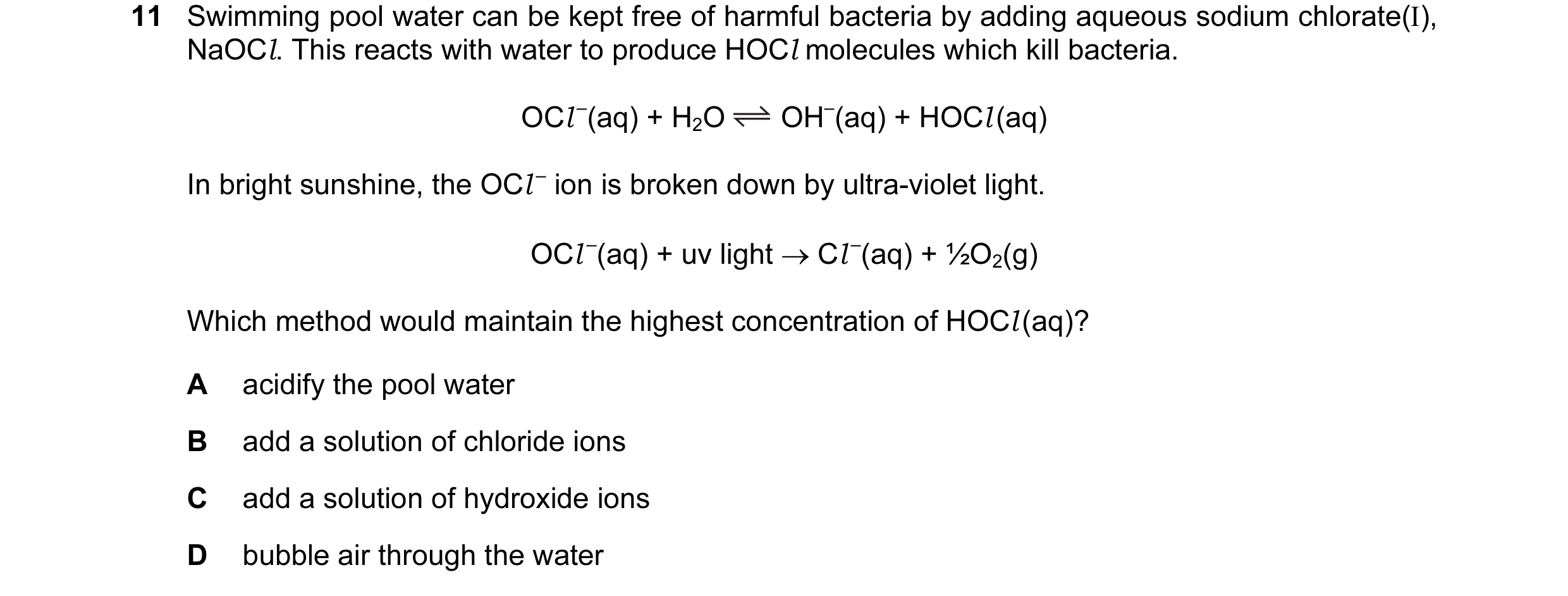

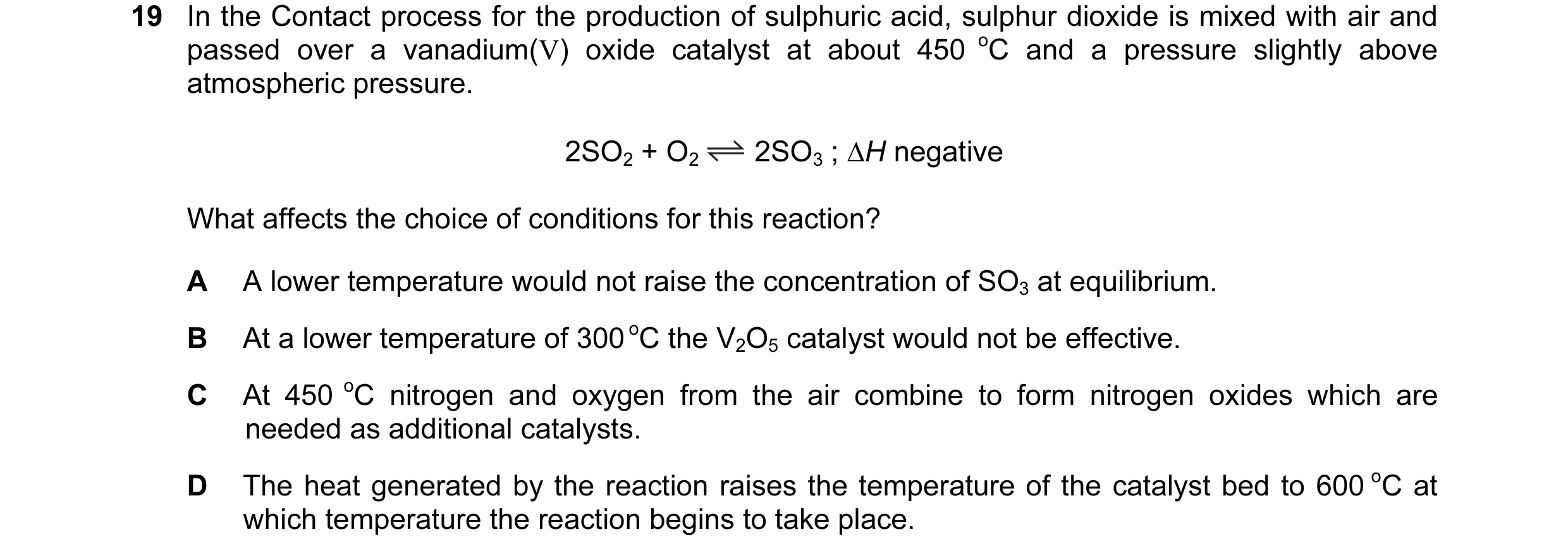
 1 / 59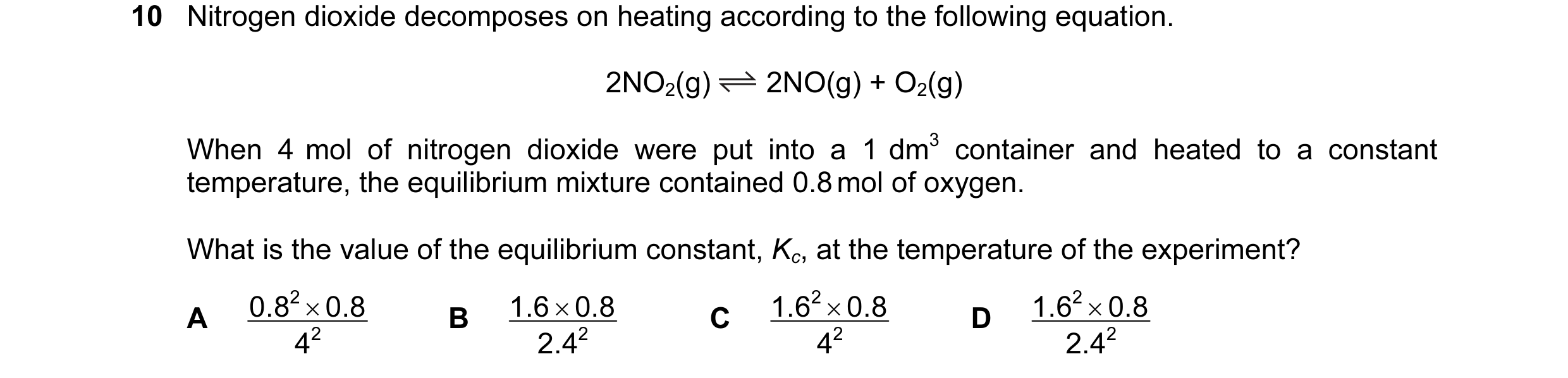
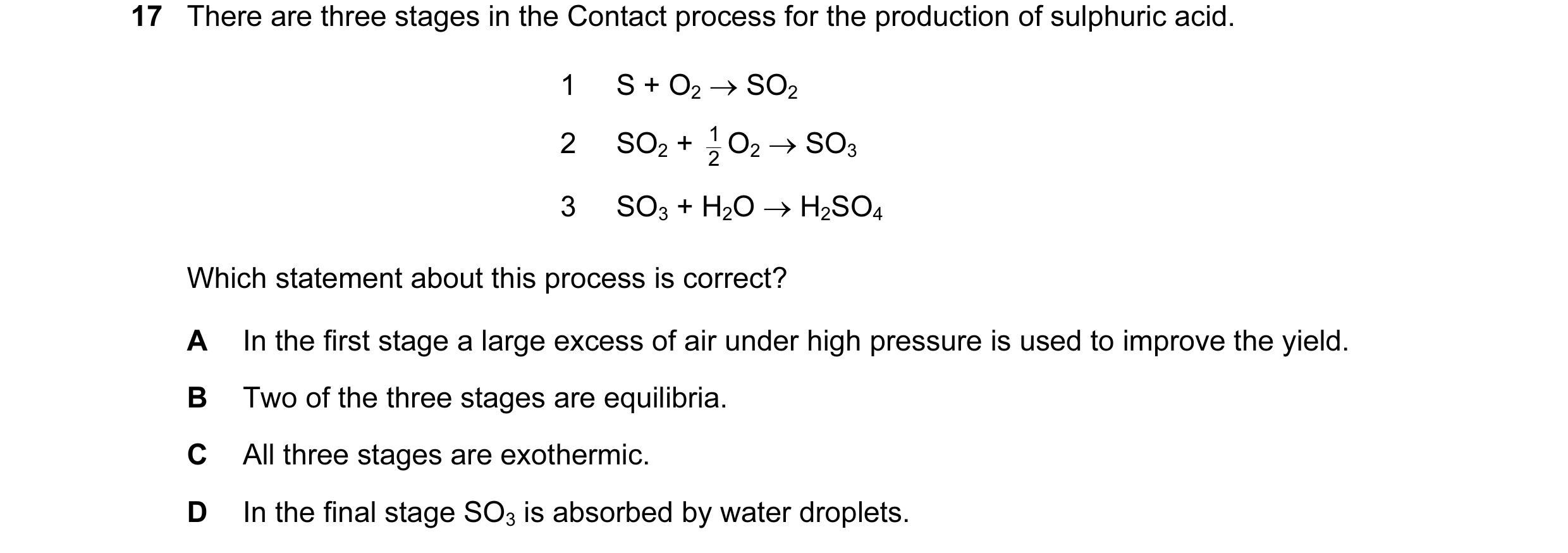
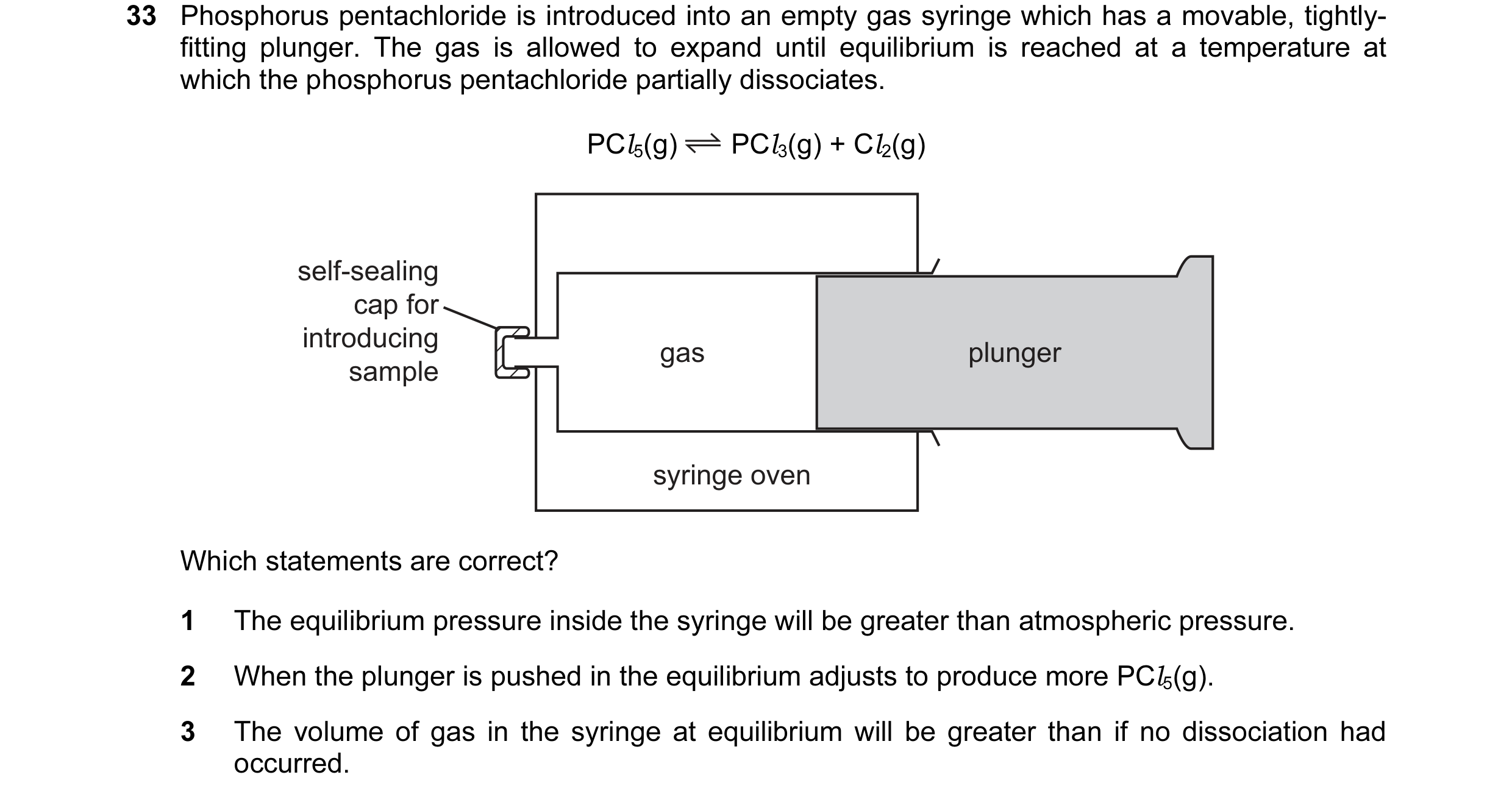
 2 / 59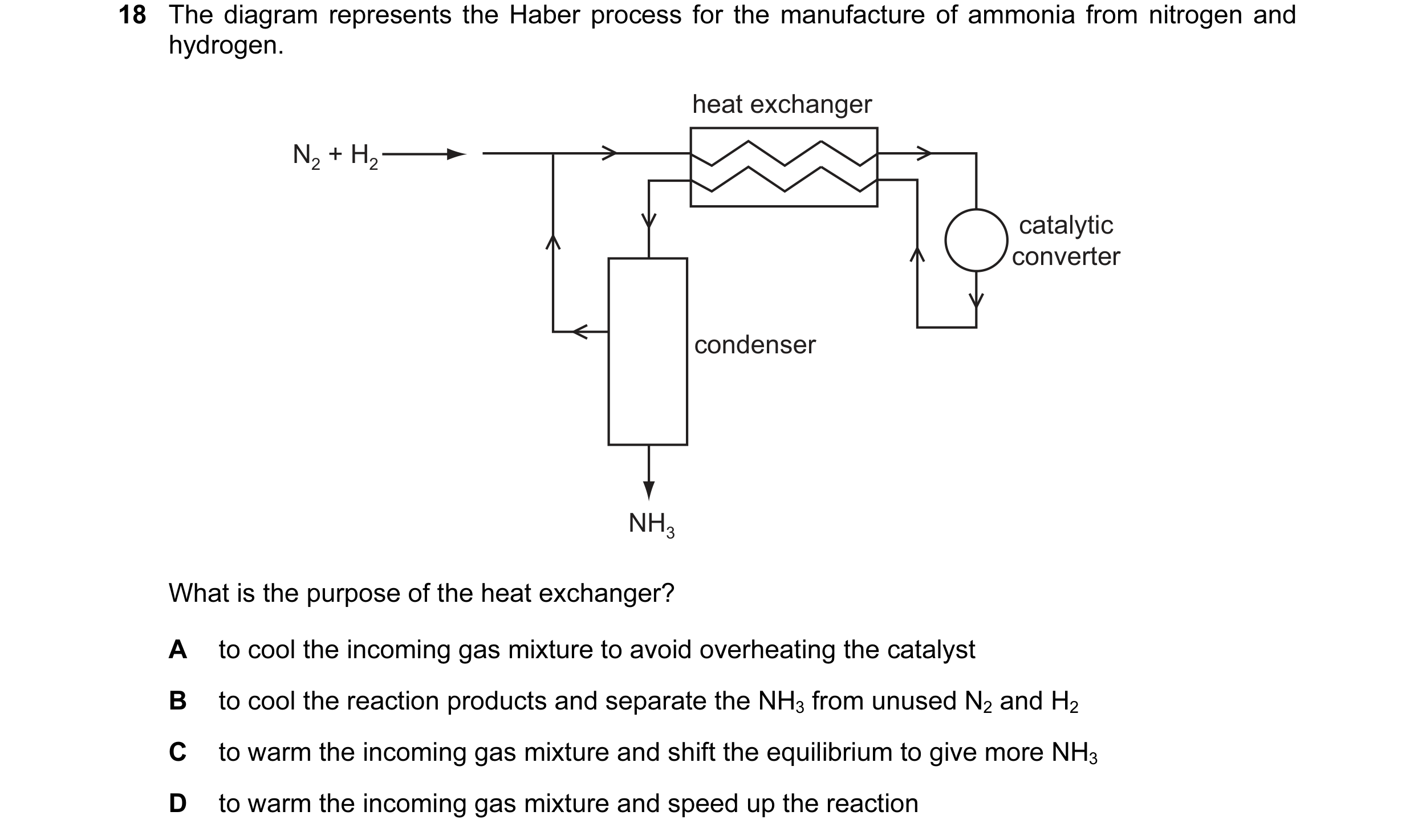
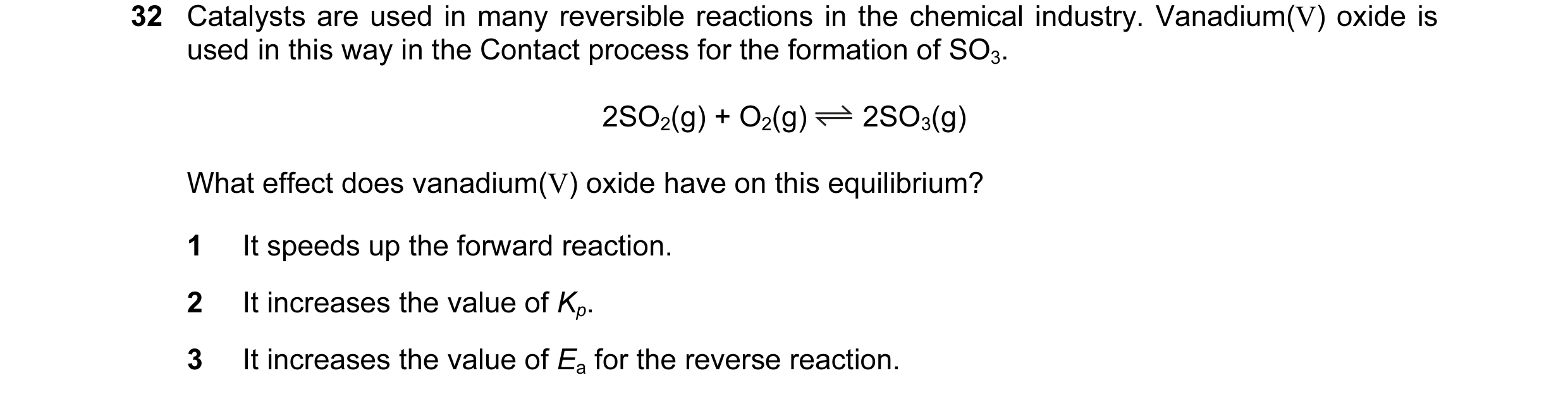

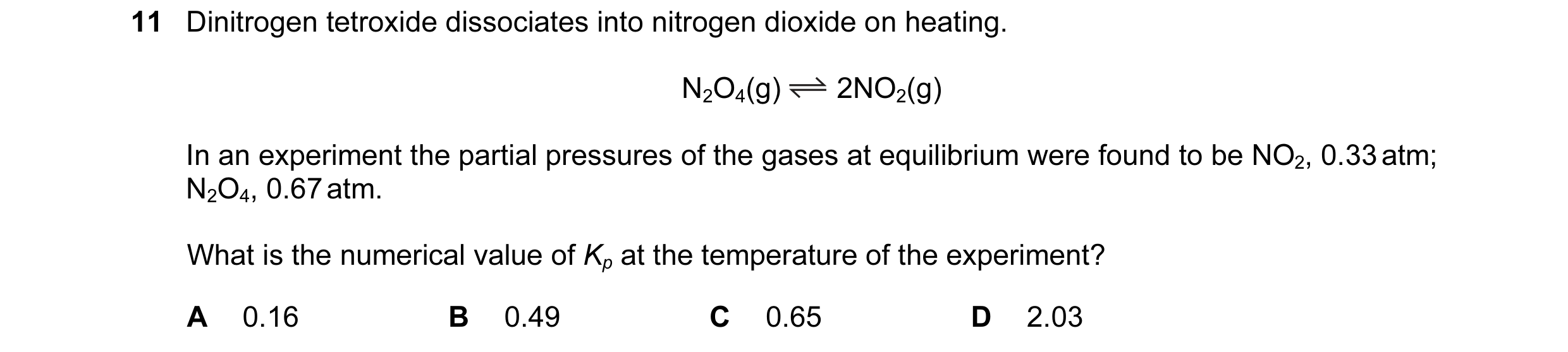 3 / 59
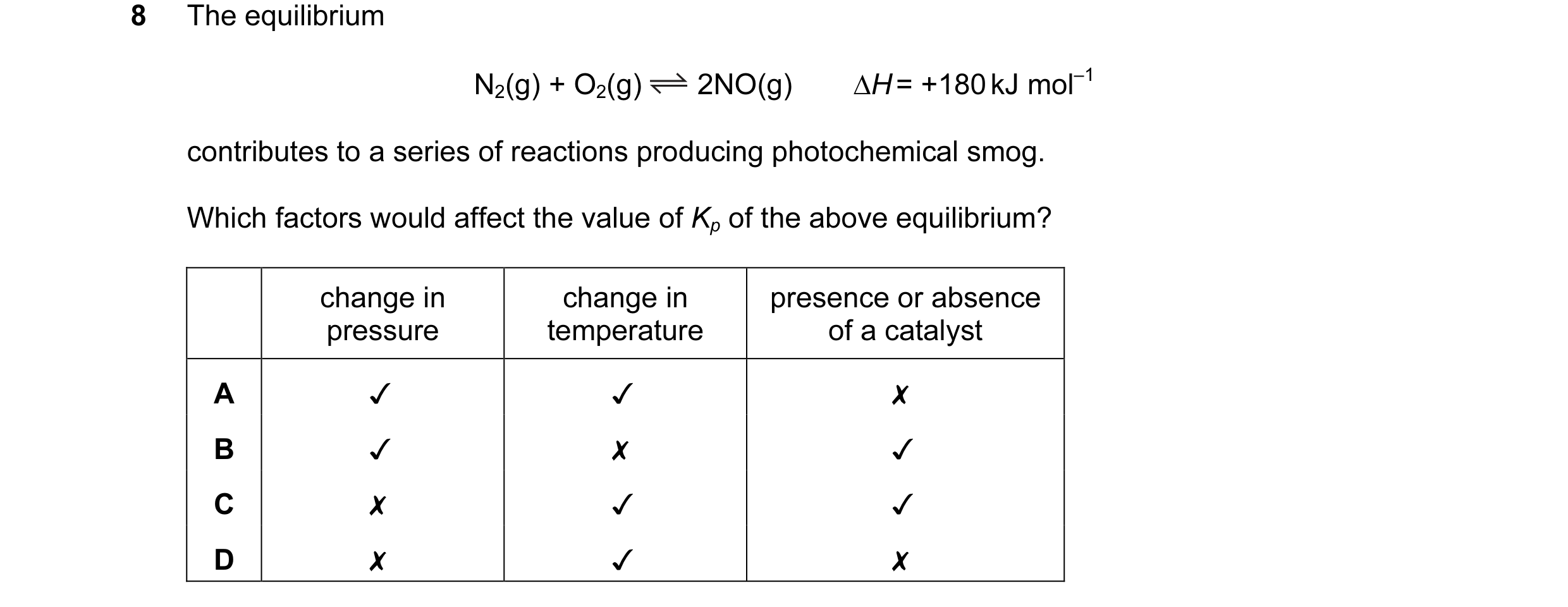
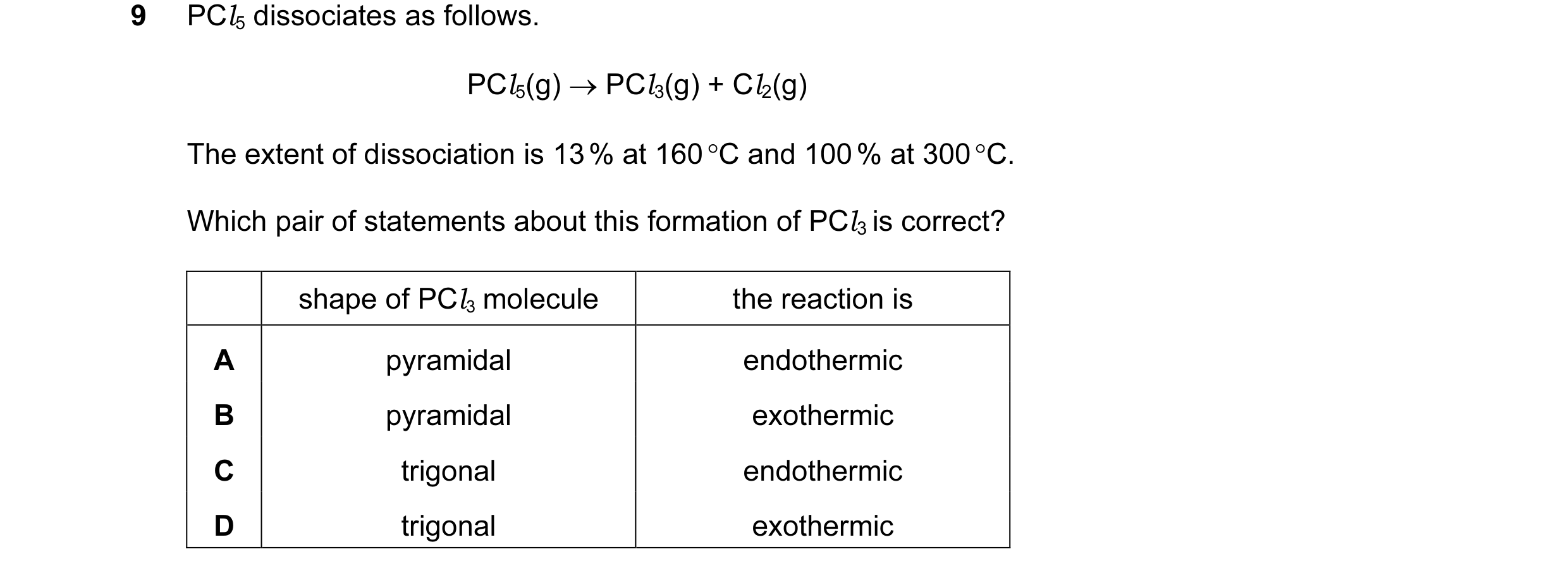 4 / 59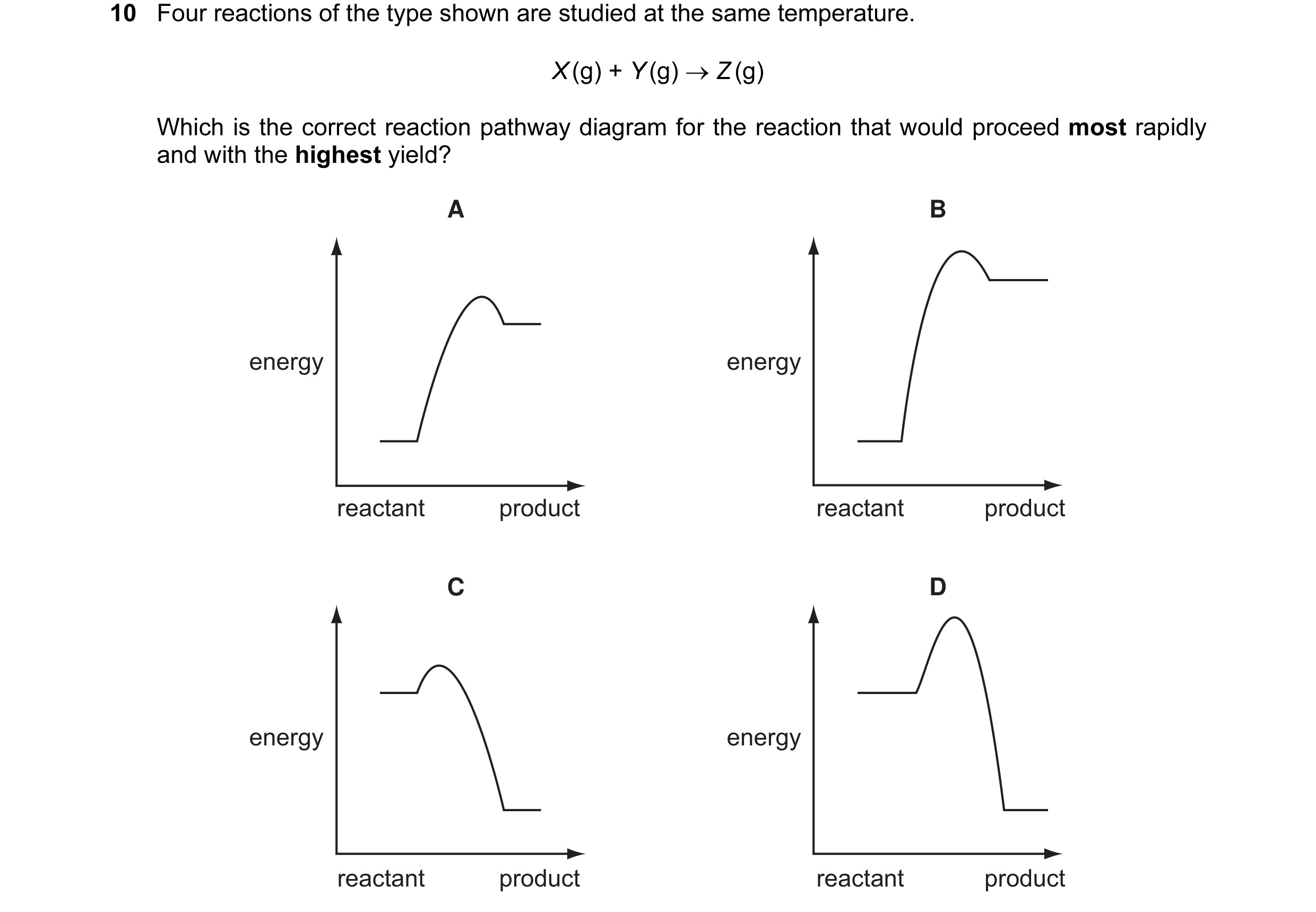

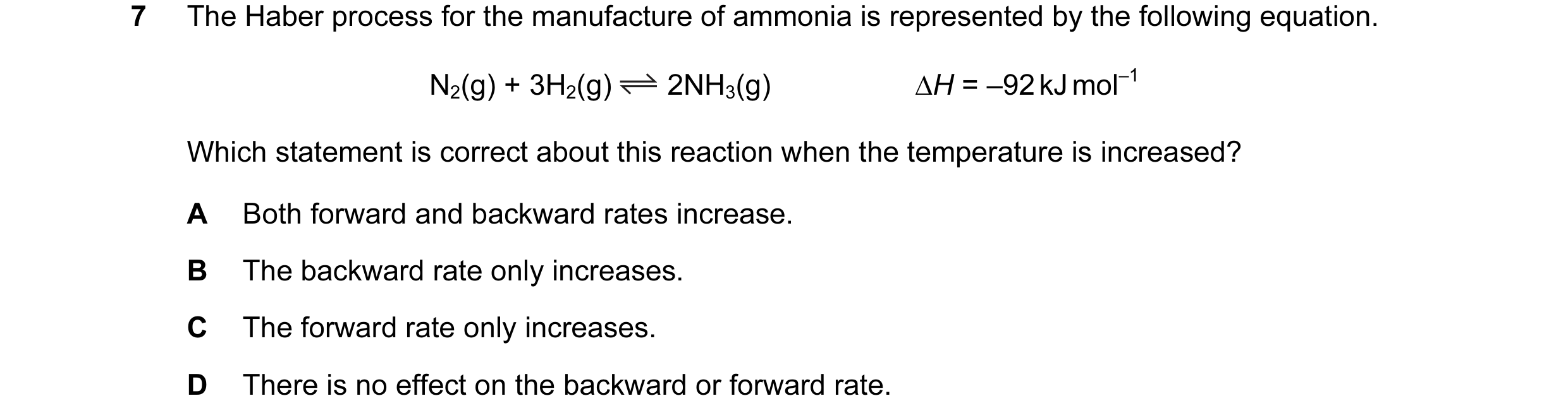 5 / 59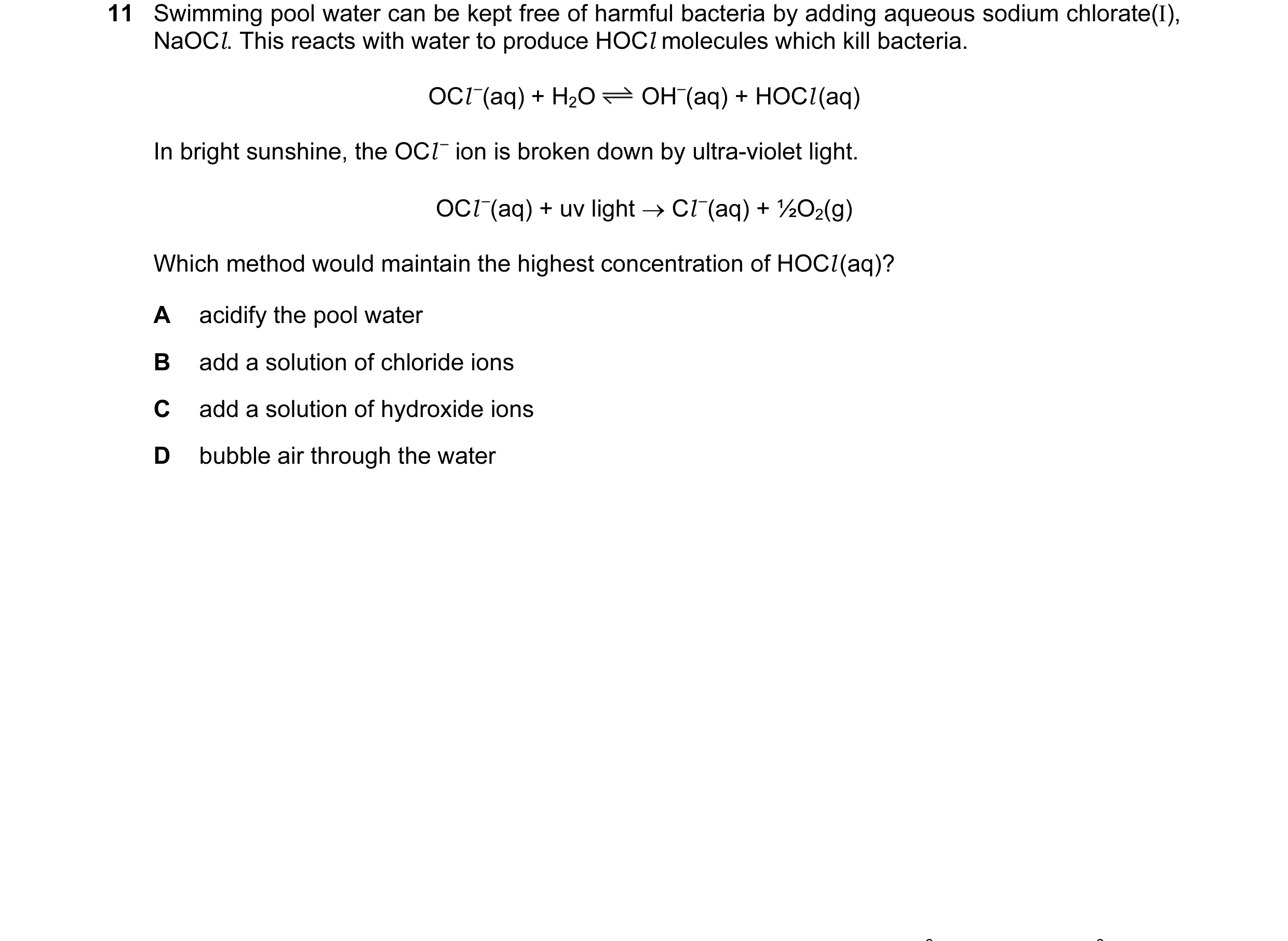
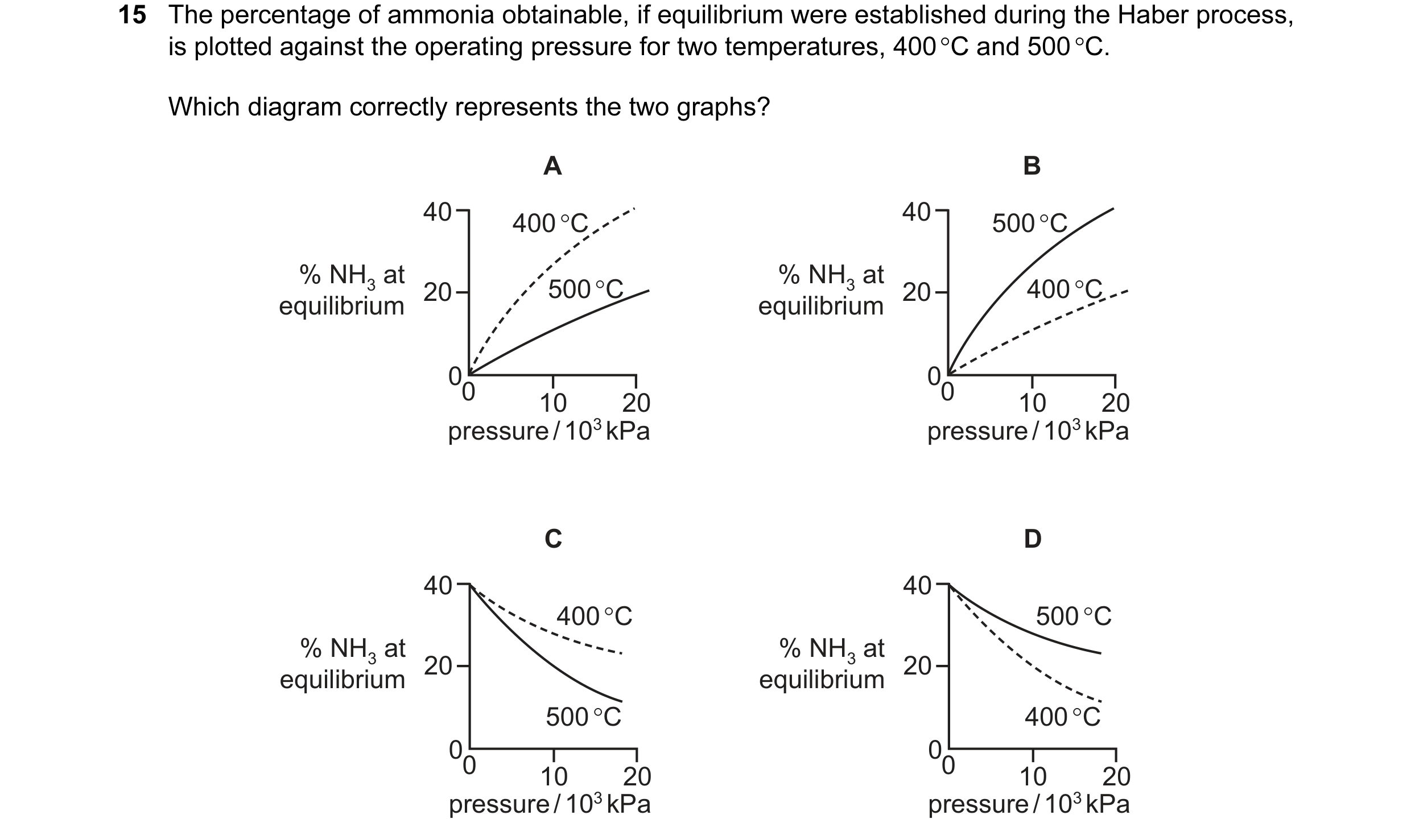 6 / 59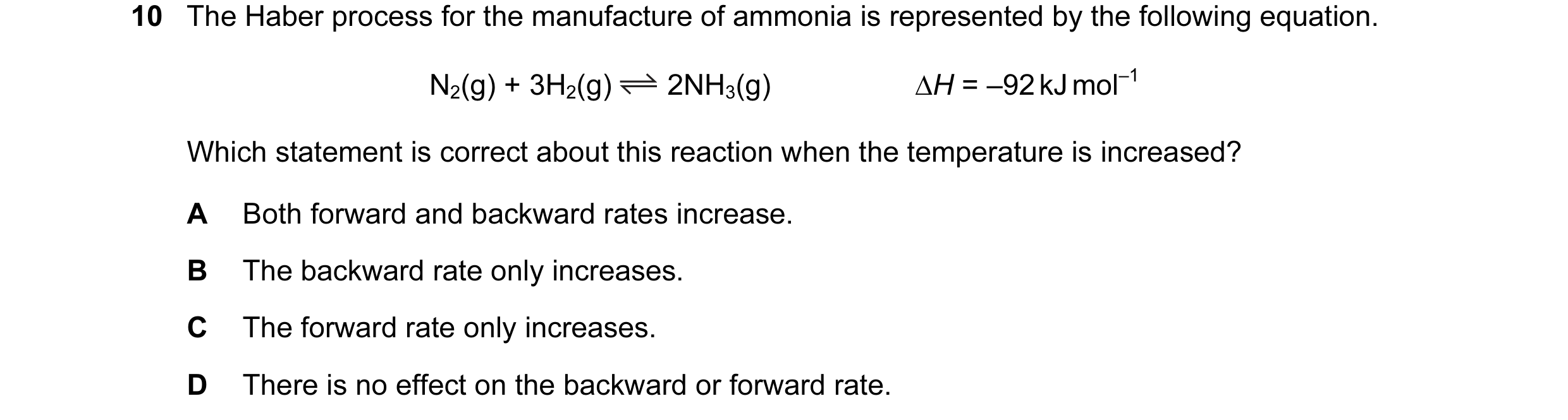
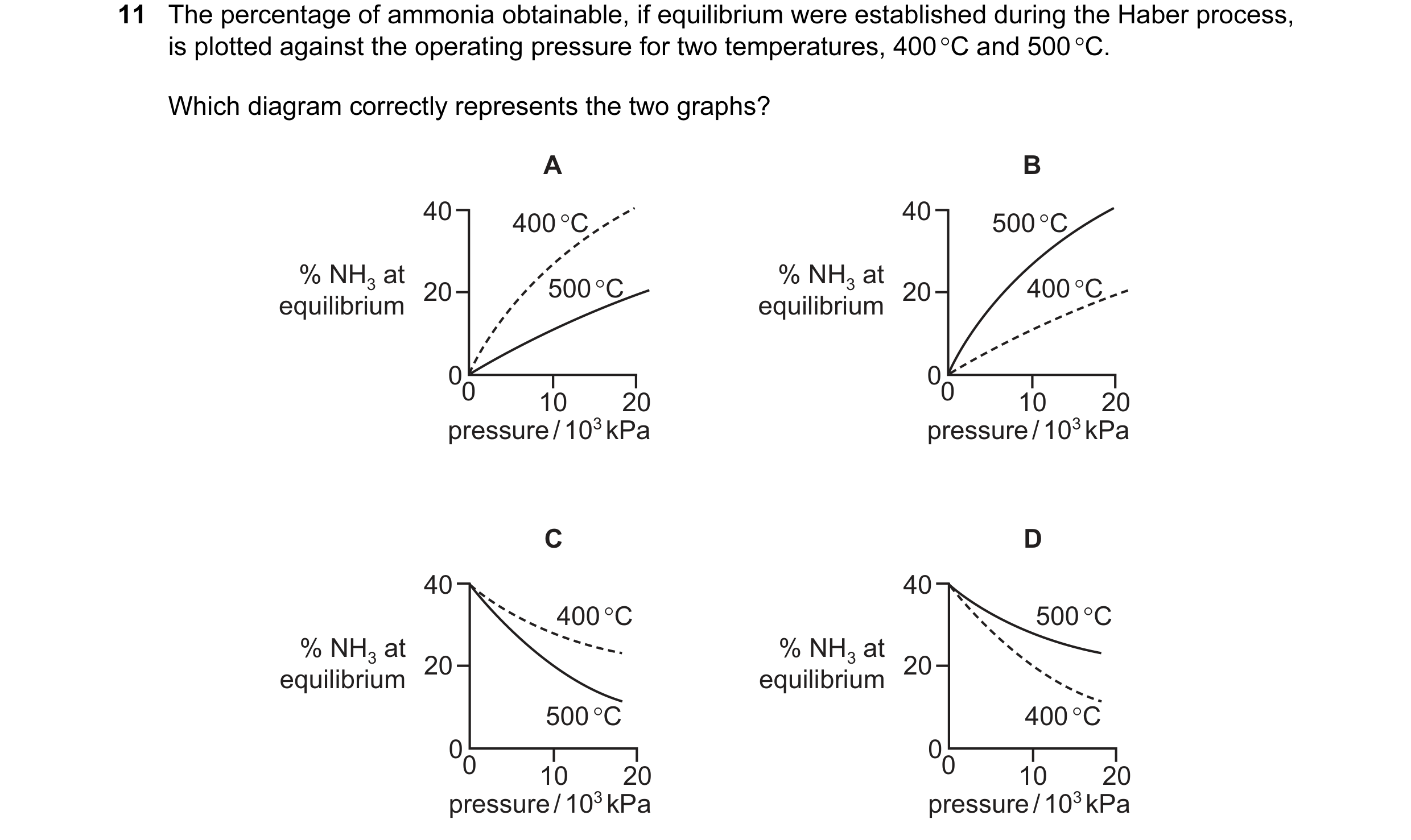
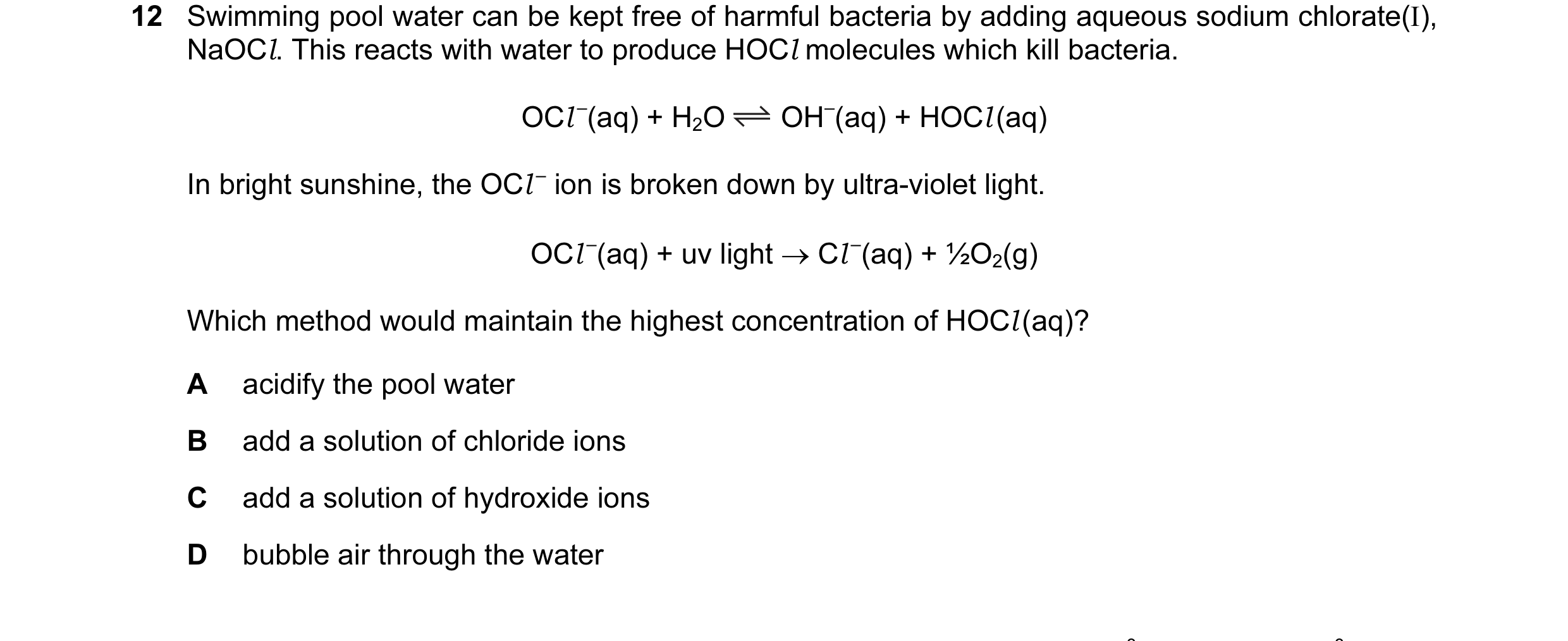 7 / 59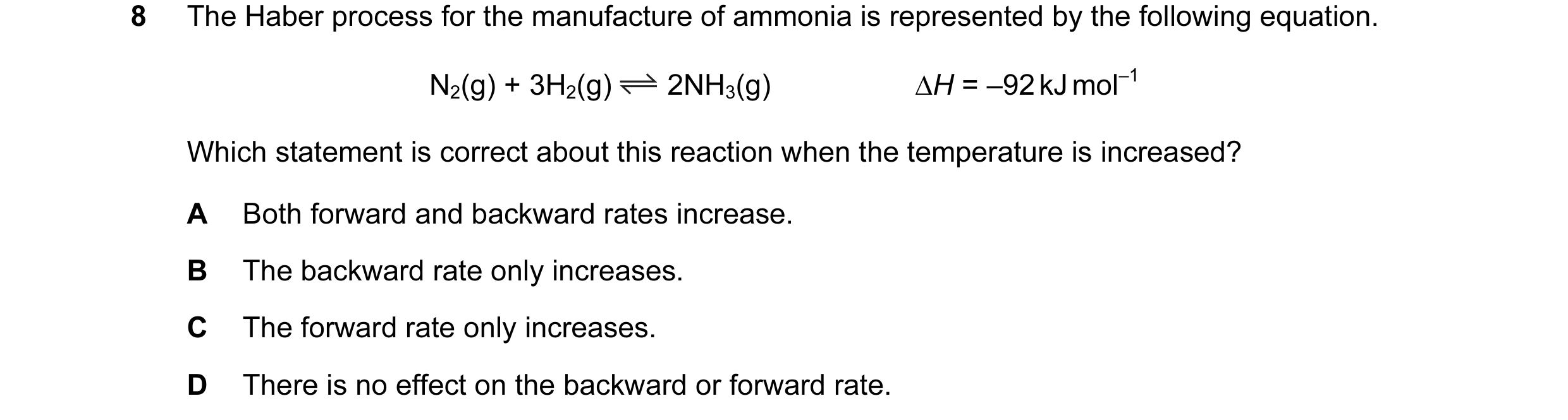
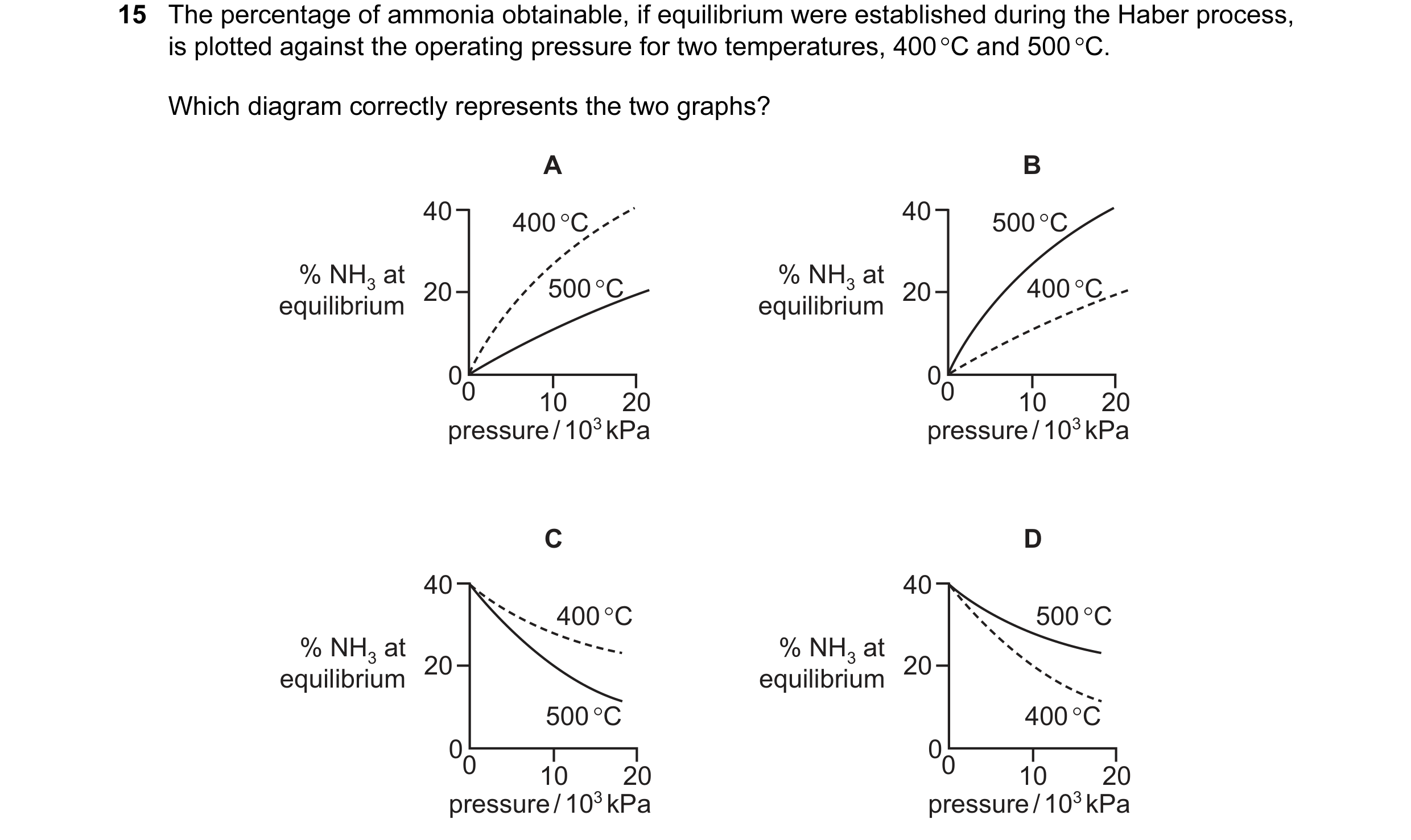 8 / 59
 9 / 59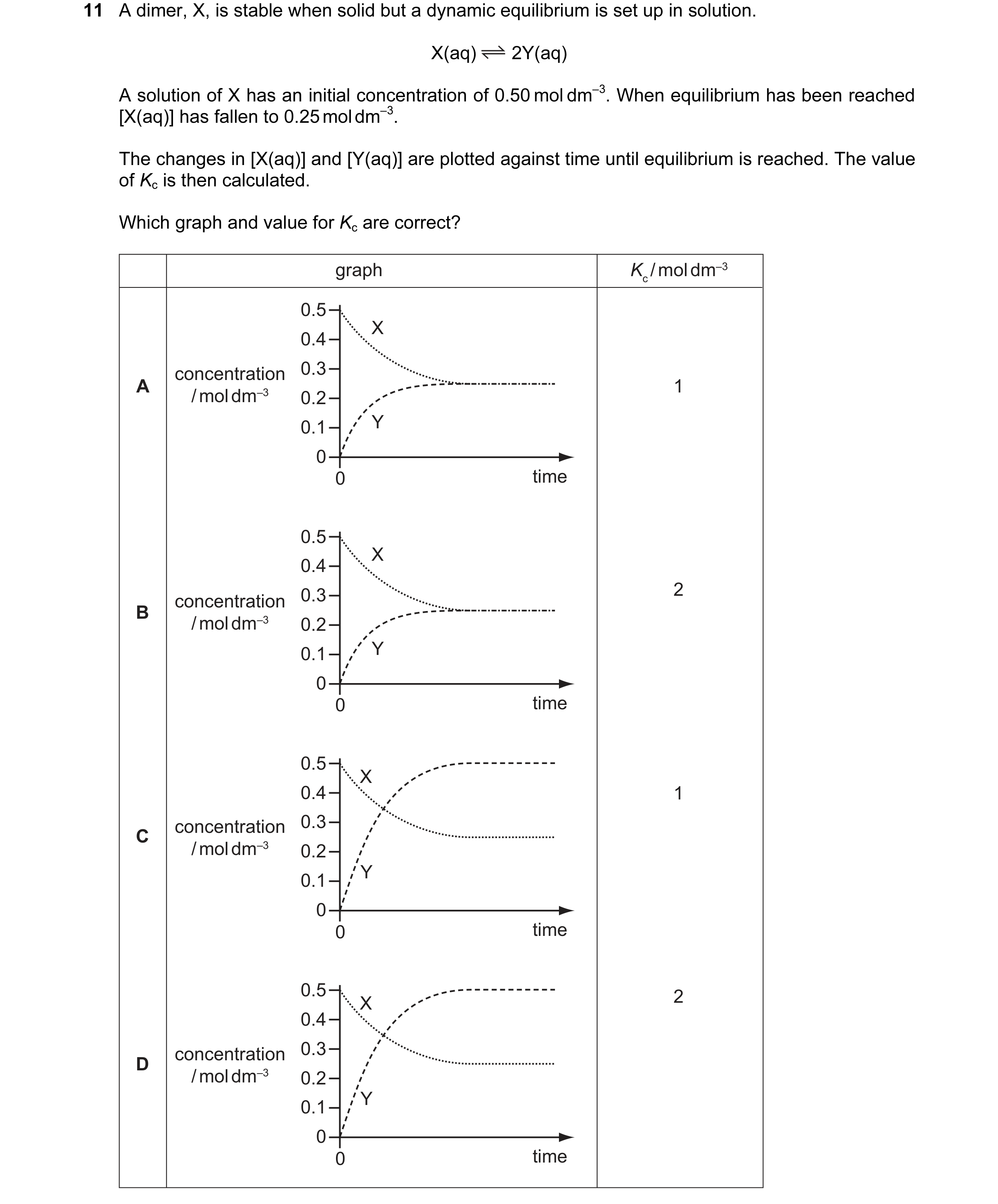
 10 / 59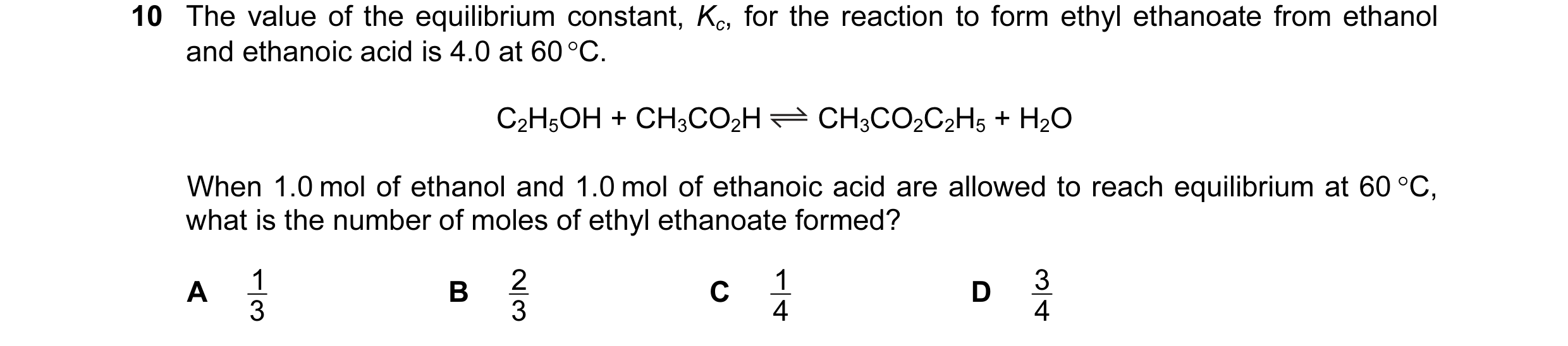
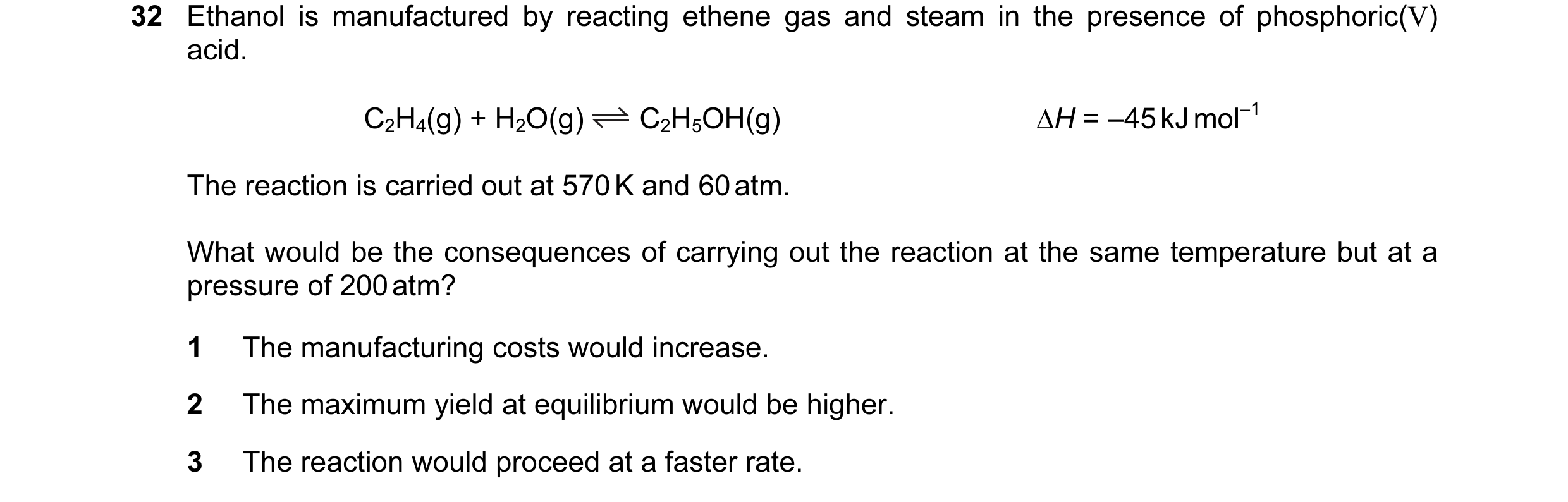
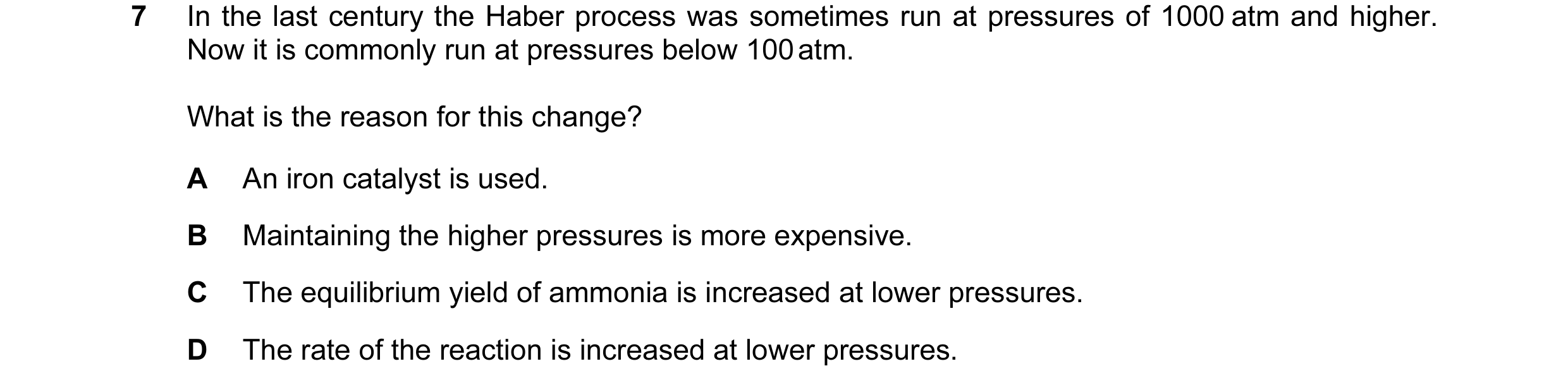
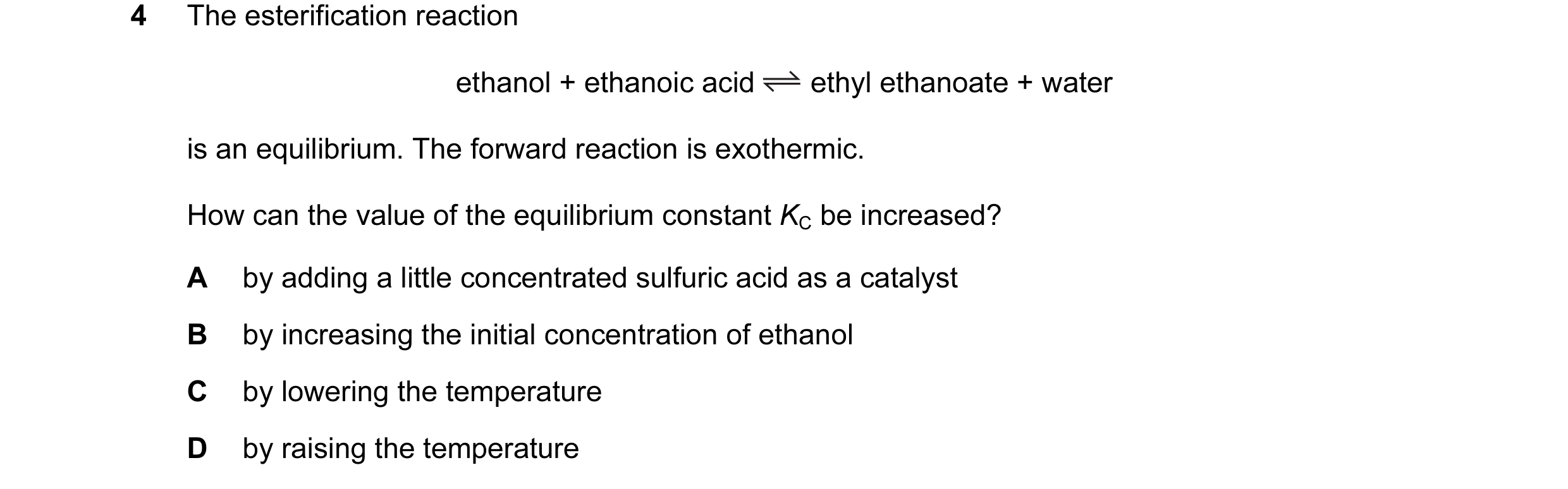 11 / 59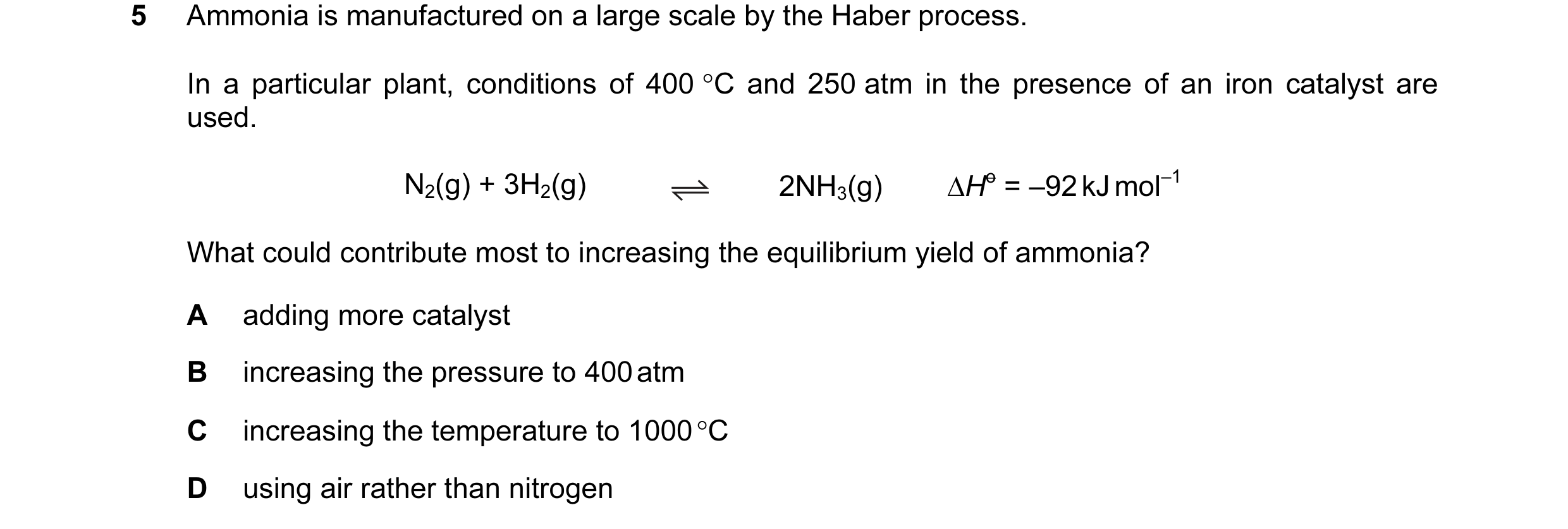
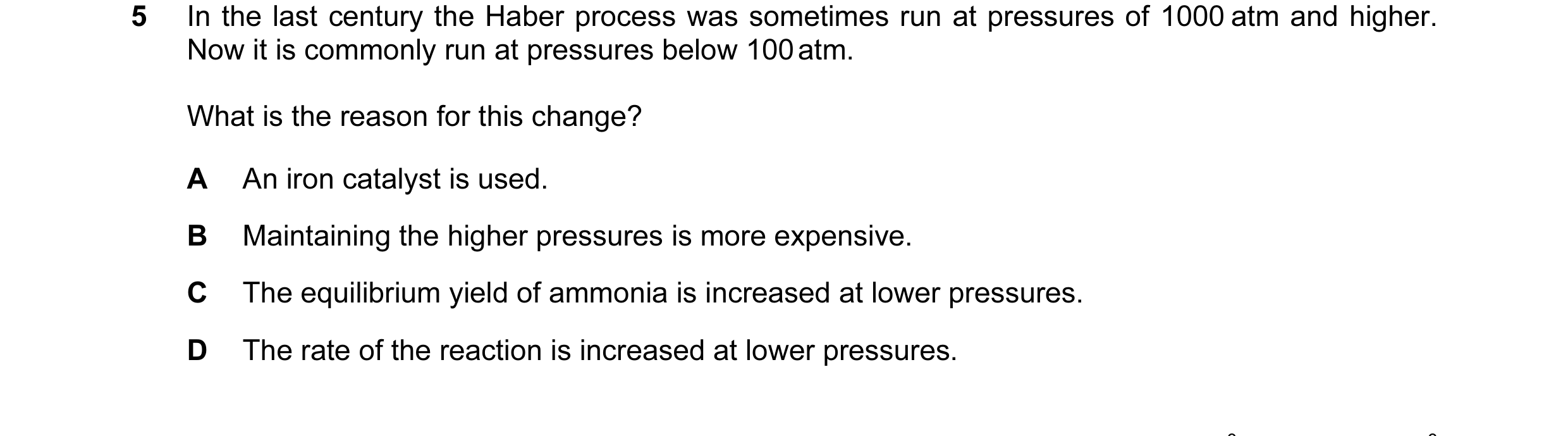

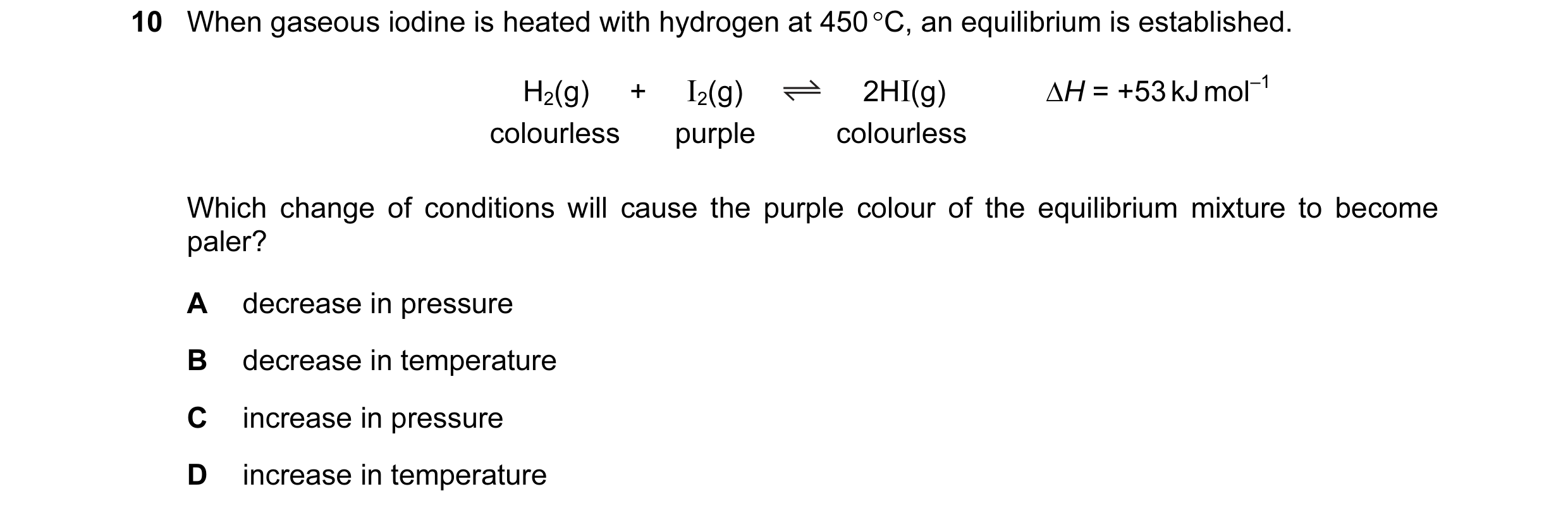
 12 / 59
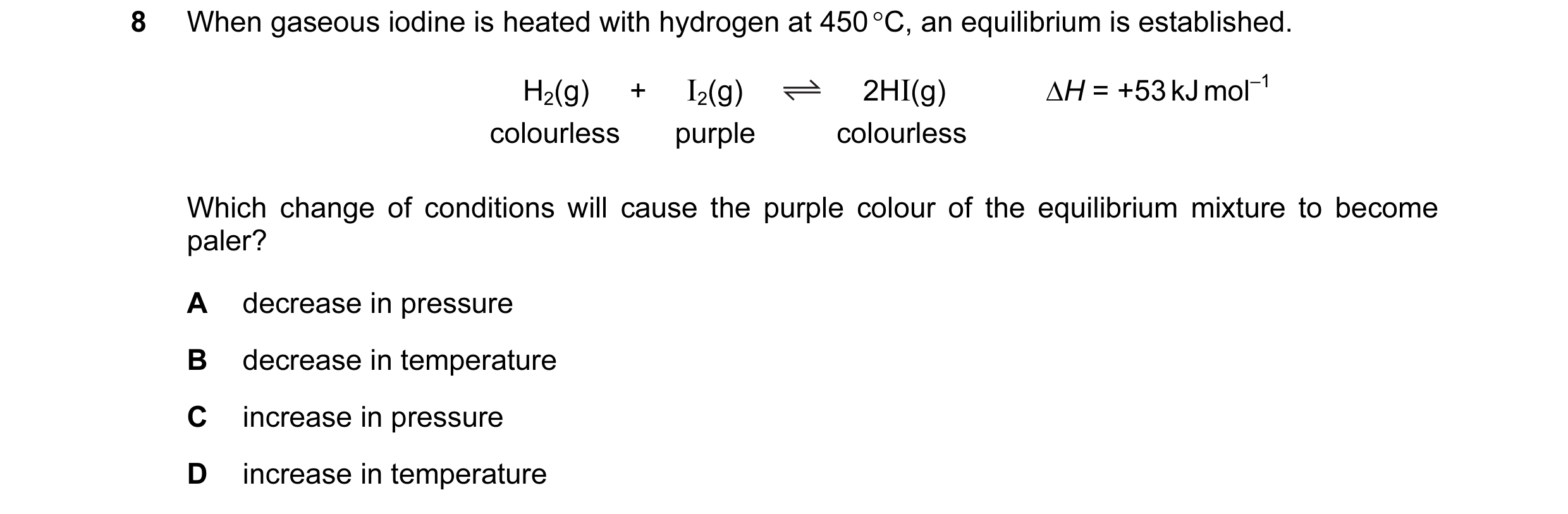

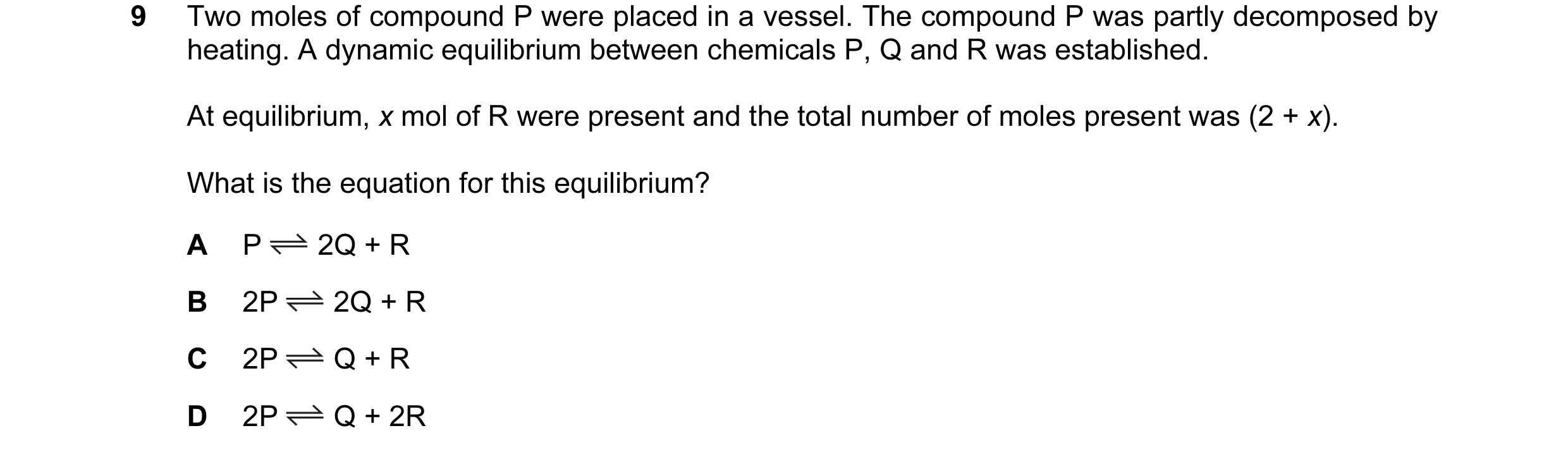
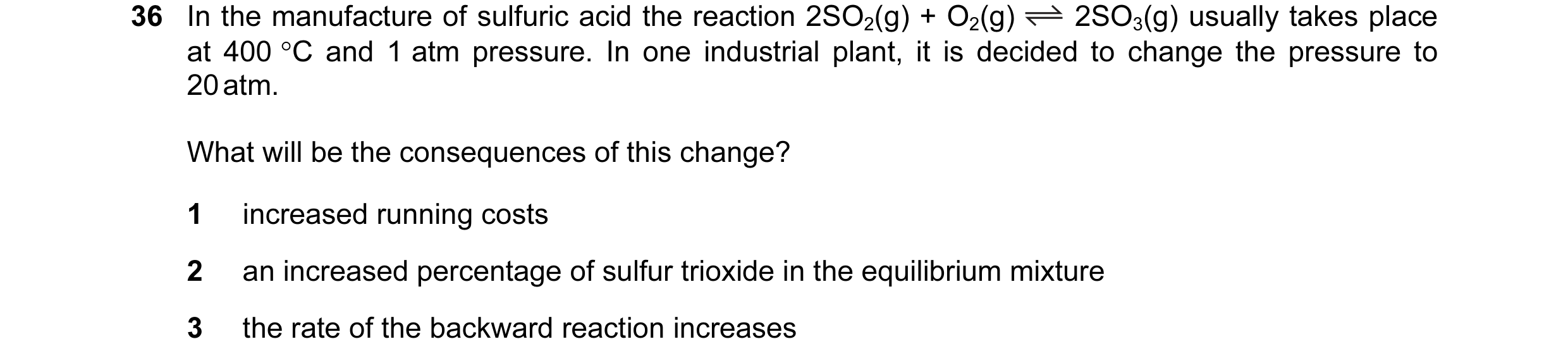 13 / 59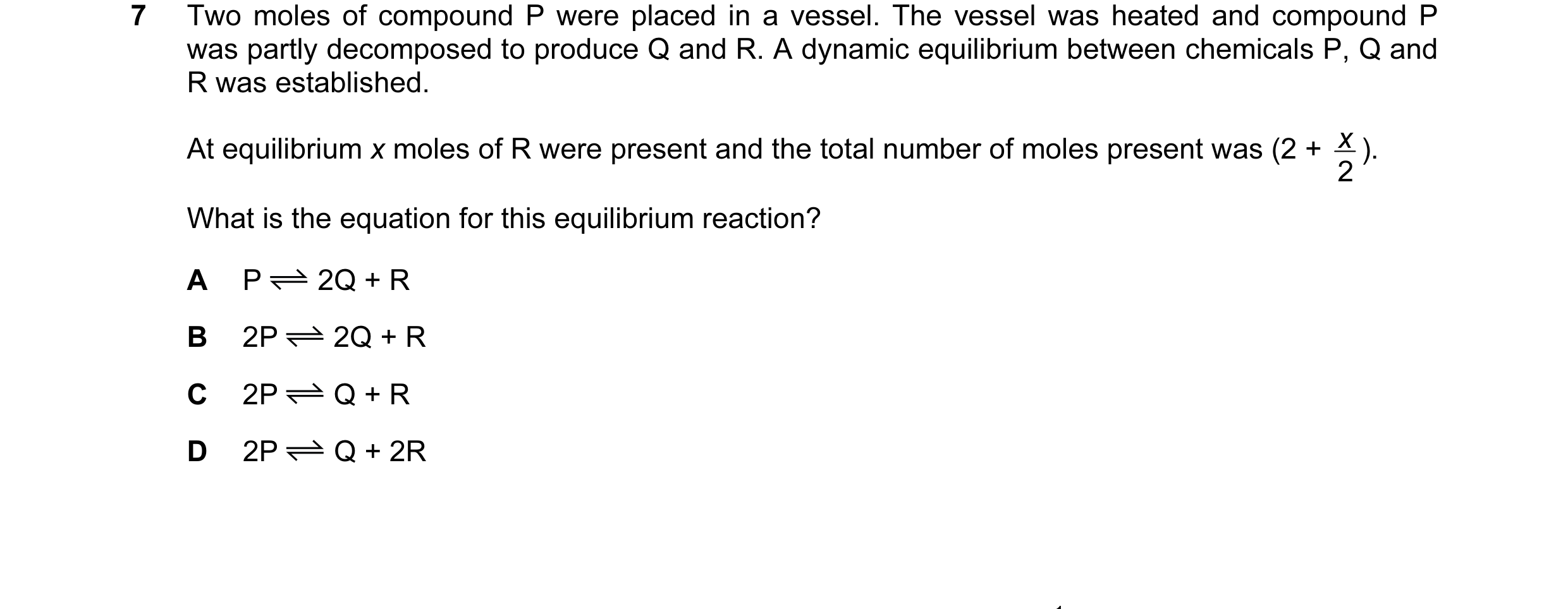
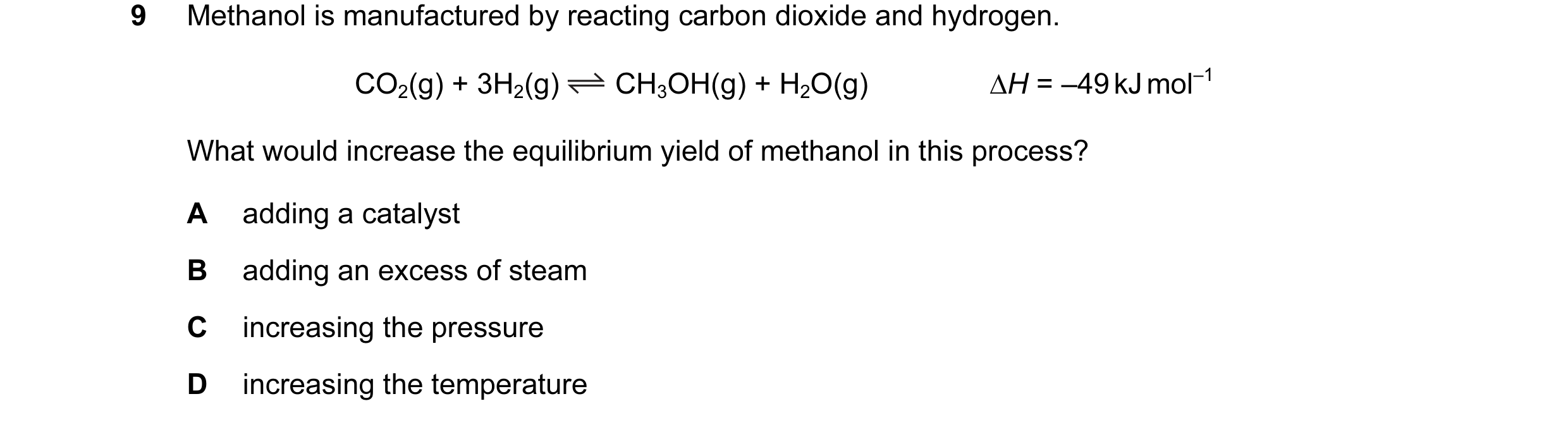

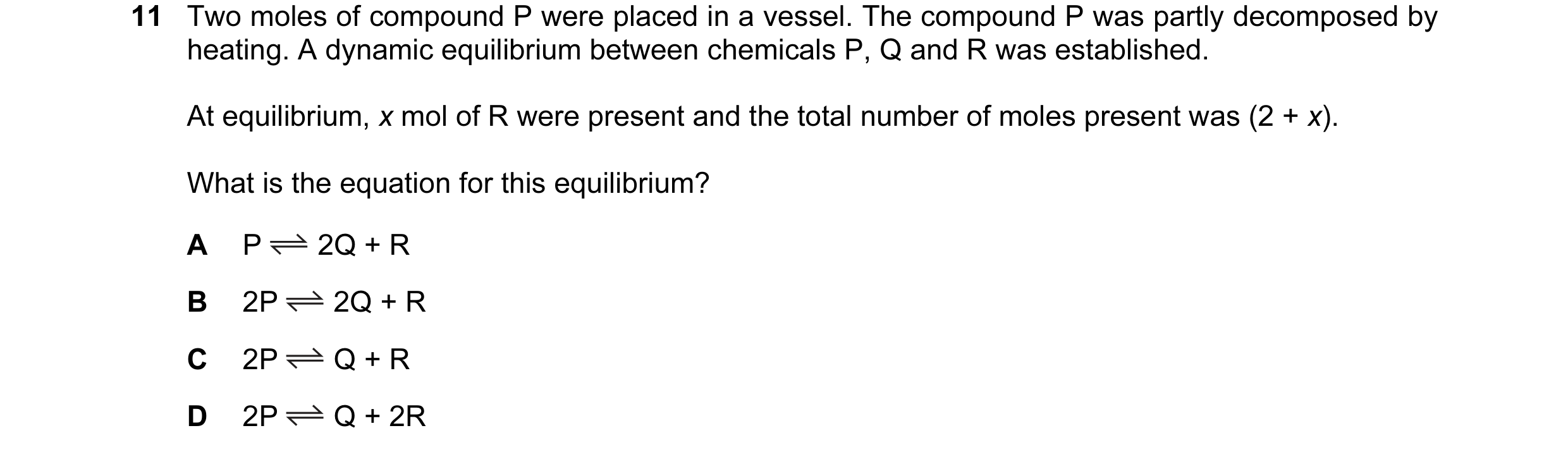 14 / 59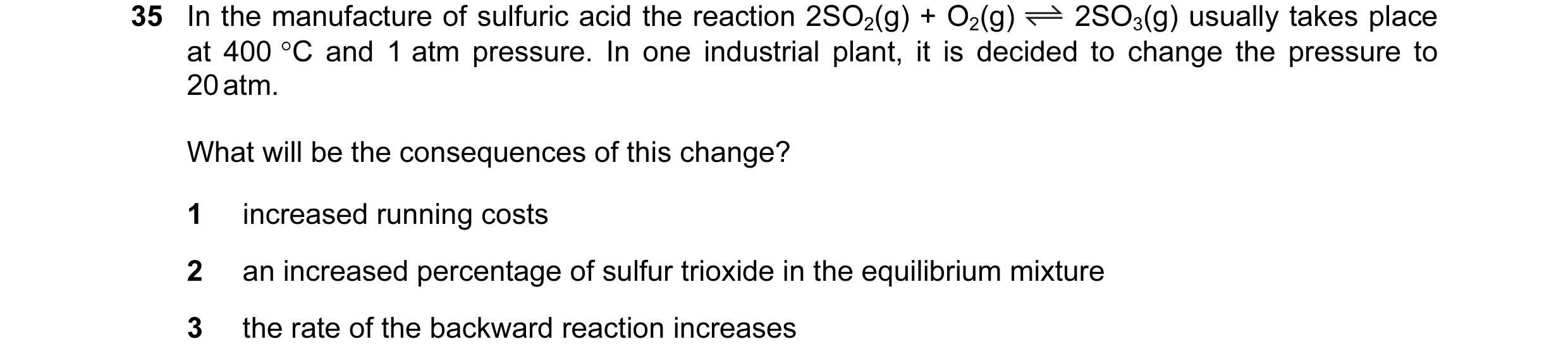
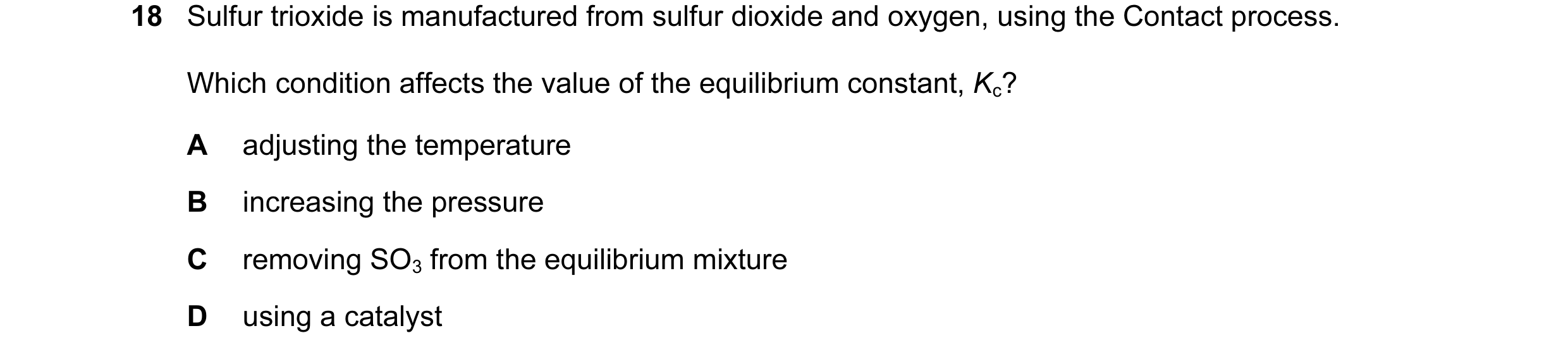
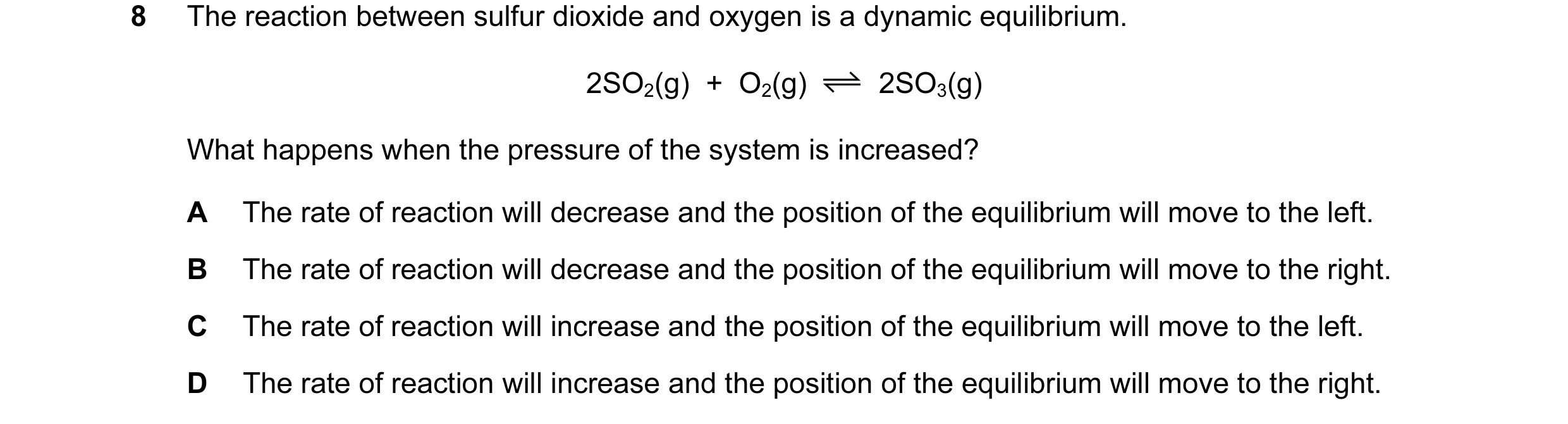
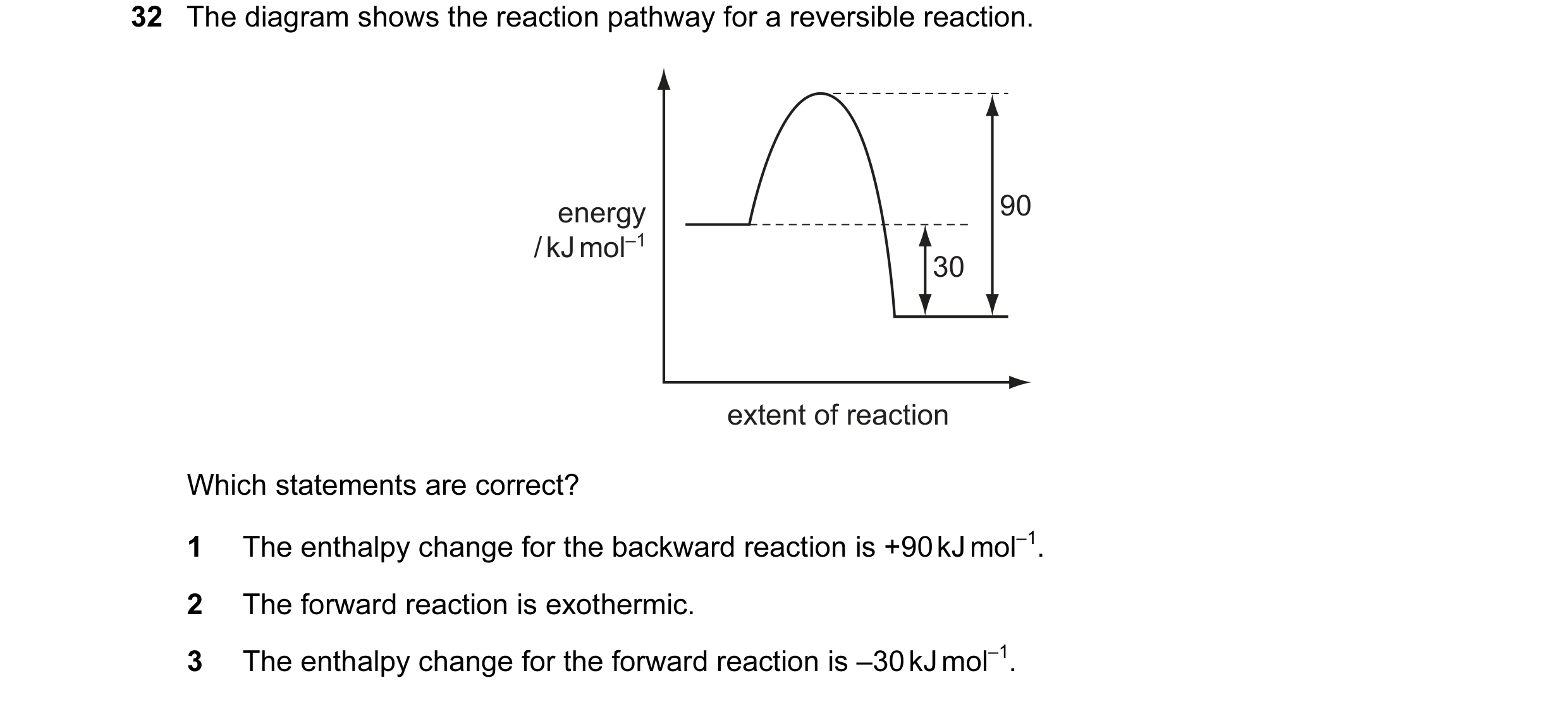 15 / 59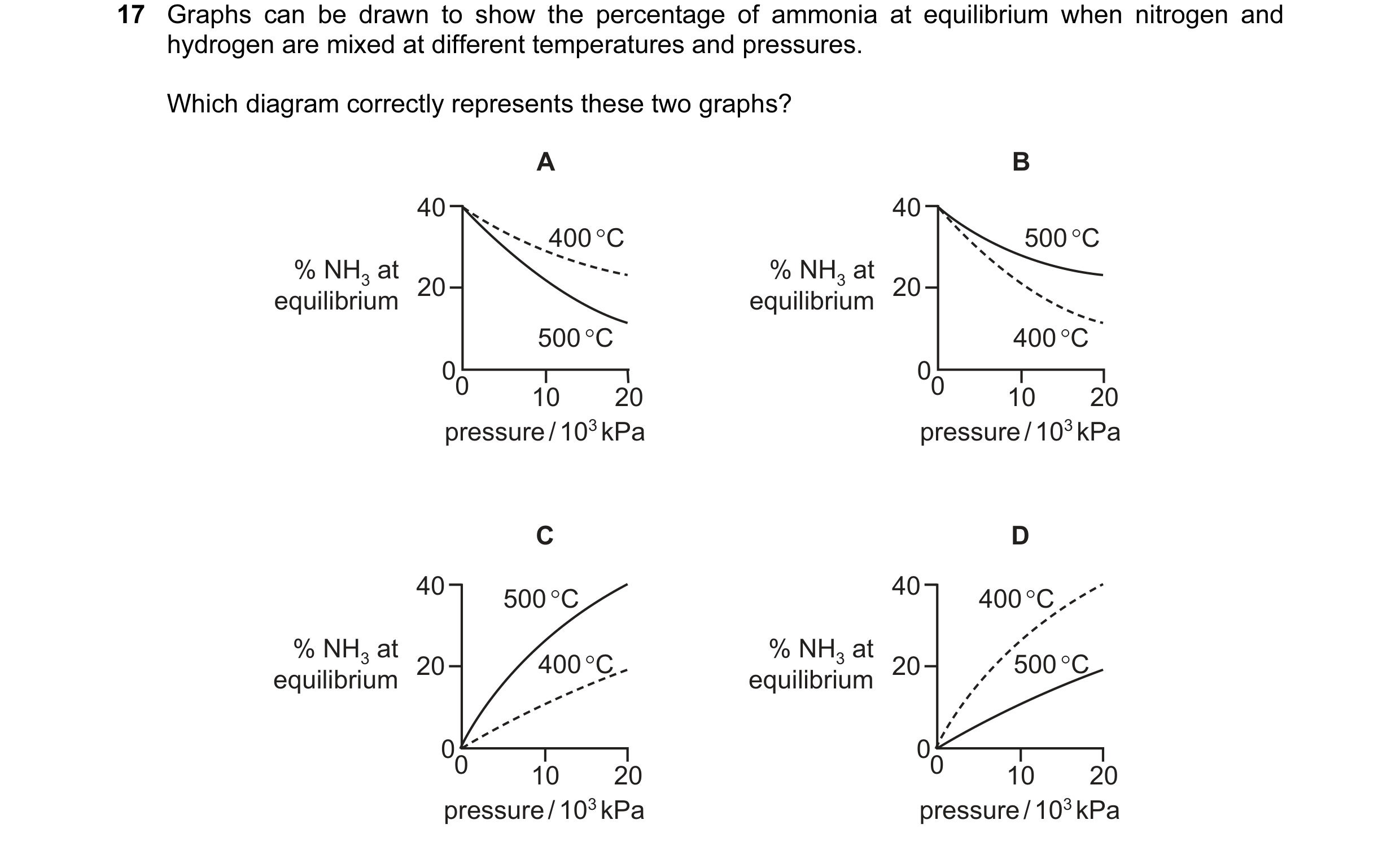
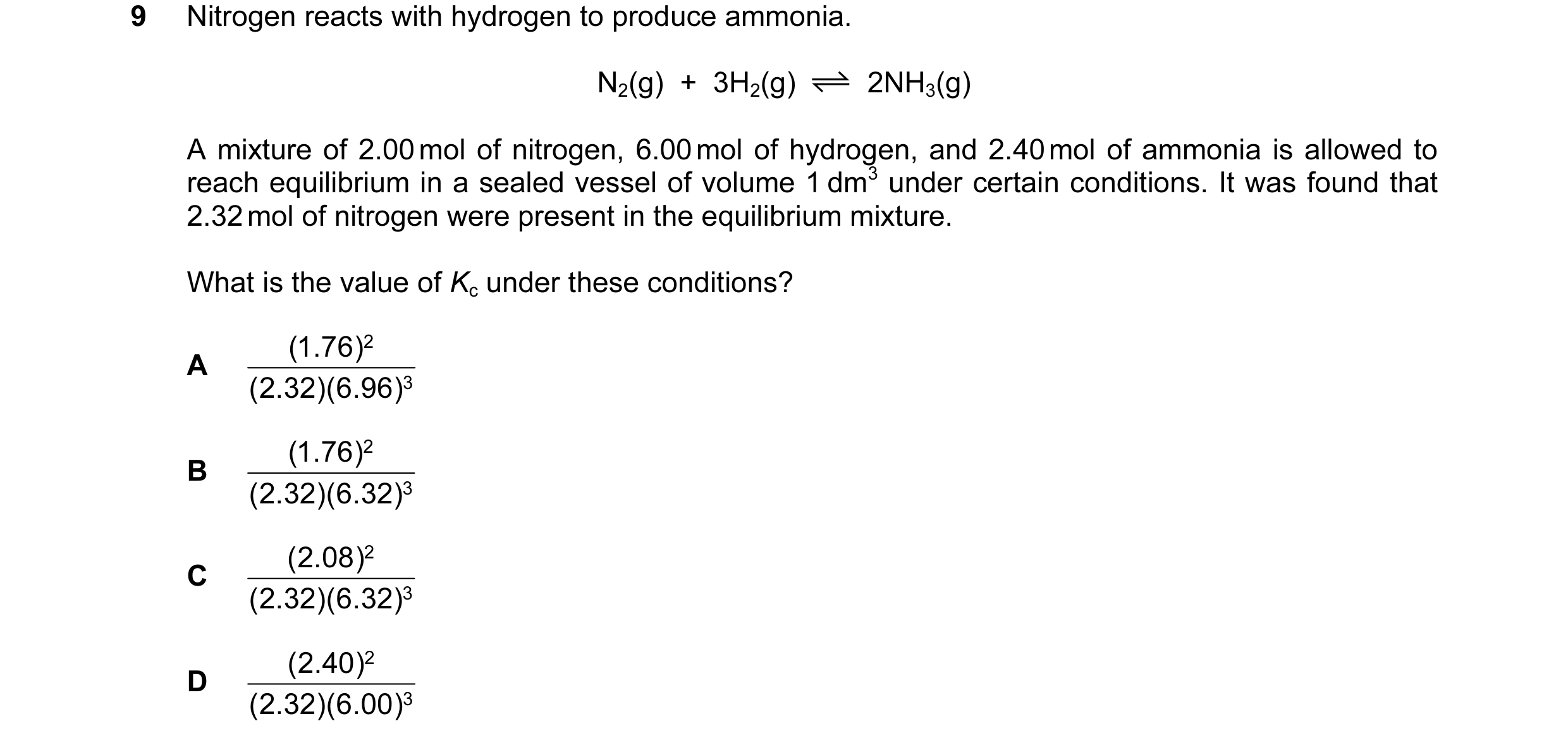
 16 / 59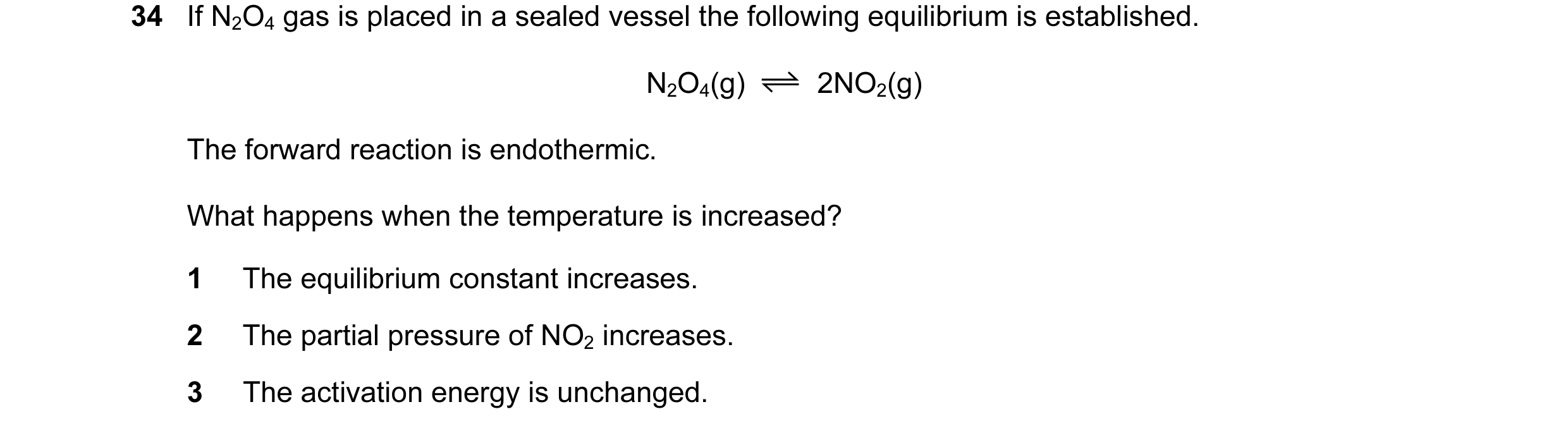
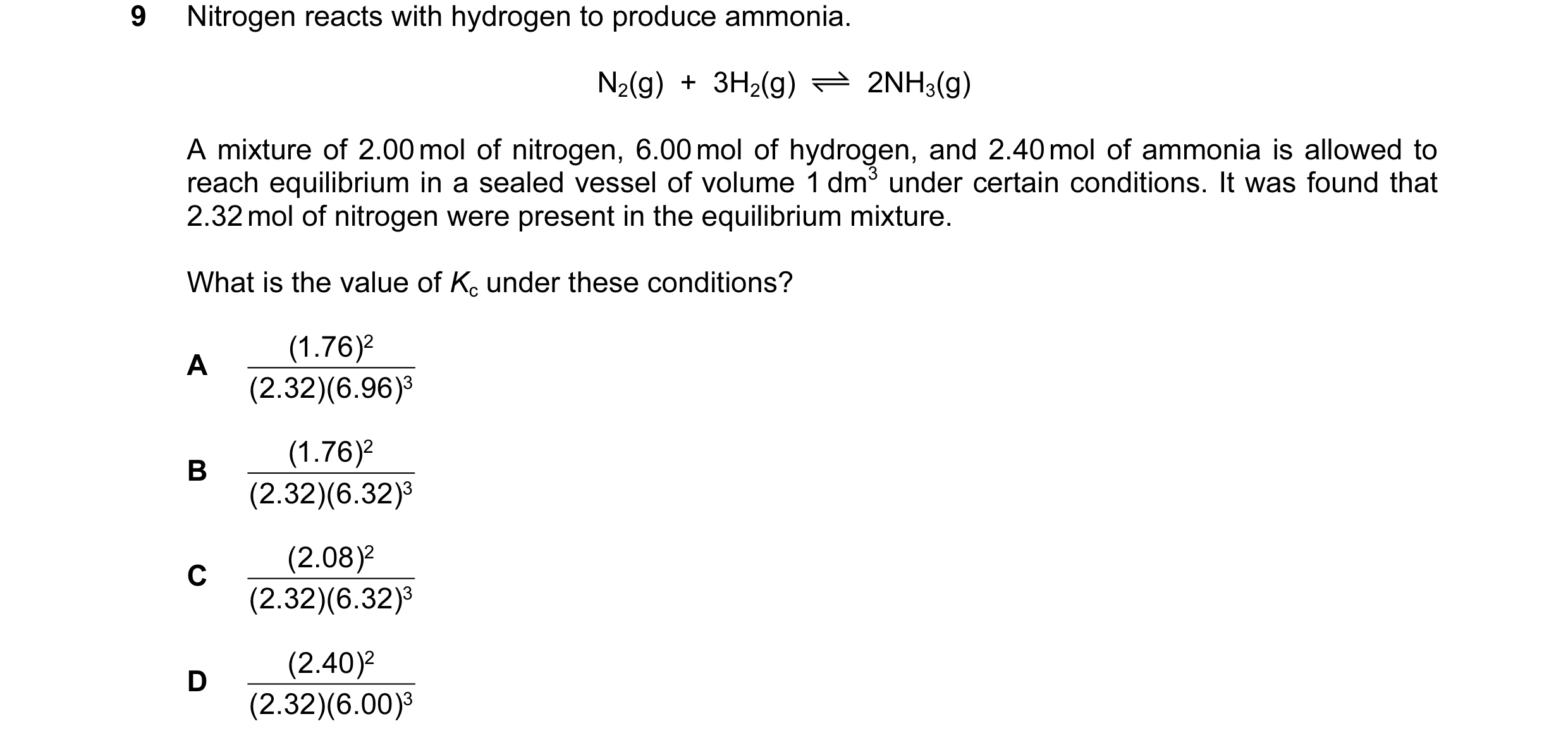

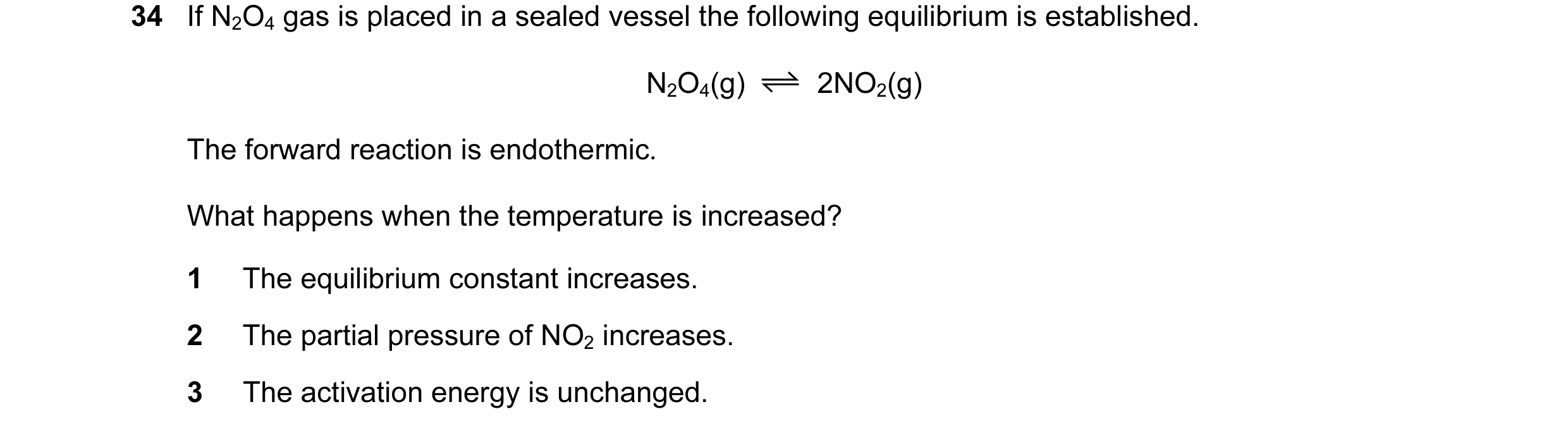 17 / 59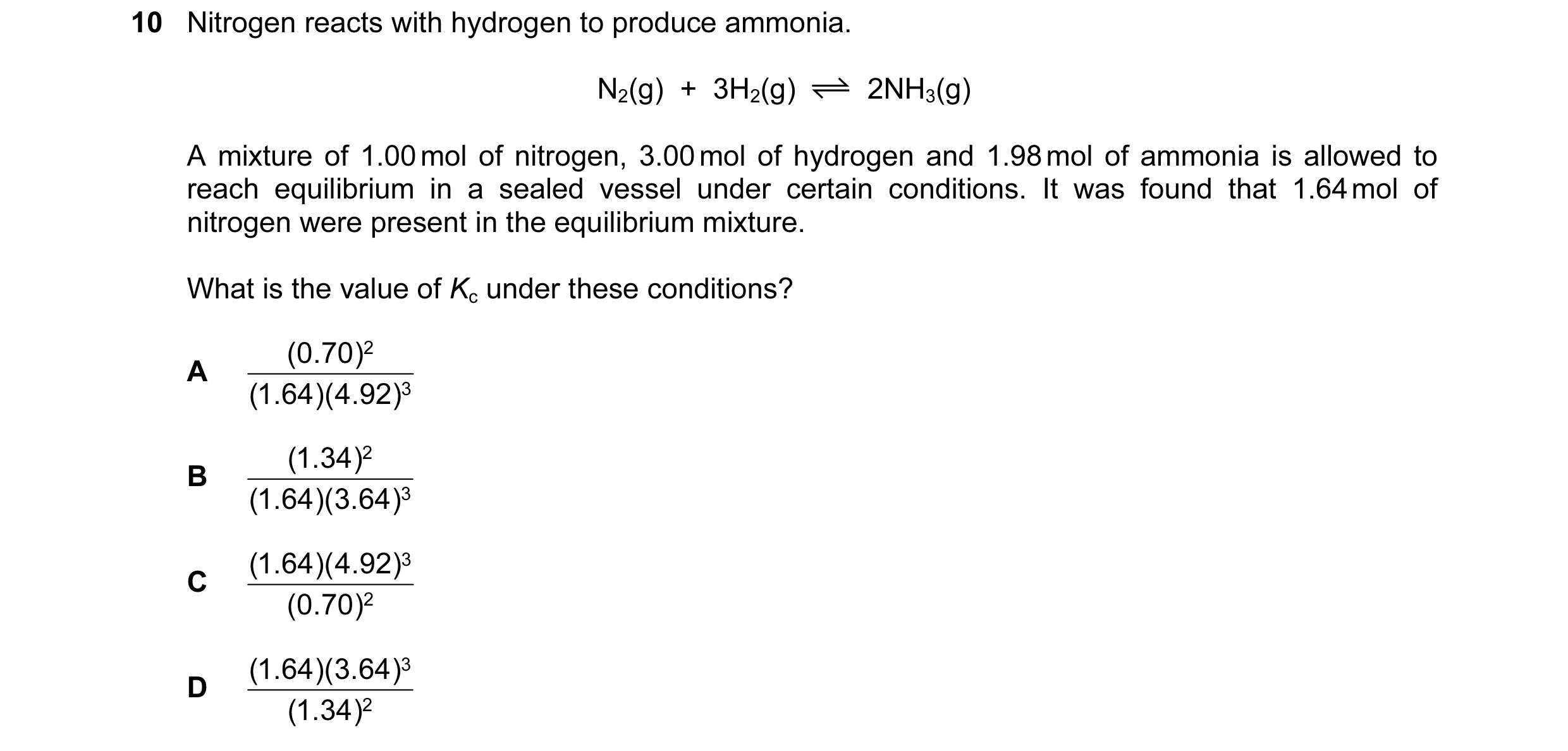
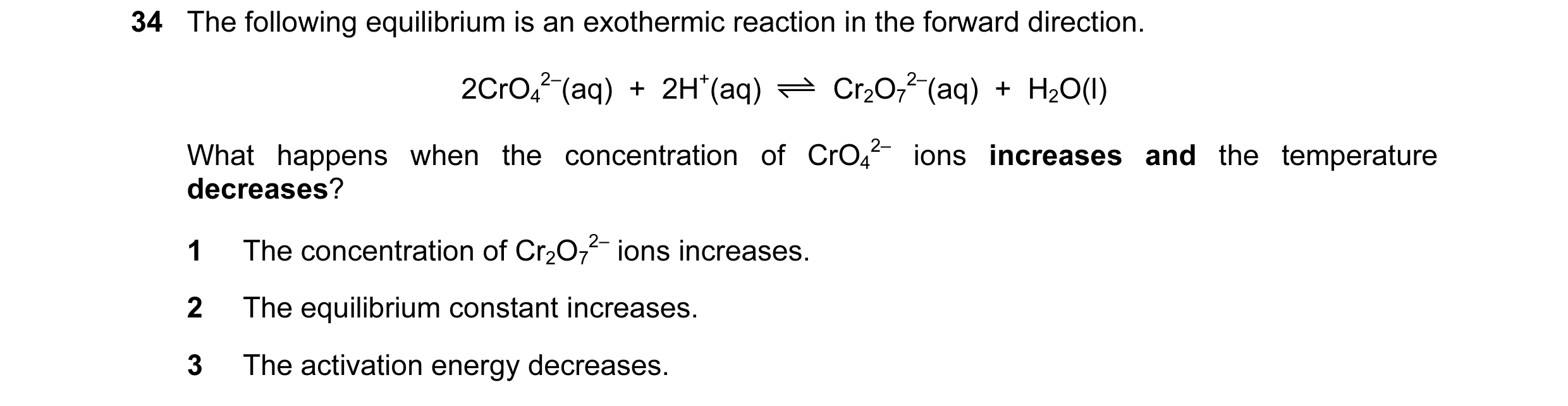
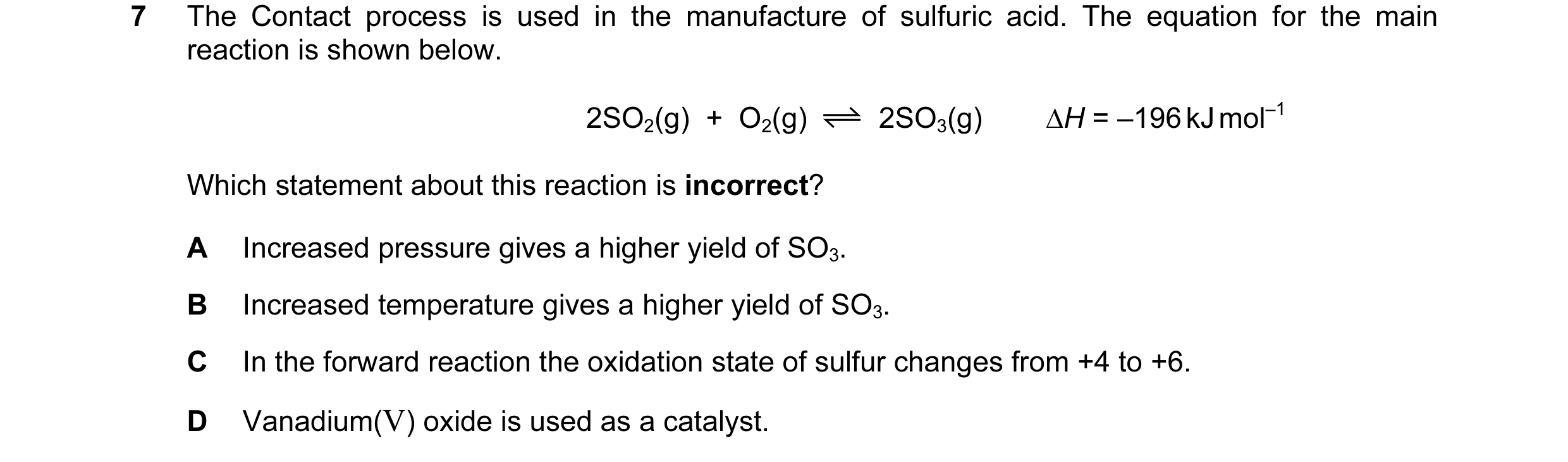
 18 / 59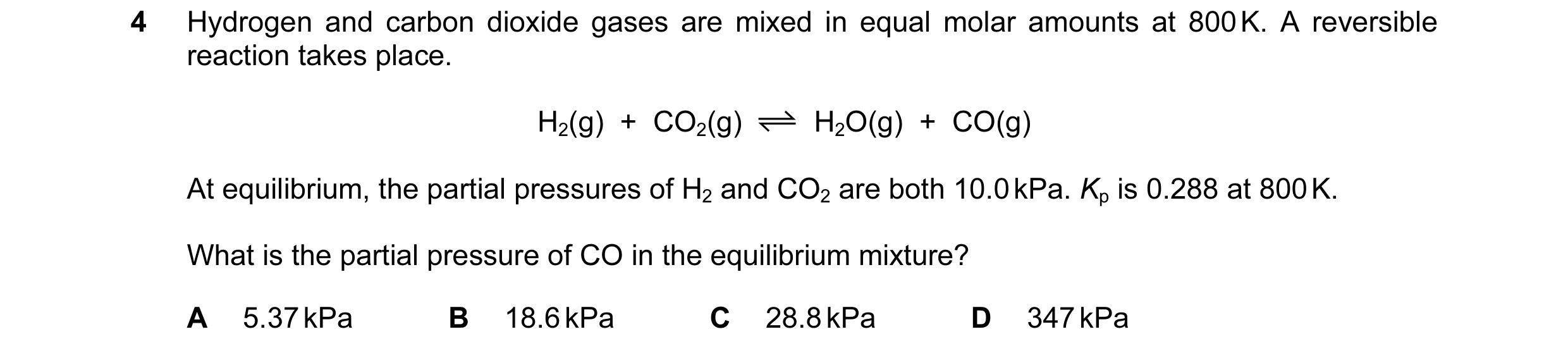



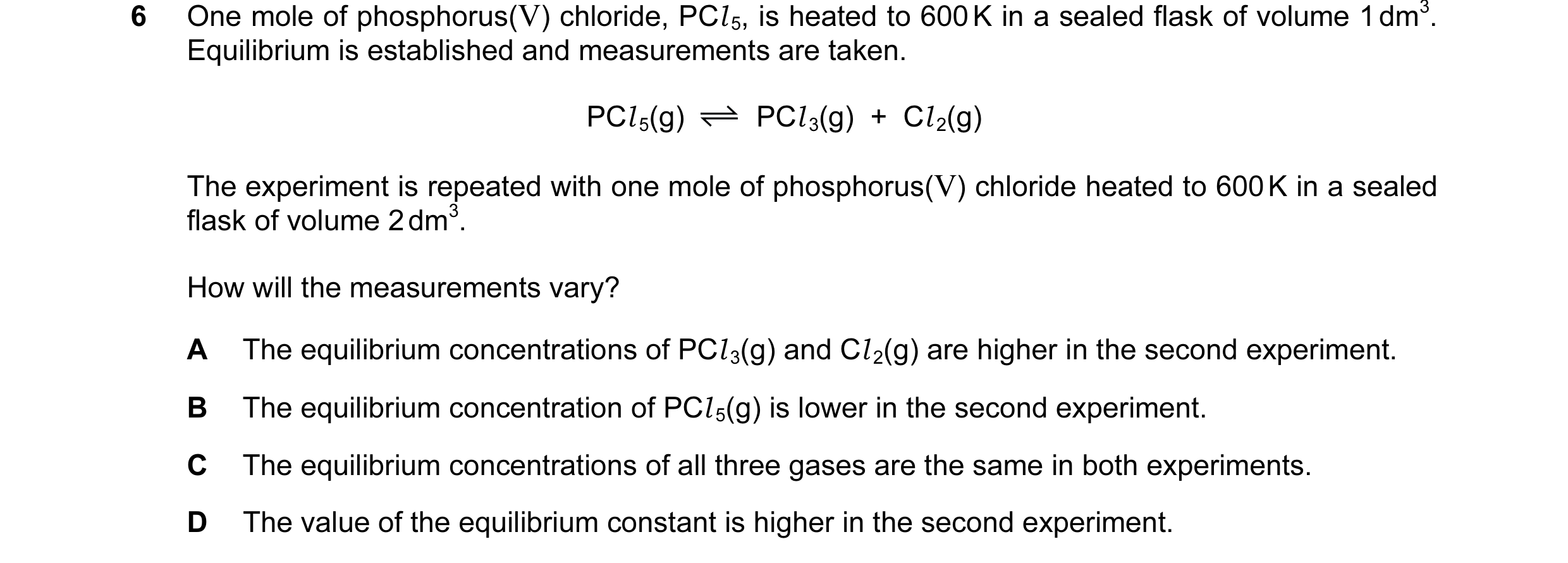 19 / 59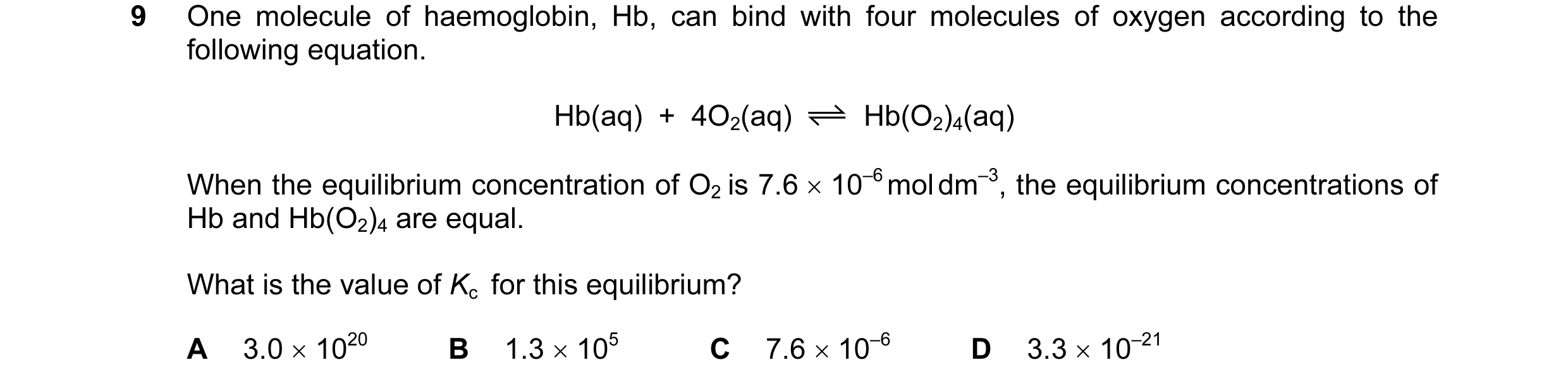
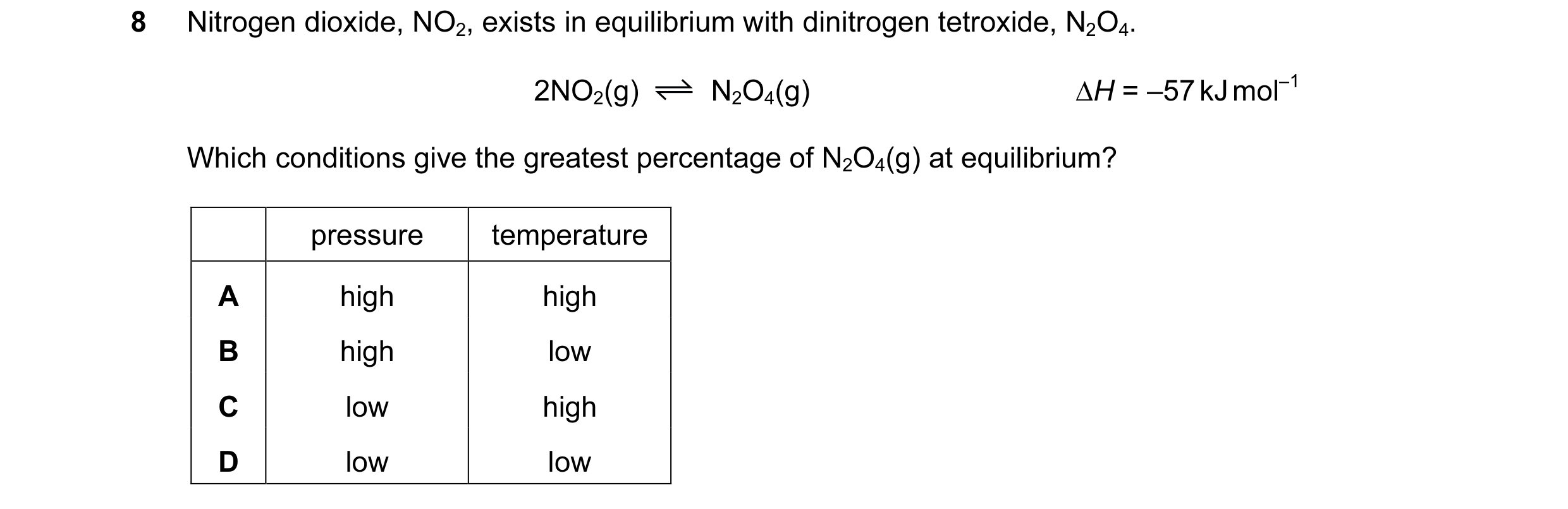
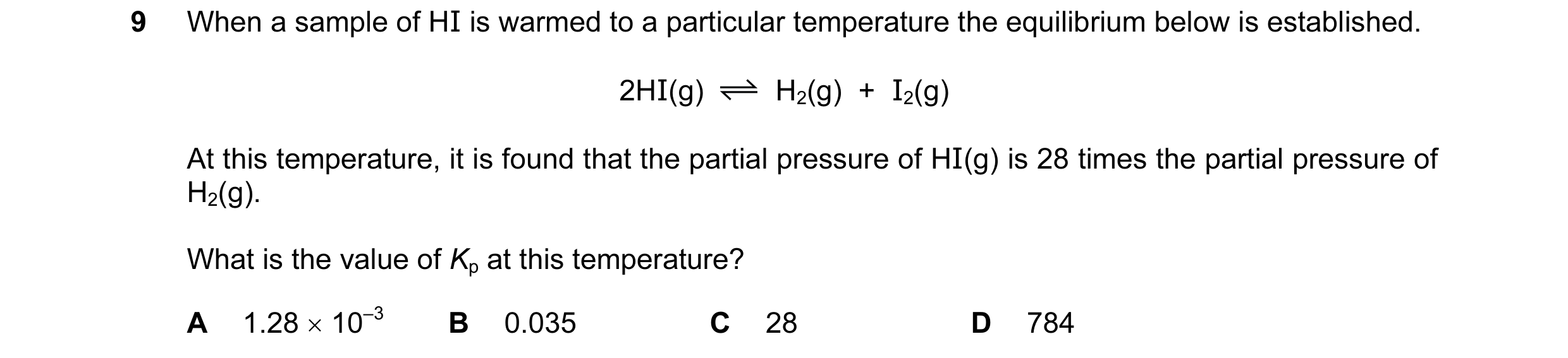
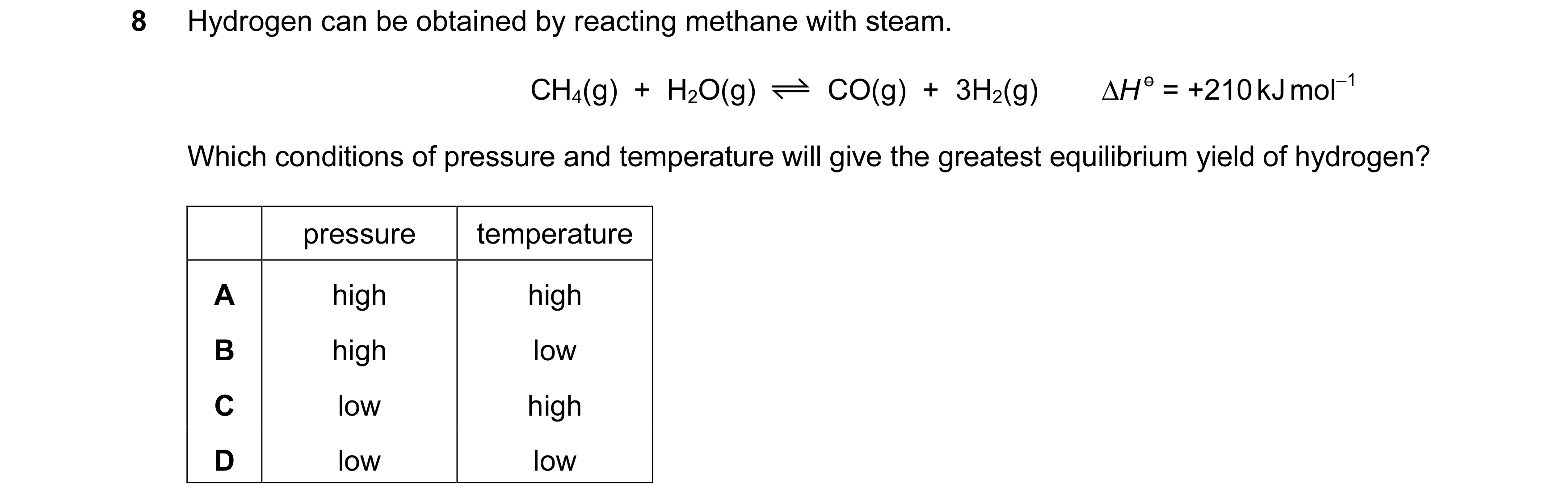 20 / 59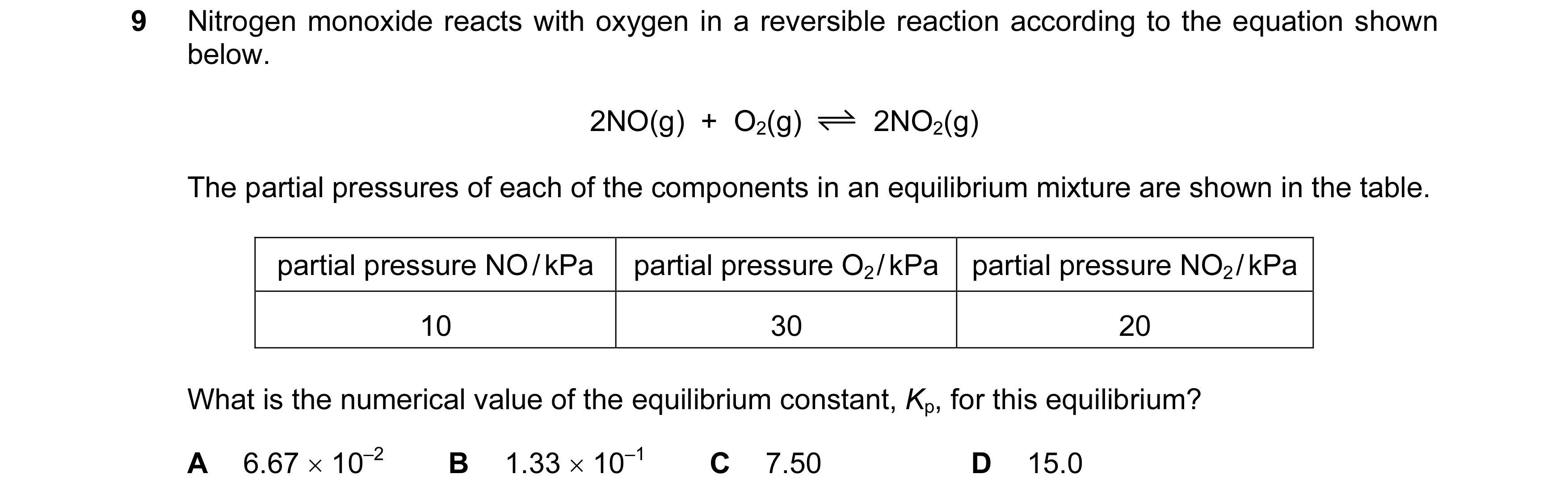
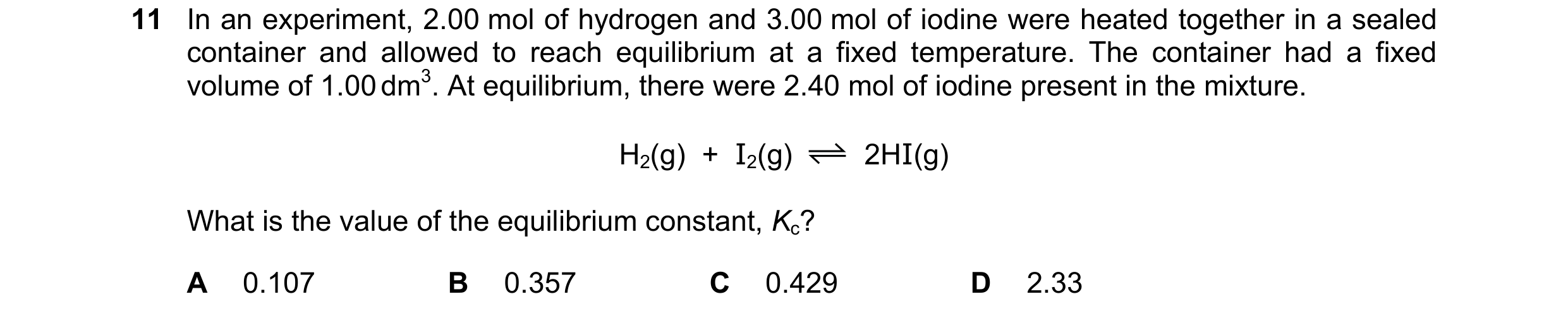

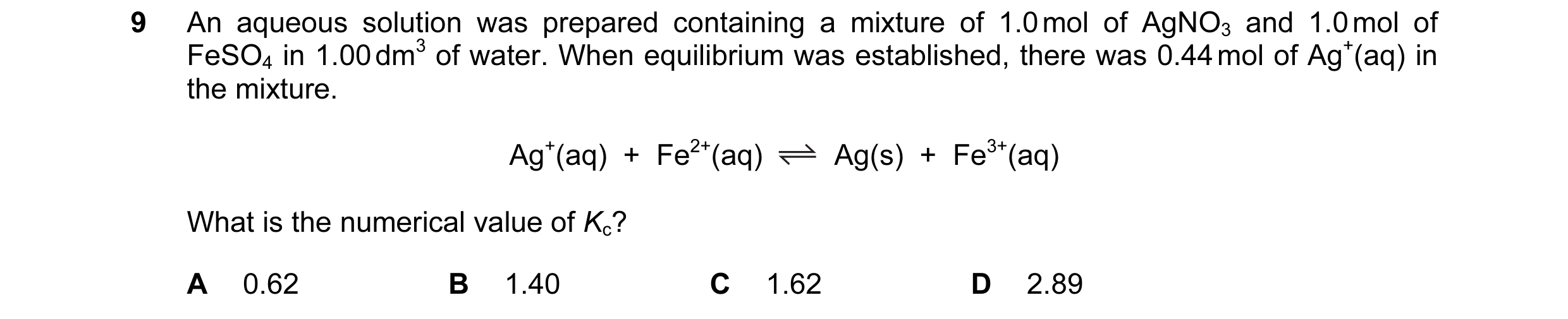

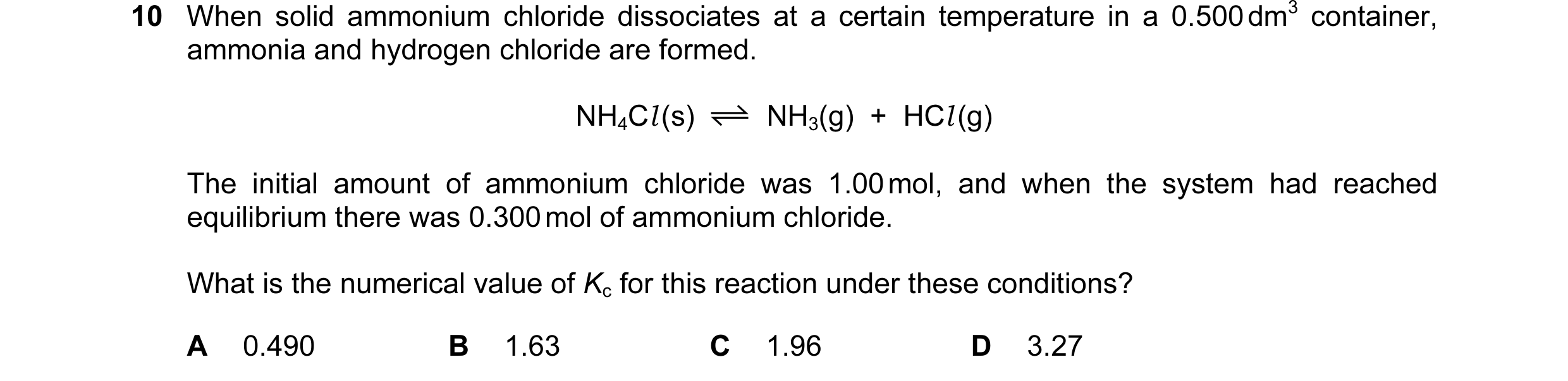 21 / 59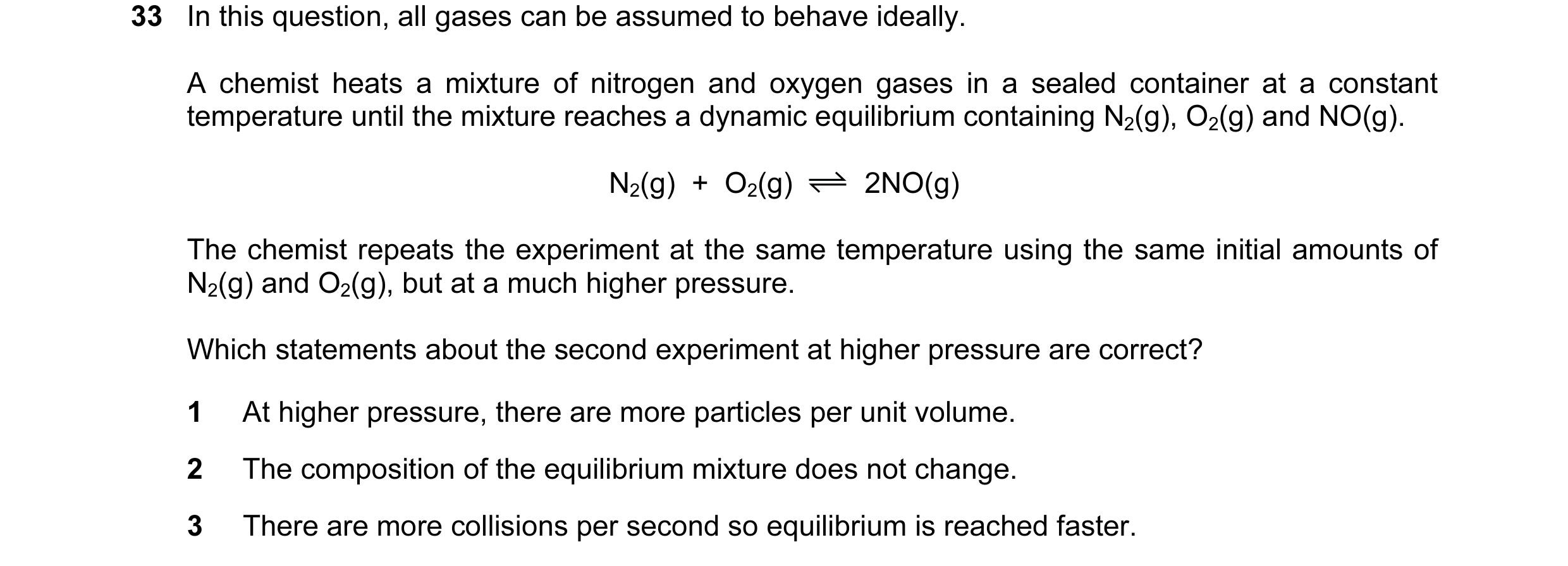

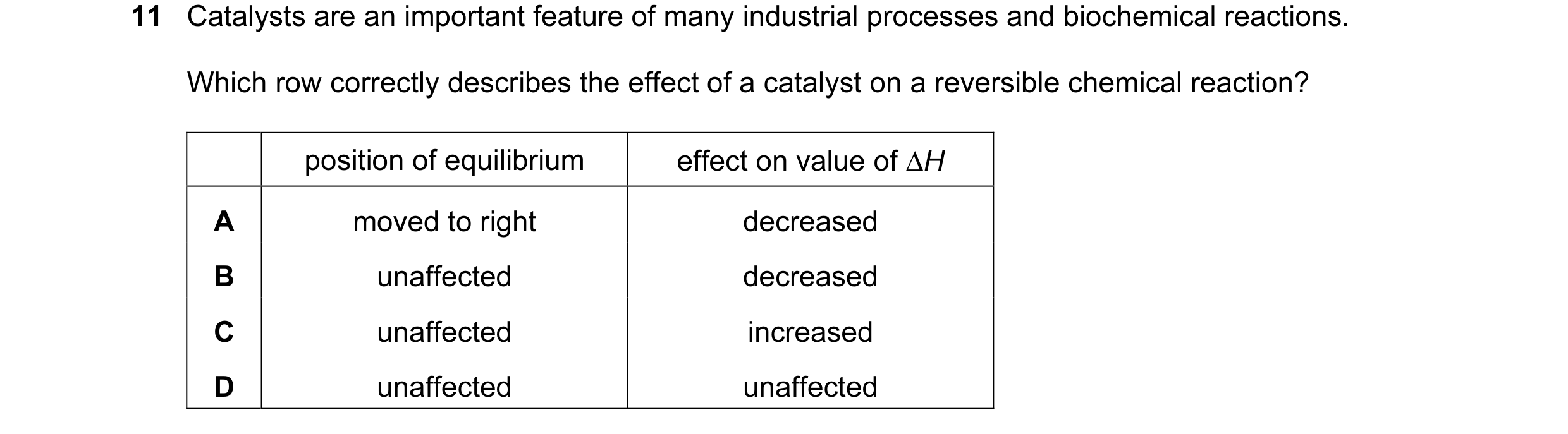
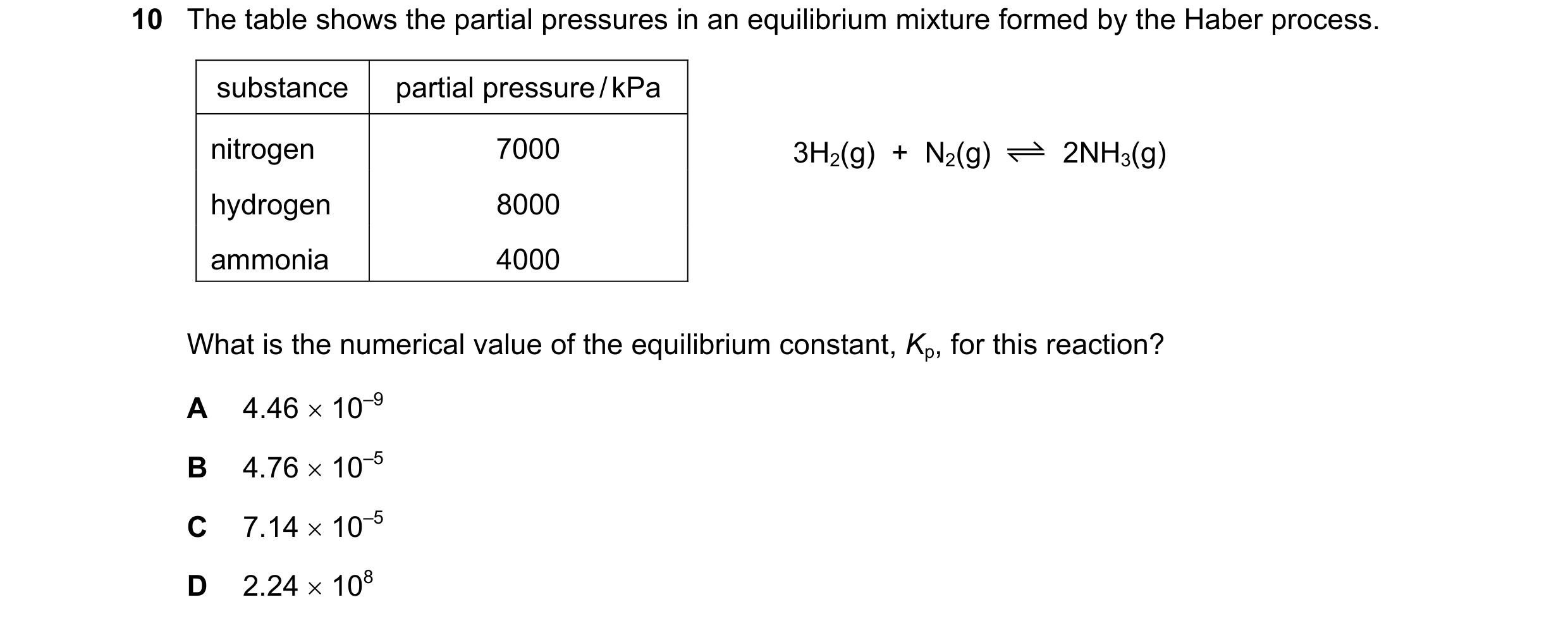 22 / 59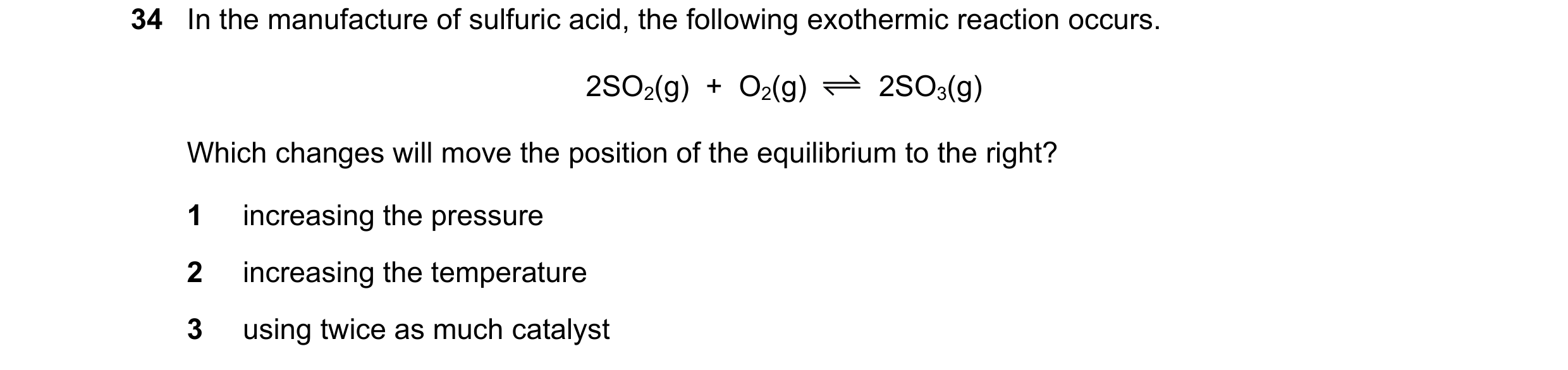
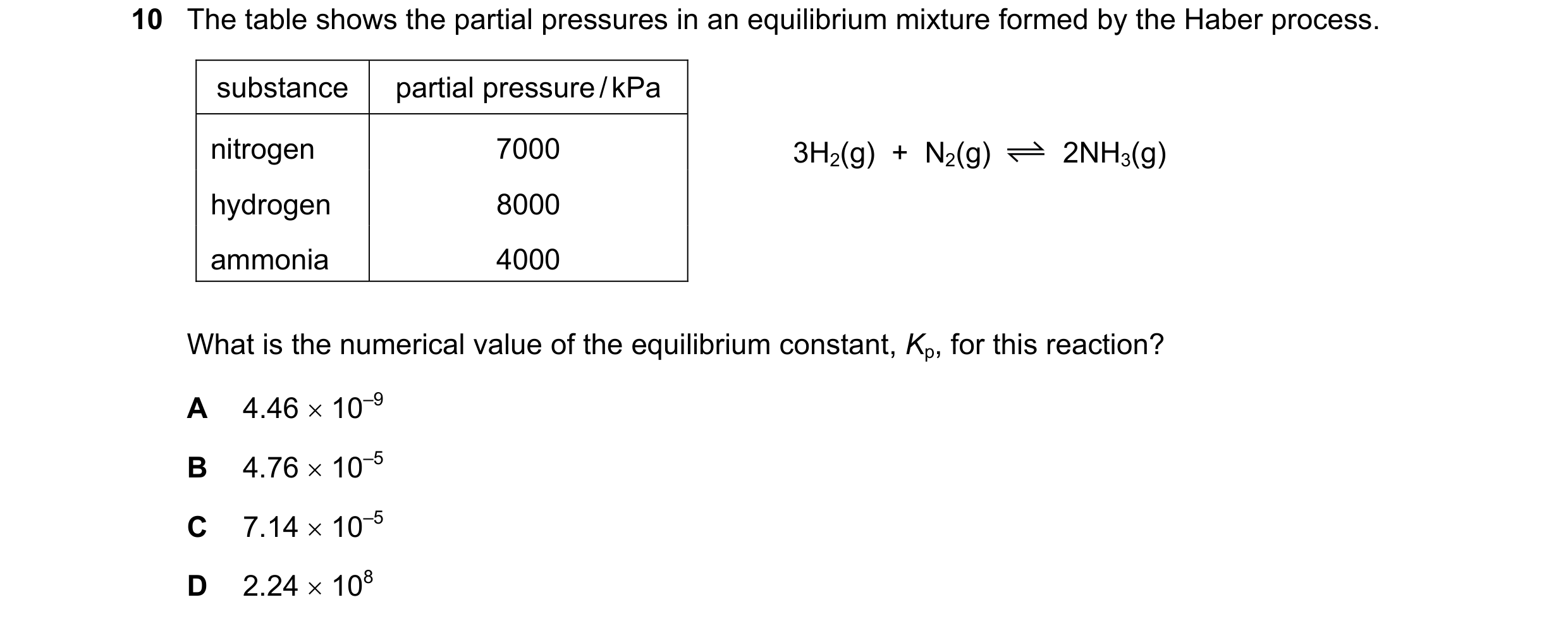
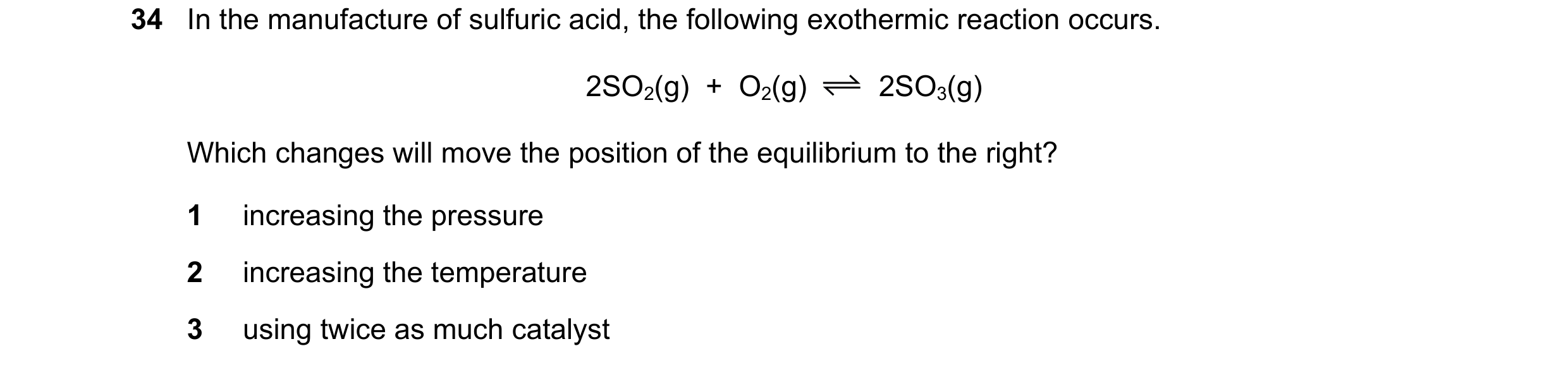
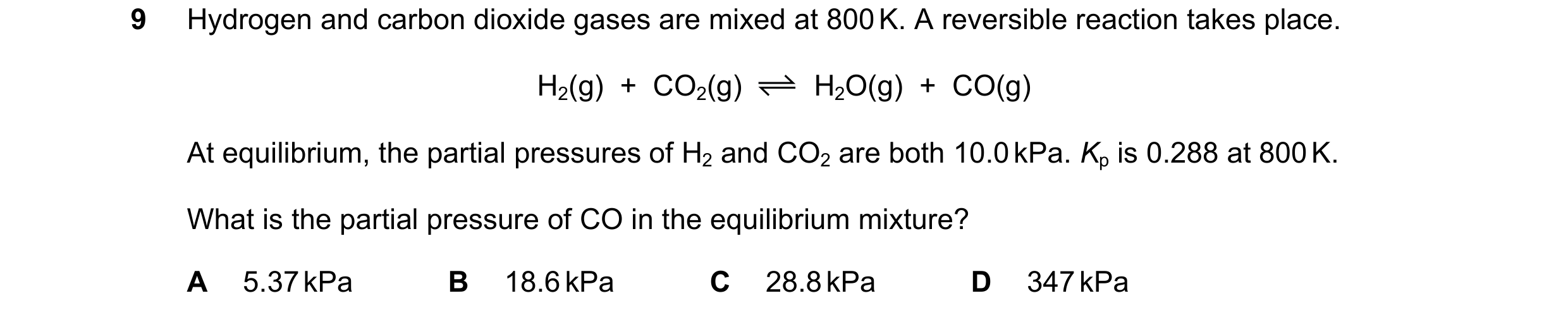 23 / 59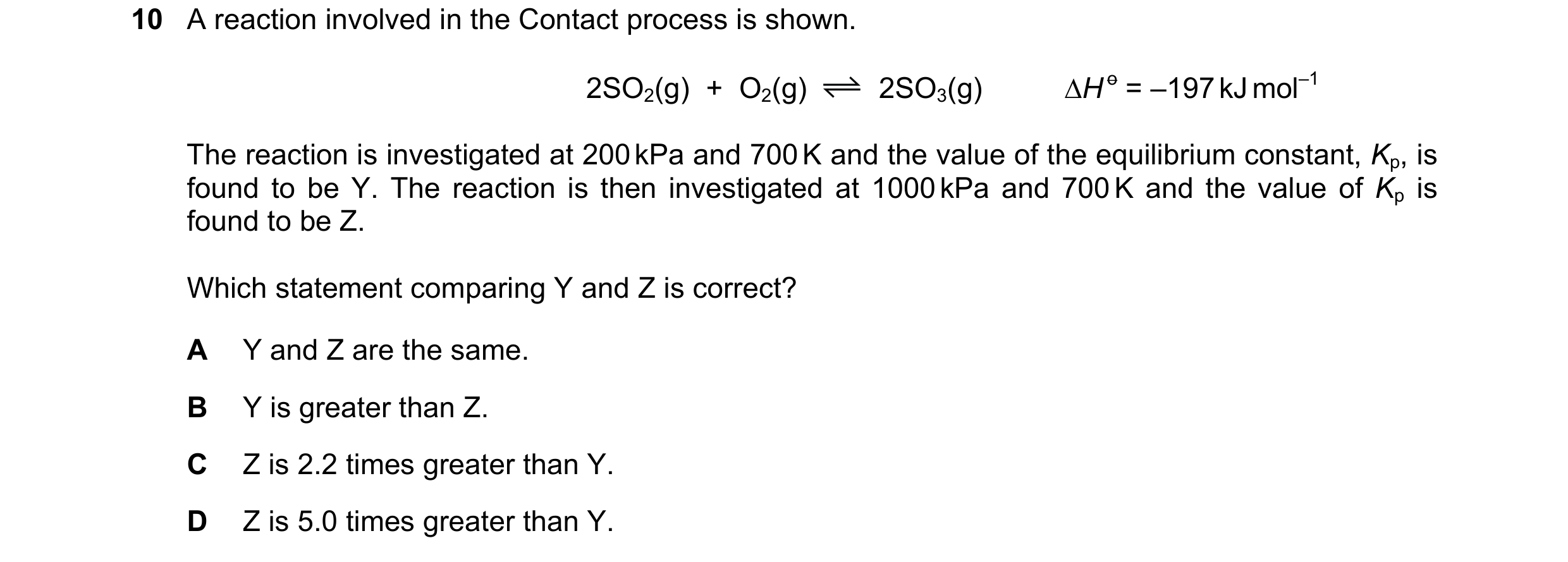
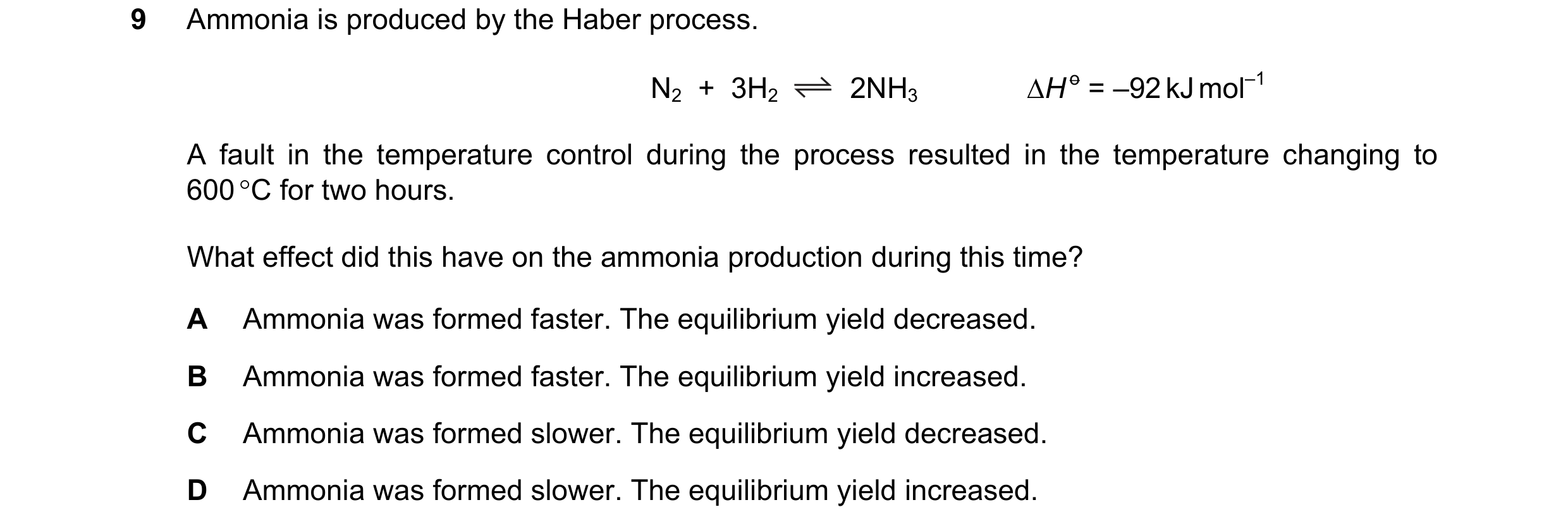
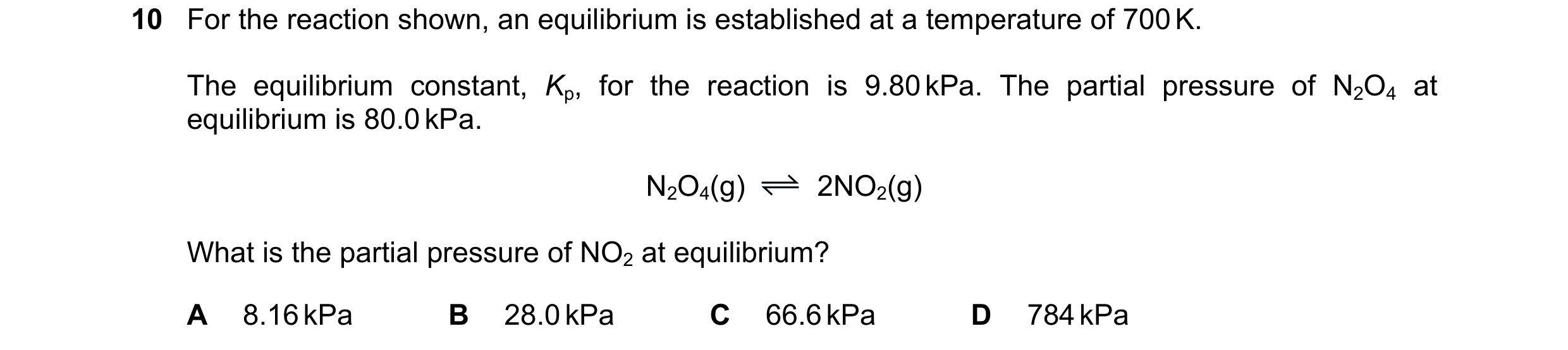
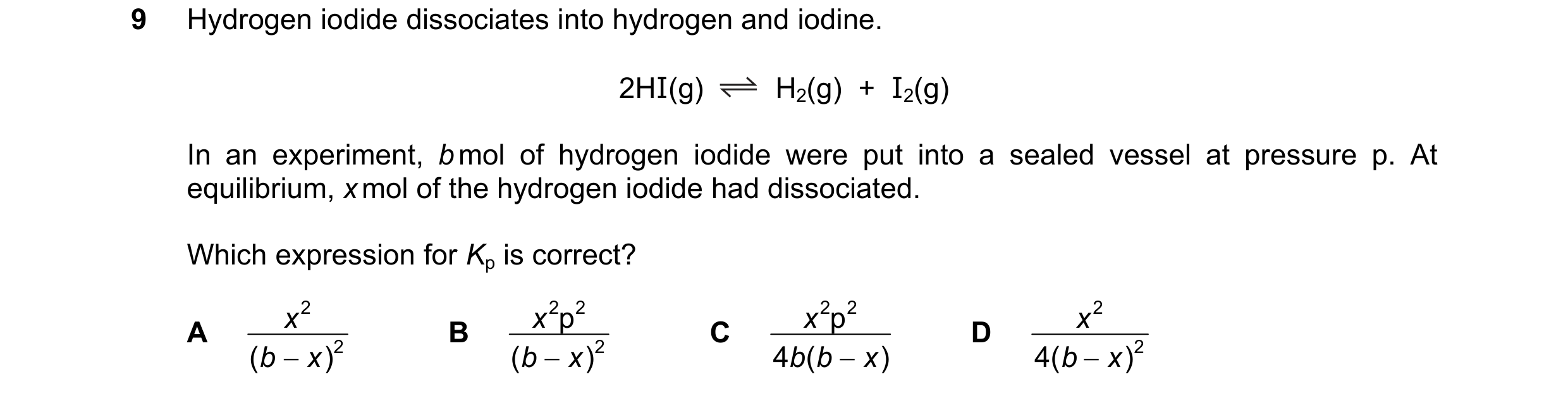 24 / 59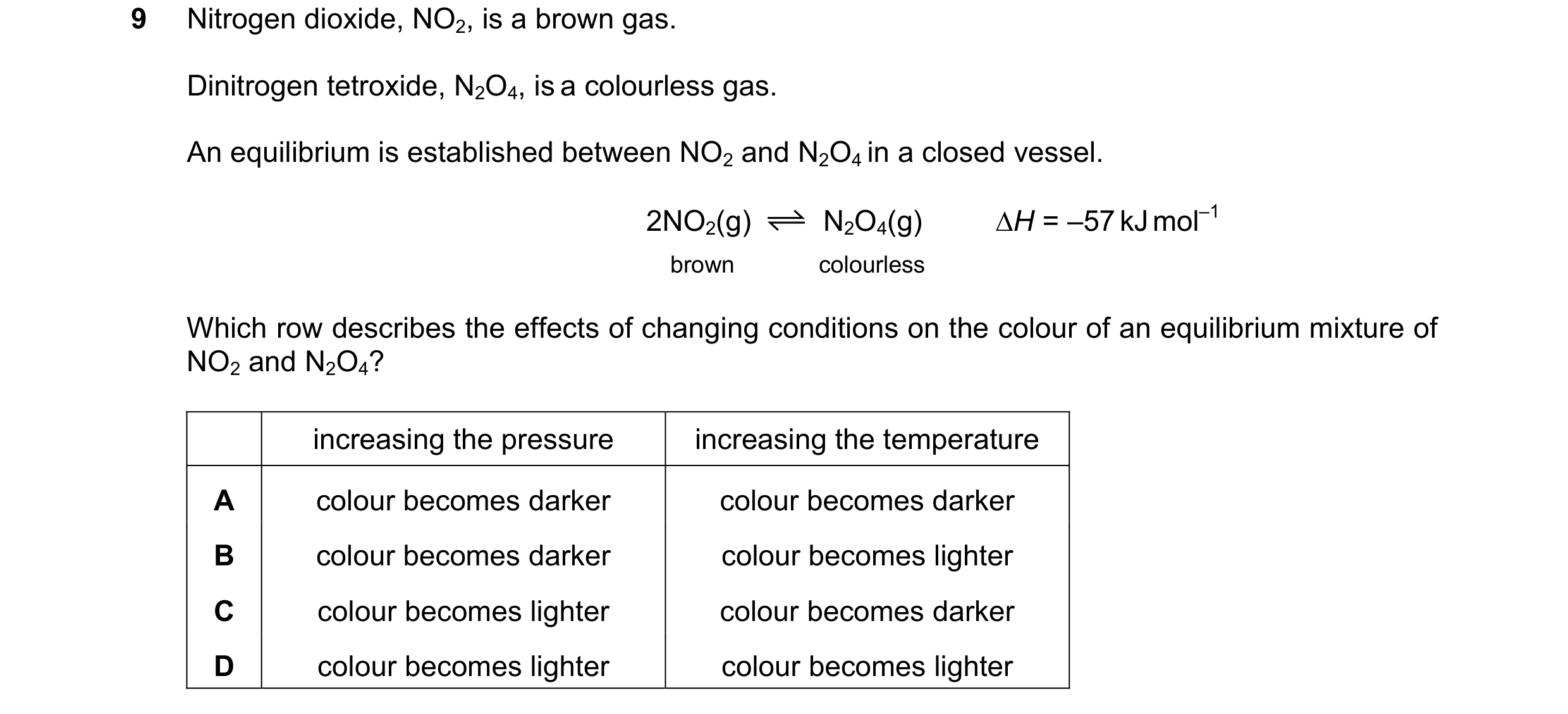
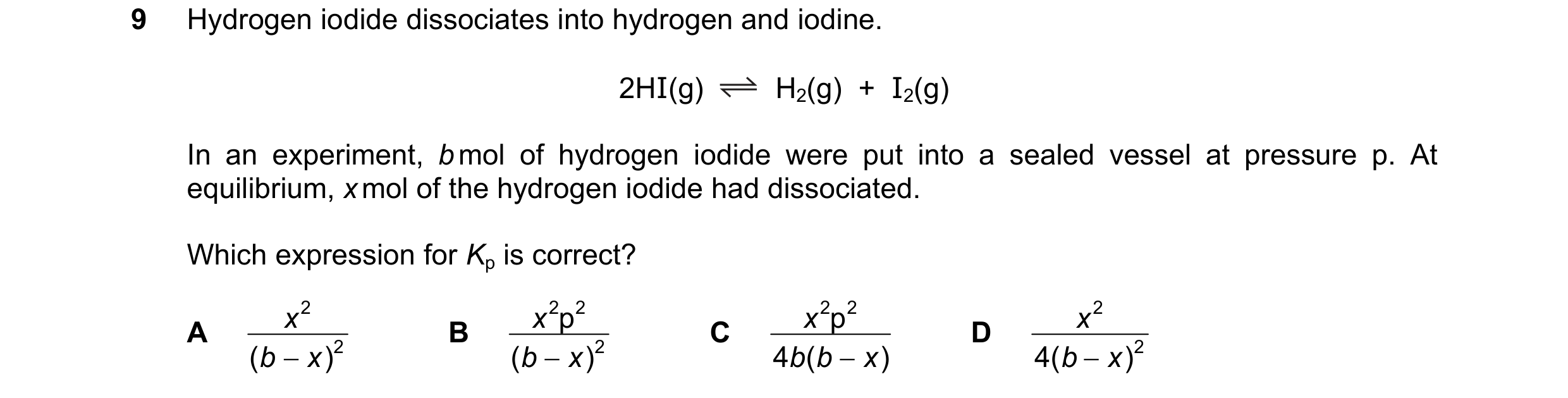
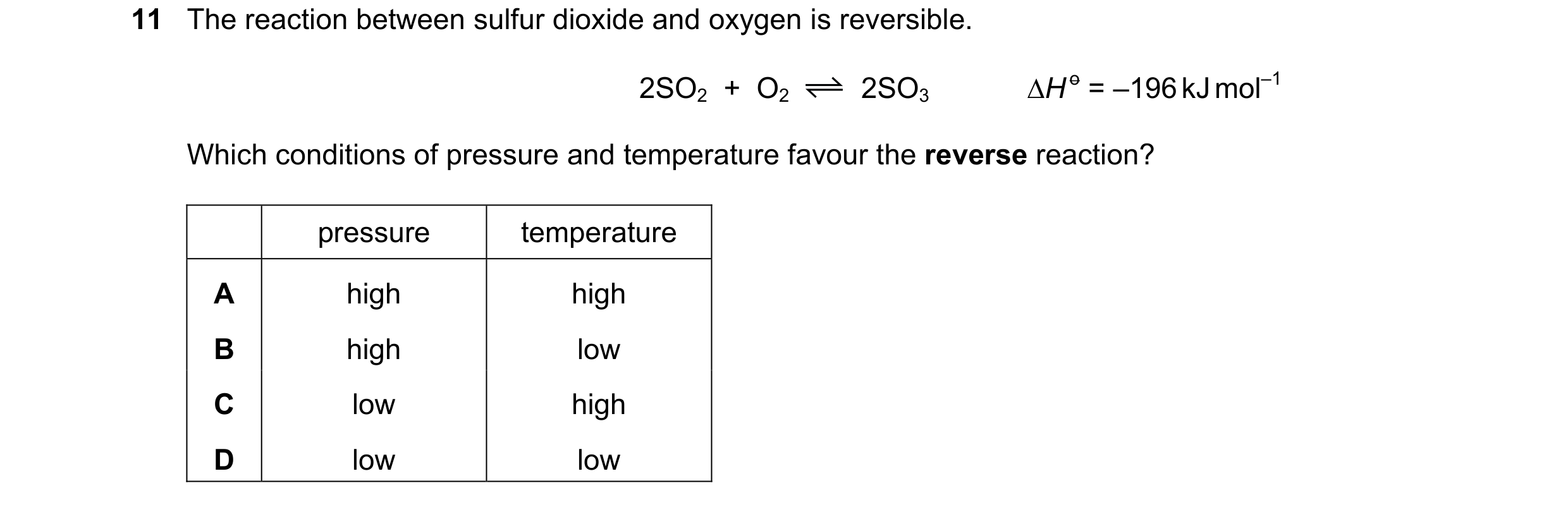
 25 / 59
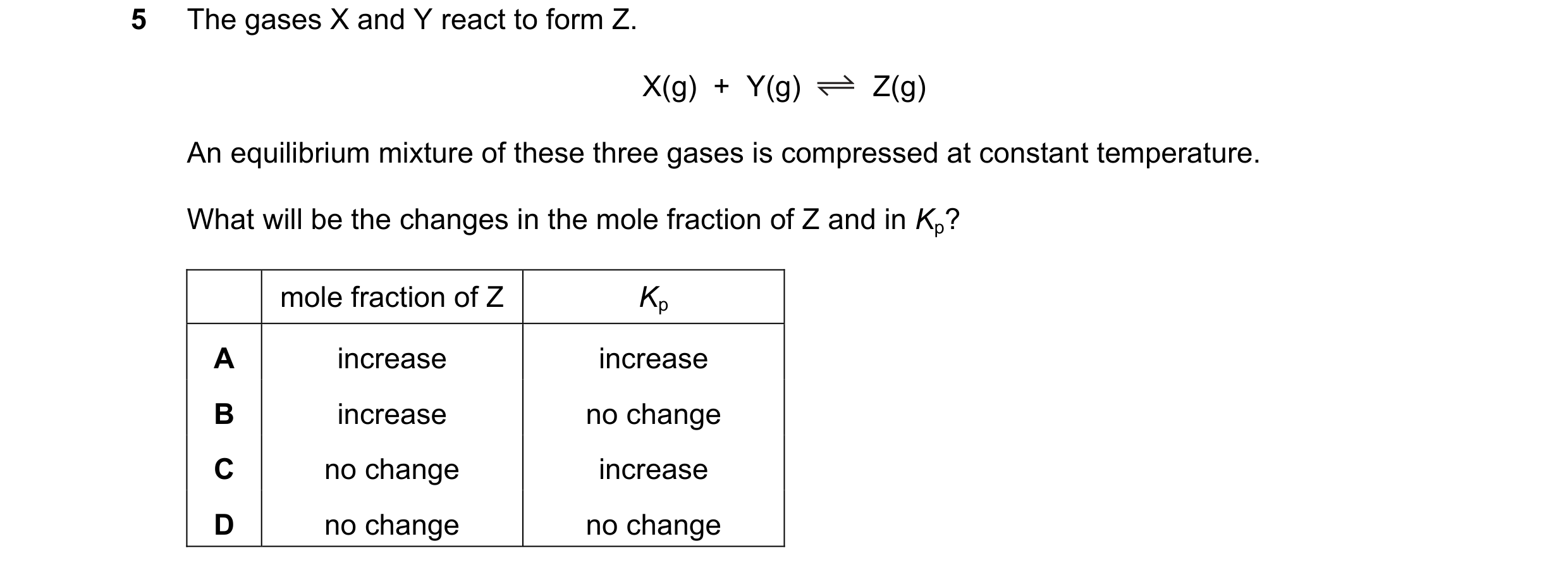
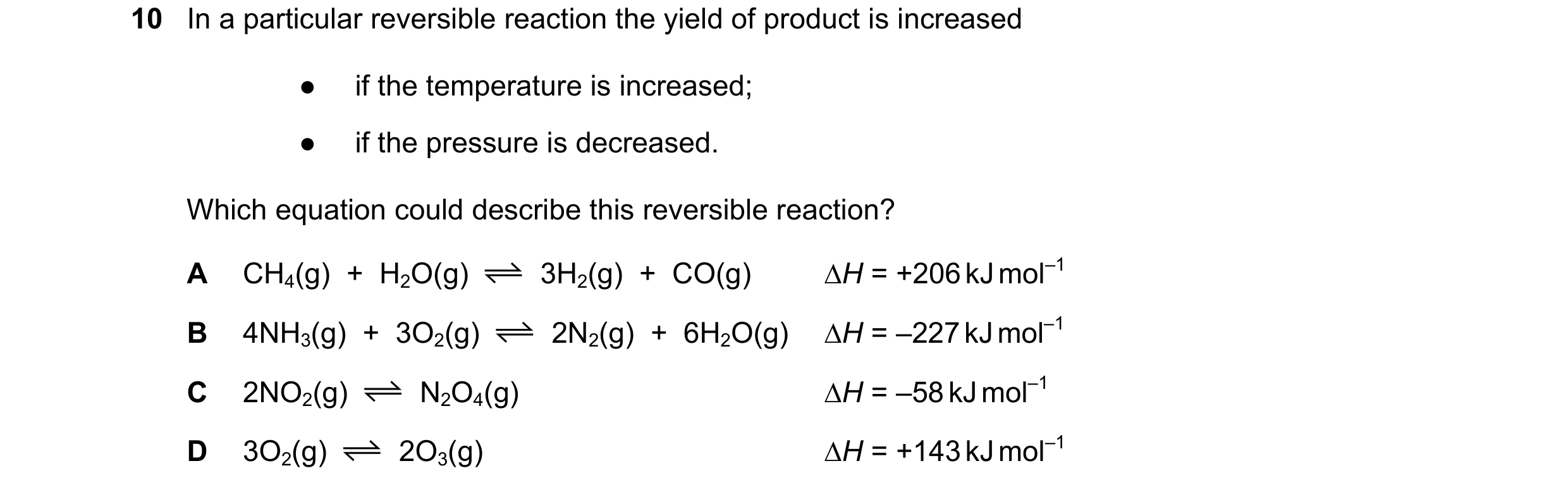
 26 / 59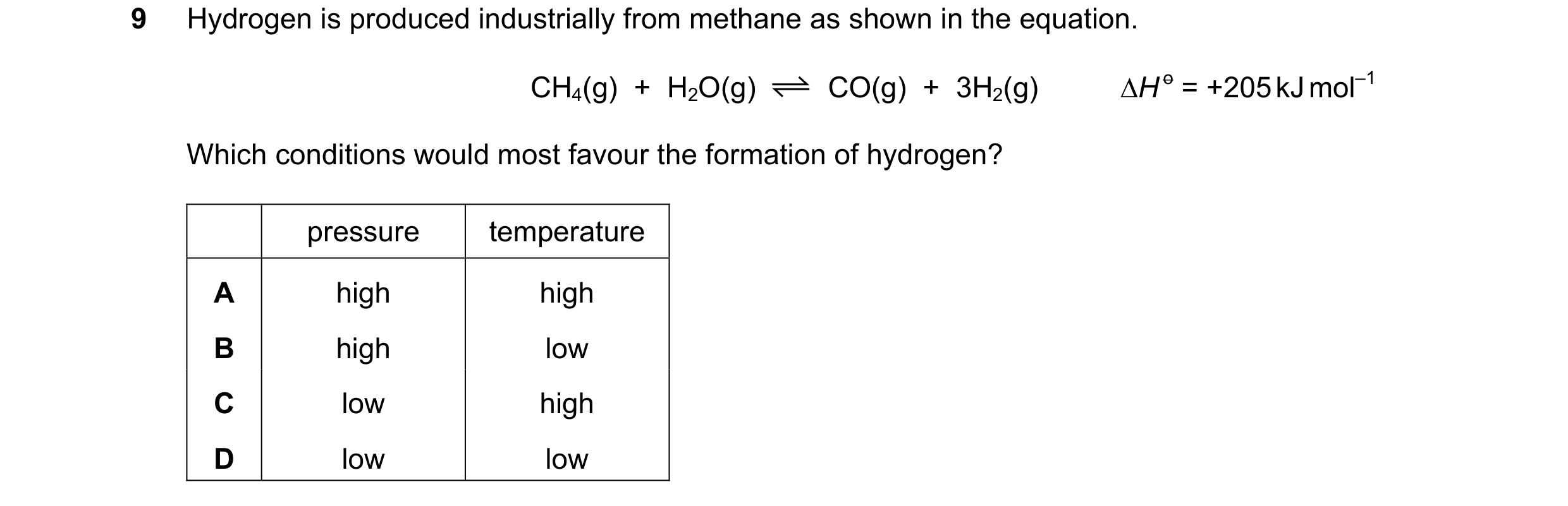
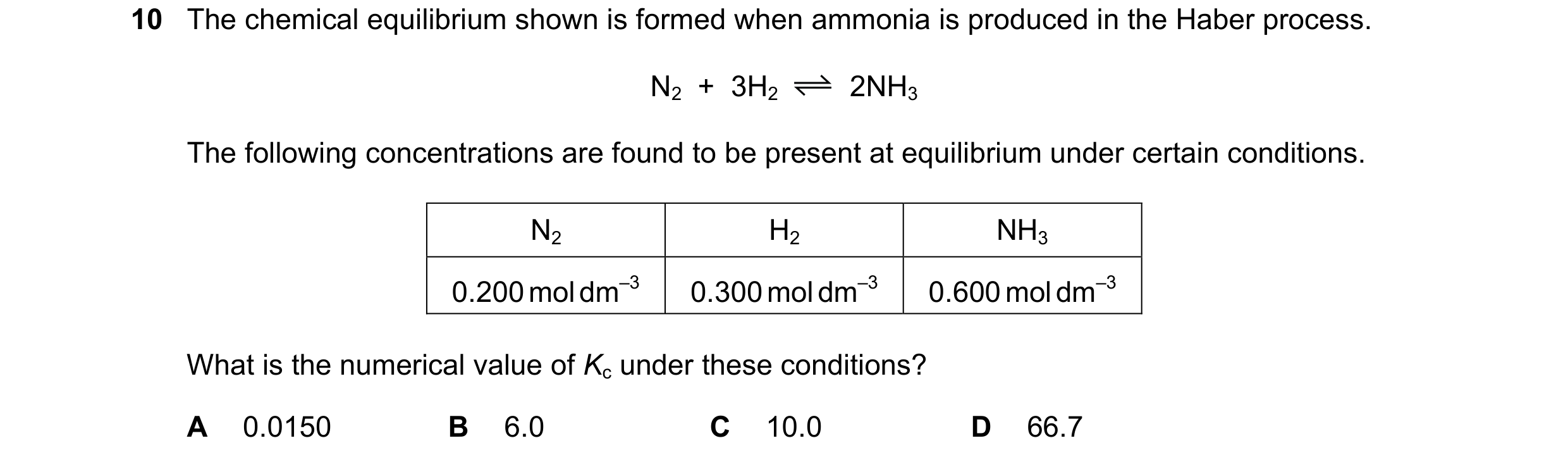
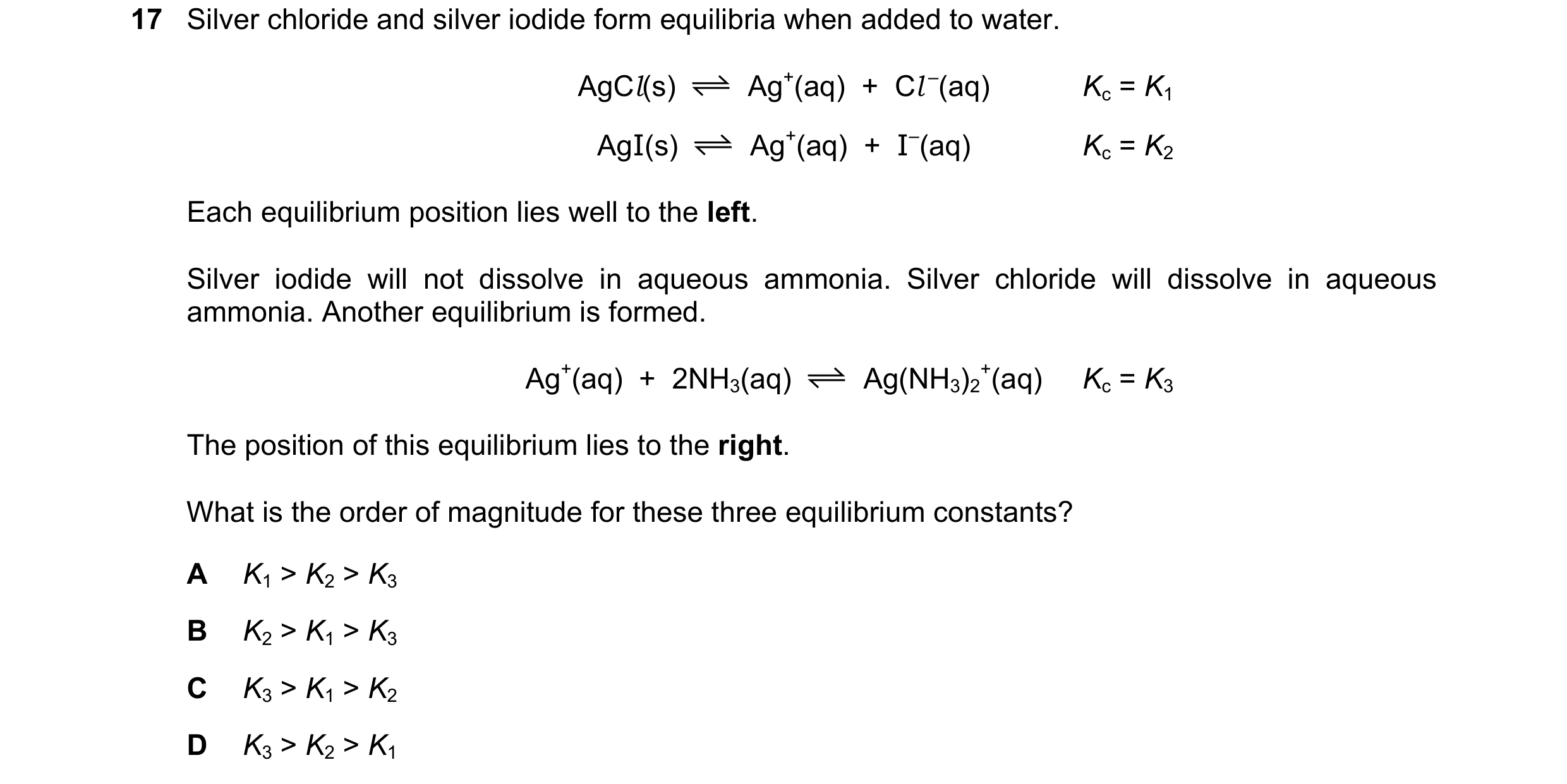 27 / 59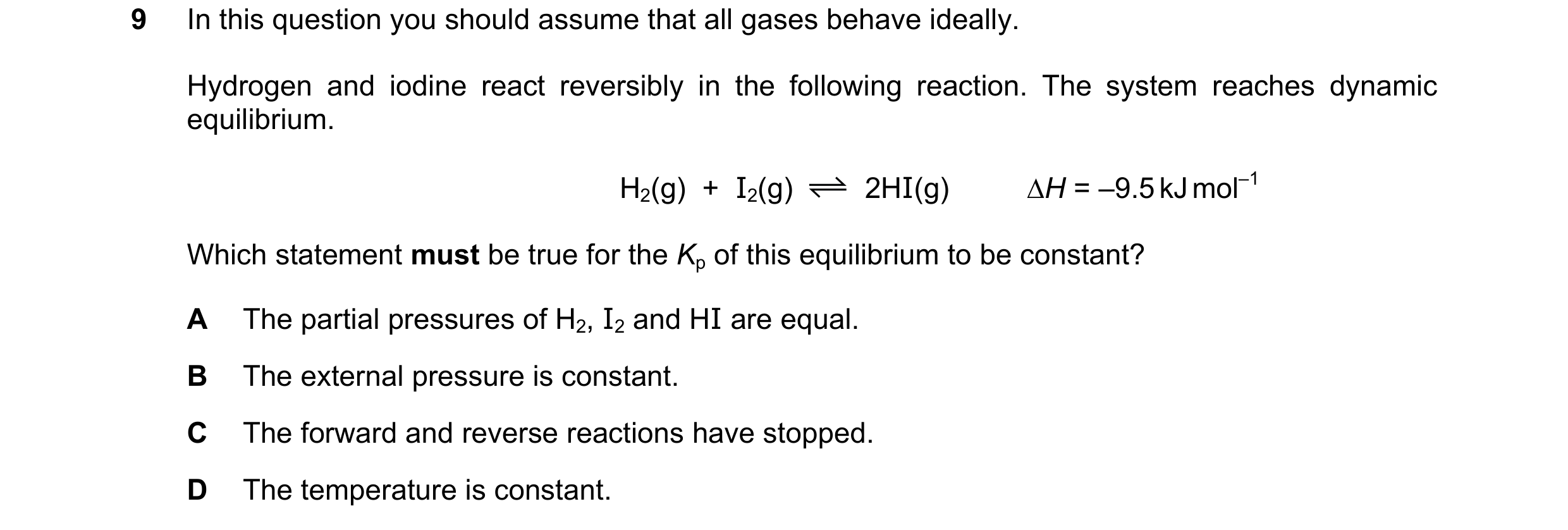
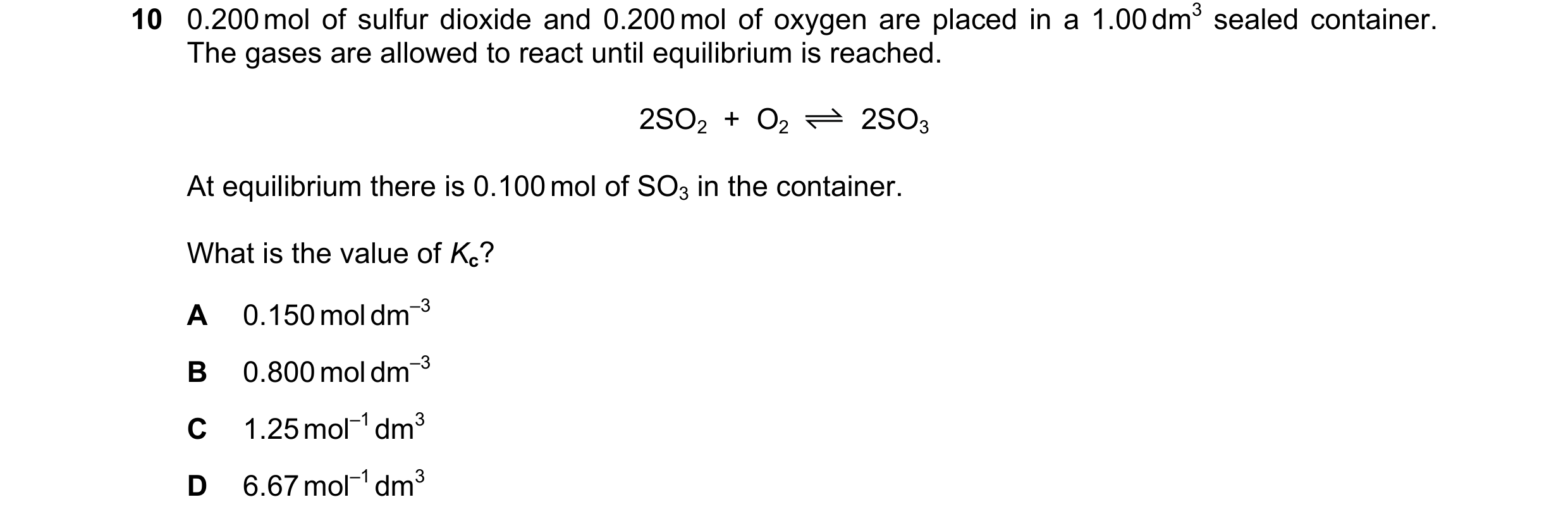
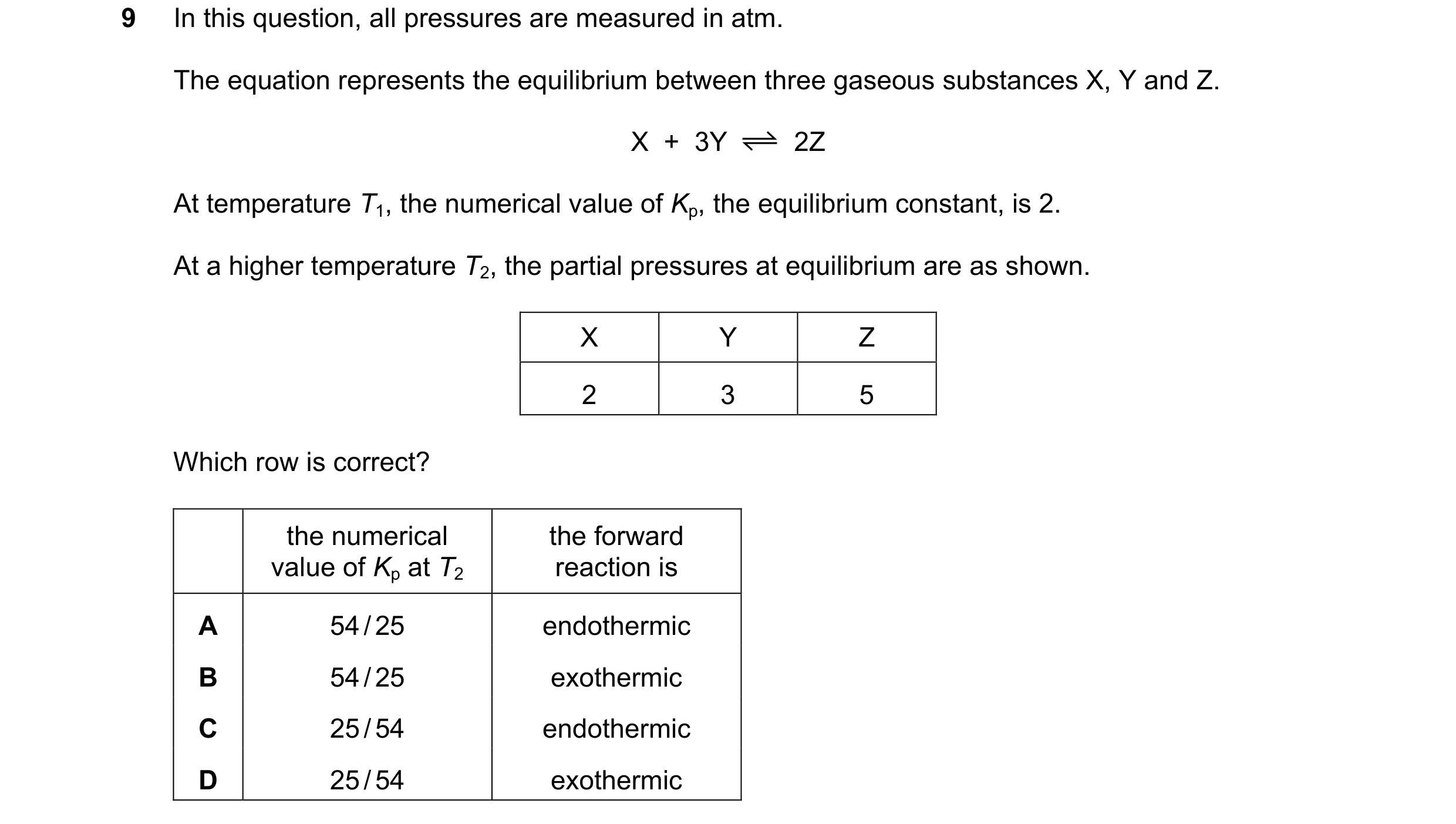 28 / 59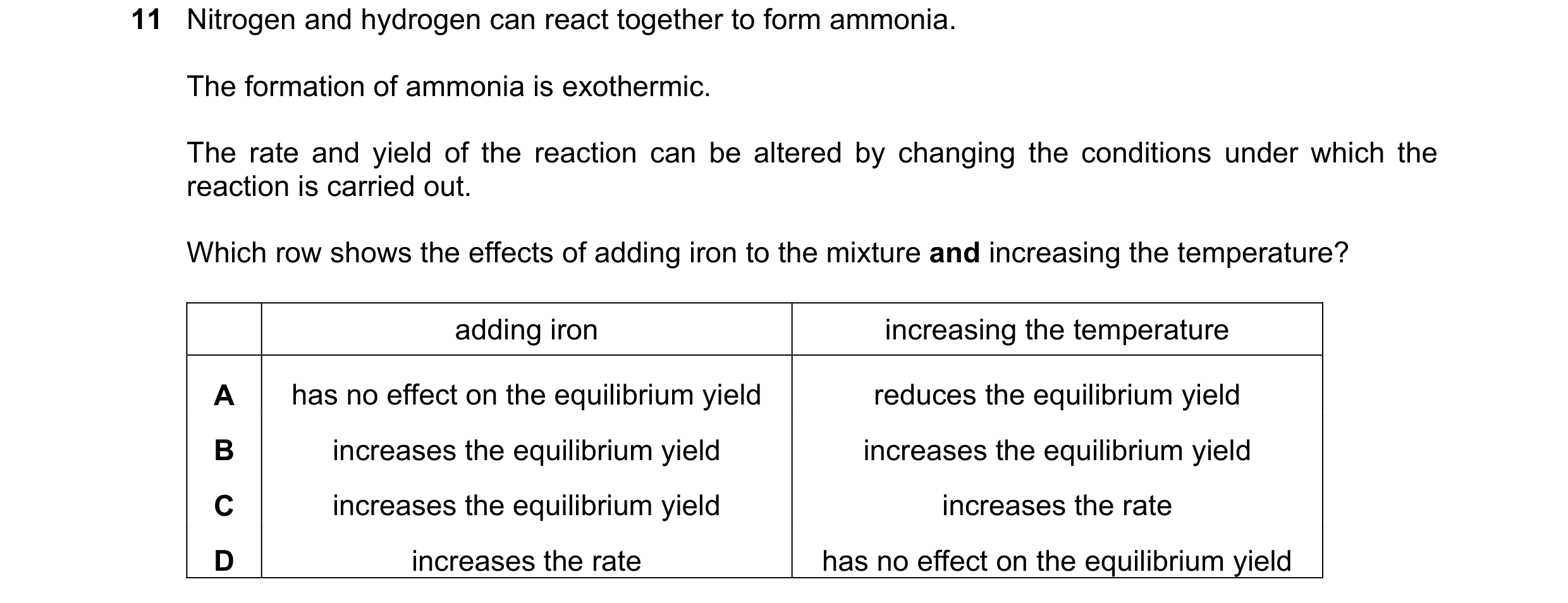
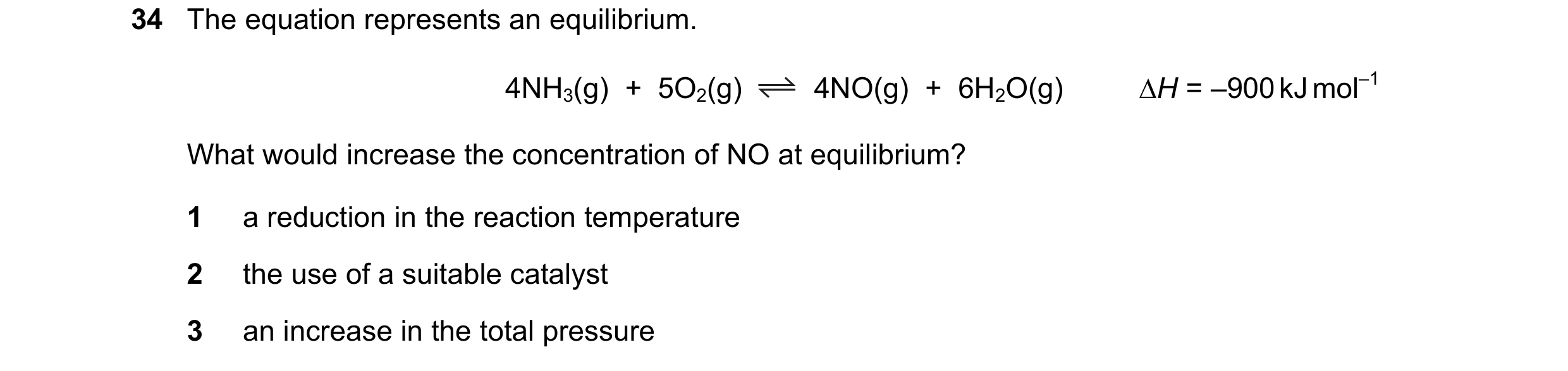
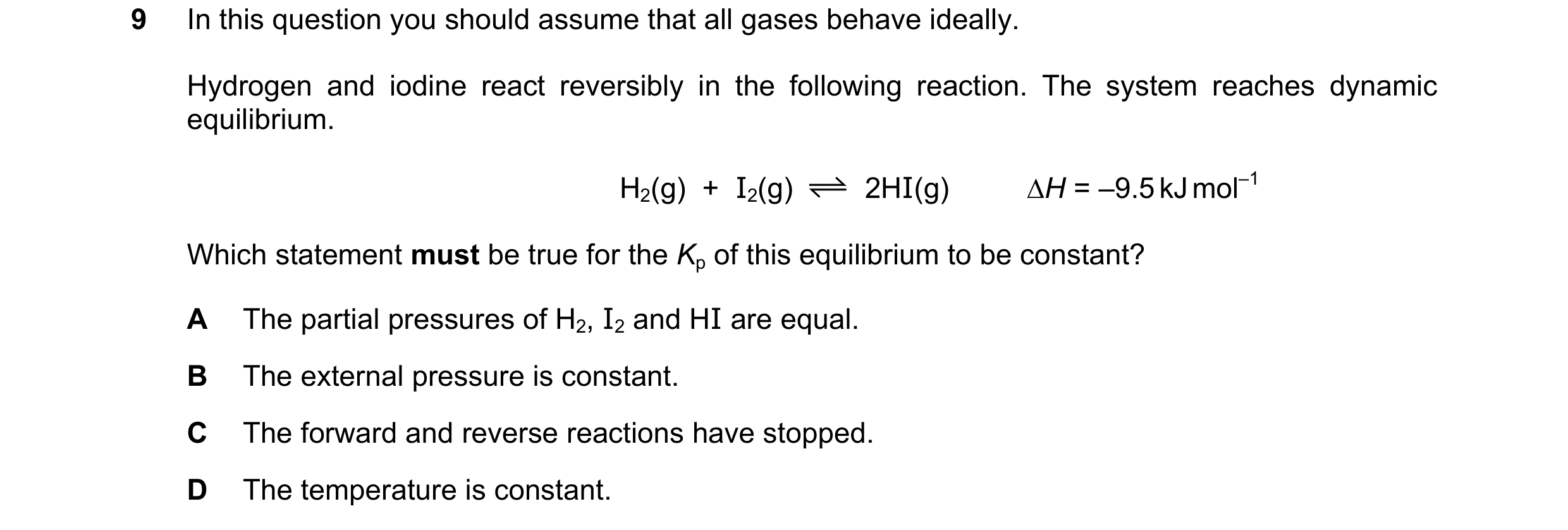
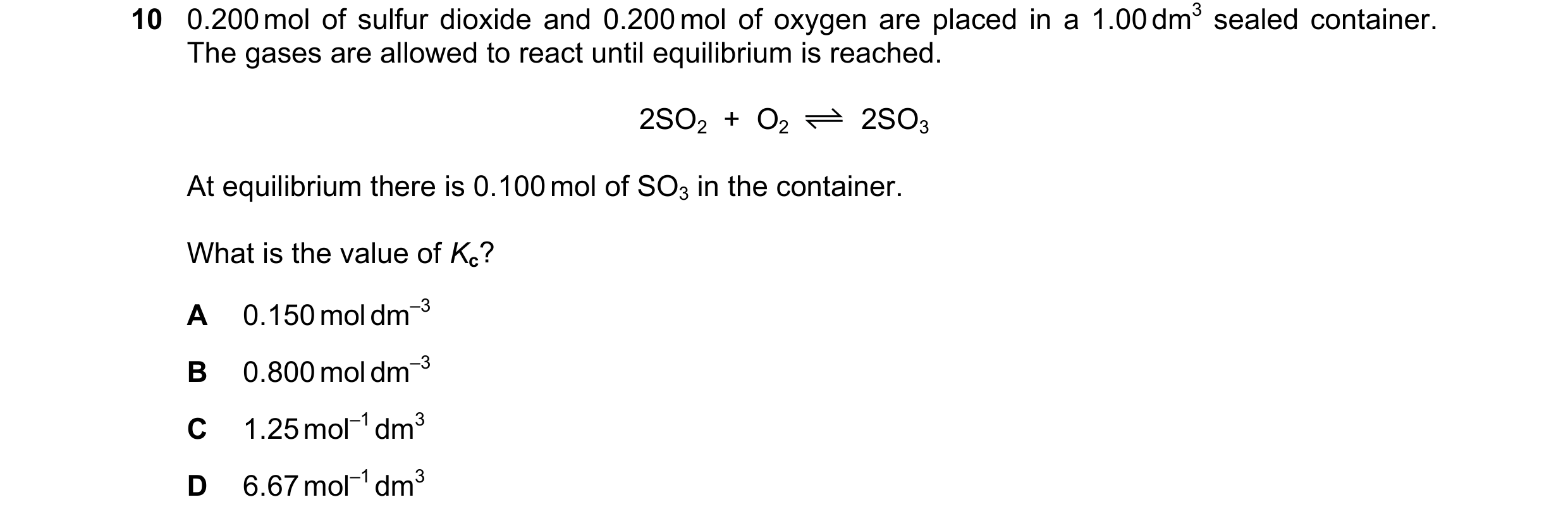 29 / 59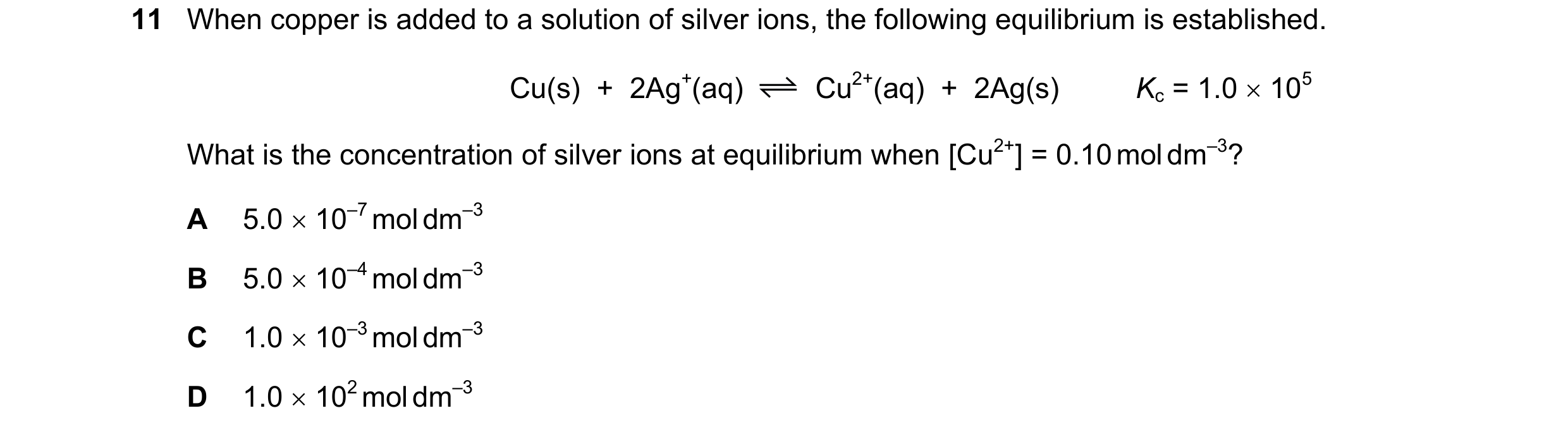
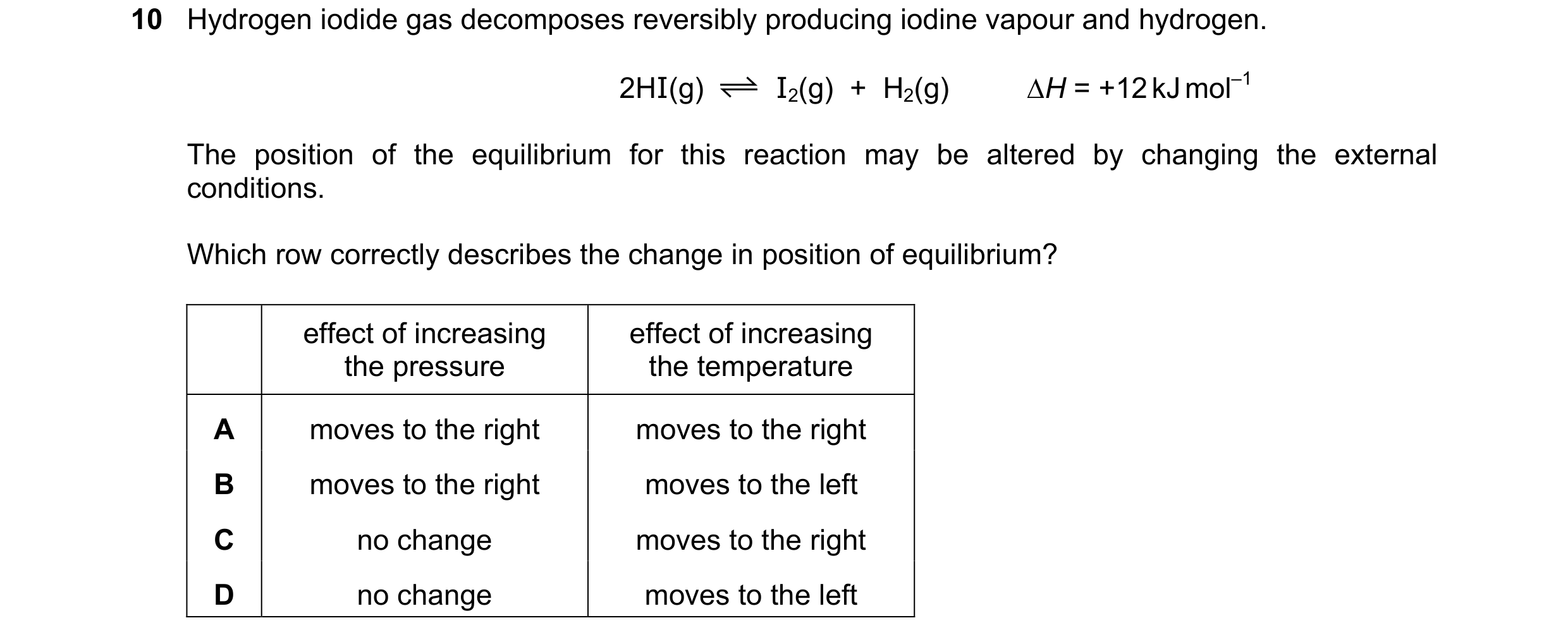
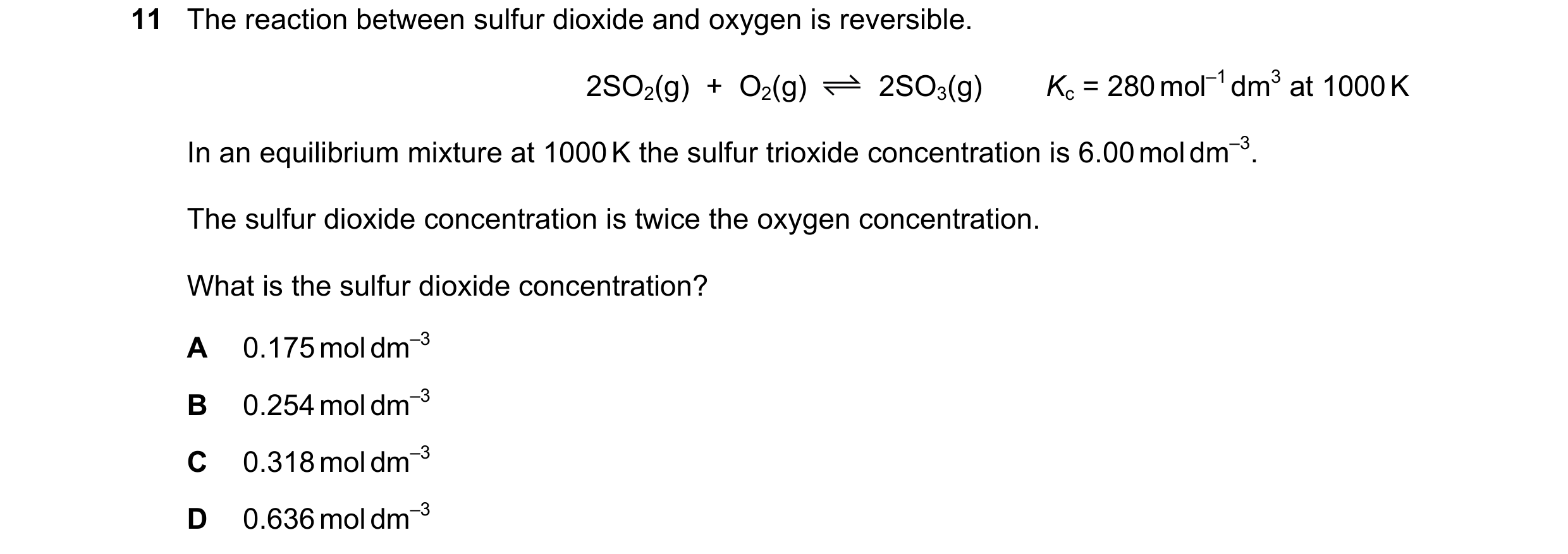 30 / 59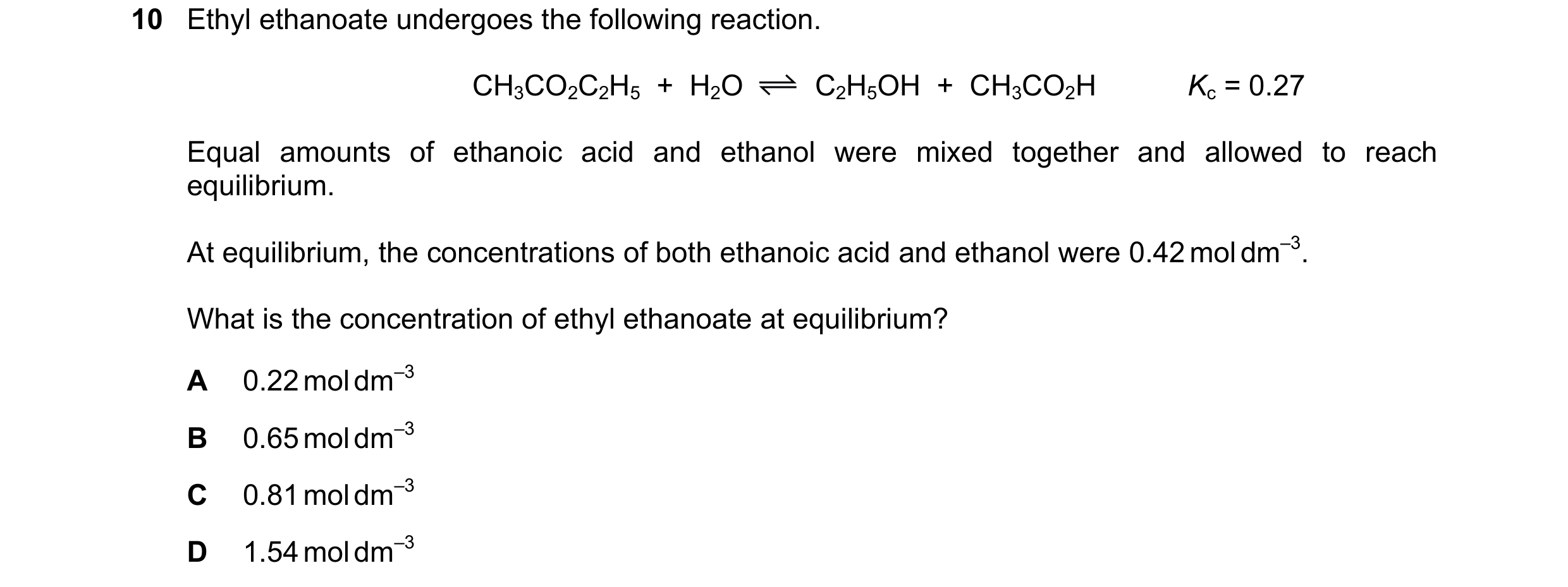
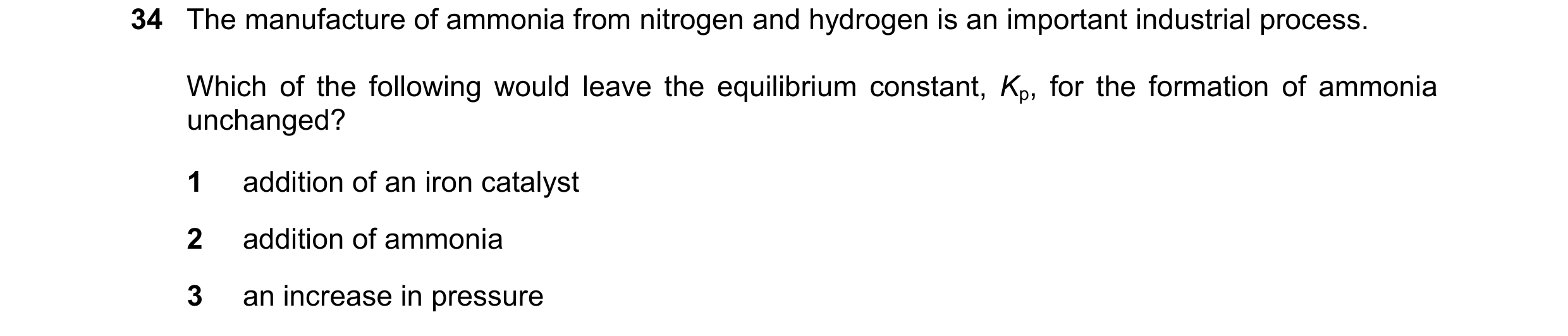
![Question 116: What is the correct expression for Kc for the reaction shown? I2(aq) + 2Fe2+(aq) 2I–(aq) + 2Fe3+(aq) [ 2 I − ][ 2 Fe 3 + ] [ I − ] 2 [ …](https://img.pastlit.com/crops/83efa5c6-fd42-42cc-9eb4-f06bf061423e/q9.png)
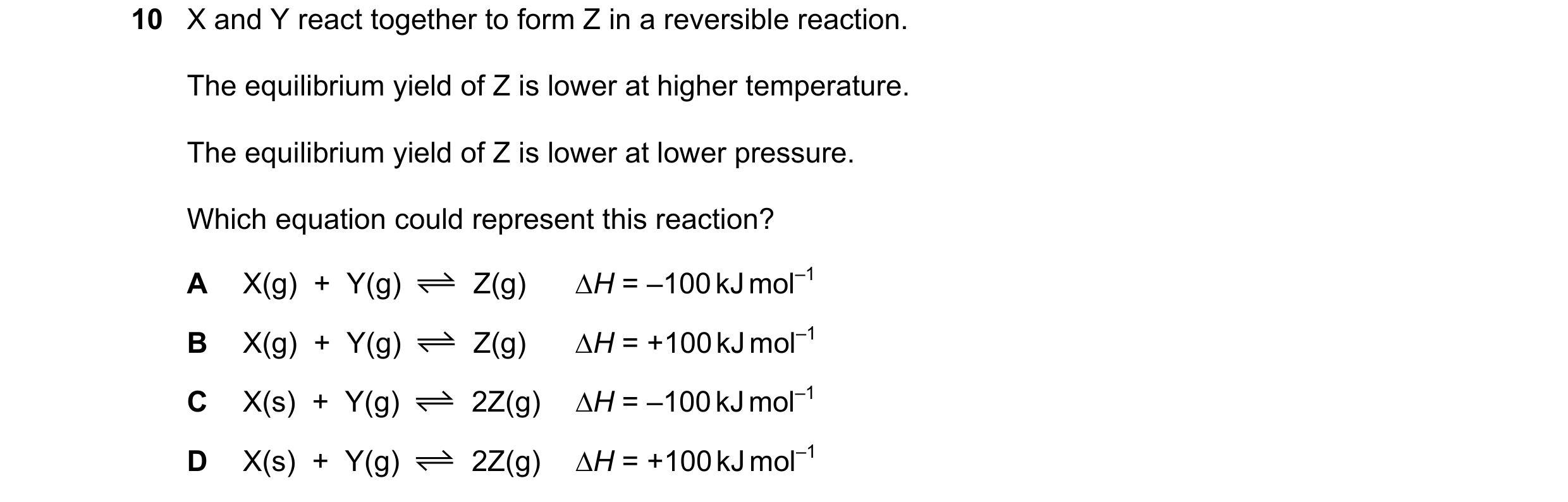 31 / 59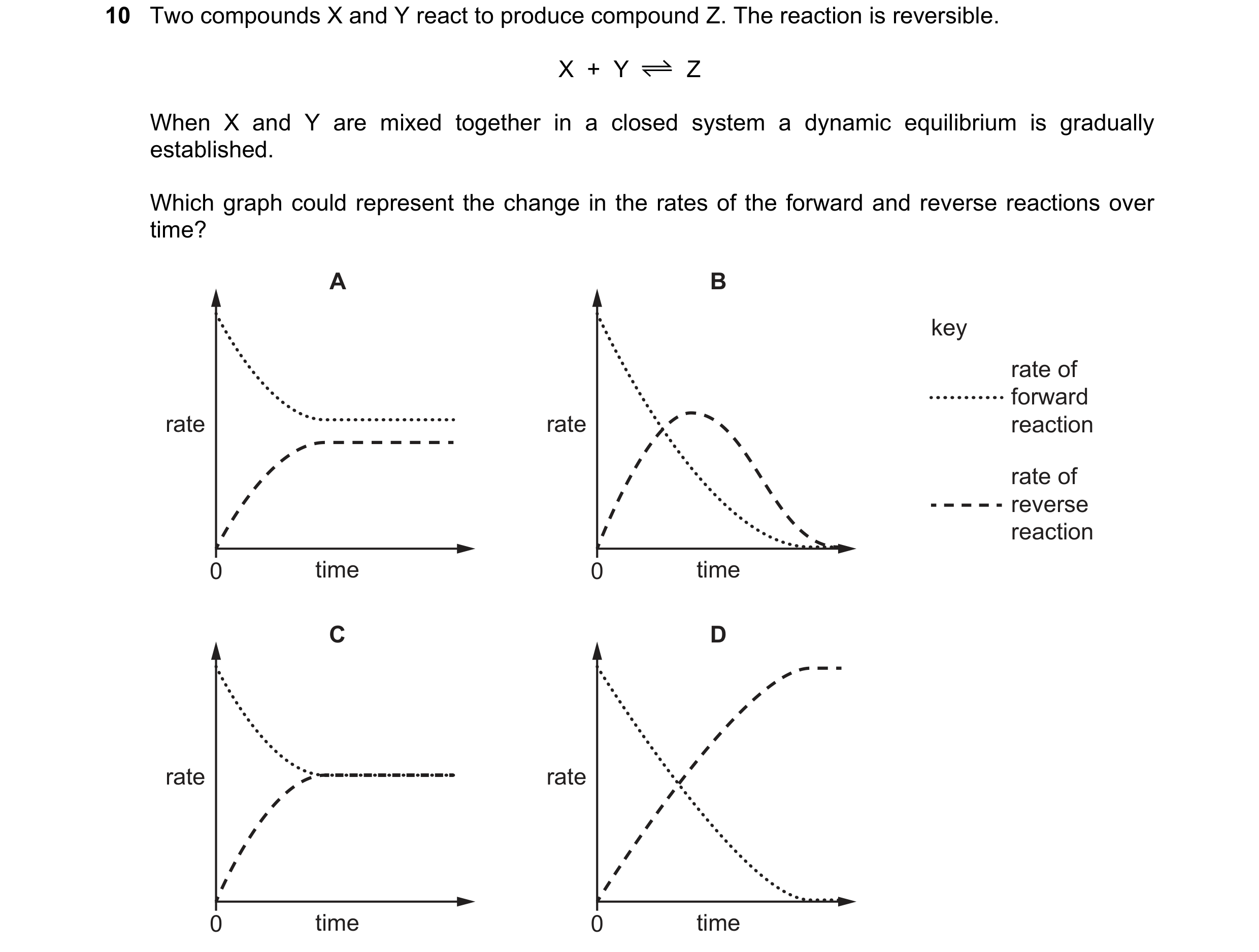
 32 / 59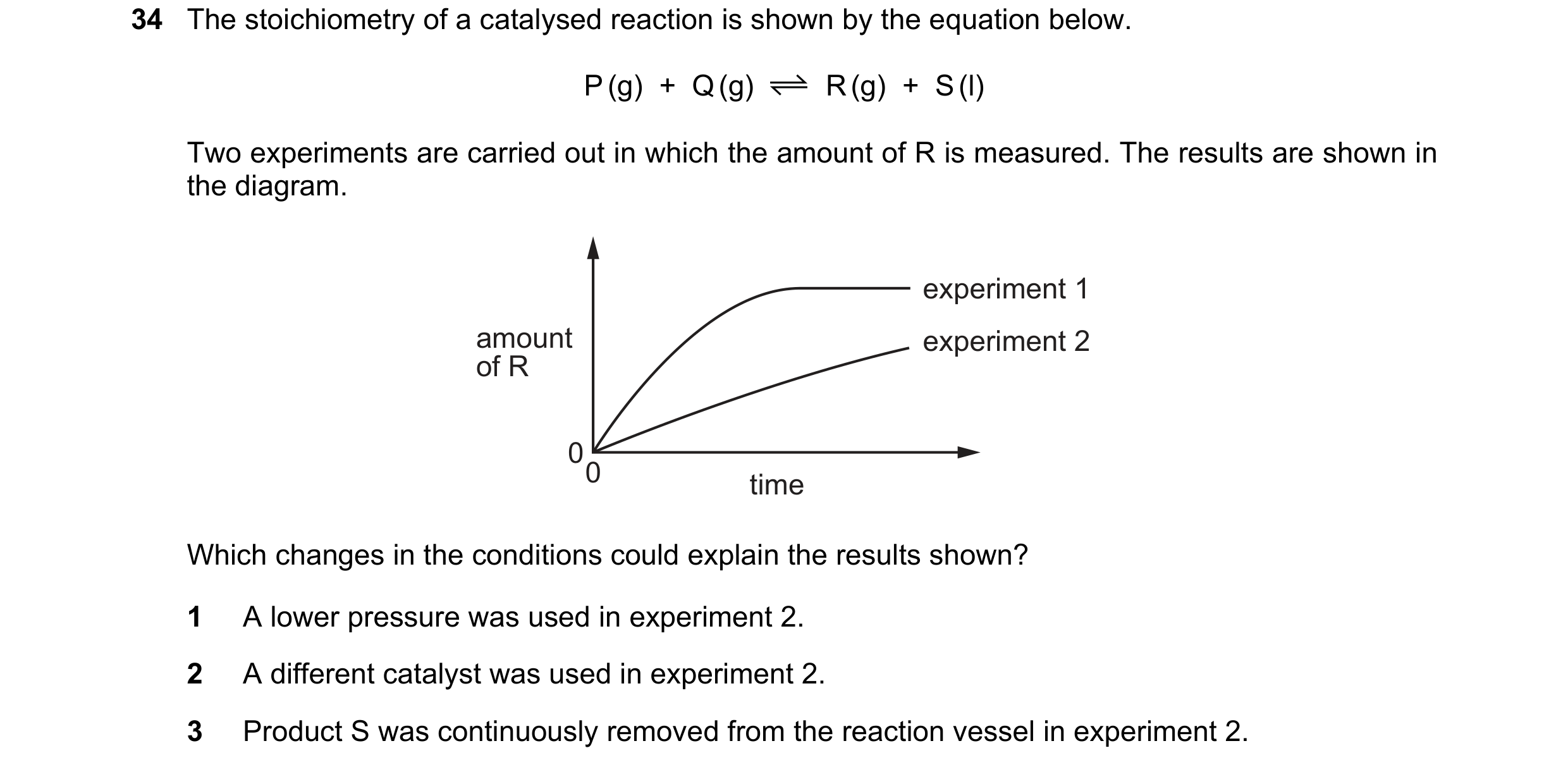
 33 / 59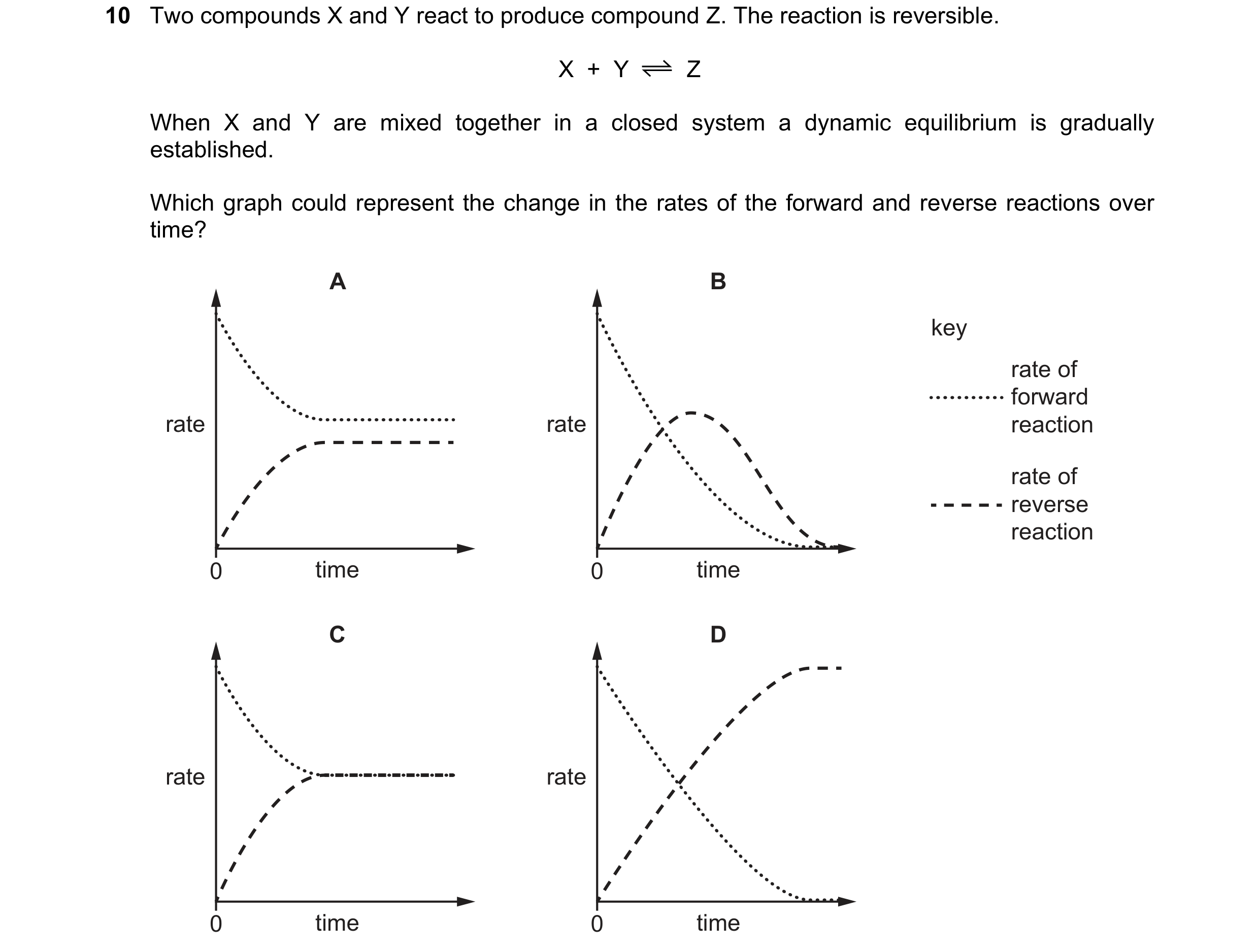
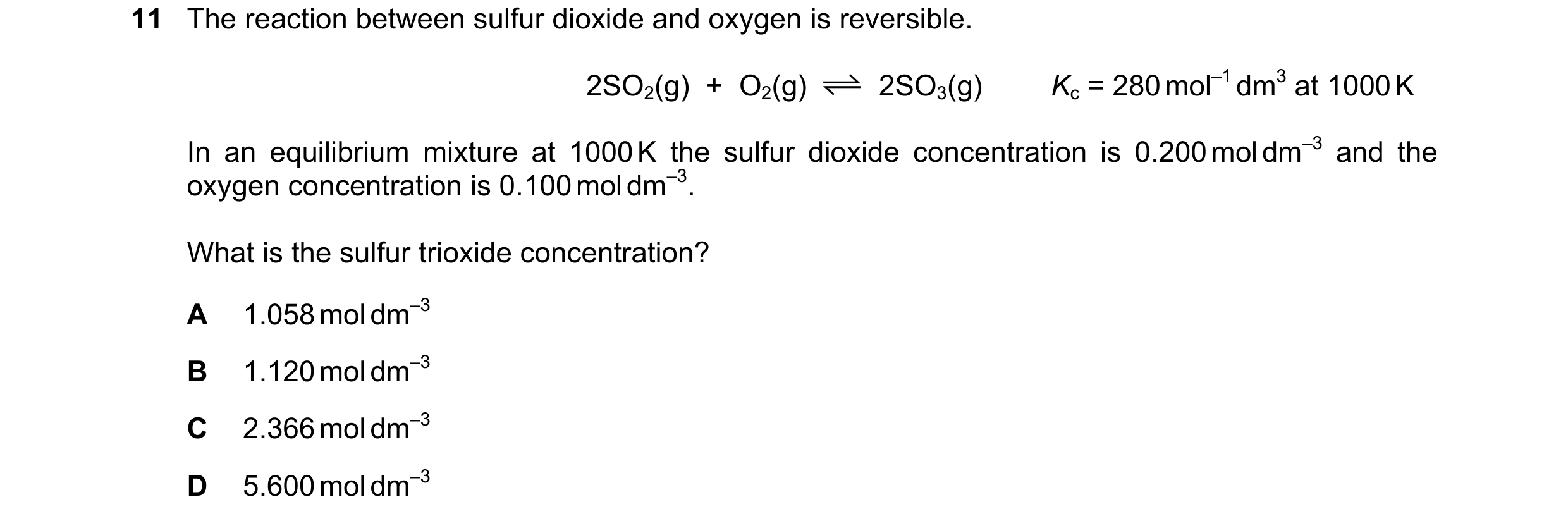 34 / 59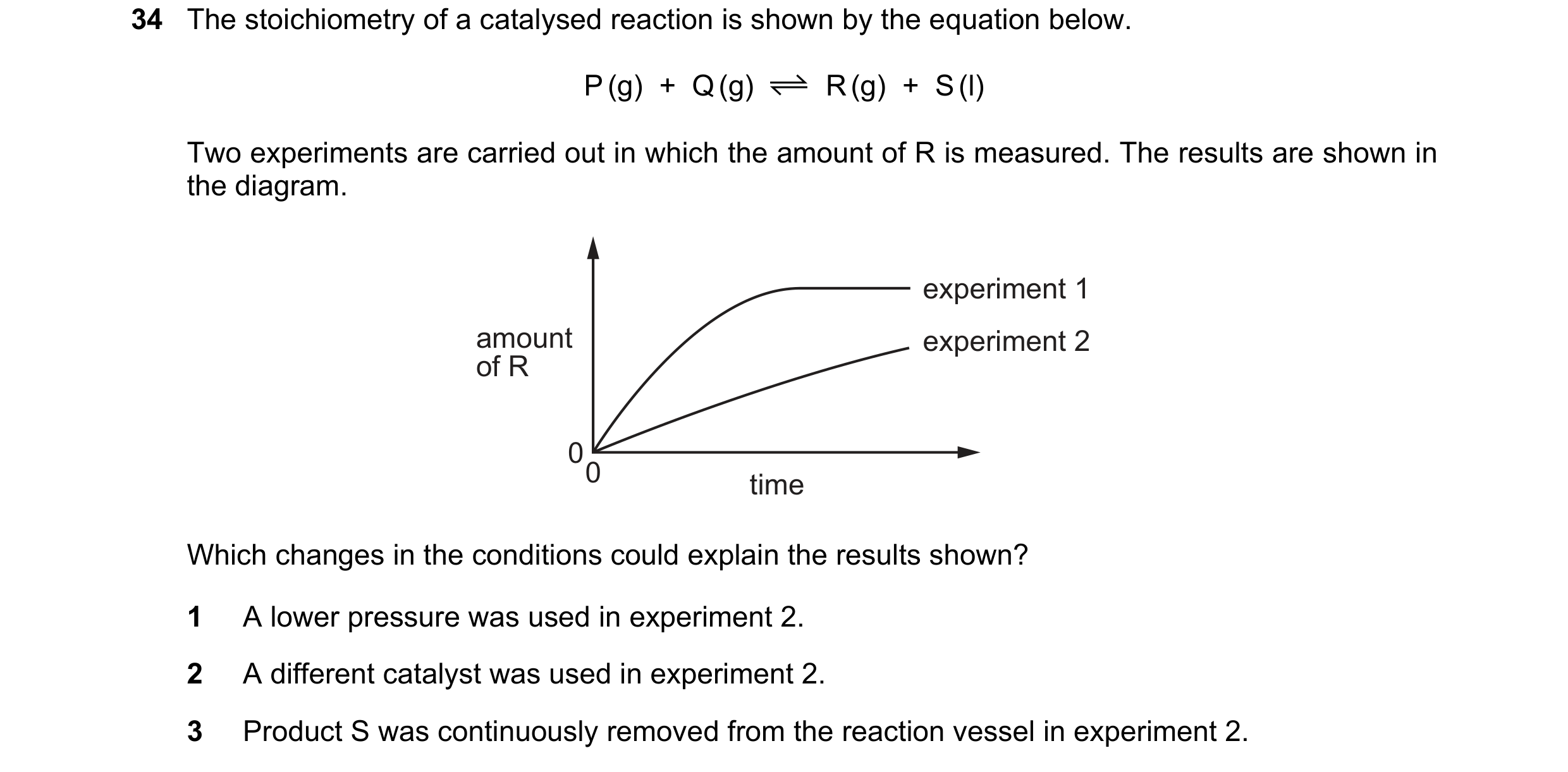
![Question 125: The equation for the reaction between silver chloride and aqueous ammonia is shown. AgCl (s) + 2NH3(aq) [Ag(NH3)2]+(aq) + Cl –(aq) What…](https://img.pastlit.com/crops/d774c17d-5dbd-4993-b27b-4ca1c43475e9/q6.png)
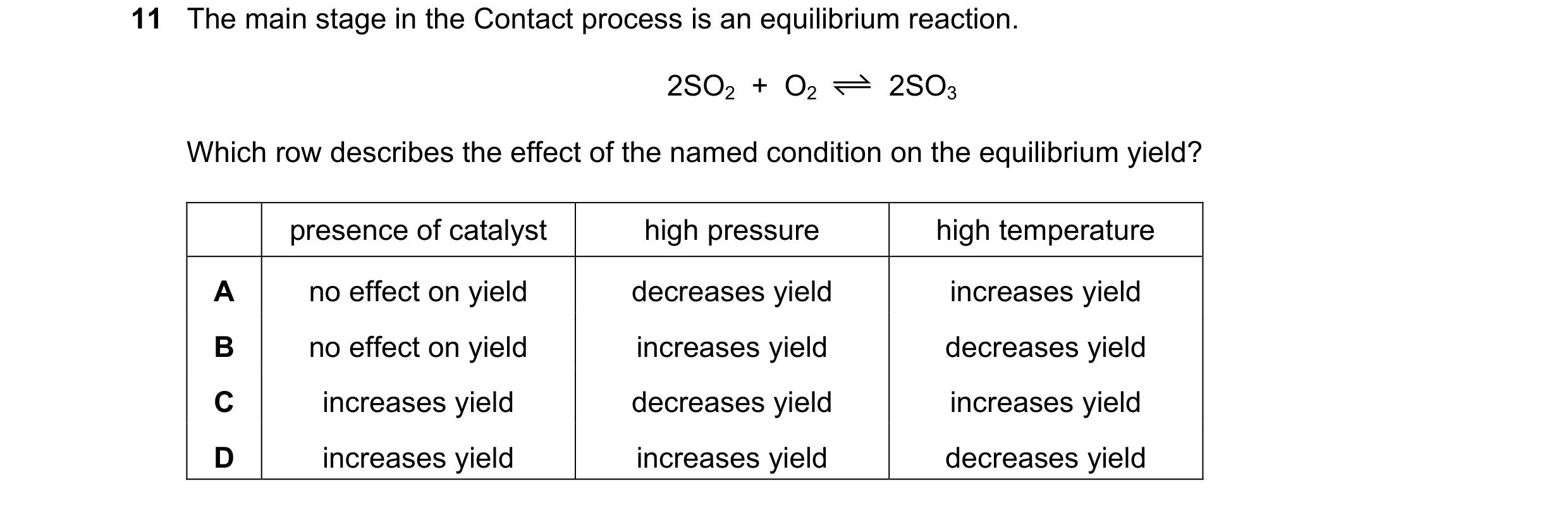
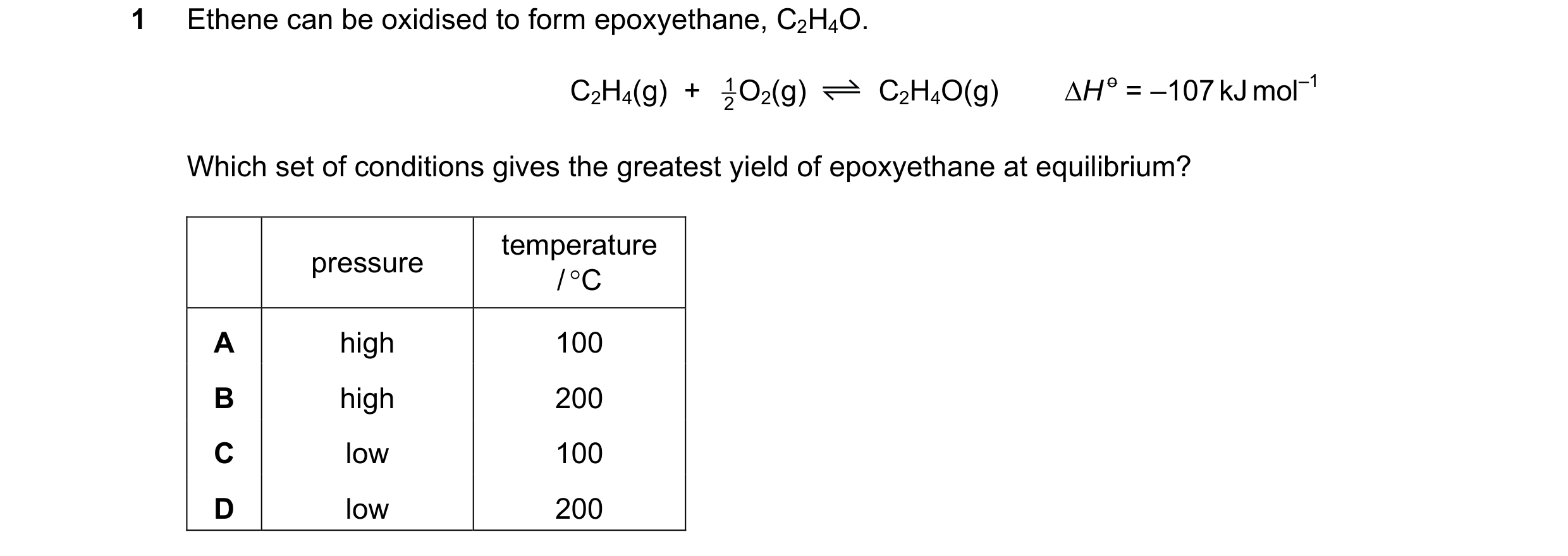 35 / 59
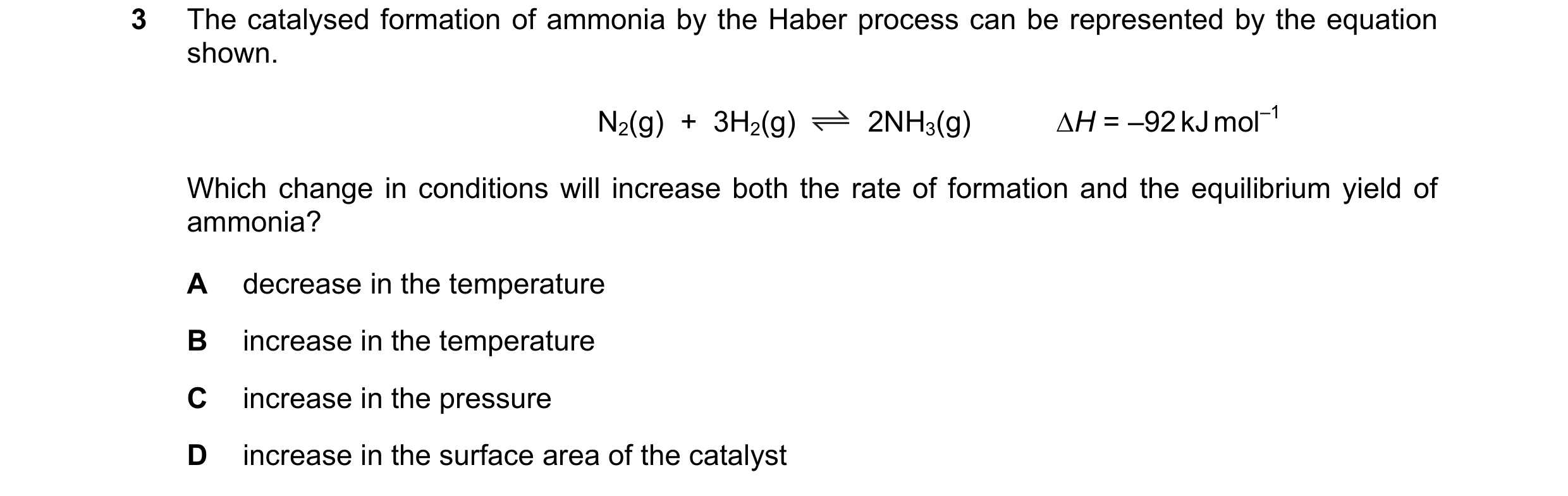
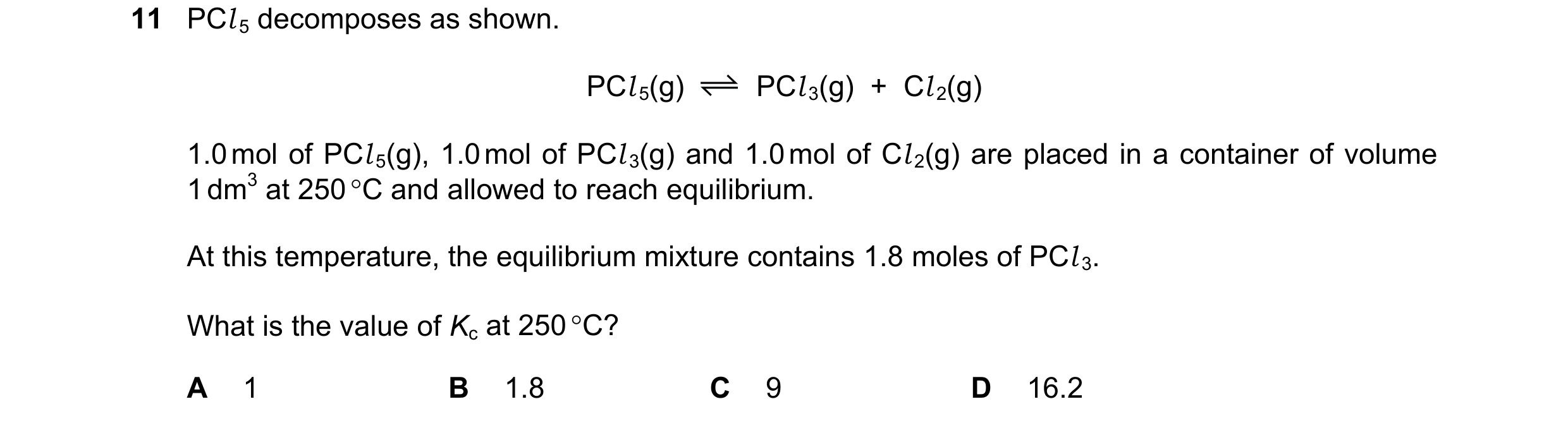
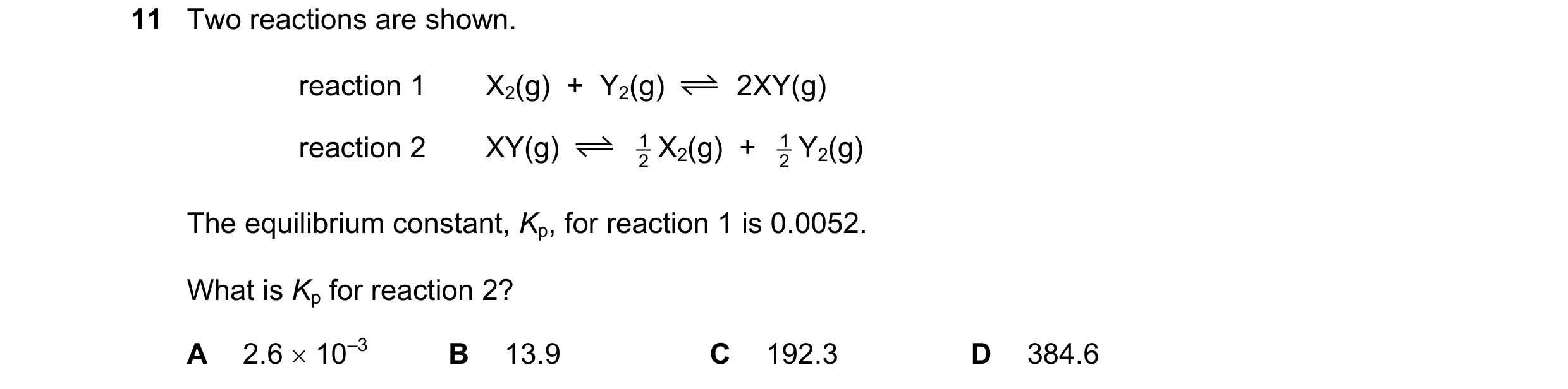 36 / 59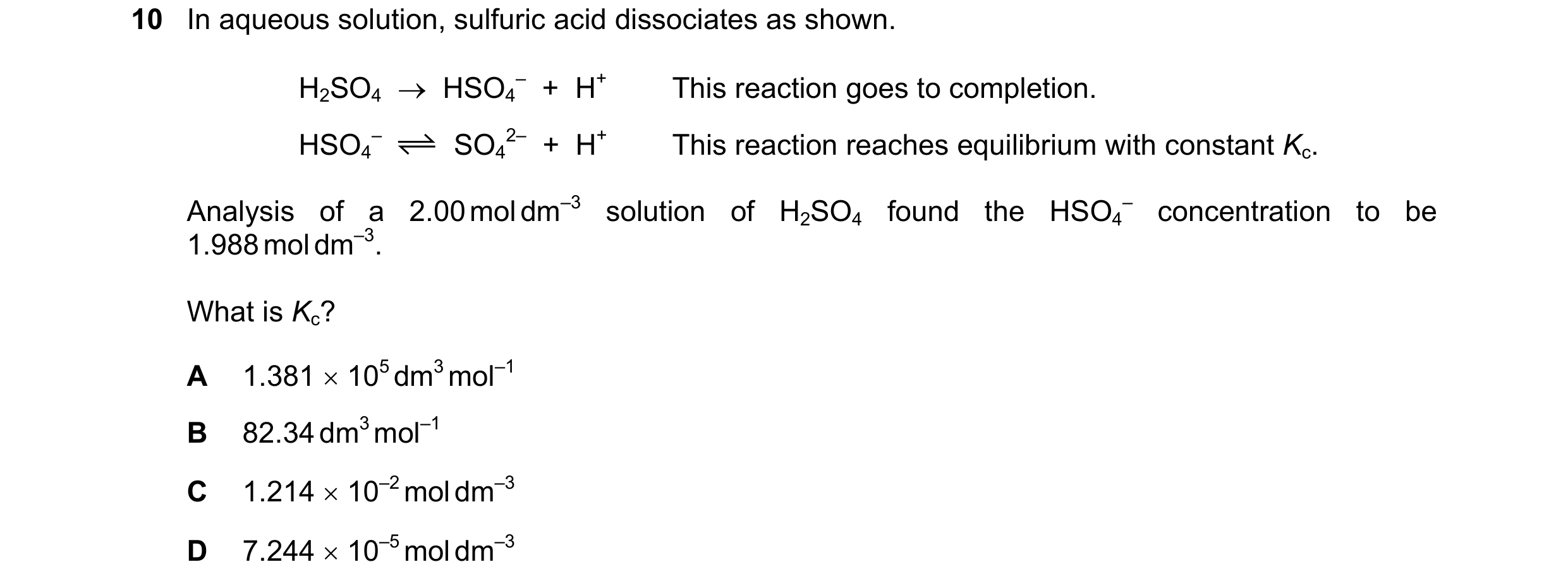

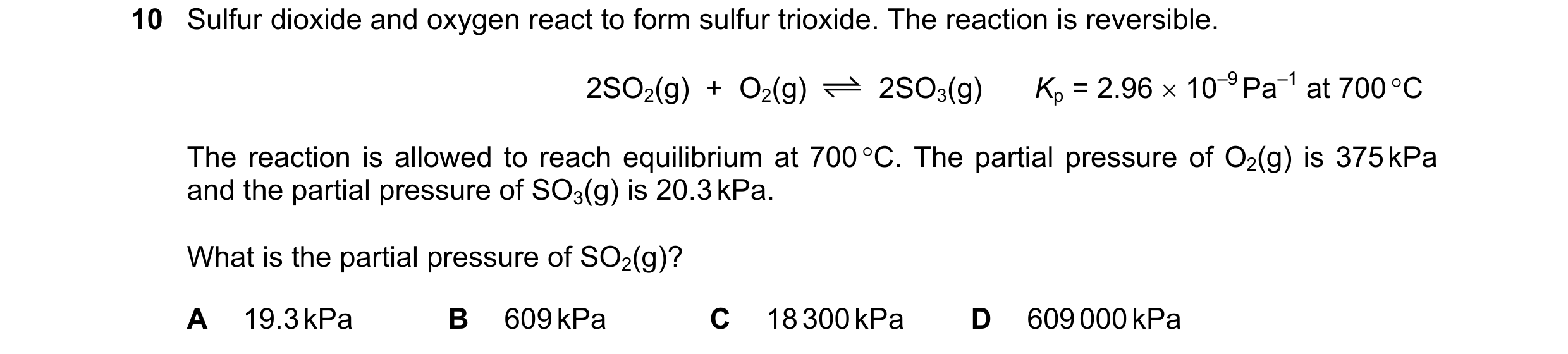
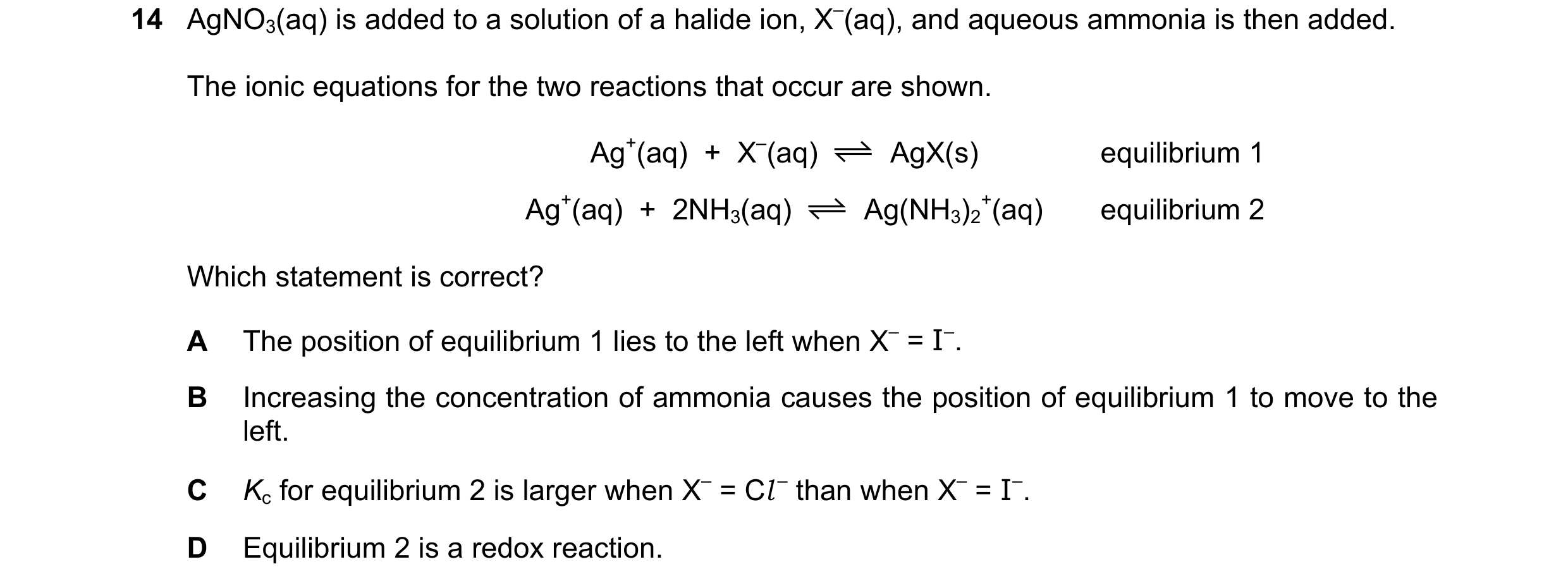
 37 / 59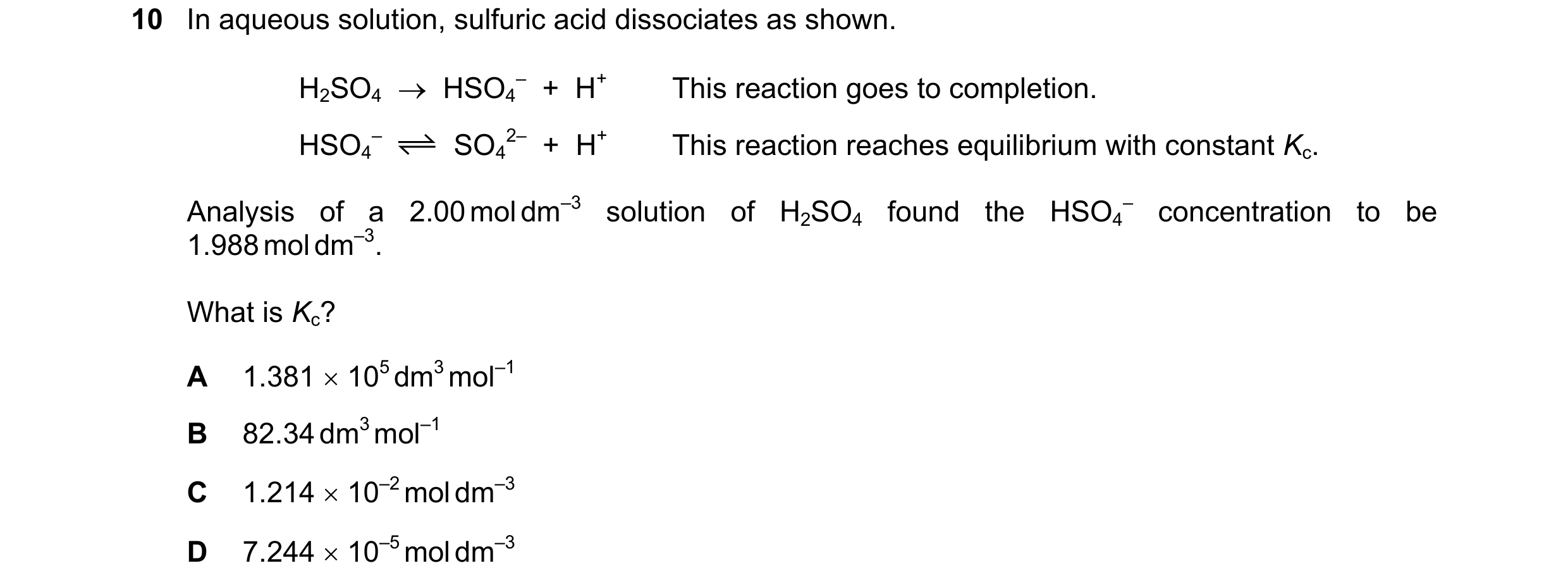

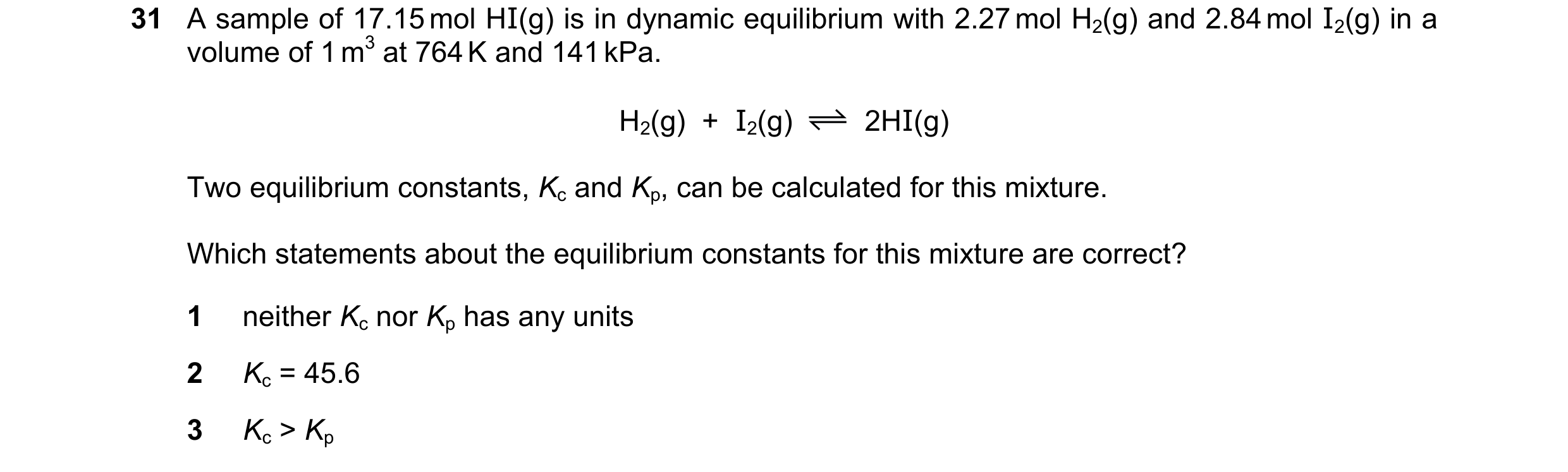 38 / 59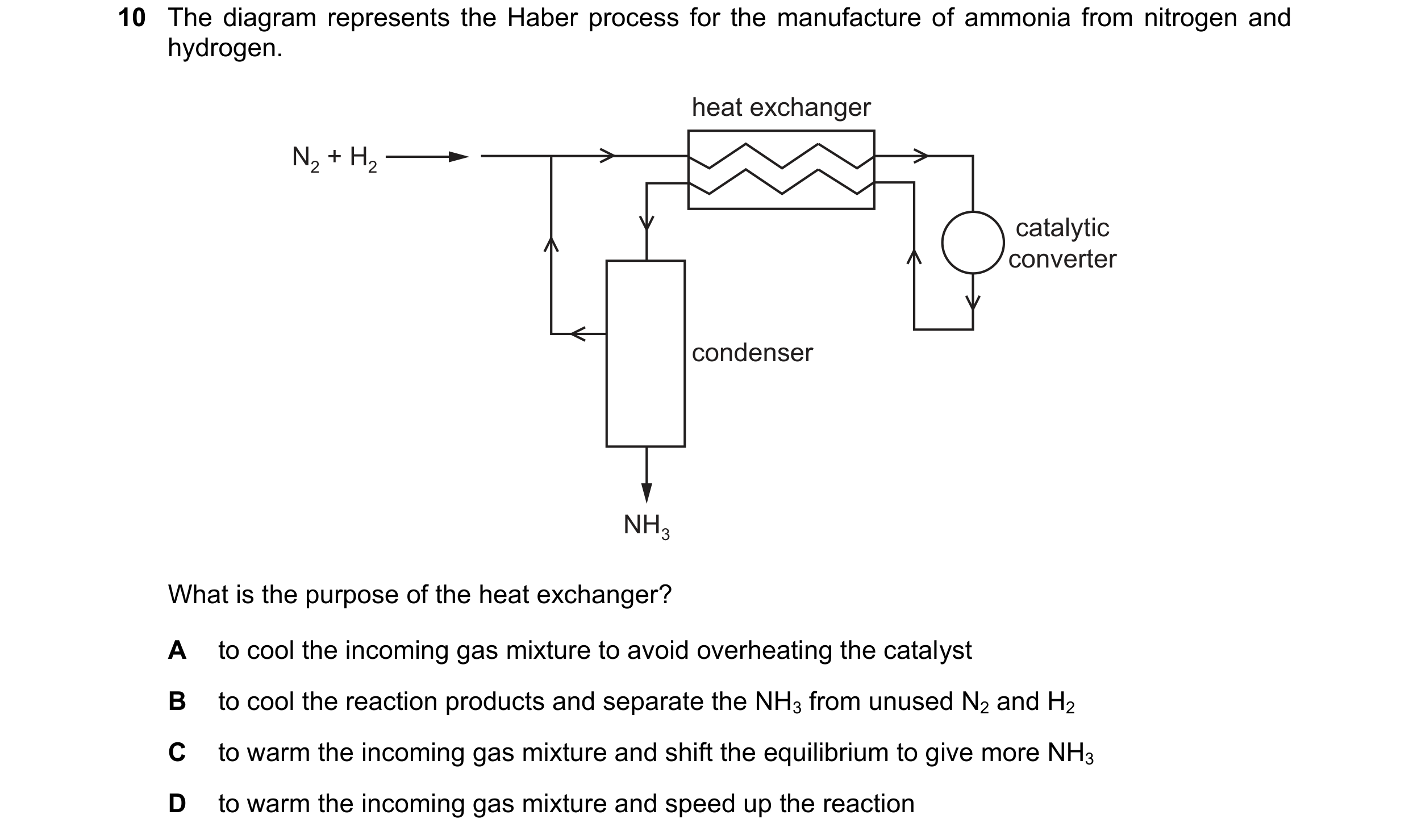
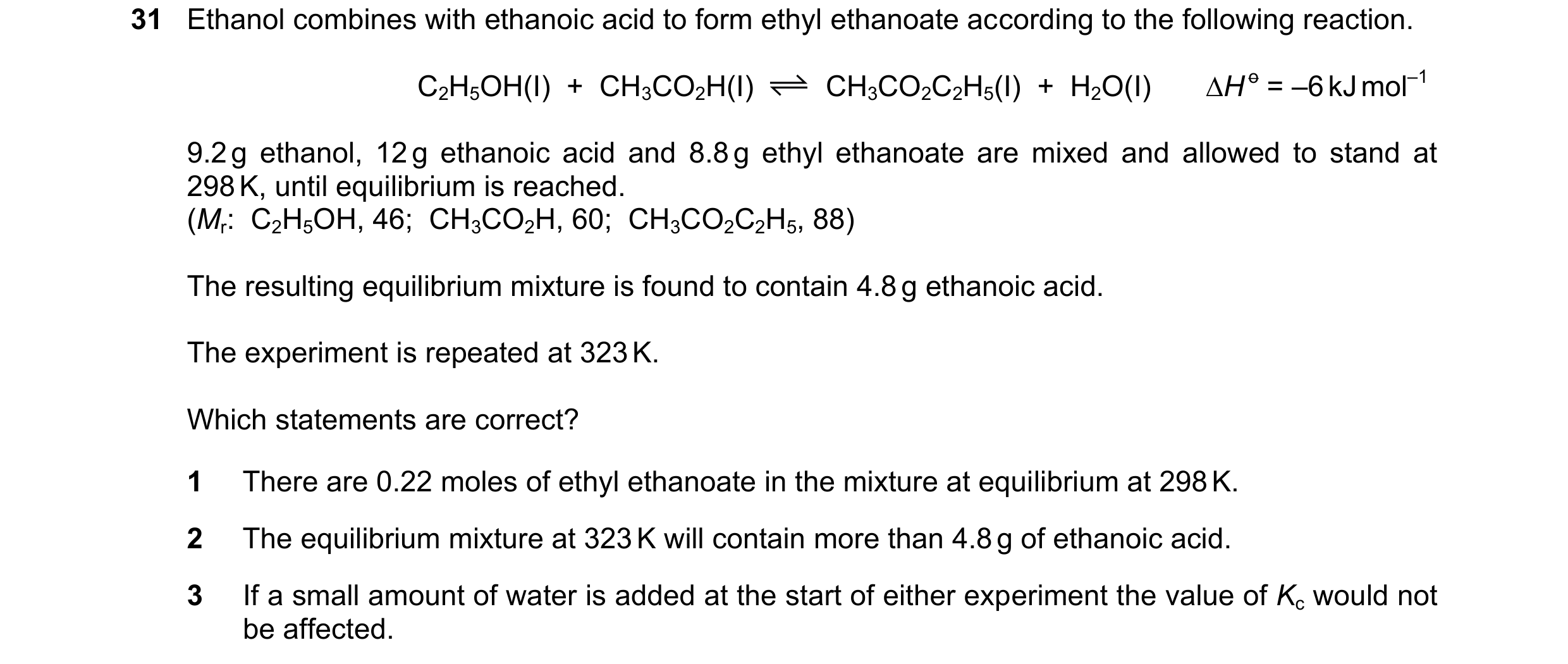
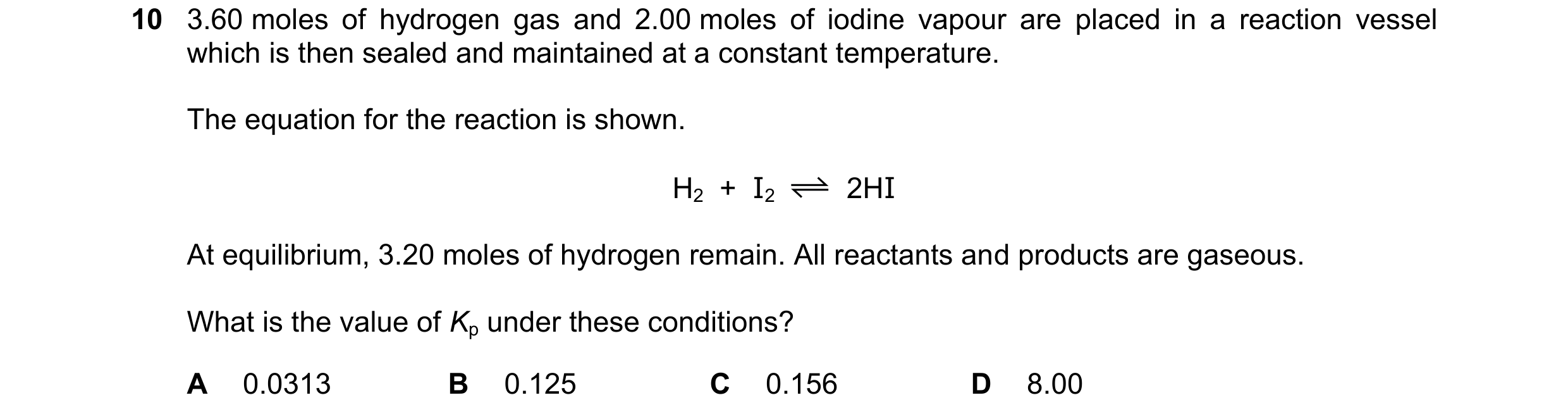 39 / 59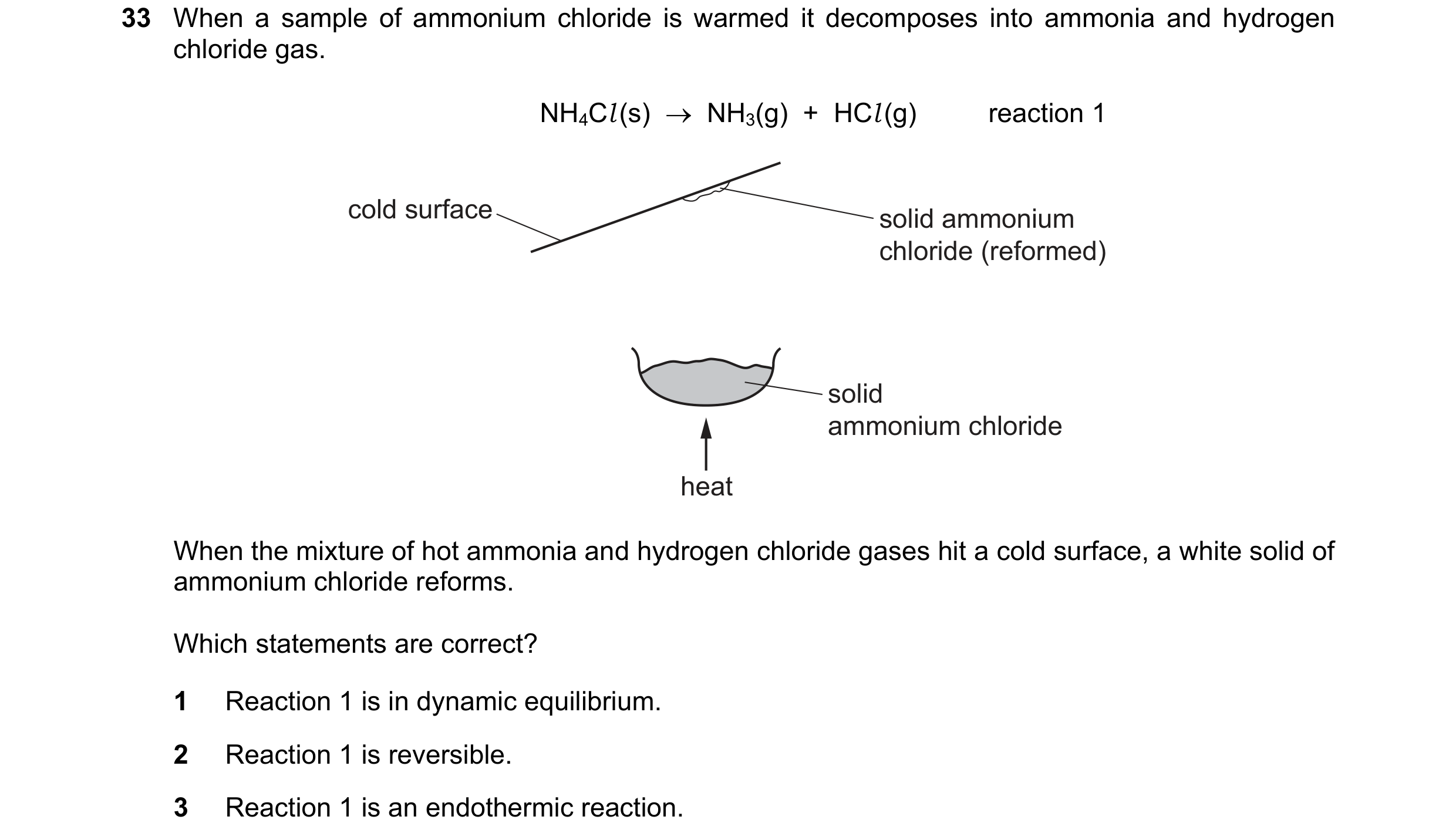
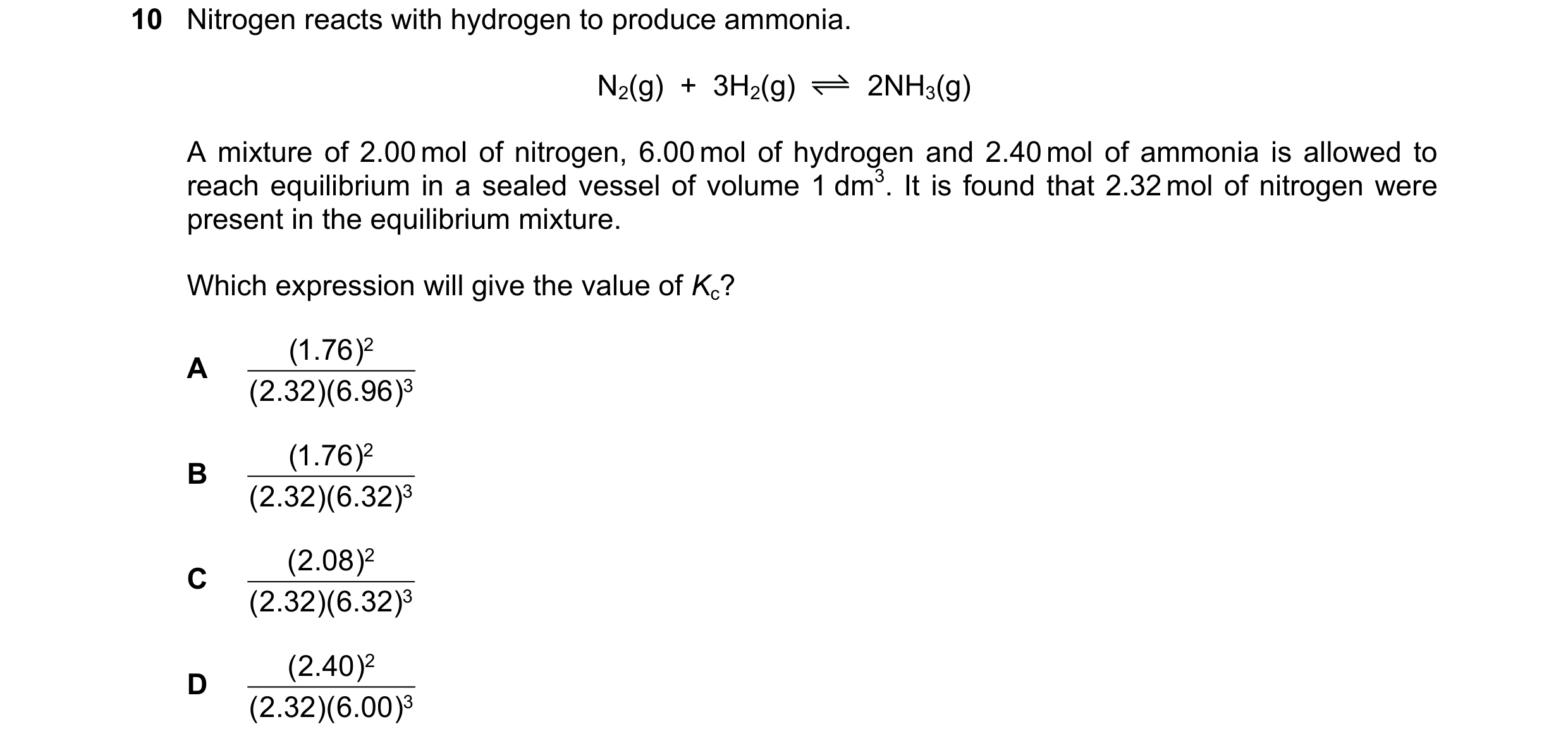 40 / 59
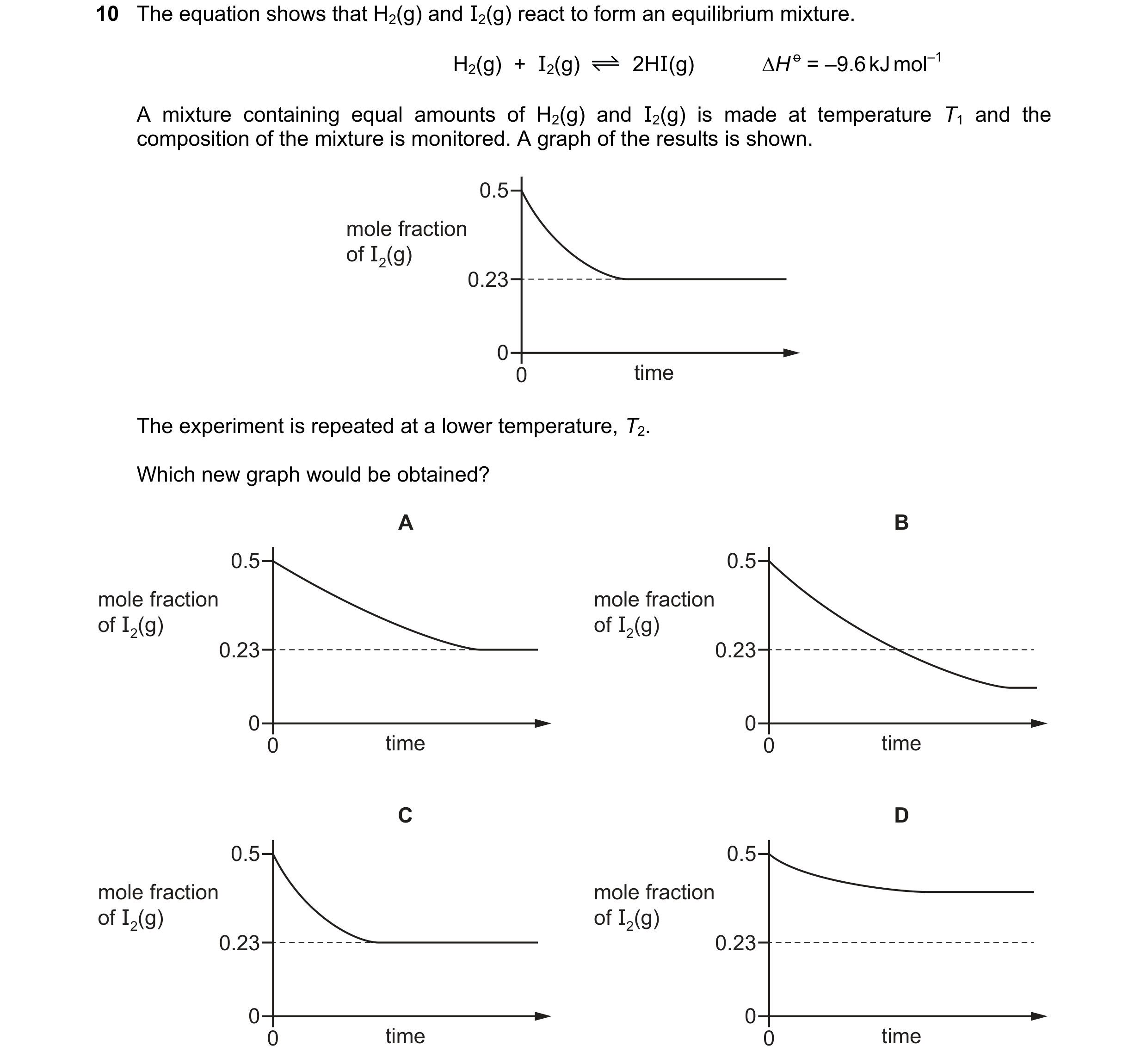 41 / 59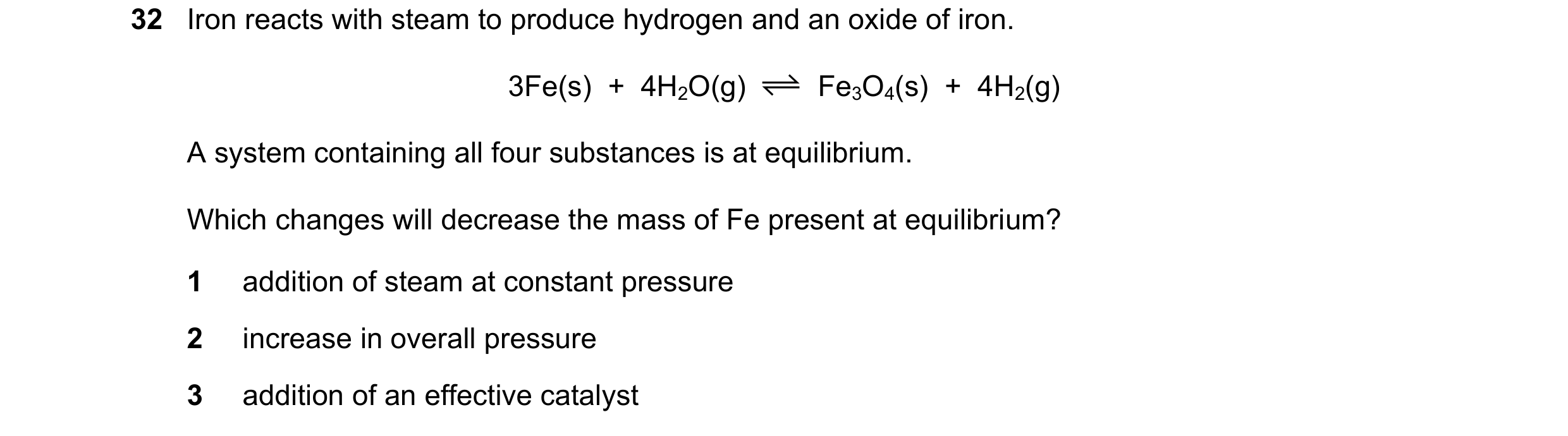
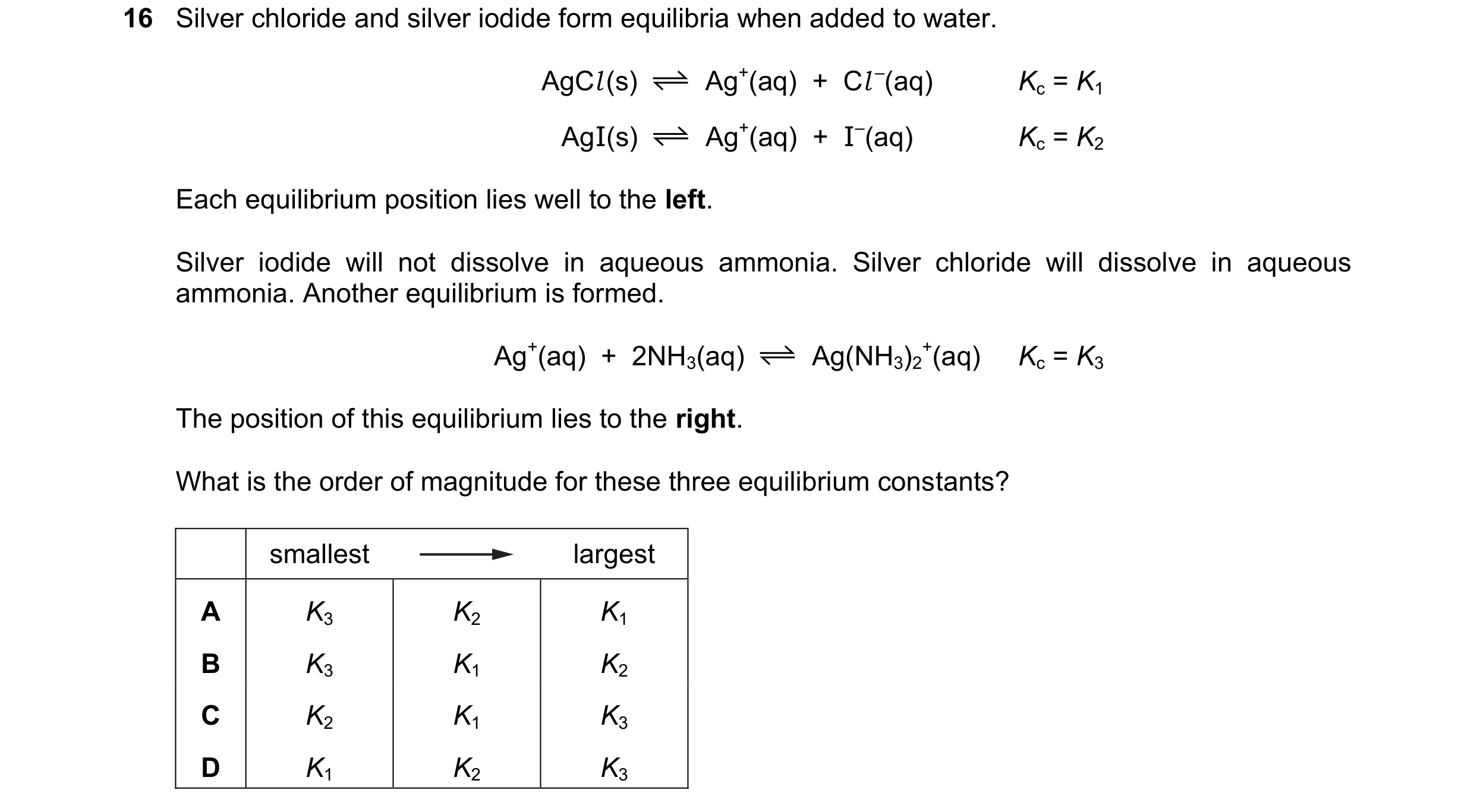 42 / 59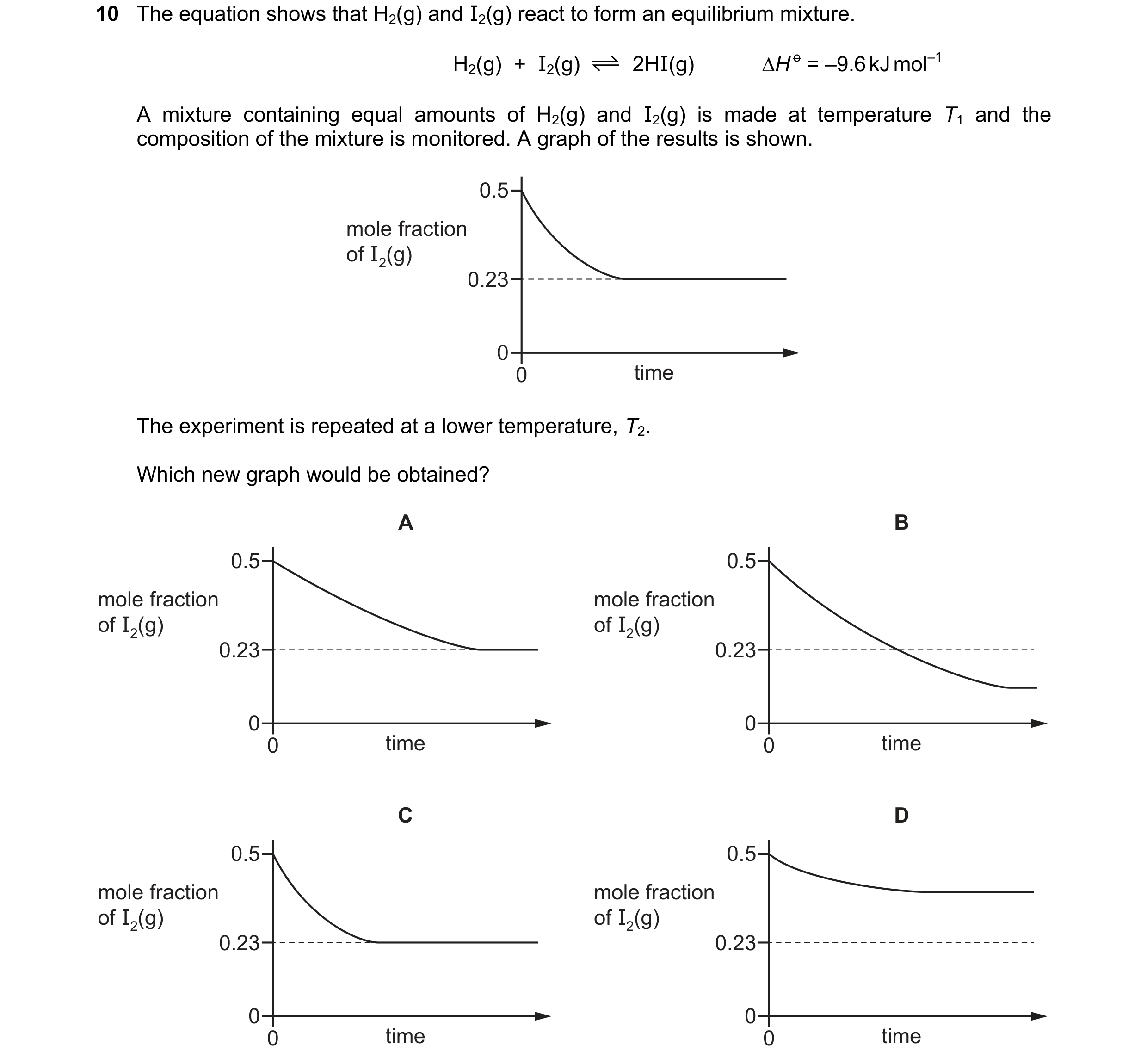
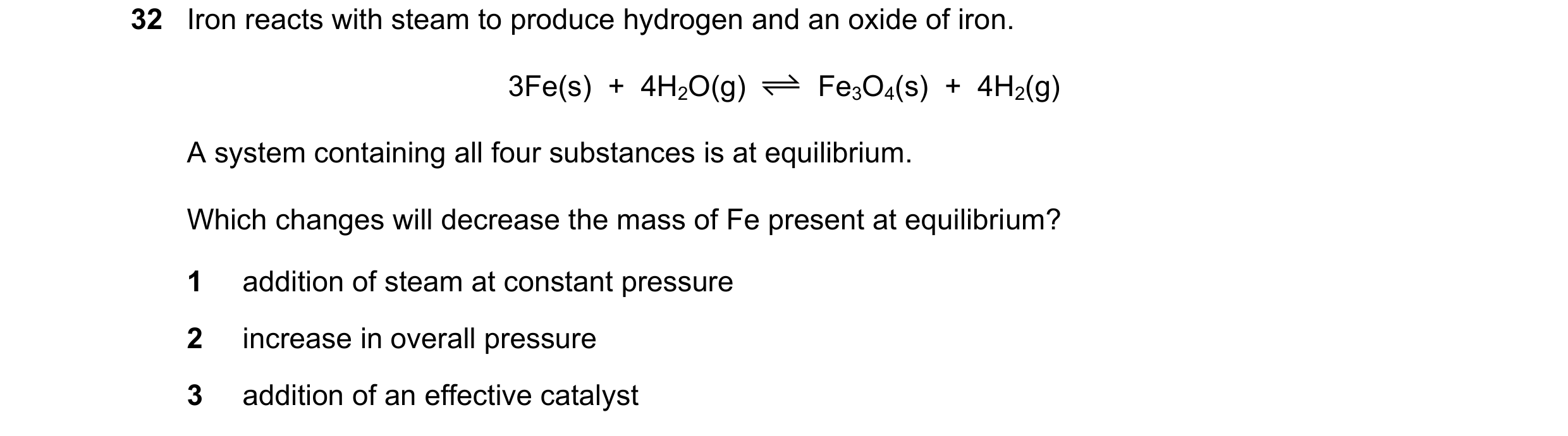 43 / 59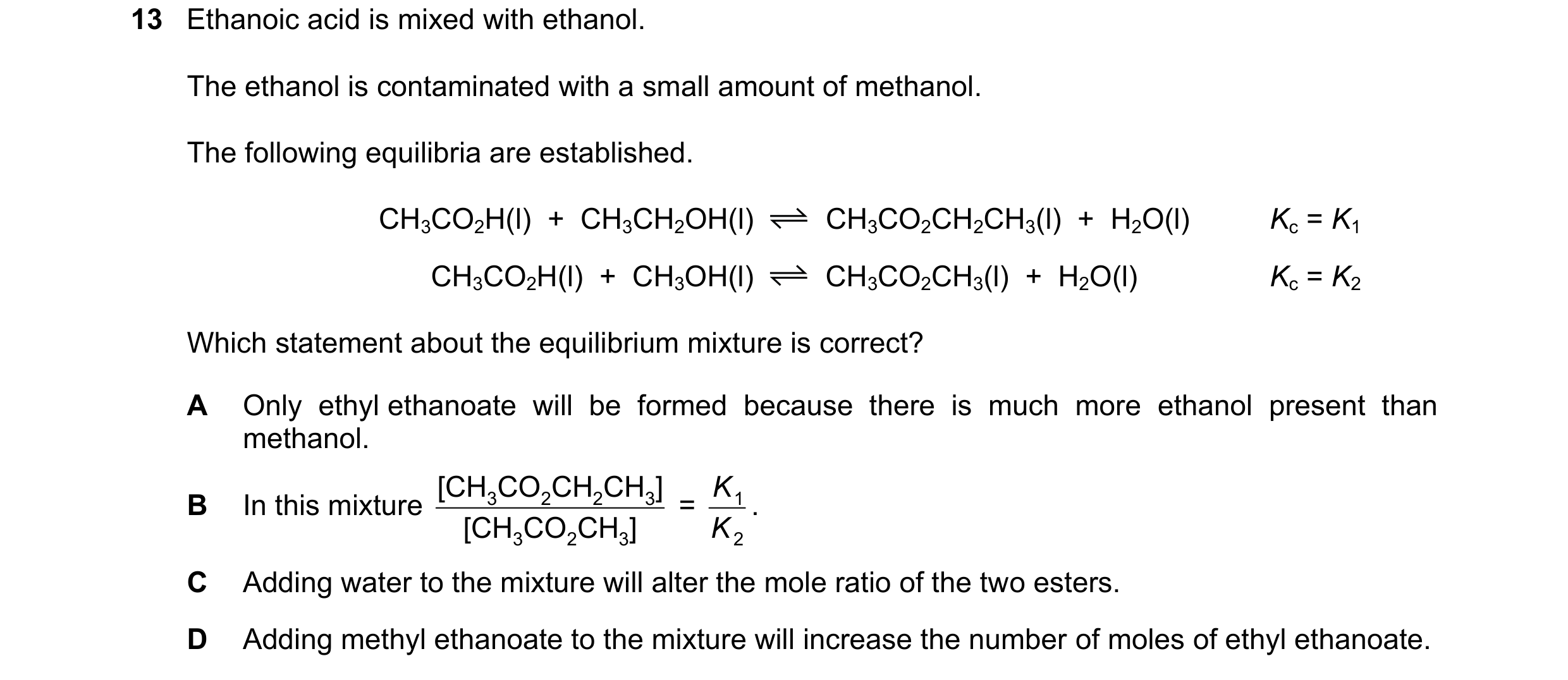
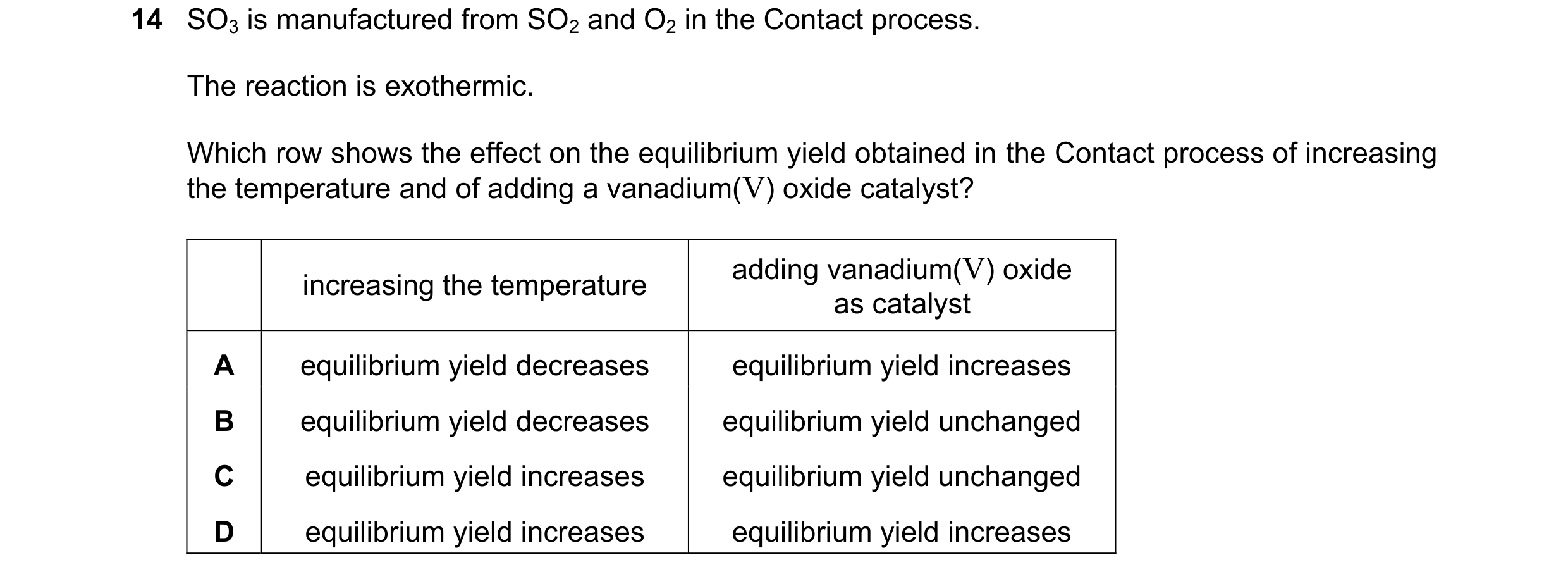
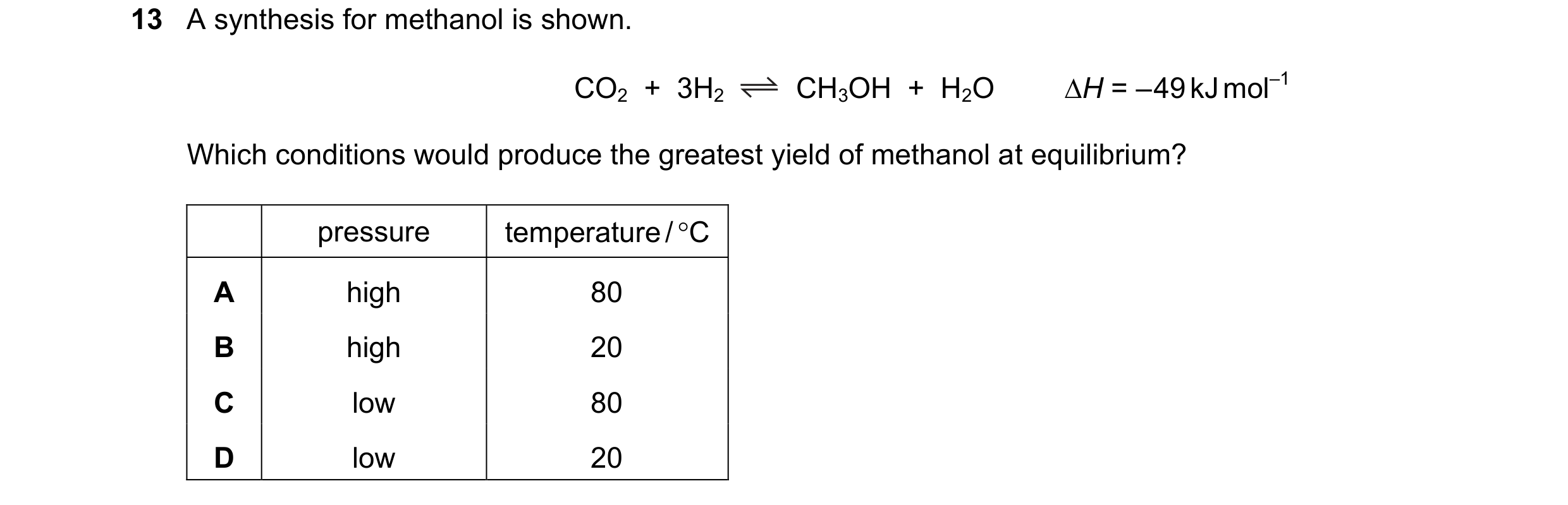 44 / 59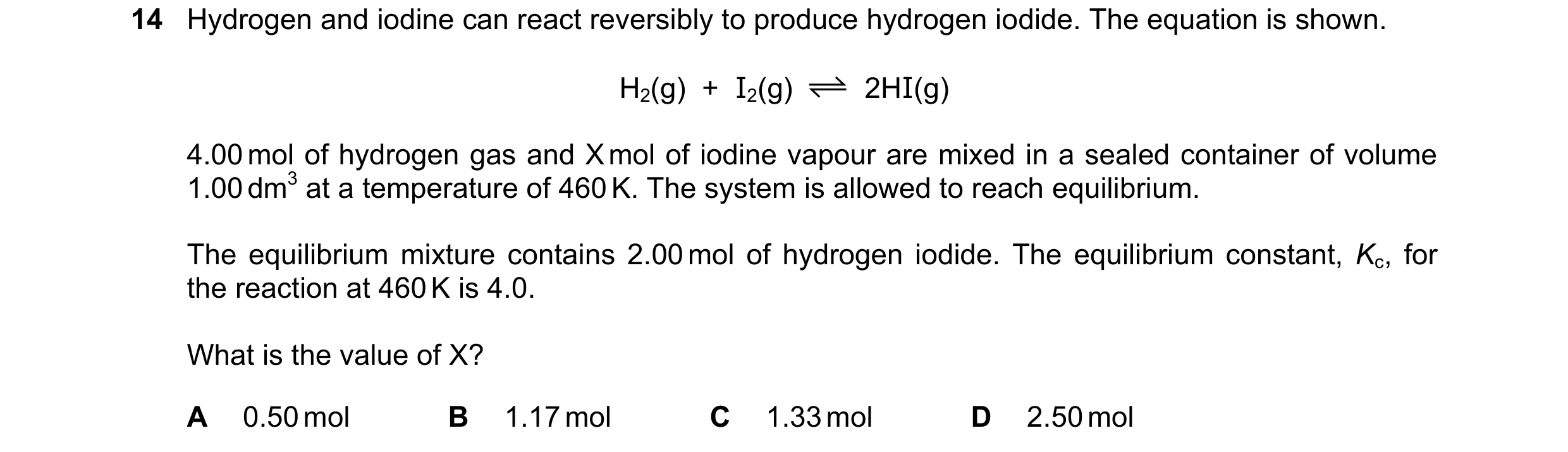
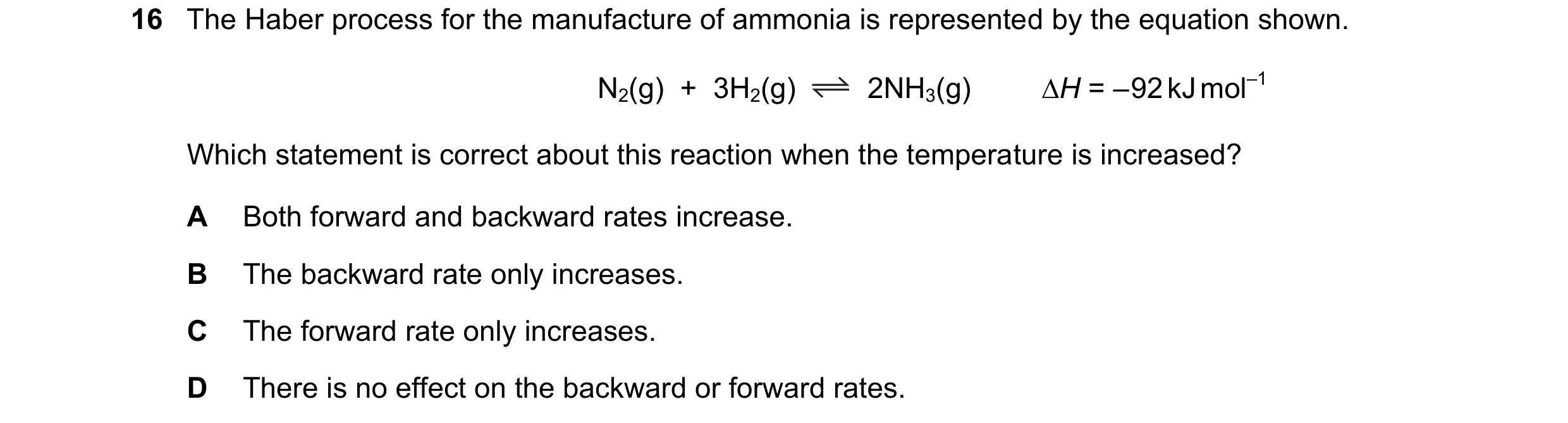
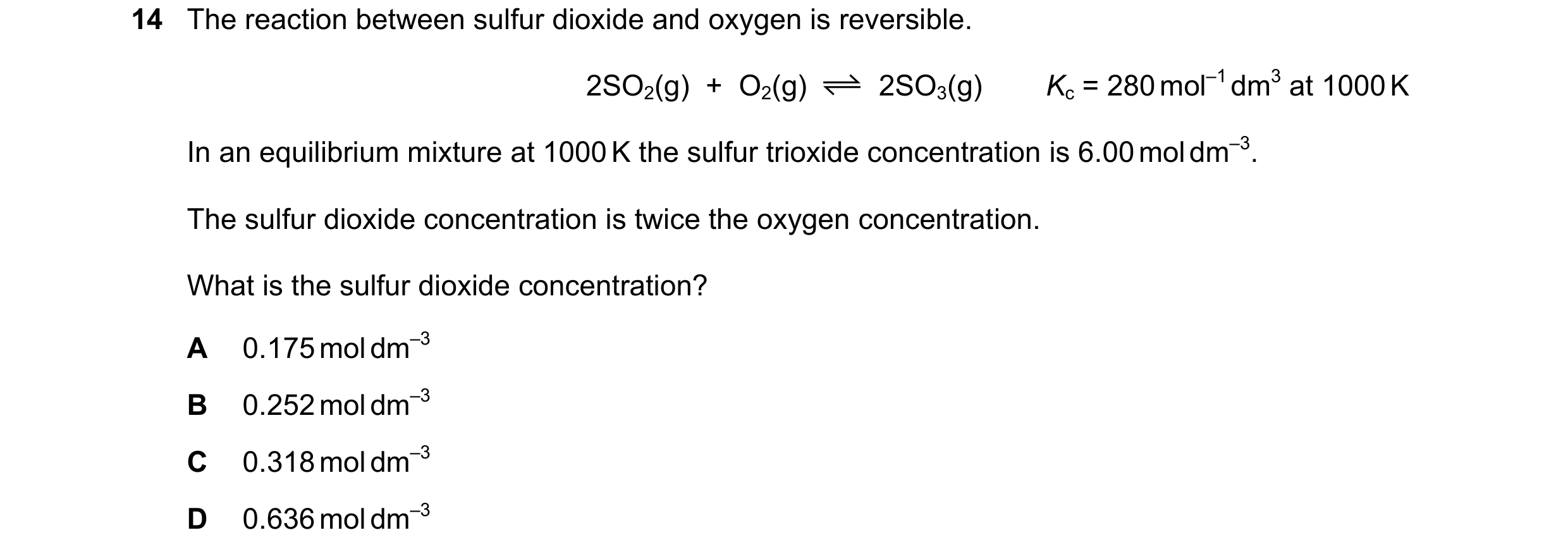
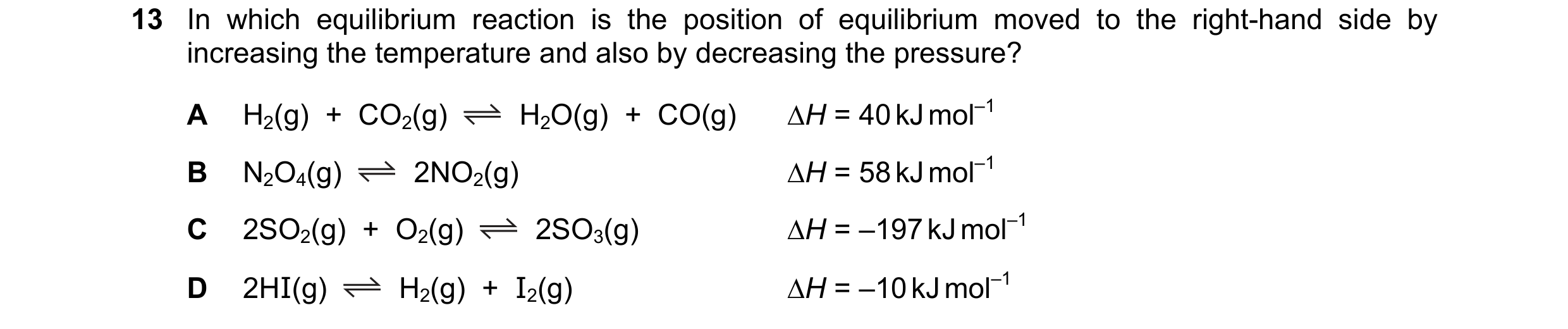 45 / 59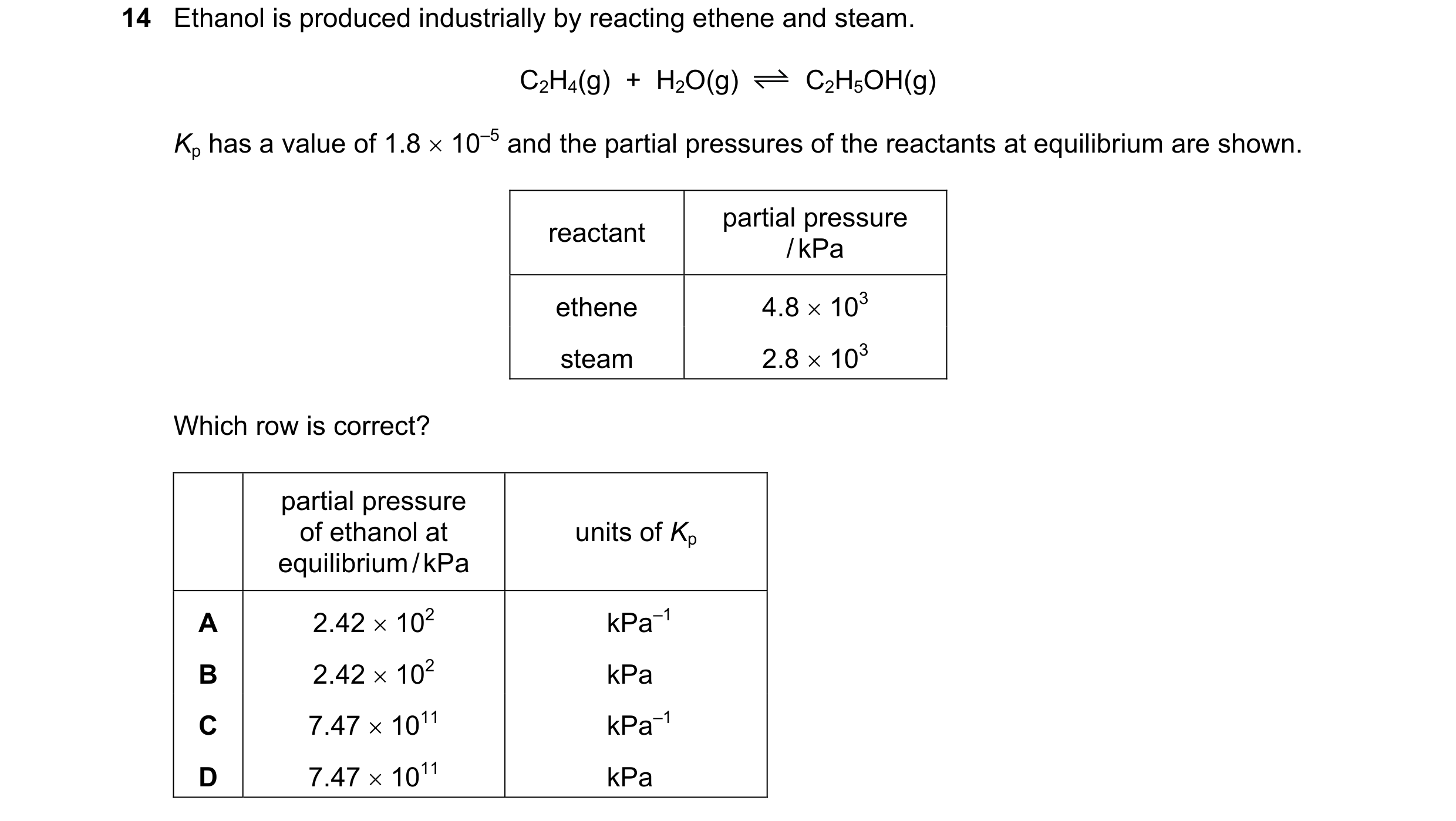
 46 / 59
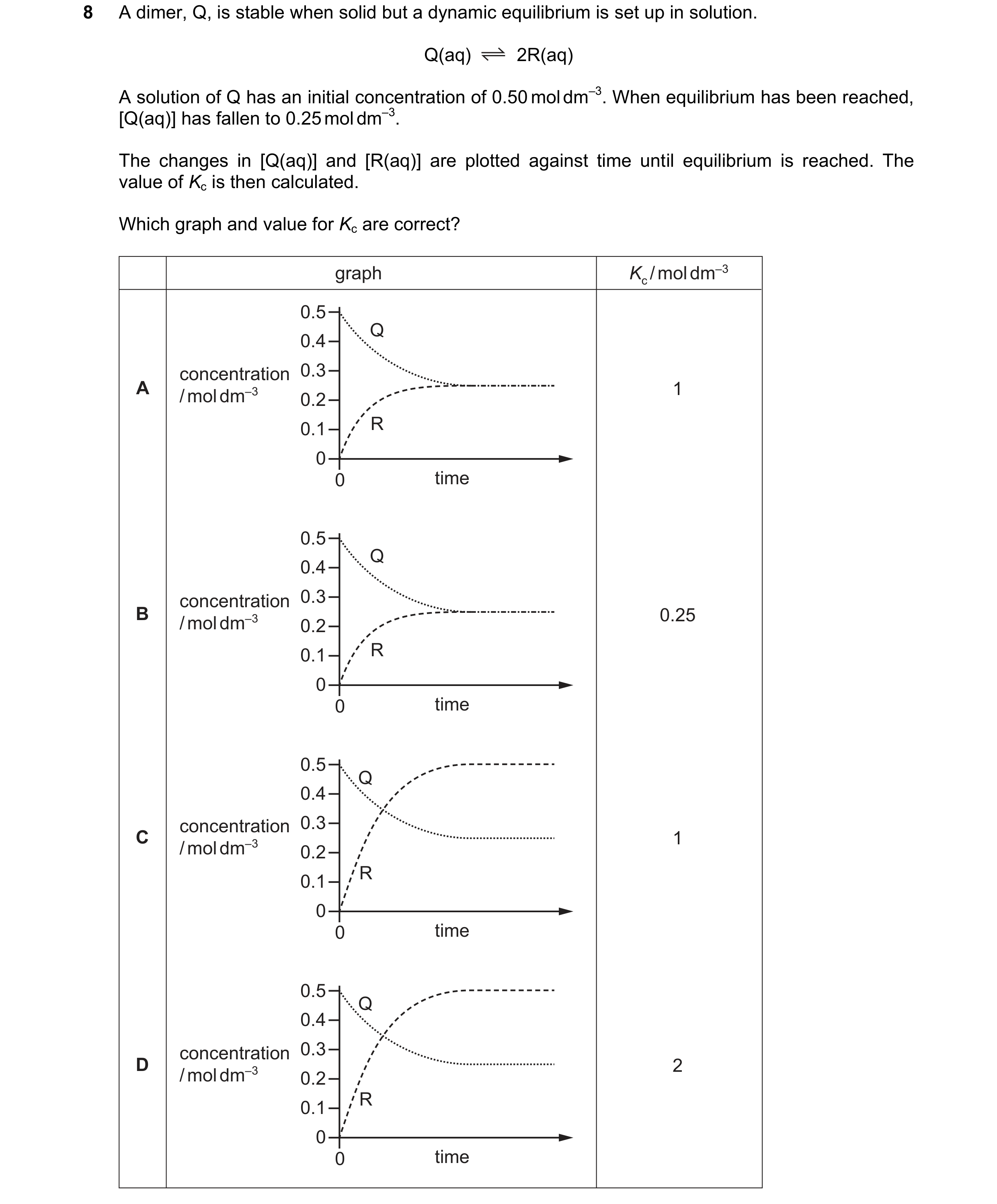 47 / 59
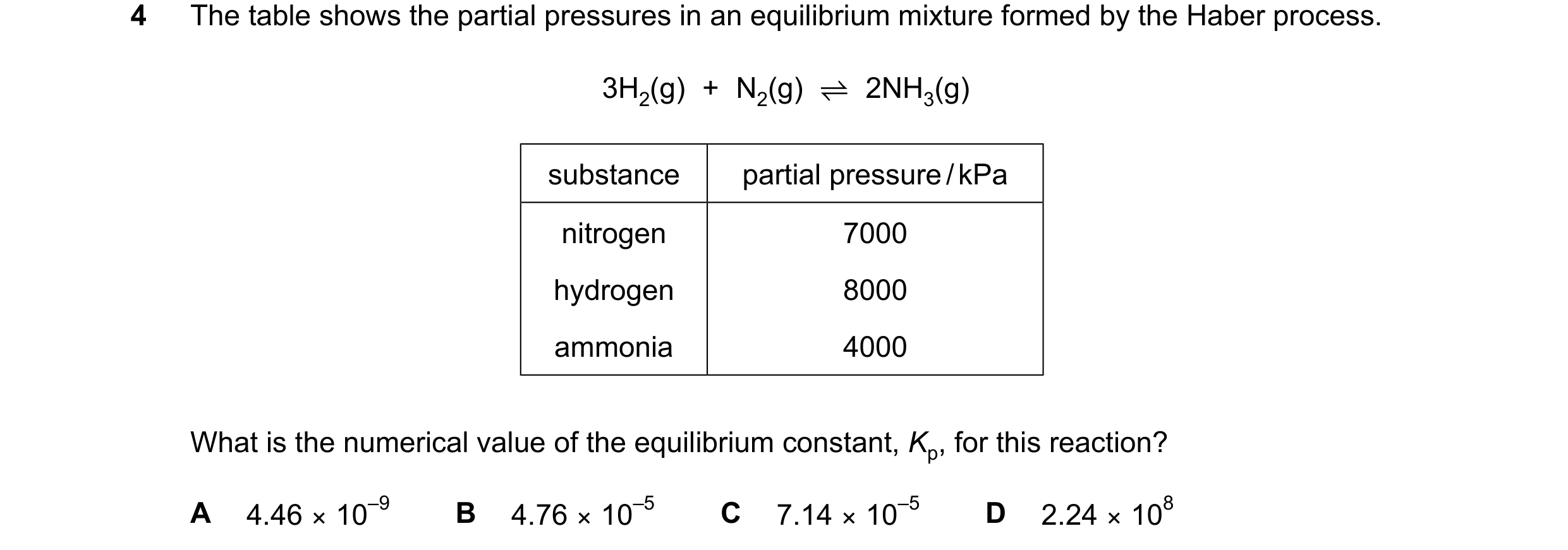 48 / 59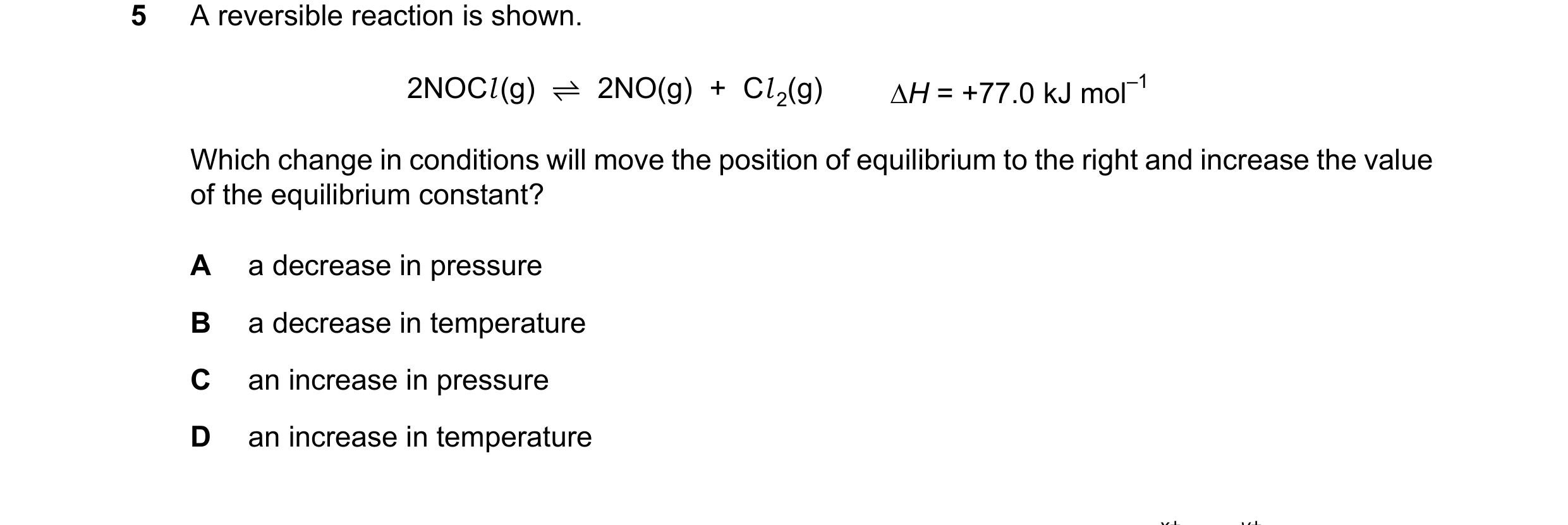
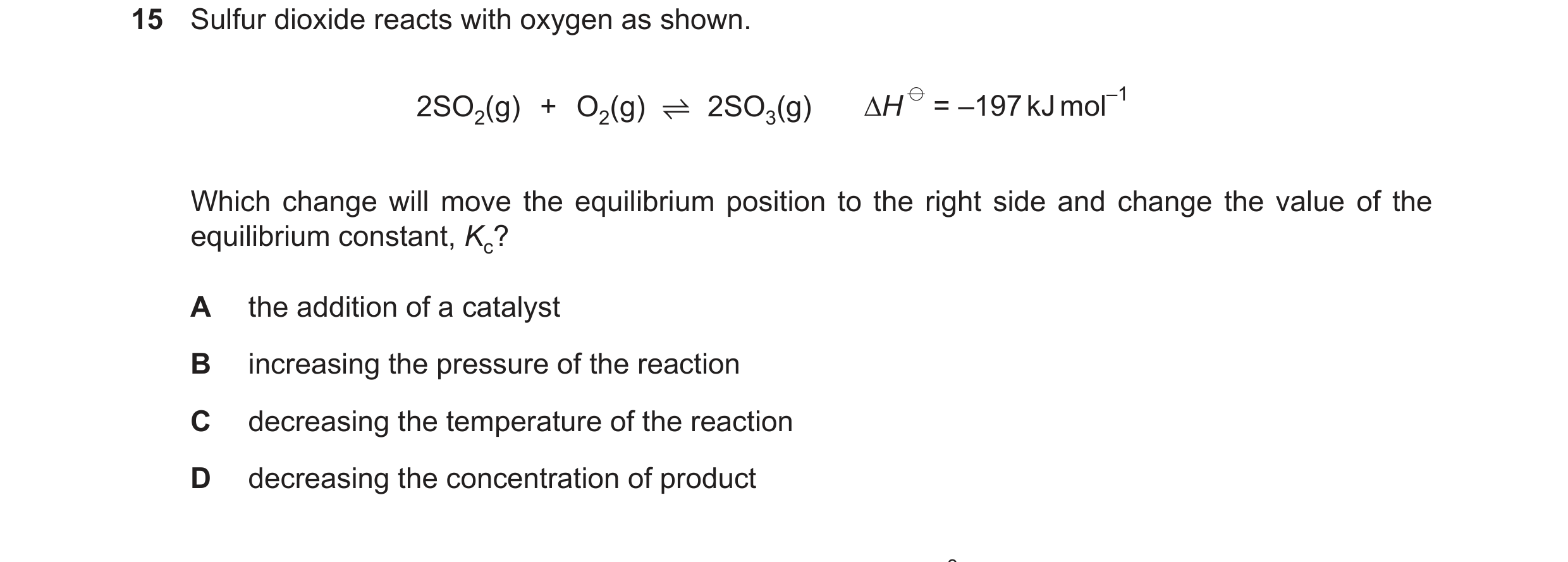
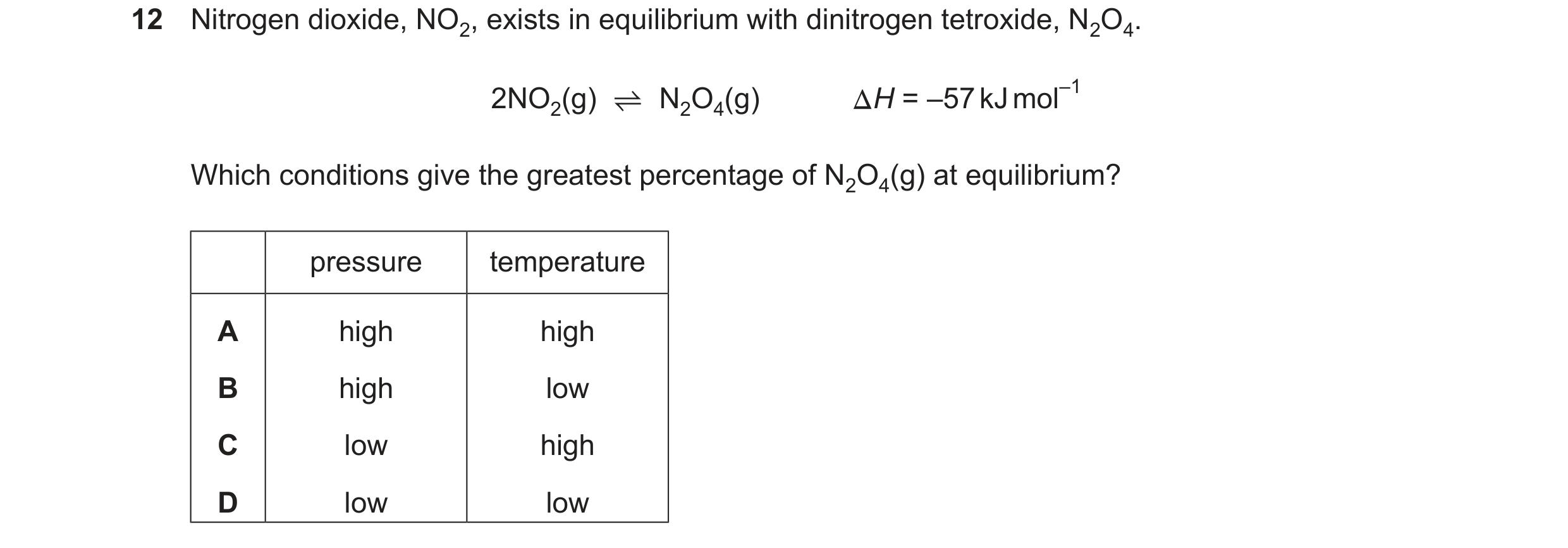 49 / 59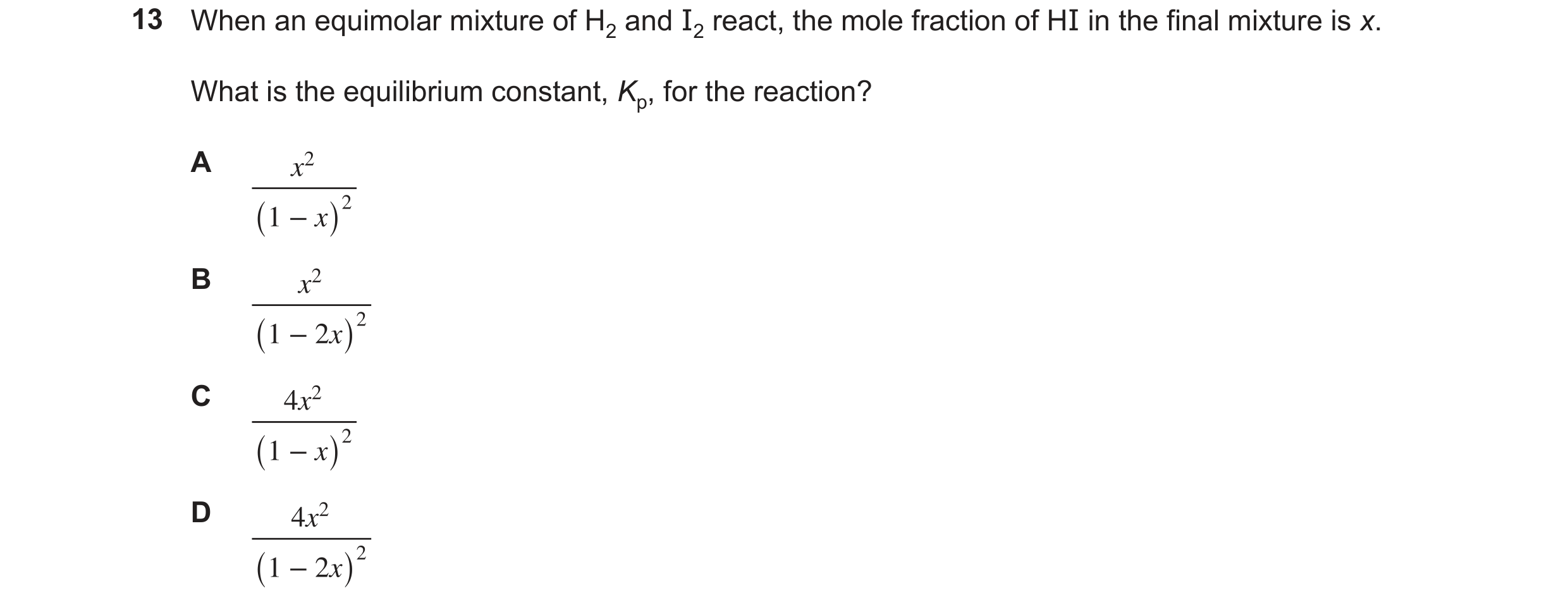
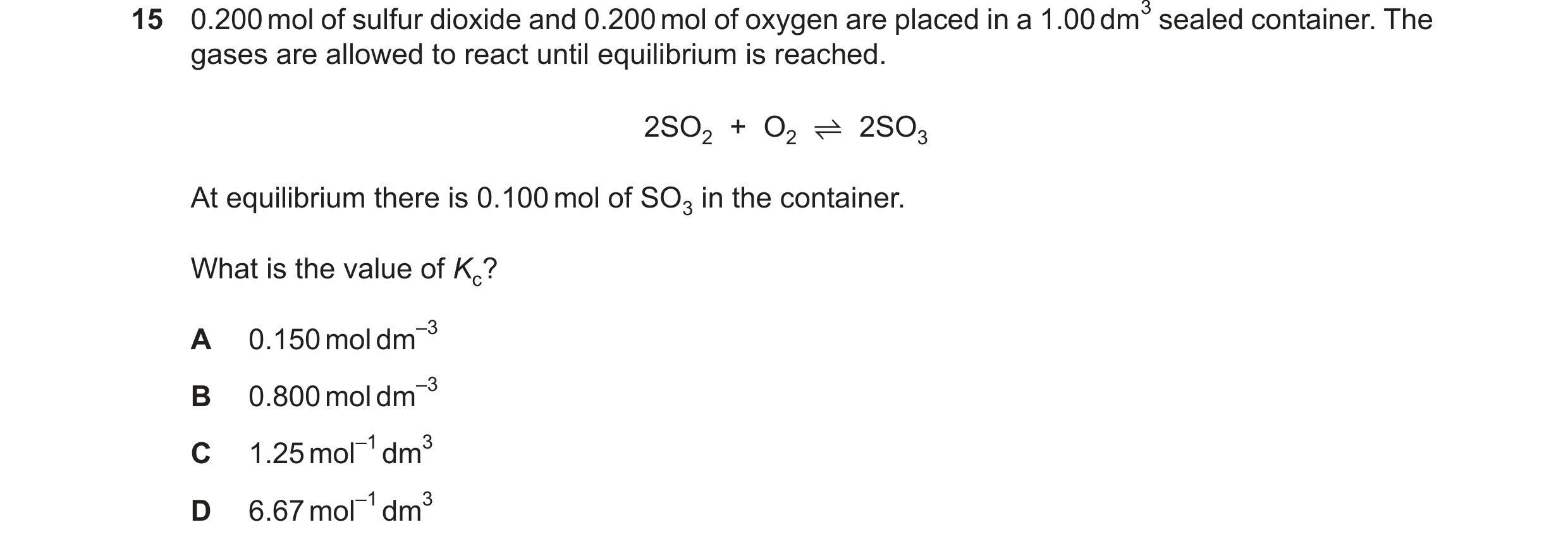
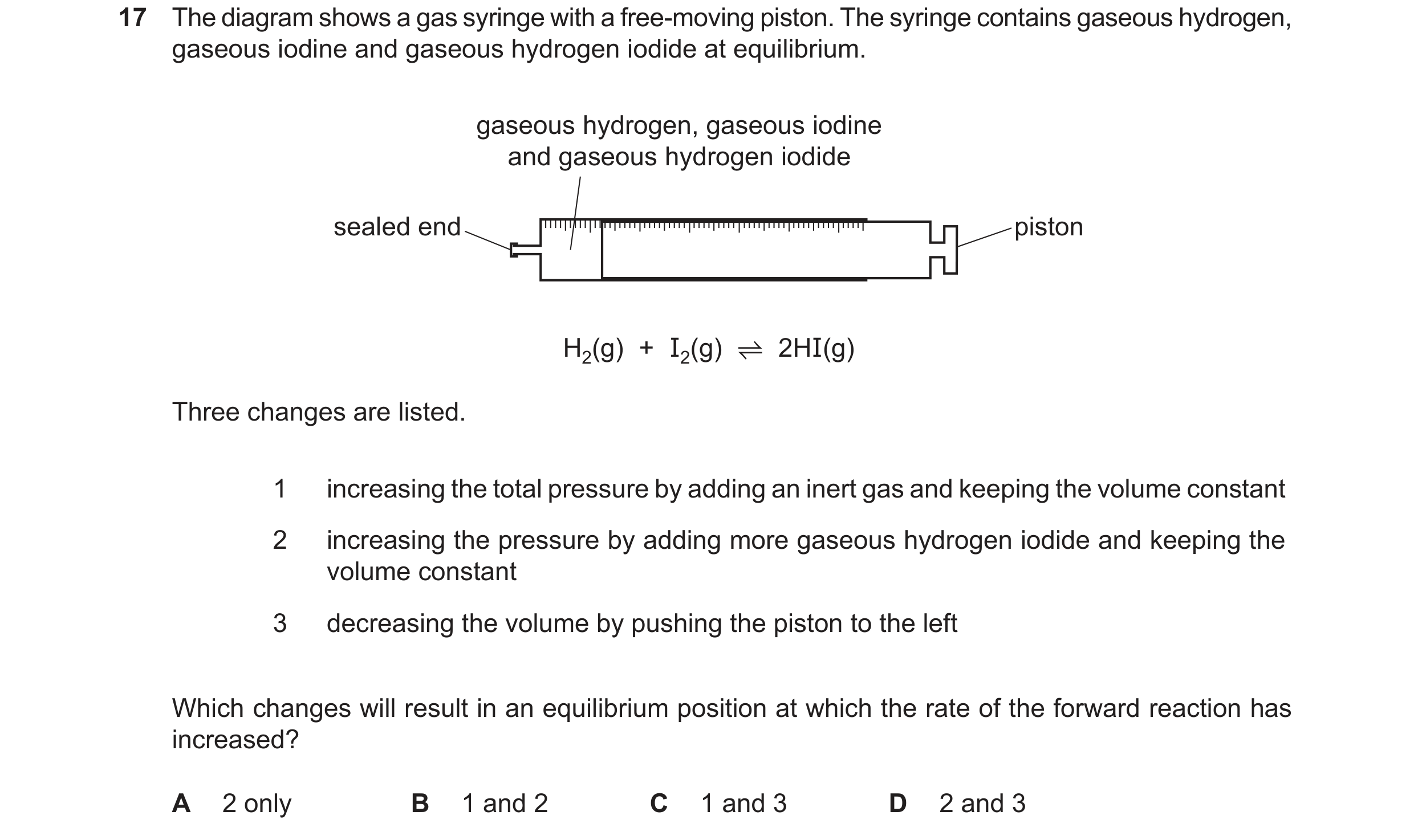 50 / 59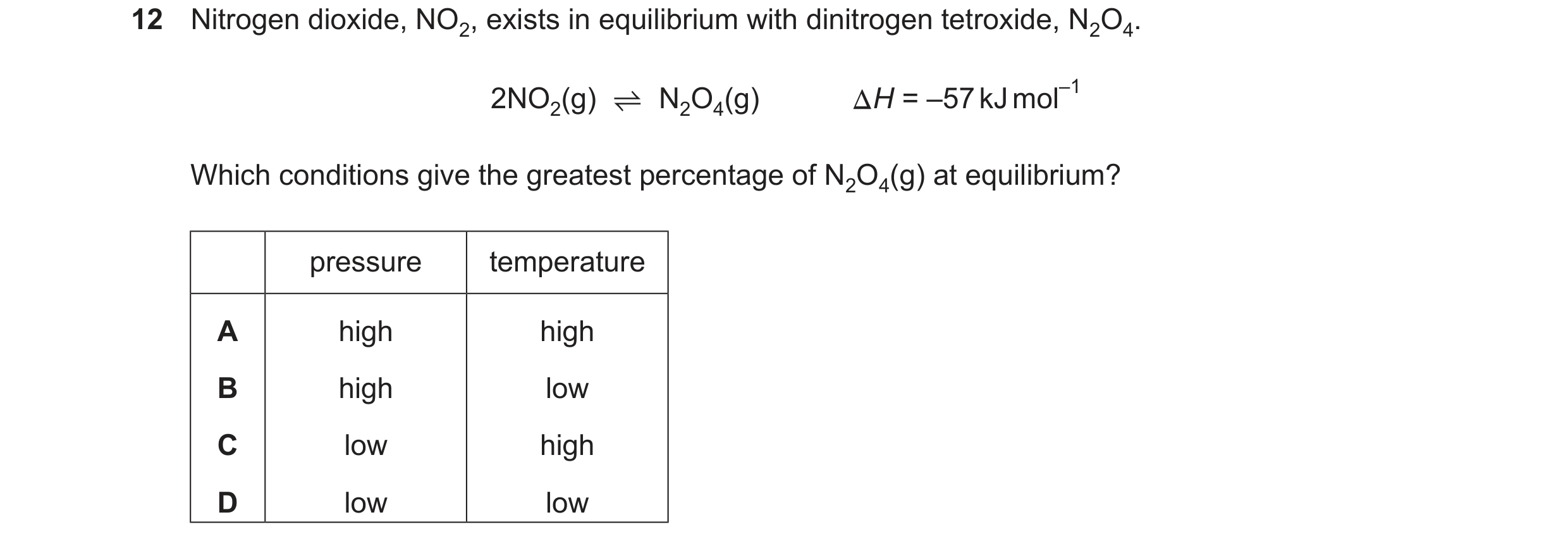
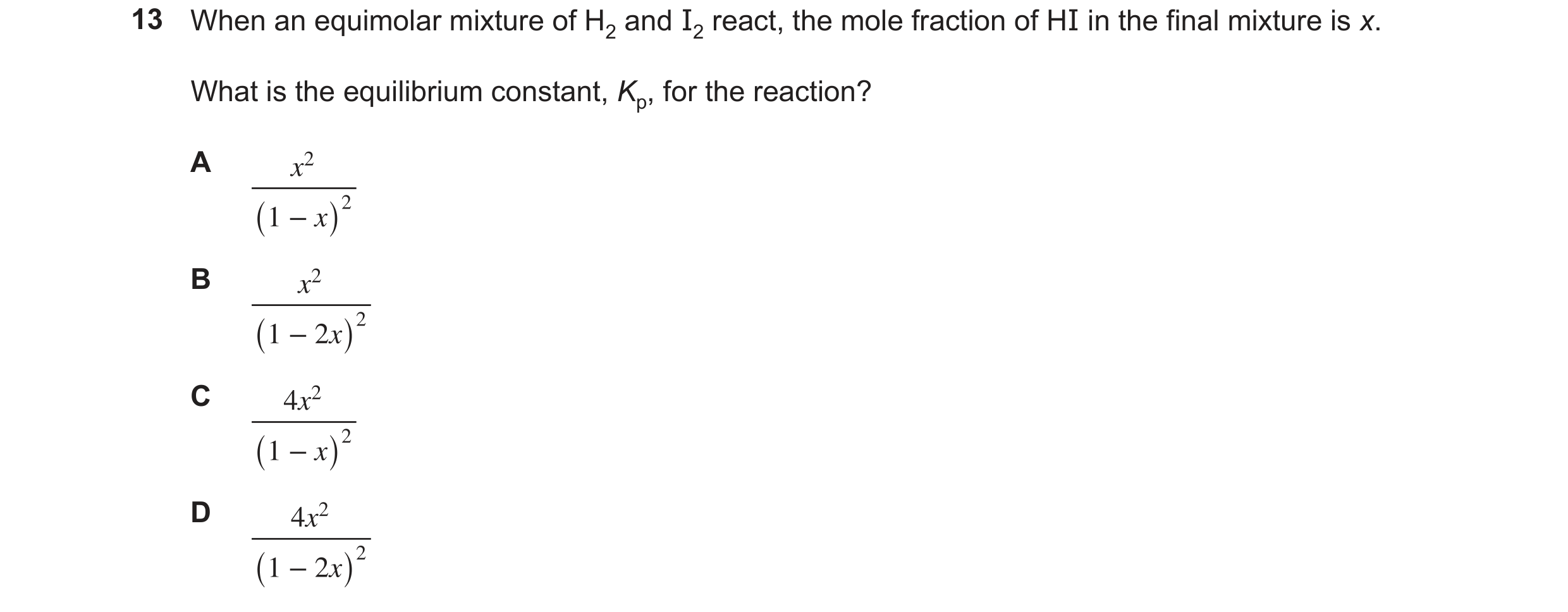
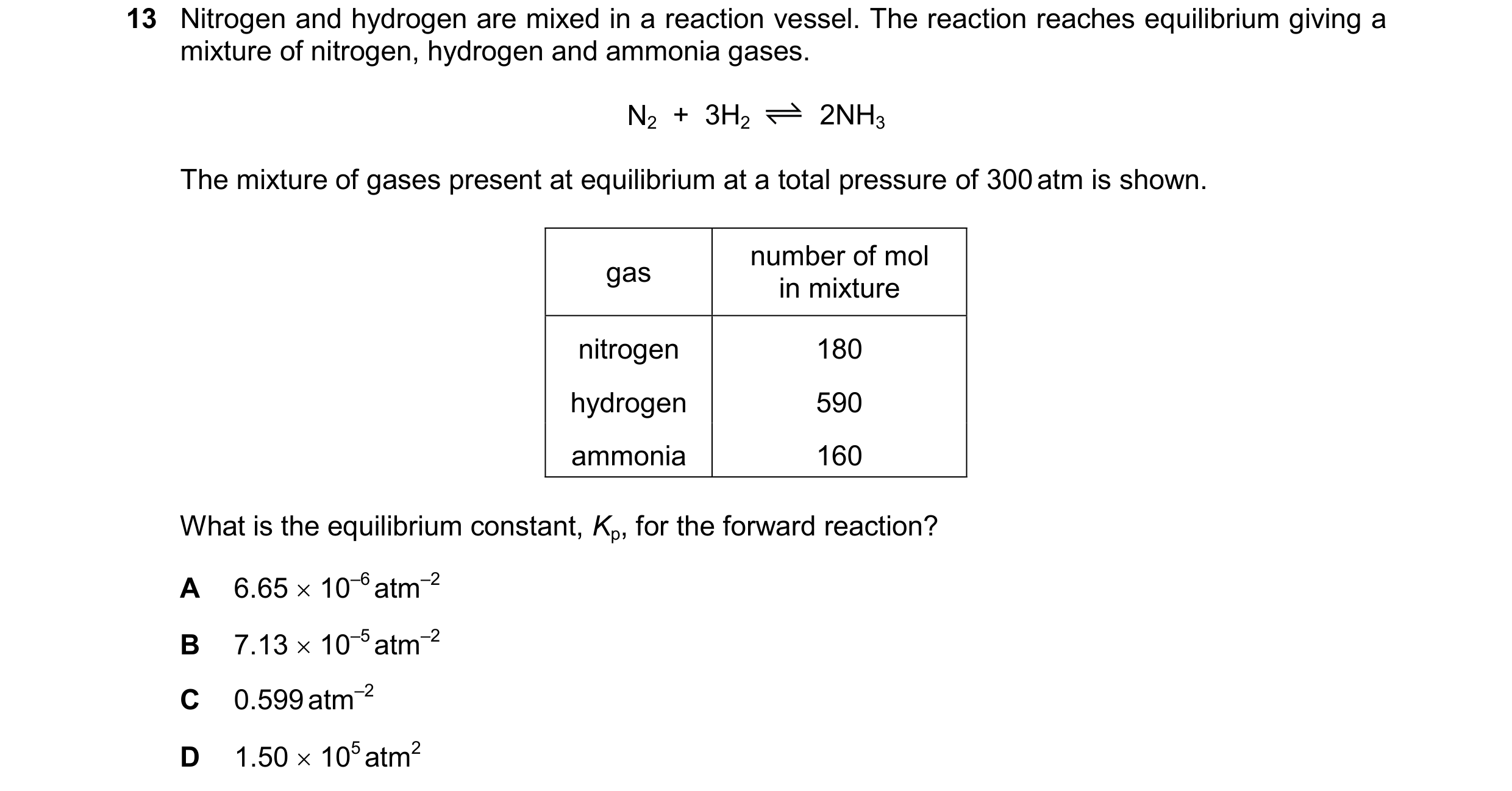 51 / 59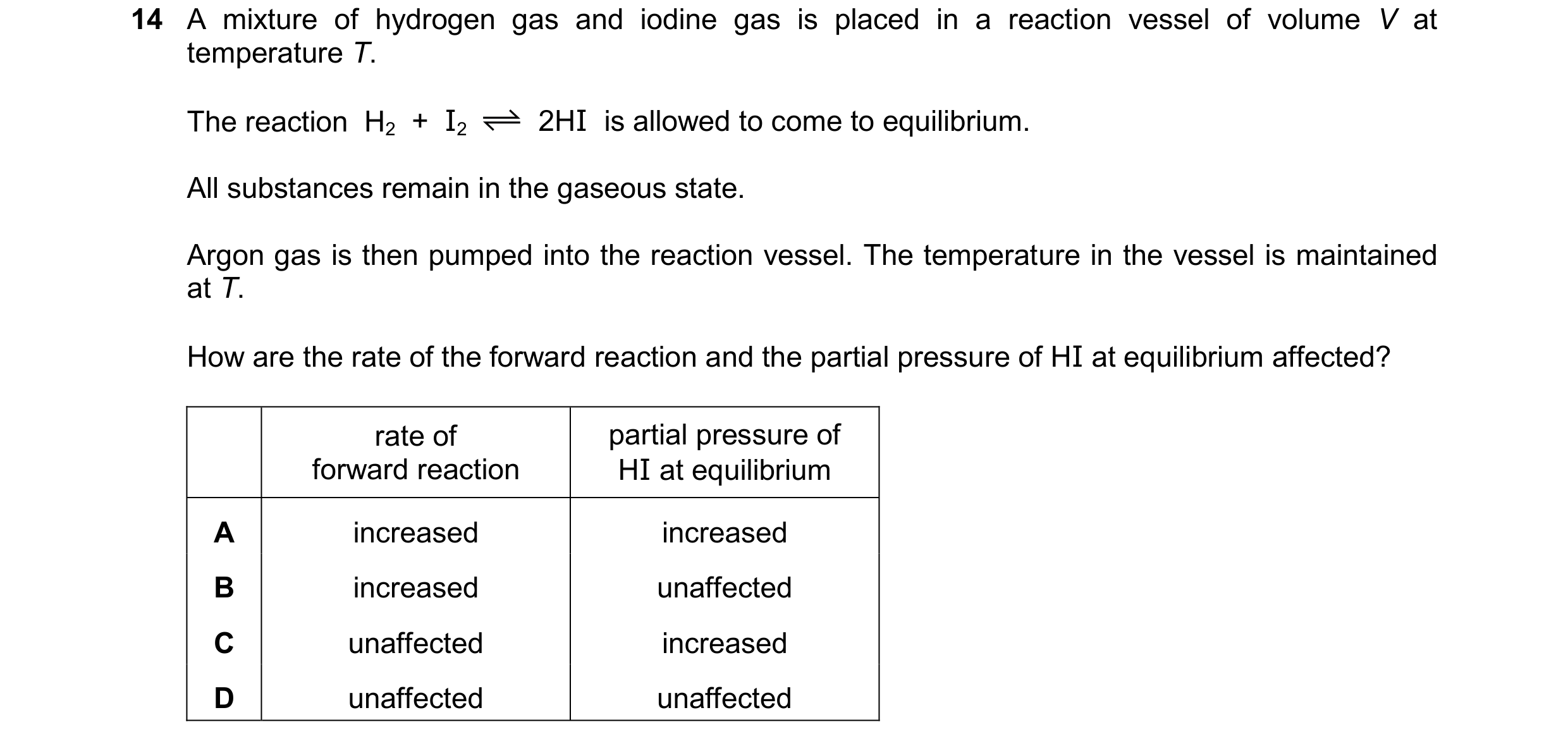
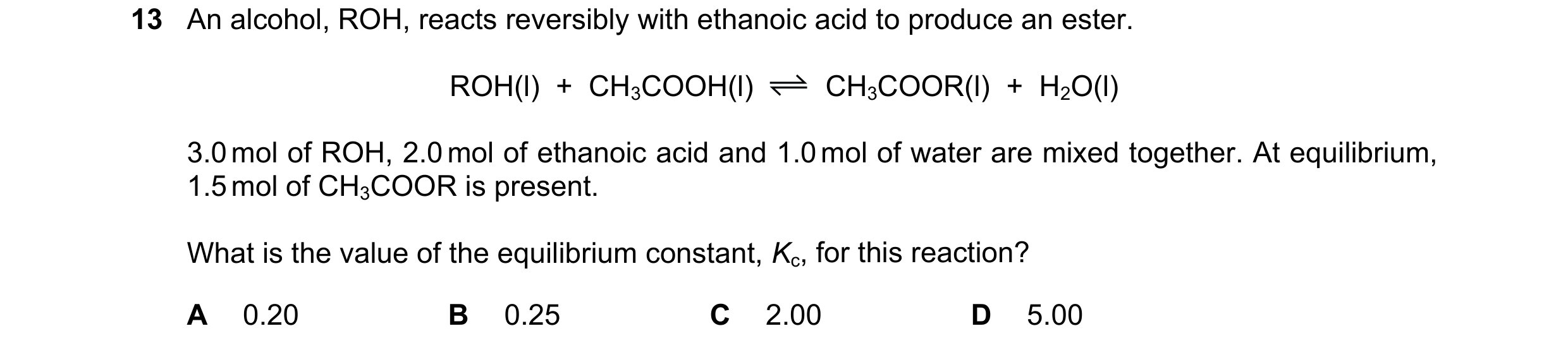
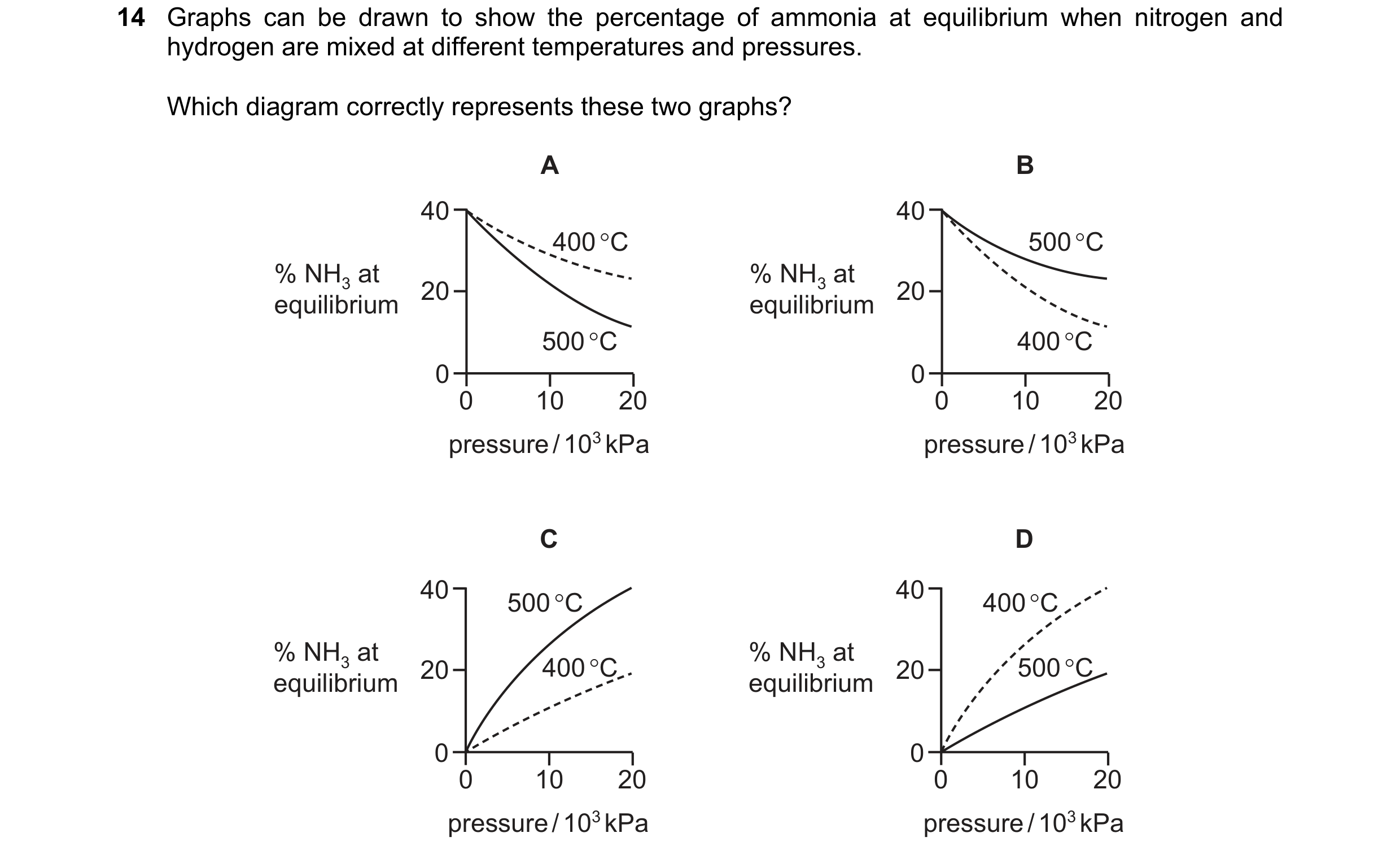 52 / 59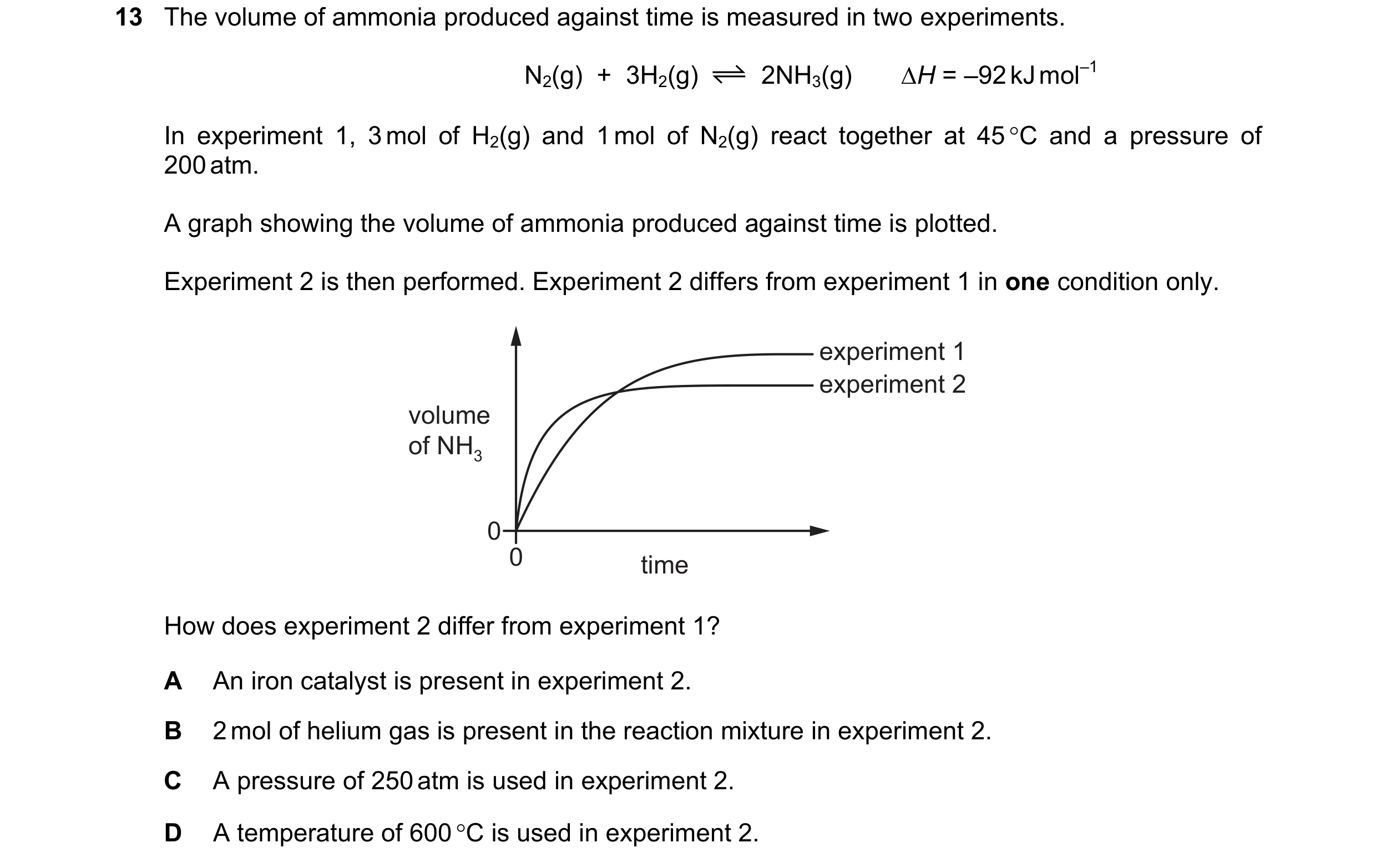

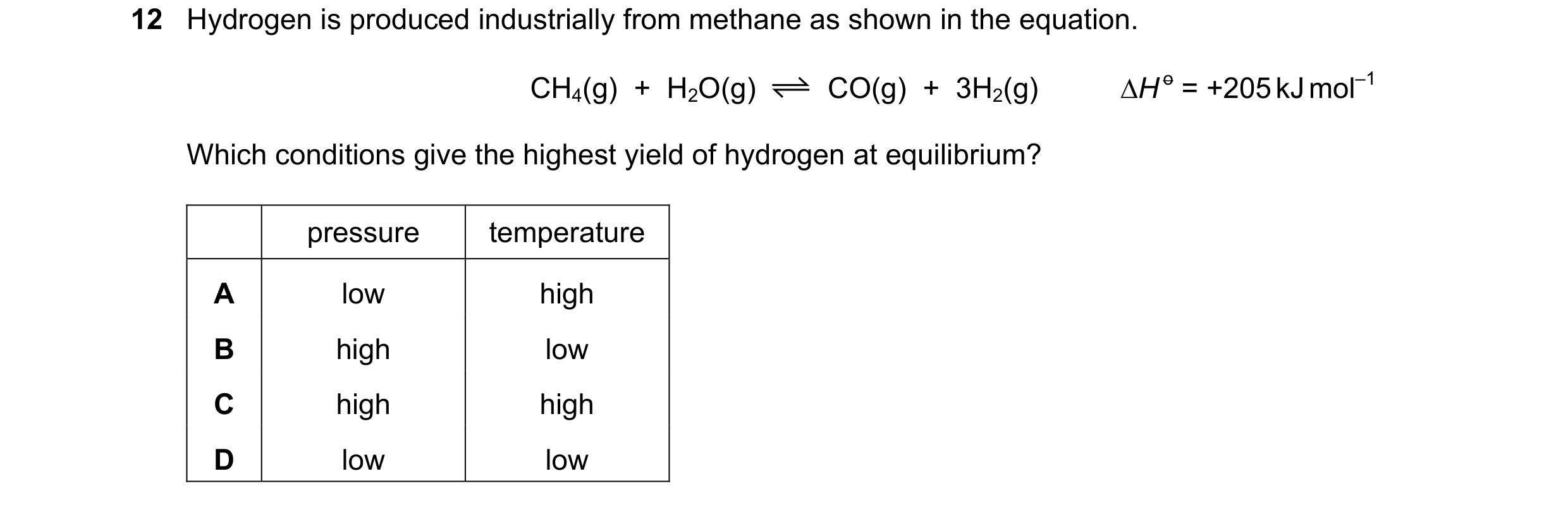 53 / 59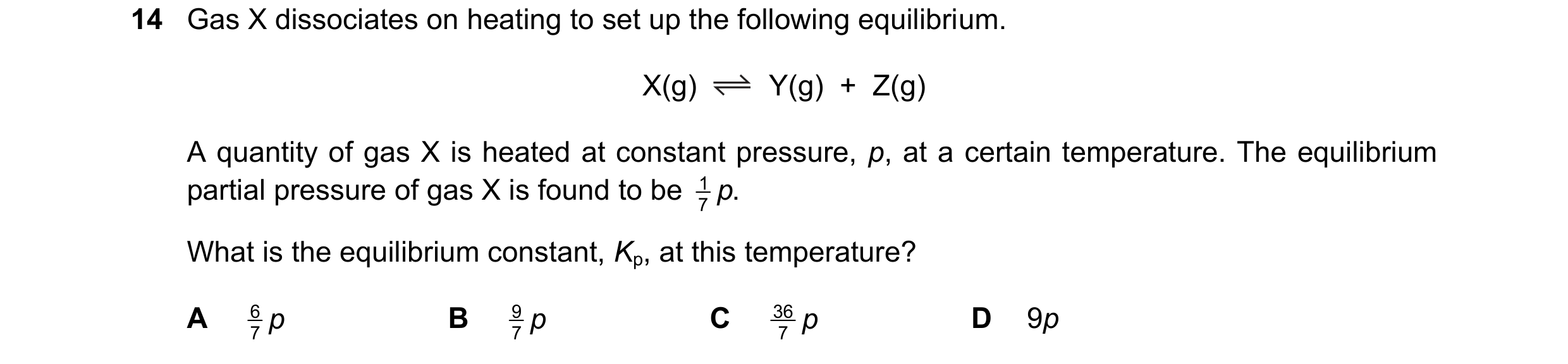
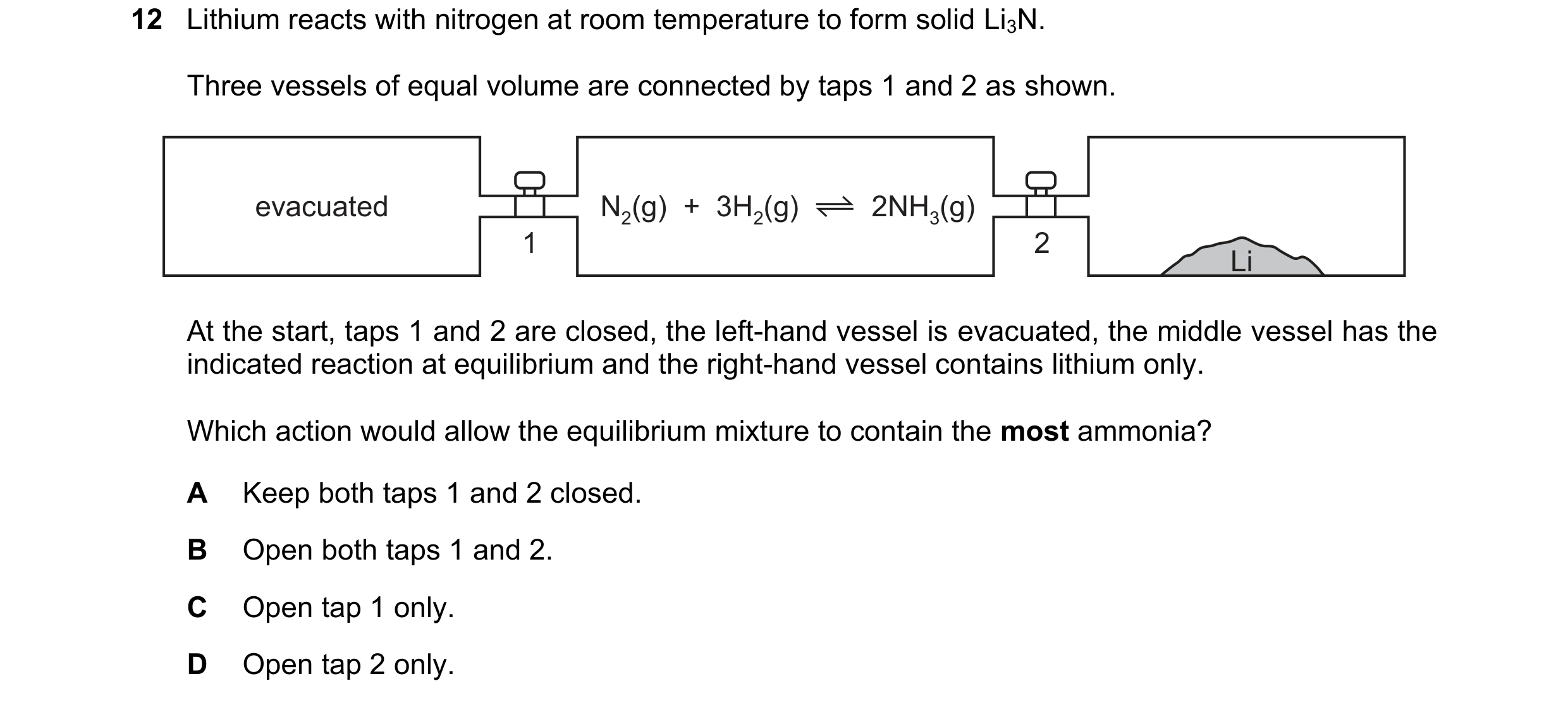
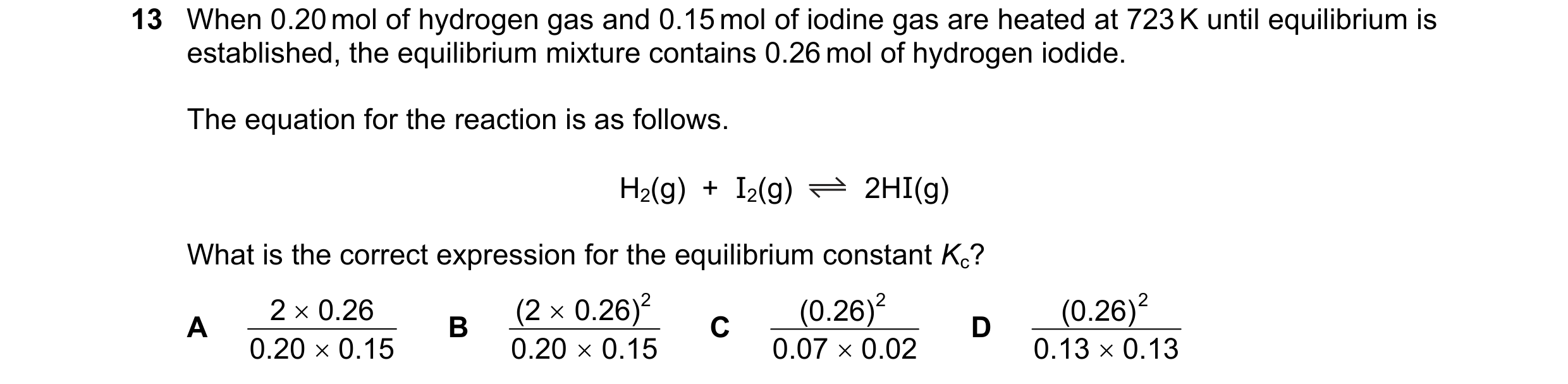
 54 / 59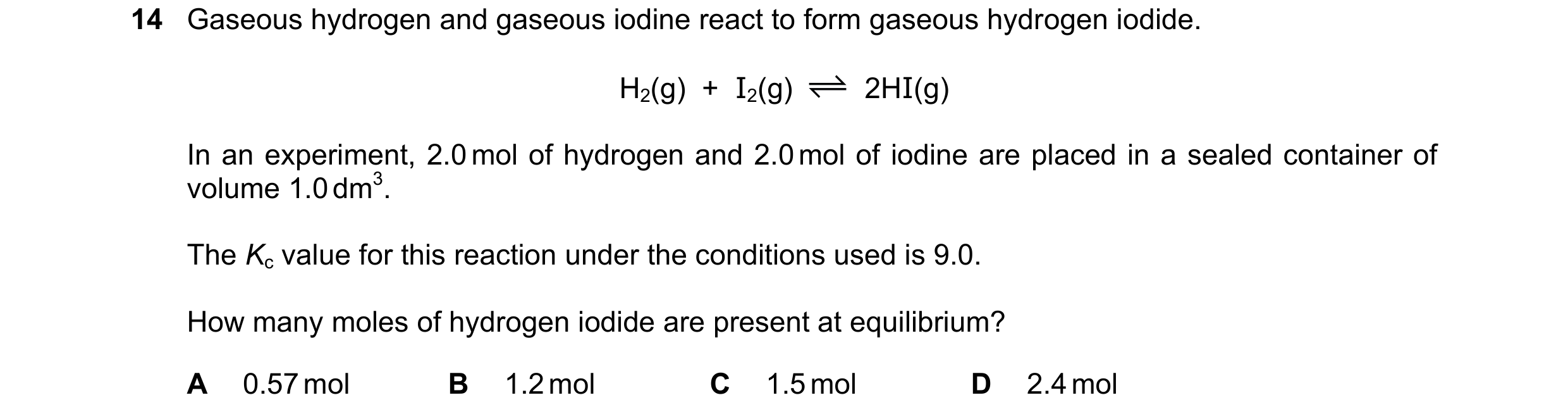
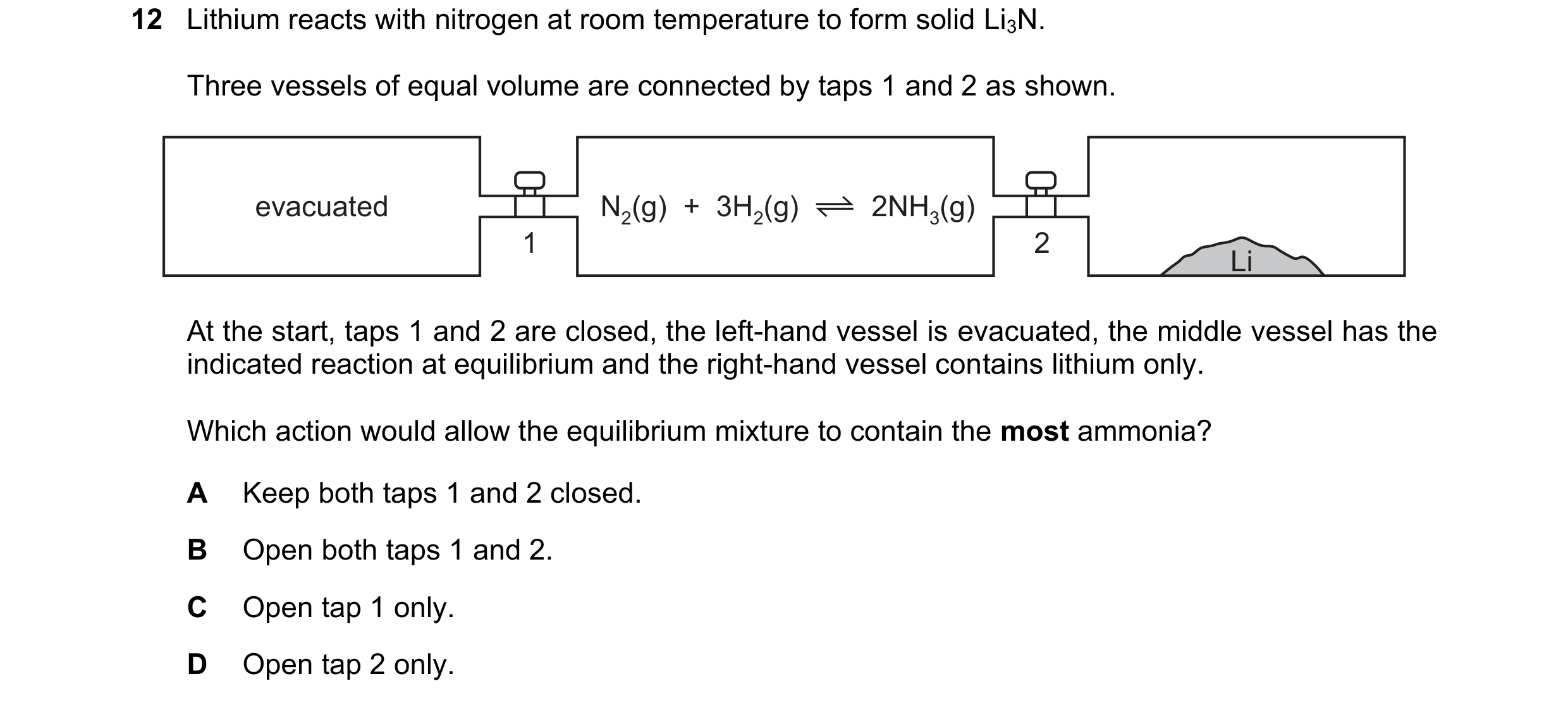
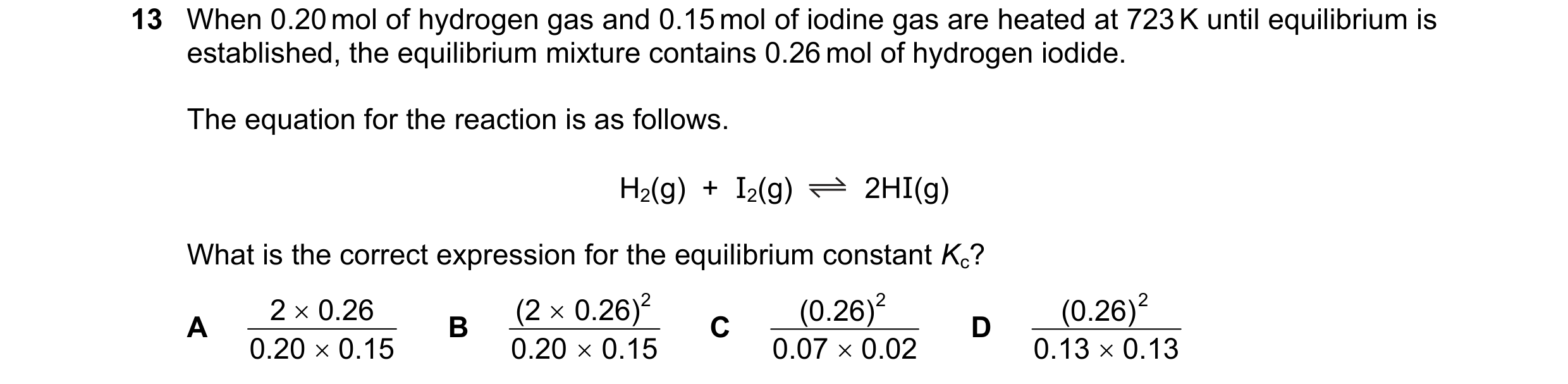
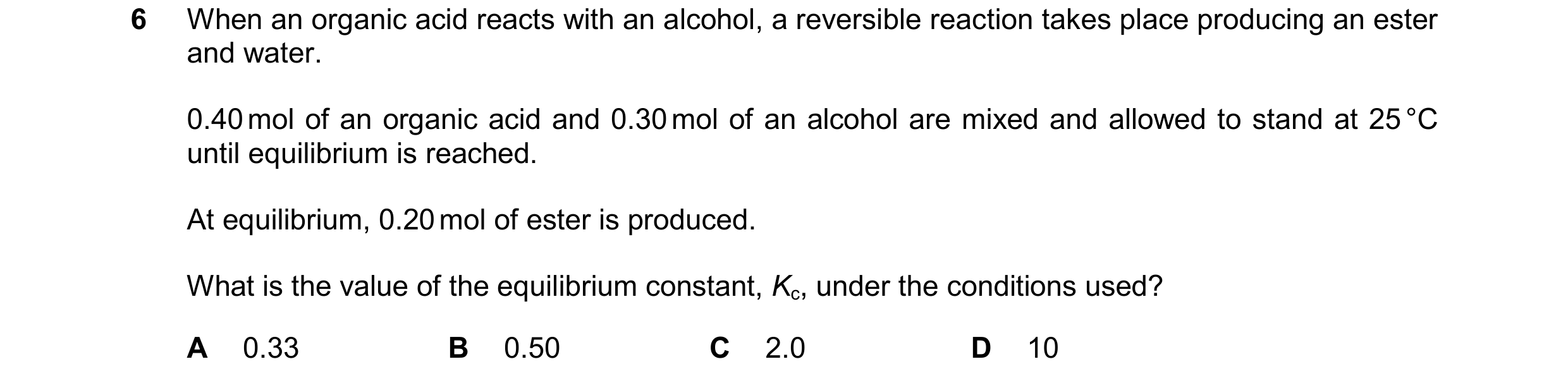 55 / 59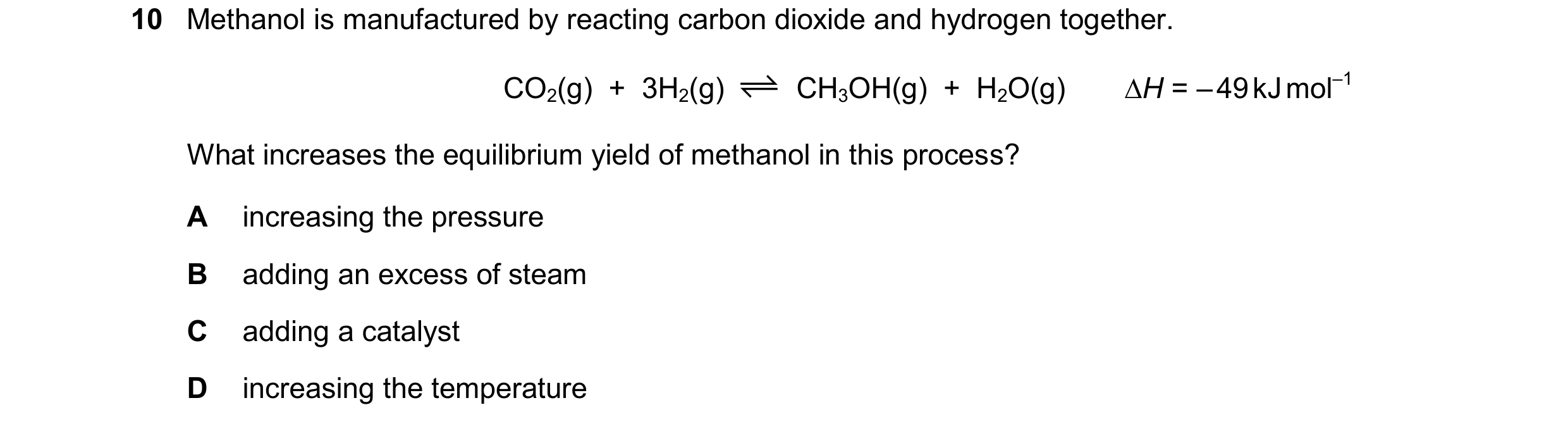
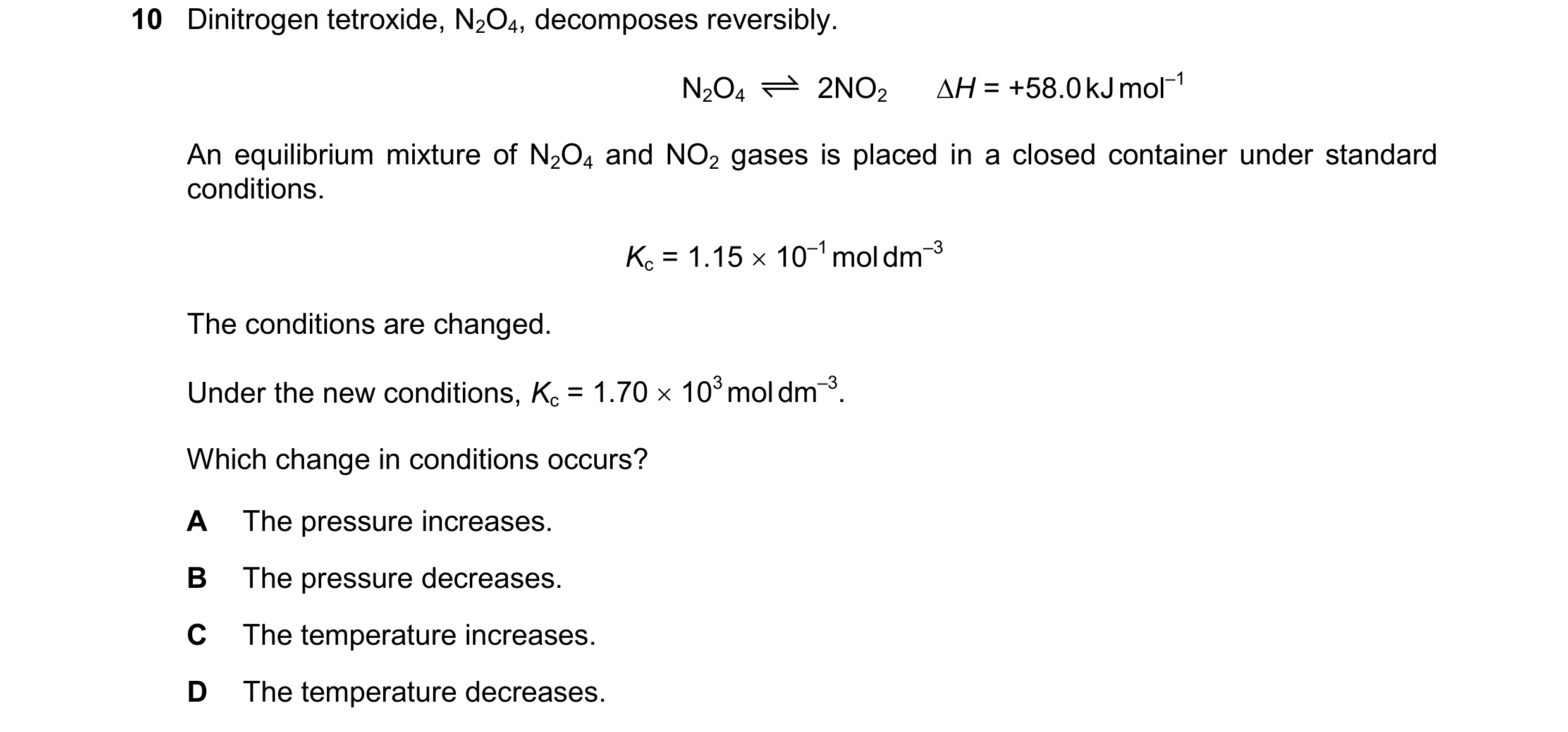
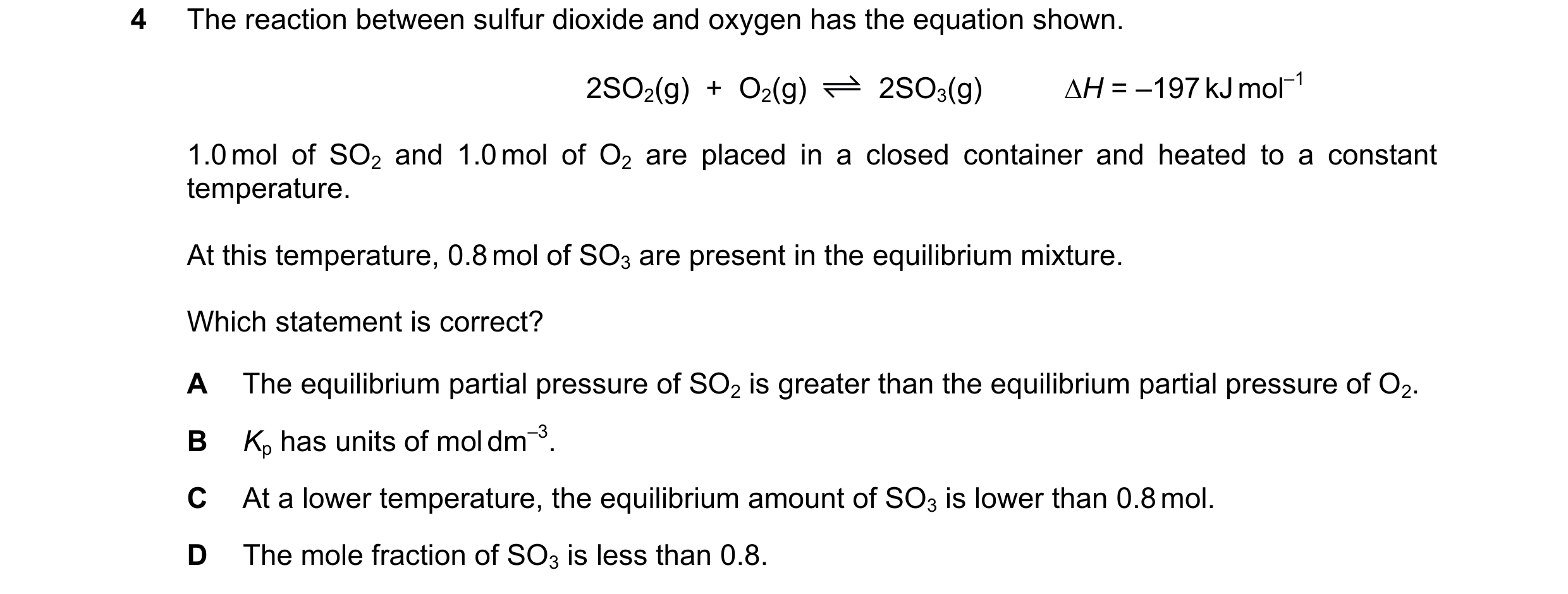 56 / 59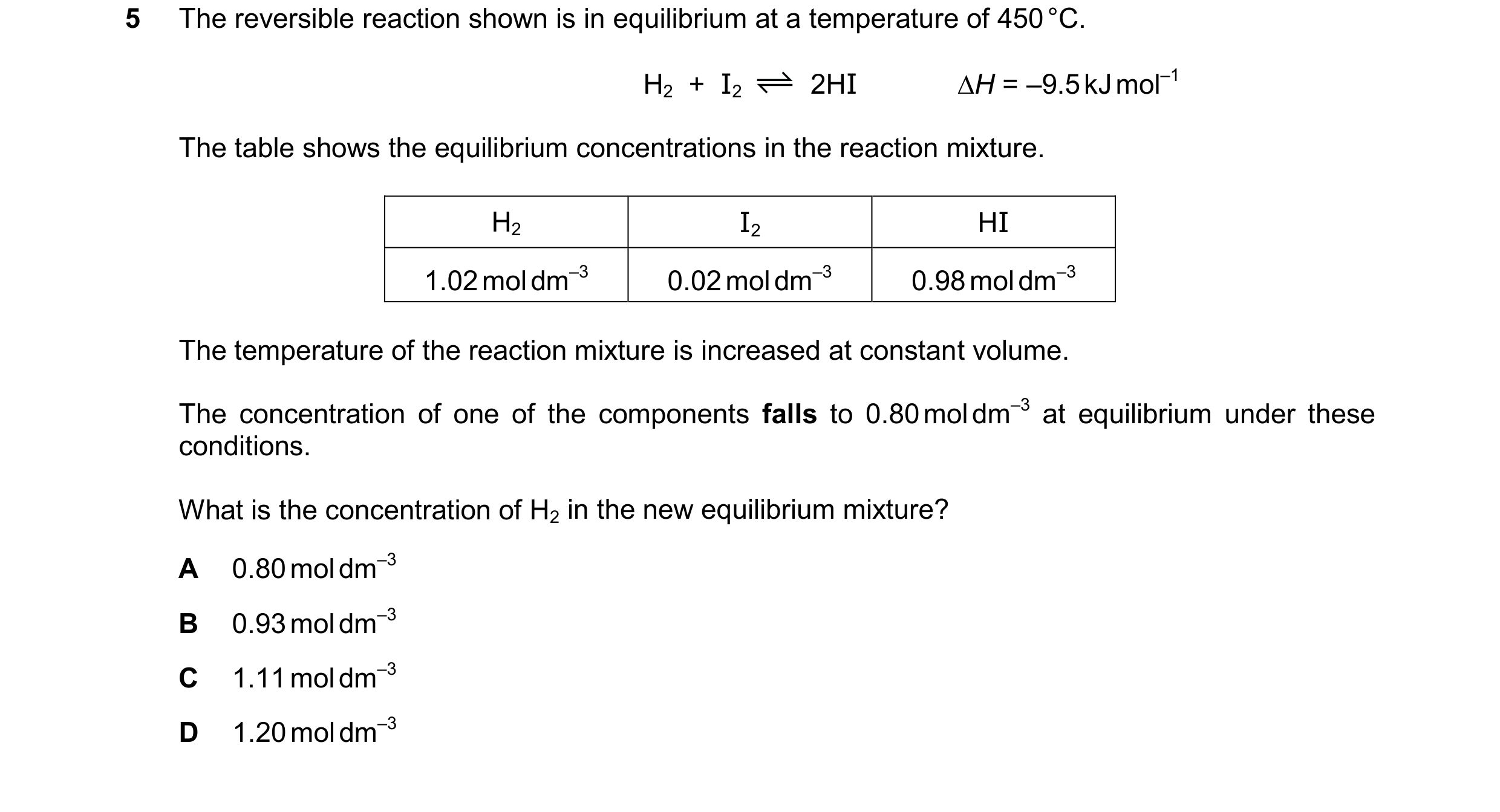
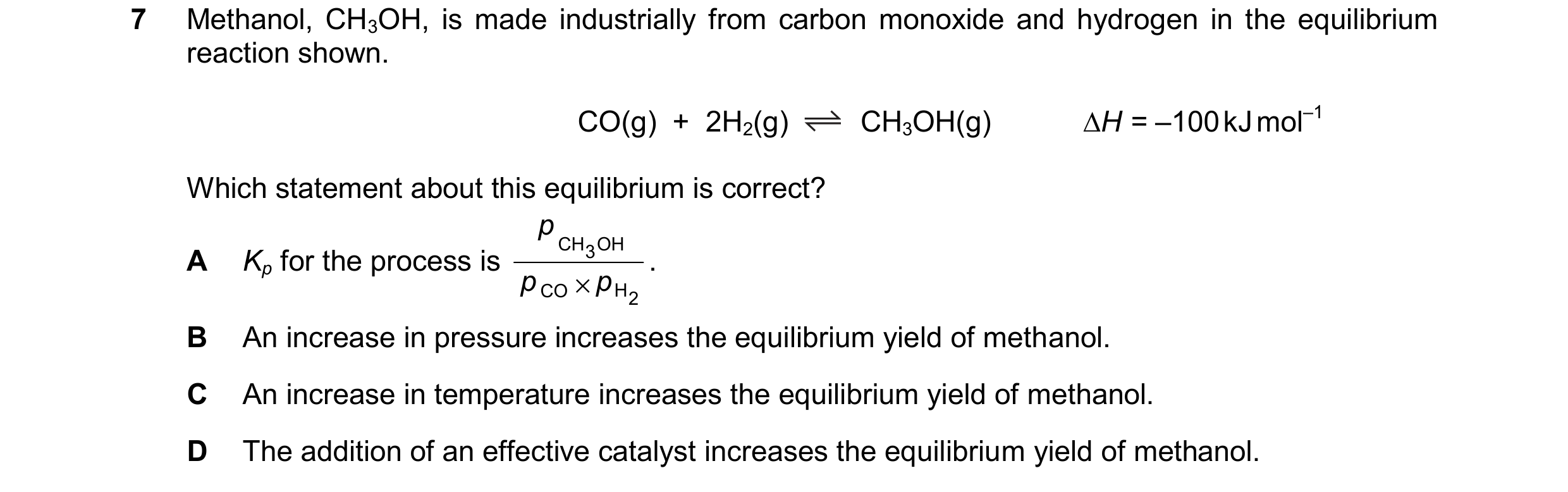
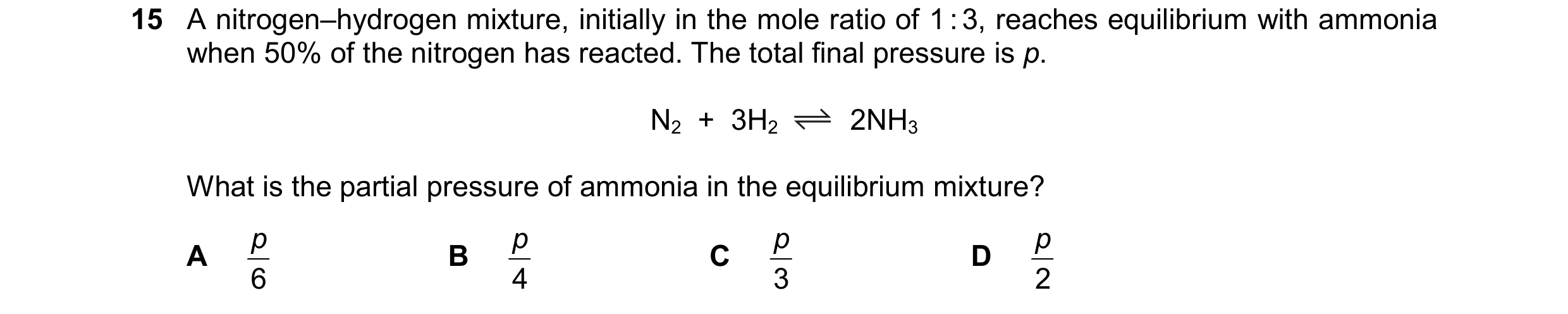 57 / 59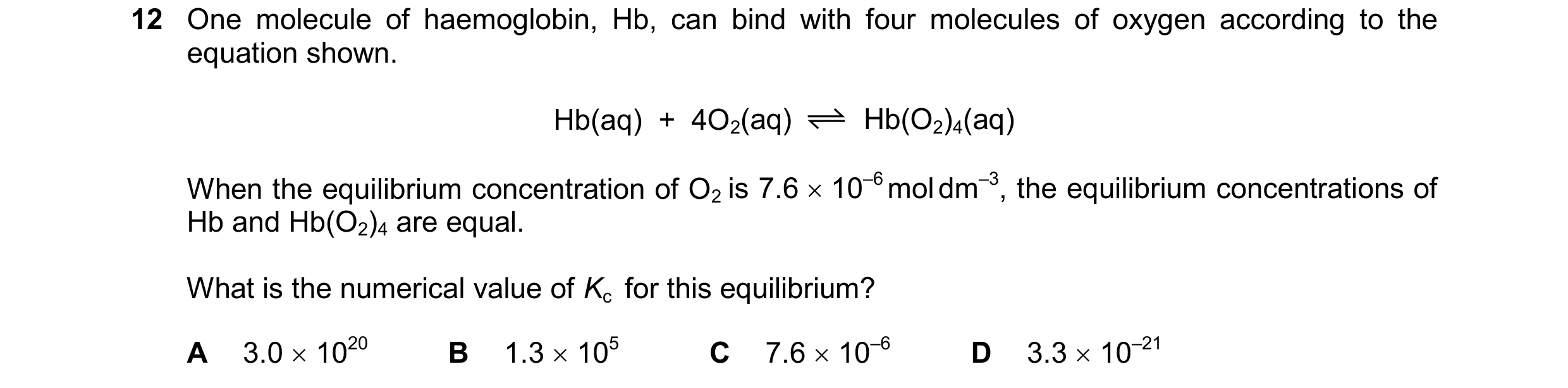
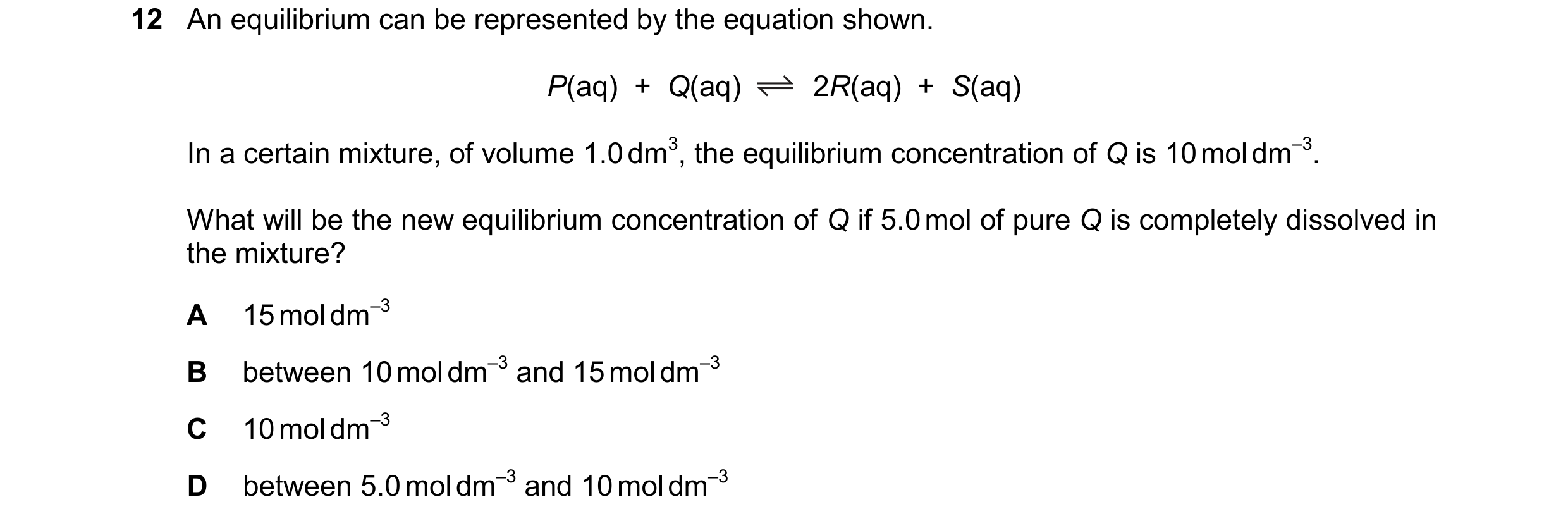
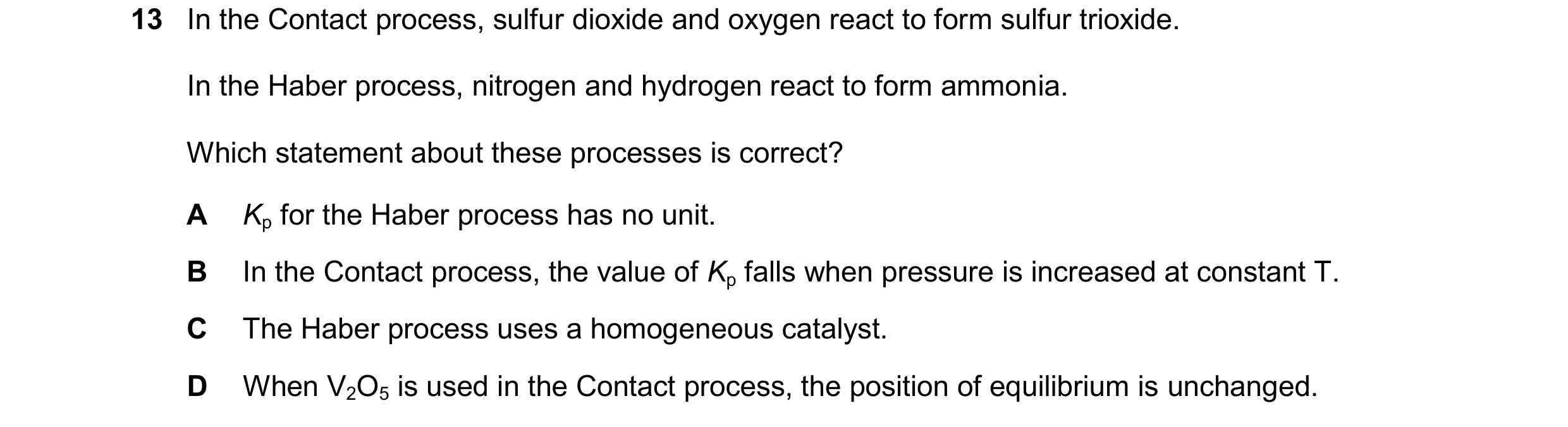 58 / 59
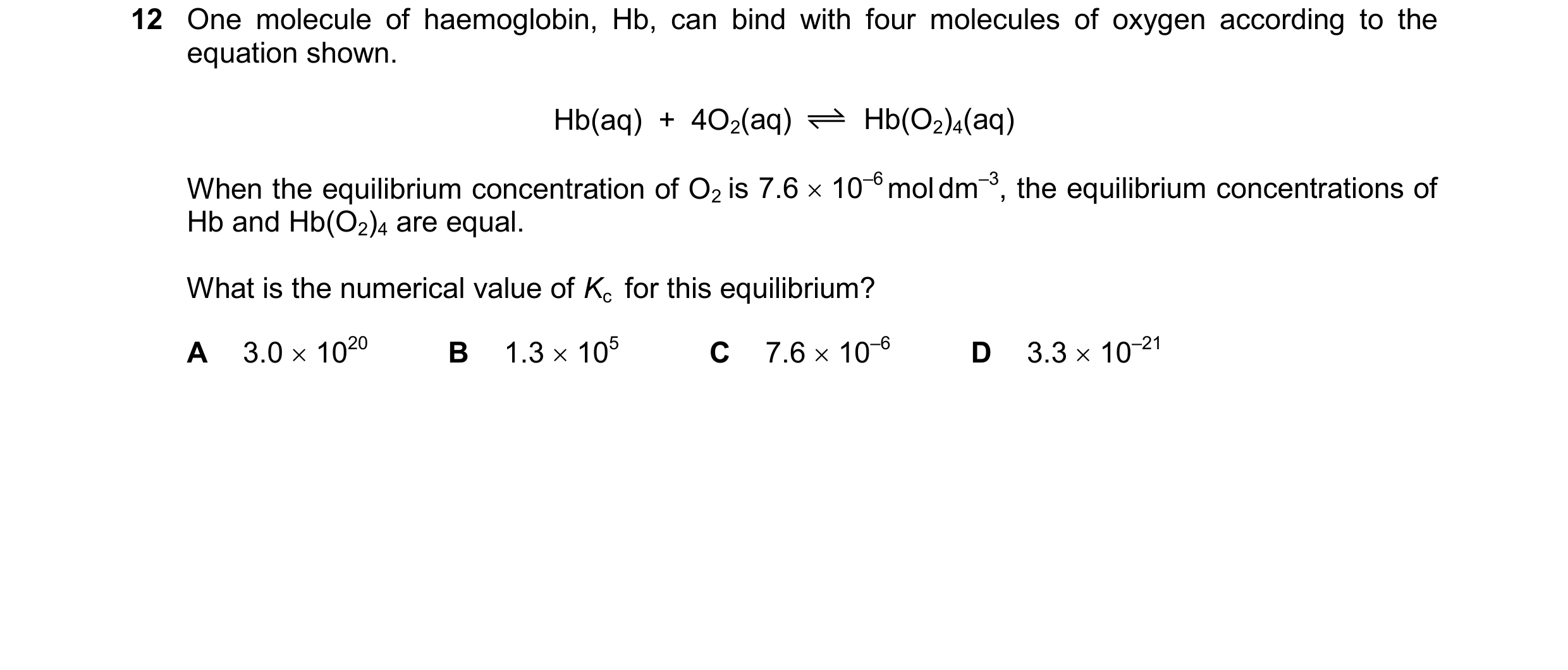 59 / 59