Questions as text
Q1 · Food tests are carried out on four solutions 9700/11 Oct/Nov 2004
7 Food tests are carried out on four solutions.
Which solution contains only sucrose and protein?
Benedict’s acid hydrolysis iodine in biuret
solution test then potassium test
Benedict's test iodide solution
A Xx v x v
B Jv v Xx v
Cc Xx v v x
D Jv Xx v x
key
¥ = positive result
X = negative result
1 marks
Answer: A
This question in 9700/11 Oct/Nov 2004
Q2 · During the production of apple juice, enzymes are used to break down the components of… 9700/11 Oct/Nov 2004
8 During the production of apple juice, enzymes are used to break down the components of the cell walls. Which carbohydrate will be produced by this hydrolysis? A amylose B cellulose C glucose D glycogen
1 marks
Answer: C
This question in 9700/11 Oct/Nov 2004
Q3 · What are the features of glycogen? 9700/11 Oct/Nov 2004
9 What are the features of glycogen?
. . branched structural role in
contains nitrogen
molecule cell
A Jv Jv x
B Jv x Jv
Cc x J x
D x x Jv
1 marks
Answer: C
This question in 9700/11 Oct/Nov 2004
Q4 · What is the name of the bond joining glycerol and a fatty acid in the formation of a… 9700/11 Oct/Nov 2004
10 What is the name of the bond joining glycerol and a fatty acid in the formation of a monoglyceride? A ester B glycosidic C hydrogen D peptide
1 marks
Answer: A
This question in 9700/11 Oct/Nov 2004
Q5 · Which part of a phospholipid molecule makes up most of the thickness of a cell surface… 9700/11 Oct/Nov 2004
16 Which part of a phospholipid molecule makes up most of the thickness of a cell surface membrane? A glycerol B hydrocarbon chains C hydrophilic head D phosphate group
1 marks
Answer: B
This question in 9700/11 Oct/Nov 2004
Q6 · Which type of reaction takes place when starch molecules are converted into reducing… 9700/11 May/June 2006
7 Which type of reaction takes place when starch molecules are converted into reducing sugars? A condensation B hydrolysis C polymerisation D synthesis
1 marks
Answer: B
This question in 9700/11 May/June 2006
Q7 · The diagrams show different types of bond found in polysaccharides 9700/11 May/June 2006
9 The diagrams show different types of bond found in polysaccharides. 1 3 O O O O O O 2 O O O Which type or types of bond are found in amylose? A 1 only B 2 only C 1 and 3 only D 2 and 3 only
1 marks
Answer: A
This question in 9700/11 May/June 2006
Q8 · Which statement is true for cellulose, but not true for protein? 9700/11 Oct/Nov 2006
6 Which statement is true for cellulose, but not true for protein? A It is found in cell surface membranes. B It is synthesised from identical sub-units. C It is used as an energy source. D It may be a structural component.
1 marks
Answer: B
This question in 9700/11 Oct/Nov 2006
Q9 · Heating with which solution breaks glycosidic bonds? 9700/11 Oct/Nov 2006
7 Heating with which solution breaks glycosidic bonds? A Benedict’s solution B dilute hydrochloric acid C dilute sodium hydroxide D ethanol
1 marks
Answer: B
This question in 9700/11 Oct/Nov 2006
Q10 · Which of the following is a polysaccharide present in human muscle? 9700/11 Oct/Nov 2007
9 Which of the following is a polysaccharide present in human muscle? A amylose B collagen C glycogen D haemoglobin
1 marks
Answer: C
This question in 9700/11 Oct/Nov 2007
Q11 · The diagrams show four different molecules 9700/11 Oct/Nov 2007
12 The diagrams show four different molecules. P Q CH2OH CH2OH C O H O H H N C C H C C H OH OH H H HO OH C C H OH R S CH2OH O OH C O C H OH H CH2 C C OH H H HO H O C C N C C H OH H OH H Which shows the correct information about the molecule or molecules? contains a forms 1,6 glycosidic forms peptide bonds carboxyl group bonds in glycogen by condensation A P P P and Q B Q R P and R C R R R and Q D S P Q and S
1 marks
Answer: D
This question in 9700/11 Oct/Nov 2007
Q12 · Samples of a food were tested using Benedict’s reagent, biuret solution and ethanol 9700/11 May/June 2008
6 Samples of a food were tested using Benedict’s reagent, biuret solution and ethanol. After testing, the solutions were blue with Benedict’s reagent, purple with biuret and cloudy with ethanol. Which molecules do the samples contain? W X H CH2OH OH HO CH2 C C C O H H H O H N C C OH H OH OH CH3 CH2 C C H C C H O N H OH CH3 C C H O N H H Y Z HOCH2 H O H HOCH2 O O H H C O C R H H 1 2 O HO OH H O H HO CH2OH H C O C R H OH OH H O H C O C R H A W, X and Z B W, Y and Z C W, X and Y D X, Y and Z
1 marks
Answer: B
This question in 9700/11 May/June 2008
Q13 · The diagram shows an α 1 : 4 glycosidic bond 9700/11 May/June 2008
8 The diagram shows an α 1 : 4 glycosidic bond. CH2OH CH2OH H H H O O H H H OH H O OH H OH OH H OH H OH Which molecules contain this bond? A amylose and cellulose B amylose but not cellulose C cellulose but not amylose D neither amylose nor cellulose
1 marks
Answer: B
This question in 9700/11 May/June 2008
Q14 · Which combination describes a triglyceride? 9700/11 May/June 2008
9 Which combination describes a triglyceride?
hydrophilic soluble in alcohol
A v v
B x x
Cc v x
D x v
1 marks
Answer: D
This question in 9700/11 May/June 2008
Q15 · When hydrolysed, which molecules have products containing a carboxyl group? 9700/11 May/June 2008
11 When hydrolysed, which molecules have products containing a carboxyl group? 1 phospholipids 2 polysaccharides 3 proteins A 1 and 2 B 1 and 3 C 2 and 3 D 3 only
1 marks
Answer: B
This question in 9700/11 May/June 2008
Q16 · Which diagram shows part of a structural polysaccharide? 9700/11 Oct/Nov 2008
6 Which diagram shows part of a structural polysaccharide? O O O O A … O O O O O … O O O O B … O O O O O … O O C … O O O O O O O … O O D O
1 marks
Answer: B
This question in 9700/11 Oct/Nov 2008
Q17 · Sucrose is a disaccharide formed from two hexose sugars, α-glucose (alpha-glucose) and… 9700/11 Oct/Nov 2008
8 Sucrose is a disaccharide formed from two hexose sugars, α-glucose (alpha-glucose) and fructose. Which pair of monosaccharide structures will be formed when sucrose is hydrolysed? CH2OH CH2OH H O H H O OH H H A OH H OH H OH OH OH H H OH H OH CH2OH CH2OH H O H H O H H H B OH H OH H OH OH OH OH H OH H OH CH2OH HOCH2 O CH2OH H O H H H OH C OH H H OH OH OH OH H H OH CH2OH HOCH2 O CH2OH H O OH H H OH D OH H H OH OH H OH H H OH
1 marks
Answer: C
This question in 9700/11 Oct/Nov 2008
Q18 · Which type of molecule contains disulphide bonds and which contains glycosidic bonds? 9700/11 Oct/Nov 2008
11 Which type of molecule contains disulphide bonds and which contains glycosidic bonds? disulphide bonds glycosidic bonds A glycoprotein polysaccharide B nucleic acid glycoprotein C polysaccharide nucleic acid D protein triglyceride
1 marks
Answer: A
This question in 9700/11 Oct/Nov 2008
Q19 · Which statement is true for cellulose, but not true for protein? 9700/12 Oct/Nov 2009
8 Which statement is true for cellulose, but not true for protein? A It is found in cell surface membranes. B It is synthesised from identical sub-units. C It is used as an energy source. D It may be a structural component.
1 marks
Answer: B
This question in 9700/12 Oct/Nov 2009
Q20 · The diagram shows a triglyceride molecule that has been partially hydrolysed 9700/12 Oct/Nov 2009
9 The diagram shows a triglyceride molecule that has been partially hydrolysed. H H C OH H C OH O H H H H H H H H H H C O C C C C C C C C C H C H C H H H H H H H H H C H H C H H C H H C H H C H H C H C H H H What will be the products of the total hydrolysis of the molecule shown? A a molecule of glycerol and a saturated fatty acid molecule only B a molecule of glycerol and an unsaturated fatty acid molecule only C a molecule of water, a molecule of glycerol and a saturated fatty acid molecule D a molecule of water, a molecule of glycerol and an unsaturated fatty acid molecule
1 marks
Answer: B
This question in 9700/12 Oct/Nov 2009
Q21 · Which statement describes how the molecular structure of starch is suited to its function? 9700/11 May/June 2010
8 Which statement describes how the molecular structure of starch is suited to its function? A Amylose has a branched structure and amylopectin is coiled to give a compact molecule for transport. B In the breakdown of amylose and amylopectin, many hydrolysis reactions release stored energy. C In the formation of amylose and amylopectin, many condensation reactions allow the release of stored energy. D The final amylose / amylopectin complex is insoluble and does not affect the osmotic properties of the cell.
1 marks
Answer: D
This question in 9700/11 May/June 2010
Q22 · Which diagram represents part of the ring form of a molecule of β-glucose? 9700/11 May/June 2010
9 Which diagram represents part of the ring form of a molecule of β-glucose? A B C D H O O OH H O O H HO O O O H HO O O O OH HO H HO OH H OH H H
1 marks
Answer: A
This question in 9700/11 May/June 2010
Q23 · How many fatty acid residues are normally present in a phospholipid molecule? 9700/11 May/June 2010
10 How many fatty acid residues are normally present in a phospholipid molecule? A 1 B 2 C 3 D 4
1 marks
Answer: B
This question in 9700/11 May/June 2010
Q24 · Which feature distinguishes starch from glycogen? 9700/11 May/June 2010
12 Which feature distinguishes starch from glycogen? A Starch contains α-glucose. B Starch contains 1,6 glycosidic bonds. C Starch has an unbranched component. D Starch is a polysaccharide.
1 marks
Answer: C
This question in 9700/11 May/June 2010
Q25 · Which diagram represents part of the ring form of a molecule of β-glucose? 9700/12 May/June 2010
27 Which diagram represents part of the ring form of a molecule of β-glucose? A B C D H O O OH H O O H HO O O O H HO O O O OH HO H HO OH H OH H H
1 marks
Answer: A
This question in 9700/12 May/June 2010
Q26 · Which statement describes how the molecular structure of starch is suited to its function? 9700/12 May/June 2010
28 Which statement describes how the molecular structure of starch is suited to its function? A Amylose has a branched structure and amylopectin is coiled to give a compact molecule for transport. B In the breakdown of amylose and amylopectin, many hydrolysis reactions release stored energy. C In the formation of amylose and amylopectin, many condensation reactions allow the release of stored energy. D The final amylose / amylopectin complex is insoluble and does not affect the osmotic properties of the cell.
1 marks
Answer: D
This question in 9700/12 May/June 2010
Q27 · Which feature distinguishes starch from glycogen? 9700/12 May/June 2010
29 Which feature distinguishes starch from glycogen? A Starch contains α-glucose. B Starch contains 1,6 glycosidic bonds. C Starch has an unbranched component. D Starch is a polysaccharide.
1 marks
Answer: C
This question in 9700/12 May/June 2010
Q28 · How many fatty acid residues are normally present in a phospholipid molecule? 9700/12 May/June 2010
30 How many fatty acid residues are normally present in a phospholipid molecule? A 1 B 2 C 3 D 4
1 marks
Answer: B
This question in 9700/12 May/June 2010
Q29 · Which feature distinguishes starch from glycogen? 9700/13 May/June 2010
3 Which feature distinguishes starch from glycogen? A Starch contains α-glucose. B Starch contains 1,6 glycosidic bonds. C Starch has an unbranched component. D Starch is a polysaccharide.
1 marks
Answer: C
This question in 9700/13 May/June 2010
Q30 · Which diagram represents part of the ring form of a molecule of β-glucose? 9700/13 May/June 2010
4 Which diagram represents part of the ring form of a molecule of β-glucose? A B C D H O O OH H O O H HO O O O H HO O O O OH HO H HO OH H OH H H
1 marks
Answer: A
This question in 9700/13 May/June 2010
Q31 · Which statement describes how the molecular structure of starch is suited to its function? 9700/13 May/June 2010
19 Which statement describes how the molecular structure of starch is suited to its function? A Amylose has a branched structure and amylopectin is coiled to give a compact molecule for transport. B In the breakdown of amylose and amylopectin, many hydrolysis reactions release stored energy. C In the formation of amylose and amylopectin, many condensation reactions allow the release of stored energy. D The final amylose / amylopectin complex is insoluble and does not affect the osmotic properties of the cell.
1 marks
Answer: D
This question in 9700/13 May/June 2010
Q32 · How many fatty acid residues are normally present in a phospholipid molecule? 9700/13 May/June 2010
20 How many fatty acid residues are normally present in a phospholipid molecule? A 1 B 2 C 3 D 4
1 marks
Answer: B
This question in 9700/13 May/June 2010
Q33 · What are the features of triglycerides? 9700/11 Oct/Nov 2010
7 What are the features of triglycerides?
0 0O DW >
polar
x x KOK
less dense
than water
~ Kw OK
higher energy
value than
carbohydrates
x << & x
lower proportion
of hydrogen than
in carbohydrates
K & & x
key
v/=yes
xX =no
1 marks
Answer: C
This question in 9700/11 Oct/Nov 2010
Q34 · Which linkages are found between the glucose units in cellulose? 9700/11 Oct/Nov 2010
9 Which linkages are found between the glucose units in cellulose? A α 1–4 only B α 1–4 and α 1–6 C β 1–4 and α 1–6 D β 1–4 only
1 marks
Answer: D
This question in 9700/11 Oct/Nov 2010
Q35 · Which diagram shows the bond linking the individual units of both cellulose and amylose? 9700/11 Oct/Nov 2010
11 Which diagram shows the bond linking the individual units of both cellulose and amylose? A B C D H C O P O C C N C C C O C C O C C O O
1 marks
Answer: C
This question in 9700/11 Oct/Nov 2010
Q36 · Which statements about amylopectin and glycogen are correct? 9700/11 Oct/Nov 2010
12 Which statements about amylopectin and glycogen are correct? 1 both contain 1-4 glycosidic bonds 2 amylopectin contains β-glucose 3 glycogen contains more 1-6 branches than amylopectin A 1 only B 1 and 2 C 1 and 3 D 2 and 3
1 marks
Answer: C
This question in 9700/11 Oct/Nov 2010
Q37 · The diagram shows part of a carbohydrate molecule 9700/12 Oct/Nov 2010
6 The diagram shows part of a carbohydrate molecule. CH2OH C O OH HO O HO CH2OH CH2 CH2OH C O C O C O OH OH OH O O HO OH HO HO HO If all the 1, 4 glycosidic bonds in this molecule are hydrolysed, how many water molecules will be used and how many separate glucose molecules will be produced? number of water number of glucose molecules used molecules produced A 1 1 B 2 2 C 3 3 D 4 4
1 marks
Answer: B
This question in 9700/12 Oct/Nov 2010
Q38 · Four different fruit juices, A, B, C and D, were tested with Benedict’s solution 9700/11 May/June 2011
6 Four different fruit juices, A, B, C and D, were tested with Benedict’s solution. A second sample of each juice was hydrolysed and tested with Benedict’s solution. The table shows the masses of the precipitates formed. Which juice contains the greatest mass of non-reducing sugar? mass of precipitate mass of precipitate before hydrolysis after hydrolysis / mg / mg A 30 55 B 55 55 C 65 85 D 70 80
1 marks
Answer: A
This question in 9700/11 May/June 2011
Q39 · Which molecular bonds will be broken by hydrolysis when a molecule of glycogen is… 9700/11 May/June 2011
7 Which molecular bonds will be broken by hydrolysis when a molecule of glycogen is converted to
glucose?
bonds
1,2 1,4 1,6
A v x x key
B x v v ¥ = broken
Cc v x v X = unbroken
D x v x
1 marks
Answer: B
This question in 9700/11 May/June 2011
Q40 · Some foods contain ‘hydrogenated vegetable oils’ 9700/11 May/June 2011
9 Some foods contain ‘hydrogenated vegetable oils’. These are unsaturated fats that have been converted to saturated fats. Which property of the fats will have changed? A Their hydrocarbon chains will fit together more closely. B Their solubility in water will increase. C They will have more double bonds in their molecules. D They will remain liquid at room temperature.
1 marks
Answer: A
This question in 9700/11 May/June 2011
Q41 · Which rows show the chemical groups present in the biological molecules listed? 9700/11 May/June 2011
10 Which rows show the chemical groups present in the biological molecules listed? biological presence of carboxyl presence of two or more molecule (COOH) groups hydroxyl (OH) groups 1 amino acid yes no 2 β-glucose no yes 3 glycerol no no 4 fatty acid yes no A 1, 2 and 3 B 1, 2 and 4 C 1, 3 and 4 D 2, 3 and 4
1 marks
Answer: B
This question in 9700/11 May/June 2011
Q42 · Which correctly matches the functional and structural features of cellulose, collagen… 9700/11 May/June 2011
11 Which correctly matches the functional and structural features of cellulose, collagen, glycogen or
triglyceride?
structure
molecule held
function fibrous together by branched chains
hydrogen bonds
A cellulose support Jv Jv x
triglyceride | energy source x x x
B collagen strengthening Jv Jv x
cellulose support v x v
Cc collagen strengthening Jv Jv Jv
glycogen storage x x v
D glycogen storage x Jv Jv
triglyceride | energy source x Jv x
key /=true xX =false
1 marks
Answer: A
This question in 9700/11 May/June 2011
Q43 · Which polysaccharides are branched and which are unbranched? 9700/12 May/June 2011
6 Which polysaccharides are branched and which are unbranched? branched unbranched A amylose cellulose B amylopectin cellulose C cellulose amylose D cellulose amylopectin
1 marks
Answer: B
This question in 9700/12 May/June 2011
Q44 · Three carbohydrate molecules are shown 9700/12 May/June 2011
7 Three carbohydrate molecules are shown. CH2OH CH2OH CH2OH O O O OH OH OH OH OH CH2OH HO OH HO OH OH OH 1 2 3 Which two molecules combine to form a molecule of sucrose? A 1 and 2 B 1 and 3 C 2 and 3 D two of molecule 1
1 marks
Answer: B
This question in 9700/12 May/June 2011
Q45 · Which row describes a triglyceride? 9700/12 May/June 2011
11. Which row describes a triglyceride?
A v Jv
B v x
Cc x J
D x x
key
¥ = correct
X = incorrect
1 marks
Answer: D
This question in 9700/12 May/June 2011
Q46 · Four different fruit juices, A, B, C and D, were tested with Benedict’s solution 9700/13 May/June 2011
31 Four different fruit juices, A, B, C and D, were tested with Benedict’s solution. A second sample of each juice was hydrolysed and tested with Benedict’s solution. The table shows the masses of the precipitates formed. Which juice contains the greatest mass of non-reducing sugar? mass of precipitate mass of precipitate before hydrolysis after hydrolysis / mg / mg A 30 55 B 55 55 C 65 85 D 70 80
1 marks
Answer: A
This question in 9700/13 May/June 2011
Q47 · Which rows show the chemical groups present in the biological molecules listed? 9700/13 May/June 2011
32 Which rows show the chemical groups present in the biological molecules listed? biological presence of carboxyl presence of two or more molecule (COOH) groups hydroxyl (OH) groups 1 amino acid yes no 2 β-glucose no yes 3 glycerol no no 4 fatty acid yes no A 1, 2 and 3 B 1, 2 and 4 C 1, 3 and 4 D 2, 3 and 4
1 marks
Answer: B
This question in 9700/13 May/June 2011
Q48 · Some foods contain ‘hydrogenated vegetable oils’ 9700/13 May/June 2011
33 Some foods contain ‘hydrogenated vegetable oils’. These are unsaturated fats that have been converted to saturated fats. Which property of the fats will have changed? A Their hydrocarbon chains will fit together more closely. B Their solubility in water will increase. C They will have more double bonds in their molecules. D They will remain liquid at room temperature.
1 marks
Answer: A
This question in 9700/13 May/June 2011
Q49 · Which molecular bonds will be broken by hydrolysis when a molecule of glycogen is… 9700/13 May/June 2011
34 Which molecular bonds will be broken by hydrolysis when a molecule of glycogen is converted to
glucose?
bonds
1,2 1,4 1,6
A v x x key
B x v v ¥ = broken
Cc v x v X = unbroken
D x v x
1 marks
Answer: B
This question in 9700/13 May/June 2011
Q50 · Which correctly matches the functional and structural features of cellulose, collagen… 9700/13 May/June 2011
35 Which correctly matches the functional and structural features of cellulose, collagen, glycogen or
triglyceride?
structure
molecule held
function fibrous together by branched chains
hydrogen bonds
A cellulose support J Jv x
triglyceride | energy source x x x
B collagen strengthening Jv Jv x
cellulose support Jv x J
Cc collagen strengthening Jv Jv Jv
glycogen storage x x v
D glycogen storage x Jv Jv
triglyceride | energy source x Jv x
key /=true xX = false
1 marks
Answer: A
This question in 9700/13 May/June 2011
Q51 · Two disaccharides are maltose and sucrose 9700/11 Oct/Nov 2011
8 Two disaccharides are maltose and sucrose. Maltose is formed from two molecules of glucose, whilst sucrose is formed from fructose and glucose. Which row shows the molecular formulae of the two disaccharides? maltose sucrose A C12H22O11 C12H22O11 B C12H22O11 C12H24O12 C C12H24O12 C12H22O11 D C12H24O12 C12H24O12
1 marks
Answer: A
This question in 9700/11 Oct/Nov 2011
Q52 · The diagram shows a carbohydrate molecule 9700/11 Oct/Nov 2011
9 The diagram shows a carbohydrate molecule. CH2OH C O OH HO O HO CH2OH CH2 CH2OH C O C O C O OH OH OH O O HO OH HO HO HO Of which polymers could this be a part? A amylopectin and cellulose B amylose and starch C glycogen and amylose D starch and glycogen
1 marks
Answer: D
This question in 9700/11 Oct/Nov 2011
Q53 · The diagram shows a carbohydrate molecule 9700/13 Oct/Nov 2011
18 The diagram shows a carbohydrate molecule. CH2OH C O OH HO O HO CH2OH CH2 CH2OH C O C O C O OH OH OH O O HO OH HO HO HO Of which polymers could this be a part? A amylopectin and cellulose B amylose and starch C glycogen and amylose D starch and glycogen
1 marks
Answer: D
This question in 9700/13 Oct/Nov 2011
Q54 · Two disaccharides are maltose and sucrose 9700/13 Oct/Nov 2011
19 Two disaccharides are maltose and sucrose. Maltose is formed from two molecules of glucose, whilst sucrose is formed from fructose and glucose. Which row shows the molecular formulae of the two disaccharides? maltose sucrose A C12H22O11 C12H22O11 B C12H22O11 C12H24O12 C C12H24O12 C12H22O11 D C12H24O12 C12H24O12
1 marks
Answer: A
This question in 9700/13 Oct/Nov 2011
Q55 · Solutions of biological molecules are tested for sugars 9700/13 Oct/Nov 2011
21 Solutions of biological molecules are tested for sugars. The table shows the colours of the solutions after testing. Which may contain reducing sugars? boiled with hydrochloric acid, heated with solution neutralised, then heated with Benedict’s solution Benedict’s solution 1 blue yellow 2 green orange 3 orange red A 1, 2 and 3 B 1 and 3 only C 2 and 3 only D 1 only
1 marks
Answer: C
This question in 9700/13 Oct/Nov 2011
Q56 · Tests were performed on samples from a mixture of biological molecules 9700/11 May/June 2012
6 Tests were performed on samples from a mixture of biological molecules. When iodine in potassium iodide solution was added to a sample, the mixture turned black. When the biuret test was carried out on another sample, the mixture turned purple. Which biological molecules were in the mixture? A amylase and starch B cellulose and starch C phospholipid and cellulose D starch and phospholipid
1 marks
Answer: A
This question in 9700/11 May/June 2012
Q57 · Which of the statements about polysaccharides can be used to describe both amylopectin… 9700/11 May/June 2012
7 Which of the statements about polysaccharides can be used to describe both amylopectin and cellulose? 1 adjacent glucose molecules are rotated by 180° 2 contains 1,4 glycosidic bonds 3 polymer of α–glucose A 2 only B 3 only C 1 and 2 D 1 and 3
1 marks
Answer: A
This question in 9700/11 May/June 2012
Q58 · Which molecule in the key is sucrose? 9700/11 May/June 2012
8 Which molecule in the key is sucrose? is a reducing sugar yes no contains pentose sugar contains hexose sugar yes no yes no A B C D
1 marks
Answer: C
This question in 9700/11 May/June 2012
Q59 · Which molecules have a structural formula that contains C=O bonds? 9700/11 May/June 2012
9 Which molecules have a structural formula that contains C=O bonds? 1 fatty acids 2 glucose 3 glycerol A 1 and 2 only B 1 and 3 only C 2 and 3 only D 1, 2 and 3
1 marks
Answer: A
This question in 9700/11 May/June 2012
Q60 · Glycogen is a polymer of glucose 9700/12 May/June 2012
7 Glycogen is a polymer of glucose. Which description summarises its structure? A α-glucose joined by glycosidic bonds involving carbons 1 and 4 B α-alpha glucose joined by glycosidic bonds involving carbons 1, 4 and 6 C β-beta glucose joined by glycosidic bonds involving carbons 1 and 4 D β-beta glucose joined by glycosidic bonds involving carbons 1, 4 and 6
1 marks
Answer: B
This question in 9700/12 May/June 2012
Q61 · Which molecules contain C=O bonds? 9700/12 May/June 2012
8 Which molecules contain C=O bonds? 1 amino acids 2 fatty acids 3 proteins A 1 and 2 only B 1 and 3 only C 2 and 3 only D 1, 2 and 3
1 marks
Answer: D
This question in 9700/12 May/June 2012
Q62 · Which of the statements about polysaccharides can be used to describe both amylose and… 9700/12 May/June 2012
9 Which of the statements about polysaccharides can be used to describe both amylose and amylopectin? 1 contains 1,4 glycosidic bonds 2 contains 1,6 glycosidic bonds 3 polymer of α-glucose A 1 only B 1 and 3 only C 2 and 3 only D 1, 2 and 3
1 marks
Answer: B
This question in 9700/12 May/June 2012
Q63 · Which carbohydrate gives a brick red colour when heated with Benedict’s solution? 9700/12 May/June 2012
10 Which carbohydrate gives a brick red colour when heated with Benedict’s solution? A cellulose B fructose C glycogen D sucrose
1 marks
Answer: B
This question in 9700/12 May/June 2012
Q64 · The diagram shows two molecules of glucose 9700/12 May/June 2012
11 The diagram shows two molecules of glucose. Four possible bonding positions are labelled p, q, r, and s, and t, u, v, w. p t CH2OH CH2OH O O OH OH HO OH HO OH s q w u OH OH r v When these two molecules condense during the formation of a glycogen molecule, where could bonds form? A p – u or q – w B q – w or p – v C r – t or q – u D s – w or r – v
1 marks
Answer: A
This question in 9700/12 May/June 2012
Q65 · Which molecule in the key is sucrose? 9700/13 May/June 2012
12 Which molecule in the key is sucrose? is a reducing sugar yes no contains pentose sugar contains hexose sugar yes no yes no A B C D
1 marks
Answer: C
This question in 9700/13 May/June 2012
Q66 · Which of the statements about polysaccharides can be used to describe both amylopectin… 9700/13 May/June 2012
14 Which of the statements about polysaccharides can be used to describe both amylopectin and cellulose? 1 adjacent glucose molecules are rotated by 180° 2 contains 1,4 glycosidic bonds 3 polymer of α–glucose A 2 only B 3 only C 1 and 2 D 1 and 3
1 marks
Answer: A
This question in 9700/13 May/June 2012
Q67 · Which molecules have a structural formula that contains C=O bonds? 9700/13 May/June 2012
16 Which molecules have a structural formula that contains C=O bonds? 1 fatty acids 2 glucose 3 glycerol A 1 and 2 only B 1 and 3 only C 2 and 3 only D 1, 2 and 3
1 marks
Answer: A
This question in 9700/13 May/June 2012
Q68 · Which row is correct for each of the molecules? 9700/11 Oct/Nov 2012
8 Which row is correct for each of the molecules? β-glucose collagen haemoglobin sucrose A hexose sugar structural contains the formed by with a molecular function, found in elements carbon, releasing a formula C6H12O6 tendons and hydrogen, iron, molecule of water blood vessel nitrogen and in a hydrolysis walls sulfur reaction B repeating a molecule each non-protein composed of two monomer of the consists of three haem group monosaccharides polysaccharide, polypeptide contains a central linked by a cellulose chains, each iron ion glycosidic bond containing a prosthetic group C monomer of the molecules lie has two identical formed by 1,6 glycosidic parallel to each α chains and two condensation of branches of the other, with cross- identical β chains two identical polysaccharide, links and monosaccharides glycogen staggered ends in its ring D polypeptide has all four levels digestion yields structure, the chains interact to of protein glucose and hydroxyl group of produce a fibrous structure and at fructose in equal carbon atom 1 is protein least four types of proportions above the plane bond of the ring
1 marks
Answer: D
This question in 9700/11 Oct/Nov 2012
Q69 · Which pair of monosaccharides form sucrose? 9700/11 Oct/Nov 2012
10 Which pair of monosaccharides form sucrose? CH2OH CH2OH H O H H O OH H H A OH H OH H OH OH OH H H OH H OH CH2OH CH2OH H O H H O H H H B OH H OH H OH OH OH OH H OH H OH CH2OH HOCH2 O CH2OH H O H H H OH C OH H H OH OH OH OH H H OH CH2OH HOCH2 O CH2OH H O OH H H OH D OH H H OH OH H OH H H OH
1 marks
Answer: C
This question in 9700/11 Oct/Nov 2012
Q70 · Which statement about triglycerides is correct? 9700/11 Oct/Nov 2012
11 Which statement about triglycerides is correct? A They are made up of three fatty acids combined with glycogen. B They are more saturated with hydrogen compared with phospholipids. C They form a bilayer in the membranes of cells. D They have a lower ratio of oxygen to carbon compared with carbohydrates.
1 marks
Answer: D
This question in 9700/11 Oct/Nov 2012
Q71 · Which molecules contain C=O bonds? 9700/11 Oct/Nov 2012
12 Which molecules contain C=O bonds? 1 amino acids 2 fatty acids 3 glycerol A 1 and 2 only B 1 and 3 only C 2 and 3 only D 1, 2 and 3
1 marks
Answer: A
This question in 9700/11 Oct/Nov 2012
Q72 · Which of the statements about polysaccharides can be used to describe both amylose and… 9700/11 Oct/Nov 2012
13 Which of the statements about polysaccharides can be used to describe both amylose and glycogen? 1 contains 1,4 glycosidic bonds 2 contains 1,6 glycosidic bonds 3 polymer of α–glucose A 1 only B 1 and 3 only C 2 and 3 only D 1, 2 and 3
1 marks
Answer: B
This question in 9700/11 Oct/Nov 2012
Q73 · Heating with which solution breaks glycosidic bonds? 9700/12 Oct/Nov 2012
7 Heating with which solution breaks glycosidic bonds? A Benedict’s solution B dilute hydrochloric acid C dilute sodium hydroxide D ethanol
1 marks
Answer: B
This question in 9700/12 Oct/Nov 2012
Q74 · The diagram shows four molecules 9700/12 Oct/Nov 2012
8 The diagram shows four molecules. P Q CH2OH O O O HOCH2 OH C C C O O O C C C C C C H H H H H C C C C C C H H OH H HO OH C C C C C C C C C O O C OH OH H OH R S CH2OH O O O HOCH2 CH2OH C C C O O O C C C C C C H OH H H H OH OH C C C H C C C OH HO H C C C C C C C C C O O C OH H H OH Which two molecules condense to form sucrose? A P and Q B P and S C R and Q D R and S
1 marks
Answer: B
This question in 9700/12 Oct/Nov 2012
Q75 · Which molecules have a structural formula that contains C=O bonds? 9700/12 Oct/Nov 2012
9 Which molecules have a structural formula that contains C=O bonds? 1 glucose 2 glycerol 3 protein A 1 and 2 only B 1 and 3 only C 2 and 3 only D 1, 2 and 3 only
1 marks
Answer: B
This question in 9700/12 Oct/Nov 2012
Q76 · Which of the statements about polysaccharides can be used to describe both glycogen and… 9700/12 Oct/Nov 2012
11 Which of the statements about polysaccharides can be used to describe both glycogen and amylopectin? 1 contains 1,4 glycosidic bonds 2 contains 1,6 glycosidic bonds 3 polymer of α–glucose A 1 and 2 only B 1 and 3 only C 2 and 3 only D 1, 2 and 3
1 marks
Answer: D
This question in 9700/12 Oct/Nov 2012
Q77 · What is the general formula for starch? 9700/13 Oct/Nov 2012
6 What is the general formula for starch? A (C5H10O5)n B (C5H10O6)n C (C6H12O6)n D (C6H10O5)n
1 marks
Answer: D
This question in 9700/13 Oct/Nov 2012
Q78 · Which of the statements about polysaccharides can be used to describe both starch and… 9700/13 Oct/Nov 2012
9 Which of the statements about polysaccharides can be used to describe both starch and cellulose? 1 adjacent glucose molecules are rotated by 180° 2 contains glycosidic bonds 3 polymer of α–glucose A 1 only B 2 only C 1 and 3 only D 2 and 3 only
1 marks
Answer: B
This question in 9700/13 Oct/Nov 2012
Q79 · Polymers of molecule X or polymers of molecule Y can be formed using glycosidic bonds 9700/13 Oct/Nov 2012
12 Polymers of molecule X or polymers of molecule Y can be formed using glycosidic bonds. CH2OH CH2OH O O OH HO OH OH HO OH OH OH molecule X molecule Y Which statement is correct? A Many of molecule X join to form amylose. B Many of molecule X join to form cellulose. C Many of molecule Y join to form amylopectin. D Many of molecule Y join to form glycogen.
1 marks
Answer: A
This question in 9700/13 Oct/Nov 2012
Q80 · X and Y show the structures of two hexose sugars 9700/11 May/June 2013
7 X and Y show the structures of two hexose sugars. CH2OH CH2OH C O C O H OH H H H H C C C C HO H HO H HO H HO OH C C C C H OH H OH X Y Which statement is correct? A X is found in amylopectin. B X is found in amylose. C Y is found in cellulose. D Y is found in glycogen.
1 marks
Answer: D
This question in 9700/11 May/June 2013
Q81 · The structural formula of a carbohydrate molecule can be shown as: H C O H C OH HO C H H… 9700/11 May/June 2013
8 The structural formula of a carbohydrate molecule can be shown as: H C O H C OH HO C H H C OH H C OH CH2OH Which of the molecules could be represented by this formula? 1 α glucose 2 deoxyribose 3 ribose A 1 only B 2 only C 2 and 3 only D 1, 2 and 3
1 marks
Answer: A
This question in 9700/11 May/June 2013
Q82 · What occurs when sucrose is broken down to monosaccharides? 9700/11 May/June 2013
9 What occurs when sucrose is broken down to monosaccharides? A condensation of reducing sugars releasing water B condensation of reducing sugars using water C hydrolysis, releasing reducing sugars and releasing water D hydrolysis, releasing reducing sugars and using water
1 marks
Answer: D
This question in 9700/11 May/June 2013
Q83 · One naturally occurring polysaccharide is an unbranched chain of the molecule… 9700/11 May/June 2013
10 One naturally occurring polysaccharide is an unbranched chain of the molecule acetylglucosamine linked by β-1, 4 glycosidic bonds. There are –CH2OH groups that alternate on each side of the polysaccharide chain. Many hydrogen bonds form between these unbranched chains. Which polysaccharide has a structure similar to that described? A amylose B amylopectin C cellulose D glycogen
1 marks
Answer: C
This question in 9700/11 May/June 2013
Q84 · Which molecules have properties that are dependent on hydrogen bonds? 9700/11 May/June 2013
11 Which molecules have properties that are dependent on hydrogen bonds? 1 cellulose 2 glycogen 3 haemoglobin 4 water A 1, 2 and 3 only B 1, 2 and 4 only C 1, 3 and 4 only D 2, 3 and 4 only
1 marks
Answer: C
This question in 9700/11 May/June 2013
Q85 · Which describes the emulsion test for the presence of lipids? 9700/12 May/June 2013
8 Which describes the emulsion test for the presence of lipids? A Add ethanol and shake. B Add ethanol, pour into water and shake. C Add water and shake. D Add water, pour into ethanol and shake.
1 marks
Answer: B
This question in 9700/12 May/June 2013
Q86 · The structural formula of a carbohydrate molecule can be shown as: H C O H C OH HO C H H… 9700/12 May/June 2013
9 The structural formula of a carbohydrate molecule can be shown as: H C O H C OH HO C H H C OH H C OH CH2OH Which of the molecules could be represented by this formula? 1 ribose 2 β-glucose 3 sucrose A 1 only B 2 only C 1 and 2 only D 2 and 3 only
1 marks
Answer: B
This question in 9700/12 May/June 2013
Q87 · The diagram shows part of a molecule of glycogen 9700/12 May/June 2013
10 The diagram shows part of a molecule of glycogen. How does the molecule differ from a molecule of amylose? A Amylose has only α-1,4 glycosidic bonds. B Amylose has only β-1,4 glycosidic bonds. C Amylose has α-1,6 glycosidic bonds with 1,4 linkages forming branches. D Amylose has β-1,4 glycosidic bonds with 1,6 linkages forming branches.
1 marks
Answer: A
This question in 9700/12 May/June 2013
Q88 · Which molecules contain a carboxyl group? 9700/12 May/June 2013
11 Which molecules contain a carboxyl group? 1 amino acid 2 glycerol 3 saturated fatty acid 4 unsaturated fatty acid A 1 and 2 only B 3 and 4 only C 1, 3 and 4 only D 2, 3 and 4 only
1 marks
Answer: C
This question in 9700/12 May/June 2013
Q89 · When investigating the rate of reaction of the enzyme lipase on the hydrolysis of… 9700/12 May/June 2013
15 When investigating the rate of reaction of the enzyme lipase on the hydrolysis of triglycerides, the pH must be maintained at an optimum to prevent the lipase denaturing. What is the reason for this? A The addition of water molecules produced by hydrolysis increases pH. B The products of hydrolysis decrease the pH. C The products of hydrolysis increase the pH. D The removal of water molecules used in hydrolysis decreases pH.
1 marks
Answer: B
This question in 9700/12 May/June 2013
Q90 · The structural formula of a carbohydrate molecule can be shown as: H C O H C OH HO C H HO… 9700/13 May/June 2013
8 The structural formula of a carbohydrate molecule can be shown as: H C O H C OH HO C H HO C H H C OH CH2OH Which of the molecules could be represented by this formula? 1 β-glucose 2 deoxyribose 3 ribose A 1 only B 1 and 2 only C 1 and 3 only D 2 and 3 only
1 marks
Answer: A
This question in 9700/13 May/June 2013
Q91 · The diagram shows part of a molecule of a carbohydrate formed by glucose 9700/13 May/June 2013
9 The diagram shows part of a molecule of a carbohydrate formed by glucose. What is the name of the molecule? A amylose B cellulose C glycogen D starch
1 marks
Answer: C
This question in 9700/13 May/June 2013
Q92 · A naturally occurring polysaccharide is a branched chain of α-glucose 9700/13 May/June 2013
10 A naturally occurring polysaccharide is a branched chain of α-glucose. The straight parts of the molecule are linked by α-1, 6 glycosidic bonds with a small number of branches which are linked by either an α-1, 3 glycosidic bond or an α-1, 4 glycosidic bond. Which polysaccharide has a structure most similar to that described? A amylopectin B amylose C cellulose D glycogen
1 marks
Answer: A
This question in 9700/13 May/June 2013
Q93 · Which molecule has properties that are not dependent on hydrogen bonds? 9700/13 May/June 2013
11 Which molecule has properties that are not dependent on hydrogen bonds? A cellulose B glycogen C haemoglobin D water
1 marks
Answer: B
This question in 9700/13 May/June 2013
Q94 · Which diagram shows the reaction that occurs to link two monomers that form cellulose? 9700/11 Oct/Nov 2013
6 Which diagram shows the reaction that occurs to link two monomers that form cellulose? C C C C H C O H H C O H H C O H H C O H A C C C C C C O C C HO C C OH HO C C OH HO C C C C OH H2O H2O C C C C H C O OH H C O OH H C O C O OH B C C C C C C C C HO C C H HO C C H HO C C H HO C C H H2O C C H C O O H HO C C H H C O C C H C C C C C C C O C C HO C C H H C O OH HO C C H H C O OH C C H2O C C H C O H HO C C OH H C O C C OH D C C C C C C C C HO C C OH H C O H HO C C OH H C O H C C
1 marks
Answer: C
This question in 9700/11 Oct/Nov 2013
Q95 · Which bonds will be broken when a molecule of glycogen is hydrolysed? 9700/11 Oct/Nov 2013
7 Which bonds will be broken when a molecule of glycogen is hydrolysed? 1 α-1, 4 2 β-1, 4 3 α-1, 6 4 β-1, 6 A 1 and 3 only B 2 and 4 only C 1, 2 and 3 only D 2, 3 and 4 only
1 marks
Answer: A
This question in 9700/11 Oct/Nov 2013
Q96 · Each list, 1, 2 and 3, shows some substances found in animal tissues 9700/11 Oct/Nov 2013
10 Each list, 1, 2 and 3, shows some substances found in animal tissues. 1 glucose, cholesterol, triglycerides, water. 2 glycogen, antibodies, adenine, phospholipids. 3 haemoglobin, carbon dioxide, mRNA, monosaccharides. Which shows one or more substances that contain nitrogen atoms? A 1, 2 and 3 B 1 and 2 only C 1 and 3 only D 2 and 3 only
1 marks
Answer: D
This question in 9700/11 Oct/Nov 2013
Question 97 9700/12 Oct/Nov 2013
6 Which shows β-glucose? A B CH2OH CH2OH H C O OH H C O H H H C C C C OH H OH H HO C C H HO C C OH H OH H OH C D OH H H C O OH HO C O H H OH C C C C H H H H HO C C H H C C OH CH2OH OH CH2OH OH
1 marks
Answer: A
This question in 9700/12 Oct/Nov 2013
Q98 · Which row is correct when one molecule of sucrose is hydrolysed? 9700/12 Oct/Nov 2013
7 Which row is correct when one molecule of sucrose is hydrolysed? molecules of molecules of reducing sugar water A 1 1 B 1 2 C 2 1 D 2 2
1 marks
Answer: C
This question in 9700/12 Oct/Nov 2013
Q99 · The formation of glycosidic and peptide bonds is responsible for polymerisation in some… 9700/12 Oct/Nov 2013
8 The formation of glycosidic and peptide bonds is responsible for polymerisation in some biological molecules. Which bonds are found in which molecules? glycosidic peptide A glycerol glycoprotein B glycogen glycerol C glycogen glycoprotein D glycoprotein glycolipid
1 marks
Answer: C
This question in 9700/12 Oct/Nov 2013
Q100 · Which shows the basic unit of cellulose? 9700/13 Oct/Nov 2013
6 Which shows the basic unit of cellulose? A B CH2OH CH2OH H C O OH H C O H H H C C C C OH H OH H HO C C H HO C C OH H OH H OH C D OH H H C O OH HO C O H H OH C C C C H H H H HO C C H H C C OH CH2OH OH CH2OH OH
1 marks
Answer: A
This question in 9700/13 Oct/Nov 2013
Q101 · Which diagram shows part of a structural polysaccharide? 9700/13 Oct/Nov 2013
8 Which diagram shows part of a structural polysaccharide? O O O O A O O O O O O O O O B O O O O O O O C O O O O O O O O O O O D O O O O O
1 marks
Answer: B
This question in 9700/13 Oct/Nov 2013
Q102 · The molecule shown is a polymer of reducing sugars 9700/11 May/June 2014
7 The molecule shown is a polymer of reducing sugars. CH2OH CH2OH CH2OH CH2OH O O O O OH OH OH OH O O O HO OH OH OH OH OH Which procedures could be carried out in order to test for the presence of the reducing sugars in this molecule? 1 Add hydrolytic enzyme and then heat with Benedict’s reagent. 2 Dissolve in water, neutralise and then heat with Benedict’s reagent. 3 Boil with hydrochloric acid, neutralise and then heat with Benedict’s reagent. A 1, 2 and 3 B 1 and 2 only C 1 and 3 only D 2 and 3 only
1 marks
Answer: C
This question in 9700/11 May/June 2014
Q103 · Which molecules show the structure of α-glucose and of β-glucose? 9700/11 May/June 2014
8 Which molecules show the structure of α-glucose and of β-glucose? α-glucose β-glucose CH2OH CH2OH O OH O A OH OH HO HO OH OH OH CH2OH CH2OH O O OH B OH OH OH HO OH HO OH CH2OH CH2OH O O OH C OH OH HO OH HO OH OH CH2OH CH2OH O OH O D OH OH OH HO HO OH OH
1 marks
Answer: C
This question in 9700/11 May/June 2014
Q104 · In unsaturated lipid molecules, where are double bonds located? 9700/11 May/June 2014
9 In unsaturated lipid molecules, where are double bonds located? A between fatty acids and glycerol B within fatty acids and within glycerol C within fatty acids only D within glycerol only
1 marks
Answer: C
This question in 9700/11 May/June 2014
Q105 · Which shows the basic unit of glycogen? 9700/12 May/June 2014
7 Which shows the basic unit of glycogen? A B CH2OH CH2OH H C O OH H C O H H H C C C C OH H OH H HO C C H HO C C OH H OH H OH C D H CH2OH H C O CH2OH HO C O OH H H C C C C H OH OH H HO C C OH H C C H OH H H OH
1 marks
Answer: B
This question in 9700/12 May/June 2014
Q106 · Which features adapt a cellulose molecule for its function? 9700/12 May/June 2014
9 Which features adapt a cellulose molecule for its function? 1 Long chains of glucose molecules coil into a helix. 2 Many hydrogen bonds form between adjacent chains. 3 It is insoluble in water. A 1, 2 and 3 B 1 and 3 only C 2 and 3 only D 2 only
1 marks
Answer: C
This question in 9700/12 May/June 2014
Q107 · The structure of phospholipids and triglycerides include the following 9700/12 May/June 2014
10 The structure of phospholipids and triglycerides include the following. 1 glycerol linked to fatty acids 2 hydrophobic fatty acid chains 3 saturated fatty acid chains Which structures enable the formation of a lipid bilayer in cell surface membranes? A 1 and 2 B 1 and 3 C 2 and 3 D 2 only
1 marks
Answer: D
This question in 9700/12 May/June 2014
Q108 · A student carried out four tests for biological molecules on a solution 9700/13 May/June 2014
6 A student carried out four tests for biological molecules on a solution. The results are shown in the table. test for biological observation molecule iodine solution orange biuret blue Benedict’s orange emulsion clear Which molecules are present in this solution? 1 2 H OH HO CH2 C C CH2OH H O N C O H H OH HO CH2 C C C C O OH H H OH H N C C CH3 C C H H OH O N H H 3 4 H O CH2OH H C O C R C O O H H H C C H C O C R OH H HO OH O C C H OH H C O C R H A 1 and 3 B 1 and 4 C 2 and 3 D 3 and 4
1 marks
Answer: C
This question in 9700/13 May/June 2014
Q109 · Which bonds will be broken when a molecule of amylose is hydrolysed? 9700/13 May/June 2014
7 Which bonds will be broken when a molecule of amylose is hydrolysed? 1 α1,4 2 β1,4 3 α1,6 4 β1,6 A 1 and 3 B 2 and 4 C 1 only D 2 only
1 marks
Answer: C
This question in 9700/13 May/June 2014
Q110 · Which statement describes how the molecular structure of starch is suited to its function? 9700/13 May/June 2014
8 Which statement describes how the molecular structure of starch is suited to its function? A Amylose has a branched structure and amylopectin is coiled to give a compact molecule for transport. B In the breakdown of amylose and amylopectin, many condensation reactions release stored energy. C In the formation of amylose and amylopectin, many hydrolysis reactions allow the release of stored energy. D The amylose-amylopectin complex is insoluble and does not affect the water potential of the cell.
1 marks
Answer: D
This question in 9700/13 May/June 2014
Q111 · Which comparative statements concerning biological molecules are correct? 9700/13 May/June 2014
9 Which comparative statements concerning biological molecules are correct? 1 A collagen molecule is a fibrous protein that contains many amino acids with hydrophobic R-groups whereas a haemoglobin molecule is a globular protein with no amino acids with hydrophobic R-groups. 2 Sucrose hydrolysis results in glycosidic bond breakage and the production of equal proportions of fructose and α-glucose molecules, whereas cellulose hydrolysis results in only β-glucose molecules. 3 The glycosidic bonds of glycogen have been formed between two α-glucose molecules, whereas with amylopectin, the bonds have been formed between an α-glucose molecule and a β-glucose molecule. A 1 and 2 B 1 and 3 C 2 only D 3 only
1 marks
Answer: C
This question in 9700/13 May/June 2014
Q112 · In triglyceride molecules, where are double bonds located? 9700/13 May/June 2014
10 In triglyceride molecules, where are double bonds located? A between fatty acids and glycerol B within fatty acids and within glycerol C within fatty acids only D within glycerol only
1 marks
Answer: C
This question in 9700/13 May/June 2014
Q113 · The diagram shows a triglyceride molecule that has been partially hydrolysed 9700/11 Oct/Nov 2014
6 The diagram shows a triglyceride molecule that has been partially hydrolysed. H H C OH H C OH O H H H H H H H H H H C O C C C C C C C C C H C H C H H H H H H H H H C H H C H H C H H C H H C H H C H C H H H What will be the products of the total hydrolysis of the molecule shown? A a molecule of glycerol and a saturated fatty acid molecule only B a molecule of glycerol and an unsaturated fatty acid molecule only C a molecule of water, a molecule of glycerol and a saturated fatty acid molecule D a molecule of water, a molecule of glycerol and an unsaturated fatty acid molecule
1 marks
Answer: B
This question in 9700/11 Oct/Nov 2014
Question 114 9700/11 Oct/Nov 2014
7 Which shows α-glucose? A B CH2OH CH2OH H C O OH H C O H H H C C C C OH H OH H HO C C H HO C C OH H OH H OH C D H CH2OH H C O CH2OH HO C O OH H H C C C C H H OH H HO C C OH H C C H OH OH H OH
1 marks
Answer: B
This question in 9700/11 Oct/Nov 2014
Q115 · Which correctly matches the functional and structural features of cellulose, collagen… 9700/11 Oct/Nov 2014
8 Which correctly matches the functional and structural features of cellulose, collagen, glycogen or
triglyceride?
structure
molecule held
function fibrous together by branched chains
hydrogen bonds
A cellulose support J Jv x
triglyceride | energy source x x x
B collagen strengthening Jv Jv x
cellulose support v x J
Cc collagen strengthening Jv Jv Jv
glycogen storage x x v
D glycogen storage x Jv Jv
triglyceride | energy source x Jv x
key /=true xX = false
1 marks
Answer: A
This question in 9700/11 Oct/Nov 2014
Q116 · Two disaccharides are maltose and sucrose 9700/12 Oct/Nov 2014
8 Two disaccharides are maltose and sucrose. Maltose is formed from two molecules of glucose, whilst sucrose is formed from fructose and glucose. Which row shows the molecular formulae of the two disaccharides? maltose sucrose A C12H22O11 C12H22O11 B C12H22O11 C12H24O12 C C12H24O12 C12H22O11 D C12H24O12 C12H24O12
1 marks
Answer: A
This question in 9700/12 Oct/Nov 2014
Q117 · The diagram shows a carbohydrate molecule 9700/12 Oct/Nov 2014
9 The diagram shows a carbohydrate molecule. CH2OH C O OH HO O HO CH2OH CH2 CH2OH C O C O C O OH OH OH O O HO OH HO HO HO Of which polymers could this be a part? A amylopectin and cellulose B amylose and starch C glycogen and amylose D starch and glycogen
1 marks
Answer: D
This question in 9700/12 Oct/Nov 2014
Q118 · Which type of sugar and types of bonds are found in a DNA molecule? 9700/12 Oct/Nov 2014
21 Which type of sugar and types of bonds are found in a DNA molecule? type of sugar types of bonds A non-reducing hydrogen and ionic B non-reducing hydrogen and peptide C reducing covalent and hydrogen D reducing hydrogen and peptide
1 marks
Answer: C
This question in 9700/12 Oct/Nov 2014
Q119 · The diagram shows a section of a polysaccharide 9700/13 Oct/Nov 2014
7 The diagram shows a section of a polysaccharide. C C C O C C C O O C C C C C C O C C C O C C C In which polysaccharide(s) could this section be found? 1 amylose 2 cellulose 3 glycogen A 1 only B 2 only C 1 and 3 D 2 and 3
1 marks
Answer: B
This question in 9700/13 Oct/Nov 2014
Q120 · Chromatography is a technique used to separate molecules by their solubility 9700/13 Oct/Nov 2014
8 Chromatography is a technique used to separate molecules by their solubility. The diagram shows one apparatus used for this technique. absorbent paper a mixture containing one or solvent more types of molecules As the solvent rises up the paper, the molecules with the greatest solubility in the solvent travel a fixed distance up the paper. When the solvent reaches the top of the paper, the paper is removed, dried and sprayed with a dye. The different molecules appear as coloured spots. Chromatography was carried out on four different carbohydrates; sucrose, cellulose, the products of hydrolysis of sucrose and the products of hydrolysis of cellulose. Which diagram shows the presence of the products of sucrose digestion? A B C D
1 marks
Answer: D
This question in 9700/13 Oct/Nov 2014
Q121 · In all lipid molecules, where are double bonds located? 9700/13 Oct/Nov 2014
9 In all lipid molecules, where are double bonds located? A between fatty acids and glycerol B within fatty acids and within glycerol C within fatty acids only D within glycerol only
1 marks
Answer: C
This question in 9700/13 Oct/Nov 2014
Q122 · Which row shows the correct match between the descriptions of biological molecules and… 9700/11 May/June 2015
9 Which row shows the correct match between the descriptions of biological molecules and where they are found? 1 a linear polymer of 1,4 linked β-glucose molecules 2 a bipolar, phosphate containing molecule 3 a highly branched polymer of 1,4 and 1,6 linked α-glucose molecules 1 2 3 A eukaryote and cell surface forming storage prokaryote cell walls membranes of both granules in the cells eukaryotes and of prokaryotes prokaryotes B eukaryote cell walls cell surface forming storage membranes of both granules in the cells eukaryotes and of some eukaryotes prokaryotes C eukaryote cell walls cell surface forming starch membranes of both grains in the cells of eukaryotes and all eukaryotes prokaryotes D forms storage prokaryote cell walls eukaryote cell walls granules in the cells of eukaryotes
1 marks
Answer: B
This question in 9700/11 May/June 2015
Q123 · Which is the correct description for the structure of amylose and cellulose? 9700/11 May/June 2015
10 Which is the correct description for the structure of amylose and cellulose? amylose cellulose A α-glucose β-glucose 180° rotation no rotation 1,4 and 1,6 linkages 1,4 linkages B α-glucose β-glucose no rotation 180° rotation 1,4 linkages 1,4 linkages C α-glucose α-glucose no rotation 180° rotation 1,4 linkages 1,4 and 1,6 linkages D β-glucose α-glucose no rotation 180° rotation 1,4 linkages 1,4 linkages
1 marks
Answer: B
This question in 9700/11 May/June 2015
Q124 · Which bonds hold together the structure of cellulose? 9700/12 May/June 2015
10 Which bonds hold together the structure of cellulose? 1 glycosidic 2 hydrogen 3 ionic A 1, 2 and 3 B 1 and 2 only C 1 and 3 only D 2 and 3 only
1 marks
Answer: B
This question in 9700/12 May/June 2015
Q125 · Which bonds are found in glycogen? 9700/12 May/June 2015
11 Which bonds are found in glycogen? 1-4, α bonds A B 1-4, β bonds 1-6, α bonds C D
1 marks
Answer: B
This question in 9700/12 May/June 2015
Q126 · Solutions of biological molecules are tested for sugars 9700/12 May/June 2015
12 Solutions of biological molecules are tested for sugars. The table shows the colours of the solutions after testing. boiled with hydrochloric acid, heated with solution neutralised, then heated with Benedict’s solution Benedict’s solution 1 blue orange 2 green green 3 yellow red Which may contain non-reducing sugars? A 1, 2 and 3 B 1 and 2 only C 1 and 3 only D 2 and 3 only
1 marks
Answer: C
This question in 9700/12 May/June 2015
Q127 · Which molecule is α-glucose? 9700/13 May/June 2015
7 Which molecule is α-glucose? A B C D CH2OH CH2OH CH2OH O O HOCH2 O CH2OH O OH OH H OH H H H H H OH H OH H H H OH OH OH H H H OH H OH OH H OH H OH OH H H OH
1 marks
Answer: D
This question in 9700/13 May/June 2015
Q128 · Which diagram shows the bond linking the individual units of both glycogen and amylose? 9700/11 Oct/Nov 2015
7 Which diagram shows the bond linking the individual units of both glycogen and amylose? A B C D H C O P O C C N C C C O C C O C C O O
1 marks
Answer: C
This question in 9700/11 Oct/Nov 2015
Q129 · Which row describes a triglyceride? 9700/11 Oct/Nov 2015
9 Which row describes a triglyceride?
A v Jv
B v x
Cc x J
D x x
key
¥ = correct
X = not correct
1 marks
Answer: D
This question in 9700/11 Oct/Nov 2015
Q130 · A solution containing equal masses of amylose and amylopectin is completely hydrolysed 9700/11 Oct/Nov 2015
10 A solution containing equal masses of amylose and amylopectin is completely hydrolysed. Which molecules will be found after the hydrolysis? A α-glucose only B β-glucose only C equal masses of α-glucose and β-glucose D more α-glucose than β-glucose
1 marks
Answer: A
This question in 9700/11 Oct/Nov 2015
Q131 · The colour of a positive Benedict’s test is due to the formation of copper oxide 9700/12 Oct/Nov 2015
7 The colour of a positive Benedict’s test is due to the formation of copper oxide. The mass of copper oxide is proportional to the mass of reducing sugar present. Samples of fruit juice were tested for the presence of reducing sugars and non-reducing sugars using the Benedict’s test. The results show the mass of copper oxide after boiling with Benedict’s solution and after acid hydrolysis and boiling with Benedict’s solution. Which sample contained the most non-reducing sugar? mass of precipitate / mg after boiling with after acid hydrolysis and Benedict’s solution boiling with Benedict’s solution A 20 20 B 30 45 C 50 55 D 65 75
1 marks
Answer: B
This question in 9700/12 Oct/Nov 2015
Q132 · Which diagram shows the bond linking the individual units of both cellulose and glycogen? 9700/12 Oct/Nov 2015
8 Which diagram shows the bond linking the individual units of both cellulose and glycogen? A B C D H C O P O C C N C C C O C C C O C O O
1 marks
Answer: D
This question in 9700/12 Oct/Nov 2015
Q133 · Which row describes a triglyceride? 9700/12 Oct/Nov 2015
9 Which row describes a triglyceride?
hydrophilic | S9UPS In
A J J
B J x
c x J
D x x
key
JY correct
X not correct
1 marks
Answer: C
This question in 9700/12 Oct/Nov 2015
Q134 · The synthesis of biological molecules requires the formation of bonds 9700/13 Oct/Nov 2015
8 The synthesis of biological molecules requires the formation of bonds. Which row is correct? a bond forms between a β-1,4 bond forms the hydroxyl group of the carboxylic the phosphate of one between the monomers acid group is removed and a monomer and the sugar to give an unbranched carbon-nitrogen bond is formed to of the next monomer chain give an unbranched chain A polynucleotide amylose polypeptide B polynucleotide cellulose polypeptide C phospholipid amylose polynucleotide D phospholipid cellulose polynucleotide
1 marks
Answer: B
This question in 9700/13 Oct/Nov 2015
Q135 · Which row describes a triglyceride? 9700/13 Oct/Nov 2015
9 Which row describes a triglyceride?
hydrophobic insoue in
A v v key
B v x ¥ correct
Cc x v X not correct
D x x
1 marks
Answer: B
This question in 9700/13 Oct/Nov 2015
Q136 · What may take place during a hydrolysis reaction? 9700/12 Feb/March 2016
6 What may take place during a hydrolysis reaction? 1 a molecule of water is produced 2 a glycosidic bond is broken 3 a sucrose molecule is split into fructose and glucose A 1, 2 and 3 B 1 and 2 only C 1 and 3 only D 2 and 3 only
1 marks
Answer: D
This question in 9700/12 Feb/March 2016
Q137 · The table shows some information about four carbohydrate polymers 9700/12 Feb/March 2016
7 The table shows some information about four carbohydrate polymers.
a-1,4 a-1,6 0 shape of
polymer | glycosidic glycosidic
molecule
bonds bonds
1 v x helical
2 x v branched
3 Jv v helical
4 Jv v branched
Which two polymers form starch?
B 1and4 C 2and3
A 1and2
key
/¥ = present
X = absent
D 3and4
1 marks
Answer: B
This question in 9700/12 Feb/March 2016
Q138 · Which molecule in the key is sucrose? 9700/12 Feb/March 2016
8 Which molecule in the key is sucrose? is a reducing sugar yes no contains pentose sugar contains hexose sugar yes no yes no A B C D
1 marks
Answer: C
This question in 9700/12 Feb/March 2016
Q139 · Which statements about triglycerides and phospholipids are correct? 9700/12 Feb/March 2016
9 Which statements about triglycerides and phospholipids are correct? 1 Triglycerides and phospholipids both have a hydrophobic region. 2 Triglycerides are non-polar molecules and phospholipids are polar. 3 Fatty acids in a triglyceride may be saturated or unsaturated but in a phospholipid they are always saturated. A 1 and 2 B 1 and 3 C 2 only D 3 only
1 marks
Answer: A
This question in 9700/12 Feb/March 2016
Q140 · X and Y are two monomers found in biological polymers 9700/11 May/June 2016
7 X and Y are two monomers found in biological polymers. CH2OH CH2OH O O H OH H H H H OH H OH H HO H HO OH H OH H OH X Y Which monomer is found in each of cellulose, glycogen, amylopectin and amylose? cellulose glycogen amylopectin amylose A X Y X Y B X Y Y Y C Y X X X D Y X Y X
1 marks
Answer: B
This question in 9700/11 May/June 2016
Q141 · Chitin is a polysaccharide consisting of long straight chains of the monosaccharide… 9700/11 May/June 2016
8 Chitin is a polysaccharide consisting of long straight chains of the monosaccharide acetylglucosamine, linked by 1,4 glycosidic bonds. Acetylglucosamine is similar in structure to glucose, but contains nitrogen, allowing hydrogen bonds to form between adjacent chains of chitin when they lie parallel to each other. Which polysaccharide is most similar in structure to chitin? A amylopectin B amylose C cellulose D glycogen
1 marks
Answer: C
This question in 9700/11 May/June 2016
Q142 · Which statement about triglycerides is correct? 9700/11 May/June 2016
9 Which statement about triglycerides is correct? A They are made up of three fatty acids combined with glycogen. B They are more saturated with hydrogen compared with phospholipids. C They form a bilayer in the cell surface membranes of cells. D They have a lower ratio of oxygen to carbon compared with carbohydrates.
1 marks
Answer: D
This question in 9700/11 May/June 2016
Q143 · Which row shows the monomer and type of bond that form the polymer? 9700/12 May/June 2016
5 Which row shows the monomer and type of bond that form the polymer? monomer type of bond polymer A α-glucose 1,4 only starch B α-glucose 1,4 and 1,6 amylopectin C β-glucose 1,4 only glycogen D β-glucose 1,4 and 1,6 cellulose
1 marks
Answer: B
This question in 9700/12 May/June 2016
Q144 · The diagrams show four monosaccharides with the formula C6H12O6 9700/13 May/June 2016
7 The diagrams show four monosaccharides with the formula C6H12O6. Which diagram shows β-glucose? A B C D CH2OH CH2OH CH2OH CH2OH H O H H O OH H O H H O OH H H H H OH H OH H H H OH HO HO OH HO H HO OH HO H H OH H OH OH OH H H
1 marks
This question in 9700/13 May/June 2016
Q145 · The diagram shows the relationship between different polysaccharides and the glycosidic… 9700/13 May/June 2016
8 The diagram shows the relationship between different polysaccharides and the glycosidic bonds formed between the monomers. 1 2 3 4 5 Which row is correct? 1 2 3 4 5 A amylopectin α-1,-6 glycogen α-1,-4 amylopectin B amylose α-1,-4 cellulose β-1,-4 glycogen C cellulose α-1,-4 amylose α-1,-4 glycogen D glycogen β-1,-6 amylopectin α-1,-4 amylose
1 marks
This question in 9700/13 May/June 2016
Q146 · When a small quantity of phospholipid is added to a test-tube of water and then shaken… 9700/13 May/June 2016
9 When a small quantity of phospholipid is added to a test-tube of water and then shaken vigorously, an emulsion is formed by small droplets called liposomes. Which diagram shows the arrangement of phospholipid molecules in a cross-section of a liposome? A B C D
1 marks
This question in 9700/13 May/June 2016
Q147 · Which statements about fatty acids are correct? 9700/13 May/June 2016
14 Which statements about fatty acids are correct? 1 form part of cell membranes 2 form storage droplets 3 are synthesised by the Golgi body A 1, 2 and 3 B 1 and 2 only C 1 and 3 only D 2 and 3 only
1 marks
This question in 9700/13 May/June 2016
Q148 · What cannot occur as a result of a condensation reaction? 9700/11 Oct/Nov 2016
7 What cannot occur as a result of a condensation reaction? A breaking of a glycosidic bond B formation of a disaccharide C joining together two amino acids D production of a molecule of water
1 marks
Answer: A
This question in 9700/11 Oct/Nov 2016
Q149 · Which pair of monosaccharides forms sucrose? 9700/11 Oct/Nov 2016
8 Which pair of monosaccharides forms sucrose? CH2OH CH2OH H O H H O OH H H A OH H OH H OH OH OH H H OH H OH CH2OH CH2OH H O H H O H H H B OH H OH H OH OH OH OH H OH H OH CH2OH HOCH2 O OH H O H H OH C H OH H H CH2OH OH OH OH H H OH CH2OH HOCH2 O OH H O OH H OH D H OH H H CH2OH OH H OH H H OH
1 marks
Answer: C
This question in 9700/11 Oct/Nov 2016
Q150 · The diagram shows the relationship between different polysaccharides and the glycosidic… 9700/11 Oct/Nov 2016
9 The diagram shows the relationship between different polysaccharides and the glycosidic bonds formed between the monomers. 1 2 3 4 5 Which row is correct? 1 2 3 4 5 A amylopectin α-1,6 cellulose β-1,4 glycogen B amylose α-1,4 glycogen β-1,4 amylopectin C cellulose β-1,4 amylose α-1,4 glycogen D glycogen α-1,6 amylopectin α-1,4 amylose
1 marks
Answer: D
This question in 9700/11 Oct/Nov 2016
Q151 · The diagrams show some of the types of bond in fatty acids 9700/11 Oct/Nov 2016
10 The diagrams show some of the types of bond in fatty acids. 1 2 3 O C C C C C C C OH Which row shows the bonds found in each type of molecule? unsaturated saturated fatty acid fatty acid A 1, 2 and 3 1 and 3 only B 1, 2 and 3 2 and 3 only C 1 and 3 only 1, 2 and 3 D 2 and 3 only 1, 2 and 3
1 marks
Answer: A
This question in 9700/11 Oct/Nov 2016
Q152 · The diagram shows how the β-glucose units of cellulose are linked to each other 9700/13 Oct/Nov 2016
8 The diagram shows how the β-glucose units of cellulose are linked to each other. CH2OH H OH CH2OH H OH O O H H H H H O OH H H O OH H OH H H O OH H H O H H H H O O H OH CH2OH H OH CH2OH What is the significance of the fact that the OH groups on carbon 2 in adjacent glucose molecules are on opposite sides of the molecule? A They can cross-link with other cellulose molecules by both hydrogen and glycosidic bonds. B They can form glycosidic bonds with adjacent OH groups of other cellulose molecules. C They can form hydrogen bonds between the CH2OH and OH on adjacent glucose molecules of the cellulose molecule. D They can form hydrogen bonds with adjacent OH and CH2OH groups of other cellulose molecules.
1 marks
Answer: D
This question in 9700/13 Oct/Nov 2016
Q153 · The table shows some information about carbohydrate polymers 9700/12 Feb/March 2017
8 The table shows some information about carbohydrate polymers.
Which row describes amylose?
a-1,4
a-1,6
_ a shape of
glycosidic | glycosidic | iolecule
bonds bonds
A W, JV branched
B V x helical
Cc x JV branched
D x x helical
key
/ = present
X = absent
1 marks
Answer: B
This question in 9700/12 Feb/March 2017
Q154 · Which row about α-glucose and β-glucose molecules is correct? 9700/12 Feb/March 2017
9 Which row about α-glucose and β-glucose molecules is correct? carbon atom on which cellulose contains both the OH position is different molecules A 1 no B 1 yes C 4 no D 4 yes
1 marks
Answer: A
This question in 9700/12 Feb/March 2017
Q155 · What is the general formula for amylopectin? 9700/11 May/June 2017
7 What is the general formula for amylopectin? A (C5H10O5)n B (C5H10O6)n C (C6H12O6)n D (C6H10O5)n
1 marks
Answer: D
This question in 9700/11 May/June 2017
Q156 · Which statement describes how the molecular structure of starch is suited to its function? 9700/11 May/June 2017
8 Which statement describes how the molecular structure of starch is suited to its function? A Amylose has a branched structure and amylopectin is coiled to give a compact molecule for transport. B In the breakdown of amylose and amylopectin, many condensation reactions release stored energy. C In the formation of amylose and amylopectin, many hydrolysis reactions allow the release of stored energy. D The amylose-amylopectin complex is insoluble and does not affect the water potential of the cell.
1 marks
Answer: D
This question in 9700/11 May/June 2017
Q157 · Cows and whales are mammals that produce milk to feed their babies 9700/11 May/June 2017
9 Cows and whales are mammals that produce milk to feed their babies. Newborn whales grow faster than newborn cows. The milk of both cows and whales contains saturated fatty acids with different chain lengths. The table shows the percentage of saturated fatty acids of different lengths in cow and whale milk. chain length of percentage of saturated saturated fatty acid fatty acids in milk / number of carbon atoms cow whale 4–12 22.2 0 14 10.6 13.8 16 25.5 27.9 18 40.1 29.4 > 18 1.6 28.9 Which statement about the ratio of short fatty acids (4–16 carbons) to long fatty acids (18 or more carbons) in the milk of cows and whales is correct? A The ratio in cow milk is higher because young cows need more energy than young whales. B The ratio in cow milk is lower because young cows need less energy than young whales. C The ratio in whale milk is higher because young whales need less energy than young cows. D The ratio in whale milk is lower because young whales need more energy than young cows.
1 marks
Answer: D
This question in 9700/11 May/June 2017
Q158 · The structure of phospholipids and triglycerides include the following 9700/11 May/June 2017
10 The structure of phospholipids and triglycerides include the following. 1 glycerol linked to fatty acids 2 hydrophobic fatty acid chains 3 saturated fatty acid chains Which structures enable the formation of a lipid bilayer in cell surface membranes? A 1 and 2 B 1 and 3 C 2 and 3 D 2 only
1 marks
Answer: D
This question in 9700/11 May/June 2017
Q159 · The diagrams show four monosaccharides with the formula C6H12O6 9700/12 May/June 2017
7 The diagrams show four monosaccharides with the formula C6H12O6. Which diagram shows α-glucose? A B C D CH2OH CH2OH CH2OH CH2OH H O OH H O H H O H H O H H H H H OH H OH H H H OH HO HO H HO OH HO OH HO OH H OH H OH OH OH H H
1 marks
Answer: B
This question in 9700/12 May/June 2017
Q160 · Complete digestion of polysaccharides requires all the glycosidic bonds between the… 9700/12 May/June 2017
8 Complete digestion of polysaccharides requires all the glycosidic bonds between the monomers to be broken. Amylase only breaks α-1,4 glycosidic bonds. Which row shows how completely amylase can digest molecules of cellulose, amylopectin or amylose? polysaccharide cellulose amylopectin amylose A – ++ + key B – + ++ – no digestion C + ++ – + some digestion D ++ – + ++ most digestion
1 marks
Answer: B
This question in 9700/12 May/June 2017
Q161 · Which diagram shows the monomer of cellulose? 9700/13 May/June 2017
6 Which diagram shows the monomer of cellulose? A B C D CH2OH CH2OH CH2OH CH2OH H O OH HO O H H O H H O OH H H H H OH H OH H OH H OH HO HO H H OH HO OH HO H H OH H OH H OH H H
1 marks
Answer: A
This question in 9700/13 May/June 2017
Q162 · Which statements about both amylose and amylopectin are correct? 9700/13 May/June 2017
9 Which statements about both amylose and amylopectin are correct? 1 They are polymers. 2 They are formed by hydrolysis reactions. 3 They are linear molecules. 4 They contain α-1,4 glycosidic bonds. A 1, 2, 3 and 4 B 1, 2 and 4 only C 1 and 4 only D 2 and 3 only
1 marks
Answer: C
This question in 9700/13 May/June 2017
Q163 · Which features adapt a cellulose molecule for its function? 9700/12 Oct/Nov 2017
8 Which features adapt a cellulose molecule for its function? 1 Long chains of glucose molecules coil into a helix. 2 Many hydrogen bonds form between adjacent chains. 3 It is insoluble in water. A 1, 2 and 3 B 1 and 3 only C 2 and 3 only D 2 only
1 marks
Answer: C
This question in 9700/12 Oct/Nov 2017
Q164 · Two disaccharides are maltose and sucrose 9700/12 Oct/Nov 2017
9 Two disaccharides are maltose and sucrose. Maltose is formed from two molecules of glucose, whilst sucrose is formed from fructose and glucose. Which row shows the molecular formulae of the two disaccharides? maltose sucrose A C12H22O11 C12H22O11 B C12H22O11 C12H24O12 C C12H24O12 C12H22O11 D C12H24O12 C12H24O12
1 marks
Answer: A
This question in 9700/12 Oct/Nov 2017
Q165 · The diagram shows the structure of the polysaccharide chitin which is found in the cell… 9700/12 Oct/Nov 2017
10 The diagram shows the structure of the polysaccharide chitin which is found in the cell wall of fungi. CH3 C O CH2OH N H CH2OH H C O C C H H C O C C O C C O C C C C H H C O C C H N H CH2OH N H O C O C CH3 CH3 Which statements are correct for chitin and for cellulose? 1 The monomers are joined by 1,4 glycosidic bonds. 2 Every second monosaccharide in the polysaccharide chain is rotated by 180°. 3 The polysaccharide contains the elements carbon, hydrogen, oxygen and nitrogen. A 1, 2 and 3 B 1 and 2 only C 1 and 3 only D 2 and 3 only
1 marks
Answer: B
This question in 9700/12 Oct/Nov 2017
Q166 · Which row correctly matches the functional and structural features of cellulose… 9700/12 Oct/Nov 2017
11 Which row correctly matches the functional and structural features of cellulose, collagen,
glycogen or triglyceride?
structure
molecules held
molecule function fibrous together by branched chains
hydrogen bonds
A cellulose support Jv Jv x
triglyceride energy source x x x
B collagen strengthening Jv Jv x
cellulose support Jv x Jv
Cc collagen strengthening Jv Jv Jv
glycogen storage x x Jv
D glycogen storage x Jv Jv
triglyceride | energy source x Jv x
key J=true
X = false
1 marks
Answer: A
This question in 9700/12 Oct/Nov 2017
Q167 · What are the features of triglycerides? 9700/12 Oct/Nov 2017
13 What are the features of triglycerides?
lower proportion
A Jv Jv x
B Jv x J
Cc x v x
D x x J
key
J/ = yes
X =no
1 marks
Answer: C
This question in 9700/12 Oct/Nov 2017
Q168 · A student carried out four tests for biological molecules on a sample of milk 9700/13 Oct/Nov 2017
6 A student carried out four tests for biological molecules on a sample of milk. The tests and their results were as follows. ● Heating to 80 °C with Benedict’s solution gave a green colour. ● Adding Biuret solution gave a purple colour. ● Adding iodine solution gave an orange colour. ● Boiling with acid, followed by neutralisation, then heating to 80 °C with Benedict’s solution gave a brick red colour. Which conclusion about these results is correct? A only protein and reducing sugar present B only protein and non-reducing sugar present C only protein, reducing sugar and non-reducing sugar present D only starch, protein and sugar present
1 marks
Answer: C
This question in 9700/13 Oct/Nov 2017
Q169 · The diagrams show four monosaccharides with the formula C6H12O6 9700/13 Oct/Nov 2017
7 The diagrams show four monosaccharides with the formula C6H12O6. 1 2 3 4 CH2OH CH2OH CH2OH CH2OH H O H H O OH H O H H O H H H H H OH H OH H H H OH HO HO OH HO H HO OH HO OH H OH H OH OH OH H H Which diagrams show glucose molecules? A 1 and 2 B 1 and 3 C 2 and 3 D 3 and 4
1 marks
Answer: A
This question in 9700/13 Oct/Nov 2017
Q170 · Which bonds will be broken when a molecule of glycogen is broken down? 9700/13 Oct/Nov 2017
8 Which bonds will be broken when a molecule of glycogen is broken down? 1 α-1, 4 2 β-1, 4 3 α-1, 6 4 β-1, 6 A 1, 2 and 3 B 1 and 3 only C 2, 3 and 4 D 2 and 4 only
1 marks
Answer: B
This question in 9700/13 Oct/Nov 2017
Q171 · The diagrams show four fatty acids, each with a chain of 18 carbon atoms 9700/13 Oct/Nov 2017
11 The diagrams show four fatty acids, each with a chain of 18 carbon atoms. Which fatty acid, as part of a phospholipid molecule, would contribute most to the fluidity of a cell surface membrane? COOH A COOH B COOH C COOH D
1 marks
Answer: D
This question in 9700/13 Oct/Nov 2017
Q172 · A student wrote these statements about polysaccharides 9700/12 Feb/March 2018
8 A student wrote these statements about polysaccharides. 1 Amylose is formed from condensation reactions between β-glucose monomers. 2 Branches in amylopectin molecules form between carbon atoms 1 and 4 on α-glucose molecules. 3 In unbranched β-glucose chains, each monomer is rotated 180° relative to its adjacent monomer. Which of these statements are correct? A 1 and 2 B 1 only C 2 and 3 D 3 only
1 marks
Answer: D
This question in 9700/12 Feb/March 2018
Q173 · Sugars with a ring structure can also have a linear structure 9700/12 Feb/March 2018
10 Sugars with a ring structure can also have a linear structure. Which sugar molecules could be represented by the linear structure shown in the diagram? H O C H C OH HO C H H C OH H C OH CH2OH A α-glucose, deoxyribose and ribose B α-glucose only C deoxyribose and ribose only D deoxyribose only
1 marks
Answer: B
This question in 9700/12 Feb/March 2018
Q174 · When hydrolysed, which molecules have products containing a carboxyl group? 9700/12 Feb/March 2018
12 When hydrolysed, which molecules have products containing a carboxyl group? 1 phospholipids 2 polysaccharides 3 proteins A 1 and 2 B 1 and 3 C 2 and 3 D 3 only
1 marks
Answer: B
This question in 9700/12 Feb/March 2018
Q175 · What is the general formula for amylose? 9700/11 May/June 2018
6 What is the general formula for amylose? A (C5H10O5)n B (C5H10O6)n C (C6H10O5)n D (C6H12O6)n
1 marks
Answer: C
This question in 9700/11 May/June 2018
Q176 · The diagram shows relationships between some important molecules and bonds 9700/11 May/June 2018
7 The diagram shows relationships between some important molecules and bonds. 1 peptide glycosidic 3 ester 2 triglyceride cellulose vegetable oil amylopectin What is represented by circles numbered 1, 2 and 3? 1 2 3 A bonds formed carbohydrates lipids by condensation B bonds formed lipids carbohydrates by condensation C bonds formed carbohydrates lipids by hydrolysis D bonds formed lipids carbohydrates by hydrolysis
1 marks
Answer: A
This question in 9700/11 May/June 2018
Q177 · In unsaturated lipid molecules, where are double bonds located? 9700/11 May/June 2018
8 In unsaturated lipid molecules, where are double bonds located? A between fatty acids and glycerol B within fatty acids and within glycerol C within fatty acids only D within glycerol only
1 marks
Answer: C
This question in 9700/11 May/June 2018
Q178 · Phospholipids and triglycerides are important biological molecules 9700/11 May/June 2018
9 Phospholipids and triglycerides are important biological molecules. Which properties are correct for these molecules? non-polar partially hydrophobic A phospholipid phospholipid B phospholipid triglyceride C triglyceride phospholipid D triglyceride triglyceride
1 marks
Answer: C
This question in 9700/11 May/June 2018
Q179 · The diagram shows part of a carbohydrate molecule formed by glucose 9700/12 May/June 2018
7 The diagram shows part of a carbohydrate molecule formed by glucose. What is the name of the molecule? A amylose B cellulose C glycogen D starch
1 marks
Answer: C
This question in 9700/12 May/June 2018
Q180 · The diagram shows the relationship between some biological molecules 9700/12 May/June 2018
8 The diagram shows the relationship between some biological molecules. 1 2 3 4 5 Which row is correct? 1 2 3 4 5 A α-glucose carbohydrate sucrose monomer fructose B cellulose polymer starch carbohydrate amylase C fructose reducing sugar β-glucose monomer amino acid D haemoglobin protein amylose polymer cellulose
1 marks
Answer: C
This question in 9700/12 May/June 2018
Q181 · Which diagram shows the reaction that occurs to join two of the monomers that form… 9700/12 May/June 2018
9 Which diagram shows the reaction that occurs to join two of the monomers that form cellulose? C C C C H C O H H C O H H C O H H C O H A C C C C C C O C C HO C C OH HO C C OH HO C C C C OH H2O H2O C C C C H C O OH H C O OH H C O C O OH B C C C C C C C C HO C C H HO C C H HO C C H HO C C H H2O C C H C O H HO C C OH H C O C C OH C C C C C C C C C HO C C OH H C O H HO C C OH H C O H C C H2O C C H C O O H HO C C H H C O C C H D C C C C C C O C C HO C C H H C O OH HO C C H H C O OH C C
1 marks
Answer: D
This question in 9700/12 May/June 2018
Q182 · Which molecules contain C=O bonds? 9700/12 May/June 2018
10 Which molecules contain C=O bonds? 1 amino acids 2 fatty acids 3 glycerol A 1, 2 and 3 B 1 and 2 only C 1 and 3 only D 2 and 3 only
1 marks
Answer: B
This question in 9700/12 May/June 2018
Q183 · Solutions of three biological molecules are tested for sugars 9700/13 May/June 2018
7 Solutions of three biological molecules are tested for sugars. The table shows the colours of the solutions after testing. boiled with hydrochloric acid, heated with Benedict’s solution neutralised, then heated with solution Benedict’s solution 1 blue orange 2 green green 3 orange red Which solutions contained glucose before testing? A 1, 2 and 3 B 1 and 2 only C 1 and 3 only D 2 and 3 only
1 marks
Answer: D
This question in 9700/13 May/June 2018
Q184 · A solution containing equal masses of amylose and amylopectin is completely hydrolysed 9700/13 May/June 2018
8 A solution containing equal masses of amylose and amylopectin is completely hydrolysed. Which molecules will be found after the hydrolysis? A α-glucose only B β-glucose only C equal masses of α-glucose and β-glucose D more α-glucose than β-glucose
1 marks
Answer: A
This question in 9700/13 May/June 2018
Q185 · Which molecules contain the following bonds? 9700/13 May/June 2018
9 Which molecules contain the following bonds? ester hydrogen disulfide A amylase haemoglobin catalase B glycerol glycogen collagen C lipids amylopectin amylose D phospholipids cellulose antibodies
1 marks
Answer: D
This question in 9700/13 May/June 2018
Q186 · Which feature of phospholipids enables a bilayer to form? 9700/13 May/June 2018
10 Which feature of phospholipids enables a bilayer to form? A They are insoluble in water. B They are polar molecules. C They have hydrophobic and hydrophilic components. D They may contain saturated or unsaturated fatty acids.
1 marks
Answer: C
This question in 9700/13 May/June 2018
Q187 · A glycosidic bond is broken and two monosaccharides are formed during a positive test for… 9700/11 Oct/Nov 2018
7 A glycosidic bond is broken and two monosaccharides are formed during a positive test for a non-reducing sugar. Which row identifies the catalyst and reactants in this process? catalyst reactants A hydrochloric acid fructose and glucose B hydrochloric acid sucrose and water C sucrase enzyme fructose and glucose D sucrase enzyme sucrose and water
1 marks
Answer: B
This question in 9700/11 Oct/Nov 2018
Q188 · Which pair of statements are correct? 9700/11 Oct/Nov 2018
8 Which pair of statements are correct? A Carbon and oxygen occur in a ratio of 2 : 1 in carbohydrates. Triglycerides are soluble in water. B Glycolipids are found in all cell surface membranes. Carbohydrates are stored as starch in plants. C Phospholipids all have two saturated hydrocarbon chains. Polysaccharides are polymers. D Water is released during the formation of a glycosidic bond. Phospholipids all have three ester bonds.
1 marks
Answer: B
This question in 9700/11 Oct/Nov 2018
Q189 · What is the general formula for cellulose? 9700/11 Oct/Nov 2018
9 What is the general formula for cellulose? A (C5H10O5)n B (C5H10O6)n C (C6H10O5)n D (C6H12O6)n
1 marks
Answer: C
This question in 9700/11 Oct/Nov 2018
Q190 · A triglyceride consists of glycerol and three different fatty acids, linoleic acid (L)… 9700/11 Oct/Nov 2018
10 A triglyceride consists of glycerol and three different fatty acids, linoleic acid (L), oleic acid (O) and palmitic acid (P). The diagram shows one possible arrangement of the fatty acids L, O and P in the molecule. L glycerol O P What is the total number of different arrangements of the fatty acids in this triglyceride? A 3 B 4 C 5 D 9
1 marks
Answer: A
This question in 9700/11 Oct/Nov 2018
Q191 · A sample of a solution was tested for reducing sugar and the result was negative 9700/12 Oct/Nov 2018
7 A sample of a solution was tested for reducing sugar and the result was negative. Another sample of the same solution was then tested for non-reducing sugar and the result was positive. Which step in the test for non-reducing sugar breaks the glycosidic bonds? A addition of Benedict’s reagent B addition of sodium hydroxide C boiling with hydrochloric acid D heating to 80 °C
1 marks
Answer: C
This question in 9700/12 Oct/Nov 2018
Q192 · Which row correctly identifies three polysaccharides α-glucose α-glucose β-glucose… 9700/12 Oct/Nov 2018
8 Which row correctly identifies three polysaccharides α-glucose α-glucose β-glucose straight chain branching chain straight chain A amylose amylopectin cellulose B amylose glycogen amylopectin C glycogen amylose amylopectin D glycogen amylose cellulose
1 marks
Answer: A
This question in 9700/12 Oct/Nov 2018
Q193 · Which row describes a triglyceride? 9700/12 Oct/Nov 2018
9 Which row describes a triglyceride?
hydrophobic nso in
A Jv Jv key
B v x ¥ = correct
Cc x v X = not correct
D x x
1 marks
Answer: B
This question in 9700/12 Oct/Nov 2018
Q194 · Which words correctly complete the description of amylose? 9700/13 Oct/Nov 2018
8 Which words correctly complete the description of amylose? The ««1«« amylose is a ««2«« made up of ««3«« of the ««4«« glucose. 1 2 3 4 A macromolecule monomer polymers disaccharide B macromolecule monomer polymers monosaccharide C polysaccharide polymer monomers disaccharide D polysaccharide polymer monomers monosaccharide
1 marks
Answer: D
This question in 9700/13 Oct/Nov 2018
Q195 · Which statements about glycosidic bonds are correct? 9700/13 Oct/Nov 2018
9 Which statements about glycosidic bonds are correct? 1 They occur by condensation reactions between the OH groups of two molecules. 2 They occur only between glucose molecules. 3 The bonds can only be formed between carbon 1 and carbon 4 or carbon 1 and carbon 6 of adjacent molecules. 4 Hydrolysis of the bonds releases energy. A 1, 2 and 3 B 1 and 4 C 2 and 4 D 3 and 4
1 marks
Answer: B
This question in 9700/13 Oct/Nov 2018
Q196 · What is the general formula for glycogen? 9700/13 Oct/Nov 2018
10 What is the general formula for glycogen? A (C5H10O5)n B (C5H10O6)n C (C6H10O5)n D (C6H12O6)n
1 marks
Answer: C
This question in 9700/13 Oct/Nov 2018
Q197 · Which statements are correct? 9700/13 Oct/Nov 2018
11 Which statements are correct? 1 In a triglyceride molecule the bonds between the fatty acids and the glycerol molecule are called ester bonds. 2 Triglycerides are formed by a condensation reaction between the hydroxyl group of a fatty acid molecule and one of the carboxyl groups of the glycerol molecule. 3 Triglycerides are insoluble in water because the fatty acid carbon chain is non-polar. A 1, 2 and 3 B 1 and 2 only C 1 and 3 only D 2 and 3 only
1 marks
Answer: C
This question in 9700/13 Oct/Nov 2018
Q198 · The diagram shows a molecule of three hexose sugars 9700/12 Feb/March 2019
8 The diagram shows a molecule of three hexose sugars. CH2OH CH2OH CH2OH O C O C O H H H OH OH H H C C C C C C OH H OH H H OH HO OH HO H H CH2OH C C C C C C H OH H OH OH H 1 2 3 Which row correctly shows examples of carbohydrates in which these three hexose sugars occur? sucrose cellulose amylopectin A 1 2 3 B 1 3 2 C 2 3 1 D 3 2 1
1 marks
Answer: D
This question in 9700/12 Feb/March 2019
Q199 · Which feature of glycogen distinguishes glycogen from starch? 9700/12 Feb/March 2019
9 Which feature of glycogen distinguishes glycogen from starch? A All glycogen molecules are highly branched. B All glycogen molecules are polysaccharides. C All glycogen molecules contain α-glucose. D All glycogen molecules contain 1,4-glycosidic bonds.
1 marks
Answer: A
This question in 9700/12 Feb/March 2019
Q200 · A student wrote four statements about what happens during hydrolysis of a carbohydrate 9700/12 Feb/March 2019
10 A student wrote four statements about what happens during hydrolysis of a carbohydrate. 1 Disaccharides are formed from monosaccharides. 2 Glycosidic bonds are broken. 3 Molecules of water are released. 4 Monosaccharides can be formed. Which statements are correct? A 1 and 2 B 1 and 3 C 2 and 4 D 3 and 4
1 marks
Answer: C
This question in 9700/12 Feb/March 2019
Q201 · The table compares three molecules, X, Y and Z, which contain the elements carbon… 9700/12 Feb/March 2019
11 The table compares three molecules, X, Y and Z, which contain the elements carbon, hydrogen and oxygen only. The percentage of carbon, hydrogen and oxygen atoms in each molecule is shown. molecule % carbon % hydrogen % oxygen X 25.0 50.0 25.0 Y 28.5 47.7 23.8 Z 34.6 61.6 3.8 Which row correctly identifies molecules X, Y and Z? molecule X Y Z A monosaccharide disaccharide polysaccharide B monosaccharide polysaccharide triglyceride C polysaccharide triglyceride monosaccharide D triglyceride monosaccharide polysaccharide
1 marks
Answer: B
This question in 9700/12 Feb/March 2019
Q202 · Which statements about the differences between phospholipids and triglycerides are… 9700/12 Feb/March 2019
12 Which statements about the differences between phospholipids and triglycerides are correct? 1 Phospholipids have hydrophobic regions but triglycerides do not. 2 The fatty acids in a phospholipid are always saturated but in a triglyceride they may be saturated or unsaturated. 3 Phospholipids are polar molecules but triglycerides are non-polar. A 1 and 2 B 1 only C 2 and 3 D 3 only
1 marks
Answer: D
This question in 9700/12 Feb/March 2019
Q203 · The diagram shows three hexose sugars 9700/11 May/June 2019
9 The diagram shows three hexose sugars. CH2OH CH2OH CH2OH O C O C O H H H OH OH H H C C C C C C OH H OH H H OH HO OH HO H H CH2OH C C C C C C H OH H OH OH H 1 2 3 Which row correctly shows examples of carbohydrates in which these three hexose sugars occur? sucrose cellulose starch A 1 2 3 B 1 3 2 C 2 3 1 D 3 2 1
1 marks
Answer: D
This question in 9700/11 May/June 2019
Q204 · What can occur during condensation of carbohydrates? 9700/11 May/June 2019
10 What can occur during condensation of carbohydrates? A a disaccharide is produced from monosaccharides B glycosidic bonds are broken C molecules of water are used up D monosaccharides are produced
1 marks
Answer: A
This question in 9700/11 May/June 2019
Q205 · What is true about triglycerides? 9700/11 May/June 2019
11 What is true about triglycerides?
hydrophobic insoluble in alcohol
A J Jv key
B v x ¥ = correct
Cc x v X = not correct
D x x
1 marks
Answer: B
This question in 9700/11 May/June 2019
Q206 · After boiling a sample of milk with Benedict’s solution, a yellow colour is observed 9700/12 May/June 2019
5 After boiling a sample of milk with Benedict’s solution, a yellow colour is observed. Which conclusion about the sample of milk is correct? A Reducing sugars are not present. B Reducing sugars are present. C There is a high concentration of fructose. D There is a low concentration of sucrose.
1 marks
Answer: B
This question in 9700/12 May/June 2019
Q207 · Which of the statements about polysaccharides can be used to describe amylose and… 9700/12 May/June 2019
6 Which of the statements about polysaccharides can be used to describe amylose and cellulose? 1 contains 1,4 glycosidic bonds 2 contains 1,6 glycosidic bonds 3 polymer of glucose A 1 and 2 B 1 and 3 C 1 only D 2 and 3
1 marks
Answer: B
This question in 9700/12 May/June 2019
Q208 · The fatty acids elaidic acid and oleic acid have exactly the same structural formulae… 9700/12 May/June 2019
12 The fatty acids elaidic acid and oleic acid have exactly the same structural formulae, with one double bond in the chain. However, the shapes of the chains are different, as shown in the diagram. elaidic acid oleic acid COOH COOH Which row shows the effect of the presence of these fatty acids on the structure and behaviour of a cell surface membrane? elaidic acid oleic acid A does not fit closely with other fits closely with other fatty fatty acids so that the membrane acids so that the membrane is is less fluid at high temperatures less fluid at low temperatures B does not fit closely with other fits closely with other fatty fatty acids so that the membrane acids so that the membrane is is more fluid at low temperatures less fluid at low temperatures C fits closely with other fatty does not fit closely with other acids so that the membrane is fatty acids so that the membrane less fluid at high temperatures is more fluid at low temperatures D fits closely with other fatty does not fit closely with other acids so that the membrane is fatty acids so that the membrane more fluid at low temperatures is more fluid at high temperatures
1 marks
Answer: C
This question in 9700/12 May/June 2019
Q209 · The diagram shows three hexose sugars 9700/13 May/June 2019
8 The diagram shows three hexose sugars. CH2OH CH2OH CH2OH O C O C O H H H OH OH H H C C C C C C OH H OH H H OH HO OH HO H H CH2OH C C C C C C H OH H OH OH H 1 2 3 Which row correctly shows examples of carbohydrates in which these three hexose sugars occur? sucrose cellulose amylose A 1 2 3 B 1 3 2 C 2 3 1 D 3 2 1
1 marks
Answer: D
This question in 9700/13 May/June 2019
Q210 · What can occur as a result of a condensation reaction? 9700/13 May/June 2019
9 What can occur as a result of a condensation reaction? 1 A disaccharide is formed. 2 A glycosidic bond is broken. 3 A molecule of water is produced. 4 Two monosaccharides join together. A 1, 2 and 3 B 1, 2 and 4 C 1, 3 and 4 D 2, 3 and 4
1 marks
Answer: C
This question in 9700/13 May/June 2019
Q211 · The diagram shows some relationships between features of carbohydrates 9700/13 May/June 2019
10 The diagram shows some relationships between features of carbohydrates. α-glucose 1,4 bonds 1 4 3 2 branched Which row correctly matches the carbohydrate with some of its features? 1 2 3 4 A amylopectin sucrose glycogen cellulose B amylose glycogen amylopectin cellulose C cellulose amylopectin glycogen sucrose D glycogen cellulose amylose amylopectin
1 marks
Answer: B
This question in 9700/13 May/June 2019
Q212 · Which row describes a triglyceride? 9700/13 May/June 2019
11 Which row describes a triglyceride?
v Jv key
v Xx ¥ = correct
x v X = not correct
x x
1 marks
Answer: D
This question in 9700/13 May/June 2019
Q213 · The diagram shows three triglycerides, X, Y and Z 9700/13 May/June 2019
12 The diagram shows three triglycerides, X, Y and Z. O H2COC O X HCOC O H2COC O H2COC O Y HCOC O H2COC O H2COC O Z HCOC O H2COC What is correct for these triglycerides? contains contains contains more saturated unsaturated than two different fatty acids fatty acids fatty acids A X, Y and Z X and Y X and Y B X, Y and Z Z X and Y C X and Y X, Y and Z X, Y and Z D Z X and Y X, Y and Z
1 marks
Answer: A
This question in 9700/13 May/June 2019
Q214 · The diagram shows the monosaccharide xylose 9700/11 Oct/Nov 2019
6 The diagram shows the monosaccharide xylose. H H C O OH H C H C OH HO C C H H OH Many xylose monomers can be joined by glycosidic bonds to form a polysaccharide which is found in plant cell walls. Which diagram shows the formation of a glycosidic bond between two xylose monomers? H H H C O OH H C O OH H H A C H C C H C OH OH HO C C H HO C C H H OH H OH H H H C O OH H C O OH H H B C H C C H C OH OH HO C C H HO C C H H OH H OH H H OH H C O OH HO C C H H OH H C C C C C OH H H HO C C H H C O OH H OH H H H OH H C O OH HO C C H H OH H D C C C C OH H H HO C C H H C O OH H OH H
1 marks
Answer: D
This question in 9700/11 Oct/Nov 2019
Q215 · Which molecules are monomers? 9700/11 Oct/Nov 2019
8 Which molecules are monomers? 1 ribose 2 glucose 3 deoxyribose 4 sucrose A 1, 2 and 3 B 1, 2 and 4 C 1, 3 and 4 D 2, 3 and 4
1 marks
Answer: A
This question in 9700/11 Oct/Nov 2019
Q216 · Which molecules have properties that are dependent on hydrogen bonds? 9700/11 Oct/Nov 2019
9 Which molecules have properties that are dependent on hydrogen bonds? 1 cellulose 2 glycogen 3 haemoglobin 4 water A 1, 2 and 3 B 1, 2 and 4 C 1, 3 and 4 D 2, 3 and 4
1 marks
Answer: C
This question in 9700/11 Oct/Nov 2019
Q217 · Some features of triglycerides are listed 9700/11 Oct/Nov 2019
10 Some features of triglycerides are listed. 1 can be liquid or solid at room temperature 2 contains a high proportion of carbon–hydrogen bonds 3 insoluble in water 4 less dense than water Which of these features make triglycerides suitable energy stores? A 1 and 2 B 1 and 4 C 2, 3 and 4 D 2 and 3 only
1 marks
Answer: D
This question in 9700/11 Oct/Nov 2019
Q218 · Some foods contain hydrogenated vegetable oils 9700/11 Oct/Nov 2019
11 Some foods contain hydrogenated vegetable oils. These are unsaturated fats that have been converted to saturated fats. Which property of the fats will have changed? A Their hydrocarbon chains will fit together more closely. B Their solubility in water will increase. C They will have more double bonds in their molecules. D They will remain liquid at room temperature.
1 marks
Answer: A
This question in 9700/11 Oct/Nov 2019
Q219 · Which rows show the chemical groups present in the biological molecules listed? 9700/12 Oct/Nov 2019
9 Which rows show the chemical groups present in the biological molecules listed? biological presence of carboxyl presence of two or more molecule (COOH) groups hydroxyl (OH) groups 1 amino acid yes no 2 β-glucose no yes 3 glycerol no no 4 fatty acid yes no A 1, 2 and 3 B 1, 2 and 4 C 1, 3 and 4 D 2, 3 and 4
1 marks
Answer: B
This question in 9700/12 Oct/Nov 2019
Q220 · The diagram shows the formation of a biological macromolecule 9700/12 Oct/Nov 2019
10 The diagram shows the formation of a biological macromolecule. O O OH C (CH2)16 CH3 CH2 O C (CH2)16 CH3 CH2 OH O O CH2 OH + → + 3H2O OH C (CH2)16 CH3 CH2 O C (CH2)16 CH3 CH2 OH O O OH C (CH2)16 CH3 CH2 O C (CH2)16 CH3 Which type of bonds are formed in the macromolecule product? A ester bonds B glycosidic bonds C hydrogen bonds D peptide bonds
1 marks
Answer: A
This question in 9700/12 Oct/Nov 2019
Q221 · What occurs during the formation of a glycosidic bond between two α-glucose molecules? 9700/13 Oct/Nov 2019
7 What occurs during the formation of a glycosidic bond between two α-glucose molecules? A a 1, 4 bond is always formed B a hydrogen bond is always formed C a molecule of water is always formed D a hydroxyl (OH) group is always formed
1 marks
Answer: C
This question in 9700/13 Oct/Nov 2019
Q222 · What is the maximum number of condensation reactions that occur when a triglyceride is… 9700/13 Oct/Nov 2019
8 What is the maximum number of condensation reactions that occur when a triglyceride is synthesized? A 1 B 2 C 3 D 4
1 marks
Answer: C
This question in 9700/13 Oct/Nov 2019
Q223 · The molecule shown is a polymer of reducing sugars 9700/12 Feb/March 2020
7 The molecule shown is a polymer of reducing sugars. CH2OH CH2OH CH2OH CH2OH O O O O OH OH OH OH O O O HO OH OH OH OH OH Which procedures could be carried out to show that this molecule is a polymer of reducing sugars? 1 Add hydrolytic enzyme and then heat with Benedict’s solution. 2 Dissolve in water, neutralise and then heat with Benedict’s solution. 3 Boil with hydrochloric acid, neutralise and then heat with Benedict’s solution. A 1, 2 and 3 B 1 and 2 only C 1 and 3 only D 2 and 3 only
1 marks
Answer: C
This question in 9700/12 Feb/March 2020
Q224 · Which statement about biological molecules is correct? 9700/12 Feb/March 2020
8 Which statement about biological molecules is correct? A Amylopectin, amylose and cellulose are all polymers. B Amylose, cellulose and glucose are all macromolecules. C Cellulose, glucose and starch are all monomers. D Sucrose, starch and amylopectin are all polysaccharides.
1 marks
Answer: A
This question in 9700/12 Feb/March 2020
Q225 · Sugars with a ring structure can also have a linear structure 9700/12 Feb/March 2020
9 Sugars with a ring structure can also have a linear structure. H C O H C OH HO C H H C OH H C OH CH2OH Which of these sugar molecules could be represented by the linear structure in the diagram? 1 glucose 2 ribose 3 sucrose A 1 and 2 B 2 and 3 C 1 only D 2 only
1 marks
Answer: C
This question in 9700/12 Feb/March 2020
Q226 · Which statements about phospholipids and triglycerides are correct? 9700/12 Feb/March 2020
10 Which statements about phospholipids and triglycerides are correct? 1 They both contain ester bonds. 2 They both have three fatty acid chains per molecule. 3 They both may have saturated and unsaturated fatty acid chains. 4 They are both used only as storage molecules. A 1, 2 and 3 B 1 and 3 only C 2, 3 and 4 D 2 and 4 only
1 marks
Answer: B
This question in 9700/12 Feb/March 2020
Q227 · Maltose and sucrose are disaccharides 9700/11 May/June 2020
7 Maltose and sucrose are disaccharides. Maltose is formed from two molecules of glucose, whilst sucrose is formed from fructose and glucose. Which row shows the molecular formulae of the two disaccharides? maltose sucrose A C12H22O11 C12H22O11 B C12H22O11 C12H24O12 C C12H24O12 C12H22O11 D C12H24O12 C12H24O12
1 marks
Answer: A
This question in 9700/11 May/June 2020
Q228 · The diagrams show short sections of some common polysaccharides and modified… 9700/11 May/June 2020
8 The diagrams show short sections of some common polysaccharides and modified polysaccharides. CH2OH H NHCOCH3 CH2OH H OH O O H O H H O H H OH H H OH H O OH H H O O OH H H O H H H H O O H NHCOCH3 CH2OH H OH CH2OH 1 2 CH2OH CH2OH O O H H H H H H O OH H O OH H O H OH H OH 3 The polysaccharides can be described as: ● F is composed of β-glucose monomers with 1,4 glycosidic bonds ● G is composed of α-glucose monomers with 1,4 glycosidic bonds ● H is composed of N-acetylglucosamine monomers with β-1,4 glycosidic bonds. Which row correctly matches the numbered diagrams to the descriptions of the polysaccharides? polysaccharide polysaccharide polysaccharide F G H A 2 1 3 B 2 3 1 C 3 1 2 D 3 2 1
1 marks
Answer: B
This question in 9700/11 May/June 2020
Q229 · Which molecules contain at least two double bonds? 9700/11 May/June 2020
9 Which molecules contain at least two double bonds? 1 unsaturated fatty acid 2 collagen 3 haemoglobin A 1, 2 and 3 B 1 and 2 only C 1 and 3 only D 2 and 3 only
1 marks
Answer: A
This question in 9700/11 May/June 2020
Q230 · The diagrams show three hexoses 9700/12 May/June 2020
8 The diagrams show three hexoses. CH2OH CH2OH O C O C O H H HOH2C OH H OH H H C C C C C C OH H H OH OH H HO OH H CH2OH HO H C C C C C C H OH OH H H OH 1 2 3 In which carbohydrates do these three hexoses occur? sucrose cellulose glycogen A 1 2 3 B 1 3 2 C 2 3 1 D 3 2 1
1 marks
Answer: C
This question in 9700/12 May/June 2020
Q231 · The diagram shows part of the chemical structure of a naturally occurring polysaccharide 9700/12 May/June 2020
9 The diagram shows part of the chemical structure of a naturally occurring polysaccharide. COOH CH2OH COOH CH2OH O O O O O O O O O O OH O OH HO HO HO OH HN CH3 OH HN CH3 O O What types of glycosidic bonds are present? A α-1,3 and α-1,4 B α-1,4 and α-1,6 C β-1,3 and β-1,4 D β-1,4 and β-1,6
1 marks
Answer: C
This question in 9700/12 May/June 2020
Q232 · What is the maximum number of water molecules produced when a triglyceride is synthesised? 9700/12 May/June 2020
10 What is the maximum number of water molecules produced when a triglyceride is synthesised? A 3 B 2 C 1 D 0
1 marks
Answer: A
This question in 9700/12 May/June 2020
Q233 · The colour of a positive Benedict’s test is due to the formation of copper oxide 9700/13 May/June 2020
6 The colour of a positive Benedict’s test is due to the formation of copper oxide. The mass of copper oxide is proportional to the mass of reducing sugar present. Samples of fruit juice were tested for the presence of reducing sugars and non-reducing sugars using the Benedict’s test. The table shows the mass of copper oxide after boiling with Benedict’s solution and after acid hydrolysis and boiling with Benedict’s solution. Which sample contained the most non-reducing sugar? mass of copper oxide / mg after boiling with after acid hydrolysis and Benedict’s solution boiling with Benedict’s solution A 20 20 B 30 45 C 50 55 D 65 75
1 marks
Answer: B
This question in 9700/13 May/June 2020
Q234 · Which polysaccharides contain 1, 4 and 1, 6 glycosidic bonds? 9700/13 May/June 2020
7 Which polysaccharides contain 1, 4 and 1, 6 glycosidic bonds? 1 amylopectin 2 amylose 3 cellulose 4 glycogen A 1 and 3 B 1 and 4 C 2 and 3 D 4 only
1 marks
Answer: B
This question in 9700/13 May/June 2020
Q235 · Which molecules contain at least two double bonds? 9700/13 May/June 2020
11 Which molecules contain at least two double bonds? 1 saturated fatty acid 2 collagen 3 haemoglobin A 1, 2 and 3 B 1 and 2 only C 1 and 3 only D 2 and 3 only
1 marks
Answer: D
This question in 9700/13 May/June 2020
Q236 · A student carried out the Benedict’s test on two different types of milk, X and Y 9700/11 Oct/Nov 2020
7 A student carried out the Benedict’s test on two different types of milk, X and Y. A sample of each type of milk was heated to 100 C in a water-bath with Benedict’s solution and the time taken for the first appearance of a colour change was recorded. The results are shown in the table. time for first appearance type of of a colour change with milk Benedict’s solution / s X 13 Y 26 Which row shows the biological molecule the student detected in each sample of milk and the sample of milk with the highest concentration of this biological molecule? biological sample of milk with the molecule present in highest concentration of each sample of milk this biological molecule A glucose X B glucose Y C reducing sugar X D reducing sugar Y
1 marks
Answer: C
This question in 9700/11 Oct/Nov 2020
Q237 · The diagram shows the structure of a monomer 9700/11 Oct/Nov 2020
8 The diagram shows the structure of a monomer. CH2OH O H H H OH H HO OH H OH Which molecules contain this monomer? amylopectin A C B glycogen D sucrose
1 marks
Answer: B
This question in 9700/11 Oct/Nov 2020
Q238 · Which molecules are formed by condensation which involves a carboxyl group? 9700/11 Oct/Nov 2020
9 Which molecules are formed by condensation which involves a carboxyl group? A amylopectin, collagen, triglyceride, sucrose B amylopectin, collagen, triglyceride C amylopectin, -globin, sucrose D collagen, -globin, triglyceride
1 marks
Answer: D
This question in 9700/11 Oct/Nov 2020
Q239 · Which row correctly matches the function with the structural features of cellulose… 9700/11 Oct/Nov 2020
10 Which row correctly matches the function with the structural features of cellulose, collagen,
glycogen or triglyceride?
structure
molecules held
molecule function fibrous together by branched chains
hydrogen bonds
A cellulose support Jv Jv x
triglyceride | energy source x x x
B collagen strengthening Jv Jv x
cellulose support Jv x v
Cc collagen strengthening Jv Jv Jv
glycogen storage x x Jv
D glycogen storage x Jv Jv
x Jv x
triglyceride energy source
key J/=correct X = not correct
1 marks
Answer: A
This question in 9700/11 Oct/Nov 2020
Q240 · Which row is correct for carbohydrates? 9700/13 Oct/Nov 2020
8 Which row is correct for carbohydrates? monomer polymer macromolecule A fructose amylose cellulose B glucose deoxyribose amylopectin C monosaccharide glycogen deoxyribose D sucrose starch glycogen
1 marks
Answer: A
This question in 9700/13 Oct/Nov 2020
Q241 · Which molecules contain 1,6 glycosidic bonds? 9700/13 Oct/Nov 2020
9 Which molecules contain 1,6 glycosidic bonds? 1 amylopectin 2 glycogen 3 starch A 1, 2 and 3 B 1 and 2 only C 1 and 3 only D 2 and 3 only
1 marks
Answer: A
This question in 9700/13 Oct/Nov 2020
Q242 · Which row correctly shows the ratio of carbon atoms to hydrogen atoms for glucose, a… 9700/13 Oct/Nov 2020
10 Which row correctly shows the ratio of carbon atoms to hydrogen atoms for glucose, a saturated fatty acid and sucrose? ratio of carbon atoms to hydrogen atoms saturated fatty glucose sucrose acid A 1 : 2 1 : 2 1 : 1.8 B 1 : 2 4 : 1 1 : 2 C 2 : 1 1 : 4 2 : 1 D 2 : 1 2 : 1 1.8 : 1
1 marks
Answer: A
This question in 9700/13 Oct/Nov 2020
Q243 · Which row shows a correct comparison between a phospholipid molecule and a triglyceride… 9700/13 Oct/Nov 2020
11 Which row shows a correct comparison between a phospholipid molecule and a triglyceride molecule? phospholipid molecule triglyceride molecule A contains a hydrophobic phosphate group is a hydrophobic molecule B contains one glycerol molecule contains three glycerol molecules C fewer ester bonds more ester bonds D more fatty acids fewer fatty acids
1 marks
Answer: C
This question in 9700/13 Oct/Nov 2020
Q244 · Which diagram represents a molecule of -glucose? 9700/12 Feb/March 2021
8 Which diagram represents a molecule of -glucose? A B C D CH2OH CH2OH CH2OH CH2OH O O O OH HO O OH OH OH OH OH HO OH HO OH HO OH OH OH OH
1 marks
Answer: A
This question in 9700/12 Feb/March 2021
Q245 · Which statements about glycosidic bonds are correct? 9700/12 Feb/March 2021
9 Which statements about glycosidic bonds are correct? 1 Condensation between glucose and fructose uses water and forms sucrose. 2 Glycogen contains -1,4 glycosidic bonds and -1,6 glycosidic bonds formed by condensation. 3 The hydrolysis of amylopectin uses water to break glycosidic bonds and release -glucose. 4 Amylose contains -1,6 glycosidic bonds formed by condensation. A 1, 2 and 3 B 1, 3 and 4 C 2 and 3 only D 2 and 4
1 marks
Answer: C
This question in 9700/12 Feb/March 2021
Q246 · A triglyceride has … 1 … bonds formed by joining fatty acids to … 2 … 9700/12 Feb/March 2021
10 A triglyceride has … 1 … bonds formed by joining fatty acids to … 2 … . Which row correctly completes this sentence? 1 2 A ester glycine B hydrogen glycerol C ester glycerol D hydrogen glycine
1 marks
Answer: C
This question in 9700/12 Feb/March 2021
Q247 · A sample of food was heated with Benedict’s solution which changed colour to green 9700/11 May/June 2021
7 A sample of food was heated with Benedict’s solution which changed colour to green. A second sample of the same food was boiled with dilute hydrochloric acid and neutralised using sodium hydrogencarbonate. It was then heated with Benedict’s solution which changed colour to red. What did these results show? glucose present A reducing D non-reducing sugar present sugar present C B
1 marks
Answer: C
This question in 9700/11 May/June 2021
Q248 · Which pair of molecules only includes macromolecules that can be found in animal cells? 9700/11 May/June 2021
8 Which pair of molecules only includes macromolecules that can be found in animal cells? A amylase and amylopectin B collagen and glycogen C deoxyribose and starch D sucrose and haemoglobin
1 marks
Answer: B
This question in 9700/11 May/June 2021
Q249 · Homogalacturonan is a polysaccharide found in plant cell walls 9700/11 May/June 2021
9 Homogalacturonan is a polysaccharide found in plant cell walls. The diagram shows a molecule of the monomer used to form homogalacturonan. CO2H O HO H OH H H OH H OH A student studied the structure of this monomer and compared it with the structure of the monomer used to form cellulose. Which carbon atoms in the monomer in the diagram have hydroxyl groups arranged in different positions to those found in the cellulose monomer? A carbon one and carbon four B carbon one only C carbon three and carbon four D carbon three only
1 marks
Answer: A
This question in 9700/11 May/June 2021
Q250 · Which statement is correct for triglycerides and phospholipids? 9700/11 May/June 2021
10 Which statement is correct for triglycerides and phospholipids? A A phosphate group is joined to a glycerol molecule. B Hydrocarbon chains may be saturated or unsaturated. C They are polar molecules. D They contain three ester bonds.
1 marks
Answer: B
This question in 9700/11 May/June 2021
Q251 · Which row is correct for carbohydrates? 9700/12 May/June 2021
7 Which row is correct for carbohydrates? macromolecule monomer polymer A sucrose starch -glucose B glycogen sucrose starch C -glucose glycogen sucrose D starch -glucose glycogen
1 marks
Answer: D
This question in 9700/12 May/June 2021
Q252 · Which shows the correct general formula for glycogen? 9700/12 May/June 2021
8 Which shows the correct general formula for glycogen? A (C5H10O5)n B (C5H10O6)n C (C6H10O5)n D (C6H12O6)n
1 marks
Answer: C
This question in 9700/12 May/June 2021
Q253 · Chitin is a structural polysaccharide found in the hard, outer shells of animals such as… 9700/12 May/June 2021
9 Chitin is a structural polysaccharide found in the hard, outer shells of animals such as crabs. Chitin is made of chains of amino sugars that contain NH groups. The diagram shows two sugars in the chain of a chitin molecule. CH2OH H NHCOCH3 O H H O H OH H OH H H O O H H O H NHCOCH3 CH2OH Which polysaccharide is most like chitin? A amylopectin B amylose C cellulose D glycogen
1 marks
Answer: C
This question in 9700/12 May/June 2021
Q254 · Four fatty acids and their formulae are listed 9700/12 May/June 2021
10 Four fatty acids and their formulae are listed. caprylic acid CH3(CH2)6COOH lauric acid CH3(CH2)10COOH oleic acid CH3(CH2)7CH=CH(CH2)7COOH palmitoleic acid CH3(CH2)5CH=CH(CH2)7COOH Which fatty acids are saturated? A caprylic acid and lauric acid B caprylic acid and oleic acid C lauric acid and palmitoleic acid D oleic acid and palmitoleic acid
1 marks
Answer: A
This question in 9700/12 May/June 2021
Q255 · Which molecule contains the smallest number of hydrogen atoms? 9700/12 May/June 2021
11 Which molecule contains the smallest number of hydrogen atoms? A -glucose B glycine, an amino acid in which the R group is H C glycerol D a saturated fatty acid containing eight carbon atoms
1 marks
Answer: B
This question in 9700/12 May/June 2021
Q256 · Four solutions were tested for the presence of four different biological molecules 9700/13 May/June 2021
7 Four solutions were tested for the presence of four different biological molecules. The appearance of the solutions after each test are shown in the table. Benedict’s solution following acid Benedict’s biuret emulsion hydrolysis 1 blue blue purple cloudy 2 green blue purple clear 3 red green purple cloudy 4 yellow yellow blue clear Which solutions contained molecules with ester bonds? A 1, 2 and 3 B 1 and 3 only C 2, 3 and 4 D 2 and 4 only
1 marks
Answer: B
This question in 9700/13 May/June 2021
Q257 · The diagrams represent two monosaccharides with the same molecular formula (C6H12O6) 9700/13 May/June 2021
8 The diagrams represent two monosaccharides with the same molecular formula (C6H12O6). Both can exist in an alpha () or beta () form as shown. CH2OH CH2OH CH2OH CH2OH C O C O C O C O HO OH H OH HO H H H H H H H C C C C C C C C OH H OH H OH H OH H H H HO H H OH HO OH C C C C C C C C H OH H OH H OH H OH β-galactose β-glucose α-galactose α-glucose The diagram shows a lactose molecule formed by condensation between glucose and galactose. CH2OH CH2OH O O HO H OH H H O OH H OH H H H H H OH H OH Which molecules have condensed to form lactose? A -glucose and -galactose B -glucose and -galactose C -glucose and -galactose D -glucose and -galactose
1 marks
Answer: D
This question in 9700/13 May/June 2021
Q258 · One type of covalent bond between two monomers is shown 9700/13 May/June 2021
9 One type of covalent bond between two monomers is shown. CH2OH O H H H OH H ...O O CH2 H OH O H H H OH H ...O O... H OH Which molecules contain this type of covalent bond? A amylopectin, amylase, glycogen and starch B amylopectin, amylase and glycogen only C amylopectin, glycogen and starch only D amylase, glycogen and starch only
1 marks
Answer: C
This question in 9700/13 May/June 2021
Q259 · Which statements about carbohydrates and triglycerides are correct? 9700/13 May/June 2021
10 Which statements about carbohydrates and triglycerides are correct? 1 They form polymers. 2 They contain carbon, hydrogen and oxygen. 3 They are used as energy stores. A 1, 2 and 3 B 1 and 3 only C 1 only D 2 and 3 only
1 marks
Answer: D
This question in 9700/13 May/June 2021
Q260 · Which molecules contain at least three double bonds? 9700/13 May/June 2021
11 Which molecules contain at least three double bonds? A saturated fatty acid, collagen and haemoglobin B collagen and saturated fatty acid C haemoglobin and collagen D saturated fatty acid and haemoglobin
1 marks
Answer: C
This question in 9700/13 May/June 2021
Q261 · One molecule of X is formed by a single condensation reaction releasing one molecule of… 9700/11 Oct/Nov 2021
6 One molecule of X is formed by a single condensation reaction releasing one molecule of water. What is molecule X? A a disaccharide B a phospholipid C a polysaccharide D a triglyceride
1 marks
Answer: A
This question in 9700/11 Oct/Nov 2021
Q262 · The table shows some information about carbohydrate polymers 9700/11 Oct/Nov 2021
7 The table shows some information about carbohydrate polymers.
Which row describes glycogen?
a-1,4
a-1,6
idi lvcosidic shape of function of
gIYCOSICIC glyco molecule molecule
bonds bonds
A v v branched storage key
B v x helical storage v¥ = present
Cc x Jv branched structural X = not present
D x x helical structural
1 marks
Answer: A
This question in 9700/11 Oct/Nov 2021
Q263 · The diagrams show four phospholipid molecules 9700/11 Oct/Nov 2021
8 The diagrams show four phospholipid molecules. Which molecule could contribute most to the fluidity of a cell surface membrane? A B C D
1 marks
Answer: D
This question in 9700/11 Oct/Nov 2021
Q264 · Which general formula is correct for monosaccharides such as fructose? 9700/12 Oct/Nov 2021
8 Which general formula is correct for monosaccharides such as fructose? A (CHO)n B (CH2O)n C (CHO2)n D (C2HO)n
1 marks
Answer: B
This question in 9700/12 Oct/Nov 2021
Q265 · Which statements can be used to describe the structure of cellulose? 9700/12 Oct/Nov 2021
9 Which statements can be used to describe the structure of cellulose? 1 a polymer of glucose monomers linked by -1,4 glycosidic bonds 2 a polysaccharide of hexose monomers 3 an unbranched macromolecule made of -glucose monomers A 1, 2 and 3 B 1 and 2 only C 1 and 3 only D 2 and 3 only
1 marks
Answer: A
This question in 9700/12 Oct/Nov 2021
Q266 · Complete hydrolysis of polysaccharides requires all the glycosidic bonds between the… 9700/12 Oct/Nov 2021
10 Complete hydrolysis of polysaccharides requires all the glycosidic bonds between the monomers to be broken. Enzyme X only breaks -1,4 glycosidic bonds. Which row shows how completely enzyme X can hydrolyse molecules of glycogen and amylose? glycogen amylose A + ++ key B ++ + – no hydrolysis C ++ – + some hydrolysis D – + ++ most hydrolysis
1 marks
Answer: A
This question in 9700/12 Oct/Nov 2021
Q267 · Which molecules contain at least two double bonds? 9700/12 Oct/Nov 2021
11 Which molecules contain at least two double bonds? A saturated fatty acid, collagen and haemoglobin B collagen and saturated fatty acid only C haemoglobin and collagen only D saturated fatty acid and haemoglobin only
1 marks
Answer: C
This question in 9700/12 Oct/Nov 2021
Q268 · Which polysaccharide is correctly described? 9700/13 Oct/Nov 2021
8 Which polysaccharide is correctly described? polysaccharide monomer biological role A amylopectin -glucose storage molecule in animals B amylose -glucose storage molecule in plants C cellulose -glucose structural molecule in plants D glycogen -glucose structural molecule in animals
1 marks
Answer: B
This question in 9700/13 Oct/Nov 2021
Q269 · Which formula represents a saturated fatty acid? 9700/13 Oct/Nov 2021
9 Which formula represents a saturated fatty acid? A C18H36O2 B C18H34O2 C C18H32O2 D C18H30O2
1 marks
Answer: A
This question in 9700/13 Oct/Nov 2021
Q270 · Which molecules always contain at least four double bonds? 9700/13 Oct/Nov 2021
10 Which molecules always contain at least four double bonds? A triglyceride, collagen and haemoglobin B collagen and triglyceride only C haemoglobin and collagen only D triglyceride and haemoglobin only
1 marks
Answer: C
This question in 9700/13 Oct/Nov 2021
Q271 · A student used Benedict’s solution to test a sample known to contain carbohydrate 9700/12 Feb/March 2022
7 A student used Benedict’s solution to test a sample known to contain carbohydrate. At the end of the test the solution was blue. Which carbohydrate could be present in the sample? A glucose B fructose C maltose D sucrose
1 marks
Answer: D
This question in 9700/12 Feb/March 2022
Q272 · Sugars with a ring structure can also have a linear structure 9700/12 Feb/March 2022
8 Sugars with a ring structure can also have a linear structure. H C O H C OH HO C H H C OH H C OH CH2OH Which sugar molecules could be represented by the linear structure in the diagram? 1 ribose 2 deoxyribose 3 glucose A 1 and 2 B 1 and 3 C 2 and 3 D 3 only
1 marks
Answer: D
This question in 9700/12 Feb/March 2022
Q273 · Which row matches each molecule to a type of bond that is present? 9700/12 Feb/March 2022
9 Which row matches each molecule to a type of bond that is present? ester bond hydrogen bond disulfide bond A amylase haemoglobin catalase B glycerol glycogen collagen C lipid amylopectin amylose D phospholipid cellulose antibody
1 marks
Answer: D
This question in 9700/12 Feb/March 2022
Q274 · Which row shows features of a carbohydrate polymer found inside animal cells? 9700/12 Feb/March 2022
10 Which row shows features of a carbohydrate polymer found inside animal cells?
a-1,4 a-1,6 shape of
glycosidic glycosidic molecule
bonds bonds
A Jv v branched key
B J x helical J/ = present
Cc x v branched | X = absent
D x x helical
1 marks
Answer: A
This question in 9700/12 Feb/March 2022
Q275 · The statements describe the structure of a polysaccharide found in the cell walls of… 9700/12 Feb/March 2022
11 The statements describe the structure of a polysaccharide found in the cell walls of certain plants. 1 The polysaccharide is composed of two different monosaccharides. 2 The monosaccharides are joined by 1,4 glycosidic bonds. 3 The polysaccharide contains pentose sugars. Which statements are also true for cellulose? A 1 and 2 B 1 and 3 C 2 and 3 D 2 only
1 marks
Answer: D
This question in 9700/12 Feb/March 2022
Q276 · The general formula for a saturated fatty acid is CnH2nO2 9700/12 Feb/March 2022
12 The general formula for a saturated fatty acid is CnH2nO2. Which of these fatty acids are unsaturated? 1 C10H19COOH 2 C15H31COOH 3 C17H31COOH 4 C18H32COOH A 1, 2 and 3 B 1, 2 and 4 C 1, 3 and 4 D 2, 3 and 4
1 marks
Answer: C
This question in 9700/12 Feb/March 2022
Q277 · What enables triglycerides to perform their functions in living organisms? 9700/12 Feb/March 2022
13 What enables triglycerides to perform their functions in living organisms? 1 Triglycerides have hydrophobic and hydrophilic regions. 2 Triglycerides have a high ratio of carbon–hydrogen bonds to carbon atoms. 3 Hydrolysis of triglycerides releases metabolic water. A 1 and 2 B 1 and 3 C 2 and 3 D 2 only
1 marks
Answer: D
This question in 9700/12 Feb/March 2022
Q278 · Samples of glucose, sucrose, and a mixture of glucose and sucrose were divided into two… 9700/11 May/June 2022
6 Samples of glucose, sucrose, and a mixture of glucose and sucrose were divided into two halves M and N. M was then tested with Benedict’s solution. N was boiled with dilute hydrochloric acid, neutralised and then tested with Benedict’s solution. The colour of the solution was compared to colour standards. Which table identifies the correct colour changes for these samples? A B sample M N sample M N glucose blue blue glucose yellow yellow sucrose blue yellow sucrose blue yellow mixture blue yellow mixture blue yellow C D sample M N sample M N glucose yellow yellow glucose yellow red sucrose blue yellow sucrose blue red mixture yellow red mixture yellow red
1 marks
Answer: C
This question in 9700/11 May/June 2022
Q279 · Which molecules contain 1,4-glycosidic bonds? 9700/11 May/June 2022
7 Which molecules contain 1,4-glycosidic bonds? amylose A D B C cellulose glycogen
1 marks
Answer: C
This question in 9700/11 May/June 2022
Q280 · The diagram shows three triglycerides, X, Y and Z 9700/11 May/June 2022
8 The diagram shows three triglycerides, X, Y and Z. O H2COC O X HCOC O H2COC O H2COC O Y HCOC O H2COC O H2COC O Z HCOC O H2COC Which row is correct for these triglycerides? contains contains contains more saturated unsaturated than two different fatty acids fatty acids fatty acids A X, Y and Z X and Y X and Y B X, Y and Z Z X and Y C X and Y X, Y and Z X, Y and Z D Z X and Y X, Y and Z
1 marks
Answer: A
This question in 9700/11 May/June 2022
Q281 · Some foods contain hydrogenated vegetable fats 9700/11 May/June 2022
9 Some foods contain hydrogenated vegetable fats. These are unsaturated fats that have been converted to saturated fats. Which property of the fats will have changed? A Their hydrocarbon chains will fit together more closely. B Their solubility in water will increase. C They will have more double bonds in their molecules. D They will remain liquid at room temperature.
1 marks
Answer: A
This question in 9700/11 May/June 2022
Q282 · Which statement is correct? 9700/11 May/June 2022
11 Which statement is correct? A Amylase, ribose and phospholipid are all macromolecules. B Cellulose, glucose and catalase are all polymers. C Deoxyribose, fructose and ribose are all monosaccharides. D Sucrose, deoxyribose and amylopectin are all polysaccharides.
1 marks
Answer: C
This question in 9700/11 May/June 2022
Q283 · Four extracts from different plant materials were made and tested with Benedict’s solution 9700/12 May/June 2022
6 Four extracts from different plant materials were made and tested with Benedict’s solution. The extracts were boiled with Benedict’s solution for 240 seconds and the final colour was recorded. colour produced extract after 240 seconds 1 red 2 yellow 3 blue 4 green Which sequence of plant extracts represents an increasing quantity of reducing sugar? A 1 2 4 3 B 3 1 2 4 C 3 2 1 4 D 3 4 2 1
1 marks
Answer: D
This question in 9700/12 May/June 2022
Q284 · Which have properties that are dependent on hydrogen bonds? 9700/12 May/June 2022
7 Which have properties that are dependent on hydrogen bonds? 1 cellulose 2 a molecule of haemoglobin 3 water A 1, 2 and 3 B 1 and 2 only C 1 and 3 only D 2 and 3 only
1 marks
Answer: A
This question in 9700/12 May/June 2022
Q285 · Which statement is correct? 9700/12 May/June 2022
8 Which statement is correct? A Cellulose, glycogen and amylopectin are all polymers. B Ribose, amylase and phospholipid are all macromolecules. C Starch, glucose and amylose are all monomers. D Sucrose, deoxyribose and amylopectin are all polysaccharides.
1 marks
Answer: A
This question in 9700/12 May/June 2022
Q286 · Long chain, saturated fatty acids change from solid to liquid at higher temperatures… 9700/12 May/June 2022
13 Long chain, saturated fatty acids change from solid to liquid at higher temperatures compared with short chain, unsaturated fatty acids. Which fatty acids would be more likely to form triglycerides in mammals that live in cold climates? A long chain saturated B long chain unsaturated C short chain saturated D short chain unsaturated
1 marks
Answer: D
This question in 9700/12 May/June 2022
Q287 · The diagram shows three hexose sugars 9700/13 May/June 2022
8 The diagram shows three hexose sugars. CH2OH CH2OH CH2OH O C O C O H H H OH OH H H C C C C C C OH H OH H H OH HO OH HO H H CH2OH C C C C C C H OH H OH OH H 1 2 3 Which row correctly shows examples of carbohydrates in which these three hexose sugars occur? sucrose cellulose amylopectin A 1 2 3 B 1 3 2 C 2 3 1 D 3 2 1
1 marks
Answer: D
This question in 9700/13 May/June 2022
Q288 · Trehalose is a sugar that gives a negative result when tested with Benedict’s solution 9700/13 May/June 2022
9 Trehalose is a sugar that gives a negative result when tested with Benedict’s solution. A molecule of trehalose forms two -glucose molecules when it is hydrolysed. Which row is correct? sugar that gives formula of the same result with trehalose Benedict’s as trehalose A C12H22O11 fructose B C12H22O11 sucrose C C12H24O12 fructose D C12H24O12 sucrose
1 marks
Answer: B
This question in 9700/13 May/June 2022
Q289 · Olestra is an artificial lipid 9700/13 May/June 2022
10 Olestra is an artificial lipid. It is made by attaching fatty acids, by condensation, to a sucrose molecule. A simplified diagram of olestra is shown. R represents the position where fatty acids would be attached. CH2OR O H H ROCH2 O H H OR H O H RO RO CH2OR H OR OR H Humans cannot hydrolyse olestra. However, other animals may be able to do so. How many molecules of water would be needed to hydrolyse one molecule of olestra into fatty acids, fructose and glucose? A 11 B 10 C 9 D 8
1 marks
Answer: C
This question in 9700/13 May/June 2022
Q290 · Which diagram shows the ring form of β-glucose? 9700/11 Oct/Nov 2022
7 Which diagram shows the ring form of β-glucose? A B CH2OH CH2OH H C O OH H C O H H H C C C C OH H OH H HO C C H HO C C OH H OH H OH C D CH2OH CH2OH H C O H H C O H H H C C C C OH OH H H HO C C OH HO C C OH H H OH OH
1 marks
Answer: A
This question in 9700/11 Oct/Nov 2022
Q291 · Which row correctly matches the example with the type of molecule? 9700/11 Oct/Nov 2022
8 Which row correctly matches the example with the type of molecule? disaccharide macromolecule monomer polymer A fructose glycogen glucose starch B starch haemoglobin ribose glycogen C maltose ribonucleic acid sucrose cellulose D sucrose cellulose fructose collagen
1 marks
Answer: D
This question in 9700/11 Oct/Nov 2022
Q292 · The enzyme α-amylase hydrolyses amylopectin but it is not able to hydrolyse some of its… 9700/11 Oct/Nov 2022
9 The enzyme α-amylase hydrolyses amylopectin but it is not able to hydrolyse some of its glycosidic bonds. ● It only hydrolyses 1,4 glycosidic bonds. ● It is not able to hydrolyse the last bond of a chain. ● It is not able to hydrolyse the bonds in a chain of three units attached by a 1,6 glycosidic bond to another chain. Which glycosidic bond can be hydrolysed by α-amylase? O O O A B O O O O O O D C
1 marks
Answer: C
This question in 9700/11 Oct/Nov 2022
Q293 · Molecule X is a lipid 9700/11 Oct/Nov 2022
10 Molecule X is a lipid. H H O H H H H H H H H H H H C C C C C C C C HO C O C C C C C H H H H H H H H OH H H H H H molecule X Which row is correct for molecule X and a triglyceride? molecule X contains triglyceride contains A one unsaturated fatty acid saturated fatty acids B no ester bonds three ester bonds C one fatty acid three fatty acids D two fatty acids three fatty acids
1 marks
Answer: C
This question in 9700/11 Oct/Nov 2022
Q294 · The diagrams show some biological molecules 9700/12 Oct/Nov 2022
7 The diagrams show some biological molecules. Which biological molecule forms a polymer with a structural role in plants? A B CH2OH H C O H H H C OH H C C H C OH OH H HO OH C C H C OH H OH H C D NH2 CH2OH C O N H OH N H C C OH H HO N N HO H O C C C C H OH C C OH OH
1 marks
Answer: D
This question in 9700/12 Oct/Nov 2022
Q295 · Which molecule is a disaccharide and a reducing sugar? 9700/12 Oct/Nov 2022
8 Which molecule is a disaccharide and a reducing sugar? A fructose B glucose C maltose D sucrose
1 marks
Answer: C
This question in 9700/12 Oct/Nov 2022
Q296 · The diagram shows bonding in part of a polysaccharide 9700/12 Oct/Nov 2022
9 The diagram shows bonding in part of a polysaccharide. CH2OH O H OH O X OH CH2OH CH2OH CH2 CH2OH O O O O H H H H OH OH OH OH O O O OH OH OH OH Which type of glycosidic bond is shown at position X? A α-1,4 B α-1,6 C β-1,4 D β-1,6
1 marks
Answer: B
This question in 9700/12 Oct/Nov 2022
Q297 · Which statements about triglycerides and phospholipids are correct? 9700/12 Oct/Nov 2022
10 Which statements about triglycerides and phospholipids are correct? 1 Fatty acids in a triglyceride may be saturated or unsaturated but in a phospholipid they are always saturated. 2 Triglycerides and phospholipids both have a hydrophobic region. 3 Triglycerides are non-polar molecules and phospholipids are polar molecules. A 1 and 2 B 1 only C 2 and 3 D 3 only
1 marks
Answer: C
This question in 9700/12 Oct/Nov 2022
Q298 · Which diagram is correct for α-glucose? 9700/13 Oct/Nov 2022
7 Which diagram is correct for α-glucose? A B CH2OH OH C O C O H H H H H H C C C C OH H OH H HO OH HO OH C C C C H OH CH2OH OH C D OH CH2OH C O C O H OH H OH H H C C C C OH H OH H HO H HO H C C C C CH2OH OH H OH
1 marks
Answer: A
This question in 9700/13 Oct/Nov 2022
Q299 · Which reaction correctly represents one way sucrose can form? 9700/13 Oct/Nov 2022
8 Which reaction correctly represents one way sucrose can form? A (α-glucose – OH–) + (fructose – H+) → sucrose + H2O B (α-glucose + OH–) + (α-glucose + H+) → sucrose – H2O C (α-glucose – OH–) + (β-glucose – H+) → sucrose + H2O D (α-glucose + OH–) + (fructose + H+) → sucrose – H2O
1 marks
Answer: A
This question in 9700/13 Oct/Nov 2022
Q300 · The diagram represents part of an alginic acid molecule 9700/13 Oct/Nov 2022
9 The diagram represents part of an alginic acid molecule. Alginic acid is a polymer found in the cell walls of brown seaweeds. COOH H H O H O H H OH HO OH HO COOH O H H O H H H n Which statement about alginic acid is correct? A Alginic acid is a linear polysaccharide containing 1,6 glycosidic bonds between each hexose sugar. B Alginic acid is formed from two monomers joined by 1,4 glycosidic bonds. C Alternate monosaccharides are arranged in opposite directions; this is also seen in glycogen molecules. D Hexose sugars and water molecules are joined by condensation reactions to make alginic acid.
1 marks
Answer: B
This question in 9700/13 Oct/Nov 2022
Q301 · Which features are correct for triglycerides and phospholipids? 9700/13 Oct/Nov 2022
10 Which features are correct for triglycerides and phospholipids? 1 They have ester bonds between glycerol and fatty acids. 2 Fatty acid chains may have single or double bonds between carbon atoms in the chains. 3 The fatty acid chains are non-polar and hydrophobic. 4 Saturated fatty acid chains allow closer packing of the molecules than unsaturated fatty acid chains. A 1, 2, 3 and 4 B 1 and 3 only C 2, 3 and 4 only D 2 and 4 only
1 marks
Answer: A
This question in 9700/13 Oct/Nov 2022
Q302 · Which statements are correct for amylose and also for amylopectin? 9700/12 Feb/March 2023
8 Which statements are correct for amylose and also for amylopectin? 1 They are carbohydrate molecules. 2 They are formed by condensation reactions. 3 They are linear molecules. 4 They contain -1,4 glycosidic bonds. A 1, 2 and 3 B 1, 2 and 4 C 1, 3 and 4 D 2, 3 and 4
1 marks
Answer: B
This question in 9700/12 Feb/March 2023
Q303 · Which statement is a correct comparison between saturated triglyceride molecules and… 9700/12 Feb/March 2023
9 Which statement is a correct comparison between saturated triglyceride molecules and unsaturated triglyceride molecules of approximately the same molecular masses? A Unsaturated triglycerides have more double bonds and fewer hydrogen atoms than saturated triglycerides. B Unsaturated triglycerides have fewer double bonds and fewer hydrogen atoms than saturated triglycerides. C Unsaturated triglycerides have more double bonds and more hydrogen atoms than saturated triglycerides. D Unsaturated triglycerides have fewer double bonds and more hydrogen atoms than saturated triglycerides.
1 marks
Answer: A
This question in 9700/12 Feb/March 2023
Q304 · Which molecules contain at least three double bonds? 9700/12 Feb/March 2023
12 Which molecules contain at least three double bonds? saturated triglyceride C A D collagen B haemoglobin
1 marks
Answer: D
This question in 9700/12 Feb/March 2023
Q305 · Which polymers are present in all viruses and all prokaryotes? 9700/12 May/June 2023
6 Which polymers are present in all viruses and all prokaryotes? 1 polynucleotides 2 polypeptides 3 polysaccharides A 1, 2 and 3 B 1 and 2 only C 1 and 3 only D 2 and 3 only
1 marks
Answer: B
This question in 9700/12 May/June 2023
Q306 · A student was provided with a solution of carbohydrate 9700/12 May/June 2023
8 A student was provided with a solution of carbohydrate. They removed two samples from the solution and performed tests on each sample, as shown. carbohydrate solution sample one sample two boiled with dilute Benedict’s test hydrochloric acid Benedict’s solution neutralised with dilute remained blue sodium hydroxide Benedict’s test Benedict’s solution turned yellow Which statement explains the results? A Condensation reactions occur in sample two to release reducing sugar. B Glycosidic bonds in a polysaccharide have been broken to release reducing sugar. C Sample one shows that sucrose is present in the carbohydrate solution. D The change in colour to a yellow solution shows that glucose is present.
1 marks
Answer: B
This question in 9700/12 May/June 2023
Q307 · Which molecules contain at least two double bonds? 9700/12 May/June 2023
9 Which molecules contain at least two double bonds? sucrose C A D collagen haemoglobin B
1 marks
Answer: B
This question in 9700/12 May/June 2023
Question 308 9700/12 May/June 2023
10 What describes cellulose? A a branched chain of 1-4 α-glucose B a branched chain of 1-4 β-glucose C an unreactive linear chain of 1-4 α-glucose D an unreactive linear chain of 1-4 β-glucose
1 marks
Answer: D
This question in 9700/12 May/June 2023
Q309 · Which polymers are present in all viruses, all prokaryotes and all eukaryotes? 9700/13 May/June 2023
5 Which polymers are present in all viruses, all prokaryotes and all eukaryotes? 1 polynucleotides 2 polypeptides 3 polysaccharides A 1, 2 and 3 B 1 and 2 only C 1 and 3 only D 2 and 3 only
1 marks
Answer: B
This question in 9700/13 May/June 2023
Q310 · Which features contribute to the function of a cellulose molecule? 9700/13 May/June 2023
8 Which features contribute to the function of a cellulose molecule? 1 Long chains of glucose molecules coil into a helix. 2 Many hydrogen bonds form between adjacent chains. 3 It is insoluble in water. A 1, 2 and 3 B 1 and 3 only C 2 and 3 only D 2 only
1 marks
Answer: C
This question in 9700/13 May/June 2023
Q311 · What correctly describes triglycerides? 9700/13 May/June 2023
9 What correctly describes triglycerides? A non-polar molecules that are soluble in ethanol B non-polar molecules that are soluble in water C polar molecules that are soluble in ethanol D polar molecules that are soluble in water
1 marks
Answer: A
This question in 9700/13 May/June 2023
Q312 · Cocoa butter contains three different triglycerides 9700/13 May/June 2023
10 Cocoa butter contains three different triglycerides. These triglycerides are made from the fatty acids: • oleic acid (O) • palmitic acid (P) • stearic acid (S). The three triglycerides found in cocoa butter are POS, SOS and POP. The chemical structure of the triglyceride POS is shown next to a diagrammatic representation of POS. H O H H H H H H H H H H H H H H H H C O C C C C C C C C C C C C C C C C H G P H H H H H H H H H H H H H H H L Y O H H H H H H H H H H H H H H H H H C H C O C C C C C C C C C C C C C C C C C C H O E H H H H H H H H H H H H H H H R O H H H H H H H H H H H H H H H H H O H C O C C C C C C C C C C C C C C C C C C H L S H H H H H H H H H H H H H H H H H H Which statement is correct? A Triglyceride POP contains two unsaturated fatty acids joined by ester bonds to glycerol. B Triglyceride POS contains two less carbon atoms than triglyceride POP. C Triglyceride SOS contains four more carbon atoms than triglyceride POP. D Triglyceride SOS contains two saturated fatty acids joined by hydrolysis to glycerol.
1 marks
Answer: C
This question in 9700/13 May/June 2023
Q313 · Which molecules contain at least four double bonds? 9700/13 May/June 2023
11 Which molecules contain at least four double bonds? unsaturated triglyceride C A D haemoglobin collagen B
1 marks
Answer: D
This question in 9700/13 May/June 2023
Q314 · Which statements about amylopectin and glycogen are correct? 9700/12 Oct/Nov 2023
9 Which statements about amylopectin and glycogen are correct? 1 Amylopectin and glycogen contain 1-4 glycosidic bonds. 2 Amylopectin contains -glucose. 3 Glycogen contains more 1-6 branches than amylopectin. A 1 and 2 B 1 and 3 C 1 only D 2 and 3
1 marks
Answer: B
This question in 9700/12 Oct/Nov 2023
Q315 · How many statements about fatty acids are correct? 9700/12 Oct/Nov 2023
10 How many statements about fatty acids are correct? Fatty acids are either saturated or unsaturated. Fatty acids always have at least two double bonds. Long chains of fatty acids are very good energy stores. Fatty acids are insoluble in water and do not affect the water potential of the cell. A 1 B 2 C 3 D 4
1 marks
Answer: C
This question in 9700/12 Oct/Nov 2023
Q316 · The diagram shows the structure of a monomer 9700/13 Oct/Nov 2023
9 The diagram shows the structure of a monomer. CH2OH O H H H OH H HO OH H OH Which molecules contain this monomer? amylopectin A C B glycogen D sucrose
1 marks
Answer: B
This question in 9700/13 Oct/Nov 2023
Q317 · A triglyceride consists of glycerol and three different fatty acids: linoleic acid (L)… 9700/13 Oct/Nov 2023
10 A triglyceride consists of glycerol and three different fatty acids: linoleic acid (L), oleic acid (O) and palmitic acid (P). The diagram shows one possible arrangement of the fatty acids L, O and P in the molecule. L glycerol O P What is the total number of different arrangements of the fatty acids in this triglyceride? A 3 B 4 C 5 D 9
1 marks
Answer: A
This question in 9700/13 Oct/Nov 2023
Q318 · Which feature of cellulose molecules contributes to the function of plant cell walls? 9700/13 Oct/Nov 2023
13 Which feature of cellulose molecules contributes to the function of plant cell walls? A Adjacent cellulose molecules are linked by glycosidic bonds. B Branched chains of β-glucose molecules are linked by hydrogen bonds. C Molecules of α-glucose are linked by 1-6 glycosidic bonds. D Unbranched chains of β-glucose are linked by hydrogen bonds.
1 marks
Answer: D
This question in 9700/13 Oct/Nov 2023
Q319 · Which diagrams show the release of a water molecule during the formation of a glycosidic… 9700/12 Feb/March 2024
8 Which diagrams show the release of a water molecule during the formation of a glycosidic bond? 1 2 CH2OH CH2OH CH2OH H O H H O H H O OH HO H HO OH HO OH HO H H O OH H2O CH2OH H2O 3 CH2OH H O H HO OH H2O CH2OH H O H HO OH A 1, 2 and 3 B 1 only C 2 and 3 only D 3 only
1 marks
Answer: A
This question in 9700/12 Feb/March 2024
Q320 · Which molecules have a structural formula that contains C=O bonds? 9700/12 Feb/March 2024
9 Which molecules have a structural formula that contains C=O bonds? 1 amino acids 2 fatty acids 3 glycerol 4 protein A 1, 2 and 3 B 1, 2 and 4 C 1, 3 and 4 D 2, 3 and 4
1 marks
Answer: B
This question in 9700/12 Feb/March 2024
Q321 · Which statement about triglycerides is correct? 9700/12 Feb/March 2024
10 Which statement about triglycerides is correct? A In any triglyceride, all the fatty acids are saturated or all the fatty acids are unsaturated. B Two triglycerides are joined together by an ester bond. C Triglycerides are polar hydrophobic molecules. D Glycerol is joined to each fatty acid by a covalent bond.
1 marks
Answer: D
This question in 9700/12 Feb/March 2024
Q322 · The diagram shows the structure of part of a peptidoglycan molecule 9700/12 Feb/March 2024
12 The diagram shows the structure of part of a peptidoglycan molecule. H CH2OH H O O H OH H H O H H O O O H CH2OH H3C CH C O NH HC CH3 CO NH HC (CH3)2COOH CO NH NH2 HC (CH3)2CHCOOH CO NH HC COOH CH3 Which type of 1,4 linkage and how many peptide bonds are shown in this part of the molecule? type of number of 1,4 linkage peptide bonds A α-1,4 3 B α-1,4 4 C β-1,4 3 D β-1,4 4
1 marks
Answer: D
This question in 9700/12 Feb/March 2024
Q323 · The table shows the number of carbon atoms and the number of carbon–carbon double bonds… 9700/11 May/June 2024
7 The table shows the number of carbon atoms and the number of carbon–carbon double bonds in molecules of three triglycerides and the fatty acids they contain. The information is shown in the format ‘number of carbon atoms : number of carbon–carbon double bonds’. triglyceride fatty acid 1 fatty acid 2 fatty acid 3 54 : 1 15 : 0 18 : 0 18 : 1 56 : 4 17 : 0 X 18 : 2 57 : 3 18 : 0 18 : 1 18 : 2 Which description matches fatty acid 2 of the 56 : 4 triglyceride, identified in the table as X? A saturated with 17 carbon atoms B saturated with 18 carbon atoms C unsaturated with 17 carbon atoms D unsaturated with 18 carbon atoms
1 marks
Answer: D
This question in 9700/11 May/June 2024
Q324 · Which row is correct for cellulose? 9700/12 May/June 2024
6 Which row is correct for cellulose?
rotation of alternate
monomers by 180°
shape of molecule
hydrogen bonds
between molecules
0 0O WwW >
v
x
x
Jv
branched
branched
unbranched
unbranched
x
v
x
v
key
J = present
X = not present
1 marks
Answer: D
This question in 9700/12 May/June 2024
Q325 · Which statements describe features of cellulose that adapt it for its function in plant… 9700/13 May/June 2024
6 Which statements describe features of cellulose that adapt it for its function in plant cells? 1 Three cellulose molecules coil around each other to form a triple helix structure. 2 Many hydrogen bonds form between adjacent cellulose molecules. 3 Covalent bonds form between adjacent cellulose molecules. A 1, 2 and 3 B 1 and 3 only C 2 and 3 only D 2 only
1 marks
Answer: D
This question in 9700/13 May/June 2024
Q326 · Which structure shows -glucose? 9700/13 May/June 2024
7 Which structure shows -glucose? A B CH2OH CH2OH C O C O H OH H H H H C C C C OH H OH H HO H HO OH C C C C H OH H OH C D H CH2OH C O C O H CH2OH HO OH H H C C C C H H OH H HO OH H H C C C C OH OH H OH
1 marks
Answer: B
This question in 9700/13 May/June 2024
Q327 · What cannot occur as a result of a condensation reaction? 9700/13 May/June 2024
8 What cannot occur as a result of a condensation reaction? A breaking of a glycosidic bond B formation of a disaccharide C joining together of two amino acids D production of a molecule of water
1 marks
Answer: A
This question in 9700/13 May/June 2024
Q328 · A naturally occurring polysaccharide synthesised in a plant is a branched chain of… 9700/11 Oct/Nov 2024
7 A naturally occurring polysaccharide synthesised in a plant is a branched chain of -glucose. The straight parts of the molecule are linked by -1,6 glycosidic bonds with only a small number of branches which are linked by either an -1,3 glycosidic bond or an -1,4 glycosidic bond. Which polysaccharide has a structure most similar to that described? A amylopectin B amylose C cellulose D glycogen
1 marks
Answer: A
This question in 9700/11 Oct/Nov 2024
Q329 · The diagram shows a triglyceride 9700/11 Oct/Nov 2024
8 The diagram shows a triglyceride. O H2COC O HCOC O H2COC An enzyme was used to digest this triglyceride into glycerol and fatty acids. Which scatter plot correctly represents each fatty acid component of the triglyceride? A B 4 4 3 3 number of number of carbon–carbon 2 carbon–carbon 2 double bonds double bonds 1 1 0 0 15 16 17 18 19 20 15 16 17 18 19 20 number of carbon atoms number of carbon atoms C D 4 4 3 3 number of number of carbon–carbon 2 carbon–carbon 2 double bonds double bonds 1 1 0 0 15 16 17 18 19 20 15 16 17 18 19 20 number of carbon atoms number of carbon atoms
1 marks
Answer: B
This question in 9700/11 Oct/Nov 2024
Q330 · The diagram shows how the alternating nature of -glucose monomers along a chain allows… 9700/11 Oct/Nov 2024
9 The diagram shows how the alternating nature of -glucose monomers along a chain allows hydrogen bonds to form between consecutive monomers. HO OH C6 HO C3 C2 C5 O O O C4 C1 C4 C1 O key = hydrogen bond C5 O C3 C2 HO C6 HO OH Hydrogen bonds in cellulose affect the tensile strength (the ability to withstand pulling forces without breaking). How do the hydrogen bonds shown in the diagram help cellulose function as a suitable material for a cell wall? A The hydrogen bonds add additional tensile strength along individual cellulose molecules within the cell wall. B The hydrogen bonds create stronger crosslinks between adjacent cellulose molecules, adding to the tensile strength of the cell wall. C Stronger hydrogen bonds form between adjacent cellulose molecules, adding to the tensile strength of the cell wall. D Cellulose molecules within a cellulose microfibril have a stronger link between them, increasing the tensile strength of the cellulose microfibrils.
1 marks
Answer: A
This question in 9700/11 Oct/Nov 2024
Q331 · Which feature of glycogen distinguishes it from starch? 9700/12 Oct/Nov 2024
8 Which feature of glycogen distinguishes it from starch? A All glycogen molecules are highly branched. B All glycogen molecules are polysaccharides. C All glycogen molecules contain -glucose. D All glycogen molecules contain 1,4-glycosidic bonds.
1 marks
Answer: A
This question in 9700/12 Oct/Nov 2024
Q332 · The diagram shows a biological molecule 9700/12 Oct/Nov 2024
9 The diagram shows a biological molecule. H H H H H H O H H H H H H C C C C C C H H C O C C C C C C H H H H H H H H H H H H H H H H H H O H H H H H H H H C C C C C C C C H H C O C C C C C C C C H H H H H H H H H H H H H H H H H H H H H O H H H H H H H C C C C C C C H H C O C C C C C C C H H H H H H H H H H H H H H Which molecules would be produced if this biological molecule was hydrolysed? A amino acids and glycerol only B amino acids, glycerol and water C fatty acids and glycerol only D fatty acids, glycerol and water
1 marks
Answer: C
This question in 9700/12 Oct/Nov 2024
Q333 · A mixture of glucose and starch solutions was placed in a length of dialysis (Visking)… 9700/12 Oct/Nov 2024
10 A mixture of glucose and starch solutions was placed in a length of dialysis (Visking) tubing and the tubing sealed. The tubing was then placed in a boiling tube containing distilled water. Two samples were immediately removed from this water (time 0 minutes) and tested with either iodine solution or Benedict’s solution. This was repeated at 10 minute intervals for 30 minutes. The iodine solution gave an orange-brown colour each time. The table shows the results of the Benedict’s test. time / minutes 0 10 20 30 colour produced blue green yellow red by Benedict’s test What may be concluded from these results? 1 The pores in the Visking tubing are too small for a starch molecule to pass through. 2 Glucose diffuses through the Visking tubing down a diffusion gradient. 3 Water diffuses into the Visking tubing. A 1, 2 and 3 B 1 and 2 only C 1 and 3 only D 2 and 3 only
1 marks
Answer: B
This question in 9700/12 Oct/Nov 2024
Q334 · Phospholipids are formed in a similar way to triglycerides 9700/12 Oct/Nov 2024
14 Phospholipids are formed in a similar way to triglycerides. A sample contained six phospholipid molecules. ● The molecular weight of a phosphate ion is 95 g mol–1. ● The molecular weight of each individual fatty acid in this sample was found to be 282 g mol–1. ● The molecular weight of glycerol is 92 g mol–1. ● The molecular weight of water is 18 g mol–1. What is the molecular weight of the sample in g mol–1? A 2598 B 4182 C 4506 D 4830
1 marks
Answer: B
This question in 9700/12 Oct/Nov 2024
Q335 · The diagram shows a triglyceride 9700/13 Oct/Nov 2024
6 The diagram shows a triglyceride. O H H H H H H H H H H C C C C C C C C C C H H C O H H H H H H H H H O H H H H H H H H H C C C C C C C C C C H H C O H H H H H H H H H O H H H H H H H H C C C C C C C H C C H C O H H H H H C H H H H What will be the products after hydrolysis of this triglyceride? A 1 molecule of glycogen, 3 unsaturated fatty acids and 3 molecules of water B 1 molecule of glycerol, 2 saturated fatty acids and 1 unsaturated fatty acid C 1 molecule of glycogen, 2 saturated fatty acids and 1 unsaturated fatty acid D 1 molecule of glycerol, 1 saturated fatty acid, 2 unsaturated fatty acids and 3 molecules of water
1 marks
Answer: B
This question in 9700/13 Oct/Nov 2024
Q336 · Which row is correct for parts of a phospholipid molecule? 9700/13 Oct/Nov 2024
16 Which row is correct for parts of a phospholipid molecule? can be saturated can also be found or unsaturated in a triglyceride A head tail B tail head C head head D tail tail
1 marks
Answer: D
This question in 9700/13 Oct/Nov 2024
Q337 · What could take place during a hydrolysis reaction? 9700/12 Feb/March 2025
7 What could take place during a hydrolysis reaction? 1 A glycosidic bond is broken. 2 A molecule of water is produced. 3 A sucrose molecule is split into fructose and glucose. A 1, 2 and 3 B 1 and 2 only C 1 and 3 only D 2 and 3 only
1 marks
Answer: C
This question in 9700/12 Feb/March 2025
Q338 · Sugars with a ring structure can also have a linear structure 9700/12 Feb/March 2025
8 Sugars with a ring structure can also have a linear structure. Which sugar molecules could be represented by the linear structure shown in the diagram? H O C H C OH HO C H H C OH H C OH CH2OH A glucose, deoxyribose and ribose B glucose only C deoxyribose and ribose only D deoxyribose only
1 marks
Answer: B
This question in 9700/12 Feb/March 2025
Q339 · Which statement about triglycerides is correct? 9700/12 Feb/March 2025
9 Which statement about triglycerides is correct? A Each triglyceride molecule is formed by combining three fatty acid molecules with a glycogen molecule. B A triglyceride molecule contains four ester bonds, each formed in a condensation reaction. C Triglyceride molecules form a bilayer in the cell surface membranes of cells due to hydrophobic and hydrophilic interactions. D The ratio of oxygen atoms to carbon atoms is lower for triglyceride molecules than for carbohydrate molecules.
1 marks
Answer: D
This question in 9700/12 Feb/March 2025
Q340 · Plant cell walls are strengthened by cellulose molecules that are arranged in several… 9700/12 Feb/March 2025
11 Plant cell walls are strengthened by cellulose molecules that are arranged in several layers. Within each layer, the cellulose molecules are arranged in the same direction (parallel). Which row shows the bonds that hold adjacent cellulose molecules together within each layer and the arrangement of cellulose molecules in different layers? bonds that hold arrangement of adjacent cellulose cellulose molecules molecules together in different layers A glycosidic in different directions B glycosidic parallel C hydrogen in different directions D hydrogen parallel
1 marks
Answer: C
This question in 9700/12 Feb/March 2025
Q341 · Galactogen is a storage polysaccharide in some animal species 9700/12 Feb/March 2025
12 Galactogen is a storage polysaccharide in some animal species. It is a branched polymer that is formed from -galactose monomers. Which comparison of galactogen with another polysaccharide correctly summarises one similarity and one difference? A Glycogen and galactogen are both branched, but glycogen is not a storage polysaccharide in animals. B Glycogen and galactogen are both storage polysaccharides in animals, but glycogen is unbranched. C Cellulose and galactogen are both branched, but cellulose is a structural polysaccharide found in plants. D Amylopectin and galactogen are both storage polysaccharides, but amylopectin is formed from -glucose monomers.
1 marks
Answer: D
This question in 9700/12 Feb/March 2025
Q342 · A sample of a solution of sucrose tested for reducing sugars remains blue, but when… 9700/12 May/June 2025
7 A sample of a solution of sucrose tested for reducing sugars remains blue, but when another sample of the same solution is tested for non-reducing sugars the solution turns red. What explains these results? A During the non-reducing sugar test, an acid hydrolyses sucrose to glucose and fructose. B During the non-reducing sugar test, sucrose molecules condense into polysaccharides. C The reducing sugar test converts sucrose into glucose and fructose. D The reducing sugar test hydrolyses monosaccharides to disaccharides.
1 marks
Answer: A
This question in 9700/12 May/June 2025
Q343 · Which molecules contain at least two double bonds? 9700/12 May/June 2025
8 Which molecules contain at least two double bonds? saturated triglyceride C A D collagen haemoglobin B
1 marks
Answer: D
This question in 9700/12 May/June 2025
Q344 · Amylose, amylopectin and glycogen are all polysaccharides 9700/12 May/June 2025
9 Amylose, amylopectin and glycogen are all polysaccharides. Enzyme X removes one maltose molecule at a time from the ends of a polysaccharide molecule by hydrolysis of -1,4-glycosidic bonds. Which row shows how completely each of these molecules will be hydrolysed by enzyme X? (Assume that each polysaccharide is composed of the same number of monomers before hydrolysis begins.) least completely most completely hydrolysed hydrolysed A amylose amylopectin glycogen B amylose glycogen amylopectin C glycogen amylose amylopectin D glycogen amylopectin amylose
1 marks
Answer: D
This question in 9700/12 May/June 2025
Q345 · Cell membranes become less fluid as the temperature decreases 9700/12 May/June 2025
17 Cell membranes become less fluid as the temperature decreases. Bacteria and yeast cannot regulate their cell temperatures. How do bacteria and yeast maintain the fluidity of their cell membranes when the temperature decreases? 1 They increase the numbers of unsaturated fatty acids in their phospholipid molecules. 2 They increase the numbers of saturated fatty acids in their phospholipid molecules. 3 They increase the numbers of cholesterol molecules in their cell membranes. A 1 and 3 B 1 only C 2 and 3 D 2 only
1 marks
Answer: A
This question in 9700/12 May/June 2025
Q346 · Which statement about a macromolecule is correct? 9700/13 May/June 2025
8 Which statement about a macromolecule is correct? A Amylose is a branched polymer made of -glucose and -glucose monomers. B DNA is an association of two polymers made of nucleotide monomers. C Haemoglobin is an association of four polymers made up of monomers of haem groups and amino acids. D Triglycerides are polymers made of fatty acids and glycerol.
1 marks
Answer: B
This question in 9700/13 May/June 2025
Q347 · What happens to molecules of sucrose when they are heated with acid? 9700/13 May/June 2025
9 What happens to molecules of sucrose when they are heated with acid? A Glycosidic bonds are broken by condensation using water, releasing only glucose. B Glycosidic bonds are broken by condensation, releasing fructose, glucose and water. C Glycosidic bonds are broken by hydrolysis using water, releasing fructose and glucose. D Glycosidic bonds are broken by hydrolysis, releasing fructose, glucose and water.
1 marks
Answer: C
This question in 9700/13 May/June 2025
Q348 · The diagrams show how some polymers of glucose can be classified 9700/13 May/June 2025
10 The diagrams show how some polymers of glucose can be classified. polymer function R starch P P Q amylose Q Which row correctly identifies P, Q and R? polymer P polymer Q function R A cellulose amylopectin structural support B glycogen amylopectin energy storage C cellulose glycogen energy storage D glycogen cellulose structural support
1 marks
Answer: B
This question in 9700/13 May/June 2025
Q349 · Which molecules have products containing a carboxyl group when they are hydrolysed? 9700/13 May/June 2025
11 Which molecules have products containing a carboxyl group when they are hydrolysed? 1 phospholipids 2 polysaccharides 3 proteins A 1 and 2 B 1 and 3 C 2 and 3 D 3 only
1 marks
Answer: B
This question in 9700/13 May/June 2025
Q350 · Which molecule is required for this reaction to occur? 9700/14 May/June 2025
9 Which molecule is required for this reaction to occur? C12H22O11 + H2O C6H12O6 + C6H12O6 A catalase B copper sulfate C hydrochloric acid D sodium hydroxide
1 marks
Answer: C
This question in 9700/14 May/June 2025
Q351 · Which molecules contain at least two double bonds? 9700/14 May/June 2025
10 Which molecules contain at least two double bonds? unsaturated fatty acid C A D collagen haemoglobin B
1 marks
Answer: D
This question in 9700/14 May/June 2025
Q352 · Solution X was tested for the presence of non-reducing sugars 9700/11 Oct/Nov 2025
6 Solution X was tested for the presence of non-reducing sugars. It did not contain reducing sugars. Some steps that can be used to test for the presence of biological molecules are listed. 1 Add Benedict’s solution to the test-tube. 2 Add dilute hydrochloric acid to the test-tube. 3 Add sodium hydrogencarbonate to the test-tube. 4 Heat the test-tube in a water-bath. Which order of steps to identify the presence of non-reducing sugars in solution X is correct? A 1 4 B 2 3 1 4 C 2 4 3 1 4 D 3 2 4 1
1 marks
Answer: C
This question in 9700/11 Oct/Nov 2025
Q353 · The diagram shows the structure of part of a biological molecule 9700/11 Oct/Nov 2025
7 The diagram shows the structure of part of a biological molecule. HOH2C O O CH2 O HO CH2OH OH OH OH OH HOH2C O O HO CH2 OH HOH2C O O CH2 O O CH2 O O HO HO HO CH2OH CH2OH CH2 OH OH OH HOH2C O O HO CH2 OH HOH2C O O HO CH2 OH Which statements about this biological molecule are correct? 1 It has monomers joined by ester bonds. 2 It is a macromolecule. 3 It is a polysaccharide. A 1, 2 and 3 B 1 and 2 only C 1 and 3 only D 2 and 3 only
1 marks
Answer: D
This question in 9700/11 Oct/Nov 2025
Q354 · Which diagram has a covalent bond that joins monomers together to form a biological… 9700/11 Oct/Nov 2025
8 Which diagram has a covalent bond that joins monomers together to form a biological polymer in eukaryotes? A B C D O R H O R O R R NH3 + –O C R C O R O R O P O R O–
1 marks
Answer: D
This question in 9700/11 Oct/Nov 2025
Q355 · Which feature of storage polysaccharides means they do not change the water potential of… 9700/11 Oct/Nov 2025
9 Which feature of storage polysaccharides means they do not change the water potential of cells? A They are easily hydrolysed. B They are compact. C They are insoluble. D They are branched molecules.
1 marks
Answer: C
This question in 9700/11 Oct/Nov 2025
Q356 · Which molecules contain at least four double bonds? 9700/11 Oct/Nov 2025
10 Which molecules contain at least four double bonds? saturated triglyceride C A D collagen haemoglobin B
1 marks
Answer: B
This question in 9700/11 Oct/Nov 2025
Q357 · The diagram shows some steps in a laboratory method used to identify the presence of… 9700/13 Oct/Nov 2025
8 The diagram shows some steps in a laboratory method used to identify the presence of non-reducing sugars in a food sample. Some terms are missing. step X step Y end colour Z Which terms are correct for the expected result for a very low concentration of non-reducing sugar? X Y Z A acid hydrolysis Benedict’s test orange B Benedict’s test acid hydrolysis orange C acid hydrolysis Benedict’s test green D Benedict’s test acid hydrolysis green
1 marks
Answer: C
This question in 9700/13 Oct/Nov 2025
Q358 · Many biological molecules exist as polymers made up of monomer subunits 9700/13 Oct/Nov 2025
9 Many biological molecules exist as polymers made up of monomer subunits. Which row correctly identifies the monomer in each of the biological molecules? collagen glycogen cellulose A amino acid -glucose -glucose B -glucose -glucose amino acid C -glucose amino acid -glucose D amino acid -glucose -glucose
1 marks
Answer: A
This question in 9700/13 Oct/Nov 2025
Q359 · Which statement correctly explains the result when the two molecules shown in the diagram… 9700/13 Oct/Nov 2025
10 Which statement correctly explains the result when the two molecules shown in the diagram react together? CH2OH CH2OH H C O H H C O H H H C OH H C C OH H C O HO C C C C OH H OH H OH H2O A A hydrolysis reaction is forming the disaccharide maltose. B A reducing sugar is split into two monosaccharides by hydrolysis. C Condensation of two -glucose molecules is taking place. D A condensation reaction is forming two reducing sugars.
1 marks
Answer: B
This question in 9700/13 Oct/Nov 2025
Q360 · Which row describes amylopectin? 9700/13 Oct/Nov 2025
11. Which row describes amylopectin?
a-1,4
a-1,6
idi idi shape of function of
glycosidic gIYCOSICIC molecule molecule
bonds bonds
A Jv v branched storage
B Jv x helical storage
Cc v Jv branched structural
D x Jv helical structural
key
J/ = present
X = not present
1 marks
Answer: A
This question in 9700/13 Oct/Nov 2025
Q361 · What is a feature of triglyceride molecules? 9700/13 Oct/Nov 2025
12 What is a feature of triglyceride molecules? A They are hydrophobic molecules. B They are molecules with a single ester bond. C They are polar molecules. D They are water-soluble molecules.
1 marks
Answer: A
This question in 9700/13 Oct/Nov 2025
Q362 · An unsaturated fatty acid molecule has 17 carbon atoms in the tail which is attached to… 9700/13 Oct/Nov 2025
13 An unsaturated fatty acid molecule has 17 carbon atoms in the tail which is attached to its carboxyl group. The tail contains three double bonds. How many hydrogen atoms does the tail contain? A 29 B 31 C 33 D 35
1 marks
Answer: A
This question in 9700/13 Oct/Nov 2025
Q363 · Which statement about phospholipids in the bilayer of a cell surface membrane is correct? 9700/13 Oct/Nov 2025
14 Which statement about phospholipids in the bilayer of a cell surface membrane is correct? A The non-polar phosphate heads face outwards and the polar fatty acid tails face inwards. B The polar phosphate heads face outwards and the non-polar fatty acid tails face inwards. C The non-polar fatty acid tails face outwards and the polar phosphate heads face inwards. D The polar fatty acid tails face outwards and the non-polar phosphate heads face inwards.
1 marks
Answer: B
This question in 9700/13 Oct/Nov 2025
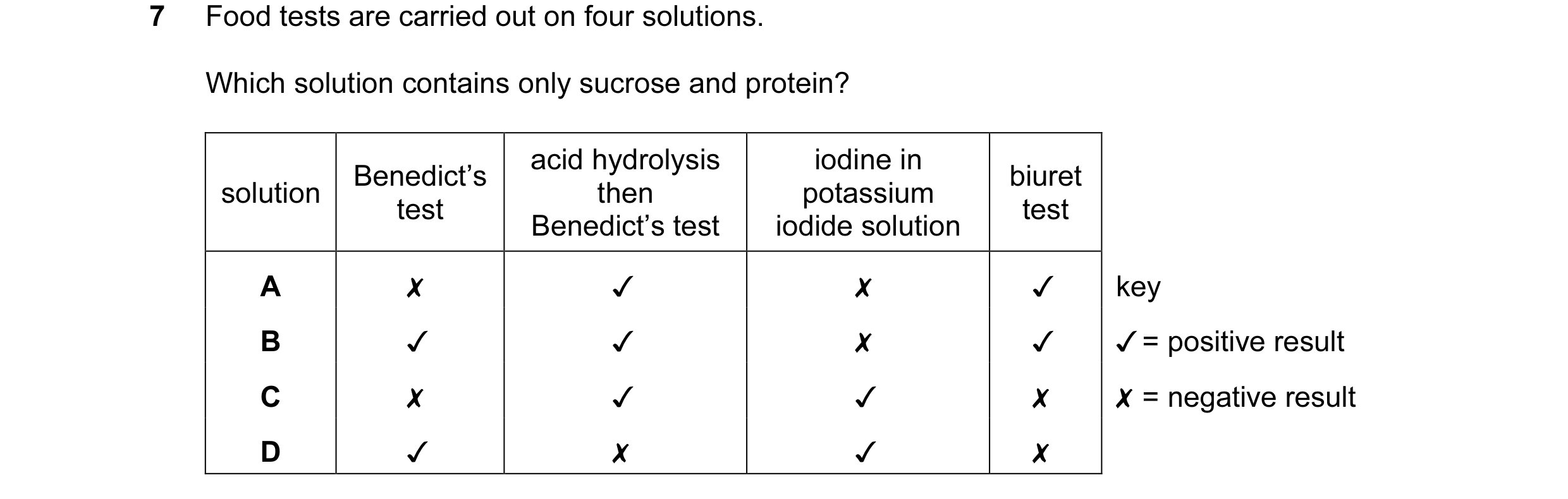
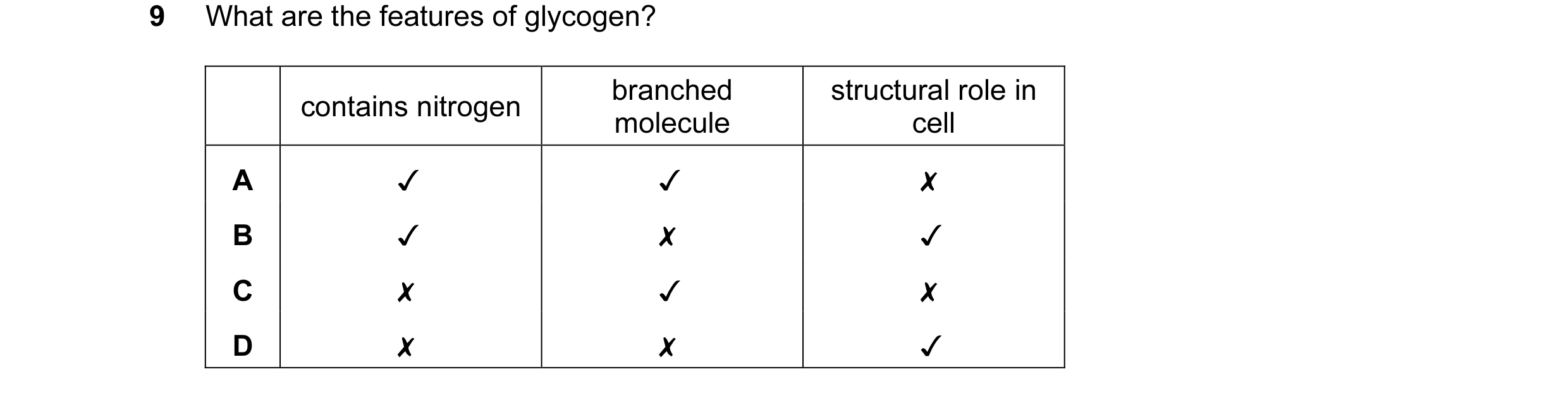
 1 / 111
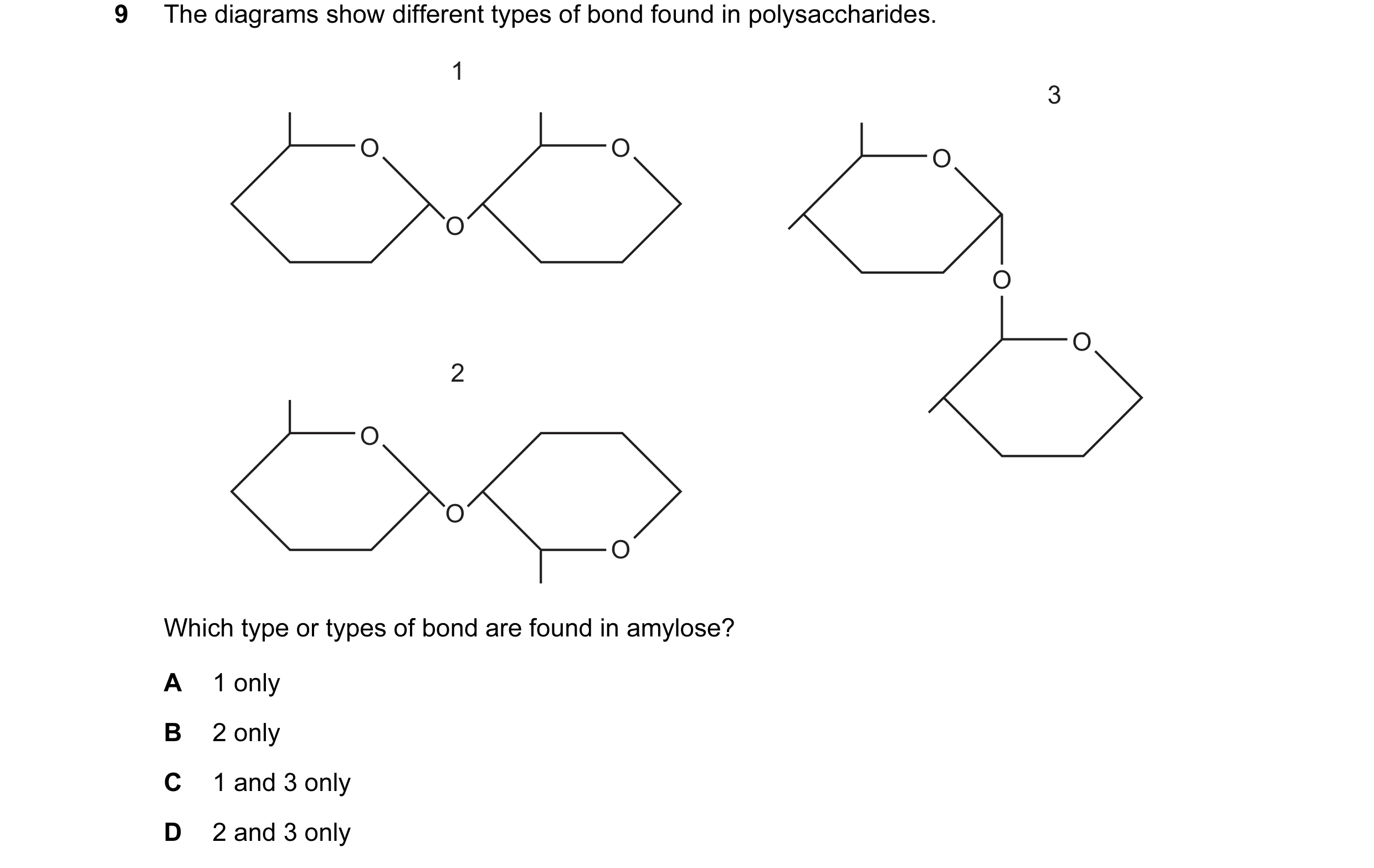

 2 / 111
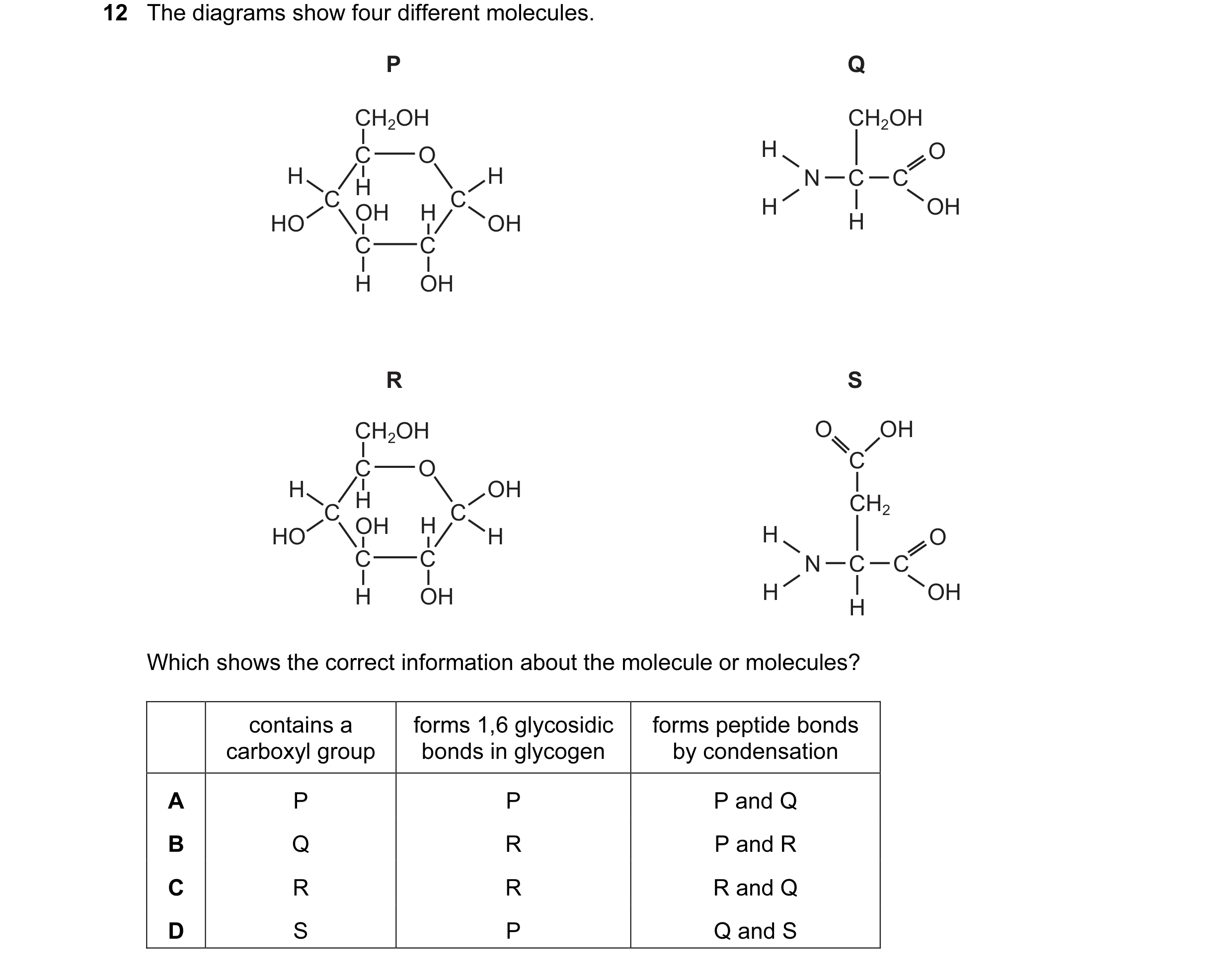 3 / 111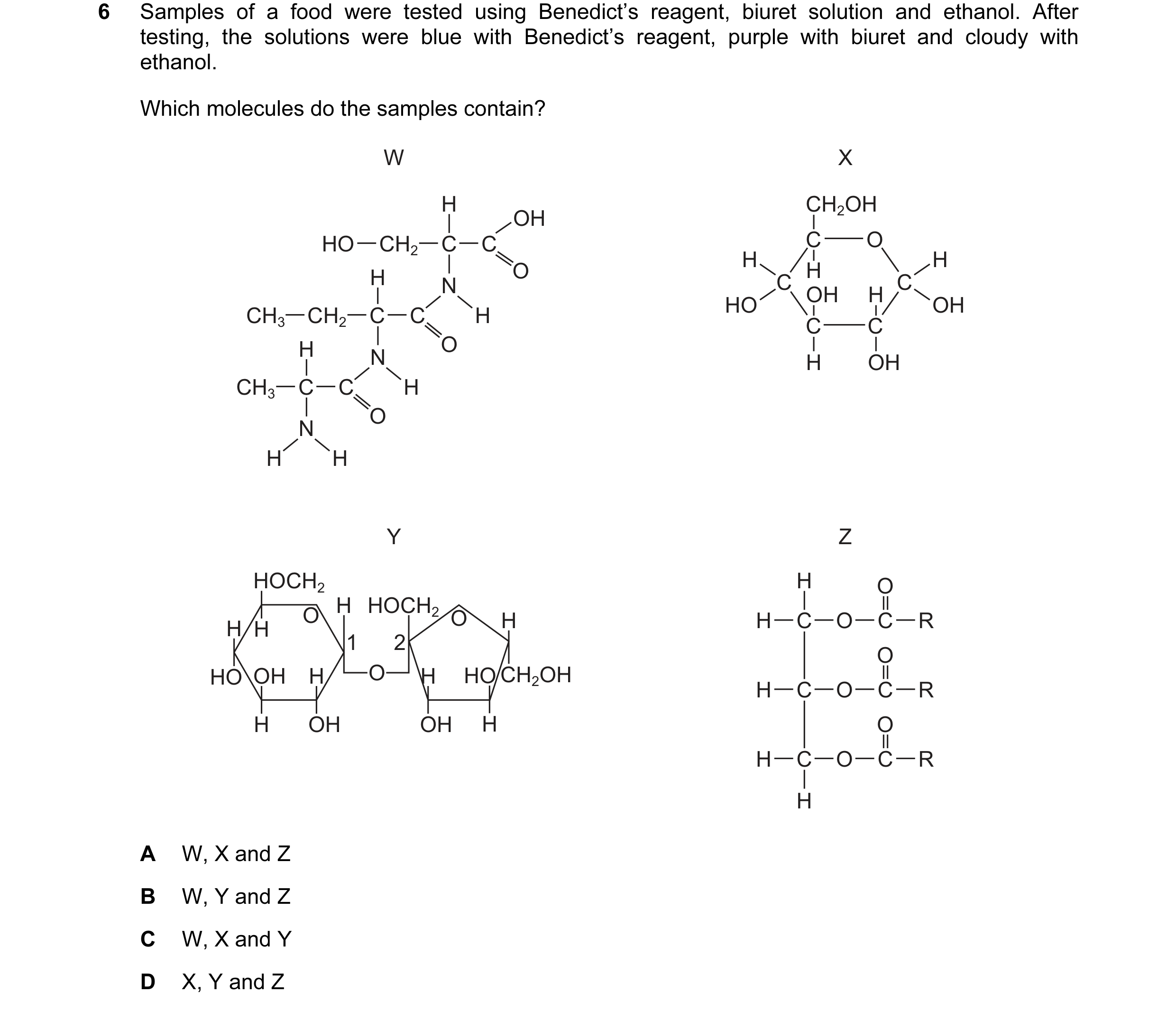
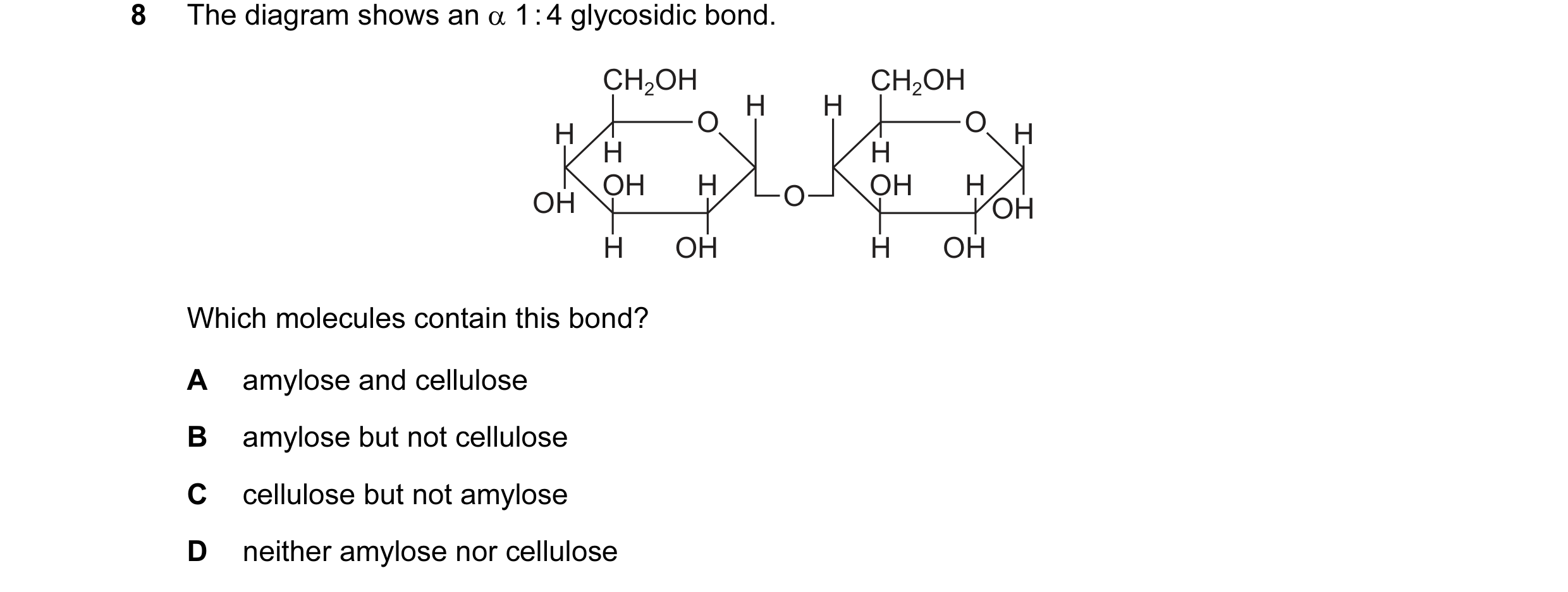 4 / 111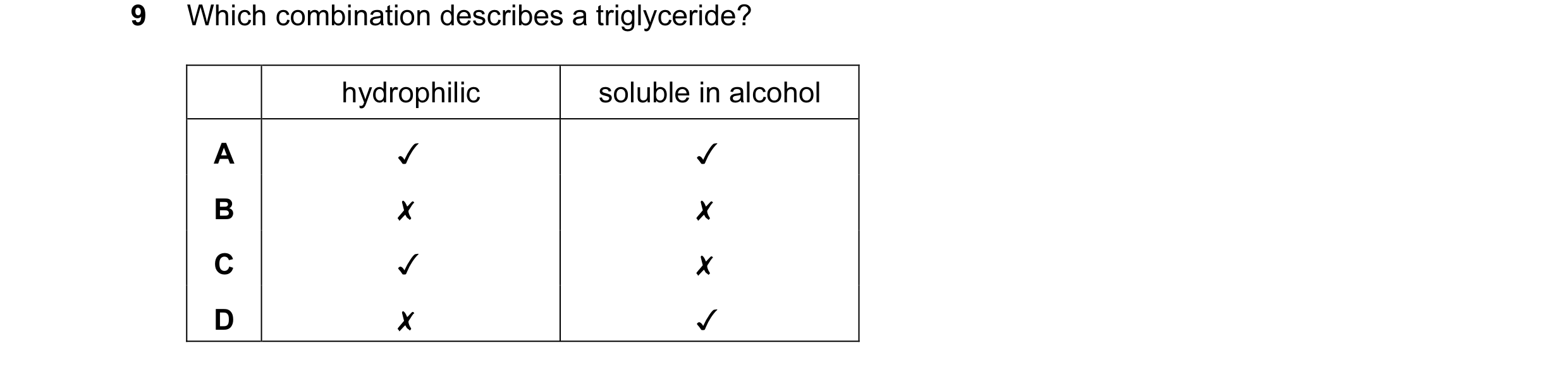

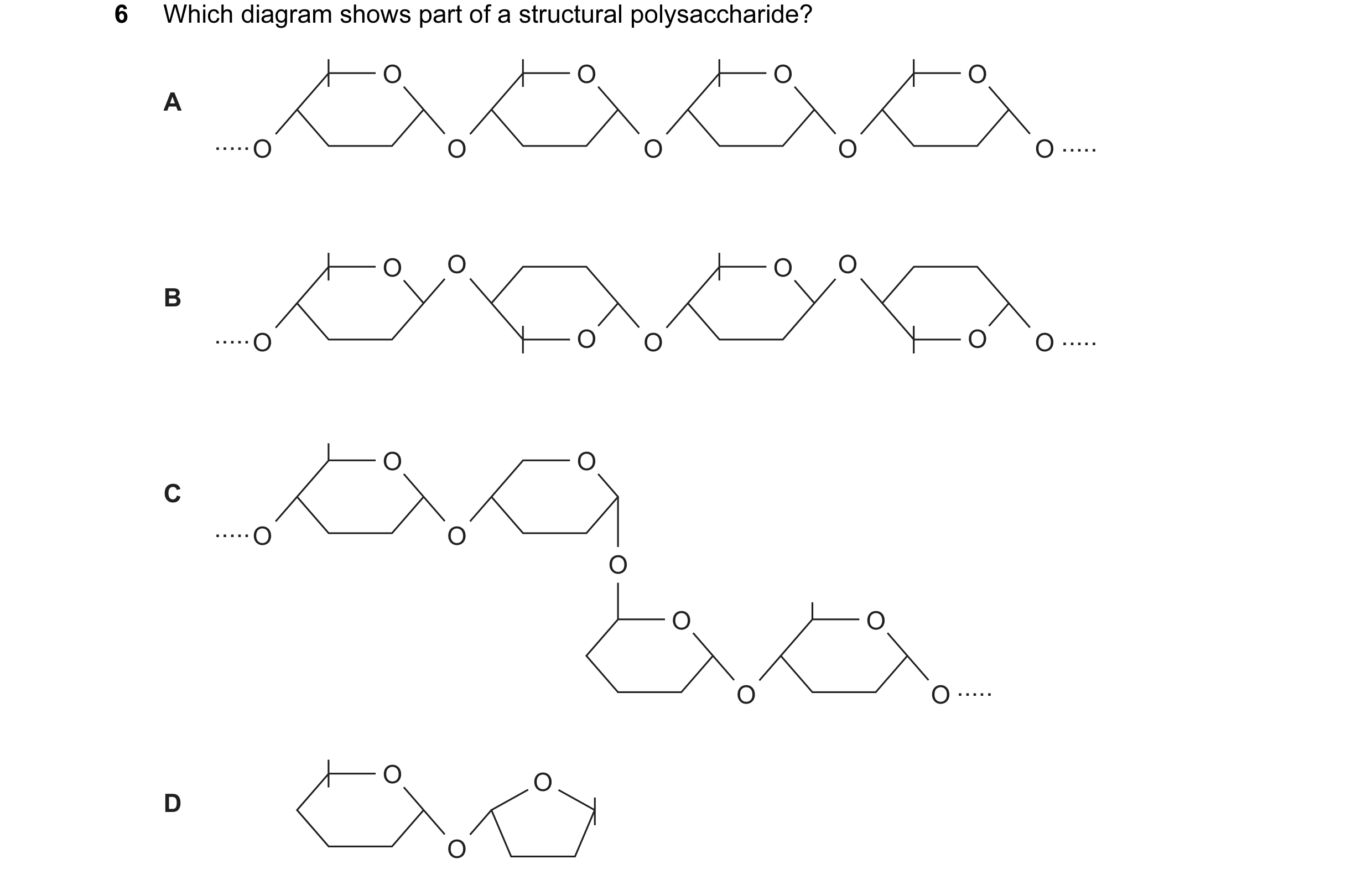 5 / 111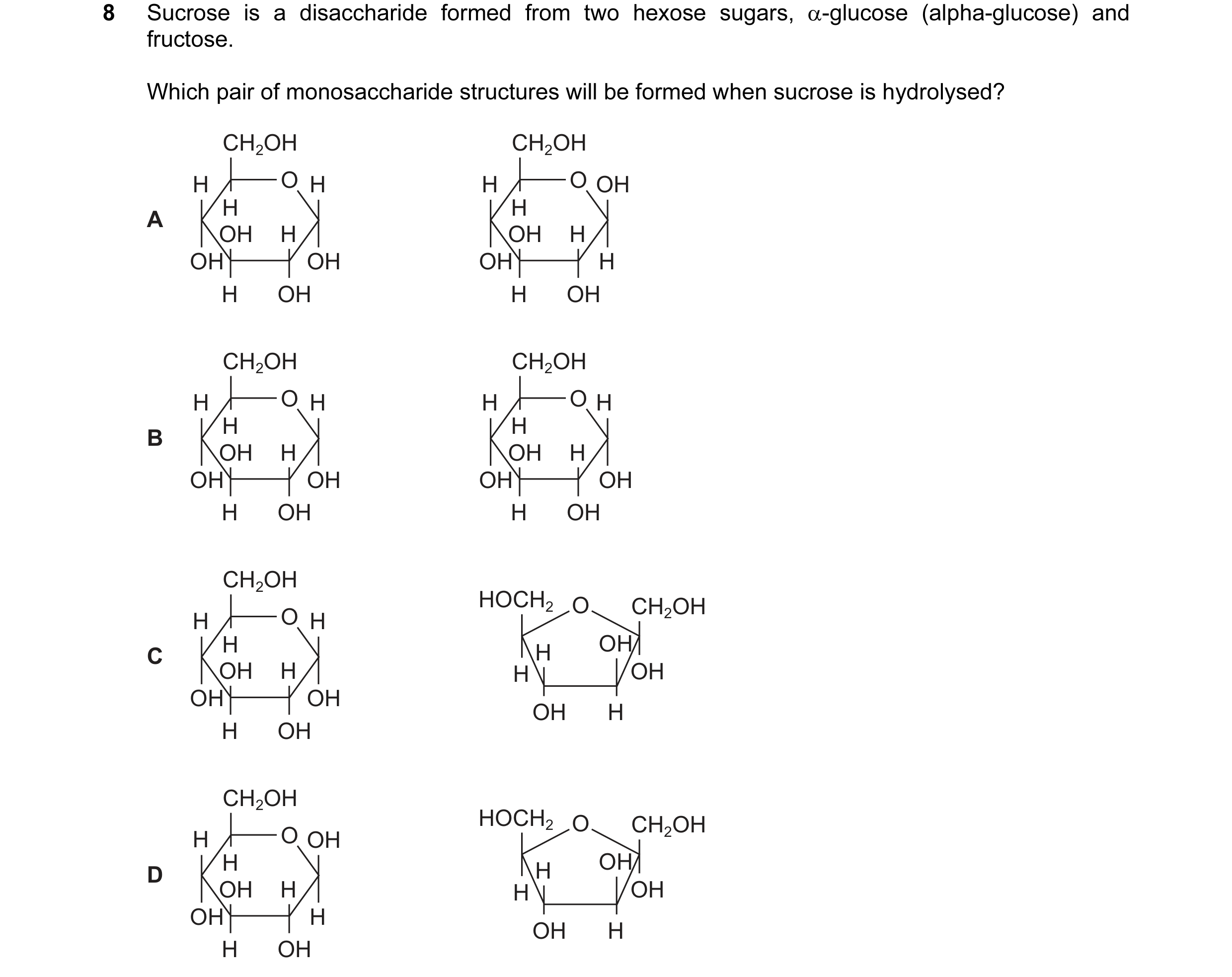
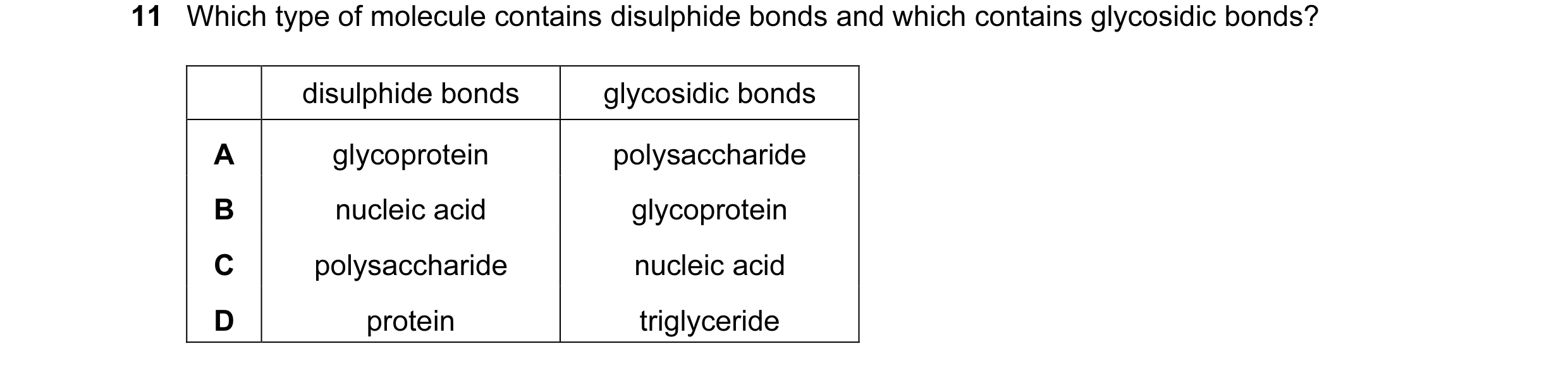
 6 / 111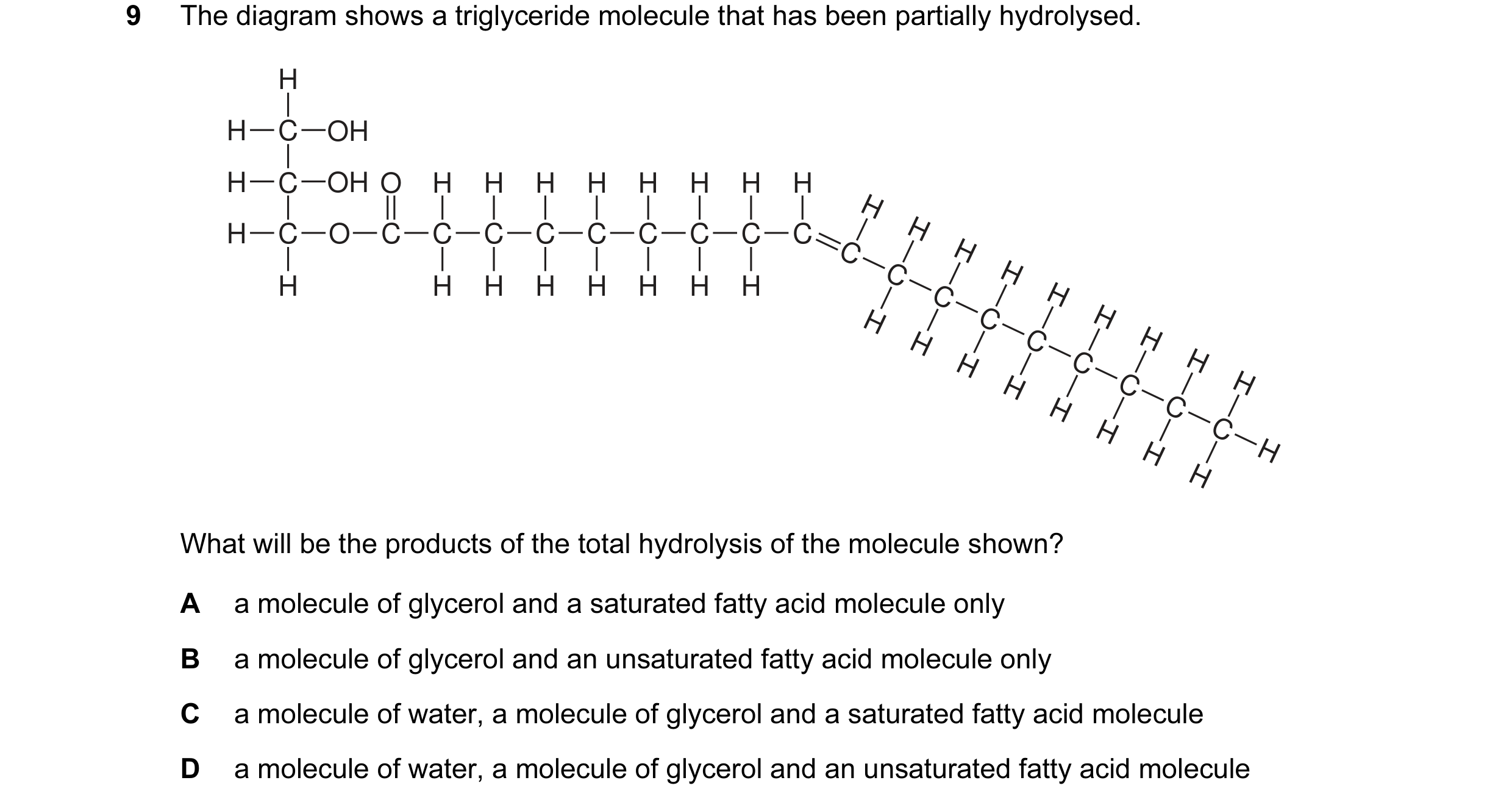
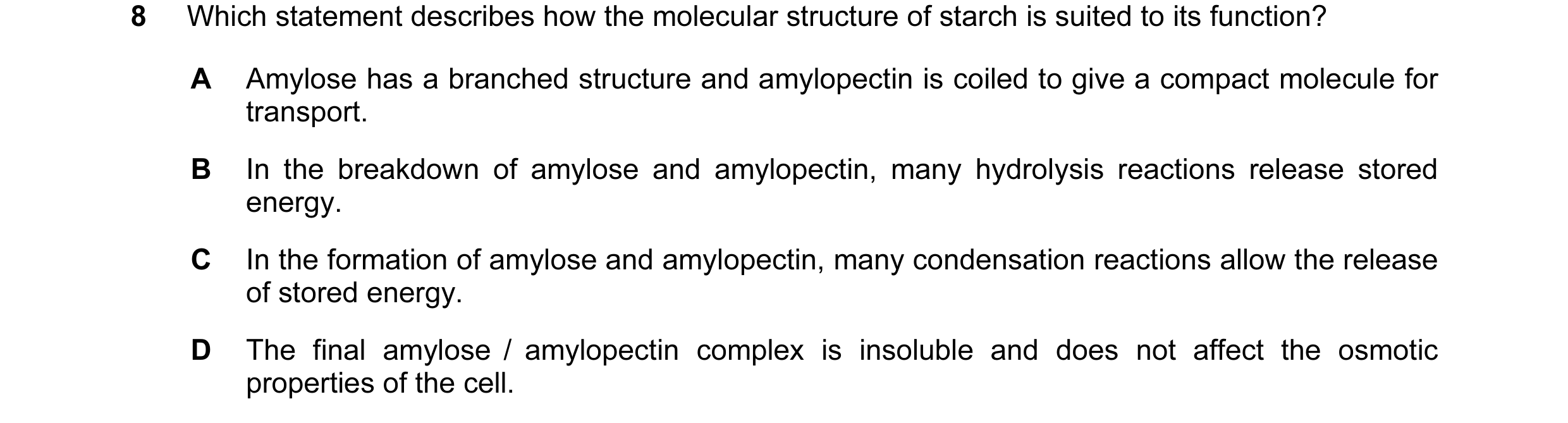
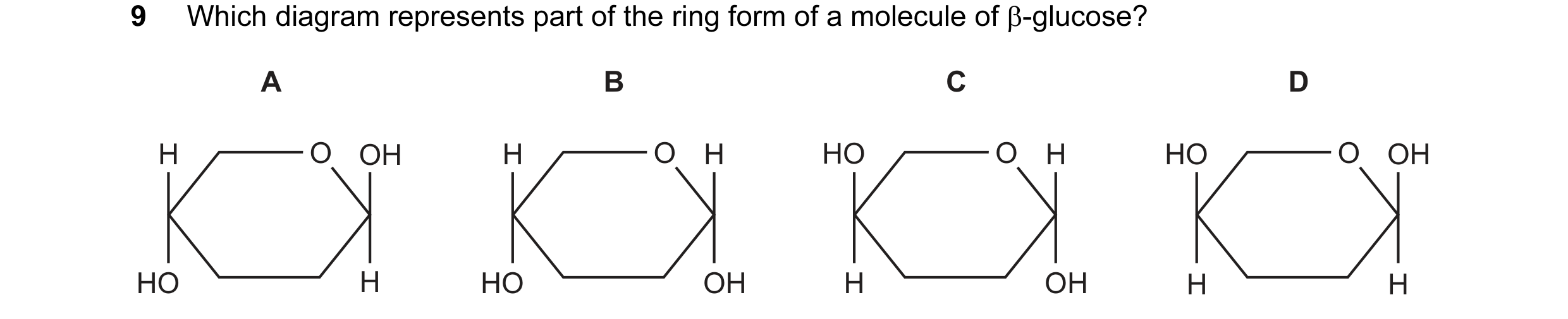

 7 / 111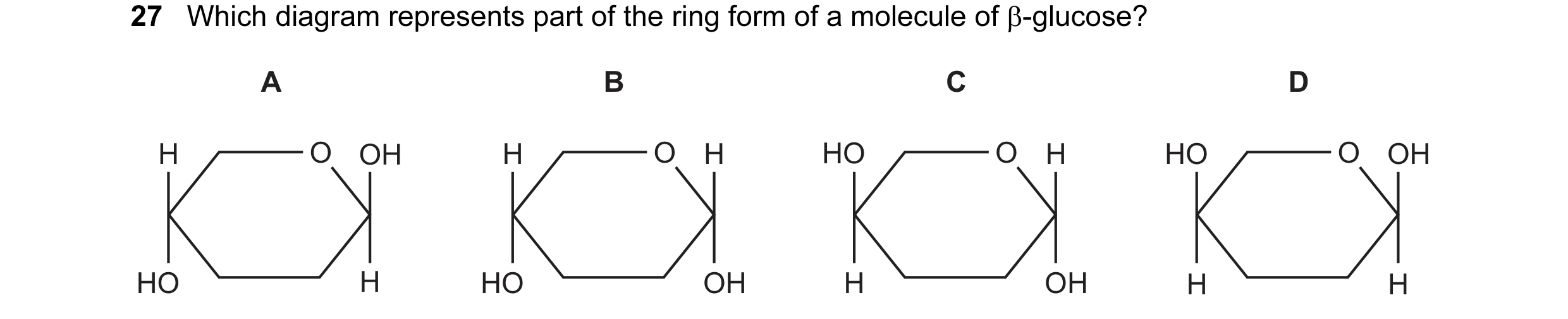



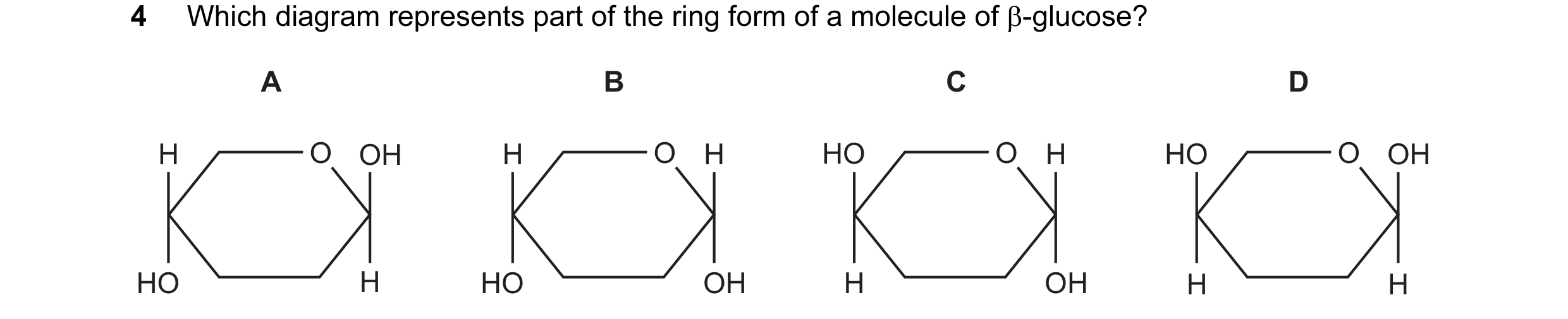 8 / 111

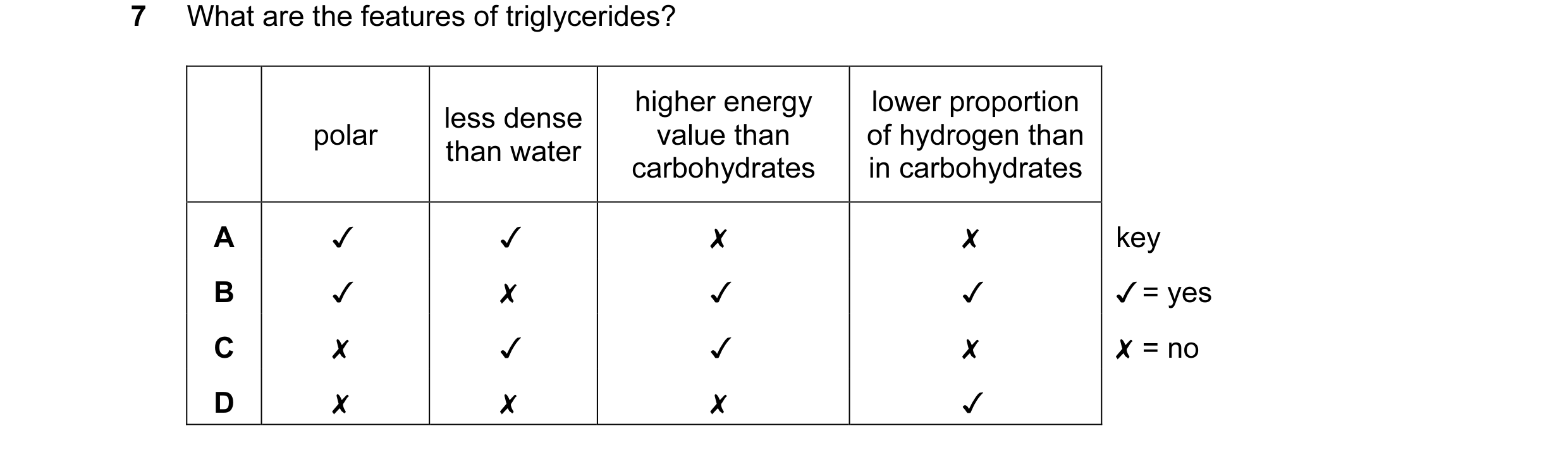


 9 / 111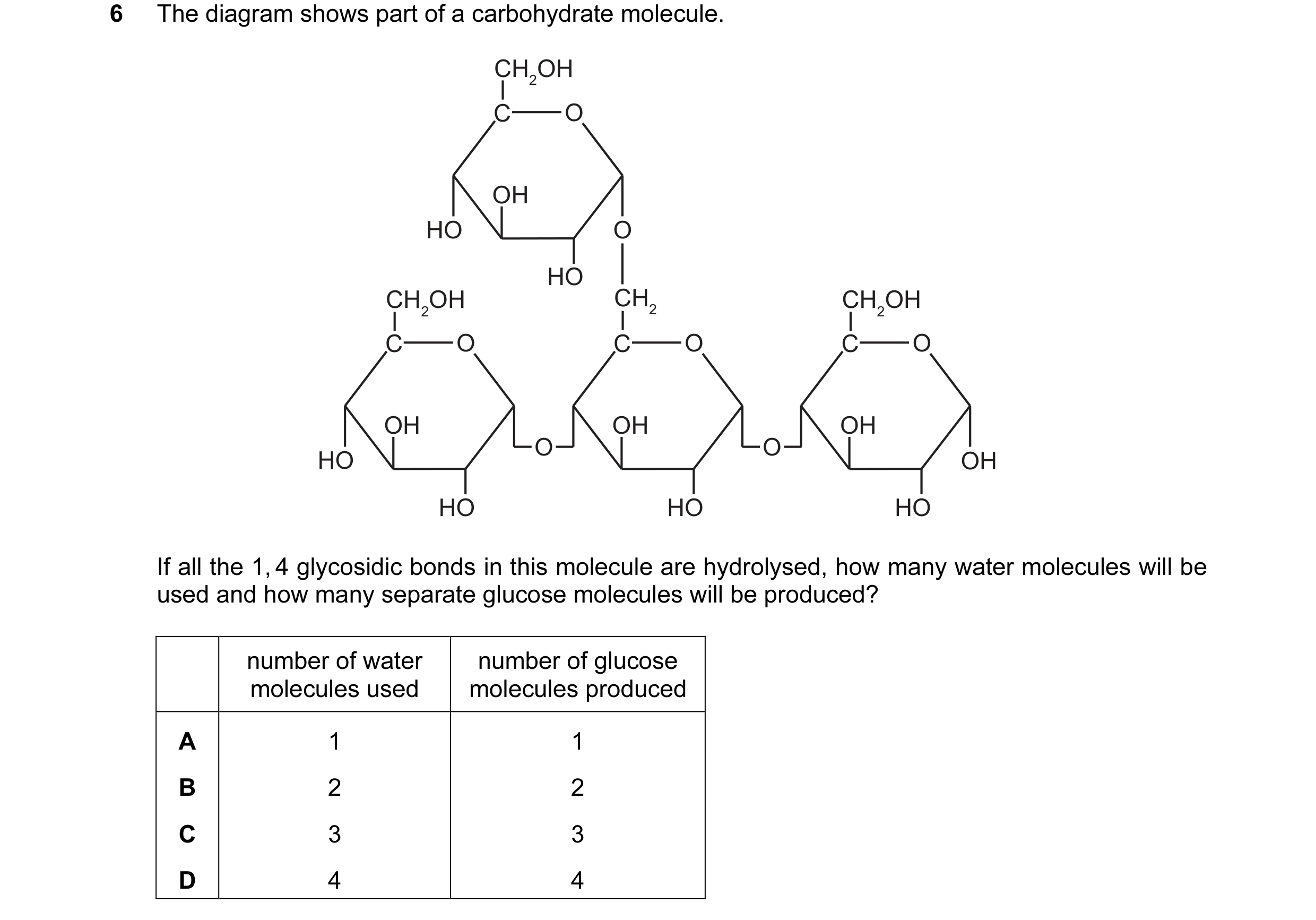
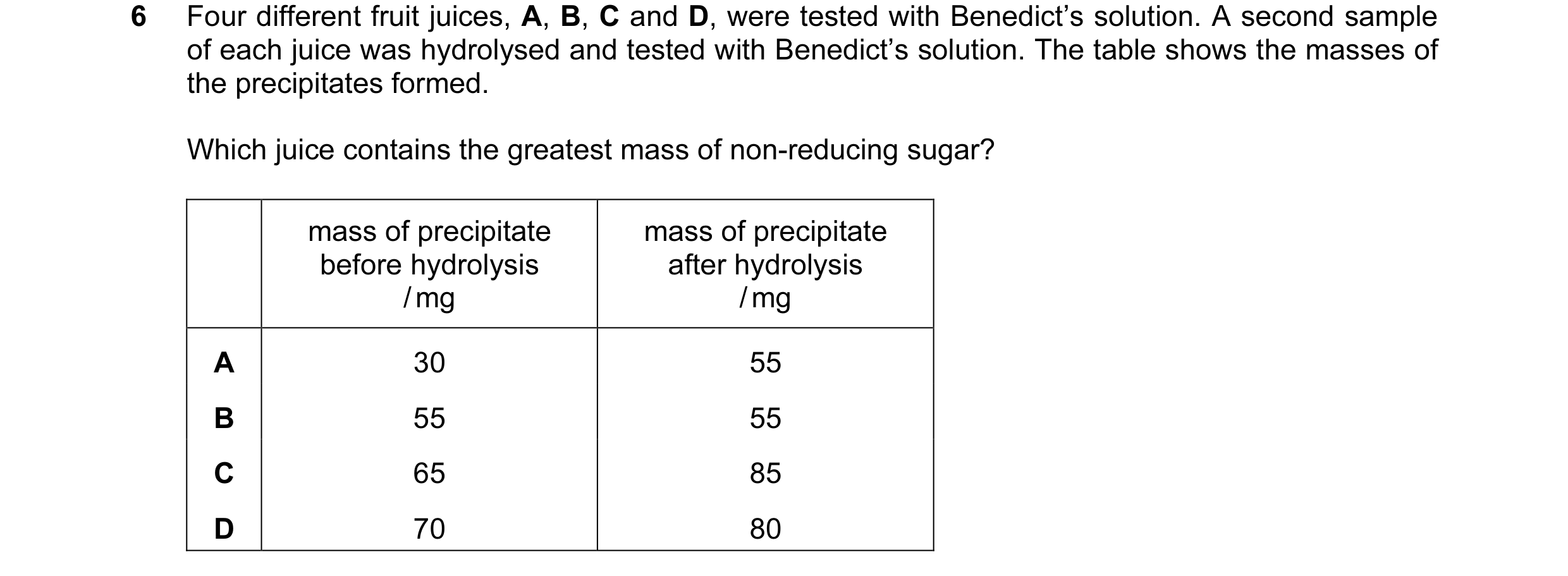
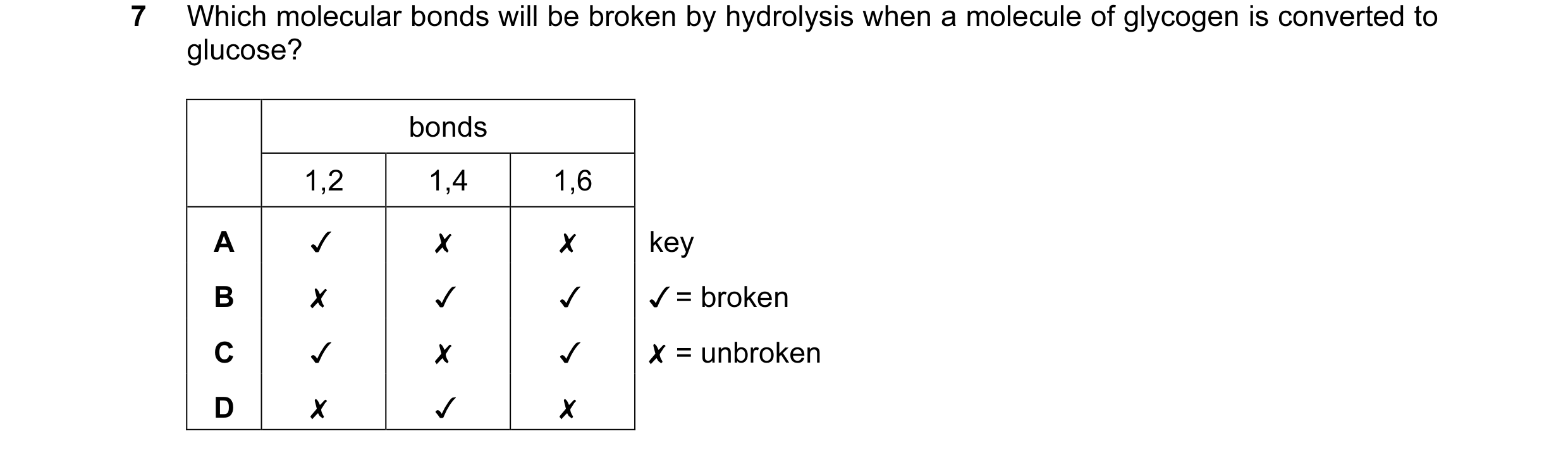 10 / 111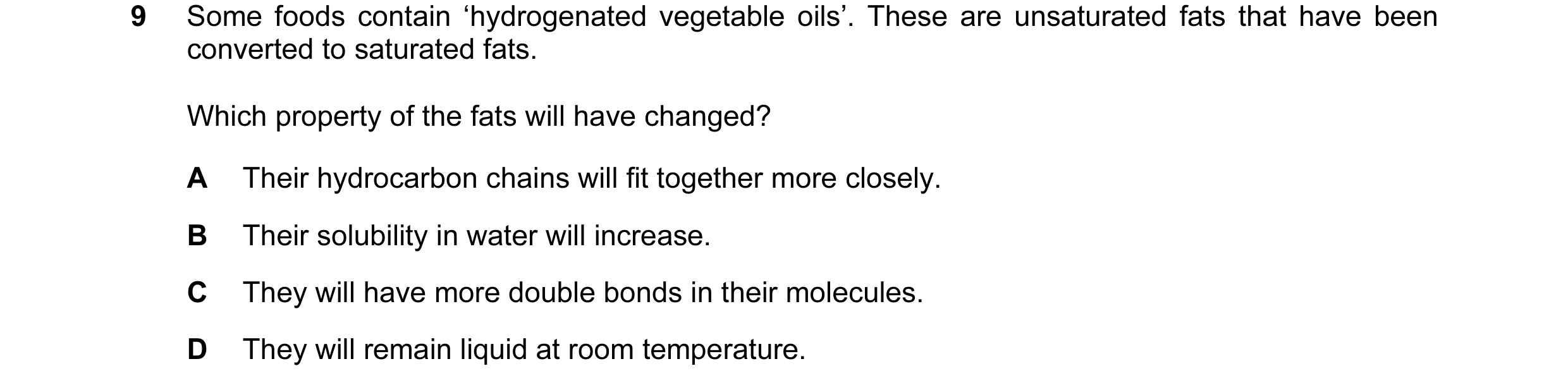
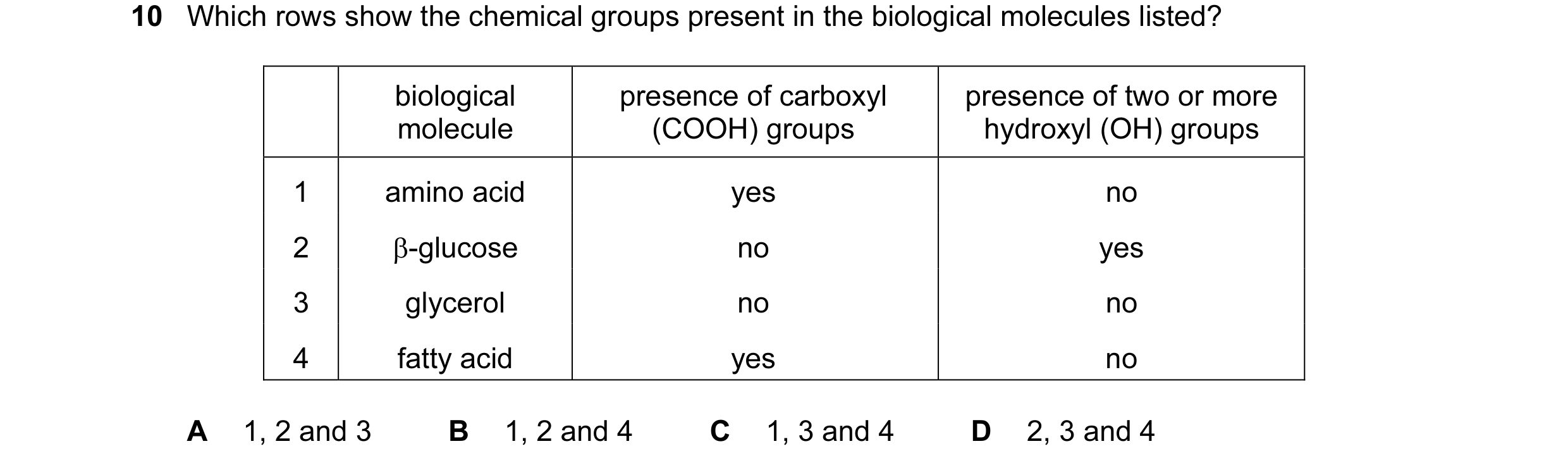
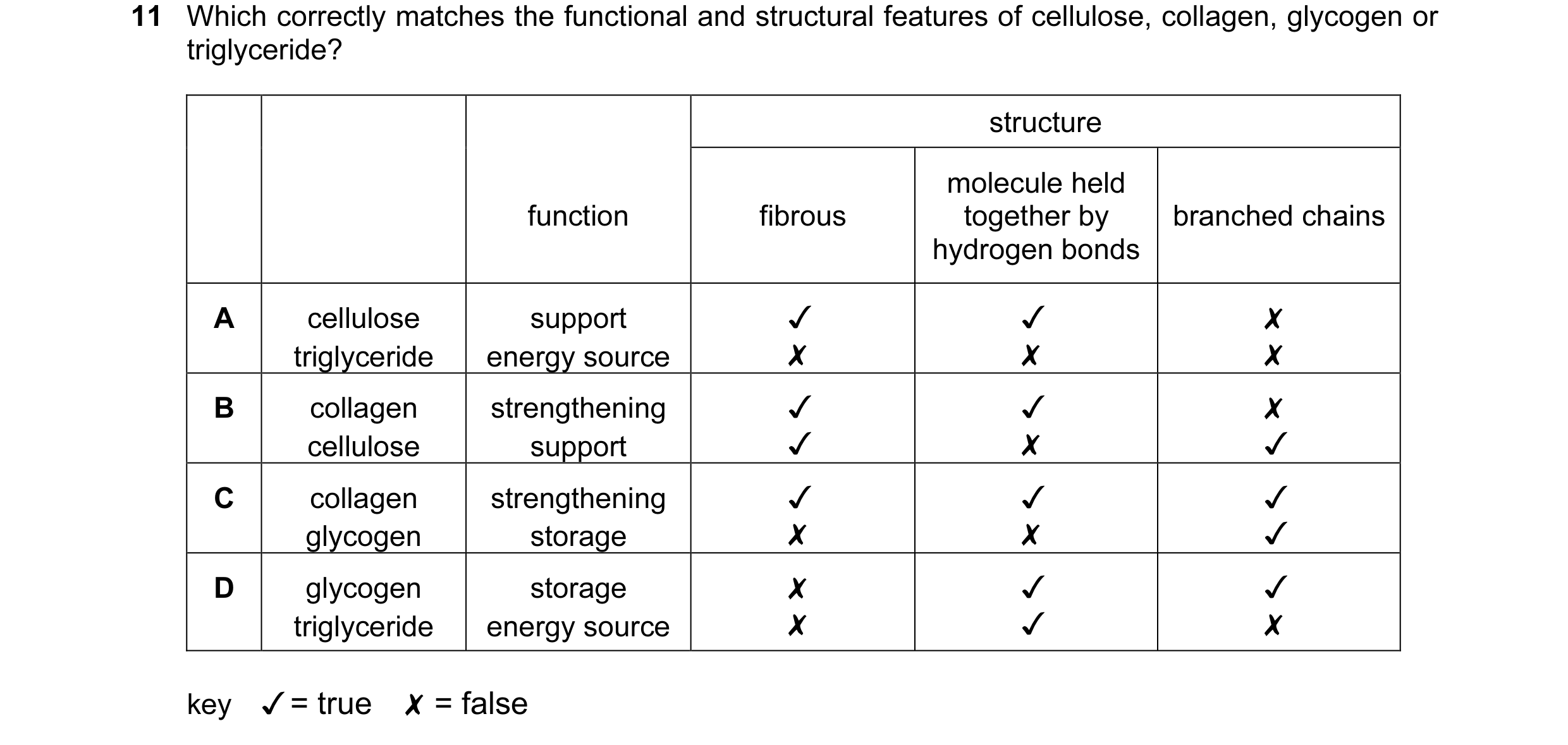
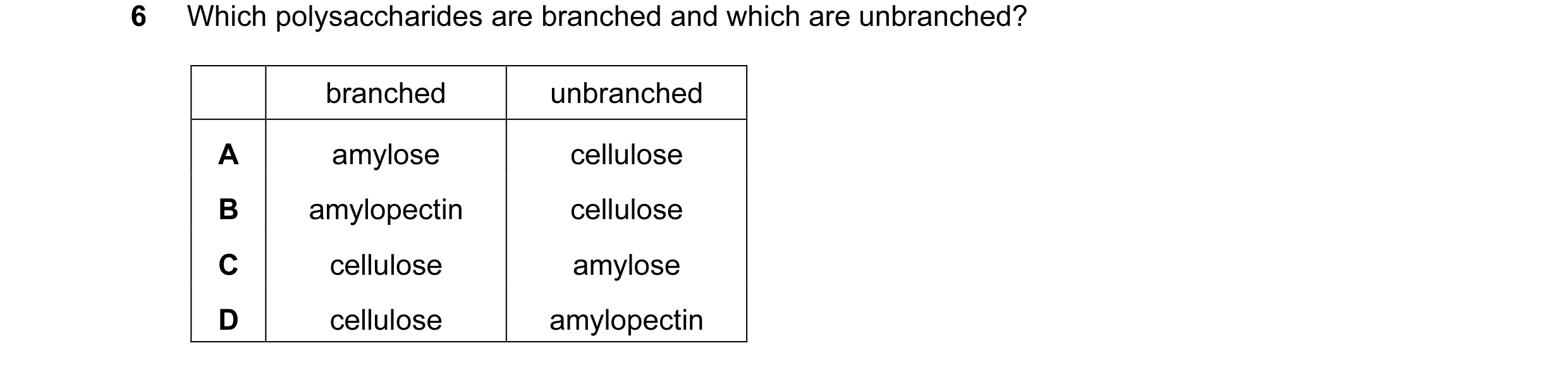 11 / 111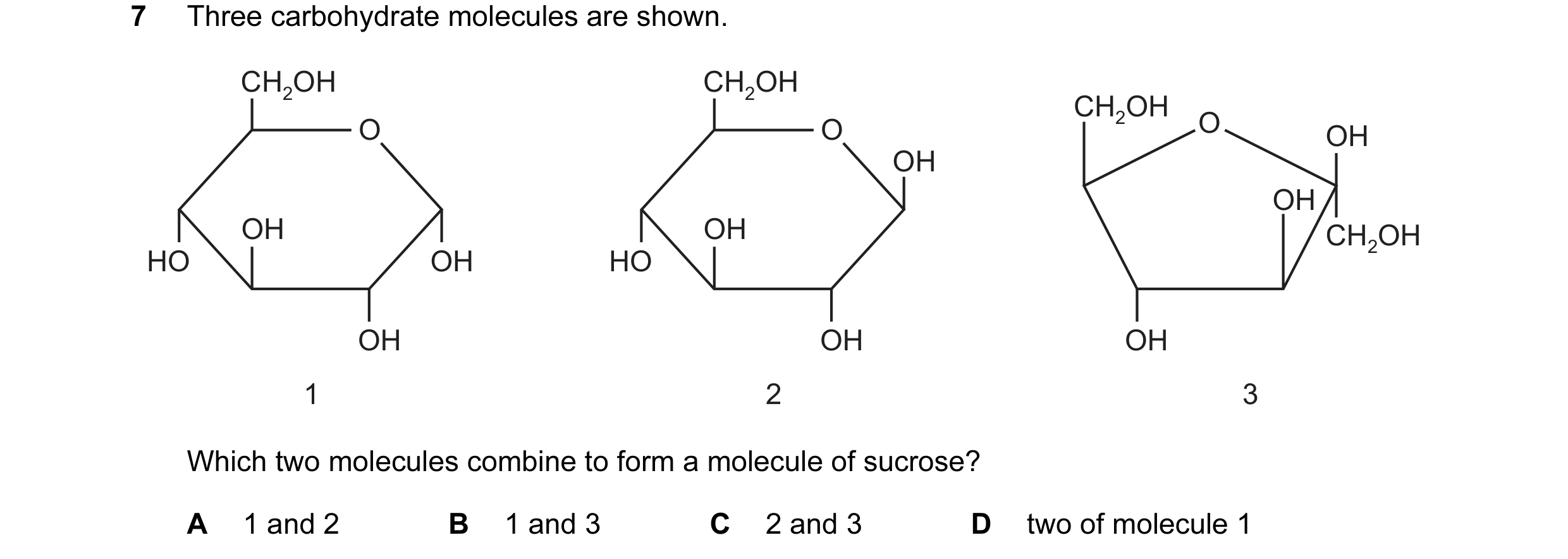
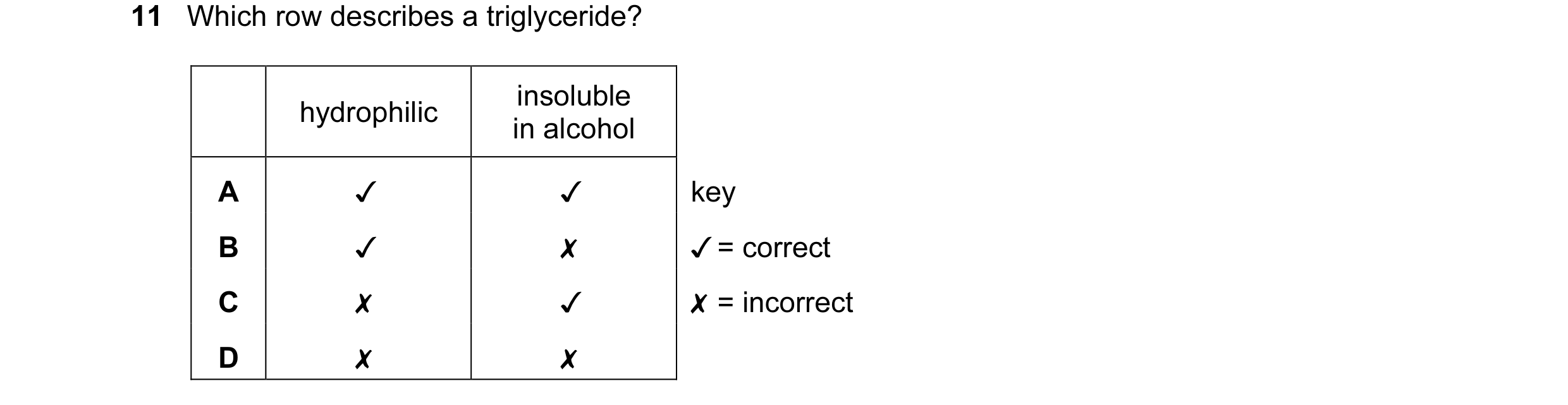
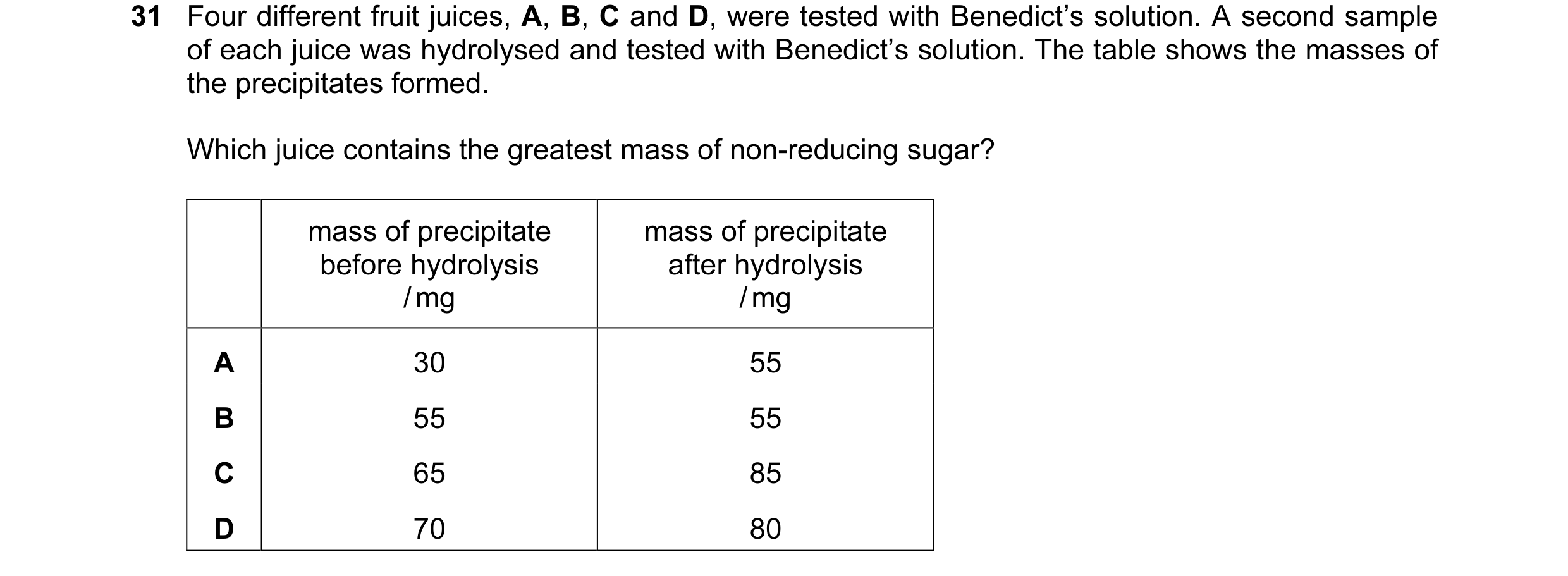
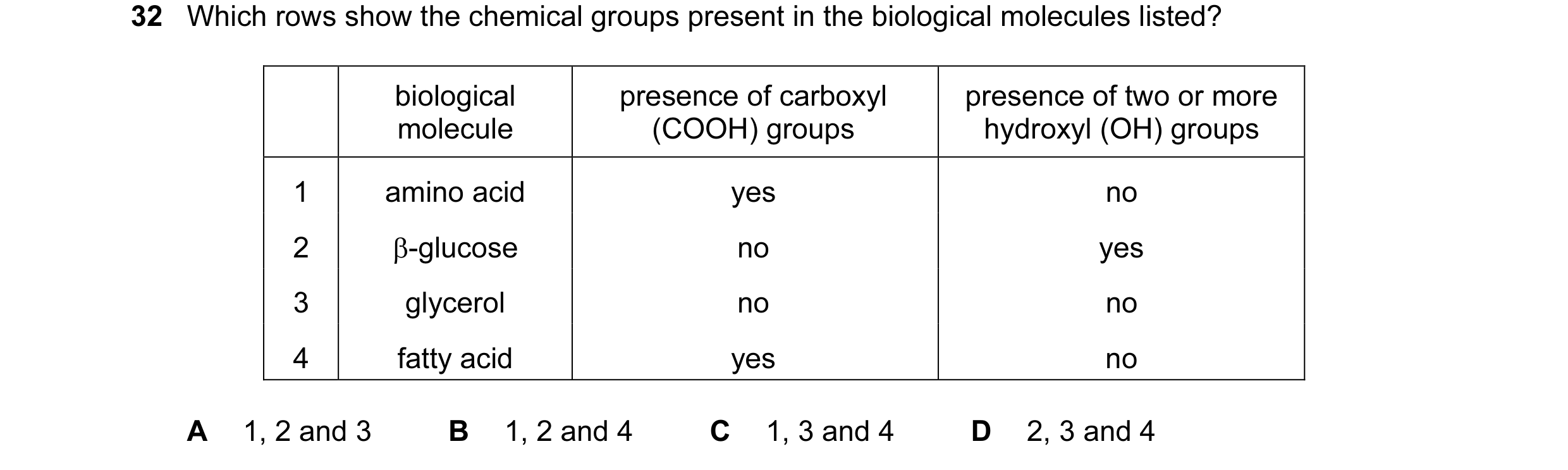 12 / 111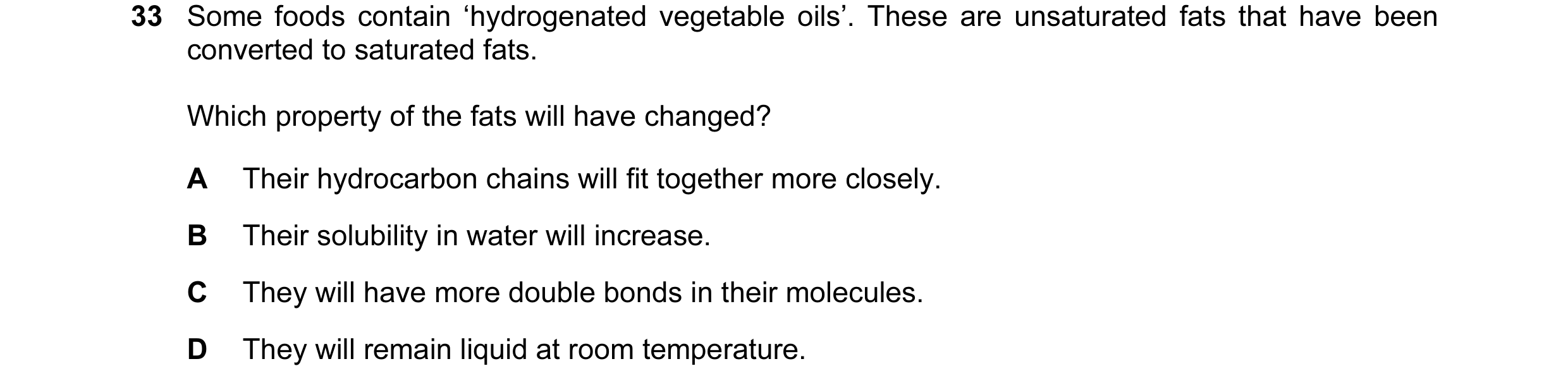
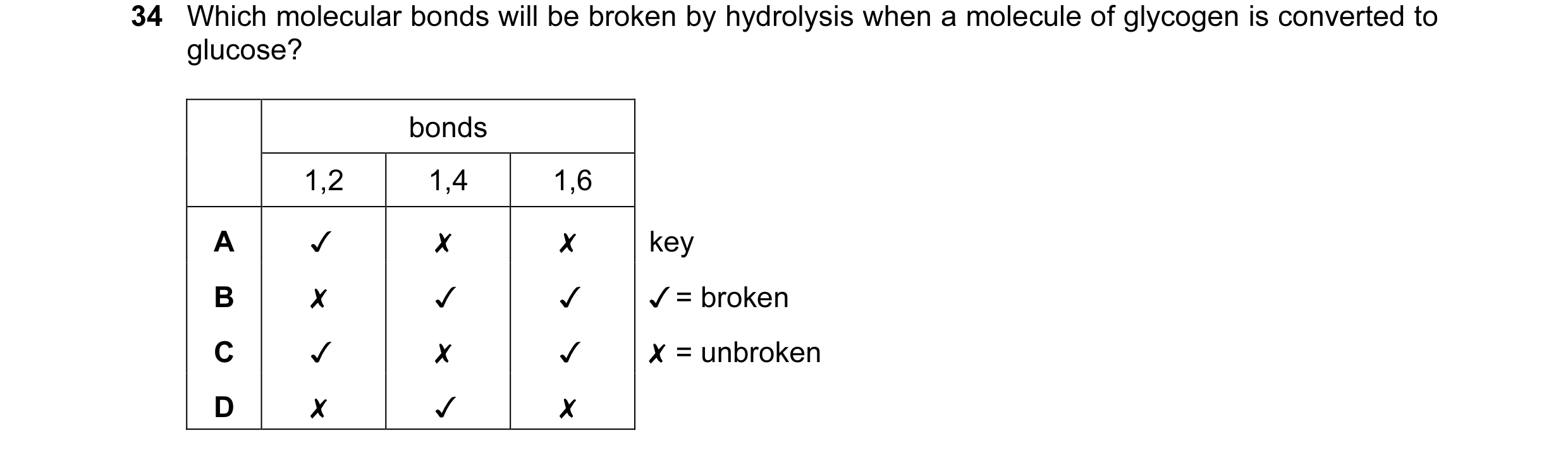
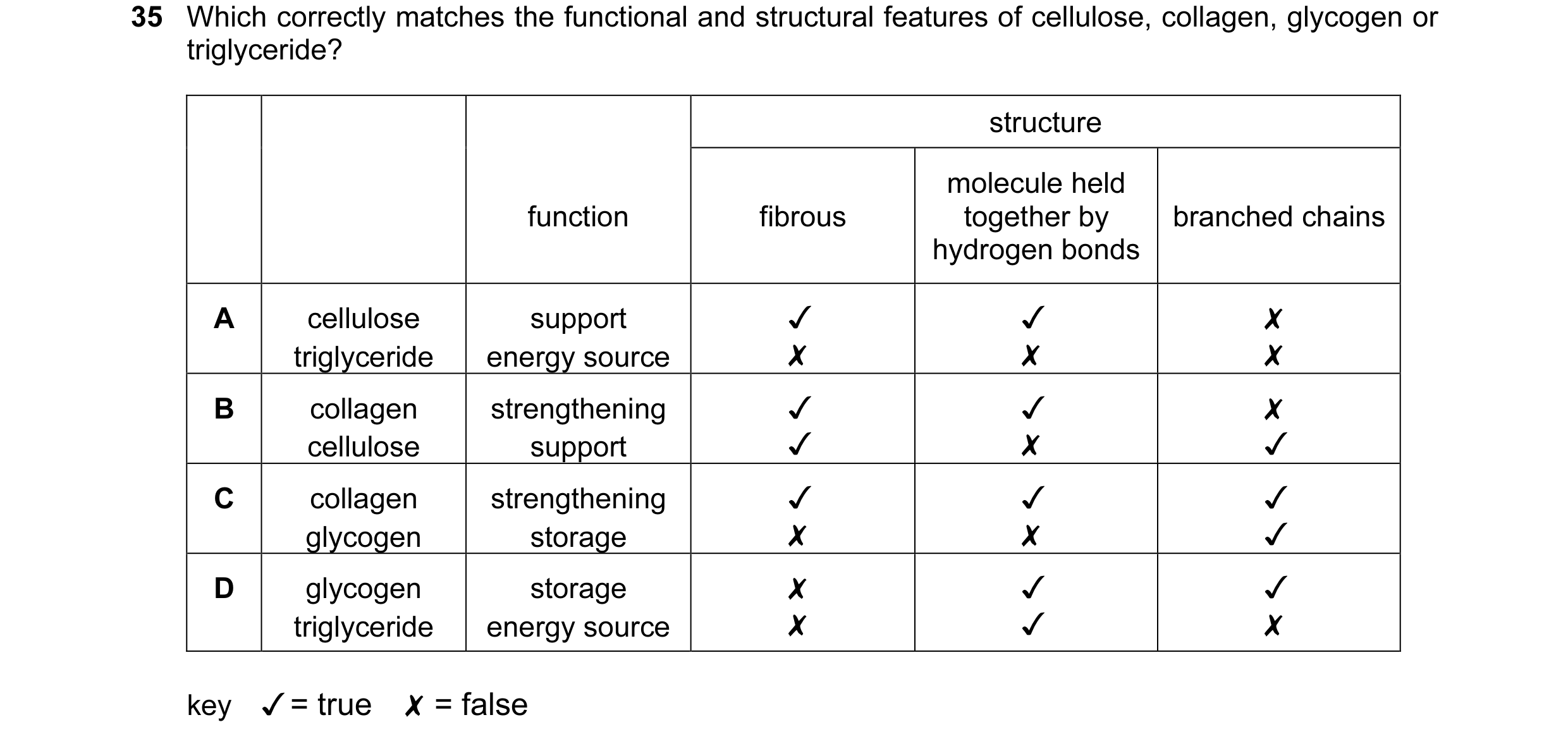
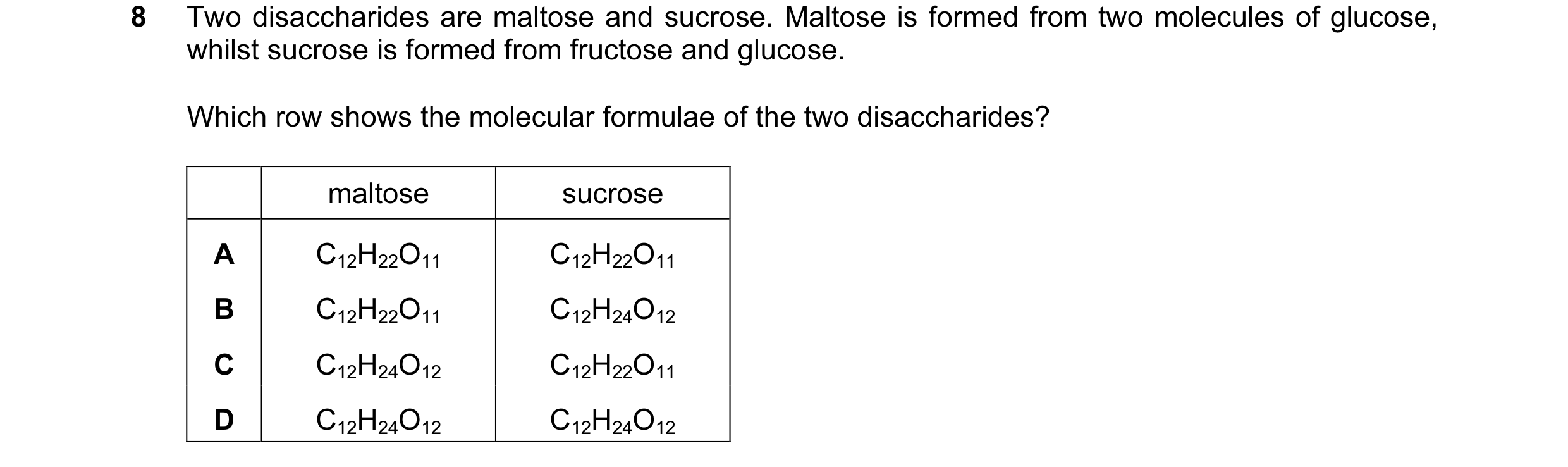 13 / 111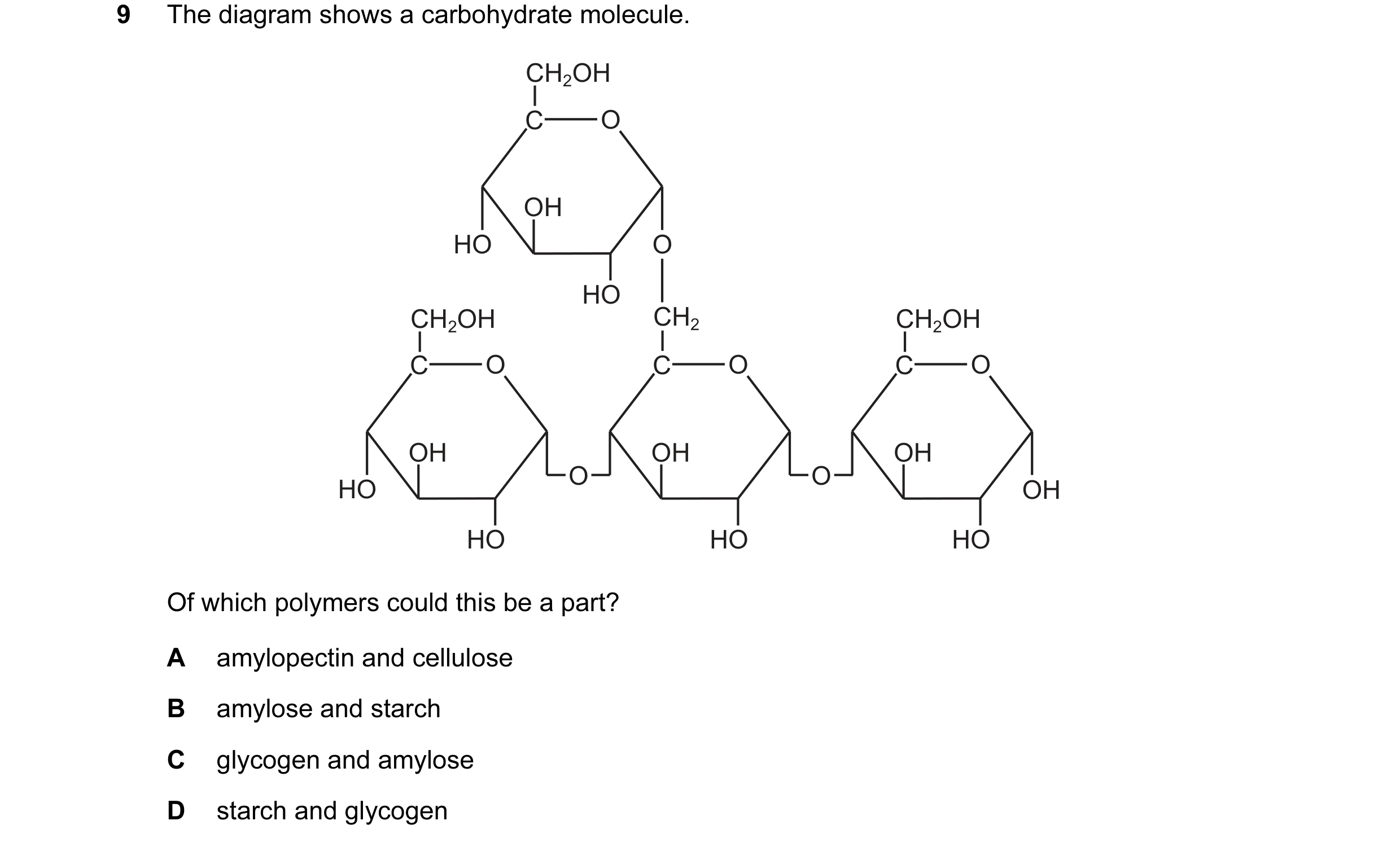
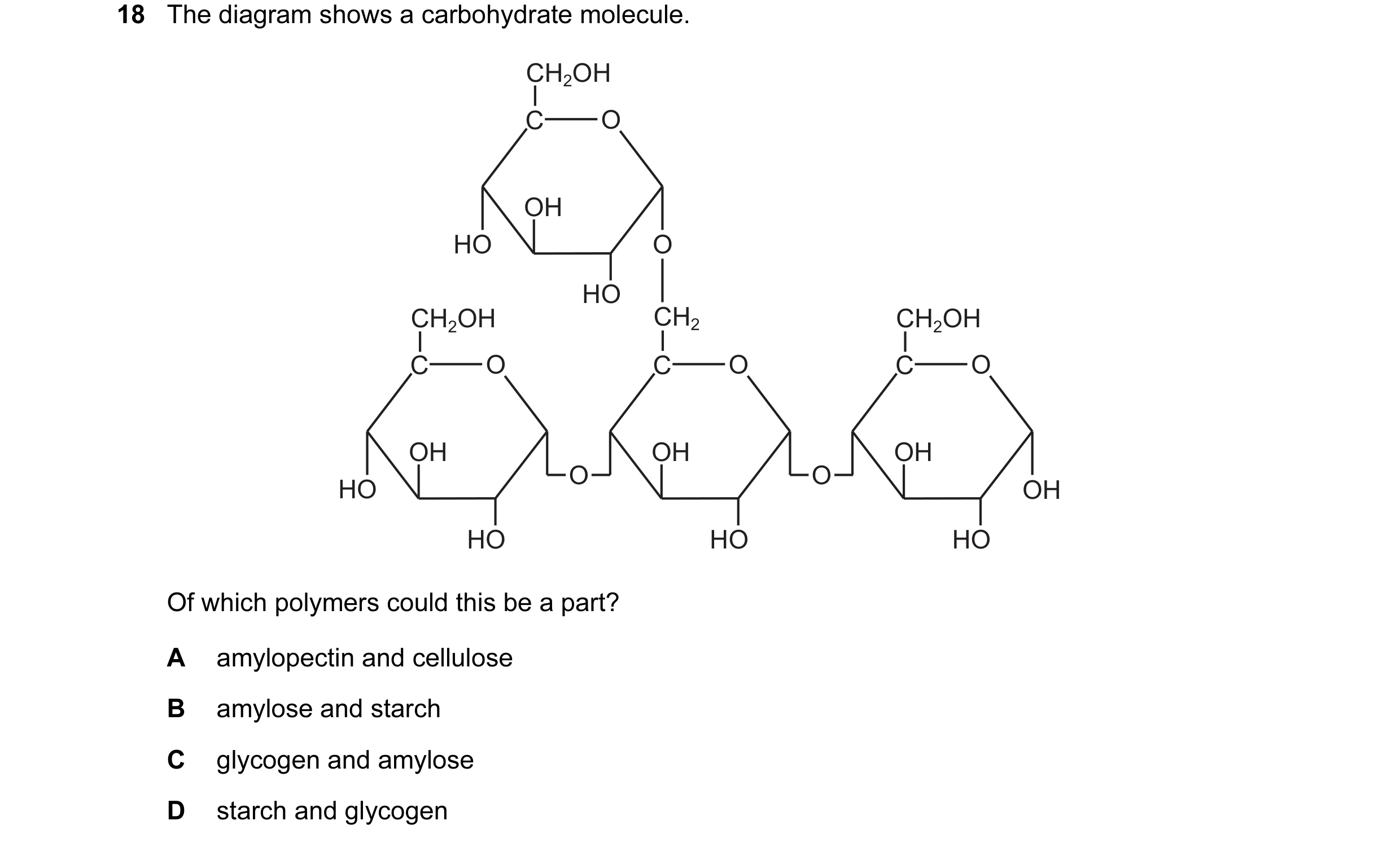 14 / 111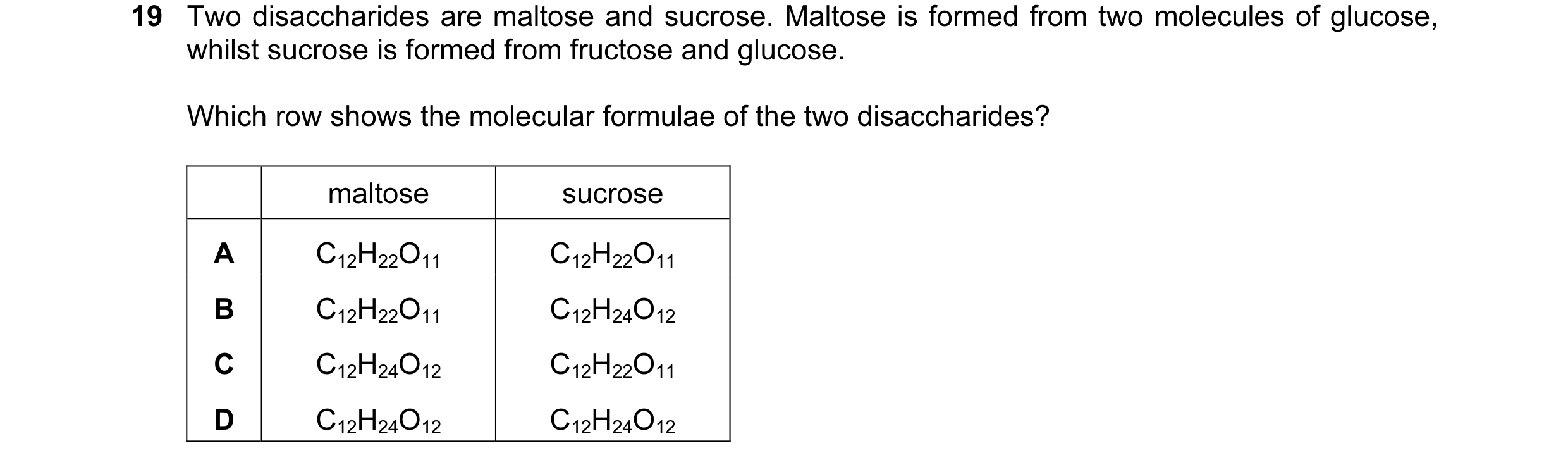
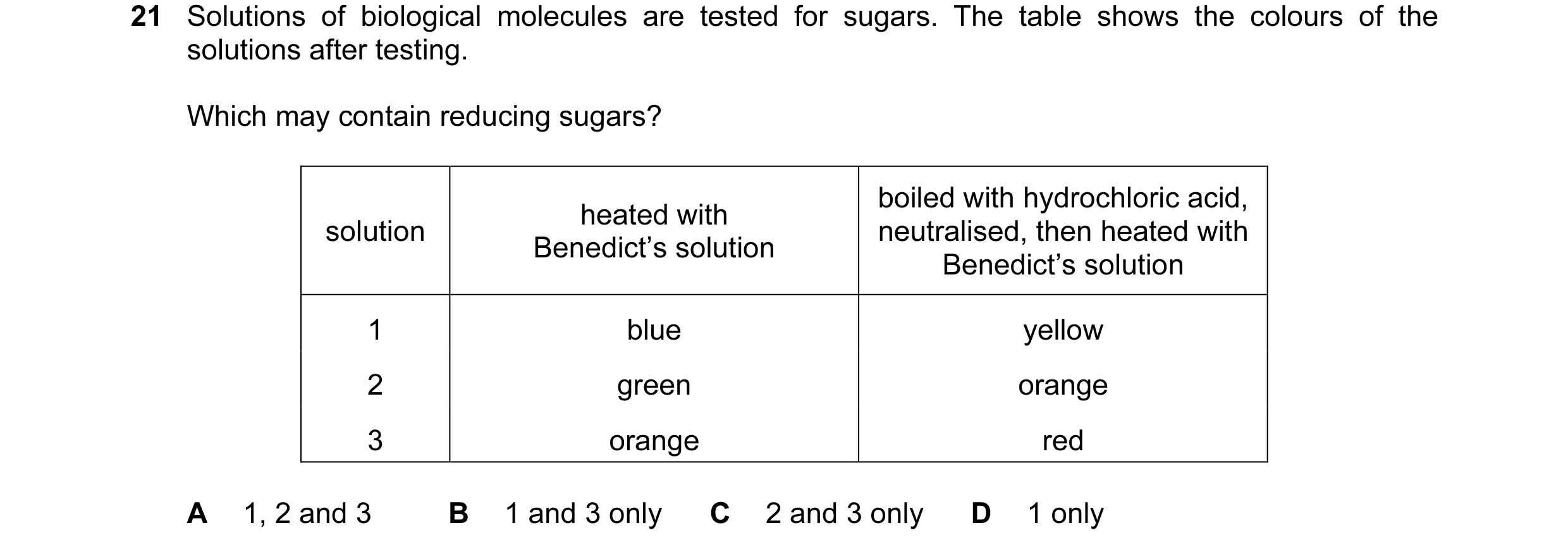
 15 / 111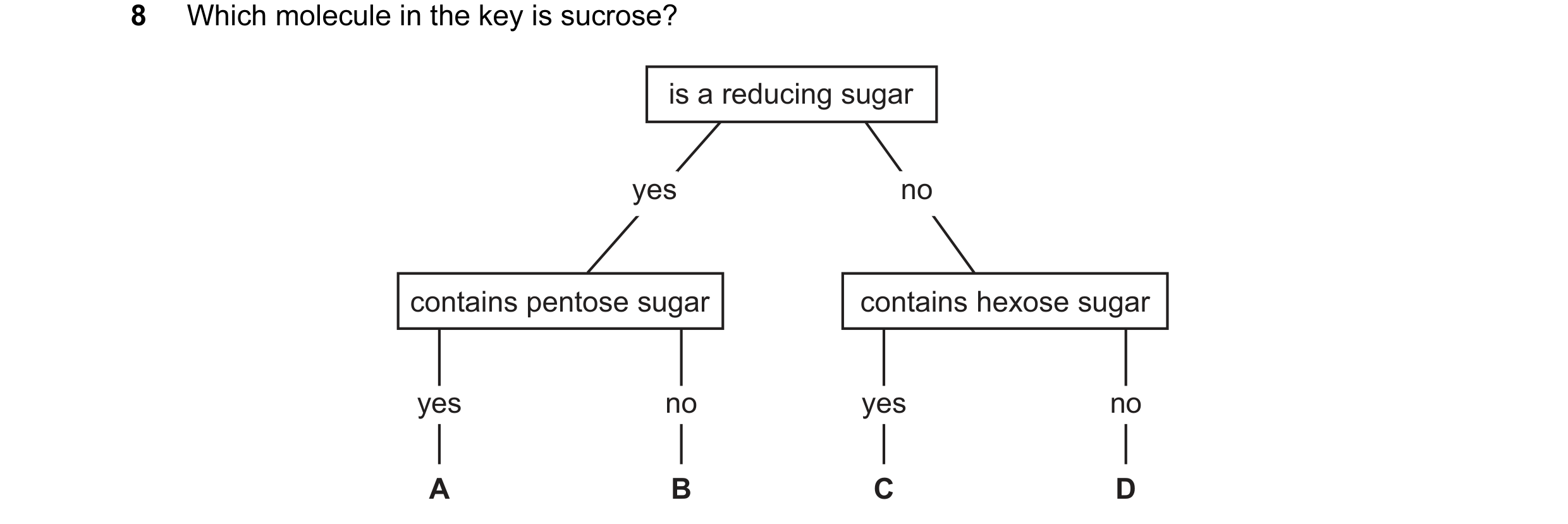
 16 / 111

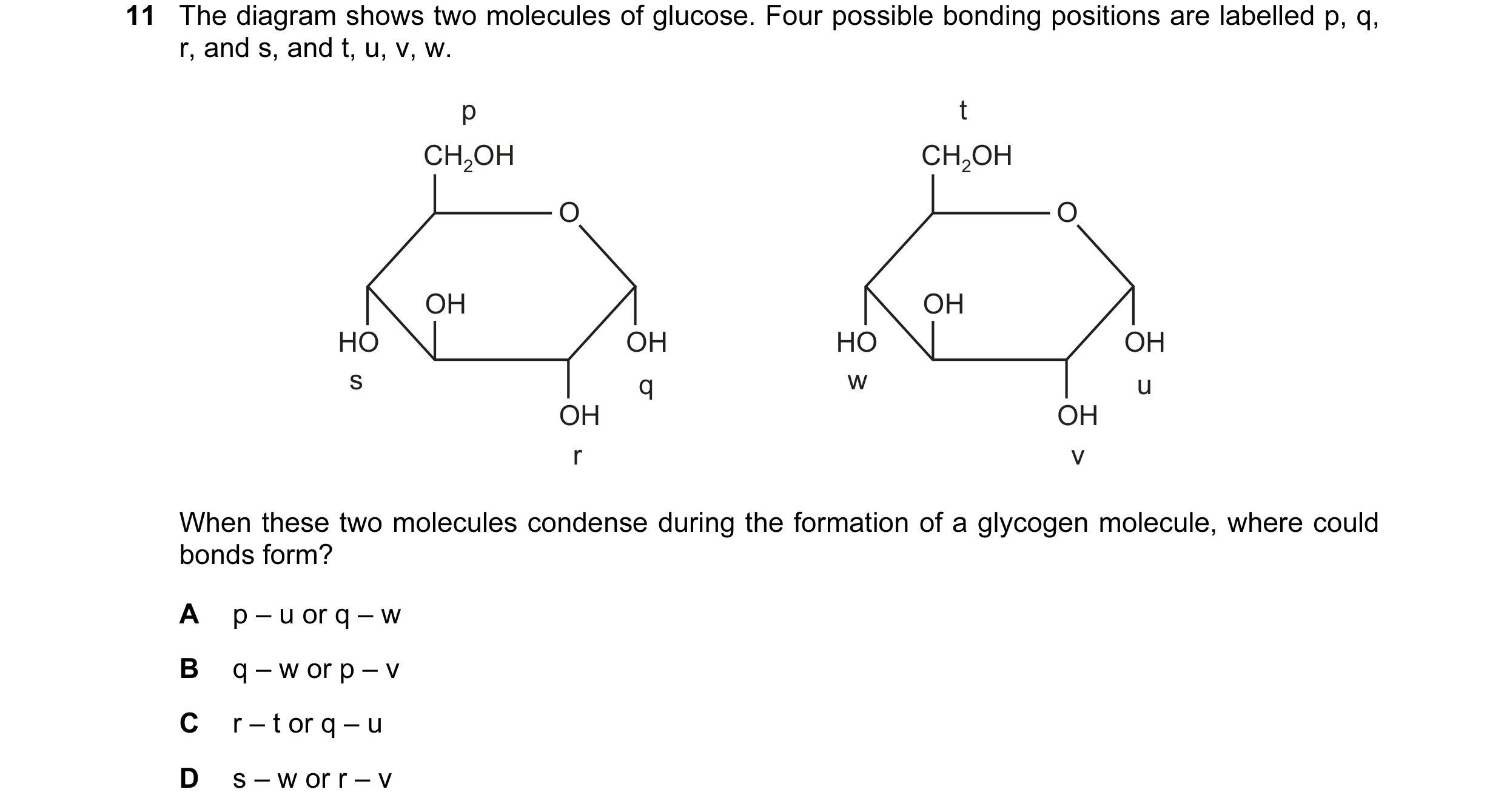 17 / 111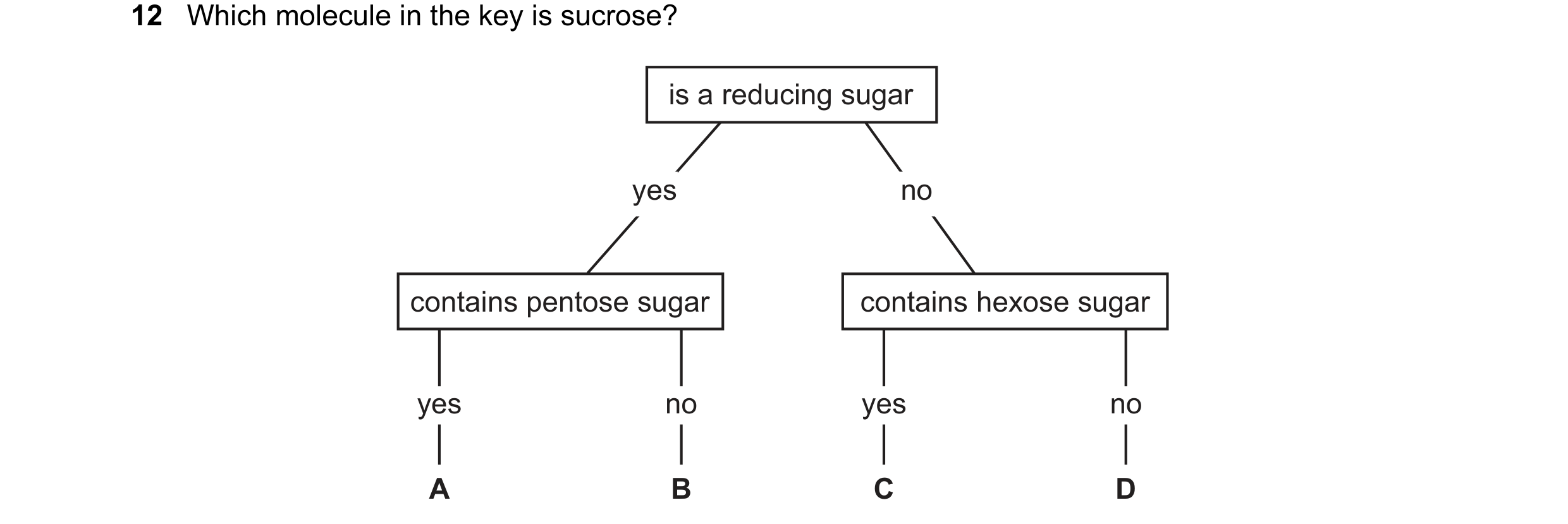
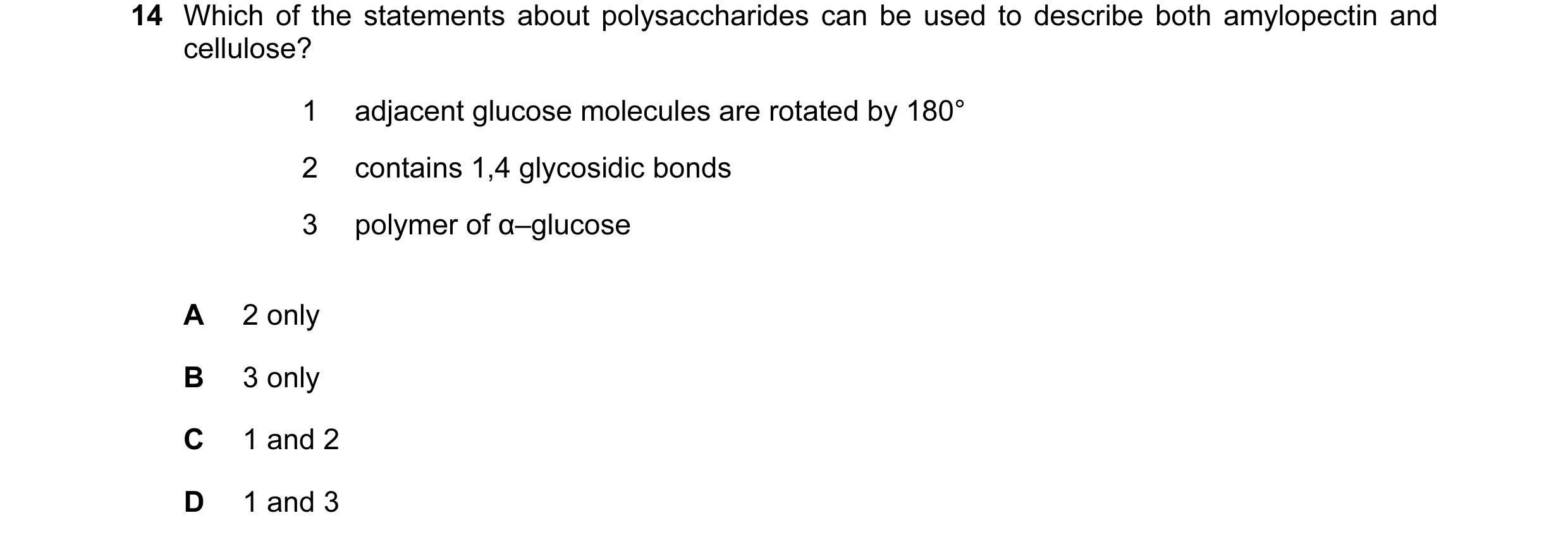
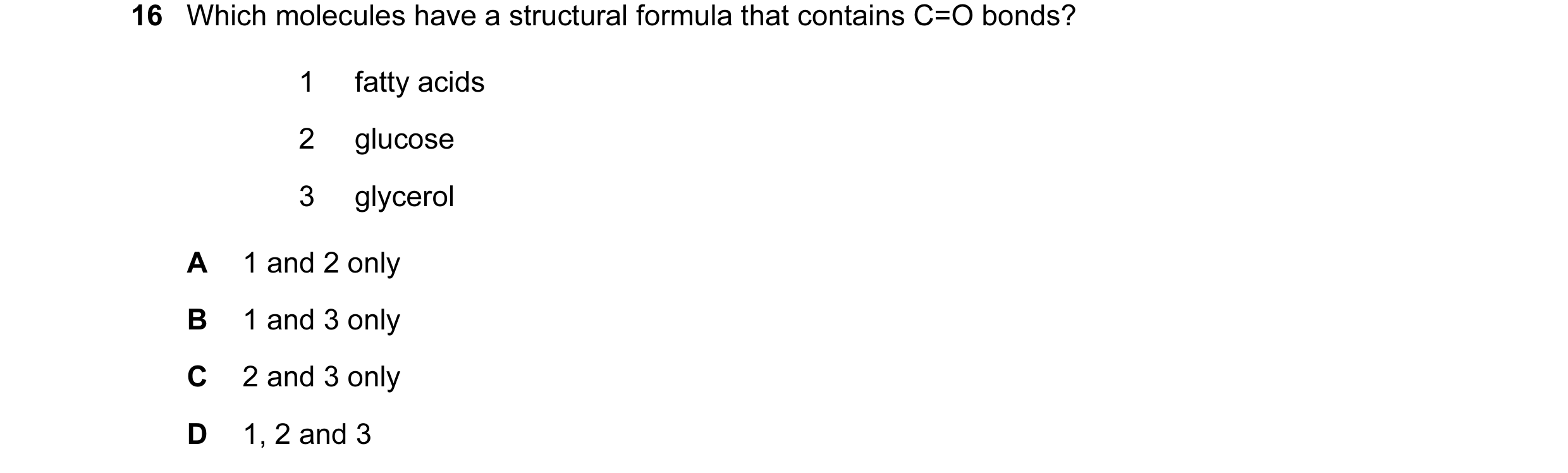 18 / 111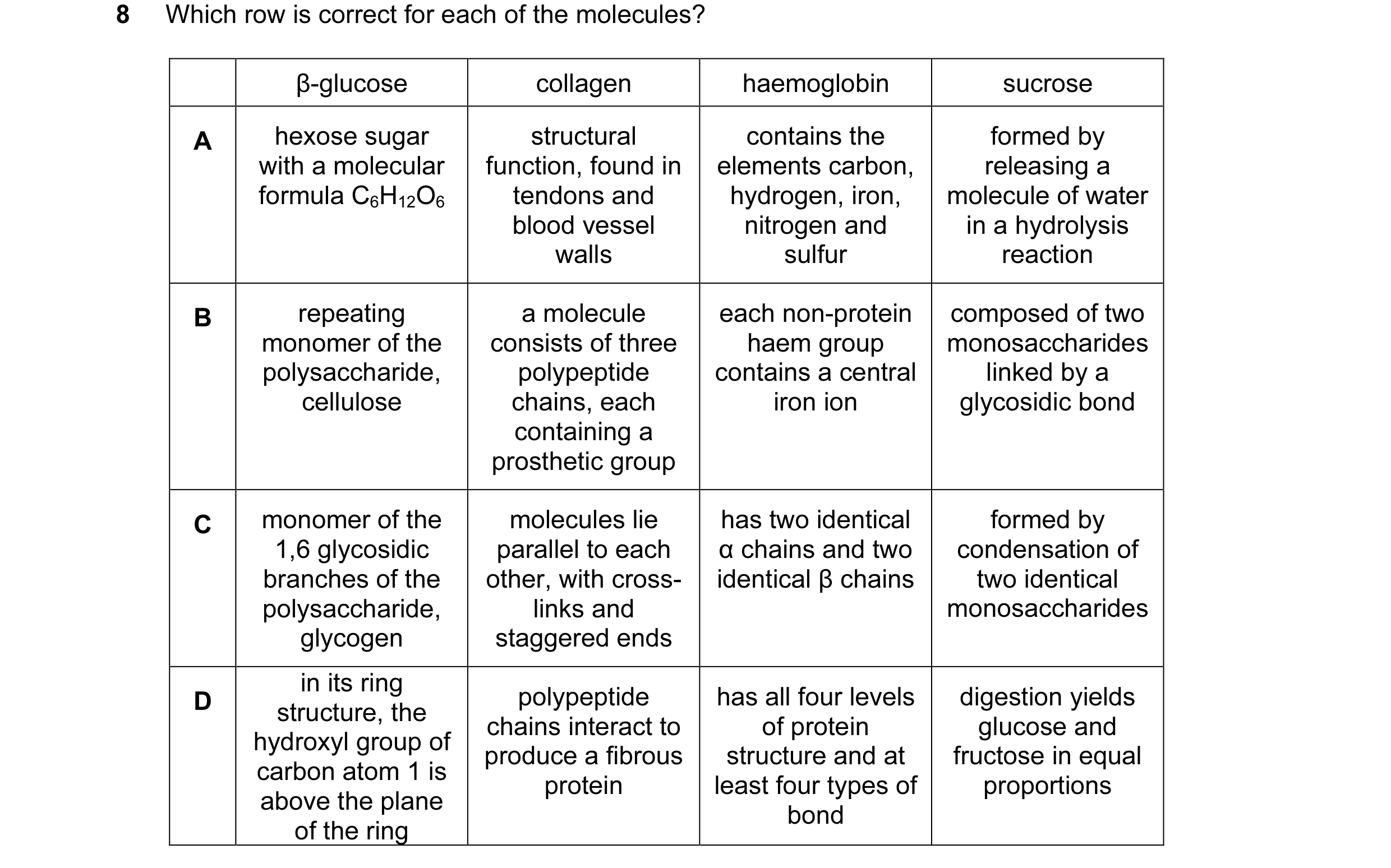
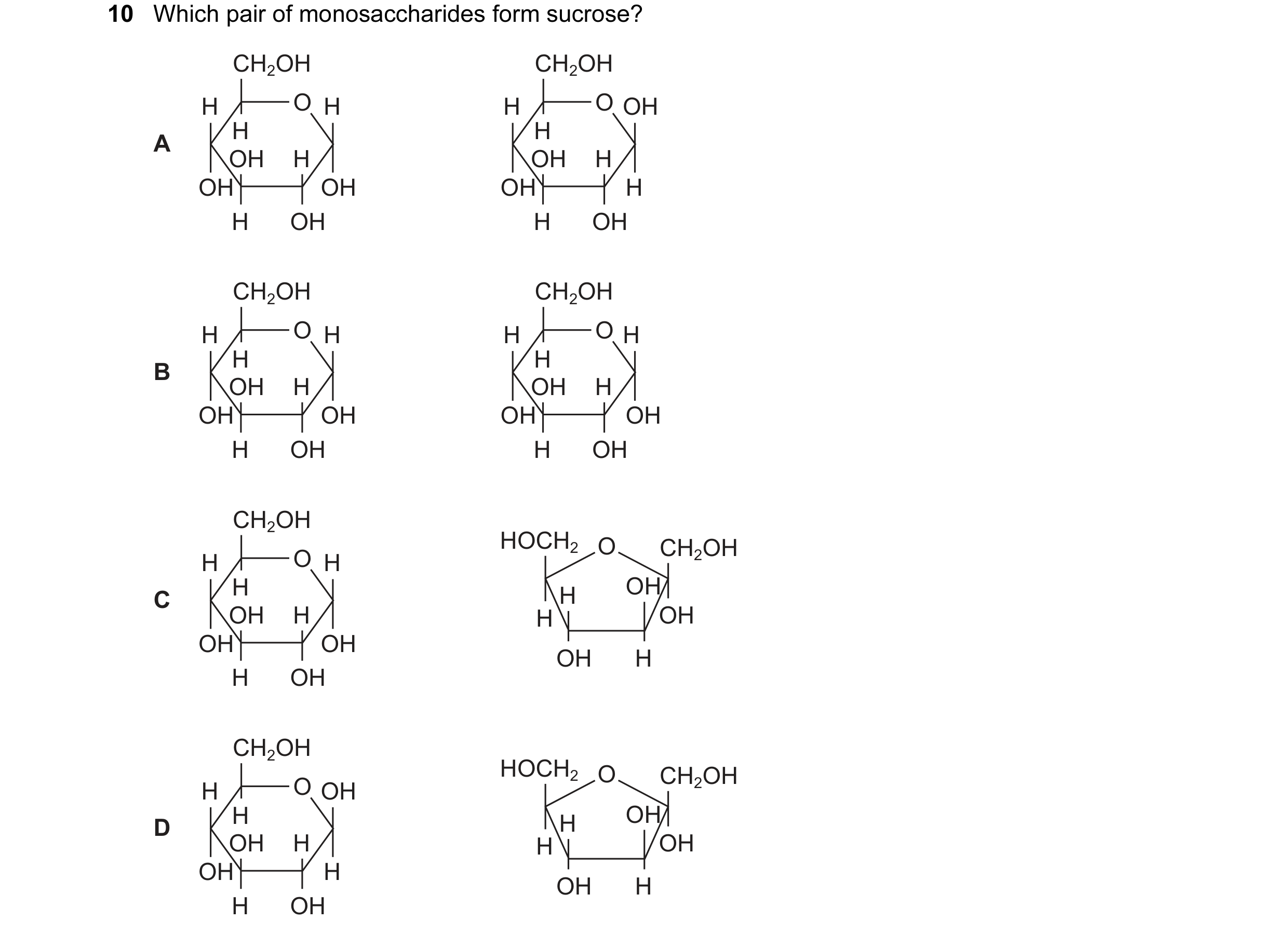 19 / 111
 20 / 111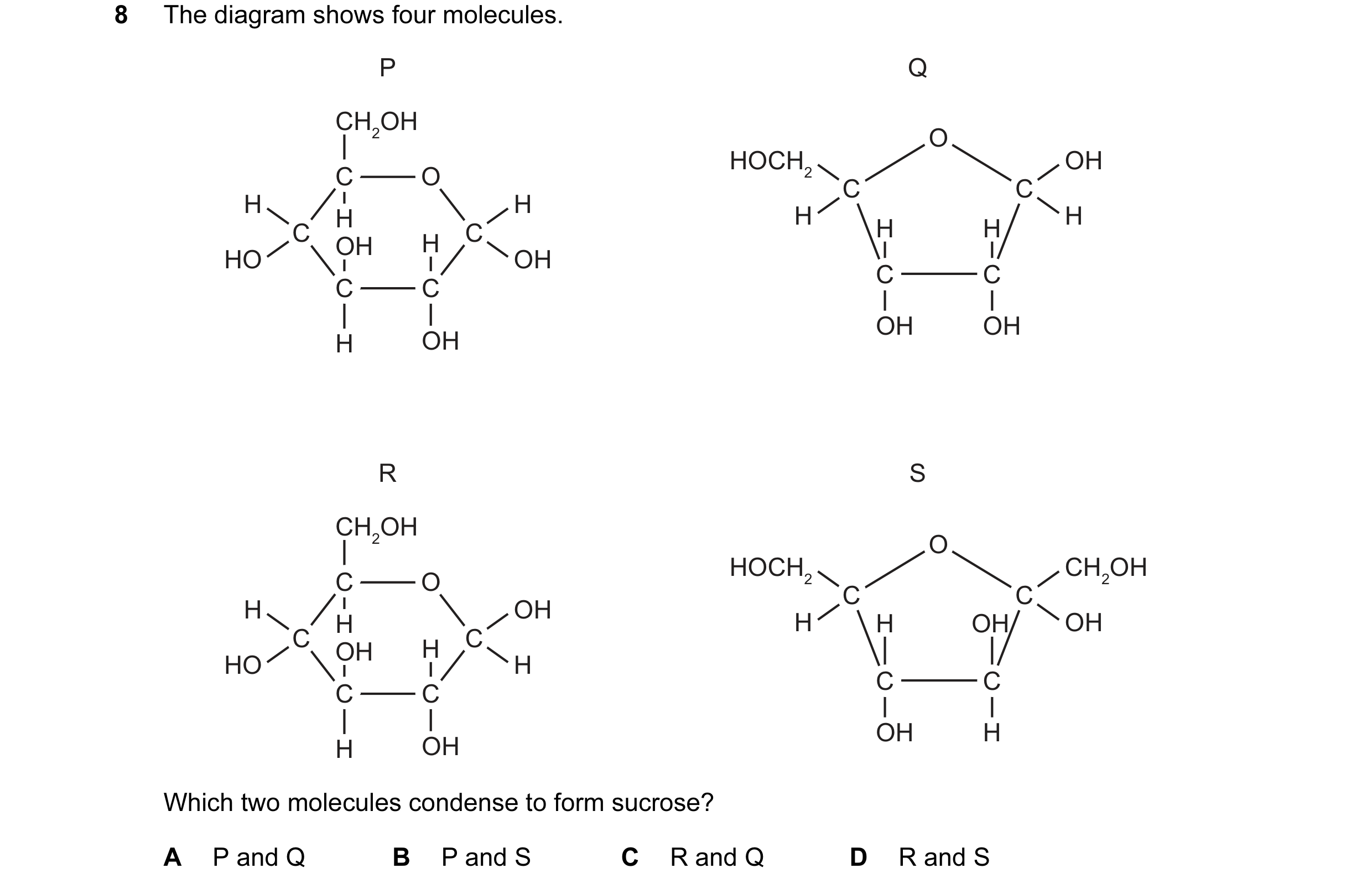
 21 / 111
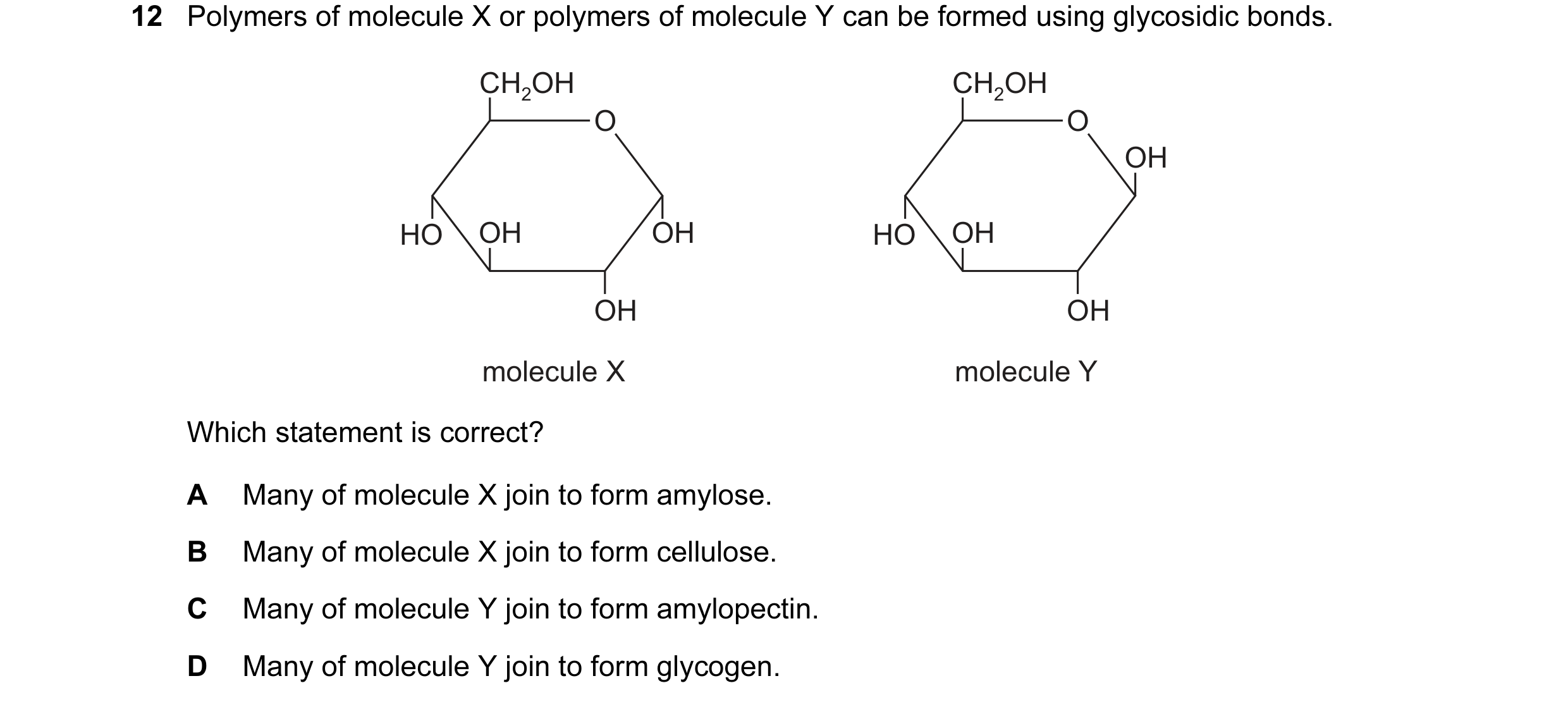
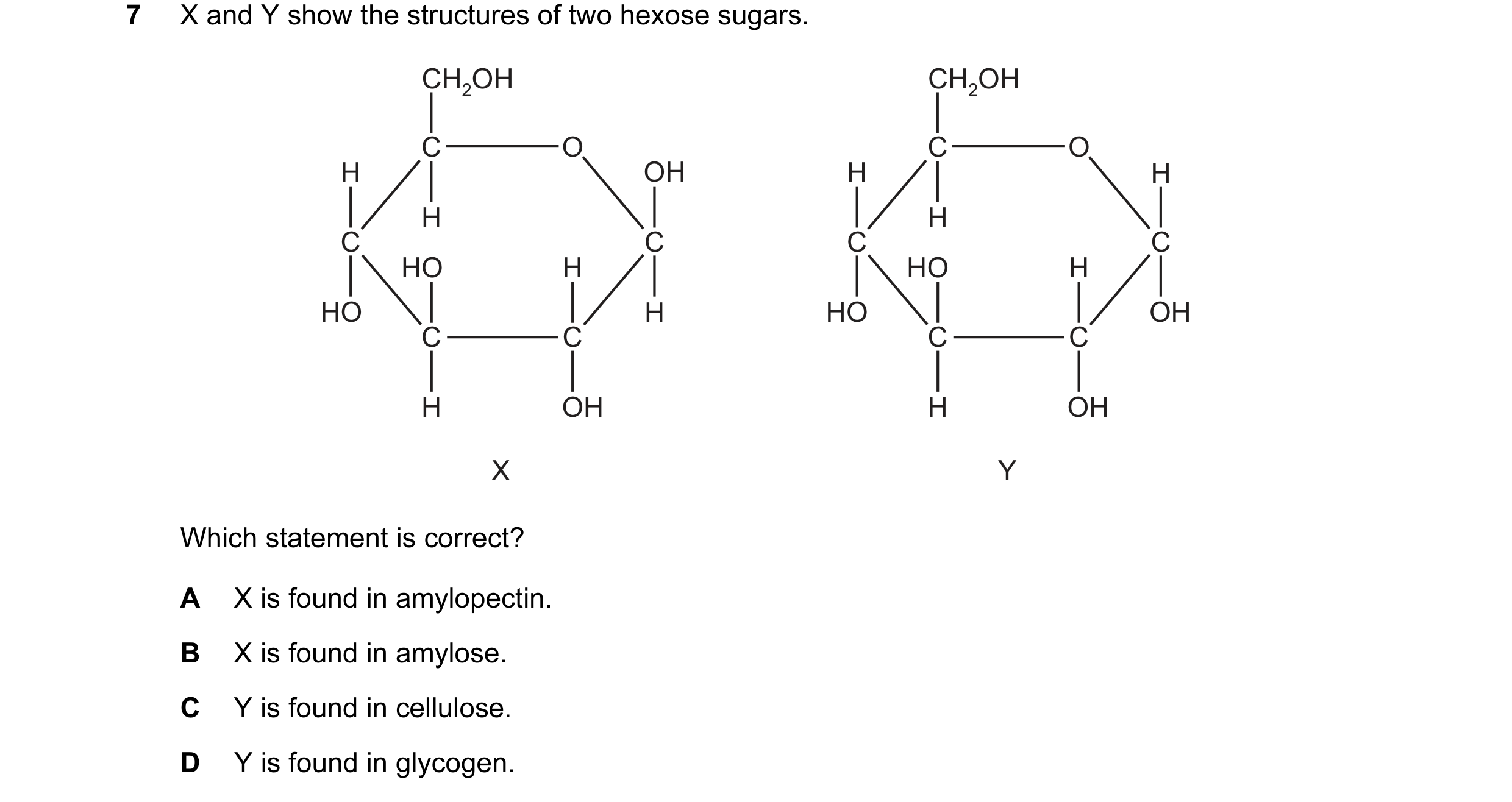 22 / 111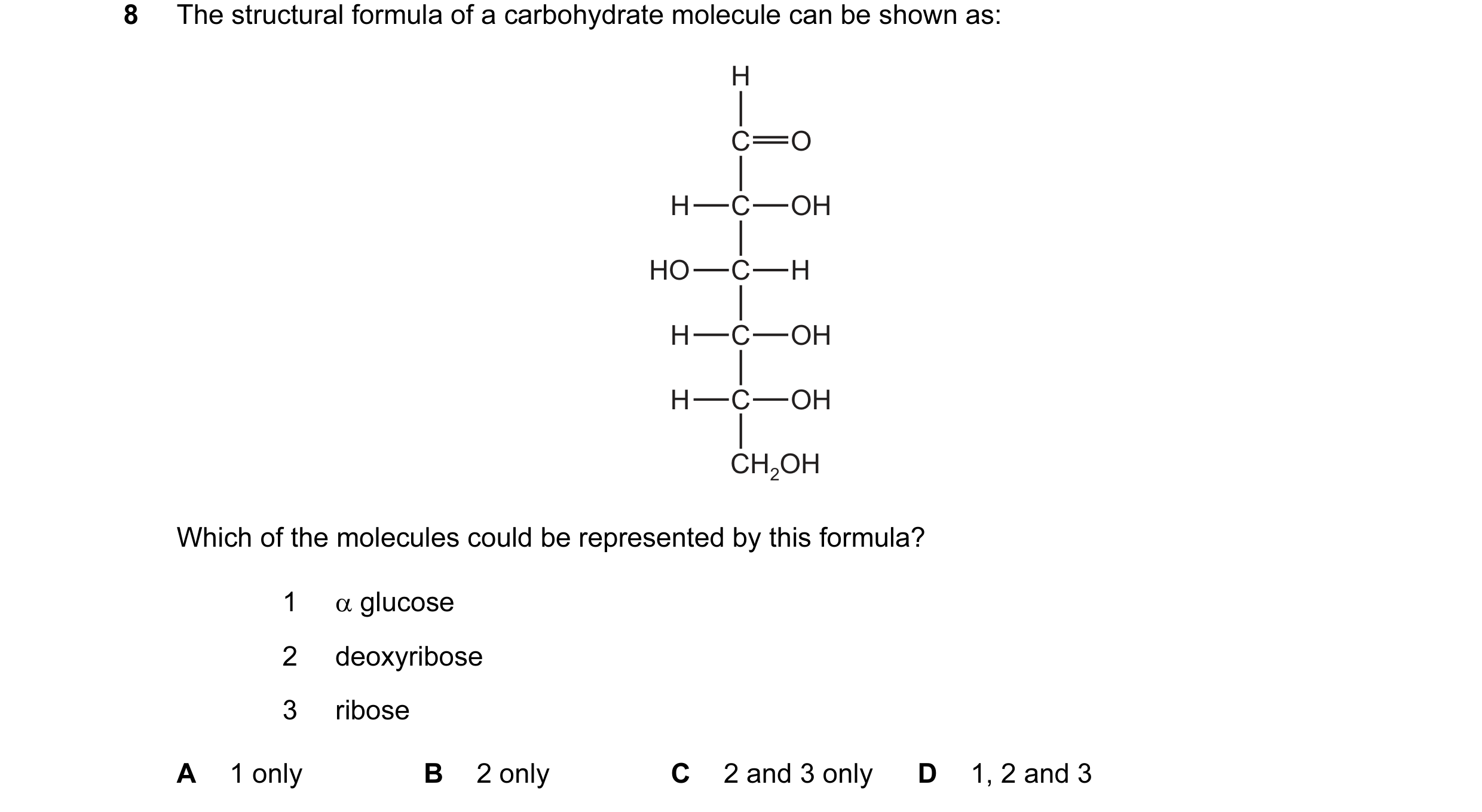

 23 / 111
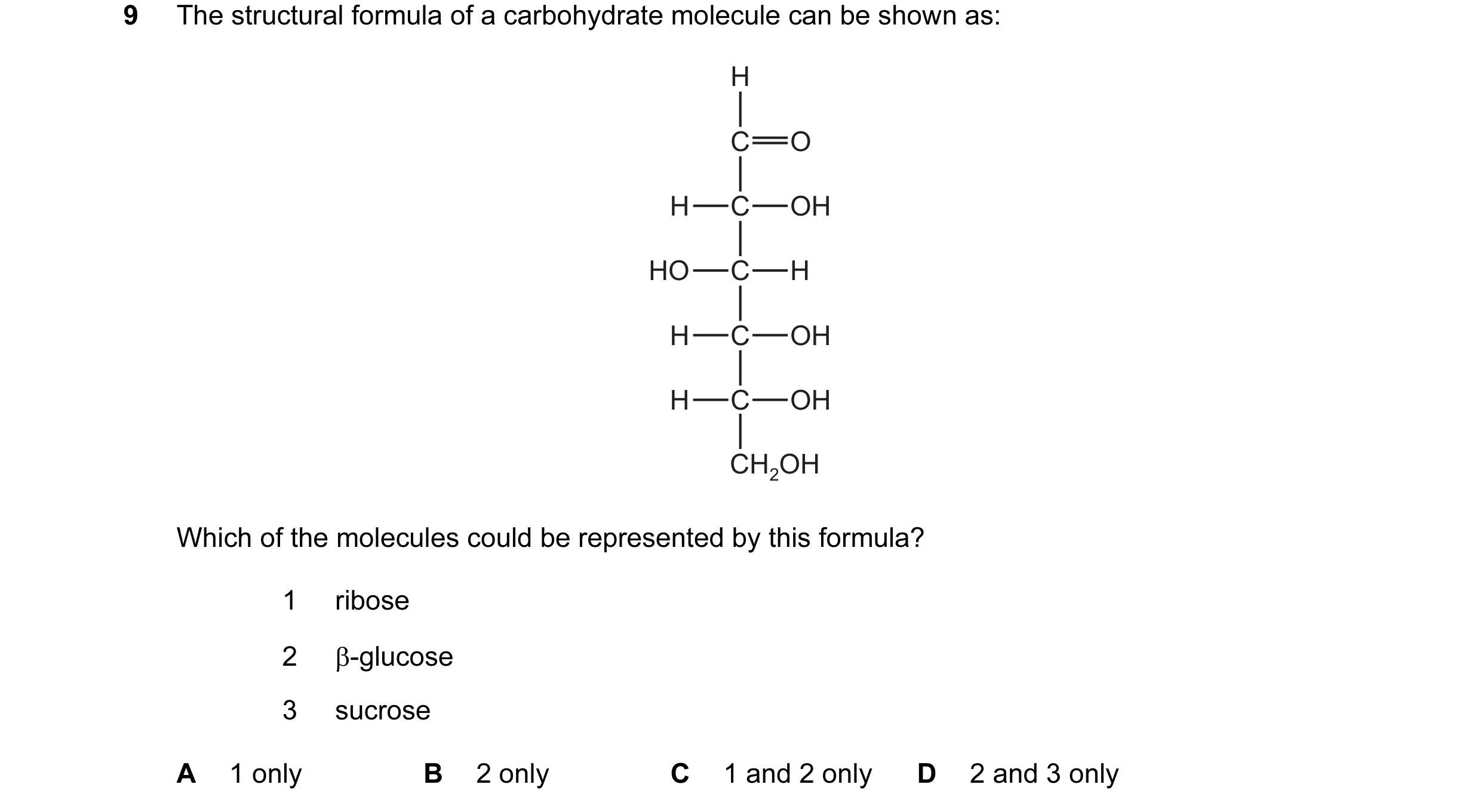
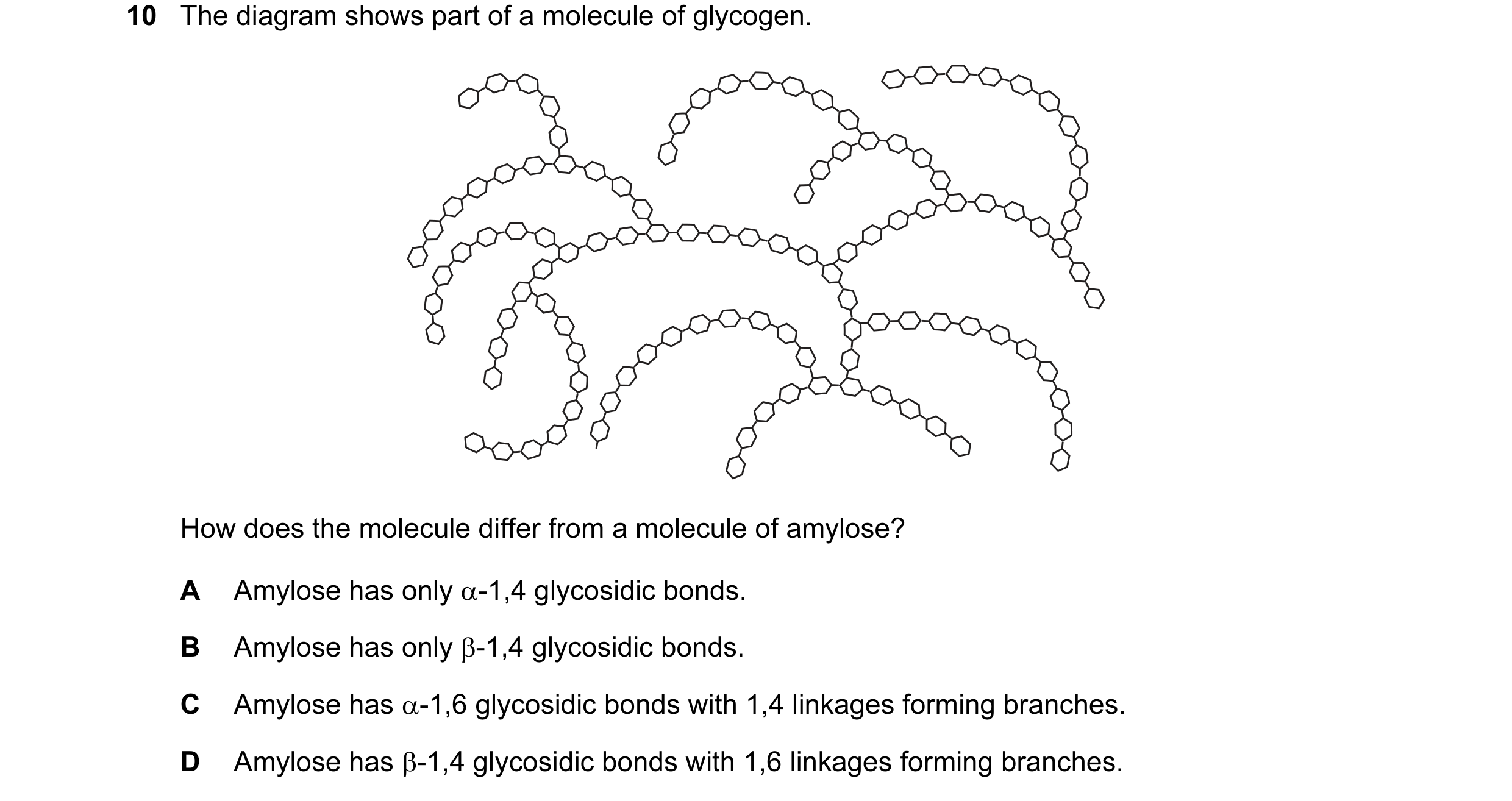 24 / 111
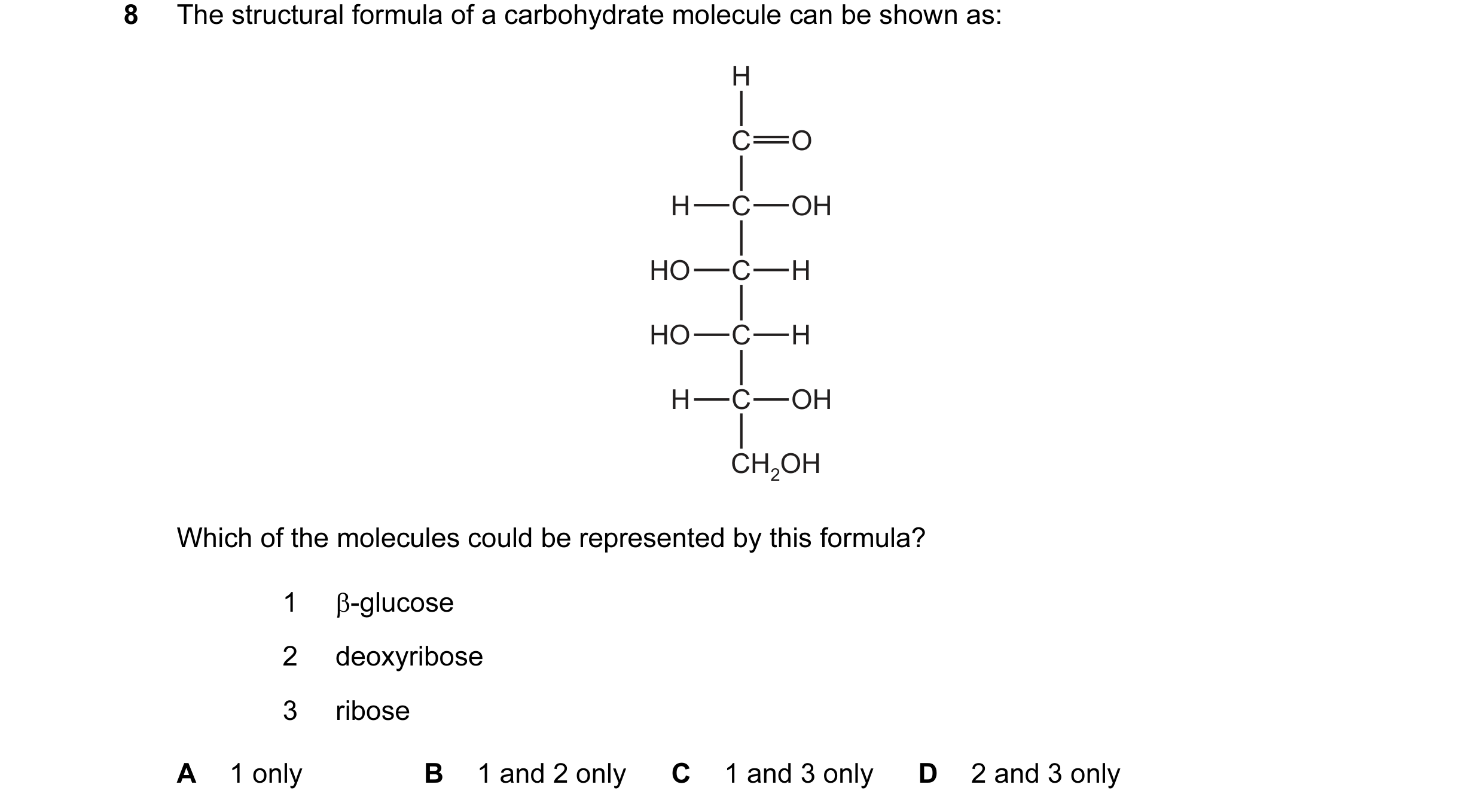 25 / 111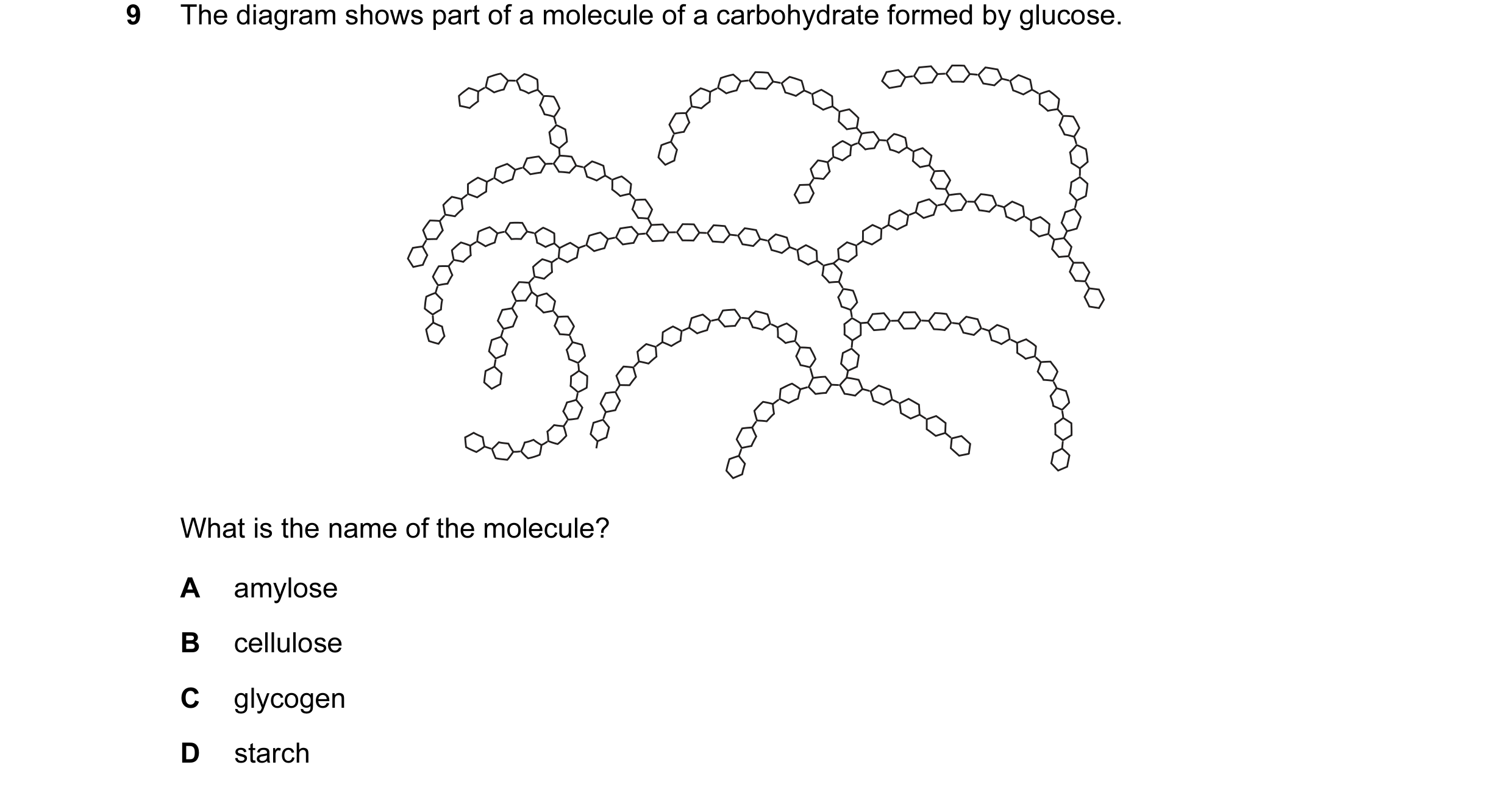
 26 / 111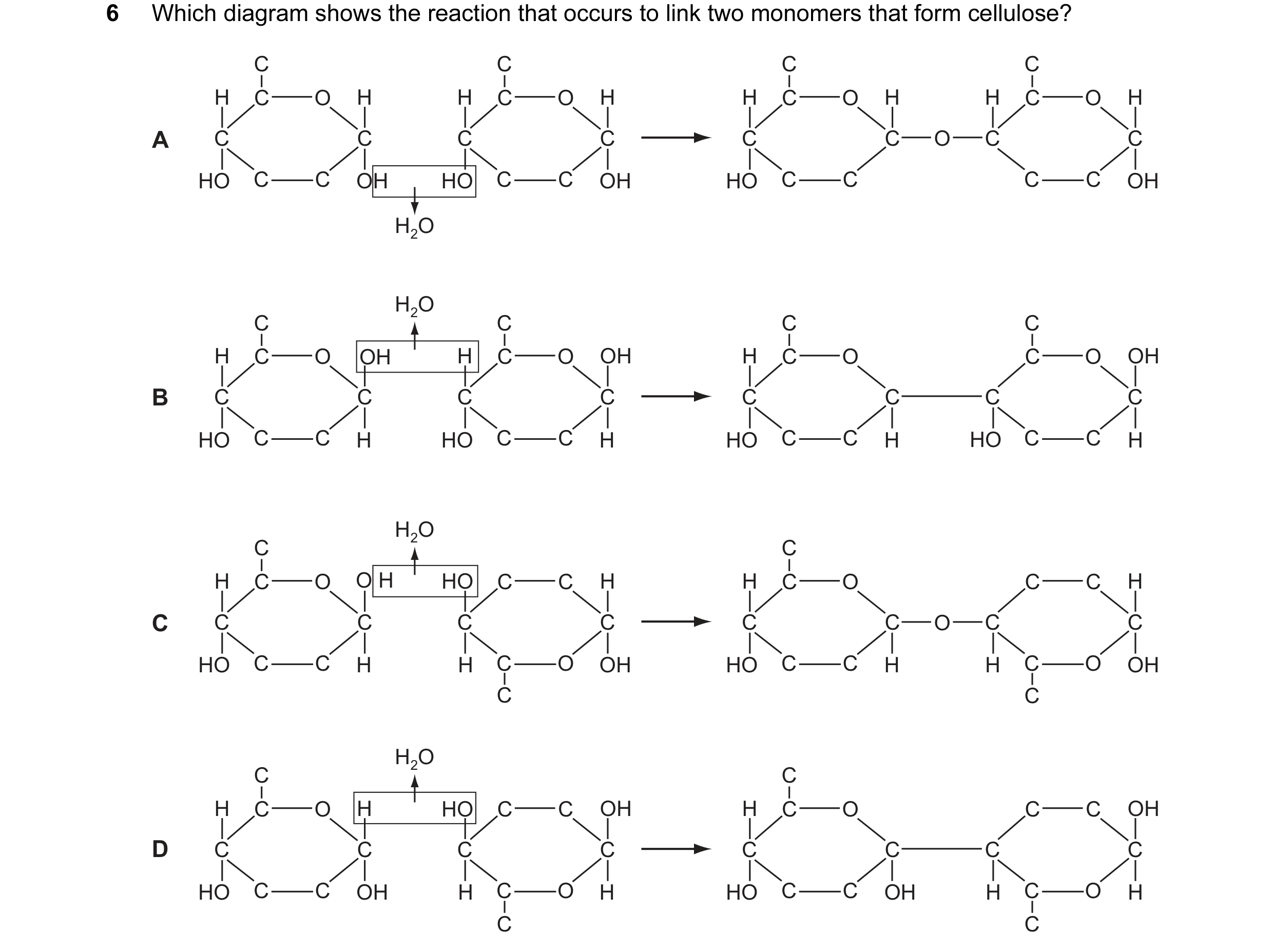
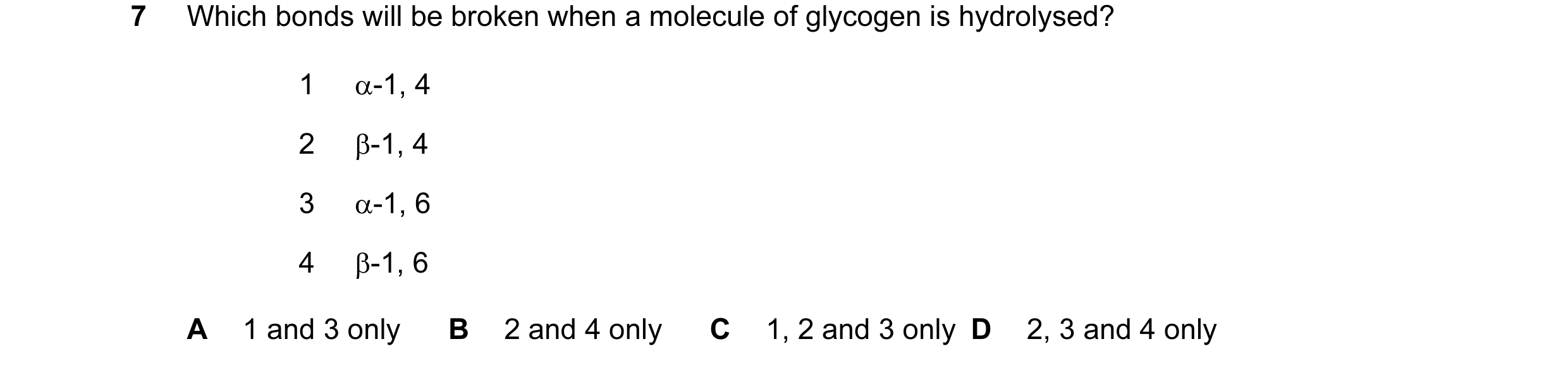
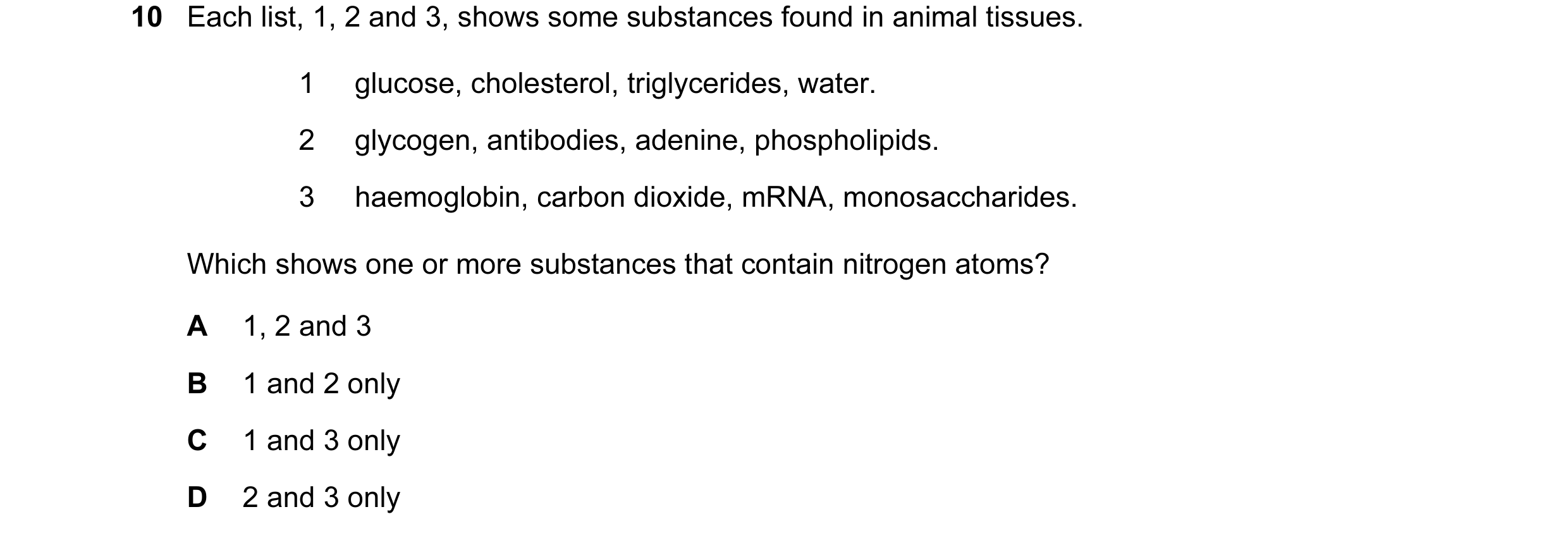 27 / 111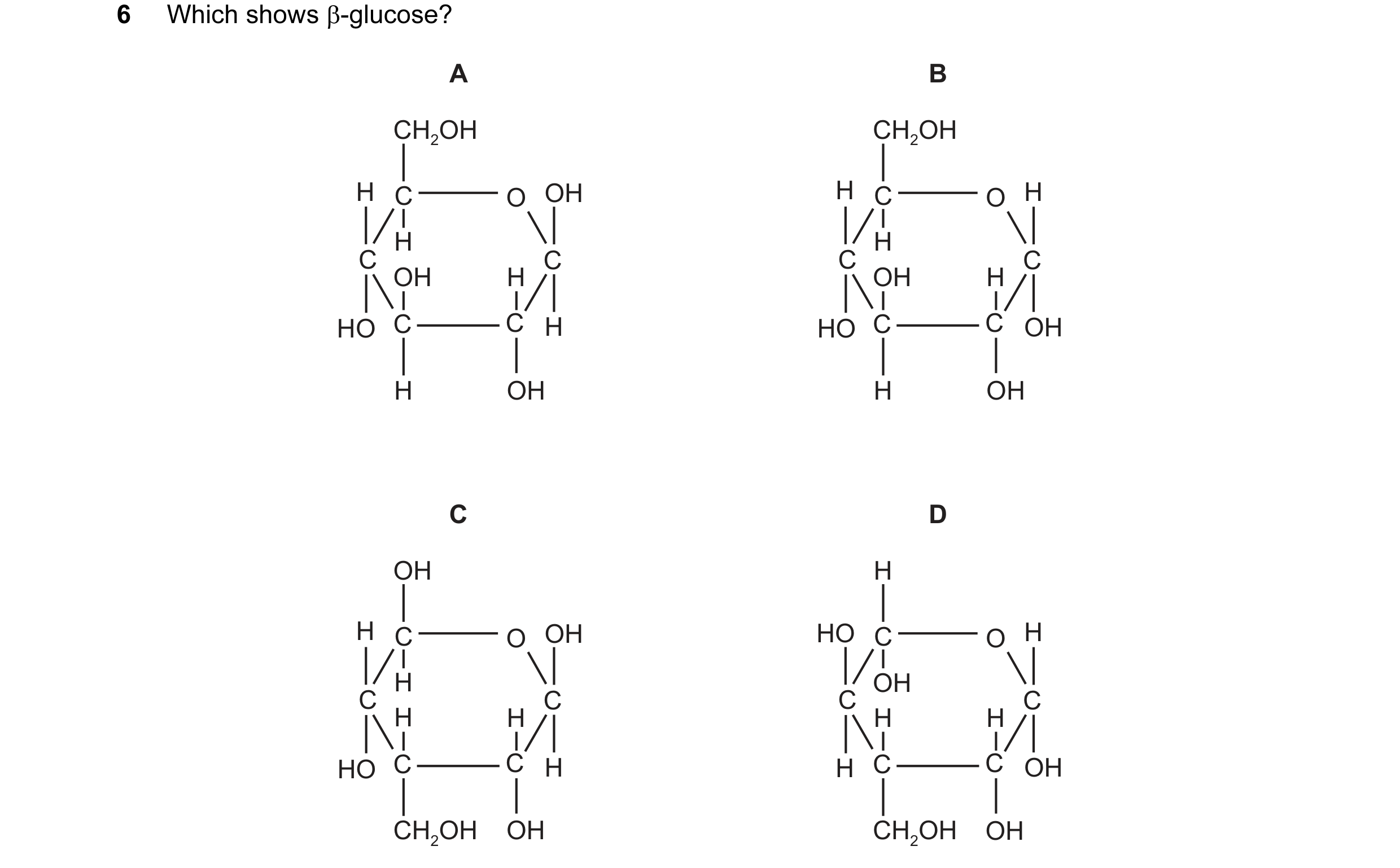
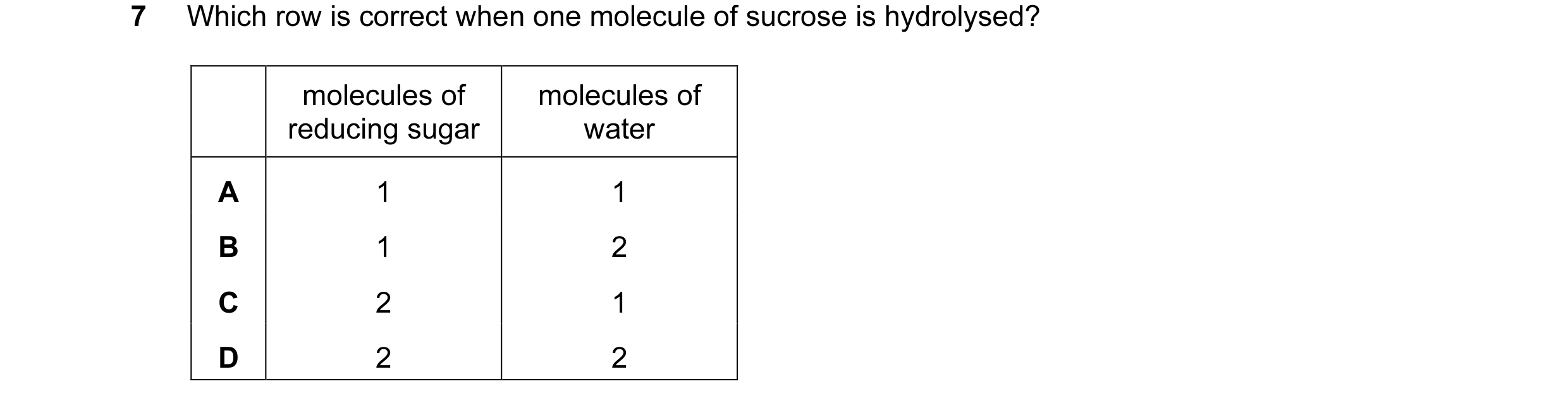
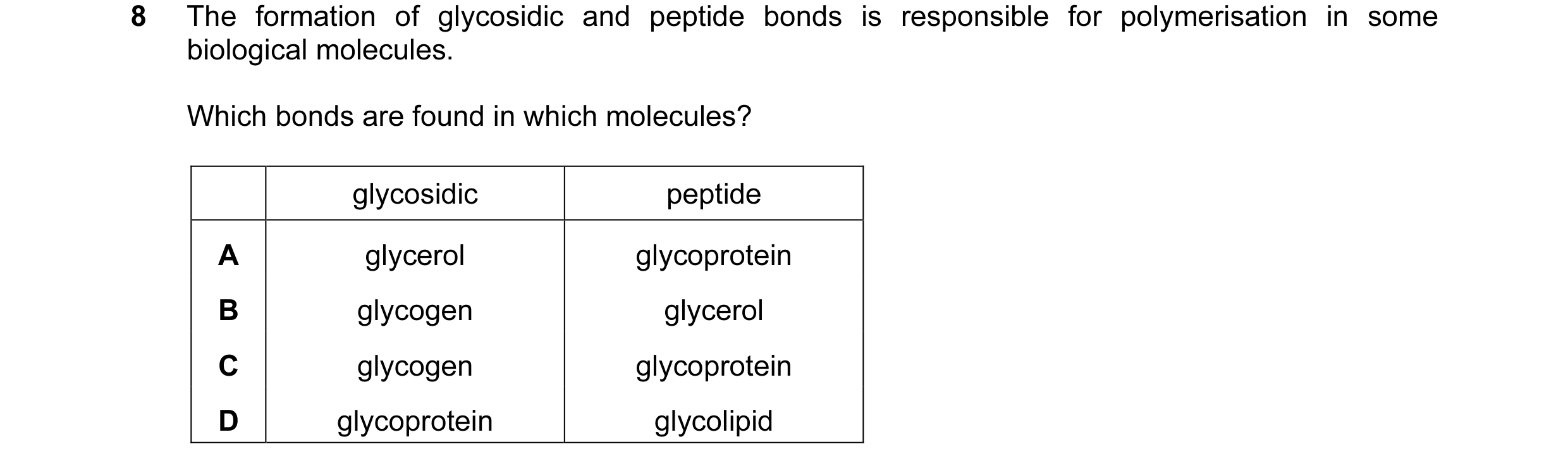 28 / 111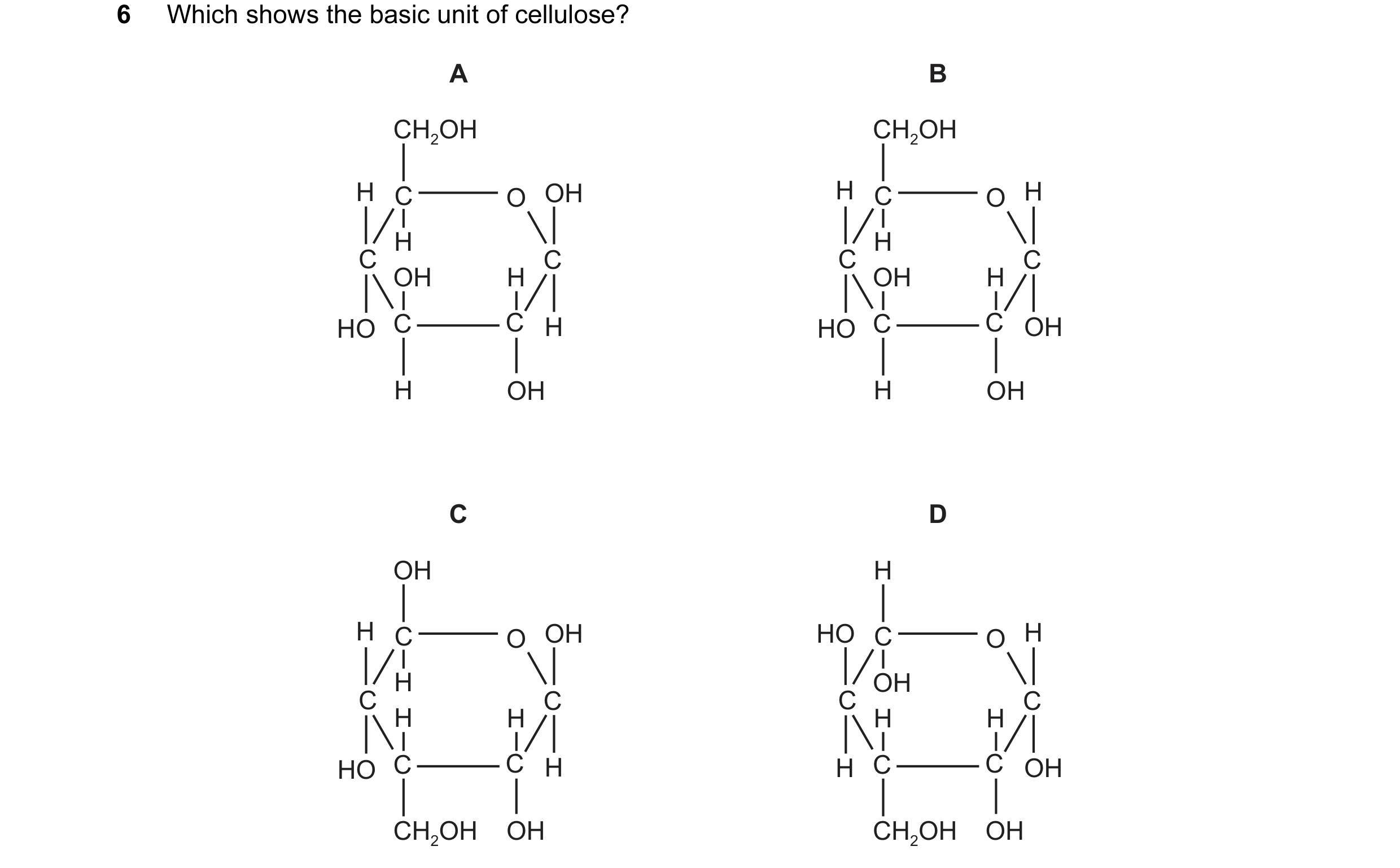
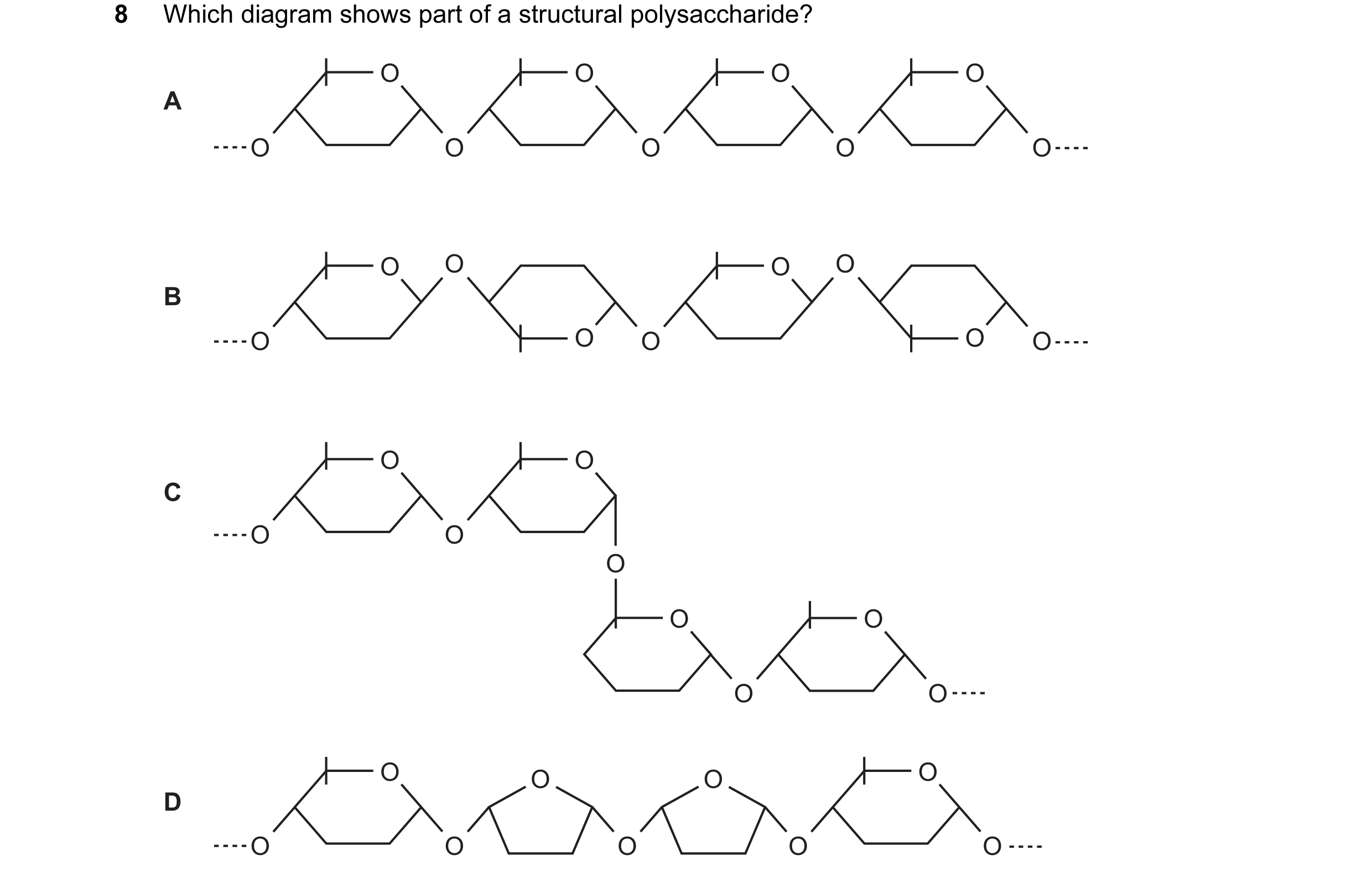 29 / 111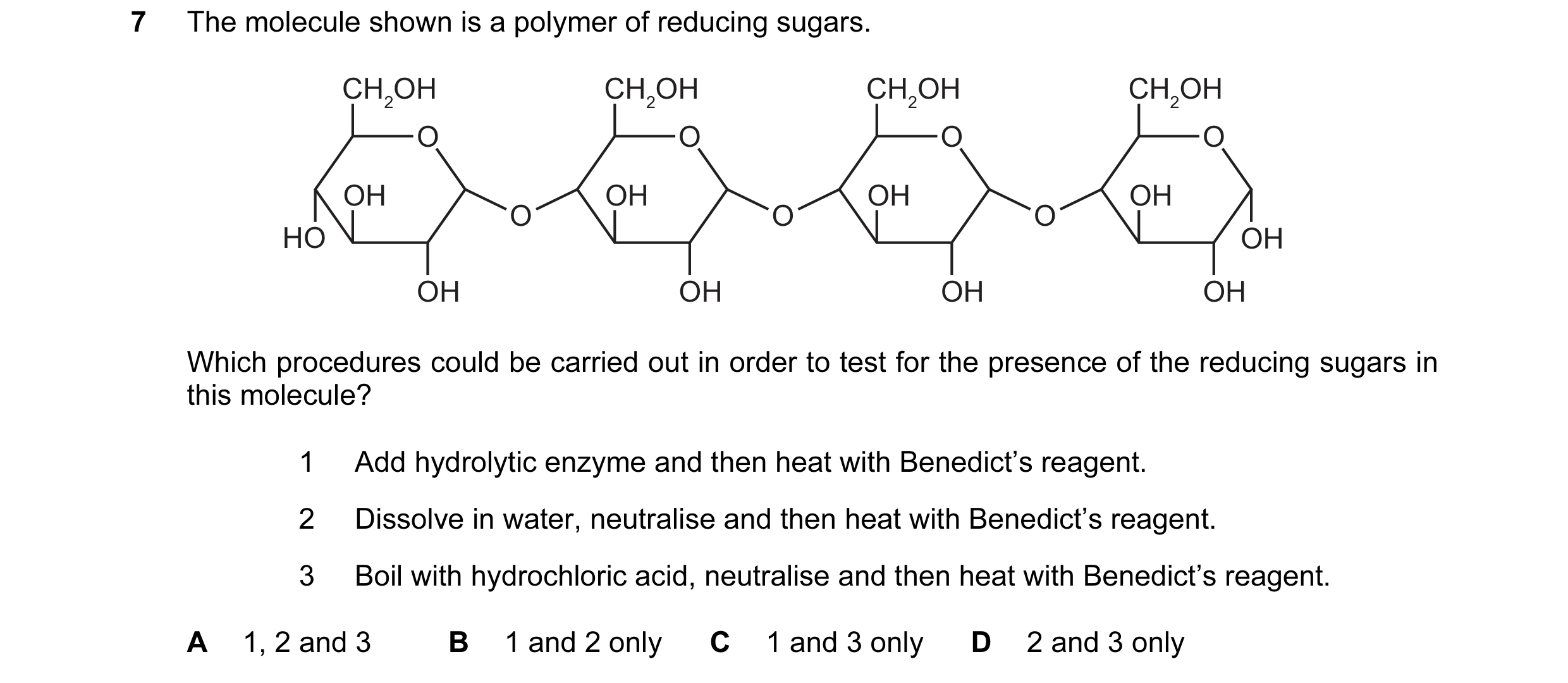
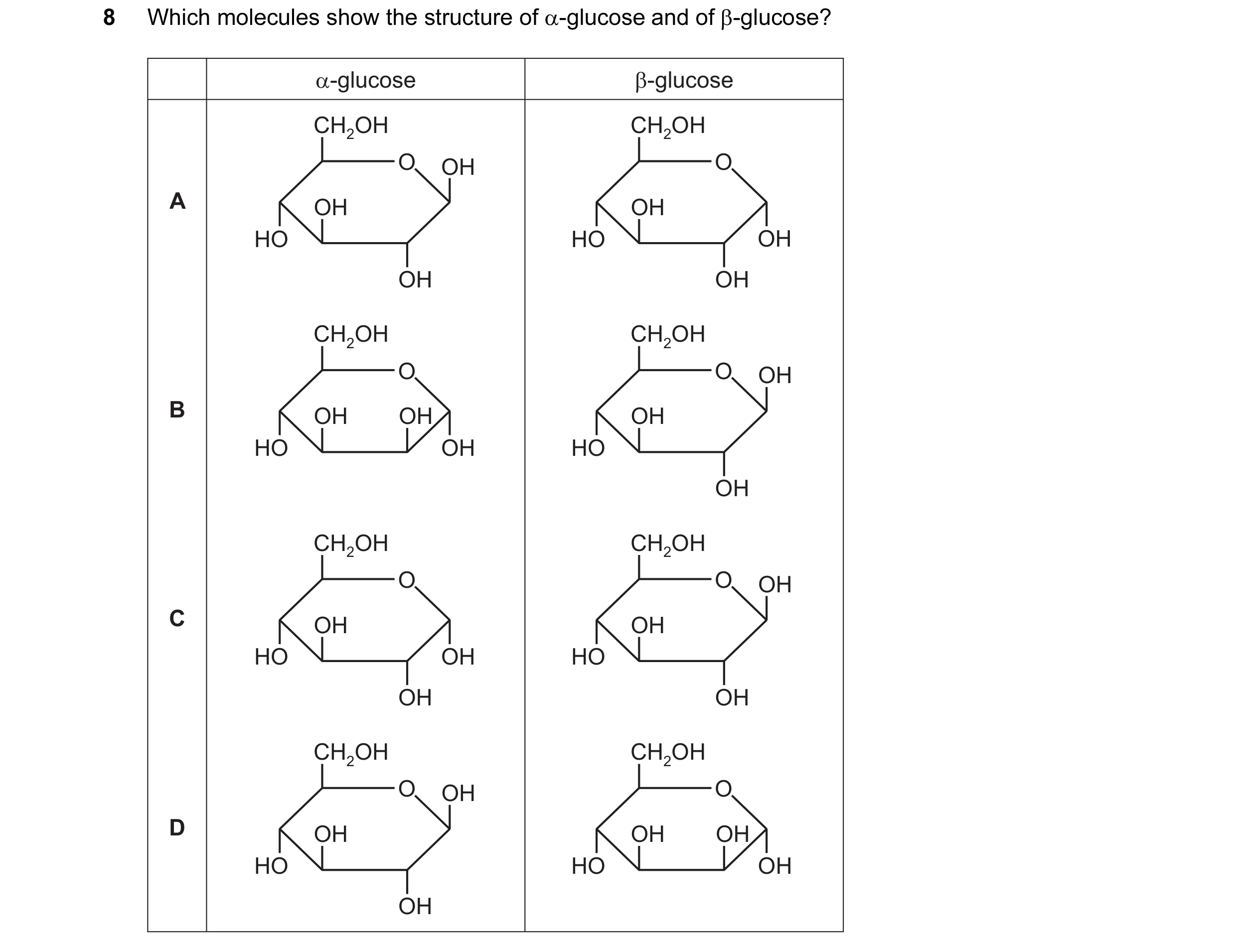 30 / 111
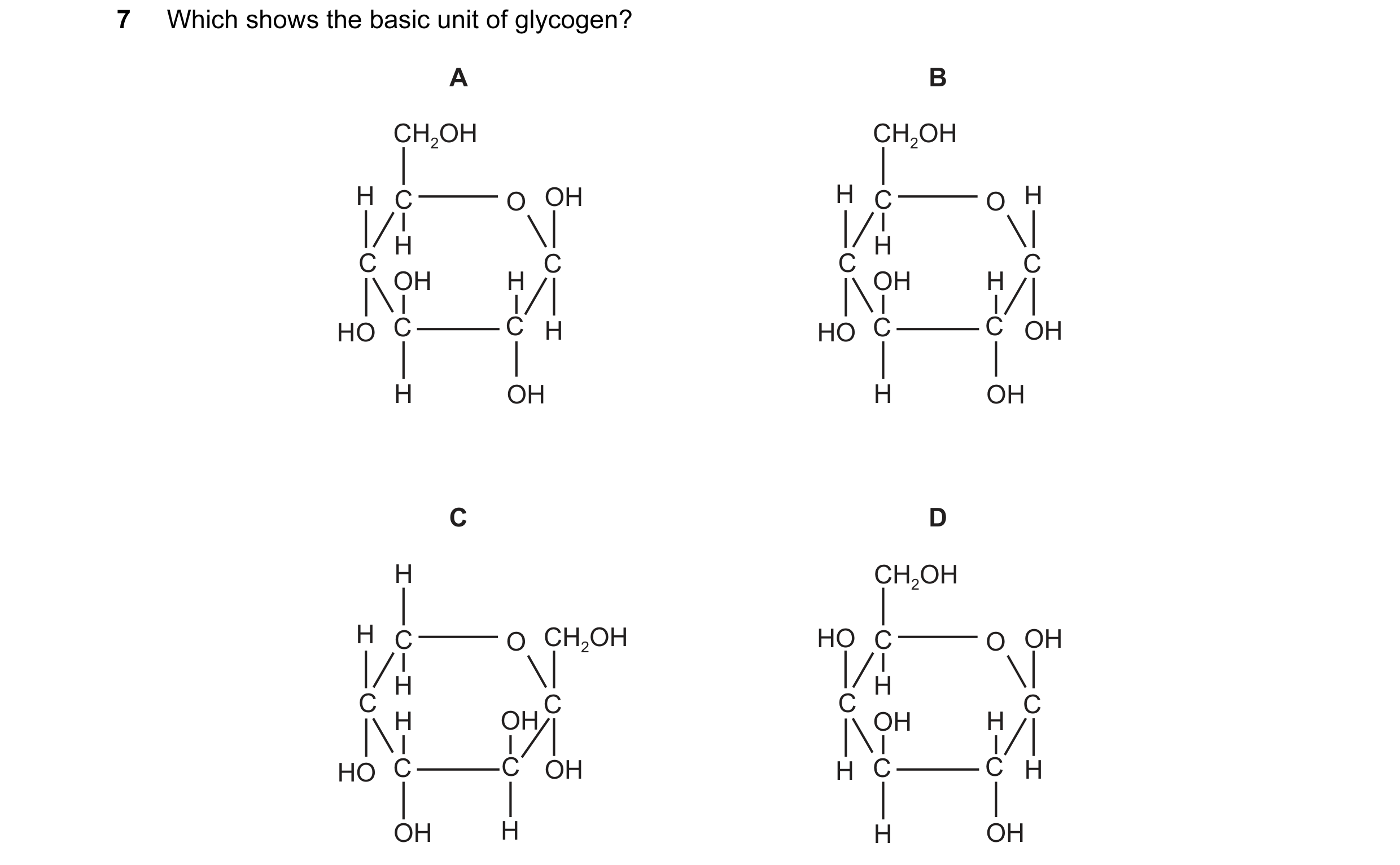

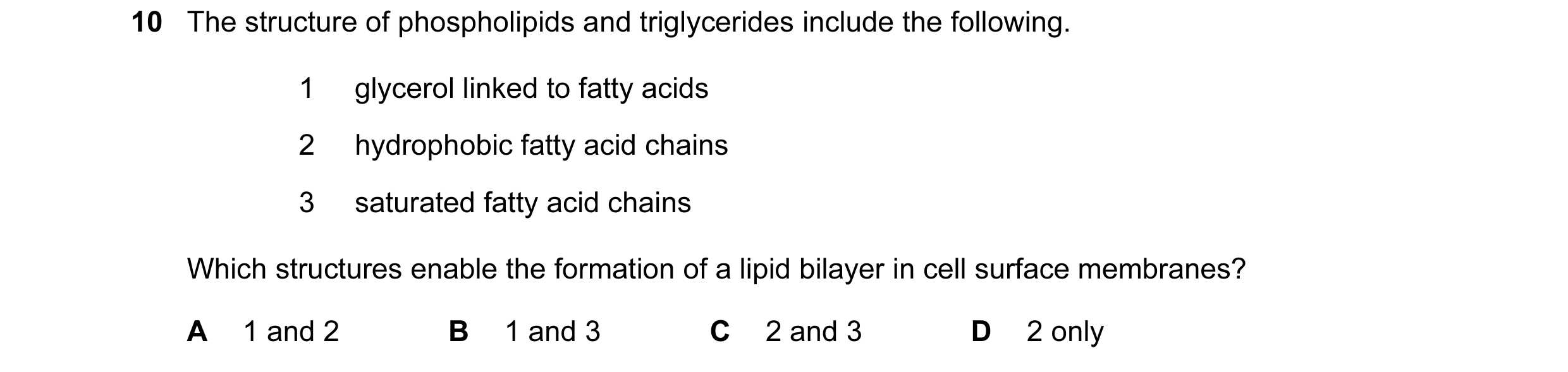 31 / 111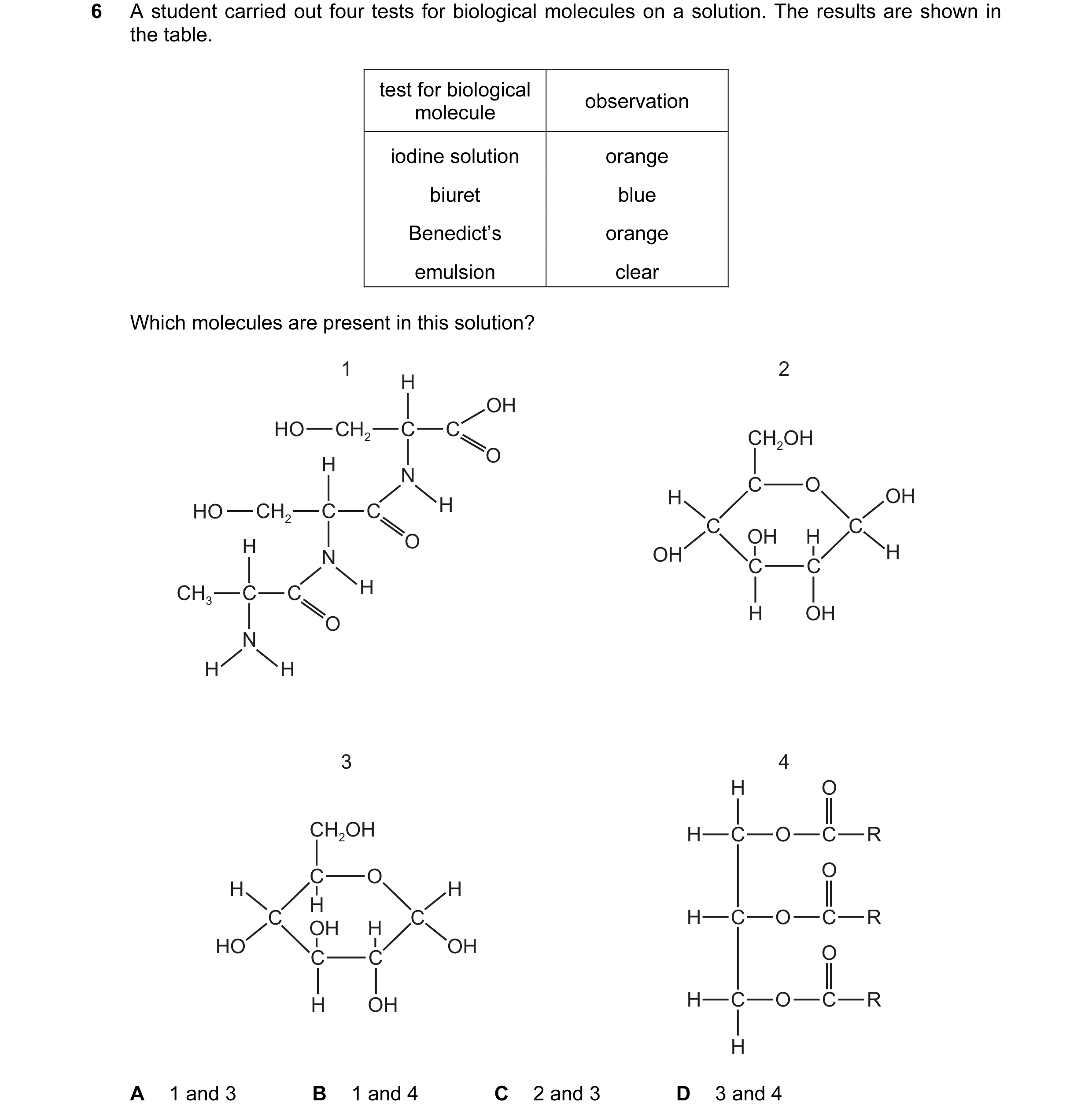
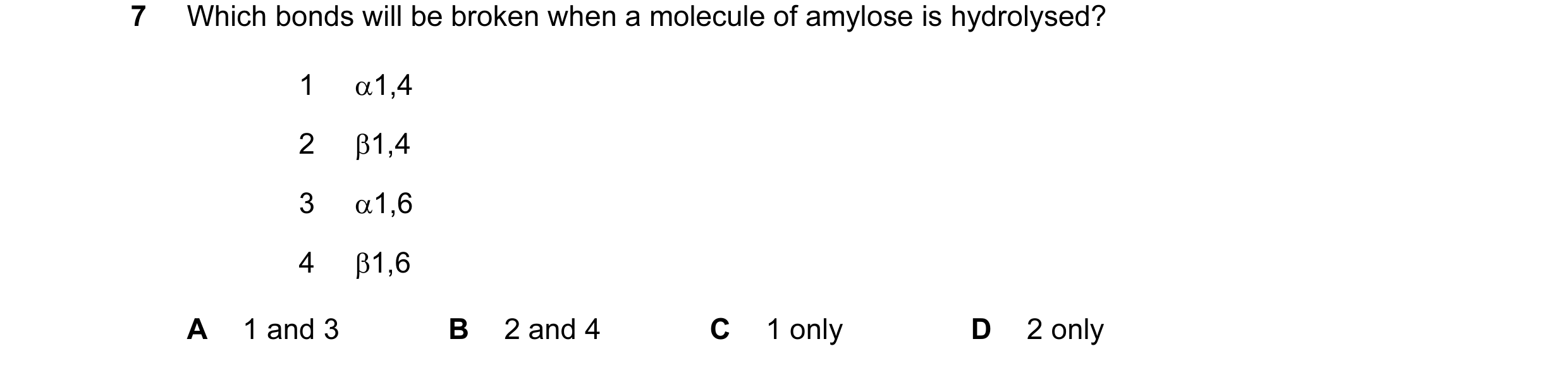 32 / 111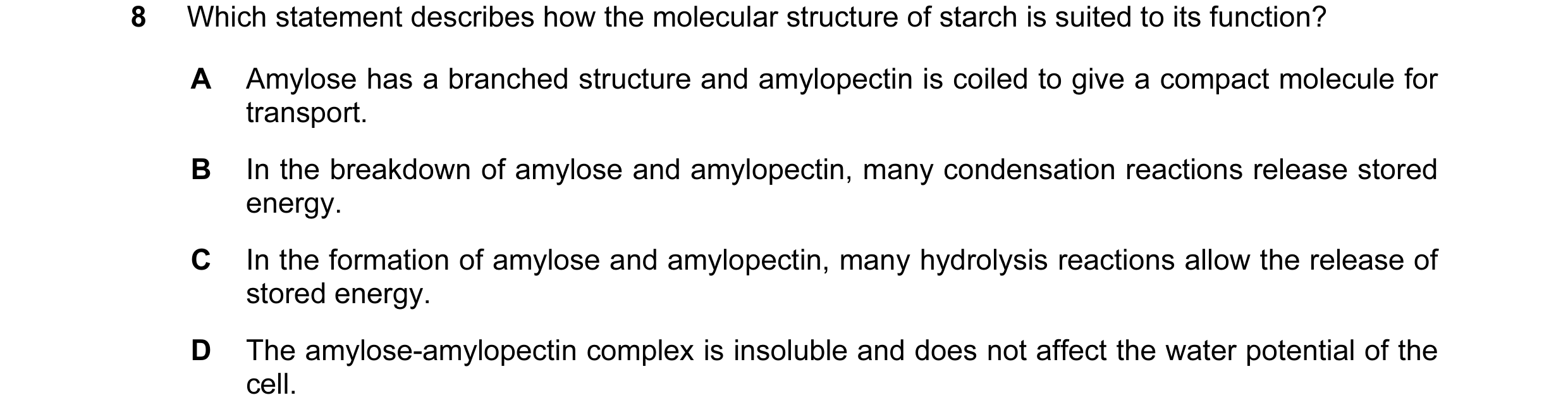
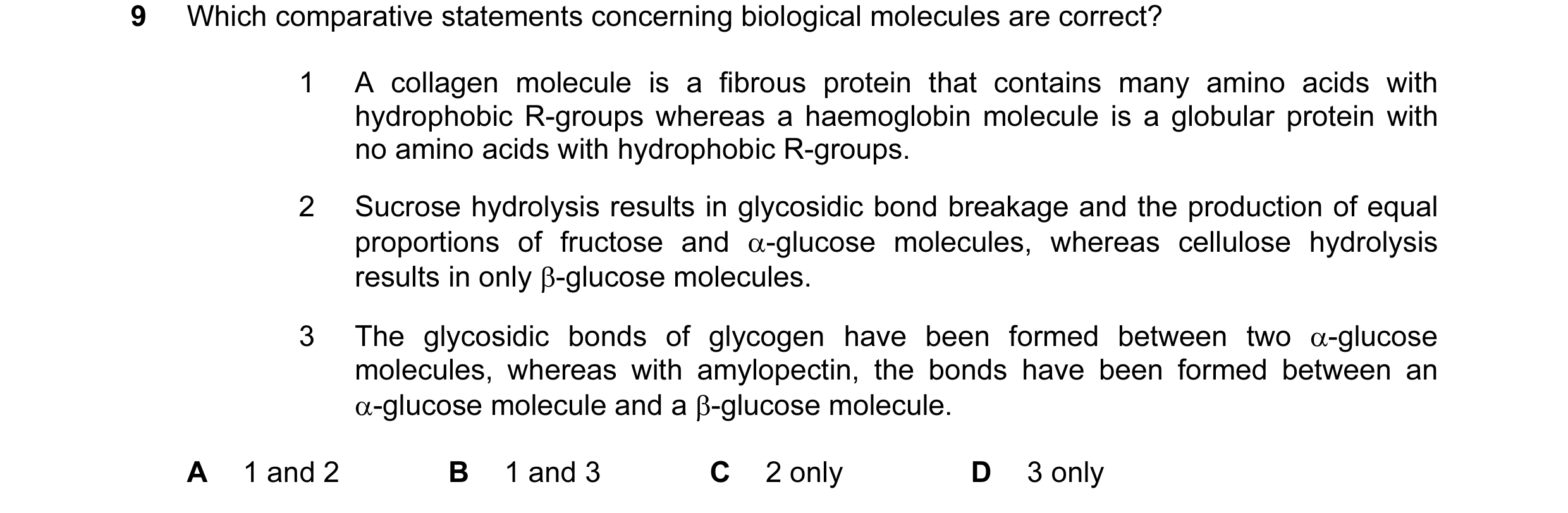

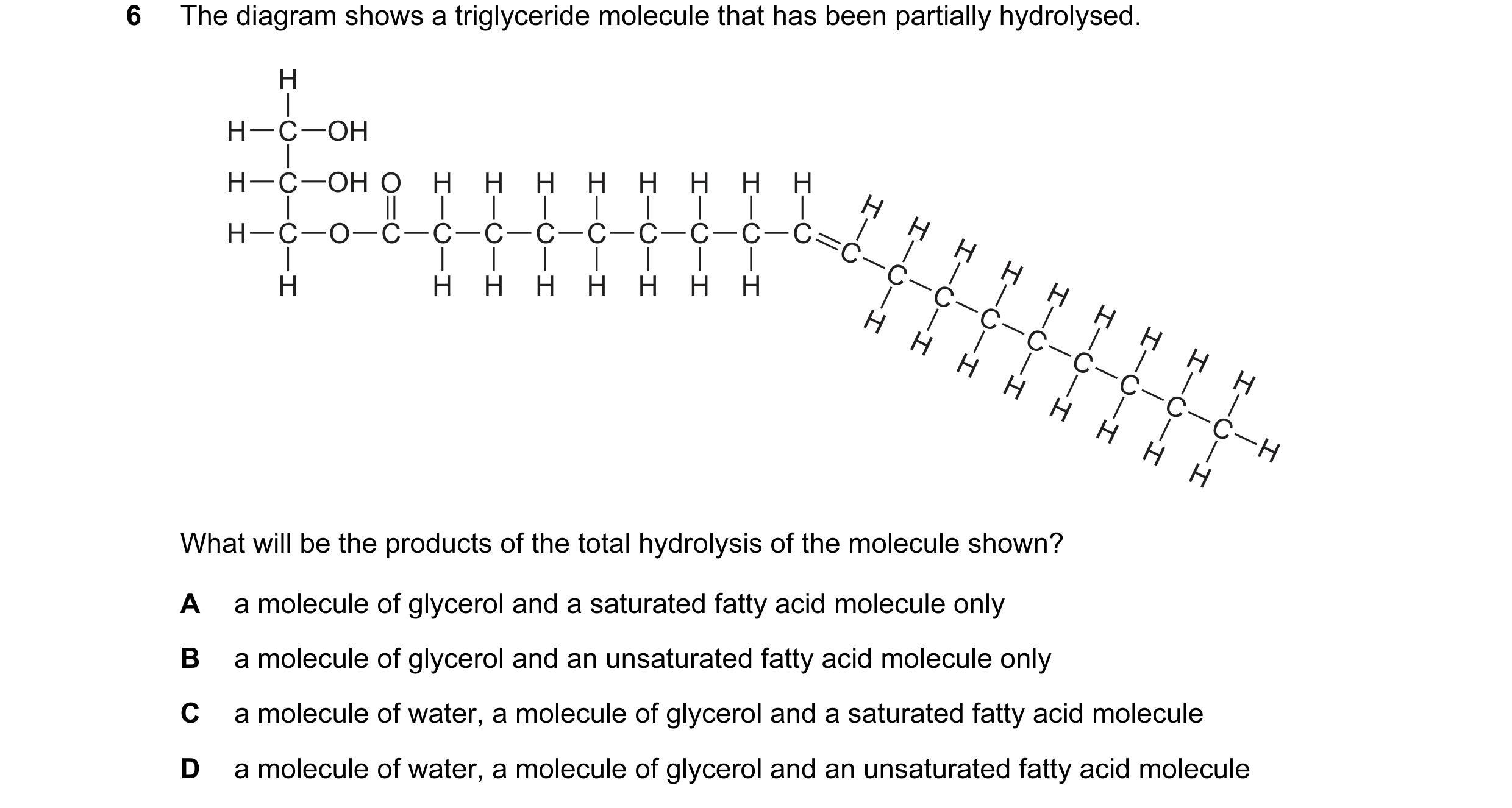 33 / 111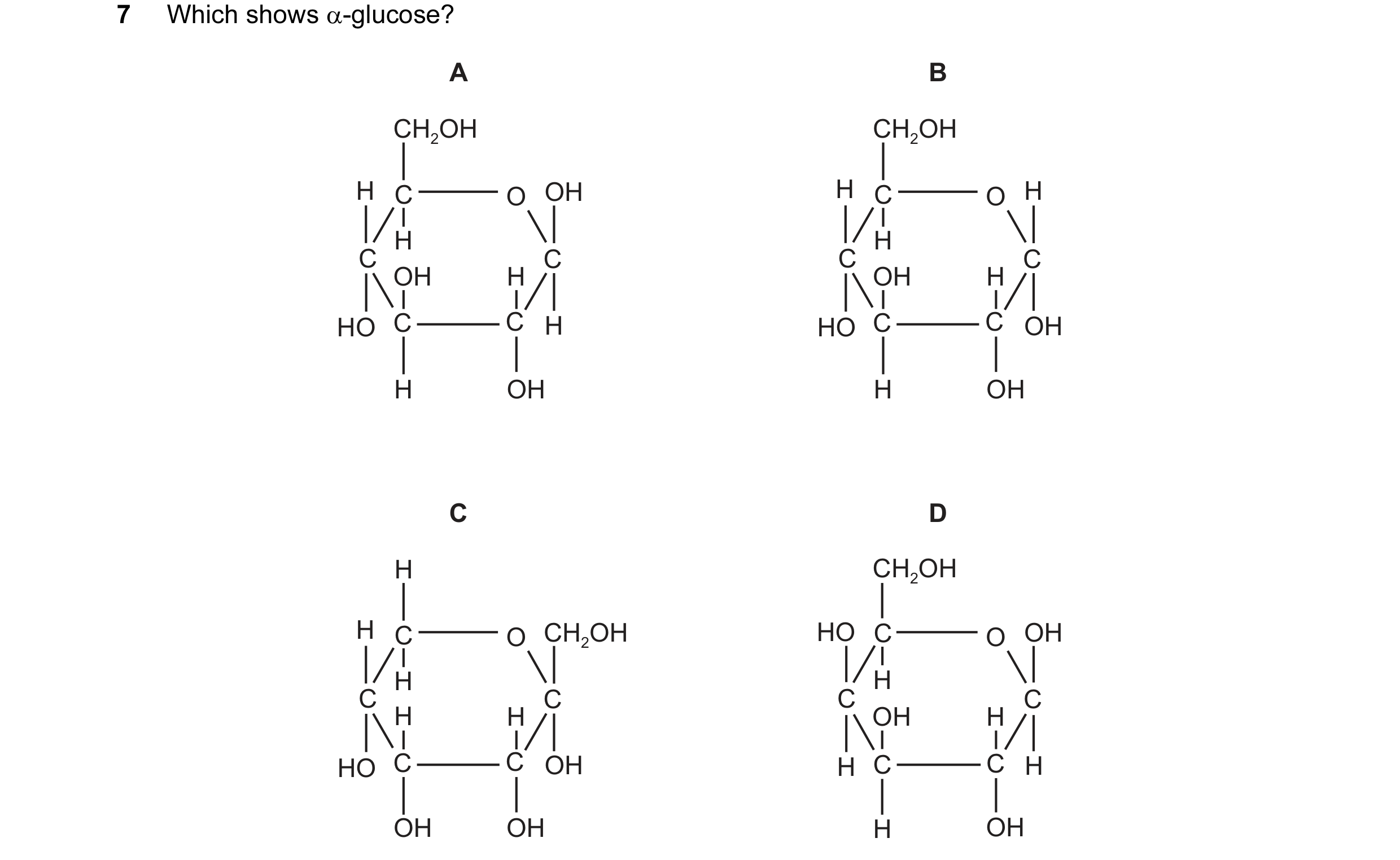
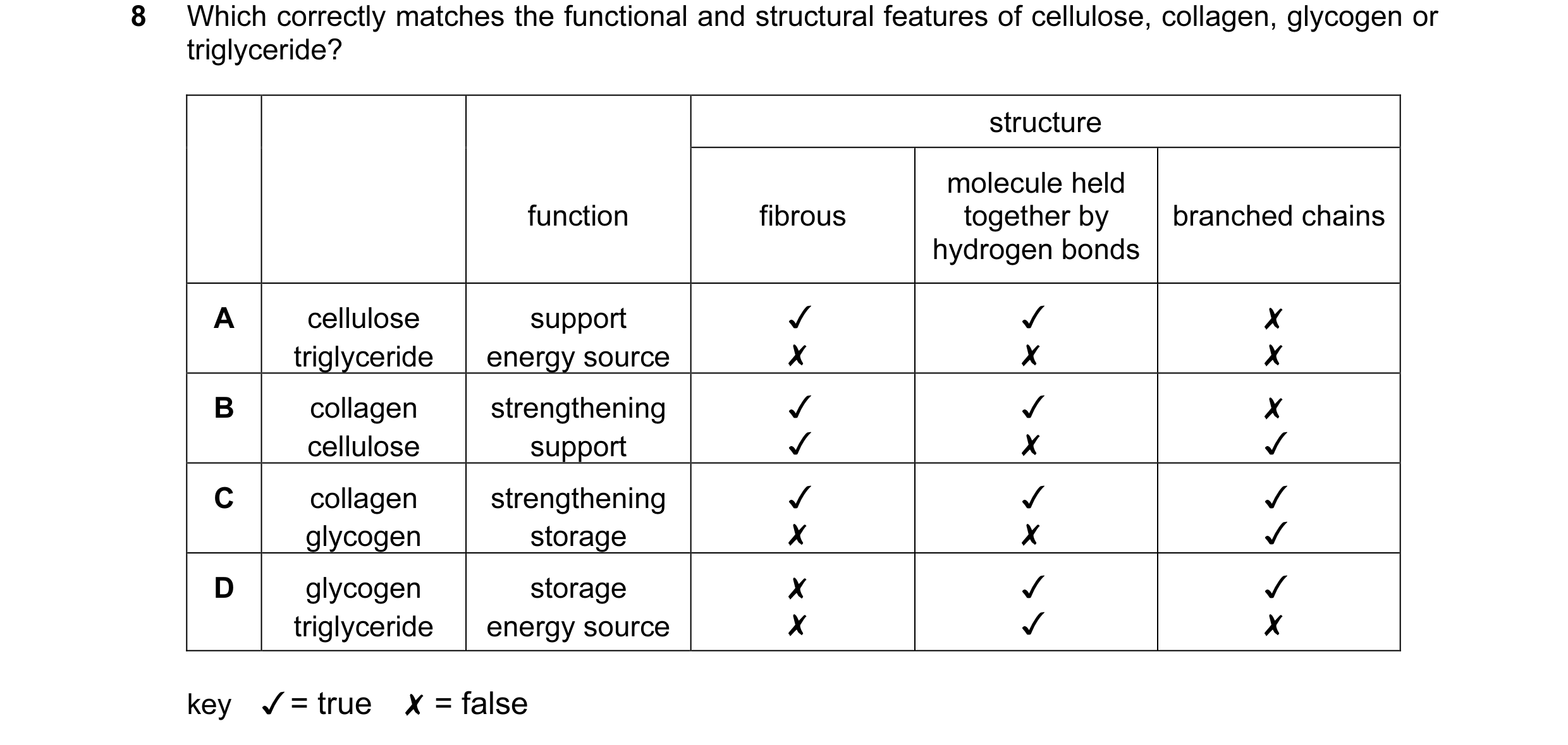 34 / 111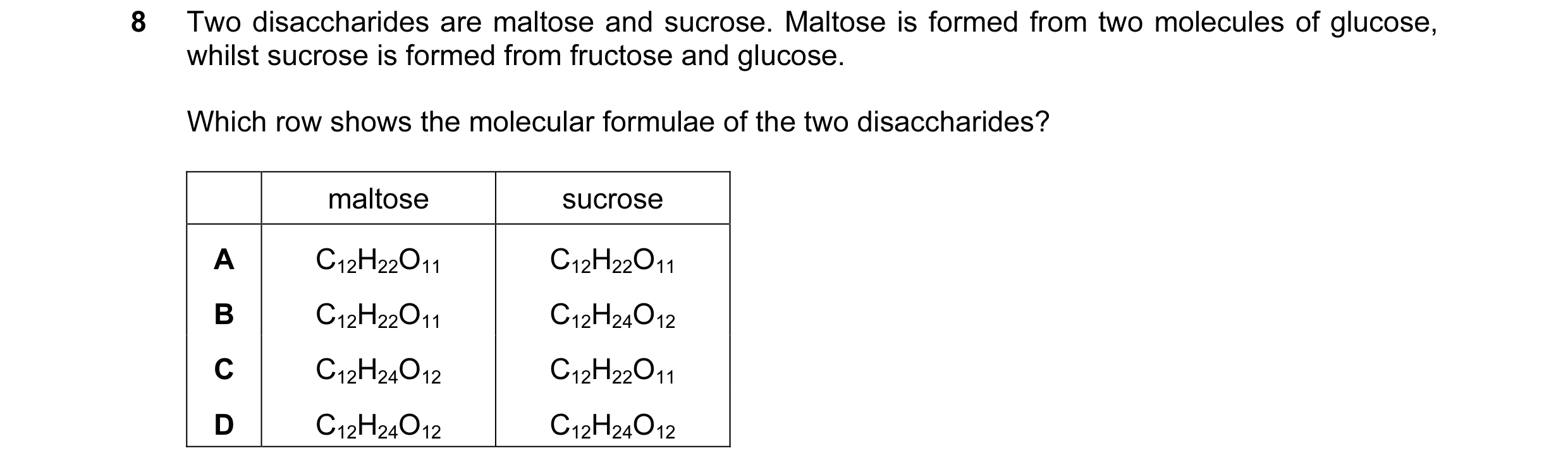
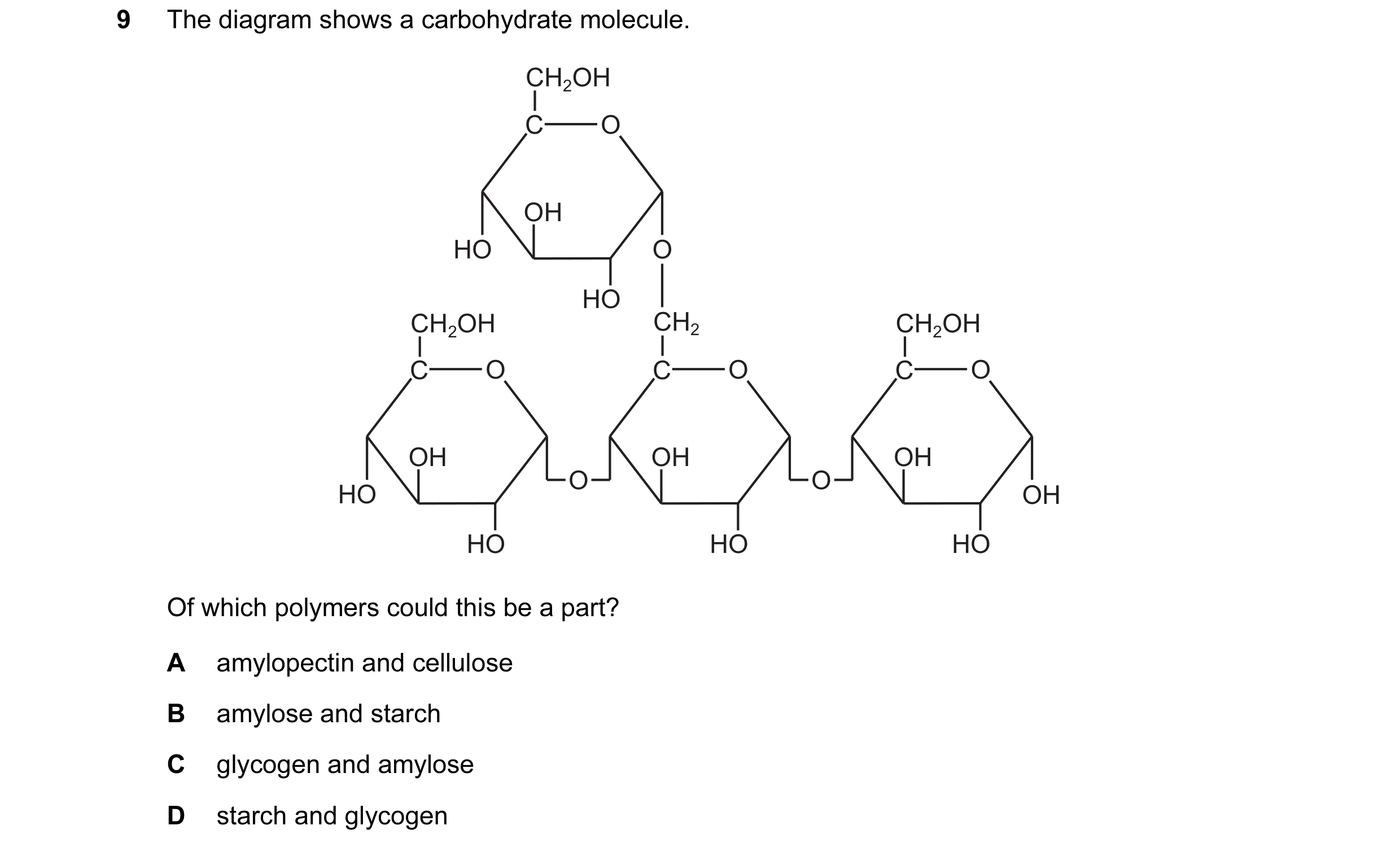
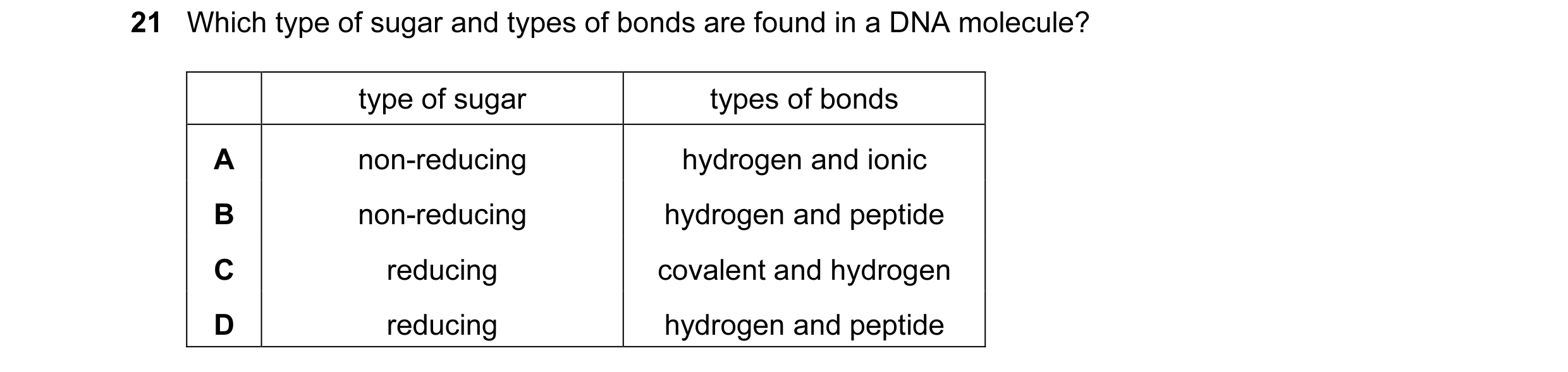 35 / 111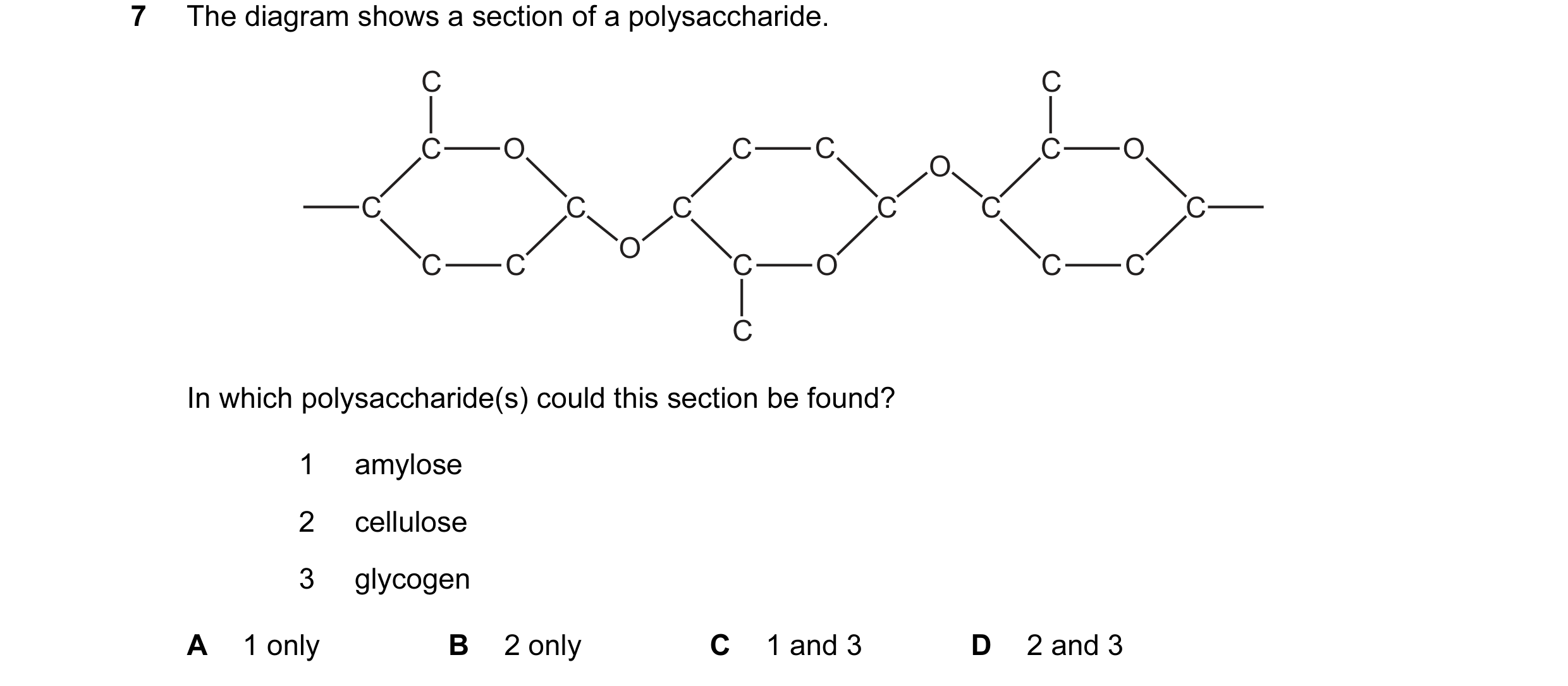
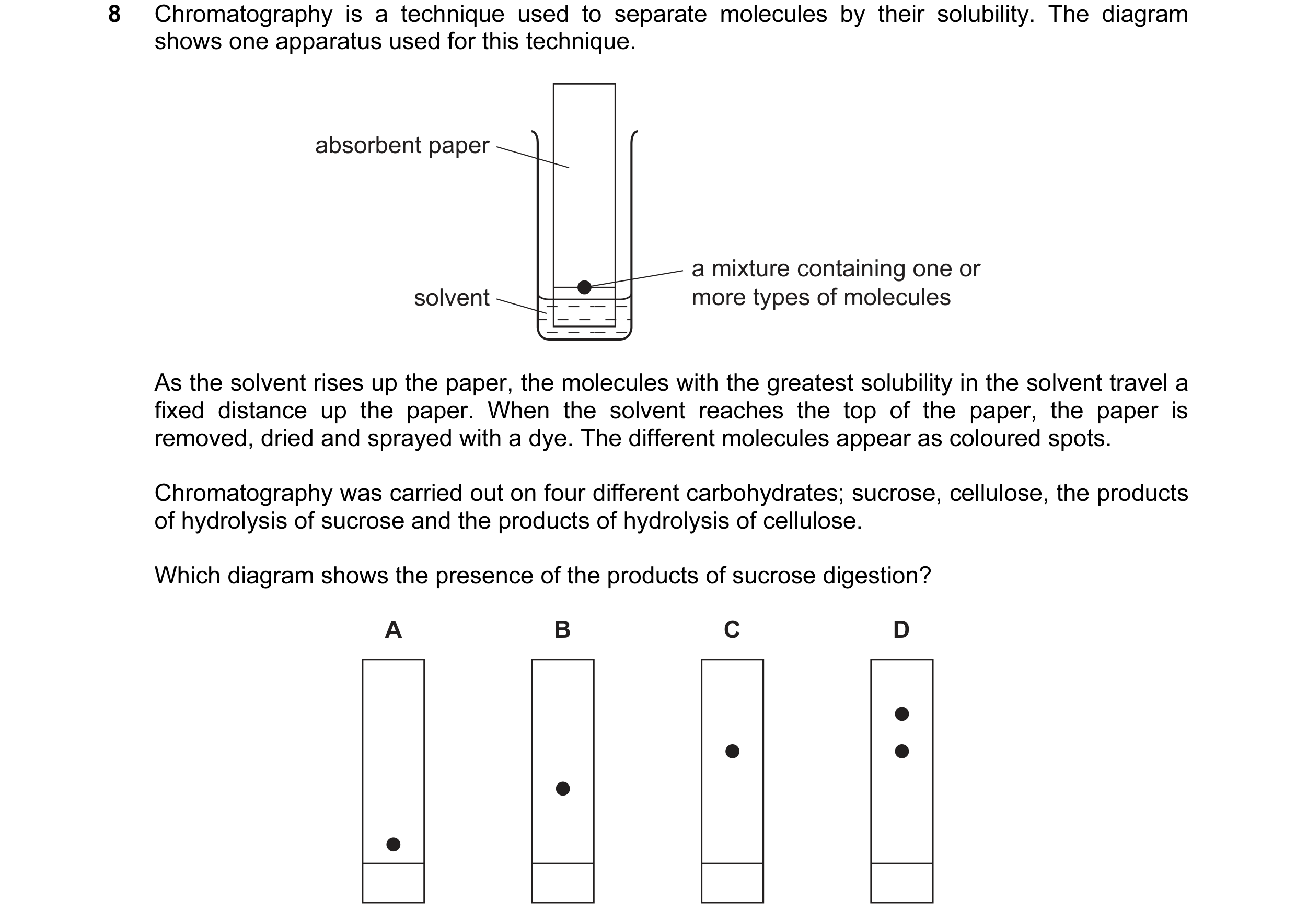
 36 / 111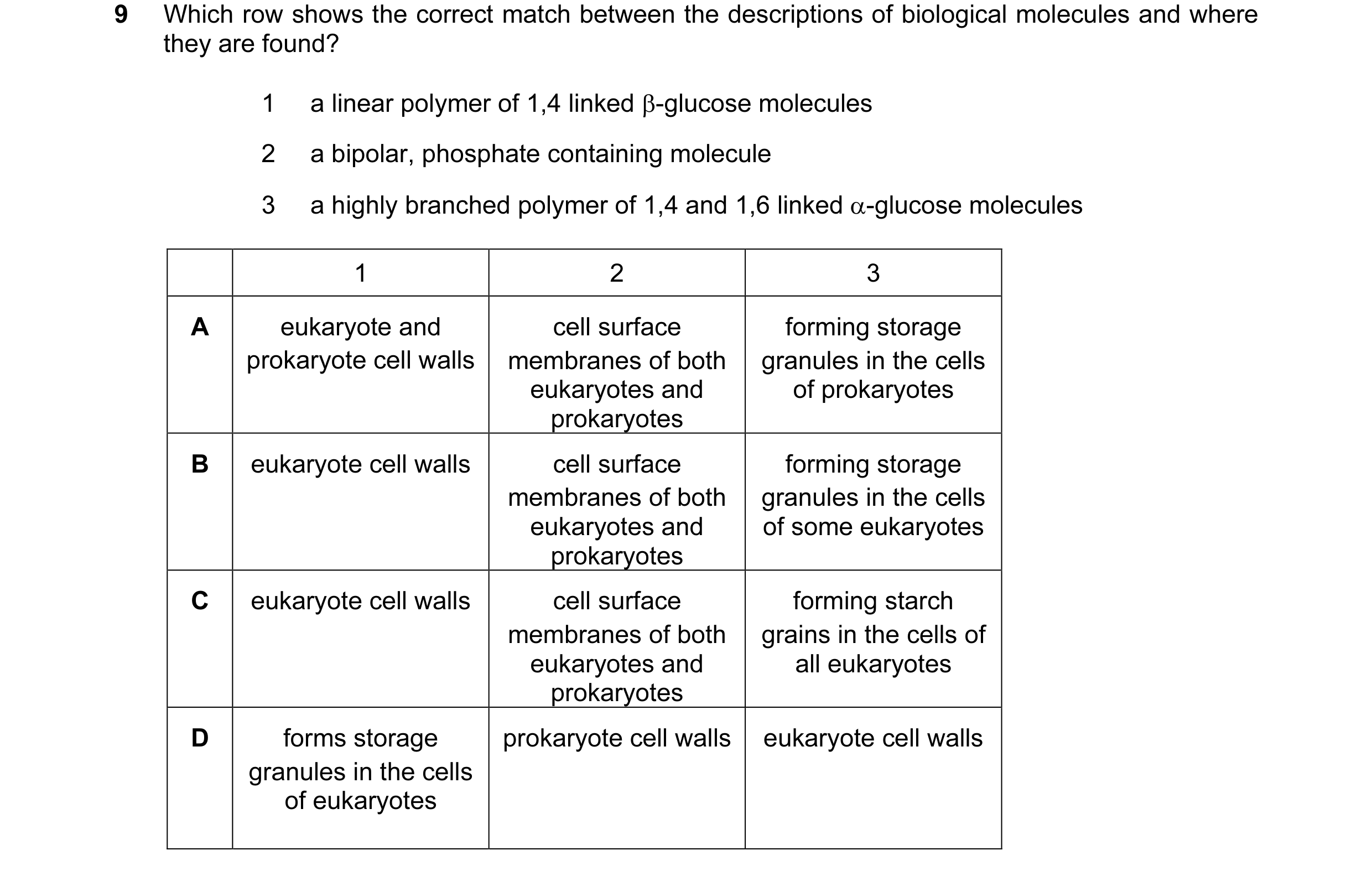
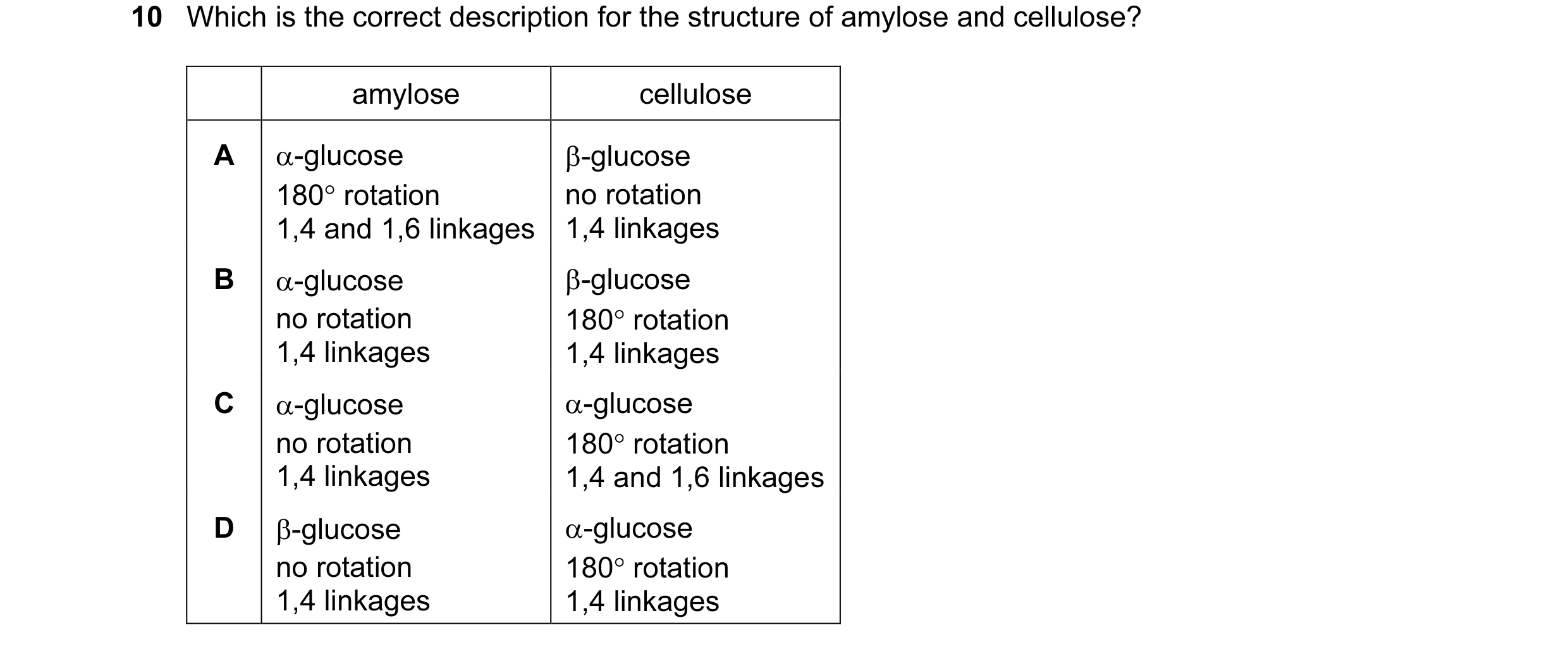
 37 / 111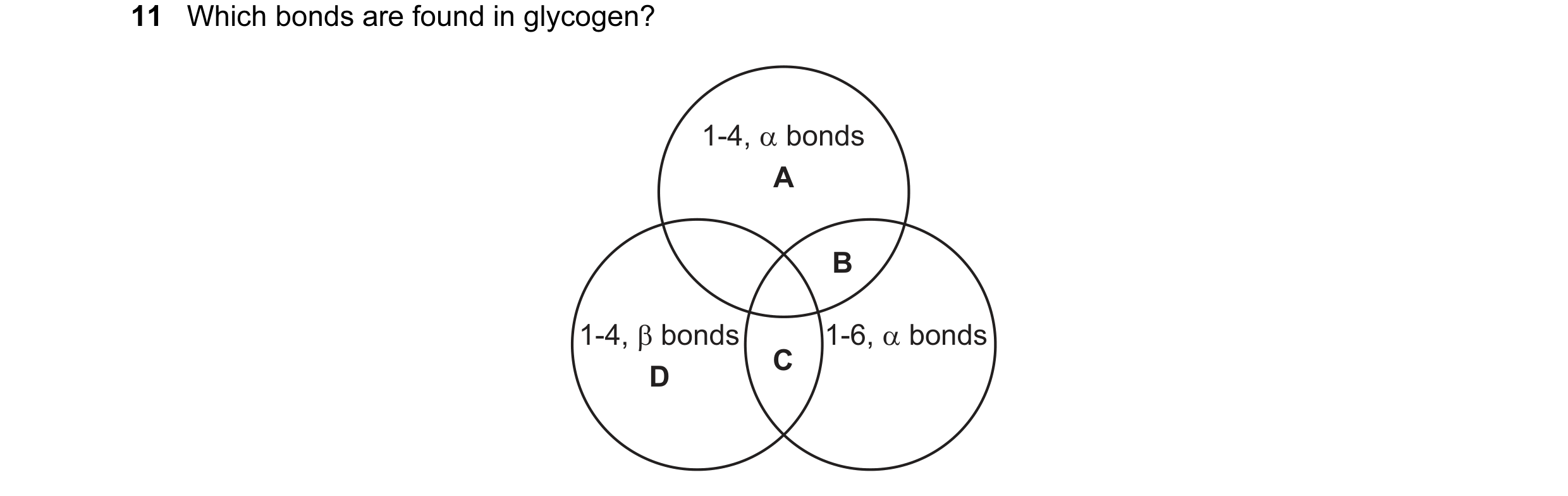
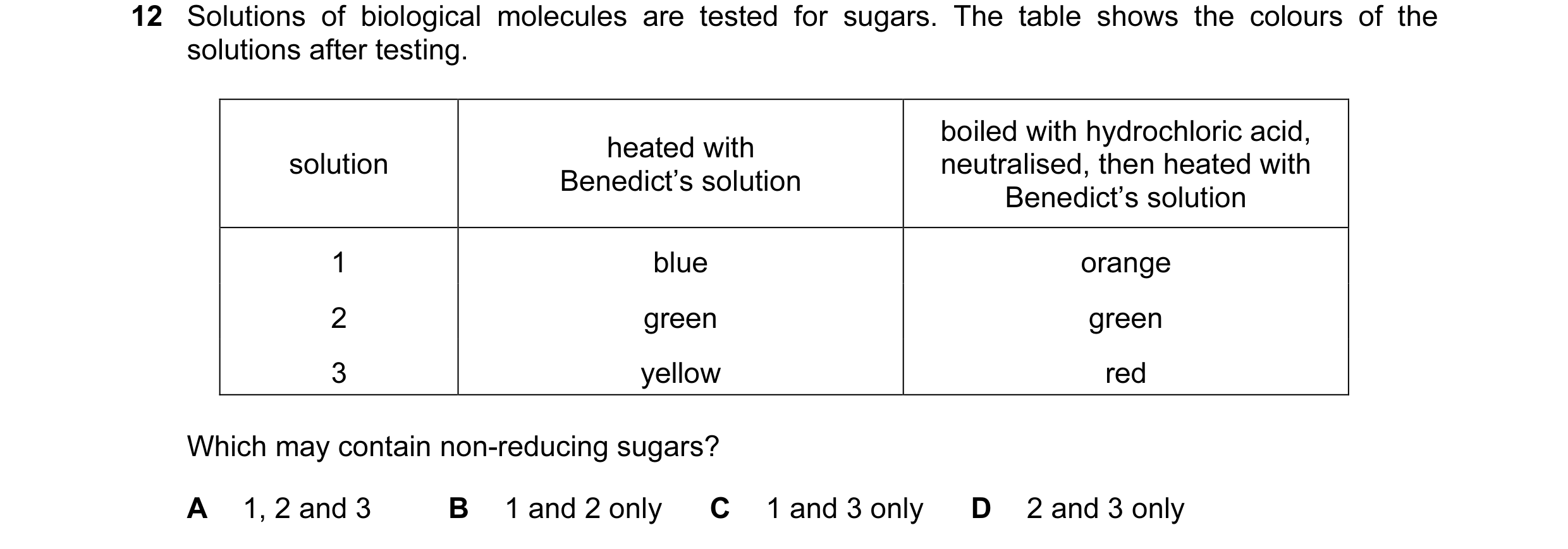
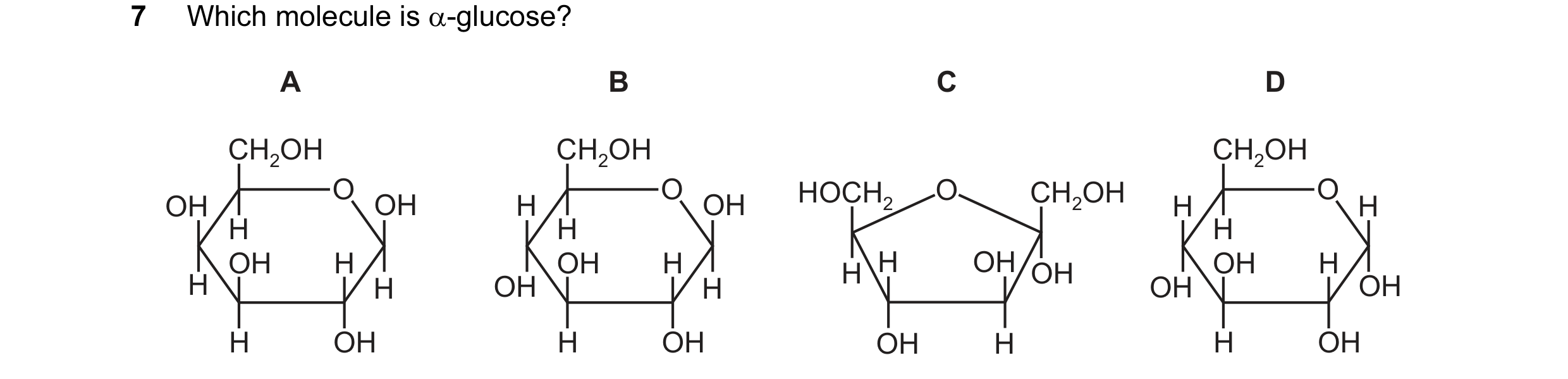
 38 / 111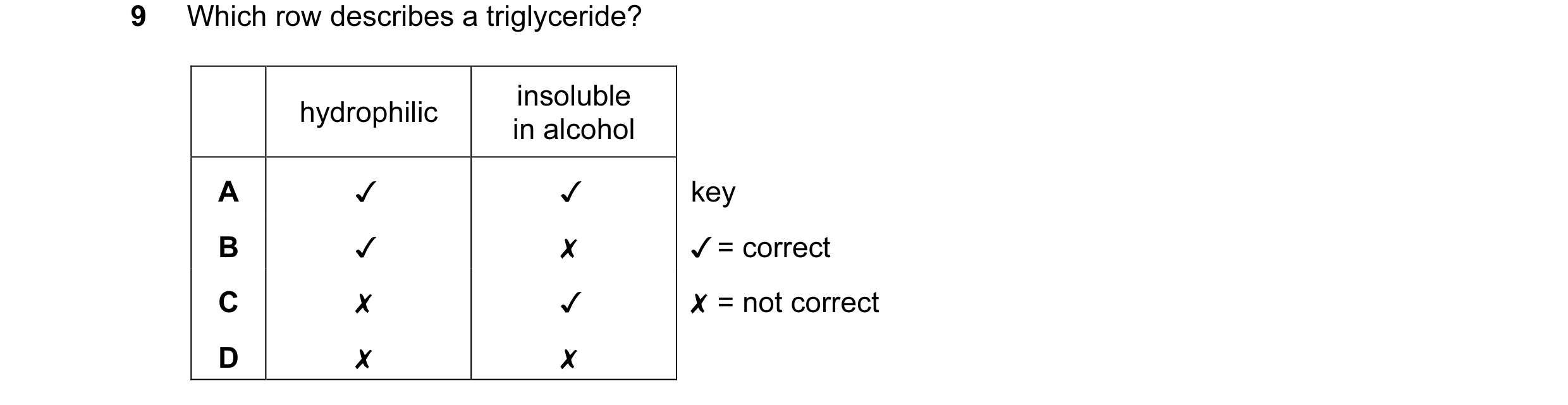
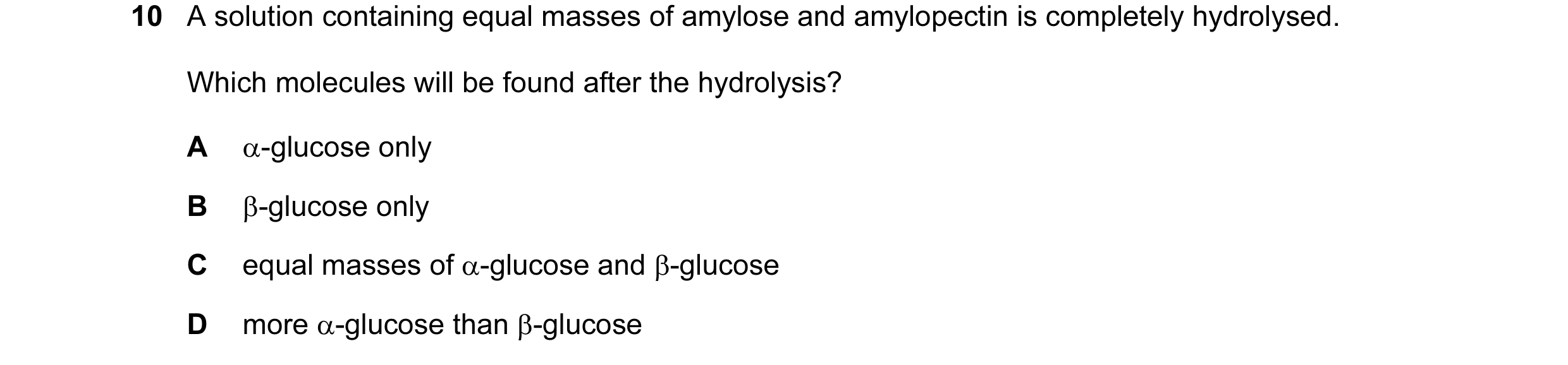
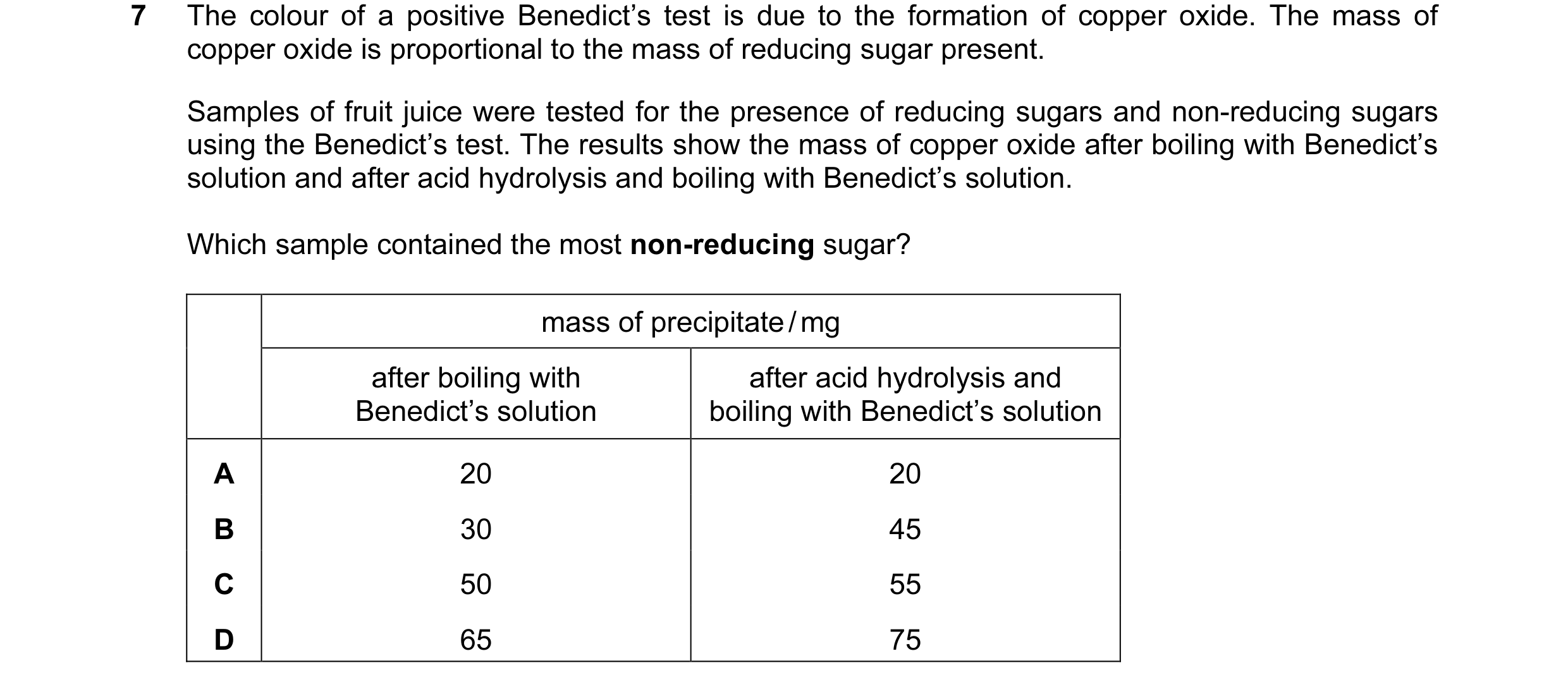
 39 / 111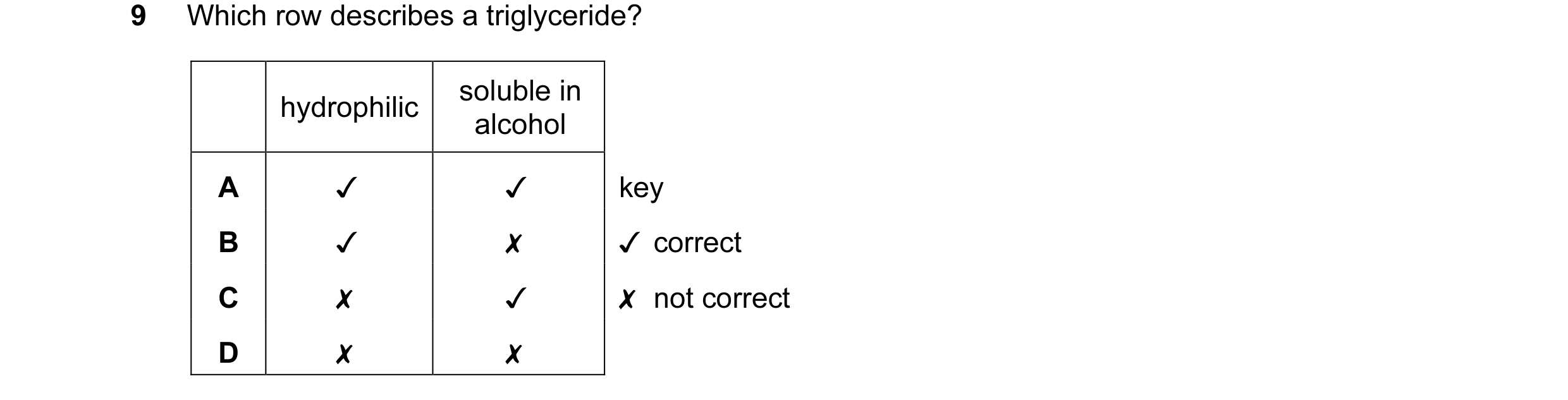
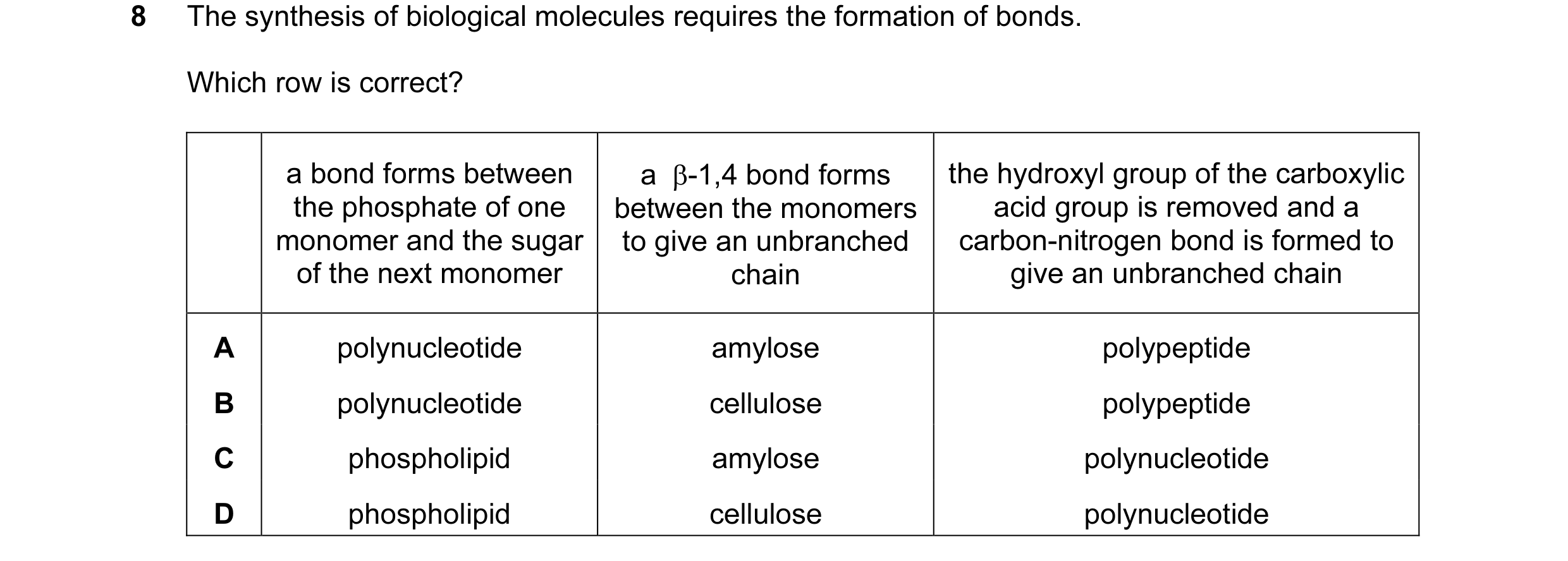
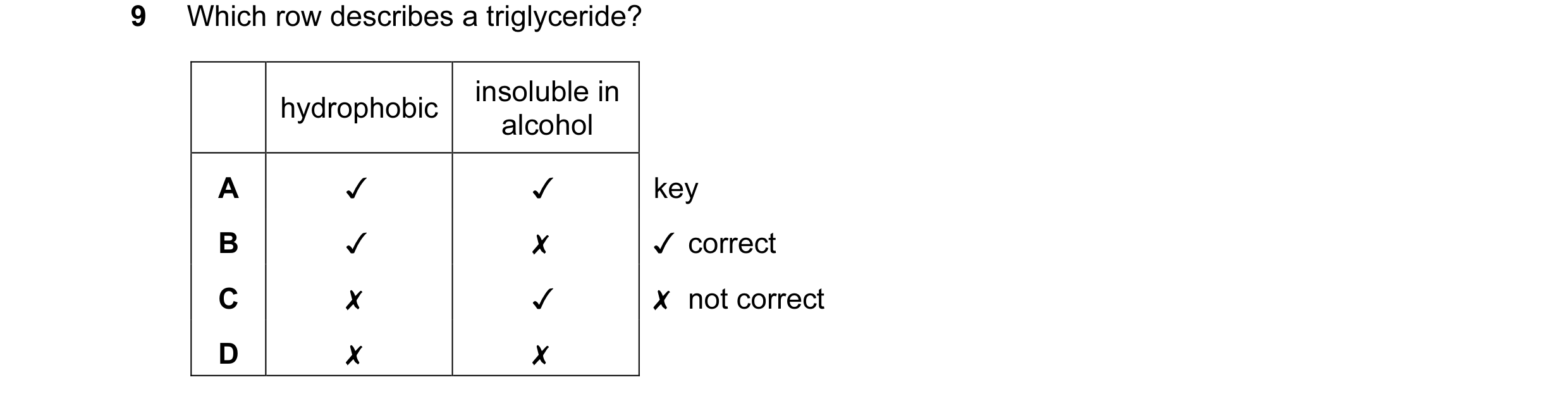
 40 / 111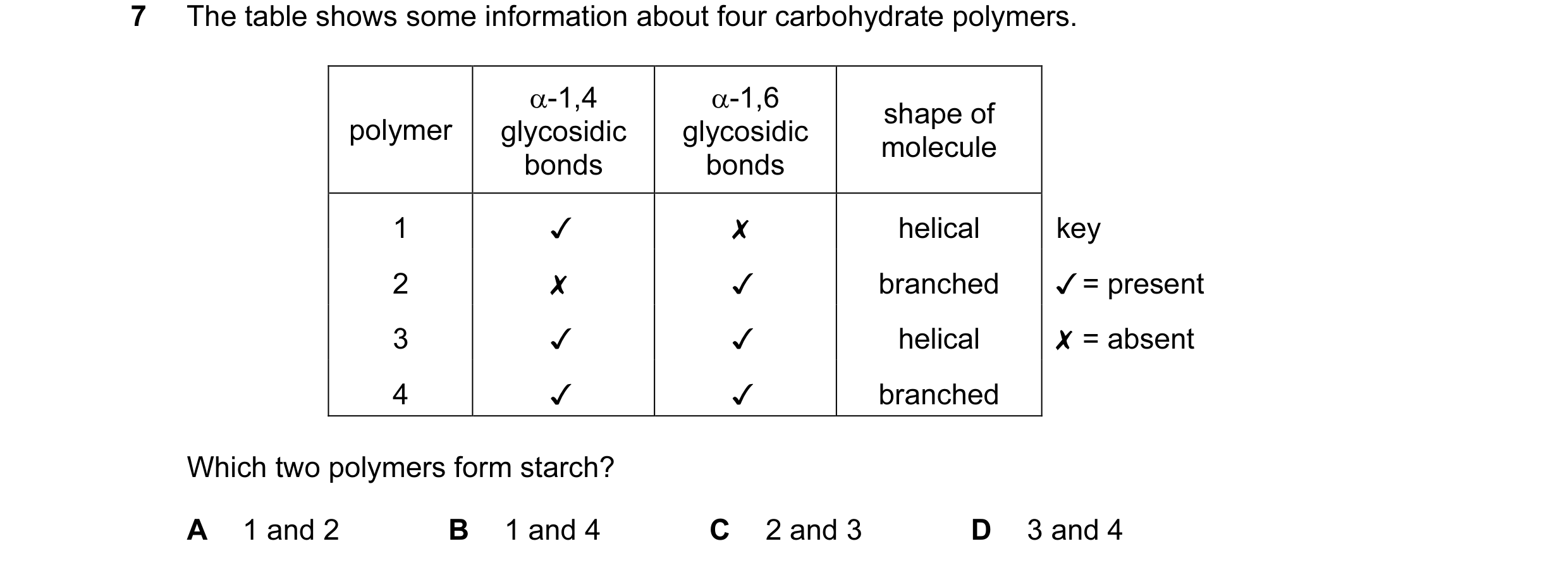
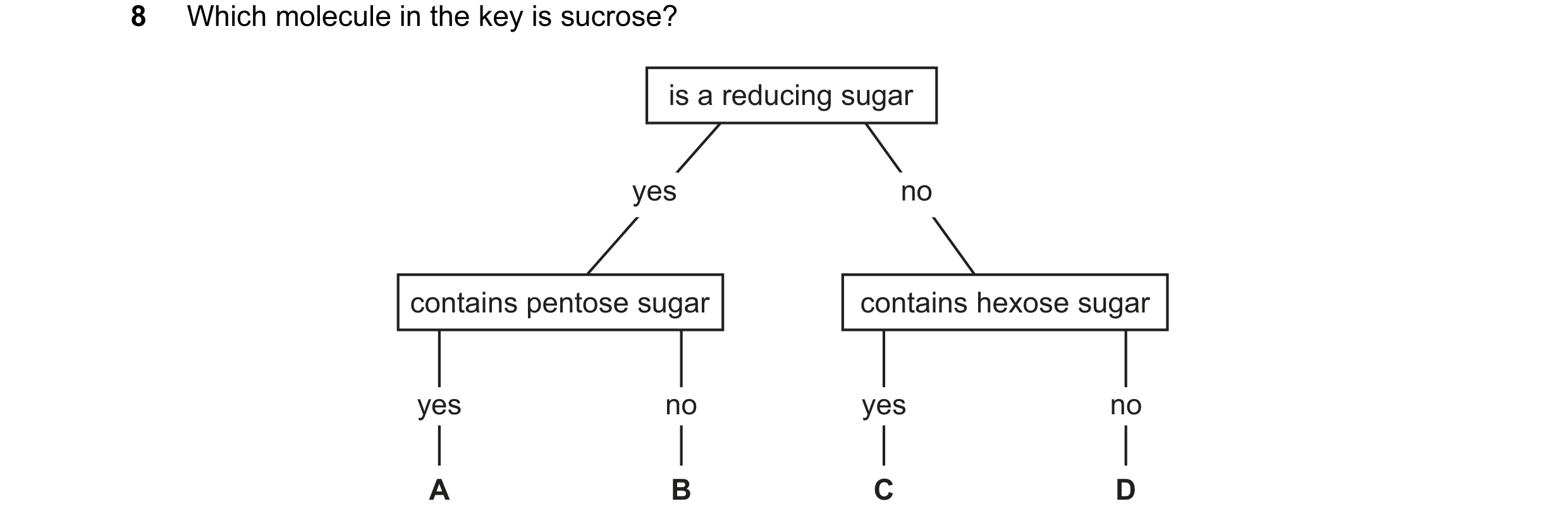
 41 / 111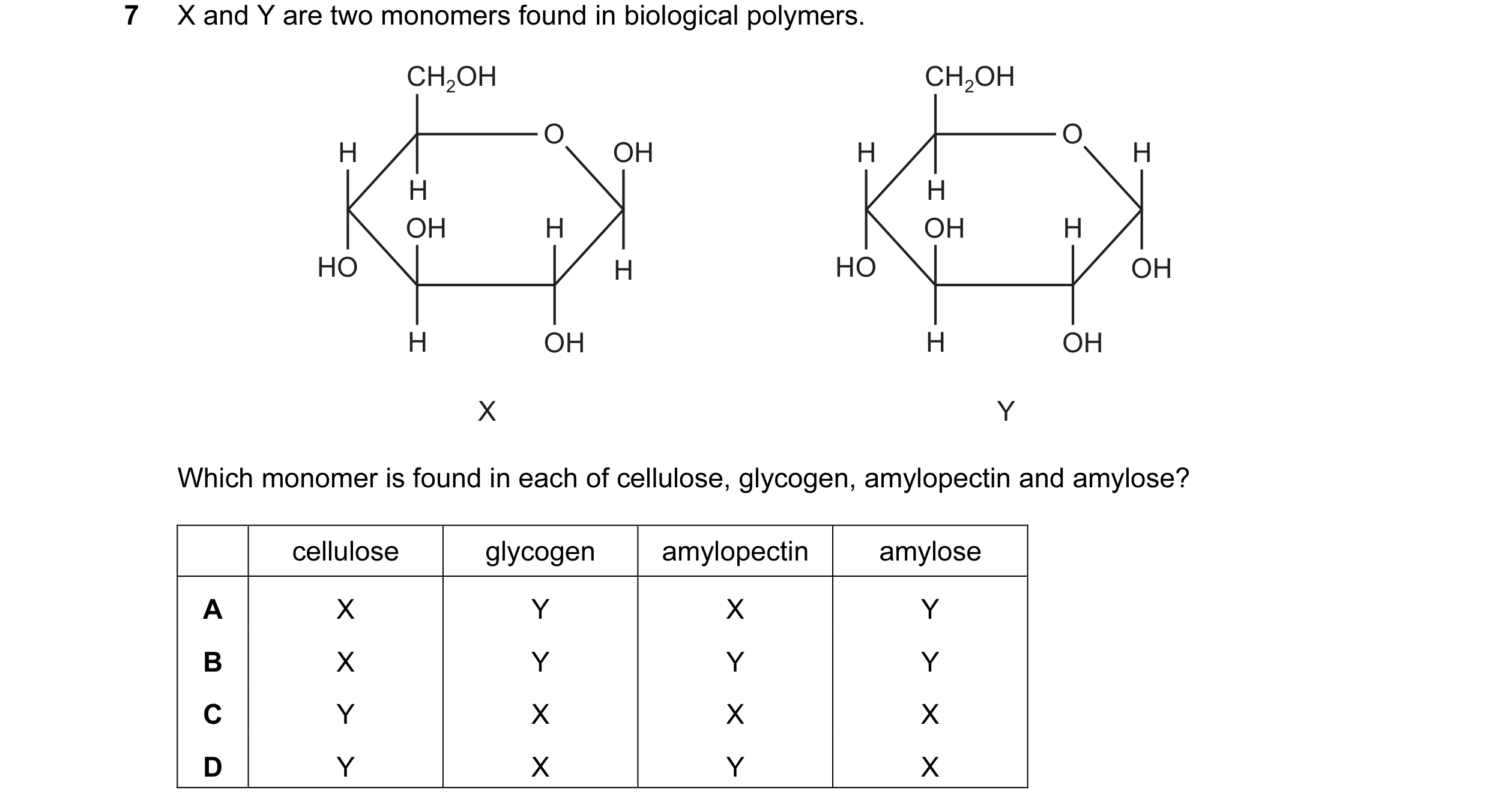

 42 / 111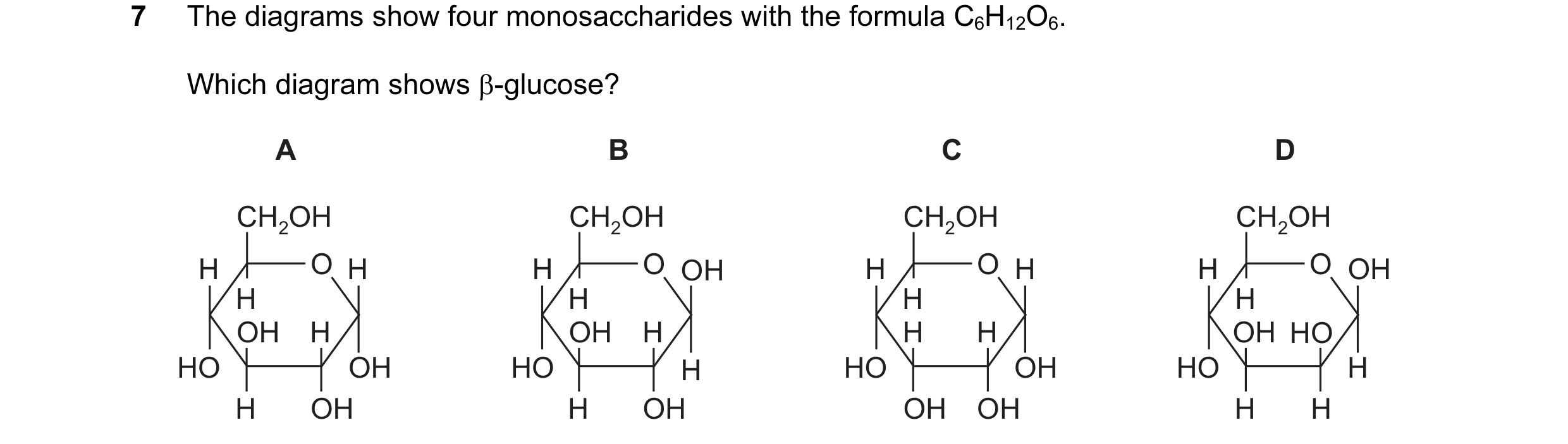
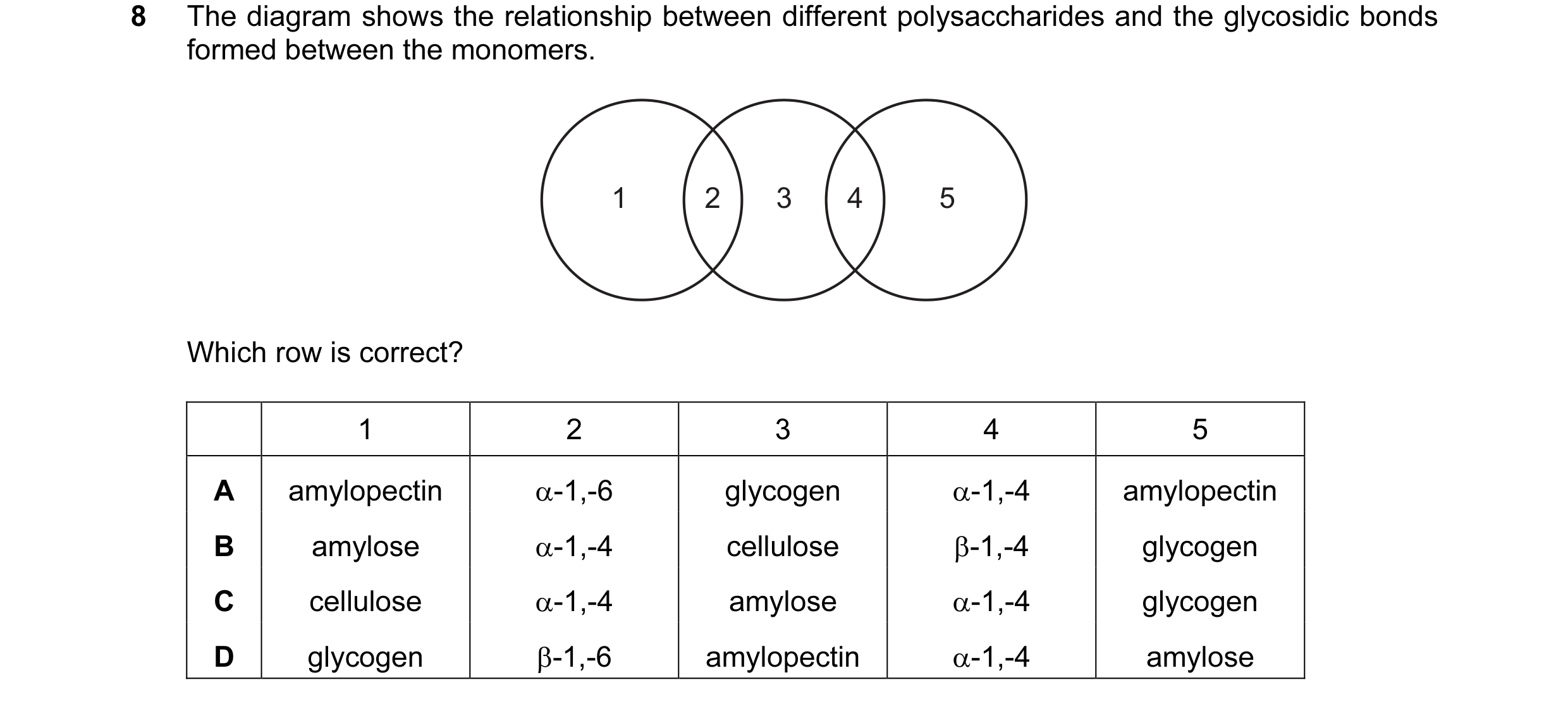
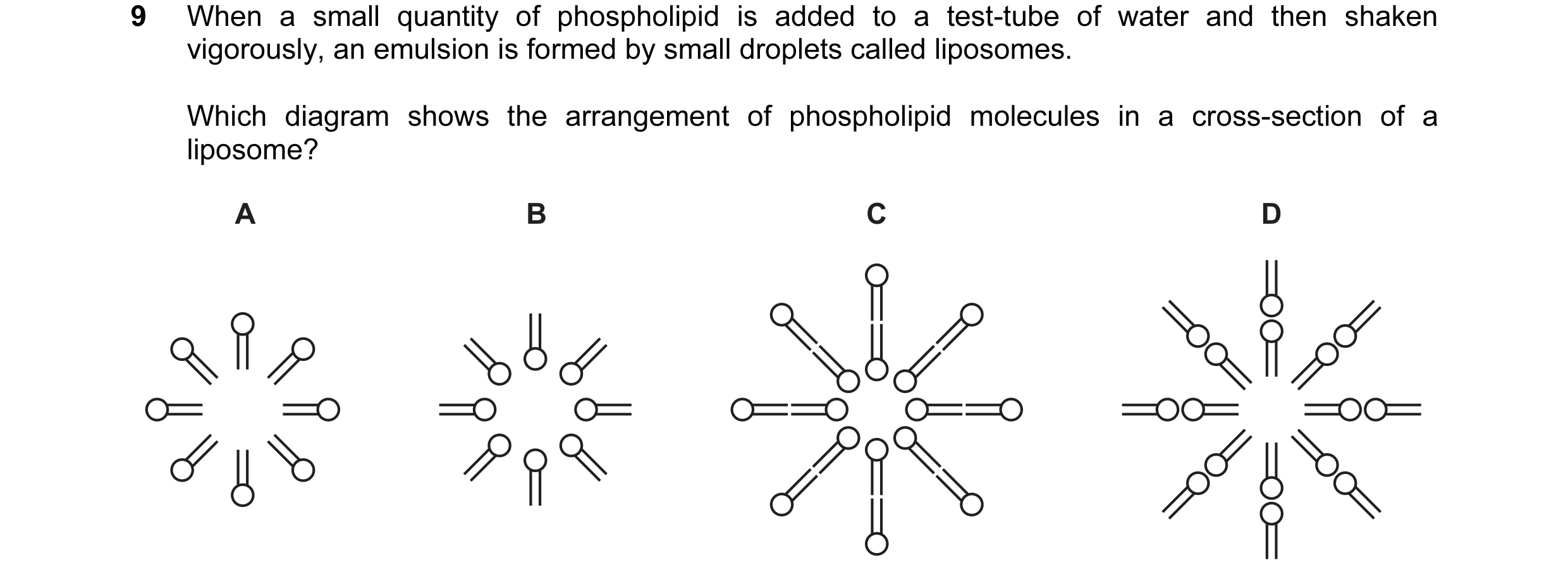
 43 / 111
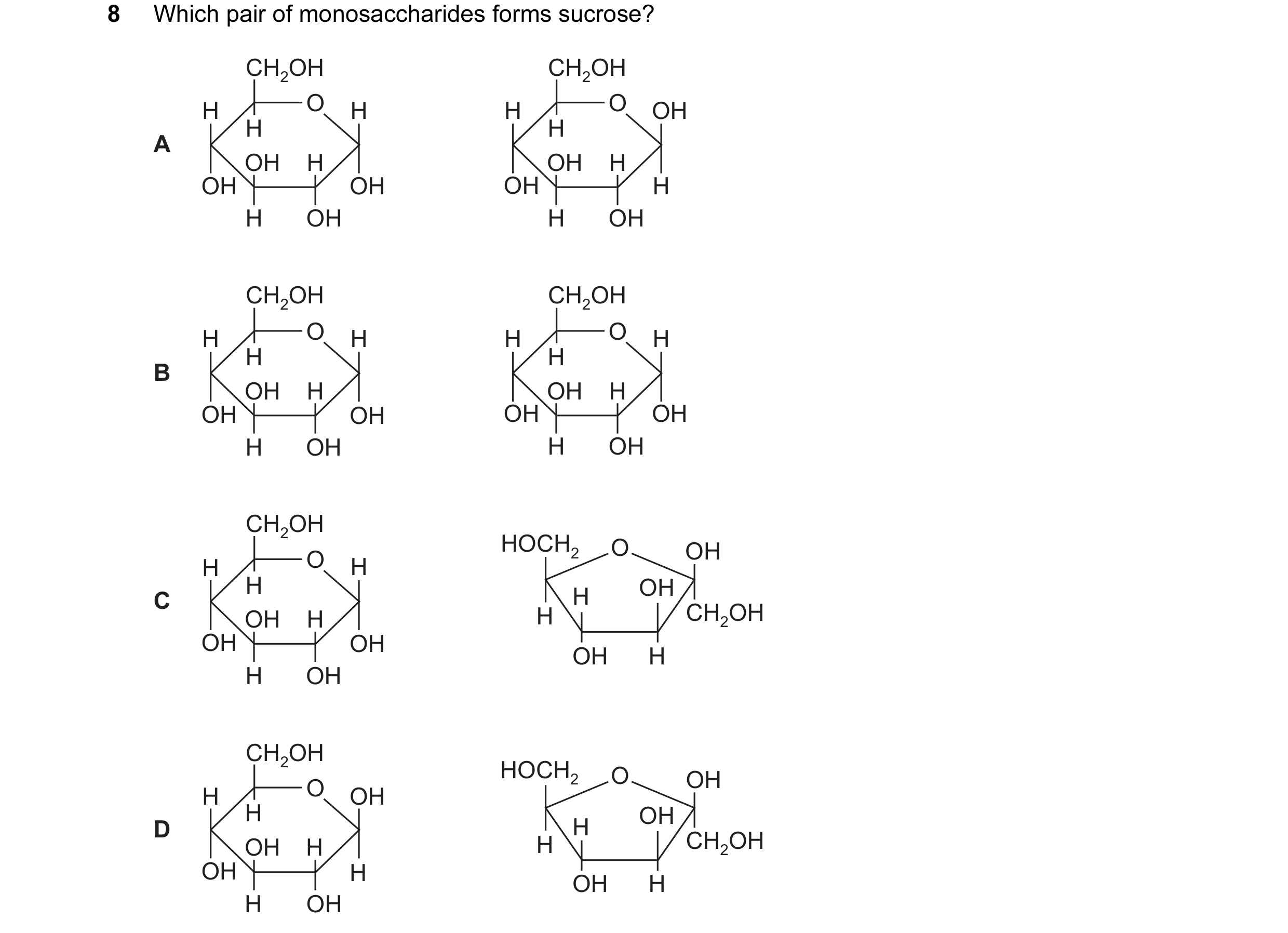
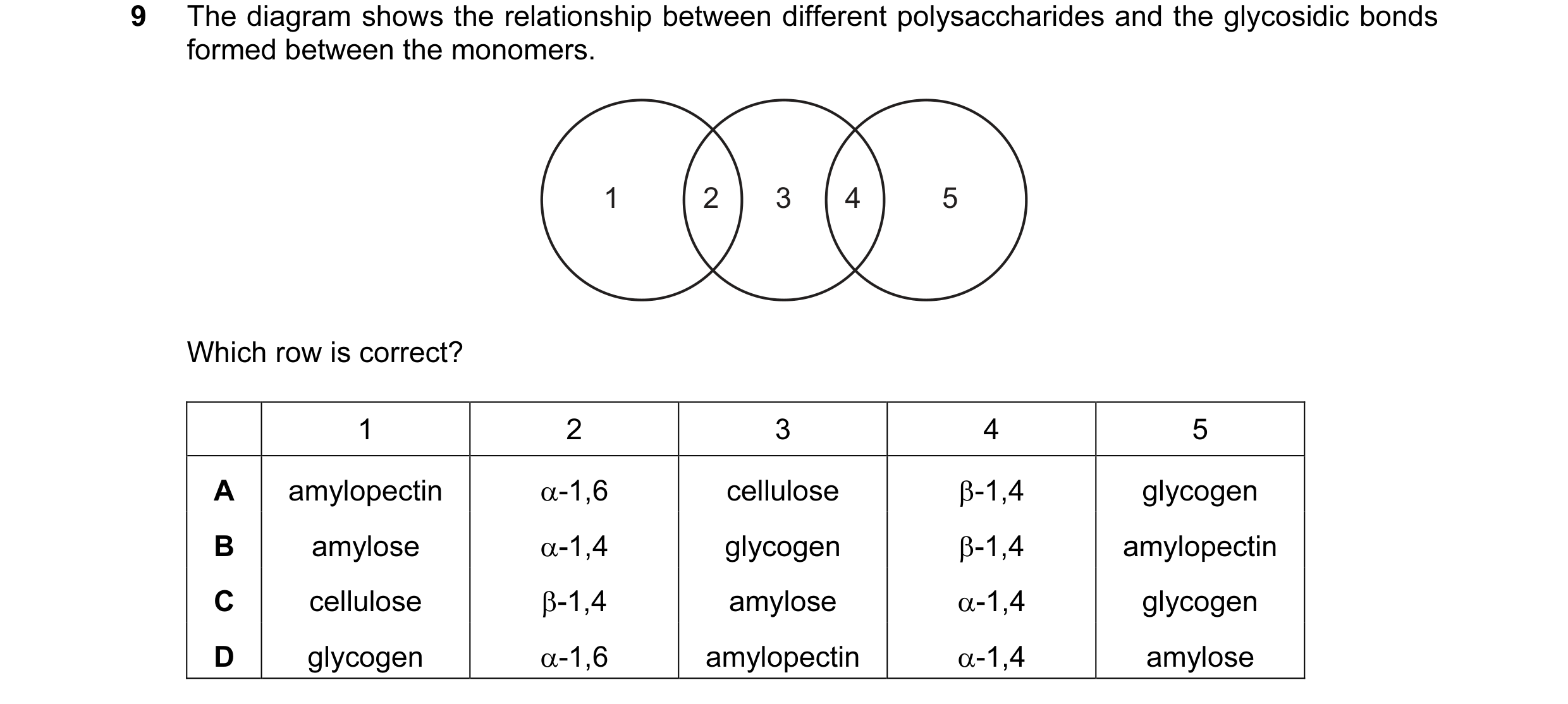 44 / 111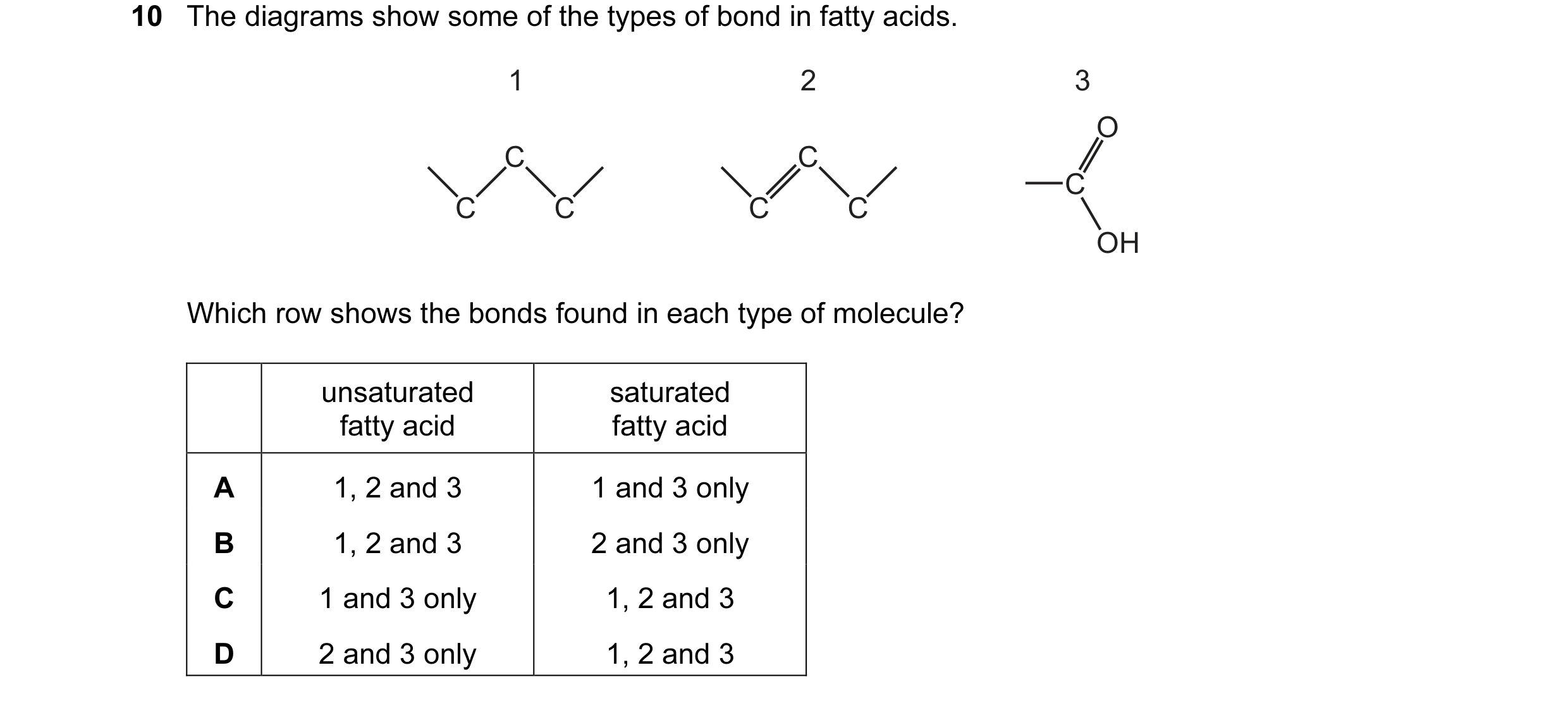
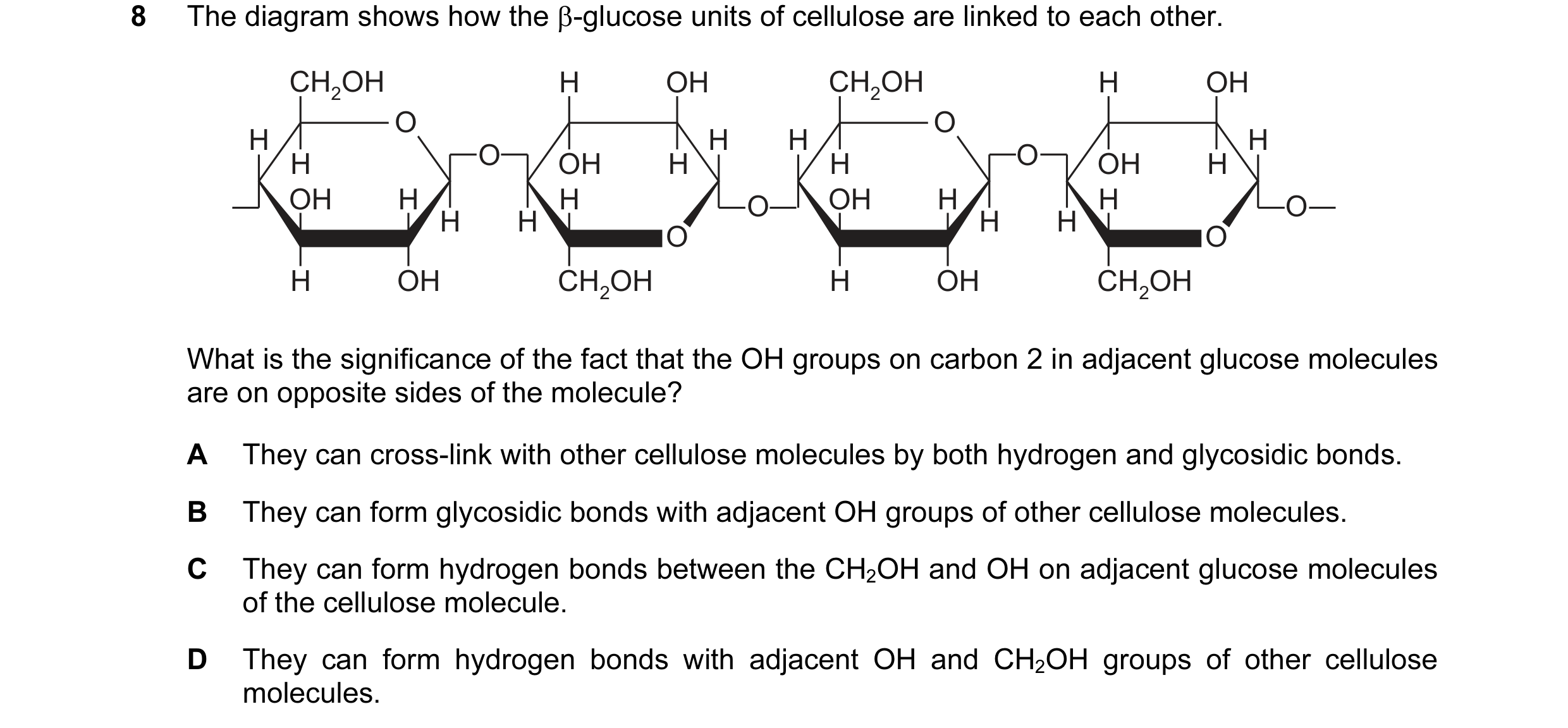
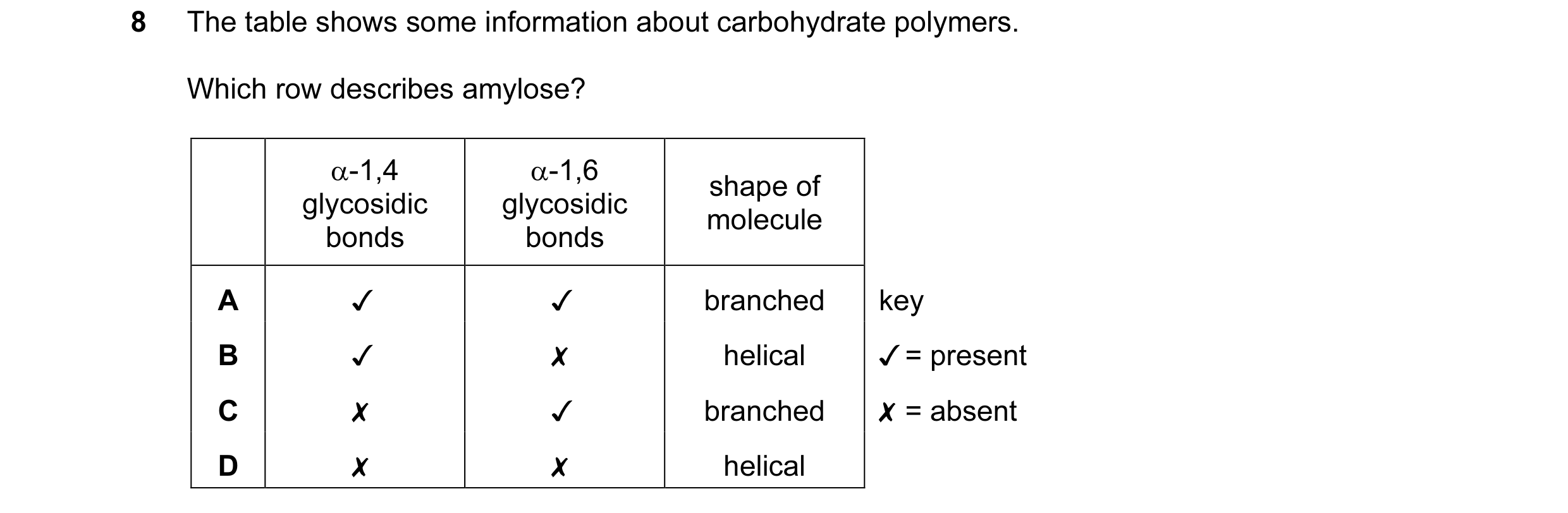 45 / 111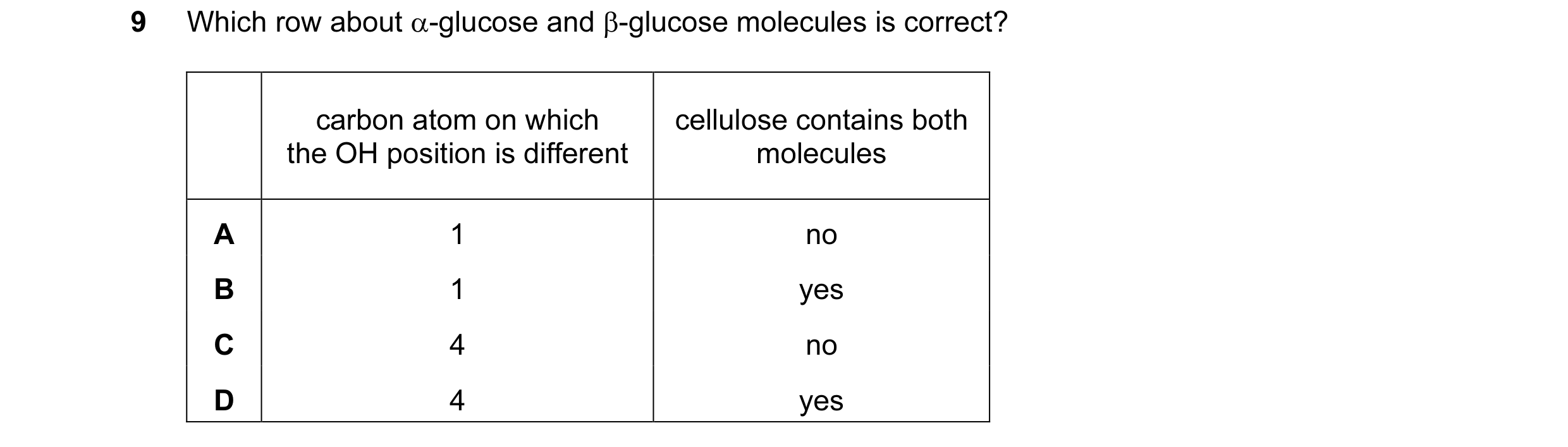

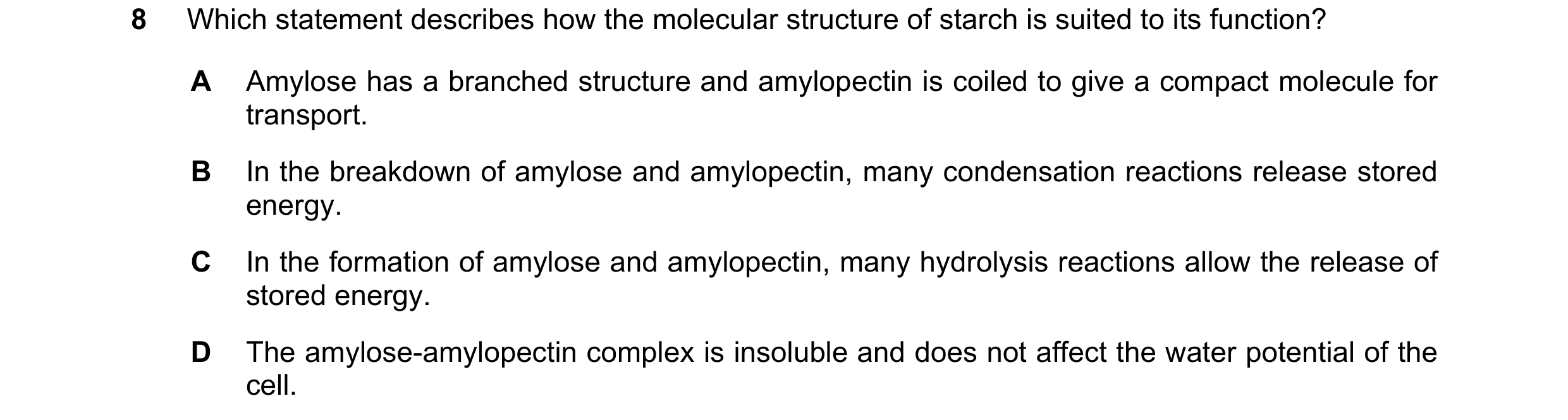
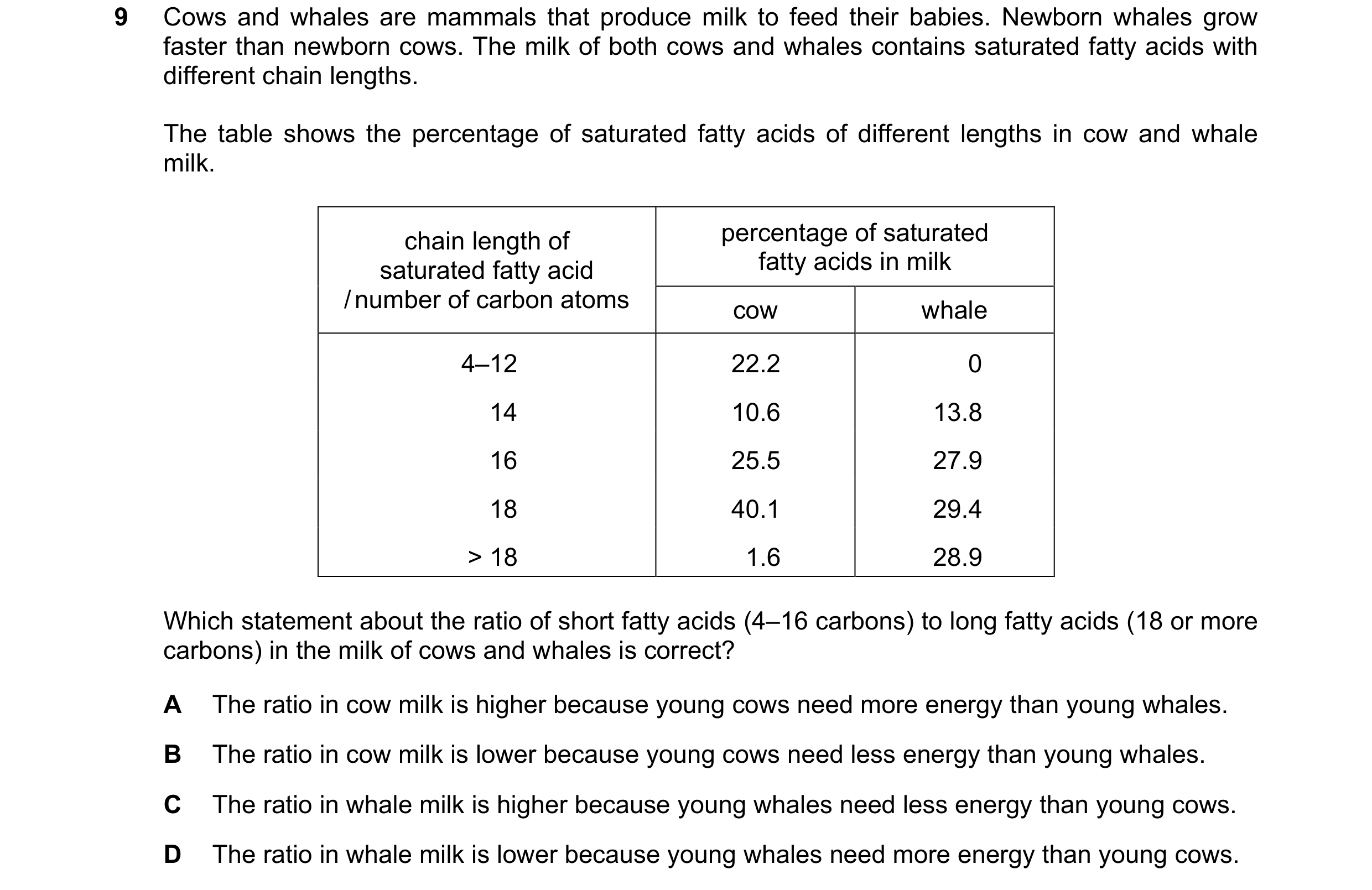 46 / 111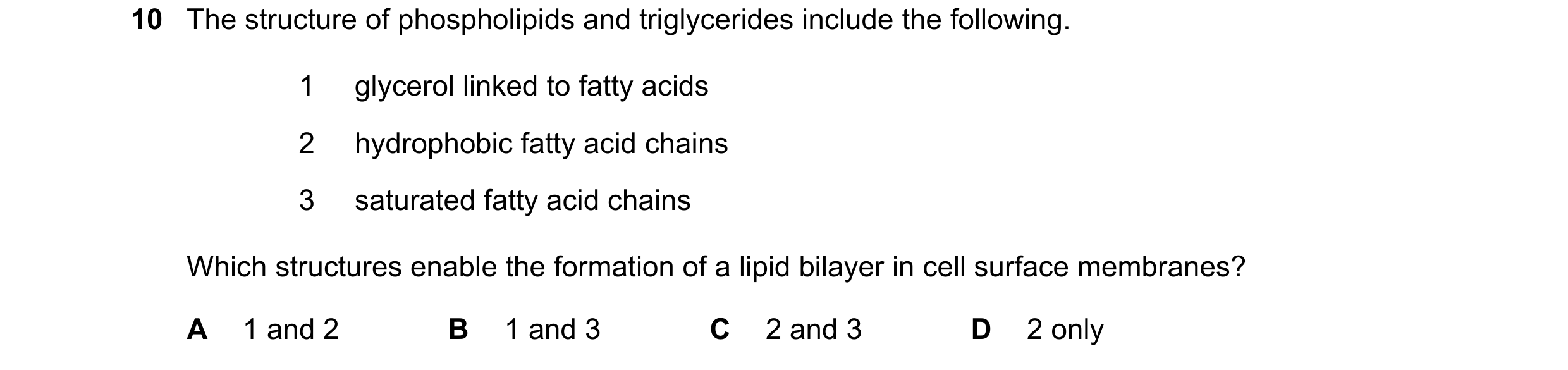
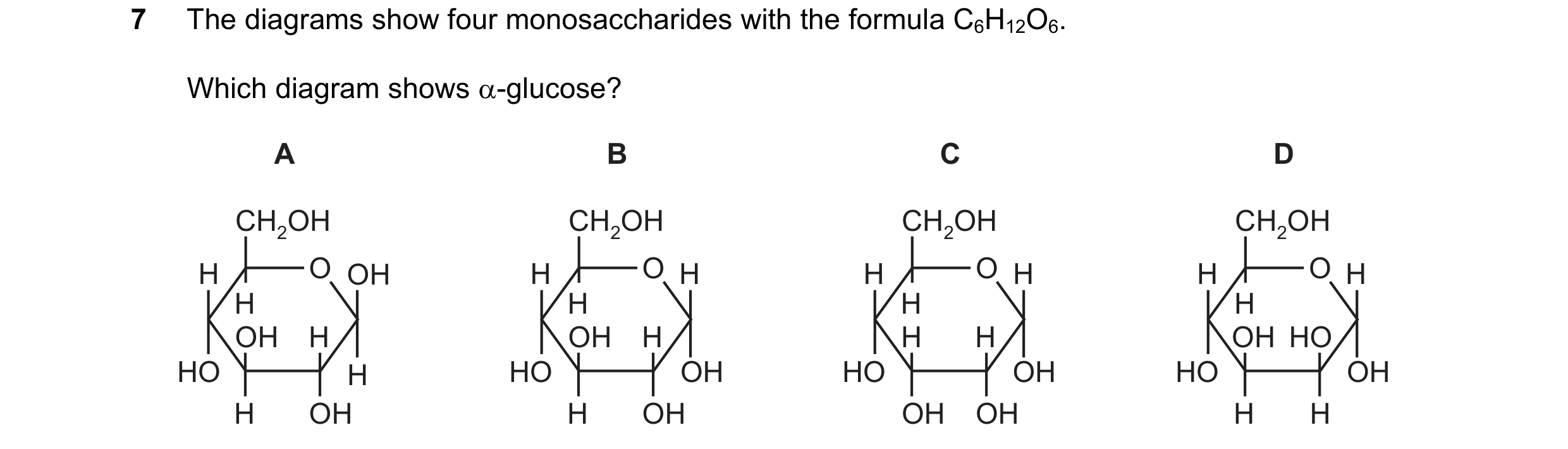
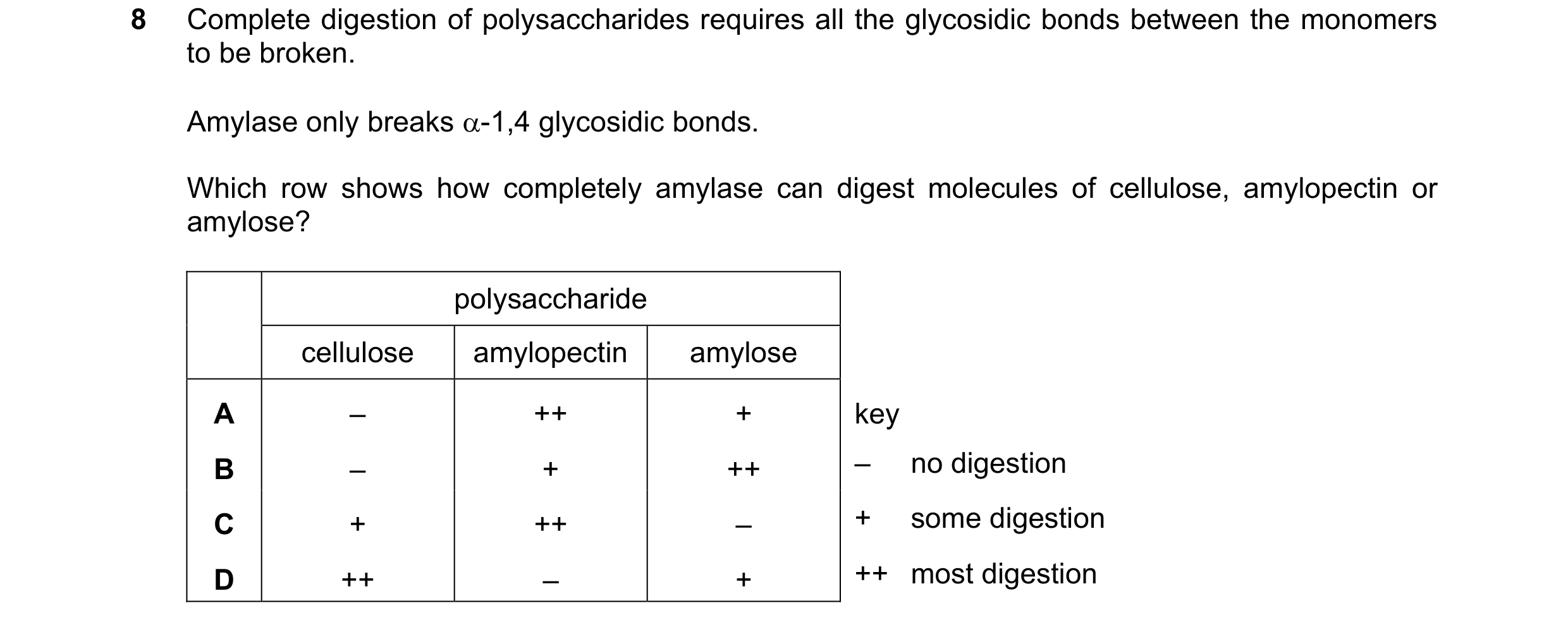
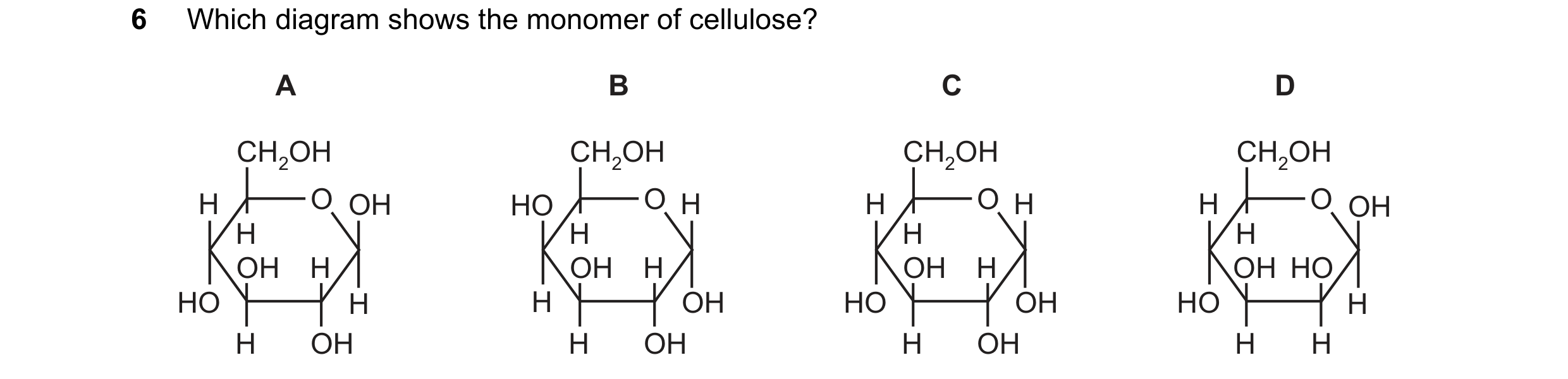 47 / 111

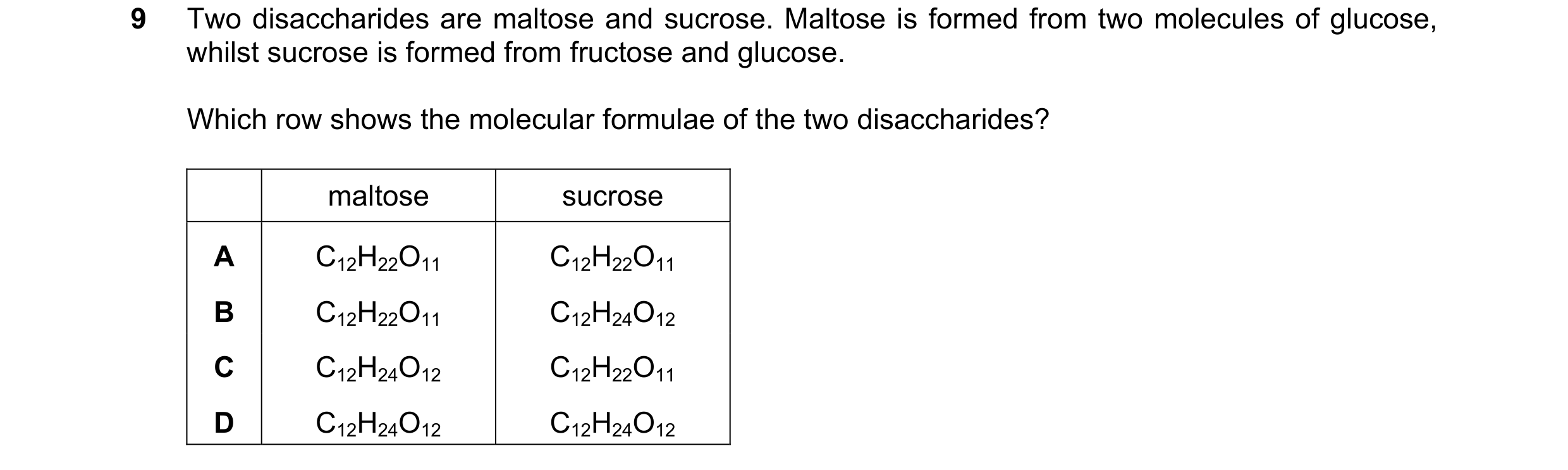 48 / 111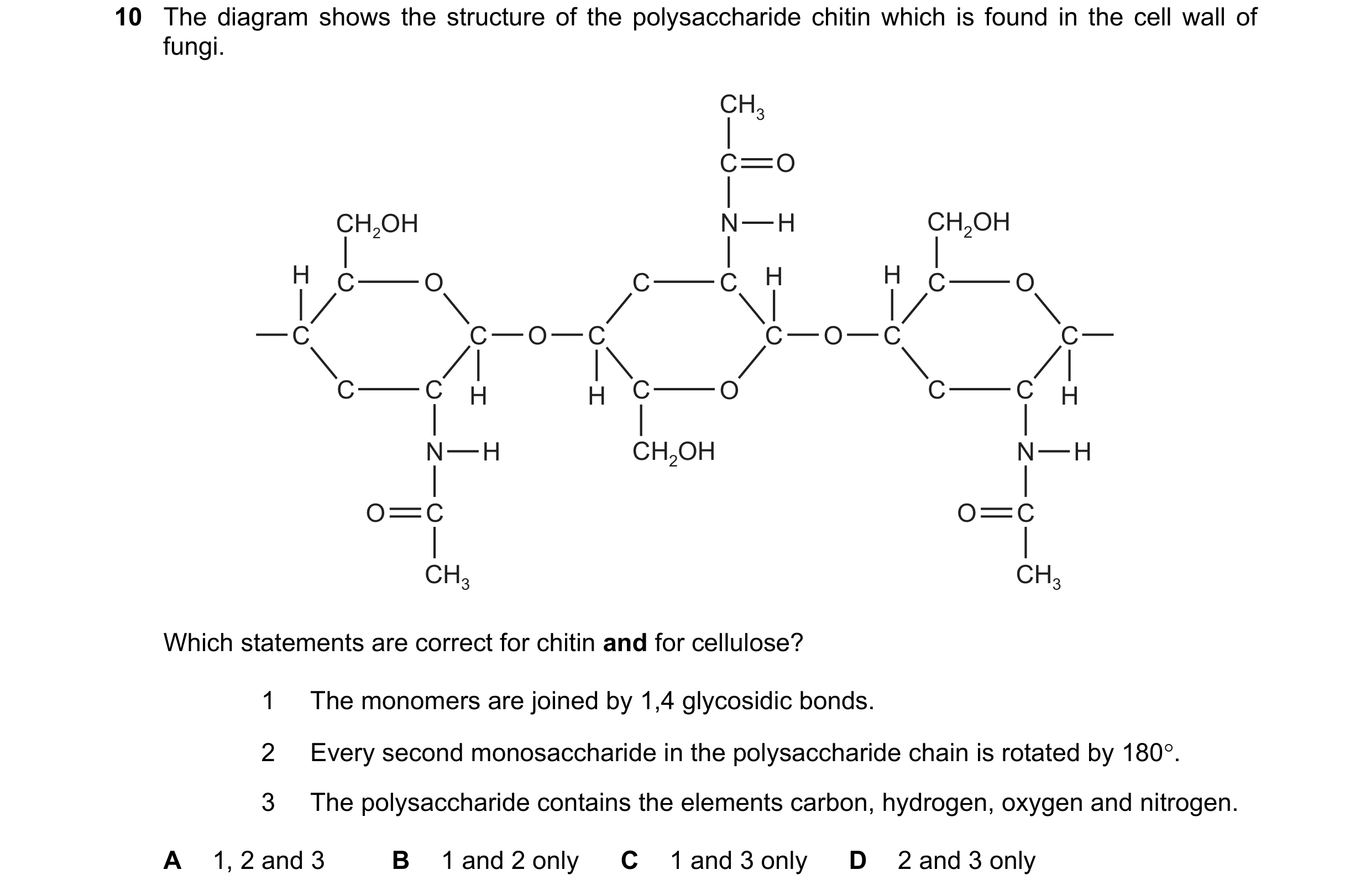
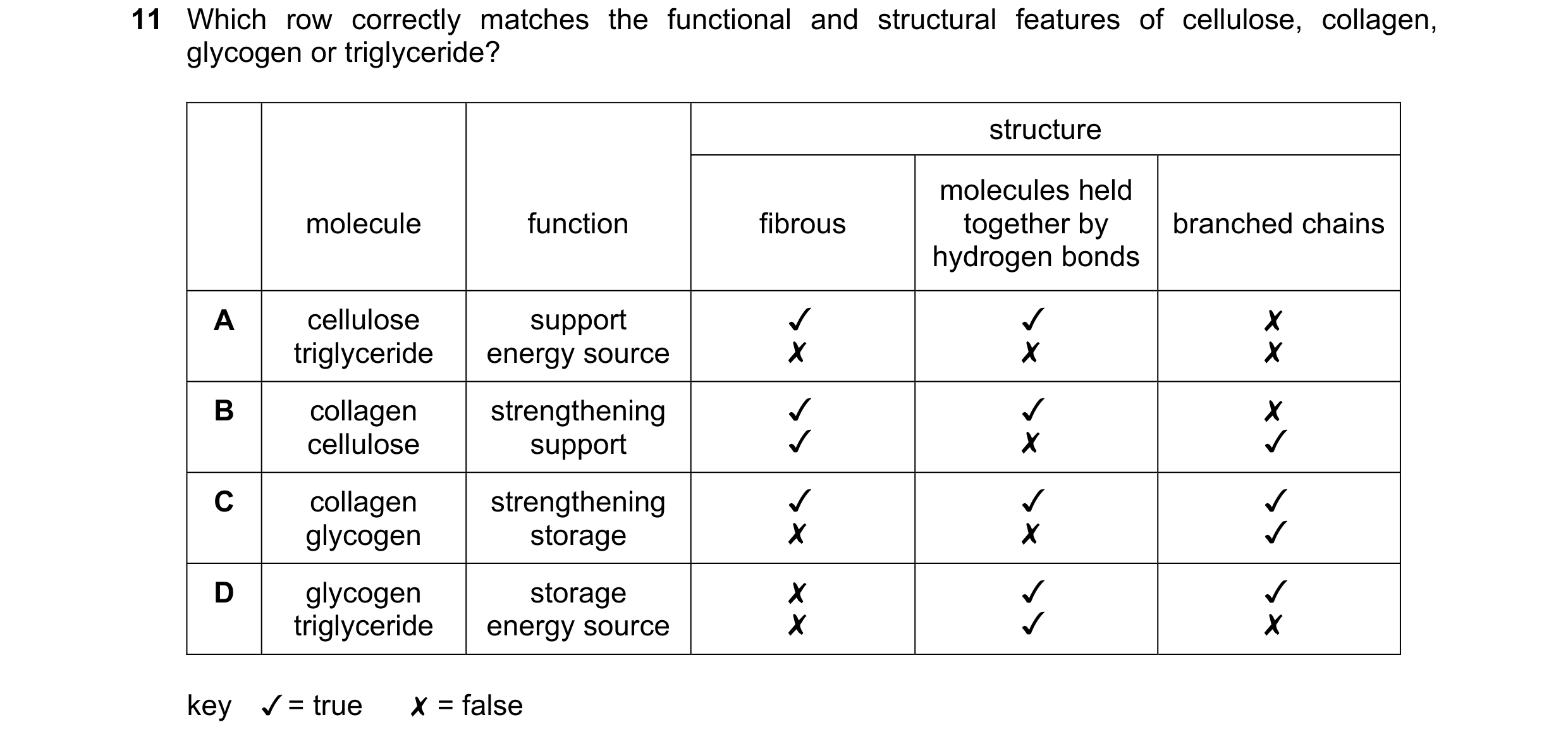 49 / 111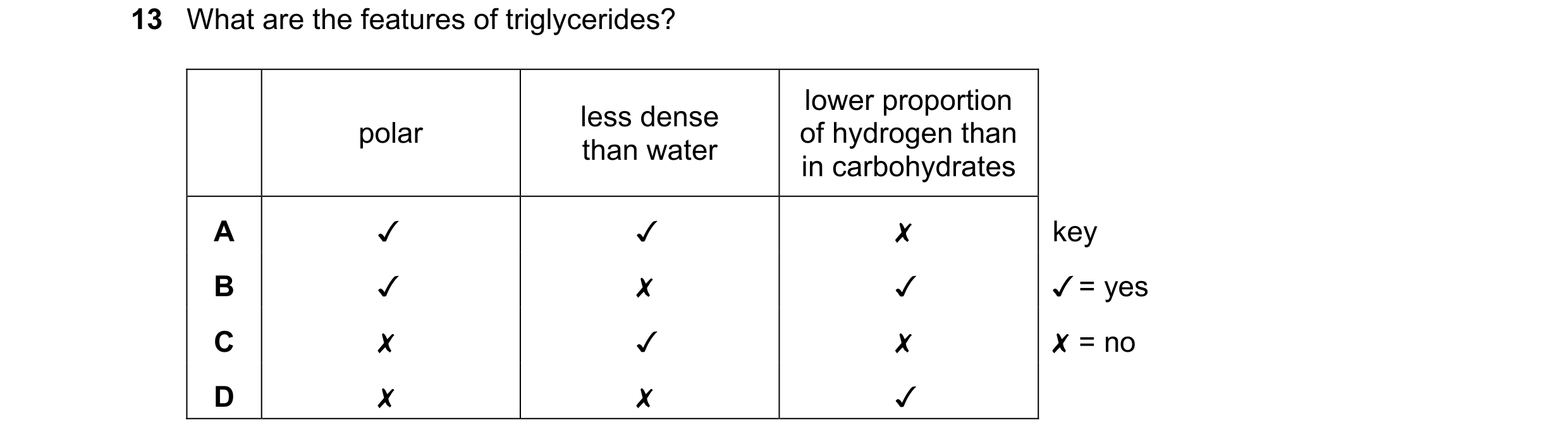
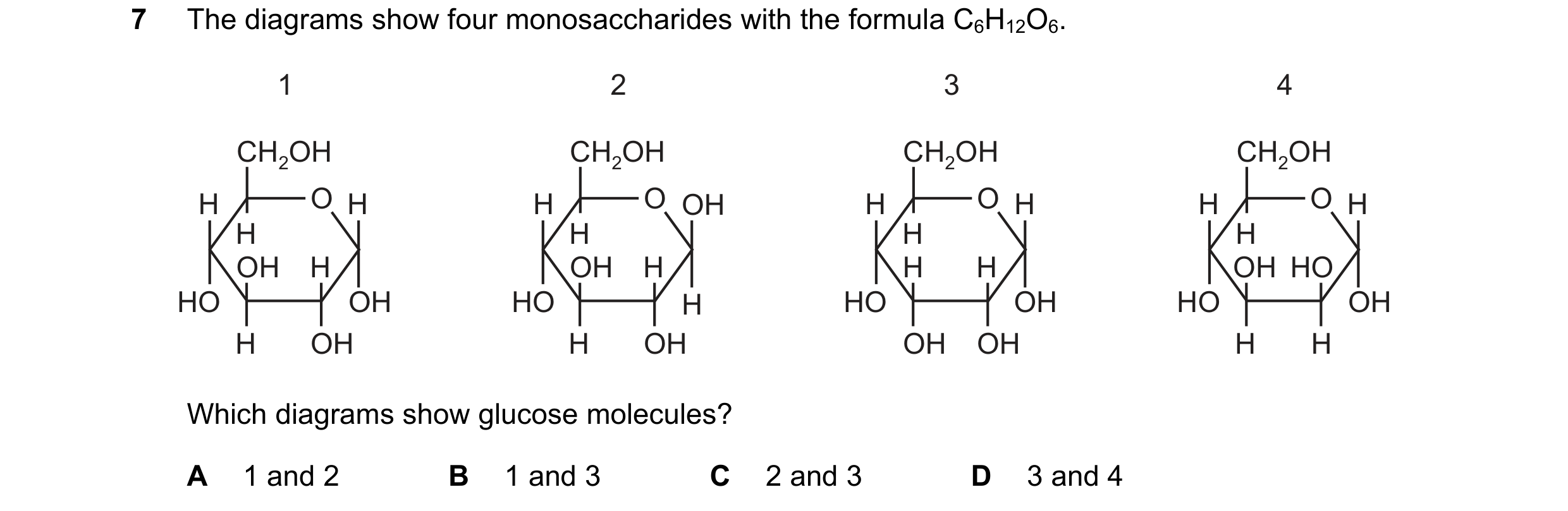
 50 / 111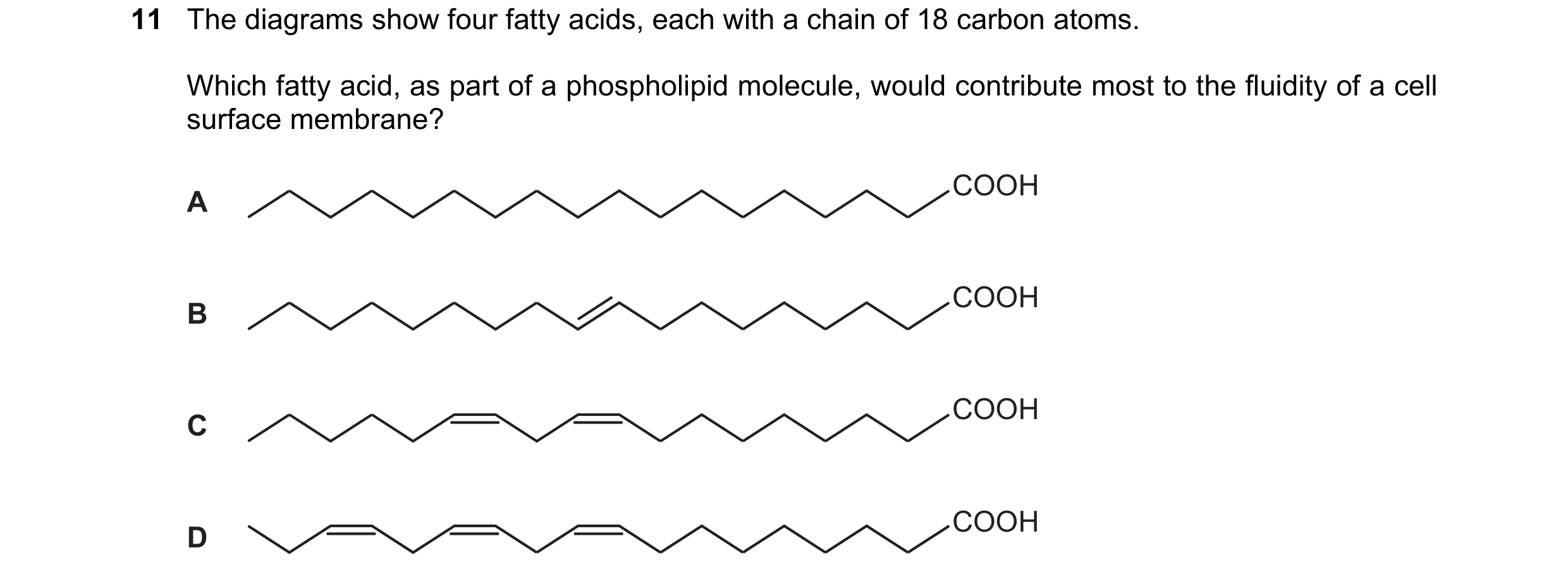
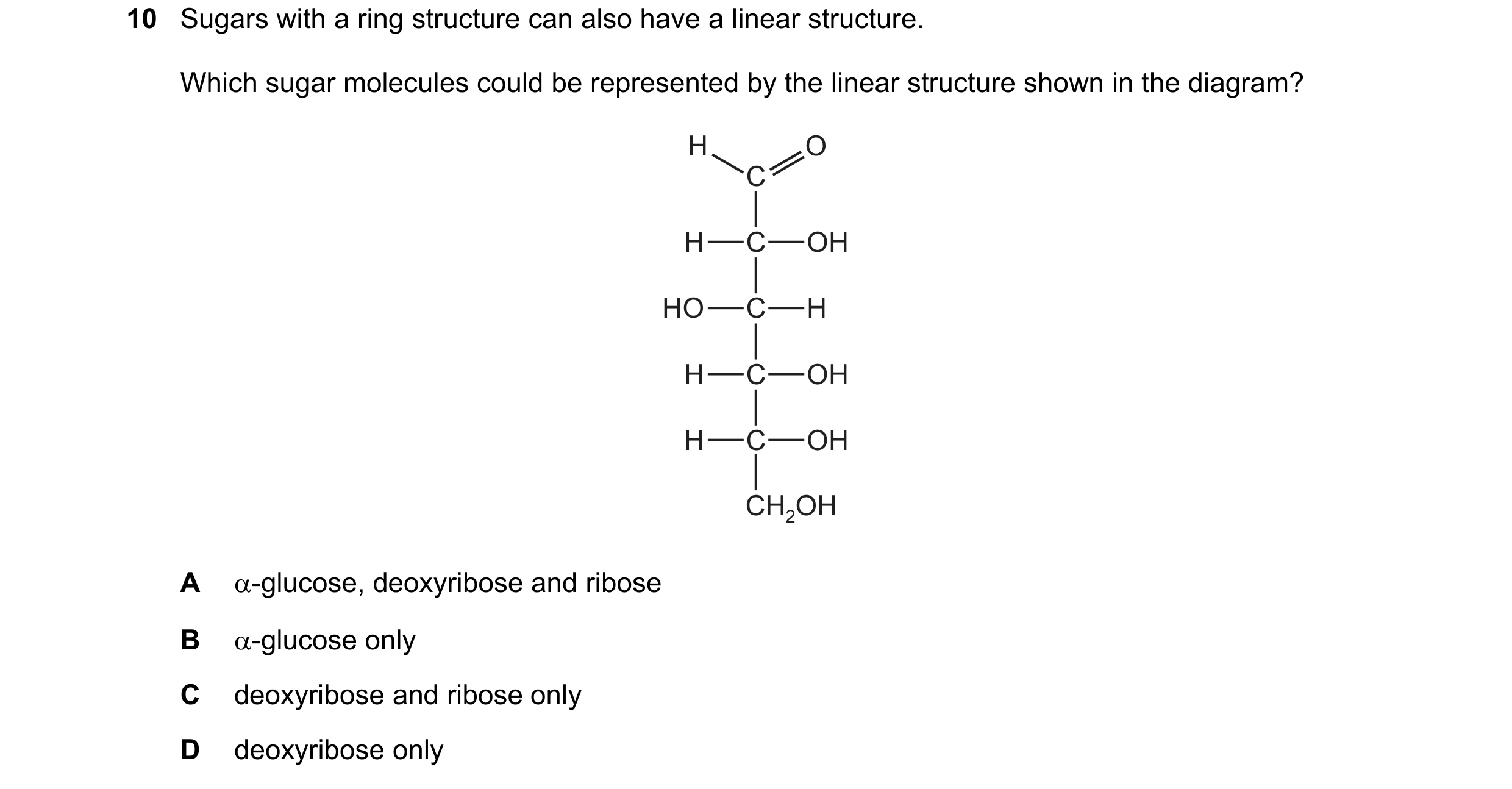 51 / 111

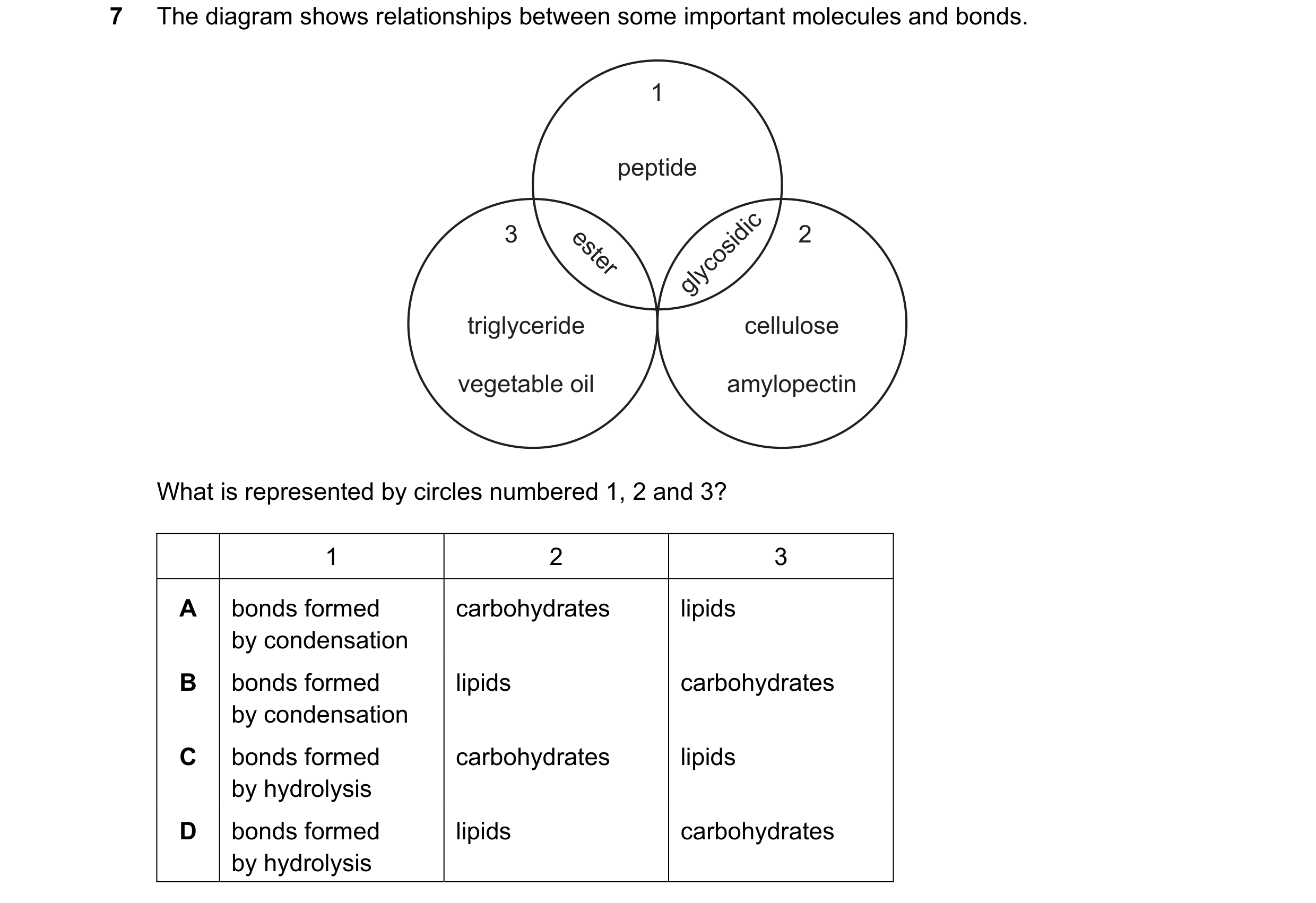
 52 / 111
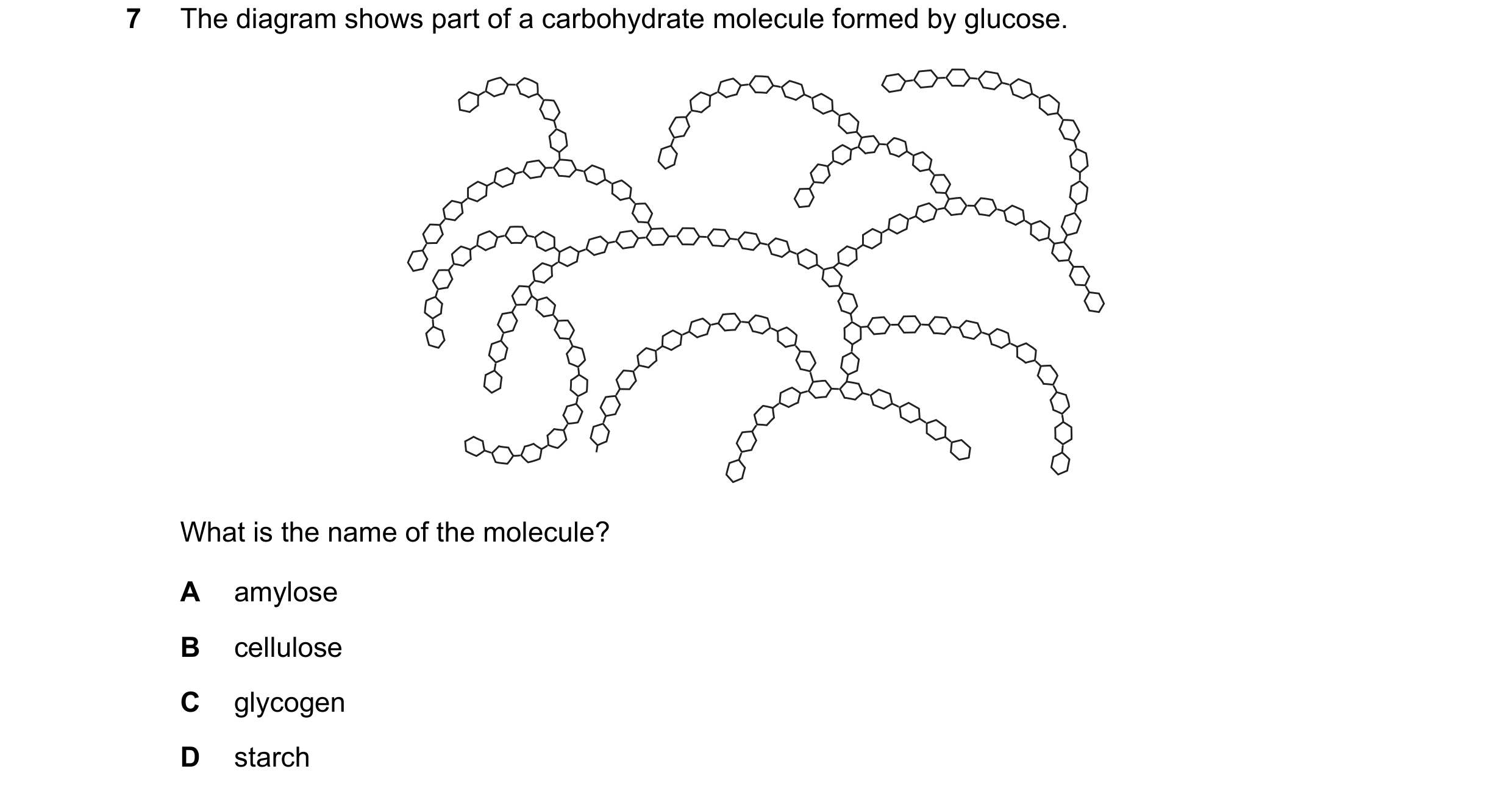
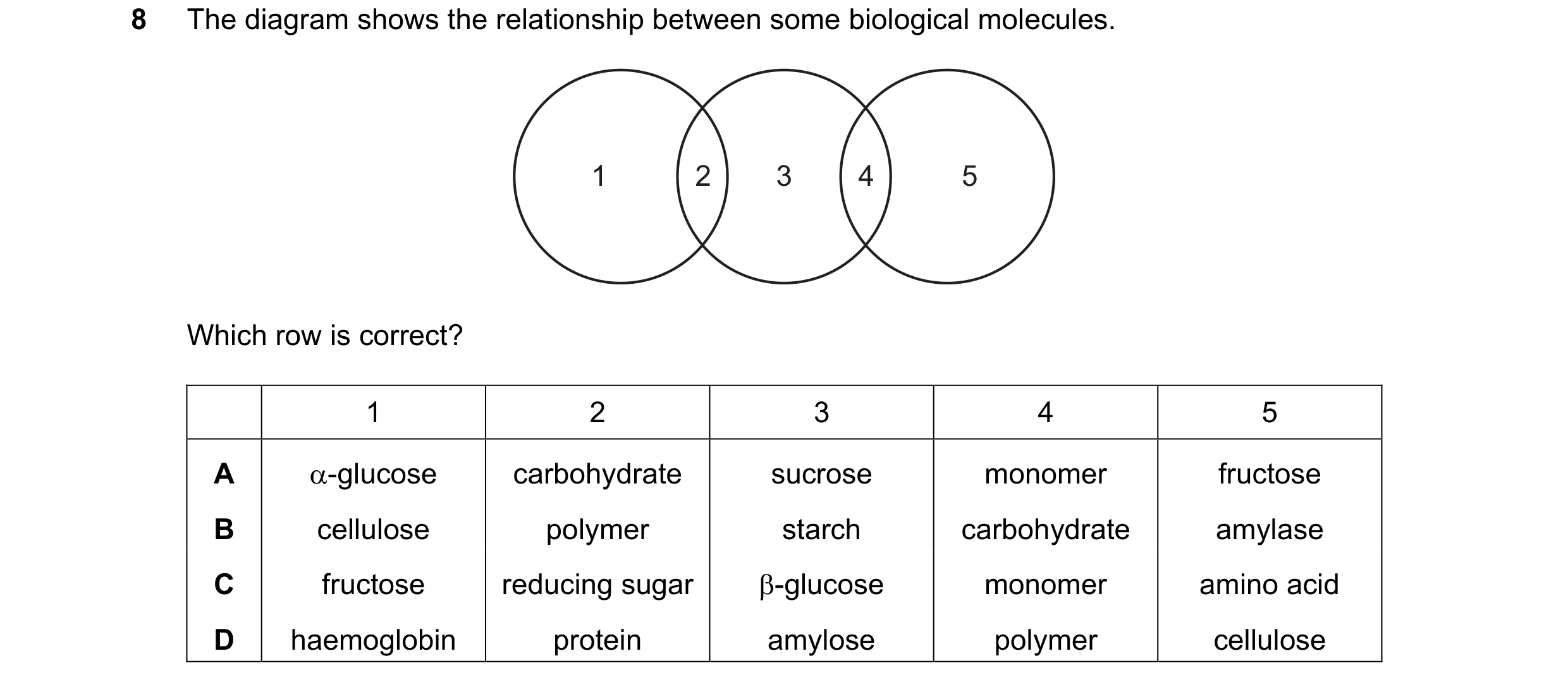 53 / 111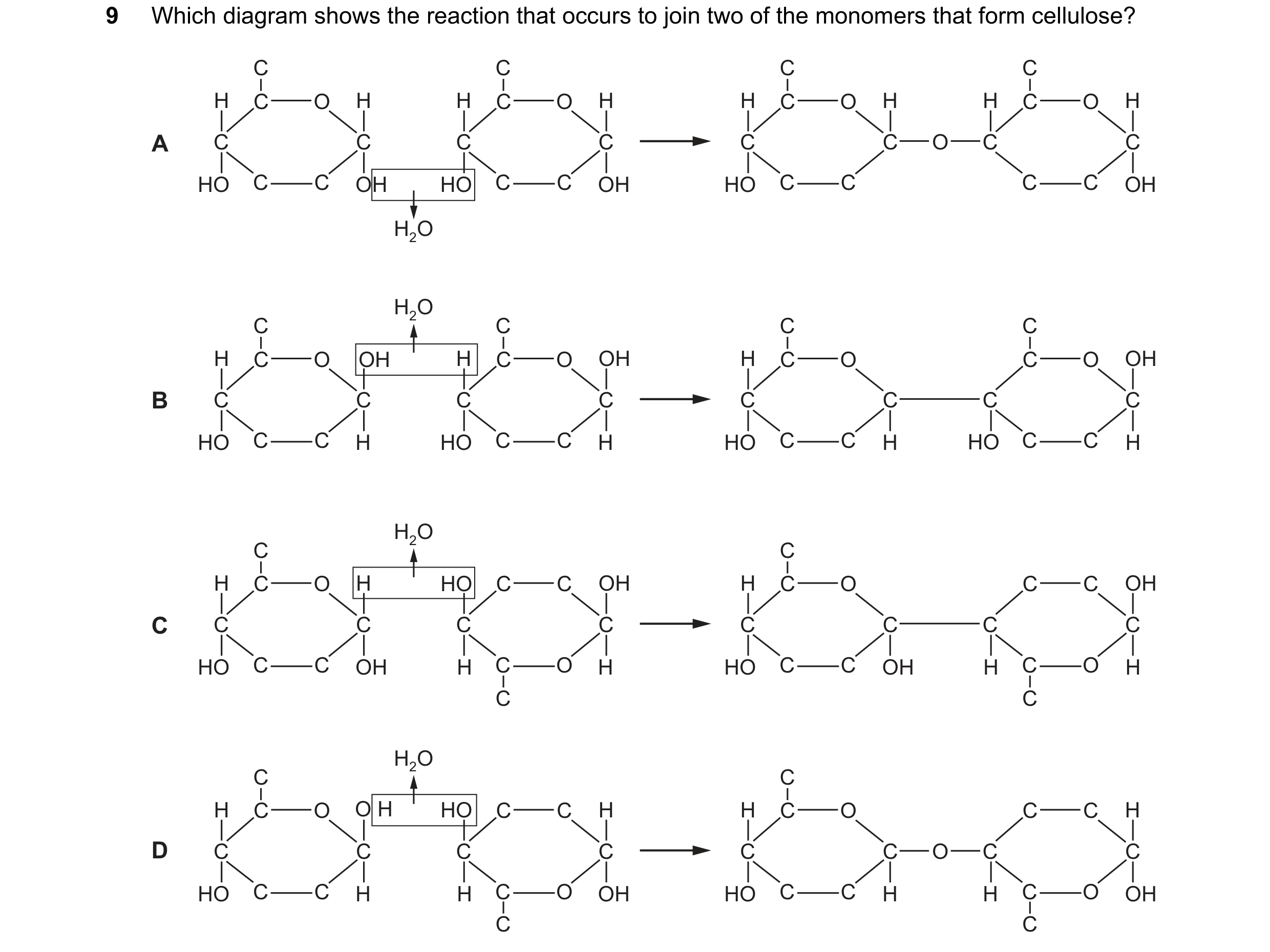

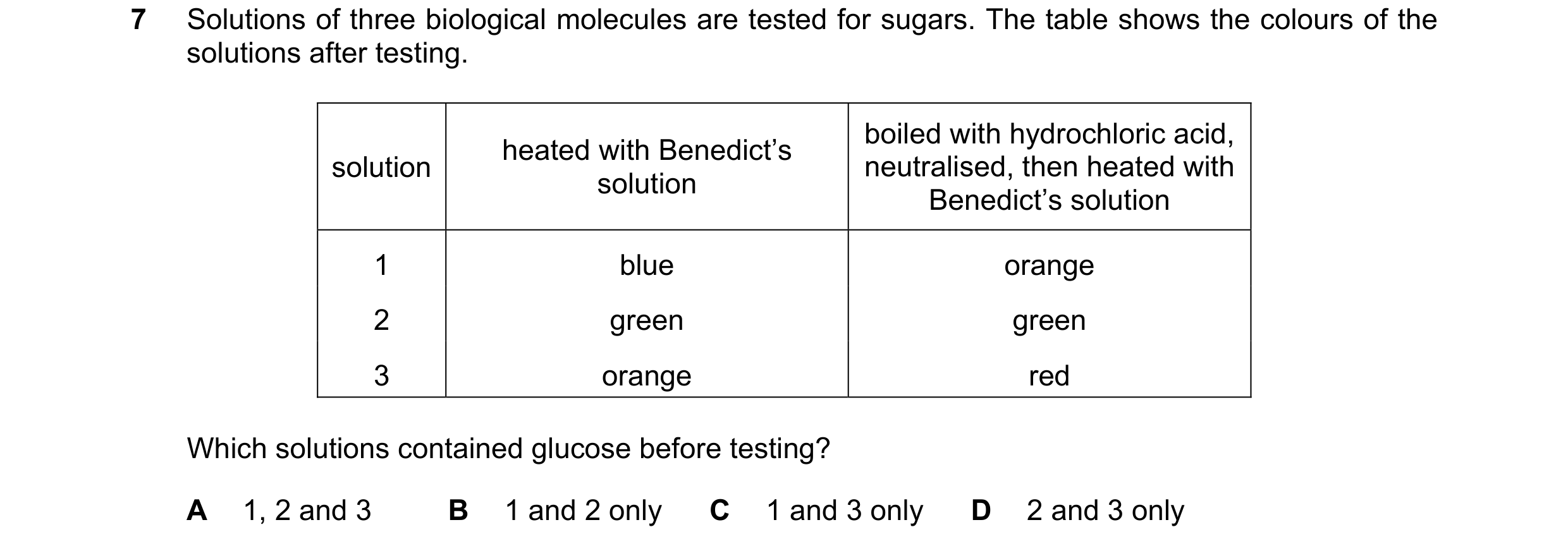 54 / 111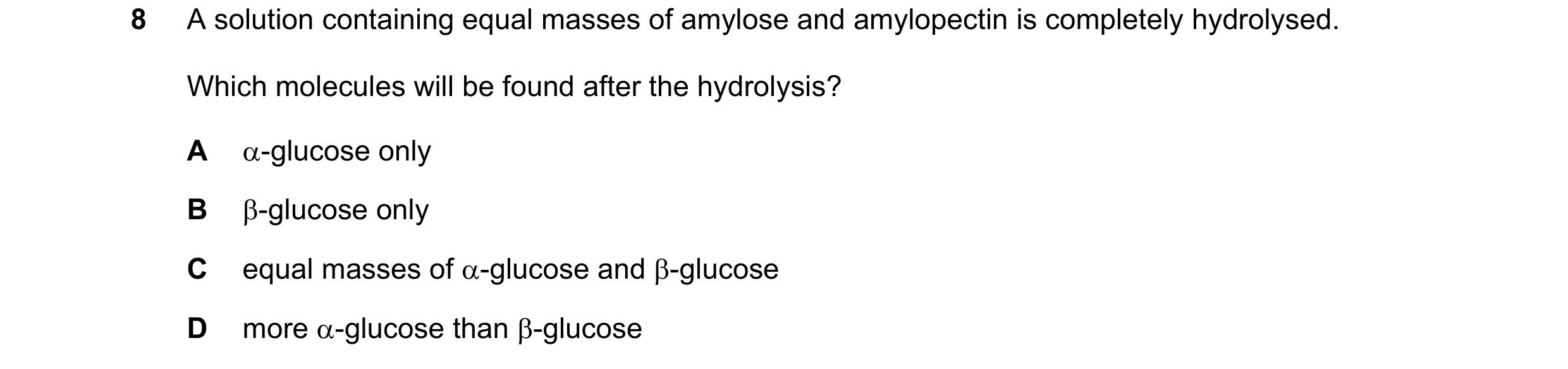
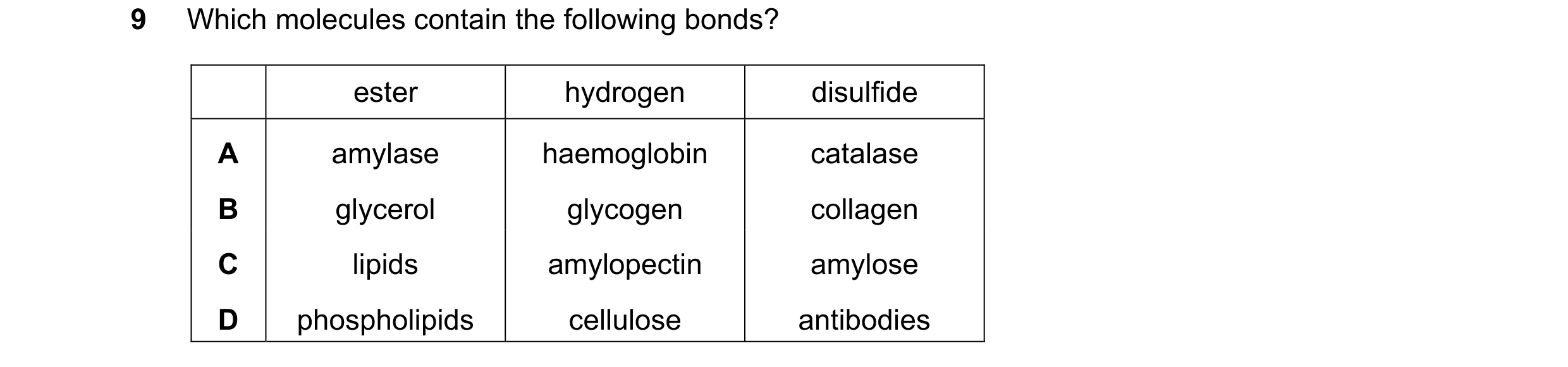

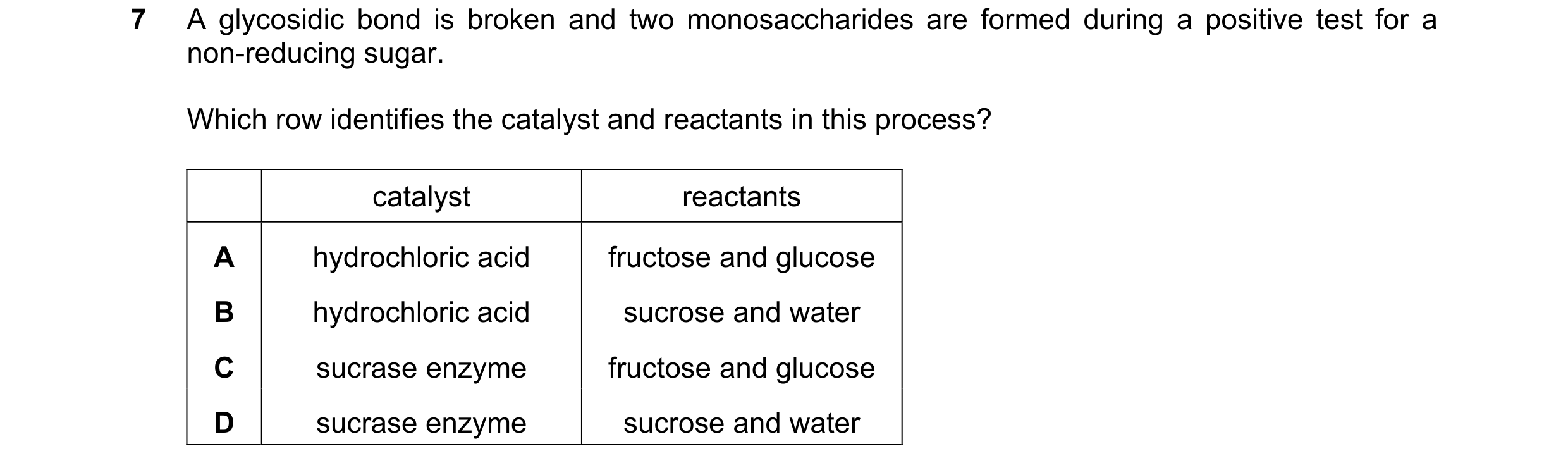
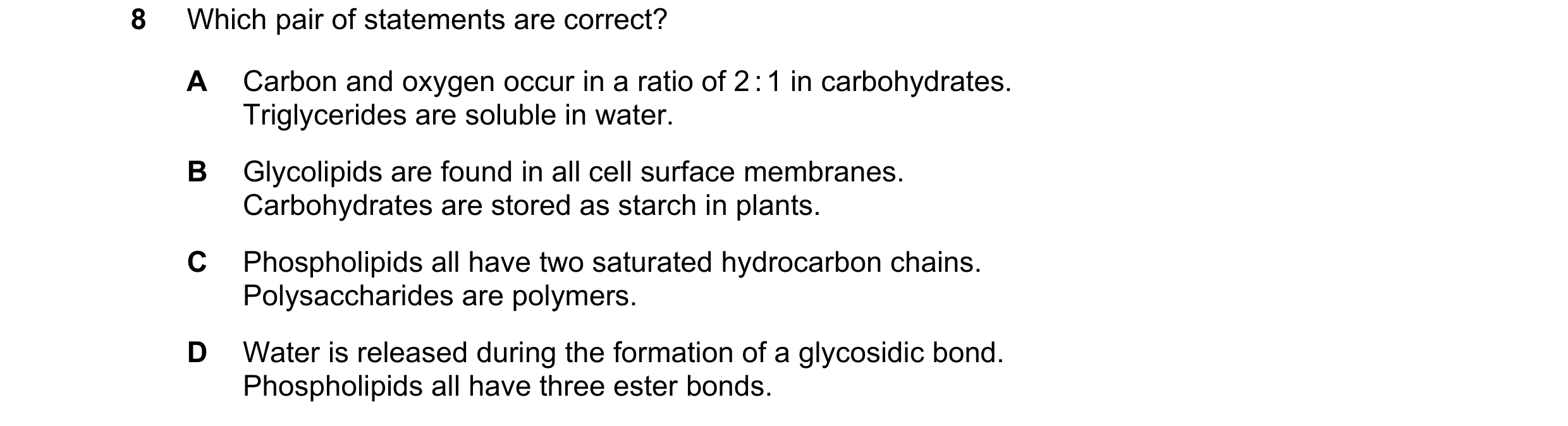 55 / 111
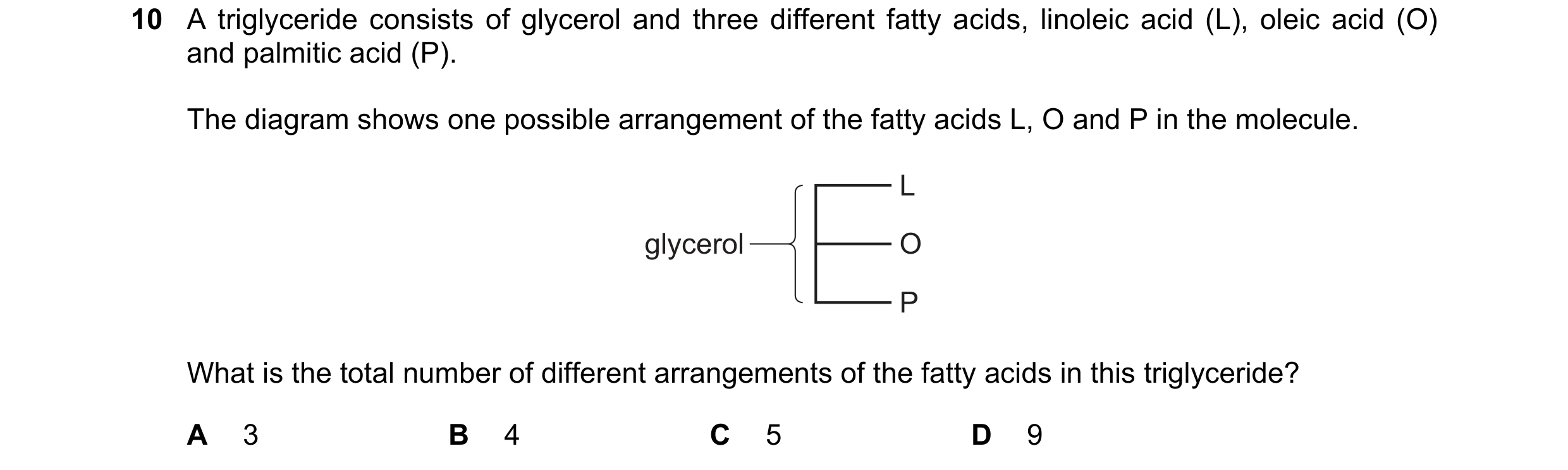
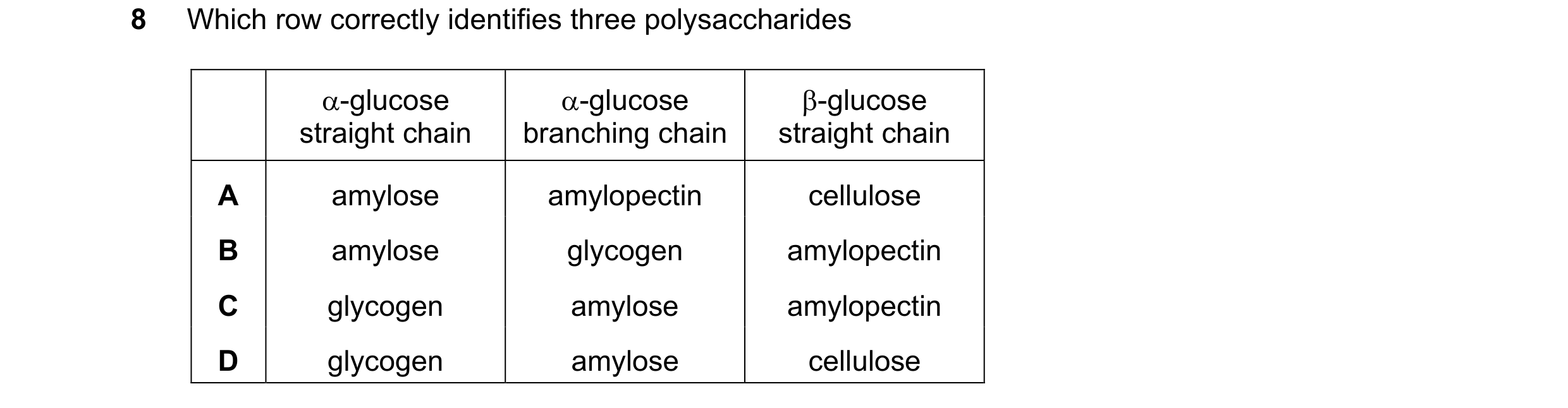
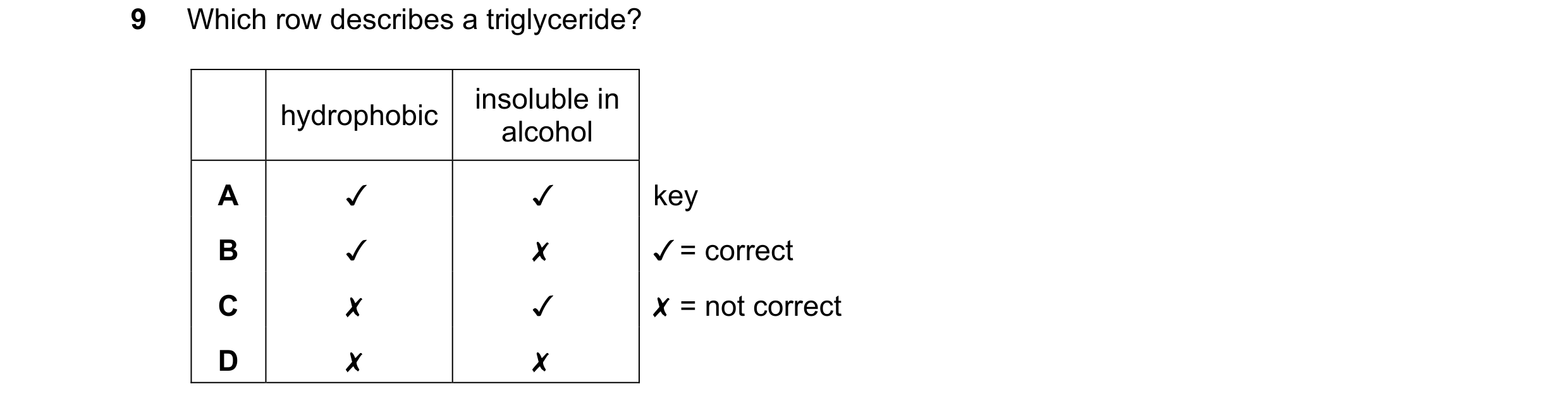 56 / 111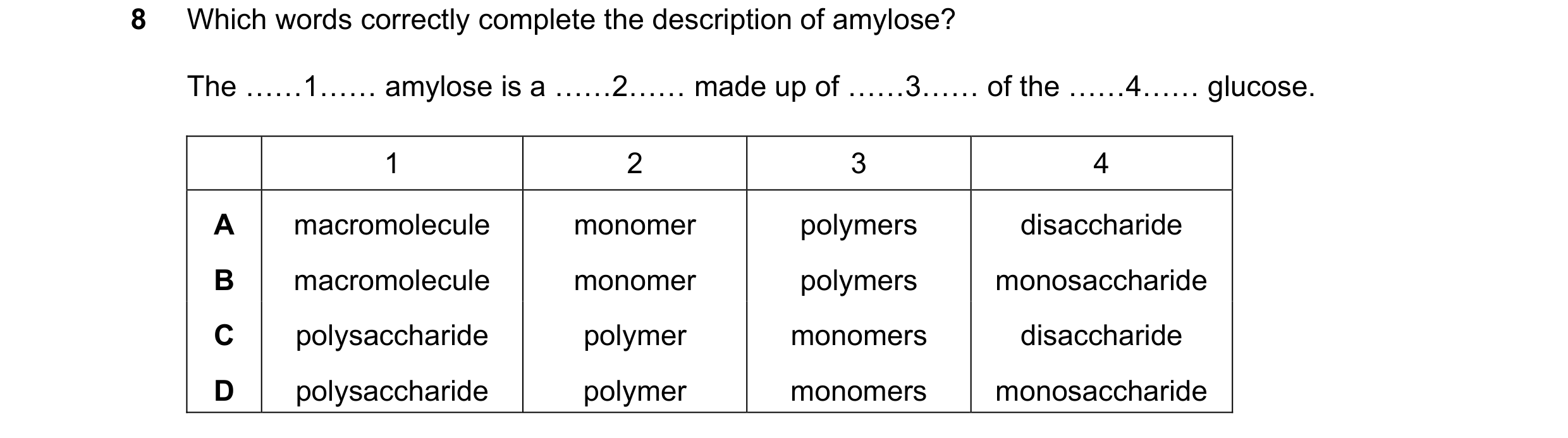
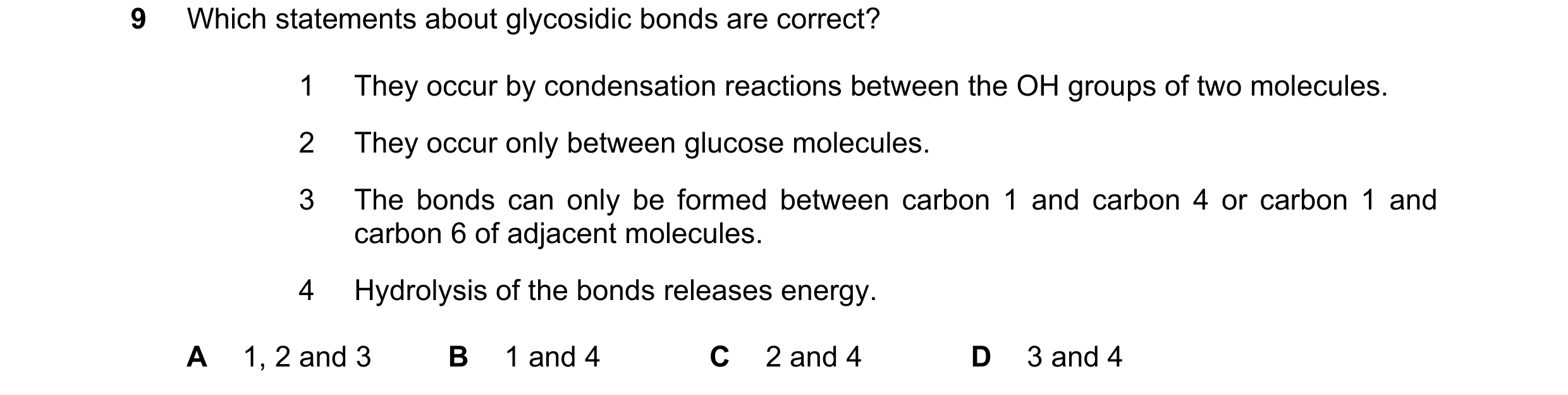

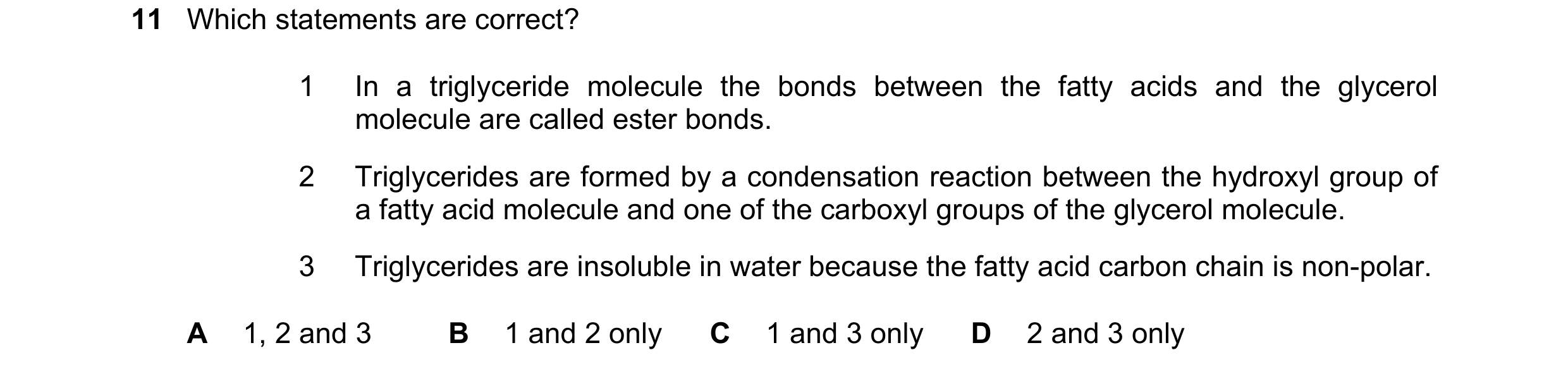 57 / 111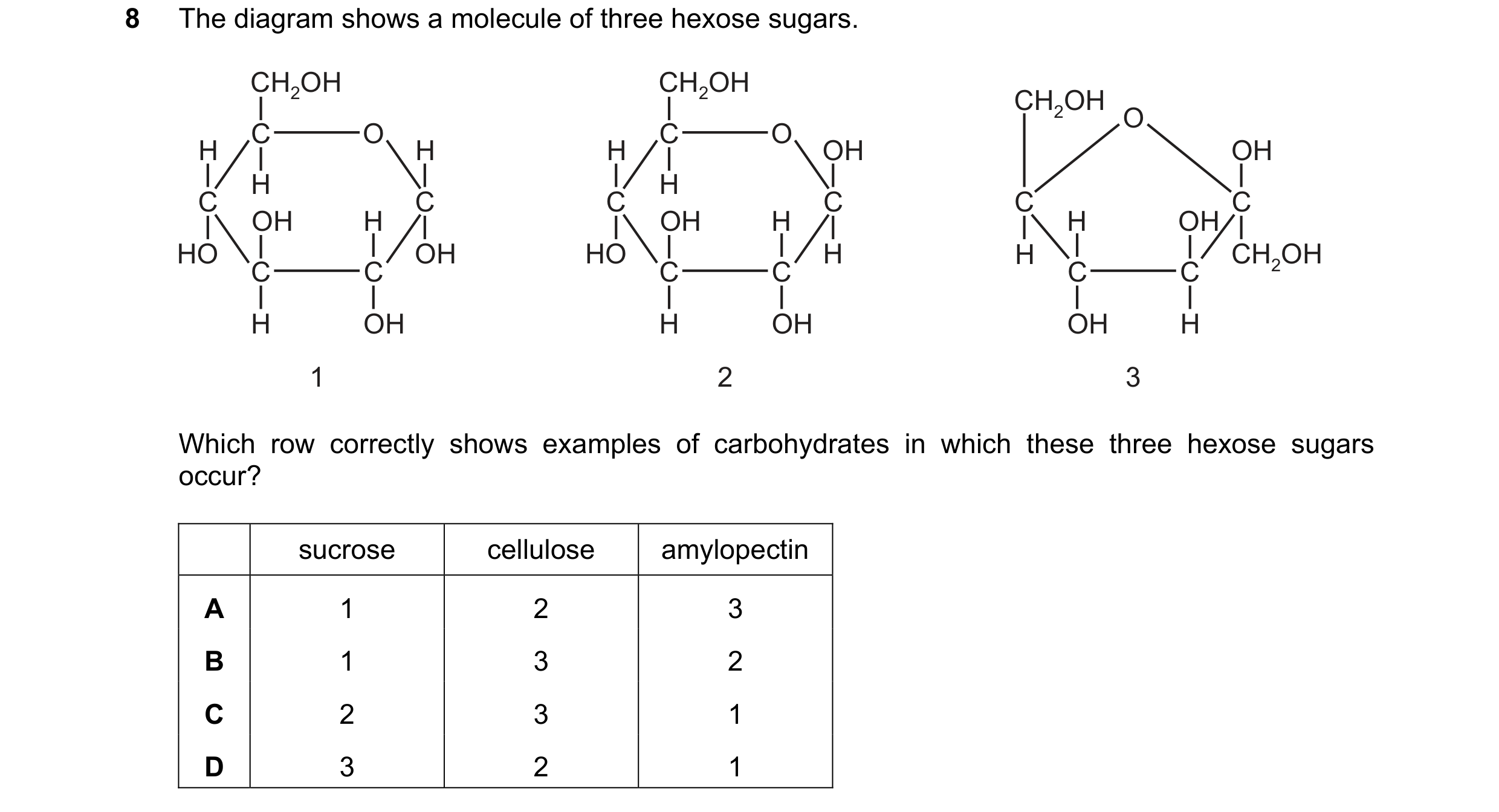

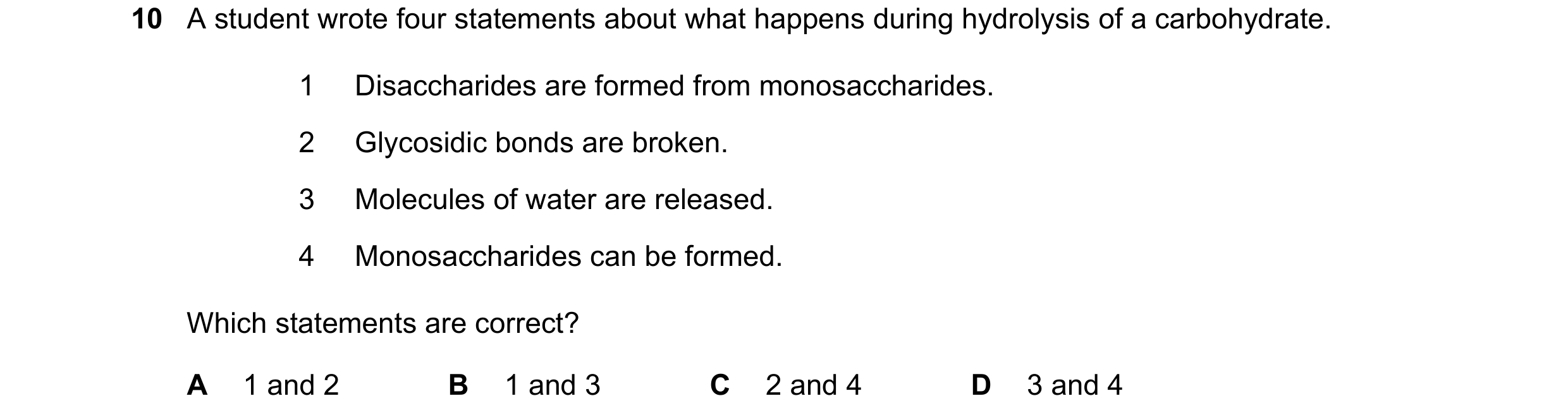 58 / 111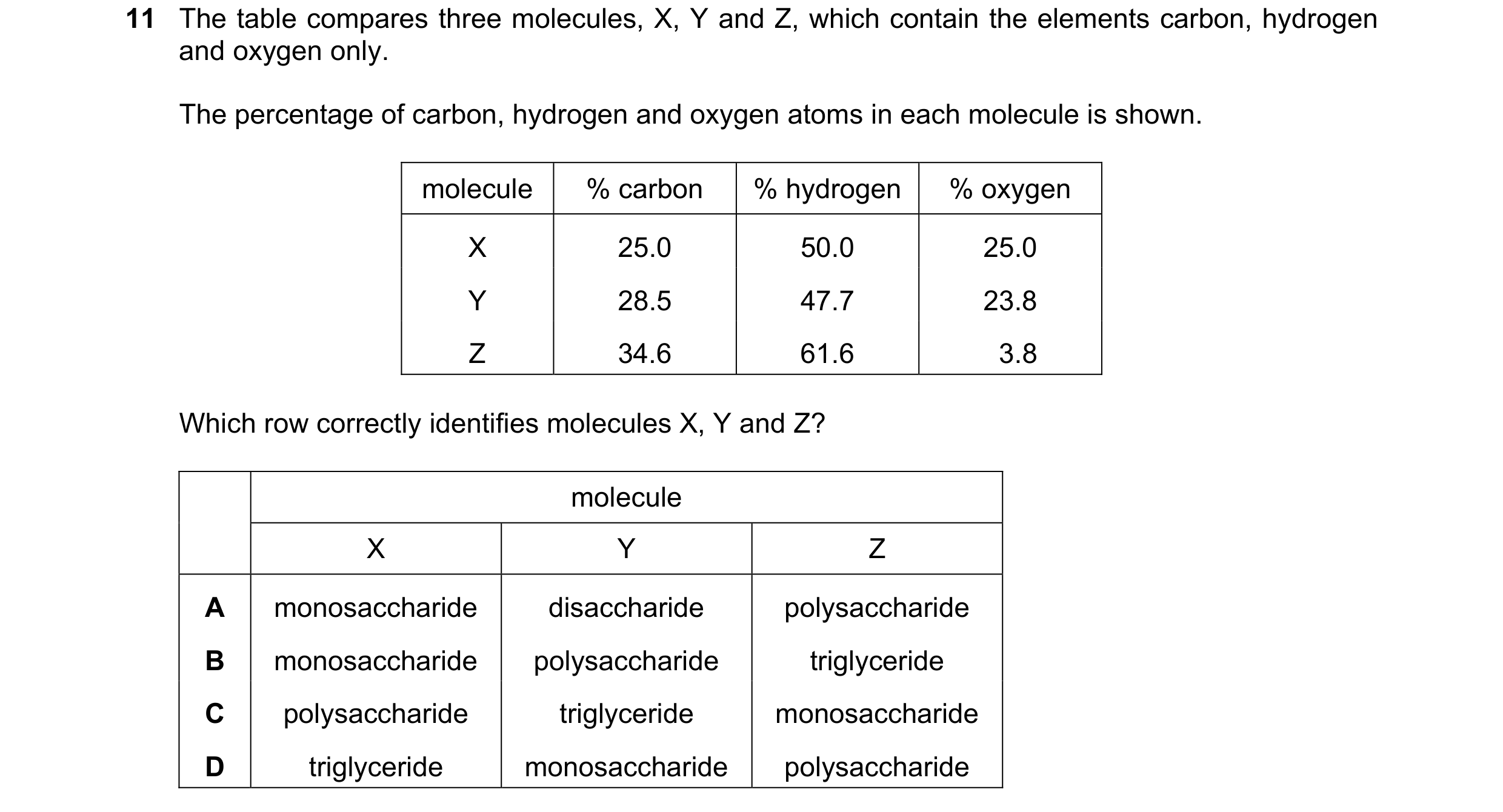
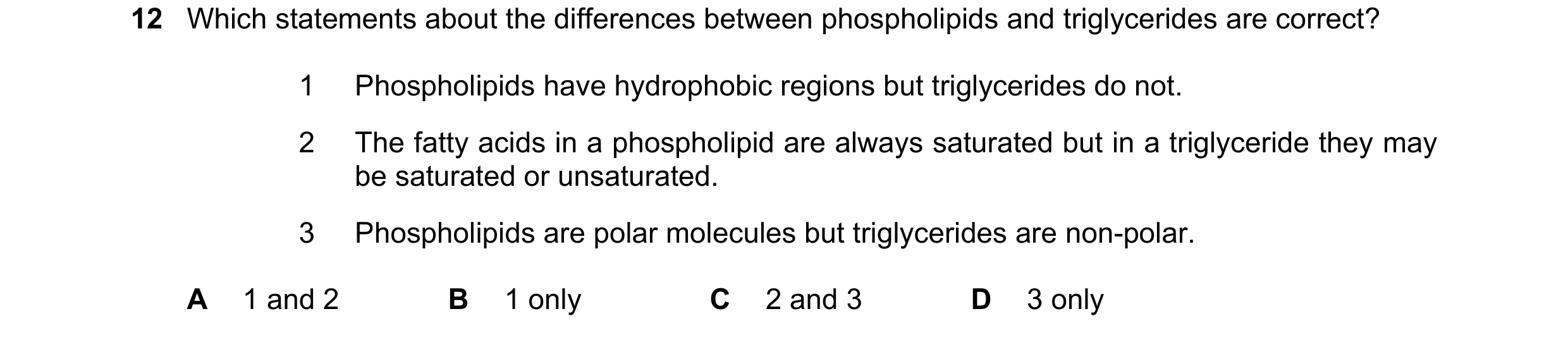
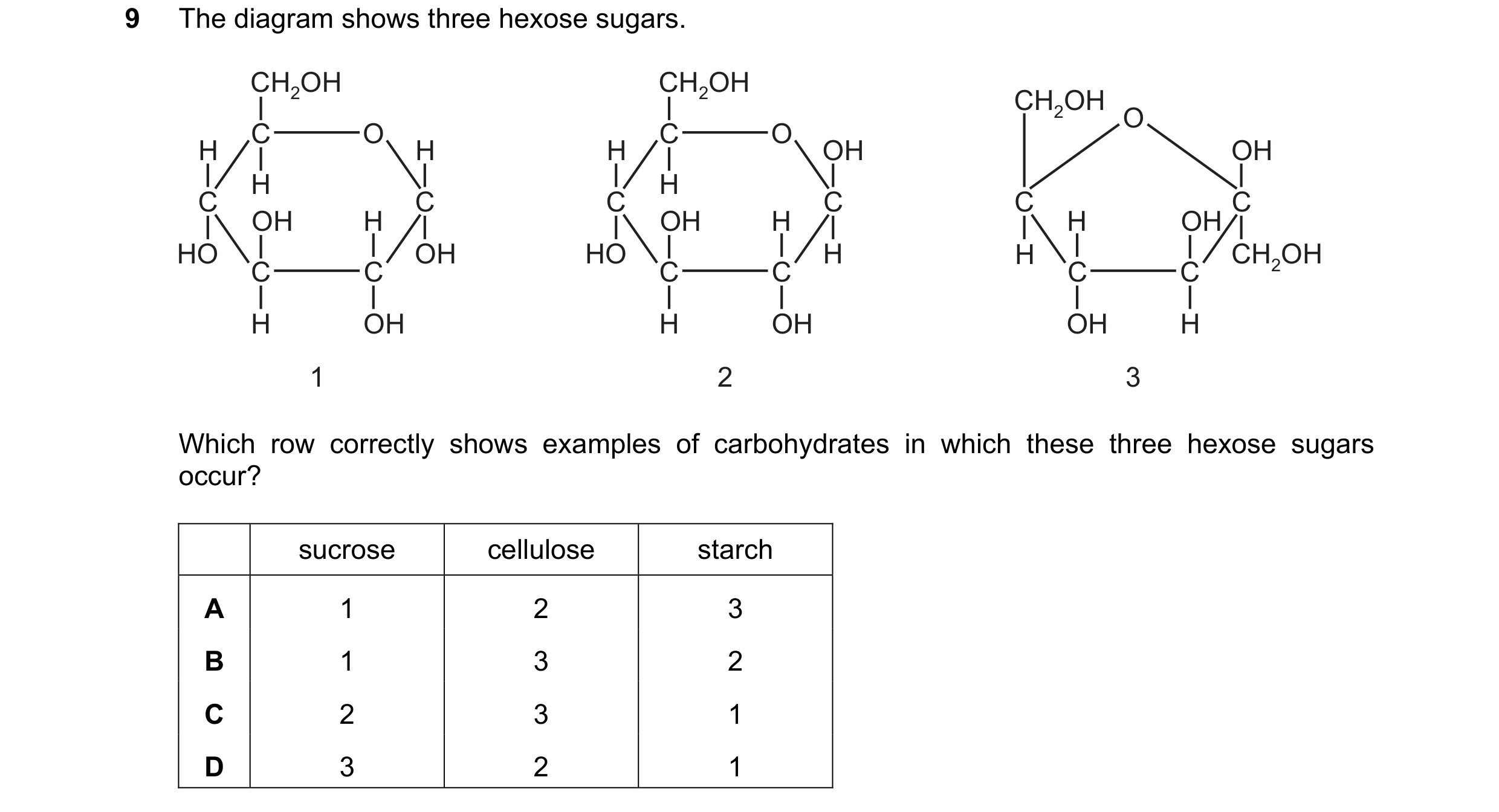 59 / 111
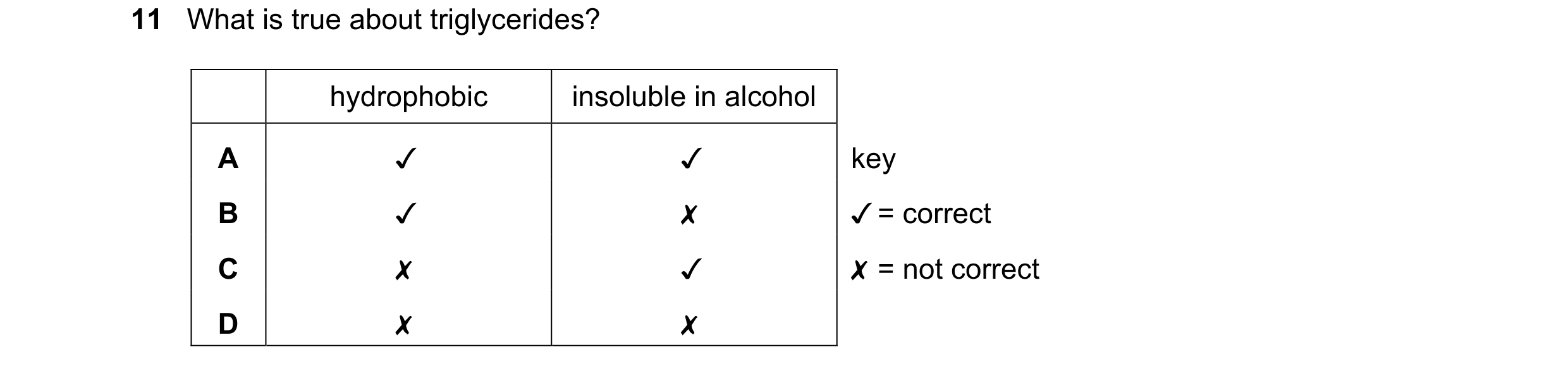
 60 / 111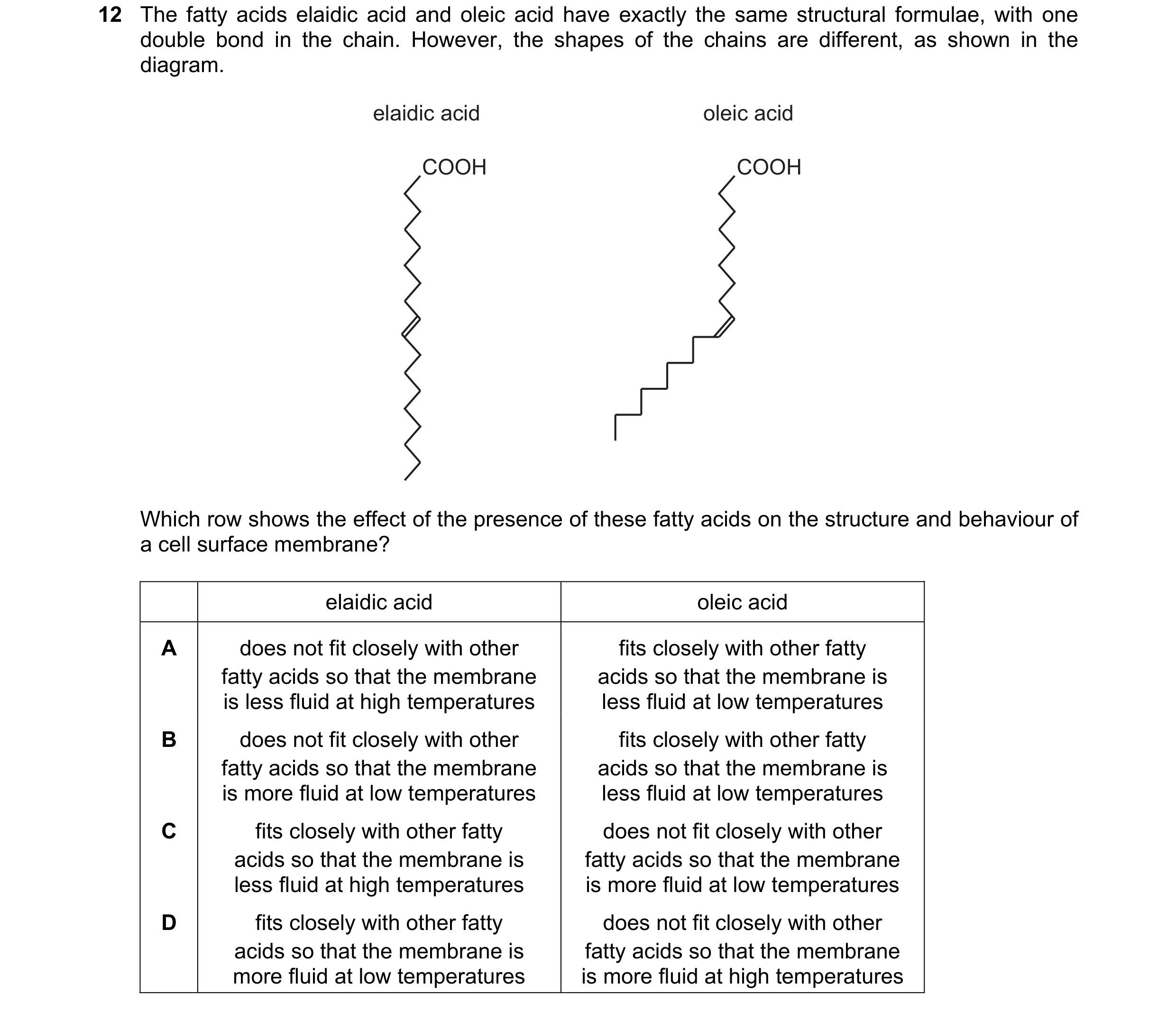
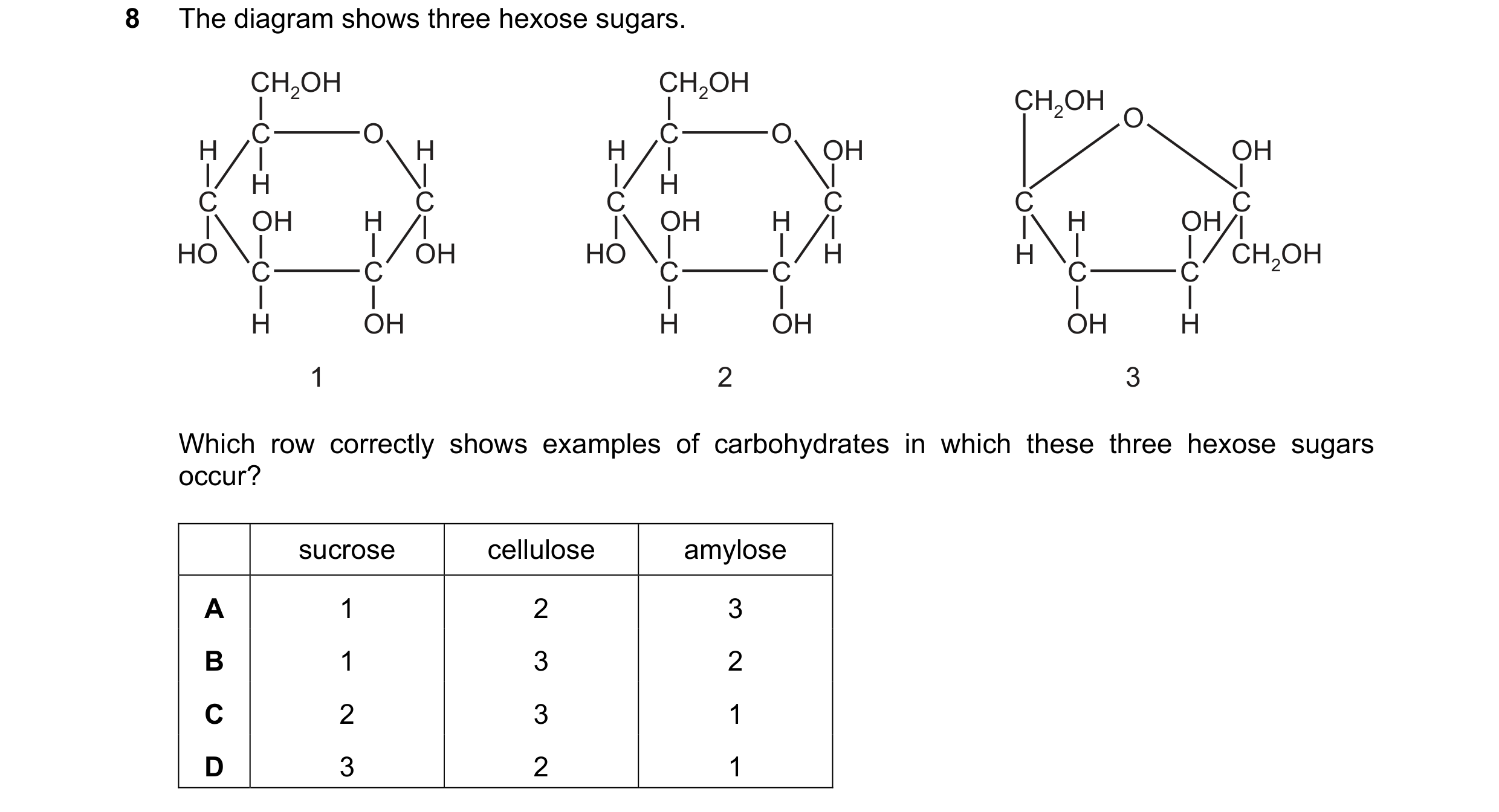 61 / 111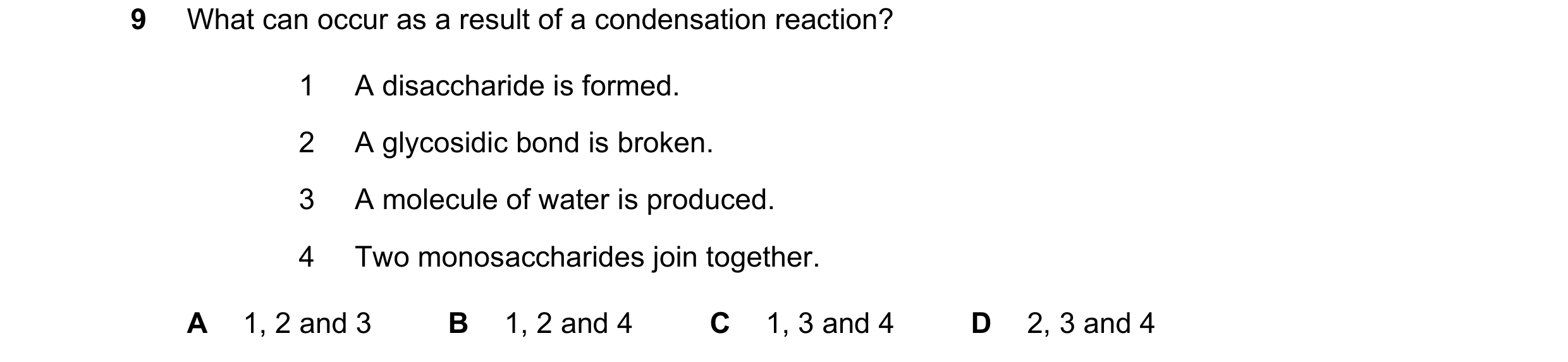
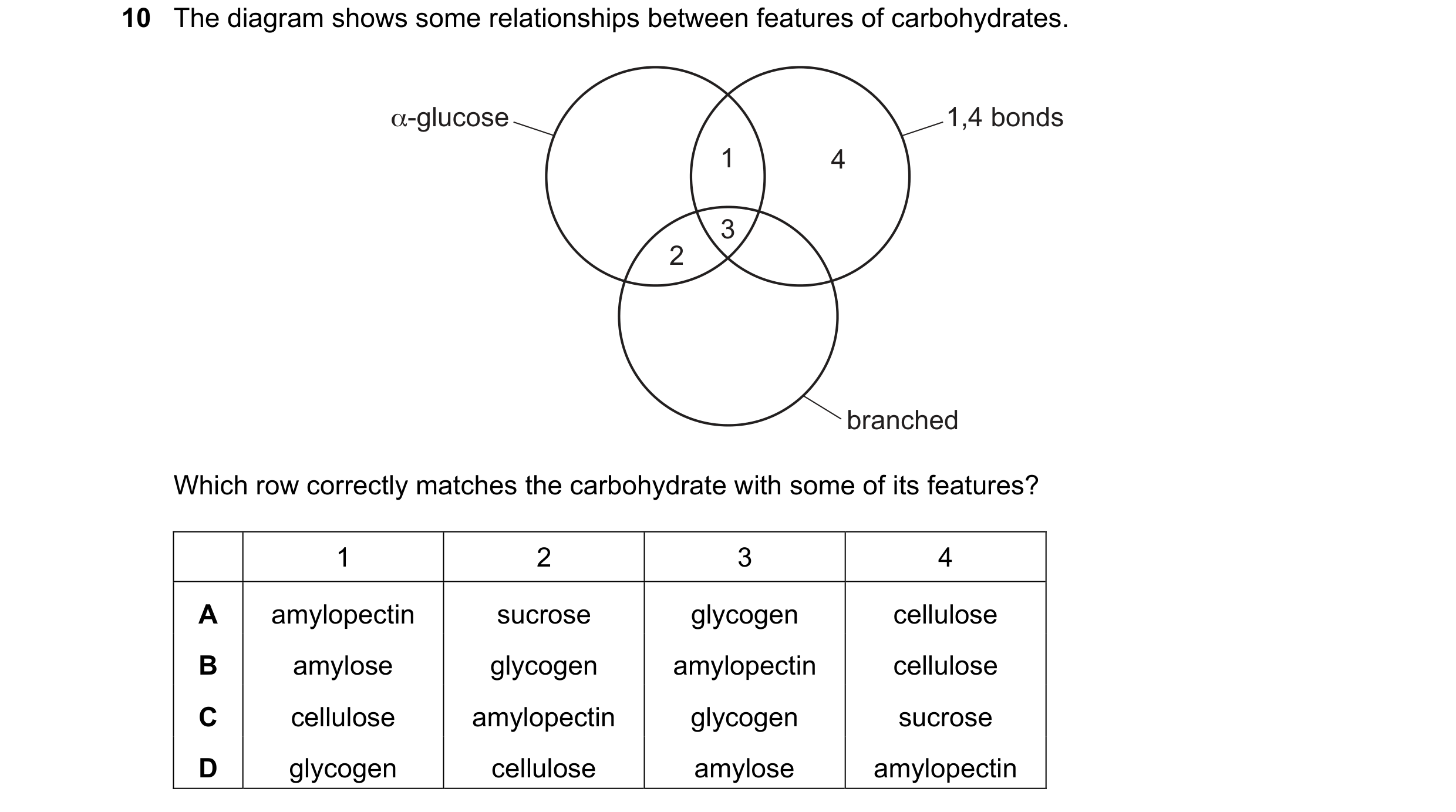
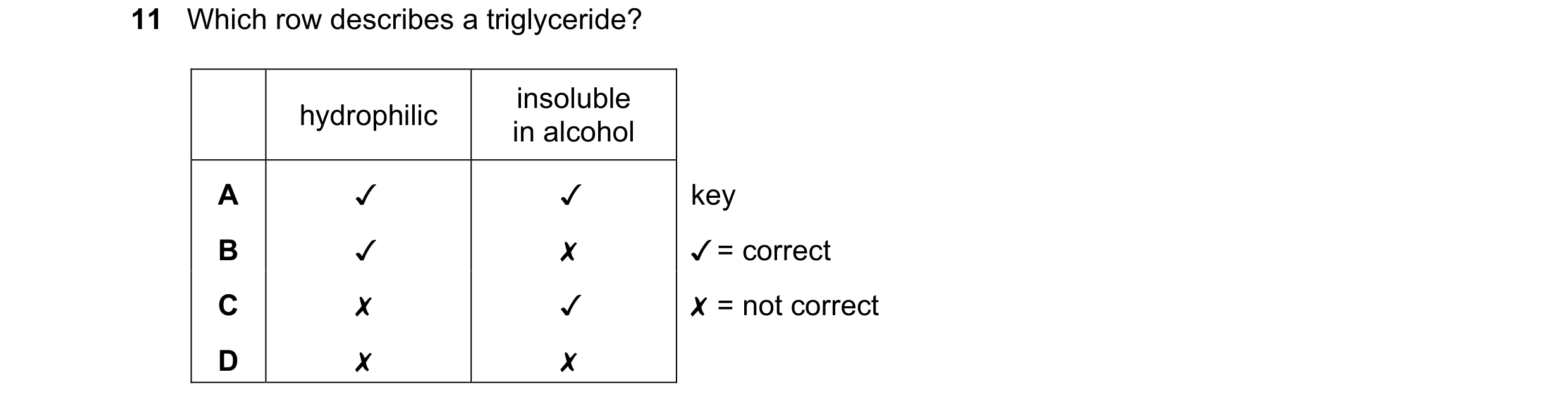 62 / 111
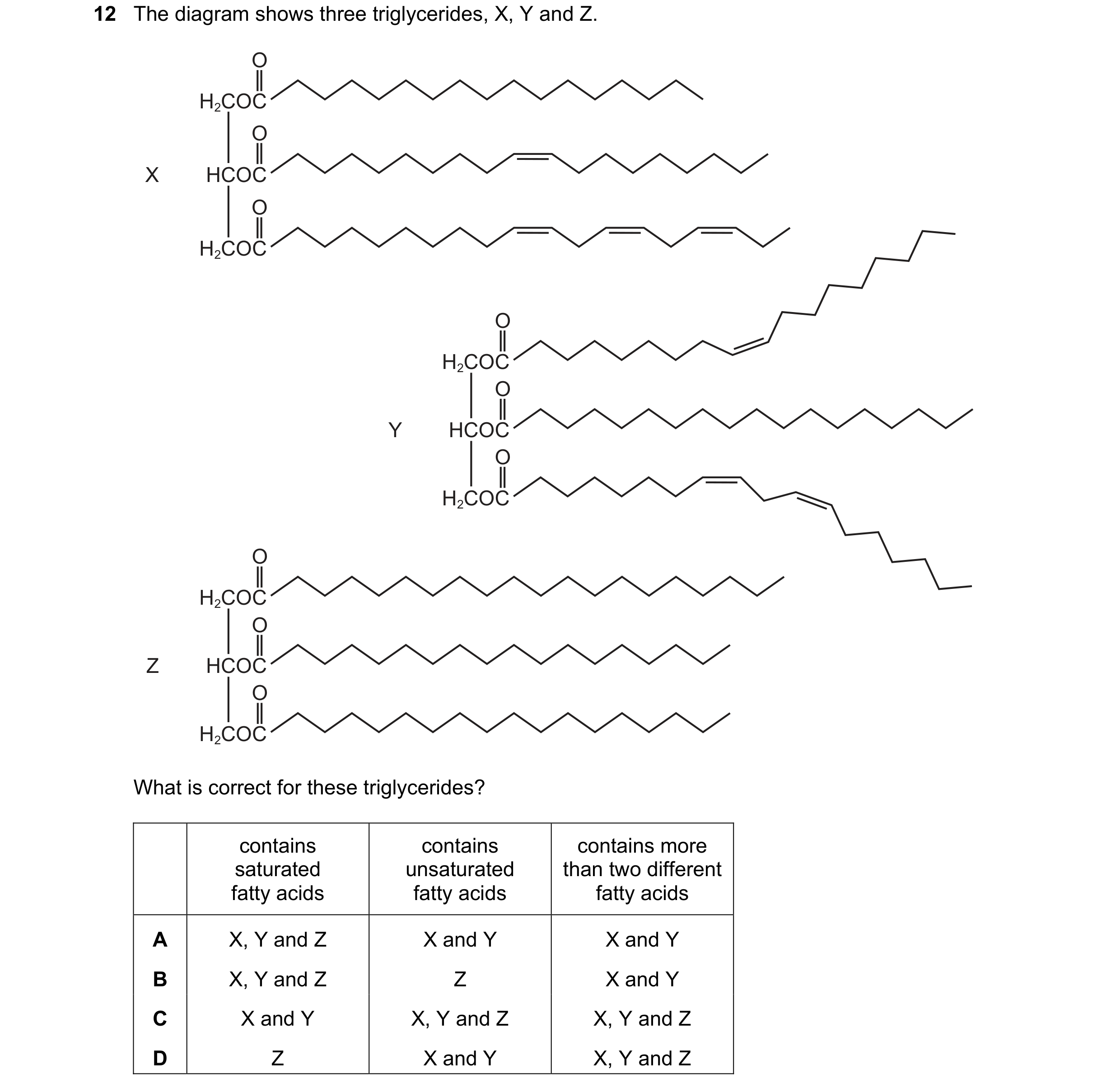 63 / 111
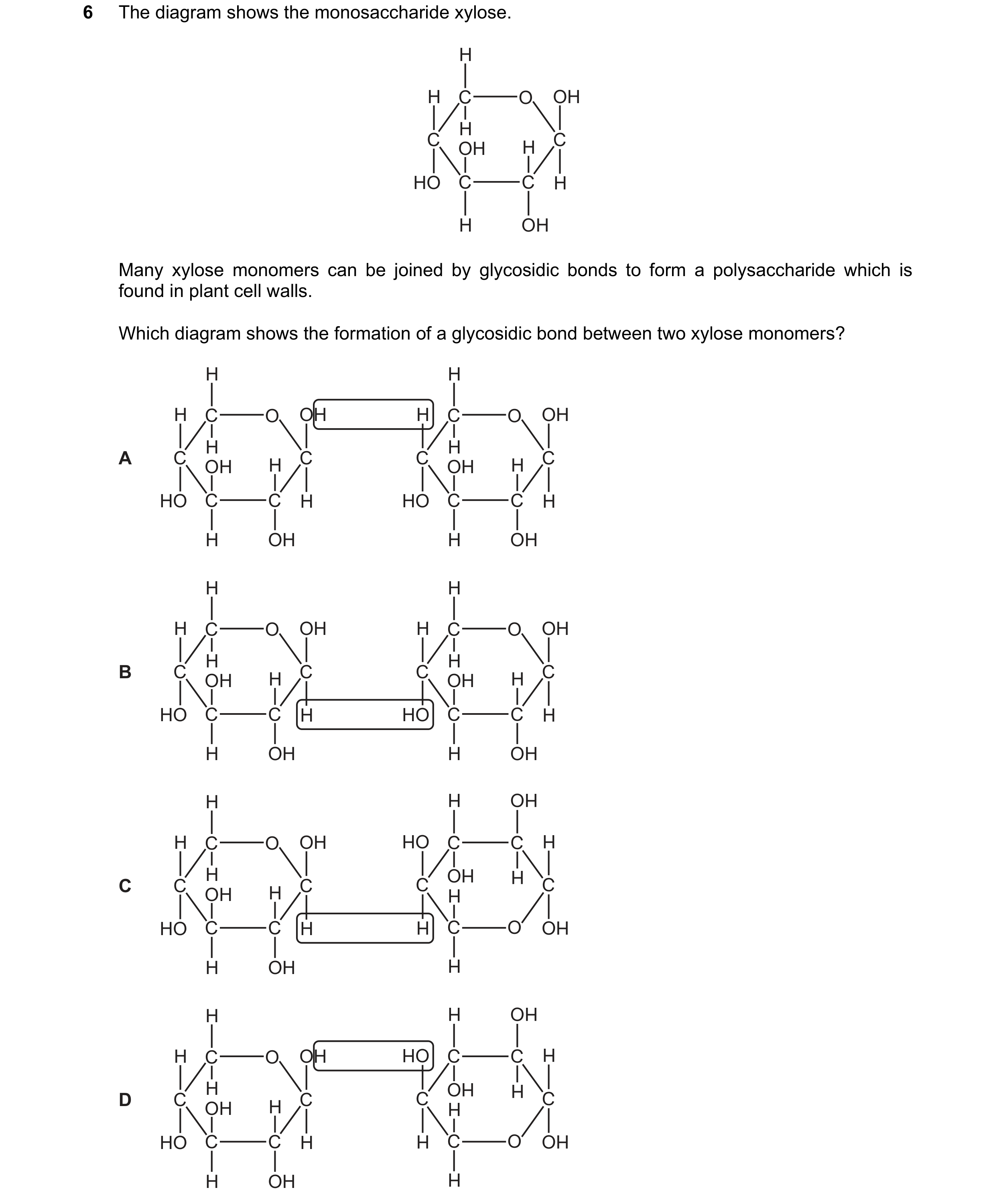 64 / 111
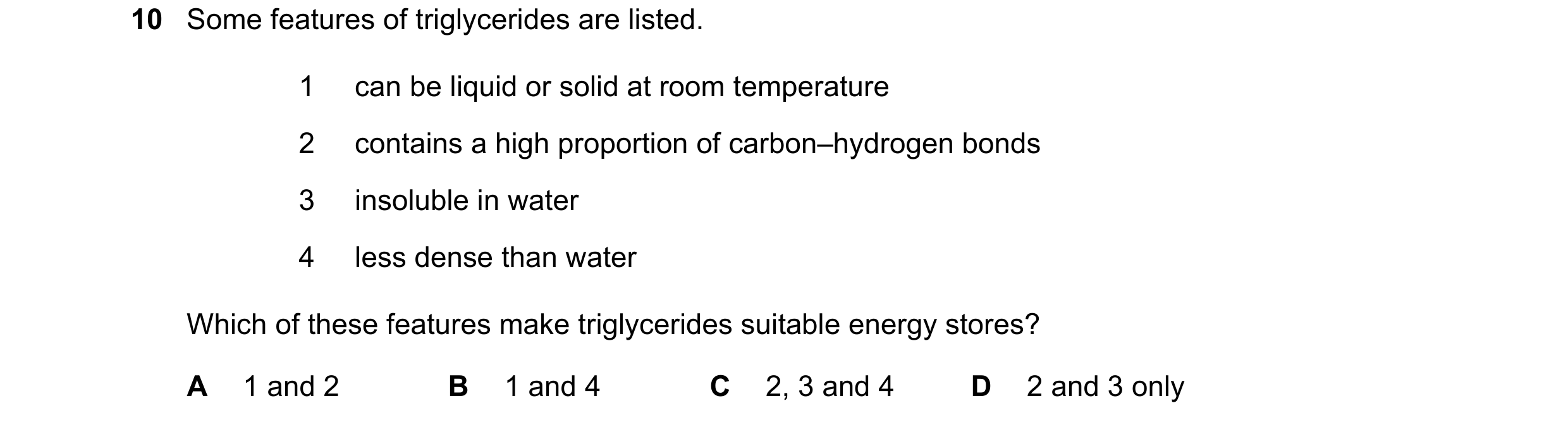
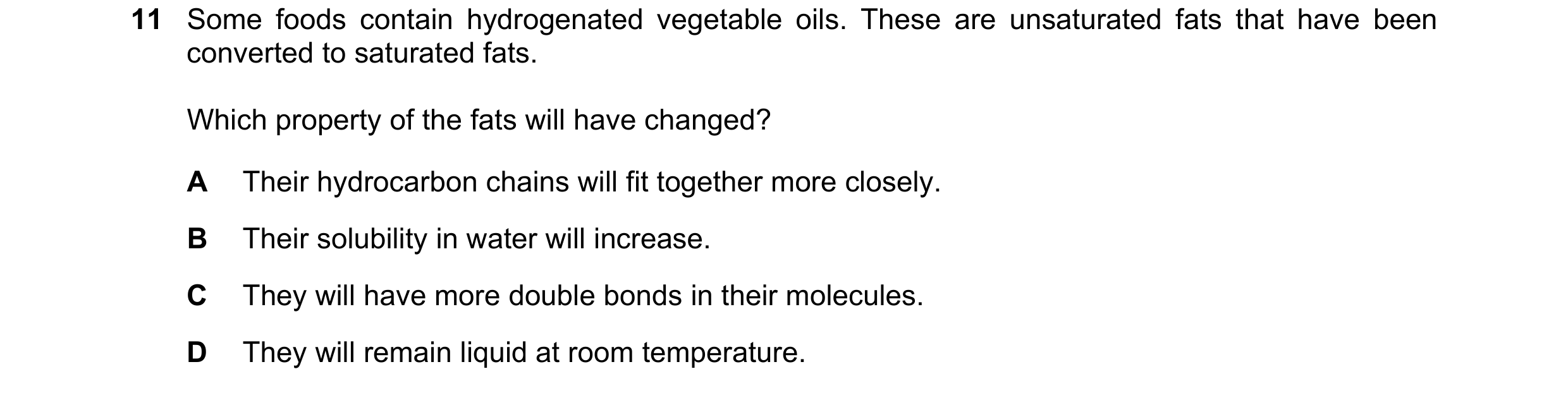
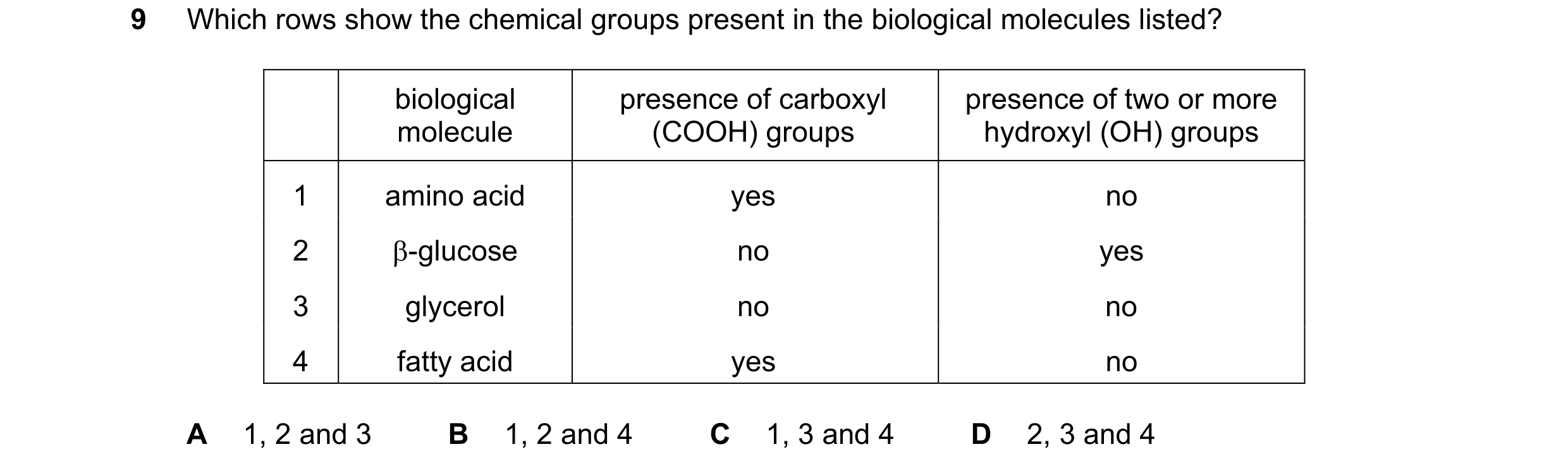 65 / 111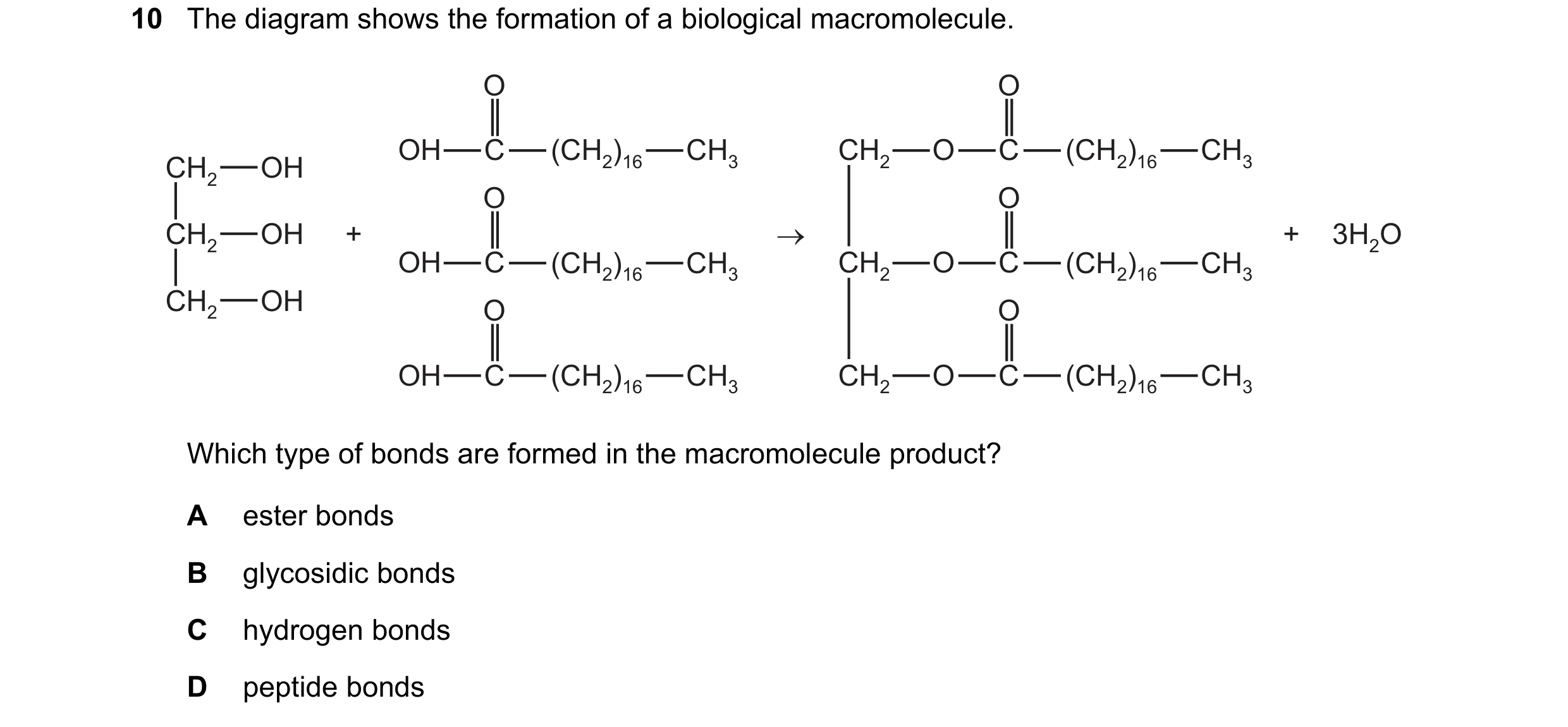


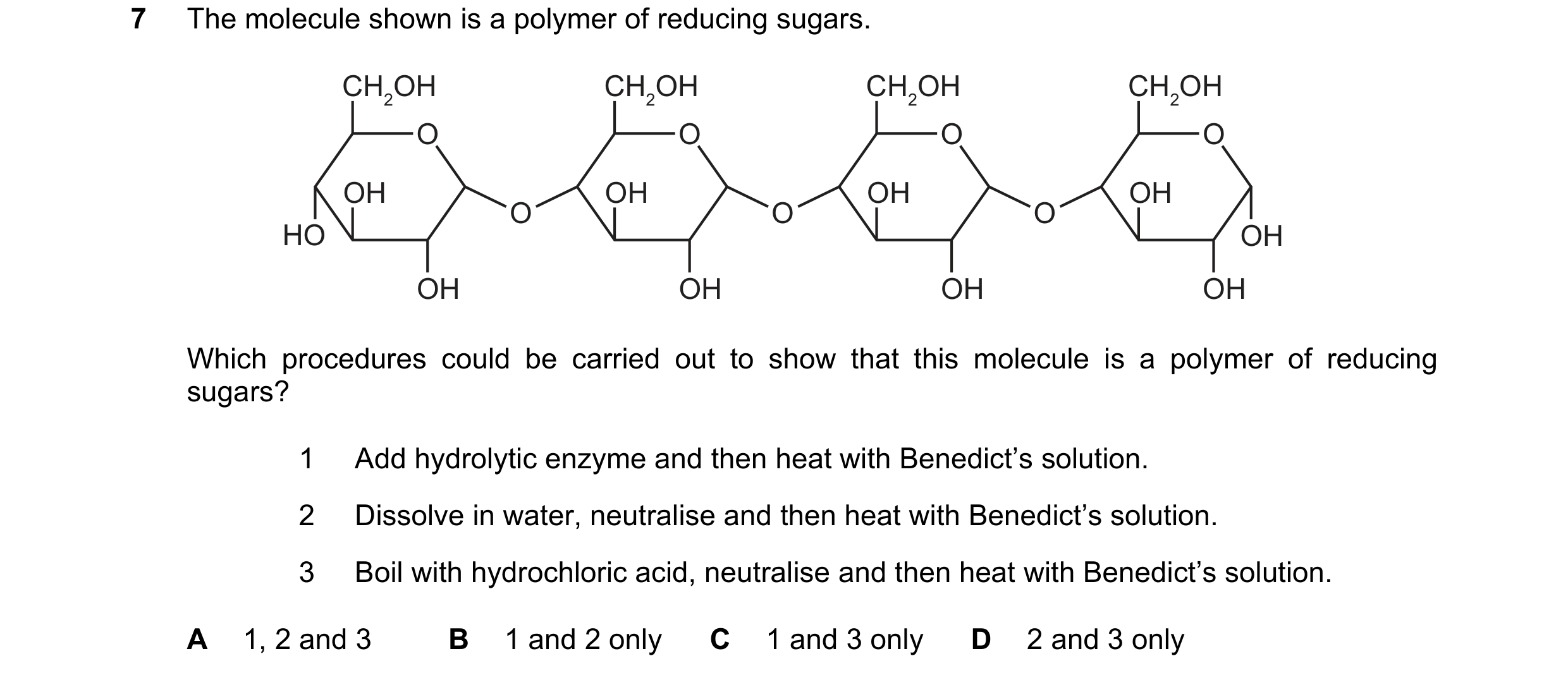 66 / 111
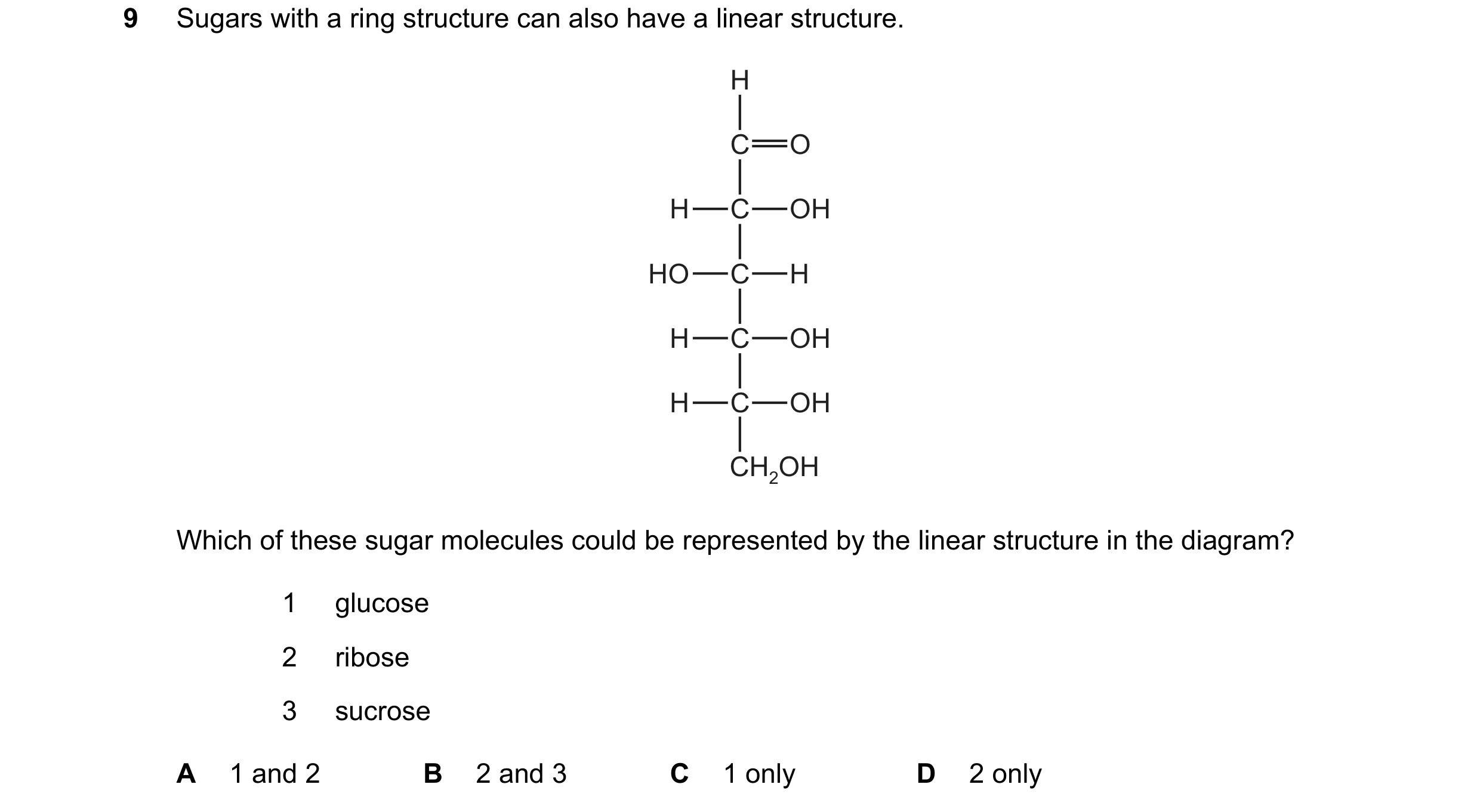
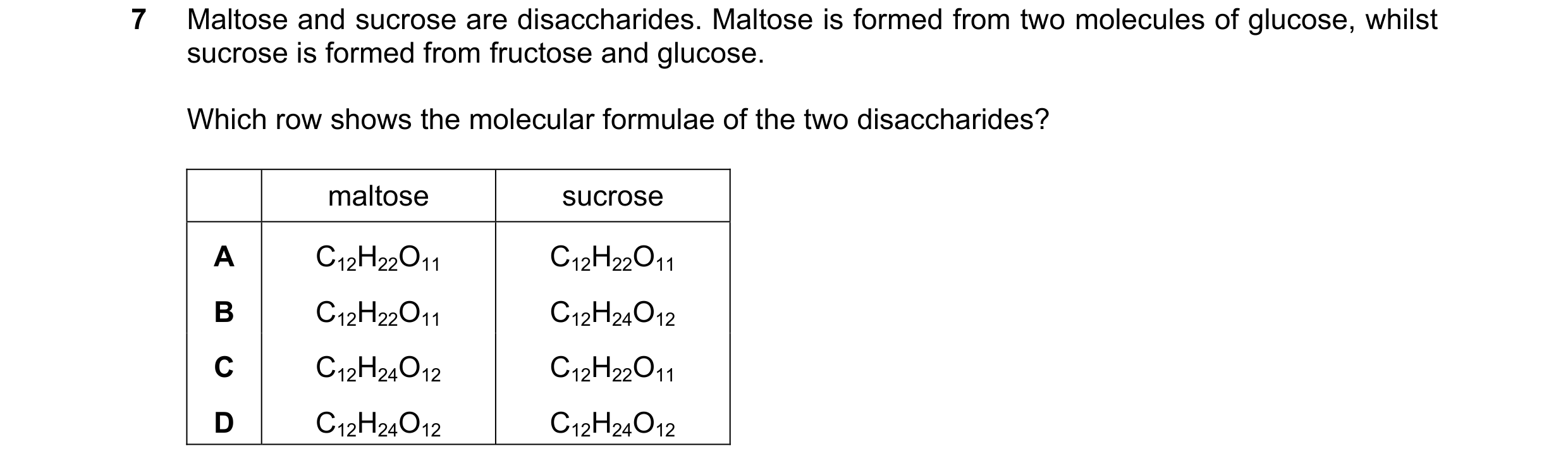 67 / 111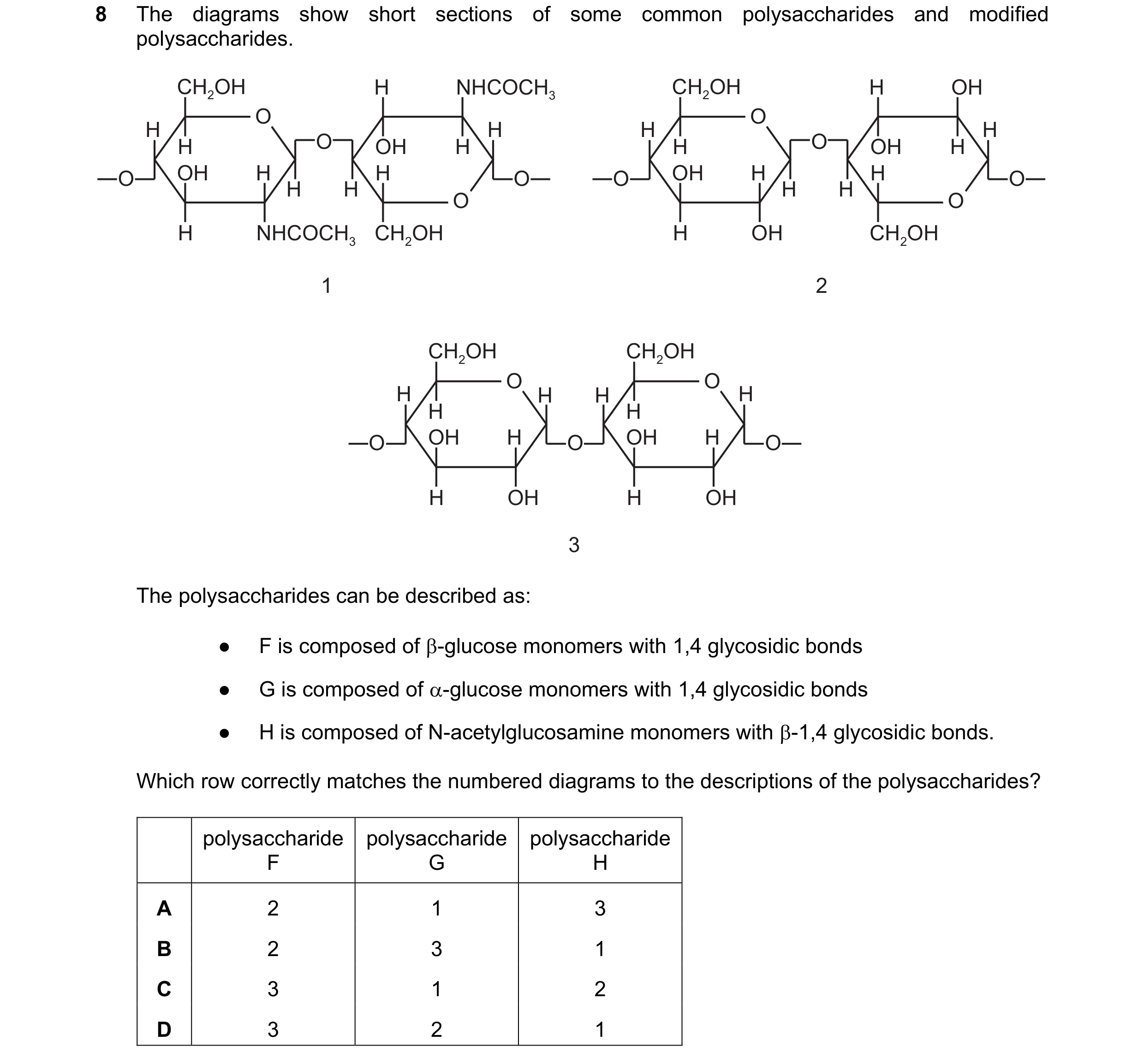
 68 / 111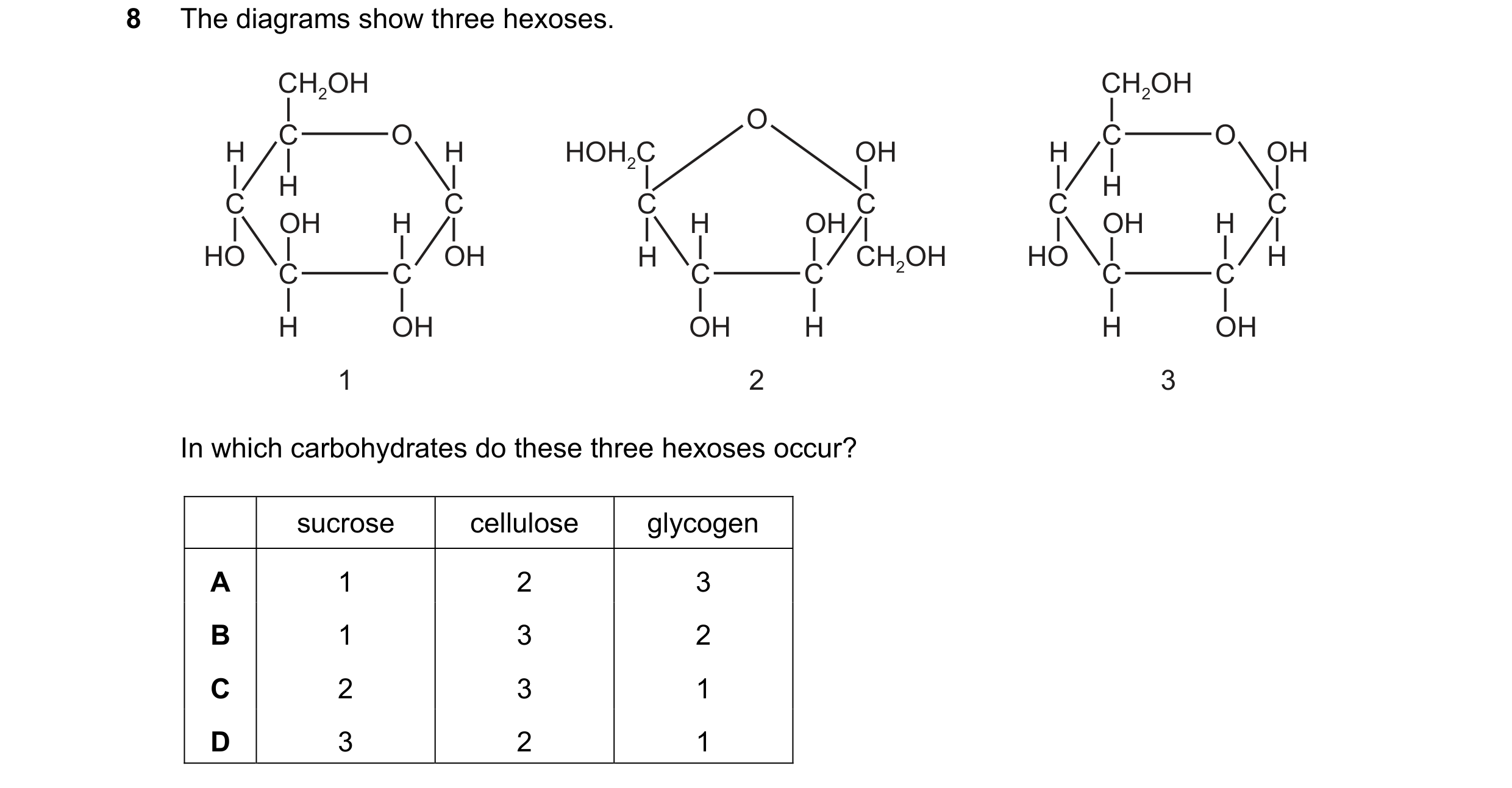
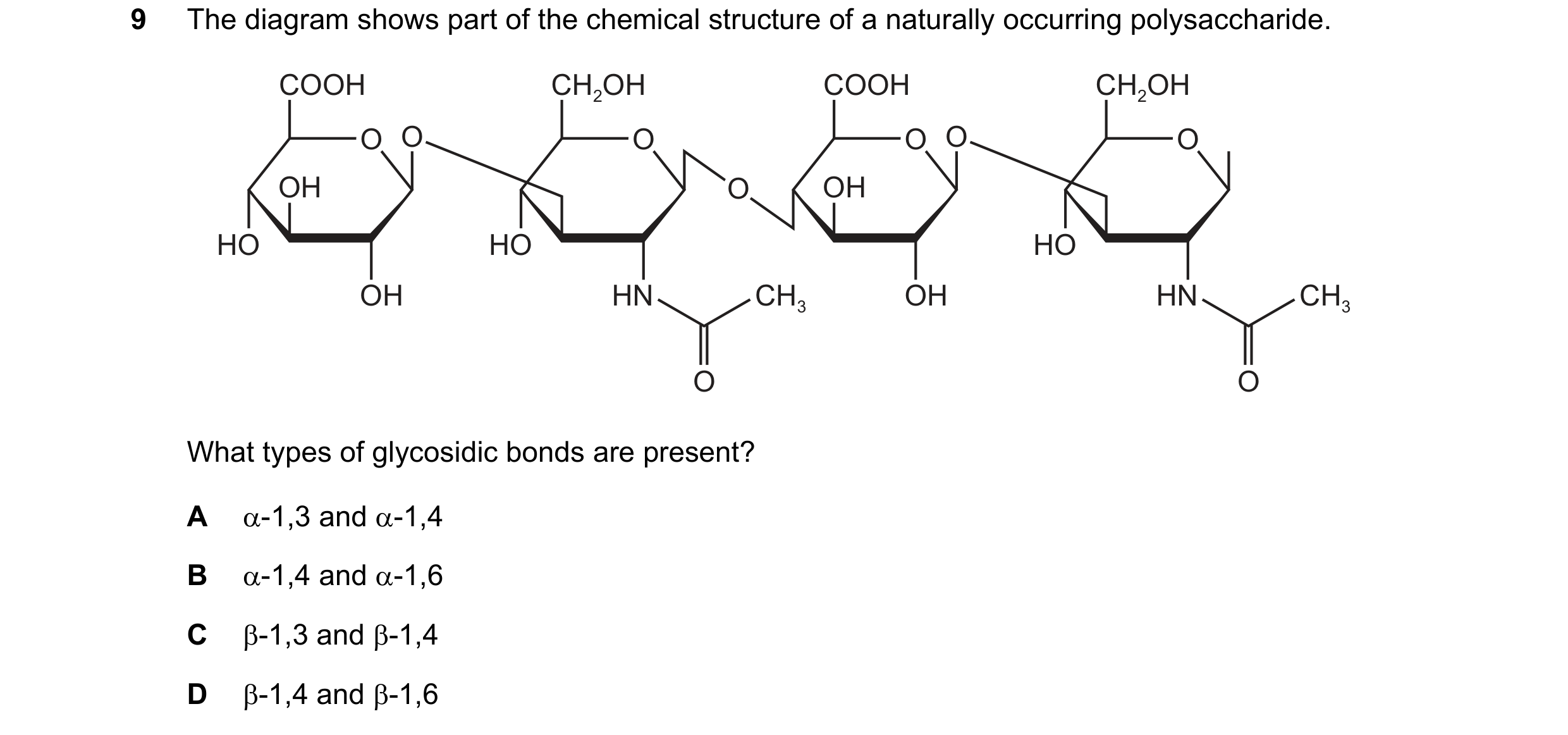
 69 / 111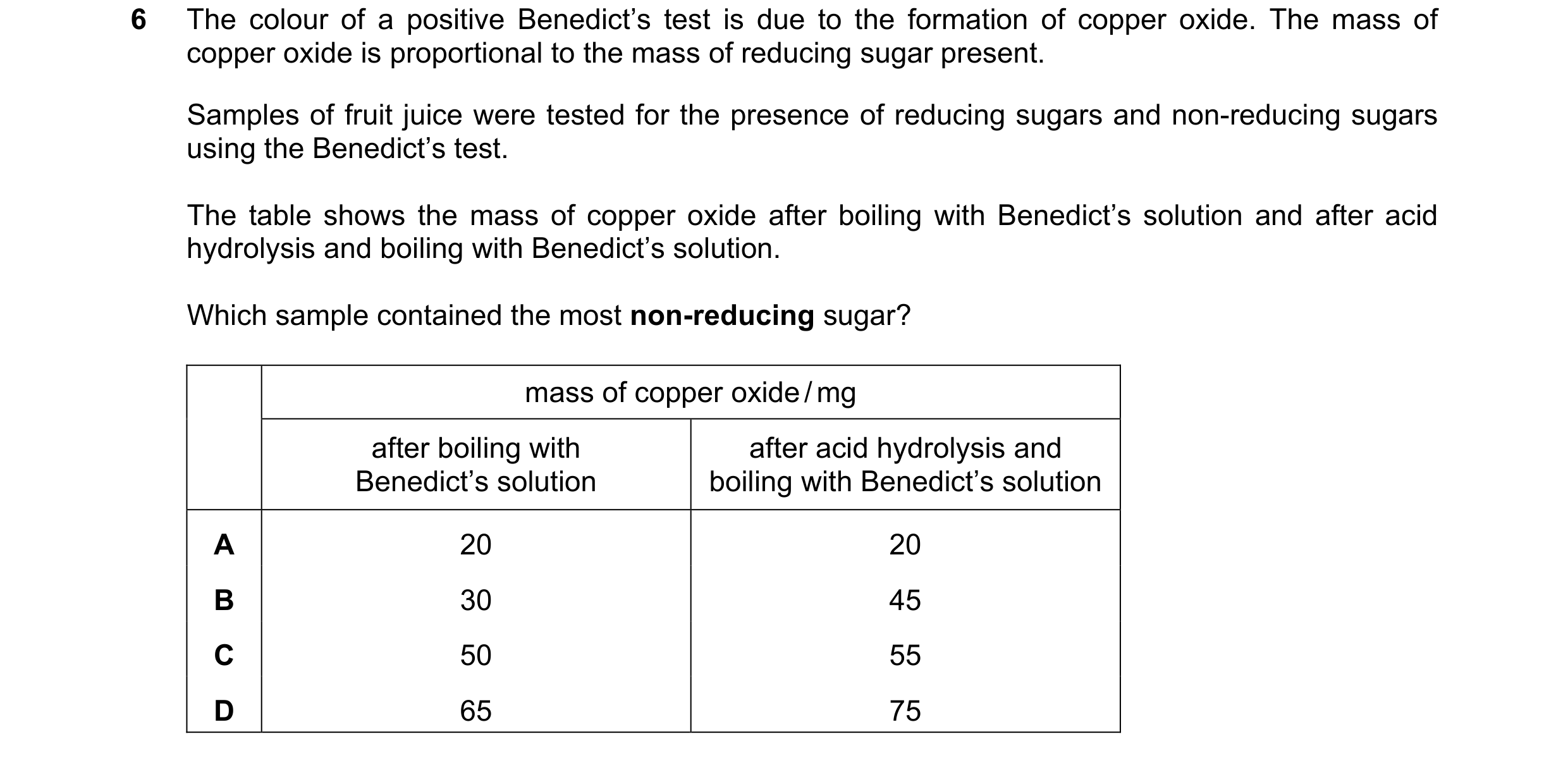
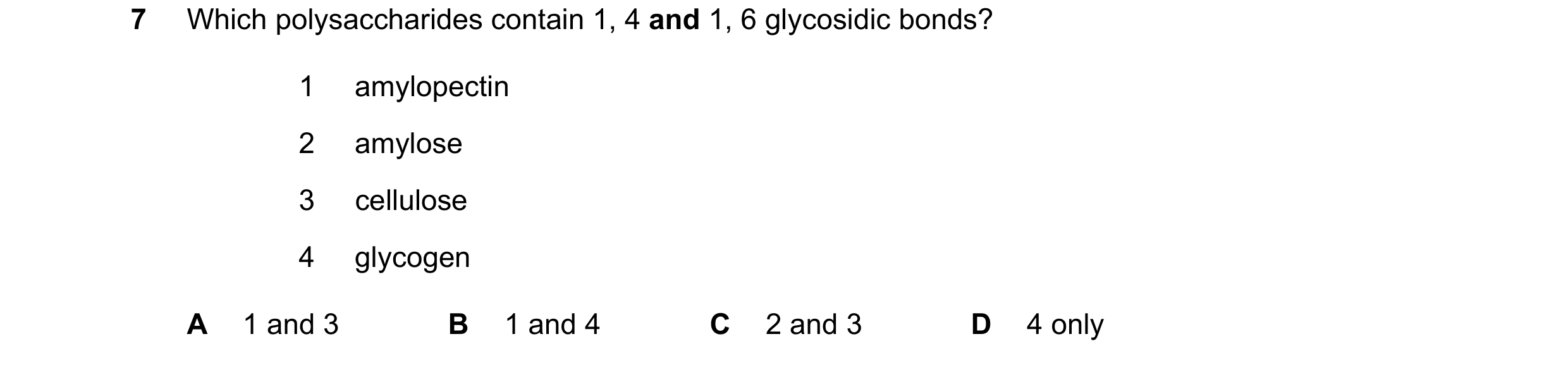
 70 / 111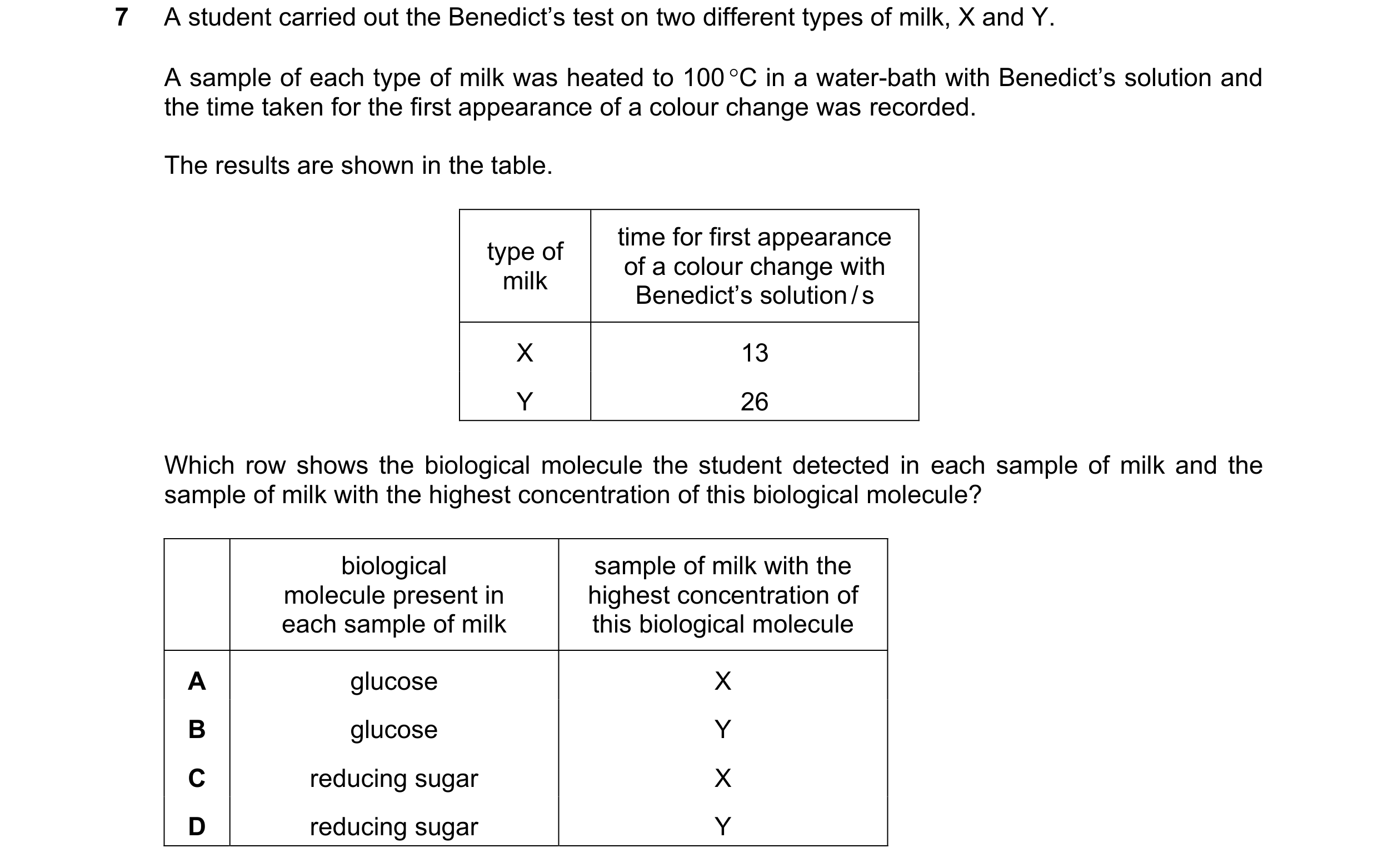
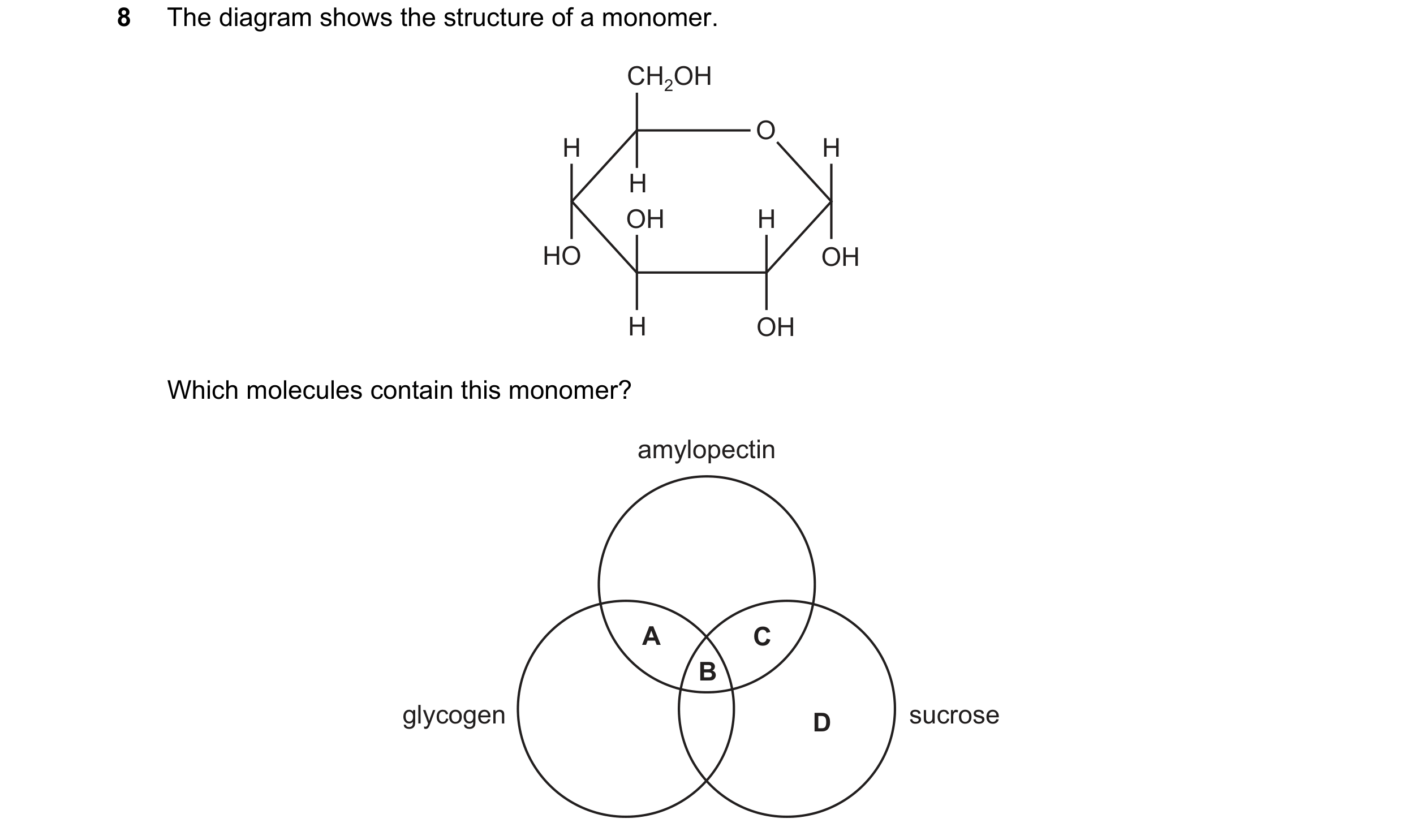 71 / 111
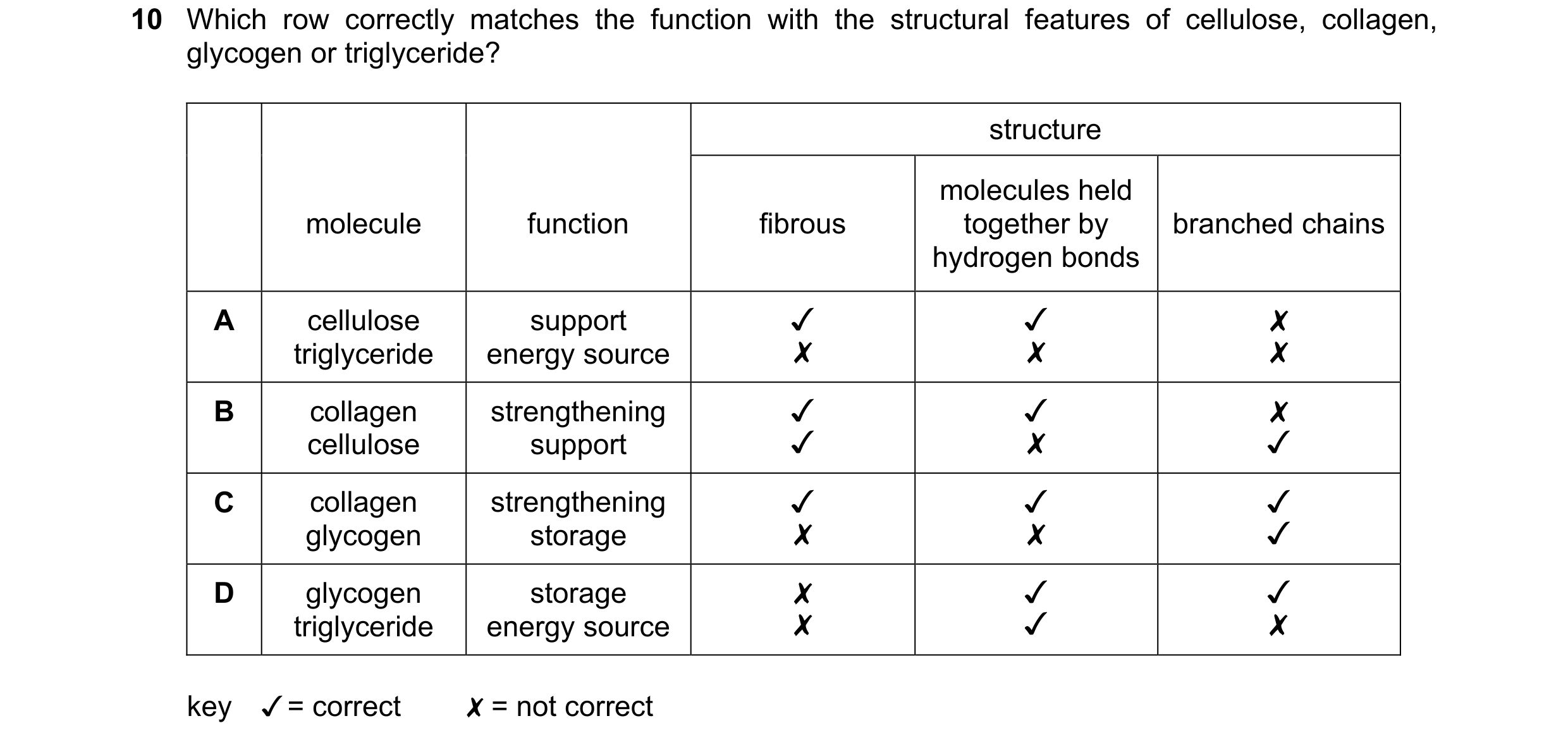
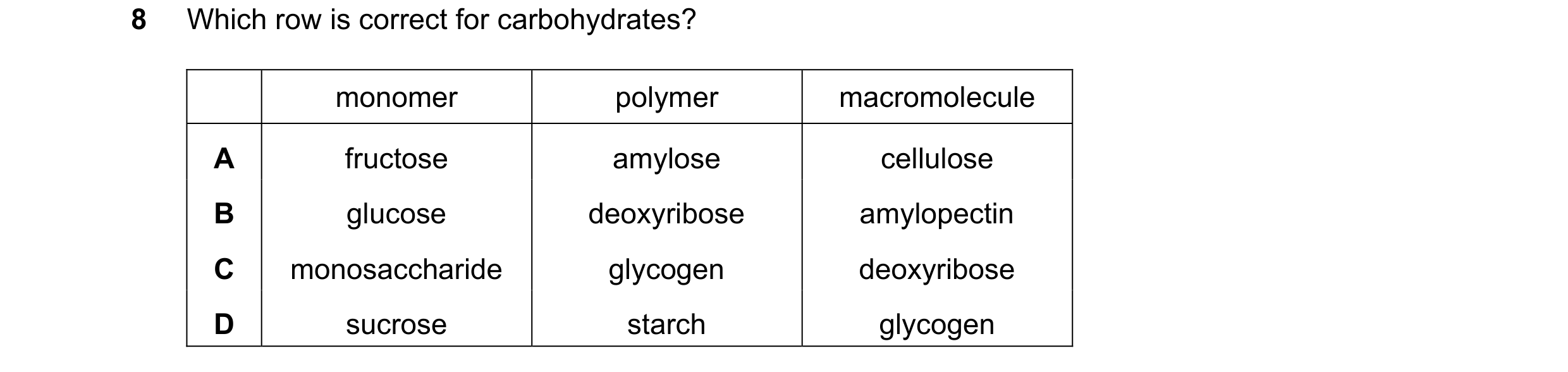
 72 / 111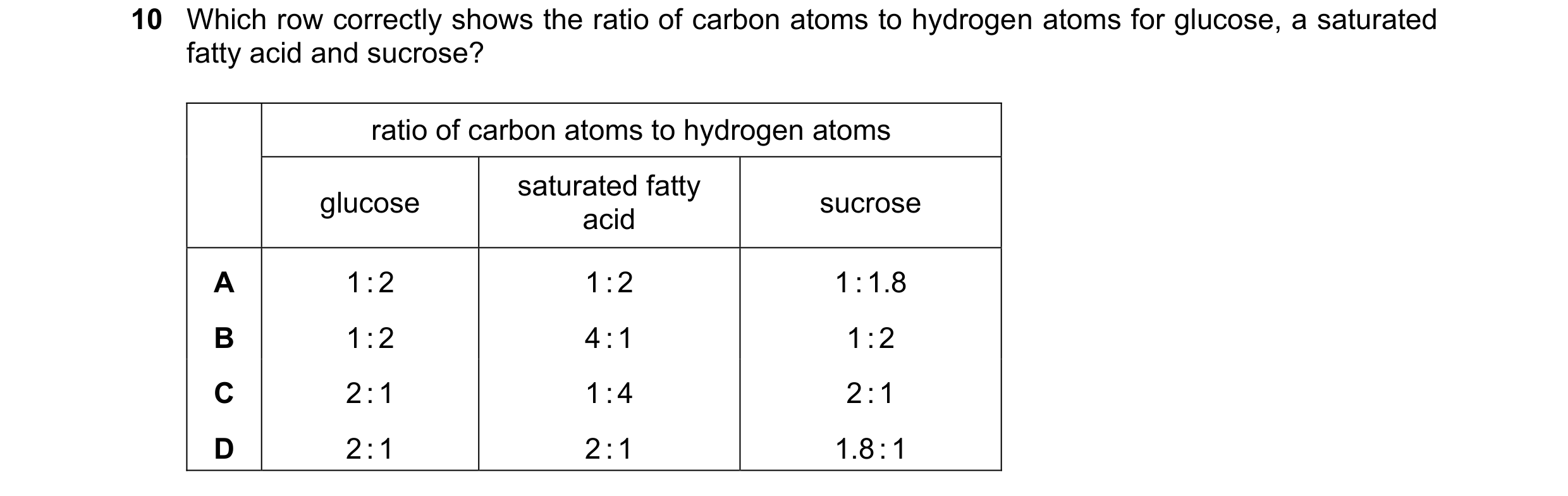
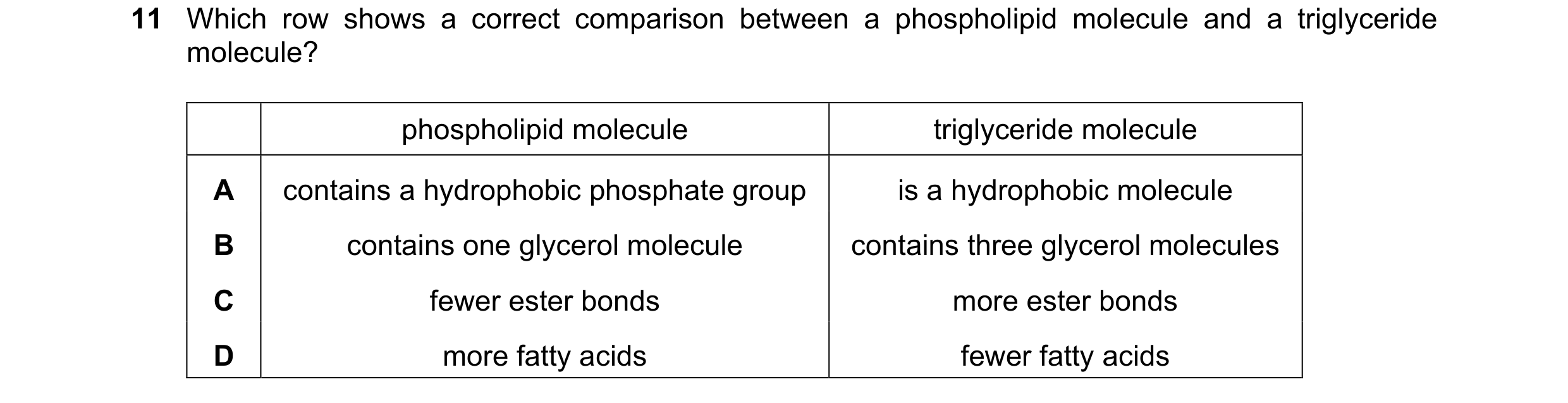
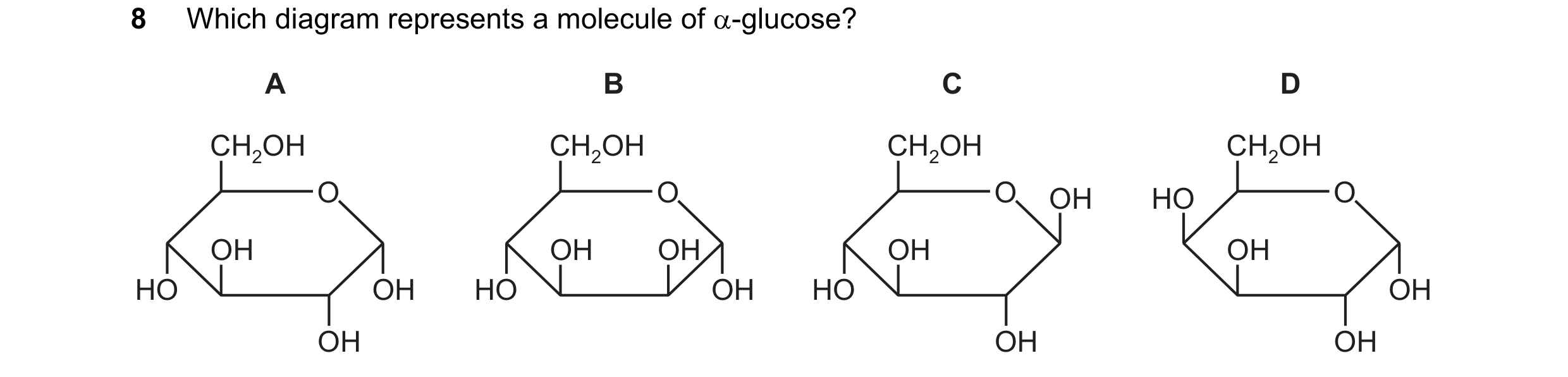
 73 / 111
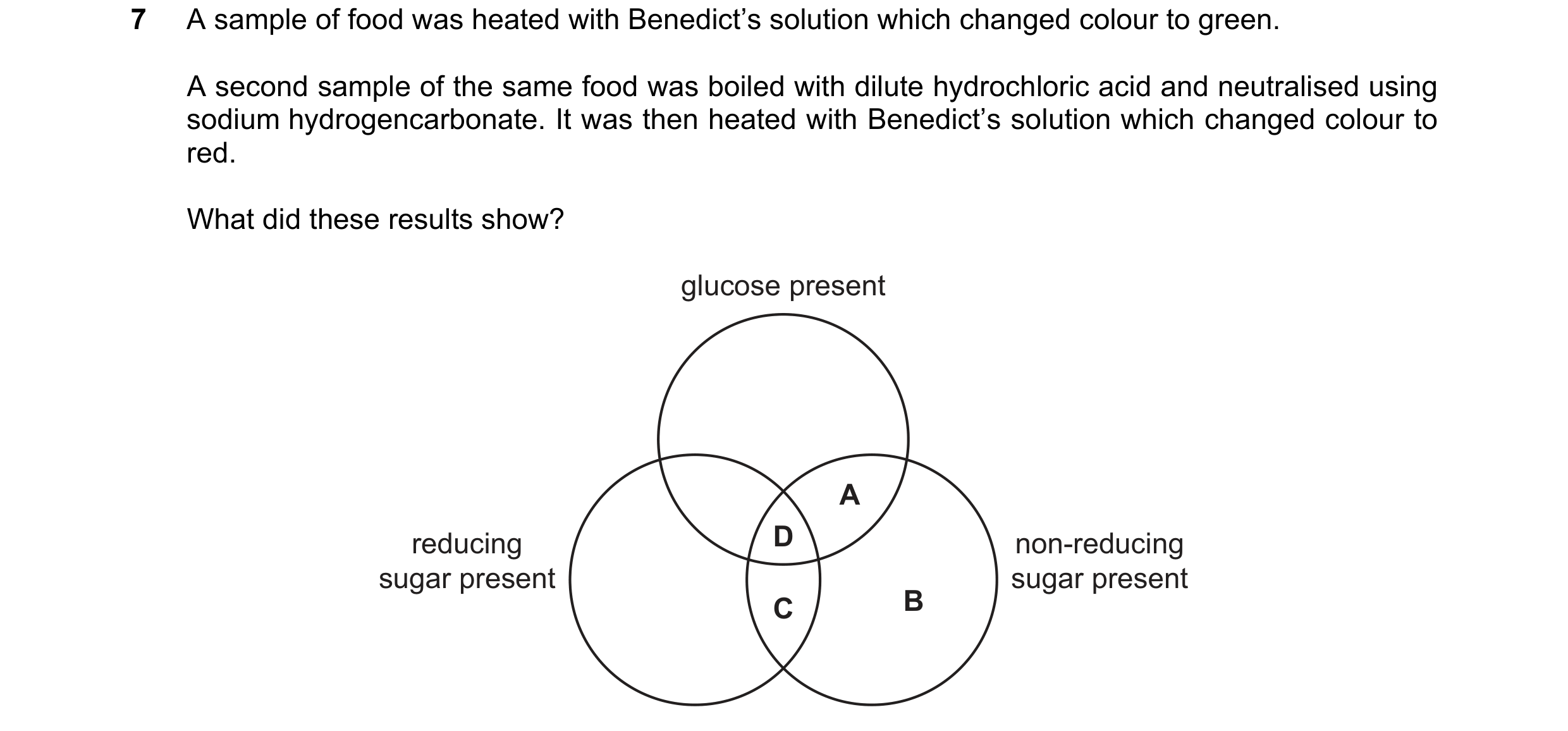
 74 / 111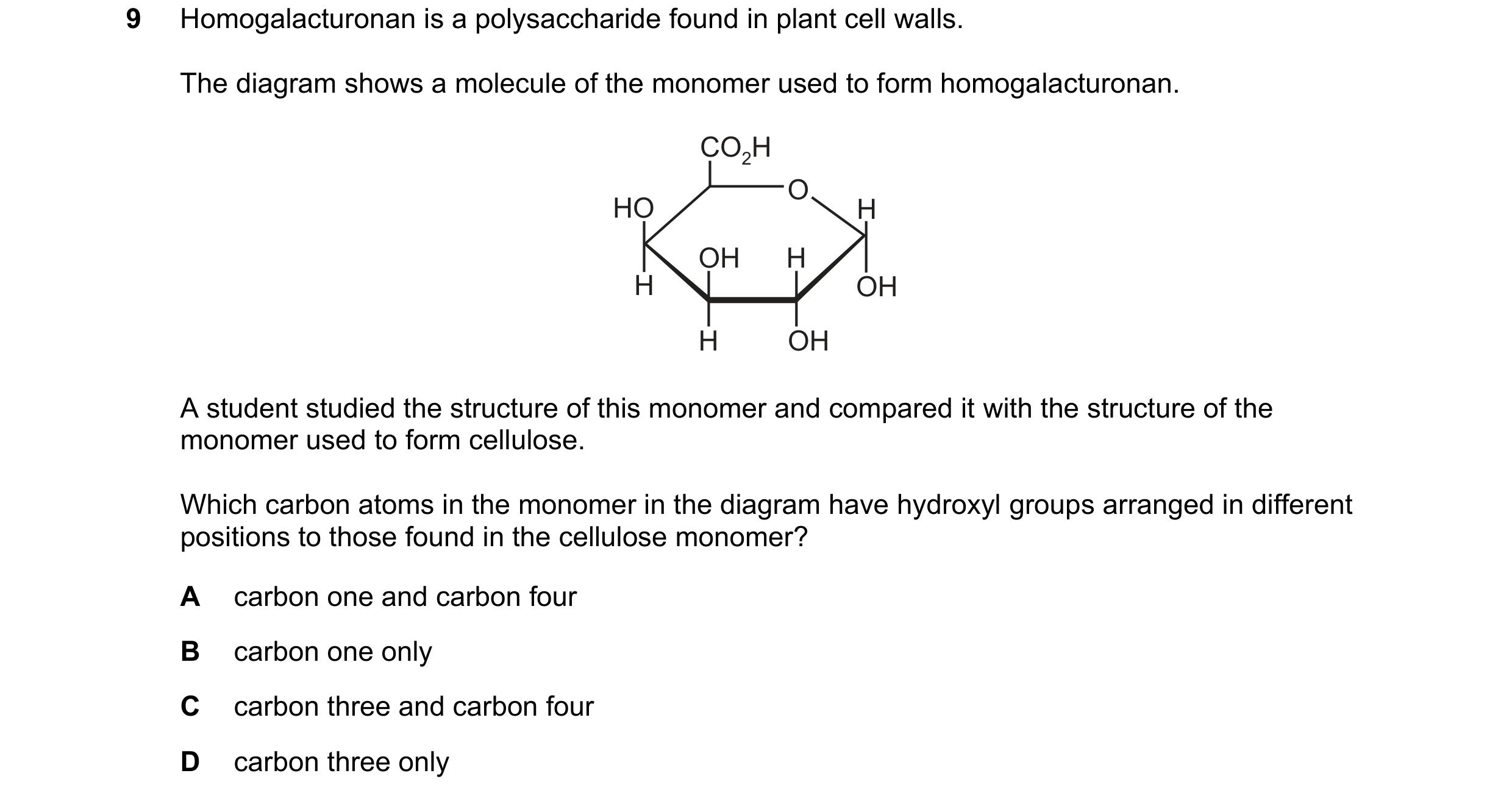

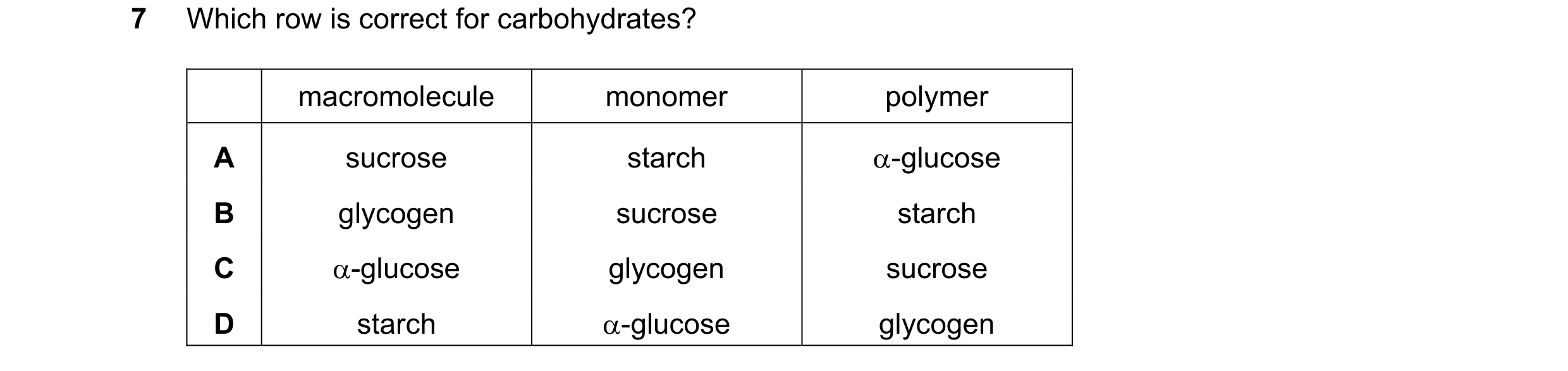
 75 / 111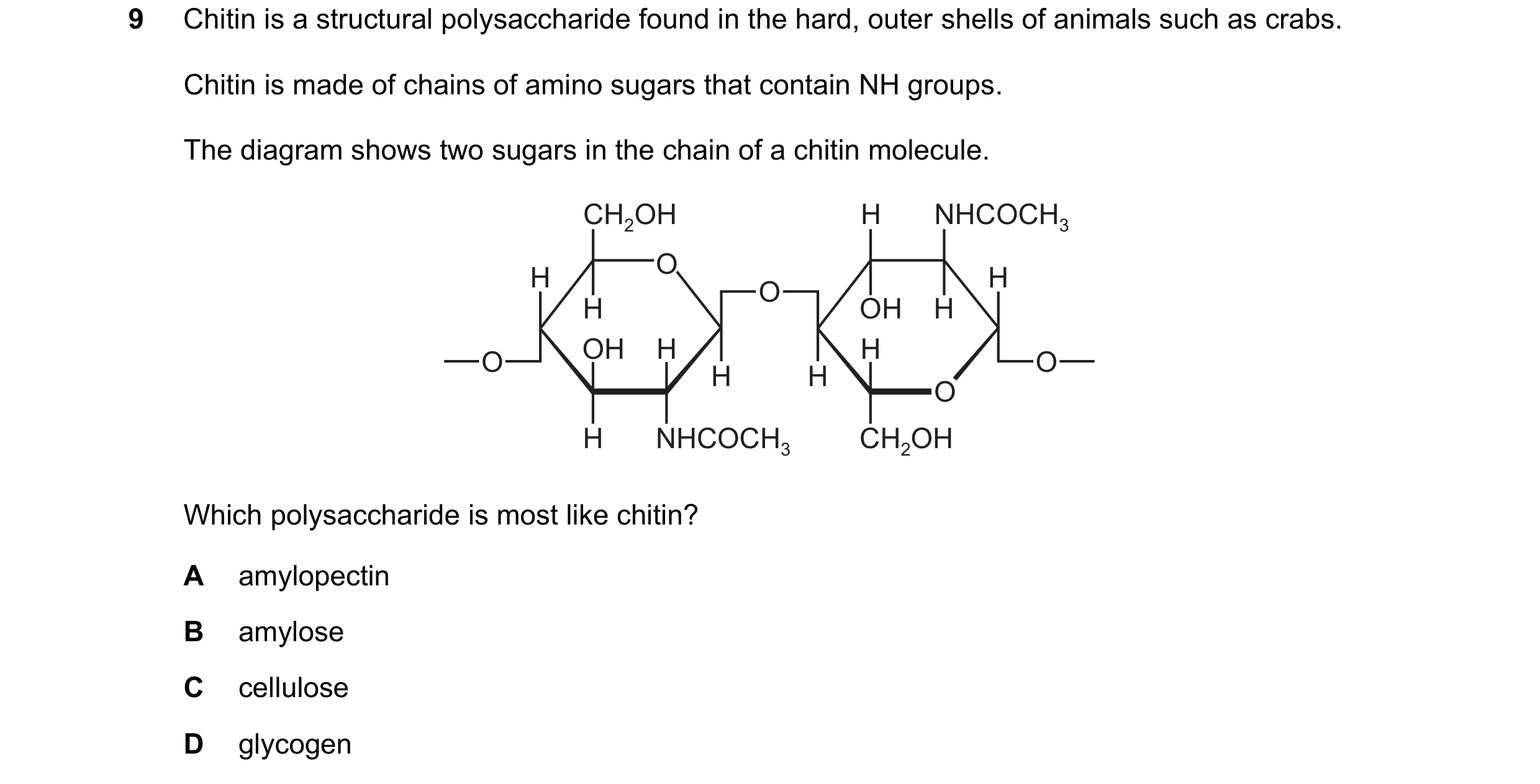
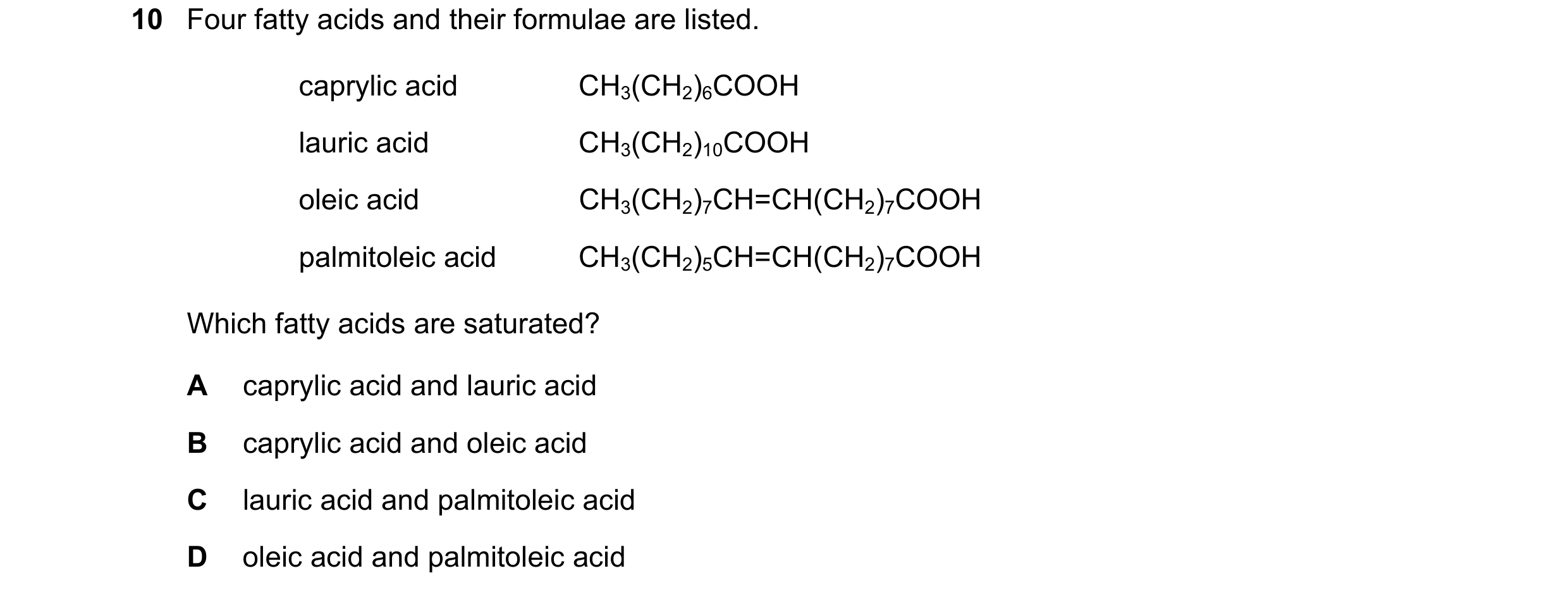
 76 / 111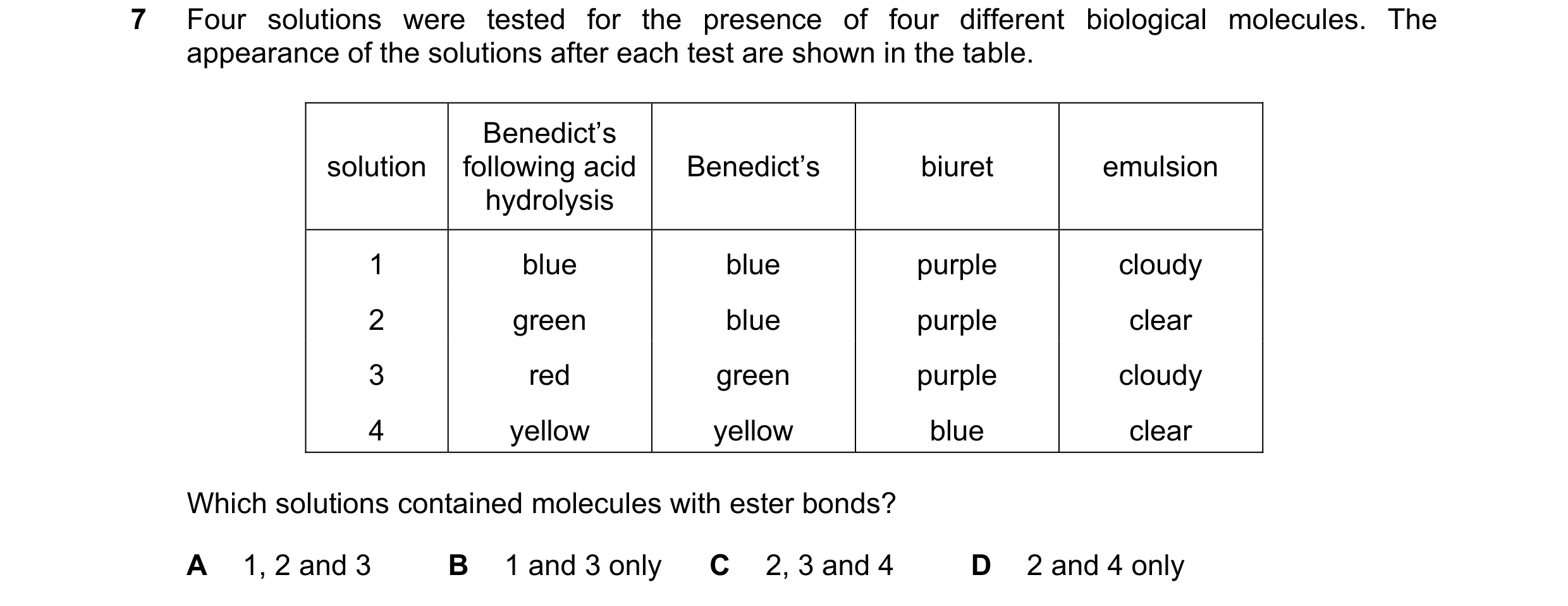
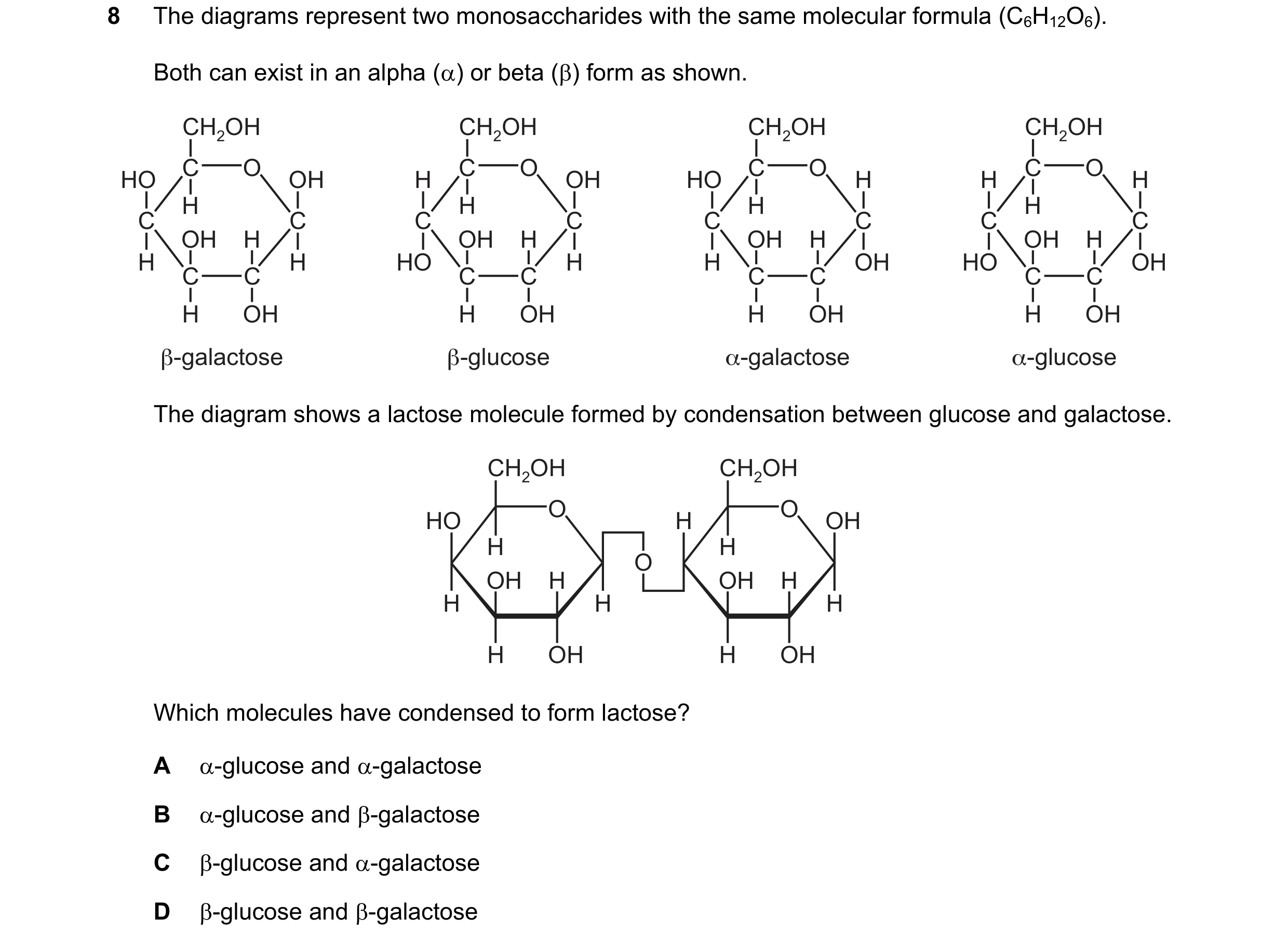 77 / 111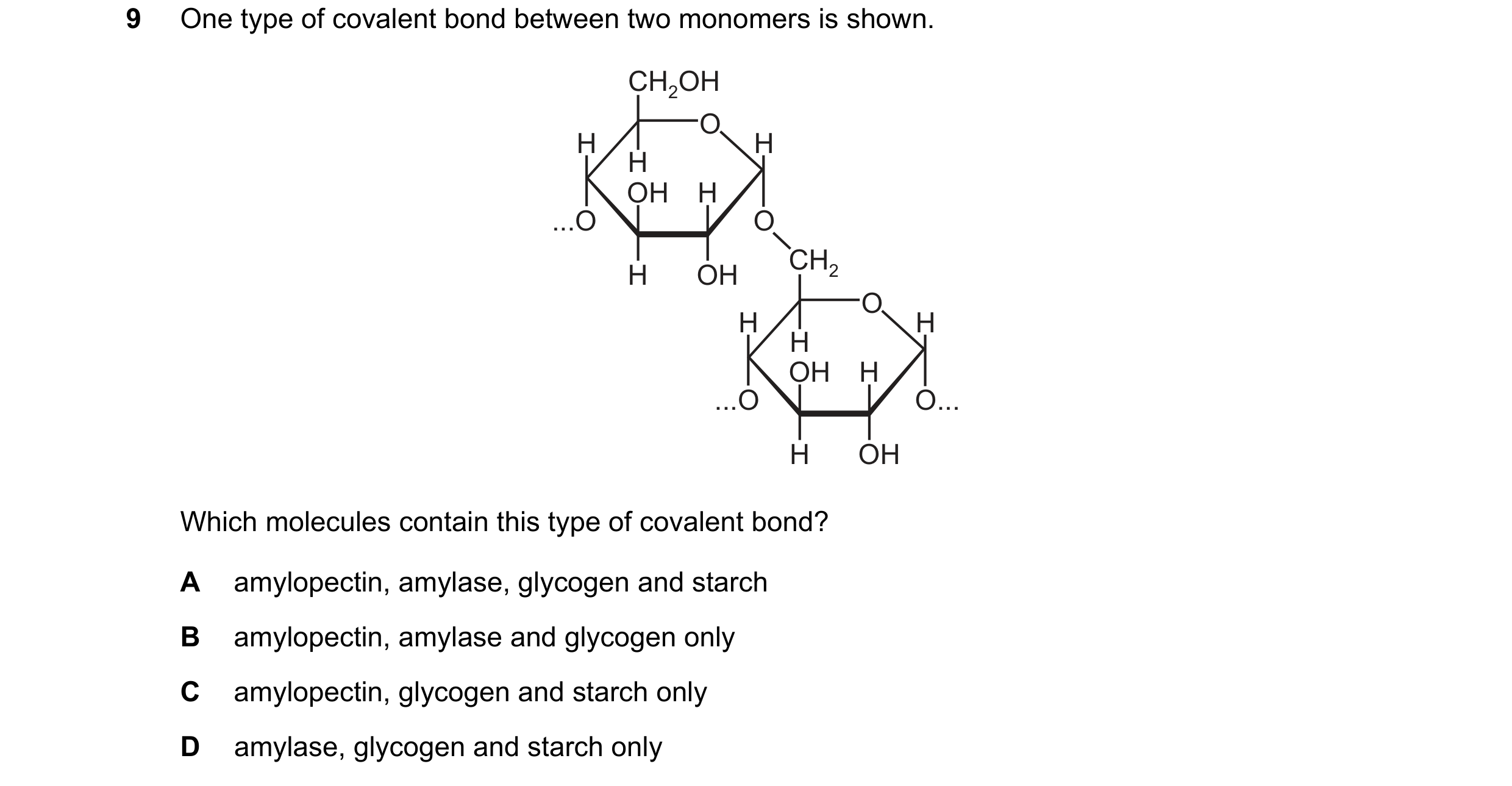


 78 / 111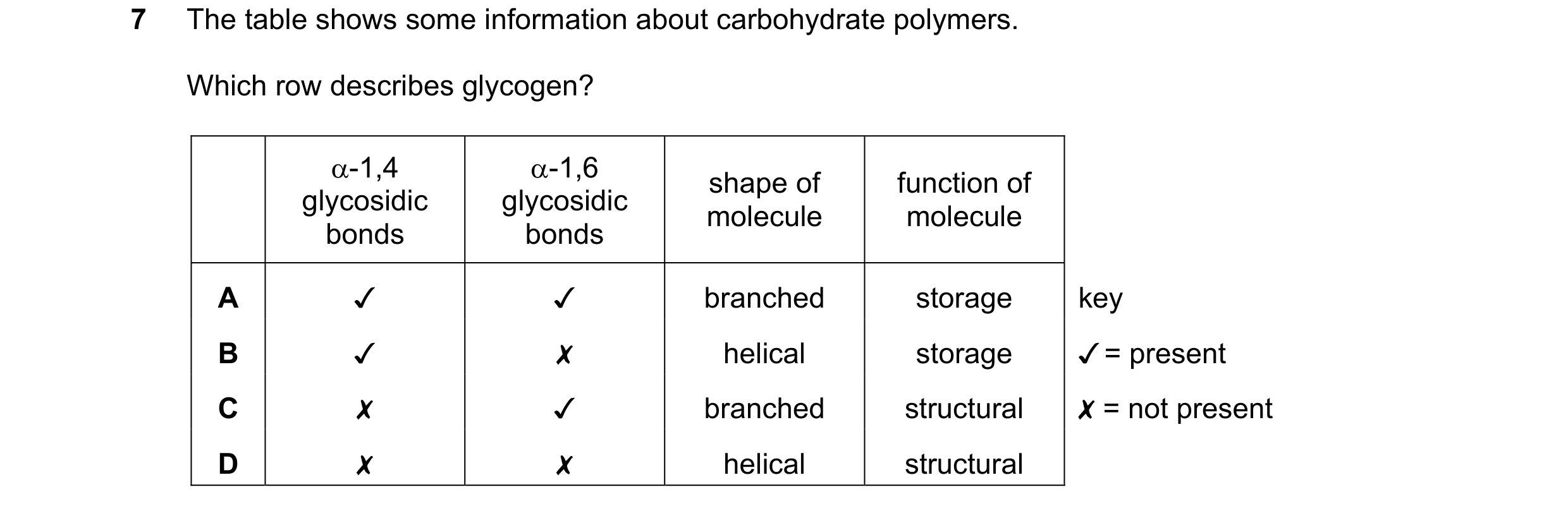
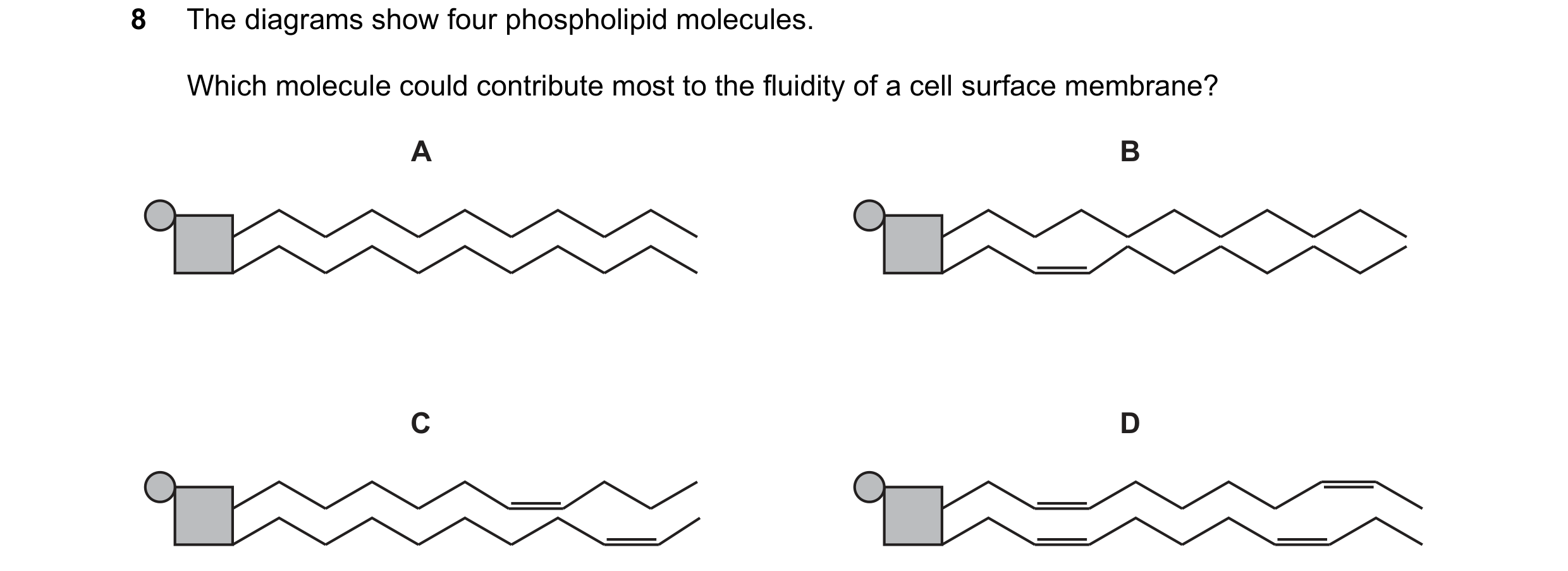


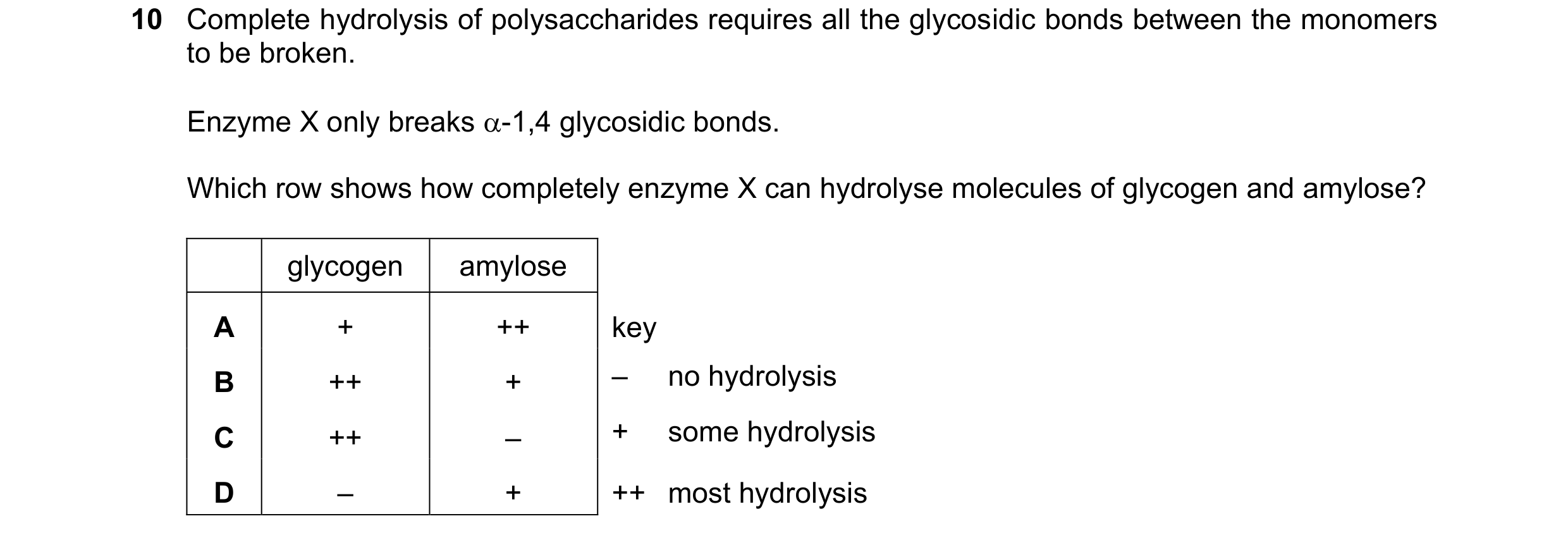 79 / 111
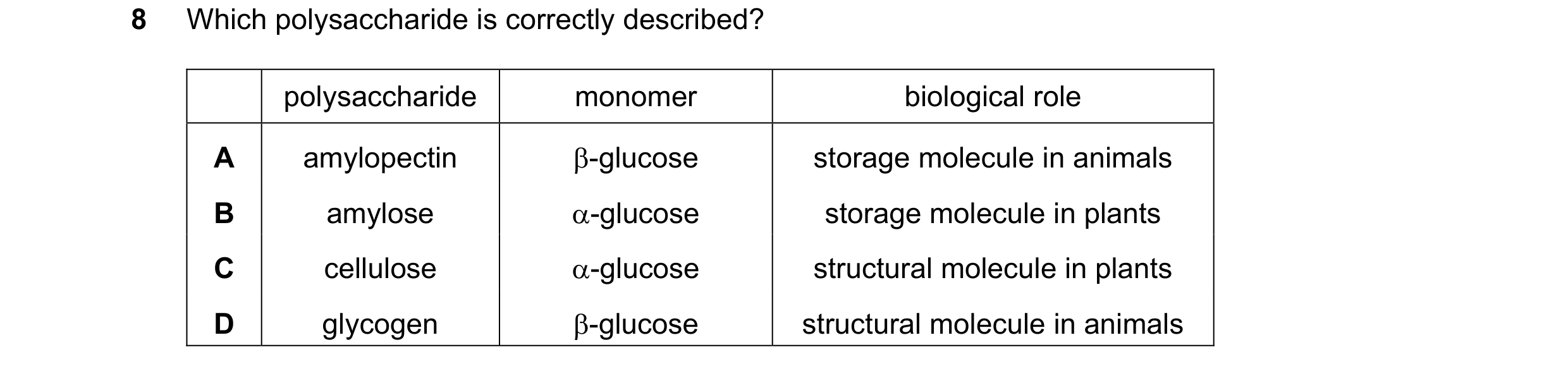


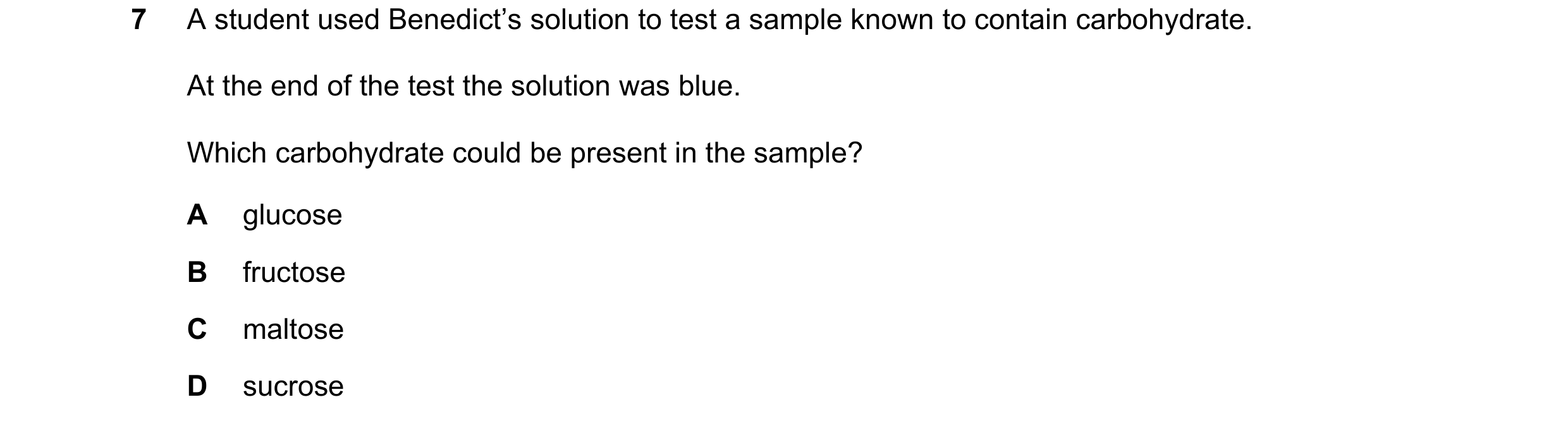 80 / 111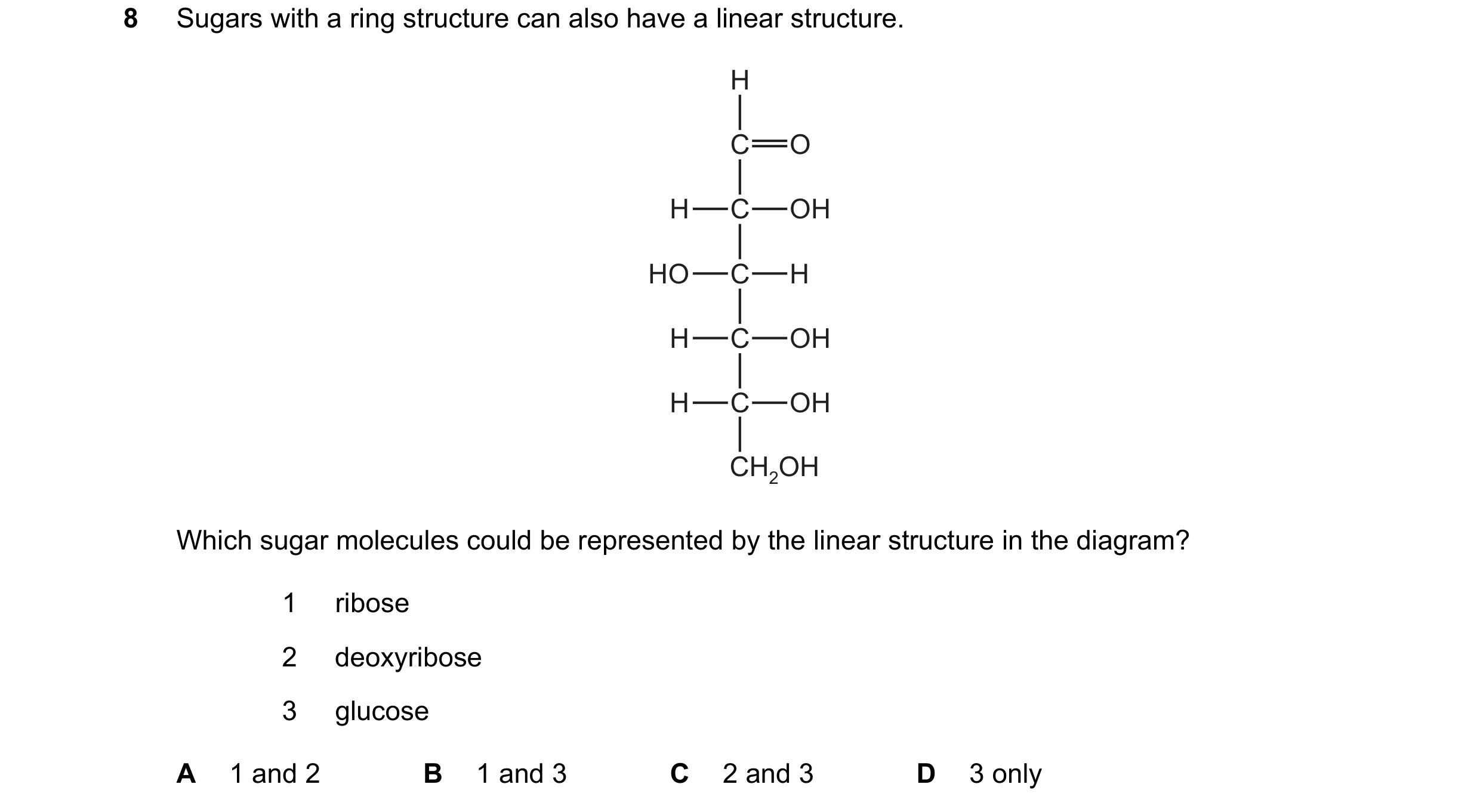
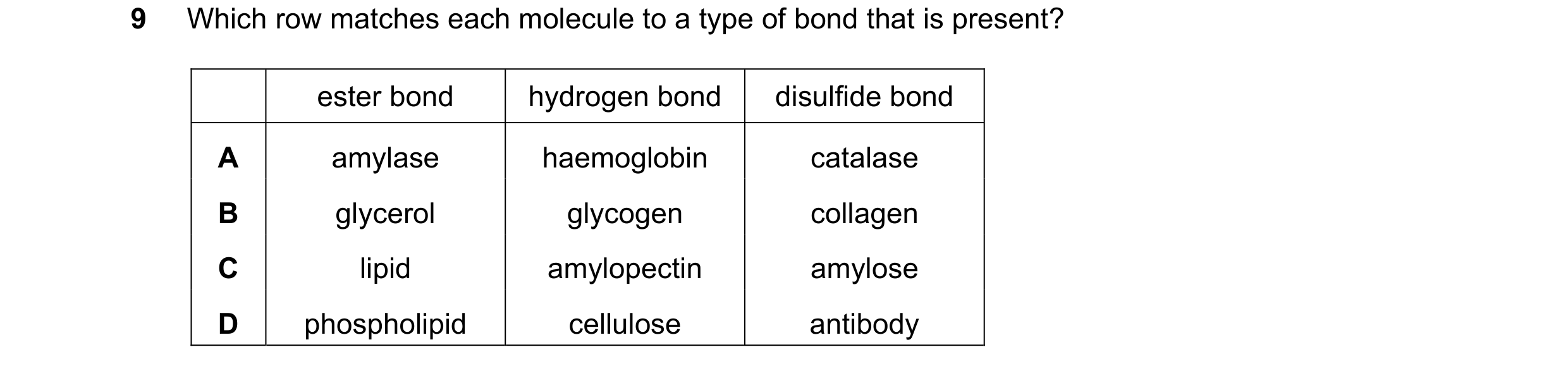
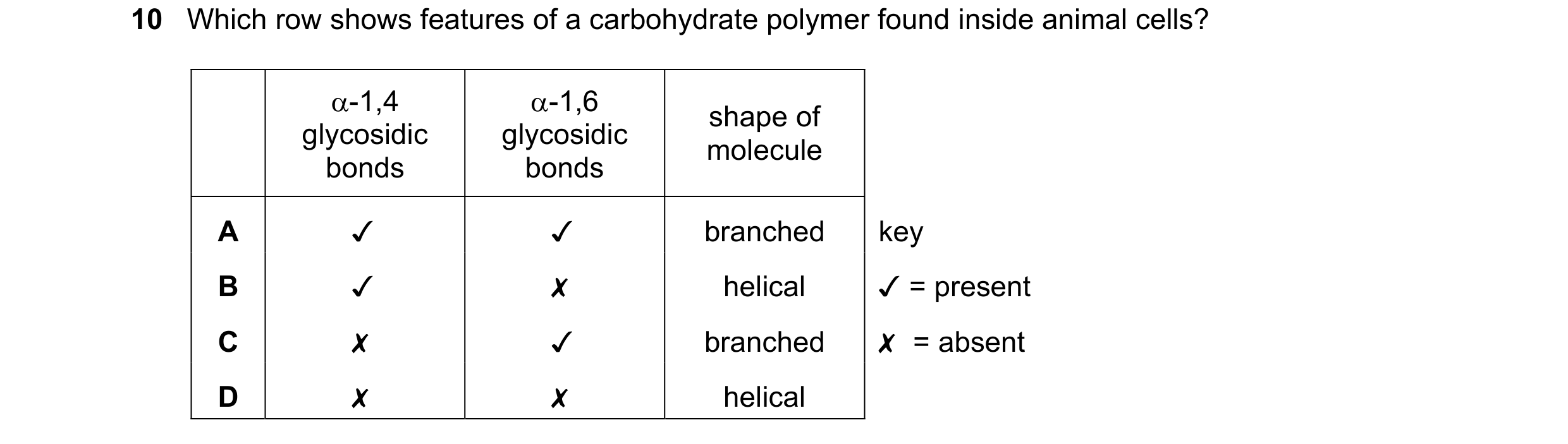
 81 / 111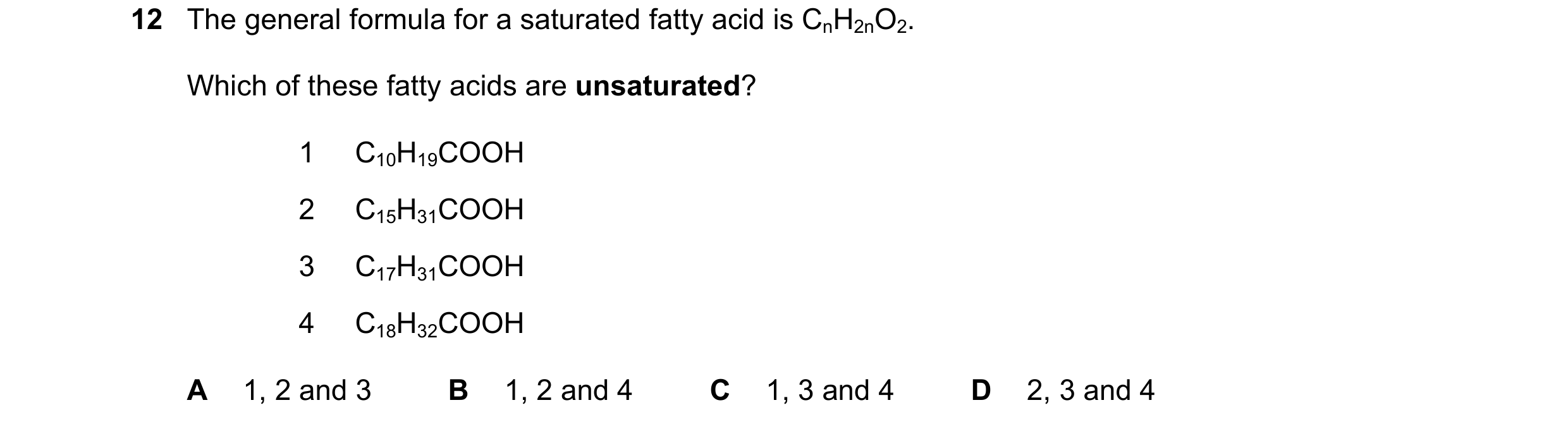

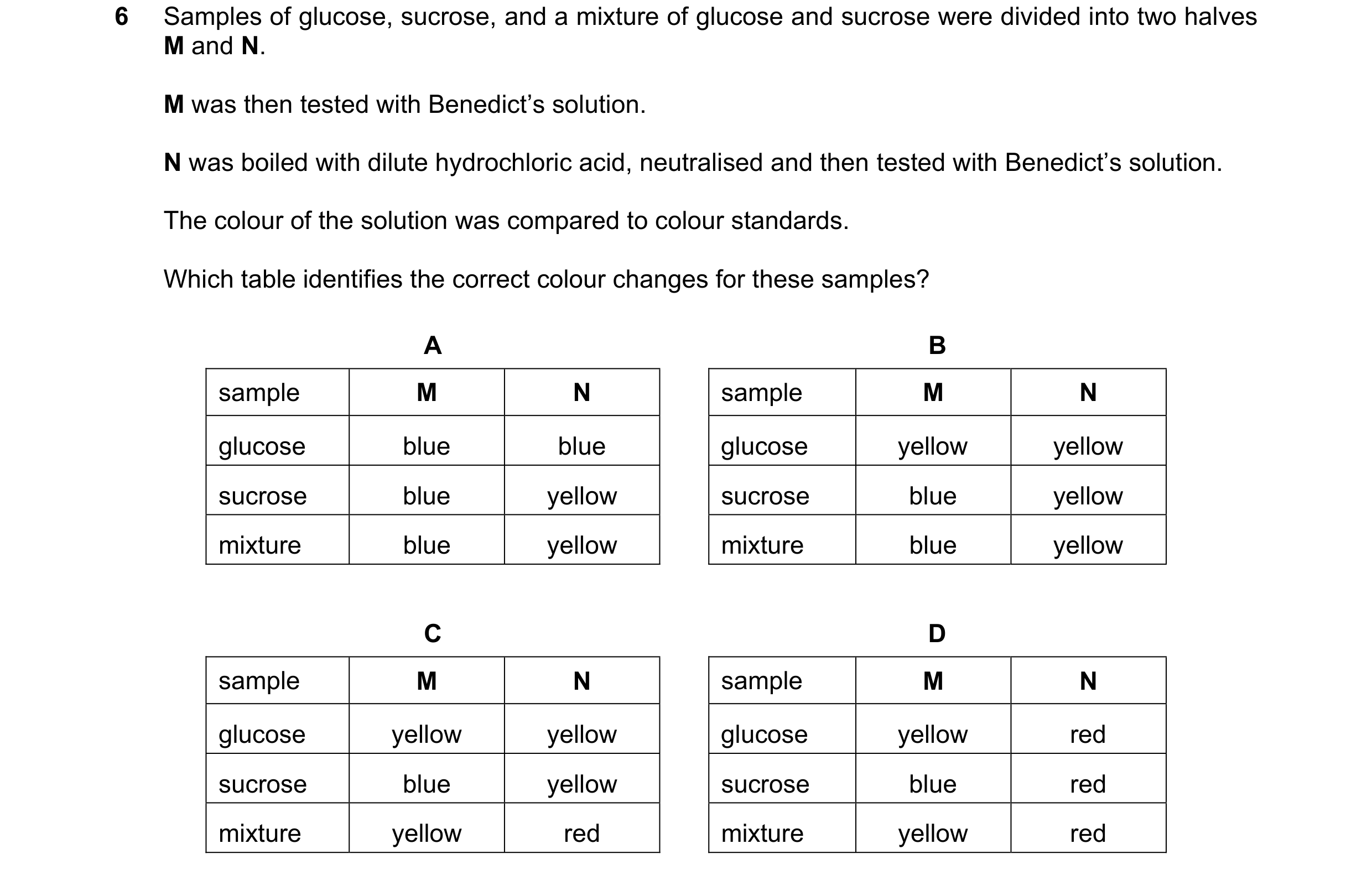 82 / 111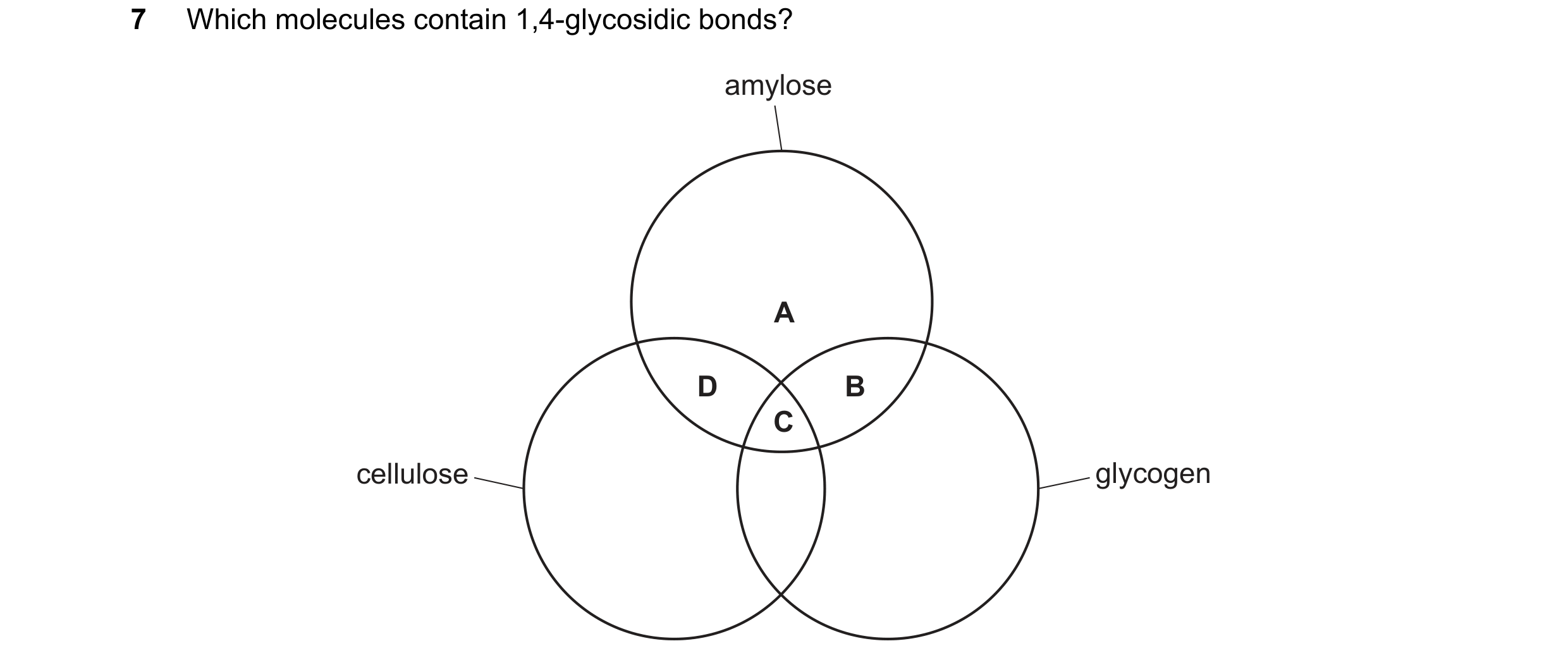
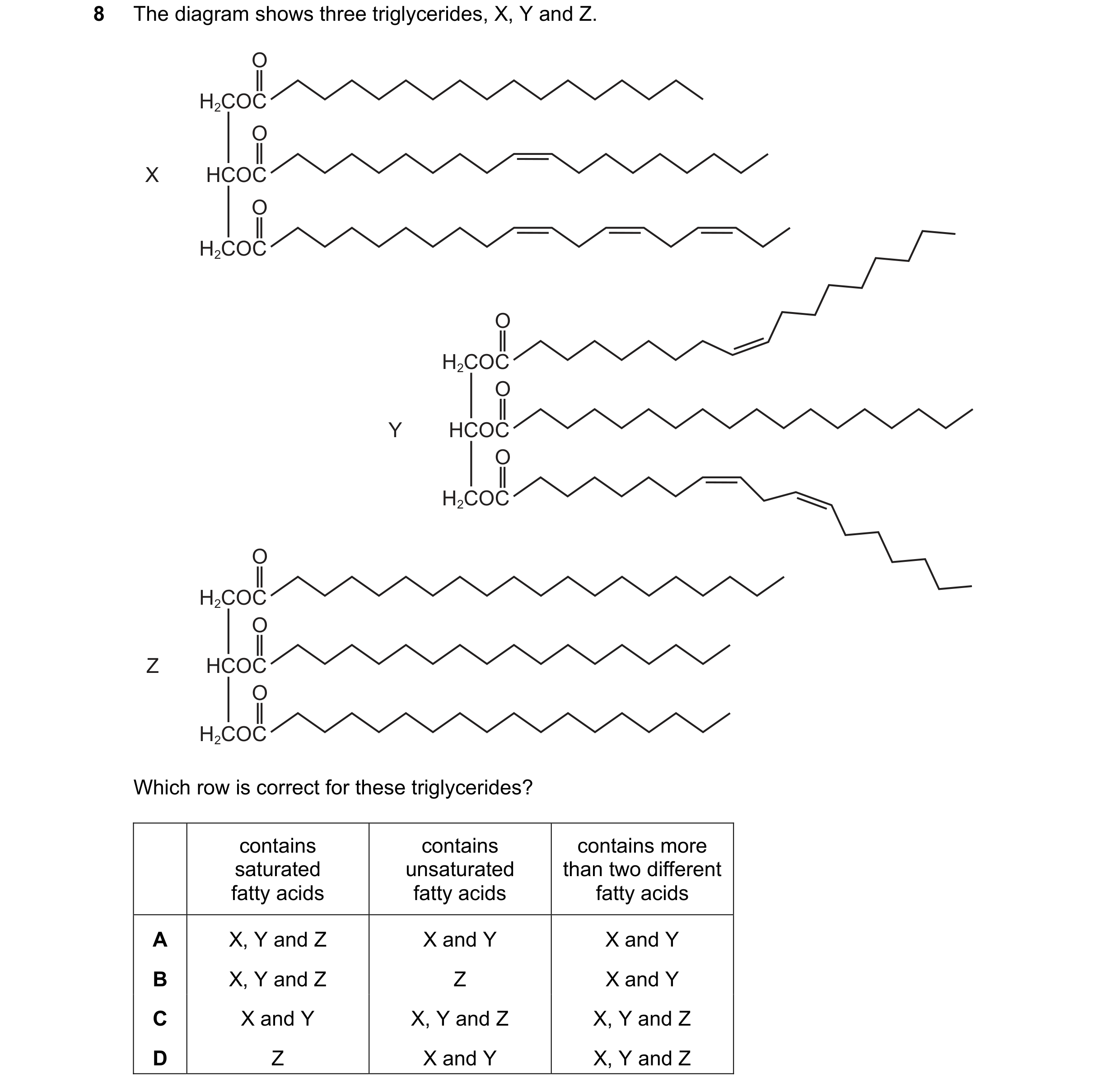 83 / 111

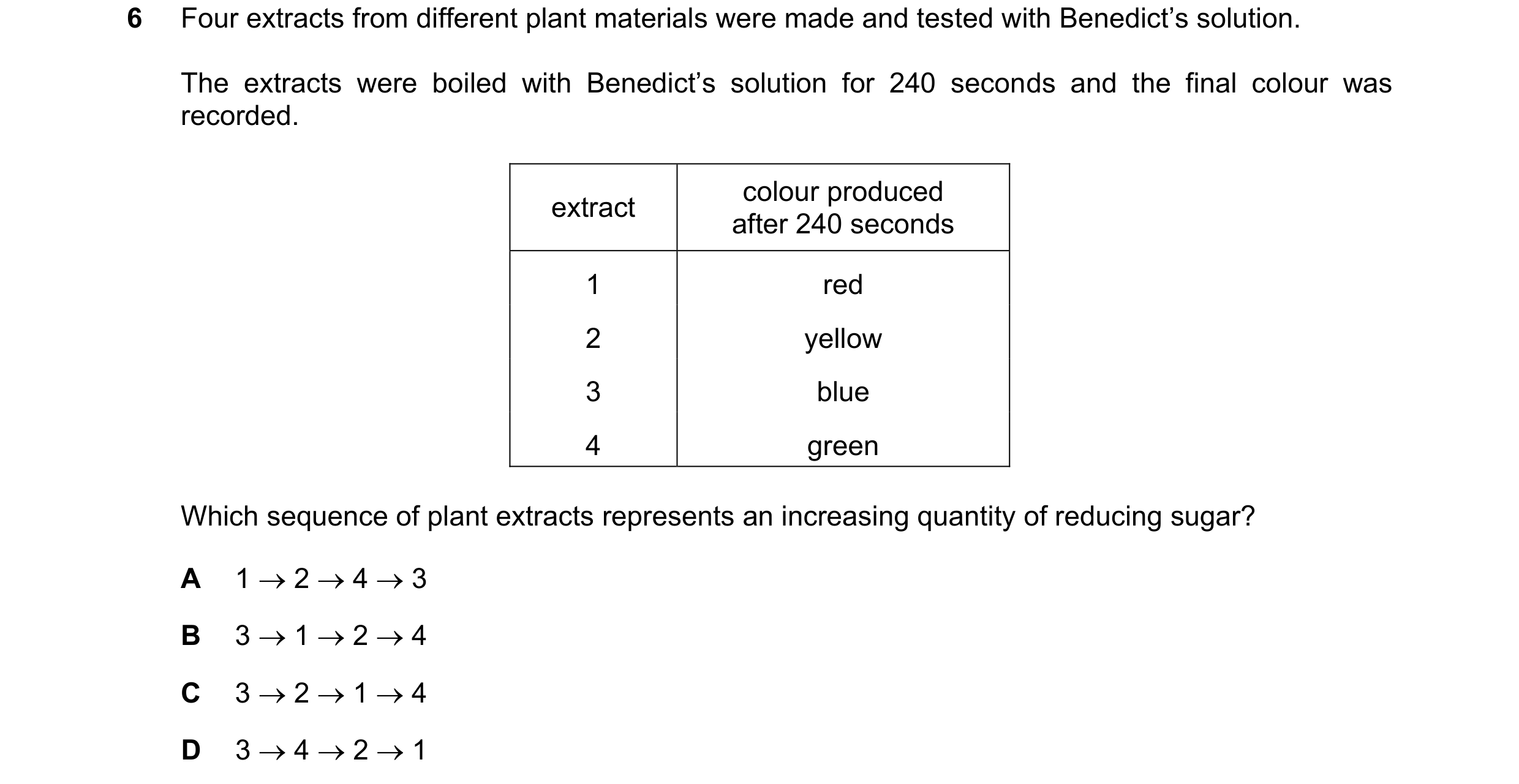
 84 / 111
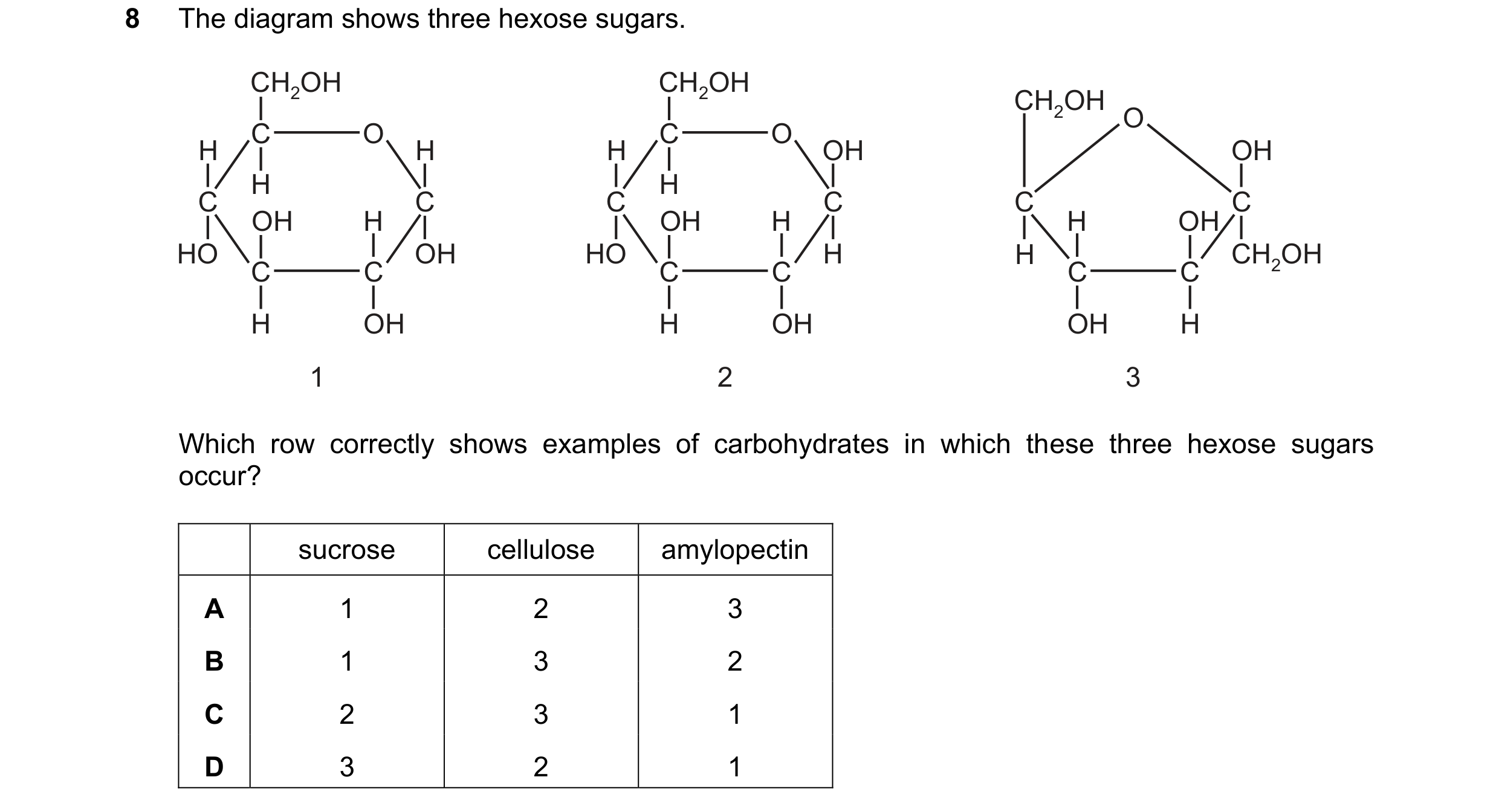
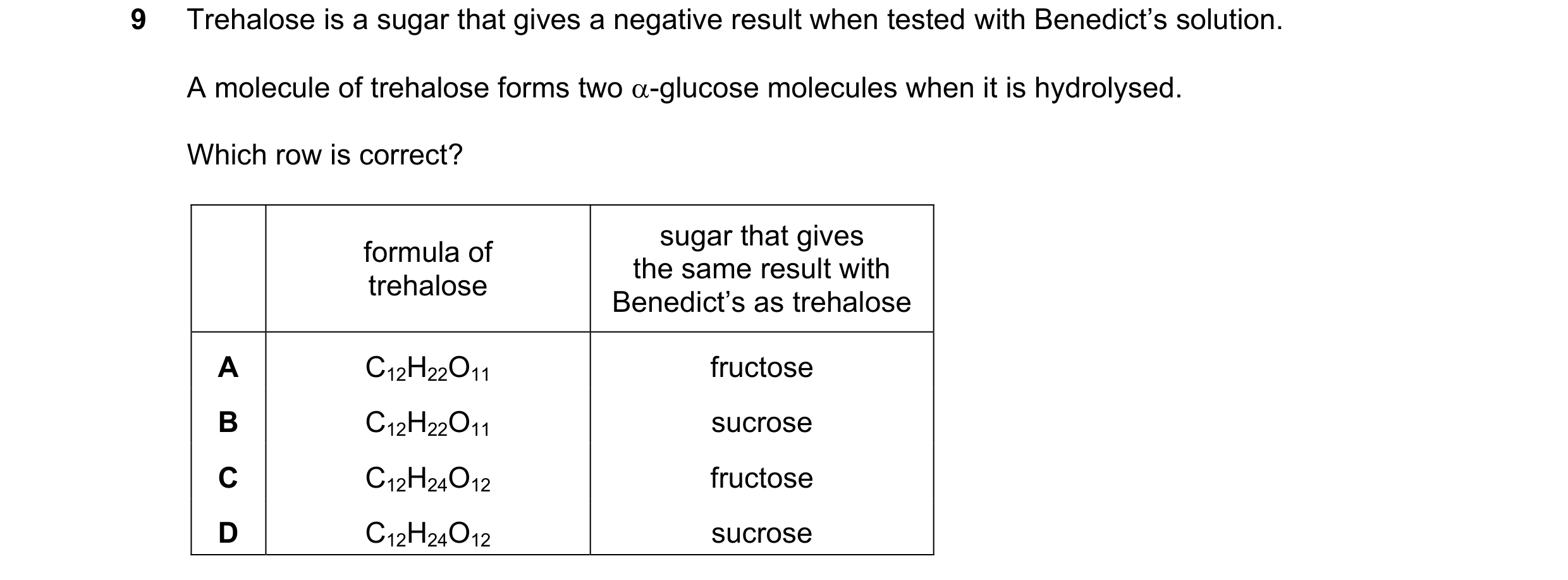 85 / 111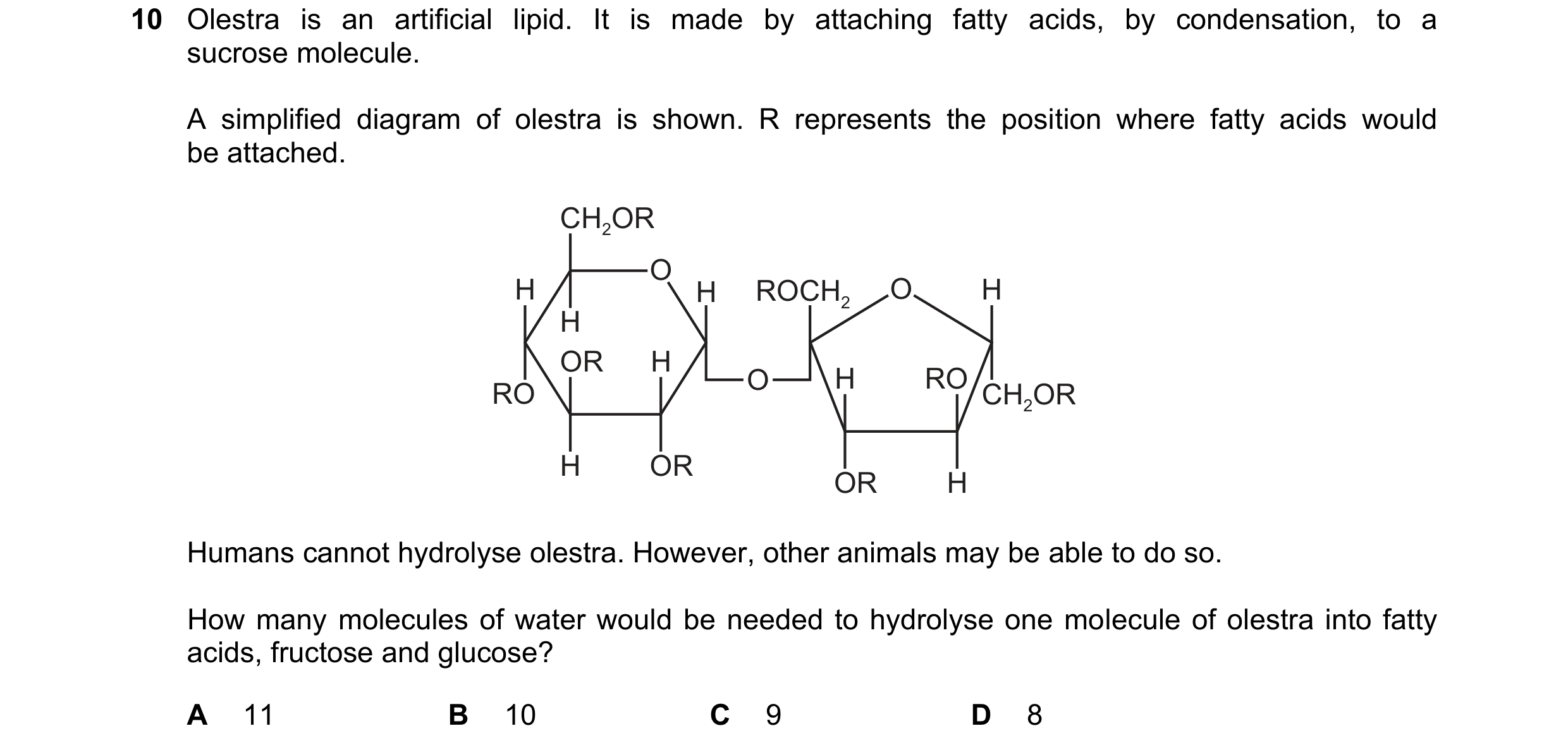
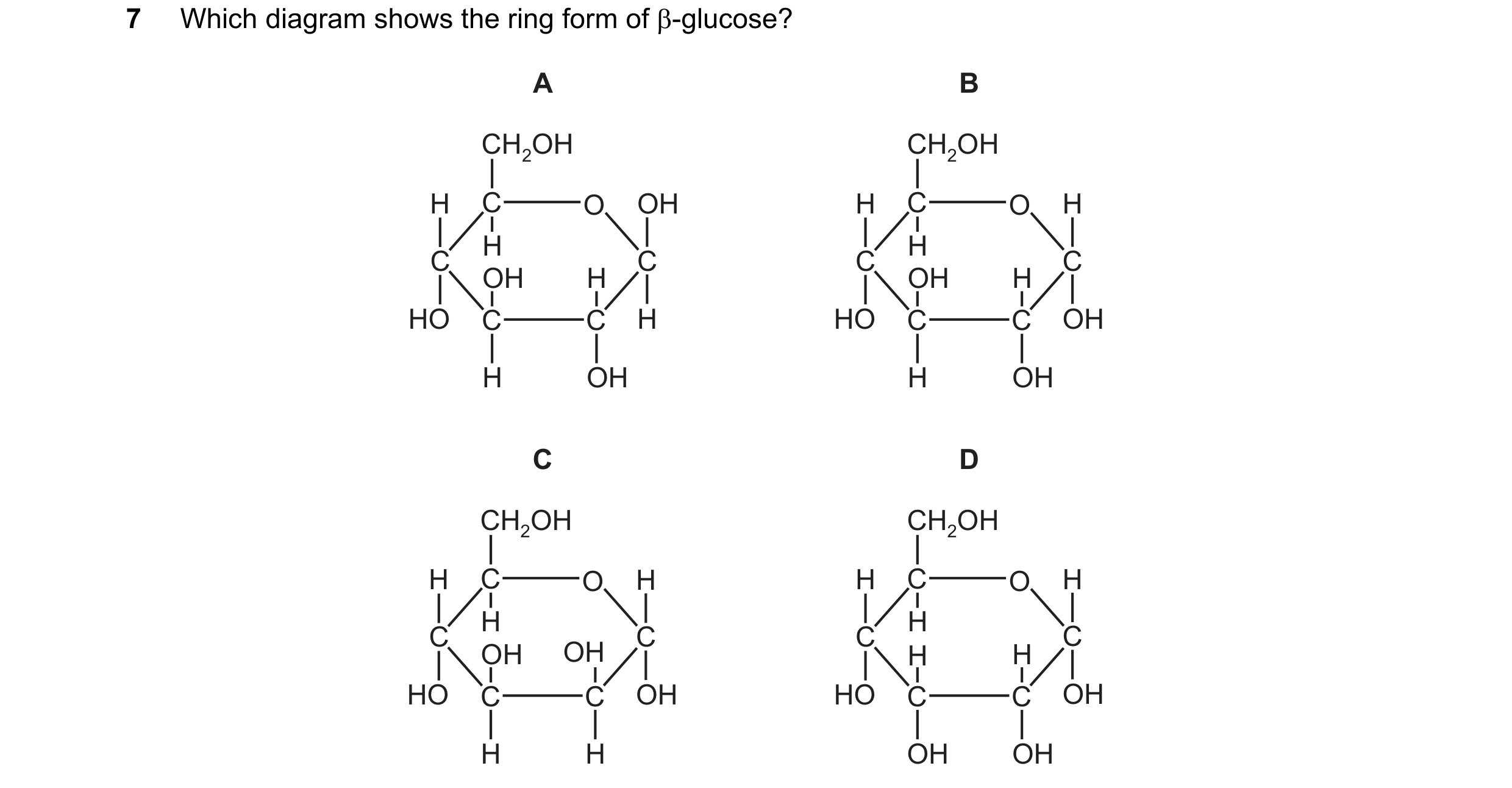
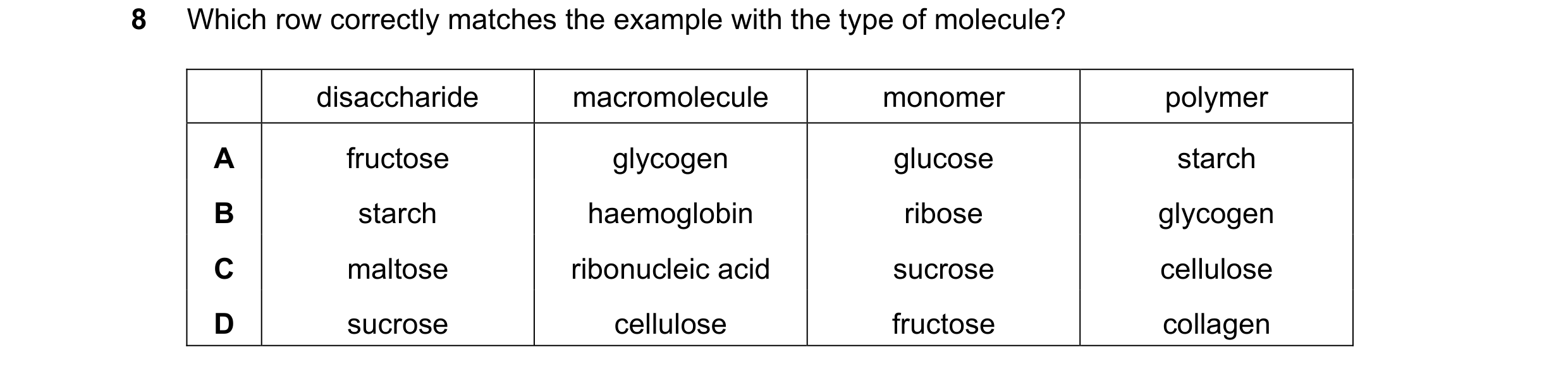 86 / 111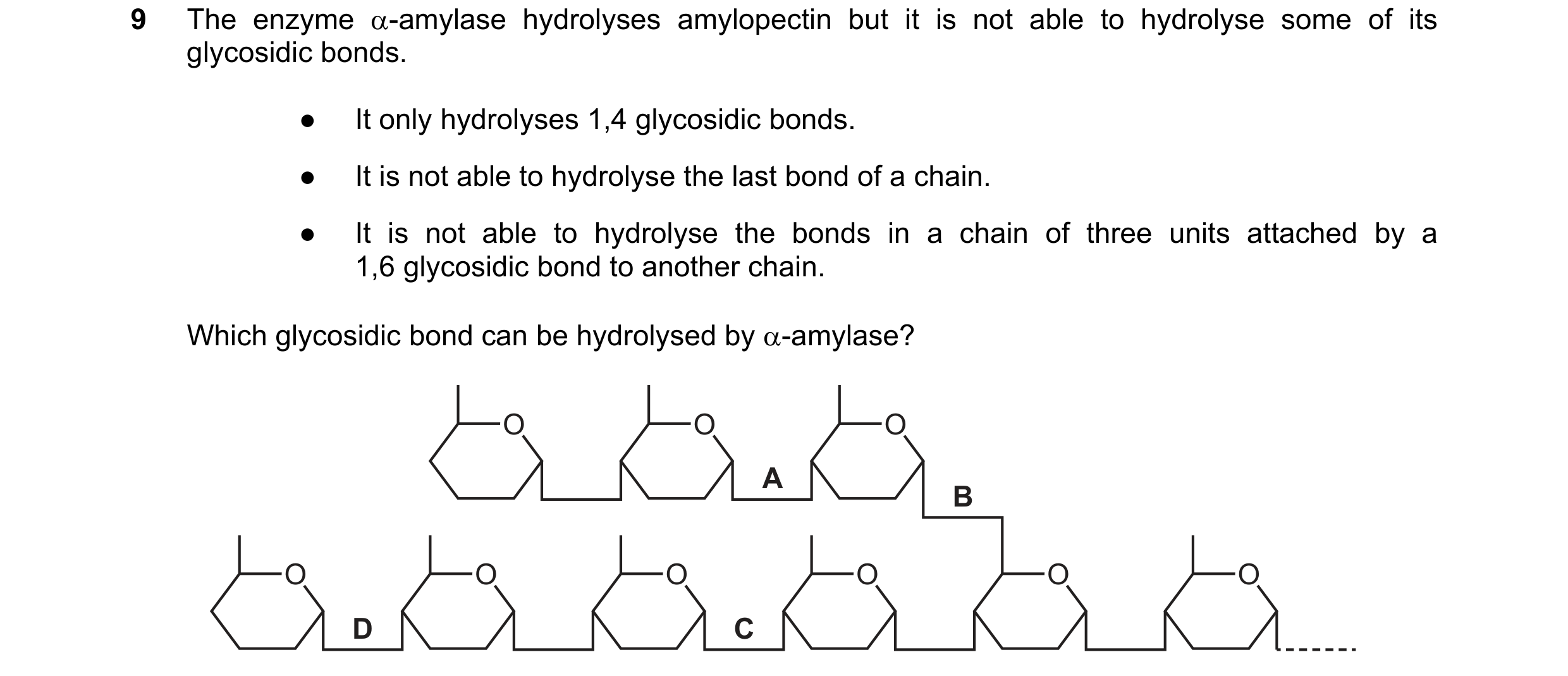
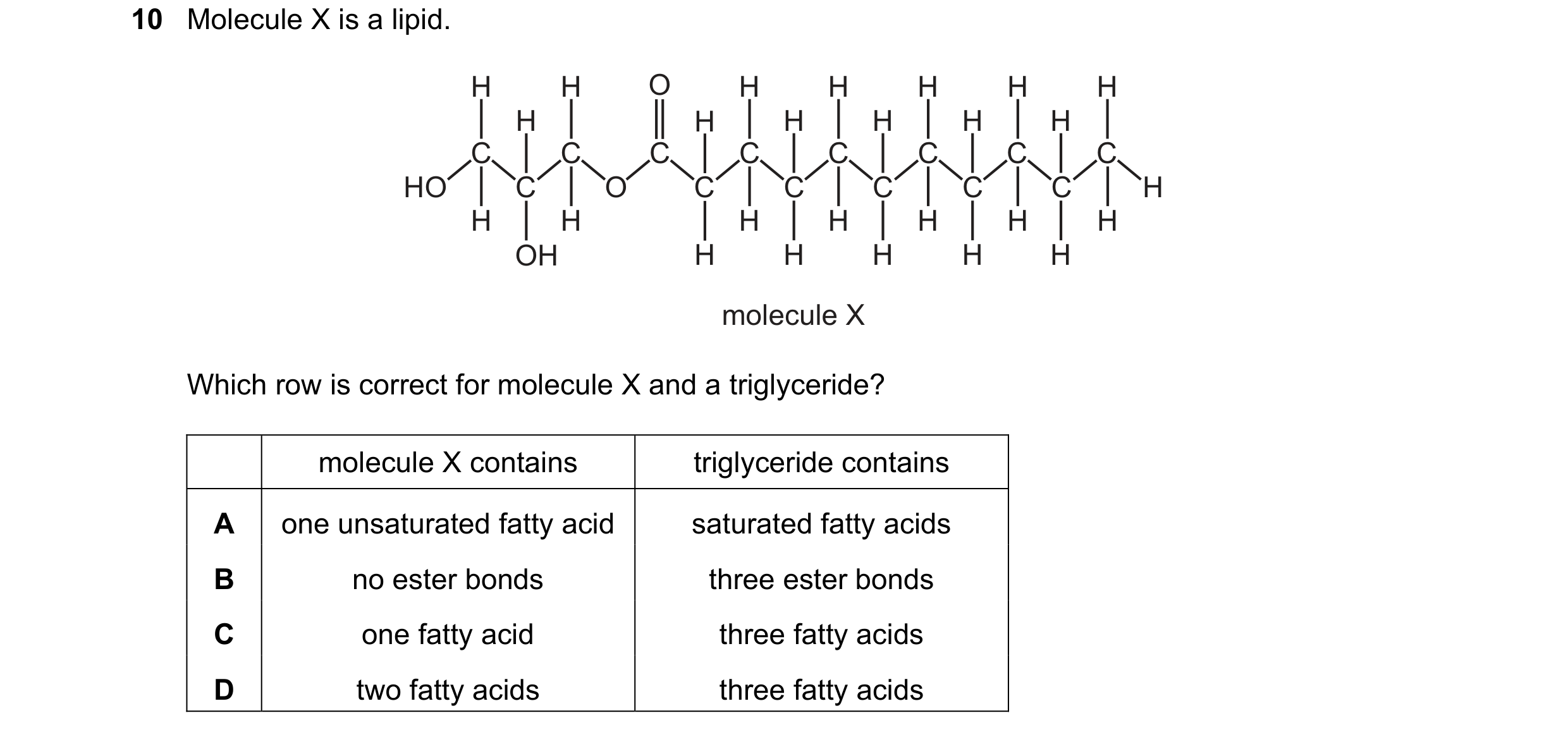 87 / 111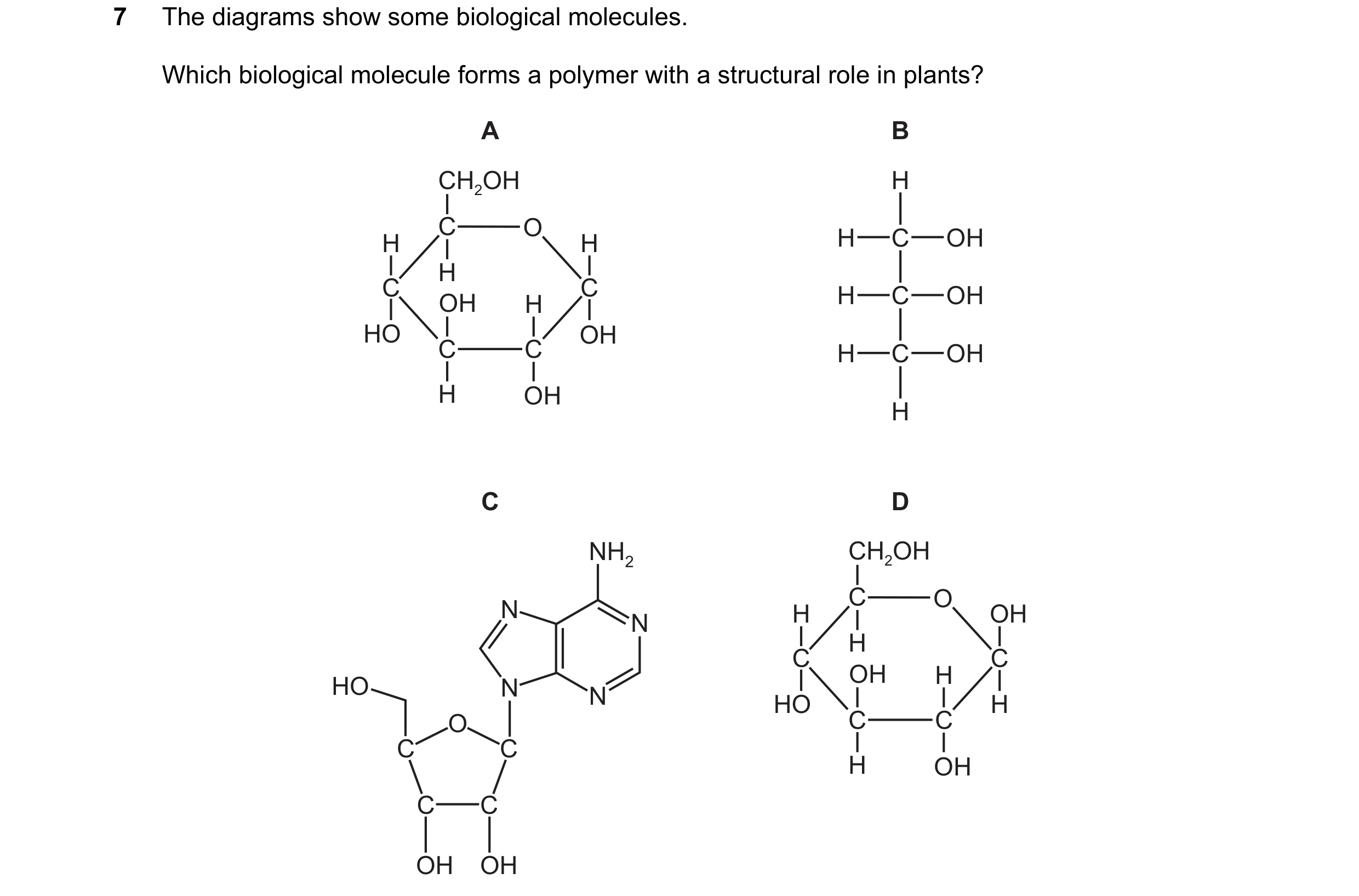

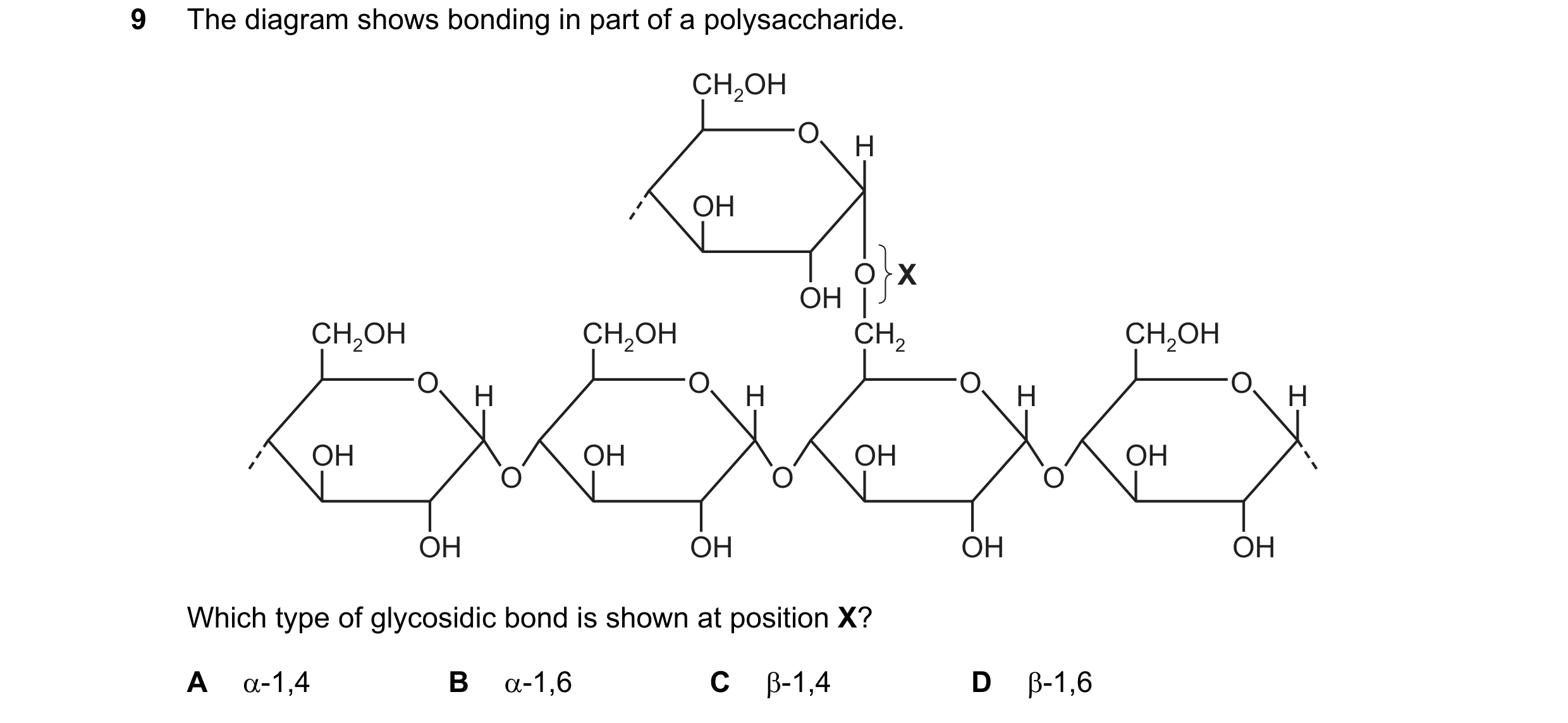 88 / 111
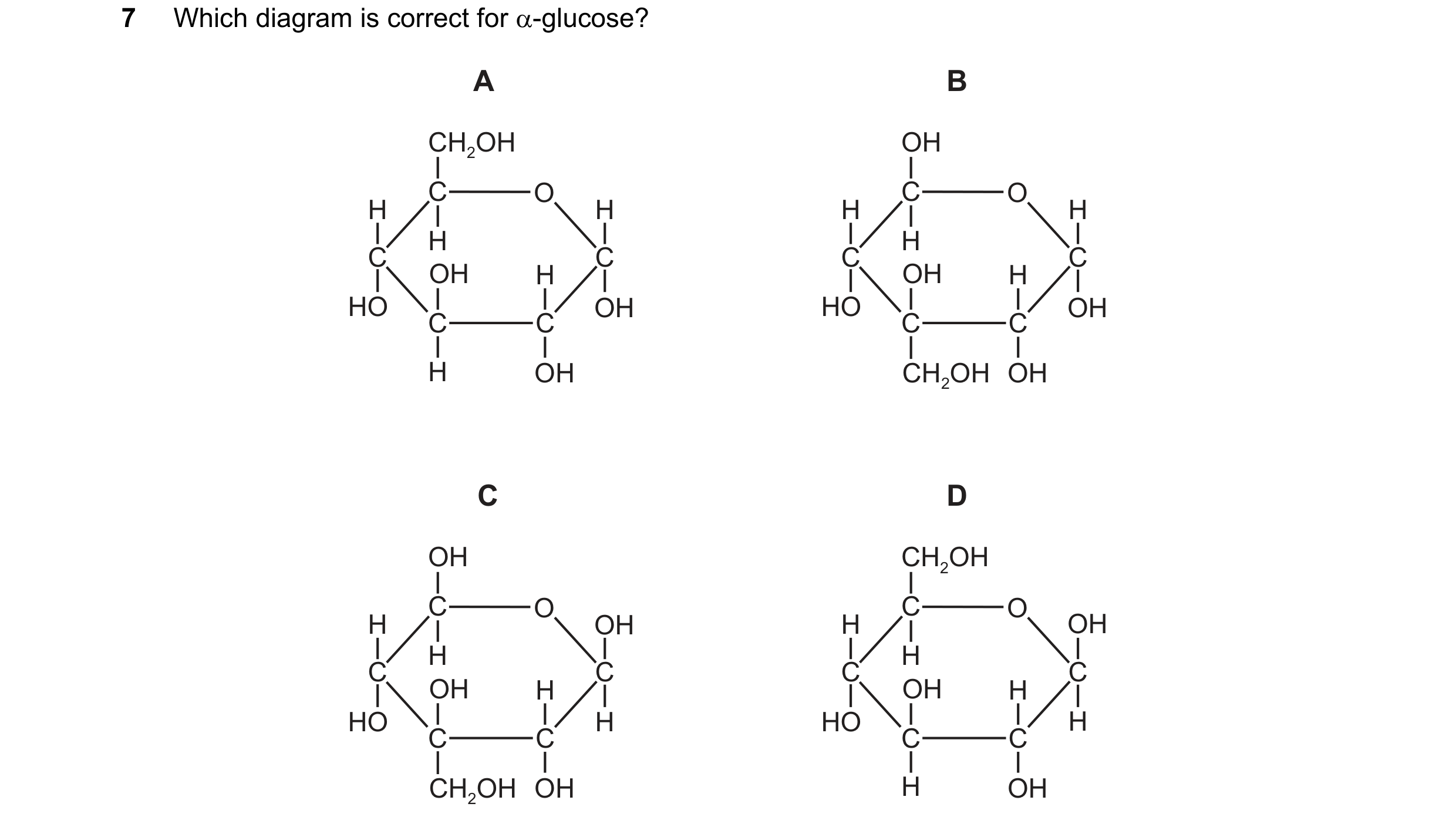
 89 / 111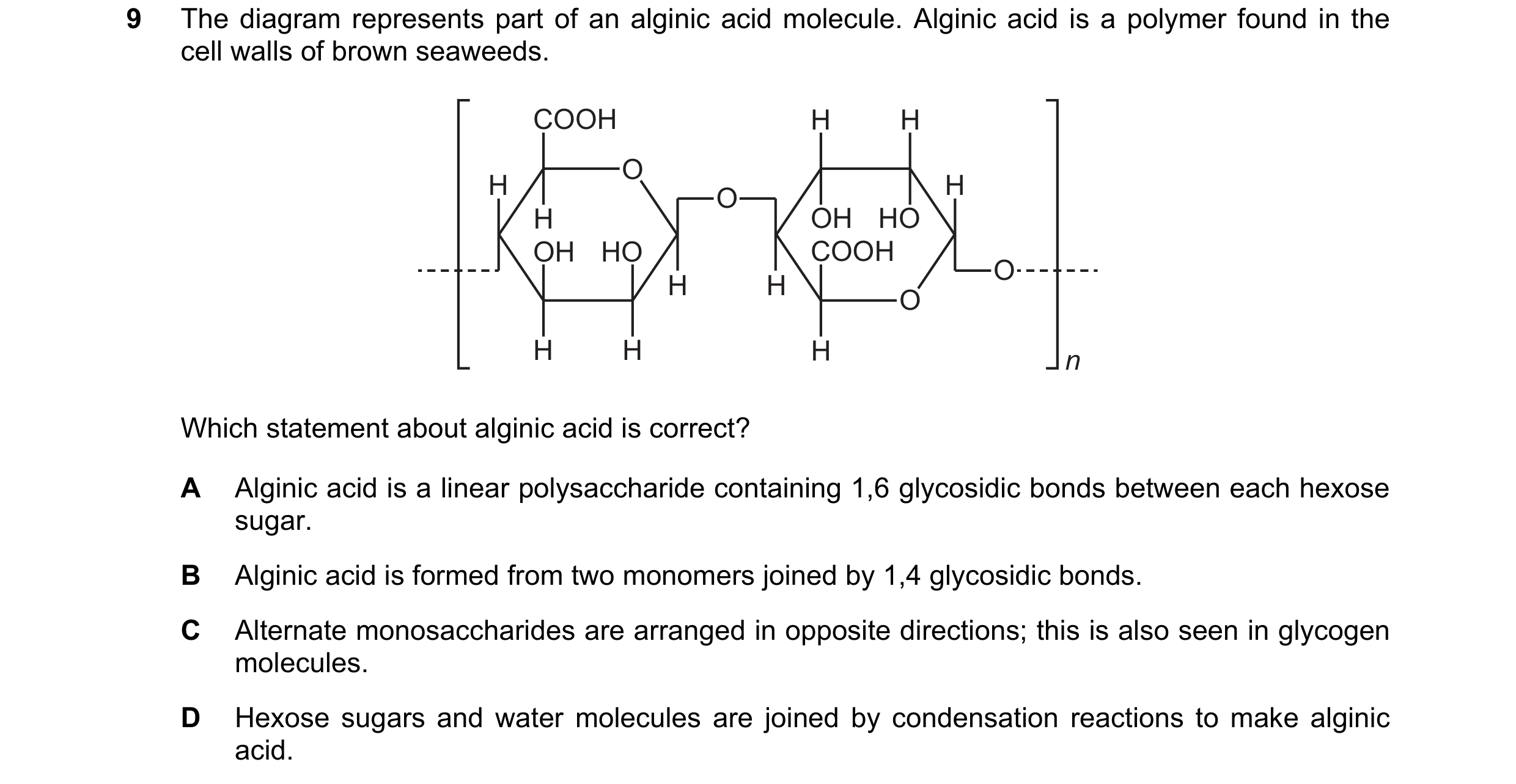
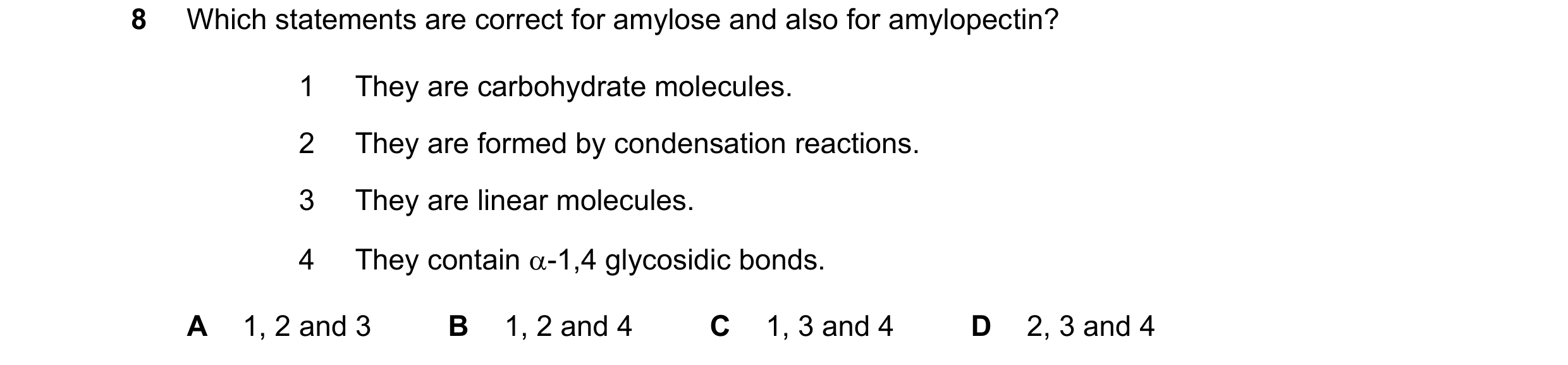 90 / 111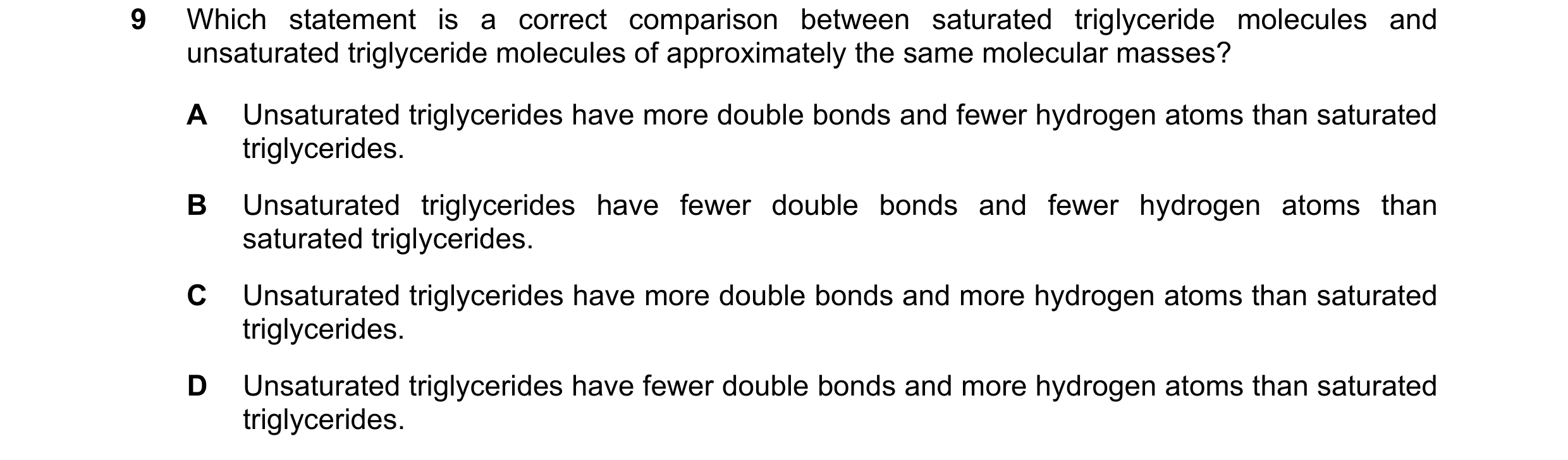
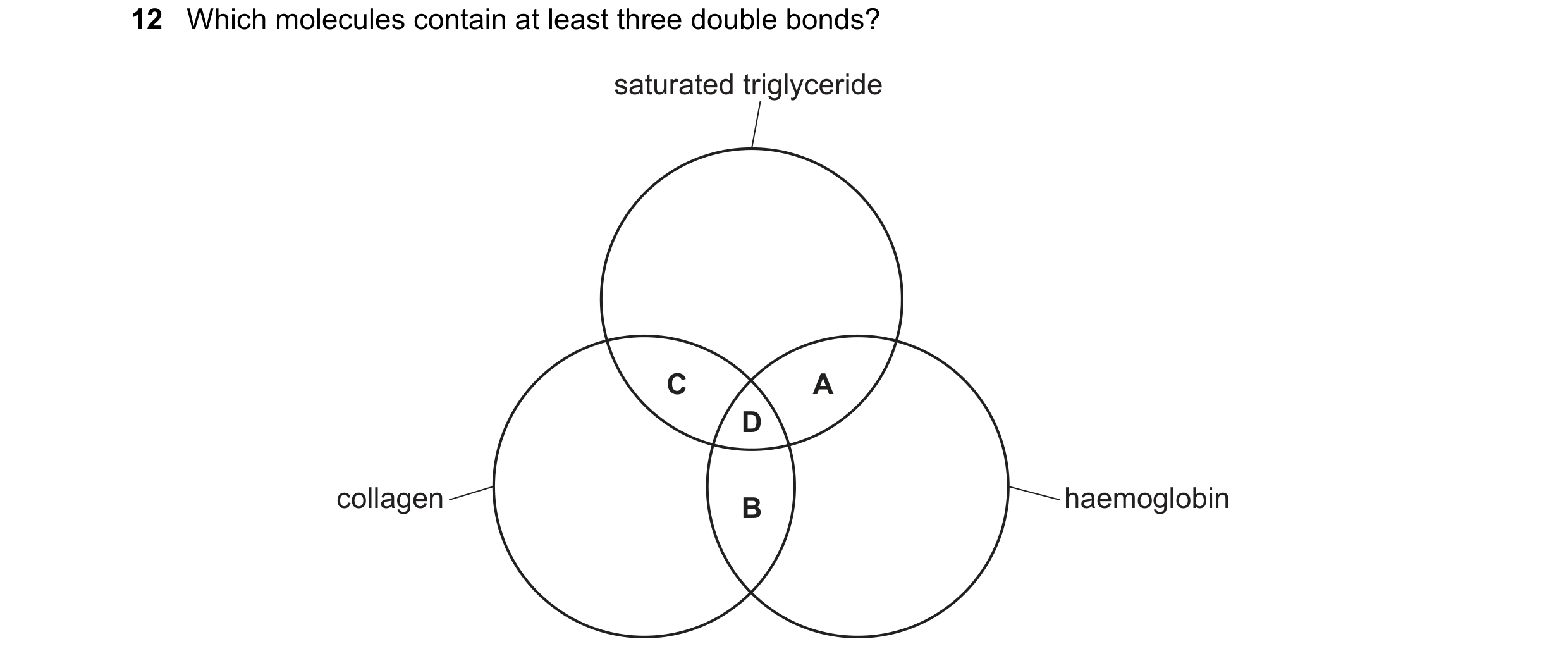
 91 / 111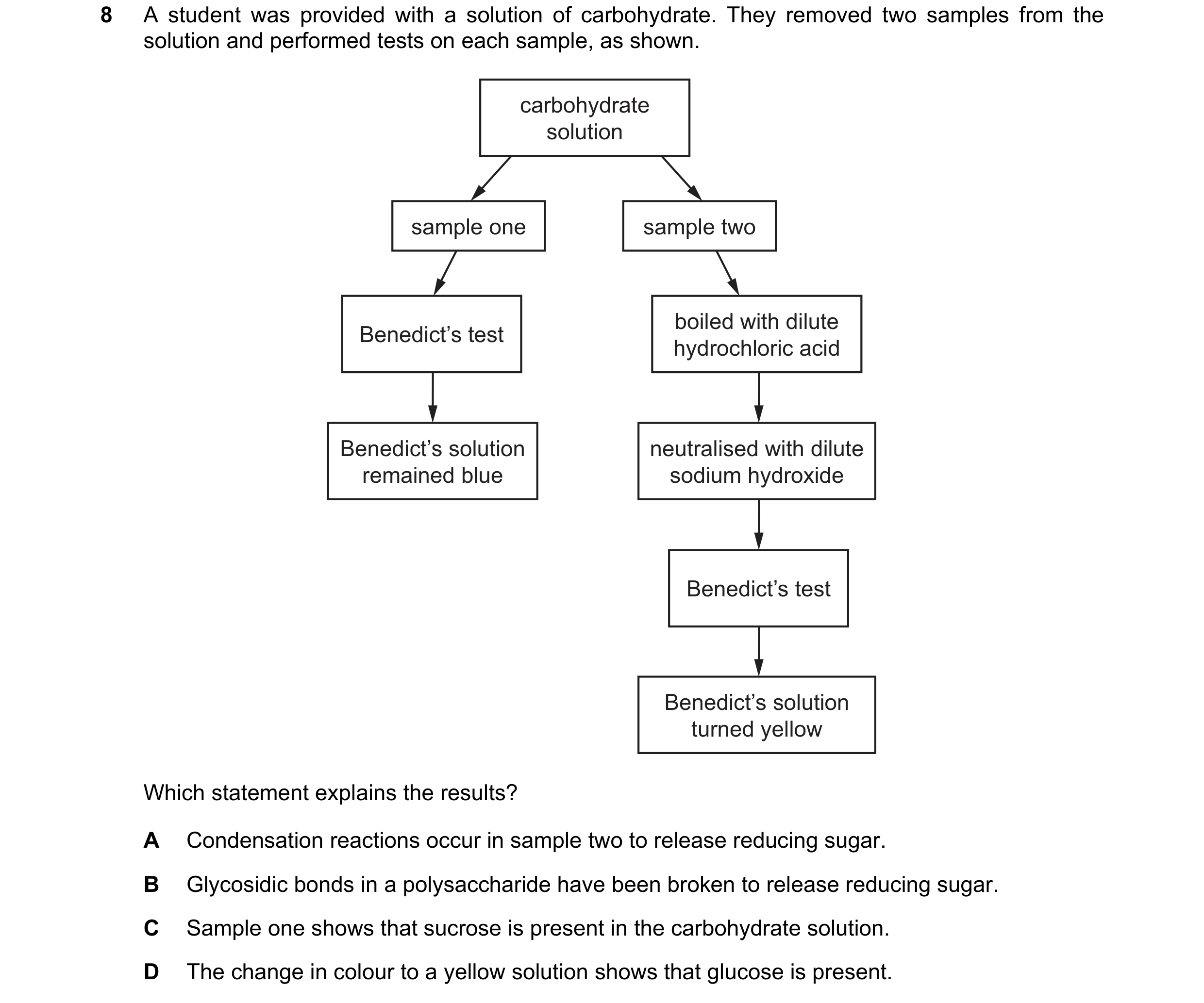
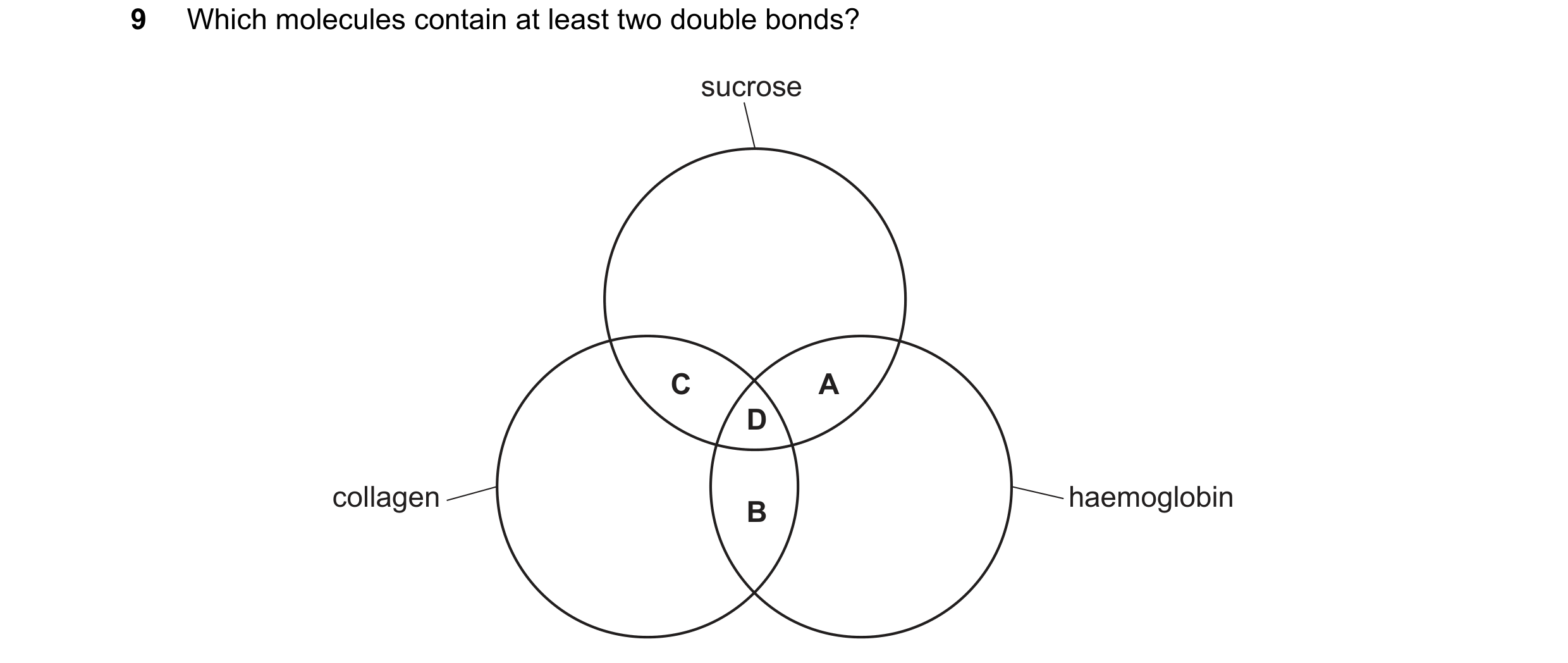 92 / 111


 93 / 111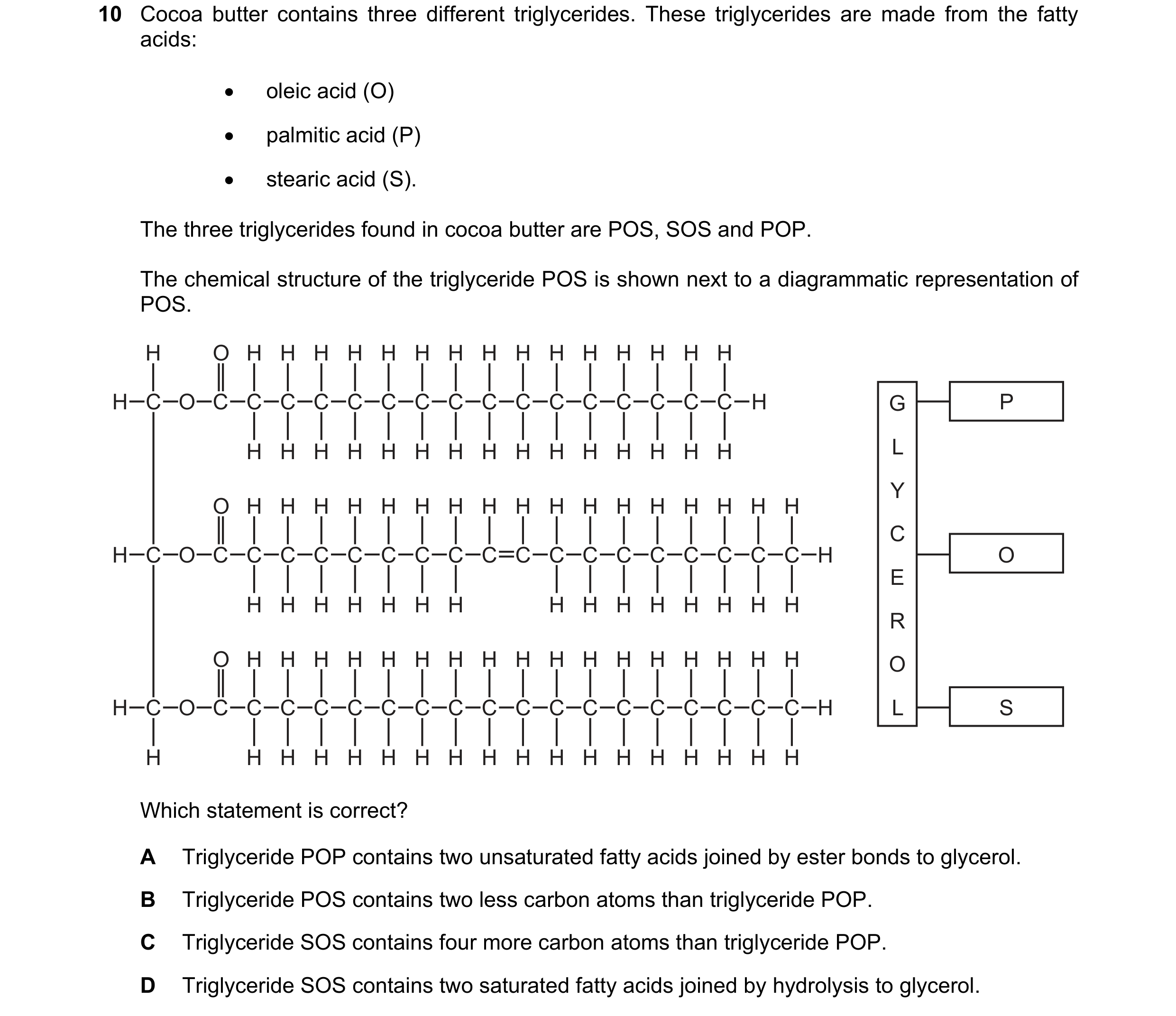
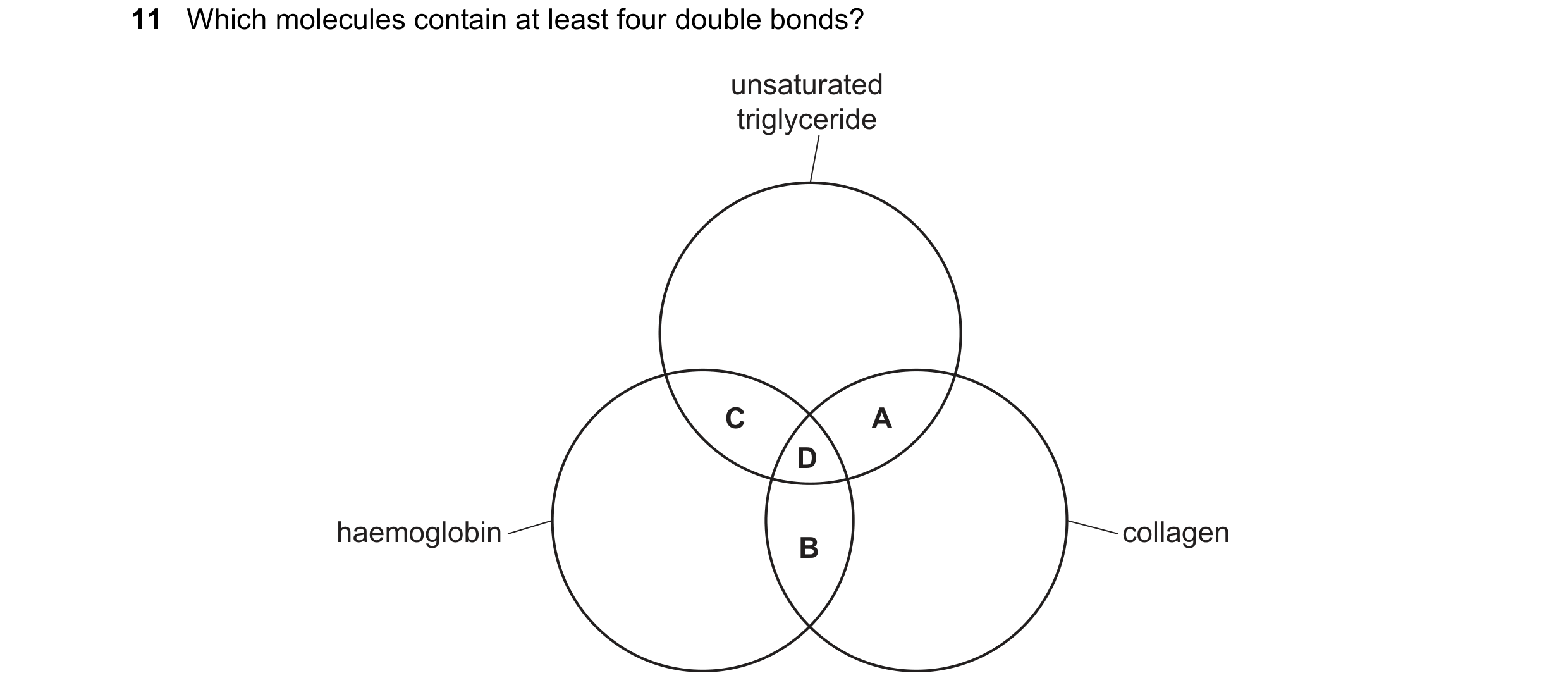 94 / 111
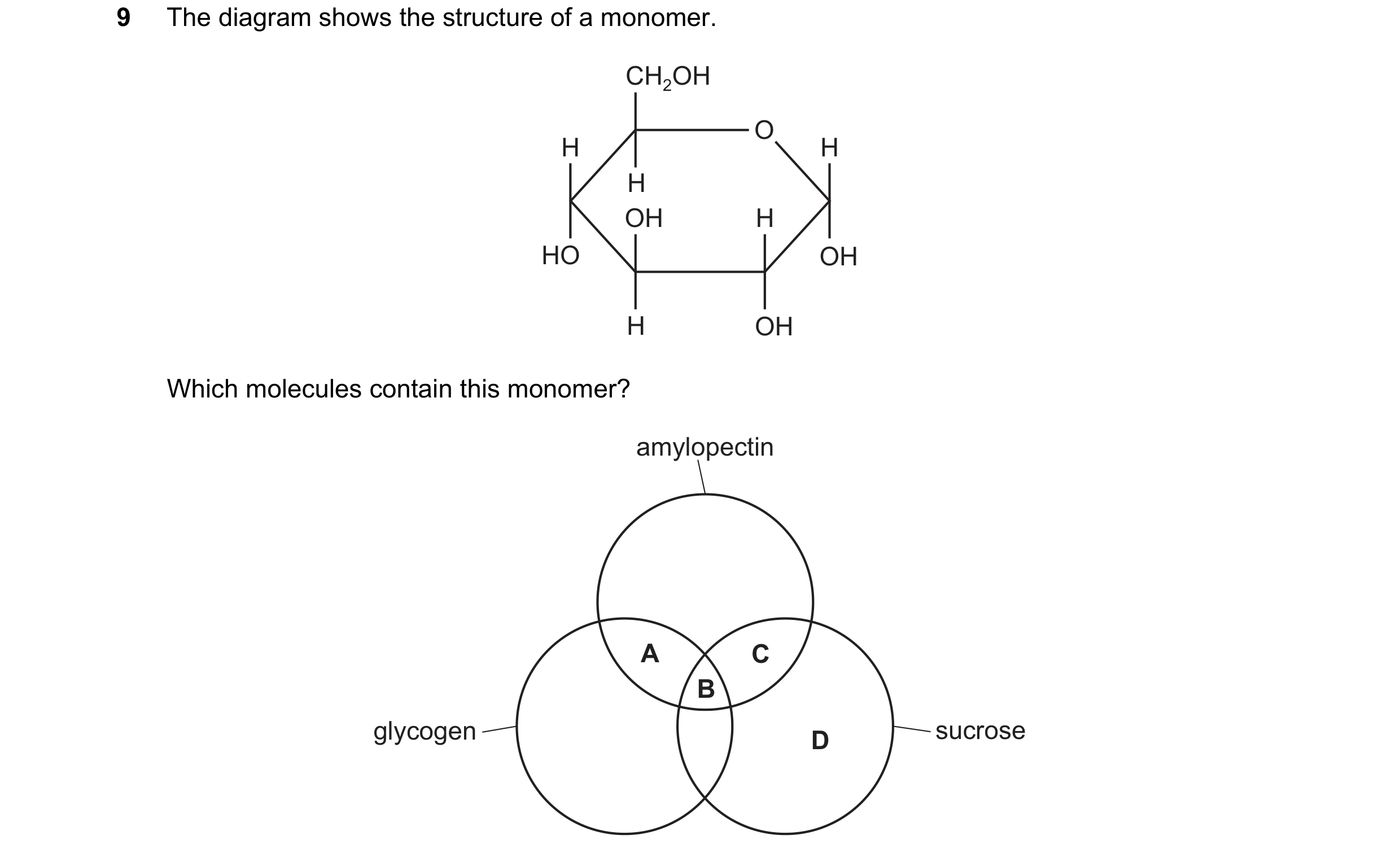
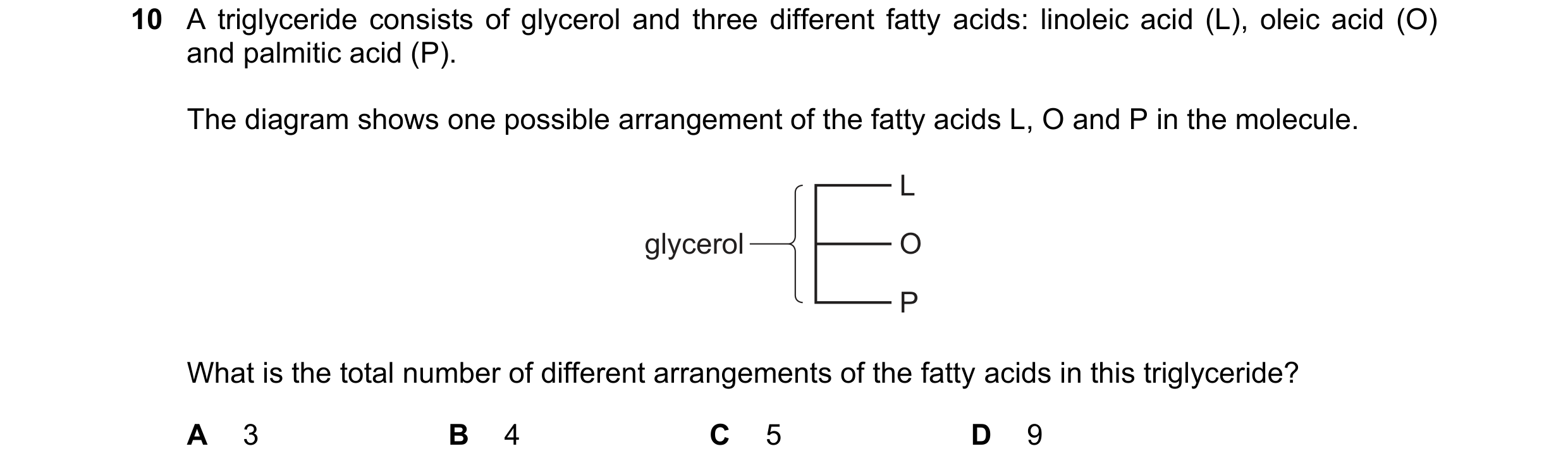 95 / 111
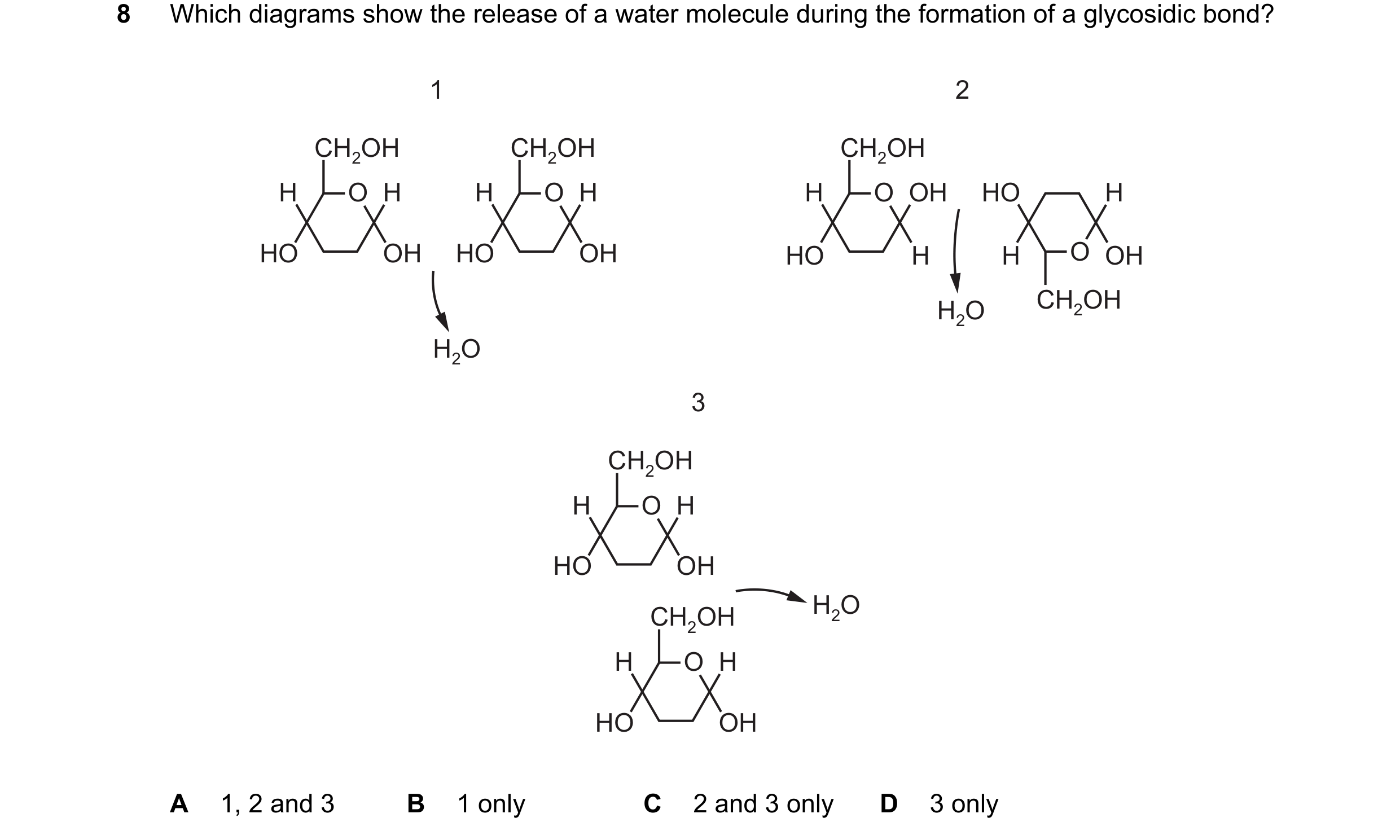
 96 / 111
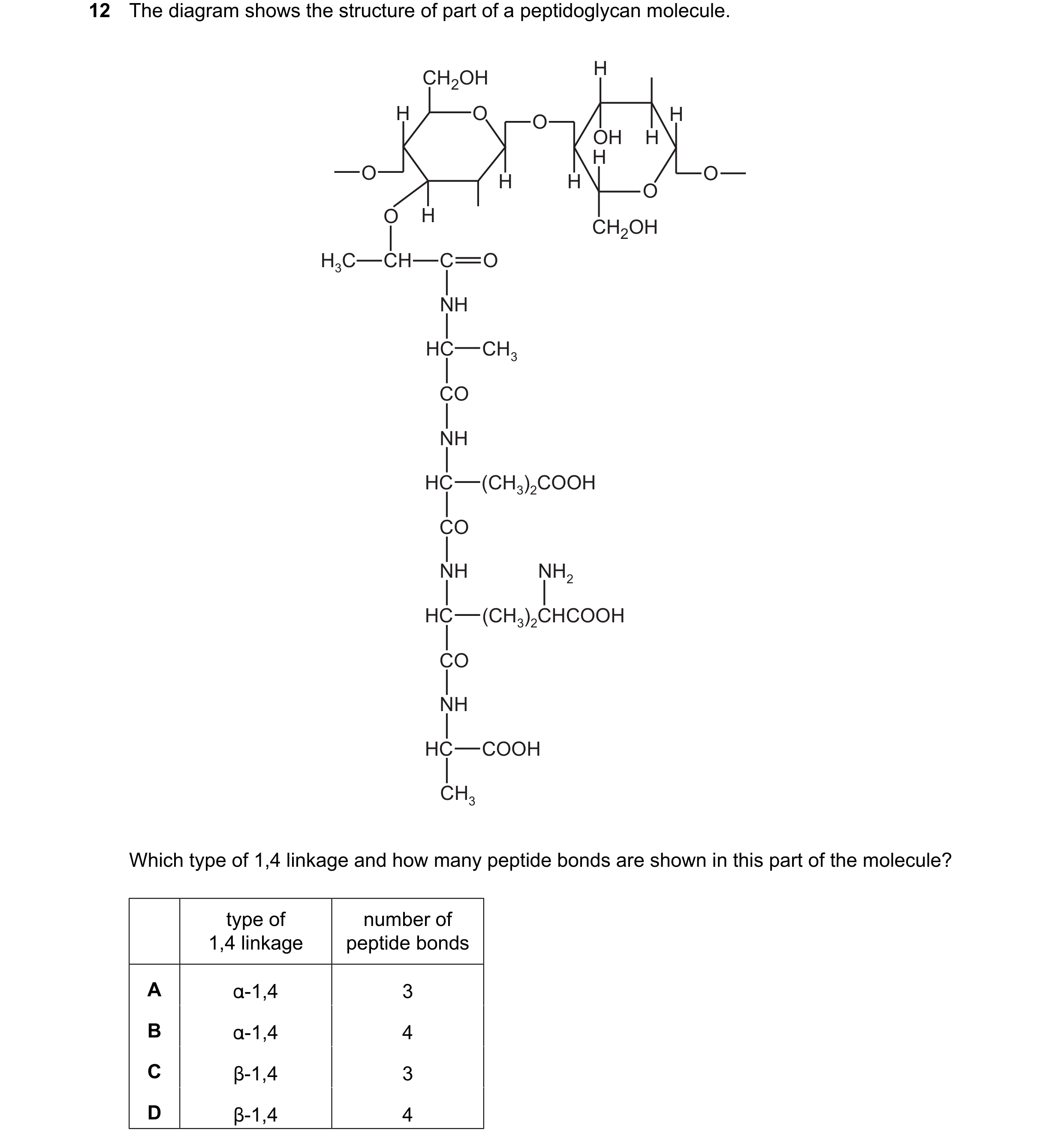 97 / 111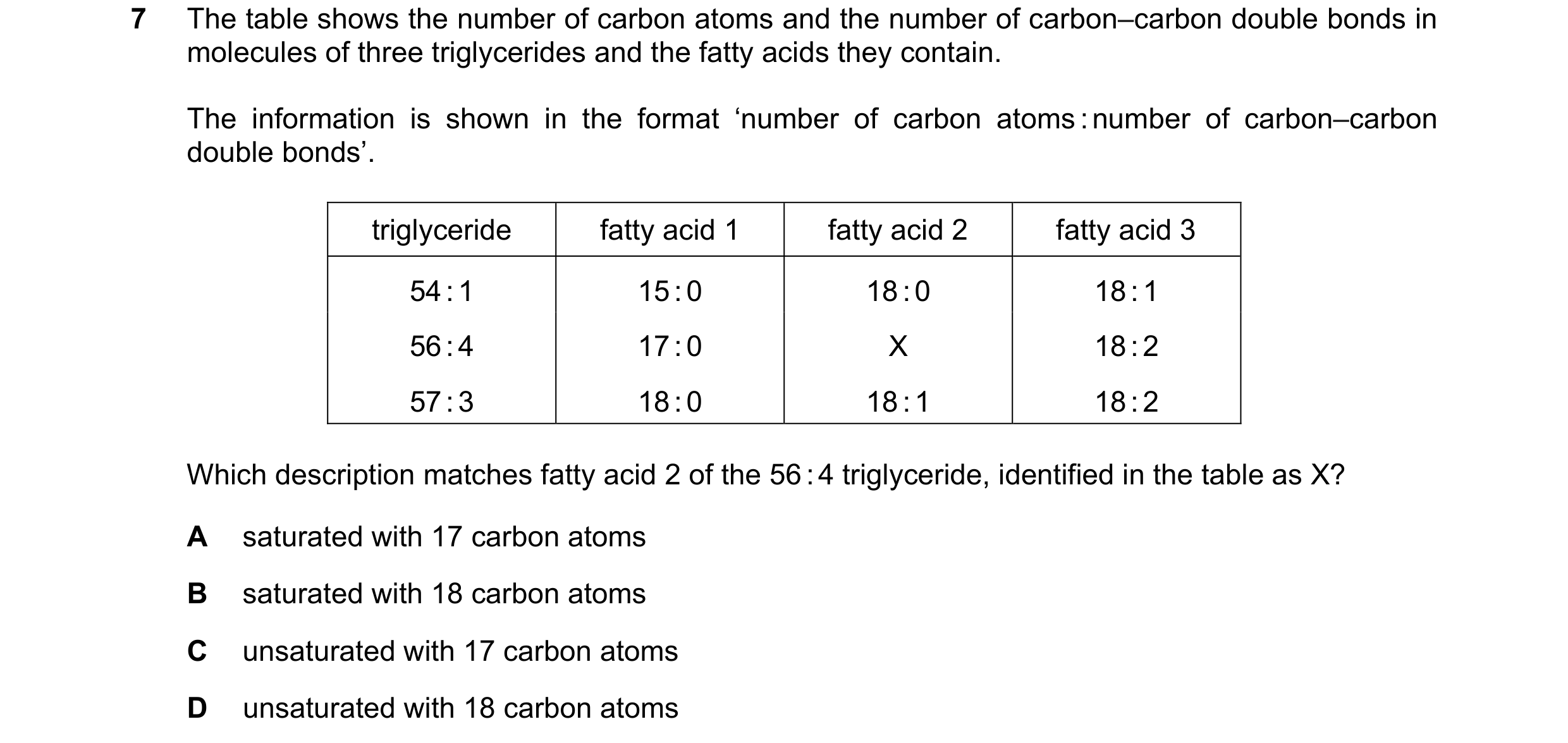
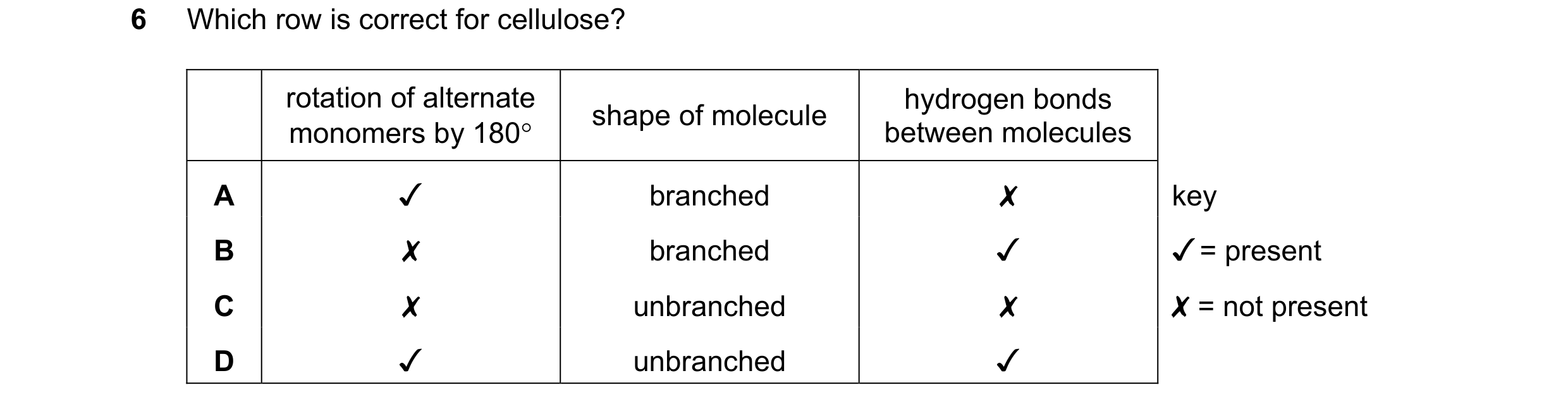
 98 / 111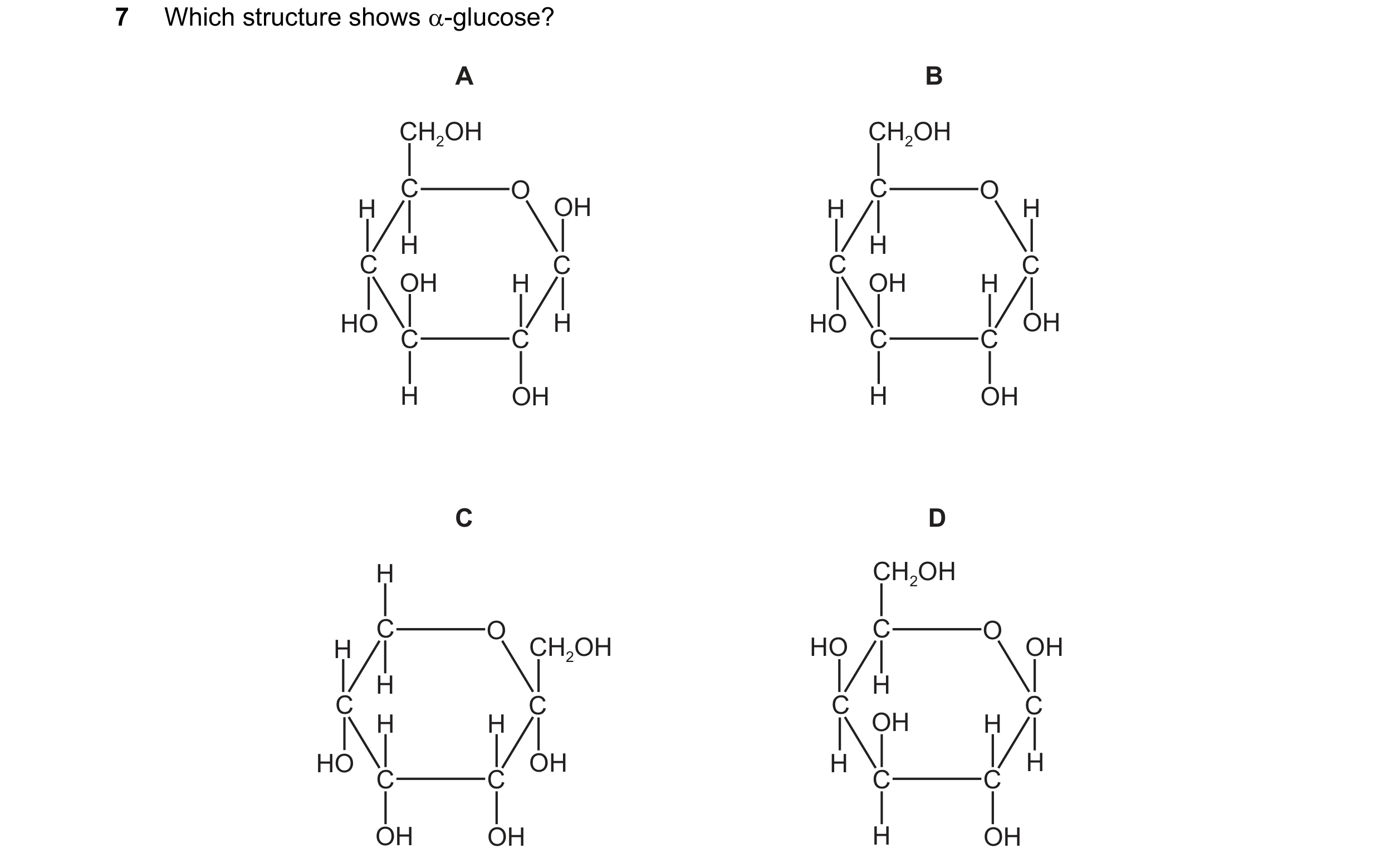

 99 / 111
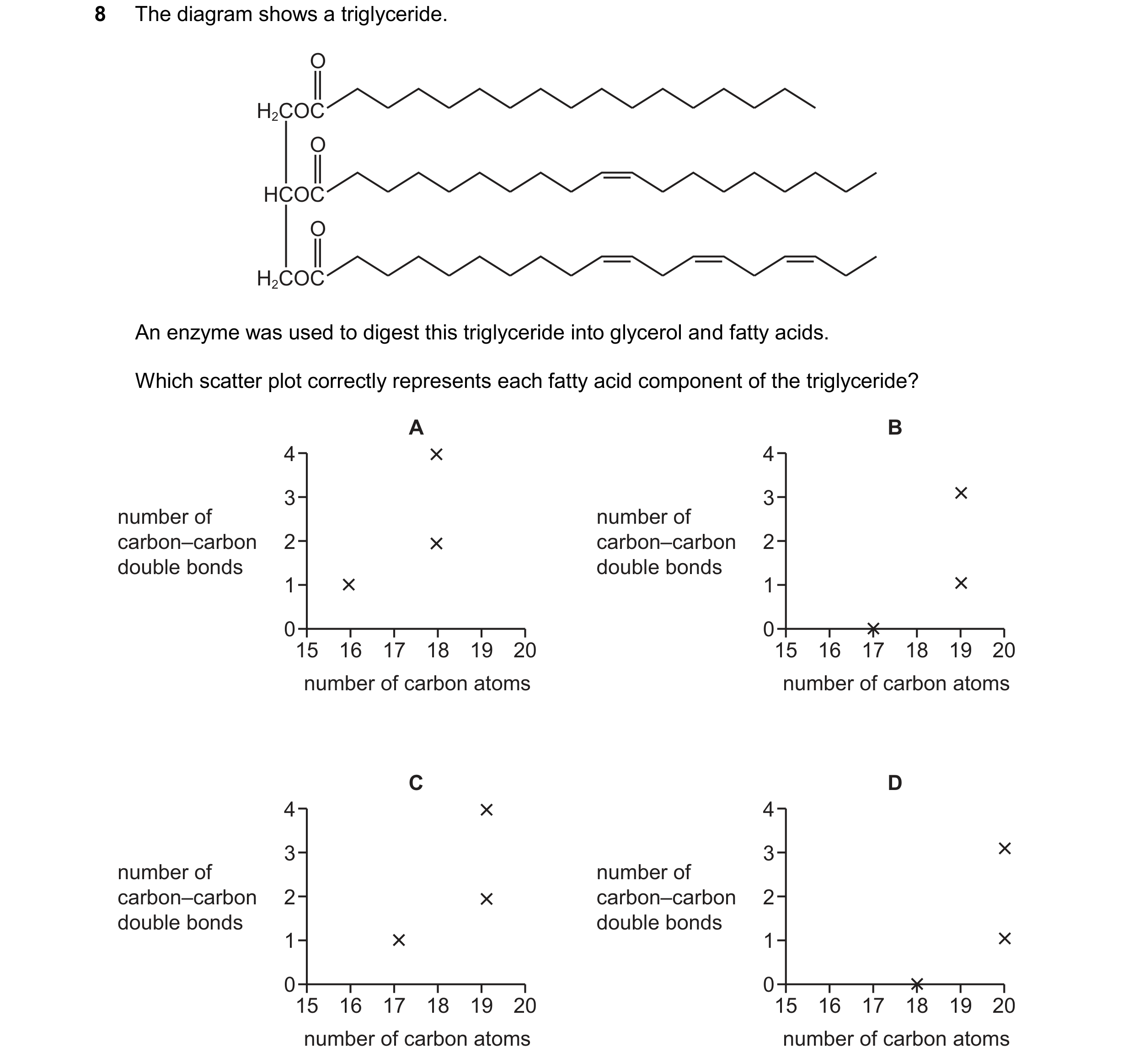 100 / 111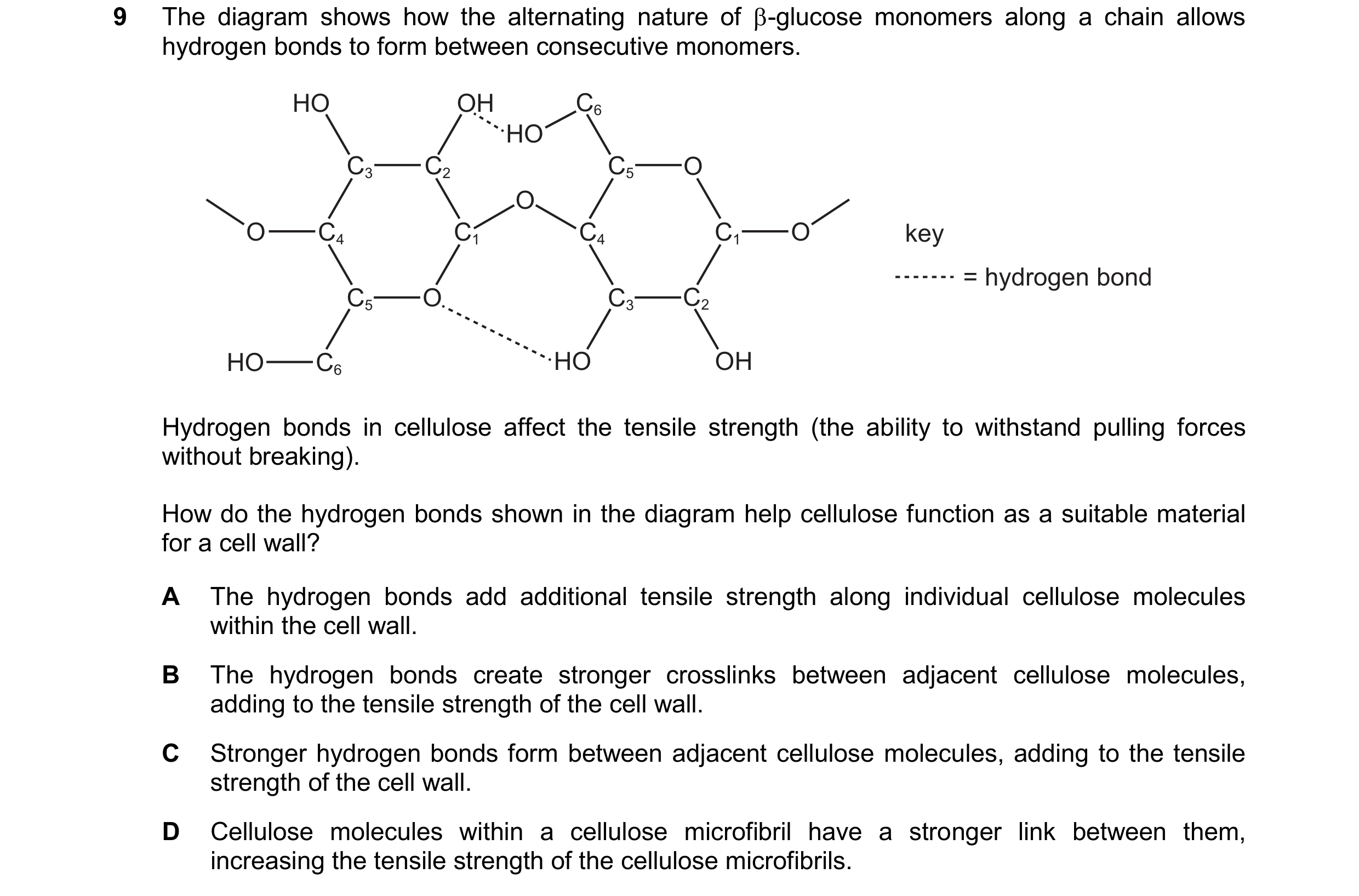
 101 / 111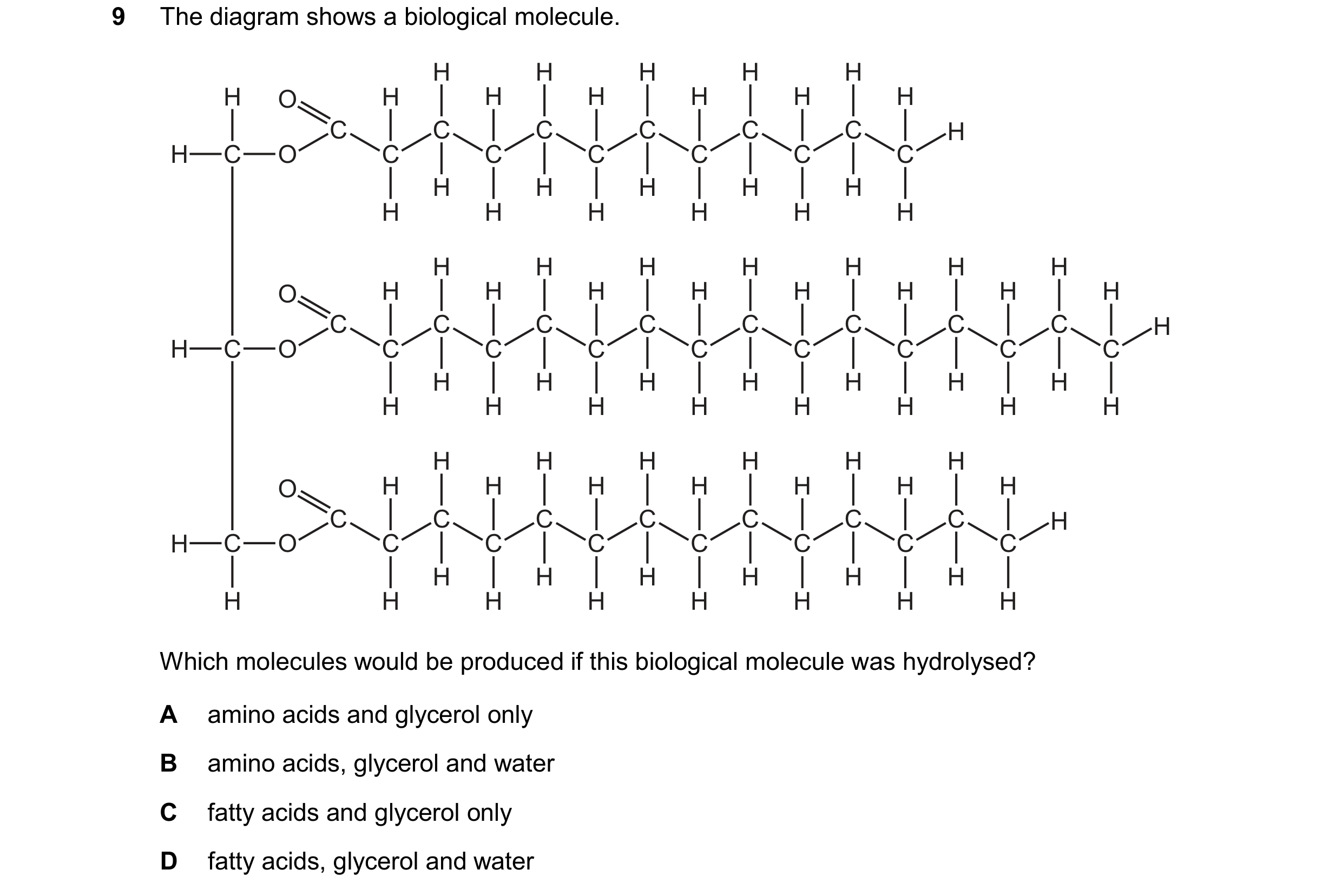
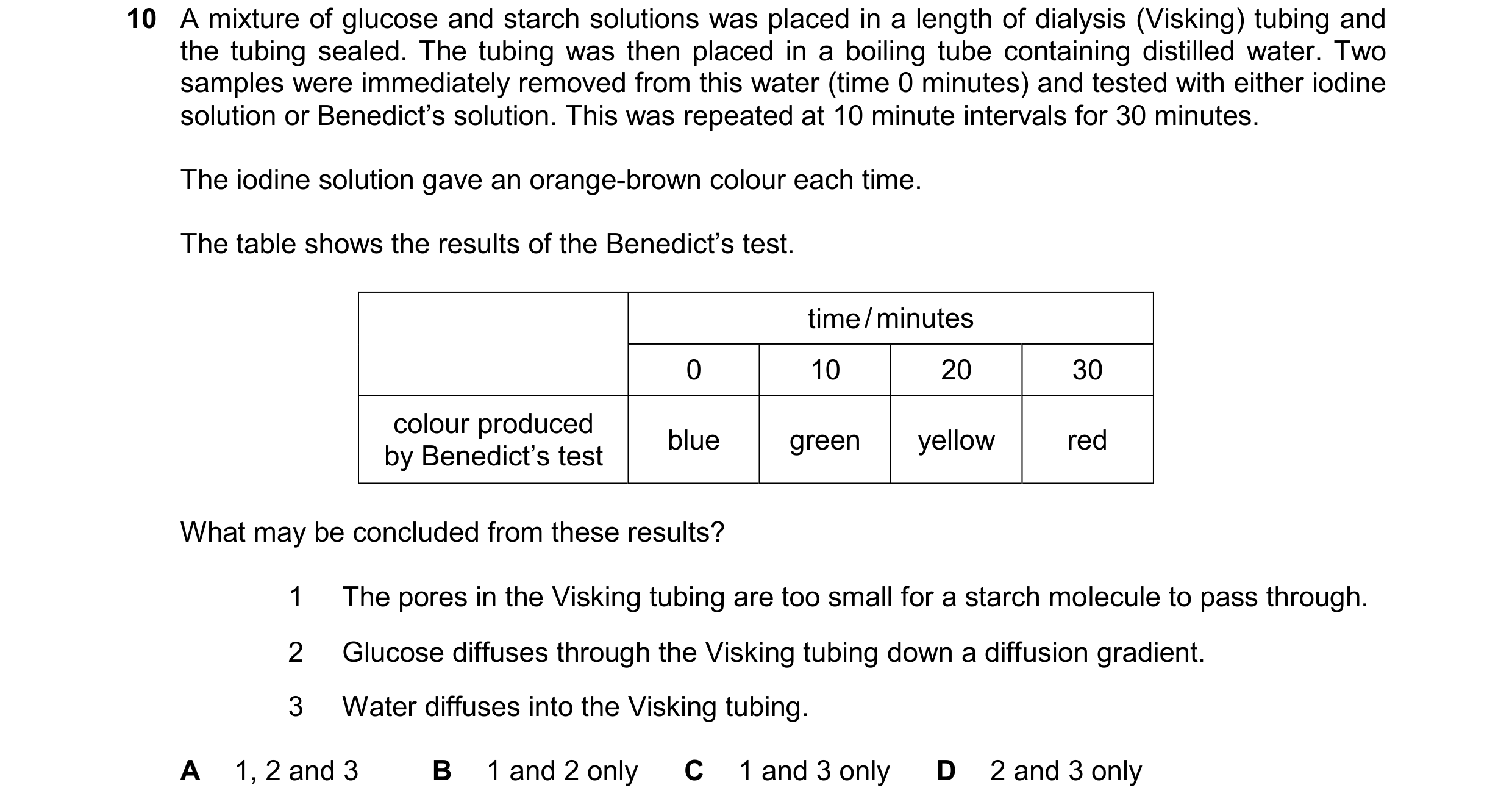 102 / 111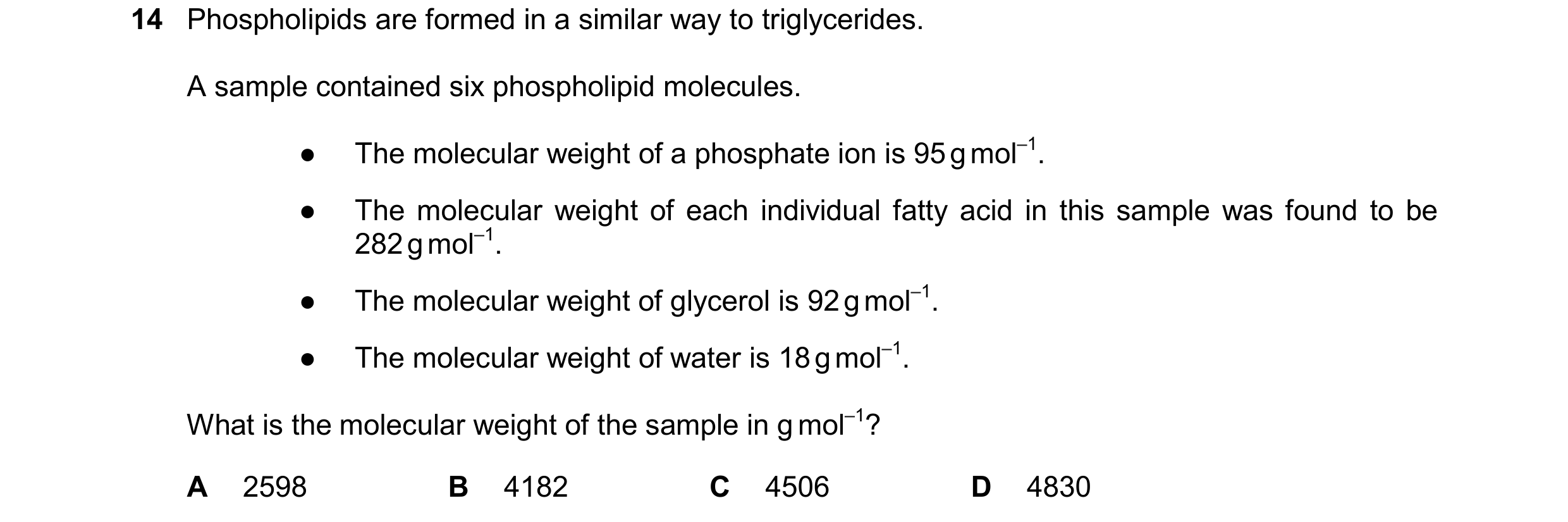
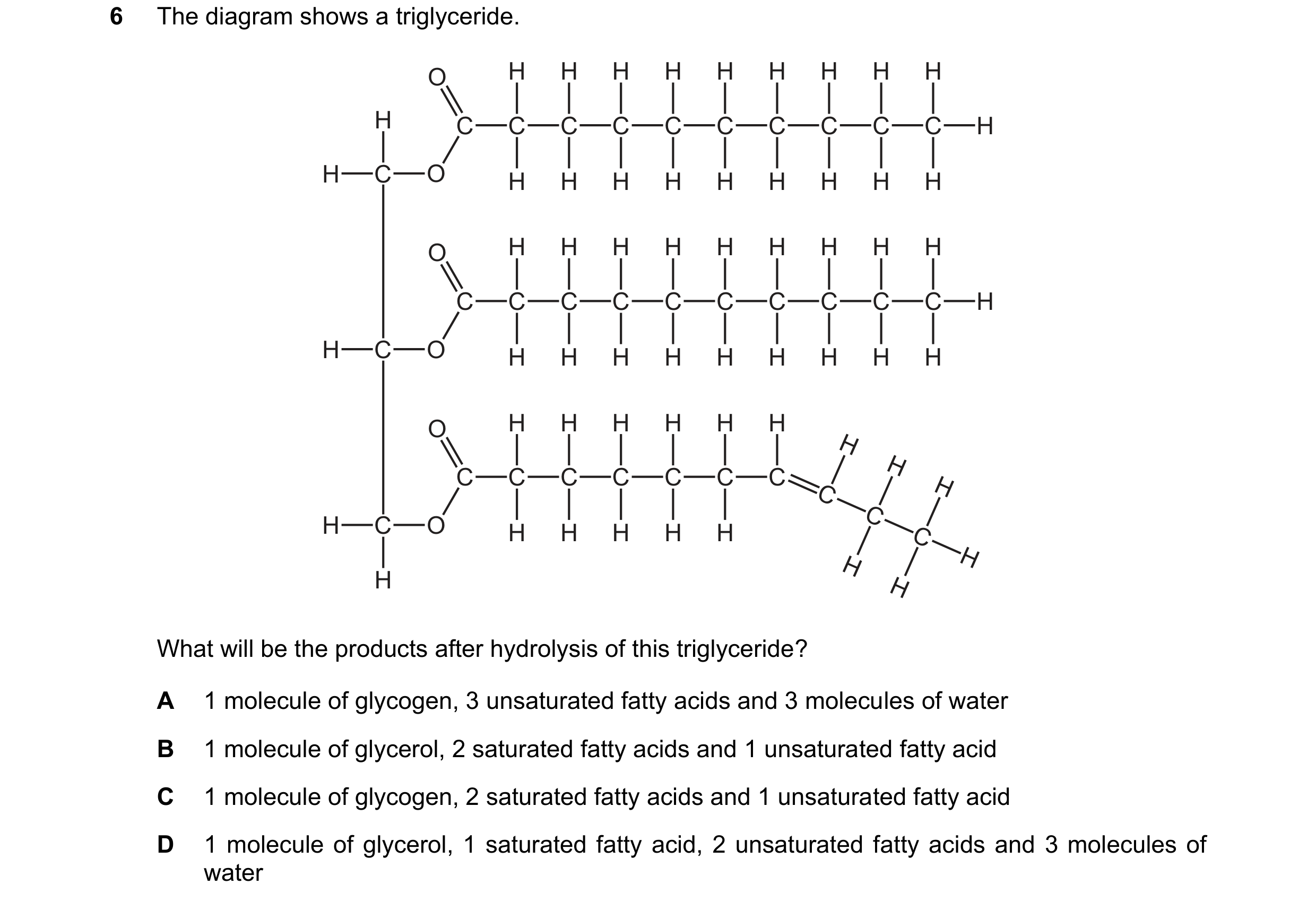
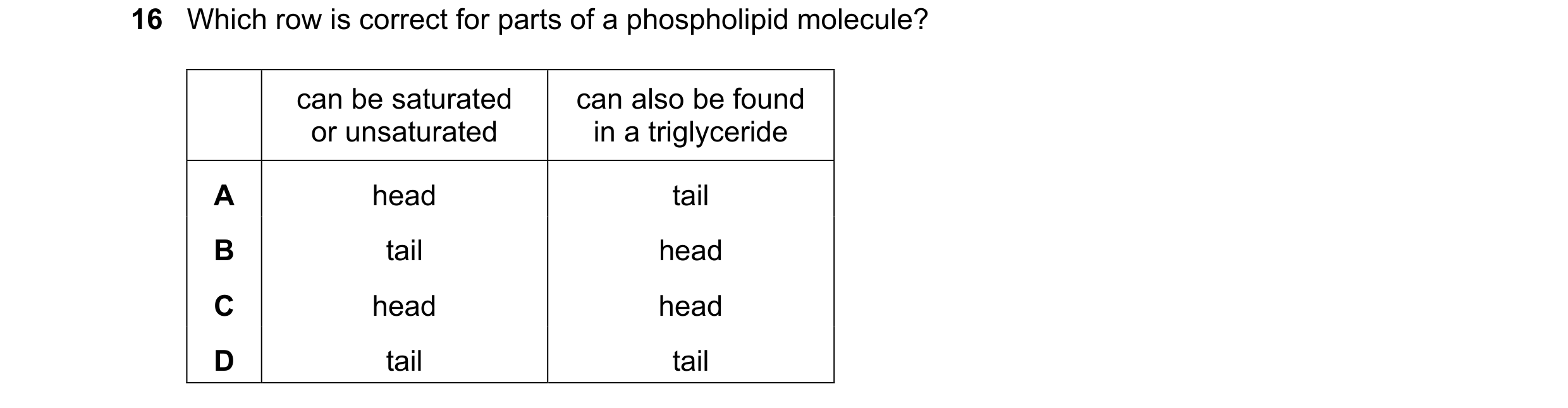 103 / 111
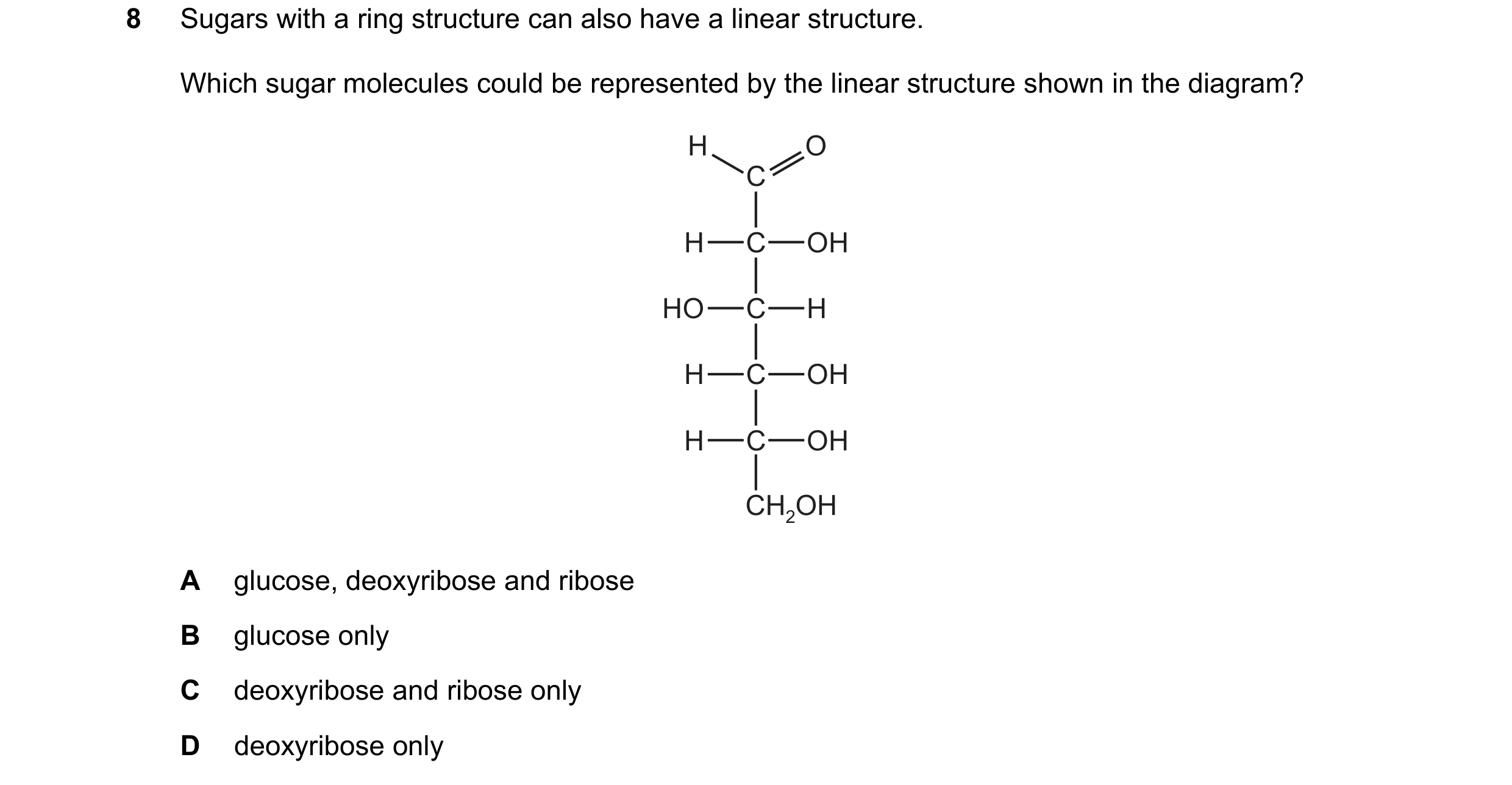
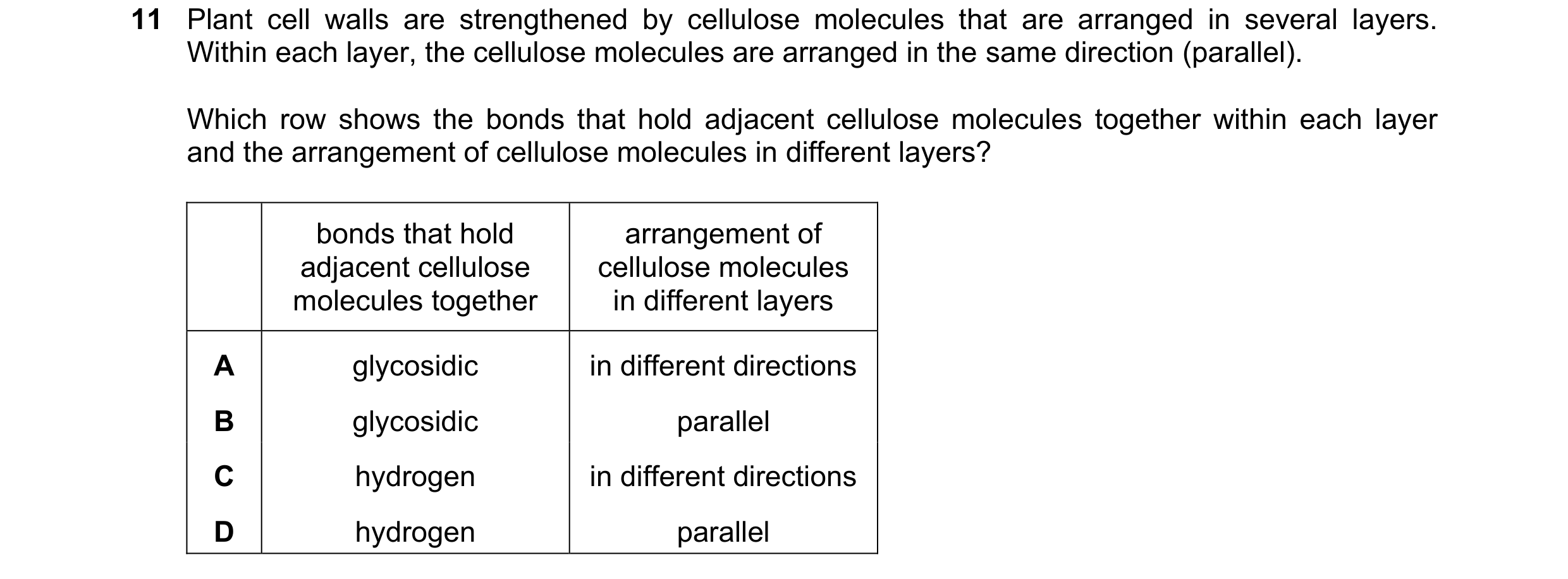 104 / 111
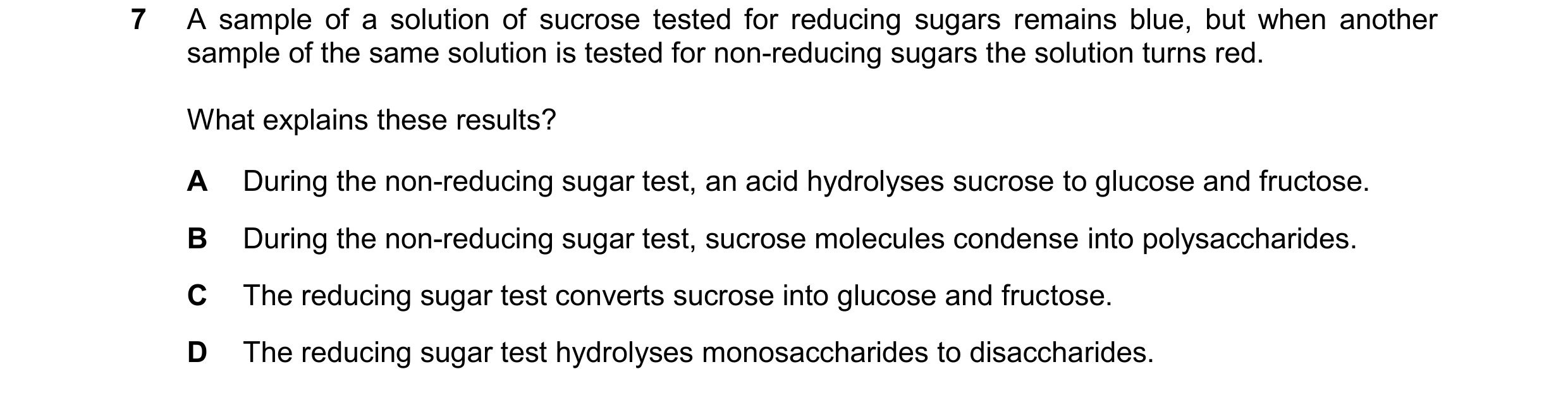
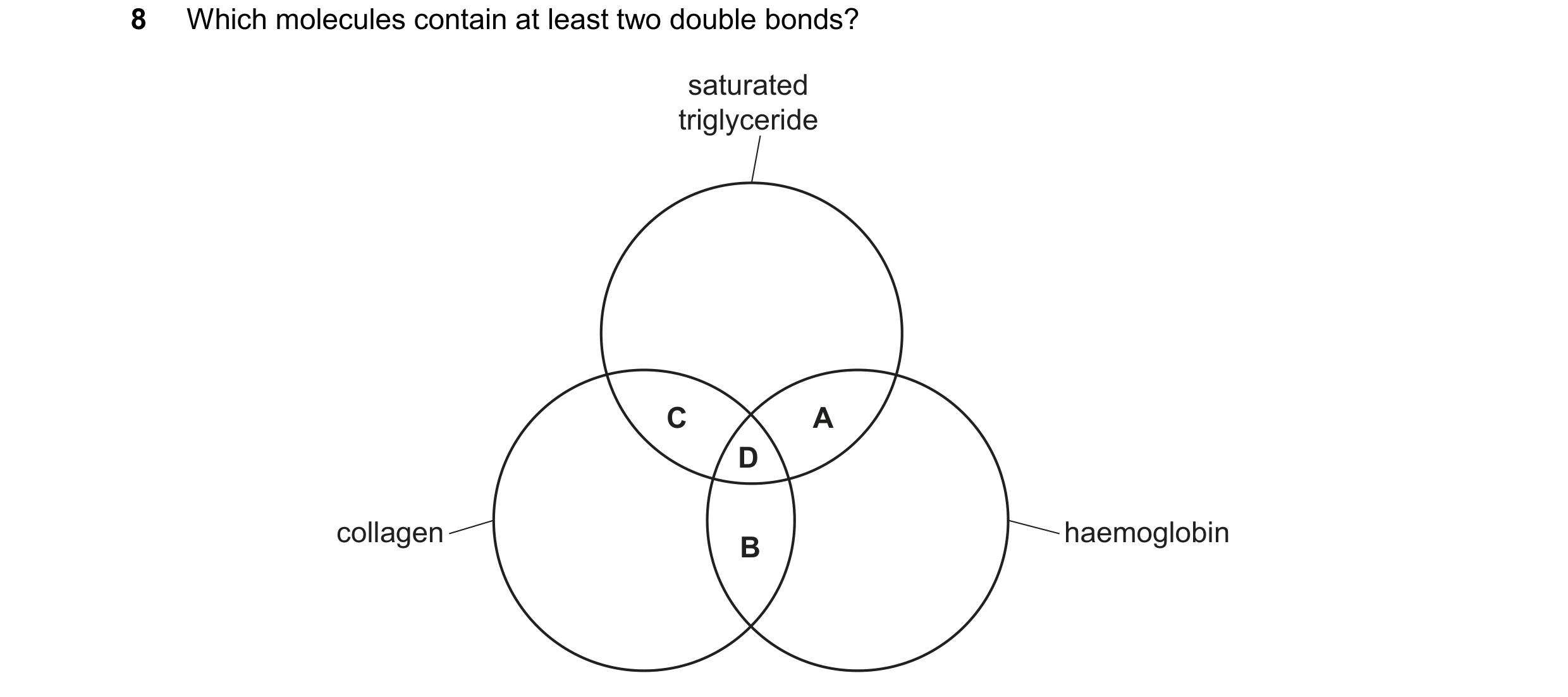 105 / 111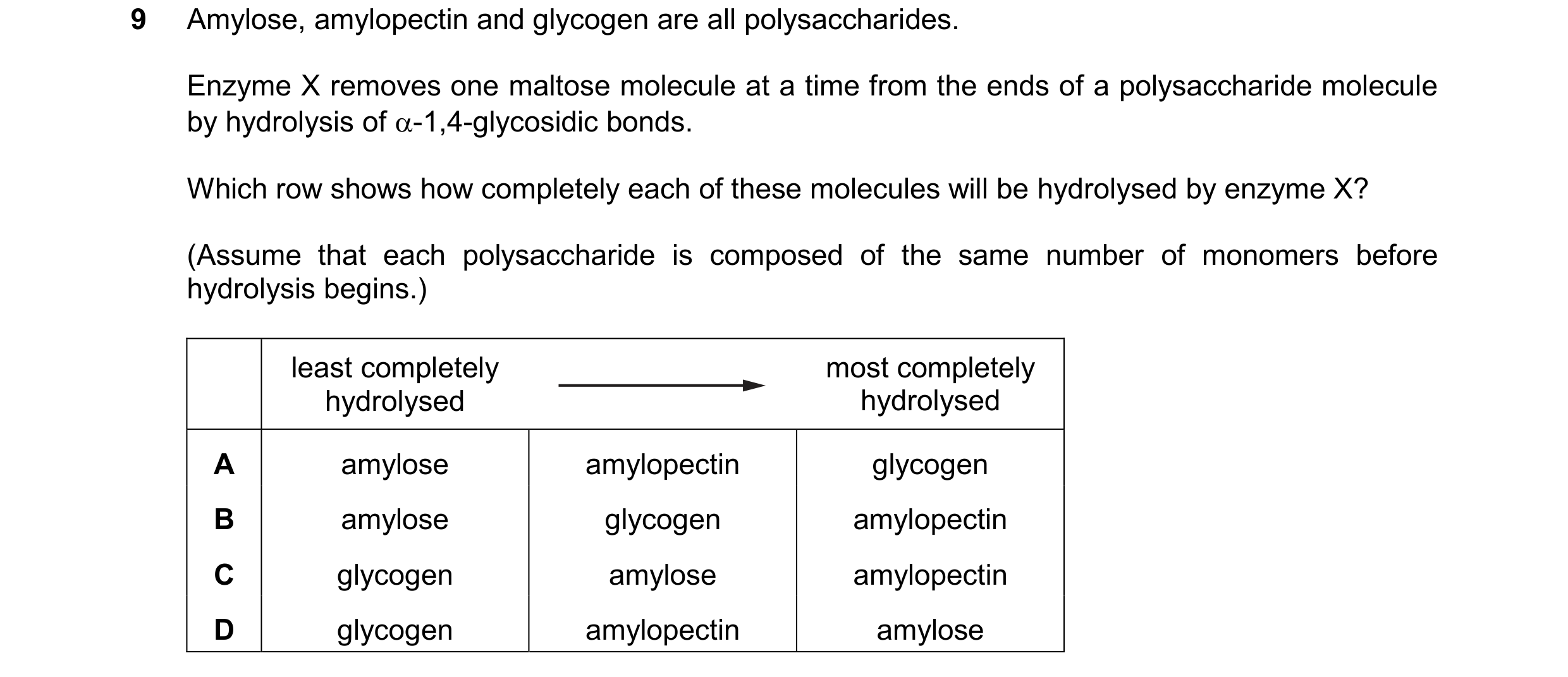
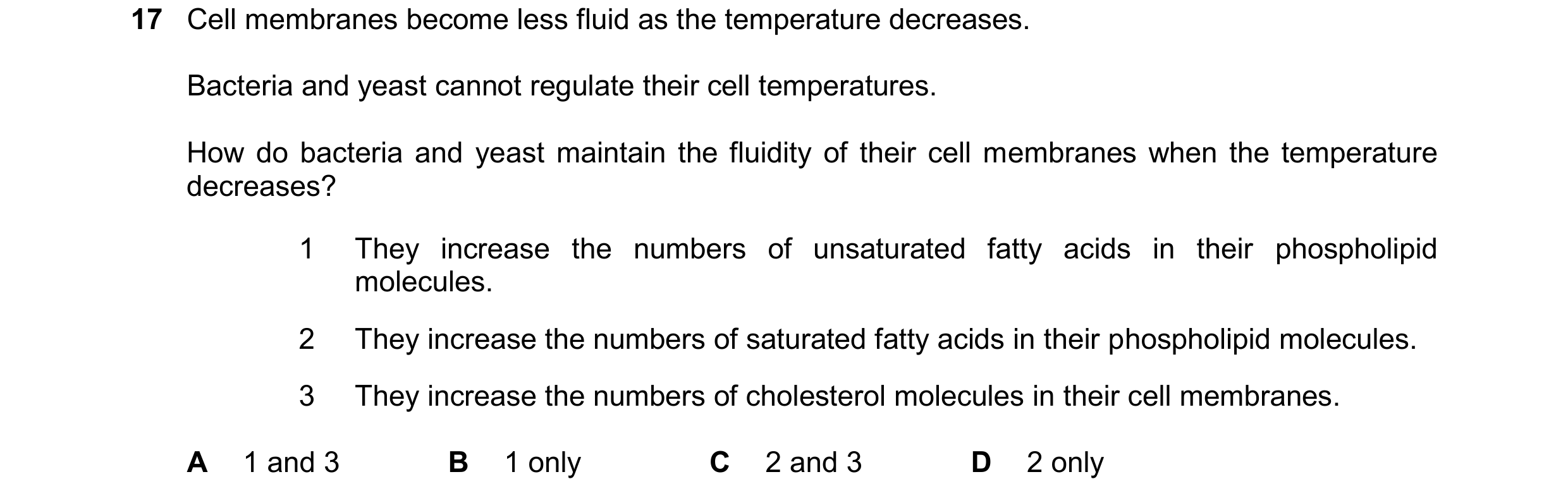
 106 / 111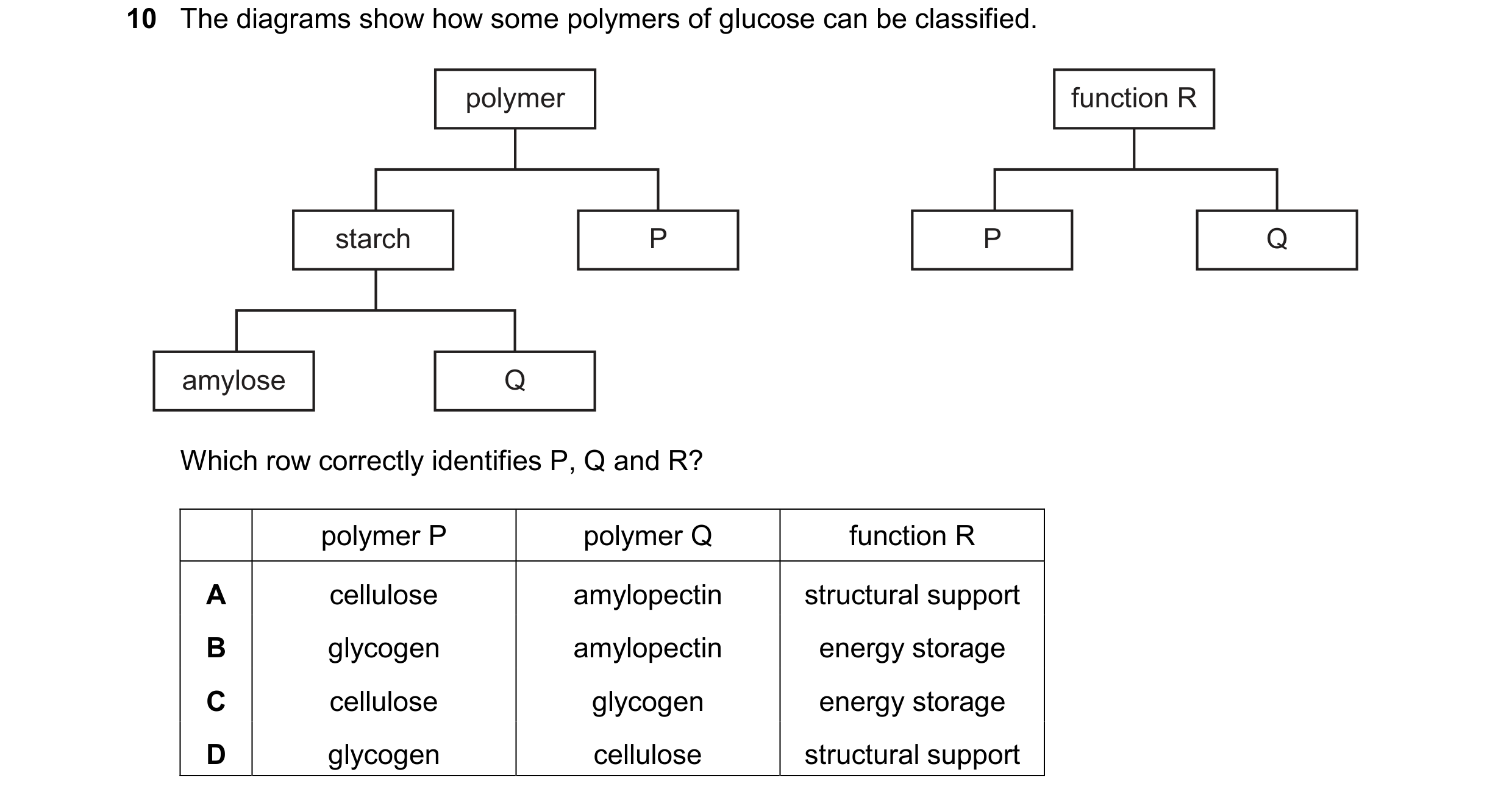

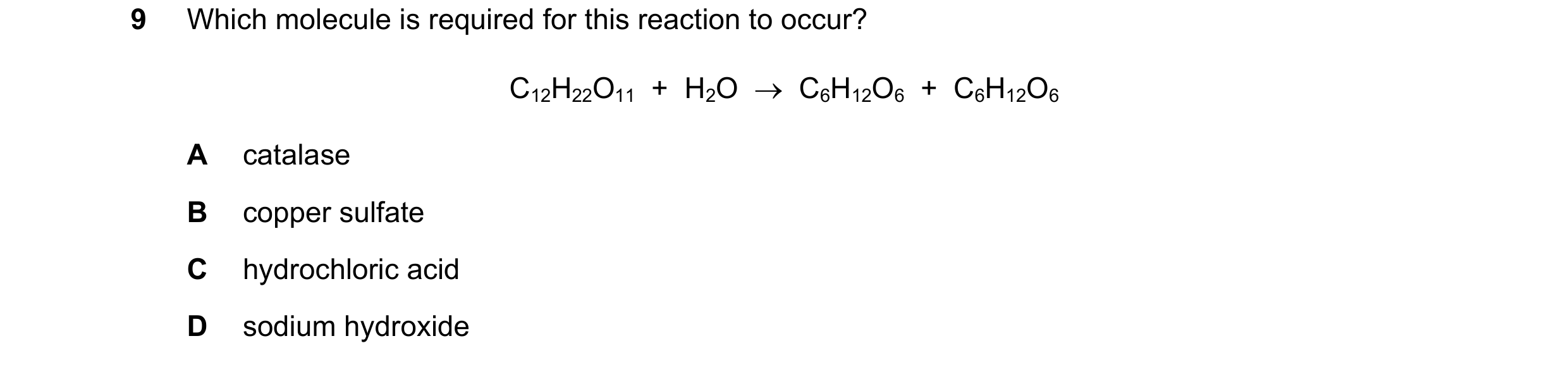 107 / 111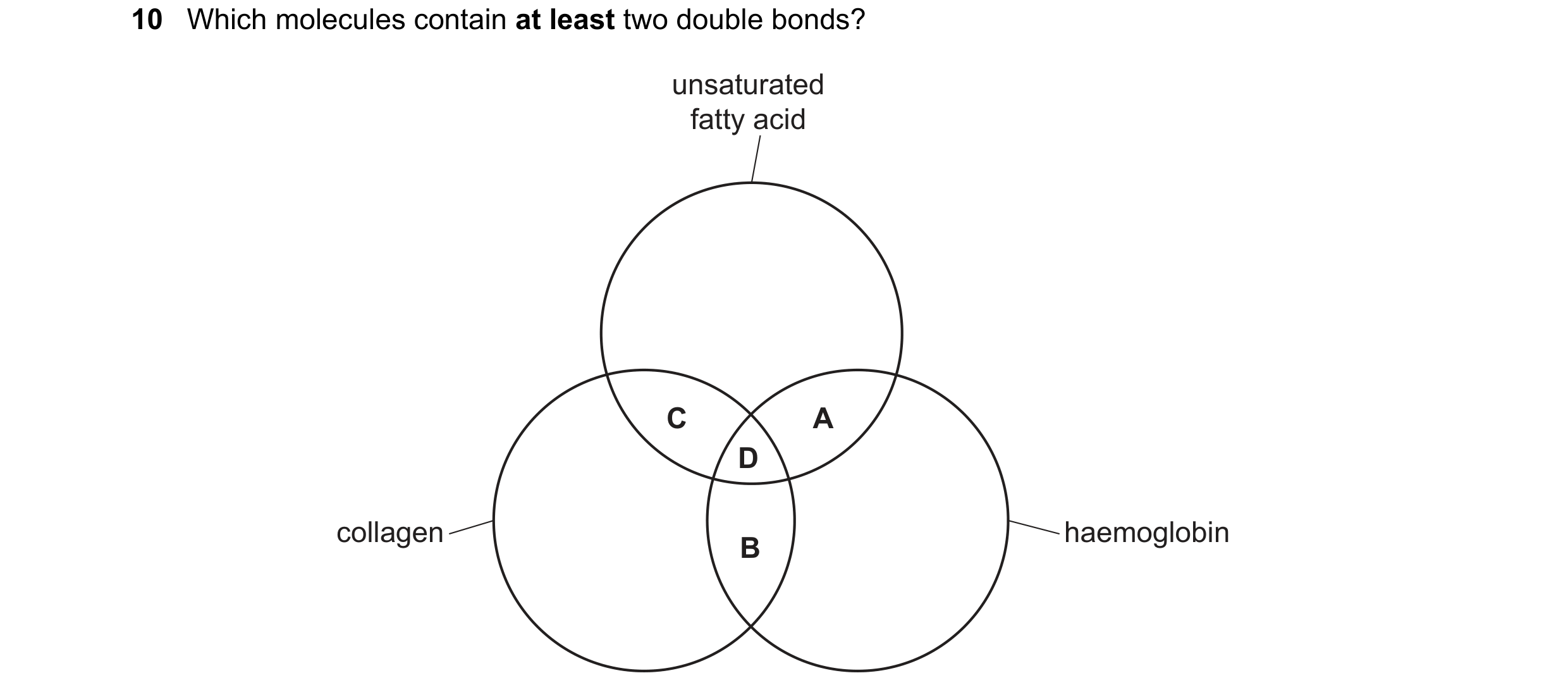
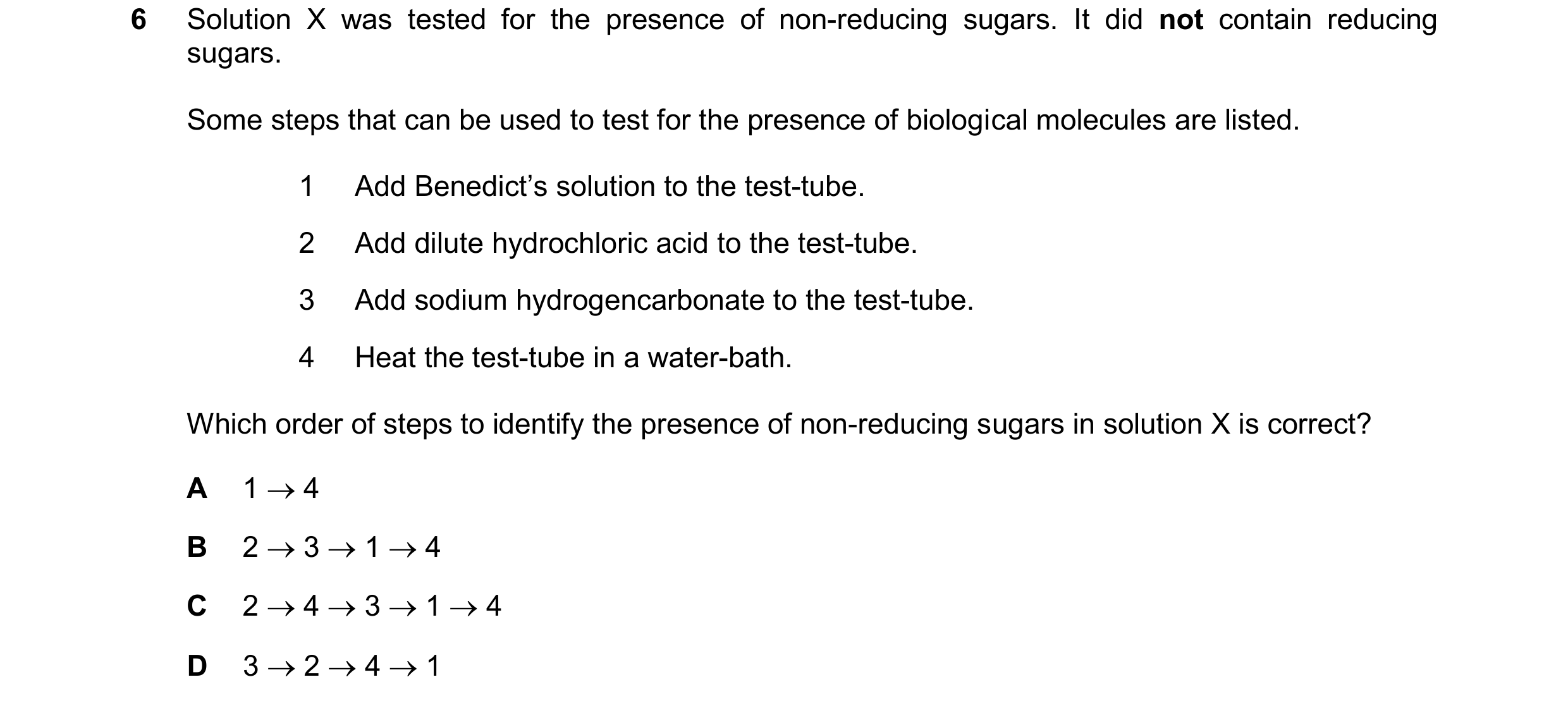 108 / 111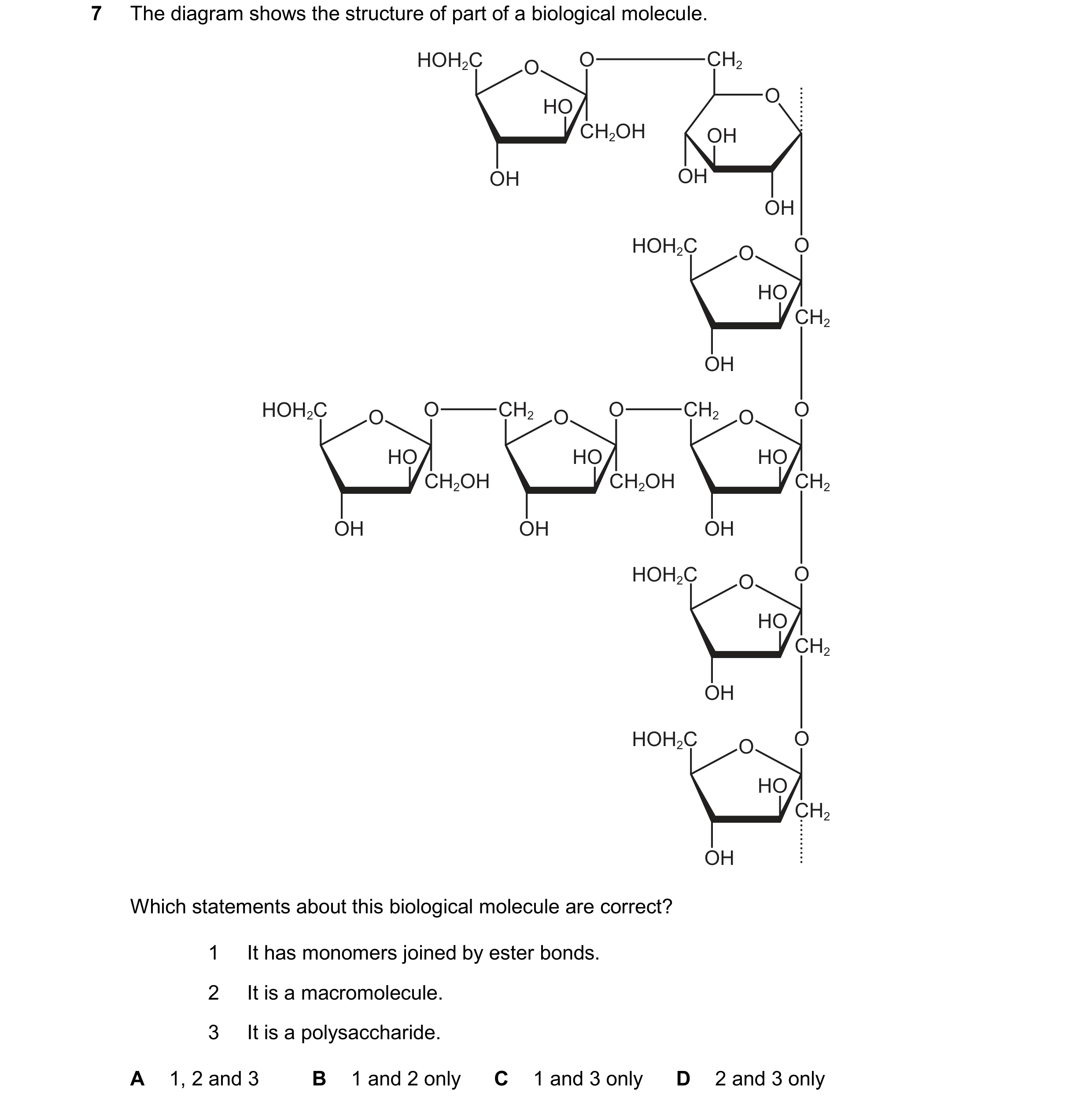
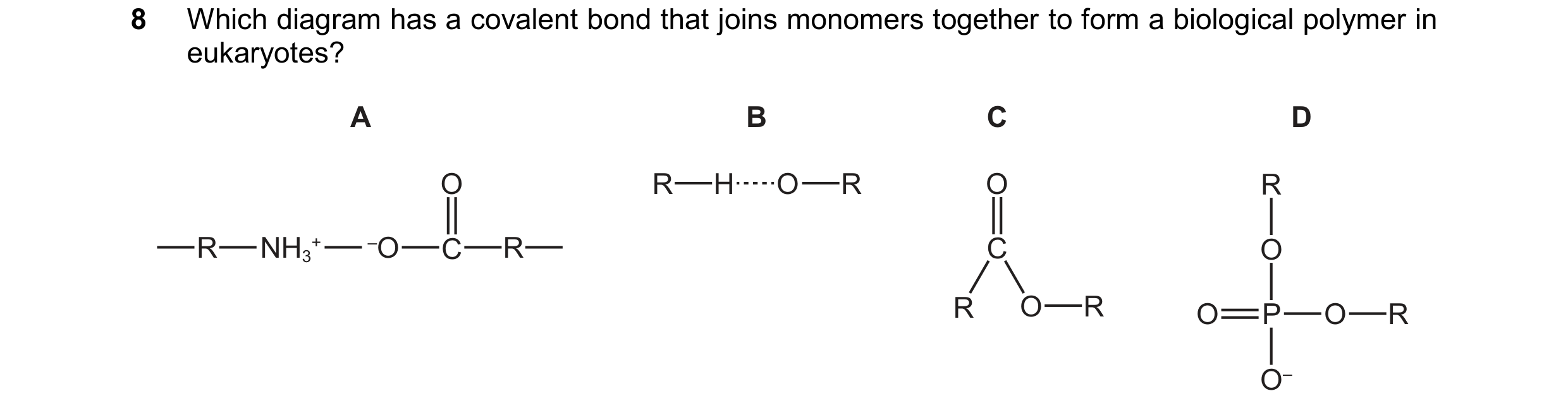 109 / 111
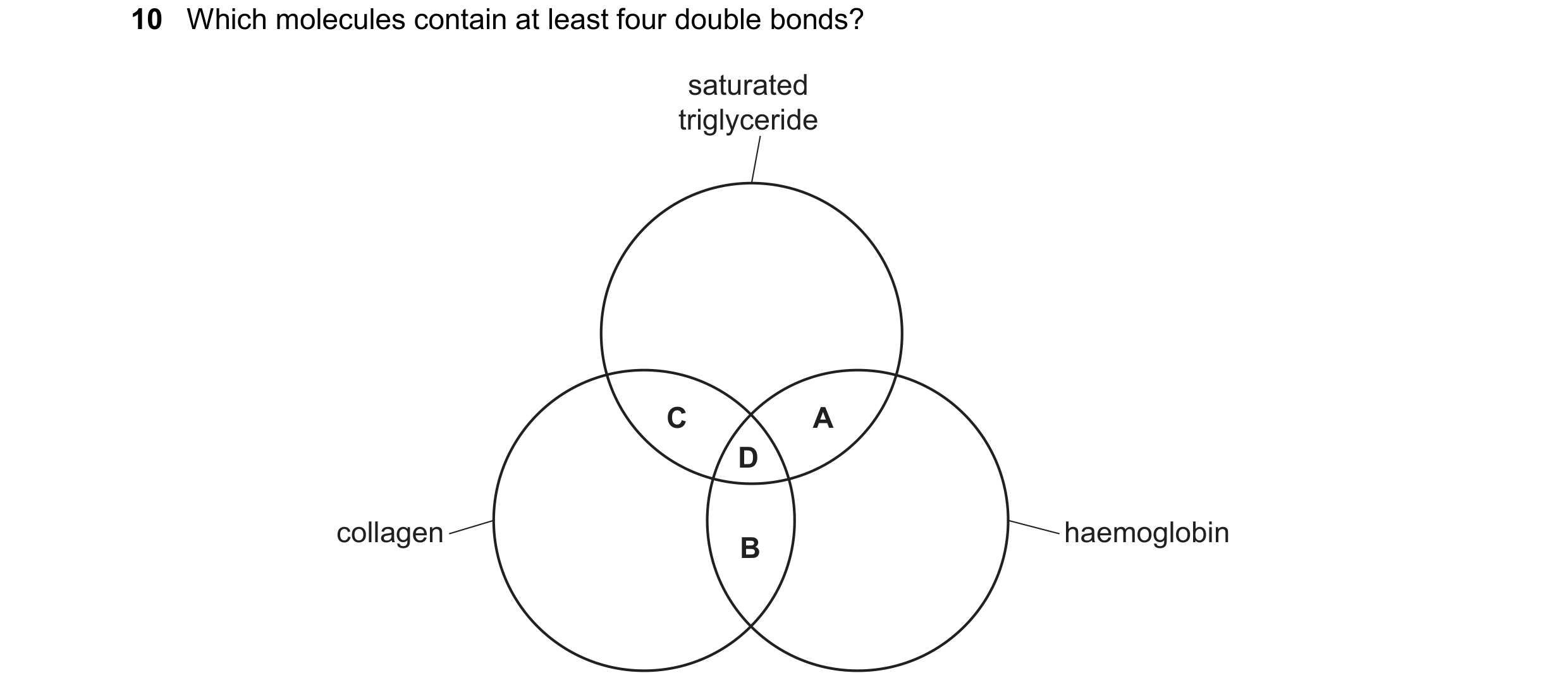
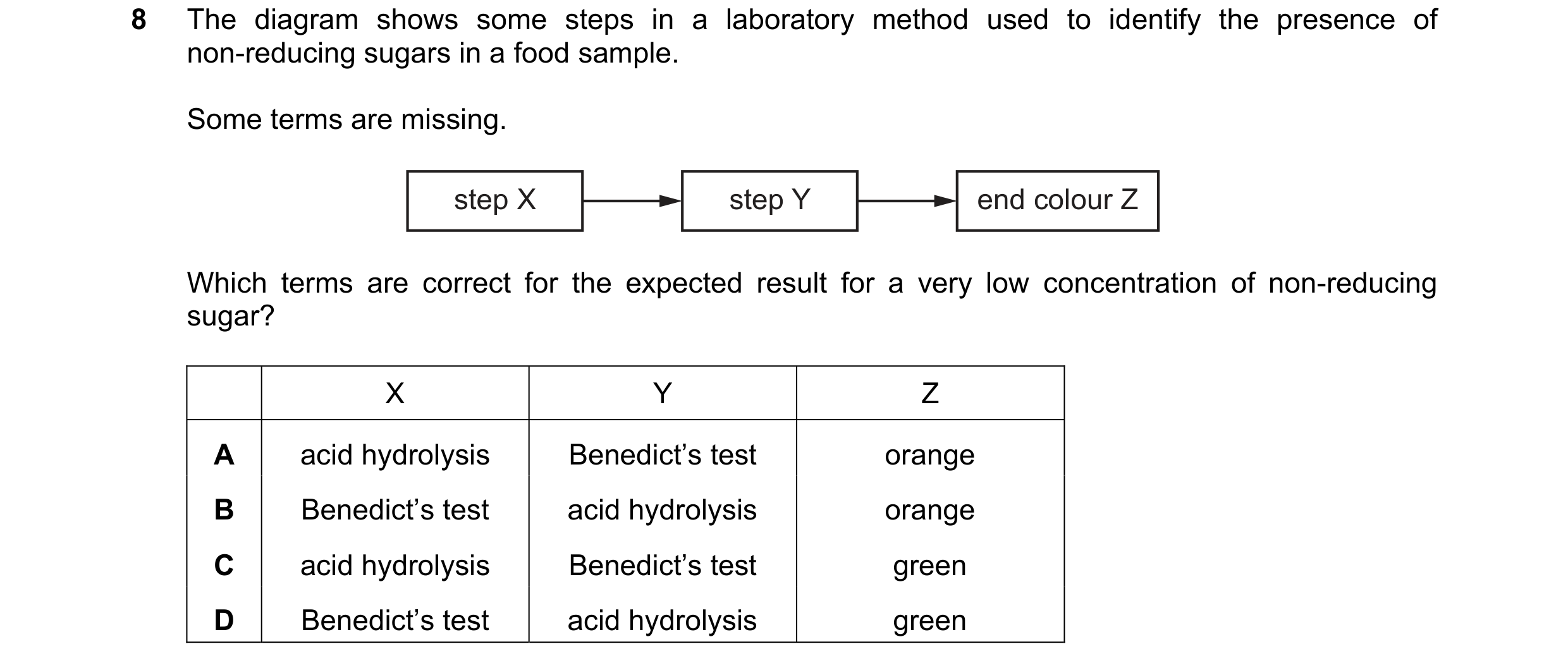
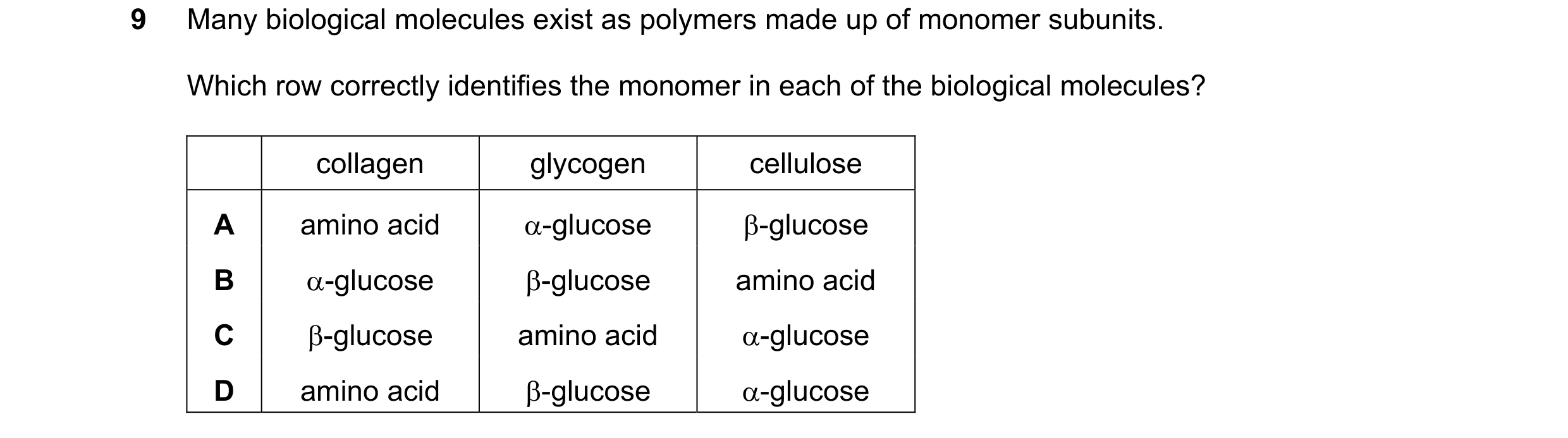 110 / 111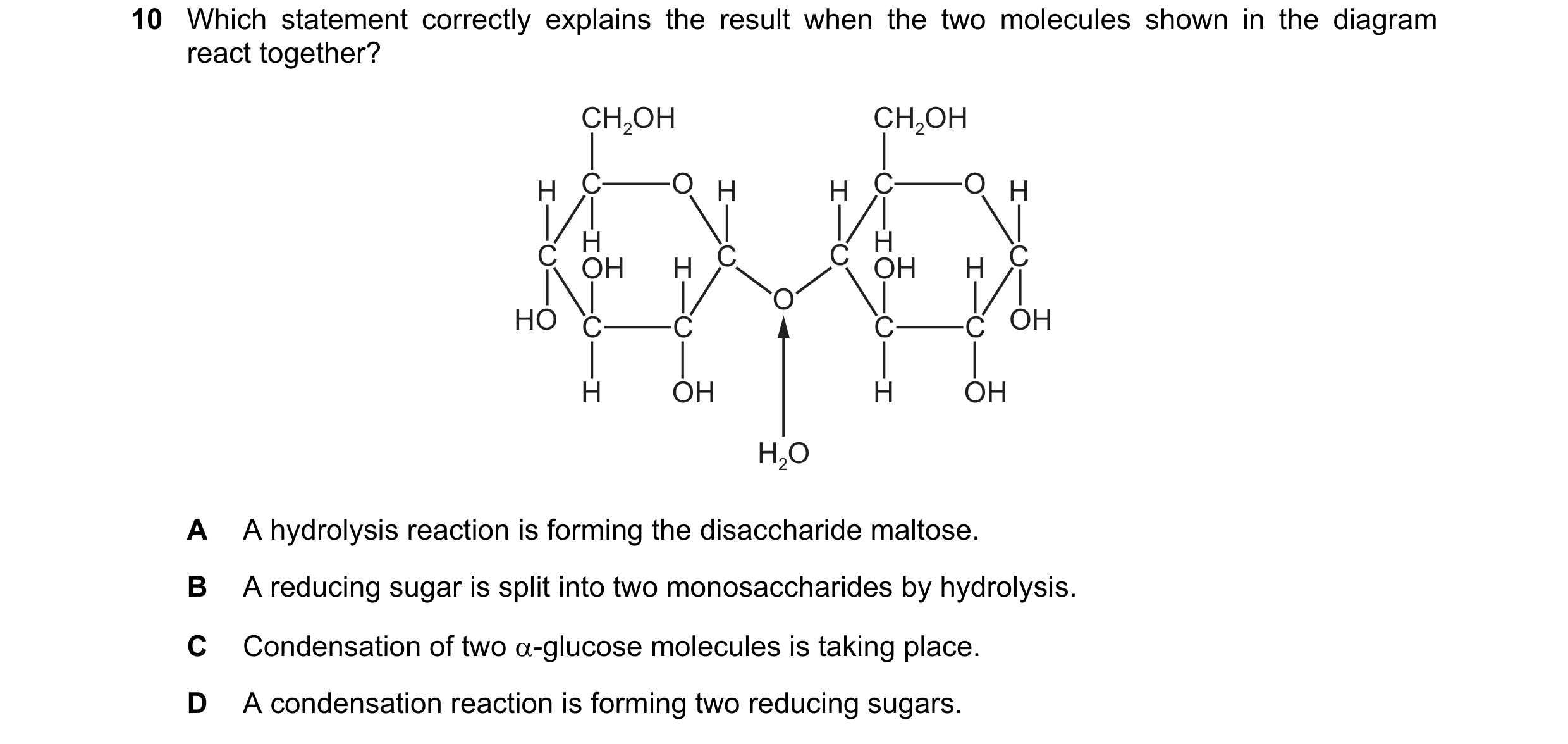
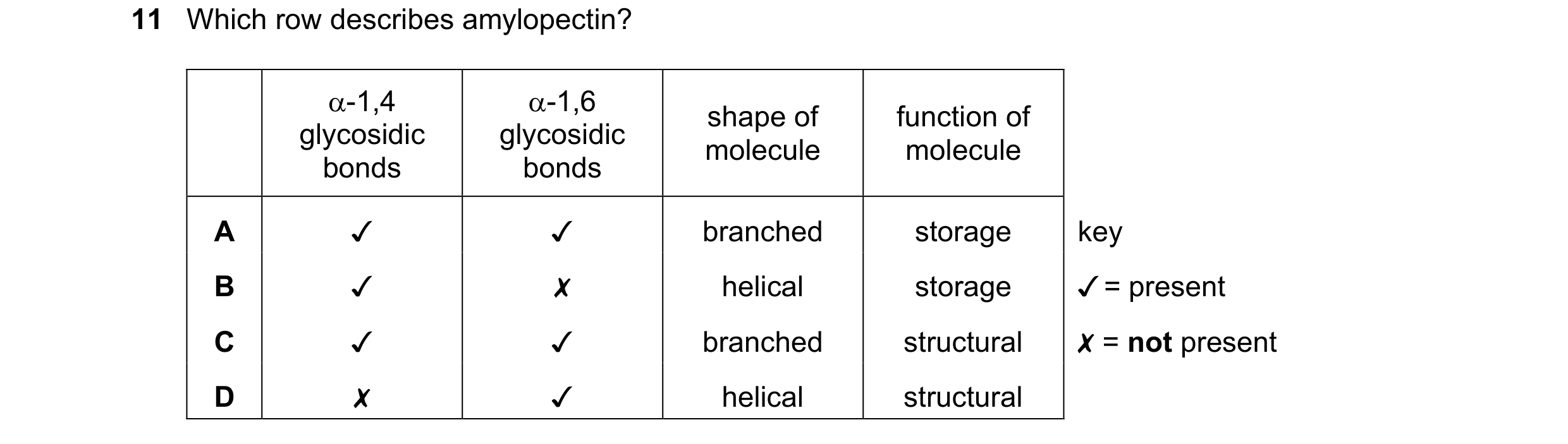


 111 / 111