Cambridge A Level Biology 9700 — 2025 Oct/Nov Paper 1 · Variant 3
9700/13/O/N/25 · 40 questions · 40 marks · 75 min
The question paper and its mark scheme, free to read here and free to download. This is Cambridge’s own paper, exactly as it was sat.
Question paper20 pages
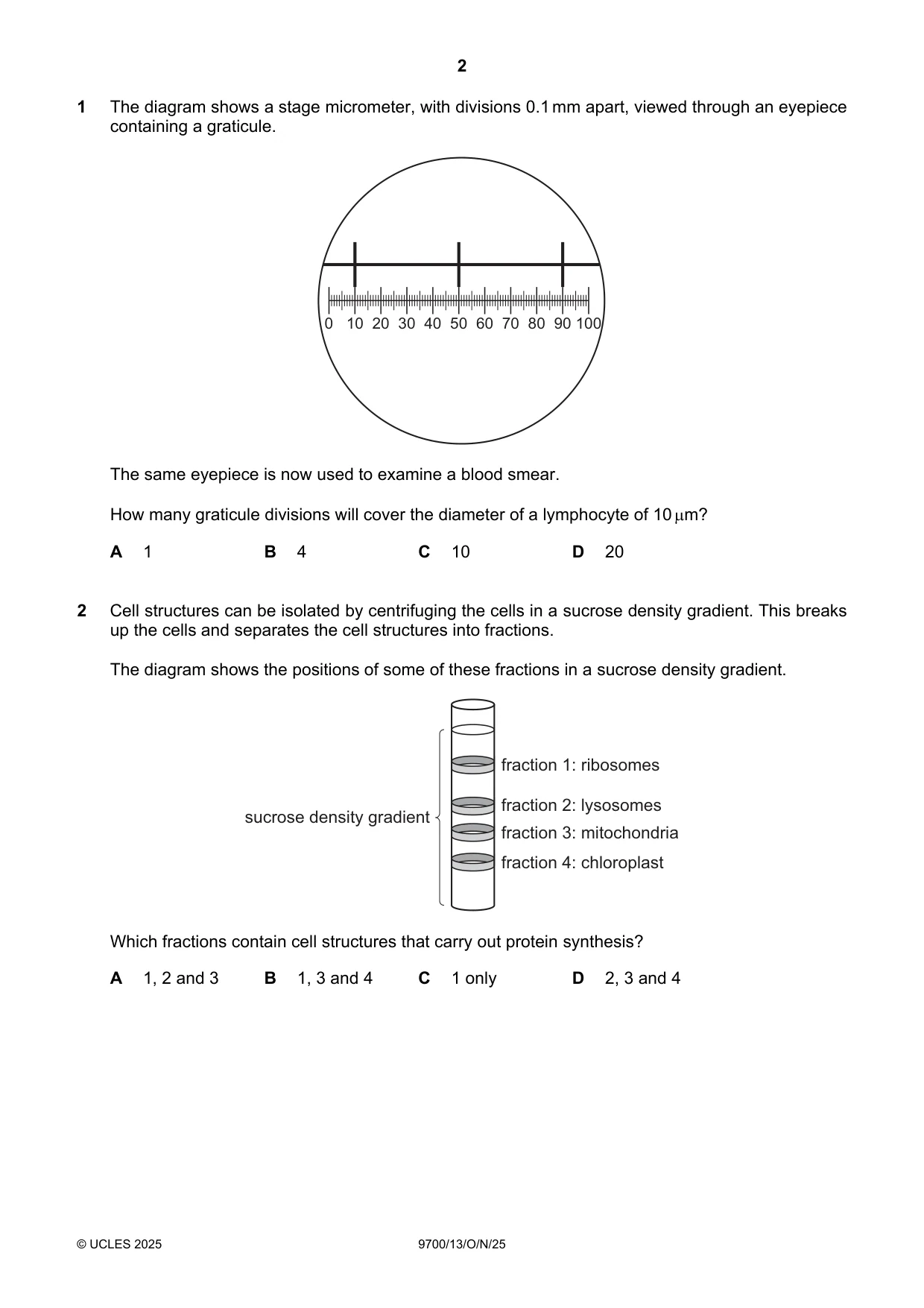
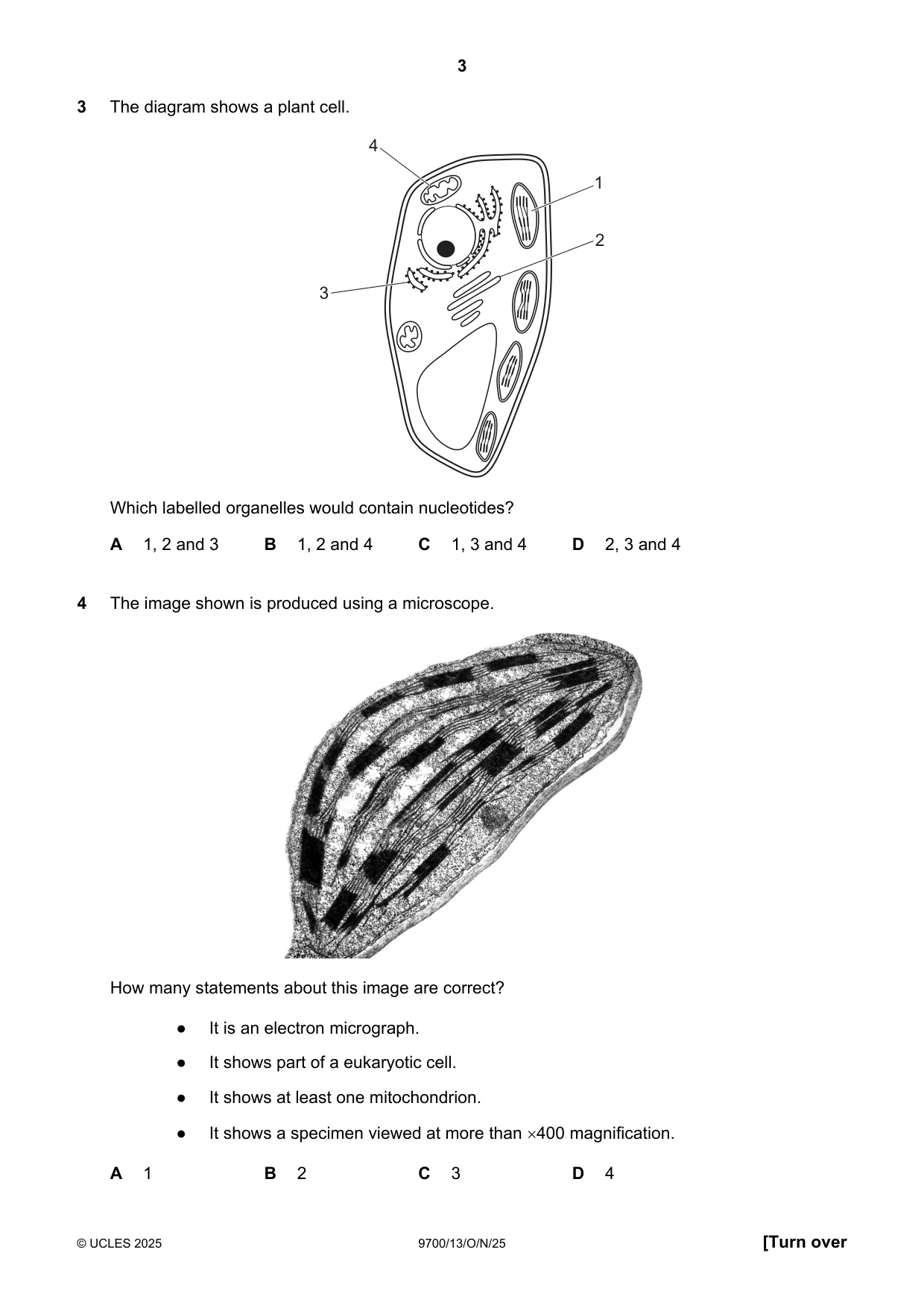
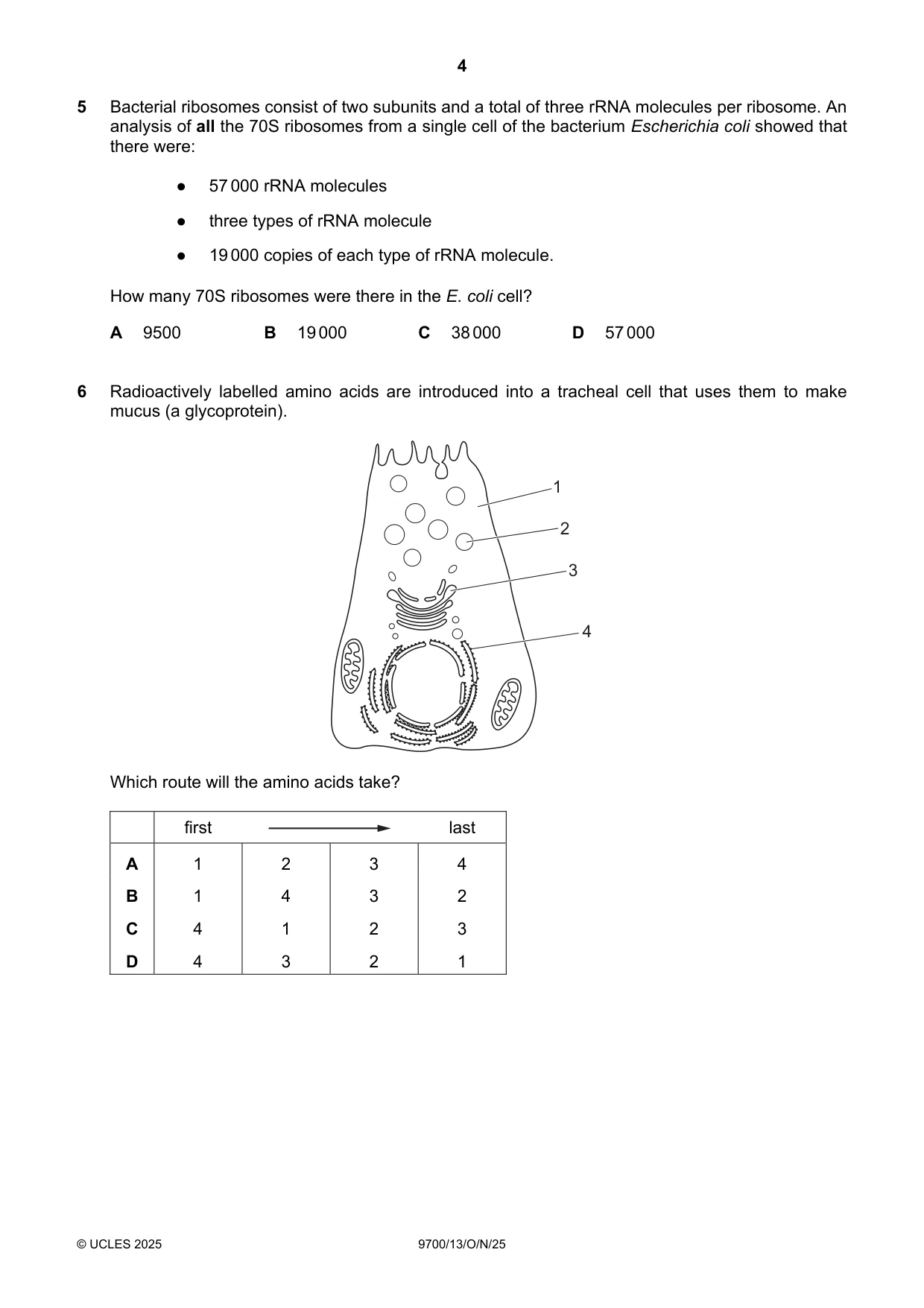


Mark scheme3 pages
Answers below. Sit the paper first if you are practising.
Questions as text
Q1 · The diagram shows a stage micrometer, with divisions 0.1 mm apart, viewed through an…
1 The diagram shows a stage micrometer, with divisions 0.1 mm apart, viewed through an eyepiece containing a graticule. 0 10 20 30 40 50 60 70 80 90 100 The same eyepiece is now used to examine a blood smear. How many graticule divisions will cover the diameter of a lymphocyte of 10 m? A 1 B 4 C 10 D 20
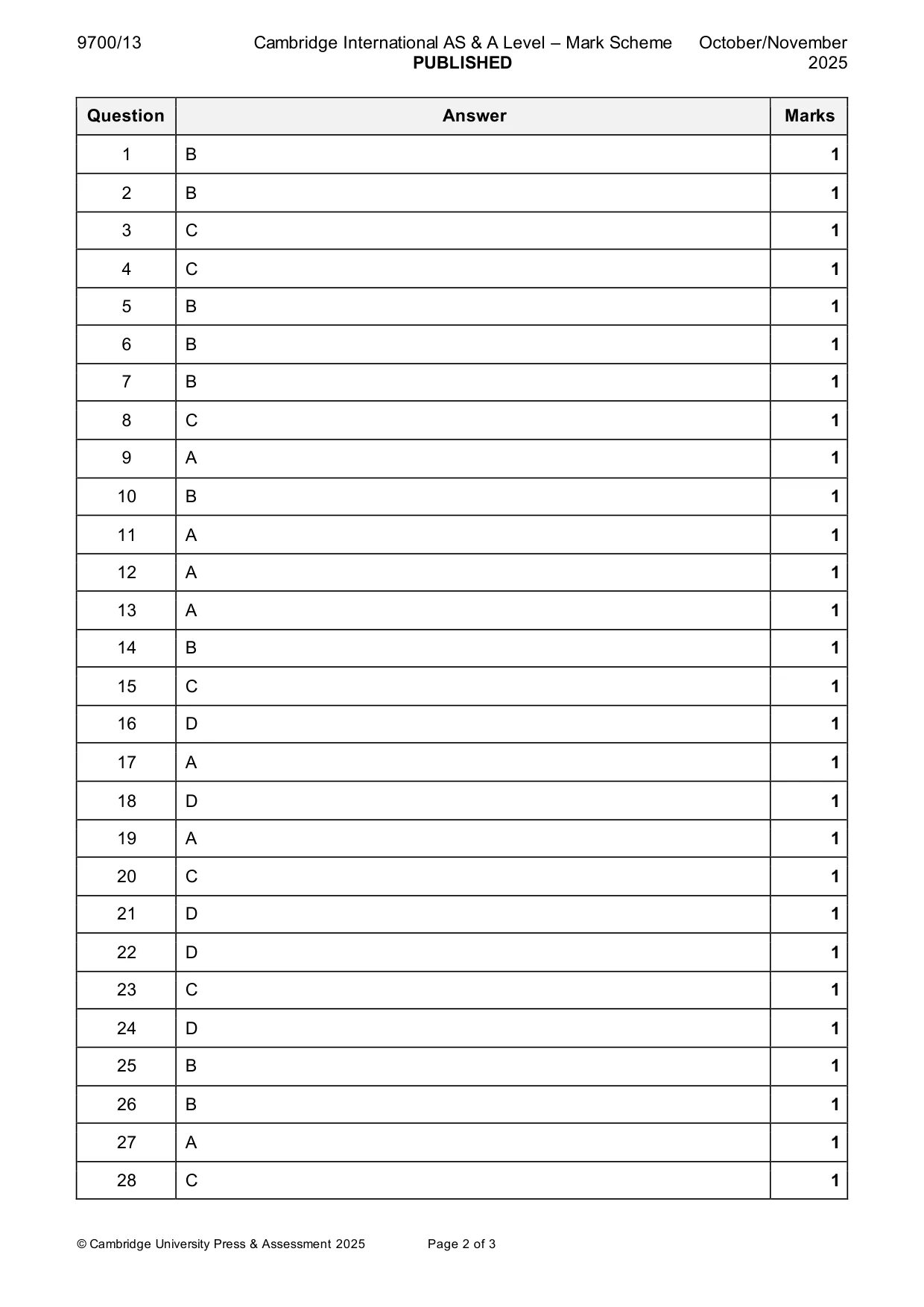
Mark scheme: B
Q2 · Cell structures can be isolated by centrifuging the cells in a sucrose density gradient
2 Cell structures can be isolated by centrifuging the cells in a sucrose density gradient. This breaks up the cells and separates the cell structures into fractions. The diagram shows the positions of some of these fractions in a sucrose density gradient. fraction 1: ribosomes fraction 2: lysosomes sucrose density gradient fraction 3: mitochondria fraction 4: chloroplast Which fractions contain cell structures that carry out protein synthesis? A 1, 2 and 3 B 1, 3 and 4 C 1 only D 2, 3 and 4
Mark scheme: B
More questions on Cells as the basic units of living organisms
Q3 · The diagram shows a plant cell
3 The diagram shows a plant cell. 4 1 2 3 Which labelled organelles would contain nucleotides? A 1, 2 and 3 B 1, 2 and 4 C 1, 3 and 4 D 2, 3 and 4
Mark scheme: C
More questions on Cells as the basic units of living organisms
Q4 · The image shown is produced using a microscope
4 The image shown is produced using a microscope. How many statements about this image are correct? ● It is an electron micrograph. ● It shows part of a eukaryotic cell. ● It shows at least one mitochondrion. ● It shows a specimen viewed at more than 400 magnification. A 1 B 2 C 3 D 4
Mark scheme: C
Q5 · Bacterial ribosomes consist of two subunits and a total of three rRNA molecules per…
5 Bacterial ribosomes consist of two subunits and a total of three rRNA molecules per ribosome. An analysis of all the 70S ribosomes from a single cell of the bacterium Escherichia coli showed that there were: ● 57 000 rRNA molecules ● three types of rRNA molecule ● 19 000 copies of each type of rRNA molecule. How many 70S ribosomes were there in the E. coli cell? A 9500 B 19 000 C 38 000 D 57 000
Mark scheme: B
More questions on Cells as the basic units of living organisms
Q6 · Radioactively labelled amino acids are introduced into a tracheal cell that uses them to…
6 Radioactively labelled amino acids are introduced into a tracheal cell that uses them to make mucus (a glycoprotein). 1 2 3 4 Which route will the amino acids take? first last A 1 2 3 4 B 1 4 3 2 C 4 1 2 3 D 4 3 2 1
Mark scheme: B
More questions on Cells as the basic units of living organisms
Q7 · Which features shown in the diagram can be present in viruses?
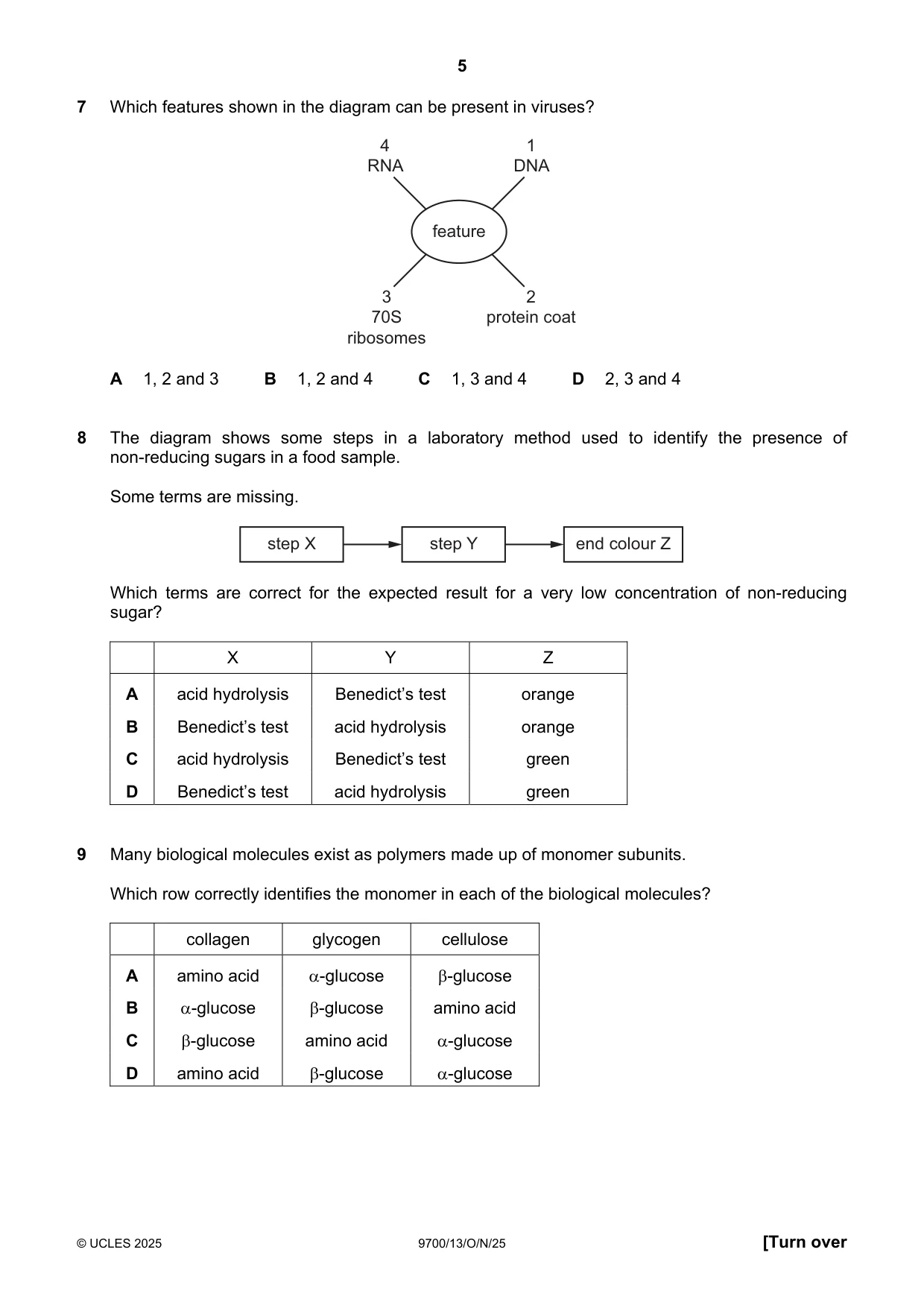
7 Which features shown in the diagram can be present in viruses? 4 1 RNA DNA feature 3 2 70S protein coat ribosomes A 1, 2 and 3 B 1, 2 and 4 C 1, 3 and 4 D 2, 3 and 4
Mark scheme: B
More questions on Cells as the basic units of living organisms
Q8 · The diagram shows some steps in a laboratory method used to identify the presence of…
8 The diagram shows some steps in a laboratory method used to identify the presence of non-reducing sugars in a food sample. Some terms are missing. step X step Y end colour Z Which terms are correct for the expected result for a very low concentration of non-reducing sugar? X Y Z A acid hydrolysis Benedict’s test orange B Benedict’s test acid hydrolysis orange C acid hydrolysis Benedict’s test green D Benedict’s test acid hydrolysis green
Mark scheme: C
Q9 · Many biological molecules exist as polymers made up of monomer subunits
9 Many biological molecules exist as polymers made up of monomer subunits. Which row correctly identifies the monomer in each of the biological molecules? collagen glycogen cellulose A amino acid -glucose -glucose B -glucose -glucose amino acid C -glucose amino acid -glucose D amino acid -glucose -glucose
Mark scheme: A
Q10 · Which statement correctly explains the result when the two molecules shown in the diagram…
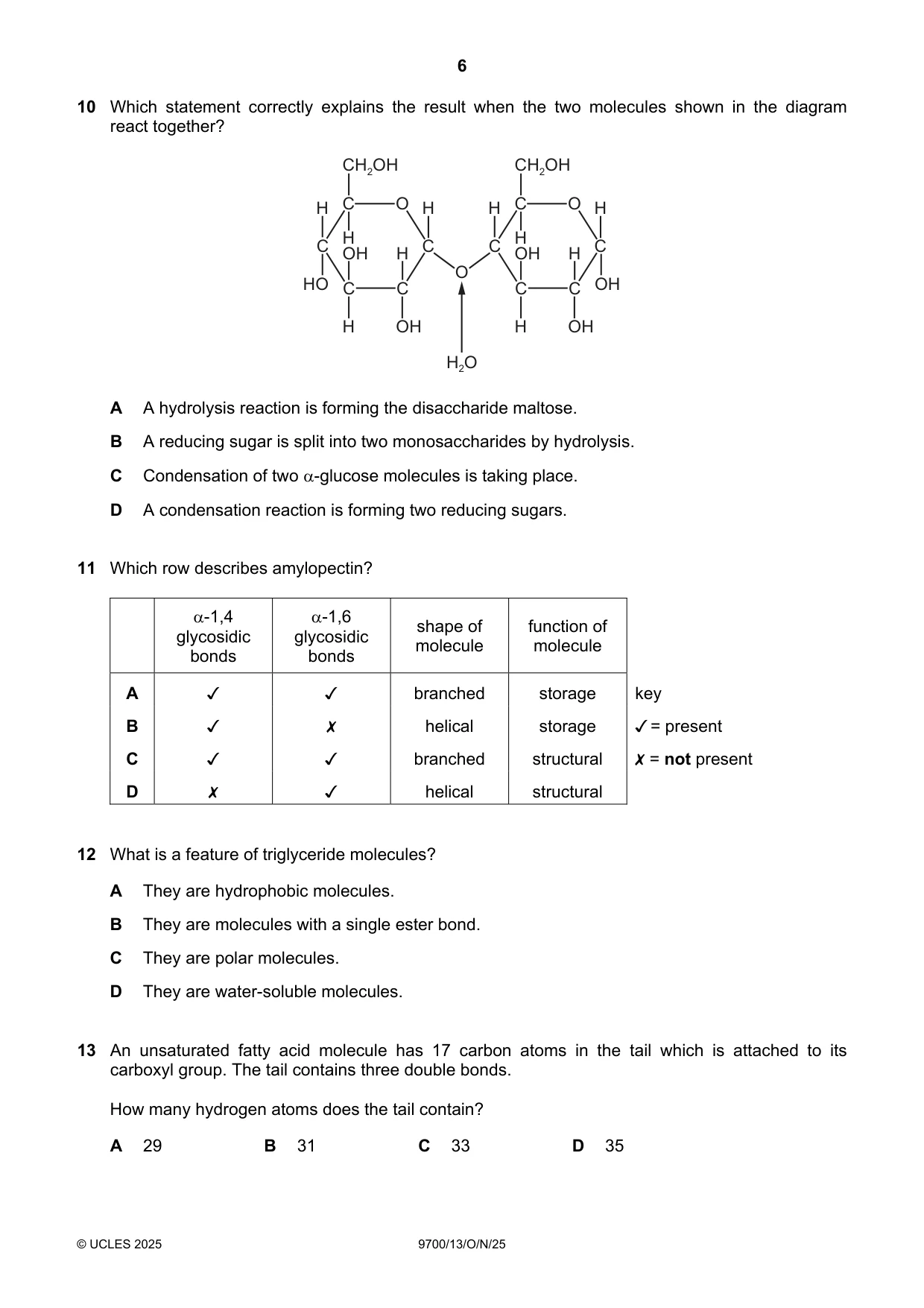
10 Which statement correctly explains the result when the two molecules shown in the diagram react together? CH2OH CH2OH H C O H H C O H H H C OH H C C OH H C O HO C C C C OH H OH H OH H2O A A hydrolysis reaction is forming the disaccharide maltose. B A reducing sugar is split into two monosaccharides by hydrolysis. C Condensation of two -glucose molecules is taking place. D A condensation reaction is forming two reducing sugars.
Mark scheme: B
Q11 · Which row describes amylopectin?
11. Which row describes amylopectin? a-1,4 a-1,6 idi idi shape of function of glycosidic gIYCOSICIC molecule molecule bonds bonds A Jv v branched storage B Jv x helical storage Cc v Jv branched structural D x Jv helical structural key J/ = present X = not present
Mark scheme: A
Q12 · What is a feature of triglyceride molecules?
12 What is a feature of triglyceride molecules? A They are hydrophobic molecules. B They are molecules with a single ester bond. C They are polar molecules. D They are water-soluble molecules.
Mark scheme: A
Q13 · An unsaturated fatty acid molecule has 17 carbon atoms in the tail which is attached to…
13 An unsaturated fatty acid molecule has 17 carbon atoms in the tail which is attached to its carboxyl group. The tail contains three double bonds. How many hydrogen atoms does the tail contain? A 29 B 31 C 33 D 35
Mark scheme: A
Q14 · Which statement about phospholipids in the bilayer of a cell surface membrane is correct?
14 Which statement about phospholipids in the bilayer of a cell surface membrane is correct? A The non-polar phosphate heads face outwards and the polar fatty acid tails face inwards. B The polar phosphate heads face outwards and the non-polar fatty acid tails face inwards. C The non-polar fatty acid tails face outwards and the polar phosphate heads face inwards. D The polar fatty acid tails face outwards and the non-polar phosphate heads face inwards.
Mark scheme: B
Q15 · Which descriptions of enzymes that use the lock-and-key hypothesis are correct?
15 Which descriptions of enzymes that use the lock-and-key hypothesis are correct? 1 The active site is complementary to the substrate the enzyme acts on. 2 Bonds that form in the enzyme–substrate complex change the shape of the active site. 3 Most of the amino acids in an enzyme help to maintain the specific shape of the enzyme. A 1, 2 and 3 B 1 and 2 only C 1 and 3 only D 3 only
Mark scheme: C
Q16 · The graph shows the results of an investigation into the effect of amylase on starch at…
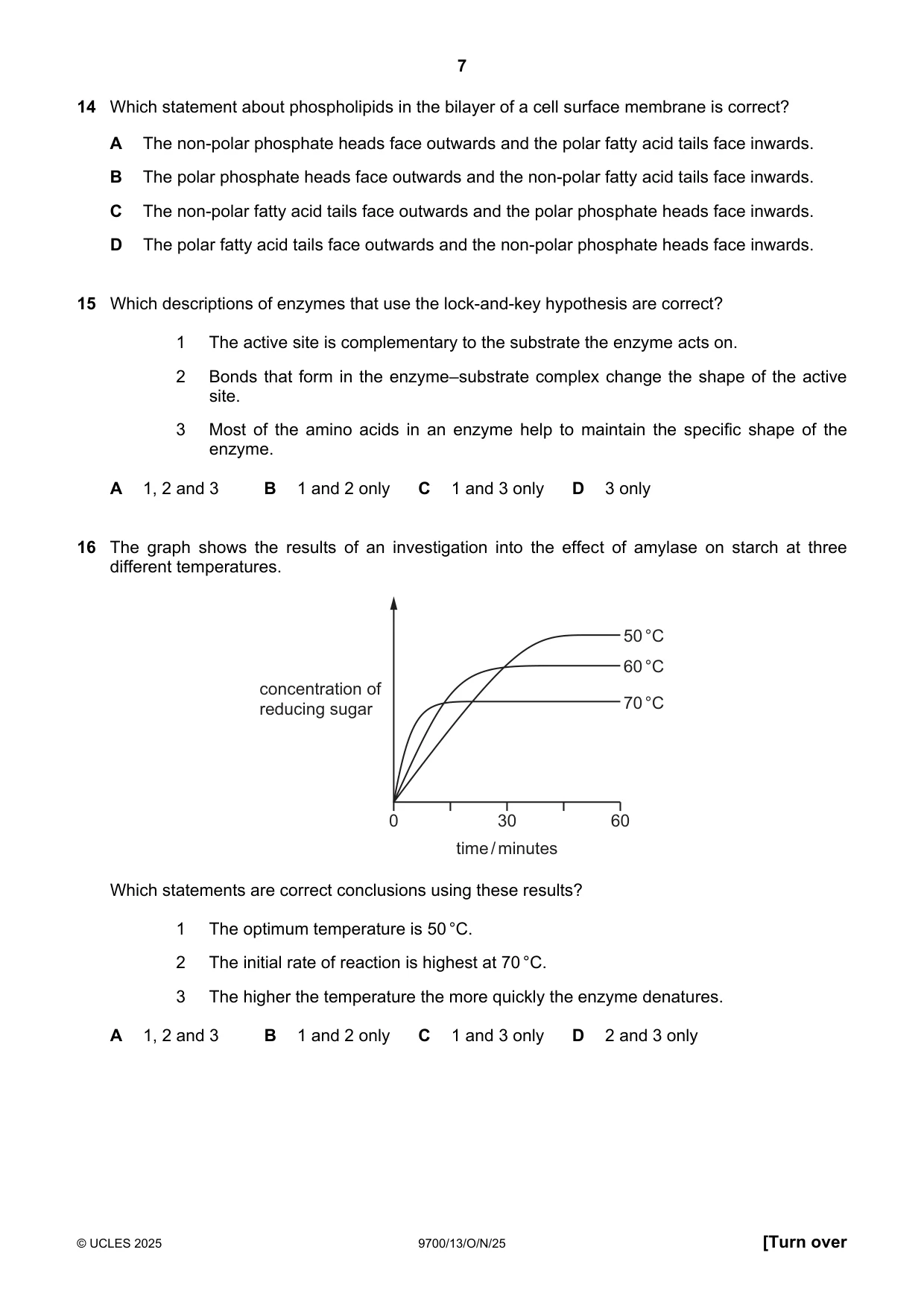
16 The graph shows the results of an investigation into the effect of amylase on starch at three different temperatures. 50 °C 60 °C concentration of reducing sugar 70 °C 0 30 60 time / minutes Which statements are correct conclusions using these results? 1 The optimum temperature is 50 °C. 2 The initial rate of reaction is highest at 70 °C. 3 The higher the temperature the more quickly the enzyme denatures. A 1, 2 and 3 B 1 and 2 only C 1 and 3 only D 2 and 3 only
Mark scheme: D
Q17 · The rate of enzyme-catalysed reactions in human cells is regulated
17 The rate of enzyme-catalysed reactions in human cells is regulated. What may be involved in this regulation? 1 a change in enzyme concentration 2 a change in substrate concentration 3 inhibition by the final product of the reaction A 1, 2 and 3 B 1 and 2 only C 1 and 3 only D 2 and 3 only
Mark scheme: A
Q18 · Proteins in the cell surface membranes of human cells and mouse cells were labelled with…
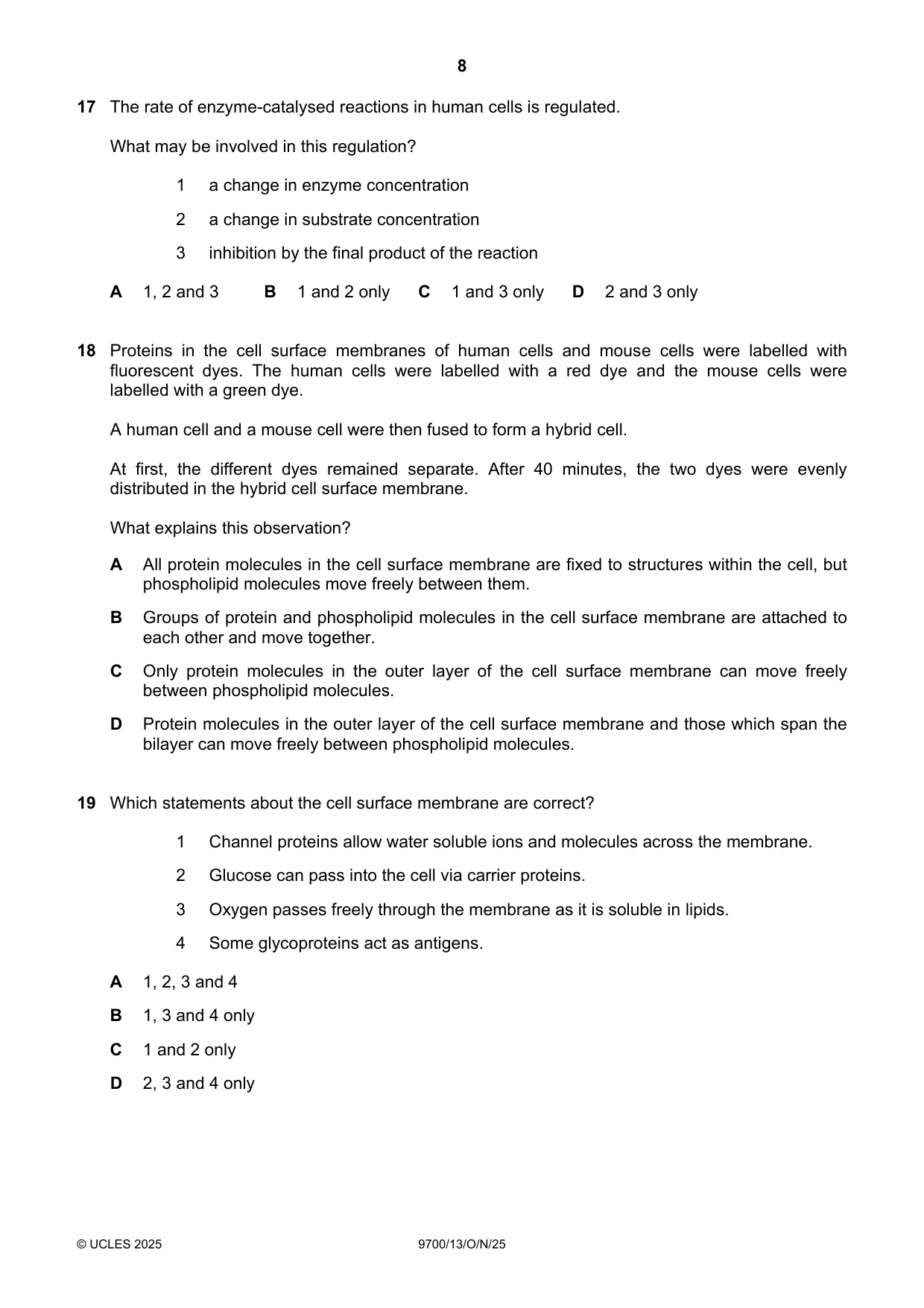
18 Proteins in the cell surface membranes of human cells and mouse cells were labelled with fluorescent dyes. The human cells were labelled with a red dye and the mouse cells were labelled with a green dye. A human cell and a mouse cell were then fused to form a hybrid cell. At first, the different dyes remained separate. After 40 minutes, the two dyes were evenly distributed in the hybrid cell surface membrane. What explains this observation? A All protein molecules in the cell surface membrane are fixed to structures within the cell, but phospholipid molecules move freely between them. B Groups of protein and phospholipid molecules in the cell surface membrane are attached to each other and move together. C Only protein molecules in the outer layer of the cell surface membrane can move freely between phospholipid molecules. D Protein molecules in the outer layer of the cell surface membrane and those which span the bilayer can move freely between phospholipid molecules.
Mark scheme: D
Q19 · Which statements about the cell surface membrane are correct?
19 Which statements about the cell surface membrane are correct? 1 Channel proteins allow water soluble ions and molecules across the membrane. 2 Glucose can pass into the cell via carrier proteins. 3 Oxygen passes freely through the membrane as it is soluble in lipids. 4 Some glycoproteins act as antigens. A 1, 2, 3 and 4 B 1, 3 and 4 only C 1 and 2 only D 2, 3 and 4 only
Mark scheme: A
Q20 · The diagram shows two cylinders of agar
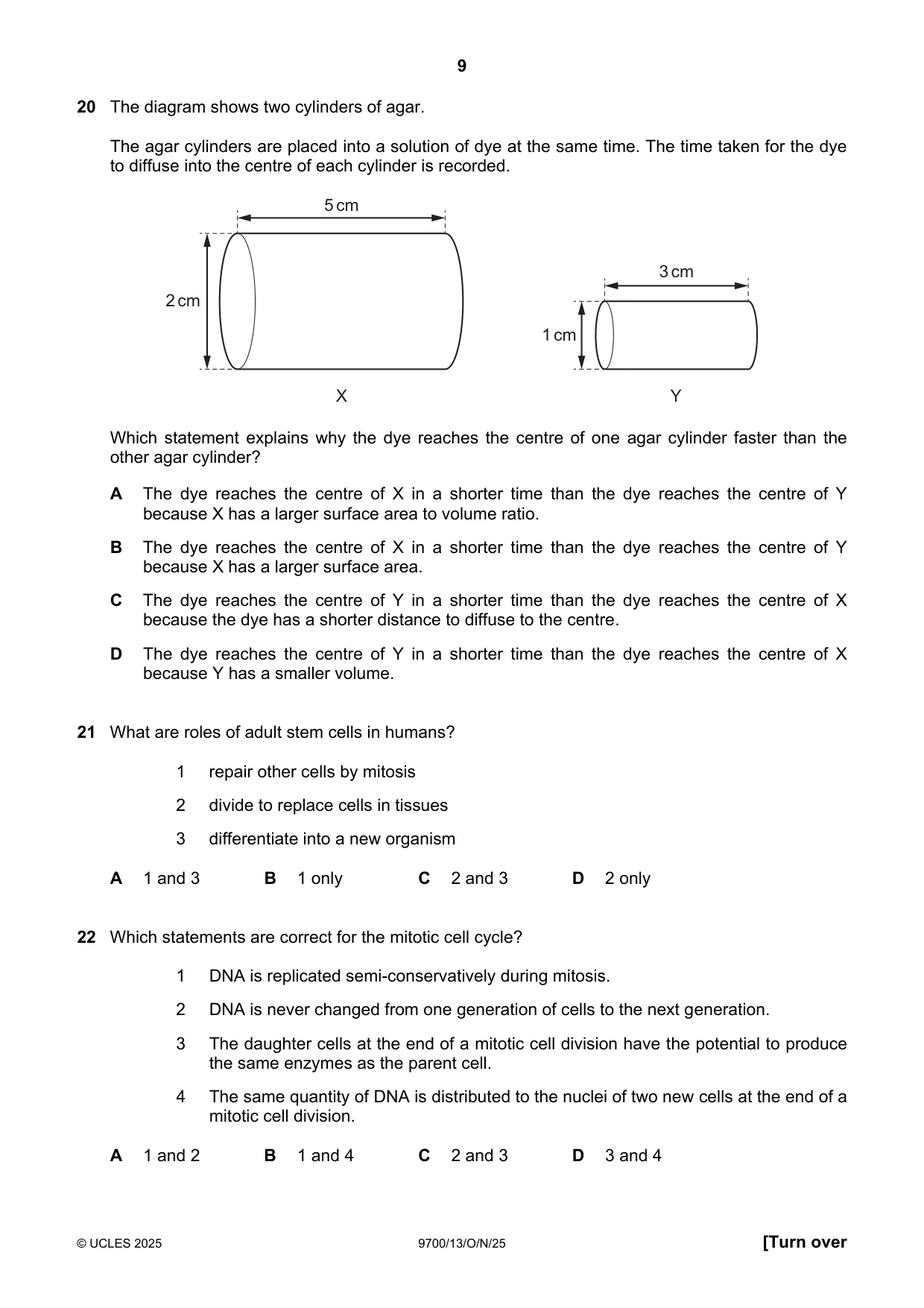
20 The diagram shows two cylinders of agar. The agar cylinders are placed into a solution of dye at the same time. The time taken for the dye to diffuse into the centre of each cylinder is recorded. 5 cm 3 cm 2 cm 1 cm X Y Which statement explains why the dye reaches the centre of one agar cylinder faster than the other agar cylinder? A The dye reaches the centre of X in a shorter time than the dye reaches the centre of Y because X has a larger surface area to volume ratio. B The dye reaches the centre of X in a shorter time than the dye reaches the centre of Y because X has a larger surface area. C The dye reaches the centre of Y in a shorter time than the dye reaches the centre of X because the dye has a shorter distance to diffuse to the centre. D The dye reaches the centre of Y in a shorter time than the dye reaches the centre of X because Y has a smaller volume.
Mark scheme: C
Q21 · What are roles of adult stem cells in humans?
21 What are roles of adult stem cells in humans? 1 repair other cells by mitosis 2 divide to replace cells in tissues 3 differentiate into a new organism A 1 and 3 B 1 only C 2 and 3 D 2 only
Mark scheme: D
More questions on Replication and division of nuclei and cells
Q22 · Which statements are correct for the mitotic cell cycle?
22 Which statements are correct for the mitotic cell cycle? 1 DNA is replicated semi-conservatively during mitosis. 2 DNA is never changed from one generation of cells to the next generation. 3 The daughter cells at the end of a mitotic cell division have the potential to produce the same enzymes as the parent cell. 4 The same quantity of DNA is distributed to the nuclei of two new cells at the end of a mitotic cell division. A 1 and 2 B 1 and 4 C 2 and 3 D 3 and 4
Mark scheme: D
More questions on Replication and division of nuclei and cells
Q23 · The photomicrograph shows a stage of the cell cycle
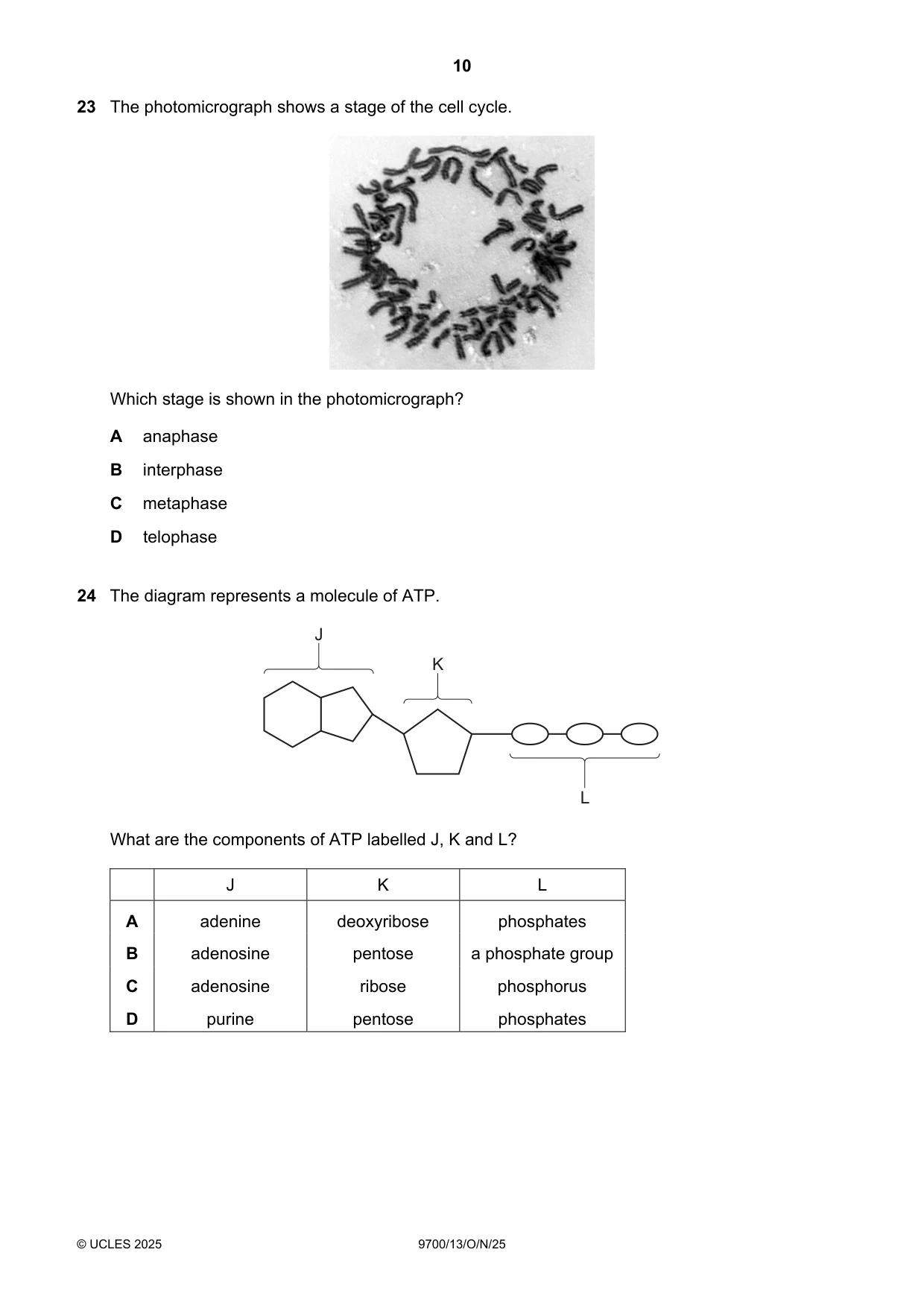
23 The photomicrograph shows a stage of the cell cycle. Which stage is shown in the photomicrograph? A anaphase B interphase C metaphase D telophase
Mark scheme: C
Q24 · The diagram represents a molecule of ATP
24 The diagram represents a molecule of ATP. J K L What are the components of ATP labelled J, K and L? J K L A adenine deoxyribose phosphates B adenosine pentose a phosphate group C adenosine ribose phosphorus D purine pentose phosphates
Mark scheme: D
Q25 · Which statements about complementary base pairing are correct?
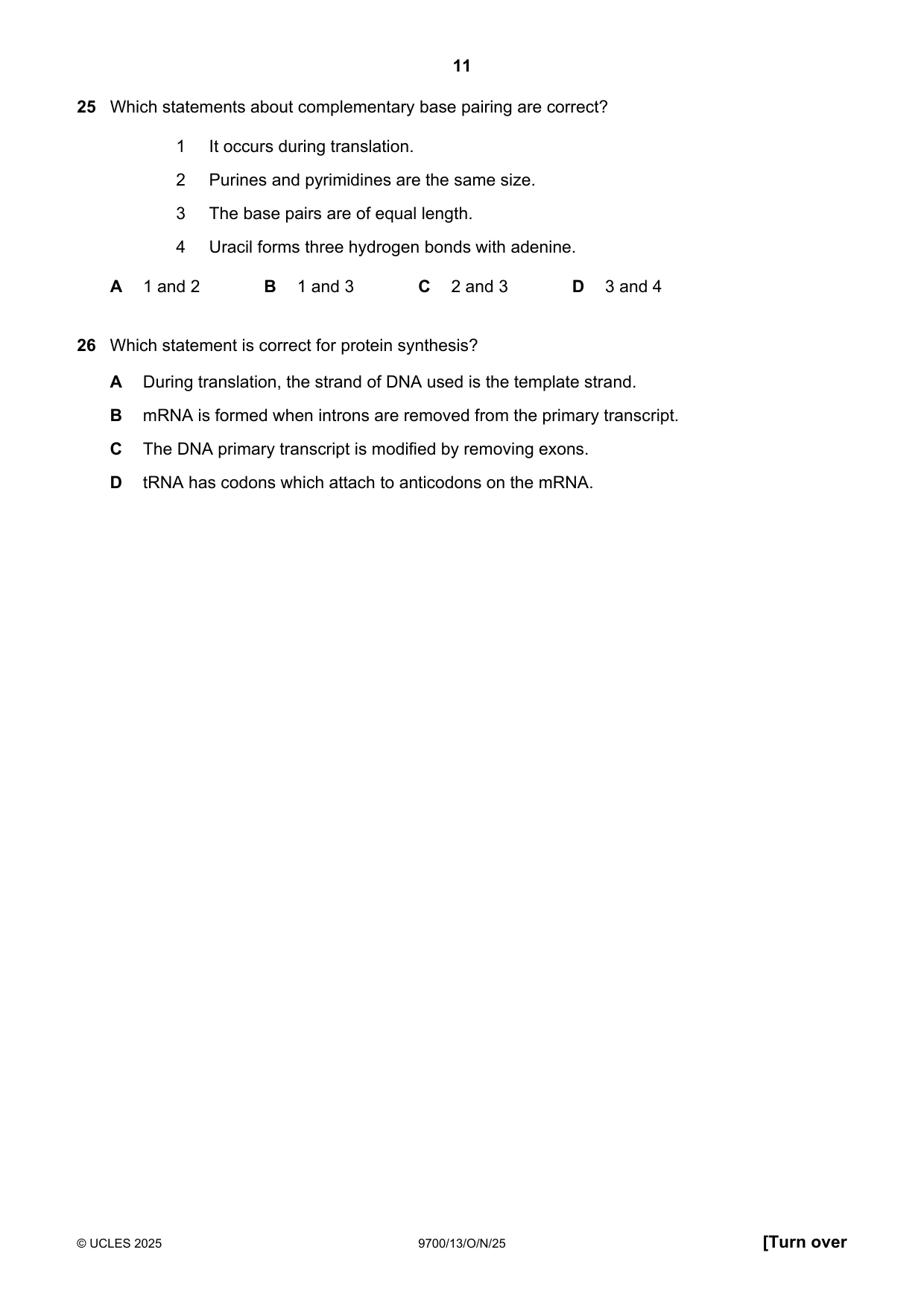
25 Which statements about complementary base pairing are correct? 1 It occurs during translation. 2 Purines and pyrimidines are the same size. 3 The base pairs are of equal length. 4 Uracil forms three hydrogen bonds with adenine. A 1 and 2 B 1 and 3 C 2 and 3 D 3 and 4
Mark scheme: B
More questions on Structure of nucleic acids and replication of DNA
Q26 · Which statement is correct for protein synthesis?
26 Which statement is correct for protein synthesis? A During translation, the strand of DNA used is the template strand. B mRNA is formed when introns are removed from the primary transcript. C The DNA primary transcript is modified by removing exons. D tRNA has codons which attach to anticodons on the mRNA.
Mark scheme: B
Q27 · A mutation occurred in this original DNA nucleotide sequence
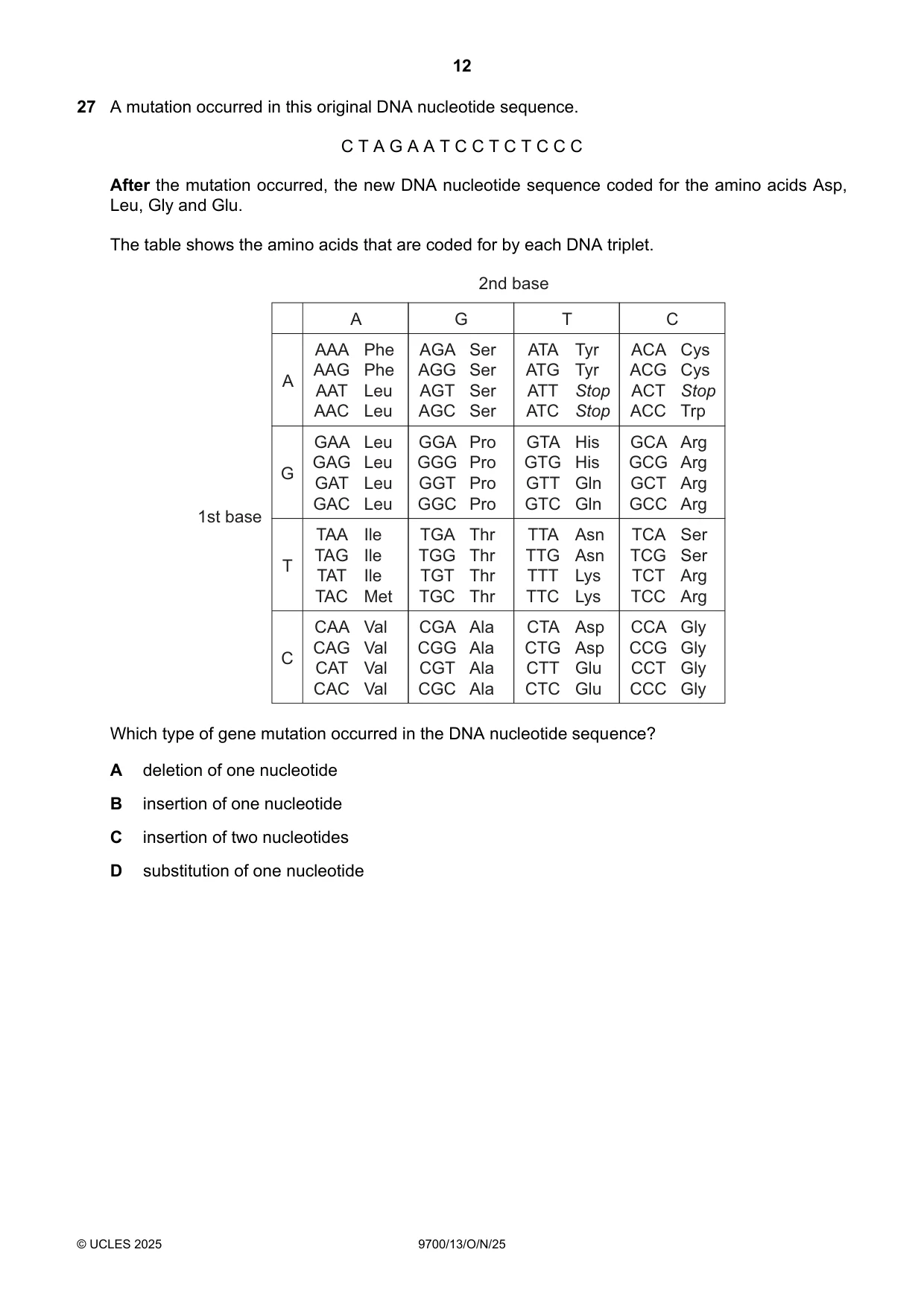
27 A mutation occurred in this original DNA nucleotide sequence. C T A G A A T C C T C T C C C After the mutation occurred, the new DNA nucleotide sequence coded for the amino acids Asp, Leu, Gly and Glu. The table shows the amino acids that are coded for by each DNA triplet. 2nd base A G T C AAA Phe AGA Ser ATA Tyr ACA Cys AAG Phe AGG Ser ATG Tyr ACG Cys A AAT Leu AGT Ser ATT Stop ACT Stop AAC Leu AGC Ser ATC Stop ACC Trp GAA Leu GGA Pro GTA His GCA Arg GAG Leu GGG Pro GTG His GCG Arg G GAT Leu GGT Pro GTT Gln GCT Arg GAC Leu GGC Pro GTC Gln GCC Arg 1st base TAA Ile TGA Thr TTA Asn TCA Ser TAG Ile TGG Thr TTG Asn TCG Ser T TAT Ile TGT Thr TTT Lys TCT Arg TAC Met TGC Thr TTC Lys TCC Arg CAA Val CGA Ala CTA Asp CCA Gly CAG Val CGG Ala CTG Asp CCG Gly C CAT Val CGT Ala CTT Glu CCT Gly CAC Val CGC Ala CTC Glu CCC Gly Which type of gene mutation occurred in the DNA nucleotide sequence? A deletion of one nucleotide B insertion of one nucleotide C insertion of two nucleotides D substitution of one nucleotide
Mark scheme: A
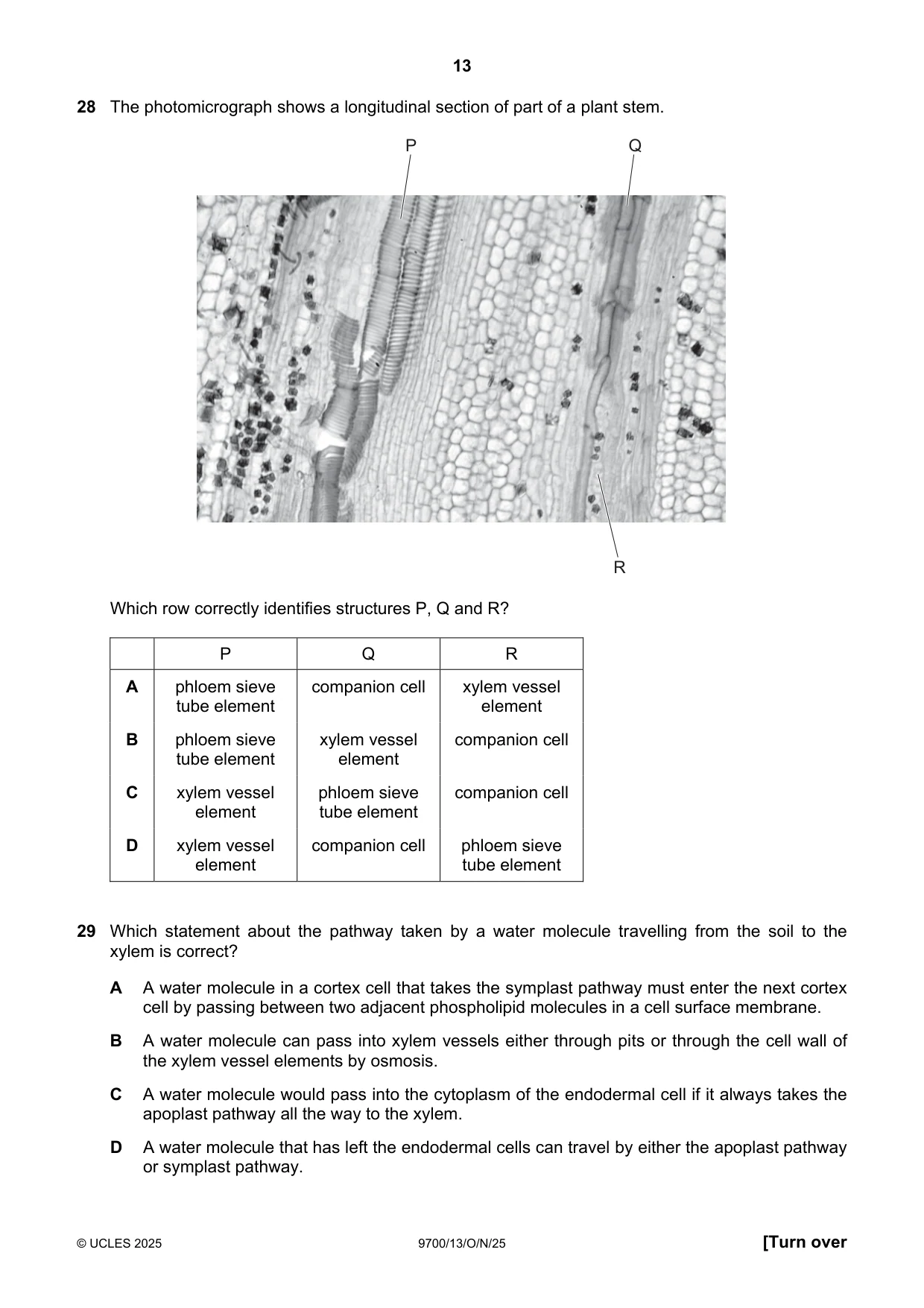
Q28 · The photomicrograph shows a longitudinal section of part of a plant stem
28 The photomicrograph shows a longitudinal section of part of a plant stem. P Q R Which row correctly identifies structures P, Q and R? P Q R A phloem sieve companion cell xylem vessel tube element element B phloem sieve xylem vessel companion cell tube element element C xylem vessel phloem sieve companion cell element tube element D xylem vessel companion cell phloem sieve element tube element
Mark scheme: C
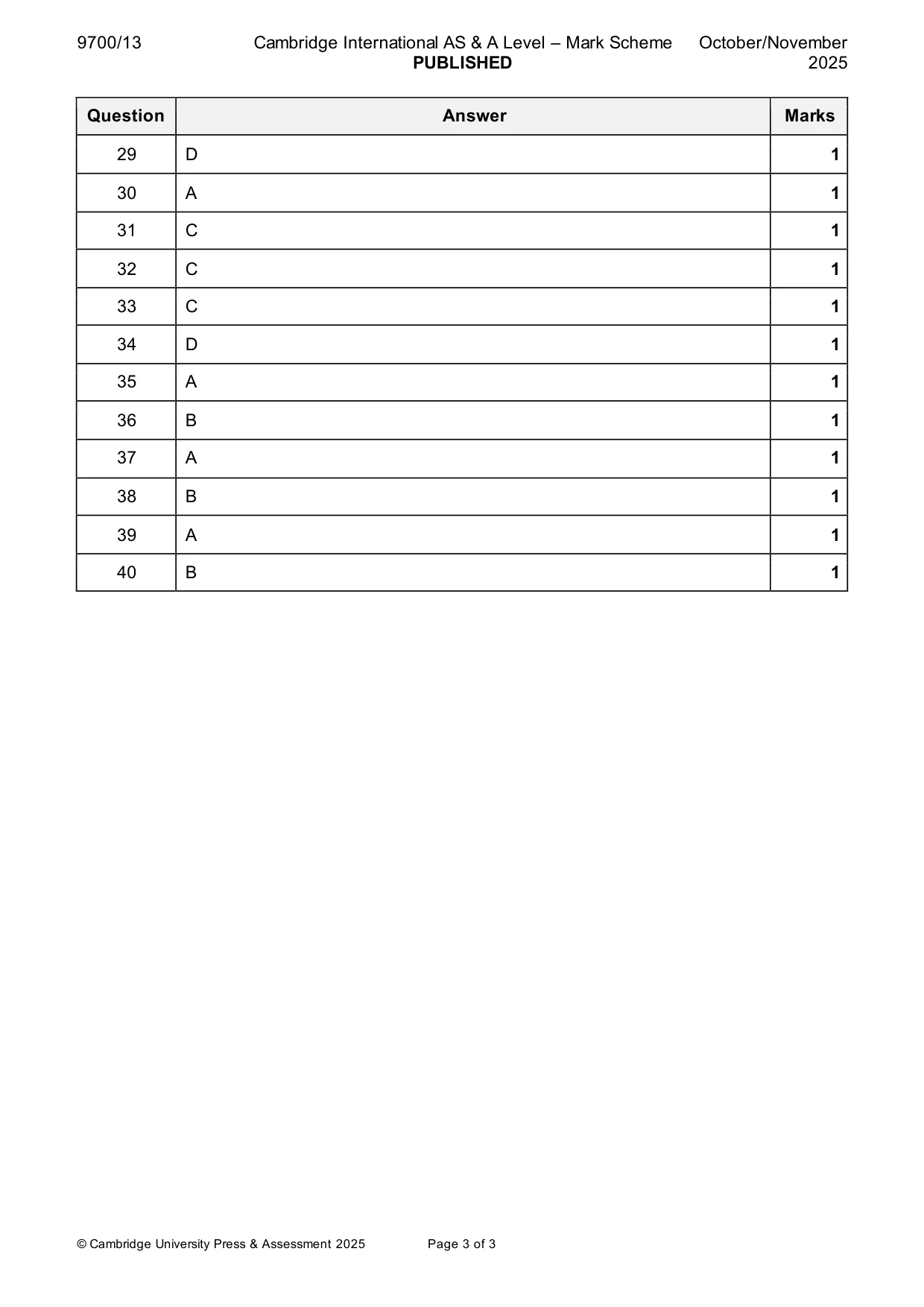
Q29 · Which statement about the pathway taken by a water molecule travelling from the soil to…
29 Which statement about the pathway taken by a water molecule travelling from the soil to the xylem is correct? A A water molecule in a cortex cell that takes the symplast pathway must enter the next cortex cell by passing between two adjacent phospholipid molecules in a cell surface membrane. B A water molecule can pass into xylem vessels either through pits or through the cell wall of the xylem vessel elements by osmosis. C A water molecule would pass into the cytoplasm of the endodermal cell if it always takes the apoplast pathway all the way to the xylem. D A water molecule that has left the endodermal cells can travel by either the apoplast pathway or symplast pathway.
Mark scheme: D
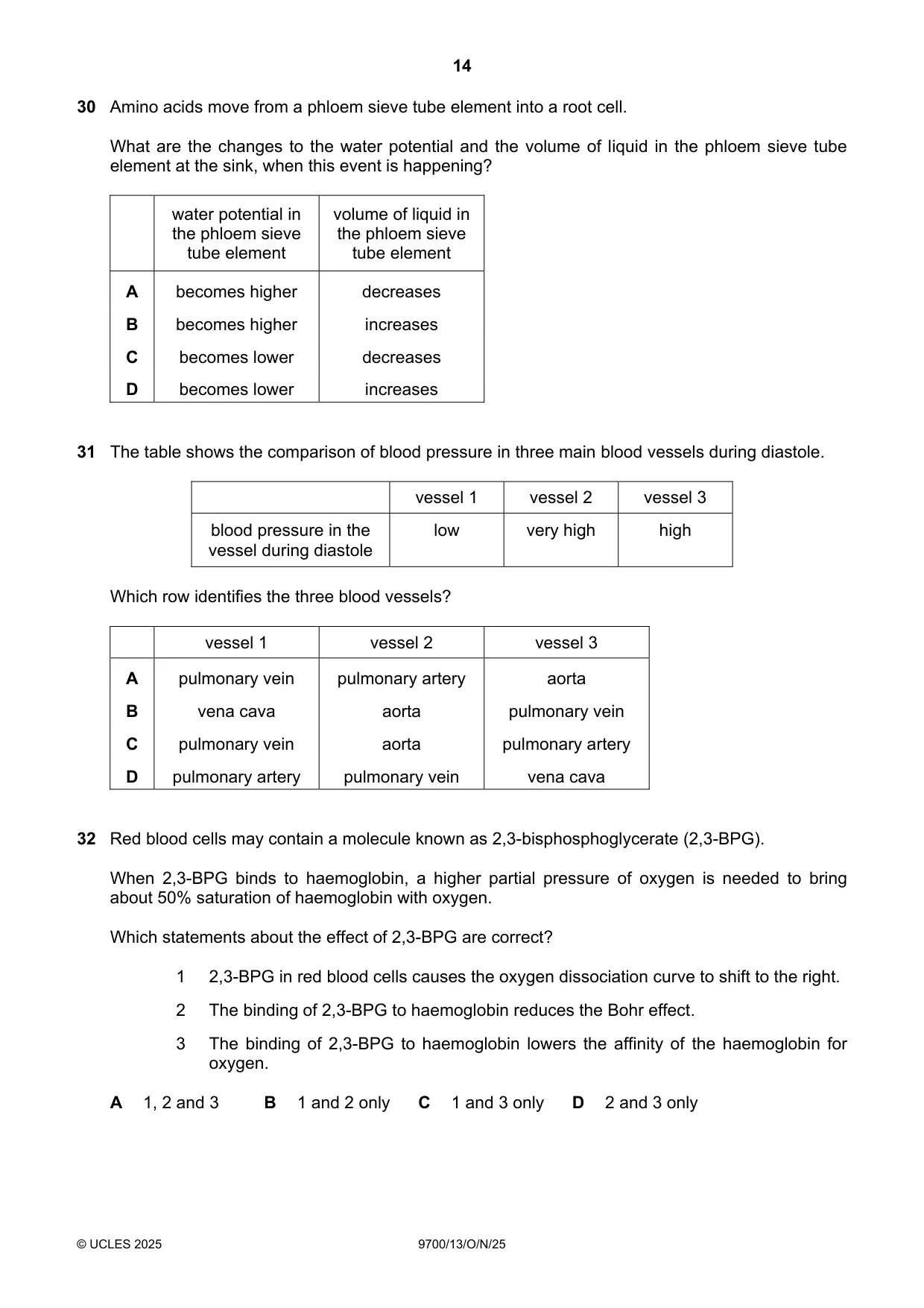
Q30 · Amino acids move from a phloem sieve tube element into a root cell
30 Amino acids move from a phloem sieve tube element into a root cell. What are the changes to the water potential and the volume of liquid in the phloem sieve tube element at the sink, when this event is happening? water potential in volume of liquid in the phloem sieve the phloem sieve tube element tube element A becomes higher decreases B becomes higher increases C becomes lower decreases D becomes lower increases
Mark scheme: A
Q31 · The table shows the comparison of blood pressure in three main blood vessels during…
31 The table shows the comparison of blood pressure in three main blood vessels during diastole. vessel 1 vessel 2 vessel 3 blood pressure in the low very high high vessel during diastole Which row identifies the three blood vessels? vessel 1 vessel 2 vessel 3 A pulmonary vein pulmonary artery aorta B vena cava aorta pulmonary vein C pulmonary vein aorta pulmonary artery D pulmonary artery pulmonary vein vena cava
Mark scheme: C
Q32 · Red blood cells may contain a molecule known as 2,3-bisphosphoglycerate (2,3-BPG)
32 Red blood cells may contain a molecule known as 2,3-bisphosphoglycerate (2,3-BPG). When 2,3-BPG binds to haemoglobin, a higher partial pressure of oxygen is needed to bring about 50% saturation of haemoglobin with oxygen. Which statements about the effect of 2,3-BPG are correct? 1 2,3-BPG in red blood cells causes the oxygen dissociation curve to shift to the right. 2 The binding of 2,3-BPG to haemoglobin reduces the Bohr effect. 3 The binding of 2,3-BPG to haemoglobin lowers the affinity of the haemoglobin for oxygen. A 1, 2 and 3 B 1 and 2 only C 1 and 3 only D 2 and 3 only
Mark scheme: C
Q33 · A person has a small hole in the septum between the ventricles
33 A person has a small hole in the septum between the ventricles. This is called a ventricular septal defect (VSD). The person has no other heart defects. What is the direction of the net flow of blood during ventricular systole in the heart of this person? A left ventricle to left atrium B right ventricle to right atrium C left ventricle to right ventricle D right ventricle to left ventricle
Mark scheme: C
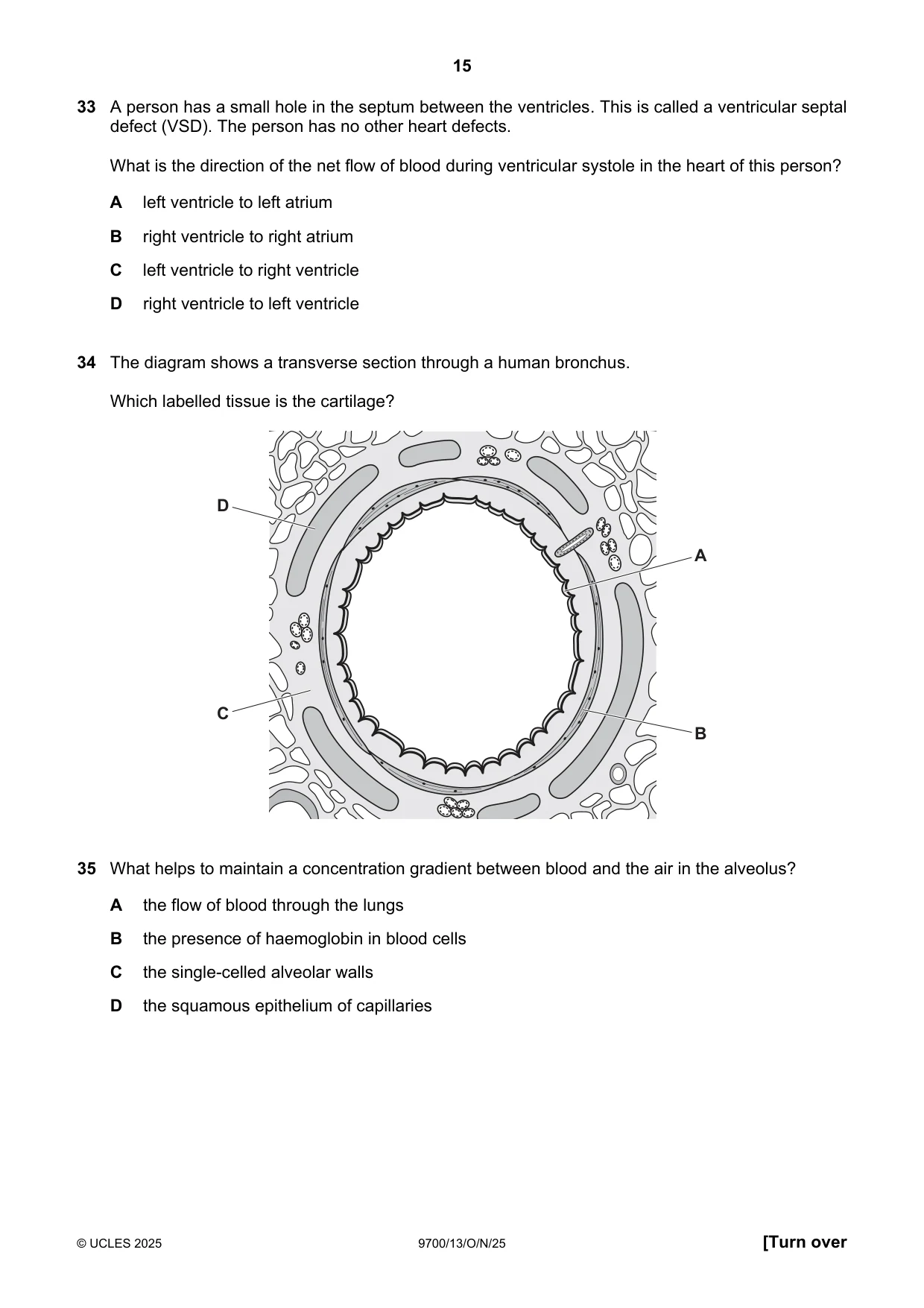
Q34 · The diagram shows a transverse section through a human bronchus
34 The diagram shows a transverse section through a human bronchus. Which labelled tissue is the cartilage? D A C B
Mark scheme: D
Q35 · What helps to maintain a concentration gradient between blood and the air in the alveolus?
35 What helps to maintain a concentration gradient between blood and the air in the alveolus? A the flow of blood through the lungs B the presence of haemoglobin in blood cells C the single-celled alveolar walls D the squamous epithelium of capillaries
Mark scheme: A
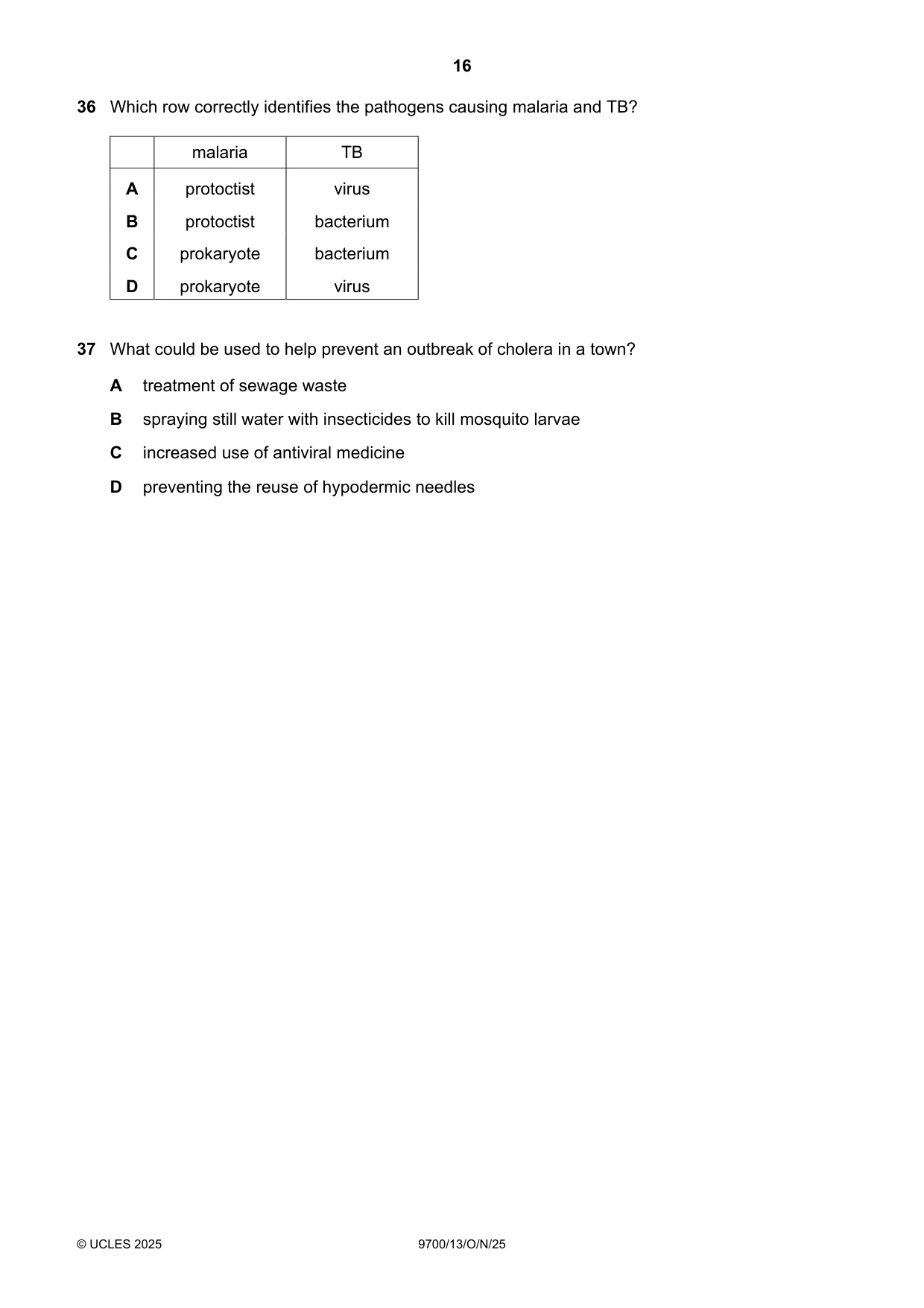
Q36 · Which row correctly identifies the pathogens causing malaria and TB?
36 Which row correctly identifies the pathogens causing malaria and TB? malaria TB A protoctist virus B protoctist bacterium C prokaryote bacterium D prokaryote virus
Mark scheme: B
Q37 · What could be used to help prevent an outbreak of cholera in a town?
37 What could be used to help prevent an outbreak of cholera in a town? A treatment of sewage waste B spraying still water with insecticides to kill mosquito larvae C increased use of antiviral medicine D preventing the reuse of hypodermic needles
Mark scheme: A
Q38 · The graph shows the percentage of tuberculosis (TB) patients who were also known to be…
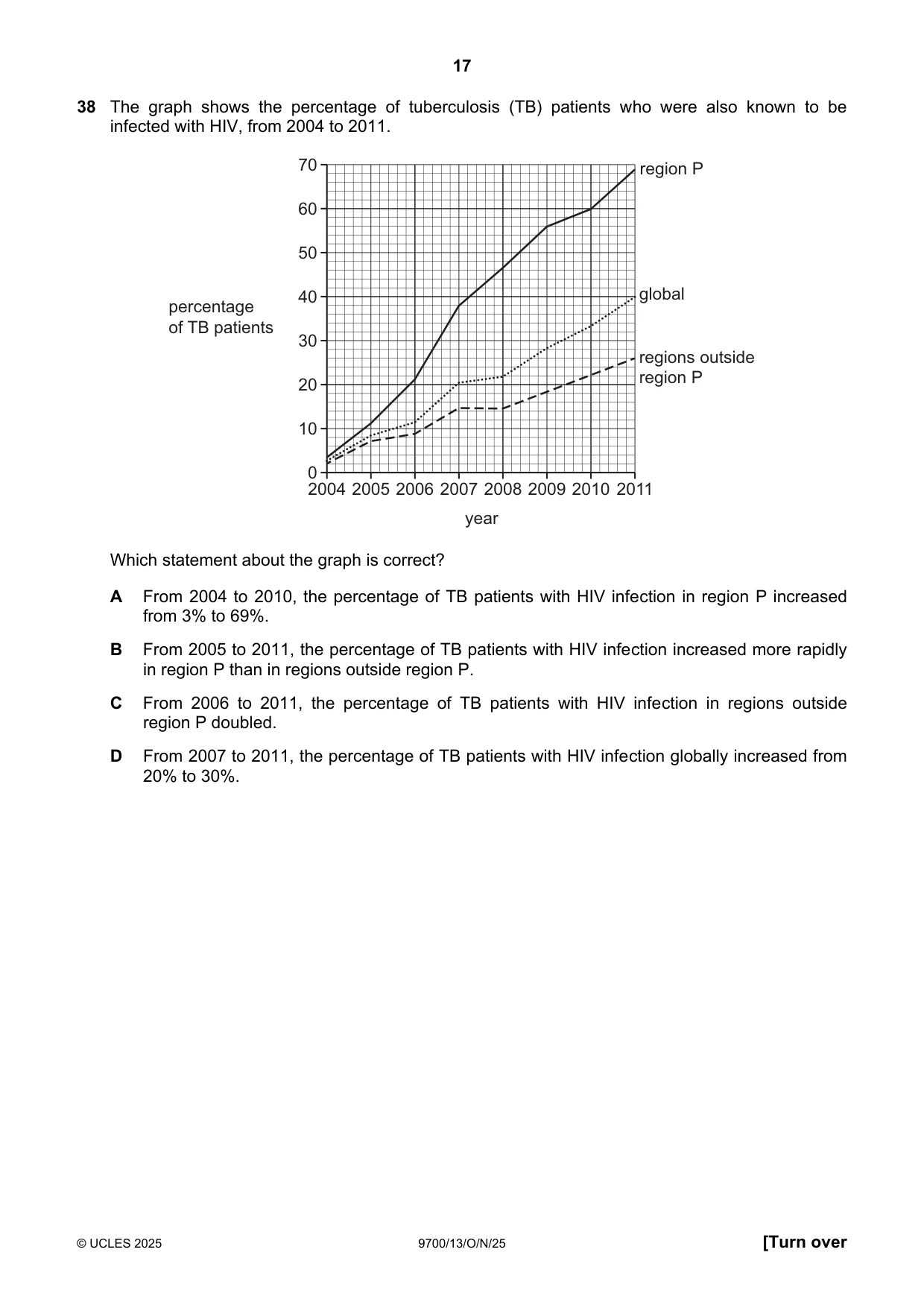
38 The graph shows the percentage of tuberculosis (TB) patients who were also known to be infected with HIV, from 2004 to 2011. 70 region P 60 50 40 global percentage of TB patients 30 regions outside 20 region P 10 0 2004 2005 2006 2007 2008 2009 2010 2011 year Which statement about the graph is correct? A From 2004 to 2010, the percentage of TB patients with HIV infection in region P increased from 3% to 69%. B From 2005 to 2011, the percentage of TB patients with HIV infection increased more rapidly in region P than in regions outside region P. C From 2006 to 2011, the percentage of TB patients with HIV infection in regions outside region P doubled. D From 2007 to 2011, the percentage of TB patients with HIV infection globally increased from 20% to 30%.
Mark scheme: B
Q39 · Four different treatments were tested in a human volunteer during a year
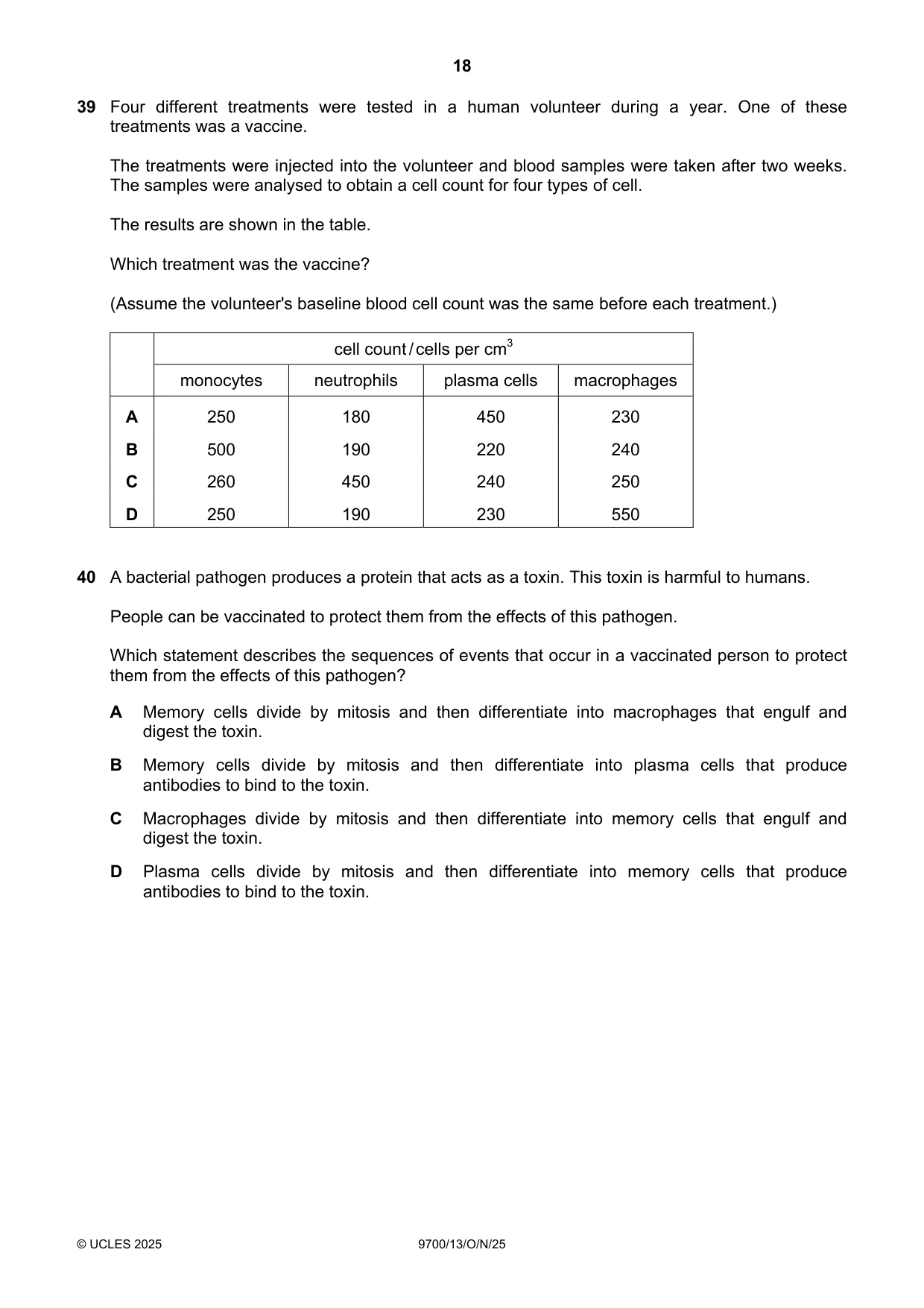
39 Four different treatments were tested in a human volunteer during a year. One of these treatments was a vaccine. The treatments were injected into the volunteer and blood samples were taken after two weeks. The samples were analysed to obtain a cell count for four types of cell. The results are shown in the table. Which treatment was the vaccine? (Assume the volunteer's baseline blood cell count was the same before each treatment.) cell count / cells per cm3 monocytes neutrophils plasma cells macrophages A 250 180 450 230 B 500 190 220 240 C 260 450 240 250 D 250 190 230 550
Mark scheme: A
Q40 · A bacterial pathogen produces a protein that acts as a toxin
40 A bacterial pathogen produces a protein that acts as a toxin. This toxin is harmful to humans. People can be vaccinated to protect them from the effects of this pathogen. Which statement describes the sequences of events that occur in a vaccinated person to protect them from the effects of this pathogen? A Memory cells divide by mitosis and then differentiate into macrophages that engulf and digest the toxin. B Memory cells divide by mitosis and then differentiate into plasma cells that produce antibodies to bind to the toxin. C Macrophages divide by mitosis and then differentiate into memory cells that engulf and digest the toxin. D Plasma cells divide by mitosis and then differentiate into memory cells that produce antibodies to bind to the toxin.
Mark scheme: B
What was in this paper
The subtopics covered by these 40 questions, and how many questions each got. Open one in a new tab to see every Cambridge question on it.
5Cells as the basic units of living organisms5Infectious diseases3Antibodies and vaccination2Factors that affect enzyme action2Fluid mosaic membranes2Movement into and out of cells2Protein synthesis2Replication and division of nuclei and cells2The gas exchange system2The heart2The microscope in cell studies2Transport mechanisms2Chromosome behaviour in mitosis1Mode of action of enzymes1Structure of nucleic acids and replication of DNA1Structure of transport tissues1Testing for biological molecules1Transport of oxygen and carbon dioxide1Water1What you needed in this session
Cambridge’s own grade thresholds for 2025 Oct/Nov, Paper 1 · Variant 3. A higher threshold means an easier paper — the bar moves with how the cohort did.