Cambridge A Level Biology 9700 — 2023 Oct/Nov Paper 1 · Variant 3
9700/13/O/N/23 · 40 questions · 40 marks · ≈45 min
The question paper and its mark scheme, free to read here and free to download. This is Cambridge’s own paper, exactly as it was sat.
Question paper16 pages
Mark scheme3 pages
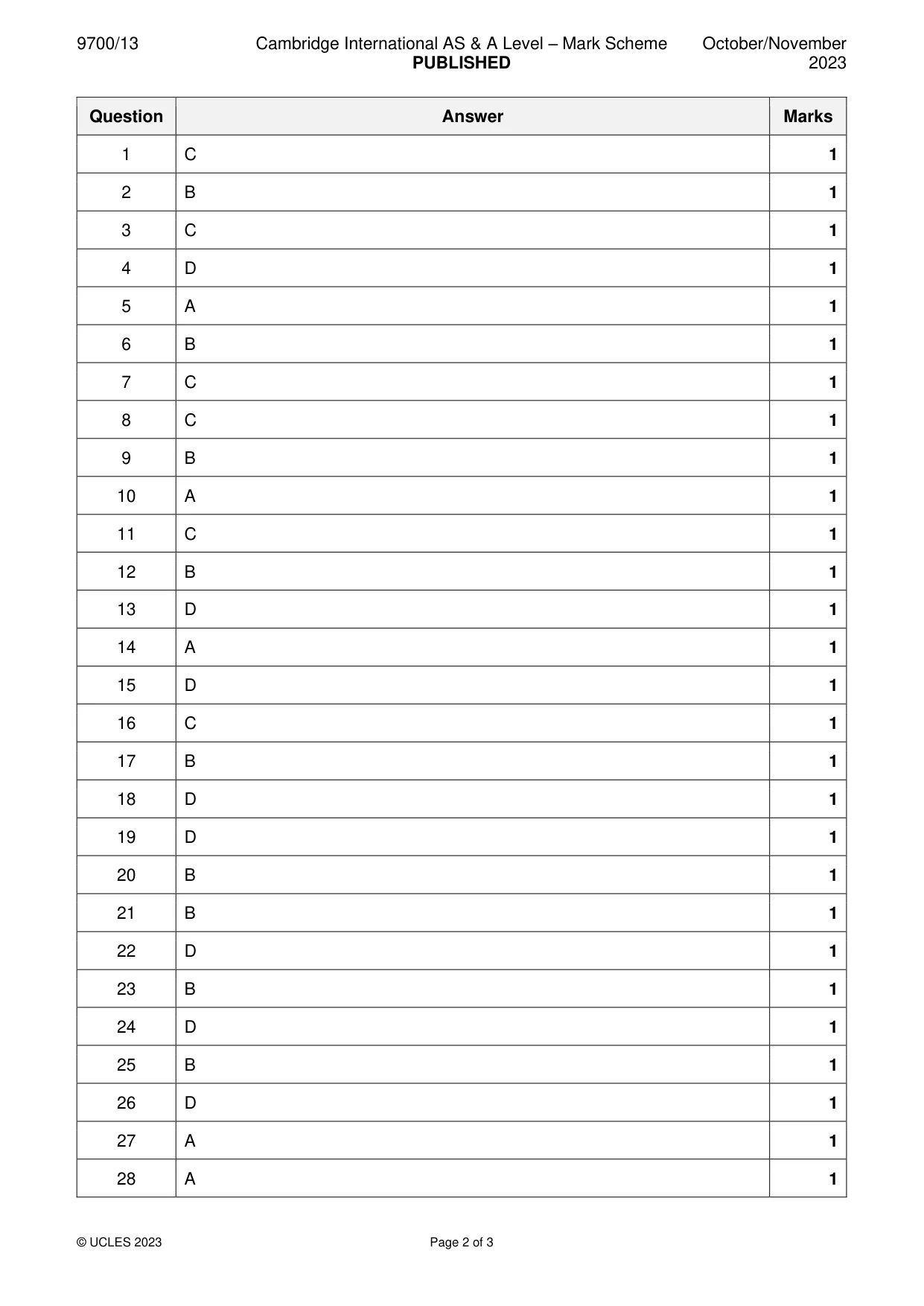
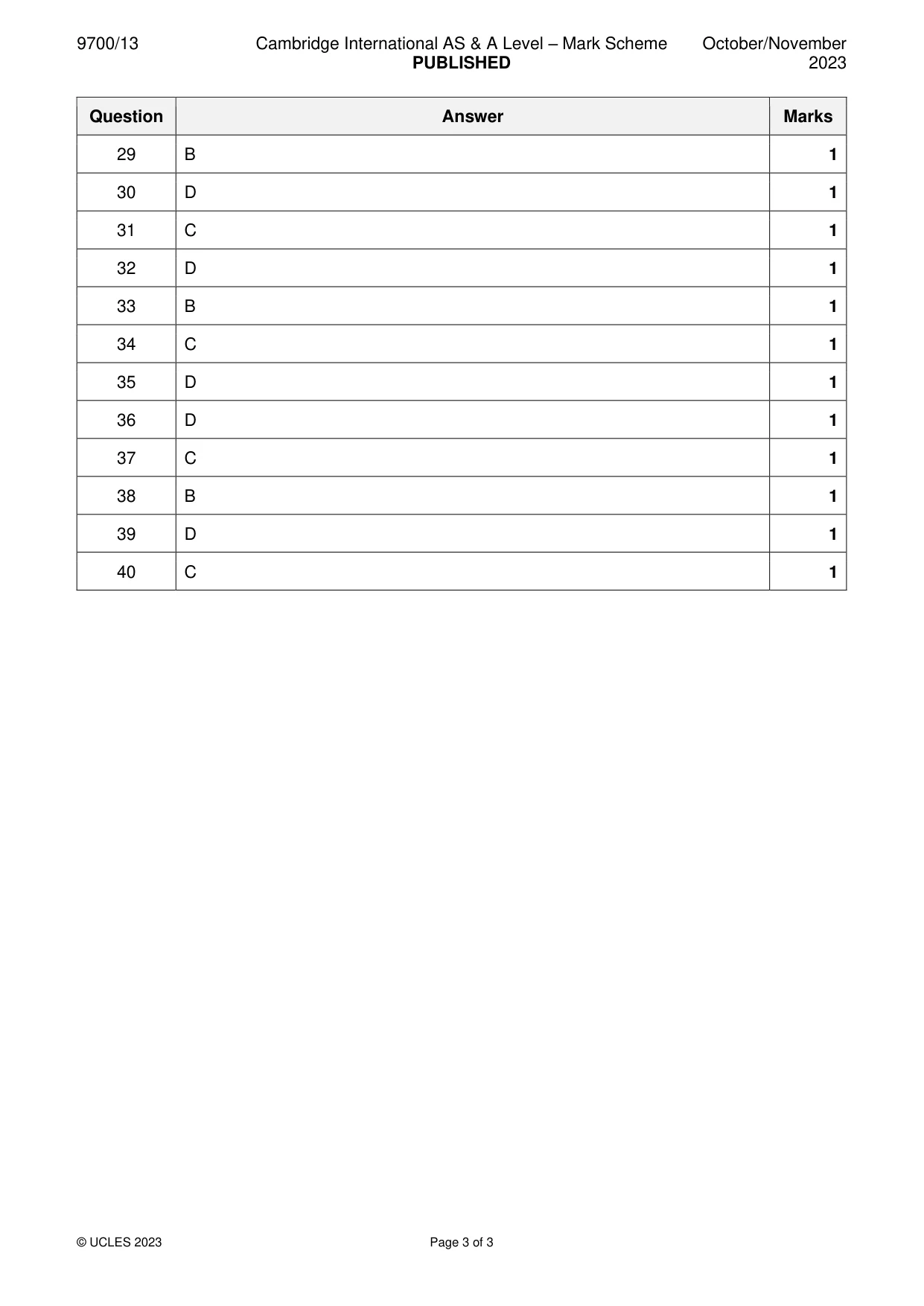
Answers below. Sit the paper first if you are practising.
Questions as text
Q1 · Which statement about light microscopy is correct?
1 Which statement about light microscopy is correct? A As the resolution increases, the magnification increases. B As the magnification increases, the image always becomes clearer. C The resolution will decrease as coloured light of increasing wavelengths is used. D Magnification and resolution are terms that relate to the same factor.
Mark scheme: C
Q2 · The diagram shows a stage micrometer scale viewed through an eyepiece containing a…
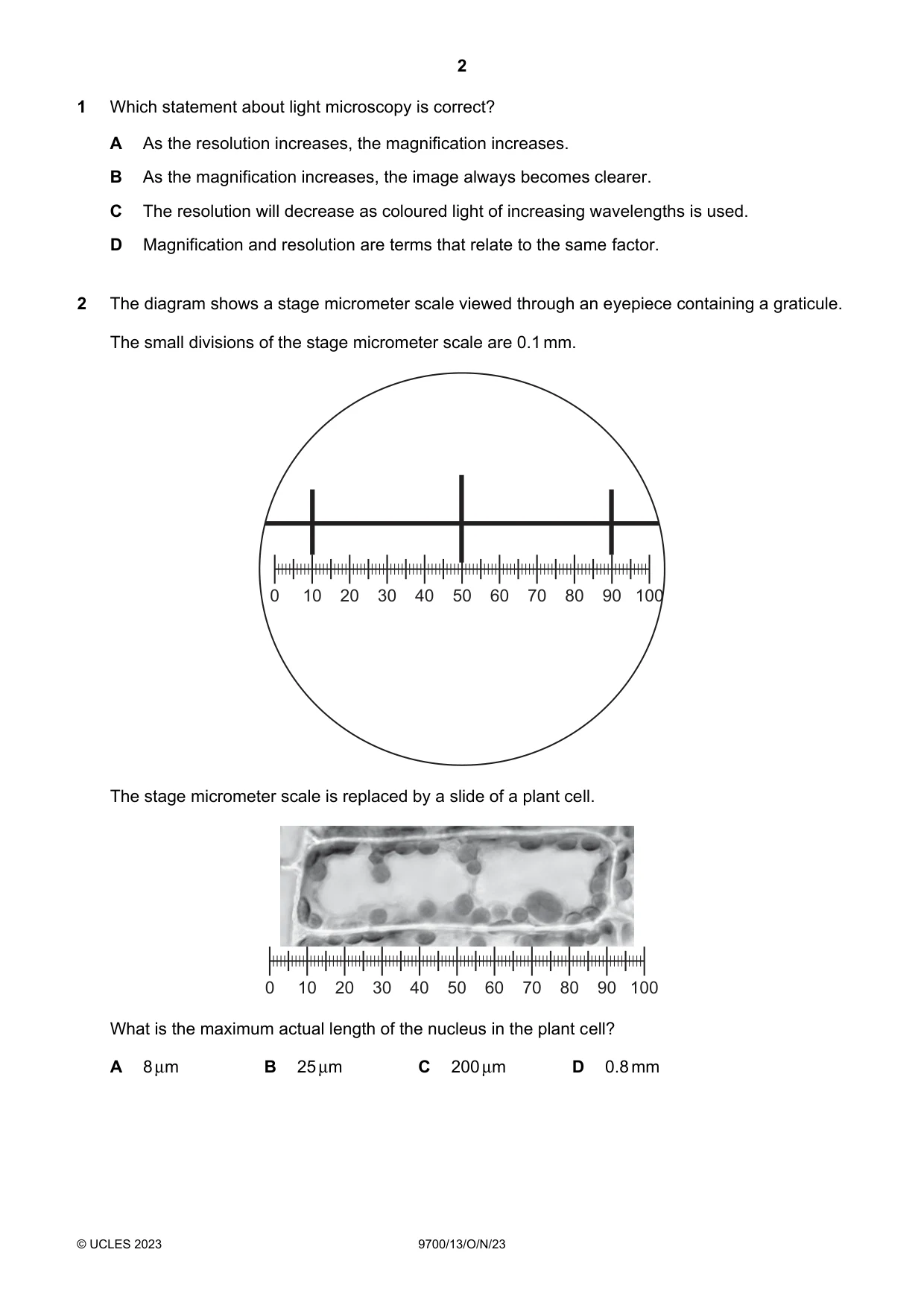
2 The diagram shows a stage micrometer scale viewed through an eyepiece containing a graticule. The small divisions of the stage micrometer scale are 0.1 mm. 0 10 20 30 40 50 60 70 80 90 100 The stage micrometer scale is replaced by a slide of a plant cell. 0 10 20 30 40 50 60 70 80 90 100 What is the maximum actual length of the nucleus in the plant cell? A 8 µm B 25 µm C 200 µm D 0.8 mm
Mark scheme: B
Q3 · What is the correct order for the involvement of the cell structures in the synthesis and…
3 What is the correct order for the involvement of the cell structures in the synthesis and secretion of an enzyme? 1 cell surface membrane 2 Golgi body 3 nucleus 4 rough endoplasmic reticulum A 1 → 2 → 3 → 4 B 2 → 1 → 3 → 4 C 3 → 4 → 2 → 1 D 4 → 3 → 2 → 1
Mark scheme: C
More questions on Cells as the basic units of living organisms
Q4 · Centrioles, cilia, microtubules and microvilli are structures found in eukaryotic cells
4 Centrioles, cilia, microtubules and microvilli are structures found in eukaryotic cells. Which statement about these cellular structures is correct? A Centrioles, cilia and microvilli are composed of microtubules. B Centrioles play a role in mitosis and semi-conservative DNA replication. C Cilia and microvilli both increase the cell surface area for absorption. D Microtubules are made of protein and form the spindle in mitosis.
Mark scheme: D
More questions on Cells as the basic units of living organisms
Q5 · Which description of plasmodesmata is correct?
5 Which description of plasmodesmata is correct? A They are channels through plant cell walls, lined by the cell surface membrane. B They are channels through plant cell walls that are formed from proteins. C They are channels required for the movement of water through the apoplast pathway. D They can become lignified and form pits in the walls of xylem vessel elements.
Mark scheme: A
More questions on Cells as the basic units of living organisms
Q6 · Which cell organelle does not have nucleic acids?
6 Which cell organelle does not have nucleic acids? A chloroplast B Golgi body C mitochondrion D ribosome
Mark scheme: B
More questions on Cells as the basic units of living organisms
Q7 · Which processes occur in eukaryotes and prokaryotes?
7 Which processes occur in eukaryotes and prokaryotes? 1 hydrolysis 2 mitosis 3 transcription 4 translation A 1, 2 and 3 B 1, 2 and 4 C 1, 3 and 4 D 2, 3 and 4
Mark scheme: C
More questions on Cells as the basic units of living organisms
Q8 · Which bonds are present in all viruses?
8 Which bonds are present in all viruses? 1 covalent 2 ester 3 phosphodiester A 1, 2 and 3 B 1 and 2 only C 1 and 3 only D 2 and 3 only
Mark scheme: C
More questions on Structure of nucleic acids and replication of DNA
Q9 · The diagram shows the structure of a monomer
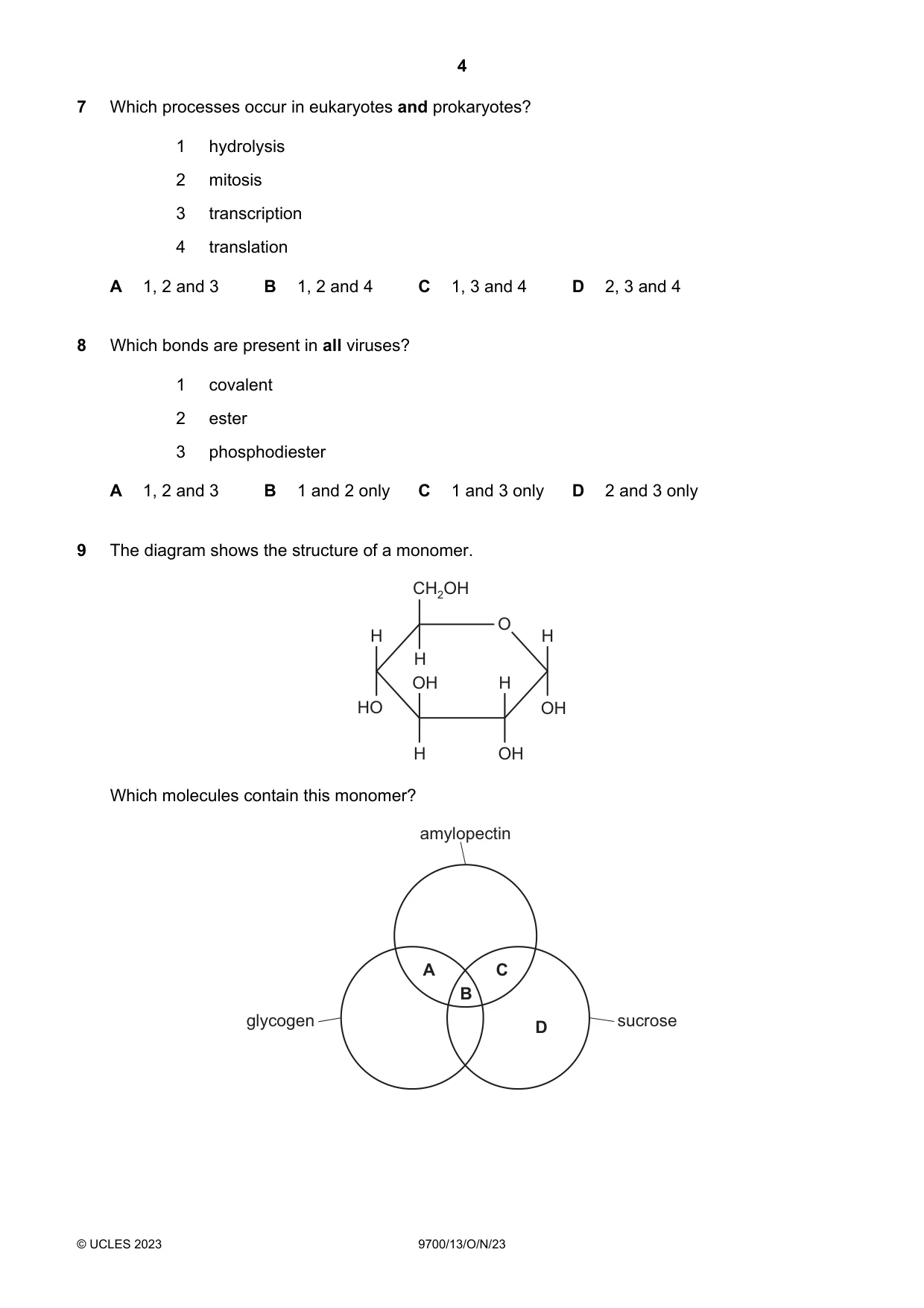
9 The diagram shows the structure of a monomer. CH2OH O H H H OH H HO OH H OH Which molecules contain this monomer? amylopectin A C B glycogen D sucrose
Mark scheme: B
Q10 · A triglyceride consists of glycerol and three different fatty acids: linoleic acid (L)…
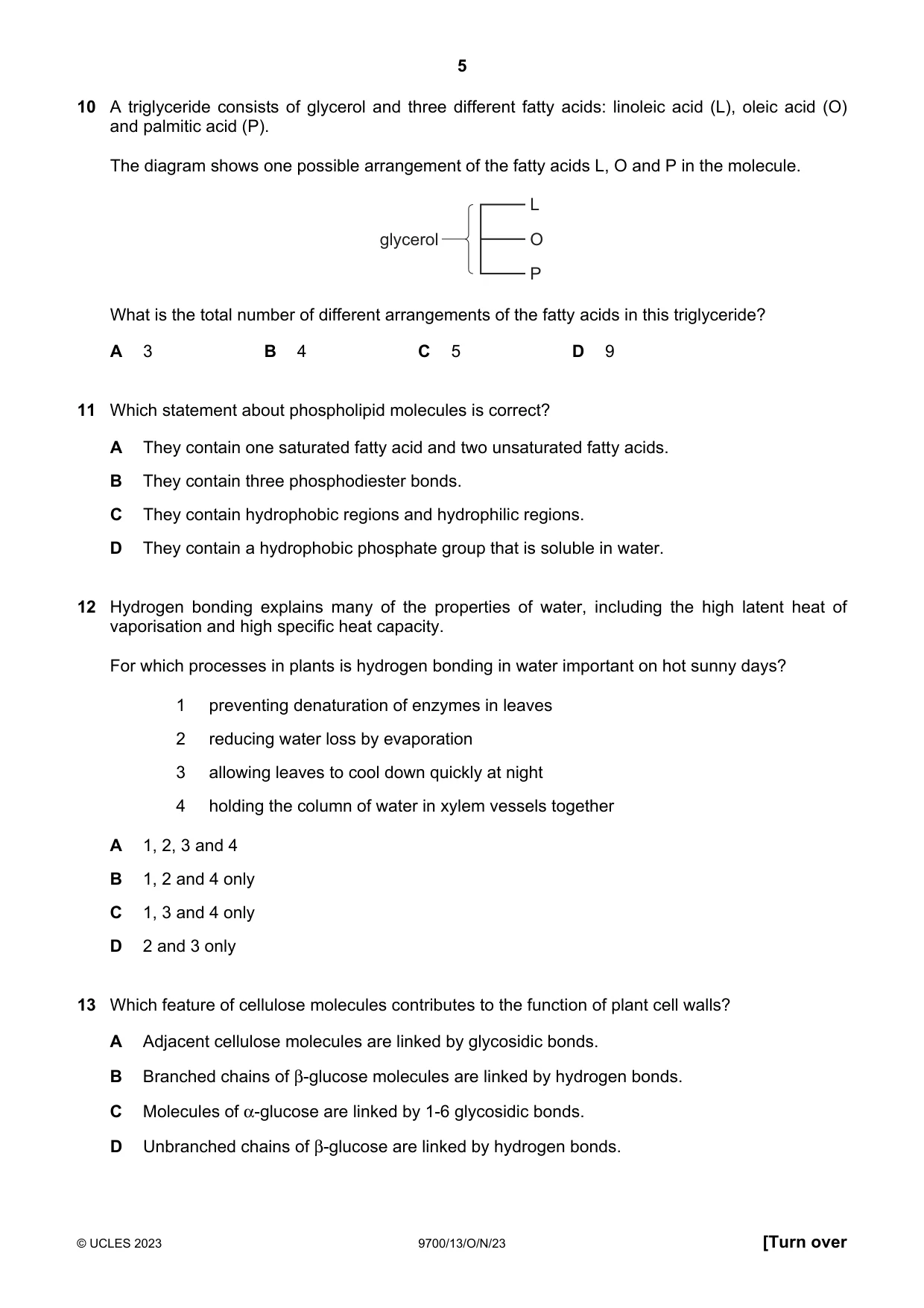
10 A triglyceride consists of glycerol and three different fatty acids: linoleic acid (L), oleic acid (O) and palmitic acid (P). The diagram shows one possible arrangement of the fatty acids L, O and P in the molecule. L glycerol O P What is the total number of different arrangements of the fatty acids in this triglyceride? A 3 B 4 C 5 D 9
Mark scheme: A
Q11 · Which statement about phospholipid molecules is correct?
11 Which statement about phospholipid molecules is correct? A They contain one saturated fatty acid and two unsaturated fatty acids. B They contain three phosphodiester bonds. C They contain hydrophobic regions and hydrophilic regions. D They contain a hydrophobic phosphate group that is soluble in water.
Mark scheme: C
Q12 · Hydrogen bonding explains many of the properties of water, including the high latent heat…
12 Hydrogen bonding explains many of the properties of water, including the high latent heat of vaporisation and high specific heat capacity. For which processes in plants is hydrogen bonding in water important on hot sunny days? 1 preventing denaturation of enzymes in leaves 2 reducing water loss by evaporation 3 allowing leaves to cool down quickly at night 4 holding the column of water in xylem vessels together A 1, 2, 3 and 4 B 1, 2 and 4 only C 1, 3 and 4 only D 2 and 3 only
Mark scheme: B
Q13 · Which feature of cellulose molecules contributes to the function of plant cell walls?
13 Which feature of cellulose molecules contributes to the function of plant cell walls? A Adjacent cellulose molecules are linked by glycosidic bonds. B Branched chains of β-glucose molecules are linked by hydrogen bonds. C Molecules of α-glucose are linked by 1-6 glycosidic bonds. D Unbranched chains of β-glucose are linked by hydrogen bonds.
Mark scheme: D
Q14 · Which statements describe some enzyme actions?
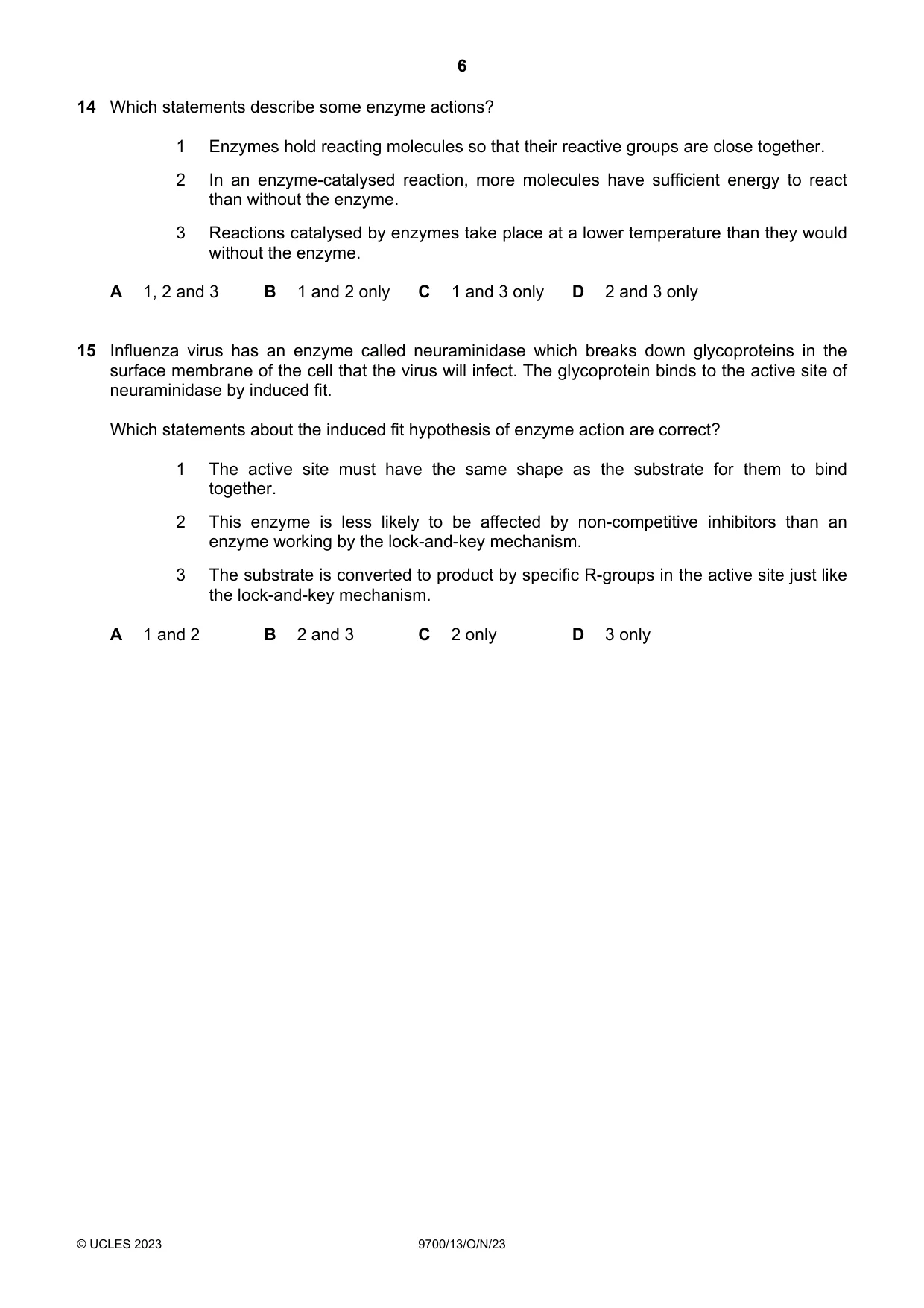
14 Which statements describe some enzyme actions? 1 Enzymes hold reacting molecules so that their reactive groups are close together. 2 In an enzyme-catalysed reaction, more molecules have sufficient energy to react than without the enzyme. 3 Reactions catalysed by enzymes take place at a lower temperature than they would without the enzyme. A 1, 2 and 3 B 1 and 2 only C 1 and 3 only D 2 and 3 only
Mark scheme: A
Q15 · Influenza virus has an enzyme called neuraminidase which breaks down glycoproteins in the…
15 Influenza virus has an enzyme called neuraminidase which breaks down glycoproteins in the surface membrane of the cell that the virus will infect. The glycoprotein binds to the active site of neuraminidase by induced fit. Which statements about the induced fit hypothesis of enzyme action are correct? 1 The active site must have the same shape as the substrate for them to bind together. 2 This enzyme is less likely to be affected by non-competitive inhibitors than an enzyme working by the lock-and-key mechanism. 3 The substrate is converted to product by specific R-groups in the active site just like the lock-and-key mechanism. A 1 and 2 B 2 and 3 C 2 only D 3 only
Mark scheme: D
Q16 · The graph compares the effect of temperature on the activity of the protease enzyme…
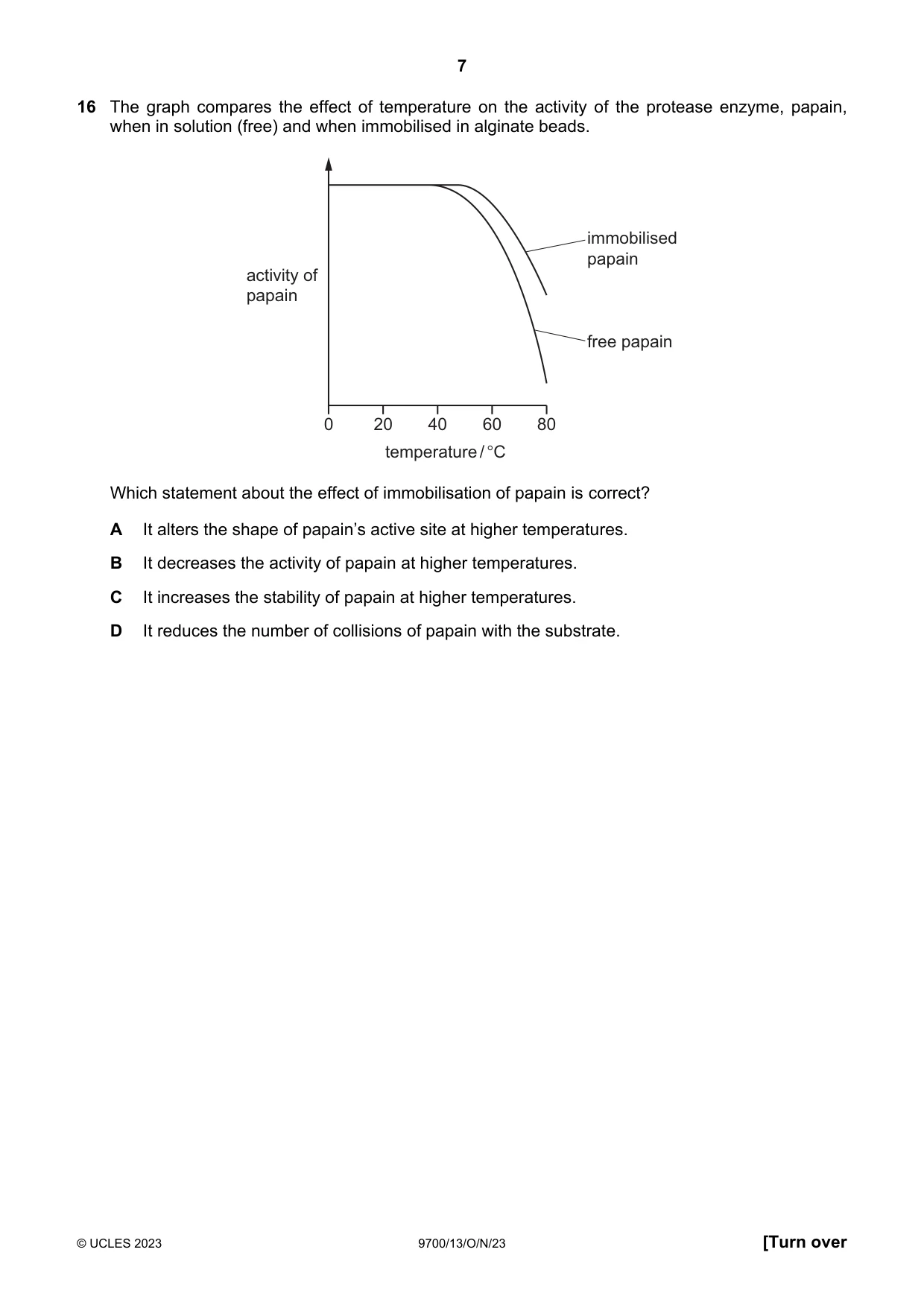
16 The graph compares the effect of temperature on the activity of the protease enzyme, papain, when in solution (free) and when immobilised in alginate beads. immobilised papain activity of papain free papain 0 20 40 60 80 temperature / °C Which statement about the effect of immobilisation of papain is correct? A It alters the shape of papain’s active site at higher temperatures. B It decreases the activity of papain at higher temperatures. C It increases the stability of papain at higher temperatures. D It reduces the number of collisions of papain with the substrate.
Mark scheme: C
Q17 · The diagram shows how adrenaline activates processes inside a cell
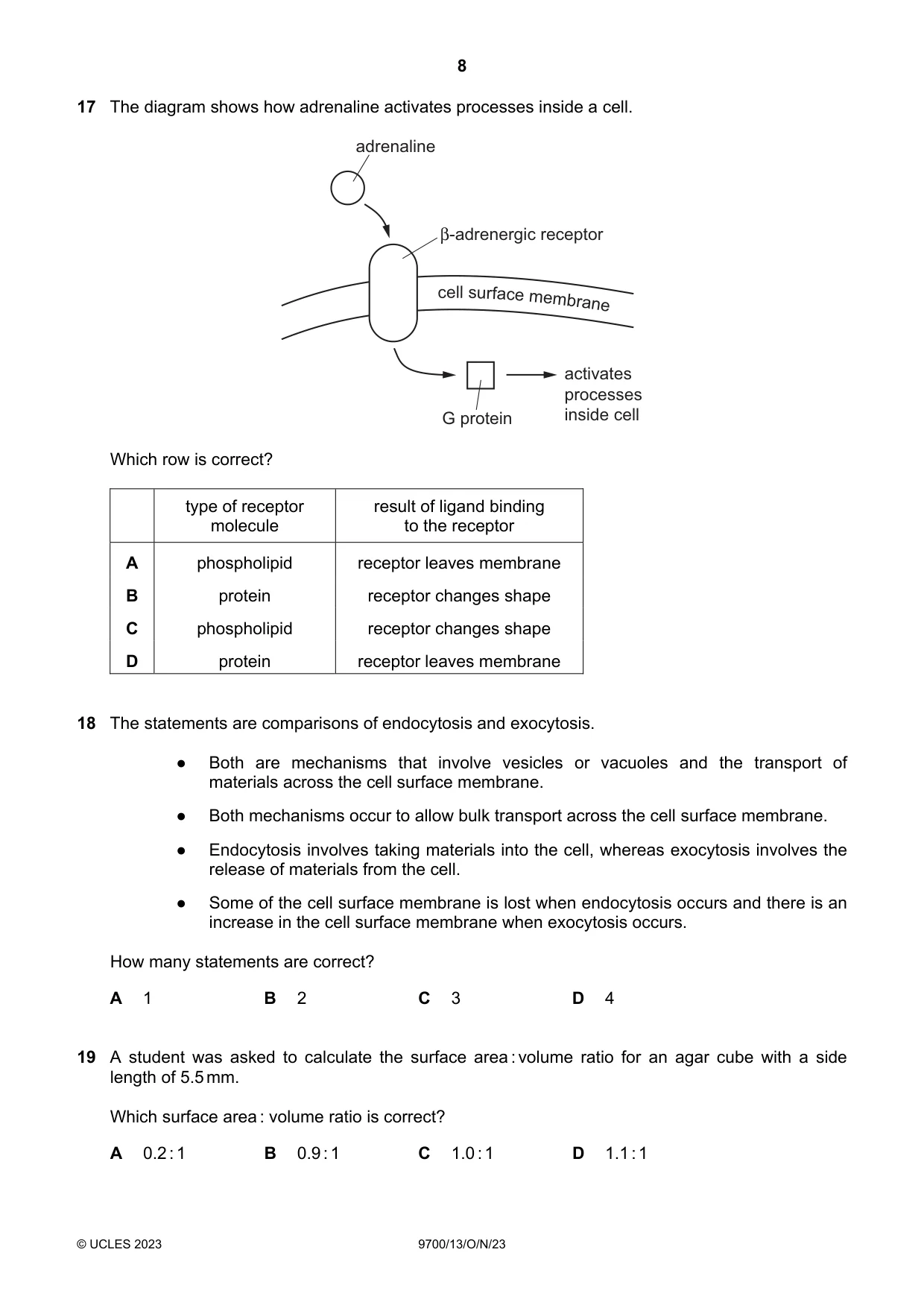
17 The diagram shows how adrenaline activates processes inside a cell. adrenaline β-adrenergic receptor cell s urface memb rane activates processes G protein inside cell Which row is correct? type of receptor result of ligand binding molecule to the receptor A phospholipid receptor leaves membrane B protein receptor changes shape C phospholipid receptor changes shape D protein receptor leaves membrane
Mark scheme: B
Q18 · The statements are comparisons of endocytosis and exocytosis
18 The statements are comparisons of endocytosis and exocytosis. ● Both are mechanisms that involve vesicles or vacuoles and the transport of materials across the cell surface membrane. ● Both mechanisms occur to allow bulk transport across the cell surface membrane. ● Endocytosis involves taking materials into the cell, whereas exocytosis involves the release of materials from the cell. ● Some of the cell surface membrane is lost when endocytosis occurs and there is an increase in the cell surface membrane when exocytosis occurs. How many statements are correct? A 1 B 2 C 3 D 4
Mark scheme: D
Q19 · A student was asked to calculate the surface area : volume ratio for an agar cube with a…
19 A student was asked to calculate the surface area : volume ratio for an agar cube with a side length of 5.5 mm. Which surface area : volume ratio is correct? A 0.2 : 1 B 0.9 : 1 C 1.0 : 1 D 1.1 : 1
Mark scheme: D
Q20 · Which statement about the behaviour of chromosomes during telophase is correct?
20 Which statement about the behaviour of chromosomes during telophase is correct? A Chromosomes attach to the spindle fibres at the equator. B Chromosomes start to uncoil inside the newly formed nucleus. C Chromosomes move towards the opposite poles of the cell. D Chromosomes condense into compact structures in the cytoplasm.
Mark scheme: B
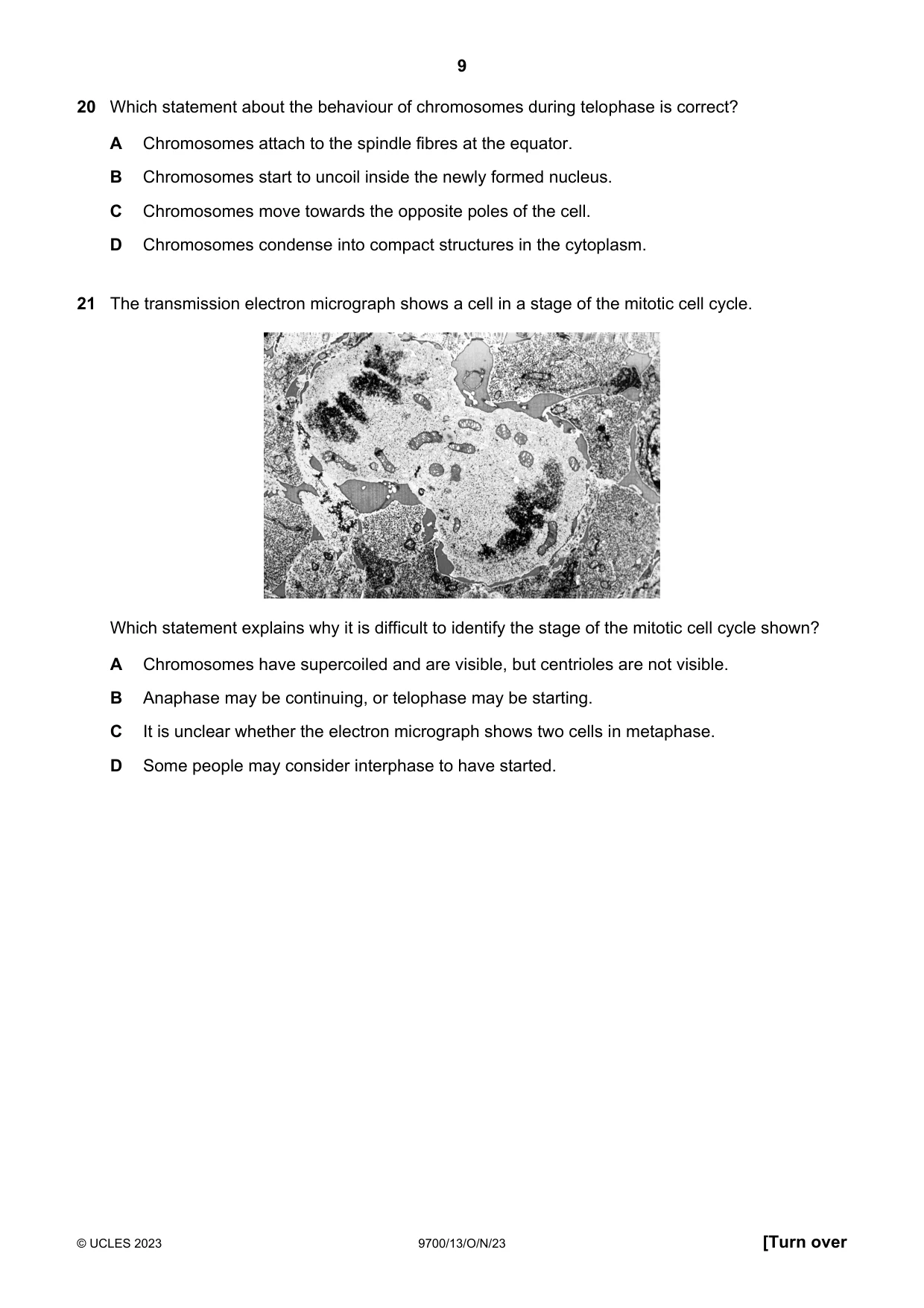
Q21 · The transmission electron micrograph shows a cell in a stage of the mitotic cell cycle
21 The transmission electron micrograph shows a cell in a stage of the mitotic cell cycle. Which statement explains why it is difficult to identify the stage of the mitotic cell cycle shown? A Chromosomes have supercoiled and are visible, but centrioles are not visible. B Anaphase may be continuing, or telophase may be starting. C It is unclear whether the electron micrograph shows two cells in metaphase. D Some people may consider interphase to have started.
Mark scheme: B
Q22 · During lagging strand replication, short fragments of DNA are produced
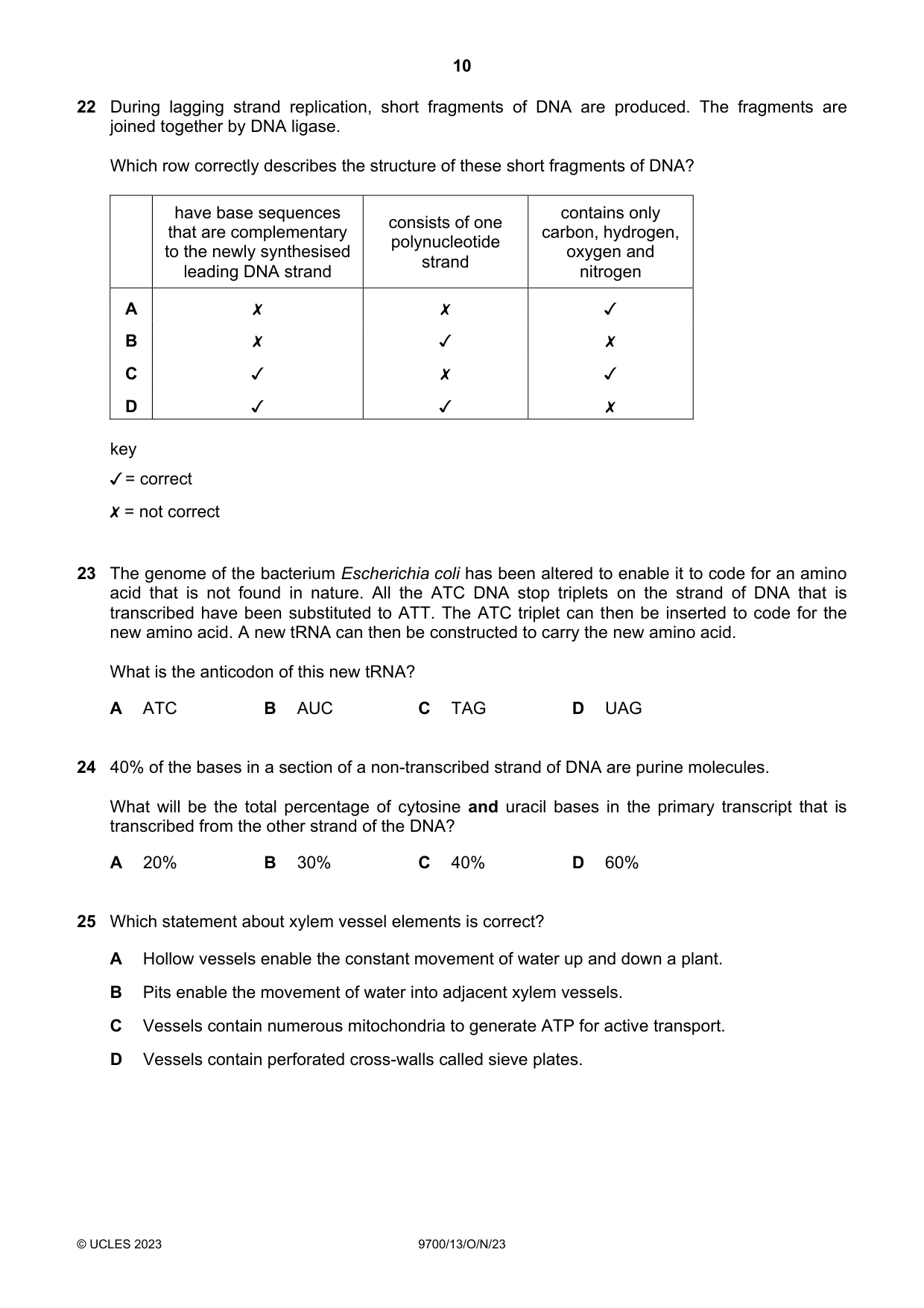
22 During lagging strand replication, short fragments of DNA are produced. The fragments are joined together by DNA ligase. Which row correctly describes the structure of these short fragments of DNA? have base sequences that are complementary : carbon, hydrogen, to the newly synthesised polyns cleotide oxygen and leading DNA strand nitrogen contains only consists of one key JY = correct X = not correct
Mark scheme: D
More questions on Structure of nucleic acids and replication of DNA
Q23 · The genome of the bacterium Escherichia coli has been altered to enable it to code for an…
23 The genome of the bacterium Escherichia coli has been altered to enable it to code for an amino acid that is not found in nature. All the ATC DNA stop triplets on the strand of DNA that is transcribed have been substituted to ATT. The ATC triplet can then be inserted to code for the new amino acid. A new tRNA can then be constructed to carry the new amino acid. What is the anticodon of this new tRNA? A ATC B AUC C TAG D UAG
Mark scheme: B
Q24 · 40% of the bases in a section of a non-transcribed strand of DNA are purine molecules
24 40% of the bases in a section of a non-transcribed strand of DNA are purine molecules. What will be the total percentage of cytosine and uracil bases in the primary transcript that is transcribed from the other strand of the DNA? A 20% B 30% C 40% D 60%
Mark scheme: D
More questions on Structure of nucleic acids and replication of DNA
Q25 · Which statement about xylem vessel elements is correct?
25 Which statement about xylem vessel elements is correct? A Hollow vessels enable the constant movement of water up and down a plant. B Pits enable the movement of water into adjacent xylem vessels. C Vessels contain numerous mitochondria to generate ATP for active transport. D Vessels contain perforated cross-walls called sieve plates.
Mark scheme: B
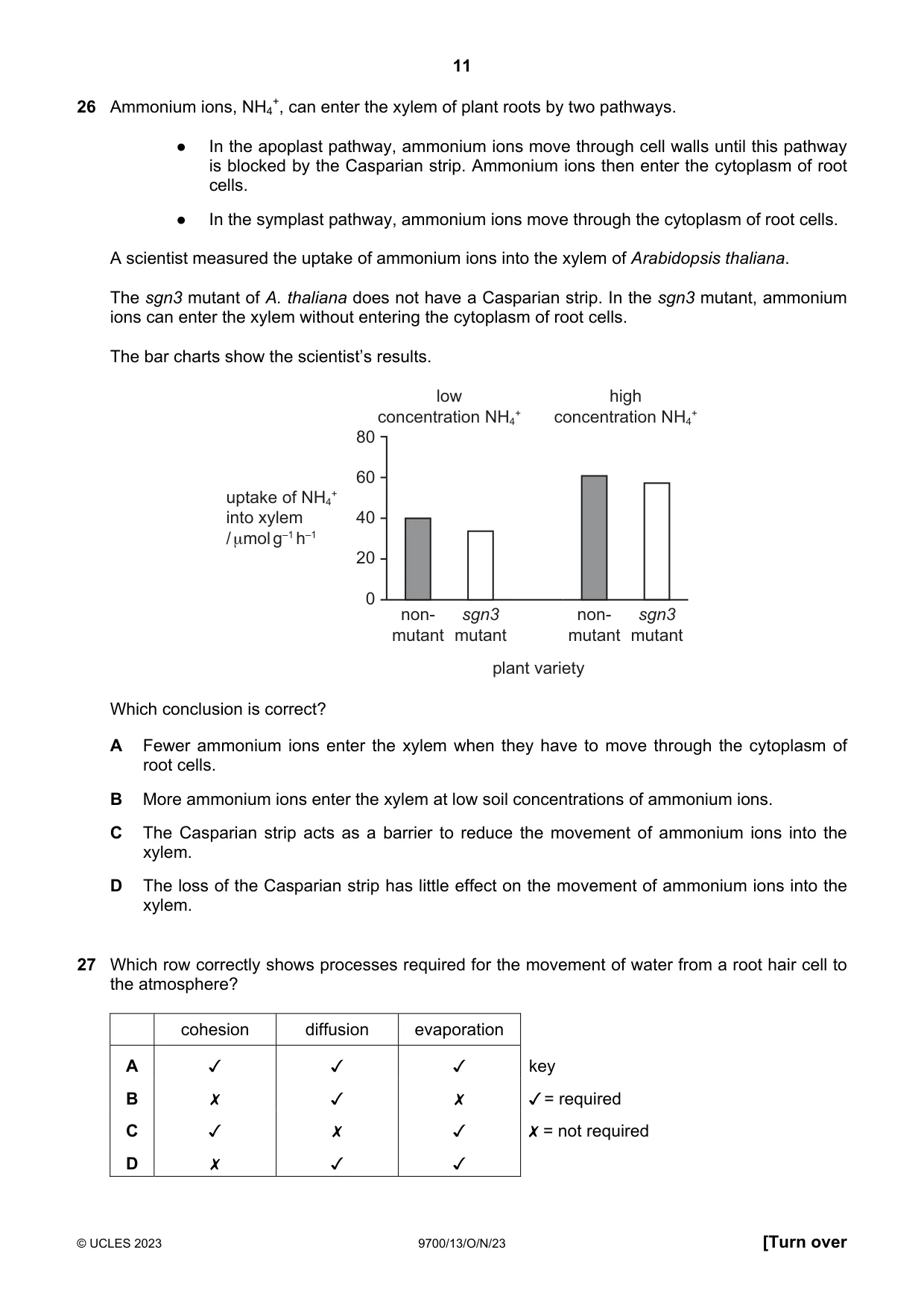
Q26 · Ammonium ions, NH4 +, can enter the xylem of plant roots by two pathways
26 Ammonium ions, NH4 +, can enter the xylem of plant roots by two pathways. ● In the apoplast pathway, ammonium ions move through cell walls until this pathway is blocked by the Casparian strip. Ammonium ions then enter the cytoplasm of root cells. ● In the symplast pathway, ammonium ions move through the cytoplasm of root cells. A scientist measured the uptake of ammonium ions into the xylem of Arabidopsis thaliana. The sgn3 mutant of A. thaliana does not have a Casparian strip. In the sgn3 mutant, ammonium ions can enter the xylem without entering the cytoplasm of root cells. The bar charts show the scientist’s results. low high concentration NH4 + concentration NH4 + 80 60 uptake of NH4 + into xylem 40 / μmol g–1 h–1 20 0 non- sgn3 non- sgn3 mutant mutant mutant mutant plant variety Which conclusion is correct? A Fewer ammonium ions enter the xylem when they have to move through the cytoplasm of root cells. B More ammonium ions enter the xylem at low soil concentrations of ammonium ions. C The Casparian strip acts as a barrier to reduce the movement of ammonium ions into the xylem. D The loss of the Casparian strip has little effect on the movement of ammonium ions into the xylem.
Mark scheme: D
Q27 · Which row correctly shows processes required for the movement of water from a root hair…
27 Which row correctly shows processes required for the movement of water from a root hair cell to the atmosphere? cohesion diffusion evaporation Jv Jv Jv key v¥ = required 0 0O WwW > x v x v x Jv X = not required x v Jv
Mark scheme: A
Q28 · Which process can be carried out by a mature red blood cell?
28 Which process can be carried out by a mature red blood cell? A active transport B cell division C phagocytosis D protein synthesis
Mark scheme: A
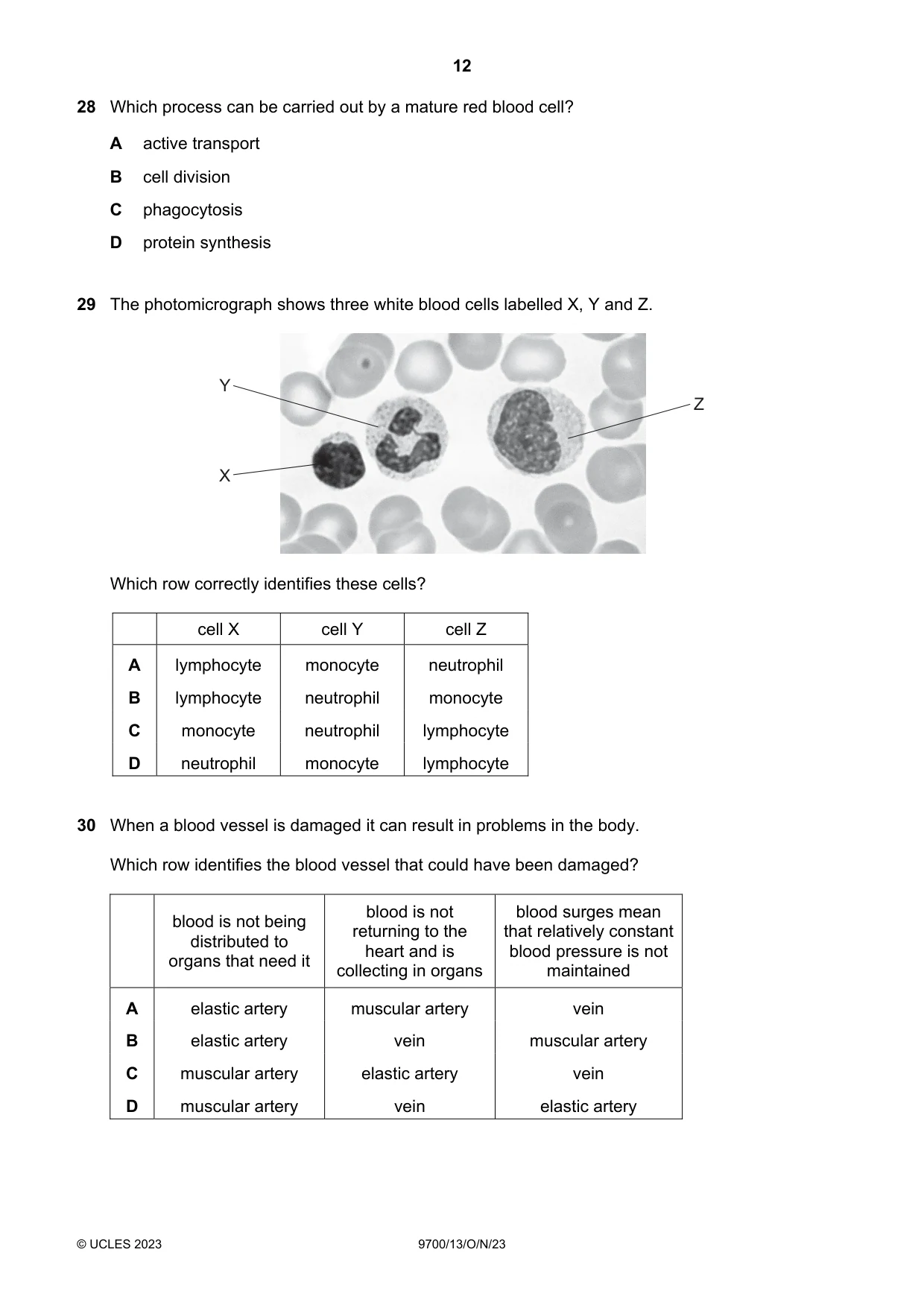
Q29 · The photomicrograph shows three white blood cells labelled X, Y and Z
29 The photomicrograph shows three white blood cells labelled X, Y and Z. Y Z X Which row correctly identifies these cells? cell X cell Y cell Z A lymphocyte monocyte neutrophil B lymphocyte neutrophil monocyte C monocyte neutrophil lymphocyte D neutrophil monocyte lymphocyte
Mark scheme: B
Q30 · When a blood vessel is damaged it can result in problems in the body
30 When a blood vessel is damaged it can result in problems in the body. Which row identifies the blood vessel that could have been damaged? blood is not blood surges mean blood is not being returning to the that relatively constant distributed to heart and is blood pressure is not organs that need it collecting in organs maintained A elastic artery muscular artery vein B elastic artery vein muscular artery C muscular artery elastic artery vein D muscular artery vein elastic artery
Mark scheme: D
Q31 · The diagram shows how tissue fluid is formed
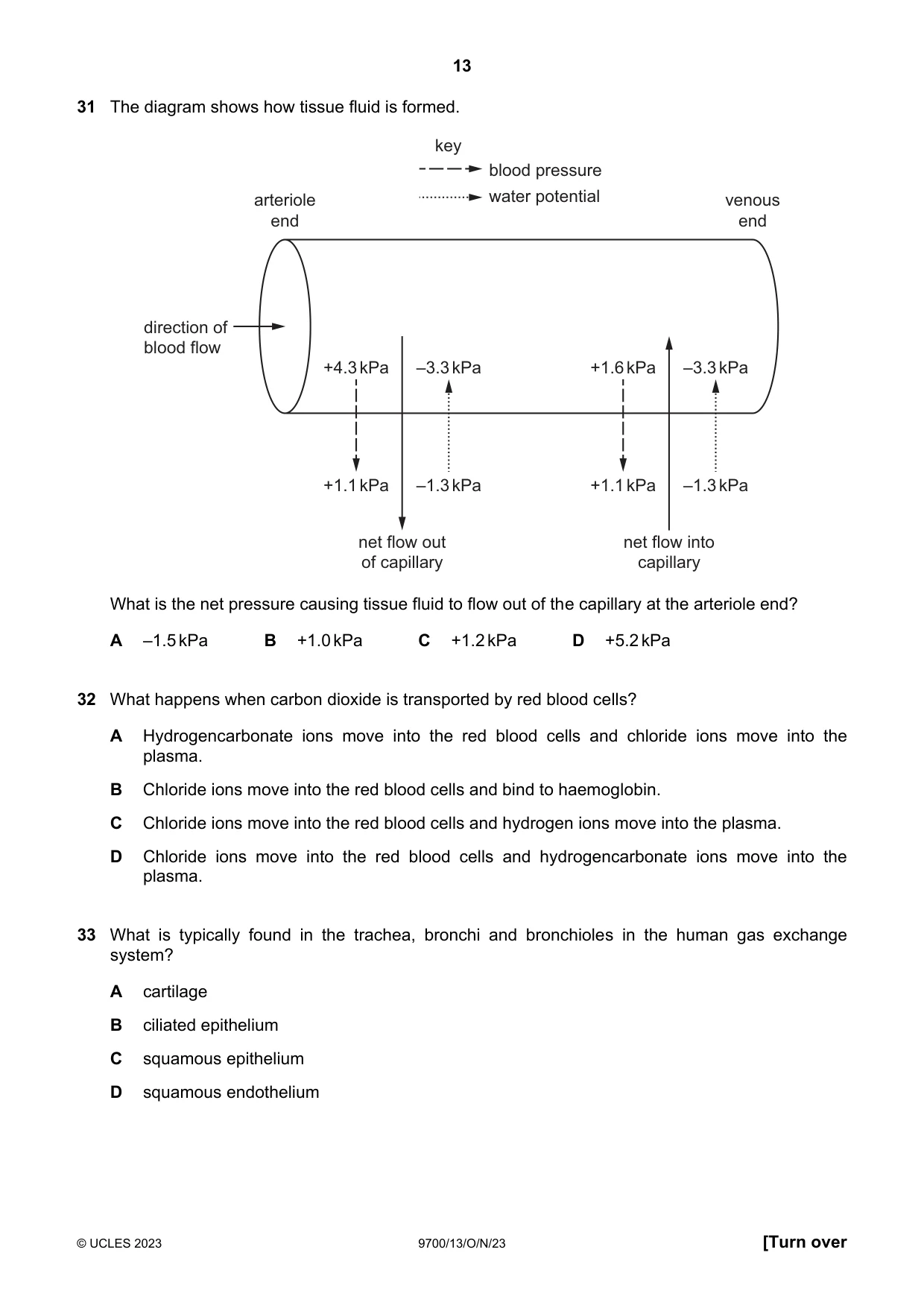
31 The diagram shows how tissue fluid is formed. key blood pressure arteriole water potential venous end end direction of blood flow +4.3 kPa –3.3 kPa +1.6 kPa –3.3 kPa +1.1 kPa –1.3 kPa +1.1 kPa –1.3 kPa net flow out net flow into of capillary capillary What is the net pressure causing tissue fluid to flow out of the capillary at the arteriole end? A –1.5 kPa B +1.0 kPa C +1.2 kPa D +5.2 kPa
Mark scheme: C
Q32 · What happens when carbon dioxide is transported by red blood cells?
32 What happens when carbon dioxide is transported by red blood cells? A Hydrogencarbonate ions move into the red blood cells and chloride ions move into the plasma. B Chloride ions move into the red blood cells and bind to haemoglobin. C Chloride ions move into the red blood cells and hydrogen ions move into the plasma. D Chloride ions move into the red blood cells and hydrogencarbonate ions move into the plasma.
Mark scheme: D
Q33 · What is typically found in the trachea, bronchi and bronchioles in the human gas exchange…
33 What is typically found in the trachea, bronchi and bronchioles in the human gas exchange system? A cartilage B ciliated epithelium C squamous epithelium D squamous endothelium
Mark scheme: B
Q34 · The photomicrograph shows a section through part of the human gas exchange system
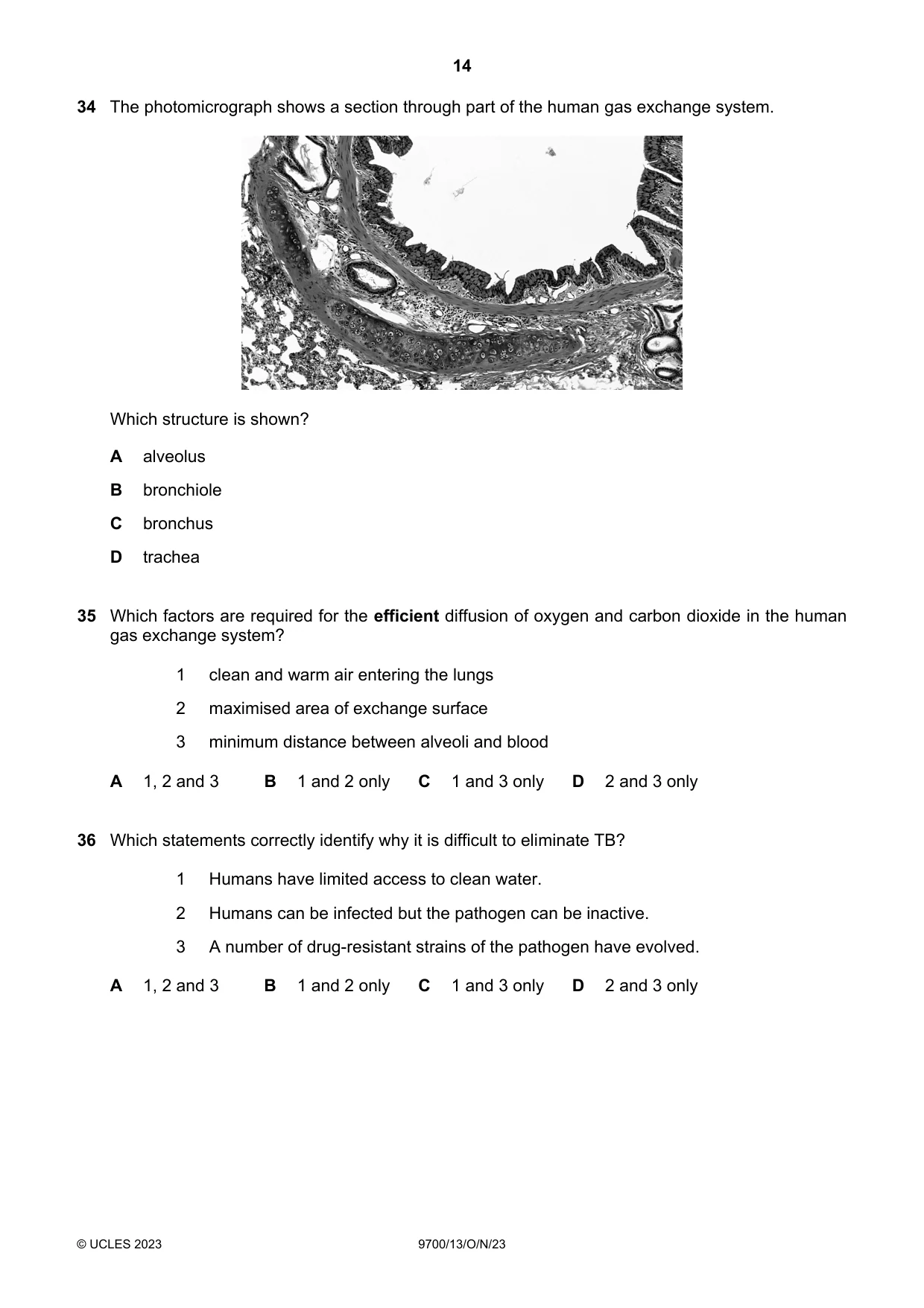
34 The photomicrograph shows a section through part of the human gas exchange system. Which structure is shown? A alveolus B bronchiole C bronchus D trachea
Mark scheme: C
Q35 · Which factors are required for the efficient diffusion of oxygen and carbon dioxide in…
35 Which factors are required for the efficient diffusion of oxygen and carbon dioxide in the human gas exchange system? 1 clean and warm air entering the lungs 2 maximised area of exchange surface 3 minimum distance between alveoli and blood A 1, 2 and 3 B 1 and 2 only C 1 and 3 only D 2 and 3 only
Mark scheme: D
Q36 · Which statements correctly identify why it is difficult to eliminate TB?
36 Which statements correctly identify why it is difficult to eliminate TB? 1 Humans have limited access to clean water. 2 Humans can be infected but the pathogen can be inactive. 3 A number of drug-resistant strains of the pathogen have evolved. A 1, 2 and 3 B 1 and 2 only C 1 and 3 only D 2 and 3 only
Mark scheme: D
Q37 · Bacteria can become resistant to antibiotics
37 Bacteria can become resistant to antibiotics. What can help reduce the development of antibiotic resistance in bacteria? 1 Use specific antibiotics instead of wide spectrum. 2 Use antibiotics to treat viral infections. 3 Develop new antibiotics. A 1, 2 and 3 B 1 and 2 only C 1 and 3 only D 2 and 3 only
Mark scheme: C
Q38 · The diagram shows one way of testing the effect of an antibiotic on bacteria
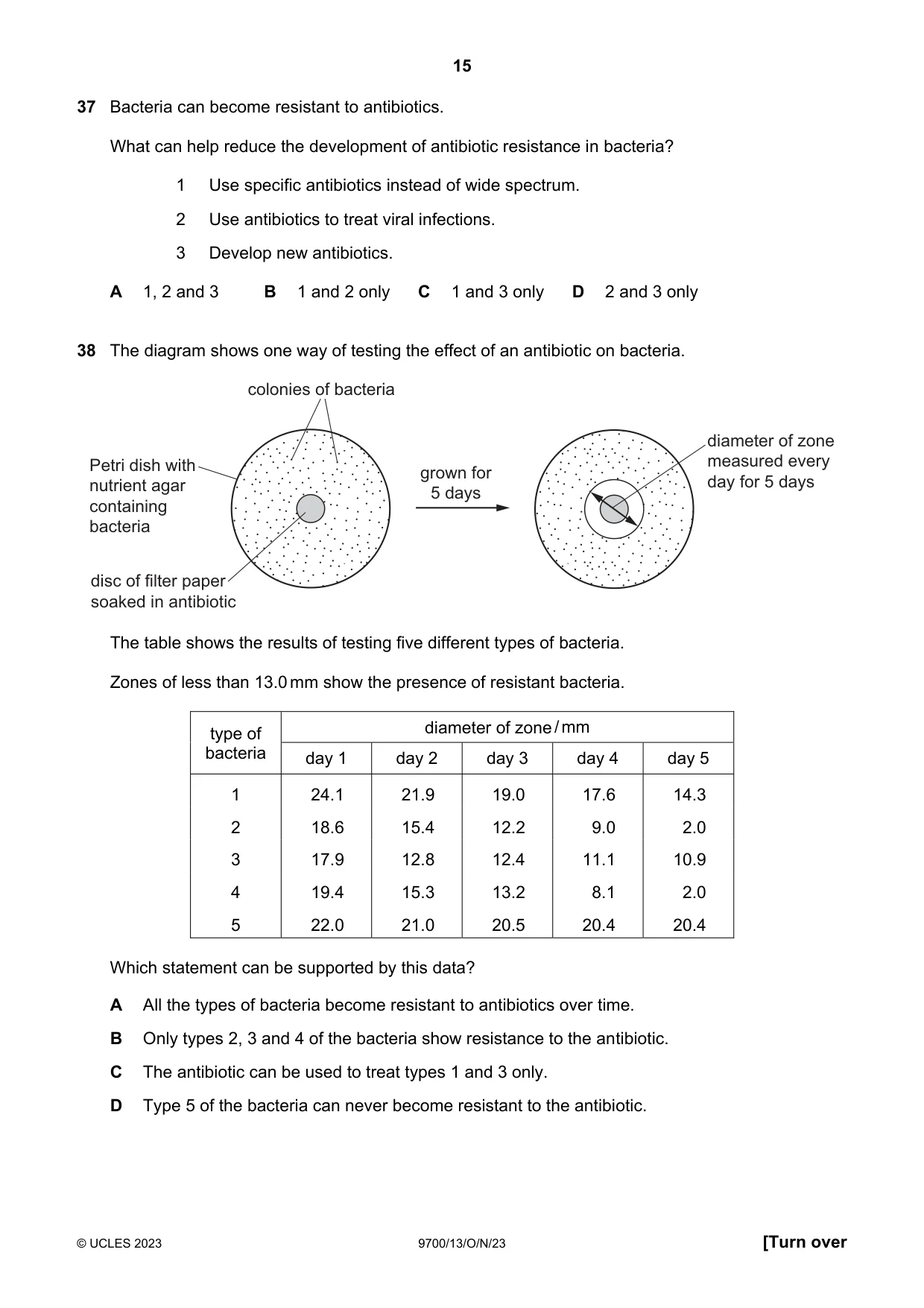
38 The diagram shows one way of testing the effect of an antibiotic on bacteria. colonies of bacteria diameter of zone Petri dish with measured every grown for nutrient agar day for 5 days 5 days containing bacteria disc of filter paper soaked in antibiotic The table shows the results of testing five different types of bacteria. Zones of less than 13.0 mm show the presence of resistant bacteria. type of diameter of zone / mm bacteria day 1 day 2 day 3 day 4 day 5 1 24.1 21.9 19.0 17.6 14.3 2 18.6 15.4 12.2 9.0 2.0 3 17.9 12.8 12.4 11.1 10.9 4 19.4 15.3 13.2 8.1 2.0 5 22.0 21.0 20.5 20.4 20.4 Which statement can be supported by this data? A All the types of bacteria become resistant to antibiotics over time. B Only types 2, 3 and 4 of the bacteria show resistance to the antibiotic. C The antibiotic can be used to treat types 1 and 3 only. D Type 5 of the bacteria can never become resistant to the antibiotic.
Mark scheme: B
Q39 · Some responses made by cells of the immune system to a pathogen are listed
39 Some responses made by cells of the immune system to a pathogen are listed. 1 mitosis 2 recognises a pathogen 3 produces memory cells 4 secretes enzymes Which responses are correct for phagocytes? A 1, 2, 3 and 4 B 1, 2 and 3 only C 1 and 3 only D 2 and 4 only
Mark scheme: D
Q40 · Some vaccines do not contain antigens
40 Some vaccines do not contain antigens. The vaccines contain a molecule of mRNA. Cells in the immune system use the mRNA molecule to make a protein antigen. The statements describe the stages of how mRNA vaccines work when they enter a cell of the immune system. 1 B-lymphocytes and T-lymphocytes with complementary receptors bind to the protein. 2 Lymphocytes differentiate into memory cells that give long lasting immunity. 3 Ribosomes translate the mRNA molecule to make a protein. 4 The cell displays the protein on its cell surface membrane. What is the correct order of the stages of how mRNA vaccines work? A 1 → 2 → 4 → 3 B 3 → 1 → 2 → 4 C 3 → 4 → 1 → 2 D 4 → 1 → 2 → 3
Mark scheme: C
What was in this paper
The subtopics covered by these 40 questions, and how many questions each got. Open one in a new tab to see every Cambridge question on it.
5Carbohydrates and lipids3Structure of nucleic acids and replication of DNA3The gas exchange system3Antibiotics2Chromosome behaviour in mitosis2Fluid mosaic membranes2Mode of action of enzymes2Movement into and out of cells2The circulatory system2The immune system2The microscope in cell studies2Transport mechanisms2Transport of oxygen and carbon dioxide2Antibodies and vaccination1Factors that affect enzyme action1Infectious diseases1Protein synthesis1Structure of transport tissues1Water1What you needed in this session
Cambridge’s own grade thresholds for 2023 Oct/Nov, Paper 1 · Variant 3. A higher threshold means an easier paper — the bar moves with how the cohort did.