Cambridge A Level Biology 9700 — 2017 May/June Paper 1 · Variant 1
9700/11/M/J/17 · 40 questions · 40 marks · ≈45 min
The question paper and its mark scheme, free to read here and free to download. This is Cambridge’s own paper, exactly as it was sat.
Question paper20 pages



Mark scheme3 pages
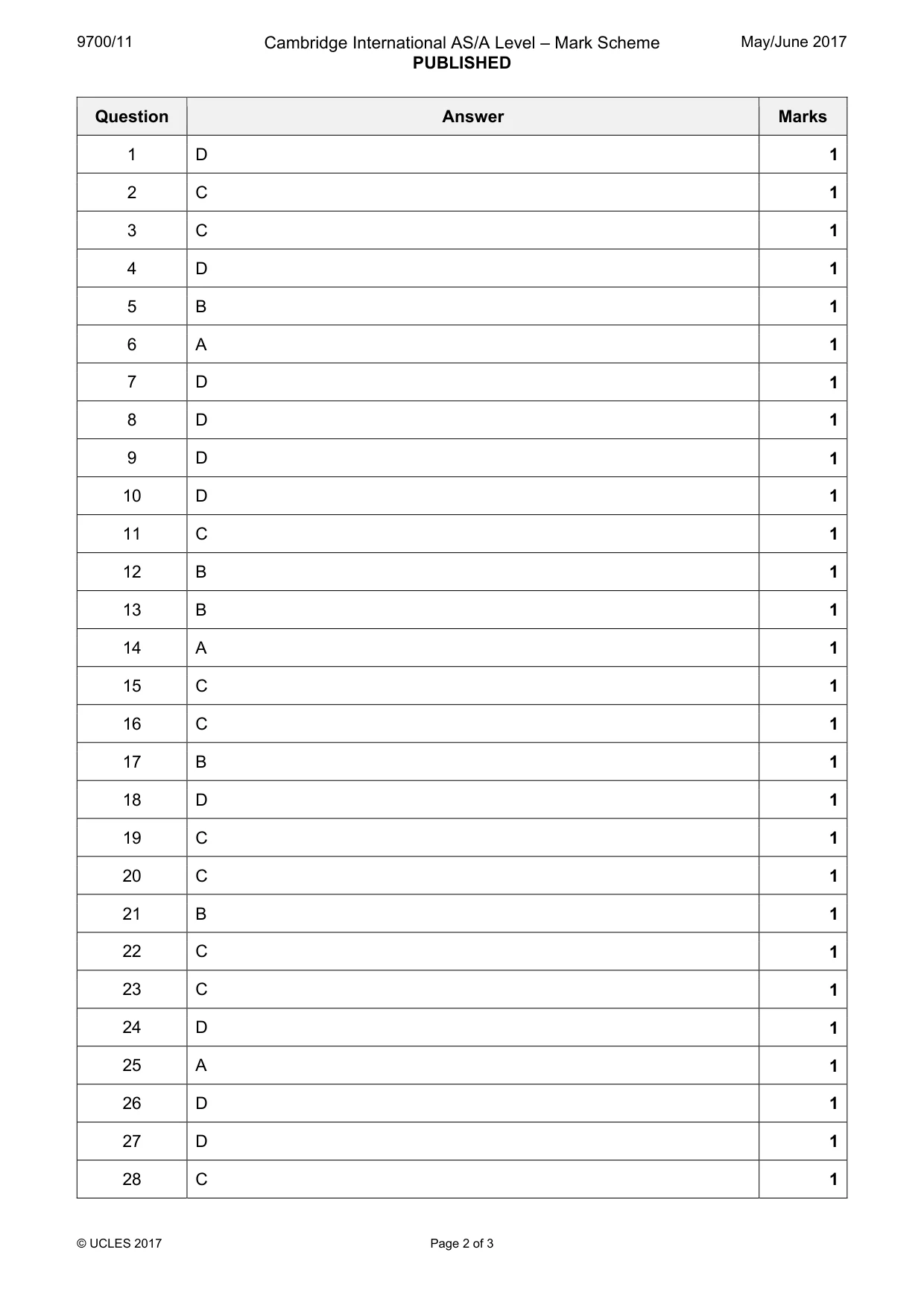
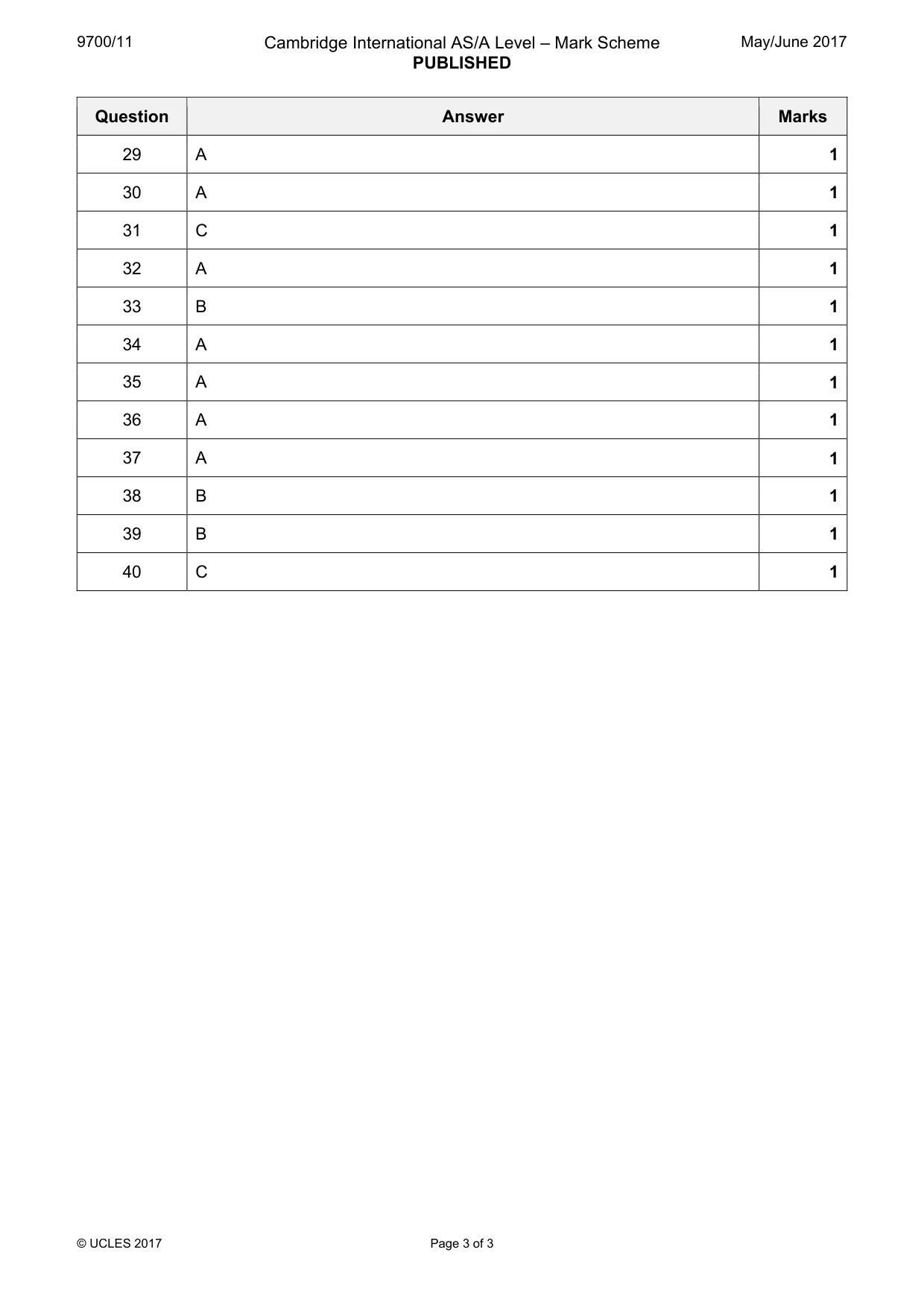
Answers below. Sit the paper first if you are practising.
Questions as text
Q1 · Which definition of the magnification of a drawing of a leaf is correct?
1 Which definition of the magnification of a drawing of a leaf is correct? A the actual size of an object multiplied by the magnification of the microscope B the difference in size between an actual object and a drawing of the object C the increase in size of an object when observed using a microscope D the size of the drawing of a specimen in comparison to the actual size
Mark scheme: D
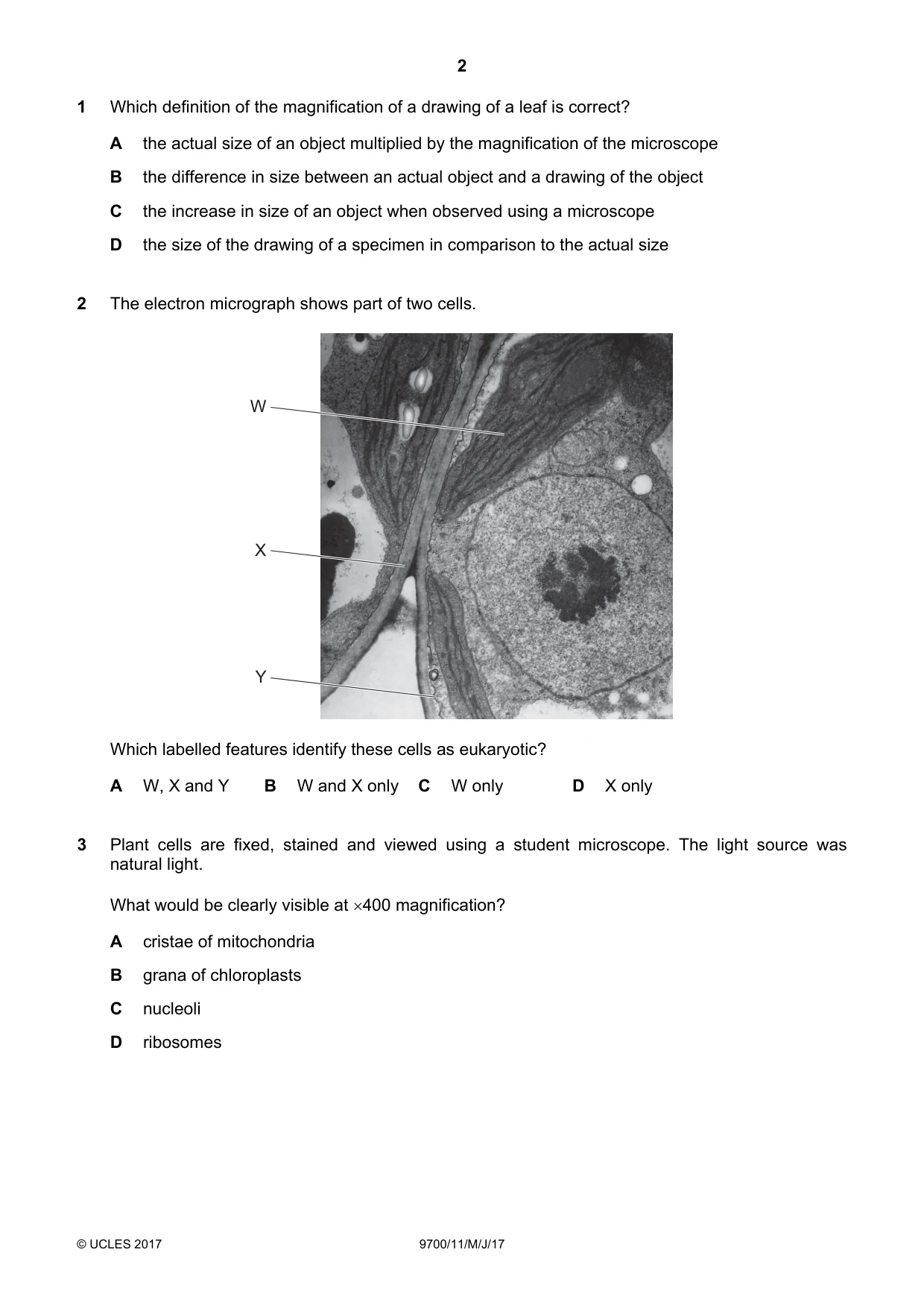
Q2 · The electron micrograph shows part of two cells
2 The electron micrograph shows part of two cells. W X Y Which labelled features identify these cells as eukaryotic? A W, X and Y B W and X only C W only D X only
Mark scheme: C
More questions on Cells as the basic units of living organisms
Q3 · Plant cells are fixed, stained and viewed using a student microscope
3 Plant cells are fixed, stained and viewed using a student microscope. The light source was natural light. What would be clearly visible at ×400 magnification? A cristae of mitochondria B grana of chloroplasts C nucleoli D ribosomes
Mark scheme: C
Q4 · Which lengths are equivalent to 1 µm?
4 Which lengths are equivalent to 1 µm? 1 1000 mm 2 0.001 nm 3 0.001 mm 4 1 000 000 nm 5 0.01 mm 6 1000 nm A 1 and 4 B 2 and 5 C 3 and 4 D 3 and 6
Mark scheme: D
Q5 · Some secretory cells synthesise and release glycoproteins
5 Some secretory cells synthesise and release glycoproteins. What is the correct order of the sequence of events as they occur in the secretory cell? 1 exocytosis 2 product accumulates in secretory vesicle 3 mRNA binds to ribosomes 4 synthesis of glycoprotein A 3, 4, 1, 2 B 3, 4, 2, 1 C 4, 3, 1, 2 D 4, 3, 2, 1
Mark scheme: B
More questions on Cells as the basic units of living organisms
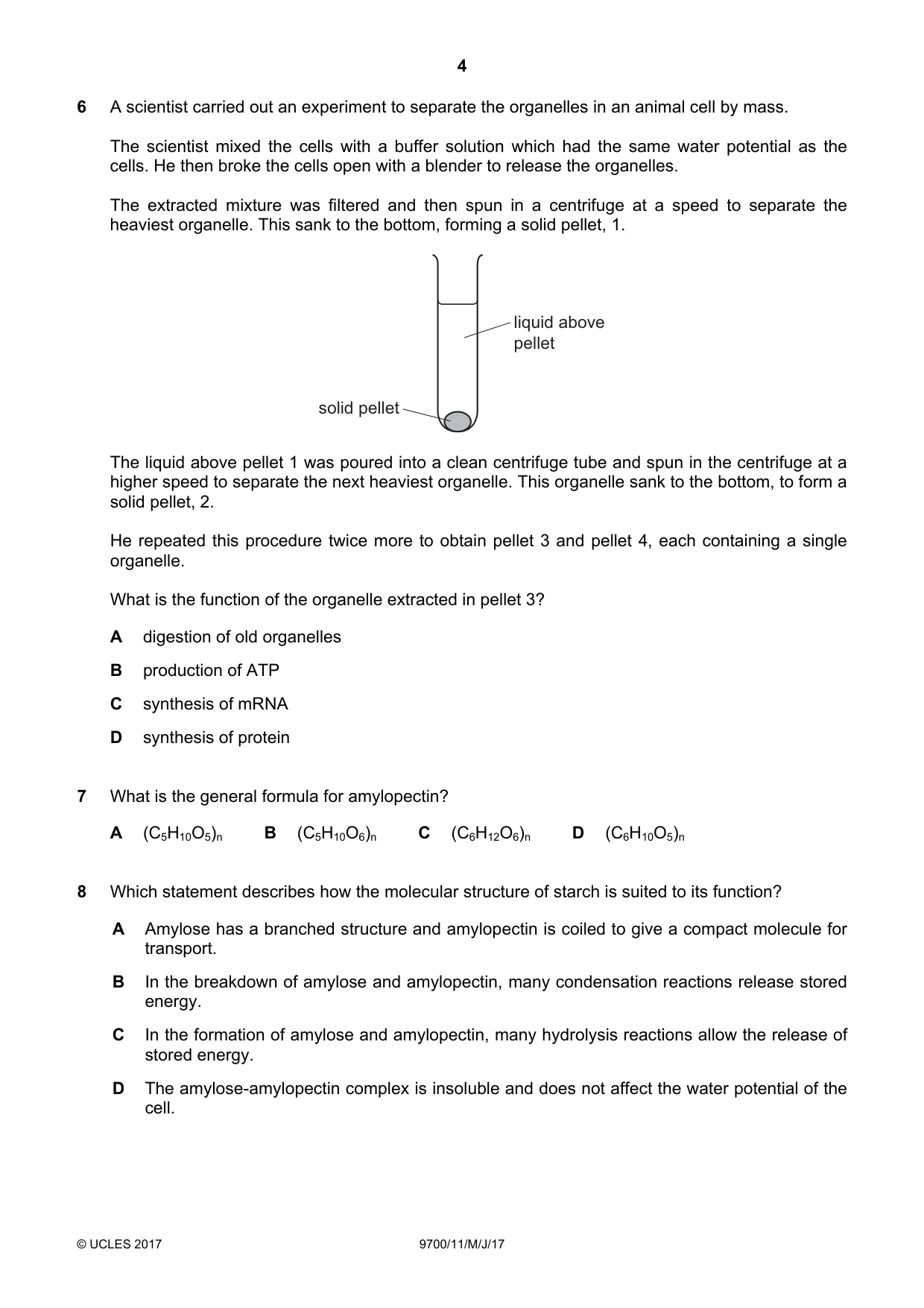
Q6 · A scientist carried out an experiment to separate the organelles in an animal cell by mass
6 A scientist carried out an experiment to separate the organelles in an animal cell by mass. The scientist mixed the cells with a buffer solution which had the same water potential as the cells. He then broke the cells open with a blender to release the organelles. The extracted mixture was filtered and then spun in a centrifuge at a speed to separate the heaviest organelle. This sank to the bottom, forming a solid pellet, 1. liquid above pellet solid pellet The liquid above pellet 1 was poured into a clean centrifuge tube and spun in the centrifuge at a higher speed to separate the next heaviest organelle. This organelle sank to the bottom, to form a solid pellet, 2. He repeated this procedure twice more to obtain pellet 3 and pellet 4, each containing a single organelle. What is the function of the organelle extracted in pellet 3? A digestion of old organelles B production of ATP C synthesis of mRNA D synthesis of protein
Mark scheme: A
More questions on Cells as the basic units of living organisms
Q7 · What is the general formula for amylopectin?
7 What is the general formula for amylopectin? A (C5H10O5)n B (C5H10O6)n C (C6H12O6)n D (C6H10O5)n
Mark scheme: D
Q8 · Which statement describes how the molecular structure of starch is suited to its function?
8 Which statement describes how the molecular structure of starch is suited to its function? A Amylose has a branched structure and amylopectin is coiled to give a compact molecule for transport. B In the breakdown of amylose and amylopectin, many condensation reactions release stored energy. C In the formation of amylose and amylopectin, many hydrolysis reactions allow the release of stored energy. D The amylose-amylopectin complex is insoluble and does not affect the water potential of the cell.
Mark scheme: D
Q9 · Cows and whales are mammals that produce milk to feed their babies
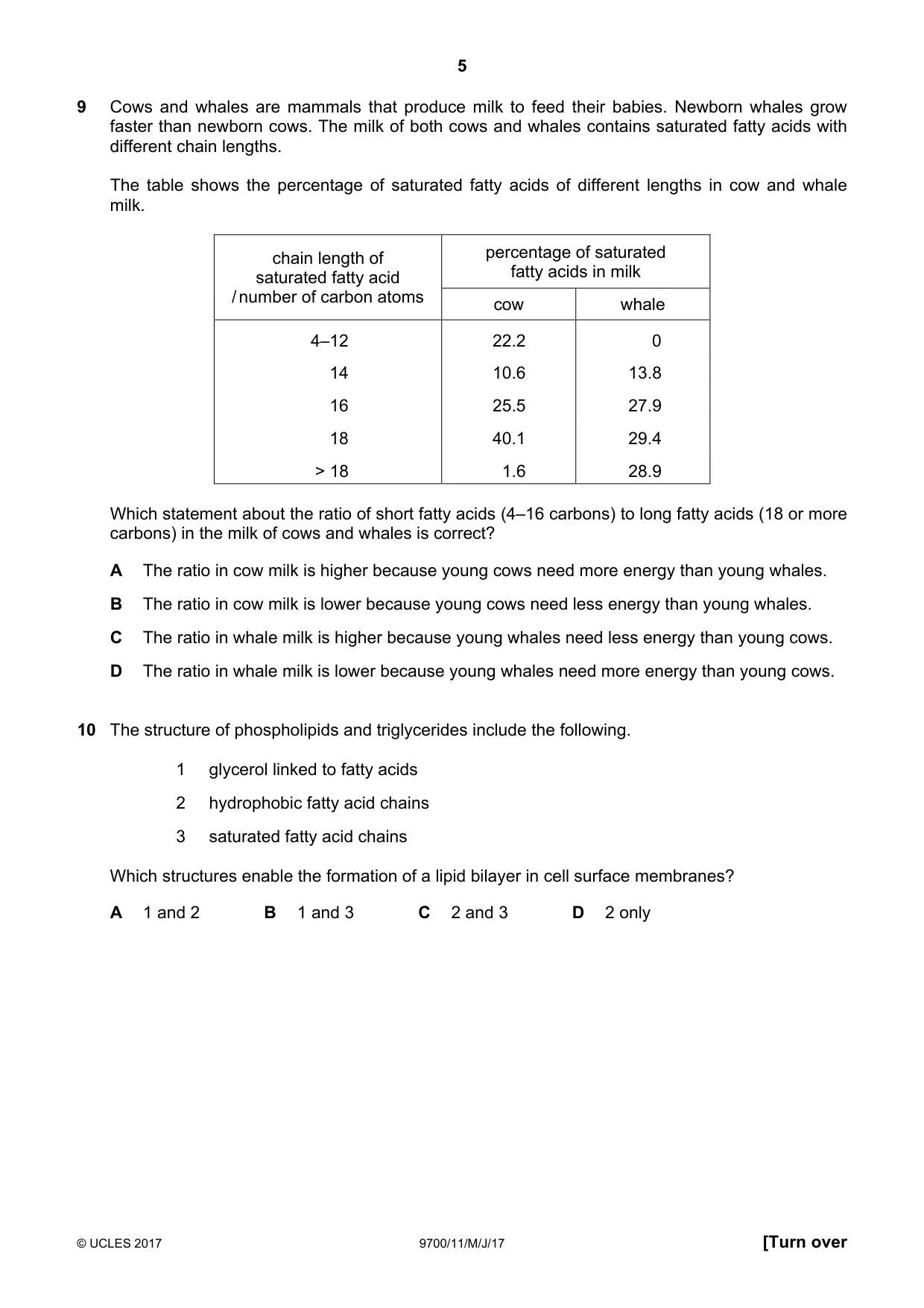
9 Cows and whales are mammals that produce milk to feed their babies. Newborn whales grow faster than newborn cows. The milk of both cows and whales contains saturated fatty acids with different chain lengths. The table shows the percentage of saturated fatty acids of different lengths in cow and whale milk. chain length of percentage of saturated saturated fatty acid fatty acids in milk / number of carbon atoms cow whale 4–12 22.2 0 14 10.6 13.8 16 25.5 27.9 18 40.1 29.4 > 18 1.6 28.9 Which statement about the ratio of short fatty acids (4–16 carbons) to long fatty acids (18 or more carbons) in the milk of cows and whales is correct? A The ratio in cow milk is higher because young cows need more energy than young whales. B The ratio in cow milk is lower because young cows need less energy than young whales. C The ratio in whale milk is higher because young whales need less energy than young cows. D The ratio in whale milk is lower because young whales need more energy than young cows.
Mark scheme: D
Q10 · The structure of phospholipids and triglycerides include the following
10 The structure of phospholipids and triglycerides include the following. 1 glycerol linked to fatty acids 2 hydrophobic fatty acid chains 3 saturated fatty acid chains Which structures enable the formation of a lipid bilayer in cell surface membranes? A 1 and 2 B 1 and 3 C 2 and 3 D 2 only
Mark scheme: D
Q11 · The diagram shows the molecular structure of a peptide
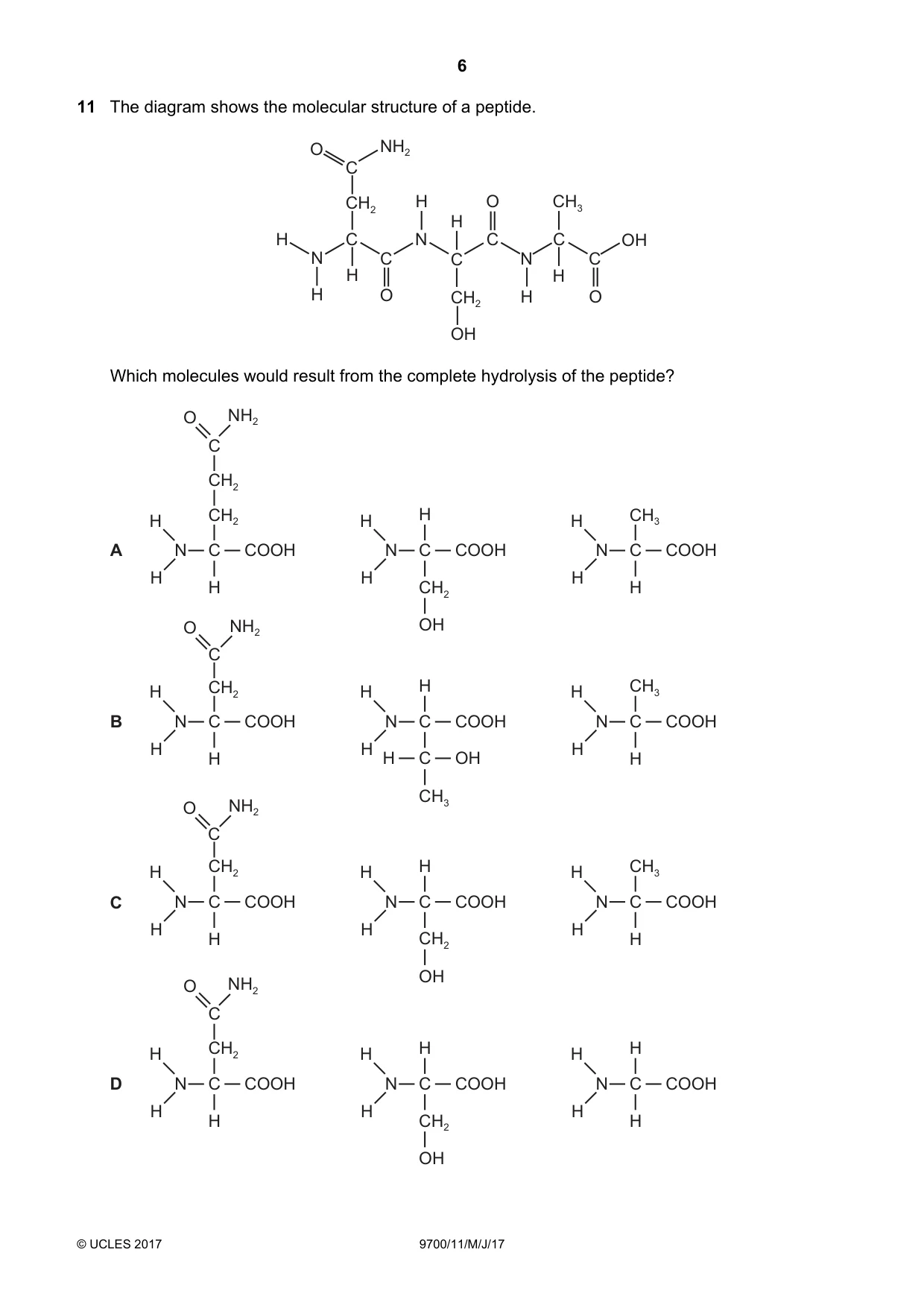
11 The diagram shows the molecular structure of a peptide. O NH2 C CH2 H O CH3 H H C N C C OH N C C N C H H H O CH2 H O OH Which molecules would result from the complete hydrolysis of the peptide? O NH2 C CH2 H CH2 H H H CH3 A N C COOH N C COOH N C COOH H H H H CH2 H O NH2 OH C H CH2 H H H CH3 B N C COOH N C COOH N C COOH H H H H H C OH H CH3 O NH2 C H CH2 H H H CH3 C N C COOH N C COOH N C COOH H H H H CH2 H NH2 OH O C H CH2 H H H H D N C COOH N C COOH N C COOH H H H H CH2 H OH
Mark scheme: C
Q12 · The diagram shows a haemoglobin molecule
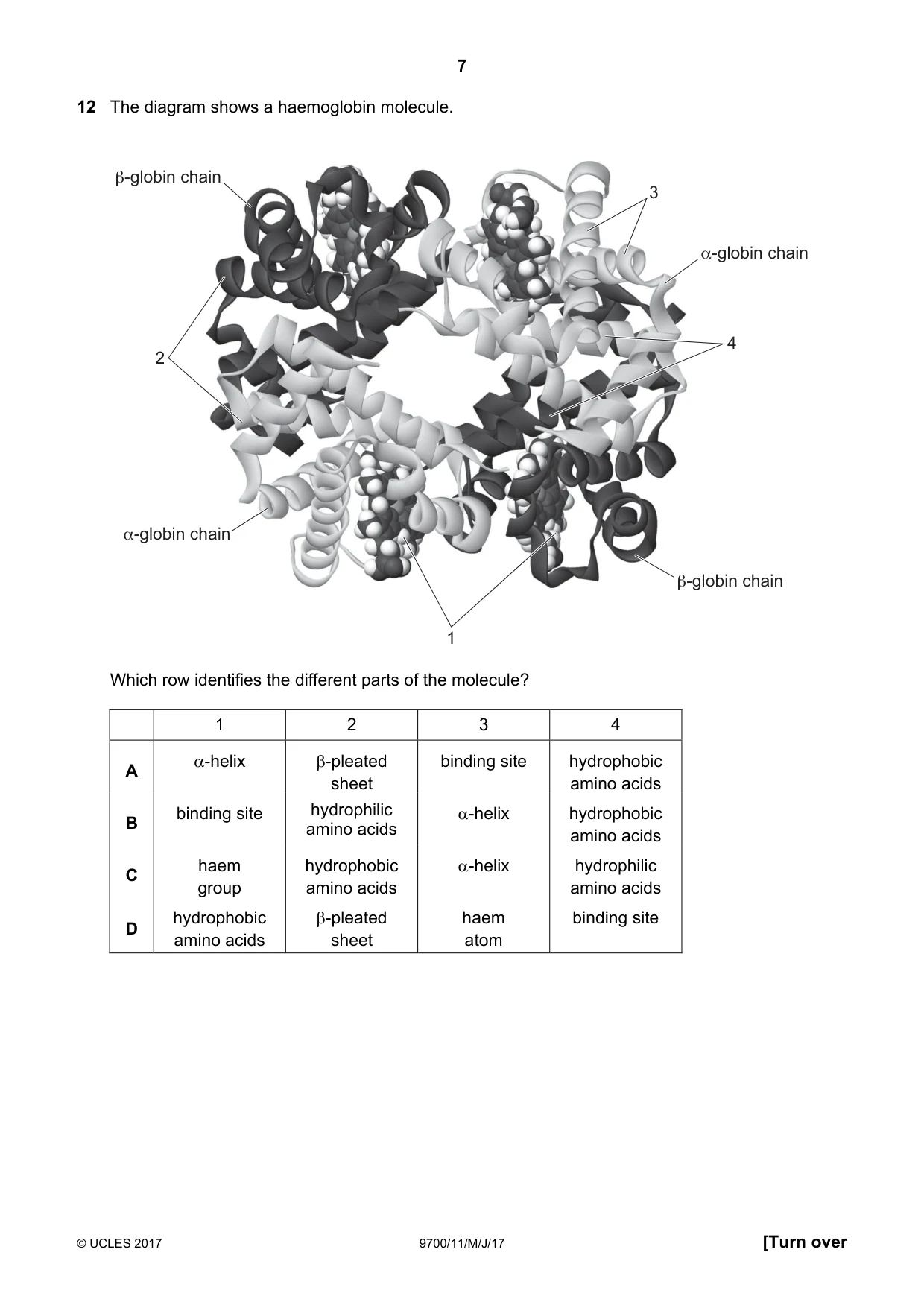
12 The diagram shows a haemoglobin molecule. β-globin chain 3 α-globin chain 4 2 α-globin chain β-globin chain 1 Which row identifies the different parts of the molecule? 1 2 3 4 α-helix β-pleated binding site hydrophobic A sheet amino acids binding site hydrophilic α-helix hydrophobic B amino acids amino acids haem hydrophobic α-helix hydrophilic C group amino acids amino acids hydrophobic β-pleated haem binding site D amino acids sheet atom
Mark scheme: B
Q13 · Bacterial cells divide by a process called binary fission
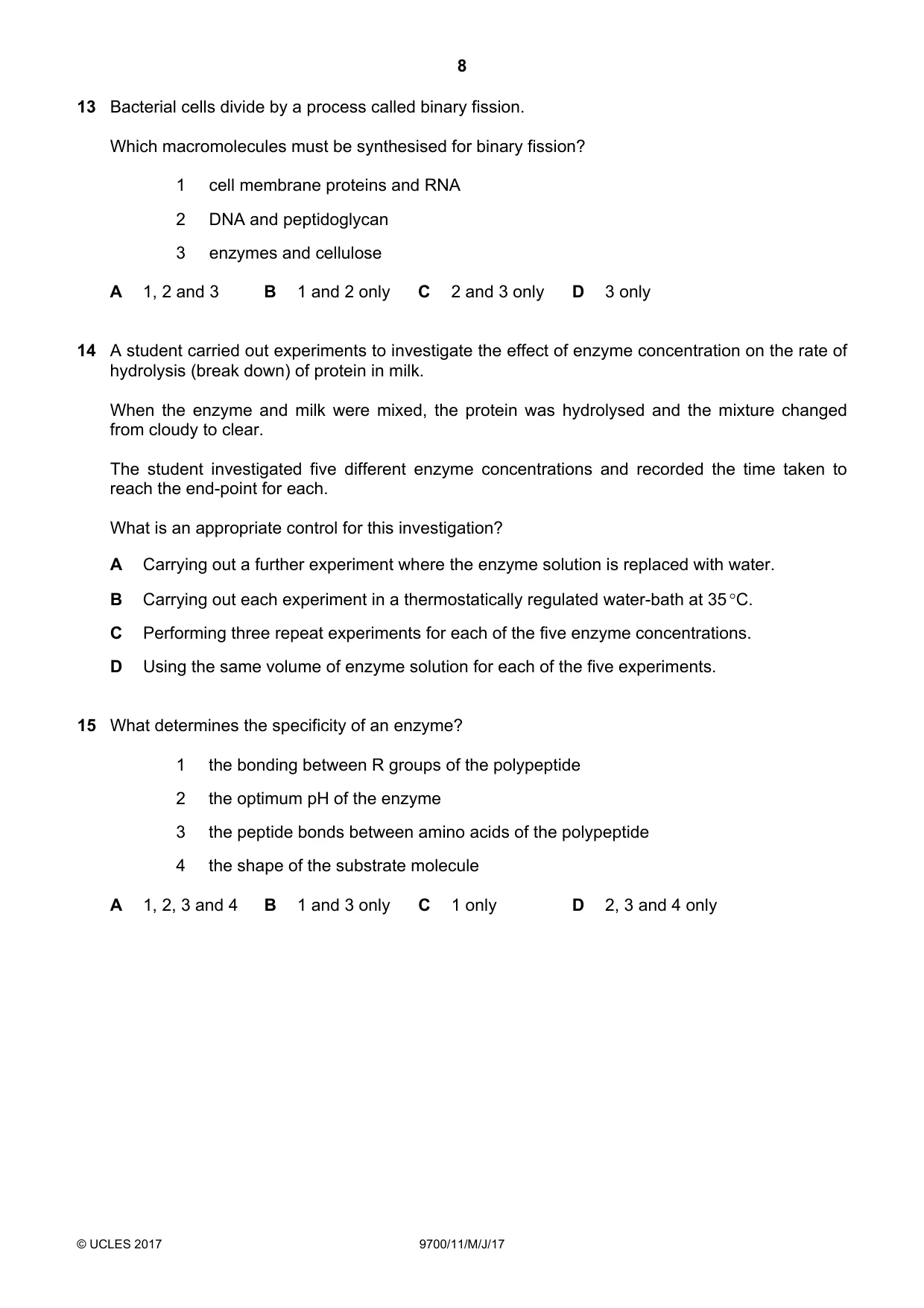
13 Bacterial cells divide by a process called binary fission. Which macromolecules must be synthesised for binary fission? 1 cell membrane proteins and RNA 2 DNA and peptidoglycan 3 enzymes and cellulose A 1, 2 and 3 B 1 and 2 only C 2 and 3 only D 3 only
Mark scheme: B
More questions on Replication and division of nuclei and cells
Q14 · A student carried out experiments to investigate the effect of enzyme concentration on…
14 A student carried out experiments to investigate the effect of enzyme concentration on the rate of hydrolysis (break down) of protein in milk. When the enzyme and milk were mixed, the protein was hydrolysed and the mixture changed from cloudy to clear. The student investigated five different enzyme concentrations and recorded the time taken to reach the end-point for each. What is an appropriate control for this investigation? A Carrying out a further experiment where the enzyme solution is replaced with water. B Carrying out each experiment in a thermostatically regulated water-bath at 35 °C. C Performing three repeat experiments for each of the five enzyme concentrations. D Using the same volume of enzyme solution for each of the five experiments.
Mark scheme: A
Q15 · What determines the specificity of an enzyme?
15 What determines the specificity of an enzyme? 1 the bonding between R groups of the polypeptide 2 the optimum pH of the enzyme 3 the peptide bonds between amino acids of the polypeptide 4 the shape of the substrate molecule A 1, 2, 3 and 4 B 1 and 3 only C 1 only D 2, 3 and 4 only
Mark scheme: C
Q16 · The graph shows the effect of temperature on the rate at which the enzyme in a biological…
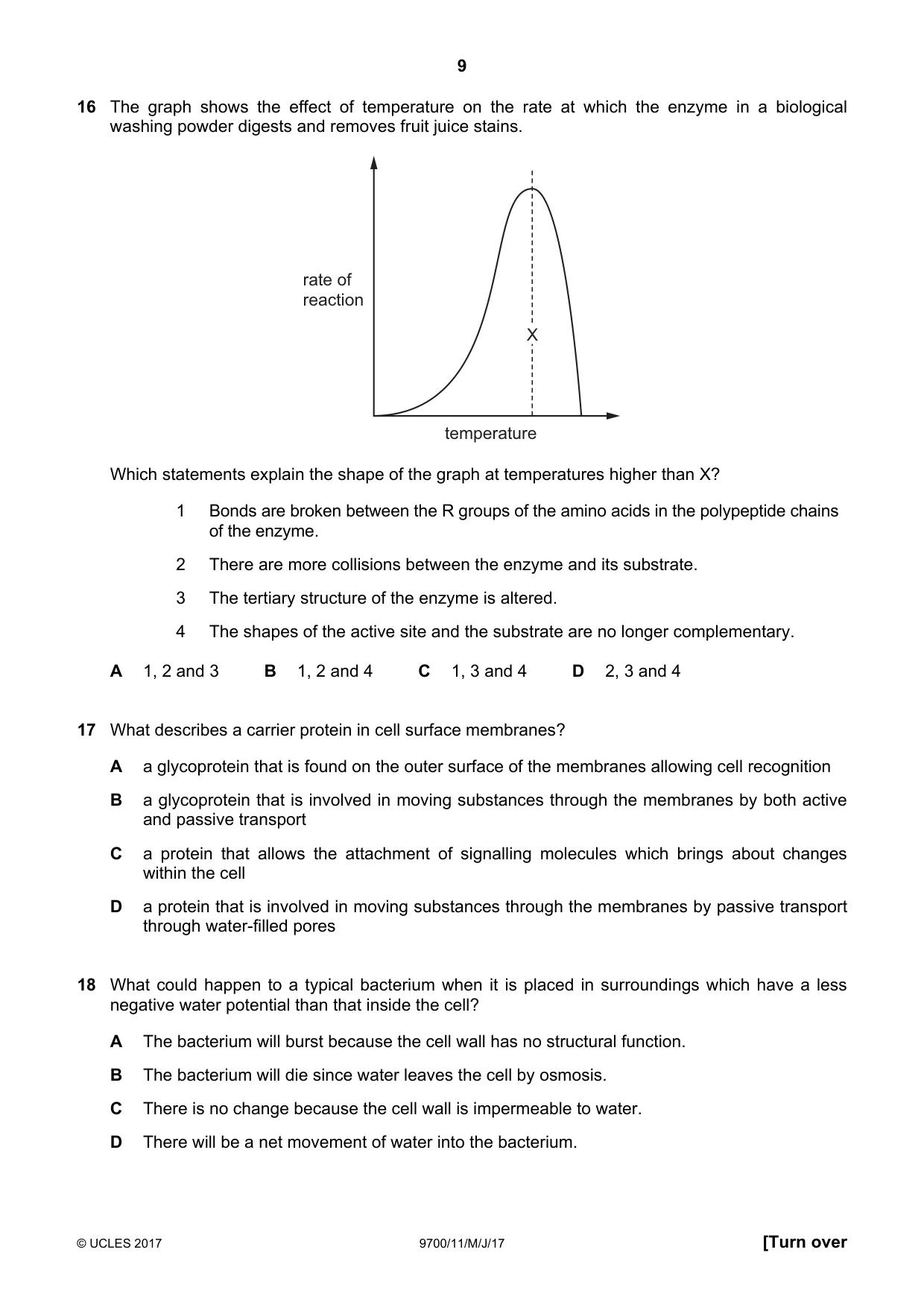
16 The graph shows the effect of temperature on the rate at which the enzyme in a biological washing powder digests and removes fruit juice stains. rate of reaction X temperature Which statements explain the shape of the graph at temperatures higher than X? 1 Bonds are broken between the R groups of the amino acids in the polypeptide chains of the enzyme. 2 There are more collisions between the enzyme and its substrate. 3 The tertiary structure of the enzyme is altered. 4 The shapes of the active site and the substrate are no longer complementary. A 1, 2 and 3 B 1, 2 and 4 C 1, 3 and 4 D 2, 3 and 4
Mark scheme: C
Q17 · What describes a carrier protein in cell surface membranes?
17 What describes a carrier protein in cell surface membranes? A a glycoprotein that is found on the outer surface of the membranes allowing cell recognition B a glycoprotein that is involved in moving substances through the membranes by both active and passive transport C a protein that allows the attachment of signalling molecules which brings about changes within the cell D a protein that is involved in moving substances through the membranes by passive transport through water-filled pores
Mark scheme: B
Q18 · What could happen to a typical bacterium when it is placed in surroundings which have a…
18 What could happen to a typical bacterium when it is placed in surroundings which have a less negative water potential than that inside the cell? A The bacterium will burst because the cell wall has no structural function. B The bacterium will die since water leaves the cell by osmosis. C There is no change because the cell wall is impermeable to water. D There will be a net movement of water into the bacterium.
Mark scheme: D
Q19 · By which process do hydrogencarbonate ions leave red blood cells?
19 By which process do hydrogencarbonate ions leave red blood cells? A active transport B endocytosis C facilitated diffusion D phagocytosis
Mark scheme: C
Q20 · In an experiment, fluorescent dyes were used to label proteins on the outer surface of…
20 In an experiment, fluorescent dyes were used to label proteins on the outer surface of cell surface membranes. Living human cells were labelled with one colour of fluorescent dye and mouse cells with a different colour of fluorescent dye. A human cell and a mouse cell are then fused to form a hybrid cell. At first, the different fluorescent labels remain separate, but after 40 minutes they are distributed randomly across the hybrid cell surface membrane. What does this experiment show? A Proteins are found only on the outer surface of cell surface membranes. B Proteins in the outer layer of a bilayer do not penetrate into the inner layer. C Proteins move freely in the phospholipids of a bilayer. D The cell surface membranes of the two cells are bilayers.
Mark scheme: C
Q21 · The diagram shows the mitotic cell cycle
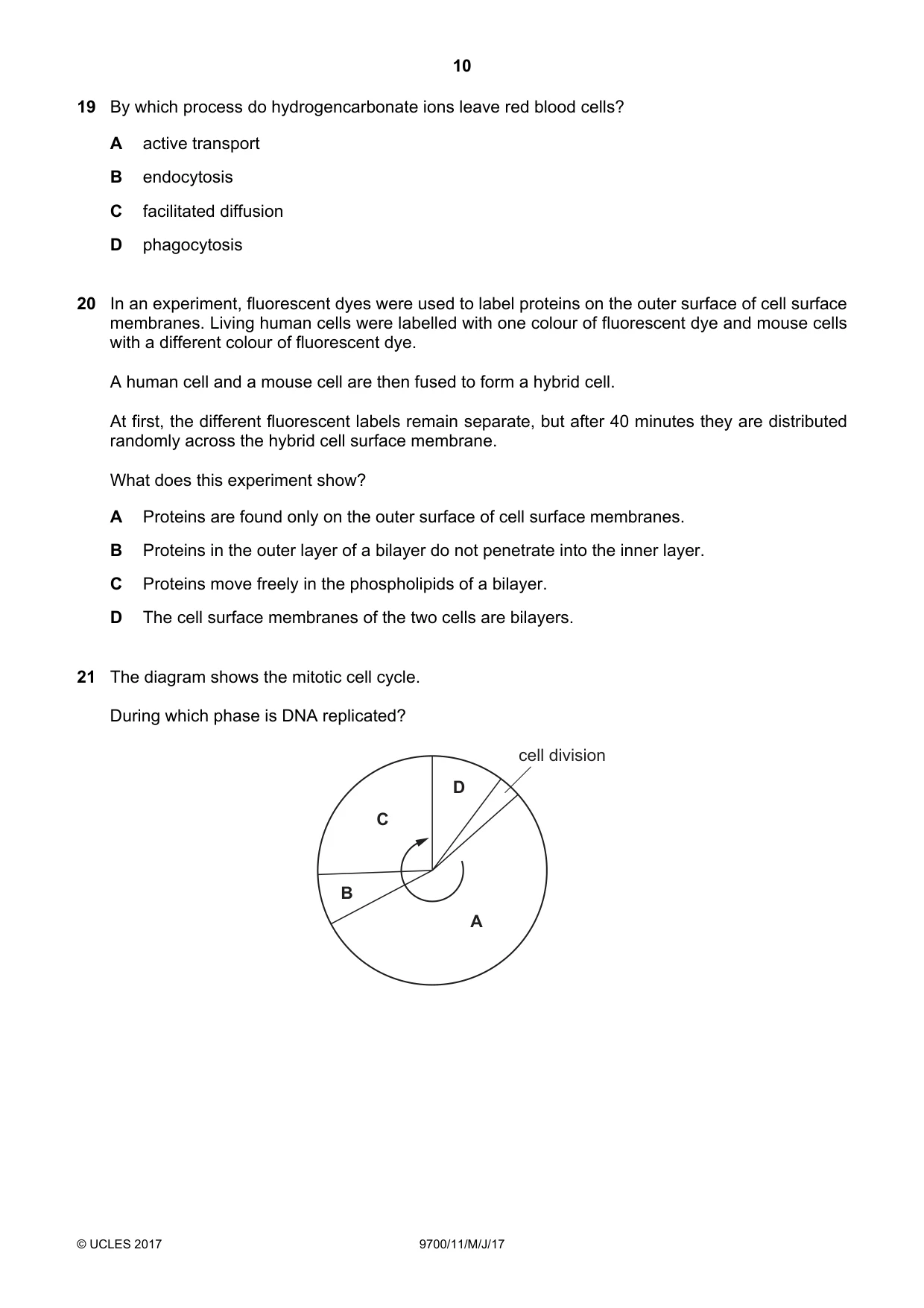
21 The diagram shows the mitotic cell cycle. During which phase is DNA replicated? cell division D C B A
Mark scheme: B
More questions on Replication and division of nuclei and cells
Q22 · The electron micrograph shows a group of human chromosomes
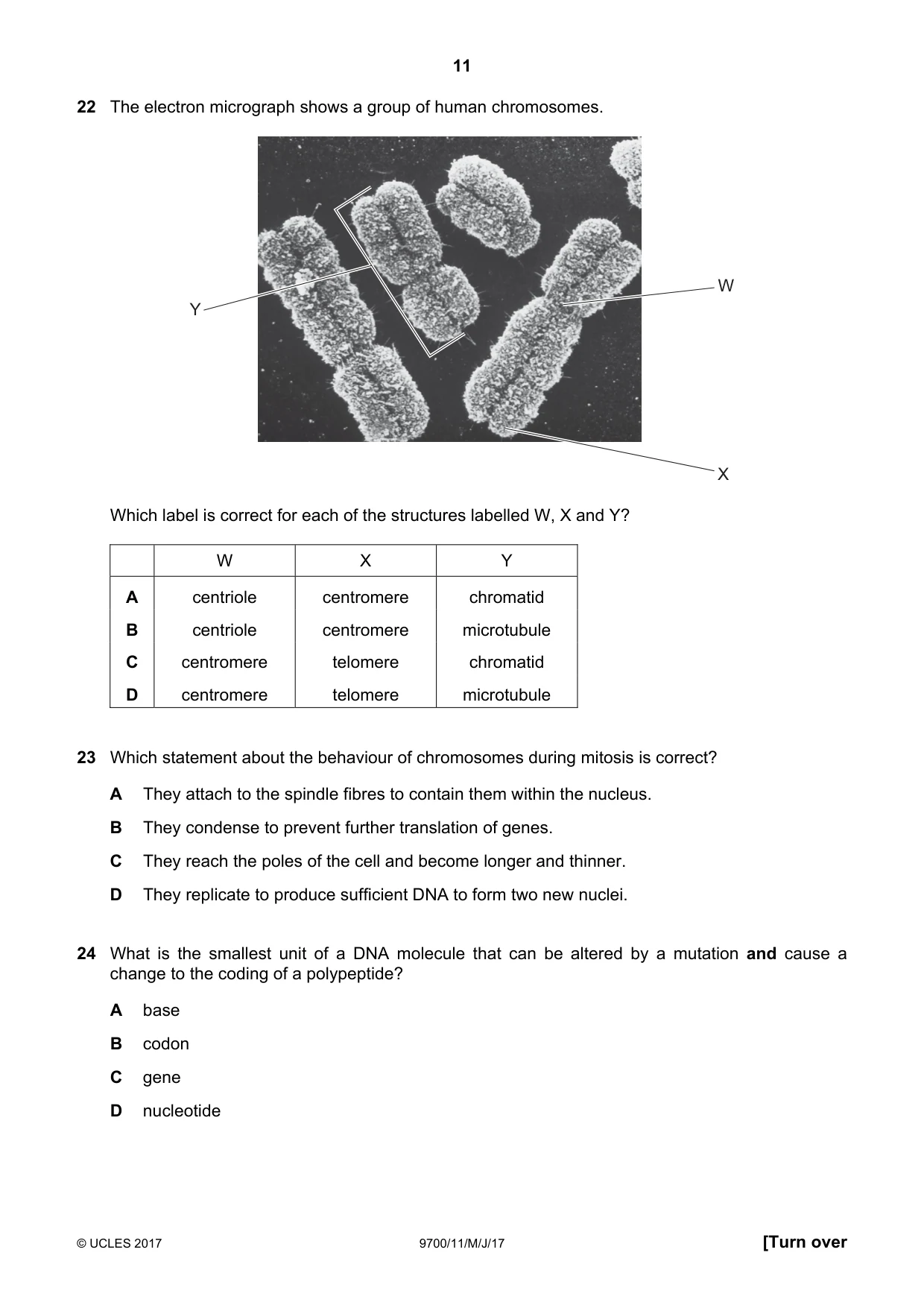
22 The electron micrograph shows a group of human chromosomes. W Y X Which label is correct for each of the structures labelled W, X and Y? W X Y A centriole centromere chromatid B centriole centromere microtubule C centromere telomere chromatid D centromere telomere microtubule
Mark scheme: C
Q23 · Which statement about the behaviour of chromosomes during mitosis is correct?
23 Which statement about the behaviour of chromosomes during mitosis is correct? A They attach to the spindle fibres to contain them within the nucleus. B They condense to prevent further translation of genes. C They reach the poles of the cell and become longer and thinner. D They replicate to produce sufficient DNA to form two new nuclei.
Mark scheme: C
Q24 · What is the smallest unit of a DNA molecule that can be altered by a mutation and cause a…
24 What is the smallest unit of a DNA molecule that can be altered by a mutation and cause a change to the coding of a polypeptide? A base B codon C gene D nucleotide
Mark scheme: D
More questions on Structure of nucleic acids and replication of DNA
Q25 · Which statements about tRNA are correct?
25 Which statements about tRNA are correct? 1 contains base pairing 2 contains hydrogen bonds 3 is single stranded A 1, 2 and 3 B 1 and 2 only C 1 and 3 only D 2 and 3 only
Mark scheme: A
Q26 · The table shows the role of four different proteins involved in DNA replication
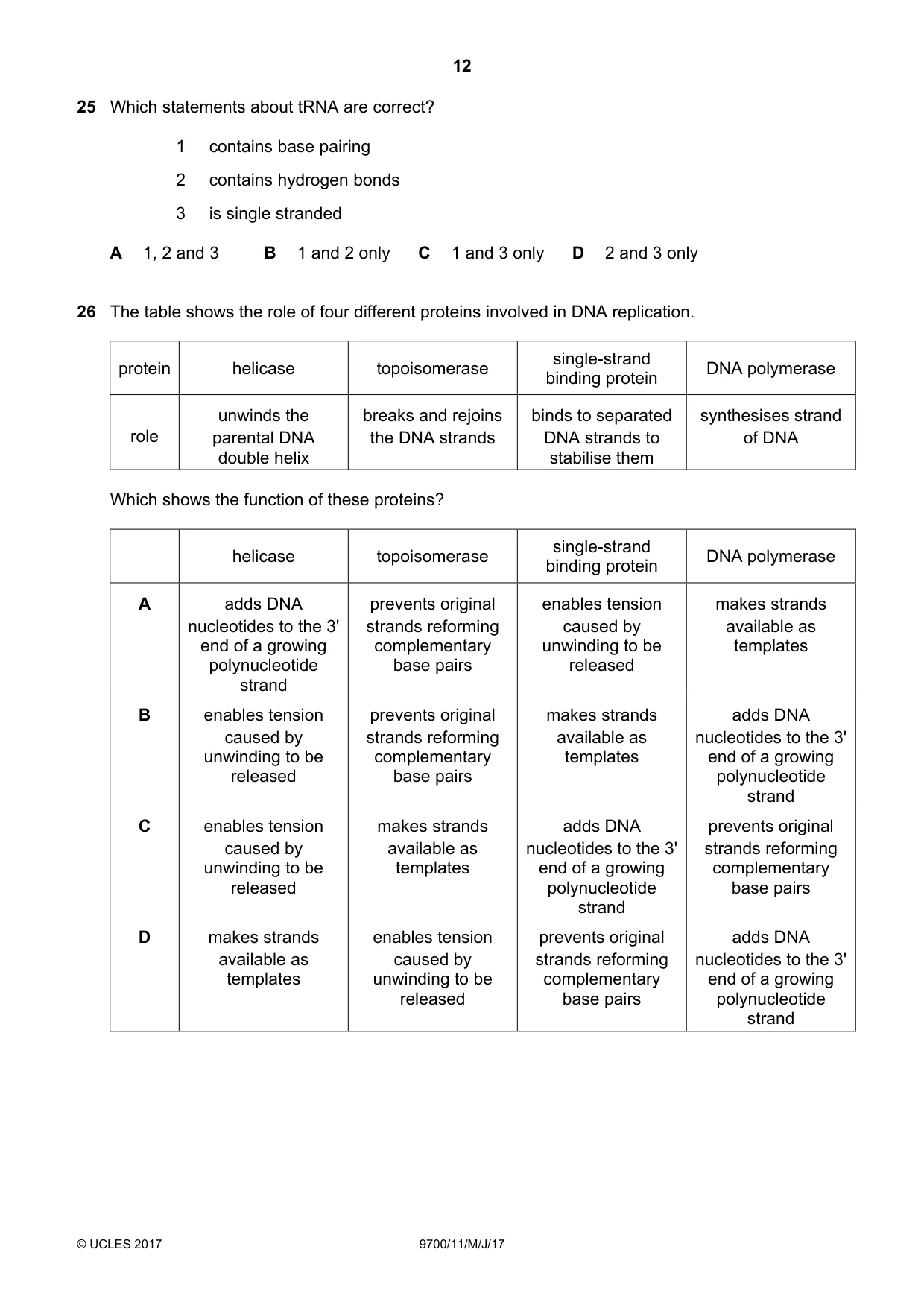
26 The table shows the role of four different proteins involved in DNA replication. single-strand protein helicase topoisomerase DNA polymerase binding protein unwinds the breaks and rejoins binds to separated synthesises strand role parental DNA the DNA strands DNA strands to of DNA double helix stabilise them Which shows the function of these proteins? single-strand helicase topoisomerase DNA polymerase binding protein A adds DNA prevents original enables tension makes strands nucleotides to the 3' strands reforming caused by available as end of a growing complementary unwinding to be templates polynucleotide base pairs released strand B enables tension prevents original makes strands adds DNA caused by strands reforming available as nucleotides to the 3' unwinding to be complementary templates end of a growing released base pairs polynucleotide strand C enables tension makes strands adds DNA prevents original caused by available as nucleotides to the 3' strands reforming unwinding to be templates end of a growing complementary released polynucleotide base pairs strand D makes strands enables tension prevents original adds DNA available as caused by strands reforming nucleotides to the 3' templates unwinding to be complementary end of a growing released base pairs polynucleotide strand
Mark scheme: D
More questions on Structure of nucleic acids and replication of DNA
Q27 · Which type of sugar and which type of bond are found in a DNA molecule?
27 Which type of sugar and which type of bond are found in a DNA molecule? type of sugar type of bond A non-reducing glycosidic B non-reducing hydrogen C reducing peptide D reducing hydrogen
Mark scheme: D
More questions on Structure of nucleic acids and replication of DNA
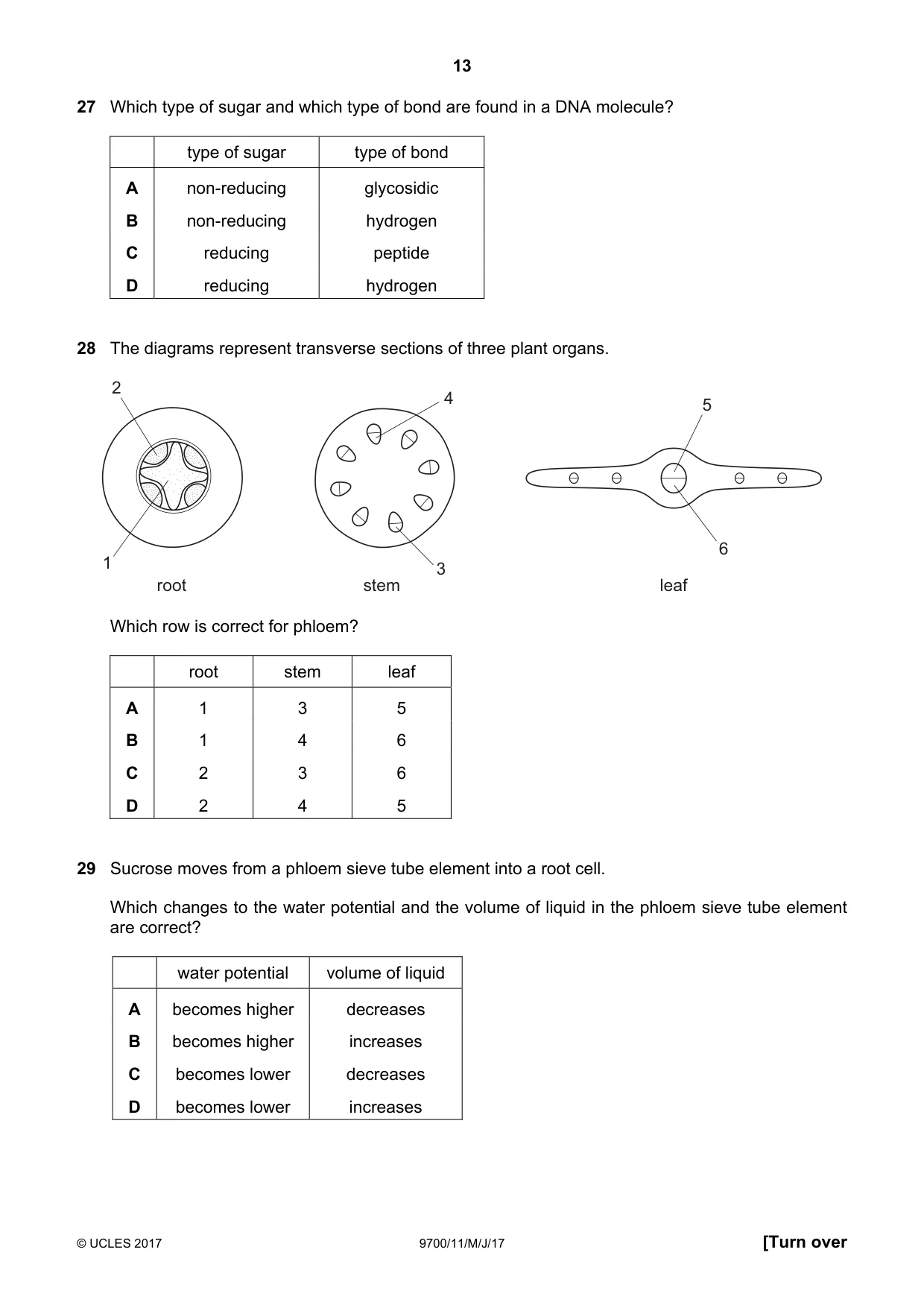
Q28 · The diagrams represent transverse sections of three plant organs
28 The diagrams represent transverse sections of three plant organs. 2 4 5 6 1 3 root stem leaf Which row is correct for phloem? root stem leaf A 1 3 5 B 1 4 6 C 2 3 6 D 2 4 5
Mark scheme: C
Q29 · Sucrose moves from a phloem sieve tube element into a root cell
29 Sucrose moves from a phloem sieve tube element into a root cell. Which changes to the water potential and the volume of liquid in the phloem sieve tube element are correct? water potential volume of liquid A becomes higher decreases B becomes higher increases C becomes lower decreases D becomes lower increases
Mark scheme: A
Q30 · Which statements about water movement in plants are correct?
30 Which statements about water movement in plants are correct? 1 Water can pass through cellulose cell walls. 2 Water can pass through lignified cell walls. 3 Water cannot pass through suberin in cell walls. A 1, 2 and 3 B 1 and 2 only C 1 and 3 only D 2 and 3 only
Mark scheme: A
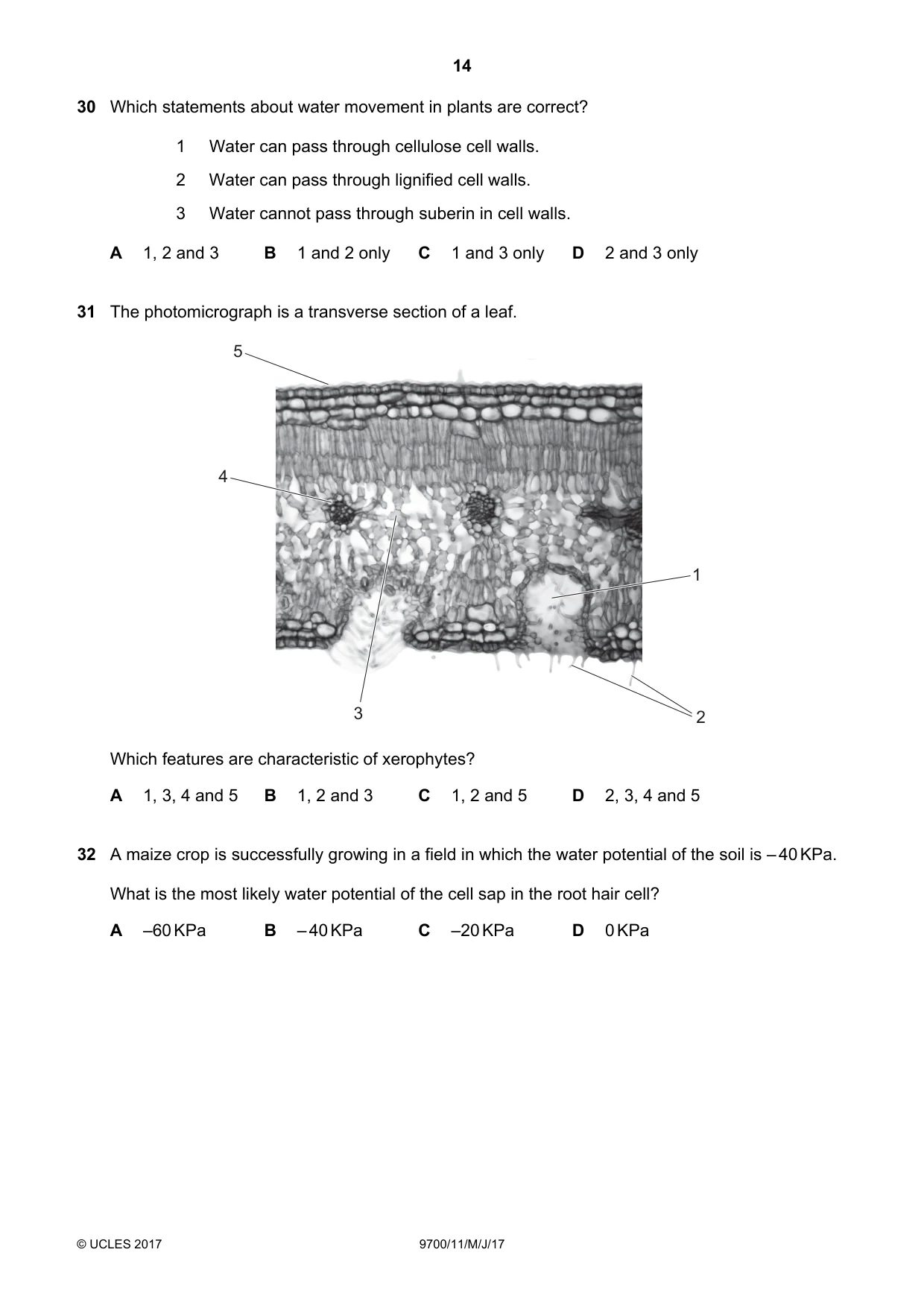
Q31 · The photomicrograph is a transverse section of a leaf
31 The photomicrograph is a transverse section of a leaf. 5 4 1 3 2 Which features are characteristic of xerophytes? A 1, 3, 4 and 5 B 1, 2 and 3 C 1, 2 and 5 D 2, 3, 4 and 5
Mark scheme: C
Q32 · A maize crop is successfully growing in a field in which the water potential of the soil…
32 A maize crop is successfully growing in a field in which the water potential of the soil is – 40 KPa. What is the most likely water potential of the cell sap in the root hair cell? A –60 KPa B – 40 KPa C –20 KPa D 0 KPa
Mark scheme: A
Q33 · The contraction of the heart is coordinated through electrical impulses passing through…
33 The contraction of the heart is coordinated through electrical impulses passing through the cardiac muscle. Which is the correct order of part of the sequence of these impulses? A right and left atria → sinoatrial node → atrioventricular node → ventricular walls B sinoatrial node → right and left atria → atrioventricular node → Purkyne tissue C sinoatrial node → right and left atria → Purkyne tissue → atrioventricular node D sinoatrial node → right and left atria → Purkyne tissue → ventricular walls
Mark scheme: B
Q34 · Which features enable the aorta to withstand ventricular systole?
34 Which features enable the aorta to withstand ventricular systole? A collagen fibres and elastin fibres B collagen fibres and smooth muscle C elastin fibres and endothelium D endothelium and smooth muscle
Mark scheme: A
Q35 · Which row is correct for the pulmonary artery?
35 Which row is correct for the pulmonary artery? blood carried muscle in walls lumen size A deoxygenated thick small B deoxygenated thin large C oxygenated thick small D oxygenated thin large
Mark scheme: A
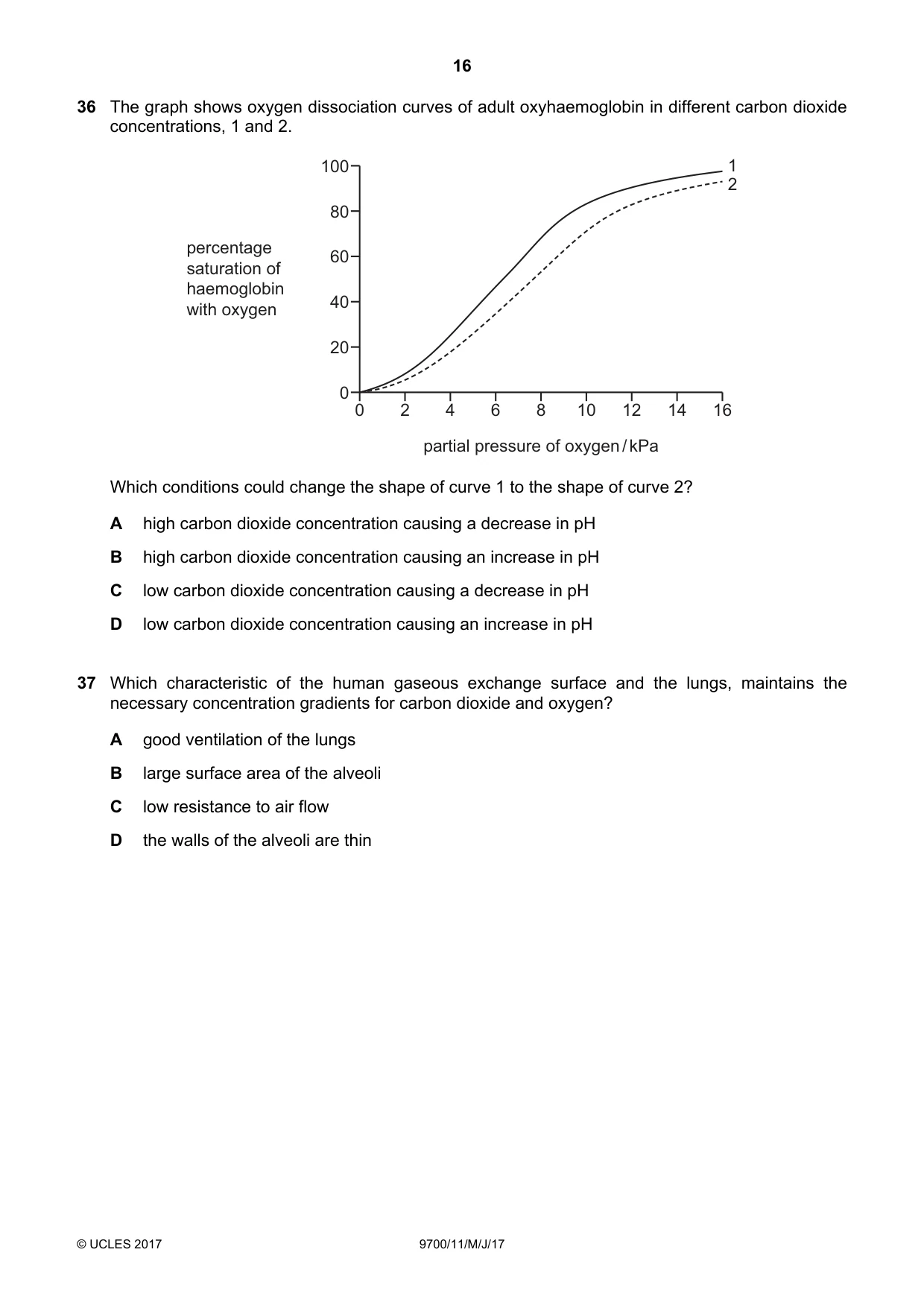
Q36 · The graph shows oxygen dissociation curves of adult oxyhaemoglobin in different carbon…
36 The graph shows oxygen dissociation curves of adult oxyhaemoglobin in different carbon dioxide concentrations, 1 and 2. 100 1 2 80 percentage 60 saturation of haemoglobin with oxygen 40 20 0 0 2 4 6 8 10 12 14 16 partial pressure of oxygen / kPa Which conditions could change the shape of curve 1 to the shape of curve 2? A high carbon dioxide concentration causing a decrease in pH B high carbon dioxide concentration causing an increase in pH C low carbon dioxide concentration causing a decrease in pH D low carbon dioxide concentration causing an increase in pH
Mark scheme: A
Q37 · Which characteristic of the human gaseous exchange surface and the lungs, maintains the…
37 Which characteristic of the human gaseous exchange surface and the lungs, maintains the necessary concentration gradients for carbon dioxide and oxygen? A good ventilation of the lungs B large surface area of the alveoli C low resistance to air flow D the walls of the alveoli are thin
Mark scheme: A
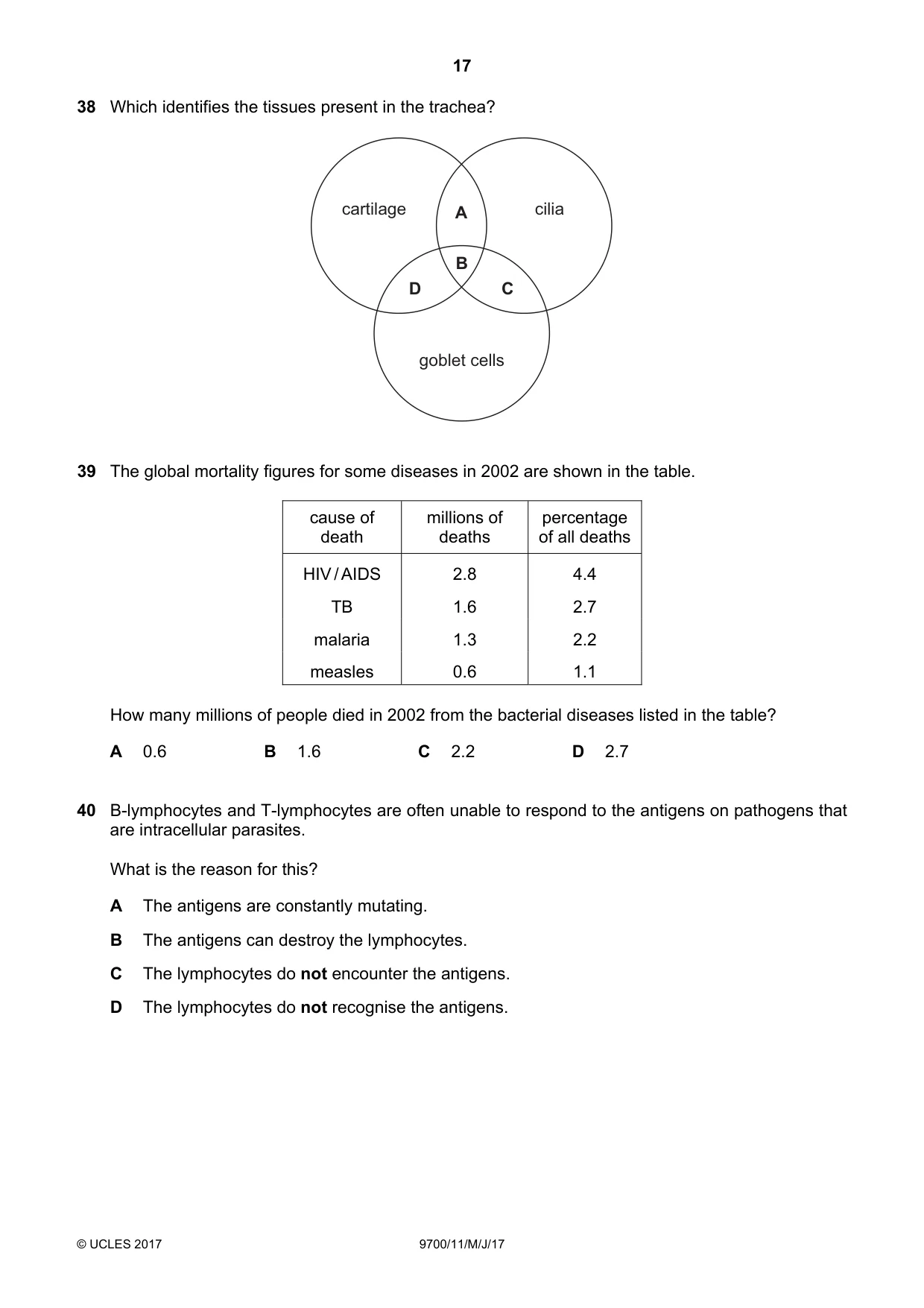
Q38 · Which identifies the tissues present in the trachea?
38 Which identifies the tissues present in the trachea? cartilage A cilia B D C goblet cells
Mark scheme: B
Q39 · The global mortality figures for some diseases in 2002 are shown in the table
39 The global mortality figures for some diseases in 2002 are shown in the table. cause of millions of percentage death deaths of all deaths HIV / AIDS 2.8 4.4 TB 1.6 2.7 malaria 1.3 2.2 measles 0.6 1.1 How many millions of people died in 2002 from the bacterial diseases listed in the table? A 0.6 B 1.6 C 2.2 D 2.7
Mark scheme: B
Q40 · B-lymphocytes and T-lymphocytes are often unable to respond to the antigens on pathogens…
40 B-lymphocytes and T-lymphocytes are often unable to respond to the antigens on pathogens that are intracellular parasites. What is the reason for this? A The antigens are constantly mutating. B The antigens can destroy the lymphocytes. C The lymphocytes do not encounter the antigens. D The lymphocytes do not recognise the antigens.
Mark scheme: C
What was in this paper
The subtopics covered by these 40 questions, and how many questions each got. Open one in a new tab to see every Cambridge question on it.
4Carbohydrates and lipids3Cells as the basic units of living organisms3Fluid mosaic membranes3Structure of nucleic acids and replication of DNA3The microscope in cell studies3Chromosome behaviour in mitosis2Factors that affect enzyme action2Movement into and out of cells2Proteins2Replication and division of nuclei and cells2The circulatory system2The gas exchange system2Infectious diseases1Mode of action of enzymes1Protein synthesis1Structure of transport tissues1The heart1The immune system1Transport of oxygen and carbon dioxide1What you needed in this session
Cambridge’s own grade thresholds for 2017 May/June, Paper 1 · Variant 1. A higher threshold means an easier paper — the bar moves with how the cohort did.