Cambridge A Level Biology 9700 — 2012 Oct/Nov Paper 1 · Variant 3
9700/13/O/N/12 · 40 questions · 40 marks · ≈45 min
The question paper and its mark scheme, free to read here and free to download. This is Cambridge’s own paper, exactly as it was sat.
Question paper16 pages
Mark scheme2 pages
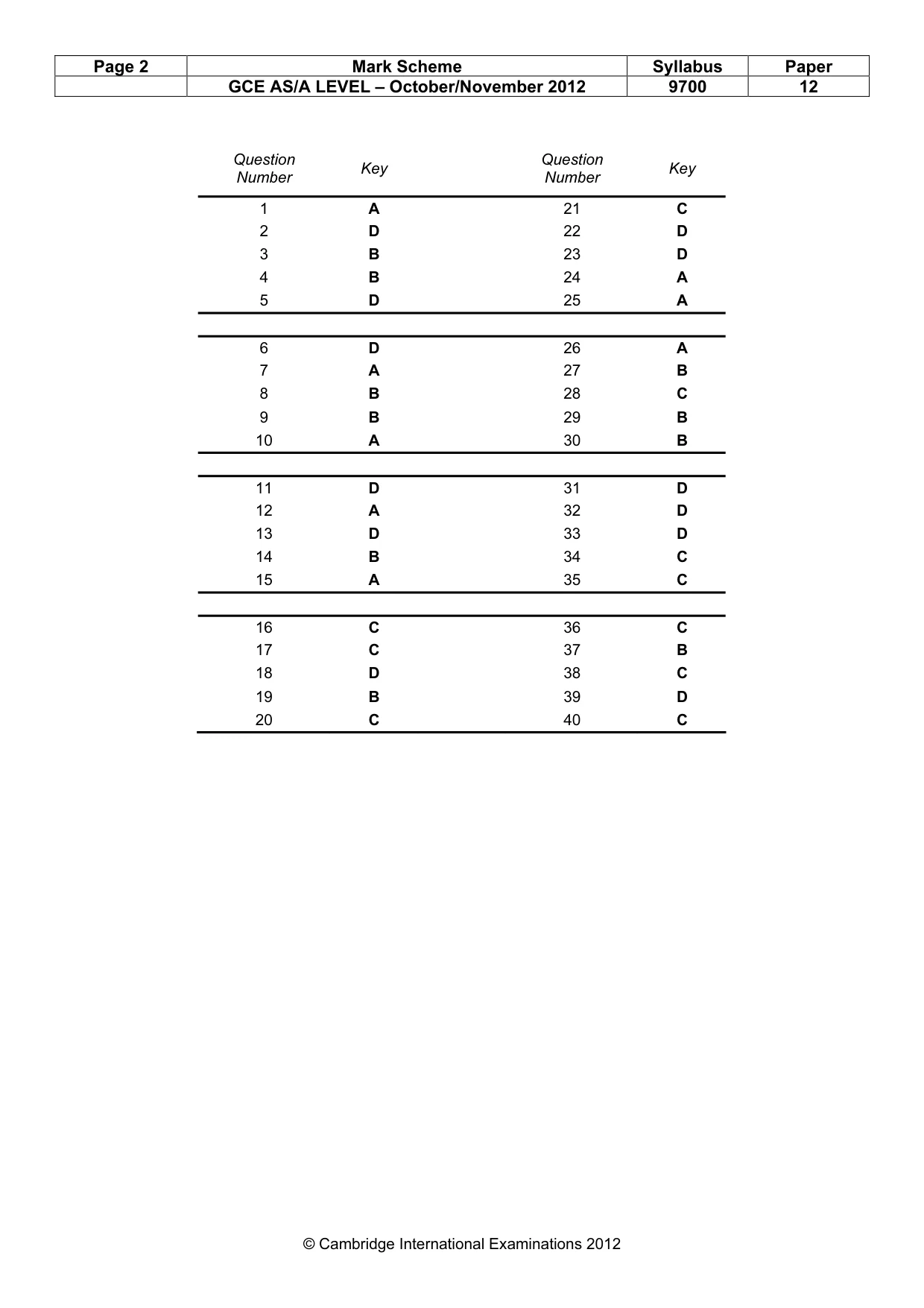
Answers below. Sit the paper first if you are practising.
Questions as text
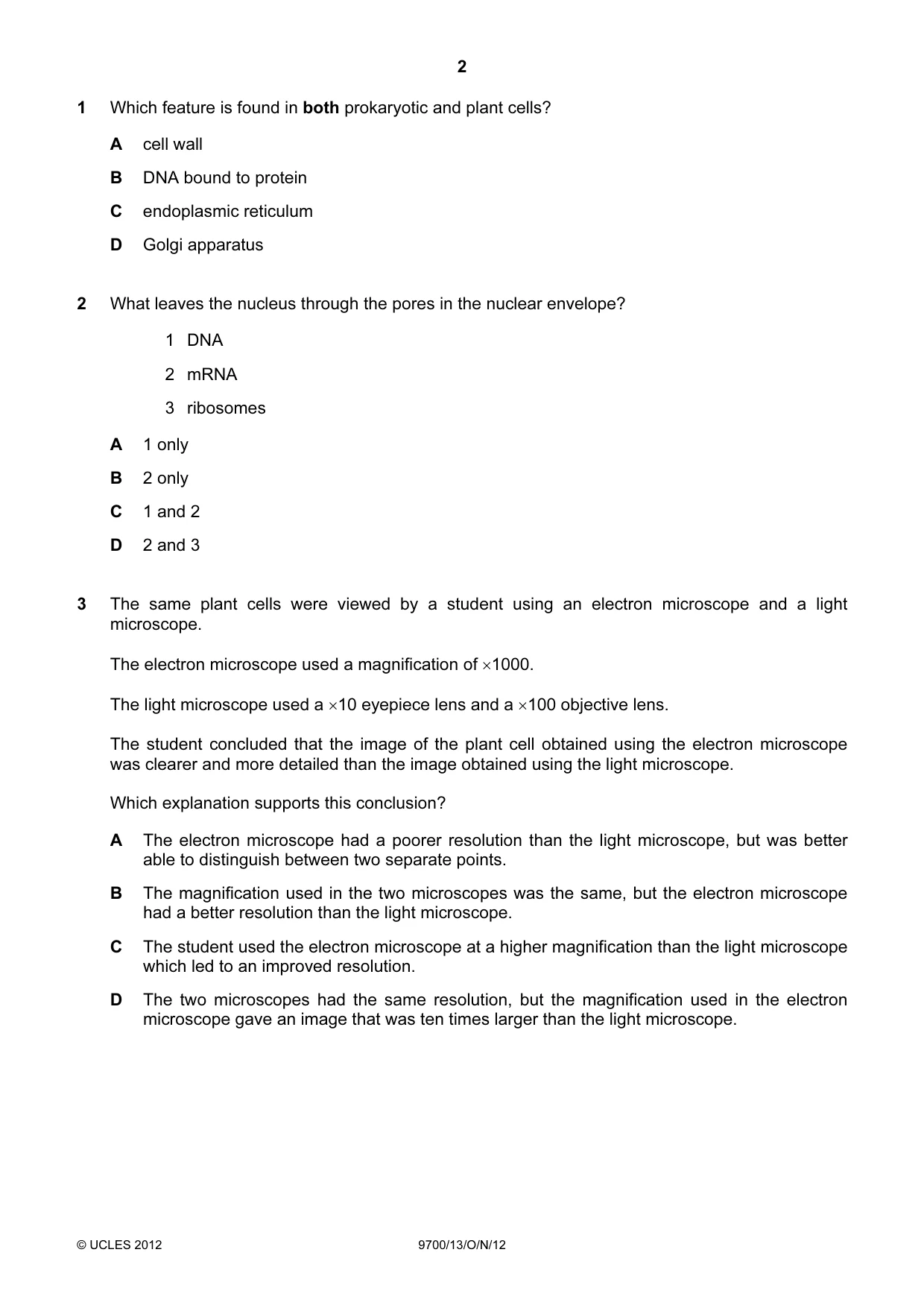
Q1 · Which feature is found in both prokaryotic and plant cells?
1 Which feature is found in both prokaryotic and plant cells? A cell wall B DNA bound to protein C endoplasmic reticulum D Golgi apparatus
Mark scheme: A
More questions on Cells as the basic units of living organisms
Q2 · What leaves the nucleus through the pores in the nuclear envelope?
2 What leaves the nucleus through the pores in the nuclear envelope? 1 DNA 2 mRNA 3 ribosomes A 1 only B 2 only C 1 and 2 D 2 and 3
Mark scheme: D
More questions on Cells as the basic units of living organisms
Q3 · The same plant cells were viewed by a student using an electron microscope and a light…
3 The same plant cells were viewed by a student using an electron microscope and a light microscope. The electron microscope used a magnification of ×1000. The light microscope used a ×10 eyepiece lens and a ×100 objective lens. The student concluded that the image of the plant cell obtained using the electron microscope was clearer and more detailed than the image obtained using the light microscope. Which explanation supports this conclusion? A The electron microscope had a poorer resolution than the light microscope, but was better able to distinguish between two separate points. B The magnification used in the two microscopes was the same, but the electron microscope had a better resolution than the light microscope. C The student used the electron microscope at a higher magnification than the light microscope which led to an improved resolution. D The two microscopes had the same resolution, but the magnification used in the electron microscope gave an image that was ten times larger than the light microscope.
Mark scheme: B
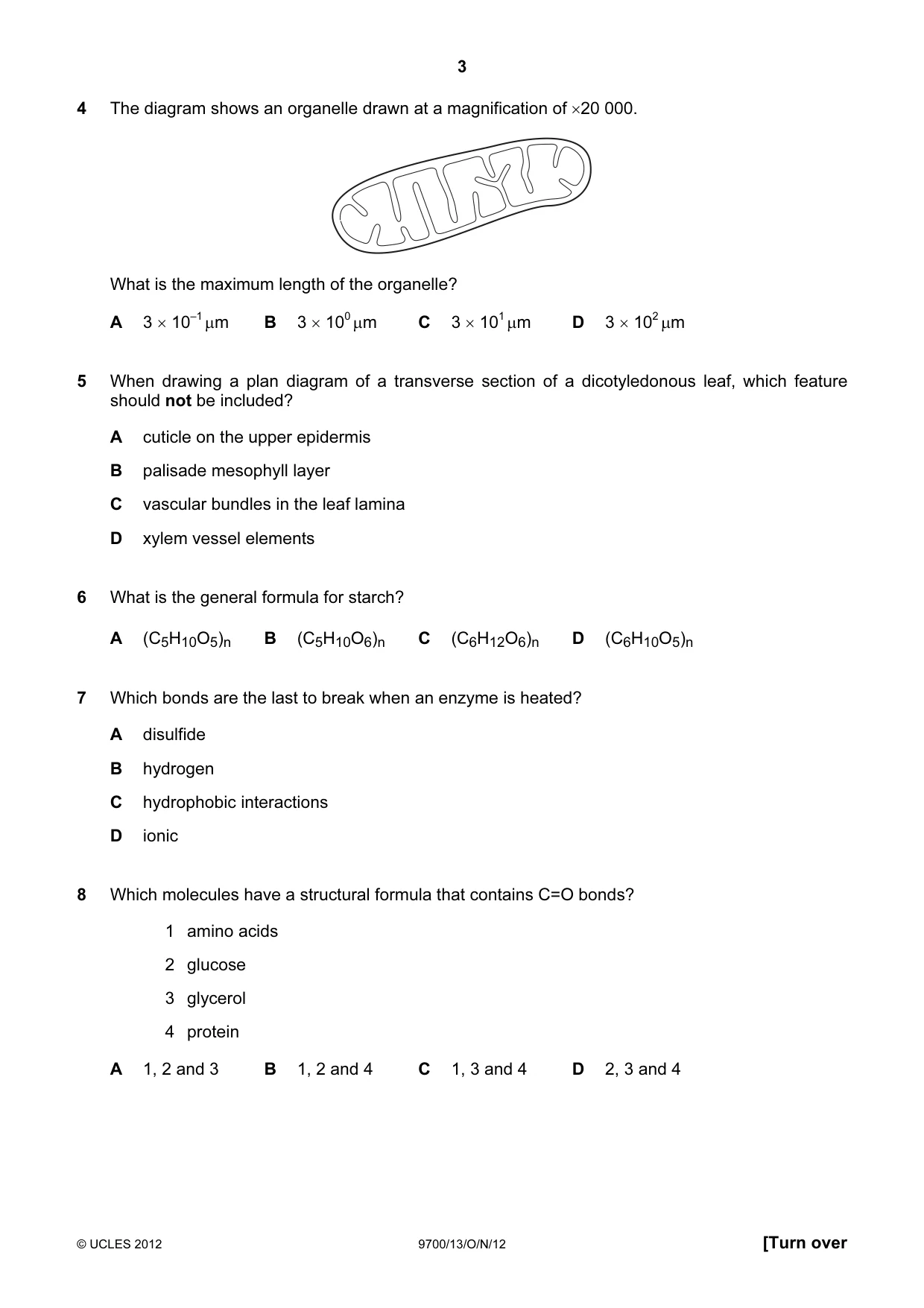
Q4 · The diagram shows an organelle drawn at a magnification of ×20 000
4 The diagram shows an organelle drawn at a magnification of ×20 000. What is the maximum length of the organelle? A 3 × 10⁻¹ µm B 3 × 100 µm C 3 × 101 µm D 3 × 102 µm
Mark scheme: B
Q5 · When drawing a plan diagram of a transverse section of a dicotyledonous leaf, which…
5 When drawing a plan diagram of a transverse section of a dicotyledonous leaf, which feature should not be included? A cuticle on the upper epidermis B palisade mesophyll layer C vascular bundles in the leaf lamina D xylem vessel elements
Mark scheme: D
Q6 · What is the general formula for starch?
6 What is the general formula for starch? A (C5H10O5)n B (C5H10O6)n C (C6H12O6)n D (C6H10O5)n
Mark scheme: D
Q7 · Which bonds are the last to break when an enzyme is heated?
7 Which bonds are the last to break when an enzyme is heated? A disulfide B hydrogen C hydrophobic interactions D ionic
Mark scheme: A
Q8 · Which molecules have a structural formula that contains C=O bonds?
8 Which molecules have a structural formula that contains C=O bonds? 1 amino acids 2 glucose 3 glycerol 4 protein A 1, 2 and 3 B 1, 2 and 4 C 1, 3 and 4 D 2, 3 and 4
Mark scheme: B
Q9 · Which of the statements about polysaccharides can be used to describe both starch and…
9 Which of the statements about polysaccharides can be used to describe both starch and cellulose? 1 adjacent glucose molecules are rotated by 180° 2 contains glycosidic bonds 3 polymer of α–glucose A 1 only B 2 only C 1 and 3 only D 2 and 3 only
Mark scheme: B
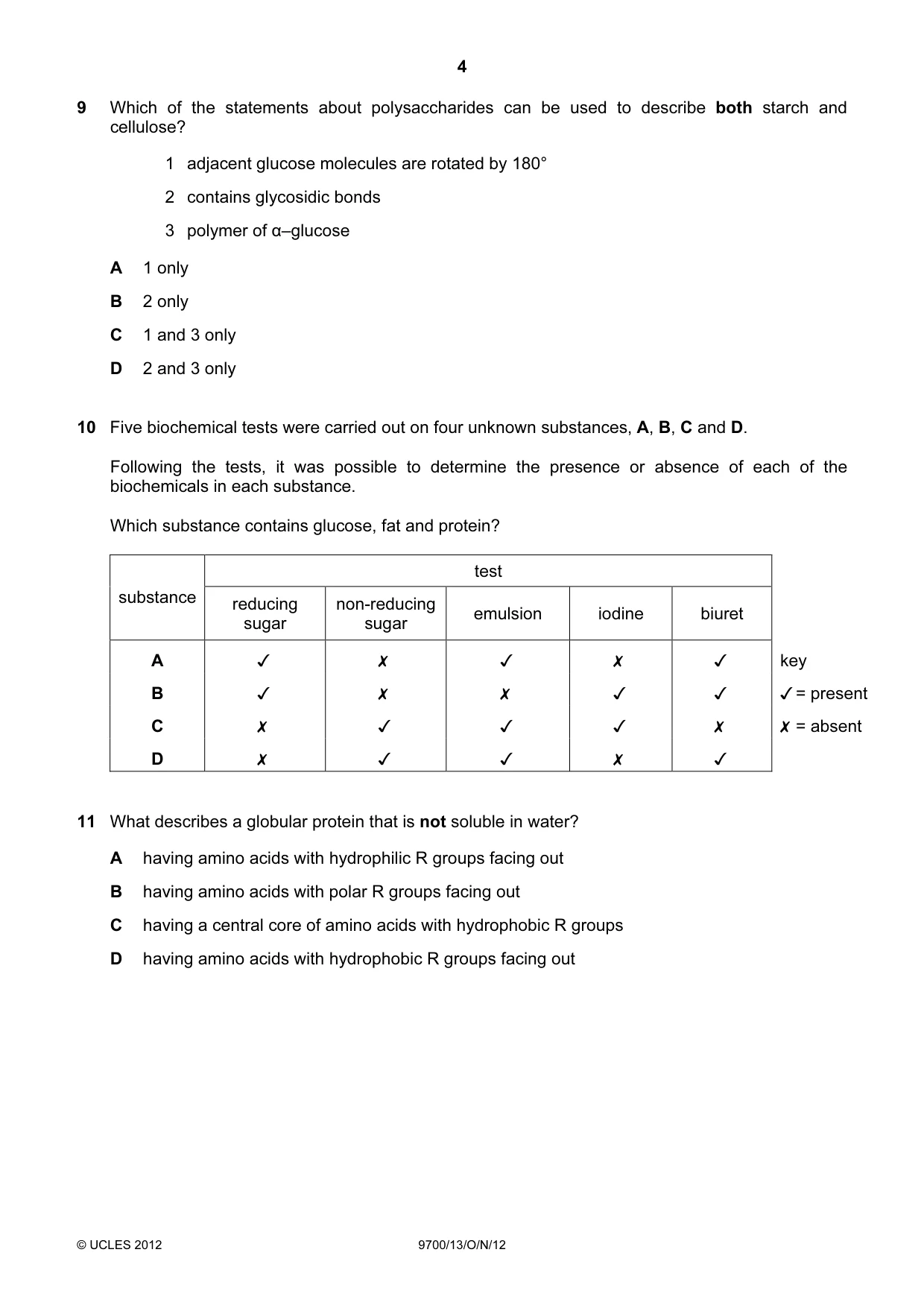
Q10 · Five biochemical tests were carried out on four unknown substances, A, B, C and D
10 Five biochemical tests were carried out on four unknown substances, A, B, C and D. Following the tests, it was possible to determine the presence or absence of each of the biochemicals in each substance. Which substance contains glucose, fat and protein? test substance reducing vn sar emulsion iodine biuret A Vv x v x Y rey B y x x 4 J / = present Cc x Jv Jv Jv x X = absent D x v v x ‘
Mark scheme: A
Q11 · What describes a globular protein that is not soluble in water?
11 What describes a globular protein that is not soluble in water? A having amino acids with hydrophilic R groups facing out B having amino acids with polar R groups facing out C having a central core of amino acids with hydrophobic R groups D having amino acids with hydrophobic R groups facing out
Mark scheme: D
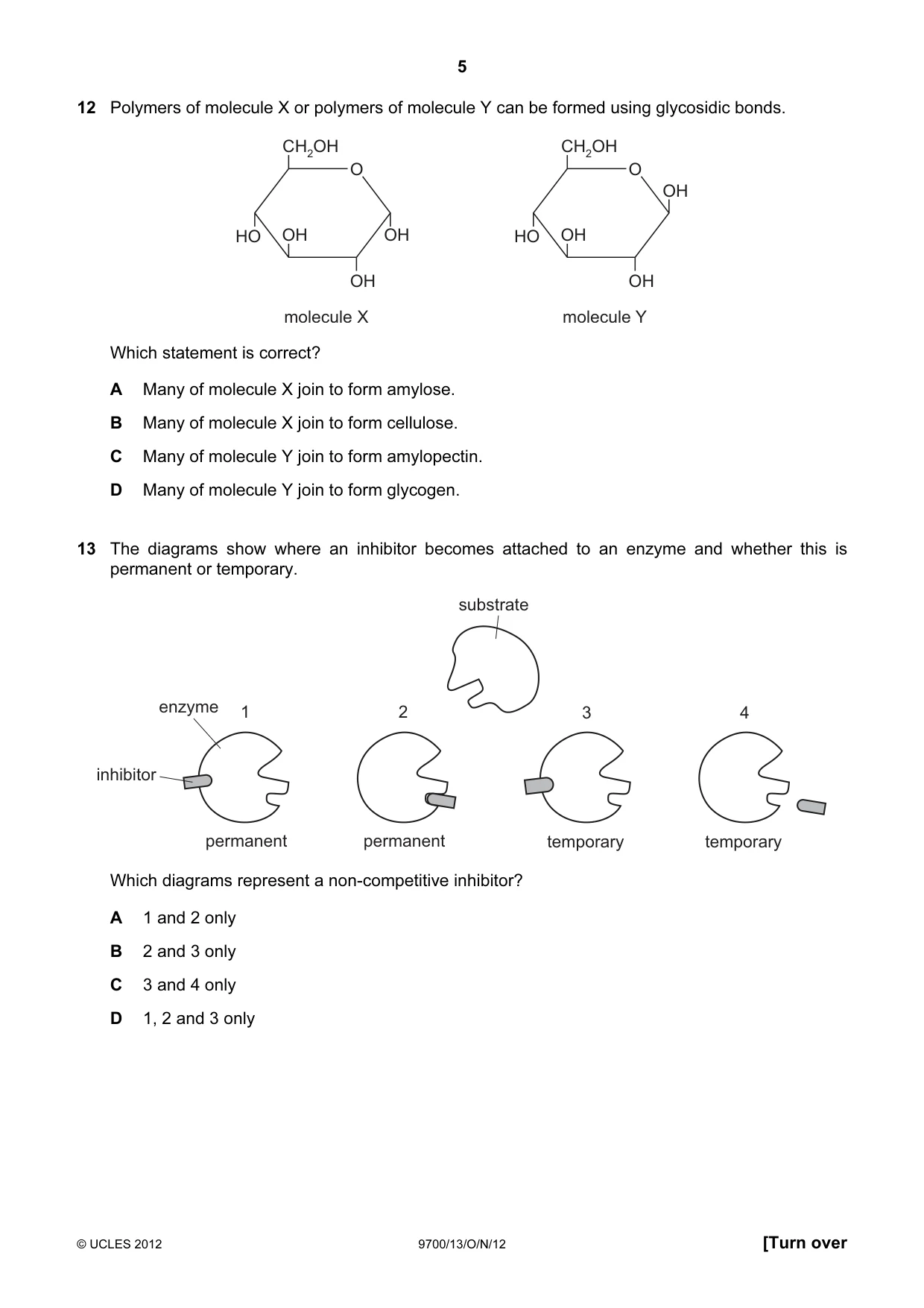
Q12 · Polymers of molecule X or polymers of molecule Y can be formed using glycosidic bonds
12 Polymers of molecule X or polymers of molecule Y can be formed using glycosidic bonds. CH2OH CH2OH O O OH HO OH OH HO OH OH OH molecule X molecule Y Which statement is correct? A Many of molecule X join to form amylose. B Many of molecule X join to form cellulose. C Many of molecule Y join to form amylopectin. D Many of molecule Y join to form glycogen.
Mark scheme: A
Q13 · The diagrams show where an inhibitor becomes attached to an enzyme and whether this is…
13 The diagrams show where an inhibitor becomes attached to an enzyme and whether this is permanent or temporary. substrate enzyme 1 2 3 4 inhibitor permanent permanent temporary temporary Which diagrams represent a non-competitive inhibitor? A 1 and 2 only B 2 and 3 only C 3 and 4 only D 1, 2 and 3 only
Mark scheme: D
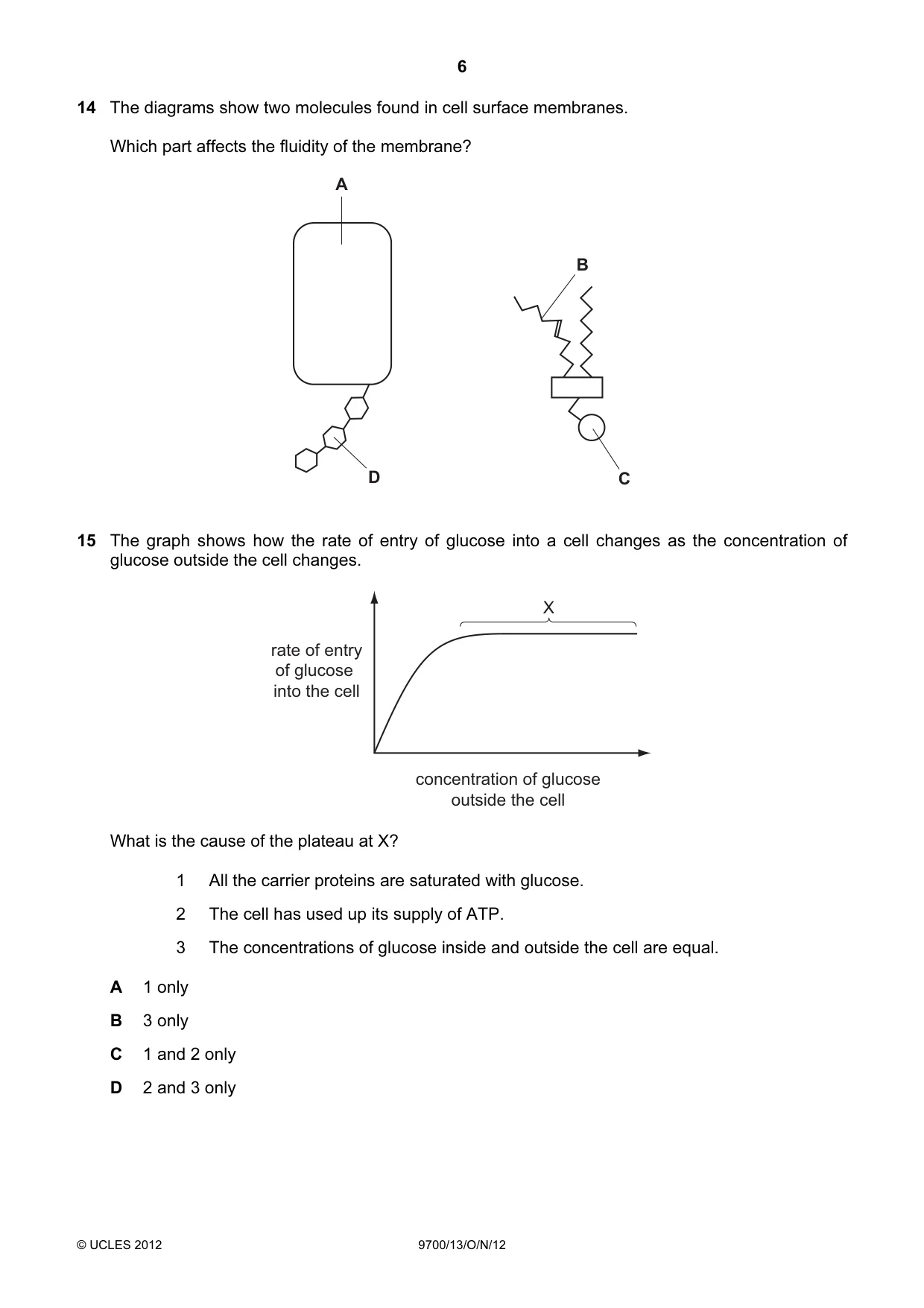
Q14 · The diagrams show two molecules found in cell surface membranes
14 The diagrams show two molecules found in cell surface membranes. Which part affects the fluidity of the membrane? A B D C
Mark scheme: B
Q15 · The graph shows how the rate of entry of glucose into a cell changes as the concentration…
15 The graph shows how the rate of entry of glucose into a cell changes as the concentration of glucose outside the cell changes. X rate of entry of glucose into the cell concentration of glucose outside the cell What is the cause of the plateau at X? 1 All the carrier proteins are saturated with glucose. 2 The cell has used up its supply of ATP. 3 The concentrations of glucose inside and outside the cell are equal. A 1 only B 3 only C 1 and 2 only D 2 and 3 only
Mark scheme: A
Q16 · The following are all processes by which substances can enter cells
16 The following are all processes by which substances can enter cells. 1 phagocytosis 2 active transport 3 facilitated diffusion Which processes require ATP? A 1 only B 2 only C 1 and 2 only D 2 and 3 only
Mark scheme: C
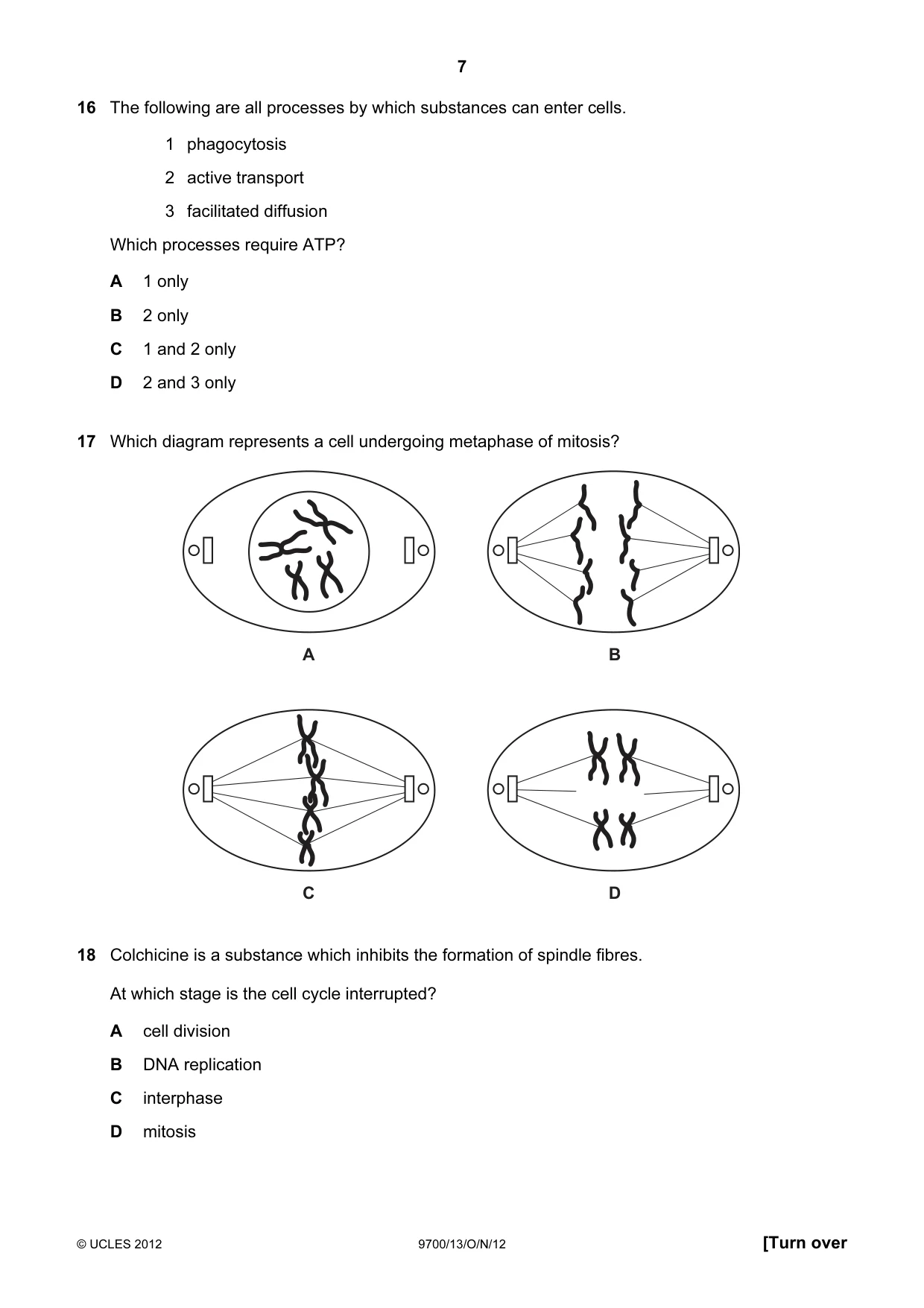
Q17 · Which diagram represents a cell undergoing metaphase of mitosis?
17 Which diagram represents a cell undergoing metaphase of mitosis? A B C D
Mark scheme: C
Q18 · Colchicine is a substance which inhibits the formation of spindle fibres
18 Colchicine is a substance which inhibits the formation of spindle fibres. At which stage is the cell cycle interrupted? A cell division B DNA replication C interphase D mitosis
Mark scheme: D
More questions on Replication and division of nuclei and cells
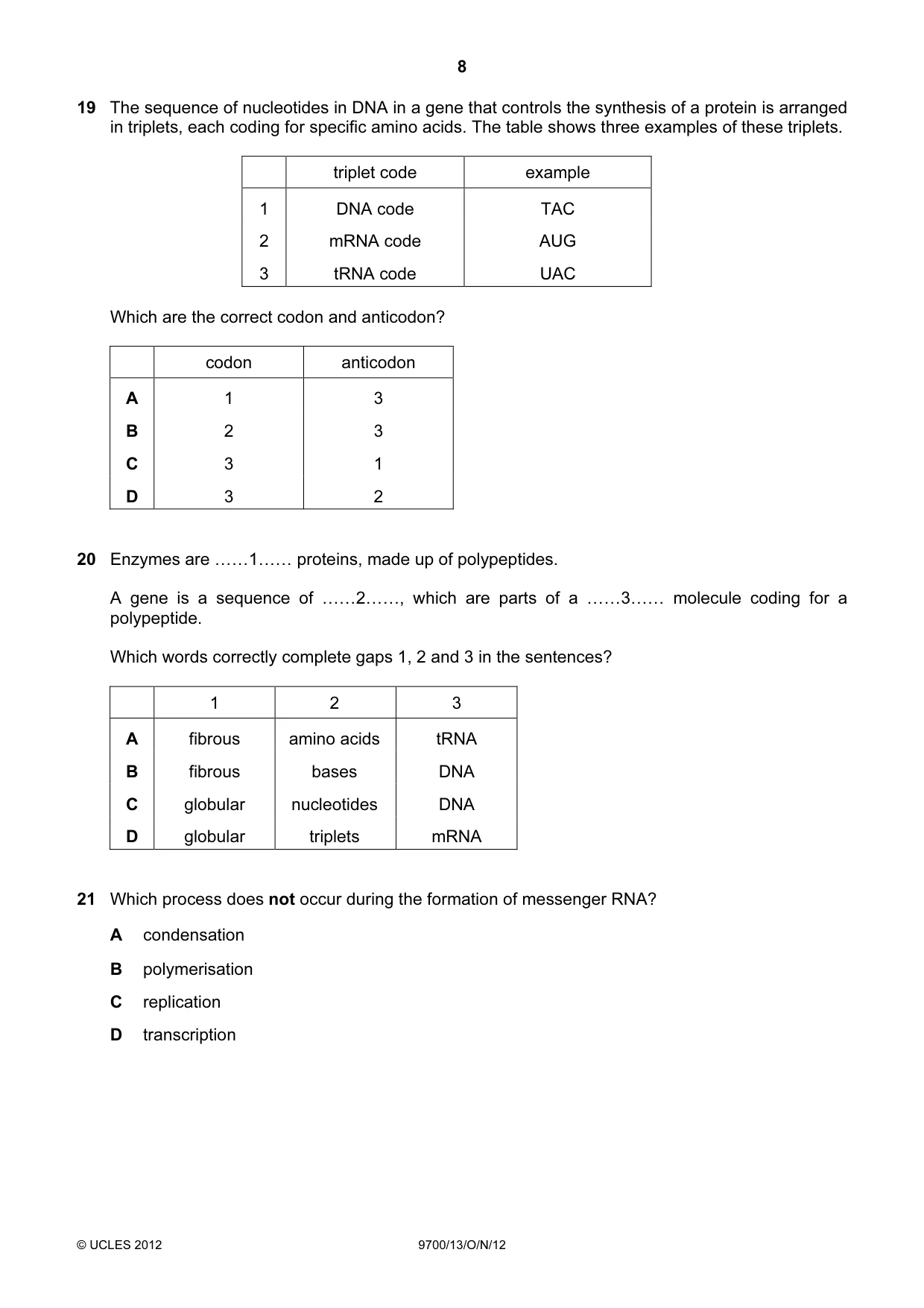
Q19 · The sequence of nucleotides in DNA in a gene that controls the synthesis of a protein is…
19 The sequence of nucleotides in DNA in a gene that controls the synthesis of a protein is arranged in triplets, each coding for specific amino acids. The table shows three examples of these triplets. triplet code example 1 DNA code TAC 2 mRNA code AUG 3 tRNA code UAC Which are the correct codon and anticodon? codon anticodon A 1 3 B 2 3 C 3 1 D 3 2
Mark scheme: B
Q20 · Enzymes are ……1…… proteins, made up of polypeptides
20 Enzymes are ……1…… proteins, made up of polypeptides. A gene is a sequence of ……2……, which are parts of a ……3…… molecule coding for a polypeptide. Which words correctly complete gaps 1, 2 and 3 in the sentences? 1 2 3 A fibrous amino acids tRNA B fibrous bases DNA C globular nucleotides DNA D globular triplets mRNA
Mark scheme: C
Q21 · Which process does not occur during the formation of messenger RNA?
21 Which process does not occur during the formation of messenger RNA? A condensation B polymerisation C replication D transcription
Mark scheme: C
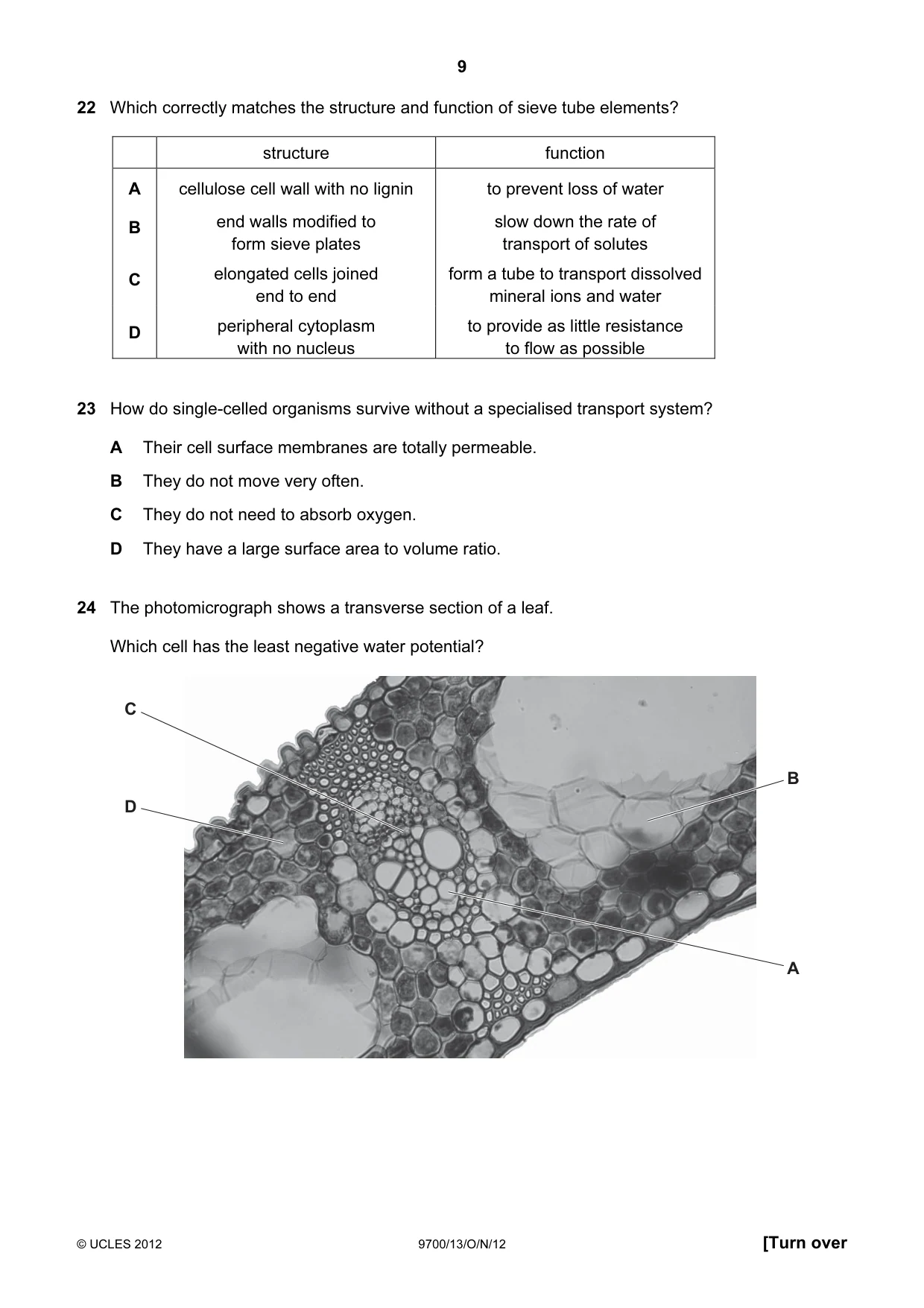
Q22 · Which correctly matches the structure and function of sieve tube elements?
22 Which correctly matches the structure and function of sieve tube elements? structure function A cellulose cell wall with no lignin to prevent loss of water B end walls modified to slow down the rate of form sieve plates transport of solutes C elongated cells joined form a tube to transport dissolved end to end mineral ions and water D peripheral cytoplasm to provide as little resistance with no nucleus to flow as possible
Mark scheme: D
Q23 · How do single-celled organisms survive without a specialised transport system?
23 How do single-celled organisms survive without a specialised transport system? A Their cell surface membranes are totally permeable. B They do not move very often. C They do not need to absorb oxygen. D They have a large surface area to volume ratio.
Mark scheme: D
Q24 · The photomicrograph shows a transverse section of a leaf
24 The photomicrograph shows a transverse section of a leaf. Which cell has the least negative water potential? C B D A
Mark scheme: A
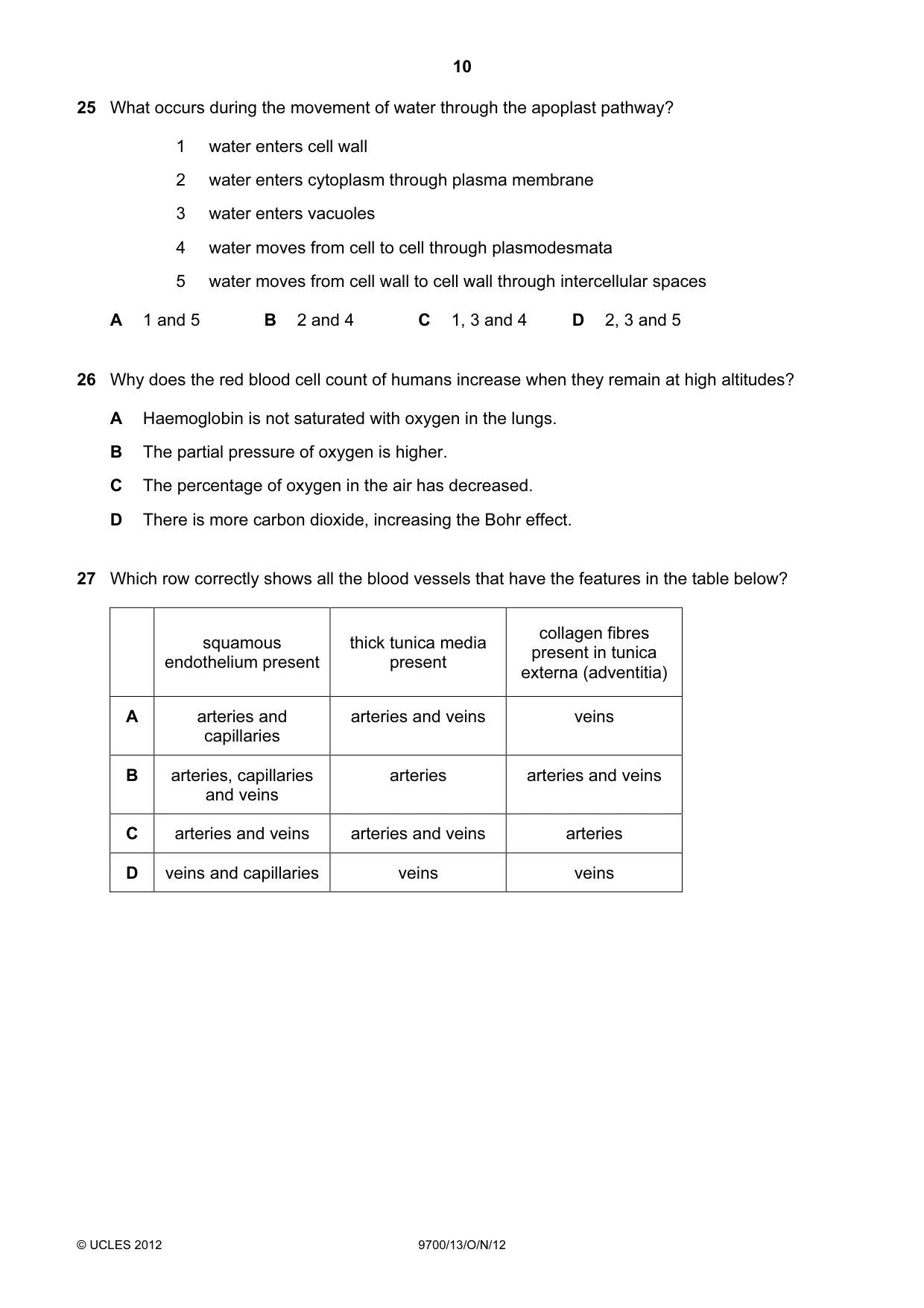
Q25 · What occurs during the movement of water through the apoplast pathway?
25 What occurs during the movement of water through the apoplast pathway? 1 water enters cell wall 2 water enters cytoplasm through plasma membrane 3 water enters vacuoles 4 water moves from cell to cell through plasmodesmata 5 water moves from cell wall to cell wall through intercellular spaces A 1 and 5 B 2 and 4 C 1, 3 and 4 D 2, 3 and 5
Mark scheme: A
Q26 · Why does the red blood cell count of humans increase when they remain at high altitudes?
26 Why does the red blood cell count of humans increase when they remain at high altitudes? A Haemoglobin is not saturated with oxygen in the lungs. B The partial pressure of oxygen is higher. C The percentage of oxygen in the air has decreased. D There is more carbon dioxide, increasing the Bohr effect.
Mark scheme: A
Q27 · Which row correctly shows all the blood vessels that have the features in the table below?
27 Which row correctly shows all the blood vessels that have the features in the table below? collagen fibres squamous thick tunica media present in tunica endothelium present present externa (adventitia) A arteries and arteries and veins veins capillaries B arteries, capillaries arteries arteries and veins and veins C arteries and veins arteries and veins arteries D veins and capillaries veins veins
Mark scheme: B
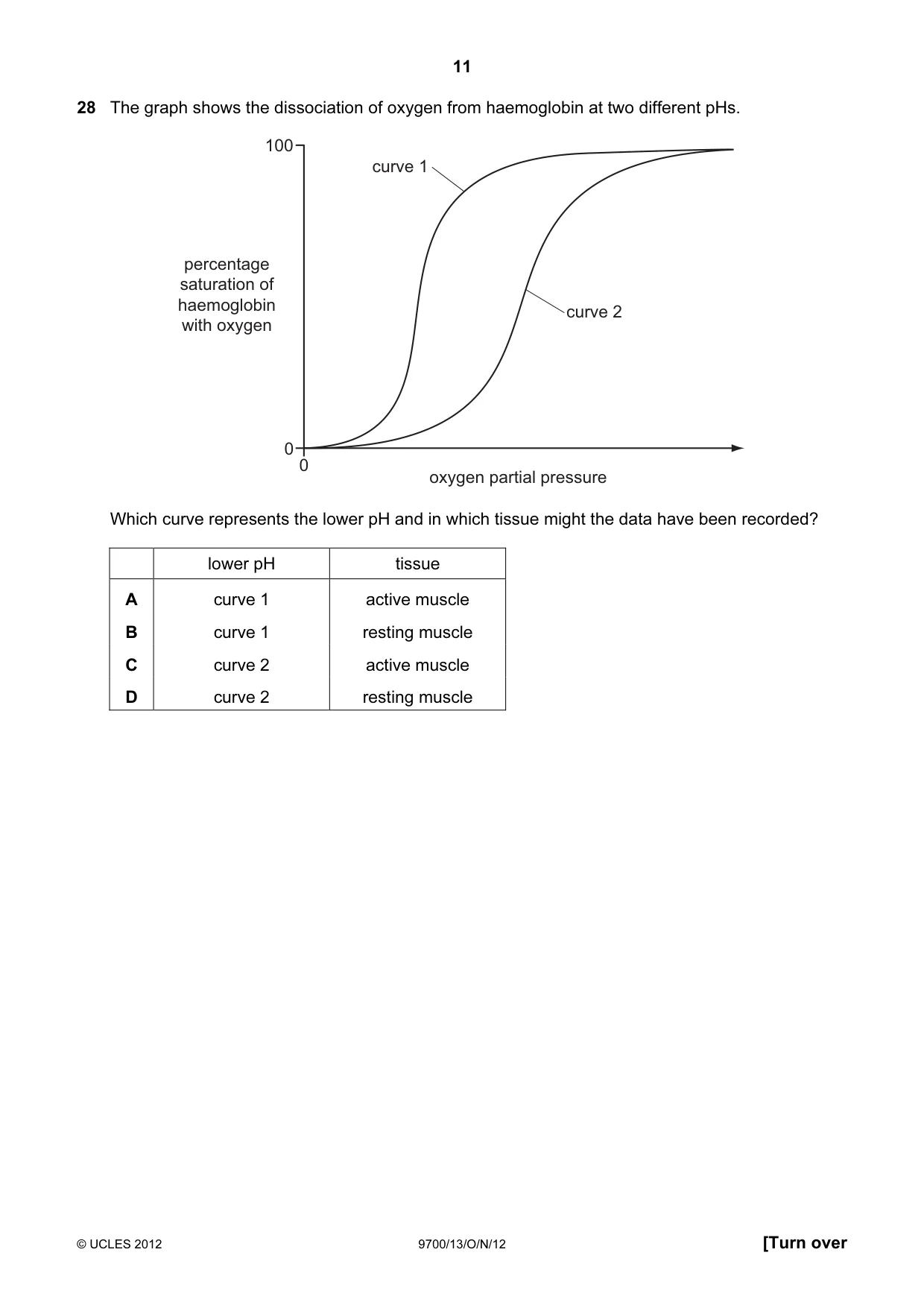
Q28 · The graph shows the dissociation of oxygen from haemoglobin at two different pHs
28 The graph shows the dissociation of oxygen from haemoglobin at two different pHs. 100 curve 1 percentage saturation of haemoglobin curve 2 with oxygen 0 0 oxygen partial pressure Which curve represents the lower pH and in which tissue might the data have been recorded? lower pH tissue A curve 1 active muscle B curve 1 resting muscle C curve 2 active muscle D curve 2 resting muscle
Mark scheme: C
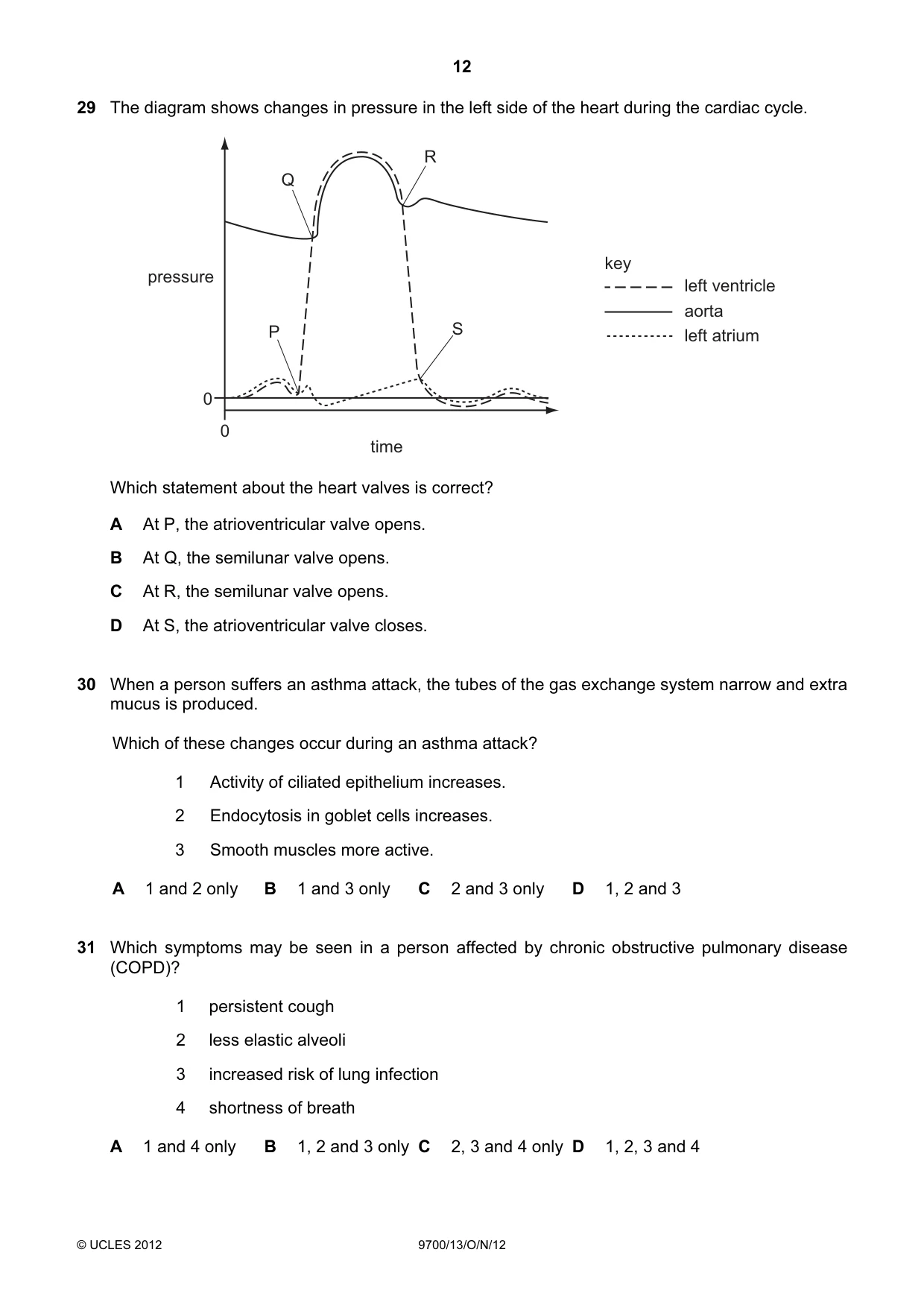
Q29 · The diagram shows changes in pressure in the left side of the heart during the cardiac…
29 The diagram shows changes in pressure in the left side of the heart during the cardiac cycle. R Q key pressure left ventricle aorta P S left atrium 0 0 time Which statement about the heart valves is correct? A At P, the atrioventricular valve opens. B At Q, the semilunar valve opens. C At R, the semilunar valve opens. D At S, the atrioventricular valve closes.
Mark scheme: B
Q30 · When a person suffers an asthma attack, the tubes of the gas exchange system narrow and…
30 When a person suffers an asthma attack, the tubes of the gas exchange system narrow and extra mucus is produced. Which of these changes occur during an asthma attack? 1 Activity of ciliated epithelium increases. 2 Endocytosis in goblet cells increases. 3 Smooth muscles more active. A 1 and 2 only B 1 and 3 only C 2 and 3 only D 1, 2 and 3
Mark scheme: B
Q31 · Which symptoms may be seen in a person affected by chronic obstructive pulmonary disease…
31 Which symptoms may be seen in a person affected by chronic obstructive pulmonary disease (COPD)? 1 persistent cough 2 less elastic alveoli 3 increased risk of lung infection 4 shortness of breath A 1 and 4 only B 1, 2 and 3 only C 2, 3 and 4 only D 1, 2, 3 and 4
Mark scheme: D
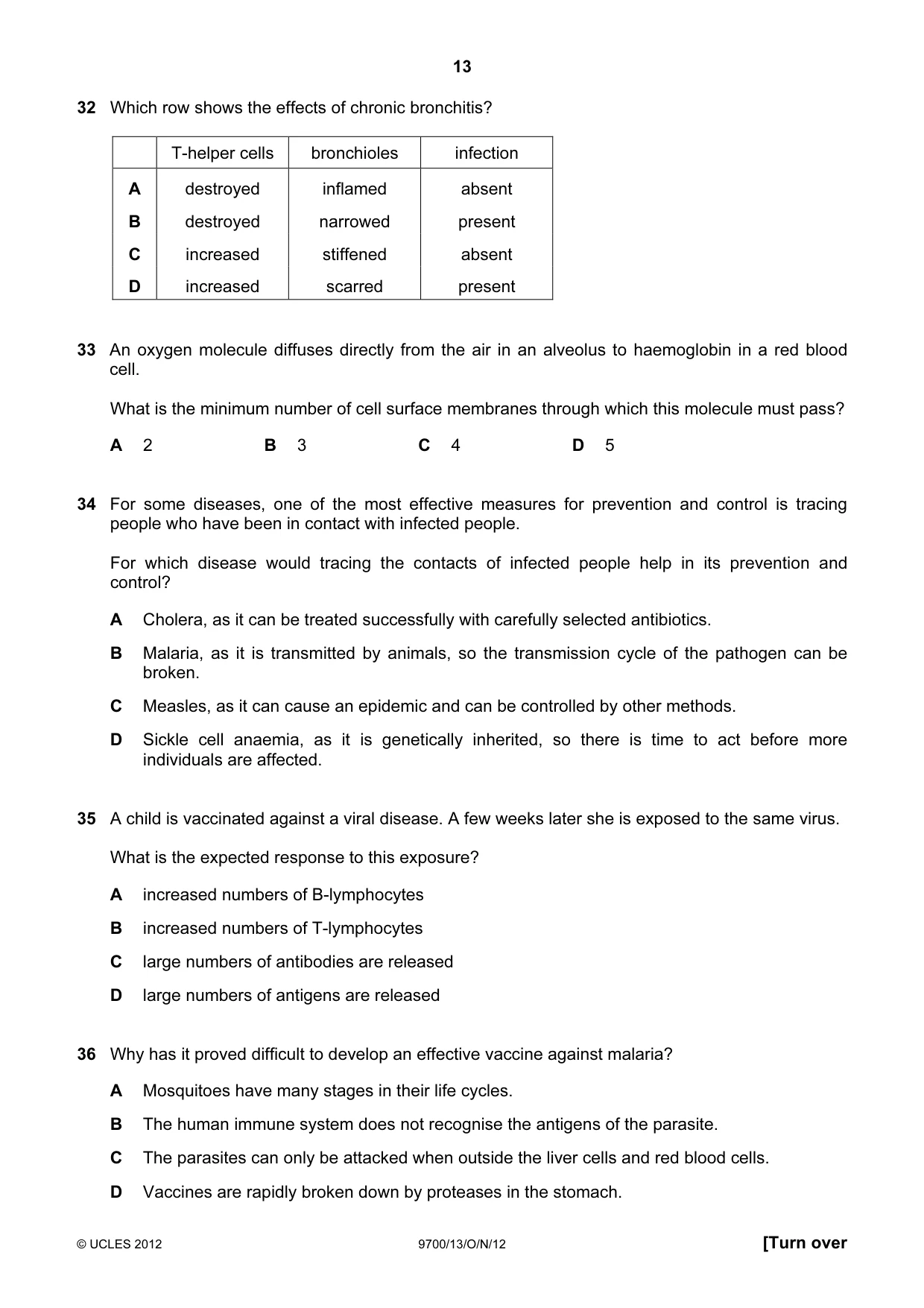
Q32 · Which row shows the effects of chronic bronchitis?
32 Which row shows the effects of chronic bronchitis? T-helper cells bronchioles infection A destroyed inflamed absent B destroyed narrowed present C increased stiffened absent D increased scarred present
Mark scheme: D
Q33 · An oxygen molecule diffuses directly from the air in an alveolus to haemoglobin in a red…
33 An oxygen molecule diffuses directly from the air in an alveolus to haemoglobin in a red blood cell. What is the minimum number of cell surface membranes through which this molecule must pass? A 2 B 3 C 4 D 5
Mark scheme: D
Q34 · For some diseases, one of the most effective measures for prevention and control is…
34 For some diseases, one of the most effective measures for prevention and control is tracing people who have been in contact with infected people. For which disease would tracing the contacts of infected people help in its prevention and control? A Cholera, as it can be treated successfully with carefully selected antibiotics. B Malaria, as it is transmitted by animals, so the transmission cycle of the pathogen can be broken. C Measles, as it can cause an epidemic and can be controlled by other methods. D Sickle cell anaemia, as it is genetically inherited, so there is time to act before more individuals are affected.
Mark scheme: C
Q35 · A child is vaccinated against a viral disease
35 A child is vaccinated against a viral disease. A few weeks later she is exposed to the same virus. What is the expected response to this exposure? A increased numbers of B-lymphocytes B increased numbers of T-lymphocytes C large numbers of antibodies are released D large numbers of antigens are released
Mark scheme: C
Q36 · Why has it proved difficult to develop an effective vaccine against malaria?
36 Why has it proved difficult to develop an effective vaccine against malaria? A Mosquitoes have many stages in their life cycles. B The human immune system does not recognise the antigens of the parasite. C The parasites can only be attacked when outside the liver cells and red blood cells. D Vaccines are rapidly broken down by proteases in the stomach.
Mark scheme: C
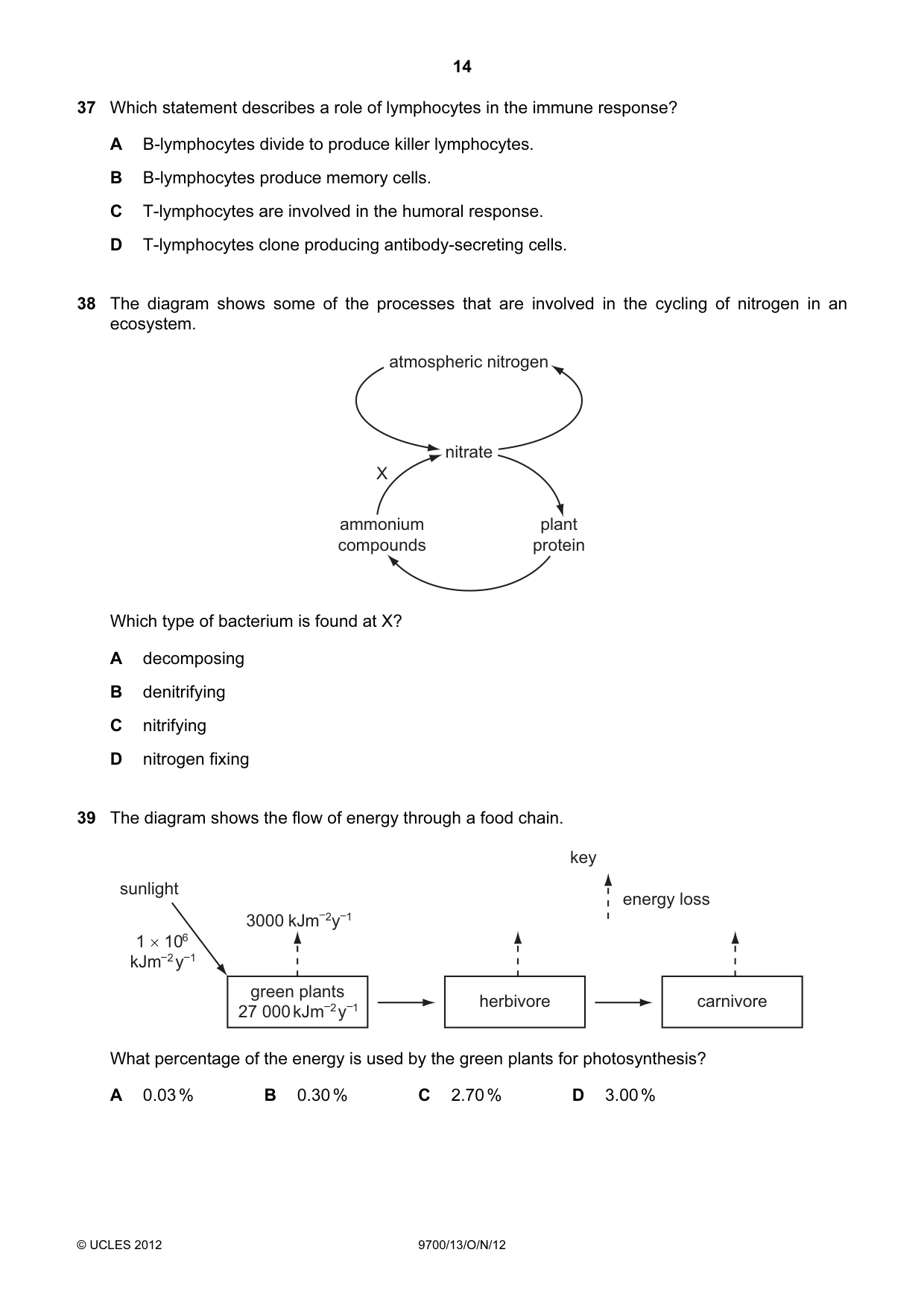
Q37 · Which statement describes a role of lymphocytes in the immune response?
37 Which statement describes a role of lymphocytes in the immune response? A B-lymphocytes divide to produce killer lymphocytes. B B-lymphocytes produce memory cells. C T-lymphocytes are involved in the humoral response. D T-lymphocytes clone producing antibody-secreting cells.
Mark scheme: B
Q38 · The diagram shows some of the processes that are involved in the cycling of nitrogen in…
38 The diagram shows some of the processes that are involved in the cycling of nitrogen in an ecosystem. atmospheric nitrogen nitrate X ammonium plant compounds protein Which type of bacterium is found at X? A decomposing B denitrifying C nitrifying D nitrogen fixing
Mark scheme: C
Q39 · The diagram shows the flow of energy through a food chain
39 The diagram shows the flow of energy through a food chain. key sunlight energy loss 3000 kJm 2y 1 1 × 10⁶ kJm 2y 1 green plants herbivore carnivore 27 000 kJm 2y 1 What percentage of the energy is used by the green plants for photosynthesis? A 0.03 % B 0.30 % C 2.70 % D 3.00 %
Mark scheme: D
More questions on Photosynthesis as an energy transfer process
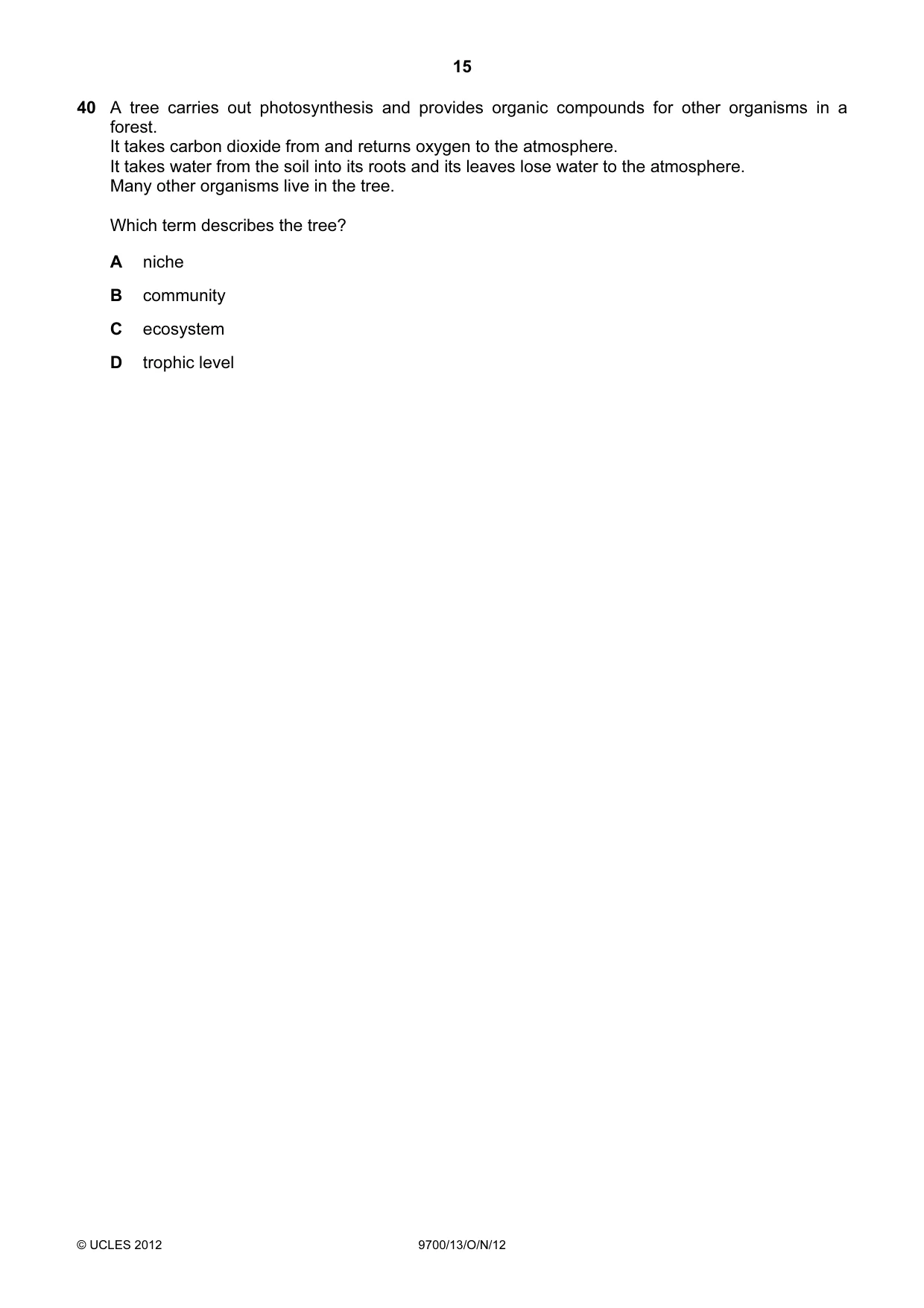
Q40 · A tree carries out photosynthesis and provides organic compounds for other organisms in a…
40 A tree carries out photosynthesis and provides organic compounds for other organisms in a forest. It takes carbon dioxide from and returns oxygen to the atmosphere. It takes water from the soil into its roots and its leaves lose water to the atmosphere. Many other organisms live in the tree. Which term describes the tree? A niche B community C ecosystem D trophic level
Mark scheme: C
What was in this paper
The subtopics covered by these 40 questions, and how many questions each got. Open one in a new tab to see every Cambridge question on it.
4Carbohydrates and lipids3Protein synthesis3Transport mechanisms3Antibodies and vaccination2Biodiversity2Cells as the basic units of living organisms2Factors that affect enzyme action2Movement into and out of cells2Structure of transport tissues2Testing for biological molecules2The microscope in cell studies2Transport of oxygen and carbon dioxide2Chromosome behaviour in mitosis1Fluid mosaic membranes1Infectious diseases1Photosynthesis as an energy transfer process1Proteins1Replication and division of nuclei and cells1The circulatory system1The heart1The immune system1What you needed in this session
Cambridge’s own grade thresholds for 2012 Oct/Nov, Paper 1 · Variant 3. A higher threshold means an easier paper — the bar moves with how the cohort did.