Cambridge A Level Biology 9700 — 2025 Feb/March Paper 1 · Variant 2
9700/12/F/M/25 · 40 questions · 40 marks · 75 min
The question paper and its mark scheme, free to read here and free to download. This is Cambridge’s own paper, exactly as it was sat.
Question paper16 pages
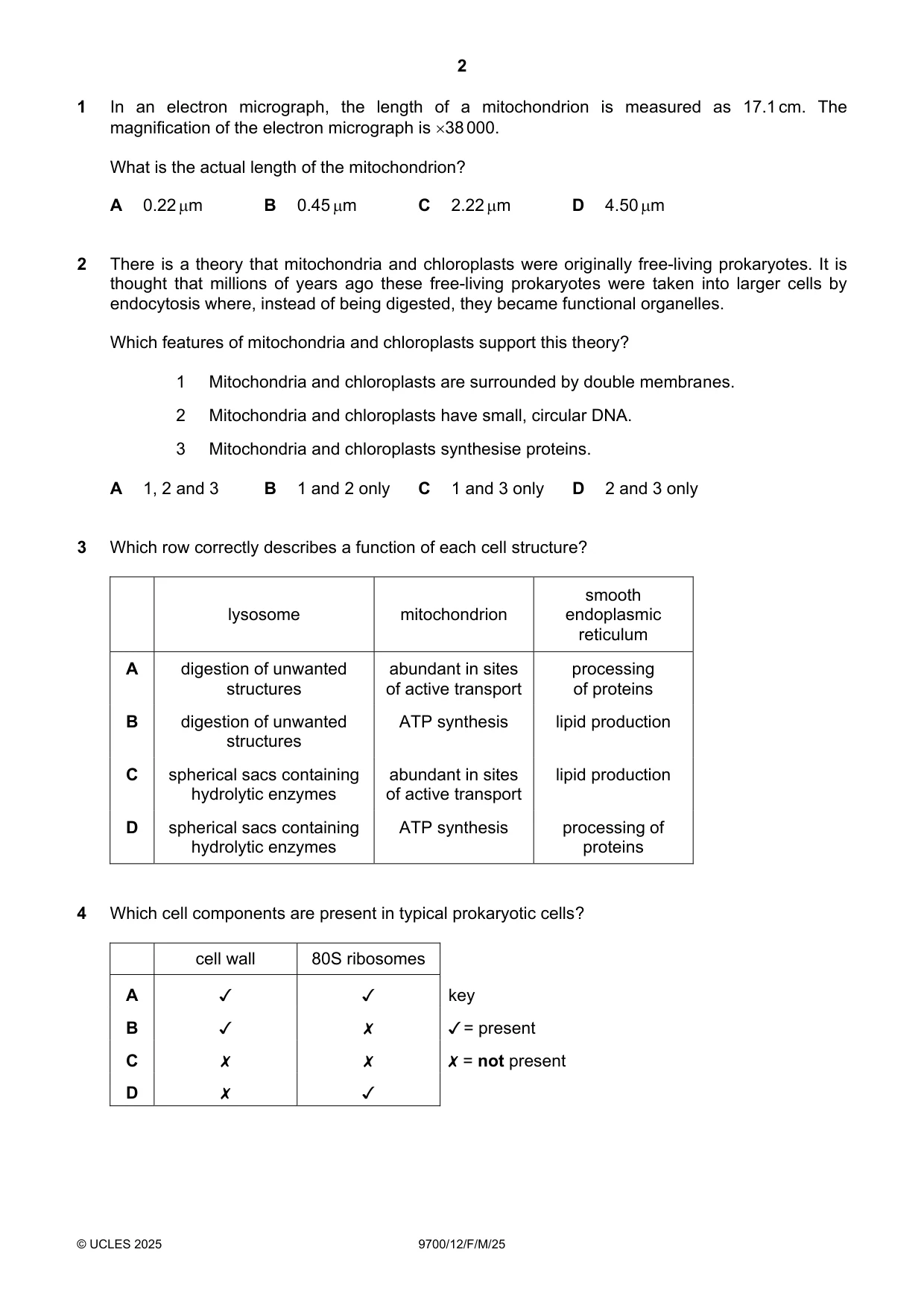
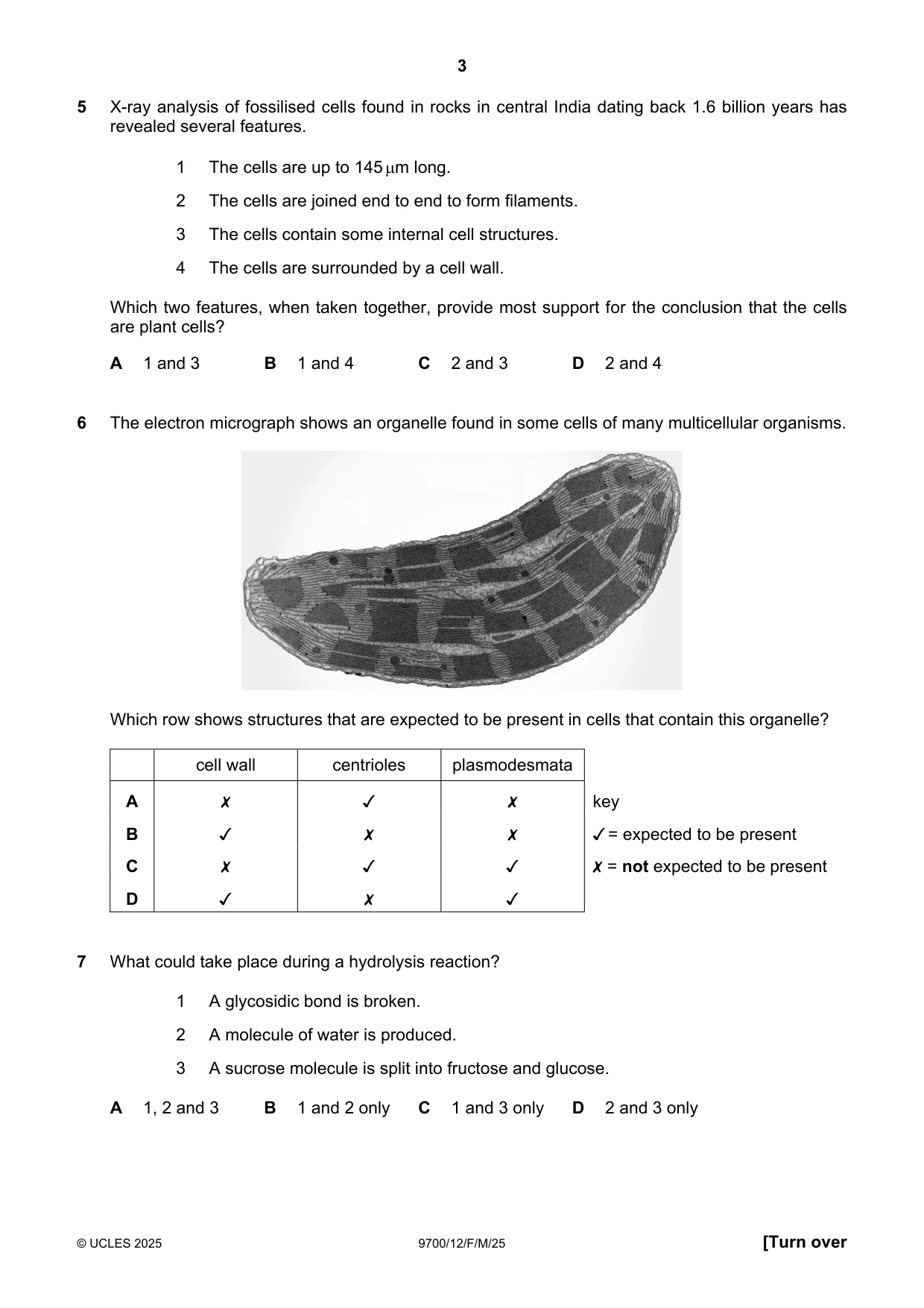
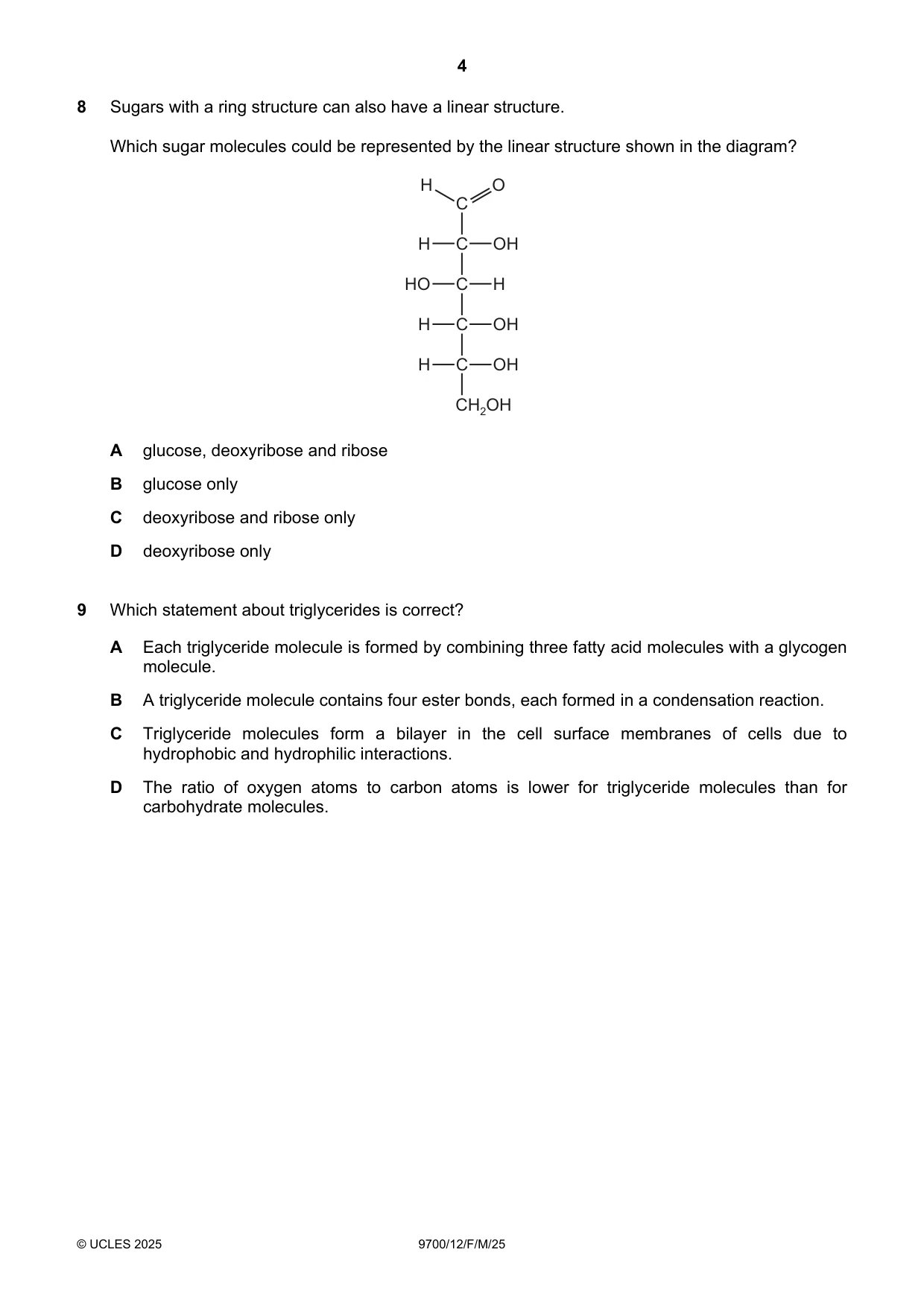
Mark scheme3 pages
Answers below. Sit the paper first if you are practising.
Questions as text
Q1 · In an electron micrograph, the length of a mitochondrion is measured as 17.1 cm
1 In an electron micrograph, the length of a mitochondrion is measured as 17.1 cm. The magnification of the electron micrograph is 38 000. What is the actual length of the mitochondrion? A 0.22 m B 0.45 m C 2.22 m D 4.50 m
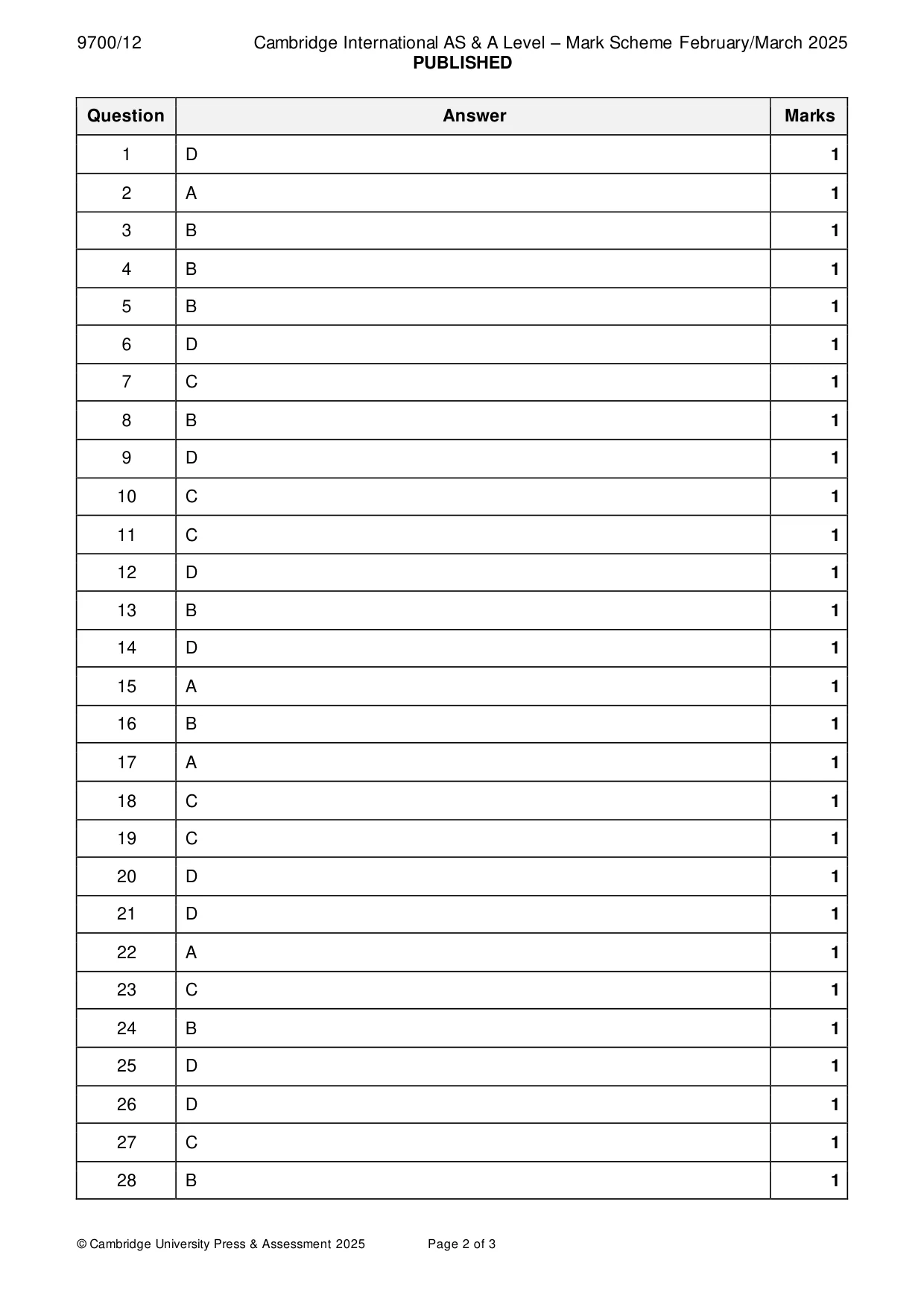
Mark scheme: D
Q2 · There is a theory that mitochondria and chloroplasts were originally free-living…
2 There is a theory that mitochondria and chloroplasts were originally free-living prokaryotes. It is thought that millions of years ago these free-living prokaryotes were taken into larger cells by endocytosis where, instead of being digested, they became functional organelles. Which features of mitochondria and chloroplasts support this theory? 1 Mitochondria and chloroplasts are surrounded by double membranes. 2 Mitochondria and chloroplasts have small, circular DNA. 3 Mitochondria and chloroplasts synthesise proteins. A 1, 2 and 3 B 1 and 2 only C 1 and 3 only D 2 and 3 only
Mark scheme: A
More questions on Cells as the basic units of living organisms
Q3 · Which row correctly describes a function of each cell structure?
3 Which row correctly describes a function of each cell structure? smooth lysosome mitochondrion endoplasmic reticulum A digestion of unwanted abundant in sites processing structures of active transport of proteins B digestion of unwanted ATP synthesis lipid production structures C spherical sacs containing abundant in sites lipid production hydrolytic enzymes of active transport D spherical sacs containing ATP synthesis processing of hydrolytic enzymes proteins
Mark scheme: B
More questions on Cells as the basic units of living organisms
Q4 · Which cell components are present in typical prokaryotic cells?
4 Which cell components are present in typical prokaryotic cells? cell wall 80S ribosomes v key / = present x x X = not present v
Mark scheme: B
More questions on Cells as the basic units of living organisms
Q5 · X-ray analysis of fossilised cells found in rocks in central India dating back 1.6…
5 X-ray analysis of fossilised cells found in rocks in central India dating back 1.6 billion years has revealed several features. 1 The cells are up to 145 m long. 2 The cells are joined end to end to form filaments. 3 The cells contain some internal cell structures. 4 The cells are surrounded by a cell wall. Which two features, when taken together, provide most support for the conclusion that the cells are plant cells? A 1 and 3 B 1 and 4 C 2 and 3 D 2 and 4
Mark scheme: B
More questions on Cells as the basic units of living organisms
Q6 · The electron micrograph shows an organelle found in some cells of many multicellular…
6 The electron micrograph shows an organelle found in some cells of many multicellular organisms. Which row shows structures that are expected to be present in cells that contain this organelle? cell wall centrioles plasmodesmata A x Jv x B Jv x x Cc x v v D Jv x v key / = expected to be present X = not expected to be present
Mark scheme: D
More questions on Cells as the basic units of living organisms
Q7 · What could take place during a hydrolysis reaction?
7 What could take place during a hydrolysis reaction? 1 A glycosidic bond is broken. 2 A molecule of water is produced. 3 A sucrose molecule is split into fructose and glucose. A 1, 2 and 3 B 1 and 2 only C 1 and 3 only D 2 and 3 only
Mark scheme: C
Q8 · Sugars with a ring structure can also have a linear structure
8 Sugars with a ring structure can also have a linear structure. Which sugar molecules could be represented by the linear structure shown in the diagram? H O C H C OH HO C H H C OH H C OH CH2OH A glucose, deoxyribose and ribose B glucose only C deoxyribose and ribose only D deoxyribose only
Mark scheme: B
Q9 · Which statement about triglycerides is correct?
9 Which statement about triglycerides is correct? A Each triglyceride molecule is formed by combining three fatty acid molecules with a glycogen molecule. B A triglyceride molecule contains four ester bonds, each formed in a condensation reaction. C Triglyceride molecules form a bilayer in the cell surface membranes of cells due to hydrophobic and hydrophilic interactions. D The ratio of oxygen atoms to carbon atoms is lower for triglyceride molecules than for carbohydrate molecules.
Mark scheme: D
Q10 · Hydroxyproline is synthesised by addition of an –OH group to the R-group of the amino…
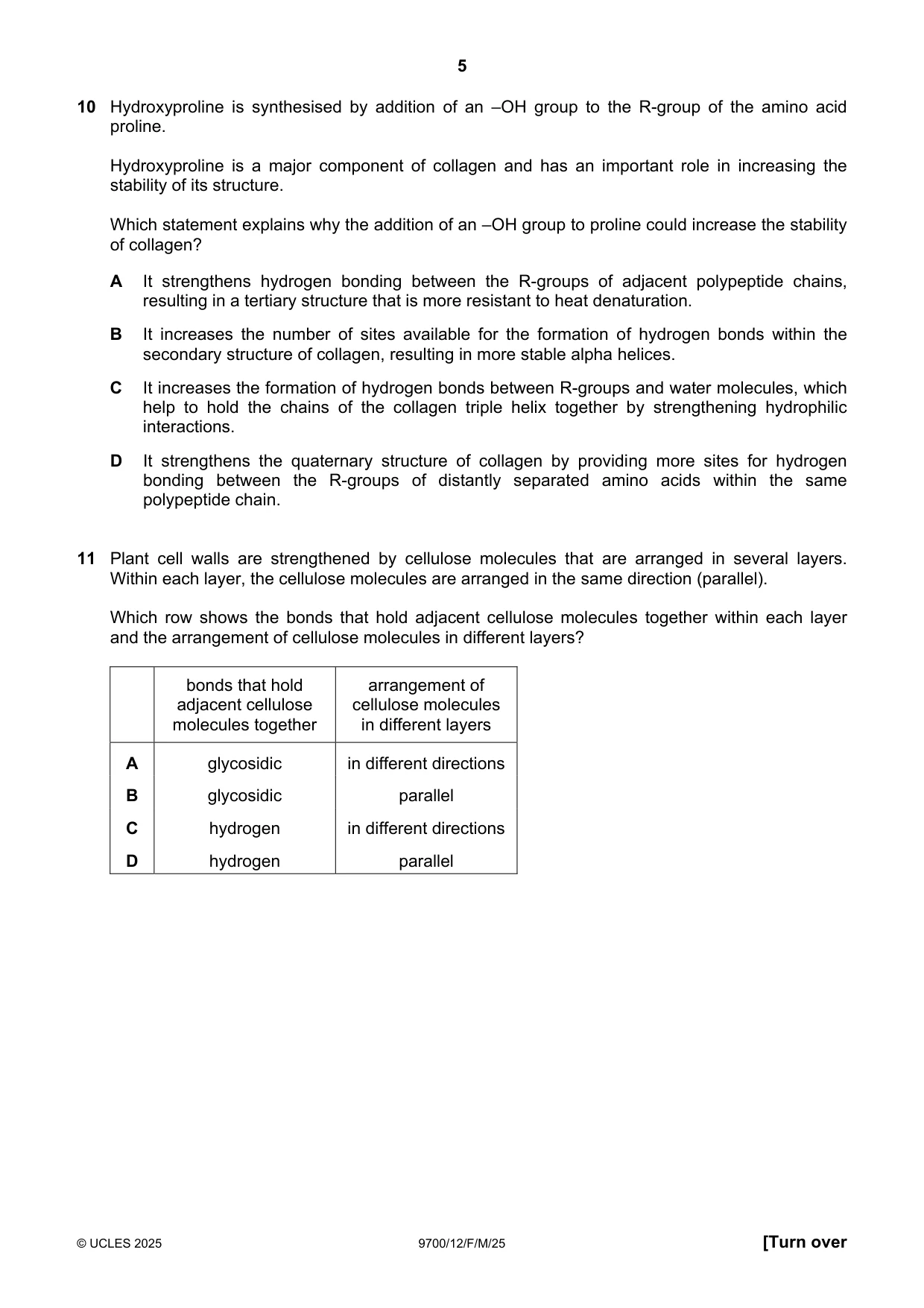
10 Hydroxyproline is synthesised by addition of an –OH group to the R-group of the amino acid proline. Hydroxyproline is a major component of collagen and has an important role in increasing the stability of its structure. Which statement explains why the addition of an –OH group to proline could increase the stability of collagen? A It strengthens hydrogen bonding between the R-groups of adjacent polypeptide chains, resulting in a tertiary structure that is more resistant to heat denaturation. B It increases the number of sites available for the formation of hydrogen bonds within the secondary structure of collagen, resulting in more stable alpha helices. C It increases the formation of hydrogen bonds between R-groups and water molecules, which help to hold the chains of the collagen triple helix together by strengthening hydrophilic interactions. D It strengthens the quaternary structure of collagen by providing more sites for hydrogen bonding between the R-groups of distantly separated amino acids within the same polypeptide chain.
Mark scheme: C
Q11 · Plant cell walls are strengthened by cellulose molecules that are arranged in several…
11 Plant cell walls are strengthened by cellulose molecules that are arranged in several layers. Within each layer, the cellulose molecules are arranged in the same direction (parallel). Which row shows the bonds that hold adjacent cellulose molecules together within each layer and the arrangement of cellulose molecules in different layers? bonds that hold arrangement of adjacent cellulose cellulose molecules molecules together in different layers A glycosidic in different directions B glycosidic parallel C hydrogen in different directions D hydrogen parallel
Mark scheme: C
Q12 · Galactogen is a storage polysaccharide in some animal species
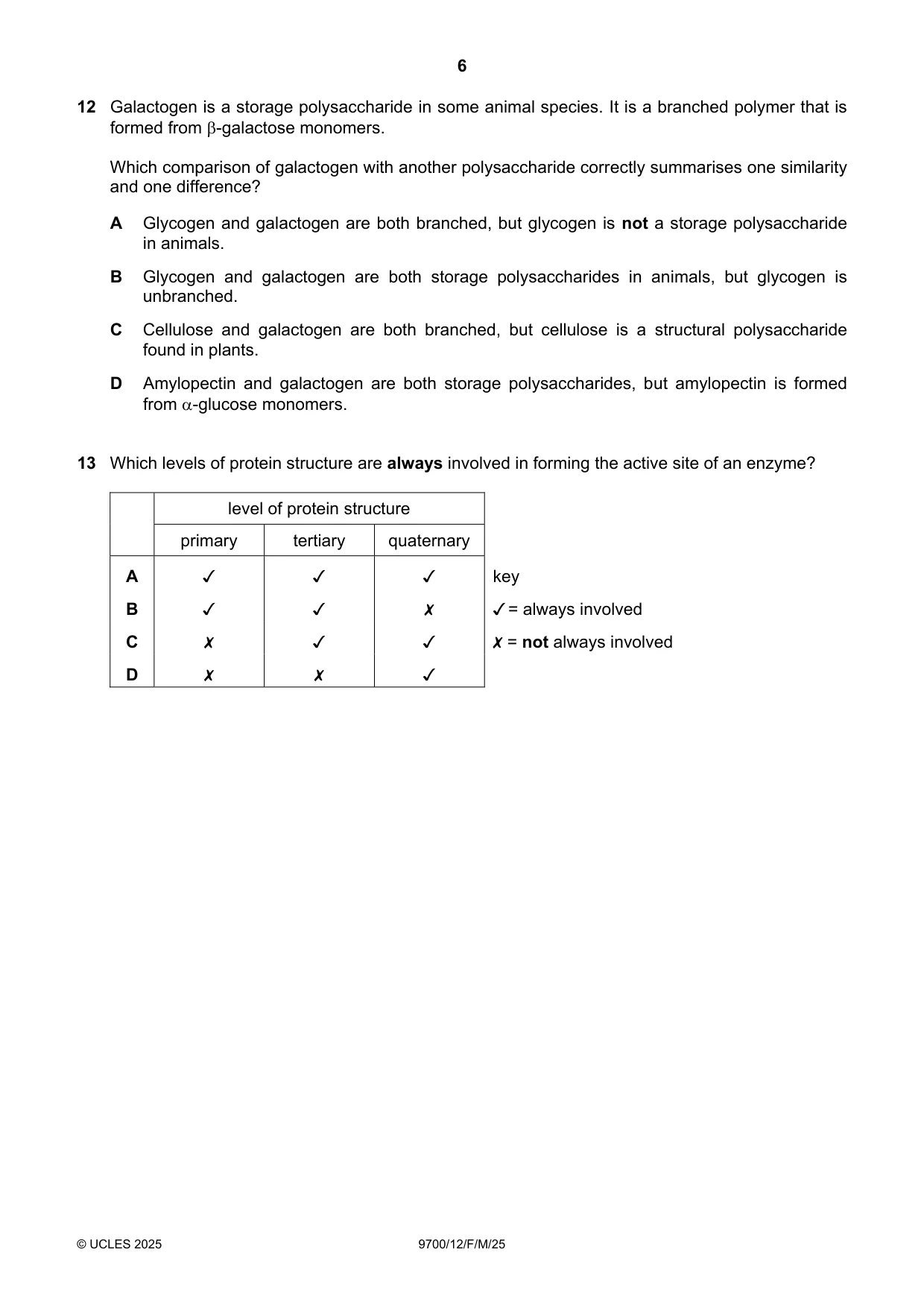
12 Galactogen is a storage polysaccharide in some animal species. It is a branched polymer that is formed from -galactose monomers. Which comparison of galactogen with another polysaccharide correctly summarises one similarity and one difference? A Glycogen and galactogen are both branched, but glycogen is not a storage polysaccharide in animals. B Glycogen and galactogen are both storage polysaccharides in animals, but glycogen is unbranched. C Cellulose and galactogen are both branched, but cellulose is a structural polysaccharide found in plants. D Amylopectin and galactogen are both storage polysaccharides, but amylopectin is formed from -glucose monomers.
Mark scheme: D
Q13 · Which levels of protein structure are always involved in forming the active site of an…
13 Which levels of protein structure are always involved in forming the active site of an enzyme? level of protein structure primary tertiary quaternary key v= always involved X = not always involved
Mark scheme: B
Q14 · Catalase is an enzyme that breaks down hydrogen peroxide into water and oxygen
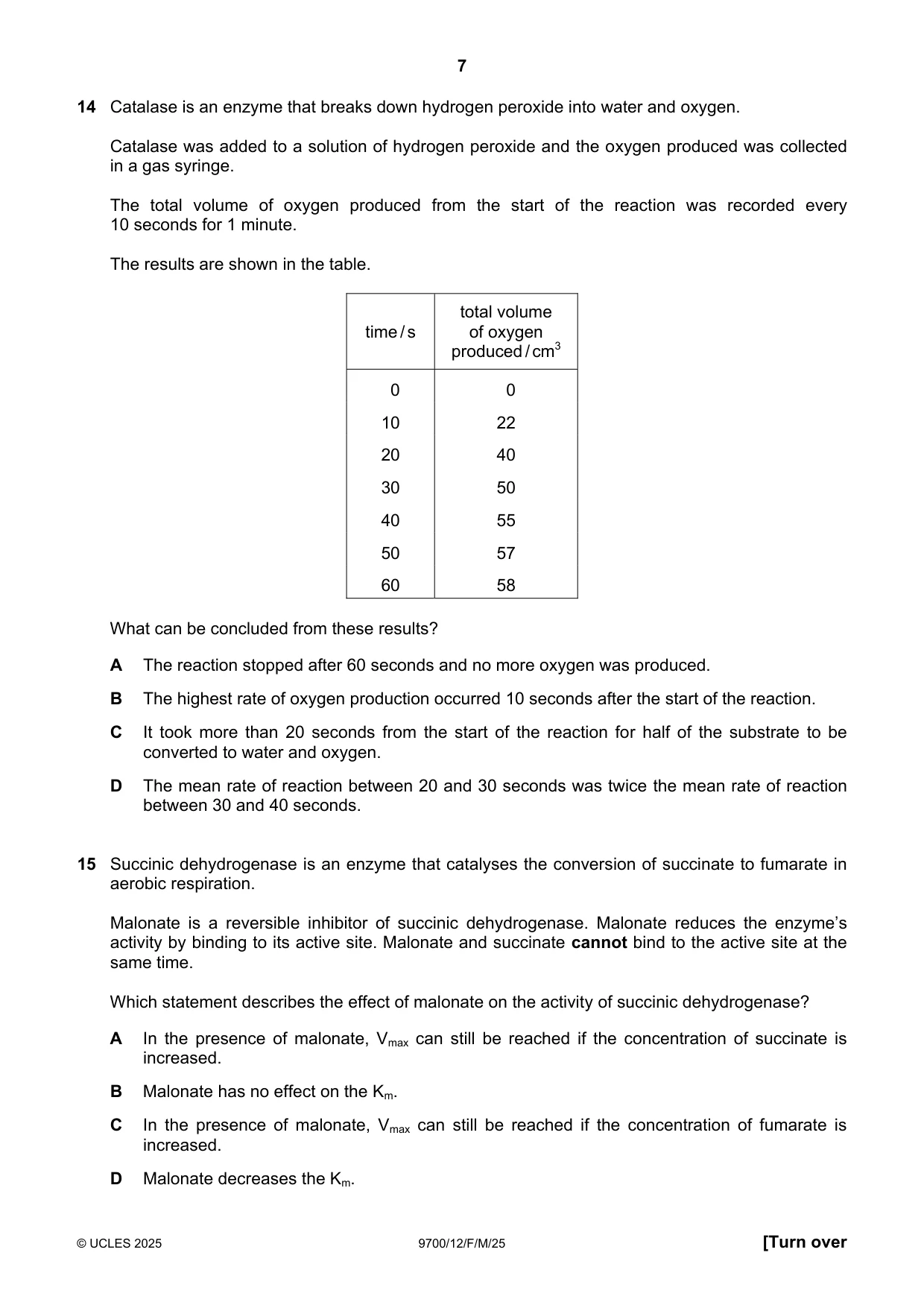
14 Catalase is an enzyme that breaks down hydrogen peroxide into water and oxygen. Catalase was added to a solution of hydrogen peroxide and the oxygen produced was collected in a gas syringe. The total volume of oxygen produced from the start of the reaction was recorded every 10 seconds for 1 minute. The results are shown in the table. total volume time / s of oxygen produced / cm3 0 0 10 22 20 40 30 50 40 55 50 57 60 58 What can be concluded from these results? A The reaction stopped after 60 seconds and no more oxygen was produced. B The highest rate of oxygen production occurred 10 seconds after the start of the reaction. C It took more than 20 seconds from the start of the reaction for half of the substrate to be converted to water and oxygen. D The mean rate of reaction between 20 and 30 seconds was twice the mean rate of reaction between 30 and 40 seconds.
Mark scheme: D
Q15 · Succinic dehydrogenase is an enzyme that catalyses the conversion of succinate to…
15 Succinic dehydrogenase is an enzyme that catalyses the conversion of succinate to fumarate in aerobic respiration. Malonate is a reversible inhibitor of succinic dehydrogenase. Malonate reduces the enzyme’s activity by binding to its active site. Malonate and succinate cannot bind to the active site at the same time. Which statement describes the effect of malonate on the activity of succinic dehydrogenase? A In the presence of malonate, Vmax can still be reached if the concentration of succinate is increased. B Malonate has no effect on the Km. C In the presence of malonate, Vmax can still be reached if the concentration of fumarate is increased. D Malonate decreases the Km.
Mark scheme: A
Q16 · The diagram shows the dimensions of two blocks of agar
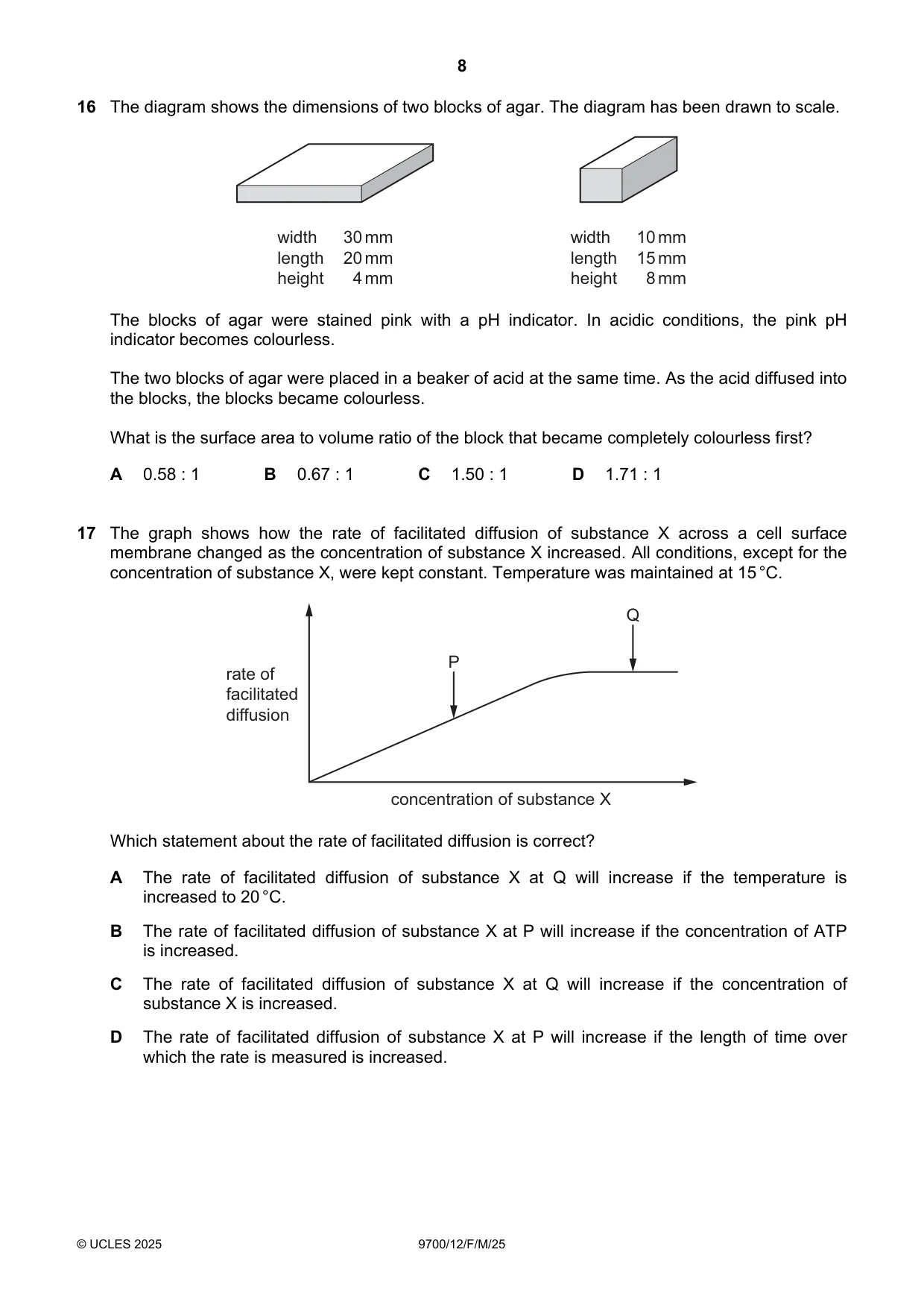
16 The diagram shows the dimensions of two blocks of agar. The diagram has been drawn to scale. width 30 mm width 10 mm length 20 mm length 15 mm height 4 mm height 8 mm The blocks of agar were stained pink with a pH indicator. In acidic conditions, the pink pH indicator becomes colourless. The two blocks of agar were placed in a beaker of acid at the same time. As the acid diffused into the blocks, the blocks became colourless. What is the surface area to volume ratio of the block that became completely colourless first? A 0.58 : 1 B 0.67 : 1 C 1.50 : 1 D 1.71 : 1
Mark scheme: B
Q17 · The graph shows how the rate of facilitated diffusion of substance X across a cell…
17 The graph shows how the rate of facilitated diffusion of substance X across a cell surface membrane changed as the concentration of substance X increased. All conditions, except for the concentration of substance X, were kept constant. Temperature was maintained at 15 °C. Q P rate of facilitated diffusion concentration of substance X Which statement about the rate of facilitated diffusion is correct? A The rate of facilitated diffusion of substance X at Q will increase if the temperature is increased to 20 °C. B The rate of facilitated diffusion of substance X at P will increase if the concentration of ATP is increased. C The rate of facilitated diffusion of substance X at Q will increase if the concentration of substance X is increased. D The rate of facilitated diffusion of substance X at P will increase if the length of time over which the rate is measured is increased.
Mark scheme: A
Q18 · Which molecule forms a bilayer in the cell surface membrane of a bacterial cell?
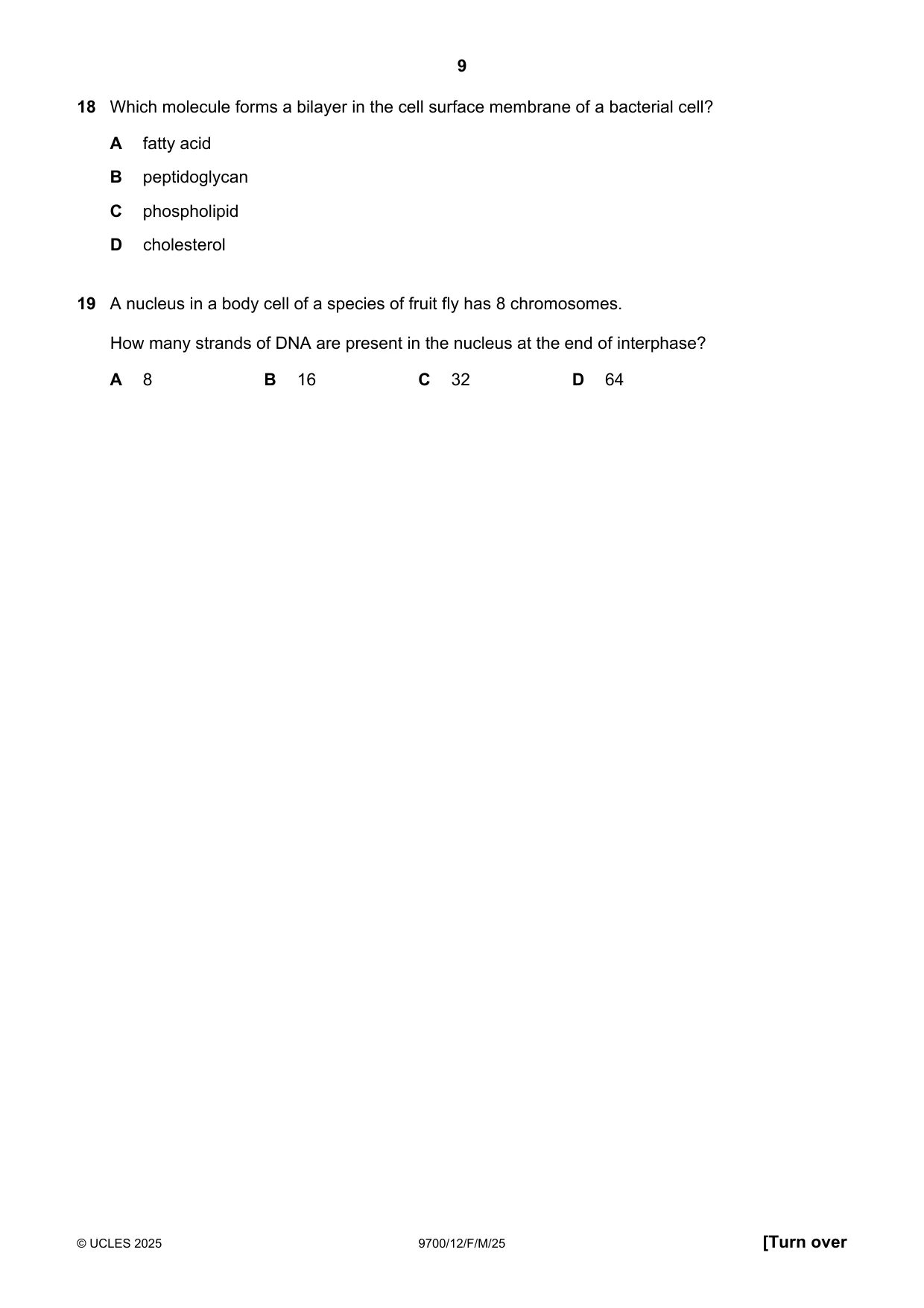
18 Which molecule forms a bilayer in the cell surface membrane of a bacterial cell? A fatty acid B peptidoglycan C phospholipid D cholesterol
Mark scheme: C
Q19 · A nucleus in a body cell of a species of fruit fly has 8 chromosomes
19 A nucleus in a body cell of a species of fruit fly has 8 chromosomes. How many strands of DNA are present in the nucleus at the end of interphase? A 8 B 16 C 32 D 64
Mark scheme: C
More questions on Replication and division of nuclei and cells
Q20 · The photomicrograph shows plant cells in different stages of the mitotic cell cycle
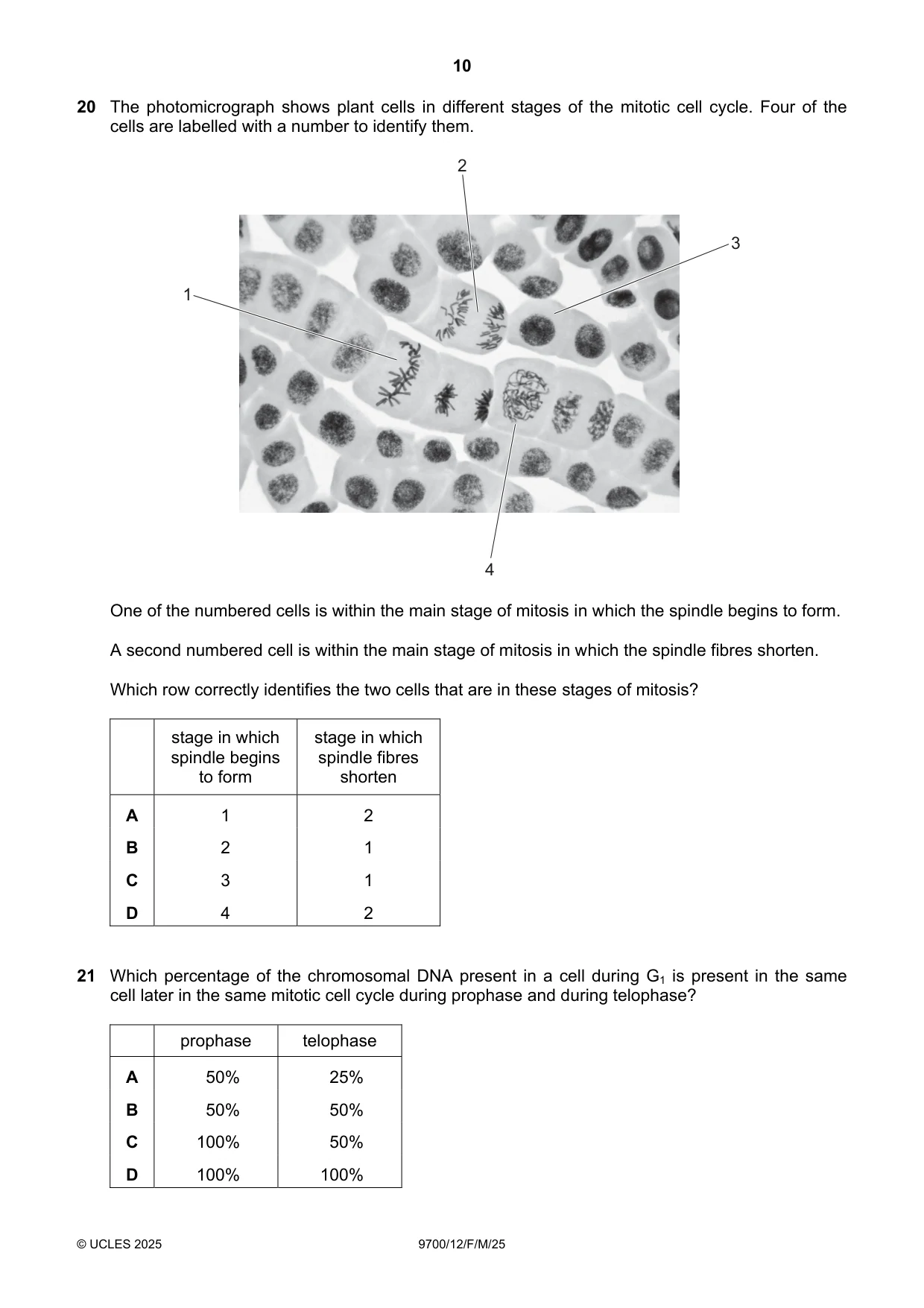
20 The photomicrograph shows plant cells in different stages of the mitotic cell cycle. Four of the cells are labelled with a number to identify them. 2 3 1 4 One of the numbered cells is within the main stage of mitosis in which the spindle begins to form. A second numbered cell is within the main stage of mitosis in which the spindle fibres shorten. Which row correctly identifies the two cells that are in these stages of mitosis? stage in which stage in which spindle begins spindle fibres to form shorten A 1 2 B 2 1 C 3 1 D 4 2
Mark scheme: D
Q21 · Which percentage of the chromosomal DNA present in a cell during G1 is present in the…
21 Which percentage of the chromosomal DNA present in a cell during G1 is present in the same cell later in the same mitotic cell cycle during prophase and during telophase? prophase telophase A 50% 25% B 50% 50% C 100% 50% D 100% 100%
Mark scheme: D
Q22 · The statements are about two genes and their protein products that can have a role in…
22 The statements are about two genes and their protein products that can have a role in tumour formation. ● The protein coded for by the PTEN gene prevents cells from growing and dividing too rapidly. ● The protein coded for by the p53 gene prevents cells progressing through the mitotic cell cycle if the cells have damaged DNA. Which combination of mutations of these two genes in an individual is most likely to result in the formation of a tumour? gene PTEN p53 A mutation present mutation present B no mutation mutation present C mutation present no mutation D no mutation no mutation
Mark scheme: A
More questions on Replication and division of nuclei and cells
Q23 · Telomerase is an enzyme that prevents the shortening of telomeres
23 Telomerase is an enzyme that prevents the shortening of telomeres. It is not present in most normal cells, but is active in an estimated 85% to 95% of human tumour cells. Which statement explains the effect of telomerase on human tumour cells? A Telomerase triggers a self-destruct process, known as apoptosis, ending the life of the cell. B Telomerase damages the chromosomes so they become genetically unstable and are unable to replicate and divide. C Telomerase helps human tumour cells avoid senescence, or cell death, which is usually the expected consequence of repeated cell division. D Telomerase enables the human tumour cells to divide more rapidly by reducing the time taken for a complete mitotic cell cycle.
Mark scheme: C
More questions on Replication and division of nuclei and cells
Q24 · Which diagram correctly represents one of the base pairs of DNA?
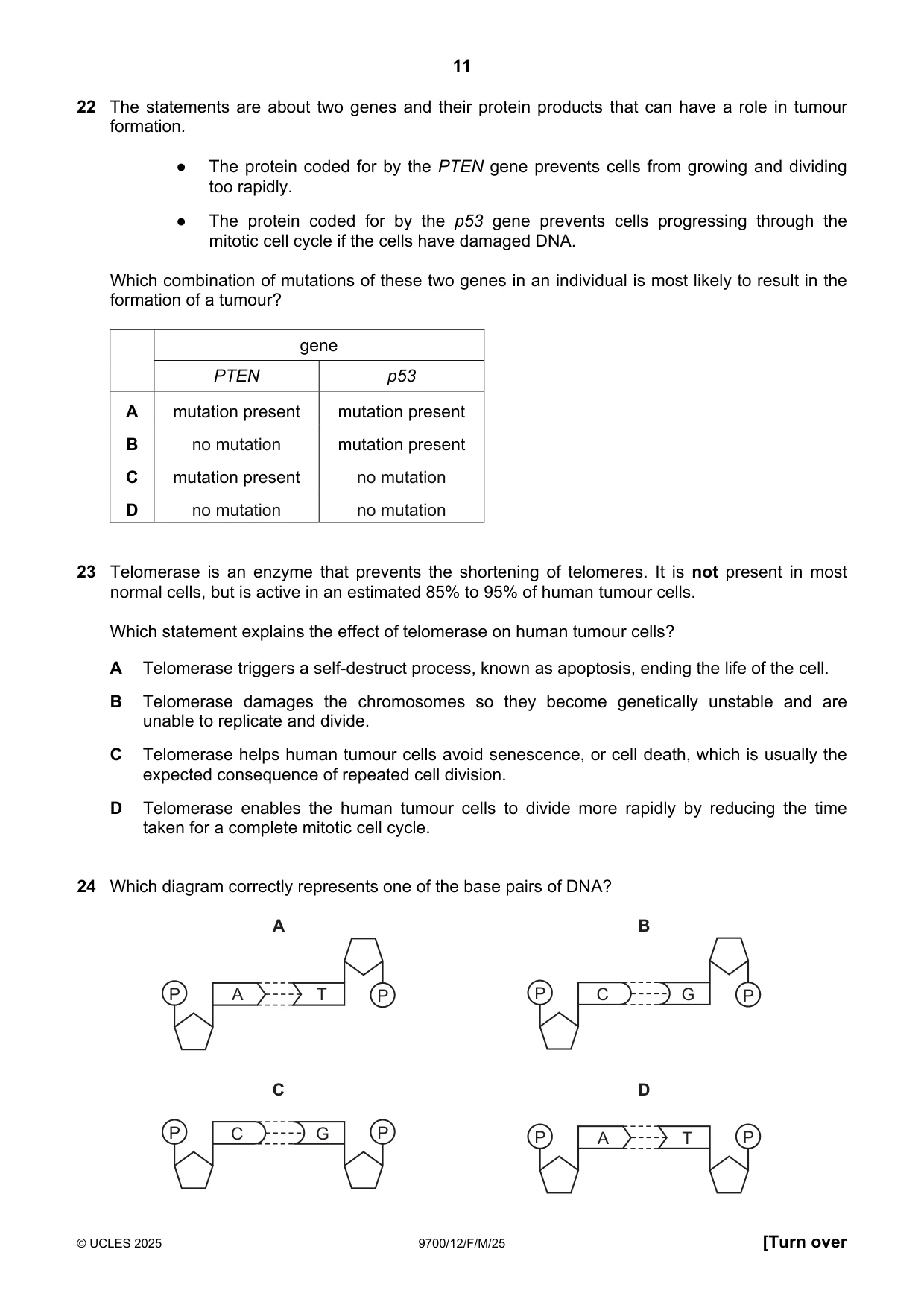
24 Which diagram correctly represents one of the base pairs of DNA? A B P A T P P C G P C D P C G P P A T P
Mark scheme: B
More questions on Structure of nucleic acids and replication of DNA
Q25 · The diagram represents the process of transcription of a gene in the nucleus of an animal…
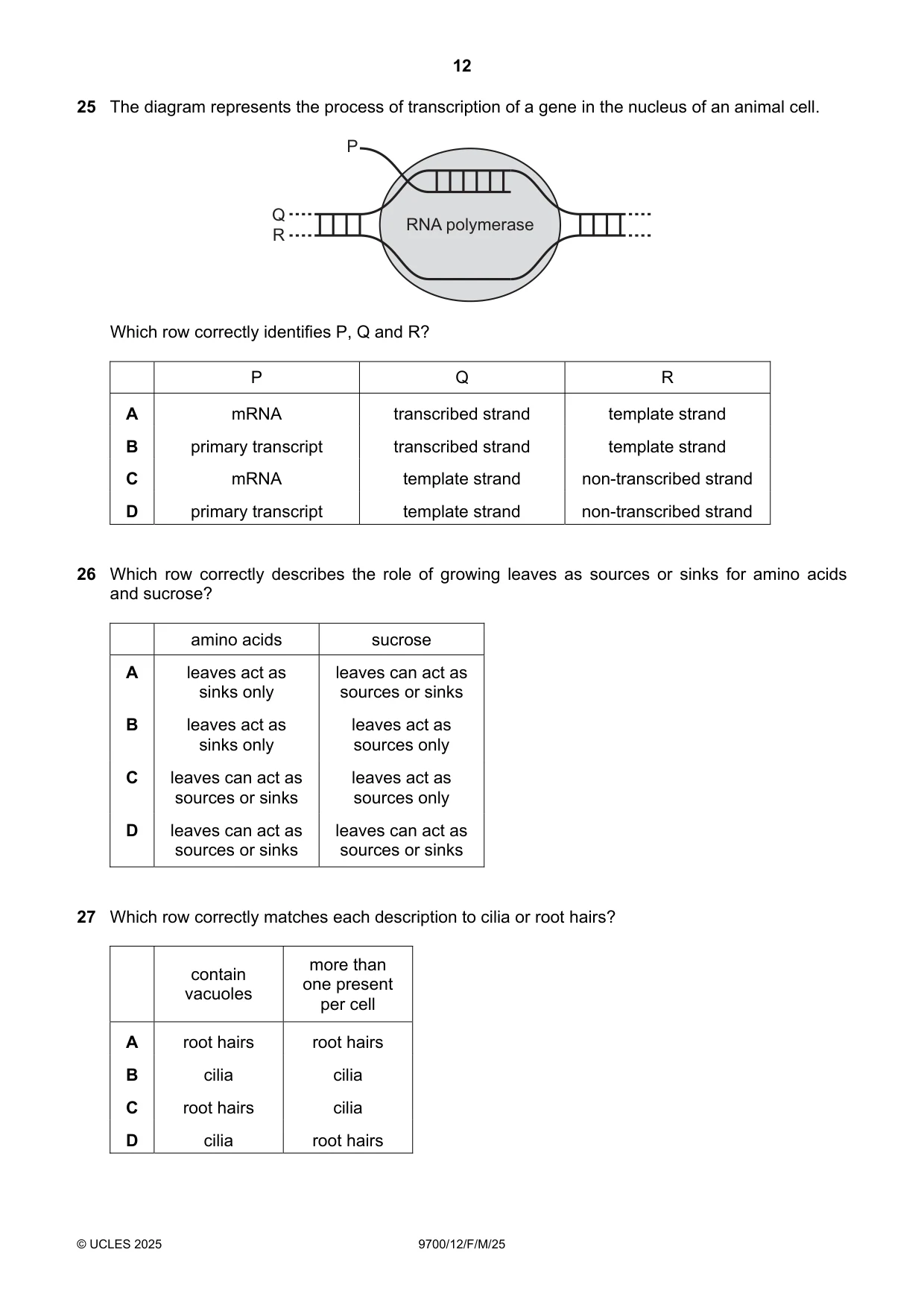
25 The diagram represents the process of transcription of a gene in the nucleus of an animal cell. P Q RNA polymerase R Which row correctly identifies P, Q and R? P Q R A mRNA transcribed strand template strand B primary transcript transcribed strand template strand C mRNA template strand non-transcribed strand D primary transcript template strand non-transcribed strand
Mark scheme: D
Q26 · Which row correctly describes the role of growing leaves as sources or sinks for amino…
26 Which row correctly describes the role of growing leaves as sources or sinks for amino acids and sucrose? amino acids sucrose A leaves act as leaves can act as sinks only sources or sinks B leaves act as leaves act as sinks only sources only C leaves can act as leaves act as sources or sinks sources only D leaves can act as leaves can act as sources or sinks sources or sinks
Mark scheme: D
Q27 · Which row correctly matches each description to cilia or root hairs?
27 Which row correctly matches each description to cilia or root hairs? more than contain one present vacuoles per cell A root hairs root hairs B cilia cilia C root hairs cilia D cilia root hairs
Mark scheme: C
Q28 · Which changes occur as amino acids are moved into phloem sieve tubes at a source?
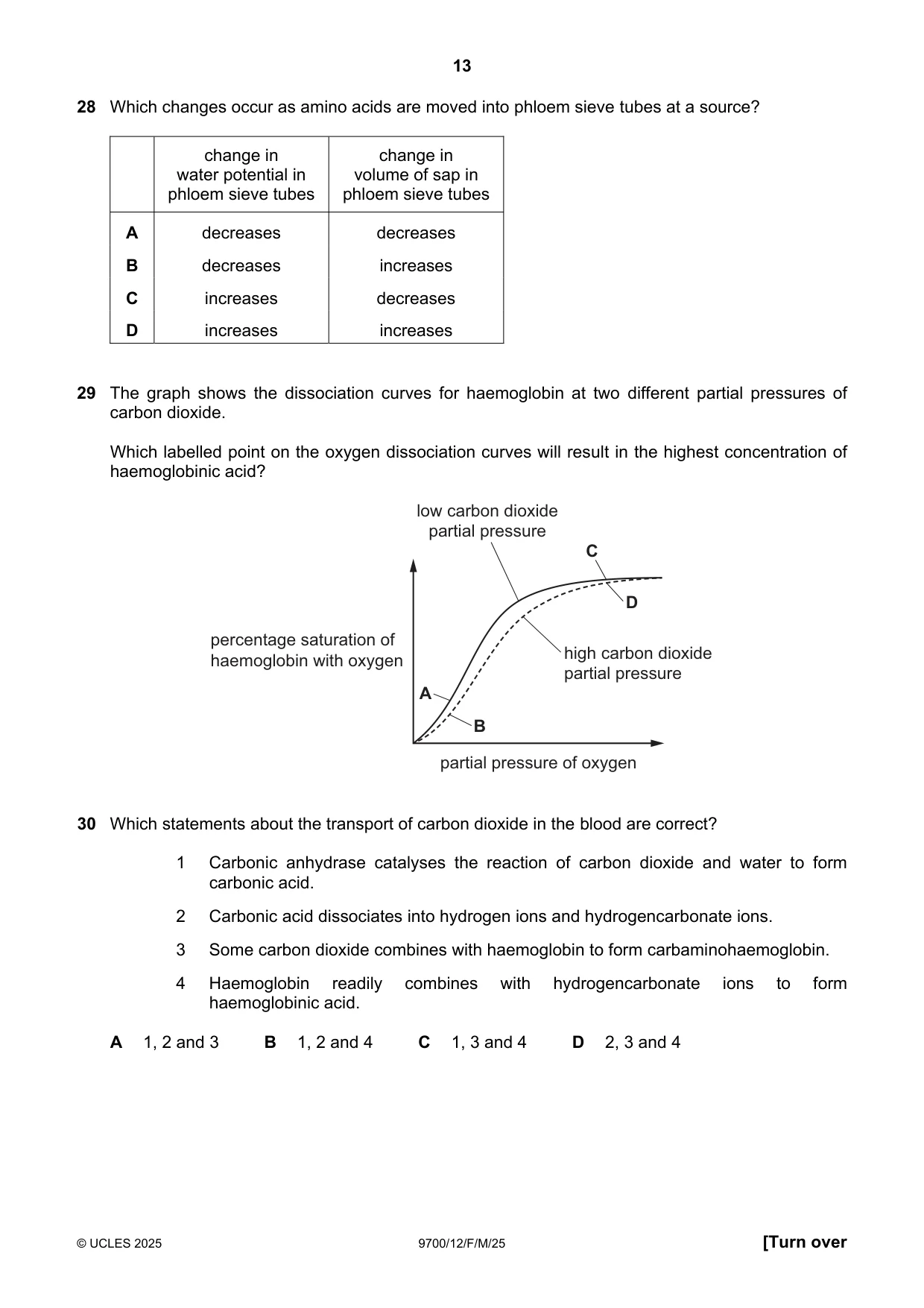
28 Which changes occur as amino acids are moved into phloem sieve tubes at a source? change in change in water potential in volume of sap in phloem sieve tubes phloem sieve tubes A decreases decreases B decreases increases C increases decreases D increases increases
Mark scheme: B
Q29 · The graph shows the dissociation curves for haemoglobin at two different partial…
29 The graph shows the dissociation curves for haemoglobin at two different partial pressures of carbon dioxide. Which labelled point on the oxygen dissociation curves will result in the highest concentration of haemoglobinic acid? low carbon dioxide partial pressure C D percentage saturation of haemoglobin with oxygen high carbon dioxide partial pressure A B partial pressure of oxygen
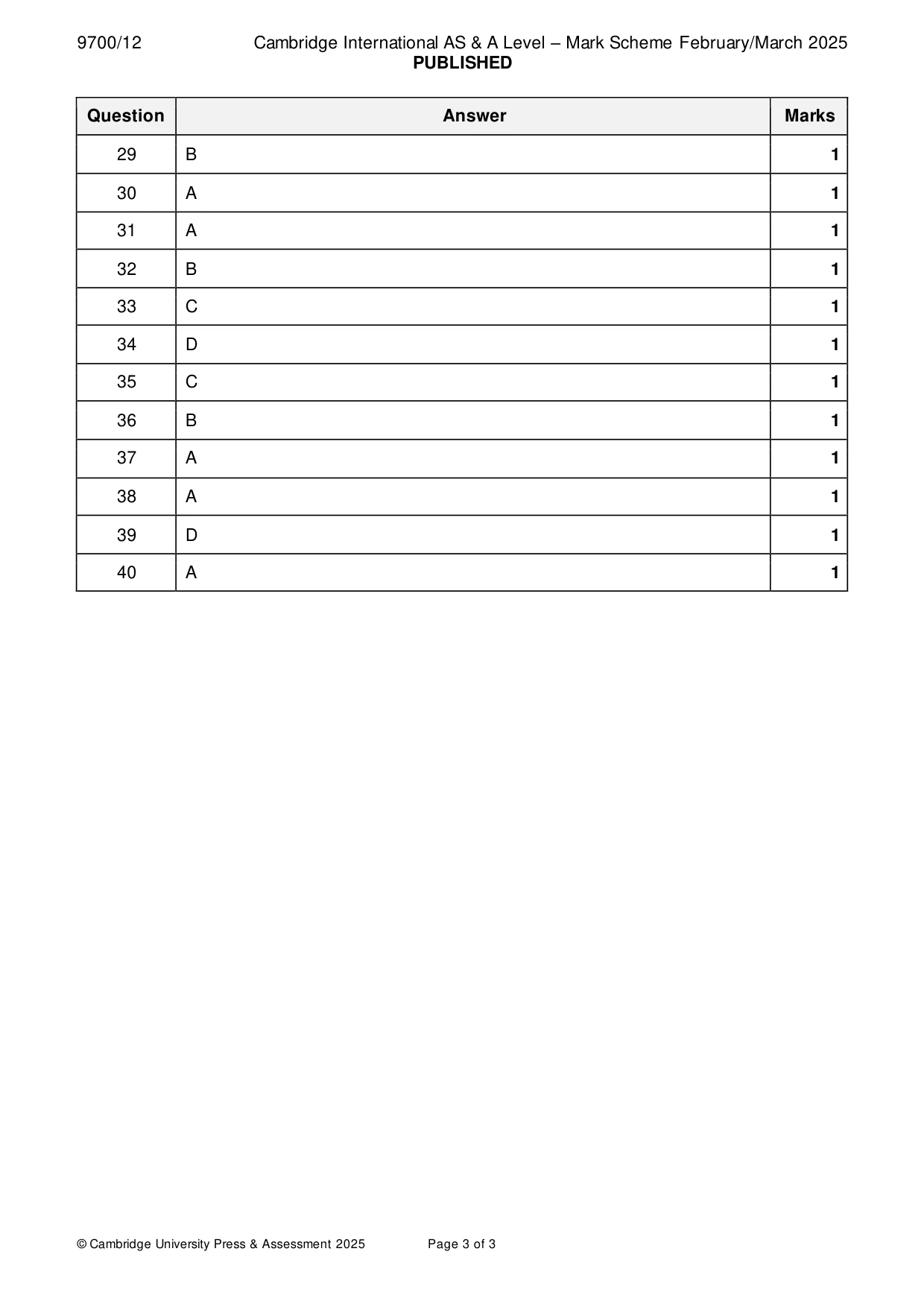
Mark scheme: B
Q30 · Which statements about the transport of carbon dioxide in the blood are correct?
30 Which statements about the transport of carbon dioxide in the blood are correct? 1 Carbonic anhydrase catalyses the reaction of carbon dioxide and water to form carbonic acid. 2 Carbonic acid dissociates into hydrogen ions and hydrogencarbonate ions. 3 Some carbon dioxide combines with haemoglobin to form carbaminohaemoglobin. 4 Haemoglobin readily combines with hydrogencarbonate ions to form haemoglobinic acid. A 1, 2 and 3 B 1, 2 and 4 C 1, 3 and 4 D 2, 3 and 4
Mark scheme: A
Q31 · What happens as a result of the blood pressure in the left ventricle becoming higher than…
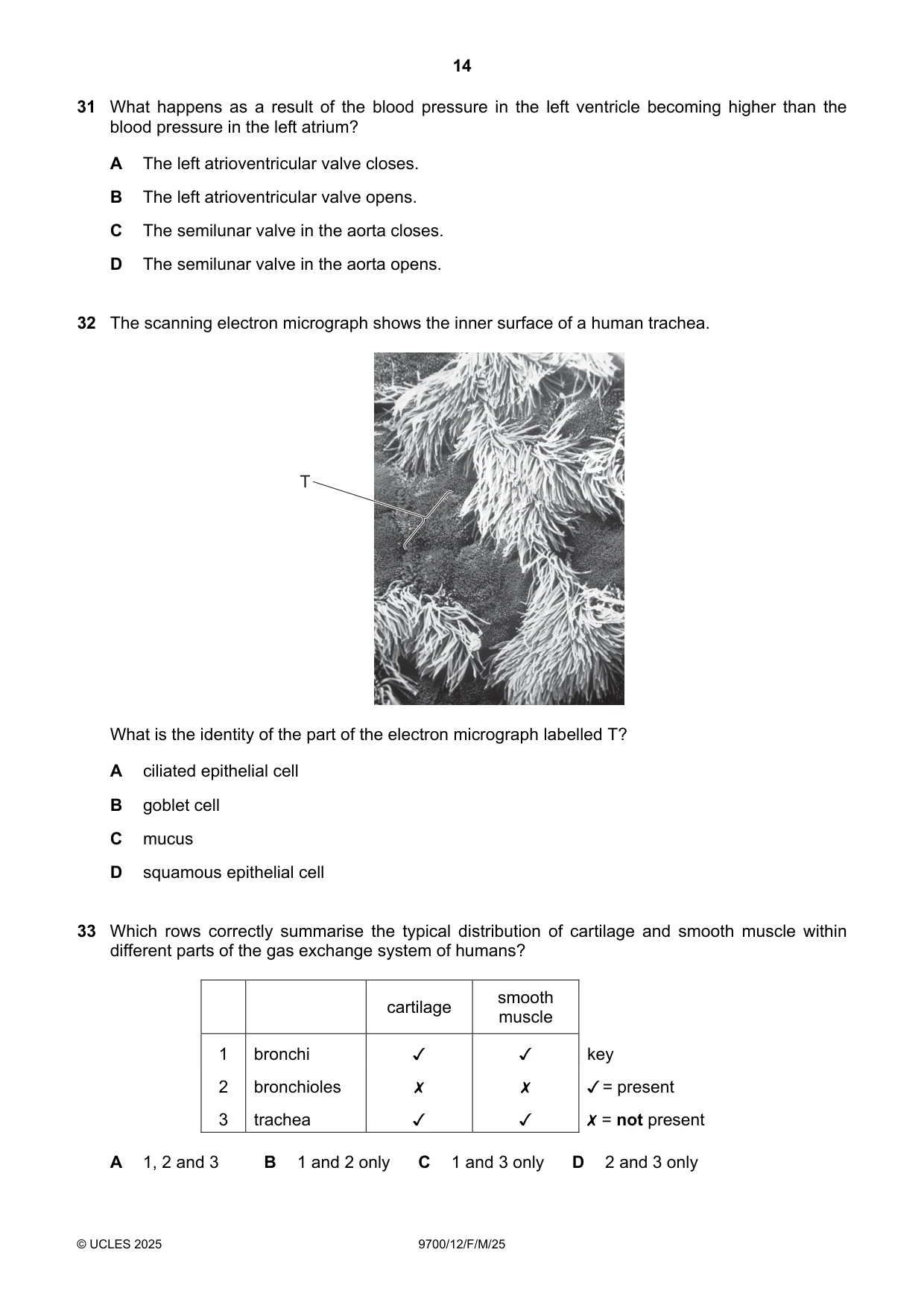
31 What happens as a result of the blood pressure in the left ventricle becoming higher than the blood pressure in the left atrium? A The left atrioventricular valve closes. B The left atrioventricular valve opens. C The semilunar valve in the aorta closes. D The semilunar valve in the aorta opens.
Mark scheme: A
Q32 · The scanning electron micrograph shows the inner surface of a human trachea
32 The scanning electron micrograph shows the inner surface of a human trachea. T What is the identity of the part of the electron micrograph labelled T? A ciliated epithelial cell B goblet cell C mucus D squamous epithelial cell
Mark scheme: B
Q33 · Which rows correctly summarise the typical distribution of cartilage and smooth muscle…
33 Which rows correctly summarise the typical distribution of cartilage and smooth muscle within different parts of the gas exchange system of humans? F smooth cartilage muscle 1 | bronchi Jv J key 2 | bronchioles x x ¥ = present trachea Jv v X = not present A 1,2 and3 B 1tand2only C 1and3only D = 2and3only
Mark scheme: C
Q34 · A molecule of oxygen diffuses from the air in an alveolus to haemoglobin in a red blood…
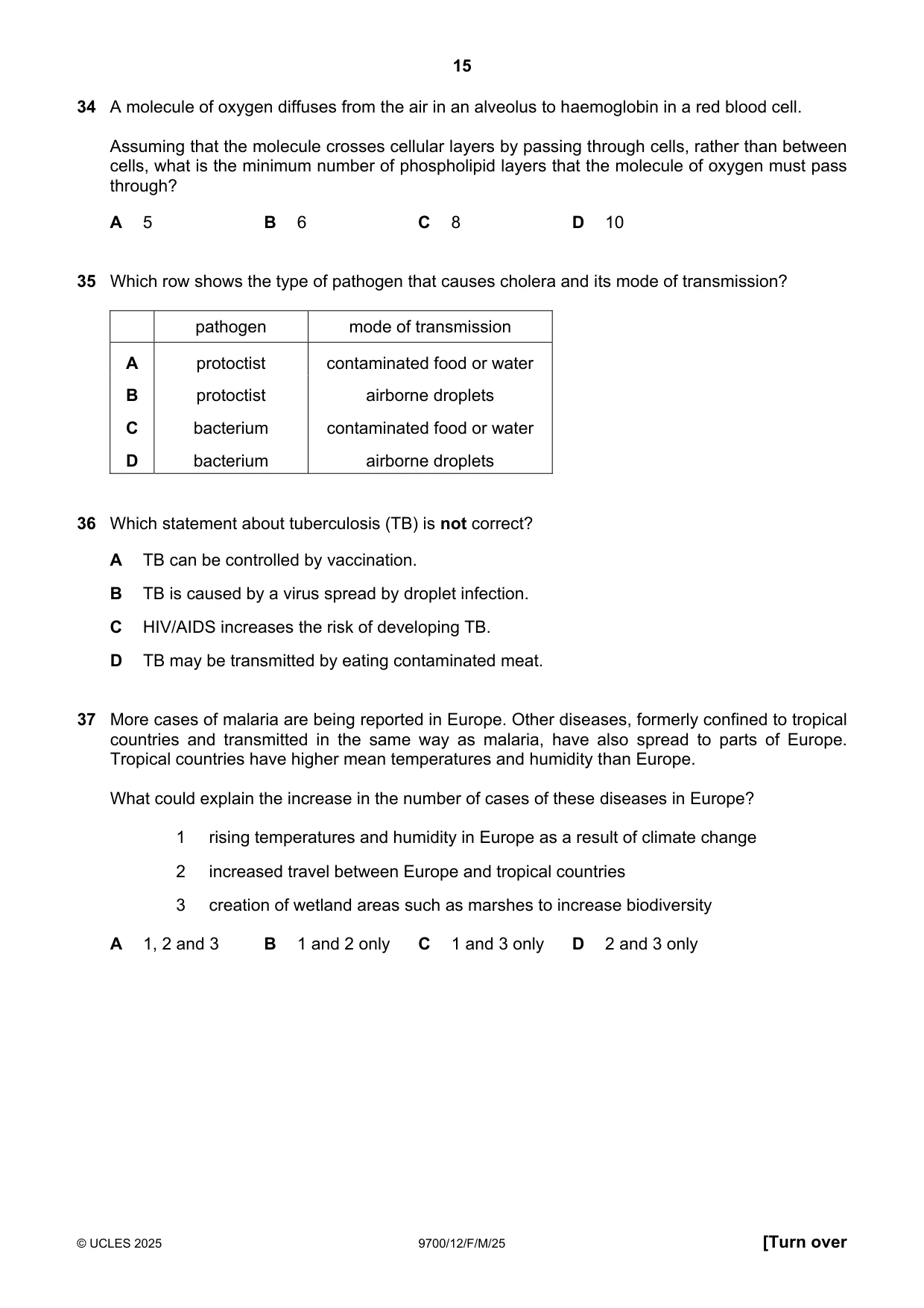
34 A molecule of oxygen diffuses from the air in an alveolus to haemoglobin in a red blood cell. Assuming that the molecule crosses cellular layers by passing through cells, rather than between cells, what is the minimum number of phospholipid layers that the molecule of oxygen must pass through? A 5 B 6 C 8 D 10
Mark scheme: D
Q35 · Which row shows the type of pathogen that causes cholera and its mode of transmission?
35 Which row shows the type of pathogen that causes cholera and its mode of transmission? pathogen mode of transmission A protoctist contaminated food or water B protoctist airborne droplets C bacterium contaminated food or water D bacterium airborne droplets
Mark scheme: C
Q36 · Which statement about tuberculosis (TB) is not correct?
36 Which statement about tuberculosis (TB) is not correct? A TB can be controlled by vaccination. B TB is caused by a virus spread by droplet infection. C HIV/AIDS increases the risk of developing TB. D TB may be transmitted by eating contaminated meat.
Mark scheme: B
Q37 · More cases of malaria are being reported in Europe
37 More cases of malaria are being reported in Europe. Other diseases, formerly confined to tropical countries and transmitted in the same way as malaria, have also spread to parts of Europe. Tropical countries have higher mean temperatures and humidity than Europe. What could explain the increase in the number of cases of these diseases in Europe? 1 rising temperatures and humidity in Europe as a result of climate change 2 increased travel between Europe and tropical countries 3 creation of wetland areas such as marshes to increase biodiversity A 1, 2 and 3 B 1 and 2 only C 1 and 3 only D 2 and 3 only
Mark scheme: A
Q38 · The diagrams show three different bonds
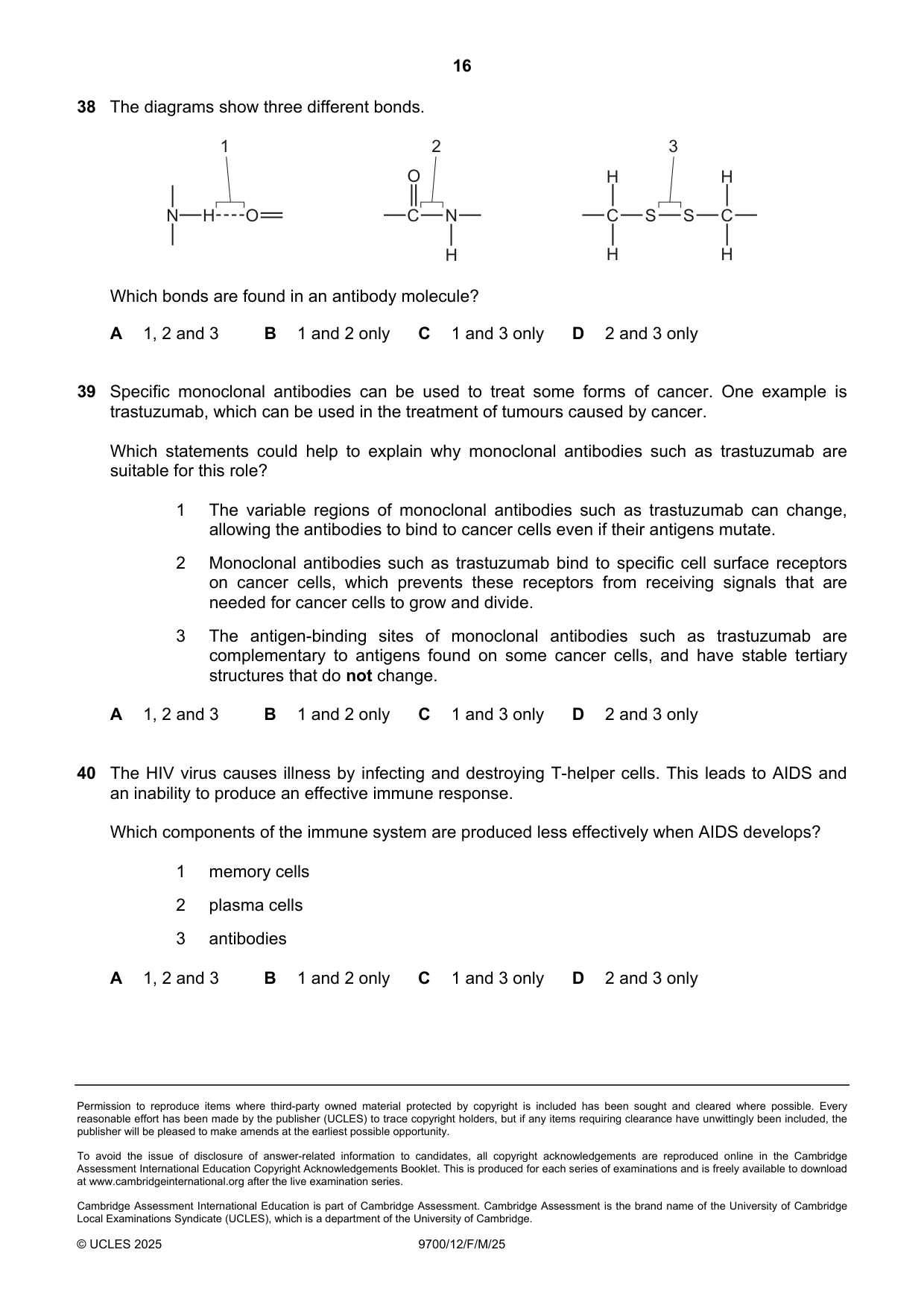
38 The diagrams show three different bonds. 1 2 3 O H H N H O C N C S S C H H H Which bonds are found in an antibody molecule? A 1, 2 and 3 B 1 and 2 only C 1 and 3 only D 2 and 3 only
Mark scheme: A
Q39 · Specific monoclonal antibodies can be used to treat some forms of cancer
39 Specific monoclonal antibodies can be used to treat some forms of cancer. One example is trastuzumab, which can be used in the treatment of tumours caused by cancer. Which statements could help to explain why monoclonal antibodies such as trastuzumab are suitable for this role? 1 The variable regions of monoclonal antibodies such as trastuzumab can change, allowing the antibodies to bind to cancer cells even if their antigens mutate. 2 Monoclonal antibodies such as trastuzumab bind to specific cell surface receptors on cancer cells, which prevents these receptors from receiving signals that are needed for cancer cells to grow and divide. 3 The antigen-binding sites of monoclonal antibodies such as trastuzumab are complementary to antigens found on some cancer cells, and have stable tertiary structures that do not change. A 1, 2 and 3 B 1 and 2 only C 1 and 3 only D 2 and 3 only
Mark scheme: D
Q40 · The HIV virus causes illness by infecting and destroying T-helper cells
40 The HIV virus causes illness by infecting and destroying T-helper cells. This leads to AIDS and an inability to produce an effective immune response. Which components of the immune system are produced less effectively when AIDS develops? 1 memory cells 2 plasma cells 3 antibodies A 1, 2 and 3 B 1 and 2 only C 1 and 3 only D 2 and 3 only
Mark scheme: A
What was in this paper
The subtopics covered by these 40 questions, and how many questions each got. Open one in a new tab to see every Cambridge question on it.
5Carbohydrates and lipids4Infectious diseases3Replication and division of nuclei and cells3The gas exchange system3Antibodies and vaccination2Chromosome behaviour in mitosis2Factors that affect enzyme action2Movement into and out of cells2Transport mechanisms2Transport of oxygen and carbon dioxide2Fluid mosaic membranes1Mode of action of enzymes1Protein synthesis1Proteins1Structure of nucleic acids and replication of DNA1Structure of transport tissues1Testing for biological molecules1The heart1The immune system1The microscope in cell studies1What you needed in this session
Cambridge’s own grade thresholds for 2025 Feb/March, Paper 1 · Variant 2. A higher threshold means an easier paper — the bar moves with how the cohort did.