Cambridge A Level Biology 9700 — 2019 Oct/Nov Paper 1 · Variant 2
9700/12/O/N/19 · 40 questions · 40 marks · ≈45 min
The question paper and its mark scheme, free to read here and free to download. This is Cambridge’s own paper, exactly as it was sat.
Question paper20 pages
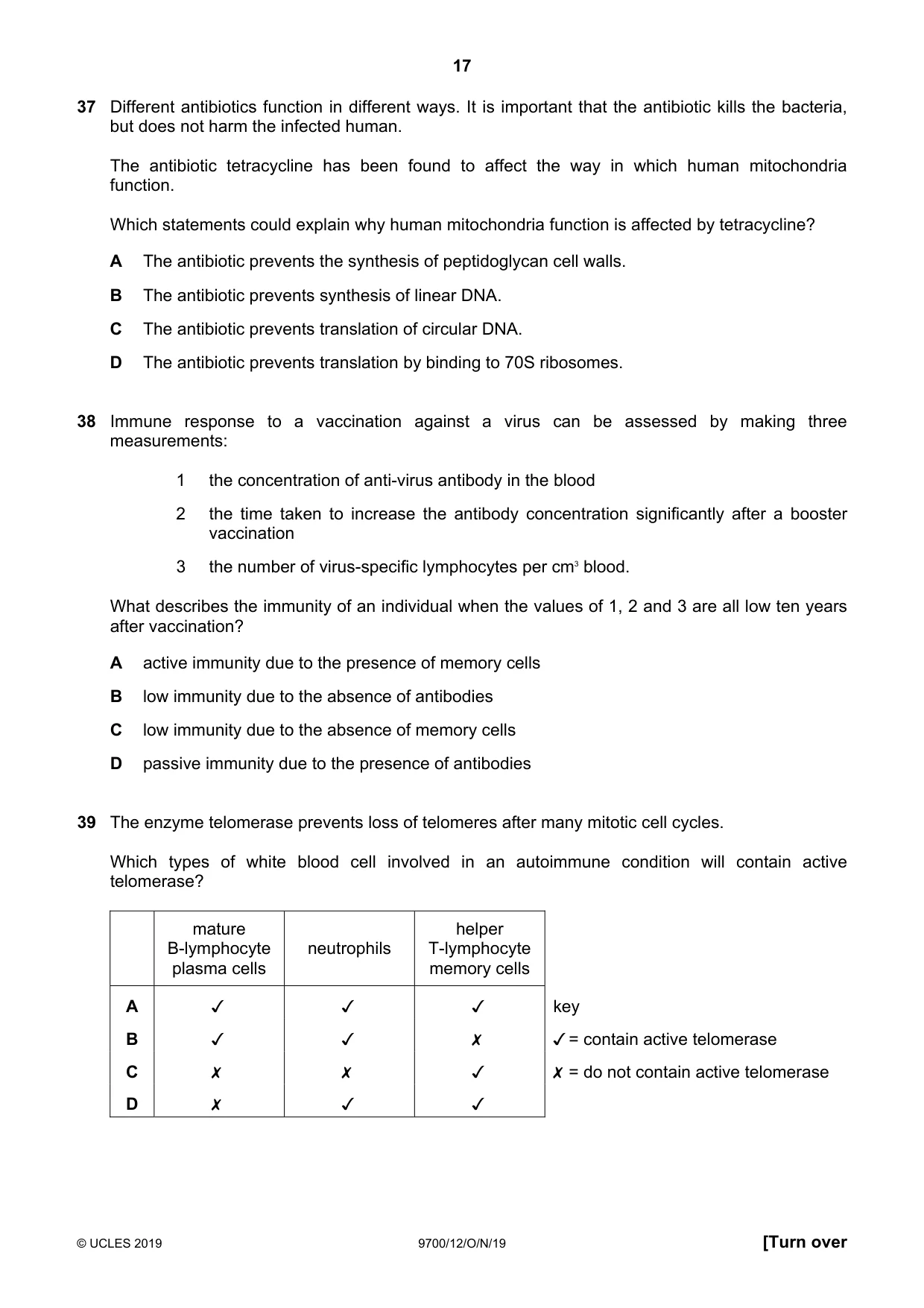
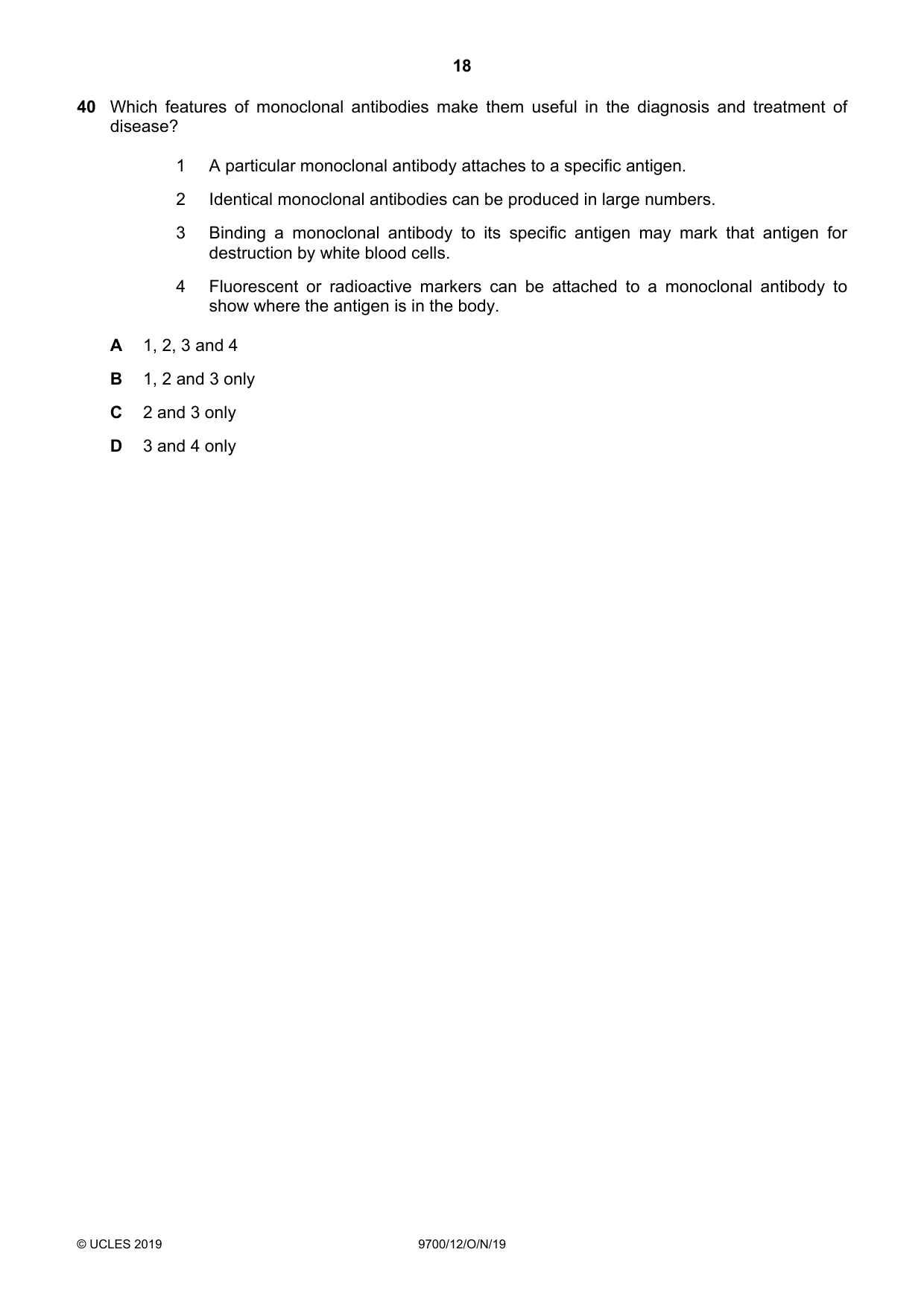


Mark scheme3 pages
Answers below. Sit the paper first if you are practising.
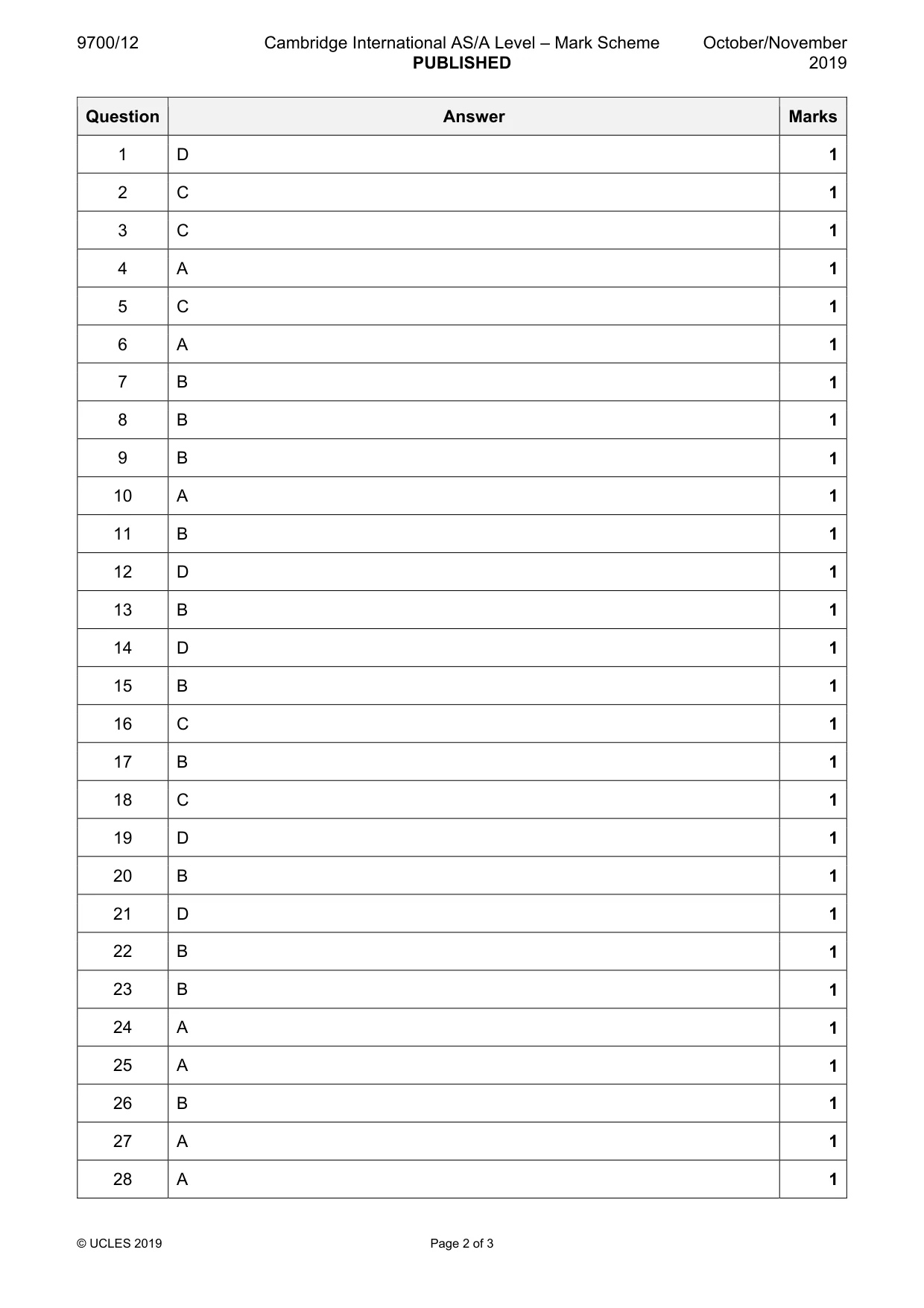
Questions as text
Q1 · A student calibrated the scale on an eyepiece graticule in the eyepiece lens of a light…
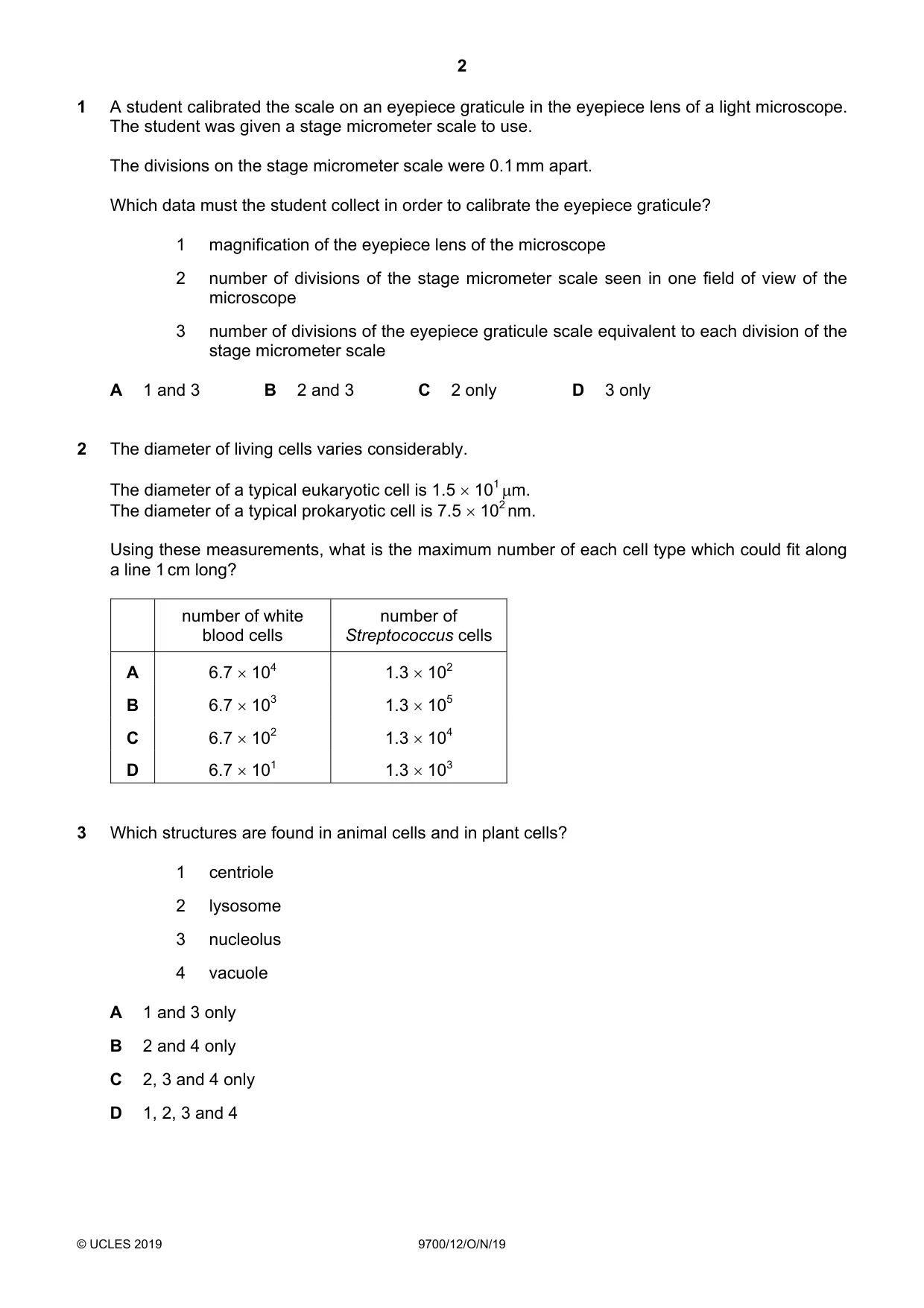
1 A student calibrated the scale on an eyepiece graticule in the eyepiece lens of a light microscope. The student was given a stage micrometer scale to use. The divisions on the stage micrometer scale were 0.1 mm apart. Which data must the student collect in order to calibrate the eyepiece graticule? 1 magnification of the eyepiece lens of the microscope 2 number of divisions of the stage micrometer scale seen in one field of view of the microscope 3 number of divisions of the eyepiece graticule scale equivalent to each division of the stage micrometer scale A 1 and 3 B 2 and 3 C 2 only D 3 only
Mark scheme: D
Q2 · The diameter of living cells varies considerably
2 The diameter of living cells varies considerably. The diameter of a typical eukaryotic cell is 1.5 × 101 µm. The diameter of a typical prokaryotic cell is 7.5 × 10² nm. Using these measurements, what is the maximum number of each cell type which could fit along a line 1 cm long? number of white number of blood cells Streptococcus cells A 6.7 × 10⁴ 1.3 × 10² B 6.7 × 10³ 1.3 × 10⁵ C 6.7 × 10² 1.3 × 10⁴ D 6.7 × 101 1.3 × 10³
Mark scheme: C
More questions on Cells as the basic units of living organisms
Q3 · Which structures are found in animal cells and in plant cells?
3 Which structures are found in animal cells and in plant cells? 1 centriole 2 lysosome 3 nucleolus 4 vacuole A 1 and 3 only B 2 and 4 only C 2, 3 and 4 only D 1, 2, 3 and 4
Mark scheme: C
More questions on Cells as the basic units of living organisms
Q4 · Which features shown in the diagram can be present in eukaryotes?
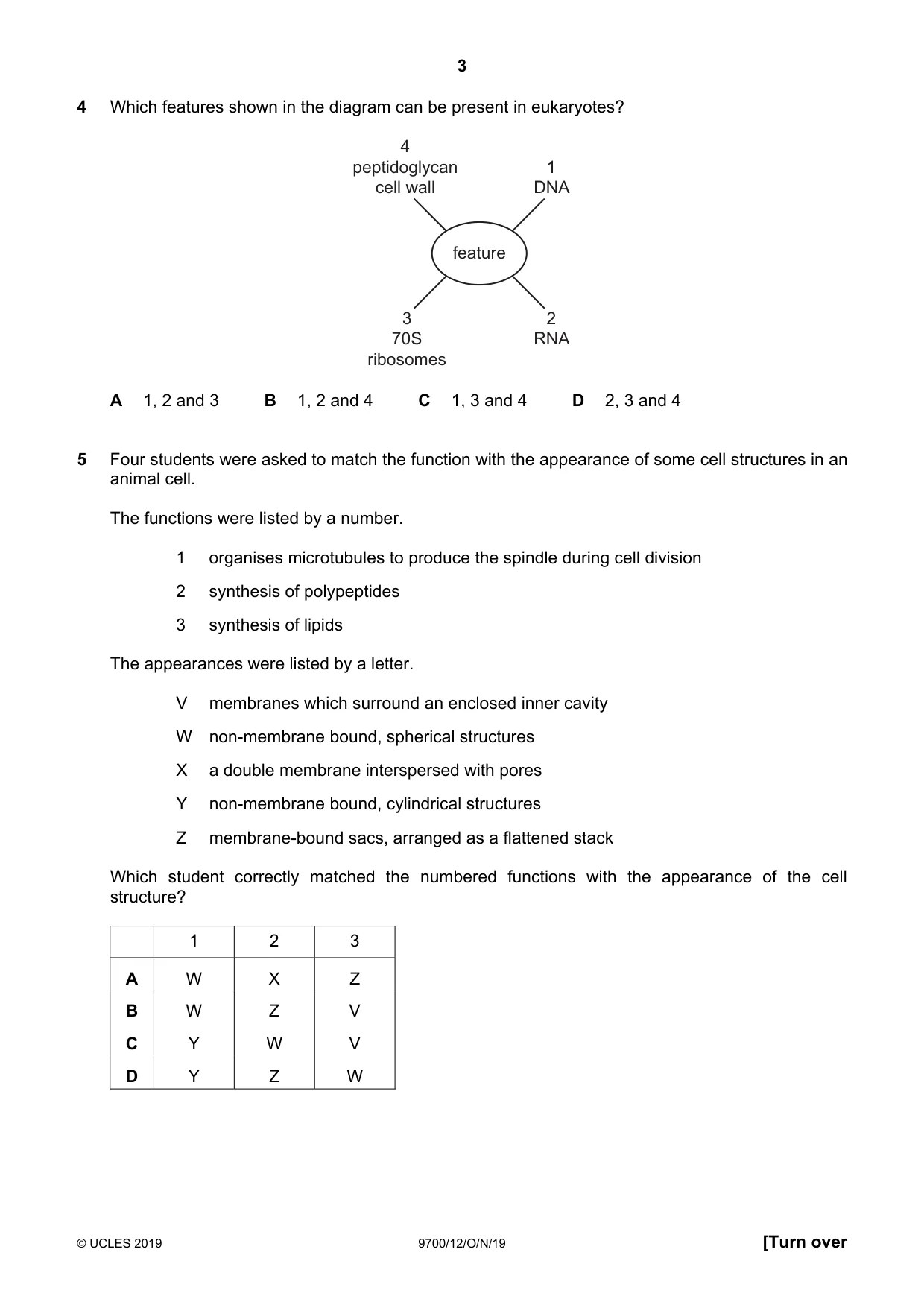
4 Which features shown in the diagram can be present in eukaryotes? 4 peptidoglycan 1 cell wall DNA feature 3 2 70S RNA ribosomes A 1, 2 and 3 B 1, 2 and 4 C 1, 3 and 4 D 2, 3 and 4
Mark scheme: A
More questions on Cells as the basic units of living organisms
Q5 · Four students were asked to match the function with the appearance of some cell…
5 Four students were asked to match the function with the appearance of some cell structures in an animal cell. The functions were listed by a number. 1 organises microtubules to produce the spindle during cell division 2 synthesis of polypeptides 3 synthesis of lipids The appearances were listed by a letter. V membranes which surround an enclosed inner cavity W non-membrane bound, spherical structures X a double membrane interspersed with pores Y non-membrane bound, cylindrical structures Z membrane-bound sacs, arranged as a flattened stack Which student correctly matched the numbered functions with the appearance of the cell structure? 1 2 3 A W X Z B W Z V C Y W V D Y Z W
Mark scheme: C
More questions on Cells as the basic units of living organisms
Q6 · Which types of RNA are present in prokaryotic cells and in eukaryotic cells?
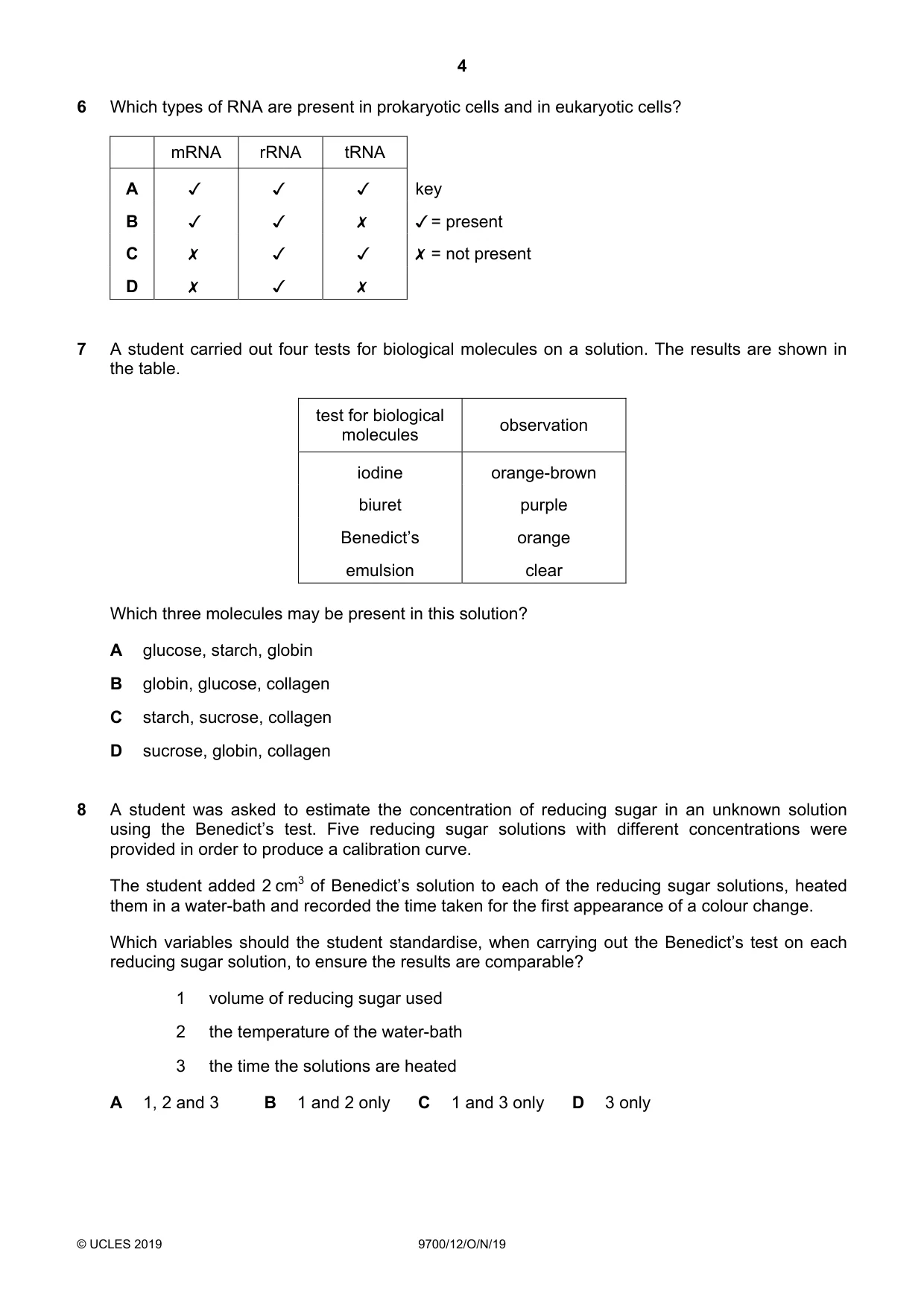
6 Which types of RNA are present in prokaryotic cells and in eukaryotic cells? mRNA rRNA tRNA v v v key v¥ = present 0 0O WwW > v v x x Jv J X = not present x Jv x
Mark scheme: A
Q7 · A student carried out four tests for biological molecules on a solution
7 A student carried out four tests for biological molecules on a solution. The results are shown in the table. test for biological observation molecules iodine orange-brown biuret purple Benedict’s orange emulsion clear Which three molecules may be present in this solution? A glucose, starch, globin B globin, glucose, collagen C starch, sucrose, collagen D sucrose, globin, collagen
Mark scheme: B
Q8 · A student was asked to estimate the concentration of reducing sugar in an unknown…
8 A student was asked to estimate the concentration of reducing sugar in an unknown solution using the Benedict’s test. Five reducing sugar solutions with different concentrations were provided in order to produce a calibration curve. The student added 2 cm3 of Benedict’s solution to each of the reducing sugar solutions, heated them in a water-bath and recorded the time taken for the first appearance of a colour change. Which variables should the student standardise, when carrying out the Benedict’s test on each reducing sugar solution, to ensure the results are comparable? 1 volume of reducing sugar used 2 the temperature of the water-bath 3 the time the solutions are heated A 1, 2 and 3 B 1 and 2 only C 1 and 3 only D 3 only
Mark scheme: B
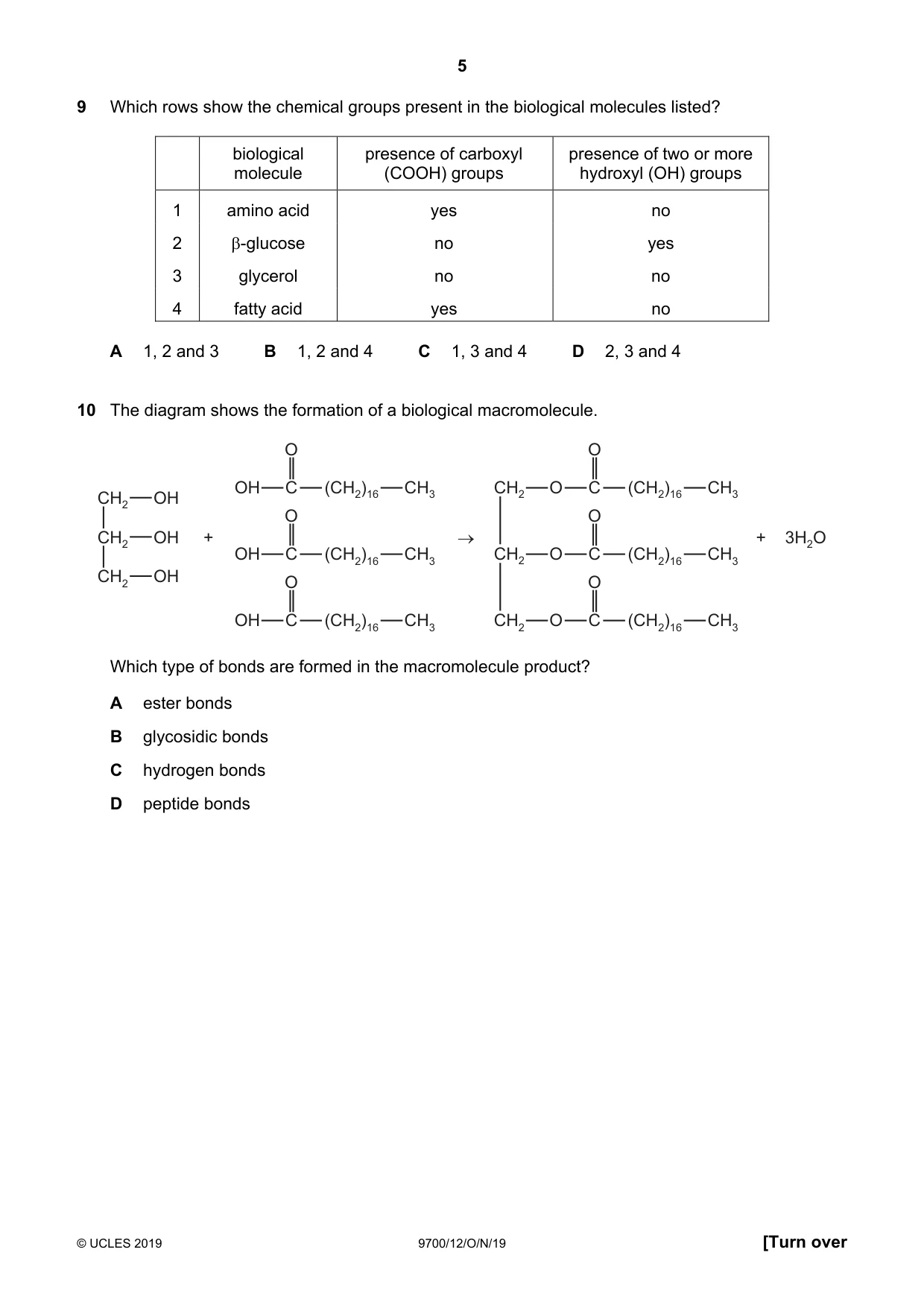
Q9 · Which rows show the chemical groups present in the biological molecules listed?
9 Which rows show the chemical groups present in the biological molecules listed? biological presence of carboxyl presence of two or more molecule (COOH) groups hydroxyl (OH) groups 1 amino acid yes no 2 β-glucose no yes 3 glycerol no no 4 fatty acid yes no A 1, 2 and 3 B 1, 2 and 4 C 1, 3 and 4 D 2, 3 and 4
Mark scheme: B
Q10 · The diagram shows the formation of a biological macromolecule
10 The diagram shows the formation of a biological macromolecule. O O OH C (CH2)16 CH3 CH2 O C (CH2)16 CH3 CH2 OH O O CH2 OH + → + 3H2O OH C (CH2)16 CH3 CH2 O C (CH2)16 CH3 CH2 OH O O OH C (CH2)16 CH3 CH2 O C (CH2)16 CH3 Which type of bonds are formed in the macromolecule product? A ester bonds B glycosidic bonds C hydrogen bonds D peptide bonds
Mark scheme: A
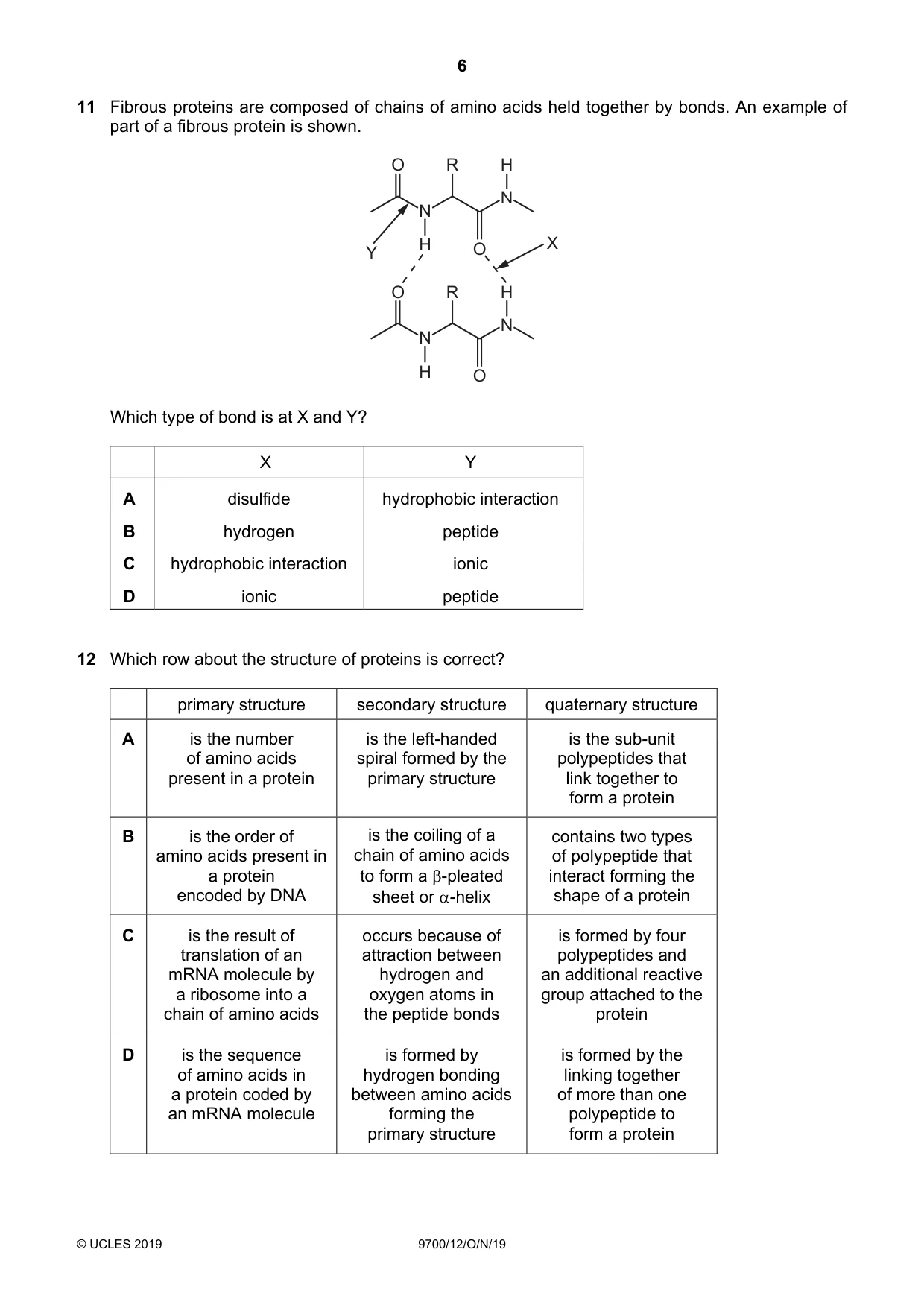
Q11 · Fibrous proteins are composed of chains of amino acids held together by bonds
11 Fibrous proteins are composed of chains of amino acids held together by bonds. An example of part of a fibrous protein is shown. O R H N N H O X Y O R H N N H O Which type of bond is at X and Y? X Y A disulfide hydrophobic interaction B hydrogen peptide C hydrophobic interaction ionic D ionic peptide
Mark scheme: B
Q12 · Which row about the structure of proteins is correct?
12 Which row about the structure of proteins is correct? primary structure secondary structure quaternary structure A is the number is the left-handed is the sub-unit of amino acids spiral formed by the polypeptides that present in a protein primary structure link together to form a protein B is the order of is the coiling of a contains two types amino acids present in chain of amino acids of polypeptide that a protein to form a β-pleated interact forming the encoded by DNA sheet or α-helix shape of a protein C is the result of occurs because of is formed by four translation of an attraction between polypeptides and mRNA molecule by hydrogen and an additional reactive a ribosome into a oxygen atoms in group attached to the chain of amino acids the peptide bonds protein D is the sequence is formed by is formed by the of amino acids in hydrogen bonding linking together a protein coded by between amino acids of more than one an mRNA molecule forming the polypeptide to primary structure form a protein
Mark scheme: D
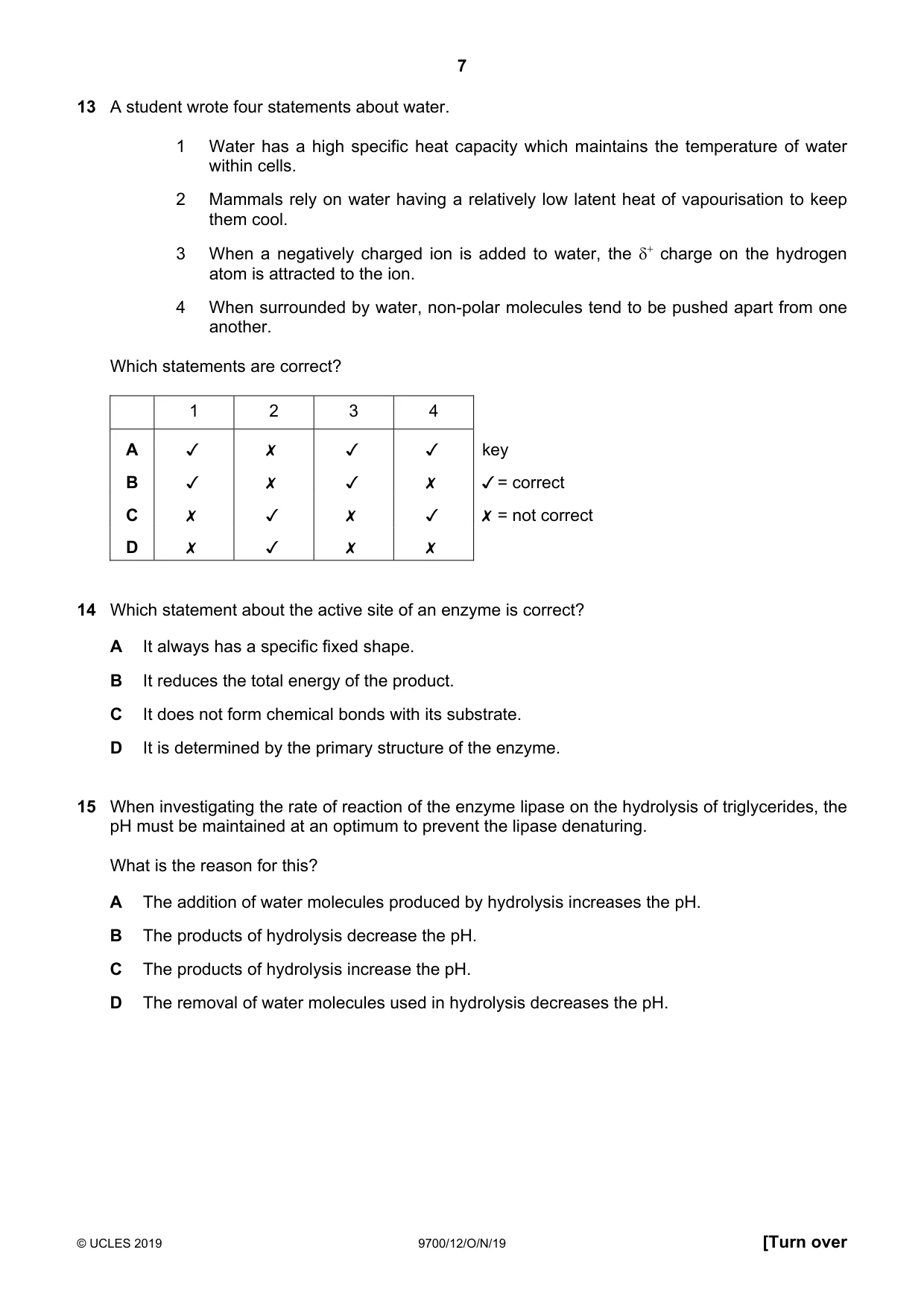
Q13 · A student wrote four statements about water
13 A student wrote four statements about water. 1 Water has a high specific heat capacity which maintains the temperature of water within cells. Mammals rely on water having a relatively low latent heat of vapourisation to keep them cool. When a negatively charged ion is added to water, the 5° charge on the hydrogen atom is attracted to the ion. When surrounded by water, non-polar molecules tend to be pushed apart from one another. Which statements are correct? 0 0O WwW D> x KOK key JY = correct X = not correct \ <x x x «KX x K & &
Mark scheme: B
Q14 · Which statement about the active site of an enzyme is correct?
14 Which statement about the active site of an enzyme is correct? A It always has a specific fixed shape. B It reduces the total energy of the product. C It does not form chemical bonds with its substrate. D It is determined by the primary structure of the enzyme.
Mark scheme: D
Q15 · When investigating the rate of reaction of the enzyme lipase on the hydrolysis of…
15 When investigating the rate of reaction of the enzyme lipase on the hydrolysis of triglycerides, the pH must be maintained at an optimum to prevent the lipase denaturing. What is the reason for this? A The addition of water molecules produced by hydrolysis increases the pH. B The products of hydrolysis decrease the pH. C The products of hydrolysis increase the pH. D The removal of water molecules used in hydrolysis decreases the pH.
Mark scheme: B
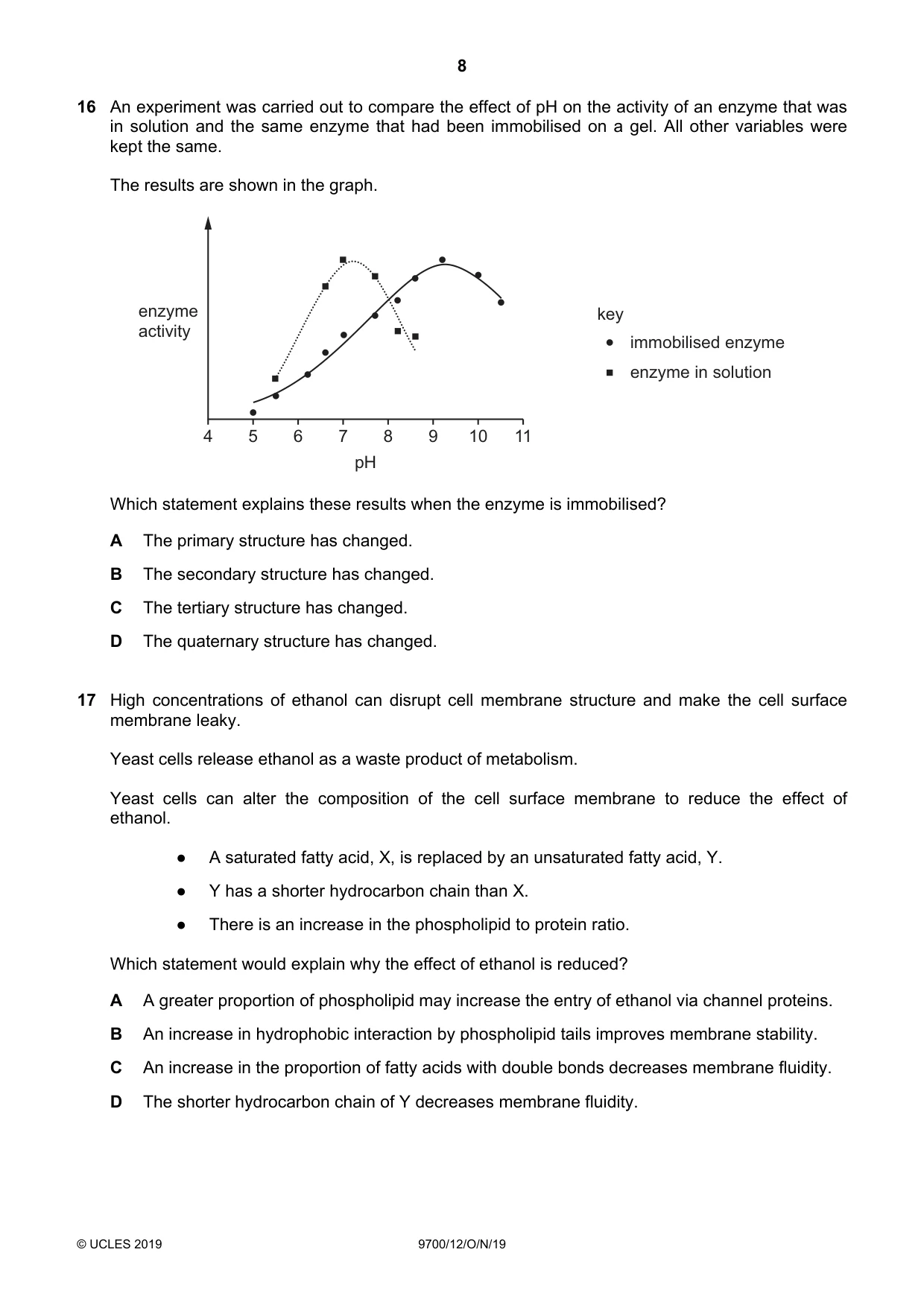
Q16 · An experiment was carried out to compare the effect of pH on the activity of an enzyme…
16 An experiment was carried out to compare the effect of pH on the activity of an enzyme that was in solution and the same enzyme that had been immobilised on a gel. All other variables were kept the same. The results are shown in the graph. enzyme key activity immobilised enzyme enzyme in solution 4 5 6 7 8 9 10 11 pH Which statement explains these results when the enzyme is immobilised? A The primary structure has changed. B The secondary structure has changed. C The tertiary structure has changed. D The quaternary structure has changed.
Mark scheme: C
Q17 · High concentrations of ethanol can disrupt cell membrane structure and make the cell…
17 High concentrations of ethanol can disrupt cell membrane structure and make the cell surface membrane leaky. Yeast cells release ethanol as a waste product of metabolism. Yeast cells can alter the composition of the cell surface membrane to reduce the effect of ethanol. ● A saturated fatty acid, X, is replaced by an unsaturated fatty acid, Y. ● Y has a shorter hydrocarbon chain than X. ● There is an increase in the phospholipid to protein ratio. Which statement would explain why the effect of ethanol is reduced? A A greater proportion of phospholipid may increase the entry of ethanol via channel proteins. B An increase in hydrophobic interaction by phospholipid tails improves membrane stability. C An increase in the proportion of fatty acids with double bonds decreases membrane fluidity. D The shorter hydrocarbon chain of Y decreases membrane fluidity.
Mark scheme: B
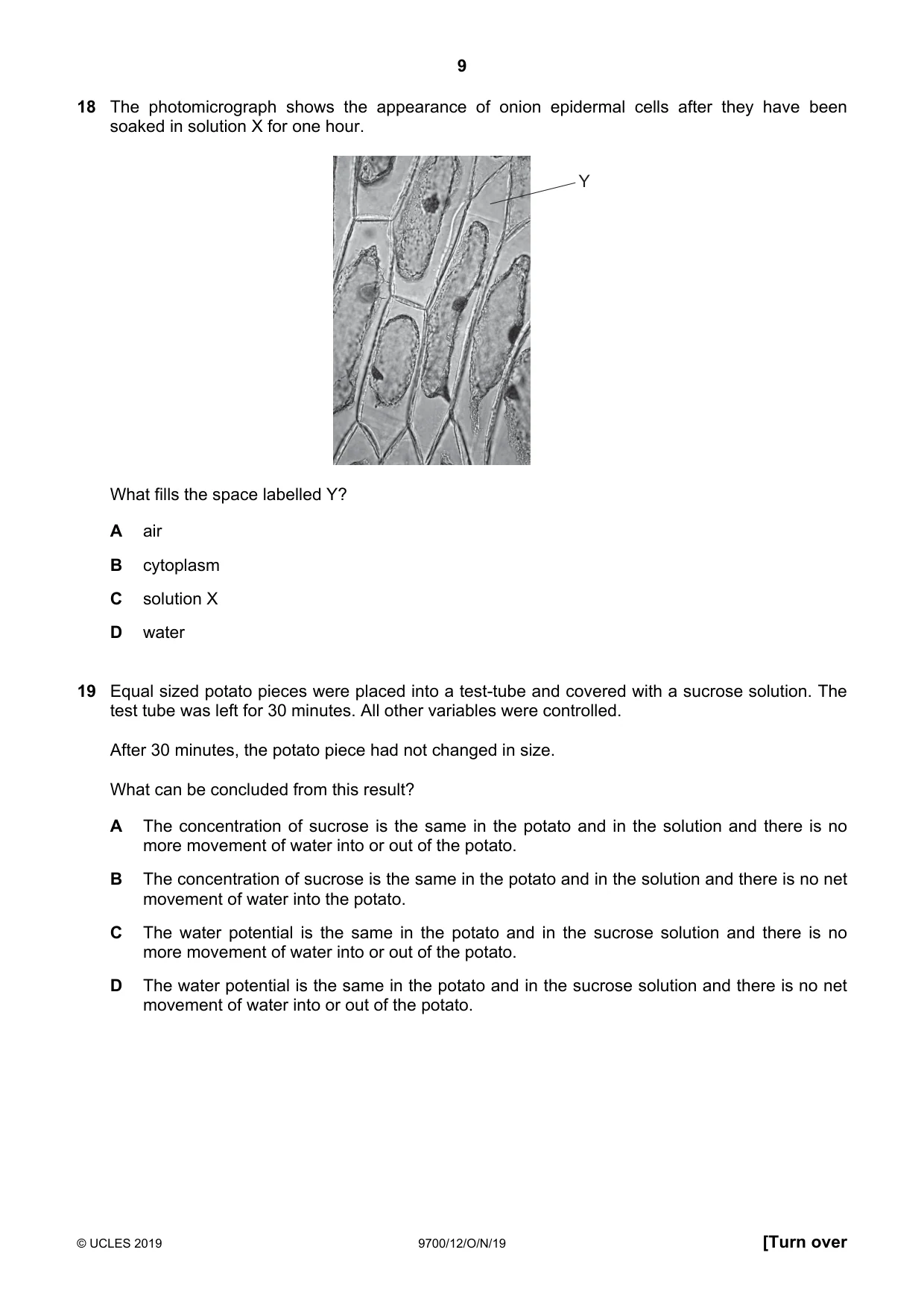
Q18 · The photomicrograph shows the appearance of onion epidermal cells after they have been…
18 The photomicrograph shows the appearance of onion epidermal cells after they have been soaked in solution X for one hour. Y What fills the space labelled Y? A air B cytoplasm C solution X D water
Mark scheme: C
Q19 · Equal sized potato pieces were placed into a test-tube and covered with a sucrose solution
19 Equal sized potato pieces were placed into a test-tube and covered with a sucrose solution. The test tube was left for 30 minutes. All other variables were controlled. After 30 minutes, the potato piece had not changed in size. What can be concluded from this result? A The concentration of sucrose is the same in the potato and in the solution and there is no more movement of water into or out of the potato. B The concentration of sucrose is the same in the potato and in the solution and there is no net movement of water into the potato. C The water potential is the same in the potato and in the sucrose solution and there is no more movement of water into or out of the potato. D The water potential is the same in the potato and in the sucrose solution and there is no net movement of water into or out of the potato.
Mark scheme: D
Q20 · Which row shows the correct number of each component of a single chromosome during…
20 Which row shows the correct number of each component of a single chromosome during prophase of mitosis? polynucleotide centromeres chromatids telomeres strands A 1 0 2 2 B 1 2 4 4 C 2 0 4 2 D 2 2 2 4
Mark scheme: B
Q21 · The cell cycle includes mitosis
21 The cell cycle includes mitosis. Which are features of nuclear division? 1 forms cells of equal size to the parent cell 2 forms genetically identical nuclei 3 semi-conservative replication of DNA A 1, 2 and 3 B 1 and 2 only C 1 and 3 only D 2 only
Mark scheme: D
More questions on Replication and division of nuclei and cells
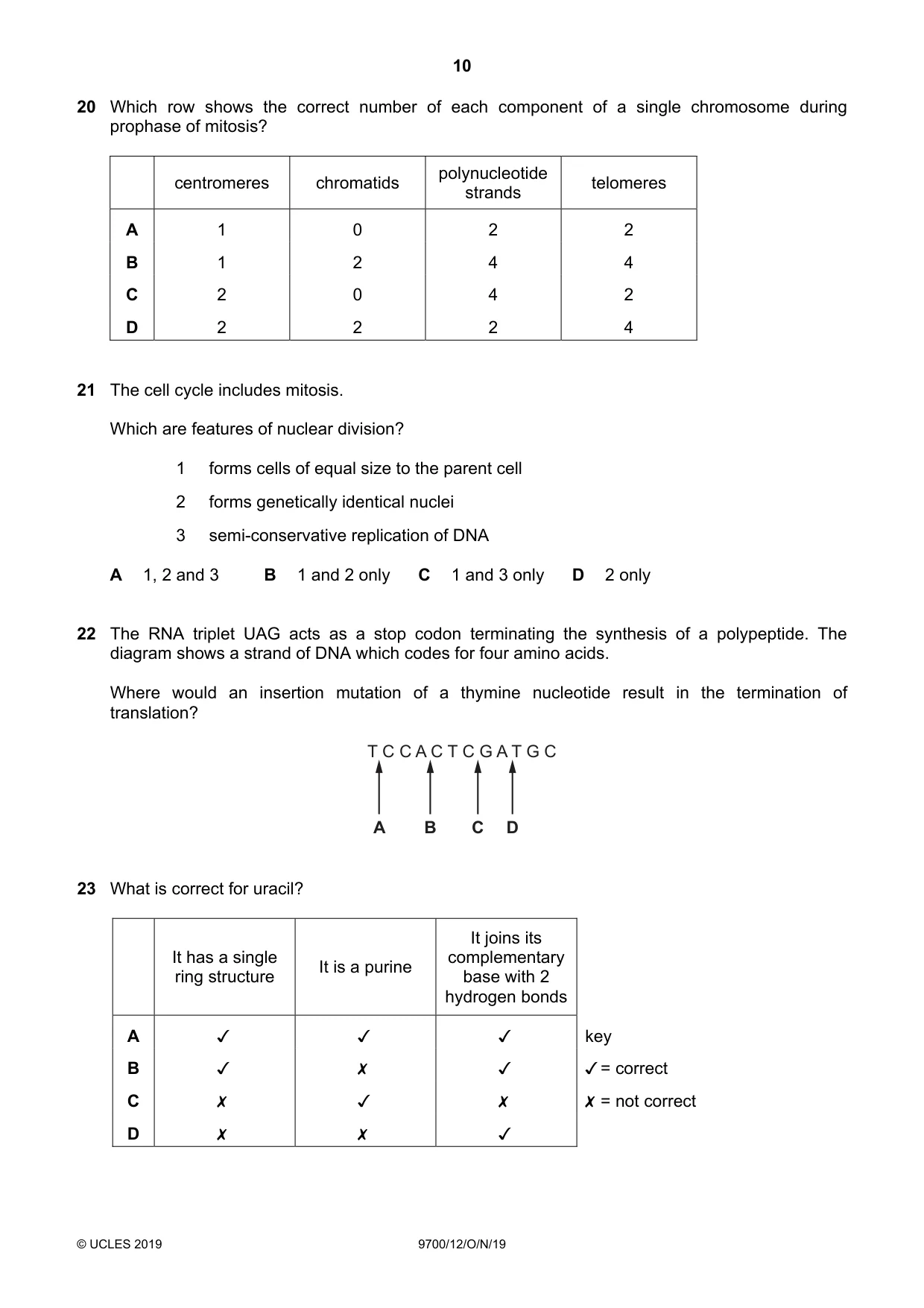
Q22 · The RNA triplet UAG acts as a stop codon terminating the synthesis of a polypeptide
22 The RNA triplet UAG acts as a stop codon terminating the synthesis of a polypeptide. The diagram shows a strand of DNA which codes for four amino acids. Where would an insertion mutation of a thymine nucleotide result in the termination of translation? T C C A C T C G A T G C A B C D
Mark scheme: B
Q23 · What is correct for uracil?
23 What is correct for uracil? It joins its It has a single F . complementary ring structure It is a purine base with 2 hydrogen bonds A v v v B v x v Cc x v x D x x v key / = correct X = not correct
Mark scheme: B
More questions on Structure of nucleic acids and replication of DNA
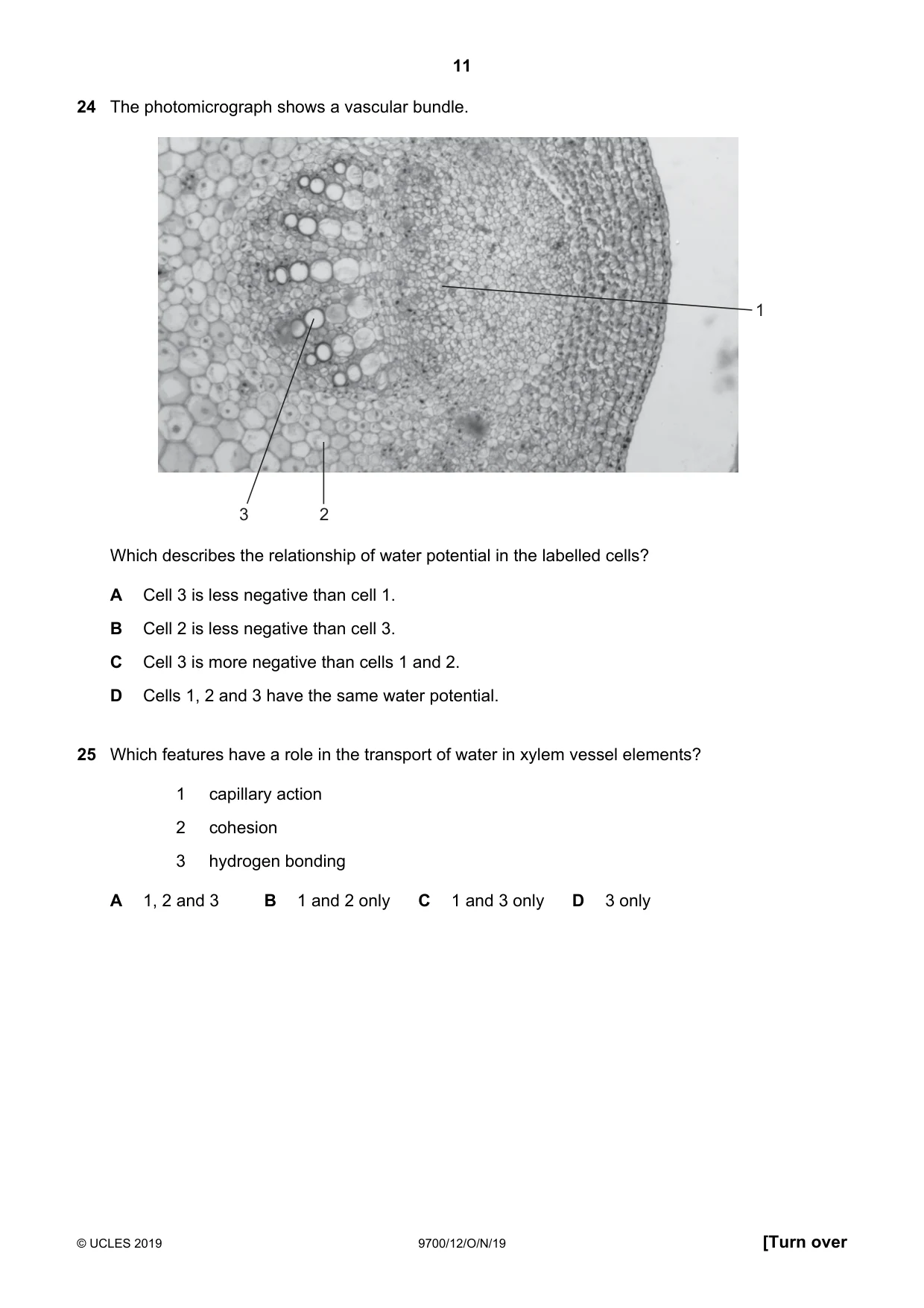
Q24 · The photomicrograph shows a vascular bundle
24 The photomicrograph shows a vascular bundle. 1 3 2 Which describes the relationship of water potential in the labelled cells? A Cell 3 is less negative than cell 1. B Cell 2 is less negative than cell 3. C Cell 3 is more negative than cells 1 and 2. D Cells 1, 2 and 3 have the same water potential.
Mark scheme: A
Q25 · Which features have a role in the transport of water in xylem vessel elements?
25 Which features have a role in the transport of water in xylem vessel elements? 1 capillary action 2 cohesion 3 hydrogen bonding A 1, 2 and 3 B 1 and 2 only C 1 and 3 only D 3 only
Mark scheme: A
Q26 · What is a definition of transpiration?
26 What is a definition of transpiration? A the evaporation of water vapour from a leaf due to the diffusion of water from an area of low water potential to high water potential B the loss of water vapour from a plant to its environment by diffusion down a water potential gradient C the movement of water from root to leaf due to the adhesion of water molecules to one another D the uptake of water by plant roots by movement of water down a continuous water potential gradient from air to soil
Mark scheme: B
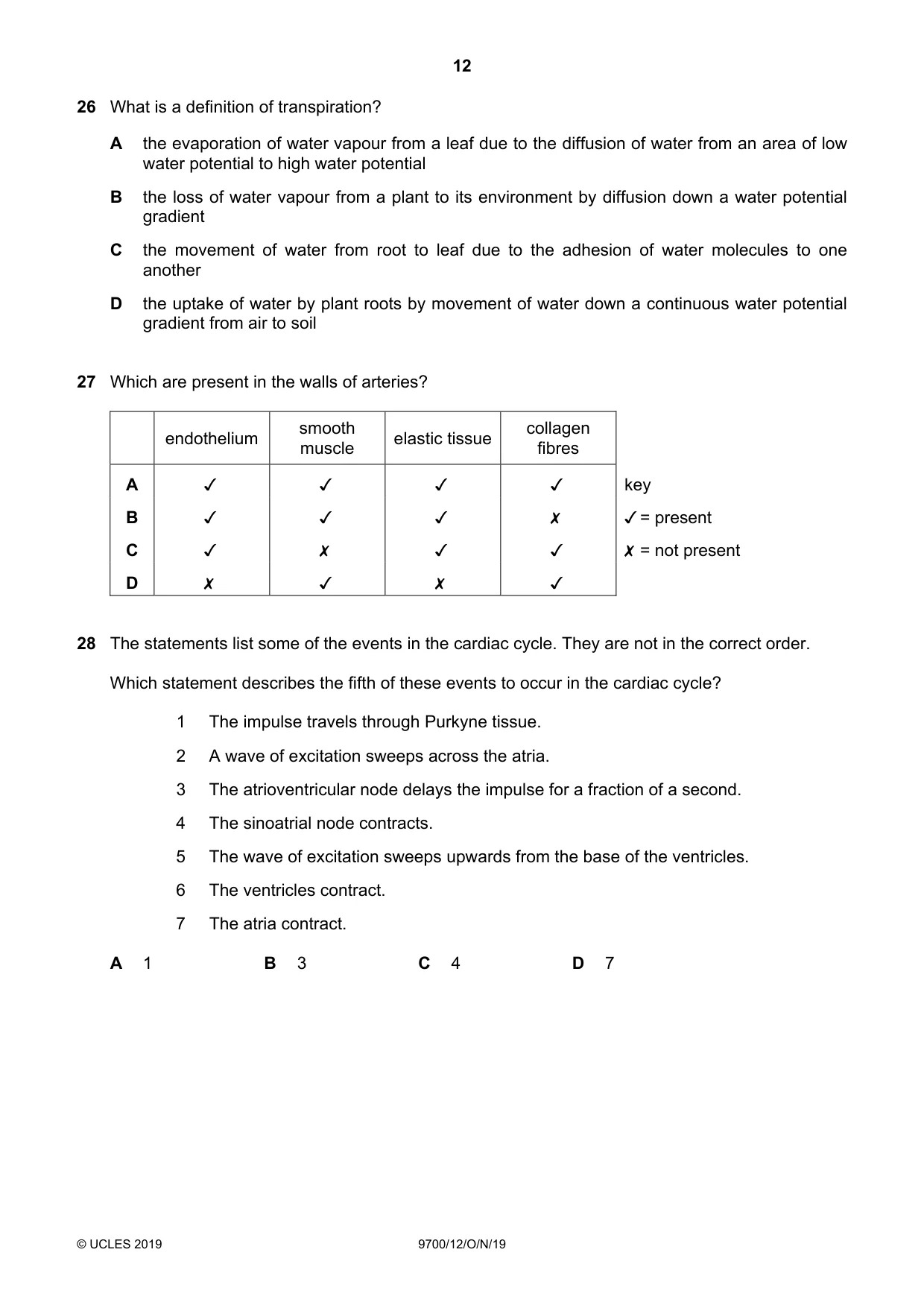
Q27 · Which are present in the walls of arteries?
27 Which are present in the walls of arteries? endothelium smoomn elastic tissue co fagen A J J J J B Jv Jv Jv x Cc J x J J D x Jv x Jv key v¥ = present X = not present
Mark scheme: A
Q28 · The statements list some of the events in the cardiac cycle
28 The statements list some of the events in the cardiac cycle. They are not in the correct order. Which statement describes the fifth of these events to occur in the cardiac cycle? 1 The impulse travels through Purkyne tissue. 2 A wave of excitation sweeps across the atria. 3 The atrioventricular node delays the impulse for a fraction of a second. 4 The sinoatrial node contracts. 5 The wave of excitation sweeps upwards from the base of the ventricles. 6 The ventricles contract. 7 The atria contract. A 1 B 3 C 4 D 7
Mark scheme: A
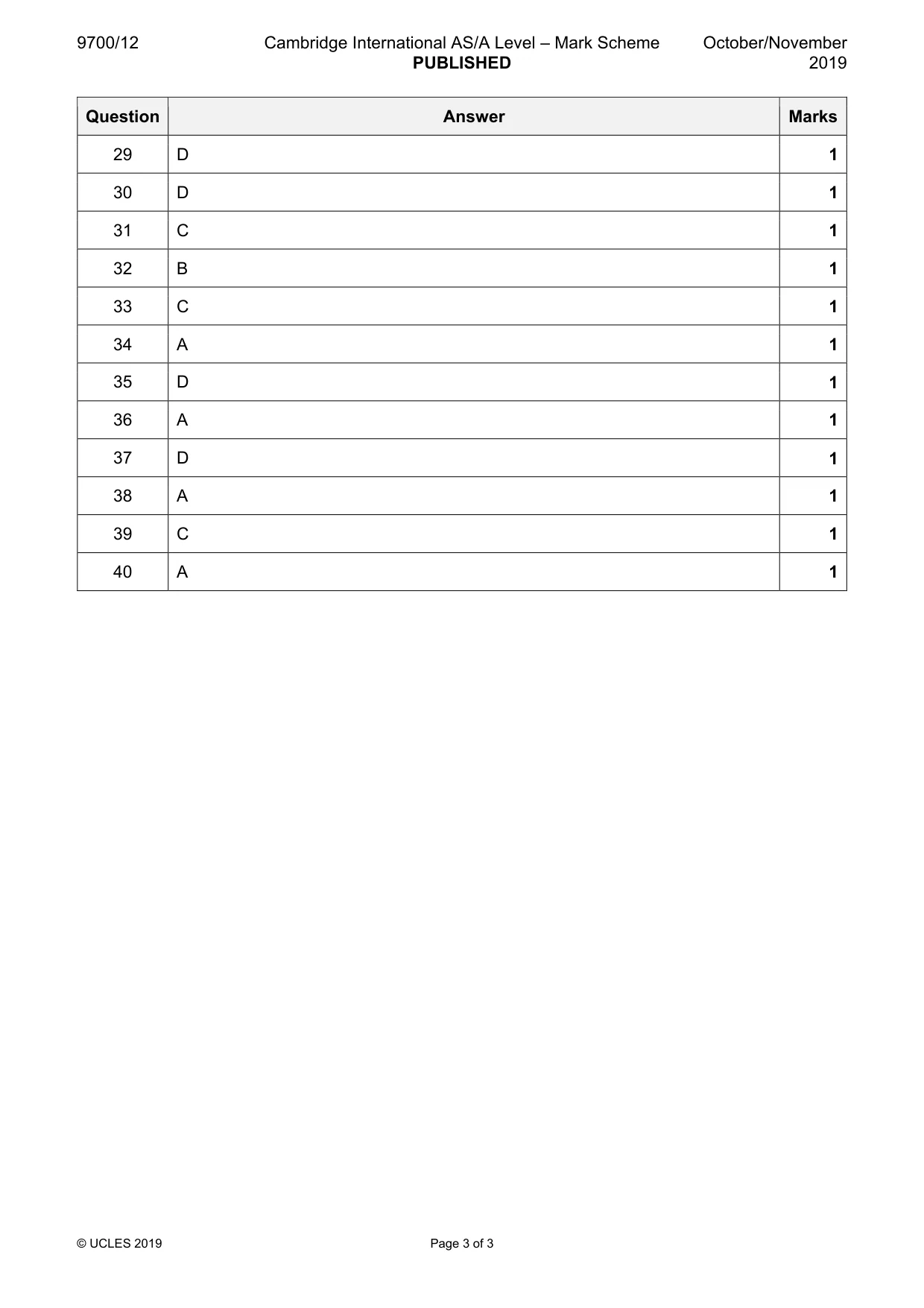
Q29 · Which row correctly identifies the molecules or cells that are present in the different…
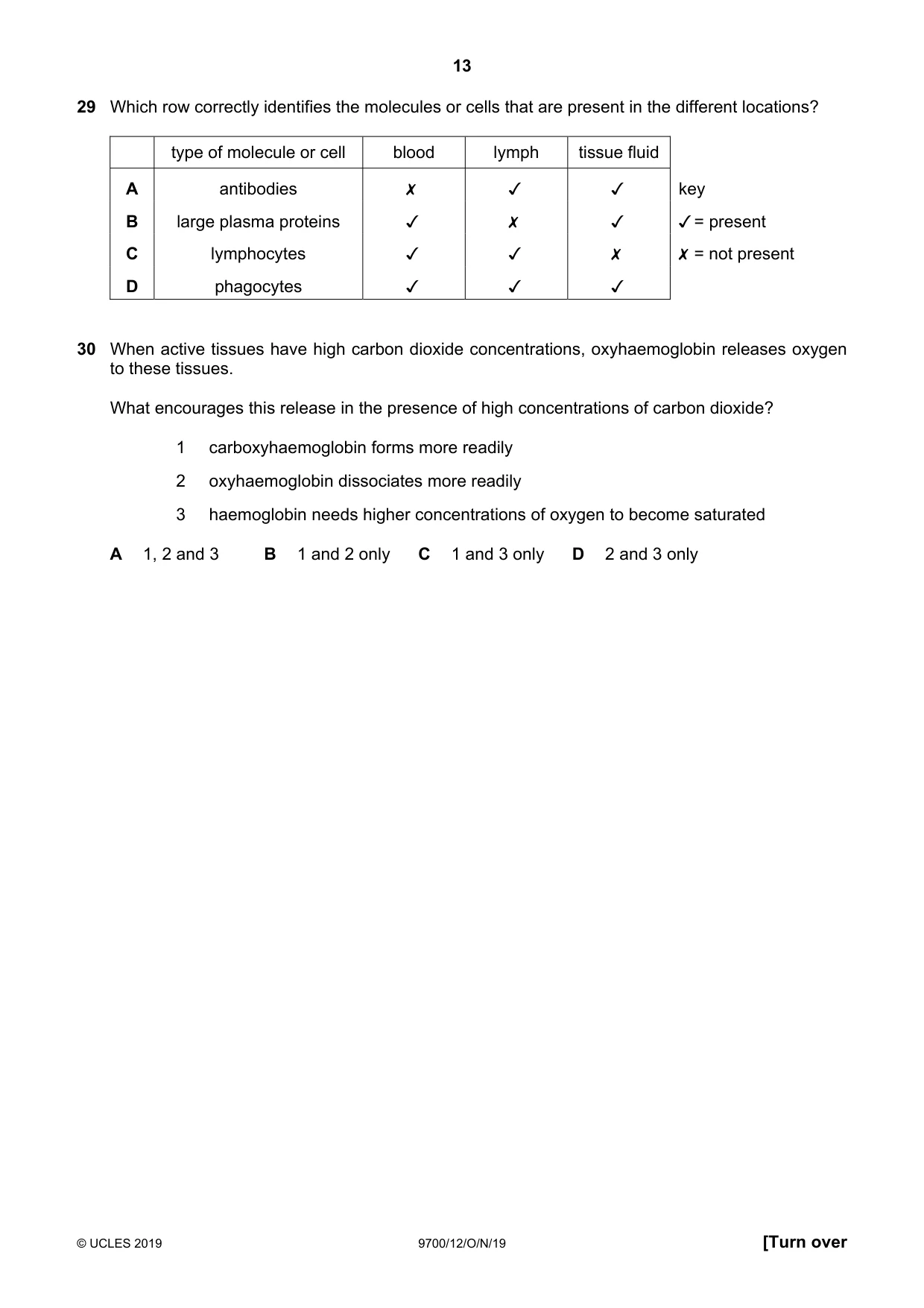
29 Which row correctly identifies the molecules or cells that are present in the different locations? type of molecule or cell blood lymph tissue fluid A antibodies x Jv J key B large plasma proteins Jv x J J/ = present Cc lymphocytes v v x X = not present D phagocytes v v v
Mark scheme: D
Q30 · When active tissues have high carbon dioxide concentrations, oxyhaemoglobin releases…
30 When active tissues have high carbon dioxide concentrations, oxyhaemoglobin releases oxygen to these tissues. What encourages this release in the presence of high concentrations of carbon dioxide? 1 carboxyhaemoglobin forms more readily 2 oxyhaemoglobin dissociates more readily 3 haemoglobin needs higher concentrations of oxygen to become saturated A 1, 2 and 3 B 1 and 2 only C 1 and 3 only D 2 and 3 only
Mark scheme: D
Q31 · The graph shows oxygen dissociation curves of haemoglobin at two different carbon dioxide…
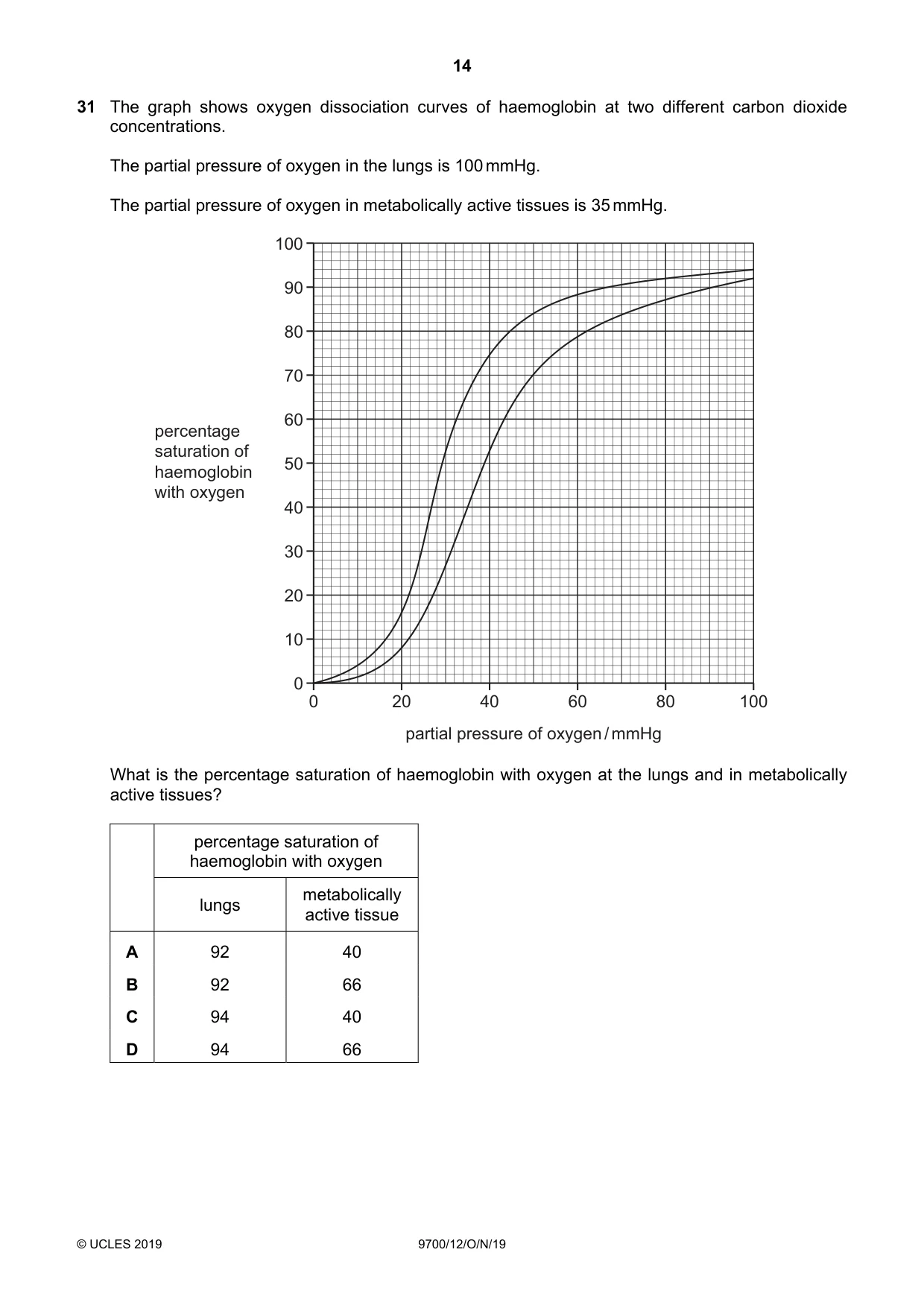
31 The graph shows oxygen dissociation curves of haemoglobin at two different carbon dioxide concentrations. The partial pressure of oxygen in the lungs is 100 mmHg. The partial pressure of oxygen in metabolically active tissues is 35 mmHg. 100 90 80 70 60 percentage saturation of 50 haemoglobin with oxygen 40 30 20 10 0 0 20 40 60 80 100 partial pressure of oxygen / mmHg What is the percentage saturation of haemoglobin with oxygen at the lungs and in metabolically active tissues? percentage saturation of haemoglobin with oxygen metabolically lungs active tissue A 92 40 B 92 66 C 94 40 D 94 66
Mark scheme: C
Q32 · Which statement is correct?
32 Which statement is correct? A Alveoli have goblet cells to produce mucus to trap pathogens from the air. B Cartilage in the bronchi keeps the bronchi open and allows air to flow through freely. C Complete rings of cartilage in the bronchioles make sure that air can reach the alveoli. D During exercise, muscles in the bronchioles and alveoli relax to allow a greater flow of air.
Mark scheme: B
Q33 · Four types of cell in the gas exchange system are listed
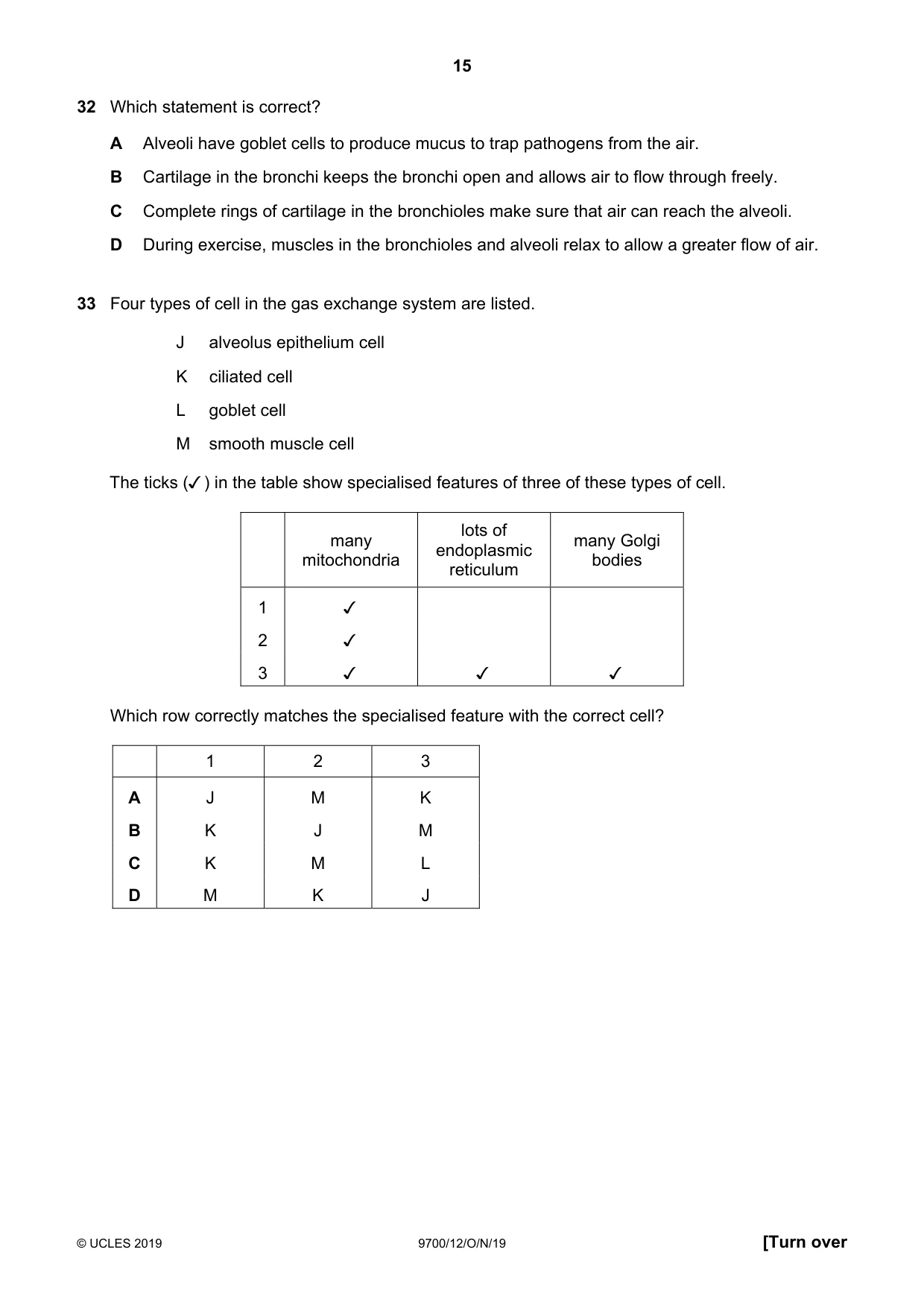
33 Four types of cell in the gas exchange system are listed. alveolus epithelium cell ciliated cell T-T- KR CS goblet cell M smooth muscle cell The ticks (v ) in the table show specialised features of three of these types of cell. many lots of many Golgi mitochondria endoplasmic bodies reticulum 1 2 L3_| Which row correctly matches the specialised feature with the correct cell? —s = AK Cf XA = ¢ F/N c rT FT A]
Mark scheme: C
Q34 · Some symptoms of chronic obstructive pulmonary disease (COPD) are listed
34 Some symptoms of chronic obstructive pulmonary disease (COPD) are listed. 1 bursting of alveoli 2 loss of elastic fibres 3 increase in secretion of mucus 4 reduction in surface area for gaseous exchange 5 narrowing of airways Which of these are also the symptoms of emphysema? A 1, 2 and 4 B 1, 3 and 5 C 2, 3 and 5 D 3, 4 and 5
Mark scheme: A
Q35 · The diagram shows properties of diseases
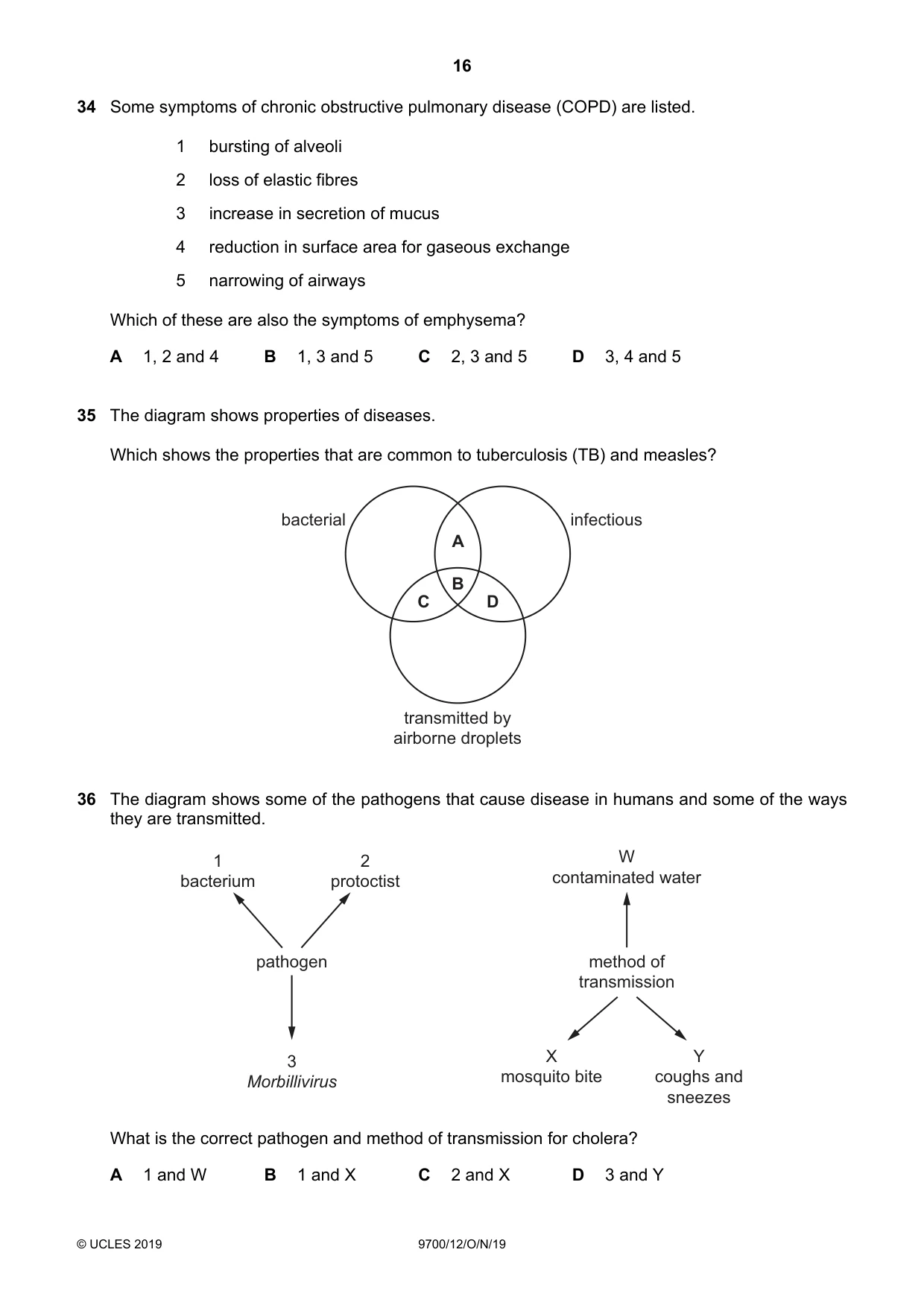
35 The diagram shows properties of diseases. Which shows the properties that are common to tuberculosis (TB) and measles? bacterial infectious A B C D transmitted by airborne droplets
Mark scheme: D
Q36 · The diagram shows some of the pathogens that cause disease in humans and some of the ways…
36 The diagram shows some of the pathogens that cause disease in humans and some of the ways they are transmitted. 1 2 W bacterium protoctist contaminated water pathogen method of transmission 3 X Y Morbillivirus mosquito bite coughs and sneezes What is the correct pathogen and method of transmission for cholera? A 1 and W B 1 and X C 2 and X D 3 and Y
Mark scheme: A
Q37 · Different antibiotics function in different ways
37 Different antibiotics function in different ways. It is important that the antibiotic kills the bacteria, but does not harm the infected human. The antibiotic tetracycline has been found to affect the way in which human mitochondria function. Which statements could explain why human mitochondria function is affected by tetracycline? A The antibiotic prevents the synthesis of peptidoglycan cell walls. B The antibiotic prevents synthesis of linear DNA. C The antibiotic prevents translation of circular DNA. D The antibiotic prevents translation by binding to 70S ribosomes.
Mark scheme: D
Q38 · Immune response to a vaccination against a virus can be assessed by making three…
38 Immune response to a vaccination against a virus can be assessed by making three measurements: 1 the concentration of anti-virus antibody in the blood 2 the time taken to increase the antibody concentration significantly after a booster vaccination 3 the number of virus-specific lymphocytes per cm 3 blood. What describes the immunity of an individual when the values of 1, 2 and 3 are all low ten years after vaccination? A active immunity due to the presence of memory cells B low immunity due to the absence of antibodies C low immunity due to the absence of memory cells D passive immunity due to the presence of antibodies
Mark scheme: A
Q39 · The enzyme telomerase prevents loss of telomeres after many mitotic cell cycles
39 The enzyme telomerase prevents loss of telomeres after many mitotic cell cycles. Which types of white blood cell involved in an autoimmune condition will contain active telomerase? mature helper B-lymphocyte neutrophils T-lymphocyte plasma cells memory cells v Jv J key Jv Jv x / =contain active telomerase x x v X = do not contain active telomerase x Jv Jv
Mark scheme: C
More questions on Replication and division of nuclei and cells
Q40 · Which features of monoclonal antibodies make them useful in the diagnosis and treatment…
40 Which features of monoclonal antibodies make them useful in the diagnosis and treatment of disease? 1 A particular monoclonal antibody attaches to a specific antigen. 2 Identical monoclonal antibodies can be produced in large numbers. 3 Binding a monoclonal antibody to its specific antigen may mark that antigen for destruction by white blood cells. 4 Fluorescent or radioactive markers can be attached to a monoclonal antibody to show where the antigen is in the body. A 1, 2, 3 and 4 B 1, 2 and 3 only C 2 and 3 only D 3 and 4 only
Mark scheme: A
What was in this paper
The subtopics covered by these 40 questions, and how many questions each got. Open one in a new tab to see every Cambridge question on it.
4The gas exchange system3Antibodies and vaccination2Carbohydrates and lipids2Factors that affect enzyme action2Infectious diseases2Movement into and out of cells2Protein synthesis2Proteins2Replication and division of nuclei and cells2Testing for biological molecules2The circulatory system2Transport mechanisms2Transport of oxygen and carbon dioxide2Antibiotics1Chromosome behaviour in mitosis1Fluid mosaic membranes1Mode of action of enzymes1Structure of nucleic acids and replication of DNA1Structure of transport tissues1The heart1The microscope in cell studies1Water1What you needed in this session
Cambridge’s own grade thresholds for 2019 Oct/Nov, Paper 1 · Variant 2. A higher threshold means an easier paper — the bar moves with how the cohort did.