Cambridge A Level Biology 9700 — 2016 May/June Paper 1 · Variant 2
9700/12/M/J/16 · 40 questions · 40 marks · ≈45 min
The question paper and its mark scheme, free to read here and free to download. This is Cambridge’s own paper, exactly as it was sat.
Question paper16 pages
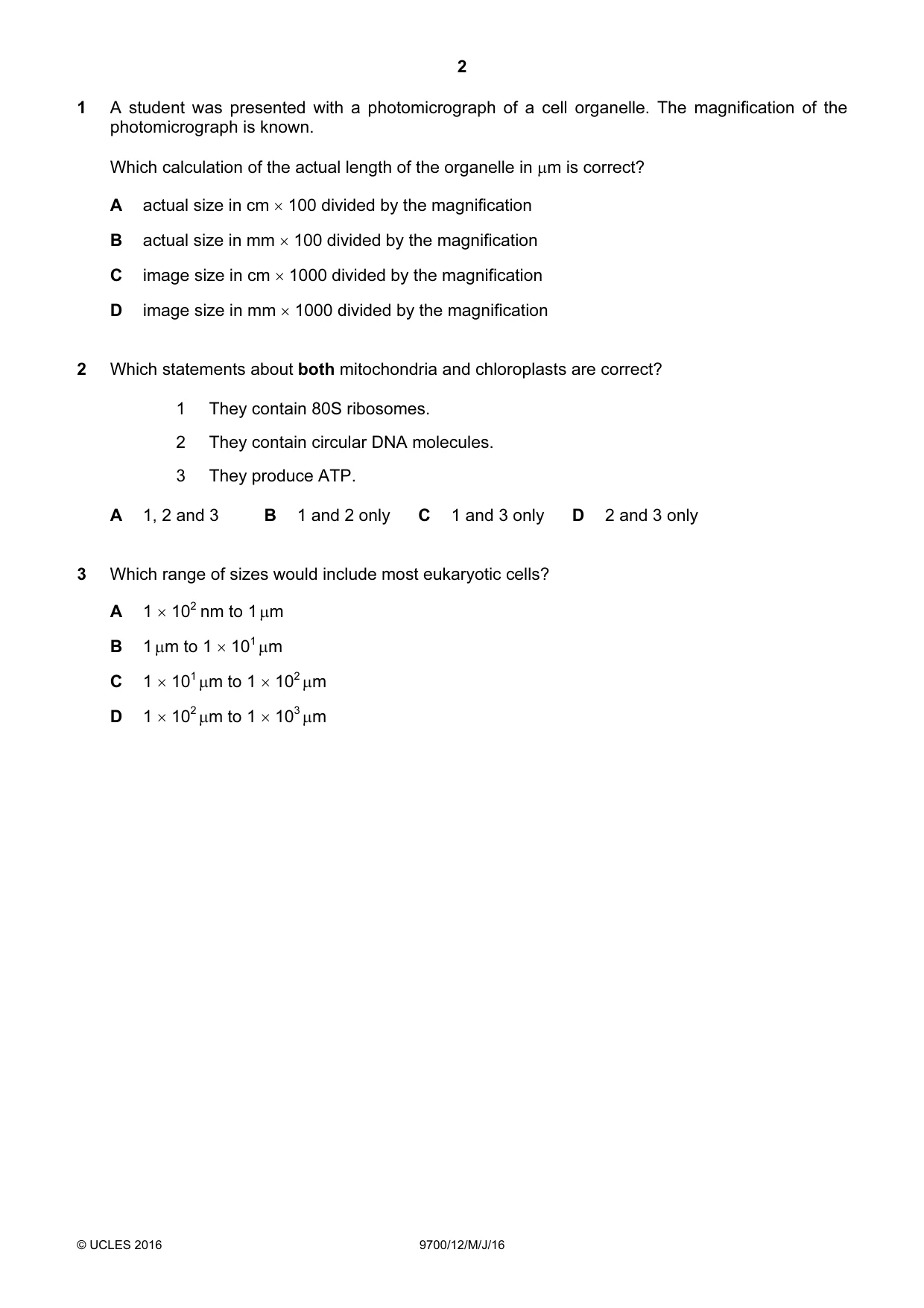
Mark scheme2 pages
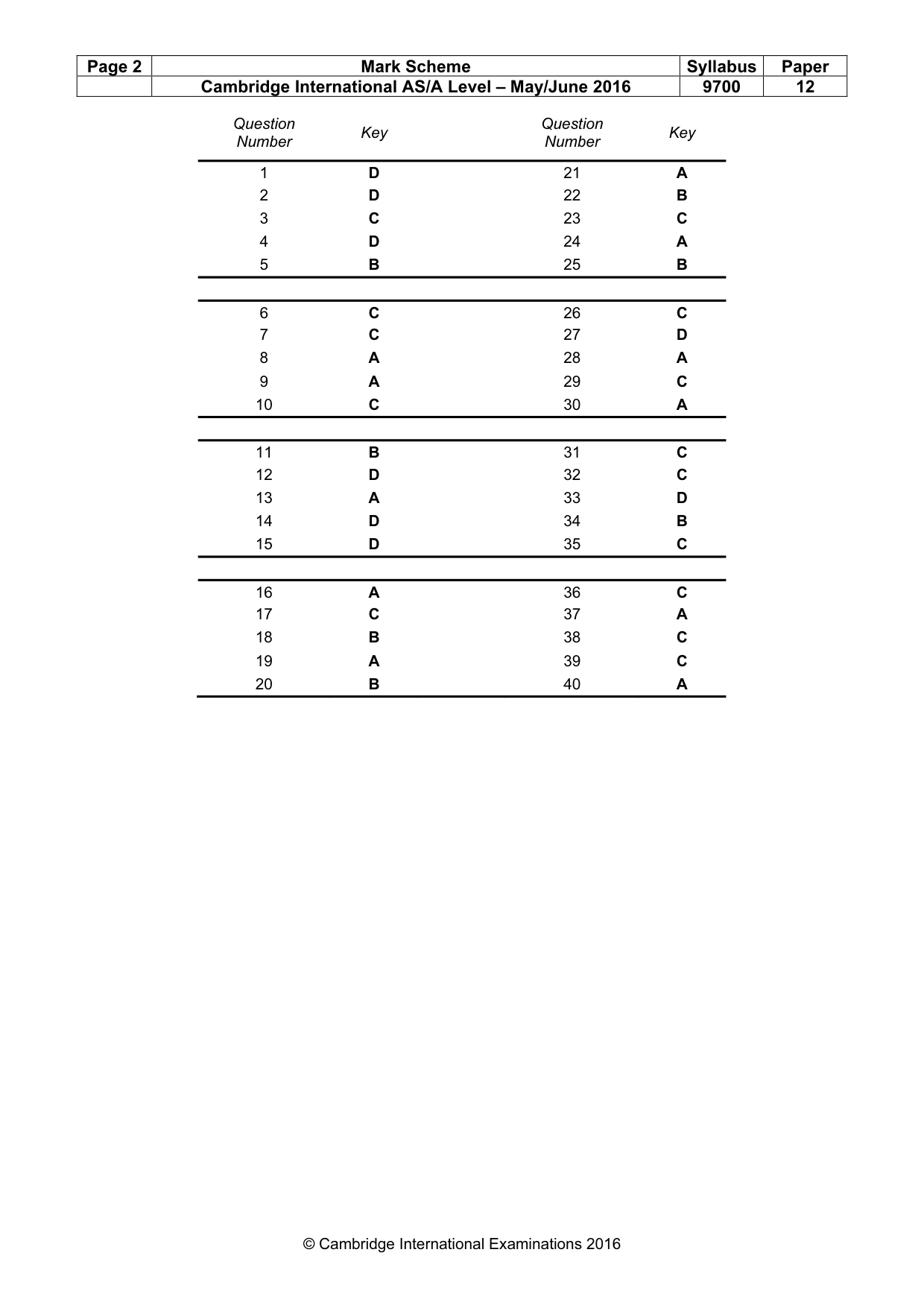
Answers below. Sit the paper first if you are practising.
Questions as text
Q1 · A student was presented with a photomicrograph of a cell organelle
1 A student was presented with a photomicrograph of a cell organelle. The magnification of the photomicrograph is known. Which calculation of the actual length of the organelle in µm is correct? A actual size in cm × 100 divided by the magnification B actual size in mm × 100 divided by the magnification C image size in cm × 1000 divided by the magnification D image size in mm × 1000 divided by the magnification
Mark scheme: D
Q2 · Which statements about both mitochondria and chloroplasts are correct?
2 Which statements about both mitochondria and chloroplasts are correct? 1 They contain 80S ribosomes. 2 They contain circular DNA molecules. 3 They produce ATP. A 1, 2 and 3 B 1 and 2 only C 1 and 3 only D 2 and 3 only
Mark scheme: D
More questions on Cells as the basic units of living organisms
Q3 · Which range of sizes would include most eukaryotic cells?
3 Which range of sizes would include most eukaryotic cells? A 1 × 10² nm to 1 µm B 1 µm to 1 × 101 µm C 1 × 101 µm to 1 × 102 µm D 1 × 102 µm to 1 × 103 µm
Mark scheme: C
More questions on Cells as the basic units of living organisms
Q4 · A scientist carried out an experiment to separate the organelles in an animal cell by mass
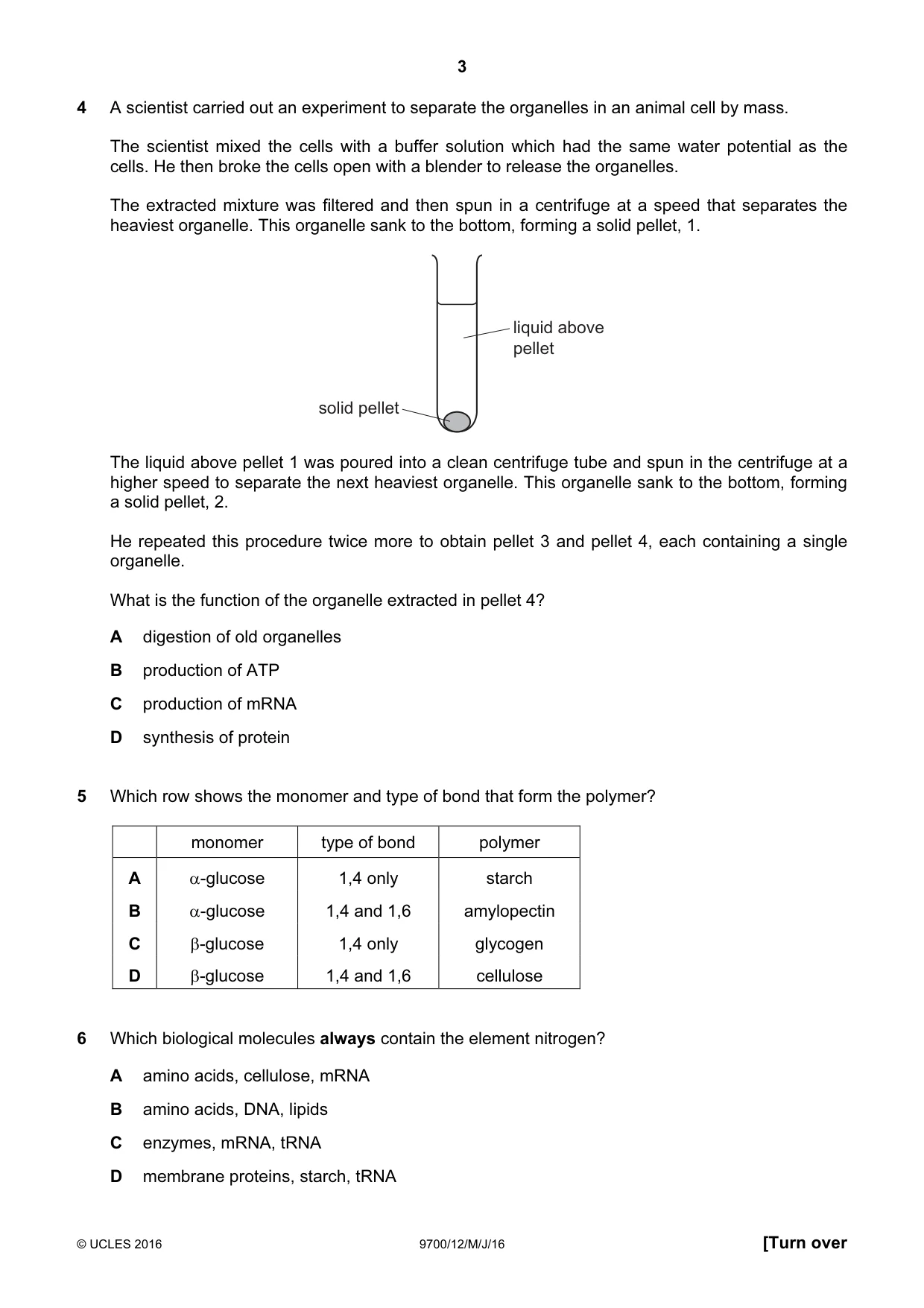
4 A scientist carried out an experiment to separate the organelles in an animal cell by mass. The scientist mixed the cells with a buffer solution which had the same water potential as the cells. He then broke the cells open with a blender to release the organelles. The extracted mixture was filtered and then spun in a centrifuge at a speed that separates the heaviest organelle. This organelle sank to the bottom, forming a solid pellet, 1. liquid above pellet solid pellet The liquid above pellet 1 was poured into a clean centrifuge tube and spun in the centrifuge at a higher speed to separate the next heaviest organelle. This organelle sank to the bottom, forming a solid pellet, 2. He repeated this procedure twice more to obtain pellet 3 and pellet 4, each containing a single organelle. What is the function of the organelle extracted in pellet 4? A digestion of old organelles B production of ATP C production of mRNA D synthesis of protein
Mark scheme: D
More questions on Cells as the basic units of living organisms
Q5 · Which row shows the monomer and type of bond that form the polymer?
5 Which row shows the monomer and type of bond that form the polymer? monomer type of bond polymer A α-glucose 1,4 only starch B α-glucose 1,4 and 1,6 amylopectin C β-glucose 1,4 only glycogen D β-glucose 1,4 and 1,6 cellulose
Mark scheme: B
Q6 · Which biological molecules always contain the element nitrogen?
6 Which biological molecules always contain the element nitrogen? A amino acids, cellulose, mRNA B amino acids, DNA, lipids C enzymes, mRNA, tRNA D membrane proteins, starch, tRNA
Mark scheme: C
Q7 · Which statement about the quaternary structure of proteins is correct?
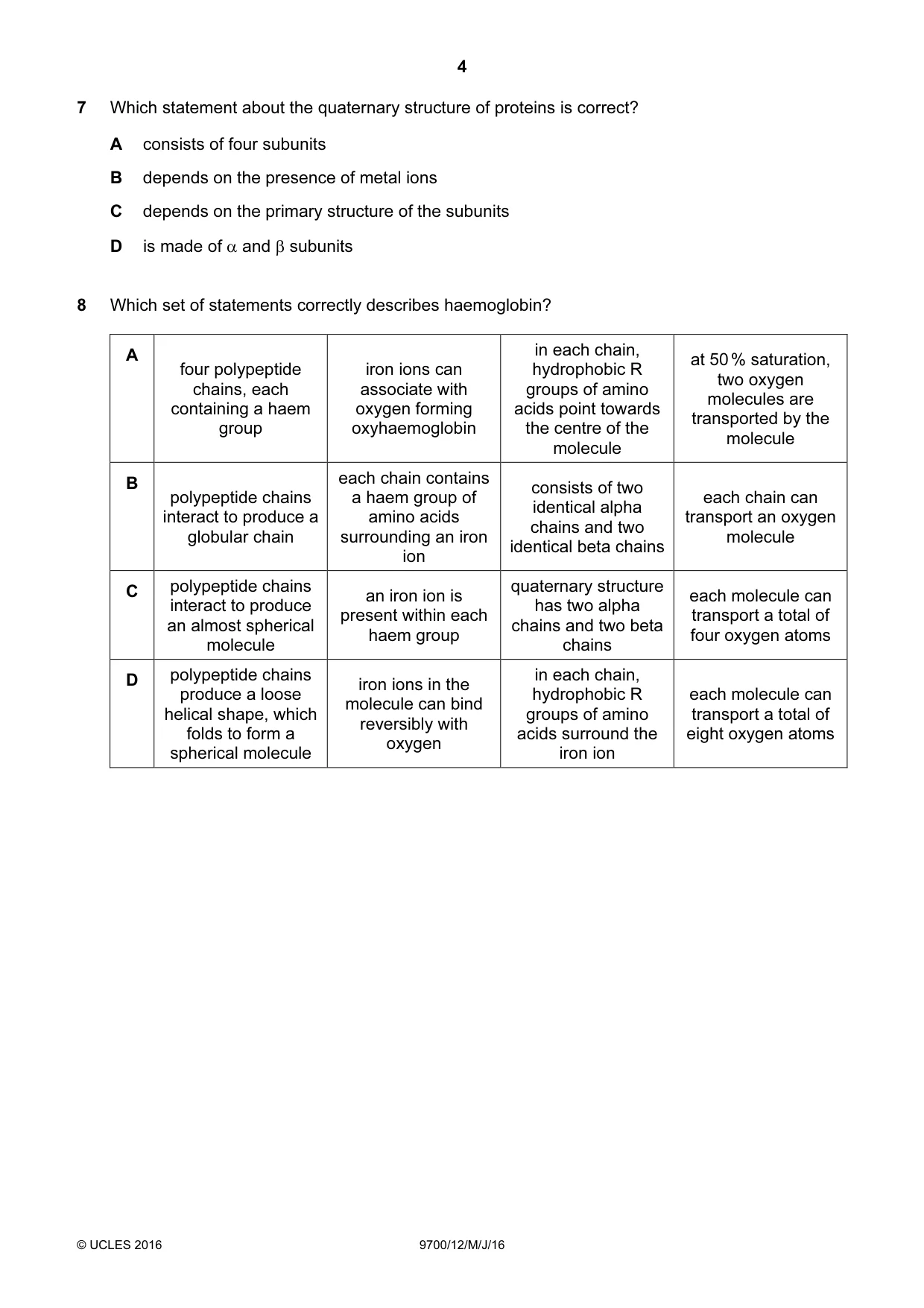
7 Which statement about the quaternary structure of proteins is correct? A consists of four subunits B depends on the presence of metal ions C depends on the primary structure of the subunits D is made of α and β subunits
Mark scheme: C
Q8 · Which set of statements correctly describes haemoglobin?
8 Which set of statements correctly describes haemoglobin? A in each chain, at 50 % saturation, four polypeptide iron ions can hydrophobic R two oxygen chains, each associate with groups of amino molecules are containing a haem oxygen forming acids point towards transported by the group oxyhaemoglobin the centre of the molecule molecule B each chain contains consists of two polypeptide chains a haem group of each chain can identical alpha interact to produce a amino acids transport an oxygen chains and two globular chain surrounding an iron molecule identical beta chains ion C polypeptide chains quaternary structure an iron ion is each molecule can interact to produce has two alpha present within each transport a total of an almost spherical chains and two beta haem group four oxygen atoms molecule chains D polypeptide chains in each chain, iron ions in the produce a loose hydrophobic R each molecule can molecule can bind helical shape, which groups of amino transport a total of reversibly with folds to form a acids surround the eight oxygen atoms oxygen spherical molecule iron ion
Mark scheme: A
Q9 · The diagrams show different types of bond found in biological molecules
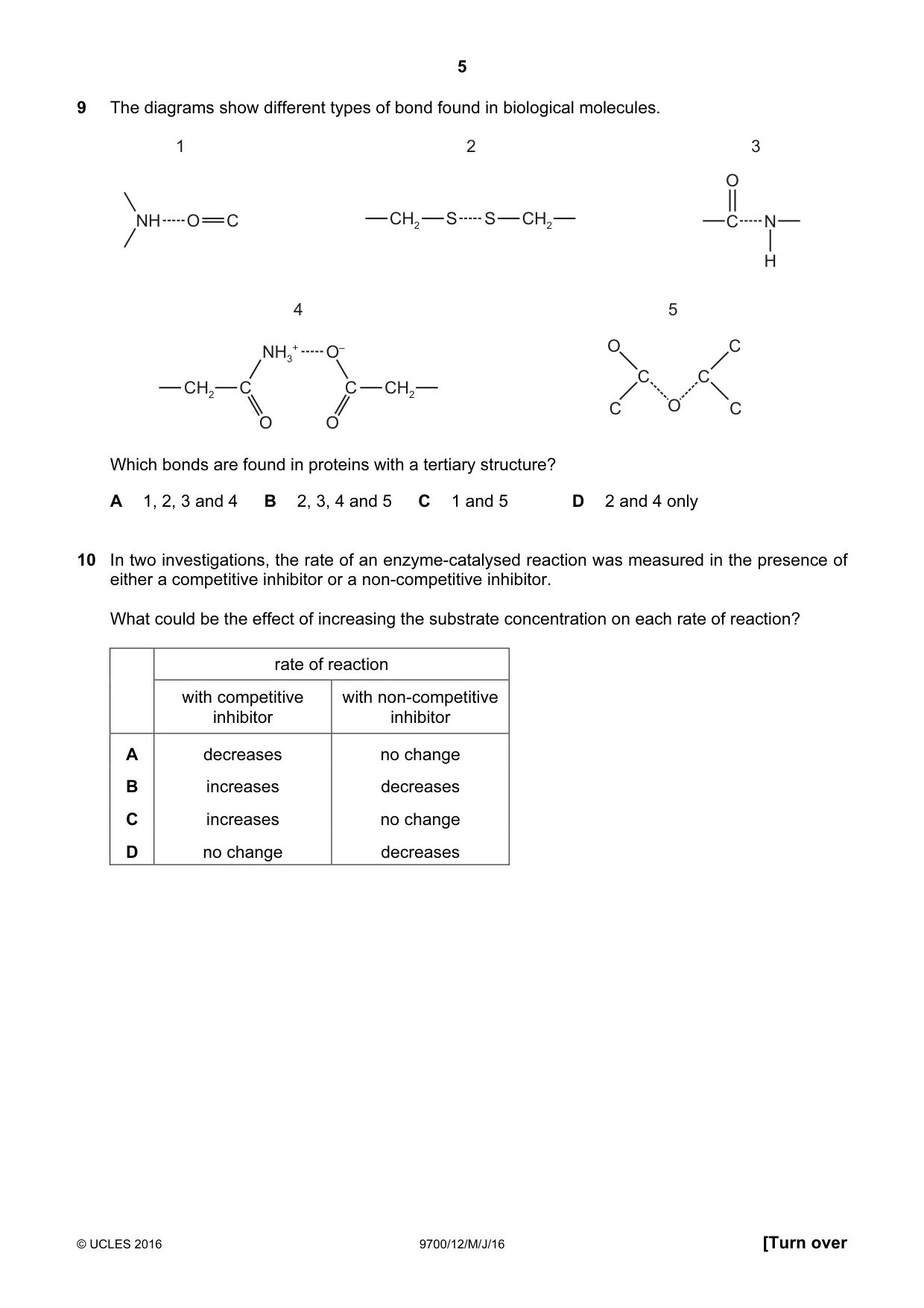
9 The diagrams show different types of bond found in biological molecules. 1 2 3 O NH O C CH2 S S CH2 C N H 4 5 NH3 + O– O C C C CH2 C C CH2 C O C O O Which bonds are found in proteins with a tertiary structure? A 1, 2, 3 and 4 B 2, 3, 4 and 5 C 1 and 5 D 2 and 4 only
Mark scheme: A
Q10 · In two investigations, the rate of an enzyme-catalysed reaction was measured in the…
10 In two investigations, the rate of an enzyme-catalysed reaction was measured in the presence of either a competitive inhibitor or a non-competitive inhibitor. What could be the effect of increasing the substrate concentration on each rate of reaction? rate of reaction with competitive with non-competitive inhibitor inhibitor A decreases no change B increases decreases C increases no change D no change decreases
Mark scheme: C
Q11 · Two enzymes, X and Y, were used in an experiment
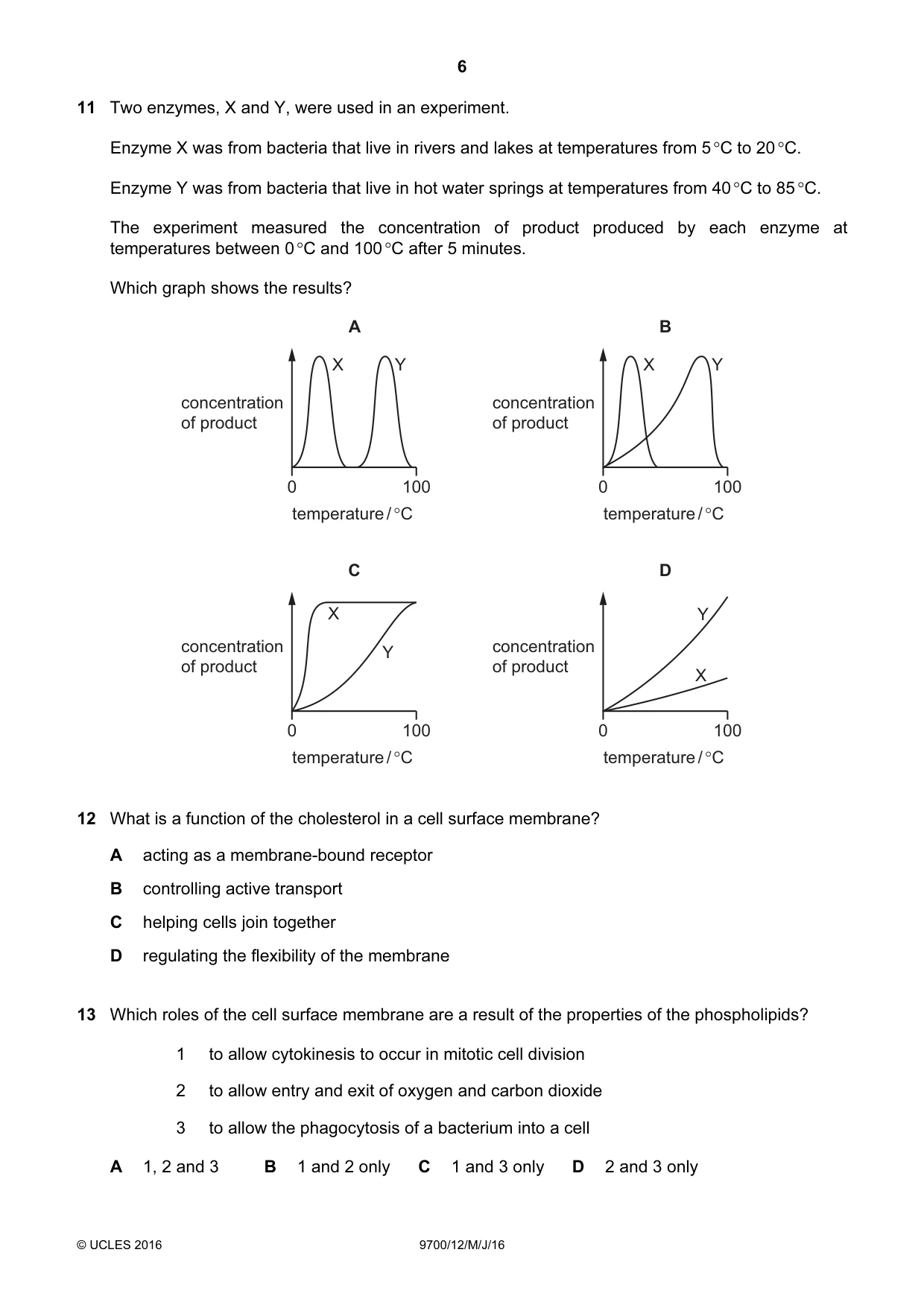
11 Two enzymes, X and Y, were used in an experiment. Enzyme X was from bacteria that live in rivers and lakes at temperatures from 5 °C to 20 °C. Enzyme Y was from bacteria that live in hot water springs at temperatures from 40 °C to 85 °C. The experiment measured the concentration of product produced by each enzyme at temperatures between 0 °C and 100 °C after 5 minutes. Which graph shows the results? A B X Y X Y concentration concentration of product of product 0 100 0 100 temperature / °C temperature / °C C D X Y concentration Y concentration of product of product X 0 100 0 100 temperature / °C temperature / °C
Mark scheme: B
Q12 · What is a function of the cholesterol in a cell surface membrane?
12 What is a function of the cholesterol in a cell surface membrane? A acting as a membrane-bound receptor B controlling active transport C helping cells join together D regulating the flexibility of the membrane
Mark scheme: D
Q13 · Which roles of the cell surface membrane are a result of the properties of the…
13 Which roles of the cell surface membrane are a result of the properties of the phospholipids? 1 to allow cytokinesis to occur in mitotic cell division 2 to allow entry and exit of oxygen and carbon dioxide 3 to allow the phagocytosis of a bacterium into a cell A 1, 2 and 3 B 1 and 2 only C 1 and 3 only D 2 and 3 only
Mark scheme: A
Q14 · Which statements about active transport are always correct?
14 Which statements about active transport are always correct? 1 It does not require a membrane. 2 It occurs against the concentration gradient. 3 It moves oxygen molecules. A 1, 2 and 3 B 1 and 3 only C 1 only D 2 only
Mark scheme: D
Q15 · There is a high concentration of molecule X outside the cell which enters the cell by…
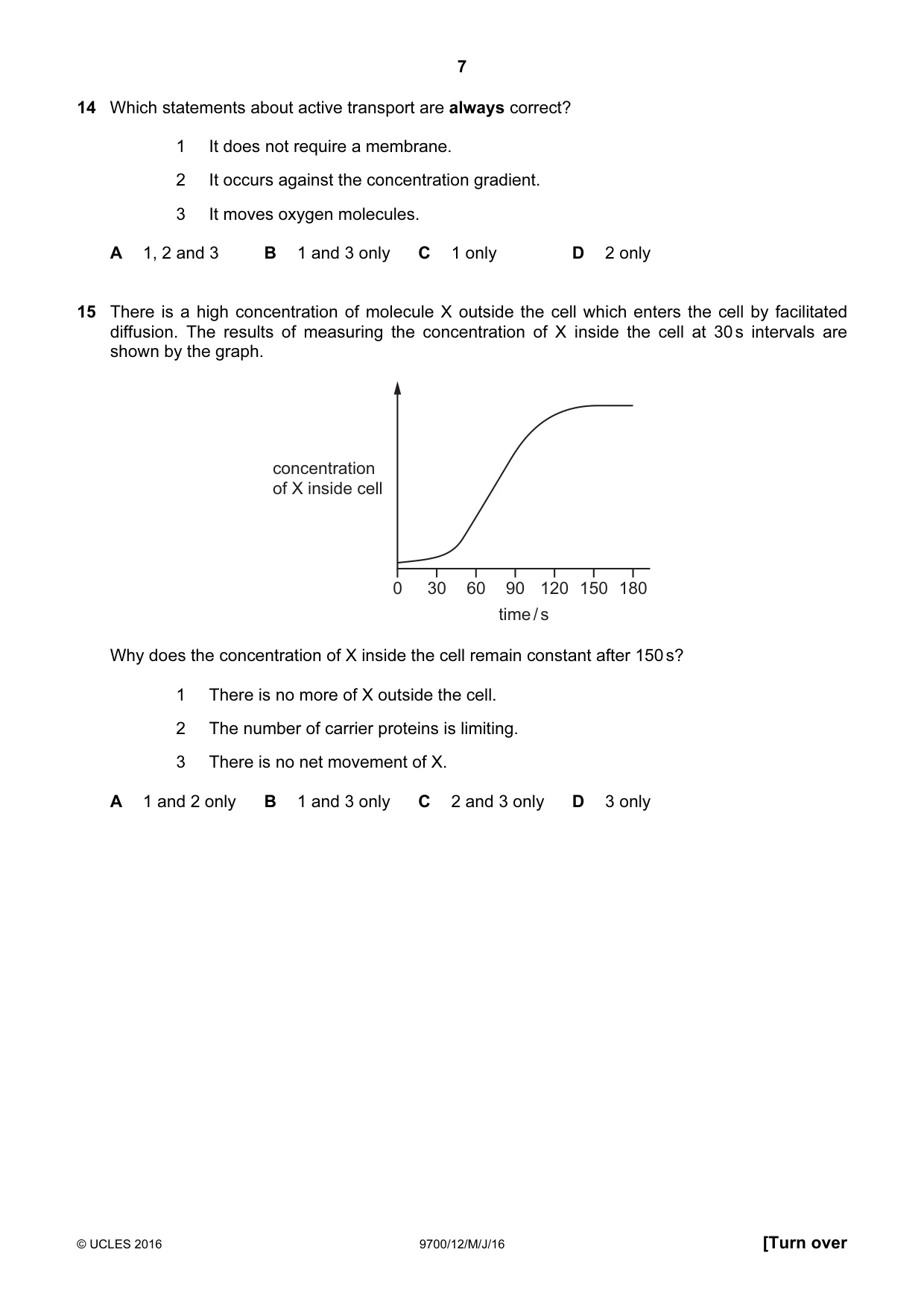
15 There is a high concentration of molecule X outside the cell which enters the cell by facilitated diffusion. The results of measuring the concentration of X inside the cell at 30 s intervals are shown by the graph. concentration of X inside cell 0 30 60 90 120 150 180 time / s Why does the concentration of X inside the cell remain constant after 150 s? 1 There is no more of X outside the cell. 2 The number of carrier proteins is limiting. 3 There is no net movement of X. A 1 and 2 only B 1 and 3 only C 2 and 3 only D 3 only
Mark scheme: D
Q16 · The photomicrographs show cells in various stages of the cell cycle
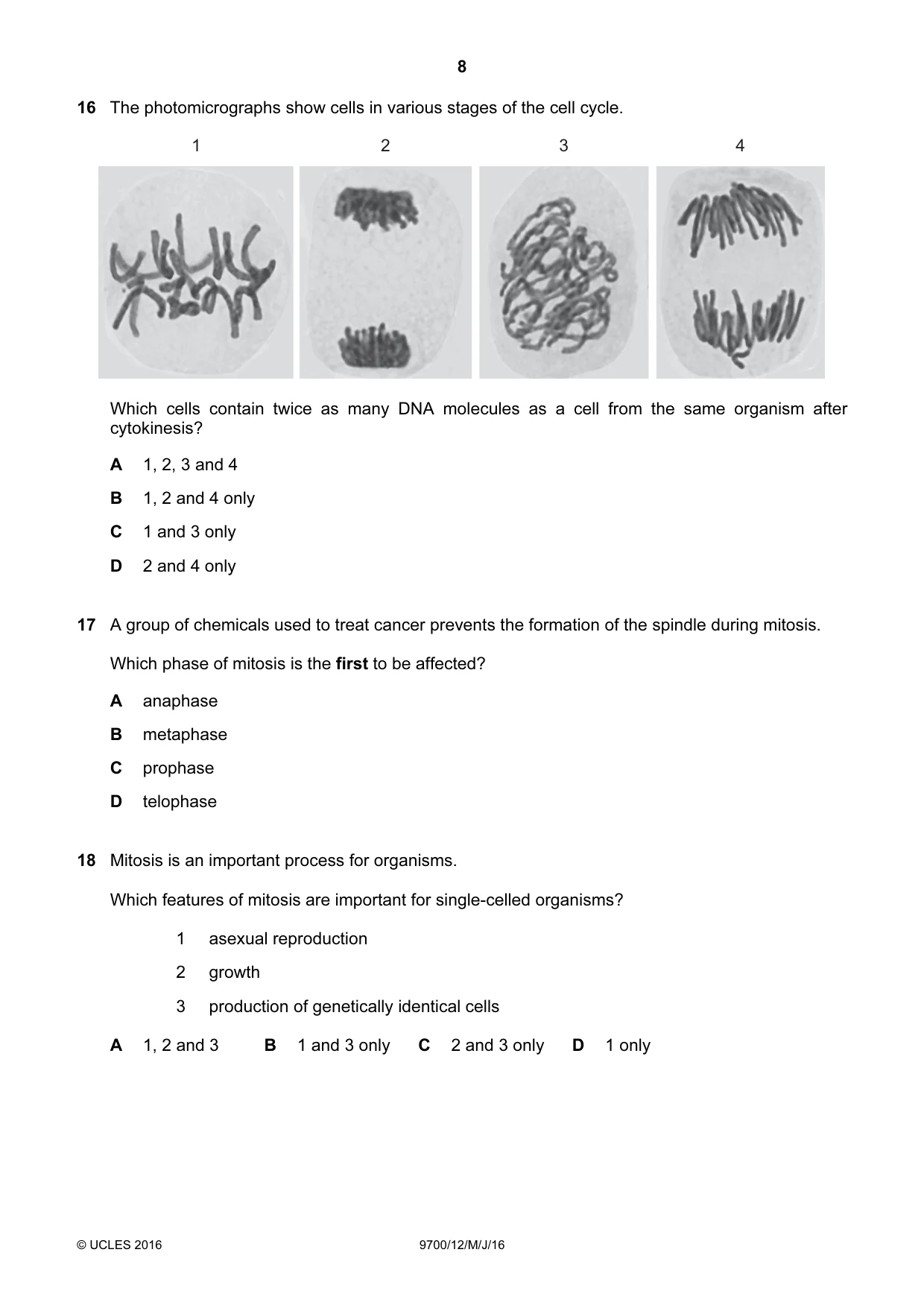
16 The photomicrographs show cells in various stages of the cell cycle. 1 2 3 4 Which cells contain twice as many DNA molecules as a cell from the same organism after cytokinesis? A 1, 2, 3 and 4 B 1, 2 and 4 only C 1 and 3 only D 2 and 4 only
Mark scheme: A
Q17 · A group of chemicals used to treat cancer prevents the formation of the spindle during…
17 A group of chemicals used to treat cancer prevents the formation of the spindle during mitosis. Which phase of mitosis is the first to be affected? A anaphase B metaphase C prophase D telophase
Mark scheme: C
Q18 · Mitosis is an important process for organisms
18 Mitosis is an important process for organisms. Which features of mitosis are important for single-celled organisms? 1 asexual reproduction 2 growth 3 production of genetically identical cells A 1, 2 and 3 B 1 and 3 only C 2 and 3 only D 1 only
Mark scheme: B
More questions on Replication and division of nuclei and cells
Q19 · Which statements about complementary base pairing are correct?
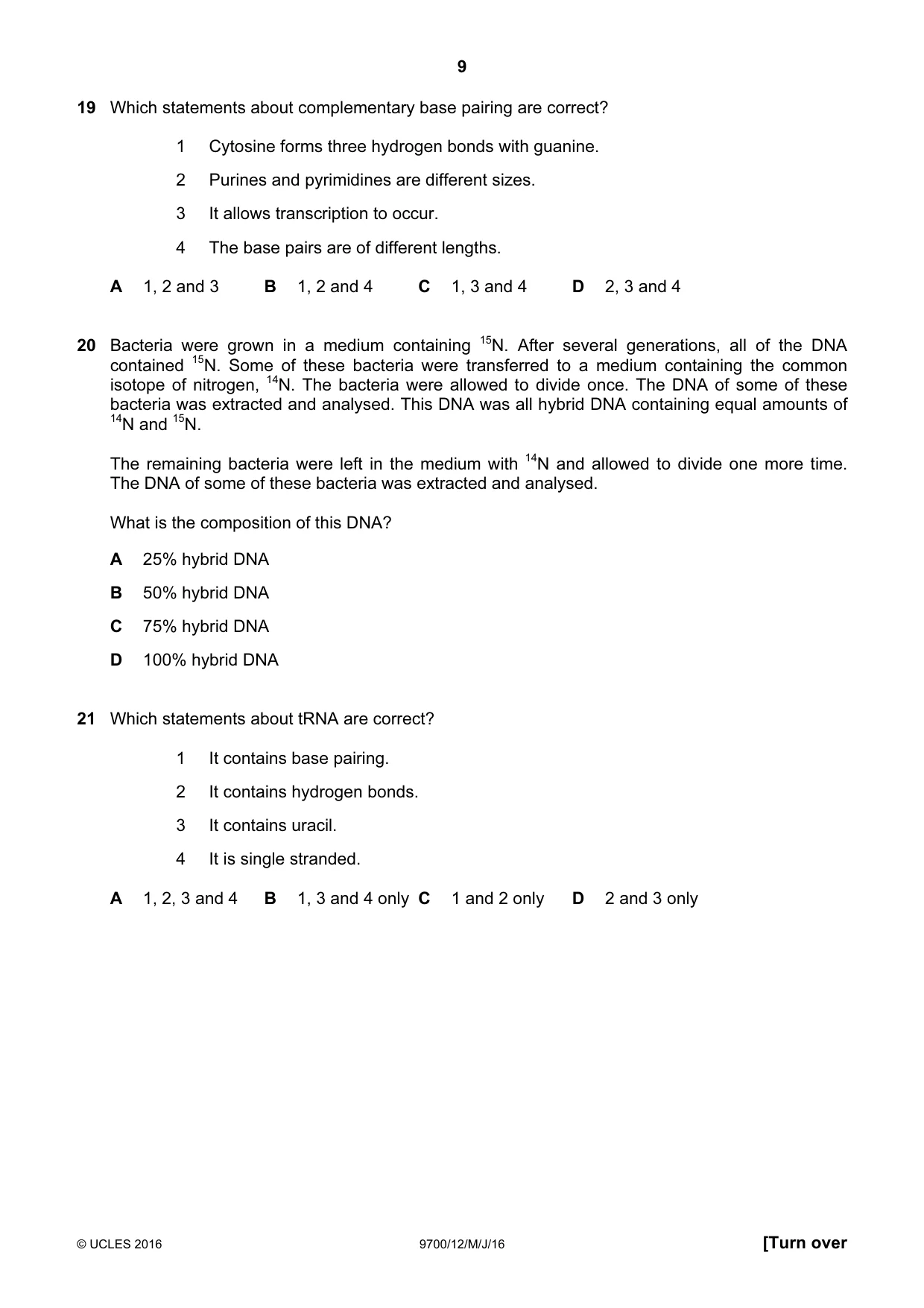
19 Which statements about complementary base pairing are correct? 1 Cytosine forms three hydrogen bonds with guanine. 2 Purines and pyrimidines are different sizes. 3 It allows transcription to occur. 4 The base pairs are of different lengths. A 1, 2 and 3 B 1, 2 and 4 C 1, 3 and 4 D 2, 3 and 4
Mark scheme: A
More questions on Structure of nucleic acids and replication of DNA
Q20 · Bacteria were grown in a medium containing 15N
20 Bacteria were grown in a medium containing 15N. After several generations, all of the DNA contained 15N. Some of these bacteria were transferred to a medium containing the common isotope of nitrogen, 14N. The bacteria were allowed to divide once. The DNA of some of these bacteria was extracted and analysed. This DNA was all hybrid DNA containing equal amounts of 14N and 15N. The remaining bacteria were left in the medium with 14N and allowed to divide one more time. The DNA of some of these bacteria was extracted and analysed. What is the composition of this DNA? A 25% hybrid DNA B 50% hybrid DNA C 75% hybrid DNA D 100% hybrid DNA
Mark scheme: B
More questions on Structure of nucleic acids and replication of DNA
Q21 · Which statements about tRNA are correct?
21 Which statements about tRNA are correct? 1 It contains base pairing. 2 It contains hydrogen bonds. 3 It contains uracil. 4 It is single stranded. A 1, 2, 3 and 4 B 1, 3 and 4 only C 1 and 2 only D 2 and 3 only
Mark scheme: A
Q22 · The diagram shows the nucleotide sequence of a small section of a gene which is…
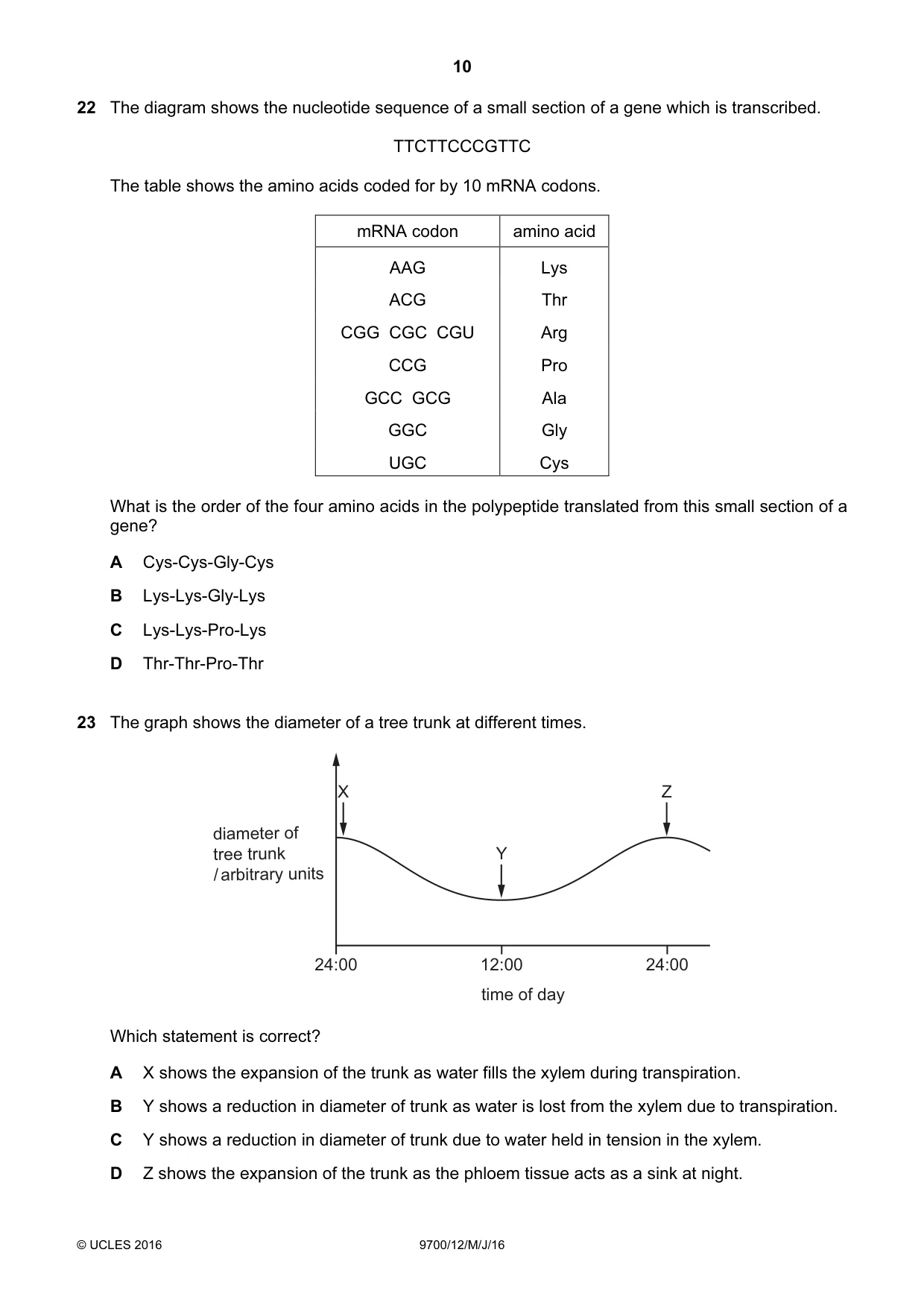
22 The diagram shows the nucleotide sequence of a small section of a gene which is transcribed. TTCTTCCCGTTC The table shows the amino acids coded for by 10 mRNA codons. mRNA codon amino acid AAG Lys ACG Thr CGG CGC CGU Arg CCG Pro GCC GCG Ala GGC Gly UGC Cys What is the order of the four amino acids in the polypeptide translated from this small section of a gene? A Cys-Cys-Gly-Cys B Lys-Lys-Gly-Lys C Lys-Lys-Pro-Lys D Thr-Thr-Pro-Thr
Mark scheme: B
Q23 · The graph shows the diameter of a tree trunk at different times
23 The graph shows the diameter of a tree trunk at different times. X Z diameter of tree trunk Y / arbitrary units 24:00 12:00 24:00 time of day Which statement is correct? A X shows the expansion of the trunk as water fills the xylem during transpiration. B Y shows a reduction in diameter of trunk as water is lost from the xylem due to transpiration. C Y shows a reduction in diameter of trunk due to water held in tension in the xylem. D Z shows the expansion of the trunk as the phloem tissue acts as a sink at night.
Mark scheme: C
Q24 · Some plant species can take up toxic heavy metal ions that are dissolved in water in the…
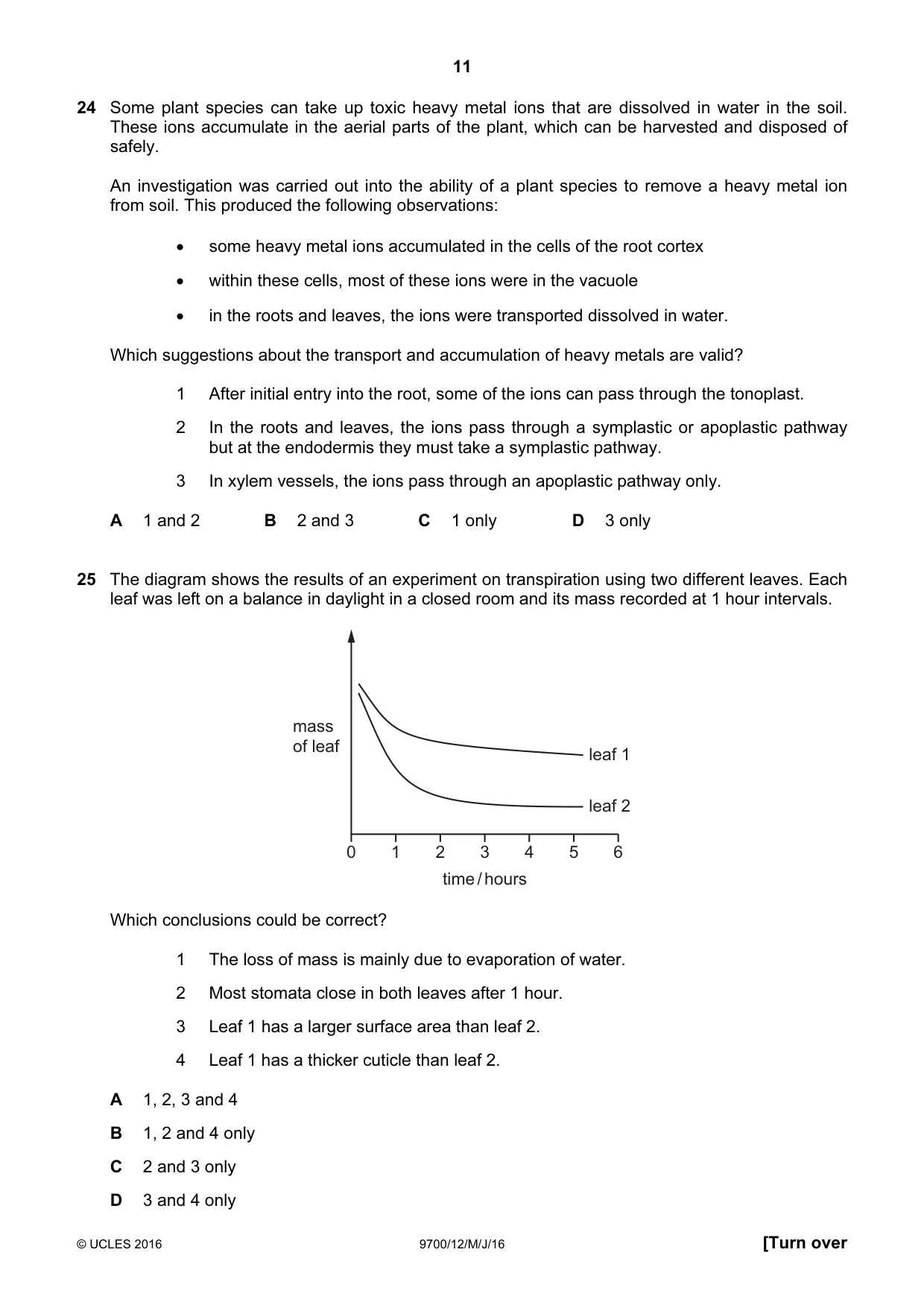
24 Some plant species can take up toxic heavy metal ions that are dissolved in water in the soil. These ions accumulate in the aerial parts of the plant, which can be harvested and disposed of safely. An investigation was carried out into the ability of a plant species to remove a heavy metal ion from soil. This produced the following observations: • some heavy metal ions accumulated in the cells of the root cortex • within these cells, most of these ions were in the vacuole • in the roots and leaves, the ions were transported dissolved in water. Which suggestions about the transport and accumulation of heavy metals are valid? 1 After initial entry into the root, some of the ions can pass through the tonoplast. 2 In the roots and leaves, the ions pass through a symplastic or apoplastic pathway but at the endodermis they must take a symplastic pathway. 3 In xylem vessels, the ions pass through an apoplastic pathway only. A 1 and 2 B 2 and 3 C 1 only D 3 only
Mark scheme: A
Q25 · The diagram shows the results of an experiment on transpiration using two different leaves
25 The diagram shows the results of an experiment on transpiration using two different leaves. Each leaf was left on a balance in daylight in a closed room and its mass recorded at 1 hour intervals. mass of leaf leaf 1 leaf 2 0 1 2 3 4 5 6 time / hours Which conclusions could be correct? 1 The loss of mass is mainly due to evaporation of water. 2 Most stomata close in both leaves after 1 hour. 3 Leaf 1 has a larger surface area than leaf 2. 4 Leaf 1 has a thicker cuticle than leaf 2. A 1, 2, 3 and 4 B 1, 2 and 4 only C 2 and 3 only D 3 and 4 only
Mark scheme: B
Q26 · Which statement about the transport of sucrose is correct?
26 Which statement about the transport of sucrose is correct? A ATP synthesised by mitochondria of companion cells provides the energy to move sucrose from phloem sieve tube elements in leaves to sinks. B Sucrose moves through plasmodesmata by passive diffusion from mesophyll cells through companion cells to phloem sieve tube elements. C The water potential in phloem sieve tube elements becomes more negative following the entry of sucrose. D Water enters companion cells and hydrostatic pressure builds up to push sucrose into phloem sieve tube elements by mass flow.
Mark scheme: C
Q27 · Which of the tissue types below are present in the walls of all blood vessels?
27 Which of the tissue types below are present in the walls of all blood vessels? 1 collagen 2 elastic 3 endothelial 4 smooth muscle A 1, 2, 3 and 4 B 1, 2 and 4 only C 2 and 3 only D 3 only
Mark scheme: D
Q28 · Which components of blood are present in tissue fluid?
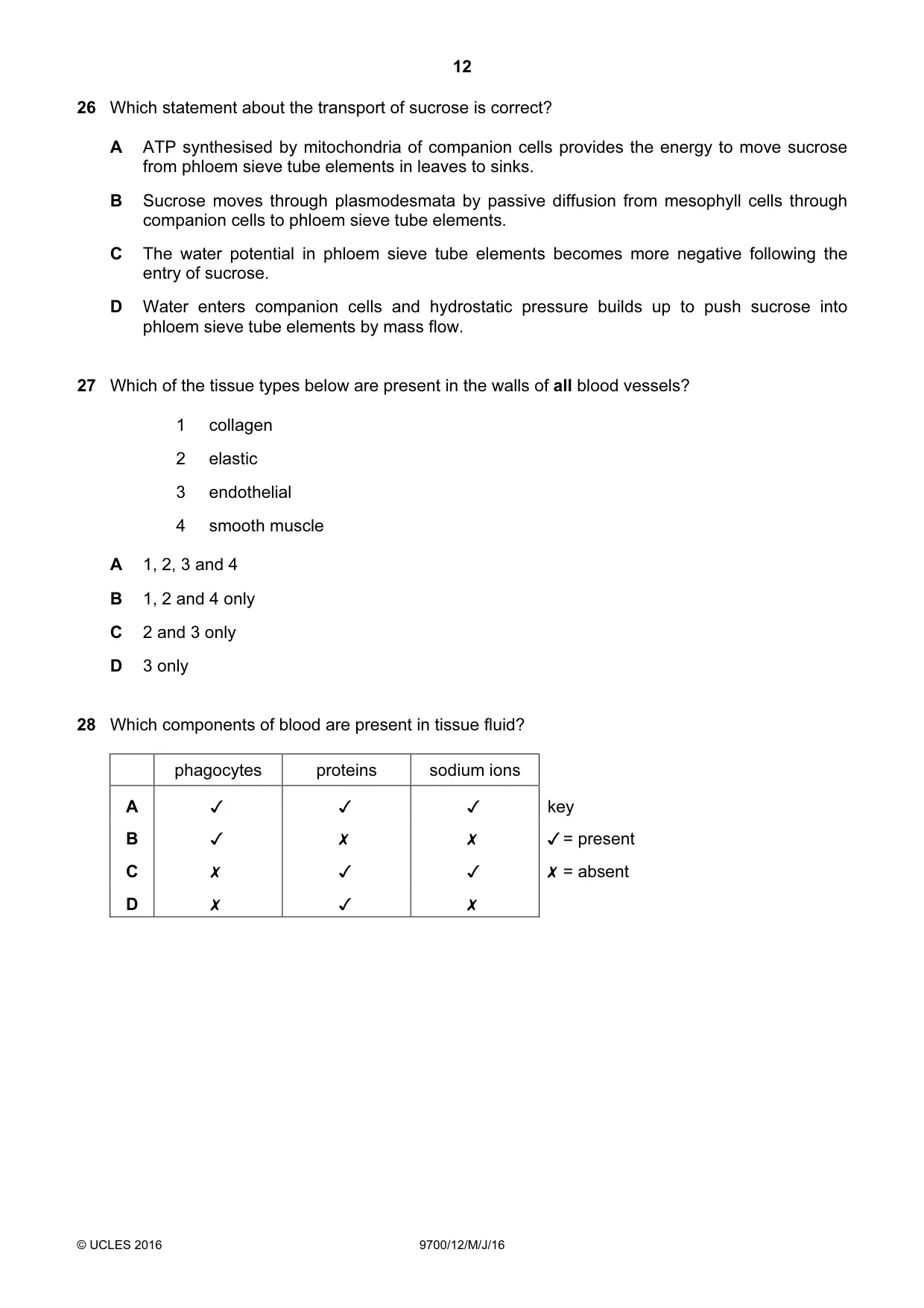
28 Which components of blood are present in tissue fluid? phagocytes proteins sodium ions A v v v B v x x Cc x v v D x v x key J/ = present X = absent
Mark scheme: A
Q29 · The graph shows changes in percentage saturation of haemoglobin with oxygen in the blood…
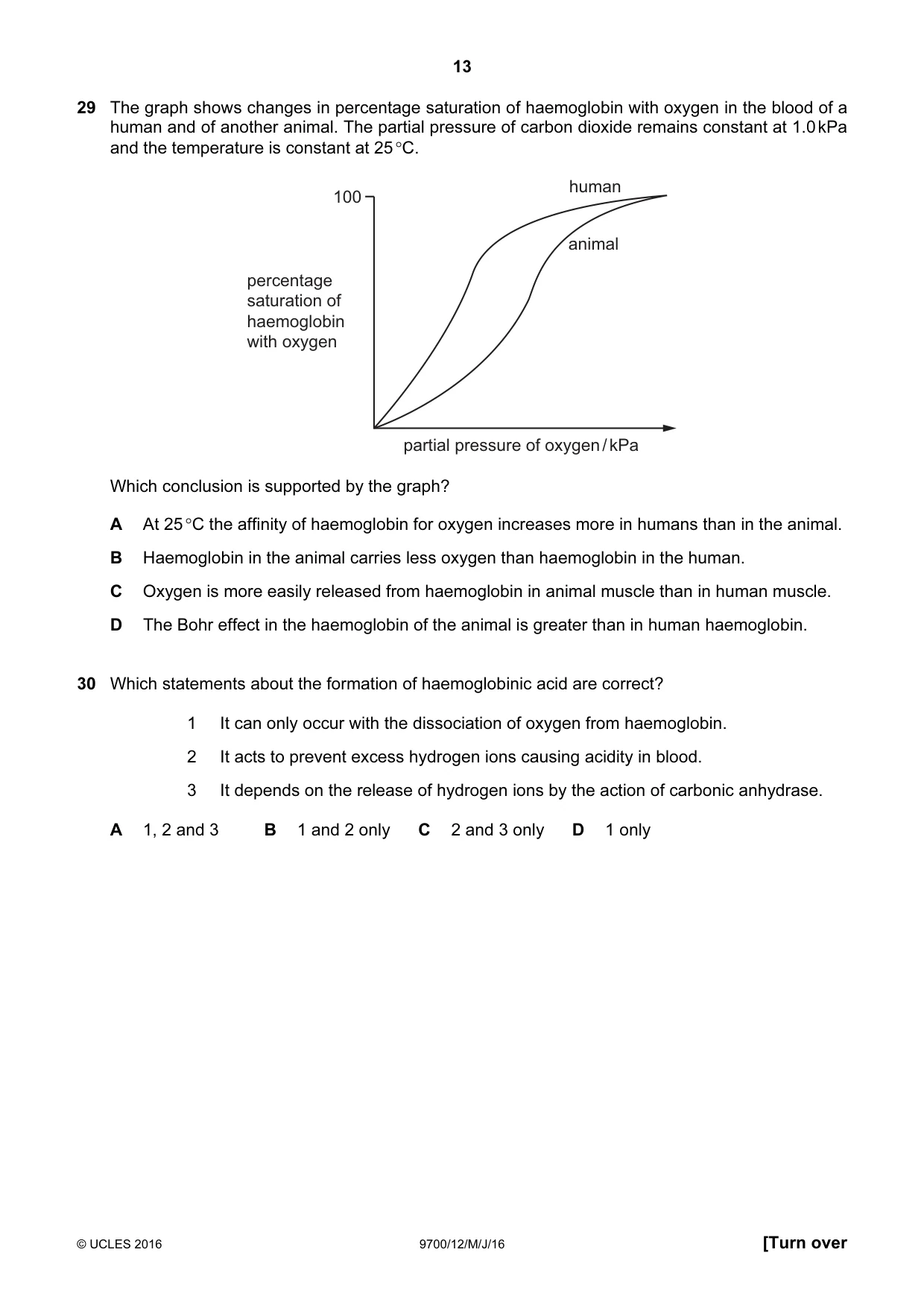
29 The graph shows changes in percentage saturation of haemoglobin with oxygen in the blood of a human and of another animal. The partial pressure of carbon dioxide remains constant at 1.0 kPa and the temperature is constant at 25 °C. human 100 animal percentage saturation of haemoglobin with oxygen partial pressure of oxygen / kPa Which conclusion is supported by the graph? A At 25 °C the affinity of haemoglobin for oxygen increases more in humans than in the animal. B Haemoglobin in the animal carries less oxygen than haemoglobin in the human. C Oxygen is more easily released from haemoglobin in animal muscle than in human muscle. D The Bohr effect in the haemoglobin of the animal is greater than in human haemoglobin.
Mark scheme: C
Q30 · Which statements about the formation of haemoglobinic acid are correct?
30 Which statements about the formation of haemoglobinic acid are correct? 1 It can only occur with the dissociation of oxygen from haemoglobin. 2 It acts to prevent excess hydrogen ions causing acidity in blood. 3 It depends on the release of hydrogen ions by the action of carbonic anhydrase. A 1, 2 and 3 B 1 and 2 only C 2 and 3 only D 1 only
Mark scheme: A
Q31 · The photograph shows a type of blood cell
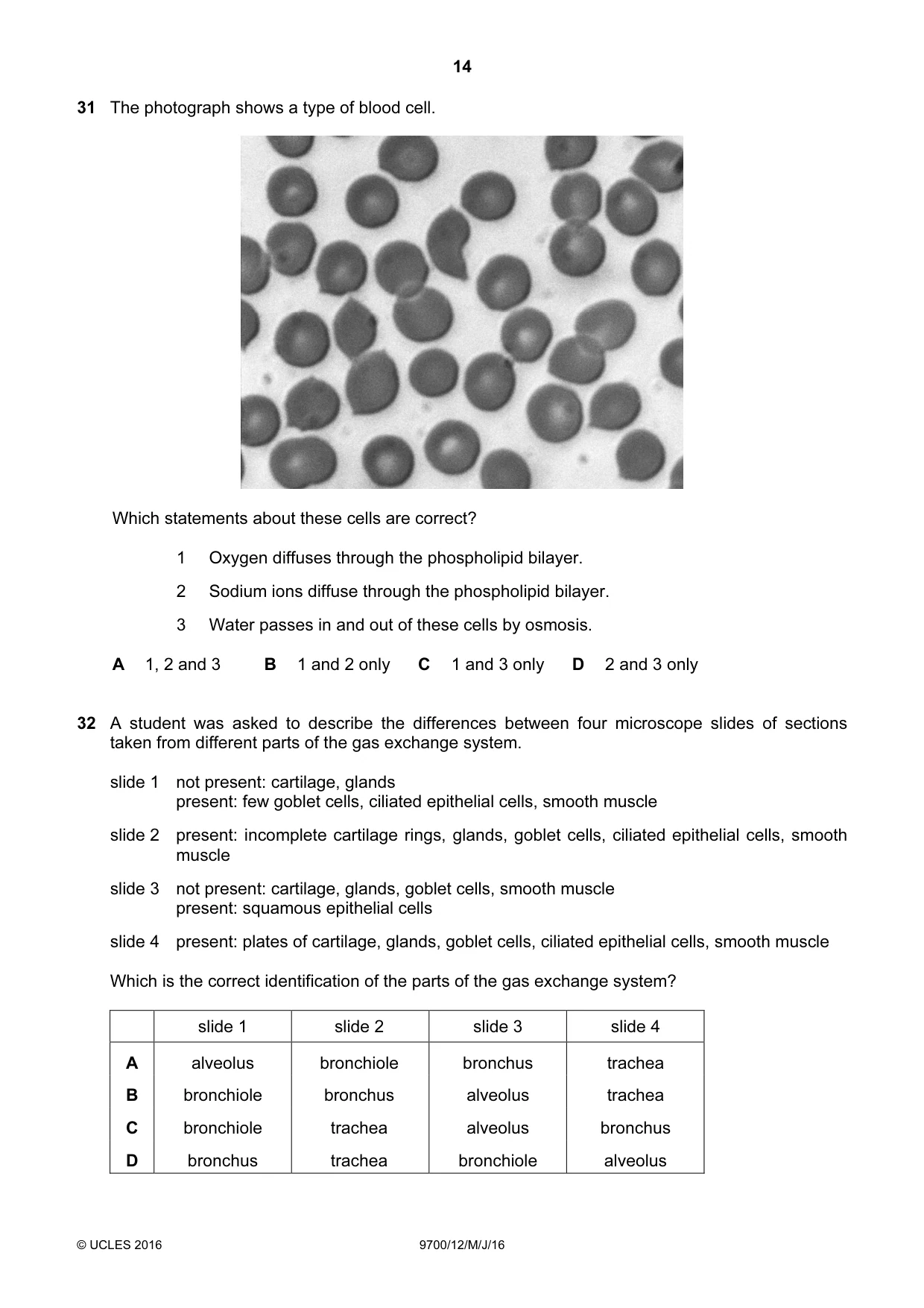
31 The photograph shows a type of blood cell. Which statements about these cells are correct? 1 Oxygen diffuses through the phospholipid bilayer. 2 Sodium ions diffuse through the phospholipid bilayer. 3 Water passes in and out of these cells by osmosis. A 1, 2 and 3 B 1 and 2 only C 1 and 3 only D 2 and 3 only
Mark scheme: C
Q32 · A student was asked to describe the differences between four microscope slides of…
32 A student was asked to describe the differences between four microscope slides of sections taken from different parts of the gas exchange system. slide 1 not present: cartilage, glands present: few goblet cells, ciliated epithelial cells, smooth muscle slide 2 present: incomplete cartilage rings, glands, goblet cells, ciliated epithelial cells, smooth muscle slide 3 not present: cartilage, glands, goblet cells, smooth muscle present: squamous epithelial cells slide 4 present: plates of cartilage, glands, goblet cells, ciliated epithelial cells, smooth muscle Which is the correct identification of the parts of the gas exchange system? slide 1 slide 2 slide 3 slide 4 A alveolus bronchiole bronchus trachea B bronchiole bronchus alveolus trachea C bronchiole trachea alveolus bronchus D bronchus trachea bronchiole alveolus
Mark scheme: C
Q33 · Which components of the human gas exchange system help to reduce the effects of…
33 Which components of the human gas exchange system help to reduce the effects of carcinogens in tar? A cilia and goblet cells only B cilia and mucous glands only C mucous glands and goblet cells only D mucous glands, goblet cells and cilia
Mark scheme: D
Q34 · What is correct about the affinity between haemoglobin and the gases carbon dioxide…
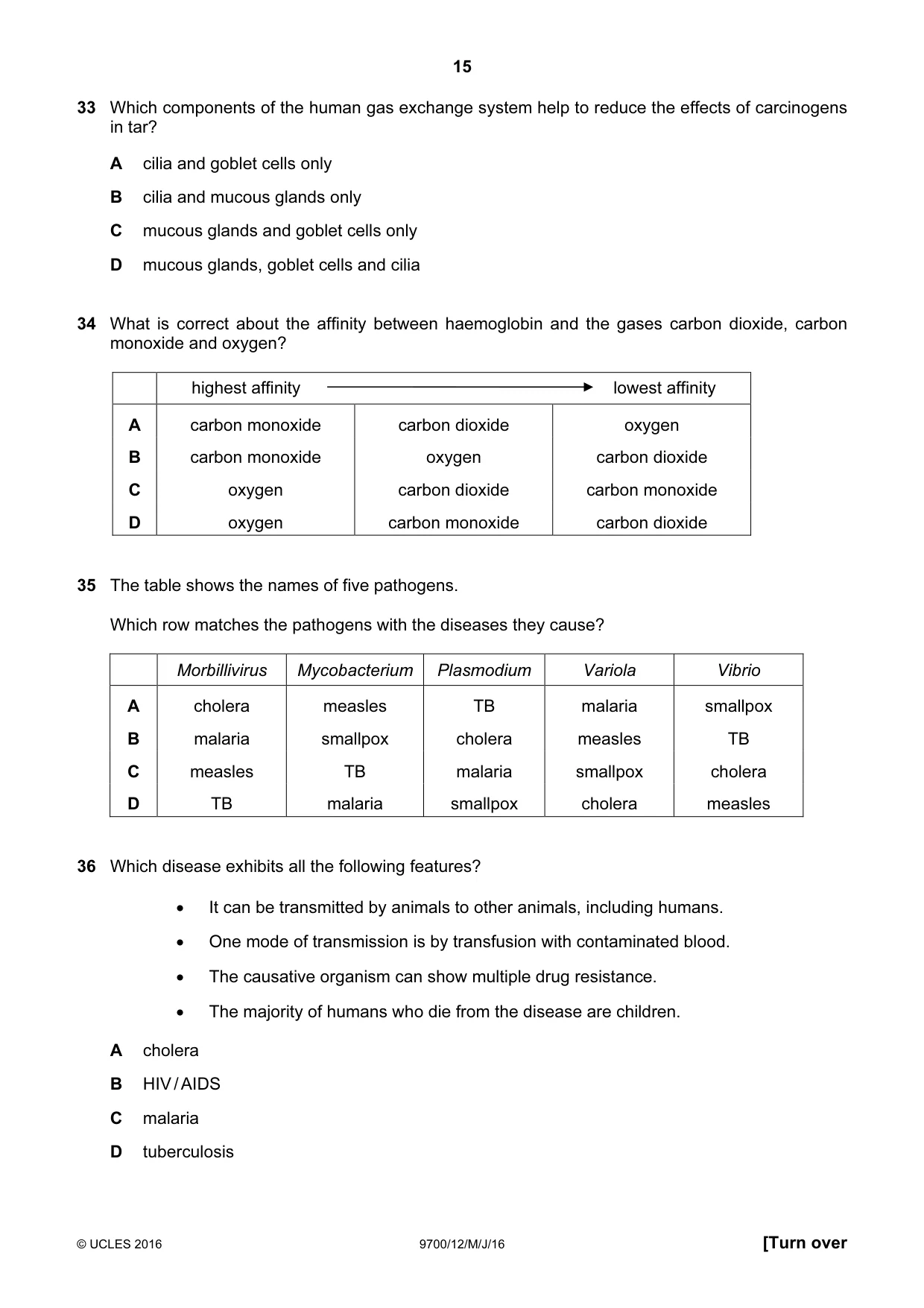
34 What is correct about the affinity between haemoglobin and the gases carbon dioxide, carbon monoxide and oxygen? highest affinity lowest affinity A carbon monoxide carbon dioxide oxygen B carbon monoxide oxygen carbon dioxide C oxygen carbon dioxide carbon monoxide D oxygen carbon monoxide carbon dioxide
Mark scheme: B
Q35 · The table shows the names of five pathogens
35 The table shows the names of five pathogens. Which row matches the pathogens with the diseases they cause? Morbillivirus Mycobacterium Plasmodium Variola Vibrio A cholera measles TB malaria smallpox B malaria smallpox cholera measles TB C measles TB malaria smallpox cholera D TB malaria smallpox cholera measles
Mark scheme: C
Q36 · Which disease exhibits all the following features?
36 Which disease exhibits all the following features? • It can be transmitted by animals to other animals, including humans. • One mode of transmission is by transfusion with contaminated blood. • The causative organism can show multiple drug resistance. • The majority of humans who die from the disease are children. A cholera B HIV / AIDS C malaria D tuberculosis
Mark scheme: C
Q37 · The proportion of the local population who have malaria in area R is higher than the…
37 The proportion of the local population who have malaria in area R is higher than the proportion in area S. Which factor causes this difference? A Area R has a more humid climate than area S. B Area R is nearer the equator than area S. C There is a higher population in area R than area S. D There is less sewage treatment in area R than area S.
Mark scheme: A
Q38 · Which statement describes how passive natural immunity is obtained?
38 Which statement describes how passive natural immunity is obtained? A A vaccination containing dead microorganisms is given. B An immunisation containing specific antigens is given. C Antibodies are passed from mother to developing baby. D Antibodies from another individual are injected.
Mark scheme: C
Q39 · What describes a non-specific immune response?
39 What describes a non-specific immune response? A activation of killer T-lymphocytes by infected cells B cloning of B-lymphocytes to form plasma cells C ingestion of a bacterial cell by a neutrophil D presentation of antigens on the cell surface of macrophages
Mark scheme: C
Q40 · What explains why monoclonal antibodies can be used to target cancer cells?
40 What explains why monoclonal antibodies can be used to target cancer cells? A Cancer cells have different antigens from normal body cells. B Specific cancer drugs can be attached to the monoclonal antibody. C They are one type of a specific antibody that binds to an antigen. D They are secreted by hybridomas of cancer cells and B-lymphocytes.
Mark scheme: A
What was in this paper
The subtopics covered by these 40 questions, and how many questions each got. Open one in a new tab to see every Cambridge question on it.
4Transport mechanisms4Cells as the basic units of living organisms3Infectious diseases3Movement into and out of cells3Transport of oxygen and carbon dioxide3Antibodies and vaccination2Chromosome behaviour in mitosis2Factors that affect enzyme action2Fluid mosaic membranes2Protein synthesis2Structure of nucleic acids and replication of DNA2The circulatory system2The gas exchange system2Carbohydrates and lipids1Replication and division of nuclei and cells1The immune system1The microscope in cell studies1What you needed in this session
Cambridge’s own grade thresholds for 2016 May/June, Paper 1 · Variant 2. A higher threshold means an easier paper — the bar moves with how the cohort did.