Cambridge A Level Biology 9700 — 2017 May/June Paper 1 · Variant 2
9700/12/M/J/17 · 40 questions · 40 marks · ≈45 min
The question paper and its mark scheme, free to read here and free to download. This is Cambridge’s own paper, exactly as it was sat.
Question paper20 pages



Mark scheme3 pages
Answers below. Sit the paper first if you are practising.
Questions as text
Q1 · Which organelles are enclosed in a single phospholipid bilayer and contain hydrolytic…
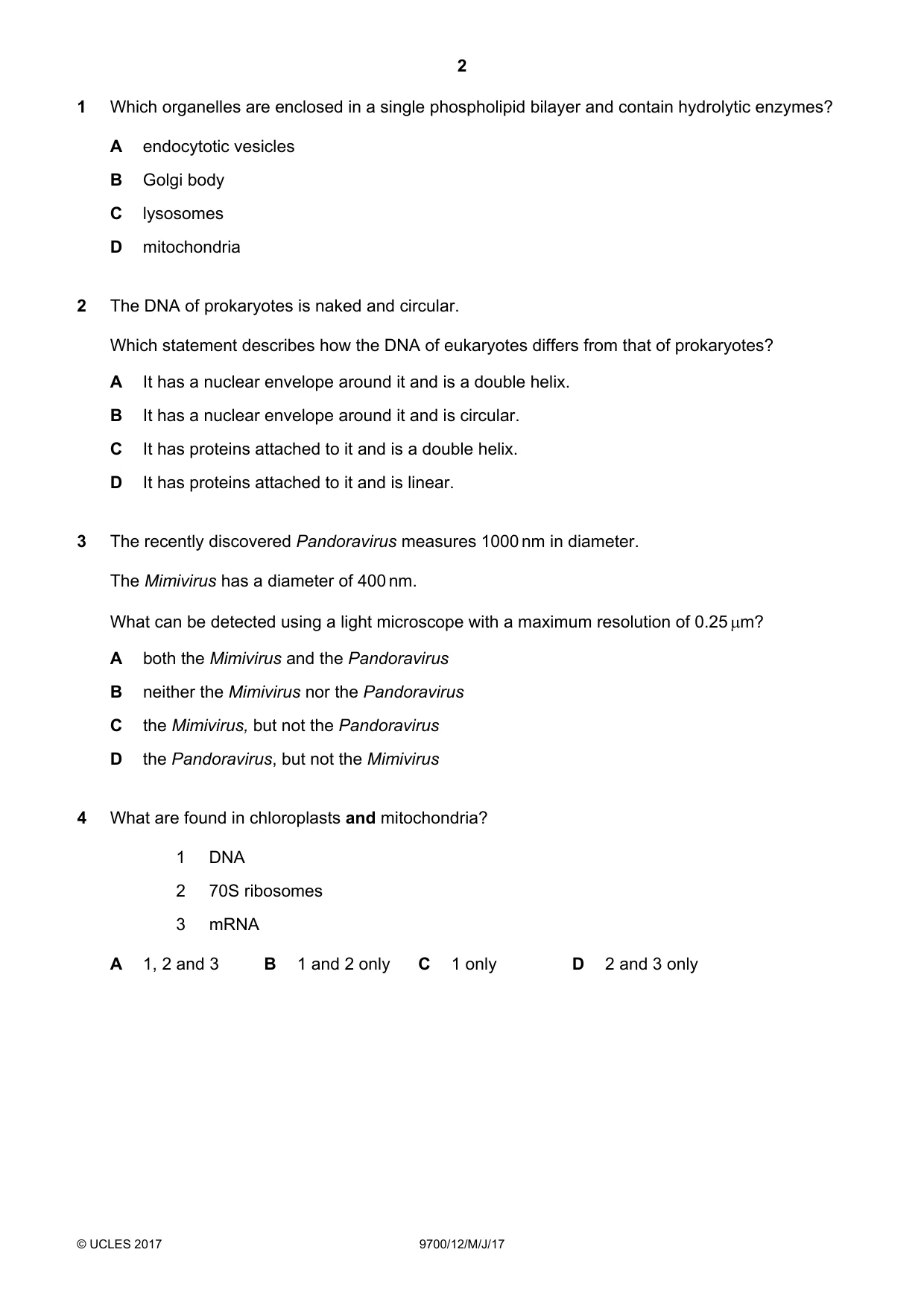
1 Which organelles are enclosed in a single phospholipid bilayer and contain hydrolytic enzymes? A endocytotic vesicles B Golgi body C lysosomes D mitochondria
Mark scheme: C
More questions on Cells as the basic units of living organisms
Q2 · The DNA of prokaryotes is naked and circular
2 The DNA of prokaryotes is naked and circular. Which statement describes how the DNA of eukaryotes differs from that of prokaryotes? A It has a nuclear envelope around it and is a double helix. B It has a nuclear envelope around it and is circular. C It has proteins attached to it and is a double helix. D It has proteins attached to it and is linear.
Mark scheme: D
More questions on Cells as the basic units of living organisms
Q3 · The recently discovered Pandoravirus measures 1000 nm in diameter
3 The recently discovered Pandoravirus measures 1000 nm in diameter. The Mimivirus has a diameter of 400 nm. What can be detected using a light microscope with a maximum resolution of 0.25 µm? A both the Mimivirus and the Pandoravirus B neither the Mimivirus nor the Pandoravirus C the Mimivirus, but not the Pandoravirus D the Pandoravirus, but not the Mimivirus
Mark scheme: A
Q4 · What are found in chloroplasts and mitochondria?
4 What are found in chloroplasts and mitochondria? 1 DNA 2 70S ribosomes 3 mRNA A 1, 2 and 3 B 1 and 2 only C 1 only D 2 and 3 only
Mark scheme: A
More questions on Cells as the basic units of living organisms
Q5 · Boiling the bones and teeth from dead animals can be used to produce a type of glue
5 Boiling the bones and teeth from dead animals can be used to produce a type of glue. The glue is formed from the collagen fibres present in bones and teeth. Which statement describes the changes to collagen that occur when the glue is produced? A The fibres of collagen become more coiled. B The fibres of collagen become more flexible. C The helices of collagen molecules unwind. D The molecules of collagen dissolve in water.
Mark scheme: C
Q6 · What describes the primary structure of a protein?
6 What describes the primary structure of a protein? A α-helix B a dipeptide C a globular structure D the specific order of amino acids
Mark scheme: D
Q7 · The diagrams show four monosaccharides with the formula C6H12O6
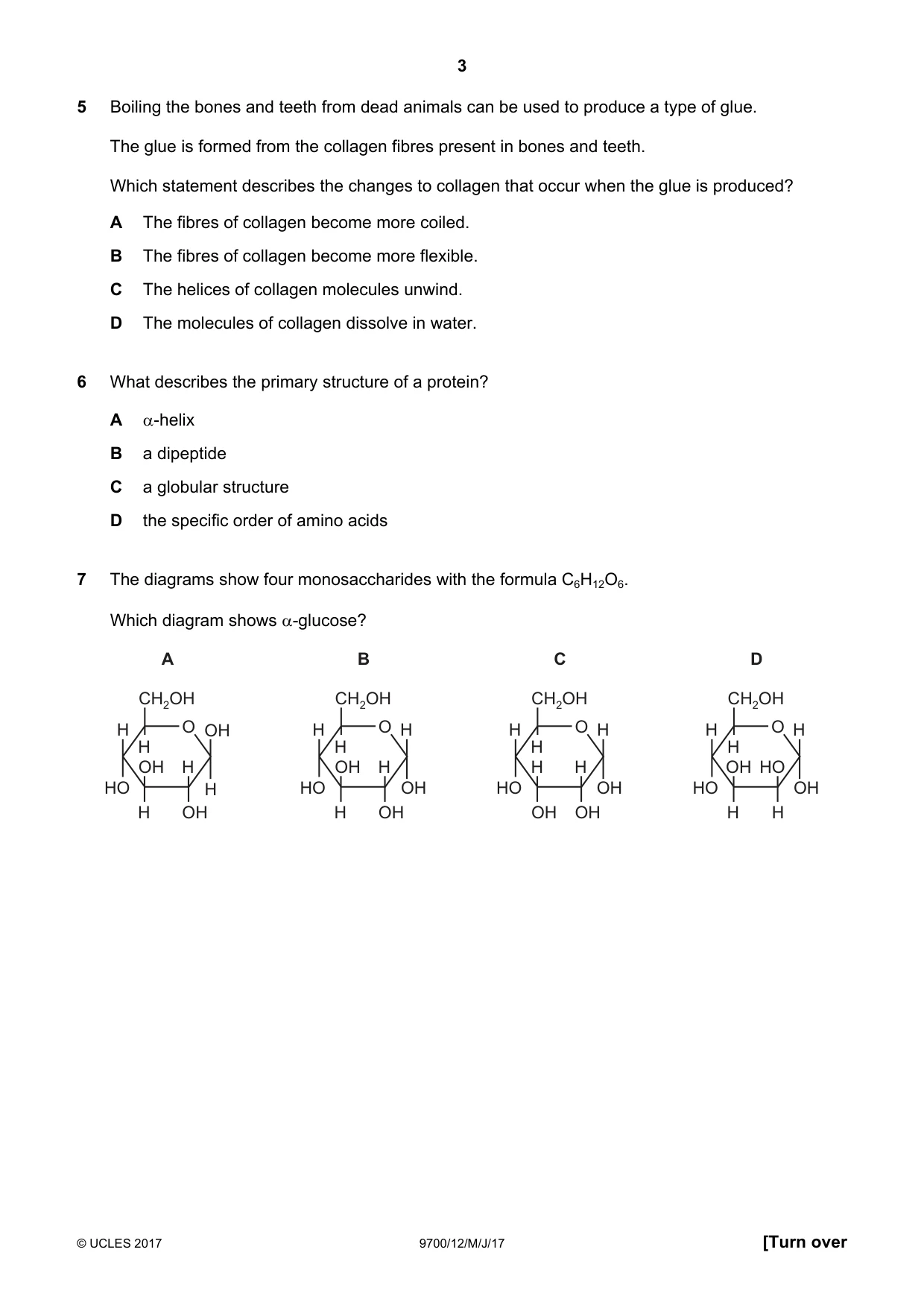
7 The diagrams show four monosaccharides with the formula C6H12O6. Which diagram shows α-glucose? A B C D CH2OH CH2OH CH2OH CH2OH H O OH H O H H O H H O H H H H H OH H OH H H H OH HO HO H HO OH HO OH HO OH H OH H OH OH OH H H
Mark scheme: B
Q8 · Complete digestion of polysaccharides requires all the glycosidic bonds between the…
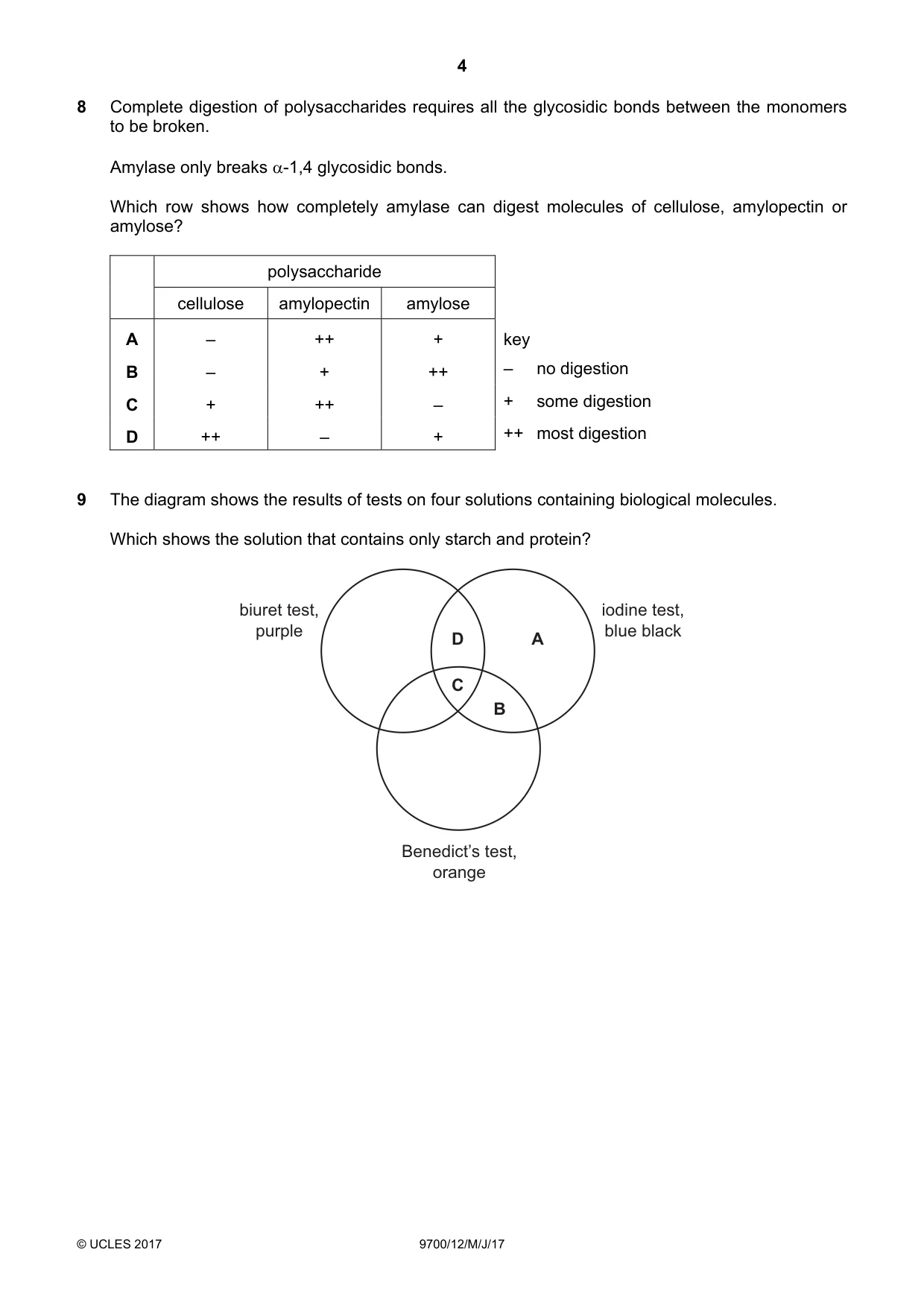
8 Complete digestion of polysaccharides requires all the glycosidic bonds between the monomers to be broken. Amylase only breaks α-1,4 glycosidic bonds. Which row shows how completely amylase can digest molecules of cellulose, amylopectin or amylose? polysaccharide cellulose amylopectin amylose A – ++ + key B – + ++ – no digestion C + ++ – + some digestion D ++ – + ++ most digestion
Mark scheme: B
Q9 · The diagram shows the results of tests on four solutions containing biological molecules
9 The diagram shows the results of tests on four solutions containing biological molecules. Which shows the solution that contains only starch and protein? biuret test, iodine test, purple blue black D A C B Benedict’s test, orange
Mark scheme: D
Q10 · The enzyme invertase catalyses the breakdown of sucrose to glucose and fructose
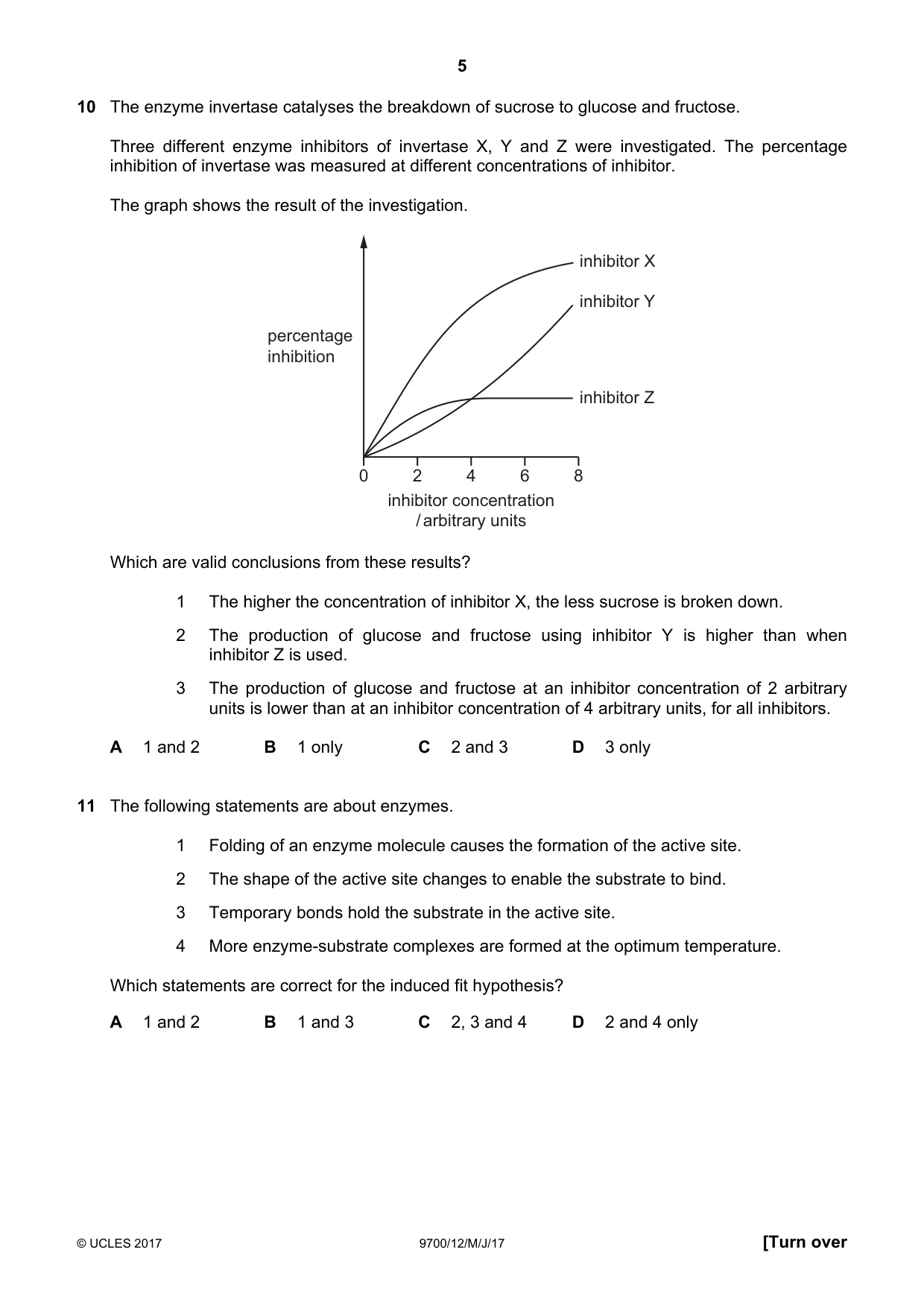
10 The enzyme invertase catalyses the breakdown of sucrose to glucose and fructose. Three different enzyme inhibitors of invertase X, Y and Z were investigated. The percentage inhibition of invertase was measured at different concentrations of inhibitor. The graph shows the result of the investigation. inhibitor X inhibitor Y percentage inhibition inhibitor Z 0 2 4 6 8 inhibitor concentration / arbitrary units Which are valid conclusions from these results? 1 The higher the concentration of inhibitor X, the less sucrose is broken down. 2 The production of glucose and fructose using inhibitor Y is higher than when inhibitor Z is used. 3 The production of glucose and fructose at an inhibitor concentration of 2 arbitrary units is lower than at an inhibitor concentration of 4 arbitrary units, for all inhibitors. A 1 and 2 B 1 only C 2 and 3 D 3 only
Mark scheme: B
Q11 · The following statements are about enzymes
11 The following statements are about enzymes. 1 Folding of an enzyme molecule causes the formation of the active site. 2 The shape of the active site changes to enable the substrate to bind. 3 Temporary bonds hold the substrate in the active site. 4 More enzyme-substrate complexes are formed at the optimum temperature. Which statements are correct for the induced fit hypothesis? A 1 and 2 B 1 and 3 C 2, 3 and 4 D 2 and 4 only
Mark scheme: C
Q12 · How is the Michaelis-Menten constant (Km) used?
12 How is the Michaelis-Menten constant (Km) used? A to assess the efficiency of an enzyme in catalysing a reaction B to compare the affinity of enzymes for their substrate C to find the maximum velocity of an enzyme (Vmax) D to find the rate at which substrate is loaded by an enzyme
Mark scheme: B
Q13 · Proteins in the cell surface membranes of human cells and mouse cells were labelled with…
13 Proteins in the cell surface membranes of human cells and mouse cells were labelled with fluorescent dyes. The human cells were labelled with a red dye and the mouse cells were labelled with a green dye. A human cell and a mouse cell were then fused to form a hybrid cell. At first the different dyes remained separate. After 40 minutes the two dyes were evenly distributed in the hybrid cell surface membrane. What explains this observation? A All protein molecules in the cell surface membrane are fixed to structures within the cell, but phospholipid molecules move freely between them. B Groups of protein and phospholipid molecules in the cell surface membrane are attached to each other and move together. C Only protein molecules in the outer layer of the cell surface membrane can move freely between phospholipid molecules. D Protein molecules in the outer layer of the cell surface membrane and those which span the bilayer can move freely between phospholipid molecules.
Mark scheme: D
Q14 · The diagram shows a plant cell
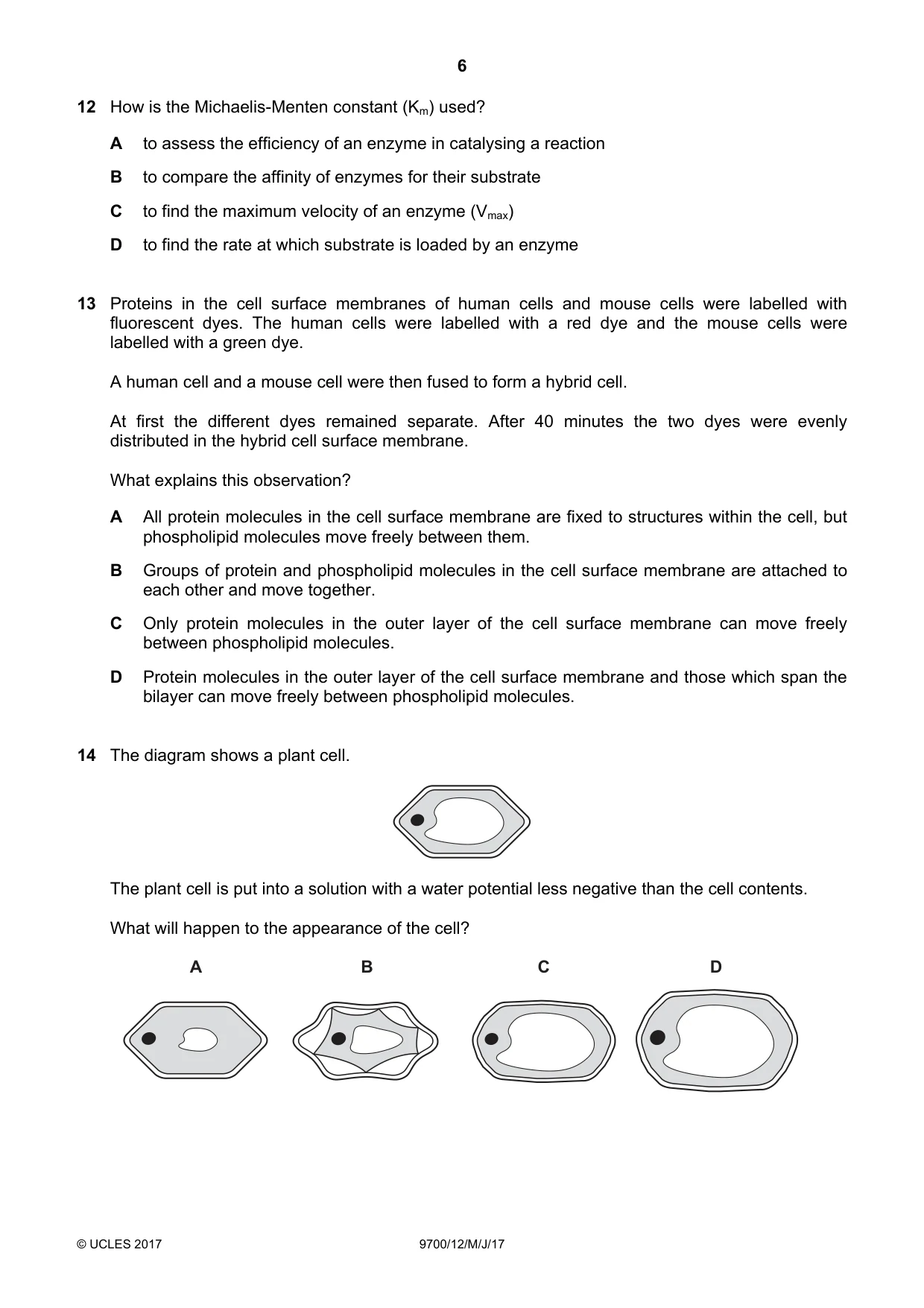
14 The diagram shows a plant cell. The plant cell is put into a solution with a water potential less negative than the cell contents. What will happen to the appearance of the cell? A B C D
Mark scheme: C
Q15 · The diagram shows the fluid mosaic model of membrane structure
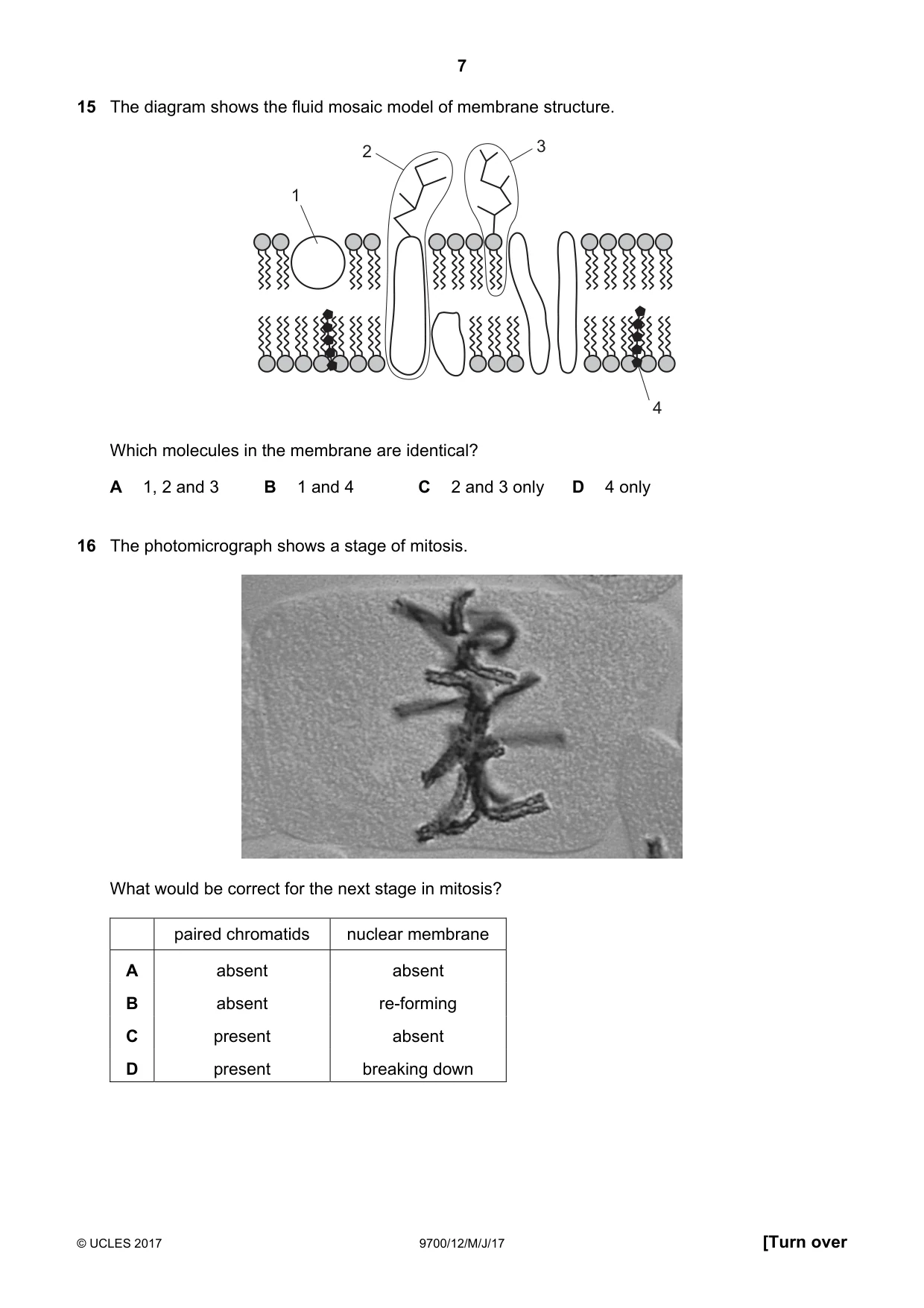
15 The diagram shows the fluid mosaic model of membrane structure. 2 3 1 4 Which molecules in the membrane are identical? A 1, 2 and 3 B 1 and 4 C 2 and 3 only D 4 only
Mark scheme: D
Q16 · The photomicrograph shows a stage of mitosis
16 The photomicrograph shows a stage of mitosis. What would be correct for the next stage in mitosis? paired chromatids nuclear membrane A absent absent B absent re-forming C present absent D present breaking down
Mark scheme: A
Q17 · The diagram shows part of the organisation of a DNA molecule and the associated histones
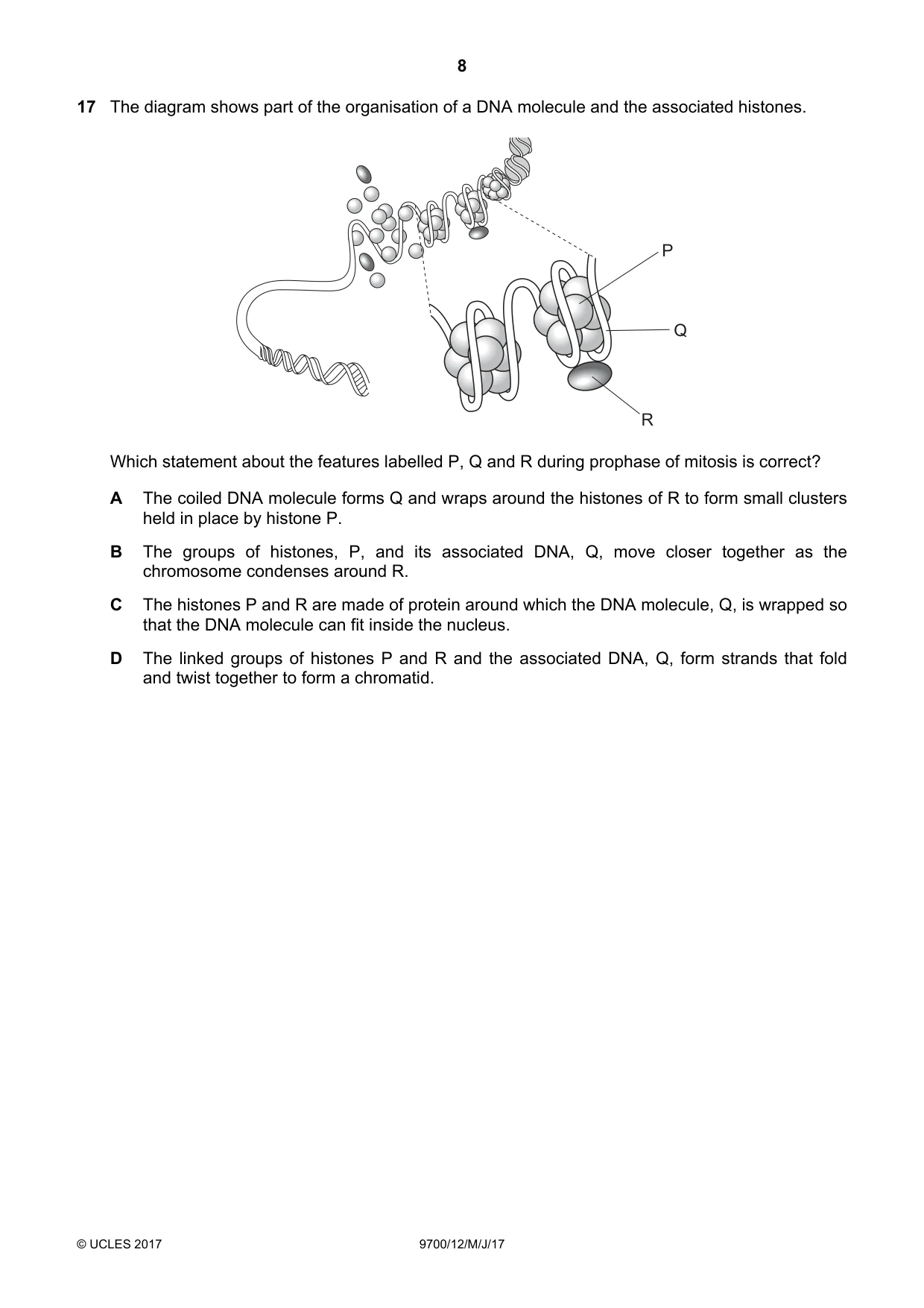
17 The diagram shows part of the organisation of a DNA molecule and the associated histones. P Q R Which statement about the features labelled P, Q and R during prophase of mitosis is correct? A The coiled DNA molecule forms Q and wraps around the histones of R to form small clusters held in place by histone P. B The groups of histones, P, and its associated DNA, Q, move closer together as the chromosome condenses around R. C The histones P and R are made of protein around which the DNA molecule, Q, is wrapped so that the DNA molecule can fit inside the nucleus. D The linked groups of histones P and R and the associated DNA, Q, form strands that fold and twist together to form a chromatid.
Mark scheme: D
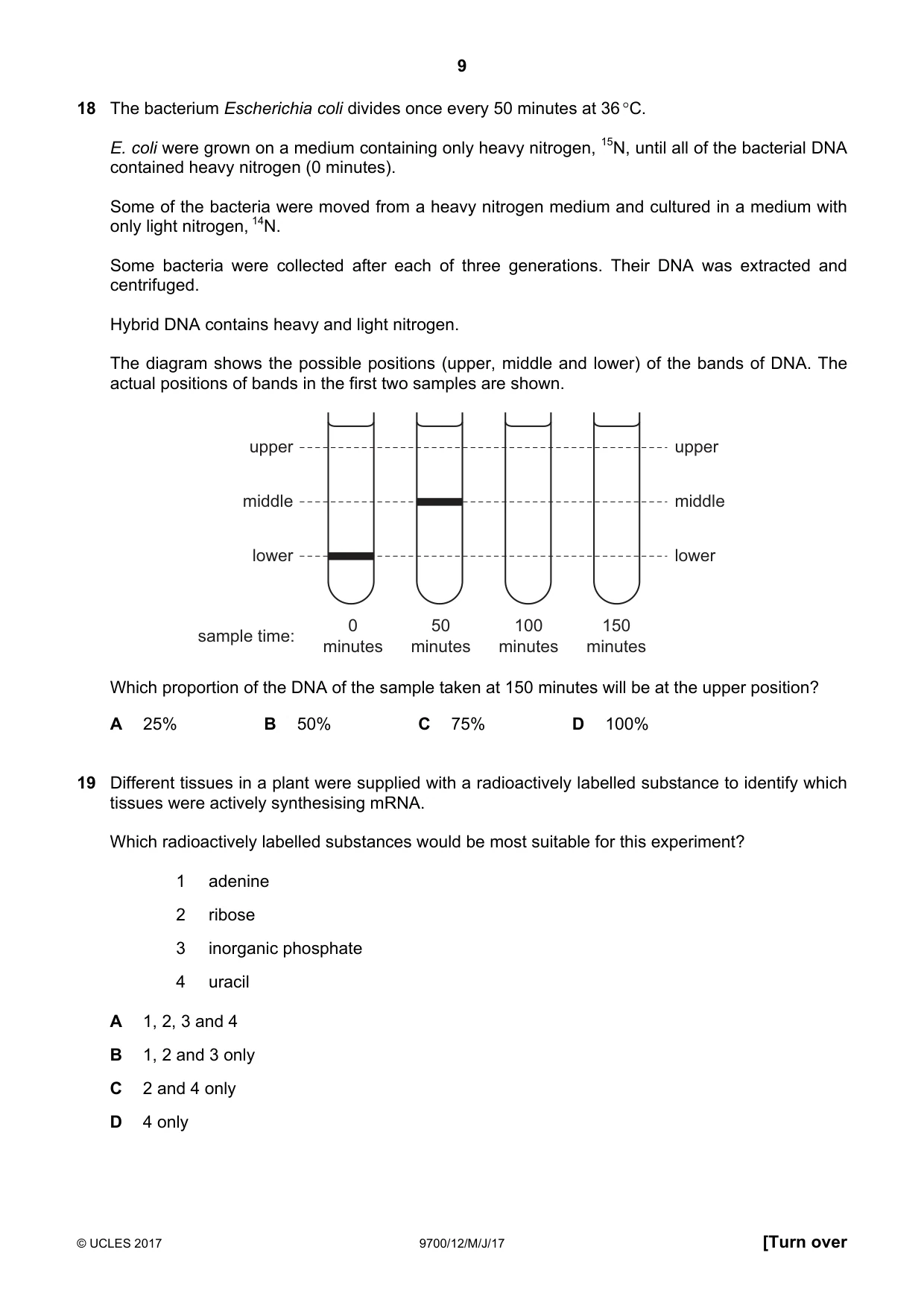
Q18 · The bacterium Escherichia coli divides once every 50 minutes at 36 °C
18 The bacterium Escherichia coli divides once every 50 minutes at 36 °C. E. coli were grown on a medium containing only heavy nitrogen, 15N, until all of the bacterial DNA contained heavy nitrogen (0 minutes). Some of the bacteria were moved from a heavy nitrogen medium and cultured in a medium with only light nitrogen, 14N. Some bacteria were collected after each of three generations. Their DNA was extracted and centrifuged. Hybrid DNA contains heavy and light nitrogen. The diagram shows the possible positions (upper, middle and lower) of the bands of DNA. The actual positions of bands in the first two samples are shown. upper upper middle middle lower lower 0 50 100 150 sample time: minutes minutes minutes minutes Which proportion of the DNA of the sample taken at 150 minutes will be at the upper position? A 25% B 50% C 75% D 100%
Mark scheme: C
More questions on Structure of nucleic acids and replication of DNA
Q19 · Different tissues in a plant were supplied with a radioactively labelled substance to…
19 Different tissues in a plant were supplied with a radioactively labelled substance to identify which tissues were actively synthesising mRNA. Which radioactively labelled substances would be most suitable for this experiment? 1 adenine 2 ribose 3 inorganic phosphate 4 uracil A 1, 2, 3 and 4 B 1, 2 and 3 only C 2 and 4 only D 4 only
Mark scheme: C
Q20 · Electron micrographs may show large numbers of ribosomes forming chains along mRNA…
20 Electron micrographs may show large numbers of ribosomes forming chains along mRNA molecules. What is the advantage of this arrangement, compared to when ribosomes appear singly on the mRNA? A Different polypeptides can be produced simultaneously. B Fewer tRNA molecules are required to translate the polypeptide. C Large polypeptide chains can be produced. D Polypeptides can be produced more rapidly.
Mark scheme: D
Q21 · Which row is correct for adenine?
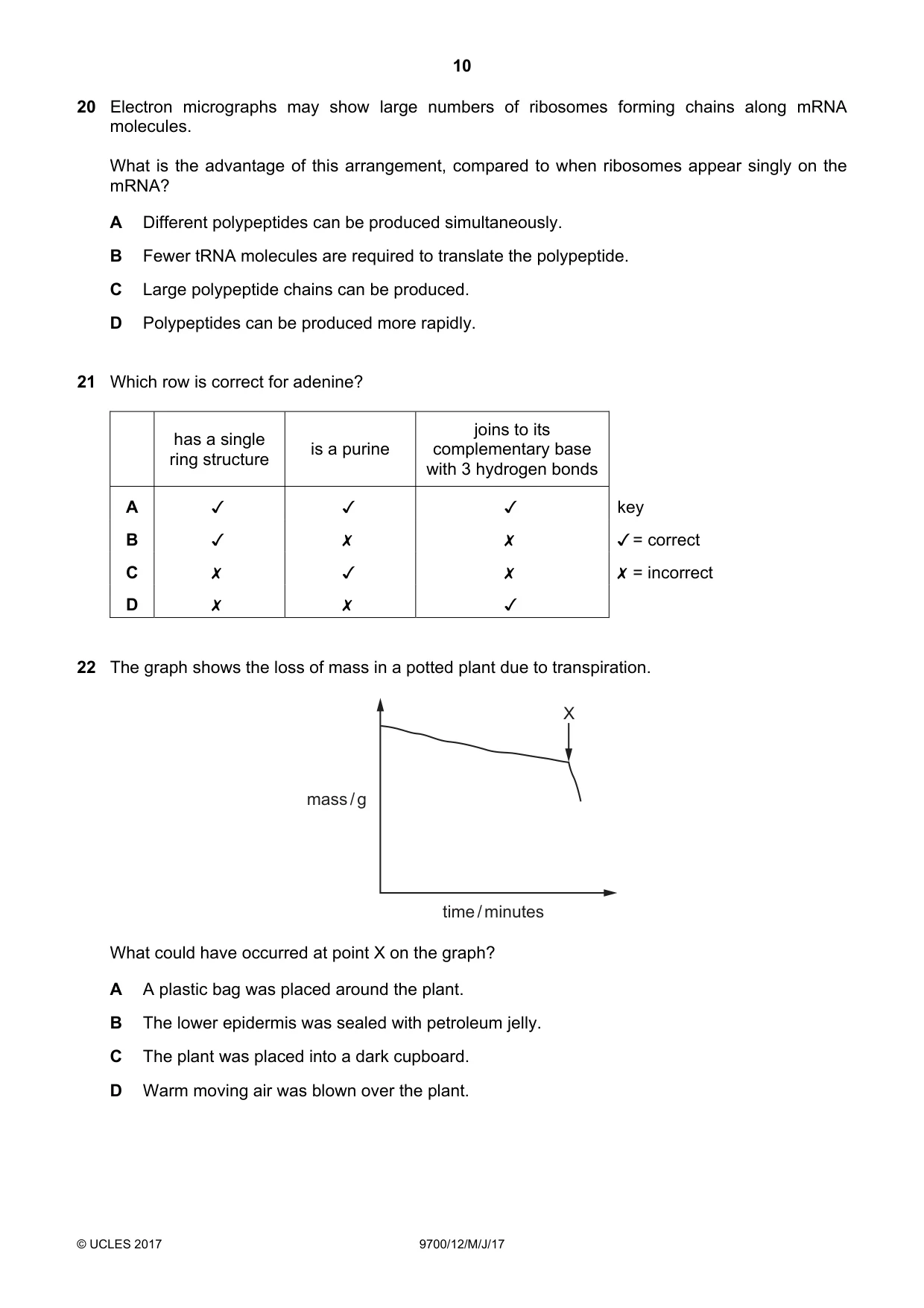
21 Which row is correct for adenine? has a single joins to its rin structure is a purine complementary base 9 with 3 hydrogen bonds B WA x x Cc x WA x key JY = correct X = incorrect
Mark scheme: C
More questions on Structure of nucleic acids and replication of DNA
Q22 · The graph shows the loss of mass in a potted plant due to transpiration
22 The graph shows the loss of mass in a potted plant due to transpiration. X mass / g time / minutes What could have occurred at point X on the graph? A A plastic bag was placed around the plant. B The lower epidermis was sealed with petroleum jelly. C The plant was placed into a dark cupboard. D Warm moving air was blown over the plant.
Mark scheme: D
Q23 · Which row is correct for a phloem sieve tube element?
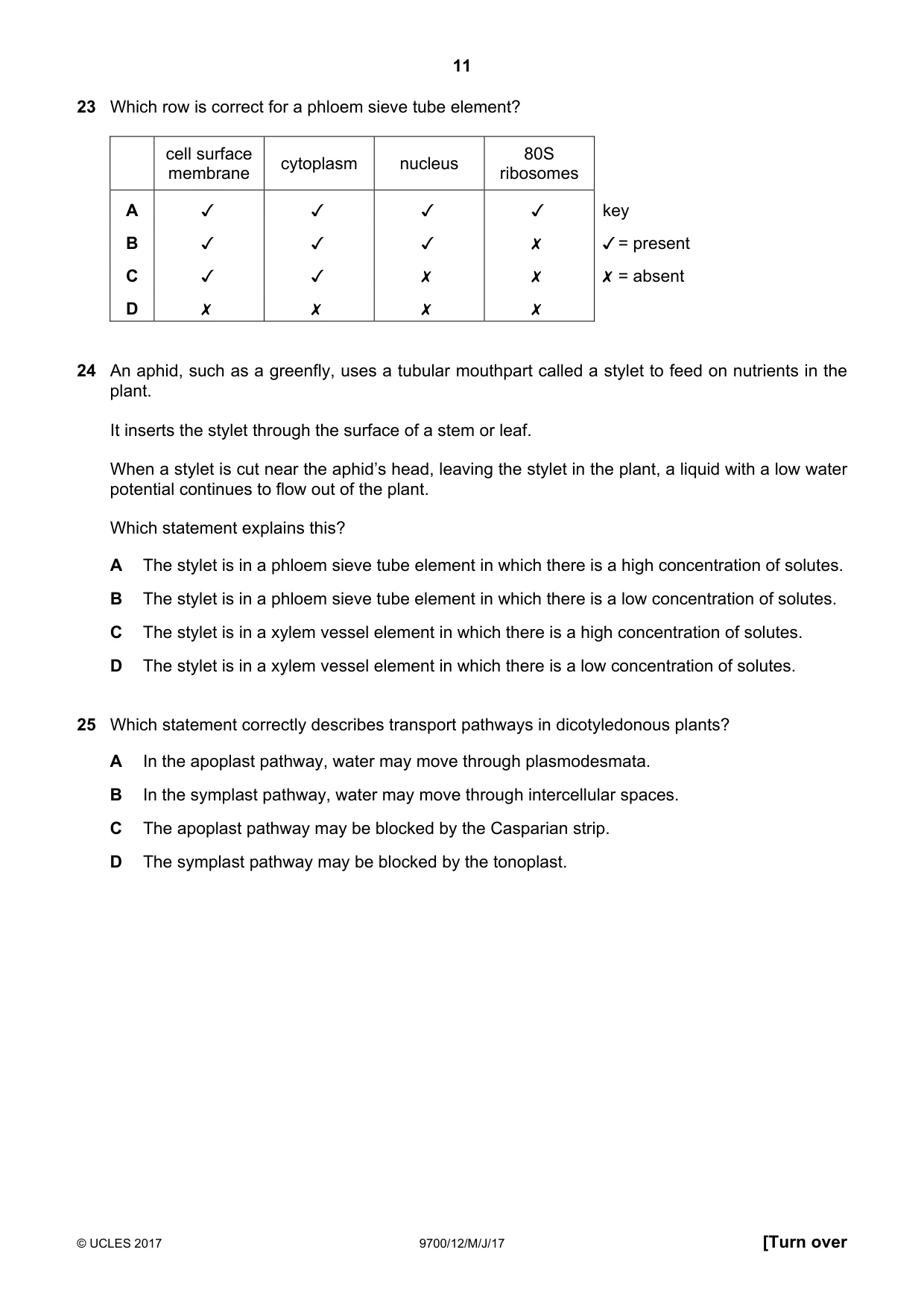
23 Which row is correct for a phloem sieve tube element? cell surface 80S cytoplasm nucleus membrane ribosomes A J J WA J B J J Jv x Cc Jv Jv x x D x x x x key J/ = present X = absent
Mark scheme: C
Q24 · An aphid, such as a greenfly, uses a tubular mouthpart called a stylet to feed on…
24 An aphid, such as a greenfly, uses a tubular mouthpart called a stylet to feed on nutrients in the plant. It inserts the stylet through the surface of a stem or leaf. When a stylet is cut near the aphid’s head, leaving the stylet in the plant, a liquid with a low water potential continues to flow out of the plant. Which statement explains this? A The stylet is in a phloem sieve tube element in which there is a high concentration of solutes. B The stylet is in a phloem sieve tube element in which there is a low concentration of solutes. C The stylet is in a xylem vessel element in which there is a high concentration of solutes. D The stylet is in a xylem vessel element in which there is a low concentration of solutes.
Mark scheme: A
Q25 · Which statement correctly describes transport pathways in dicotyledonous plants?
25 Which statement correctly describes transport pathways in dicotyledonous plants? A In the apoplast pathway, water may move through plasmodesmata. B In the symplast pathway, water may move through intercellular spaces. C The apoplast pathway may be blocked by the Casparian strip. D The symplast pathway may be blocked by the tonoplast.
Mark scheme: C
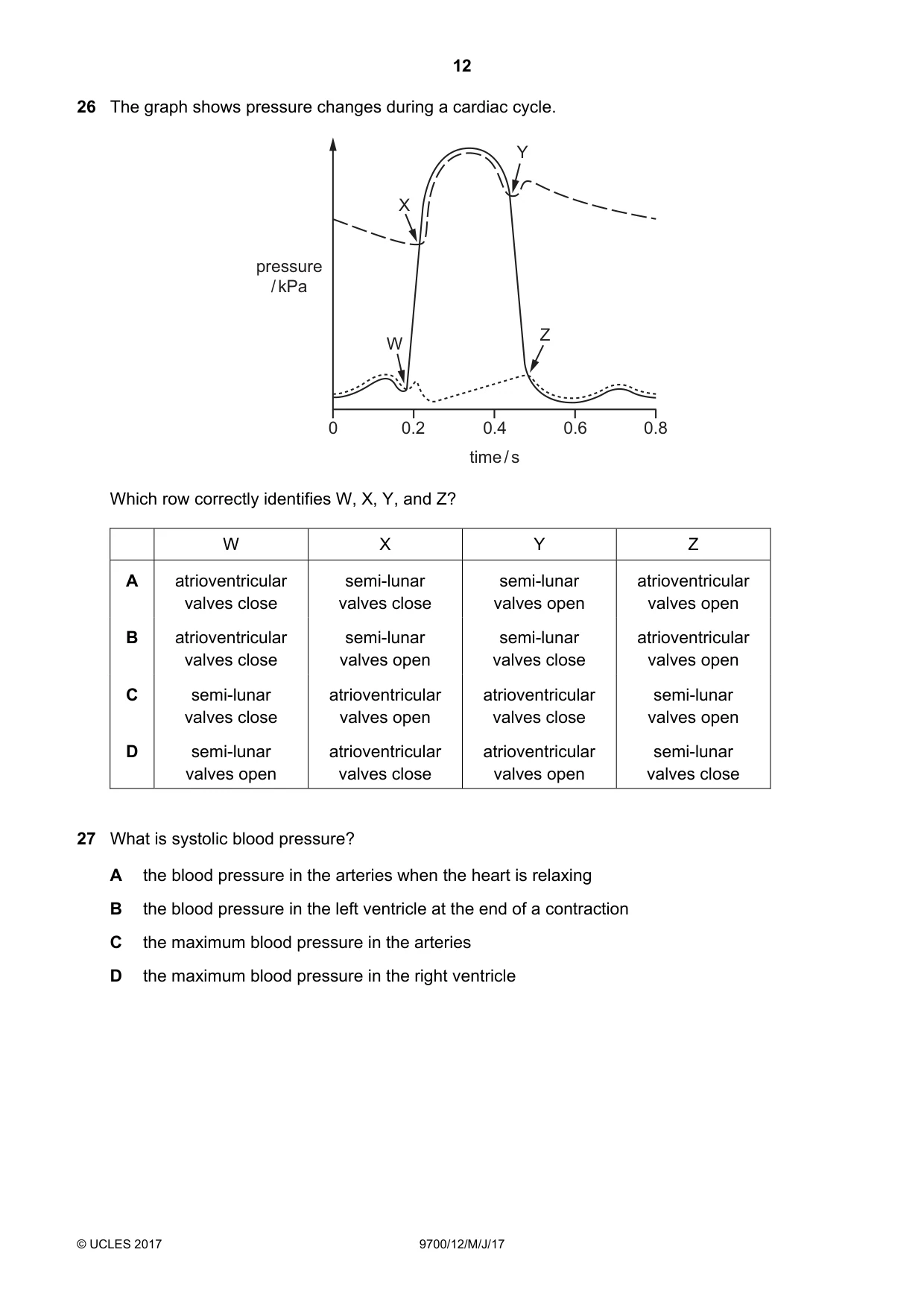
Q26 · The graph shows pressure changes during a cardiac cycle
26 The graph shows pressure changes during a cardiac cycle. Y X pressure / kPa Z W 0 0.2 0.4 0.6 0.8 time / s Which row correctly identifies W, X, Y, and Z? W X Y Z A atrioventricular semi-lunar semi-lunar atrioventricular valves close valves close valves open valves open B atrioventricular semi-lunar semi-lunar atrioventricular valves close valves open valves close valves open C semi-lunar atrioventricular atrioventricular semi-lunar valves close valves open valves close valves open D semi-lunar atrioventricular atrioventricular semi-lunar valves open valves close valves open valves close
Mark scheme: B
Q27 · What is systolic blood pressure?
27 What is systolic blood pressure? A the blood pressure in the arteries when the heart is relaxing B the blood pressure in the left ventricle at the end of a contraction C the maximum blood pressure in the arteries D the maximum blood pressure in the right ventricle
Mark scheme: C
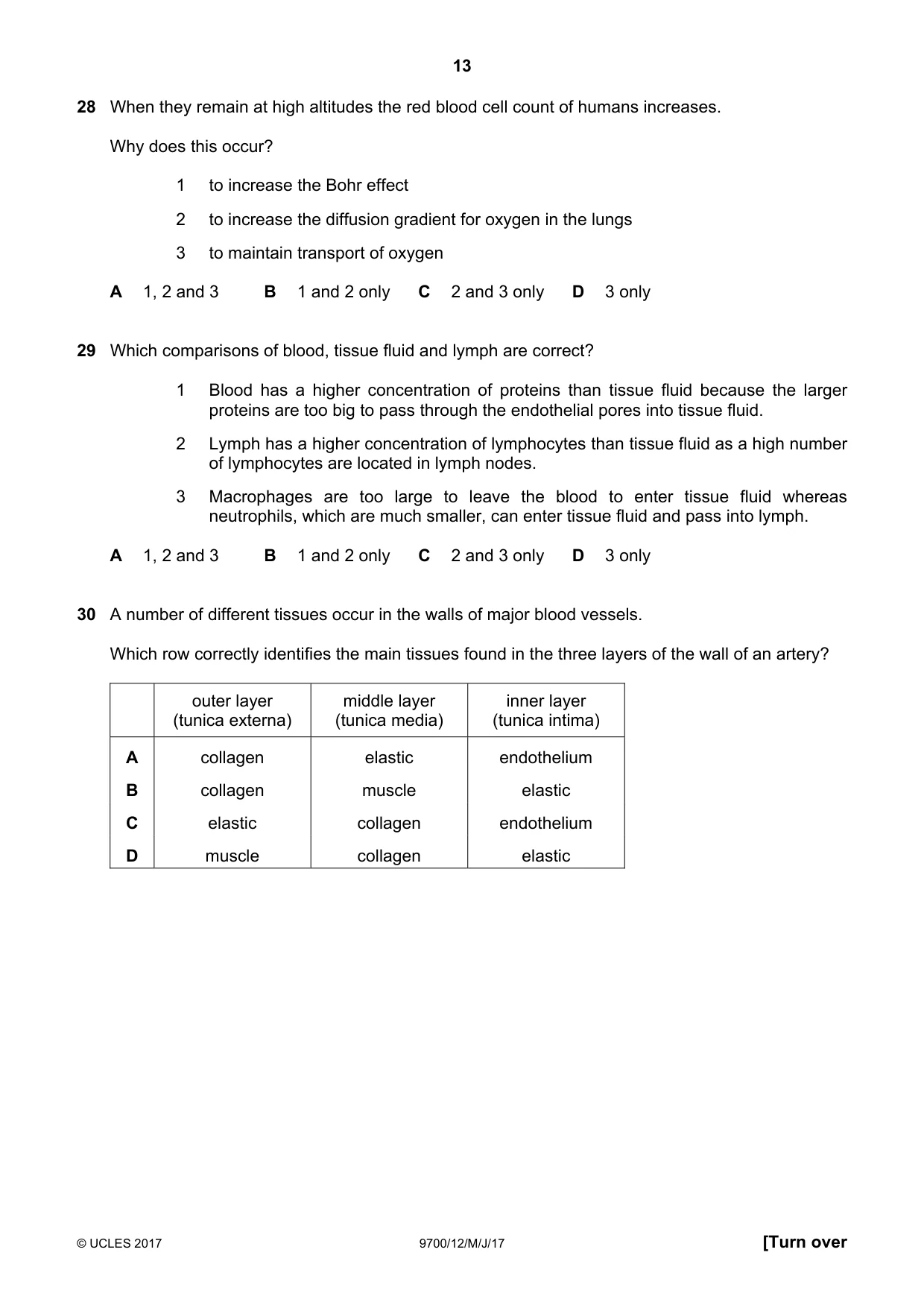
Q28 · When they remain at high altitudes the red blood cell count of humans increases
28 When they remain at high altitudes the red blood cell count of humans increases. Why does this occur? 1 to increase the Bohr effect 2 to increase the diffusion gradient for oxygen in the lungs 3 to maintain transport of oxygen A 1, 2 and 3 B 1 and 2 only C 2 and 3 only D 3 only
Mark scheme: D
Q29 · Which comparisons of blood, tissue fluid and lymph are correct?
29 Which comparisons of blood, tissue fluid and lymph are correct? 1 Blood has a higher concentration of proteins than tissue fluid because the larger proteins are too big to pass through the endothelial pores into tissue fluid. 2 Lymph has a higher concentration of lymphocytes than tissue fluid as a high number of lymphocytes are located in lymph nodes. 3 Macrophages are too large to leave the blood to enter tissue fluid whereas neutrophils, which are much smaller, can enter tissue fluid and pass into lymph. A 1, 2 and 3 B 1 and 2 only C 2 and 3 only D 3 only
Mark scheme: B
Q30 · A number of different tissues occur in the walls of major blood vessels
30 A number of different tissues occur in the walls of major blood vessels. Which row correctly identifies the main tissues found in the three layers of the wall of an artery? outer layer middle layer inner layer (tunica externa) (tunica media) (tunica intima) A collagen elastic endothelium B collagen muscle elastic C elastic collagen endothelium D muscle collagen elastic
Mark scheme: A
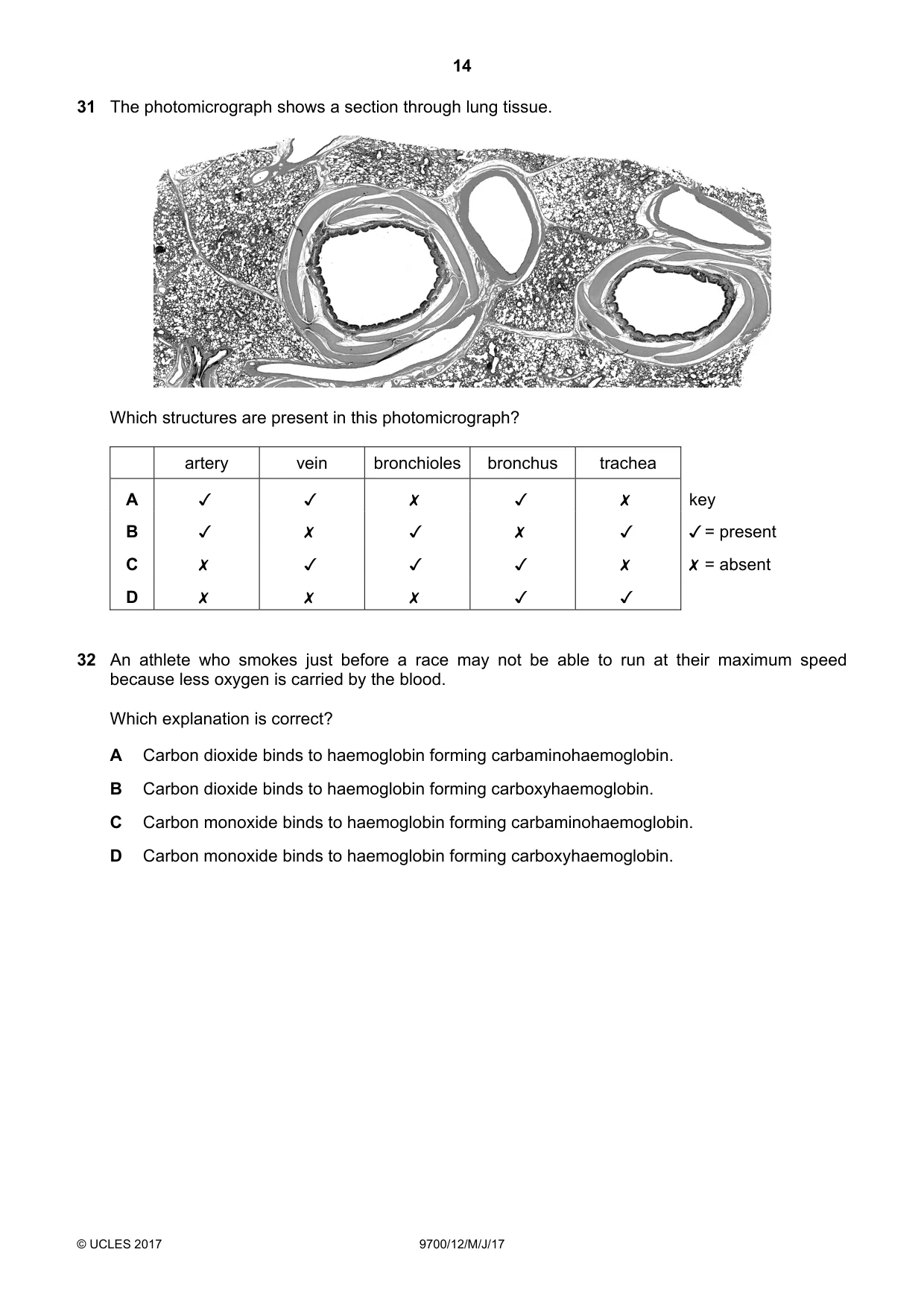
Q31 · The photomicrograph shows a section through lung tissue
31 The photomicrograph shows a section through lung tissue. Which structures are present in this photomicrograph? artery vein bronchioles | bronchus trachea A Jv v x v x B Jv x v x v Cc x v v v x D x x x v v key / = present X = absent
Mark scheme: A
Q32 · An athlete who smokes just before a race may not be able to run at their maximum speed…
32 An athlete who smokes just before a race may not be able to run at their maximum speed because less oxygen is carried by the blood. Which explanation is correct? A Carbon dioxide binds to haemoglobin forming carbaminohaemoglobin. B Carbon dioxide binds to haemoglobin forming carboxyhaemoglobin. C Carbon monoxide binds to haemoglobin forming carbaminohaemoglobin. D Carbon monoxide binds to haemoglobin forming carboxyhaemoglobin.
Mark scheme: D
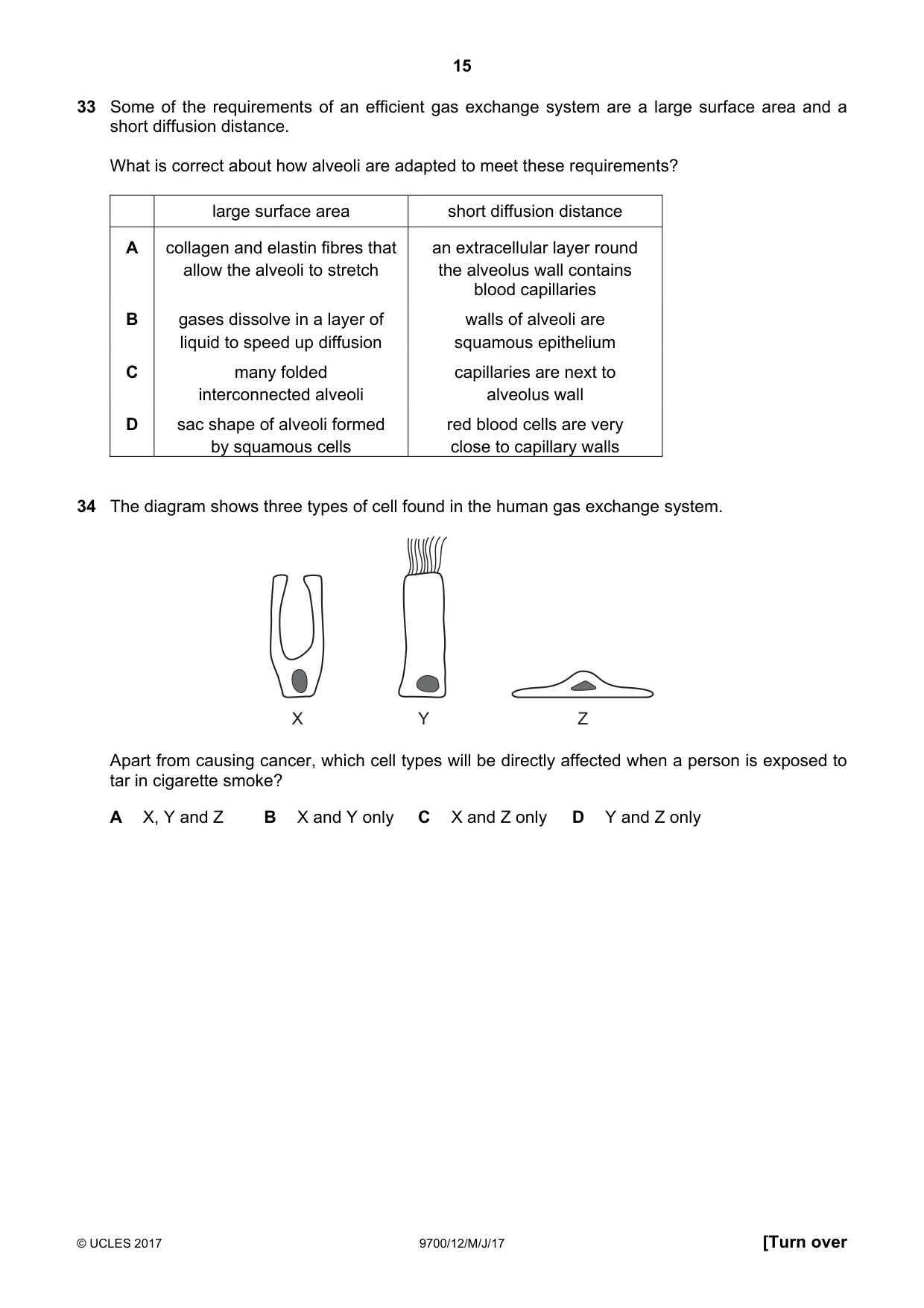
Q33 · Some of the requirements of an efficient gas exchange system are a large surface area and…
33 Some of the requirements of an efficient gas exchange system are a large surface area and a short diffusion distance. What is correct about how alveoli are adapted to meet these requirements? large surface area short diffusion distance A collagen and elastin fibres that an extracellular layer round allow the alveoli to stretch the alveolus wall contains blood capillaries B gases dissolve in a layer of walls of alveoli are liquid to speed up diffusion squamous epithelium C many folded capillaries are next to interconnected alveoli alveolus wall D sac shape of alveoli formed red blood cells are very by squamous cells close to capillary walls
Mark scheme: C
Q34 · The diagram shows three types of cell found in the human gas exchange system
34 The diagram shows three types of cell found in the human gas exchange system. X Y Z Apart from causing cancer, which cell types will be directly affected when a person is exposed to tar in cigarette smoke? A X, Y and Z B X and Y only C X and Z only D Y and Z only
Mark scheme: B
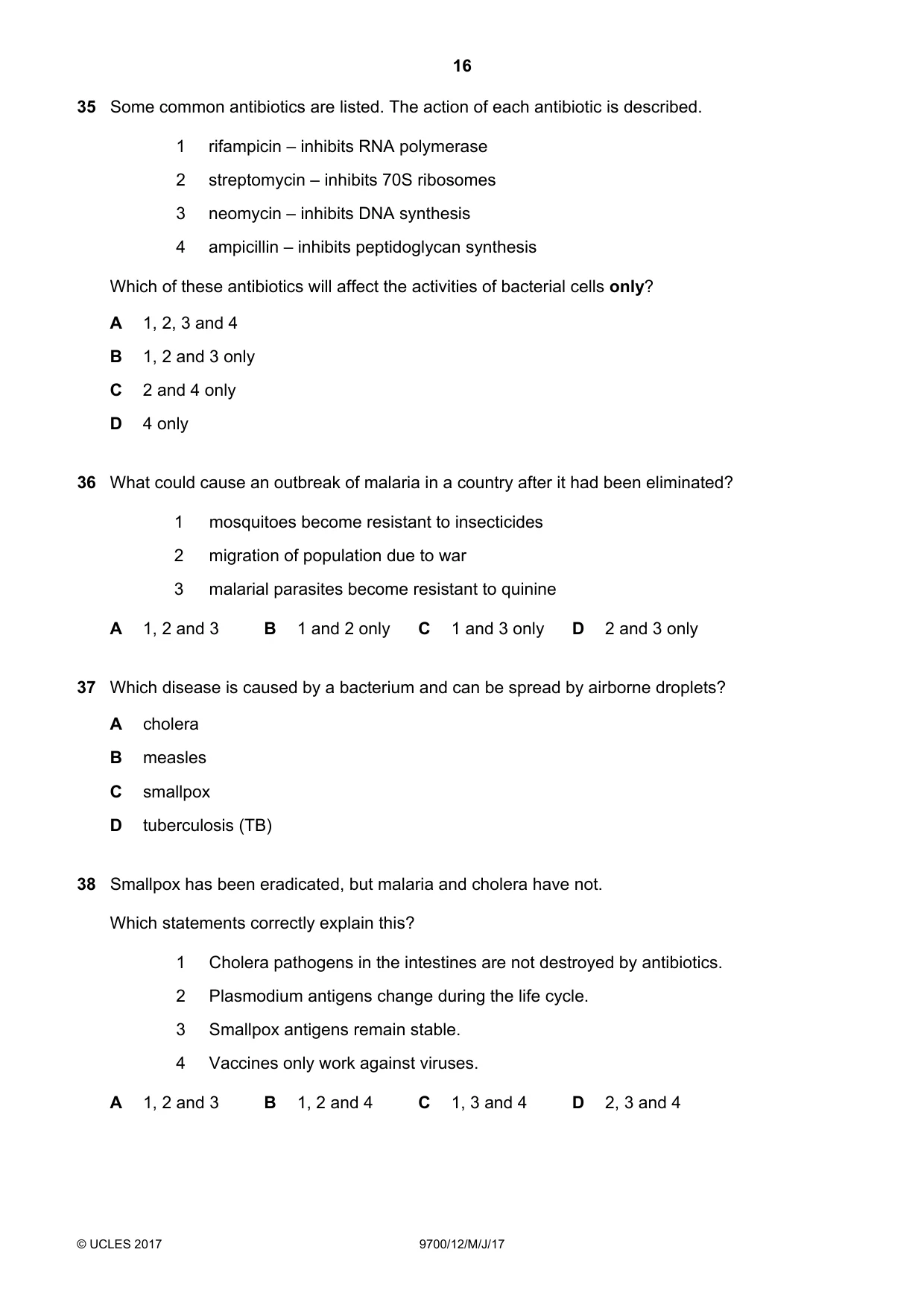
Q35 · Some common antibiotics are listed
35 Some common antibiotics are listed. The action of each antibiotic is described. 1 rifampicin – inhibits RNA polymerase 2 streptomycin – inhibits 70S ribosomes 3 neomycin – inhibits DNA synthesis 4 ampicillin – inhibits peptidoglycan synthesis Which of these antibiotics will affect the activities of bacterial cells only? A 1, 2, 3 and 4 B 1, 2 and 3 only C 2 and 4 only D 4 only
Mark scheme: D
Q36 · What could cause an outbreak of malaria in a country after it had been eliminated?
36 What could cause an outbreak of malaria in a country after it had been eliminated? 1 mosquitoes become resistant to insecticides 2 migration of population due to war 3 malarial parasites become resistant to quinine A 1, 2 and 3 B 1 and 2 only C 1 and 3 only D 2 and 3 only
Mark scheme: A
Q37 · Which disease is caused by a bacterium and can be spread by airborne droplets?
37 Which disease is caused by a bacterium and can be spread by airborne droplets? A cholera B measles C smallpox D tuberculosis (TB)
Mark scheme: D
Q38 · Smallpox has been eradicated, but malaria and cholera have not
38 Smallpox has been eradicated, but malaria and cholera have not. Which statements correctly explain this? 1 Cholera pathogens in the intestines are not destroyed by antibiotics. 2 Plasmodium antigens change during the life cycle. 3 Smallpox antigens remain stable. 4 Vaccines only work against viruses. A 1, 2 and 3 B 1, 2 and 4 C 1, 3 and 4 D 2, 3 and 4
Mark scheme: A
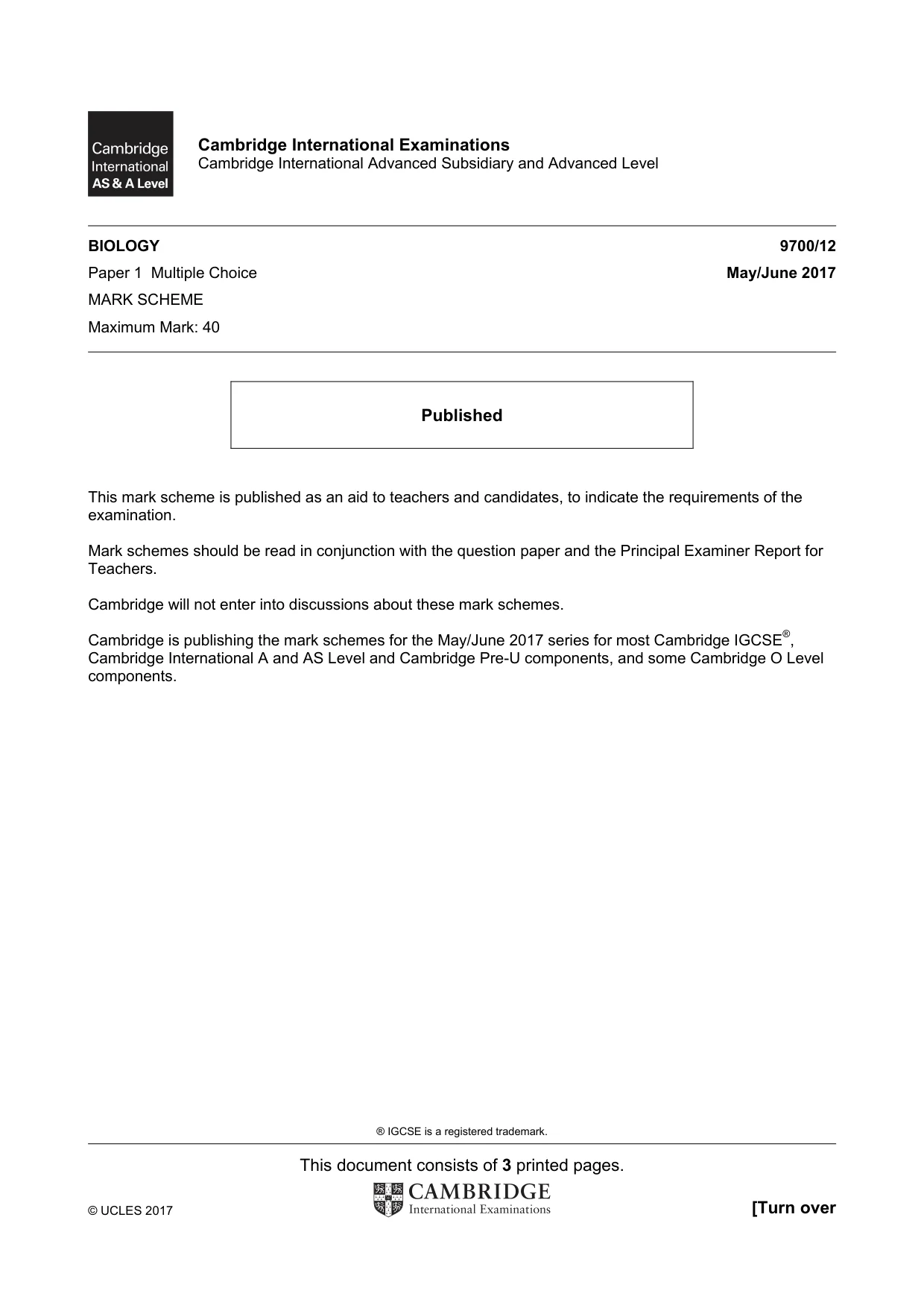
Q39 · When a person is given a vaccination immunity to certain pathogens develops
39 When a person is given a vaccination immunity to certain pathogens develops. Which of the effects of vaccination are correct? 1 production of antibodies to protect against future infections 2 results in artificial active immunity 3 stimulation of appropriate lymphocytes A 1, 2 and 3 B 1 and 2 only C 1 and 3 only D 2 and 3 only
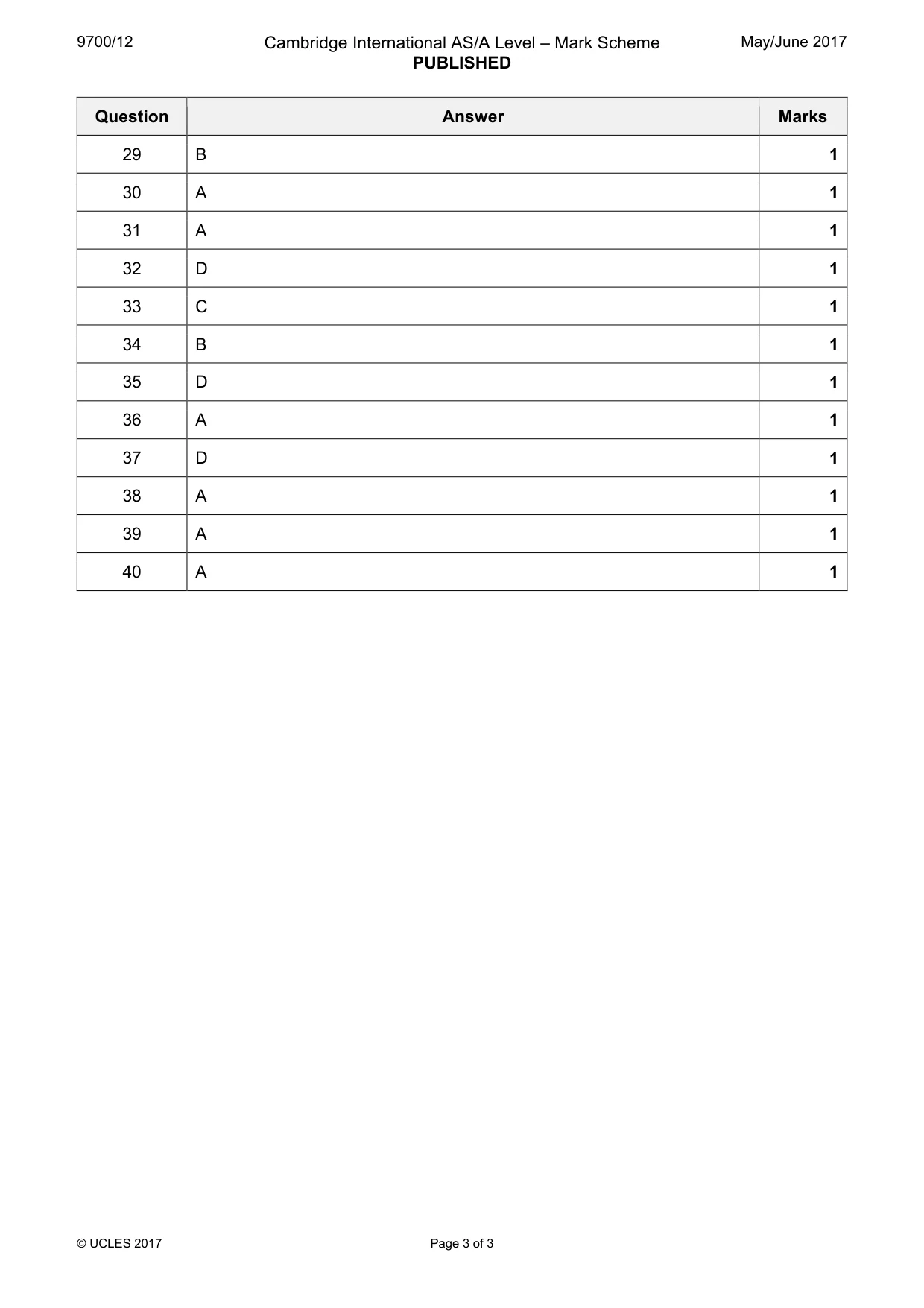
Mark scheme: A
Q40 · What is the first response by the immune system to a pathogen?
40 What is the first response by the immune system to a pathogen? A ingestion of the pathogen by phagocytes B production of antibodies C production of antigens D stimulation of B memory cells
Mark scheme: A
What was in this paper
The subtopics covered by these 40 questions, and how many questions each got. Open one in a new tab to see every Cambridge question on it.
3Infectious diseases3The gas exchange system3Transport mechanisms3Carbohydrates and lipids2Chromosome behaviour in mitosis2Factors that affect enzyme action2Fluid mosaic membranes2Protein synthesis2Proteins2Structure of nucleic acids and replication of DNA2The circulatory system2The heart2Transport of oxygen and carbon dioxide2Antibiotics1Antibodies and vaccination1Mode of action of enzymes1Movement into and out of cells1Structure of transport tissues1Testing for biological molecules1The immune system1The microscope in cell studies1What you needed in this session
Cambridge’s own grade thresholds for 2017 May/June, Paper 1 · Variant 2. A higher threshold means an easier paper — the bar moves with how the cohort did.