Cambridge A Level Biology 9700 — 2022 Feb/March Paper 1 · Variant 2
9700/12/F/M/22 · 40 questions · 40 marks · ≈45 min
The question paper and its mark scheme, free to read here and free to download. This is Cambridge’s own paper, exactly as it was sat.
Question paper20 pages
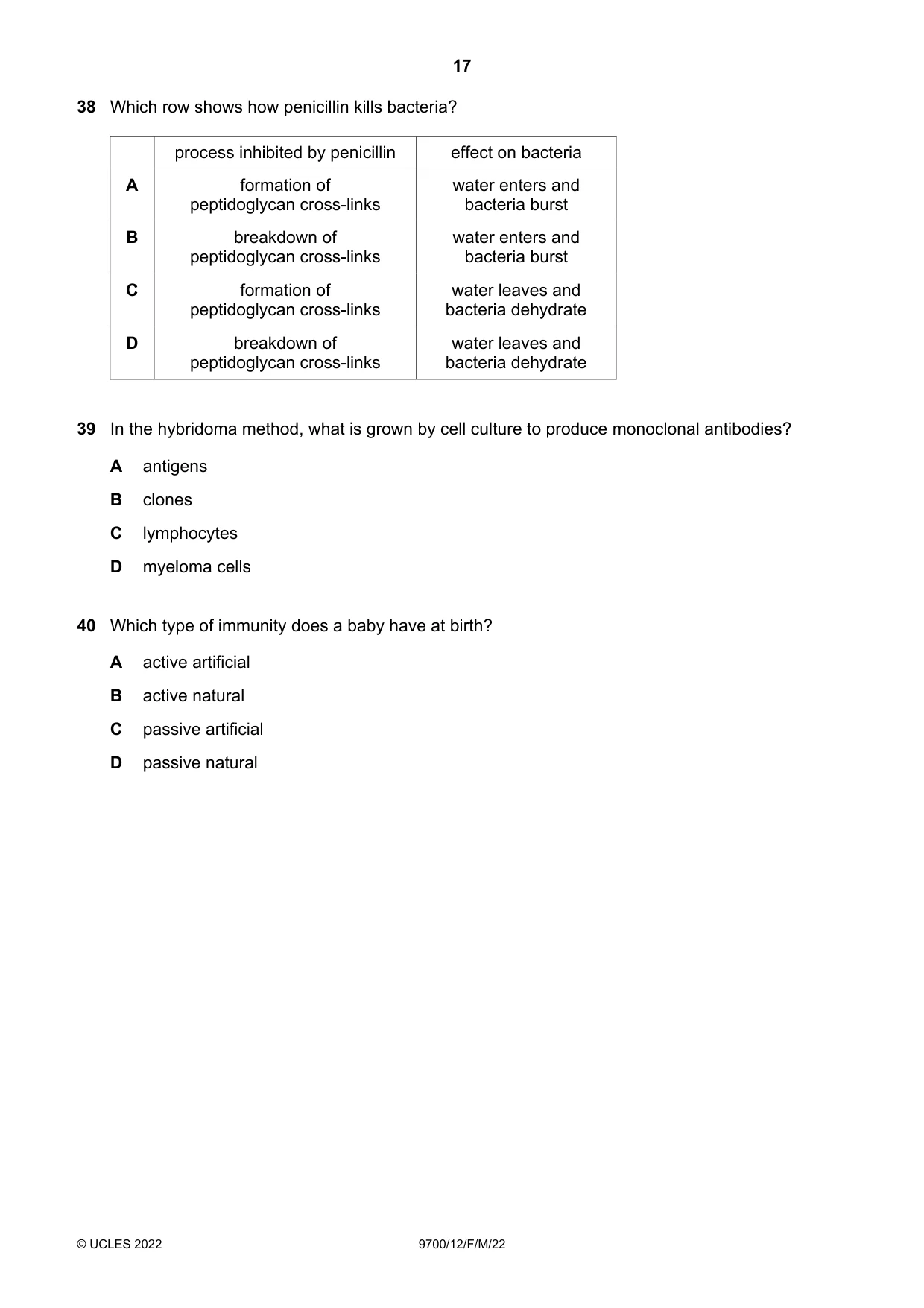



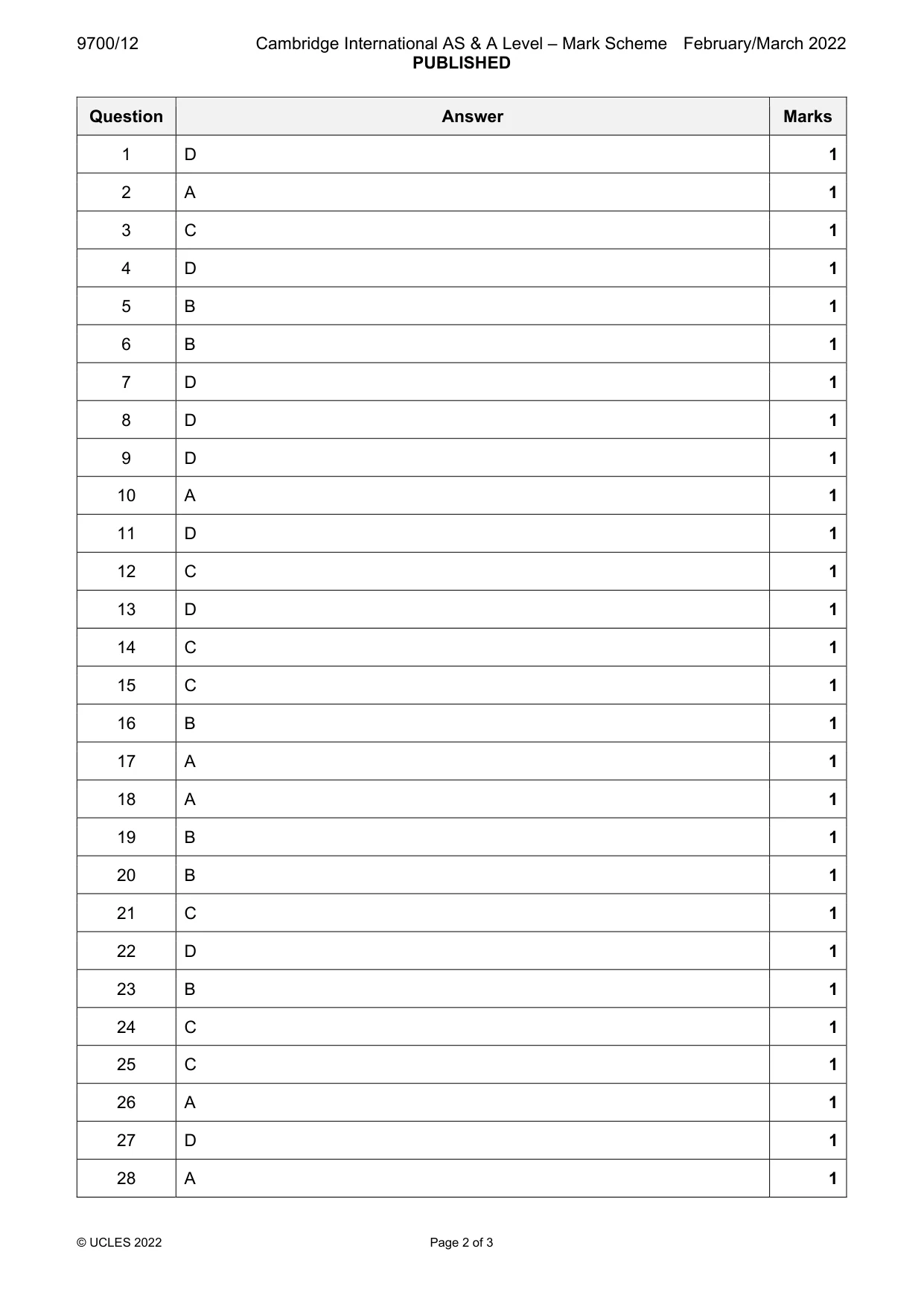
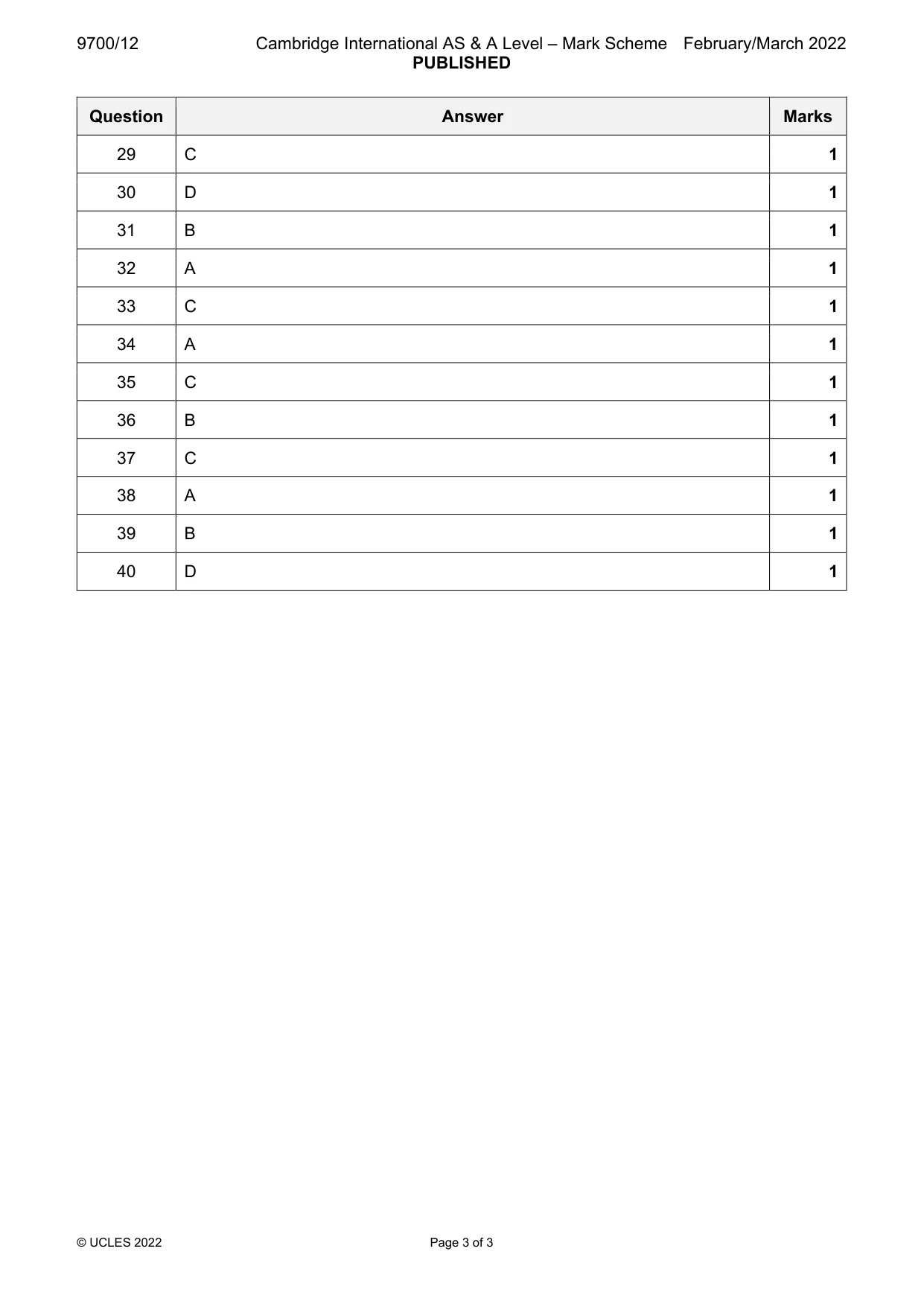
Mark scheme3 pages
Answers below. Sit the paper first if you are practising.
Questions as text
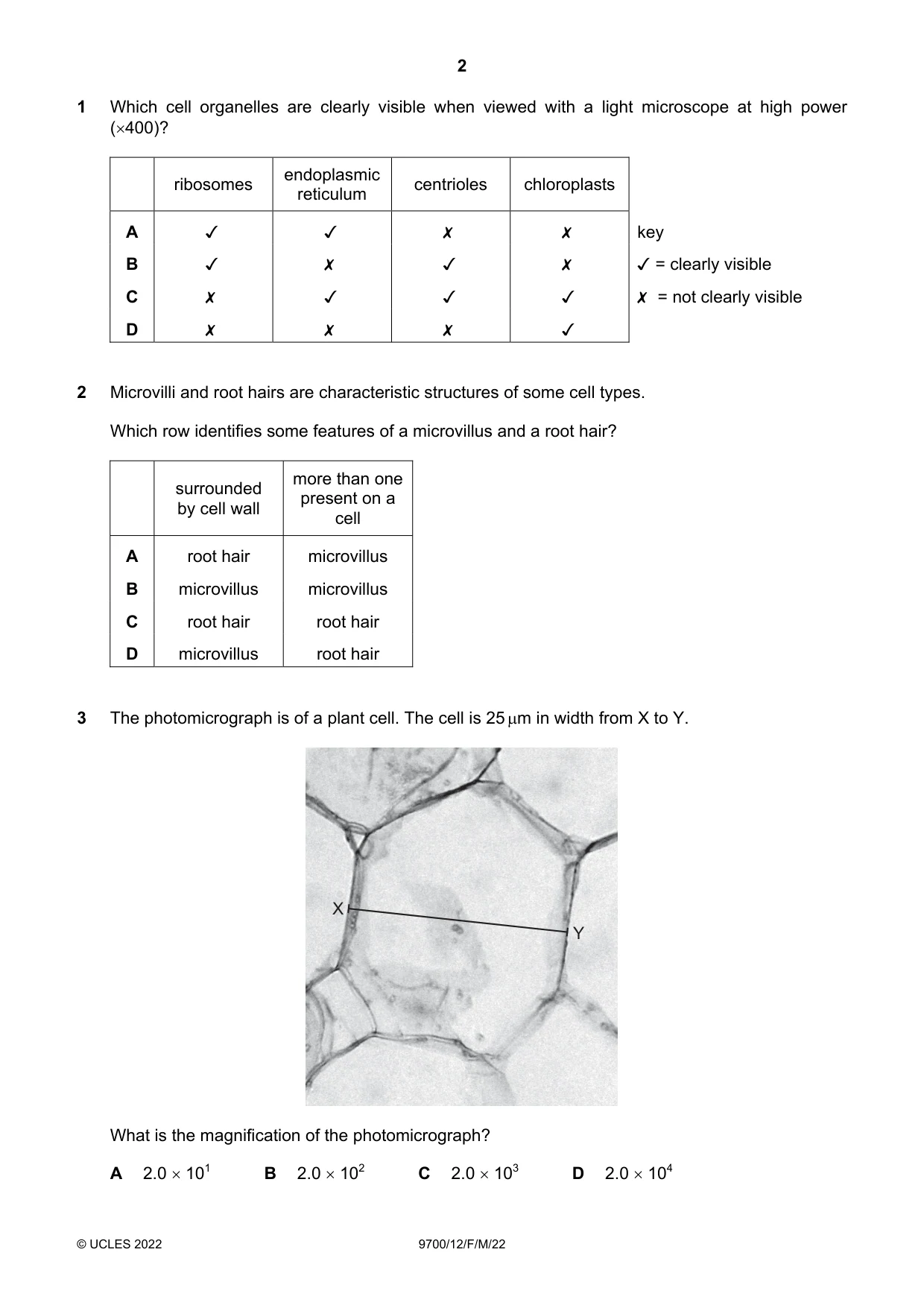
Q1 · Which cell organelles are clearly visible when viewed with a light microscope at high…
1. Which cell organelles are clearly visible when viewed with a light microscope at high power (x400)? ribosomes endoplasmic centrioles chloroplasts reticulum A v Jv x x key B J x Jv x ¥ = clearly visible Cc x Jv v v X =not clearly visible D x x x Jv
Mark scheme: D
Q2 · Microvilli and root hairs are characteristic structures of some cell types
2 Microvilli and root hairs are characteristic structures of some cell types. Which row identifies some features of a microvillus and a root hair? more than one surrounded present on a by cell wall cell A root hair microvillus B microvillus microvillus C root hair root hair D microvillus root hair
Mark scheme: A
More questions on Cells as the basic units of living organisms
Q3 · The photomicrograph is of a plant cell
3 The photomicrograph is of a plant cell. The cell is 25 µm in width from X to Y. X Y What is the magnification of the photomicrograph? A 2.0 × 101 B 2.0 × 10² C 2.0 × 10³ D 2.0 × 10⁴
Mark scheme: C
Q4 · Which eukaryotic cell structures all contain nucleic acids?
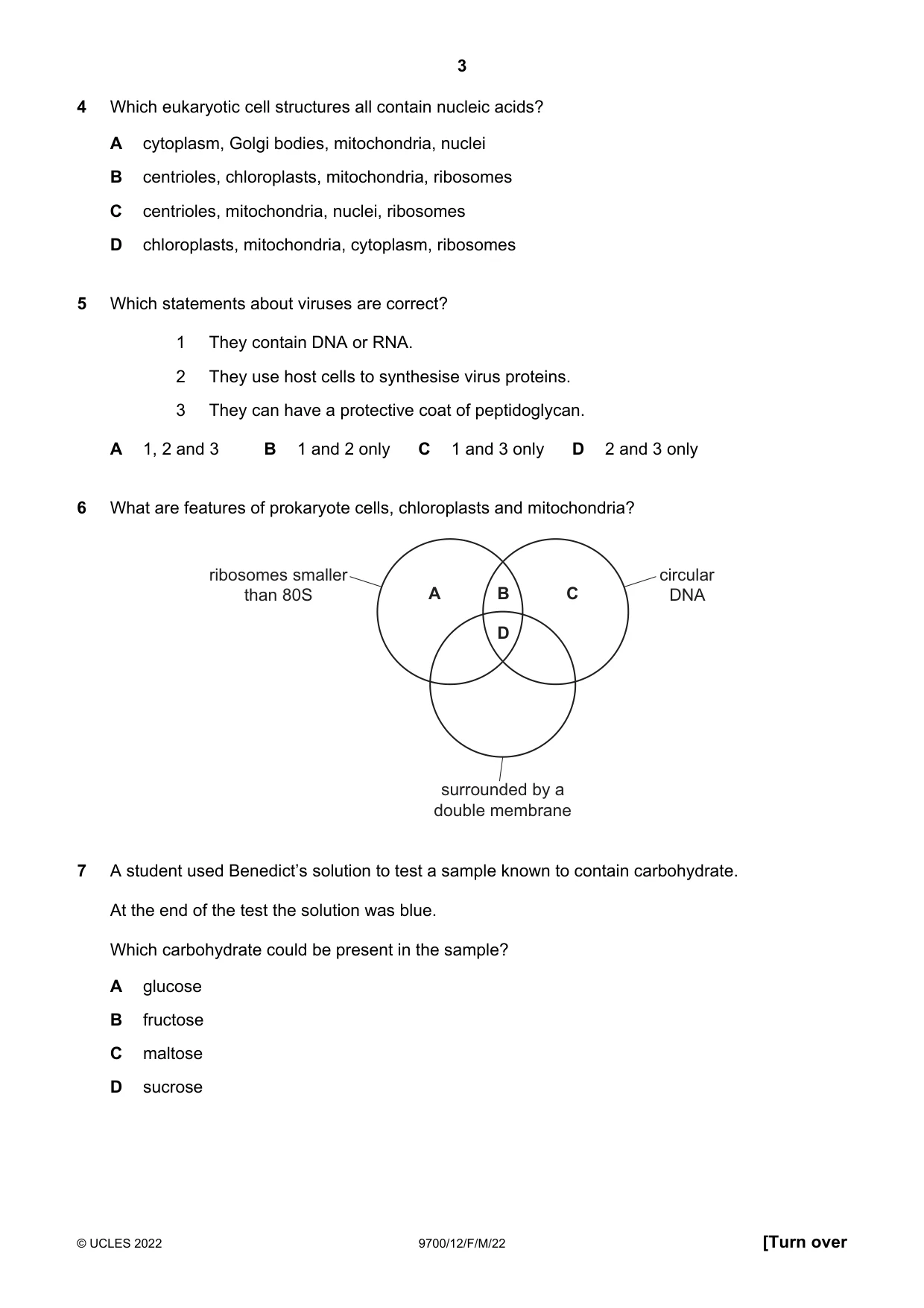
4 Which eukaryotic cell structures all contain nucleic acids? A cytoplasm, Golgi bodies, mitochondria, nuclei B centrioles, chloroplasts, mitochondria, ribosomes C centrioles, mitochondria, nuclei, ribosomes D chloroplasts, mitochondria, cytoplasm, ribosomes
Mark scheme: D
More questions on Cells as the basic units of living organisms
Q5 · Which statements about viruses are correct?
5 Which statements about viruses are correct? 1 They contain DNA or RNA. 2 They use host cells to synthesise virus proteins. 3 They can have a protective coat of peptidoglycan. A 1, 2 and 3 B 1 and 2 only C 1 and 3 only D 2 and 3 only
Mark scheme: B
More questions on Cells as the basic units of living organisms
Q6 · What are features of prokaryote cells, chloroplasts and mitochondria?
6 What are features of prokaryote cells, chloroplasts and mitochondria? ribosomes smaller circular than 80S A B C DNA D surrounded by a double membrane
Mark scheme: B
More questions on Cells as the basic units of living organisms
Q7 · A student used Benedict’s solution to test a sample known to contain carbohydrate
7 A student used Benedict’s solution to test a sample known to contain carbohydrate. At the end of the test the solution was blue. Which carbohydrate could be present in the sample? A glucose B fructose C maltose D sucrose
Mark scheme: D
Q8 · Sugars with a ring structure can also have a linear structure
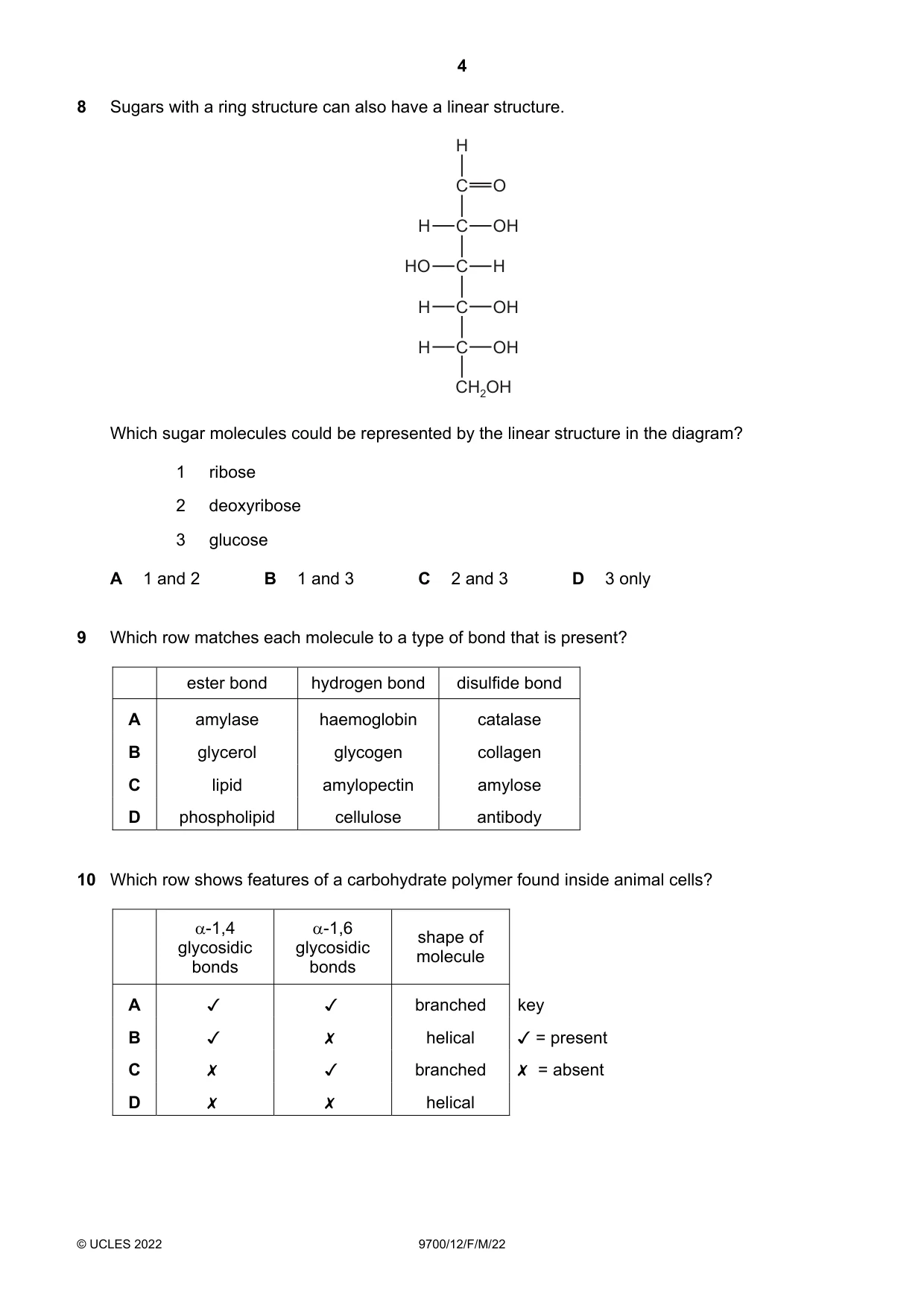
8 Sugars with a ring structure can also have a linear structure. H C O H C OH HO C H H C OH H C OH CH2OH Which sugar molecules could be represented by the linear structure in the diagram? 1 ribose 2 deoxyribose 3 glucose A 1 and 2 B 1 and 3 C 2 and 3 D 3 only
Mark scheme: D
Q9 · Which row matches each molecule to a type of bond that is present?
9 Which row matches each molecule to a type of bond that is present? ester bond hydrogen bond disulfide bond A amylase haemoglobin catalase B glycerol glycogen collagen C lipid amylopectin amylose D phospholipid cellulose antibody
Mark scheme: D
Q10 · Which row shows features of a carbohydrate polymer found inside animal cells?
10 Which row shows features of a carbohydrate polymer found inside animal cells? a-1,4 a-1,6 shape of glycosidic glycosidic molecule bonds bonds A Jv v branched key B J x helical J/ = present Cc x v branched | X = absent D x x helical
Mark scheme: A
Q11 · The statements describe the structure of a polysaccharide found in the cell walls of…
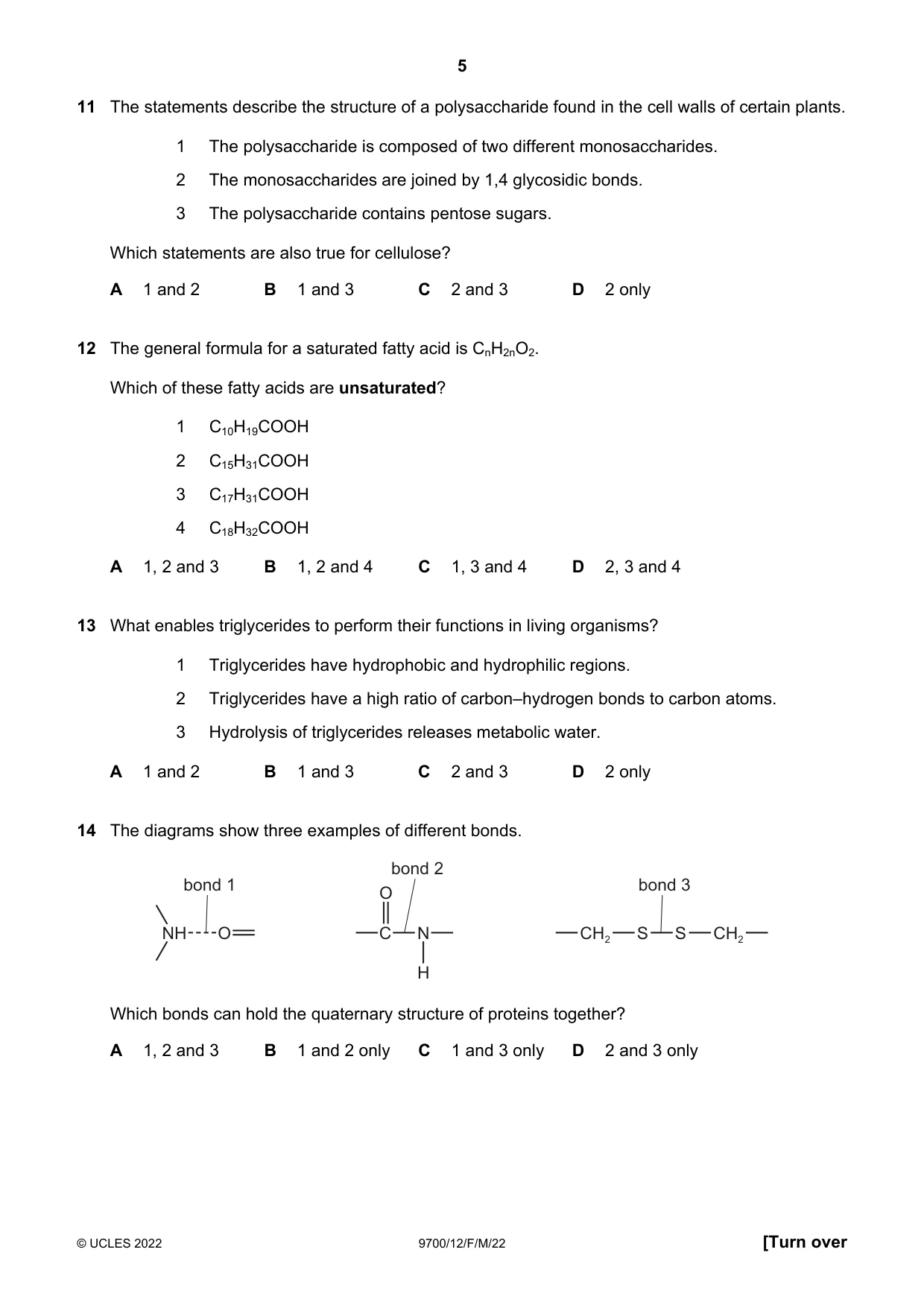
11 The statements describe the structure of a polysaccharide found in the cell walls of certain plants. 1 The polysaccharide is composed of two different monosaccharides. 2 The monosaccharides are joined by 1,4 glycosidic bonds. 3 The polysaccharide contains pentose sugars. Which statements are also true for cellulose? A 1 and 2 B 1 and 3 C 2 and 3 D 2 only
Mark scheme: D
Q12 · The general formula for a saturated fatty acid is CnH2nO2
12 The general formula for a saturated fatty acid is CnH2nO2. Which of these fatty acids are unsaturated? 1 C10H19COOH 2 C15H31COOH 3 C17H31COOH 4 C18H32COOH A 1, 2 and 3 B 1, 2 and 4 C 1, 3 and 4 D 2, 3 and 4
Mark scheme: C
Q13 · What enables triglycerides to perform their functions in living organisms?
13 What enables triglycerides to perform their functions in living organisms? 1 Triglycerides have hydrophobic and hydrophilic regions. 2 Triglycerides have a high ratio of carbon–hydrogen bonds to carbon atoms. 3 Hydrolysis of triglycerides releases metabolic water. A 1 and 2 B 1 and 3 C 2 and 3 D 2 only
Mark scheme: D
Q14 · The diagrams show three examples of different bonds
14 The diagrams show three examples of different bonds. bond 2 bond 1 bond 3 O NH O C N CH2 S S CH2 H Which bonds can hold the quaternary structure of proteins together? A 1, 2 and 3 B 1 and 2 only C 1 and 3 only D 2 and 3 only
Mark scheme: C
Q15 · Which row correctly describes the primary structure, secondary structure, tertiary…
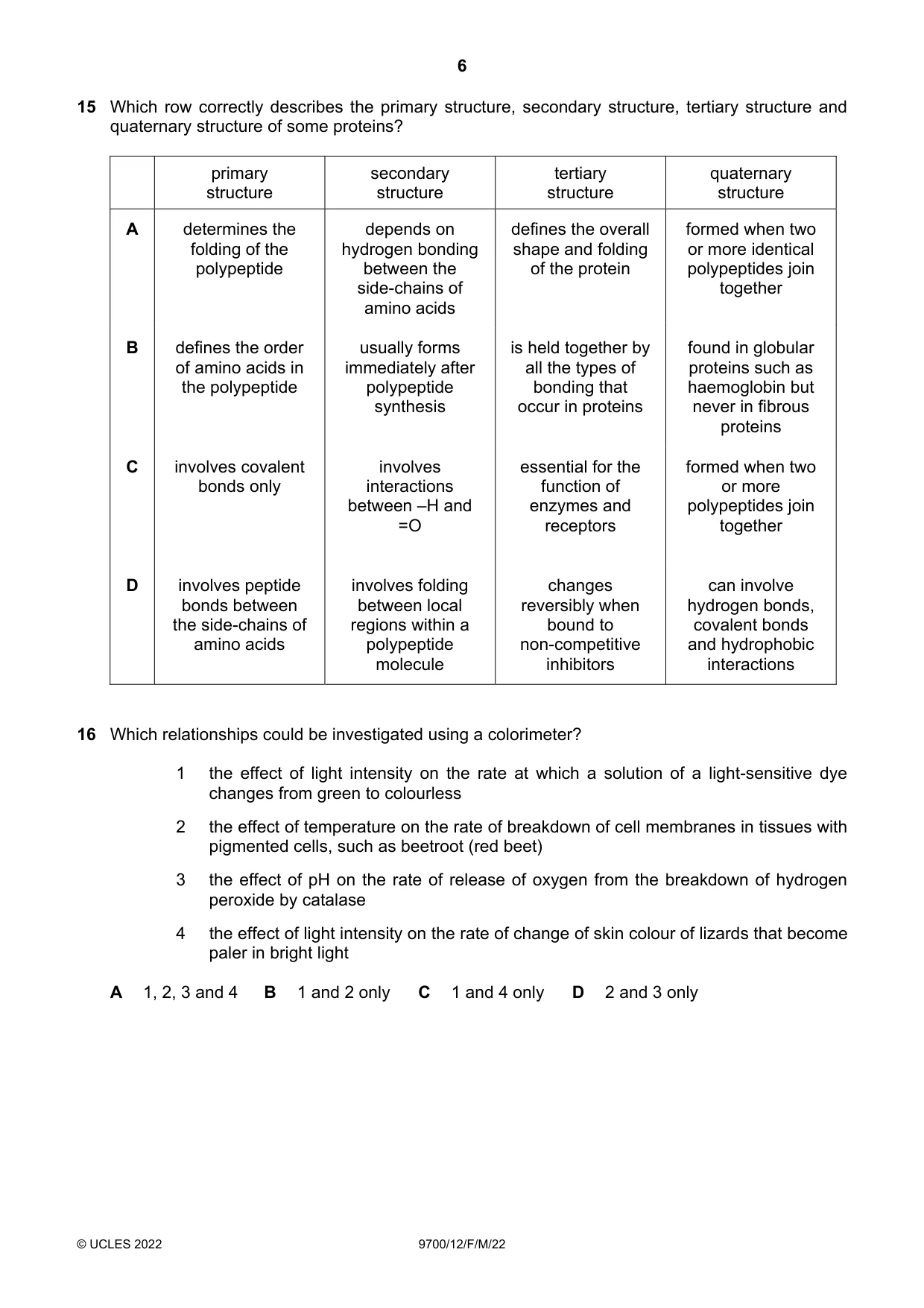
15 Which row correctly describes the primary structure, secondary structure, tertiary structure and quaternary structure of some proteins? primary secondary tertiary quaternary structure structure structure structure A determines the depends on defines the overall formed when two folding of the hydrogen bonding shape and folding or more identical polypeptide between the of the protein polypeptides join side-chains of together amino acids B defines the order usually forms is held together by found in globular of amino acids in immediately after all the types of proteins such as the polypeptide polypeptide bonding that haemoglobin but synthesis occur in proteins never in fibrous proteins C involves covalent involves essential for the formed when two bonds only interactions function of or more between –H and enzymes and polypeptides join =O receptors together D involves peptide involves folding changes can involve bonds between between local reversibly when hydrogen bonds, the side-chains of regions within a bound to covalent bonds amino acids polypeptide non-competitive and hydrophobic molecule inhibitors interactions
Mark scheme: C
Q16 · Which relationships could be investigated using a colorimeter?
16 Which relationships could be investigated using a colorimeter? 1 the effect of light intensity on the rate at which a solution of a light-sensitive dye changes from green to colourless 2 the effect of temperature on the rate of breakdown of cell membranes in tissues with pigmented cells, such as beetroot (red beet) 3 the effect of pH on the rate of release of oxygen from the breakdown of hydrogen peroxide by catalase 4 the effect of light intensity on the rate of change of skin colour of lizards that become paler in bright light A 1, 2, 3 and 4 B 1 and 2 only C 1 and 4 only D 2 and 3 only
Mark scheme: B
Q17 · Which transport mechanism does not require a concentration gradient to be present in…
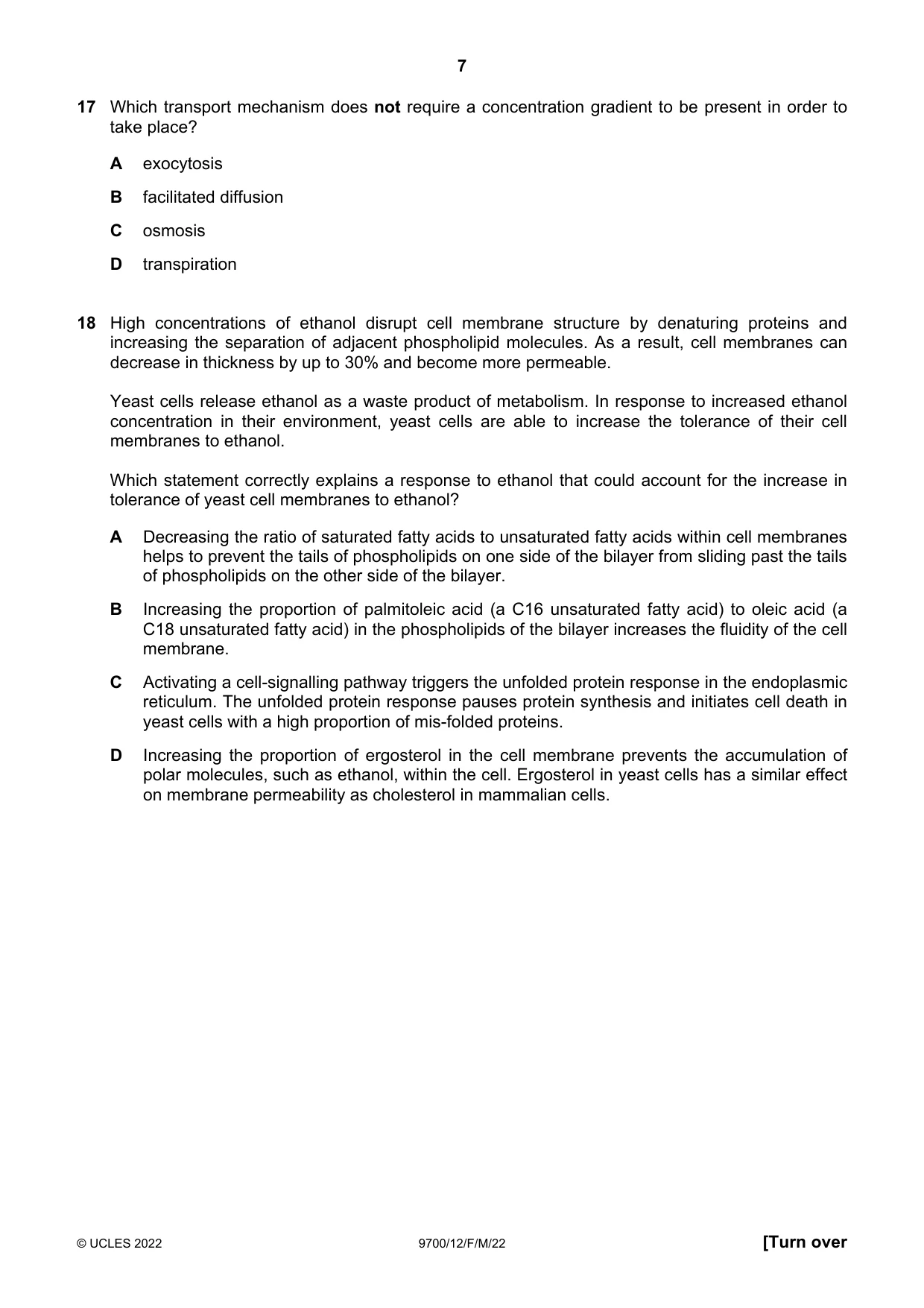
17 Which transport mechanism does not require a concentration gradient to be present in order to take place? A exocytosis B facilitated diffusion C osmosis D transpiration
Mark scheme: A
Q18 · High concentrations of ethanol disrupt cell membrane structure by denaturing proteins and…
18 High concentrations of ethanol disrupt cell membrane structure by denaturing proteins and increasing the separation of adjacent phospholipid molecules. As a result, cell membranes can decrease in thickness by up to 30% and become more permeable. Yeast cells release ethanol as a waste product of metabolism. In response to increased ethanol concentration in their environment, yeast cells are able to increase the tolerance of their cell membranes to ethanol. Which statement correctly explains a response to ethanol that could account for the increase in tolerance of yeast cell membranes to ethanol? A Decreasing the ratio of saturated fatty acids to unsaturated fatty acids within cell membranes helps to prevent the tails of phospholipids on one side of the bilayer from sliding past the tails of phospholipids on the other side of the bilayer. B Increasing the proportion of palmitoleic acid (a C16 unsaturated fatty acid) to oleic acid (a C18 unsaturated fatty acid) in the phospholipids of the bilayer increases the fluidity of the cell membrane. C Activating a cell-signalling pathway triggers the unfolded protein response in the endoplasmic reticulum. The unfolded protein response pauses protein synthesis and initiates cell death in yeast cells with a high proportion of mis-folded proteins. D Increasing the proportion of ergosterol in the cell membrane prevents the accumulation of polar molecules, such as ethanol, within the cell. Ergosterol in yeast cells has a similar effect on membrane permeability as cholesterol in mammalian cells.
Mark scheme: A
Q19 · In an investigation, a plant cell was placed in pure water
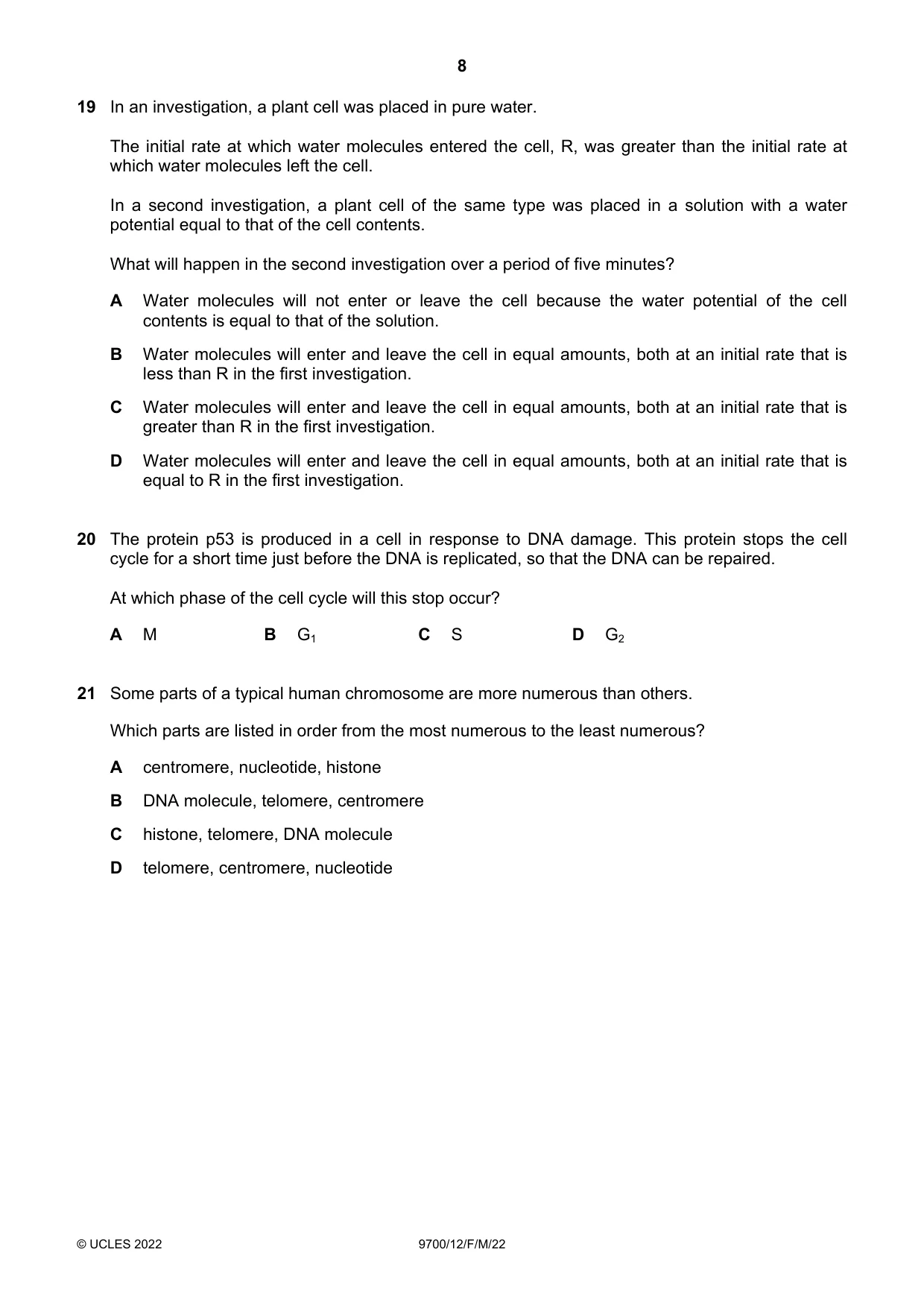
19 In an investigation, a plant cell was placed in pure water. The initial rate at which water molecules entered the cell, R, was greater than the initial rate at which water molecules left the cell. In a second investigation, a plant cell of the same type was placed in a solution with a water potential equal to that of the cell contents. What will happen in the second investigation over a period of five minutes? A Water molecules will not enter or leave the cell because the water potential of the cell contents is equal to that of the solution. B Water molecules will enter and leave the cell in equal amounts, both at an initial rate that is less than R in the first investigation. C Water molecules will enter and leave the cell in equal amounts, both at an initial rate that is greater than R in the first investigation. D Water molecules will enter and leave the cell in equal amounts, both at an initial rate that is equal to R in the first investigation.
Mark scheme: B
Q20 · The protein p53 is produced in a cell in response to DNA damage
20 The protein p53 is produced in a cell in response to DNA damage. This protein stops the cell cycle for a short time just before the DNA is replicated, so that the DNA can be repaired. At which phase of the cell cycle will this stop occur? A M B G1 C S D G2
Mark scheme: B
More questions on Replication and division of nuclei and cells
Q21 · Some parts of a typical human chromosome are more numerous than others
21 Some parts of a typical human chromosome are more numerous than others. Which parts are listed in order from the most numerous to the least numerous? A centromere, nucleotide, histone B DNA molecule, telomere, centromere C histone, telomere, DNA molecule D telomere, centromere, nucleotide
Mark scheme: C
Q22 · Which row correctly describes a stage of mitosis?
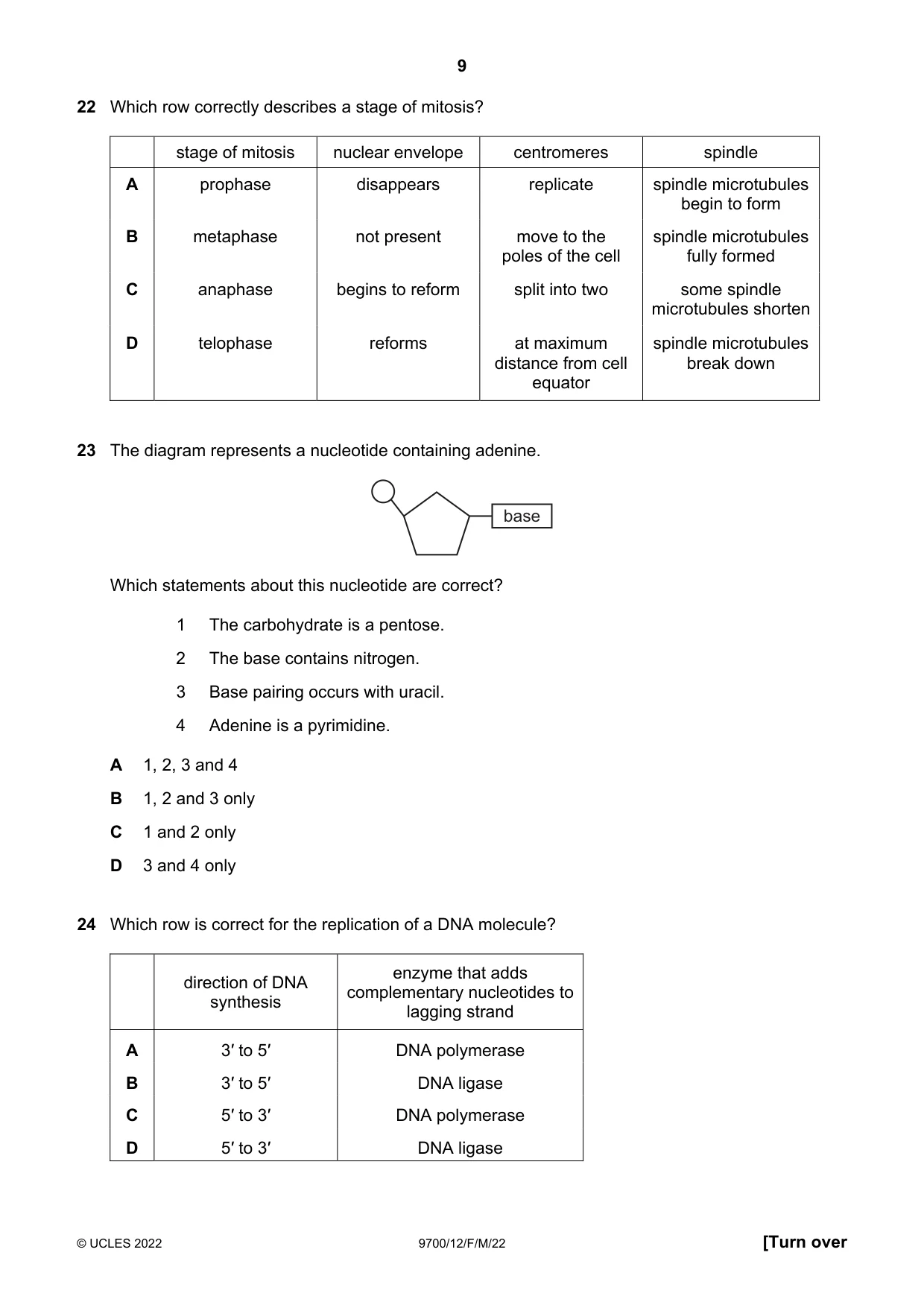
22 Which row correctly describes a stage of mitosis? stage of mitosis nuclear envelope centromeres spindle A prophase disappears replicate spindle microtubules begin to form B metaphase not present move to the spindle microtubules poles of the cell fully formed C anaphase begins to reform split into two some spindle microtubules shorten D telophase reforms at maximum spindle microtubules distance from cell break down equator
Mark scheme: D
Q23 · The diagram represents a nucleotide containing adenine
23 The diagram represents a nucleotide containing adenine. base Which statements about this nucleotide are correct? 1 The carbohydrate is a pentose. 2 The base contains nitrogen. 3 Base pairing occurs with uracil. 4 Adenine is a pyrimidine. A 1, 2, 3 and 4 B 1, 2 and 3 only C 1 and 2 only D 3 and 4 only
Mark scheme: B
More questions on Structure of nucleic acids and replication of DNA
Q24 · Which row is correct for the replication of a DNA molecule?
24 Which row is correct for the replication of a DNA molecule? enzyme that adds direction of DNA complementary nucleotides to synthesis lagging strand A 3′ to 5′ DNA polymerase B 3′ to 5′ DNA ligase C 5′ to 3′ DNA polymerase D 5′ to 3′ DNA ligase
Mark scheme: C
More questions on Structure of nucleic acids and replication of DNA
Q25 · Some students were asked to look at the photomicrograph of a cross-section of unfamiliar…
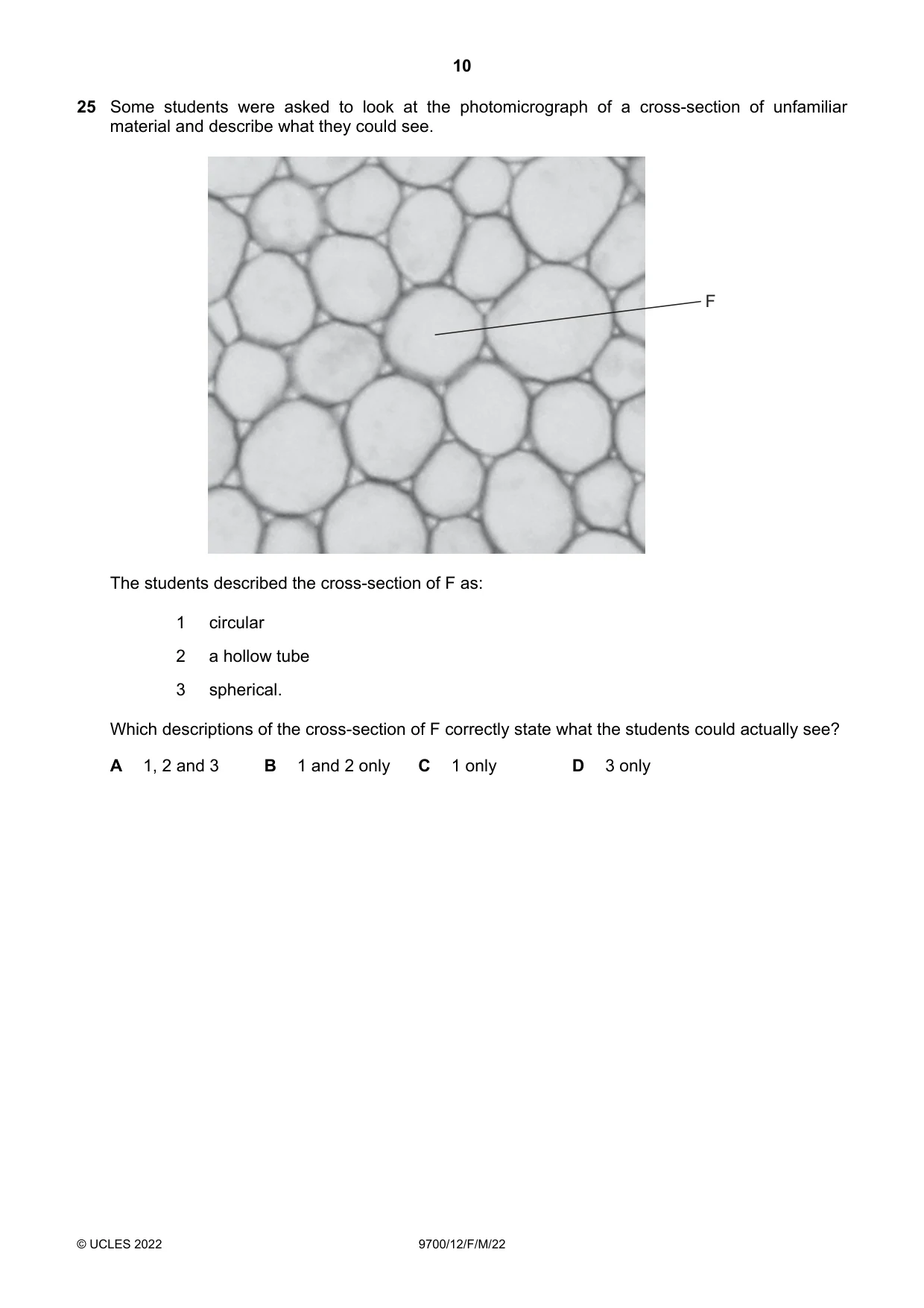
25 Some students were asked to look at the photomicrograph of a cross-section of unfamiliar material and describe what they could see. F The students described the cross-section of F as: 1 circular 2 a hollow tube 3 spherical. Which descriptions of the cross-section of F correctly state what the students could actually see? A 1, 2 and 3 B 1 and 2 only C 1 only D 3 only
Mark scheme: C
Q26 · The diagram shows the relationship between phloem sieve tube elements, xylem vessel…
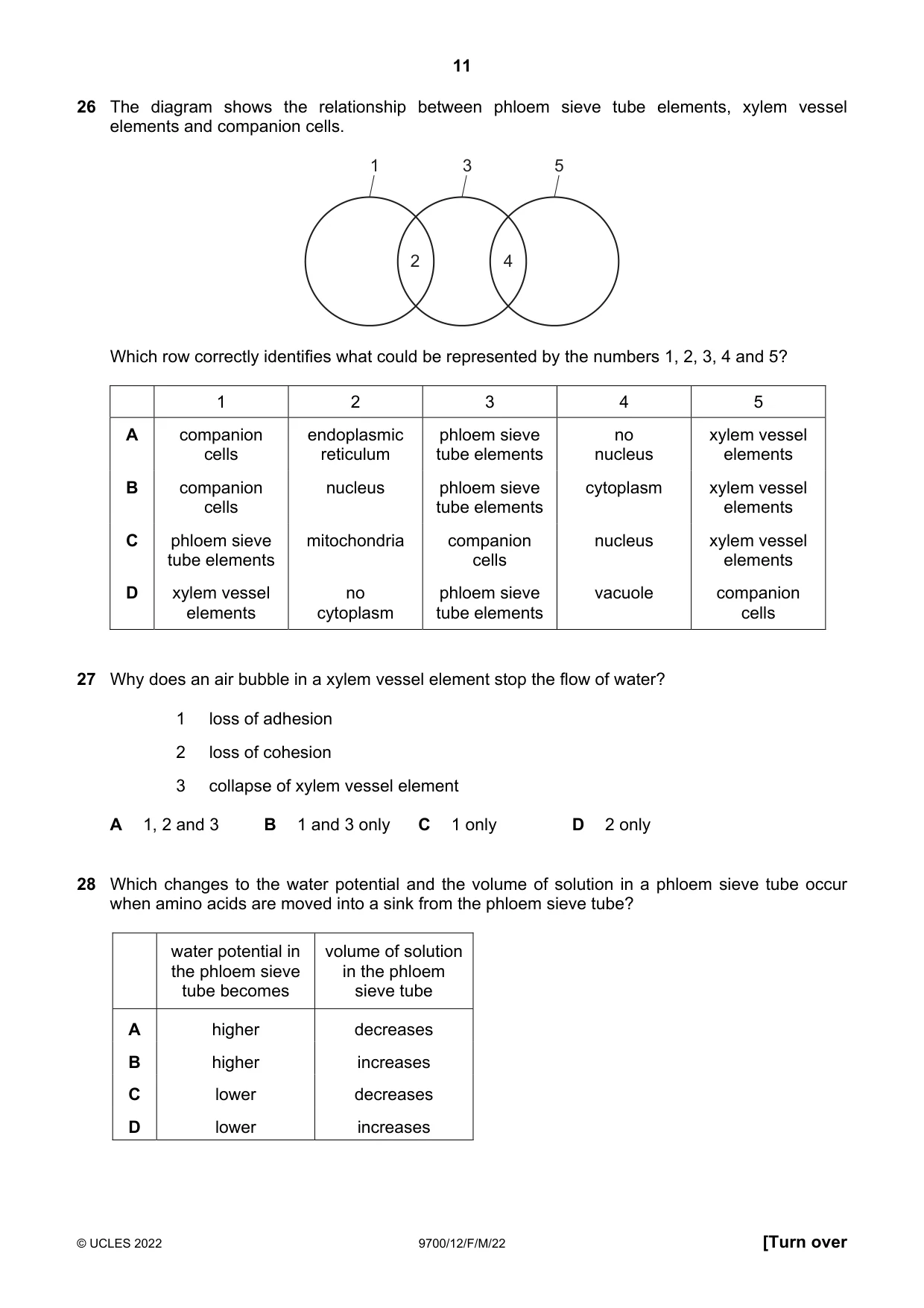
26 The diagram shows the relationship between phloem sieve tube elements, xylem vessel elements and companion cells. 1 3 5 2 4 Which row correctly identifies what could be represented by the numbers 1, 2, 3, 4 and 5? 1 2 3 4 5 A companion endoplasmic phloem sieve no xylem vessel cells reticulum tube elements nucleus elements B companion nucleus phloem sieve cytoplasm xylem vessel cells tube elements elements C phloem sieve mitochondria companion nucleus xylem vessel tube elements cells elements D xylem vessel no phloem sieve vacuole companion elements cytoplasm tube elements cells
Mark scheme: A
Q27 · Why does an air bubble in a xylem vessel element stop the flow of water?
27 Why does an air bubble in a xylem vessel element stop the flow of water? 1 loss of adhesion 2 loss of cohesion 3 collapse of xylem vessel element A 1, 2 and 3 B 1 and 3 only C 1 only D 2 only
Mark scheme: D
Q28 · Which changes to the water potential and the volume of solution in a phloem sieve tube…
28 Which changes to the water potential and the volume of solution in a phloem sieve tube occur when amino acids are moved into a sink from the phloem sieve tube? water potential in volume of solution the phloem sieve in the phloem tube becomes sieve tube A higher decreases B higher increases C lower decreases D lower increases
Mark scheme: A
Q29 · Which feature of some xerophytic leaves reduces the rate of transpiration by decreasing…
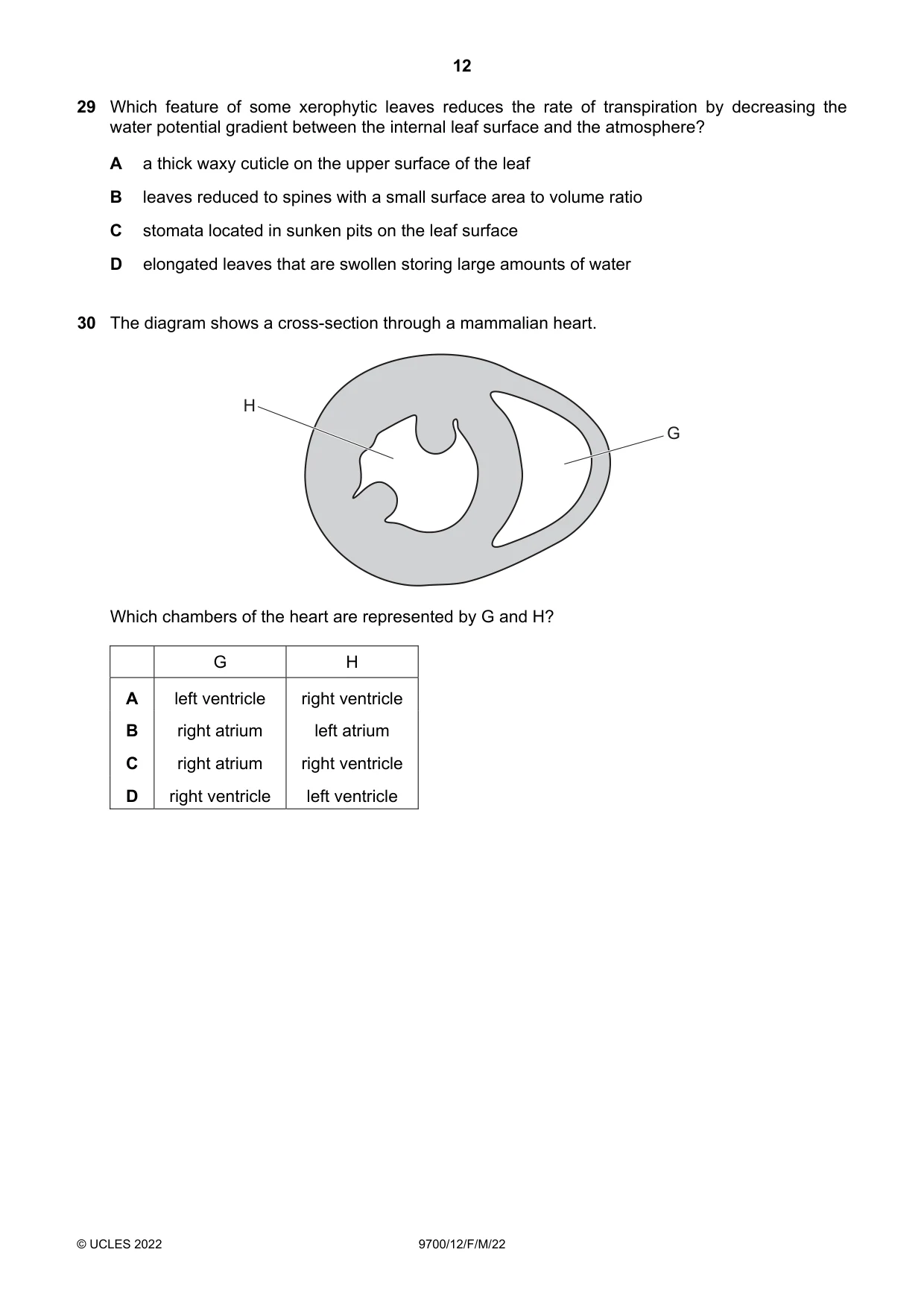
29 Which feature of some xerophytic leaves reduces the rate of transpiration by decreasing the water potential gradient between the internal leaf surface and the atmosphere? A a thick waxy cuticle on the upper surface of the leaf B leaves reduced to spines with a small surface area to volume ratio C stomata located in sunken pits on the leaf surface D elongated leaves that are swollen storing large amounts of water
Mark scheme: C
Q30 · The diagram shows a cross-section through a mammalian heart
30 The diagram shows a cross-section through a mammalian heart. H G Which chambers of the heart are represented by G and H? G H A left ventricle right ventricle B right atrium left atrium C right atrium right ventricle D right ventricle left ventricle
Mark scheme: D
Q31 · Blood entering the heart from the vena cava passes through, or past, several structures…
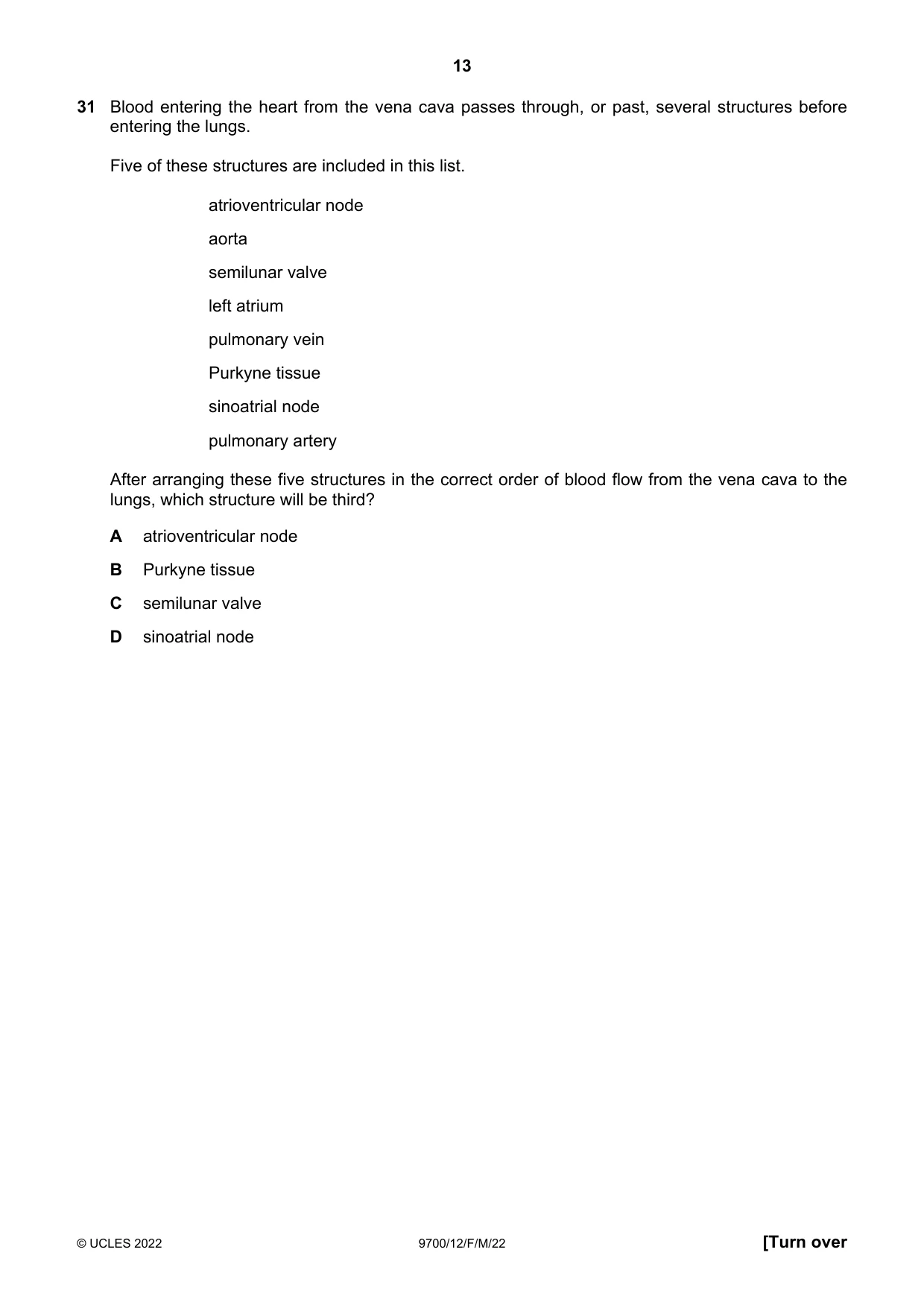
31 Blood entering the heart from the vena cava passes through, or past, several structures before entering the lungs. Five of these structures are included in this list. atrioventricular node aorta semilunar valve left atrium pulmonary vein Purkyne tissue sinoatrial node pulmonary artery After arranging these five structures in the correct order of blood flow from the vena cava to the lungs, which structure will be third? A atrioventricular node B Purkyne tissue C semilunar valve D sinoatrial node
Mark scheme: B
Q32 · The bar charts show the quantity of endothelial tissue, elastic tissue and muscle tissue…
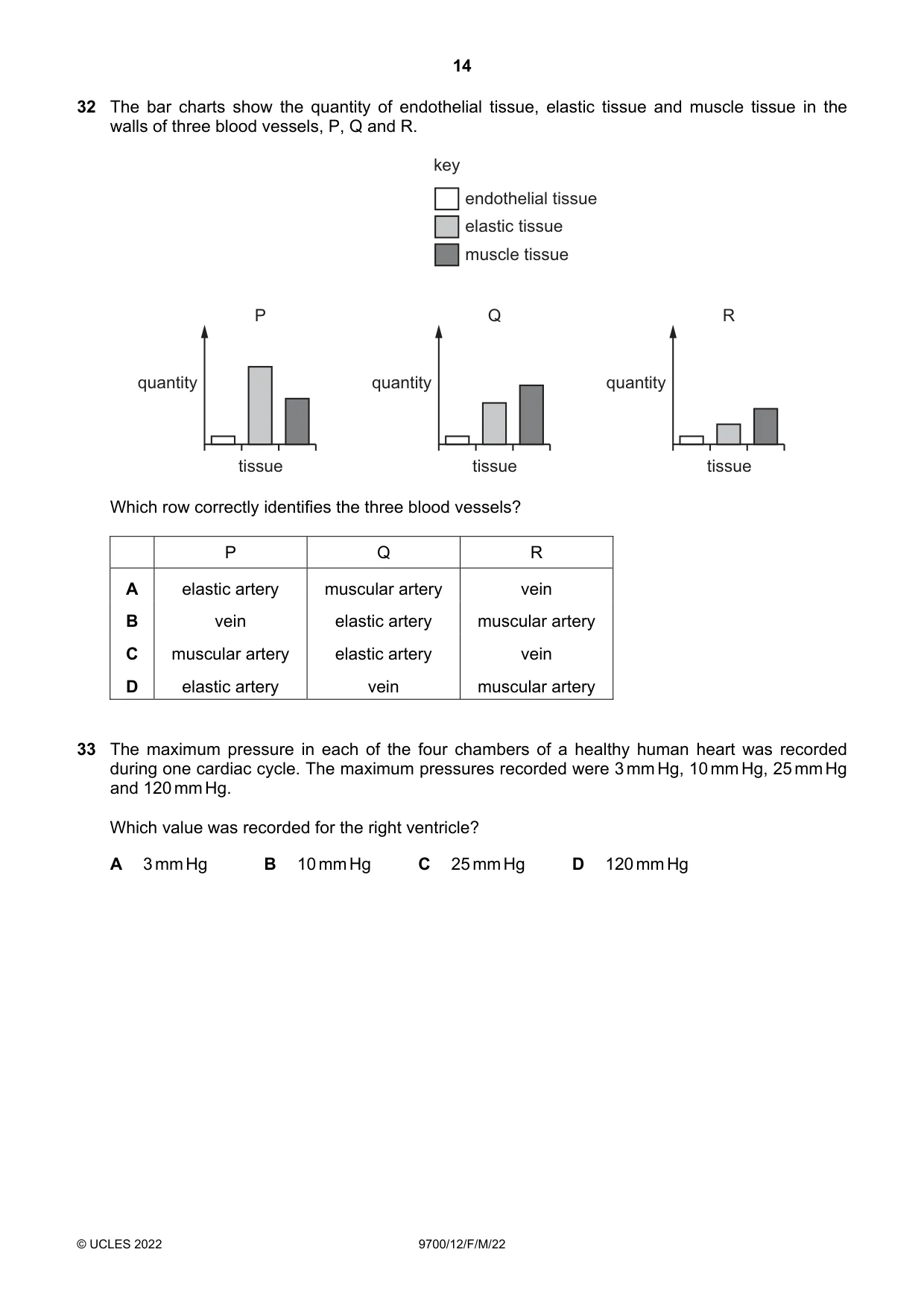
32 The bar charts show the quantity of endothelial tissue, elastic tissue and muscle tissue in the walls of three blood vessels, P, Q and R. key endothelial tissue elastic tissue muscle tissue P Q R quantity quantity quantity tissue tissue tissue Which row correctly identifies the three blood vessels? P Q R A elastic artery muscular artery vein B vein elastic artery muscular artery C muscular artery elastic artery vein D elastic artery vein muscular artery
Mark scheme: A
Q33 · The maximum pressure in each of the four chambers of a healthy human heart was recorded…
33 The maximum pressure in each of the four chambers of a healthy human heart was recorded during one cardiac cycle. The maximum pressures recorded were 3 mm Hg, 10 mm Hg, 25 mm Hg and 120 mm Hg. Which value was recorded for the right ventricle? A 3 mm Hg B 10 mm Hg C 25 mm Hg D 120 mm Hg
Mark scheme: C
Q34 · The graph shows the pressure changes in three structures of the right side of the heart…
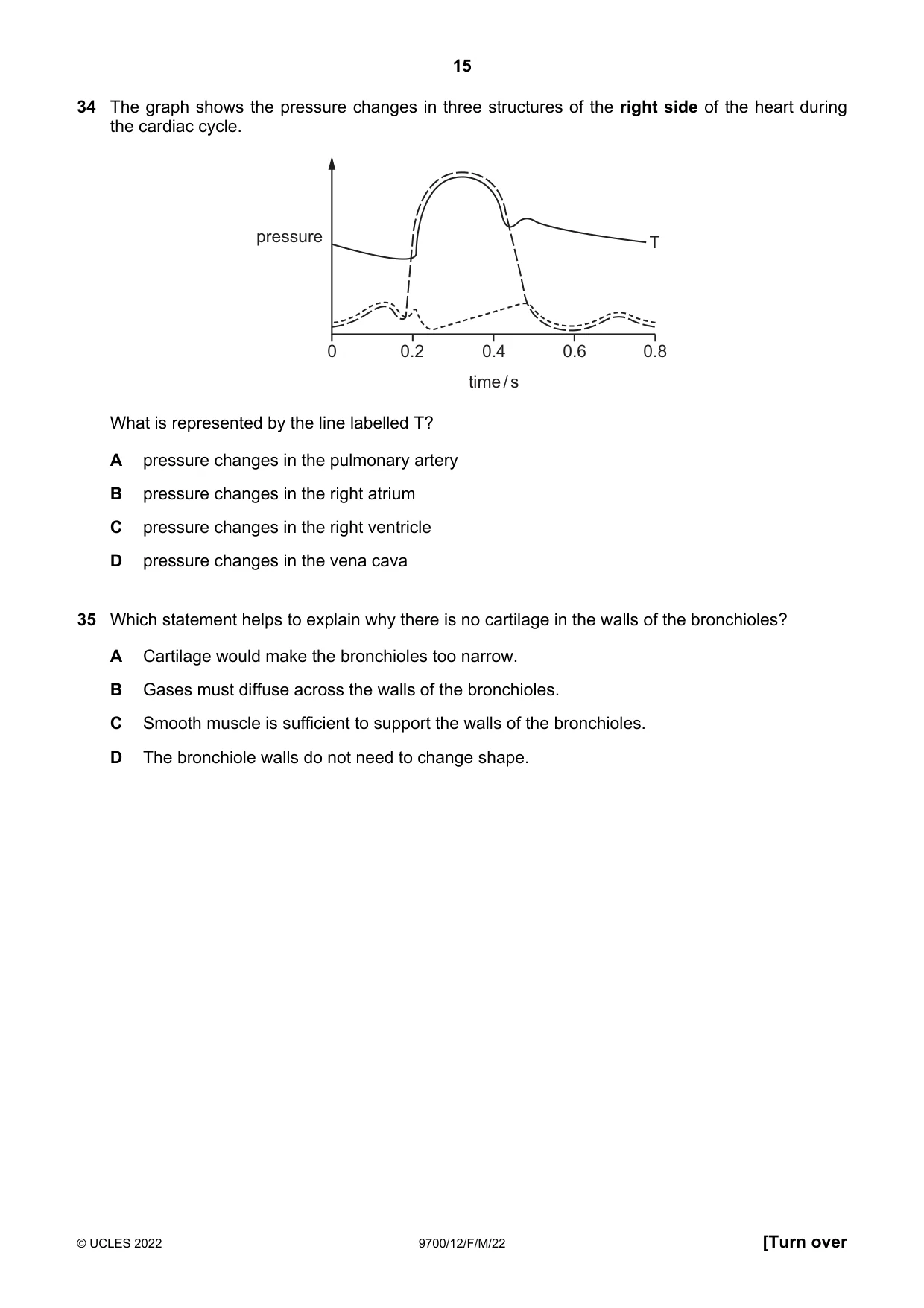
34 The graph shows the pressure changes in three structures of the right side of the heart during the cardiac cycle. pressure T 0 0.2 0.4 0.6 0.8 time / s What is represented by the line labelled T? A pressure changes in the pulmonary artery B pressure changes in the right atrium C pressure changes in the right ventricle D pressure changes in the vena cava
Mark scheme: A
Q35 · Which statement helps to explain why there is no cartilage in the walls of the…
35 Which statement helps to explain why there is no cartilage in the walls of the bronchioles? A Cartilage would make the bronchioles too narrow. B Gases must diffuse across the walls of the bronchioles. C Smooth muscle is sufficient to support the walls of the bronchioles. D The bronchiole walls do not need to change shape.
Mark scheme: C
Q36 · The photomicrograph shows a cross-section of part of the gas exchange system of a mammal
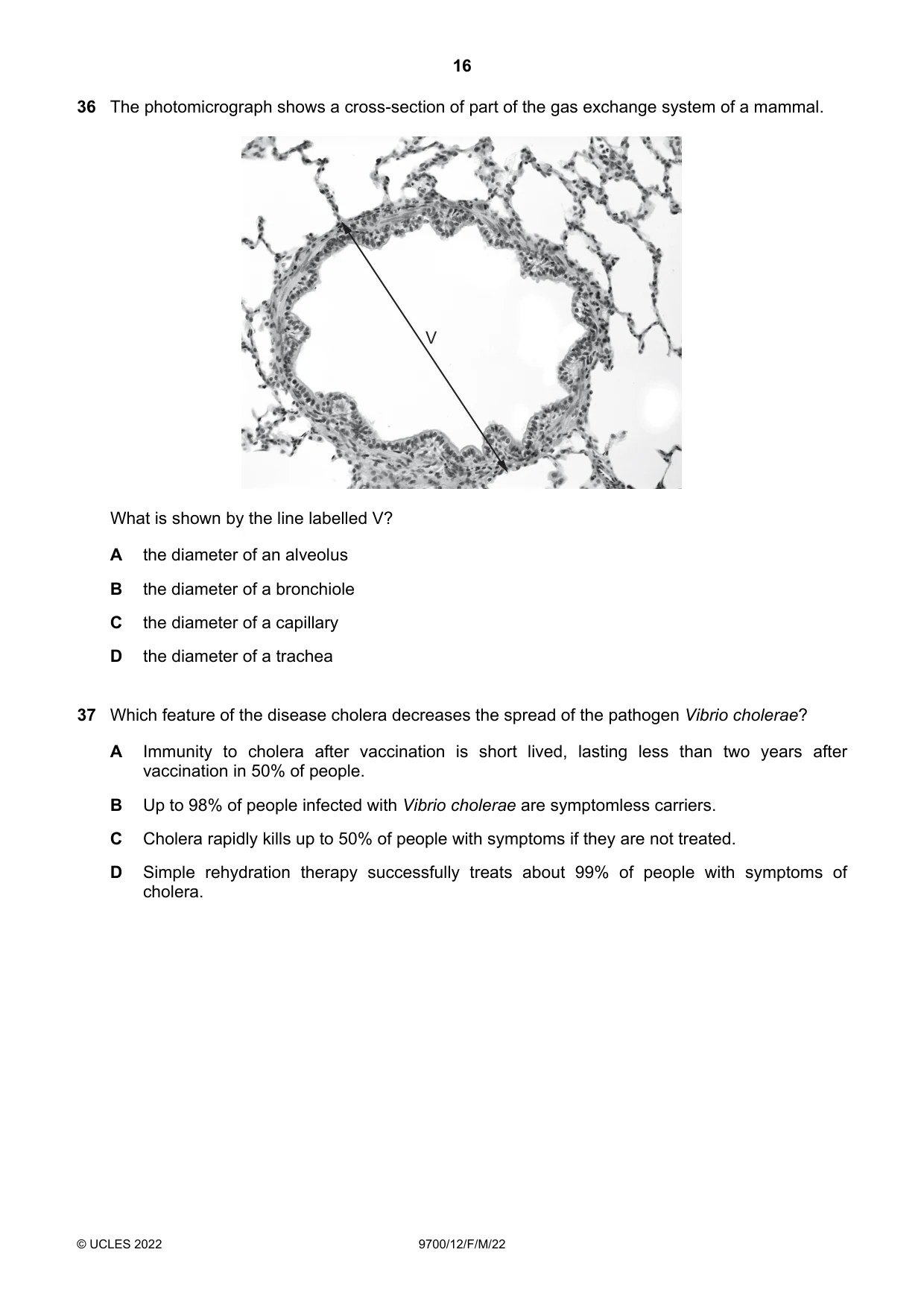
36 The photomicrograph shows a cross-section of part of the gas exchange system of a mammal. V What is shown by the line labelled V? A the diameter of an alveolus B the diameter of a bronchiole C the diameter of a capillary D the diameter of a trachea
Mark scheme: B
Q37 · Which feature of the disease cholera decreases the spread of the pathogen Vibrio cholerae?
37 Which feature of the disease cholera decreases the spread of the pathogen Vibrio cholerae? A Immunity to cholera after vaccination is short lived, lasting less than two years after vaccination in 50% of people. B Up to 98% of people infected with Vibrio cholerae are symptomless carriers. C Cholera rapidly kills up to 50% of people with symptoms if they are not treated. D Simple rehydration therapy successfully treats about 99% of people with symptoms of cholera.
Mark scheme: C
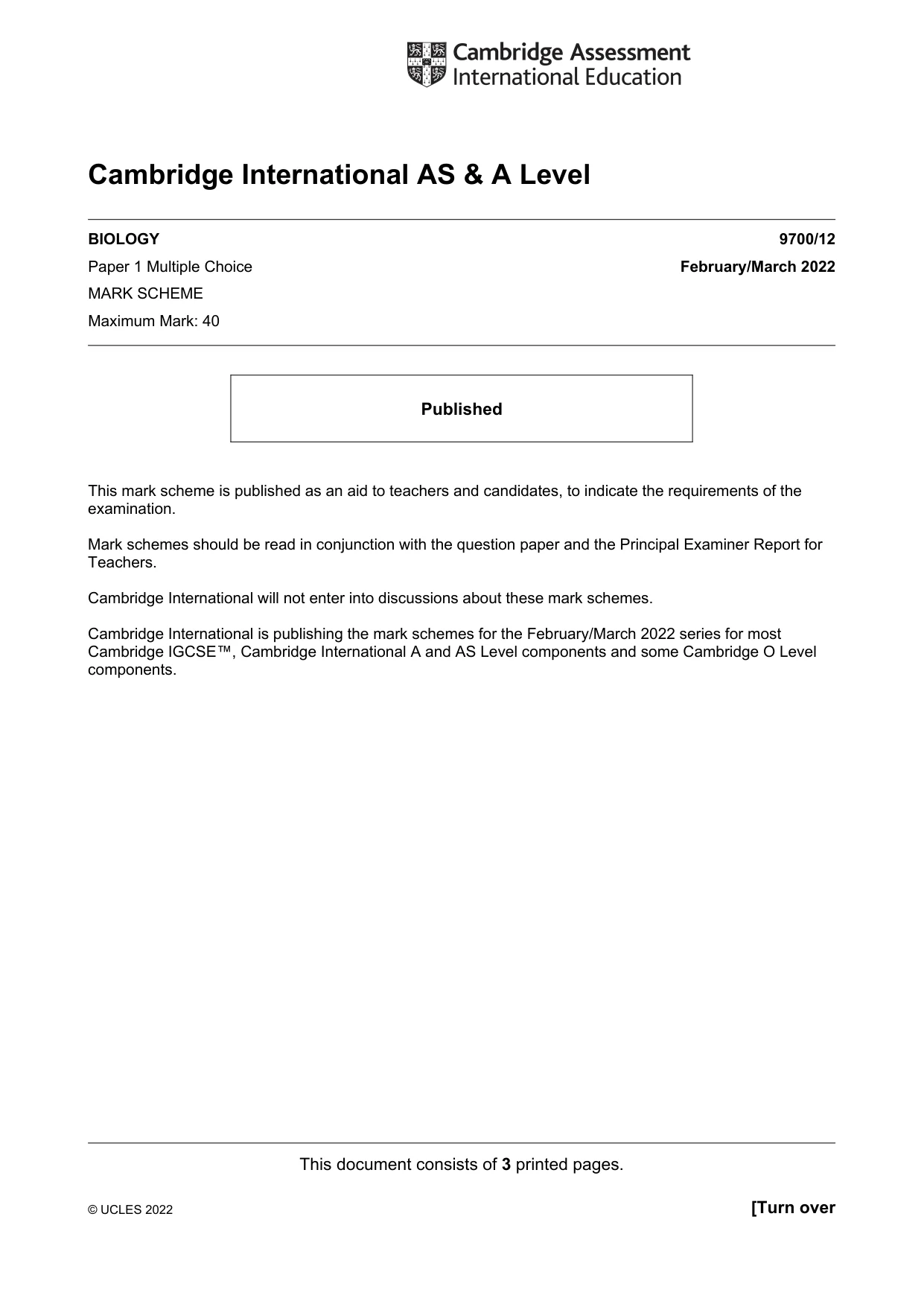
Q38 · Which row shows how penicillin kills bacteria?
38 Which row shows how penicillin kills bacteria? process inhibited by penicillin effect on bacteria A formation of water enters and peptidoglycan cross-links bacteria burst B breakdown of water enters and peptidoglycan cross-links bacteria burst C formation of water leaves and peptidoglycan cross-links bacteria dehydrate D breakdown of water leaves and peptidoglycan cross-links bacteria dehydrate
Mark scheme: A
Q39 · In the hybridoma method, what is grown by cell culture to produce monoclonal antibodies?
39 In the hybridoma method, what is grown by cell culture to produce monoclonal antibodies? A antigens B clones C lymphocytes D myeloma cells
Mark scheme: B
Q40 · Which type of immunity does a baby have at birth?
40 Which type of immunity does a baby have at birth? A active artificial B active natural C passive artificial D passive natural
Mark scheme: D
What was in this paper
The subtopics covered by these 40 questions, and how many questions each got. Open one in a new tab to see every Cambridge question on it.
5Cells as the basic units of living organisms4Proteins3The heart3The microscope in cell studies3Transport mechanisms3Chromosome behaviour in mitosis2Movement into and out of cells2Structure of nucleic acids and replication of DNA2Testing for biological molecules2The circulatory system2The gas exchange system2Antibiotics1Antibodies and vaccination1Fluid mosaic membranes1Infectious diseases1Replication and division of nuclei and cells1Structure of transport tissues1The immune system1What you needed in this session
Cambridge’s own grade thresholds for 2022 Feb/March, Paper 1 · Variant 2. A higher threshold means an easier paper — the bar moves with how the cohort did.