Cambridge A Level Biology 9700 — 2024 Oct/Nov Paper 1 · Variant 1
9700/11/O/N/24 · 40 questions · 40 marks · ≈45 min
The question paper and its mark scheme, free to read here and free to download. This is Cambridge’s own paper, exactly as it was sat.
Question paper20 pages
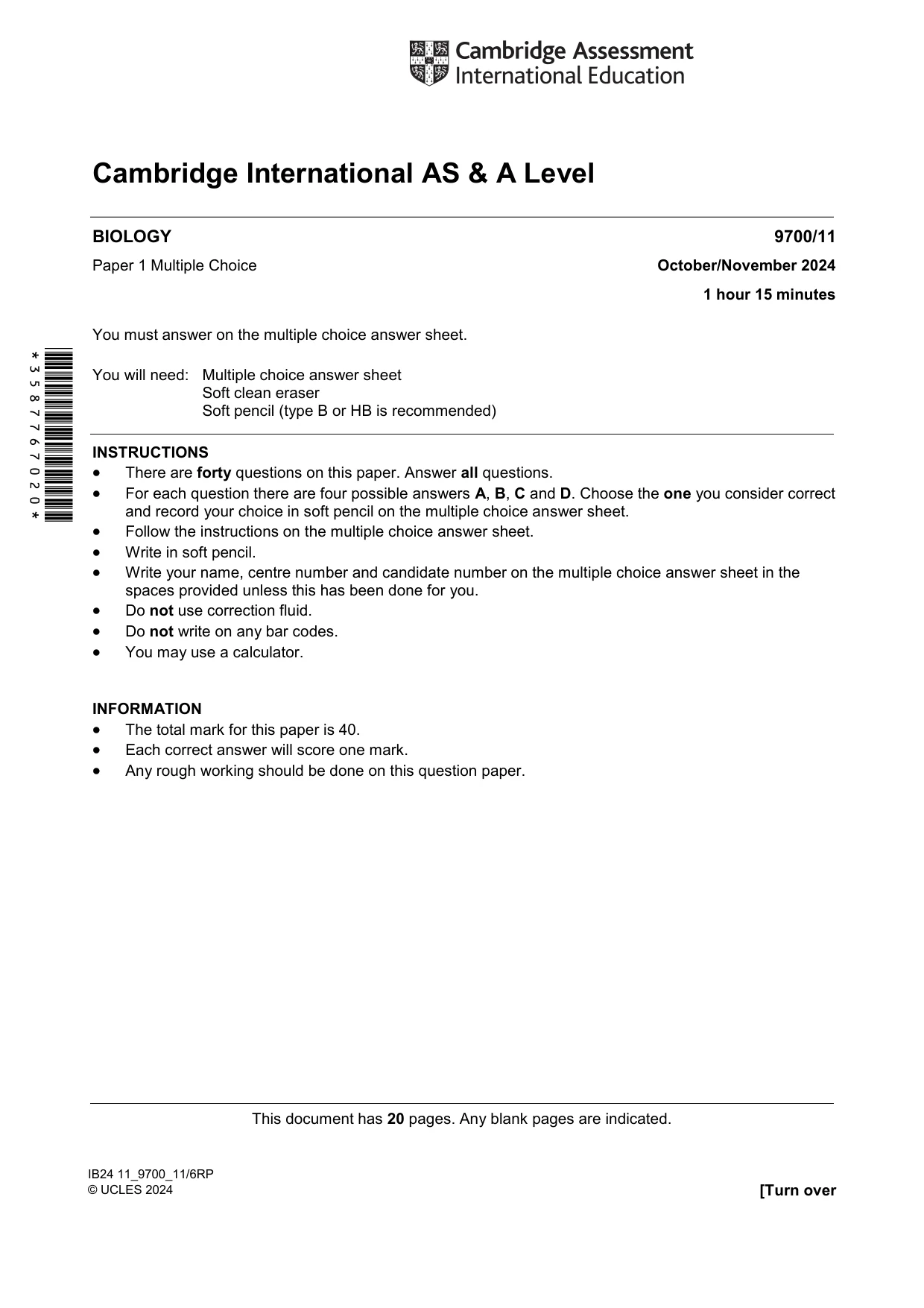
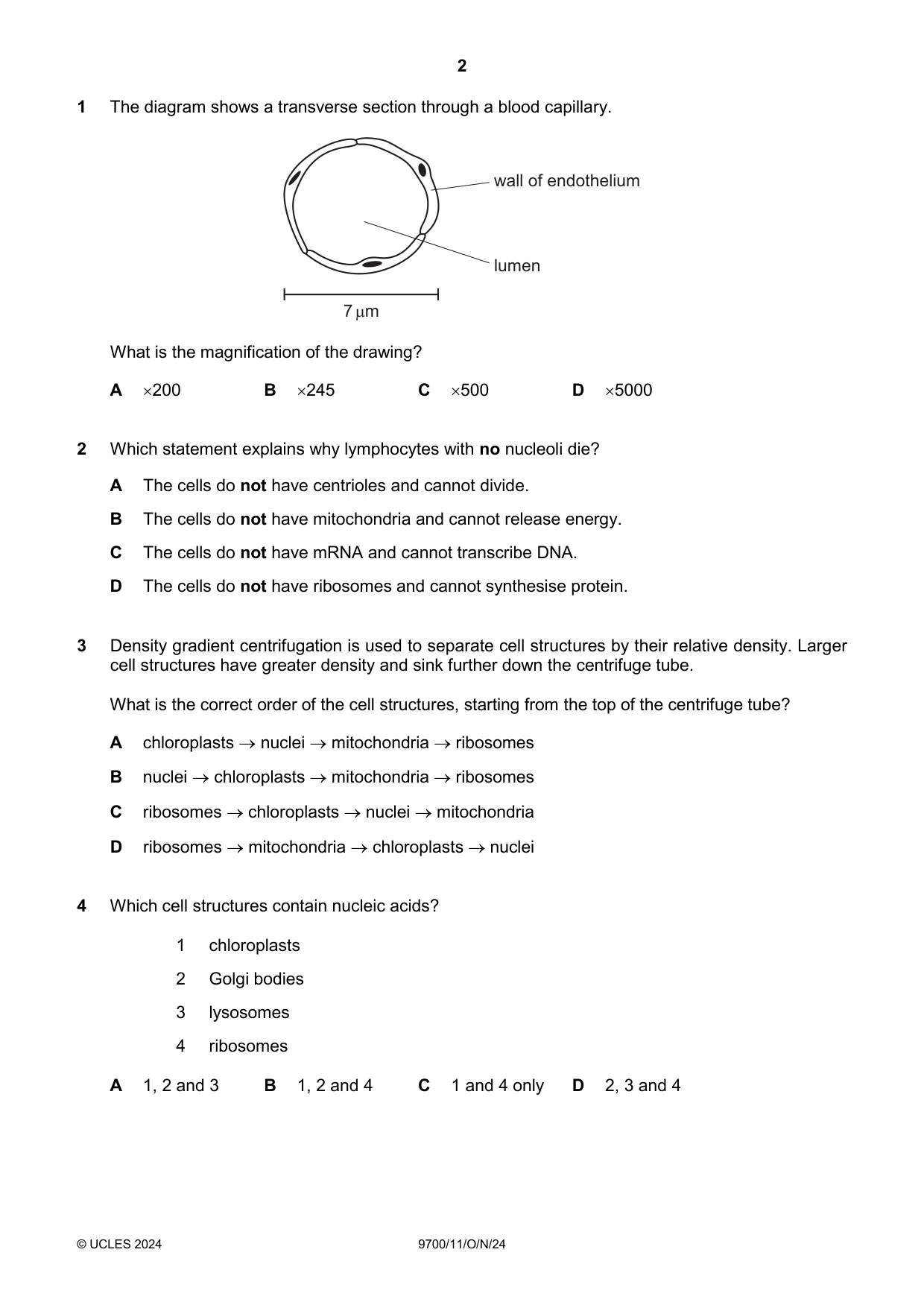
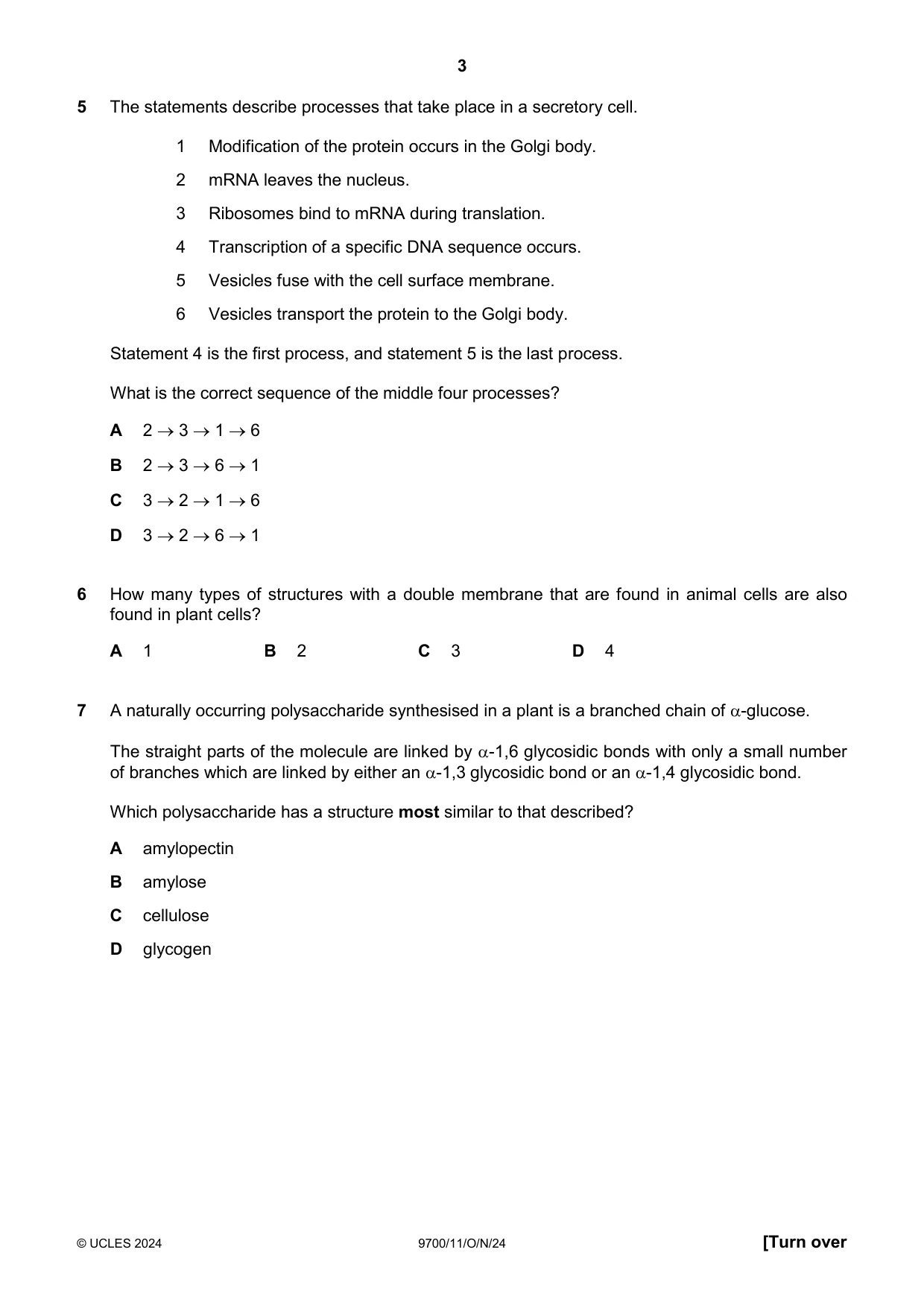
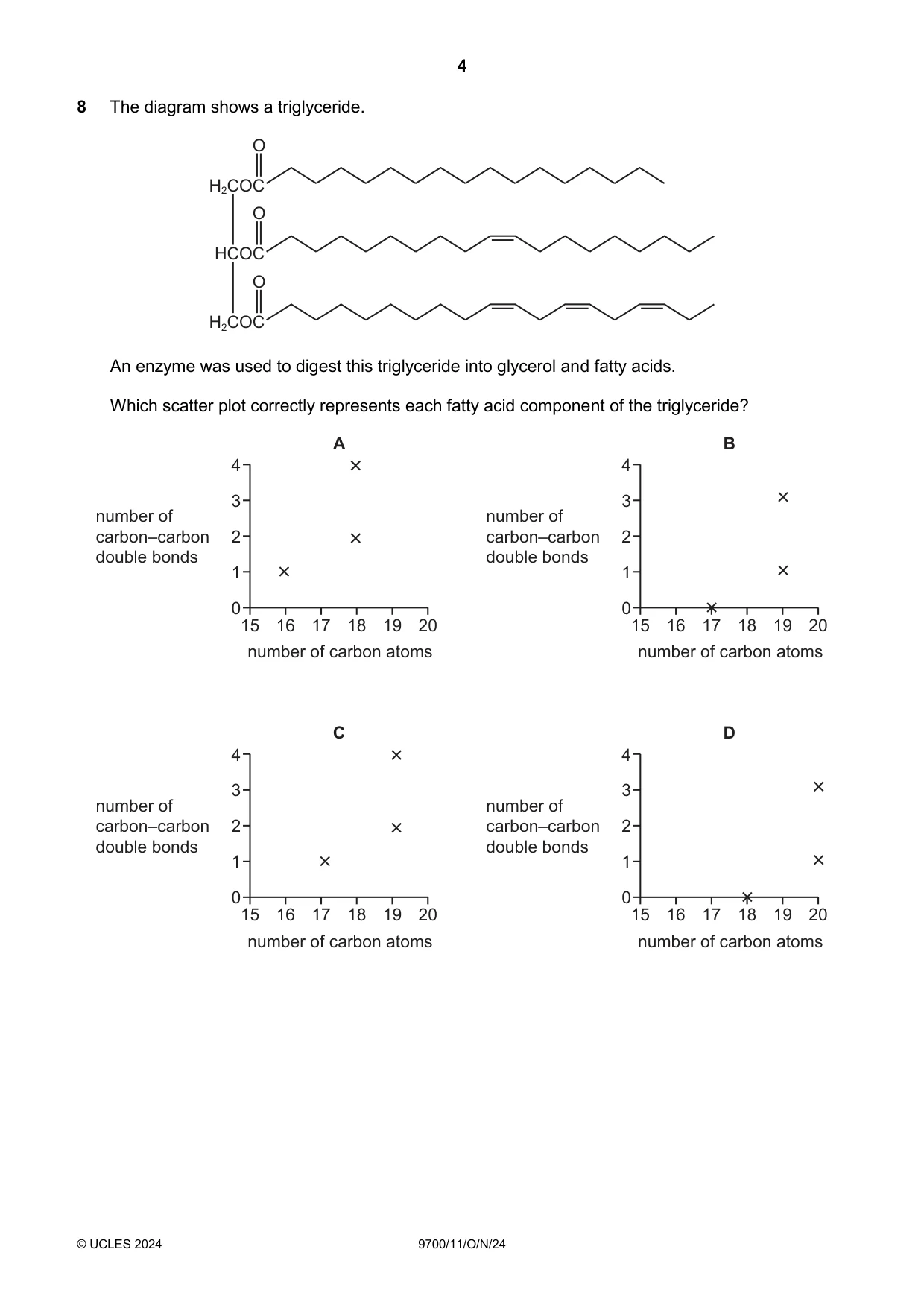
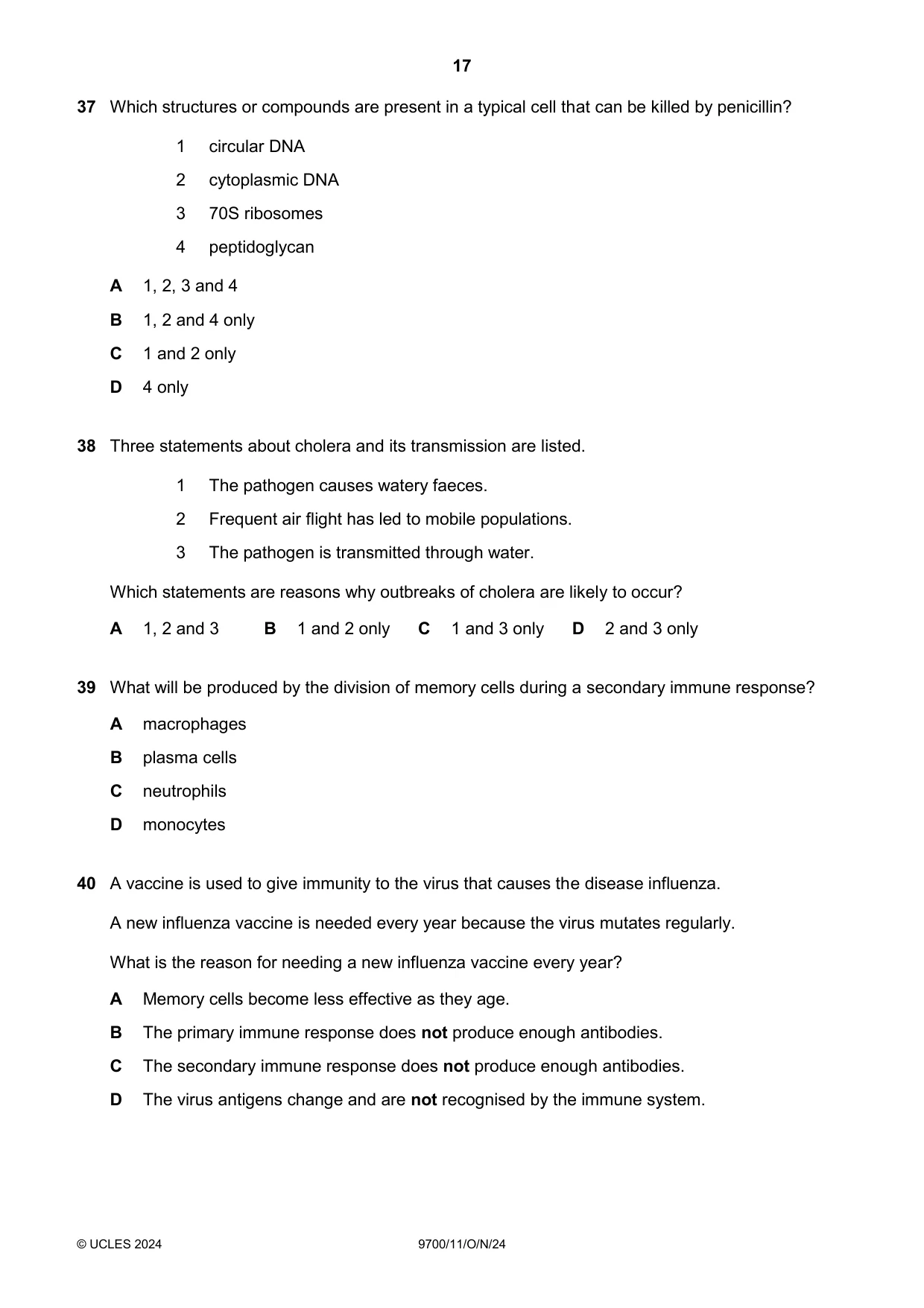


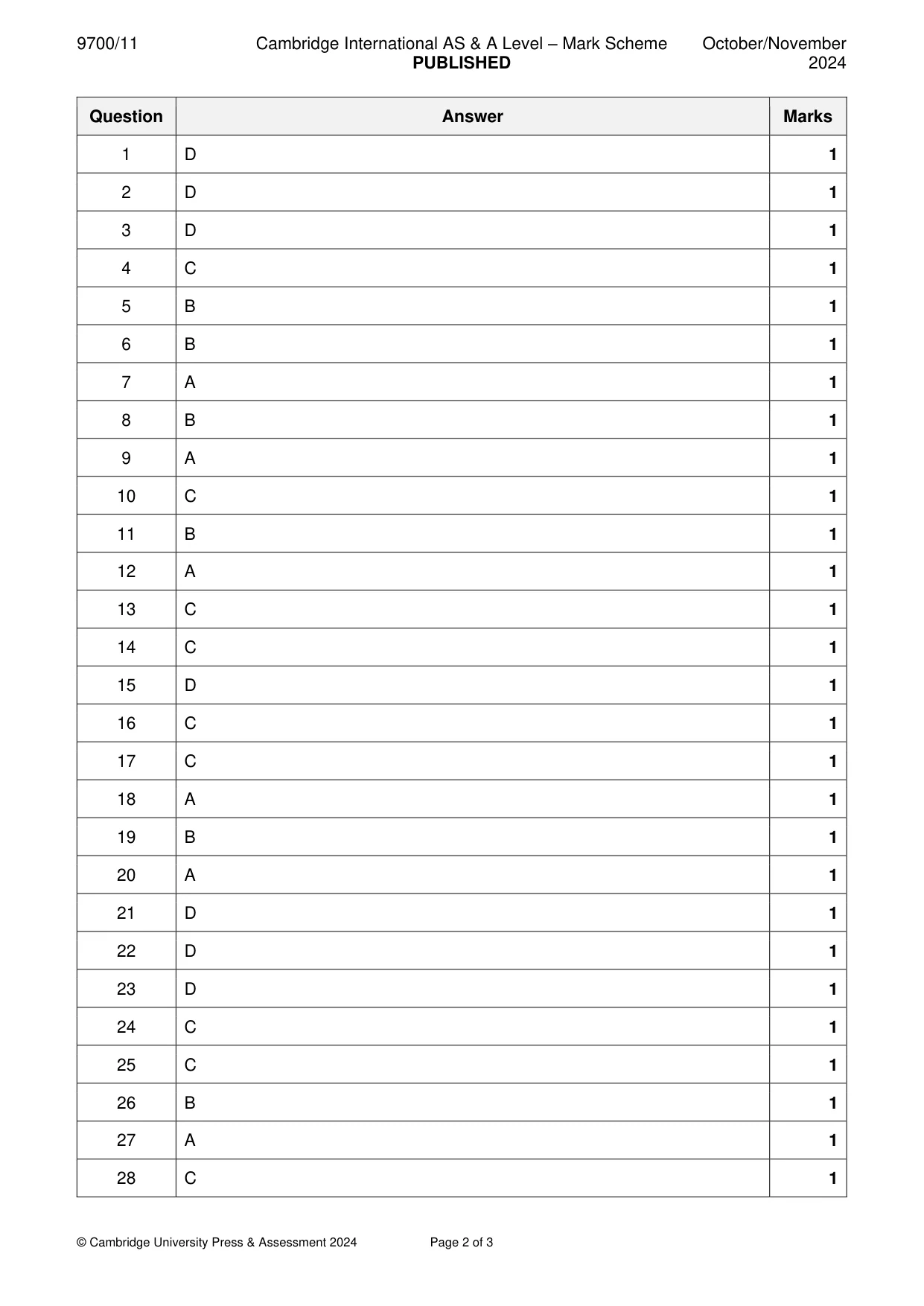
Mark scheme3 pages
Answers below. Sit the paper first if you are practising.
Questions as text
Q1 · The diagram shows a transverse section through a blood capillary
1 The diagram shows a transverse section through a blood capillary. wall of endothelium lumen 7 µm What is the magnification of the drawing? A 200 B 245 C 500 D 5000
Mark scheme: D
Q2 · Which statement explains why lymphocytes with no nucleoli die?
2 Which statement explains why lymphocytes with no nucleoli die? A The cells do not have centrioles and cannot divide. B The cells do not have mitochondria and cannot release energy. C The cells do not have mRNA and cannot transcribe DNA. D The cells do not have ribosomes and cannot synthesise protein.
Mark scheme: D
More questions on Cells as the basic units of living organisms
Q3 · Density gradient centrifugation is used to separate cell structures by their relative…
3 Density gradient centrifugation is used to separate cell structures by their relative density. Larger cell structures have greater density and sink further down the centrifuge tube. What is the correct order of the cell structures, starting from the top of the centrifuge tube? A chloroplasts nuclei mitochondria ribosomes B nuclei chloroplasts mitochondria ribosomes C ribosomes chloroplasts nuclei mitochondria D ribosomes mitochondria chloroplasts nuclei
Mark scheme: D
Q4 · Which cell structures contain nucleic acids?
4 Which cell structures contain nucleic acids? 1 chloroplasts 2 Golgi bodies 3 lysosomes 4 ribosomes A 1, 2 and 3 B 1, 2 and 4 C 1 and 4 only D 2, 3 and 4
Mark scheme: C
More questions on Cells as the basic units of living organisms
Q5 · The statements describe processes that take place in a secretory cell
5 The statements describe processes that take place in a secretory cell. 1 Modification of the protein occurs in the Golgi body. 2 mRNA leaves the nucleus. 3 Ribosomes bind to mRNA during translation. 4 Transcription of a specific DNA sequence occurs. 5 Vesicles fuse with the cell surface membrane. 6 Vesicles transport the protein to the Golgi body. Statement 4 is the first process, and statement 5 is the last process. What is the correct sequence of the middle four processes? A 2 3 1 6 B 2 3 6 1 C 3 2 1 6 D 3 2 6 1
Mark scheme: B
Q6 · How many types of structures with a double membrane that are found in animal cells are…
6 How many types of structures with a double membrane that are found in animal cells are also found in plant cells? A 1 B 2 C 3 D 4
Mark scheme: B
More questions on Cells as the basic units of living organisms
Q7 · A naturally occurring polysaccharide synthesised in a plant is a branched chain of…
7 A naturally occurring polysaccharide synthesised in a plant is a branched chain of -glucose. The straight parts of the molecule are linked by -1,6 glycosidic bonds with only a small number of branches which are linked by either an -1,3 glycosidic bond or an -1,4 glycosidic bond. Which polysaccharide has a structure most similar to that described? A amylopectin B amylose C cellulose D glycogen
Mark scheme: A
Q8 · The diagram shows a triglyceride
8 The diagram shows a triglyceride. O H2COC O HCOC O H2COC An enzyme was used to digest this triglyceride into glycerol and fatty acids. Which scatter plot correctly represents each fatty acid component of the triglyceride? A B 4 4 3 3 number of number of carbon–carbon 2 carbon–carbon 2 double bonds double bonds 1 1 0 0 15 16 17 18 19 20 15 16 17 18 19 20 number of carbon atoms number of carbon atoms C D 4 4 3 3 number of number of carbon–carbon 2 carbon–carbon 2 double bonds double bonds 1 1 0 0 15 16 17 18 19 20 15 16 17 18 19 20 number of carbon atoms number of carbon atoms
Mark scheme: B
Q9 · The diagram shows how the alternating nature of -glucose monomers along a chain allows…
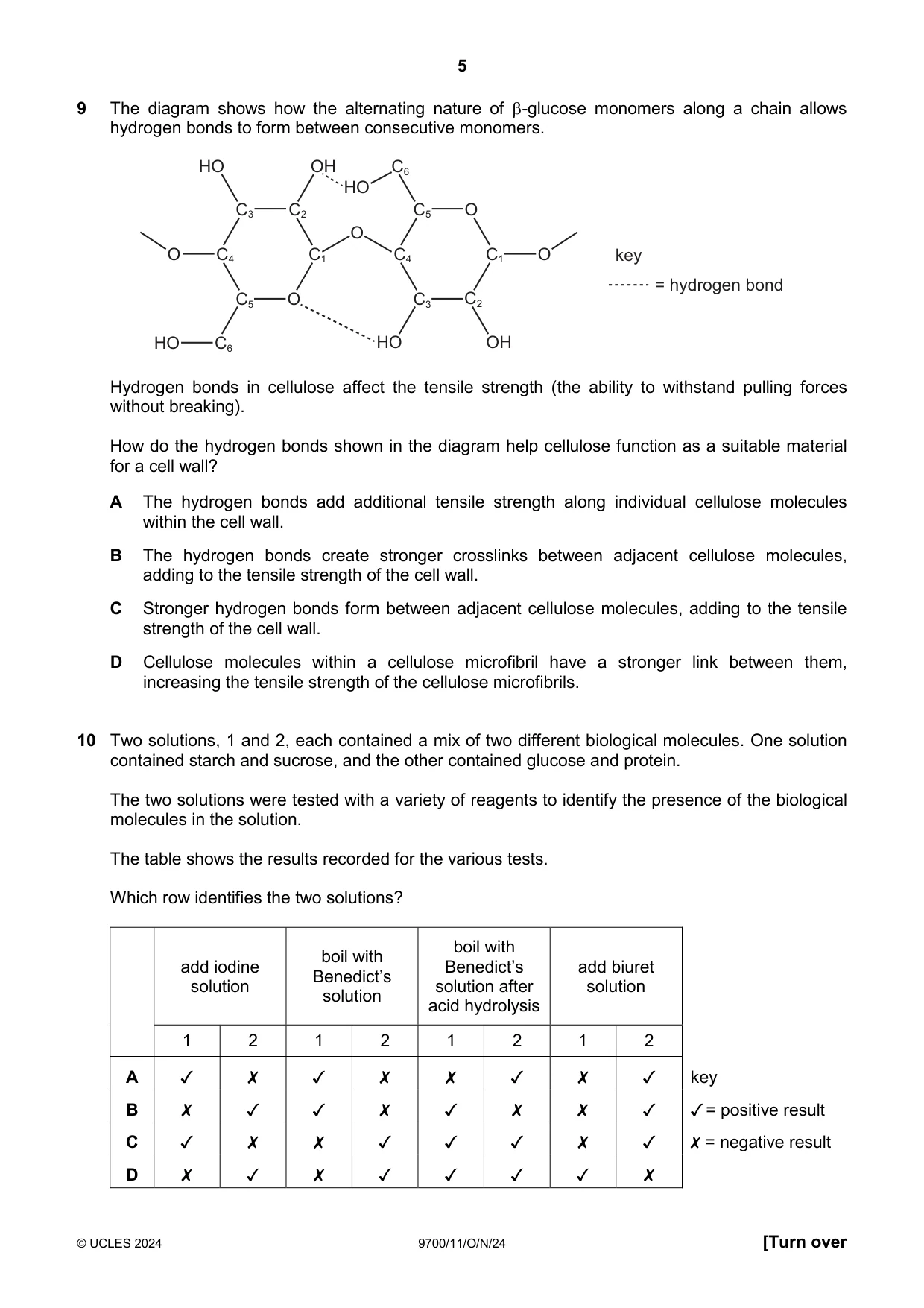
9 The diagram shows how the alternating nature of -glucose monomers along a chain allows hydrogen bonds to form between consecutive monomers. HO OH C6 HO C3 C2 C5 O O O C4 C1 C4 C1 O key = hydrogen bond C5 O C3 C2 HO C6 HO OH Hydrogen bonds in cellulose affect the tensile strength (the ability to withstand pulling forces without breaking). How do the hydrogen bonds shown in the diagram help cellulose function as a suitable material for a cell wall? A The hydrogen bonds add additional tensile strength along individual cellulose molecules within the cell wall. B The hydrogen bonds create stronger crosslinks between adjacent cellulose molecules, adding to the tensile strength of the cell wall. C Stronger hydrogen bonds form between adjacent cellulose molecules, adding to the tensile strength of the cell wall. D Cellulose molecules within a cellulose microfibril have a stronger link between them, increasing the tensile strength of the cellulose microfibrils.
Mark scheme: A
Q10 · Two solutions, 1 and 2, each contained a mix of two different biological molecules
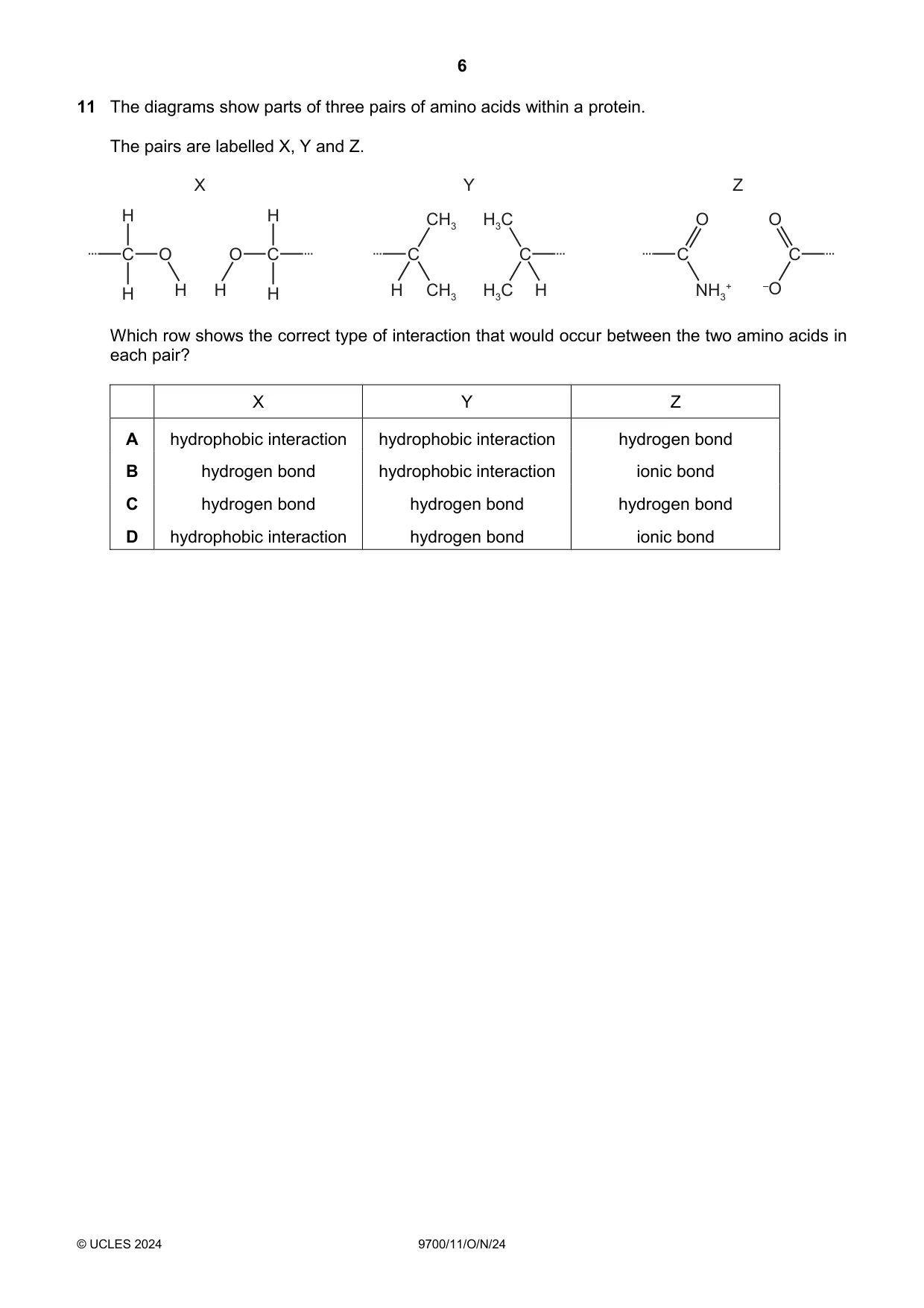
10 Two solutions, 1 and 2, each contained a mix of two different biological molecules. One solution contained starch and sucrose, and the other contained glucose and protein. The two solutions were tested with a variety of reagents to identify the presence of the biological molecules in the solution. The table shows the results recorded for the various tests. Which row identifies the two solutions? boil with boil with add iodine Benedict’s Benedict's add biuret solution solution after solution solution acid hydrolysis key / = positive result X = negative result
Mark scheme: C
Q11 · The diagrams show parts of three pairs of amino acids within a protein
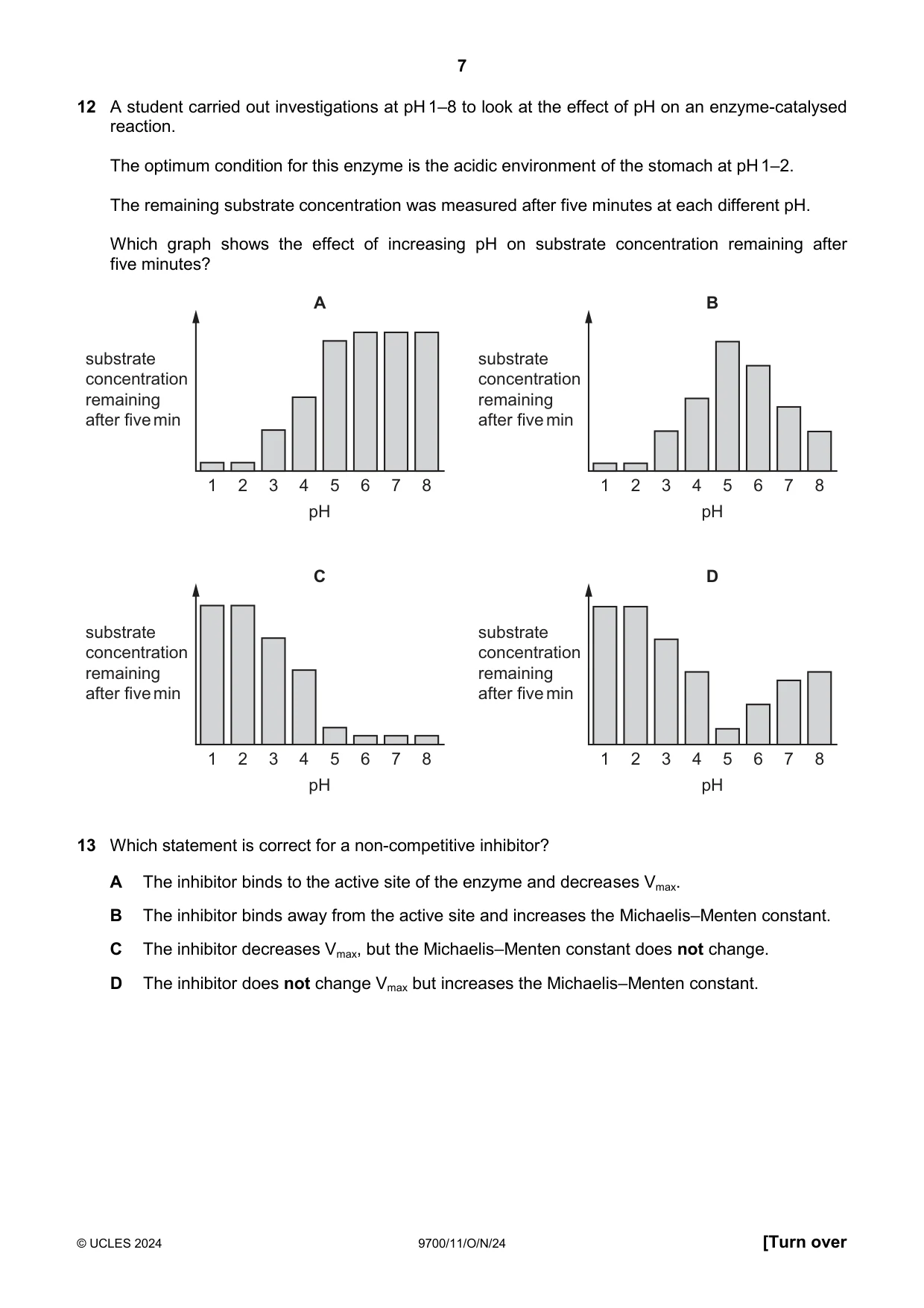
11 The diagrams show parts of three pairs of amino acids within a protein. The pairs are labelled X, Y and Z. X Y Z H H CH3 H3C O O C O O C C C C C H H H H H CH3 H3C H NH3 + –O Which row shows the correct type of interaction that would occur between the two amino acids in each pair? X Y Z A hydrophobic interaction hydrophobic interaction hydrogen bond B hydrogen bond hydrophobic interaction ionic bond C hydrogen bond hydrogen bond hydrogen bond D hydrophobic interaction hydrogen bond ionic bond
Mark scheme: B
Q12 · A student carried out investigations at pH 1–8 to look at the effect of pH on an…
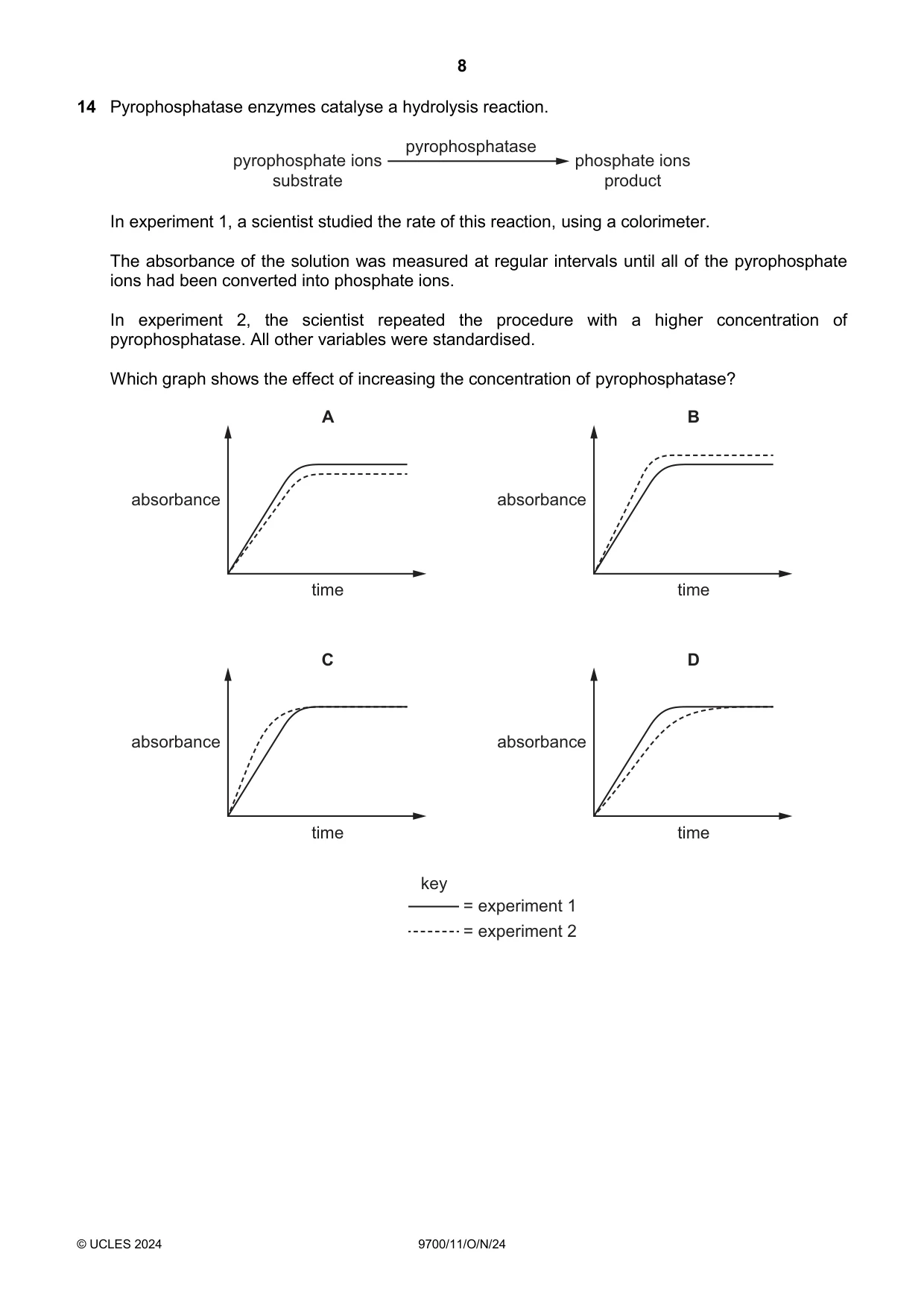
12 A student carried out investigations at pH 1–8 to look at the effect of pH on an enzyme-catalysed reaction. The optimum condition for this enzyme is the acidic environment of the stomach at pH 1–2. The remaining substrate concentration was measured after five minutes at each different pH. Which graph shows the effect of increasing pH on substrate concentration remaining after five minutes? A B substrate substrate concentration concentration remaining remaining after five min after five min 1 2 3 4 5 6 7 8 1 2 3 4 5 6 7 8 pH pH C D substrate substrate concentration concentration remaining remaining after five min after five min 1 2 3 4 5 6 7 8 1 2 3 4 5 6 7 8 pH pH
Mark scheme: A
Q13 · Which statement is correct for a non-competitive inhibitor?
13 Which statement is correct for a non-competitive inhibitor? A The inhibitor binds to the active site of the enzyme and decreases Vmax. B The inhibitor binds away from the active site and increases the Michaelis–Menten constant. C The inhibitor decreases Vmax, but the Michaelis–Menten constant does not change. D The inhibitor does not change Vmax but increases the Michaelis–Menten constant.
Mark scheme: C
Q14 · Pyrophosphatase enzymes catalyse a hydrolysis reaction
14 Pyrophosphatase enzymes catalyse a hydrolysis reaction. pyrophosphatase pyrophosphate ions phosphate ions substrate product In experiment 1, a scientist studied the rate of this reaction, using a colorimeter. The absorbance of the solution was measured at regular intervals until all of the pyrophosphate ions had been converted into phosphate ions. In experiment 2, the scientist repeated the procedure with a higher concentration of pyrophosphatase. All other variables were standardised. Which graph shows the effect of increasing the concentration of pyrophosphatase? A B absorbance absorbance time time C D absorbance absorbance time time key = experiment 1 = experiment 2
Mark scheme: C
Q15 · Proteases are a group of enzymes that digest proteins
15 Proteases are a group of enzymes that digest proteins. Which statements about proteases are correct? 1 A bacterial protease that is secreted from a disease-causing bacterium could act as an antibody and cause the production of antigens against it. 2 Non-competitive inhibition of a protease that has an optimum condition of pH 2 can be overcome by increasing the substrate concentration and increasing the pH. 3 Water molecules are required when peptide bonds that link the monomers together are broken by the action of proteases in hydrolysis reactions. A 1, 2 and 3 B 1 and 2 only C 2 only D 3 only
Mark scheme: D
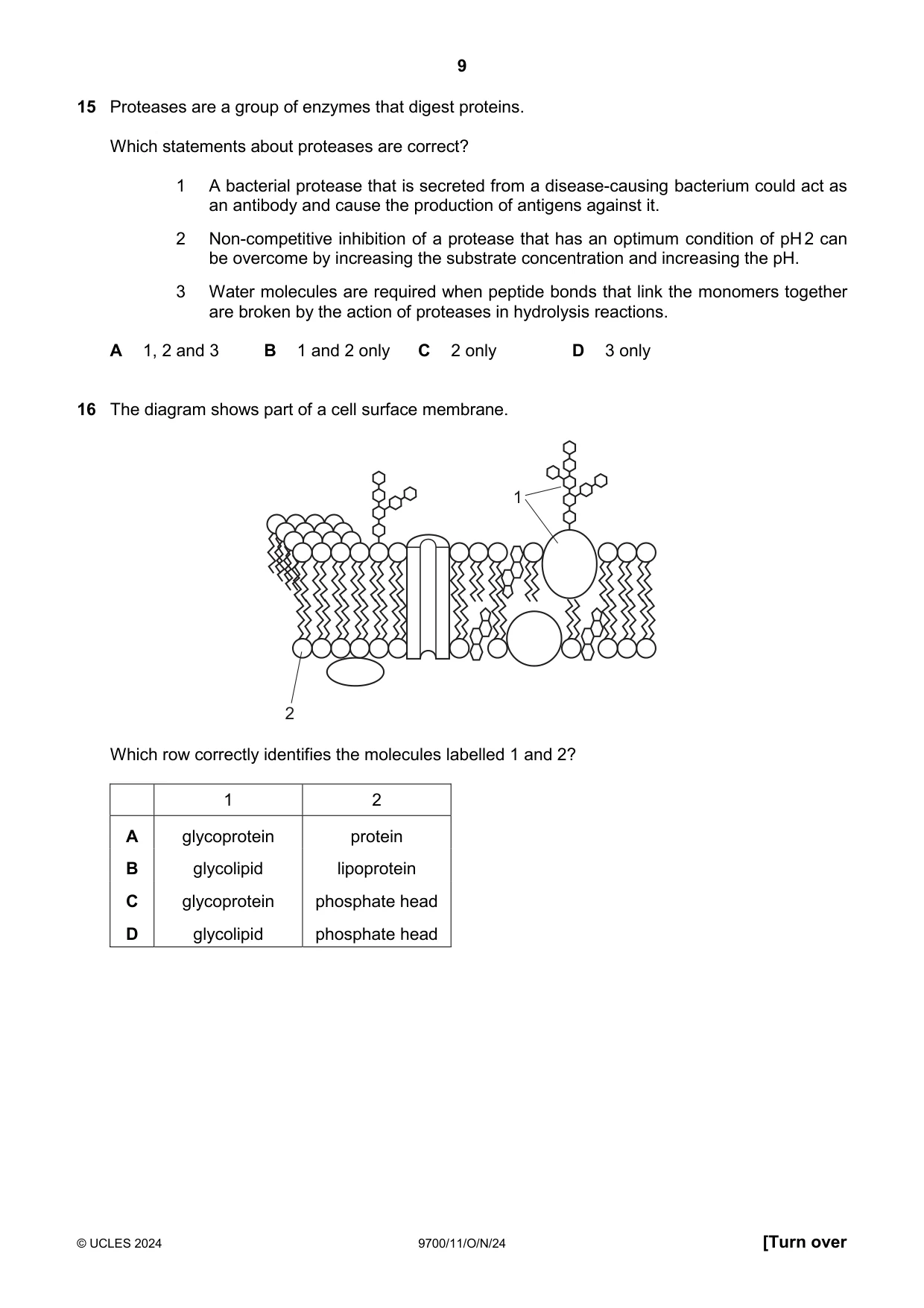
Q16 · The diagram shows part of a cell surface membrane
16 The diagram shows part of a cell surface membrane. 1 2 Which row correctly identifies the molecules labelled 1 and 2? 1 2 A glycoprotein protein B glycolipid lipoprotein C glycoprotein phosphate head D glycolipid phosphate head
Mark scheme: C
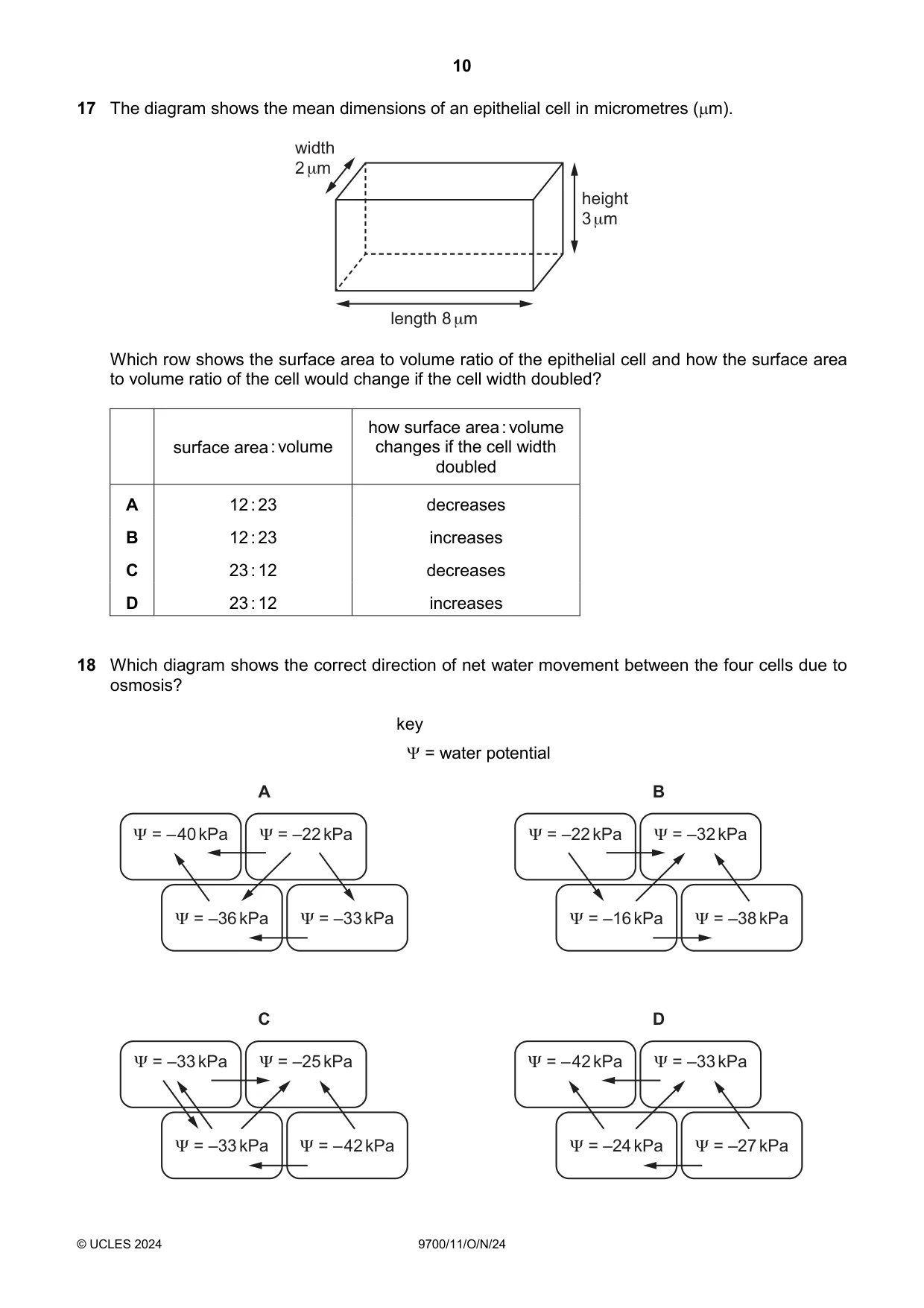
Q17 · The diagram shows the mean dimensions of an epithelial cell in micrometres (m)
17 The diagram shows the mean dimensions of an epithelial cell in micrometres (m). width 2 μm height 3 μm length 8 μm Which row shows the surface area to volume ratio of the epithelial cell and how the surface area to volume ratio of the cell would change if the cell width doubled? how surface area : volume surface area : volume changes if the cell width doubled A 12 : 23 decreases B 12 : 23 increases C 23 : 12 decreases D 23 : 12 increases
Mark scheme: C
More questions on Cells as the basic units of living organisms
Q18 · Which diagram shows the correct direction of net water movement between the four cells…
18 Which diagram shows the correct direction of net water movement between the four cells due to osmosis? key = water potential A B Ψ = – 40 kPa Ψ = –22 kPa Ψ = –22 kPa Ψ = –32 kPa Ψ = –36 kPa Ψ = –33 kPa Ψ = –16 kPa Ψ = –38 kPa C D Ψ = –33 kPa Ψ = –25 kPa Ψ = – 42 kPa Ψ = –33 kPa Ψ = –33 kPa Ψ = – 42 kPa Ψ = –24 kPa Ψ = –27 kPa
Mark scheme: A
Q19 · An investigation was carried out into the effect of four different treatments on the…
19 An investigation was carried out into the effect of four different treatments on the permeability of the cell surface membranes and tonoplasts of beetroot cells. Beetroot cell vacuoles contain a red pigment. This pigment cannot diffuse through the tonoplasts or cell surface membranes. 1 cm3 cubes were cut from beetroot tissue and washed in running water for 20 minutes to remove any pigment released from damaged cells. Two cubes were then placed in each of the four test-tubes containing different contents and observed for five minutes. Which row shows a correct explanation for the observation recorded for one of the treatments? treatment observation explanation A dilute contents of membrane proteins hydrochloric acid test-tube stay clear have been denatured B ethanol contents of lipids, including membrane test-tube turn red phospholipids, have dissolved C water at 20 C contents of membrane proteins test-tube stay clear have been denatured D water at 80 C contents of lipids, including membrane test-tube turn red phospholipids, have dissolved
Mark scheme: B
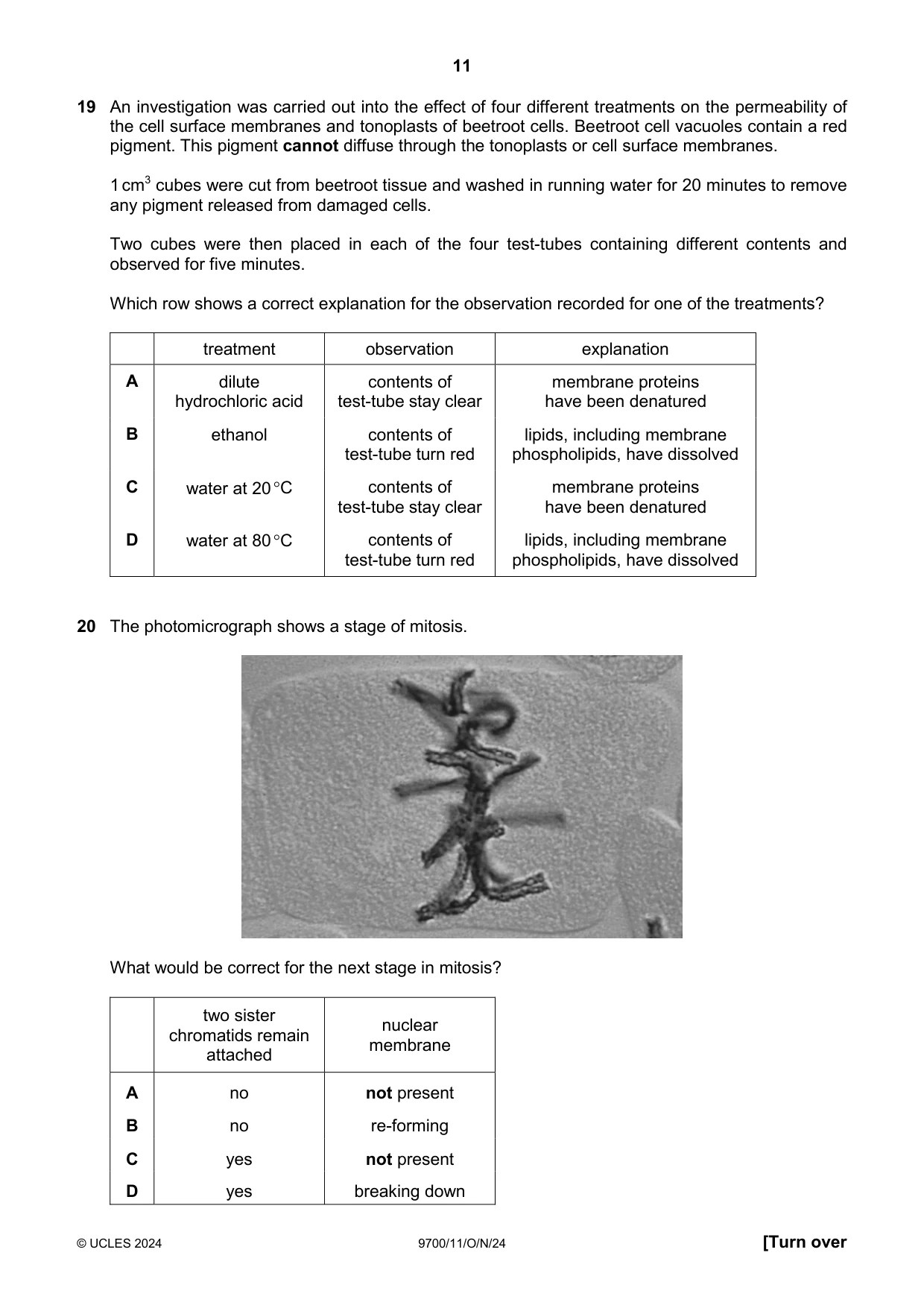
Q20 · The photomicrograph shows a stage of mitosis
20 The photomicrograph shows a stage of mitosis. What would be correct for the next stage in mitosis? two sister nuclear chromatids remain membrane attached A no not present B no re-forming C yes not present D yes breaking down
Mark scheme: A
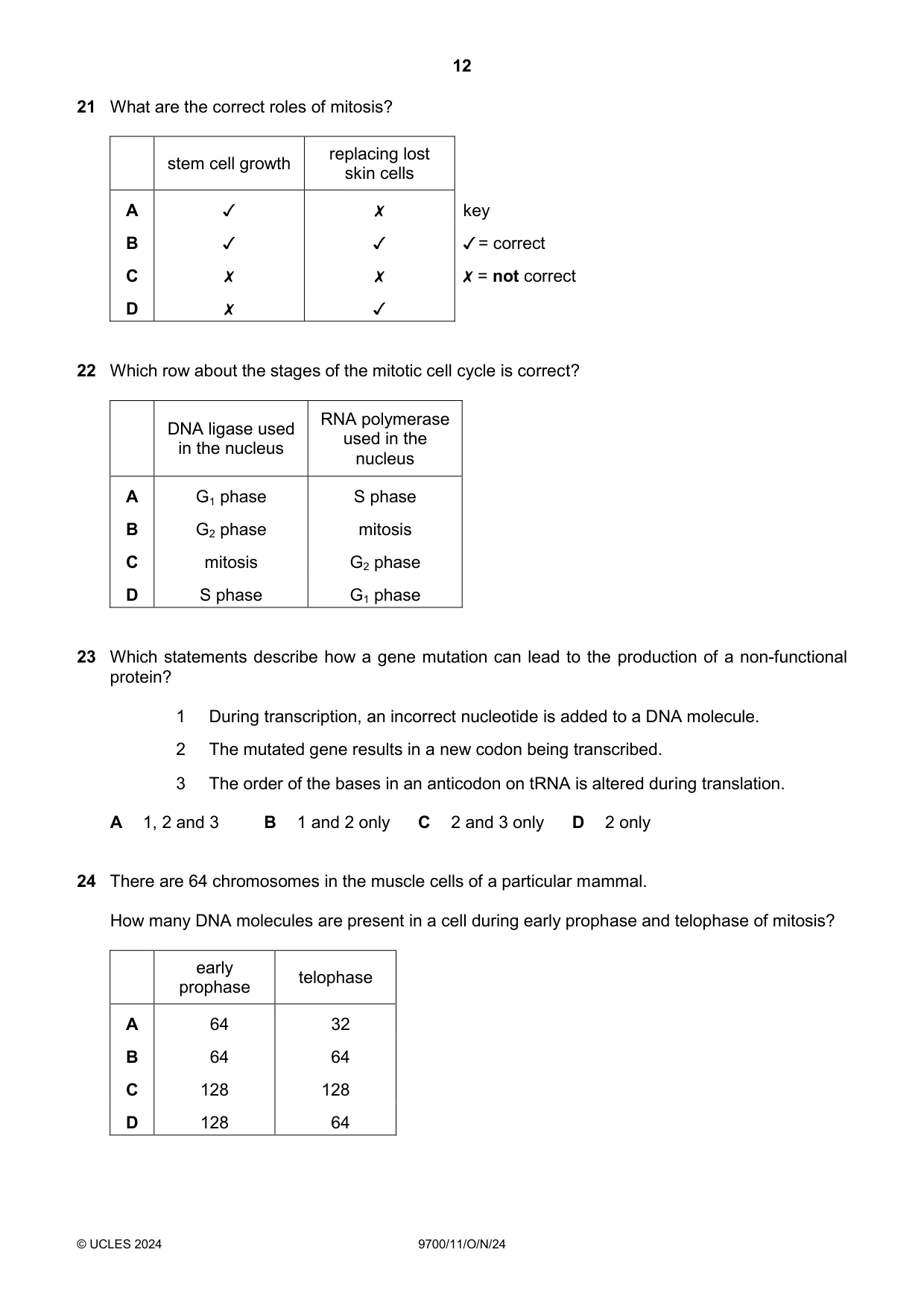
Q21 · What are the correct roles of mitosis?
21 What are the correct roles of mitosis? stem cell growth replacing lost skin cells 00O WwW > x x LOK \ -« \ x& key ¥ = correct X = not correct
Mark scheme: D
More questions on Replication and division of nuclei and cells
Q22 · Which row about the stages of the mitotic cell cycle is correct?
22 Which row about the stages of the mitotic cell cycle is correct? RNA polymerase DNA ligase used used in the in the nucleus nucleus A G1 phase S phase B G2 phase mitosis C mitosis G2 phase D S phase G1 phase
Mark scheme: D
More questions on Replication and division of nuclei and cells
Q23 · Which statements describe how a gene mutation can lead to the production of a…
23 Which statements describe how a gene mutation can lead to the production of a non-functional protein? 1 During transcription, an incorrect nucleotide is added to a DNA molecule. 2 The mutated gene results in a new codon being transcribed. 3 The order of the bases in an anticodon on tRNA is altered during translation. A 1, 2 and 3 B 1 and 2 only C 2 and 3 only D 2 only
Mark scheme: D
Q24 · There are 64 chromosomes in the muscle cells of a particular mammal
24 There are 64 chromosomes in the muscle cells of a particular mammal. How many DNA molecules are present in a cell during early prophase and telophase of mitosis? early telophase prophase A 64 32 B 64 64 C 128 128 D 128 64
Mark scheme: C
Q25 · The diagram shows the nucleotide sequence of a small section of the transcribed strand of…
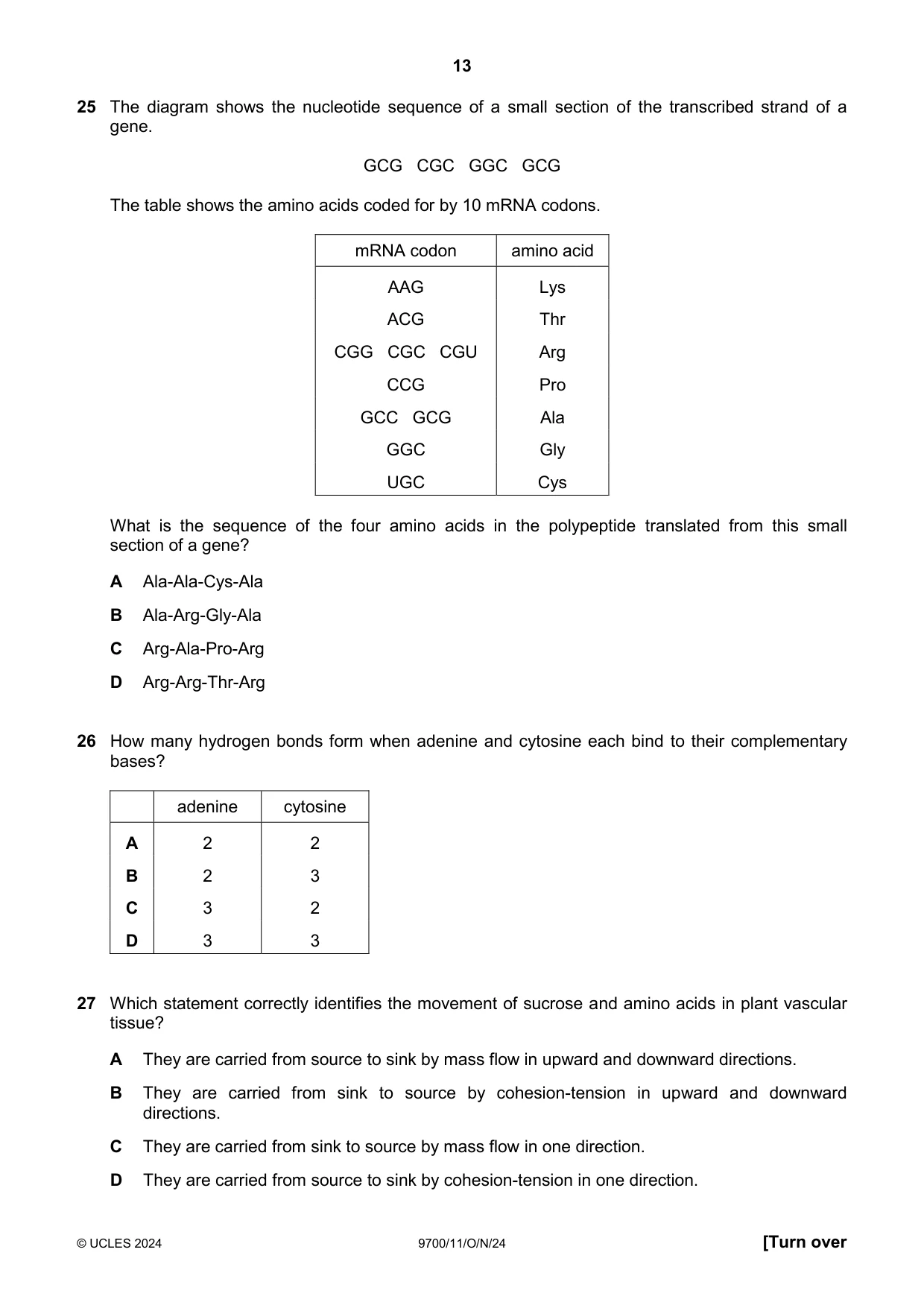
25 The diagram shows the nucleotide sequence of a small section of the transcribed strand of a gene. GCG CGC GGC GCG The table shows the amino acids coded for by 10 mRNA codons. mRNA codon amino acid AAG Lys ACG Thr CGG CGC CGU Arg CCG Pro GCC GCG Ala GGC Gly UGC Cys What is the sequence of the four amino acids in the polypeptide translated from this small section of a gene? A Ala-Ala-Cys-Ala B Ala-Arg-Gly-Ala C Arg-Ala-Pro-Arg D Arg-Arg-Thr-Arg
Mark scheme: C
Q26 · How many hydrogen bonds form when adenine and cytosine each bind to their complementary…
26 How many hydrogen bonds form when adenine and cytosine each bind to their complementary bases? adenine cytosine A 2 2 B 2 3 C 3 2 D 3 3
Mark scheme: B
More questions on Structure of nucleic acids and replication of DNA
Q27 · Which statement correctly identifies the movement of sucrose and amino acids in plant…
27 Which statement correctly identifies the movement of sucrose and amino acids in plant vascular tissue? A They are carried from source to sink by mass flow in upward and downward directions. B They are carried from sink to source by cohesion-tension in upward and downward directions. C They are carried from sink to source by mass flow in one direction. D They are carried from source to sink by cohesion-tension in one direction.
Mark scheme: A
Q28 · Xylem vessel elements are specialised cells that are adapted for the transport of water
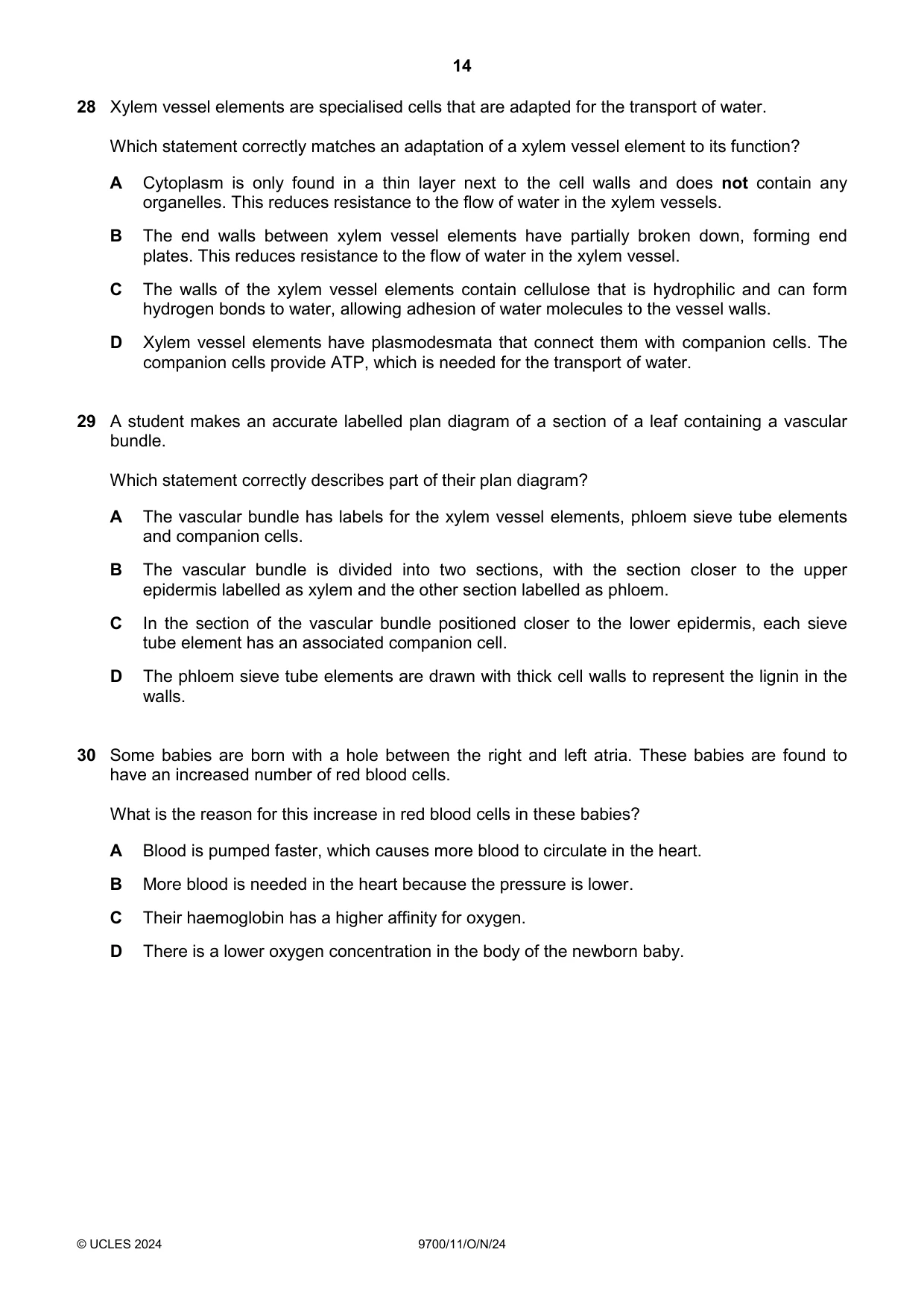
28 Xylem vessel elements are specialised cells that are adapted for the transport of water. Which statement correctly matches an adaptation of a xylem vessel element to its function? A Cytoplasm is only found in a thin layer next to the cell walls and does not contain any organelles. This reduces resistance to the flow of water in the xylem vessels. B The end walls between xylem vessel elements have partially broken down, forming end plates. This reduces resistance to the flow of water in the xylem vessel. C The walls of the xylem vessel elements contain cellulose that is hydrophilic and can form hydrogen bonds to water, allowing adhesion of water molecules to the vessel walls. D Xylem vessel elements have plasmodesmata that connect them with companion cells. The companion cells provide ATP, which is needed for the transport of water.
Mark scheme: C
Q29 · A student makes an accurate labelled plan diagram of a section of a leaf containing a…
29 A student makes an accurate labelled plan diagram of a section of a leaf containing a vascular bundle. Which statement correctly describes part of their plan diagram? A The vascular bundle has labels for the xylem vessel elements, phloem sieve tube elements and companion cells. B The vascular bundle is divided into two sections, with the section closer to the upper epidermis labelled as xylem and the other section labelled as phloem. C In the section of the vascular bundle positioned closer to the lower epidermis, each sieve tube element has an associated companion cell. D The phloem sieve tube elements are drawn with thick cell walls to represent the lignin in the walls.
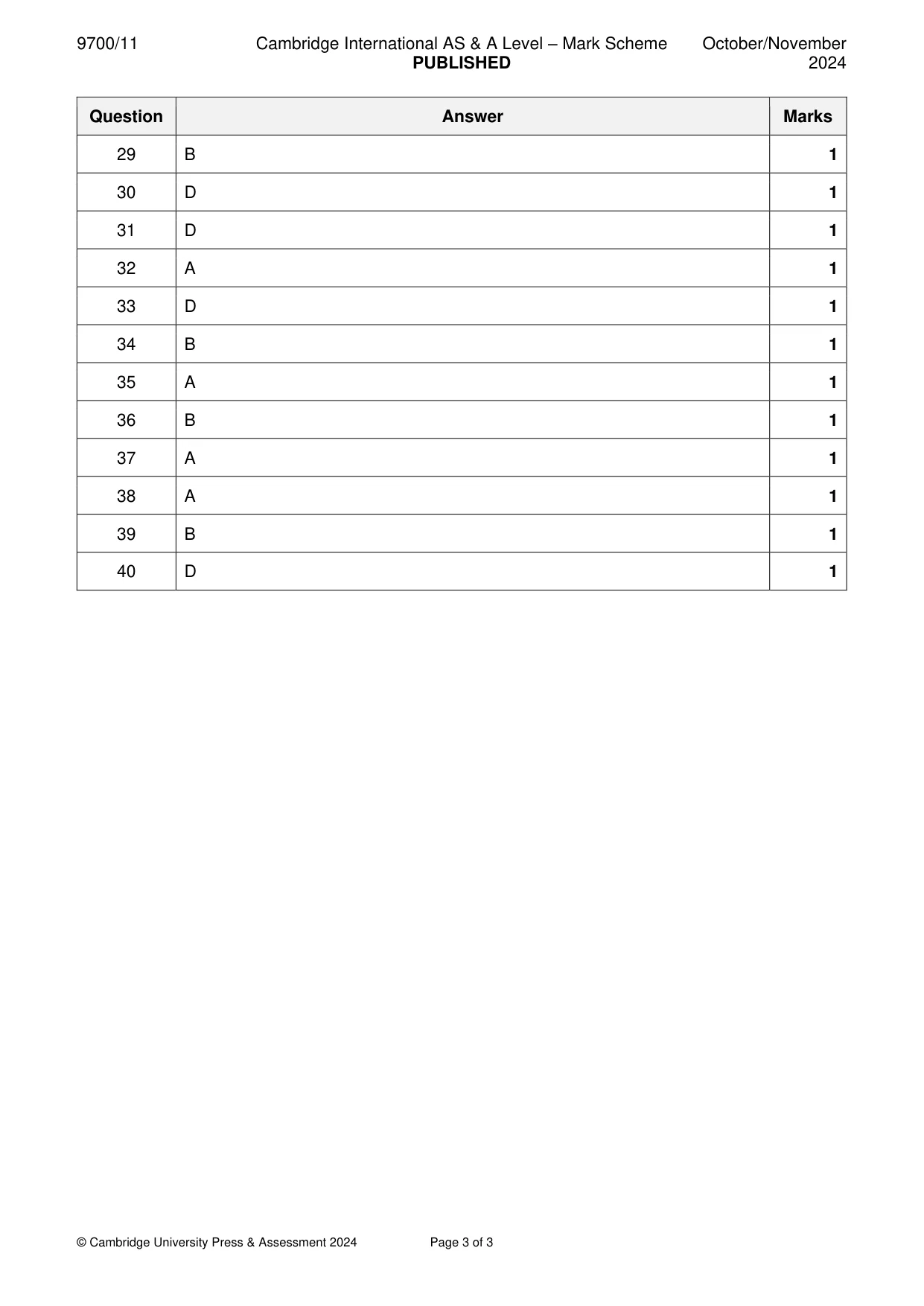
Mark scheme: B
Q30 · Some babies are born with a hole between the right and left atria
30 Some babies are born with a hole between the right and left atria. These babies are found to have an increased number of red blood cells. What is the reason for this increase in red blood cells in these babies? A Blood is pumped faster, which causes more blood to circulate in the heart. B More blood is needed in the heart because the pressure is lower. C Their haemoglobin has a higher affinity for oxygen. D There is a lower oxygen concentration in the body of the newborn baby.
Mark scheme: D
Q31 · An increase in carbon dioxide in human blood shifts the oxyhaemoglobin dissociation curve…
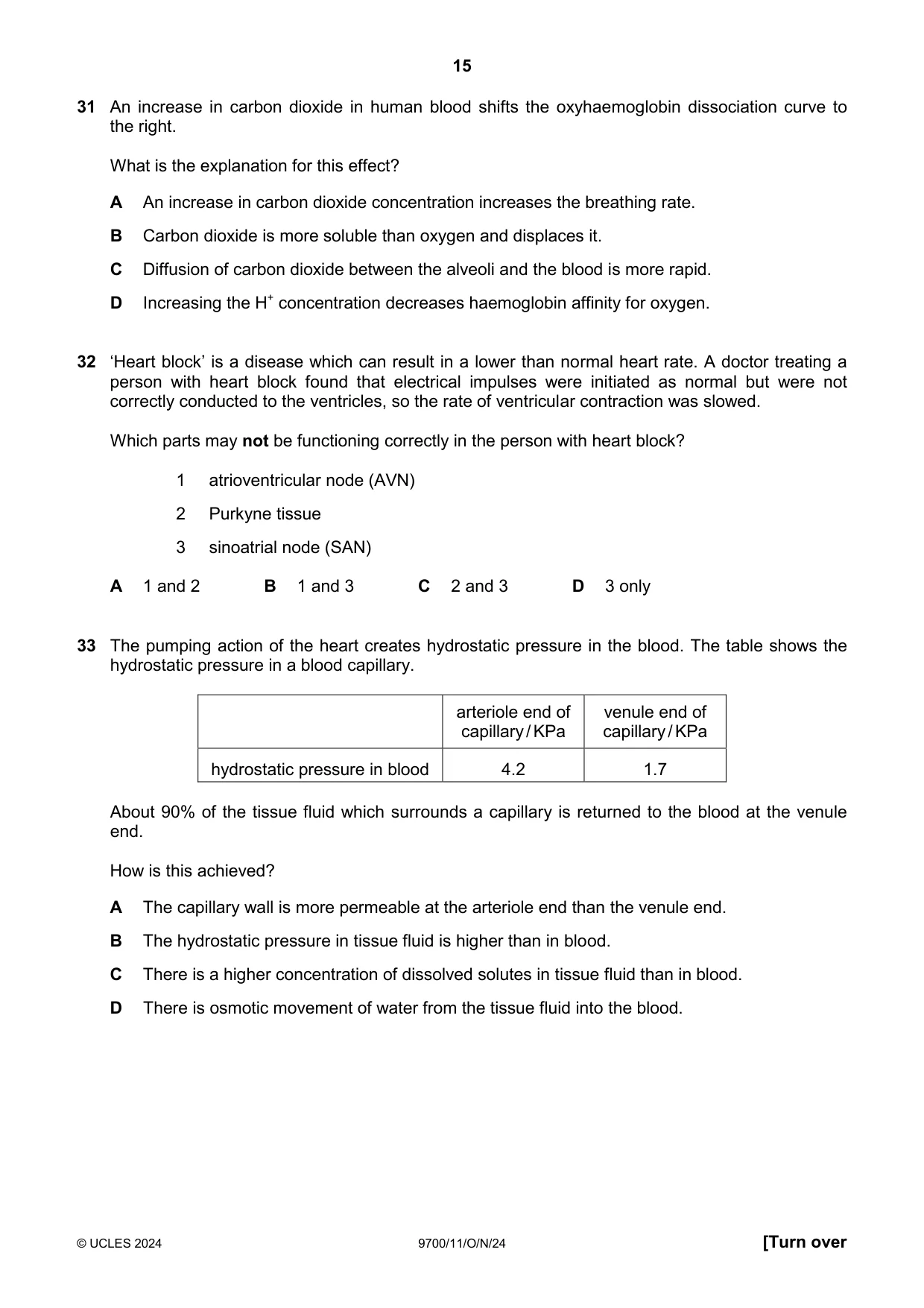
31 An increase in carbon dioxide in human blood shifts the oxyhaemoglobin dissociation curve to the right. What is the explanation for this effect? A An increase in carbon dioxide concentration increases the breathing rate. B Carbon dioxide is more soluble than oxygen and displaces it. C Diffusion of carbon dioxide between the alveoli and the blood is more rapid. D Increasing the H+ concentration decreases haemoglobin affinity for oxygen.
Mark scheme: D
Q32 · ‘Heart block’ is a disease which can result in a lower than normal heart rate
32 ‘Heart block’ is a disease which can result in a lower than normal heart rate. A doctor treating a person with heart block found that electrical impulses were initiated as normal but were not correctly conducted to the ventricles, so the rate of ventricular contraction was slowed. Which parts may not be functioning correctly in the person with heart block? 1 atrioventricular node (AVN) 2 Purkyne tissue 3 sinoatrial node (SAN) A 1 and 2 B 1 and 3 C 2 and 3 D 3 only
Mark scheme: A
Q33 · The pumping action of the heart creates hydrostatic pressure in the blood
33 The pumping action of the heart creates hydrostatic pressure in the blood. The table shows the hydrostatic pressure in a blood capillary. arteriole end of venule end of capillary / KPa capillary / KPa hydrostatic pressure in blood 4.2 1.7 About 90% of the tissue fluid which surrounds a capillary is returned to the blood at the venule end. How is this achieved? A The capillary wall is more permeable at the arteriole end than the venule end. B The hydrostatic pressure in tissue fluid is higher than in blood. C There is a higher concentration of dissolved solutes in tissue fluid than in blood. D There is osmotic movement of water from the tissue fluid into the blood.
Mark scheme: D
Q34 · What is the function of cilia in the gas exchange system?
34 What is the function of cilia in the gas exchange system? A to increase the surface area B to move mucus C to produce mucus D to trap dust and pathogens
Mark scheme: B
Q35 · Which tissues are present in the walls of a trachea and an alveolus?
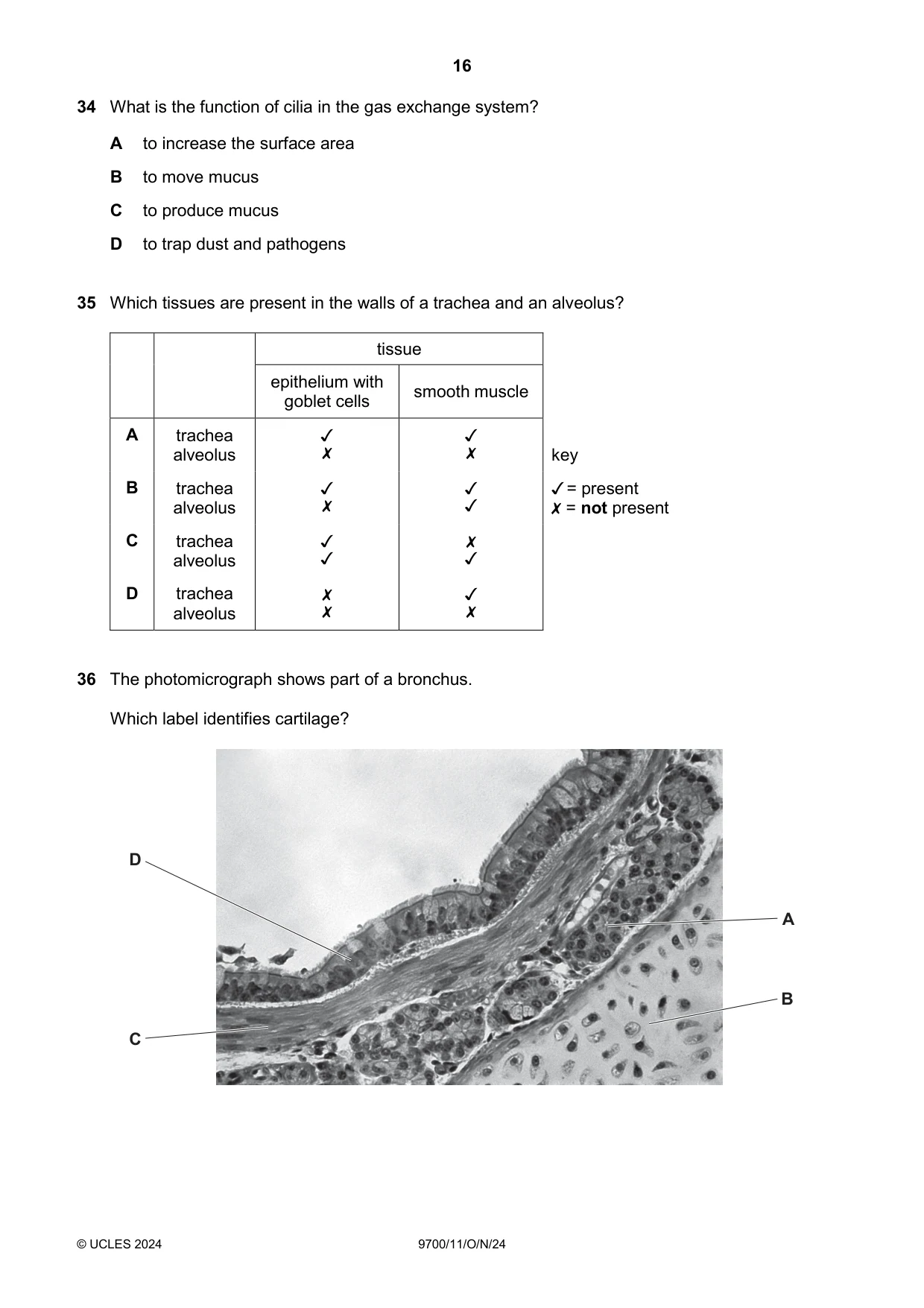
35 Which tissues are present in the walls of a trachea and an alveolus? tissue epithelium with smooth muscle goblet cells A trachea v J alveolus x x key B trachea v v / = present alveolus x v X = not present Cc trachea v x alveolus v v D trachea x v alveolus x x
Mark scheme: A
Q36 · The photomicrograph shows part of a bronchus
36 The photomicrograph shows part of a bronchus. Which label identifies cartilage? D A B C
Mark scheme: B
Q37 · Which structures or compounds are present in a typical cell that can be killed by…
37 Which structures or compounds are present in a typical cell that can be killed by penicillin? 1 circular DNA 2 cytoplasmic DNA 3 70S ribosomes 4 peptidoglycan A 1, 2, 3 and 4 B 1, 2 and 4 only C 1 and 2 only D 4 only
Mark scheme: A
Q38 · Three statements about cholera and its transmission are listed
38 Three statements about cholera and its transmission are listed. 1 The pathogen causes watery faeces. 2 Frequent air flight has led to mobile populations. 3 The pathogen is transmitted through water. Which statements are reasons why outbreaks of cholera are likely to occur? A 1, 2 and 3 B 1 and 2 only C 1 and 3 only D 2 and 3 only
Mark scheme: A
Q39 · What will be produced by the division of memory cells during a secondary immune response?
39 What will be produced by the division of memory cells during a secondary immune response? A macrophages B plasma cells C neutrophils D monocytes
Mark scheme: B
Q40 · A vaccine is used to give immunity to the virus that causes the disease influenza
40 A vaccine is used to give immunity to the virus that causes the disease influenza. A new influenza vaccine is needed every year because the virus mutates regularly. What is the reason for needing a new influenza vaccine every year? A Memory cells become less effective as they age. B The primary immune response does not produce enough antibodies. C The secondary immune response does not produce enough antibodies. D The virus antigens change and are not recognised by the immune system.
Mark scheme: D
What was in this paper
The subtopics covered by these 40 questions, and how many questions each got. Open one in a new tab to see every Cambridge question on it.
4Carbohydrates and lipids3Factors that affect enzyme action3Protein synthesis3The gas exchange system3Chromosome behaviour in mitosis2Fluid mosaic membranes2Replication and division of nuclei and cells2Structure of transport tissues2The microscope in cell studies2Transport of oxygen and carbon dioxide2Antibiotics1Antibodies and vaccination1Infectious diseases1Mode of action of enzymes1Movement into and out of cells1Proteins1Structure of nucleic acids and replication of DNA1Testing for biological molecules1The circulatory system1The heart1The immune system1Transport mechanisms1What you needed in this session
Cambridge’s own grade thresholds for 2024 Oct/Nov, Paper 1 · Variant 1. A higher threshold means an easier paper — the bar moves with how the cohort did.