Cambridge A Level Biology 9700 — 2024 Feb/March Paper 1 · Variant 2
9700/12/F/M/24 · 40 questions · 40 marks · ≈45 min
The question paper and its mark scheme, free to read here and free to download. This is Cambridge’s own paper, exactly as it was sat.
Question paper20 pages
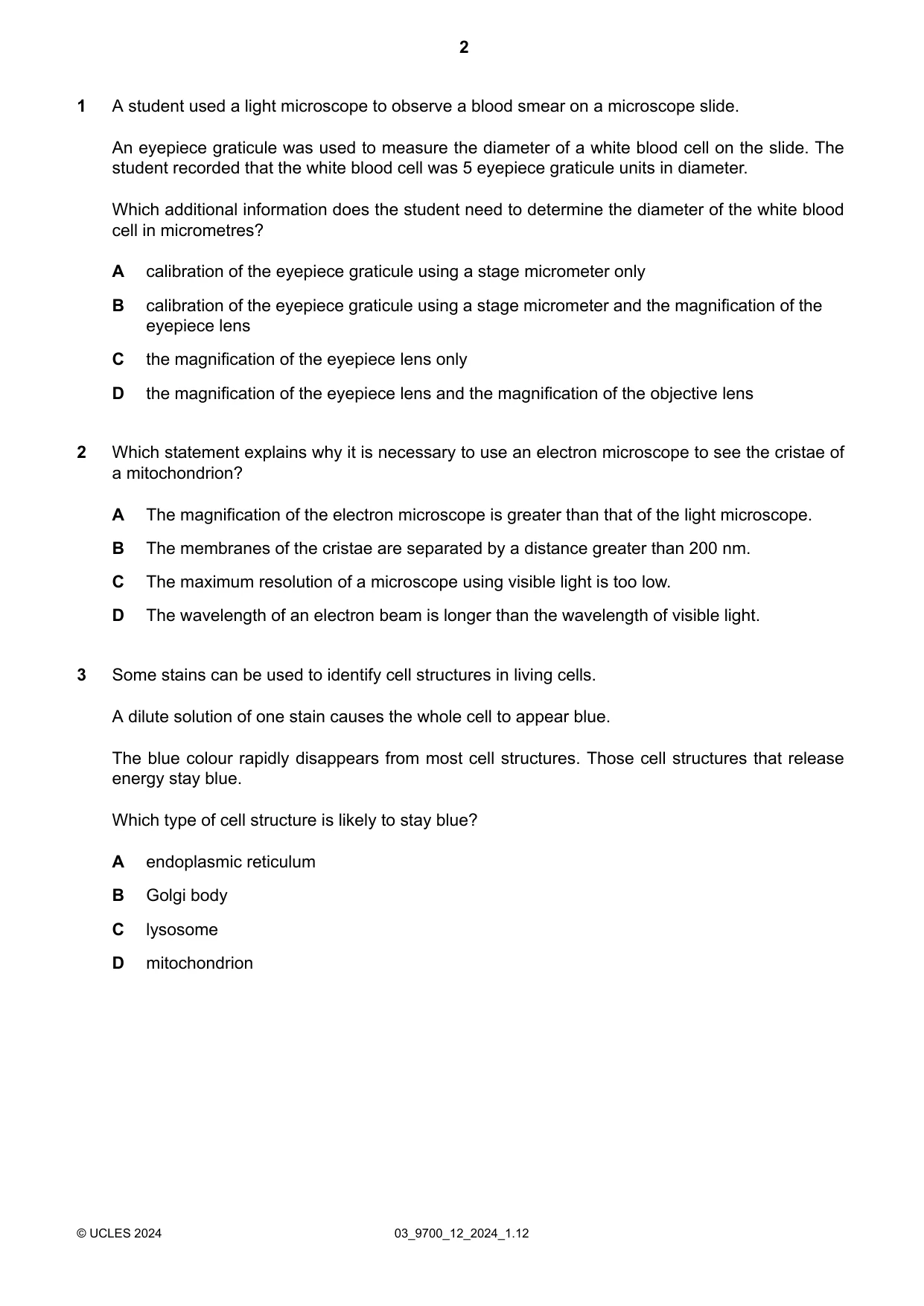
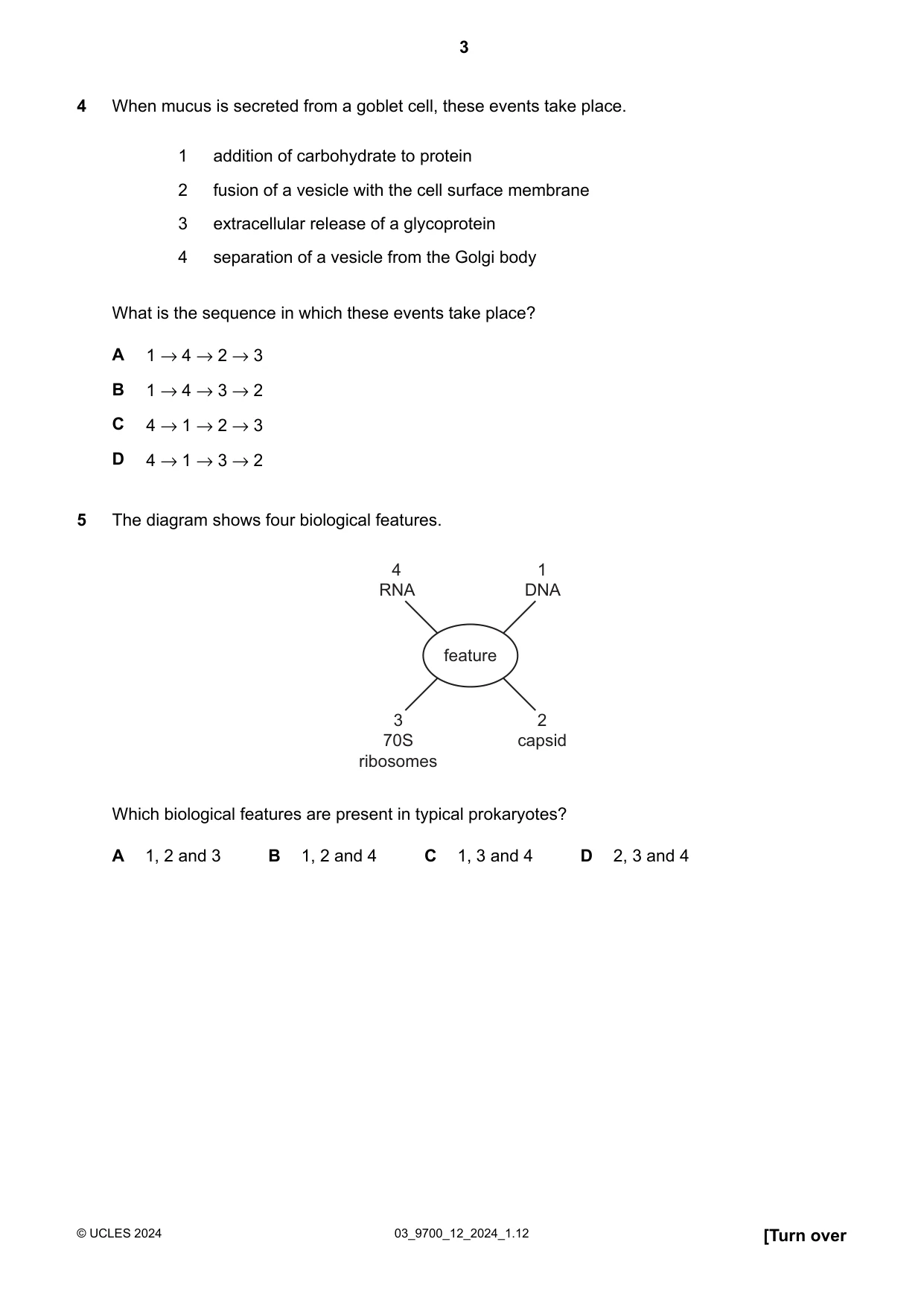
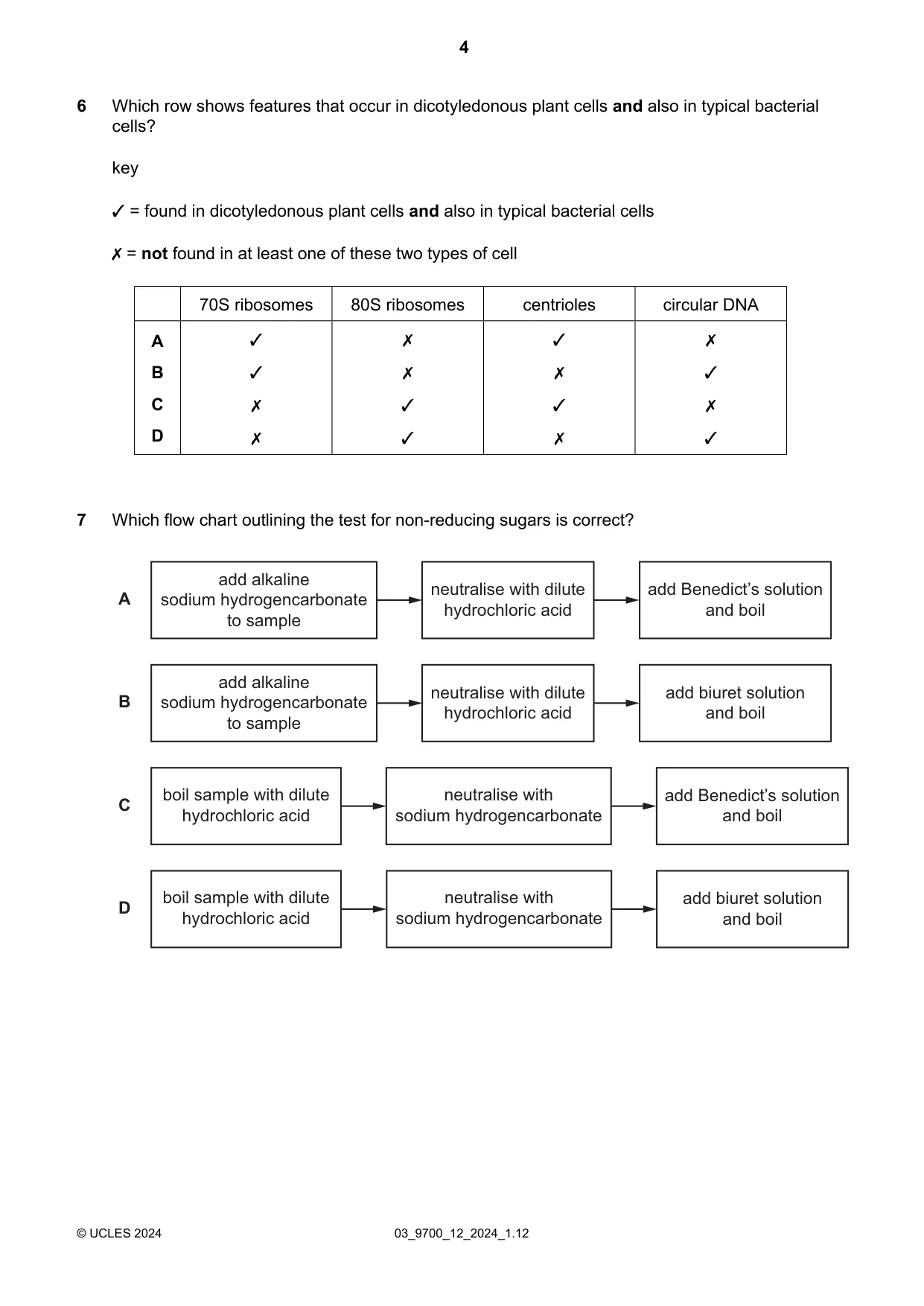
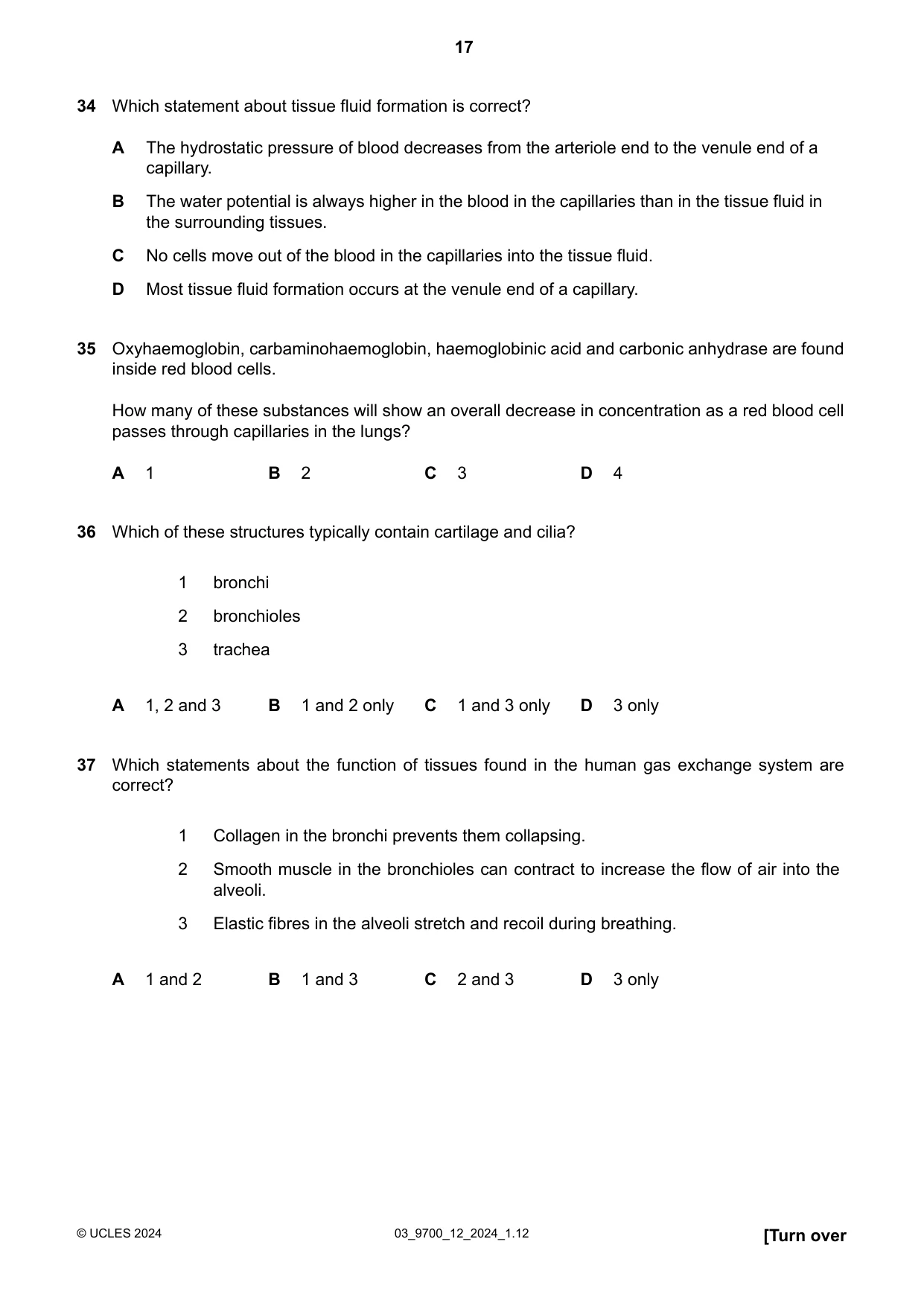
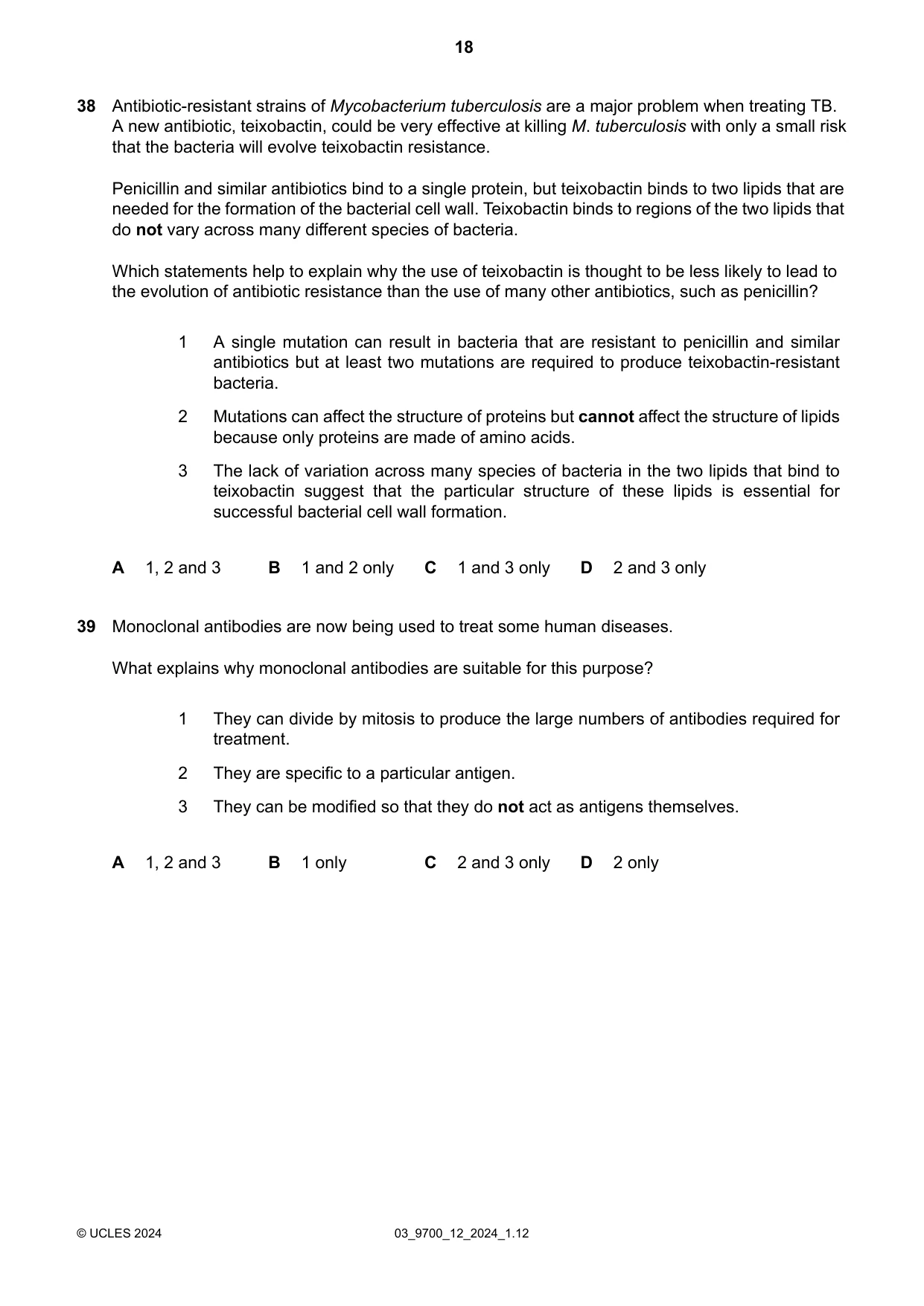
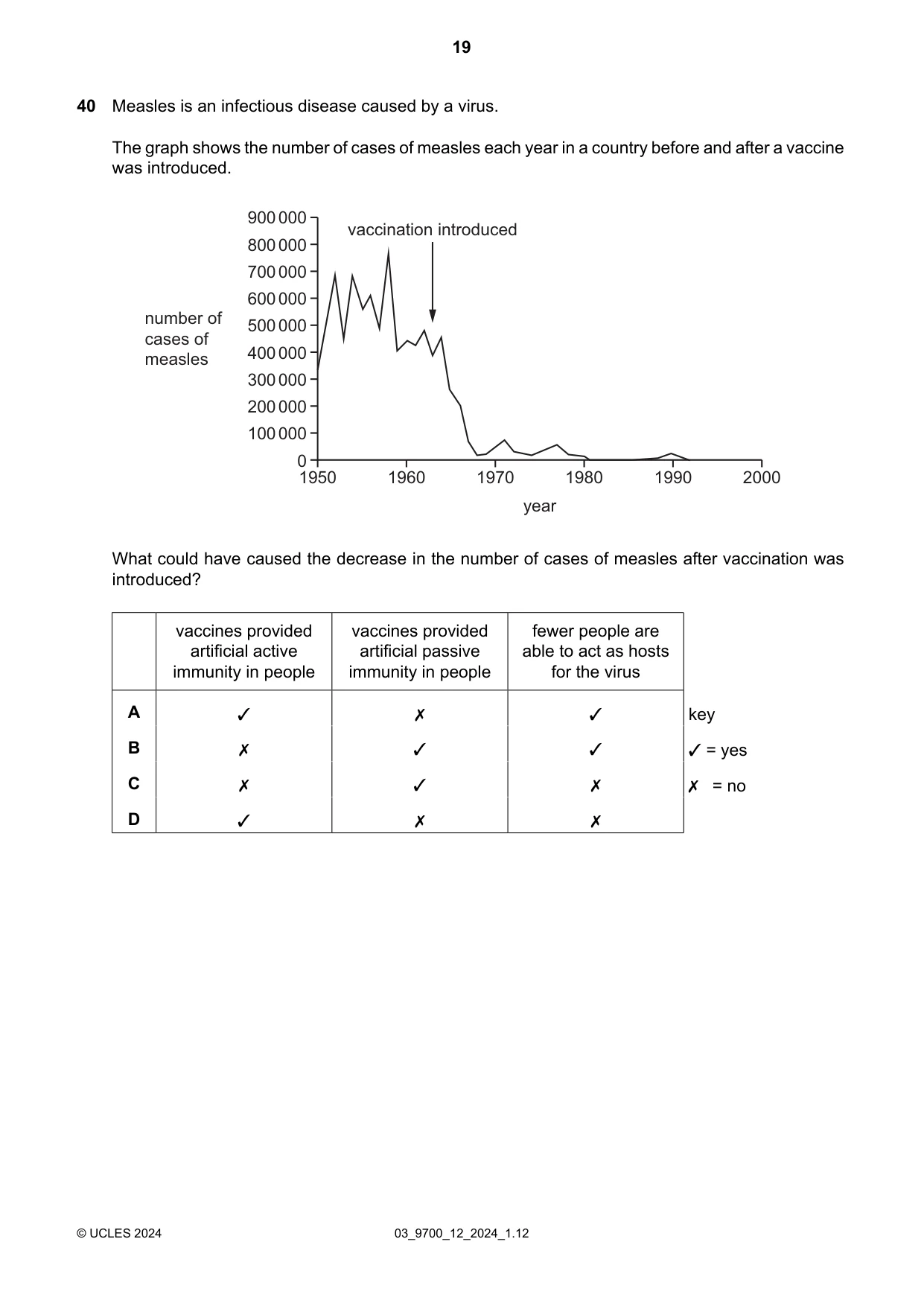

Mark scheme3 pages
Answers below. Sit the paper first if you are practising.
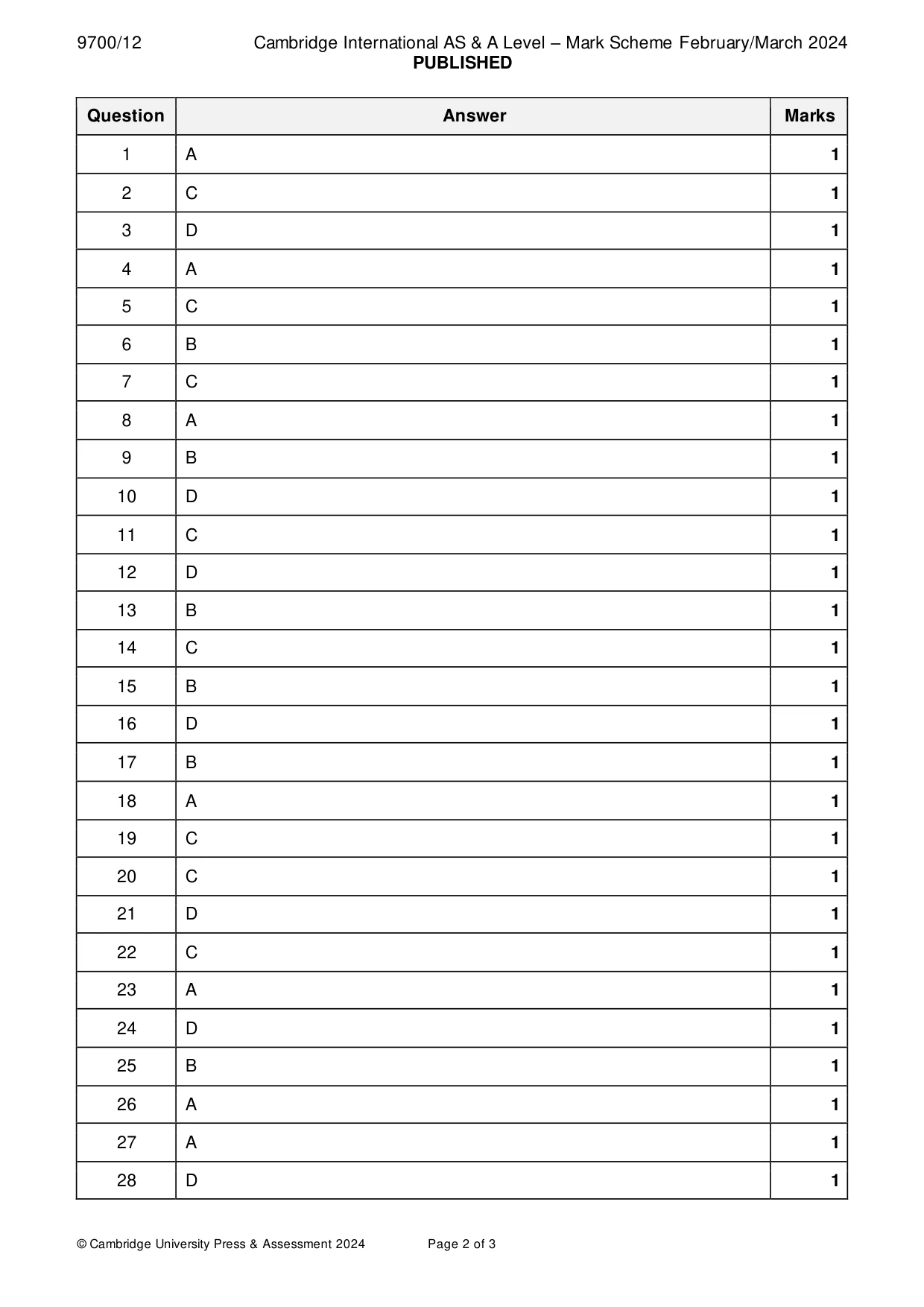
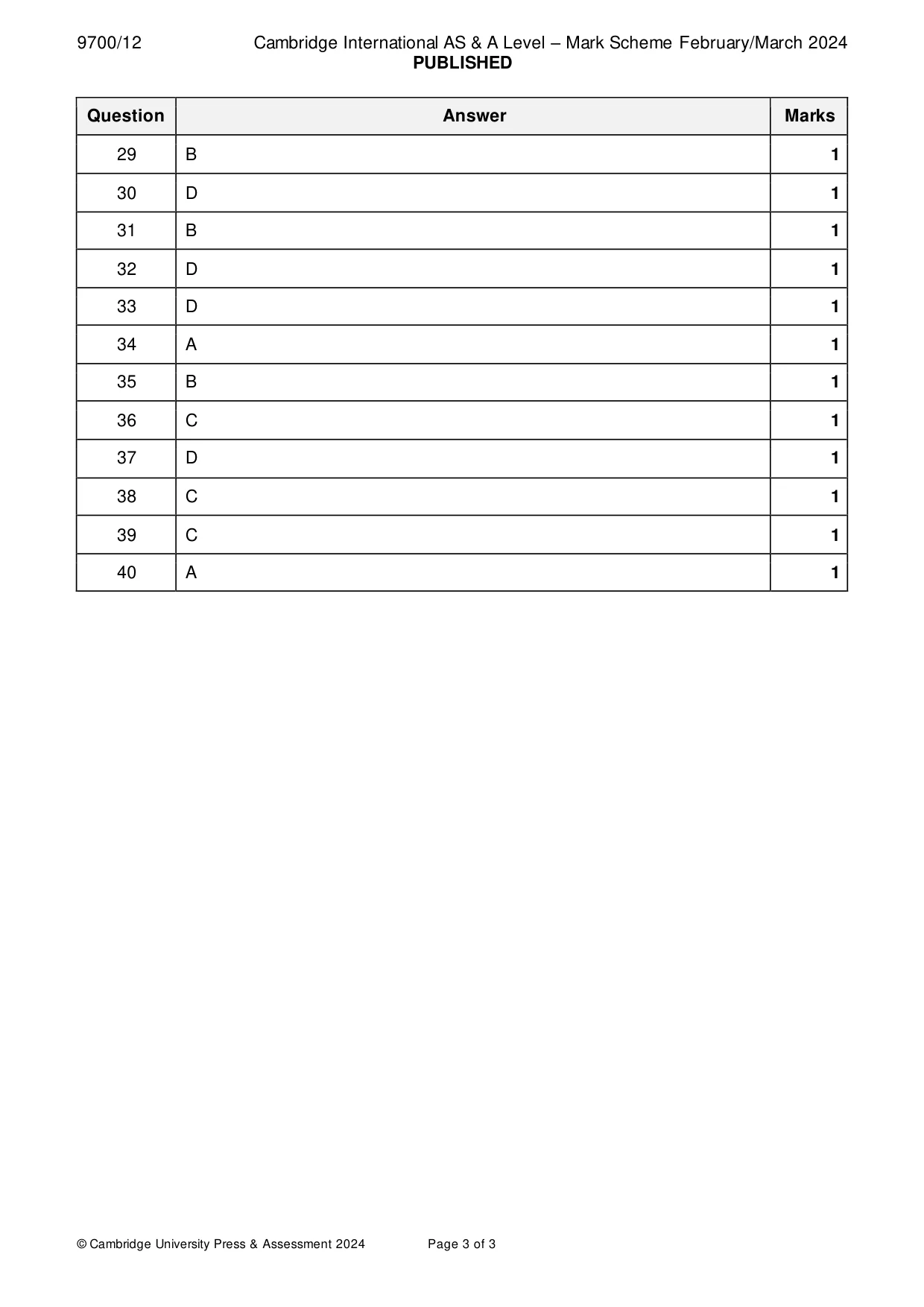
Questions as text
Q1 · A student used a light microscope to observe a blood smear on a microscope slide
1 A student used a light microscope to observe a blood smear on a microscope slide. An eyepiece graticule was used to measure the diameter of a white blood cell on the slide. The student recorded that the white blood cell was 5 eyepiece graticule units in diameter. Which additional information does the student need to determine the diameter of the white blood cell in micrometres? A calibration of the eyepiece graticule using a stage micrometer only B calibration of the eyepiece graticule using a stage micrometer and the magnification of the eyepiece lens C the magnification of the eyepiece lens only D the magnification of the eyepiece lens and the magnification of the objective lens
Mark scheme: A
Q2 · Which statement explains why it is necessary to use an electron microscope to see the…
2 Which statement explains why it is necessary to use an electron microscope to see the cristae of a mitochondrion? A The magnification of the electron microscope is greater than that of the light microscope. B The membranes of the cristae are separated by a distance greater than 200 nm. C The maximum resolution of a microscope using visible light is too low. D The wavelength of an electron beam is longer than the wavelength of visible light.
Mark scheme: C
Q3 · Some stains can be used to identify cell structures in living cells
3 Some stains can be used to identify cell structures in living cells. A dilute solution of one stain causes the whole cell to appear blue. The blue colour rapidly disappears from most cell structures. Those cell structures that release energy stay blue. Which type of cell structure is likely to stay blue? A endoplasmic reticulum B Golgi body C lysosome D mitochondrion
Mark scheme: D
More questions on Cells as the basic units of living organisms
Q4 · When mucus is secreted from a goblet cell, these events take place
4 When mucus is secreted from a goblet cell, these events take place. 1 addition of carbohydrate to protein 2 fusion of a vesicle with the cell surface membrane 3 extracellular release of a glycoprotein 4 separation of a vesicle from the Golgi body What is the sequence in which these events take place? A 1 →4 →2 →3 B 1 →4 →3 →2 C 4 →1 →2 →3 D 4 →1 →3 →2
Mark scheme: A
More questions on Cells as the basic units of living organisms
Q5 · The diagram shows four biological features
5 The diagram shows four biological features. 4 1 RNA DNA feature 3 2 70S capsid ribosomes Which biological features are present in typical prokaryotes? A 1, 2 and 3 B 1, 2 and 4 C 1, 3 and 4 D 2, 3 and 4
Mark scheme: C
More questions on Cells as the basic units of living organisms
Q6 · Which row shows features that occur in dicotyledonous plant cells and also in typical…
6 Which row shows features that occur in dicotyledonous plant cells and also in typical bacterial cells? key ✓= found in dicotyledonous plant cells and also in typical bacterial cells ✗= not found in at least one of these two types of cell 70S ribosomes 80S ribosomes centrioles circular DNA A ✓ ✗ ✓ ✗ B ✓ ✗ ✗ ✓ C ✗ ✓ ✓ ✗ D ✗ ✓ ✗ ✓
Mark scheme: B
More questions on Cells as the basic units of living organisms
Q7 · Which flow chart outlining the test for non-reducing sugars is correct?
7 Which flow chart outlining the test for non-reducing sugars is correct? add alkaline A neutralise with dilute add Benedict’s solution sodium hydrogencarbonate hydrochloric acid and boil to sample add alkaline B neutralise with dilute add biuret solution sodium hydrogencarbonate hydrochloric acid and boil to sample C boil sample with dilute neutralise with add Benedict’s solution hydrochloric acid sodium hydrogencarbonate and boil D boil sample with dilute neutralise with add biuret solution hydrochloric acid sodium hydrogencarbonate and boil
Mark scheme: C
Q8 · Which diagrams show the release of a water molecule during the formation of a glycosidic…
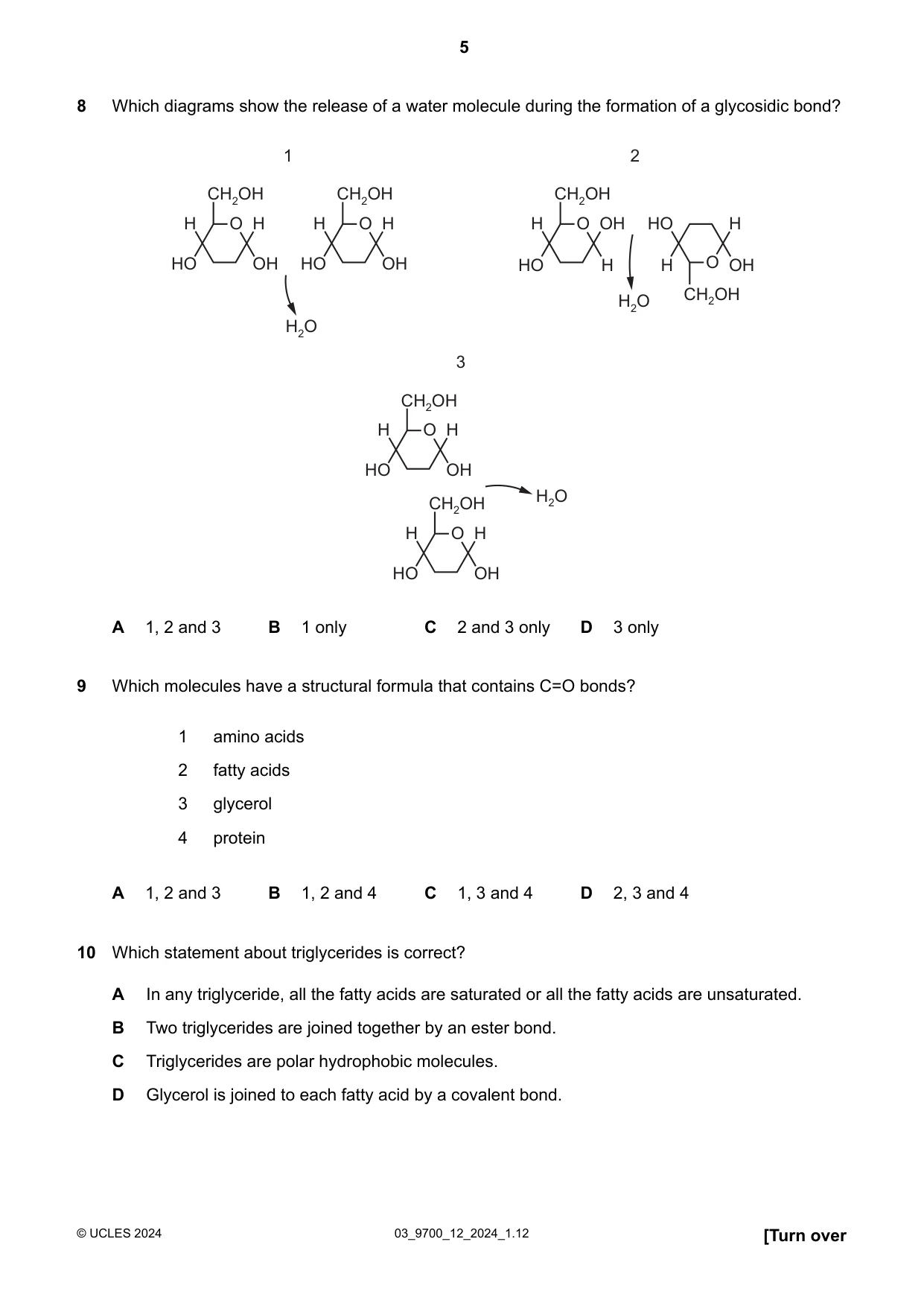
8 Which diagrams show the release of a water molecule during the formation of a glycosidic bond? 1 2 CH2OH CH2OH CH2OH H O H H O H H O OH HO H HO OH HO OH HO H H O OH H2O CH2OH H2O 3 CH2OH H O H HO OH H2O CH2OH H O H HO OH A 1, 2 and 3 B 1 only C 2 and 3 only D 3 only
Mark scheme: A
Q9 · Which molecules have a structural formula that contains C=O bonds?
9 Which molecules have a structural formula that contains C=O bonds? 1 amino acids 2 fatty acids 3 glycerol 4 protein A 1, 2 and 3 B 1, 2 and 4 C 1, 3 and 4 D 2, 3 and 4
Mark scheme: B
Q10 · Which statement about triglycerides is correct?
10 Which statement about triglycerides is correct? A In any triglyceride, all the fatty acids are saturated or all the fatty acids are unsaturated. B Two triglycerides are joined together by an ester bond. C Triglycerides are polar hydrophobic molecules. D Glycerol is joined to each fatty acid by a covalent bond.
Mark scheme: D
Q11 · Many flowers produce a sweet solution called nectar
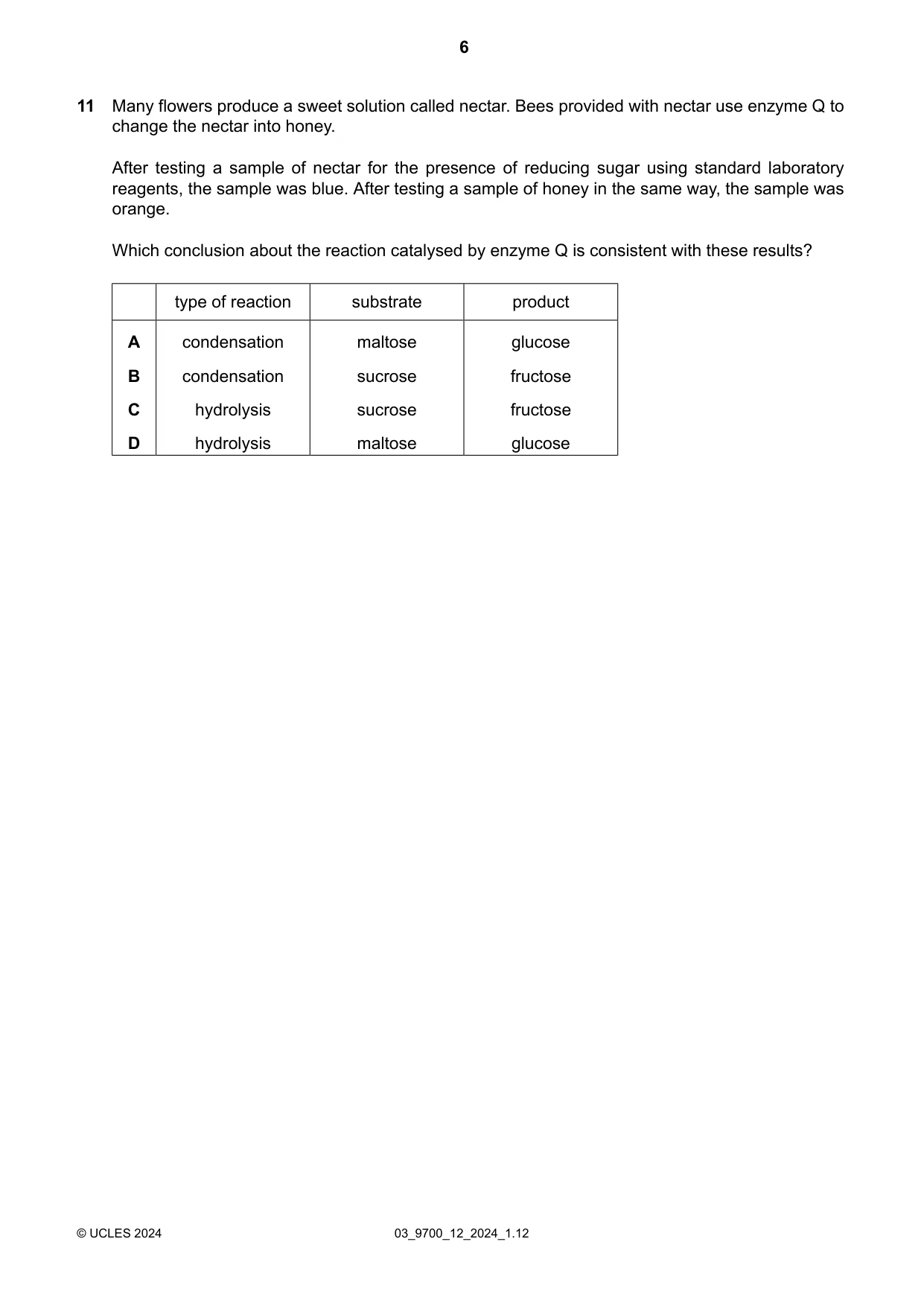
11 Many flowers produce a sweet solution called nectar. Bees provided with nectar use enzyme Q to change the nectar into honey. After testing a sample of nectar for the presence of reducing sugar using standard laboratory reagents, the sample was blue. After testing a sample of honey in the same way, the sample was orange. Which conclusion about the reaction catalysed by enzyme Q is consistent with these results? type of reaction substrate product A condensation maltose glucose B condensation sucrose fructose C hydrolysis sucrose fructose D hydrolysis maltose glucose
Mark scheme: C
Q12 · The diagram shows the structure of part of a peptidoglycan molecule
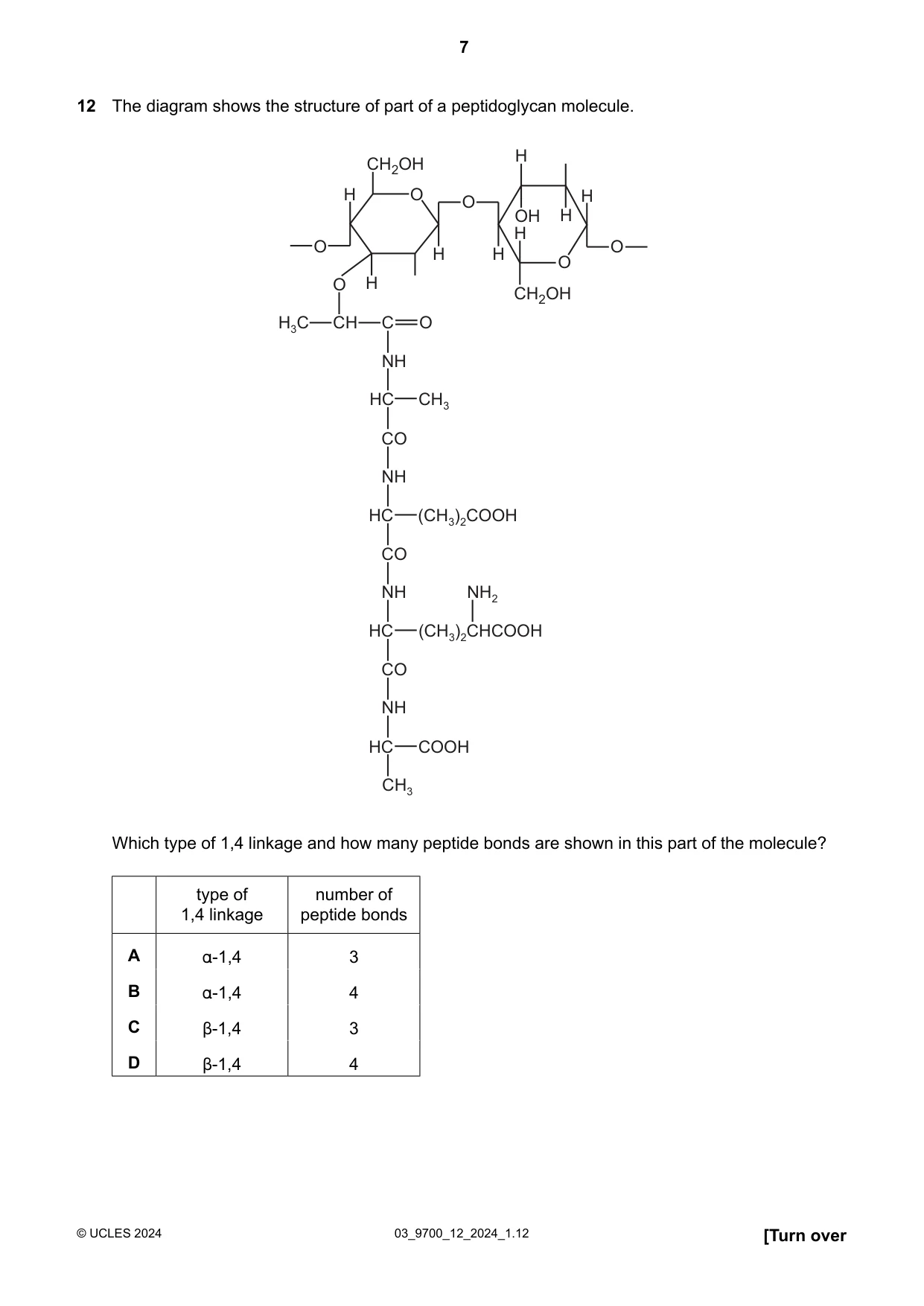
12 The diagram shows the structure of part of a peptidoglycan molecule. H CH2OH H O O H OH H H O H H O O O H CH2OH H3C CH C O NH HC CH3 CO NH HC (CH3)2COOH CO NH NH2 HC (CH3)2CHCOOH CO NH HC COOH CH3 Which type of 1,4 linkage and how many peptide bonds are shown in this part of the molecule? type of number of 1,4 linkage peptide bonds A α-1,4 3 B α-1,4 4 C β-1,4 3 D β-1,4 4
Mark scheme: D
Q13 · A scientist investigated the progress of two enzyme-catalysed reactions in separate…
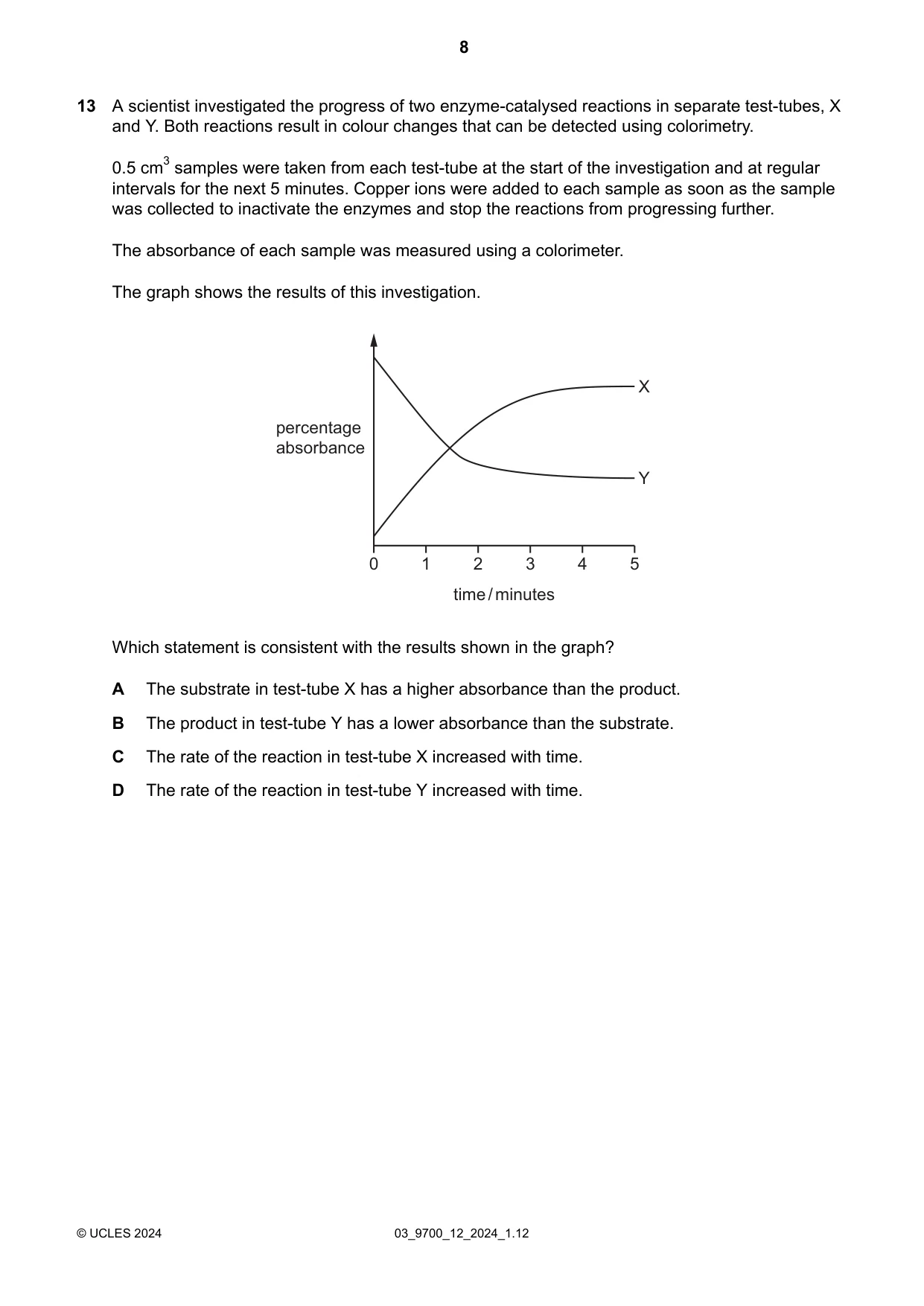
13 A scientist investigated the progress of two enzyme-catalysed reactions in separate test-tubes, X and Y. Both reactions result in colour changes that can be detected using colorimetry. 0.5 cm3 samples were taken from each test-tube at the start of the investigation and at regular intervals for the next 5 minutes. Copper ions were added to each sample as soon as the sample was collected to inactivate the enzymes and stop the reactions from progressing further. The absorbance of each sample was measured using a colorimeter. The graph shows the results of this investigation. X percentage absorbance Y 0 1 2 3 4 5 time / minutes Which statement is consistent with the results shown in the graph? A The substrate in test-tube X has a higher absorbance than the product. B The product in test-tube Y has a lower absorbance than the substrate. C The rate of the reaction in test-tube X increased with time. D The rate of the reaction in test-tube Y increased with time.
Mark scheme: B
Q14 · A student investigated the hydrolysis of lipid in high-fat milk, using the enzyme lipase
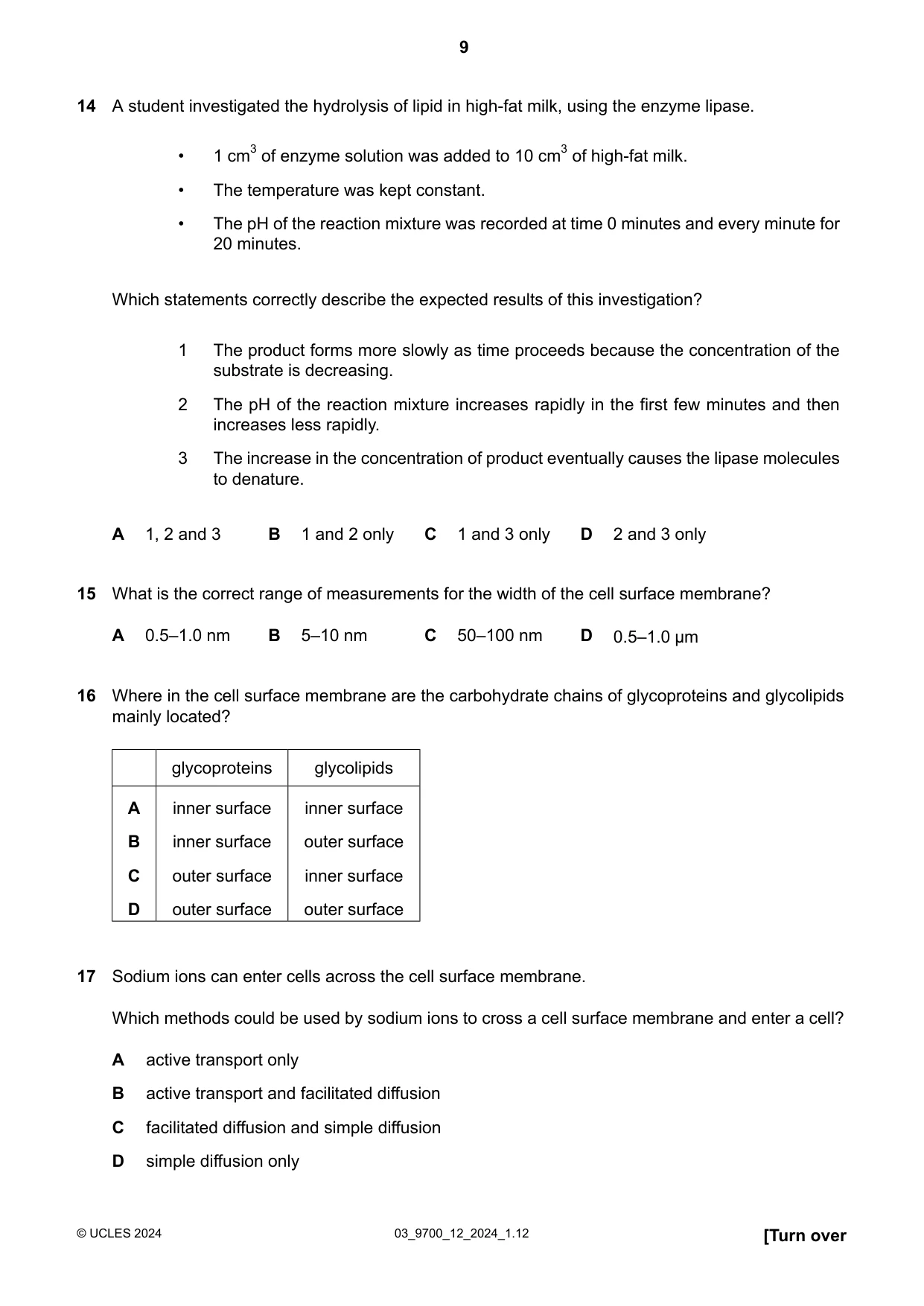
14 A student investigated the hydrolysis of lipid in high-fat milk, using the enzyme lipase. 1 cm3 of enzyme solution was added to 10 cm3 of high-fat milk. • • The temperature was kept constant. • The pH of the reaction mixture was recorded at time 0 minutes and every minute for 20 minutes. Which statements correctly describe the expected results of this investigation? 1 The product forms more slowly as time proceeds because the concentration of the substrate is decreasing. 2 The pH of the reaction mixture increases rapidly in the first few minutes and then increases less rapidly. 3 The increase in the concentration of product eventually causes the lipase molecules to denature. A 1, 2 and 3 B 1 and 2 only C 1 and 3 only D 2 and 3 only
Mark scheme: C
Q15 · What is the correct range of measurements for the width of the cell surface membrane?
15 What is the correct range of measurements for the width of the cell surface membrane? A 0.5–1.0 nm B 5–10 nm C 50–100 nm D 0.5–1.0 μm
Mark scheme: B
Q16 · Where in the cell surface membrane are the carbohydrate chains of glycoproteins and…
16 Where in the cell surface membrane are the carbohydrate chains of glycoproteins and glycolipids mainly located? glycoproteins glycolipids A inner surface inner surface B inner surface outer surface C outer surface inner surface D outer surface outer surface
Mark scheme: D
Q17 · Sodium ions can enter cells across the cell surface membrane
17 Sodium ions can enter cells across the cell surface membrane. Which methods could be used by sodium ions to cross a cell surface membrane and enter a cell? A active transport only B active transport and facilitated diffusion C facilitated diffusion and simple diffusion D simple diffusion only
Mark scheme: B
Q18 · The diagram shows how an artificial partially permeable membrane was used to separate a…
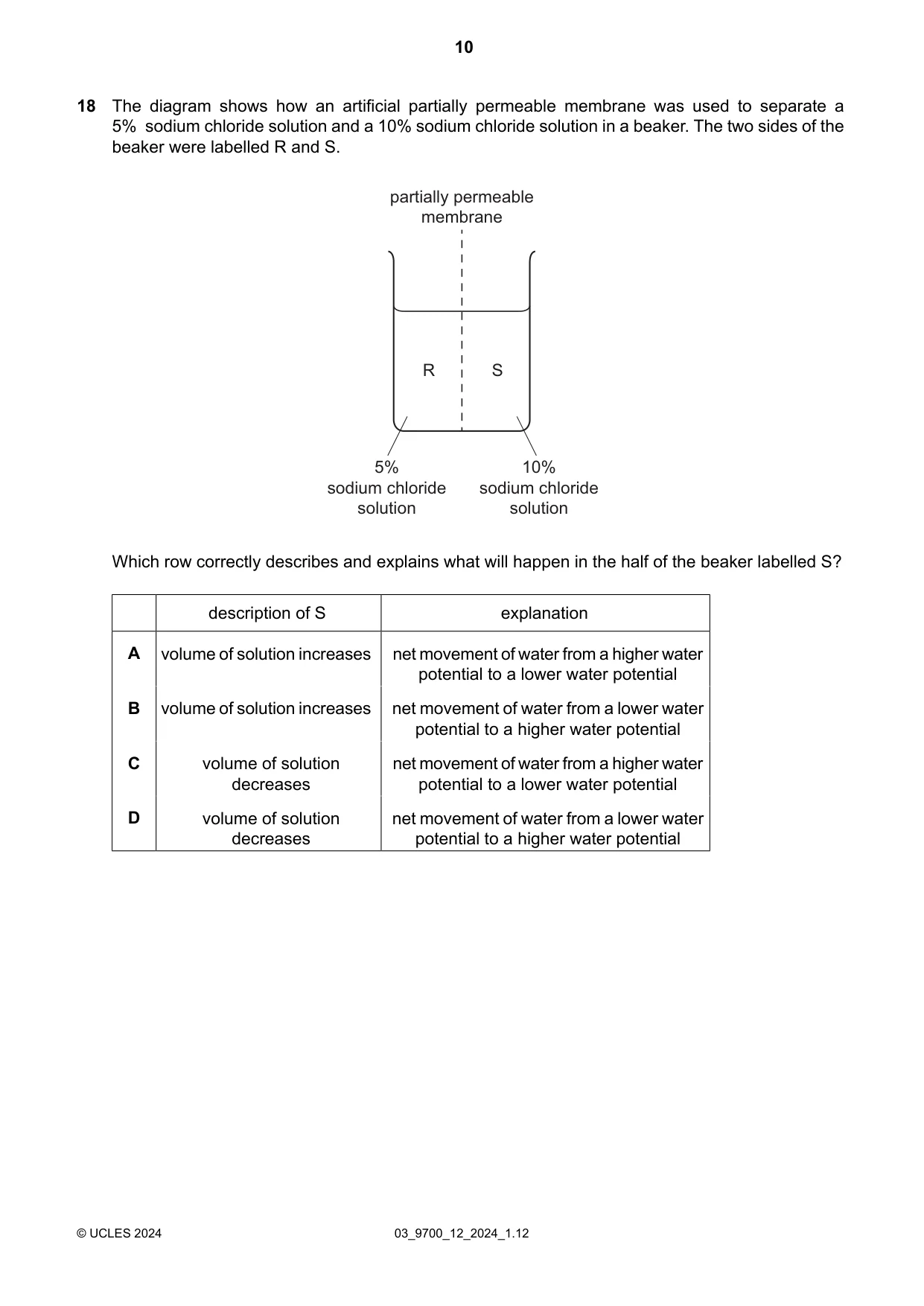
18 The diagram shows how an artificial partially permeable membrane was used to separate a 5% sodium chloride solution and a 10% sodium chloride solution in a beaker. The two sides of the beaker were labelled R and S. partially permeable membrane R S 5% 10% sodium chloride sodium chloride solution solution Which row correctly describes and explains what will happen in the half of the beaker labelled S? description of S explanation A volume of solution increases net movement of water from a higher water potential to a lower water potential B volume of solution increases net movement of water from a lower water potential to a higher water potential C volume of solution net movement of water from a higher water decreases potential to a lower water potential D volume of solution net movement of water from a lower water decreases potential to a higher water potential
Mark scheme: A
Q19 · Agar cubes can be used to demonstrate the effect on diffusion of changing the surface…
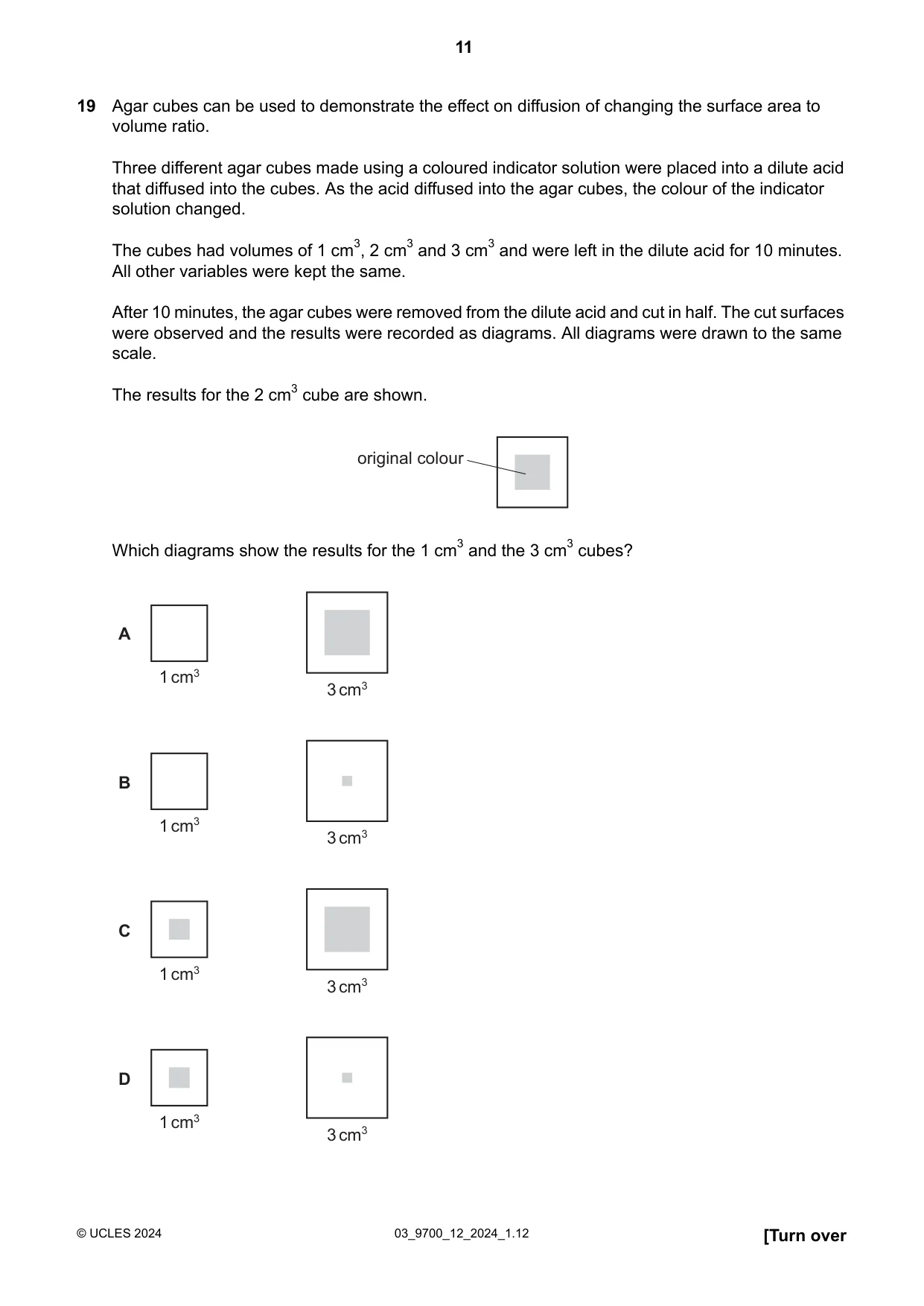
19 Agar cubes can be used to demonstrate the effect on diffusion of changing the surface area to volume ratio. Three different agar cubes made using a coloured indicator solution were placed into a dilute acid that diffused into the cubes. As the acid diffused into the agar cubes, the colour of the indicator solution changed. The cubes had volumes of 1 cm3, 2 cm3 and 3 cm3 and were left in the dilute acid for 10 minutes. All other variables were kept the same. After 10 minutes, the agar cubes were removed from the dilute acid and cut in half. The cut surfaces were observed and the results were recorded as diagrams. All diagrams were drawn to the same scale. The results for the 2 cm3 cube are shown. original colour Which diagrams show the results for the 1 cm3 and the 3 cm3 cubes? A 1 cm3 3 cm3 B 1 cm3 3 cm3 C 1 cm3 3 cm3 D 1 cm3 3 cm3
Mark scheme: C
Q20 · During sperm formation in mammals, part of the structure of each chromosome is replaced…
20 During sperm formation in mammals, part of the structure of each chromosome is replaced with proteins called protamines. This replacement allows the DNA to be packaged much more densely than would otherwise be possible. Which part of the chromosome is replaced by protamines? A centromeres B chromatids C histones D telomeres
Mark scheme: C
Q21 · The diagram shows the mitotic cell cycle
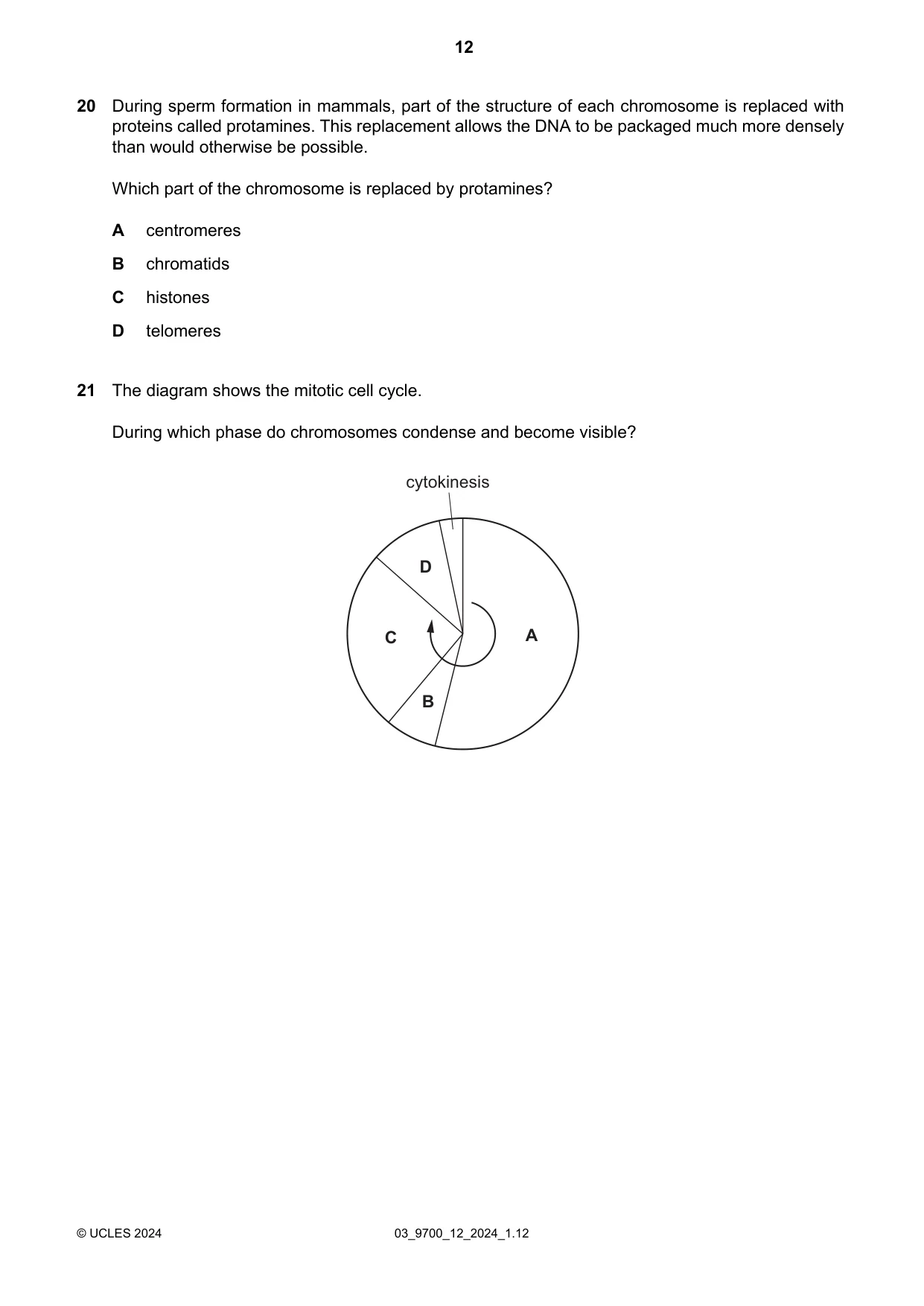
21 The diagram shows the mitotic cell cycle. During which phase do chromosomes condense and become visible? cytokinesis D C A B
Mark scheme: D
Q22 · Which statements correctly describe features of stem cells that are essential for their…
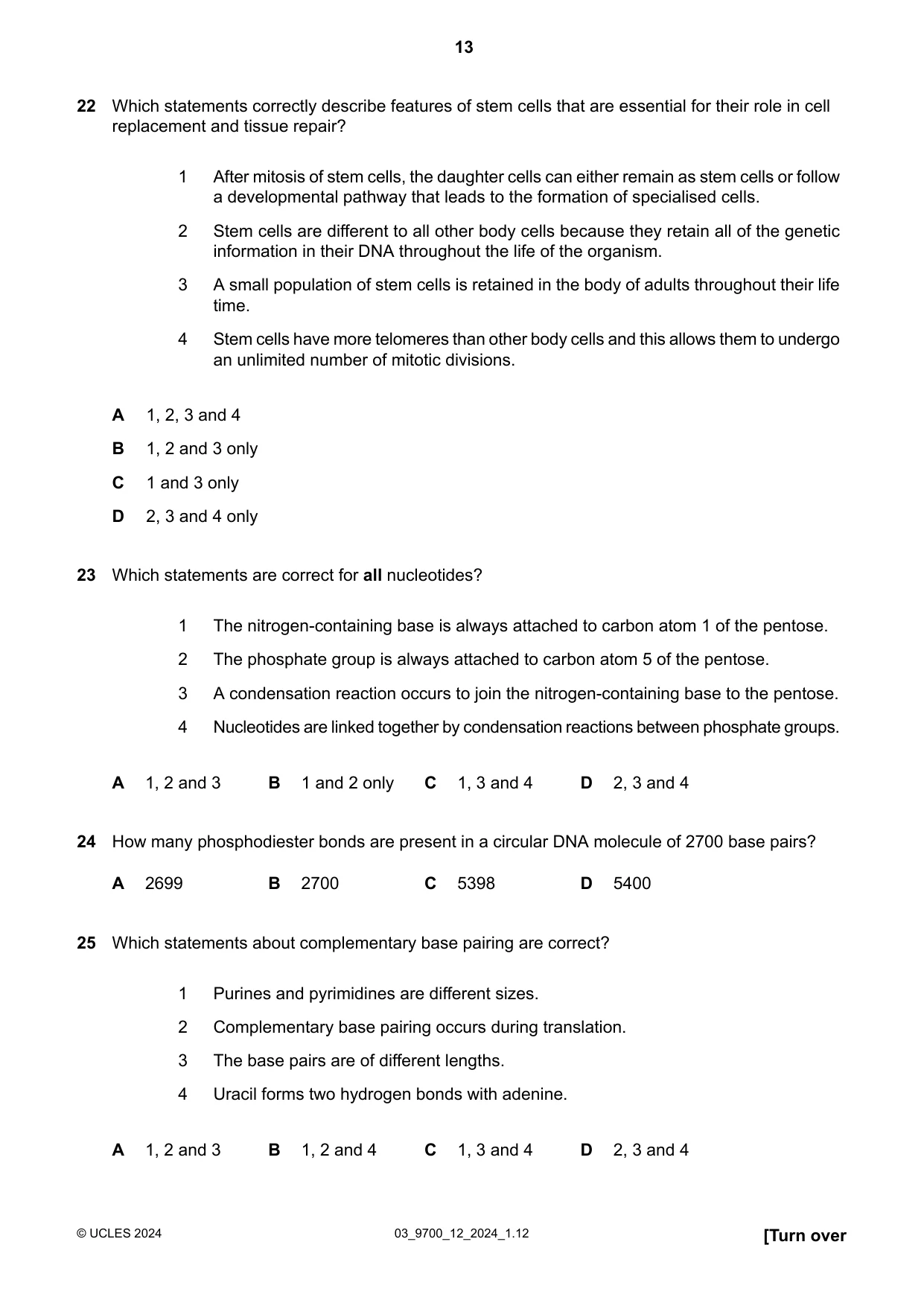
22 Which statements correctly describe features of stem cells that are essential for their role in cell replacement and tissue repair? 1 After mitosis of stem cells, the daughter cells can either remain as stem cells or follow a developmental pathway that leads to the formation of specialised cells. 2 Stem cells are different to all other body cells because they retain all of the genetic information in their DNA throughout the life of the organism. 3 A small population of stem cells is retained in the body of adults throughout their life time. 4 Stem cells have more telomeres than other body cells and this allows them to undergo an unlimited number of mitotic divisions. A 1, 2, 3 and 4 B 1, 2 and 3 only C 1 and 3 only D 2, 3 and 4 only
Mark scheme: C
More questions on Replication and division of nuclei and cells
Q23 · Which statements are correct for all nucleotides?
23 Which statements are correct for all nucleotides? 1 The nitrogen-containing base is always attached to carbon atom 1 of the pentose. 2 The phosphate group is always attached to carbon atom 5 of the pentose. 3 A condensation reaction occurs to join the nitrogen-containing base to the pentose. 4 Nucleotides are linked together by condensation reactions between phosphate groups. A 1, 2 and 3 B 1 and 2 only C 1, 3 and 4 D 2, 3 and 4
Mark scheme: A
More questions on Structure of nucleic acids and replication of DNA
Q24 · How many phosphodiester bonds are present in a circular DNA molecule of 2700 base pairs?
24 How many phosphodiester bonds are present in a circular DNA molecule of 2700 base pairs? A 2699 B 2700 C 5398 D 5400
Mark scheme: D
More questions on Structure of nucleic acids and replication of DNA
Q25 · Which statements about complementary base pairing are correct?
25 Which statements about complementary base pairing are correct? 1 Purines and pyrimidines are different sizes. 2 Complementary base pairing occurs during translation. 3 The base pairs are of different lengths. 4 Uracil forms two hydrogen bonds with adenine. A 1, 2 and 3 B 1, 2 and 4 C 1, 3 and 4 D 2, 3 and 4
Mark scheme: B
More questions on Structure of nucleic acids and replication of DNA
Q26 · During the mitotic cell cycle, the chromosomal DNA is replicated
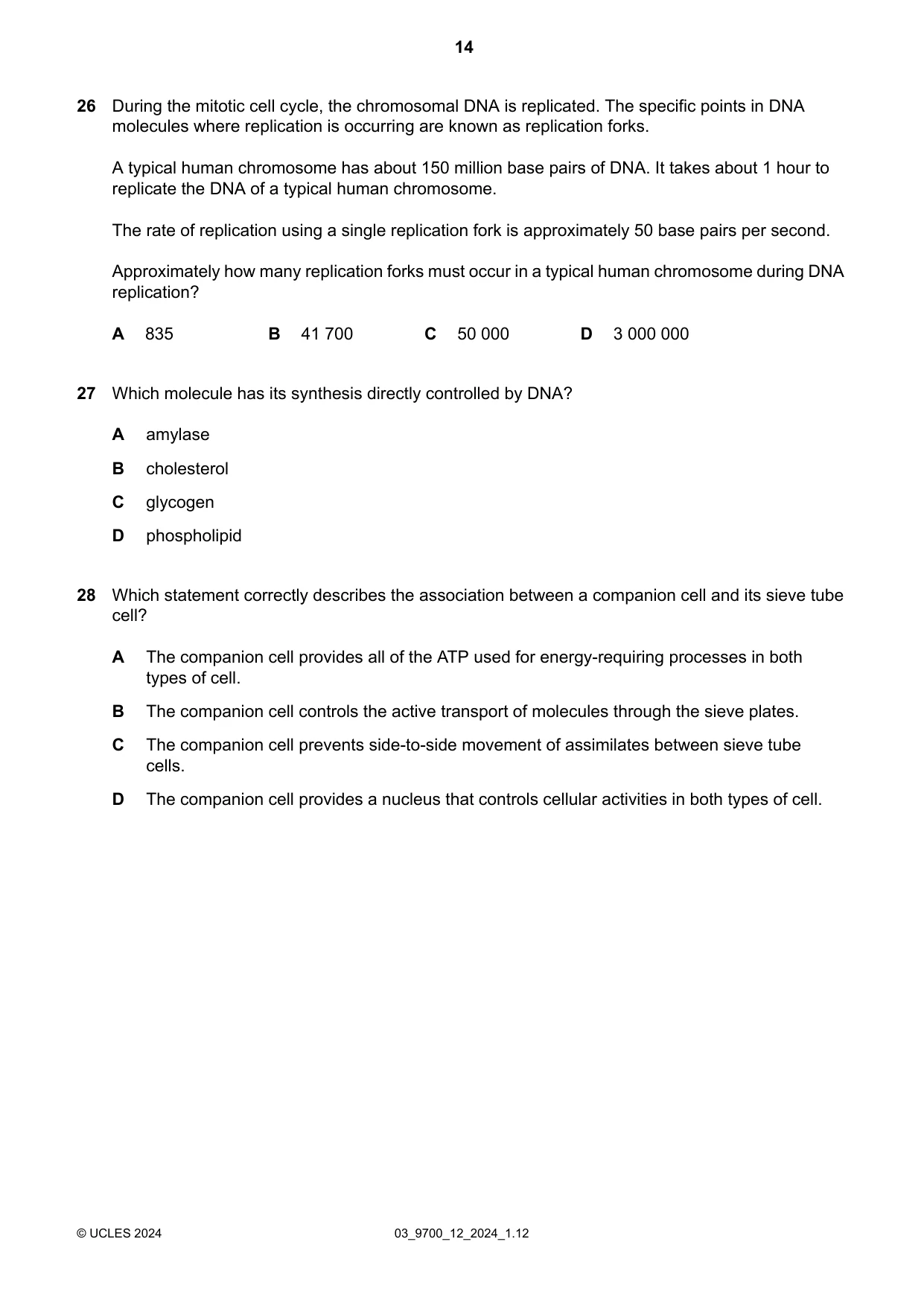
26 During the mitotic cell cycle, the chromosomal DNA is replicated. The specific points in DNA molecules where replication is occurring are known as replication forks. A typical human chromosome has about 150 million base pairs of DNA. It takes about 1 hour to replicate the DNA of a typical human chromosome. The rate of replication using a single replication fork is approximately 50 base pairs per second. Approximately how many replication forks must occur in a typical human chromosome during DNA replication? A 835 B 41 700 C 50 000 D 3 000 000
Mark scheme: A
More questions on Structure of nucleic acids and replication of DNA
Q27 · Which molecule has its synthesis directly controlled by DNA?
27 Which molecule has its synthesis directly controlled by DNA? A amylase B cholesterol C glycogen D phospholipid
Mark scheme: A
Q28 · Which statement correctly describes the association between a companion cell and its…
28 Which statement correctly describes the association between a companion cell and its sieve tube cell? A The companion cell provides all of the ATP used for energy-requiring processes in both types of cell. B The companion cell controls the active transport of molecules through the sieve plates. C The companion cell prevents side-to-side movement of assimilates between sieve tube cells. D The companion cell provides a nucleus that controls cellular activities in both types of cell.
Mark scheme: D
Q29 · A maize seedling was grown in soil that contained lanthanum ions labelled with a chemical…
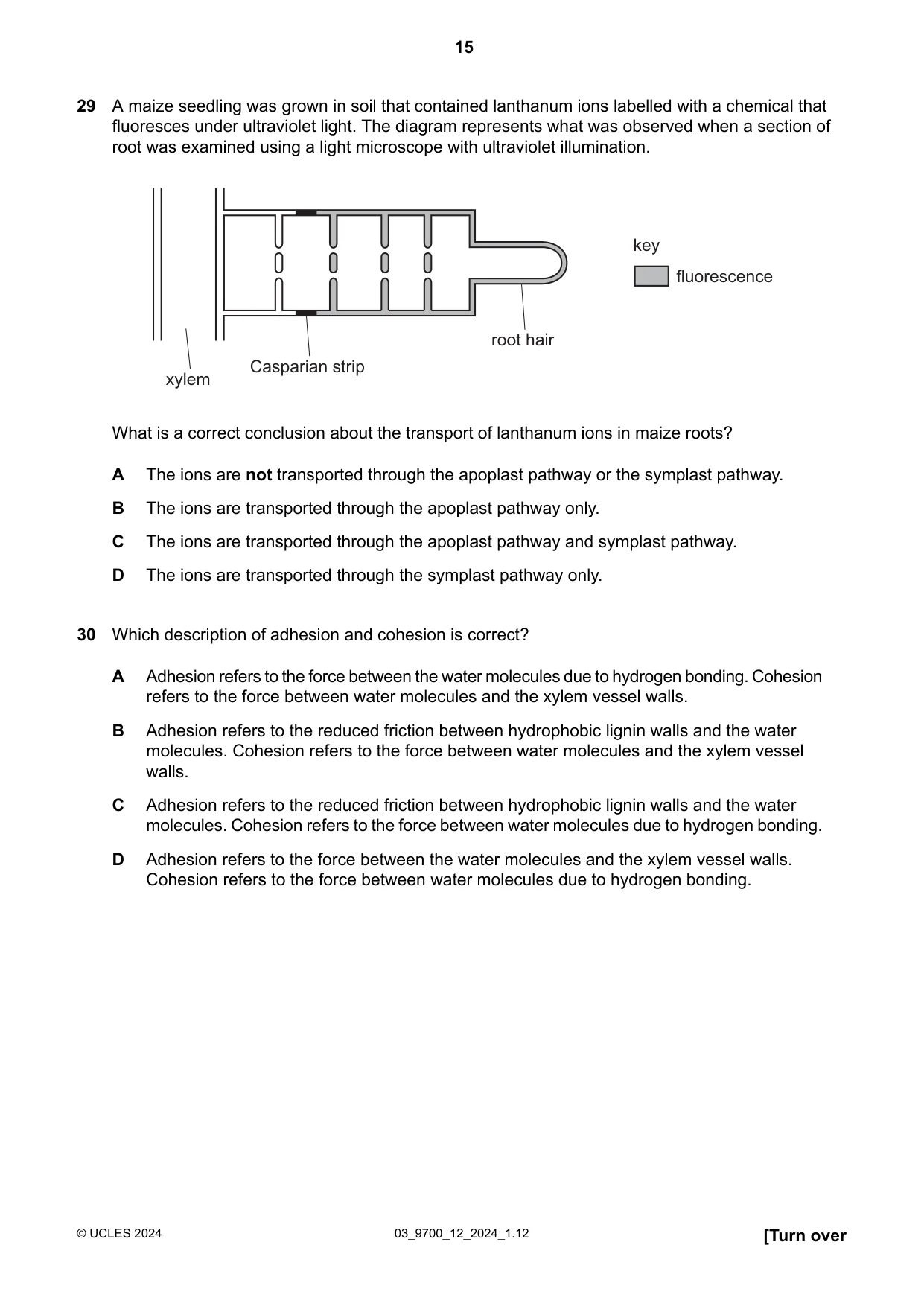
29 A maize seedling was grown in soil that contained lanthanum ions labelled with a chemical that fluoresces under ultraviolet light. The diagram represents what was observed when a section of root was examined using a light microscope with ultraviolet illumination. key fluorescence root hair Casparian strip xylem What is a correct conclusion about the transport of lanthanum ions in maize roots? A The ions are not transported through the apoplast pathway or the symplast pathway. B The ions are transported through the apoplast pathway only. C The ions are transported through the apoplast pathway and symplast pathway. D The ions are transported through the symplast pathway only.
Mark scheme: B
Q30 · Which description of adhesion and cohesion is correct?
30 Which description of adhesion and cohesion is correct? A Adhesion refers to the force between the water molecules due to hydrogen bonding. Cohesion refers to the force between water molecules and the xylem vessel walls. B Adhesion refers to the reduced friction between hydrophobic lignin walls and the water molecules. Cohesion refers to the force between water molecules and the xylem vessel walls. C Adhesion refers to the reduced friction between hydrophobic lignin walls and the water molecules. Cohesion refers to the force between water molecules due to hydrogen bonding. D Adhesion refers to the force between the water molecules and the xylem vessel walls. Cohesion refers to the force between water molecules due to hydrogen bonding.
Mark scheme: D
Q31 · Which conditions are needed to allow the mass flow of sucrose in phloem sieve tubes?
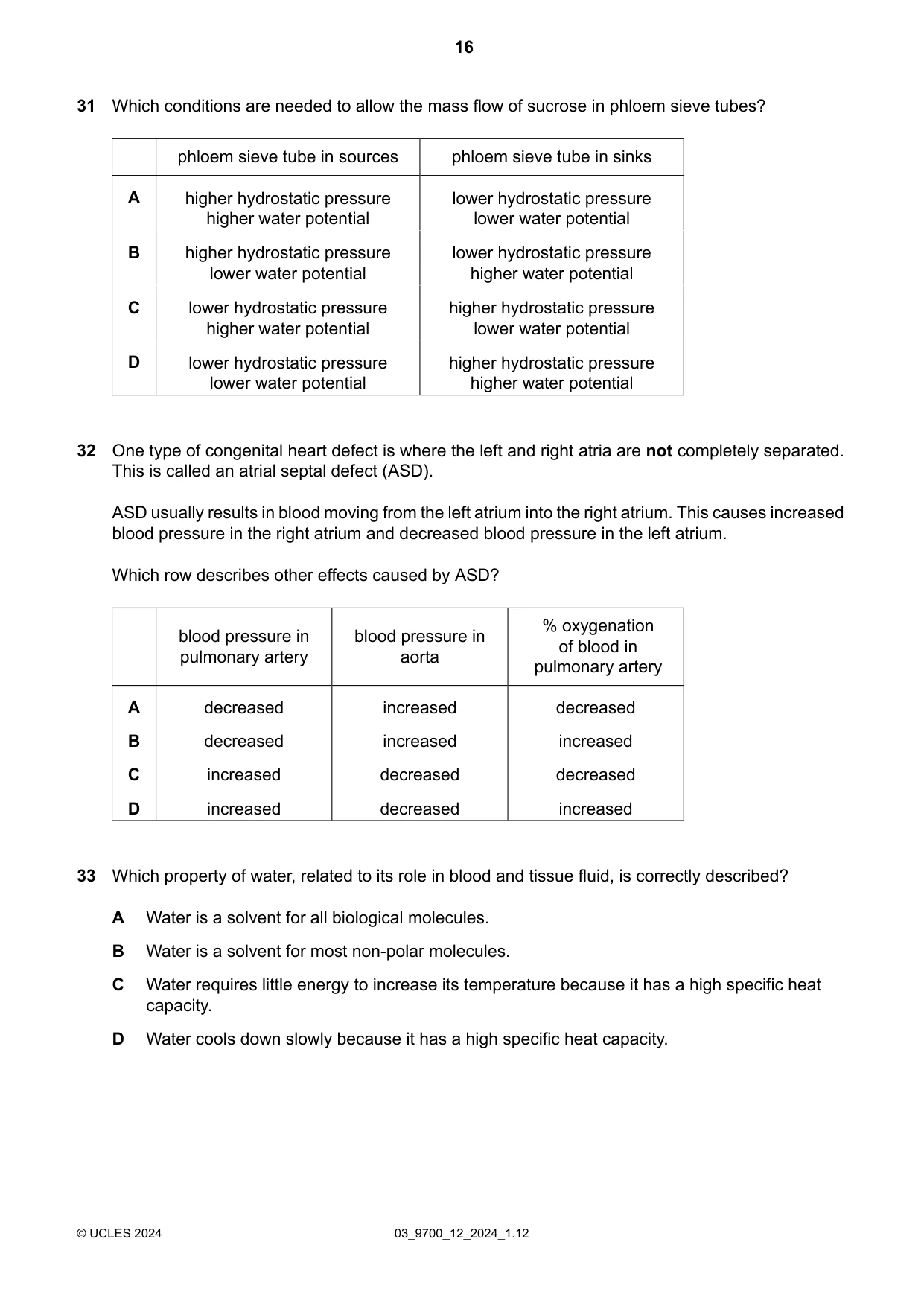
31 Which conditions are needed to allow the mass flow of sucrose in phloem sieve tubes? phloem sieve tube in sources phloem sieve tube in sinks A higher hydrostatic pressure lower hydrostatic pressure higher water potential lower water potential B higher hydrostatic pressure lower hydrostatic pressure lower water potential higher water potential C lower hydrostatic pressure higher hydrostatic pressure higher water potential lower water potential D lower hydrostatic pressure higher hydrostatic pressure lower water potential higher water potential
Mark scheme: B
Q32 · One type of congenital heart defect is where the left and right atria are not completely…
32 One type of congenital heart defect is where the left and right atria are not completely separated. This is called an atrial septal defect (ASD). ASD usually results in blood moving from the left atrium into the right atrium. This causes increased blood pressure in the right atrium and decreased blood pressure in the left atrium. Which row describes other effects caused by ASD? % oxygenation blood pressure in blood pressure in of blood in pulmonary artery aorta pulmonary artery A decreased increased decreased B decreased increased increased C increased decreased decreased D increased decreased increased
Mark scheme: D
Q33 · Which property of water, related to its role in blood and tissue fluid, is correctly…
33 Which property of water, related to its role in blood and tissue fluid, is correctly described? A Water is a solvent for all biological molecules. B Water is a solvent for most non-polar molecules. C Water requires little energy to increase its temperature because it has a high specific heat capacity. D Water cools down slowly because it has a high specific heat capacity.
Mark scheme: D
Q34 · Which statement about tissue fluid formation is correct?
34 Which statement about tissue fluid formation is correct? A The hydrostatic pressure of blood decreases from the arteriole end to the venule end of a capillary. B The water potential is always higher in the blood in the capillaries than in the tissue fluid in the surrounding tissues. C No cells move out of the blood in the capillaries into the tissue fluid. D Most tissue fluid formation occurs at the venule end of a capillary.
Mark scheme: A
Q35 · Oxyhaemoglobin, carbaminohaemoglobin, haemoglobinic acid and carbonic anhydrase are found…
35 Oxyhaemoglobin, carbaminohaemoglobin, haemoglobinic acid and carbonic anhydrase are found inside red blood cells. How many of these substances will show an overall decrease in concentration as a red blood cell passes through capillaries in the lungs? A 1 B 2 C 3 D 4
Mark scheme: B
Q36 · Which of these structures typically contain cartilage and cilia?
36 Which of these structures typically contain cartilage and cilia? 1 bronchi 2 bronchioles 3 trachea A 1, 2 and 3 B 1 and 2 only C 1 and 3 only D 3 only
Mark scheme: C
Q37 · Which statements about the function of tissues found in the human gas exchange system are…
37 Which statements about the function of tissues found in the human gas exchange system are correct? 1 Collagen in the bronchi prevents them collapsing. 2 Smooth muscle in the bronchioles can contract to increase the flow of air into the alveoli. 3 Elastic fibres in the alveoli stretch and recoil during breathing. A 1 and 2 B 1 and 3 C 2 and 3 D 3 only
Mark scheme: D
Q38 · Antibiotic-resistant strains of Mycobacterium tuberculosis are a major problem when…
38 Antibiotic-resistant strains of Mycobacterium tuberculosis are a major problem when treating TB. A new antibiotic, teixobactin, could be very effective at killing M. tuberculosis with only a small risk that the bacteria will evolve teixobactin resistance. Penicillin and similar antibiotics bind to a single protein, but teixobactin binds to two lipids that are needed for the formation of the bacterial cell wall. Teixobactin binds to regions of the two lipids that do not vary across many different species of bacteria. Which statements help to explain why the use of teixobactin is thought to be less likely to lead to the evolution of antibiotic resistance than the use of many other antibiotics, such as penicillin? 1 A single mutation can result in bacteria that are resistant to penicillin and similar antibiotics but at least two mutations are required to produce teixobactin-resistant bacteria. 2 Mutations can affect the structure of proteins but cannot affect the structure of lipids because only proteins are made of amino acids. 3 The lack of variation across many species of bacteria in the two lipids that bind to teixobactin suggest that the particular structure of these lipids is essential for successful bacterial cell wall formation. A 1, 2 and 3 B 1 and 2 only C 1 and 3 only D 2 and 3 only
Mark scheme: C
Q39 · Monoclonal antibodies are now being used to treat some human diseases
39 Monoclonal antibodies are now being used to treat some human diseases. What explains why monoclonal antibodies are suitable for this purpose? 1 They can divide by mitosis to produce the large numbers of antibodies required for treatment. 2 They are specific to a particular antigen. 3 They can be modified so that they do not act as antigens themselves. A 1, 2 and 3 B 1 only C 2 and 3 only D 2 only
Mark scheme: C
Q40 · Measles is an infectious disease caused by a virus
40 Measles is an infectious disease caused by a virus. The graph shows the number of cases of measles each year in a country before and after a vaccine was introduced. 900 000 vaccination introduced 800 000 700 000 600 000 number of 500 000 cases of measles 400 000 300 000 200 000 100 000 0 1950 1960 1970 1980 1990 2000 year What could have caused the decrease in the number of cases of measles after vaccination was introduced? vaccines provided vaccines provided fewer people are artificial active artificial passive able to act as hosts immunity in people immunity in people for the virus A ✓ ✗ ✓ key B ✗ ✓ ✓ ✓= yes C ✗ ✓ ✗ ✗ = no D ✓ ✗ ✗
Mark scheme: A
What was in this paper
The subtopics covered by these 40 questions, and how many questions each got. Open one in a new tab to see every Cambridge question on it.
4Structure of nucleic acids and replication of DNA4Carbohydrates and lipids3Movement into and out of cells3Transport mechanisms3Antibodies and vaccination2Chromosome behaviour in mitosis2Factors that affect enzyme action2Fluid mosaic membranes2The gas exchange system2The microscope in cell studies2Antibiotics1Mode of action of enzymes1Protein synthesis1Proteins1Replication and division of nuclei and cells1Structure of transport tissues1Testing for biological molecules1The circulatory system1The heart1Transport of oxygen and carbon dioxide1Water1What you needed in this session
Cambridge’s own grade thresholds for 2024 Feb/March, Paper 1 · Variant 2. A higher threshold means an easier paper — the bar moves with how the cohort did.