Cambridge A Level Biology 9700 — 2020 May/June Paper 1 · Variant 3
9700/13/M/J/20 · 40 questions · 40 marks · ≈45 min
The question paper and its mark scheme, free to read here and free to download. This is Cambridge’s own paper, exactly as it was sat.
Question paper20 pages


Mark scheme3 pages
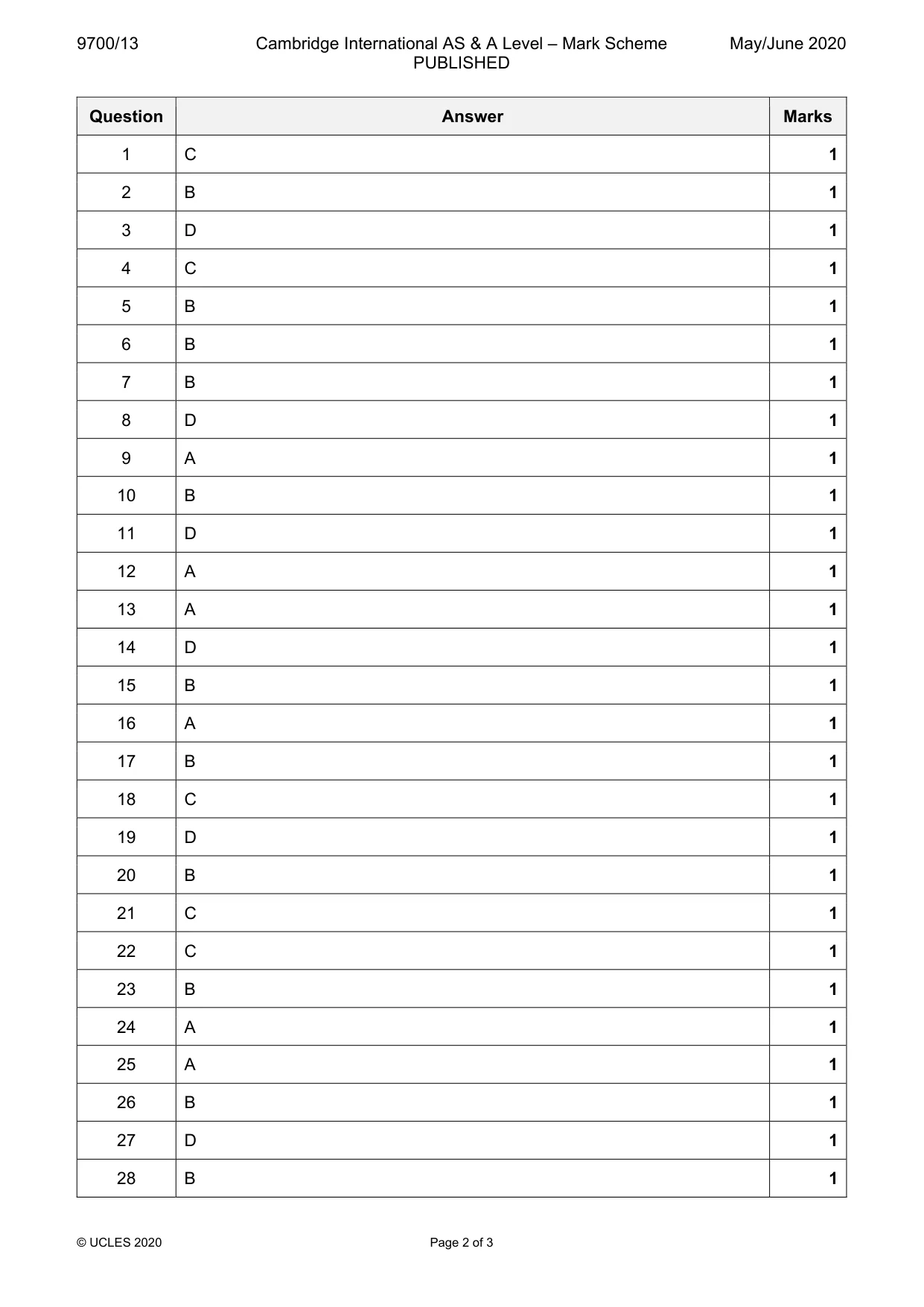
Answers below. Sit the paper first if you are practising.
Questions as text
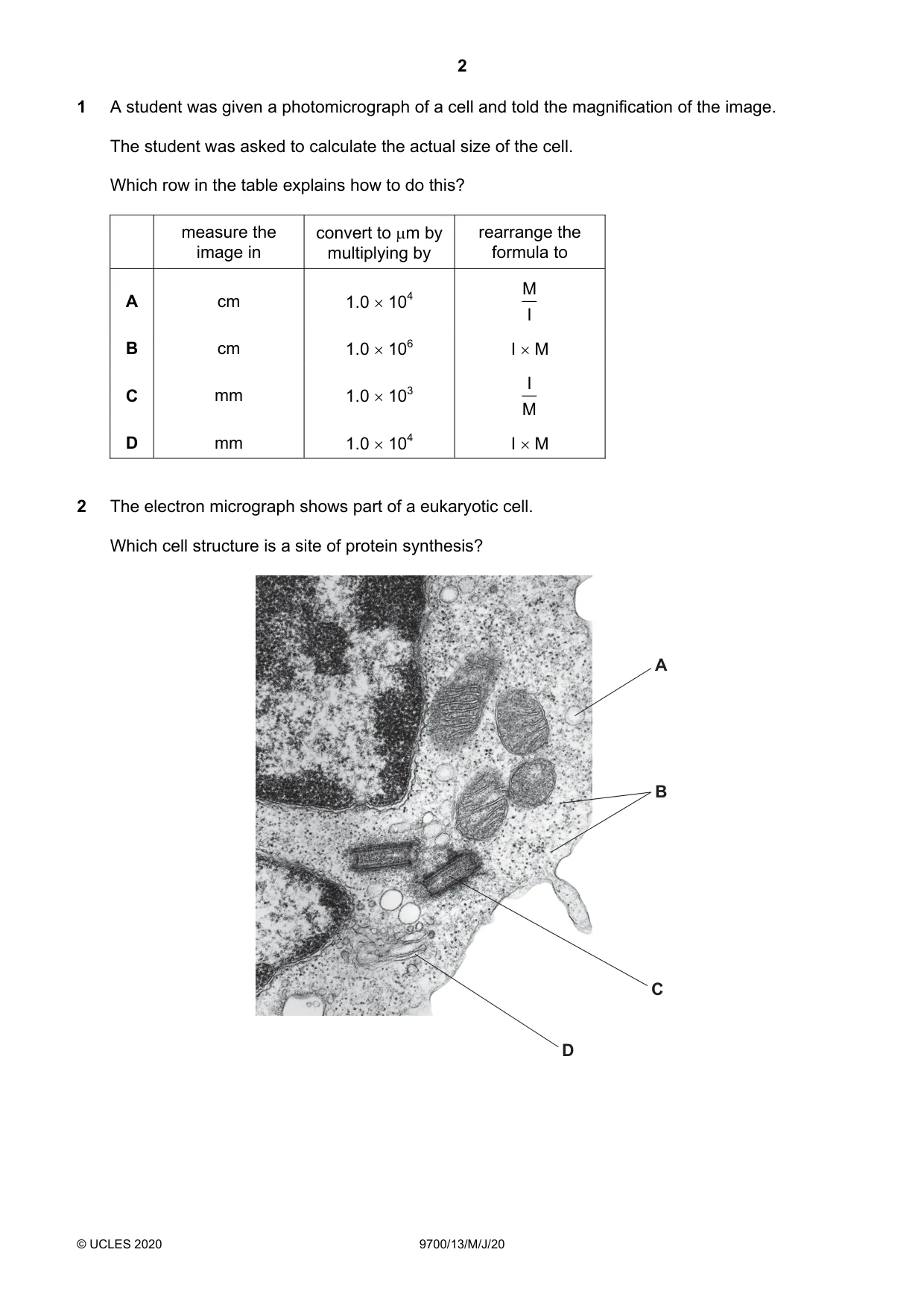
Q1 · A student was given a photomicrograph of a cell and told the magnification of the image
1 A student was given a photomicrograph of a cell and told the magnification of the image. The student was asked to calculate the actual size of the cell. Which row in the table explains how to do this? measure the convert to µm by rearrange the image in multiplying by formula to M A cm 1.0 × 10⁴ I B cm 1.0 × 10⁶ I × M I C mm 1.0 × 10³ M D mm 1.0 × 10⁴ I × M
Mark scheme: C
Q2 · The electron micrograph shows part of a eukaryotic cell
2 The electron micrograph shows part of a eukaryotic cell. Which cell structure is a site of protein synthesis? A B C D
Mark scheme: B
More questions on Cells as the basic units of living organisms
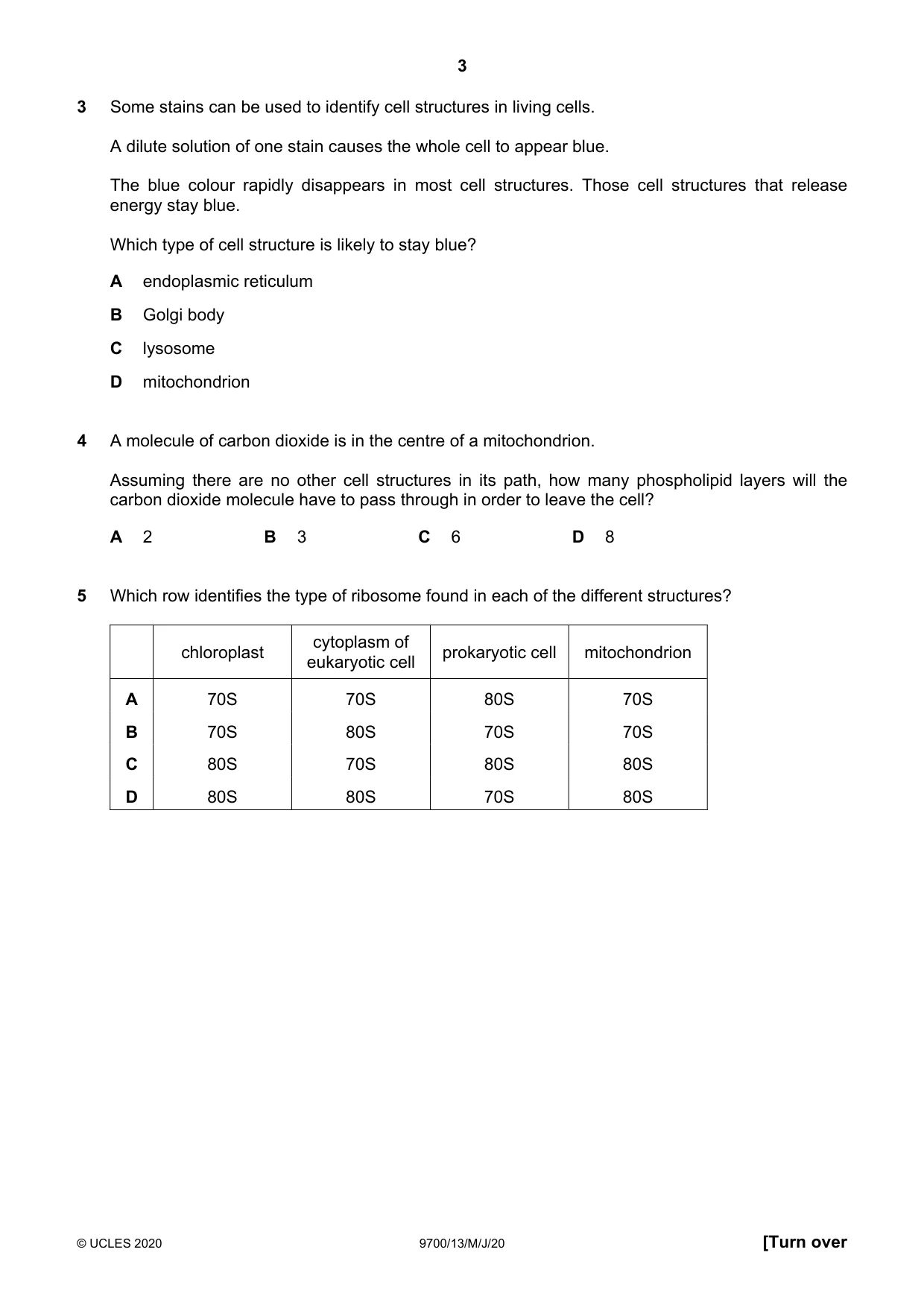
Q3 · Some stains can be used to identify cell structures in living cells
3 Some stains can be used to identify cell structures in living cells. A dilute solution of one stain causes the whole cell to appear blue. The blue colour rapidly disappears in most cell structures. Those cell structures that release energy stay blue. Which type of cell structure is likely to stay blue? A endoplasmic reticulum B Golgi body C lysosome D mitochondrion
Mark scheme: D
More questions on Cells as the basic units of living organisms
Q4 · A molecule of carbon dioxide is in the centre of a mitochondrion
4 A molecule of carbon dioxide is in the centre of a mitochondrion. Assuming there are no other cell structures in its path, how many phospholipid layers will the carbon dioxide molecule have to pass through in order to leave the cell? A 2 B 3 C 6 D 8
Mark scheme: C
Q5 · Which row identifies the type of ribosome found in each of the different structures?
5 Which row identifies the type of ribosome found in each of the different structures? cytoplasm of chloroplast prokaryotic cell mitochondrion eukaryotic cell A 70S 70S 80S 70S B 70S 80S 70S 70S C 80S 70S 80S 80S D 80S 80S 70S 80S
Mark scheme: B
More questions on Cells as the basic units of living organisms
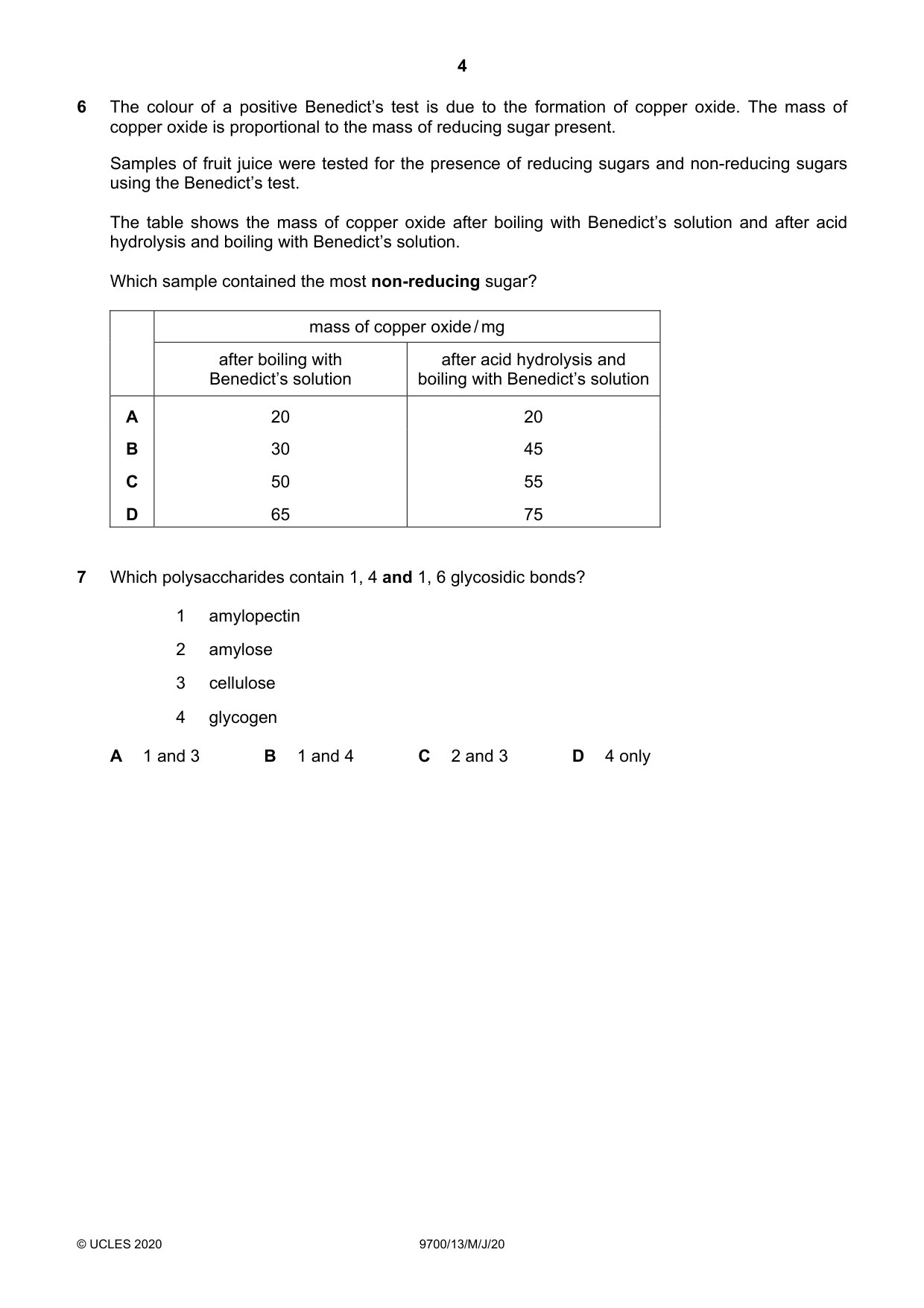
Q6 · The colour of a positive Benedict’s test is due to the formation of copper oxide
6 The colour of a positive Benedict’s test is due to the formation of copper oxide. The mass of copper oxide is proportional to the mass of reducing sugar present. Samples of fruit juice were tested for the presence of reducing sugars and non-reducing sugars using the Benedict’s test. The table shows the mass of copper oxide after boiling with Benedict’s solution and after acid hydrolysis and boiling with Benedict’s solution. Which sample contained the most non-reducing sugar? mass of copper oxide / mg after boiling with after acid hydrolysis and Benedict’s solution boiling with Benedict’s solution A 20 20 B 30 45 C 50 55 D 65 75
Mark scheme: B
Q7 · Which polysaccharides contain 1, 4 and 1, 6 glycosidic bonds?
7 Which polysaccharides contain 1, 4 and 1, 6 glycosidic bonds? 1 amylopectin 2 amylose 3 cellulose 4 glycogen A 1 and 3 B 1 and 4 C 2 and 3 D 4 only
Mark scheme: B
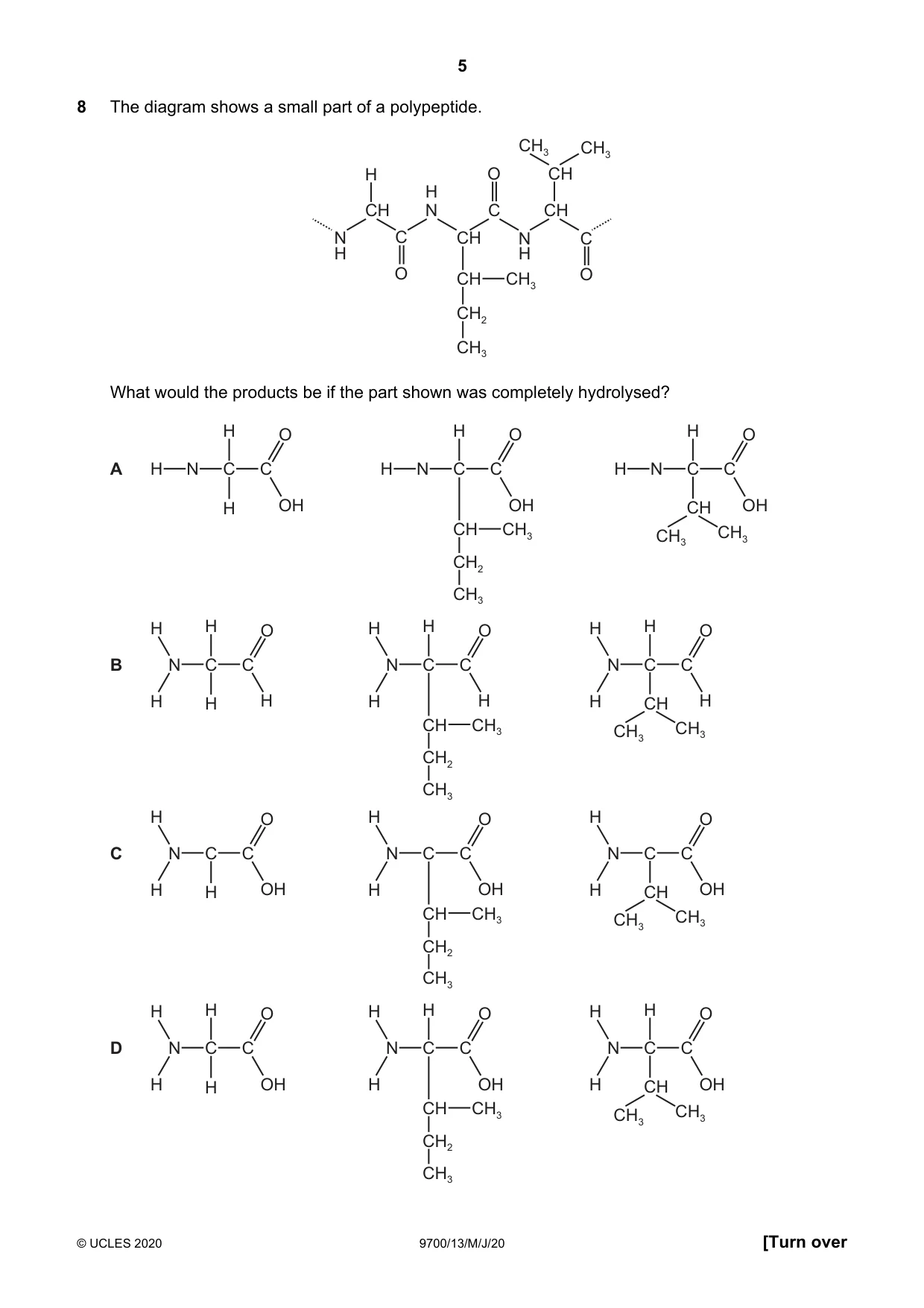
Q8 · The diagram shows a small part of a polypeptide
8 The diagram shows a small part of a polypeptide. CH3 CH3 H O CH H CH N C CH N C CH N C H H O CH CH3 O CH2 CH3 What would the products be if the part shown was completely hydrolysed? H O H O H O A H N C C H N C C H N C C H OH OH CH OH CH CH3 CH3 CH3 CH2 CH3 H H O H H O H H O B N C C N C C N C C H H H H H H CH H CH CH3 CH3 CH3 CH2 CH3 H O H O H O C N C C N C C N C C H H OH H OH H CH OH CH CH3 CH3 CH3 CH2 CH3 H H O H H O H H O D N C C N C C N C C H H OH H OH H CH OH CH CH3 CH3 CH3 CH2 CH3
Mark scheme: D
Q9 · The enzyme trypsin hydrolyses proteins to amino acids
9 The enzyme trypsin hydrolyses proteins to amino acids. Trypsin does not function when the pH is very low as its 3D shape would be changed. What explains this change in 3D shape? A Hydrogen ions attach themselves to negatively charged R groups. B Hydrogen ions disrupt disulfide bonds. C Hydrogen ions increase hydrogen bonding between amino acids. D Hydrogen ions reduce the affinity of hydrophilic R groups for water.
Mark scheme: A
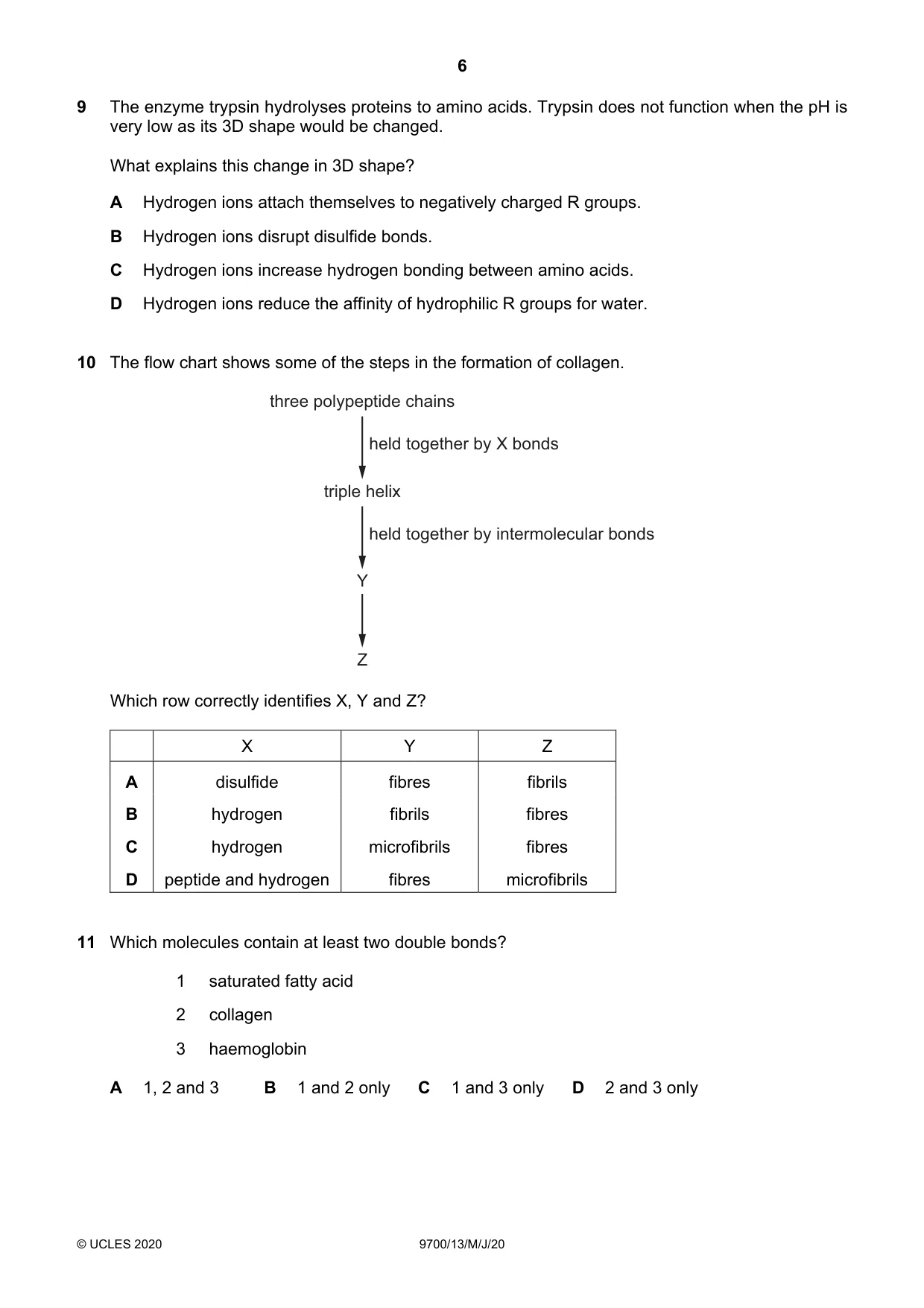
Q10 · The flow chart shows some of the steps in the formation of collagen
10 The flow chart shows some of the steps in the formation of collagen. three polypeptide chains held together by X bonds triple helix held together by intermolecular bonds Y Z Which row correctly identifies X, Y and Z? X Y Z A disulfide fibres fibrils B hydrogen fibrils fibres C hydrogen microfibrils fibres D peptide and hydrogen fibres microfibrils
Mark scheme: B
Q11 · Which molecules contain at least two double bonds?
11 Which molecules contain at least two double bonds? 1 saturated fatty acid 2 collagen 3 haemoglobin A 1, 2 and 3 B 1 and 2 only C 1 and 3 only D 2 and 3 only
Mark scheme: D
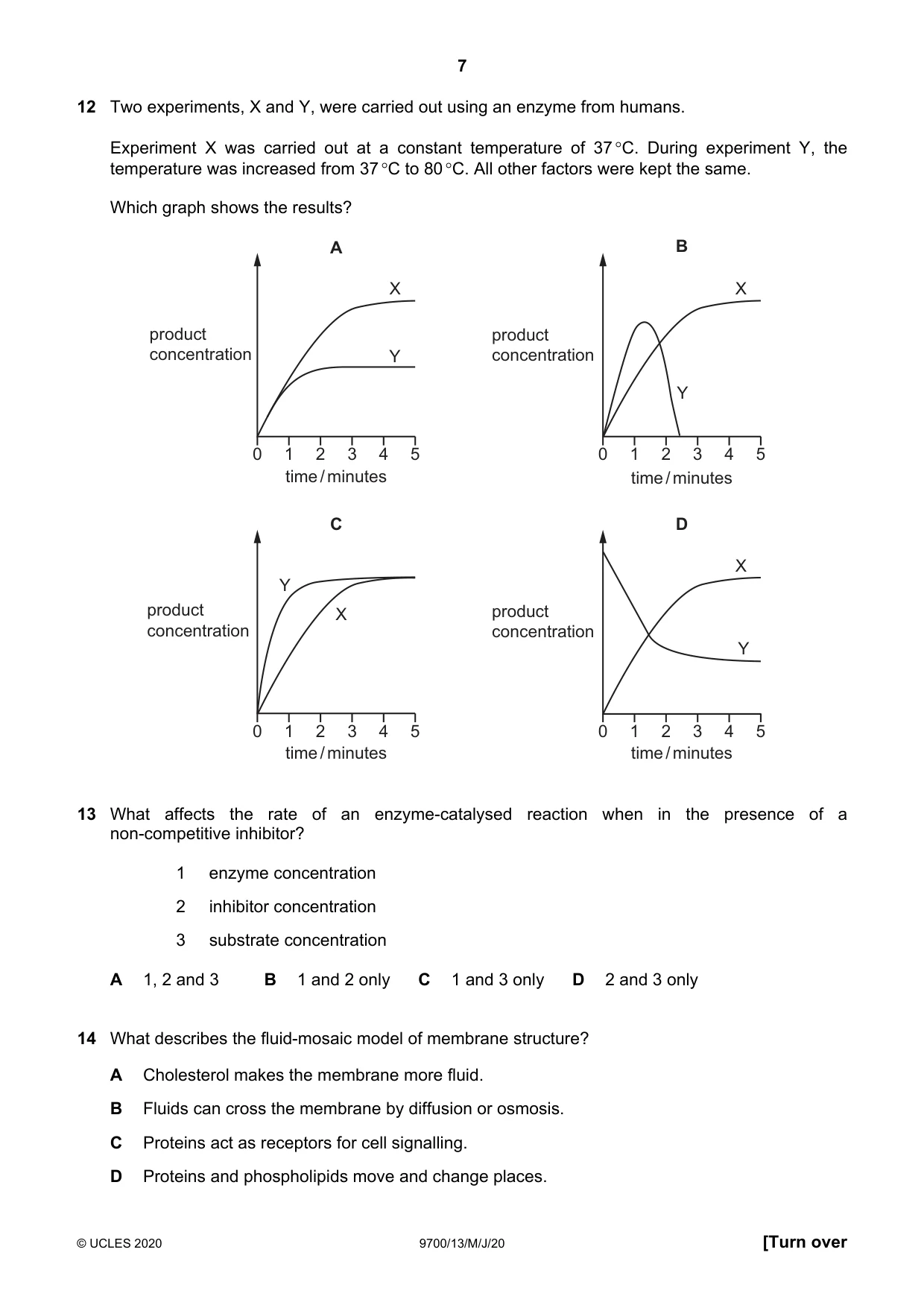
Q12 · Two experiments, X and Y, were carried out using an enzyme from humans
12 Two experiments, X and Y, were carried out using an enzyme from humans. Experiment X was carried out at a constant temperature of 37 °C. During experiment Y, the temperature was increased from 37 °C to 80 °C. All other factors were kept the same. Which graph shows the results? A B X X product product concentration Y concentration Y 0 1 2 3 4 5 0 1 2 3 4 5 time / minutes time / minutes C D X Y product X product concentration concentration Y 0 1 2 3 4 5 0 1 2 3 4 5 time / minutes time / minutes
Mark scheme: A
Q13 · What affects the rate of an enzyme-catalysed reaction when in the presence of a…
13 What affects the rate of an enzyme-catalysed reaction when in the presence of a non-competitive inhibitor? 1 enzyme concentration 2 inhibitor concentration 3 substrate concentration A 1, 2 and 3 B 1 and 2 only C 1 and 3 only D 2 and 3 only
Mark scheme: A
Q14 · What describes the fluid-mosaic model of membrane structure?
14 What describes the fluid-mosaic model of membrane structure? A Cholesterol makes the membrane more fluid. B Fluids can cross the membrane by diffusion or osmosis. C Proteins act as receptors for cell signalling. D Proteins and phospholipids move and change places.
Mark scheme: D
Q15 · Blocks of agar are stained with a pH indicator and used to investigate the diffusion of…
15 Blocks of agar are stained with a pH indicator and used to investigate the diffusion of an acid solution. Which block would completely change colour the fastest? A 1mm × 1mm × 1 mm B 1mm × 0.25mm × 0.25 mm C 1mm × 0.5mm × 0.5 mm D 2mm × 0.5mm × 0.5 mm
Mark scheme: B
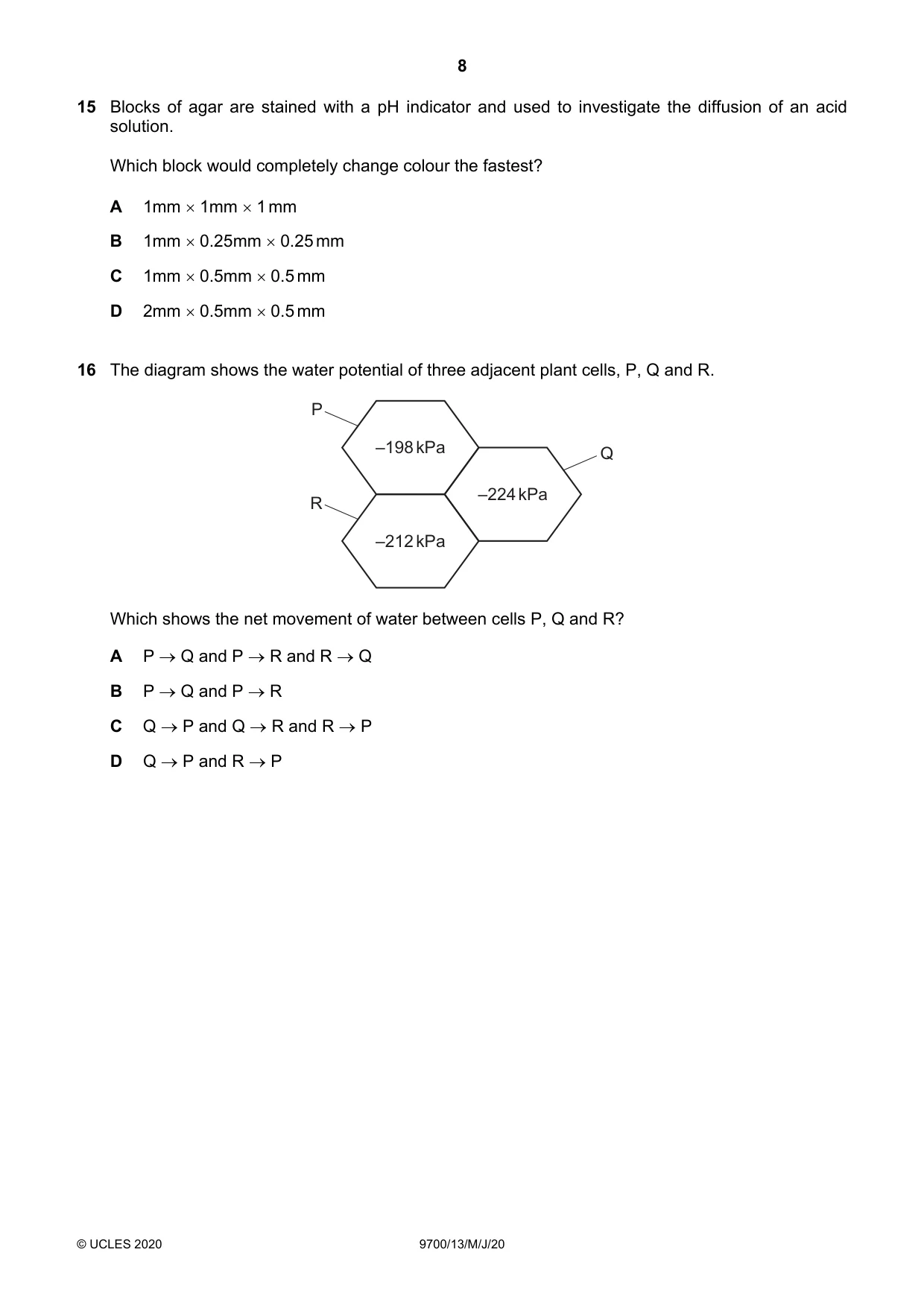
Q16 · The diagram shows the water potential of three adjacent plant cells, P, Q and R
16 The diagram shows the water potential of three adjacent plant cells, P, Q and R. P –198 kPa Q –224 kPa R –212 kPa Which shows the net movement of water between cells P, Q and R? A P → Q and P → R and R → Q B P → Q and P → R C Q → P and Q → R and R → P D Q → P and R → P
Mark scheme: A
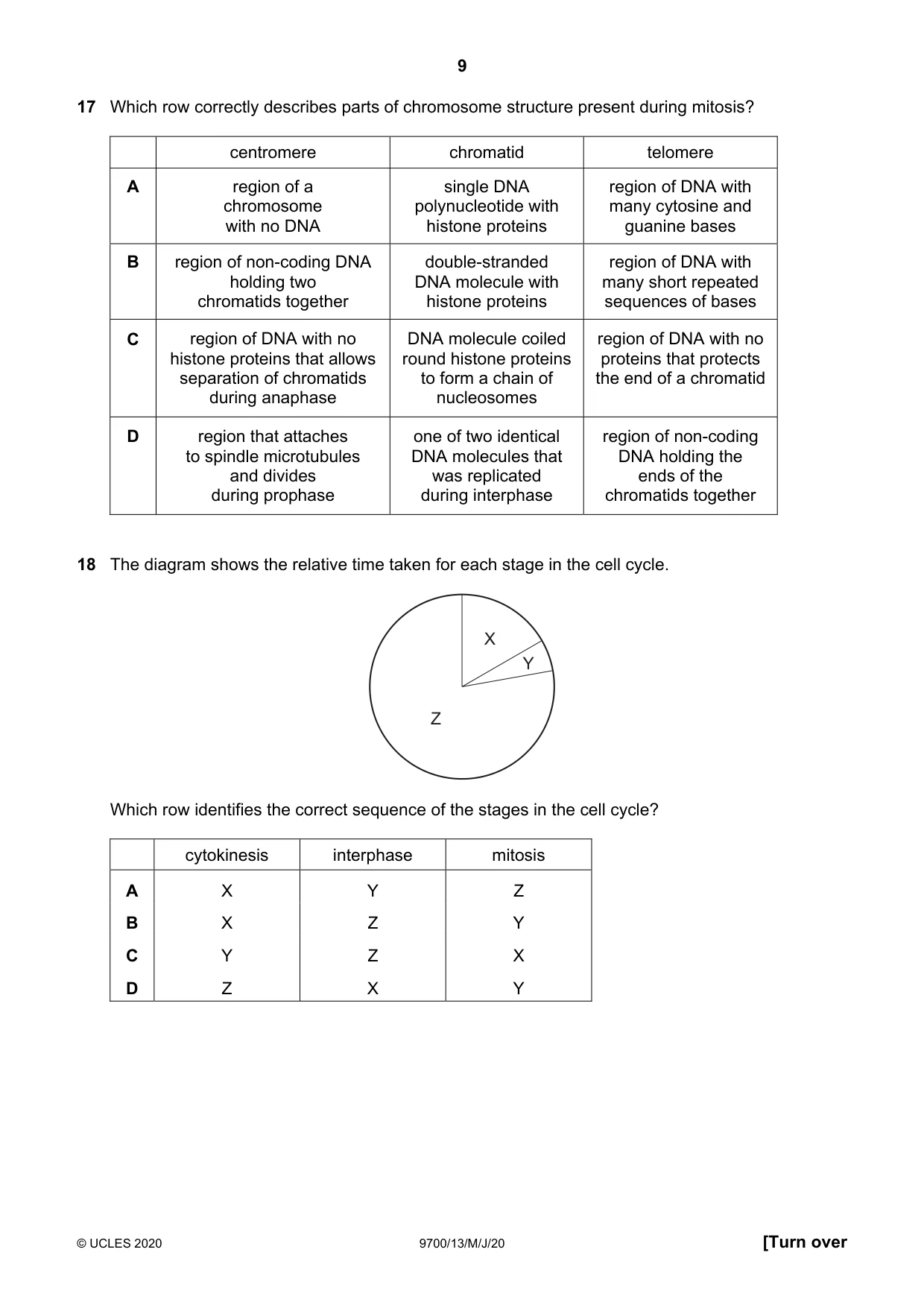
Q17 · Which row correctly describes parts of chromosome structure present during mitosis?
17 Which row correctly describes parts of chromosome structure present during mitosis? centromere chromatid telomere A region of a single DNA region of DNA with chromosome polynucleotide with many cytosine and with no DNA histone proteins guanine bases B region of non-coding DNA double-stranded region of DNA with holding two DNA molecule with many short repeated chromatids together histone proteins sequences of bases C region of DNA with no DNA molecule coiled region of DNA with no histone proteins that allows round histone proteins proteins that protects separation of chromatids to form a chain of the end of a chromatid during anaphase nucleosomes D region that attaches one of two identical region of non-coding to spindle microtubules DNA molecules that DNA holding the and divides was replicated ends of the during prophase during interphase chromatids together
Mark scheme: B
Q18 · The diagram shows the relative time taken for each stage in the cell cycle
18 The diagram shows the relative time taken for each stage in the cell cycle. X Y Z Which row identifies the correct sequence of the stages in the cell cycle? cytokinesis interphase mitosis A X Y Z B X Z Y C Y Z X D Z X Y
Mark scheme: C
More questions on Replication and division of nuclei and cells
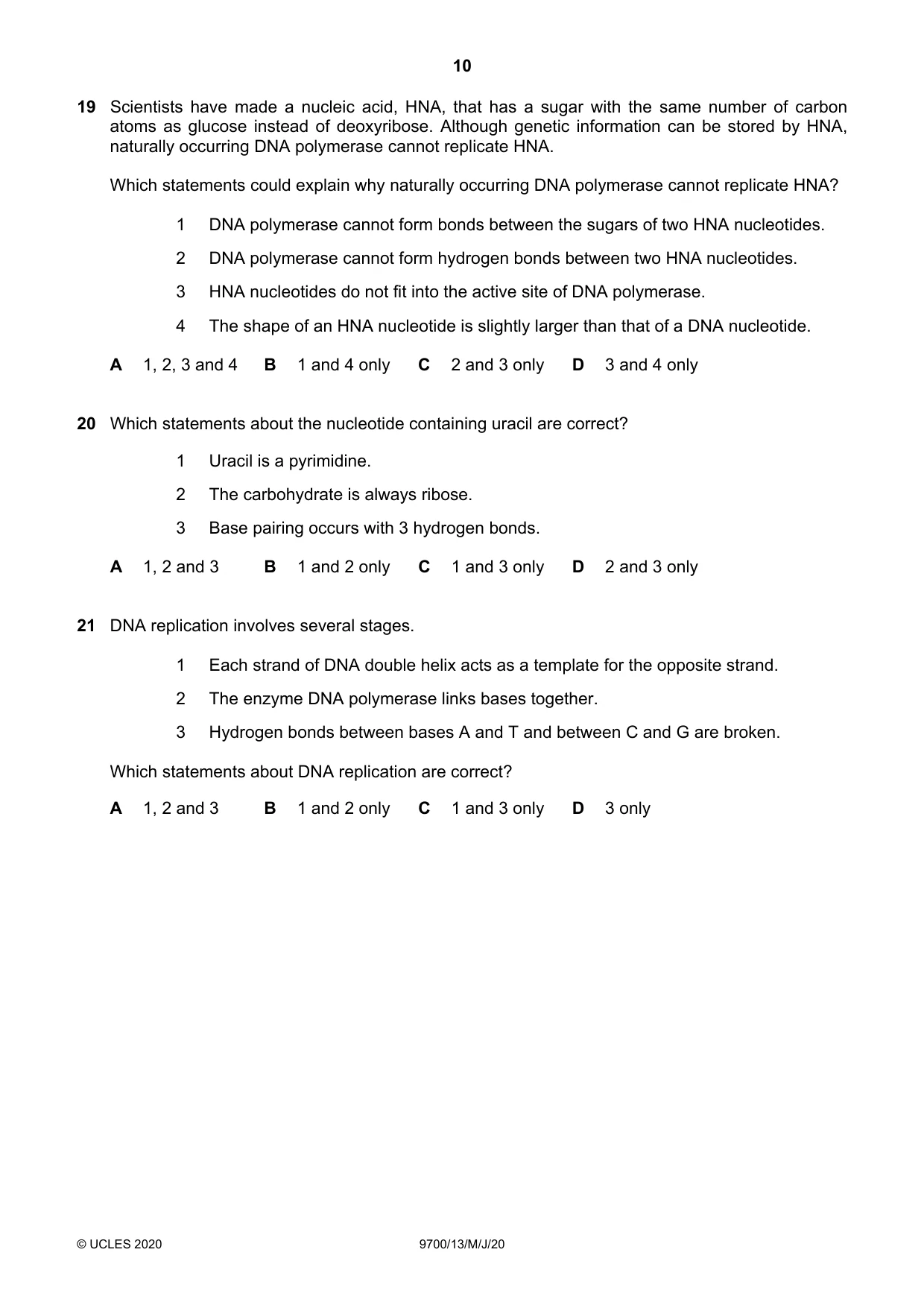
Q19 · Scientists have made a nucleic acid, HNA, that has a sugar with the same number of carbon…
19 Scientists have made a nucleic acid, HNA, that has a sugar with the same number of carbon atoms as glucose instead of deoxyribose. Although genetic information can be stored by HNA, naturally occurring DNA polymerase cannot replicate HNA. Which statements could explain why naturally occurring DNA polymerase cannot replicate HNA? 1 DNA polymerase cannot form bonds between the sugars of two HNA nucleotides. 2 DNA polymerase cannot form hydrogen bonds between two HNA nucleotides. 3 HNA nucleotides do not fit into the active site of DNA polymerase. 4 The shape of an HNA nucleotide is slightly larger than that of a DNA nucleotide. A 1, 2, 3 and 4 B 1 and 4 only C 2 and 3 only D 3 and 4 only
Mark scheme: D
More questions on Structure of nucleic acids and replication of DNA
Q20 · Which statements about the nucleotide containing uracil are correct?
20 Which statements about the nucleotide containing uracil are correct? 1 Uracil is a pyrimidine. 2 The carbohydrate is always ribose. 3 Base pairing occurs with 3 hydrogen bonds. A 1, 2 and 3 B 1 and 2 only C 1 and 3 only D 2 and 3 only
Mark scheme: B
More questions on Structure of nucleic acids and replication of DNA
Q21 · DNA replication involves several stages
21 DNA replication involves several stages. 1 Each strand of DNA double helix acts as a template for the opposite strand. 2 The enzyme DNA polymerase links bases together. 3 Hydrogen bonds between bases A and T and between C and G are broken. Which statements about DNA replication are correct? A 1, 2 and 3 B 1 and 2 only C 1 and 3 only D 3 only
Mark scheme: C
More questions on Structure of nucleic acids and replication of DNA
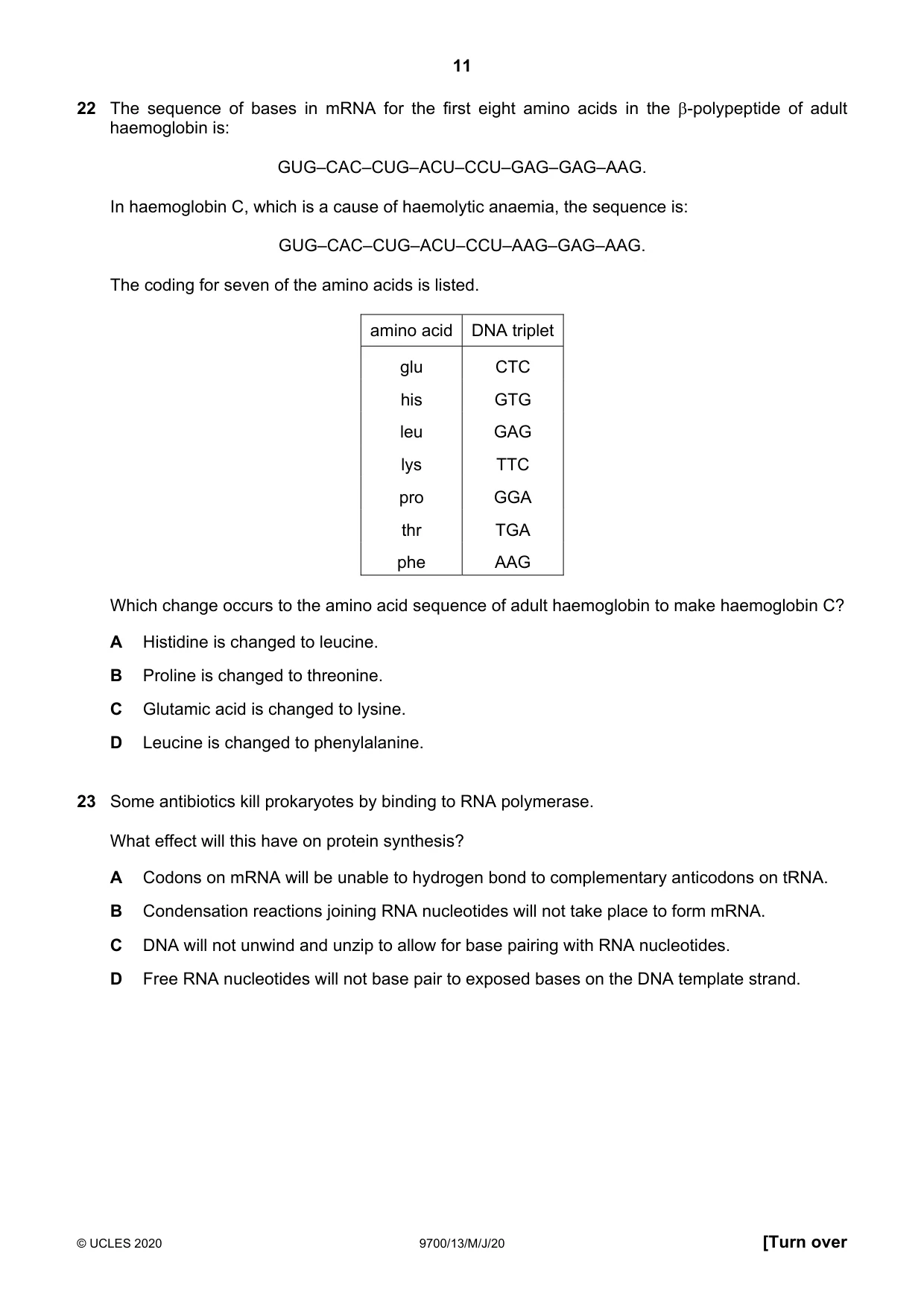
Q22 · The sequence of bases in mRNA for the first eight amino acids in the β-polypeptide of…
22 The sequence of bases in mRNA for the first eight amino acids in the β-polypeptide of adult haemoglobin is: GUG–CAC–CUG–ACU–CCU–GAG–GAG–AAG. In haemoglobin C, which is a cause of haemolytic anaemia, the sequence is: GUG–CAC–CUG–ACU–CCU–AAG–GAG–AAG. The coding for seven of the amino acids is listed. amino acid DNA triplet glu CTC his GTG leu GAG lys TTC pro GGA thr TGA phe AAG Which change occurs to the amino acid sequence of adult haemoglobin to make haemoglobin C? A Histidine is changed to leucine. B Proline is changed to threonine. C Glutamic acid is changed to lysine. D Leucine is changed to phenylalanine.
Mark scheme: C
Q23 · Some antibiotics kill prokaryotes by binding to RNA polymerase
23 Some antibiotics kill prokaryotes by binding to RNA polymerase. What effect will this have on protein synthesis? A Codons on mRNA will be unable to hydrogen bond to complementary anticodons on tRNA. B Condensation reactions joining RNA nucleotides will not take place to form mRNA. C DNA will not unwind and unzip to allow for base pairing with RNA nucleotides. D Free RNA nucleotides will not base pair to exposed bases on the DNA template strand.
Mark scheme: B
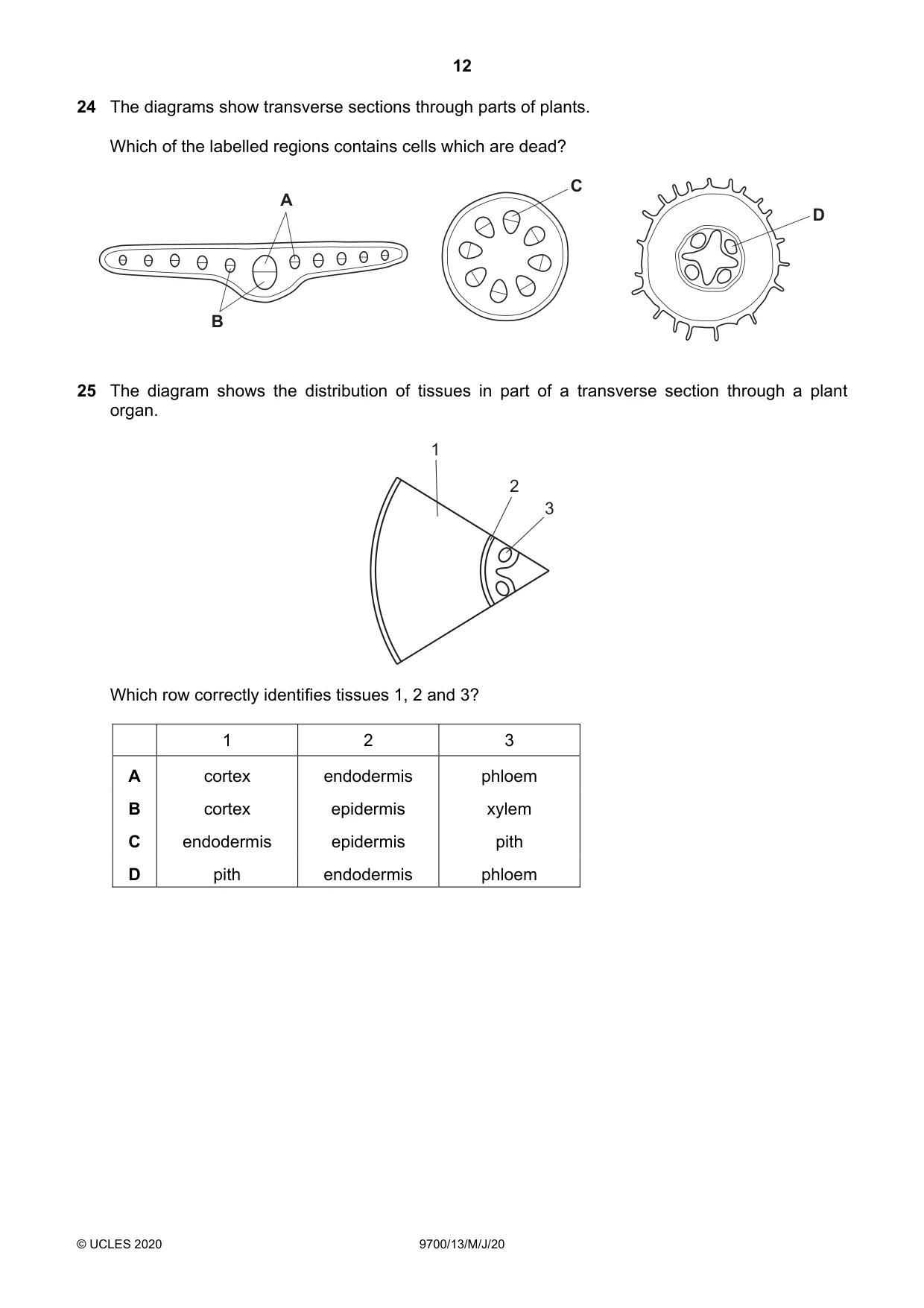
Q24 · The diagrams show transverse sections through parts of plants
24 The diagrams show transverse sections through parts of plants. Which of the labelled regions contains cells which are dead? C A D B
Mark scheme: A
Q25 · The diagram shows the distribution of tissues in part of a transverse section through a…
25 The diagram shows the distribution of tissues in part of a transverse section through a plant organ. 1 2 3 Which row correctly identifies tissues 1, 2 and 3? 1 2 3 A cortex endodermis phloem B cortex epidermis xylem C endodermis epidermis pith D pith endodermis phloem
Mark scheme: A
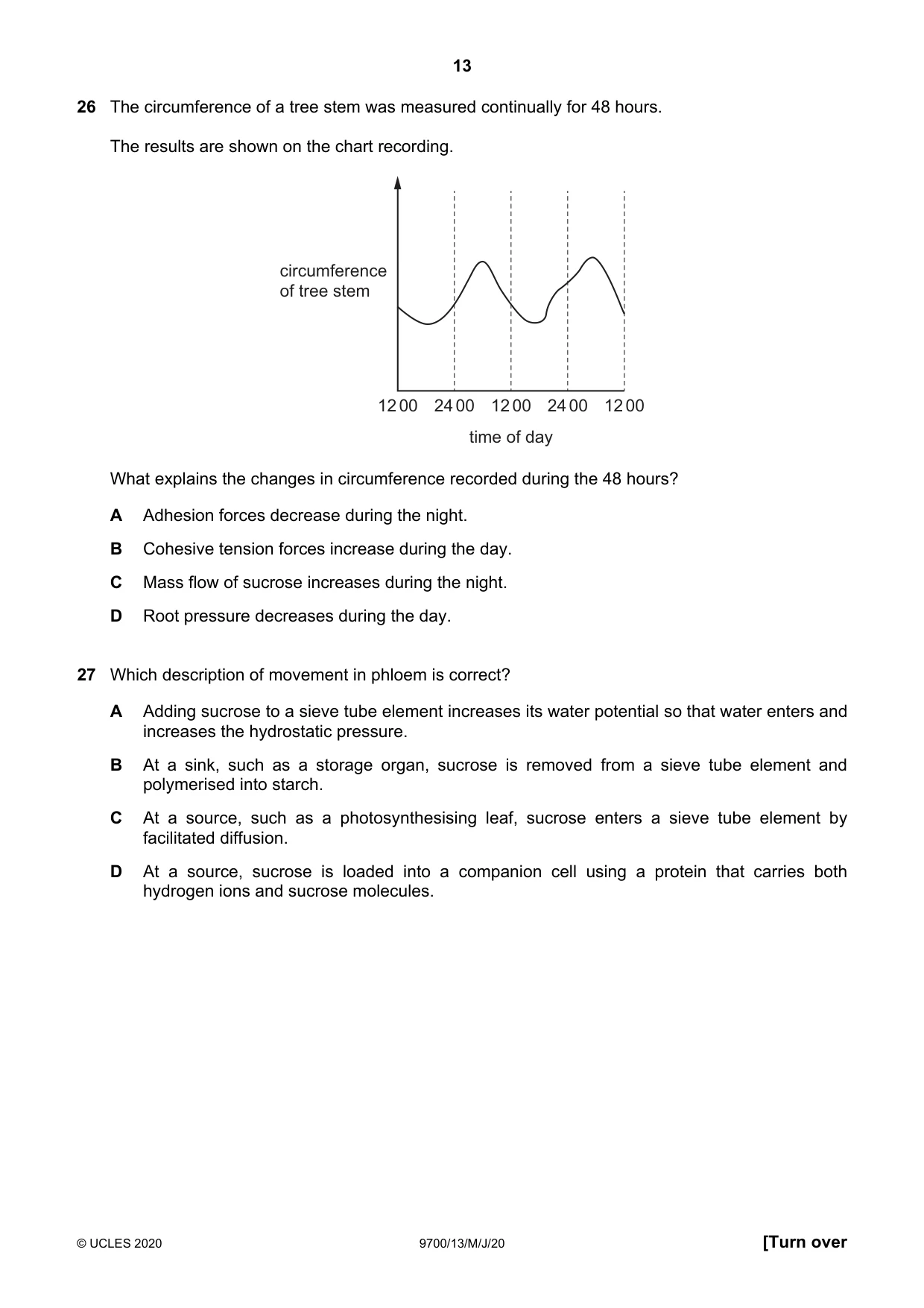
Q26 · The circumference of a tree stem was measured continually for 48 hours
26 The circumference of a tree stem was measured continually for 48 hours. The results are shown on the chart recording. circumference of tree stem 12 00 24 00 12 00 24 00 12 00 time of day What explains the changes in circumference recorded during the 48 hours? A Adhesion forces decrease during the night. B Cohesive tension forces increase during the day. C Mass flow of sucrose increases during the night. D Root pressure decreases during the day.
Mark scheme: B
Q27 · Which description of movement in phloem is correct?
27 Which description of movement in phloem is correct? A Adding sucrose to a sieve tube element increases its water potential so that water enters and increases the hydrostatic pressure. B At a sink, such as a storage organ, sucrose is removed from a sieve tube element and polymerised into starch. C At a source, such as a photosynthesising leaf, sucrose enters a sieve tube element by facilitated diffusion. D At a source, sucrose is loaded into a companion cell using a protein that carries both hydrogen ions and sucrose molecules.
Mark scheme: D
Q28 · Which statements about blood vessels are correct?
28 Which statements about blood vessels are correct? 1 Collagen fibres in the walls of arteries and veins prevent overstretching. 2 Elastic fibres in large arteries allow stretching during ventricular systole. 3 Smooth muscle in arteries controls the distribution of blood to different parts of the body. 4 Veins have valves because their walls are thin. A 1, 2, 3 and 4 B 1, 2 and 3 only C 2 and 4 only D 3 and 4 only
Mark scheme: B
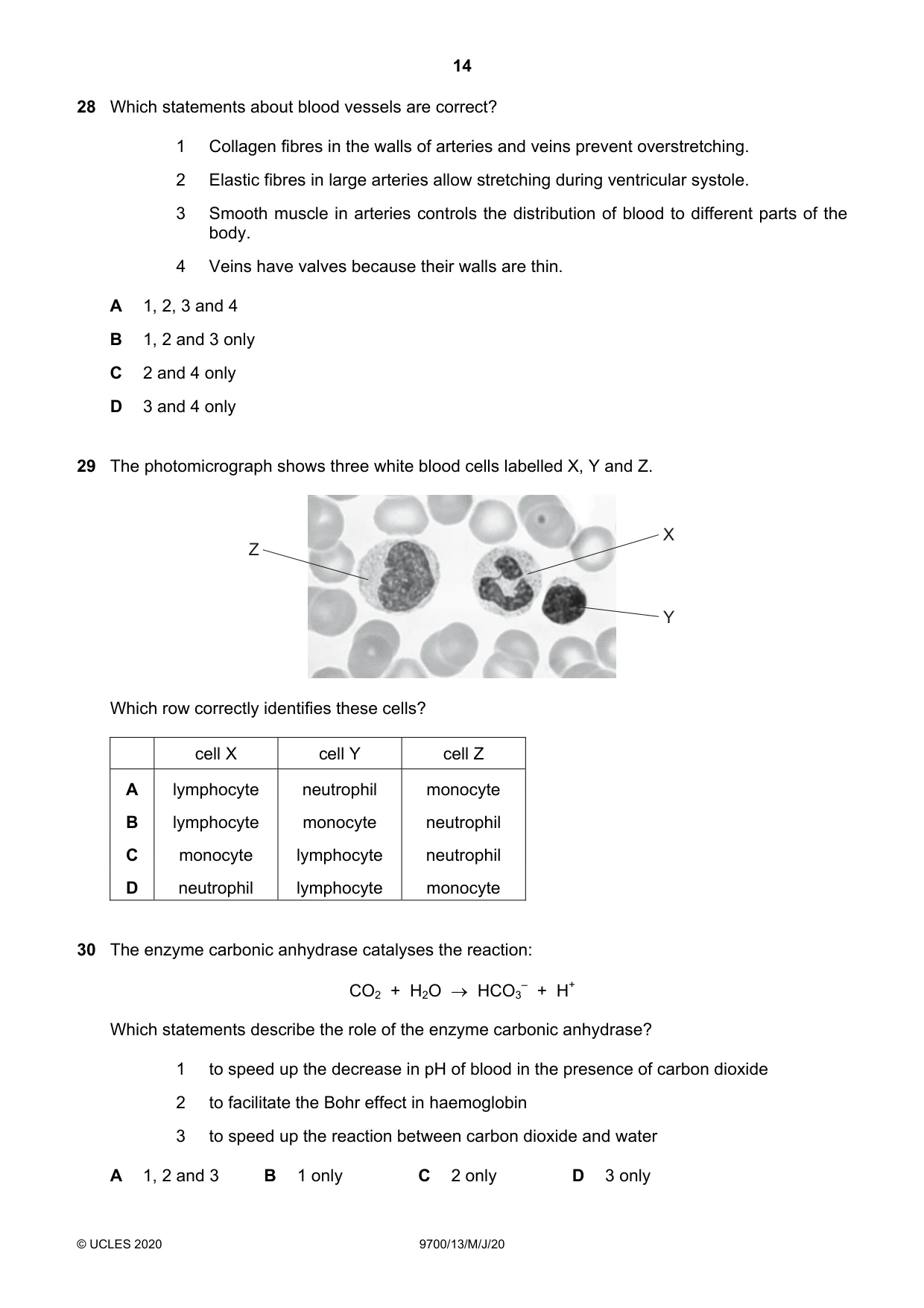
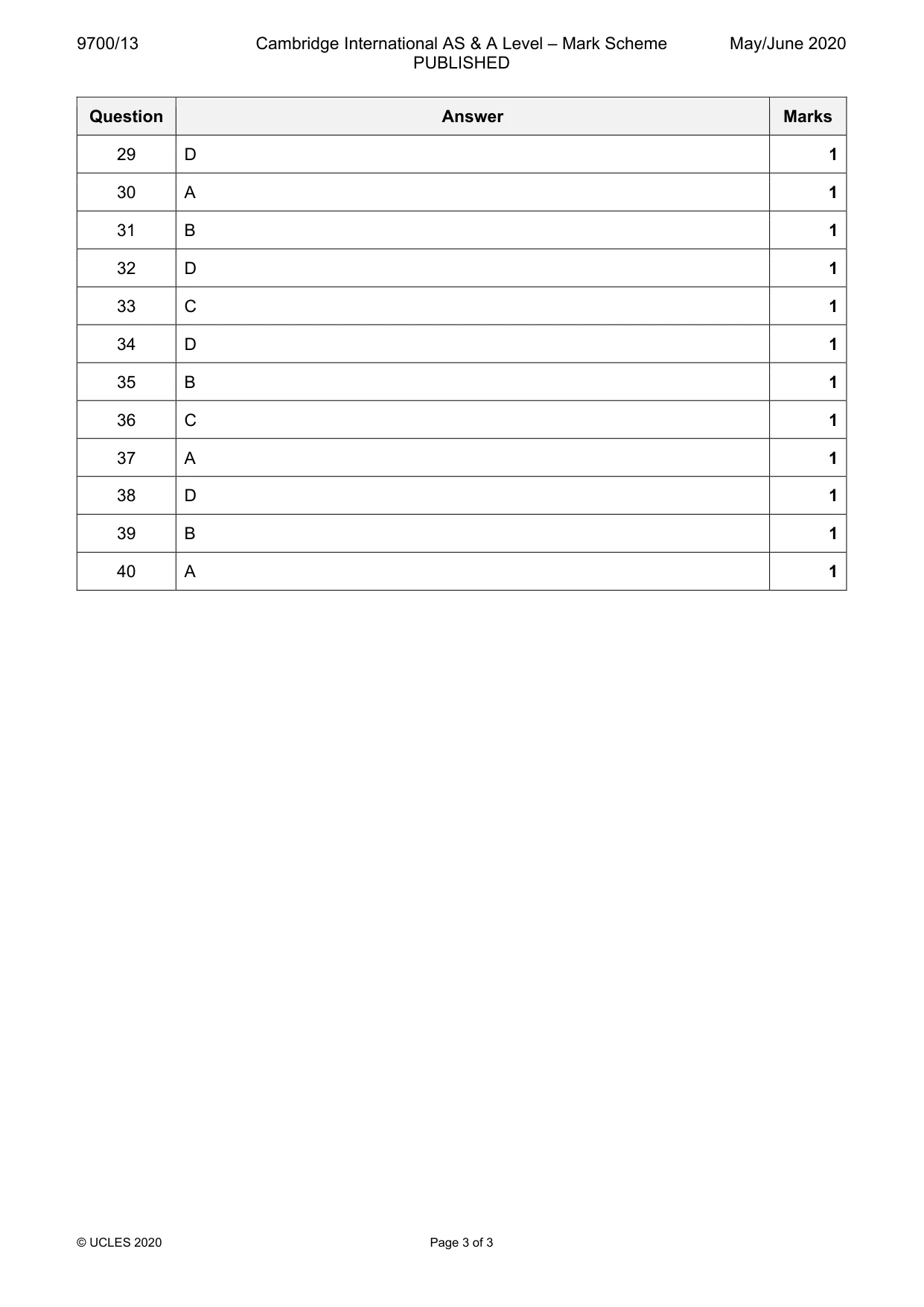
Q29 · The photomicrograph shows three white blood cells labelled X, Y and Z
29 The photomicrograph shows three white blood cells labelled X, Y and Z. X Z Y Which row correctly identifies these cells? cell X cell Y cell Z A lymphocyte neutrophil monocyte B lymphocyte monocyte neutrophil C monocyte lymphocyte neutrophil D neutrophil lymphocyte monocyte
Mark scheme: D
Q30 · The enzyme carbonic anhydrase catalyses the reaction: CO2 + H2O → HCO3 – + H+ Which…
30 The enzyme carbonic anhydrase catalyses the reaction: CO2 + H2O → HCO3 – + H+ Which statements describe the role of the enzyme carbonic anhydrase? 1 to speed up the decrease in pH of blood in the presence of carbon dioxide 2 to facilitate the Bohr effect in haemoglobin 3 to speed up the reaction between carbon dioxide and water A 1, 2 and 3 B 1 only C 2 only D 3 only
Mark scheme: A
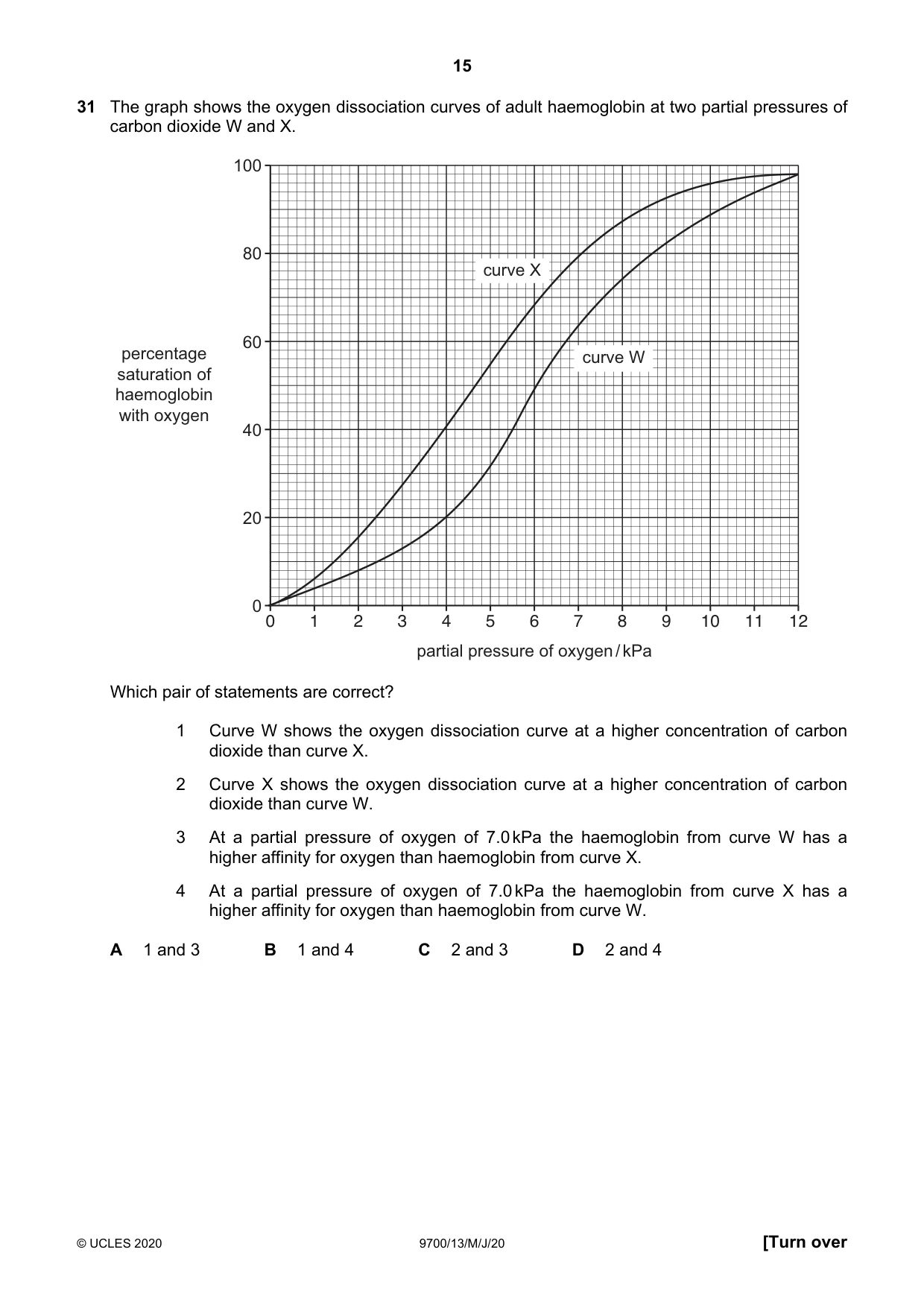
Q31 · The graph shows the oxygen dissociation curves of adult haemoglobin at two partial…
31 The graph shows the oxygen dissociation curves of adult haemoglobin at two partial pressures of carbon dioxide W and X. 100 80 curve X 60 percentage curve W saturation of haemoglobin with oxygen 40 20 0 0 1 2 3 4 5 6 7 8 9 10 11 12 partial pressure of oxygen / kPa Which pair of statements are correct? 1 Curve W shows the oxygen dissociation curve at a higher concentration of carbon dioxide than curve X. 2 Curve X shows the oxygen dissociation curve at a higher concentration of carbon dioxide than curve W. 3 At a partial pressure of oxygen of 7.0 kPa the haemoglobin from curve W has a higher affinity for oxygen than haemoglobin from curve X. 4 At a partial pressure of oxygen of 7.0 kPa the haemoglobin from curve X has a higher affinity for oxygen than haemoglobin from curve W. A 1 and 3 B 1 and 4 C 2 and 3 D 2 and 4
Mark scheme: B
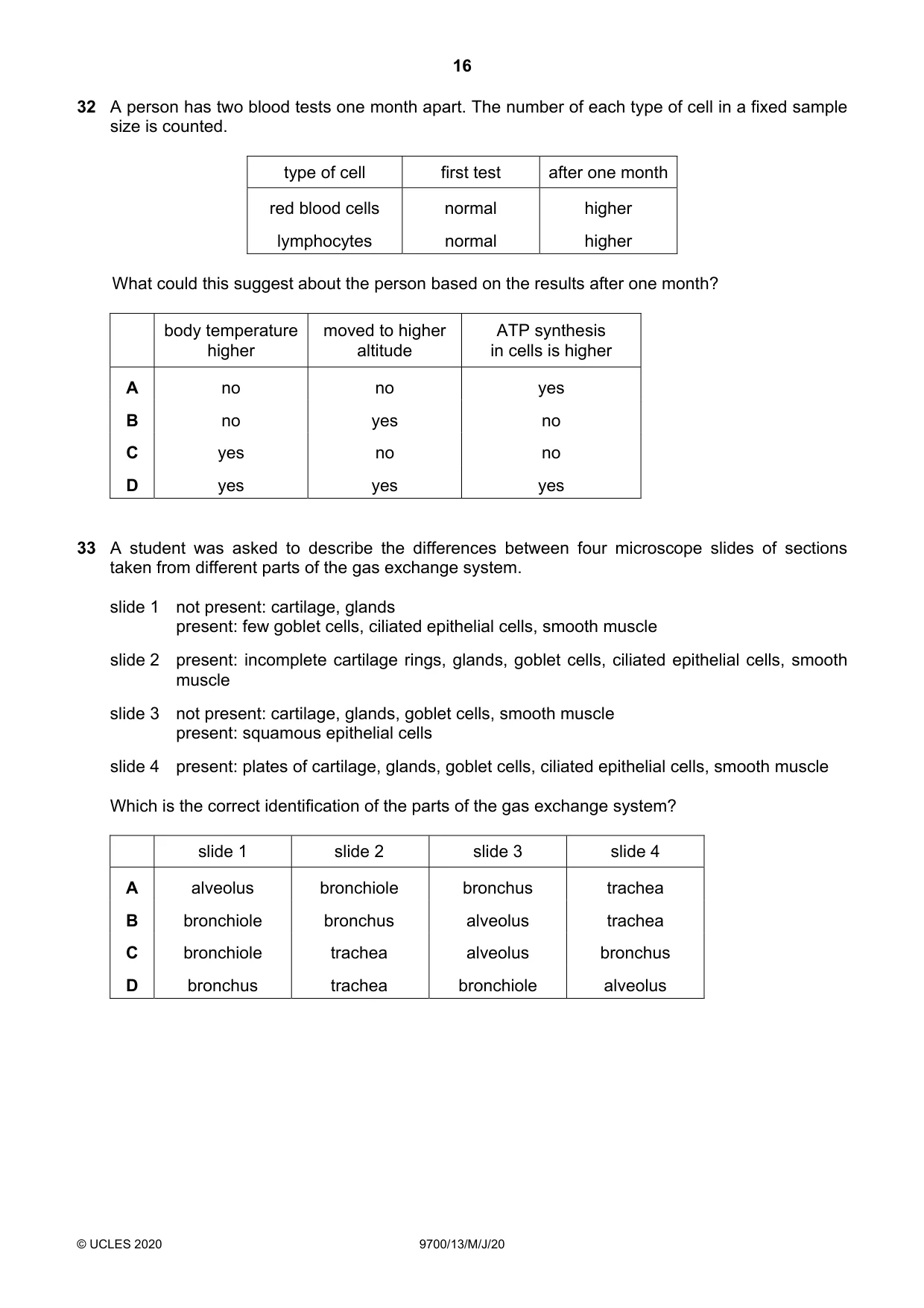
Q32 · A person has two blood tests one month apart
32 A person has two blood tests one month apart. The number of each type of cell in a fixed sample size is counted. type of cell first test after one month red blood cells normal higher lymphocytes normal higher What could this suggest about the person based on the results after one month? body temperature moved to higher ATP synthesis higher altitude in cells is higher A no no yes B no yes no C yes no no D yes yes yes
Mark scheme: D
Q33 · A student was asked to describe the differences between four microscope slides of…
33 A student was asked to describe the differences between four microscope slides of sections taken from different parts of the gas exchange system. slide 1 not present: cartilage, glands present: few goblet cells, ciliated epithelial cells, smooth muscle slide 2 present: incomplete cartilage rings, glands, goblet cells, ciliated epithelial cells, smooth muscle slide 3 not present: cartilage, glands, goblet cells, smooth muscle present: squamous epithelial cells slide 4 present: plates of cartilage, glands, goblet cells, ciliated epithelial cells, smooth muscle Which is the correct identification of the parts of the gas exchange system? slide 1 slide 2 slide 3 slide 4 A alveolus bronchiole bronchus trachea B bronchiole bronchus alveolus trachea C bronchiole trachea alveolus bronchus D bronchus trachea bronchiole alveolus
Mark scheme: C
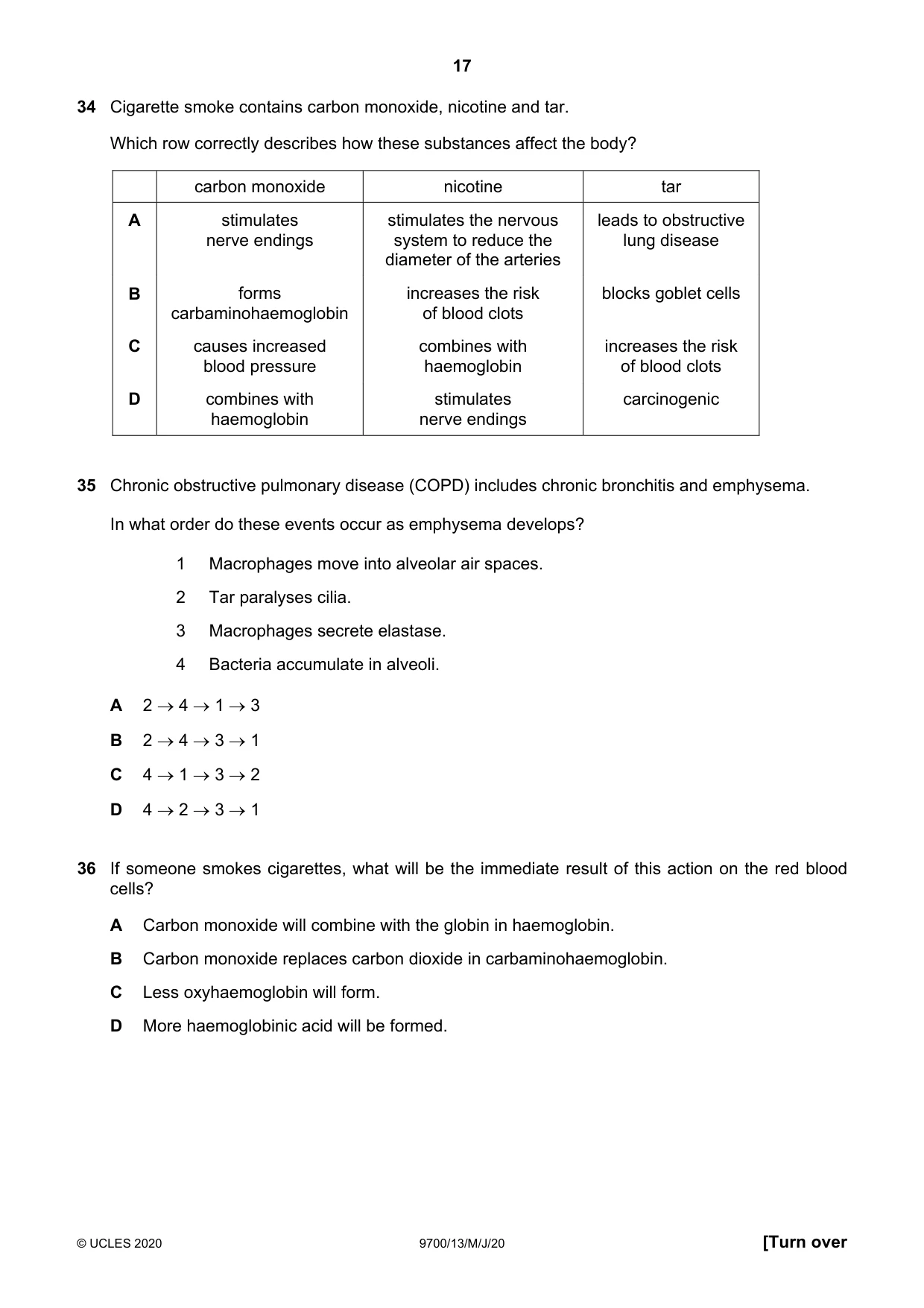
Q34 · Cigarette smoke contains carbon monoxide, nicotine and tar
34 Cigarette smoke contains carbon monoxide, nicotine and tar. Which row correctly describes how these substances affect the body? carbon monoxide nicotine tar A stimulates stimulates the nervous leads to obstructive nerve endings system to reduce the lung disease diameter of the arteries B forms increases the risk blocks goblet cells carbaminohaemoglobin of blood clots C causes increased combines with increases the risk blood pressure haemoglobin of blood clots D combines with stimulates carcinogenic haemoglobin nerve endings
Mark scheme: D
Q35 · Chronic obstructive pulmonary disease (COPD) includes chronic bronchitis and emphysema
35 Chronic obstructive pulmonary disease (COPD) includes chronic bronchitis and emphysema. In what order do these events occur as emphysema develops? 1 Macrophages move into alveolar air spaces. 2 Tar paralyses cilia. 3 Macrophages secrete elastase. 4 Bacteria accumulate in alveoli. A 2 → 4 → 1 → 3 B 2 → 4 → 3 → 1 C 4 → 1 → 3 → 2 D 4 → 2 → 3 → 1
Mark scheme: B
Q36 · If someone smokes cigarettes, what will be the immediate result of this action on the red…
36 If someone smokes cigarettes, what will be the immediate result of this action on the red blood cells? A Carbon monoxide will combine with the globin in haemoglobin. B Carbon monoxide replaces carbon dioxide in carbaminohaemoglobin. C Less oxyhaemoglobin will form. D More haemoglobinic acid will be formed.
Mark scheme: C
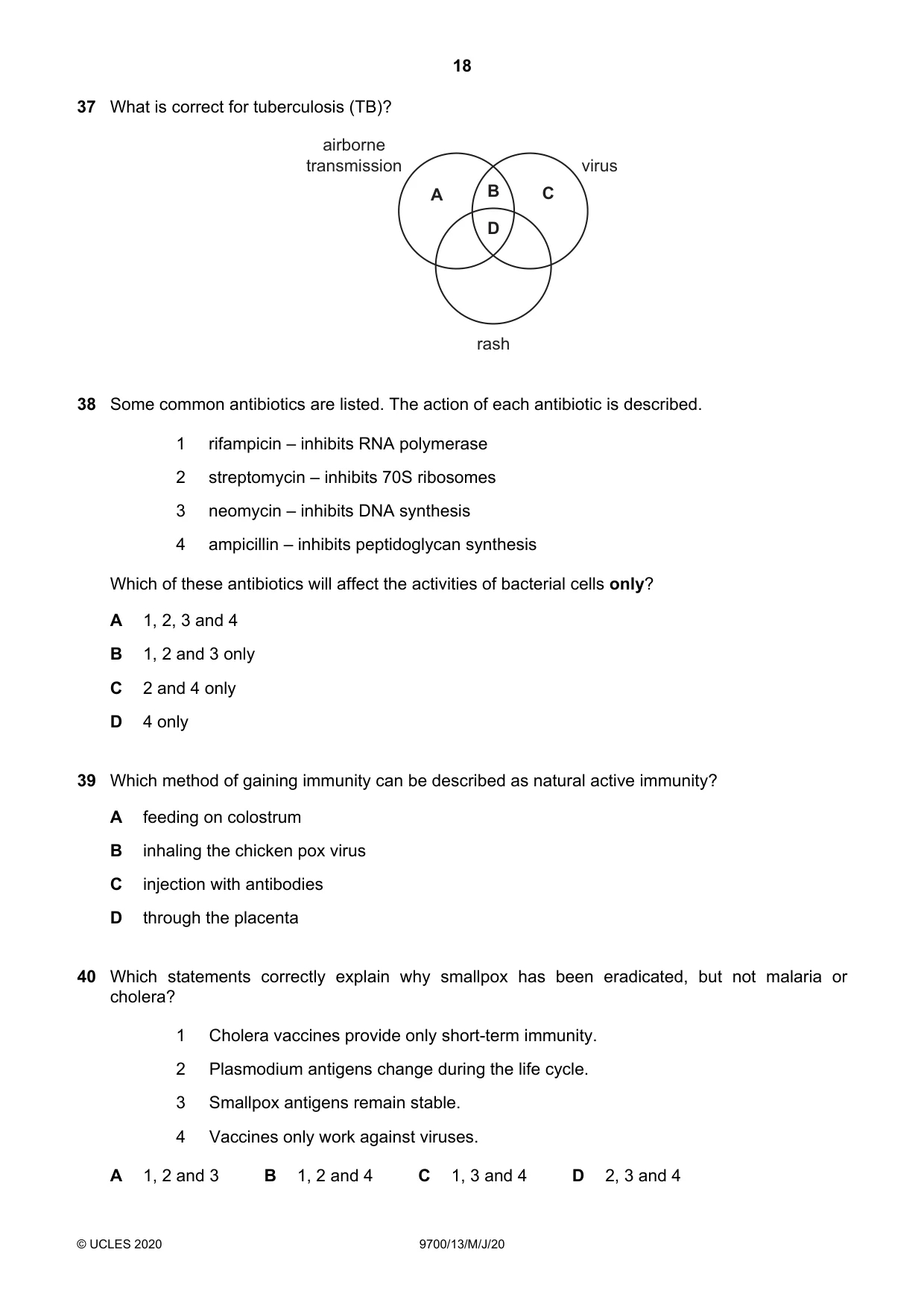
Q37 · What is correct for tuberculosis (TB)?
37 What is correct for tuberculosis (TB)? airborne transmission virus A B C D rash
Mark scheme: A
Q38 · Some common antibiotics are listed
38 Some common antibiotics are listed. The action of each antibiotic is described. 1 rifampicin – inhibits RNA polymerase 2 streptomycin – inhibits 70S ribosomes 3 neomycin – inhibits DNA synthesis 4 ampicillin – inhibits peptidoglycan synthesis Which of these antibiotics will affect the activities of bacterial cells only? A 1, 2, 3 and 4 B 1, 2 and 3 only C 2 and 4 only D 4 only
Mark scheme: D
Q39 · Which method of gaining immunity can be described as natural active immunity?
39 Which method of gaining immunity can be described as natural active immunity? A feeding on colostrum B inhaling the chicken pox virus C injection with antibodies D through the placenta
Mark scheme: B
Q40 · Which statements correctly explain why smallpox has been eradicated, but not malaria or…
40 Which statements correctly explain why smallpox has been eradicated, but not malaria or cholera? 1 Cholera vaccines provide only short-term immunity. 2 Plasmodium antigens change during the life cycle. 3 Smallpox antigens remain stable. 4 Vaccines only work against viruses. A 1, 2 and 3 B 1, 2 and 4 C 1, 3 and 4 D 2, 3 and 4
Mark scheme: A
What was in this paper
The subtopics covered by these 40 questions, and how many questions each got. Open one in a new tab to see every Cambridge question on it.
3Factors that affect enzyme action3Structure of nucleic acids and replication of DNA3The circulatory system3The gas exchange system3Transport of oxygen and carbon dioxide3Antibodies and vaccination2Carbohydrates and lipids2Fluid mosaic membranes2Movement into and out of cells2Protein synthesis2Proteins2Structure of transport tissues2Transport mechanisms2Antibiotics1Chromosome behaviour in mitosis1Infectious diseases1Replication and division of nuclei and cells1Testing for biological molecules1The microscope in cell studies1