Cambridge A Level Biology 9700 — 2016 May/June Paper 1 · Variant 3
9700/13/M/J/16 · 40 questions · 40 marks · ≈45 min
The question paper and its mark scheme, free to read here and free to download. This is Cambridge’s own paper, exactly as it was sat.
Question paper16 pages
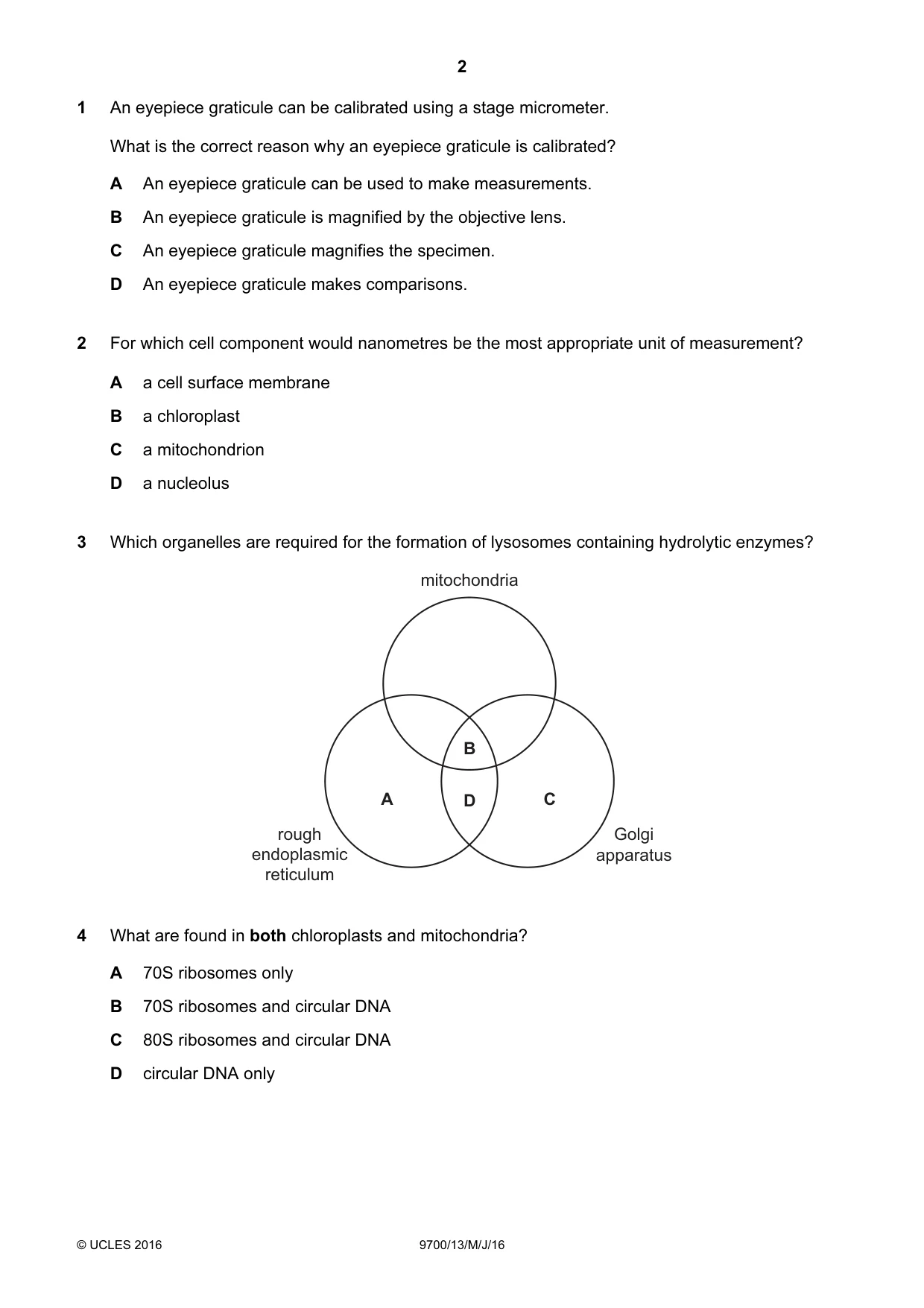


Mark scheme2 pages
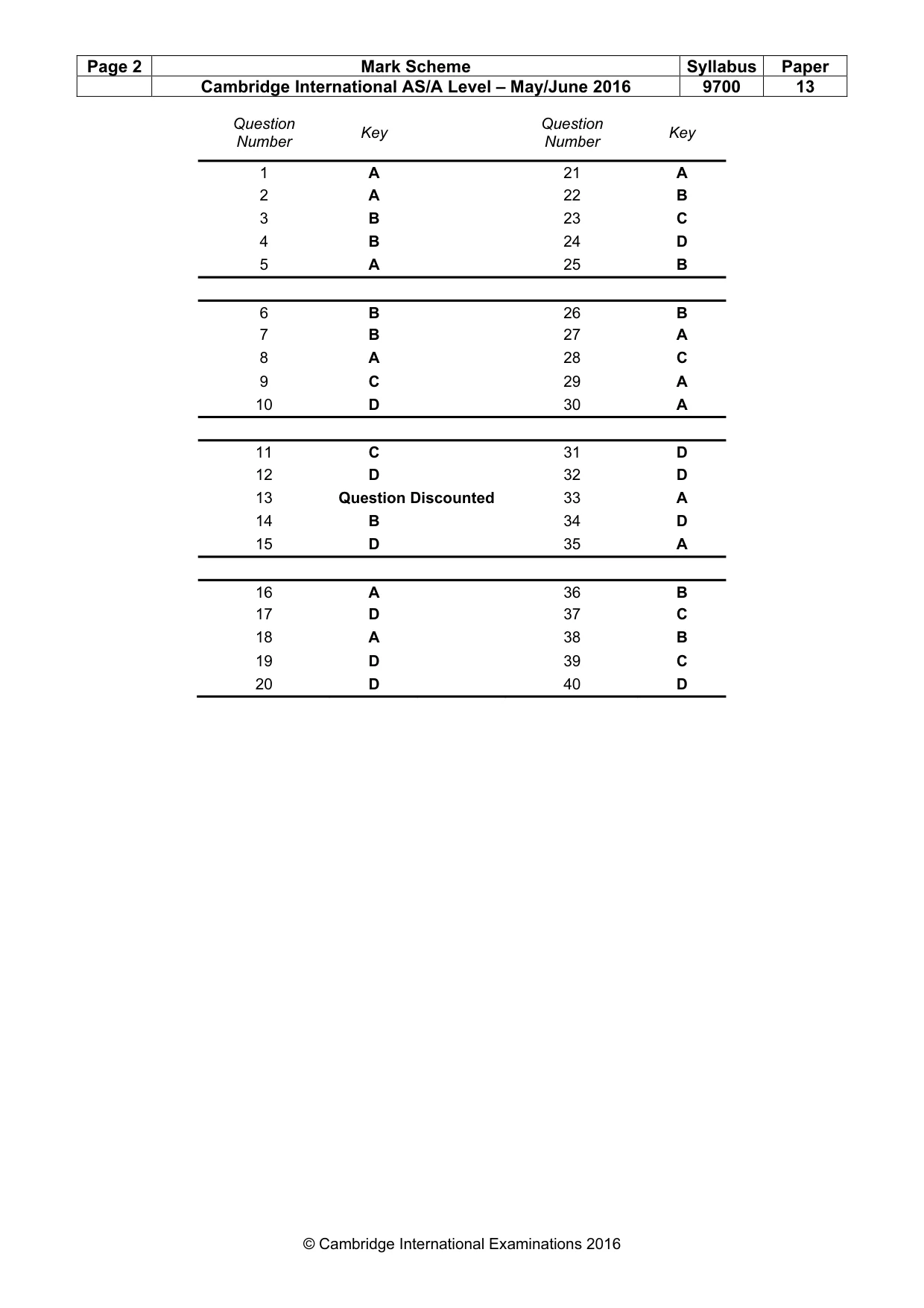
Answers below. Sit the paper first if you are practising.
Questions as text
Q1 · An eyepiece graticule can be calibrated using a stage micrometer
1 An eyepiece graticule can be calibrated using a stage micrometer. What is the correct reason why an eyepiece graticule is calibrated? A An eyepiece graticule can be used to make measurements. B An eyepiece graticule is magnified by the objective lens. C An eyepiece graticule magnifies the specimen. D An eyepiece graticule makes comparisons.
Q2 · For which cell component would nanometres be the most appropriate unit of measurement?
2 For which cell component would nanometres be the most appropriate unit of measurement? A a cell surface membrane B a chloroplast C a mitochondrion D a nucleolus
More questions on Cells as the basic units of living organisms
Q3 · Which organelles are required for the formation of lysosomes containing hydrolytic…
3 Which organelles are required for the formation of lysosomes containing hydrolytic enzymes? mitochondria B A D C rough Golgi endoplasmic apparatus reticulum
More questions on Cells as the basic units of living organisms
Q4 · What are found in both chloroplasts and mitochondria?
4 What are found in both chloroplasts and mitochondria? A 70S ribosomes only B 70S ribosomes and circular DNA C 80S ribosomes and circular DNA D circular DNA only
More questions on Cells as the basic units of living organisms
Q5 · Which types of RNA are found in both prokaryotic and eukaryotic cells?
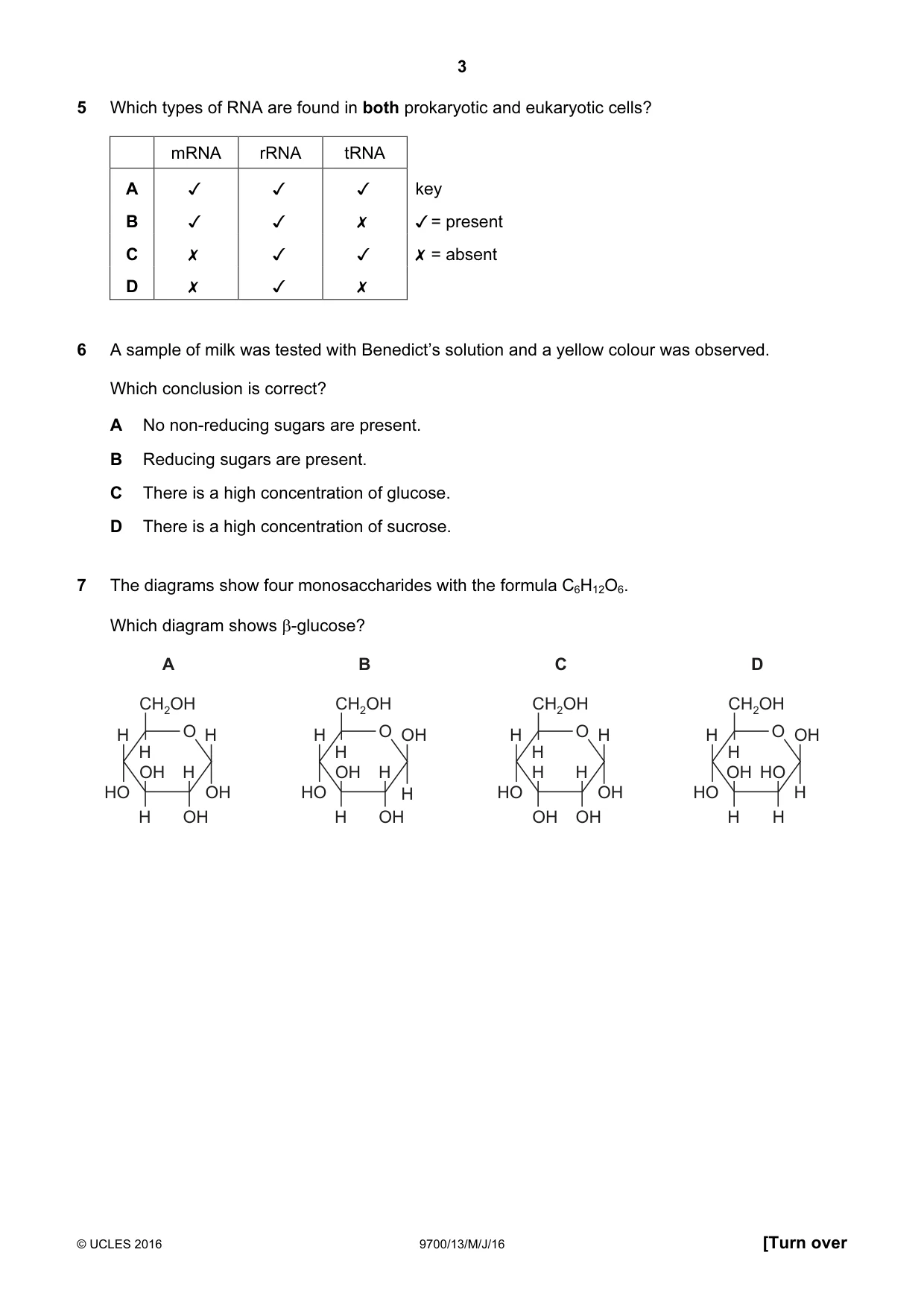
5 Which types of RNA are found in both prokaryotic and eukaryotic cells? mRNA rRNA tRNA v v v key /¥ = present X = absent 0 OD D> ~ « & a aN x < x
Q6 · A sample of milk was tested with Benedict’s solution and a yellow colour was observed
6 A sample of milk was tested with Benedict’s solution and a yellow colour was observed. Which conclusion is correct? A No non-reducing sugars are present. B Reducing sugars are present. C There is a high concentration of glucose. D There is a high concentration of sucrose.
Q7 · The diagrams show four monosaccharides with the formula C6H12O6
7 The diagrams show four monosaccharides with the formula C6H12O6. Which diagram shows β-glucose? A B C D CH2OH CH2OH CH2OH CH2OH H O H H O OH H O H H O OH H H H H OH H OH H H H OH HO HO OH HO H HO OH HO H H OH H OH OH OH H H
Q8 · The diagram shows the relationship between different polysaccharides and the glycosidic…
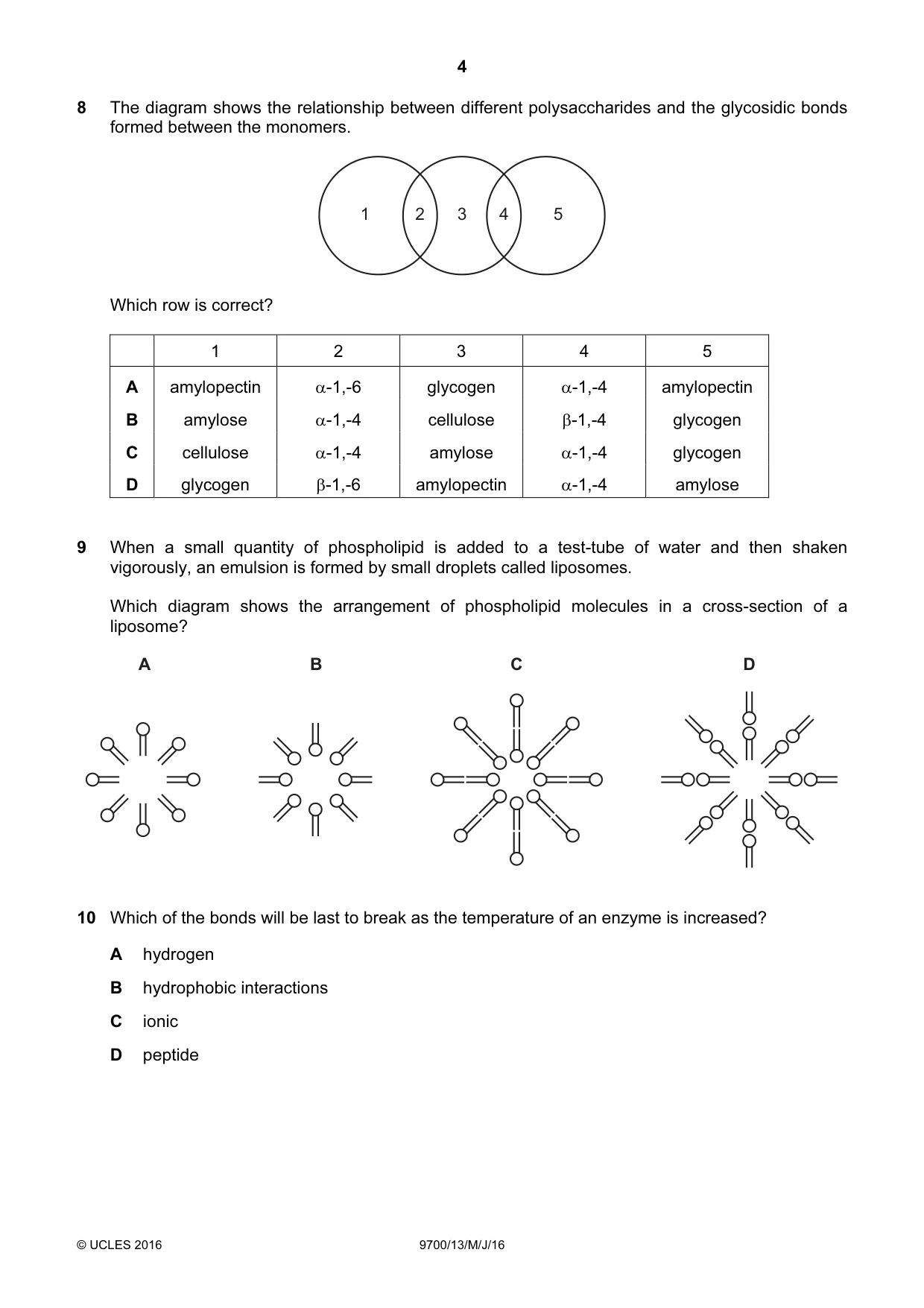
8 The diagram shows the relationship between different polysaccharides and the glycosidic bonds formed between the monomers. 1 2 3 4 5 Which row is correct? 1 2 3 4 5 A amylopectin α-1,-6 glycogen α-1,-4 amylopectin B amylose α-1,-4 cellulose β-1,-4 glycogen C cellulose α-1,-4 amylose α-1,-4 glycogen D glycogen β-1,-6 amylopectin α-1,-4 amylose
Q9 · When a small quantity of phospholipid is added to a test-tube of water and then shaken…
9 When a small quantity of phospholipid is added to a test-tube of water and then shaken vigorously, an emulsion is formed by small droplets called liposomes. Which diagram shows the arrangement of phospholipid molecules in a cross-section of a liposome? A B C D
Q10 · Which of the bonds will be last to break as the temperature of an enzyme is increased?
10 Which of the bonds will be last to break as the temperature of an enzyme is increased? A hydrogen B hydrophobic interactions C ionic D peptide
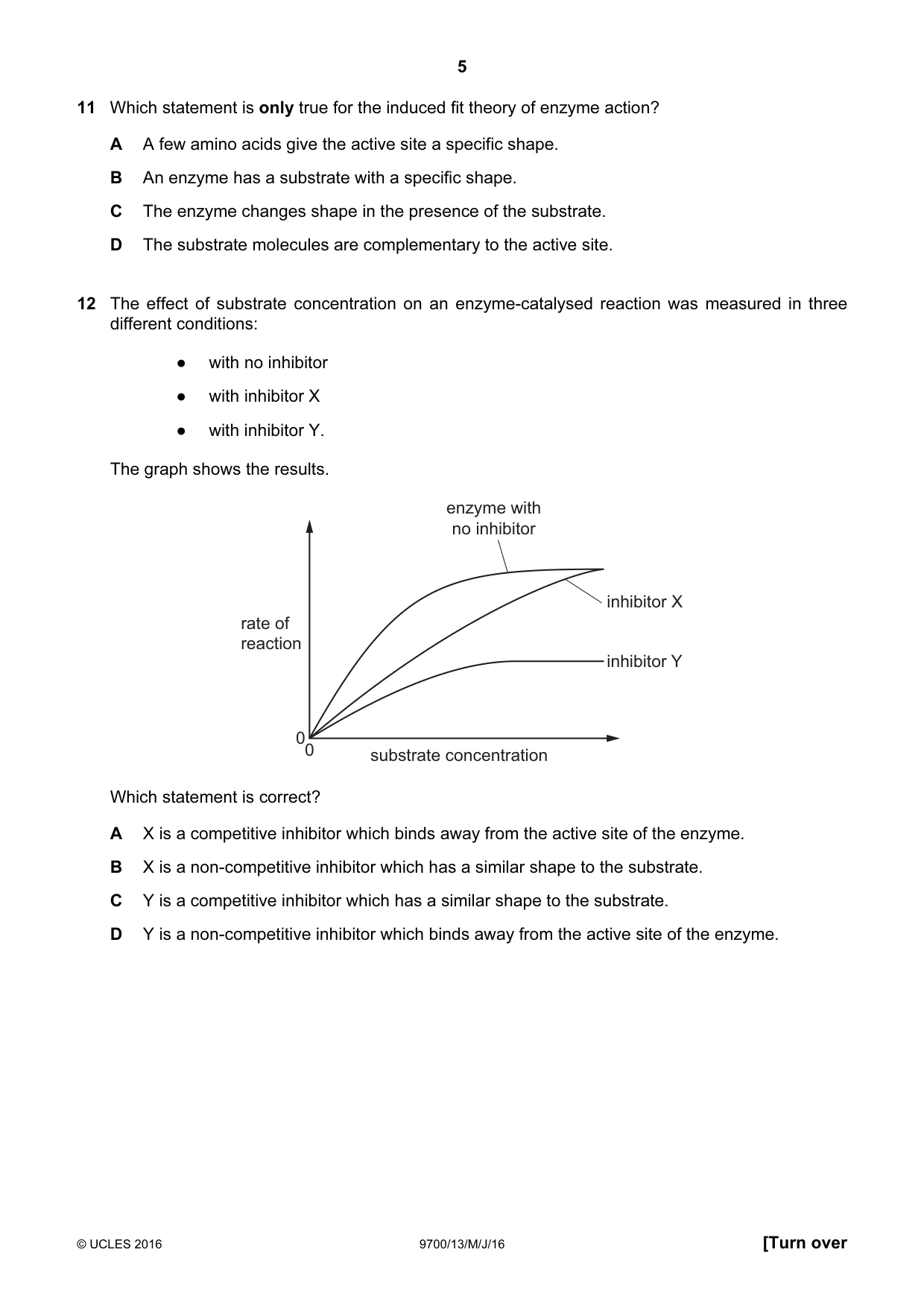
Q11 · Which statement is only true for the induced fit theory of enzyme action?
11 Which statement is only true for the induced fit theory of enzyme action? A A few amino acids give the active site a specific shape. B An enzyme has a substrate with a specific shape. C The enzyme changes shape in the presence of the substrate. D The substrate molecules are complementary to the active site.
Q12 · The effect of substrate concentration on an enzyme-catalysed reaction was measured in…
12 The effect of substrate concentration on an enzyme-catalysed reaction was measured in three different conditions: ● with no inhibitor ● with inhibitor X ● with inhibitor Y. The graph shows the results. enzyme with no inhibitor inhibitor X rate of reaction inhibitor Y 0 0 substrate concentration Which statement is correct? A X is a competitive inhibitor which binds away from the active site of the enzyme. B X is a non-competitive inhibitor which has a similar shape to the substrate. C Y is a competitive inhibitor which has a similar shape to the substrate. D Y is a non-competitive inhibitor which binds away from the active site of the enzyme.
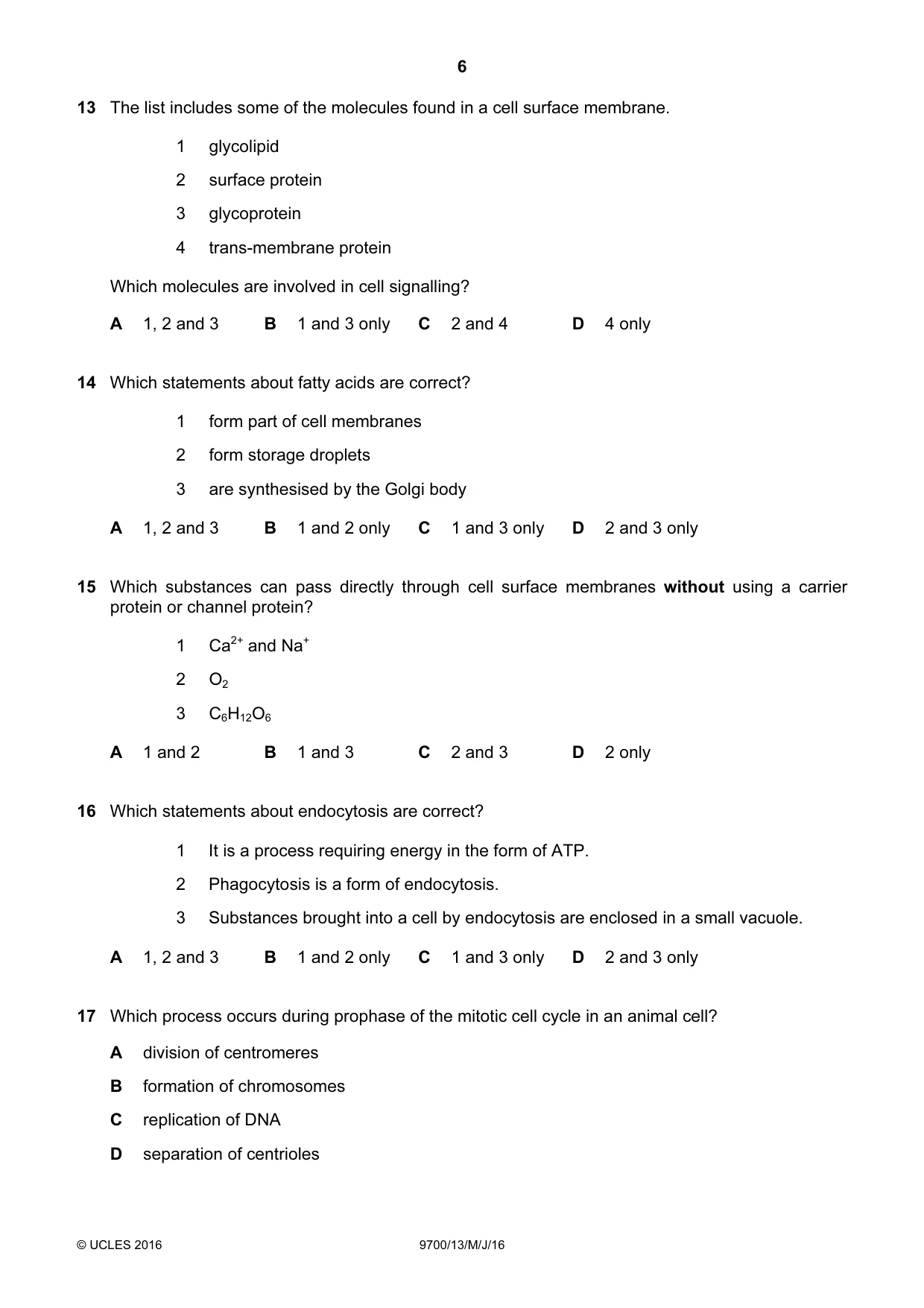
Q13 · The list includes some of the molecules found in a cell surface membrane
13 The list includes some of the molecules found in a cell surface membrane. 1 glycolipid 2 surface protein 3 glycoprotein 4 trans-membrane protein Which molecules are involved in cell signalling? A 1, 2 and 3 B 1 and 3 only C 2 and 4 D 4 only
Q14 · Which statements about fatty acids are correct?
14 Which statements about fatty acids are correct? 1 form part of cell membranes 2 form storage droplets 3 are synthesised by the Golgi body A 1, 2 and 3 B 1 and 2 only C 1 and 3 only D 2 and 3 only
Q15 · Which substances can pass directly through cell surface membranes without using a carrier…
15 Which substances can pass directly through cell surface membranes without using a carrier protein or channel protein? 1 Ca2+ and Na+ 2 O2 3 C6H12O6 A 1 and 2 B 1 and 3 C 2 and 3 D 2 only
Q16 · Which statements about endocytosis are correct?
16 Which statements about endocytosis are correct? 1 It is a process requiring energy in the form of ATP. 2 Phagocytosis is a form of endocytosis. 3 Substances brought into a cell by endocytosis are enclosed in a small vacuole. A 1, 2 and 3 B 1 and 2 only C 1 and 3 only D 2 and 3 only
Q17 · Which process occurs during prophase of the mitotic cell cycle in an animal cell?
17 Which process occurs during prophase of the mitotic cell cycle in an animal cell? A division of centromeres B formation of chromosomes C replication of DNA D separation of centrioles
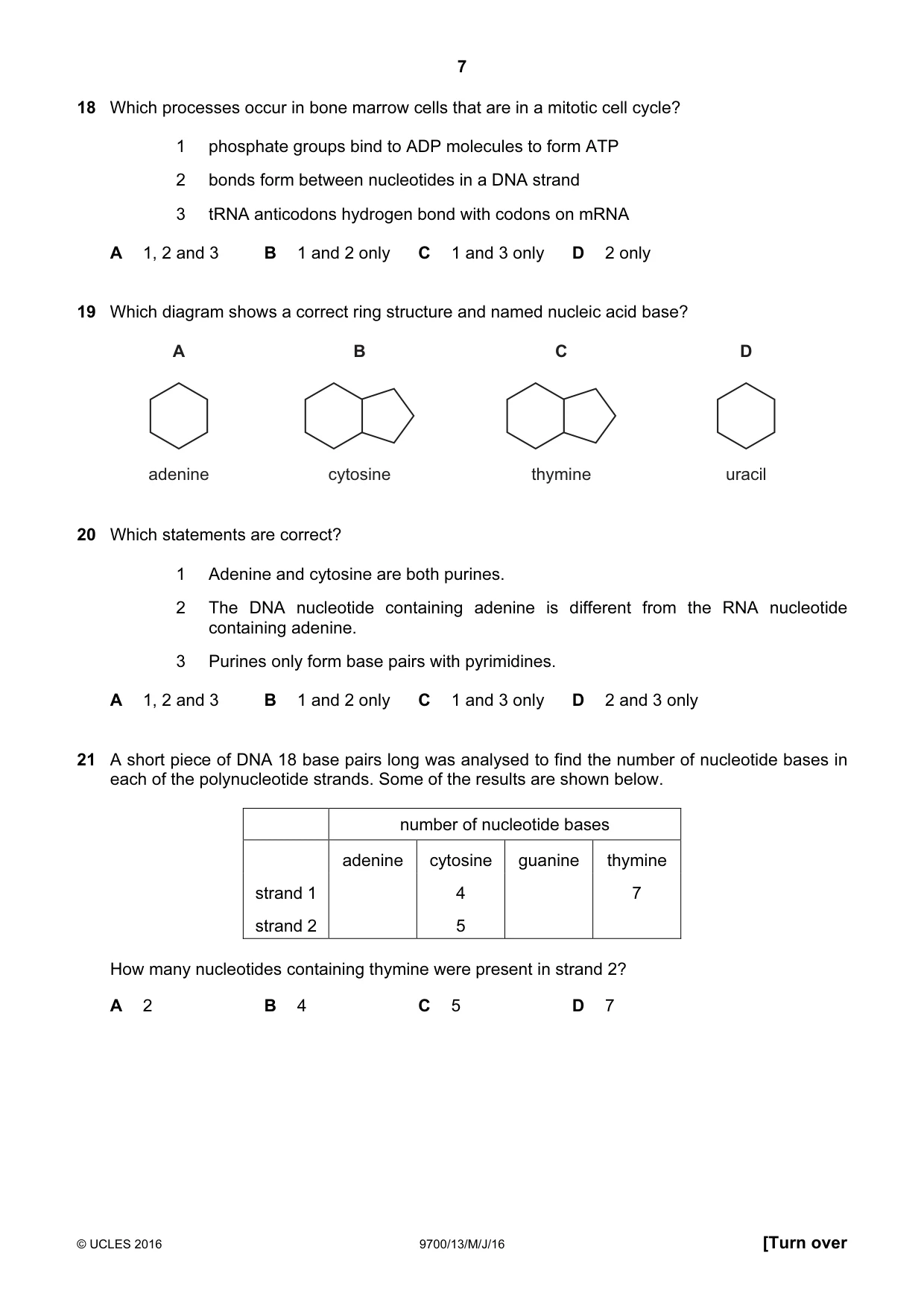
Q18 · Which processes occur in bone marrow cells that are in a mitotic cell cycle?
18 Which processes occur in bone marrow cells that are in a mitotic cell cycle? 1 phosphate groups bind to ADP molecules to form ATP 2 bonds form between nucleotides in a DNA strand 3 tRNA anticodons hydrogen bond with codons on mRNA A 1, 2 and 3 B 1 and 2 only C 1 and 3 only D 2 only
More questions on Replication and division of nuclei and cells
Q19 · Which diagram shows a correct ring structure and named nucleic acid base?
19 Which diagram shows a correct ring structure and named nucleic acid base? A B C D adenine cytosine thymine uracil
More questions on Structure of nucleic acids and replication of DNA
Q20 · Which statements are correct?
20 Which statements are correct? 1 Adenine and cytosine are both purines. 2 The DNA nucleotide containing adenine is different from the RNA nucleotide containing adenine. 3 Purines only form base pairs with pyrimidines. A 1, 2 and 3 B 1 and 2 only C 1 and 3 only D 2 and 3 only
More questions on Structure of nucleic acids and replication of DNA
Q21 · A short piece of DNA 18 base pairs long was analysed to find the number of nucleotide…
21 A short piece of DNA 18 base pairs long was analysed to find the number of nucleotide bases in each of the polynucleotide strands. Some of the results are shown below. number of nucleotide bases adenine cytosine guanine thymine strand 1 4 7 strand 2 5 How many nucleotides containing thymine were present in strand 2? A 2 B 4 C 5 D 7
More questions on Structure of nucleic acids and replication of DNA
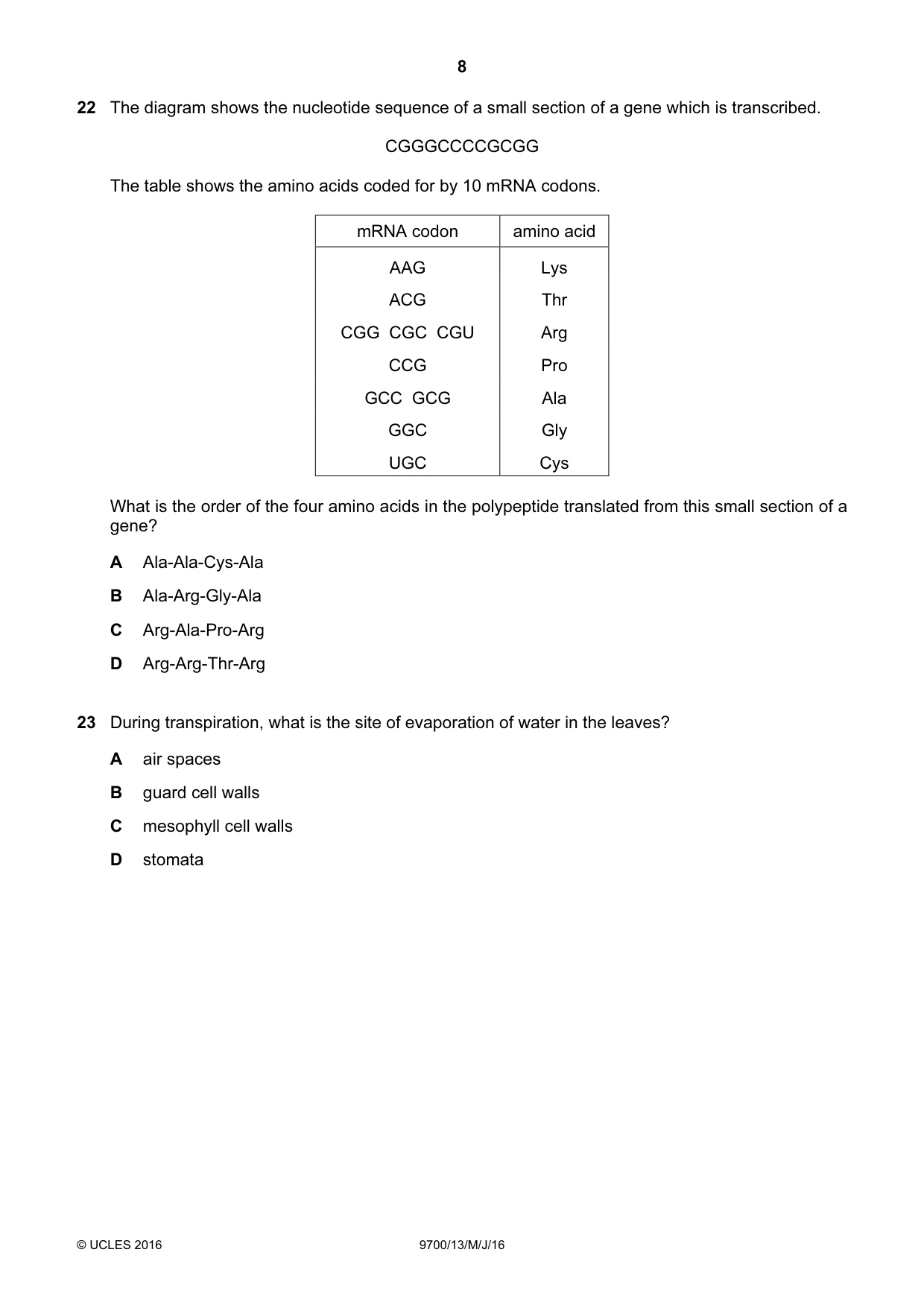
Q22 · The diagram shows the nucleotide sequence of a small section of a gene which is…
22 The diagram shows the nucleotide sequence of a small section of a gene which is transcribed. CGGGCCCCGCGG The table shows the amino acids coded for by 10 mRNA codons. mRNA codon amino acid AAG Lys ACG Thr CGG CGC CGU Arg CCG Pro GCC GCG Ala GGC Gly UGC Cys What is the order of the four amino acids in the polypeptide translated from this small section of a gene? A Ala-Ala-Cys-Ala B Ala-Arg-Gly-Ala C Arg-Ala-Pro-Arg D Arg-Arg-Thr-Arg
Q23 · During transpiration, what is the site of evaporation of water in the leaves?
23 During transpiration, what is the site of evaporation of water in the leaves? A air spaces B guard cell walls C mesophyll cell walls D stomata
Q24 · Water passes across leaf tissues by different routes as a result of: ● differences in…
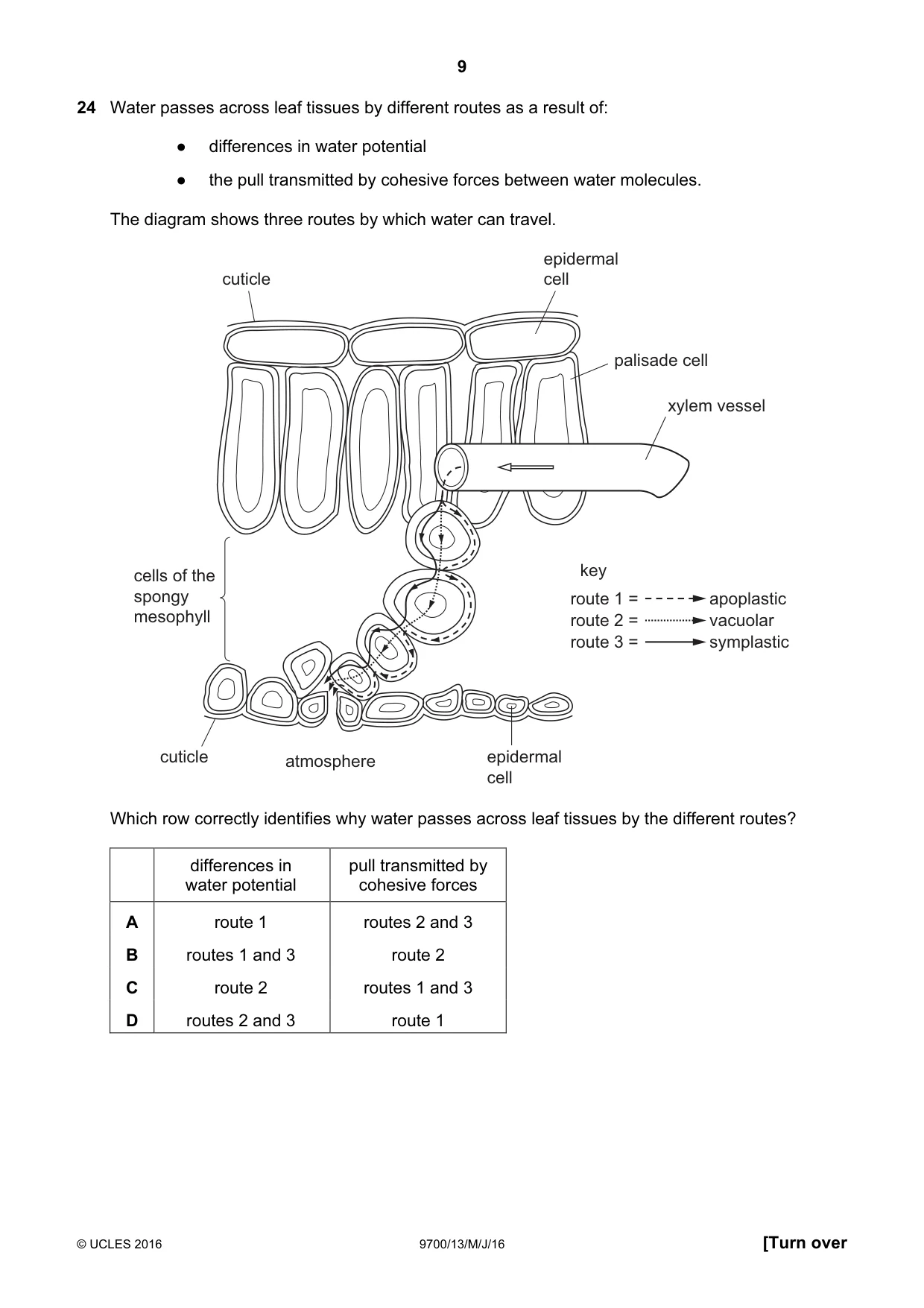
24 Water passes across leaf tissues by different routes as a result of: ● differences in water potential ● the pull transmitted by cohesive forces between water molecules. The diagram shows three routes by which water can travel. epidermal cuticle cell palisade cell xylem vessel cells of the key spongy route 1 = apoplastic mesophyll route 2 = vacuolar route 3 = symplastic cuticle atmosphere epidermal cell Which row correctly identifies why water passes across leaf tissues by the different routes? differences in pull transmitted by water potential cohesive forces A route 1 routes 2 and 3 B routes 1 and 3 route 2 C route 2 routes 1 and 3 D routes 2 and 3 route 1
Q25 · Which factors contribute to the increase in transpiration rate when the temperature rises?
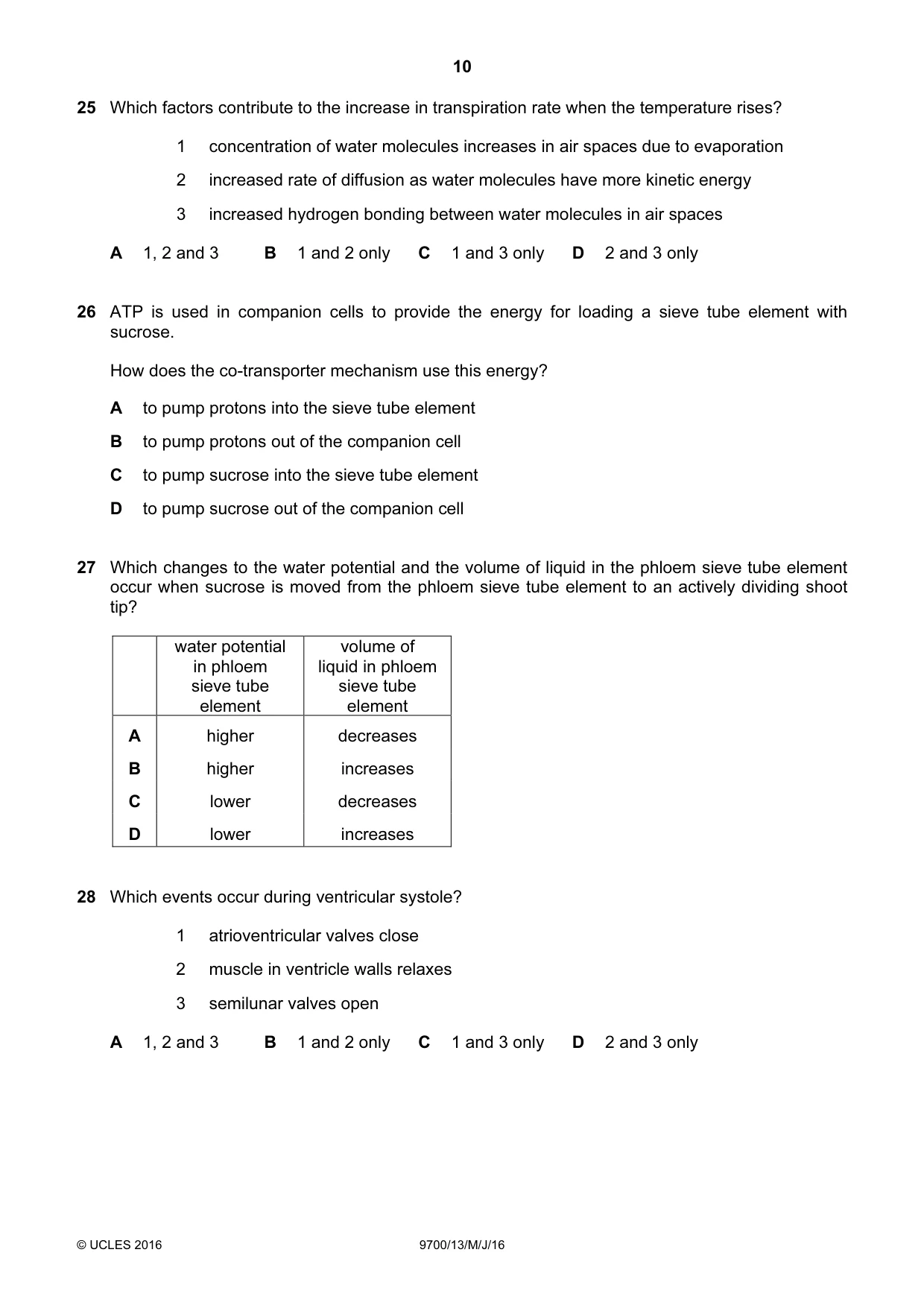
25 Which factors contribute to the increase in transpiration rate when the temperature rises? 1 concentration of water molecules increases in air spaces due to evaporation 2 increased rate of diffusion as water molecules have more kinetic energy 3 increased hydrogen bonding between water molecules in air spaces A 1, 2 and 3 B 1 and 2 only C 1 and 3 only D 2 and 3 only
Q26 · ATP is used in companion cells to provide the energy for loading a sieve tube element…
26 ATP is used in companion cells to provide the energy for loading a sieve tube element with sucrose. How does the co-transporter mechanism use this energy? A to pump protons into the sieve tube element B to pump protons out of the companion cell C to pump sucrose into the sieve tube element D to pump sucrose out of the companion cell
Q27 · Which changes to the water potential and the volume of liquid in the phloem sieve tube…
27 Which changes to the water potential and the volume of liquid in the phloem sieve tube element occur when sucrose is moved from the phloem sieve tube element to an actively dividing shoot tip? water potential volume of in phloem liquid in phloem sieve tube sieve tube element element A higher decreases B higher increases C lower decreases D lower increases
Q28 · Which events occur during ventricular systole?
28 Which events occur during ventricular systole? 1 atrioventricular valves close 2 muscle in ventricle walls relaxes 3 semilunar valves open A 1, 2 and 3 B 1 and 2 only C 1 and 3 only D 2 and 3 only
Q29 · Which components of blood are present in lymph?
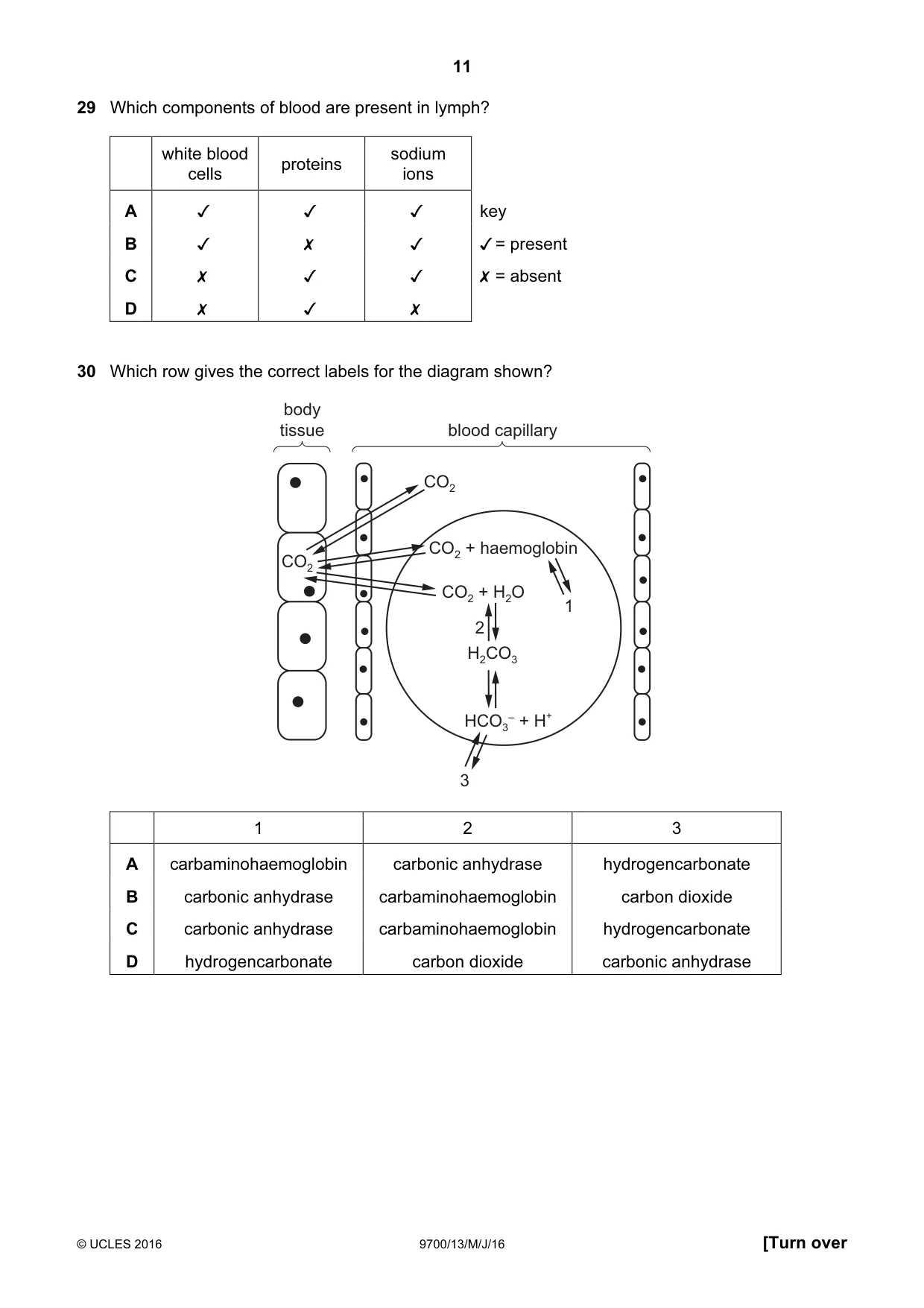
29 Which components of blood are present in lymph? white blood . sodium proteins : cells ions A Jv Jv Jv B Jv x J Cc x Jv Jv D x J x key / = present X = absent
Q30 · Which row gives the correct labels for the diagram shown?
30 Which row gives the correct labels for the diagram shown? body tissue blood capillary CO2 CO2 + haemoglobin CO2 CO2 + H2O 1 2 H2CO3 HCO3 – + H+ 3 1 2 3 A carbaminohaemoglobin carbonic anhydrase hydrogencarbonate B carbonic anhydrase carbaminohaemoglobin carbon dioxide C carbonic anhydrase carbaminohaemoglobin hydrogencarbonate D hydrogencarbonate carbon dioxide carbonic anhydrase
Q31 · An increase in carbon dioxide in human blood shifts the oxyhaemoglobin dissociation curve…
31 An increase in carbon dioxide in human blood shifts the oxyhaemoglobin dissociation curve to the right. What is the explanation for this effect? A An increase in carbon dioxide concentration increases the breathing rate. B Carbon dioxide is more soluble than oxygen and displaces it. C Diffusion of carbon dioxide between the alveoli and the blood is more rapid. D Increasing the H+ concentration decreases haemoglobin affinity for oxygen.
Q32 · A person has two blood tests one month apart
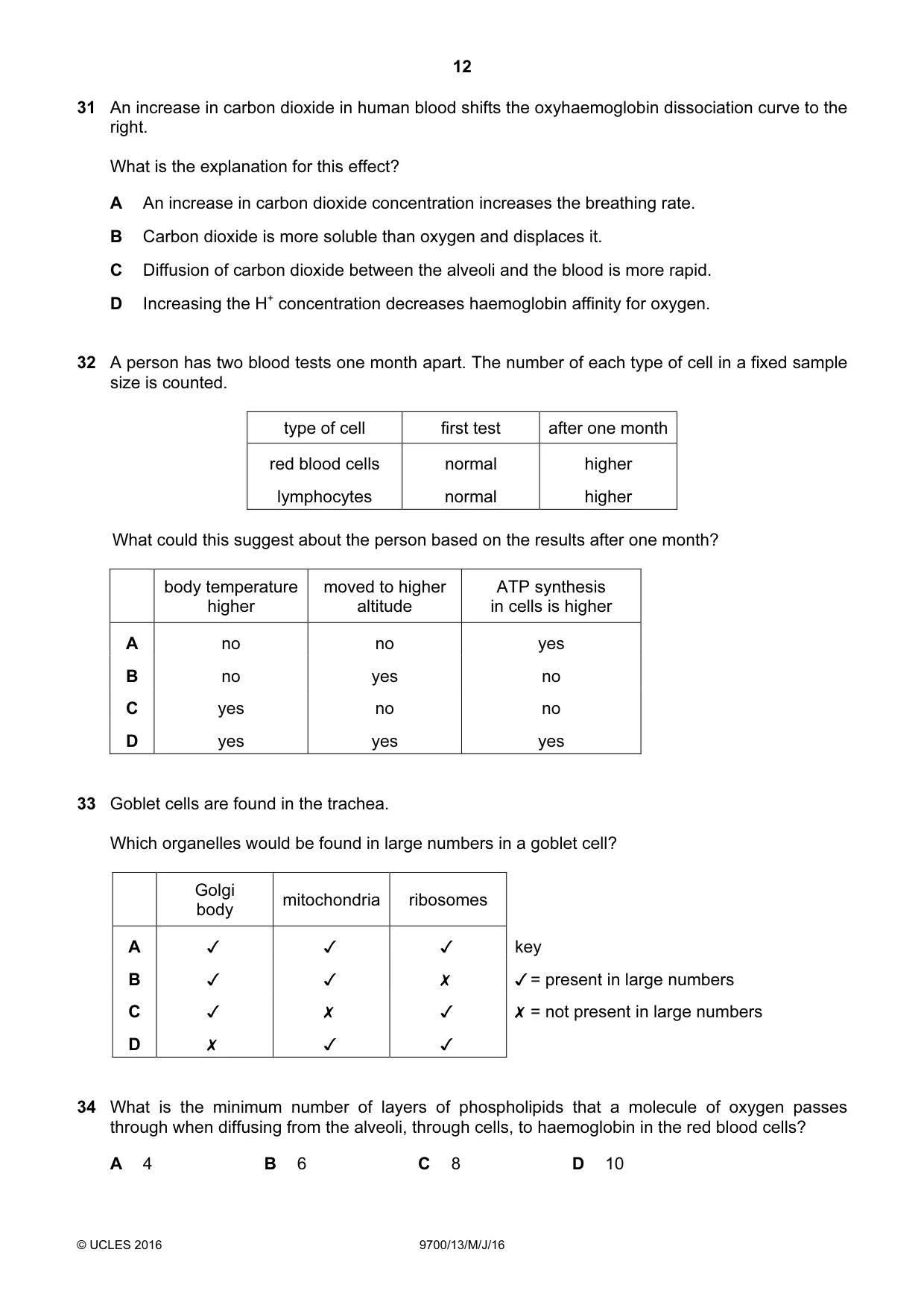
32 A person has two blood tests one month apart. The number of each type of cell in a fixed sample size is counted. type of cell first test after one month red blood cells normal higher lymphocytes normal higher What could this suggest about the person based on the results after one month? body temperature moved to higher ATP synthesis higher altitude in cells is higher A no no yes B no yes no C yes no no D yes yes yes
Q33 · Goblet cells are found in the trachea
33 Goblet cells are found in the trachea. Which organelles would be found in large numbers in a goblet cell? Golgi mitochondria ribosomes body J key ¥ = present in large numbers X = not present in large numbers 0 0O WwW > Ke 4K QS 4 v v x
More questions on Cells as the basic units of living organisms
Q34 · What is the minimum number of layers of phospholipids that a molecule of oxygen passes…
34 What is the minimum number of layers of phospholipids that a molecule of oxygen passes through when diffusing from the alveoli, through cells, to haemoglobin in the red blood cells? A 4 B 6 C 8 D 10
Q35 · Which symptoms may be seen in a person affected by chronic obstructive pulmonary disease…
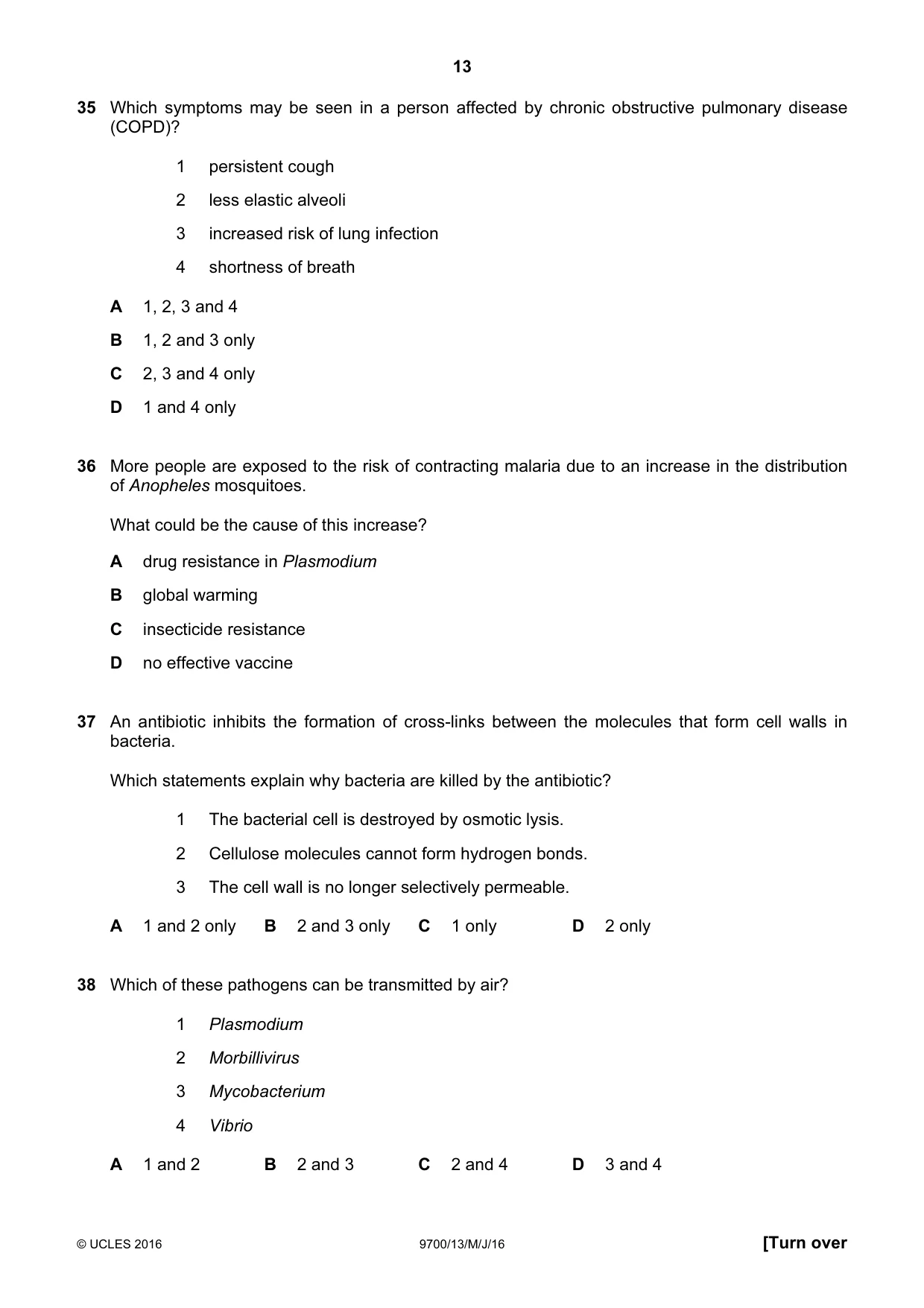
35 Which symptoms may be seen in a person affected by chronic obstructive pulmonary disease (COPD)? 1 persistent cough 2 less elastic alveoli 3 increased risk of lung infection 4 shortness of breath A 1, 2, 3 and 4 B 1, 2 and 3 only C 2, 3 and 4 only D 1 and 4 only
Q36 · More people are exposed to the risk of contracting malaria due to an increase in the…
36 More people are exposed to the risk of contracting malaria due to an increase in the distribution of Anopheles mosquitoes. What could be the cause of this increase? A drug resistance in Plasmodium B global warming C insecticide resistance D no effective vaccine
Q37 · An antibiotic inhibits the formation of cross-links between the molecules that form cell…
37 An antibiotic inhibits the formation of cross-links between the molecules that form cell walls in bacteria. Which statements explain why bacteria are killed by the antibiotic? 1 The bacterial cell is destroyed by osmotic lysis. 2 Cellulose molecules cannot form hydrogen bonds. 3 The cell wall is no longer selectively permeable. A 1 and 2 only B 2 and 3 only C 1 only D 2 only
Q38 · Which of these pathogens can be transmitted by air?
38 Which of these pathogens can be transmitted by air? 1 Plasmodium 2 Morbillivirus 3 Mycobacterium 4 Vibrio A 1 and 2 B 2 and 3 C 2 and 4 D 3 and 4
Q39 · The graph shows the antibody response when a person is injected first with antigen X and…
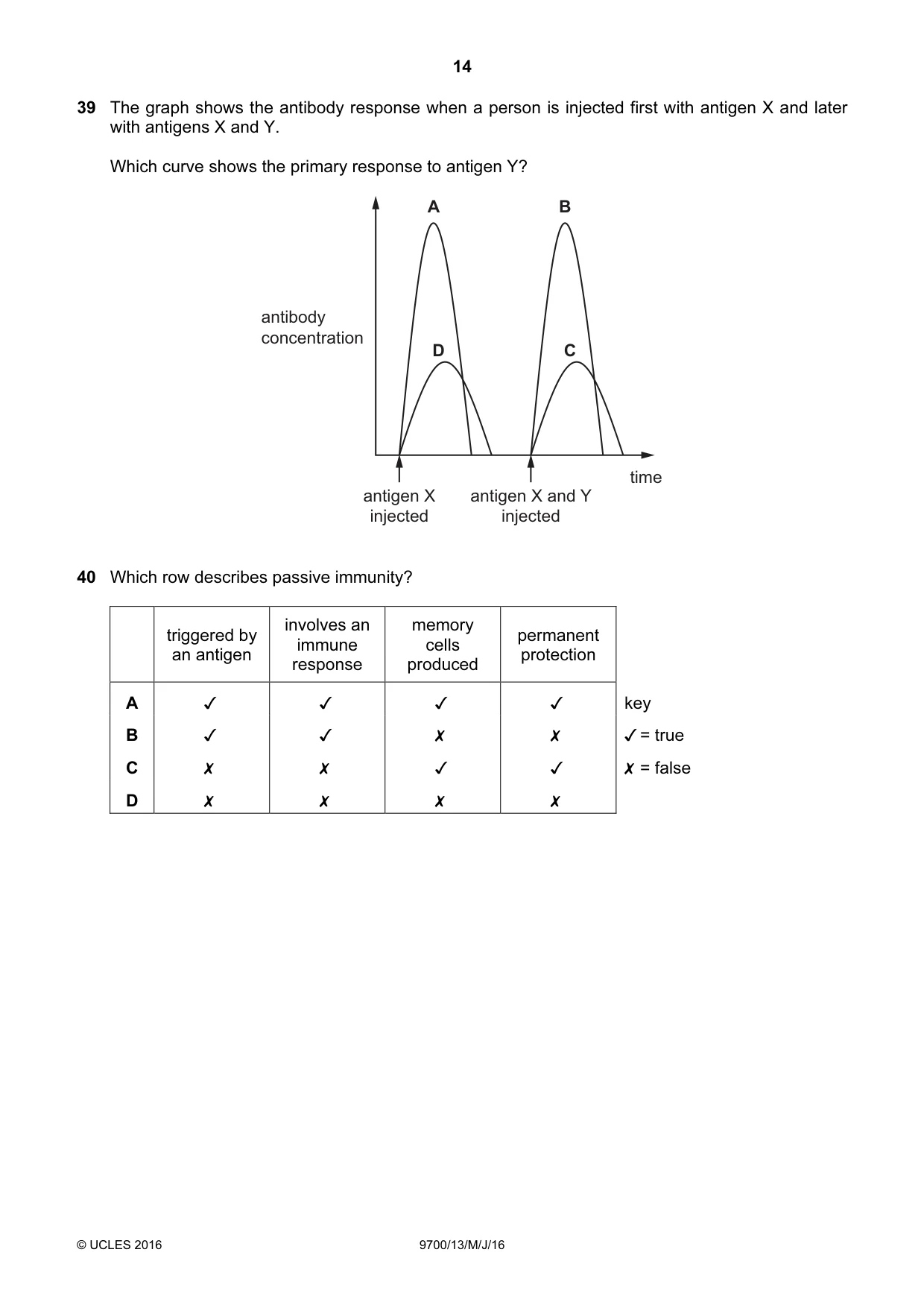
39 The graph shows the antibody response when a person is injected first with antigen X and later with antigens X and Y. Which curve shows the primary response to antigen Y? A B antibody concentration D C time antigen X antigen X and Y injected injected
Q40 · Which row describes passive immunity?
40 Which row describes passive immunity? involves an memory triggered by immune cells permanent an antigen protection response produced A Jv v v v B Jv v x x Cc x x v v D x x x x key J/ = true X = false
What was in this paper
The subtopics covered by these 40 questions, and how many questions each got. Open one in a new tab to see every Cambridge question on it.
5Carbohydrates and lipids4Cells as the basic units of living organisms4Structure of nucleic acids and replication of DNA3Factors that affect enzyme action2Infectious diseases2Movement into and out of cells2Protein synthesis2The gas exchange system2Transport of oxygen and carbon dioxide2Antibiotics1Antibodies and vaccination1Chromosome behaviour in mitosis1Fluid mosaic membranes1Mode of action of enzymes1Replication and division of nuclei and cells1Respiration1Testing for biological molecules1The circulatory system1The heart1The immune system1The microscope in cell studies1What you needed in this session
Cambridge’s own grade thresholds for 2016 May/June, Paper 1 · Variant 3. A higher threshold means an easier paper — the bar moves with how the cohort did.