Questions as text
Q1 · The drawing shows a wave 0625/11 May/June 2005
20 The drawing shows a wave. Which labelled distance is the wavelength? A B D C
1 marks
Answer: C
This question in 0625/11 May/June 2005
Q2 · Radio waves are received at a house at the bottom of a hill 0625/11 May/June 2005
21 Radio waves are received at a house at the bottom of a hill. hill The waves reach the house because the hill has caused them to be A diffracted. B radiated. C reflected. D refracted.
1 marks
Answer: A
This question in 0625/11 May/June 2005
Q3 · A fire alarm is not loud enough 0625/11 May/June 2005
24 A fire alarm is not loud enough. An engineer adjusts it so that it produces a note of the same pitch which is louder. What effect does this have on the amplitude and on the frequency of the sound? amplitude frequency A larger larger B larger same C same larger D same same
1 marks
Answer: B
This question in 0625/11 May/June 2005
Q4 · The diagrams show four sources of waves 0625/11 Oct/Nov 2005
19 The diagrams show four sources of waves. Which source generates longitudinal waves? A B C D stick pushed up radio loudspeaker lamp and down in water transmitter
1 marks
Answer: C
This question in 0625/11 Oct/Nov 2005
Q5 · In a ripple tank, water waves move towards a barrier with a narrow gap 0625/11 Oct/Nov 2005
20 In a ripple tank, water waves move towards a barrier with a narrow gap. barrier water waves Which diagram best shows the waves beyond the barrier? A B C D
1 marks
Answer: D
This question in 0625/11 Oct/Nov 2005
Q6 · Which is the best description of the speed of a water wave? 0625/11 May/June 2006
20 Which is the best description of the speed of a water wave? A the distance between one wave crest and the next B the distance between the crest of a wave and a trough C the distance that a particle of water moves up and down in one second D the distance that a wavefront moves along the surface in one second
1 marks
Answer: D
This question in 0625/11 May/June 2006
Q7 · Water waves travel more slowly in shallow water than in deep water 0625/11 May/June 2006
21 Water waves travel more slowly in shallow water than in deep water. Which diagram shows what will happen to plane waves in deep water when they enter shallow water? A B deep shallow deep shallow C D deep shallow deep shallow
1 marks
Answer: B
This question in 0625/11 May/June 2006
Q8 · Water waves are reflected at a plane surface 0625/11 May/June 2007
19 Water waves are reflected at a plane surface. Which property of the waves is changed by the reflection? A direction B frequency C speed D wavelength
1 marks
Answer: A
This question in 0625/11 May/June 2007
Q9 · Plane water waves travel from a shallow region into a deeper region 0625/11 May/June 2007
20 Plane water waves travel from a shallow region into a deeper region. They travel more quickly in the deeper water. shallow water boundary wave direction deep water Which diagram shows the wave pattern in the deeper water? A B C D
1 marks
Answer: C
This question in 0625/11 May/June 2007
Q10 · Music is produced by the loudspeaker of a radio 0625/11 May/June 2007
23 Music is produced by the loudspeaker of a radio. Which property of the sound wave increases when the music is made louder? A amplitude B frequency C speed D wavelength
1 marks
Answer: A
This question in 0625/11 May/June 2007
Q11 · Which line gives an example of a longitudinal wave and describes its vibrations? 0625/11 Oct/Nov 2007
20 Which line gives an example of a longitudinal wave and describes its vibrations? example of a vibrations longitudinal wave A light wave at right angles to the direction the wave travels B Iight wave in the same direction as the wave travels C sound wave at right angles to the direction the wave travels D sound wave in the same direction as the wave travels
1 marks
Answer: D
This question in 0625/11 Oct/Nov 2007
Q12 · The diagram shows a section through a series of waves on water 0625/11 Oct/Nov 2007
21 The diagram shows a section through a series of waves on water. Which dotted line shows the position of the still water surface after the waves have passed? A B C D
1 marks
Answer: B
This question in 0625/11 Oct/Nov 2007
Q13 · A girl stands at a distance from a large building 0625/11 Oct/Nov 2007
24 A girl stands at a distance from a large building. She claps her hands and a short time later hears an echo. Why is an echo produced when the sound waves hit the building? A The sound waves are absorbed. B The sound waves are diffracted. C The sound waves are reflected. D The sound waves are refracted.
1 marks
Answer: C
This question in 0625/11 Oct/Nov 2007
Q14 · The graph represents a sound wave 0625/11 Oct/Nov 2007
25 The graph represents a sound wave. The horizontal (x) axis represents time. y x The frequency of the sound is increased. The graphs below are shown to the same scale. Which graph represents the new sound wave? A B y y x x C D y y x x
1 marks
Answer: A
This question in 0625/11 Oct/Nov 2007
Q15 · The diagram represents water waves about to move into shallow water from deep water 0625/11 May/June 2008
20 The diagram represents water waves about to move into shallow water from deep water. wavefront deep water shallow water Which property of the waves remains the same after the waves move into shallow water? A frequency B speed C wavefront direction D wavelength
1 marks
Answer: A
This question in 0625/11 May/June 2008
Q16 · Two sets of water waves overlap as shown in the diagram 0625/11 May/June 2008
21 Two sets of water waves overlap as shown in the diagram. P U Q S T R From which two points are the sets of waves coming? A P and S B T and R C Q and T D U and Q
1 marks
Answer: D
This question in 0625/11 May/June 2008
Q17 · Waves in a tank pass from shallow to deep water 0625/11 Oct/Nov 2008
20 Waves in a tank pass from shallow to deep water. The wavefront diagram is shown. wavefront shallow deep water water Which quantity increases as the waves enter the deep water? A amplitude B frequency C wave energy D wavelength
1 marks
Answer: D
This question in 0625/11 Oct/Nov 2008
Q18 · The diagrams represent water waves in a tank 0625/11 Oct/Nov 2008
21 The diagrams represent water waves in a tank. Which diagram represents waves that change speed? A B C D barrier barrier barrier deeper shallower water water
1 marks
Answer: D
This question in 0625/11 Oct/Nov 2008
Q19 · Which word correctly completes the sentence below? 0625/11 Oct/Nov 2008
24 Which word correctly completes the sentence below? An echo is a sound wave which is ………… by a large obstacle. A absorbed B dispersed C reflected D refracted
1 marks
Answer: C
This question in 0625/11 Oct/Nov 2008
Q20 · The diagrams show water waves that move more slowly after passing into shallow water at… 0625/11 May/June 2009
19 The diagrams show water waves that move more slowly after passing into shallow water at the broken line. Which diagram shows what happens to the waves? A B fast slow fast slow deep shallow deep shallow water water water water C D fast slow fast slow deep shallow deep shallow water water water water
1 marks
Answer: C
This question in 0625/11 May/June 2009
Q21 · The diagrams show examples of wave motion 0625/11 May/June 2009
20 The diagrams show examples of wave motion. 1 2 ripple tank drum waves on water waves in air 3 4 waves on a rope waves in a spring (as shown) Which are longitudinal waves? A 1 only B 1, 2 and 4 C 2 and 3 only D 2 and 4 only
1 marks
Answer: D
This question in 0625/11 May/June 2009
Q22 · Which diagram shows what happens when a ray of white light passes through a prism? 0625/11 May/June 2009
21 Which diagram shows what happens when a ray of white light passes through a prism? A B spectrum white white light light spectrum C D spectrum white white light light spectrum
1 marks
Answer: D
This question in 0625/11 May/June 2009
Q23 · A small boat in a harbour is protected from waves on the sea by harbour walls 0625/11 May/June 2009
23 A small boat in a harbour is protected from waves on the sea by harbour walls. land sea sea sea waves small boat harbour harbour walls Some waves can curve round the harbour walls and reach the boat. What is the name for this effect? A diffraction B dispersion C reflection D refraction
1 marks
Answer: A
This question in 0625/11 May/June 2009
Q24 · An engineer standing at P sees an explosion at X 0625/11 May/June 2009
24 An engineer standing at P sees an explosion at X. P Z Y DANGER - X BLASTING V W After the explosion, she hears two bangs. One bang is heard a fraction of a second after the other. The second bang is an echo. From which surface has the sound reflected to cause this echo? A XY B PV C ZY D WX
1 marks
Answer: C
This question in 0625/11 May/June 2009
Q25 · The drawing shows a wave 0625/11 Oct/Nov 2009
19 The drawing shows a wave. Which labelled distance is the wavelength? A B D C
1 marks
Answer: C
This question in 0625/11 Oct/Nov 2009
Q26 · Sound waves travel from a point X to another point Y 0625/11 Oct/Nov 2009
20 Sound waves travel from a point X to another point Y. X Y Which diagram represents the movement of the air molecules, caused by the sound waves, in the region between X and Y. A B C D X Y
1 marks
Answer: B
This question in 0625/11 Oct/Nov 2009
Q27 · The diagram shows a wave 0625/12 Oct/Nov 2009
21 The diagram shows a wave. Which labelled distance is the wavelength? A B D C
1 marks
Answer: C
This question in 0625/12 Oct/Nov 2009
Q28 · Sound waves travel from a point X to another point Y 0625/12 Oct/Nov 2009
22 Sound waves travel from a point X to another point Y. X Y Which diagram represents the movement of the air molecules, caused by the sound waves, in the region between X and Y. A B C D X Y
1 marks
Answer: B
This question in 0625/12 Oct/Nov 2009
Q29 · Which waves are longitudinal? 0625/11 May/June 2010
20 Which waves are longitudinal? A B C D 88:88 light waves microwaves sound waves water waves from a lamp in an oven from a trumpet on a pond
1 marks
Answer: C
This question in 0625/11 May/June 2010
Q30 · A navigation buoy floating on the sea oscillates up and down as a wave passes 0625/11 May/June 2010
21 A navigation buoy floating on the sea oscillates up and down as a wave passes. navigation buoy In exactly two minutes, six complete wavelengths pass the buoy. What is the frequency of the waves? A 0.050 Hz B 0.33 Hz C 3.0 Hz D 20 Hz
1 marks
Answer: A
This question in 0625/11 May/June 2010
Q31 · A police car siren emits two different sounds P and Q 0625/11 May/June 2010
25 A police car siren emits two different sounds P and Q. These are produced alternately. The diagram represents the sounds emitted. P P P displacement Q Q time Which sound is the louder and which has the lower pitch? louder lower pitch A P P B P Q C Q P D Q Q
1 marks
Answer: A
This question in 0625/11 May/June 2010
Q32 · Which waves are longitudinal? 0625/12 May/June 2010
20 Which waves are longitudinal? A B C D 88:88 light waves microwaves sound waves water waves from a lamp in an oven from a trumpet on a pond
1 marks
Answer: C
This question in 0625/12 May/June 2010
Q33 · A police car siren emits two different sounds P and Q 0625/12 May/June 2010
21 A police car siren emits two different sounds P and Q. These are produced alternately. The diagram represents the sounds emitted. P P P displacement Q Q time Which sound is the louder and which has the lower pitch? louder lower pitch A P P B P Q C Q P D Q Q
1 marks
Answer: A
This question in 0625/12 May/June 2010
Q34 · A navigation buoy floating on the sea oscillates up and down as a wave passes 0625/12 May/June 2010
23 A navigation buoy floating on the sea oscillates up and down as a wave passes. navigation buoy In exactly two minutes, six complete wavelengths pass the buoy. What is the frequency of the waves? A 0.050 Hz B 0.33 Hz C 3.0 Hz D 20 Hz
1 marks
Answer: A
This question in 0625/12 May/June 2010
Q35 · Which group contains only transverse waves? 0625/11 Oct/Nov 2010
20 Which group contains only transverse waves? A infra-red waves, light waves, sound waves B infra-red waves, light waves, ultra-violet waves C infra-red waves, ultra-violet waves, sound waves D light waves, sound waves, ultra-violet waves
1 marks
Answer: B
This question in 0625/11 Oct/Nov 2010
Q36 · Water waves in a tank pass over a thin plastic block as shown 0625/11 Oct/Nov 2010
21 Water waves in a tank pass over a thin plastic block as shown. plastic block tank What happens to the waves as they reach the plastic block? A They are diffracted because they slow down. B They are diffracted because they speed up. C They are refracted because they slow down. D They are refracted because they speed up.
1 marks
Answer: C
This question in 0625/11 Oct/Nov 2010
Q37 · The diagrams represent two different sound waves 0625/11 Oct/Nov 2010
24 The diagrams represent two different sound waves. wave P wave Q displacement displacement time time How do the frequency and pitch of P compare with the frequency and pitch of Q? frequency of P pitch of P A greater than Q higher than Q B greater than Q same as Q C same as Q higher than Q D same as Q same as Q
1 marks
Answer: D
This question in 0625/11 Oct/Nov 2010
Q38 · Which group contains only transverse waves? 0625/12 Oct/Nov 2010
20 Which group contains only transverse waves? A infra-red waves, light waves, sound waves B infra-red waves, light waves, ultra-violet waves C infra-red waves, ultra-violet waves, sound waves D light waves, sound waves, ultra-violet waves
1 marks
Answer: B
This question in 0625/12 Oct/Nov 2010
Q39 · Water waves in a tank pass over a thin plastic block as shown 0625/12 Oct/Nov 2010
22 Water waves in a tank pass over a thin plastic block as shown. plastic block tank What happens to the waves as they reach the plastic block? A They are diffracted because they slow down. B They are diffracted because they speed up. C They are refracted because they slow down. D They are refracted because they speed up.
1 marks
Answer: C
This question in 0625/12 Oct/Nov 2010
Q40 · The diagrams represent two different sound waves 0625/12 Oct/Nov 2010
24 The diagrams represent two different sound waves. wave P wave Q displacement displacement time time How do the frequency and pitch of P compare with the frequency and pitch of Q? frequency of P pitch of P A greater than Q higher than Q B greater than Q same as Q C same as Q higher than Q D same as Q same as Q
1 marks
Answer: D
This question in 0625/12 Oct/Nov 2010
Q41 · Which group contains only transverse waves? 0625/13 Oct/Nov 2010
20 Which group contains only transverse waves? A infra-red waves, light waves, sound waves B infra-red waves, light waves, ultra-violet waves C infra-red waves, ultra-violet waves, sound waves D light waves, sound waves, ultra-violet waves
1 marks
Answer: B
This question in 0625/13 Oct/Nov 2010
Q42 · The diagrams represent two different sound waves 0625/13 Oct/Nov 2010
21 The diagrams represent two different sound waves. wave P wave Q displacement displacement time time How do the frequency and pitch of P compare with the frequency and pitch of Q? frequency of P pitch of P A greater than Q higher than Q B greater than Q same as Q C same as Q higher than Q D same as Q same as Q
1 marks
Answer: D
This question in 0625/13 Oct/Nov 2010
Q43 · Water waves in a tank pass over a thin plastic block as shown 0625/13 Oct/Nov 2010
24 Water waves in a tank pass over a thin plastic block as shown. plastic block tank What happens to the waves as they reach the plastic block? A They are diffracted because they slow down. B They are diffracted because they speed up. C They are refracted because they slow down. D They are refracted because they speed up.
1 marks
Answer: C
This question in 0625/13 Oct/Nov 2010
Q44 · Water waves can be used to show reflection, refraction and diffraction 0625/11 May/June 2011
19 Water waves can be used to show reflection, refraction and diffraction. For each of these, which row shows whether or not the speed of the water waves changes? reflection refraction diffraction A no no yes B no yes no C yes no no D yes yes yes
1 marks
Answer: B
This question in 0625/11 May/June 2011
Q45 · A vertical stick is dipped up and down in water at P 0625/11 May/June 2011
20 A vertical stick is dipped up and down in water at P. In two seconds, three wave crests are produced on the surface of the water. Y wave P crests X Which statement is correct? A Distance X is the amplitude of the waves. B Distance Y is the wavelength of the waves. C Each circle represents a wavefront. D The frequency of the waves is 3 Hz.
1 marks
Answer: C
This question in 0625/11 May/June 2011
Q46 · Sound travels by wave motion 0625/11 May/June 2011
23 Sound travels by wave motion. Which property of waves causes echoes? A diffraction B dispersion C reflection D refraction
1 marks
Answer: C
This question in 0625/11 May/June 2011
Q47 · Water waves can be used to show reflection, refraction and diffraction 0625/12 May/June 2011
3 Water waves can be used to show reflection, refraction and diffraction. For each of these, which row shows whether or not the speed of the water waves changes? reflection refraction diffraction A no no yes B no yes no C yes no no D yes yes yes
1 marks
Answer: B
This question in 0625/12 May/June 2011
Q48 · Sound travels by wave motion 0625/12 May/June 2011
21 Sound travels by wave motion. Which property of waves causes echoes? A diffraction B dispersion C reflection D refraction
1 marks
Answer: C
This question in 0625/12 May/June 2011
Q49 · A vertical stick is dipped up and down in water at P 0625/12 May/June 2011
24 A vertical stick is dipped up and down in water at P. In two seconds, three wave crests are produced on the surface of the water. Y wave P crests X Which statement is correct? A Distance X is the amplitude of the waves. B Distance Y is the wavelength of the waves. C Each circle represents a wavefront. D The frequency of the waves is 3 Hz.
1 marks
Answer: C
This question in 0625/12 May/June 2011
Q50 · Water waves can be used to show reflection, refraction and diffraction 0625/13 May/June 2011
3 Water waves can be used to show reflection, refraction and diffraction. For each of these, which row shows whether or not the speed of the water waves changes? reflection refraction diffraction A no no yes B no yes no C yes no no D yes yes yes
1 marks
Answer: B
This question in 0625/13 May/June 2011
Q51 · Sound travels by wave motion 0625/13 May/June 2011
21 Sound travels by wave motion. Which property of waves causes echoes? A diffraction B dispersion C reflection D refraction
1 marks
Answer: C
This question in 0625/13 May/June 2011
Q52 · A vertical stick is dipped up and down in water at P 0625/13 May/June 2011
24 A vertical stick is dipped up and down in water at P. In two seconds, three wave crests are produced on the surface of the water. Y wave P crests X Which statement is correct? A Distance X is the amplitude of the waves. B Distance Y is the wavelength of the waves. C Each circle represents a wavefront. D The frequency of the waves is 3 Hz.
1 marks
Answer: C
This question in 0625/13 May/June 2011
Q53 · The diagram shows plane waves reflected by a plane surface 0625/11 Oct/Nov 2012
21 The diagram shows plane waves reflected by a plane surface. Which line represents a wavefront? C A D B
1 marks
Answer: C
This question in 0625/11 Oct/Nov 2012
Q54 · A swimmer is sitting on a rock at the sea shore looking at passing waves 0625/11 Oct/Nov 2012
22 A swimmer is sitting on a rock at the sea shore looking at passing waves. He notices that five complete wavelengths pass him in 20 s. What is the frequency of this wave? A 0.25 Hz B 4.0 Hz C 15 Hz D 100 Hz
1 marks
Answer: A
This question in 0625/11 Oct/Nov 2012
Q55 · A girl notices that when she shouts into a cave she hears an echo 0625/11 Oct/Nov 2012
25 A girl notices that when she shouts into a cave she hears an echo. Which wave property causes the echo? A diffraction B dispersion C reflection D refraction
1 marks
Answer: C
This question in 0625/11 Oct/Nov 2012
Q56 · A swimmer is sitting on a rock at the sea shore looking at passing waves 0625/12 Oct/Nov 2012
21 A swimmer is sitting on a rock at the sea shore looking at passing waves. He notices that five complete wavelengths pass him in 20 s. What is the frequency of this wave? A 0.25 Hz B 4.0 Hz C 15 Hz D 100 Hz
1 marks
Answer: A
This question in 0625/12 Oct/Nov 2012
Q57 · In a test, a car horn is found to be too loud and the pitch of the note is too high 0625/12 Oct/Nov 2012
22 In a test, a car horn is found to be too loud and the pitch of the note is too high. What information does this give about the amplitude and the frequency of the sound wave produced? amplitude frequency A too large too large B too large too small C too small too large D too small too small
1 marks
Answer: A
This question in 0625/12 Oct/Nov 2012
Q58 · A girl notices that when she shouts into a cave she hears an echo 0625/12 Oct/Nov 2012
23 A girl notices that when she shouts into a cave she hears an echo. Which wave property causes the echo? A diffraction B dispersion C reflection D refraction
1 marks
Answer: C
This question in 0625/12 Oct/Nov 2012
Q59 · The diagram shows plane waves reflected by a plane surface 0625/12 Oct/Nov 2012
25 The diagram shows plane waves reflected by a plane surface. Which line represents a wavefront? C A D B
1 marks
Answer: C
This question in 0625/12 Oct/Nov 2012
Q60 · The diagram shows a water wave in a ripple tank 0625/13 Oct/Nov 2012
21 The diagram shows a water wave in a ripple tank. Which line represents a wavefront? B D A C
1 marks
Answer: B
This question in 0625/13 Oct/Nov 2012
Q61 · Which statement about radio waves is correct? 0625/13 Oct/Nov 2012
22 Which statement about radio waves is correct? A They travel as longitudinal waves. B They travel at the same speed as sound waves. C They travel by means of molecular vibration. D They can travel through a vacuum.
1 marks
Answer: D
This question in 0625/13 Oct/Nov 2012
Q62 · Sound waves may cause an echo 0625/13 Oct/Nov 2012
25 Sound waves may cause an echo. What happens to sound waves to cause an echo and what is the nature of sound waves? what an echo nature of is caused by sound waves A reflection longitudinal B reflection transverse C refraction longitudinal D refraction transverse
1 marks
Answer: A
This question in 0625/13 Oct/Nov 2012
Q63 · Visible light and γ-rays are both waves 0625/11 May/June 2013
19 Visible light and γ-rays are both waves. How may they correctly be described? visible light γ-rays A longitudinal longitudinal B longitudinal transverse C transverse longitudinal D transverse transverse
1 marks
Answer: D
This question in 0625/11 May/June 2013
Q64 · The diagram represents a wave 0625/11 May/June 2013
20 The diagram represents a wave. displacement 0 distance X Y How many wavelengths are there between X and Y? A 2 B 1 C 1 1 D 3 3 2
1 marks
Answer: C
This question in 0625/11 May/June 2013
Q65 · The diagrams represent two sound waves 0625/11 May/June 2013
24 The diagrams represent two sound waves. The scales in the two diagrams are the same. displacement displacement time time sound wave 1 sound wave 2 Which statement describes the waves? A The waves have different loudness and different pitch. B The waves have different loudness but the same pitch. C The waves have the same loudness and the same pitch. D The waves have the same loudness but different pitch.
1 marks
Answer: D
This question in 0625/11 May/June 2013
Q66 · The diagram shows the surface of water in a ripple tank 0625/12 May/June 2013
19 The diagram shows the surface of water in a ripple tank. A wave is travelling in the direction of the arrow towards a gap in a barrier. barrier water surface wavefronts What happens to the wave as it passes through the gap, and what happens to the shape of the wavefronts after passing through the gap? what happens shape after passing at the gap through the gap A diffraction curved B diffraction straight C refraction curved D refraction straight
1 marks
Answer: A
This question in 0625/12 May/June 2013
Q67 · The diagram represents a wave 0625/12 May/June 2013
20 The diagram represents a wave. displacement 0 distance X Y How many wavelengths are there between X and Y? A 2 B 1 C 1 1 D 3 3 2
1 marks
Answer: C
This question in 0625/12 May/June 2013
Q68 · A tuning fork is marked with the number 320 0625/12 May/June 2013
24 A tuning fork is marked with the number 320. 320 This indicates the size of the frequency. What does this mean? A The length of the tuning fork is 320 mm. B The note from the tuning fork will last for up to 320 s. C The sound waves produced by the tuning fork travel at 320 m / s. D The tuning fork vibrates 320 times every second.
1 marks
Answer: D
This question in 0625/12 May/June 2013
Q69 · Visible light and γ-rays are both waves 0625/13 May/June 2013
19 Visible light and γ-rays are both waves. How may they correctly be described? visible light γ-rays A longitudinal longitudinal B longitudinal transverse C transverse longitudinal D transverse transverse
1 marks
Answer: D
This question in 0625/13 May/June 2013
Q70 · The diagram represents a wave 0625/13 May/June 2013
21 The diagram represents a wave. displacement 0 distance X Y How many wavelengths are there between X and Y? A 2 B 1 C 1 1 D 3 3 2
1 marks
Answer: C
This question in 0625/13 May/June 2013
Q71 · The diagrams represent two sound waves 0625/13 May/June 2013
24 The diagrams represent two sound waves. The scales in the two diagrams are the same. displacement displacement time time sound wave 1 sound wave 2 Which statement describes the waves? A The waves have different loudness and different pitch. B The waves have different loudness but the same pitch. C The waves have the same loudness and the same pitch. D The waves have the same loudness but different pitch.
1 marks
Answer: D
This question in 0625/13 May/June 2013
Q72 · Which row shows an example of a transverse wave and an example of a longitudinal wave? 0625/11 Oct/Nov 2013
19 Which row shows an example of a transverse wave and an example of a longitudinal wave? transverse longitudinal A light radio B radio sound C sound water D water light
1 marks
Answer: B
This question in 0625/11 Oct/Nov 2013
Q73 · A boy throws a small stone into a pond 0625/11 Oct/Nov 2013
20 A boy throws a small stone into a pond. Waves spread out from where the stone hits the water and travel to the side of the pond. The boy notices that eight waves reach the side of the pond in a time of 5.0 s. What is the frequency of the waves? A 0.20 Hz B 0.63 Hz C 1.6 Hz D 40 Hz
1 marks
Answer: C
This question in 0625/11 Oct/Nov 2013
Q74 · Which row shows an example of a transverse wave and an example of a longitudinal wave? 0625/12 Oct/Nov 2013
19 Which row shows an example of a transverse wave and an example of a longitudinal wave? transverse longitudinal A light radio B radio sound C sound water D water light
1 marks
Answer: B
This question in 0625/12 Oct/Nov 2013
Q75 · A boy throws a small stone into a pond 0625/12 Oct/Nov 2013
21 A boy throws a small stone into a pond. Waves spread out from where the stone hits the water and travel to the side of the pond. The boy notices that eight waves reach the side of the pond in a time of 5.0 s. What is the frequency of the waves? A 0.20 Hz B 0.63 Hz C 1.6 Hz D 40 Hz
1 marks
Answer: C
This question in 0625/12 Oct/Nov 2013
Q76 · Which row shows an example of a transverse wave and an example of a longitudinal wave? 0625/13 Oct/Nov 2013
19 Which row shows an example of a transverse wave and an example of a longitudinal wave? transverse longitudinal A light radio B radio sound C sound water D water light
1 marks
Answer: B
This question in 0625/13 Oct/Nov 2013
Q77 · Water waves may be used to demonstrate refraction by making them pass into water of a… 0625/13 Oct/Nov 2013
20 Water waves may be used to demonstrate refraction by making them pass into water of a different depth. deep water wave direction shallow water wavefronts Why does the water wave change direction as it passes into the shallow water? A The frequency of the wave decreases. B The frequency of the wave increases. C The speed of the wave decreases. D The speed of the wave increases.
1 marks
Answer: C
This question in 0625/13 Oct/Nov 2013
Q78 · Infra-red waves, microwaves, radio waves and sound waves are all used for communications 0625/13 Oct/Nov 2013
21 Infra-red waves, microwaves, radio waves and sound waves are all used for communications. Which waves travel at the same high speed in a vacuum? A infra-red waves, microwaves and radio waves B infra-red waves, microwaves and sound waves C infra-red waves, radio waves and sound waves D microwaves, radio waves and sound waves
1 marks
Answer: A
This question in 0625/13 Oct/Nov 2013
Q79 · A small boat in a harbour is protected from waves on the sea by harbour walls 0625/11 May/June 2014
19 A small boat in a harbour is protected from waves on the sea by harbour walls. land sea sea sea waves small boat harbour harbour walls Some waves can curve round the harbour walls and reach the boat. What is the name of this effect? A diffraction B dispersion C reflection D refraction
1 marks
Answer: A
This question in 0625/11 May/June 2014
Q80 · A lighted candle is placed in front of a loudspeaker that is making a loud, steady note 0625/11 May/June 2014
24 A lighted candle is placed in front of a loudspeaker that is making a loud, steady note. The candle flame vibrates because of the sound wave. candle flame loudspeaker Which type of waves are sound waves and in which direction does the flame vibrate? type of wave direction of vibration A longitudinal B transverse C longitudinal D transverse
1 marks
Answer: C
This question in 0625/11 May/June 2014
Q81 · A small boat in a harbour is protected from waves on the sea by harbour walls 0625/12 May/June 2014
20 A small boat in a harbour is protected from waves on the sea by harbour walls. land sea sea sea waves small boat harbour harbour walls Some waves can curve round the harbour walls and reach the boat. What is the name of this effect? A diffraction B dispersion C reflection D refraction
1 marks
Answer: A
This question in 0625/12 May/June 2014
Q82 · A lighted candle is placed in front of a loudspeaker that is making a loud, steady note 0625/12 May/June 2014
25 A lighted candle is placed in front of a loudspeaker that is making a loud, steady note. The candle flame vibrates because of the sound wave. candle flame loudspeaker Which type of waves are sound waves and in which direction does the flame vibrate? type of wave direction of vibration A longitudinal B transverse C longitudinal D transverse
1 marks
Answer: C
This question in 0625/12 May/June 2014
Q83 · A lighted candle is placed in front of a loudspeaker that is making a loud, steady note 0625/13 May/June 2014
19 A lighted candle is placed in front of a loudspeaker that is making a loud, steady note. The candle flame vibrates because of the sound wave. candle flame loudspeaker Which type of waves are sound waves and in which direction does the flame vibrate? type of wave direction of vibration A longitudinal B transverse C longitudinal D transverse
1 marks
Answer: C
This question in 0625/13 May/June 2014
Q84 · A small boat in a harbour is protected from waves on the sea by harbour walls 0625/13 May/June 2014
21 A small boat in a harbour is protected from waves on the sea by harbour walls. land sea sea sea waves small boat harbour harbour walls Some waves can curve round the harbour walls and reach the boat. What is the name of this effect? A diffraction B dispersion C reflection D refraction
1 marks
Answer: A
This question in 0625/13 May/June 2014
Q85 · The diagram shows four waves drawn to the same scale 0625/11 Oct/Nov 2014
19 The diagram shows four waves drawn to the same scale. P Q displacement displacement 00 00 distance distance R S displacement displacement 00 00 distance distance Which statement is correct? A The amplitude of wave P is the same as the amplitude of wave R. B The amplitude of wave S is double the amplitude of wave Q. C The wavelength of wave Q is double the wavelength of wave P. D The wavelength of wave S is the same as the wavelength of wave Q.
1 marks
Answer: A
This question in 0625/11 Oct/Nov 2014
Q86 · Light waves pass from air into glass and are refracted 0625/11 Oct/Nov 2014
20 Light waves pass from air into glass and are refracted. What always remains constant when this happens? A direction B frequency C speed D wavelength
1 marks
Answer: B
This question in 0625/11 Oct/Nov 2014
Q87 · Which waves are longitudinal? 0625/11 Oct/Nov 2014
22 Which waves are longitudinal? A B C D 88:88 light waves microwaves water waves sound waves from a lamp in an oven on a pond from a trumpet
1 marks
Answer: D
This question in 0625/11 Oct/Nov 2014
Q88 · A fire alarm is not loud enough and the pitch is too low 0625/11 Oct/Nov 2014
24 A fire alarm is not loud enough and the pitch is too low. An engineer adjusts the alarm so that it produces a louder note of a higher pitch. What effect does this have on the amplitude and on the frequency of the sound waves that the alarm produces? amplitude frequency A larger larger B larger smaller C smaller larger D smaller smaller
1 marks
Answer: A
This question in 0625/11 Oct/Nov 2014
Q89 · The diagram shows four waves drawn to the same scale 0625/12 Oct/Nov 2014
16 The diagram shows four waves drawn to the same scale. P Q displacement displacement 00 00 distance distance R S displacement displacement 00 00 distance distance Which statement is correct? A The amplitude of wave P is the same as the amplitude of wave R. B The amplitude of wave S is double the amplitude of wave Q. C The wavelength of wave Q is double the wavelength of wave P. D The wavelength of wave S is the same as the wavelength of wave Q.
1 marks
Answer: A
This question in 0625/12 Oct/Nov 2014
Q90 · Which waves are longitudinal? 0625/12 Oct/Nov 2014
26 Which waves are longitudinal? A B C D 88:88 light waves microwaves water waves sound waves from a lamp in an oven on a pond from a trumpet
1 marks
Answer: D
This question in 0625/12 Oct/Nov 2014
Q91 · Light waves pass from air into glass and are refracted 0625/12 Oct/Nov 2014
28 Light waves pass from air into glass and are refracted. What always remains constant when this happens? A direction B frequency C speed D wavelength
1 marks
Answer: B
This question in 0625/12 Oct/Nov 2014
Q92 · A fire alarm is not loud enough and the pitch is too low 0625/12 Oct/Nov 2014
31 A fire alarm is not loud enough and the pitch is too low. An engineer adjusts the alarm so that it produces a louder note of a higher pitch. What effect does this have on the amplitude and on the frequency of the sound waves that the alarm produces? amplitude frequency A larger larger B larger smaller C smaller larger D smaller smaller
1 marks
Answer: A
This question in 0625/12 Oct/Nov 2014
Q93 · The diagram shows four waves drawn to the same scale 0625/13 Oct/Nov 2014
19 The diagram shows four waves drawn to the same scale. P Q displacement displacement 00 00 distance distance R S displacement displacement 00 00 distance distance Which statement is correct? A The amplitude of wave P is the same as the amplitude of wave R. B The amplitude of wave S is double the amplitude of wave Q. C The wavelength of wave Q is double the wavelength of wave P. D The wavelength of wave S is the same as the wavelength of wave Q.
1 marks
Answer: A
This question in 0625/13 Oct/Nov 2014
Q94 · Waves travel more quickly on the surface of water when the water is deep 0625/13 Oct/Nov 2014
20 Waves travel more quickly on the surface of water when the water is deep. A stone is dropped at point X into a pool of varying depth. The diagram shows the first wavefront on the surface of the pool. The region between X and which labelled point is likely to be the deepest? B wavefront A X C D
1 marks
Answer: C
This question in 0625/13 Oct/Nov 2014
Q95 · Which waves are longitudinal? 0625/13 Oct/Nov 2014
22 Which waves are longitudinal? A B C D 88:88 light waves microwaves water waves sound waves from a lamp in an oven on a pond from a trumpet
1 marks
Answer: D
This question in 0625/13 Oct/Nov 2014
Q96 · A transverse wave moves along a rope 0625/12 Feb/March 2015
18 A transverse wave moves along a rope. The diagram shows the position of the rope at one particular time. rope W X Y Z Which two labelled points are one wavelength apart? A W and X B W and Z C X and Z D Y and Z
1 marks
Answer: C
This question in 0625/12 Feb/March 2015
Q97 · The diagram shows a water wave passing through a gap in a harbour wall 0625/12 Feb/March 2015
19 The diagram shows a water wave passing through a gap in a harbour wall. The wavefronts curve round the wall and reach a small boat in the harbour. harbour wall wavefront harbour gap boat What is the name of this curving effect, and how can the gap be changed so that the wavefronts do not reach the boat? name of effect change to the gap A diffraction make the gap slightly bigger B diffraction make the gap slightly smaller C refraction make the gap slightly bigger D refraction make the gap slightly smaller
1 marks
Answer: A
This question in 0625/12 Feb/March 2015
Q98 · What is the number of wavefronts per second that pass a fixed point? 0625/11 May/June 2015
18 What is the number of wavefronts per second that pass a fixed point? A the amplitude of the wave B the frequency of the wave C the speed of the wave D the wavelength of the wave
1 marks
Answer: B
This question in 0625/11 May/June 2015
Q99 · The diagrams represent water waves in a tank 0625/11 May/June 2015
19 The diagrams represent water waves in a tank. Which diagram represents a wave that changes speed? A B C D barrier barrier barrier deeper shallower water water
1 marks
Answer: D
This question in 0625/11 May/June 2015
Q100 · Which row states two properties of sound waves? 0625/11 May/June 2015
23 Which row states two properties of sound waves? can travel through type of wave A a vacuum longitudinal B a vacuum transverse C water longitudinal D water transverse
1 marks
Answer: C
This question in 0625/11 May/June 2015
Q101 · The diagrams show two water waves P and Q that are travelling at the same speed on the… 0625/12 May/June 2015
18 The diagrams show two water waves P and Q that are travelling at the same speed on the surface of a pond. The diagrams are to the same scale. P Q Which wave has the greater amplitude and which wave has the greater frequency? greater amplitude greater frequency A P P B P Q C Q P D Q Q
1 marks
Answer: D
This question in 0625/12 May/June 2015
Q102 · The diagrams represent water waves in a tank 0625/12 May/June 2015
19 The diagrams represent water waves in a tank. Which diagram represents a wave that changes speed? A B C D barrier barrier barrier deeper shallower water water
1 marks
Answer: D
This question in 0625/12 May/June 2015
Q103 · A quiet sound is produced by a loudspeaker 0625/12 May/June 2015
23 A quiet sound is produced by a loudspeaker. The loudness of the sound is increased. Which property of the sound wave is increased? A amplitude B frequency C speed D wavelength
1 marks
Answer: A
This question in 0625/12 May/June 2015
Q104 · What is the frequency of a wave? 0625/13 May/June 2015
18 What is the frequency of a wave? A the distance that a wavefront travels every second B the distance from one wavefront to the next C the number of wavefronts produced per second D the time taken for a wavefront to pass a certain point
1 marks
Answer: C
This question in 0625/13 May/June 2015
Q105 · The diagrams represent water waves in a tank 0625/13 May/June 2015
19 The diagrams represent water waves in a tank. Which diagram represents a wave that changes speed? A B C D barrier barrier barrier deeper shallower water water
1 marks
Answer: D
This question in 0625/13 May/June 2015
Q106 · The frequency of a musical note is increased 0625/13 May/June 2015
23 The frequency of a musical note is increased. A student hearing the sound detects an increase in which property? A loudness of the sound B pitch of the sound C speed of the sound wave D wavelength of the sound wave
1 marks
Answer: B
This question in 0625/13 May/June 2015
Q107 · The diagram shows a water wave in a ripple tank 0625/14 May/June 2015
20 The diagram shows a water wave in a ripple tank. Which line represents a wavefront? B D A C
1 marks
Answer: B
This question in 0625/14 May/June 2015
Q108 · The diagram shows a side view of a water wave at a particular time 0625/11 Oct/Nov 2015
18 The diagram shows a side view of a water wave at a particular time. The diagram is drawn full size. direction of travel of wave Which statement about the wave is correct? A The wave is longitudinal and the frequency can be measured from the diagram. B The wave is longitudinal and the wavelength can be measured from the diagram. C The wave is transverse and the frequency can be measured from the diagram. D The wave is transverse and the wavelength can be measured from the diagram.
1 marks
Answer: D
This question in 0625/11 Oct/Nov 2015
Q109 · The diagram shows a water wave approaching a barrier with a gap 0625/11 Oct/Nov 2015
19 The diagram shows a water wave approaching a barrier with a gap. barrier direction of travel P water wave The wave reaches point P. What is the name of the effect that causes the wave to reach point P? A diffraction B dispersion C reflection D refraction
1 marks
Answer: A
This question in 0625/11 Oct/Nov 2015
Q110 · The diagram represents a water wave 0625/12 Oct/Nov 2015
18 The diagram represents a water wave. 4 m 2 m Which row shows the amplitude and the wavelength of the wave? amplitude / m wavelength / m A 1 2 B 1 4 C 2 2 D 2 4
1 marks
Answer: A
This question in 0625/12 Oct/Nov 2015
Q111 · The diagram represents circular wavefronts coming from point S 0625/12 Oct/Nov 2015
19 The diagram represents circular wavefronts coming from point S. The wavefronts strike a barrier and are reflected so that they appear to come from point S1. S S1 barrier Which diagram shows the reflected wavefronts? S S1 A S S1 B S S1 C S S1 D
1 marks
Answer: D
This question in 0625/12 Oct/Nov 2015
Q112 · Which row correctly defines a type of wave and gives a correct example? 0625/13 Oct/Nov 2015
18 Which row correctly defines a type of wave and gives a correct example? wave type direction of vibrations example A longitudinal parallel to direction of wave travel radio waves B longitudinal perpendicular to direction of wave travel light waves C transverse parallel to direction of wave travel light waves D transverse perpendicular to direction of wave travel radio waves
1 marks
Answer: D
This question in 0625/13 Oct/Nov 2015
Q113 · A water wave moves quickly in deep water 0625/13 Oct/Nov 2015
19 A water wave moves quickly in deep water. deep shallow water water water waves The wave now enters shallow water and its speed decreases. Which row shows what happens to the frequency of the wave, and what happens to the wavelength of the wave? frequency wavelength A decreases decreases B decreases does not change C does not change decreases D does not change does not change
1 marks
Answer: C
This question in 0625/13 Oct/Nov 2015
Q114 · The diagram shows the electromagnetic spectrum 0625/13 Oct/Nov 2015
20 The diagram shows the electromagnetic spectrum. γ-rays radio X-rays ultraviolet visible light infra-red microwaves waves increasing … A word is missing from the label below the spectrum. Which word is missing? A amplitude B frequency C speed D wavelength
1 marks
Answer: D
This question in 0625/13 Oct/Nov 2015
Q115 · A water wave in a shallow tank passes through a gap in a barrier 0625/12 Feb/March 2016
21 A water wave in a shallow tank passes through a gap in a barrier. barrier water wave gap What happens to the speed and what happens to the wavelength of the wave as it passes through the gap? speed wavelength A decreases decreases B decreases remains constant C remains constant decreases D remains constant remains constant
1 marks
Answer: D
This question in 0625/12 Feb/March 2016
Q116 · Which is a unit of wavelength? 0625/12 Feb/March 2016
22 Which is a unit of wavelength? A hertz B metre C metre per second D second
1 marks
Answer: B
This question in 0625/12 Feb/March 2016
Q117 · A sound wave travels from a point X to another point Y 0625/12 Feb/March 2016
25 A sound wave travels from a point X to another point Y. X Y Which diagram represents the movement of the air molecules, due to the sound wave, in the region between X and Y? A B C D
1 marks
Answer: D
This question in 0625/12 Feb/March 2016
Q118 · Which row shows the natures of light waves, sound waves and X-rays? 0625/11 May/June 2016
21 Which row shows the natures of light waves, sound waves and X-rays? light waves sound waves X-rays A longitudinal longitudinal transverse B longitudinal transverse longitudinal C transverse longitudinal transverse D transverse transverse longitudinal
1 marks
Answer: C
This question in 0625/11 May/June 2016
Q119 · Radio waves are received at a house at the bottom of a hill 0625/11 May/June 2016
22 Radio waves are received at a house at the bottom of a hill. radio waves house hill The waves reach the house because the hill has caused them to be A diffracted. B radiated. C reflected. D refracted.
1 marks
Answer: A
This question in 0625/11 May/June 2016
Q120 · Which row shows the natures of light waves, sound waves and X-rays? 0625/12 May/June 2016
21 Which row shows the natures of light waves, sound waves and X-rays? light waves sound waves X-rays A longitudinal longitudinal transverse B longitudinal transverse longitudinal C transverse longitudinal transverse D transverse transverse longitudinal
1 marks
Answer: C
This question in 0625/12 May/June 2016
Q121 · Radio waves are received at a house at the bottom of a hill 0625/12 May/June 2016
22 Radio waves are received at a house at the bottom of a hill. radio waves house hill The waves reach the house because the hill has caused them to be A diffracted. B radiated. C reflected. D refracted.
1 marks
Answer: A
This question in 0625/12 May/June 2016
Q122 · A singer sings two notes 0625/12 May/June 2016
26 A singer sings two notes. The first note is louder and lower in pitch than the second note. Which statement about the two notes is correct? A The first note has a larger amplitude and a larger frequency than the second note. B The first note has a larger amplitude and a smaller frequency than the second note. C The first note has a smaller amplitude and a larger frequency than the second note. D The first note has a smaller amplitude and a smaller frequency than the second note.
1 marks
Answer: B
This question in 0625/12 May/June 2016
Q123 · Which row shows the natures of light waves, sound waves and X-rays? 0625/13 May/June 2016
21 Which row shows the natures of light waves, sound waves and X-rays? light waves sound waves X-rays A longitudinal longitudinal transverse B longitudinal transverse longitudinal C transverse longitudinal transverse D transverse transverse longitudinal
1 marks
Answer: C
This question in 0625/13 May/June 2016
Q124 · Radio waves are received at a house at the bottom of a hill 0625/13 May/June 2016
22 Radio waves are received at a house at the bottom of a hill. radio waves house hill The waves reach the house because the hill has caused them to be A diffracted. B radiated. C reflected. D refracted.
1 marks
Answer: A
This question in 0625/13 May/June 2016
Q125 · A candle flame is placed in front of a loudspeaker 0625/13 May/June 2016
26 A candle flame is placed in front of a loudspeaker. The loudspeaker produces a sound wave that causes air particles to vibrate. The vibrating air particles make the candle flame vibrate in the same direction as the air particles. candle flame loudspeaker Which row shows the direction of vibration of the candle flame, and the nature of sound waves? direction of nature of vibration sound waves A longitudinal B transverse C longitudinal D transverse
1 marks
Answer: C
This question in 0625/13 May/June 2016
Q126 · A toy boat floats on water in a tank 0625/11 Oct/Nov 2016
20 A toy boat floats on water in a tank. The boat is initially stationary. A stone is thrown into the tank, which causes a transverse water wave to move across the surface. The diagram shows the view from above the tank. stone wavefront water toy boat How does the boat behave as the wave passes it? A It moves steadily away from where the stone hit the water. B It moves steadily towards where the stone hit the water. C It stays the same distance from where the stone hit the water, and vibrates from side to side. D It stays the same distance from where the stone hit the water, and vibrates up and down.
1 marks
Answer: D
This question in 0625/11 Oct/Nov 2016
Q127 · Below are four statements about the diffraction of a wave on the surface of water 0625/11 Oct/Nov 2016
21 Below are four statements about the diffraction of a wave on the surface of water. Which statement is correct? A Diffraction involves a change in the speed of the wave. B Diffraction involves a change in the wavelength of the wave. C When a wave passes through a gap, its direction changes. D When a wave passes through a gap, its frequency changes.
1 marks
Answer: C
This question in 0625/11 Oct/Nov 2016
Q128 · A girl notices that, when she shouts into a cave, she hears an echo 0625/11 Oct/Nov 2016
25 A girl notices that, when she shouts into a cave, she hears an echo. Which wave property causes the echo? A diffraction B dispersion C reflection D refraction
1 marks
Answer: C
This question in 0625/11 Oct/Nov 2016
Q129 · The box contains a list of four types of wave 0625/12 Oct/Nov 2016
20 The box contains a list of four types of wave. γ-rays sound ultraviolet X-rays How many waves in the list are transverse waves? A 1 B 2 C 3 D 4
1 marks
Answer: C
This question in 0625/12 Oct/Nov 2016
Q130 · Which wave has an amplitude equal to half its wavelength? 0625/12 Oct/Nov 2016
21 Which wave has an amplitude equal to half its wavelength? displacement 1.0 / cm A 0 0 1 2 3 4 distance / cm –1.0 displacement 1.0 / cm B 0 0 1 2 3 4 distance / cm –1.0 displacement 1.0 / cm C 0 0 1 2 3 4 distance / cm –1.0 displacement 1.0 / cm D 0 0 1 2 3 4 distance / cm –1.0
1 marks
Answer: B
This question in 0625/12 Oct/Nov 2016
Q131 · A girl notices that, when she shouts into a cave, she hears an echo 0625/12 Oct/Nov 2016
25 A girl notices that, when she shouts into a cave, she hears an echo. Which wave property causes the echo? A diffraction B dispersion C reflection D refraction
1 marks
Answer: C
This question in 0625/12 Oct/Nov 2016
Q132 · Which description applies to infra-red radiation? 0625/13 Oct/Nov 2016
18 Which description applies to infra-red radiation? A longitudinal and electromagnetic B longitudinal but not electromagnetic C transverse and electromagnetic D transverse but not electromagnetic
1 marks
Answer: C
This question in 0625/13 Oct/Nov 2016
Q133 · A small plastic ball floats on the surface of deep water 0625/13 Oct/Nov 2016
20 A small plastic ball floats on the surface of deep water. A stone is dropped into the water at point X. A wave spreads out across the water surface, causing the ball to move. water surface ball X Which type of wave is produced by the stone, and in which direction does the ball move? direction of type of wave movement of ball A longitudinal left and right B longitudinal up and down C transverse left and right D transverse up and down
1 marks
Answer: D
This question in 0625/13 Oct/Nov 2016
Q134 · Waves travel more slowly on the surface of shallow water than on the surface of deep water 0625/13 Oct/Nov 2016
21 Waves travel more slowly on the surface of shallow water than on the surface of deep water. Which diagram shows a wave travelling from deep water into shallower water? A B shallow shallow water water (slow) (slow) deep deep water water (fast) (fast) C D shallow shallow water water (slow) (slow) deep deep water water (fast) (fast)
1 marks
Answer: B
This question in 0625/13 Oct/Nov 2016
Q135 · A girl notices that, when she shouts into a cave, she hears an echo 0625/13 Oct/Nov 2016
25 A girl notices that, when she shouts into a cave, she hears an echo. Which wave property causes the echo? A diffraction B dispersion C reflection D refraction
1 marks
Answer: C
This question in 0625/13 Oct/Nov 2016
Q136 · In a shallow tank, a water wave moves towards a barrier with a narrow gap 0625/12 Feb/March 2017
20 In a shallow tank, a water wave moves towards a barrier with a narrow gap. barrier water wave Which diagram shows the wave beyond the barrier? A B C D
1 marks
Answer: D
This question in 0625/12 Feb/March 2017
Q137 · A student stands a few hundred metres away from a wall and shouts 0625/12 Feb/March 2017
25 A student stands a few hundred metres away from a wall and shouts. He hears a faint echo. Which statement is correct? A The sound waves returning are quiet because they have a reduced frequency. B The sound waves returning are quiet because they have a reduced wavelength. C The sound waves returning to the student are longitudinal. D The sound waves returning to the student are transverse.
1 marks
Answer: C
This question in 0625/12 Feb/March 2017
Q138 · The diagrams show four sources of waves 0625/11 May/June 2017
23 The diagrams show four sources of waves. Which source produces longitudinal waves? A B C D stick pushed up radio loudspeaker lamp and down in water transmitter
1 marks
Answer: C
This question in 0625/11 May/June 2017
Q139 · The diagrams show four sources of waves 0625/12 May/June 2017
23 The diagrams show four sources of waves. Which source produces longitudinal waves? A B C D stick pushed up radio loudspeaker lamp and down in water transmitter
1 marks
Answer: C
This question in 0625/12 May/June 2017
Q140 · What causes the change in direction when light travels from air into glass? 0625/13 May/June 2017
20 What causes the change in direction when light travels from air into glass? A The amplitude of the light changes. B The colour of the light changes. C The frequency of the light changes. D The speed of the light changes.
1 marks
Answer: D
This question in 0625/13 May/June 2017
Q141 · The diagrams show four sources of waves 0625/13 May/June 2017
24 The diagrams show four sources of waves. Which source produces longitudinal waves? A B C D stick pushed up radio loudspeaker lamp and down in water transmitter
1 marks
Answer: C
This question in 0625/13 May/June 2017
Q142 · A fire alarm is not loud enough and the pitch is too low 0625/13 May/June 2017
25 A fire alarm is not loud enough and the pitch is too low. An engineer adjusts the alarm so that it produces a louder note of a higher pitch. What effect does this have on the amplitude and on the frequency of the sound? amplitude frequency A larger greater B larger smaller C smaller greater D smaller smaller
1 marks
Answer: A
This question in 0625/13 May/June 2017
Q143 · The diagram represents a wave travelling along a rope 0625/11 Oct/Nov 2017
20 The diagram represents a wave travelling along a rope. Which labelled arrow indicates the wavelength of the wave? rope D C B A
1 marks
Answer: B
This question in 0625/11 Oct/Nov 2017
Q144 · The diagram represents plane wavefronts of a water wave about to strike a solid barrier 0625/11 Oct/Nov 2017
21 The diagram represents plane wavefronts of a water wave about to strike a solid barrier. wavefronts Which diagram shows the position of the wavefronts after reflection at the barrier? A B reflected reflected C D reflected reflected
1 marks
Answer: C
This question in 0625/11 Oct/Nov 2017
Q145 · A wave moves along the surface of water 0625/12 Oct/Nov 2017
21 A wave moves along the surface of water. What is the wavelength of the wave? A the distance between one crest and the next crest B the distance that a crest moves along the surface in one second C the distance that a particle of water moves up and down D the number of waves that pass a fixed point in one second
1 marks
Answer: A
This question in 0625/12 Oct/Nov 2017
Q146 · The diagram represents plane wavefronts of a water wave about to strike a solid barrier 0625/12 Oct/Nov 2017
22 The diagram represents plane wavefronts of a water wave about to strike a solid barrier. wavefronts Which diagram shows the position of the wavefronts after reflection at the barrier? A B reflected reflected C D reflected reflected
1 marks
Answer: C
This question in 0625/12 Oct/Nov 2017
Q147 · A plane wave in a shallow tank of water of uniform depth is incident normally on the… 0625/13 Oct/Nov 2017
19 A plane wave in a shallow tank of water of uniform depth is incident normally on the small gap in a barrier. What happens after the wave passes through the gap? A The frequency increases. B The speed decreases. C The wavelength decreases. D The wave spreads out.
1 marks
Answer: D
This question in 0625/13 Oct/Nov 2017
Q148 · The diagram represents plane wavefronts of a water wave about to strike a solid barrier 0625/13 Oct/Nov 2017
20 The diagram represents plane wavefronts of a water wave about to strike a solid barrier. wavefronts Which diagram shows the position of the wavefronts after reflection at the barrier? A B reflected reflected C D reflected reflected
1 marks
Answer: C
This question in 0625/13 Oct/Nov 2017
Q149 · Which arrow on the graph shows the amplitude of the wave? 0625/11 May/June 2018
22 Which arrow on the graph shows the amplitude of the wave? displacement B A C 0 0 distance D
1 marks
Answer: B
This question in 0625/11 May/June 2018
Q150 · In which situation is the wavelength of the wave changed? 0625/11 May/June 2018
23 In which situation is the wavelength of the wave changed? A light from the Sun passing from air into water B radio waves travelling from an Earth satellite to the Moon C sound reflecting from a wall D water waves passing through a narrow gap
1 marks
Answer: A
This question in 0625/11 May/June 2018
Q151 · A tank contains water 0625/12 May/June 2018
19 A tank contains water. Ripples are produced on the surface of the water. What causes the ripples to refract? A The cold water in the tank is replaced by warm water. B The ripples change speed as they move from deep to shallow water. C The ripples hit the wall of the tank. D The ripples pass through a narrow gap.
1 marks
Answer: B
This question in 0625/12 May/June 2018
Q152 · The diagrams show a wave on the surface of the water in a tank at times 1.0 s apart 0625/12 May/June 2018
20 The diagrams show a wave on the surface of the water in a tank at times 1.0 s apart. The wave is produced at P and travels to the right. P 4.0 cm P Which row gives the frequency and the speed of this water wave? frequency speed / Hz cm / s A 2.0 4.0 B 2.0 8.0 C 4.0 4.0 D 4.0 8.0
1 marks
Answer: B
This question in 0625/12 May/June 2018
Q153 · The diagram shows a wave 0625/13 May/June 2018
19 The diagram shows a wave. 2.0 displacement / cm 1.0 0 0 4.0 8.0 12.0 16.0 20.0 24.0 28.0 –1.0 distance / cm –2.0 Which row is correct? amplitude of wavelength of the wave / cm the wave / cm A 1.0 4.0 B 1.0 8.0 C 2.0 4.0 D 2.0 8.0
1 marks
Answer: B
This question in 0625/13 May/June 2018
Q154 · A boat moves up and down repeatedly as a water wave passes it 0625/11 Oct/Nov 2018
20 A boat moves up and down repeatedly as a water wave passes it. Which name is given to the number of up-and-down movements of the boat per unit time? A amplitude B frequency C speed D wavelength
1 marks
Answer: B
This question in 0625/11 Oct/Nov 2018
Q155 · Plane water waves travel from a shallow region into a deeper region 0625/11 Oct/Nov 2018
21 Plane water waves travel from a shallow region into a deeper region. They travel more quickly in the deeper water. shallow water boundary wave direction deep water Which diagram shows the wave pattern in the deeper water? A B C D
1 marks
Answer: C
This question in 0625/11 Oct/Nov 2018
Q156 · What is meant by the frequency of a water wave? 0625/12 Oct/Nov 2018
20 What is meant by the frequency of a water wave? A the distance between consecutive crests of the wave B the distance moved by the wave per unit time C the maximum vertical displacement of the wave D the number of crests passing a point per unit time
1 marks
Answer: D
This question in 0625/12 Oct/Nov 2018
Q157 · Plane water waves travel from a shallow region into a deeper region 0625/12 Oct/Nov 2018
21 Plane water waves travel from a shallow region into a deeper region. They travel more quickly in the deeper water. shallow water boundary wave direction deep water Which diagram shows the wave pattern in the deeper water? A B C D
1 marks
Answer: C
This question in 0625/12 Oct/Nov 2018
Q158 · Which statement about waves is correct? 0625/13 Oct/Nov 2018
20 Which statement about waves is correct? A Waves do not transfer either energy or matter. B Waves transfer both energy and matter. C Waves transfer energy without transferring matter. D Waves transfer matter without transferring energy.
1 marks
Answer: C
This question in 0625/13 Oct/Nov 2018
Q159 · Plane water waves travel from a shallow region into a deeper region 0625/13 Oct/Nov 2018
21 Plane water waves travel from a shallow region into a deeper region. They travel more quickly in the deeper water. shallow water boundary wave direction deep water Which diagram shows the wave pattern in the deeper water? A B C D
1 marks
Answer: C
This question in 0625/13 Oct/Nov 2018
Q160 · Which row gives the nature of sound waves and the name of the effect that causes an echo… 0625/13 Oct/Nov 2018
25 Which row gives the nature of sound waves and the name of the effect that causes an echo of a sound? nature of sound waves effect causing an echo A longitudinal reflection B longitudinal refraction C transverse reflection D transverse refraction
1 marks
Answer: A
This question in 0625/13 Oct/Nov 2018
Q161 · The diagram shows a wave before it reflects from a barrier 0625/12 Feb/March 2019
20 The diagram shows a wave before it reflects from a barrier. Which labelled section of the diagram represents a wavefront? barrier A B C D
1 marks
Answer: C
This question in 0625/12 Feb/March 2019
Q162 · The diagram shows a transverse wave 0625/12 Feb/March 2019
21 The diagram shows a transverse wave. 4 1 2 3 5 distance Which distance is equal to one wavelength? A the distance between points 1 and 2 B the distance between points 1 and 3 C the distance between points 2 and 3 D the distance between points 4 and 5
1 marks
Answer: B
This question in 0625/12 Feb/March 2019
Q163 · Which statement about microwaves is correct? 0625/12 Feb/March 2019
24 Which statement about microwaves is correct? A Microwaves are longitudinal waves. B The frequencies of microwaves are greater than the frequencies of visible light. C The speed of microwaves in a vacuum is equal to the speed of visible light in a vacuum. D The wavelengths of microwaves are smaller than the wavelengths of infra-red.
1 marks
Answer: C
This question in 0625/12 Feb/March 2019
Q164 · Ultrasound is used in a hospital to scan a patient 0625/11 May/June 2019
21 Ultrasound is used in a hospital to scan a patient. Ultrasound refracts at the boundary between muscle and bone because it travels at a greater speed in bone. Which change takes place when the ultrasound travels from muscle into bone? A The frequency of the wave decreases. B The frequency of the wave increases. C The wavelength of the wave decreases. D The wavelength of the wave increases.
1 marks
Answer: D
This question in 0625/11 May/June 2019
Q165 · The diagram shows a cork with a weight attached so that the cork floats upright in water 0625/11 May/June 2019
22 The diagram shows a cork with a weight attached so that the cork floats upright in water. cork water surface X Y weight Transverse waves travel across the water from X to Y. In which direction do the waves make the cork move? A → ← right and left B ↑↓ up and down C → only to the right D ← only to the left
1 marks
Answer: B
This question in 0625/11 May/June 2019
Q166 · The diagrams show graphs of displacement against time for four waves 0625/12 May/June 2019
21 The diagrams show graphs of displacement against time for four waves. All the graphs are drawn to the same scale. Which wave has the largest amplitude and the highest frequency? A B displacement displacement 0 0 0 time 0 time C D displacement displacement 0 0 0 time 0 time
1 marks
Answer: A
This question in 0625/12 May/June 2019
Q167 · The diagram shows a cork with a weight attached so that the cork floats upright in water 0625/12 May/June 2019
22 The diagram shows a cork with a weight attached so that the cork floats upright in water. cork water surface X Y weight Transverse waves travel across the water from X to Y. In which direction do the waves make the cork move? A → ← right and left B ↑↓ up and down C → only to the right D ← only to the left
1 marks
Answer: B
This question in 0625/12 May/June 2019
Q168 · A student draws a diagram to show two different properties of a water wave 0625/13 May/June 2019
21 A student draws a diagram to show two different properties of a water wave. The arrows show the wave directions. shallow deep water water Which two wave properties does the diagram show? A refraction and diffraction B reflection and dispersion C reflection and diffraction D reflection and refraction
1 marks
Answer: D
This question in 0625/13 May/June 2019
Q169 · The diagram shows a cork with a weight attached so that the cork floats upright in water 0625/13 May/June 2019
22 The diagram shows a cork with a weight attached so that the cork floats upright in water. cork water surface X Y weight Transverse waves travel across the water from X to Y. In which direction do the waves make the cork move? A → ← right and left B ↑↓ up and down C → only to the right D ← only to the left
1 marks
Answer: B
This question in 0625/13 May/June 2019
Q170 · Which statement about ultrasound is correct? 0625/13 May/June 2019
27 Which statement about ultrasound is correct? A It has a higher frequency than audible sound, and it is a longitudinal wave. B It has a higher frequency than audible sound, and it is a transverse wave. C It has a lower frequency than audible sound, and it is a longitudinal wave. D It has a lower frequency than audible sound, and it is a transverse wave.
1 marks
Answer: A
This question in 0625/13 May/June 2019
Q171 · The diagram shows wavefronts on the surface of water, viewed from above 0625/11 Oct/Nov 2019
21 The diagram shows wavefronts on the surface of water, viewed from above. region 1 deep water region 2 shallow water Which row is correct for the wavefronts moving from region 1 to region 2? the speeds of name of process the wavefronts in regions 1 and 2 are A diffraction different B diffraction the same C refraction different D refraction the same
1 marks
Answer: C
This question in 0625/11 Oct/Nov 2019
Q172 · Plane water waves approach a narrow gap in a barrier 0625/11 Oct/Nov 2019
22 Plane water waves approach a narrow gap in a barrier. Which diagram shows the diffraction pattern that would occur? A B C D
1 marks
Answer: C
This question in 0625/11 Oct/Nov 2019
Q173 · The diagram shows the electromagnetic spectrum 0625/11 Oct/Nov 2019
25 The diagram shows the electromagnetic spectrum. radio γ-rays X-rays ultraviolet visible light infrared microwaves waves increasing … A word is missing from the label below the spectrum. Which word is missing? A amplitude B frequency C speed D wavelength
1 marks
Answer: D
This question in 0625/11 Oct/Nov 2019
Q174 · Which row correctly describes the vibrations of a transverse wave and also gives a… 0625/12 Oct/Nov 2019
21 Which row correctly describes the vibrations of a transverse wave and also gives a correct example of a transverse wave? example of a description of vibration transverse wave A right-angles to the wave direction sound B right-angles to the wave direction water wave C parallel to the wave direction sound D parallel to the wave direction water wave
1 marks
Answer: B
This question in 0625/12 Oct/Nov 2019
Q175 · Plane water waves approach a narrow gap in a barrier 0625/12 Oct/Nov 2019
22 Plane water waves approach a narrow gap in a barrier. Which diagram shows the diffraction pattern that would occur? A B C D
1 marks
Answer: C
This question in 0625/12 Oct/Nov 2019
Q176 · The diagram shows the electromagnetic spectrum 0625/12 Oct/Nov 2019
25 The diagram shows the electromagnetic spectrum. radio γ-rays X-rays ultraviolet visible light infrared microwaves waves increasing … A word is missing from the label below the spectrum. Which word is missing? A amplitude B frequency C speed D wavelength
1 marks
Answer: D
This question in 0625/12 Oct/Nov 2019
Q177 · Which type of wave is not an example of a transverse wave? 0625/13 Oct/Nov 2019
21 Which type of wave is not an example of a transverse wave? A sound wave B microwave C infrared wave D radio wave
1 marks
Answer: A
This question in 0625/13 Oct/Nov 2019
Q178 · Plane water waves approach a narrow gap in a barrier 0625/13 Oct/Nov 2019
22 Plane water waves approach a narrow gap in a barrier. Which diagram shows the diffraction pattern that would occur? A B C D
1 marks
Answer: C
This question in 0625/13 Oct/Nov 2019
Q179 · The diagram shows the electromagnetic spectrum 0625/13 Oct/Nov 2019
25 The diagram shows the electromagnetic spectrum. radio γ-rays X-rays ultraviolet visible light infrared microwaves waves increasing … A word is missing from the label below the spectrum. Which word is missing? A amplitude B frequency C speed D wavelength
1 marks
Answer: D
This question in 0625/13 Oct/Nov 2019
Q180 · The diagram shows a wave 0625/11 May/June 2020
21 The diagram shows a wave. 8 cm 3 cm 6 cm 4 cm What are the amplitude and the wavelength of this wave? amplitude / cm wavelength / cm A 3 4 B 3 8 C 6 4 D 6 8
1 marks
Answer: B
This question in 0625/11 May/June 2020
Q181 · Waves travel more quickly on the surface of water when the water is deep 0625/11 May/June 2020
22 Waves travel more quickly on the surface of water when the water is deep. A stone is dropped at point X into a pool of varying depth. The diagram shows the first three wavefronts on the surface of the pool. The region between X and which labelled point is likely to be the deepest? B wavefronts A X C D
1 marks
Answer: C
This question in 0625/11 May/June 2020
Q182 · The graphs show the displacement of particles in sound waves from three sources X, Y and Z 0625/11 May/June 2020
26 The graphs show the displacement of particles in sound waves from three sources X, Y and Z. The scales on the graphs are all identical. source X source Y displacement displacement 0 0 0 time 0 time source Z displacement 0 0 time Which sources are producing sound waves with the same pitch? A X and Y only B Y and Z only C X and Z only D X, Y and Z
1 marks
Answer: B
This question in 0625/11 May/June 2020
Q183 · The diagram shows a wave 0625/12 May/June 2020
21 The diagram shows a wave. 8 cm 3 cm 6 cm 4 cm What are the amplitude and the wavelength of this wave? amplitude / cm wavelength / cm A 3 4 B 3 8 C 6 4 D 6 8
1 marks
Answer: B
This question in 0625/12 May/June 2020
Q184 · Waves travel more quickly on the surface of water when the water is deep 0625/12 May/June 2020
22 Waves travel more quickly on the surface of water when the water is deep. A stone is dropped at point X into a pool of varying depth. The diagram shows the first three wavefronts on the surface of the pool. The region between X and which labelled point is likely to be the deepest? B wavefronts A X C D
1 marks
Answer: C
This question in 0625/12 May/June 2020
Q185 · The diagram shows a wave 0625/13 May/June 2020
21 The diagram shows a wave. 8 cm 3 cm 6 cm 4 cm What are the amplitude and the wavelength of this wave? amplitude / cm wavelength / cm A 3 4 B 3 8 C 6 4 D 6 8
1 marks
Answer: B
This question in 0625/13 May/June 2020
Q186 · Waves travel more quickly on the surface of water when the water is deep 0625/13 May/June 2020
22 Waves travel more quickly on the surface of water when the water is deep. A stone is dropped at point X into a pool of varying depth. The diagram shows the first three wavefronts on the surface of the pool. The region between X and which labelled point is likely to be the deepest? B wavefronts A X C D
1 marks
Answer: C
This question in 0625/13 May/June 2020
Q187 · Which row correctly describes light waves? 0625/11 Oct/Nov 2020
20 Which row correctly describes light waves? wave type direction of vibrations A longitudinal parallel to direction of wave travel B longitudinal perpendicular to direction of wave travel C transverse parallel to direction of wave travel D transverse perpendicular to direction of wave travel
1 marks
Answer: D
This question in 0625/11 Oct/Nov 2020
Q188 · The diagram shows two pieces of wood resting in shallow water of constant depth 0625/11 Oct/Nov 2020
21 The diagram shows two pieces of wood resting in shallow water of constant depth. Straight, parallel wavefronts approach the pieces of wood as indicated. wavefront wood gap wood The gap between the pieces of wood is 2.0 cm wide. The wavefronts are 3.0 cm apart. What is the appearance of the wavefronts after they pass through the gap? A semicircular and 2.0 cm apart B semicircular and 3.0 cm apart C straight and 2.0 cm apart D straight and 3.0 cm apart
1 marks
Answer: B
This question in 0625/11 Oct/Nov 2020
Q189 · A police car with its siren sounding is stationary in heavy traffic 0625/11 Oct/Nov 2020
26 A police car with its siren sounding is stationary in heavy traffic. A pedestrian notices that, although the loudness of the sound produced does not change, the pitch varies. Which row describes the amplitude and the frequency of the sound? amplitude frequency A constant constant B constant varying C varying constant D varying varying
1 marks
Answer: B
This question in 0625/11 Oct/Nov 2020
Q190 · Which row correctly describes light waves? 0625/12 Oct/Nov 2020
20 Which row correctly describes light waves? wave type direction of vibrations A longitudinal parallel to direction of wave travel B longitudinal perpendicular to direction of wave travel C transverse parallel to direction of wave travel D transverse perpendicular to direction of wave travel
1 marks
Answer: D
This question in 0625/12 Oct/Nov 2020
Q191 · Waves travel across the surface of water 0625/12 Oct/Nov 2020
21 Waves travel across the surface of water. What is meant by the amplitude of the wave? A the maximum distance of a water particle from its mean position B how far the wave travels every second C the number of waves passing a point every second D the distance between the top of consecutive waves
1 marks
Answer: A
This question in 0625/12 Oct/Nov 2020
Q192 · Which row correctly describes light waves? 0625/13 Oct/Nov 2020
20 Which row correctly describes light waves? wave type direction of vibrations A longitudinal parallel to direction of wave travel B longitudinal perpendicular to direction of wave travel C transverse parallel to direction of wave travel D transverse perpendicular to direction of wave travel
1 marks
Answer: D
This question in 0625/13 Oct/Nov 2020
Q193 · The diagram shows a wave 0625/13 Oct/Nov 2020
21 The diagram shows a wave. It is not drawn to scale. 6.0 m 2.0 m What are the amplitude and the wavelength of the wave? amplitude / m wavelength / m A 1.0 1.0 B 1.0 2.0 C 2.0 2.0 D 2.0 3.0
1 marks
Answer: B
This question in 0625/13 Oct/Nov 2020
Q194 · The diagram shows a wave 0625/12 Feb/March 2021
21 The diagram shows a wave. displacement from undisturbed position Q P 0 0 position R S along wave Which dimensions describe the properties of the wave? A P = amplitude, S = speed B P = speed, Q = wavelength C R = amplitude, Q = wavelength D R = amplitude, S = wavelength
1 marks
Answer: C
This question in 0625/12 Feb/March 2021
Q195 · What causes the change in direction when light travels from air into glass? 0625/12 Feb/March 2021
22 What causes the change in direction when light travels from air into glass? A The amplitude of the light changes. B The colour of the light changes. C The frequency of the light changes. D The speed of the light changes.
1 marks
Answer: D
This question in 0625/12 Feb/March 2021
Q196 · Which process causes a sound wave to produce an echo? 0625/12 Feb/March 2021
26 Which process causes a sound wave to produce an echo? A diffraction B dispersion C reflection D refraction
1 marks
Answer: C
This question in 0625/12 Feb/March 2021
Q197 · A quiet sound is produced by a loudspeaker 0625/12 Feb/March 2021
27 A quiet sound is produced by a loudspeaker. The pitch of the sound remains constant but the loudness of the sound is increased. Which property of the sound wave is increased? A amplitude B frequency C speed D wavelength
1 marks
Answer: A
This question in 0625/12 Feb/March 2021
Q198 · Which diagram shows waves diffracting? 0625/12 May/June 2021
21 Which diagram shows waves diffracting? A B C D
1 marks
Answer: D
This question in 0625/12 May/June 2021
Q199 · Sound is a transfer of energy from an oscillating source 0625/12 May/June 2021
25 Sound is a transfer of energy from an oscillating source. Which statement describes how sound energy is transferred? A a longitudinal wave with the oscillation parallel to the direction in which energy is transferred B a longitudinal wave with the oscillation perpendicular to the direction in which energy is transferred C a transverse wave with the oscillation parallel to the direction in which energy is transferred D a transverse wave with the oscillation perpendicular to the direction in which energy is transferred
1 marks
Answer: A
This question in 0625/12 May/June 2021
Q200 · The diagrams represent the waves produced by four sources of sound 0625/12 May/June 2021
26 The diagrams represent the waves produced by four sources of sound. The scales are the same for all the diagrams. Which sound has the highest frequency? A time B time C time D time
1 marks
Answer: D
This question in 0625/12 May/June 2021
Q201 · Which row gives the correct description of a sound wave? 0625/11 Oct/Nov 2021
17 Which row gives the correct description of a sound wave? action of wave type of wave A transfers energy without transferring matter longitudinal B transfers energy without transferring matter transverse C transfers matter without transferring energy longitudinal D transfers matter without transferring energy transverse
1 marks
Answer: A
This question in 0625/11 Oct/Nov 2021
Q202 · The diagram shows a wave 0625/11 Oct/Nov 2021
18 The diagram shows a wave. 1 displacement 2 4 5 6 0 0 distance 3 Which row correctly indicates the amplitude and the wavelength of the wave? amplitude wavelength A the distance between 1 and 2 the distance between 4 and 5 B the distance between 1 and 2 the distance between 4 and 6 C the distance between 1 and 3 the distance between 4 and 5 D the distance between 1 and 3 the distance between 4 and 6
1 marks
Answer: B
This question in 0625/11 Oct/Nov 2021
Q203 · The diagrams show two patterns produced by water waves 0625/12 Oct/Nov 2021
17 The diagrams show two patterns produced by water waves. diagram 1 diagram 2 barrier barrier Which two effects are shown in the diagrams? diagram 1 diagram 2 A reflection diffraction B reflection refraction C refraction diffraction D refraction reflection
1 marks
Answer: A
This question in 0625/12 Oct/Nov 2021
Q204 · Which row is not correct for a wave on the surface of water? 0625/12 Oct/Nov 2021
18 Which row is not correct for a wave on the surface of water? quantity usual unit A amplitude m B frequency Hz C wavelength D speed m / s
1 marks
Answer: C
This question in 0625/12 Oct/Nov 2021
Q205 · A thin, converging lens causes parallel rays of light to converge to a single point known… 0625/12 Oct/Nov 2021
19 A thin, converging lens causes parallel rays of light to converge to a single point known as the principal focus. principal focus Which statement explains this? A The light diffracts. B The light disperses. C The light reflects. D The light refracts.
1 marks
Answer: D
This question in 0625/12 Oct/Nov 2021
Q206 · The diagrams show two patterns produced by water waves 0625/13 Oct/Nov 2021
17 The diagrams show two patterns produced by water waves. diagram 1 diagram 2 barrier barrier Which two effects are shown in the diagrams? diagram 1 diagram 2 A reflection diffraction B reflection refraction C refraction diffraction D refraction reflection
1 marks
Answer: A
This question in 0625/13 Oct/Nov 2021
Q207 · Which row correctly defines the frequency and the speed of a wave? 0625/13 Oct/Nov 2021
18 Which row correctly defines the frequency and the speed of a wave? frequency speed A number of waves distance travelled per unit time B number of waves time taken for one complete wave to pass a point C number of waves distance travelled passing per unit time per unit time D number of waves time taken for one complete passing per unit time wave to pass a point
1 marks
Answer: C
This question in 0625/13 Oct/Nov 2021
Q208 · Visible light, X-rays and microwaves are all components of the electromagnetic spectrum 0625/13 Oct/Nov 2021
22 Visible light, X-rays and microwaves are all components of the electromagnetic spectrum. Which statement about the waves is correct? A In a vacuum, microwaves travel faster than visible light and have a shorter wavelength. B In a vacuum, microwaves travel at the same speed as visible light and have a shorter wavelength. C In a vacuum, X-rays travel faster than visible light and have a shorter wavelength. D In a vacuum, X-rays travel at the same speed as visible light and have a shorter wavelength.
1 marks
Answer: D
This question in 0625/13 Oct/Nov 2021
Q209 · What can transmit some types of transverse waves but not longitudinal waves? 0625/13 Oct/Nov 2021
23 What can transmit some types of transverse waves but not longitudinal waves? A air B a steel bar C a vacuum D sea water
1 marks
Answer: C
This question in 0625/13 Oct/Nov 2021
Q210 · A wave has the appearance shown 0625/12 Feb/March 2022
21 A wave has the appearance shown. displacement / cm 0 0 distance / cm How do the properties of the wave change as the distance from the origin increases? amplitude wavelength A decreases increases B decreases stays the same C increases increases D increases stays the same
1 marks
Answer: A
This question in 0625/12 Feb/March 2022
Q211 · A tank contains water 0625/12 Feb/March 2022
22 A tank contains water. Ripples are produced on the surface of the water. Refraction is observed. What causes the ripples to refract? A The cold water in the tank is replaced by warm water. B The ripples change speed as they move from deep to shallow water. C The ripples hit the wall of the tank. D The ripples pass through a narrow gap.
1 marks
Answer: B
This question in 0625/12 Feb/March 2022
Q212 · The diagram shows a wave 0625/11 May/June 2022
20 The diagram shows a wave. 2.0 displacement / cm 1.0 0 0 4.0 8.0 12.0 16.0 20.0 24.0 28.0 –1.0 distance / cm –2.0 Which row is correct? amplitude of wavelength of the wave / cm the wave / cm A 1.0 4.0 B 1.0 8.0 C 2.0 4.0 D 2.0 8.0
1 marks
Answer: B
This question in 0625/11 May/June 2022
Q213 · A girl is sitting on a rock in the sea looking at passing waves 0625/11 May/June 2022
21 A girl is sitting on a rock in the sea looking at passing waves. She notices that five complete wavelengths pass her in 20 s. What is the frequency of this wave? A 0.25 Hz B 4.0 Hz C 15 Hz D 100 Hz
1 marks
Answer: A
This question in 0625/11 May/June 2022
Q214 · Which statement correctly compares radio waves and X-rays? 0625/11 May/June 2022
25 Which statement correctly compares radio waves and X-rays? A Radio waves have a longer wavelength and a greater speed in a vacuum. B Radio waves have a longer wavelength and the same speed in a vacuum. C Radio waves have a shorter wavelength and a greater speed in a vacuum. D Radio waves have a shorter wavelength and the same speed in a vacuum.
1 marks
Answer: B
This question in 0625/11 May/June 2022
Q215 · The diagram shows a wave 0625/12 May/June 2022
20 The diagram shows a wave. 2.0 displacement / cm 1.0 0 0 4.0 8.0 12.0 16.0 20.0 24.0 28.0 –1.0 distance / cm –2.0 Which row is correct? amplitude of wavelength of the wave / cm the wave / cm A 1.0 4.0 B 1.0 8.0 C 2.0 4.0 D 2.0 8.0
1 marks
Answer: B
This question in 0625/12 May/June 2022
Q216 · A girl is sitting on a rock in the sea looking at passing waves 0625/12 May/June 2022
21 A girl is sitting on a rock in the sea looking at passing waves. She notices that five complete wavelengths pass her in 20 s. What is the frequency of this wave? A 0.25 Hz B 4.0 Hz C 15 Hz D 100 Hz
1 marks
Answer: A
This question in 0625/12 May/June 2022
Q217 · The diagram shows a wave 0625/13 May/June 2022
20 The diagram shows a wave. 2.0 displacement / cm 1.0 0 0 4.0 8.0 12.0 16.0 20.0 24.0 28.0 –1.0 distance / cm –2.0 Which row is correct? amplitude of wavelength of the wave / cm the wave / cm A 1.0 4.0 B 1.0 8.0 C 2.0 4.0 D 2.0 8.0
1 marks
Answer: B
This question in 0625/13 May/June 2022
Q218 · A girl is sitting on a rock in the sea looking at passing waves 0625/13 May/June 2022
21 A girl is sitting on a rock in the sea looking at passing waves. She notices that five complete wavelengths pass her in 20 s. What is the frequency of this wave? A 0.25 Hz B 4.0 Hz C 15 Hz D 100 Hz
1 marks
Answer: A
This question in 0625/13 May/June 2022
Q219 · The diagram shows plane water waves in a ripple tank passing through a gap between two… 0625/12 Oct/Nov 2022
18 The diagram shows plane water waves in a ripple tank passing through a gap between two barriers and spreading out. barrier plane water waves barrier Which name is given to this effect? A diffraction B reflection C refraction D total internal reflection
1 marks
Answer: A
This question in 0625/12 Oct/Nov 2022
Q220 · Wavefronts are incident on a boundary 0625/13 Oct/Nov 2022
18 Wavefronts are incident on a boundary. What is needed for the wave to refract at the boundary? A a shiny surface at the boundary B a small gap in the boundary C different mediums either side of the boundary in which the frequency of the wave is different D different mediums either side of the boundary in which the speed of the wave is different
1 marks
Answer: D
This question in 0625/13 Oct/Nov 2022
Q221 · A transverse wave moves along a rope 0625/12 Feb/March 2023
18 A transverse wave moves along a rope. The diagram shows the position of the rope at one particular time. rope W X Y Z Which two labelled points are one wavelength apart? A W and X B W and Z C X and Z D Y and Z
1 marks
Answer: C
This question in 0625/12 Feb/March 2023
Q222 · Blue light has a typical wavelength of 5.0 × 10⁻⁷ m and frequency of 0.60 × 10¹⁵ Hz 0625/12 Feb/March 2023
20 Blue light has a typical wavelength of 5.0 × 10⁻⁷ m and frequency of 0.60 × 10¹⁵ Hz. Which row gives a typical wavelength and frequency for red light? wavelength frequency A 2.4 × 10⁻⁷ m 0.40 × 10¹⁵ Hz B 2.4 × 10⁻⁷ m 1.3 × 10¹⁵ Hz C 6.9 × 10⁻⁷ m 0.40 × 10¹⁵ Hz D 6.9 × 10⁻⁷ m 1.3 × 10¹⁵ Hz
1 marks
Answer: C
This question in 0625/12 Feb/March 2023
Q223 · A sound wave has a wavelength of 0.024 m 0625/12 Feb/March 2023
23 A sound wave has a wavelength of 0.024 m. What is the frequency of this sound wave and is it audible to humans? frequency audible / Hz to humans A 140 yes B 140 no C 14 000 yes D 14 000 no
1 marks
Answer: C
This question in 0625/12 Feb/March 2023
Q224 · The diagrams show graphs of displacement against time for four waves 0625/11 May/June 2023
17 The diagrams show graphs of displacement against time for four waves. All the graphs are drawn to the same scale. Which wave has the largest amplitude and the highest frequency? A B displacement displacement 0 0 0 time 0 time C D displacement displacement 0 0 0 time 0 time
1 marks
Answer: A
This question in 0625/11 May/June 2023
Q225 · The diagram shows a wave 0625/12 May/June 2023
17 The diagram shows a wave. 8 cm 3 cm 6 cm 4 cm What are the amplitude and the wavelength of this wave? amplitude / cm wavelength / cm A 3 4 B 3 8 C 6 4 D 6 8
1 marks
Answer: B
This question in 0625/12 May/June 2023
Q226 · A drop of water from a tap falls onto the surface of some water of constant depth 0625/13 May/June 2023
17 A drop of water from a tap falls onto the surface of some water of constant depth. view from above Water waves spread out on the surface of the water. Which statement is correct? A The waves are longitudinal and travel at the same speed in all directions. B The waves are longitudinal and travel more quickly in one direction than in others. C The waves are transverse and travel at the same speed in all directions. D The waves are transverse and travel more quickly in one direction than in others.
1 marks
Answer: C
This question in 0625/13 May/June 2023
Q227 · Light from distant stars is redshifted 0625/13 May/June 2023
40 Light from distant stars is redshifted. What is redshift? A a decrease in observed wavelength caused by a star moving away from the Earth B a decrease in observed wavelength caused by a star moving towards the Earth C an increase in observed wavelength caused by a star moving away from the Earth D an increase in observed wavelength caused by a star moving towards the Earth
1 marks
Answer: C
This question in 0625/13 May/June 2023
Q228 · Which statements about waves are correct? 0625/11 Oct/Nov 2023
17 Which statements about waves are correct? 1 Only longitudinal waves can undergo diffraction. 2 All waves can undergo refraction. 3 All waves can undergo reflection. A 1, 2 and 3 B 1 and 2 only C 1 and 3 only D 2 and 3 only
1 marks
Answer: D
This question in 0625/11 Oct/Nov 2023
Q229 · Which quantities relating to a wave on the surface of water can both be measured in… 0625/11 Oct/Nov 2023
18 Which quantities relating to a wave on the surface of water can both be measured in metres? A amplitude and frequency B amplitude and wavelength C amplitude and wave speed D frequency and wavelength
1 marks
Answer: B
This question in 0625/11 Oct/Nov 2023
Q230 · Which description and example are correct for a transverse wave? 0625/12 Oct/Nov 2023
17 Which description and example are correct for a transverse wave? description example A The direction of vibration is parallel sound to the direction of propagation. B The direction of vibration is parallel waves on a rope to the direction of propagation. C The direction of vibration is at right angles sound to the direction of propagation. D The direction of vibration is at right angles waves on a rope to the direction of propagation.
1 marks
Answer: D
This question in 0625/12 Oct/Nov 2023
Q231 · Straight wavefronts on the surface of a ripple tank approach a gap in a barrier 0625/12 Oct/Nov 2023
18 Straight wavefronts on the surface of a ripple tank approach a gap in a barrier. The diagram shows how the wavefronts change shape as they pass through the gap. barrier straight wavefronts What is the name of this effect? A diffraction B propagation C reflection D refraction
1 marks
Answer: A
This question in 0625/12 Oct/Nov 2023
Q232 · Which statement about a sound that can be heard by a person with normal hearing is… 0625/12 Oct/Nov 2023
23 Which statement about a sound that can be heard by a person with normal hearing is correct? A The sound is a longitudinal wave with a frequency between 2.0 Hz and 20 Hz. B The sound is a longitudinal wave with a frequency between 20 Hz and 20 000 Hz. C The sound is a transverse wave with a frequency between 2.0 Hz and 2000 Hz. D The sound is a transverse wave with a frequency between 2.0 Hz and 20 MHz.
1 marks
Answer: B
This question in 0625/12 Oct/Nov 2023
Q233 · Which statement about waves is correct? 0625/13 Oct/Nov 2023
17 Which statement about waves is correct? A All waves can travel through a vacuum. B All waves travel at the same speed. C Seismic S-waves can be modelled as longitudinal waves. D Waves transfer energy without transferring matter.
1 marks
Answer: D
This question in 0625/13 Oct/Nov 2023
Q234 · The diagram shows a transverse wave 0625/13 Oct/Nov 2023
18 The diagram shows a transverse wave. S P R Q Which row identifies the amplitude and the wavelength of the wave? amplitude wavelength A P R B P S C Q R D Q S
1 marks
Answer: B
This question in 0625/13 Oct/Nov 2023
Q235 · A sound is produced and an echo is heard after the sound reflects off a wall 0625/13 Oct/Nov 2023
23 A sound is produced and an echo is heard after the sound reflects off a wall. How do the properties of the echo compare to the original sound wave? amplitude frequency speed A lower lower lower B lower same same C same lower lower D same same same
1 marks
Answer: B
This question in 0625/13 Oct/Nov 2023
Q236 · Which row gives an example of a longitudinal wave and describes the direction of the… 0625/12 Feb/March 2024
17 Which row gives an example of a longitudinal wave and describes the direction of the vibrations? example of a direction of vibrations longitudinal wave A light wave at right angles to the direction of propagation B Iight wave parallel to the direction of propagation C sound wave at right angles to the direction of propagation D sound wave parallel to the direction of propagation
1 marks
Answer: D
This question in 0625/12 Feb/March 2024
Q237 · The diagram represents a wave 0625/11 May/June 2024
16 The diagram represents a wave. x y Which row gives the wavelength and the amplitude of the wave? wavelength amplitude A x y B y x y C x 2 x y D 4 2
1 marks
Answer: D
This question in 0625/11 May/June 2024
Q238 · Which row describes a seismic P-wave? 0625/11 May/June 2024
17 Which row describes a seismic P-wave? type of wave direction of vibration A longitudinal parallel to the direction of propagation of the wave B longitudinal perpendicular to the direction of propagation of the wave C transverse parallel to the direction of propagation of the wave D transverse perpendicular to the direction of propagation of the wave
1 marks
Answer: A
This question in 0625/11 May/June 2024
Q239 · Which diagram shows waves diffracting? 0625/11 May/June 2024
18 Which diagram shows waves diffracting? A B C D
1 marks
Answer: D
This question in 0625/11 May/June 2024
Q240 · Red light of frequency 430 1012 Hz has a wavelength of 700 10–9 m 0625/11 May/June 2024
20 Red light of frequency 430 1012 Hz has a wavelength of 700 10–9 m. What is possible for blue light? A a frequency of 190 1012 Hz and a wavelength of 450 10–9 m B a frequency of 190 1012 Hz and a wavelength of 950 10–9 m C a frequency of 670 1012 Hz and a wavelength of 450 10–9 m D a frequency of 670 1012 Hz and a wavelength of 950 10–9 m
1 marks
Answer: C
This question in 0625/11 May/June 2024
Q241 · Which description of ultrasound is correct? 0625/11 May/June 2024
23 Which description of ultrasound is correct? A longitudinal waves with a frequency greater than 20 000 Hz B longitudinal waves with a frequency less than 20 Hz C transverse waves with a frequency greater than 20 000 Hz D transverse waves with a frequency less than 20 Hz
1 marks
Answer: A
This question in 0625/11 May/June 2024
Q242 · What is the name of the distance from one crest in a transverse wave to the next crest? 0625/13 May/June 2024
16 What is the name of the distance from one crest in a transverse wave to the next crest? A amplitude B period C wavefront D wavelength
1 marks
Answer: D
This question in 0625/13 May/June 2024
Q243 · Waves on the surface of water travel from deep water to shallow water 0625/13 May/June 2024
17 Waves on the surface of water travel from deep water to shallow water. Which diagram shows the correct path of the waves in the shallow water? A B deep shallow deep shallow water water water water C D shallow shallow deep water deep water water water
1 marks
Answer: A
This question in 0625/13 May/June 2024
Q244 · Waves travel across the surface of water 0625/11 Oct/Nov 2024
17 Waves travel across the surface of water. What is meant by the amplitude of the wave? A the maximum distance of a water particle from its mean position B how far the wave travels every second C the number of waves passing a point every second D the distance between the top of consecutive waves
1 marks
Answer: A
This question in 0625/11 Oct/Nov 2024
Q245 · Water waves change direction when they move from shallow water to deep water 0625/11 Oct/Nov 2024
18 Water waves change direction when they move from shallow water to deep water. new wave direction original wave direction deep water shallow water What is the name of this effect? A diffraction B dispersion C reflection D refraction
1 marks
Answer: D
This question in 0625/11 Oct/Nov 2024
Q246 · The diagram shows a transverse wave 0625/12 Oct/Nov 2024
17 The diagram shows a transverse wave. 4 1 2 3 5 distance Which distance is equal to one wavelength? A the distance between points 1 and 2 B the distance between points 1 and 3 C the distance between points 2 and 3 D the distance between points 4 and 5
1 marks
Answer: B
This question in 0625/12 Oct/Nov 2024
Q247 · The diagram shows a wave before it reflects from a barrier 0625/12 Oct/Nov 2024
18 The diagram shows a wave before it reflects from a barrier. Which labelled section of the diagram represents a wavefront? barrier A B C D
1 marks
Answer: C
This question in 0625/12 Oct/Nov 2024
Q248 · Sound waves may cause an echo 0625/12 Oct/Nov 2024
23 Sound waves may cause an echo. What happens to sound waves to cause an echo and what is the nature of sound waves? what an echo nature of is caused by sound waves A reflection longitudinal B reflection transverse C refraction longitudinal D refraction transverse
1 marks
Answer: A
This question in 0625/12 Oct/Nov 2024
Q249 · The diagrams show two transverse waves X and Y and are to the same scale 0625/13 Oct/Nov 2024
17 The diagrams show two transverse waves X and Y and are to the same scale. wave X wave Y displacement displacement 0 0 0 position 0 position Which row is correct? wave with the wave with the largest amplitude largest wavelength A X X B X Y C Y X D Y Y
1 marks
Answer: B
This question in 0625/13 Oct/Nov 2024
Q250 · Which row shows an example of a transverse wave and an example of a longitudinal wave? 0625/13 Oct/Nov 2024
18 Which row shows an example of a transverse wave and an example of a longitudinal wave? transverse longitudinal A light radio B radio sound C sound water D water light
1 marks
Answer: B
This question in 0625/13 Oct/Nov 2024
Q251 · Which equation enables the speed of a wave to be calculated? 0625/12 Feb/March 2025
21 Which equation enables the speed of a wave to be calculated? A speed = amplitude frequency B speed = amplitude wavelength C speed = frequency wavelength frequency D speed = wavelength
1 marks
Answer: C
This question in 0625/12 Feb/March 2025
Q252 · A water wave has a speed of 2.0 m / s 0625/11 May/June 2025
18 A water wave has a speed of 2.0 m / s. 4.0 complete waves pass a point every 10 seconds. What is the wavelength of the wave? A 0.50 m B 0.80 m C 5.0 m D 8.0 m
1 marks
Answer: C
This question in 0625/11 May/June 2025
Q253 · Which row correctly describes the vibrations of a transverse wave and also gives a… 0625/11 May/June 2025
19 Which row correctly describes the vibrations of a transverse wave and also gives a correct example of a transverse wave? example of a description of vibrations transverse wave A at right angles to the wave direction sound B at right angles to the wave direction water wave C parallel to the wave direction sound D parallel to the wave direction water wave
1 marks
Answer: B
This question in 0625/11 May/June 2025
Q254 · The diagram shows a view from above of waves on the surface of a pond after the water has… 0625/11 May/June 2025
20 The diagram shows a view from above of waves on the surface of a pond after the water has been disturbed at point P. X Y P What are the correct labels for X and Y? X Y A amplitude wavelength B wavefront wavelength C amplitude wavefront D wavefront amplitude
1 marks
Answer: B
This question in 0625/11 May/June 2025
Q255 · Twelve crests of a water wave pass a boat anchored at sea in a time of 180 s 0625/12 May/June 2025
17 Twelve crests of a water wave pass a boat anchored at sea in a time of 180 s. The distance between consecutive crests of the wave is 10 m. What is the speed of the wave? A 0.056 m / s B 0.67 m / s C 15 m / s D 18 m / s
1 marks
Answer: B
This question in 0625/12 May/June 2025
Q256 · The diagrams show examples of wave motion 0625/12 May/June 2025
18 The diagrams show examples of wave motion. waves on water waves in air ripple tank drum 1 2 waves on a rope waves in a spring 3 4 Which waves are longitudinal? A 1 only B 2, 3 and 4 C 2 and 3 only D 2 and 4 only
1 marks
Answer: D
This question in 0625/12 May/June 2025
Q257 · Twelve crests of a water wave pass a boat anchored at sea in a time of 180 s 0625/13 May/June 2025
17 Twelve crests of a water wave pass a boat anchored at sea in a time of 180 s. The distance between consecutive crests of the wave is 10 m. What is the speed of the wave? A 0.056 m / s B 0.67 m / s C 15 m / s D 18 m / s
1 marks
Answer: B
This question in 0625/13 May/June 2025
Q258 · The diagrams show examples of wave motion 0625/13 May/June 2025
18 The diagrams show examples of wave motion. waves on water waves in air ripple tank drum 1 2 waves on a rope waves in a spring 3 4 Which waves are longitudinal? A 1 only B 2, 3 and 4 C 2 and 3 only D 2 and 4 only
1 marks
Answer: D
This question in 0625/13 May/June 2025
Q259 · Waves travel more quickly on the surface of water when the water is deep 0625/12 Oct/Nov 2025
18 Waves travel more quickly on the surface of water when the water is deep. A stone is dropped at point X into a pool of varying depth. The diagram shows the first three wavefronts on the surface of the pool. The region between X and which labelled point is likely to be the deepest? B wavefronts A X C D
1 marks
Answer: C
This question in 0625/12 Oct/Nov 2025
Q260 · The table gives information about seismic waves 0625/12 Oct/Nov 2025
19 The table gives information about seismic waves. Which row is correct? seismic S-waves seismic P-waves (secondary) (primary) A longitudinal longitudinal B longitudinal transverse C transverse longitudinal D transverse transverse
1 marks
Answer: C
This question in 0625/12 Oct/Nov 2025
Q261 · A student observes waves travelling across the surface of water 0625/13 Oct/Nov 2025
18 A student observes waves travelling across the surface of water. The diagram shows two pieces of wood resting in shallow water of constant depth. Straight parallel wavefronts approach the pieces of wood, as shown. wavefront wood gap wood The gap between the pieces of wood is 2.0 cm wide. The wavefronts are 3.0 cm apart. What is the appearance of the wavefronts after they pass through the gap? A semicircular and 2.0 cm apart B semicircular and 3.0 cm apart C straight and 2.0 cm apart D straight and 3.0 cm apart
1 marks
Answer: B
This question in 0625/13 Oct/Nov 2025
Q262 · P-waves and S-waves are produced in the ground during an earthquake 0625/13 Oct/Nov 2025
19 P-waves and S-waves are produced in the ground during an earthquake. Which statement about these waves is correct? A Only P-waves are transverse waves. B Only P-waves are longitudinal waves. C Both P-waves and S-waves are longitudinal waves. D Both P-waves and S-waves are transverse waves.
1 marks
Answer: B
This question in 0625/13 Oct/Nov 2025
Q263 · Light from distant galaxies is redshifted when it is observed from Earth 0625/13 Oct/Nov 2025
40 Light from distant galaxies is redshifted when it is observed from Earth. Which property of the light increases when light is redshifted? A amplitude B frequency C speed D wavelength
1 marks
Answer: D
This question in 0625/13 Oct/Nov 2025

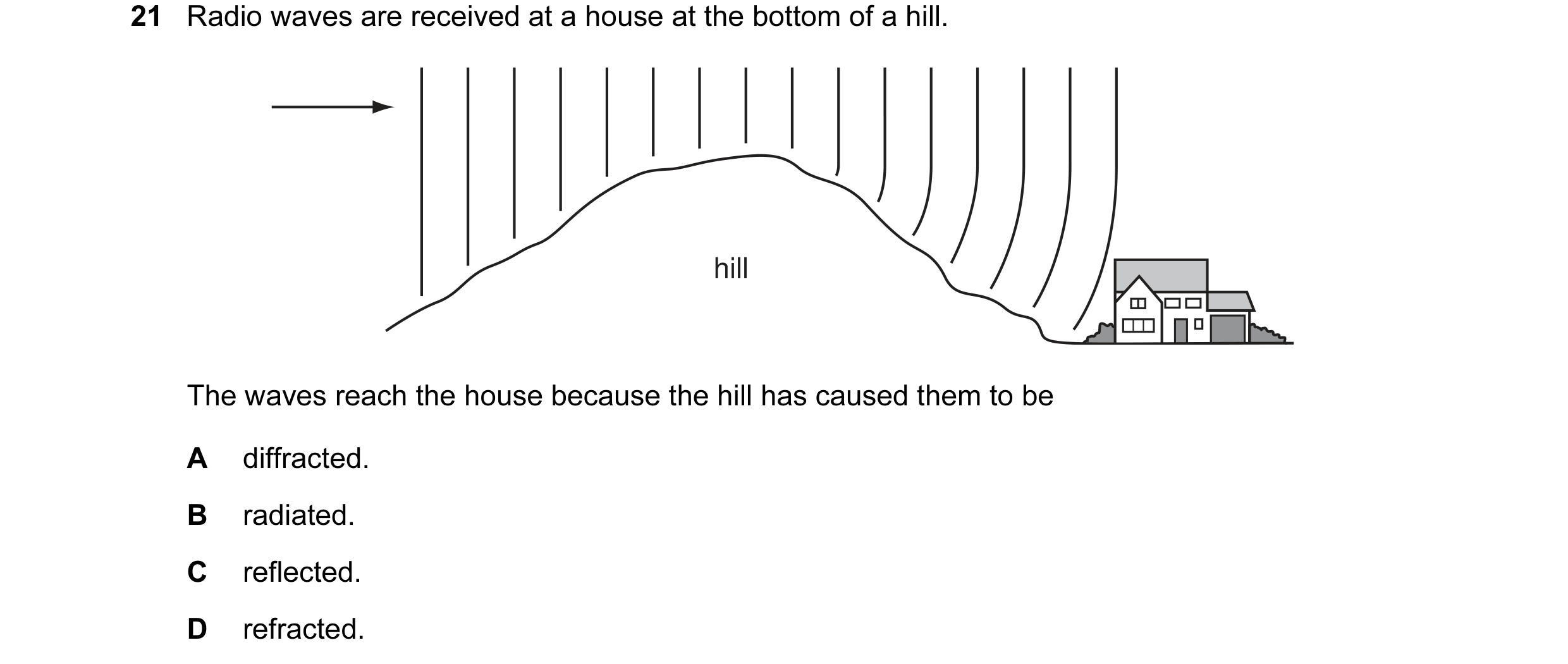
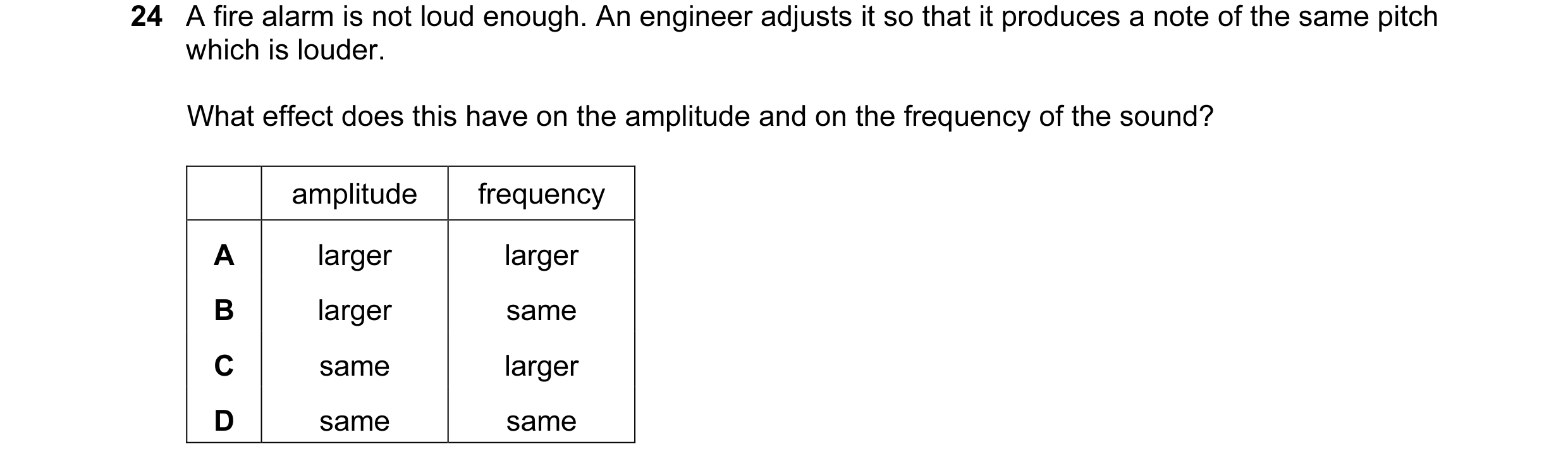
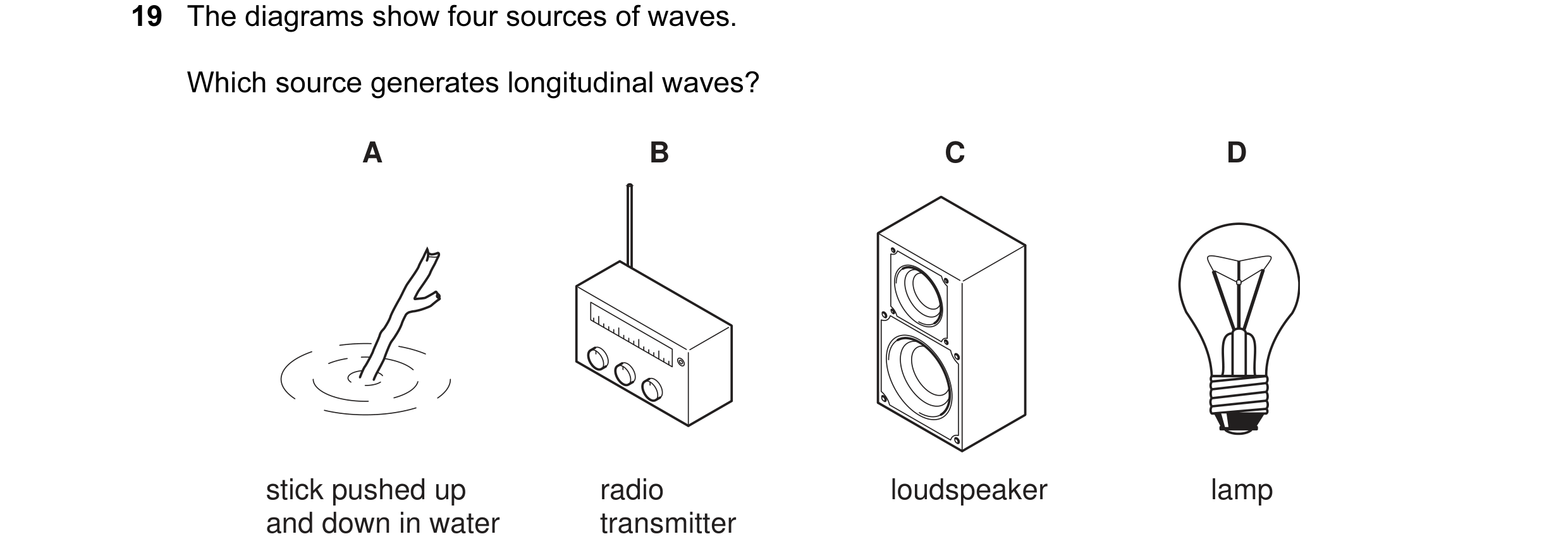 1 / 87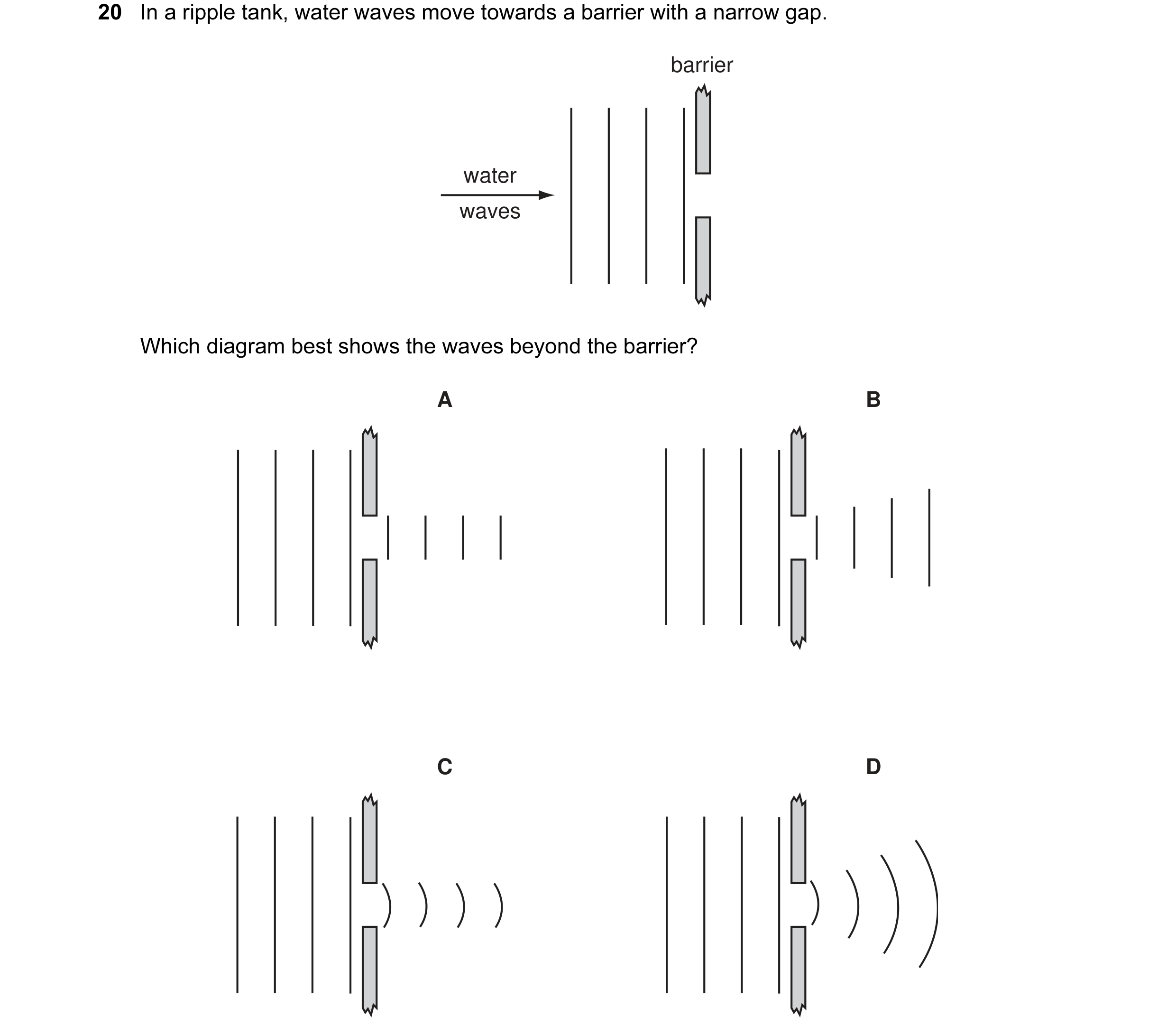
 2 / 87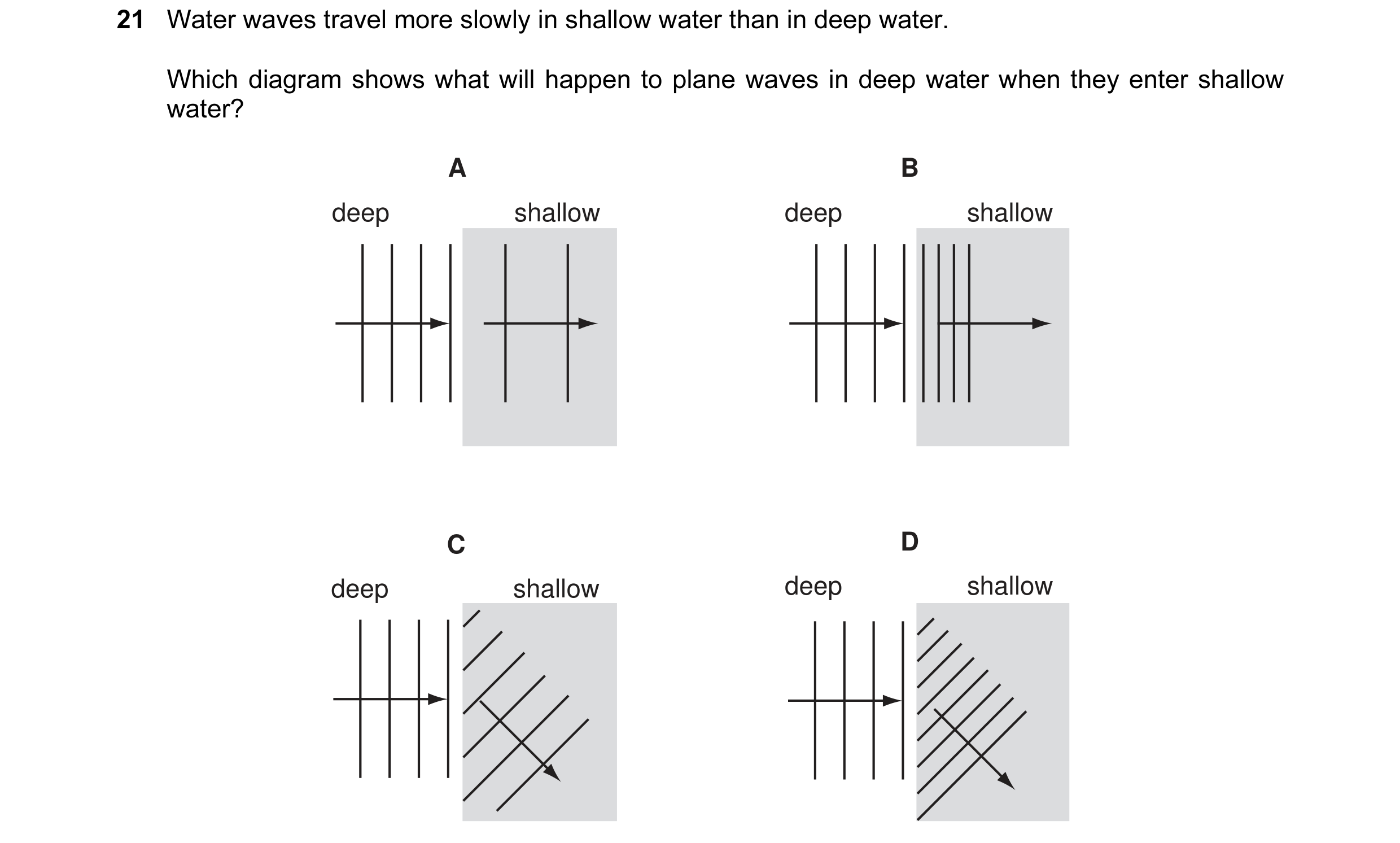
 3 / 87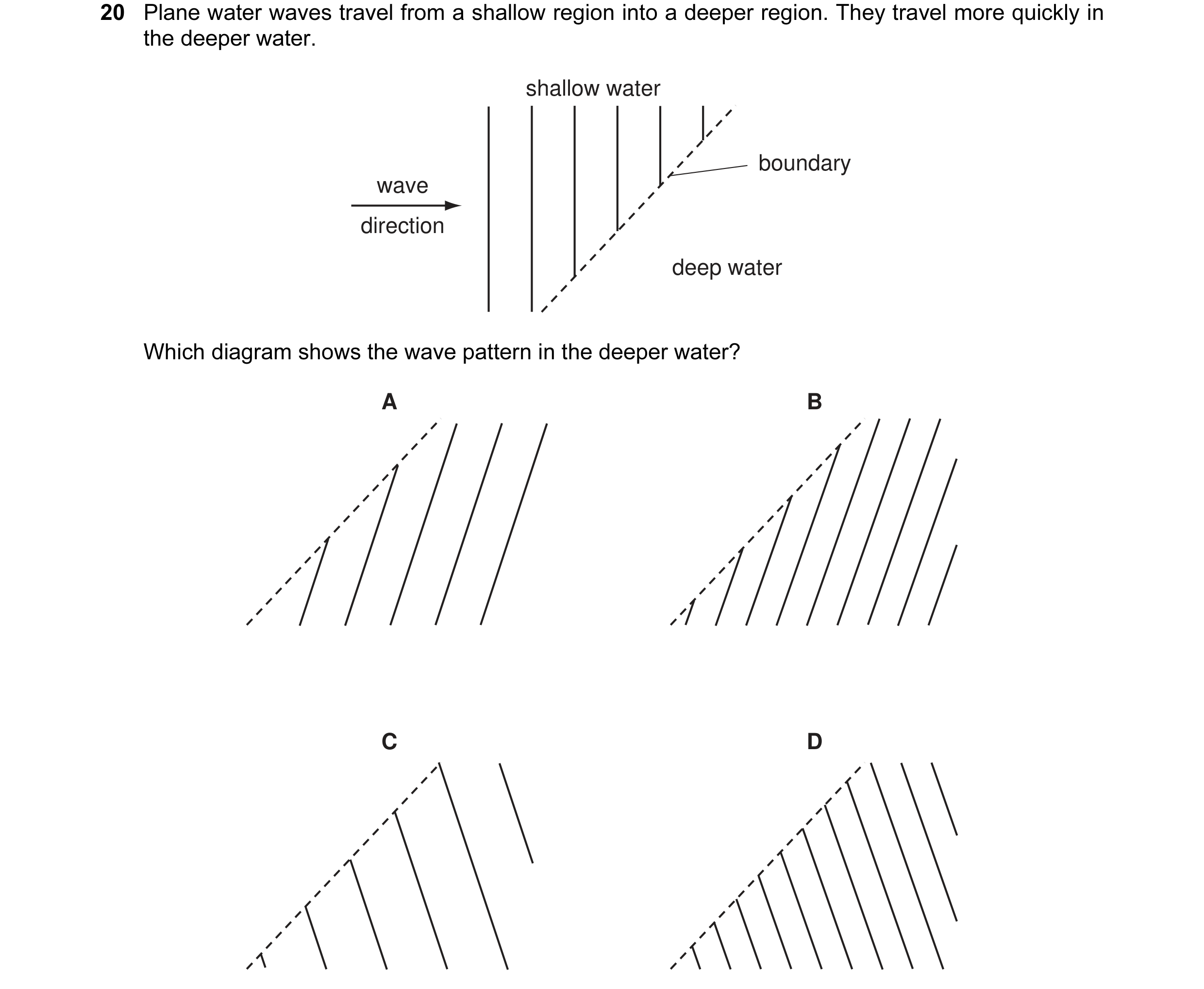
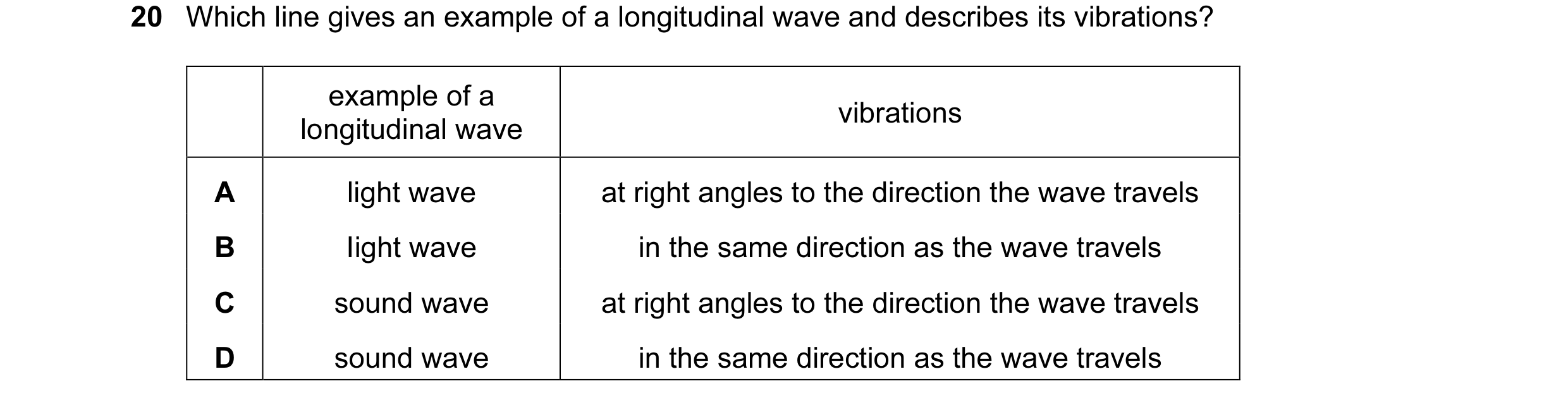 4 / 87
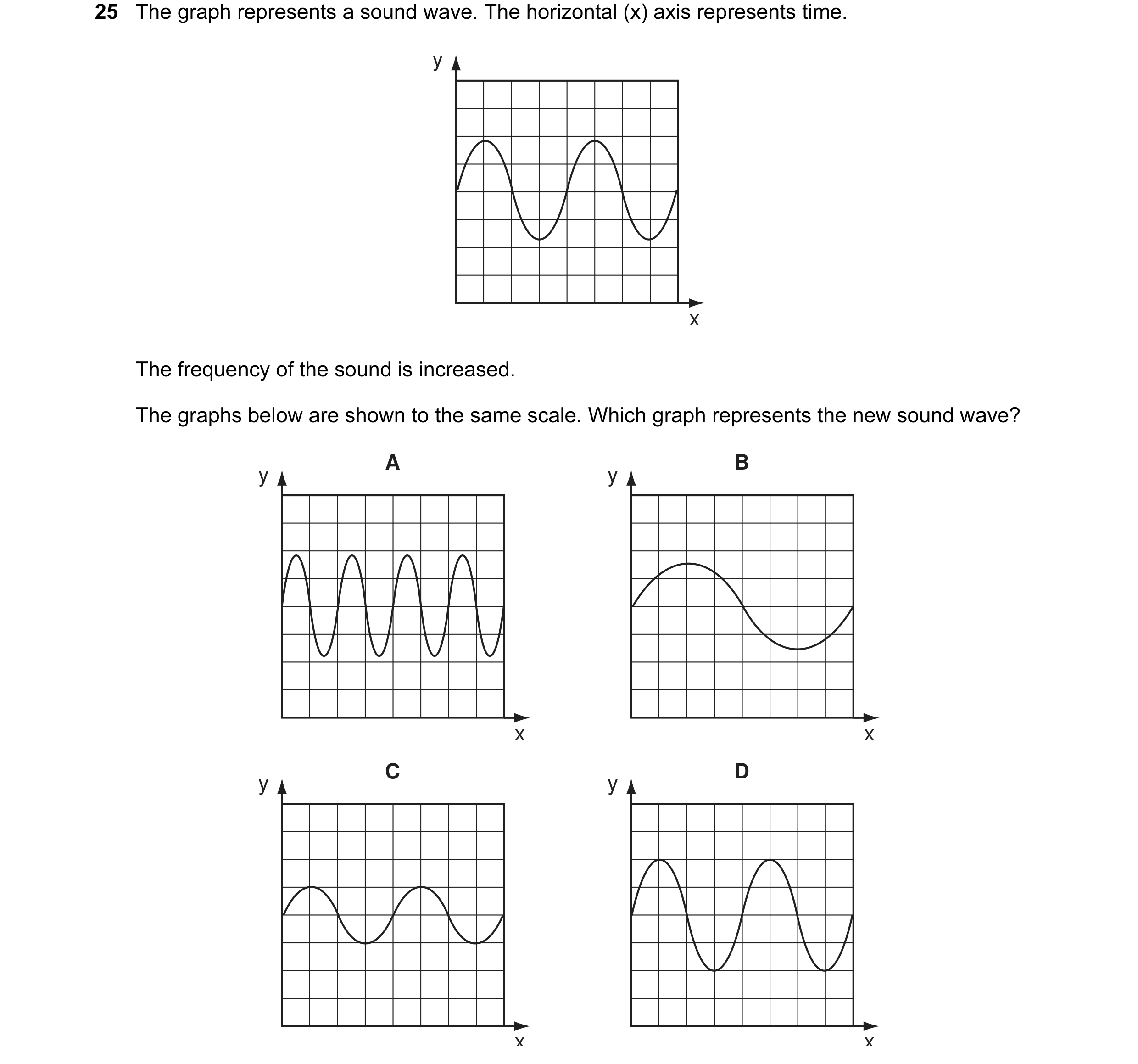 5 / 87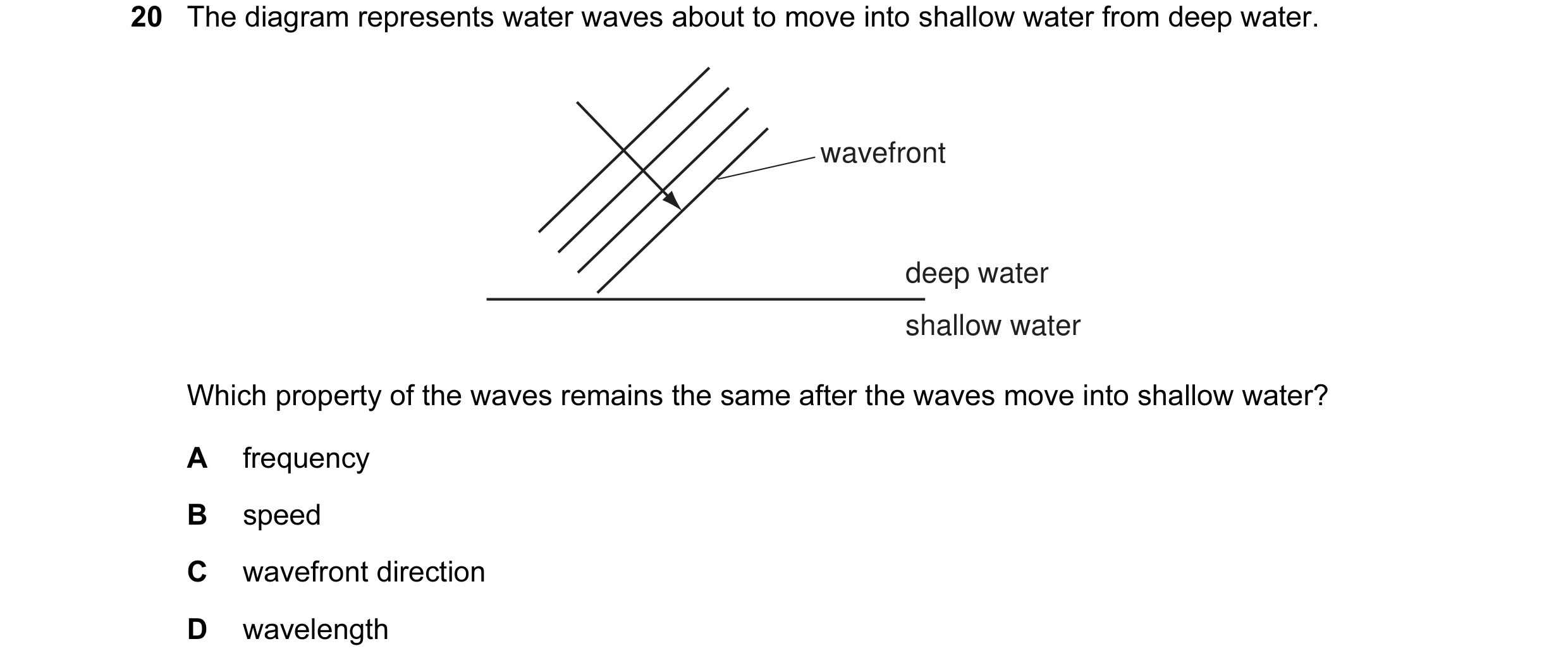
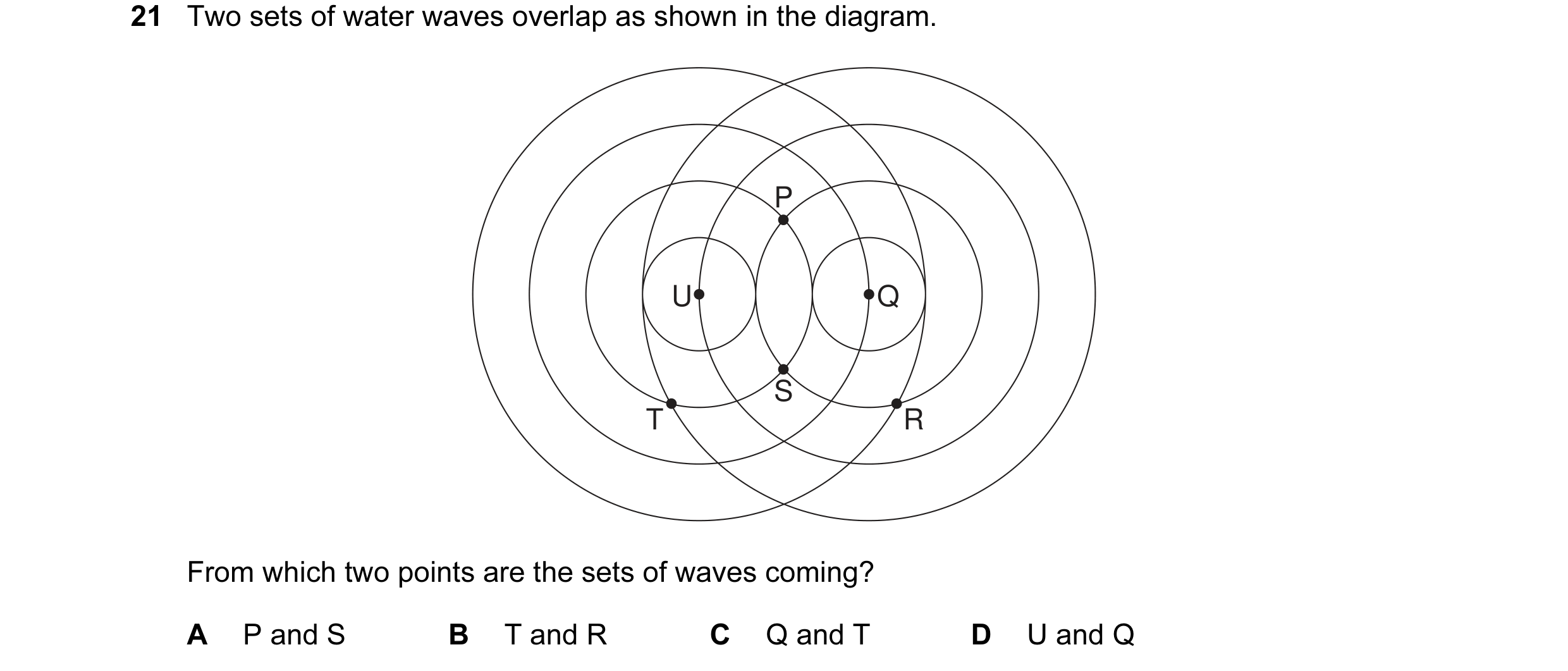 6 / 87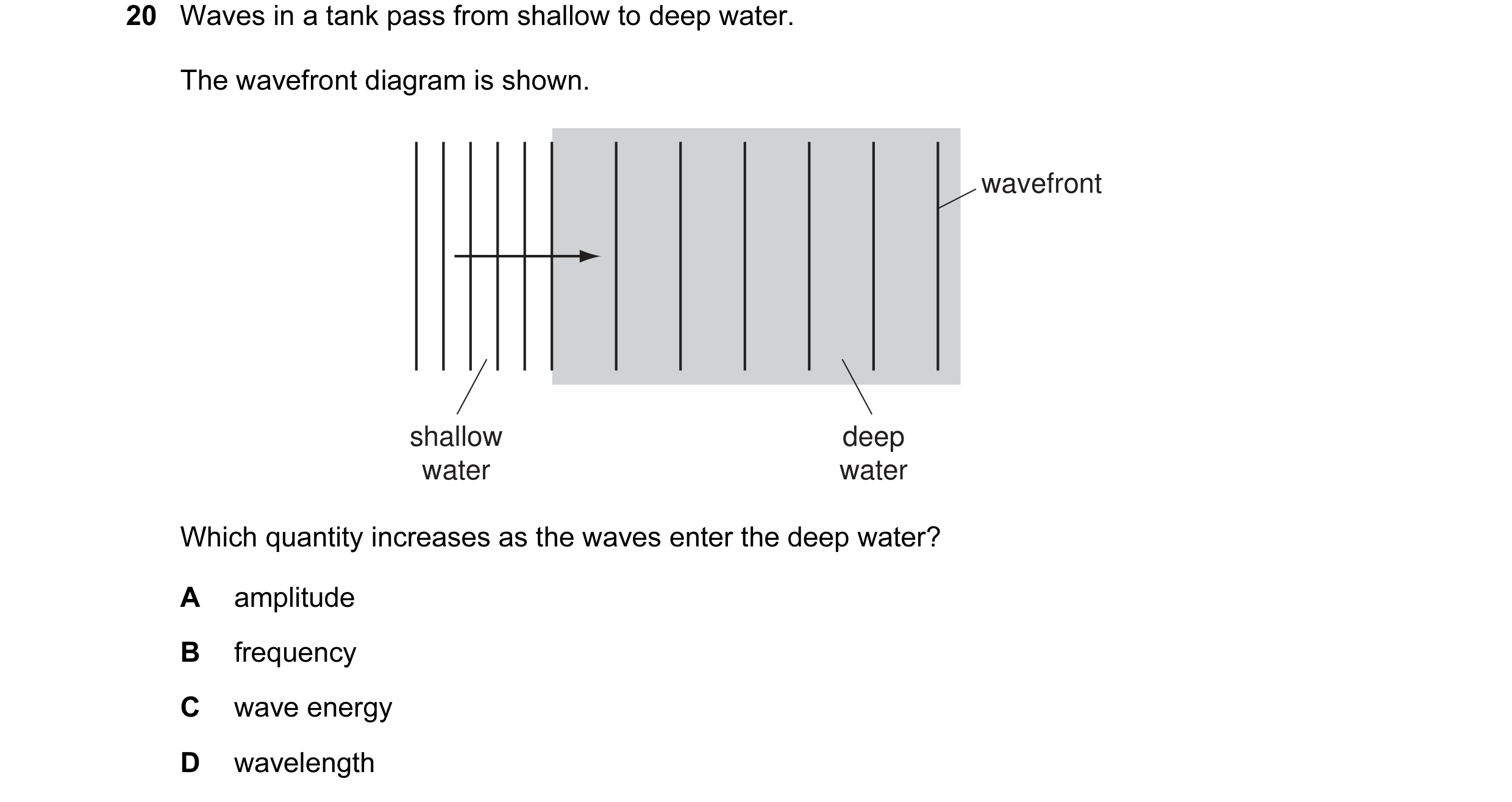
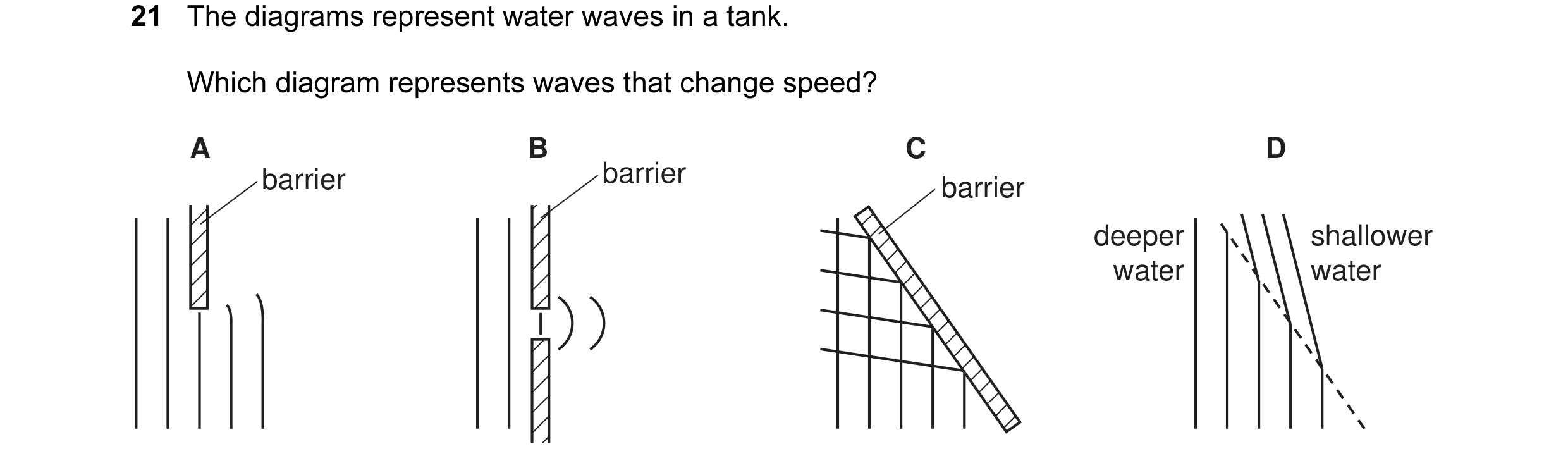
 7 / 87
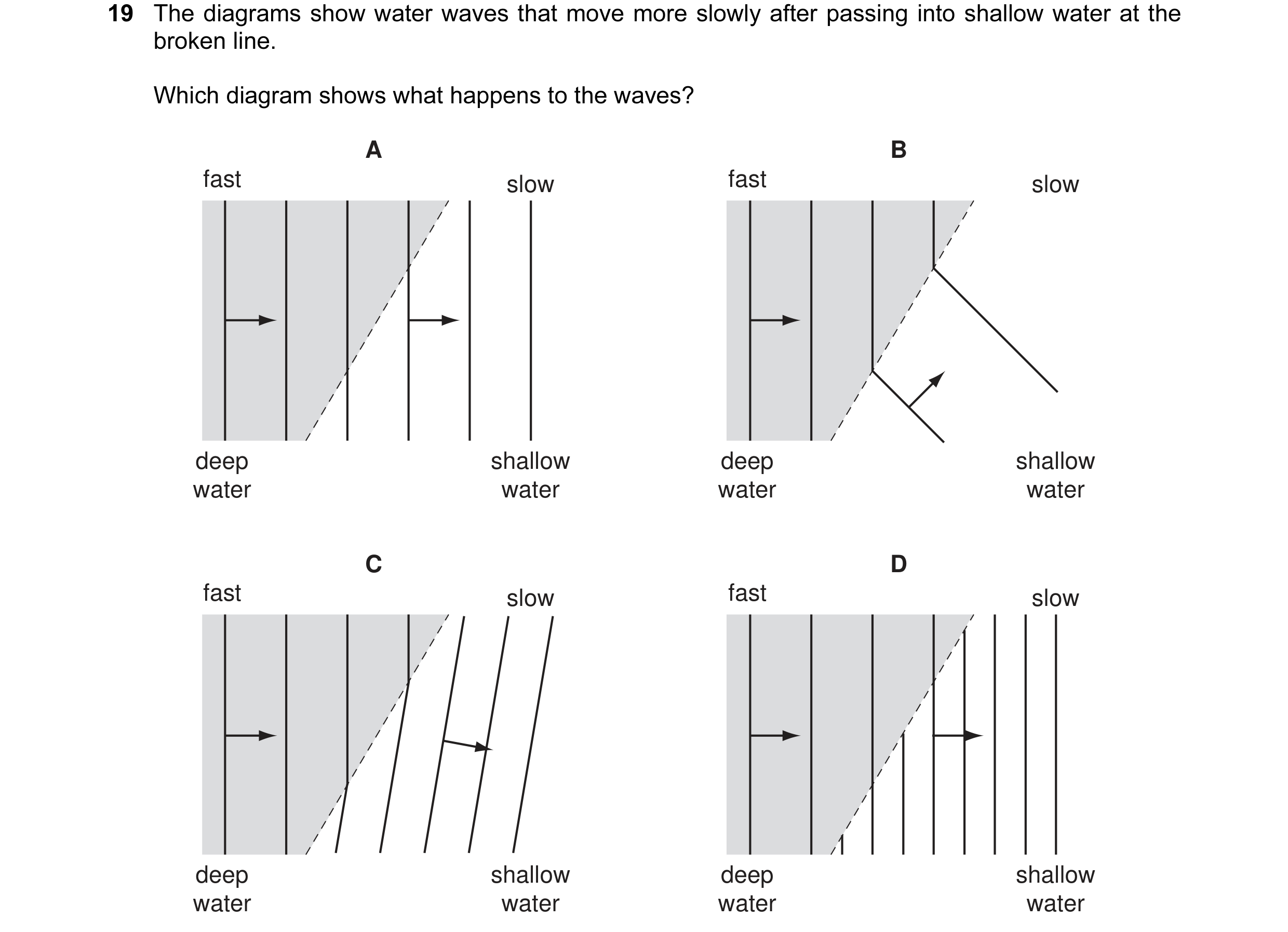 8 / 87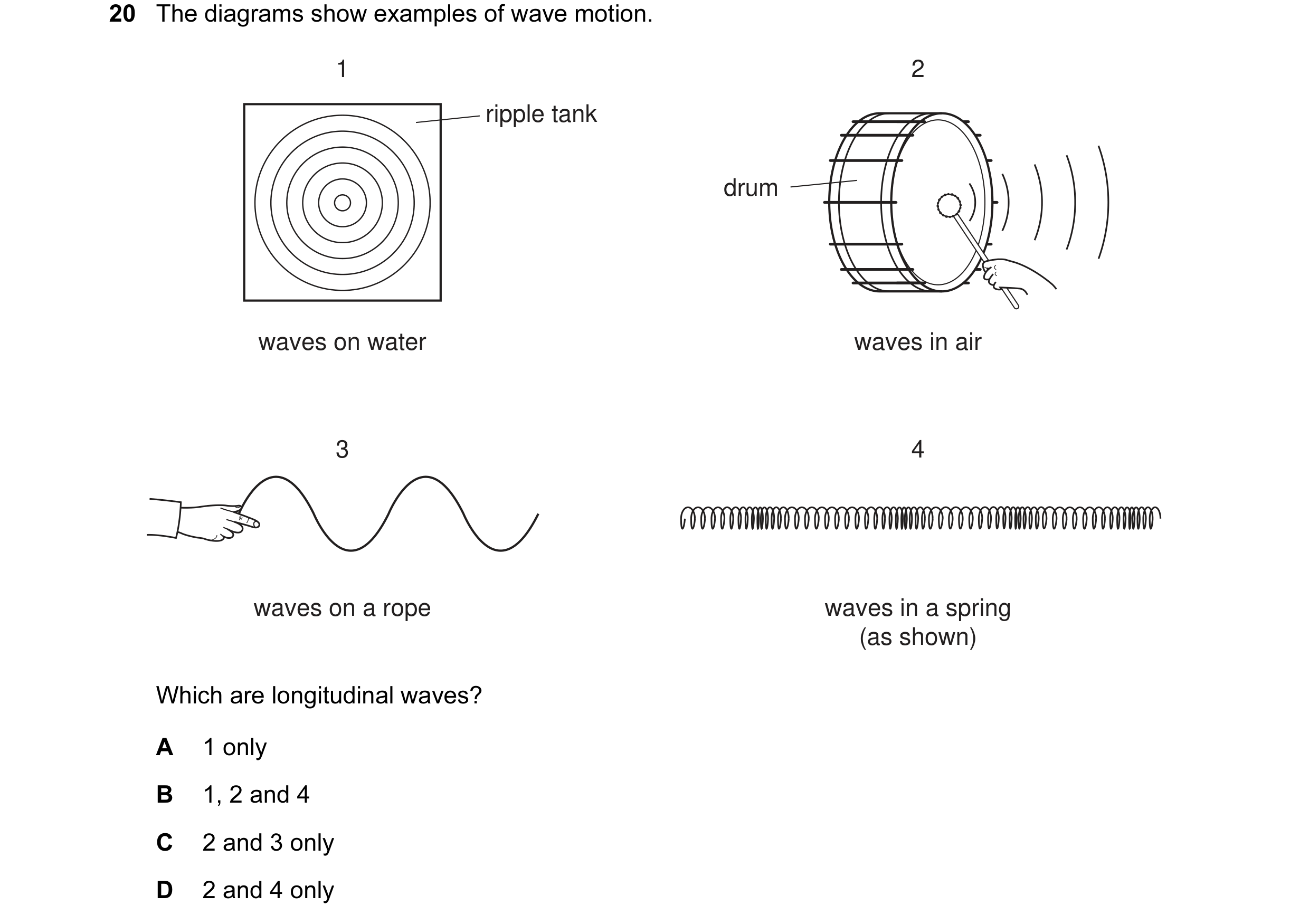
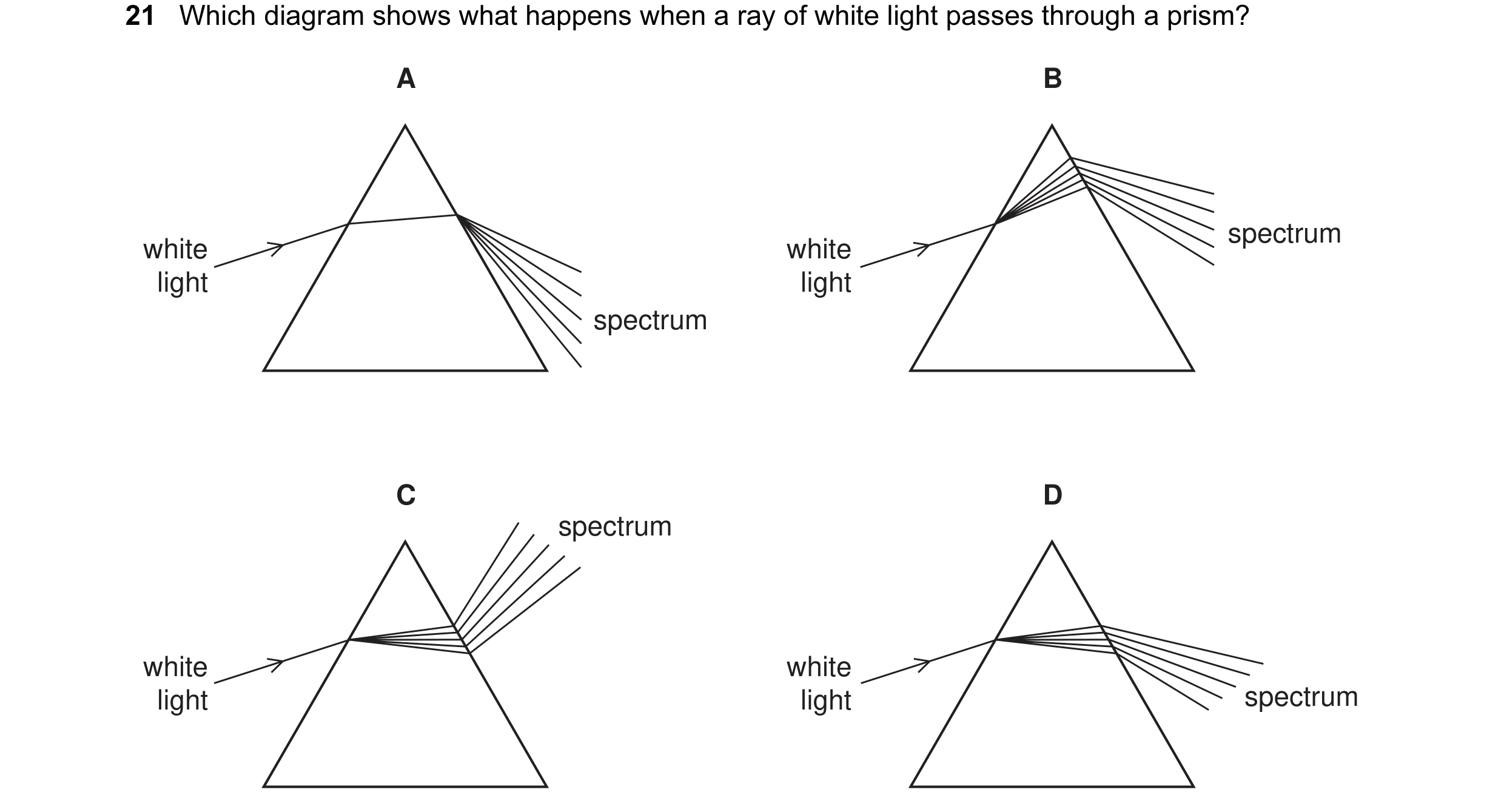 9 / 87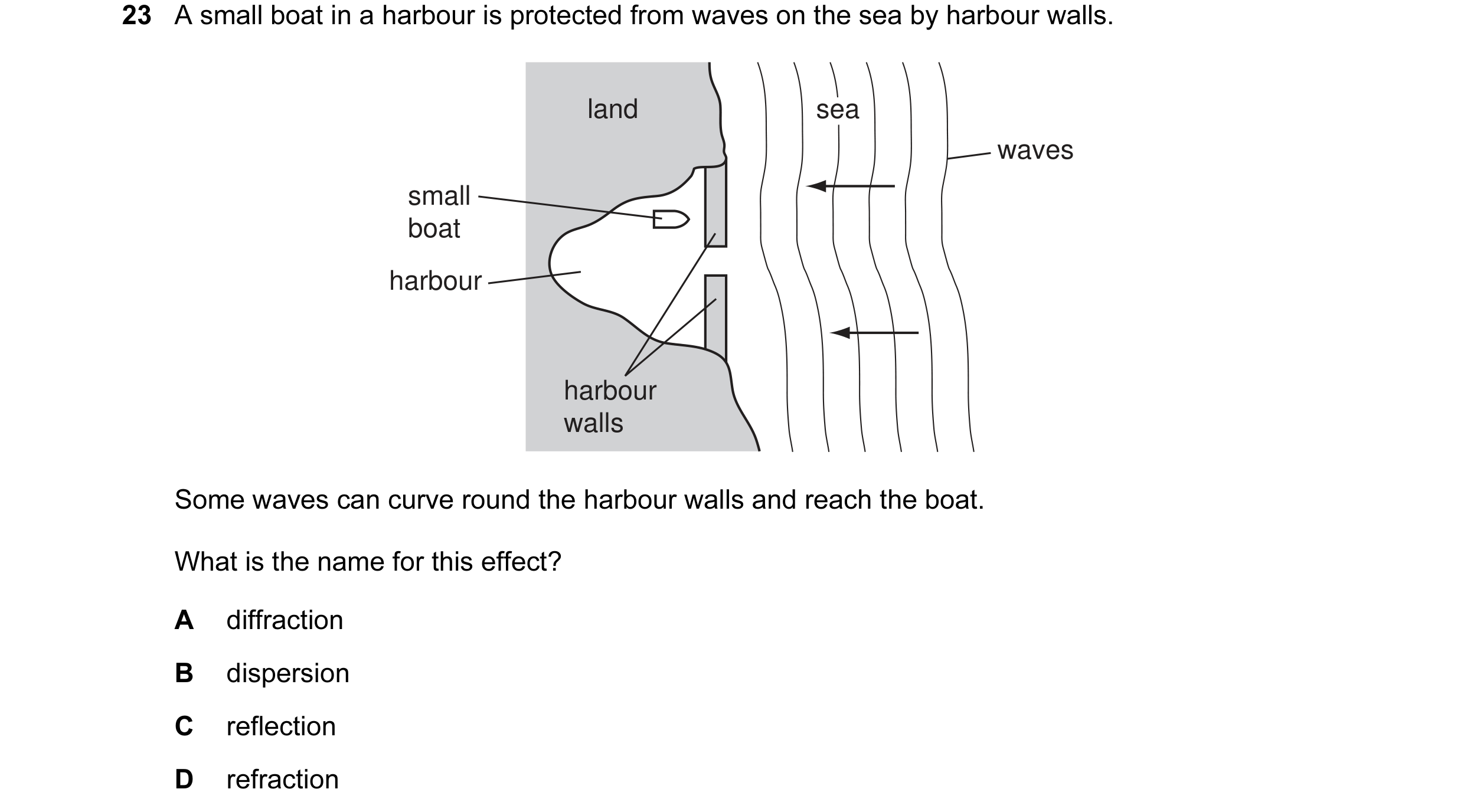
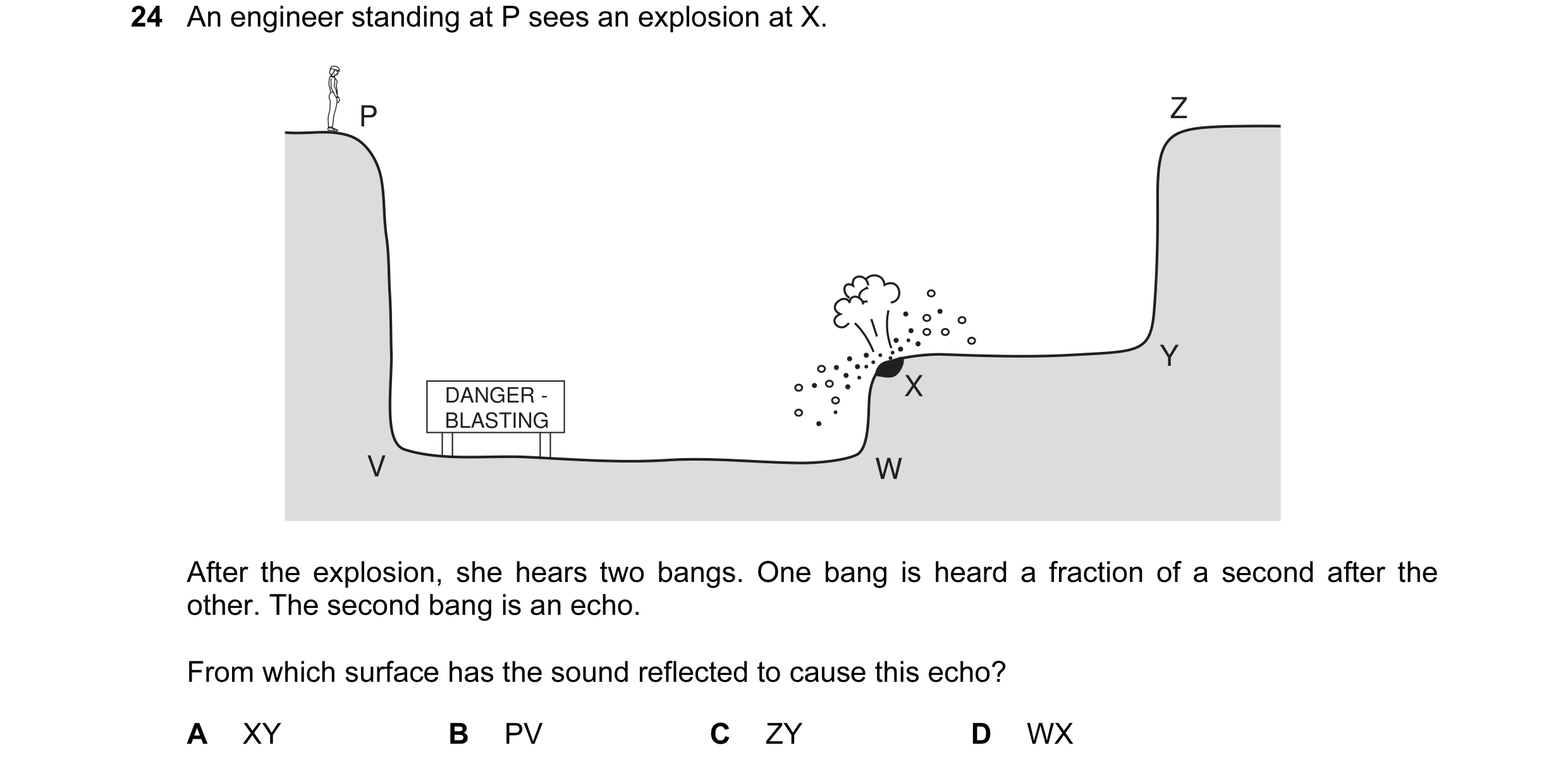
 10 / 87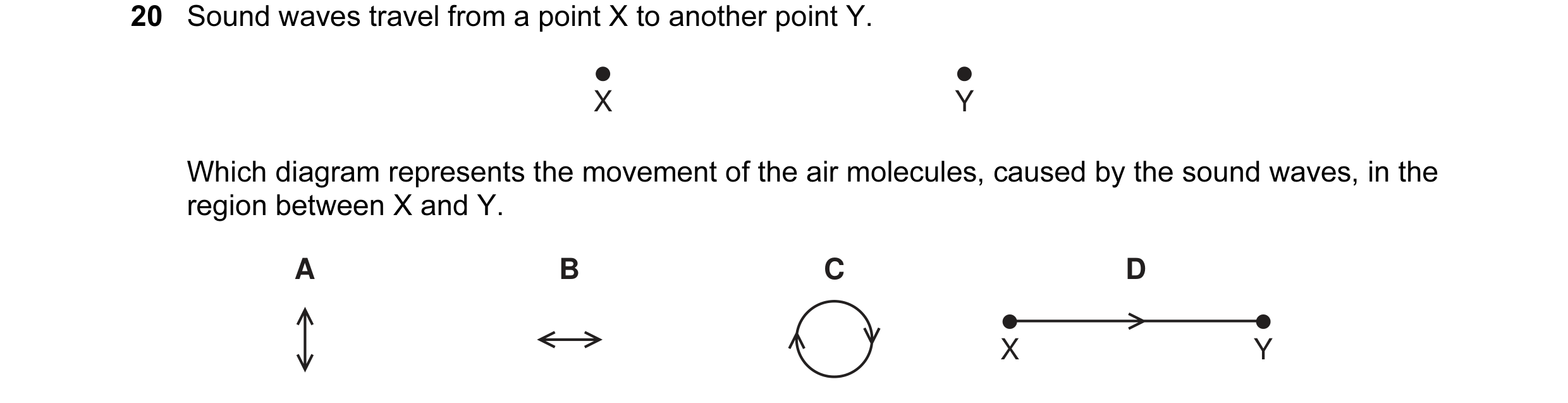

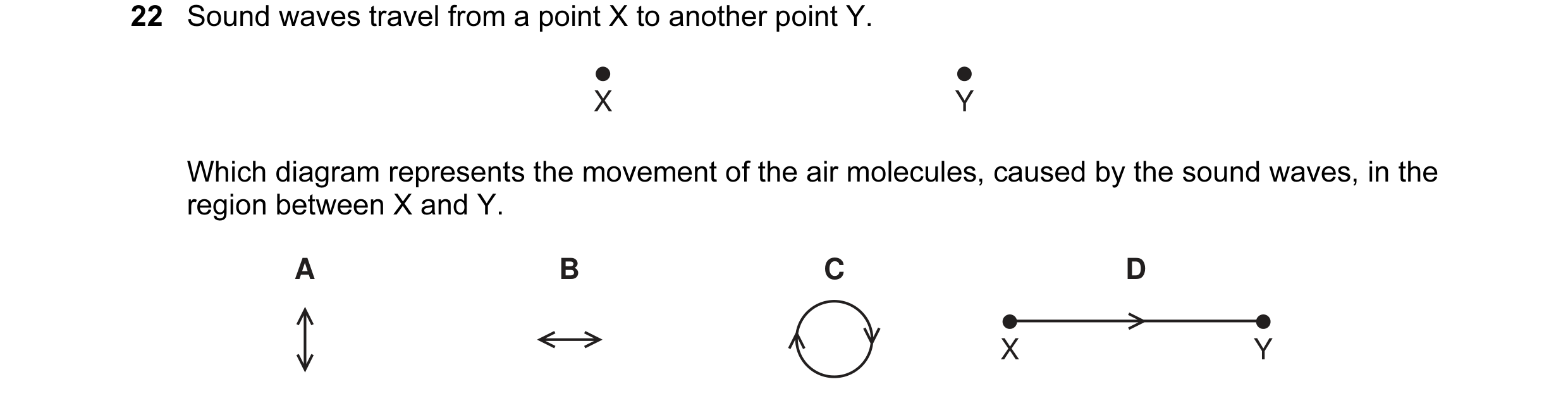
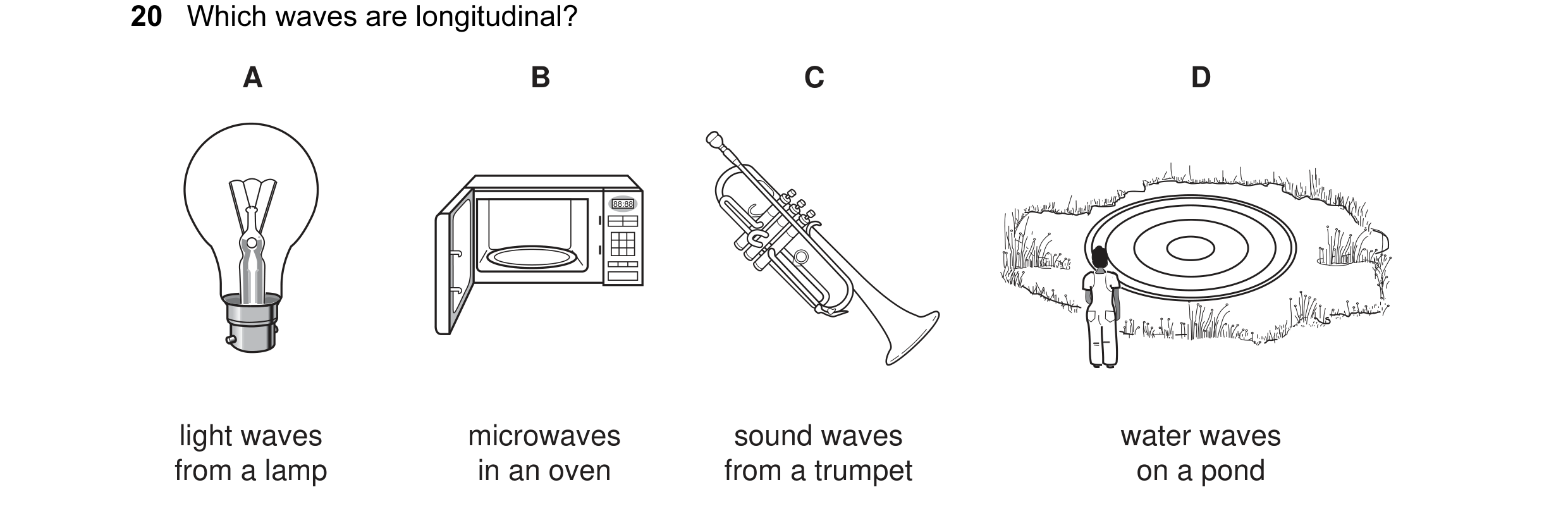 11 / 87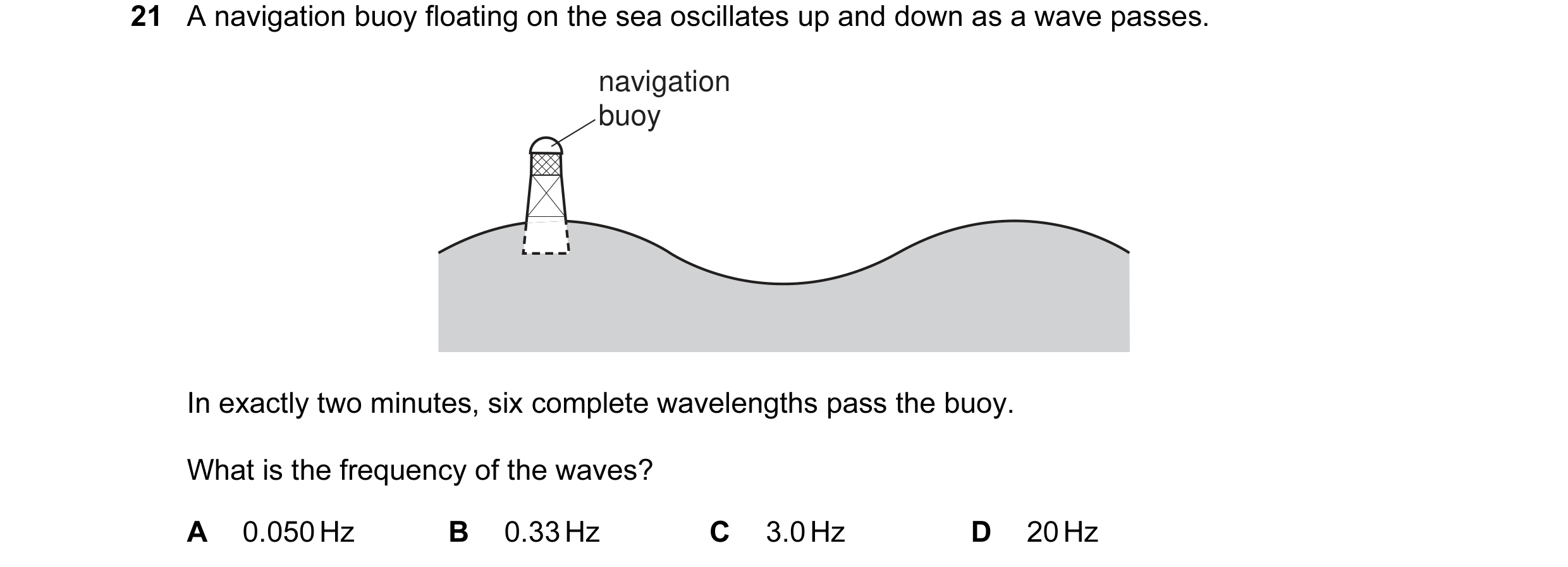
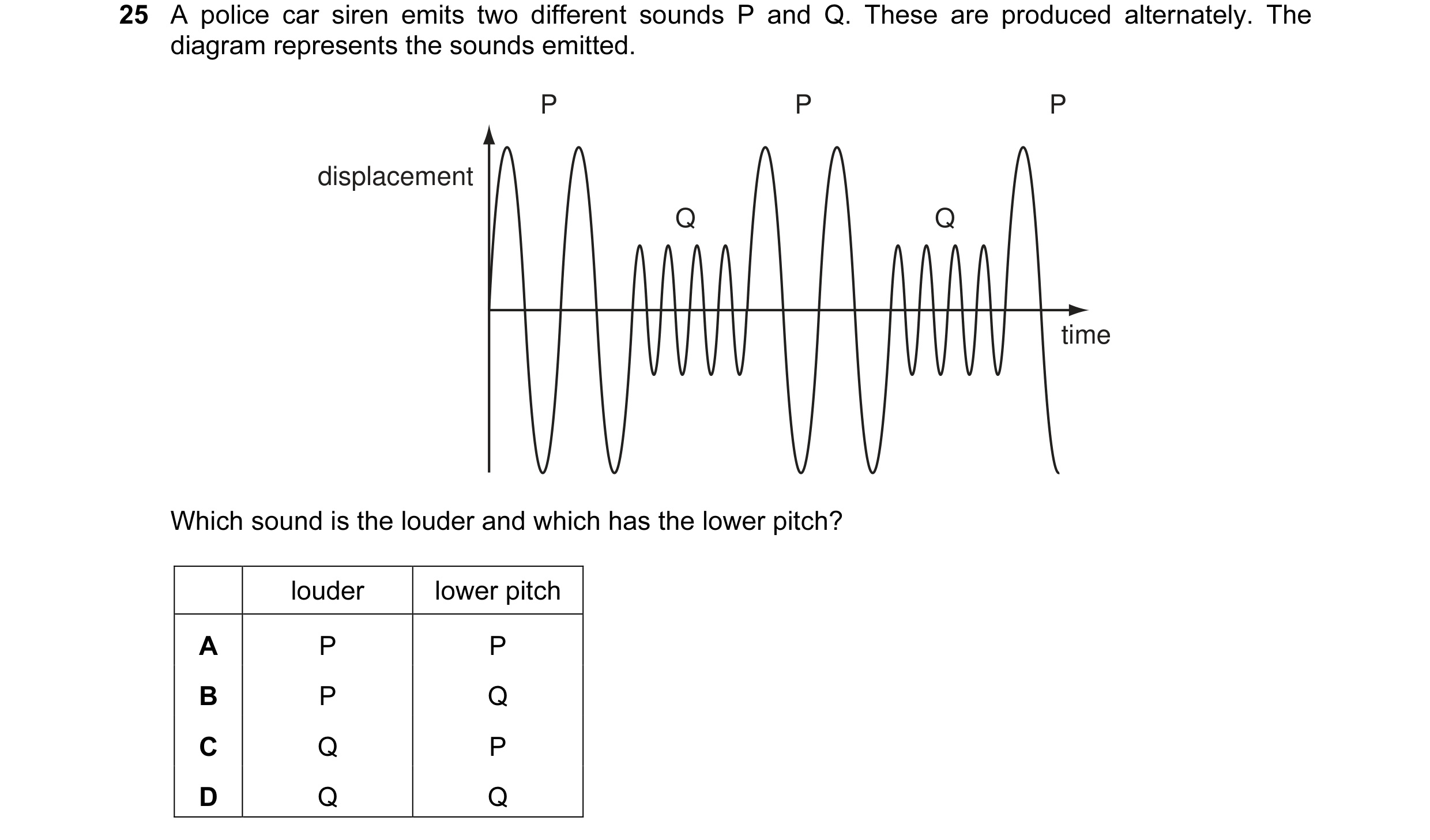
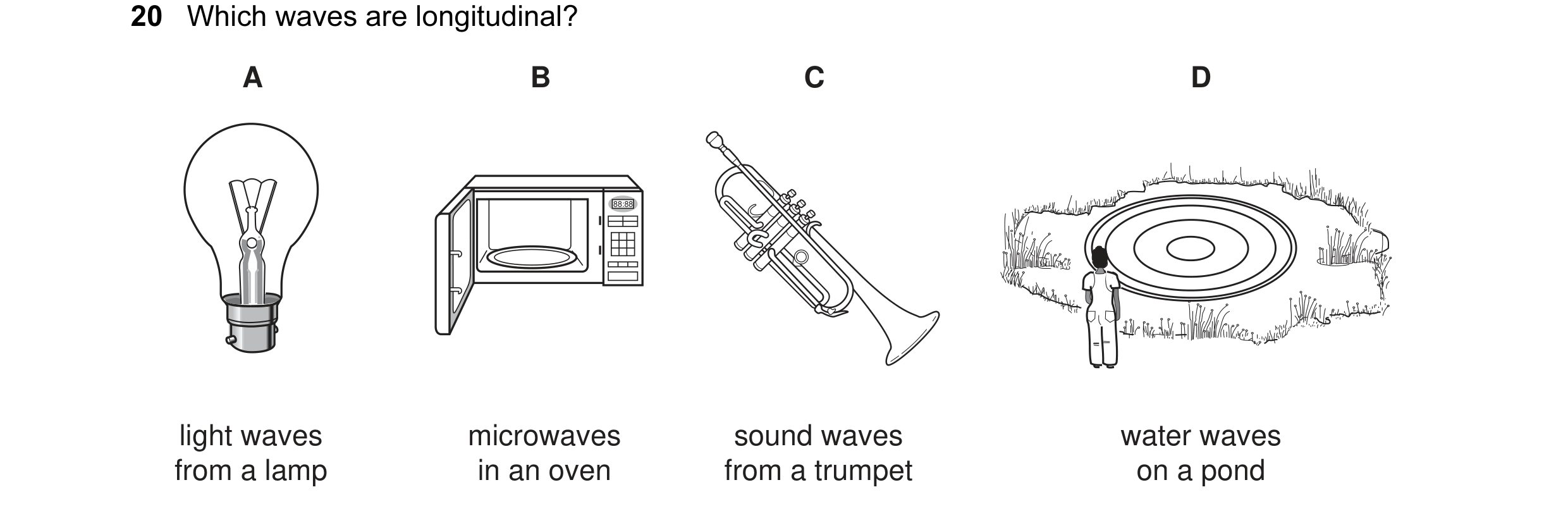 12 / 87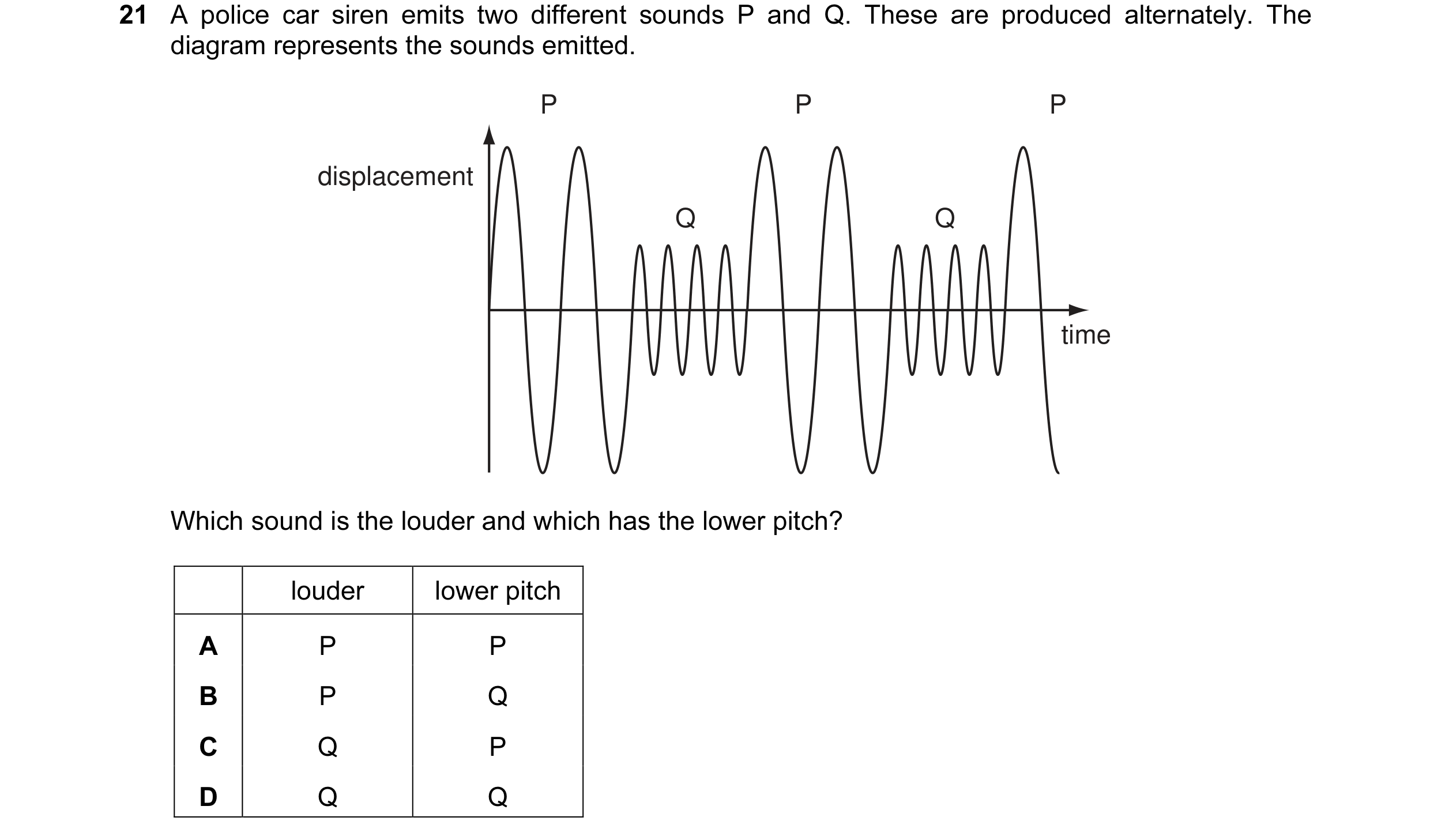
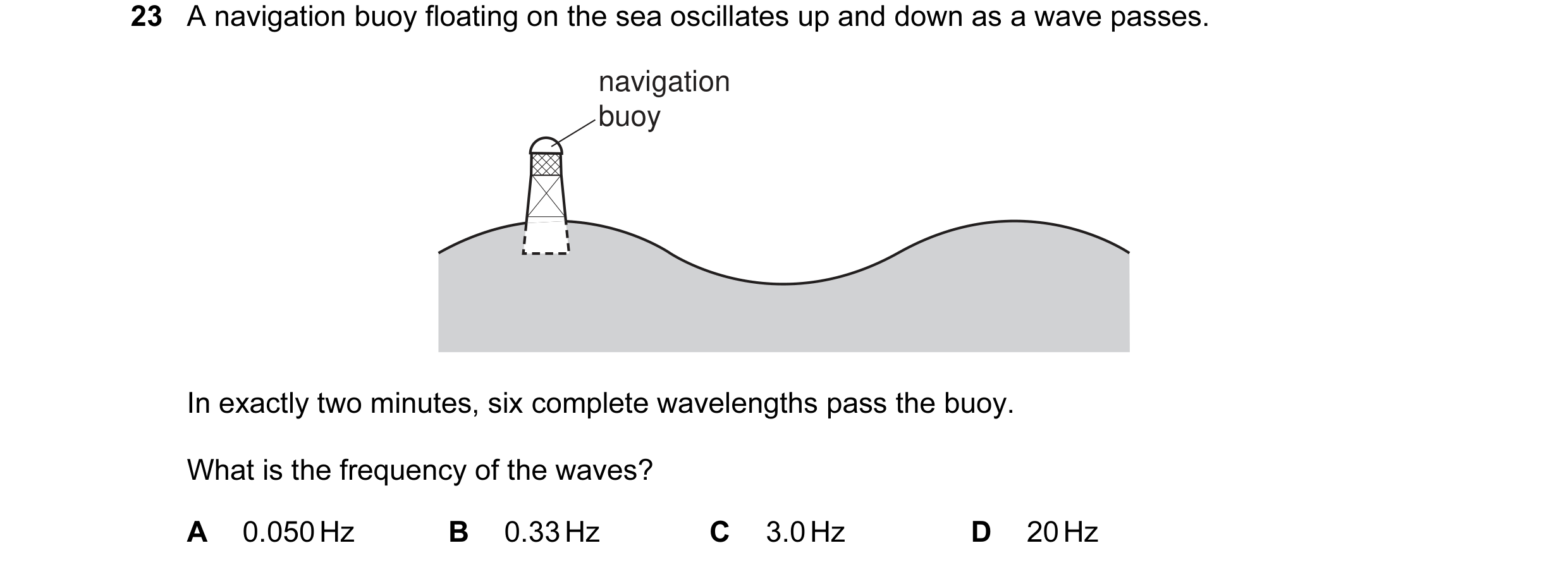
 13 / 87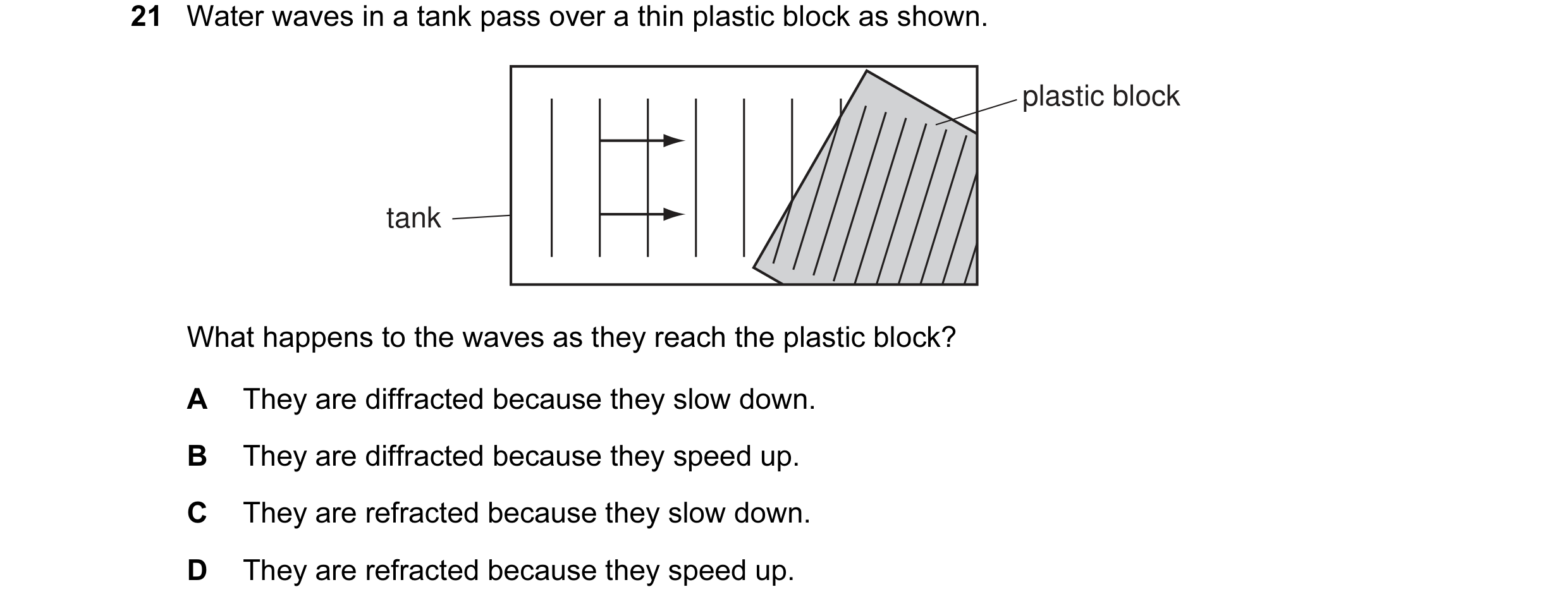
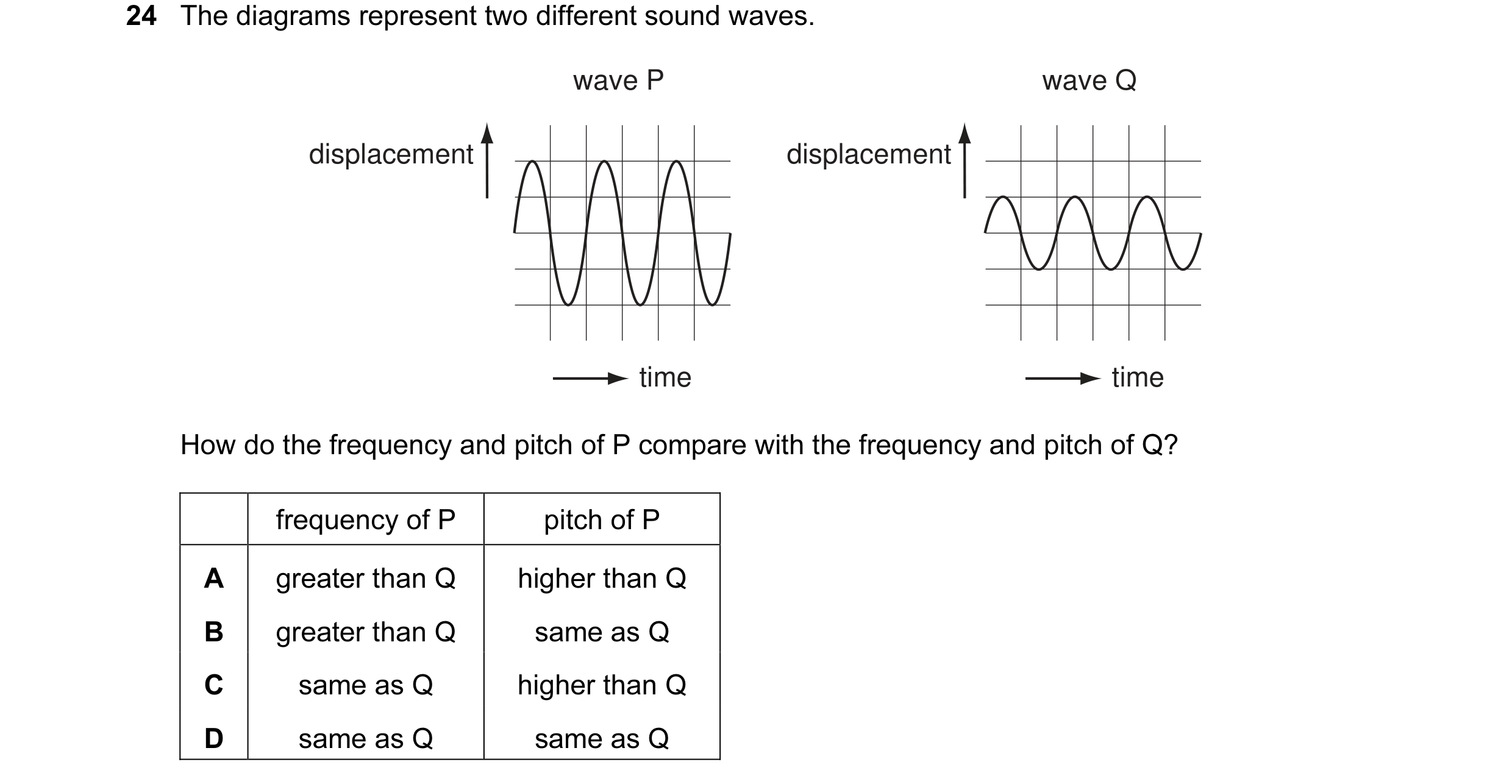
 14 / 87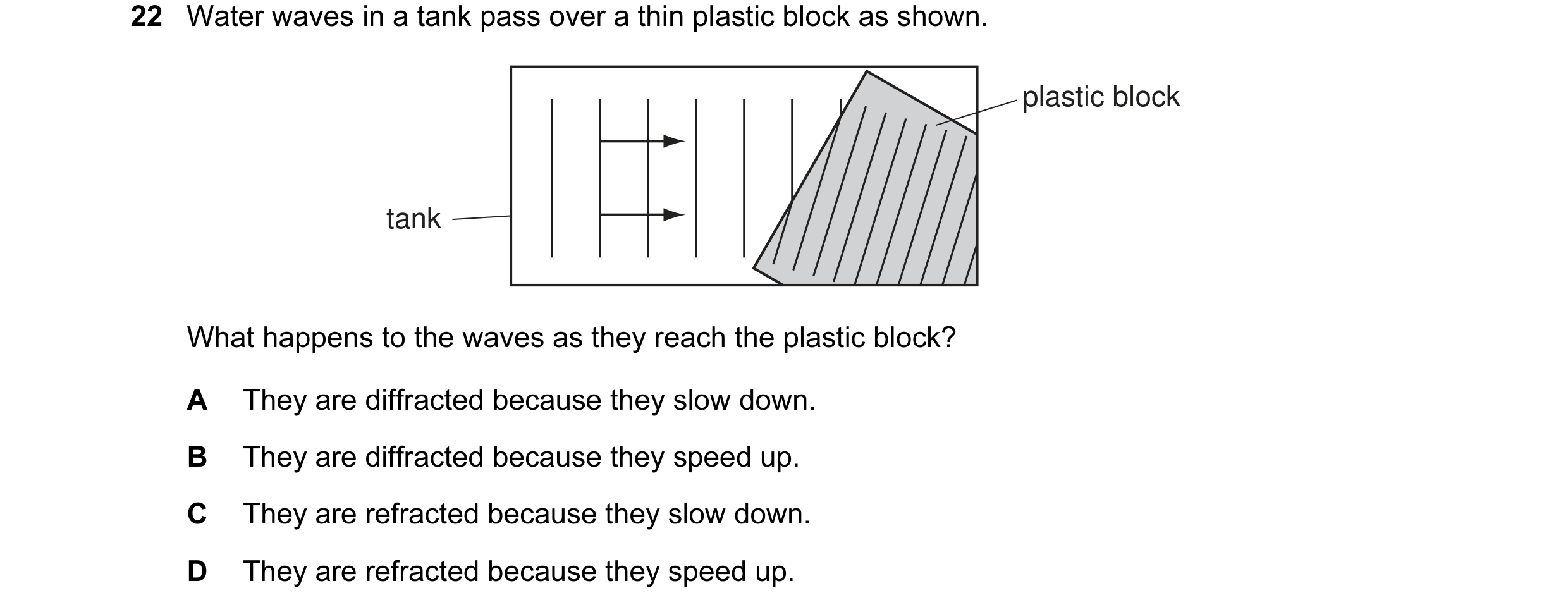
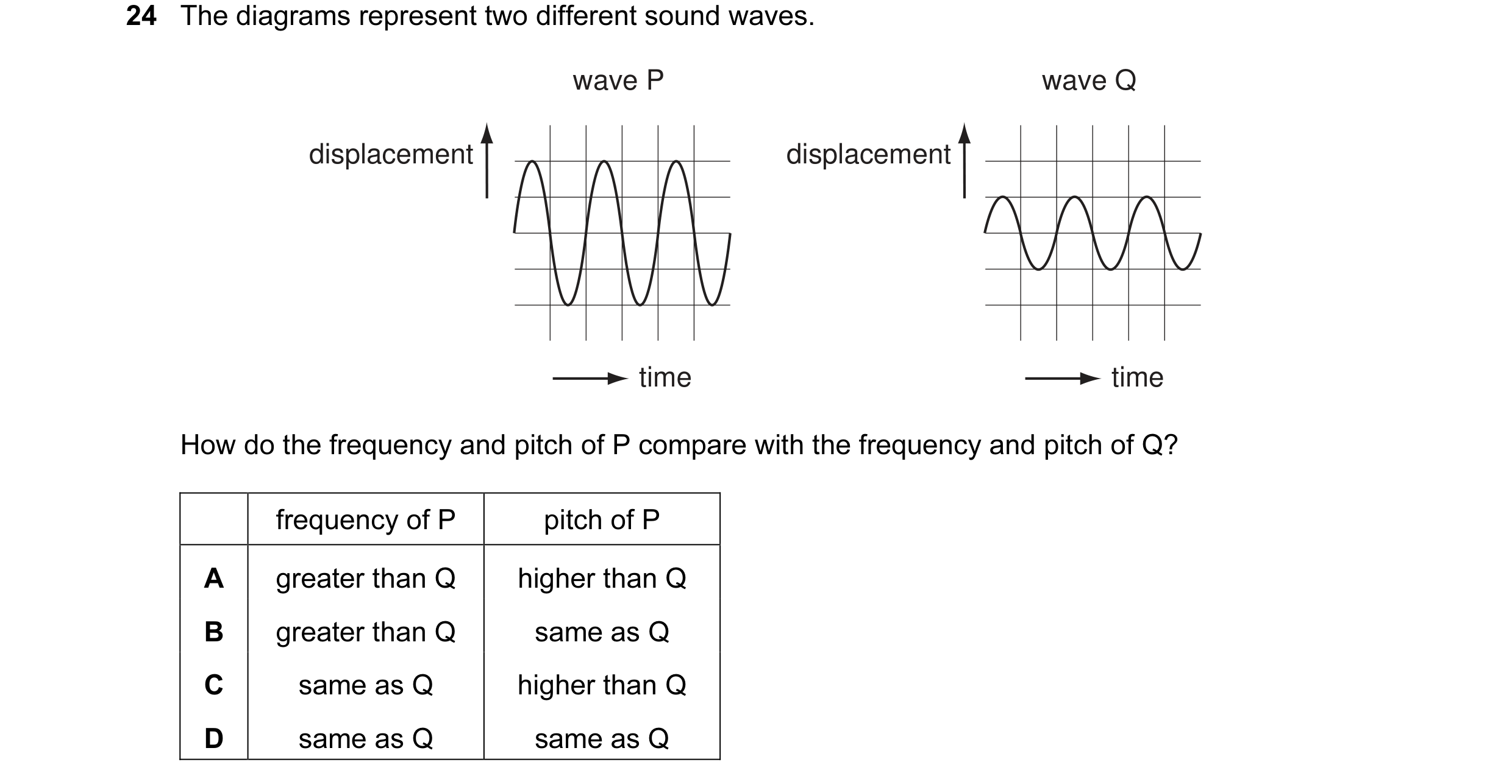
 15 / 87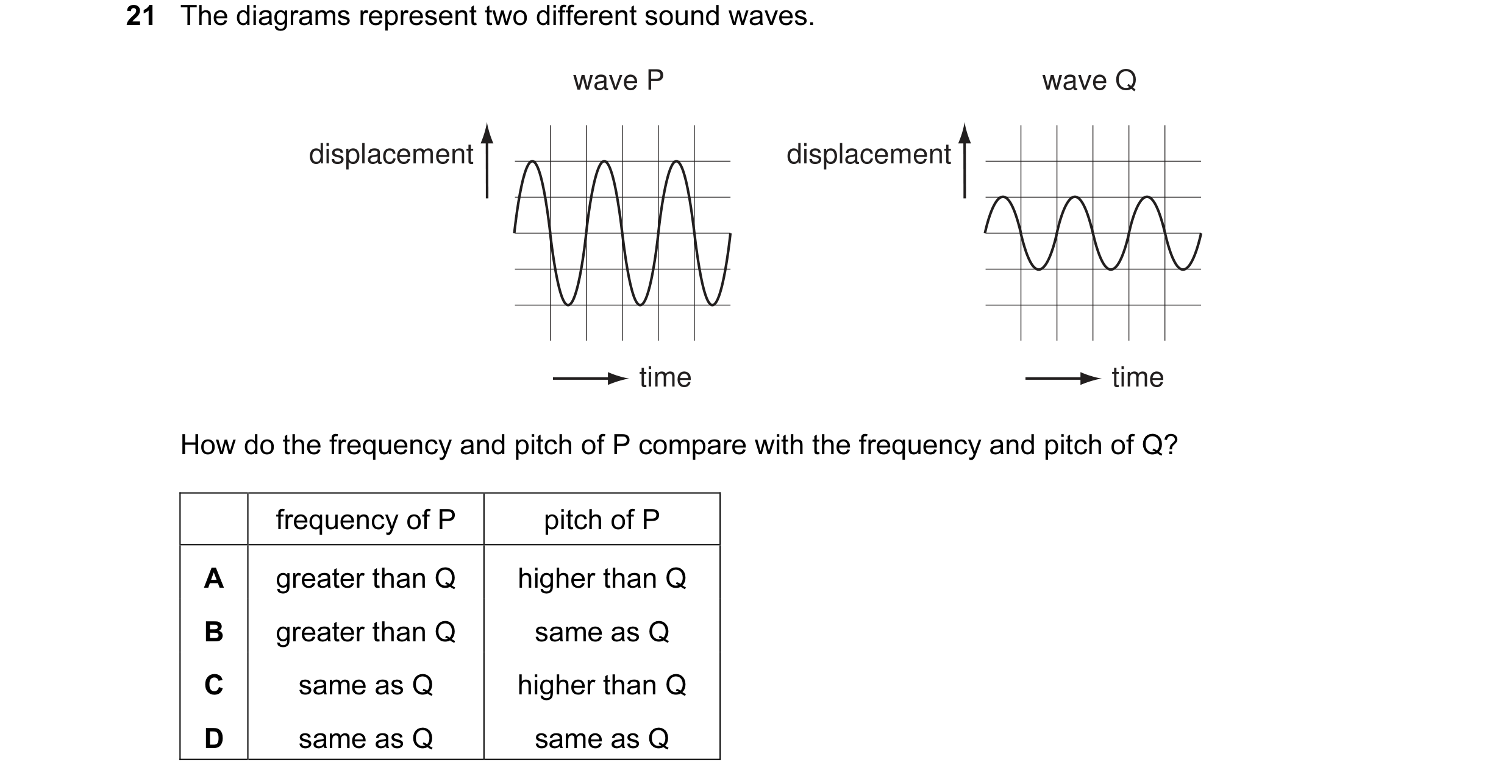
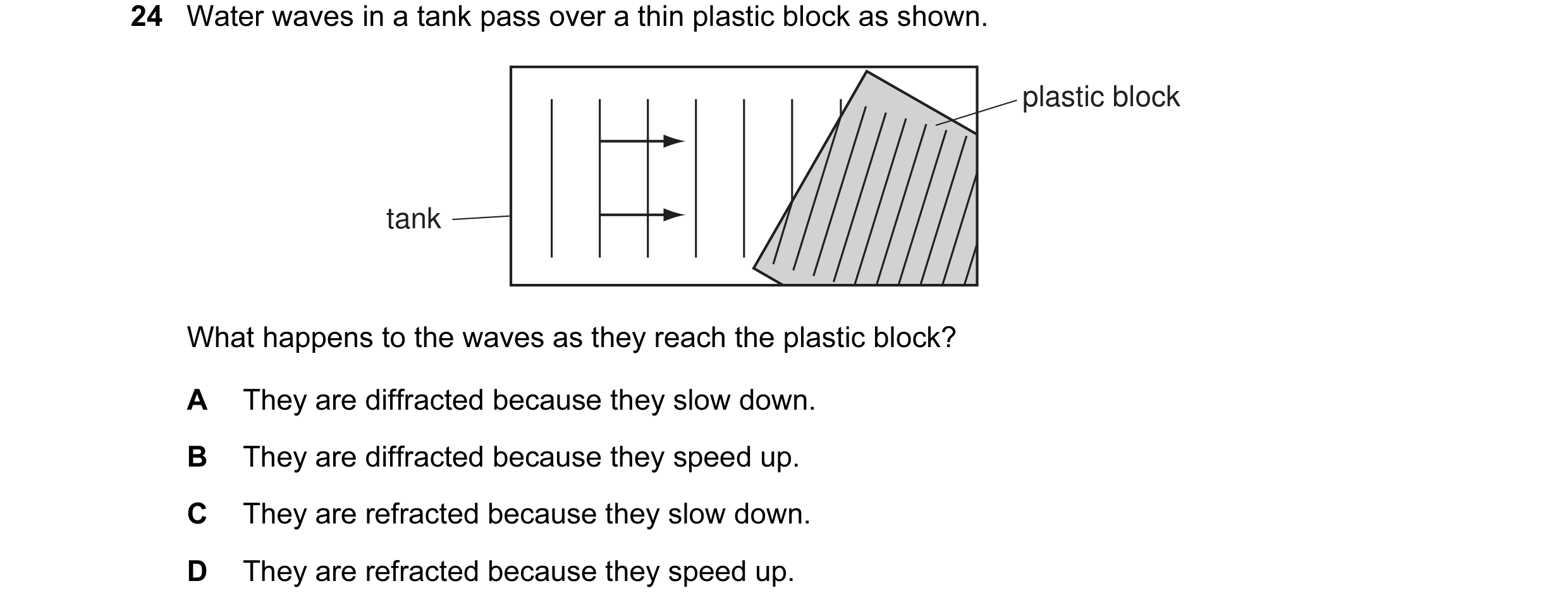
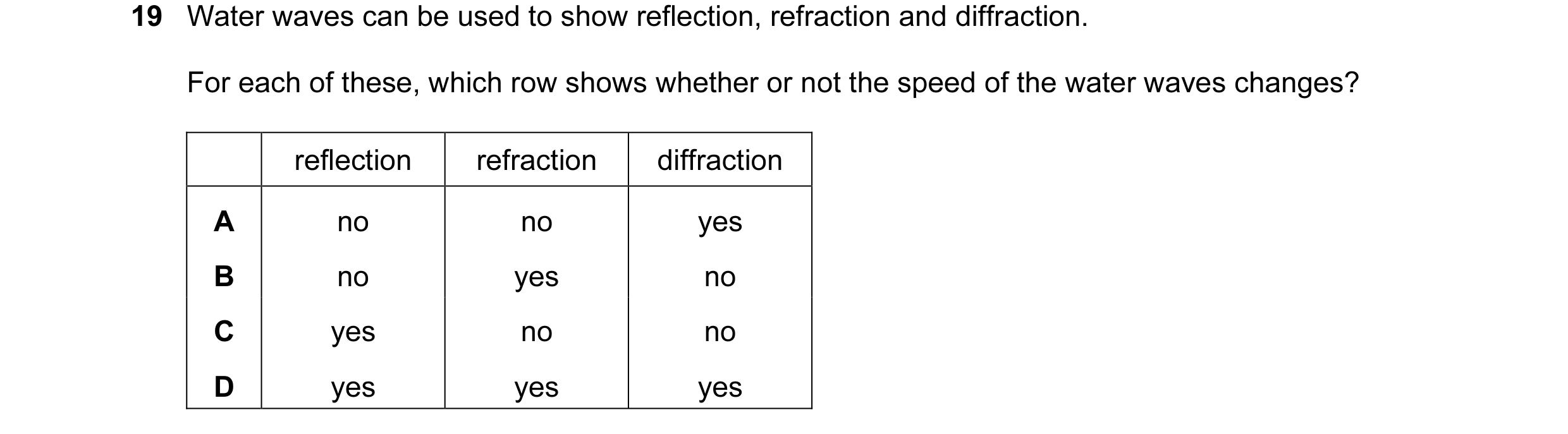 16 / 87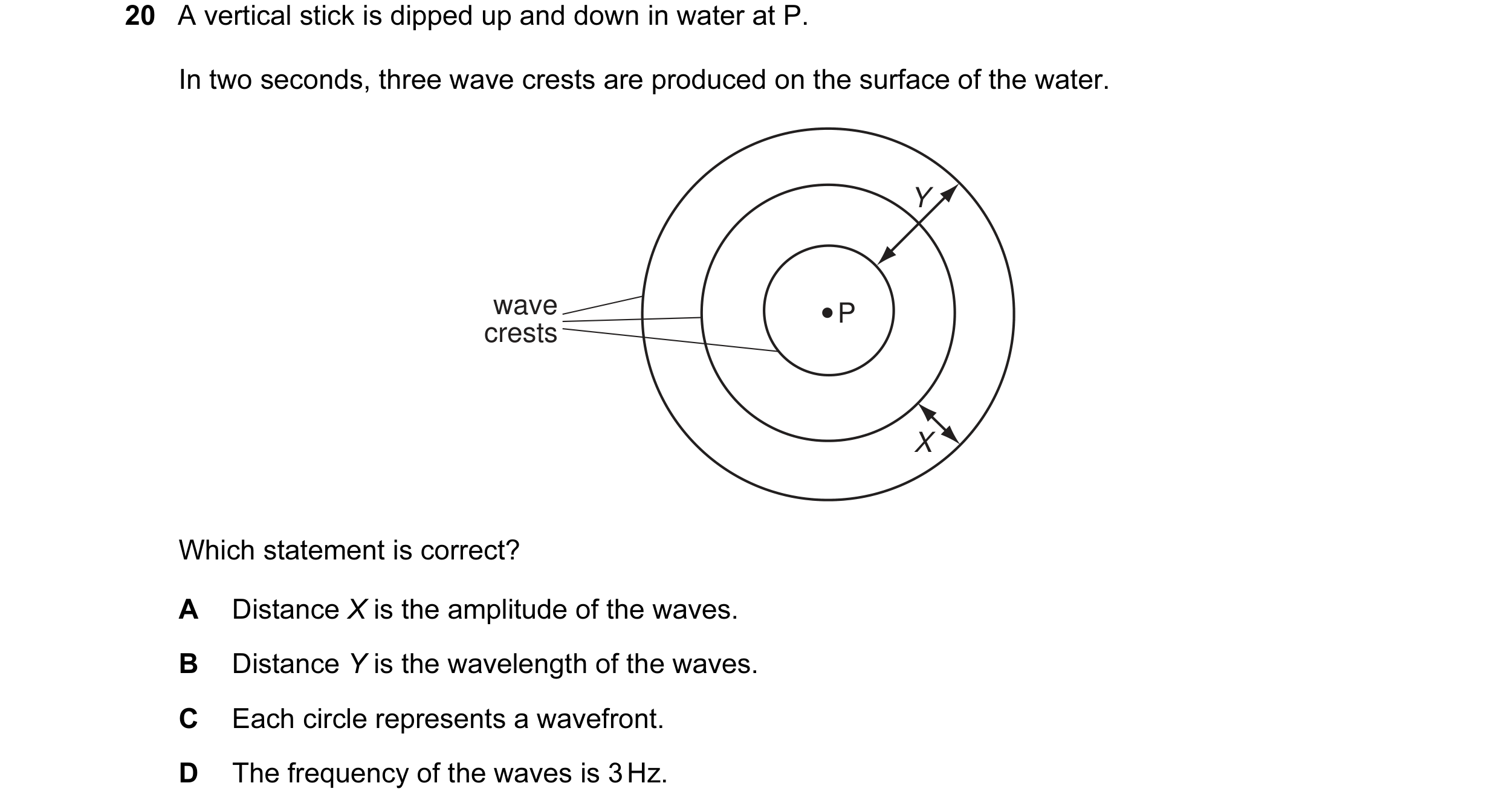
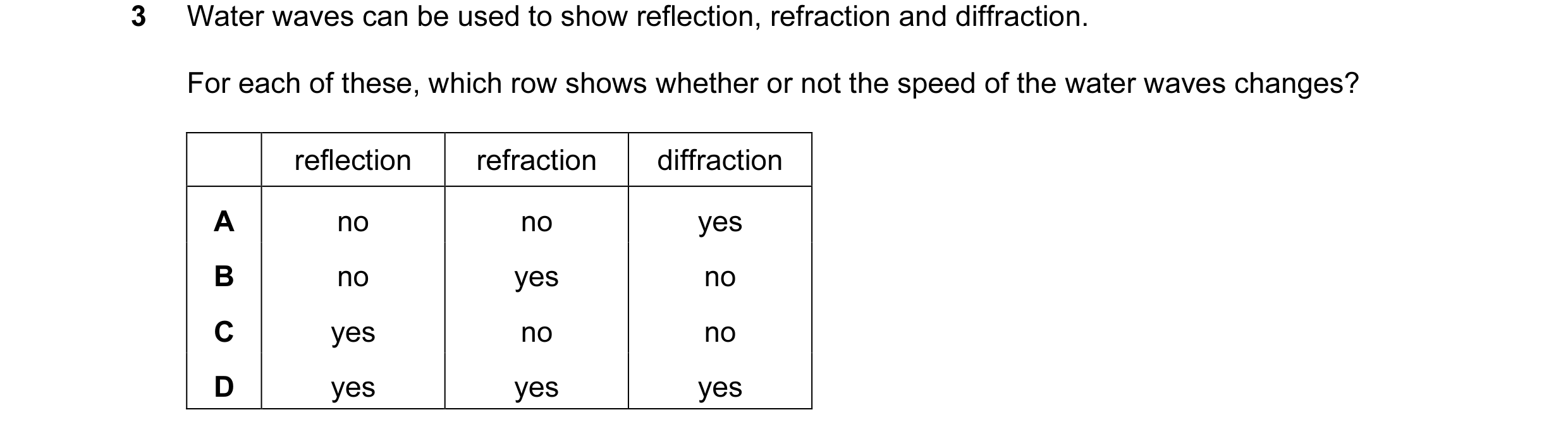
 17 / 87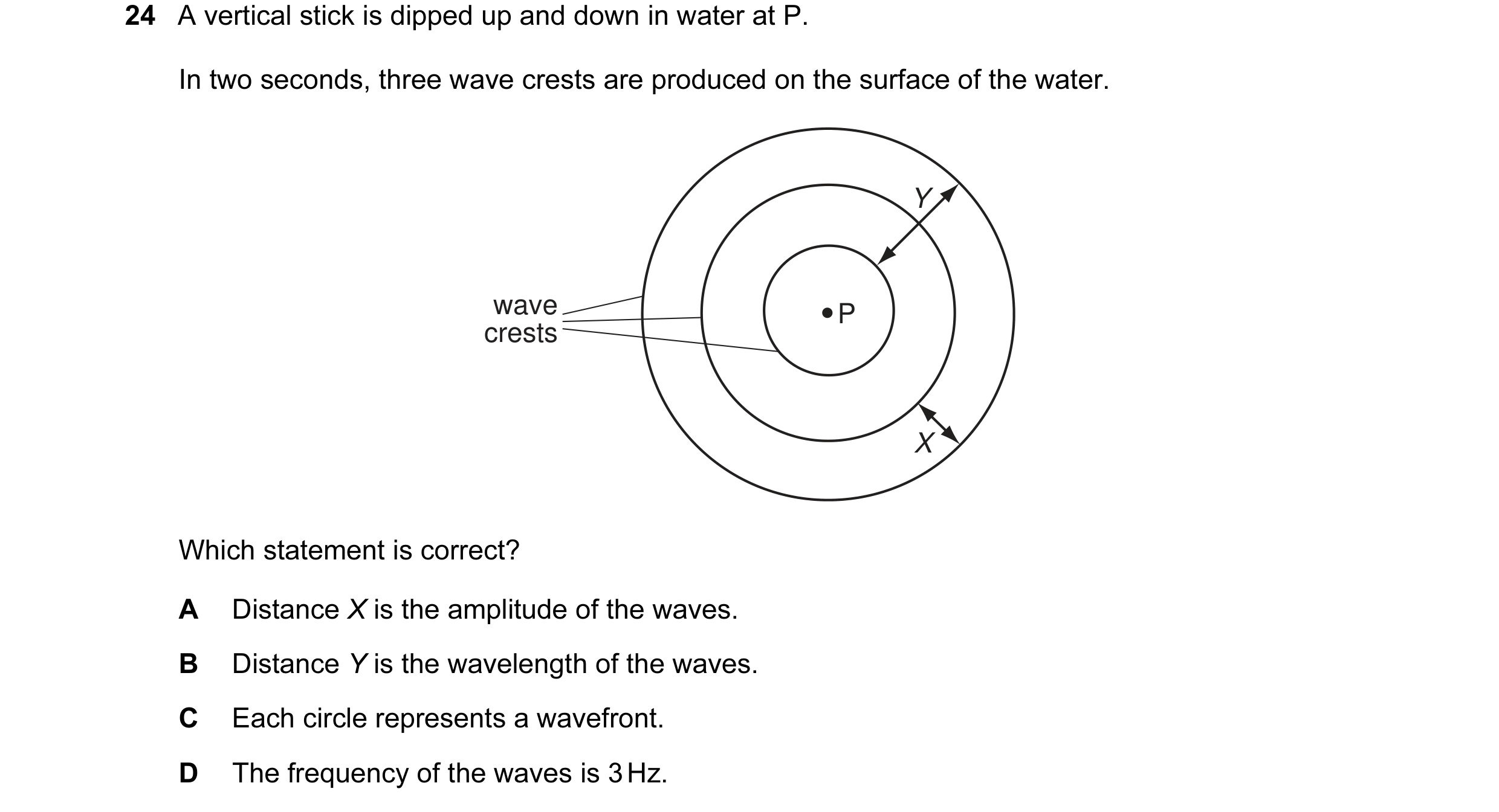
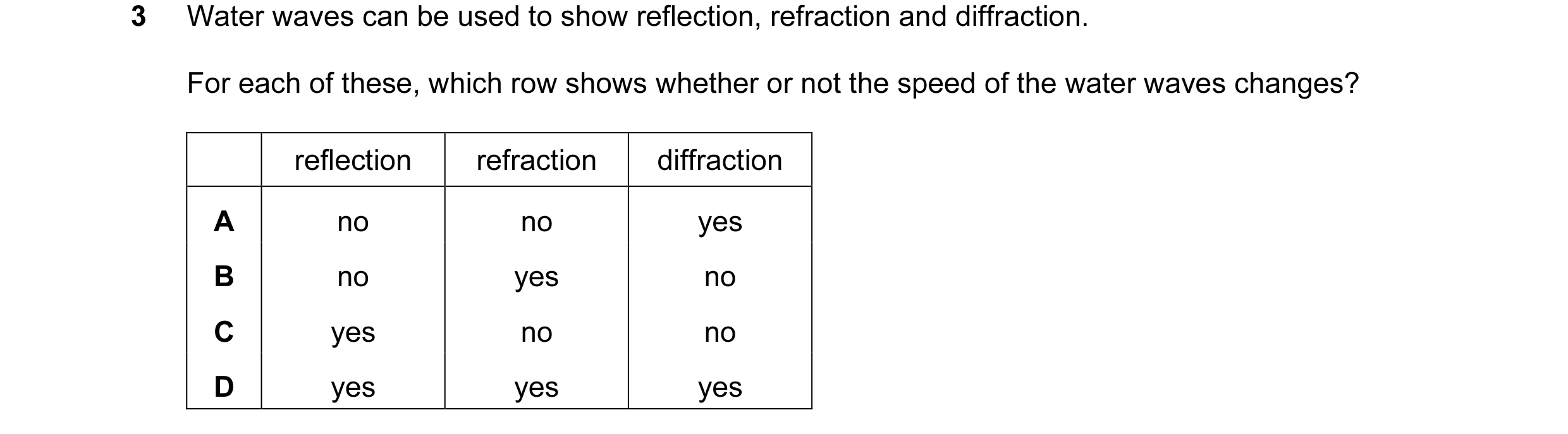
 18 / 87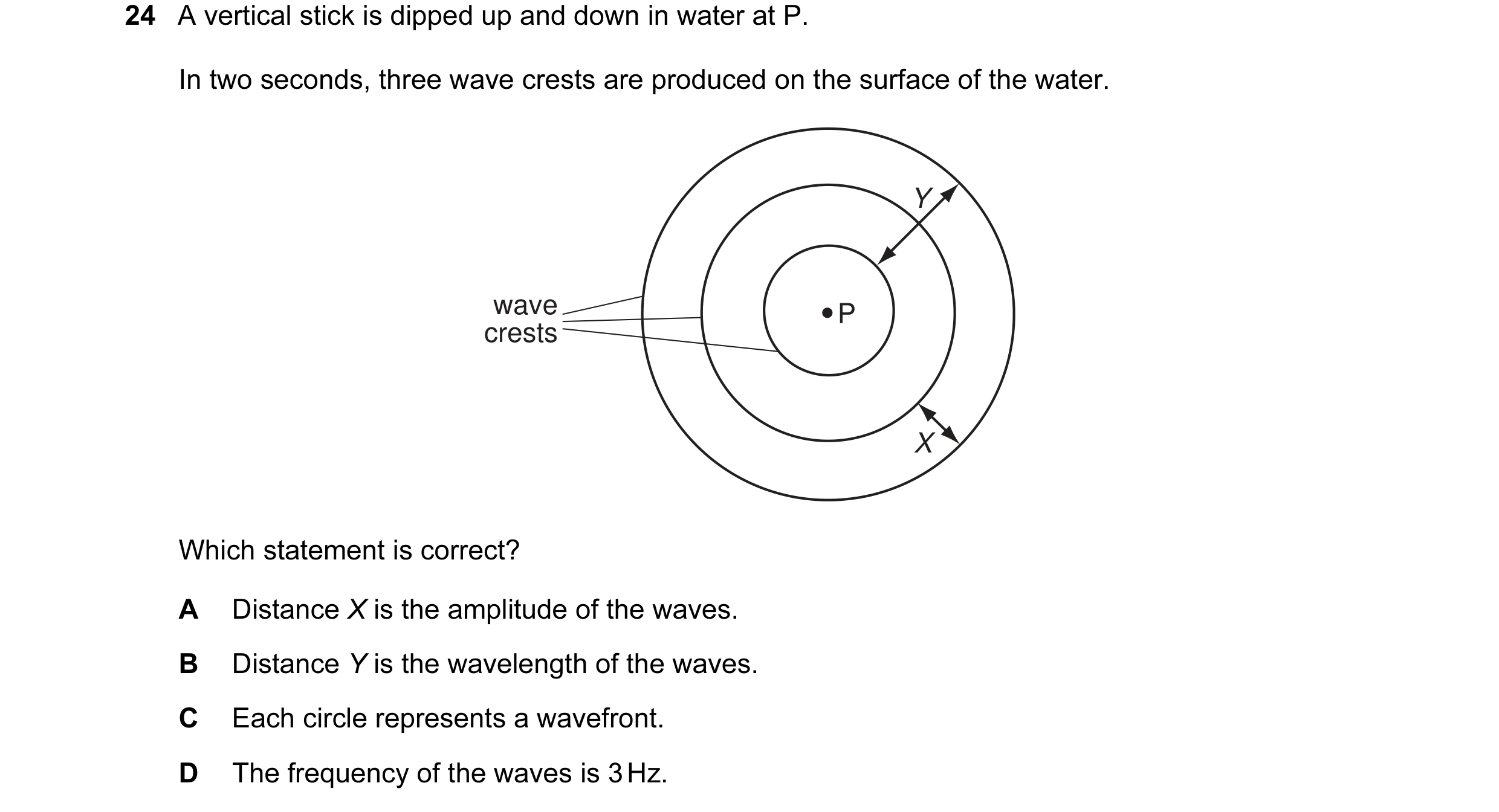
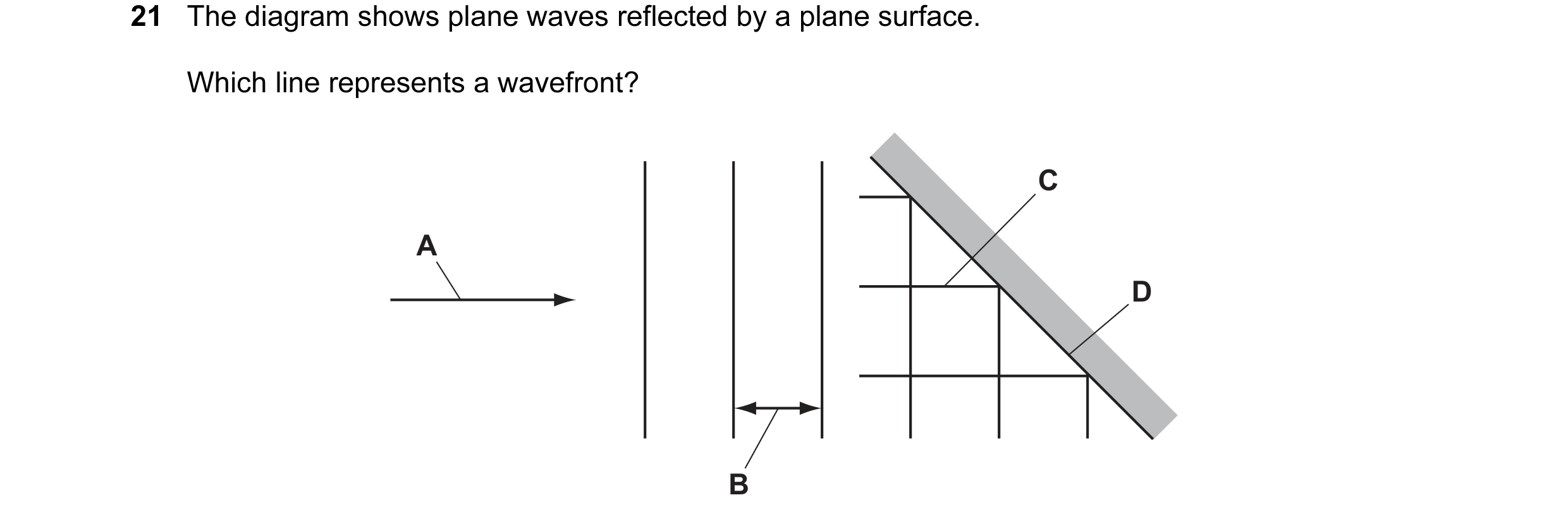

 19 / 87
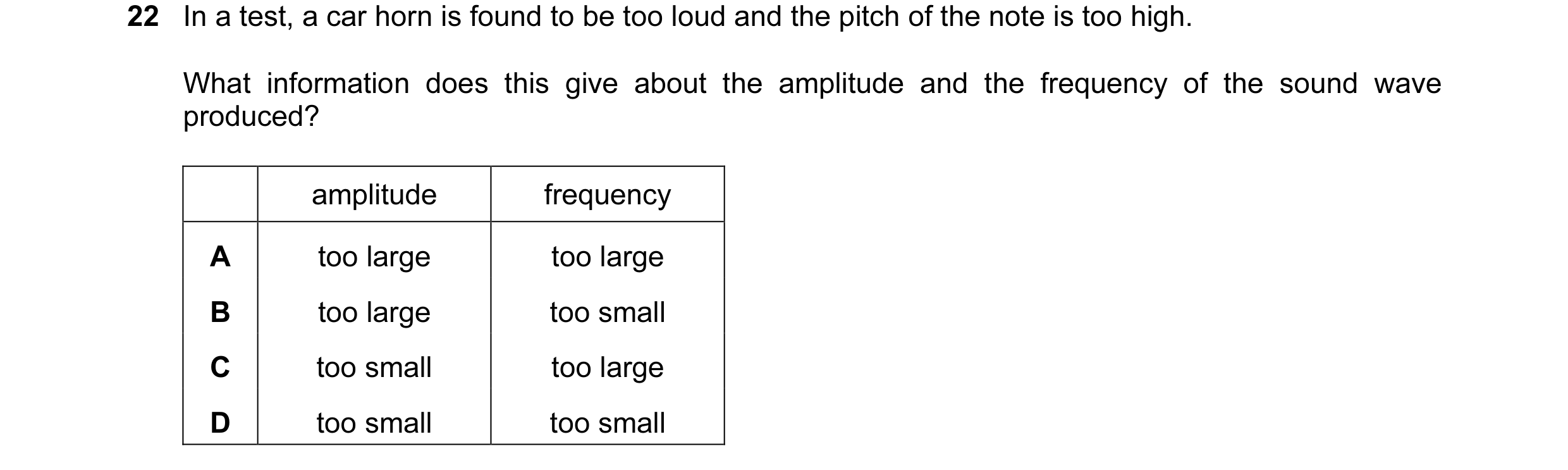
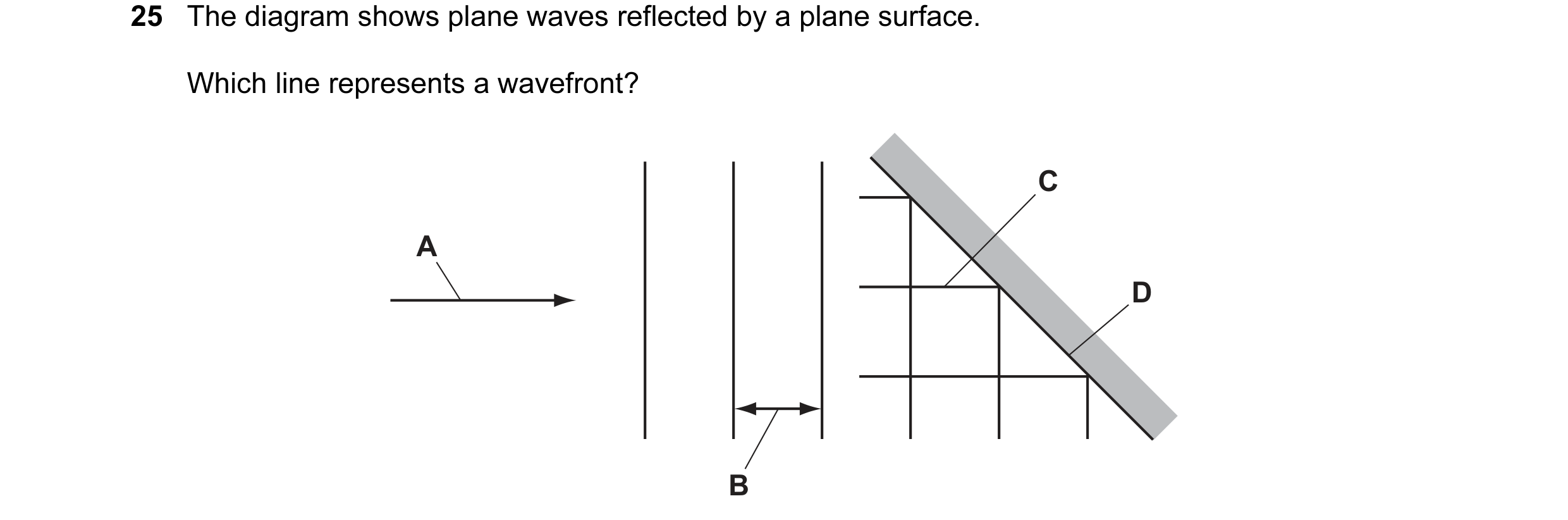 20 / 87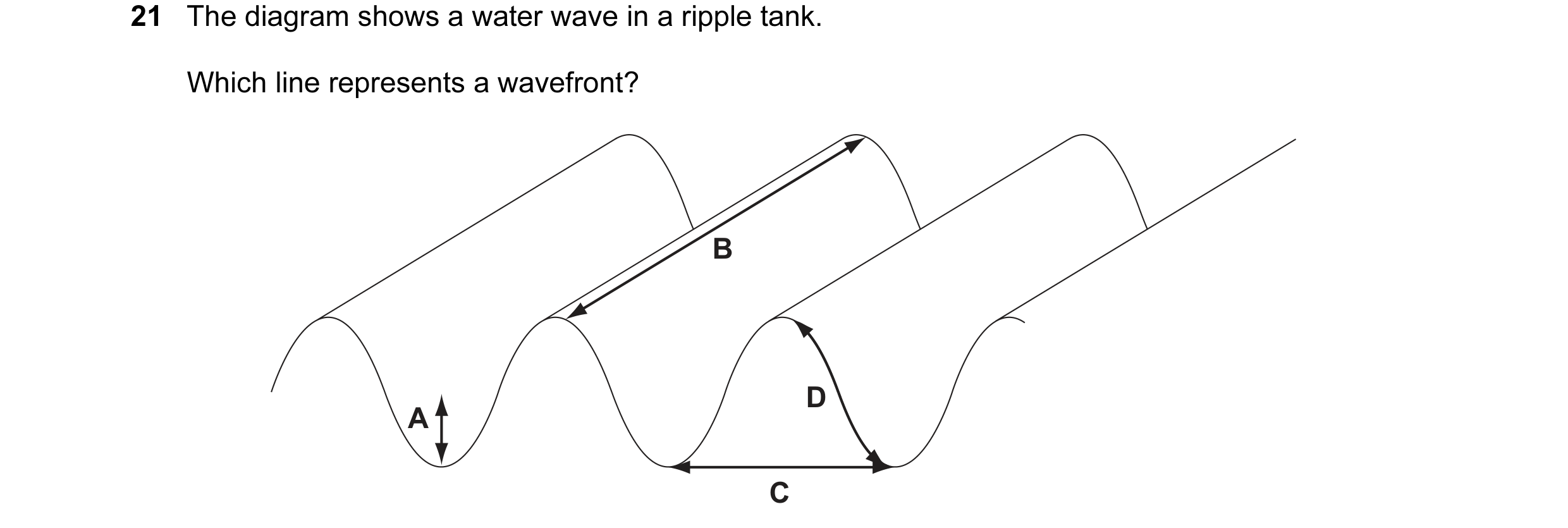

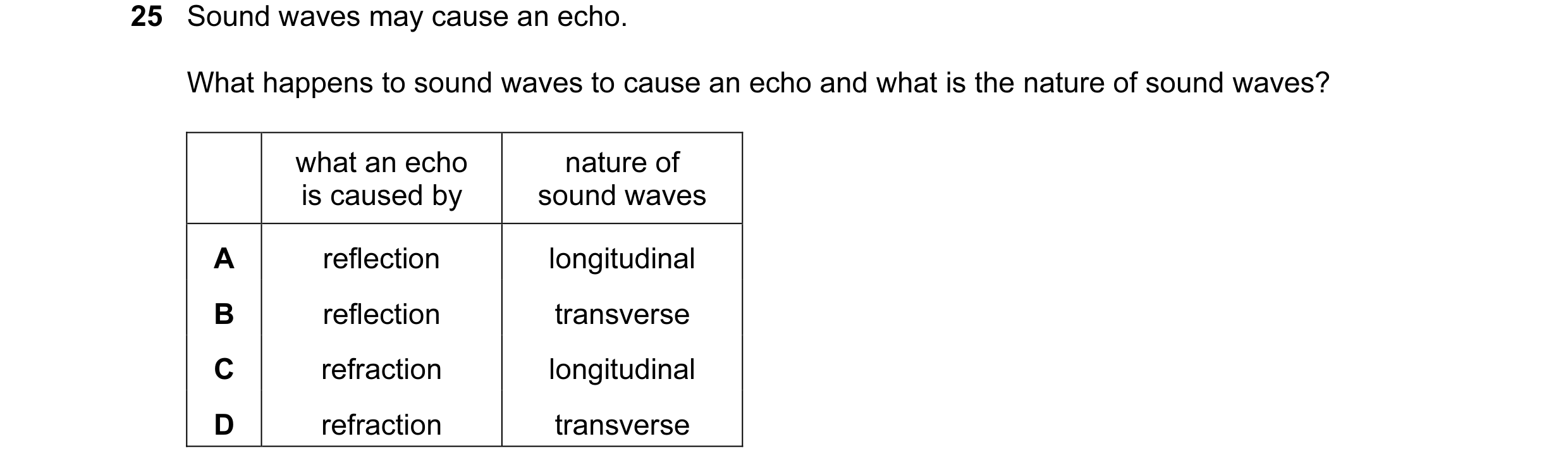
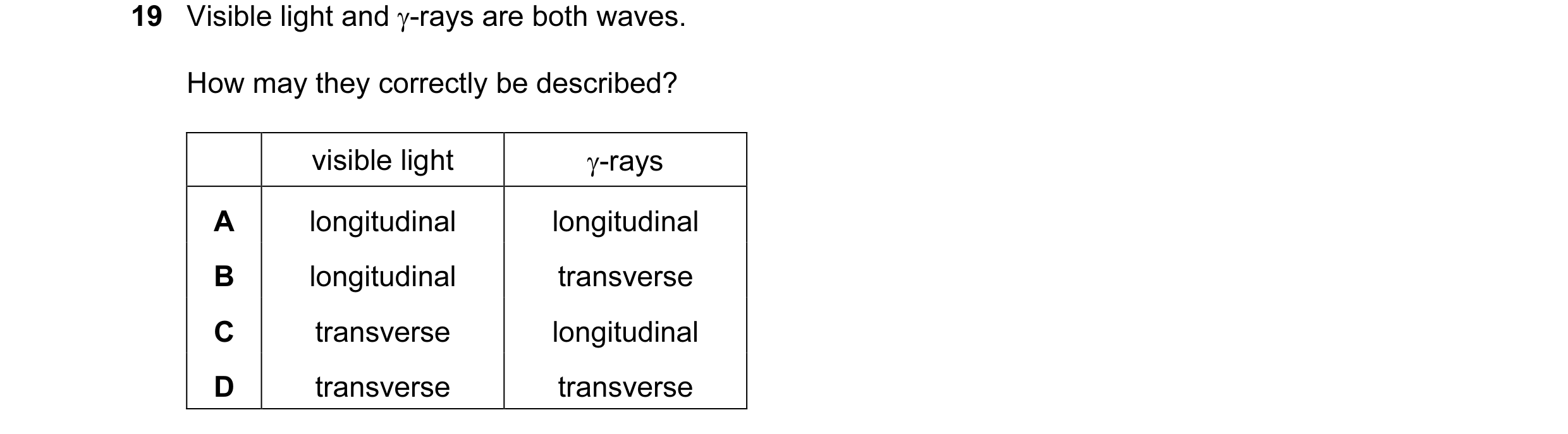 21 / 87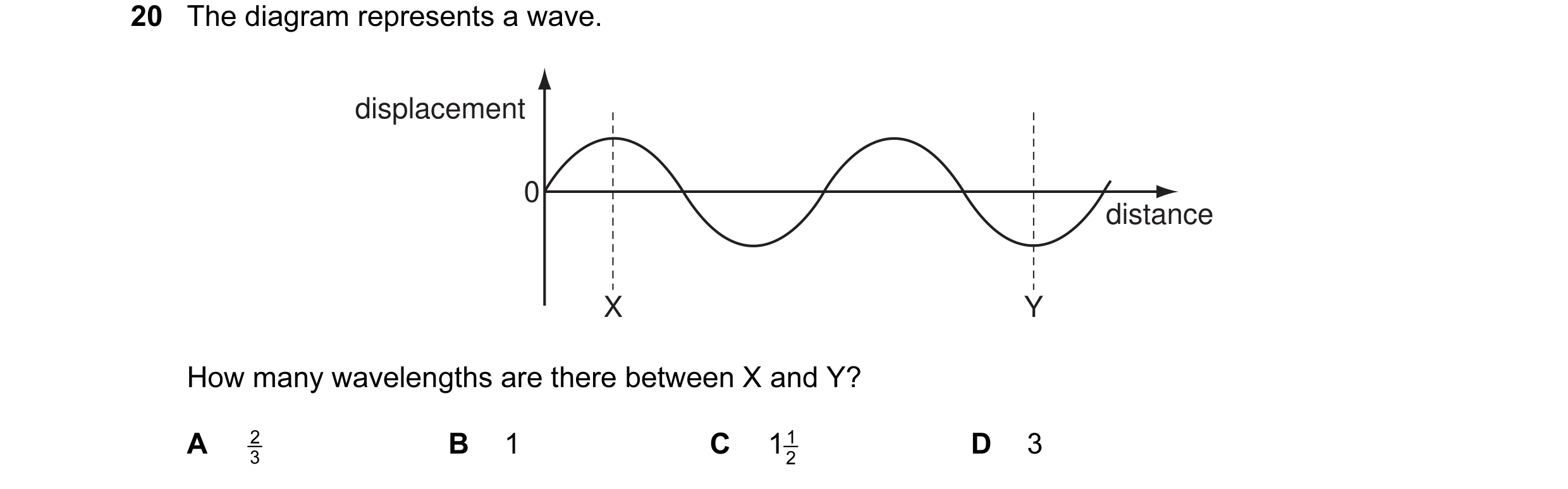
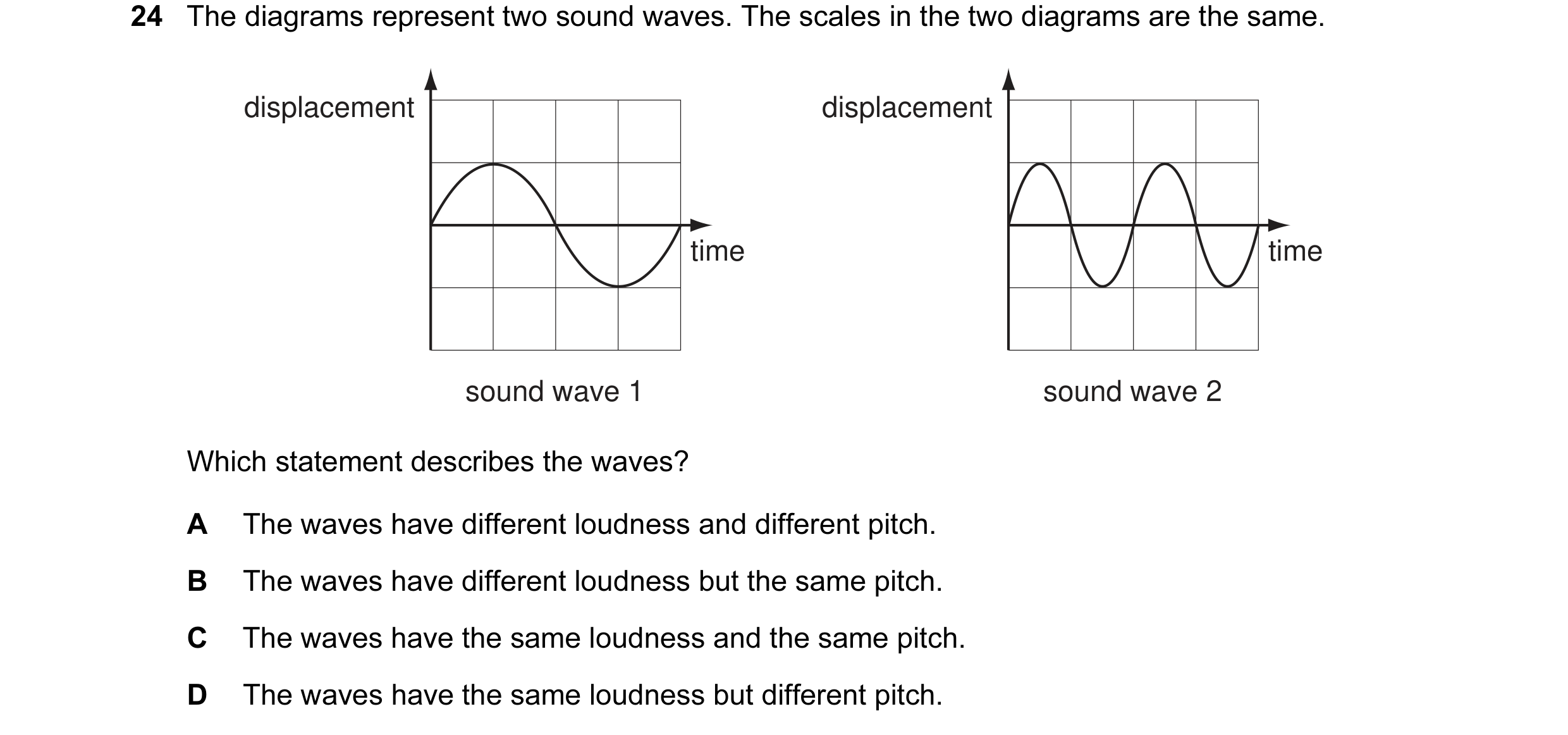 22 / 87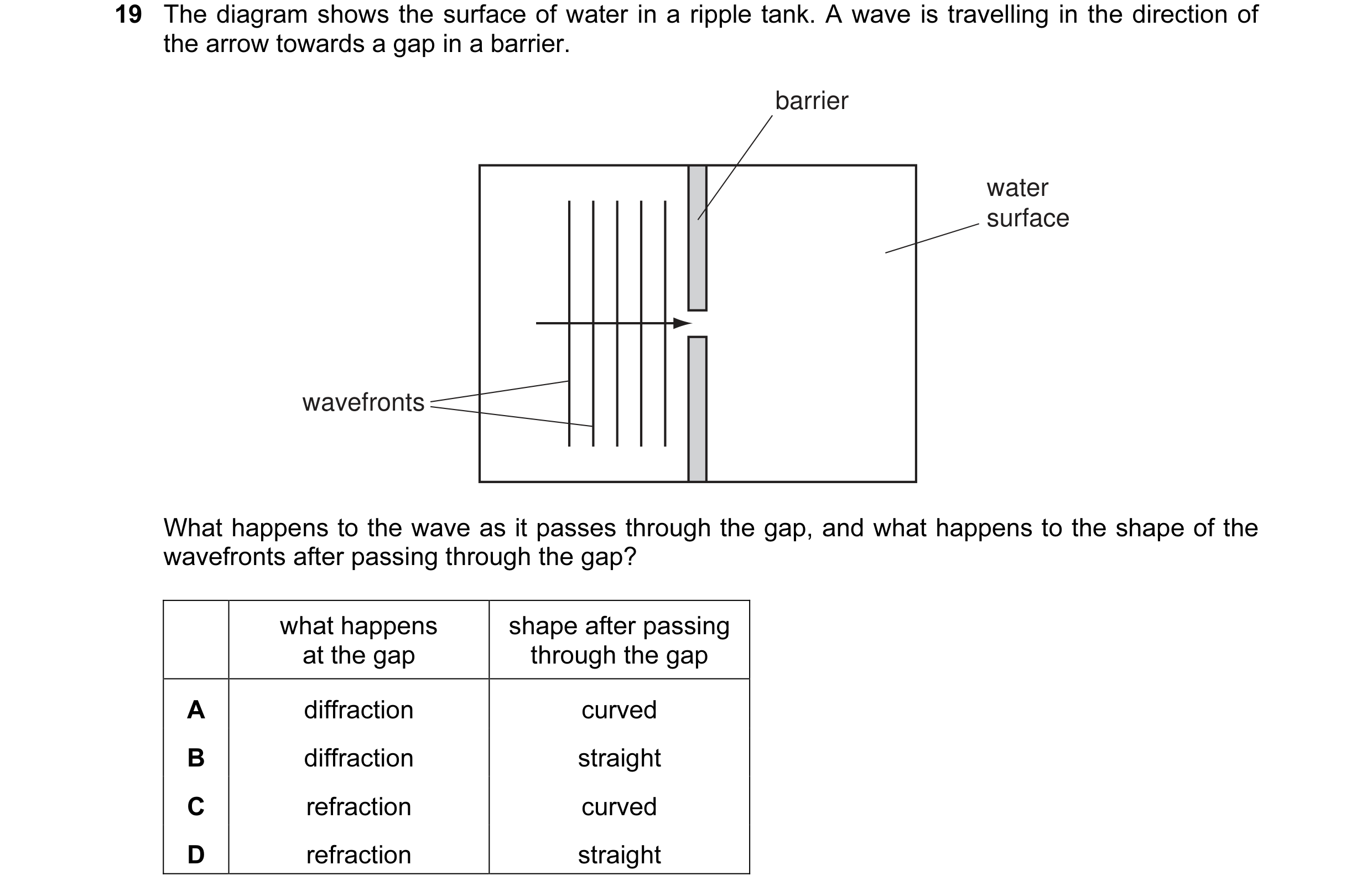
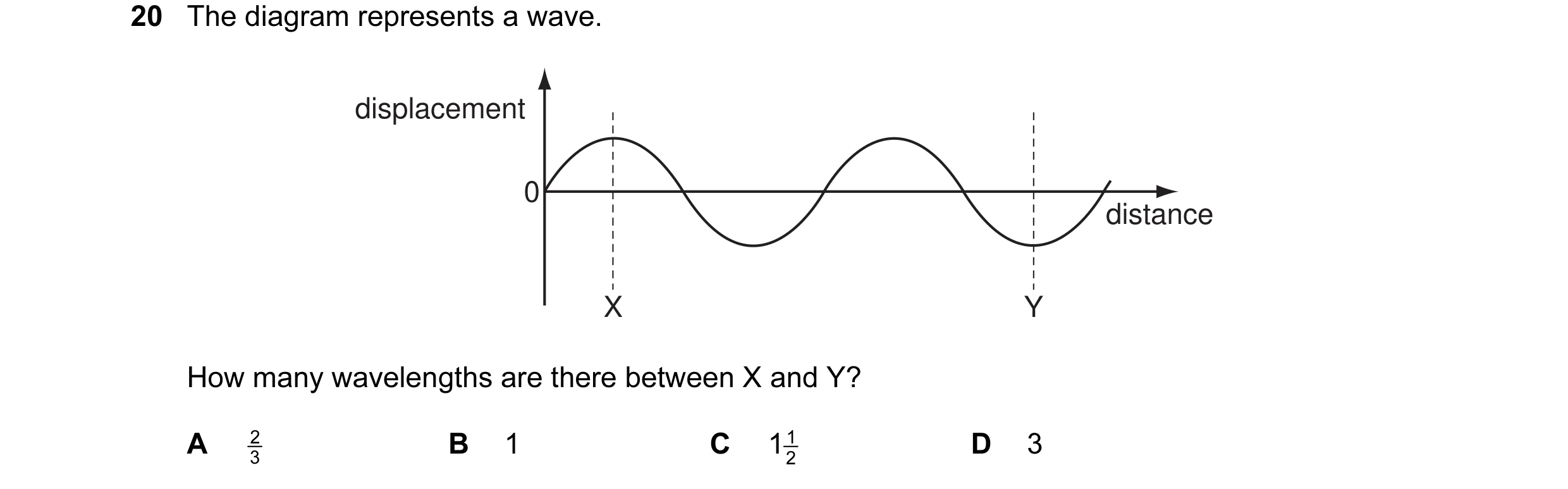
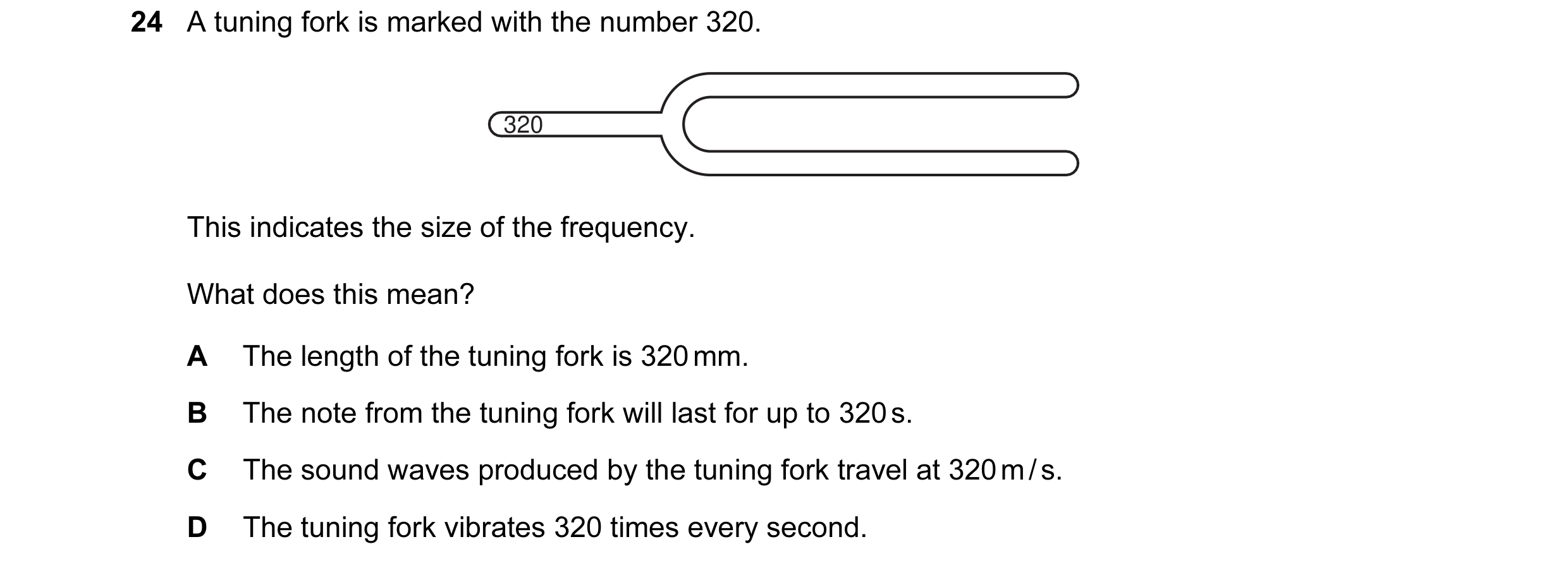 23 / 87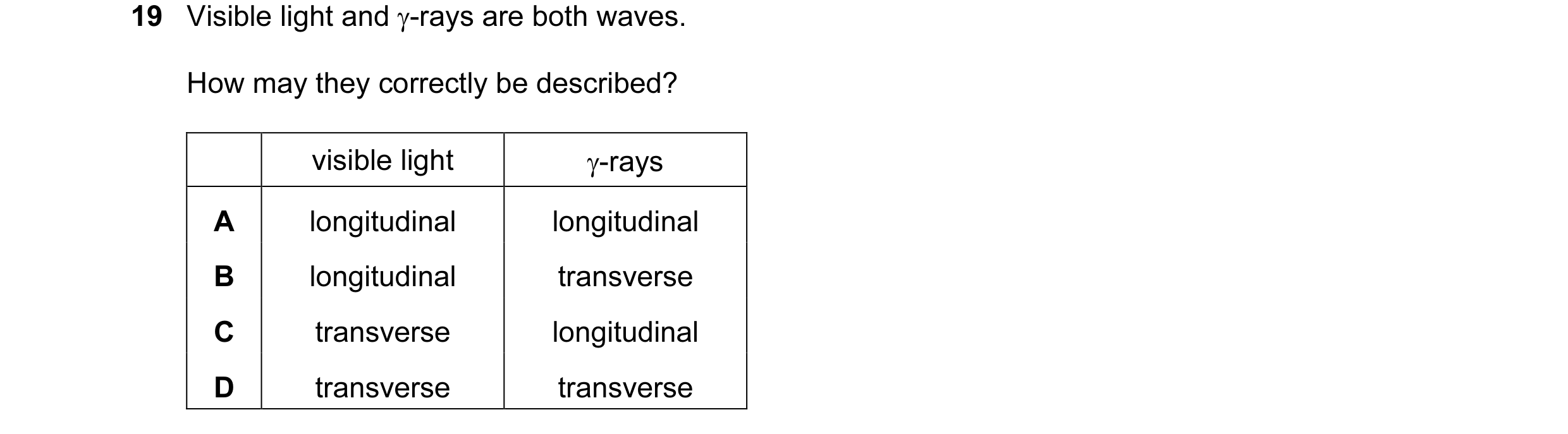
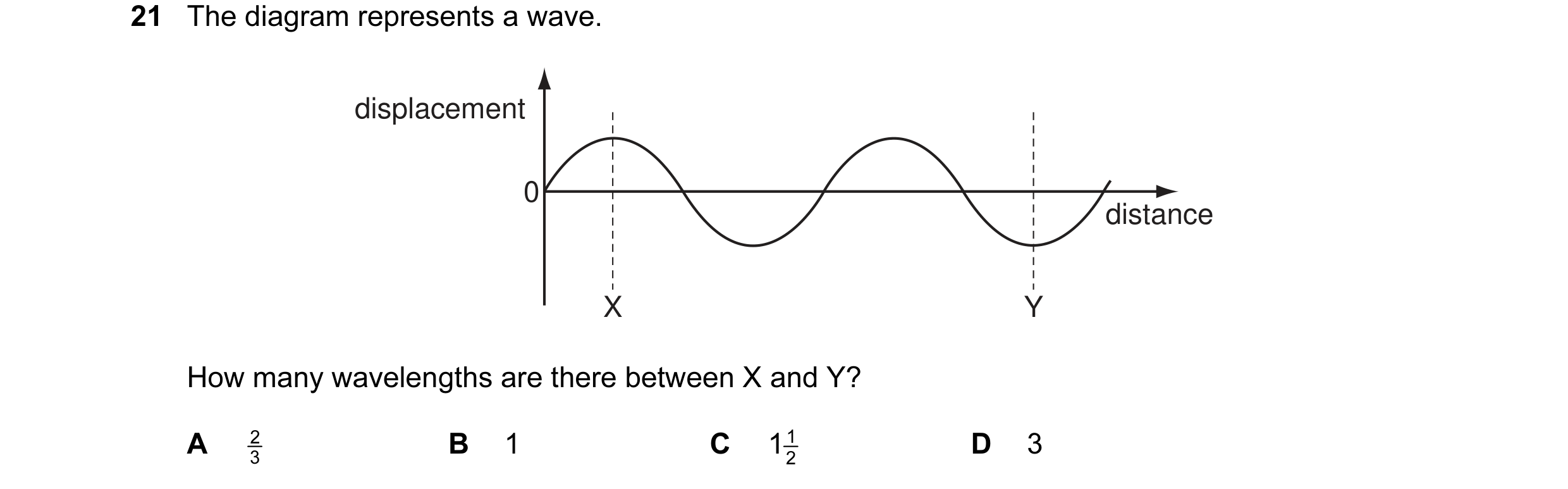
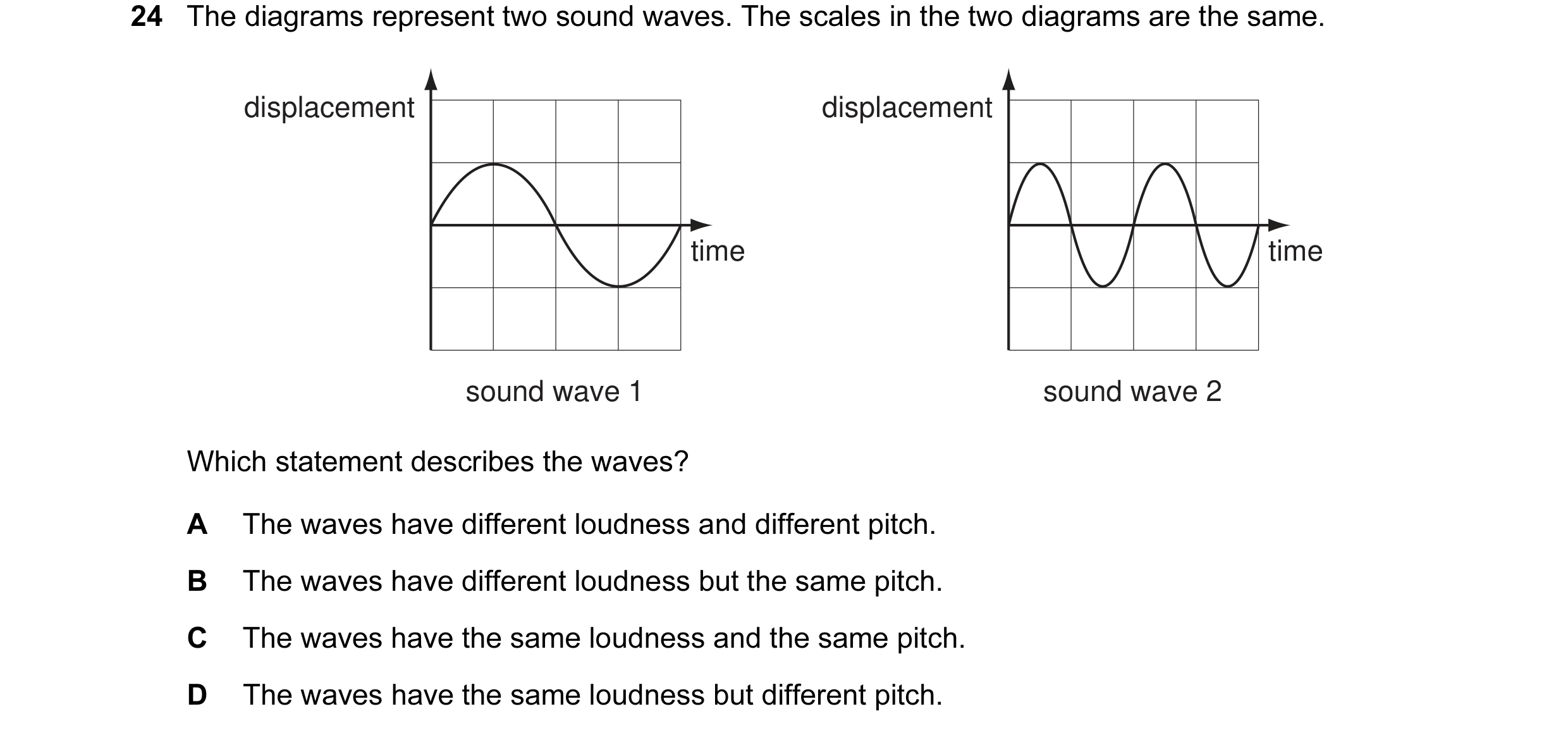
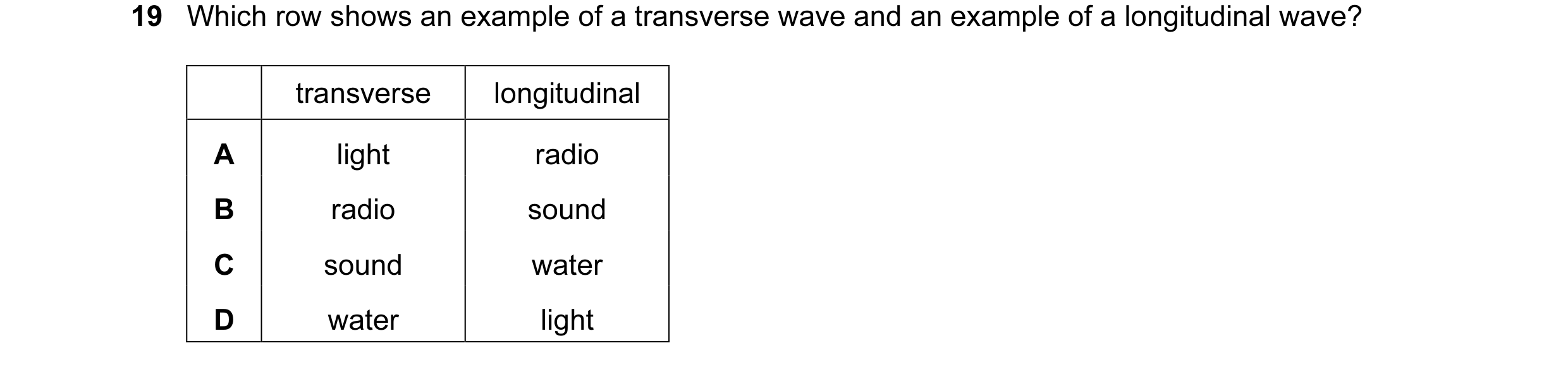 24 / 87
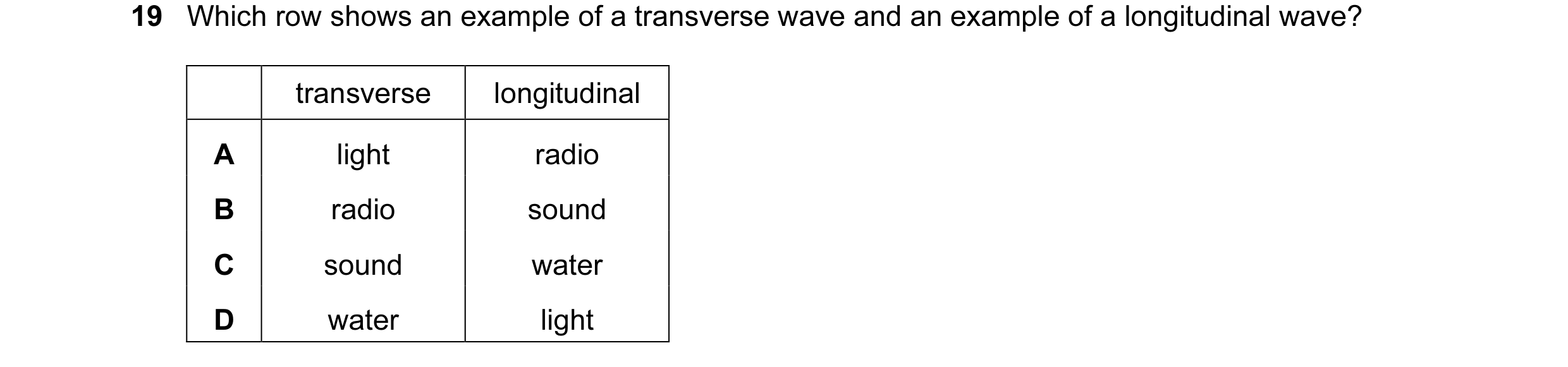

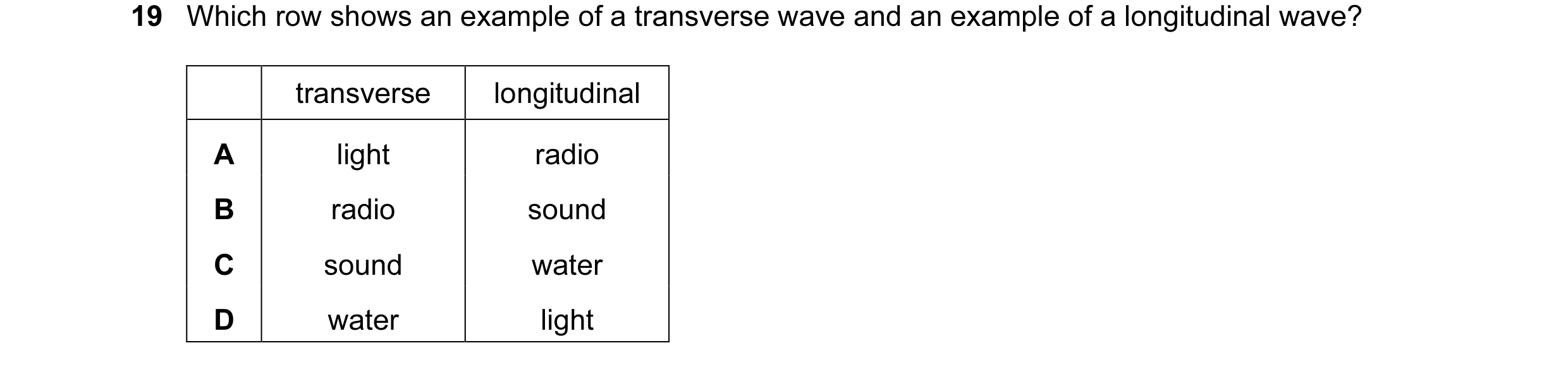
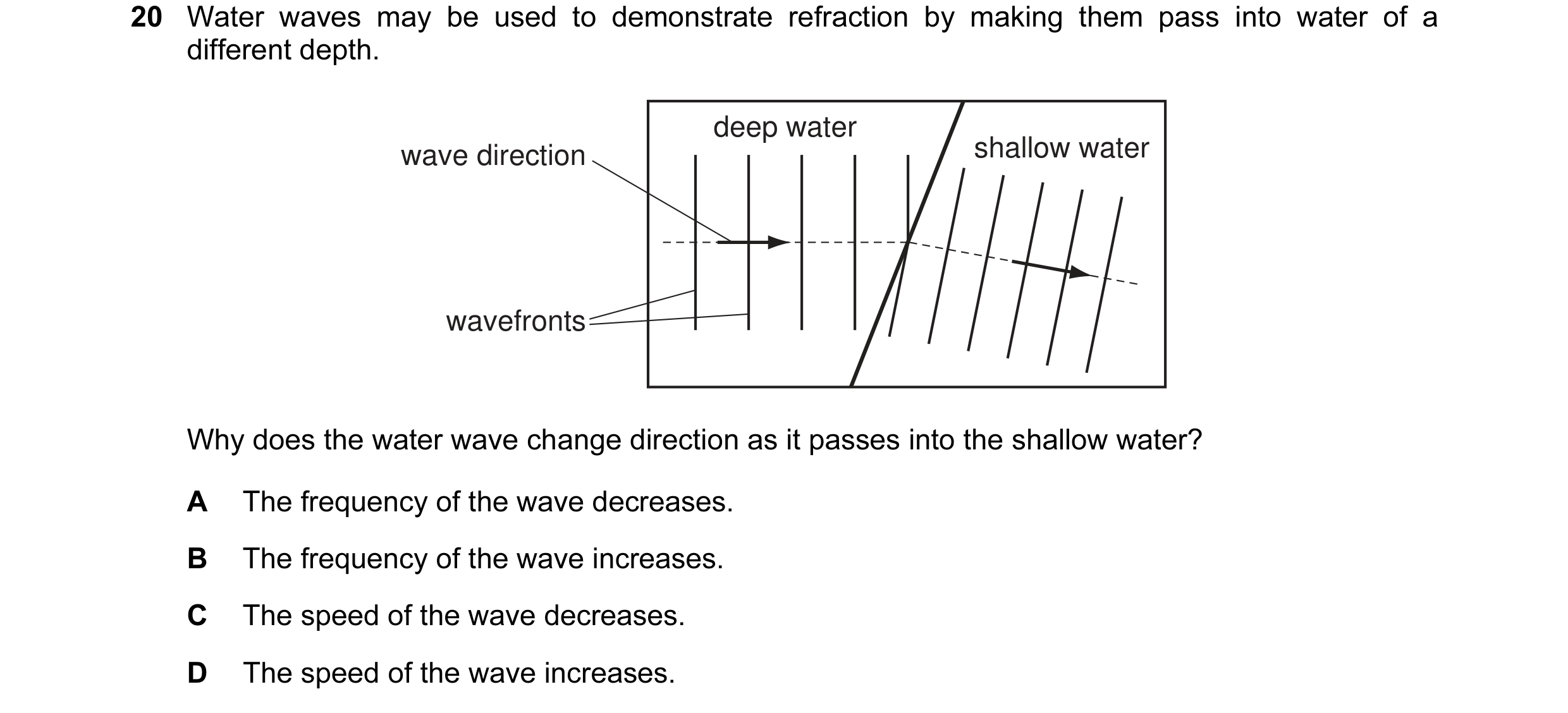 25 / 87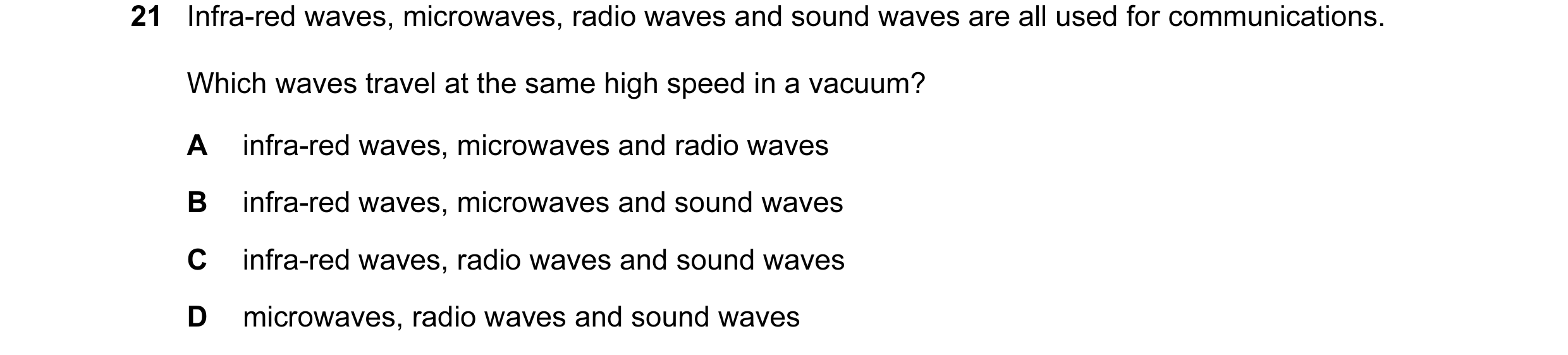
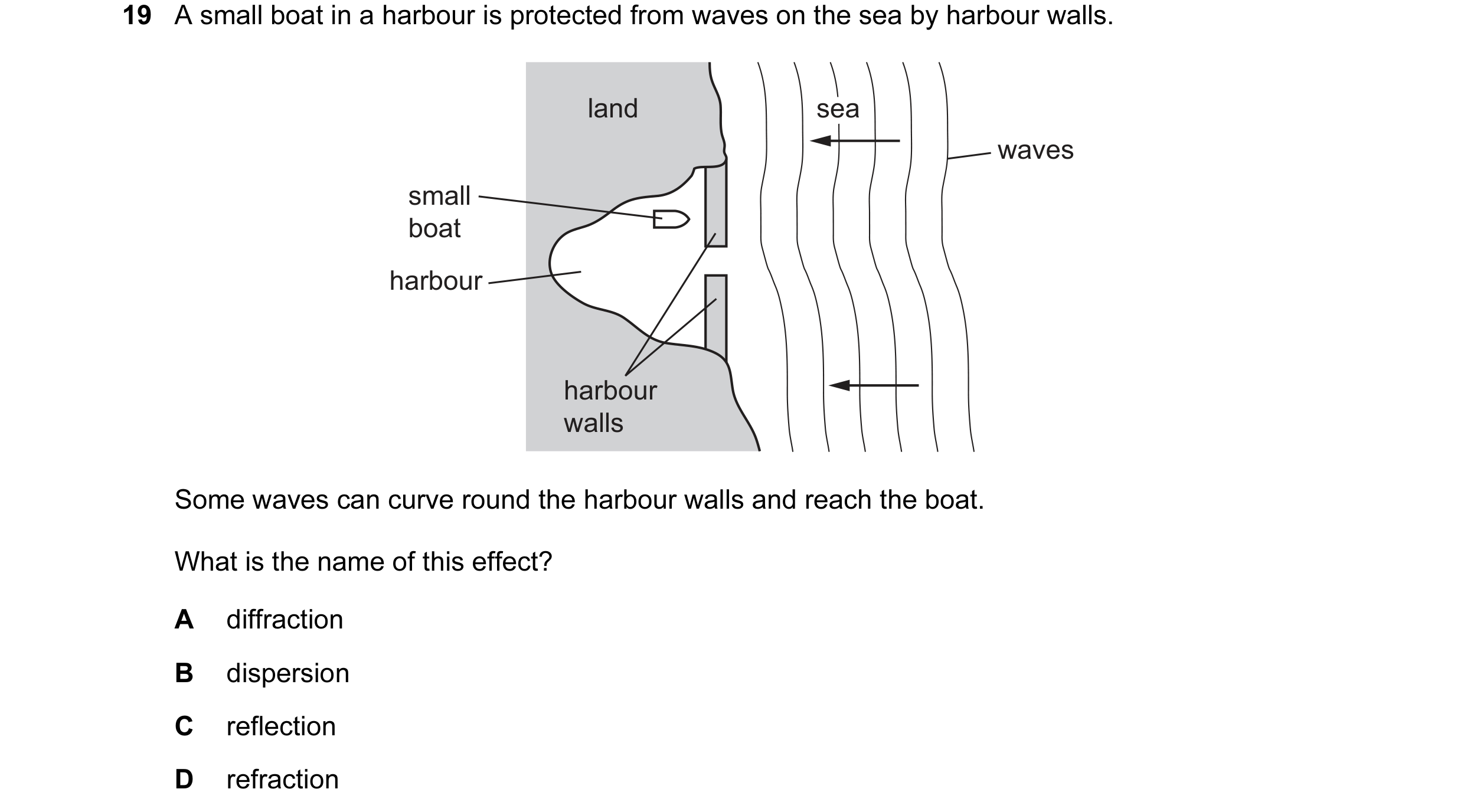
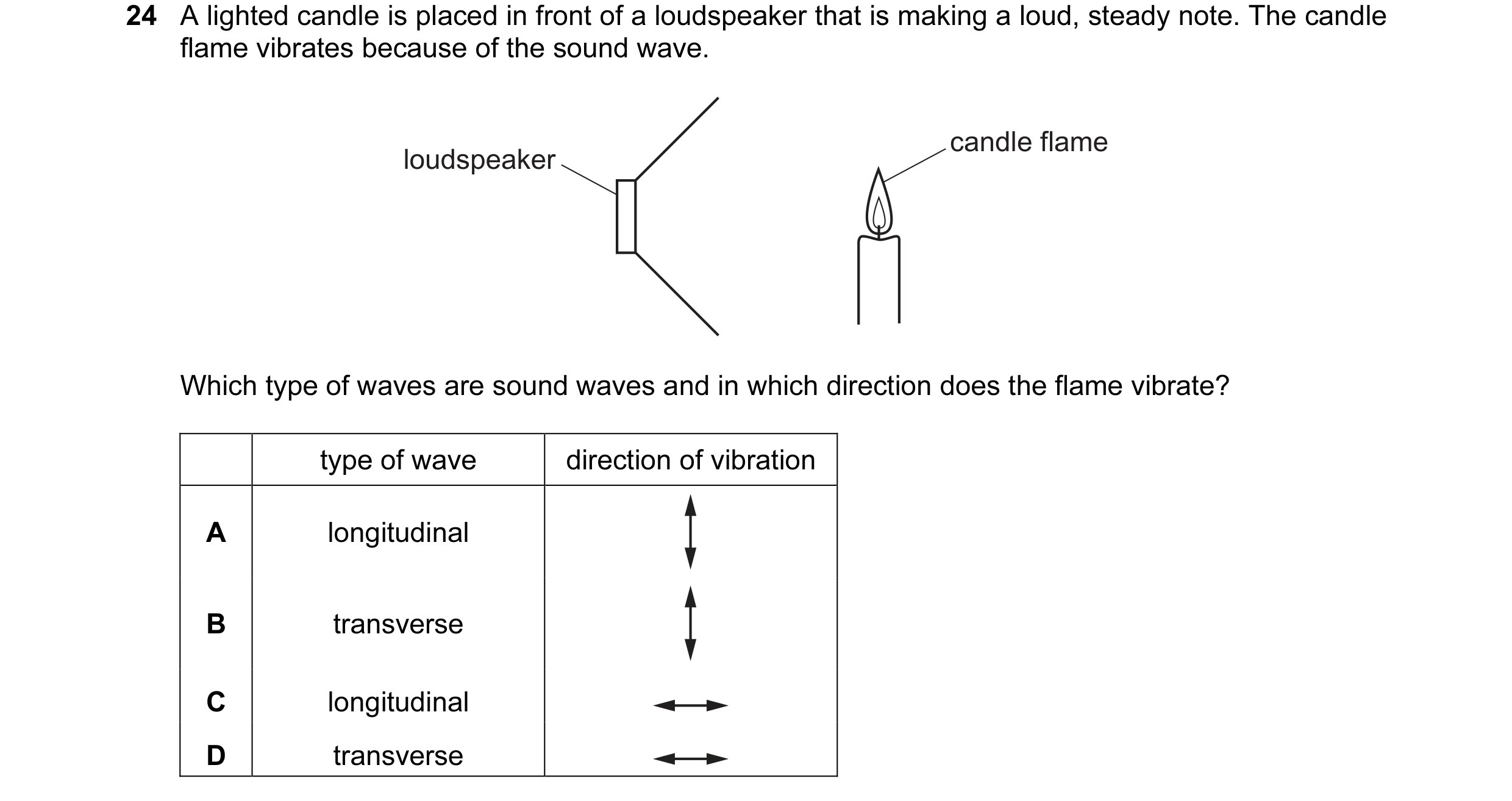 26 / 87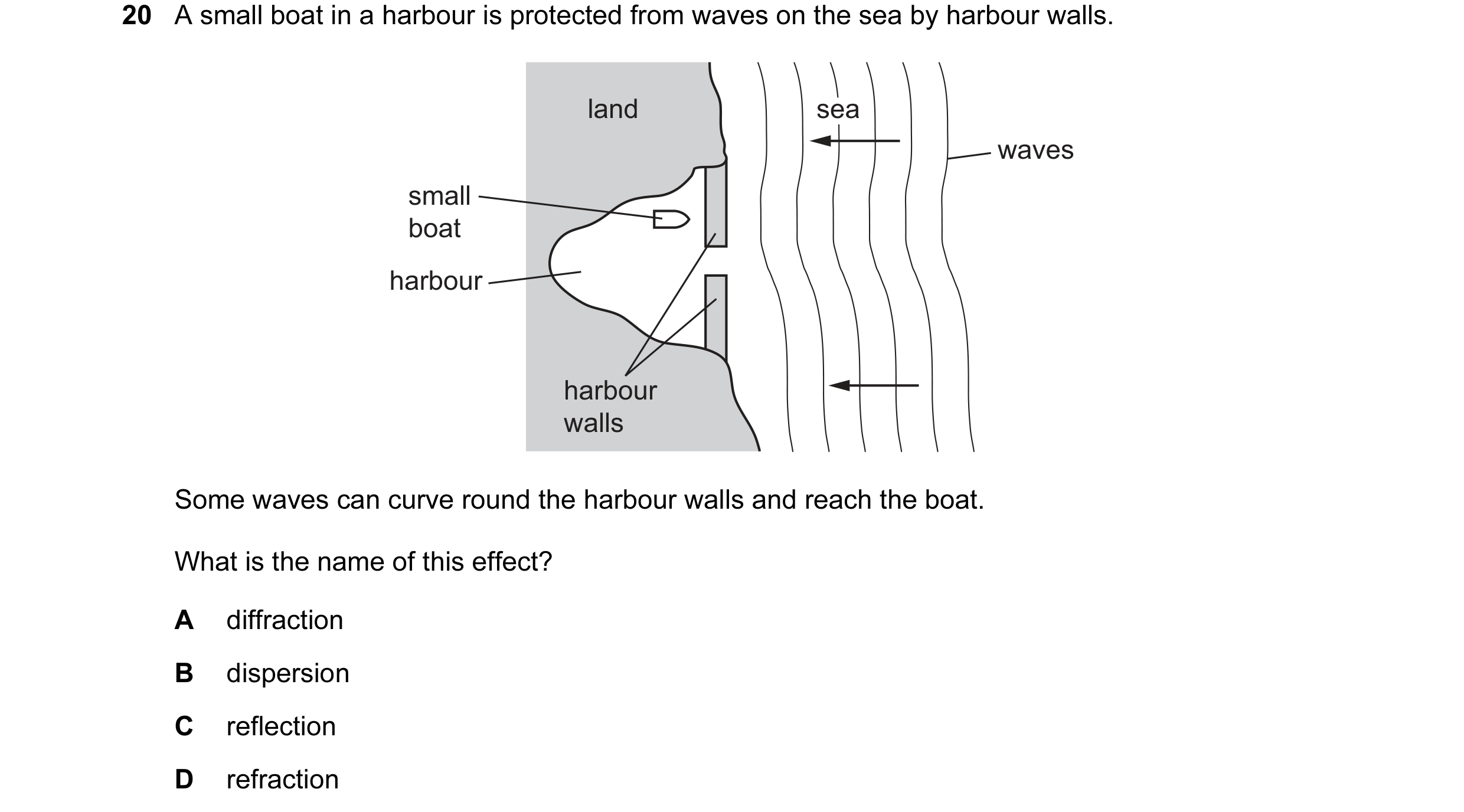
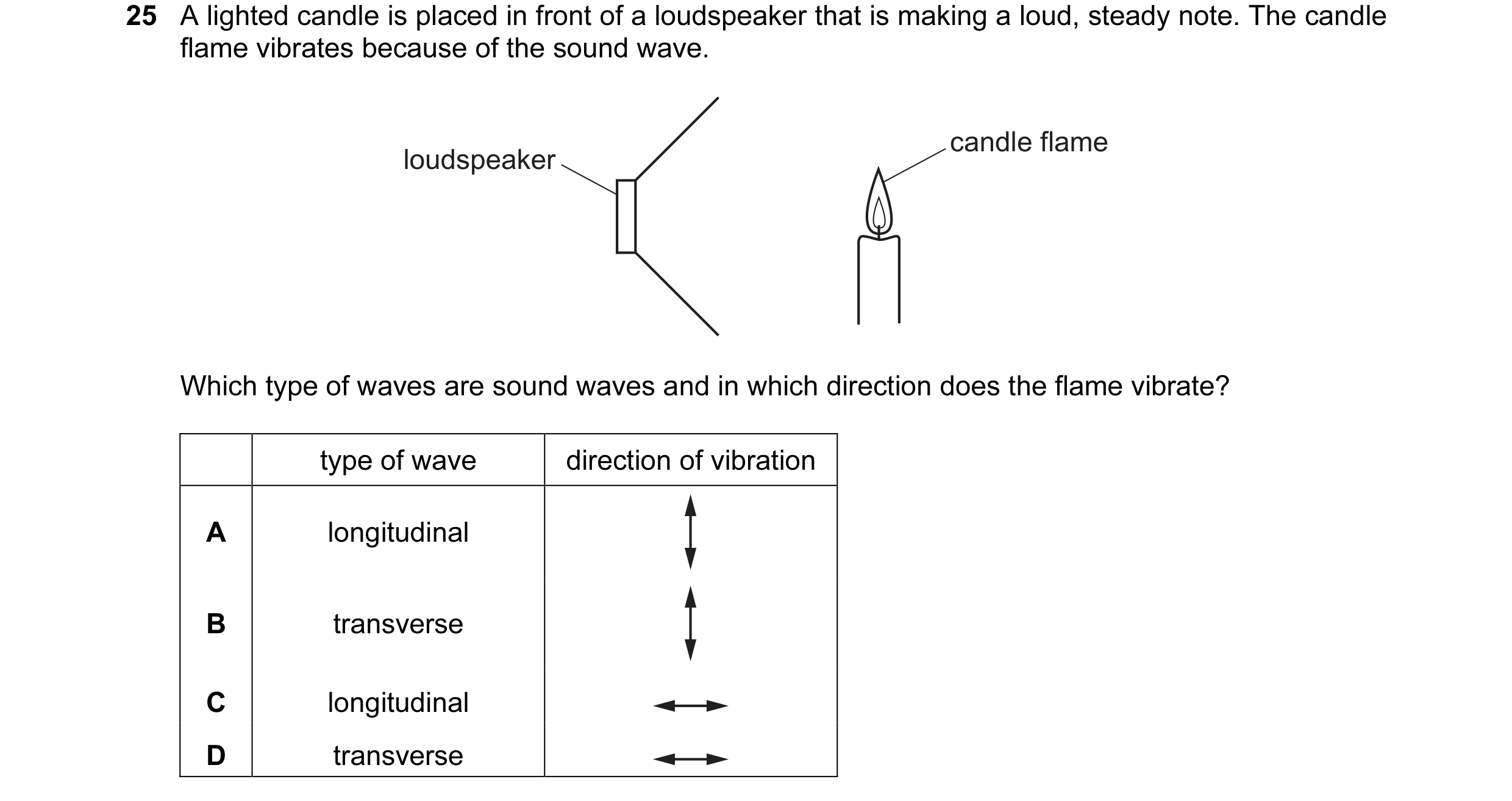 27 / 87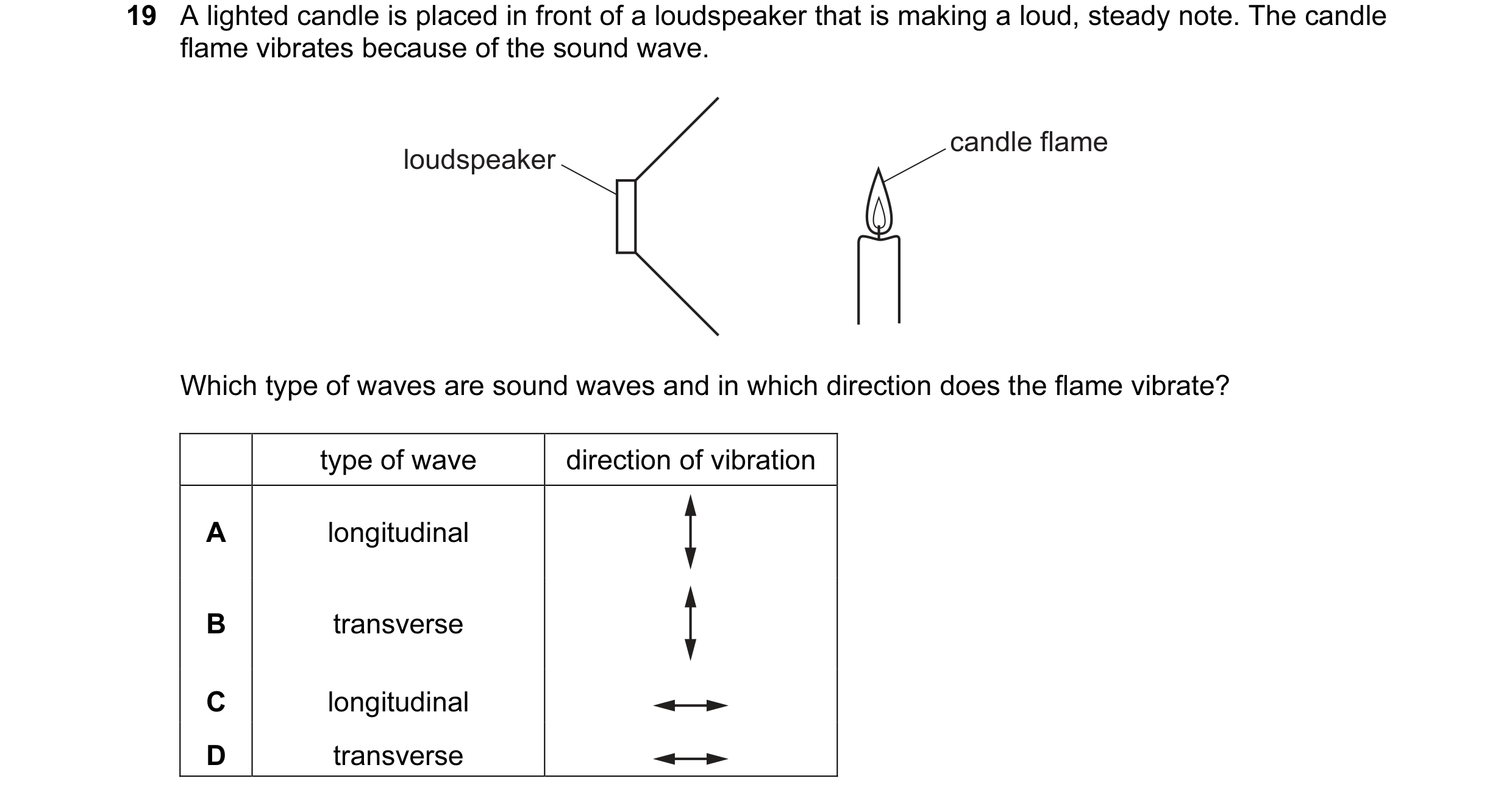
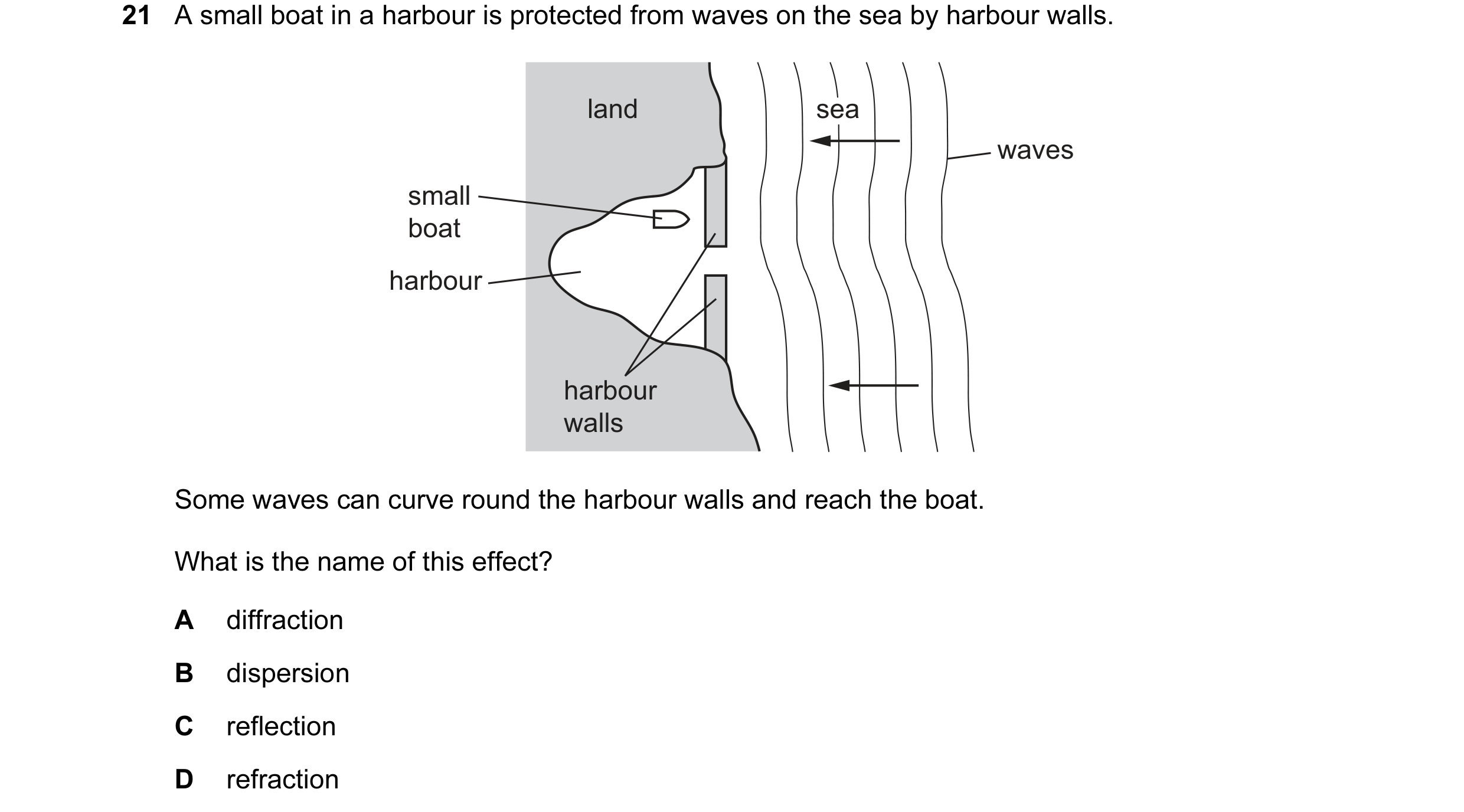 28 / 87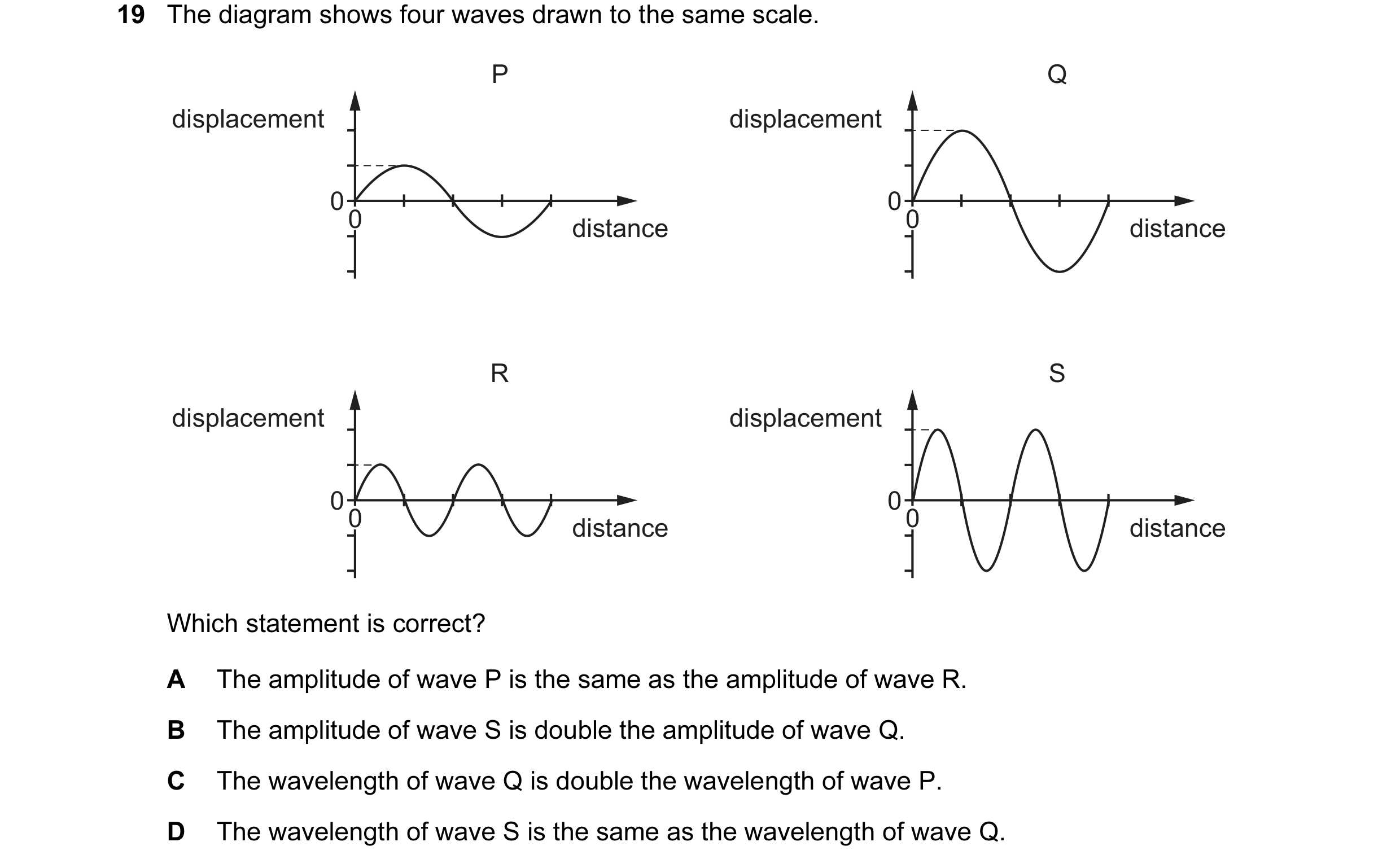
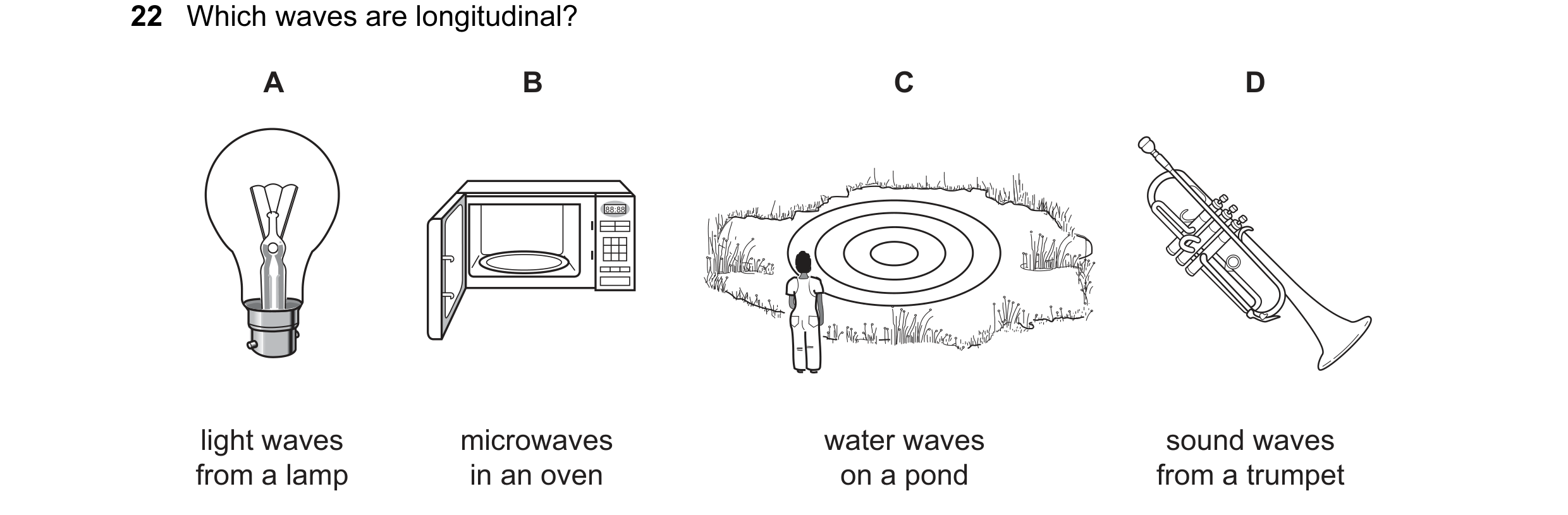 29 / 87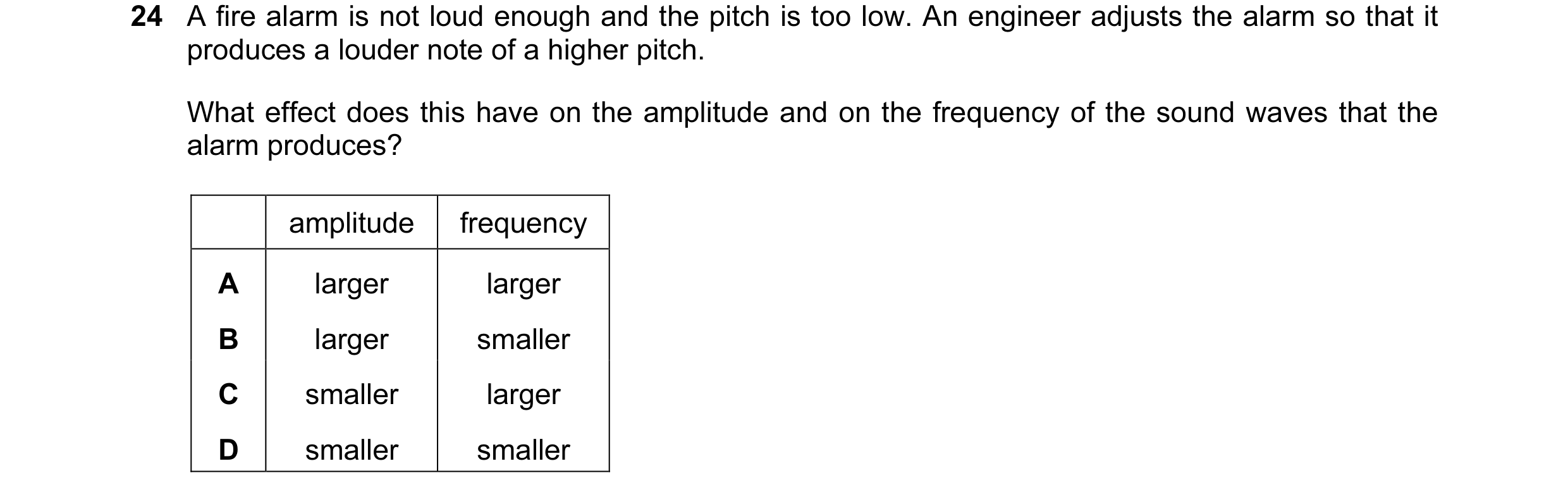
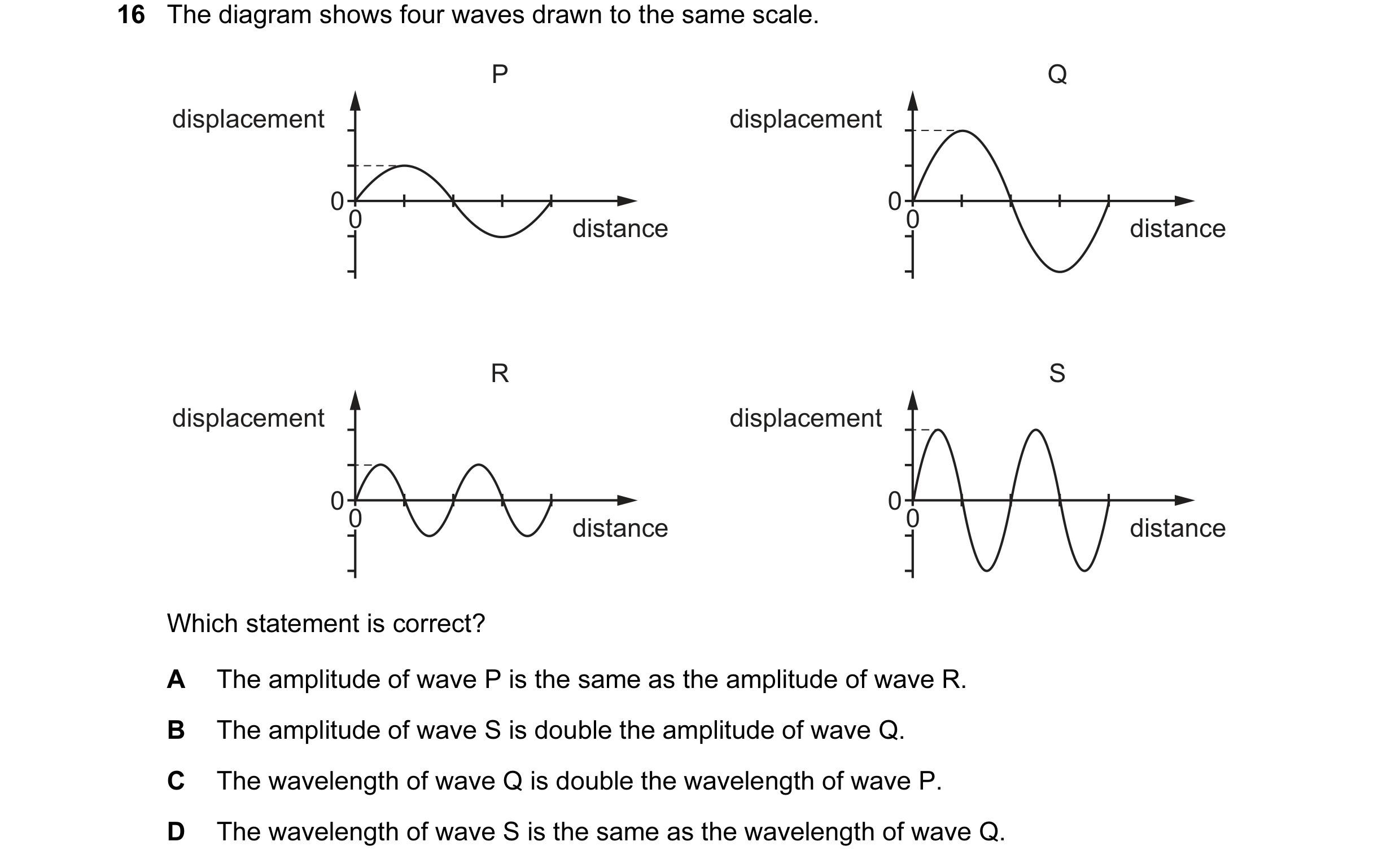
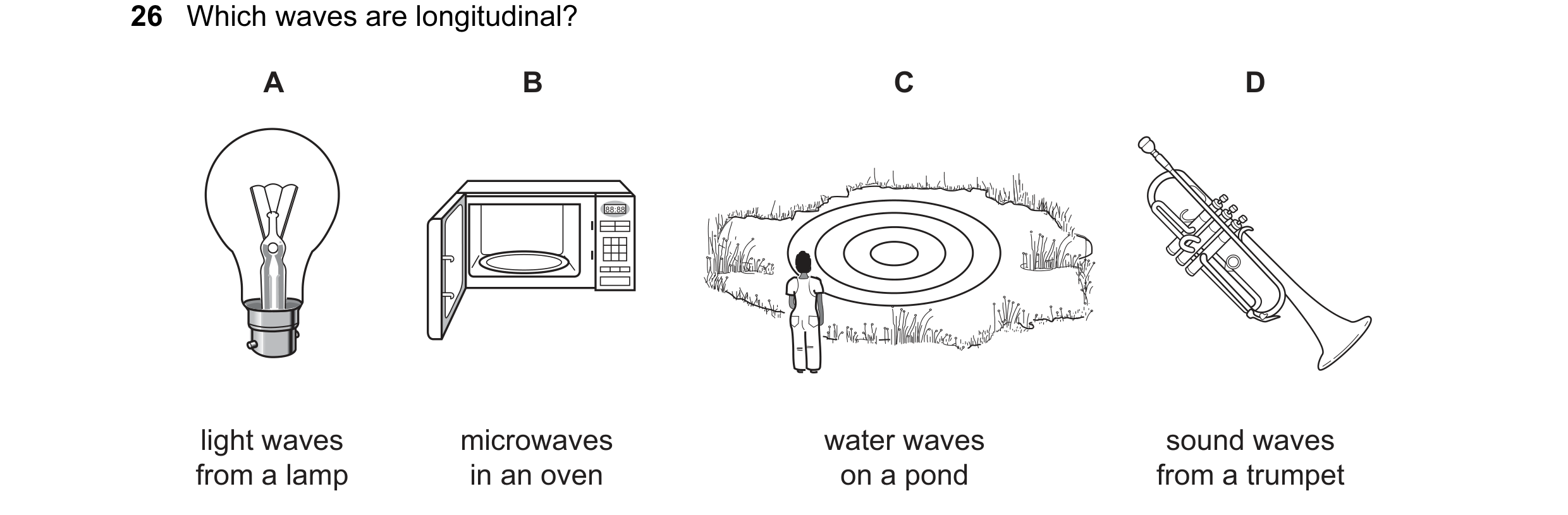 30 / 87
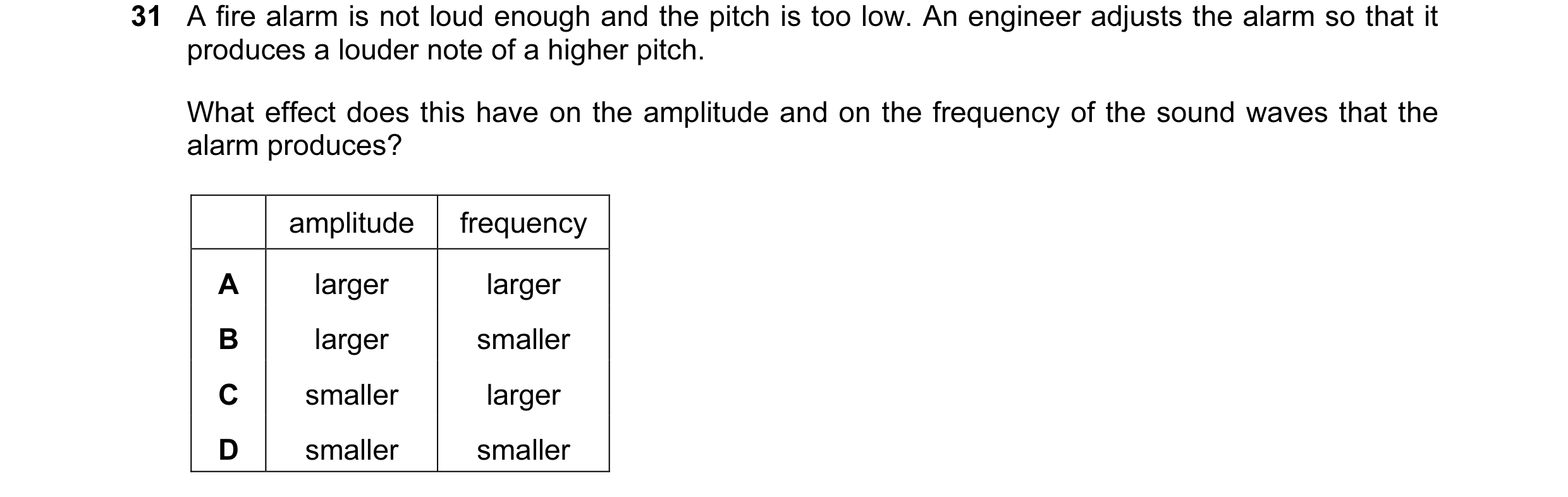
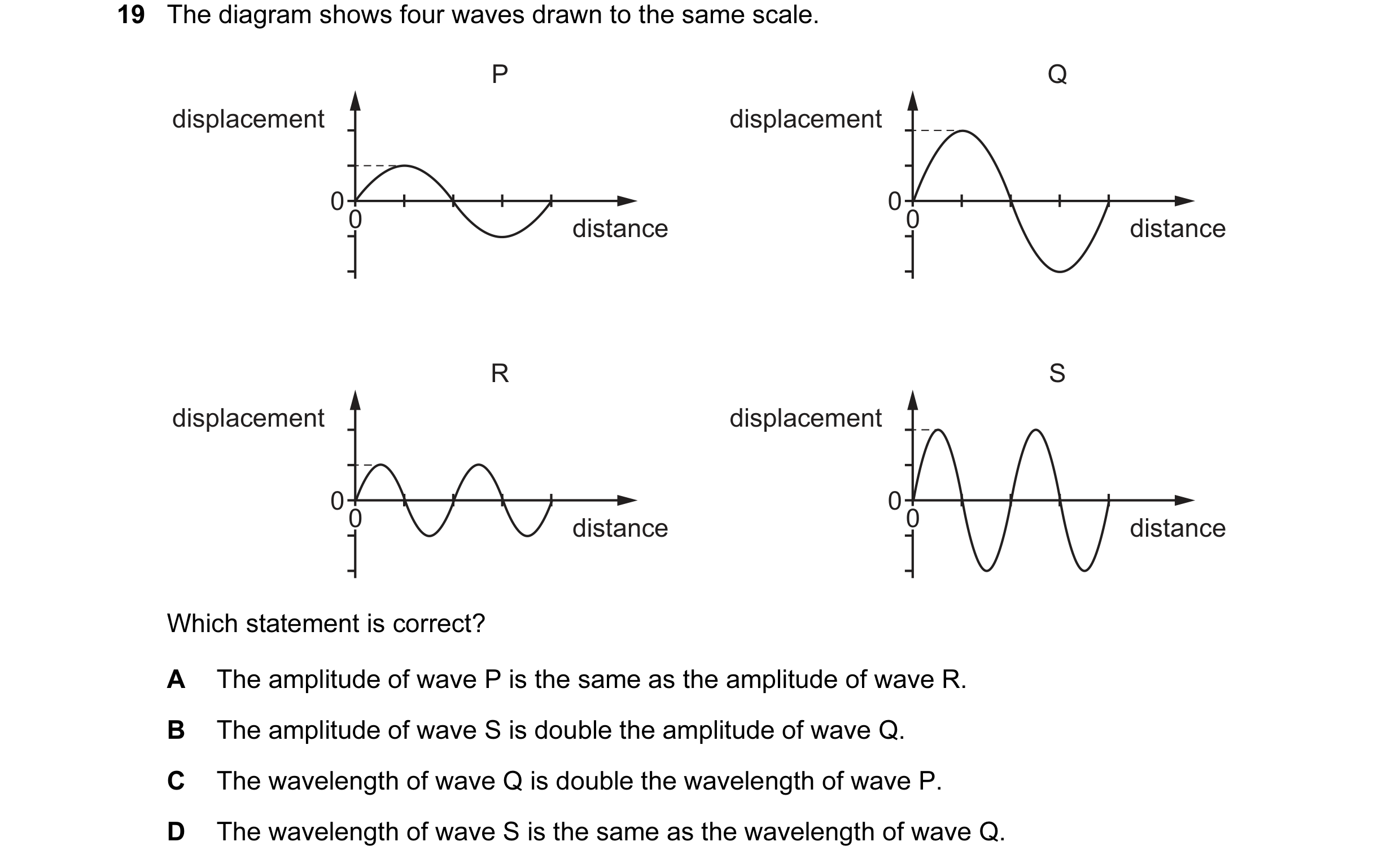 31 / 87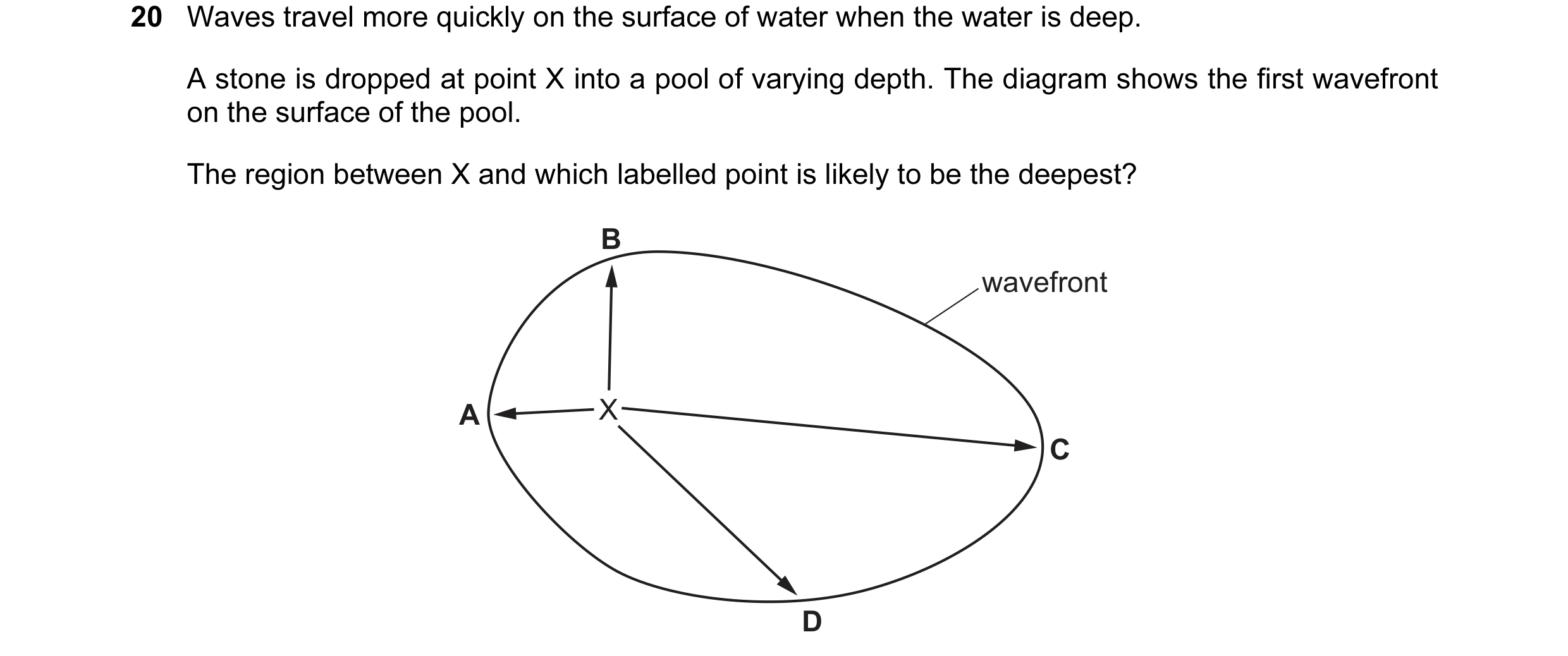
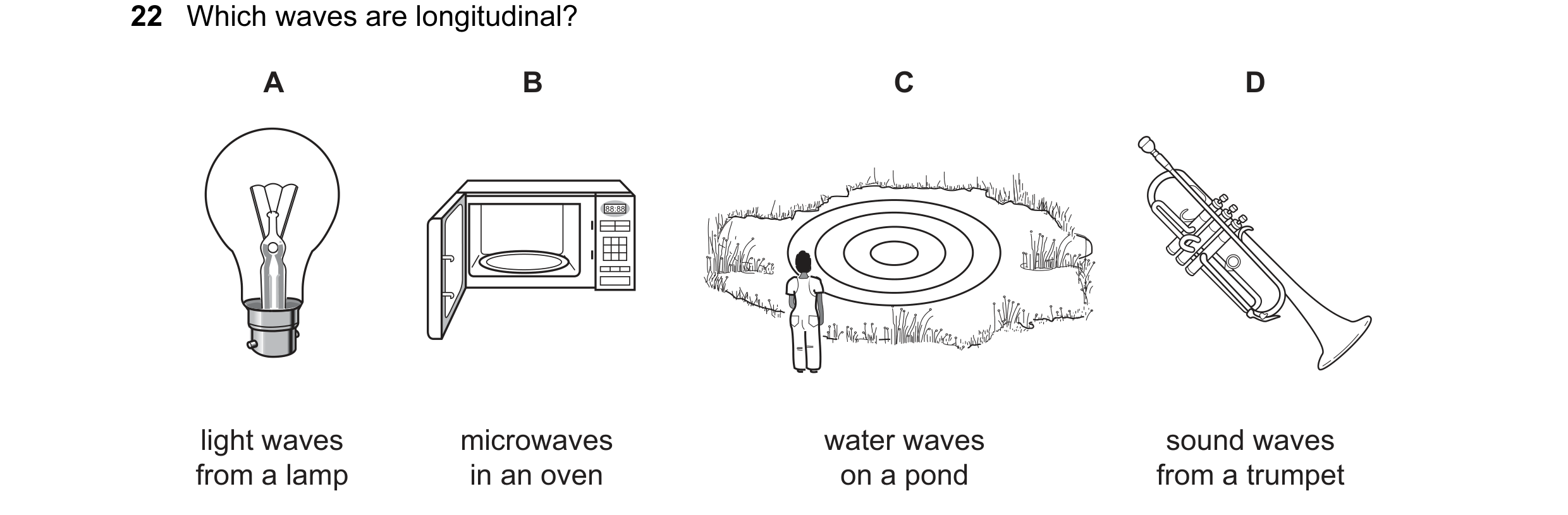
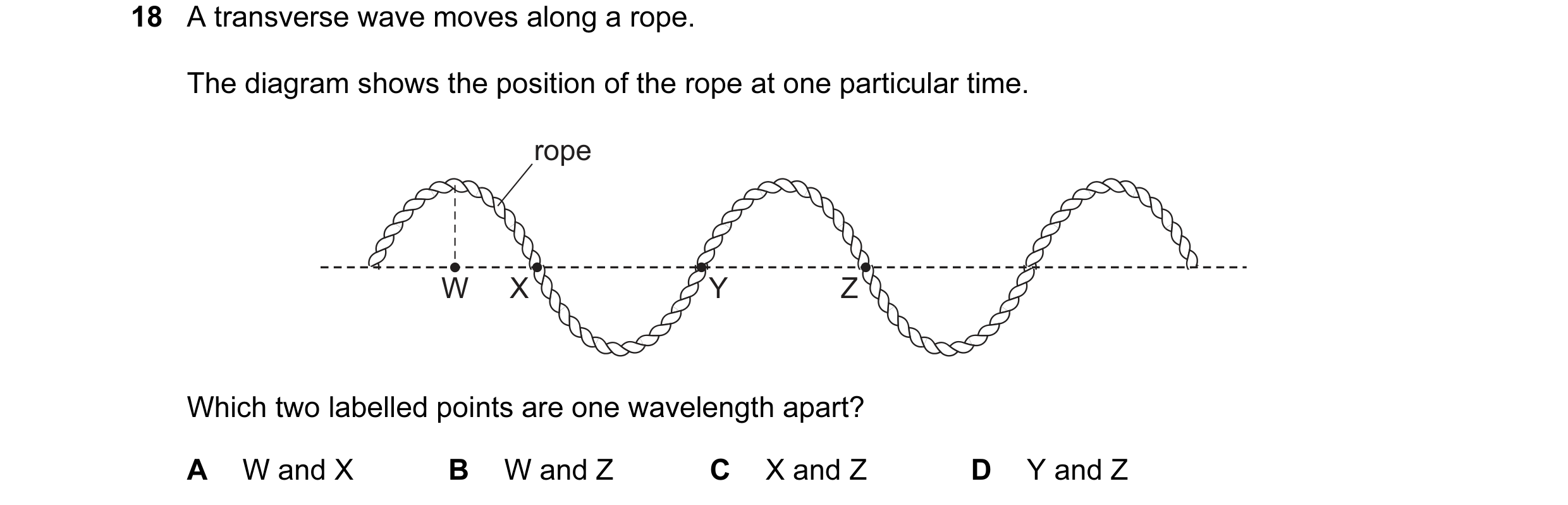 32 / 87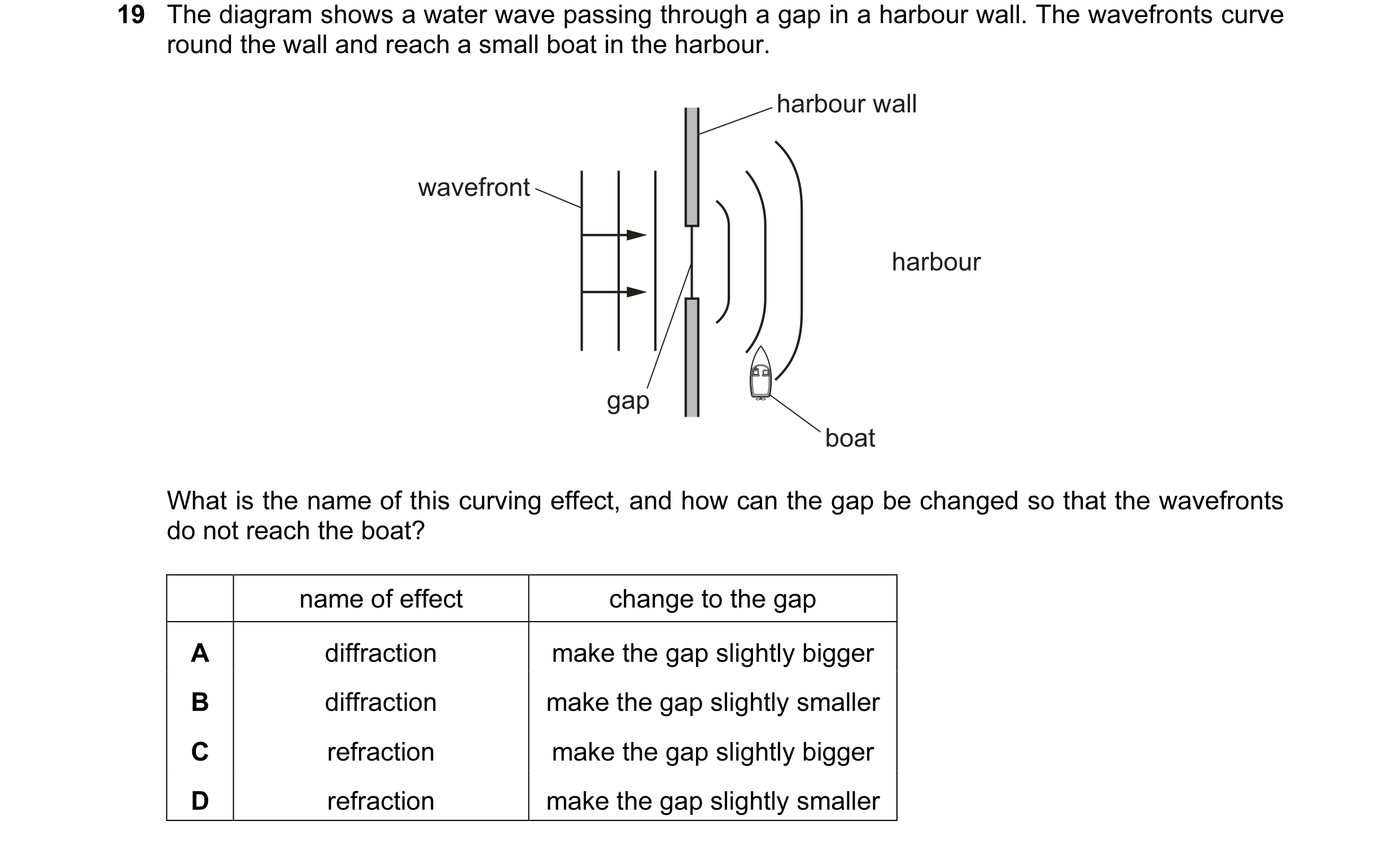

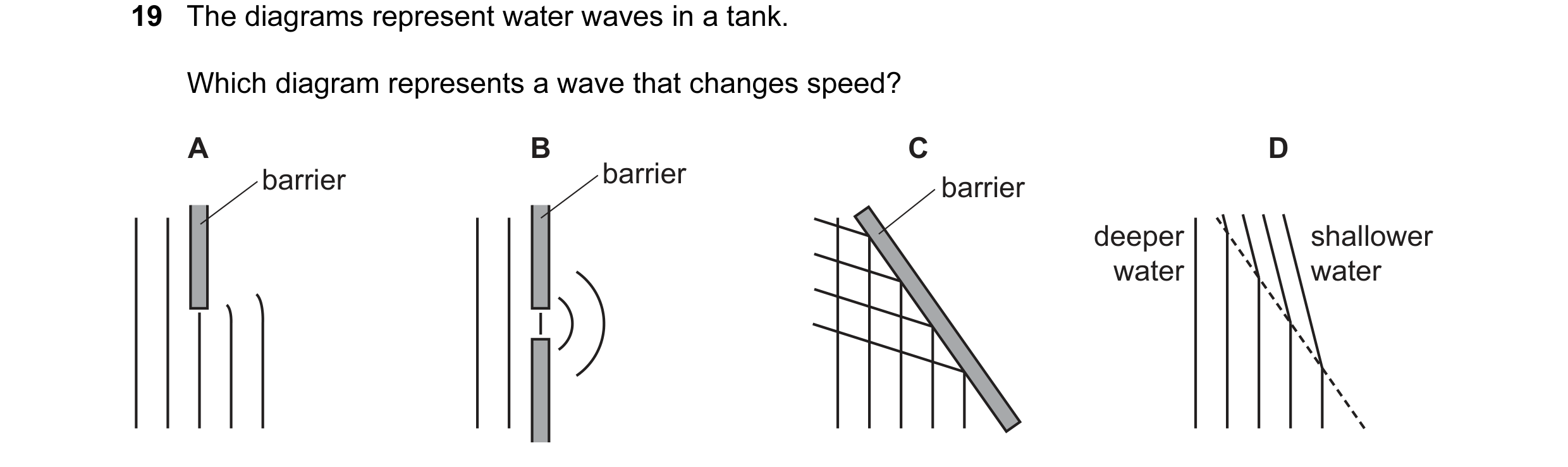
 33 / 87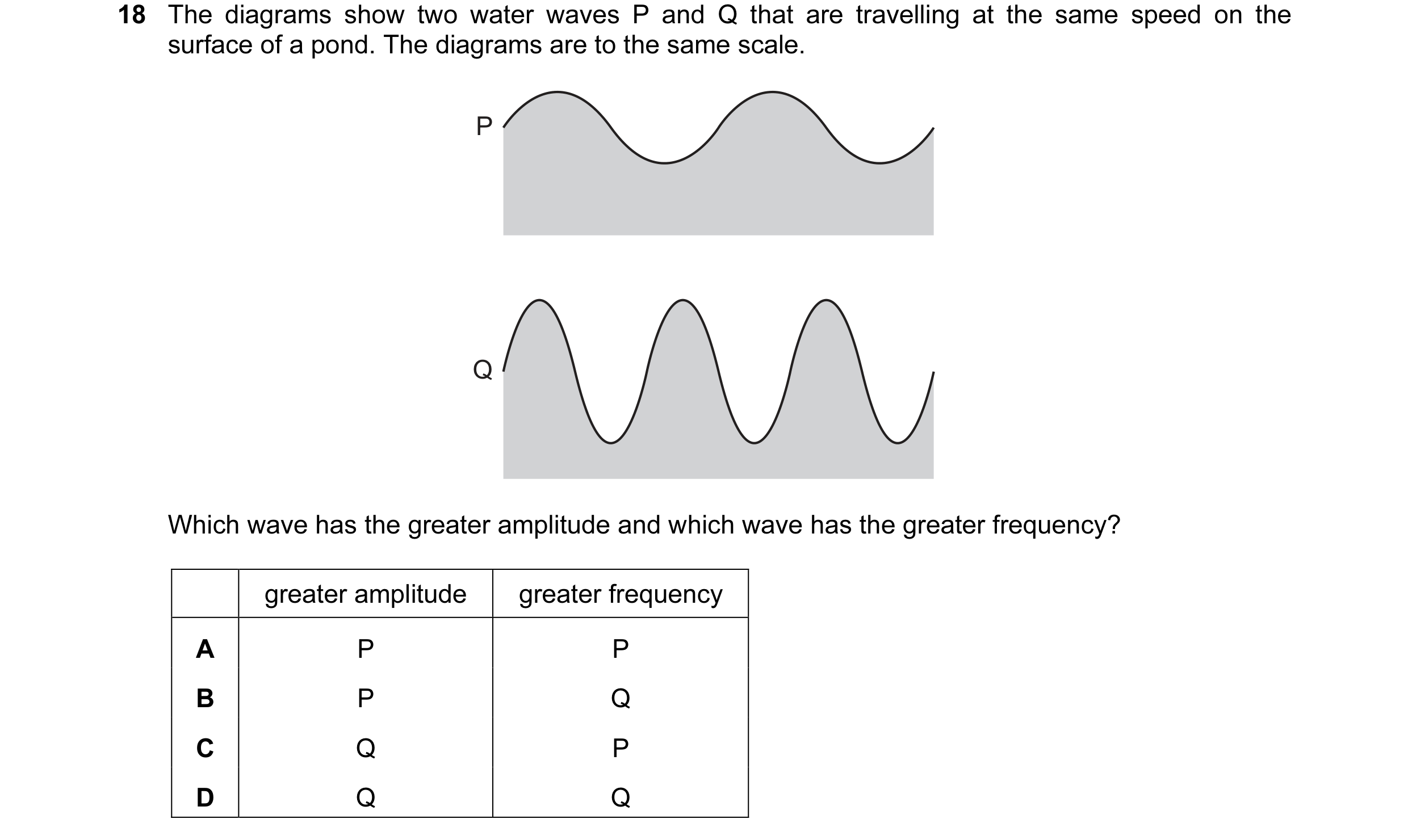
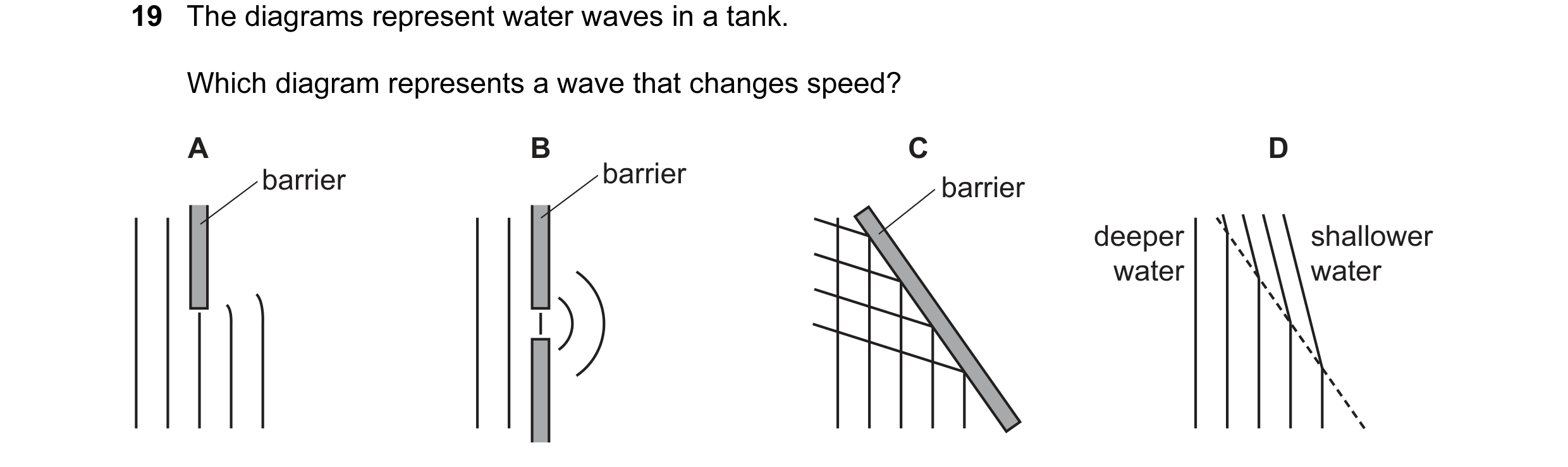
 34 / 87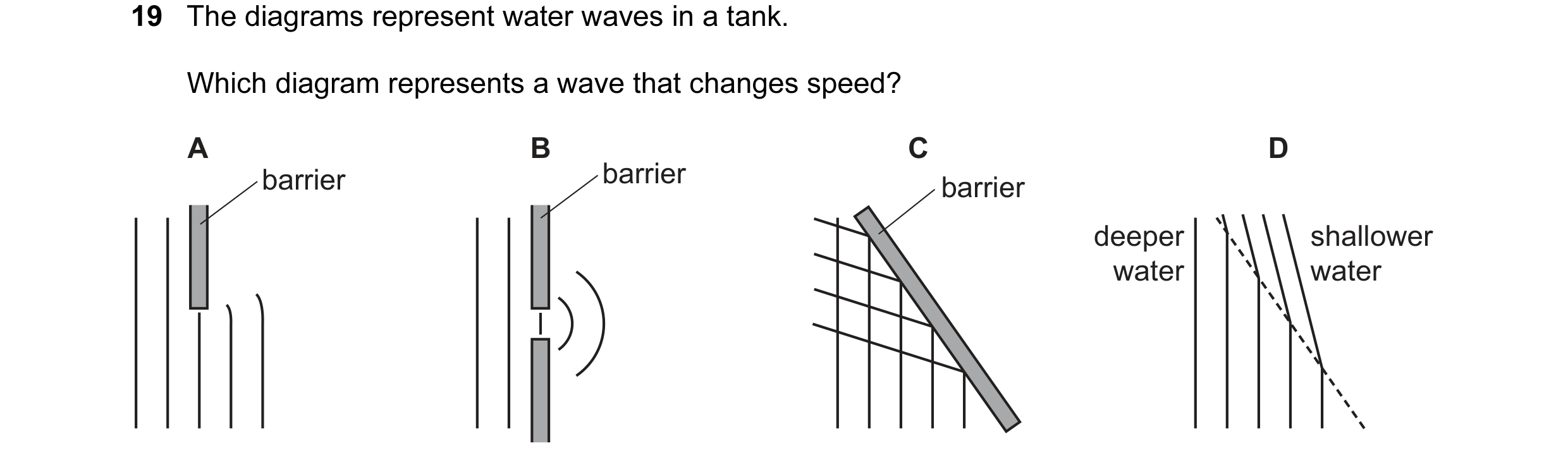
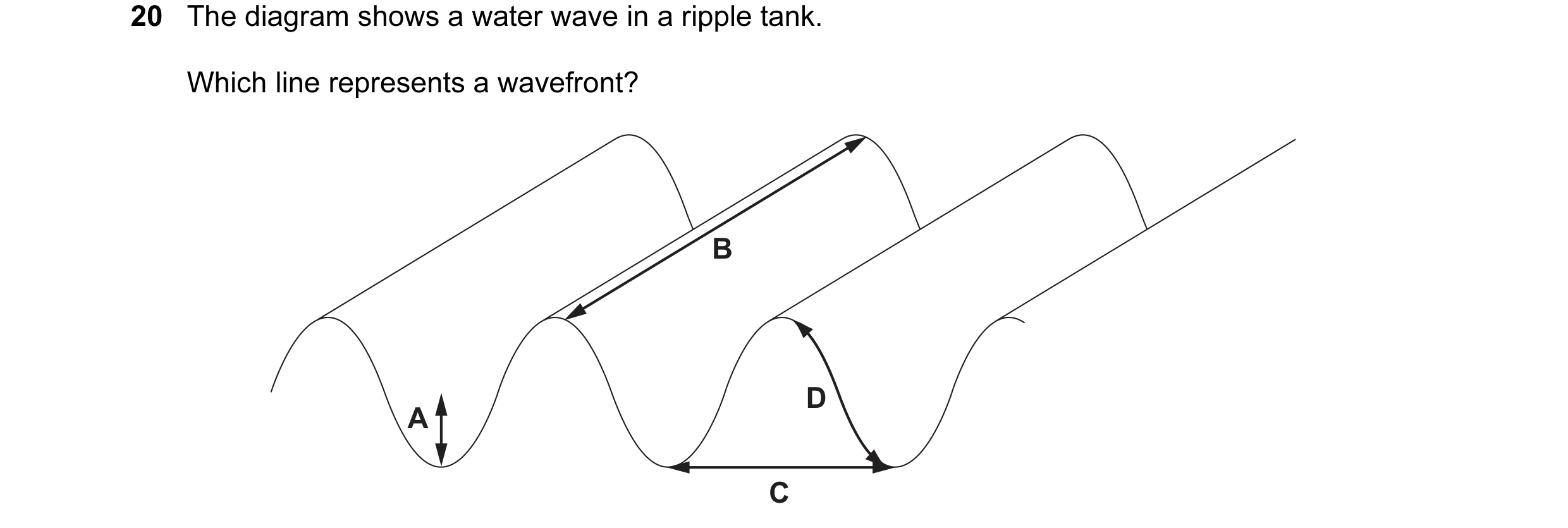
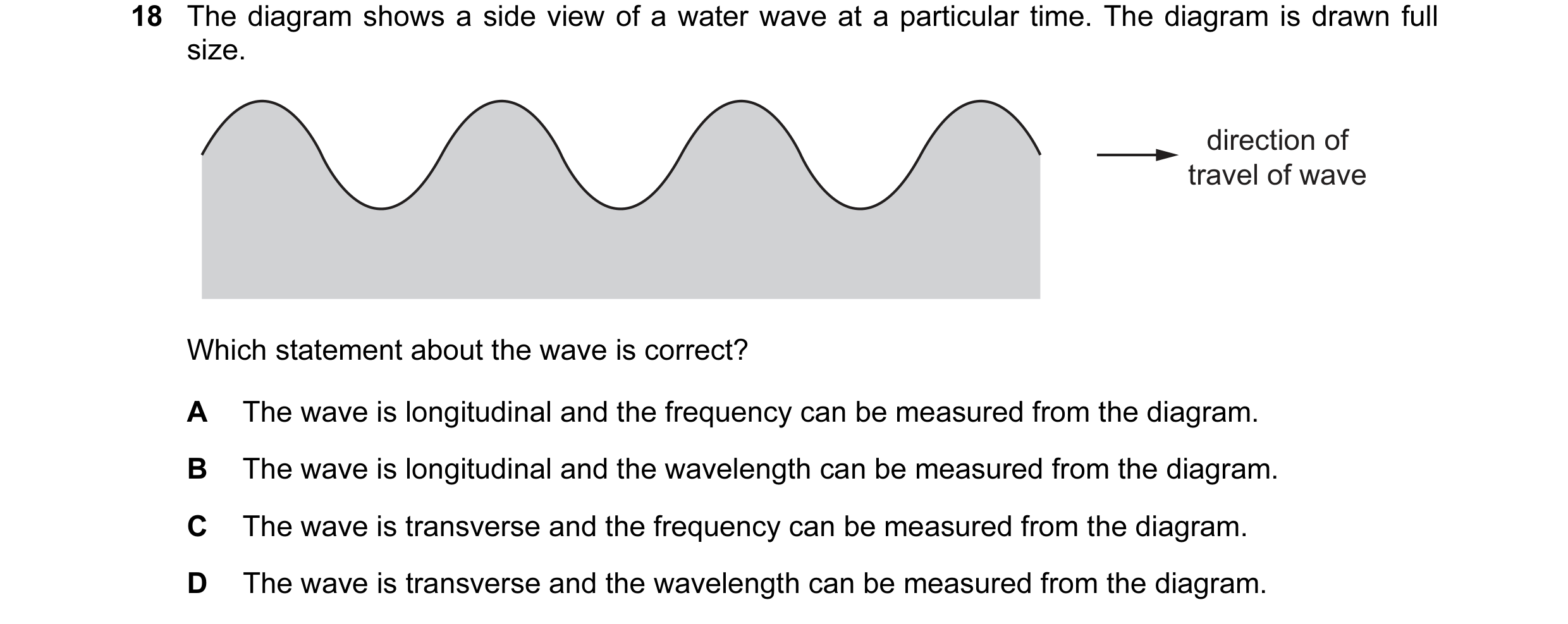 35 / 87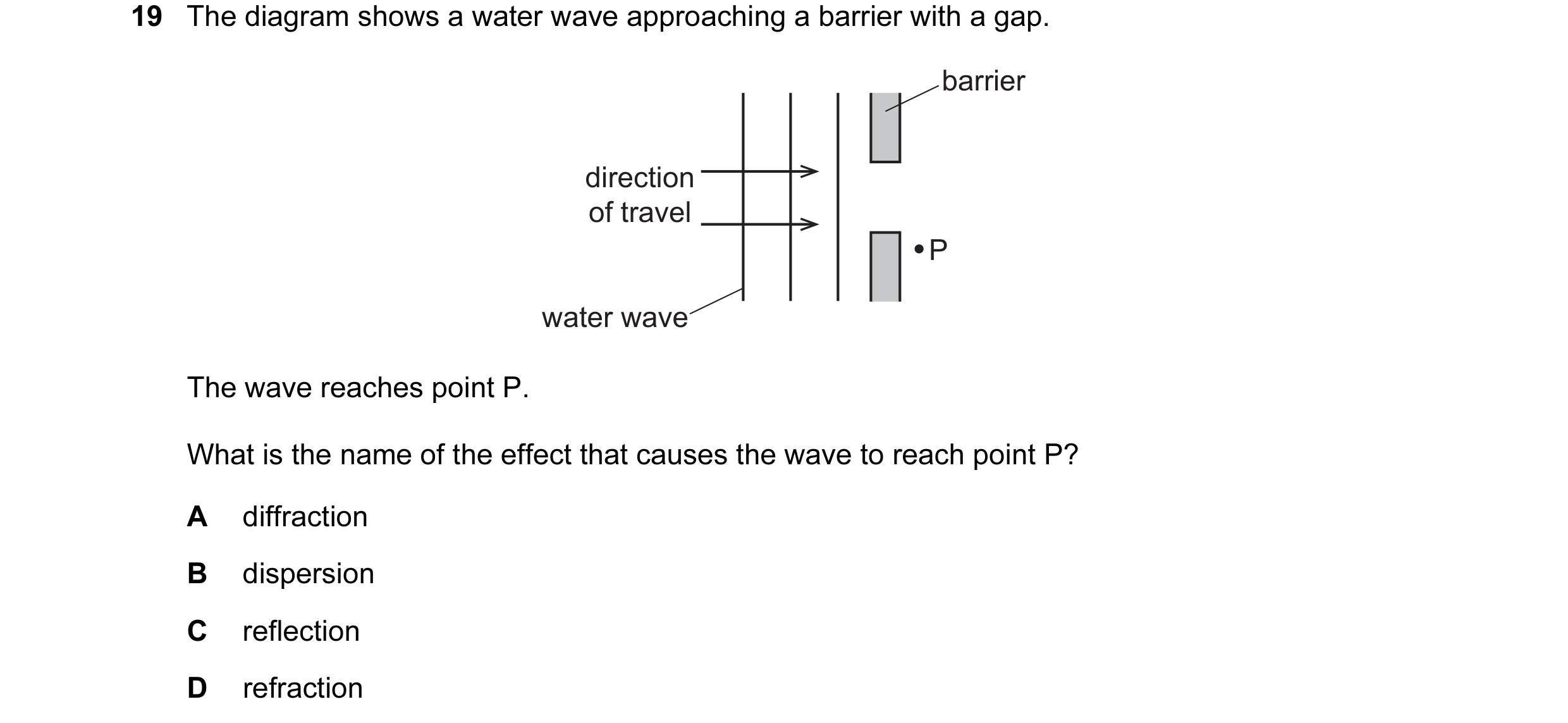
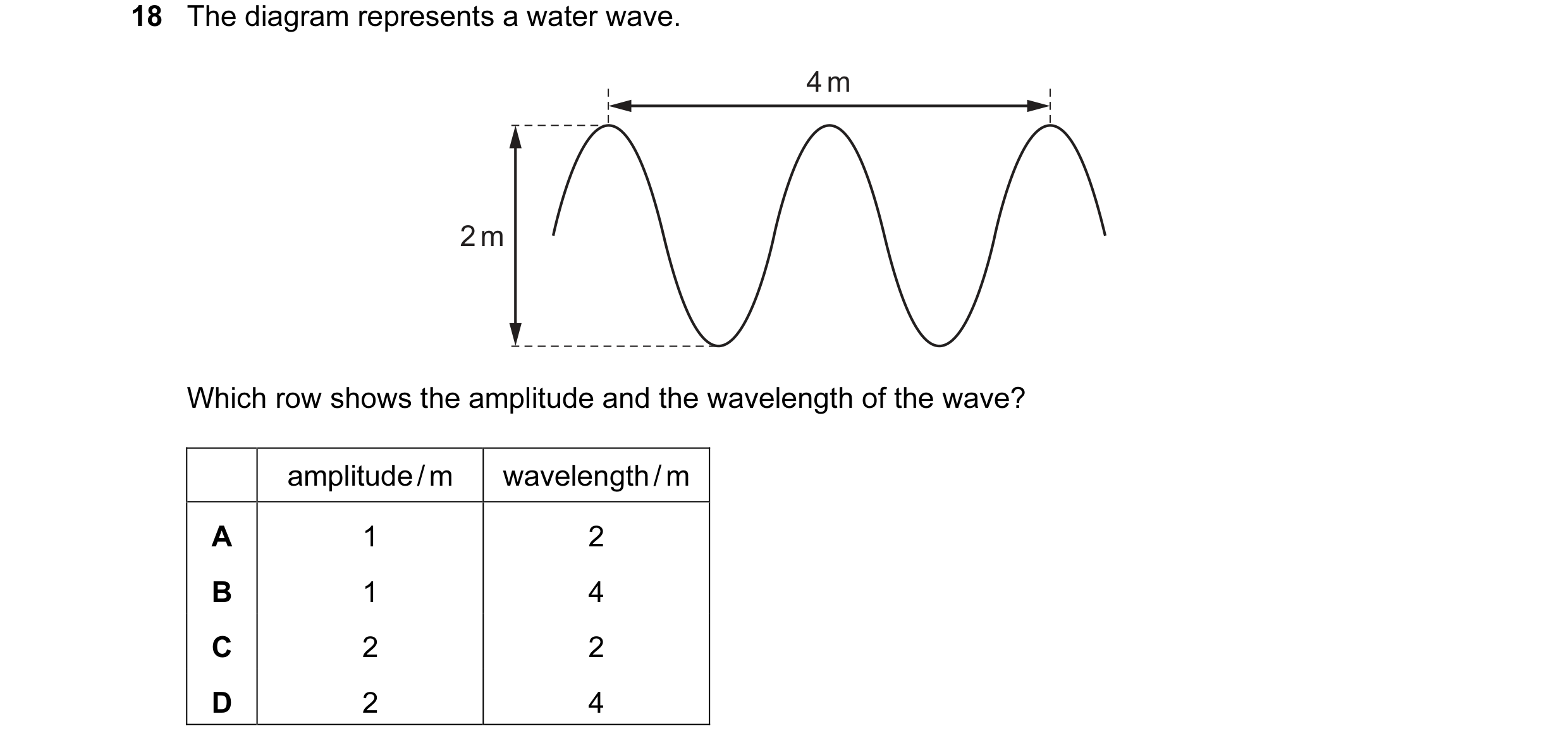 36 / 87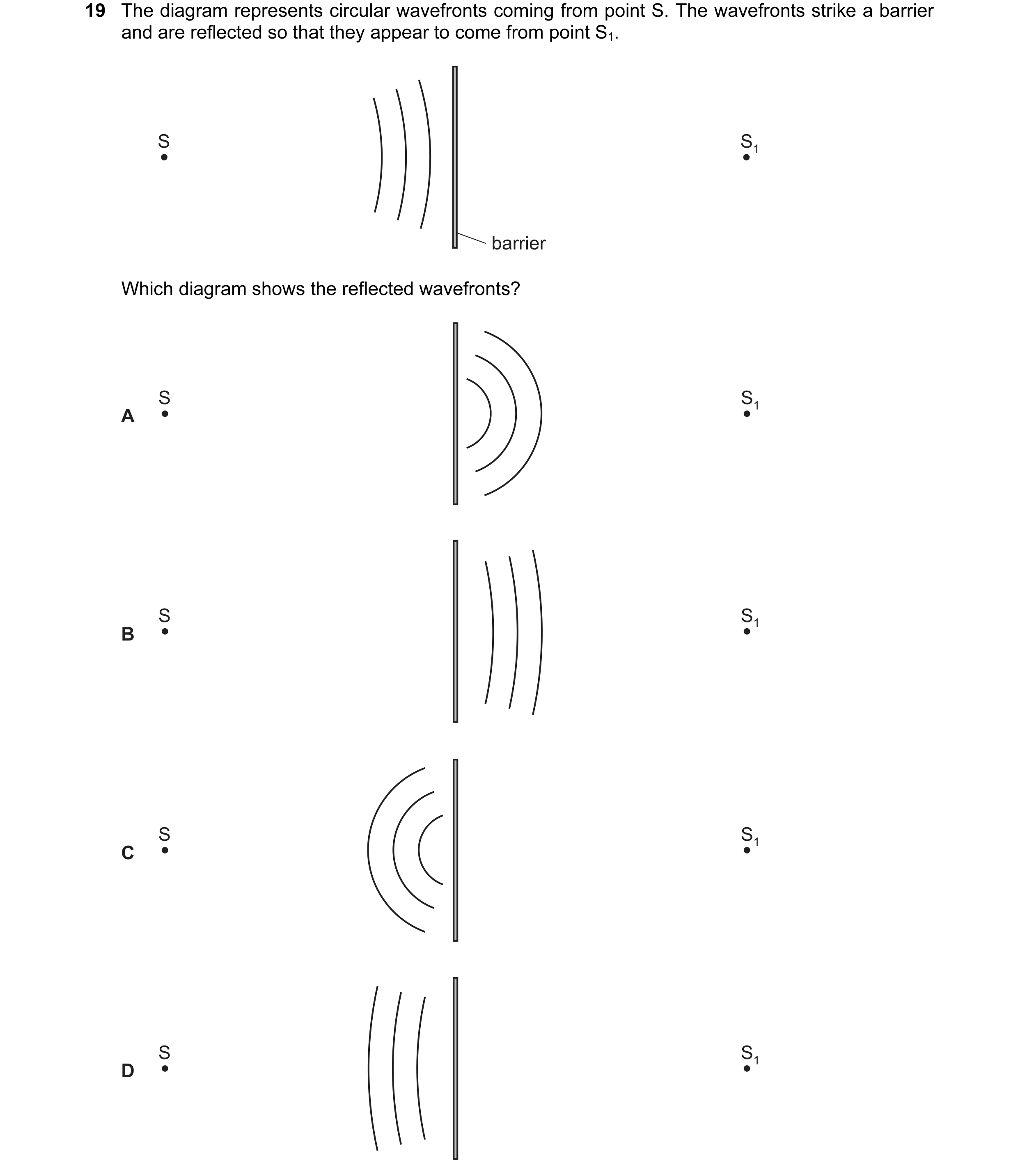
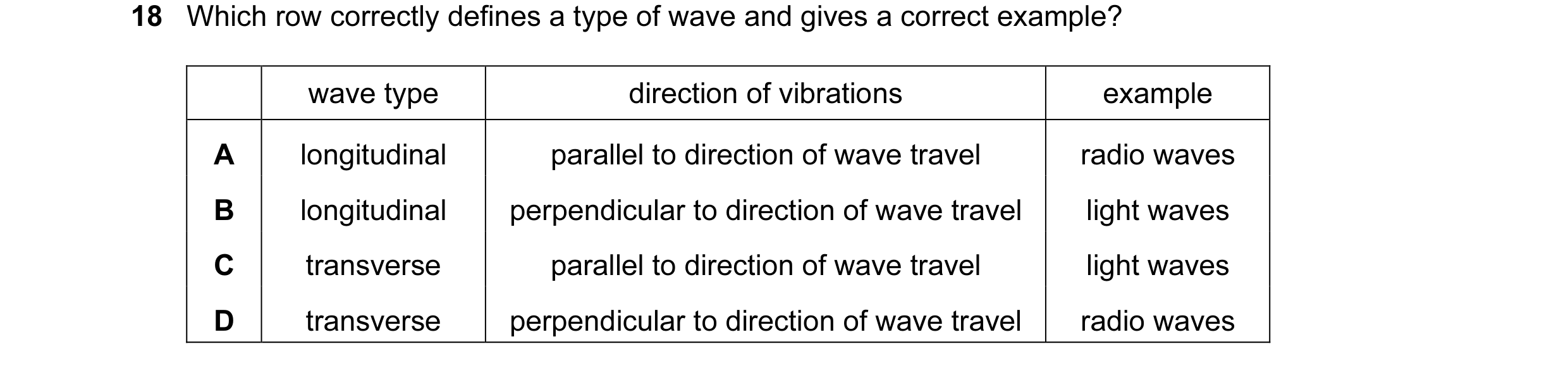 37 / 87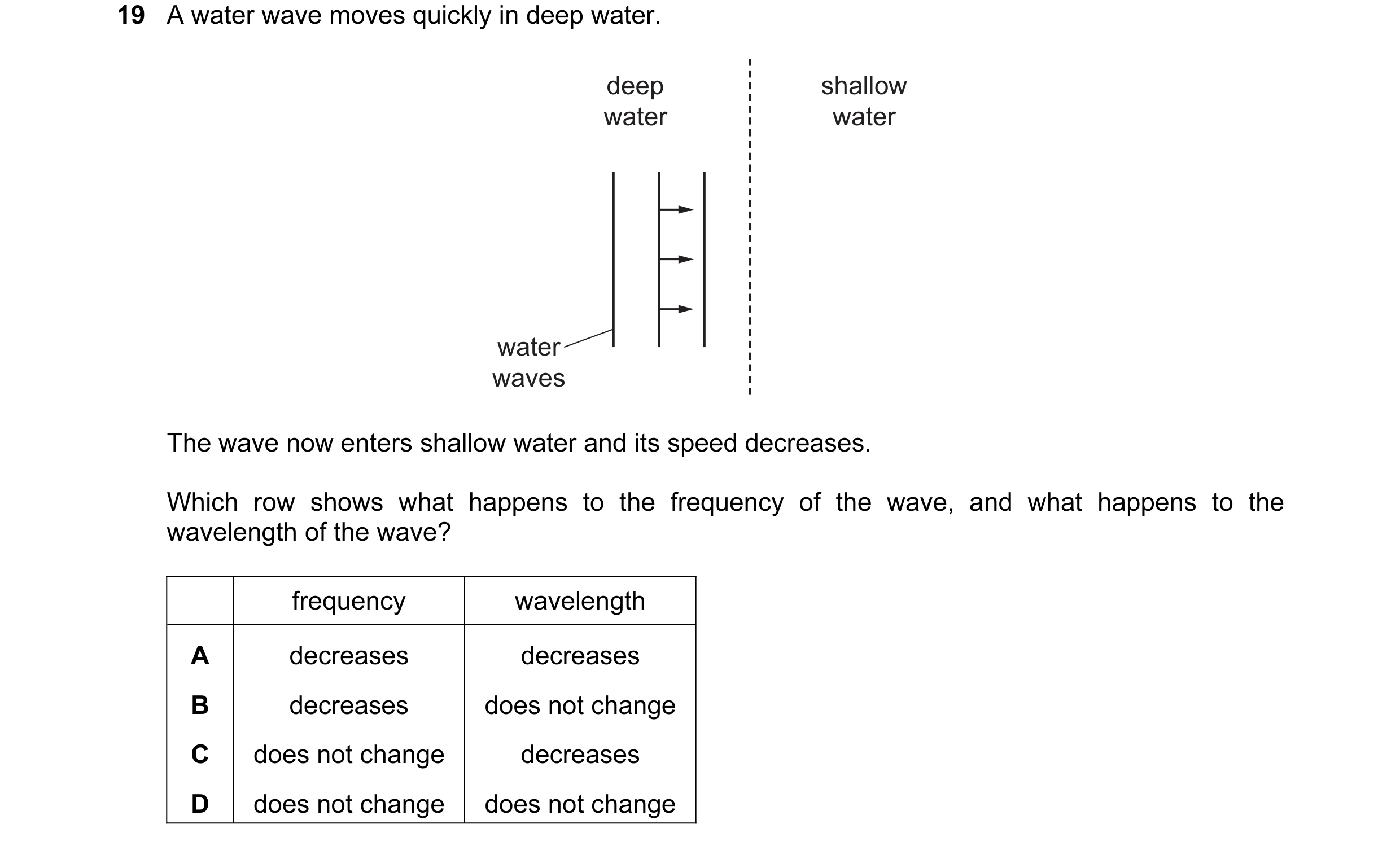
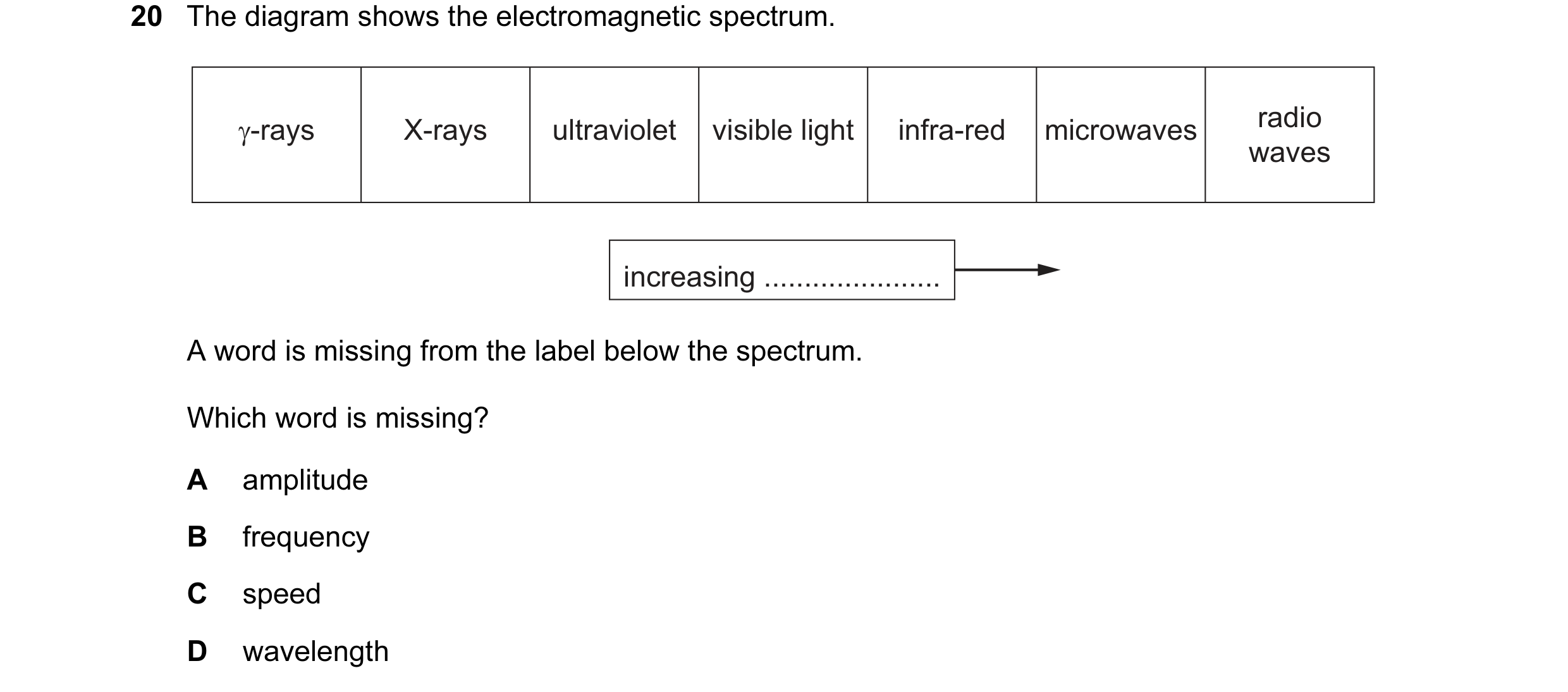 38 / 87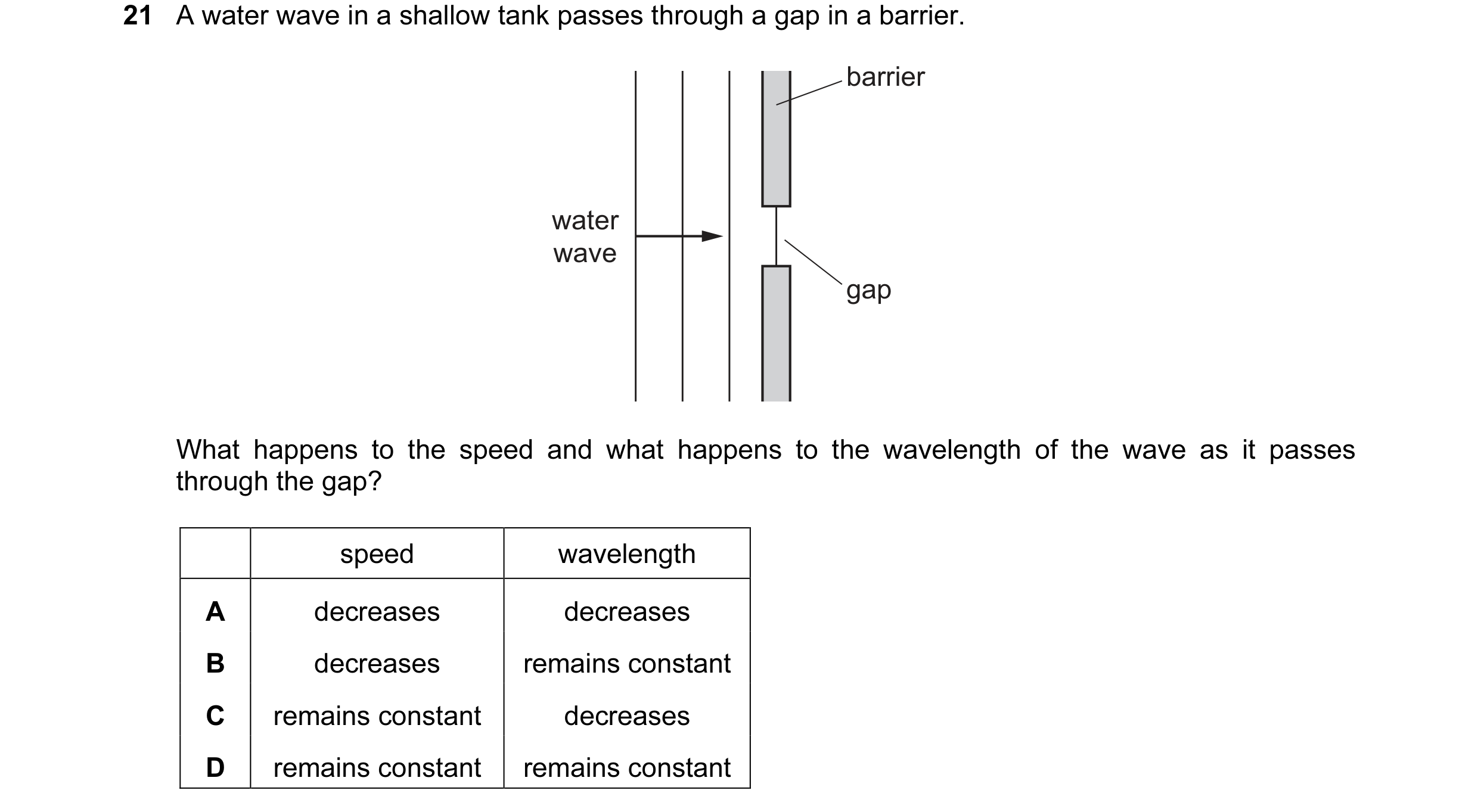

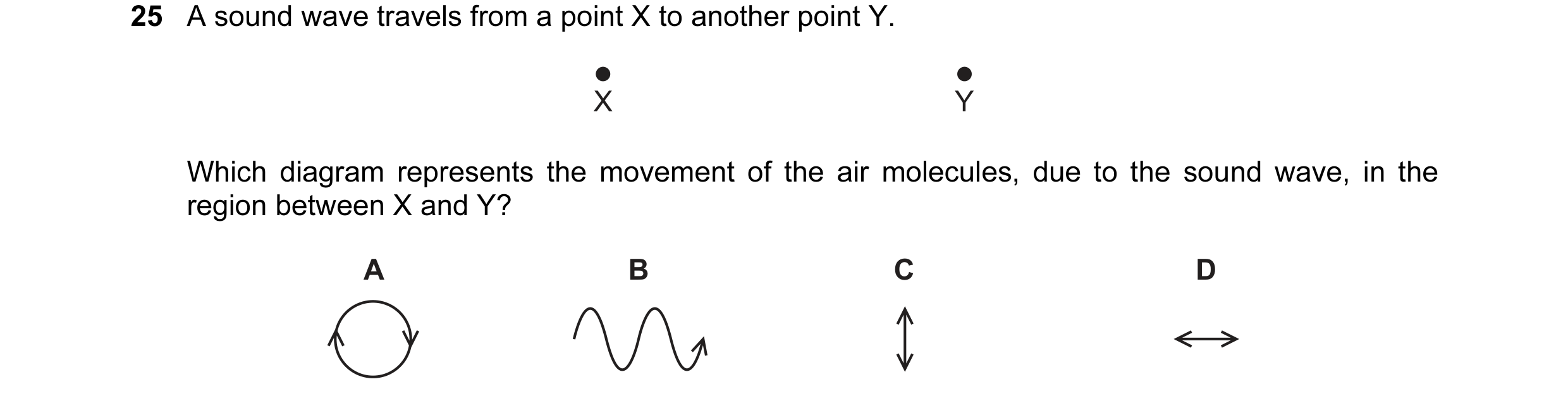
 39 / 87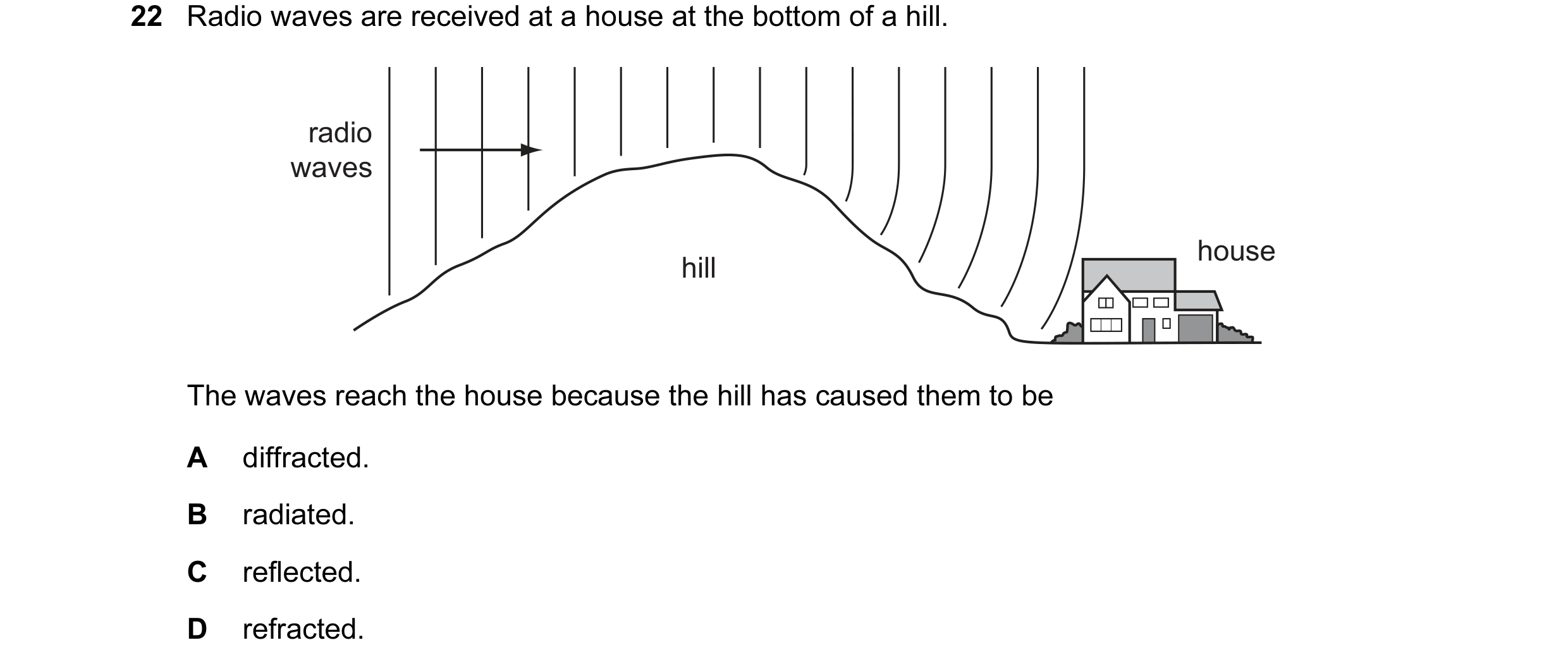

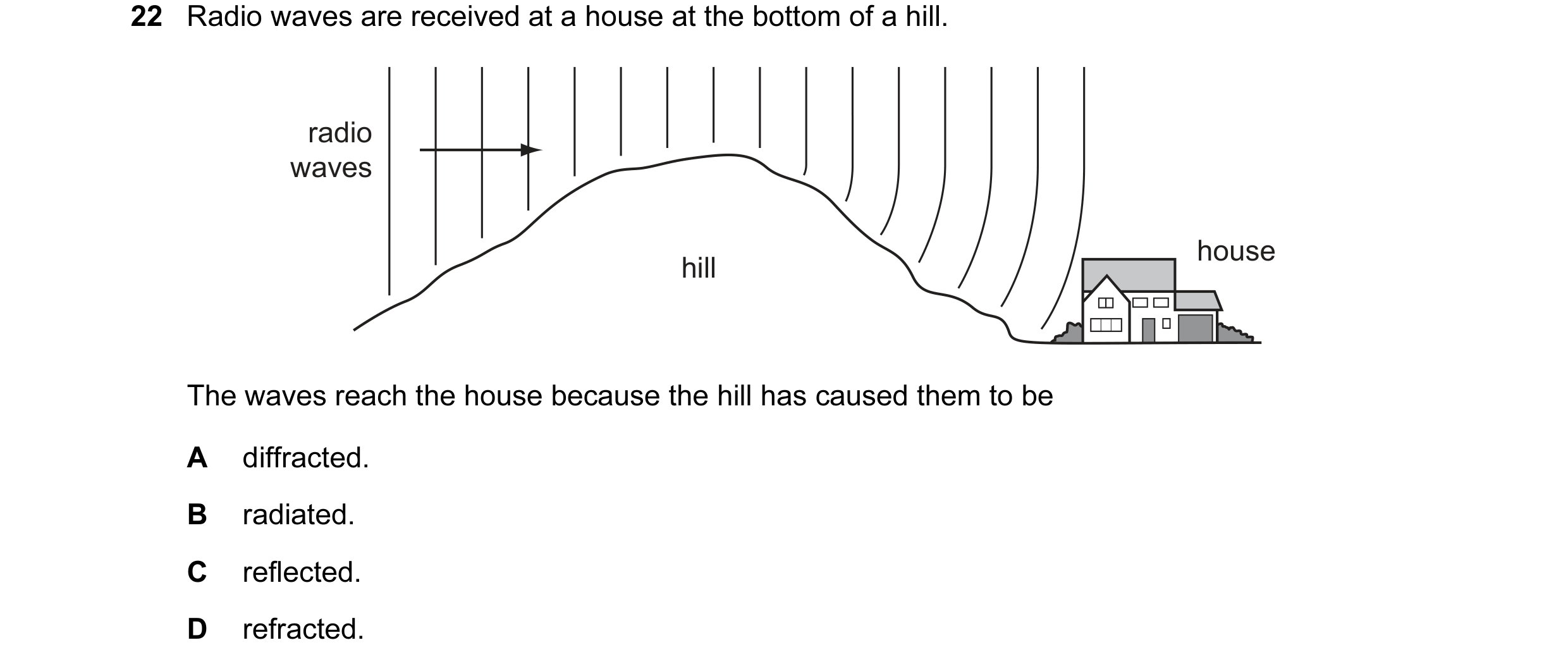
 40 / 87
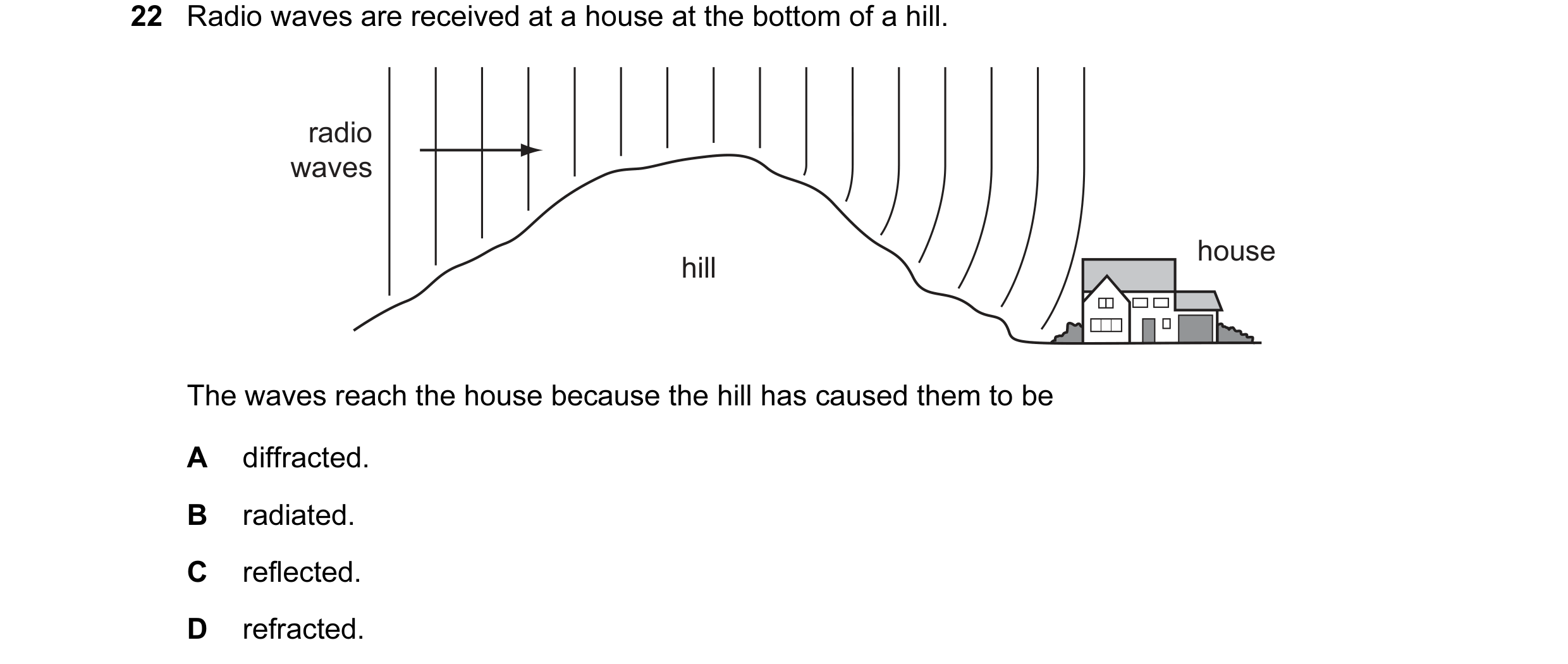
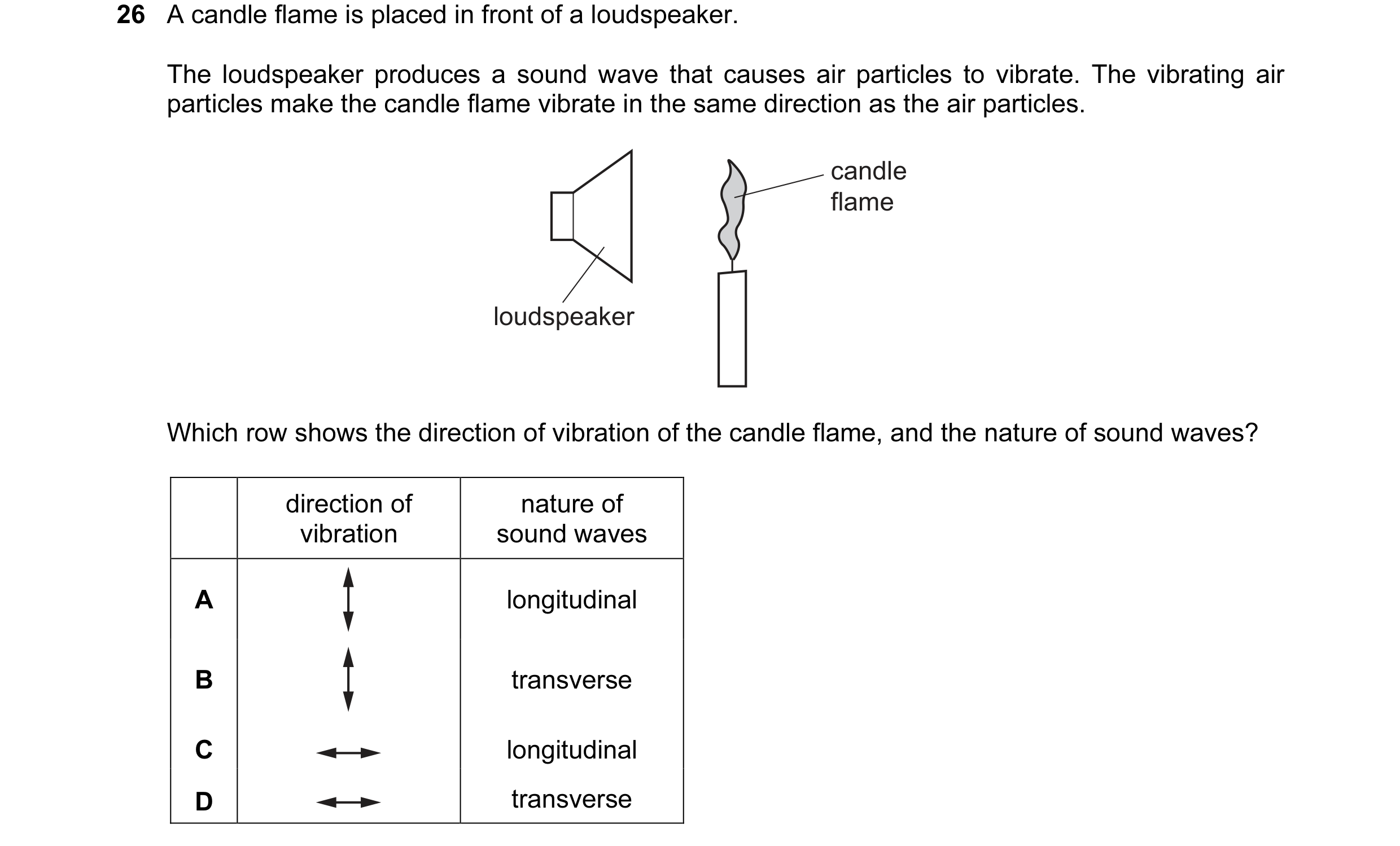 41 / 87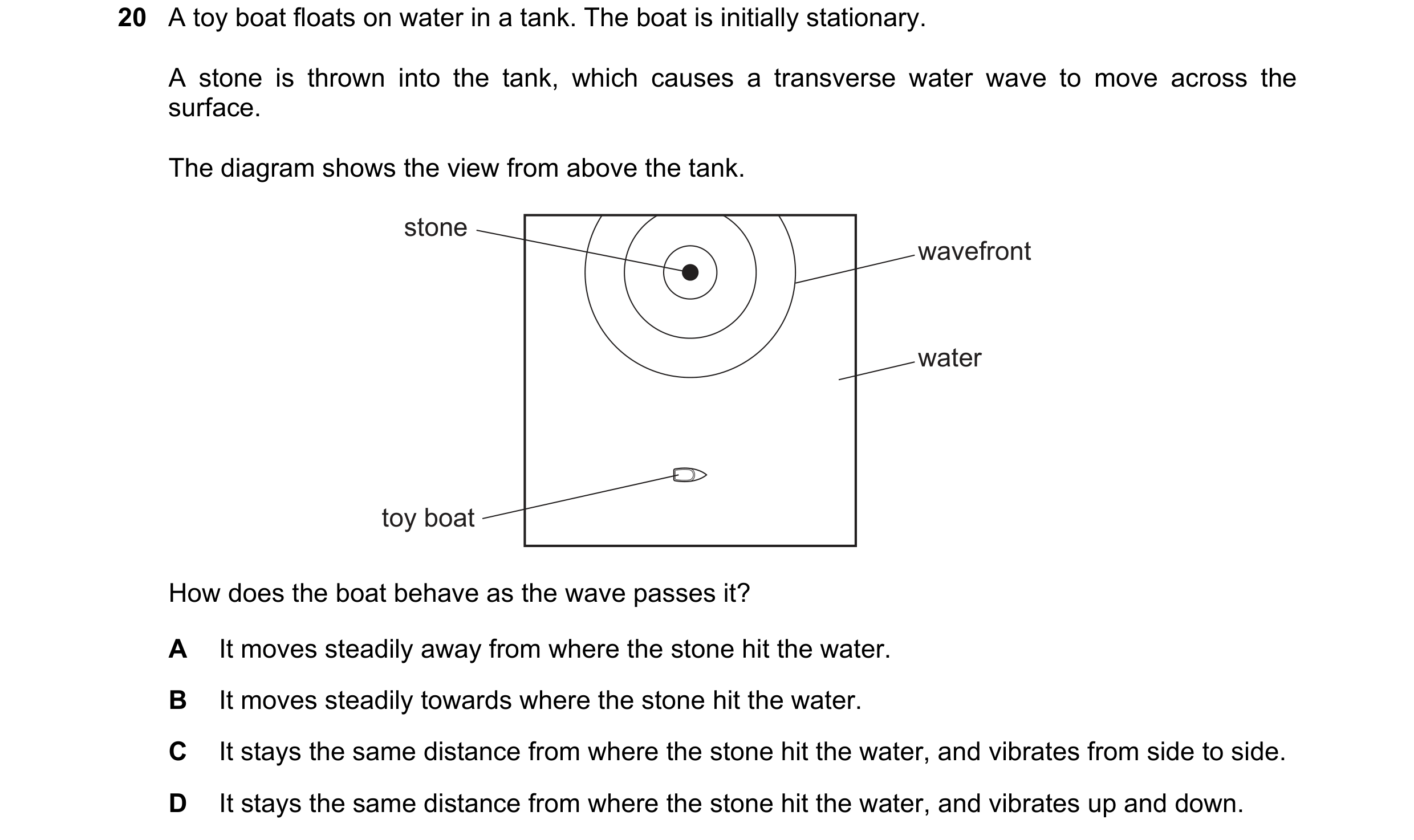
 42 / 87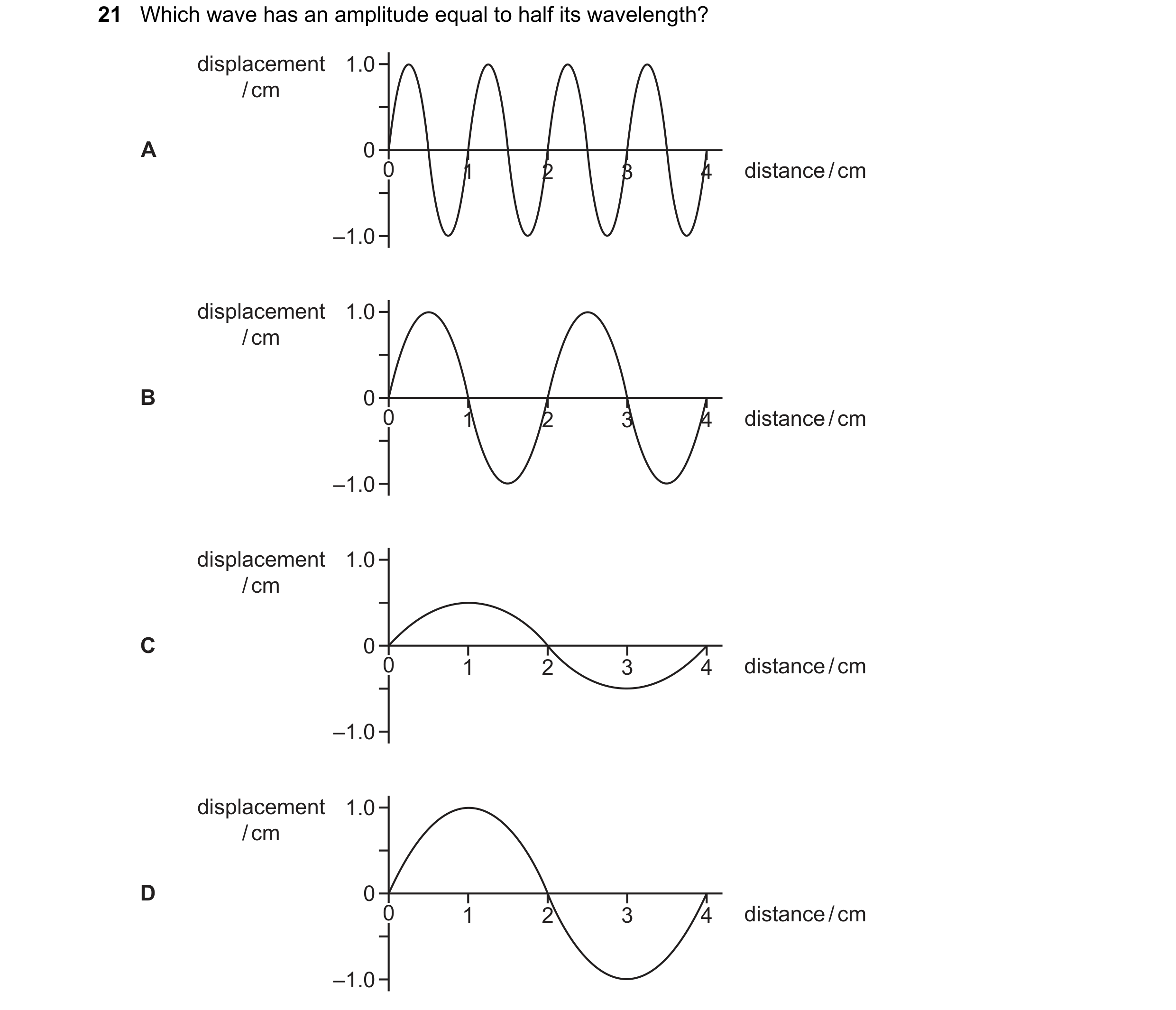
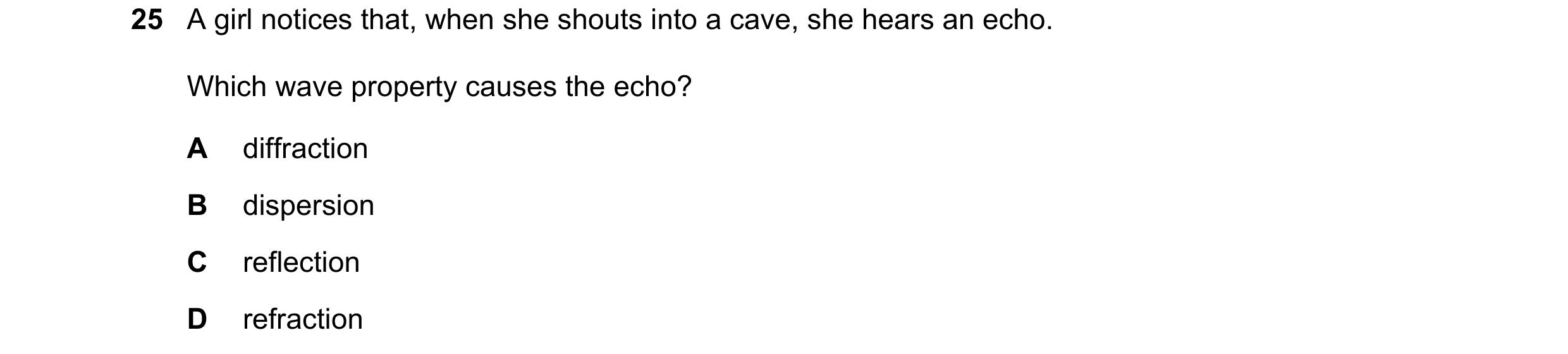
 43 / 87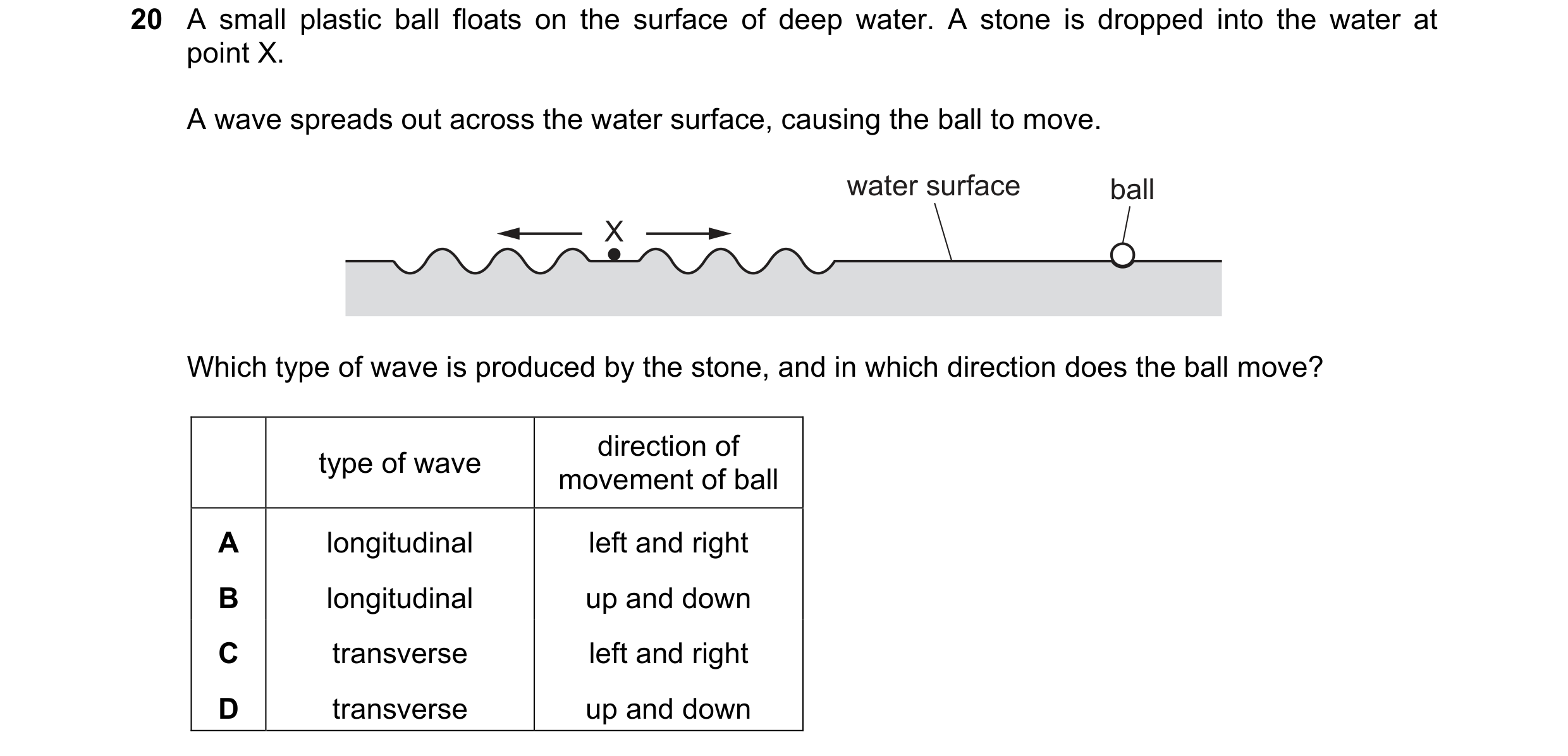
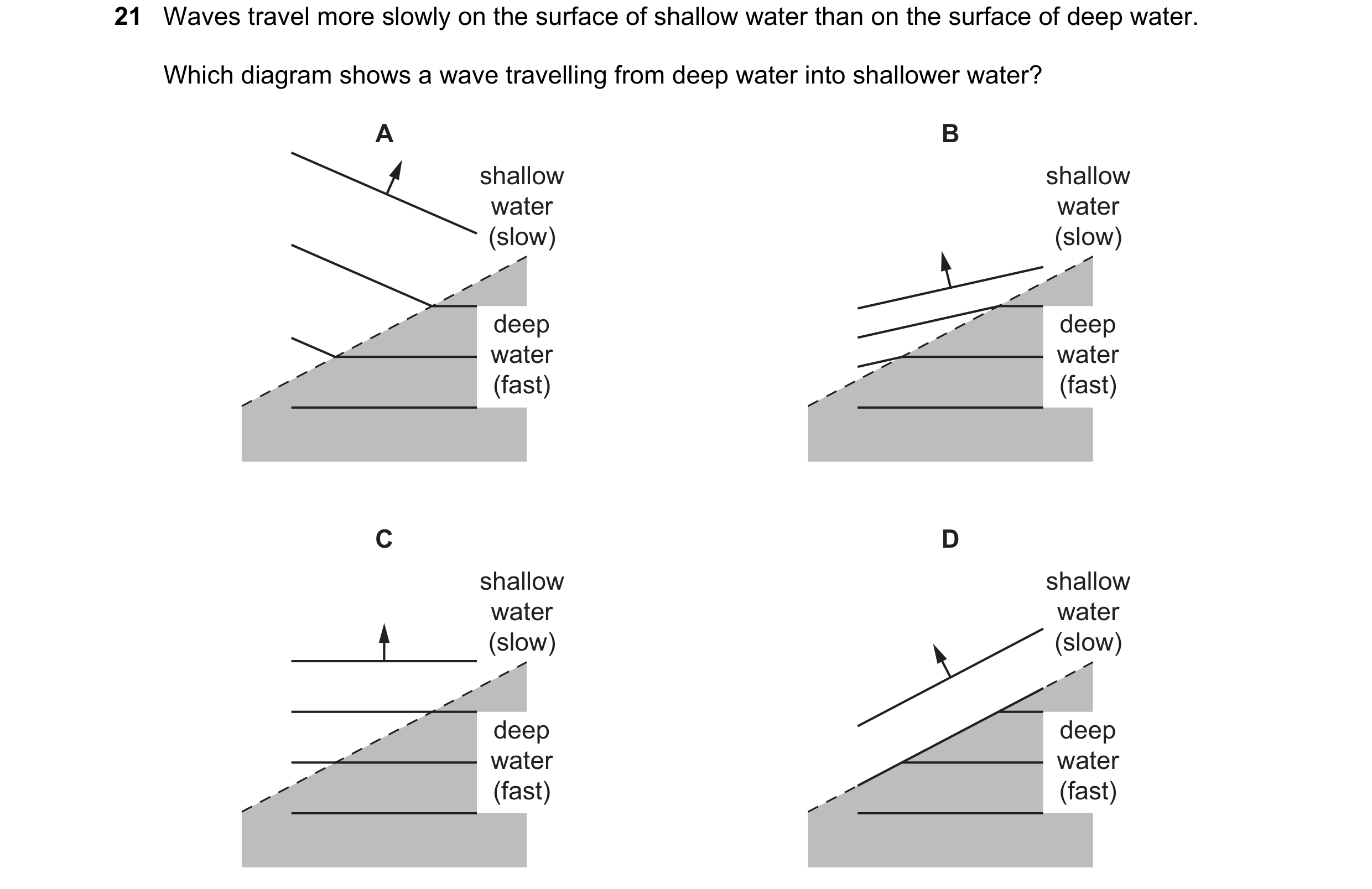
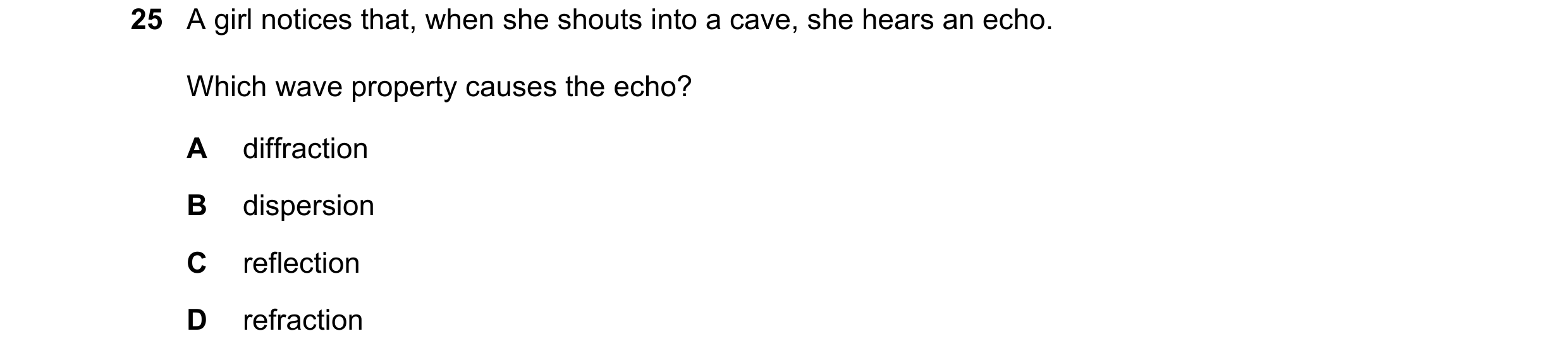 44 / 87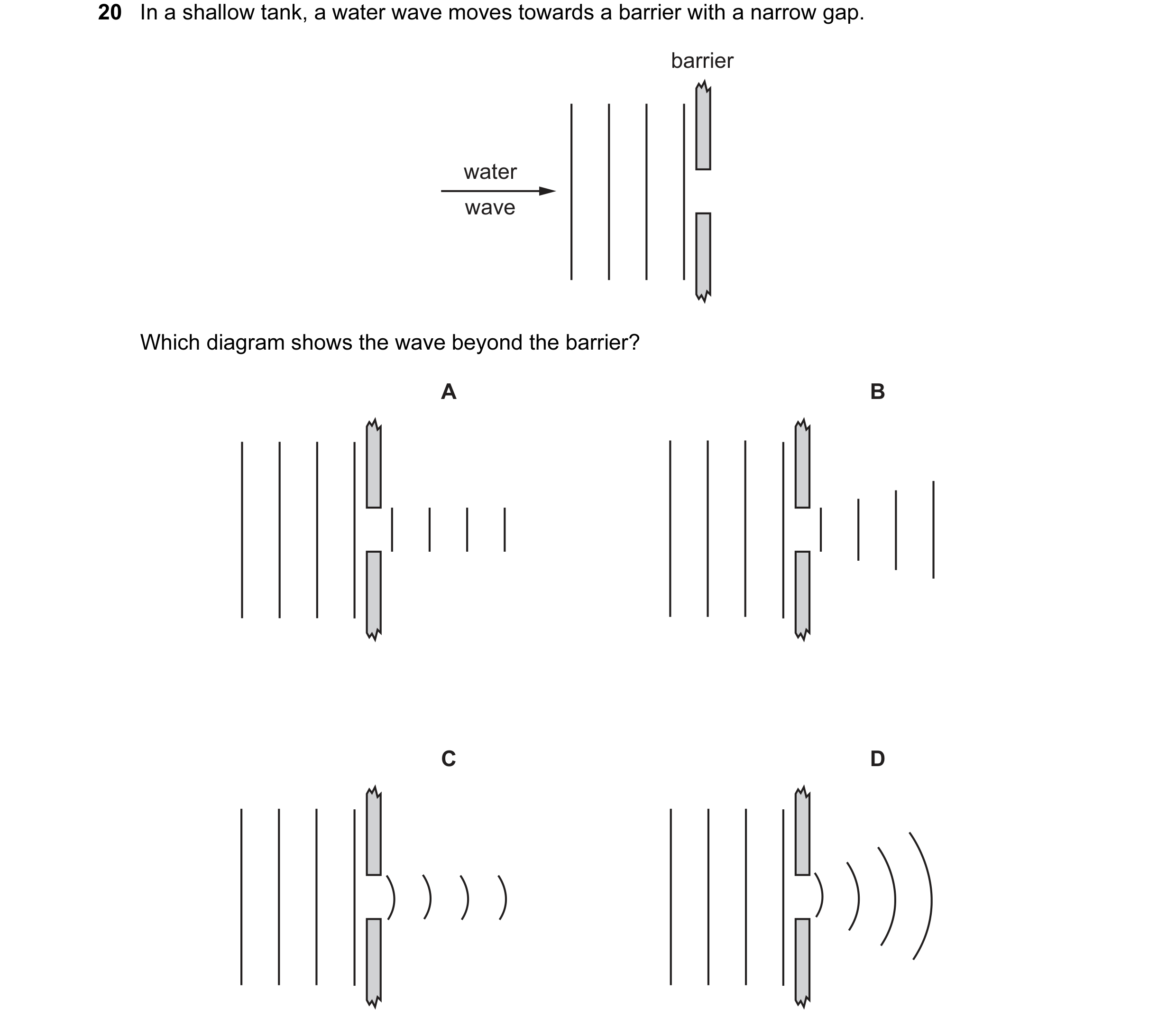
 45 / 87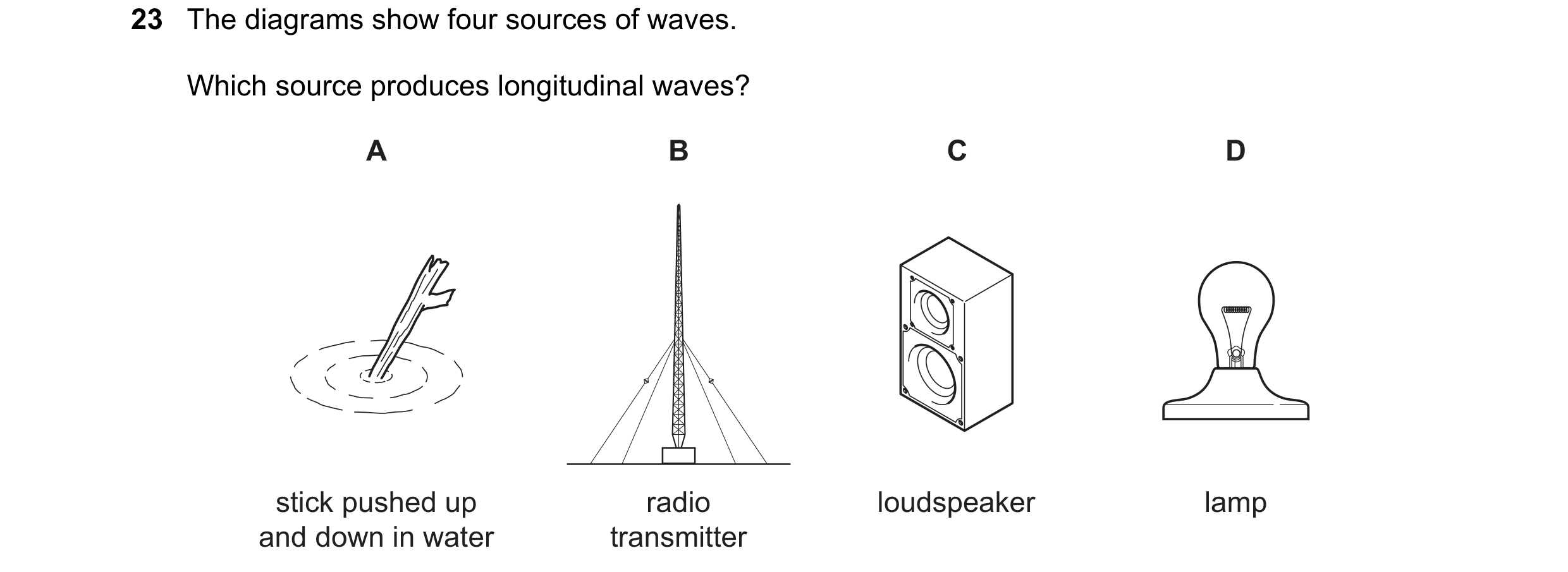
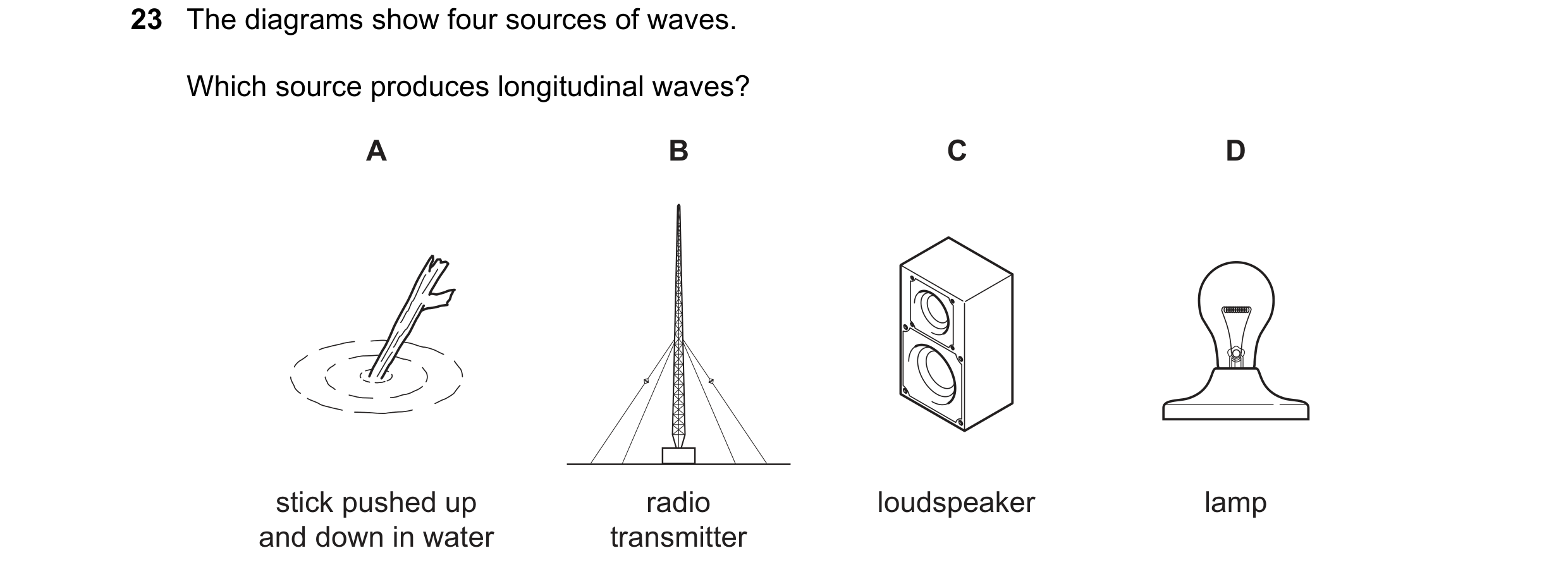

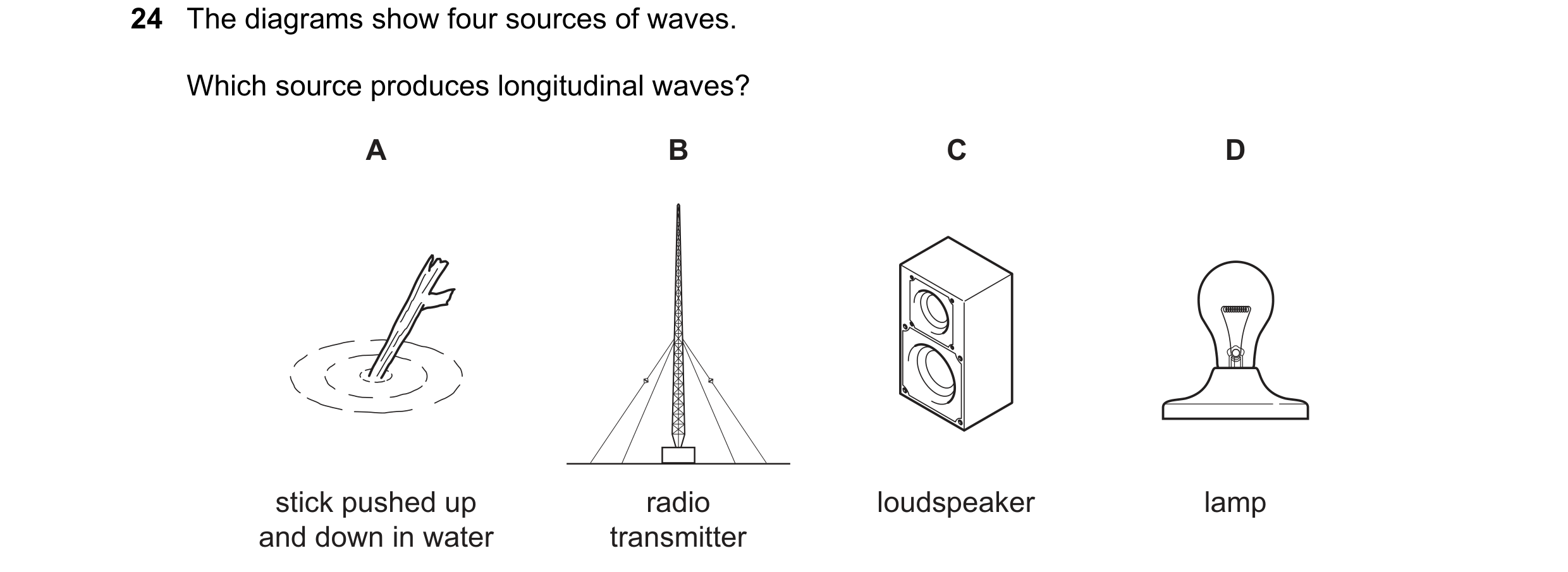 46 / 87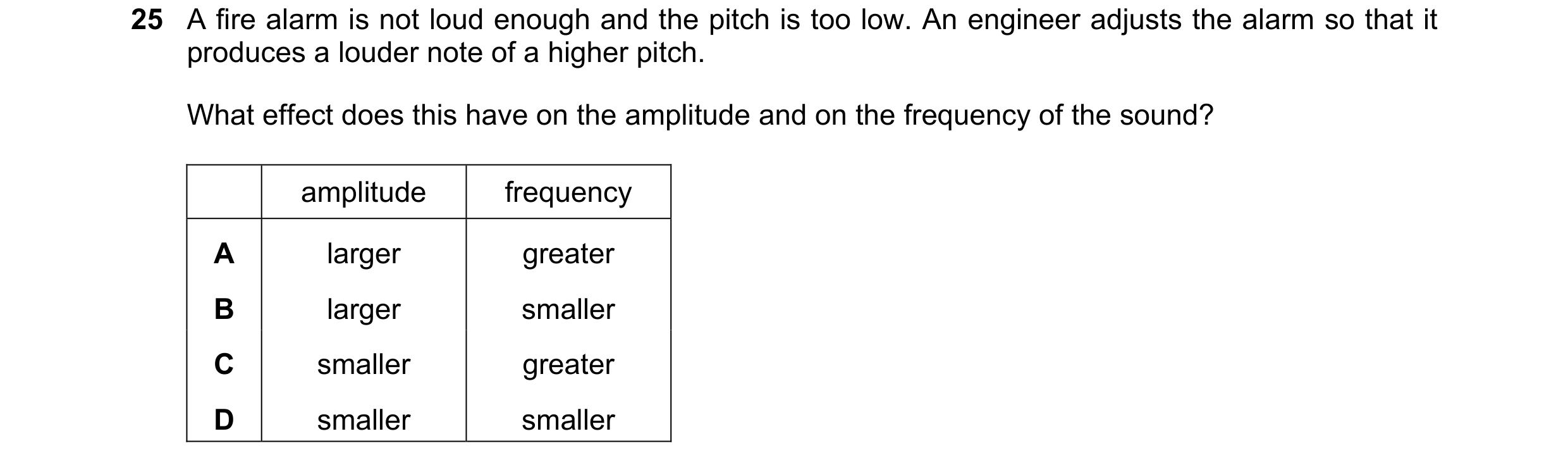
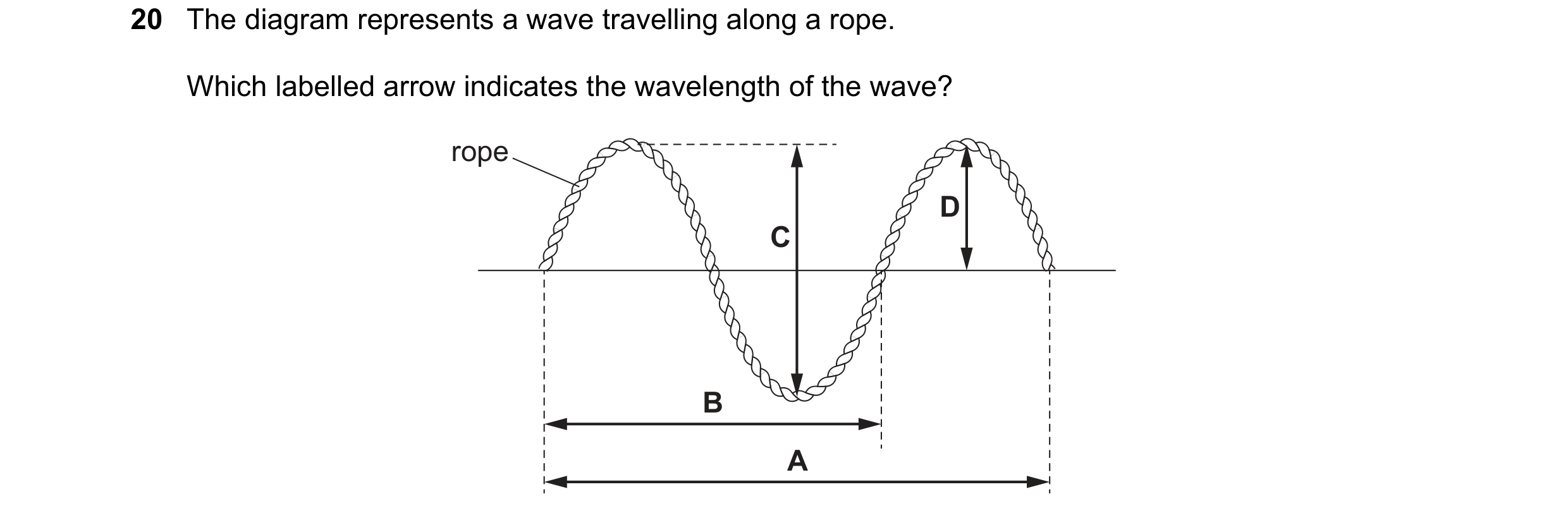 47 / 87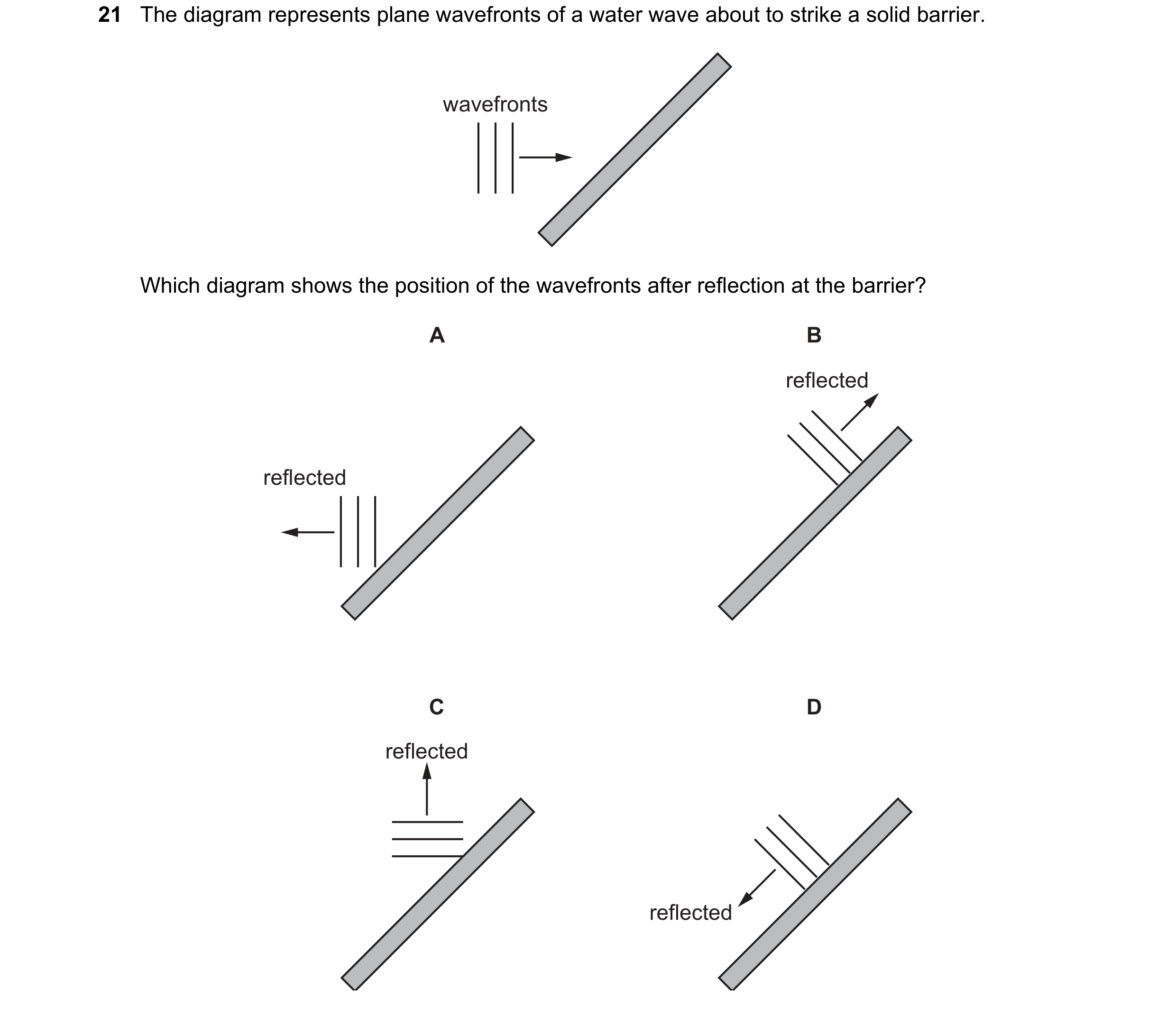
 48 / 87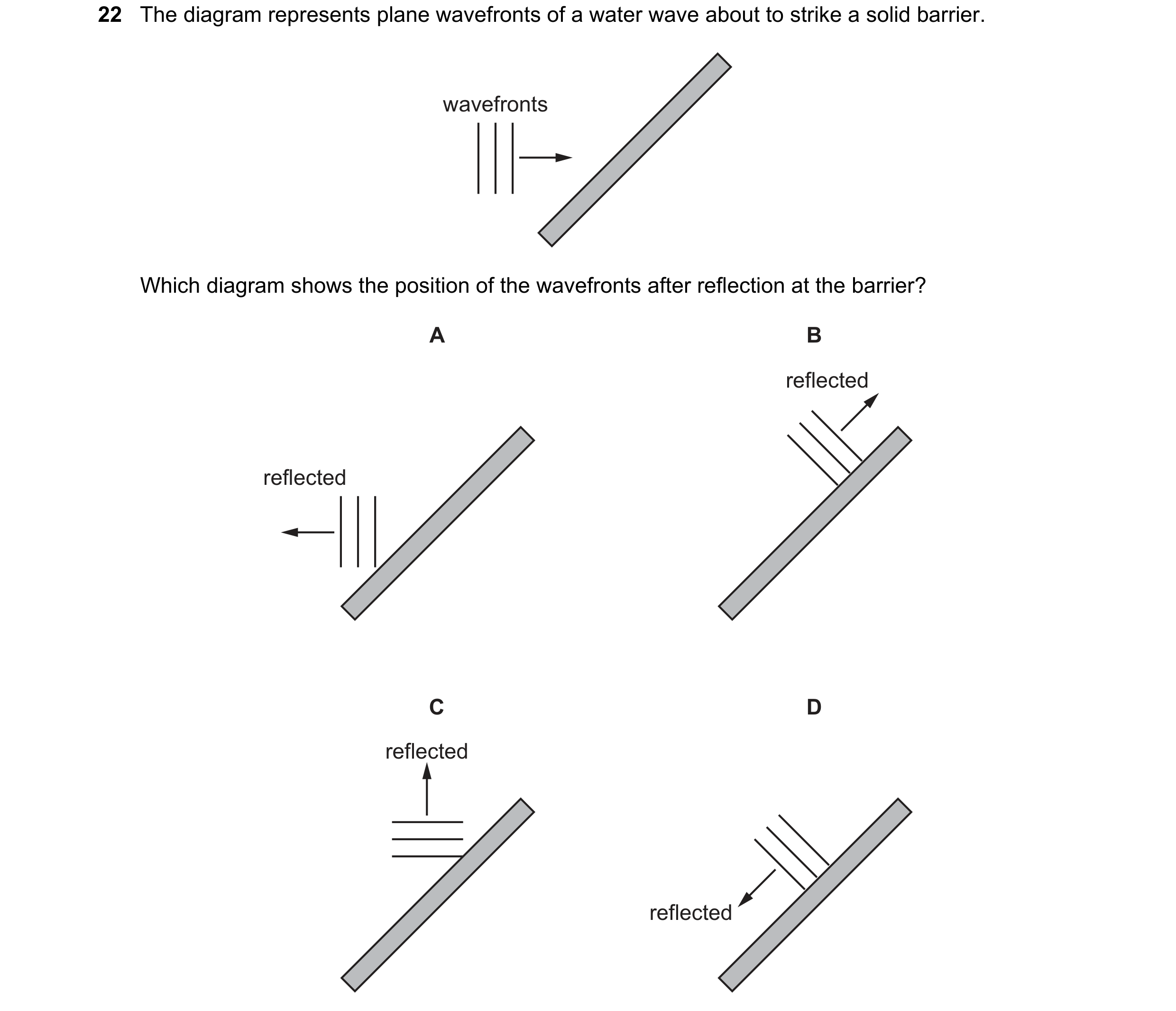
 49 / 87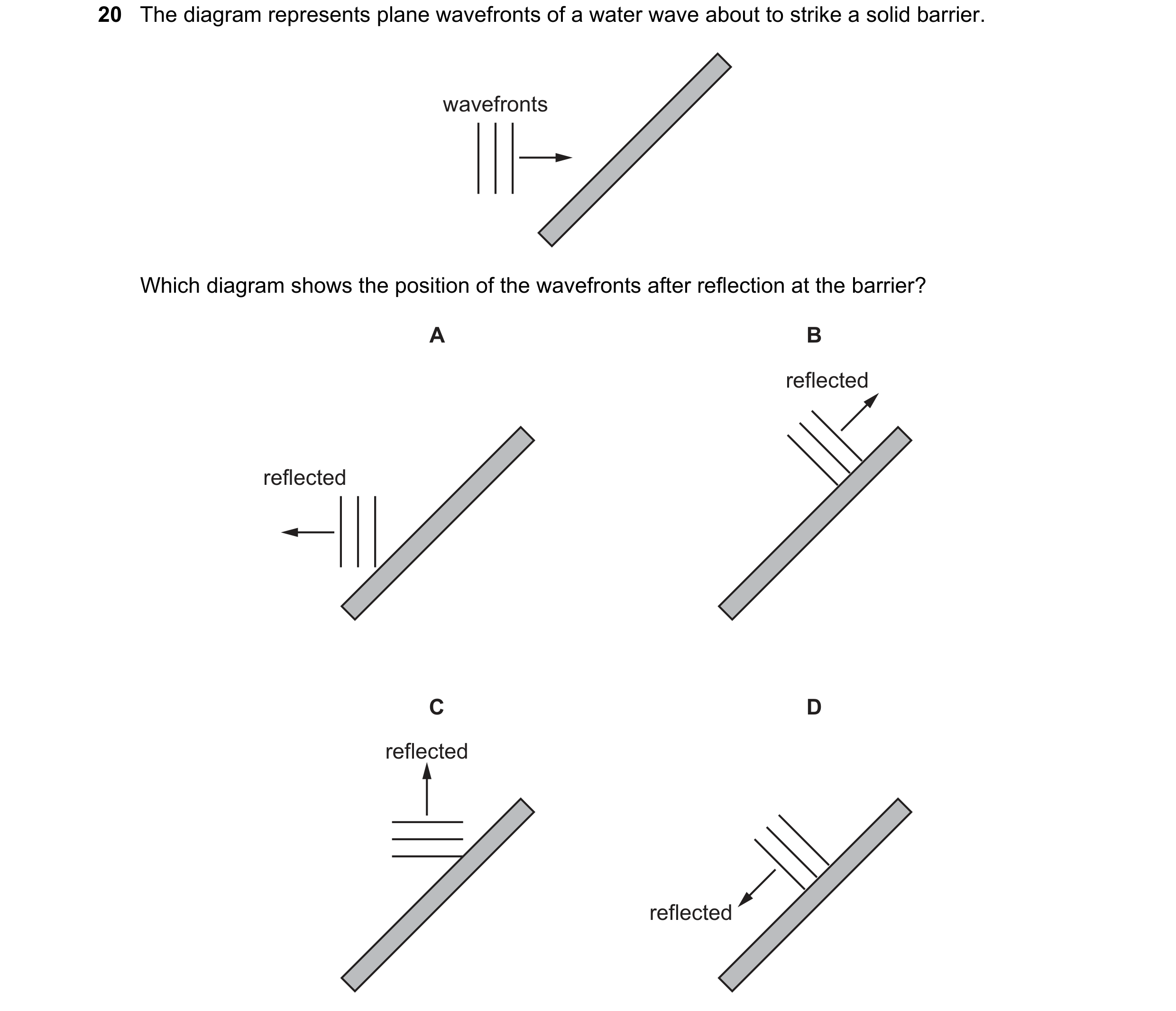
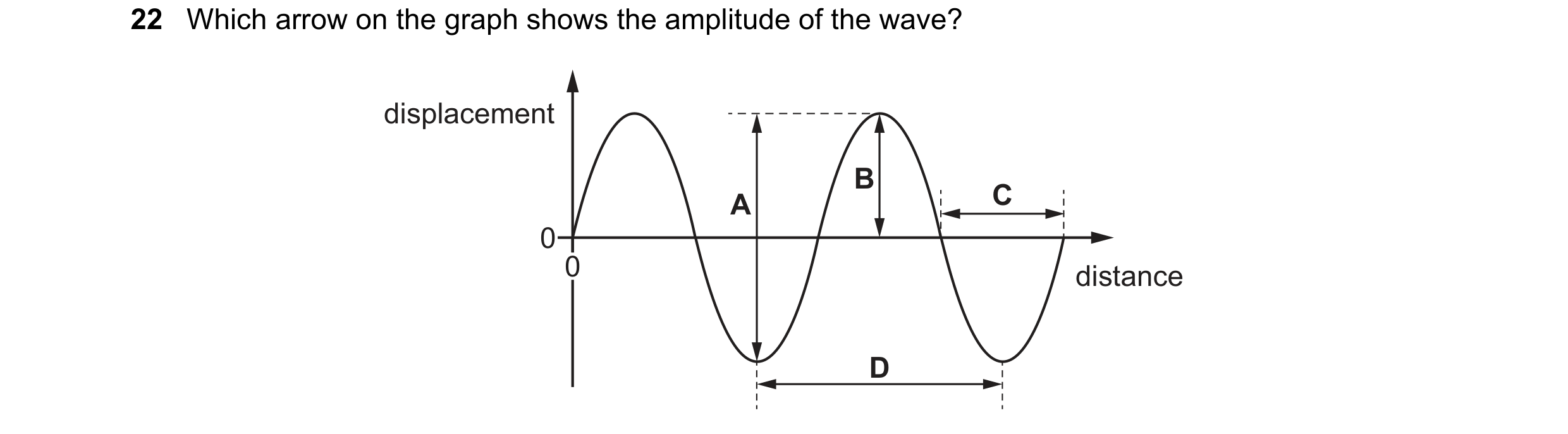
 50 / 87
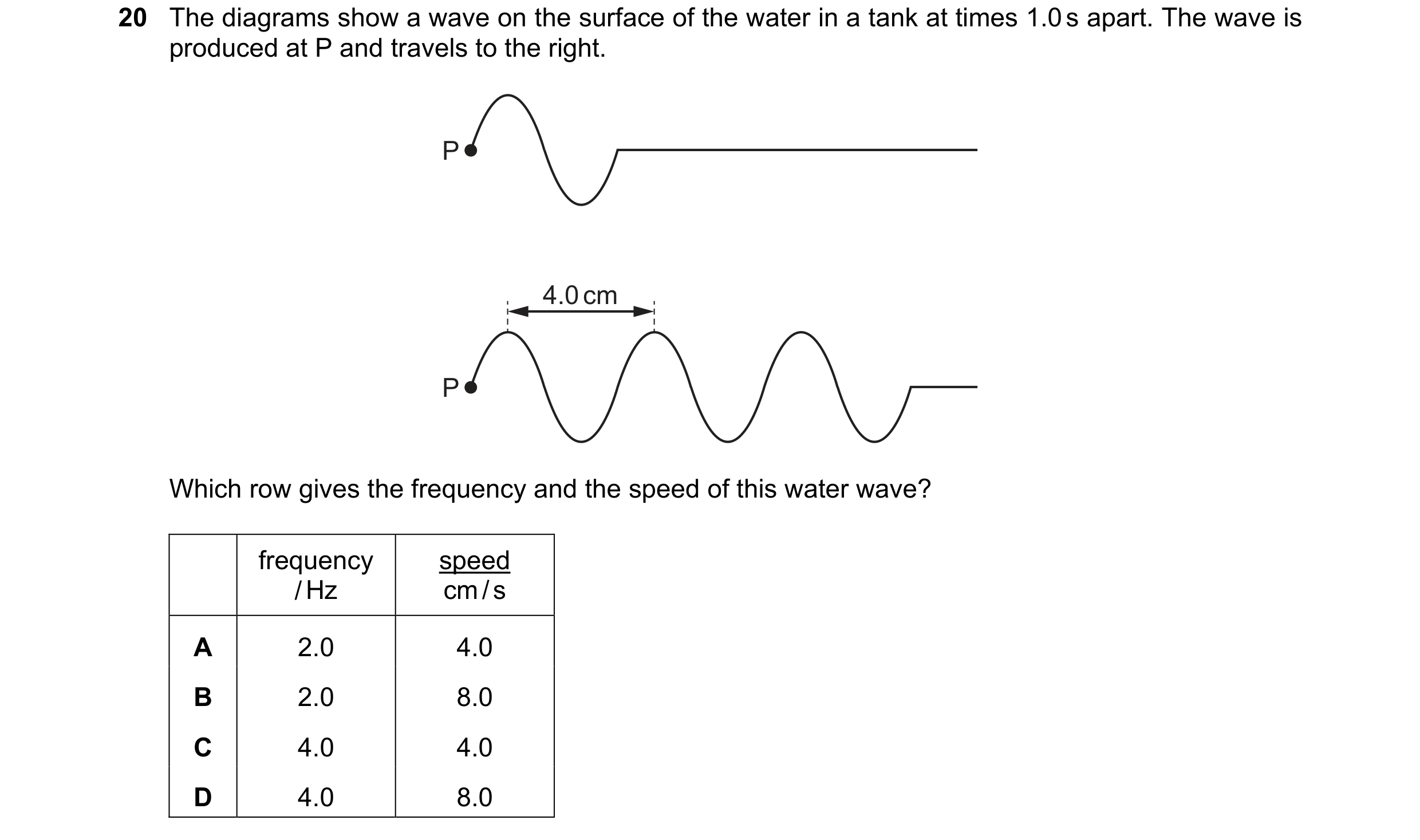
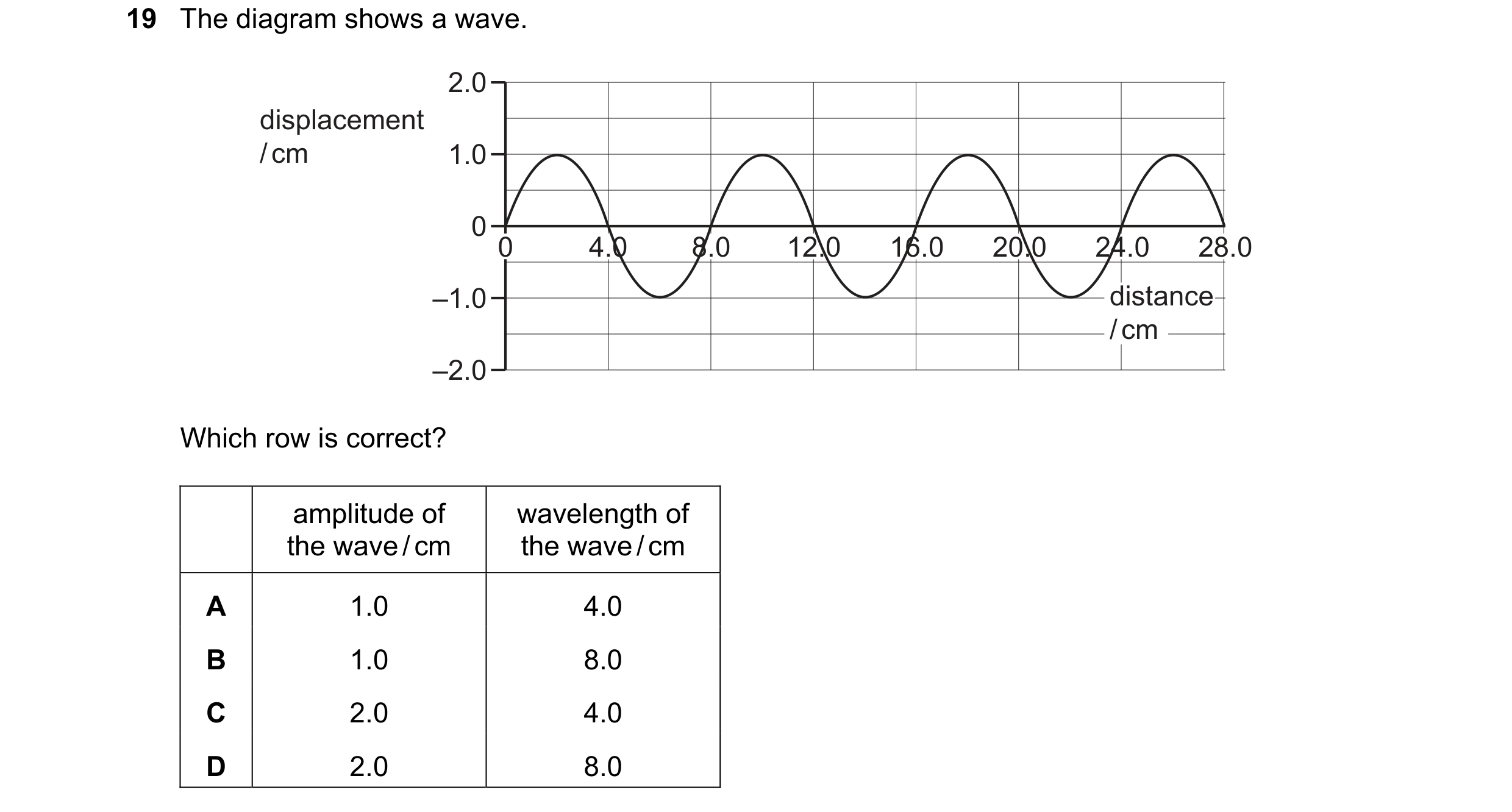 51 / 87
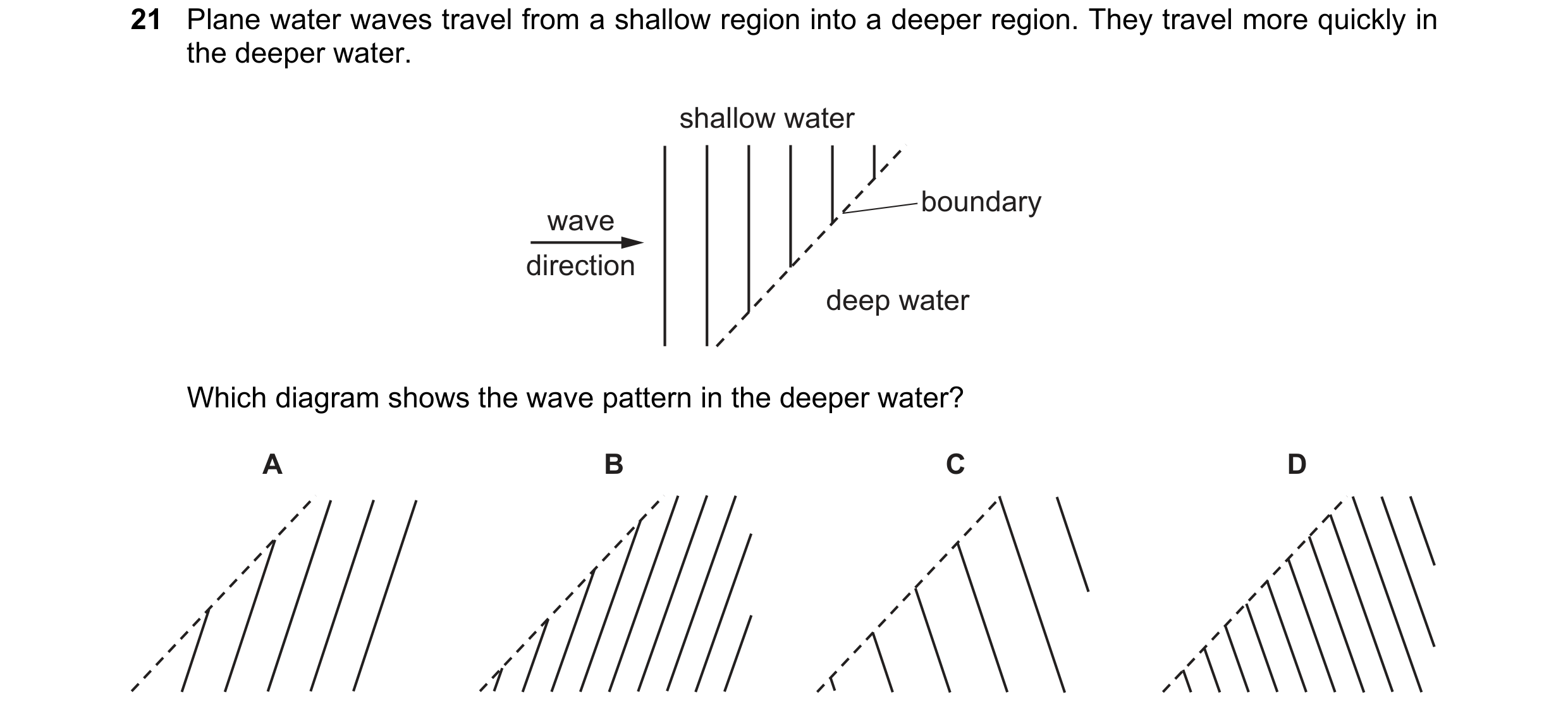

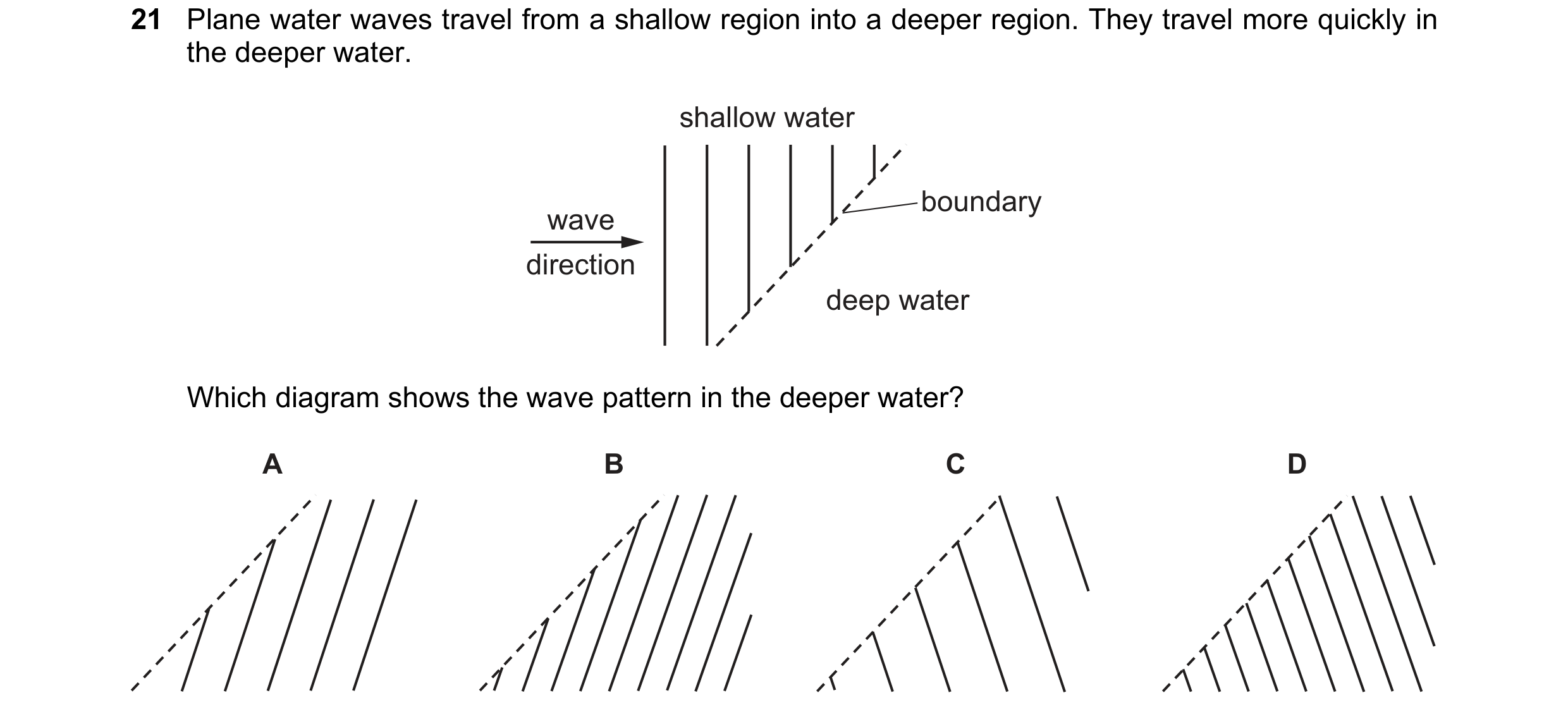 52 / 87
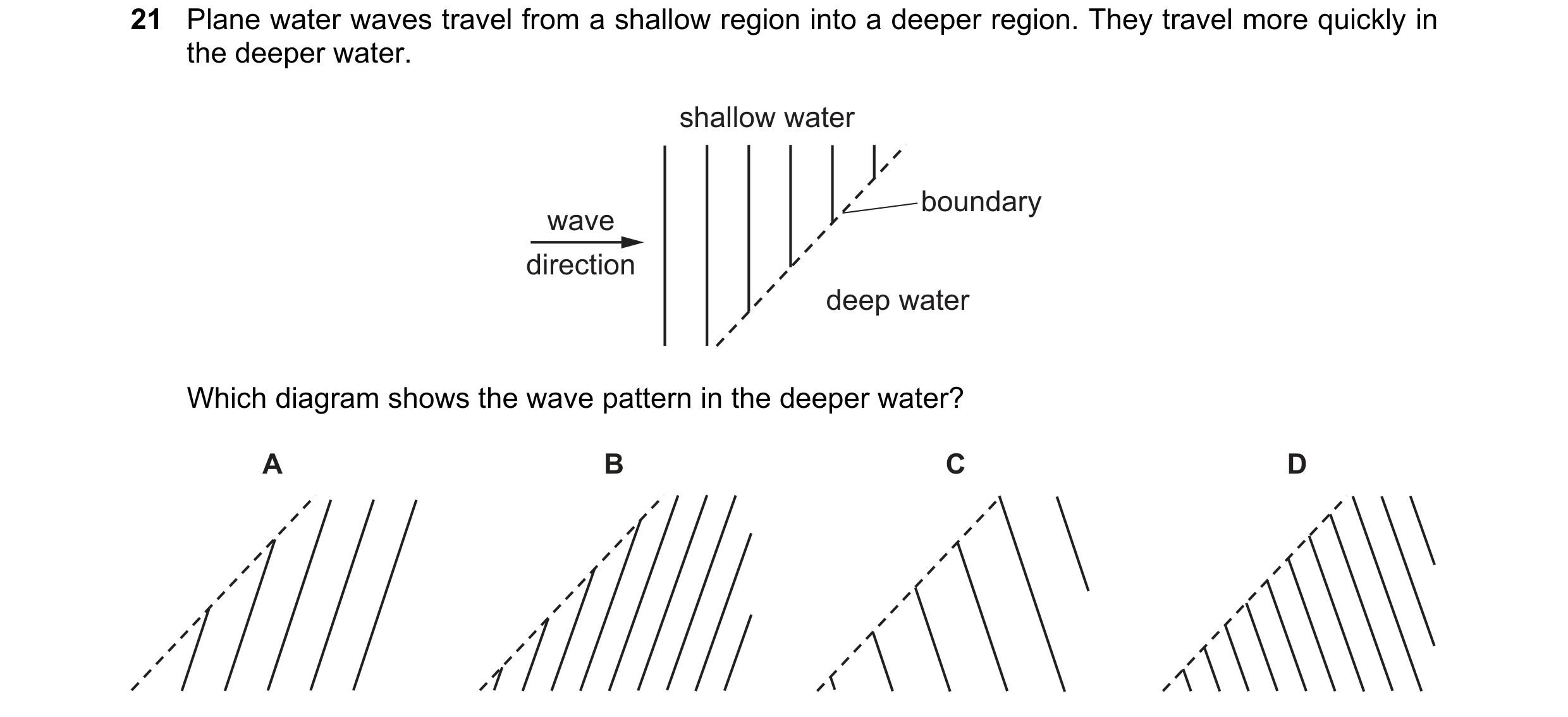
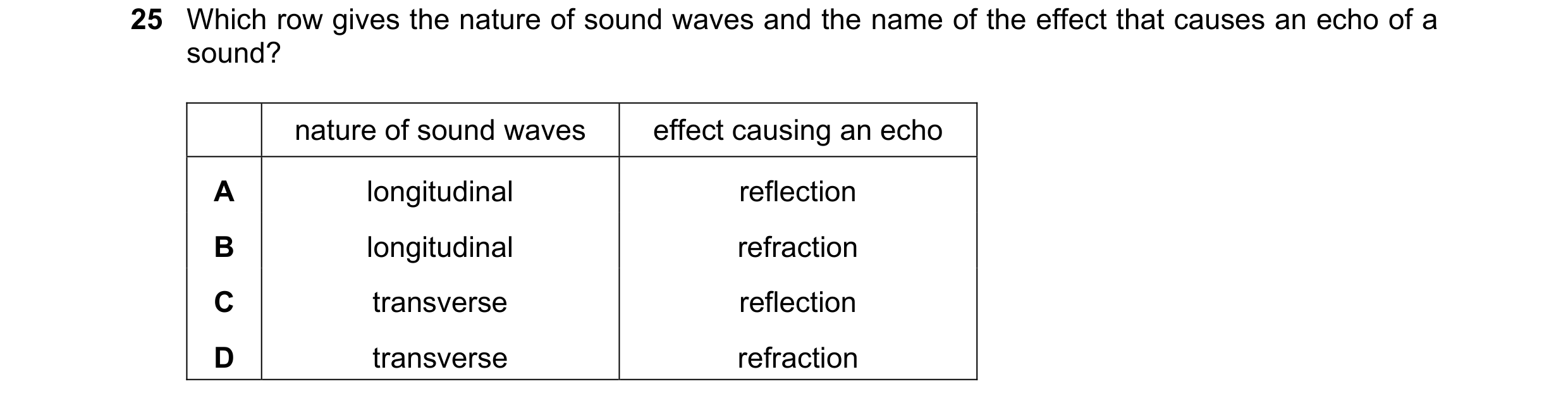
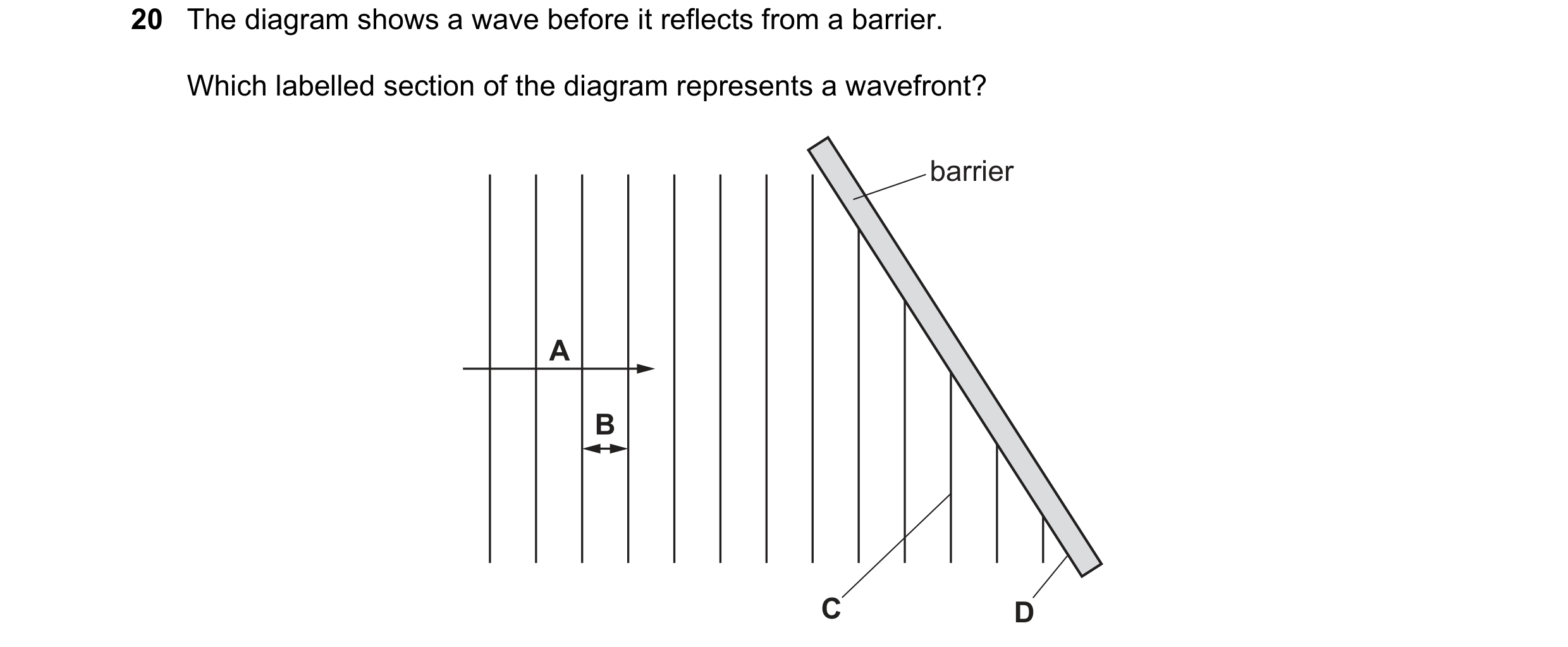 53 / 87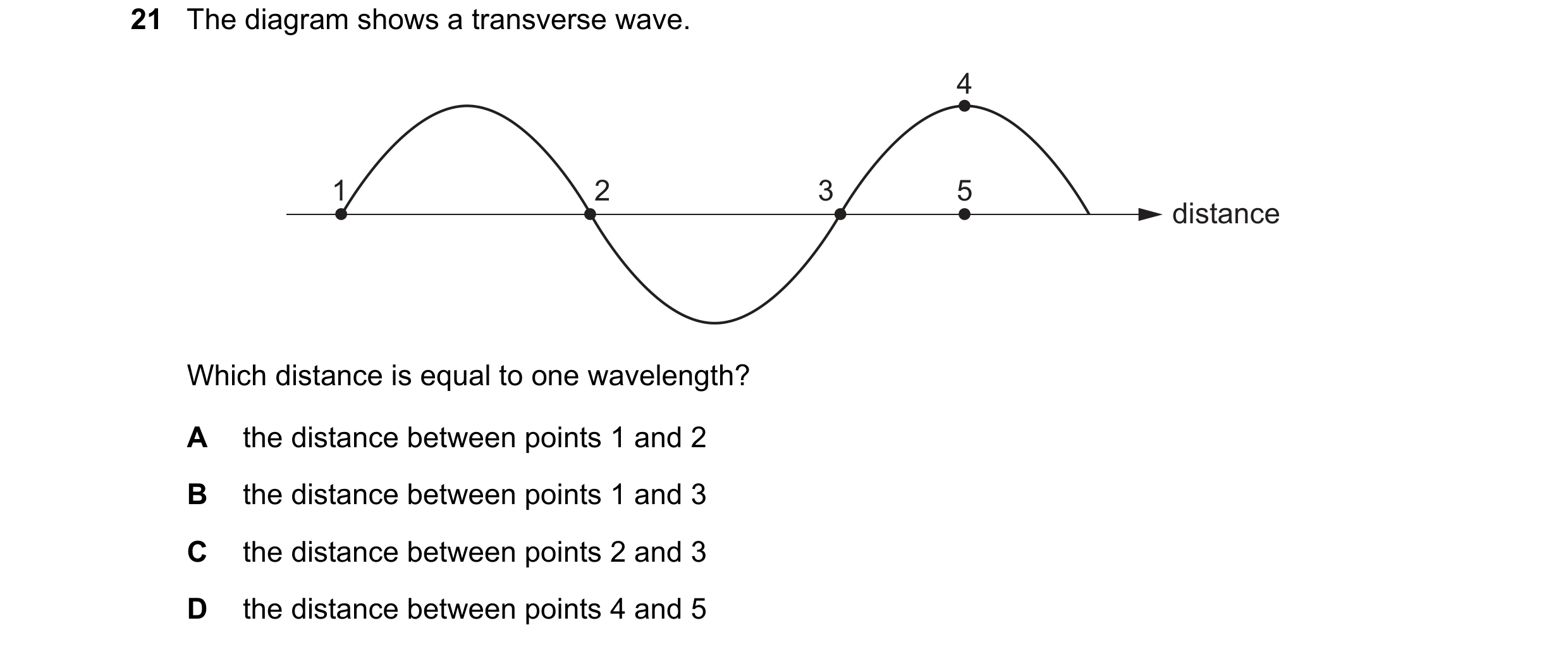

 54 / 87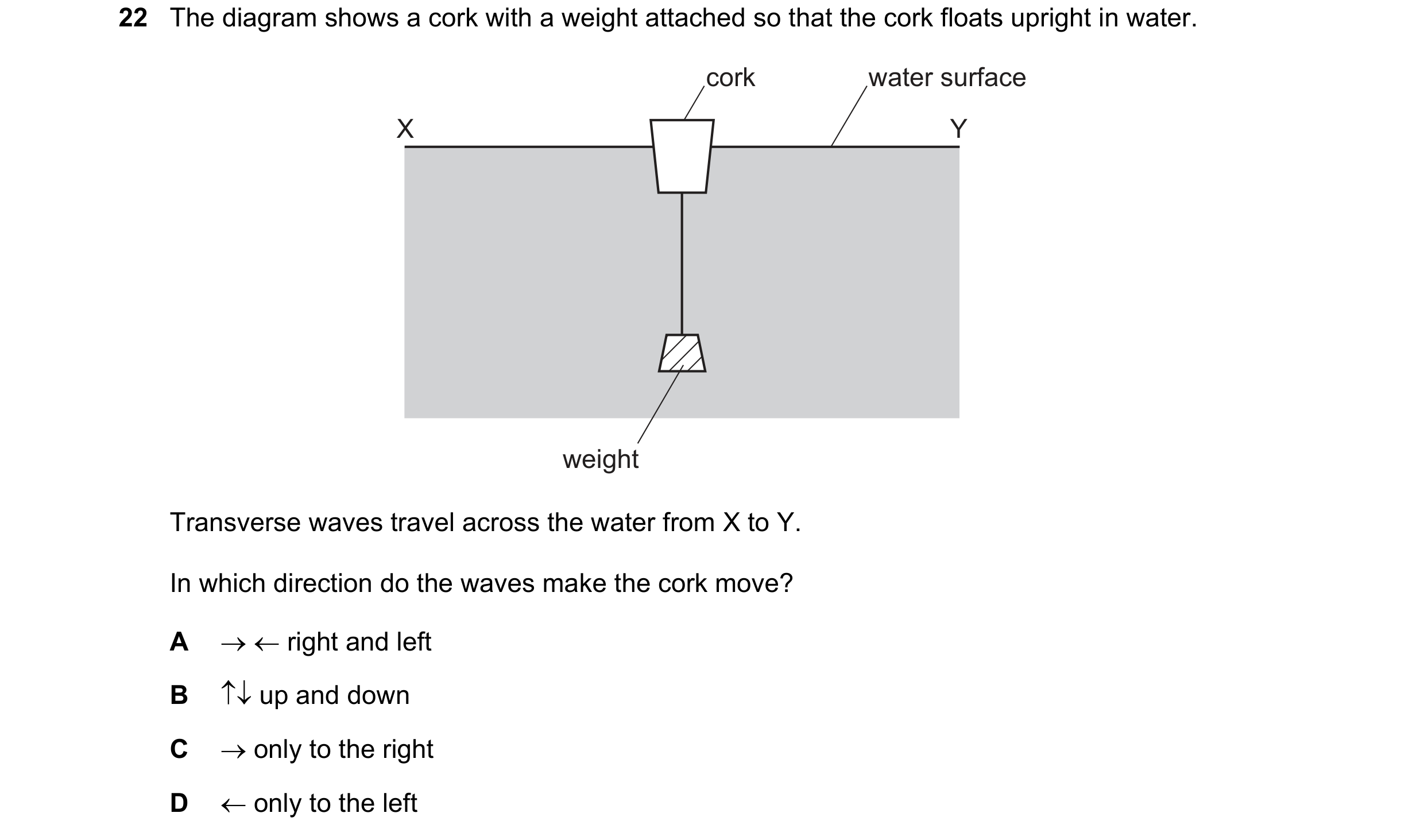
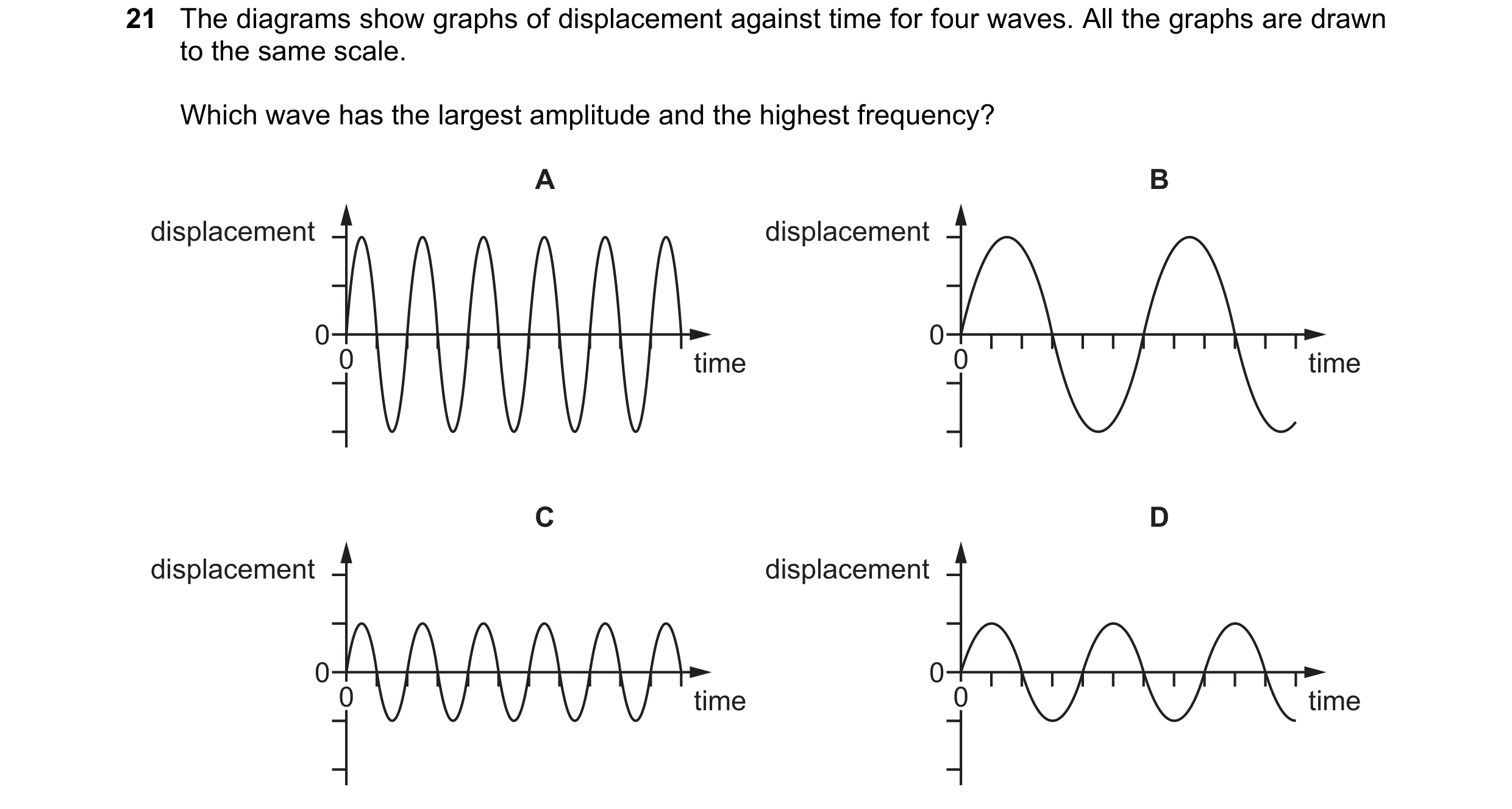 55 / 87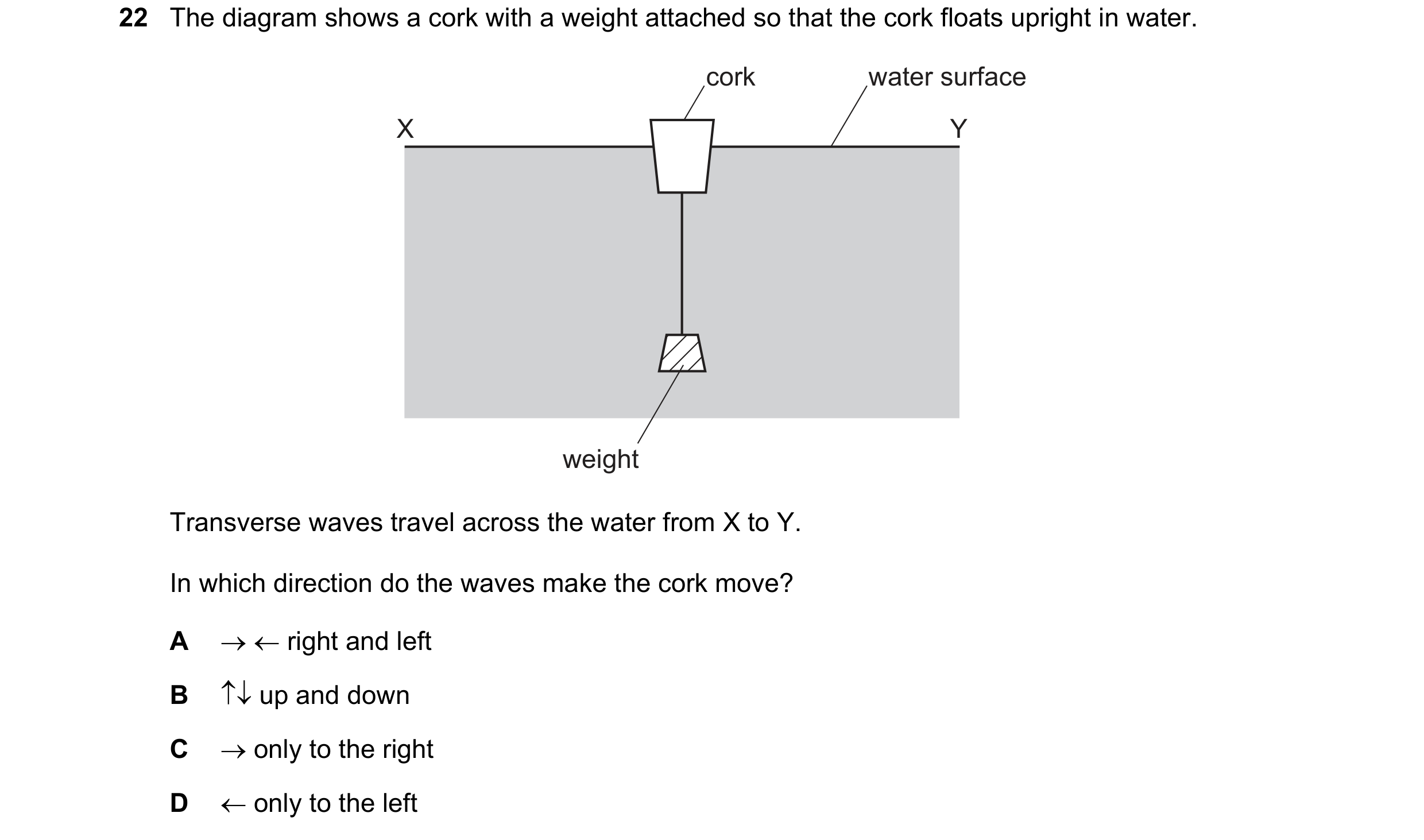
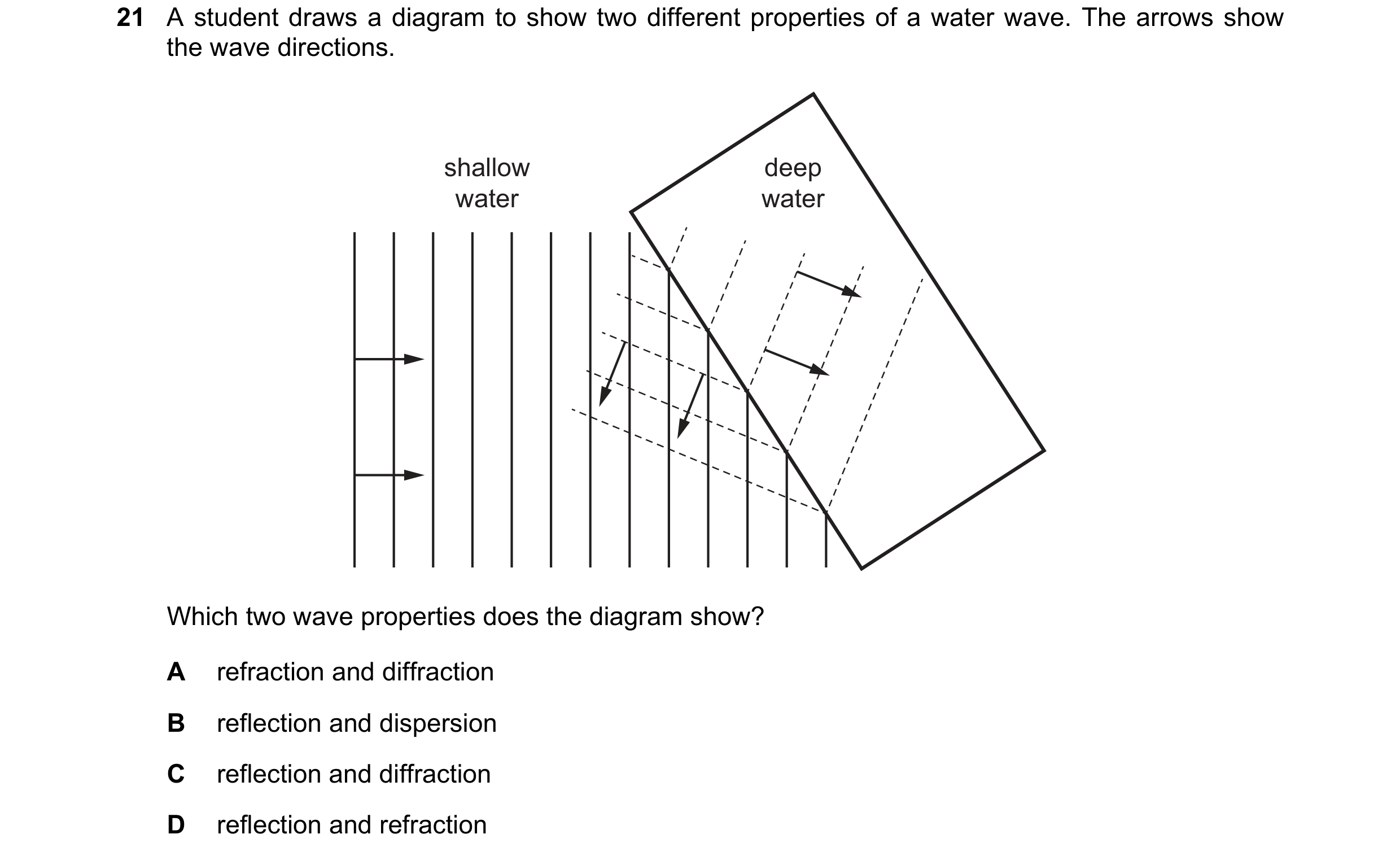 56 / 87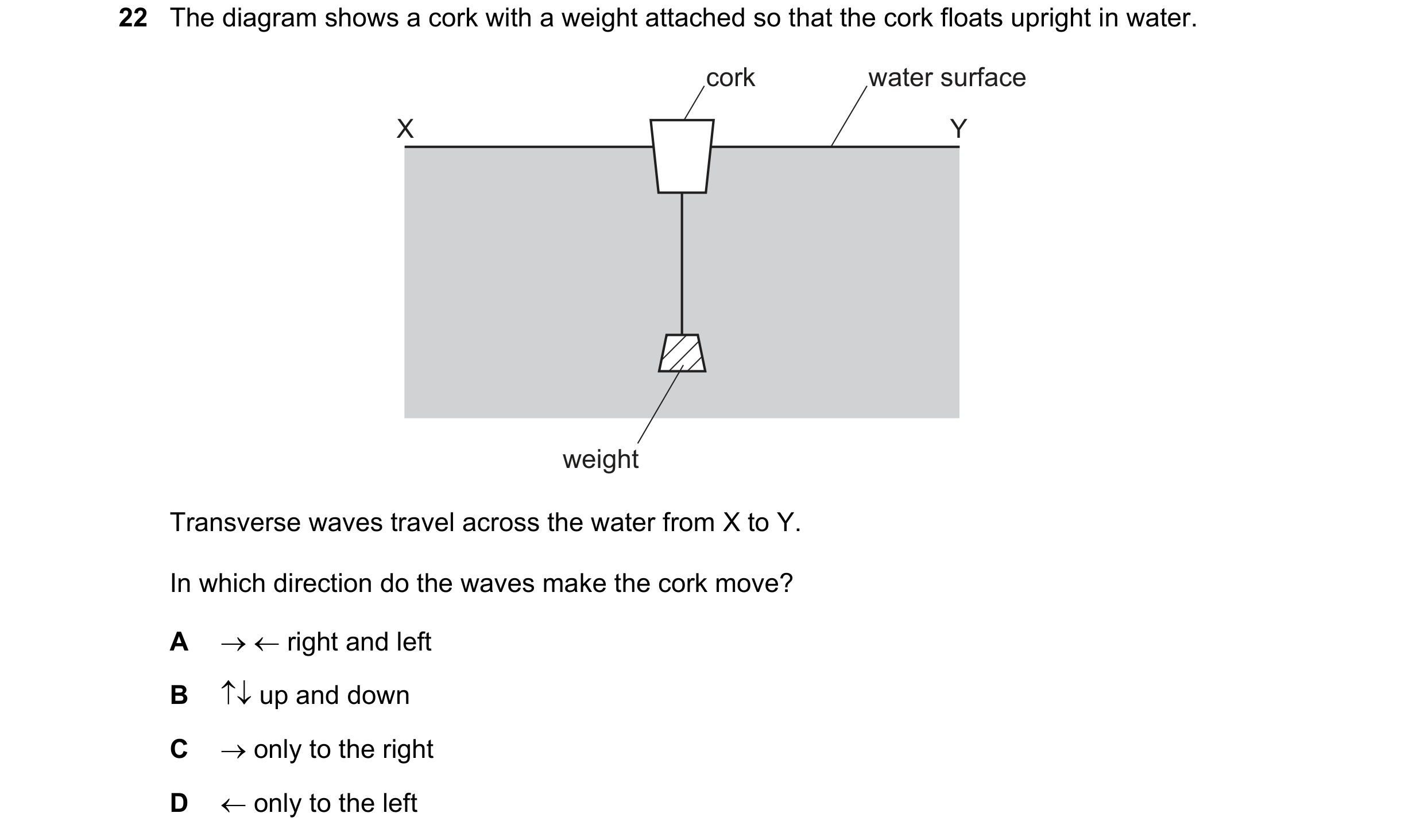
 57 / 87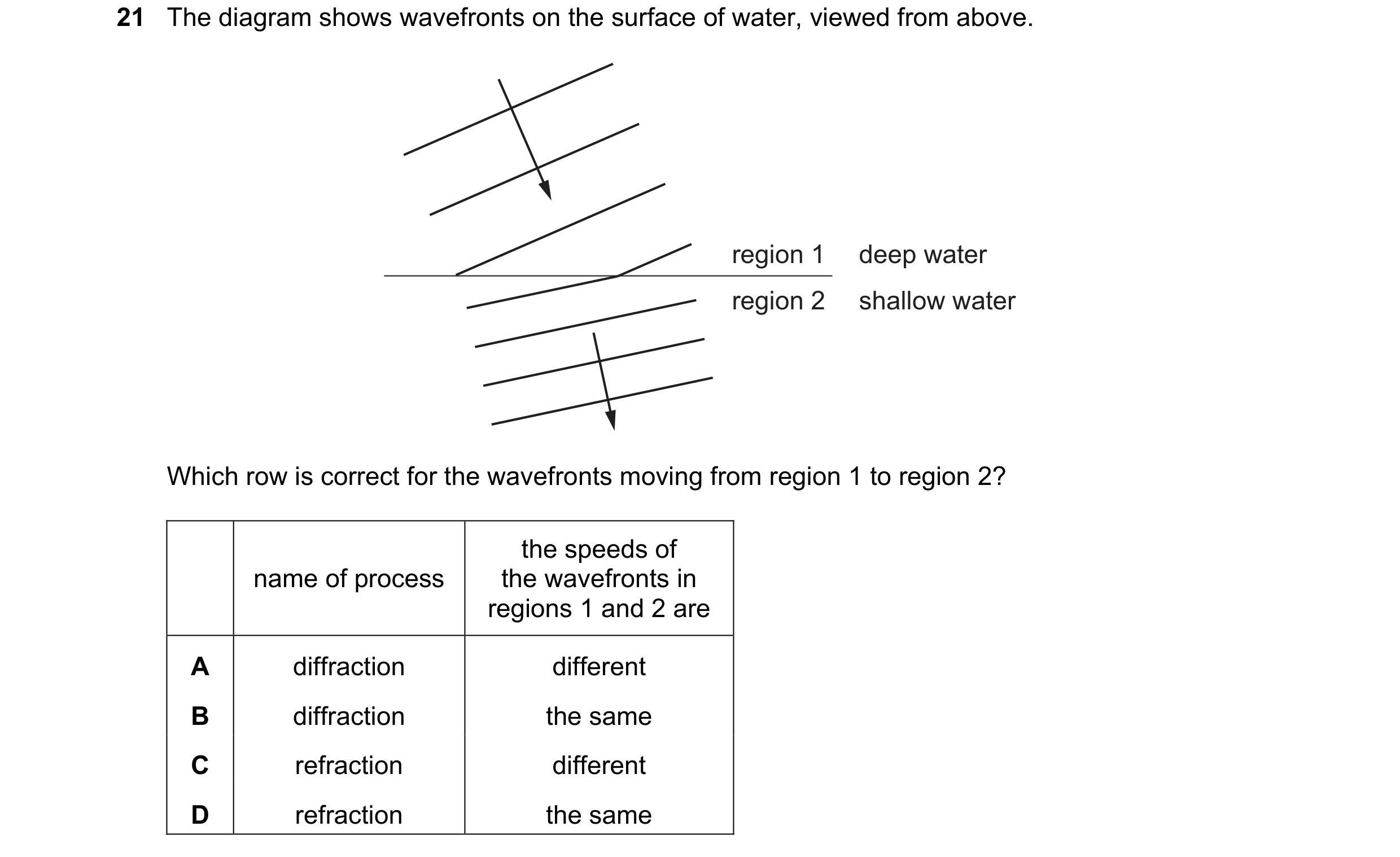
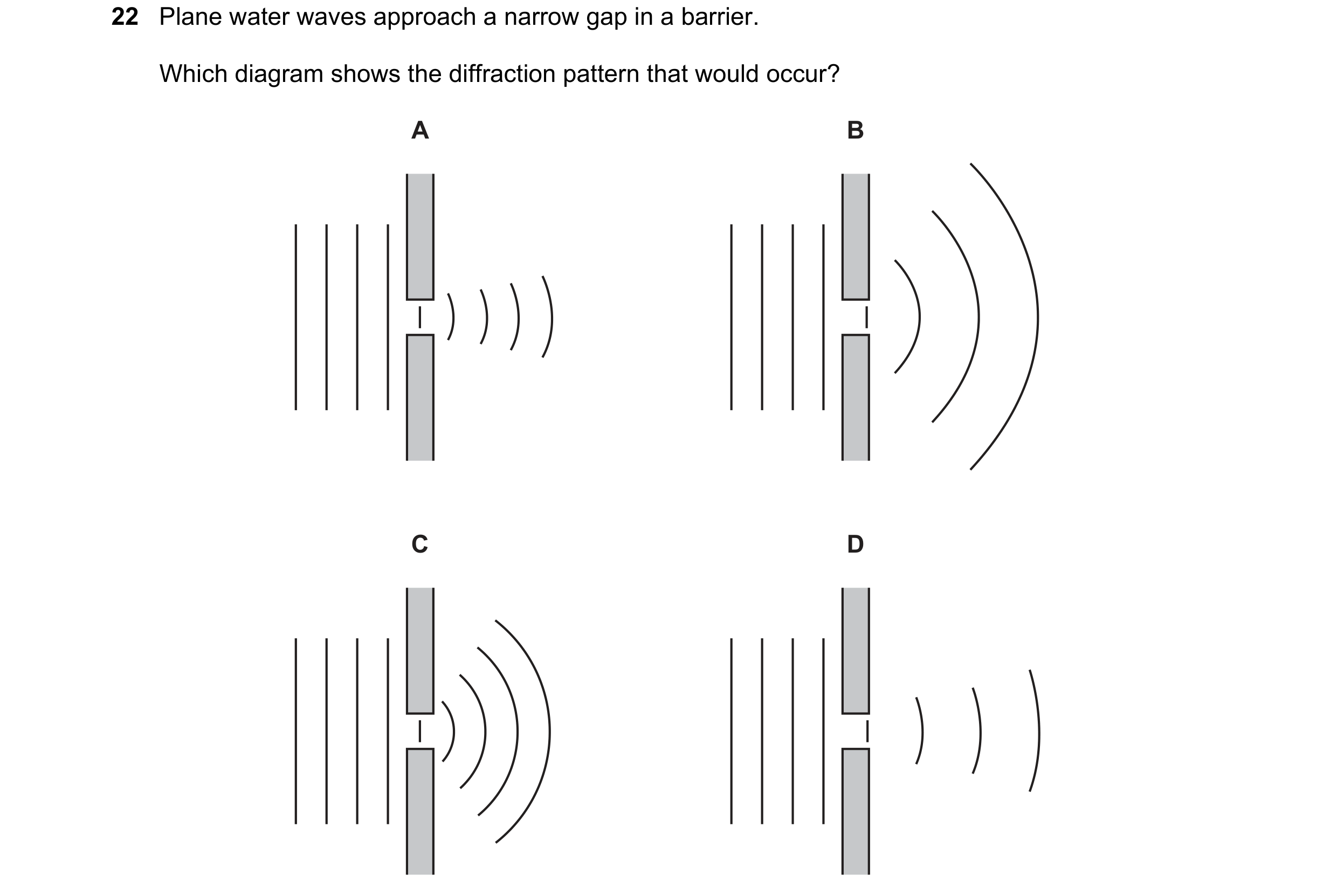 58 / 87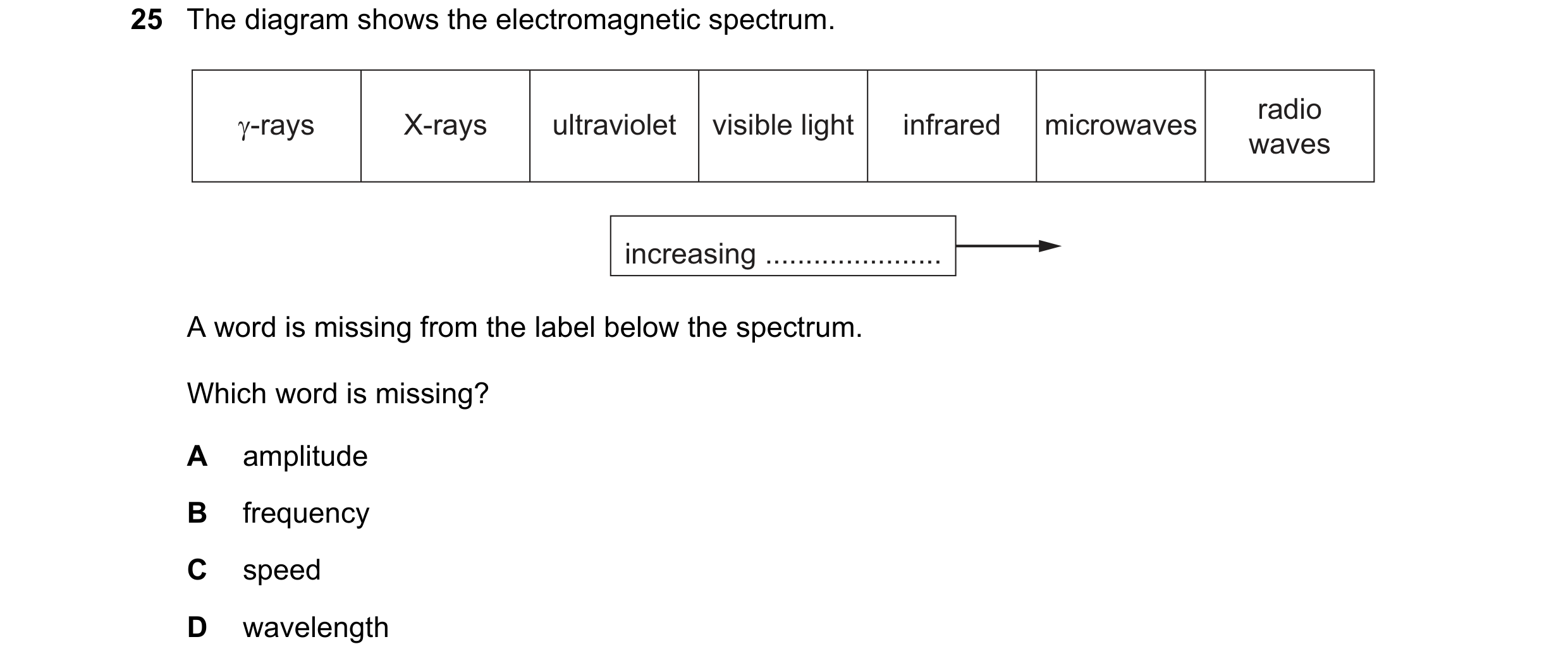
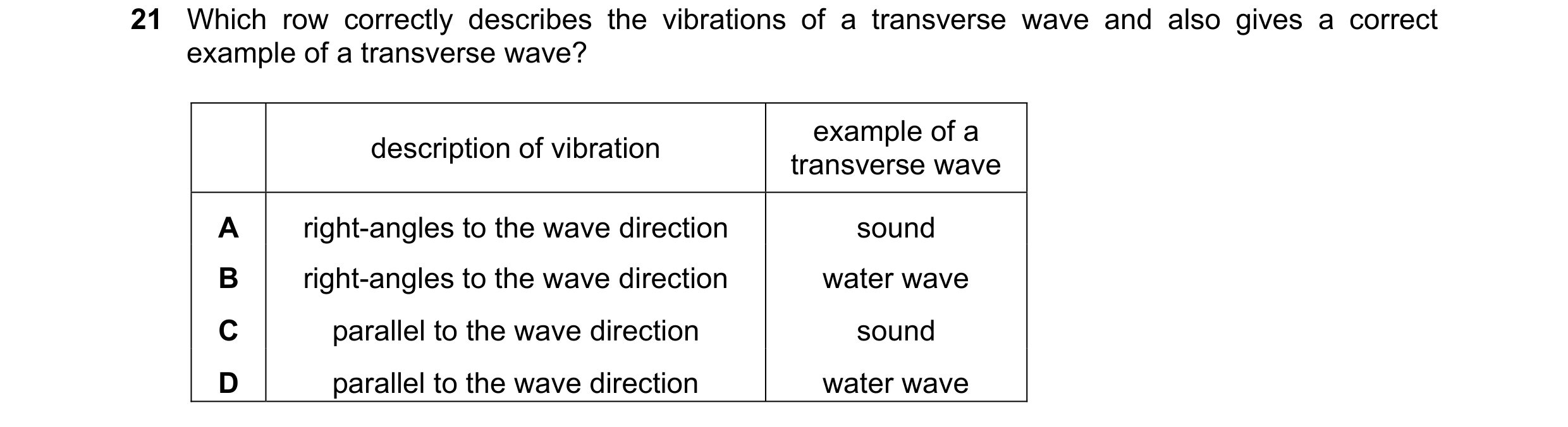
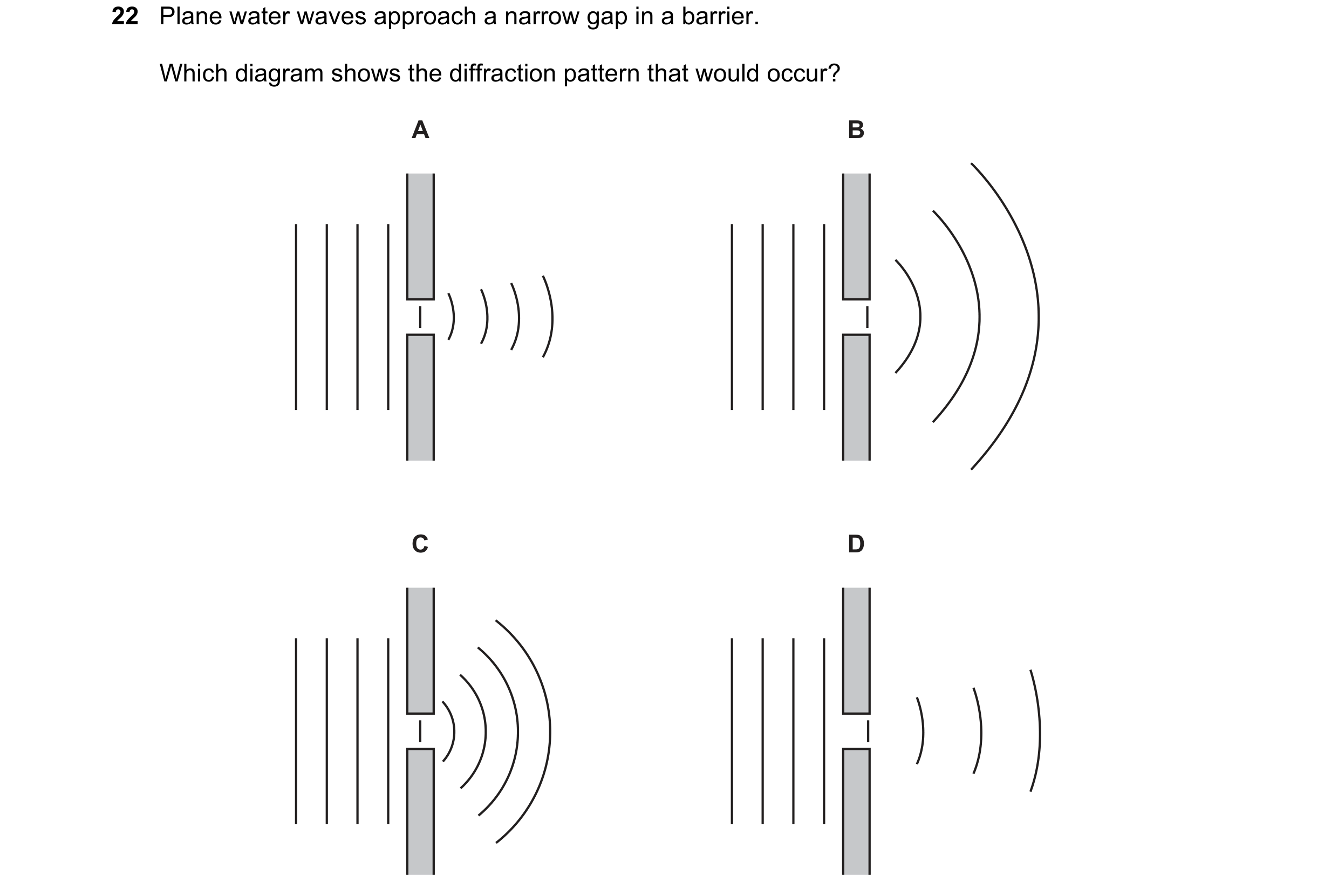 59 / 87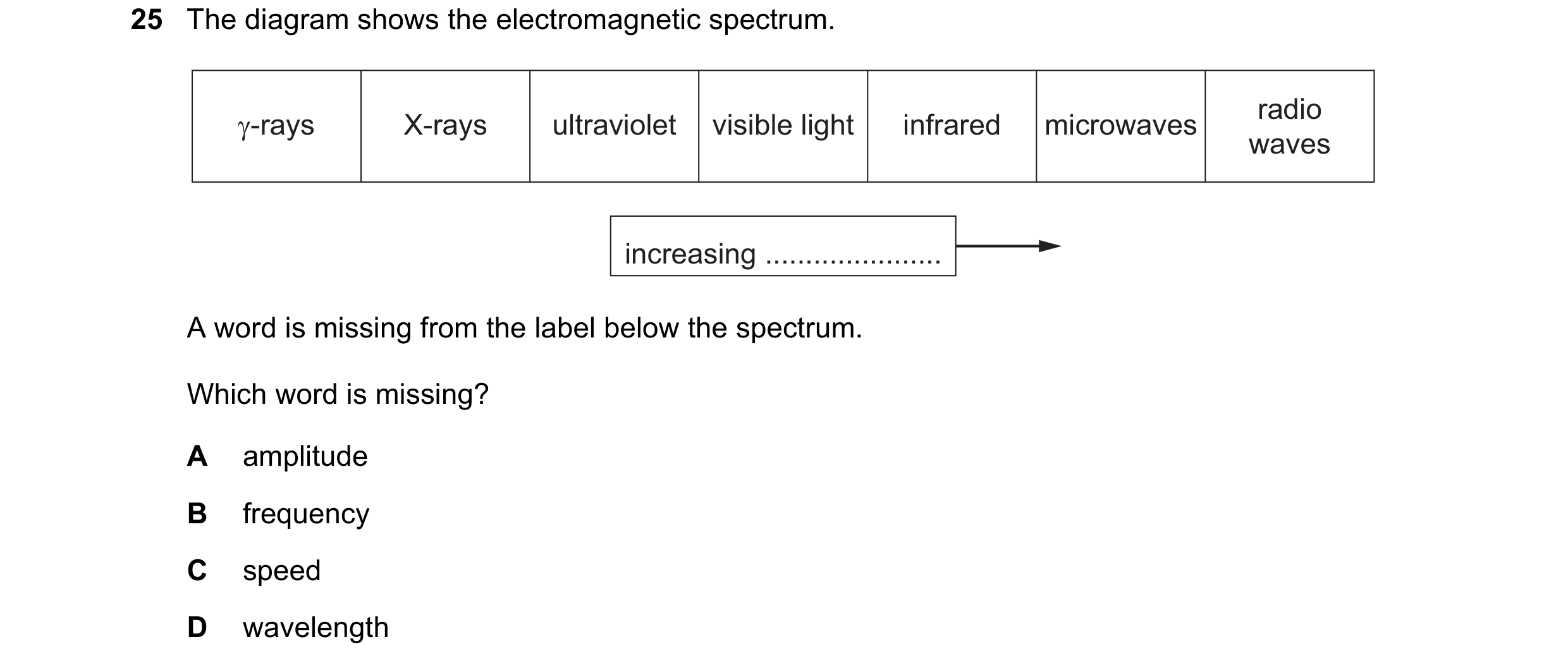

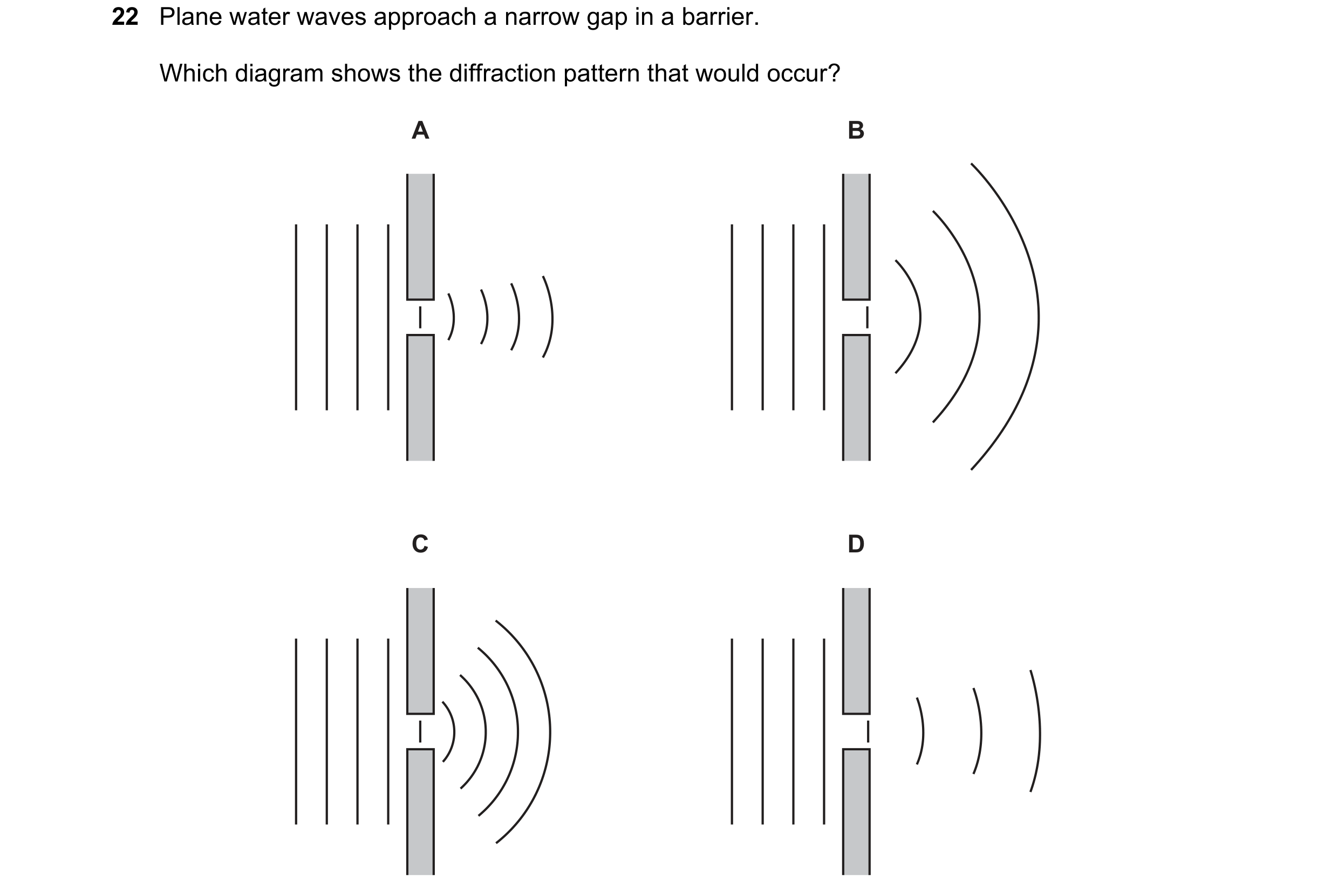 60 / 87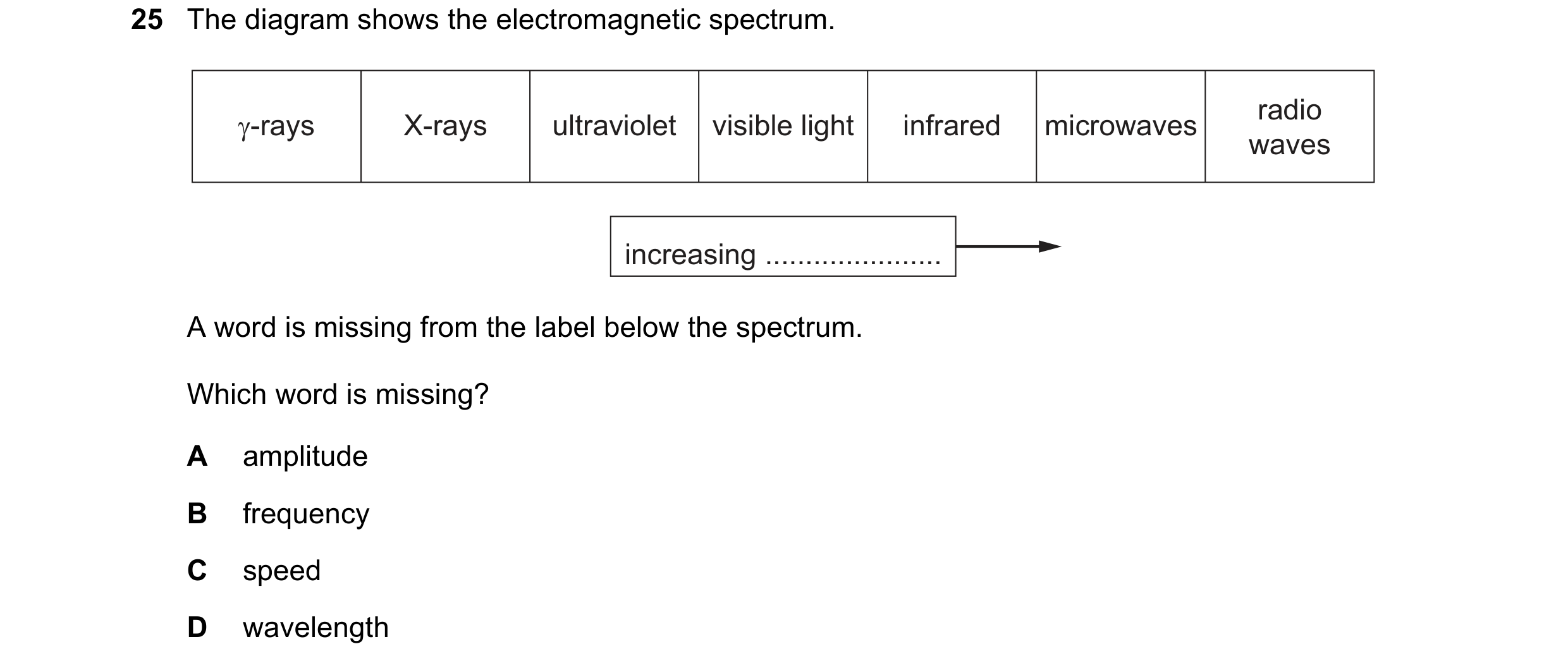
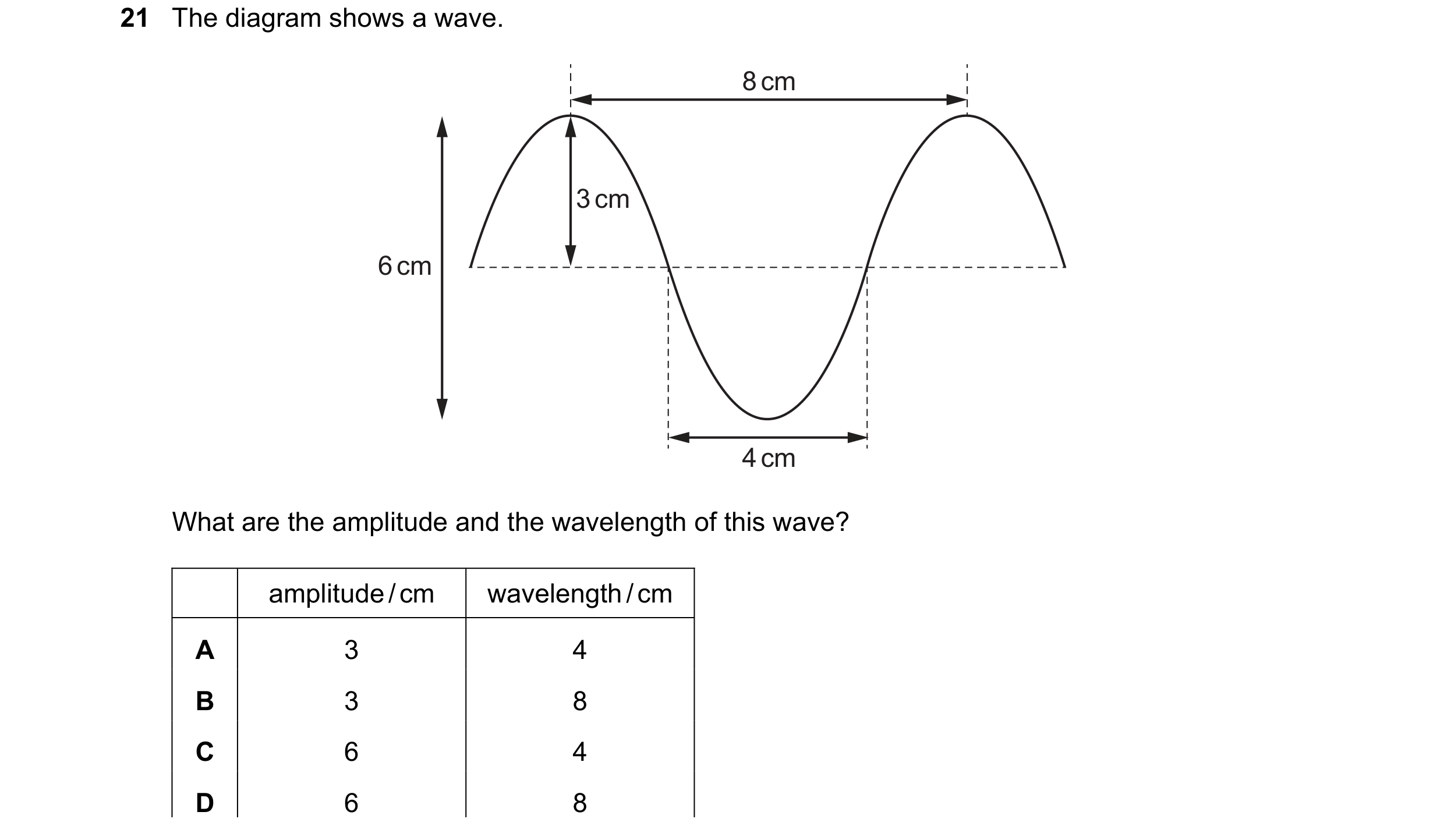 61 / 87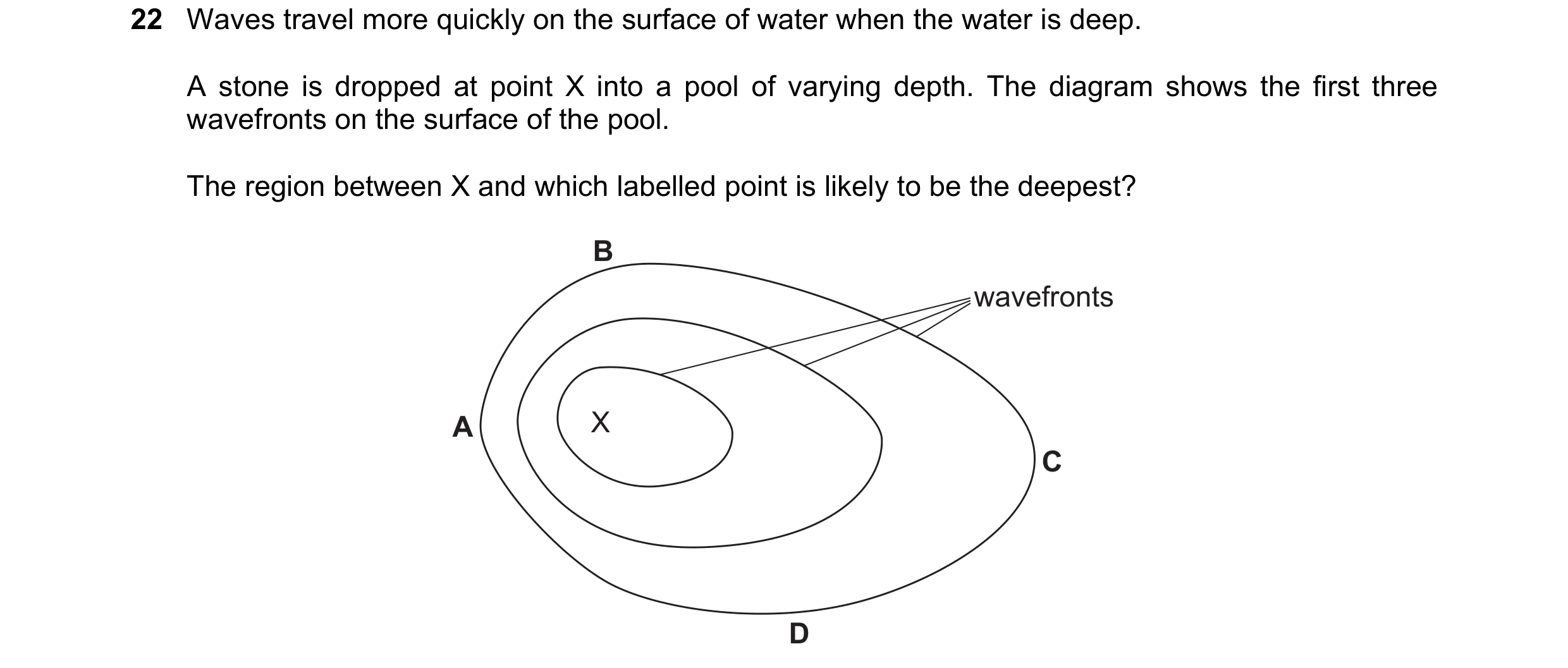
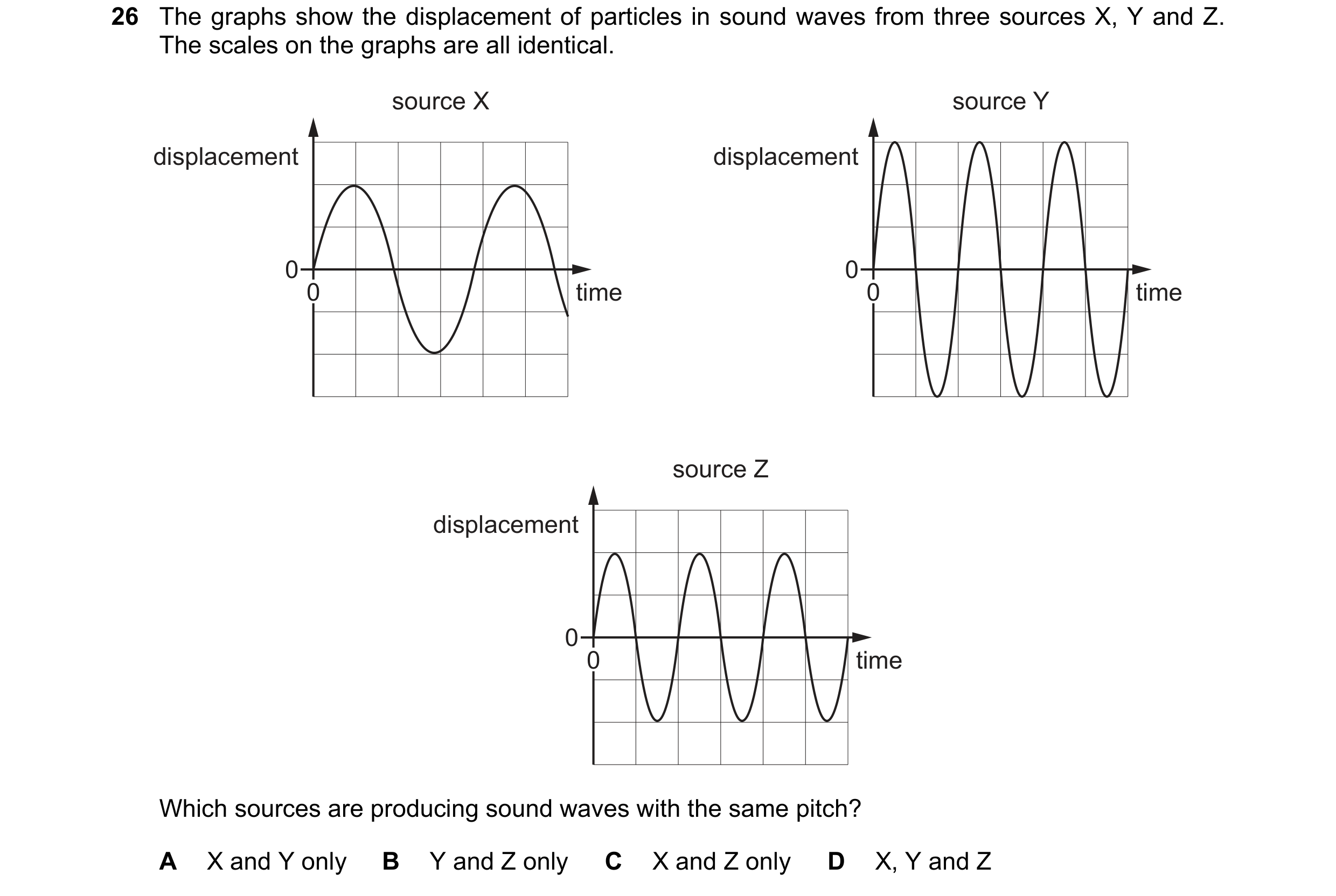 62 / 87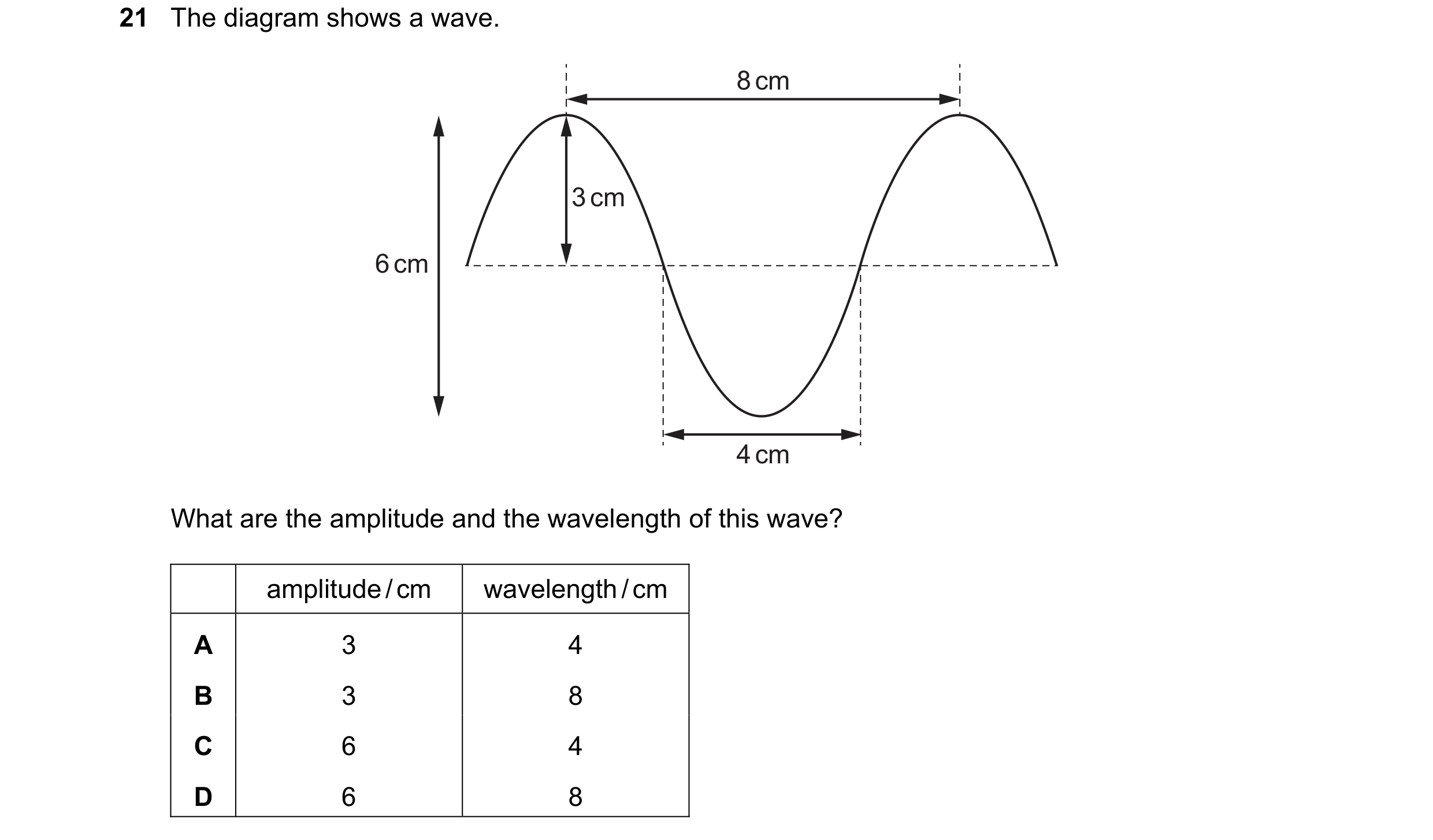
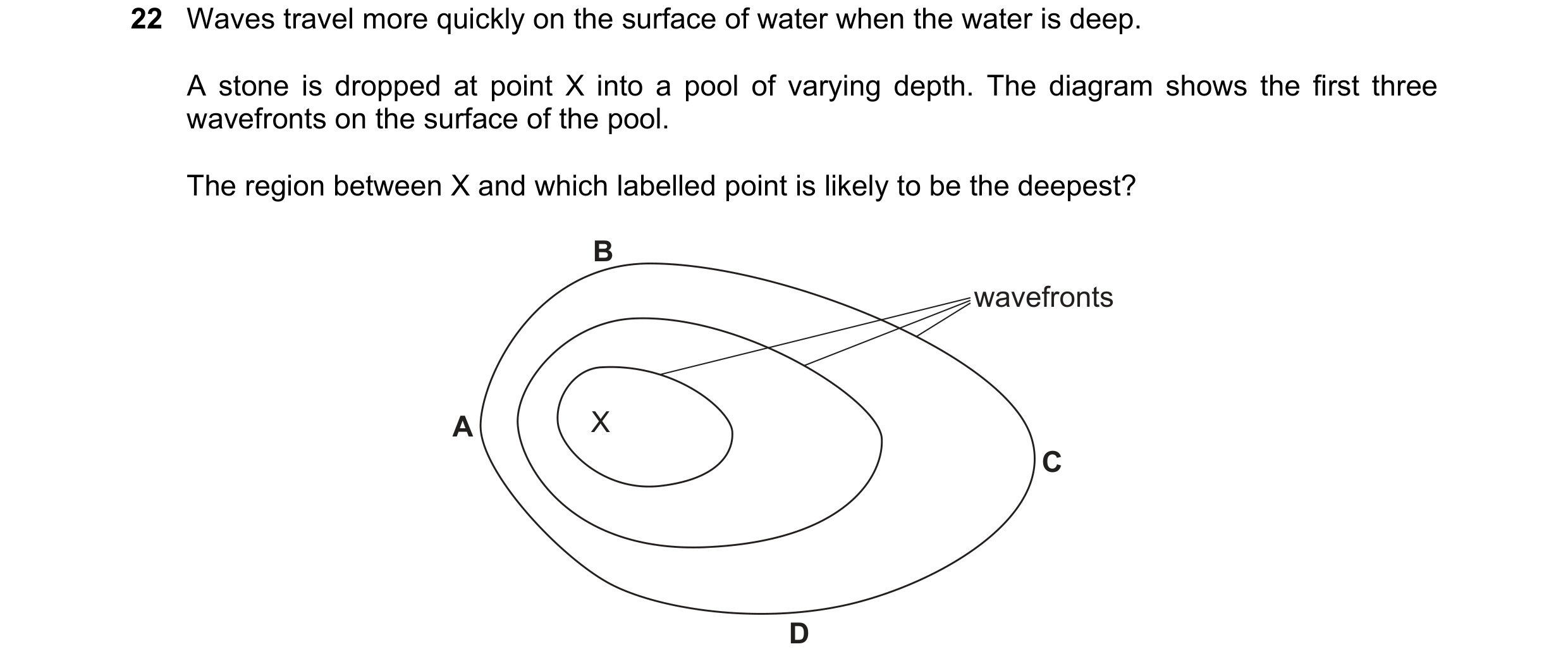 63 / 87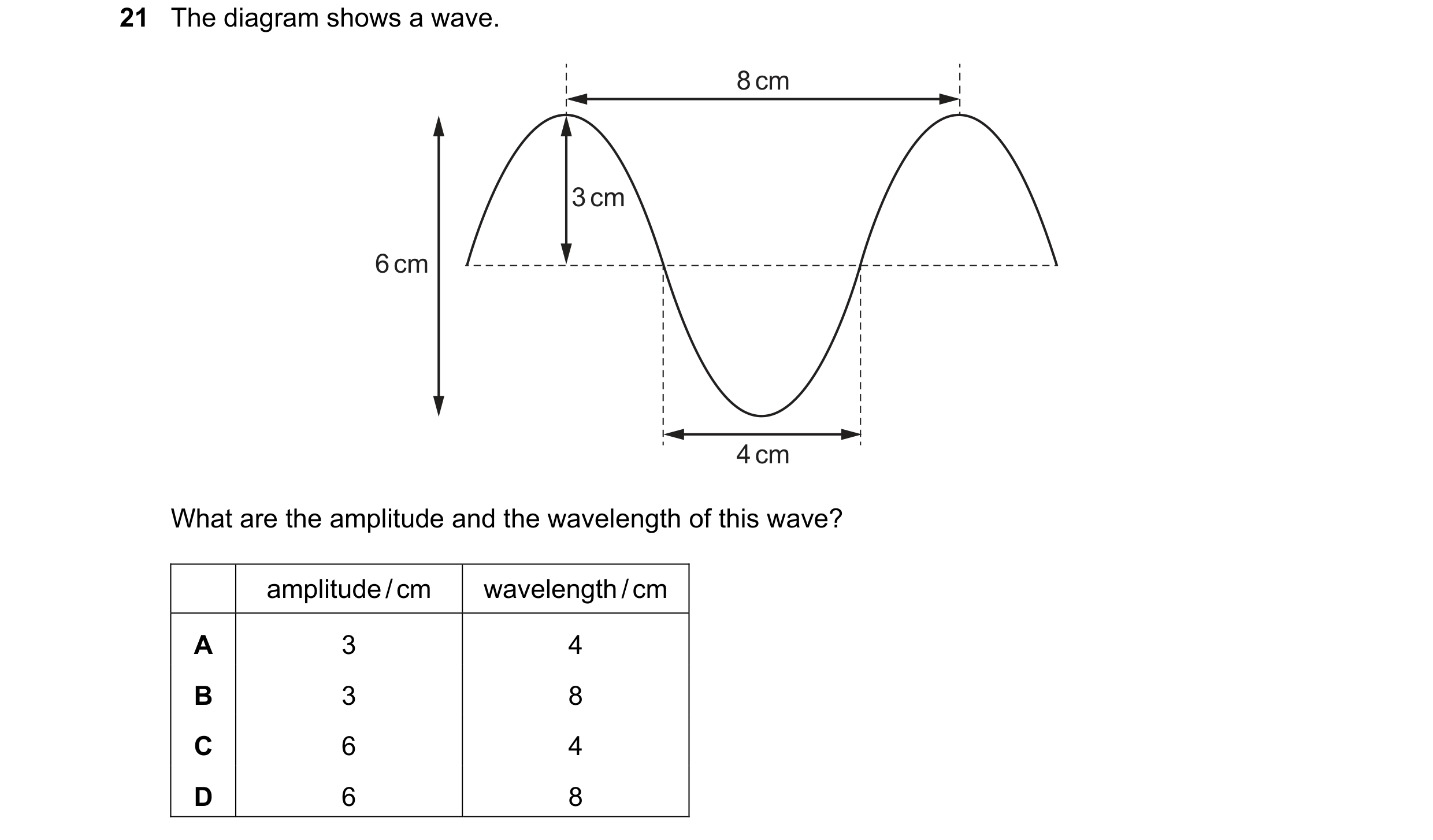
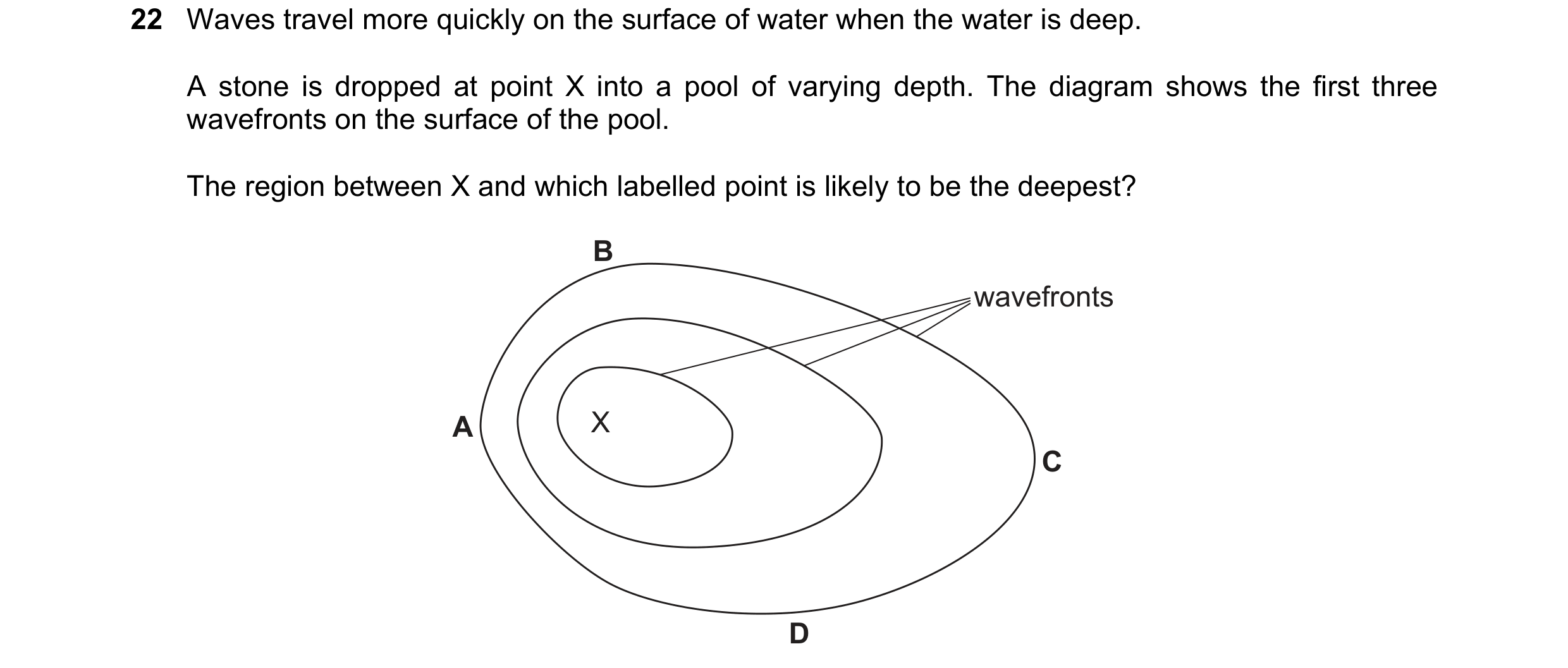
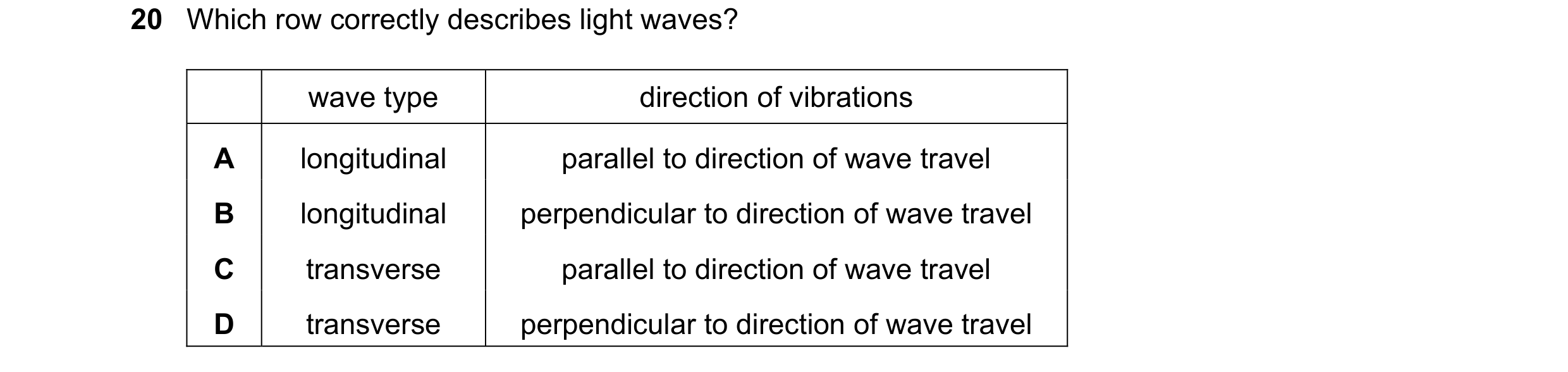 64 / 87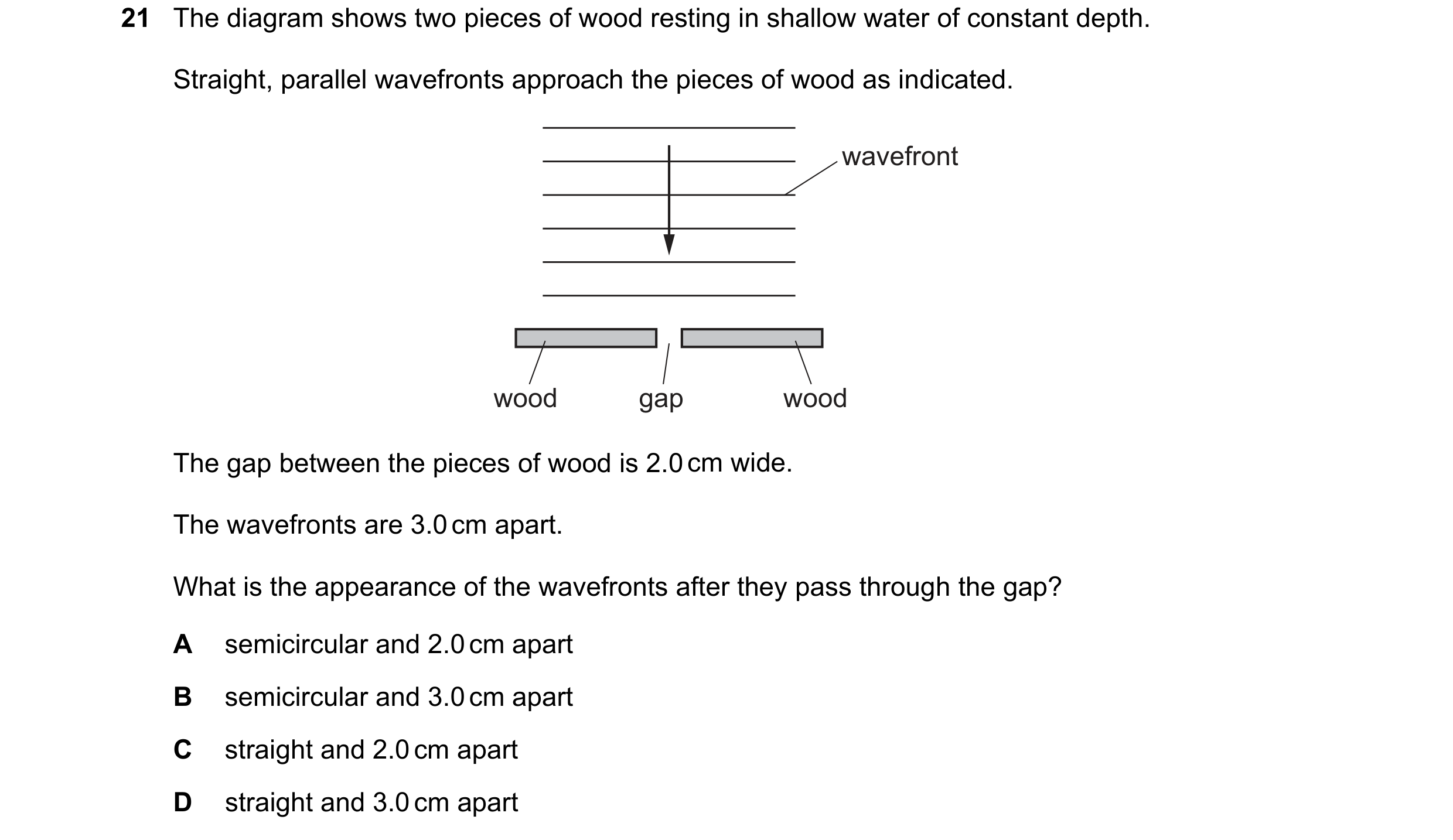
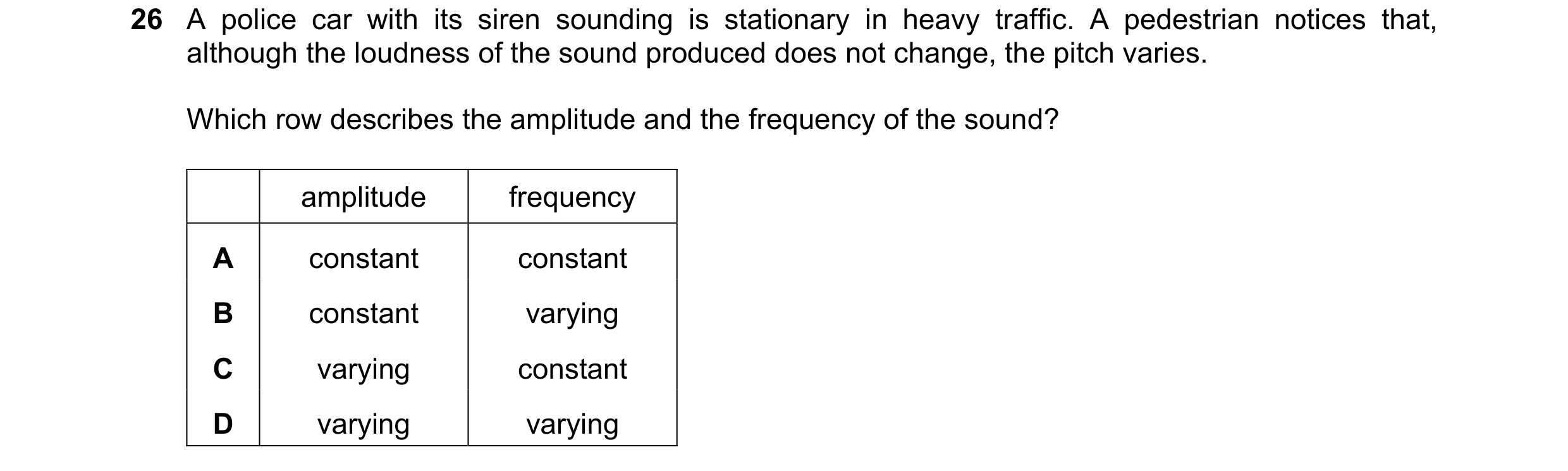
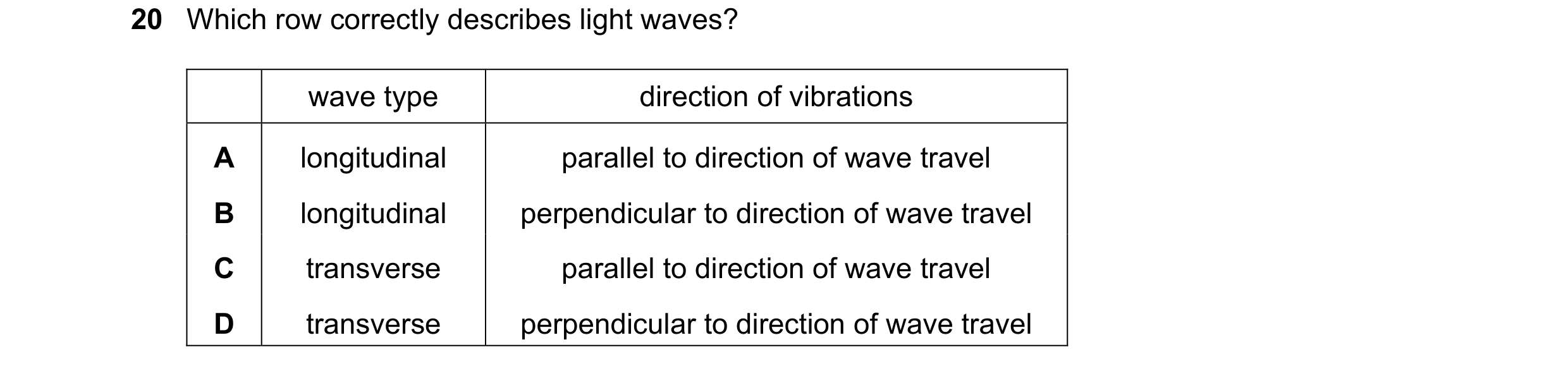
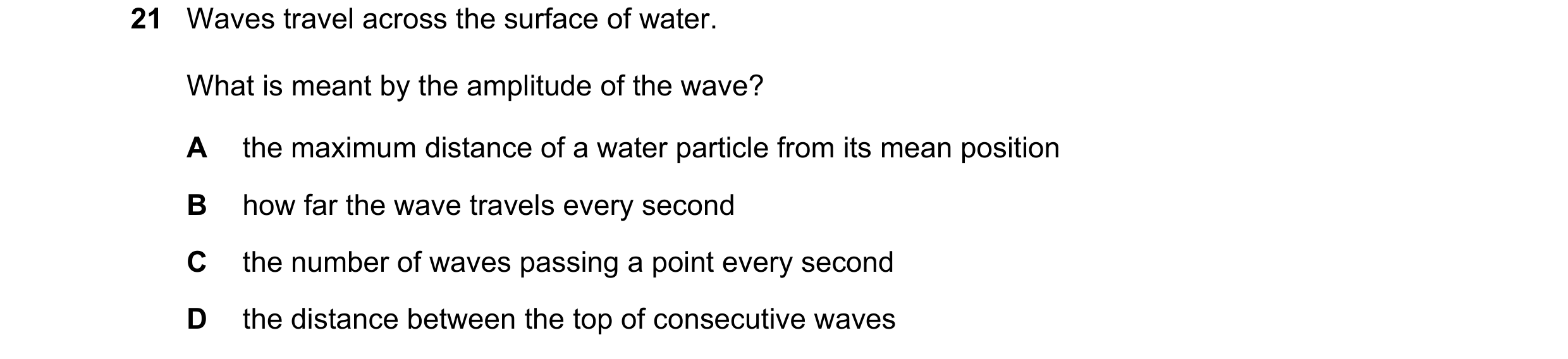 65 / 87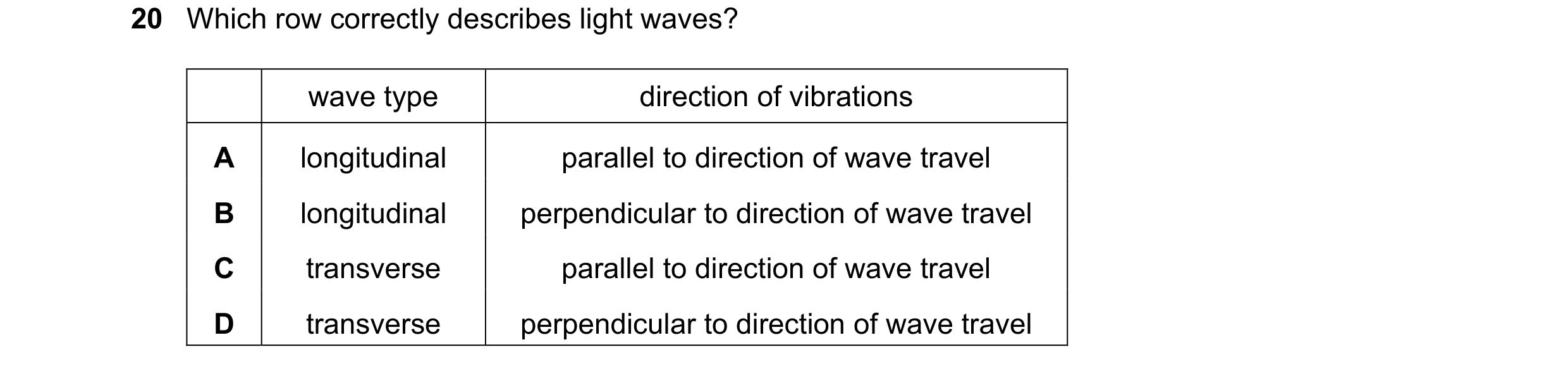
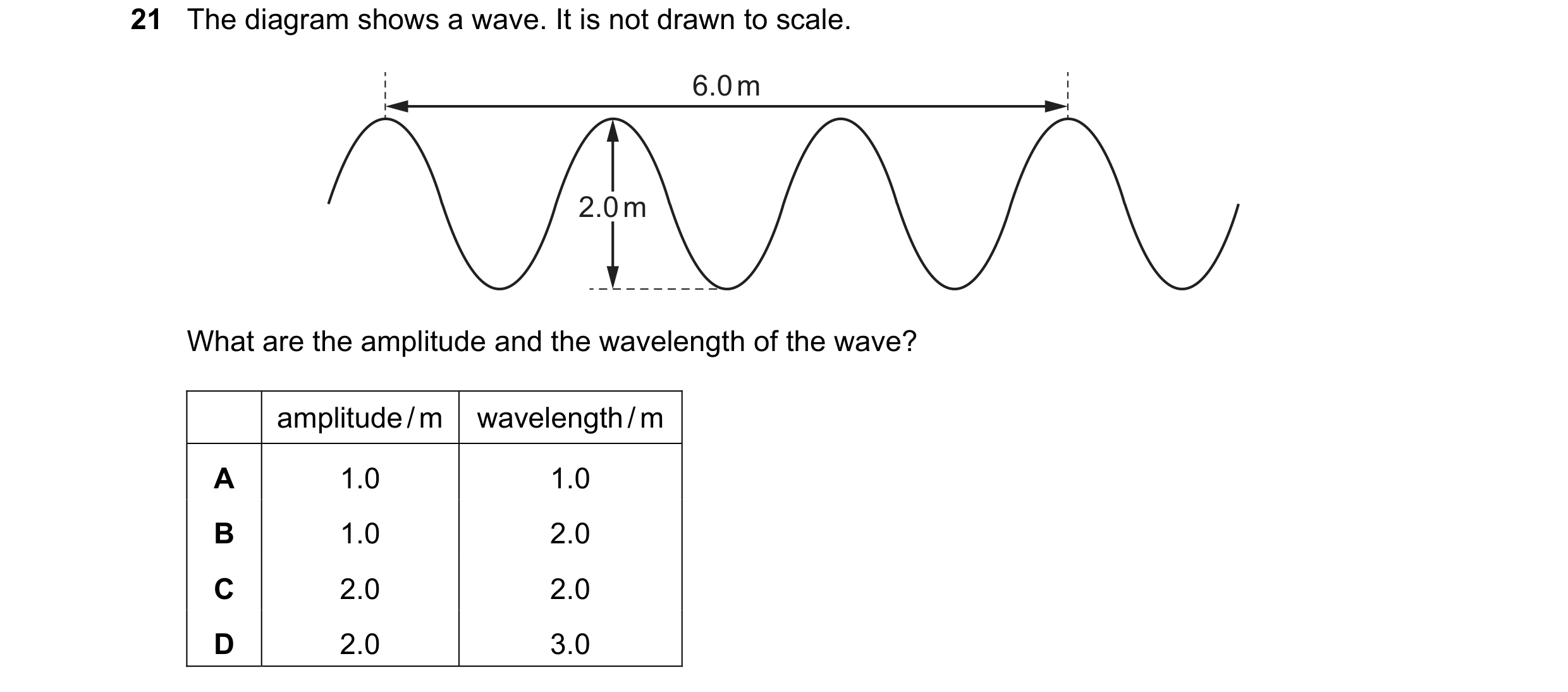
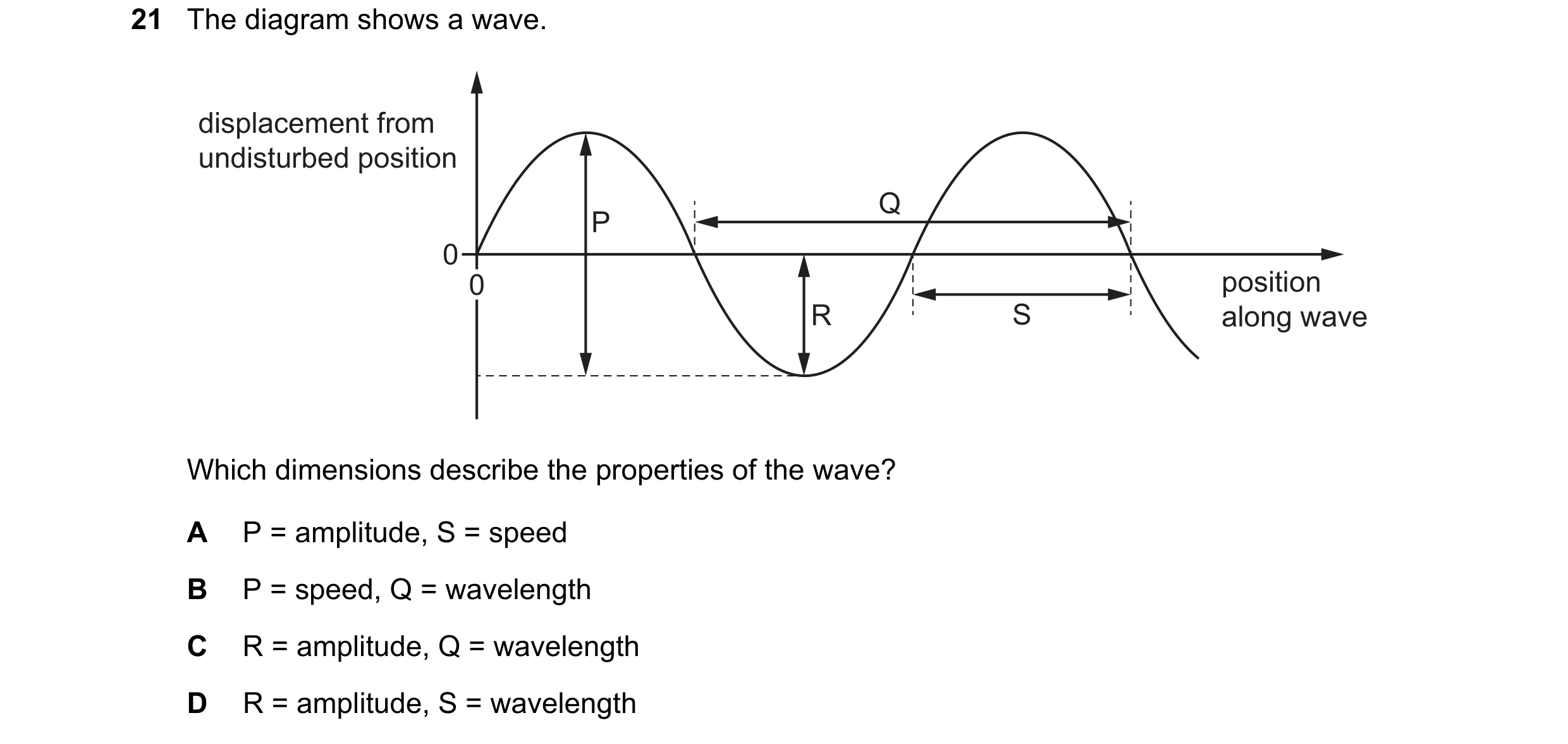
 66 / 87
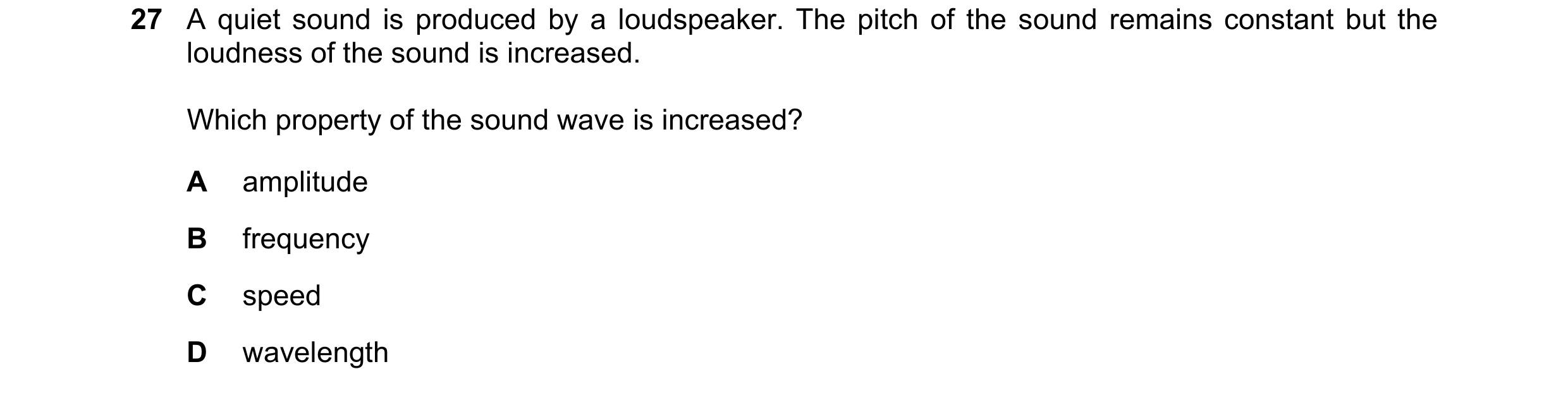
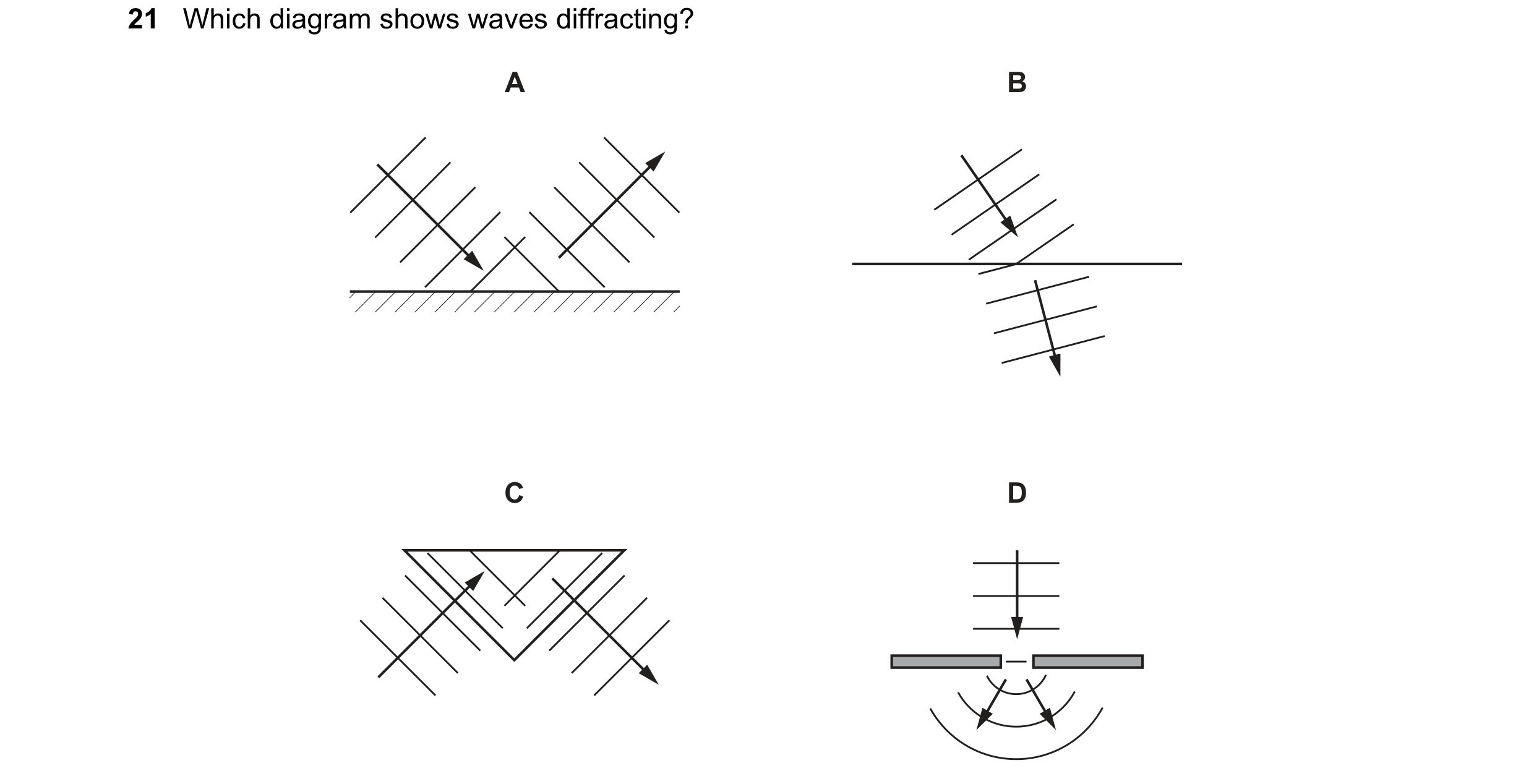
 67 / 87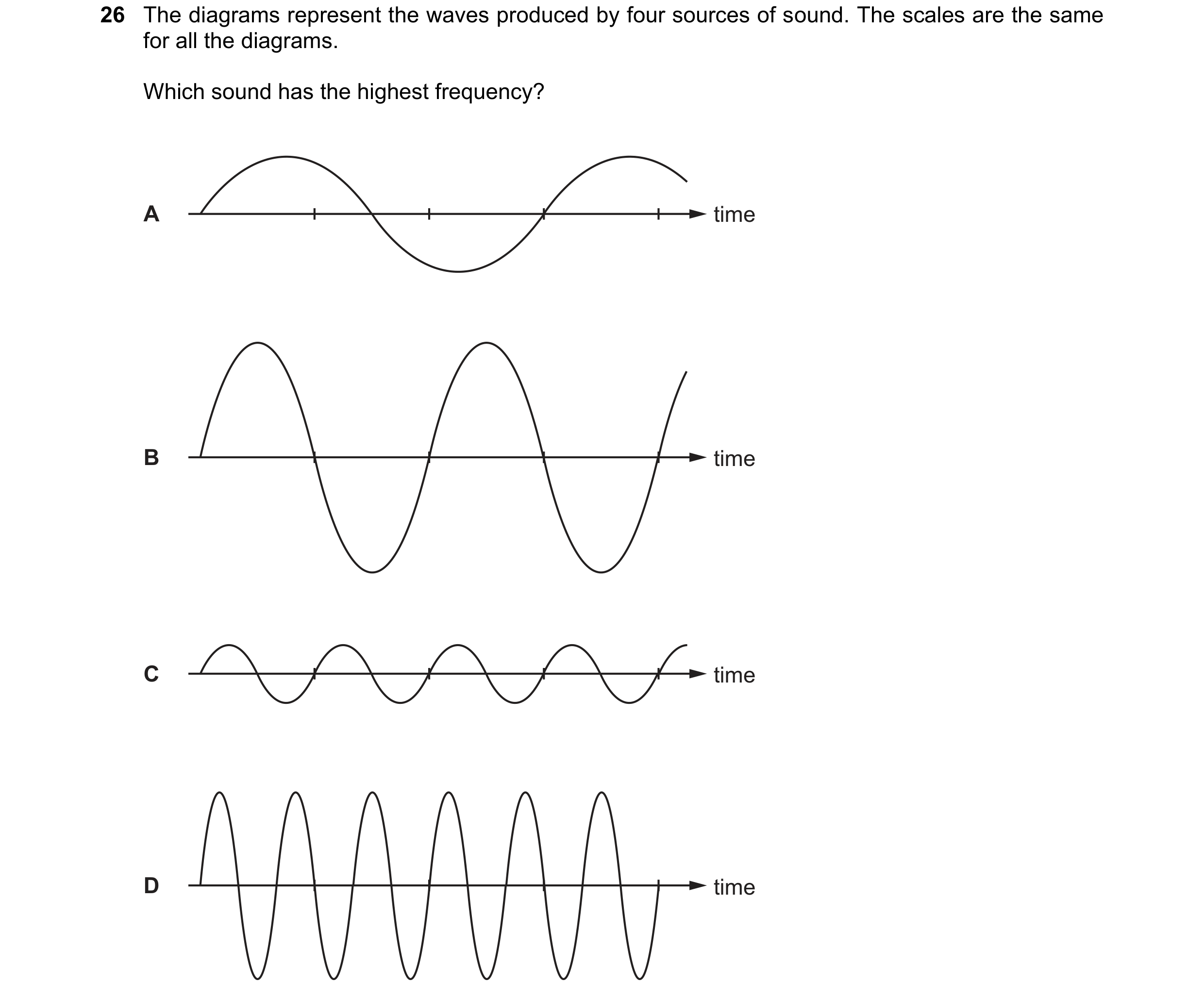
 68 / 87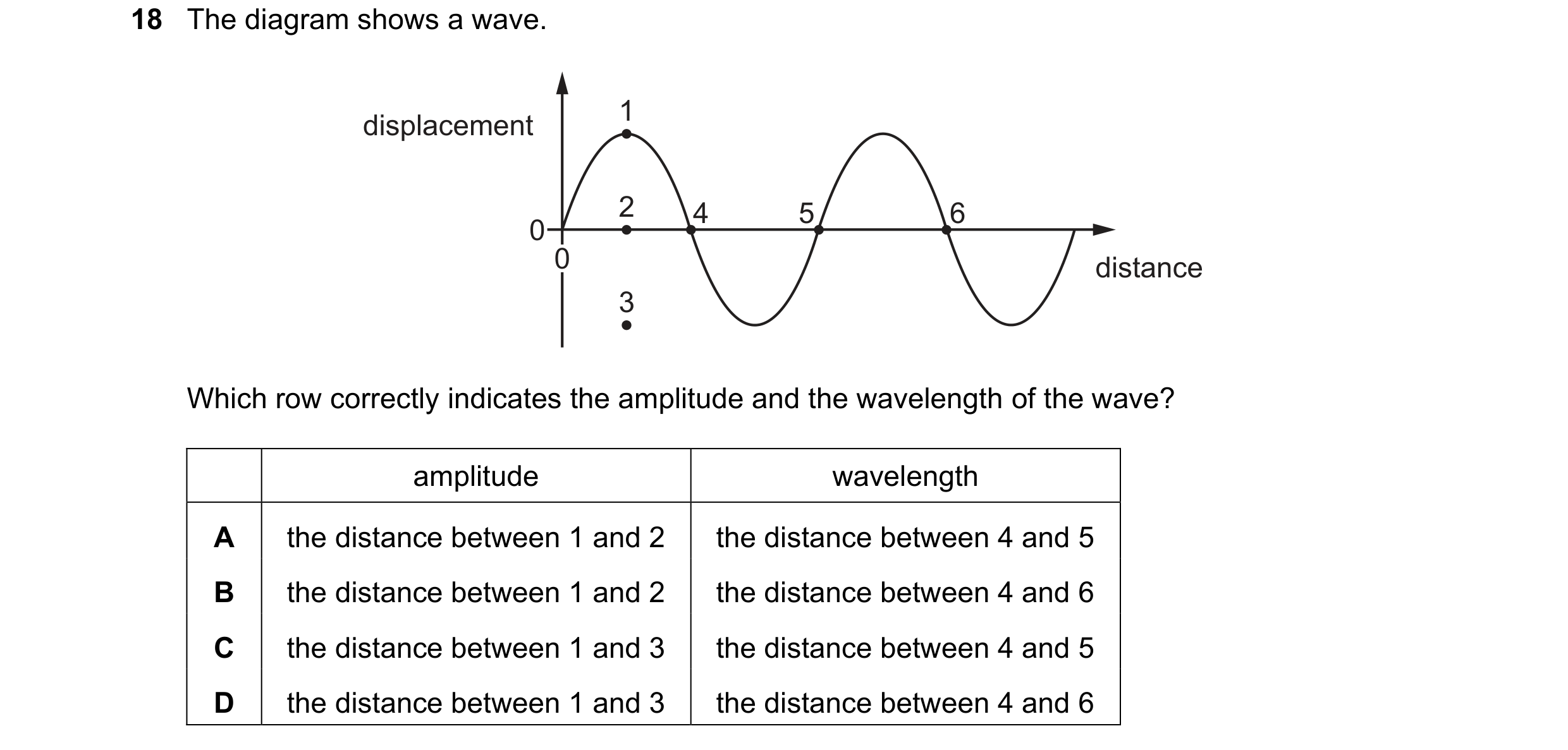
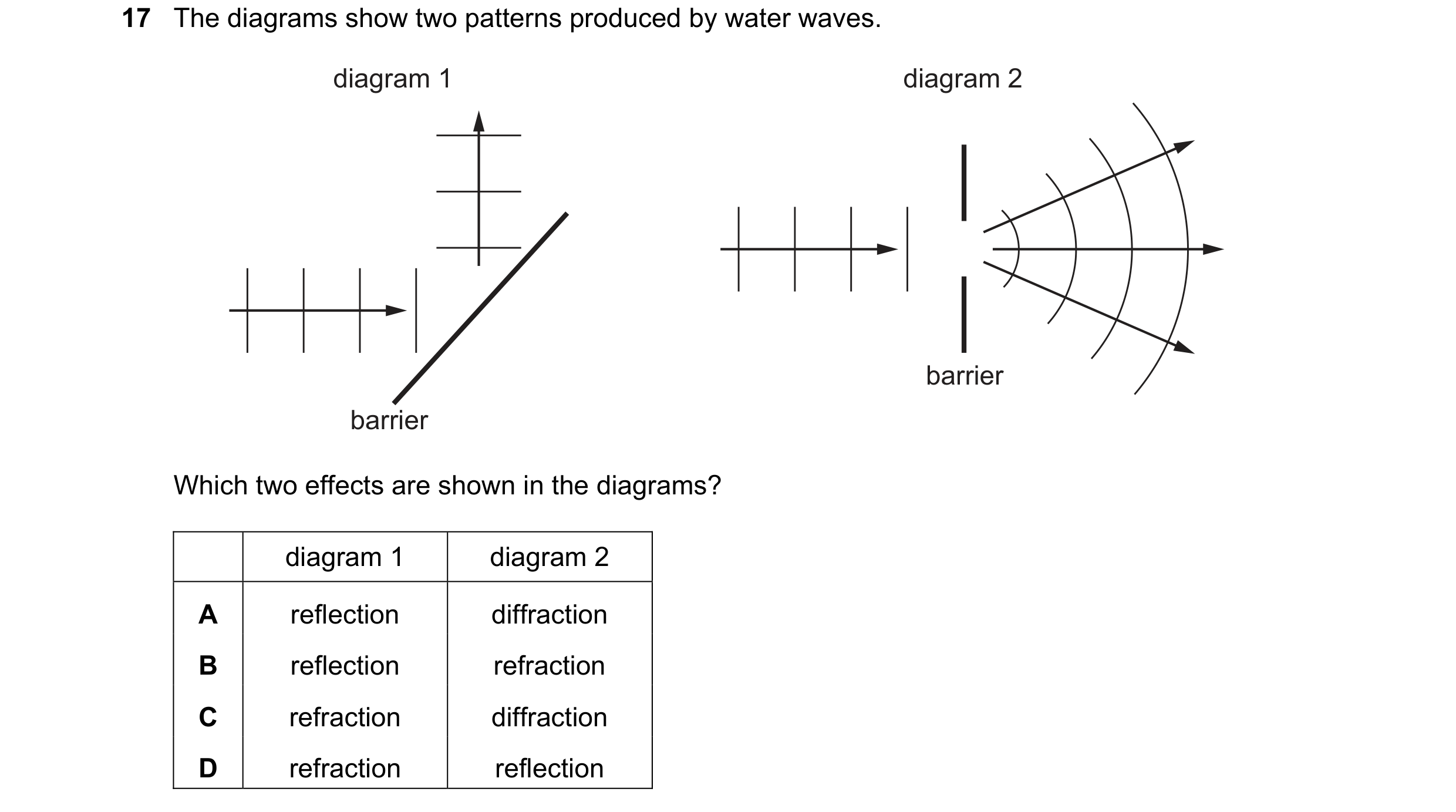
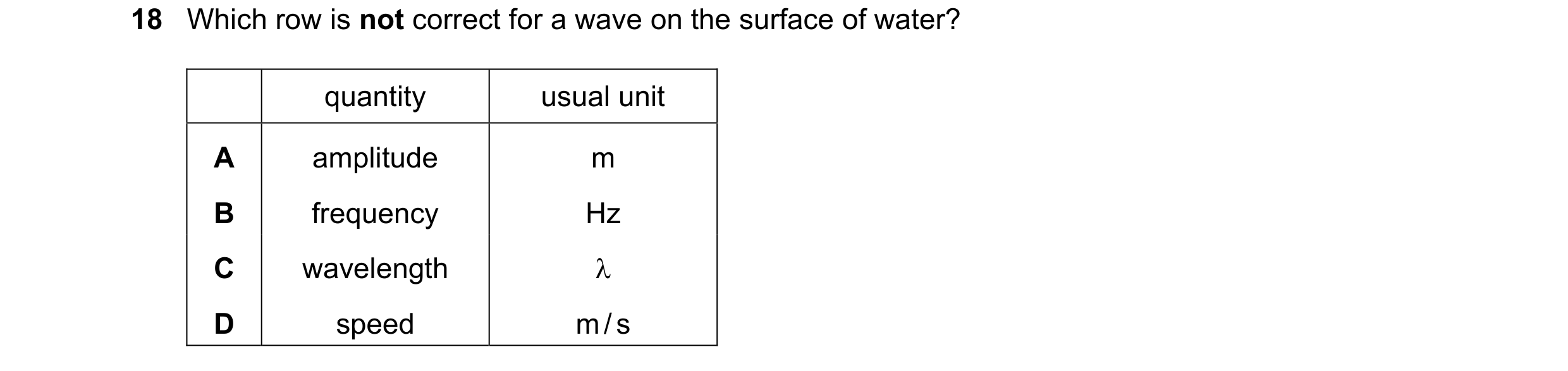 69 / 87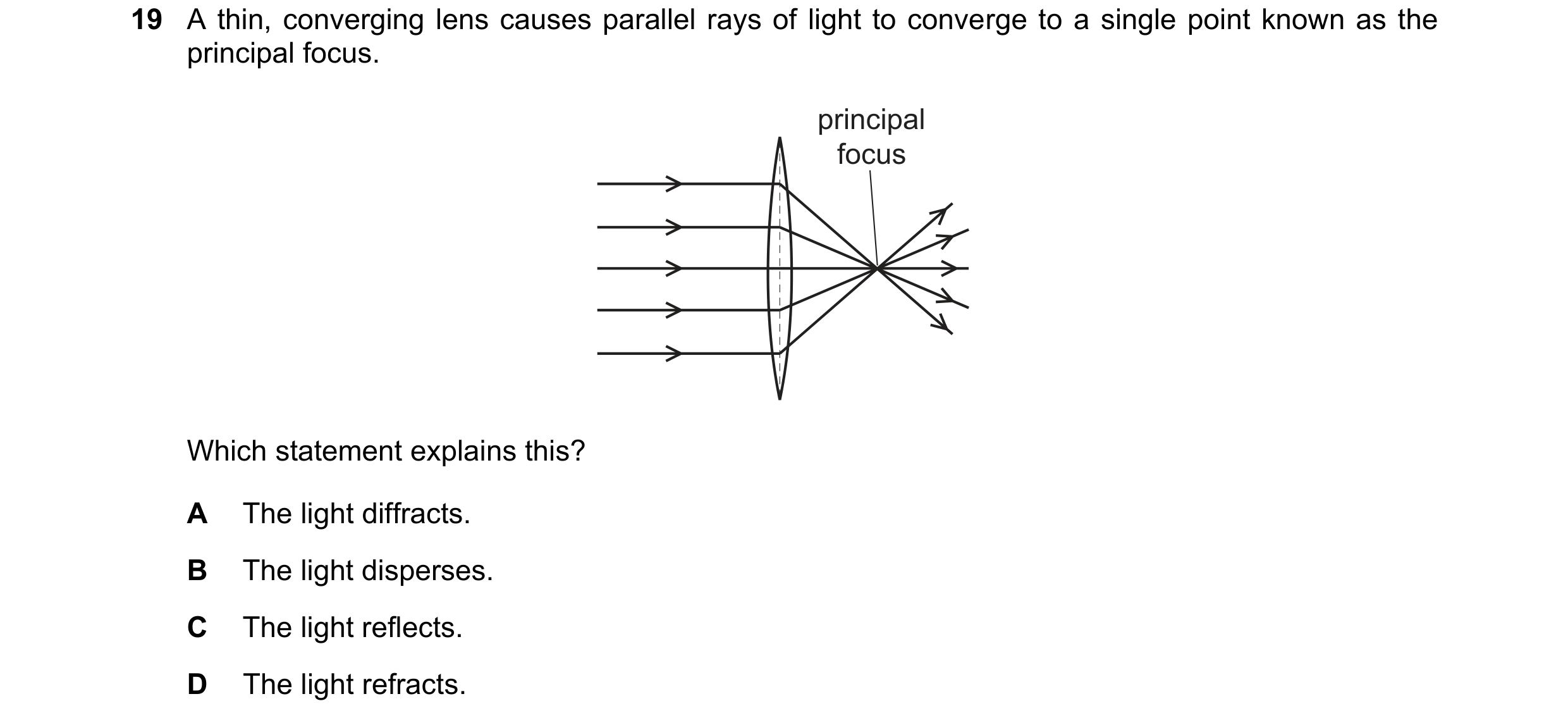
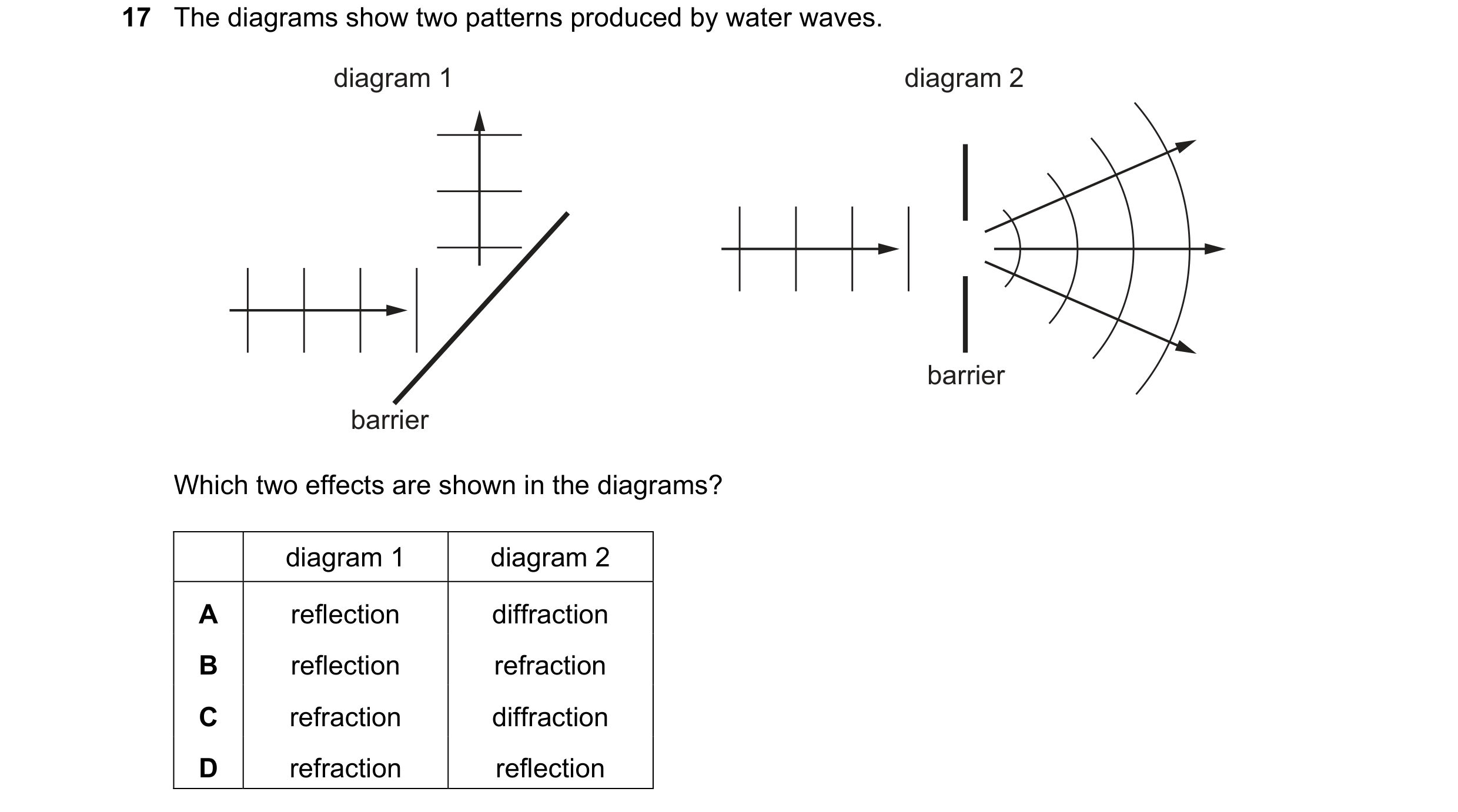
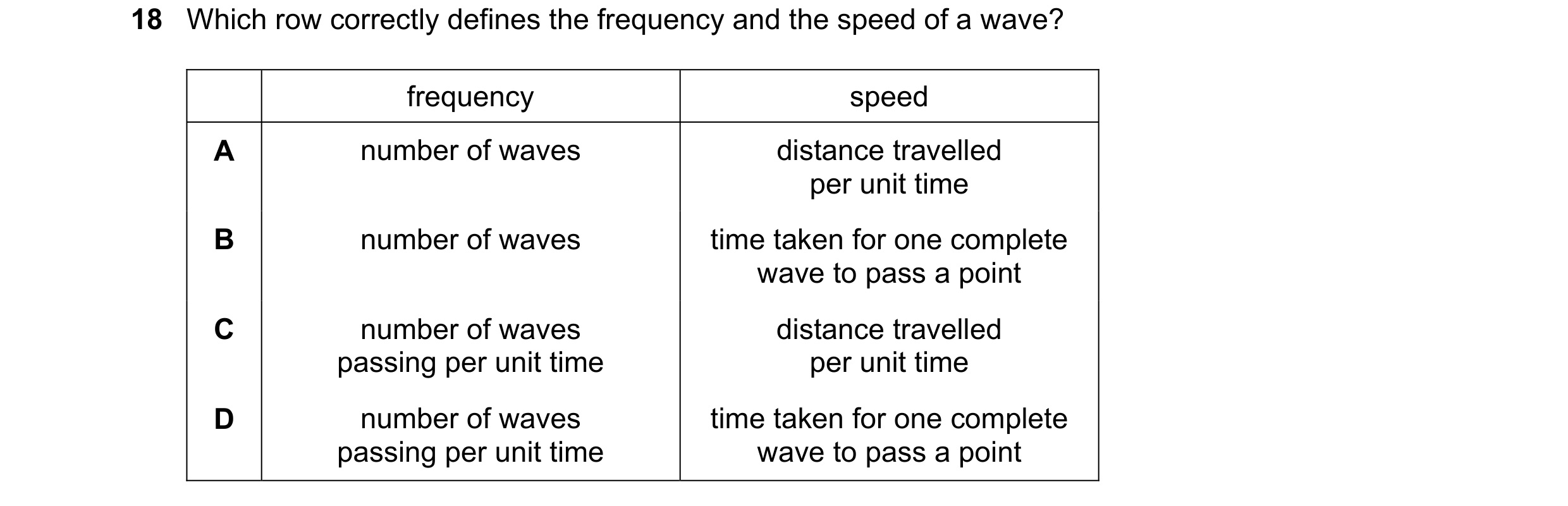 70 / 87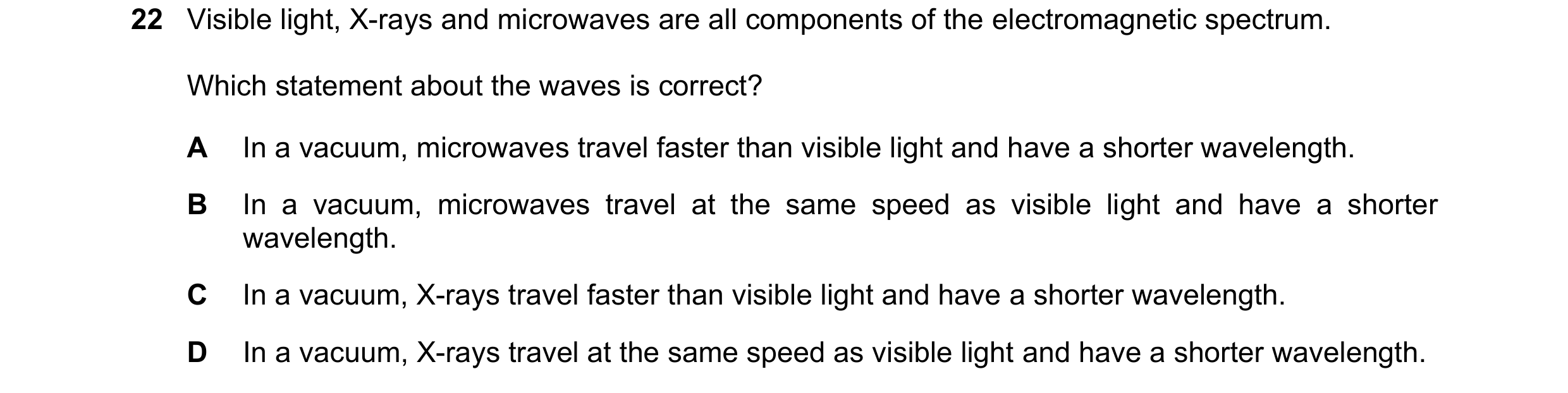

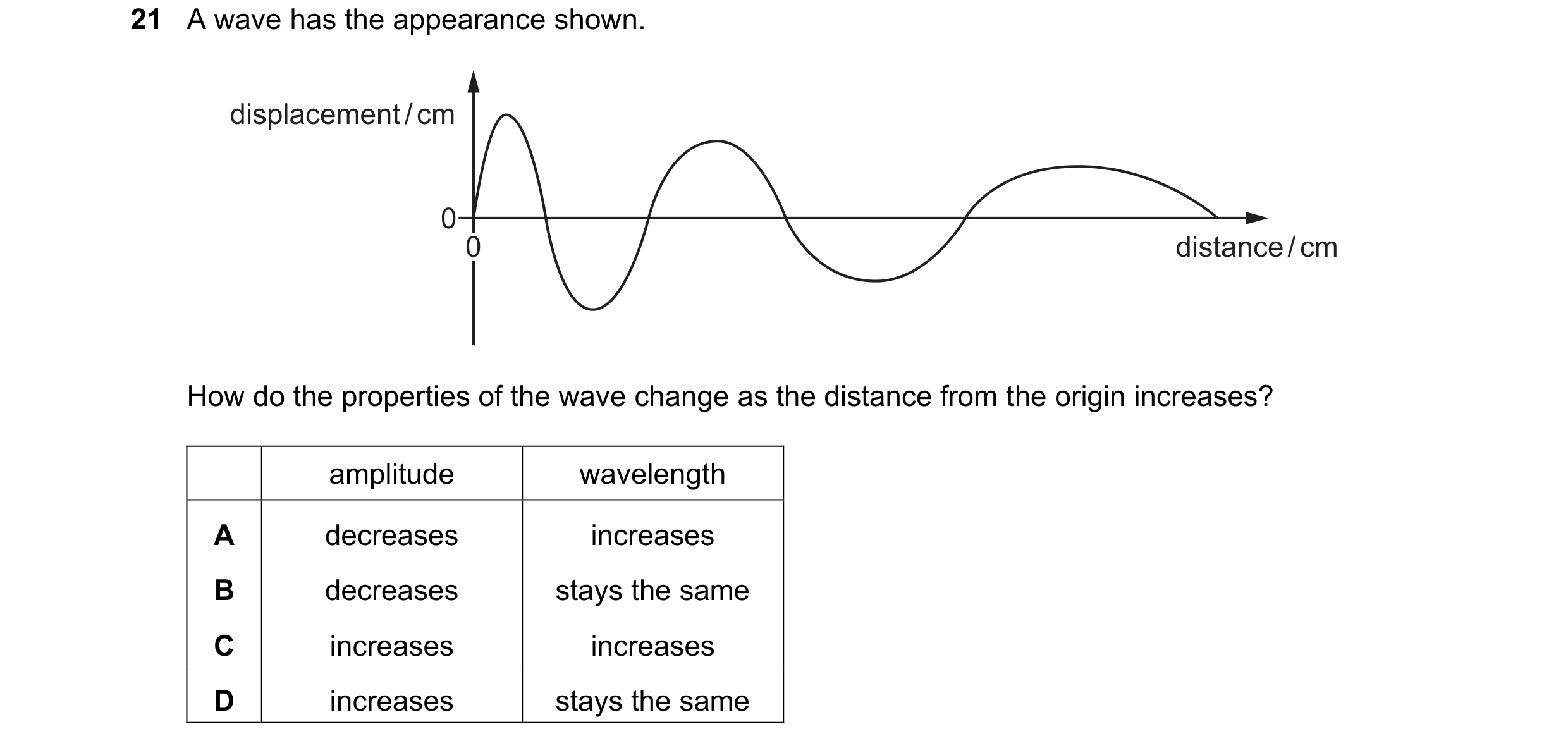
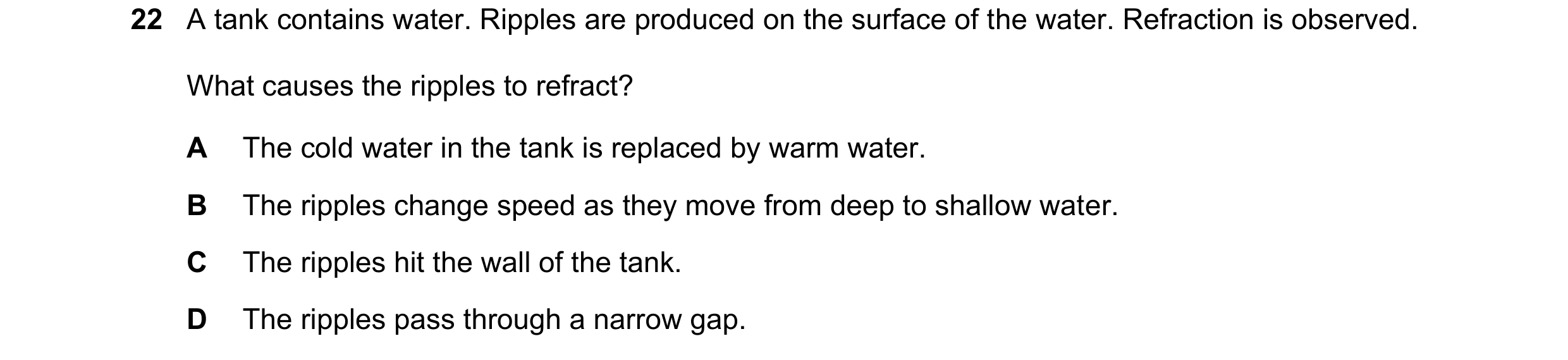 71 / 87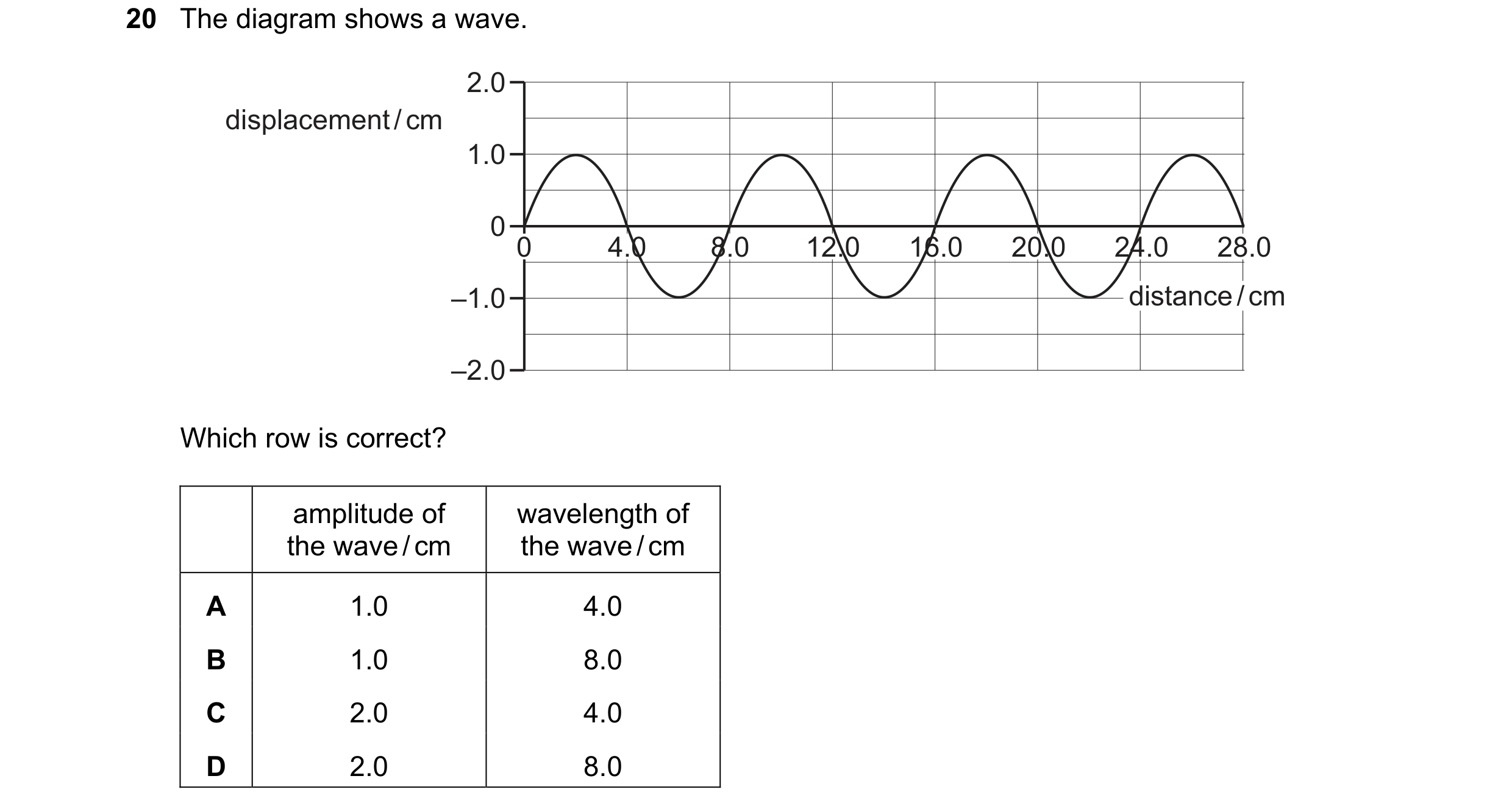

 72 / 87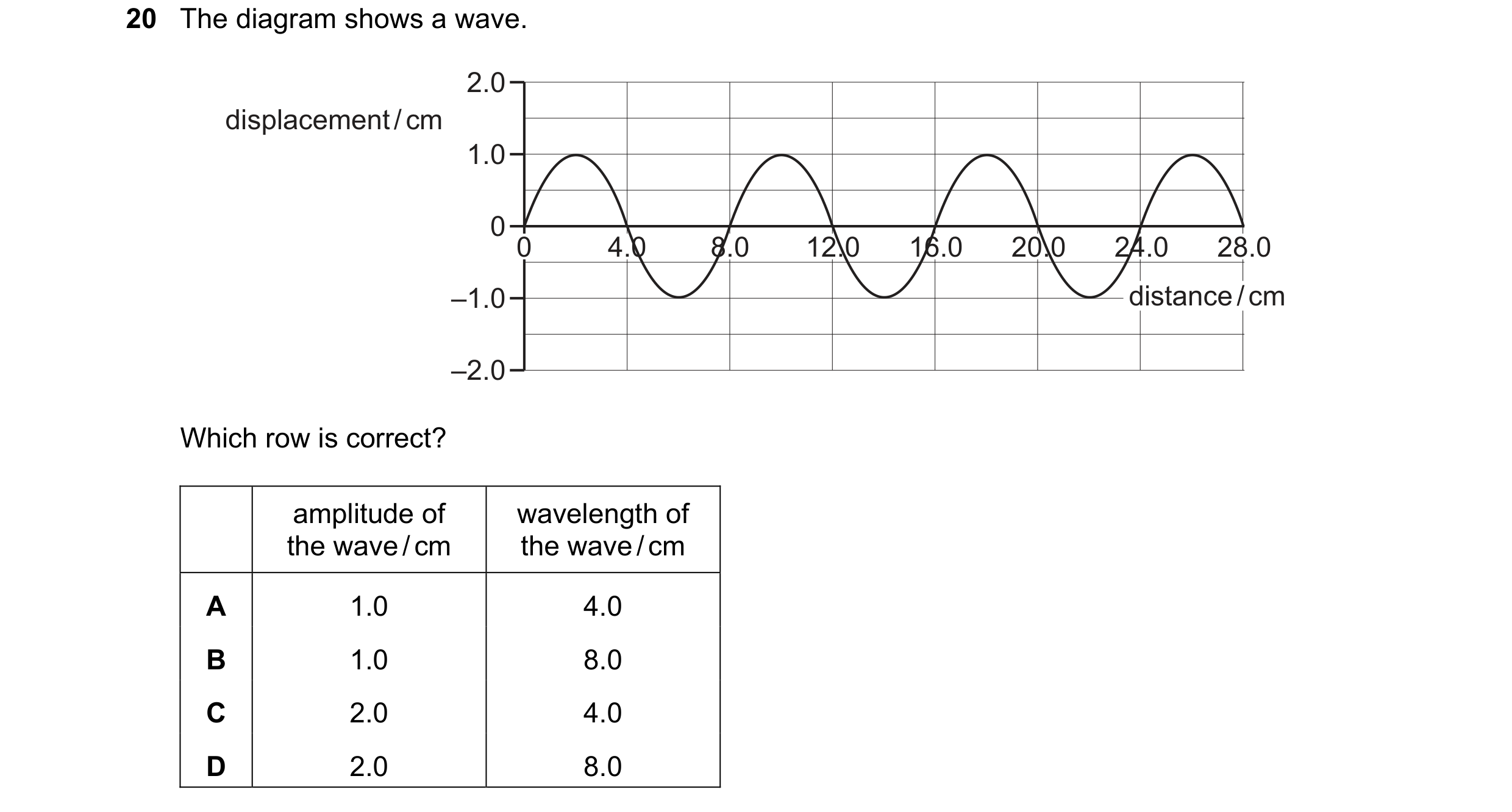

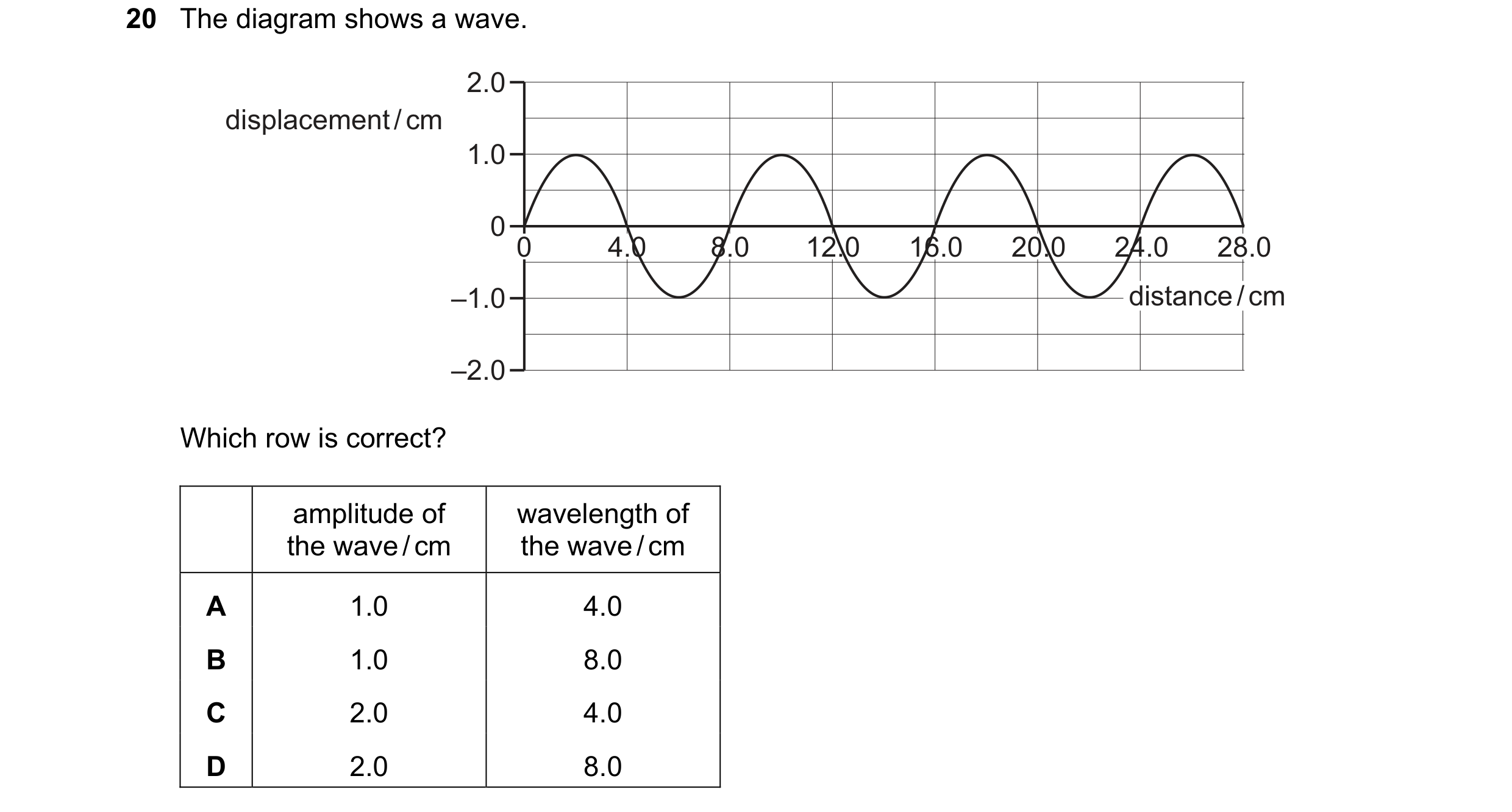
 73 / 87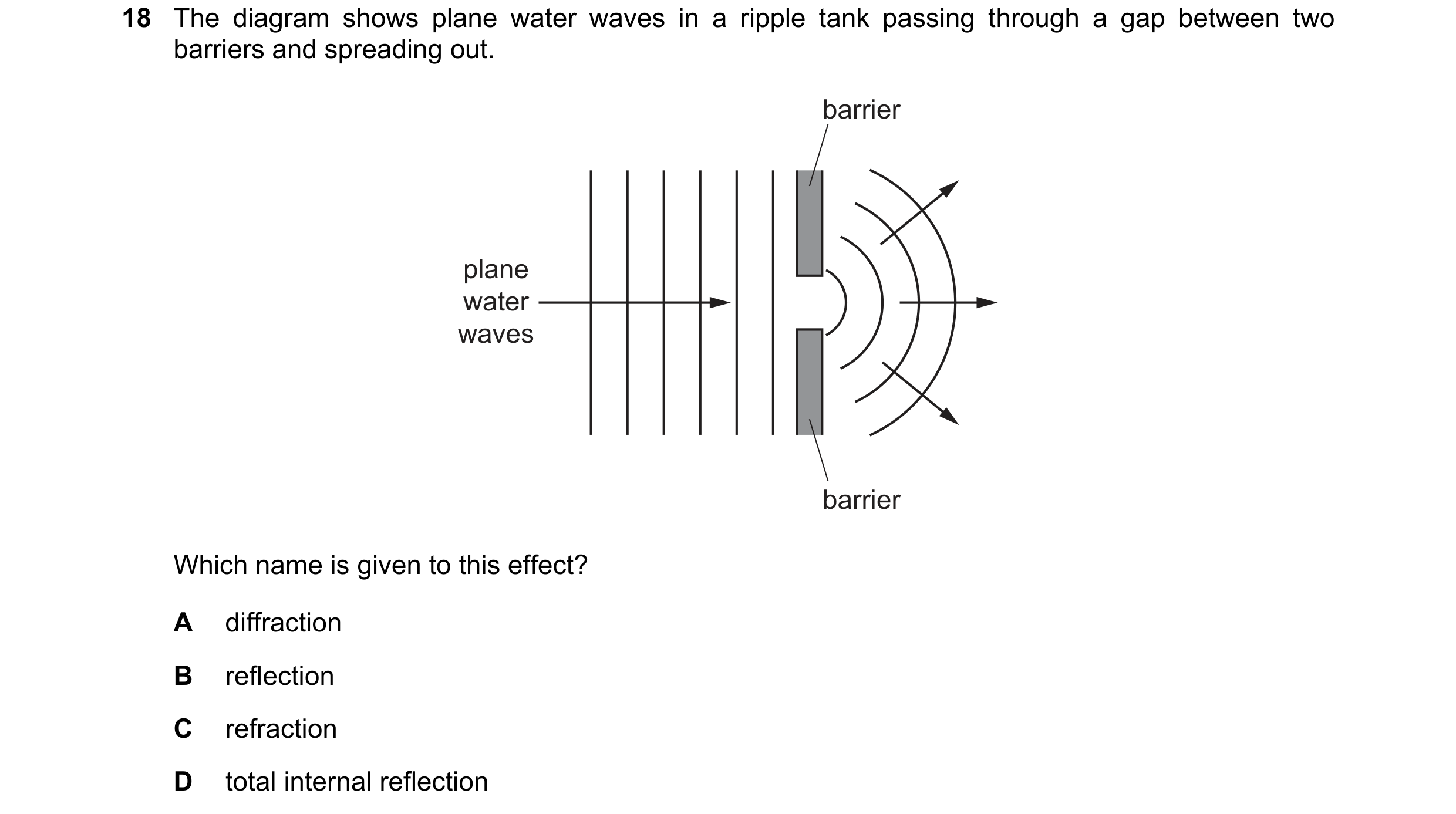
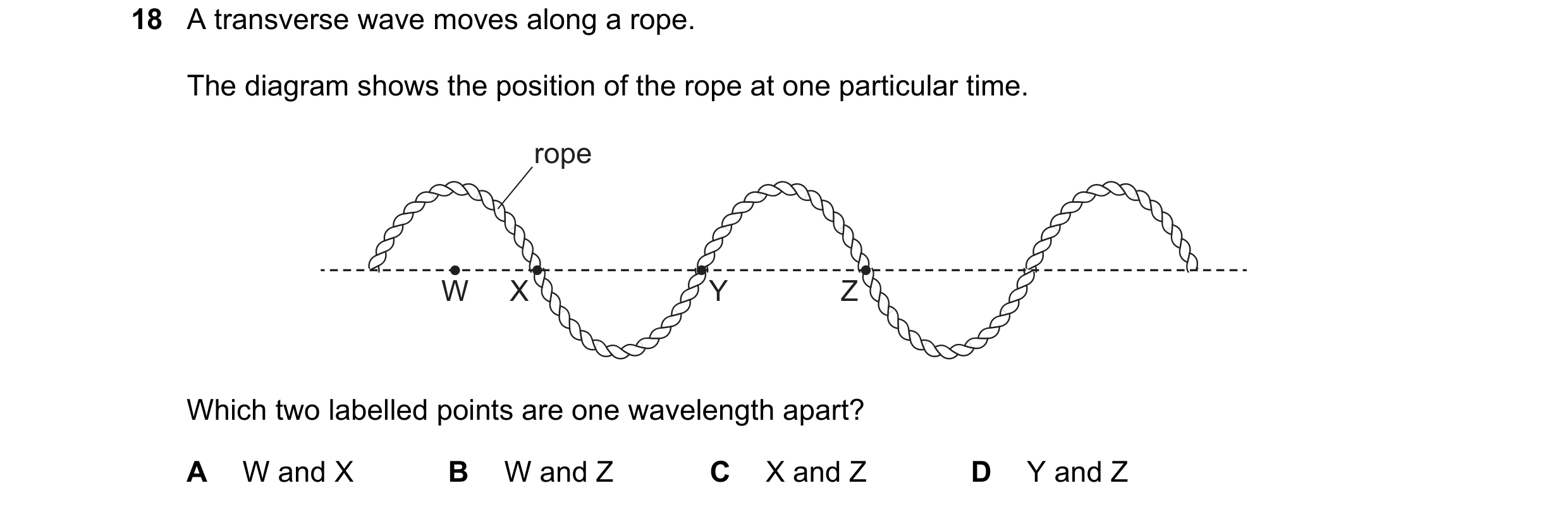 74 / 87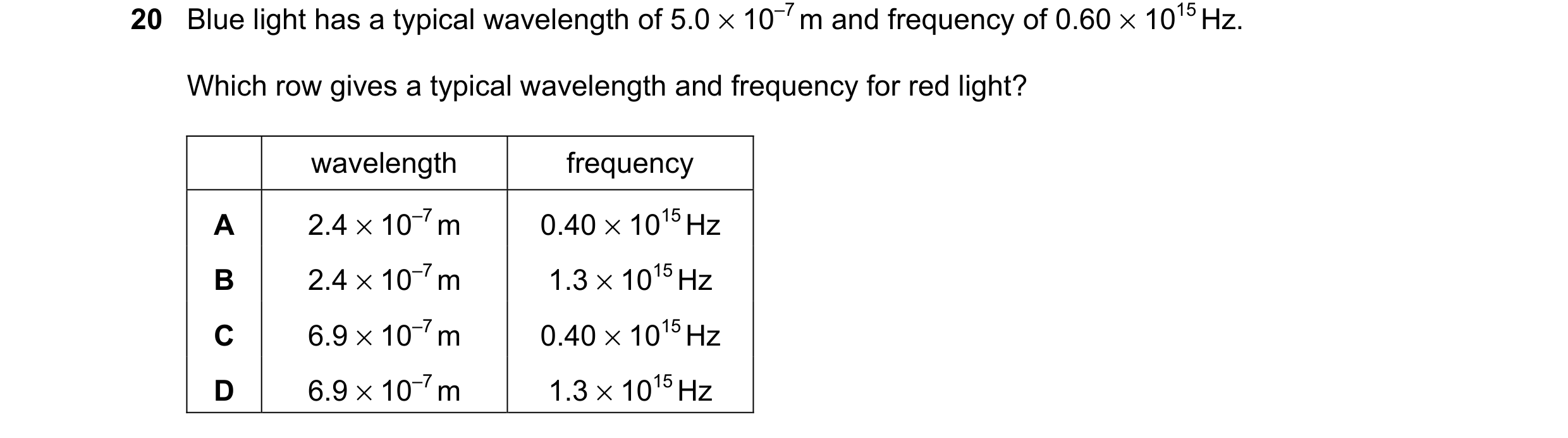
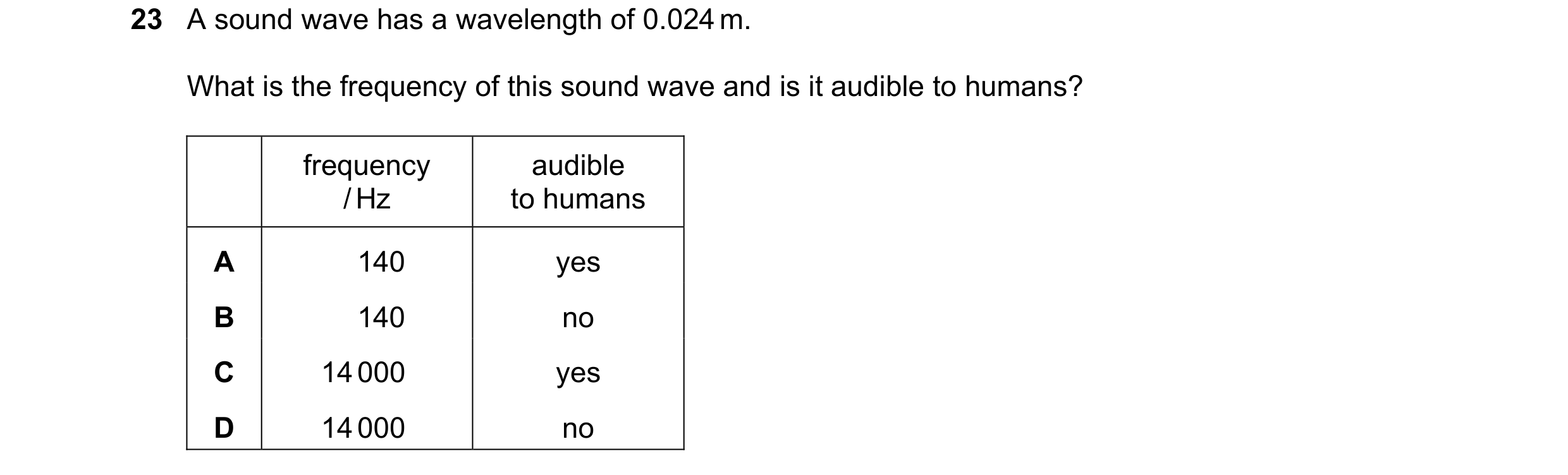
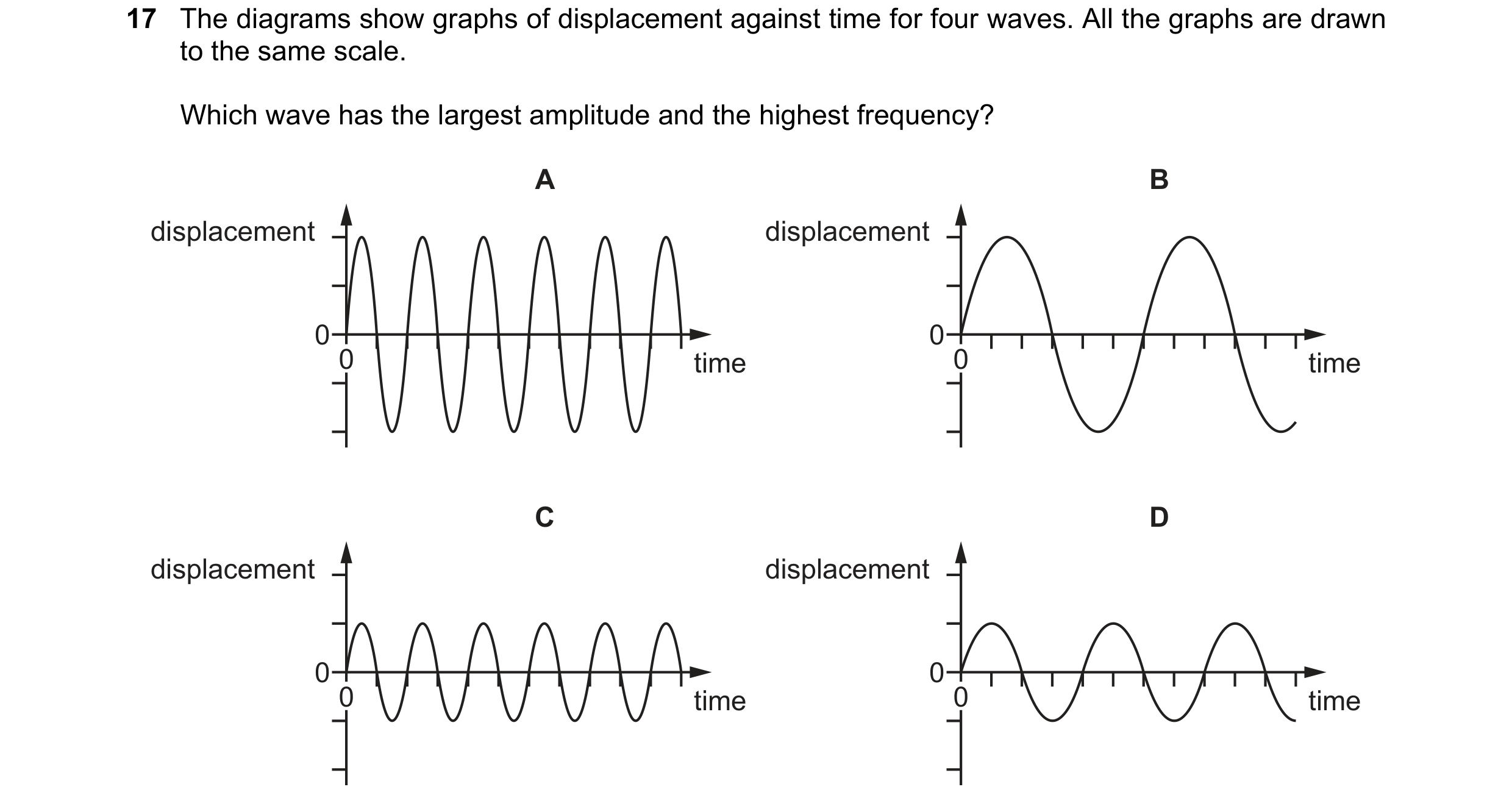 75 / 87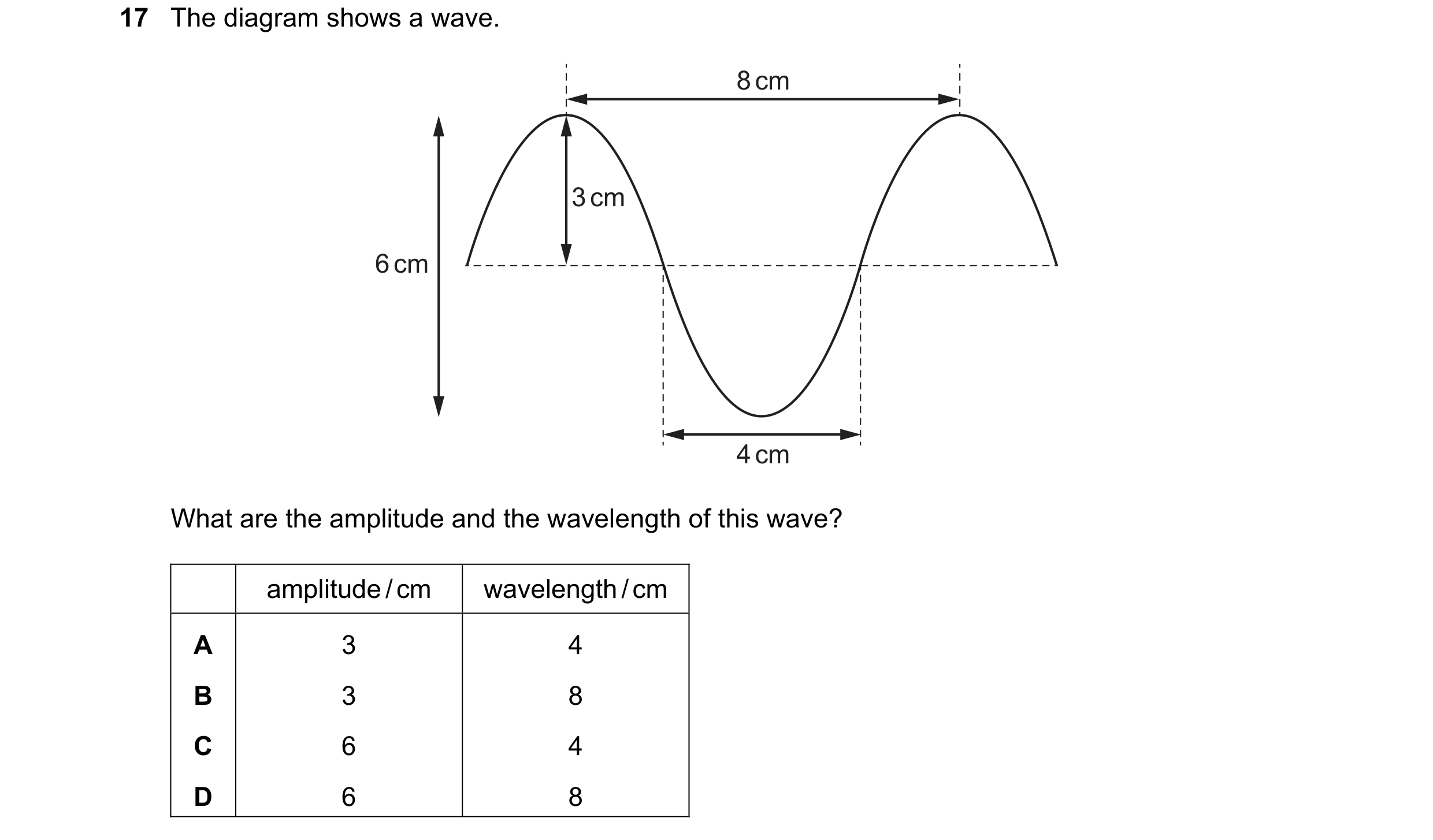
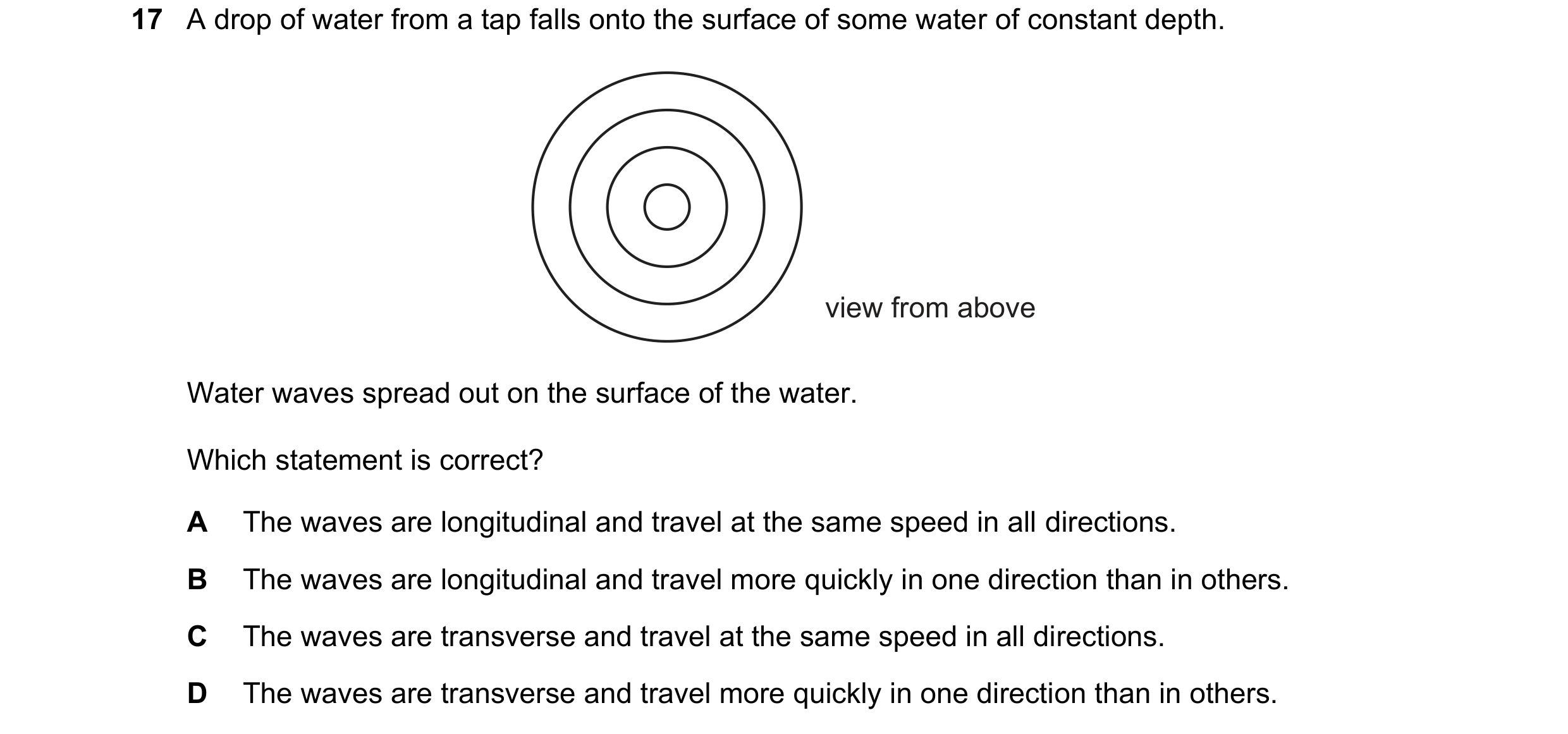
 76 / 87

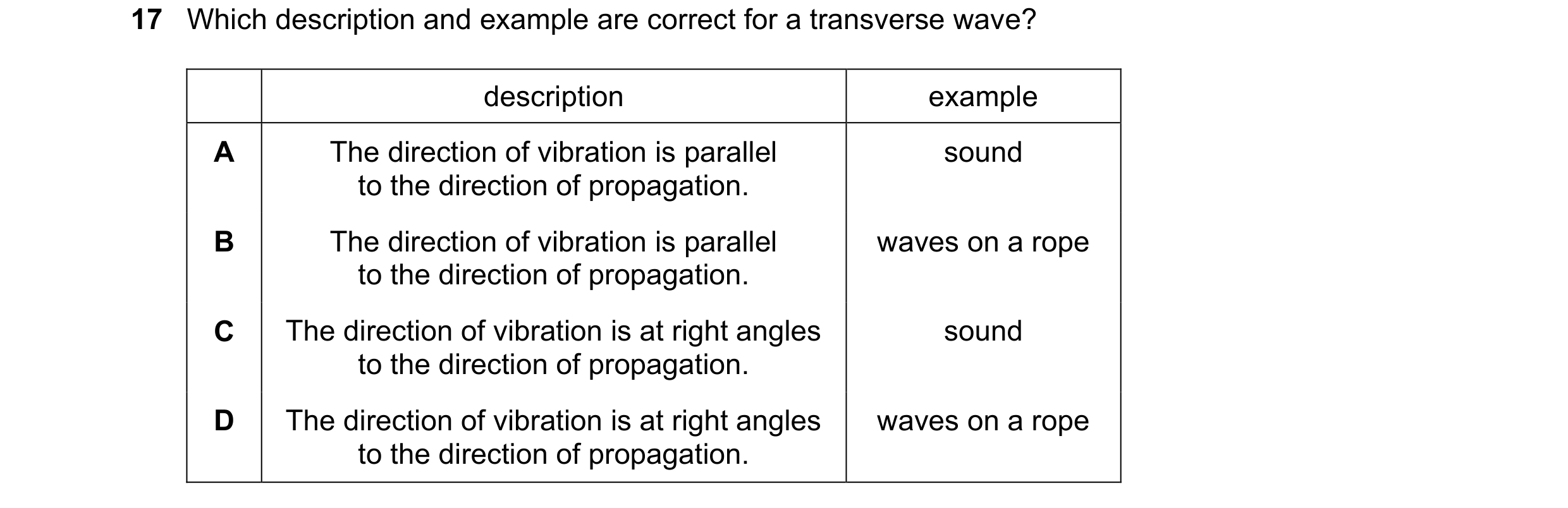
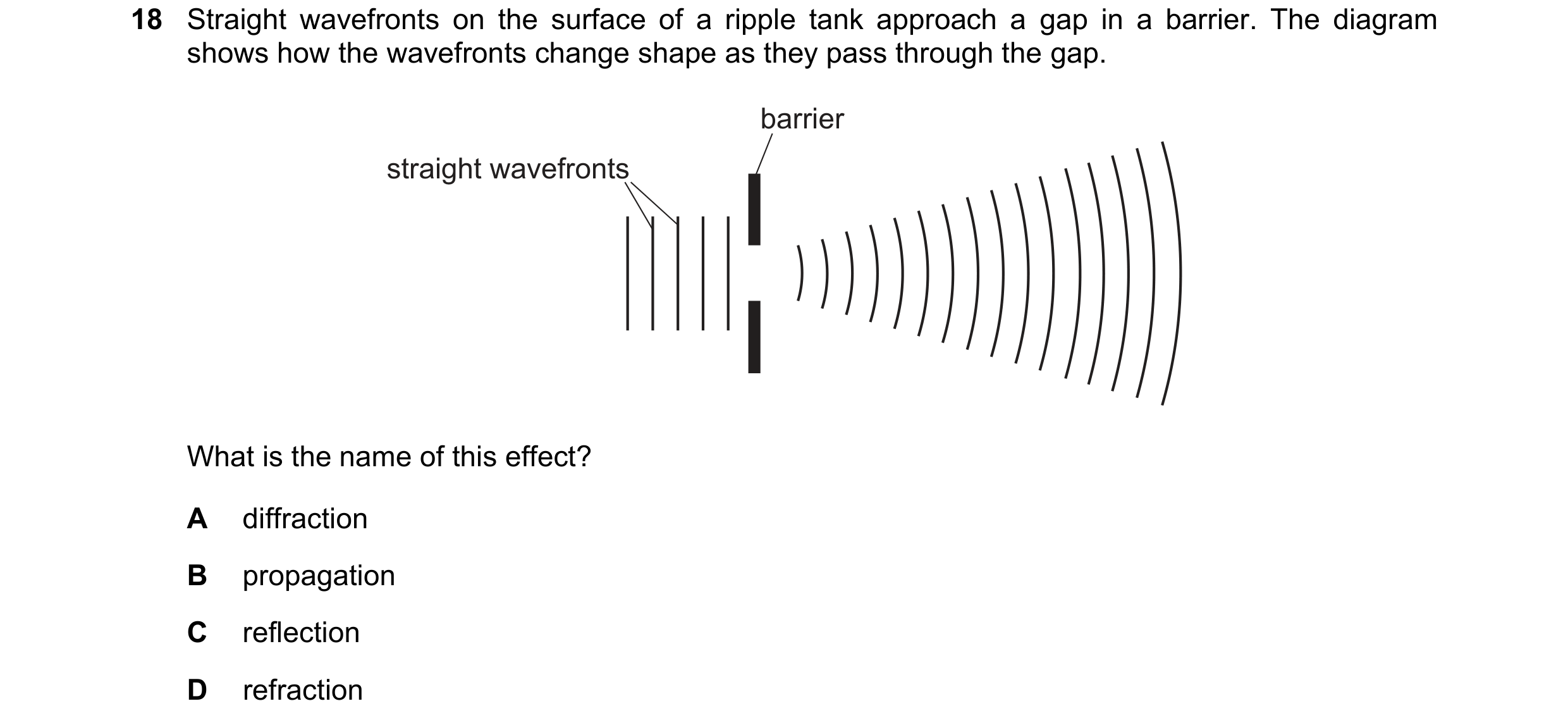 77 / 87

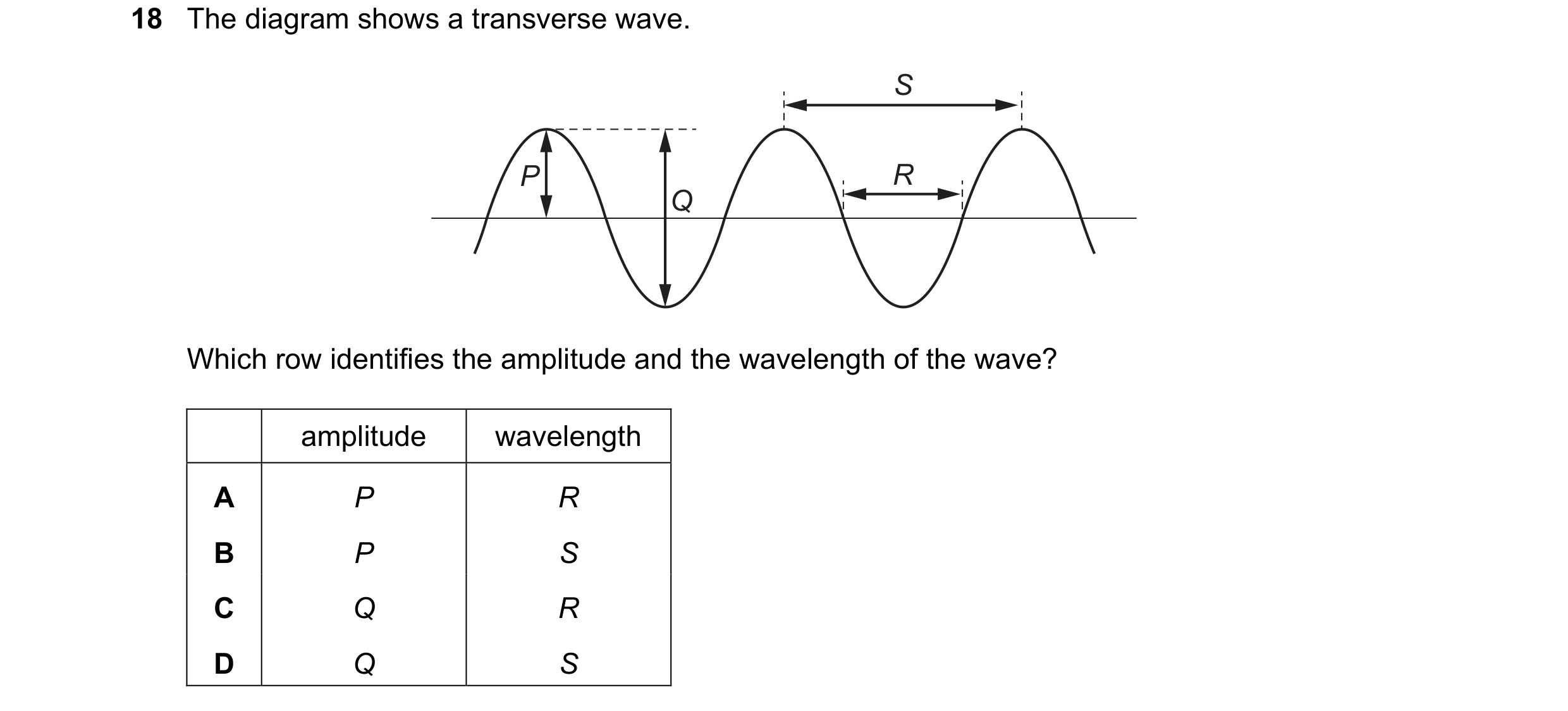
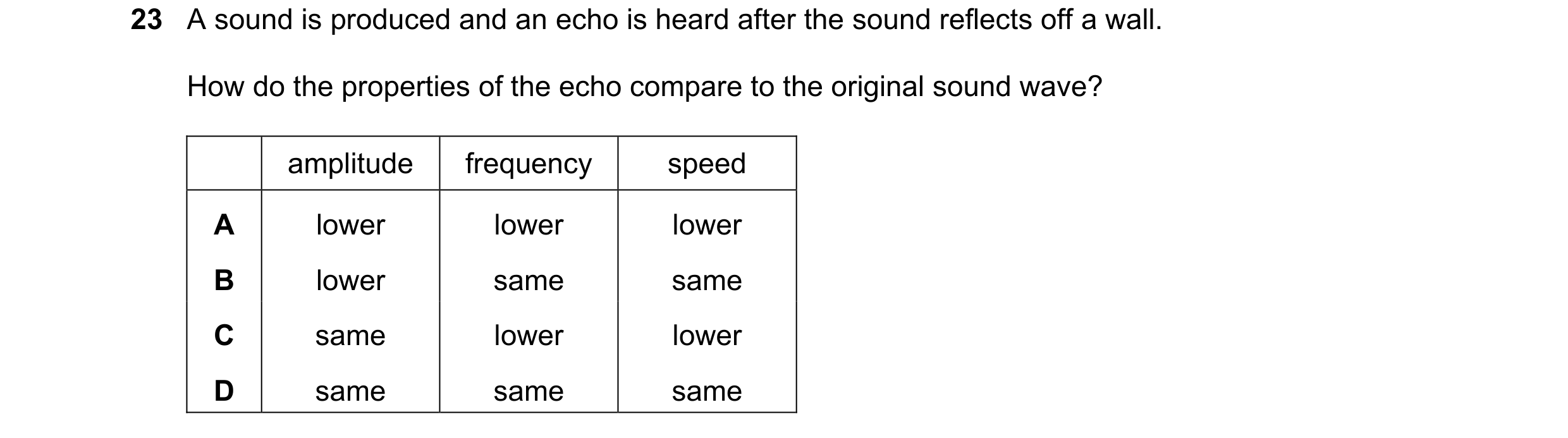 78 / 87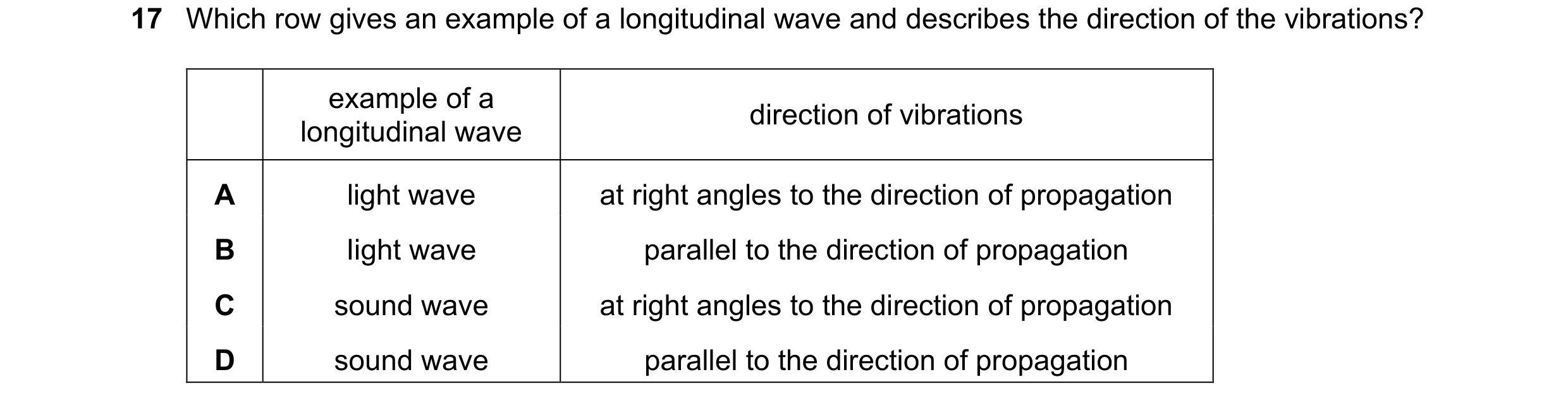
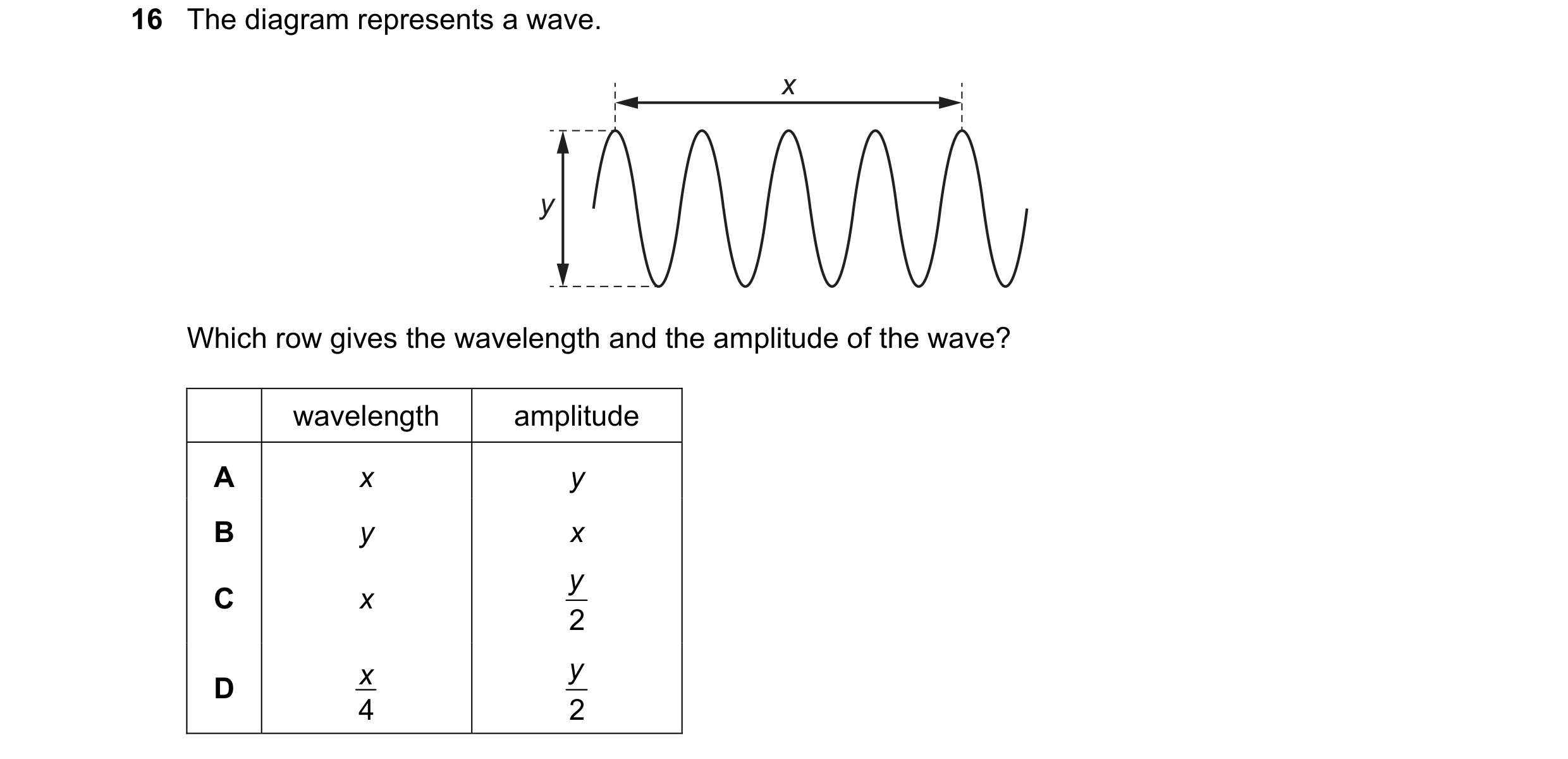
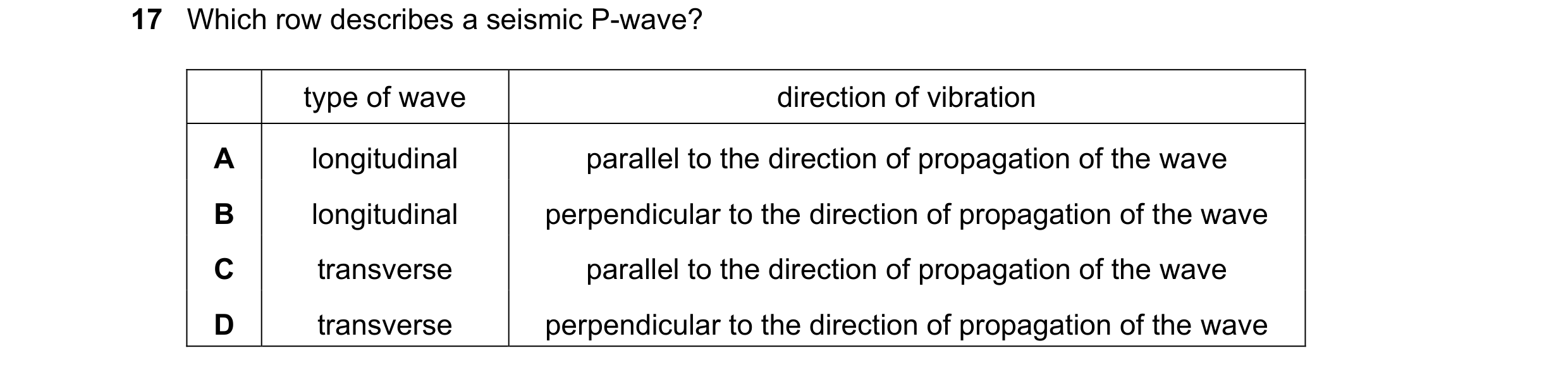 79 / 87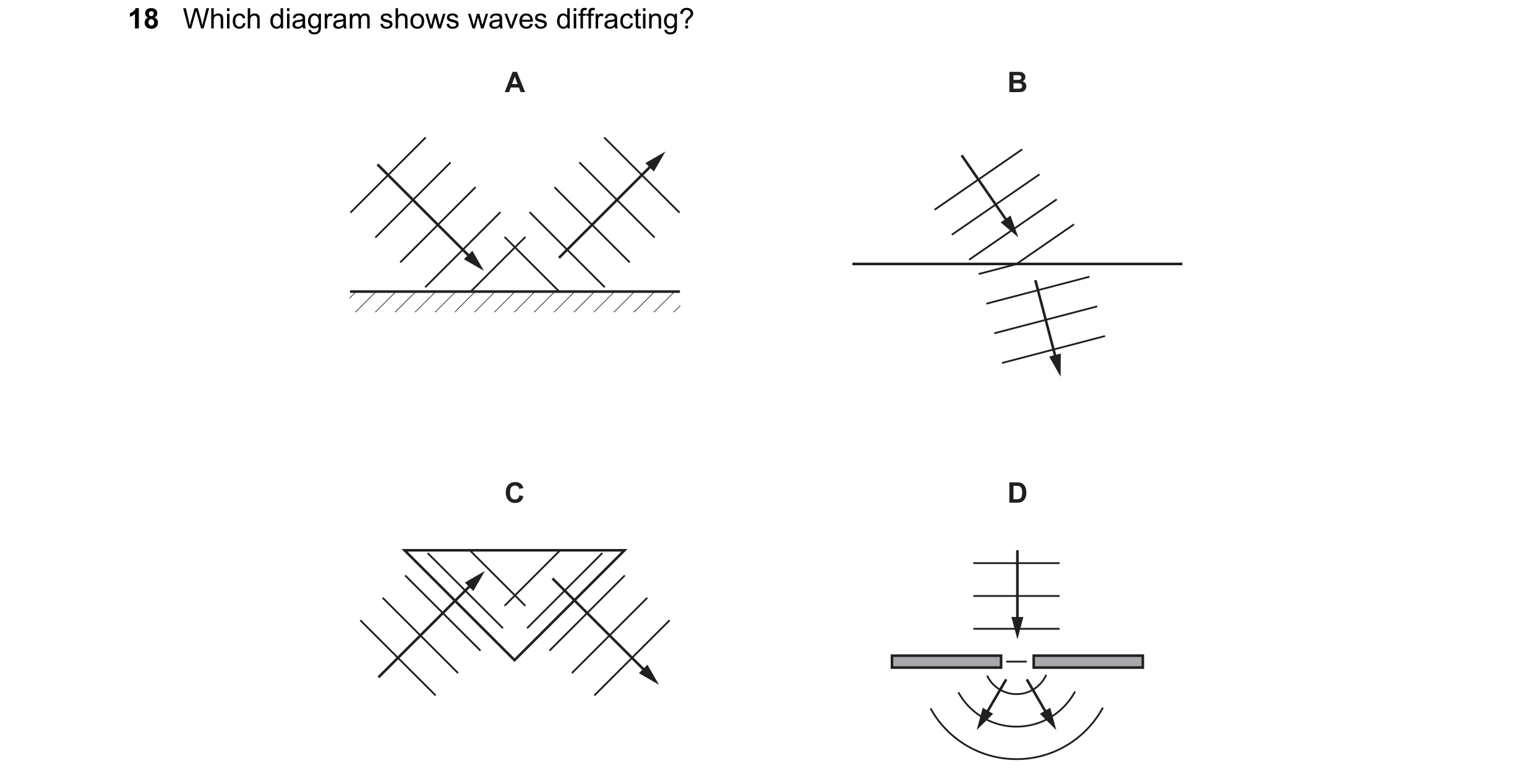


 80 / 87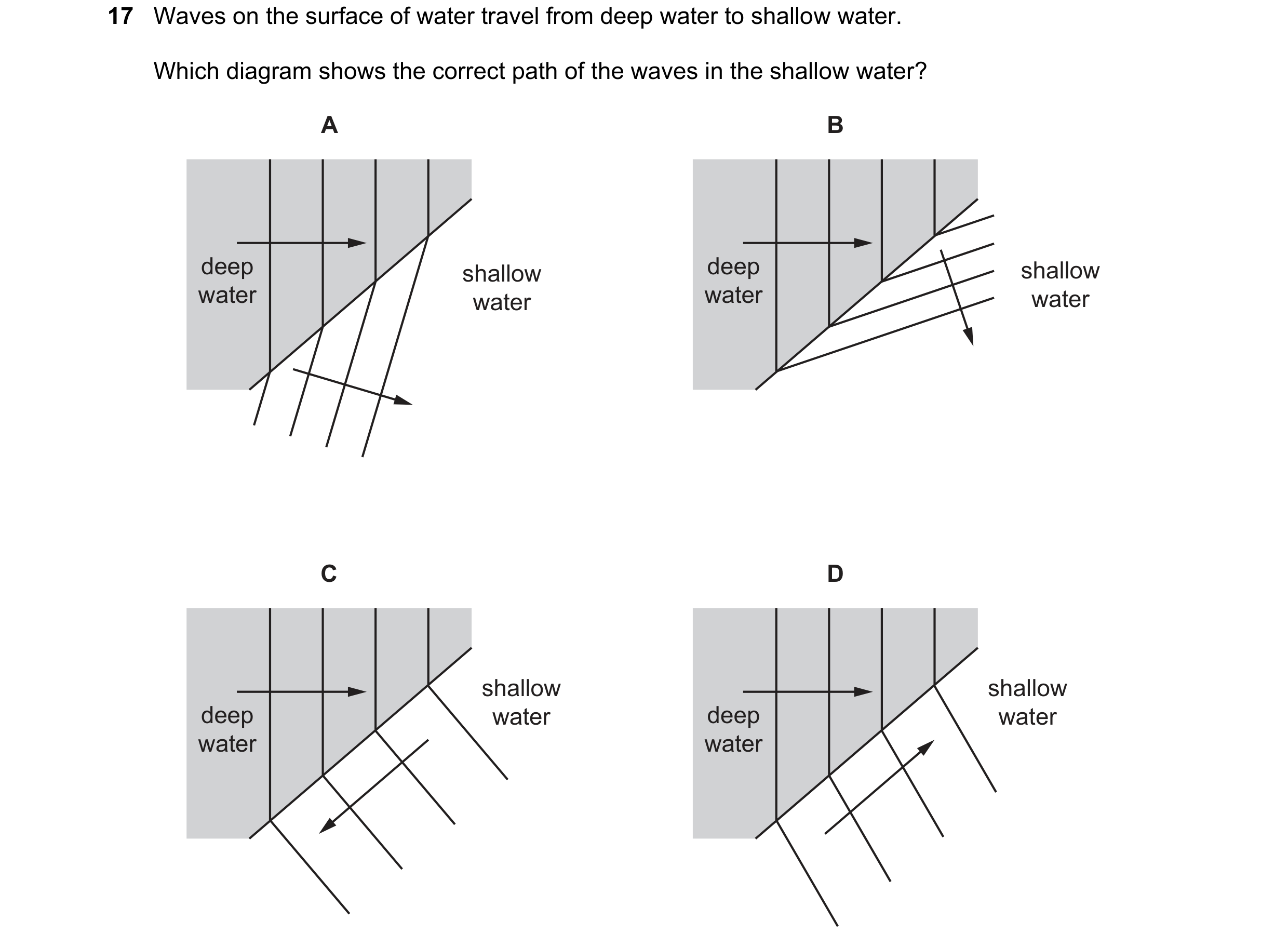
 81 / 87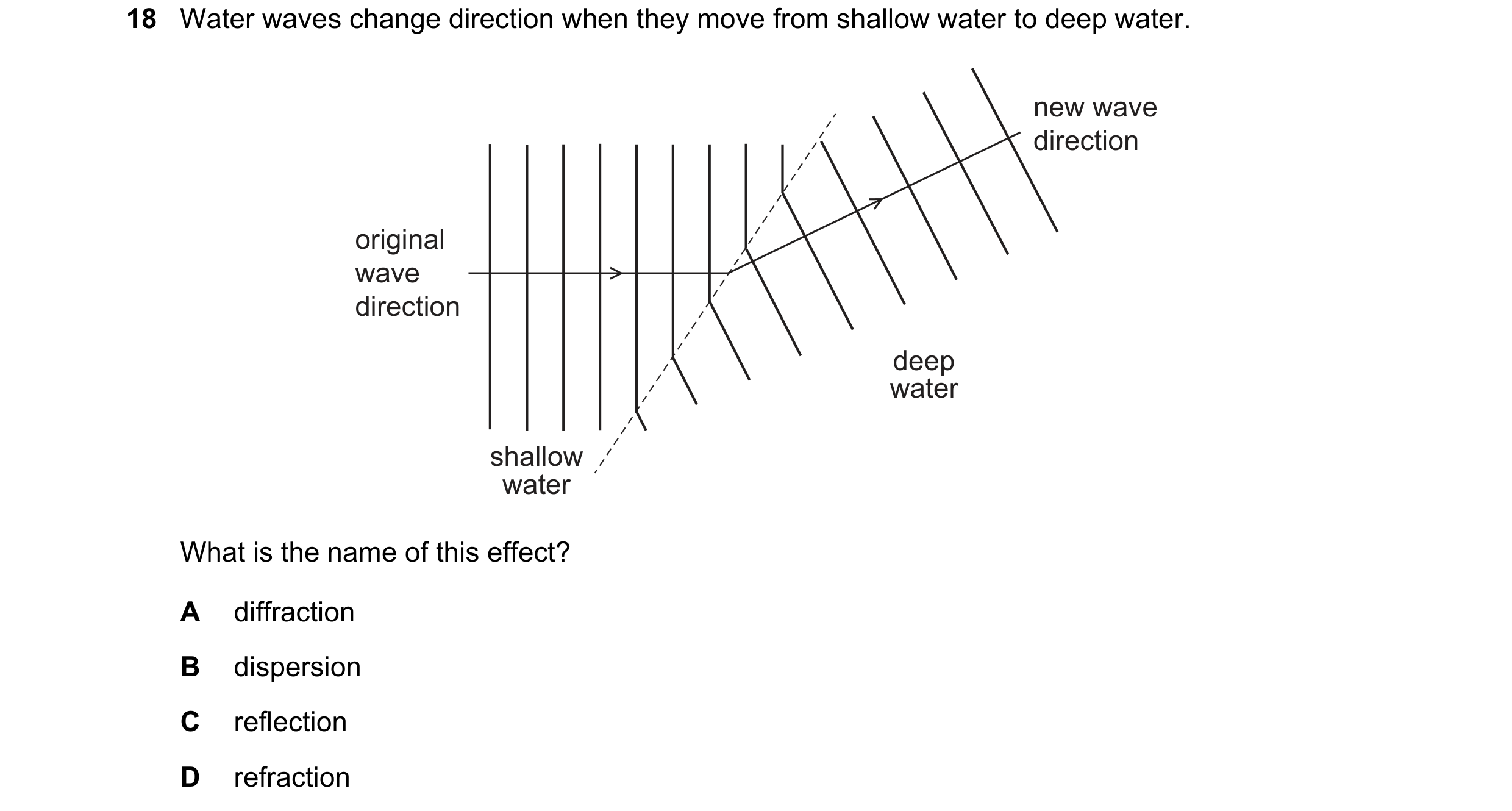
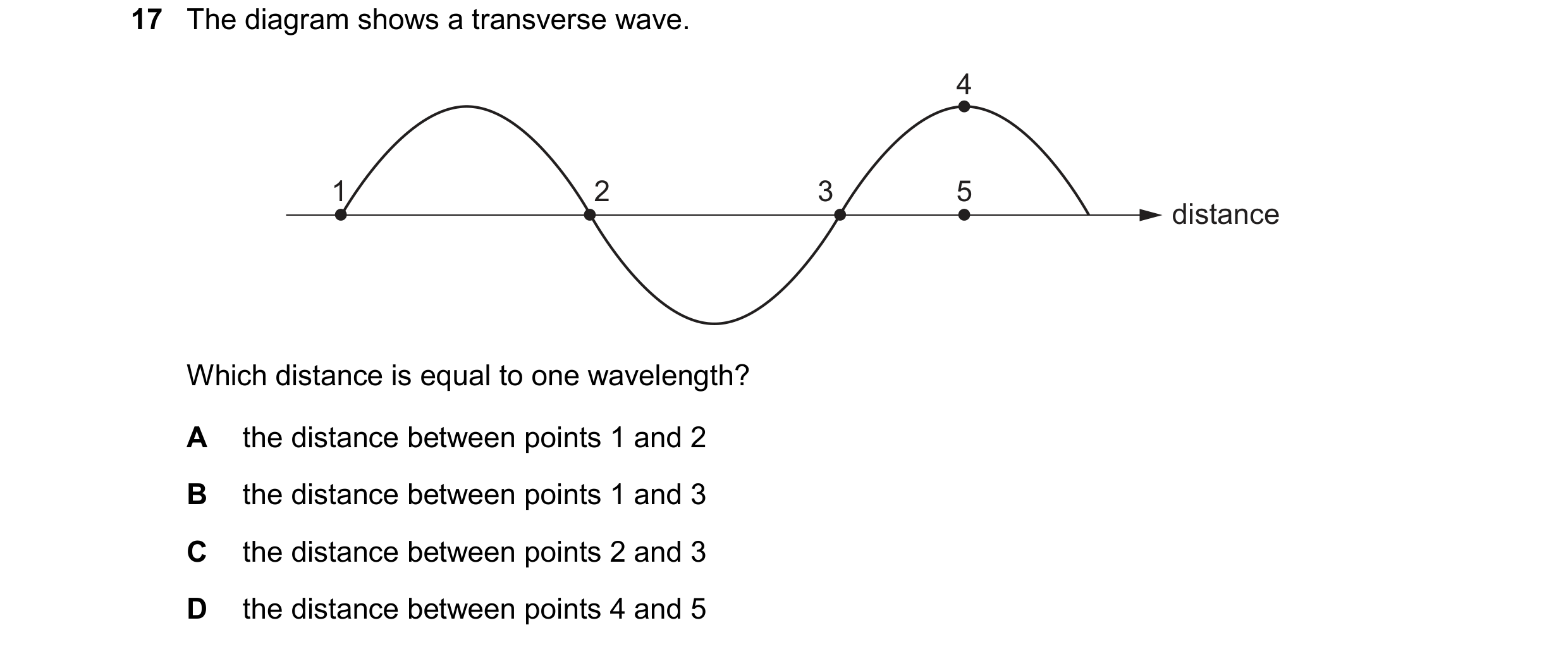
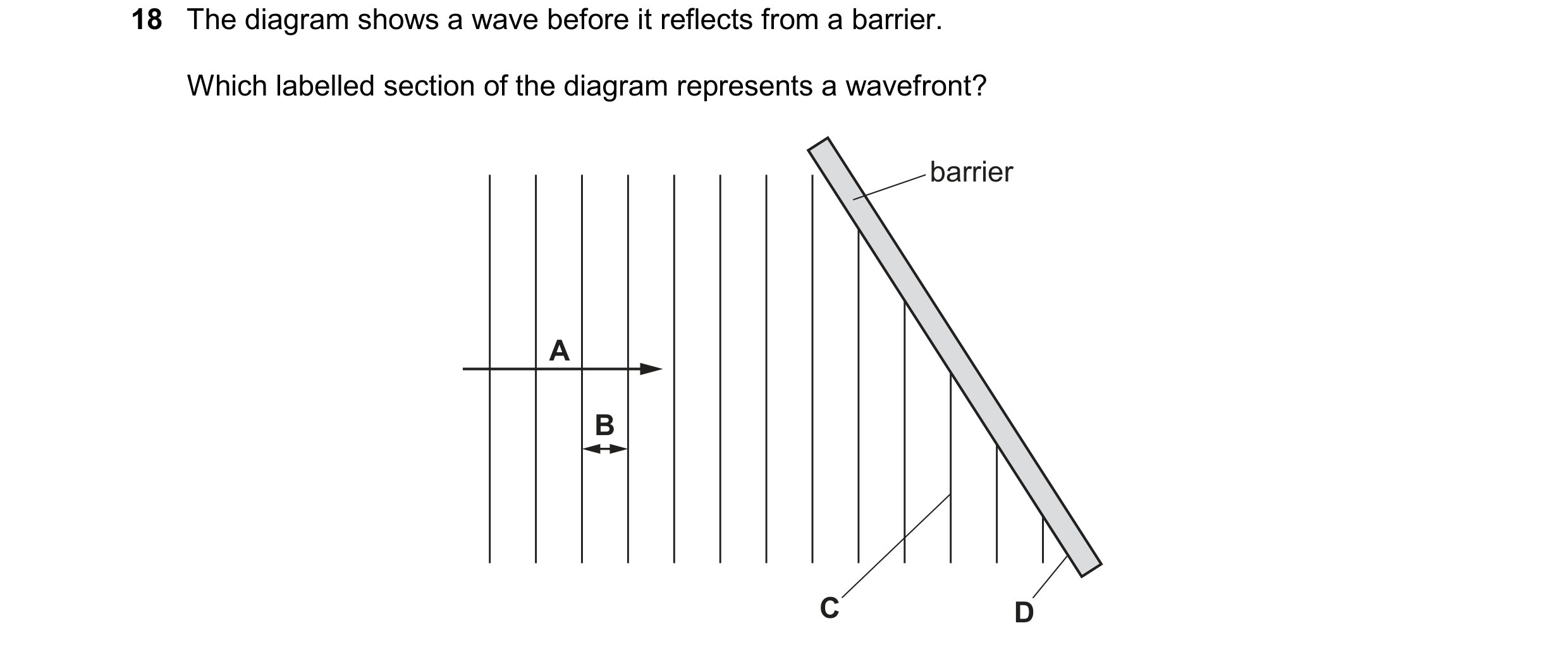 82 / 87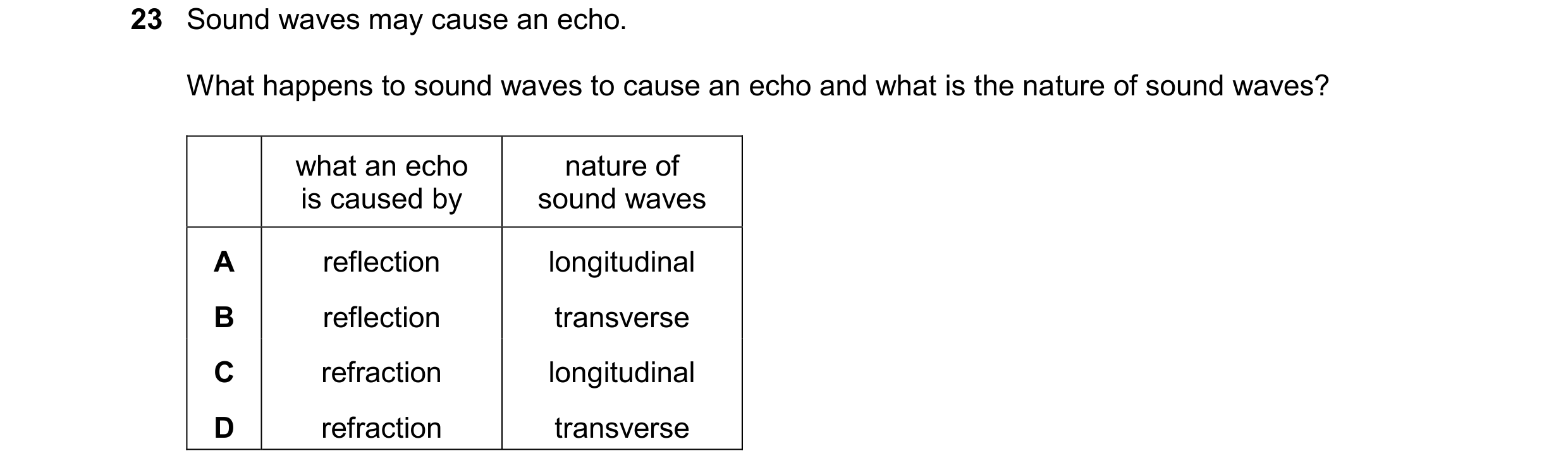
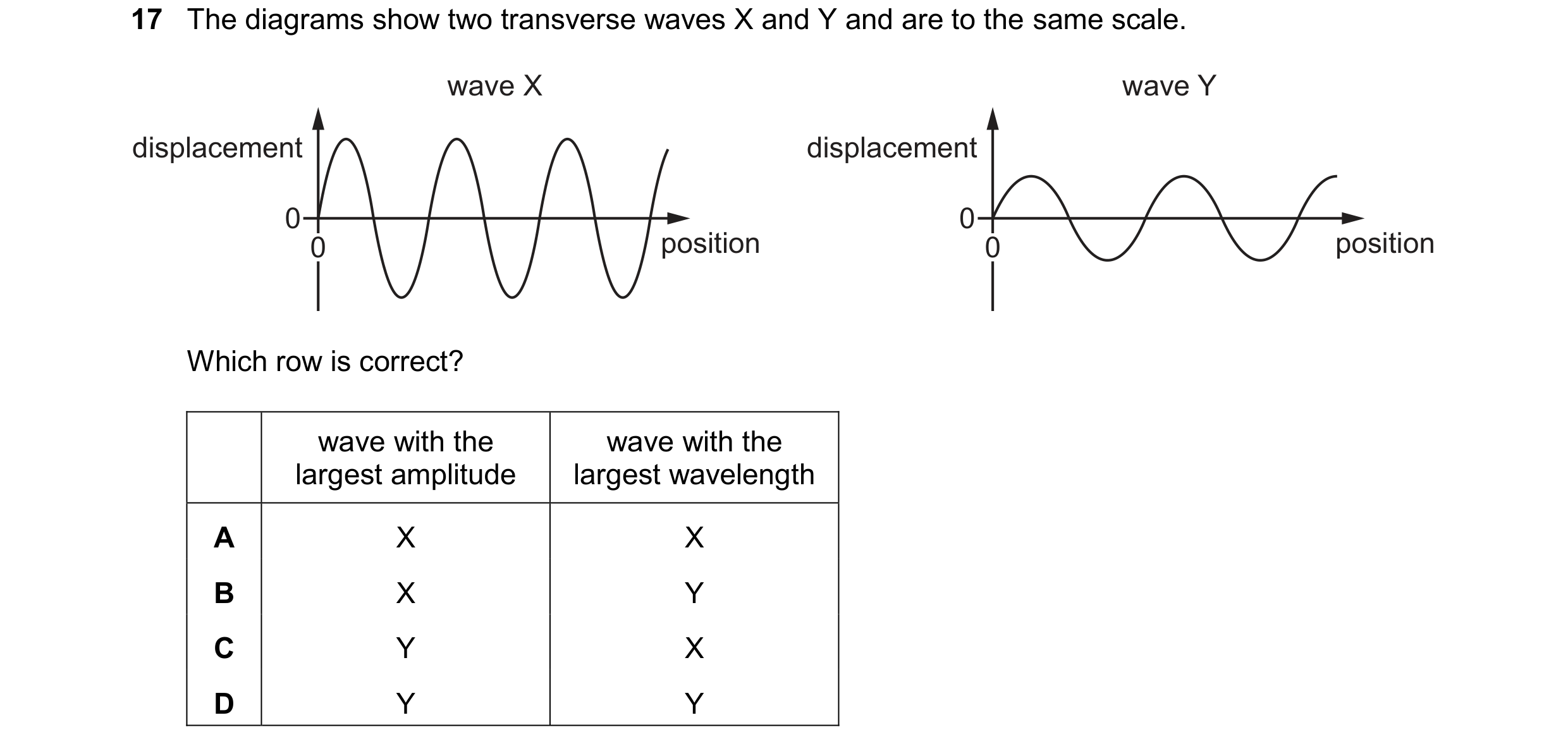
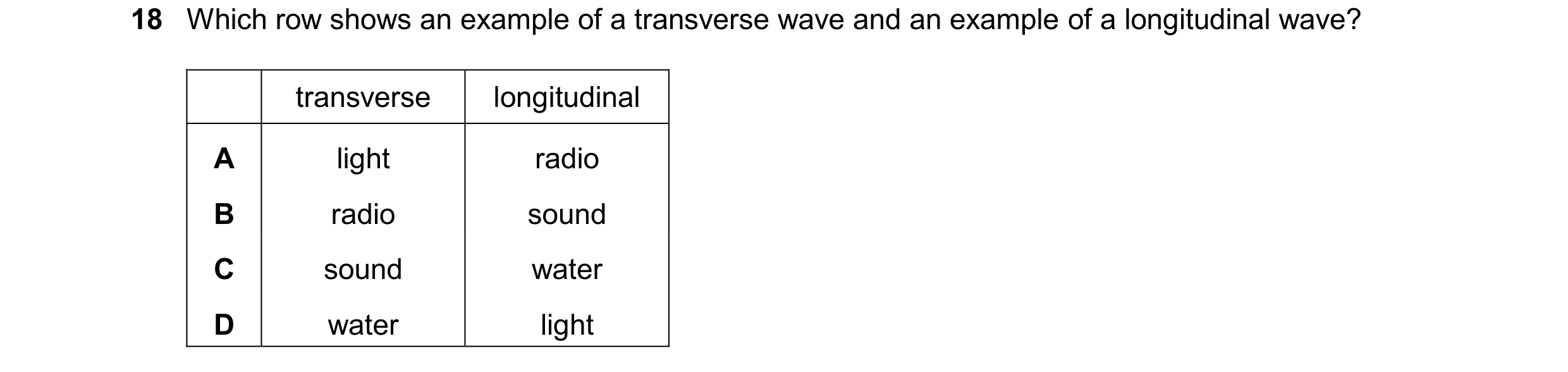
 83 / 87
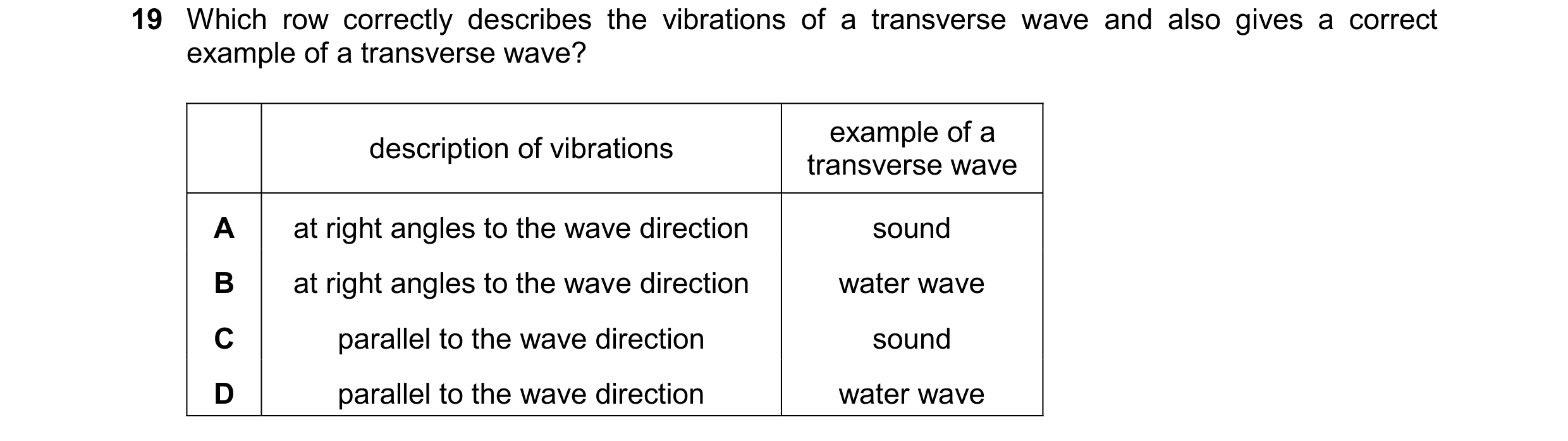
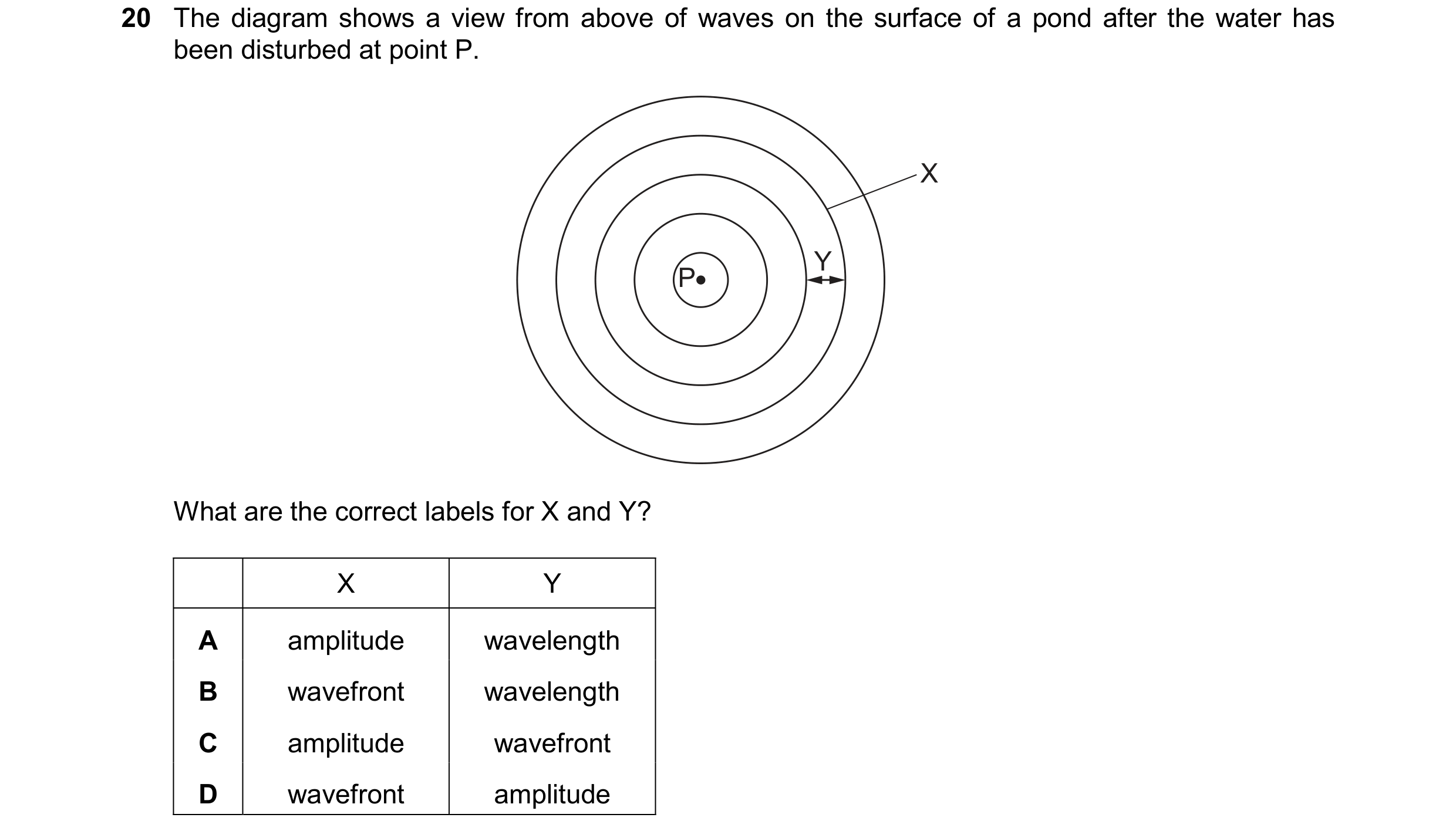
 84 / 87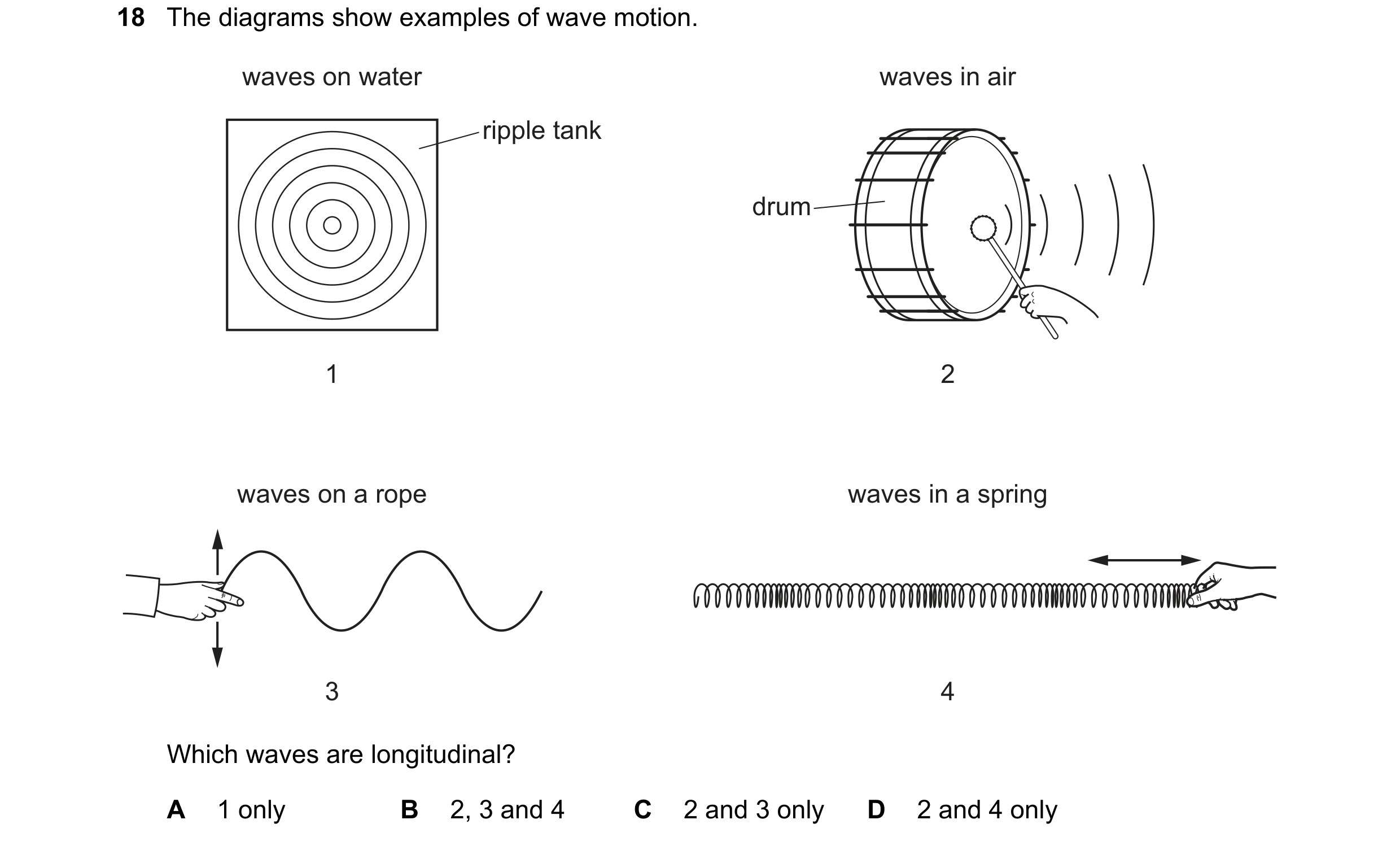

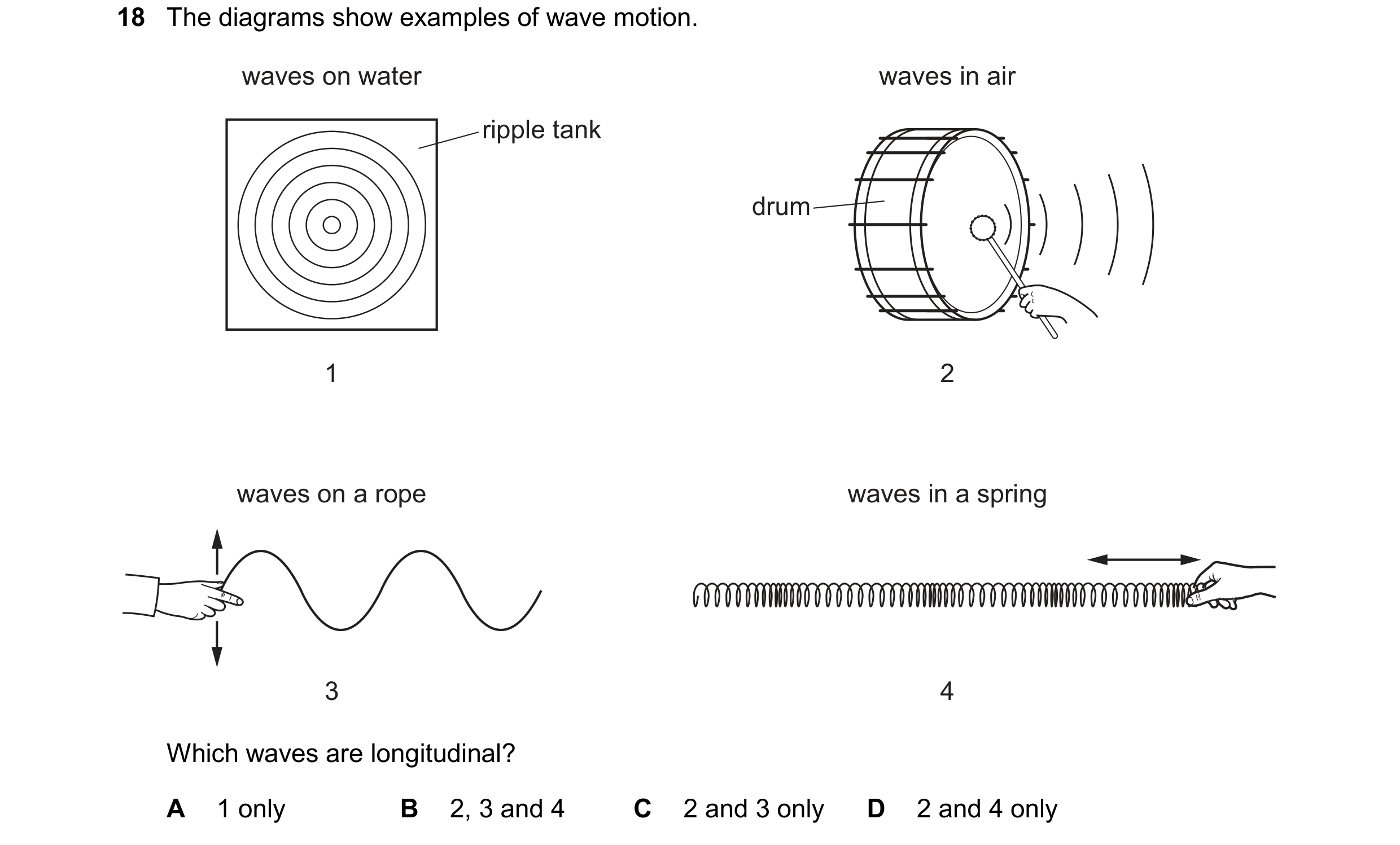 85 / 87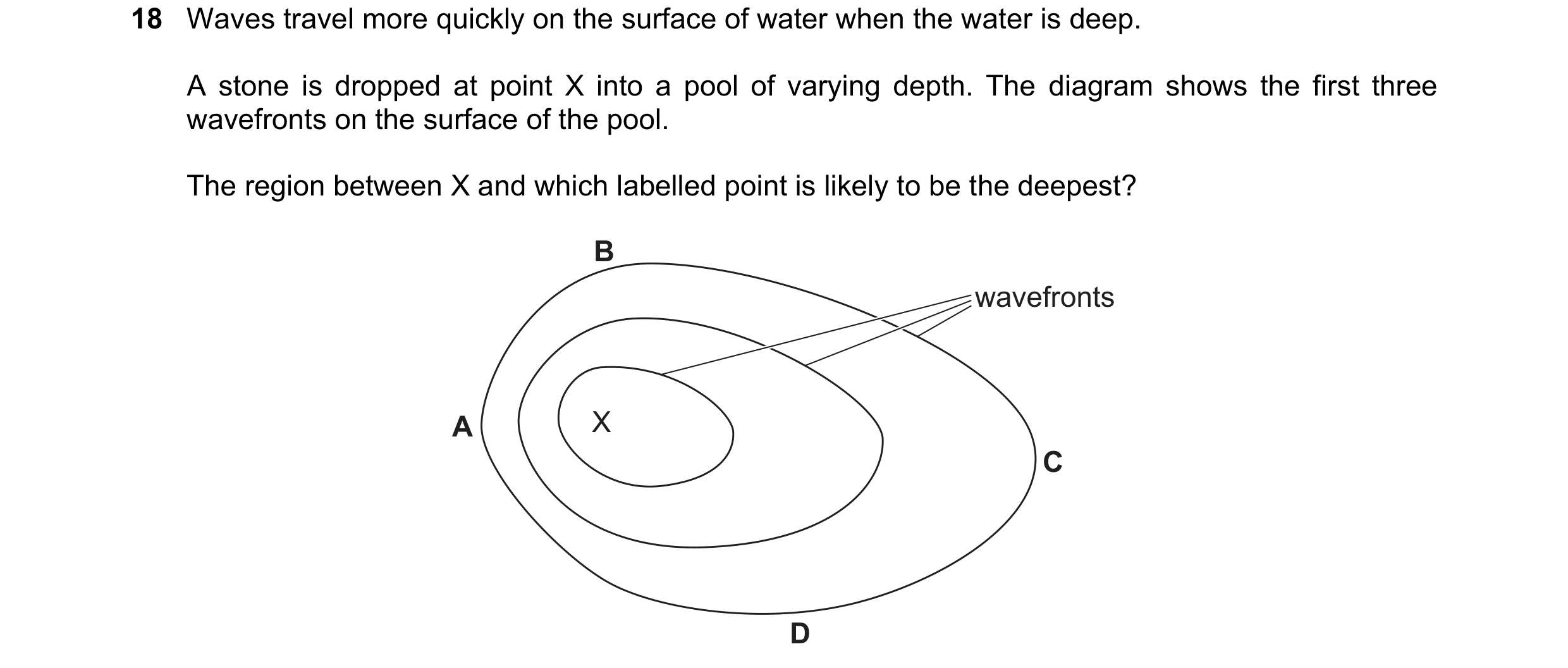
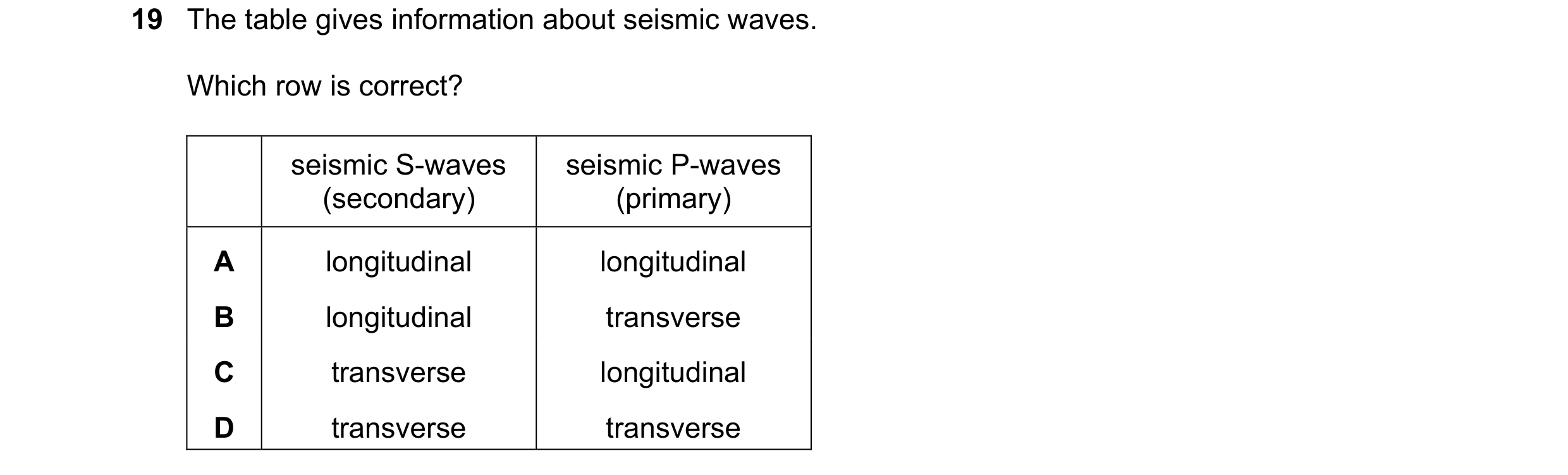
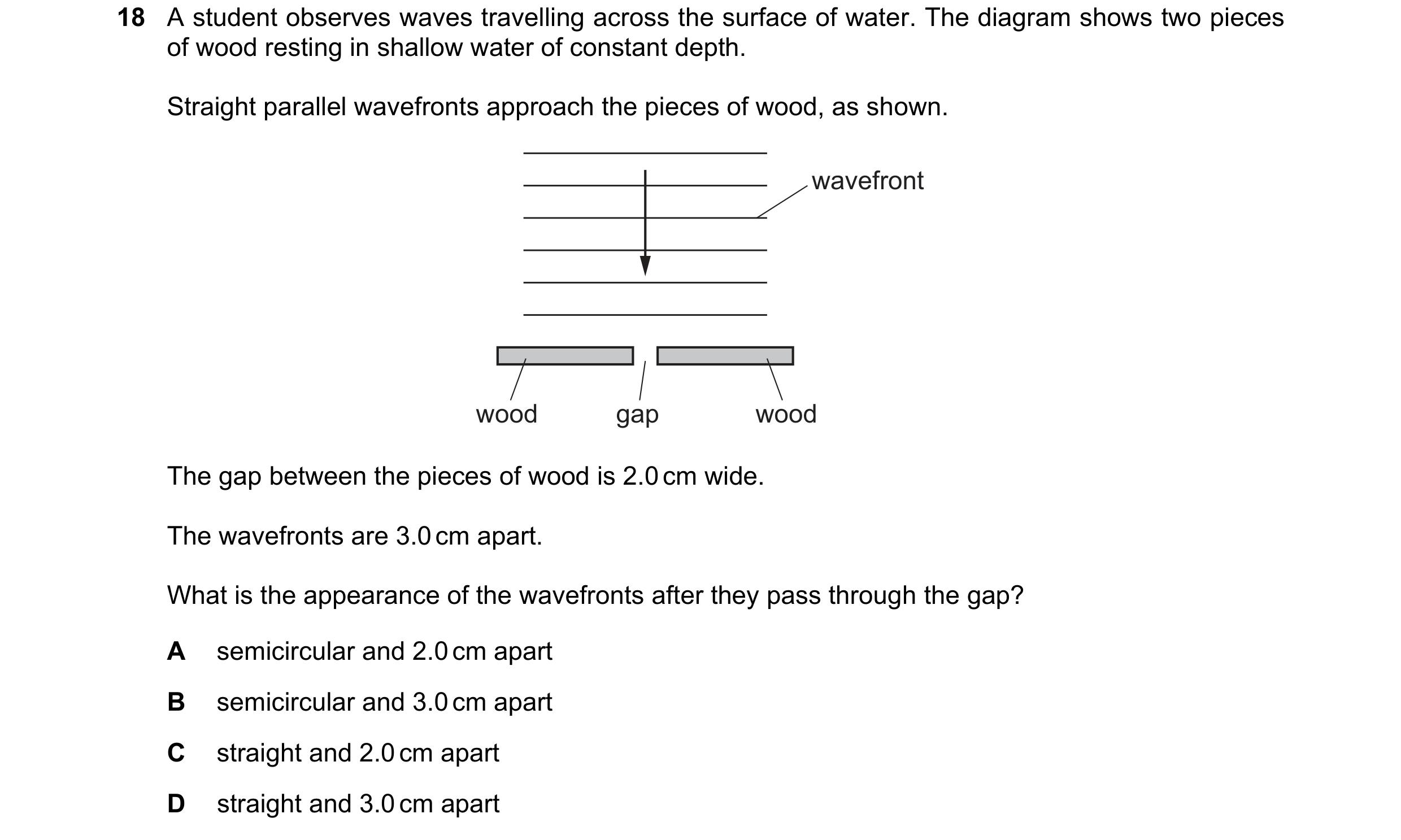 86 / 87
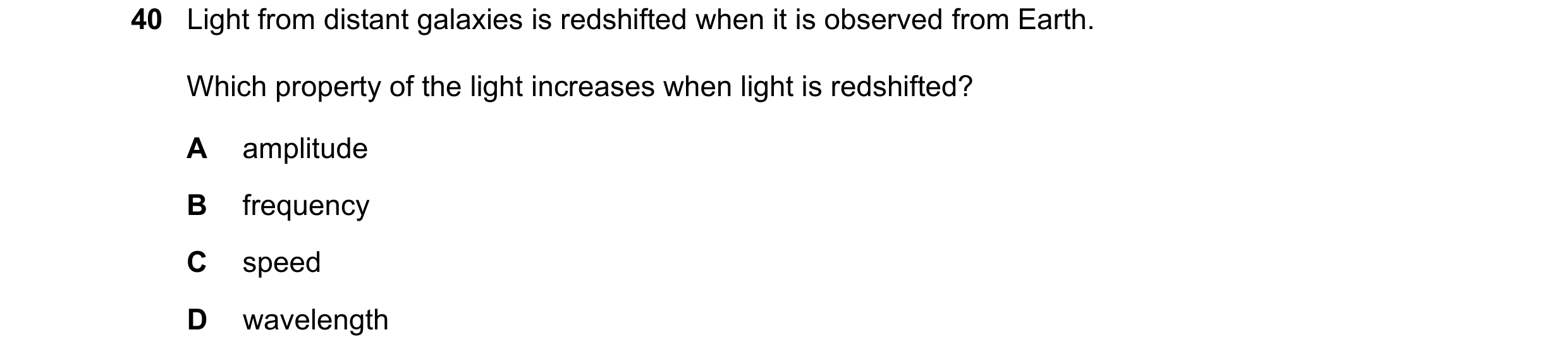 87 / 87