Questions as text
Q1 · Two blocks X and Y are placed on a beam as shown 0625/11 May/June 2005
5 Two blocks X and Y are placed on a beam as shown. The beam balances on a pivot at its centre. Y X pivot What does this show about X and Y? A They have the same mass and the same density. B They have the same mass and the same weight. C They have the same volume and the same density. D They have the same volume and the same weight.
1 marks
Answer: B
This question in 0625/11 May/June 2005
Q2 · A girl and a boy are pulling in opposite directions on a rope 0625/11 May/June 2005
7 A girl and a boy are pulling in opposite directions on a rope. The forces acting on the rope are shown in the diagram. girl boy 200 N 150 N rope Which single force has the same effect as the two forces shown? A 50 N acting towards the girl B 350 N acting towards the girl C 50 N acting towards the boy D 350 N acting towards the boy
1 marks
Answer: A
This question in 0625/11 May/June 2005
Q3 · Objects with different masses are hung on a 10 cm spring 0625/11 May/June 2005
8 Objects with different masses are hung on a 10 cm spring. The diagram shows how much the spring stretches. 10 cm 20 cm 30 cm 100 g M The extension of the spring is directly proportional to the mass hung on it. What is the mass of object M? A 110 g B 150 g C 200 g D 300 g
1 marks
Answer: C
This question in 0625/11 May/June 2005
Q4 · What is the gravitational force that the Earth exerts on an object? 0625/11 Oct/Nov 2005
4 What is the gravitational force that the Earth exerts on an object? A the density of the object B the mass of the object C the volume of the object D the weight of the object
1 marks
Answer: D
This question in 0625/11 Oct/Nov 2005
Q5 · In an experiment, five identical bags of rice are balanced by a 10 kg mass 0625/11 Oct/Nov 2005
5 In an experiment, five identical bags of rice are balanced by a 10 kg mass. five bags 10 kg mass of rice pivot Two bags of rice are added to the other five. What mass will now balance the bags? A 3.5 kg B 7.0 kg C 10 kg D 14 kg
1 marks
Answer: D
This question in 0625/11 Oct/Nov 2005
Q6 · The diagram shows a flat metal plate that may be hung from a nail so that it can rotate… 0625/11 Oct/Nov 2005
7 The diagram shows a flat metal plate that may be hung from a nail so that it can rotate about any of four holes. holes holes flat metal plate What is the smallest number of holes from which the flat metal plate should be hung in order to find its centre of gravity? A 1 B 2 C 3 D 4
1 marks
Answer: B
This question in 0625/11 Oct/Nov 2005
Q7 · Two equal forces F act on each of four planks 0625/11 Oct/Nov 2005
8 Two equal forces F act on each of four planks. Which plank turns? A B C D F F F F pivot pivot pivot pivot F F F F
1 marks
Answer: D
This question in 0625/11 Oct/Nov 2005
Q8 · Below are four statements about the effects of forces on objects 0625/11 May/June 2006
4 Below are four statements about the effects of forces on objects. Three of the statements are correct. Which statement is incorrect? A A force can change the length of an object. B A force can change the mass of an object. C A force can change the shape of an object. D A force can change the speed of an object.
1 marks
Answer: B
This question in 0625/11 May/June 2006
Q9 · Two forces act on an object 0625/11 May/June 2006
7 Two forces act on an object. In which situation is it impossible for the object to be in equilibrium? A The two forces act in the same direction. B The two forces act through the same point. C The two forces are of the same type. D The two forces are the same size.
1 marks
Answer: A
This question in 0625/11 May/June 2006
Q10 · The diagram shows four models of buses placed on different ramps 0625/11 May/June 2006
8 The diagram shows four models of buses placed on different ramps. centre centre centre centre of mass of mass of mass of mass How many of these models will fall over? A 1 B 2 C 3 D 4
1 marks
Answer: A
This question in 0625/11 May/June 2006
Q11 · Two stones of different weight fall at the same time from a table 0625/11 May/June 2007
3 Two stones of different weight fall at the same time from a table. Air resistance may be ignored. What will happen and why? what will happen why A both stones hit the floor at the same time the acceleration of free fall is constant B both stones hit the floor at the same time they fall at constant speed C the heavier stone hits the floor first acceleration increases with weight D the heavier stone hits the floor first speed increases with weight
1 marks
Answer: A
This question in 0625/11 May/June 2007
Q12 · The diagram shows a bird in flight 0625/11 May/June 2007
4 The diagram shows a bird in flight. In which direction does the weight of the bird act? B A C D
1 marks
Answer: D
This question in 0625/11 May/June 2007
Q13 · A force acts on a moving rubber ball 0625/11 May/June 2007
8 A force acts on a moving rubber ball. How many of the following changes could happen to the ball because of the force? • a change in direction • a change in shape • a change in mass • a change in speed A 1 B 2 C 3 D 4
1 marks
Answer: C
This question in 0625/11 May/June 2007
Q14 · A light aircraft stands at rest on the ground 0625/11 May/June 2007
9 A light aircraft stands at rest on the ground. It stands on three wheels, one at the front and two further back. Which point could be its centre of mass? A B C D
1 marks
Answer: B
This question in 0625/11 May/June 2007
Q15 · What are the correct units for force and for weight? 0625/11 Oct/Nov 2007
4 What are the correct units for force and for weight? force weight A kg kg B kg N C N kg D N N
1 marks
Answer: D
This question in 0625/11 Oct/Nov 2007
Q16 · An empty glass is placed on a join between two tables as shown 0625/11 Oct/Nov 2007
8 An empty glass is placed on a join between two tables as shown. The glass remains stable. Which point is the centre of mass of the glass? A B C D
1 marks
Answer: C
This question in 0625/11 Oct/Nov 2007
Q17 · An aeroplane is in equilibrium 0625/11 Oct/Nov 2007
9 An aeroplane is in equilibrium. The diagram shows the forces acting on the aeroplane. lift force from wings force from air engine resistance weight Which statement about the forces is correct? force from engine lift force from wings A equal to air resistance equal to weight B equal to air resistance greater than weight C greater than air resistance equal to weight D greater than air resistance greater than weight
1 marks
Answer: A
This question in 0625/11 Oct/Nov 2007
Q18 · A student adds loads to an elastic cord 0625/11 Oct/Nov 2007
10 A student adds loads to an elastic cord. He measures the length of the cord for each load. He then plots a graph from the results. 0 0 1 2 3 4 load / N Which length is plotted on the vertical axis? A measured length B original length C (measured length – original length) D (measured length + original length)
1 marks
Answer: C
This question in 0625/11 Oct/Nov 2007
Q19 · When two blocks X and Y are placed on a uniform beam, the beam balances on a pivot at its… 0625/11 May/June 2008
5 When two blocks X and Y are placed on a uniform beam, the beam balances on a pivot at its centre as shown. Y X pivot What does this show about X and Y? A They have the same mass and the same density. B They have the same mass and the same weight. C They have the same volume and the same density. D They have the same volume and the same weight.
1 marks
Answer: B
This question in 0625/11 May/June 2008
Q20 · What are the conditions for equilibrium? 0625/11 May/June 2008
8 What are the conditions for equilibrium? resultant force resultant turning acting effect acting A yes yes B yes no C no yes D no no
1 marks
Answer: D
This question in 0625/11 May/June 2008
Q21 · The diagram shows four objects standing on a flat surface 0625/11 May/June 2008
9 The diagram shows four objects standing on a flat surface. The centre of mass of each object is marked M. Which object will fall over? A B C D M M M M
1 marks
Answer: C
This question in 0625/11 May/June 2008
Q22 · The diagrams show a uniform rod with its midpoint on a pivot 0625/11 Oct/Nov 2008
8 The diagrams show a uniform rod with its midpoint on a pivot. Two equal forces F are applied to the rod, as shown. Which diagram shows the rod in equilibrium? A B F F F F pivot pivot C F D F F F pivot pivot
1 marks
Answer: C
This question in 0625/11 Oct/Nov 2008
Q23 · A train is travelling along a horizontal track at constant speed 0625/11 Oct/Nov 2008
9 A train is travelling along a horizontal track at constant speed. Two of the forces acting on the train are shown in the diagram. forwards force from engine friction 60 000 N 20 000 N A force of air resistance is also acting on the train to give it a resultant force of zero. What is this air resistance force? A 40 000 N backwards B 80 000 N backwards C 40 000 N forwards D 80 000 N forwards
1 marks
Answer: A
This question in 0625/11 Oct/Nov 2008
Q24 · The table shows the weight in newtons of a10 kg mass on each of four planets 0625/11 May/June 2009
5 The table shows the weight in newtons of a10 kg mass on each of four planets. planet weight of a 10 kg mass / N Earth 100 Jupiter 250 Mercury 40 Venus 90 The diagram shows a force meter (spring balance) being used. 18 N 2.0 kg On which planet is the force meter (spring balance) being used? A Earth B Jupiter C Mercury D Venus
1 marks
Answer: D
This question in 0625/11 May/June 2009
Q25 · Which property of an object cannot be changed by a force? 0625/11 May/June 2009
7 Which property of an object cannot be changed by a force? A its mass B its motion C its shape D its size
1 marks
Answer: A
This question in 0625/11 May/June 2009
Q26 · A wooden plank rests in equilibrium on two boulders on opposite sides of a narrow stream 0625/11 May/June 2009
8 A wooden plank rests in equilibrium on two boulders on opposite sides of a narrow stream. Three forces of size P, Q and R act on the plank. P R plank Q How are the sizes of the forces related? A P + Q = R B P + R = Q C P = Q = R D P = Q + R
1 marks
Answer: B
This question in 0625/11 May/June 2009
Q27 · A ball is thrown upwards 0625/11 Oct/Nov 2009
2 A ball is thrown upwards. What effect does the force of gravity have on the ball? A It produces a constant acceleration downwards. B It produces a constant acceleration upwards. C It produces a decreasing acceleration upwards. D It produces an increasing acceleration downwards.
1 marks
Answer: A
This question in 0625/11 Oct/Nov 2009
Q28 · Passengers are not allowed to stand on the upper deck of double-decker buses 0625/11 Oct/Nov 2009
7 Passengers are not allowed to stand on the upper deck of double-decker buses. upper deck lower deck Why is this? A They would cause the bus to become unstable. B They would cause the bus to slow down. C They would increase the kinetic energy of the bus. D They would lower the centre of mass of the bus.
1 marks
Answer: A
This question in 0625/11 Oct/Nov 2009
Q29 · The object in the diagram is acted upon by the two forces shown 0625/11 Oct/Nov 2009
8 The object in the diagram is acted upon by the two forces shown. 3 N 2 N object What is the effect of these forces? A The object moves to the left with constant speed. B The object moves to the left with constant acceleration. C The object moves to the right with constant speed. D The object moves to the right with constant acceleration.
1 marks
Answer: D
This question in 0625/11 Oct/Nov 2009
Q30 · Which property of a body can be measured in newtons? 0625/12 Oct/Nov 2009
2 Which property of a body can be measured in newtons? A density B mass C volume D weight
1 marks
Answer: D
This question in 0625/12 Oct/Nov 2009
Q31 · A ball is thrown upwards 0625/12 Oct/Nov 2009
4 A ball is thrown upwards. What effect does the force of gravity have on the ball? A It produces a constant acceleration downwards. B It produces a constant acceleration upwards. C It produces a decreasing acceleration upwards. D It produces an increasing acceleration downwards.
1 marks
Answer: A
This question in 0625/12 Oct/Nov 2009
Q32 · The object in the diagram is acted upon by the two forces shown 0625/12 Oct/Nov 2009
7 The object in the diagram is acted upon by the two forces shown. 3 N 2 N object What is the effect of these forces? A The object moves to the left with constant speed. B The object moves to the left with constant acceleration. C The object moves to the right with constant speed. D The object moves to the right with constant acceleration.
1 marks
Answer: D
This question in 0625/12 Oct/Nov 2009
Q33 · Passengers are not allowed to stand on the upper deck of double-decker buses 0625/12 Oct/Nov 2009
8 Passengers are not allowed to stand on the upper deck of double-decker buses. upper deck lower deck Why is this? A They would cause the bus to become unstable. B They would cause the bus to slow down. C They would increase the kinetic energy of the bus. D They would lower the centre of mass of the bus.
1 marks
Answer: A
This question in 0625/12 Oct/Nov 2009
Q34 · Which statement about a moving object is correct? 0625/11 May/June 2010
8 Which statement about a moving object is correct? A When an object is accelerating, the resultant force acting on it must equal zero. B When an object is moving at a steady speed, the air resistance acting on it must equal zero. C When an object is moving at a steady speed, the resultant force acting on it must equal zero. D When an object is moving, there must be a resultant force acting on it.
1 marks
Answer: C
This question in 0625/11 May/June 2010
Q35 · An experiment is carried out to measure the extension of a rubber band for different loads 0625/11 May/June 2010
9 An experiment is carried out to measure the extension of a rubber band for different loads. The results are shown below. load / N 0 1 2 3 length / cm 15.2 16.2 18.6 extension / cm 0 1.0 2.1 3.4 Which figure is missing from the table? A 17.2 B 17.3 C 17.4 D 17.6
1 marks
Answer: B
This question in 0625/11 May/June 2010
Q36 · Which statement about a moving object is correct? 0625/12 May/June 2010
6 Which statement about a moving object is correct? A When an object is accelerating, the resultant force acting on it must equal zero. B When an object is moving at a steady speed, the air resistance acting on it must equal zero. C When an object is moving at a steady speed, the resultant force acting on it must equal zero. D When an object is moving, there must be a resultant force acting on it.
1 marks
Answer: C
This question in 0625/12 May/June 2010
Q37 · An experiment is carried out to measure the extension of a rubber band for different loads 0625/12 May/June 2010
7 An experiment is carried out to measure the extension of a rubber band for different loads. The results are shown below. load / N 0 1 2 3 length / cm 15.2 16.2 18.6 extension / cm 0 1.0 2.1 3.4 Which figure is missing from the table? A 17.2 B 17.3 C 17.4 D 17.6
1 marks
Answer: B
This question in 0625/12 May/June 2010
Q38 · Which list contains the name of a force? 0625/11 Oct/Nov 2010
5 Which list contains the name of a force? A acceleration, charge, temperature B density, resistance, speed C distance, frequency, mass D energy, power, weight
1 marks
Answer: D
This question in 0625/11 Oct/Nov 2010
Q39 · The reading on a spring balance with a holder and eight identical discs is 3.0 N 0625/11 Oct/Nov 2010
6 The reading on a spring balance with a holder and eight identical discs is 3.0 N. Six discs are removed and the reading becomes 1.2 N. N 0 spring N 0 balance 1 1 2 2 3 3 4 4 holder for discs two discs eight discs What is the weight of one disc? A 0.2 N B 0.3 N C 0.5 N D 0.6 N
1 marks
Answer: B
This question in 0625/11 Oct/Nov 2010
Q40 · A force acts on a moving rubber ball 0625/11 Oct/Nov 2010
8 A force acts on a moving rubber ball. Which of these changes could not happen to the ball because of the force? A a change in direction B a change in mass C a change in shape D a change in speed
1 marks
Answer: B
This question in 0625/11 Oct/Nov 2010
Q41 · The extension / load graph for a spring is shown 0625/11 Oct/Nov 2010
9 The extension / load graph for a spring is shown. The unloaded length of the spring is 15.0 cm. 3 extension / cm 2 1 0 0 1 2 3 4 5 load / N When an object of unknown weight is hung on the spring, the length of the spring is 16.4 cm. What is the weight of the object? A 0.55 N B 0.67 N C 3.5 N D 4.1 N
1 marks
Answer: C
This question in 0625/11 Oct/Nov 2010
Q42 · Which list contains the name of a force? 0625/12 Oct/Nov 2010
9 Which list contains the name of a force? A acceleration, charge, temperature B density, resistance, speed C distance, frequency, mass D energy, power, weight
1 marks
Answer: D
This question in 0625/12 Oct/Nov 2010
Q43 · A force acts on a moving rubber ball 0625/12 Oct/Nov 2010
10 A force acts on a moving rubber ball. Which of these changes could not happen to the ball because of the force? A a change in direction B a change in mass C a change in shape D a change in speed
1 marks
Answer: B
This question in 0625/12 Oct/Nov 2010
Q44 · The extension / load graph for a spring is shown 0625/12 Oct/Nov 2010
11 The extension / load graph for a spring is shown. The unloaded length of the spring is 15.0 cm. 3 extension / cm 2 1 0 0 1 2 3 4 5 load / N When an object of unknown weight is hung on the spring, the length of the spring is 16.4 cm. What is the weight of the object? A 0.55 N B 0.67 N C 3.5 N D 4.1 N
1 marks
Answer: C
This question in 0625/12 Oct/Nov 2010
Q45 · The extension / load graph for a spring is shown 0625/13 Oct/Nov 2010
6 The extension / load graph for a spring is shown. The unloaded length of the spring is 15.0 cm. 3 extension / cm 2 1 0 0 1 2 3 4 5 load / N When an object of unknown weight is hung on the spring, the length of the spring is 16.4 cm. What is the weight of the object? A 0.55 N B 0.67 N C 3.5 N D 4.1 N
1 marks
Answer: C
This question in 0625/13 Oct/Nov 2010
Q46 · Which list contains the name of a force? 0625/13 Oct/Nov 2010
10 Which list contains the name of a force? A acceleration, charge, temperature B density, resistance, speed C distance, frequency, mass D energy, power, weight
1 marks
Answer: D
This question in 0625/13 Oct/Nov 2010
Q47 · A force acts on a moving rubber ball 0625/13 Oct/Nov 2010
11 A force acts on a moving rubber ball. Which of these changes could not happen to the ball because of the force? A a change in direction B a change in mass C a change in shape D a change in speed
1 marks
Answer: B
This question in 0625/13 Oct/Nov 2010
Q48 · Which statement about mass and weight is correct? 0625/11 May/June 2011
4 Which statement about mass and weight is correct? A Mass and weight are both forces. B Neither mass nor weight is a force. C Only mass is a force. D Only weight is a force.
1 marks
Answer: D
This question in 0625/11 May/June 2011
Q49 · The diagram shows a balance being used to find the weight of a baby 0625/11 May/June 2011
5 The diagram shows a balance being used to find the weight of a baby. The weight of the basket can be ignored. At equilibrium, the pivot is nearer to the weight W than to the baby. centre of mass of beam pivot W baby basket What is the weight of the baby? A less than W B more than W C W D impossible to tell
1 marks
Answer: A
This question in 0625/11 May/June 2011
Q50 · Objects with different masses are hung on a spring 0625/11 May/June 2011
7 Objects with different masses are hung on a spring. The diagram shows how much the spring stretches. 10 cm 20 cm 30 cm 100 g M The extension of the spring is directly proportional to the mass hung on it. What is the mass of object M? A 110 g B 150 g C 200 g D 300 g
1 marks
Answer: C
This question in 0625/11 May/June 2011
Q51 · A brick with flat, rectangular sides rests on a table 0625/11 May/June 2011
11 A brick with flat, rectangular sides rests on a table. brick table The brick is now turned so that it rests on the table on its smallest face. How has this affected the force and the pressure exerted by the brick on the table? force pressure A increased increased B increased unchanged C unchanged increased D unchanged unchanged
1 marks
Answer: C
This question in 0625/11 May/June 2011
Q52 · The diagram shows a balance being used to find the weight of a baby 0625/12 May/June 2011
4 The diagram shows a balance being used to find the weight of a baby. The weight of the basket can be ignored. At equilibrium, the pivot is nearer to the weight W than to the baby. centre of mass of beam pivot W baby basket What is the weight of the baby? A less than W B more than W C W D impossible to tell
1 marks
Answer: A
This question in 0625/12 May/June 2011
Q53 · Objects with different masses are hung on a spring 0625/12 May/June 2011
11 Objects with different masses are hung on a spring. The diagram shows how much the spring stretches. 10 cm 20 cm 30 cm 100 g M The extension of the spring is directly proportional to the mass hung on it. What is the mass of object M? A 110 g B 150 g C 200 g D 300 g
1 marks
Answer: C
This question in 0625/12 May/June 2011
Q54 · A brick with flat, rectangular sides rests on a table 0625/12 May/June 2011
16 A brick with flat, rectangular sides rests on a table. brick table The brick is now turned so that it rests on the table on its smallest face. How has this affected the force and the pressure exerted by the brick on the table? force pressure A increased increased B increased unchanged C unchanged increased D unchanged unchanged
1 marks
Answer: C
This question in 0625/12 May/June 2011
Q55 · The diagram shows a balance being used to find the weight of a baby 0625/13 May/June 2011
4 The diagram shows a balance being used to find the weight of a baby. The weight of the basket can be ignored. At equilibrium, the pivot is nearer to the weight W than to the baby. centre of mass of beam pivot W baby basket What is the weight of the baby? A less than W B more than W C W D impossible to tell
1 marks
Answer: A
This question in 0625/13 May/June 2011
Q56 · Objects with different masses are hung on a spring 0625/13 May/June 2011
11 Objects with different masses are hung on a spring. The diagram shows how much the spring stretches. 10 cm 20 cm 30 cm 100 g M The extension of the spring is directly proportional to the mass hung on it. What is the mass of object M? A 110 g B 150 g C 200 g D 300 g
1 marks
Answer: C
This question in 0625/13 May/June 2011
Q57 · A large bag of feathers and a steel block balance each other on some scales 0625/11 Oct/Nov 2012
4 A large bag of feathers and a steel block balance each other on some scales. bag of steel block feathers What does this show about the masses and the weights of the bag of feathers and the steel block? A It shows that the masses are equal and the weights are equal. B It shows that the masses are equal, but the weights might be different. C It shows that the masses might be different and the weights might be different. D It shows that the weights are equal, but the masses might be different.
1 marks
Answer: A
This question in 0625/11 Oct/Nov 2012
Q58 · The diagram shows sections of four objects of equal mass 0625/11 Oct/Nov 2012
7 The diagram shows sections of four objects of equal mass. The position of the centre of mass of each object has been marked with a cross. Which object is the most stable? A B C D
1 marks
Answer: A
This question in 0625/11 Oct/Nov 2012
Q59 · A see-saw is made by resting a long plank of wood with its centre of mass on a barrel 0625/11 Oct/Nov 2012
8 A see-saw is made by resting a long plank of wood with its centre of mass on a barrel. A boy sits on one side of the barrel and a girl sits on the other side so that the see-saw is balanced. x y boy girl boy’s weight girl’s weight Which statement must be true? A boy’s weight = girl’s weight B distance x = distance y C total downward force = total moment about the barrel D resultant force and resultant moment are both zero
1 marks
Answer: D
This question in 0625/11 Oct/Nov 2012
Q60 · A large bag of feathers and a steel block balance each other on some scales 0625/12 Oct/Nov 2012
3 A large bag of feathers and a steel block balance each other on some scales. bag of steel block feathers What does this show about the masses and the weights of the bag of feathers and the steel block? A It shows that the masses are equal and the weights are equal. B It shows that the masses are equal, but the weights might be different. C It shows that the masses might be different and the weights might be different. D It shows that the weights are equal, but the masses might be different.
1 marks
Answer: A
This question in 0625/12 Oct/Nov 2012
Q61 · The diagram shows sections of four objects of equal mass 0625/12 Oct/Nov 2012
6 The diagram shows sections of four objects of equal mass. The position of the centre of mass of each object has been marked with a cross. Which object is the most stable? A B C D
1 marks
Answer: A
This question in 0625/12 Oct/Nov 2012
Q62 · A see-saw is made by resting a long plank of wood with its centre of mass on a barrel 0625/12 Oct/Nov 2012
11 A see-saw is made by resting a long plank of wood with its centre of mass on a barrel. A boy sits on one side of the barrel and a girl sits on the other side so that the see-saw is balanced. x y boy girl boy’s weight girl’s weight Which statement must be true? A boy’s weight = girl’s weight B distance x = distance y C total downward force = total moment about the barrel D resultant force and resultant moment are both zero
1 marks
Answer: D
This question in 0625/12 Oct/Nov 2012
Q63 · Two stones of different weight fall at the same time from a table 0625/13 Oct/Nov 2012
2 Two stones of different weight fall at the same time from a table. Air resistance may be ignored. What will happen and why? what will happen why A both stones hit the floor at the same time acceleration of free fall is constant B both stones hit the floor at the same time they fall at constant speed C the heavier stone hits the floor first acceleration increases with weight D the heavier stone hits the floor first speed increases with weight
1 marks
Answer: A
This question in 0625/13 Oct/Nov 2012
Q64 · A large bag of feathers and a steel block balance each other on some scales 0625/13 Oct/Nov 2012
4 A large bag of feathers and a steel block balance each other on some scales. bag of steel block feathers What does this show about the masses and the weights of the bag of feathers and the steel block? A It shows that the masses are equal and the weights are equal. B It shows that the masses are equal, but the weights might be different. C It shows that the masses might be different and the weights might be different. D It shows that the weights are equal, but the masses might be different.
1 marks
Answer: A
This question in 0625/13 Oct/Nov 2012
Q65 · The diagram shows sections of four objects of equal mass 0625/13 Oct/Nov 2012
7 The diagram shows sections of four objects of equal mass. The position of the centre of mass of each object has been marked with a cross. Which object is the most stable? A B C D
1 marks
Answer: A
This question in 0625/13 Oct/Nov 2012
Q66 · A large parcel is on a horizontal conveyor belt 0625/13 Oct/Nov 2012
8 A large parcel is on a horizontal conveyor belt. The conveyor belt moves the parcel towards a lorry. lorry parcel conveyor belt The parcel travels towards the lorry at a constant speed. Only two horizontal forces act on the parcel: air resistance, and friction with the conveyor belt. Which row correctly compares the directions and the sizes of these two forces? directions sizes A opposite different B opposite the same C the same different D the same the same
1 marks
Answer: B
This question in 0625/13 Oct/Nov 2012
Q67 · A dam across a lake is divided into two sections by a rock 0625/13 Oct/Nov 2012
13 A dam across a lake is divided into two sections by a rock. Section X is longer than section Y but the two sections are otherwise identical. The water in the lake by the dam is the same depth everywhere. The diagram shows a view from above of the lake and the dam. section X of dam water in lake rock section Y of dam The water creates a force on each section of the dam and a pressure on each section of the dam. Which statement is correct? A The force on X equals the force on Y. B The force on X is less than the force on Y. C The pressure on X equals the pressure on Y. D The pressure on X is less than the pressure on Y.
1 marks
Answer: C
This question in 0625/13 Oct/Nov 2012
Q68 · A car moves along a level road 0625/11 May/June 2013
7 A car moves along a level road. The diagram shows all of the horizontal forces acting on the car. 800 N air resistance 2000 N force 500 N from engine friction Which statement is correct? A The car is slowing down. B The car is speeding up. C The car is moving at a constant speed. D The car is moving backwards.
1 marks
Answer: B
This question in 0625/11 May/June 2013
Q69 · The diagram shows a force being applied to a lever to lift a heavy weight 0625/11 May/June 2013
8 The diagram shows a force being applied to a lever to lift a heavy weight. force pivot lever heavy weight Which change would enable the heavy weight to be lifted with a smaller force? A Move the force to the right. B Move the heavy weight to the right. C Move the force to the left. D Move the pivot to the left.
1 marks
Answer: C
This question in 0625/11 May/June 2013
Q70 · The diagrams show different objects, each being acted upon by only the two forces shown 0625/12 May/June 2013
8 The diagrams show different objects, each being acted upon by only the two forces shown. Which object is in equilibrium? A B C D 5 N 4 N 3 N 4 N 4 N 3 N 5 N 5 N
1 marks
Answer: C
This question in 0625/12 May/June 2013
Q71 · A car moves along a level road 0625/13 May/June 2013
6 A car moves along a level road. The diagram shows all of the horizontal forces acting on the car. 800 N air resistance 2000 N force 500 N from engine friction Which statement is correct? A The car is slowing down. B The car is speeding up. C The car is moving at a constant speed. D The car is moving backwards.
1 marks
Answer: B
This question in 0625/13 May/June 2013
Q72 · The diagram shows a force being applied to a lever to lift a heavy weight 0625/13 May/June 2013
9 The diagram shows a force being applied to a lever to lift a heavy weight. force pivot lever heavy weight Which change would enable the heavy weight to be lifted with a smaller force? A Move the force to the right. B Move the heavy weight to the right. C Move the force to the left. D Move the pivot to the left.
1 marks
Answer: C
This question in 0625/13 May/June 2013
Q73 · A small steel ball is dropped from a low balcony 0625/11 Oct/Nov 2013
3 A small steel ball is dropped from a low balcony. Ignoring air resistance, which statement describes its motion? A It falls with constant acceleration. B It falls with constant speed. C It falls with decreasing speed. D It falls with increasing acceleration.
1 marks
Answer: A
This question in 0625/11 Oct/Nov 2013
Q74 · Which is the unit for force and which is the unit for weight? 0625/11 Oct/Nov 2013
4 Which is the unit for force and which is the unit for weight? force weight A kg kg B kg N C N kg D N N
1 marks
Answer: D
This question in 0625/11 Oct/Nov 2013
Q75 · A force acting on an object causes some properties of the object to change 0625/11 Oct/Nov 2013
7 A force acting on an object causes some properties of the object to change. Which list contains only properties that can be changed by the action of the force? A mass, motion and shape B mass, motion and size C mass, shape and size D motion, shape and size
1 marks
Answer: D
This question in 0625/11 Oct/Nov 2013
Q76 · A box is being moved by a fork-lift truck 0625/11 Oct/Nov 2013
8 A box is being moved by a fork-lift truck. The total weight of the box is 3000 N. fork-lift truck box The force exerted by the fork-lift truck on the box is 3500 N upwards. What is the resultant force on the box? A 500 N downwards B 500 N upwards C 6500 N downwards D 6500 N upwards
1 marks
Answer: B
This question in 0625/11 Oct/Nov 2013
Q77 · A drawing pin (thumb tack) has a sharp point and a flat end 0625/11 Oct/Nov 2013
11 A drawing pin (thumb tack) has a sharp point and a flat end. sharp point flat end The pin is pushed into a wooden board. How do the pressure and the force at the sharp point compare with the pressure and the force at the flat end? force at the sharp point pressure at the sharp point A greater than at the flat end greater than at the flat end B greater than at the flat end less than at the flat end C the same as at the flat end greater than at the flat end D the same as at the flat end less than at the flat end
1 marks
Answer: C
This question in 0625/11 Oct/Nov 2013
Q78 · Which is the unit for force and which is the unit for weight? 0625/12 Oct/Nov 2013
5 Which is the unit for force and which is the unit for weight? force weight A kg kg B kg N C N kg D N N
1 marks
Answer: D
This question in 0625/12 Oct/Nov 2013
Q79 · A box is being moved by a fork-lift truck 0625/12 Oct/Nov 2013
7 A box is being moved by a fork-lift truck. The total weight of the box is 3000 N. fork-lift truck box The force exerted by the fork-lift truck on the box is 3500 N upwards. What is the resultant force on the box? A 500 N downwards B 500 N upwards C 6500 N downwards D 6500 N upwards
1 marks
Answer: B
This question in 0625/12 Oct/Nov 2013
Q80 · A force acting on an object causes some properties of the object to change 0625/12 Oct/Nov 2013
8 A force acting on an object causes some properties of the object to change. Which list contains only properties that can be changed by the action of the force? A mass, motion and shape B mass, motion and size C mass, shape and size D motion, shape and size
1 marks
Answer: D
This question in 0625/12 Oct/Nov 2013
Q81 · A drawing pin (thumb tack) has a sharp point and a flat end 0625/12 Oct/Nov 2013
11 A drawing pin (thumb tack) has a sharp point and a flat end. sharp point flat end The pin is pushed into a wooden board. How do the pressure and the force at the sharp point compare with the pressure and the force at the flat end? force at the sharp point pressure at the sharp point A greater than at the flat end greater than at the flat end B greater than at the flat end less than at the flat end C the same as at the flat end greater than at the flat end D the same as at the flat end less than at the flat end
1 marks
Answer: C
This question in 0625/12 Oct/Nov 2013
Q82 · A small steel ball is dropped from a low balcony 0625/13 Oct/Nov 2013
3 A small steel ball is dropped from a low balcony. Ignoring air resistance, which statement describes its motion? A It falls with constant acceleration. B It falls with constant speed. C It falls with decreasing speed. D It falls with increasing acceleration.
1 marks
Answer: A
This question in 0625/13 Oct/Nov 2013
Q83 · Which is the unit for force and which is the unit for weight? 0625/13 Oct/Nov 2013
4 Which is the unit for force and which is the unit for weight? force weight A kg kg B kg N C N kg D N N
1 marks
Answer: D
This question in 0625/13 Oct/Nov 2013
Q84 · The diagrams show a steel spring and a graph of its length against the load applied to it 0625/13 Oct/Nov 2013
7 The diagrams show a steel spring and a graph of its length against the load applied to it. 16 14 12 length / cm 10 steel spring length 8 6 load 4 2 0 0 10 20 30 40 50 load / N What is the extension of the spring when a load of 20 N is applied to it? A 3.0 cm B 4.5 cm C 5.0 cm D 8.0 cm
1 marks
Answer: A
This question in 0625/13 Oct/Nov 2013
Q85 · A box is being moved by a fork-lift truck 0625/13 Oct/Nov 2013
8 A box is being moved by a fork-lift truck. The total weight of the box is 3000 N. fork-lift truck box The force exerted by the fork-lift truck on the box is 3500 N upwards. What is the resultant force on the box? A 500 N downwards B 500 N upwards C 6500 N downwards D 6500 N upwards
1 marks
Answer: B
This question in 0625/13 Oct/Nov 2013
Q86 · A negatively charged plastic rod P is placed above a positively charged plastic rod Q 0625/13 Oct/Nov 2013
28 A negatively charged plastic rod P is placed above a positively charged plastic rod Q. P – – – – – Q + + + + + What are the directions of the electrostatic forces on rod P and on rod Q? electrostatic force electrostatic force on rod P on rod Q A downwards downwards B downwards upwards C upwards downwards D upwards upwards
1 marks
Answer: B
This question in 0625/13 Oct/Nov 2013
Q87 · A plane lamina with centre of mass X touches the ground at point P 0625/11 May/June 2014
6 A plane lamina with centre of mass X touches the ground at point P. Which diagram shows the lamina in equilibrium? A B X X 70° 20° P P C D X X 45° 45° P P
1 marks
Answer: B
This question in 0625/11 May/June 2014
Q88 · A student adds weights to an elastic cord 0625/11 May/June 2014
7 A student adds weights to an elastic cord. He measures the length of the cord for each weight. He then plots a graph from the results, as shown. 0 0 weight What has he plotted on the vertical axis? A measured length B original length C (measured length + original length) D (measured length – original length)
1 marks
Answer: D
This question in 0625/11 May/June 2014
Q89 · Which situation is an example of a force acting over a large area to produce a small… 0625/11 May/June 2014
10 Which situation is an example of a force acting over a large area to produce a small pressure? A a builder hammering a nail into a piece of wood B a cook using a sharp knife to cut vegetables C a nurse pushing a needle into a patient’s arm D a soldier marching in flat-soled boots
1 marks
Answer: D
This question in 0625/11 May/June 2014
Q90 · A wooden bar is pivoted at its centre so that it can rotate freely 0625/12 May/June 2014
6 A wooden bar is pivoted at its centre so that it can rotate freely. Two equal forces F are applied to the bar. In which diagram is the turning effect greatest? A B pivot F F F F C D pivot F F F F
1 marks
Answer: A
This question in 0625/12 May/June 2014
Q91 · A student adds weights to an elastic cord 0625/12 May/June 2014
7 A student adds weights to an elastic cord. He measures the length of the cord for each weight. He then plots a graph from the results, as shown. 0 0 weight What has he plotted on the vertical axis? A measured length B original length C (measured length + original length) D (measured length – original length)
1 marks
Answer: D
This question in 0625/12 May/June 2014
Q92 · A student adds weights to an elastic cord 0625/13 May/June 2014
5 A student adds weights to an elastic cord. He measures the length of the cord for each weight. He then plots a graph from the results, as shown. 0 0 weight What has he plotted on the vertical axis? A measured length B original length C (measured length + original length) D (measured length – original length)
1 marks
Answer: D
This question in 0625/13 May/June 2014
Q93 · Which situation is an example of a force acting over a large area to produce a small… 0625/13 May/June 2014
7 Which situation is an example of a force acting over a large area to produce a small pressure? A a builder hammering a nail into a piece of wood B a cook using a sharp knife to cut vegetables C a nurse pushing a needle into a patient’s arm D a soldier marching in flat-soled boots
1 marks
Answer: D
This question in 0625/13 May/June 2014
Q94 · A plane lamina with centre of mass X touches the ground at point P 0625/13 May/June 2014
9 A plane lamina with centre of mass X touches the ground at point P. Which diagram shows the lamina in equilibrium? A B X X 70° 20° P P C D X X 45° 45° P P
1 marks
Answer: B
This question in 0625/13 May/June 2014
Q95 · In which situation is no resultant force needed? 0625/11 Oct/Nov 2014
7 In which situation is no resultant force needed? A a car changing direction at a steady speed B a car moving in a straight line at a steady speed C a car slowing down D a car speeding up
1 marks
Answer: B
This question in 0625/11 Oct/Nov 2014
Q96 · Which properties of a body can be changed by applying a force to the body? 0625/11 Oct/Nov 2014
8 Which properties of a body can be changed by applying a force to the body? A mass, motion and shape B mass and motion, but not shape C mass and shape, but not motion D motion and shape, but not mass
1 marks
Answer: D
This question in 0625/11 Oct/Nov 2014
Q97 · Which properties of a body can be changed by applying a force to the body? 0625/12 Oct/Nov 2014
7 Which properties of a body can be changed by applying a force to the body? A mass, motion and shape B mass and motion, but not shape C mass and shape, but not motion D motion and shape, but not mass
1 marks
Answer: D
This question in 0625/12 Oct/Nov 2014
Q98 · In which situation is no resultant force needed? 0625/12 Oct/Nov 2014
8 In which situation is no resultant force needed? A a car changing direction at a steady speed B a car moving in a straight line at a steady speed C a car slowing down D a car speeding up
1 marks
Answer: B
This question in 0625/12 Oct/Nov 2014
Q99 · In which situation is no resultant force needed? 0625/13 Oct/Nov 2014
7 In which situation is no resultant force needed? A a car changing direction at a steady speed B a car moving in a straight line at a steady speed C a car slowing down D a car speeding up
1 marks
Answer: B
This question in 0625/13 Oct/Nov 2014
Q100 · The diagram shows a uniform, flat metal sheet hanging freely from a nail at point A 0625/13 Oct/Nov 2014
8 The diagram shows a uniform, flat metal sheet hanging freely from a nail at point A. A weight also hangs freely on a string tied to A. One of the labelled points is at the centre of mass of the metal sheet. Which point is at the centre of mass? nail A B metal sheet C D weight
1 marks
Answer: C
This question in 0625/13 Oct/Nov 2014
Q101 · The diagram shows the only three forces acting on an object 0625/12 Feb/March 2015
6 The diagram shows the only three forces acting on an object. 3.0 N 5.0 N 2.0 N What is the resultant force on the object? A 0 N B 5.0 N towards the left C 5.0 N towards the right D 10.0 N towards the right
1 marks
Answer: A
This question in 0625/12 Feb/March 2015
Q102 · A uniform rod rests on a pivot at its centre 0625/12 Feb/March 2015
7 A uniform rod rests on a pivot at its centre. The rod is not attached to the pivot. Forces are then applied to the rod in four different ways, as shown. The weight of the rod can be ignored. Which diagram shows the rod in equilibrium? A B 100 N 100 N 100 N 100 N C D 100 N 100 N 100 N 100 N 100 N
1 marks
Answer: A
This question in 0625/12 Feb/March 2015
Q103 · Four objects are each acted on by only two forces, as shown 0625/11 May/June 2015
6 Four objects are each acted on by only two forces, as shown. Which object is in equilibrium? A B C D 1.0 N 2.0 N 3.0 N 4.0 N 2.0 N 2.0 N 2.0 N 4.0 N
1 marks
Answer: B
This question in 0625/11 May/June 2015
Q104 · A student measures the length of a spring 0625/11 May/June 2015
7 A student measures the length of a spring. She then hangs different weights from the spring. She measures the length of the spring for each different weight. The table shows her results. weight / N length / mm 0 520 1.0 524 2.0 528 3.0 533 4.0 537 5.0 540 What is the extension of the spring when the weight hung from it is 3.0 N? A 4 mm B 5 mm C 12 mm D 13 mm
1 marks
Answer: D
This question in 0625/11 May/June 2015
Q105 · A block with flat, rectangular sides rests on a table 0625/11 May/June 2015
11 A block with flat, rectangular sides rests on a table. block table The block is now turned so that it rests with its largest side on the table. How has this change affected the force and the pressure exerted by the block on the table? force pressure A decreased decreased B decreased unchanged C unchanged decreased D unchanged unchanged
1 marks
Answer: C
This question in 0625/11 May/June 2015
Q106 · The diagram shows a uniform beam being used as a balance 0625/12 May/June 2015
4 The diagram shows a uniform beam being used as a balance. The beam is pivoted at its centre. A 1.0 N weight is attached to one end of the beam. An empty pan weighing 0.2 N is attached to the other end of the beam. beam 1.0 N pivot pan (0.2 N) How many 0.1 N weights must be placed on the pan in order to balance the beam? A 5 B 8 C 10 D 12
1 marks
Answer: B
This question in 0625/12 May/June 2015
Q107 · The diagrams show four identical objects 0625/12 May/June 2015
6 The diagrams show four identical objects. Each object is acted on by only the three forces shown. Which object accelerates to the right, with the smallest acceleration? A B 20 N 10 N 10 N 30 N 30 N 20 N C D 10 N 10 N 20 N 20 N 30 N 30 N
1 marks
Answer: C
This question in 0625/12 May/June 2015
Q108 · Different weights are hung from a spring 0625/12 May/June 2015
7 Different weights are hung from a spring. The diagram shows the original length of the spring, and the lengths when different weights are added. 15 cm 25 cm 35 cm 20 N W The extension of the spring is directly proportional to the weight hung from it. What is the weight of W? A 30 N B 35 N C 40 N D 45 N
1 marks
Answer: C
This question in 0625/12 May/June 2015
Q109 · Weight is an example of which quantity? 0625/13 May/June 2015
4 Weight is an example of which quantity? A acceleration B force C mass D pressure
1 marks
Answer: B
This question in 0625/13 May/June 2015
Q110 · A car travels along a horizontal road at a constant speed 0625/13 May/June 2015
6 A car travels along a horizontal road at a constant speed. Three horizontal forces act on the car. The diagram shows two of these three forces. direction of motion forwards air resistance force from engine 300 N 1500 N What is the size and the direction of the third horizontal force acting on the car? A 1200 N backwards B 1200 N forwards C 1800 N backwards D 1800 N forwards
1 marks
Answer: A
This question in 0625/13 May/June 2015
Q111 · The extension-load graph for a spring is shown 0625/13 May/June 2015
7 The extension-load graph for a spring is shown. The unstretched length of the spring is 17.0 cm. 3 extension / cm 2 1 0 0 1 2 3 4 load / N When an object is hung from the spring, the length of the spring is 19.2 cm. What is the weight of the object? A 1.4 N B 1.6 N C 2.6 N D 3.0 N
1 marks
Answer: D
This question in 0625/13 May/June 2015
Q112 · Weight is an example of which quantity? 0625/14 May/June 2015
4 Weight is an example of which quantity? A acceleration B force C mass D pressure
1 marks
Answer: B
This question in 0625/14 May/June 2015
Q113 · A car travels along a horizontal road at a constant speed 0625/14 May/June 2015
6 A car travels along a horizontal road at a constant speed. Three horizontal forces act on the car. The diagram shows two of these three forces. direction of motion forwards air resistance force from engine 300 N 1500 N What is the size and the direction of the third horizontal force acting on the car? A 1200 N backwards B 1200 N forwards C 1800 N backwards D 1800 N forwards
1 marks
Answer: A
This question in 0625/14 May/June 2015
Q114 · The extension-load graph for a spring is shown 0625/14 May/June 2015
7 The extension-load graph for a spring is shown. The unstretched length of the spring is 17.0 cm. 3 extension / cm 2 1 0 0 1 2 3 4 load / N When an object is hung from the spring, the length of the spring is 19.2 cm. What is the weight of the object? A 1.4 N B 1.6 N C 2.6 N D 3.0 N
1 marks
Answer: D
This question in 0625/14 May/June 2015
Q115 · A heavy beam rests on two supports 0625/11 Oct/Nov 2015
6 A heavy beam rests on two supports. The diagram shows the only three forces F1, F2 and F3 acting on the beam. F1 F2 beam support support F3 The beam is in equilibrium. Which statement is correct? A All the forces are equal in size. B The resultant force on the beam is in the opposite direction to the resultant turning effect. C The resultant force on the beam is zero and the resultant turning effect on the beam is zero. D The total upward force is twice the total downward force.
1 marks
Answer: C
This question in 0625/11 Oct/Nov 2015
Q116 · Which list contains only properties of an object that can be changed by a force? 0625/11 Oct/Nov 2015
7 Which list contains only properties of an object that can be changed by a force? A direction of motion, mass, shape B direction of motion, mass, speed C direction of motion, shape, speed D mass, shape, speed
1 marks
Answer: C
This question in 0625/11 Oct/Nov 2015
Q117 · What needs to be known to calculate the work done by a force acting on an object? 0625/11 Oct/Nov 2015
8 What needs to be known to calculate the work done by a force acting on an object?
the distance the time for
the size of the force .
which the force
the force moves the
: acts
object
A v v Jv key
B Jv Jv x J/ = needed
Cc Jv x Jv X = not needed
D Jv x x
1 marks
Answer: B
This question in 0625/11 Oct/Nov 2015
Q118 · A heavy beam rests on two supports 0625/12 Oct/Nov 2015
6 A heavy beam rests on two supports. The diagram shows the only three forces F1, F2 and F3 acting on the beam. F1 F2 beam support support F3 The beam is in equilibrium. Which statement is correct? A All the forces are equal in size. B The resultant force on the beam is in the opposite direction to the resultant turning effect. C The resultant force on the beam is zero and the resultant turning effect on the beam is zero. D The total upward force is twice the total downward force.
1 marks
Answer: C
This question in 0625/12 Oct/Nov 2015
Q119 · The diagrams show four solid cones 0625/12 Oct/Nov 2015
7 The diagrams show four solid cones. The centre of mass of each cone is marked by a point labelled M. Which cone is the most stable? A B C D M M M M
1 marks
Answer: D
This question in 0625/12 Oct/Nov 2015
Q120 · What is the weight of an object? 0625/13 Oct/Nov 2015
4 What is the weight of an object? A the force of gravity on the object B the gravitational potential energy of the object C the internal energy of the object D the mass of the object
1 marks
Answer: A
This question in 0625/13 Oct/Nov 2015
Q121 · A heavy beam rests on two supports 0625/13 Oct/Nov 2015
6 A heavy beam rests on two supports. The diagram shows the only three forces F1, F2 and F3 acting on the beam. F1 F2 beam support support F3 The beam is in equilibrium. Which statement is correct? A All the forces are equal in size. B The resultant force on the beam is in the opposite direction to the resultant turning effect. C The resultant force on the beam is zero and the resultant turning effect on the beam is zero. D The total upward force is twice the total downward force.
1 marks
Answer: C
This question in 0625/13 Oct/Nov 2015
Q122 · A heavy truck on wheels has a platform attached to it 0625/13 Oct/Nov 2015
7 A heavy truck on wheels has a platform attached to it. A man stands on the platform. The truck does not fall over. Which position A, B, C or D could be the centre of mass of the whole system (truck, platform and man)? man truck D platform C B A
1 marks
Answer: B
This question in 0625/13 Oct/Nov 2015
Q123 · Five identical bags of rice are balanced on a uniform beam by an object of mass 10 kg 0625/12 Feb/March 2016
5 Five identical bags of rice are balanced on a uniform beam by an object of mass 10 kg. five bags of rice 10 kg pivot Two more identical bags of rice are added to the other five. The average position of the bags on the beam does not change. What mass now balances the bags? A 3.5 kg B 7.0 kg C 12 kg D 14 kg
1 marks
Answer: D
This question in 0625/12 Feb/March 2016
Q124 · The diagram shows an unbalanced rod 0625/12 Feb/March 2016
7 The diagram shows an unbalanced rod. Two loads X and Y can be moved along the rod. X Y rod movement movement of rod of rod pivot The rod turns in a clockwise direction as shown. Which action could make the rod balance? A moving X to the left B moving X to the right C moving Y to the right D moving the pivot to the left
1 marks
Answer: A
This question in 0625/12 Feb/March 2016
Q125 · A box is being lifted by a fork-lift truck 0625/12 Feb/March 2016
8 A box is being lifted by a fork-lift truck. fork-lift truck box The weight of the box is 3000 N. The force exerted by the fork-lift truck on the box is 3500 N vertically upwards. What is the resultant vertical force on the box? A 500 N downwards B 500 N upwards C 6500 N downwards D 6500 N upwards
1 marks
Answer: B
This question in 0625/12 Feb/March 2016
Q126 · Which is an example of a force? 0625/11 May/June 2016
7 Which is an example of a force? A energy B power C pressure D weight
1 marks
Answer: D
This question in 0625/11 May/June 2016
Q127 · The diagram shows an object of weight W and an object of weight Z balanced on a uniform… 0625/11 May/June 2016
8 The diagram shows an object of weight W and an object of weight Z balanced on a uniform metre rule. a b object of object of weight W 50 cm mark weight Z pivot metre rule Which equation relating to W, Z, a and b is correct? W = Z A a b B W × Z = a × b C W × a = Z × b D W × (a + b) = Z
1 marks
Answer: C
This question in 0625/11 May/June 2016
Q128 · A skier walks from the bottom of a ski slope to the top and gains 10 000 J of… 0625/11 May/June 2016
9 A skier walks from the bottom of a ski slope to the top and gains 10 000 J of gravitational potential energy. She skis down the slope. At the bottom of the slope, her kinetic energy is 2000 J. How much energy is dissipated in overcoming friction and air resistance as the skier moves down the slope? A 2000 J B 8000 J C 10 000 J D 12 000 J
1 marks
Answer: B
This question in 0625/11 May/June 2016
Q129 · A boy throws a stone 0625/12 May/June 2016
5 A boy throws a stone. The stone leaves the boy’s hand and moves vertically upwards. Air resistance can be ignored. How should the force on the stone be described just after the stone leaves the boy’s hand? A downwards and constant B downwards and increasing C upwards and constant D upwards and decreasing
1 marks
Answer: A
This question in 0625/12 May/June 2016
Q130 · A car travels along a straight road 0625/12 May/June 2016
7 A car travels along a straight road. The speed-time graph for this journey is shown. During which labelled part of the journey is the resultant force on the car zero? speed C B D A 0 0 time
1 marks
Answer: B
This question in 0625/12 May/June 2016
Q131 · The diagrams show four objects A, B, C and D 0625/12 May/June 2016
8 The diagrams show four objects A, B, C and D. The centre of mass M of each object is marked on the diagrams. Which object is not in equilibrium? A B C D M M M M
1 marks
Answer: C
This question in 0625/12 May/June 2016
Q132 · A T-shaped girder is placed on the ground in position X 0625/12 May/June 2016
12 A T-shaped girder is placed on the ground in position X. It is then turned over to position Y. ground position X position Y What happens to the force on the ground and what happens to the pressure on the ground? force pressure A increases increases B increases remains the same C remains the same increases D remains the same remains the same
1 marks
Answer: C
This question in 0625/12 May/June 2016
Q133 · A feather falls through the air 0625/13 May/June 2016
7 A feather falls through the air. Its downward speed is constant. Which statement about the feather is correct? A No energy is lost to the air as the feather falls. B The air resistance acting on the feather is greater than its weight. C The feather experiences no resultant vertical force. D There is a resultant downward force on the feather.
1 marks
Answer: C
This question in 0625/13 May/June 2016
Q134 · The diagram shows an L-shaped piece of card suspended freely from a pin at B 0625/13 May/June 2016
8 The diagram shows an L-shaped piece of card suspended freely from a pin at B. When the card is pushed, it swings and then comes to a stop in the position shown. At which labelled point is the centre of mass of the card? card suspended from here A B D C
1 marks
Answer: C
This question in 0625/13 May/June 2016
Q135 · What name is given to the gravitational force of the Earth on an object? 0625/11 Oct/Nov 2016
4 What name is given to the gravitational force of the Earth on an object? A density B mass C volume D weight
1 marks
Answer: D
This question in 0625/11 Oct/Nov 2016
Q136 · The diagrams show four identical objects 0625/11 Oct/Nov 2016
6 The diagrams show four identical objects. Each object is acted on by only the forces shown. Which diagram shows an object in equilibrium? A B C D 10 N 10 N 10 N 10 N 10 N 20 N 10 N 10 N 20 N 10 N 10 N 10 N
1 marks
Answer: D
This question in 0625/11 Oct/Nov 2016
Q137 · A student investigates a steel spring 0625/11 Oct/Nov 2016
7 A student investigates a steel spring. He measures the length of the spring, then he hangs different weights from the spring. He measures the length of the spring for each different weight. The table shows his results. length of weight / N spring / mm 0.0 108 2.0 116 4.0 124 6.0 132 A weight of 3.0 N is hung from the spring. What is the extension of the spring? A 4 mm B 12 mm C 40 mm D 120 mm
1 marks
Answer: B
This question in 0625/11 Oct/Nov 2016
Q138 · The diagram shows a plank balanced on a pivot 0625/11 Oct/Nov 2016
8 The diagram shows a plank balanced on a pivot. Three forces F, P and Q act on the plank, as shown. pivot P F Q The force F is increased, but continues to act at the same distance from the pivot. The plank is no longer balanced. Which change could make the plank balance again? A decrease Q B increase P C move P further from the pivot D move Q further from the pivot
1 marks
Answer: D
This question in 0625/11 Oct/Nov 2016
Q139 · Each diagram shows all the forces acting on an object 0625/12 Oct/Nov 2016
6 Each diagram shows all the forces acting on an object. In which diagram is the object in equilibrium? A B 15 N 15 N 15 N 15 N 15 N 15 N 15 N 15 N C D 15 N 15 N 15 N 15 N 15 N 15 N 15 N 15 N
1 marks
Answer: C
This question in 0625/12 Oct/Nov 2016
Q140 · The diagrams show a spring and a graph of the length of the spring against the load… 0625/12 Oct/Nov 2016
7 The diagrams show a spring and a graph of the length of the spring against the load applied to it. 8 7 length / cm 6 5 spring length 4 3 load 2 1 0 0 20 40 60 80 100 load / N What is the extension of the spring when a load of 40 N is applied to it? A 1.5 cm B 2.5 cm C 4.0 cm D 6.5 cm
1 marks
Answer: A
This question in 0625/12 Oct/Nov 2016
Q141 · A force is applied to a long crowbar so as to move a large rock 0625/12 Oct/Nov 2016
8 A force is applied to a long crowbar so as to move a large rock. Which labelled arrow represents the smallest force needed to move the rock? crowbar A rock B C D pivot
1 marks
Answer: A
This question in 0625/12 Oct/Nov 2016
Q142 · The diagram shows all the horizontal forces acting on a truck 0625/13 Oct/Nov 2016
6 The diagram shows all the horizontal forces acting on a truck. truck 500 N 500 N 300 N What is the size of the resultant horizontal force on the truck? A 200 N B 300 N C 700 N D 1000 N
1 marks
Answer: C
This question in 0625/13 Oct/Nov 2016
Q143 · Different loads are hung on a spring 0625/13 Oct/Nov 2016
7 Different loads are hung on a spring. The diagram shows the length of the spring with and without the loads attached. 20 cm 40 cm 65 cm 200 N 400 N What is the extension of the spring when the load is 400 N? A 5 cm B 25 cm C 40 cm D 45 cm
1 marks
Answer: D
This question in 0625/13 Oct/Nov 2016
Q144 · A uniform bar is pivoted at its centre 0625/13 Oct/Nov 2016
8 A uniform bar is pivoted at its centre. 4.0 m 3.0 m pivot 6.0 N F What force F is needed to balance the bar? A 2.0 N B 4.5 N C 6.0 N D 8.0 N
1 marks
Answer: D
This question in 0625/13 Oct/Nov 2016
Q145 · A car engine causes a forward force of 100 kN to act on the car 0625/12 Feb/March 2017
7 A car engine causes a forward force of 100 kN to act on the car. The total resistive force on the car is 20 kN. What is the resultant force on the car? A 5.0 kN B 60 kN C 80 kN D 120 kN
1 marks
Answer: C
This question in 0625/12 Feb/March 2017
Q146 · A student sets up the apparatus shown in the diagram to find the centre of mass of the… 0625/12 Feb/March 2017
8 A student sets up the apparatus shown in the diagram to find the centre of mass of the card. small hole cork pin or nail stand card string bob The student makes sure that the card, the string and the bob are all at rest. What should the student do next? A Mark a horizontal line on the card level with the middle of the string. B Mark the line of the string on the card. C Pull the bob on the string to one side and release it. D Replace the bob with a heavier bob.
1 marks
Answer: B
This question in 0625/12 Feb/March 2017
Q147 · A boat is travelling at a steady speed in a straight line across the surface of a lake 0625/11 May/June 2017
7 A boat is travelling at a steady speed in a straight line across the surface of a lake. Which statement about the boat is correct? A The resultant force on the boat is in the direction of motion. B The resultant force on the boat is in the opposite direction to its motion. C The resultant force on the boat is vertically downwards. D The resultant force on the boat is zero.
1 marks
Answer: D
This question in 0625/11 May/June 2017
Q148 · The diagram shows three uniform, solid wooden blocks with a square cross-sectional area… 0625/11 May/June 2017
8 The diagram shows three uniform, solid wooden blocks with a square cross-sectional area resting on a horizontal table. P Q R table Which list puts the blocks in order from the least stable to the most stable? A P → Q → R B P → R → Q C R → P → Q D R → Q → P
1 marks
Answer: A
This question in 0625/11 May/June 2017
Q149 · A car travels forwards along a straight horizontal road 0625/12 May/June 2017
7 A car travels forwards along a straight horizontal road. Only the horizontal forces acting on it are shown. air resistance and friction driving force The length of each arrow represents the size of each force. How do these forces affect the motion of the car? A The car moves at constant speed. B The car moves backwards. C The car slows down. D The car’s forward speed increases.
1 marks
Answer: C
This question in 0625/12 May/June 2017
Q150 · The centre of a uniform metre rule rests on a pivot 0625/12 May/June 2017
8 The centre of a uniform metre rule rests on a pivot. A load of weight 3.0 N is placed at the 70 cm mark. A force F acts upwards at the 80 cm mark. The rule is in equilibrium. F 0 cm 50 cm 70 cm 100 cm 80 cm rule pivot 3.0 N What is the magnitude of F ? A 2.0 N B 2.6 N C 3.0 N D 4.5 N
1 marks
Answer: A
This question in 0625/12 May/June 2017
Q151 · The diagram shows an object being acted upon by two forces 0625/13 May/June 2017
7 The diagram shows an object being acted upon by two forces. 6.0 N 3.0 N What is the size of the resultant force on the object? A 2.0 N B 3.0 N C 9.0 N D 18 N
1 marks
Answer: B
This question in 0625/13 May/June 2017
Q152 · A student is asked to investigate the extension of a spring using the apparatus shown in… 0625/13 May/June 2017
8 A student is asked to investigate the extension of a spring using the apparatus shown in the diagram. known weights Which other piece of equipment is needed? A measuring cylinder B metre rule C stopwatch D protractor
1 marks
Answer: B
This question in 0625/13 May/June 2017
Q153 · A spring is stretched by hanging a piece of metal from it 0625/11 Oct/Nov 2017
4 A spring is stretched by hanging a piece of metal from it. spring metal Which name is given to the force that stretches the spring? A friction B mass C pressure D weight
1 marks
Answer: D
This question in 0625/11 Oct/Nov 2017
Q154 · A student conducts an experiment by hanging different loads on a spring 0625/11 Oct/Nov 2017
7 A student conducts an experiment by hanging different loads on a spring. The diagrams show the lengths of the spring with different loads. 3.0 cm 6.0 cm 9.0 cm 2.0 N 4.0 N Which row gives the correct extensions of the spring? extension / cm 0 N 2.0 N 4.0 N A 0 3.0 3.0 B 0 3.0 6.0 C 3.0 3.0 3.0 D 3.0 6.0 9.0
1 marks
Answer: B
This question in 0625/11 Oct/Nov 2017
Q155 · A car mechanic is trying to loosen a wheel nut 0625/11 Oct/Nov 2017
8 A car mechanic is trying to loosen a wheel nut. He applies a force to the end of a spanner (wrench) at right-angles to the spanner. Which method provides the largest turning effect on the nut? A applying double the force to a spanner that is half as long B applying double the force to a spanner that is twice as long C applying double the force to the same spanner D applying the same force to a spanner that is twice as long
1 marks
Answer: B
This question in 0625/11 Oct/Nov 2017
Q156 · The diagrams show four table lamps resting on a table 0625/11 Oct/Nov 2017
9 The diagrams show four table lamps resting on a table. The position of the centre of mass of each lamp is labelled X. Which lamp is the most stable? A B C D X X X X
1 marks
Answer: B
This question in 0625/11 Oct/Nov 2017
Q157 · A spring is stretched by hanging a piece of metal from it 0625/12 Oct/Nov 2017
4 A spring is stretched by hanging a piece of metal from it. spring metal Which name is given to the force that stretches the spring? A friction B mass C pressure D weight
1 marks
Answer: D
This question in 0625/12 Oct/Nov 2017
Q158 · The diagram shows an aircraft flying in a straight horizontal line at constant speed 0625/12 Oct/Nov 2017
7 The diagram shows an aircraft flying in a straight horizontal line at constant speed. W is the weight of the aircraft. L is the lift (upward force) due to air flow over the wings. T is the thrust force due to the engine. D is the air resistance (drag). The diagram shows the direction of these forces. L D T W What are the relationships between the forces? A L = W and T = D B L = W and T is greater than D C L is greater than W and T = D D L is greater than W and T is greater than D
1 marks
Answer: A
This question in 0625/12 Oct/Nov 2017
Q159 · A pivoted beam supports a load P at one end and a load Q at the other end 0625/12 Oct/Nov 2017
8 A pivoted beam supports a load P at one end and a load Q at the other end. The weight of the beam can be ignored. 30 cm 70 cm pivot P Q The beam is balanced. Which row gives possible values for P and for Q? P / N Q / N A 21 7 B 21 9 C 30 10 D 30 70
1 marks
Answer: B
This question in 0625/12 Oct/Nov 2017
Q160 · Each diagram shows a metal plate with four parallel forces acting on it 0625/12 Oct/Nov 2017
9 Each diagram shows a metal plate with four parallel forces acting on it. These are the only forces acting on the plates. In which diagram is the plate in equilibrium? A B 1.0 N 2.0 N 2.0 N 1.0 N 2.0 N 1.0 N 1.0 N 2.0 N C D 1.0 N 1.0 N 2.0 N 1.0 N 2.0 N 2.0 N 2.0 N 2.0 N
1 marks
Answer: C
This question in 0625/12 Oct/Nov 2017
Q161 · A load is attached to the end of a spring 0625/12 Oct/Nov 2017
10 A load is attached to the end of a spring. A student pulls the load down from its rest position and releases it. It oscillates vertically and eventually comes to rest. load load Which row gives the type of energy transferred to the apparatus, and the type of energy to which this has then been transferred when the load comes to rest? type of energy to which this type of energy transferred has then been transferred to the apparatus when the load comes to rest A elastic energy in the spring chemical energy in the spring and in the air B elastic energy in the spring thermal energy in the spring and in the air C gravitational potential chemical energy in the energy in the load spring and in the air D gravitational potential thermal energy in the energy in the load spring and in the air
1 marks
Answer: B
This question in 0625/12 Oct/Nov 2017
Q162 · A spring is stretched by hanging a piece of metal from it 0625/13 Oct/Nov 2017
4 A spring is stretched by hanging a piece of metal from it. spring metal Which name is given to the force that stretches the spring? A friction B mass C pressure D weight
1 marks
Answer: D
This question in 0625/13 Oct/Nov 2017
Q163 · A cart experiences a forward force of 500 N 0625/13 Oct/Nov 2017
7 A cart experiences a forward force of 500 N. The cart also experiences a backward force of 200 N. There are no other forward or backward forces on the cart. What is the resultant force on the cart? A 300 N backwards B 300 N forwards C 700 N backwards D 700 N forwards
1 marks
Answer: B
This question in 0625/13 Oct/Nov 2017
Q164 · The diagram shows a beam with a pivot, a load P at one end and a load Q at the other end 0625/13 Oct/Nov 2017
8 The diagram shows a beam with a pivot, a load P at one end and a load Q at the other end. The pivot can be moved left or right and the loads can be increased or decreased. The weight of the beam can be ignored. 0 10 20 30 40 50 60 70 80 90 100 pivot load P load Q Which combination of pivot position and loads causes the beam to be in equilibrium? pivot position load P load Q / cm / N / N A 30 6.0 4.0 B 40 6.0 4.0 C 50 5.0 9.0 D 60 3.0 9.0
1 marks
Answer: B
This question in 0625/13 Oct/Nov 2017
Q165 · The lamp in the diagram is not very stable and falls over easily 0625/13 Oct/Nov 2017
9 The lamp in the diagram is not very stable and falls over easily. shade stem base Which row shows changes that would definitely make the lamp more stable? base centre of gravity A narrower higher B narrower lower C wider higher D wider lower
1 marks
Answer: D
This question in 0625/13 Oct/Nov 2017
Question 166 0625/11 May/June 2018
4 Diagram 1 shows a beam balance. A beaker with a wire loop balances the standard masses. The beaker is then removed and hung from a spring. The spring extends by 5.0 cm, as in diagram 2. diagram 1 diagram 2 beam beaker with spring standard balance wire loop masses attached beaker with wire loop attached The experiment is repeated with the same apparatus on the Moon, where the acceleration of free fall is less than on Earth. Which statement describes what happens on the Moon? A The beam balance is balanced and the spring extends by 5.0 cm. B The beam balance is balanced and the spring extends by less than 5.0 cm. C The right-hand balance pan is higher and the spring extends by 5.0 cm. D The right-hand balance pan is higher and the spring extends by less than 5.0 cm.
1 marks
Answer: B
This question in 0625/11 May/June 2018
Q167 · An empty beaker is placed on a top-pan balance 0625/11 May/June 2018
5 An empty beaker is placed on a top-pan balance. Some water is now poured into the beaker. 0.062 kg 0.106 kg empty beaker beaker + water What is the weight of the water? A 0.044 kg B 0.168 kg C 0.0044 N D 0.44 N
1 marks
Answer: D
This question in 0625/11 May/June 2018
Q168 · A car is moving in a straight line on a level road 0625/11 May/June 2018
8 A car is moving in a straight line on a level road. Its engine provides a forward force on the car. A second force of equal size acts on the car due to resistive forces. Which statement describes what happens? A The car changes direction. B The car moves at a constant speed. C The car slows down. D The car speeds up.
1 marks
Answer: B
This question in 0625/11 May/June 2018
Q169 · A hole is drilled in a square tile 0625/11 May/June 2018
9 A hole is drilled in a square tile. The diagram shows the tile hanging freely on a nail. Where is the centre of mass of the tile? A nail tile D B C
1 marks
Answer: D
This question in 0625/11 May/June 2018
Q170 · A spacecraft is travelling in space with no resultant force and no resultant moment… 0625/12 May/June 2018
7 A spacecraft is travelling in space with no resultant force and no resultant moment acting on it. Which statement about the spacecraft is correct? A Its direction is changing. B It is in equilibrium. C Its speed is decreasing. D Its speed is increasing.
1 marks
Answer: B
This question in 0625/12 May/June 2018
Q171 · A man holds a short ladder in four different positions 0625/12 May/June 2018
8 A man holds a short ladder in four different positions. The weight of the ladder causes a moment about the man’s shoulder. In which position is the moment greatest? A B C D
1 marks
Answer: B
This question in 0625/12 May/June 2018
Q172 · A hole is drilled in a square tile 0625/12 May/June 2018
9 A hole is drilled in a square tile. The diagram shows the tile hanging freely on a nail. Where is the centre of mass of the tile? A nail tile D B C
1 marks
Answer: D
This question in 0625/12 May/June 2018
Q173 · Which properties of an object can be changed by a force? 0625/13 May/June 2018
5 Which properties of an object can be changed by a force? A direction of motion, mass and speed B direction of motion, shape and speed C direction of motion and speed only D mass, shape and speed
1 marks
Answer: B
This question in 0625/13 May/June 2018
Q174 · A man holds a ladder in four different positions, pivoting around his shoulder 0625/13 May/June 2018
6 A man holds a ladder in four different positions, pivoting around his shoulder. The weight of the ladder causes a moment about the man’s shoulder. In which position is the moment greatest? A B C D
1 marks
Answer: B
This question in 0625/13 May/June 2018
Q175 · A hole is drilled in a square tile 0625/13 May/June 2018
7 A hole is drilled in a square tile. The diagram shows the tile hanging freely on a nail. Where is the centre of mass of the tile? A nail tile D B C
1 marks
Answer: D
This question in 0625/13 May/June 2018
Q176 · Which quantity is measured in newtons? 0625/11 Oct/Nov 2018
4 Which quantity is measured in newtons? A energy B mass C weight D work
1 marks
Answer: C
This question in 0625/11 Oct/Nov 2018
Q177 · The unstretched lengths and extension-load graphs are shown for each of four different… 0625/11 Oct/Nov 2018
7 The unstretched lengths and extension-load graphs are shown for each of four different springs. Which spring is the longest when a load of 5.0 N is hung from each spring? A B unstretched length 65 mm unstretched length 90 mm 100 100 extension 90 extension 90 / mm 80 / mm 80 70 70 60 60 50 50 40 40 30 30 20 20 10 10 0 0 0 1 2 3 4 5 6 7 8 9 10 0 1 2 3 4 5 6 7 8 9 10 load / N load / N C D unstretched length 105 mm unstretched length 110 mm 100 100 extension 90 extension 90 / mm 80 / mm 80 70 70 60 60 50 50 40 40 30 30 20 20 10 10 0 0 0 1 2 3 4 5 6 7 8 9 10 0 1 2 3 4 5 6 7 8 9 10 load / N load / N
1 marks
Answer: C
This question in 0625/11 Oct/Nov 2018
Q178 · A car moves along a level road 0625/11 Oct/Nov 2018
8 A car moves along a level road. The diagram shows all of the horizontal forces acting on the car. 800 N air resistance 2000 N force 500 N from engine friction Which statement is correct? A The car is slowing down. B The car is speeding up. C The car is moving at a constant speed. D The car is moving backwards.
1 marks
Answer: B
This question in 0625/11 Oct/Nov 2018
Q179 · Which force and distance produce the smallest moment about a pivot? 0625/11 Oct/Nov 2018
9 Which force and distance produce the smallest moment about a pivot? A a 6.0 N force at a perpendicular distance of 4.0 m from the pivot B a 7.0 N force at a perpendicular distance of 6.0 m from the pivot C a 10 N force at a perpendicular distance of 4.0 m from the pivot D a 12 N force at a perpendicular distance of 3.0 m from the pivot
1 marks
Answer: A
This question in 0625/11 Oct/Nov 2018
Q180 · Which is an example of a force? 0625/12 Oct/Nov 2018
7 Which is an example of a force? A density B mass C volume D weight
1 marks
Answer: D
This question in 0625/12 Oct/Nov 2018
Q181 · A car moves along a level road 0625/12 Oct/Nov 2018
8 A car moves along a level road. The diagram shows all of the horizontal forces acting on the car. 800 N air resistance 2000 N force 500 N from engine friction Which statement is correct? A The car is slowing down. B The car is speeding up. C The car is moving at a constant speed. D The car is moving backwards.
1 marks
Answer: B
This question in 0625/12 Oct/Nov 2018
Q182 · Point X is the centre of mass of a lamina in the shape of a triangle with sides of equal… 0625/12 Oct/Nov 2018
9 Point X is the centre of mass of a lamina in the shape of a triangle with sides of equal length. The top of the triangle is cut off along the dotted line shown. X What happens to the centre of mass, X? A moves towards the bottom of the page B moves to the left C moves to the right D moves towards the top of the page
1 marks
Answer: A
This question in 0625/12 Oct/Nov 2018
Q183 · Which quantity is measured in newtons? 0625/13 Oct/Nov 2018
4 Which quantity is measured in newtons? A energy B mass C weight D work
1 marks
Answer: C
This question in 0625/13 Oct/Nov 2018
Q184 · Four objects each have two forces acting on them 0625/13 Oct/Nov 2018
7 Four objects each have two forces acting on them. Which object is in equilibrium? A B C D 1.0 N 1.0 N 1.0 N 1.0 N 1.0 N 1.0 N 1.0 N 1.0 N
1 marks
Answer: A
This question in 0625/13 Oct/Nov 2018
Q185 · A car moves along a level road 0625/13 Oct/Nov 2018
8 A car moves along a level road. The diagram shows all of the horizontal forces acting on the car. 800 N air resistance 2000 N force 500 N from engine friction Which statement is correct? A The car is slowing down. B The car is speeding up. C The car is moving at a constant speed. D The car is moving backwards.
1 marks
Answer: B
This question in 0625/13 Oct/Nov 2018
Q186 · The diagram shows an aluminium sheet of constant thickness 0625/13 Oct/Nov 2018
9 The diagram shows an aluminium sheet of constant thickness. Four significant points on the aluminium sheet are labelled P, Q, R and S. P S Q R How can the centre of mass be found? A by finding where a line from P to R crosses a line from S to Q B by suspending the sheet and a plumb-line from Q and finding where the plumb-line crosses a line from P to R C by suspending the sheet and a plumb-line from P and then from S and finding where the plumb-lines cross D by suspending the sheet and a plumb-line from P and finding where the plumb-line crosses a line from S to Q
1 marks
Answer: C
This question in 0625/13 Oct/Nov 2018
Q187 · Which property of an object cannot be changed by applying forces? 0625/12 Feb/March 2019
7 Which property of an object cannot be changed by applying forces? A mass B shape C speed D volume
1 marks
Answer: A
This question in 0625/12 Feb/March 2019
Q188 · The extension / load graph for a spring is shown 0625/12 Feb/March 2019
8 The extension / load graph for a spring is shown. The unstretched length of the spring is 15.0 cm. 3 extension / cm 2 1 0 0 1 2 3 4 5 load / N When an object of unknown weight is suspended on the spring, the length of the spring is 16.4 cm. What is the weight of the object? A 0.55 N B 0.67 N C 3.5 N D 4.1 N
1 marks
Answer: C
This question in 0625/12 Feb/March 2019
Q189 · The diagram shows a wooden beam with two forces acting on it 0625/12 Feb/March 2019
9 The diagram shows a wooden beam with two forces acting on it. 5.0 N 5.0 N Which way will the beam move? A accelerate up the page B accelerate down the page C turn anticlockwise D turn clockwise
1 marks
Answer: D
This question in 0625/12 Feb/March 2019
Q190 · A current-carrying coil is placed in a magnetic field 0625/12 Feb/March 2019
36 A current-carrying coil is placed in a magnetic field. view from above coil magnetic field lines Which effect does the coil experience? A a change in shape B a change in weight C a resultant force D a turning effect
1 marks
Answer: D
This question in 0625/12 Feb/March 2019
Q191 · An arrow travels horizontally in a straight line at constant speed 0625/11 May/June 2019
4 An arrow travels horizontally in a straight line at constant speed. In which direction does the weight act? C direction of motion B D A ground
1 marks
Answer: A
This question in 0625/11 May/June 2019
Q192 · A mass of 20 kg is held stationary by a rope passing over a frictionless pulley 0625/11 May/June 2019
7 A mass of 20 kg is held stationary by a rope passing over a frictionless pulley. pulley T 20 kg What is the tension T in the rope? A 10 kg B 20 kg C 100 N D 200 N
1 marks
Answer: D
This question in 0625/11 May/June 2019
Q193 · A spring is suspended from a stand 0625/11 May/June 2019
8 A spring is suspended from a stand. Loads are added and the extensions are measured. spring stand loads rule Which graph shows the result of plotting extension against load? A B extension extension 0 0 0 load 0 load C D extension extension 0 0 0 load 0 load
1 marks
Answer: D
This question in 0625/11 May/June 2019
Q194 · A wooden bar is pivoted at its centre so that it can rotate freely 0625/11 May/June 2019
9 A wooden bar is pivoted at its centre so that it can rotate freely. Two equal forces F are applied to the bar. In which diagram is the turning effect greatest? A B pivot pivot F F F F C D F pivot pivot F F F
1 marks
Answer: A
This question in 0625/11 May/June 2019
Q195 · An iron ball on a horizontal wooden table rolls near the north pole of a bar magnet which… 0625/11 May/June 2019
29 An iron ball on a horizontal wooden table rolls near the north pole of a bar magnet which is lying on the table. Which diagram shows the most likely path of the ball, as seen from above the table? A B magnet S magnet S N N ball ball C D magnet S magnet S N N ball ball stops here
1 marks
Answer: B
This question in 0625/11 May/June 2019
Q196 · Two thin, uncharged strips of plastic 0625/11 May/June 2019
30 Diagram 1 shows two thin, uncharged strips of plastic. Diagram 2 shows the same strips after they have been rubbed with a dry cloth. strips strips of plastic of plastic diagram 1 diagram 2 Which row describes the charge on the strips after rubbing, and the force between the strips after rubbing? charge on strips force between strips A opposite attraction B opposite repulsion C the same attraction D the same repulsion
1 marks
Answer: D
This question in 0625/11 May/June 2019
Q197 · Which object is in equilibrium? 0625/12 May/June 2019
7 Which object is in equilibrium? A B C D 2 N 2 N 2 N 2 N 2 N 2 N 2 N 2 N
1 marks
Answer: C
This question in 0625/12 May/June 2019
Q198 · A spring is suspended from a stand 0625/12 May/June 2019
8 A spring is suspended from a stand. Loads are added and the extensions are measured. spring stand loads rule Which graph shows the result of plotting extension against load? A B extension extension 0 0 0 load 0 load C D extension extension 0 0 0 load 0 load
1 marks
Answer: D
This question in 0625/12 May/June 2019
Q199 · A wooden bar is pivoted at its centre so that it can rotate freely 0625/12 May/June 2019
9 A wooden bar is pivoted at its centre so that it can rotate freely. Two equal forces F are applied to the bar. In which diagram is the turning effect greatest? A B pivot pivot F F F F C D F pivot pivot F F F
1 marks
Answer: A
This question in 0625/12 May/June 2019
Q200 · A car is driven from rest on a long straight road 0625/13 May/June 2019
7 A car is driven from rest on a long straight road. The car engine exerts a constant driving force. The diagram shows the horizontal forces acting on the car. The resistive forces are proportional to the speed of the car. resistive driving force forces (from engine) Why does the car eventually reach a maximum speed? A The resistive forces decrease to make the acceleration of the car negative. B The resistive forces decrease to make the acceleration of the car zero. C The resistive forces increase to make the acceleration of the car negative. D The resistive forces increase to make the acceleration of the car zero.
1 marks
Answer: D
This question in 0625/13 May/June 2019
Q201 · A spring is suspended from a stand 0625/13 May/June 2019
8 A spring is suspended from a stand. Loads are added and the extensions are measured. spring stand loads rule Which graph shows the result of plotting extension against load? A B extension extension 0 0 0 load 0 load C D extension extension 0 0 0 load 0 load
1 marks
Answer: D
This question in 0625/13 May/June 2019
Q202 · A wooden bar is pivoted at its centre so that it can rotate freely 0625/13 May/June 2019
9 A wooden bar is pivoted at its centre so that it can rotate freely. Two equal forces F are applied to the bar. In which diagram is the turning effect greatest? A B pivot pivot F F F F C D F pivot pivot F F F
1 marks
Answer: A
This question in 0625/13 May/June 2019
Q203 · Which quantity is a force due to a gravitational field? 0625/11 Oct/Nov 2019
4 Which quantity is a force due to a gravitational field? A density B mass C weight D volume
1 marks
Answer: C
This question in 0625/11 Oct/Nov 2019
Q204 · A student measures the length of a spring 0625/11 Oct/Nov 2019
6 A student measures the length of a spring. She then attaches different weights to the spring. She measures the length of the spring for each weight. The table shows her results. weight / N length / mm 0 520 1.0 524 2.0 528 3.0 533 4.0 537 5.0 540 What is the extension of the spring with a weight of 3.0 N attached to it? A 4 mm B 5 mm C 12 mm D 13 mm
1 marks
Answer: D
This question in 0625/11 Oct/Nov 2019
Q205 · Which statement gives a complete description of any object that is in equilibrium? 0625/11 Oct/Nov 2019
7 Which statement gives a complete description of any object that is in equilibrium? A There are no forces acting. B There is no resultant force. C There is no resultant force and no resultant turning effect. D There is no resultant turning effect.
1 marks
Answer: C
This question in 0625/11 Oct/Nov 2019
Q206 · The diagram shows a lamp 0625/11 Oct/Nov 2019
8 The diagram shows a lamp. lampshade pole centre of mass ground base Changing which feature increases the stability of the lamp? A a larger lampshade B a longer pole C a heavier base D a higher centre of mass
1 marks
Answer: C
This question in 0625/11 Oct/Nov 2019
Q207 · A box is placed on the ground 0625/12 Oct/Nov 2019
4 A box is placed on the ground. An upward force of 15 N is needed to lift the box at constant speed. Which row correctly describes the box? mass of the box weight of the box A 1.5 kg 15 N B 15 N 1.5 kg C 15 N 150 kg D 150 kg 15 N
1 marks
Answer: A
This question in 0625/12 Oct/Nov 2019
Q208 · A student measures the length of a spring 0625/12 Oct/Nov 2019
6 A student measures the length of a spring. She then attaches different weights to the spring. She measures the length of the spring for each weight. The table shows her results. weight / N length / mm 0 520 1.0 524 2.0 528 3.0 533 4.0 537 5.0 540 What is the extension of the spring with a weight of 3.0 N attached to it? A 4 mm B 5 mm C 12 mm D 13 mm
1 marks
Answer: D
This question in 0625/12 Oct/Nov 2019
Q209 · What is the unit of the moment of a force? 0625/12 Oct/Nov 2019
7 What is the unit of the moment of a force? A N B N / kg C N / m D N m
1 marks
Answer: D
This question in 0625/12 Oct/Nov 2019
Q210 · The diagrams show a block of wood on a frictionless surface 0625/12 Oct/Nov 2019
8 The diagrams show a block of wood on a frictionless surface. In each diagram, the block has two forces acting on its sides. E F G H 2 N 2 N 2 N 2 N 2 N 2 N 2 N 2 N Which diagrams show the block in equilibrium? A E, G and H only B E and F only C G and H only D E, F, G and H
1 marks
Answer: C
This question in 0625/12 Oct/Nov 2019
Q211 · A drawing pin (thumb tack) has a sharp point at one end and a flat surface at the other… 0625/12 Oct/Nov 2019
12 A drawing pin (thumb tack) has a sharp point at one end and a flat surface at the other end. sharp point flat surface The pin is pushed into a wooden board. How do the pressure and the force at the sharp point compare with the pressure and the force on the flat surface? force at the sharp point pressure at the sharp point A greater than on the flat surface greater than on the flat surface B greater than on the flat surface less than on the flat surface C the same as on the flat surface greater than on the flat surface D the same as on the flat surface less than on the flat surface
1 marks
Answer: C
This question in 0625/12 Oct/Nov 2019
Q212 · A student measures the length of a spring 0625/13 Oct/Nov 2019
6 A student measures the length of a spring. She then attaches different weights to the spring. She measures the length of the spring for each weight. The table shows her results. weight / N length / mm 0 520 1.0 524 2.0 528 3.0 533 4.0 537 5.0 540 What is the extension of the spring with a weight of 3.0 N attached to it? A 4 mm B 5 mm C 12 mm D 13 mm
1 marks
Answer: D
This question in 0625/13 Oct/Nov 2019
Q213 · The diagram shows a uniform metre rule 0625/13 Oct/Nov 2019
7 The diagram shows a uniform metre rule. The rule is pivoted at its mid-point. A downward force of 4.0 N acts on the rule at the 5 cm mark. The rule is held by a string at the 30 cm mark. The rule is in equilibrium. string metre rule 0 cm mark 100 cm mark 5 50 30 pivot 4.0 N What is the upward force that the string exerts on the rule? A 0.67 N B 4.0 N C 6.0 N D 9.0 N
1 marks
Answer: D
This question in 0625/13 Oct/Nov 2019
Q214 · The diagrams represent the only two forces acting on an object 0625/13 Oct/Nov 2019
8 The diagrams represent the only two forces acting on an object. Which object could be moving to the right at constant speed? A B 1.0 N 1.0 N 1.0 N 1.0 N C D 1.0 N 2.0 N 2.0 N 1.0 N
1 marks
Answer: A
This question in 0625/13 Oct/Nov 2019
Q215 · A student uses a balance, a magnet and a power supply to determine the force on a wire in… 0625/13 Oct/Nov 2019
36 A student uses a balance, a magnet and a power supply to determine the force on a wire in a magnetic field. The wire is held between the poles of the magnet. The student switches on the power supply. The diagrams show the readings with and without a current in the wire. power supply power supply off on wire wire N N S S magnet 108 g 107 g balance no current in wire current in wire The student reverses the current in the wire. The magnitude of the current does not change. What is the new reading on the balance? A 106 g B 107 g C 108 g D 109 g
1 marks
Answer: D
This question in 0625/13 Oct/Nov 2019
Q216 · A sledge is pulled in a straight line by dogs, as shown 0625/11 May/June 2020
7 A sledge is pulled in a straight line by dogs, as shown. dogs sledge surface The dogs produce a total horizontal driving force of 600 N. The frictional force between the sledge and the surface is 150 N and the air resistance on the sledge is 450 N. What is the resultant force acting on the sledge? A 0 N B 300 N C 900 N D 1200 N
1 marks
Answer: A
This question in 0625/11 May/June 2020
Q217 · Forces are applied to four identical objects 0625/11 May/June 2020
8 Forces are applied to four identical objects. The lengths of the arrows indicate the magnitude of each force. Which object is in equilibrium? A B C D
1 marks
Answer: B
This question in 0625/11 May/June 2020
Q218 · The diagram shows an extension–load graph for a spring 0625/12 May/June 2020
7 The diagram shows an extension–load graph for a spring. 10.0 extension / cm 9.0 8.0 7.0 6.0 5.0 4.0 3.0 2.0 1.0 0 0 2.0 4.0 6.0 8.0 10.0 12.0 14.0 16.0 18.0 20.0 load / N An empty can of weight 3.0 N is suspended from the spring. Liquid is poured into the can until the extension is 8.0 cm. What is the weight of the liquid? A 4.0 N B 10.0 N C 13.0 N D 16.0 N
1 marks
Answer: C
This question in 0625/12 May/June 2020
Q219 · What is meant by the moment of a force on an object? 0625/12 May/June 2020
8 What is meant by the moment of a force on an object? A the magnitude of the force on the object B the direction of the force on the object C the time for which the force acts on the object D the turning effect of the force on the object
1 marks
Answer: D
This question in 0625/12 May/June 2020
Q220 · The diagram shows two of the three vertical forces acting on a hot-air balloon 0625/13 May/June 2020
7 The diagram shows two of the three vertical forces acting on a hot-air balloon. The hot-air balloon is moving upwards at constant speed. upthrust = 2500 N weight = 2200 N What is the air resistance acting on the hot-air balloon? A 300 N downwards B 300 N upwards C 4700 N downwards D 4700 N upwards
1 marks
Answer: A
This question in 0625/13 May/June 2020
Q221 · Which statement about the moment of a force is not correct? 0625/13 May/June 2020
8 Which statement about the moment of a force is not correct? A If an object is balanced about a pivot the resultant moment on the object must be zero. B The moment of a force is a measure of its turning effect. C The moment of a force about a point is equal to: force × perpendicular distance from the point. D The moment of a force about a point increases when the perpendicular distance of the force from the point decreases.
1 marks
Answer: D
This question in 0625/13 May/June 2020
Q222 · A boy throws a ball vertically upwards with a speed v 0625/11 Oct/Nov 2020
3 A boy throws a ball vertically upwards with a speed v. highest point X Which row describes the speed and the acceleration of the ball at point X on the way upwards? speed acceleration A decreasing upwards B decreasing downwards C increasing upwards D increasing downwards
1 marks
Answer: B
This question in 0625/11 Oct/Nov 2020
Q223 · Which quantity is weight an example of? 0625/11 Oct/Nov 2020
5 Which quantity is weight an example of? A acceleration B force C mass D pressure
1 marks
Answer: B
This question in 0625/11 Oct/Nov 2020
Q224 · A uniform plank rests on a pivot at its centre 0625/11 Oct/Nov 2020
7 A uniform plank rests on a pivot at its centre. Two children P and Q sit on the plank in the positions shown. 1.2 m 1.5 m child P child Q pivot The mass of child P is 25 kg. The plank is balanced. What is the mass of child Q? A 20 kg B 25 kg C 31 kg D 45 kg
1 marks
Answer: A
This question in 0625/11 Oct/Nov 2020
Q225 · An object is in equilibrium on the Earth 0625/11 Oct/Nov 2020
8 An object is in equilibrium on the Earth. Which statement is correct? A All the forces acting on the object are in the same direction. B All the forces acting on the object have the same value. C The object is weightless. D The resultant force acting on the object is zero.
1 marks
Answer: D
This question in 0625/11 Oct/Nov 2020
Q226 · Which quantity is weight an example of? 0625/12 Oct/Nov 2020
5 Which quantity is weight an example of? A acceleration B force C mass D pressure
1 marks
Answer: B
This question in 0625/12 Oct/Nov 2020
Q227 · A force of 4.0 N acts on a beam as shown 0625/12 Oct/Nov 2020
7 A force of 4.0 N acts on a beam as shown. beam x pivot 4.0 N The line of action of the force is a distance x from a pivot. The moment of this force about this pivot is 8.0 N cm. What is distance x? A 0.50 cm B 2.0 cm C 12 cm D 32 cm
1 marks
Answer: B
This question in 0625/12 Oct/Nov 2020
Q228 · The diagram shows a stand 0625/12 Oct/Nov 2020
8 The diagram shows a stand. The stand holds a heavy mass above the bench. heavy mass stand bench base Which two changes would definitely make the stand more stable? A Lower the mass and make the base narrower. B Lower the mass and make the base wider. C Raise the mass and make the base narrower. D Raise the mass and make the base wider.
1 marks
Answer: B
This question in 0625/12 Oct/Nov 2020
Q229 · The diagram shows a wire carrying a current in the direction shown 0625/12 Oct/Nov 2020
36 The diagram shows a wire carrying a current in the direction shown. The wire is between the poles of a magnet. A force is produced on the wire out of the page. wire N S direction of current The wire and magnet are now put into different arrangements X, Y and Z. The arrow shows the direction of the current in each case. X Y Z N S S N S N In which arrangements is the force on the wire out of the page? A X only B X and Y C X and Z D Z only
1 marks
Answer: D
This question in 0625/12 Oct/Nov 2020
Q230 · Which quantity is weight an example of? 0625/13 Oct/Nov 2020
5 Which quantity is weight an example of? A acceleration B force C mass D pressure
1 marks
Answer: B
This question in 0625/13 Oct/Nov 2020
Q231 · The diagram shows a car moving along a road 0625/13 Oct/Nov 2020
7 The diagram shows a car moving along a road. The force due to the engine is 1500 N and the total drag force is 200 N. engine force drag force 1500 N 200 N road What is the motion of the car? A constant speed B decreasing speed C increasing speed D reversing
1 marks
Answer: C
This question in 0625/13 Oct/Nov 2020
Q232 · Students X and Y are sitting on a seesaw 0625/13 Oct/Nov 2020
8 Students X and Y are sitting on a seesaw. Student X has a weight of 400 N and student Y has a weight of 600 N. The seesaw is in equilibrium. student X student Y Which statement correctly describes why the seesaw is in equilibrium? A The resultant force is zero and the resultant moment is zero. B The resultant force is 200 N and the resultant moment is zero. C The sum of the downward forces is zero and the resultant moment is zero. D The total downward force is 1000 N and the resultant moment is 200 N m.
1 marks
Answer: A
This question in 0625/13 Oct/Nov 2020
Q233 · The diagram shows a bird in flight 0625/12 Feb/March 2021
5 The diagram shows a bird in flight. The bird is flying in a horizontal direction to the right. In which direction does air resistance act on the bird? A D B C
1 marks
Answer: D
This question in 0625/12 Feb/March 2021
Q234 · A rocket is travelling vertically upwards 0625/12 Feb/March 2021
7 A rocket is travelling vertically upwards. Three vertical forces act on it. The thrust acts upwards and is equal to 100 000 N. The weight acts downwards and is equal to 80 000 N. What is the air resistance force acting on the rocket when it is travelling upwards at constant speed? A 20 000 N downwards B 20 000 N upwards C 180 000 N downwards D 180 000 N upwards
1 marks
Answer: A
This question in 0625/12 Feb/March 2021
Q235 · Two people X and Y sit on a see-saw, as shown 0625/12 Feb/March 2021
9 Two people X and Y sit on a see-saw, as shown. 900 N X Y NOT TO SCALE 1.5 m 400 N 300 N pivot X weighs 400 N and sits 1.5 m from the pivot. The weight of the see-saw is 300 N and acts through the pivot. When the see-saw is balanced, the pivot pushes up on the see-saw with a force of 900 N. What is the weight of person Y and how far from the pivot is he sitting? weight of Y distance from / N pivot / m A 200 1.5 B 200 3.0 C 400 1.5 D 400 3.0
1 marks
Answer: B
This question in 0625/12 Feb/March 2021
Q236 · A toy car travels down a sloping ramp at constant speed 0625/12 May/June 2021
7 A toy car travels down a sloping ramp at constant speed. toy car Which statement about the forces acting on the car is correct? A There are no forces acting on the car vertically. B There is no resultant force acting on the car. C There is no gravitational force acting on the car. D There is no frictional force acting on the car.
1 marks
Answer: B
This question in 0625/12 May/June 2021
Q237 · The extension–load graph for a spring is shown 0625/12 May/June 2021
8 The extension–load graph for a spring is shown. The unstretched length of the spring is 17.0 cm. 3 extension / cm 2 1 0 0 1 2 3 4 load / N When an object is suspended from the spring, the length of the spring is 19.2 cm. What is the weight of the object? A 1.4 N B 1.6 N C 2.6 N D 3.0 N
1 marks
Answer: D
This question in 0625/12 May/June 2021
Q238 · A 100 cm beam balances as shown 0625/11 Oct/Nov 2021
5 A 100 cm beam balances as shown. 4.0 kg 3.0 kg 0 10 20 30 40 60 70 80 90 100 pivot The pivot is moved 10 cm to the left. 4.0 kg 3.0 kg 0 10 20 30 50 60 70 80 90 100 pivot What will be the effect of this change on the anticlockwise and clockwise moments about the pivot? anticlockwise clockwise moment moment A decreases decreases B decreases increases C increases decreases D increases increases
1 marks
Answer: B
This question in 0625/11 Oct/Nov 2021
Q239 · A spacecraft is travelling in space with no resultant force and no resultant moment… 0625/11 Oct/Nov 2021
6 A spacecraft is travelling in space with no resultant force and no resultant moment acting on it. Which statement about the spacecraft is correct? A Its direction is changing. B It is in equilibrium. C Its speed is decreasing. D Its speed is increasing.
1 marks
Answer: B
This question in 0625/11 Oct/Nov 2021
Q240 · Which statement about the equation shown is correct? 0625/12 Oct/Nov 2021
3 Which statement about the equation shown is correct? W = mg A g is a force, m and W are not forces. B m is a force, g and W are not forces. C W is a force, g and m are not forces. D None of g, m and W are forces.
1 marks
Answer: C
This question in 0625/12 Oct/Nov 2021
Q241 · The diagram shows a simple balance 0625/12 Oct/Nov 2021
5 The diagram shows a simple balance. The two loads, X and Y, can be moved along the beam. d X pivot Y Which graph shows how the moment produced by load Y varies as the perpendicular distance d from the pivot changes? A B moment moment 0 0 0 d 0 d C D moment moment 0 0 0 d 0 d
1 marks
Answer: A
This question in 0625/12 Oct/Nov 2021
Q242 · A spacecraft is travelling in space with no resultant force and no resultant moment… 0625/12 Oct/Nov 2021
6 A spacecraft is travelling in space with no resultant force and no resultant moment acting on it. Which statement about the spacecraft is correct? A Its direction is changing. B It is in equilibrium. C Its speed is decreasing. D Its speed is increasing.
1 marks
Answer: B
This question in 0625/12 Oct/Nov 2021
Q243 · A student carries out an investigation by pulling four different boxes across the floor 0625/12 Oct/Nov 2021
7 A student carries out an investigation by pulling four different boxes across the floor. The results are shown in the table. On which box is the most work done? frictional force needed distance moved to pull the box / N across the floor / m A 5 4 B 10 2 C 15 2 D 20 4
1 marks
Answer: D
This question in 0625/12 Oct/Nov 2021
Q244 · The diagram shows a uniform beam 100 cm long 0625/13 Oct/Nov 2021
5 The diagram shows a uniform beam 100 cm long. The diagram is not drawn to scale. 6.0 N beam 0 cm 20 cm 50 cm 100 cm 60 cm pivot 4.0 N 5.0 N The beam remains balanced on a pivot at the 50 cm mark under the action of the forces of 4.0 N, 5.0 N and 6.0 N. The 4.0 N force is at the 20 cm mark and the 6.0 N force is at the 60 cm mark. At which point on the beam is the 5.0 N force acting? A at the 62 cm mark B at the 74 cm mark C at the 86 cm mark D at the 88 cm mark
1 marks
Answer: C
This question in 0625/13 Oct/Nov 2021
Q245 · A spacecraft is travelling in space with no resultant force and no resultant moment… 0625/13 Oct/Nov 2021
6 A spacecraft is travelling in space with no resultant force and no resultant moment acting on it. Which statement about the spacecraft is correct? A Its direction is changing. B It is in equilibrium. C Its speed is decreasing. D Its speed is increasing.
1 marks
Answer: B
This question in 0625/13 Oct/Nov 2021
Q246 · A tennis ball falls from the upstairs window of a house 0625/12 Feb/March 2022
3 A tennis ball falls from the upstairs window of a house. What can be said about the acceleration of the ball if air resistance is ignored? A It depends on the density of the ball. B It depends on the mass of the ball. C It increases as the ball falls. D It stays the same as the ball falls.
1 marks
Answer: D
This question in 0625/12 Feb/March 2022
Q247 · A spring is suspended from a stand 0625/12 Feb/March 2022
6 A spring is suspended from a stand. Loads are added and the extensions of the spring are measured. spring stand loads rule Which graph shows the result of plotting extension against load? A B extension extension 0 0 0 load 0 load C D extension extension 0 0 0 load 0 load
1 marks
Answer: D
This question in 0625/12 Feb/March 2022
Q248 · Which are examples of friction? 0625/12 Feb/March 2022
7 Which are examples of friction? 1 tension in a spring 2 air resistance 3 weight A 1 only B 1 and 3 C 2 only D 2 and 3
1 marks
Answer: C
This question in 0625/12 Feb/March 2022
Q249 · The diagram shows a nut being turned with a spanner by applying a force F to the spanner 0625/12 Feb/March 2022
8 The diagram shows a nut being turned with a spanner by applying a force F to the spanner. y F nut x Which equation gives the moment of the force F about the centre of the nut? A moment = Fx B moment = Fy C moment = F x D moment = F y
1 marks
Answer: A
This question in 0625/12 Feb/March 2022
Q250 · A spring balance operates by the compression of a spring 0625/11 May/June 2022
4 A spring balance operates by the compression of a spring. It has been calibrated on the Earth in grams. A beam balance operates by balancing standard masses against the unknown mass to be measured. The same unknown mass is measured with each balance on the Earth and on the Moon. The gravitational field strength on the Earth is greater than that on the Moon. How would the measurements on the Earth compare with those on the Moon? spring balance measurements beam balance measurements A larger on the Earth than on the Moon larger on the Earth than on the Moon B larger on the Earth than on the Moon same on the Earth as on the Moon C same on the Earth as on the Moon larger on the Earth than on the Moon D same on the Earth as on the Moon same on the Earth as on the Moon
1 marks
Answer: B
This question in 0625/11 May/June 2022
Q251 · Which pieces of apparatus are the most appropriate for an experiment to plot an… 0625/11 May/June 2022
6 Which pieces of apparatus are the most appropriate for an experiment to plot an extension–load graph of a spring? A ruler, newton meter, clamp and stand B balance, stop-watch, ruler C light gate, ruler, newton meter D stop-watch, balance, measuring cylinder
1 marks
Answer: A
This question in 0625/11 May/June 2022
Q252 · A beam is pivoted at one end, as shown 0625/11 May/June 2022
7 A beam is pivoted at one end, as shown. 40 cm beam X pivot 6.0 N The beam weighs 6.0 N and its weight acts at a point X 40 cm from the pivot. A force of 4.0 N is applied to the beam causing it to balance horizontally. In which direction and where is the 4.0 N force applied? A vertically downwards at 20 cm to the left of X B vertically downwards at 20 cm to the right of X C vertically upwards at 20 cm to the left of X D vertically upwards at 20 cm to the right of X
1 marks
Answer: D
This question in 0625/11 May/June 2022
Q253 · The diagrams show the forces acting on four moving objects 0625/11 May/June 2022
8 The diagrams show the forces acting on four moving objects. Which object is moving at a constant speed? A B C D 5 N 3 N 3 N 5 N 2 N 5 N 2 N 3 N 2 N 5 N 2 N 3 N
1 marks
Answer: C
This question in 0625/11 May/June 2022
Q254 · A spaceship approaches and passes a planet 0625/12 May/June 2022
6 A spaceship approaches and passes a planet. spaceship planet What can the force of gravity between the spaceship and planet achieve? A It can change the direction of the spaceship, or slow it down, but not speed it up. B It can change the direction of the spaceship, or speed it up, but not slow it down. C It can slow down the spaceship, or speed it up, but not change its direction. D It can change the direction of the spaceship, slow it down, or speed it up.
1 marks
Answer: D
This question in 0625/12 May/June 2022
Q255 · A beam is pivoted at one end, as shown 0625/12 May/June 2022
7 A beam is pivoted at one end, as shown. 40 cm beam X pivot 6.0 N The beam weighs 6.0 N and its weight acts at a point X 40 cm from the pivot. A force of 4.0 N is applied to the beam causing it to balance horizontally. In which direction and where is the 4.0 N force applied? A vertically downwards at 20 cm to the left of X B vertically downwards at 20 cm to the right of X C vertically upwards at 20 cm to the left of X D vertically upwards at 20 cm to the right of X
1 marks
Answer: D
This question in 0625/12 May/June 2022
Q256 · What are the conditions for an object to be in equilibrium? 0625/12 May/June 2022
8 What are the conditions for an object to be in equilibrium? forces on object moment on object A no resultant force no resultant moment B no resultant force resultant moment C resultant force no resultant moment D resultant force resultant moment
1 marks
Answer: A
This question in 0625/12 May/June 2022
Q257 · A beam is pivoted at one end, as shown 0625/13 May/June 2022
6 A beam is pivoted at one end, as shown. 40 cm beam X pivot 6.0 N The beam weighs 6.0 N and its weight acts at a point X 40 cm from the pivot. A force of 4.0 N is applied to the beam causing it to balance horizontally. In which direction and where is the 4.0 N force applied? A vertically downwards at 20 cm to the left of X B vertically downwards at 20 cm to the right of X C vertically upwards at 20 cm to the left of X D vertically upwards at 20 cm to the right of X
1 marks
Answer: D
This question in 0625/13 May/June 2022
Q258 · The diagram shows two identical bars of negligible weight 0625/13 May/June 2022
7 The diagram shows two identical bars of negligible weight. All the forces acting on each bar are marked. bar 1 bar 2 2 N 2 N 2 N 4 N 2 N Which bars are in equilibrium? A bar 1 and bar 2 B bar 1 only C bar 2 only D neither bar 1 nor bar 2
1 marks
Answer: B
This question in 0625/13 May/June 2022
Q259 · Four objects have different base areas and their centres of mass are in different… 0625/13 May/June 2022
8 Four objects have different base areas and their centres of mass are in different positions. Which object is most stable? position of base area centre of mass A large high B large low C small high D small low
1 marks
Answer: B
This question in 0625/13 May/June 2022
Q260 · What is the unit for the moment of a force about a point? 0625/12 Oct/Nov 2022
5 What is the unit for the moment of a force about a point? A W B N s C N / m D N m
1 marks
Answer: D
This question in 0625/12 Oct/Nov 2022
Q261 · On which ball is a non-zero resultant force acting? 0625/12 Oct/Nov 2022
6 On which ball is a non-zero resultant force acting? A B a ball moving at constant a ball at rest on a bench speed on a smooth surface direction of movement C D a free-falling ball which a ball floating on water has just been released direction of water movement
1 marks
Answer: C
This question in 0625/12 Oct/Nov 2022
Q262 · Which statements must be correct for an object to be in equilibrium? 0625/12 Oct/Nov 2022
7 Which statements must be correct for an object to be in equilibrium? 1 The object is moving in a straight line. 2 There is no resultant force on the object. 3 There is no resultant moment on the object. A 1 and 2 only B 1 and 3 only C 2 and 3 only D 1, 2 and 3
1 marks
Answer: C
This question in 0625/12 Oct/Nov 2022
Q263 · A spanner is used to tighten a nut on a bicycle wheel 0625/13 Oct/Nov 2022
5 A spanner is used to tighten a nut on a bicycle wheel. A force F is needed. nut handle of spanner F How can the force F be reduced? A Use a longer handle. B Use a shorter handle. C Use a thinner handle. D Use a thicker handle.
1 marks
Answer: A
This question in 0625/13 Oct/Nov 2022
Q264 · On which ball is a non-zero resultant force acting? 0625/13 Oct/Nov 2022
6 On which ball is a non-zero resultant force acting? A B a ball moving at constant a ball at rest on a bench speed on a smooth surface direction of movement C D a free-falling ball which a ball floating on water has just been released direction of water movement
1 marks
Answer: C
This question in 0625/13 Oct/Nov 2022
Q265 · The diagram shows a bus with an upper floor and a lower floor 0625/13 Oct/Nov 2022
7 The diagram shows a bus with an upper floor and a lower floor. upper floor lower floor Passengers on the upper floor are not allowed to stand while the bus is moving. Standing passengers make the bus less stable. Why is this? A The total weight is greater when they stand. B There is too much pressure on the floor. C The centre of mass is higher up. D The density is greater.
1 marks
Answer: C
This question in 0625/13 Oct/Nov 2022
Q266 · An object is rising vertically at constant speed through water 0625/12 Feb/March 2023
6 An object is rising vertically at constant speed through water. There are three vertical forces acting on it: the weight W, the drag force D, and the upward force U. Which diagram shows the magnitude and direction of the vertical forces acting on the object? A B C D U = 3.0 N U = 3.0 N U = 2.0 N D = 2.0 N U = 2.0 N D = 1.0 N W = 1.0 N D = 1.0 N D = 1.0 N W = 2.0 N W = 3.0 N W = 3.0 N
1 marks
Answer: D
This question in 0625/12 Feb/March 2023
Q267 · Which force produces heating during contact with a moving object? 0625/12 Feb/March 2023
7 Which force produces heating during contact with a moving object? A weight B friction C electrostatic force D magnetic force
1 marks
Answer: B
This question in 0625/12 Feb/March 2023
Q268 · A metre rule is balanced at its midpoint 0625/12 Feb/March 2023
8 A metre rule is balanced at its midpoint. It remains balanced when a 3.0 N load is hung from the 40 cm mark and a second load is hung from the 80 cm mark. What is the weight of the second load? A 1.0 N B 1.5 N C 3.0 N D 9.0 N
1 marks
Answer: A
This question in 0625/12 Feb/March 2023
Q269 · A student measures the length of a spring 0625/12 Feb/March 2023
9 A student measures the length of a spring. She then attaches different weights to the spring. She measures the length of the spring for each weight. The table shows her results. weight / N length / mm 0 520 1.0 524 2.0 528 3.0 533 4.0 537 5.0 540 What is the extension of the spring with a weight of 3.0 N attached to it? A 4 mm B 5 mm C 12 mm D 13 mm
1 marks
Answer: D
This question in 0625/12 Feb/March 2023
Q270 · Four objects are moving 0625/11 May/June 2023
7 Four objects are moving. Which object has a zero resultant force acting on it? A the object moving at a decreasing speed B the object moving at an increasing speed C the object moving at a constant speed in a circle D the object moving at a constant speed in a straight line
1 marks
Answer: D
This question in 0625/11 May/June 2023
Q271 · The diagram shows a uniform metre rule 0625/11 May/June 2023
8 The diagram shows a uniform metre rule. The rule is pivoted at its mid-point. A weight of 4.0 N is suspended from the rule at the 5 cm mark. The rule is held by a string at the 30 cm mark. The rule is in equilibrium. string metre rule 0 cm mark 100 cm mark 5 50 30 pivot 4.0 N What is the upward force that the string exerts on the rule? A 0.67 N B 4.0 N C 6.0 N D 9.0 N
1 marks
Answer: D
This question in 0625/11 May/June 2023
Q272 · An irregularly shaped metal plate is freely suspended from a point P and is in… 0625/11 May/June 2023
9 An irregularly shaped metal plate is freely suspended from a point P and is in equilibrium, as shown. Point Q is vertically below P. P Q Which statement about the position of the centre of gravity of the metal plate is correct? A It is at P. B It is at Q. C It is halfway between P and Q. D Further investigation is needed to determine its position.
1 marks
Answer: D
This question in 0625/11 May/June 2023
Q273 · Two boys are sitting on a see-saw 0625/12 May/June 2023
6 Two boys are sitting on a see-saw. The see-saw is in equilibrium and remains horizontal. pivot What affects the moment of each boy about the pivot? A his distance from the pivot only B his height above the ground and his weight C his weight only D his weight and distance from the pivot
1 marks
Answer: D
This question in 0625/12 May/June 2023
Q274 · A uniform metre rule is pivoted in equilibrium at the 50 cm mark 0625/12 May/June 2023
7 A uniform metre rule is pivoted in equilibrium at the 50 cm mark. A mass of 25 g is placed at the 30 cm mark on the rule. What is the smallest mass that can be placed on the rule to restore equilibrium? A 5 g B 10 g C 15 g D 25 g
1 marks
Answer: B
This question in 0625/12 May/June 2023
Q275 · A uniform beam XY is 100 cm long and weighs 4.0 N 0625/12 May/June 2023
8 A uniform beam XY is 100 cm long and weighs 4.0 N. 80 cm 60 cm 10 cm X Y centre pivot of beam F 8.0 N The beam rests on a pivot 60 cm from end X. A load of 8.0 N hangs from the beam 10 cm from end X. The beam is kept balanced by a force F acting on the beam 80 cm from end X. What is the magnitude of force F ? A 8.0 N B 18 N C 22 N D 44 N
1 marks
Answer: C
This question in 0625/12 May/June 2023
Q276 · Three children’s toys, X, Y and Z, are the same size and shape 0625/12 May/June 2023
9 Three children’s toys, X, Y and Z, are the same size and shape. They have weights at different positions inside so that the position of the centre of gravity of each toy is different. Each toy’s centre of gravity is marked P. X Y Z P P P Which toy is the most stable and which toy is the least stable when balanced in the positions shown? most least stable stable A X Y B X Z C Y X D Y Z
1 marks
Answer: B
This question in 0625/12 May/June 2023
Q277 · A rock falls off a cliff onto a beach 0625/13 May/June 2023
3 A rock falls off a cliff onto a beach. The effect of air resistance on the rock is negligible. Which row describes the acceleration and speed of the rock as it falls? acceleration speed A constant constant B constant increasing C increasing constant D increasing increasing
1 marks
Answer: B
This question in 0625/13 May/June 2023
Q278 · A cyclist is travelling in a straight line along a horizontal road at a constant speed 0625/13 May/June 2023
6 A cyclist is travelling in a straight line along a horizontal road at a constant speed. A constant driving force F acts on the cyclist in the forward direction shown. F Which statement about the magnitude of the frictional forces acting on the cyclist is correct? A The magnitude is equal to F. B The magnitude is smaller than F, but greater than zero. C The magnitude is greater than F. D The magnitude is zero.
1 marks
Answer: A
This question in 0625/13 May/June 2023
Q279 · A beam is pivoted at P 0625/13 May/June 2023
7 A beam is pivoted at P. A force is applied to the beam. Which distance is multiplied by the force to give the moment of the force about P? D C P beam B A force
1 marks
Answer: A
This question in 0625/13 May/June 2023
Q280 · The diagram shows an unbalanced rod 0625/13 May/June 2023
8 The diagram shows an unbalanced rod. Two loads X and Y can be moved along the rod. X Y rod movement movement of rod of rod pivot The rod turns in a clockwise direction, as shown. Which action could make the rod balance? A moving X to the left B moving X to the right C moving Y to the right D moving the pivot to the left
1 marks
Answer: A
This question in 0625/13 May/June 2023
Q281 · It is important that an electric table lamp with a lamp shade does not get knocked over… 0625/13 May/June 2023
9 It is important that an electric table lamp with a lamp shade does not get knocked over easily. shade base Which statement is correct? A The centre of mass must be as low as possible. B The lamp must have a shade which is heavier than the base. C The lamp must have a narrow base. D The lamp shade must be wide.
1 marks
Answer: A
This question in 0625/13 May/June 2023
Q282 · Forces are applied to four identical objects 0625/11 Oct/Nov 2023
6 Forces are applied to four identical objects. The length of each arrow indicates the magnitude of the force. Which object is in equilibrium? A B C D
1 marks
Answer: B
This question in 0625/11 Oct/Nov 2023
Q283 · The diagram shows a wooden beam PQ which is attached to a wall by a pivot at P and kept… 0625/11 Oct/Nov 2023
7 The diagram shows a wooden beam PQ which is attached to a wall by a pivot at P and kept in a horizontal position by a vertical rope attached at Q. A box has been placed on the beam. rope box beam P Q pivot Which changes must reduce the tension in the rope at Q? A Decrease the mass of the box and move it towards P. B Decrease the mass of the box and move it towards Q. C Increase the mass of the box and move it towards P. D Increase the mass of the box and move it towards Q.
1 marks
Answer: A
This question in 0625/11 Oct/Nov 2023
Q284 · The diagrams show four identical objects 0625/12 Oct/Nov 2023
6 The diagrams show four identical objects. Each object is acted on by only the forces shown. Which diagram shows an object in equilibrium? A B C D 10 N 10 N 10 N 10 N 10 N 20 N 10 N 10 N 20 N 10 N 10 N 10 N
1 marks
Answer: D
This question in 0625/12 Oct/Nov 2023
Q285 · A uniform wooden ruler is pivoted at its centre 0625/12 Oct/Nov 2023
7 A uniform wooden ruler is pivoted at its centre. A load of 2.0 N is suspended from each end of the ruler. F wooden ruler load load pivot 2.0 N 2.0 N The pivot exerts an upward force F on the ruler. What is F equal to? A 2.0 N B the weight of the ruler C 4.0 N D 4.0 N plus the weight of the ruler
1 marks
Answer: D
This question in 0625/12 Oct/Nov 2023
Q286 · Tractors have large tyres 0625/12 Oct/Nov 2023
11 Tractors have large tyres. These help to prevent the wheels from sinking into soft ground. tractor Which statement explains this? A Larger tyres exert a greater force on the ground. B Larger tyres exert a greater pressure on the ground. C Larger tyres exert a smaller force on the ground. D Larger tyres exert a smaller pressure on the ground.
1 marks
Answer: D
This question in 0625/12 Oct/Nov 2023
Q287 · A uniform rod rests on a pivot at its centre 0625/13 Oct/Nov 2023
6 A uniform rod rests on a pivot at its centre. The rod is not attached to the pivot. Forces are then applied to the rod in four different ways, as shown. The weight of the rod can be ignored. Which diagram shows the rod in equilibrium? A B 100 N 100 N 100 N 100 N C D 100 N 100 N 100 N 100 N 100 N
1 marks
Answer: A
This question in 0625/13 Oct/Nov 2023
Q288 · The diagram shows a beam balanced on a pivot 0625/13 Oct/Nov 2023
7 The diagram shows a beam balanced on a pivot. Two forces, X and Y, are acting on the beam. a b X Y Which calculation gives the moment of the force Y about the pivot? Y × (a + b) Y Y × b Y A B C D b ( a + b )
1 marks
Answer: C
This question in 0625/13 Oct/Nov 2023
Q289 · Why is it easier to push a sharp nail, rather than a blunt nail, into a piece of wood? 0625/13 Oct/Nov 2023
11 Why is it easier to push a sharp nail, rather than a blunt nail, into a piece of wood? A The sharp nail exerts a larger force on the wood. B The sharp nail exerts a smaller force on the wood. C The sharp nail exerts a larger pressure on the wood. D The sharp nail exerts a smaller pressure on the wood.
1 marks
Answer: C
This question in 0625/13 Oct/Nov 2023
Q290 · A rocket is travelling vertically upwards 0625/12 Feb/March 2024
4 A rocket is travelling vertically upwards. Three vertical forces act on it. The thrust acts upwards and is equal to 100 000 N. The weight acts downwards and is equal to 80 000 N. What is the air resistance force acting on the rocket when it is travelling upwards at a constant speed? A 20 000 N downwards B 20 000 N upwards C 180 000 N downwards D 180 000 N upwards
1 marks
Answer: A
This question in 0625/12 Feb/March 2024
Q291 · An irregular plane object is suspended freely from point O 0625/12 Feb/March 2024
5 An irregular plane object is suspended freely from point O. The object is displaced and then released. It swings a few times, and comes to rest as shown. irregular plane object O Where is the centre of gravity of the object? A horizontally to the left of O B horizontally to the right of O C vertically above O D vertically below O
1 marks
Answer: D
This question in 0625/12 Feb/March 2024
Q292 · The extension–load graph for a spring is shown 0625/11 May/June 2024
4 The extension–load graph for a spring is shown. The unstretched length of the spring is 15.0 cm. 3 extension / cm 2 1 0 0 1 2 3 4 5 load / N When an object of unknown weight is suspended on the spring, the length of the spring is 16.4 cm. What is the weight of the object? A 0.55 N B 0.67 N C 3.5 N D 4.1 N
1 marks
Answer: C
This question in 0625/11 May/June 2024
Q293 · A student determines the position of the centre of gravity of a piece of card 0625/11 May/June 2024
5 A student determines the position of the centre of gravity of a piece of card. The diagram shows the equipment that is available. The equipment is not drawn to scale. clamp and stand pin weight on a pencil stop-watch card thin string Which piece of equipment is not needed? A pencil B pin C weight on a thin string D stop-watch
1 marks
Answer: D
This question in 0625/11 May/June 2024
Q294 · A single force acts upon an object and the volume of the object does not change 0625/13 May/June 2024
6 A single force acts upon an object and the volume of the object does not change. Which statement is correct? A The density of the object changes. B The velocity of the object changes. C The mass of the object changes. D The weight of the object changes.
1 marks
Answer: B
This question in 0625/13 May/June 2024
Q295 · An object begins to fall close to the Earth’s surface 0625/11 Oct/Nov 2024
3 An object begins to fall close to the Earth’s surface. Air resistance can be ignored. Which statement about the object’s acceleration is correct? A The acceleration is constant. B The acceleration decreases as the body falls. C The acceleration increases as the body falls. D The acceleration is zero.
1 marks
Answer: A
This question in 0625/11 Oct/Nov 2024
Q296 · What is measured by the moment of a force? 0625/11 Oct/Nov 2024
6 What is measured by the moment of a force? A the acceleration produced by the force B the turning effect of the force C the time for which the force acts D the increase in energy caused by the force
1 marks
Answer: B
This question in 0625/11 Oct/Nov 2024
Q297 · Two identical containers, P and Q, are partly filled with different quantities of sand 0625/11 Oct/Nov 2024
7 Two identical containers, P and Q, are partly filled with different quantities of sand. The position of the centre of gravity for each container is labelled X. X X P Q Which container is more stable and what is the reason why it is more stable? A P is more stable because it has a lower centre of gravity. B P is more stable because it has a smaller mass. C Q is more stable because it has a greater depth of sand. D Q is more stable because it has a higher centre of gravity.
1 marks
Answer: A
This question in 0625/11 Oct/Nov 2024
Q298 · The diagram shows a steel sphere falling through a cylinder of oil 0625/11 Oct/Nov 2024
8 The diagram shows a steel sphere falling through a cylinder of oil. steel sphere oil Which row indicates what happens to the steel sphere and what happens to the oil as the steel sphere falls? the steel sphere the oil becomes becomes warmer warmer A yes yes B yes no C no yes D no no
1 marks
Answer: A
This question in 0625/11 Oct/Nov 2024
Q299 · A moving object is brought to rest by a frictional force of 30 N over a distance of 5.0 m 0625/11 Oct/Nov 2024
9 A moving object is brought to rest by a frictional force of 30 N over a distance of 5.0 m. The diagram shows the energy transferred between stores. store of store of kinetic energy internal energy How much energy is transferred by this force and how is the energy transferred? how the energy energy transferred / J is transferred A 6.0 by electrical working B 6.0 by mechanical working C 150 by electrical working D 150 by mechanical working
1 marks
Answer: D
This question in 0625/11 Oct/Nov 2024
Q300 · The diagram shows a force F acting at 90 to a bar at a distance d from the point P 0625/12 Oct/Nov 2024
6 The diagram shows a force F acting at 90 to a bar at a distance d from the point P. P d F Which pair of changes causes the greatest increase in the moment of the force F about the point P? A halving F and halving d B halving F and doubling d C doubling F and halving d D doubling F and doubling d
1 marks
Answer: D
This question in 0625/12 Oct/Nov 2024
Q301 · A child of weight 420 N is sitting on a swing with her feet on the ground 0625/12 Oct/Nov 2024
7 A child of weight 420 N is sitting on a swing with her feet on the ground. The child experiences an upward force from the ground of 130 N and an upward force from the swing of 290 N. What is the resultant force on the child? A 0 N B 260 N C 580 N D 840 N
1 marks
Answer: A
This question in 0625/12 Oct/Nov 2024
Q302 · What is the point at which the weight of an object appears to act? 0625/13 Oct/Nov 2024
6 What is the point at which the weight of an object appears to act? A the centre of gravity of the object B the density of the object C the moment of a force about a point D the pressure on the object due to its depth
1 marks
Answer: A
This question in 0625/13 Oct/Nov 2024
Q303 · A spring is stretched by adding loads to it 0625/13 Oct/Nov 2024
7 A spring is stretched by adding loads to it. Which diagram shows the extension–load graph for the spring? A B extension extension 0 0 0 load 0 load C D extension extension 0 0 0 load 0 load
1 marks
Answer: B
This question in 0625/13 Oct/Nov 2024
Q304 · The diagram shows a force of 12 N being used to push a box up a slope 0625/13 Oct/Nov 2024
8 The diagram shows a force of 12 N being used to push a box up a slope. The box is moved 8.0 m along the slope. This lifts the box through a vertical height of 2.5 m. 8.0 m 12 N 2.5 m How much work is done pushing the box from the bottom to the top of the slope? A 1.5 J B 4.8 J C 30 J D 96 J
1 marks
Answer: D
This question in 0625/13 Oct/Nov 2024
Q305 · Which property of an object is a gravitational force acting on its mass? 0625/12 Feb/March 2025
5 Which property of an object is a gravitational force acting on its mass? A density B surface area C volume D weight
1 marks
Answer: D
This question in 0625/12 Feb/March 2025
Q306 · Which equation is correct? 0625/12 Feb/March 2025
7 Which equation is correct? accelerati on A mass = force B mass = density volume force C mass = impulse kinetic energy D mass = velocity 2
1 marks
Answer: B
This question in 0625/12 Feb/March 2025
Q307 · What is meant by the moment of a force? 0625/12 Feb/March 2025
8 What is meant by the moment of a force? A the magnitude of the force B the work done by the force C the time for which the force acts D the turning effect of the force
1 marks
Answer: D
This question in 0625/12 Feb/March 2025
Q308 · A mass of 20 kg is held stationary by a rope passing over a frictionless pulley 0625/12 Feb/March 2025
9 A mass of 20 kg is held stationary by a rope passing over a frictionless pulley. pulley wheel T 20 kg What is the force T in the rope? A 10 kg B 20 kg C 100 N D 200 N
1 marks
Answer: D
This question in 0625/12 Feb/March 2025
Q309 · A force acts on an area to produce a pressure 0625/12 Feb/March 2025
14 A force acts on an area to produce a pressure. Which changes produce the same pressure? A doubling the area and doubling the force B doubling the area and halving the force C doubling the area and making the force four times bigger D halving the area and doubling the force
1 marks
Answer: A
This question in 0625/12 Feb/March 2025
Q310 · A car is driven from rest on a long straight road 0625/11 May/June 2025
6 A car is driven from rest on a long straight road. The car engine exerts a constant driving force. The diagram shows the horizontal forces acting on the car. The resistive forces are proportional to the speed of the car. resistive driving force forces (from engine) Why does the car eventually reach a maximum speed? A The resistive forces decrease to make the acceleration of the car negative. B The resistive forces decrease to make the acceleration of the car zero. C The resistive forces increase to make the acceleration of the car negative. D The resistive forces increase to make the acceleration of the car zero.
1 marks
Answer: D
This question in 0625/11 May/June 2025
Q311 · Which quantity is an example of a force? 0625/12 May/June 2025
4 Which quantity is an example of a force? A density B mass C volume D weight
1 marks
Answer: D
This question in 0625/12 May/June 2025
Q312 · Four hollow glass balls, P, Q, R and S, each have a volume of 30 cm3 0625/12 May/June 2025
5 Four hollow glass balls, P, Q, R and S, each have a volume of 30 cm3. The mass of each ball is shown. ball mass / g P 15 Q 25 R 35 S 45 Which balls will float in a liquid of density 0.95 g / cm3? A P and Q B P only C R and S D S only
1 marks
Answer: A
This question in 0625/12 May/June 2025
Q313 · A car travels at constant speed along a straight road that has a slight downwards slope 0625/12 May/June 2025
6 A car travels at constant speed along a straight road that has a slight downwards slope. Which statement is correct? A There is a resultant force on the car down the slope. B There is a resultant force on the car up the slope. C There is a resultant force on the car vertically downwards. D There is no resultant force on the car.
1 marks
Answer: D
This question in 0625/12 May/June 2025
Q314 · A torque wrench is a tool that ensures nuts or bolts are tightened to the required amount 0625/12 May/June 2025
7 A torque wrench is a tool that ensures nuts or bolts are tightened to the required amount. A mechanic sets the torque wrench to produce a moment of 50 N m. The torque wrench has a length from the centre of the bolt to the handle of 600 mm. What is the smallest force the mechanic needs to apply to tighten the bolt correctly? A 0.080 N B 30 N C 83 N D 30 kN
1 marks
Answer: C
This question in 0625/12 May/June 2025
Q315 · The strength of the gravitational field at the surface of a planet depends on the … 1 … 0625/12 May/June 2025
39 The strength of the gravitational field at the surface of a planet depends on the … 1 … . The strength of the gravitational field … 2 … as the distance from the planet increases. Which words correctly complete the sentences? 1 2 A atmospheric pressure decreases B mass of the planet decreases C atmospheric pressure increases D mass of the planet increases
1 marks
Answer: B
This question in 0625/12 May/June 2025
Q316 · Which quantity is an example of a force? 0625/13 May/June 2025
4 Which quantity is an example of a force? A density B mass C volume D weight
1 marks
Answer: D
This question in 0625/13 May/June 2025
Q317 · A car travels at constant speed along a straight road that has a slight downwards slope 0625/13 May/June 2025
6 A car travels at constant speed along a straight road that has a slight downwards slope. Which statement is correct? A There is a resultant force on the car down the slope. B There is a resultant force on the car up the slope. C There is a resultant force on the car vertically downwards. D There is no resultant force on the car.
1 marks
Answer: D
This question in 0625/13 May/June 2025
Q318 · A torque wrench is a tool that ensures nuts or bolts are tightened to the required amount 0625/13 May/June 2025
7 A torque wrench is a tool that ensures nuts or bolts are tightened to the required amount. A mechanic sets the torque wrench to produce a moment of 50 N m. The torque wrench has a length from the centre of the bolt to the handle of 600 mm. What is the smallest force the mechanic needs to apply to tighten the bolt correctly? A 0.080 N B 30 N C 83 N D 30 kN
1 marks
Answer: C
This question in 0625/13 May/June 2025
Q319 · The strength of the gravitational field at the surface of a planet depends on the … 1 … 0625/13 May/June 2025
39 The strength of the gravitational field at the surface of a planet depends on the … 1 … . The strength of the gravitational field … 2 … as the distance from the planet increases. Which words correctly complete the sentences? 1 2 A atmospheric pressure decreases B mass of the planet decreases C atmospheric pressure increases D mass of the planet increases
1 marks
Answer: B
This question in 0625/13 May/June 2025
Q320 · A person is standing in a lift 0625/12 Oct/Nov 2025
6 A person is standing in a lift. The lift is moving downwards at constant speed. Which statement about the force exerted by the lift floor on the person’s feet is correct? A It is zero. B It is less than the person’s weight. C It is equal to the person’s weight. D It is greater than the person’s weight.
1 marks
Answer: C
This question in 0625/12 Oct/Nov 2025
Q321 · What is the unit of the moment of a force? 0625/12 Oct/Nov 2025
7 What is the unit of the moment of a force? A N B N / kg C N / m D N m
1 marks
Answer: D
This question in 0625/12 Oct/Nov 2025
Q322 · Four load–extension graphs are shown for a spring 0625/13 Oct/Nov 2025
5 Four load–extension graphs are shown for a spring. Which graph shows that the load is proportional to the extension? A B load load 0 0 0 extension 0 extension C D load load 0 0 0 extension 0 extension
1 marks
Answer: A
This question in 0625/13 Oct/Nov 2025
Q323 · A man holds a ladder in four different positions, pivoting around his shoulder 0625/13 Oct/Nov 2025
6 A man holds a ladder in four different positions, pivoting around his shoulder. The weight of the ladder causes a moment about the man’s shoulder. In which position is the moment greatest? A B C D
1 marks
Answer: B
This question in 0625/13 Oct/Nov 2025
Q324 · A child has four blocks of wood in the shapes of the letters A, M, T and X 0625/13 Oct/Nov 2025
7 A child has four blocks of wood in the shapes of the letters A, M, T and X. The blocks have equal heights and thicknesses. At their widest parts, their widths are equal. The child stands the four blocks the right way up on a flat table. Which block is most likely to fall over when the block is slightly knocked? A letter A B letter M C letter T D letter X
1 marks
Answer: C
This question in 0625/13 Oct/Nov 2025
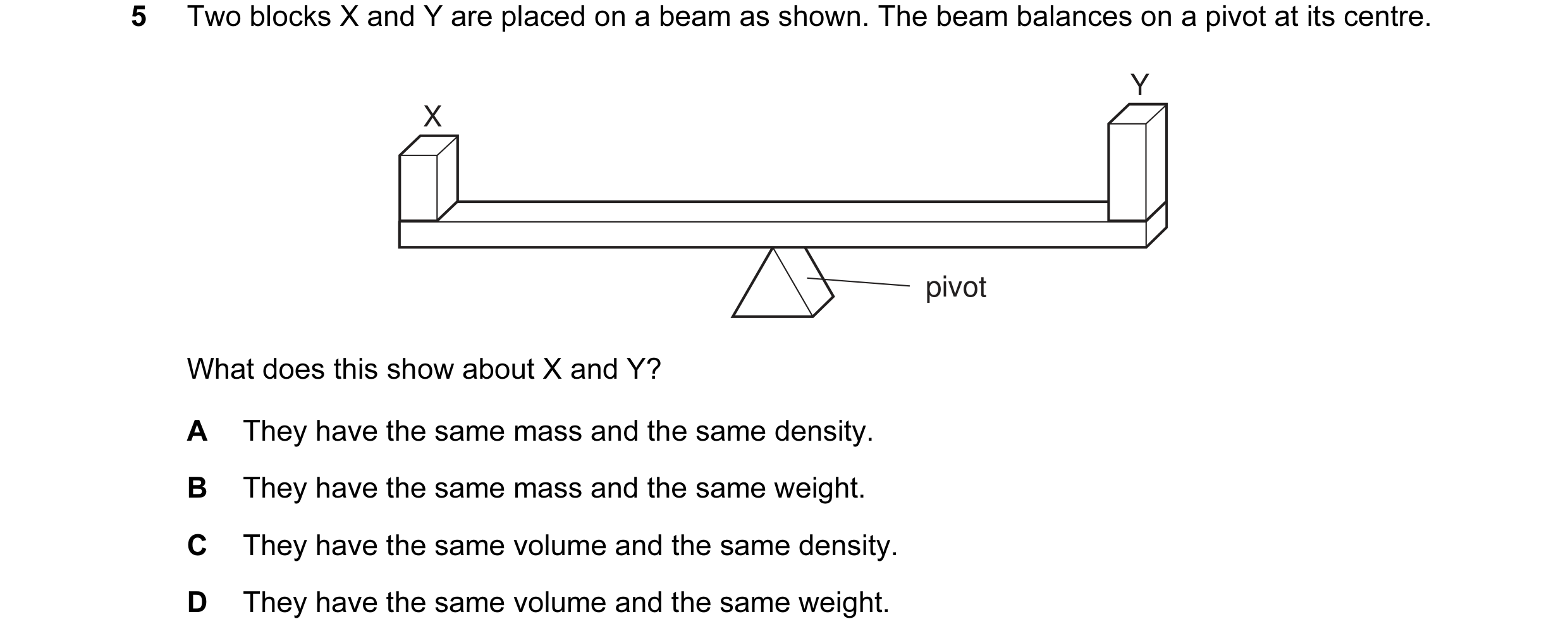
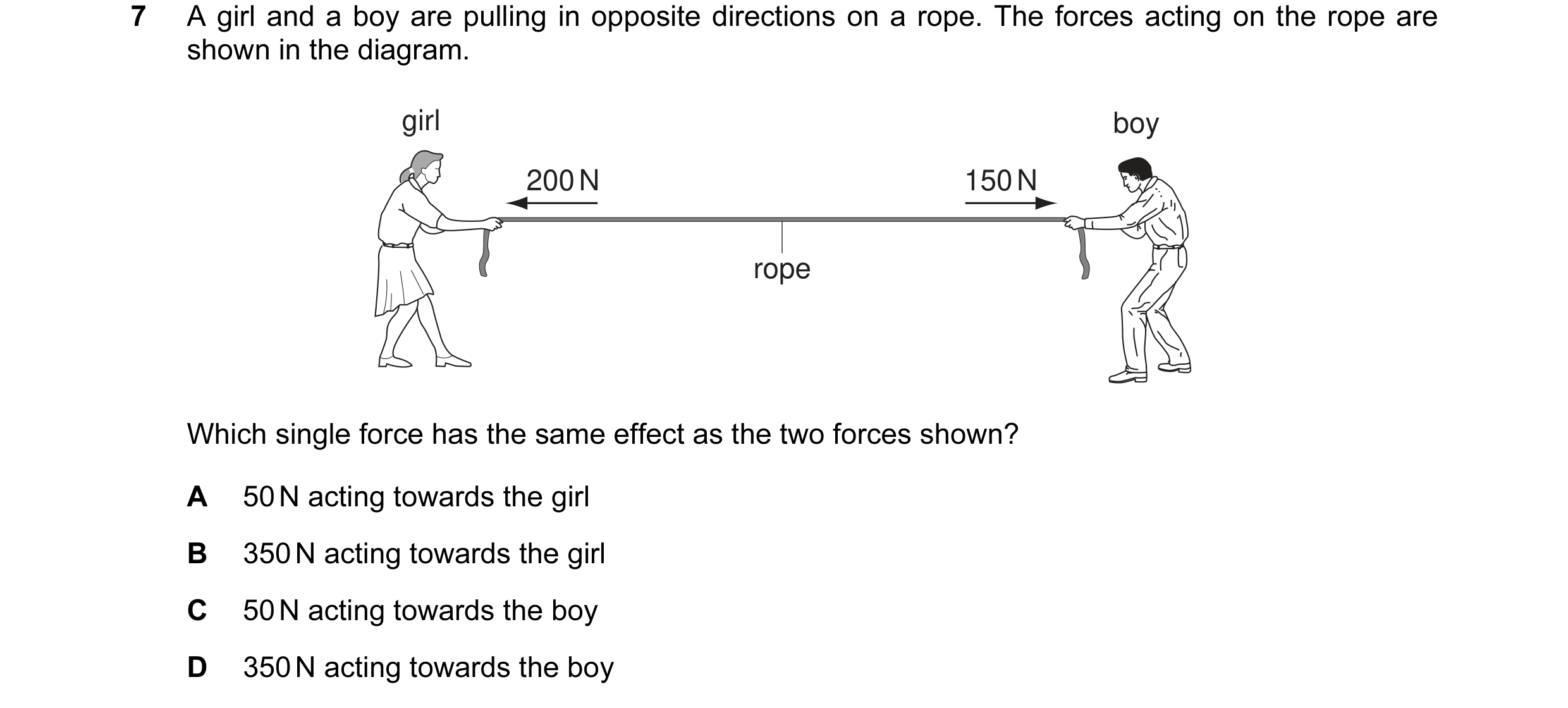 1 / 113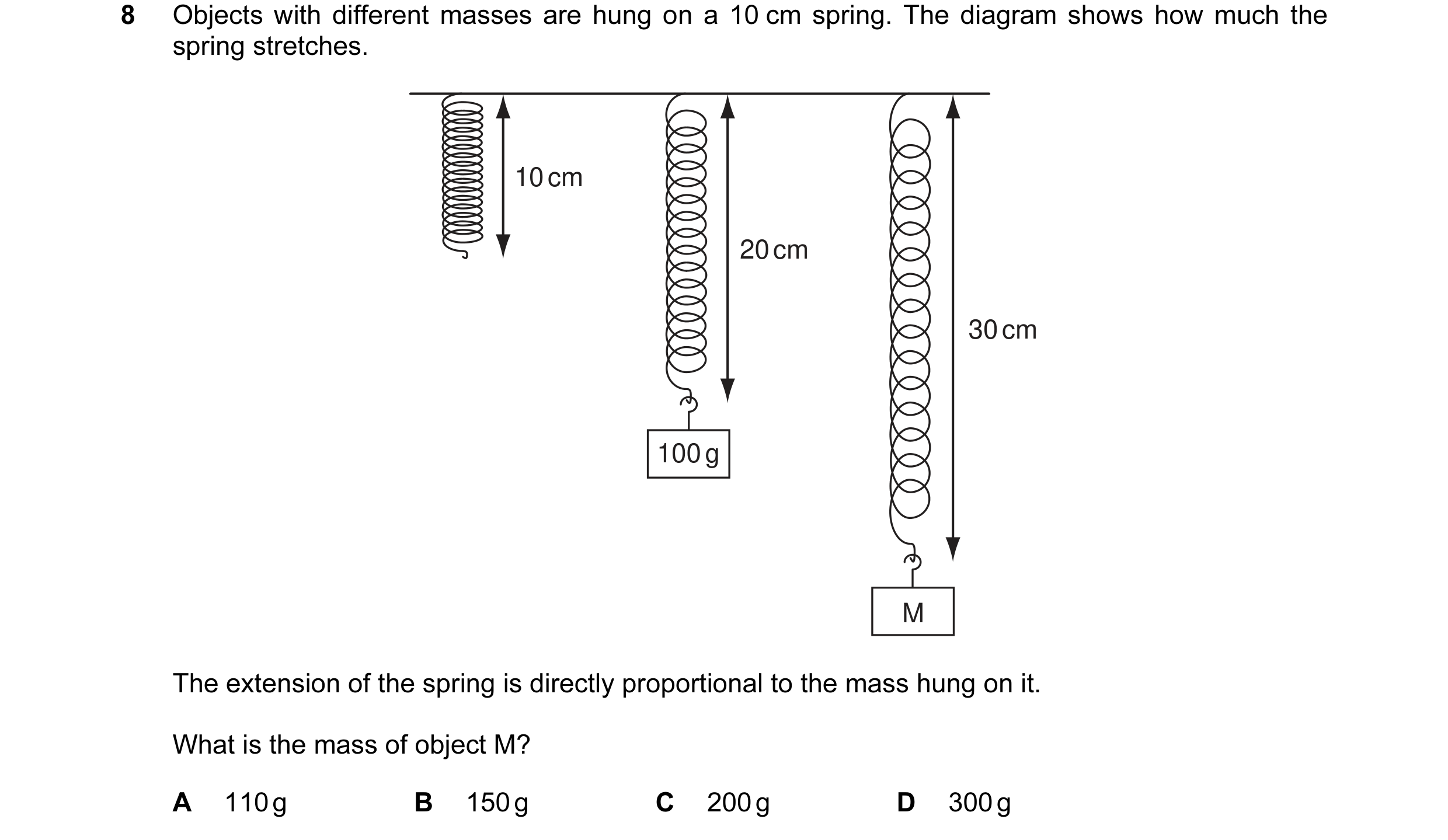

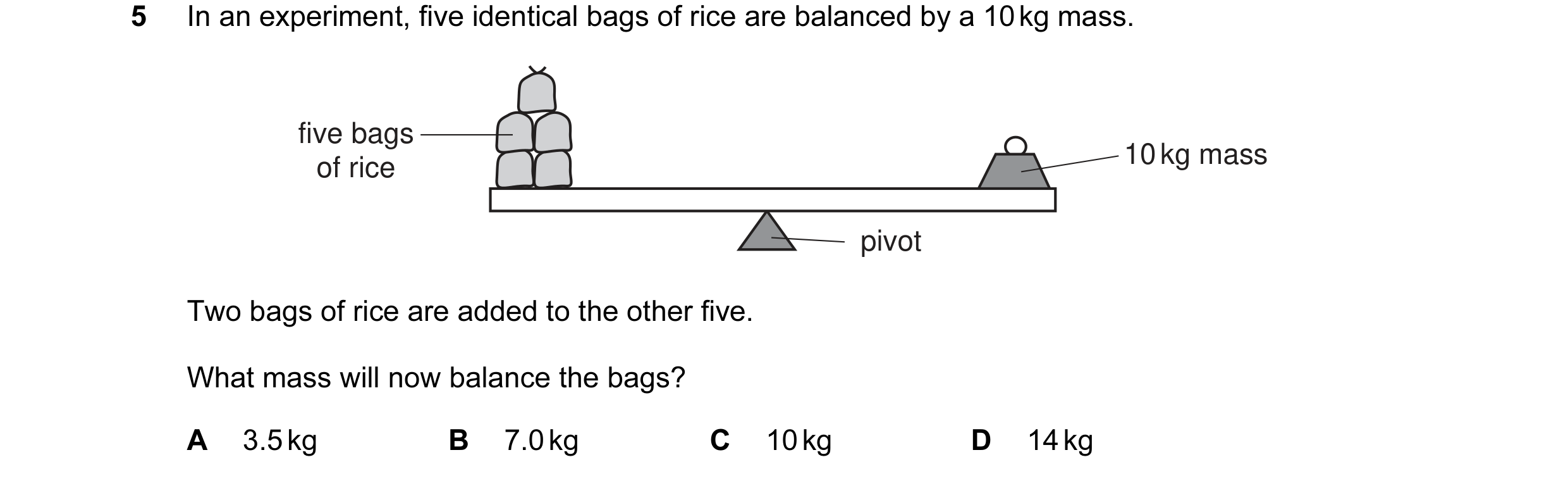 2 / 113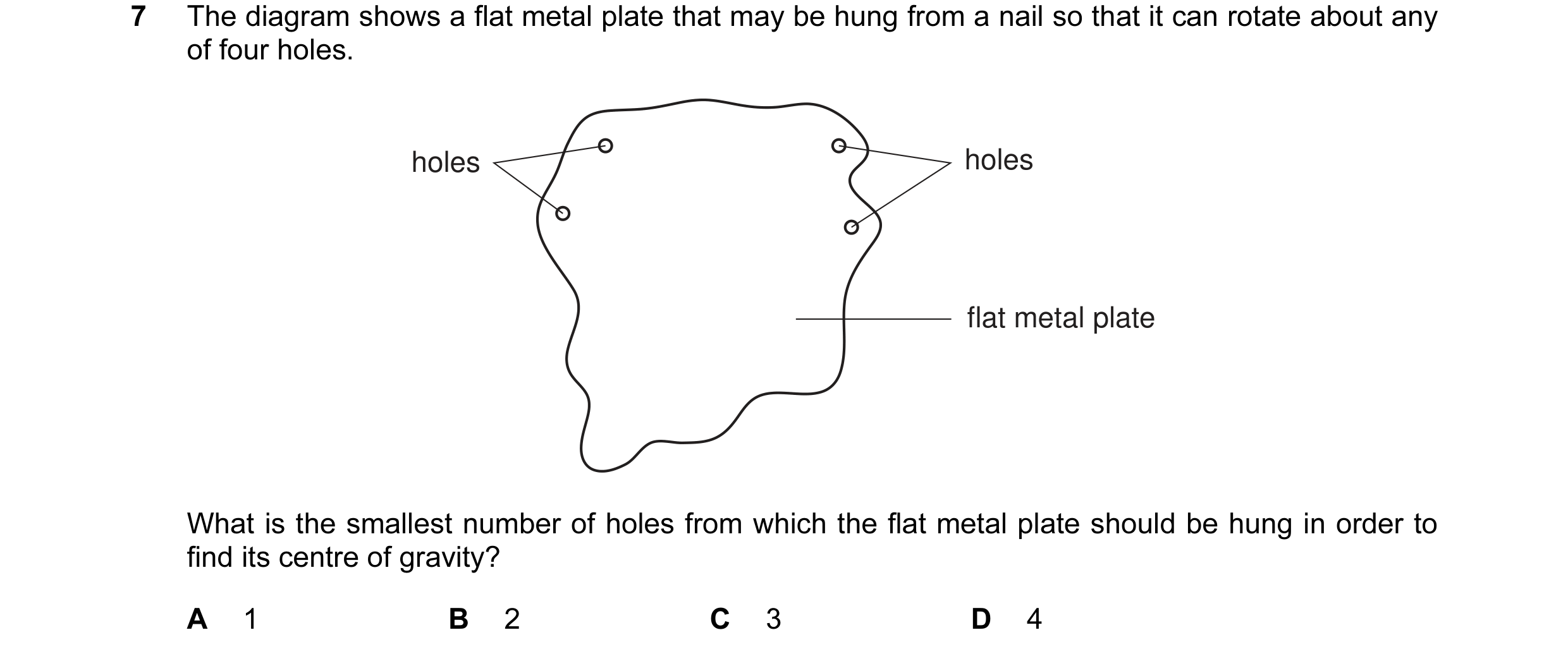
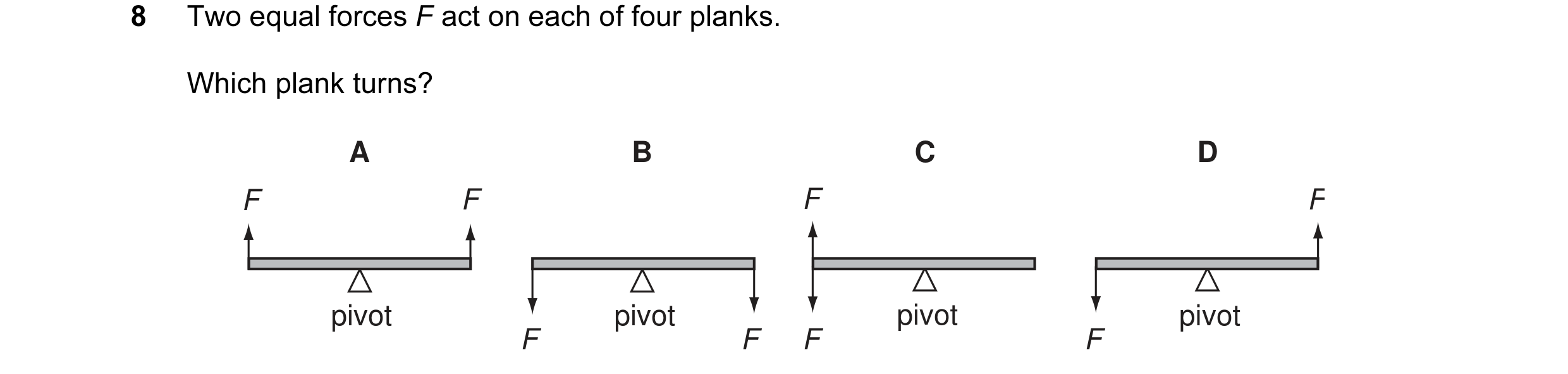
 3 / 113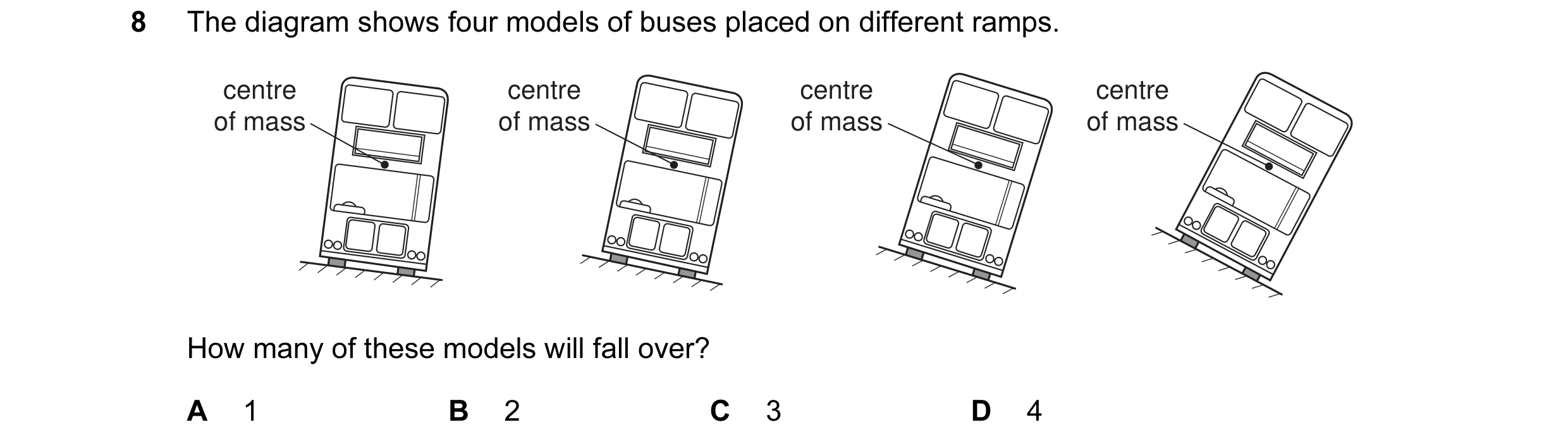
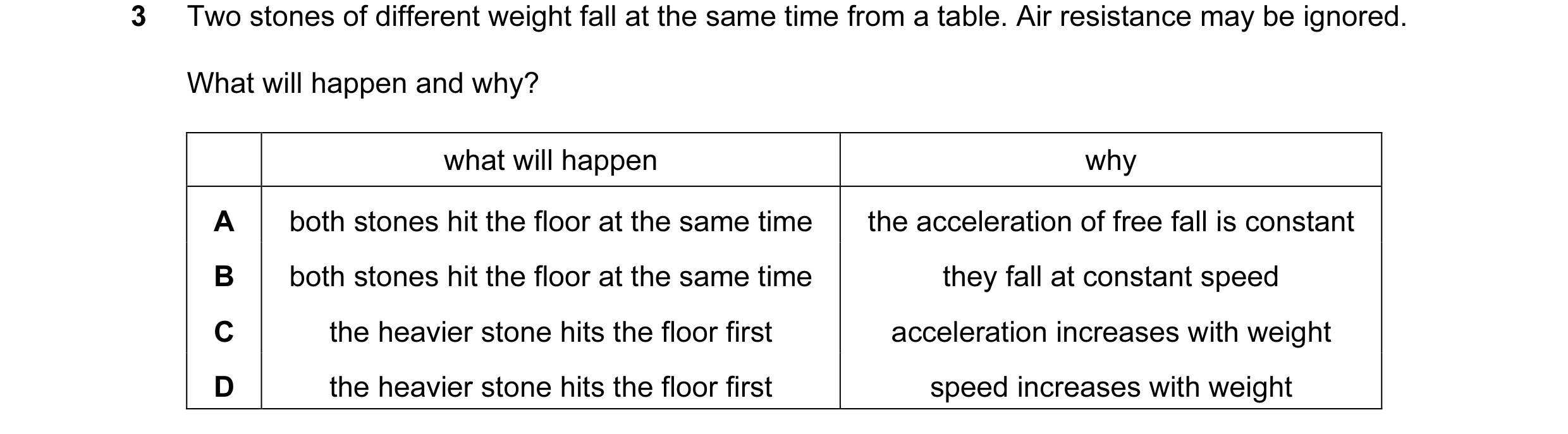
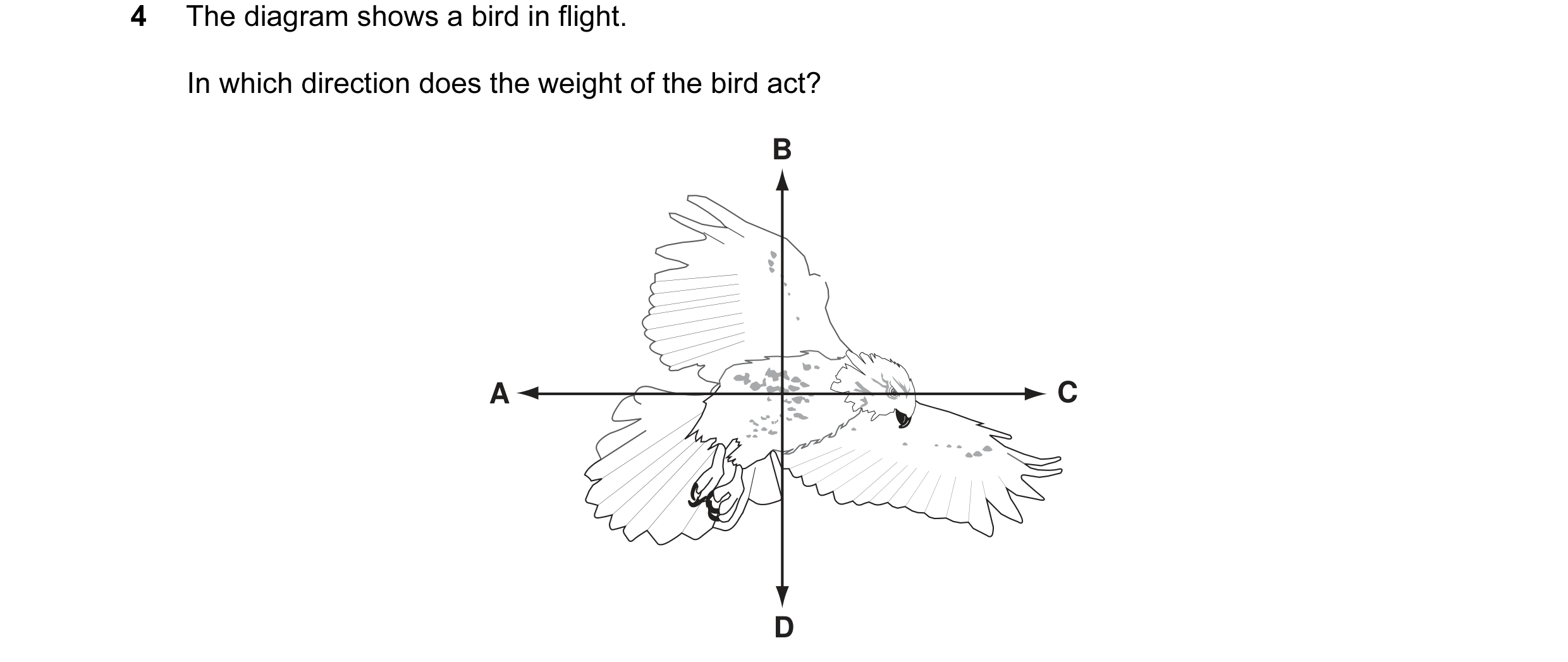
 4 / 113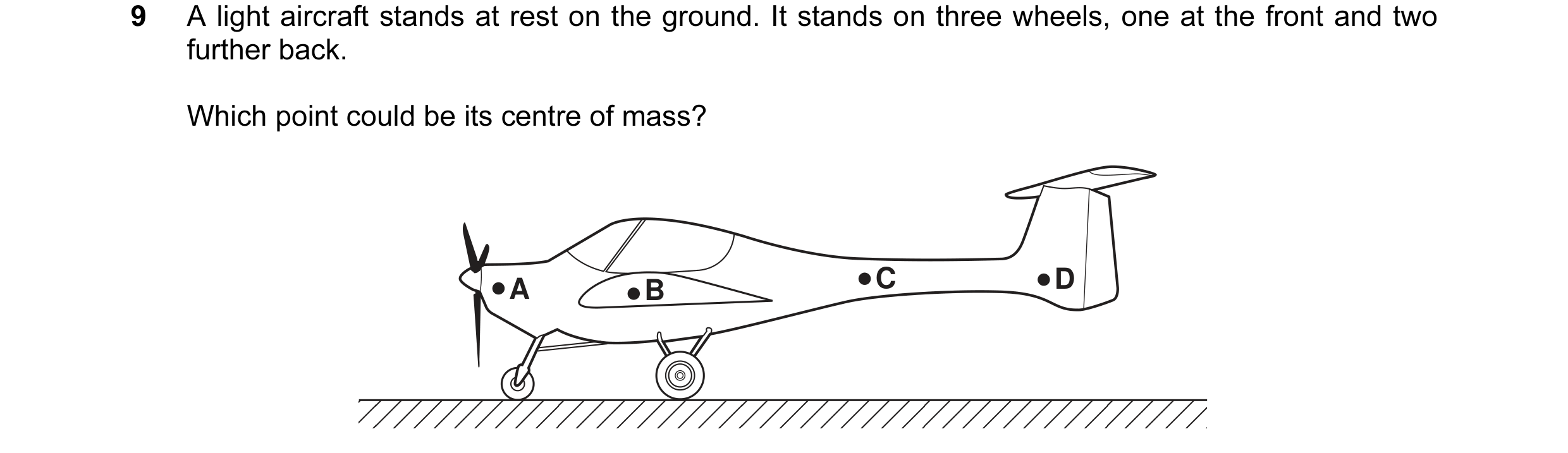
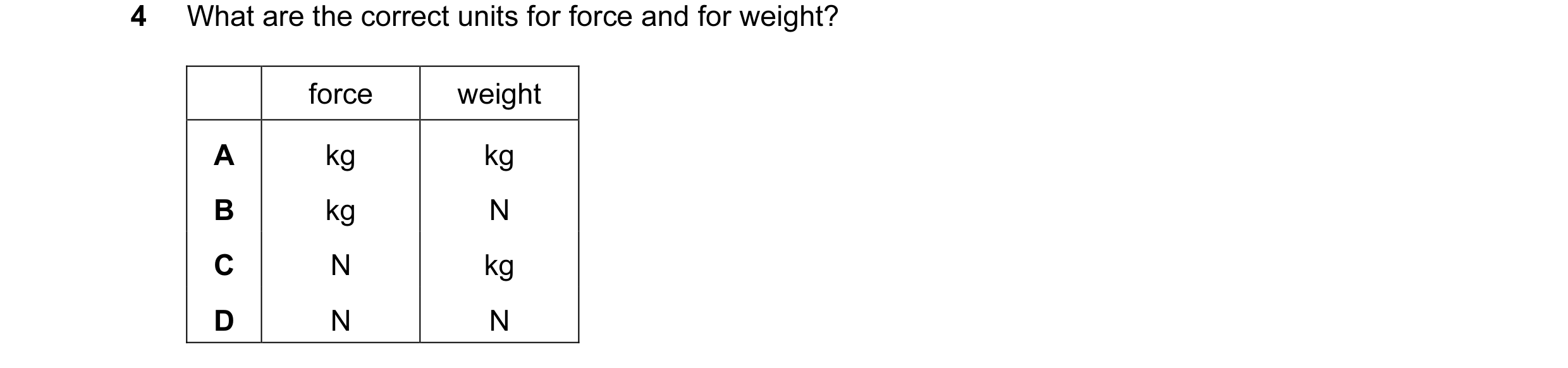
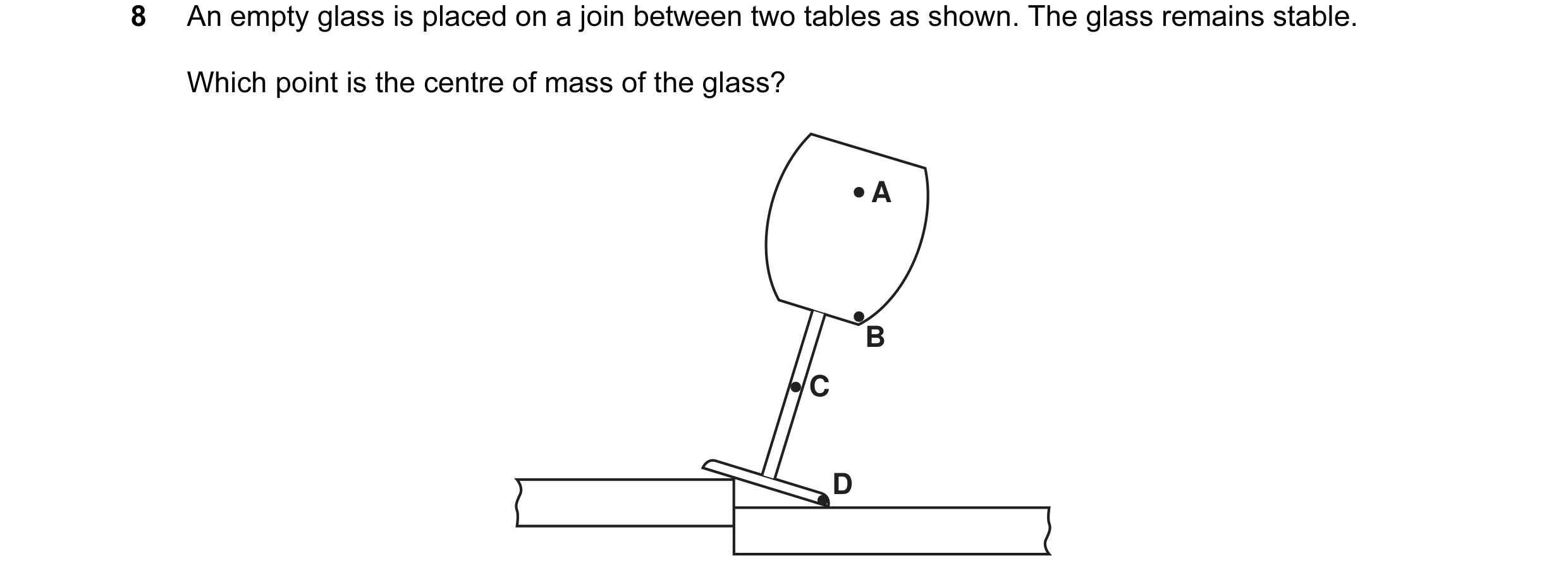 5 / 113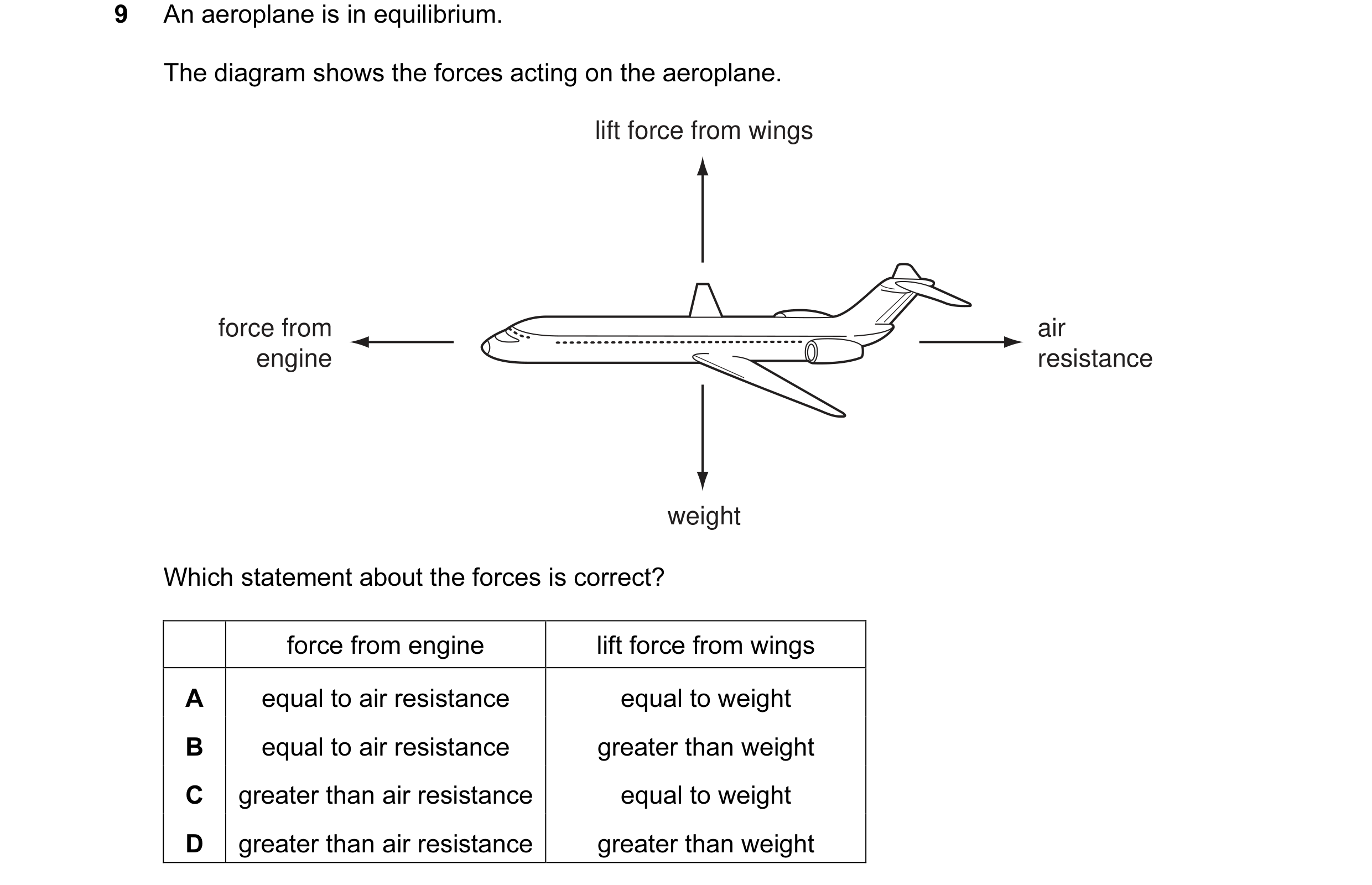
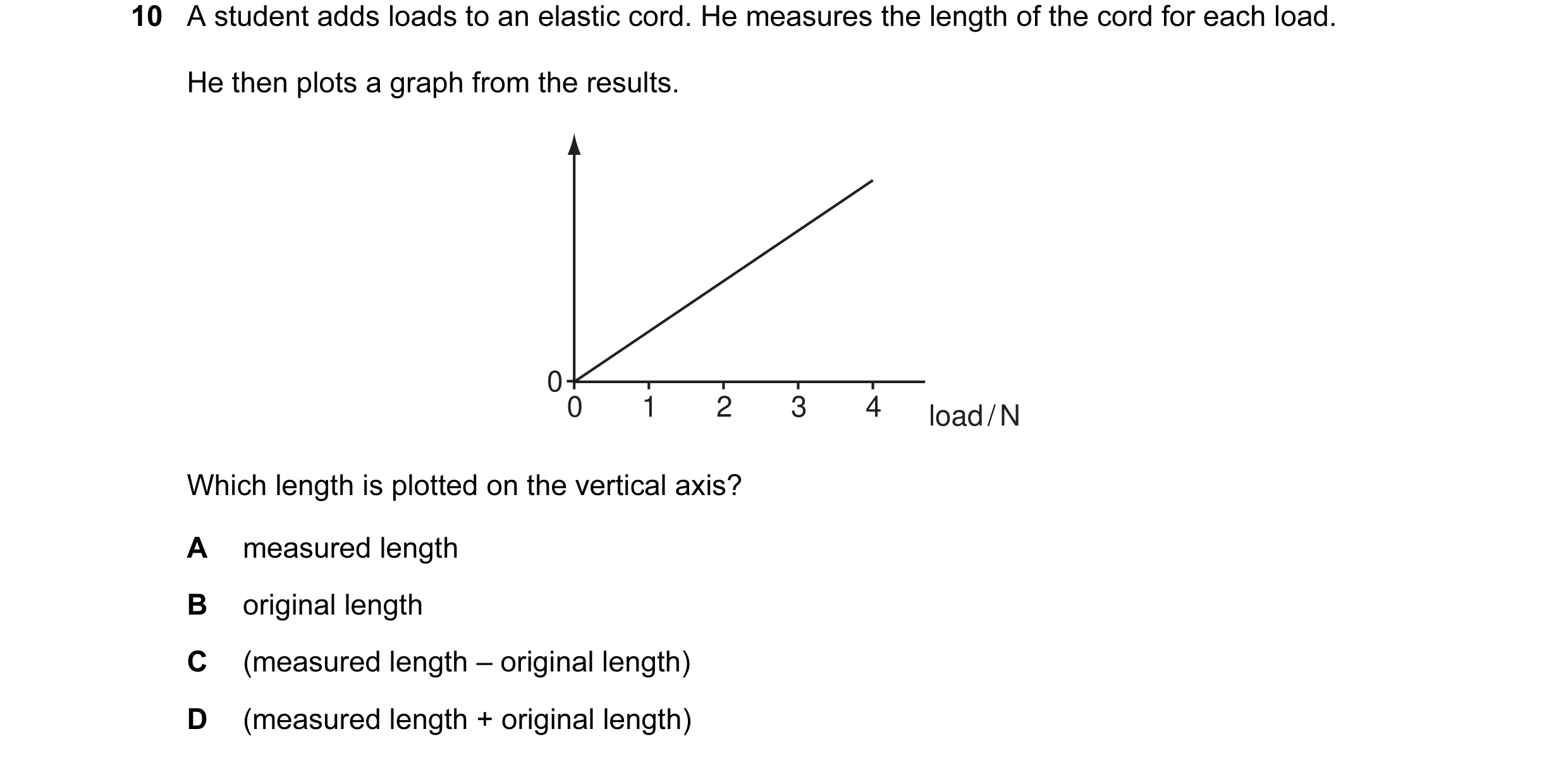 6 / 113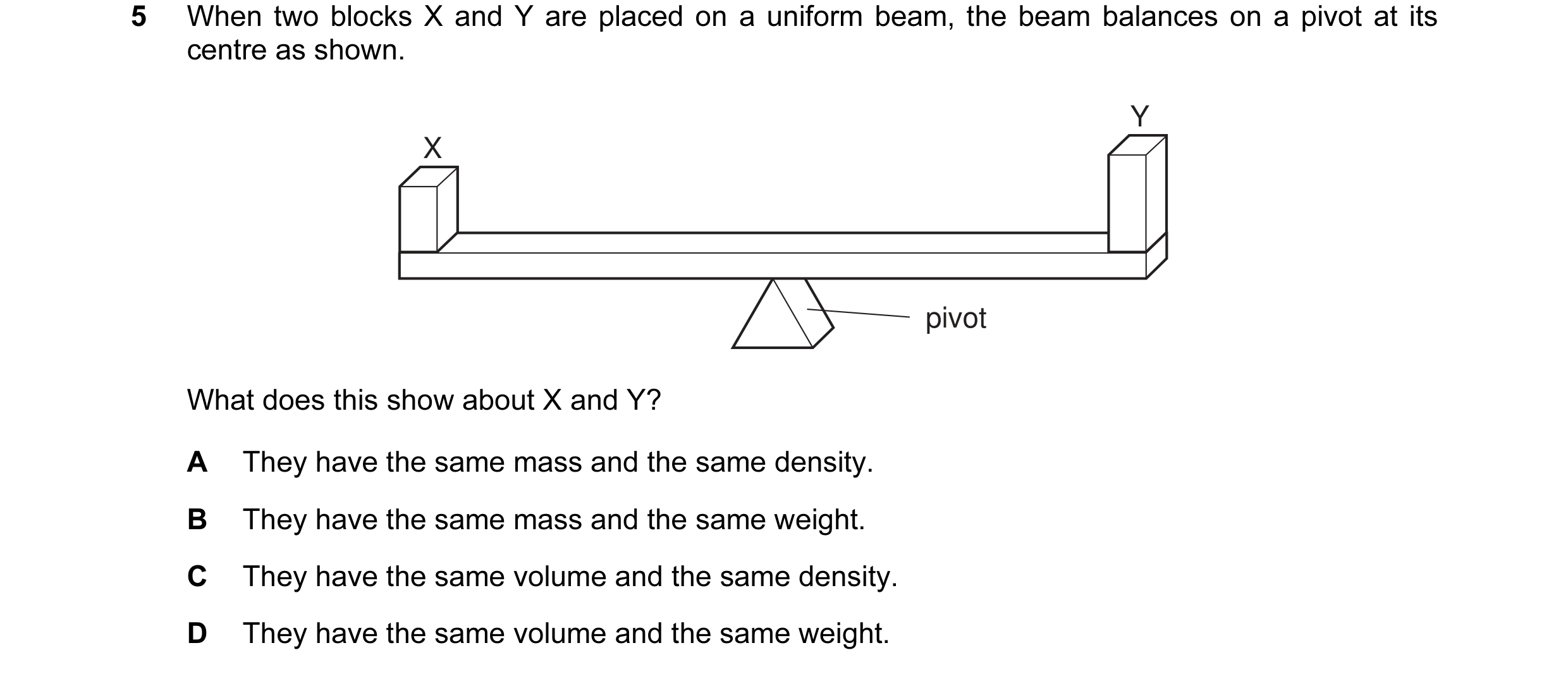
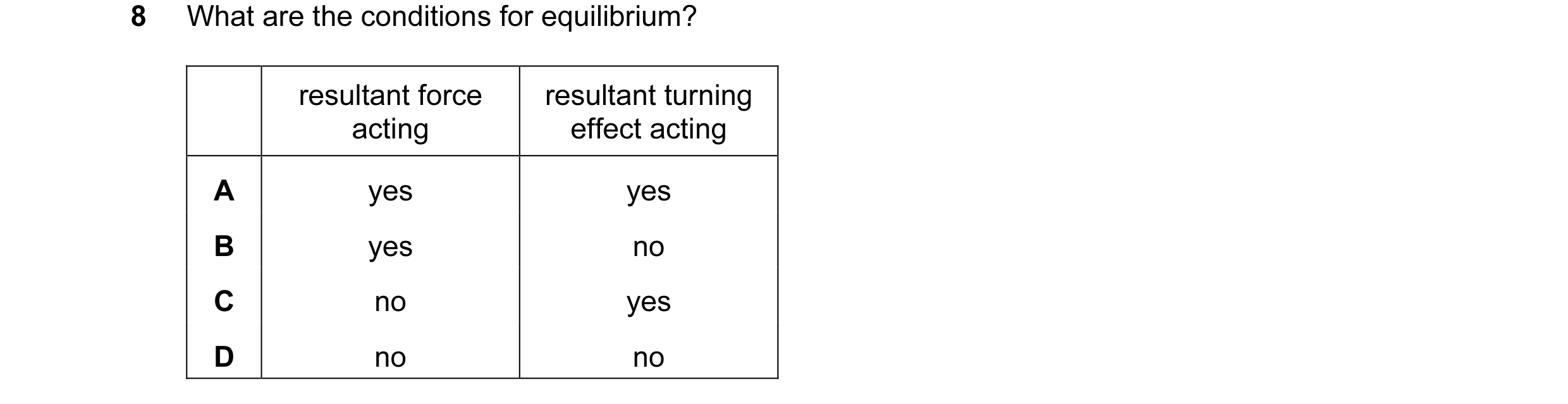
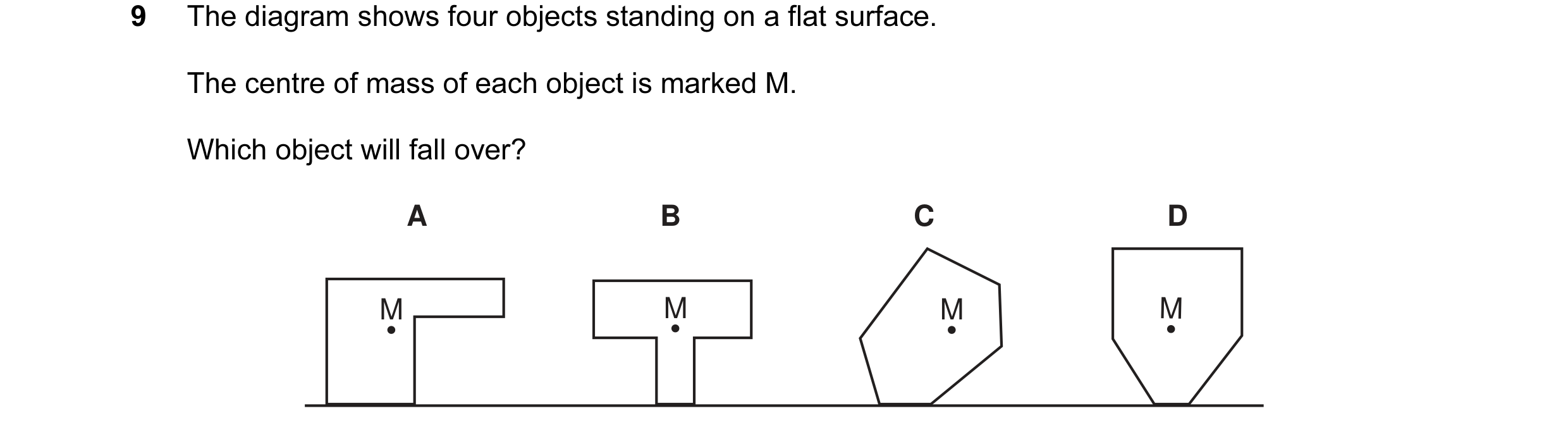 7 / 113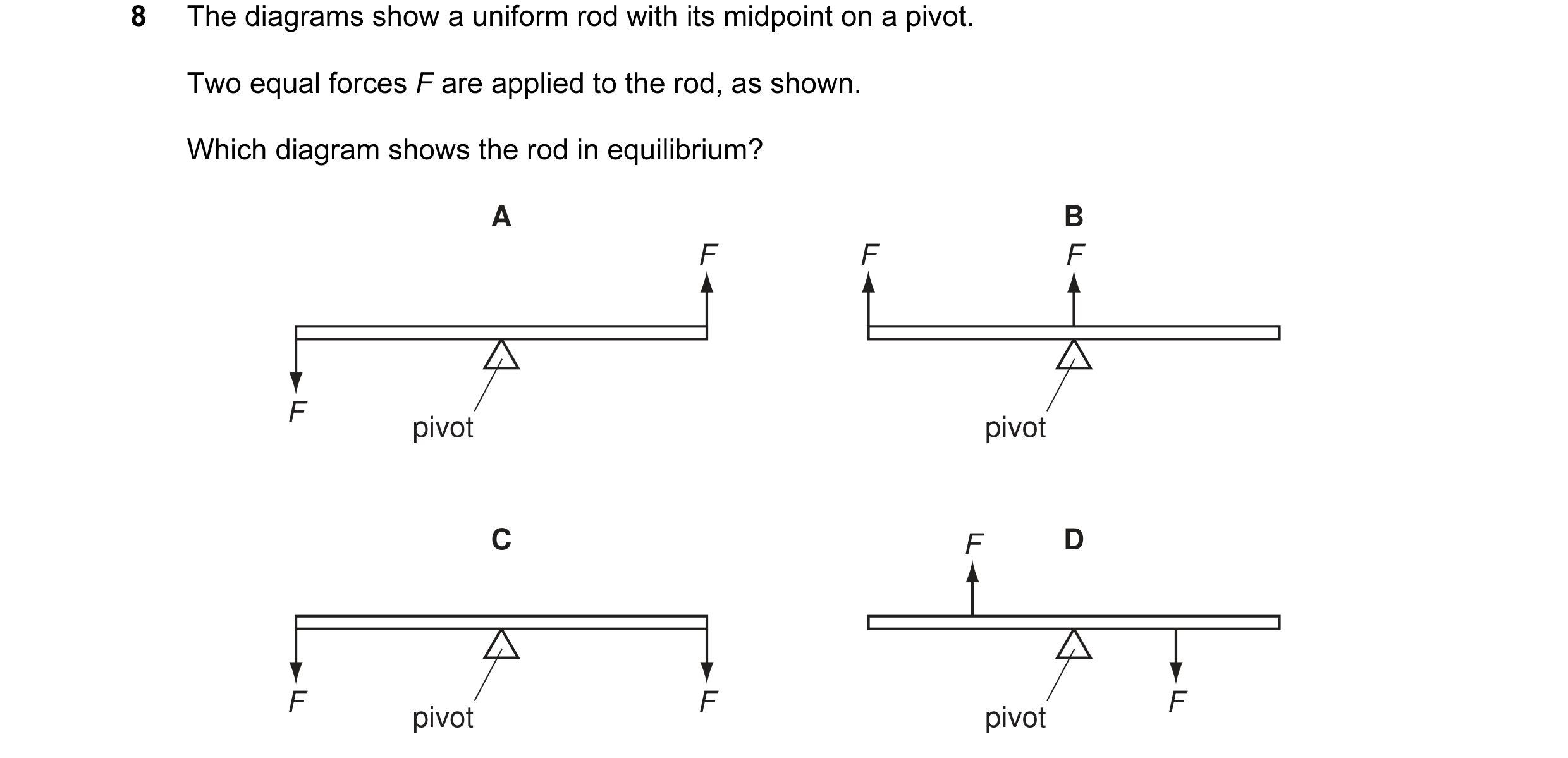
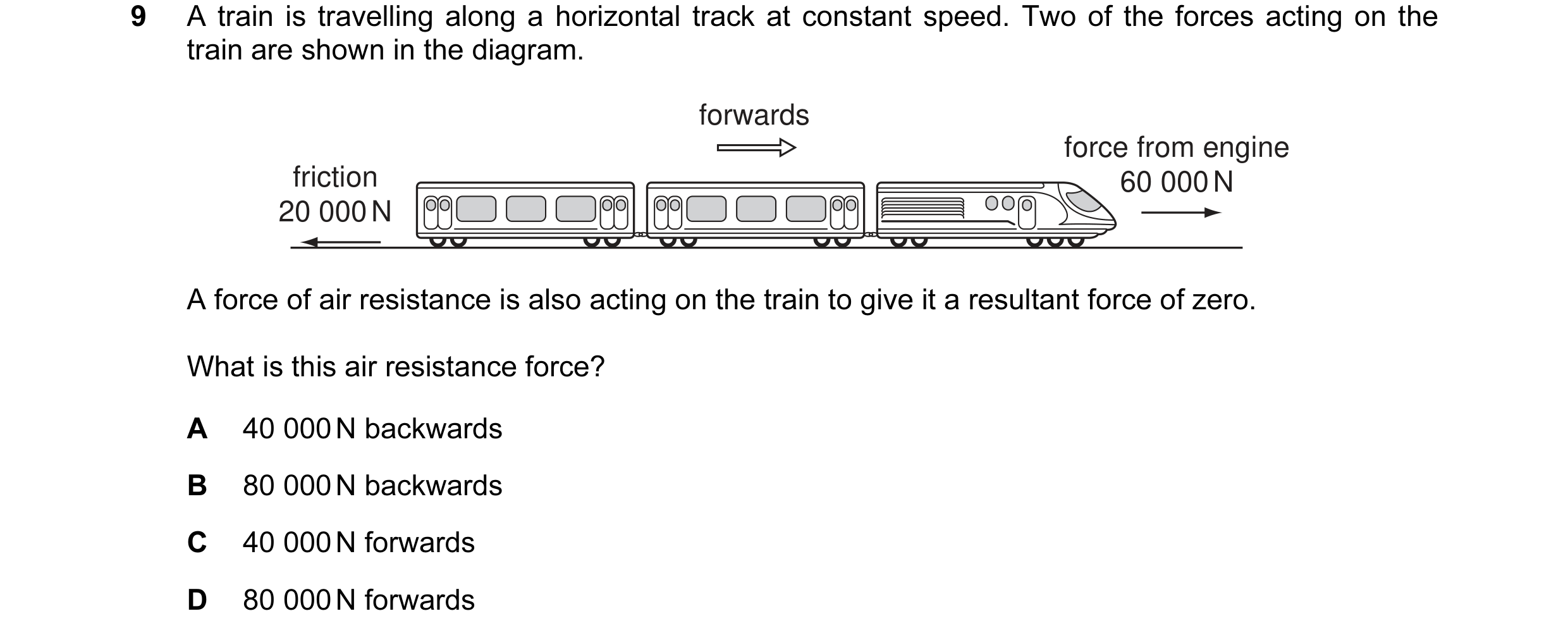 8 / 113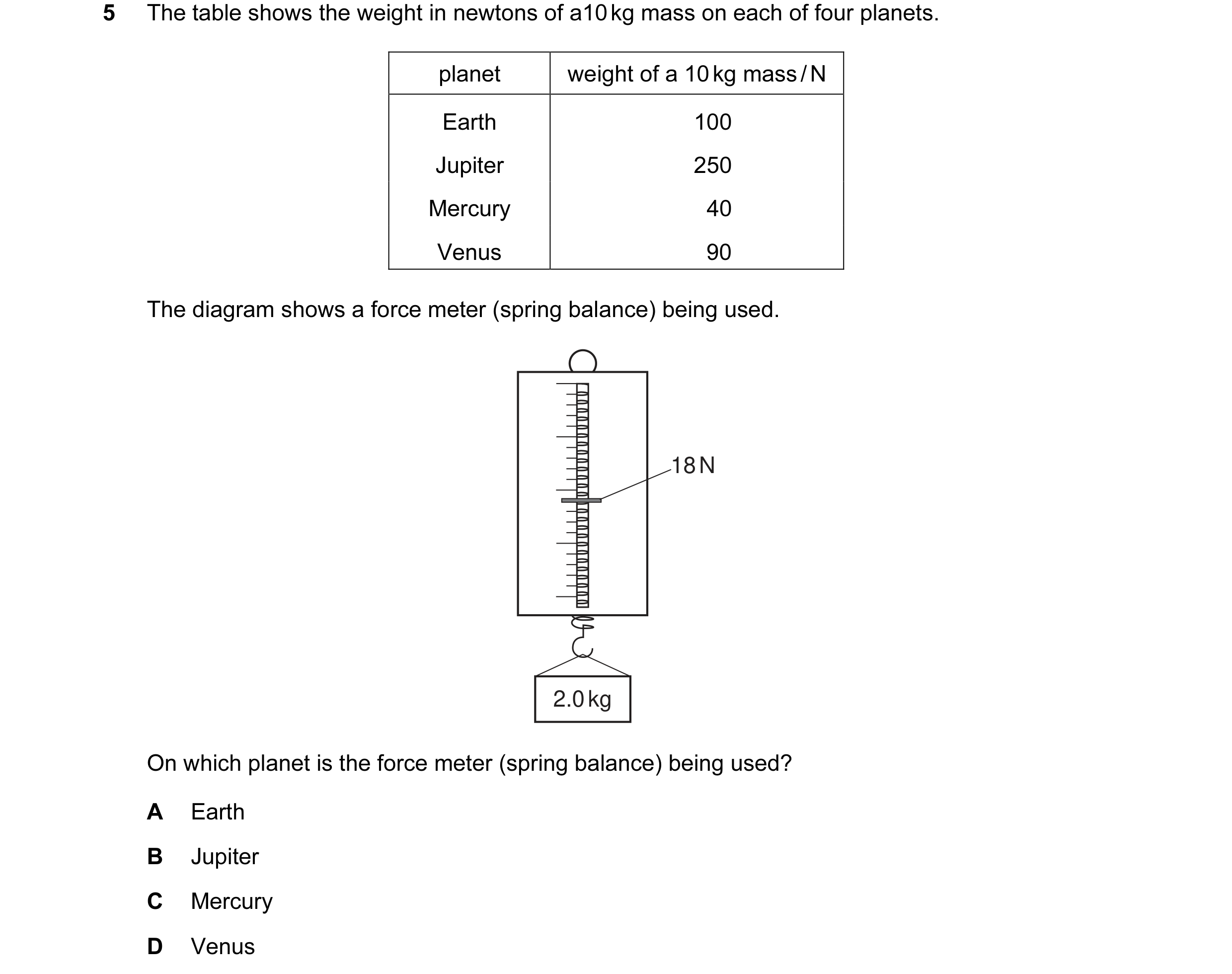
 9 / 113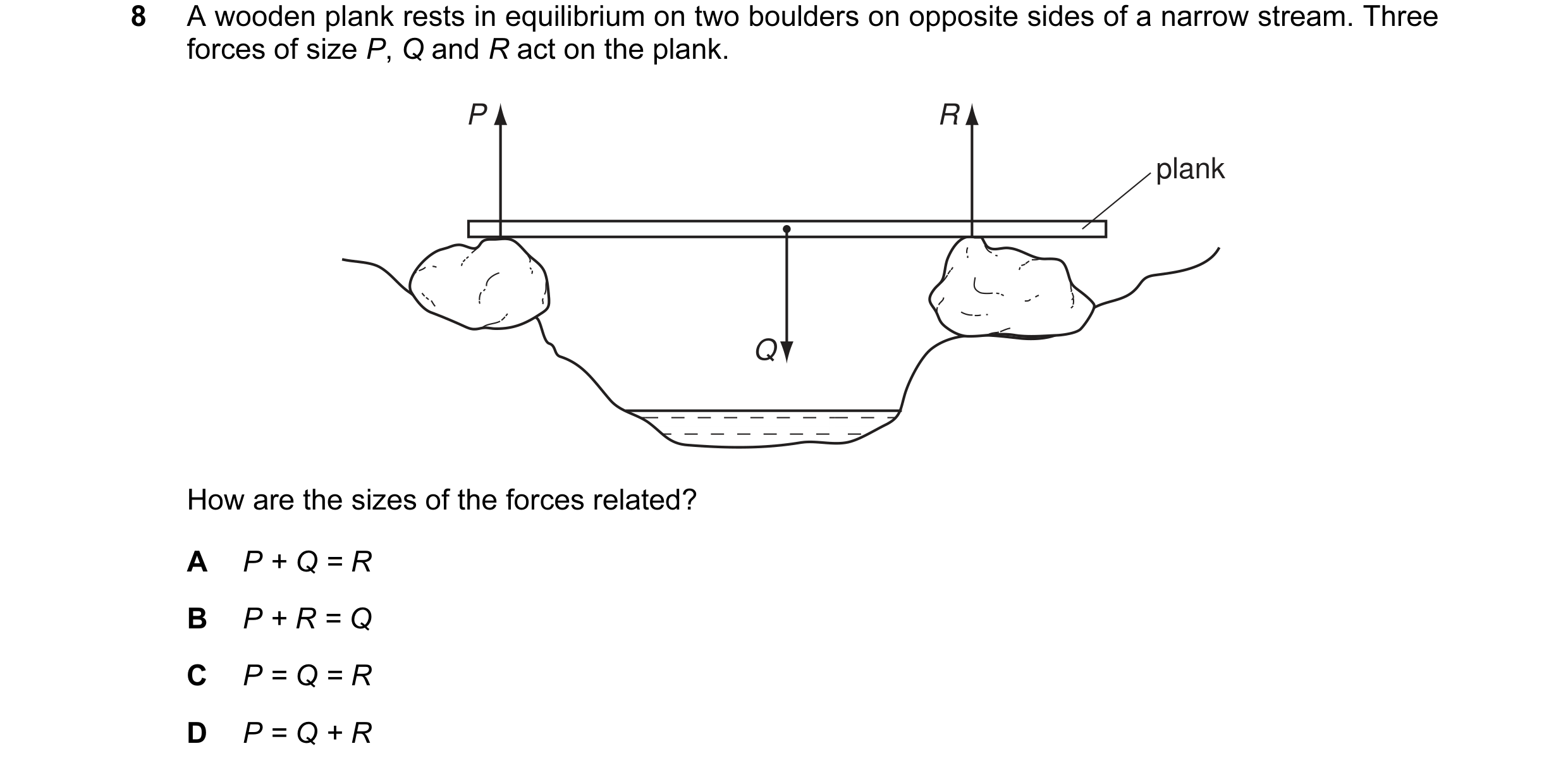
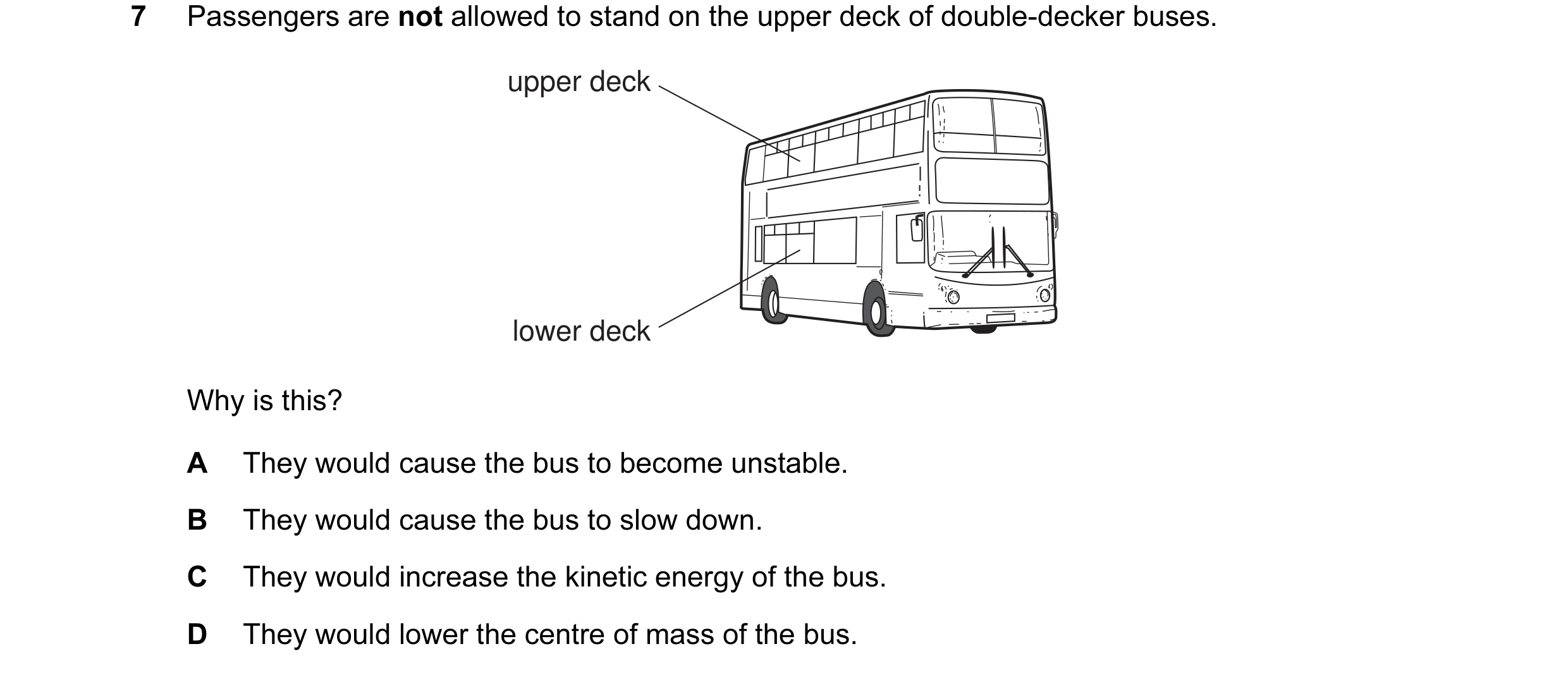 10 / 113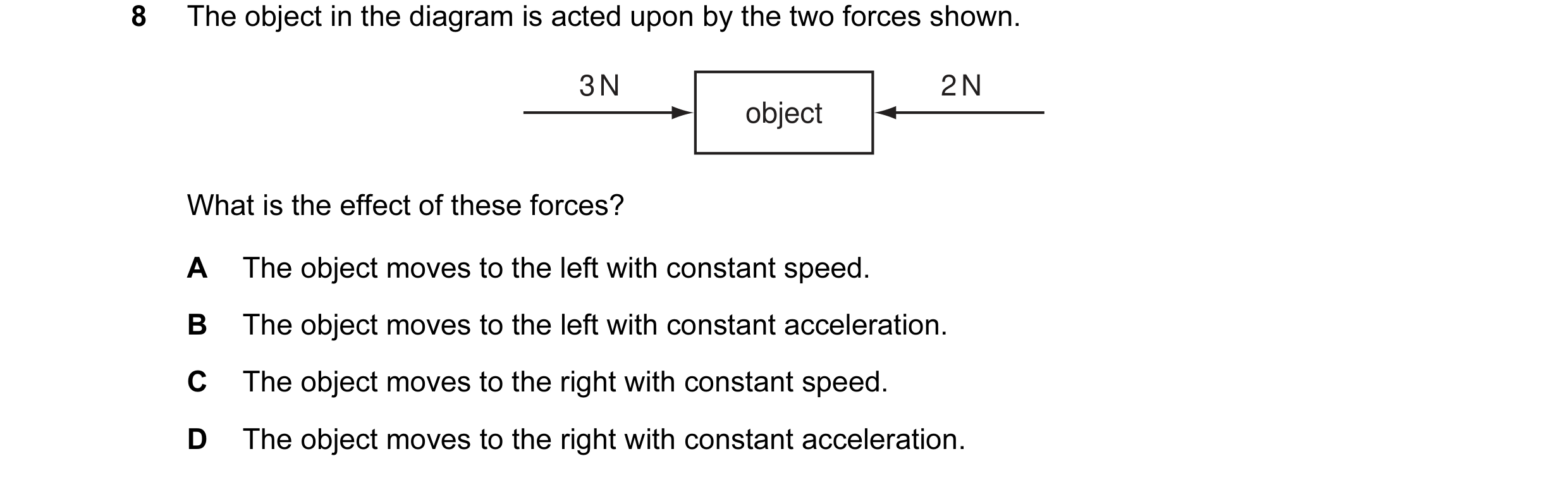

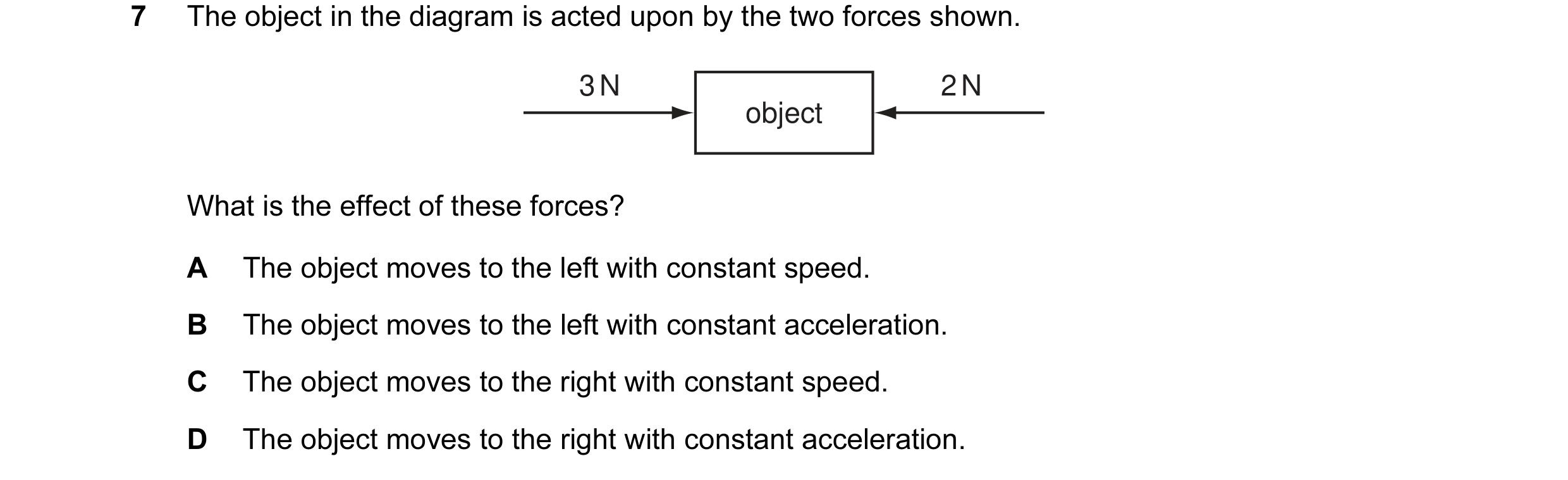 11 / 113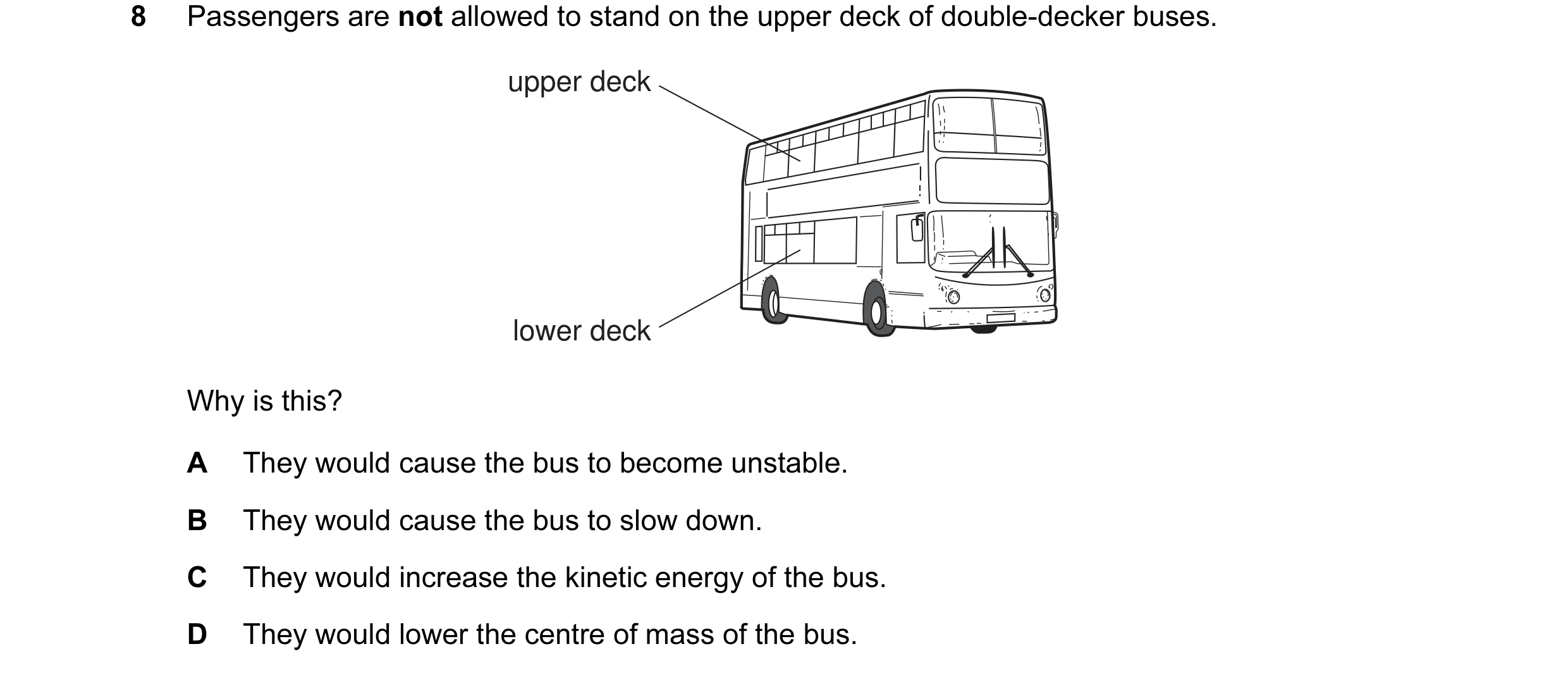

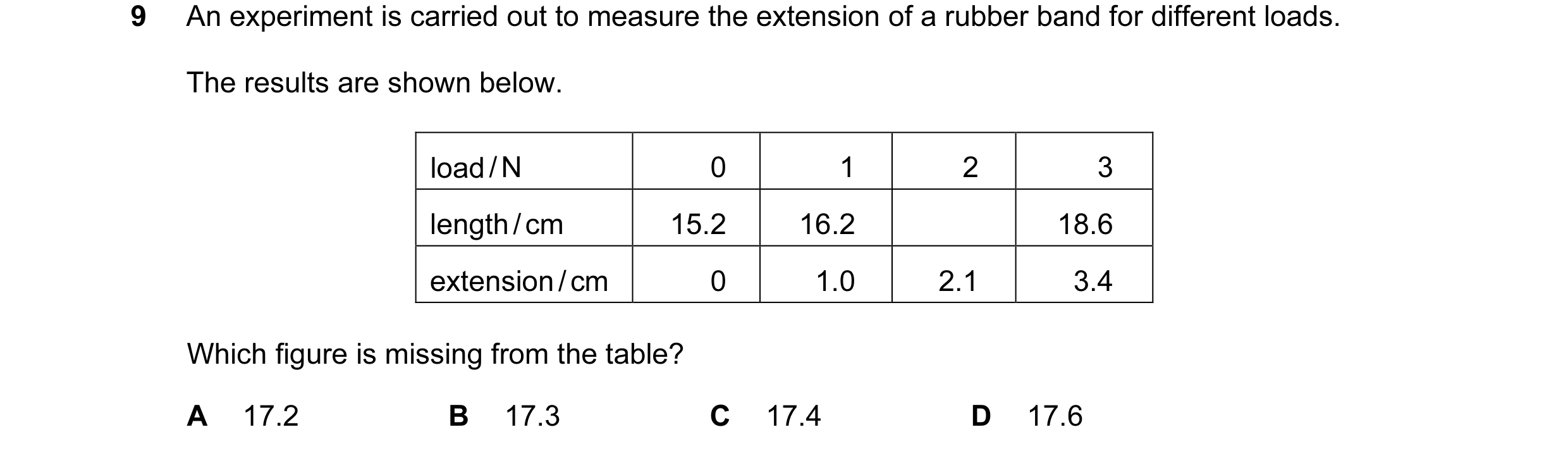
 12 / 113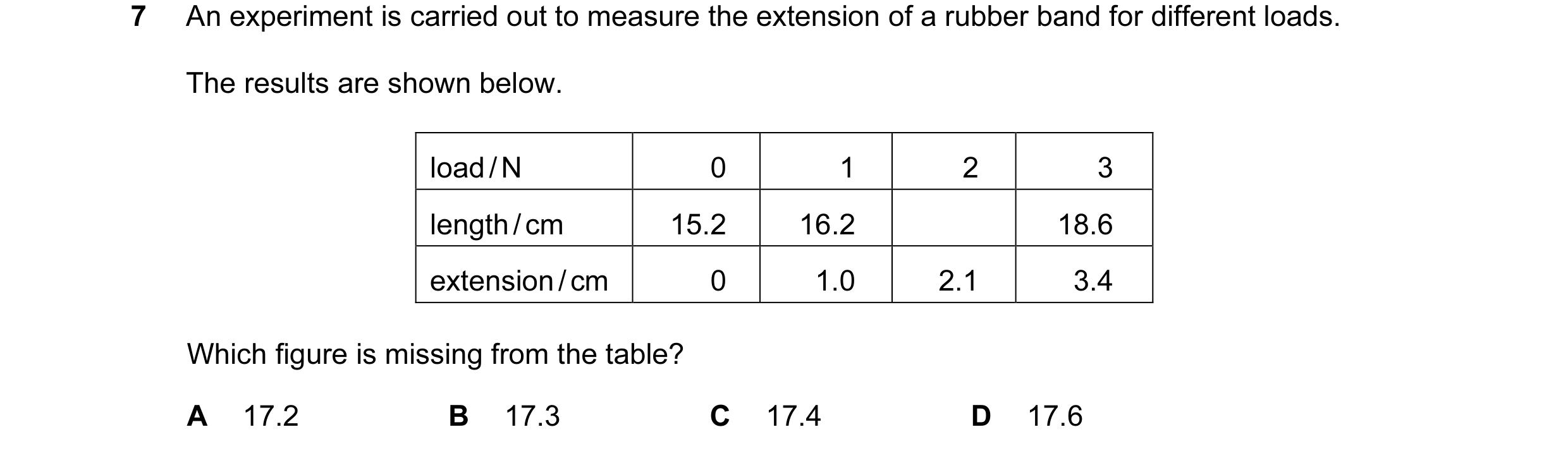

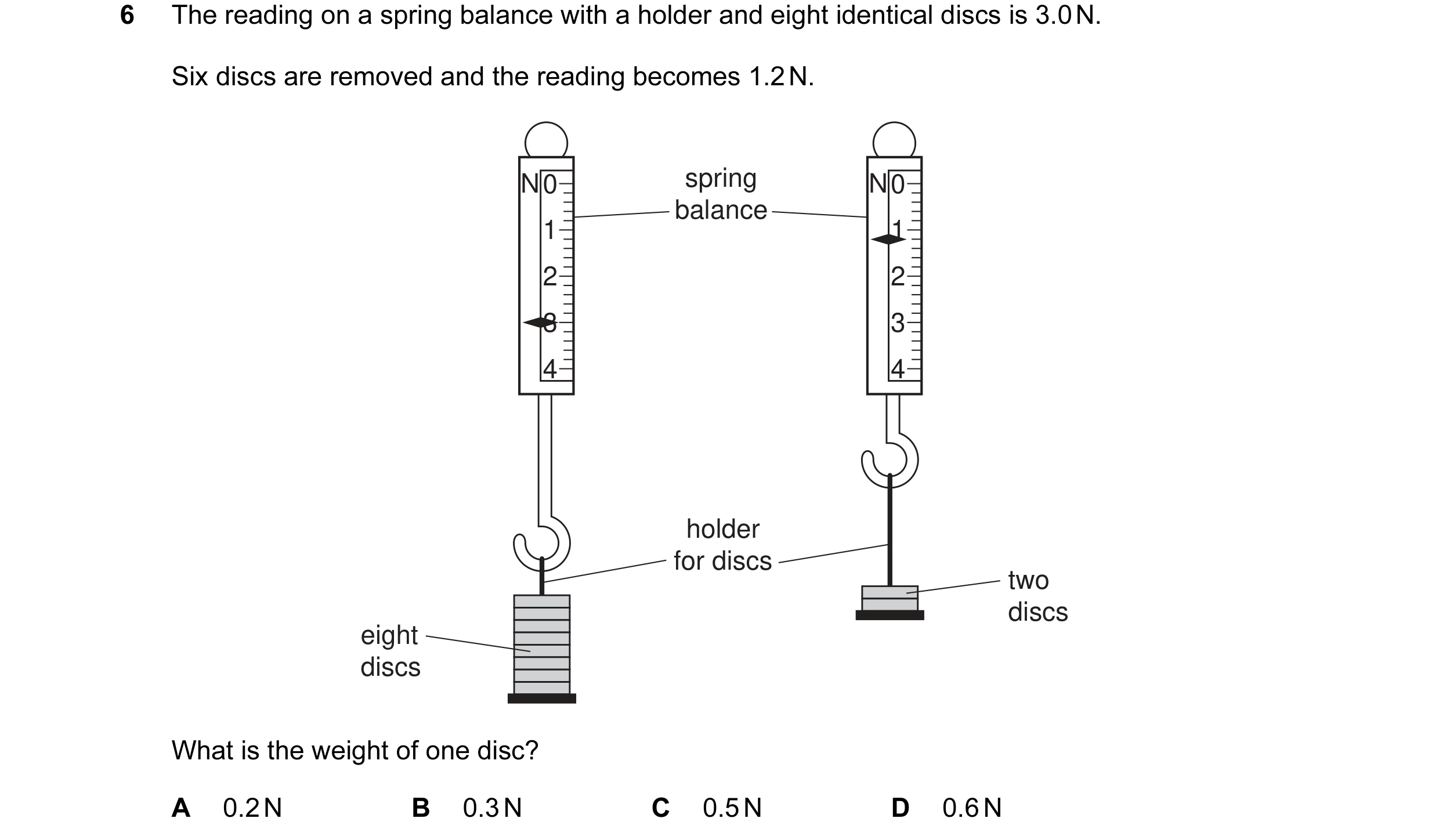
 13 / 113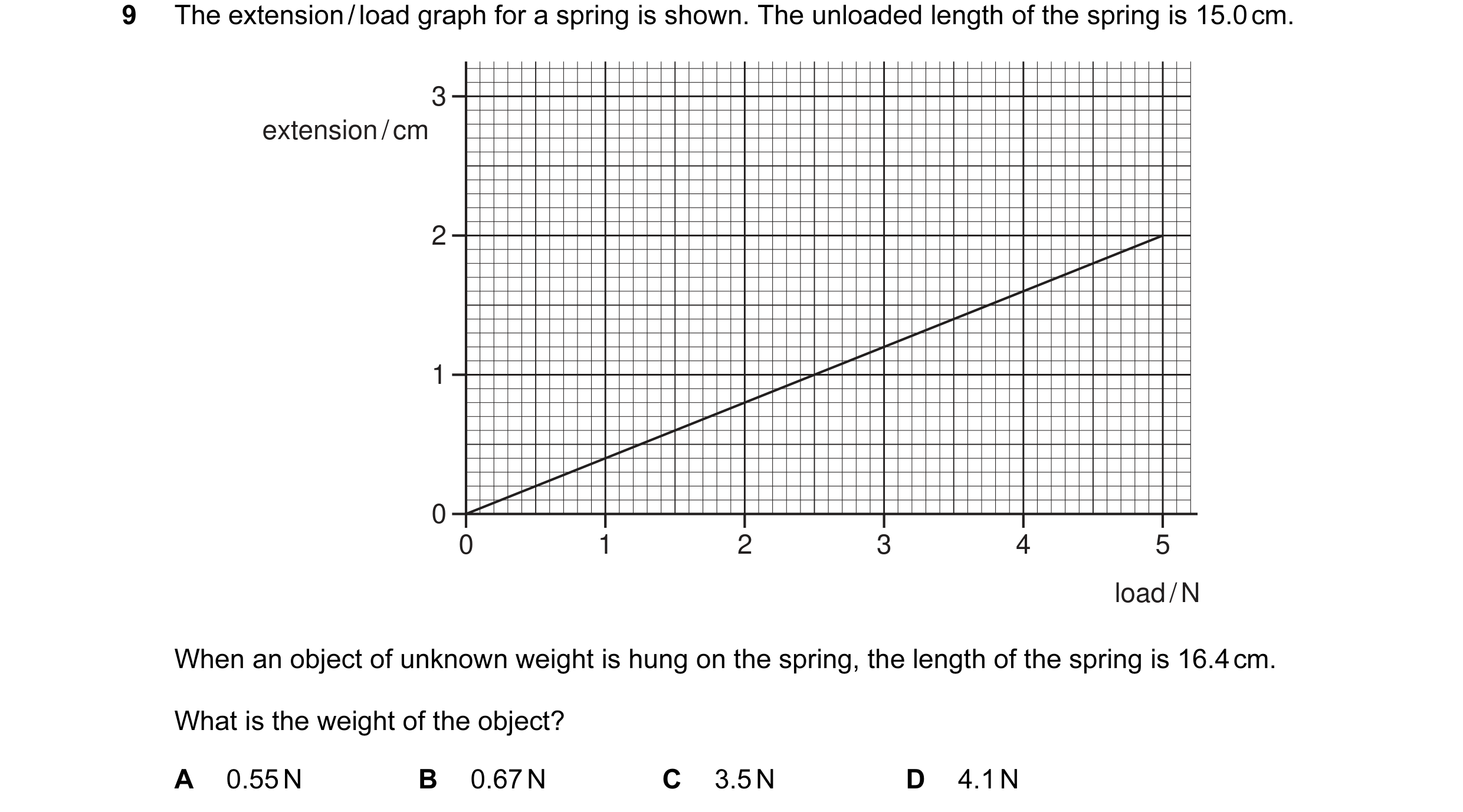

 14 / 113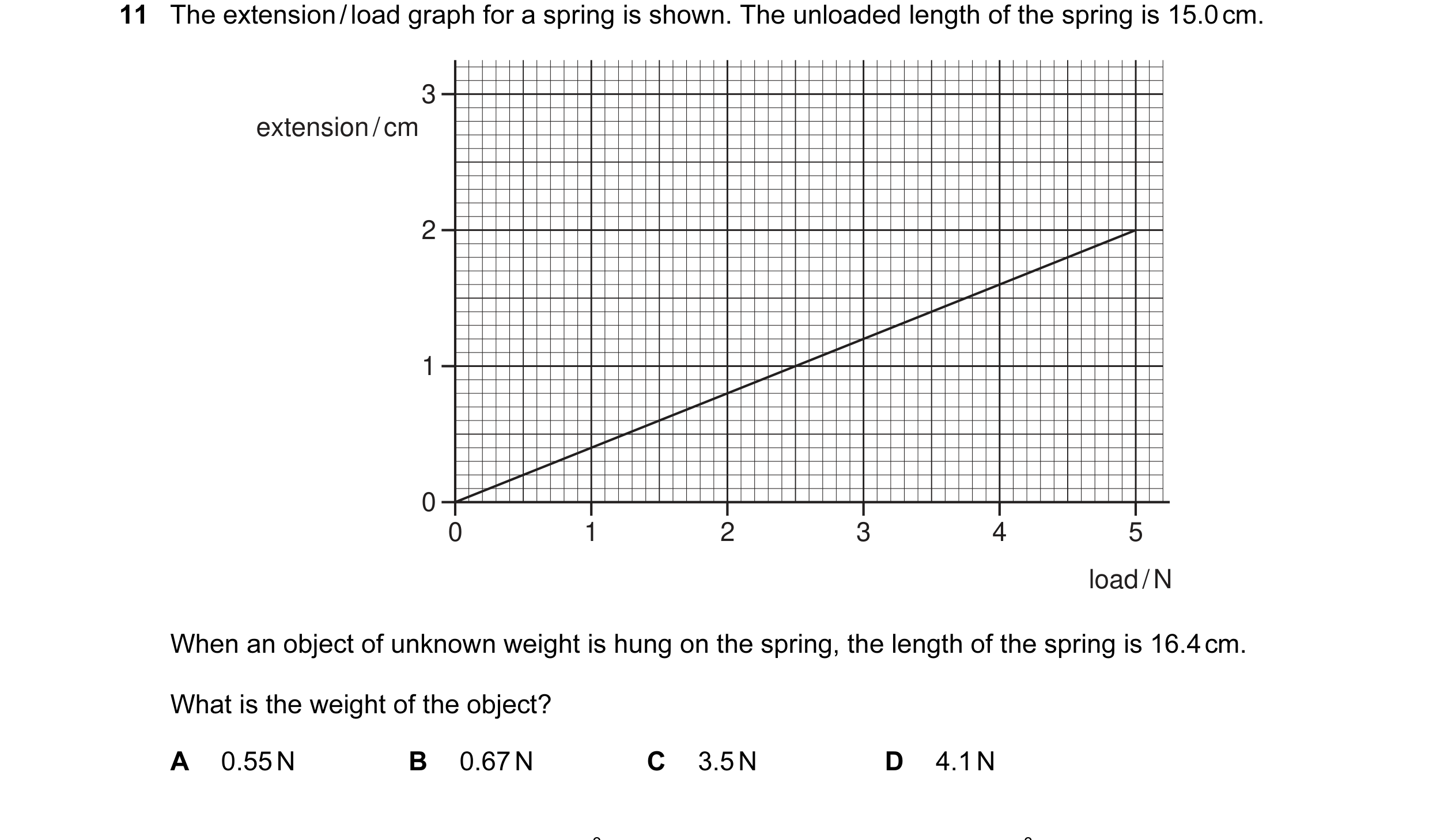
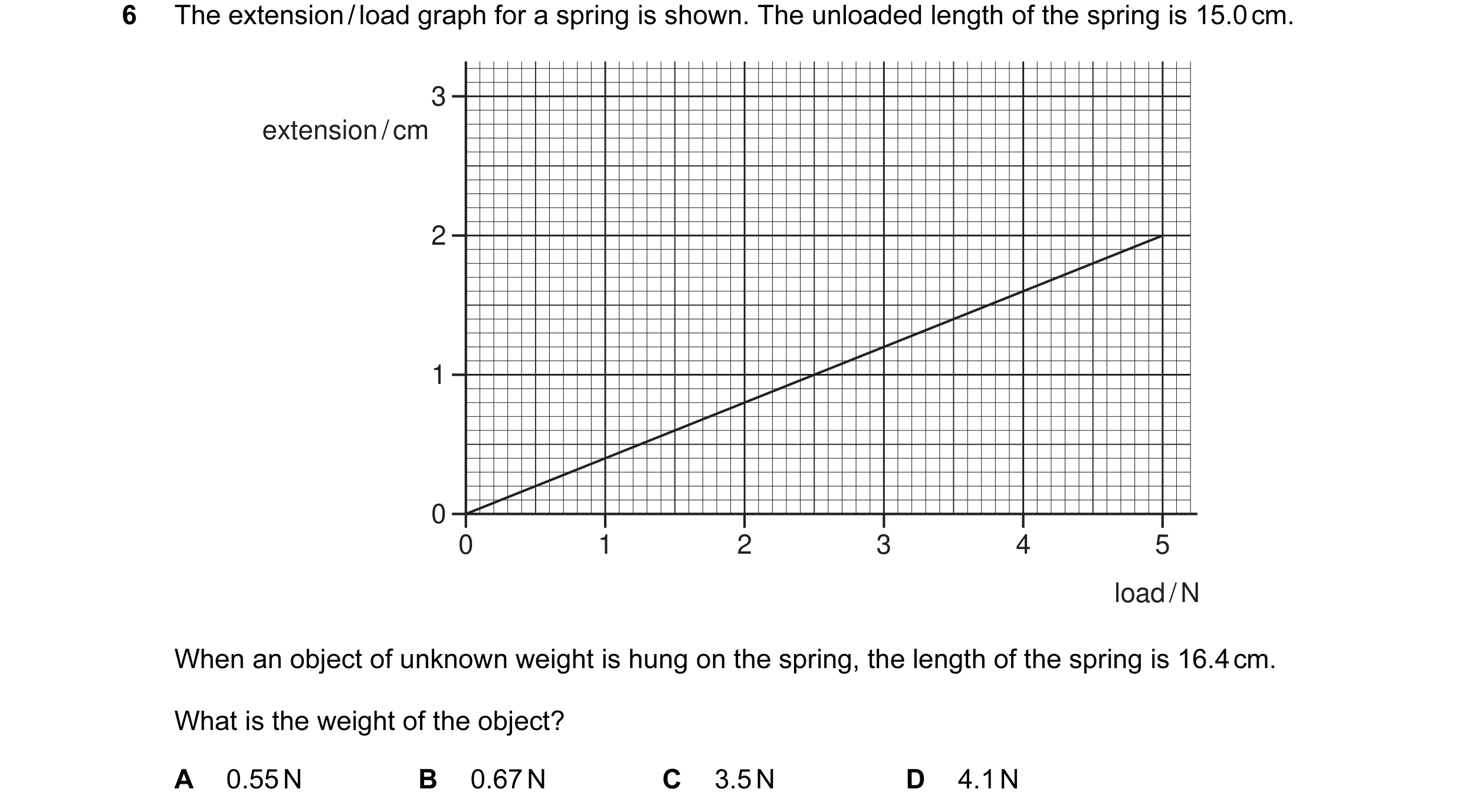
 15 / 113

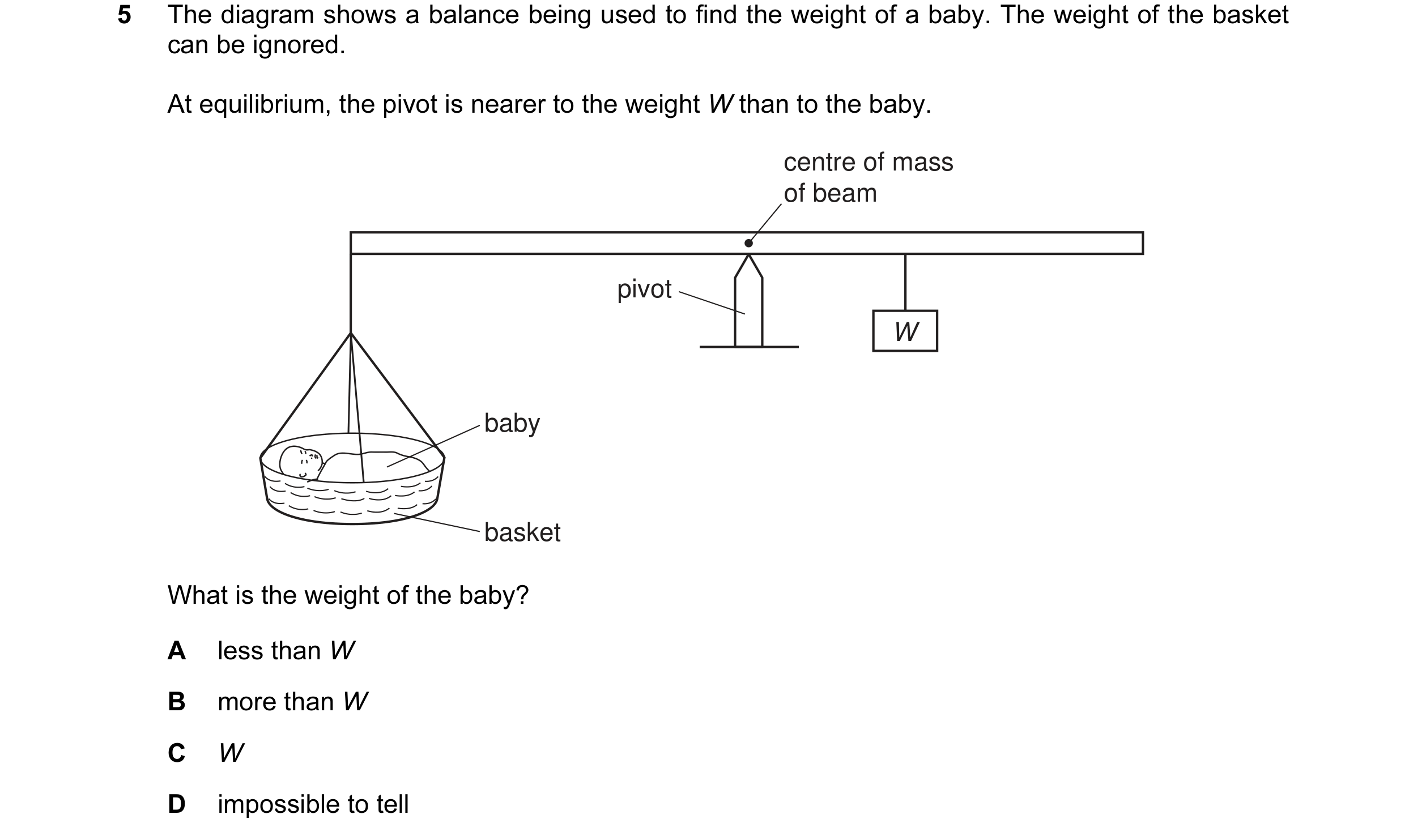 16 / 113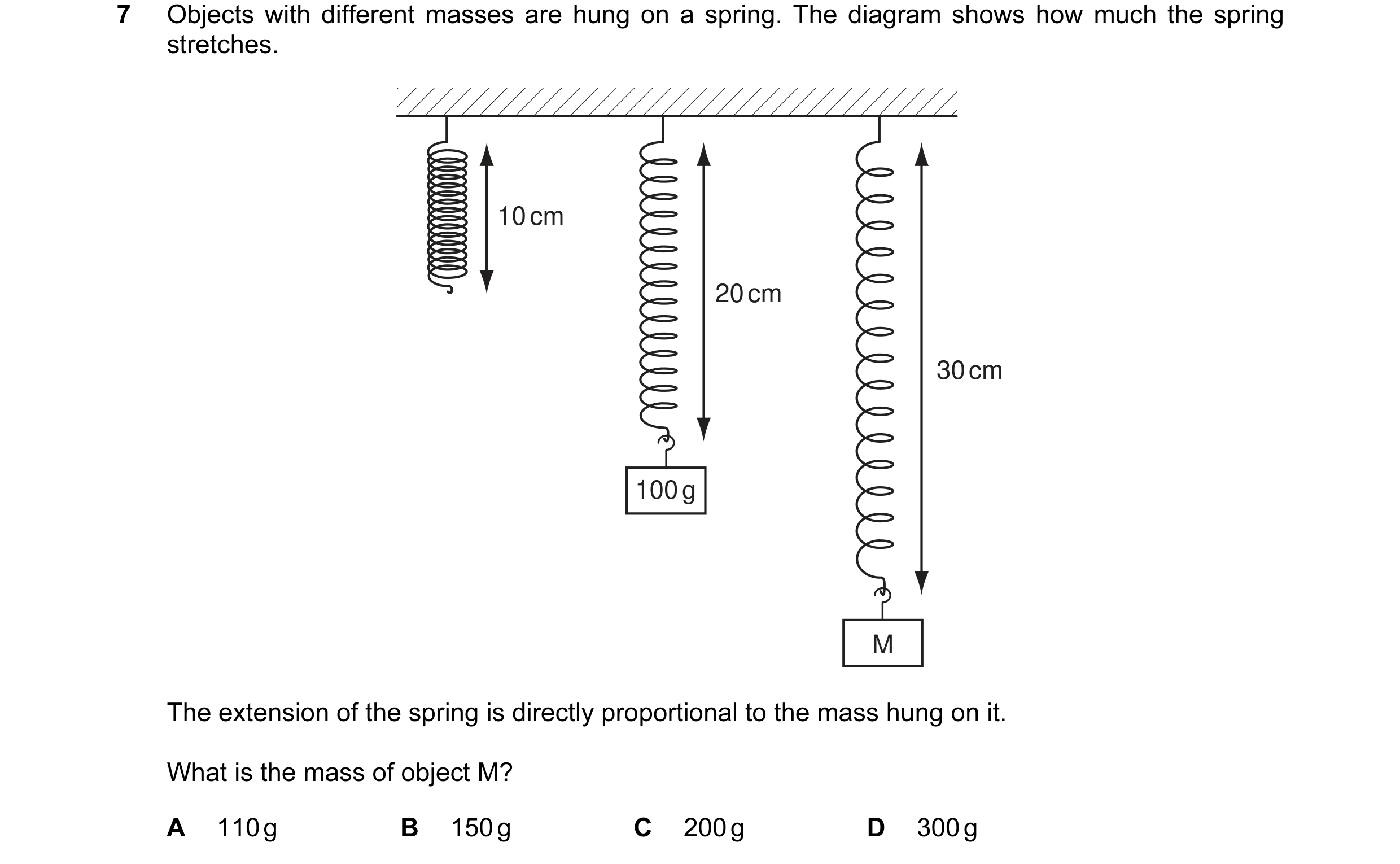
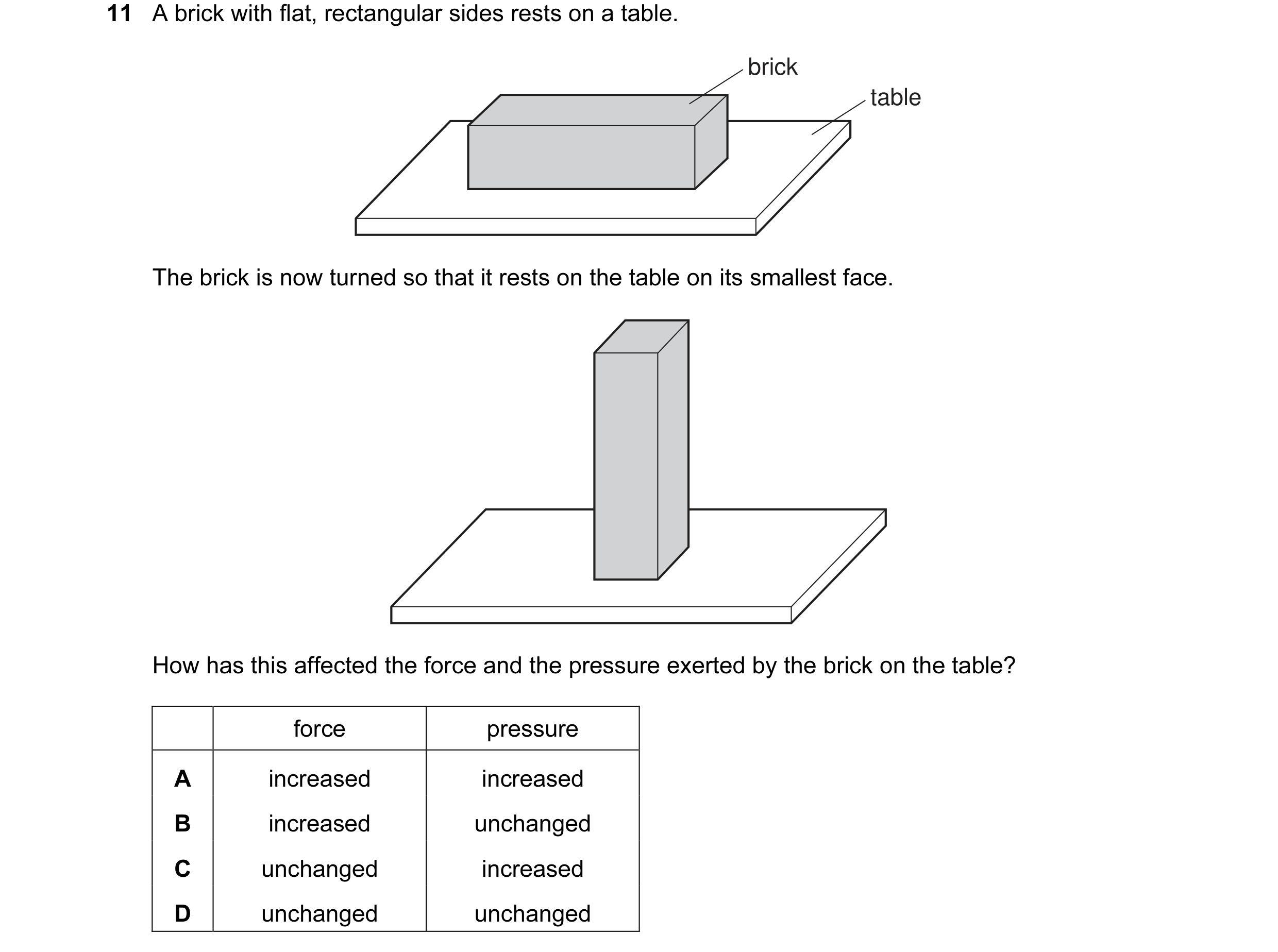 17 / 113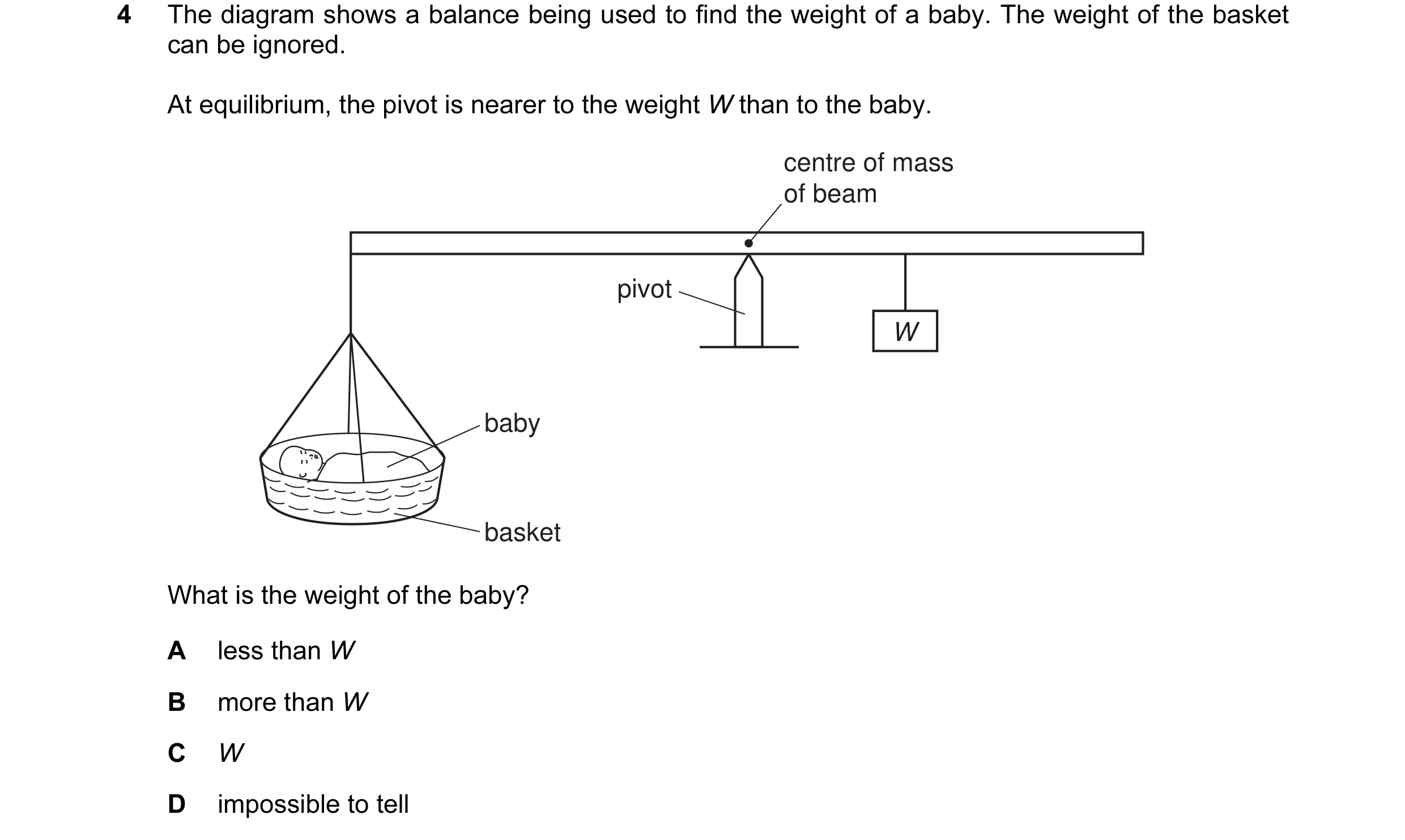
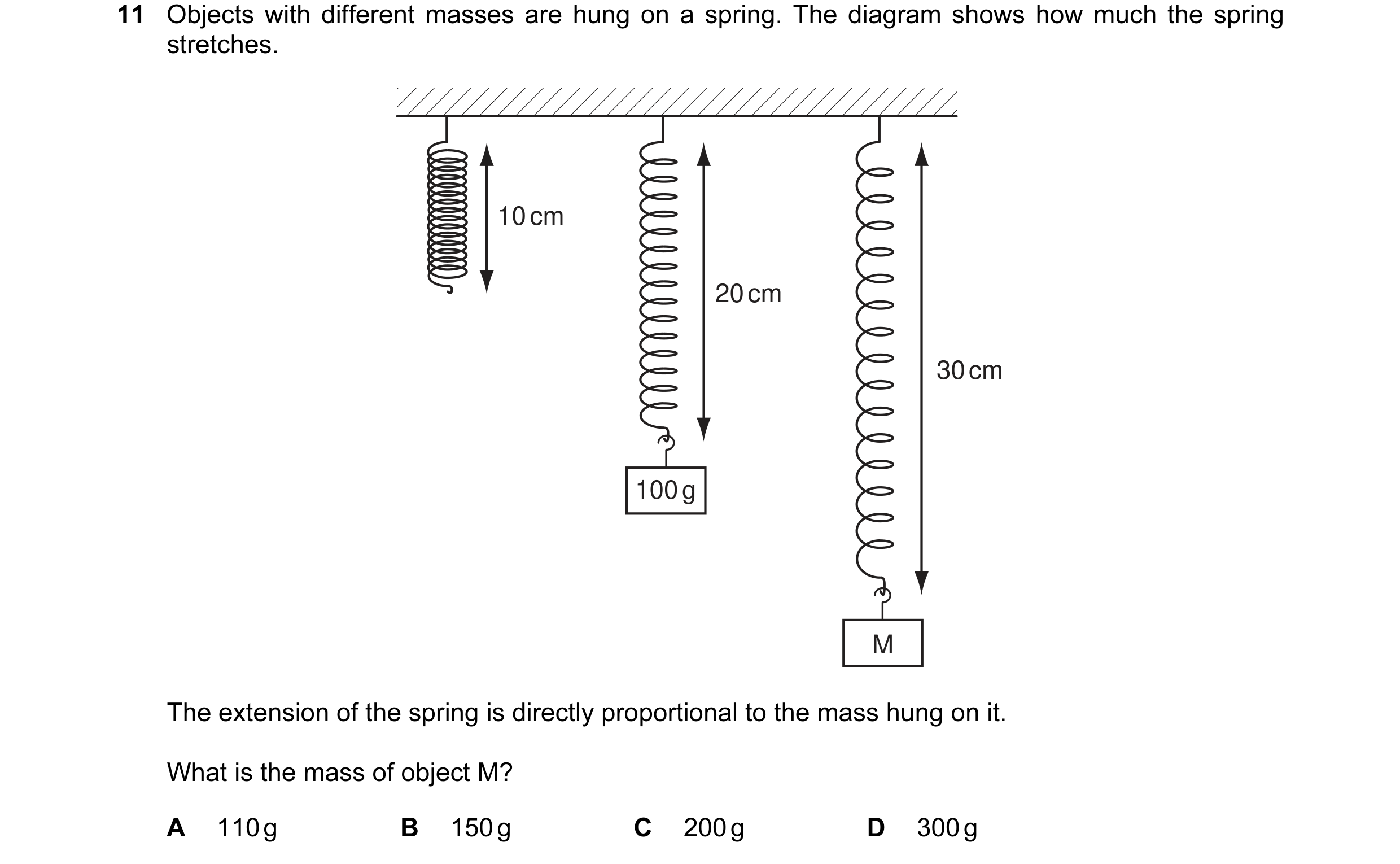 18 / 113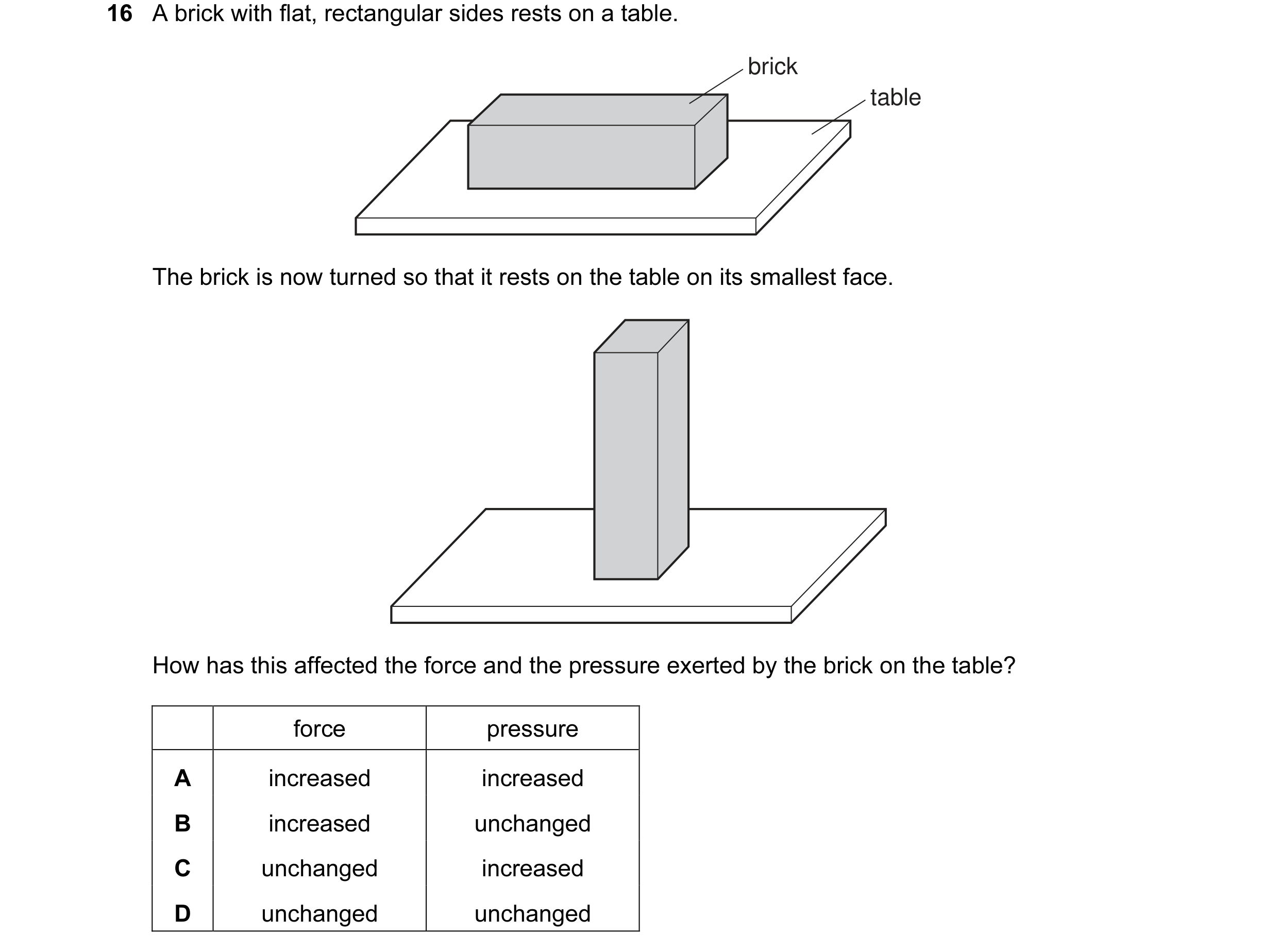
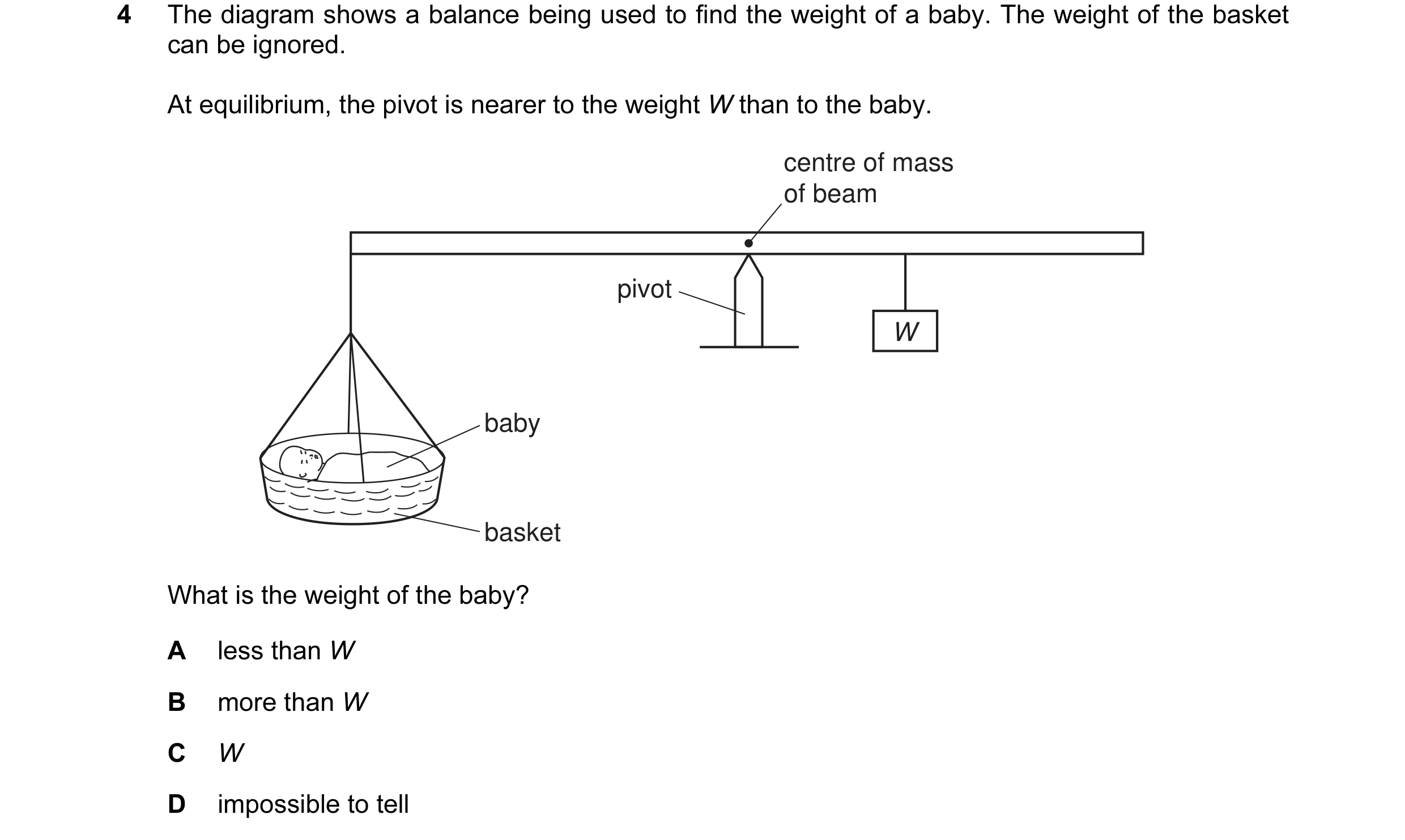 19 / 113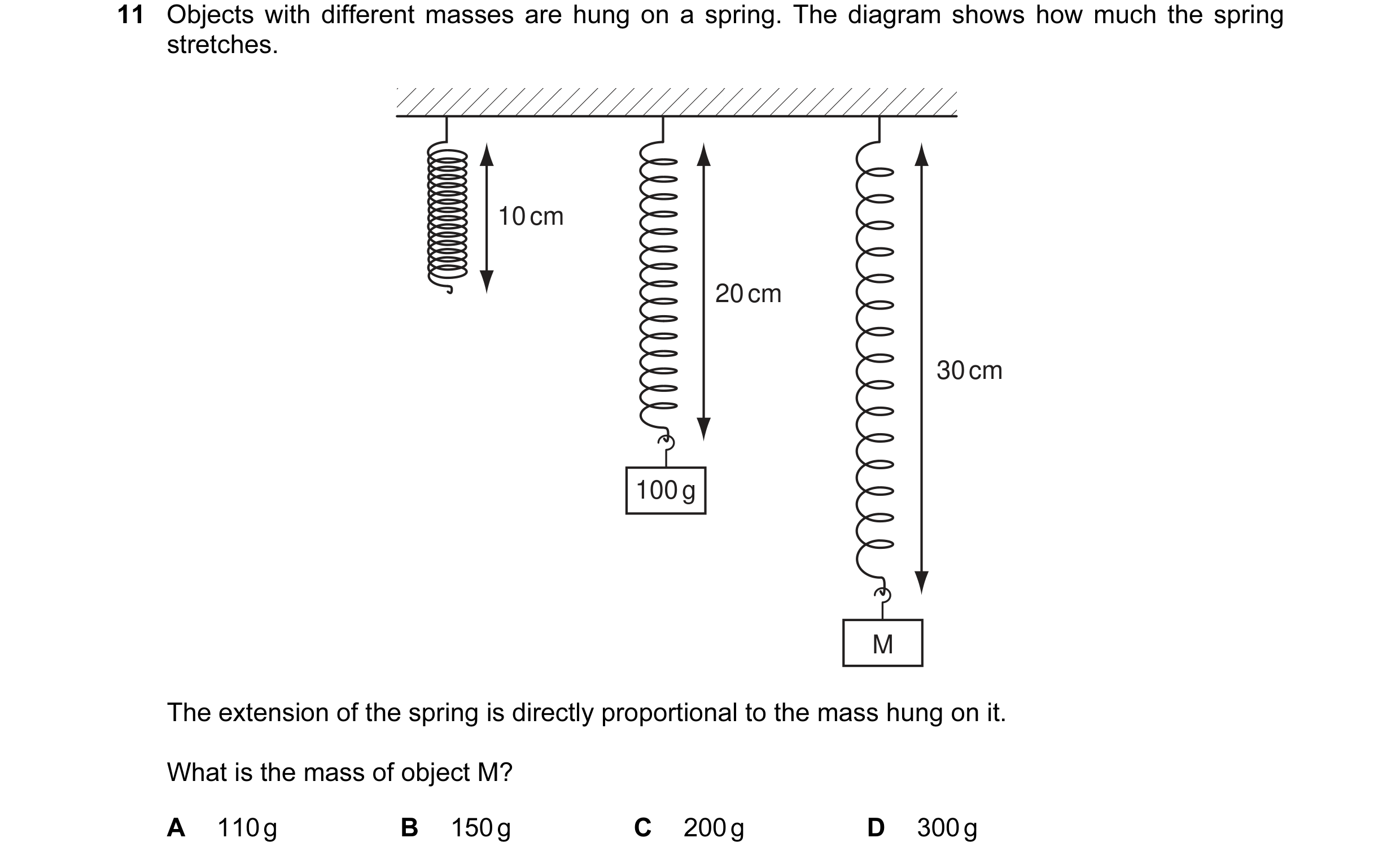
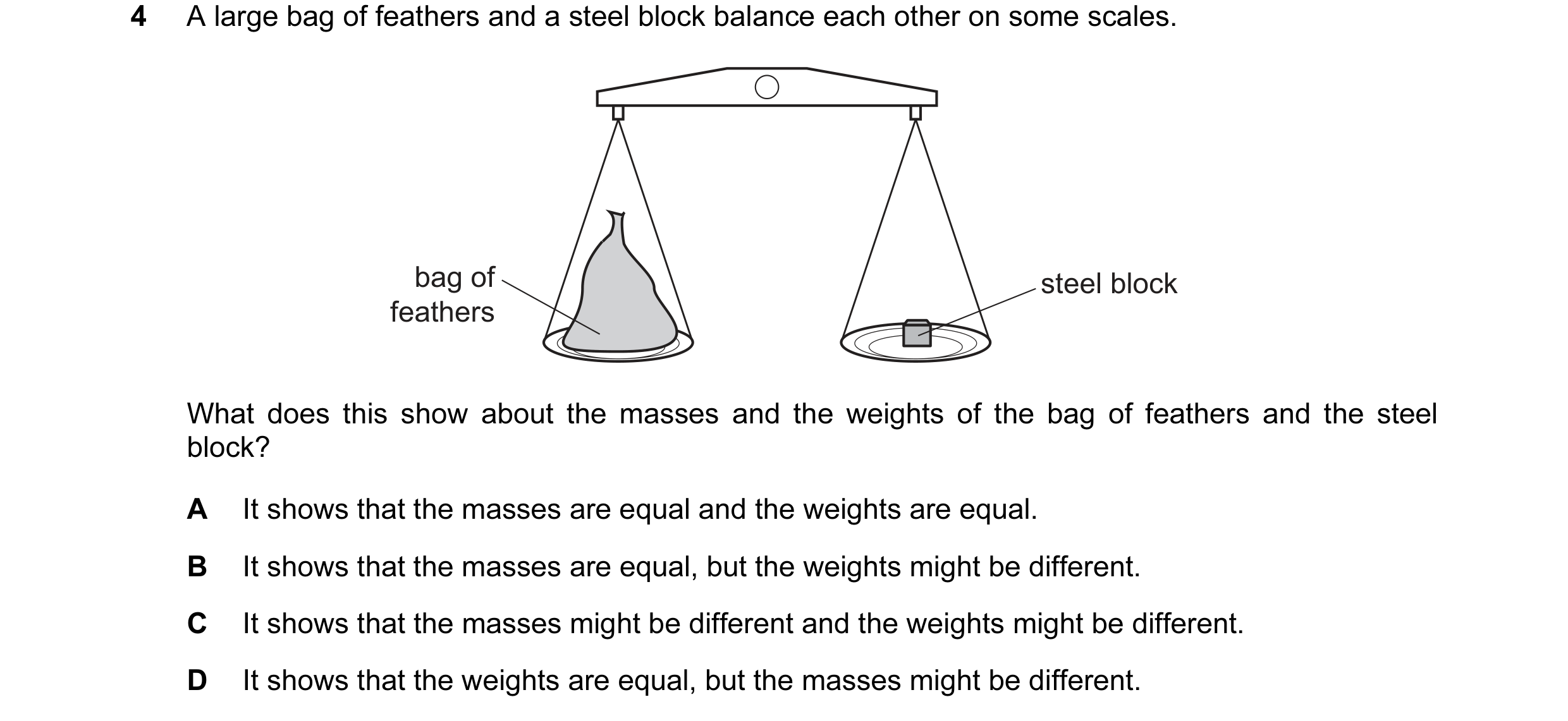 20 / 113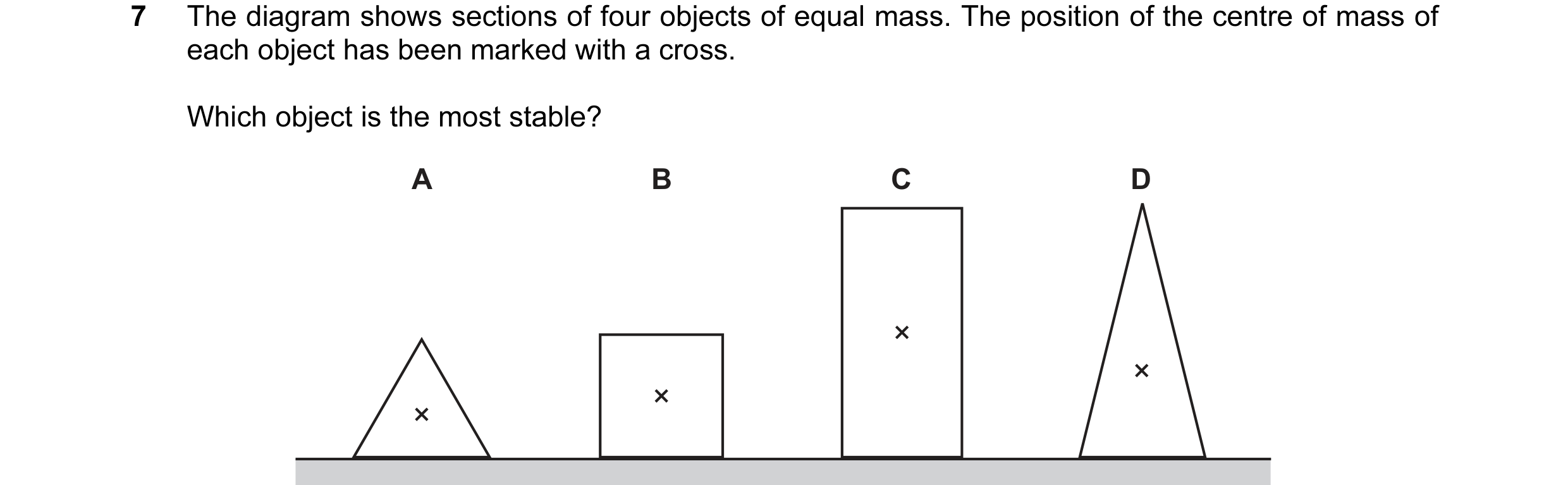
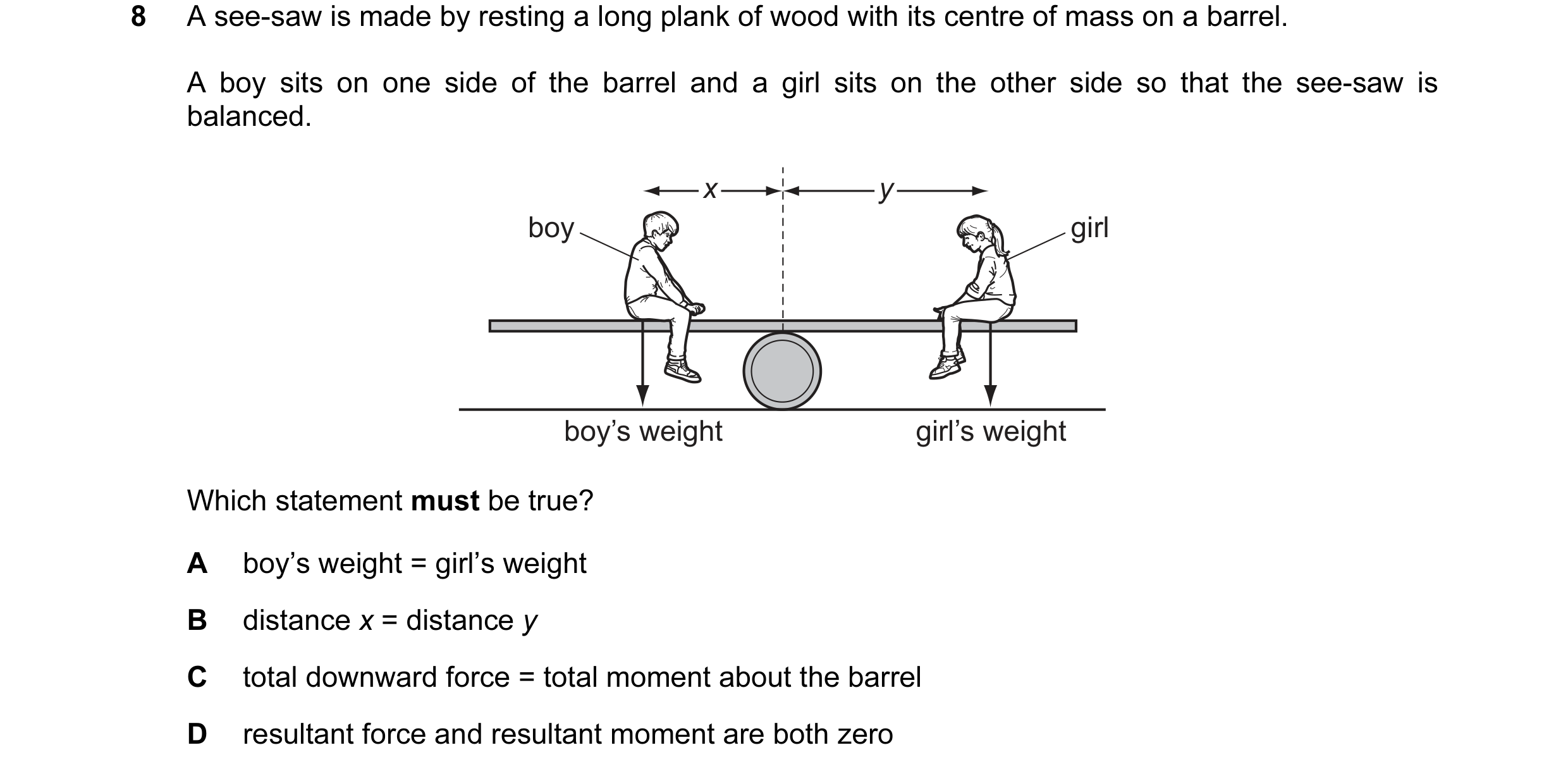
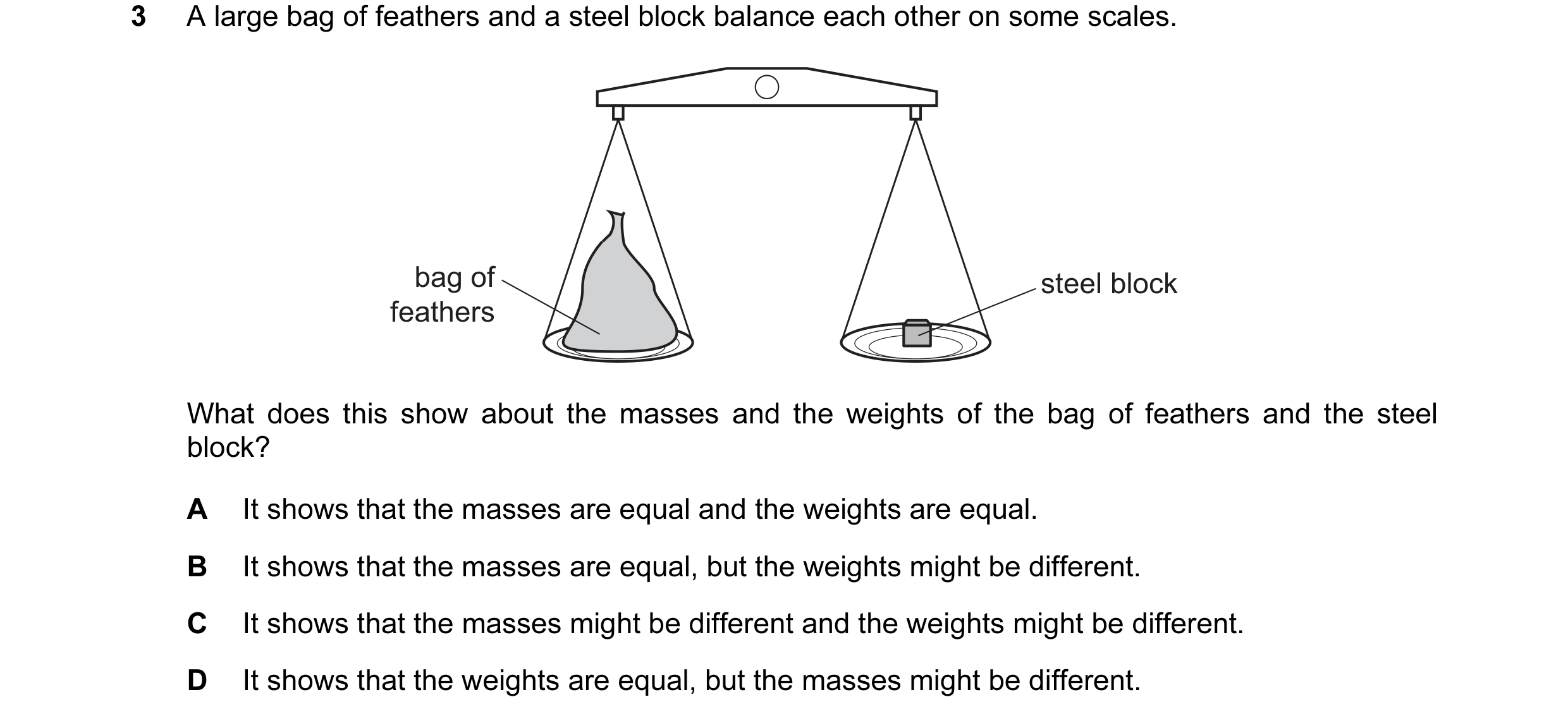 21 / 113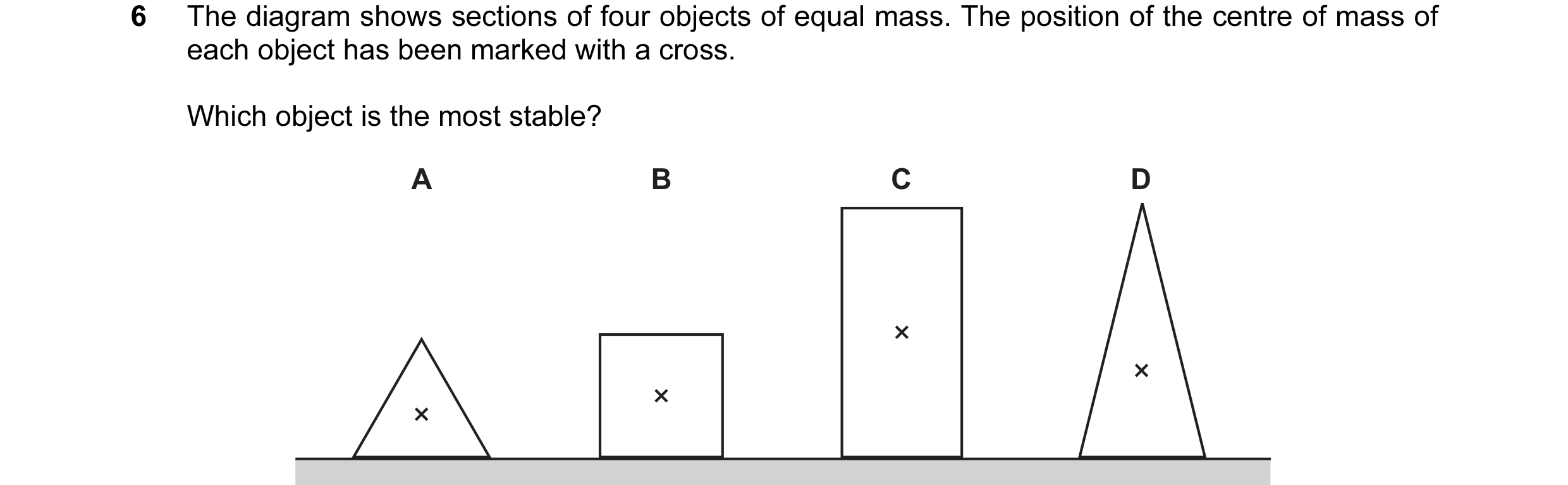
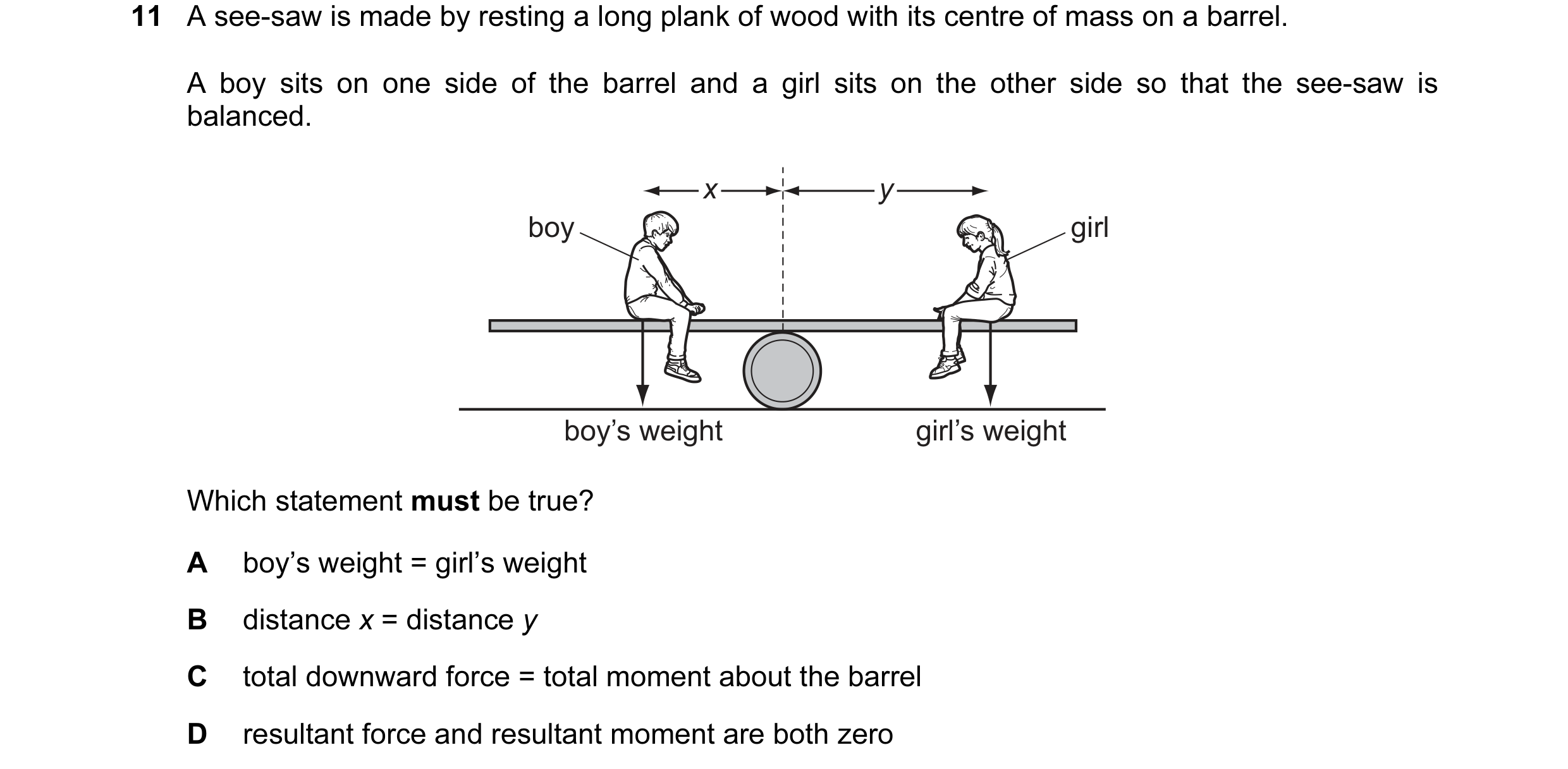
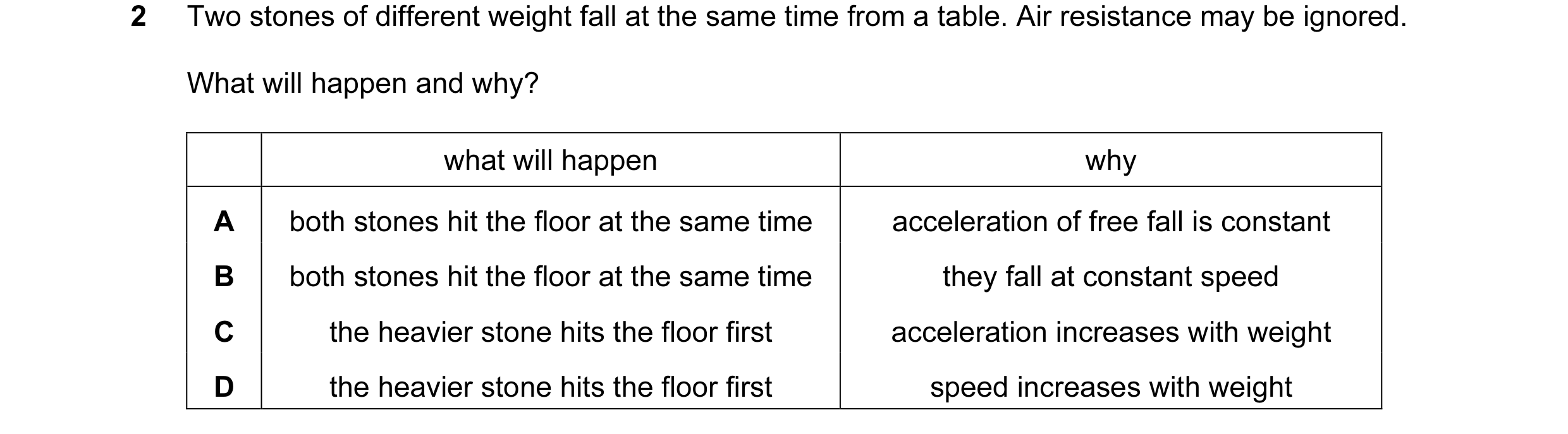 22 / 113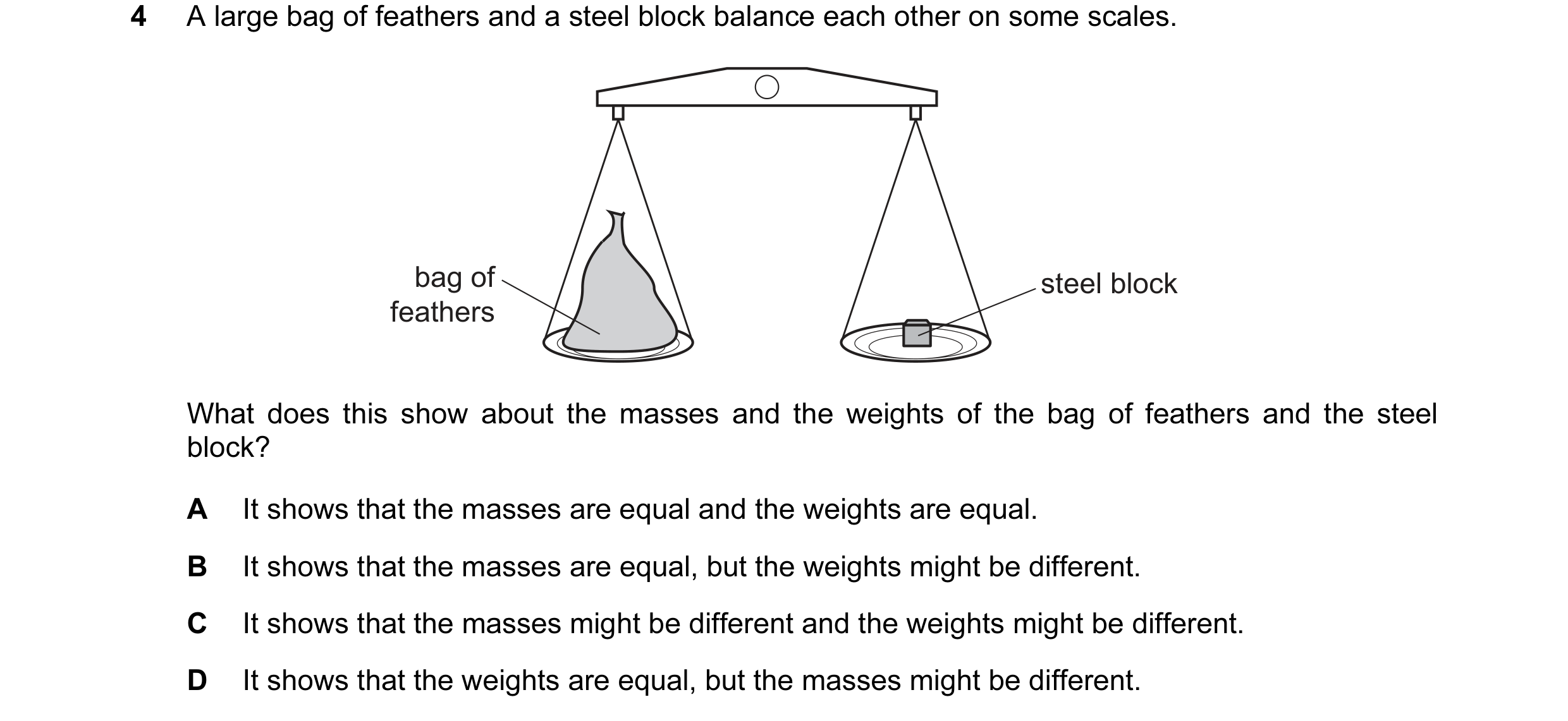
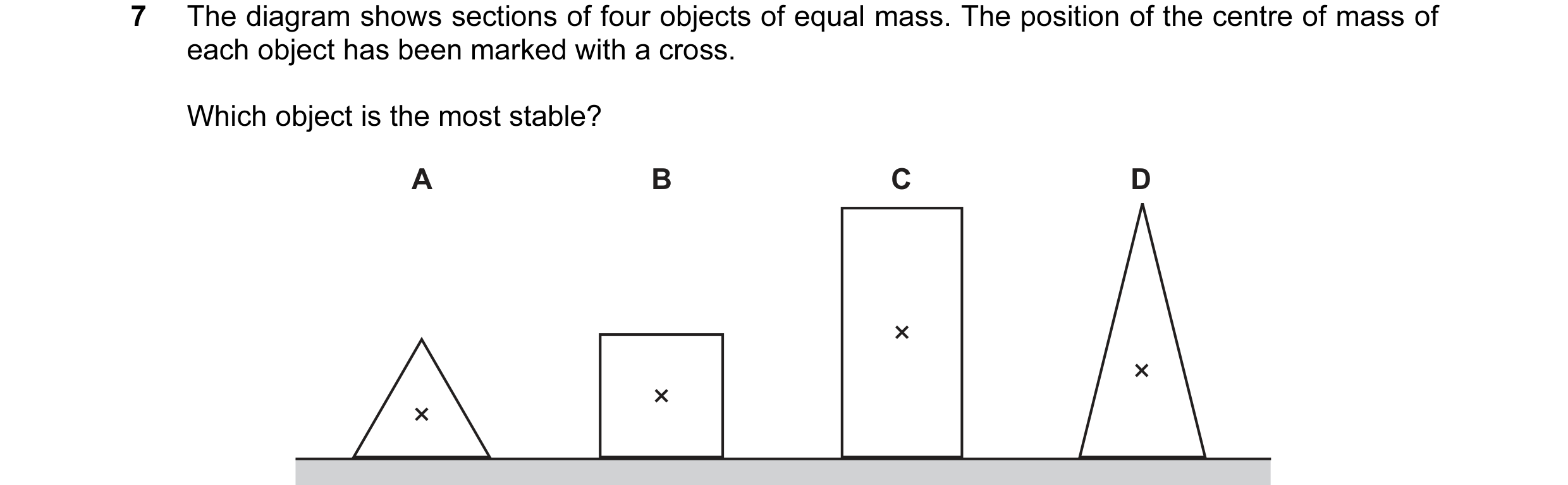
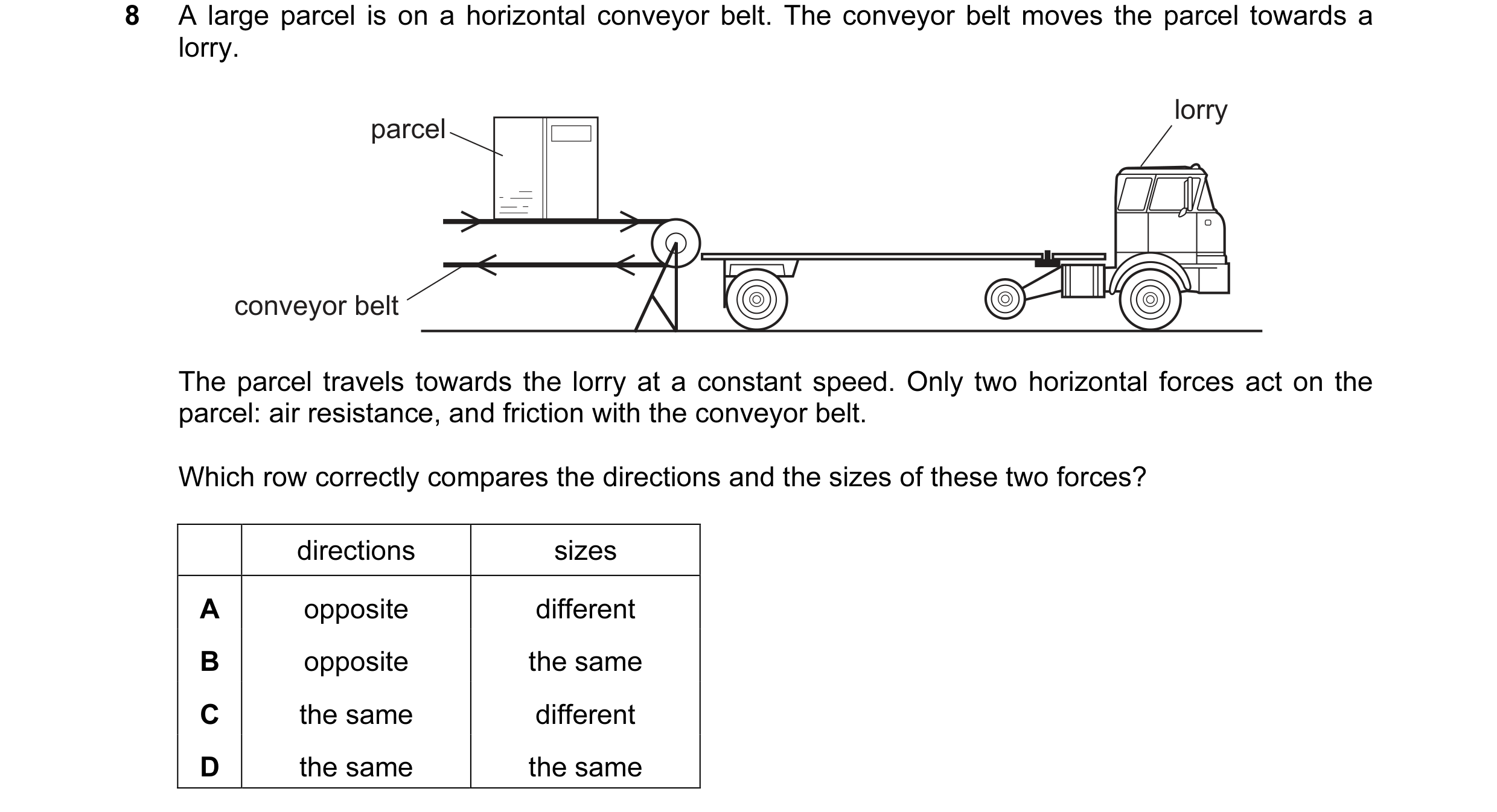 23 / 113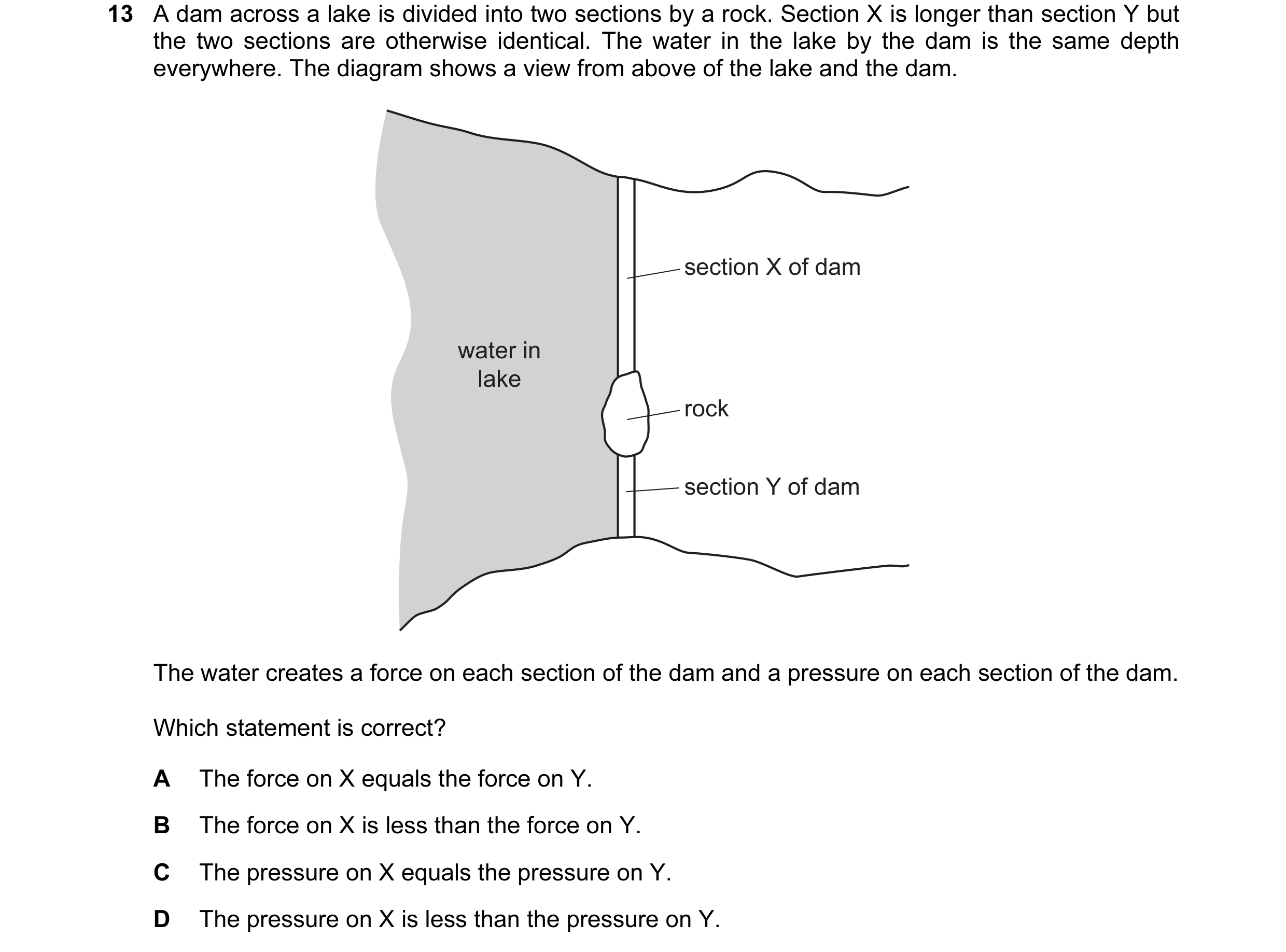
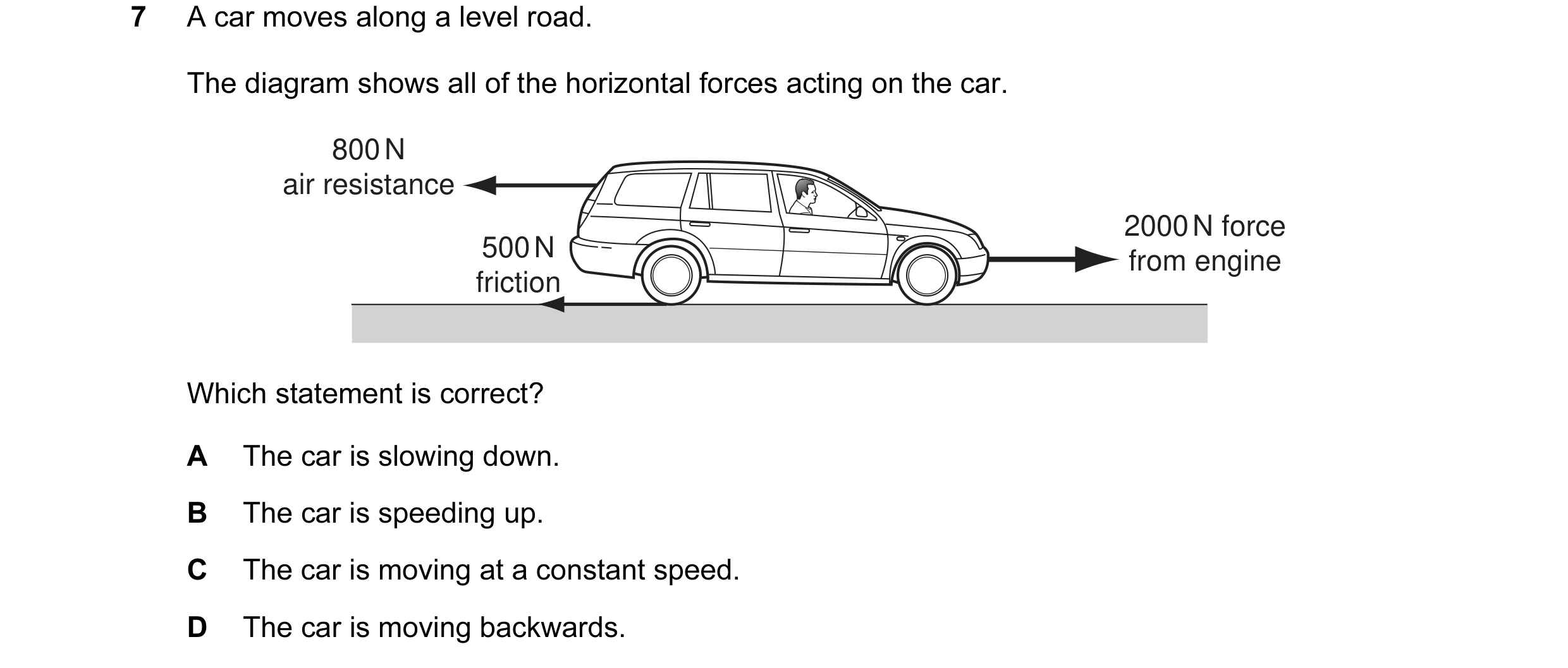 24 / 113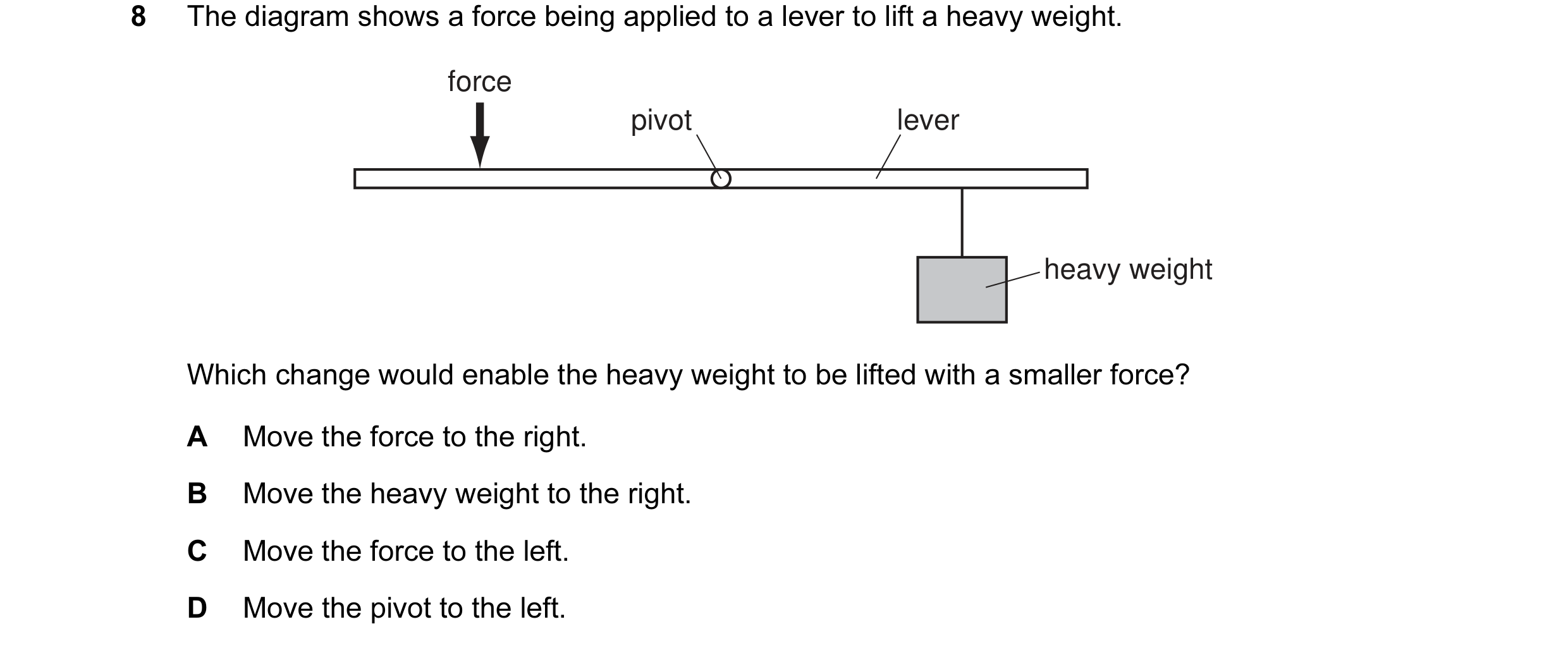
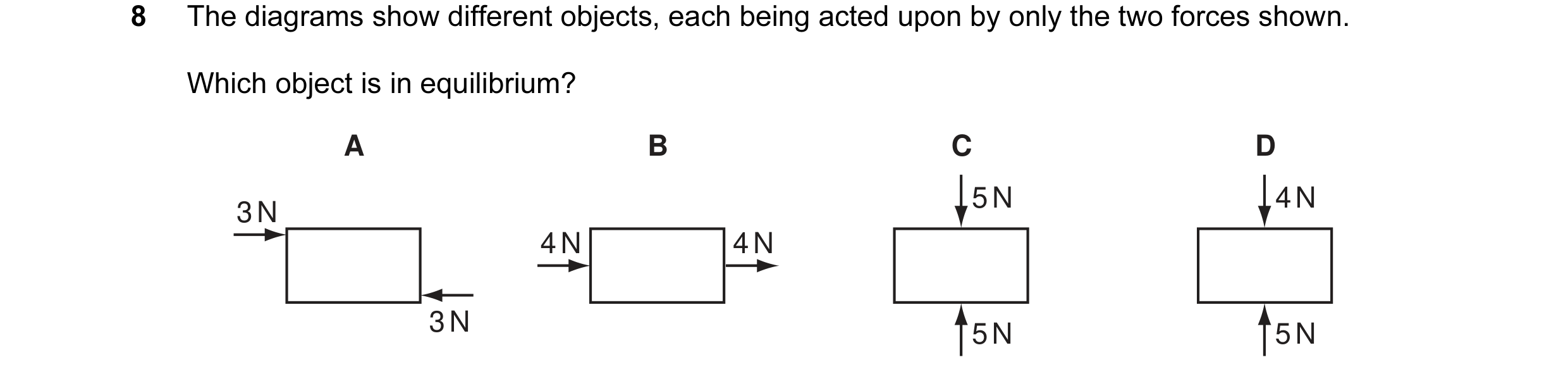
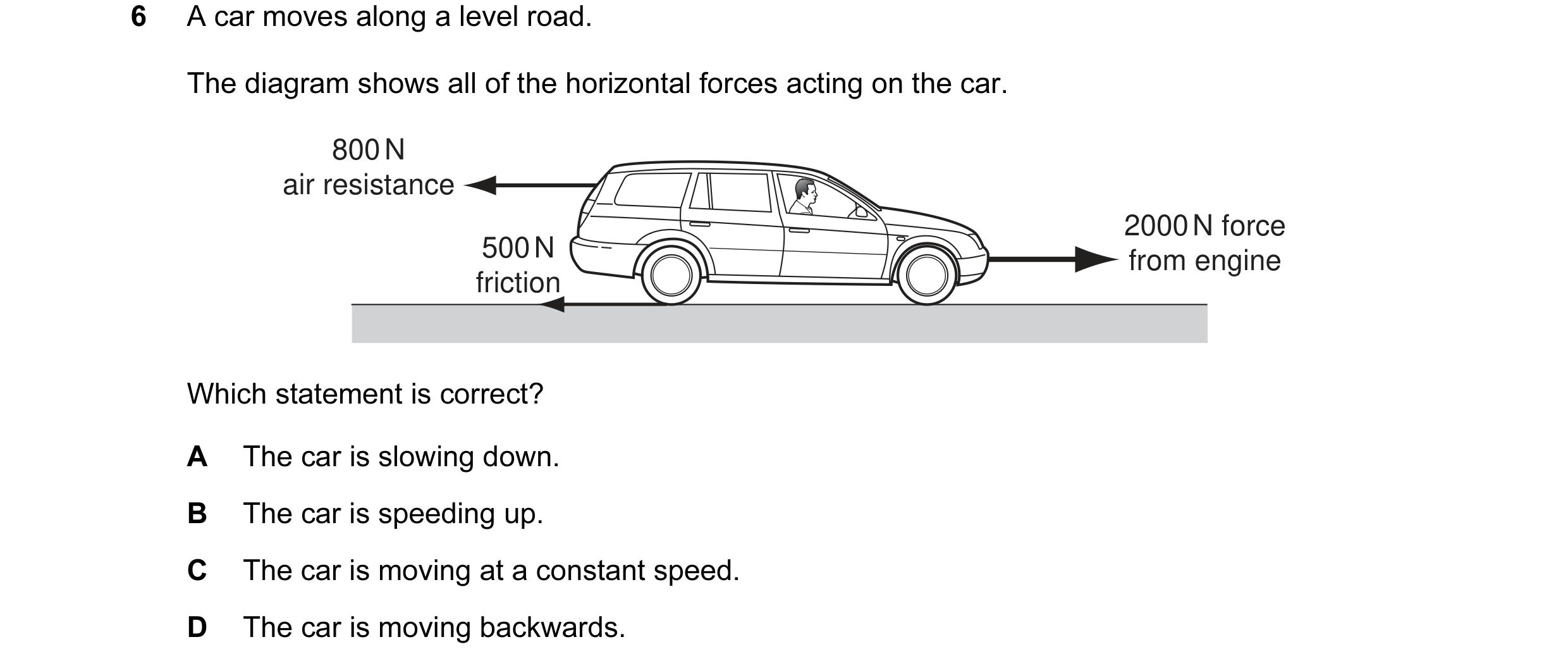 25 / 113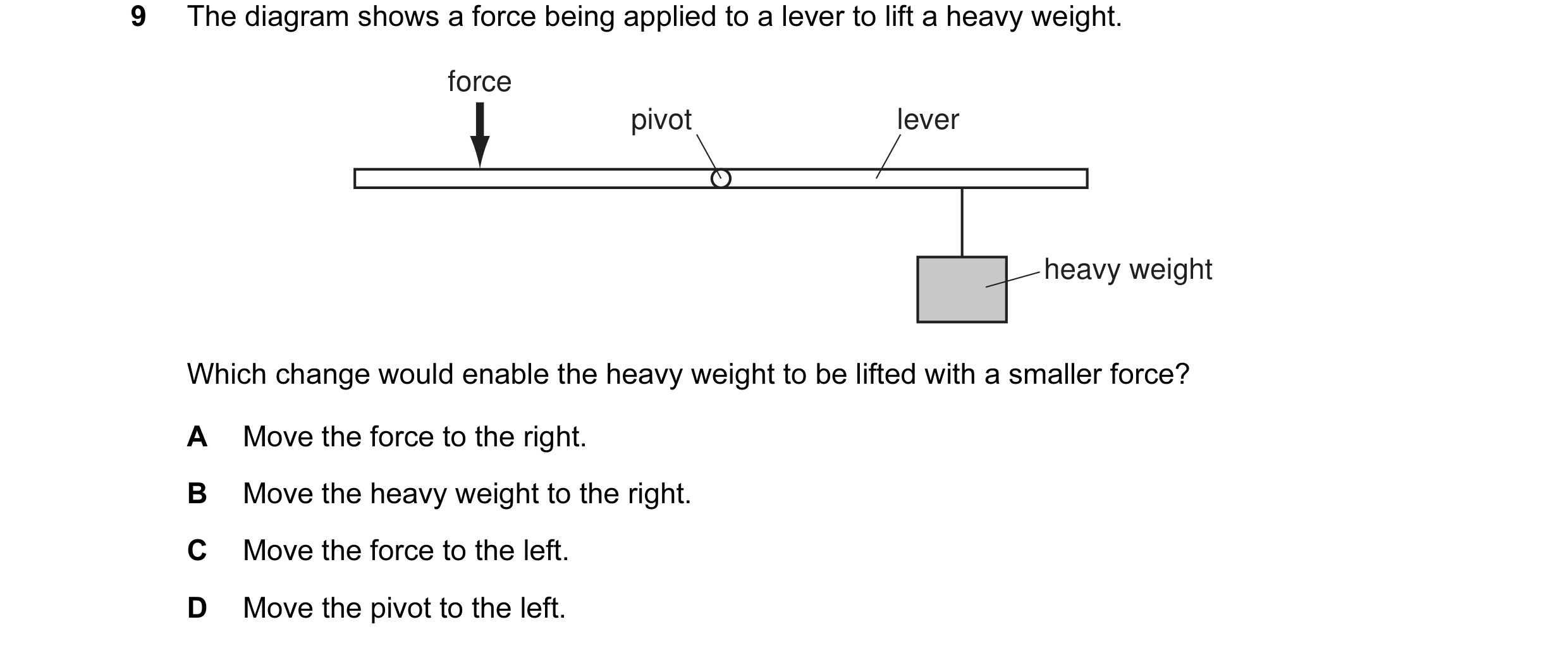
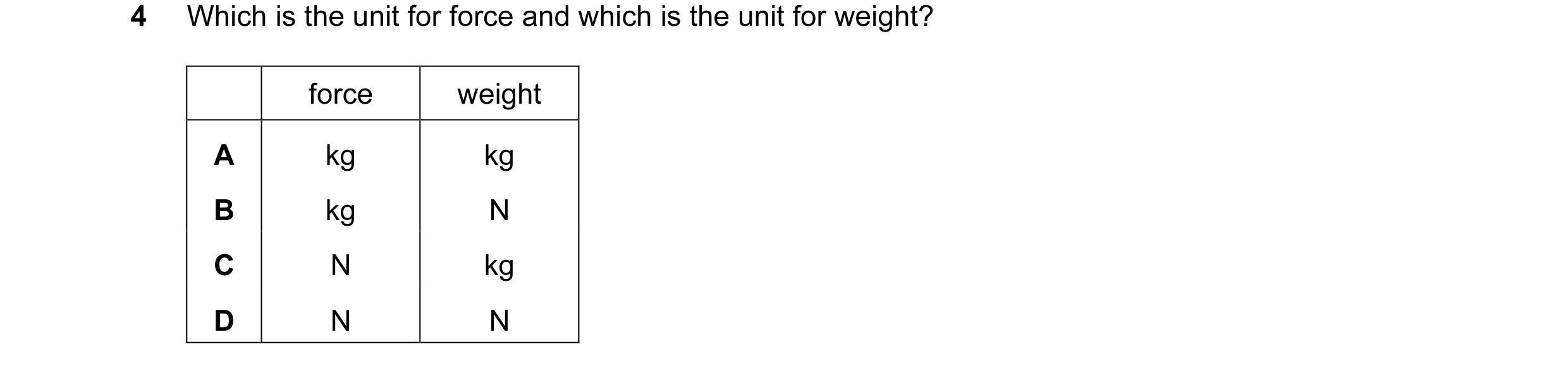
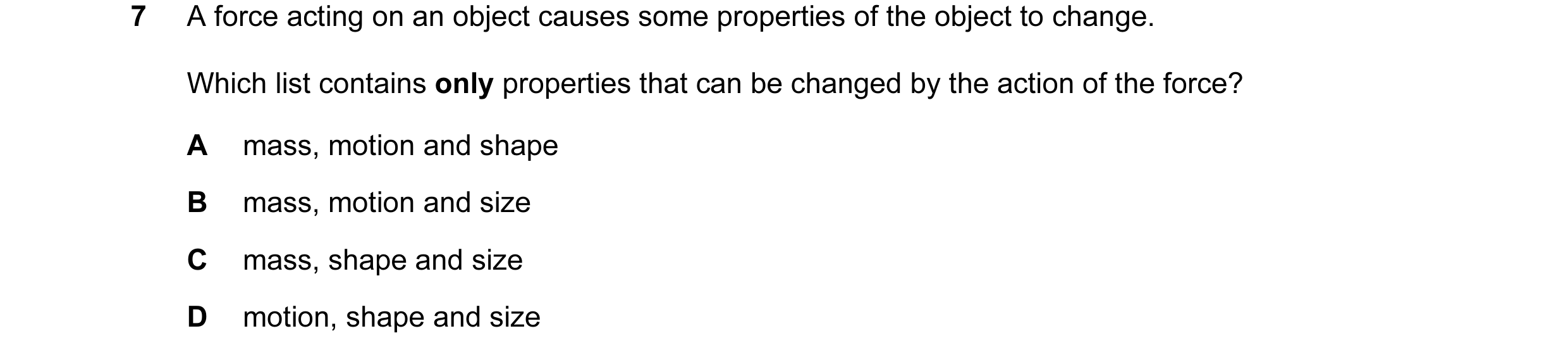 26 / 113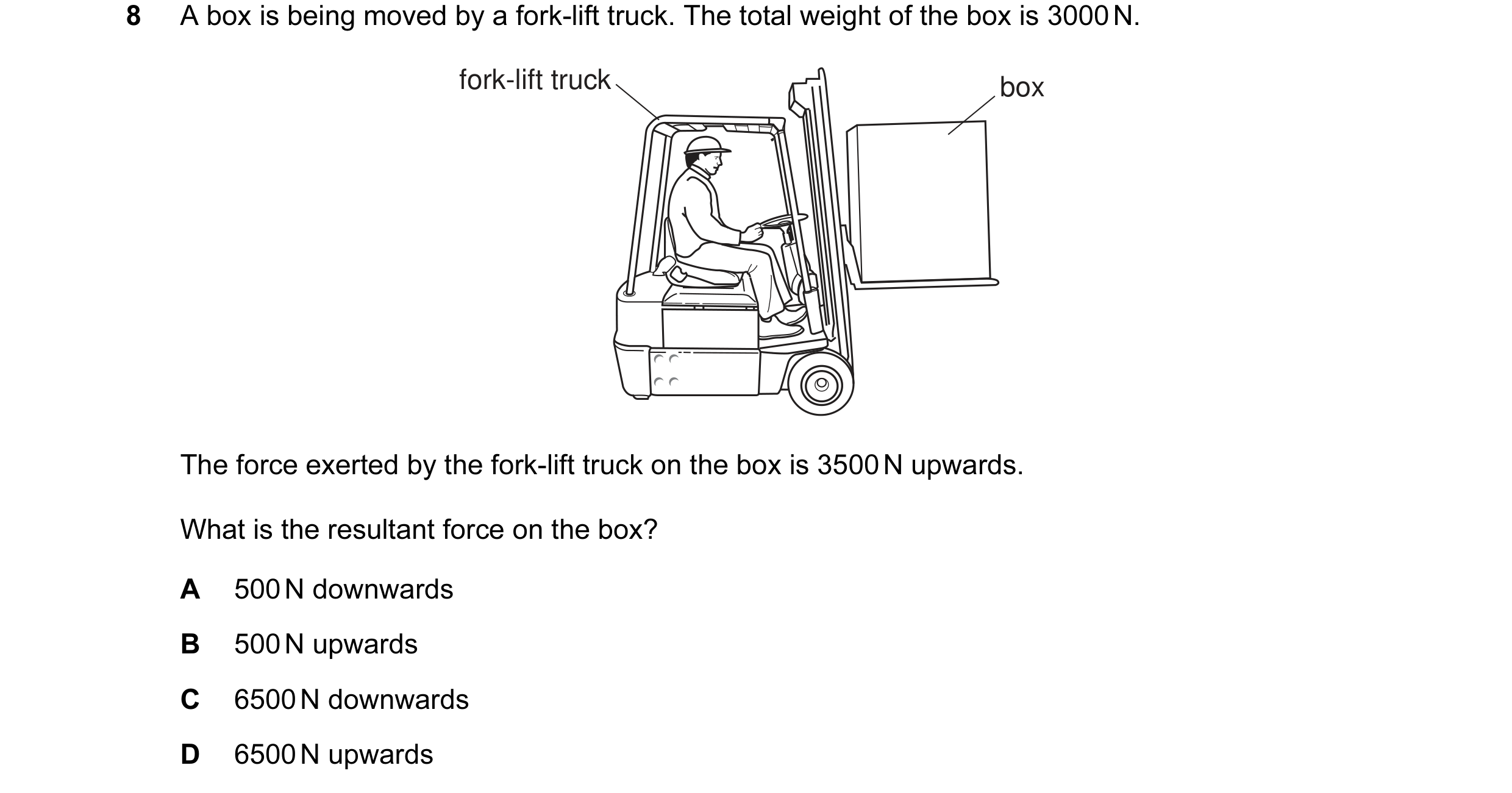
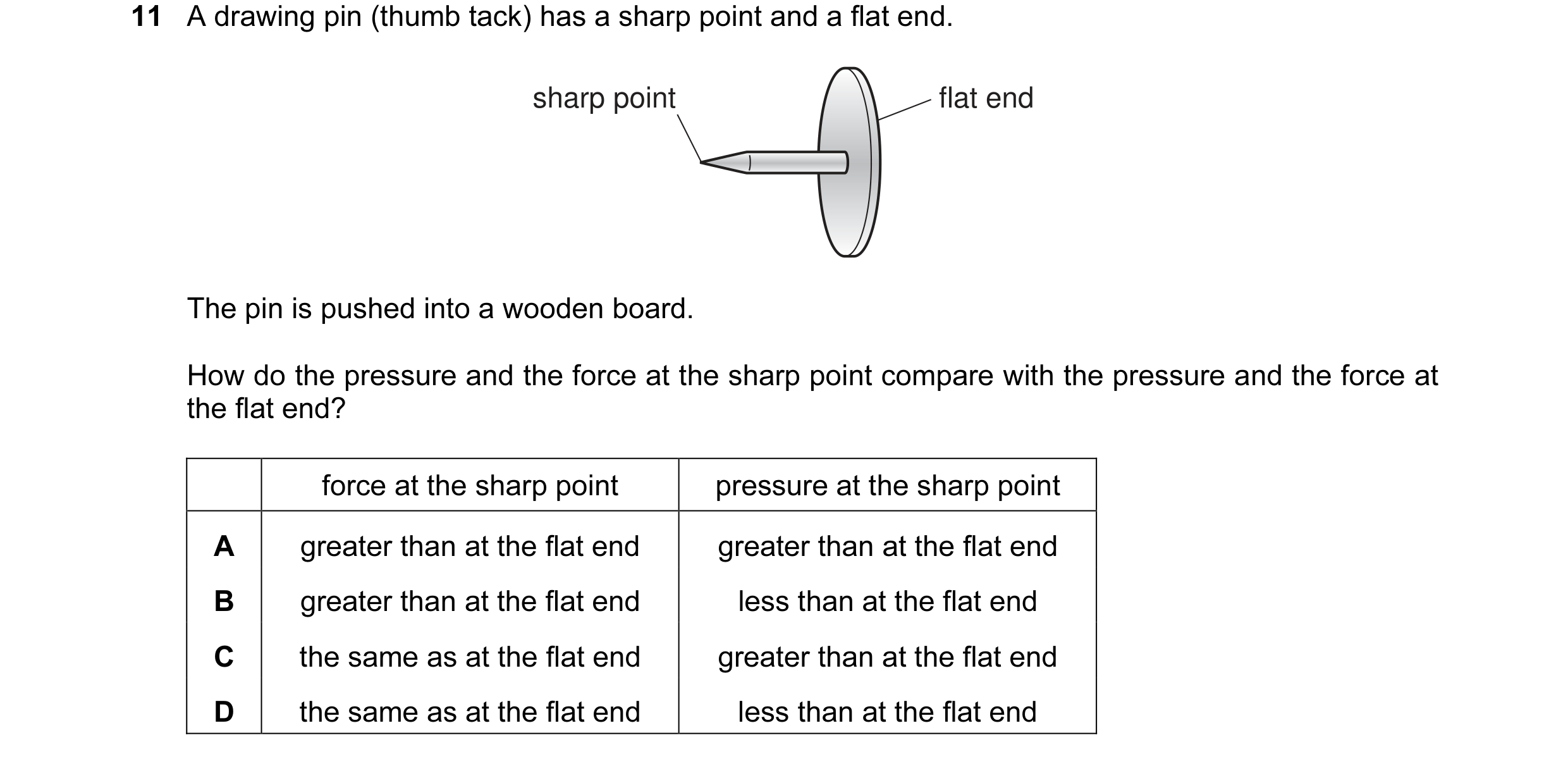
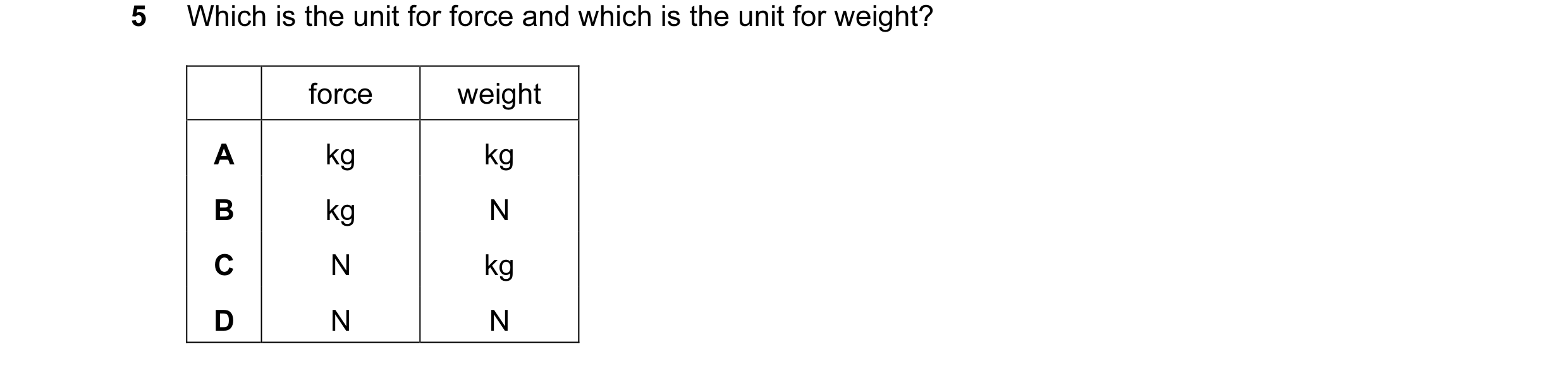 27 / 113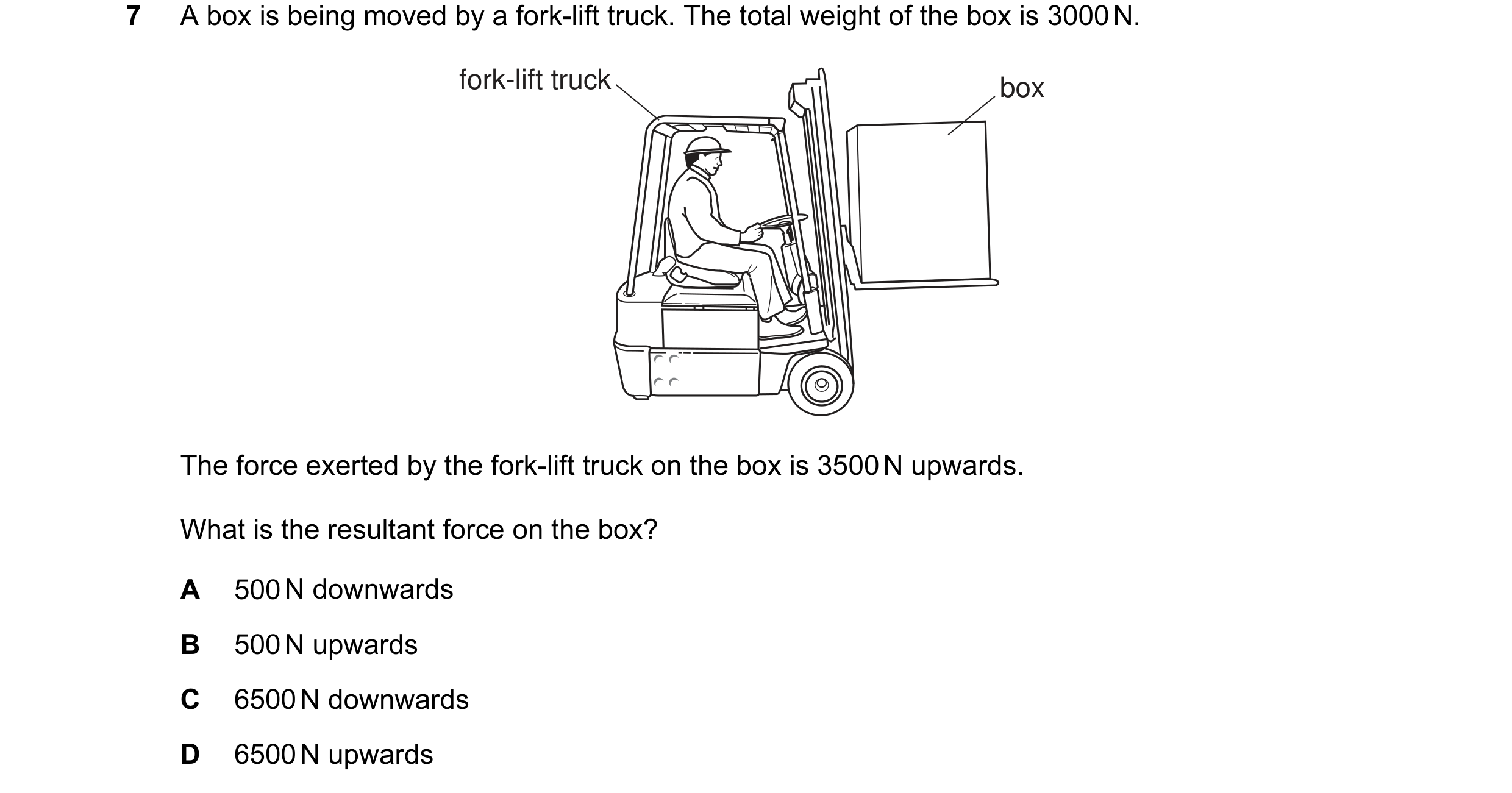
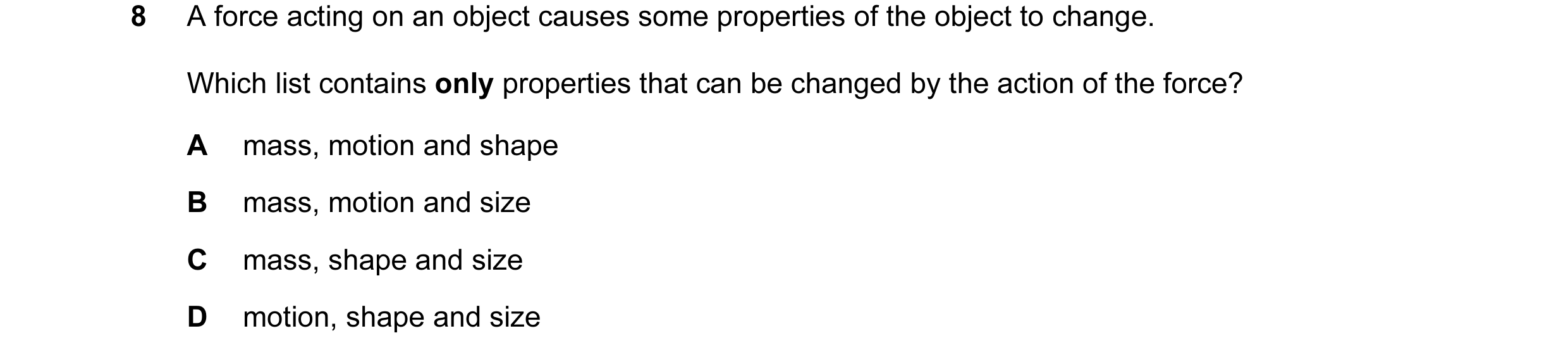
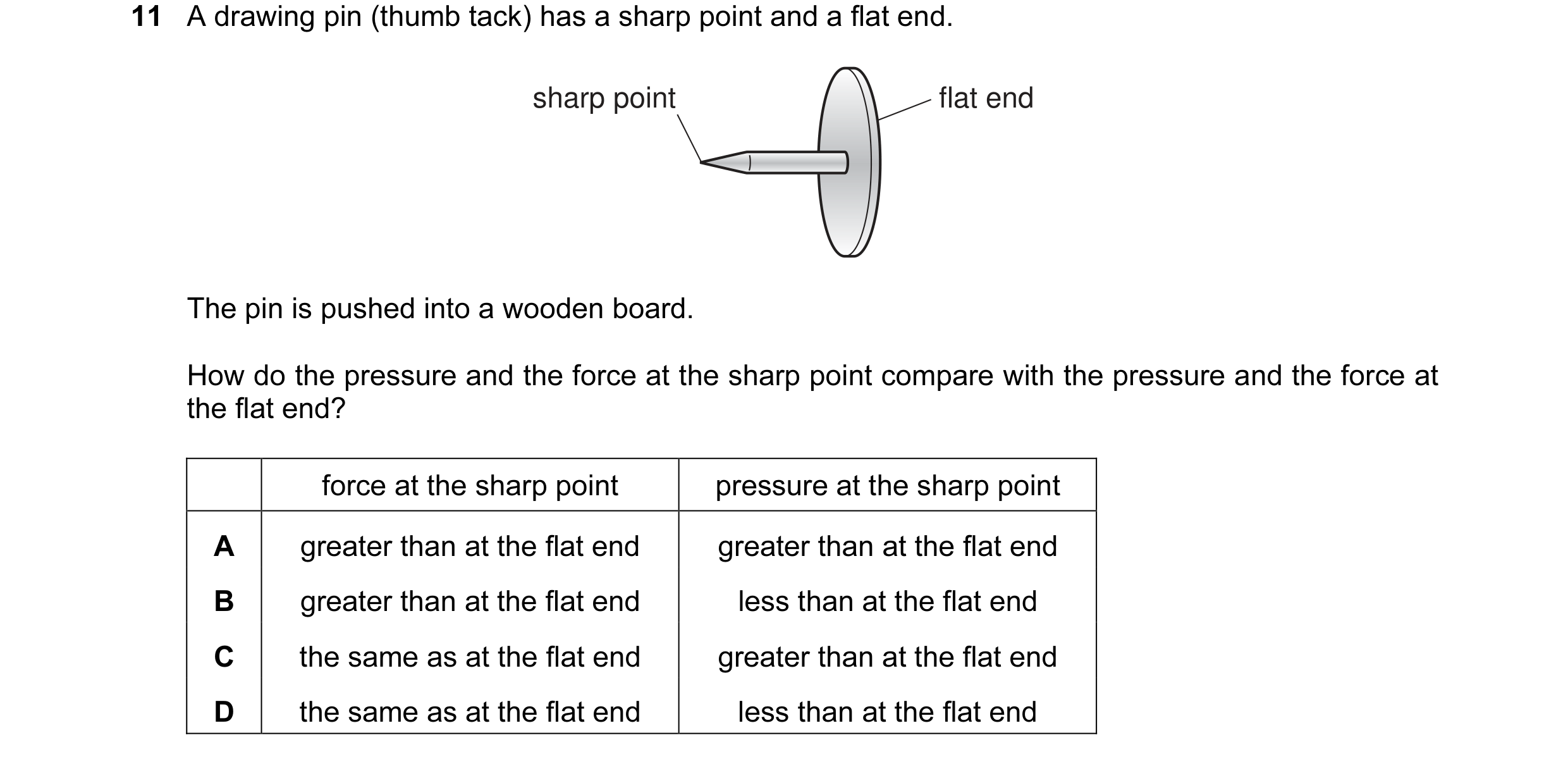 28 / 113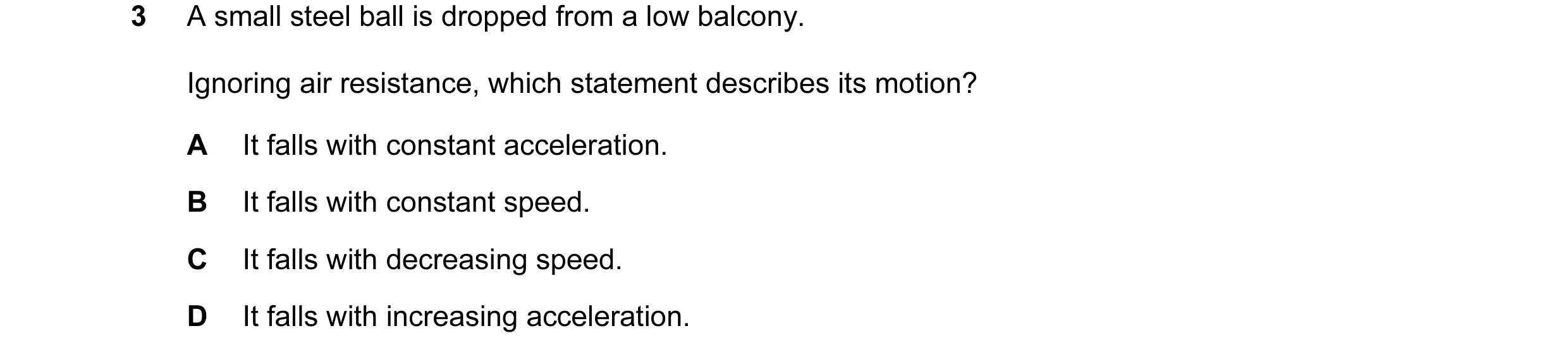
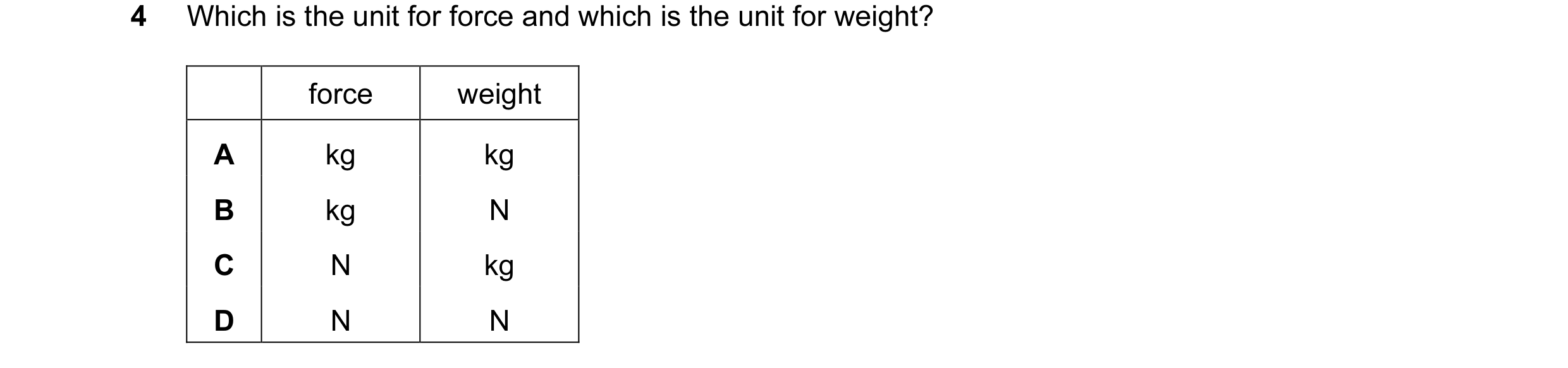
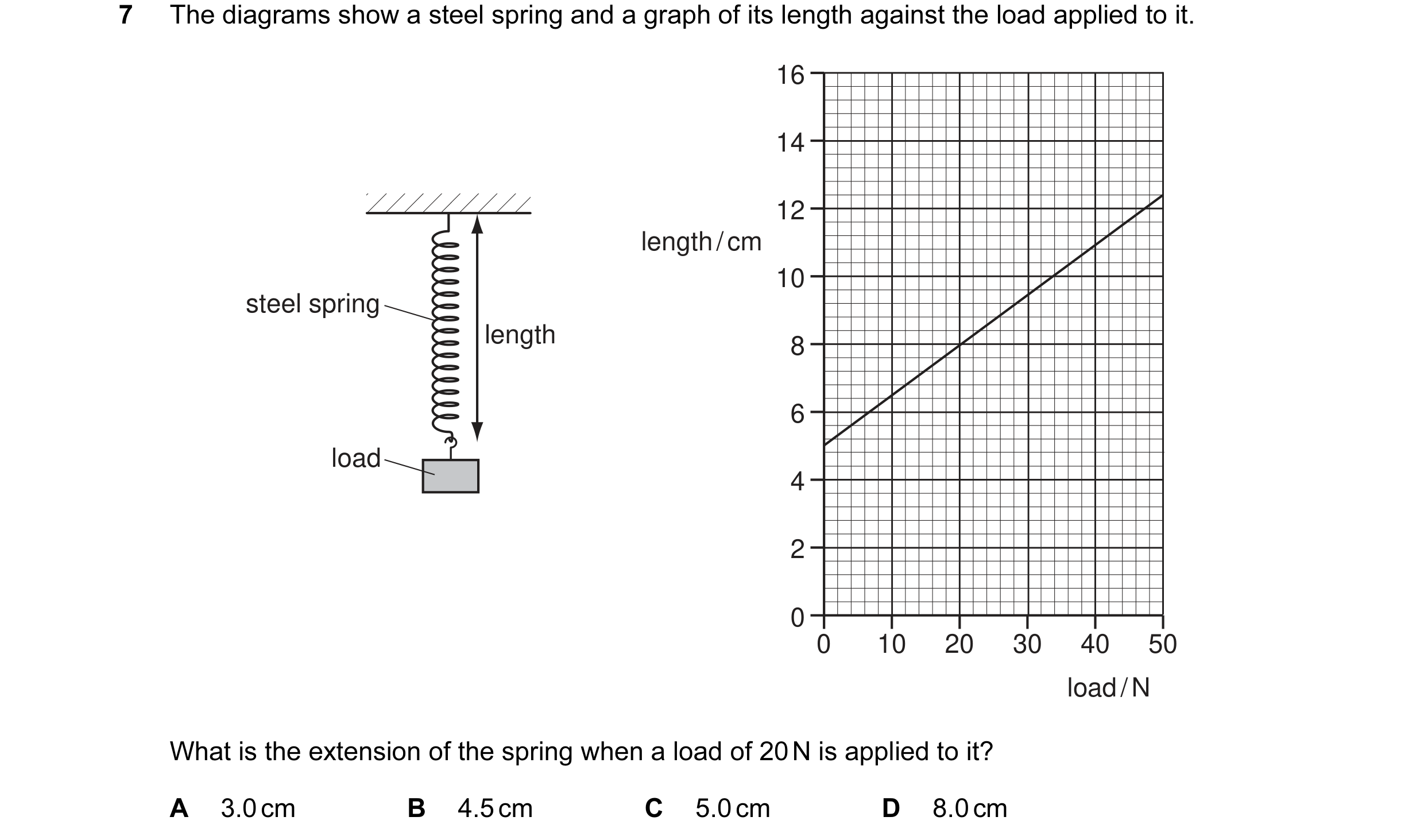 29 / 113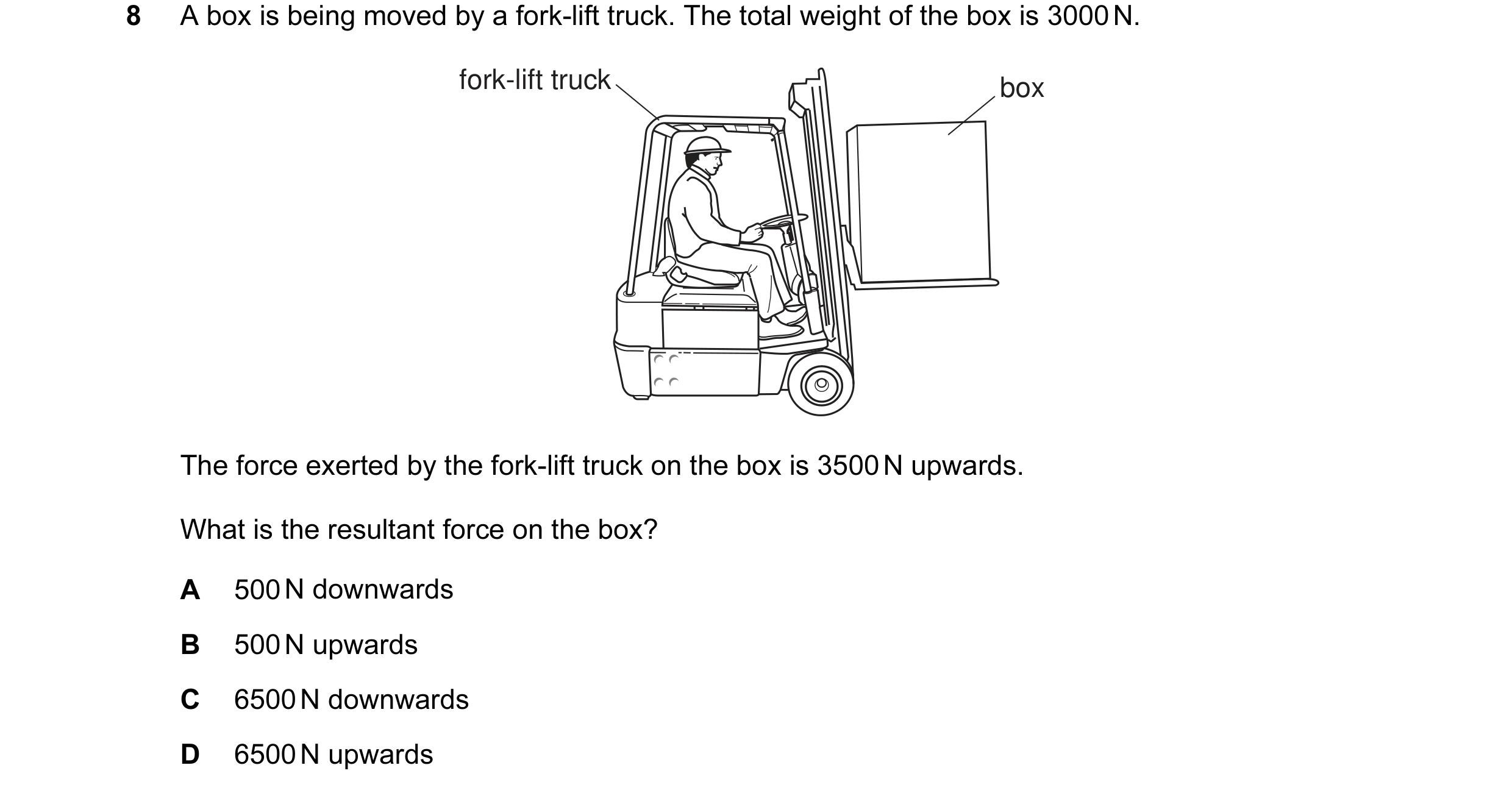
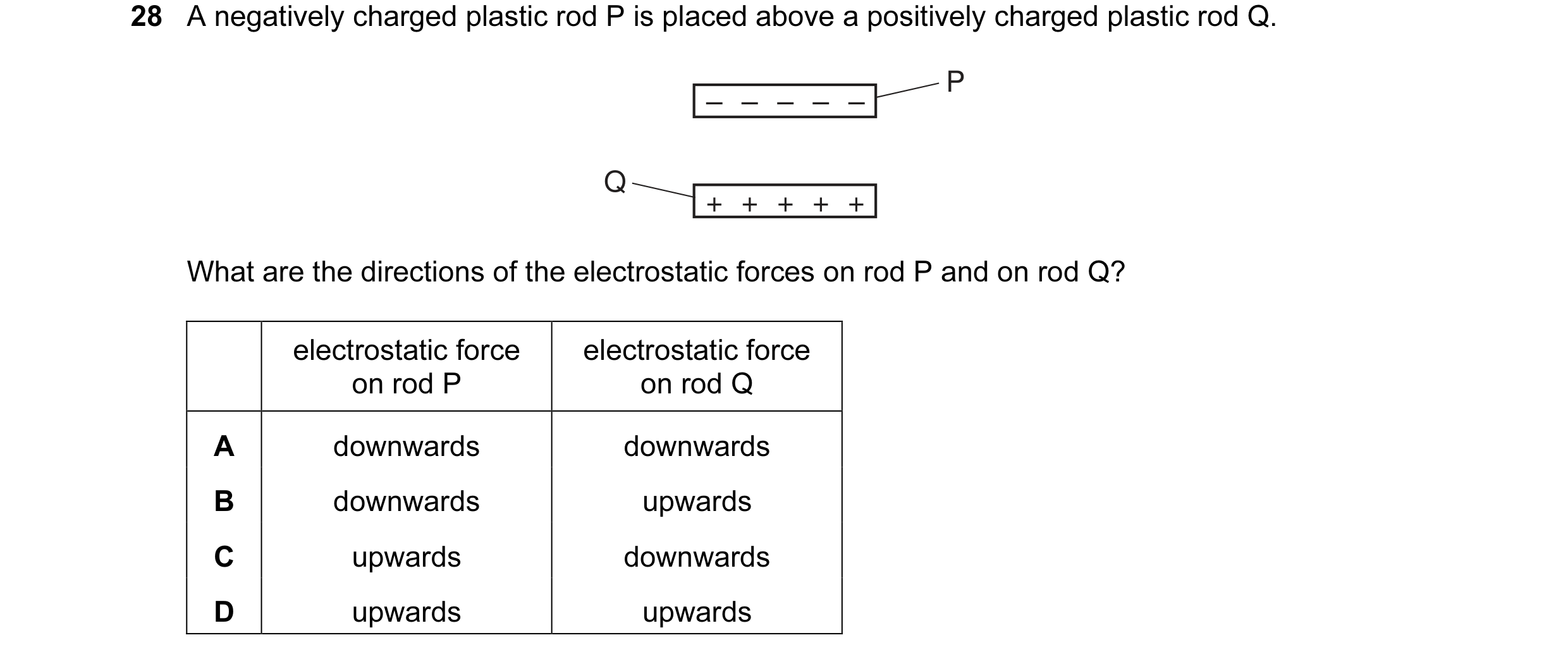 30 / 113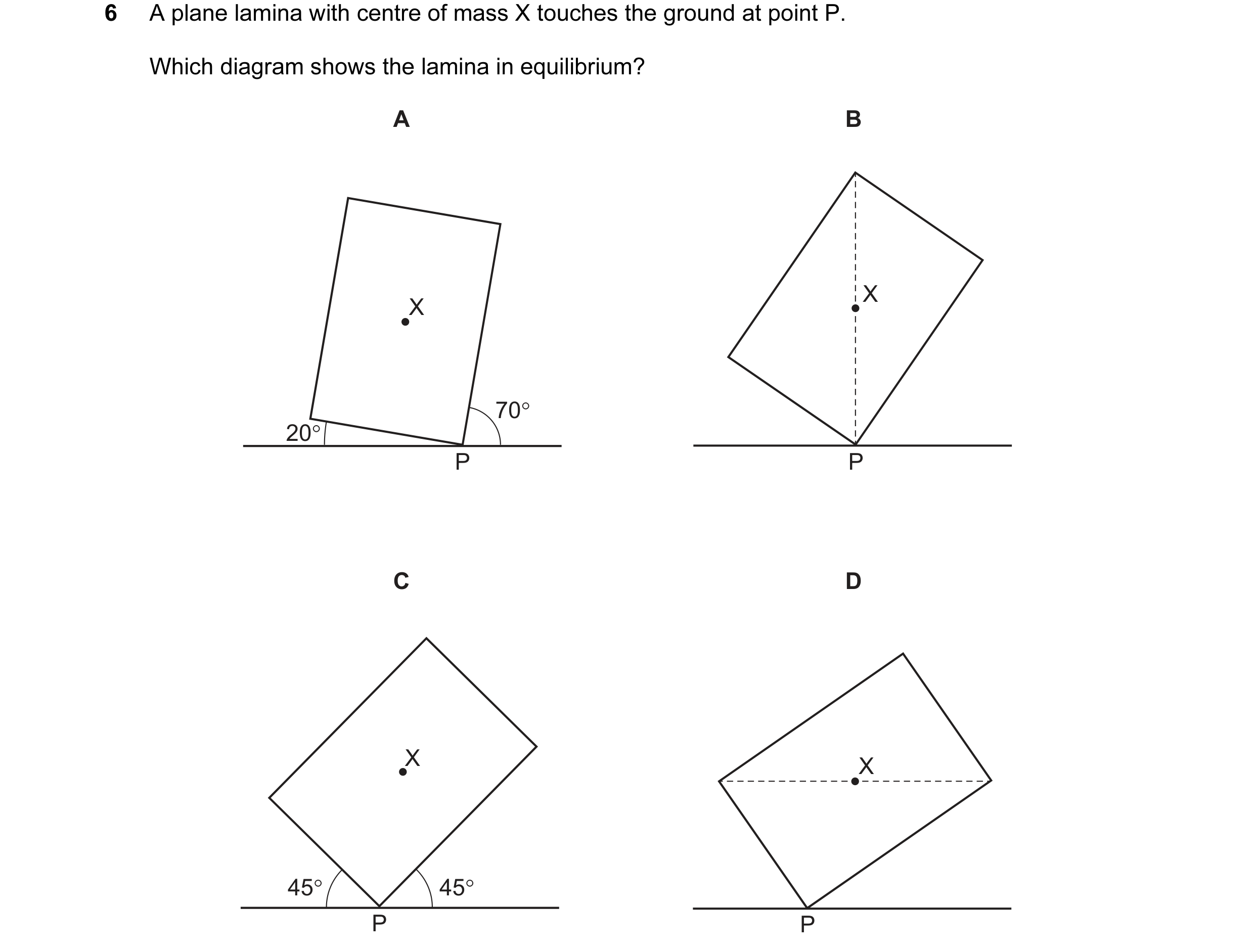
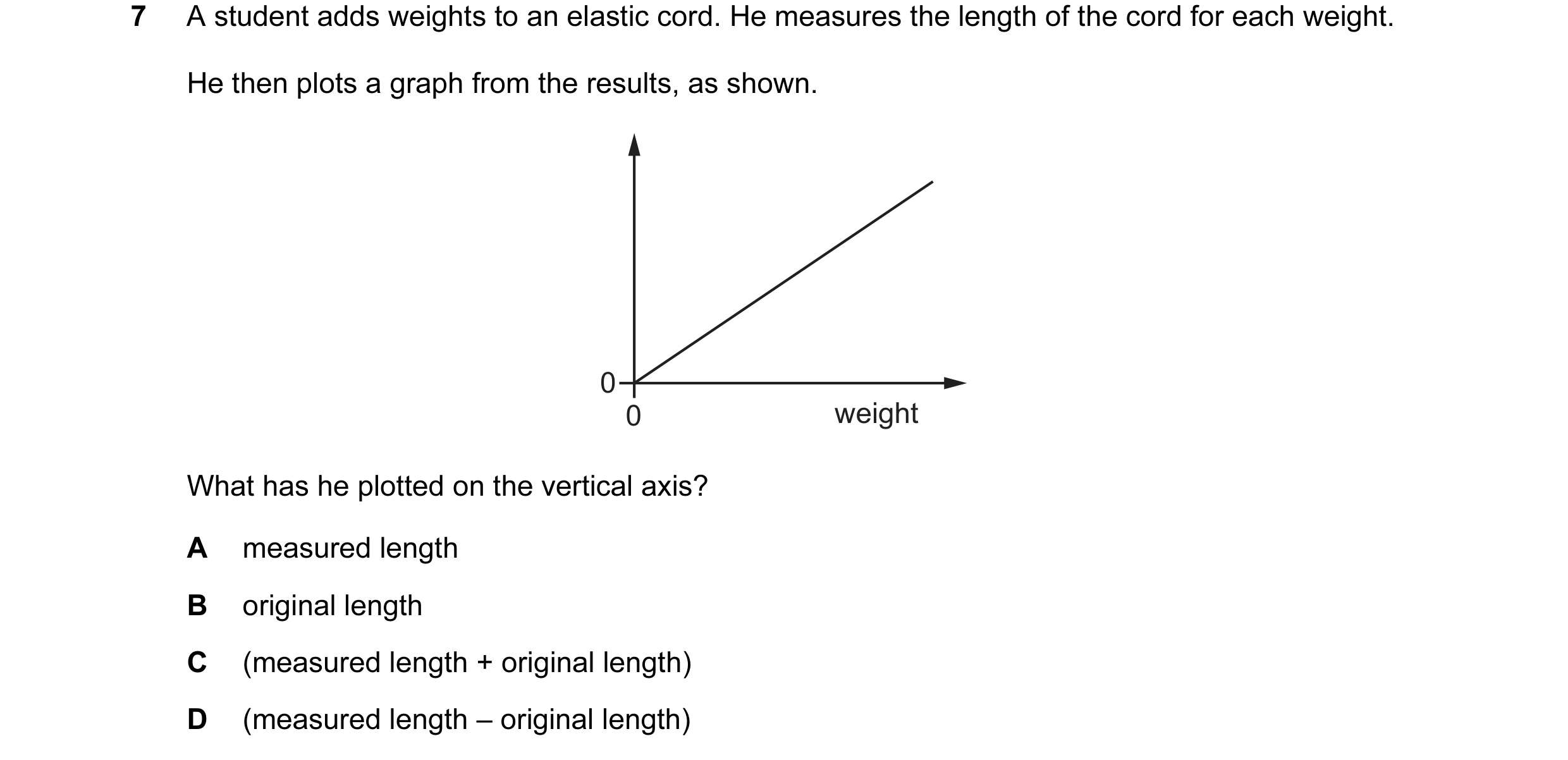 31 / 113
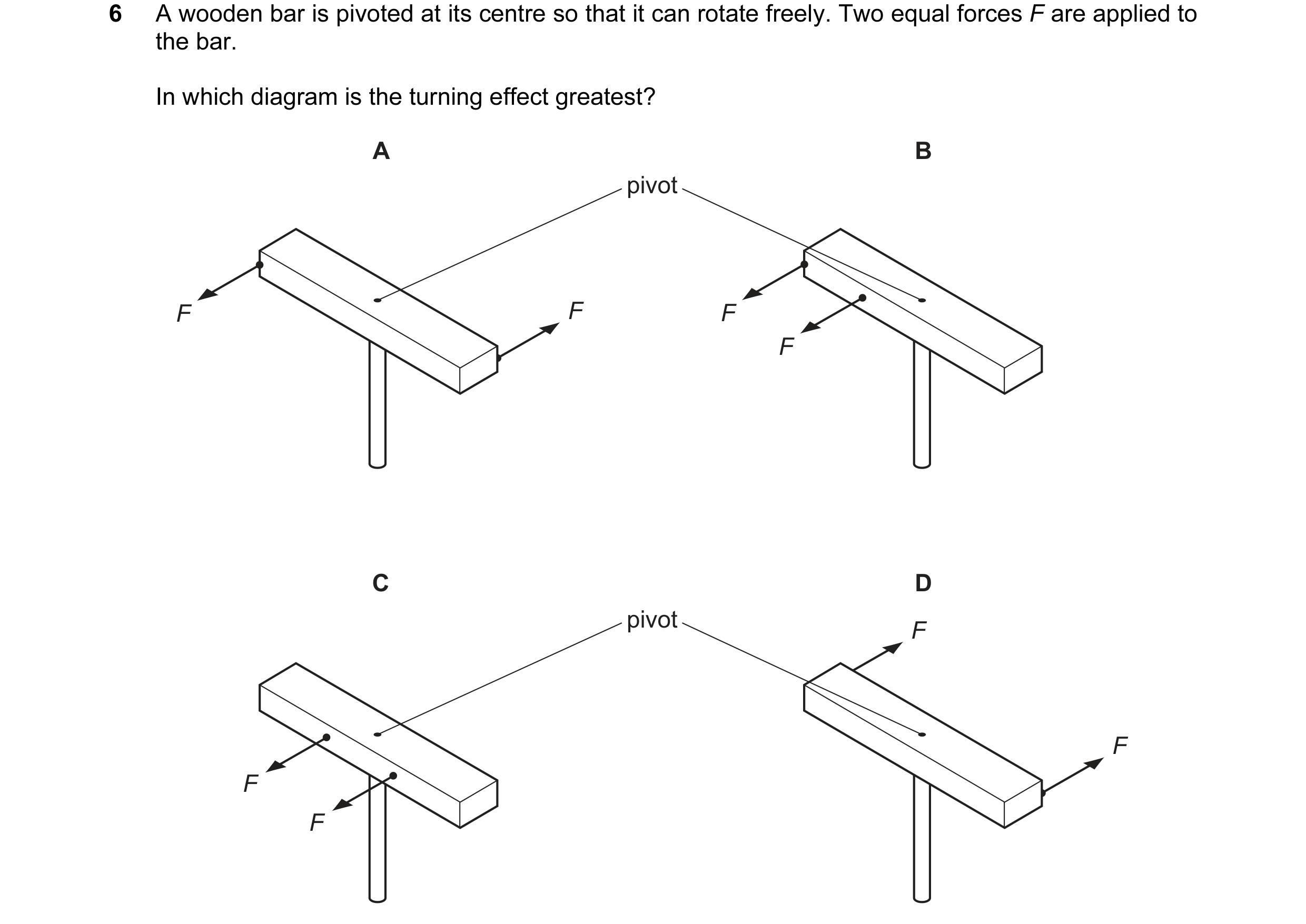
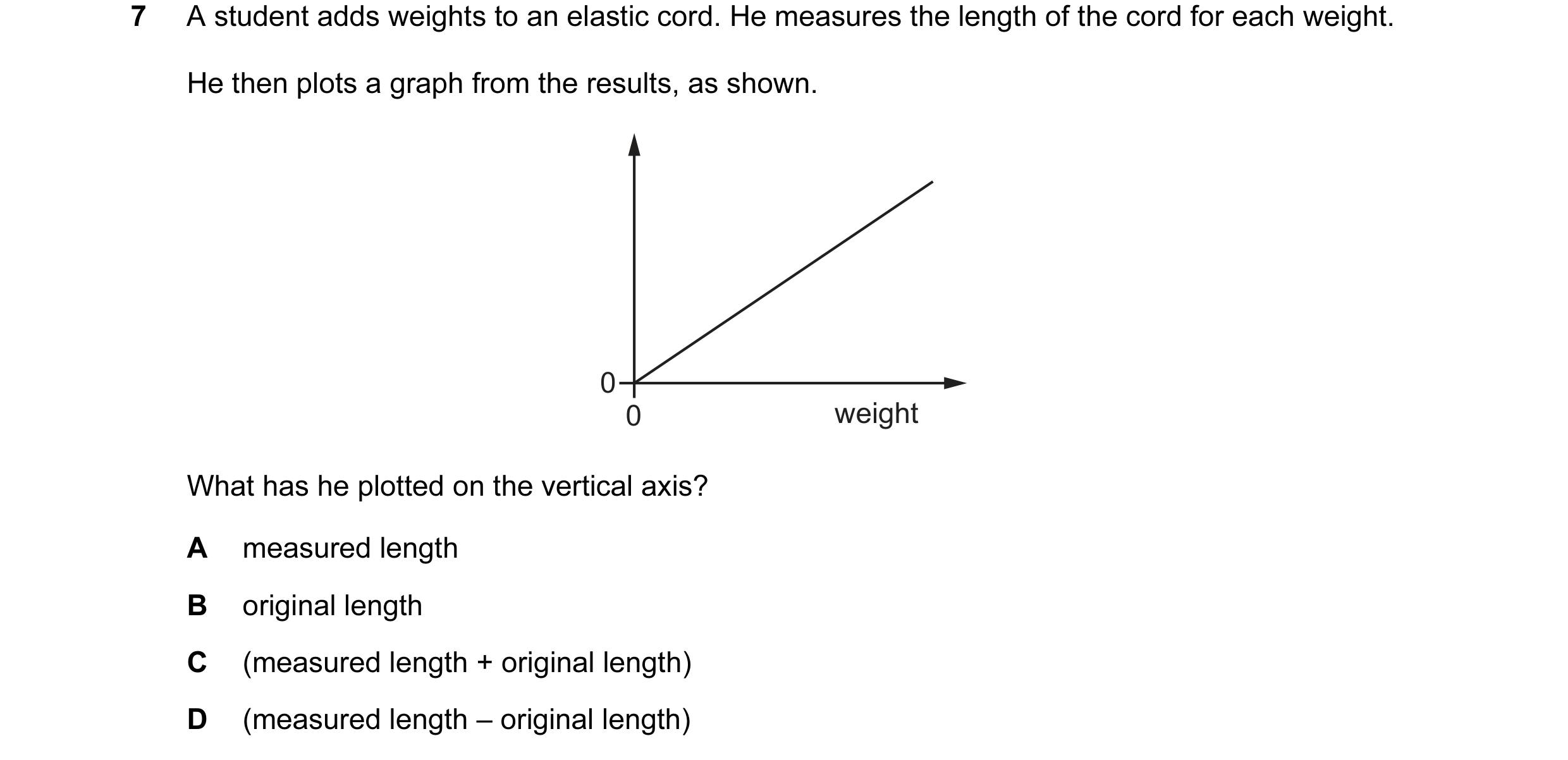 32 / 113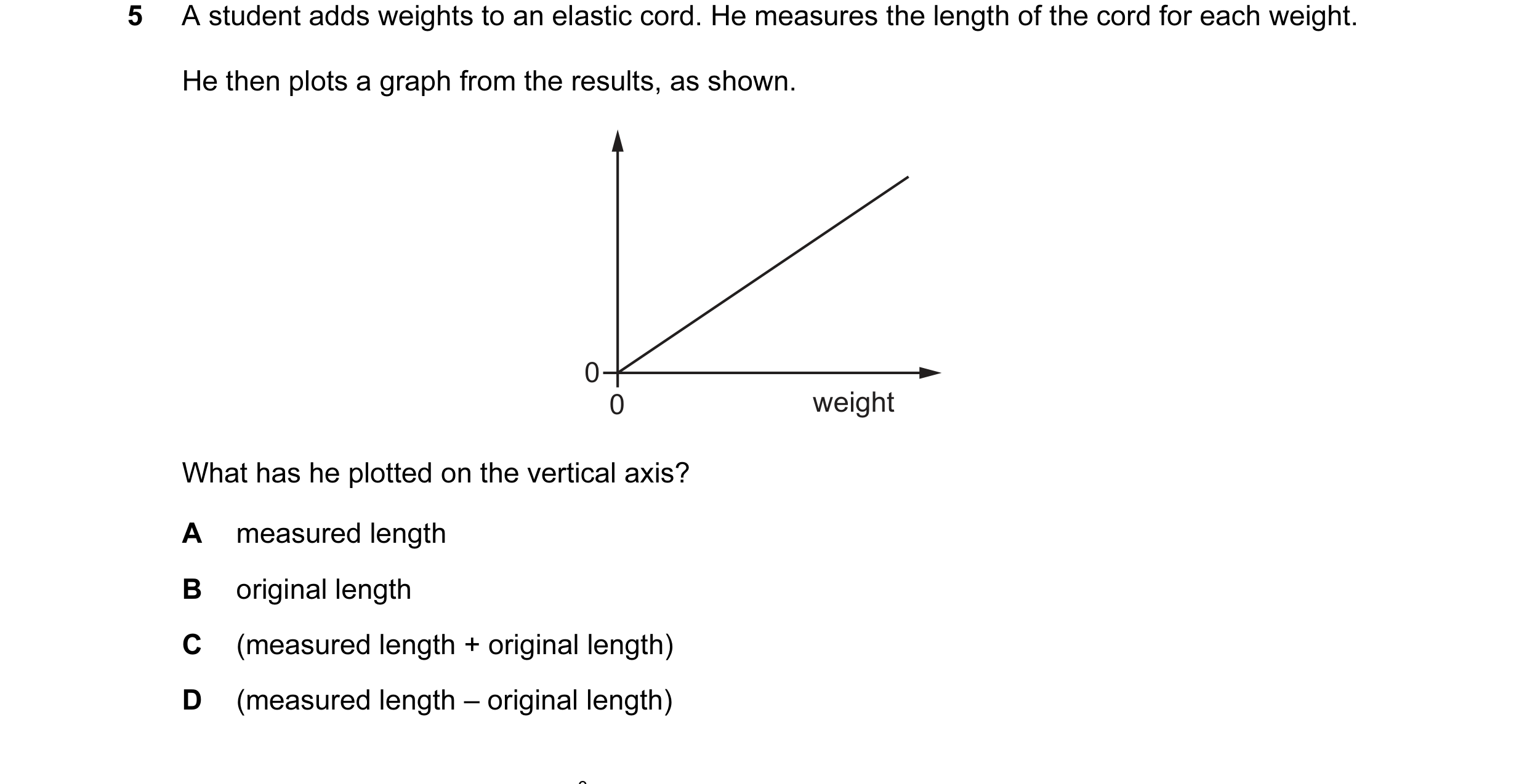
 33 / 113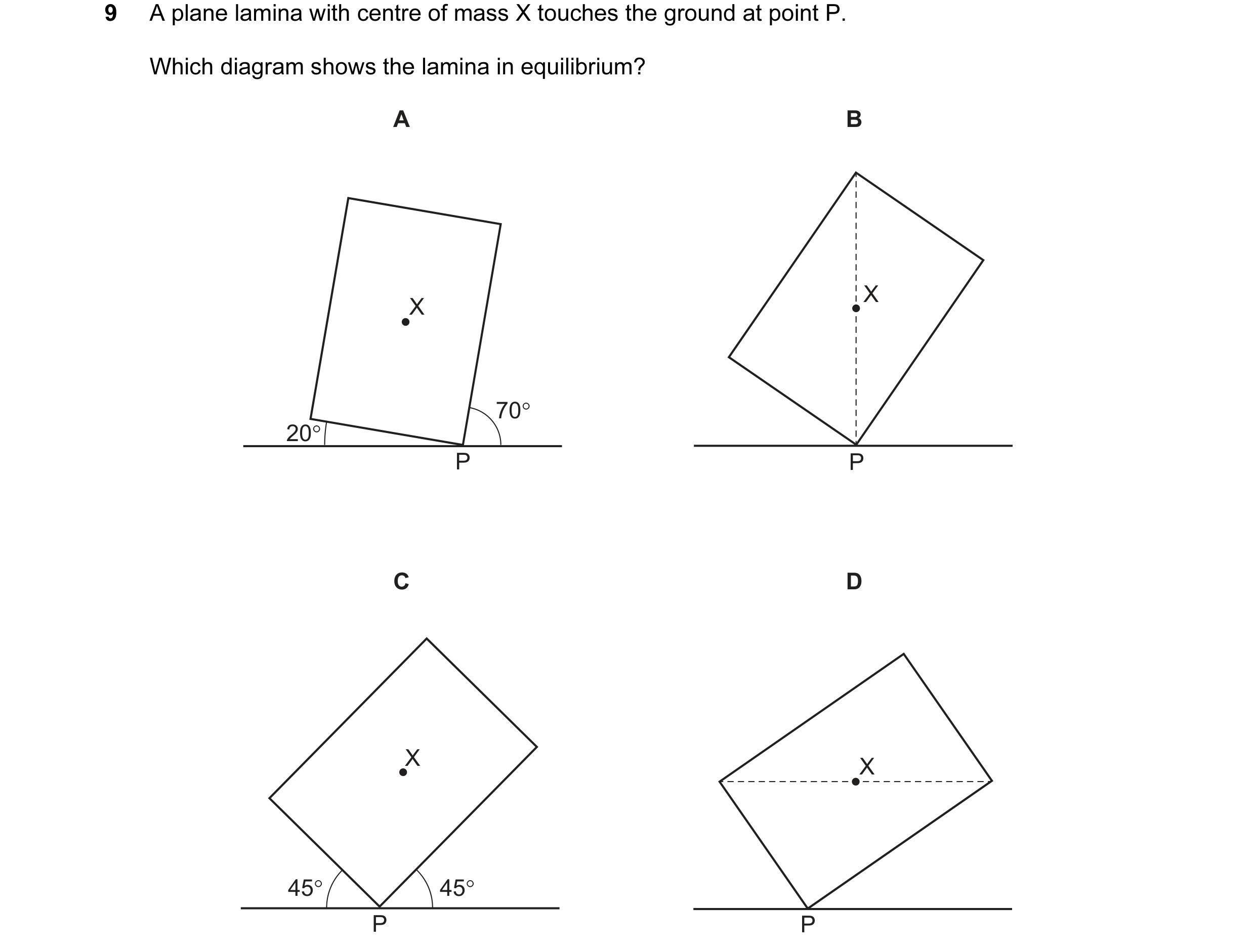


 34 / 113

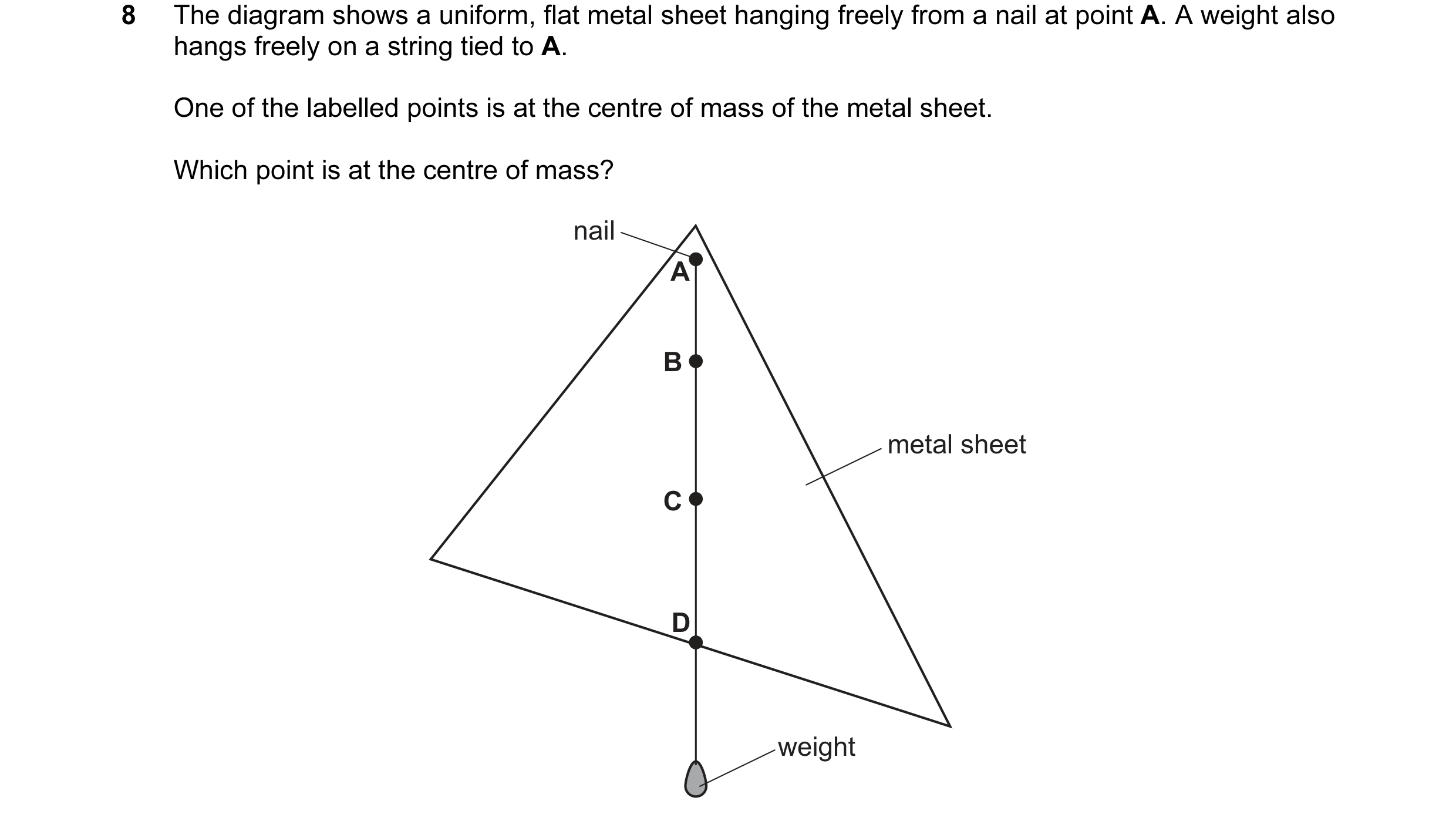
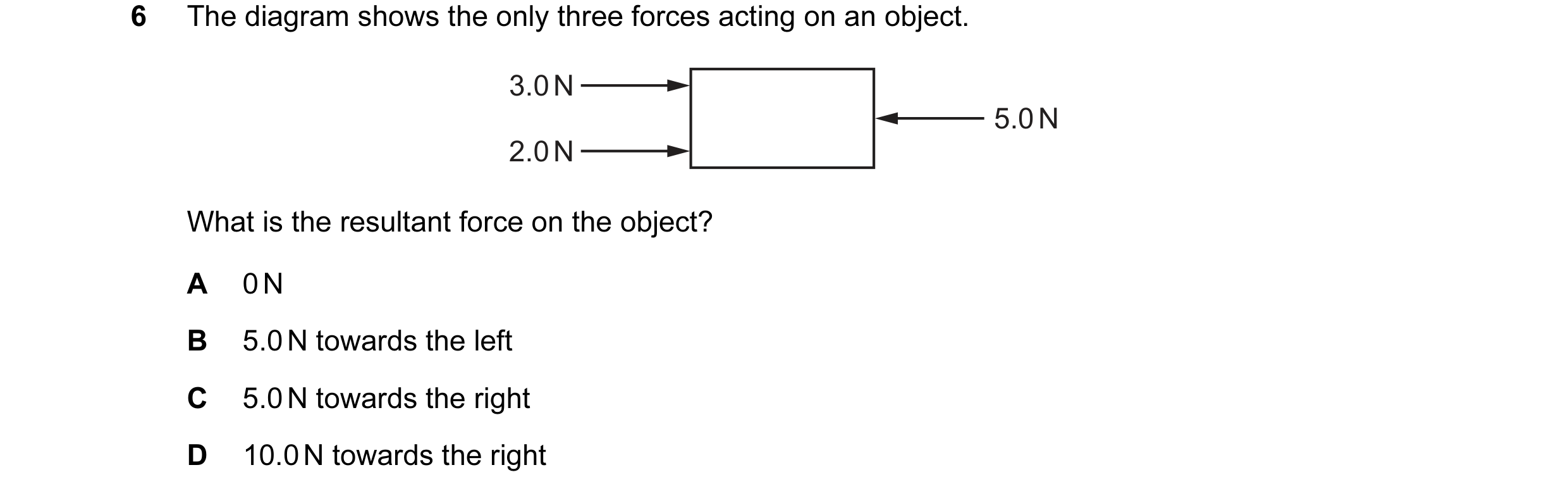 35 / 113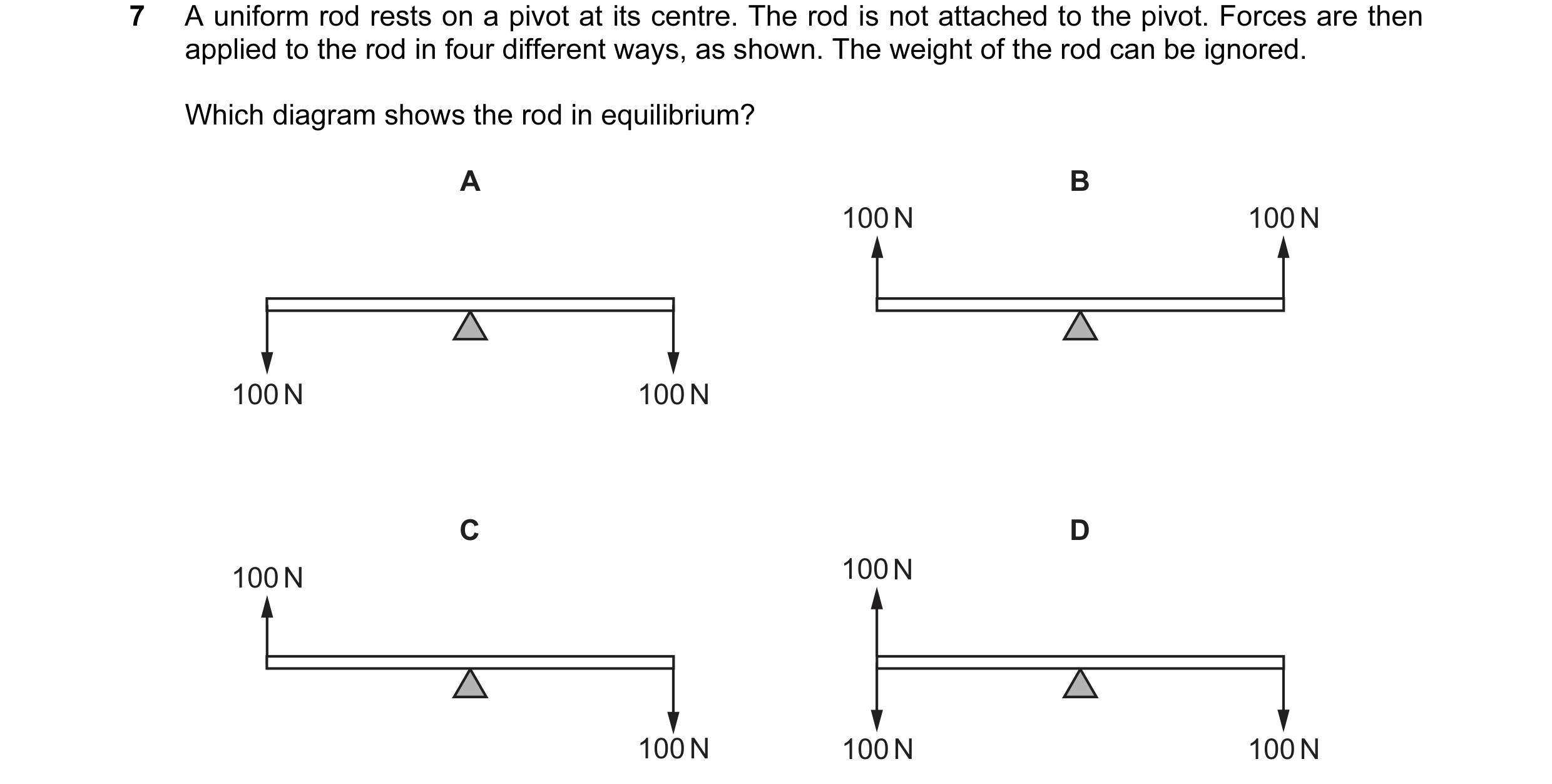
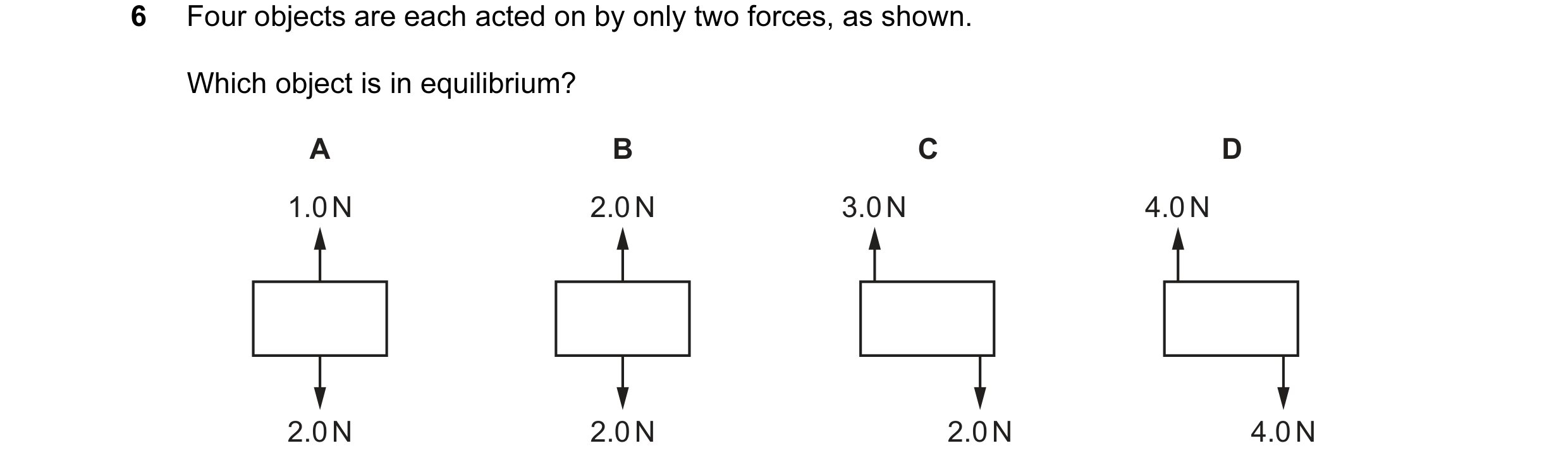
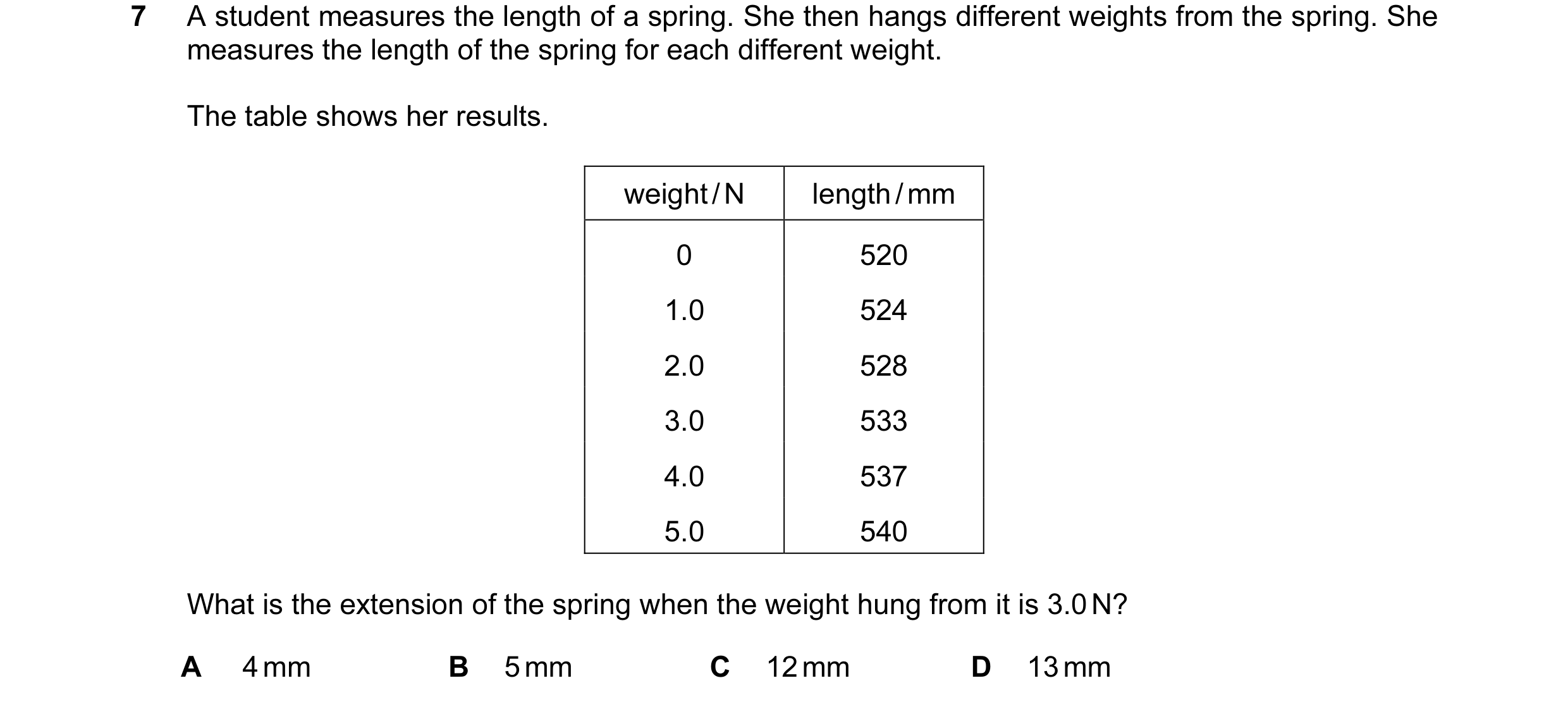 36 / 113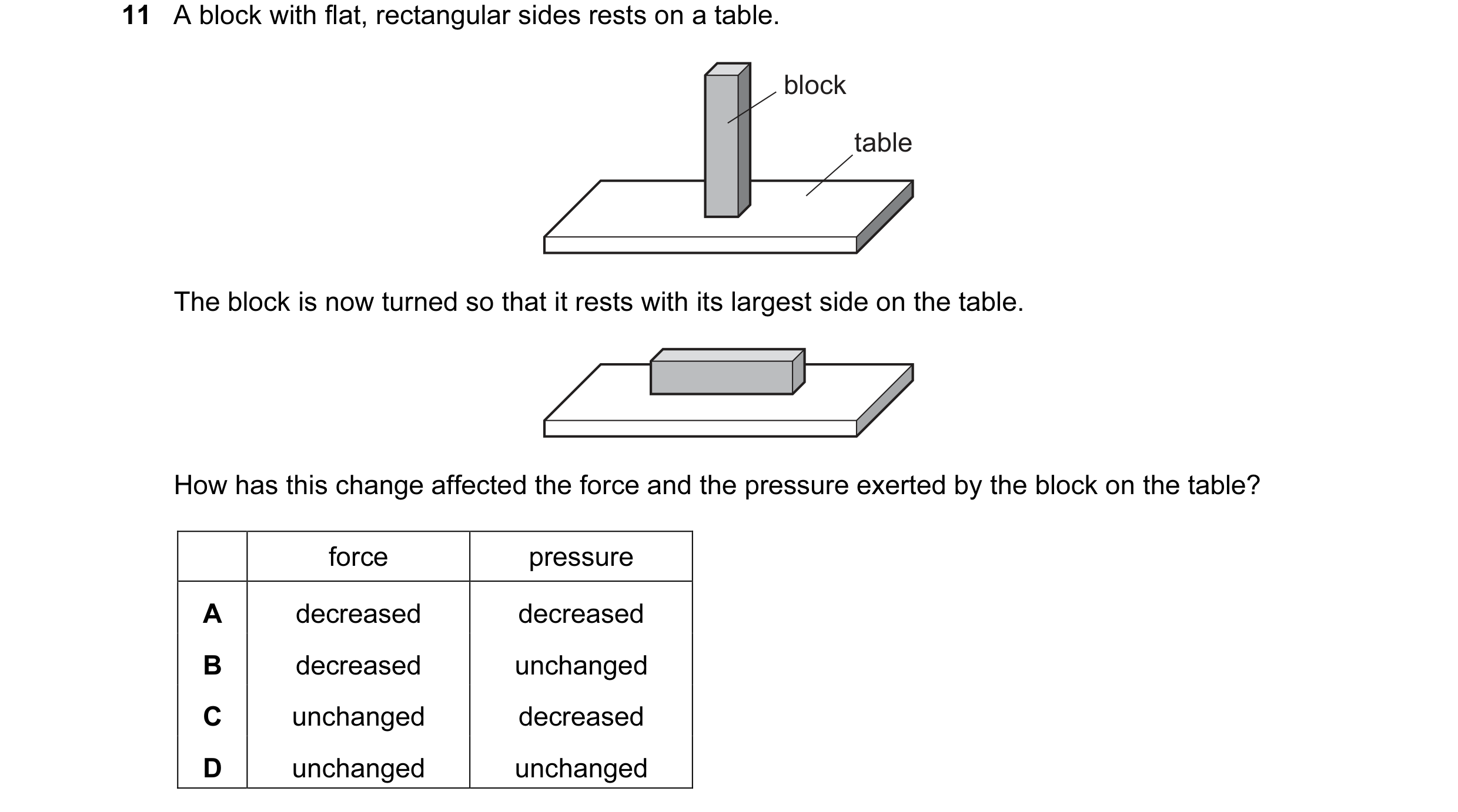
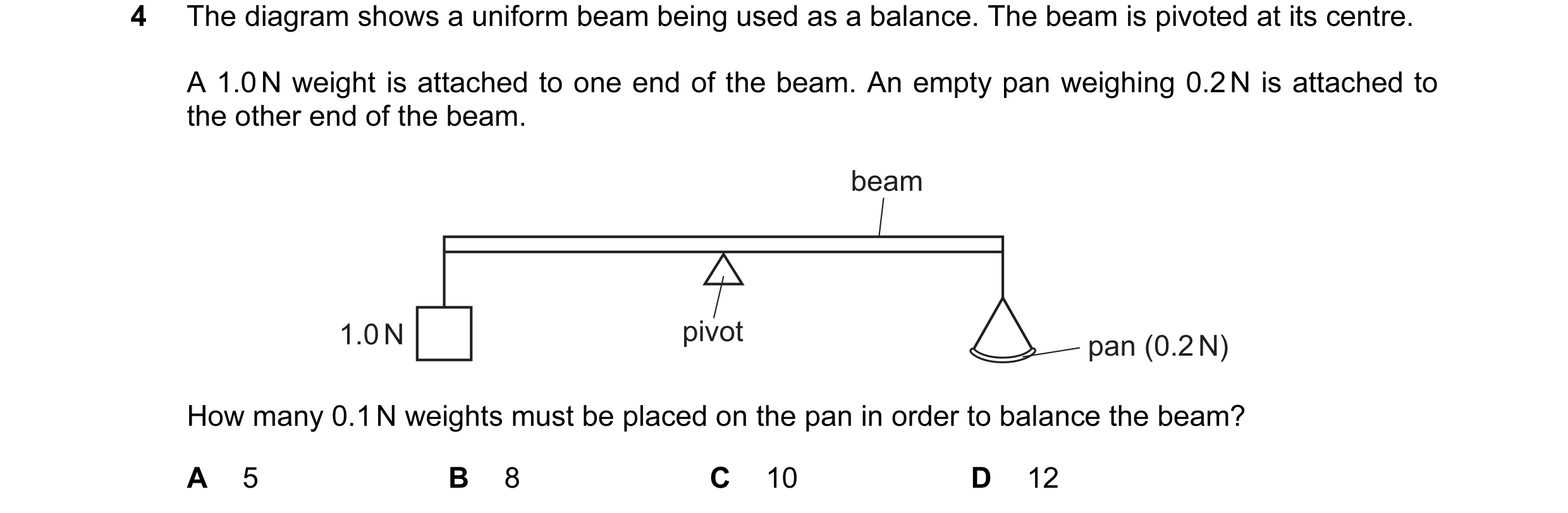
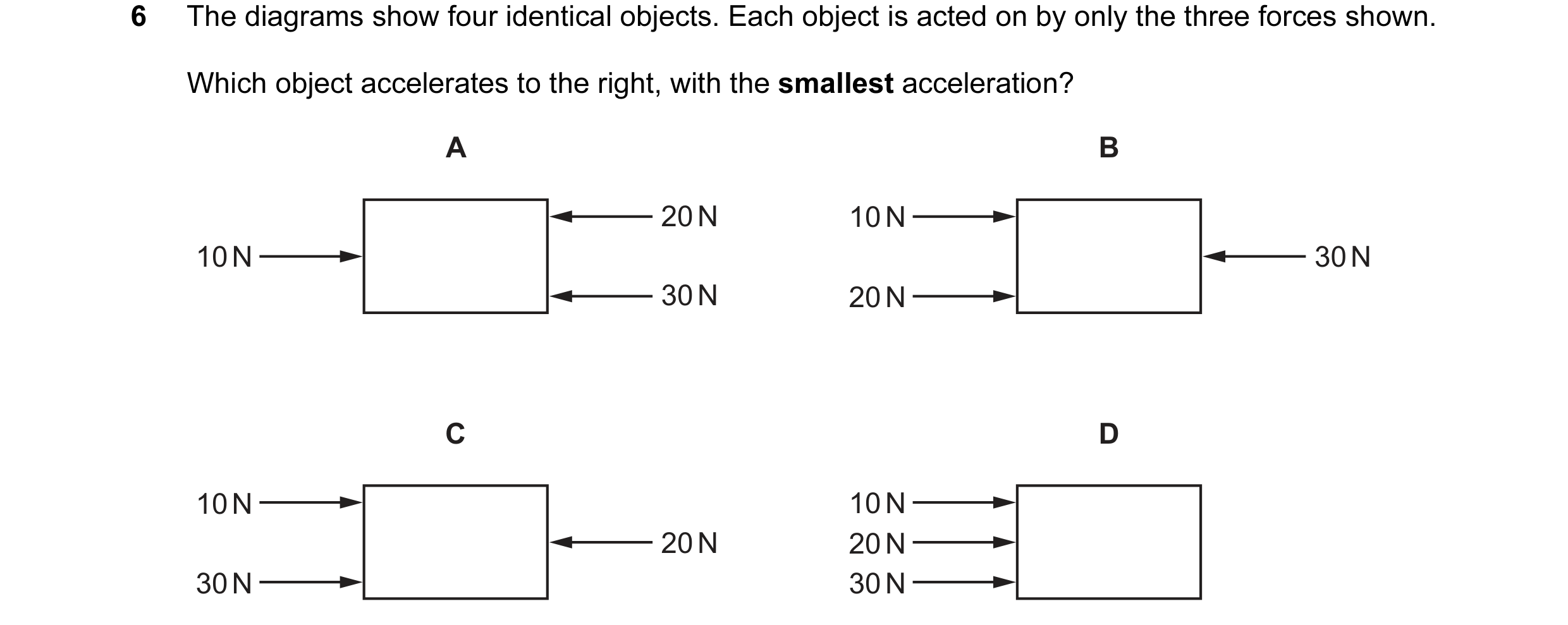 37 / 113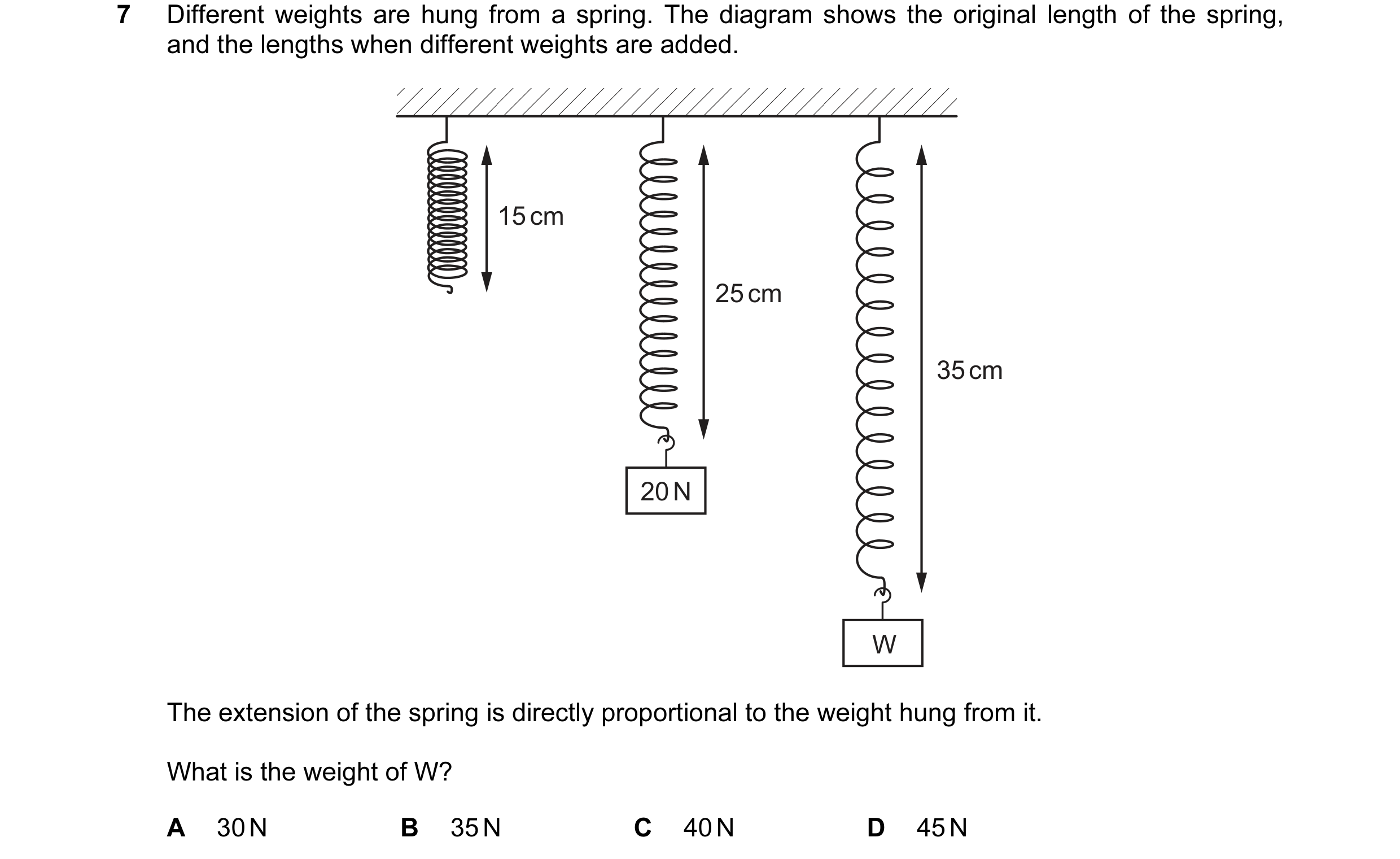

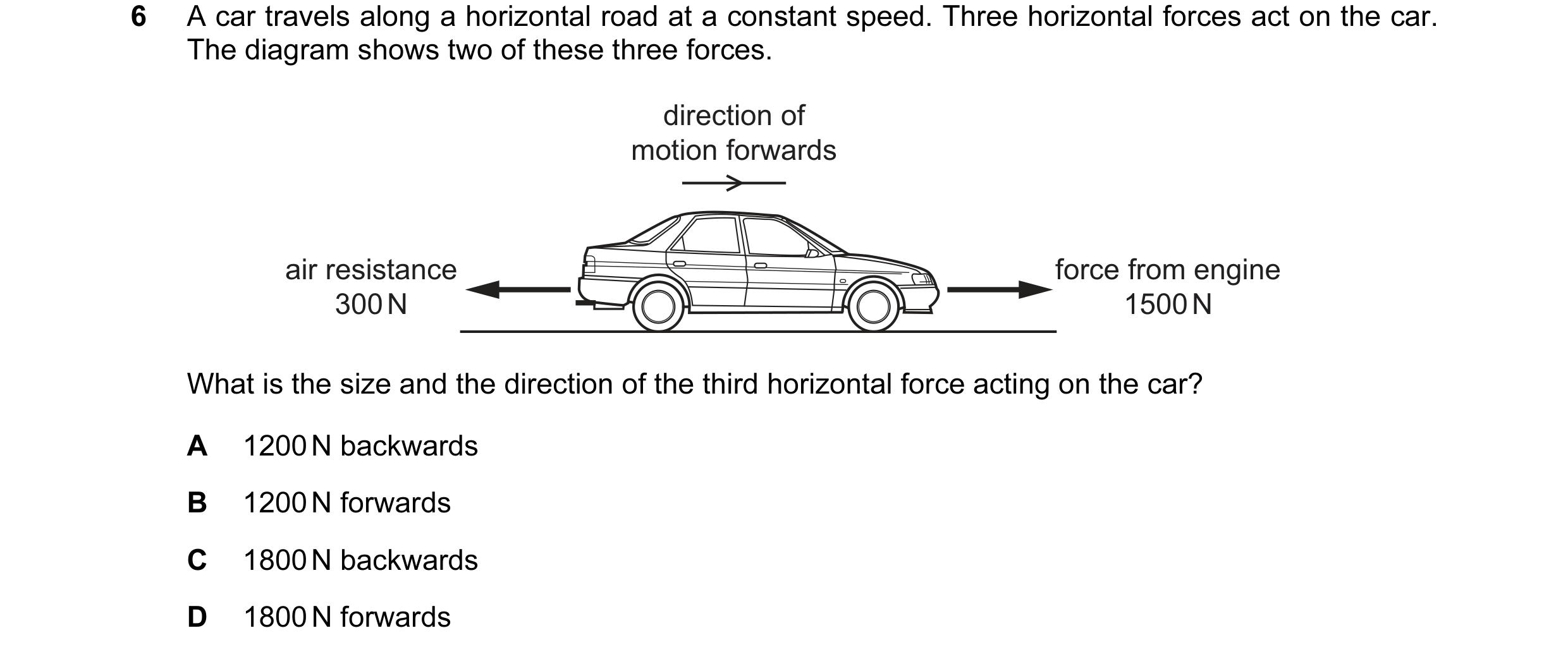 38 / 113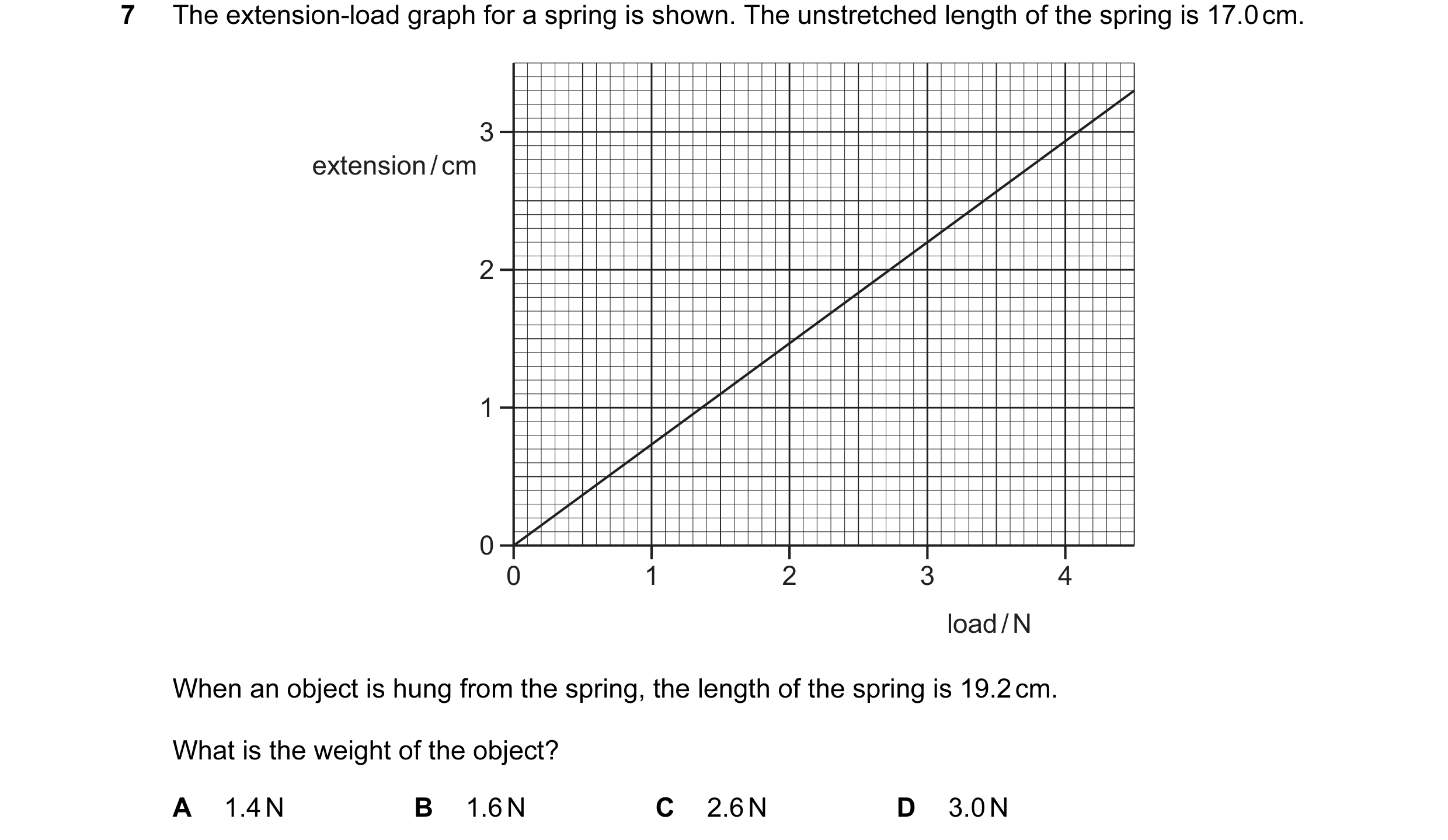

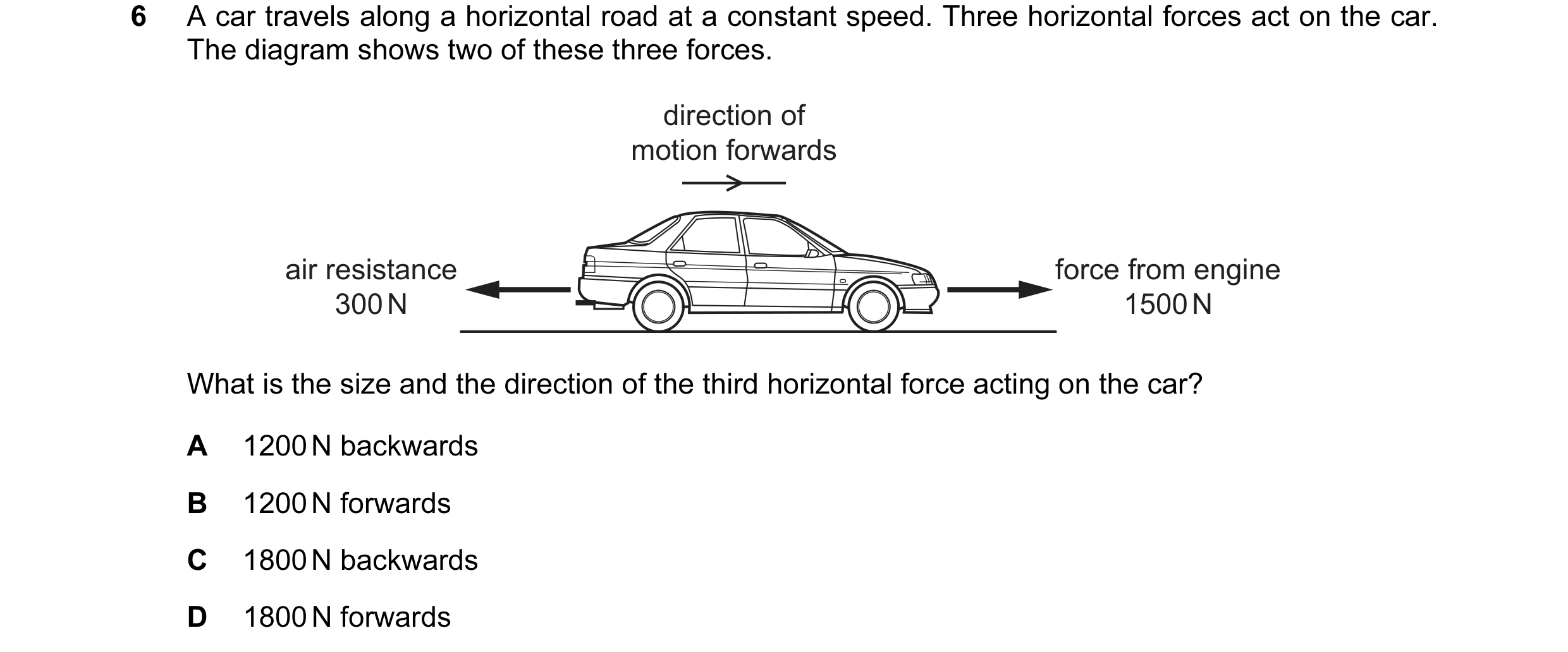 39 / 113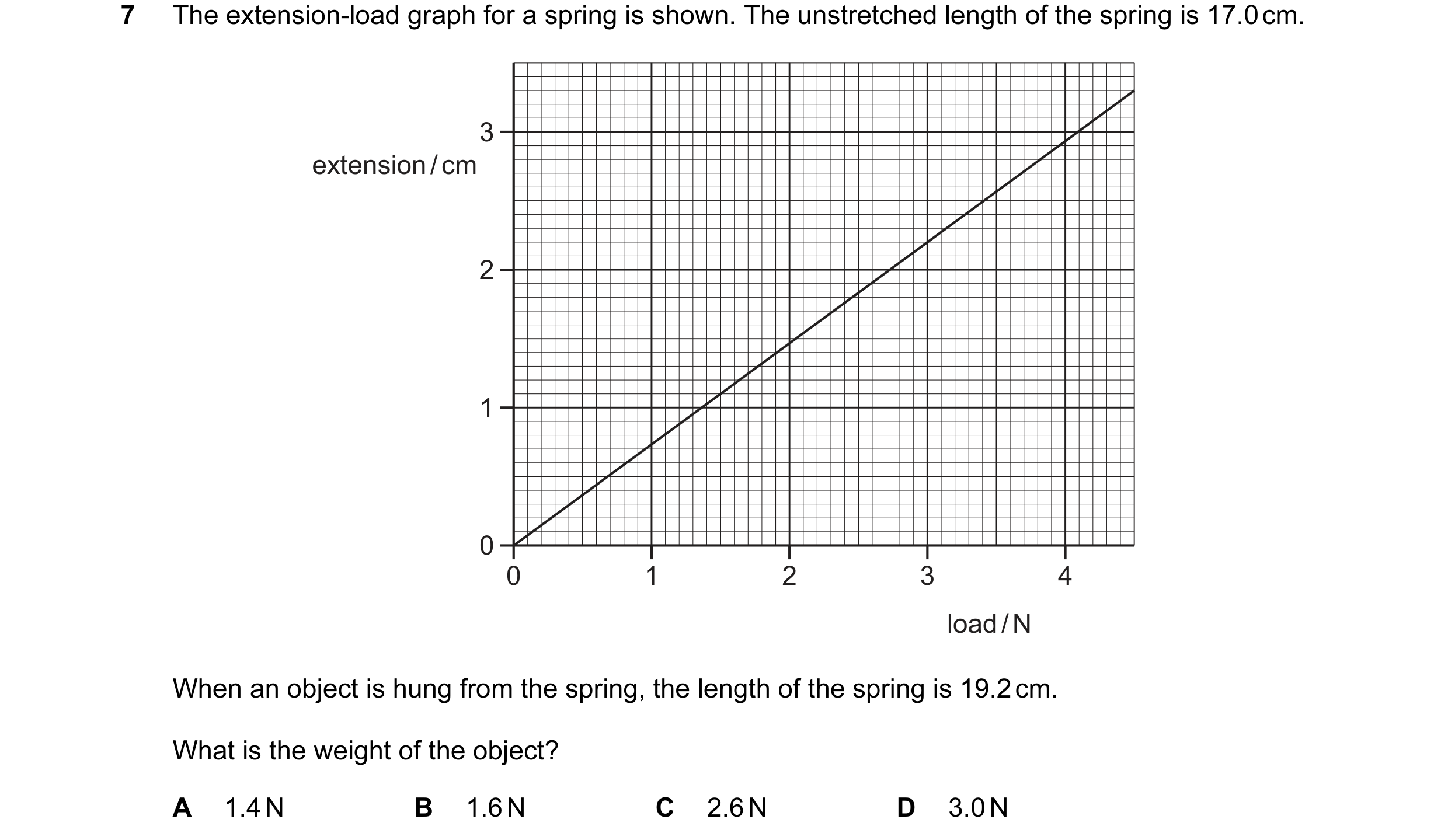
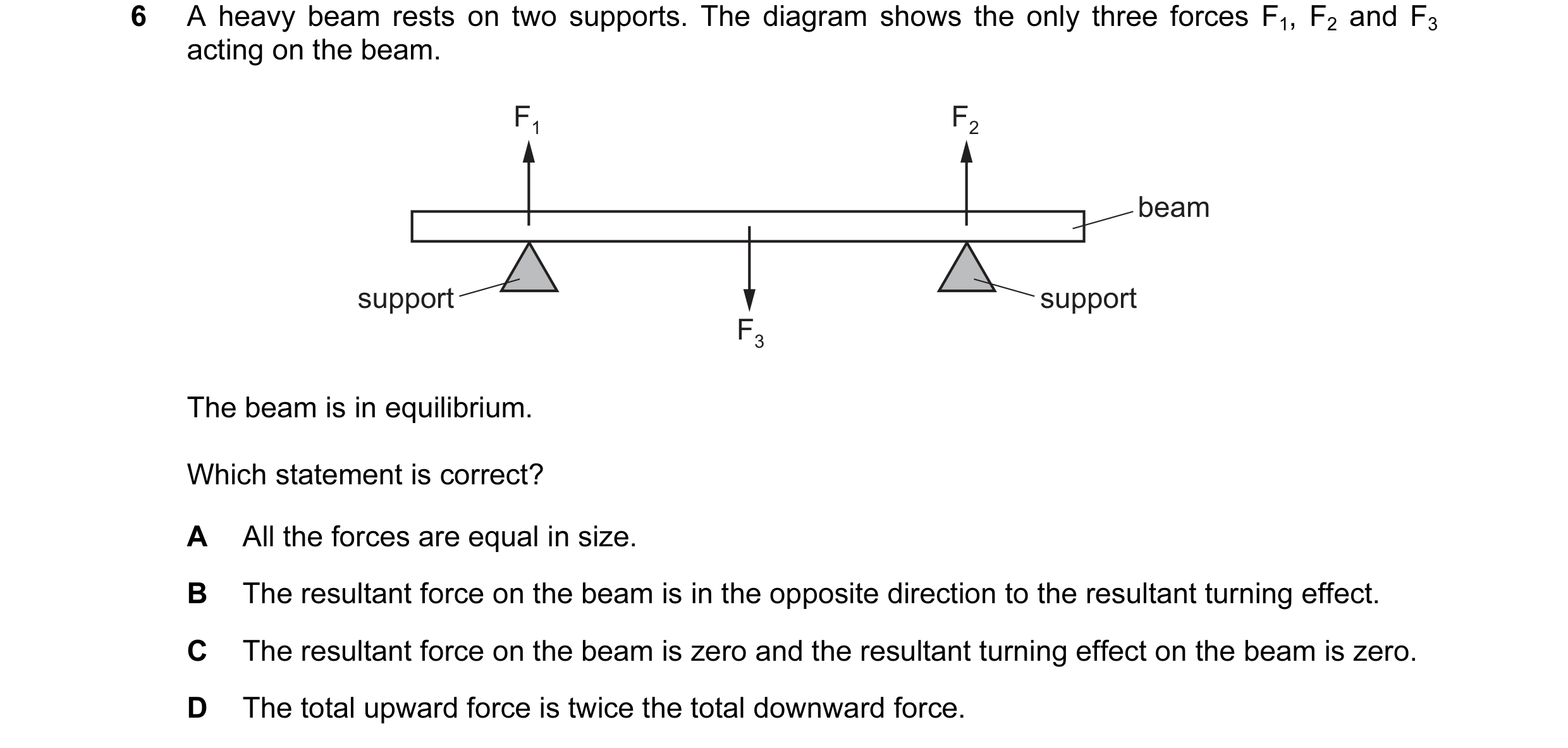
 40 / 113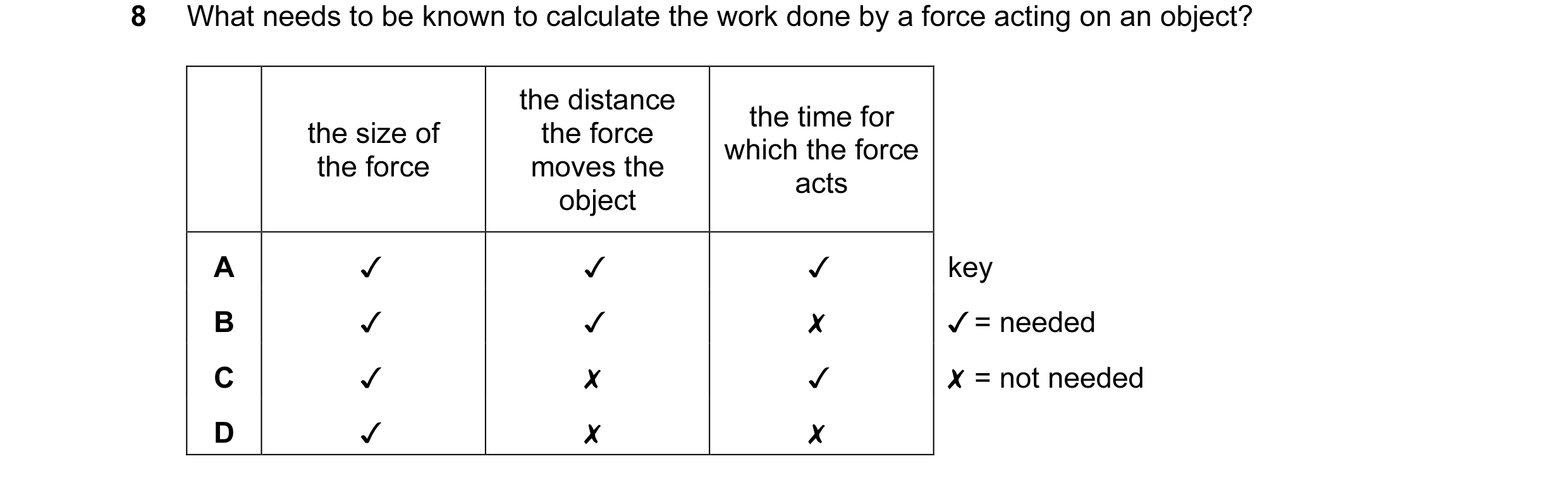
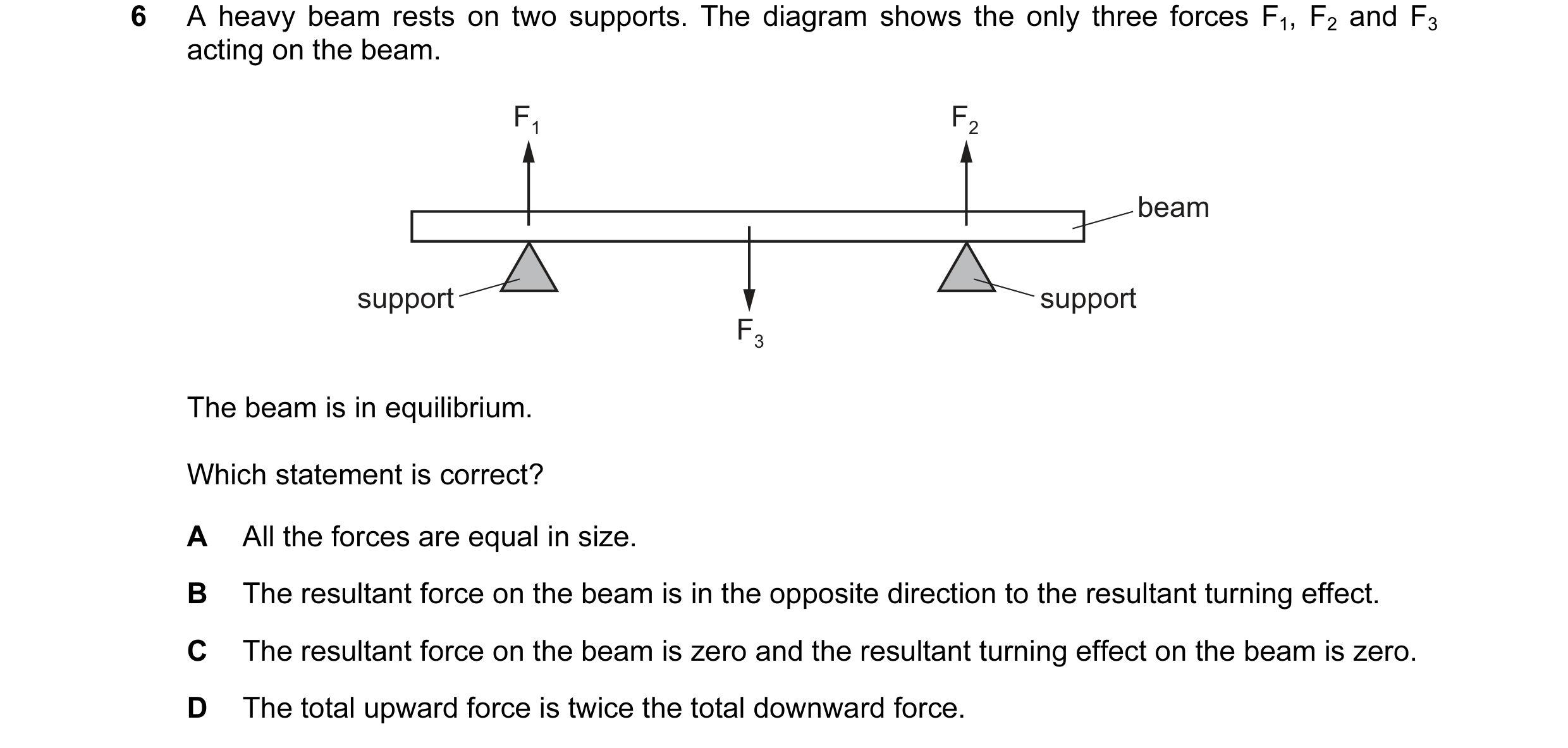
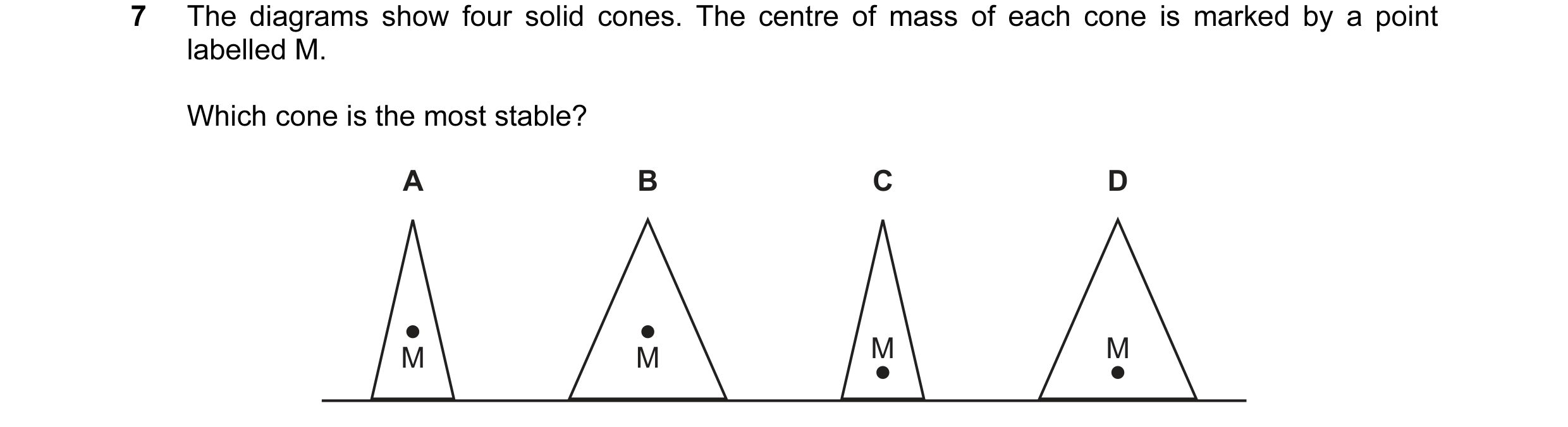
 41 / 113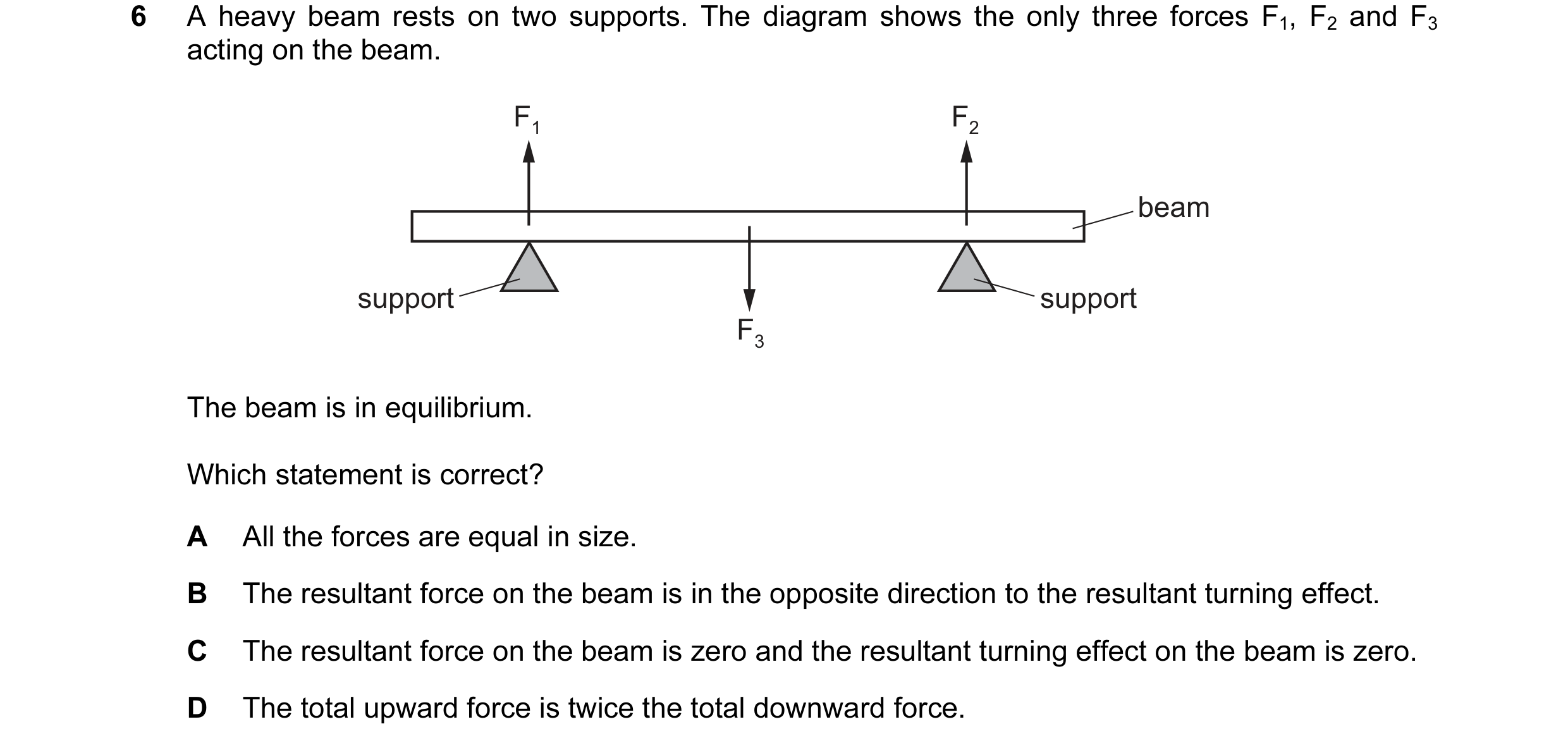
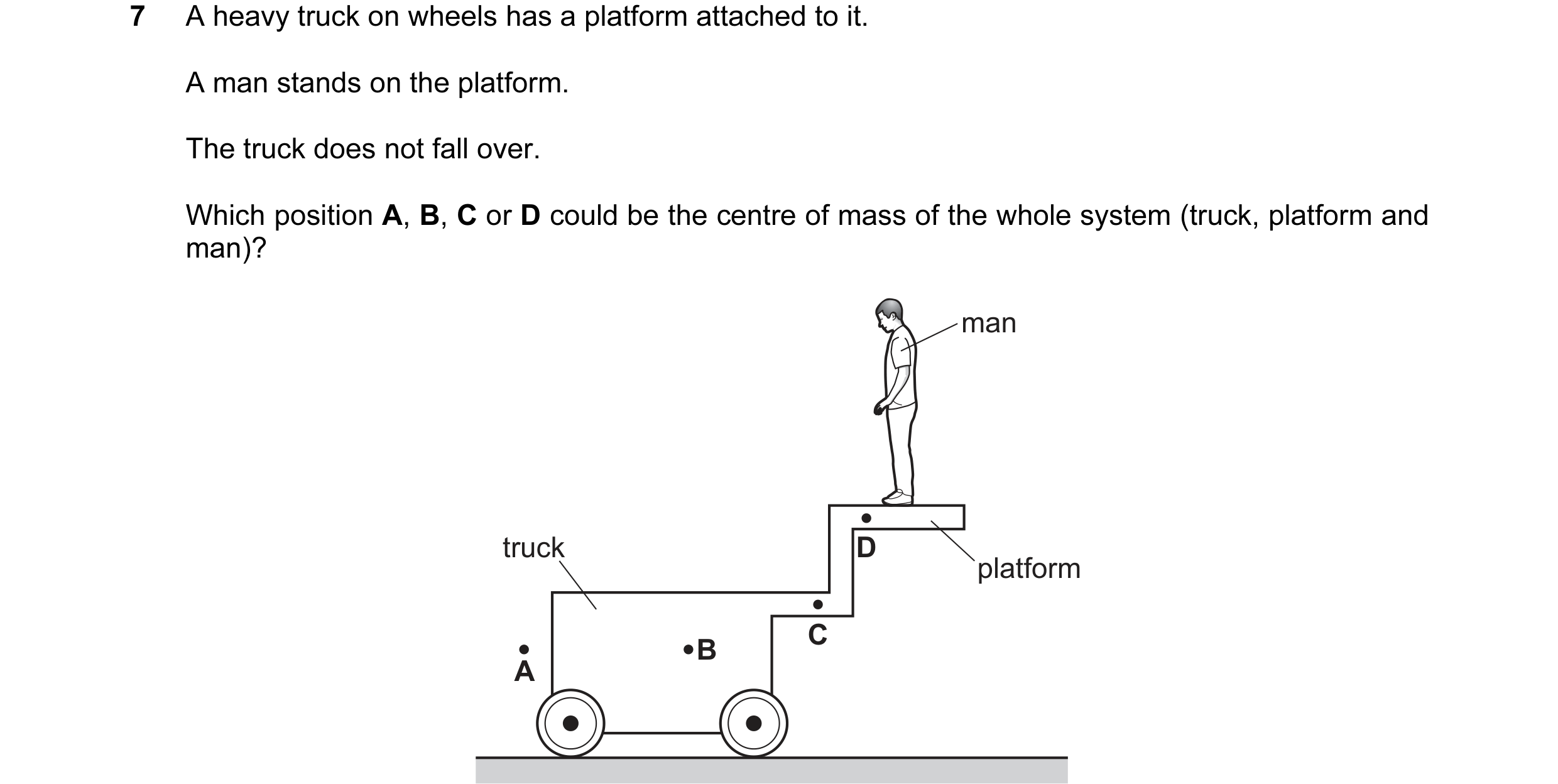 42 / 113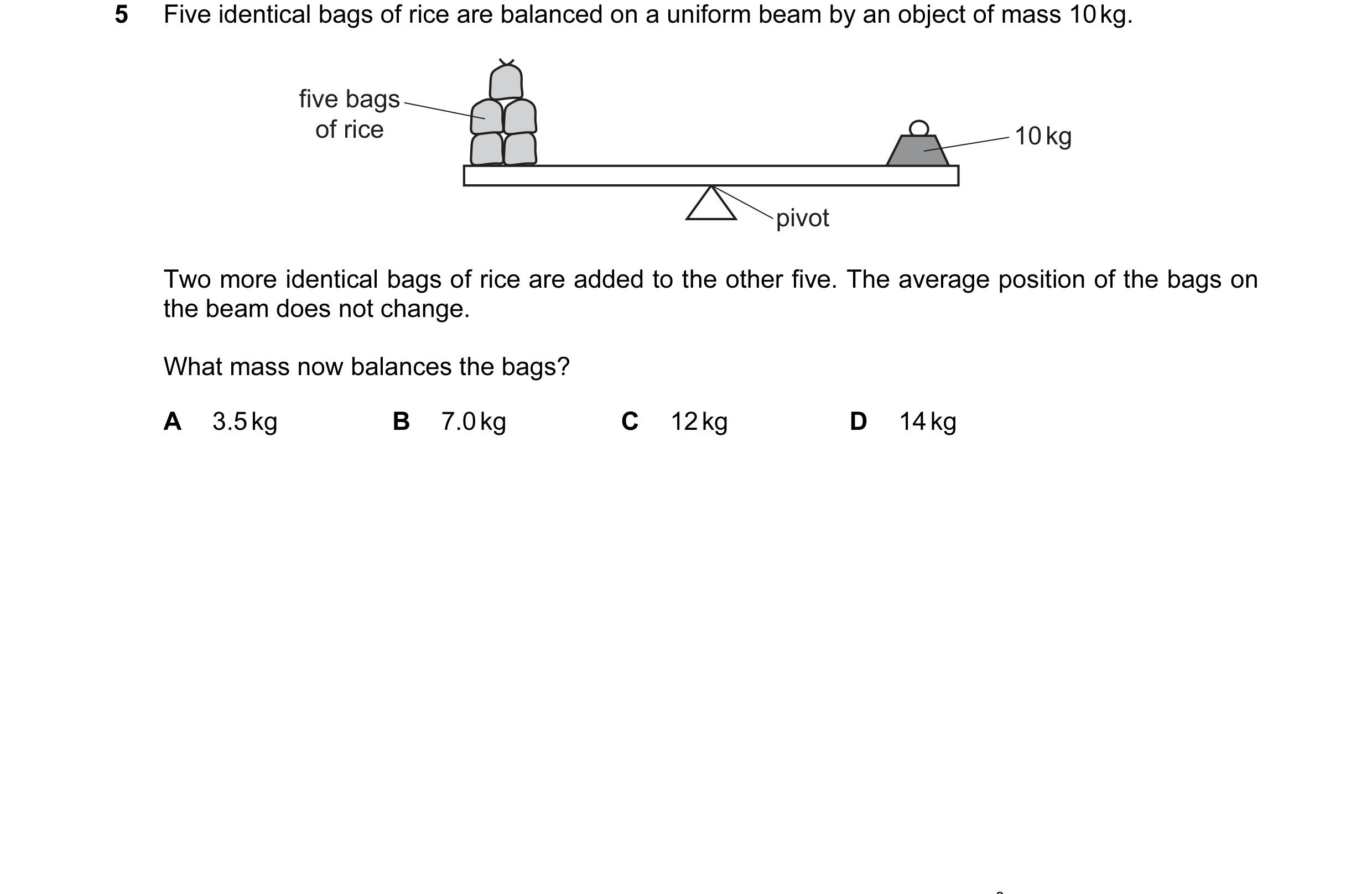
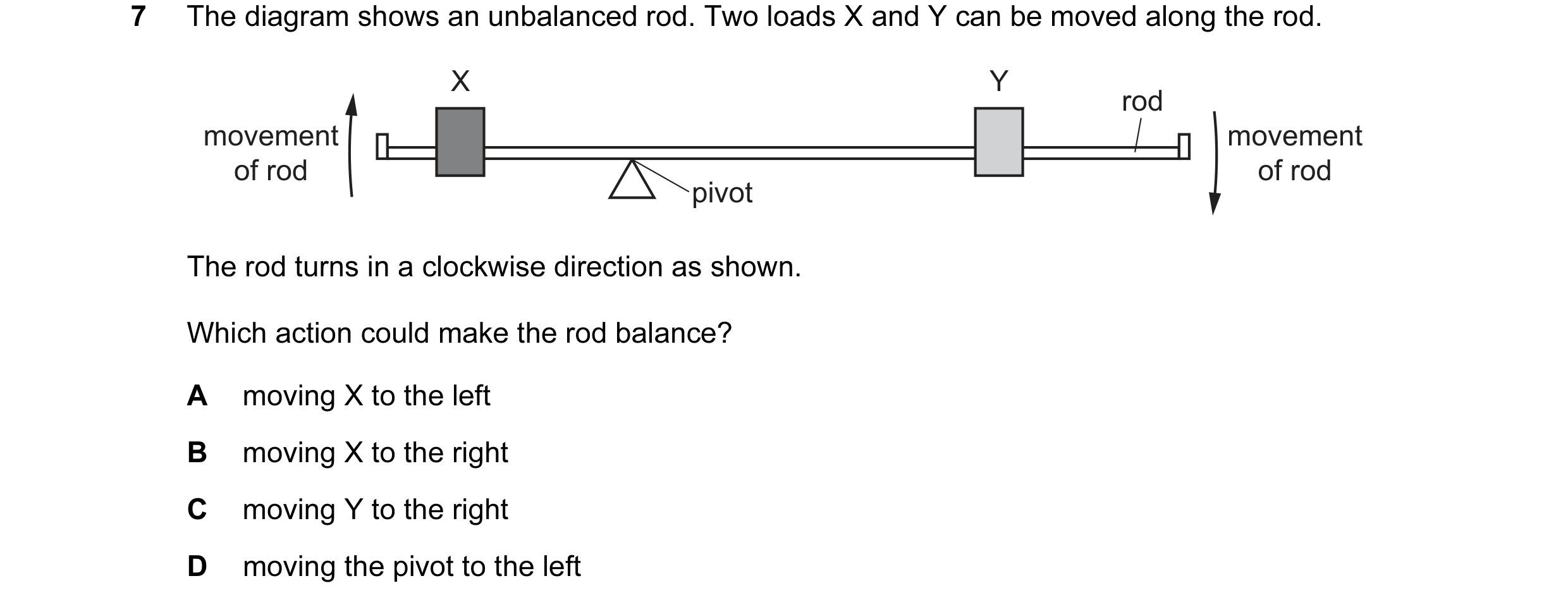 43 / 113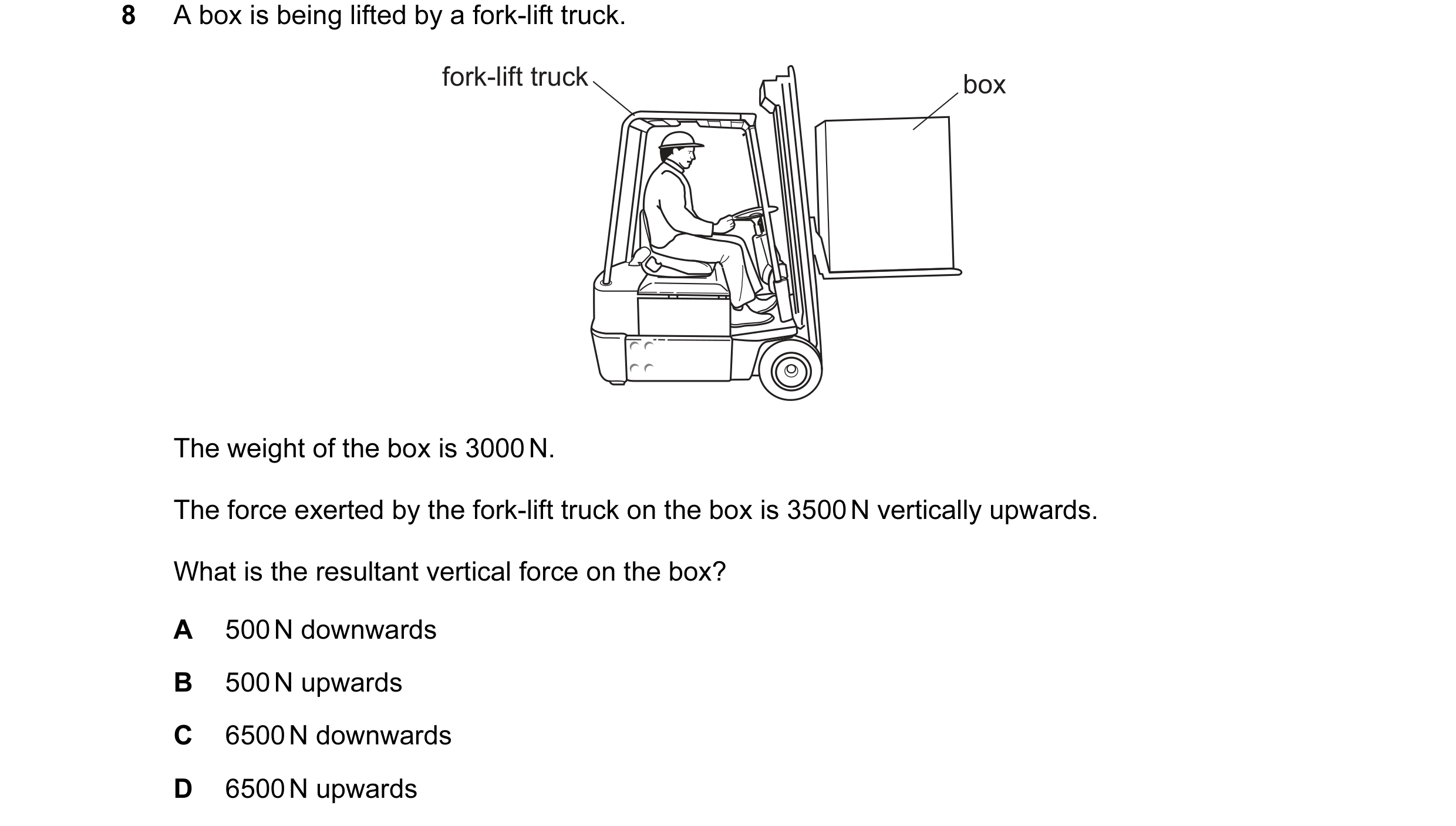

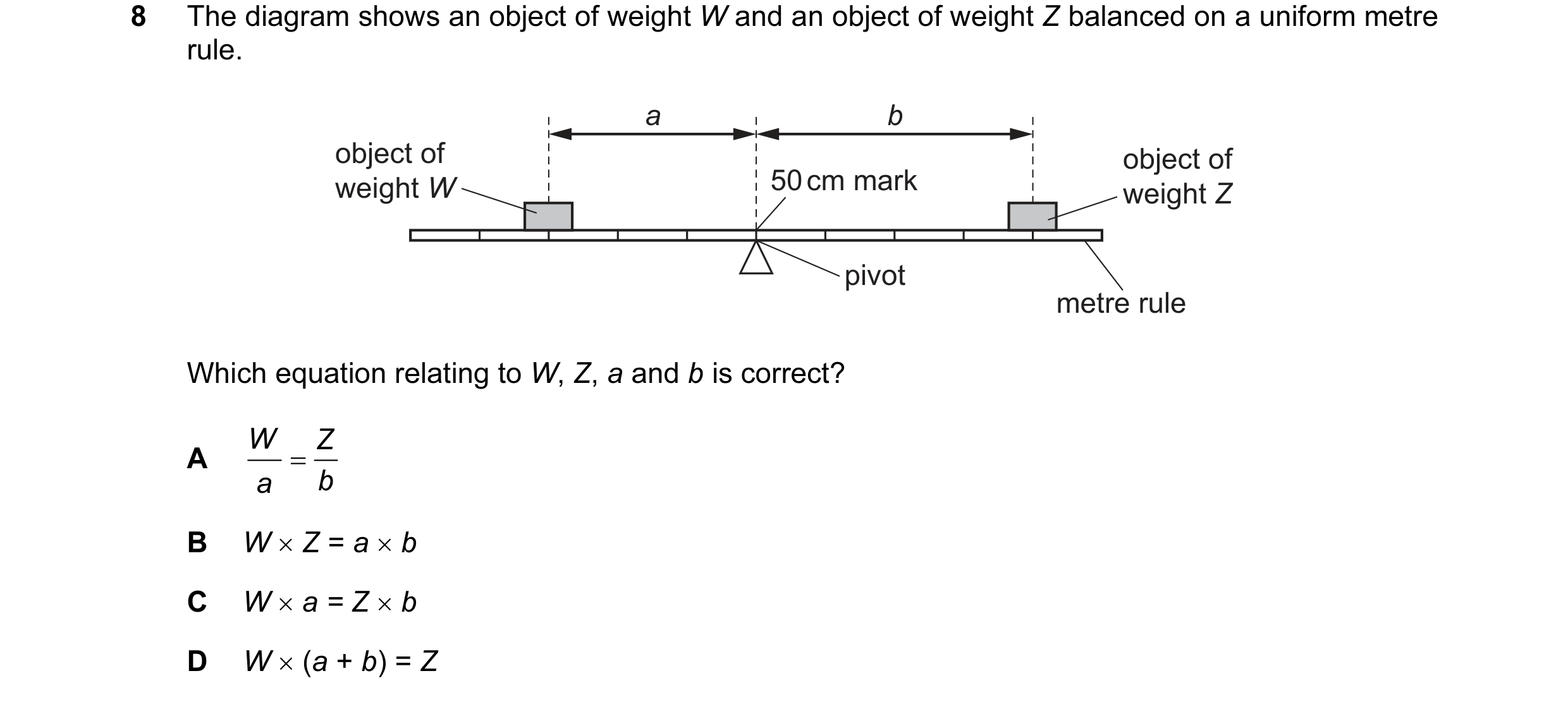 44 / 113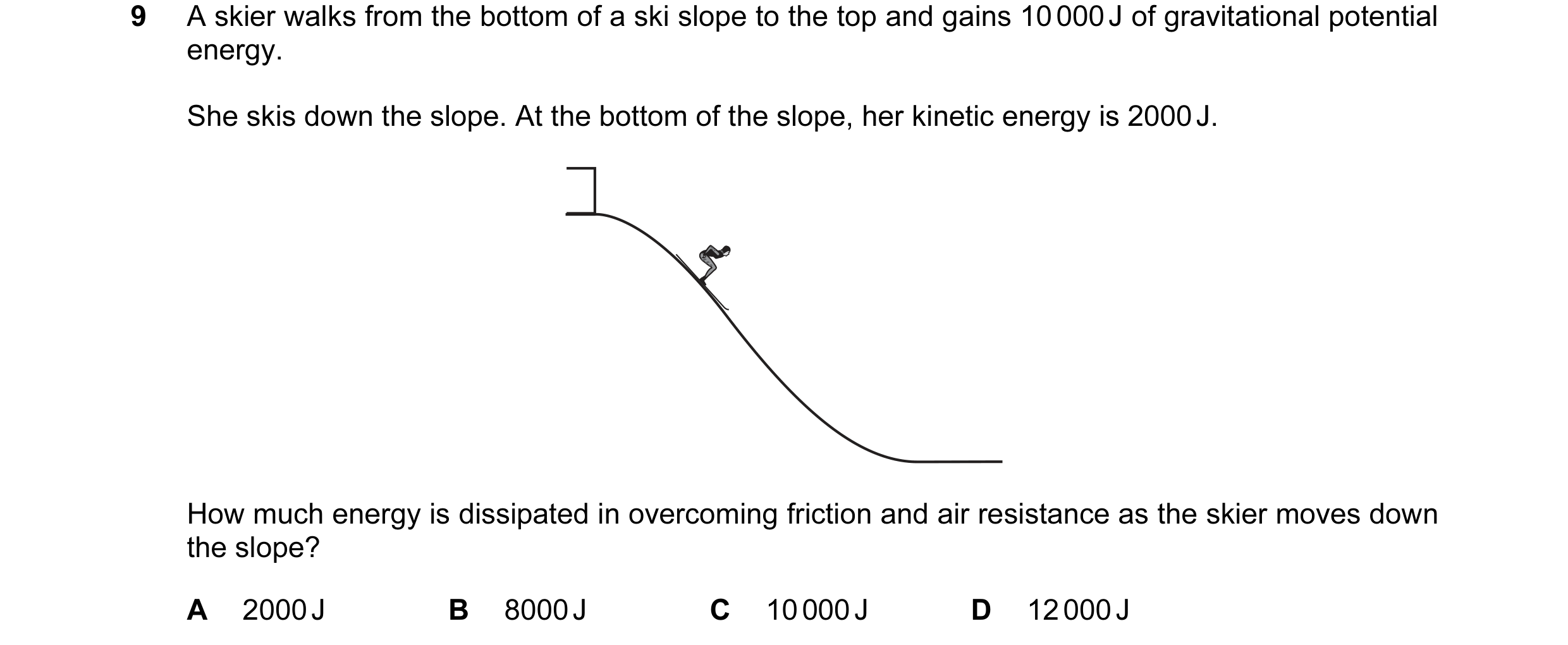
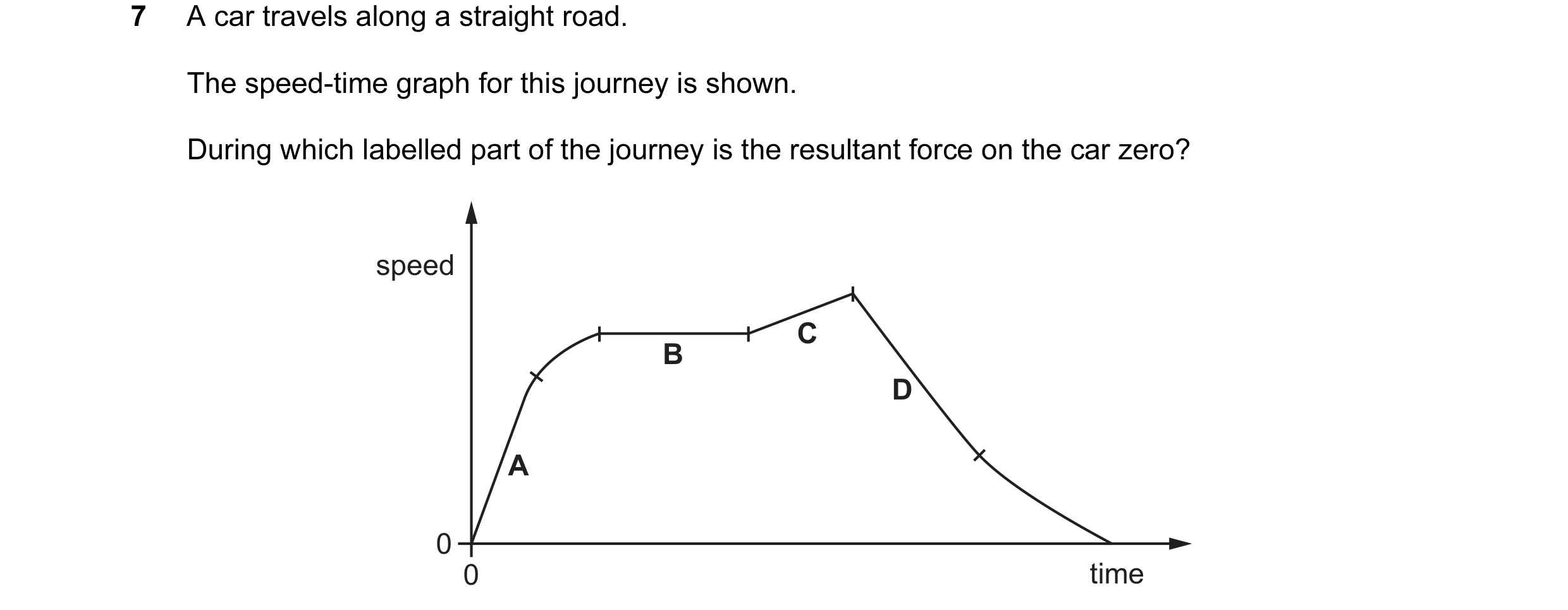
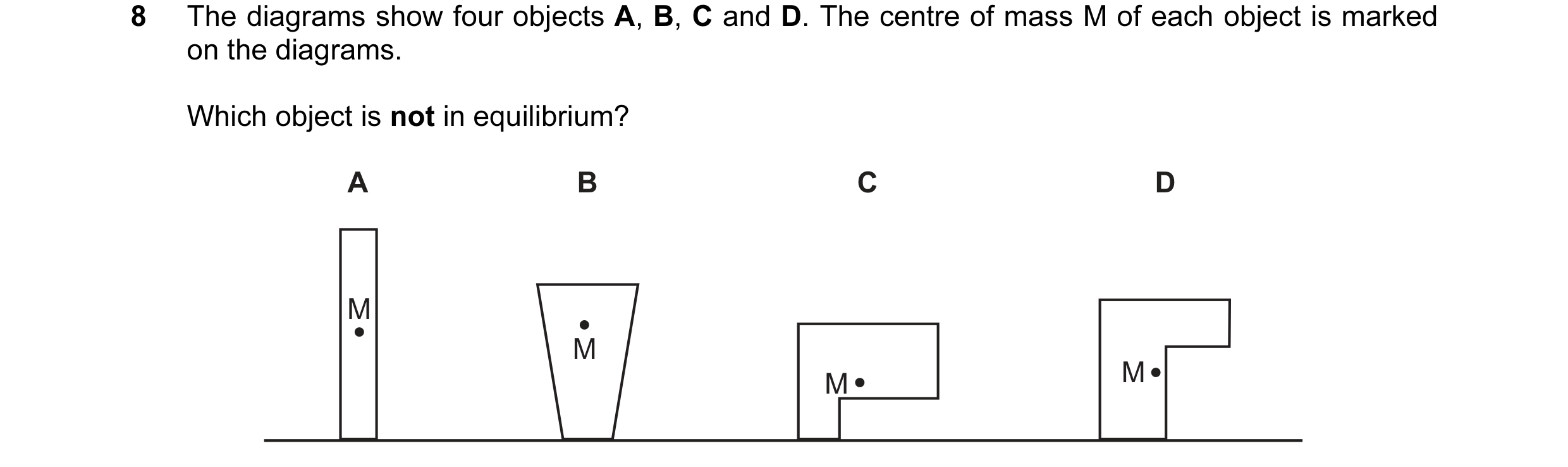 45 / 113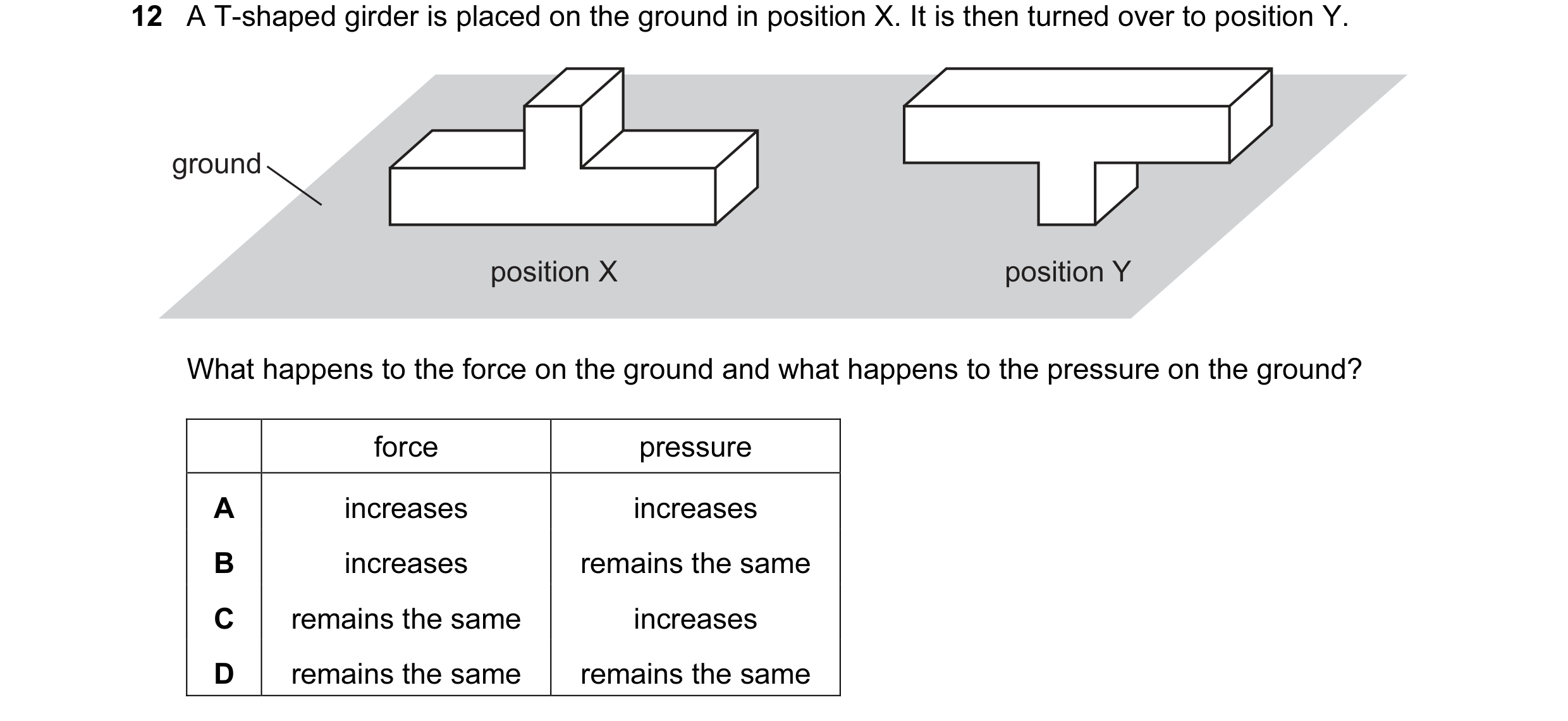
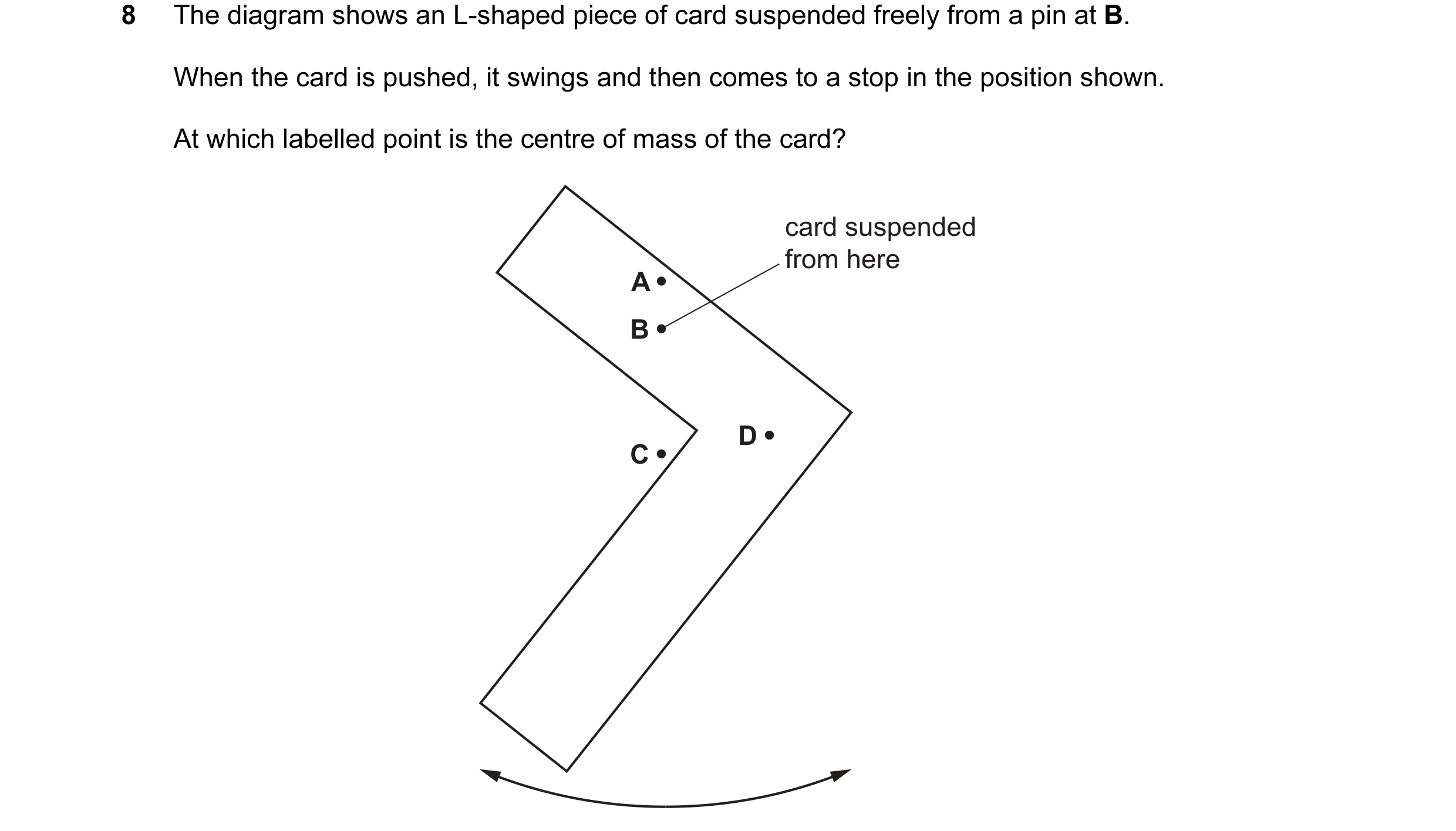 46 / 113
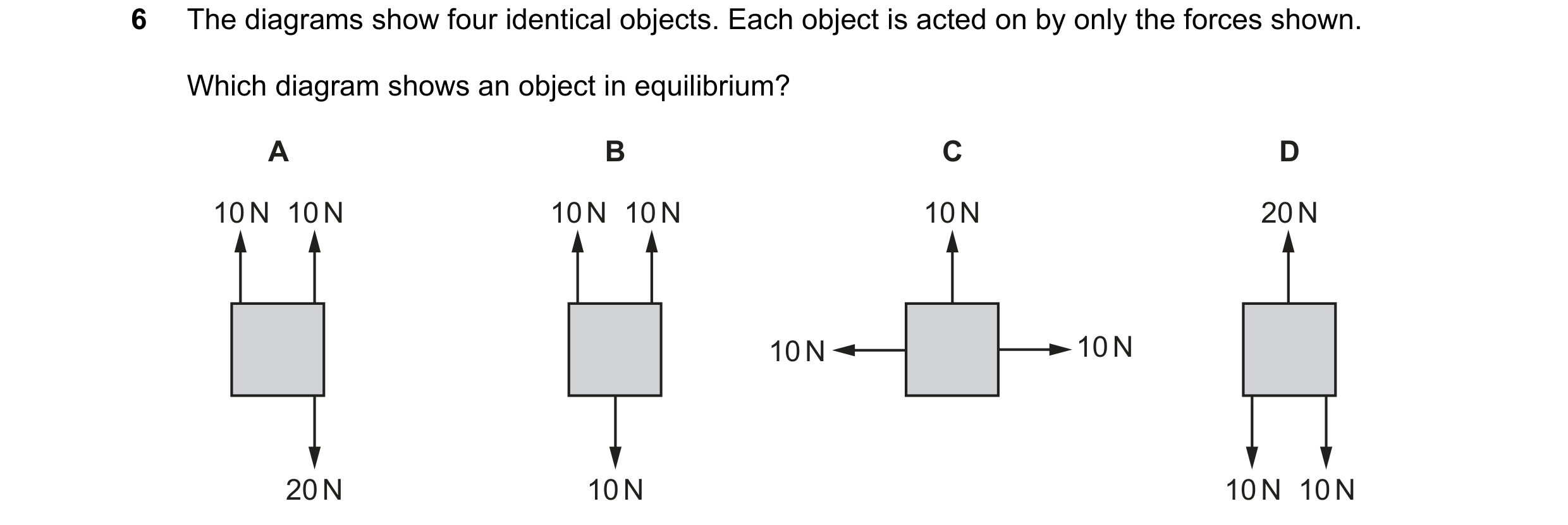
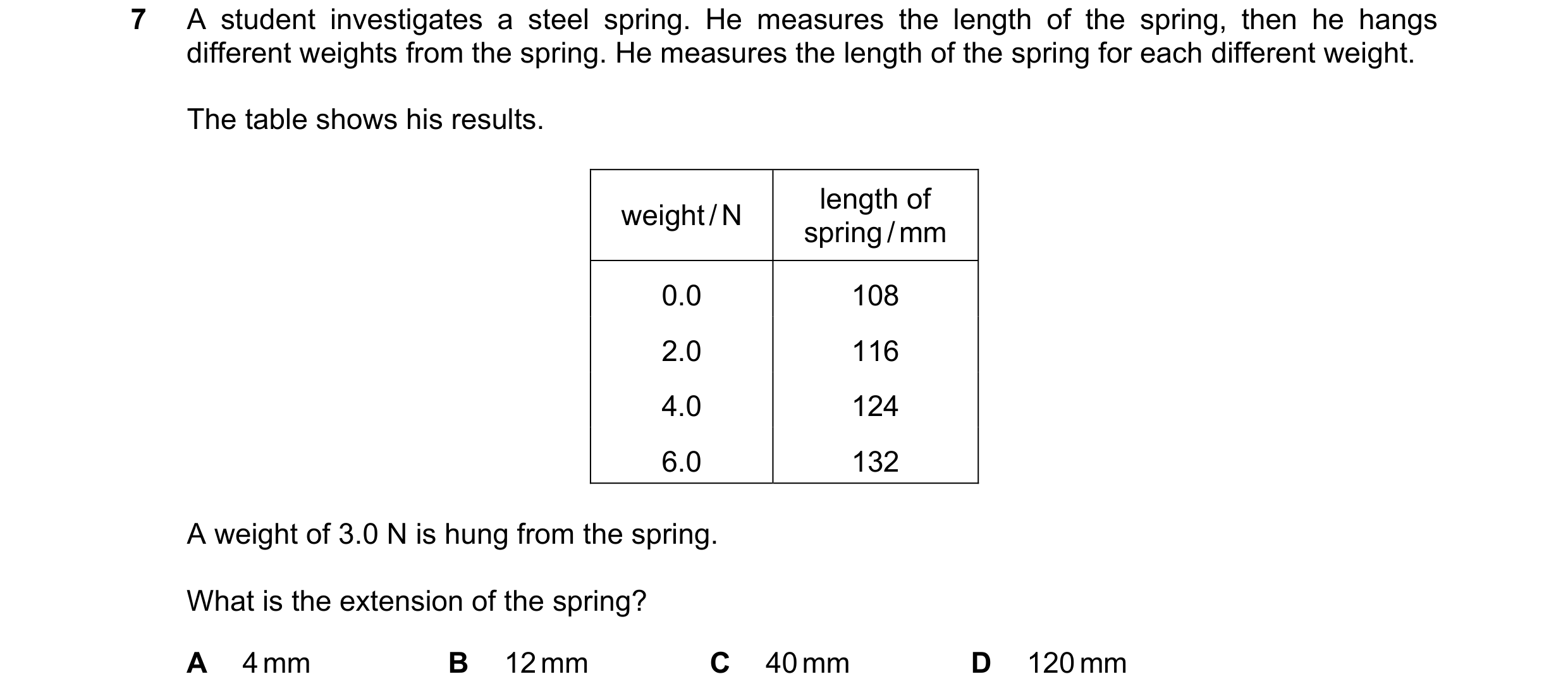 47 / 113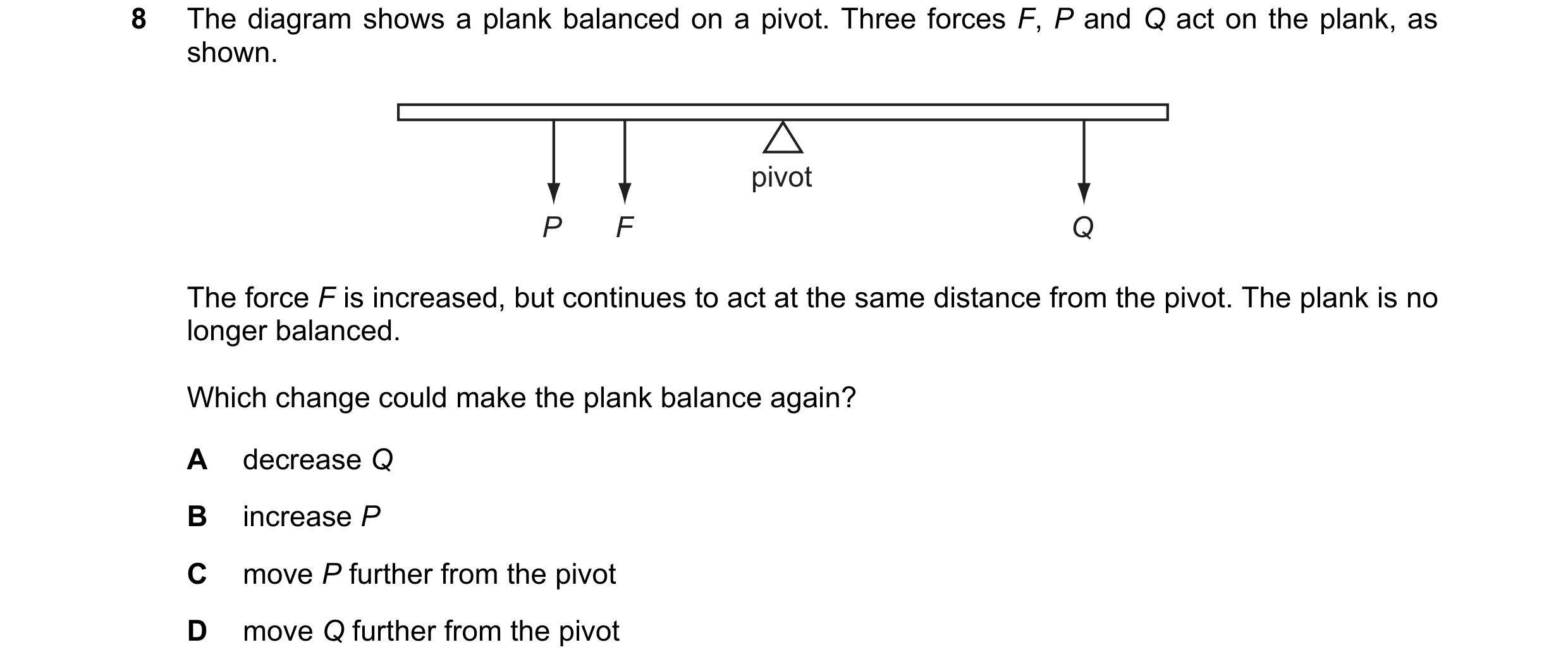
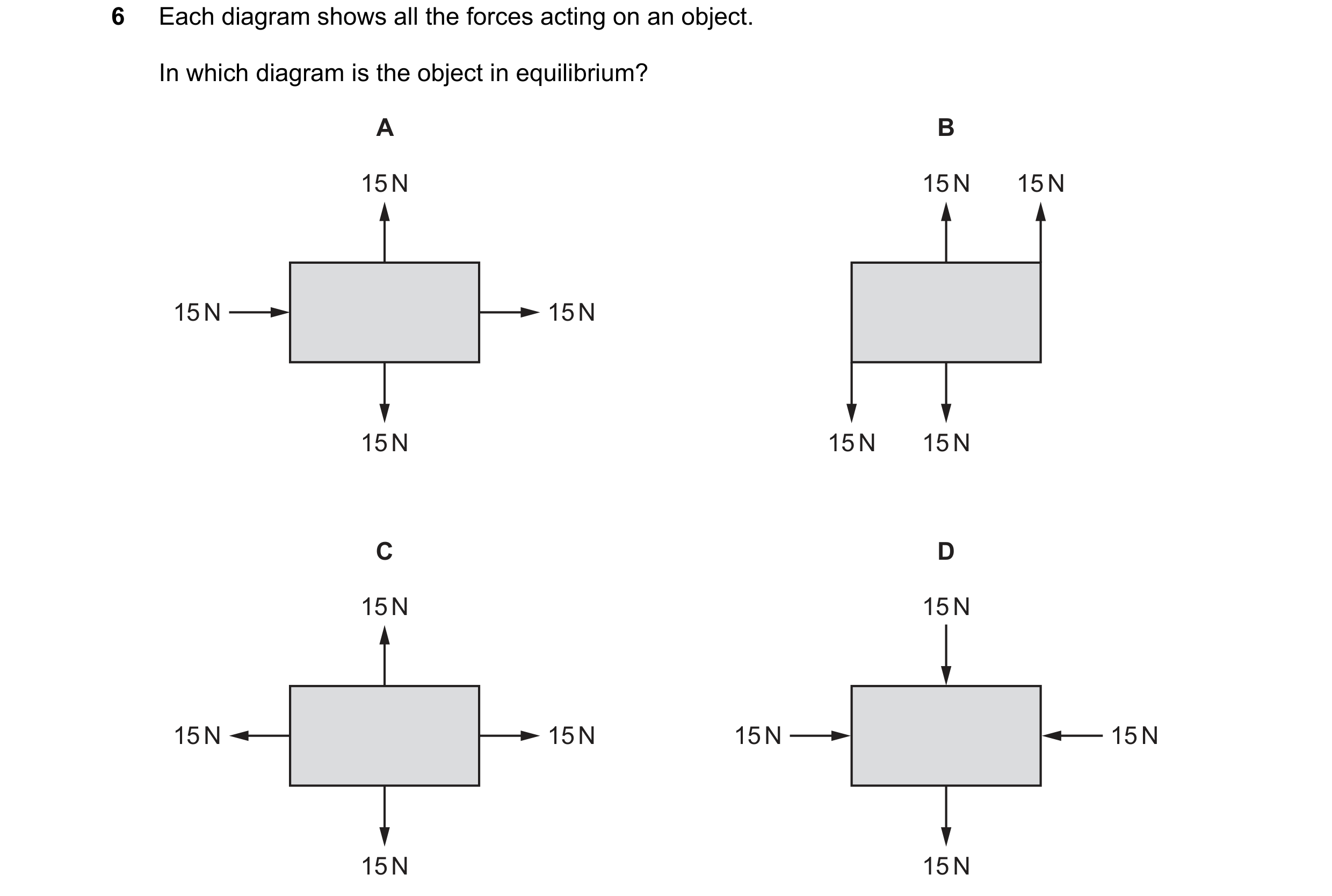 48 / 113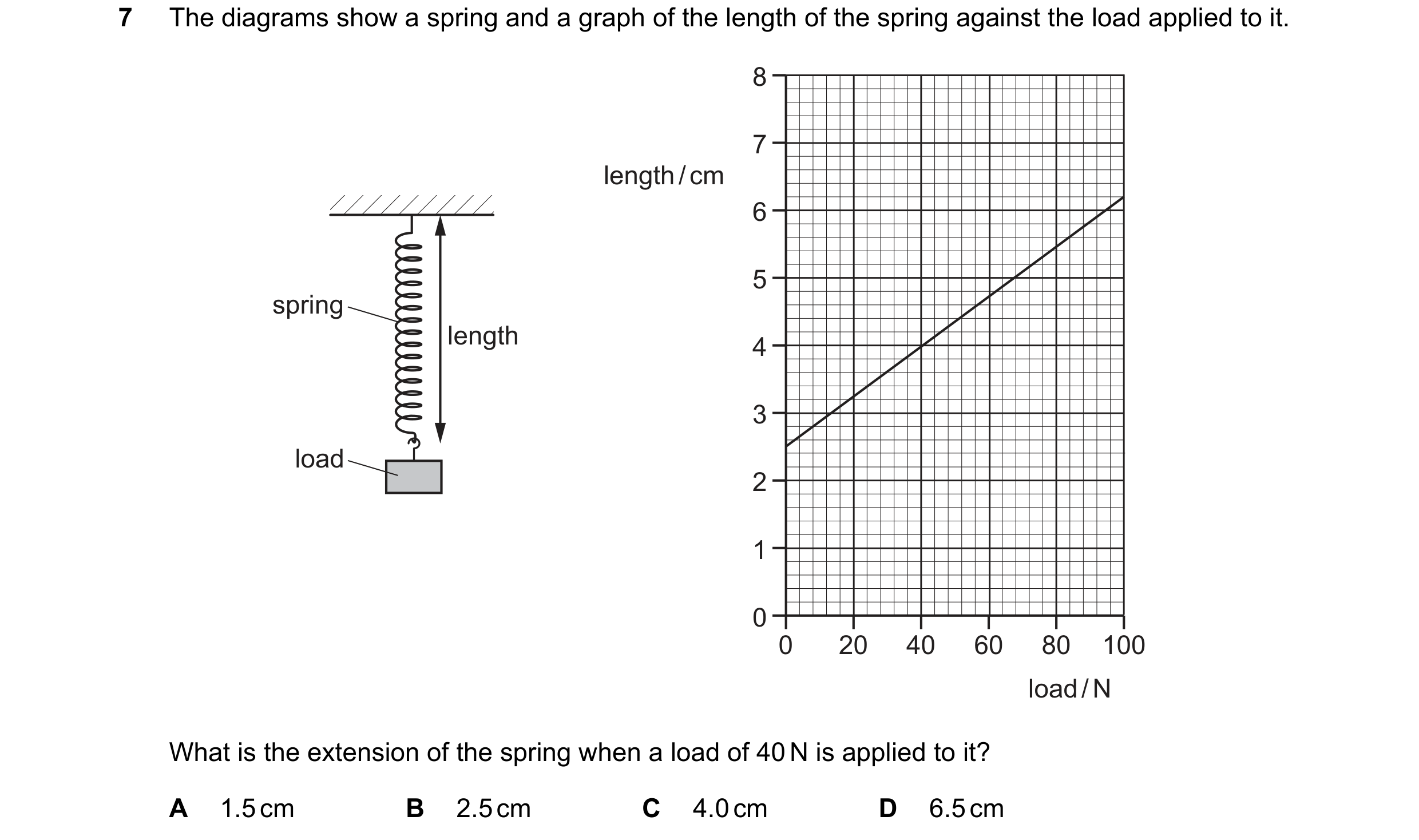
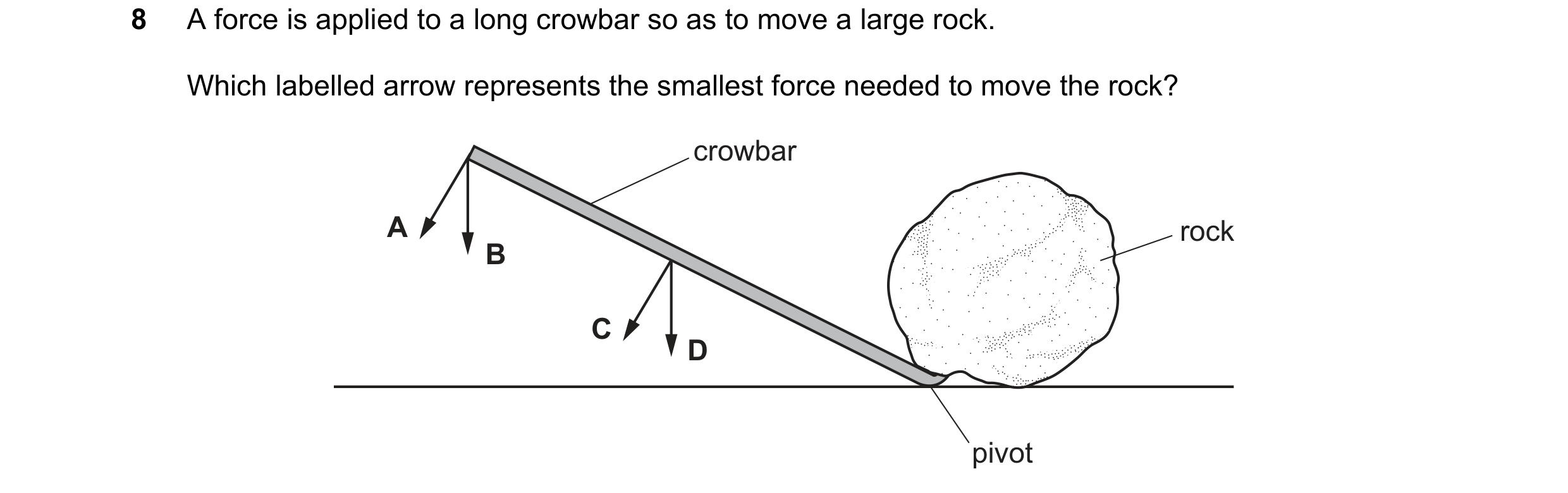
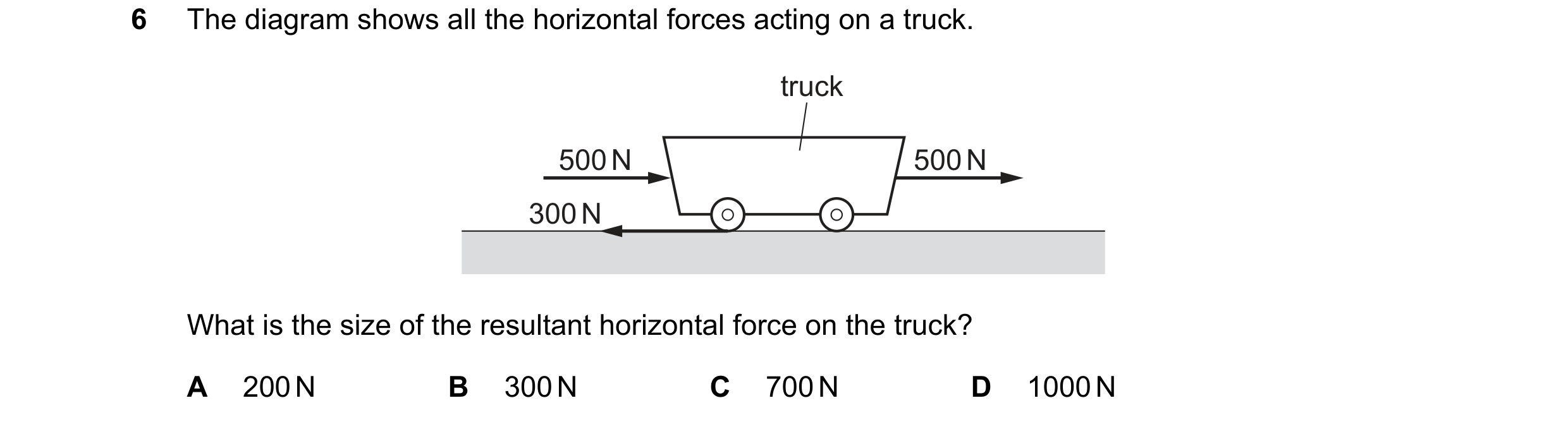 49 / 113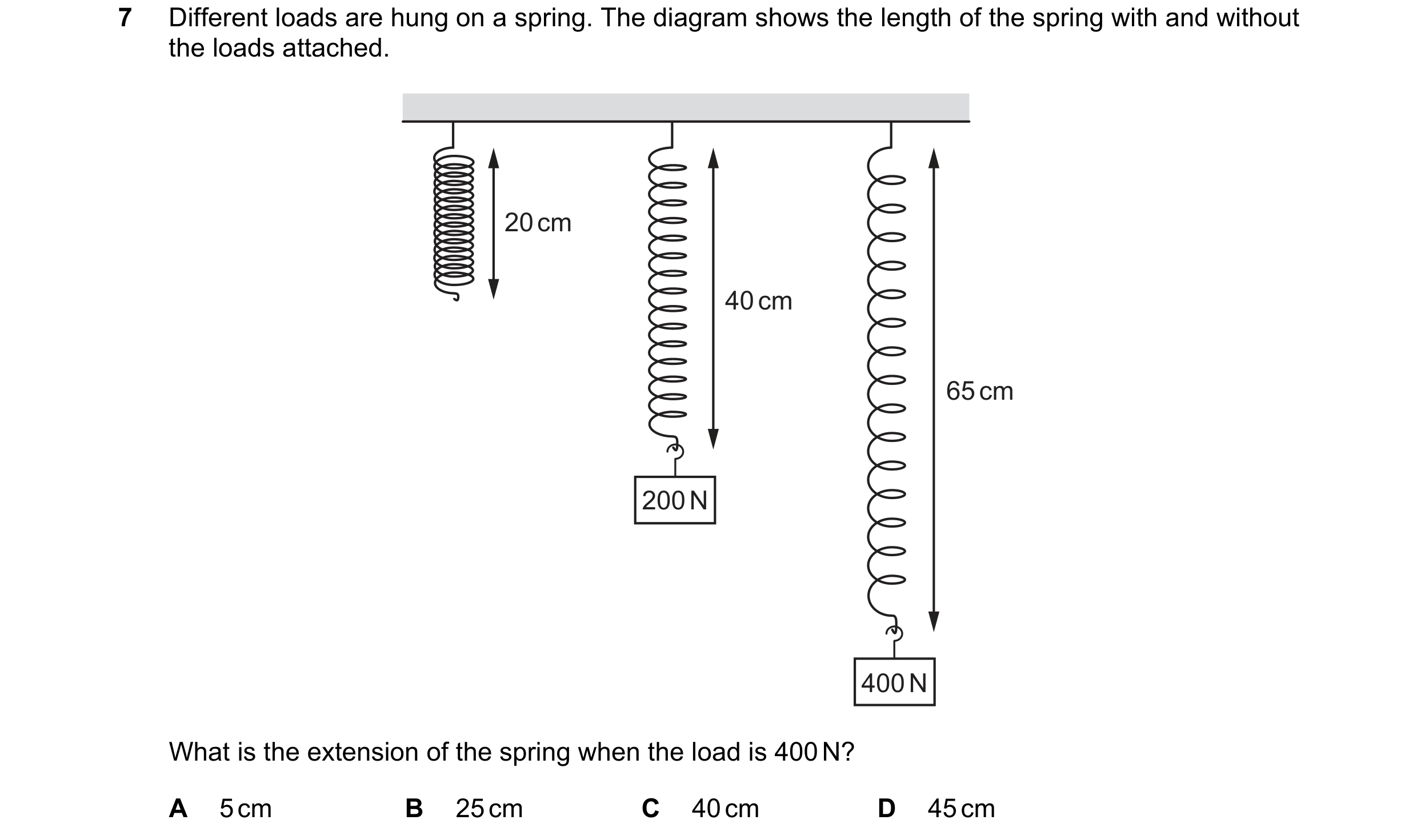
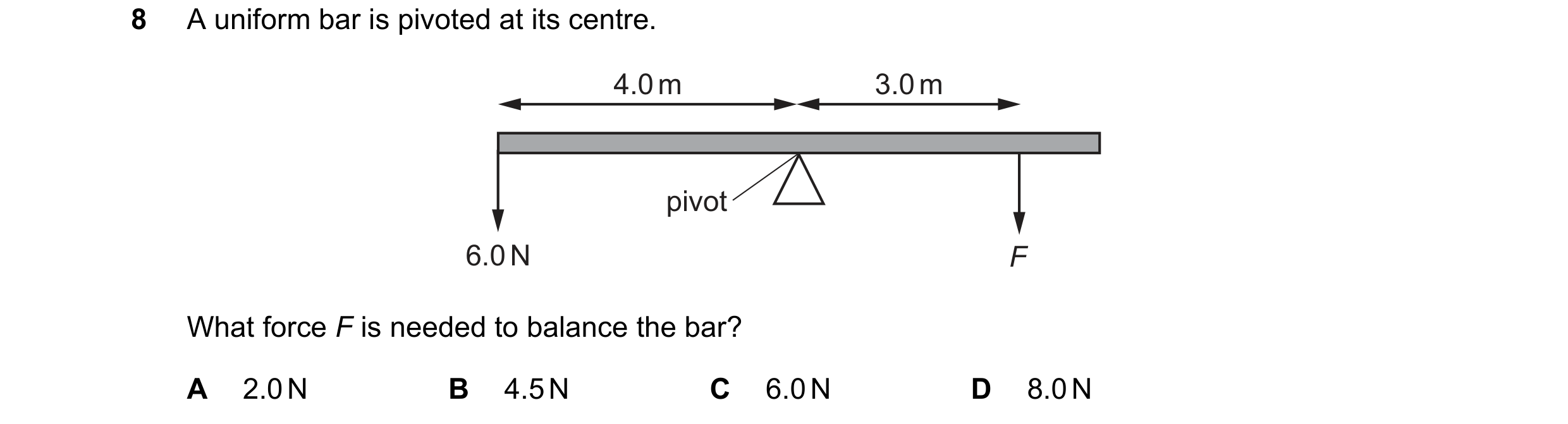
 50 / 113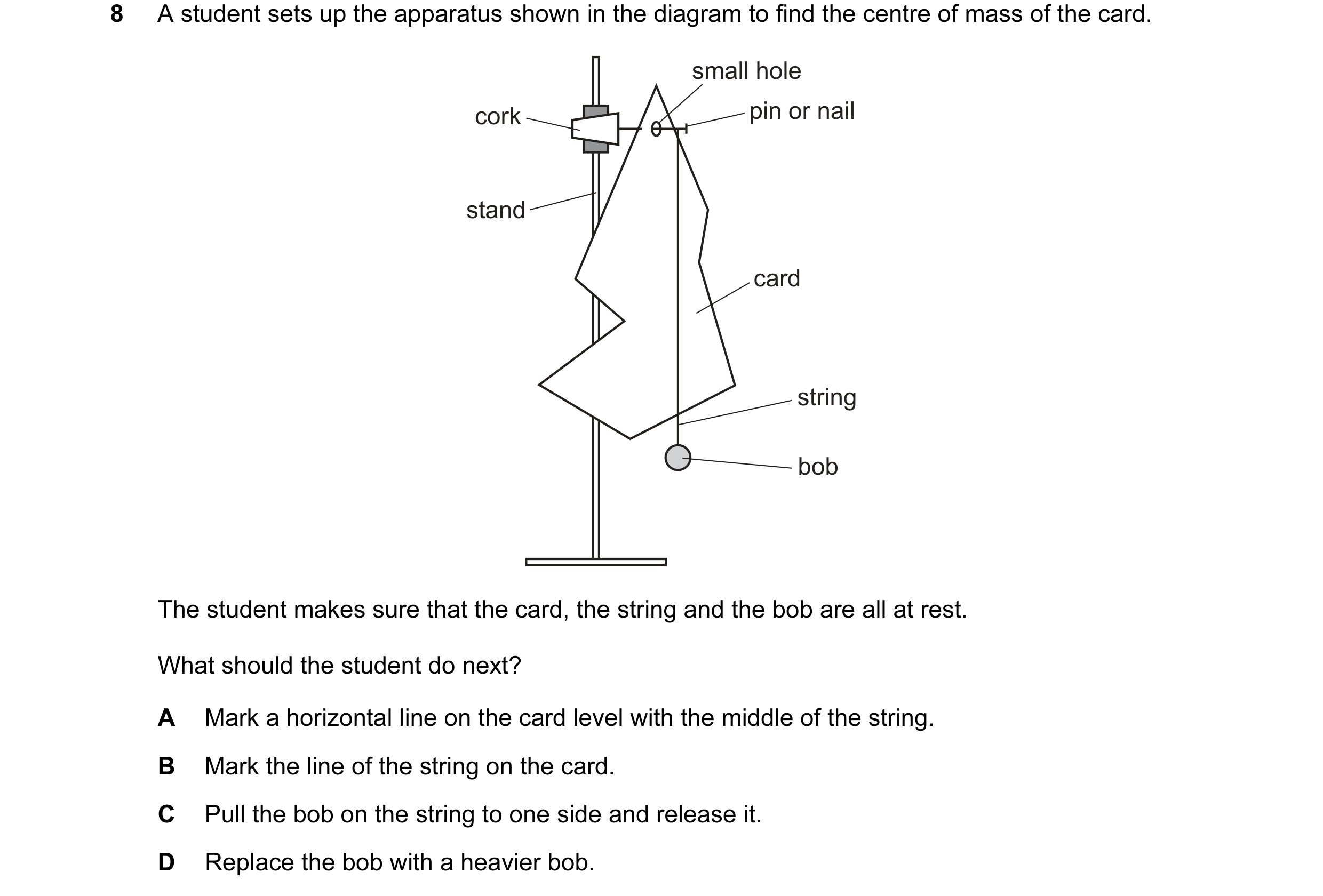
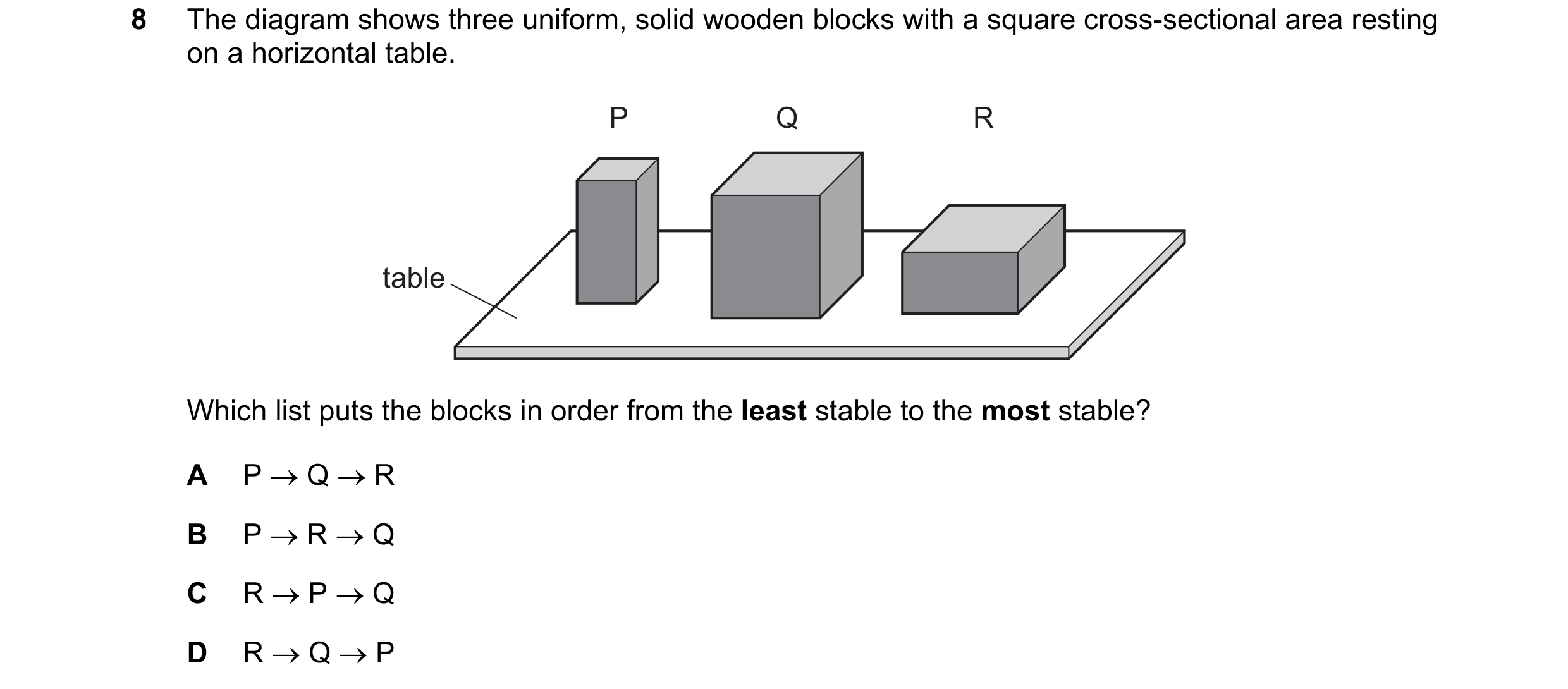 51 / 113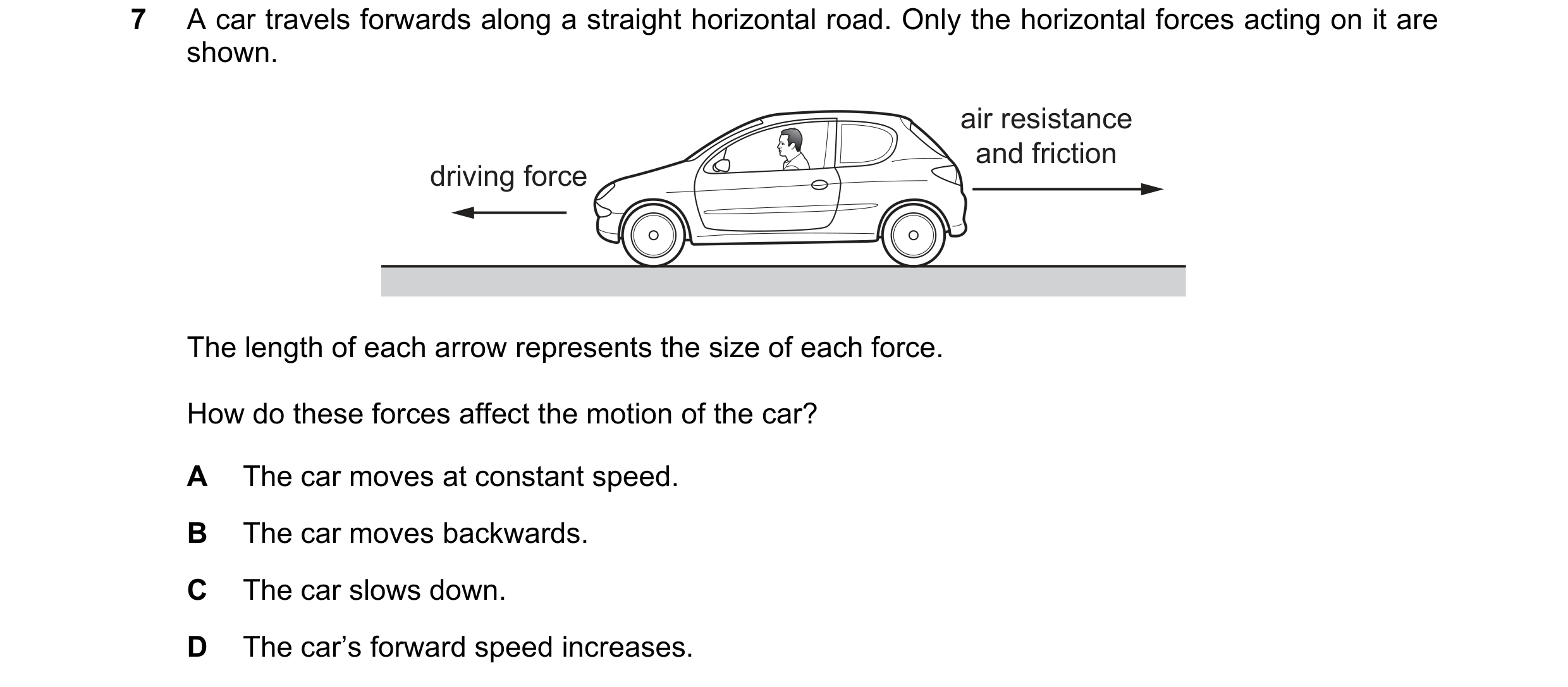
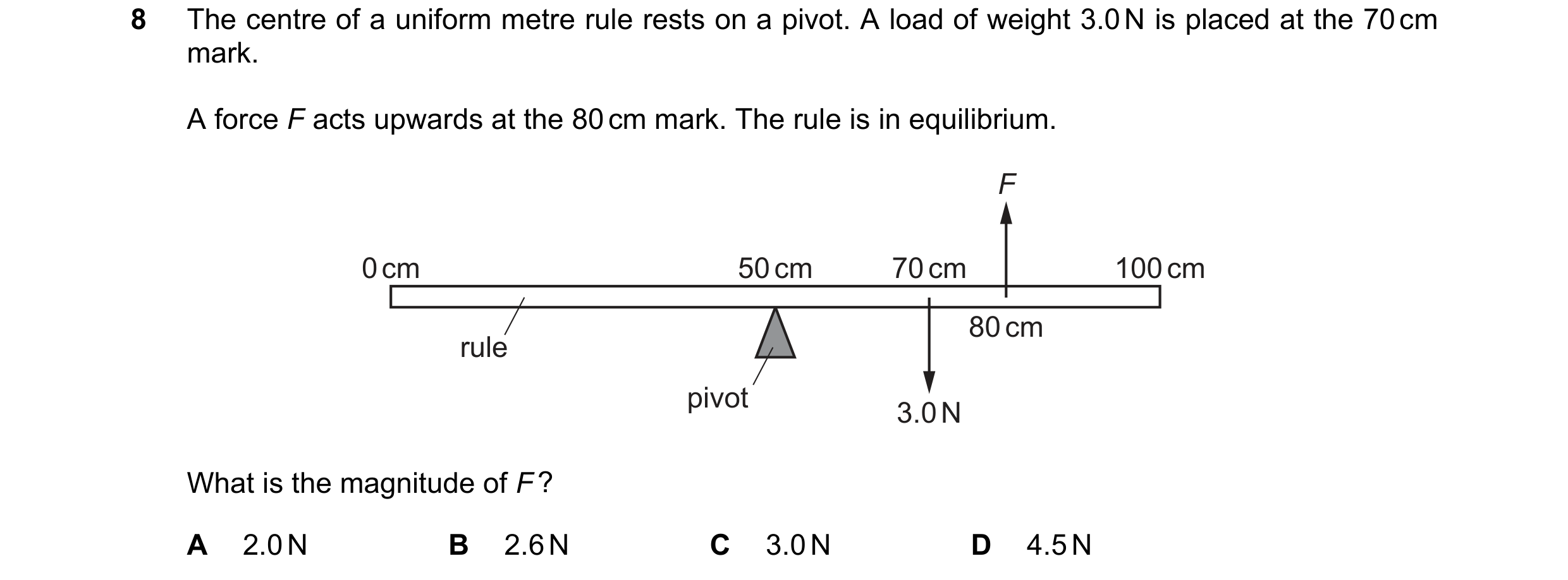
 52 / 113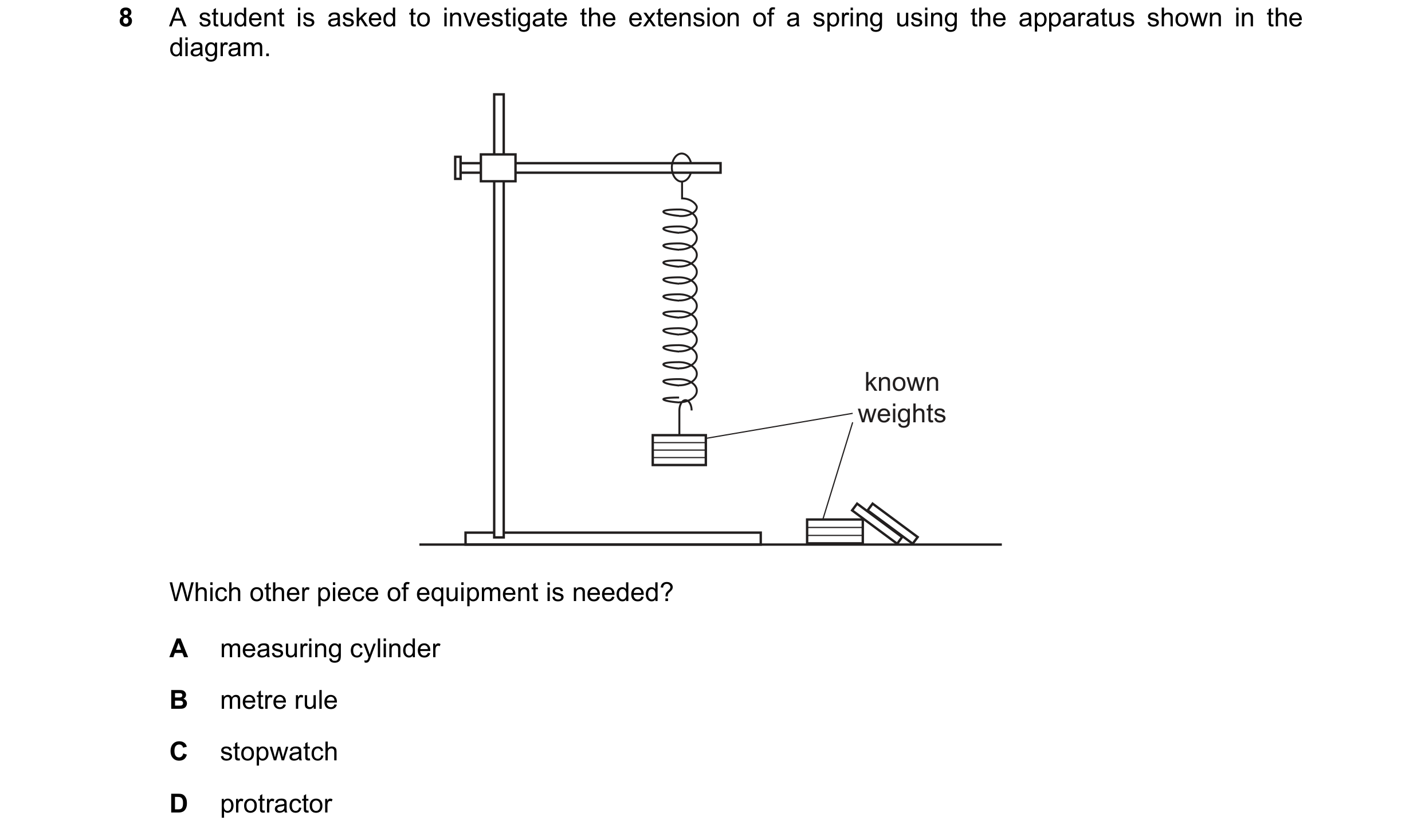
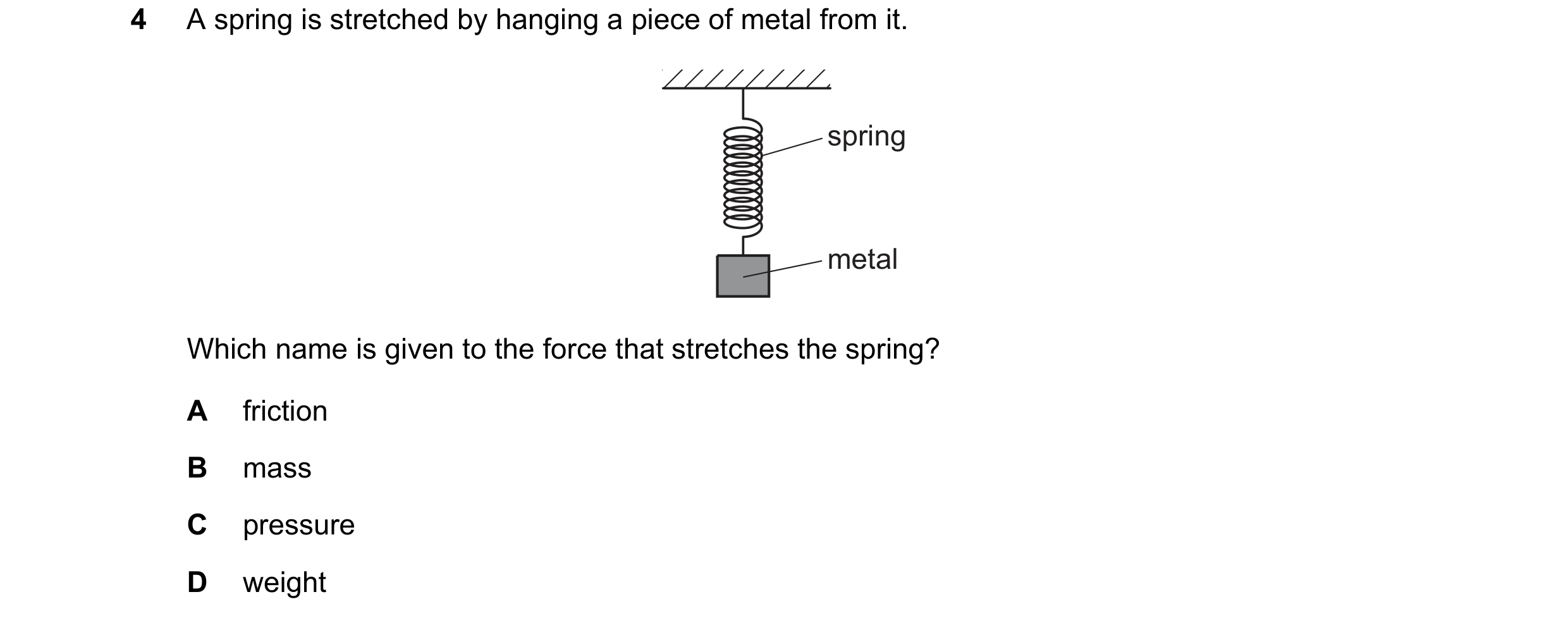 53 / 113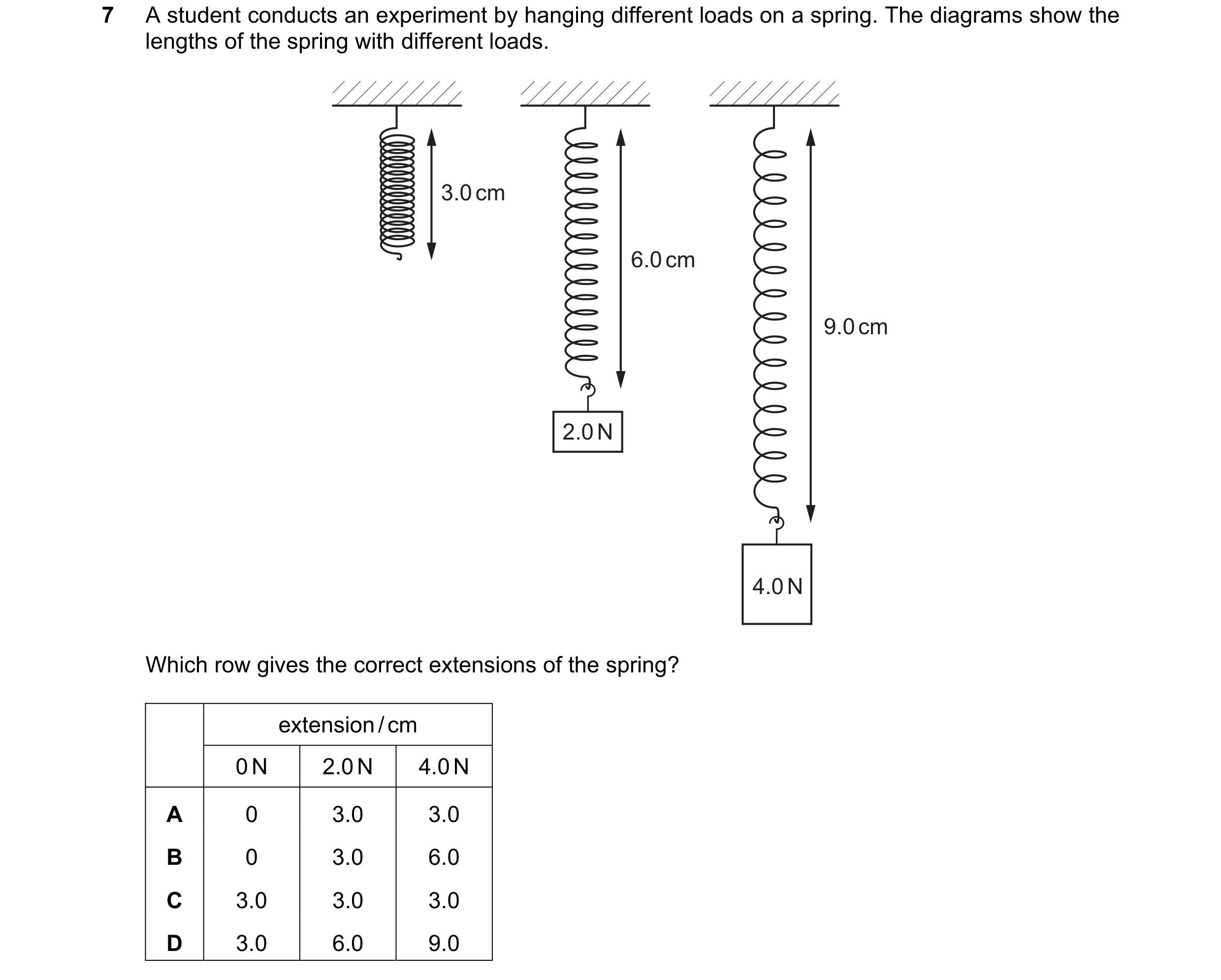
 54 / 113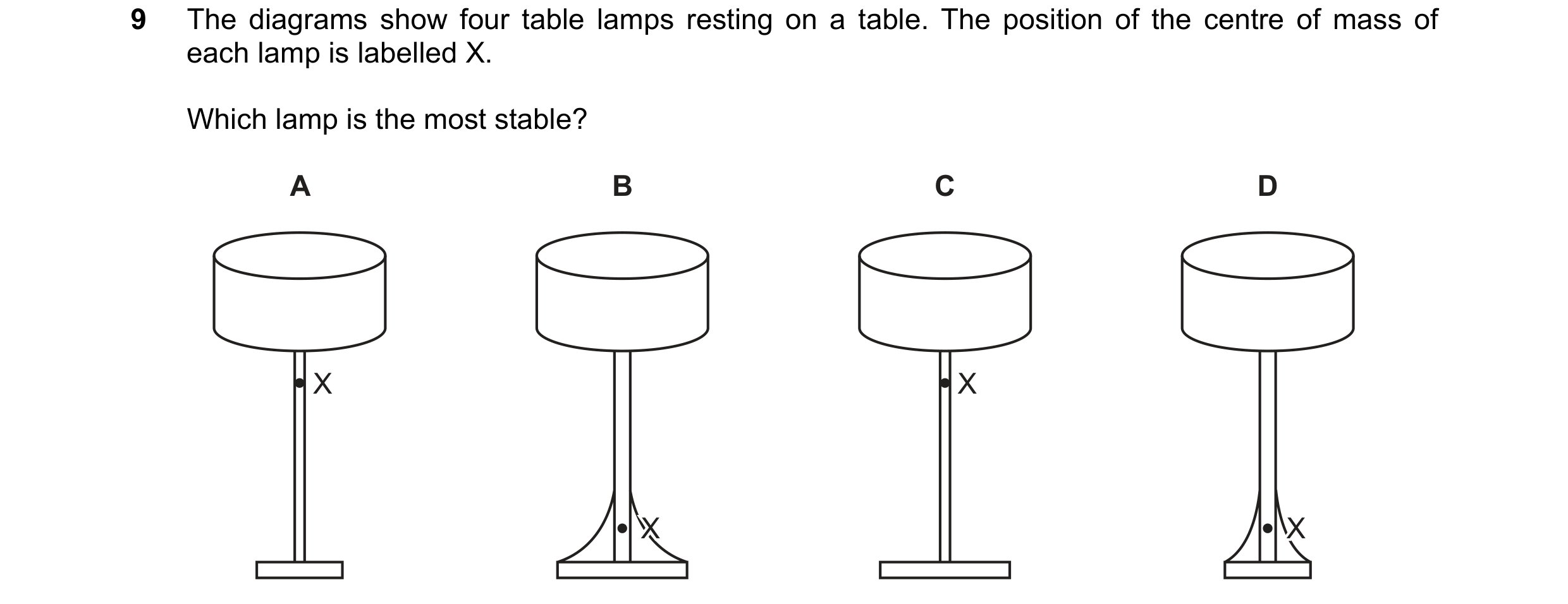
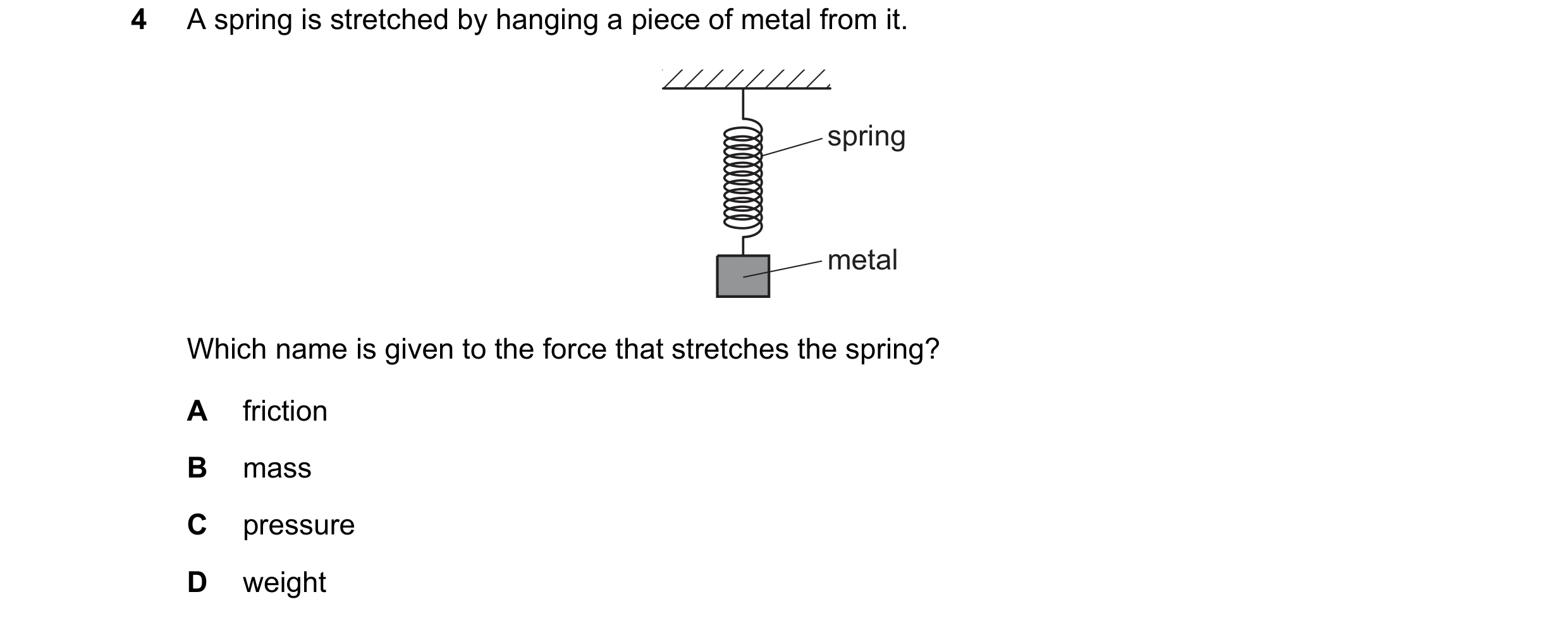 55 / 113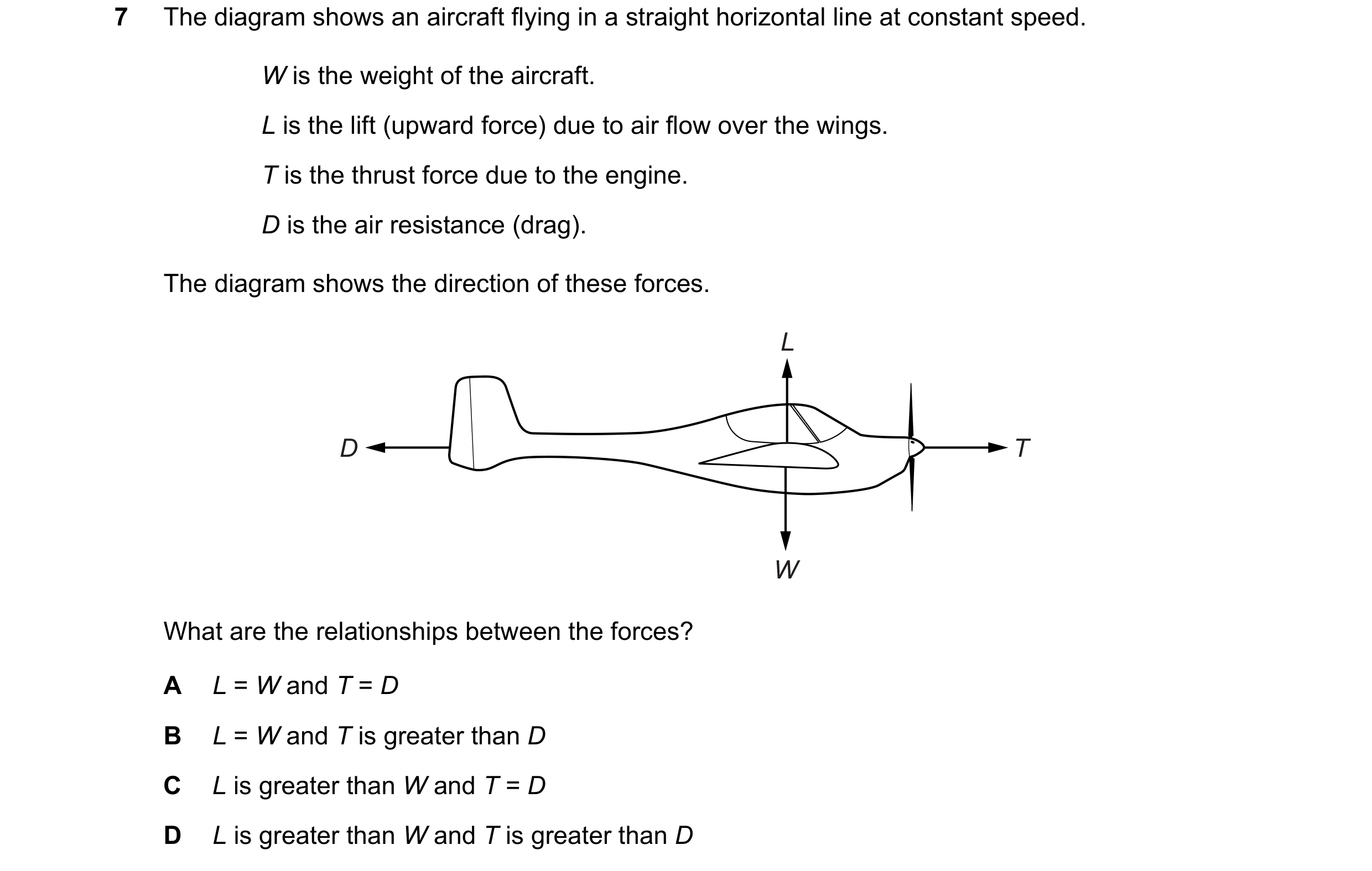
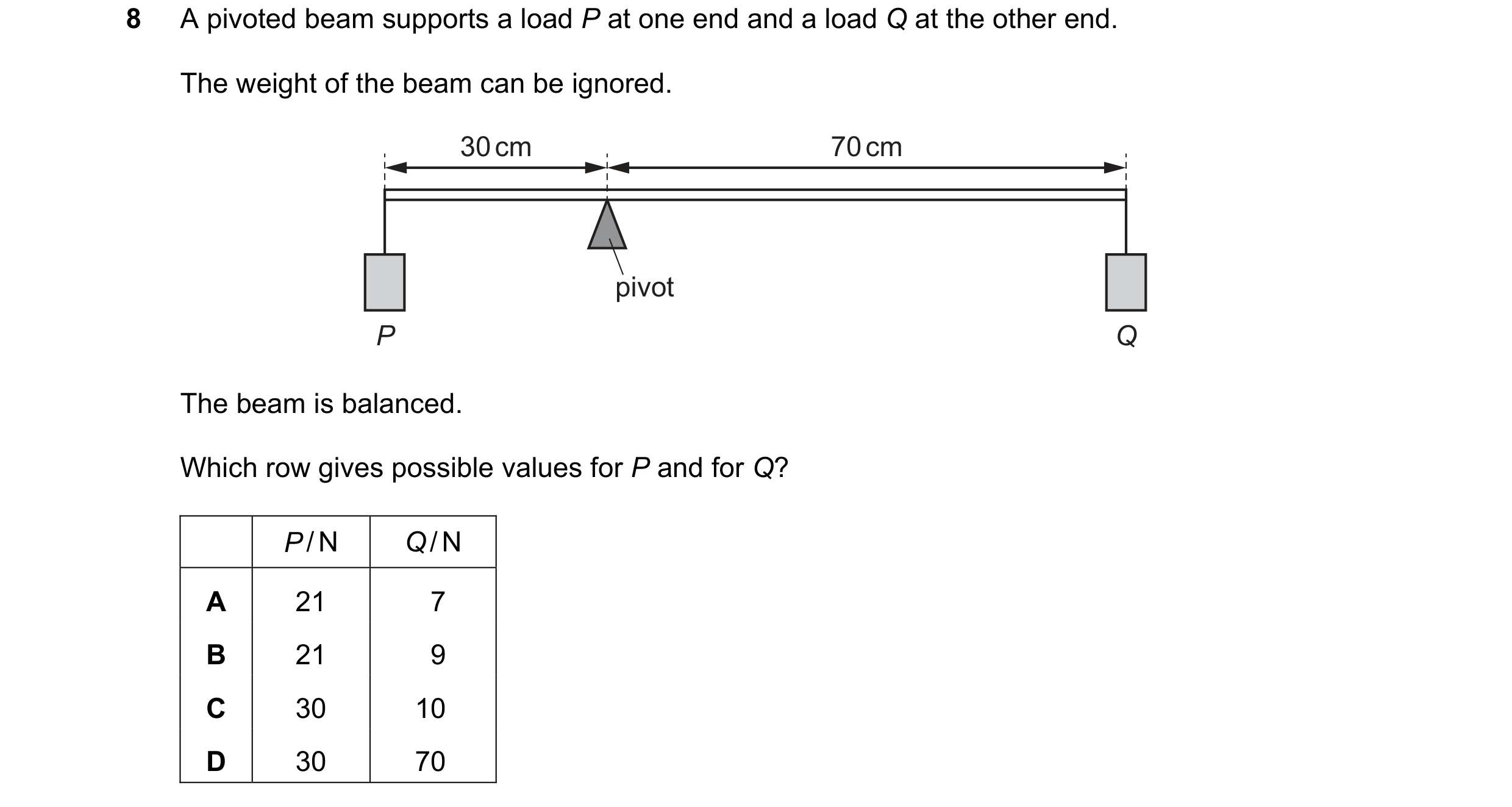 56 / 113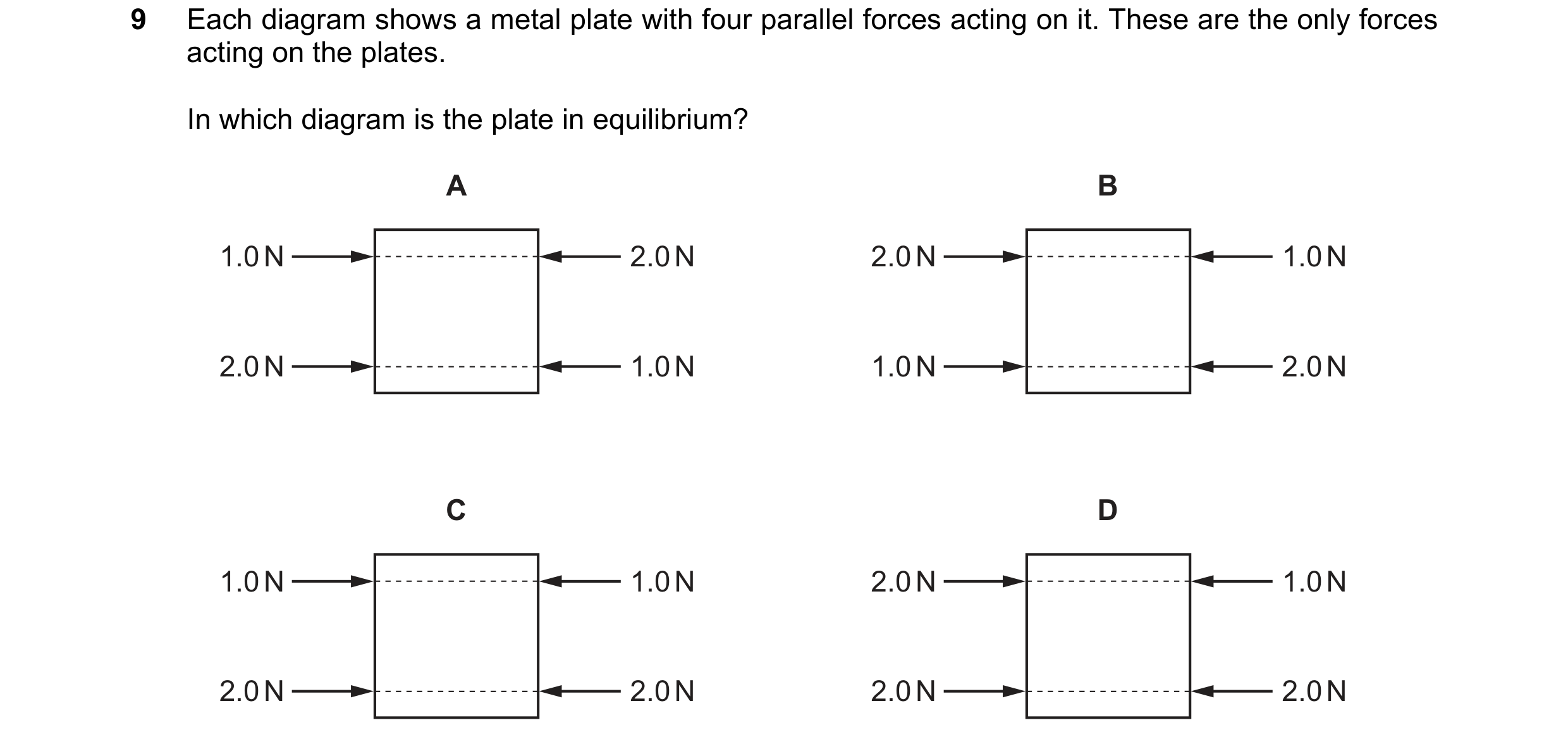
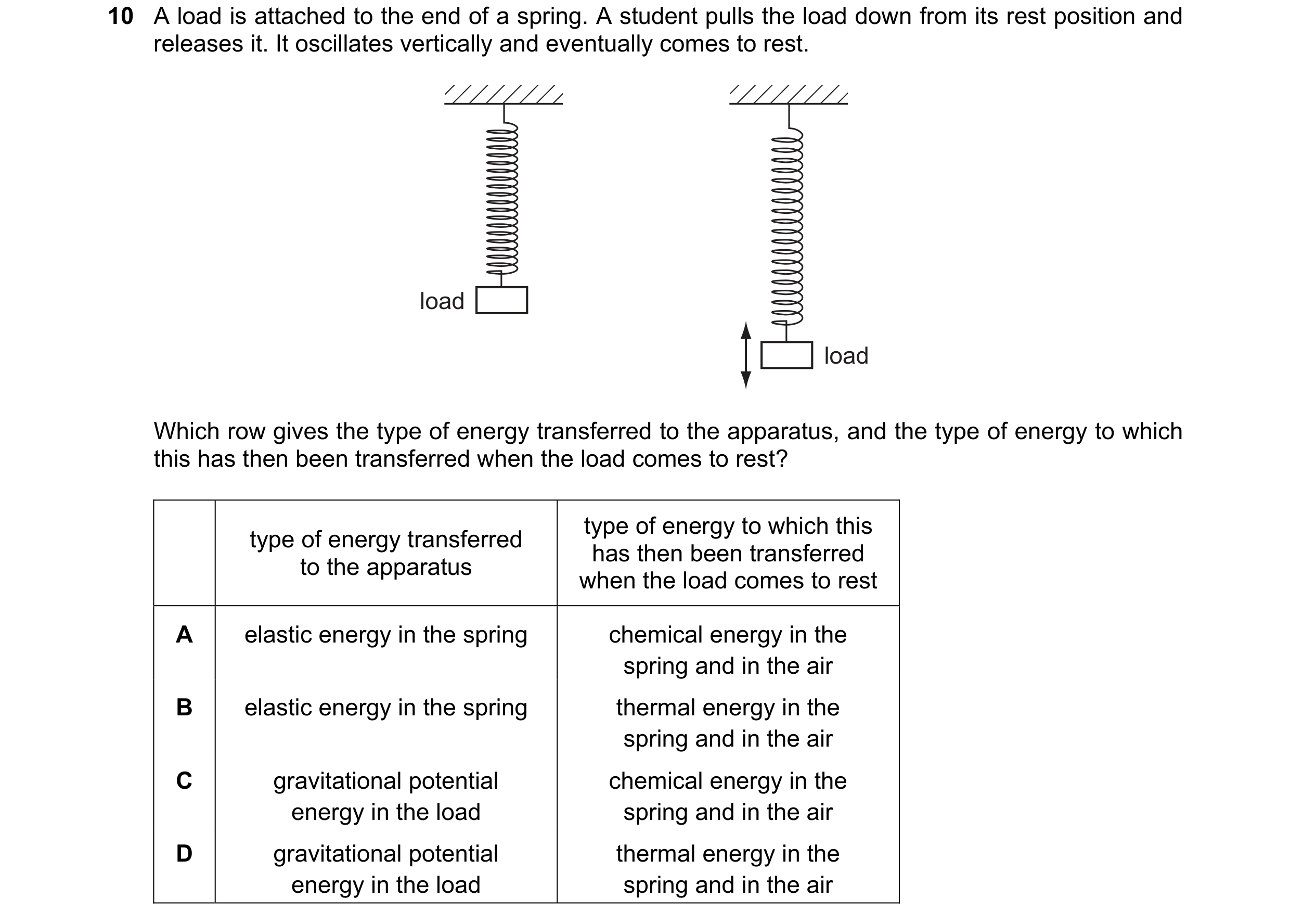 57 / 113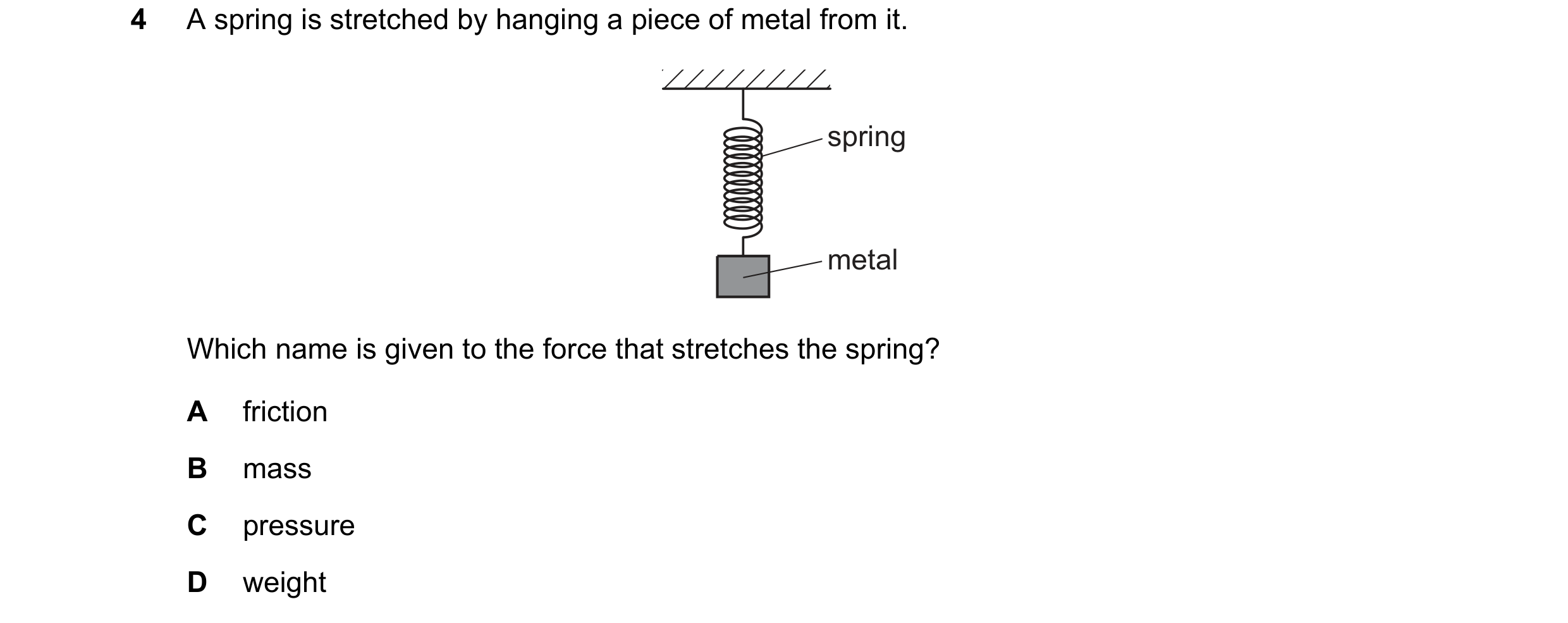
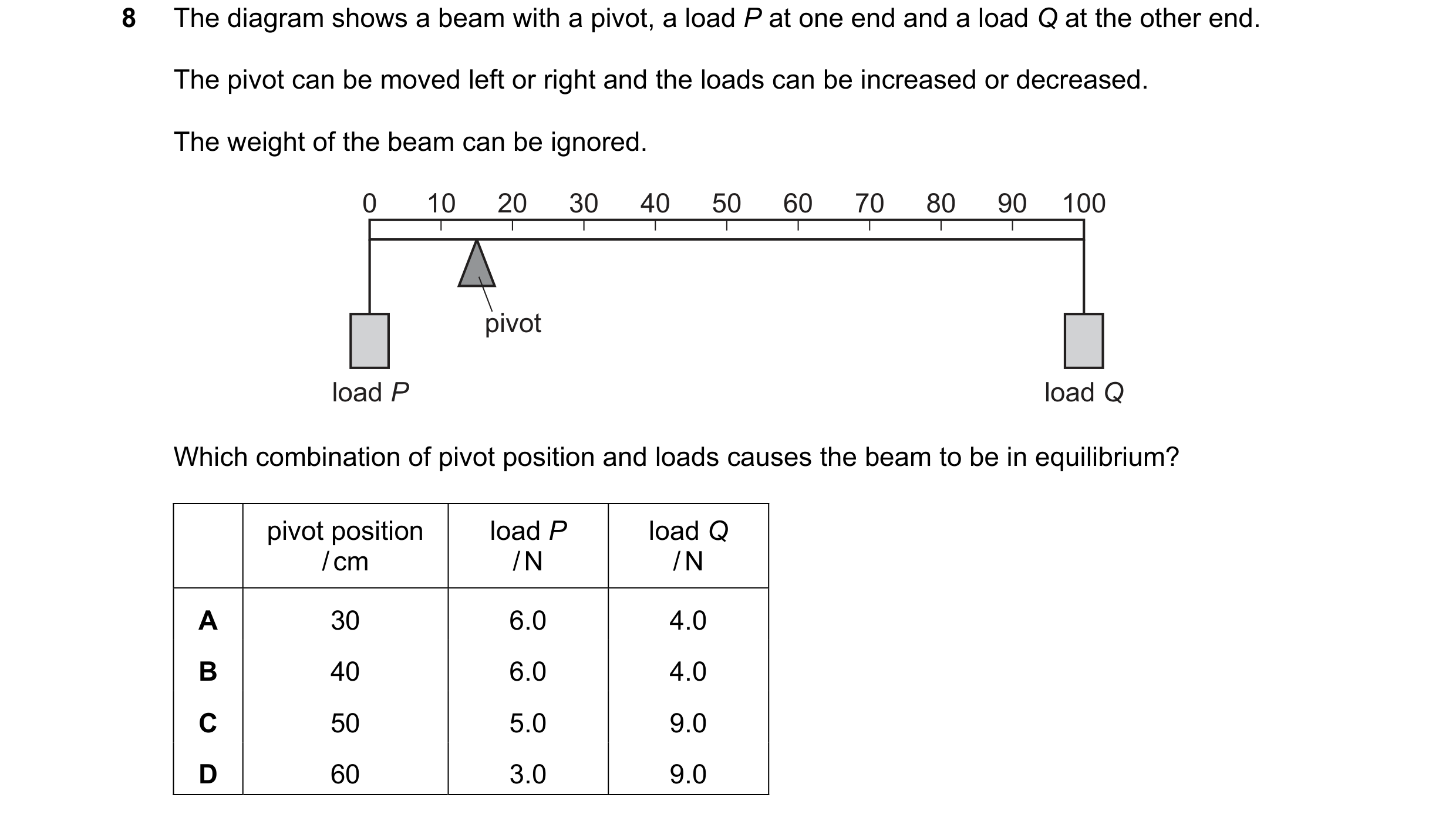 58 / 113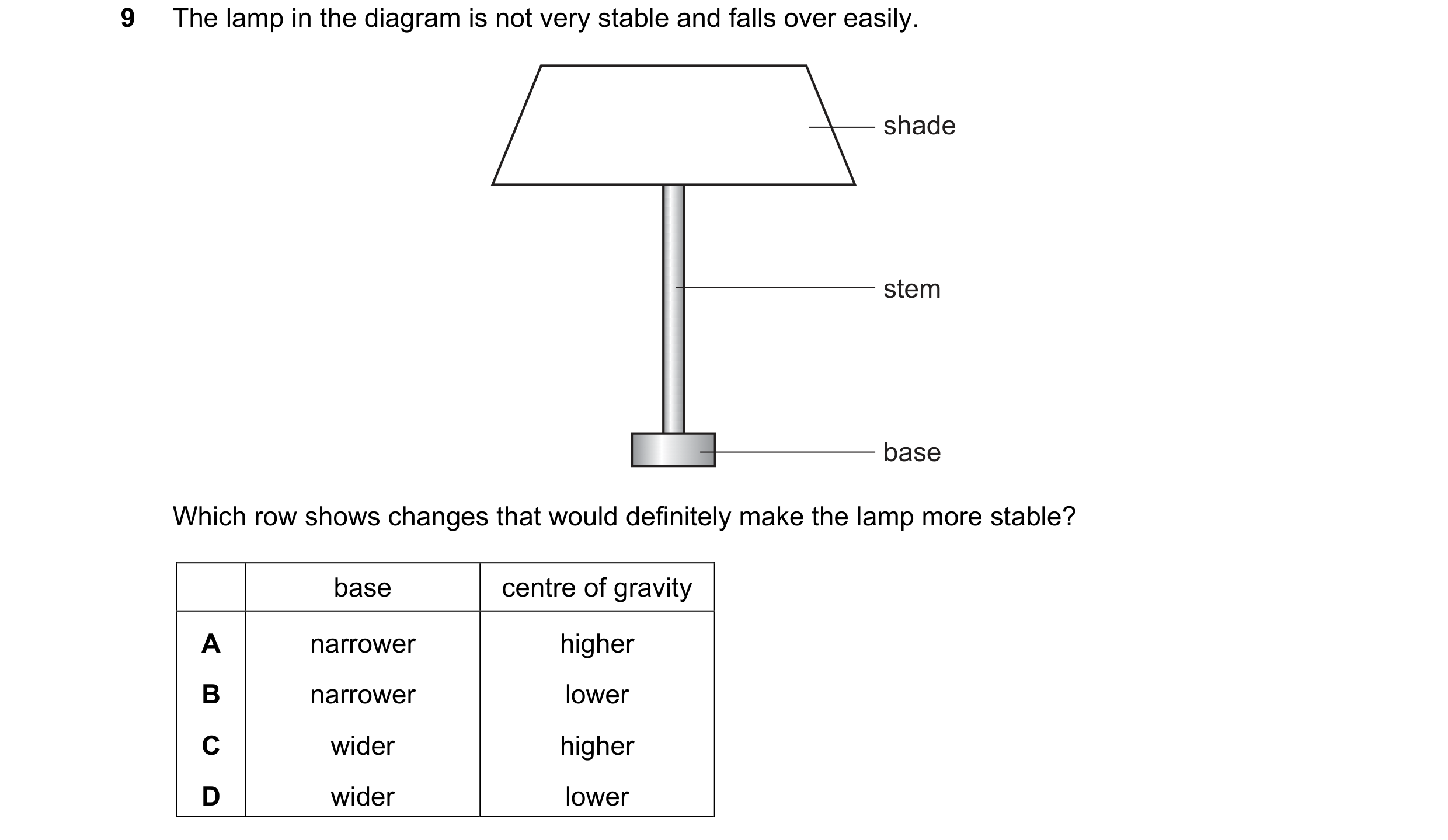
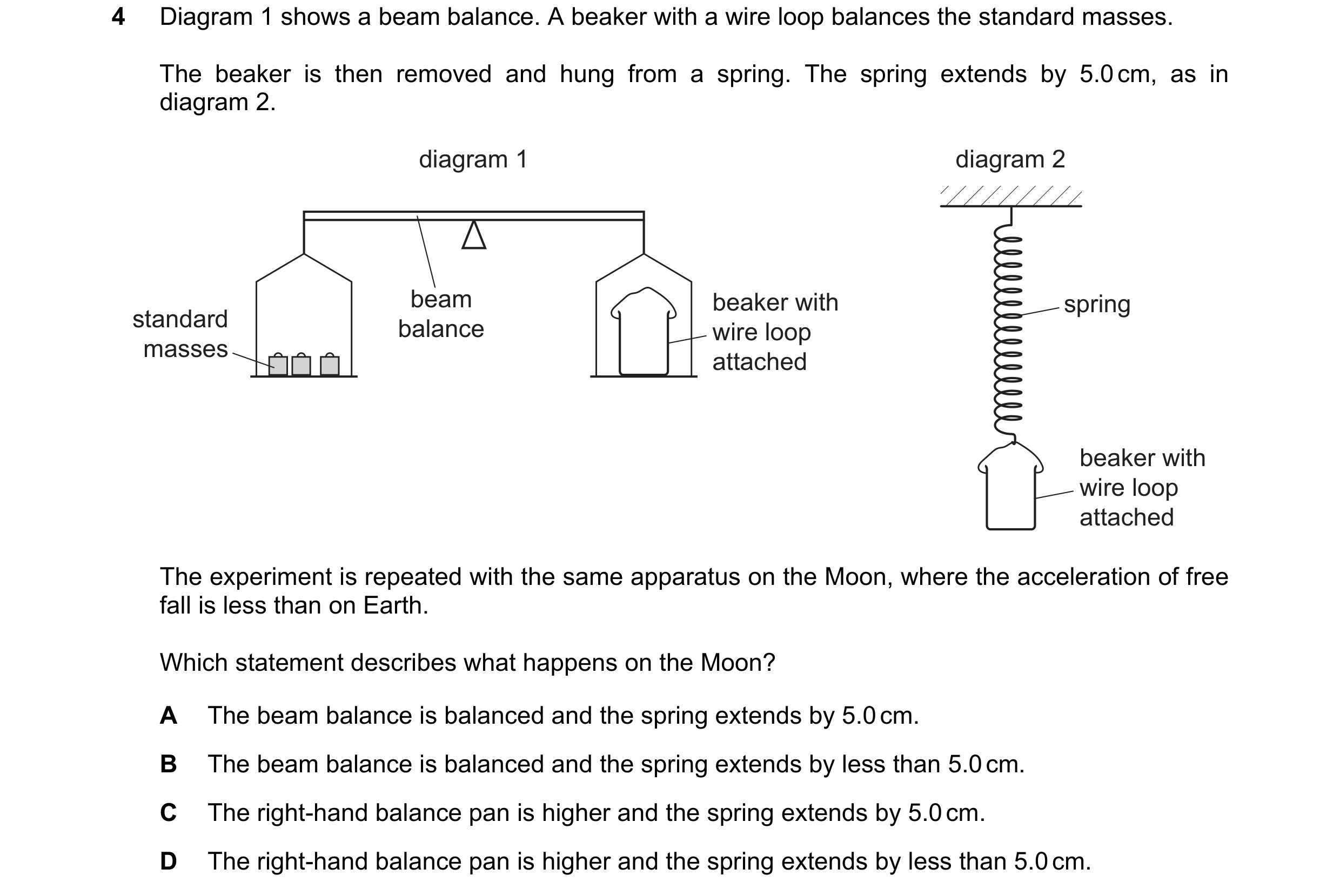 59 / 113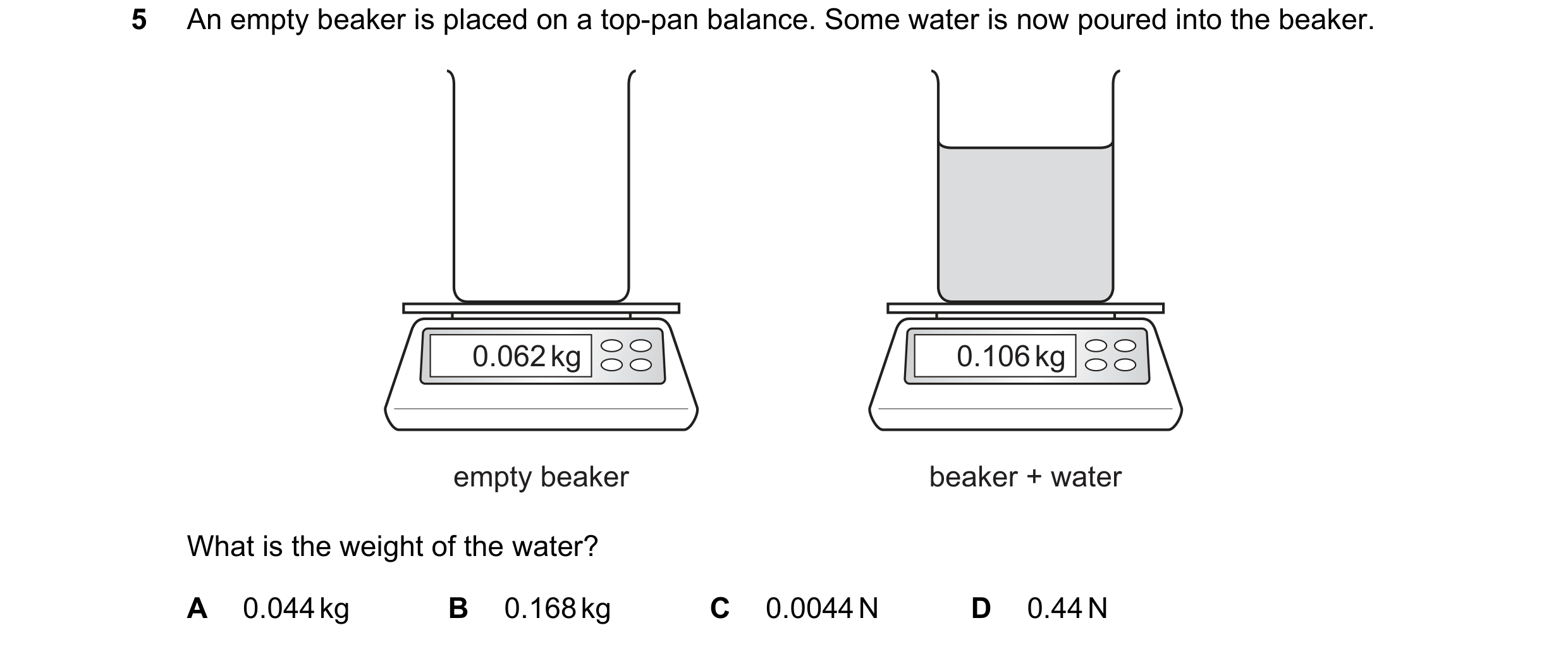
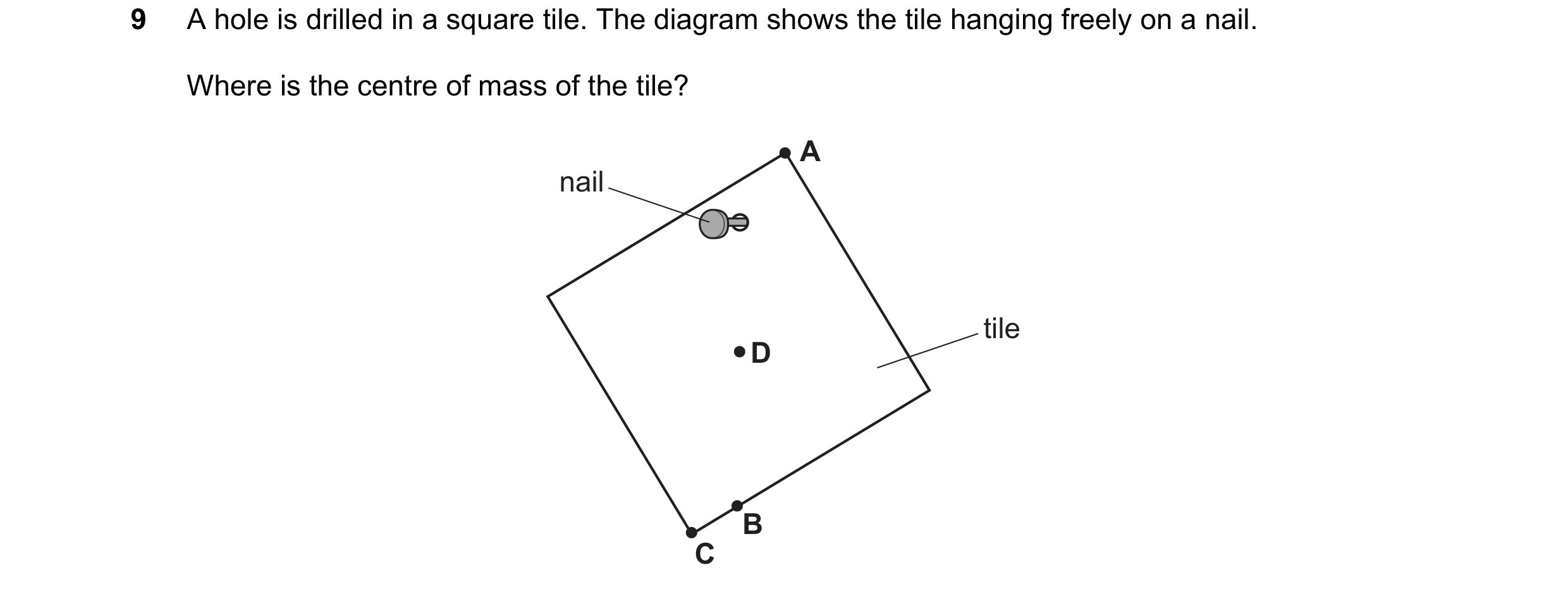
 60 / 113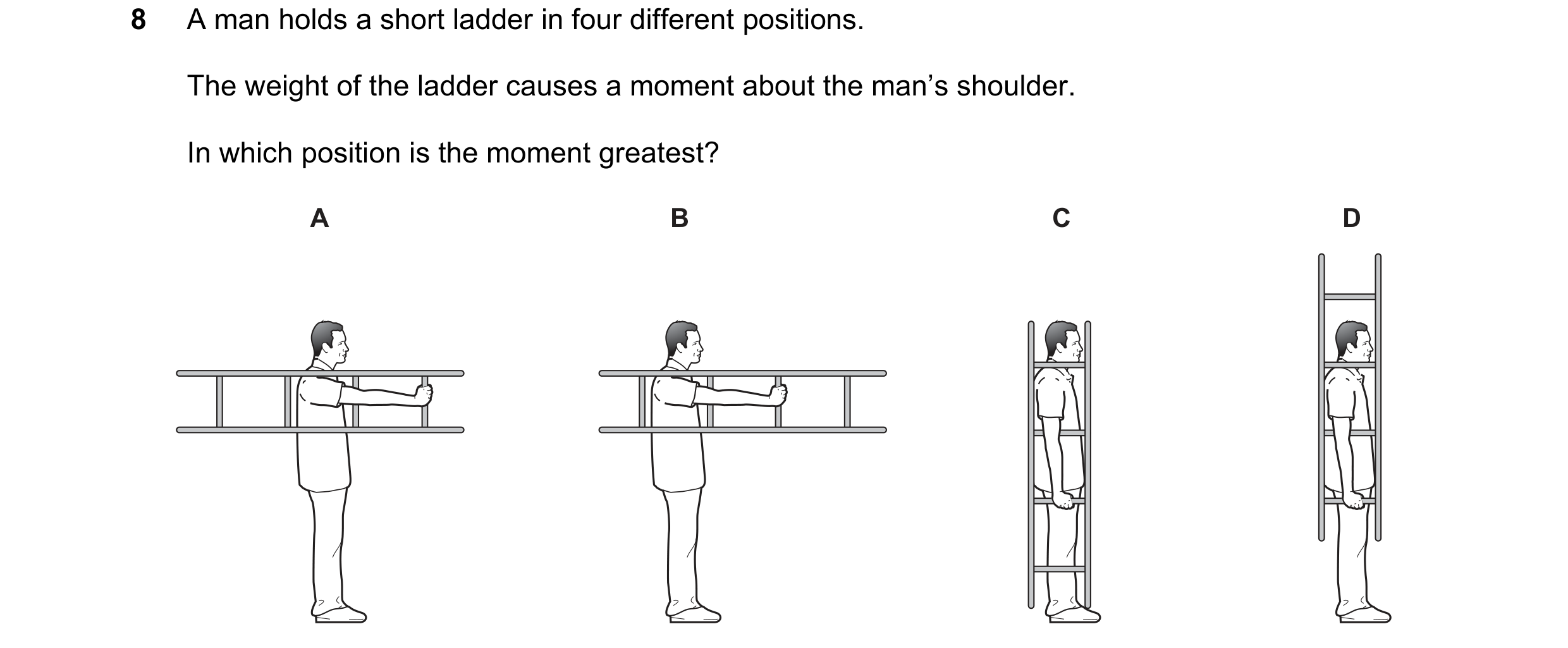
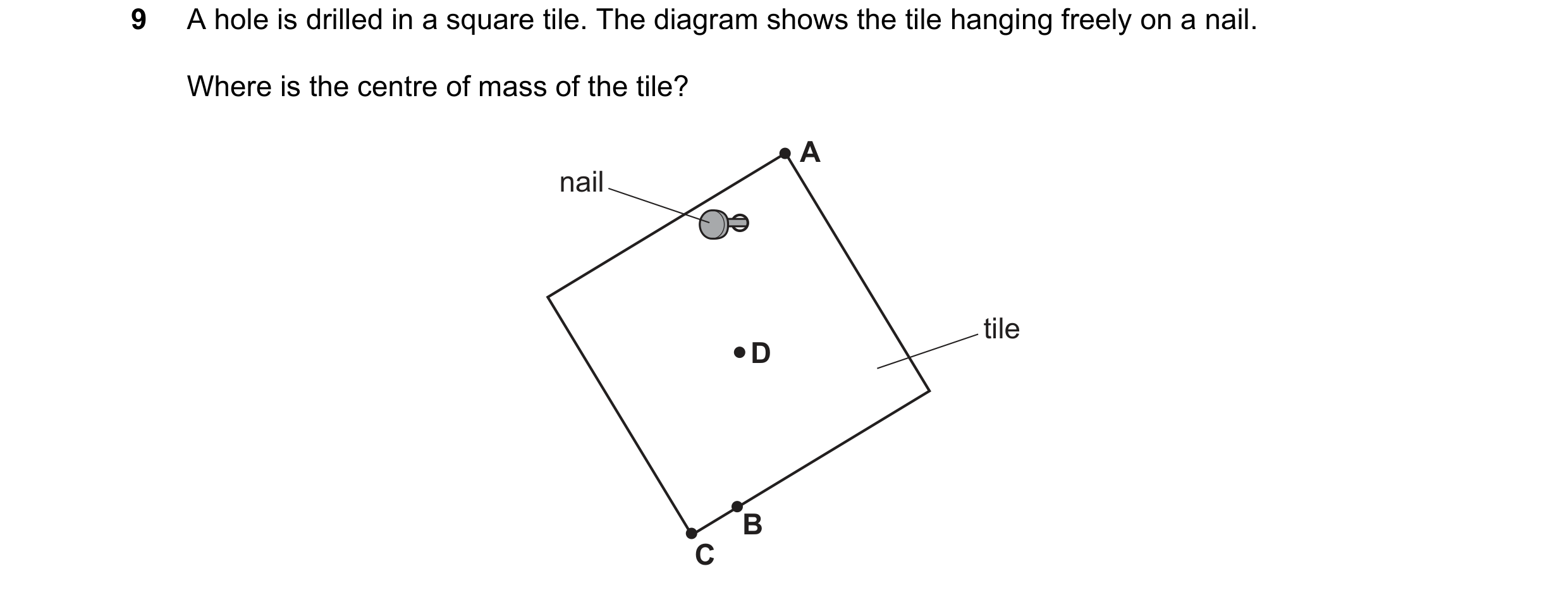
 61 / 113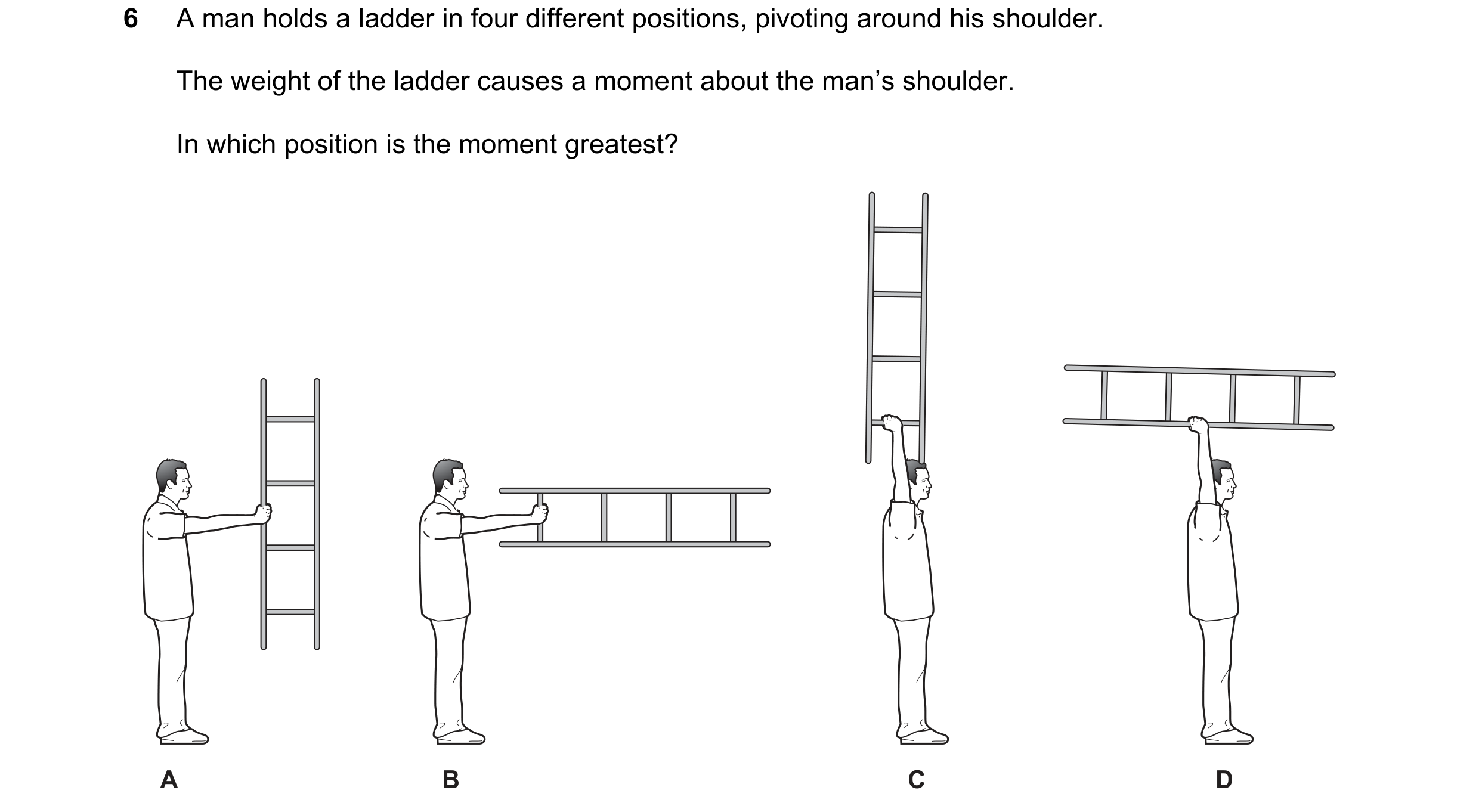
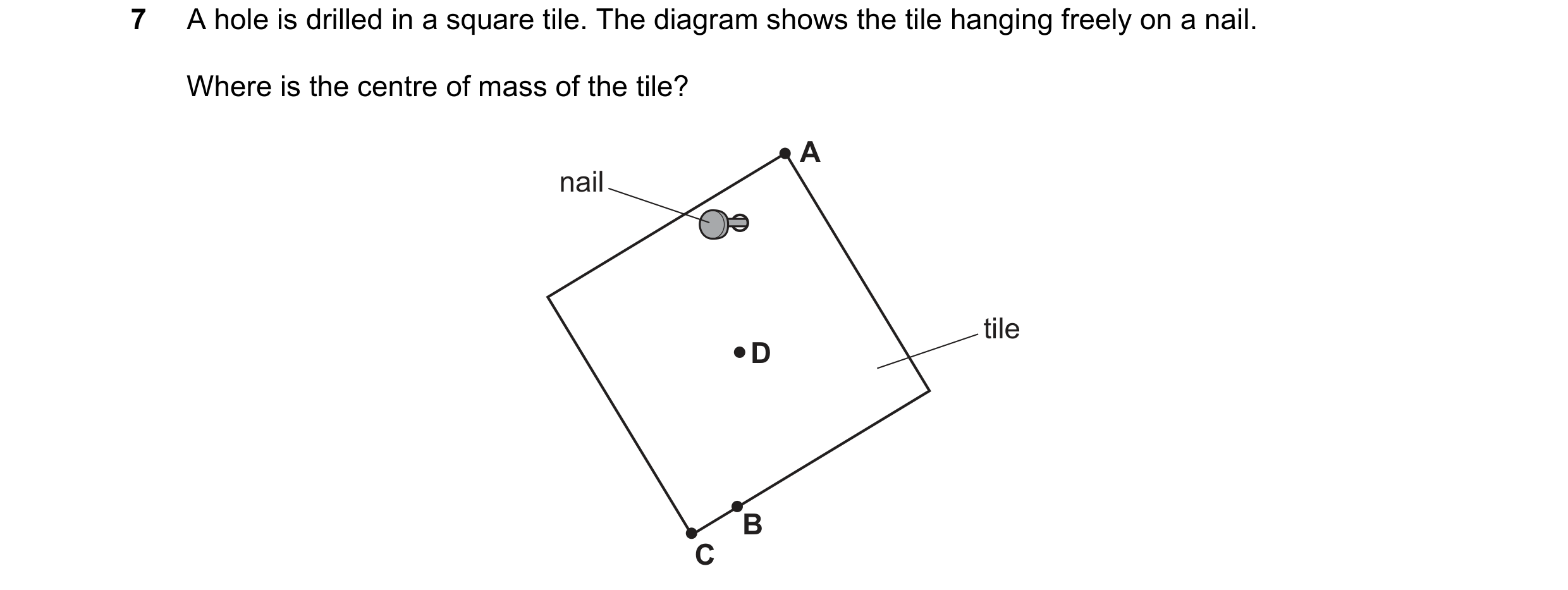
 62 / 113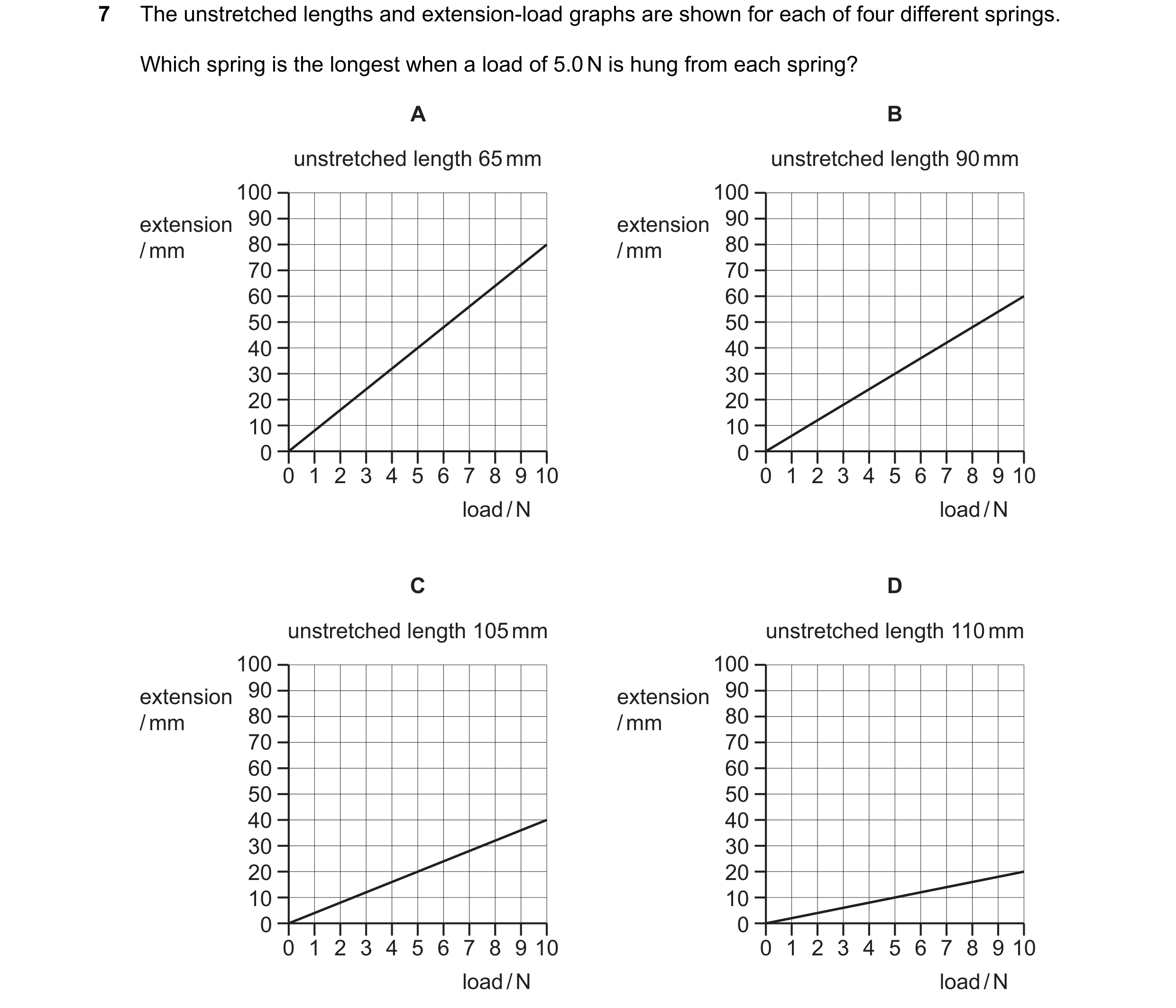
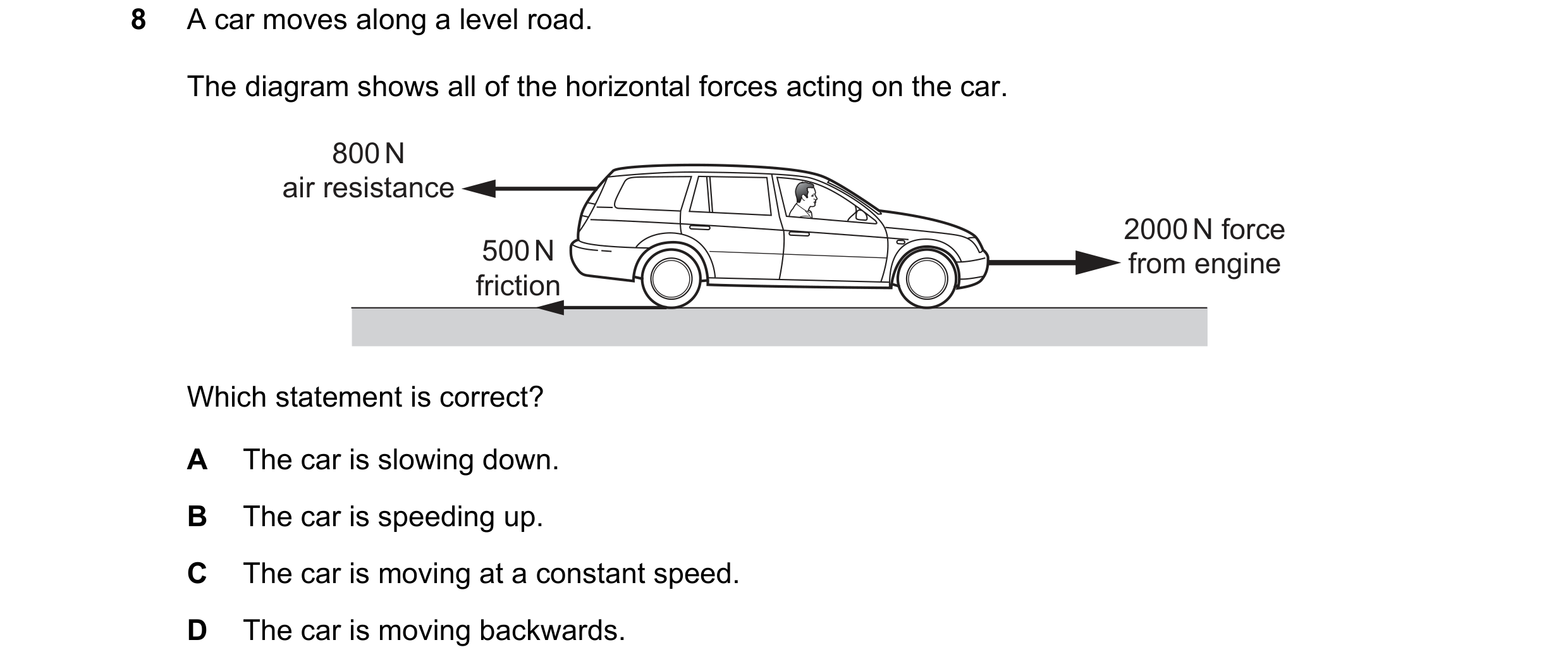 63 / 113

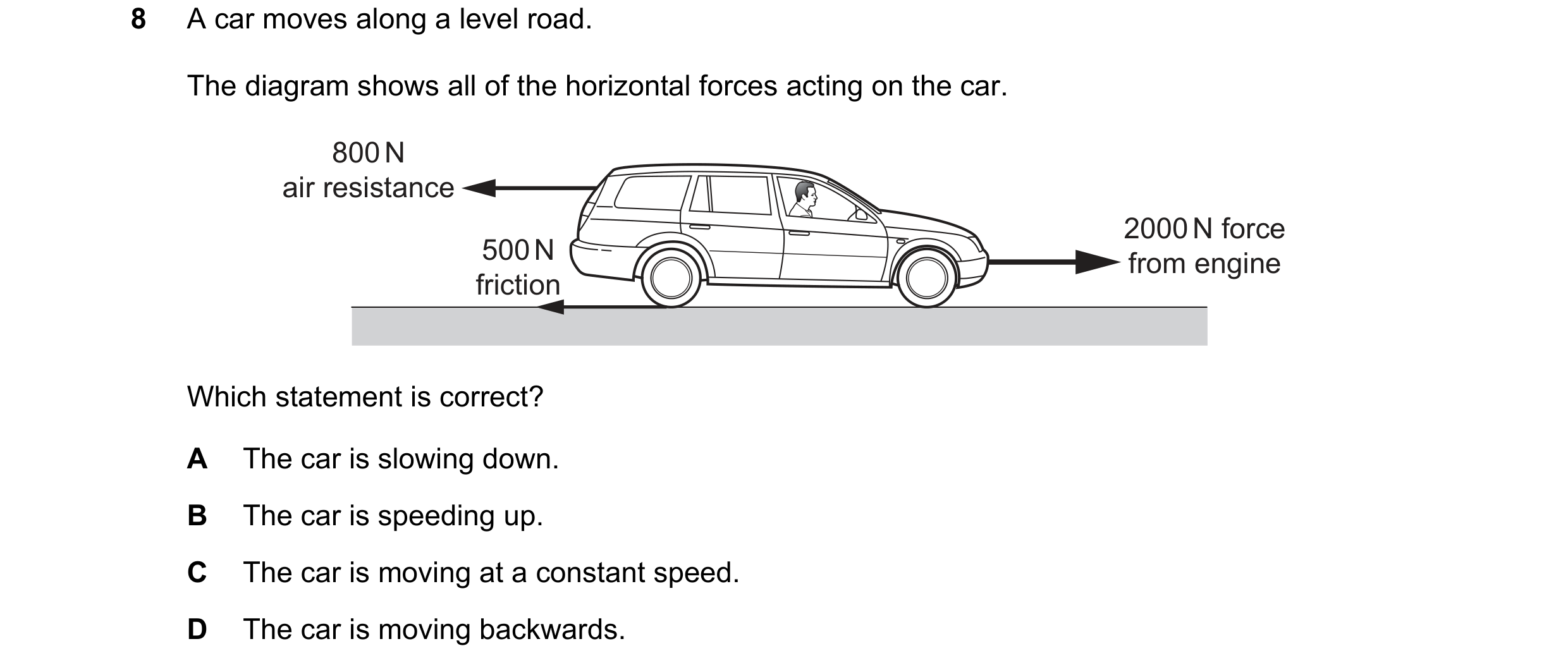
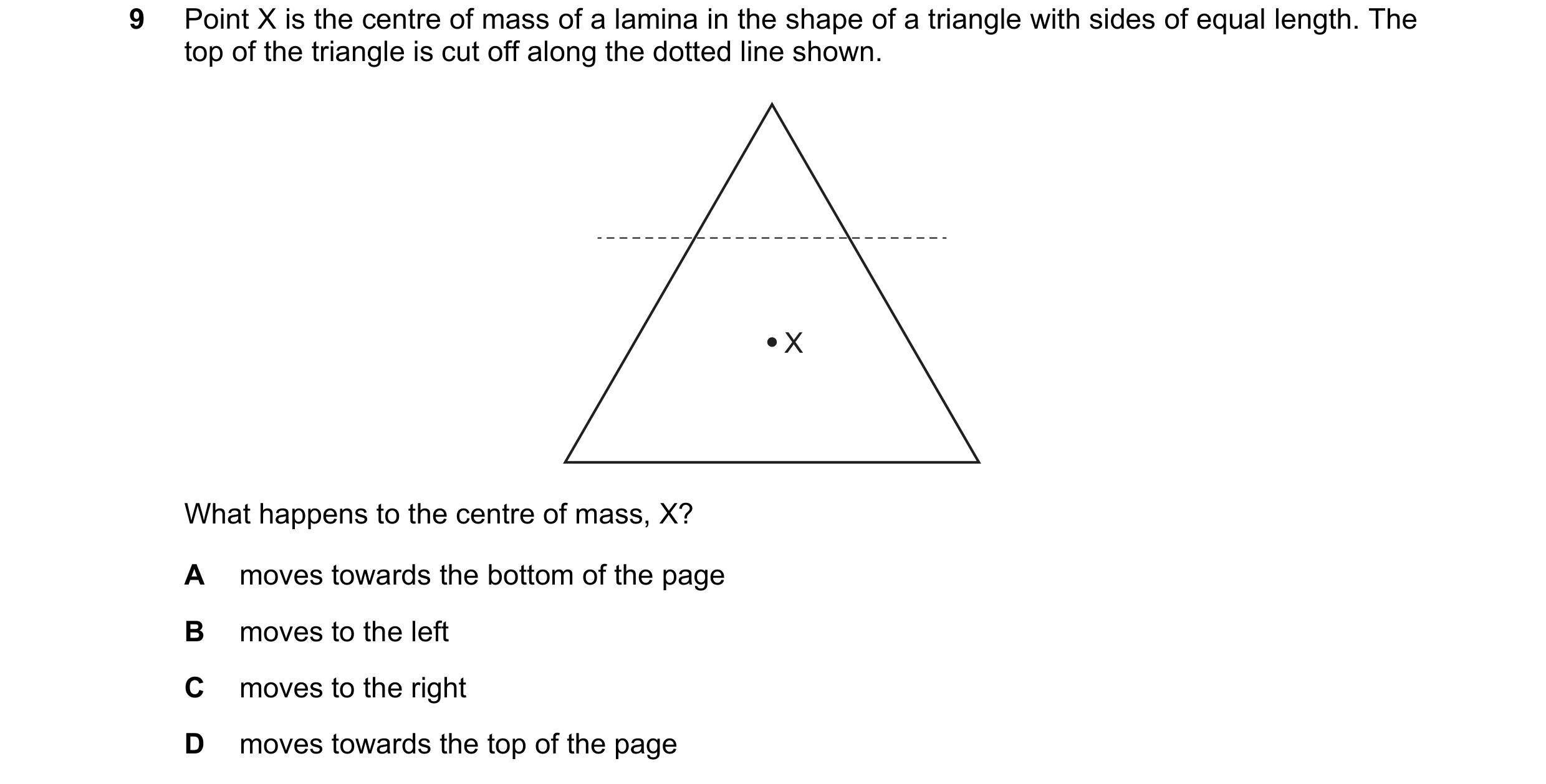 64 / 113
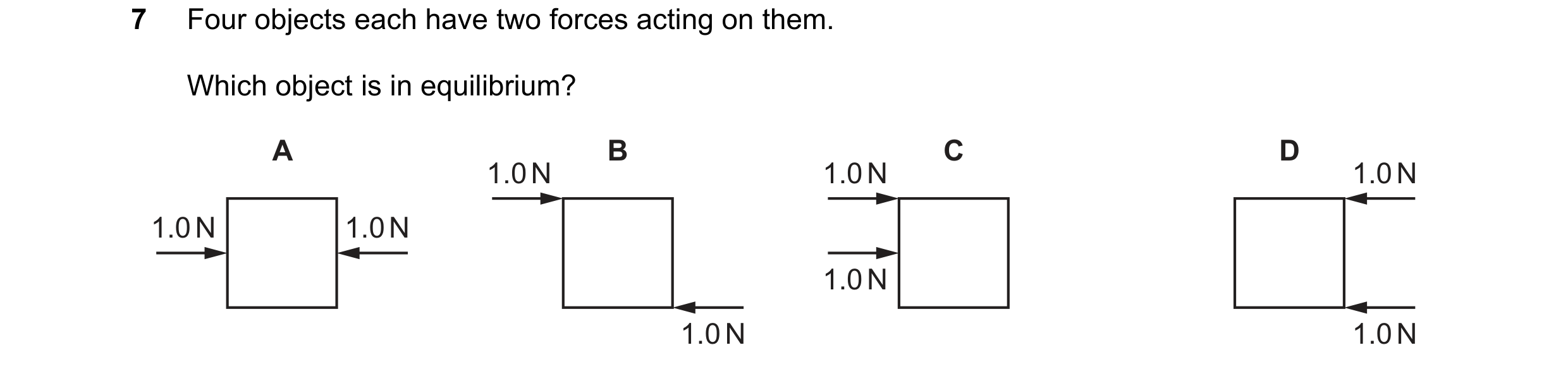
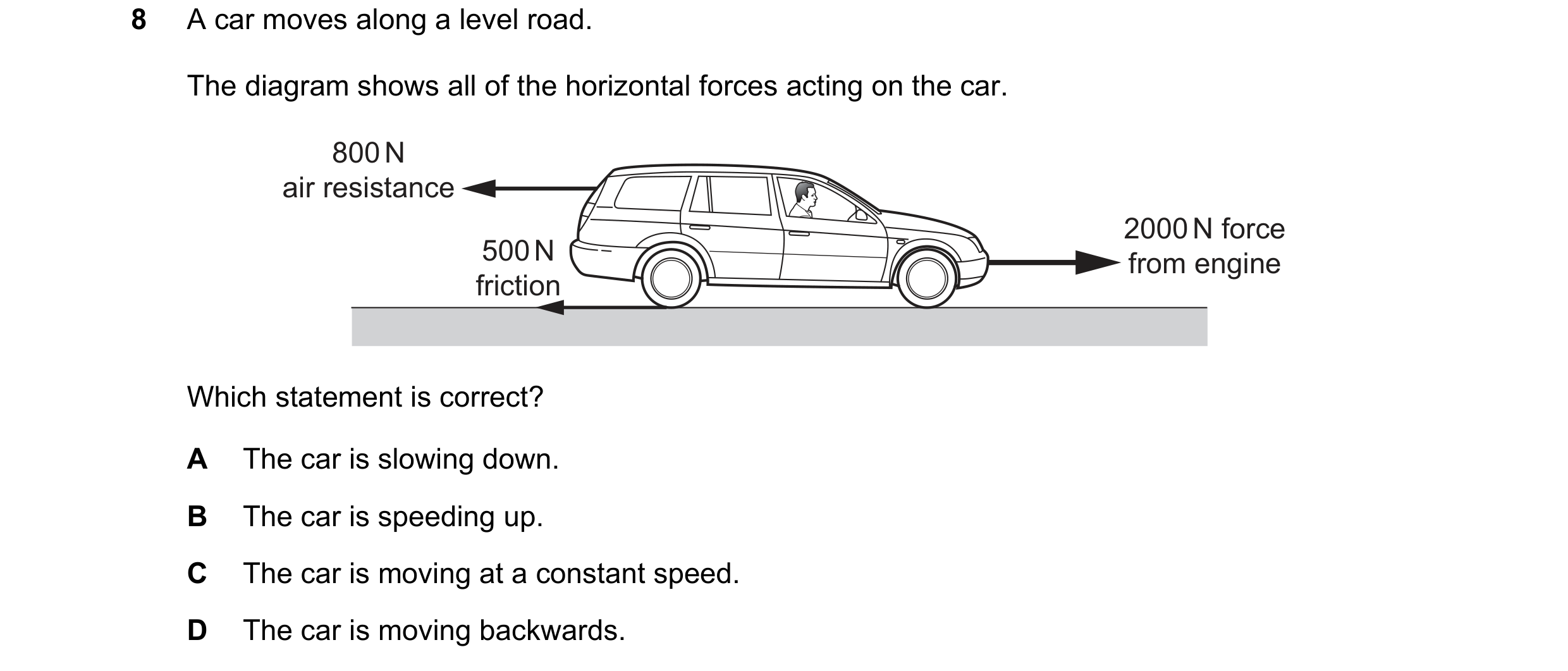 65 / 113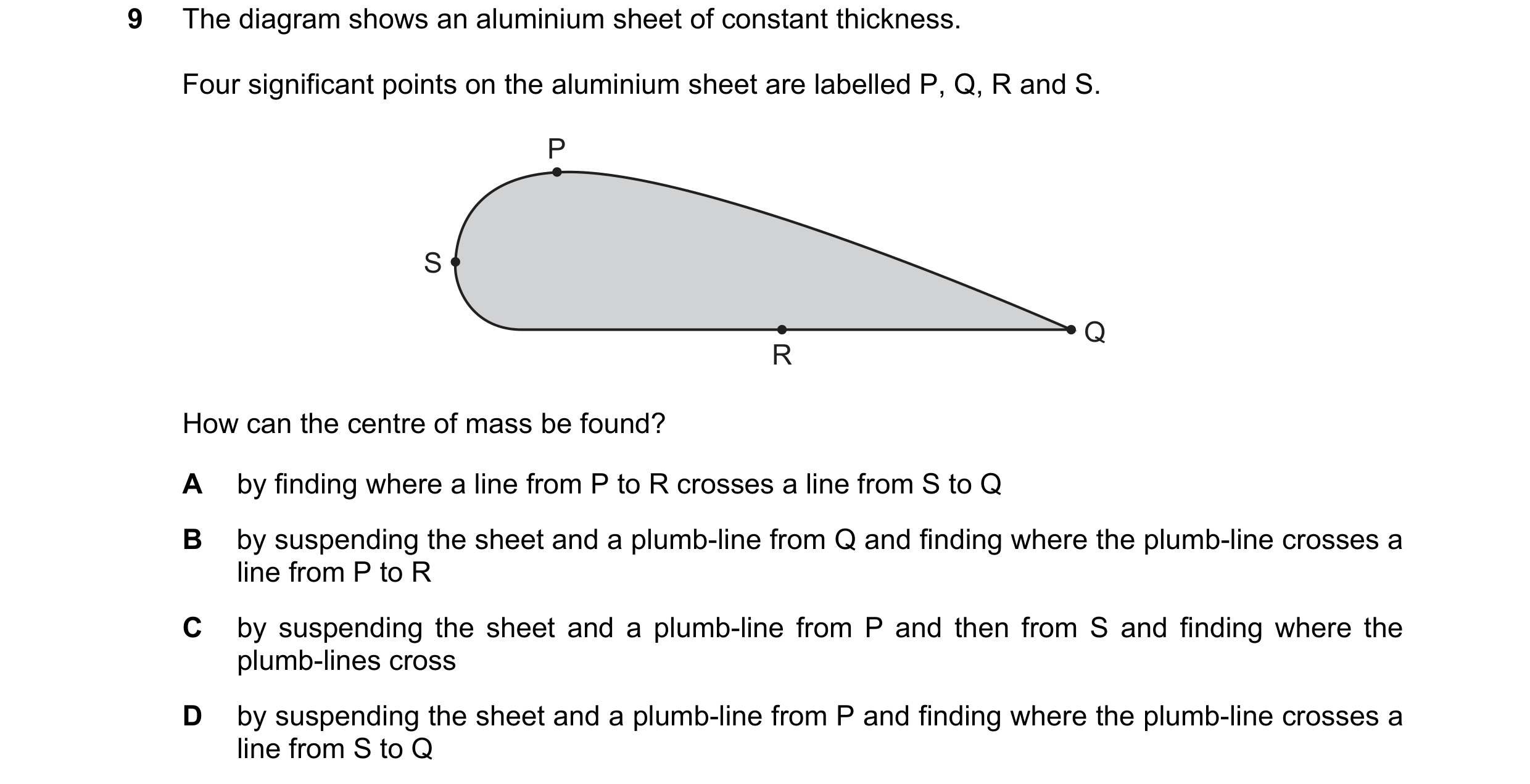

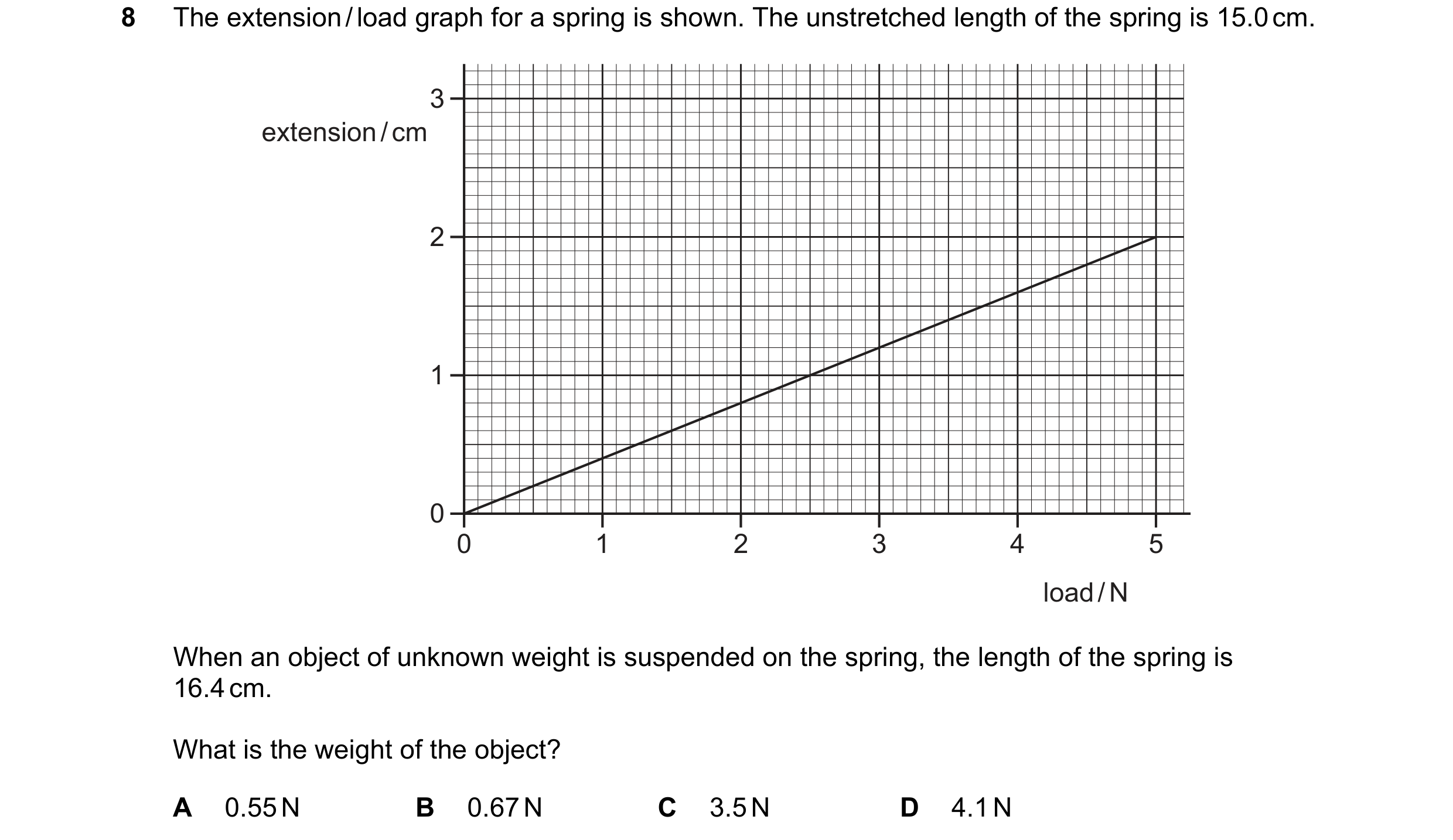 66 / 113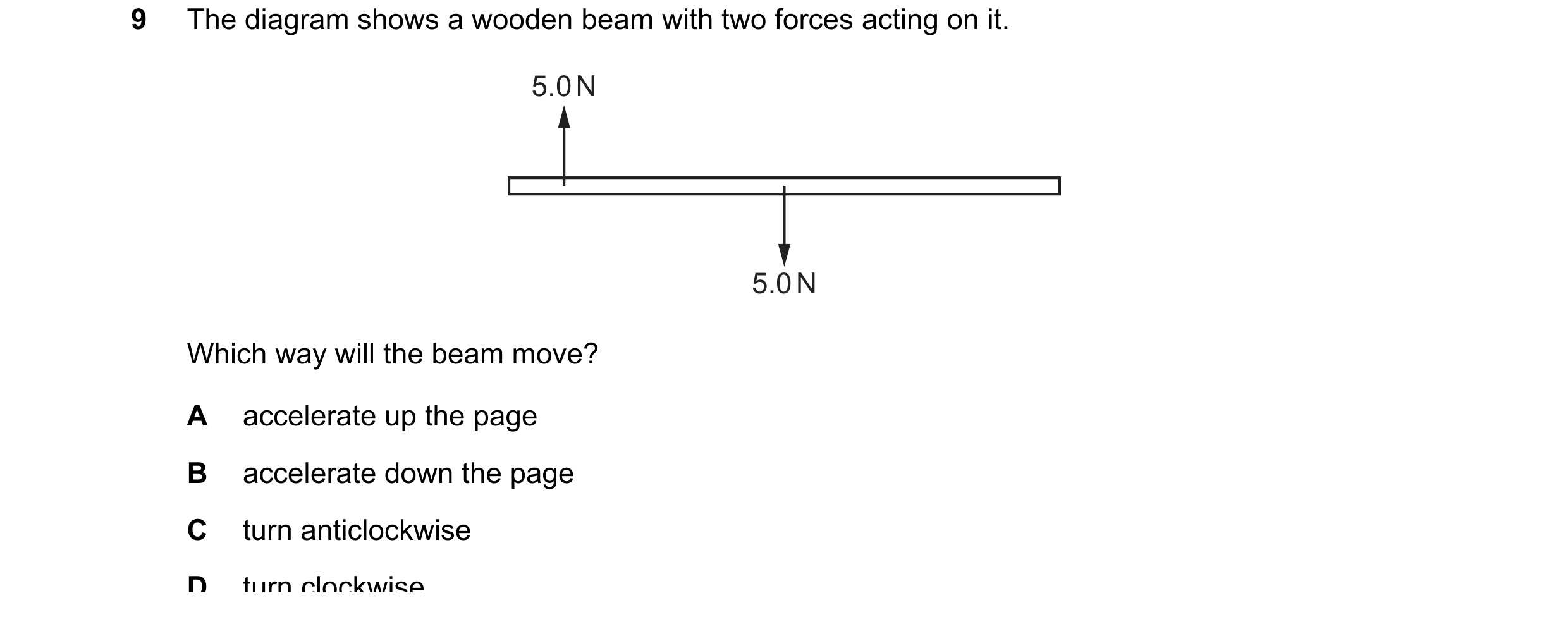
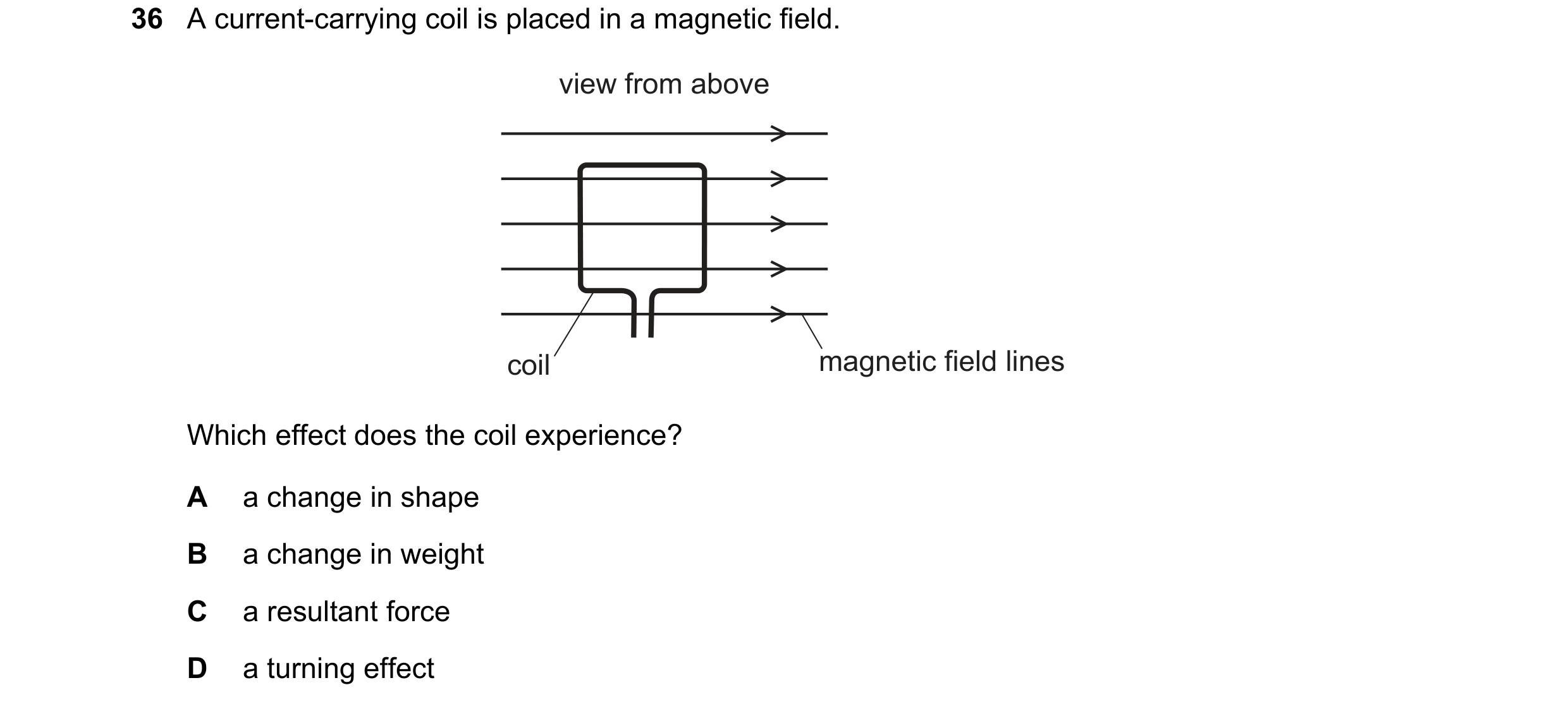
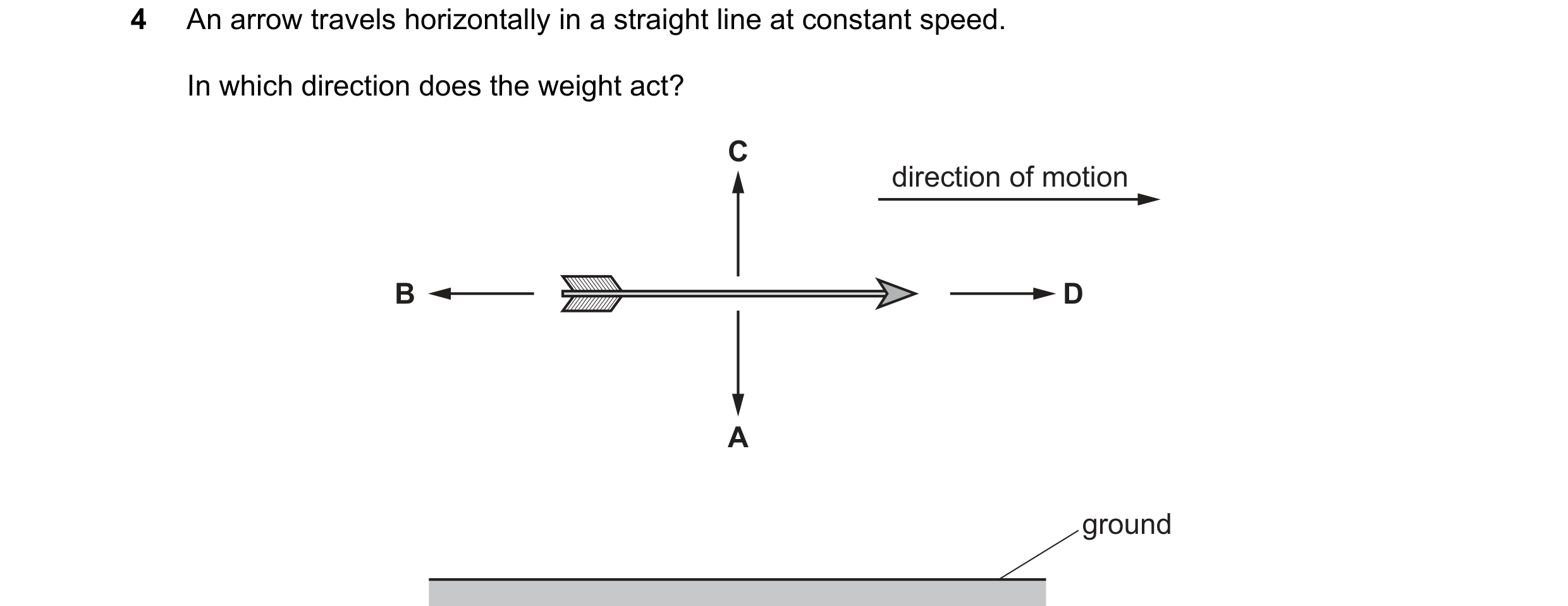 67 / 113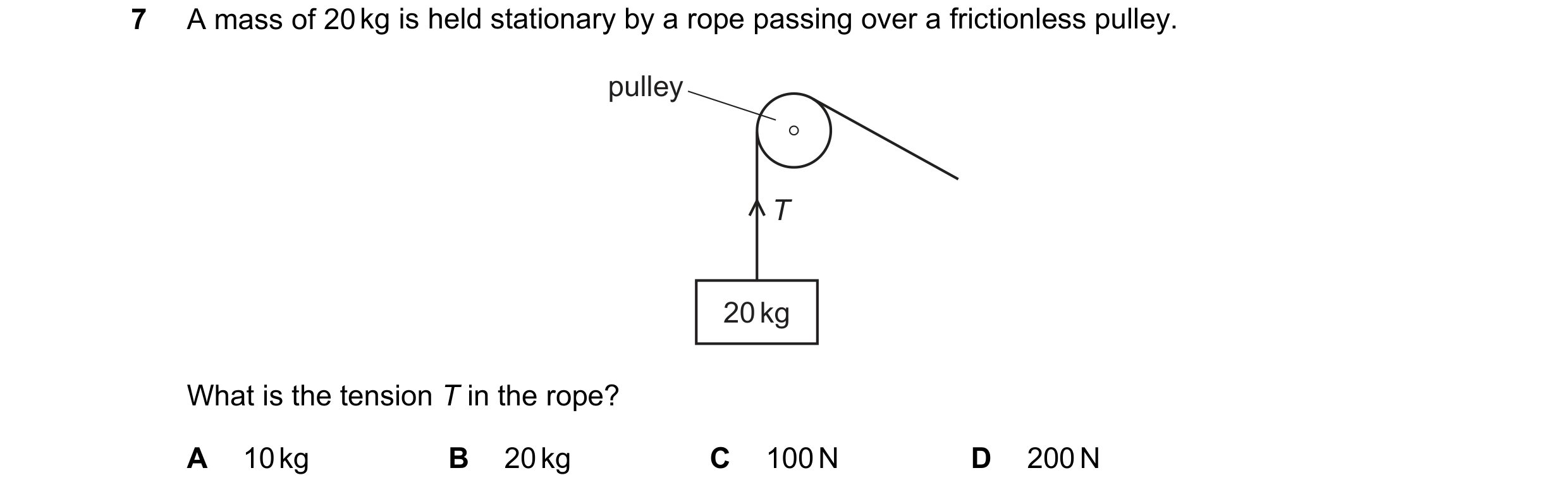
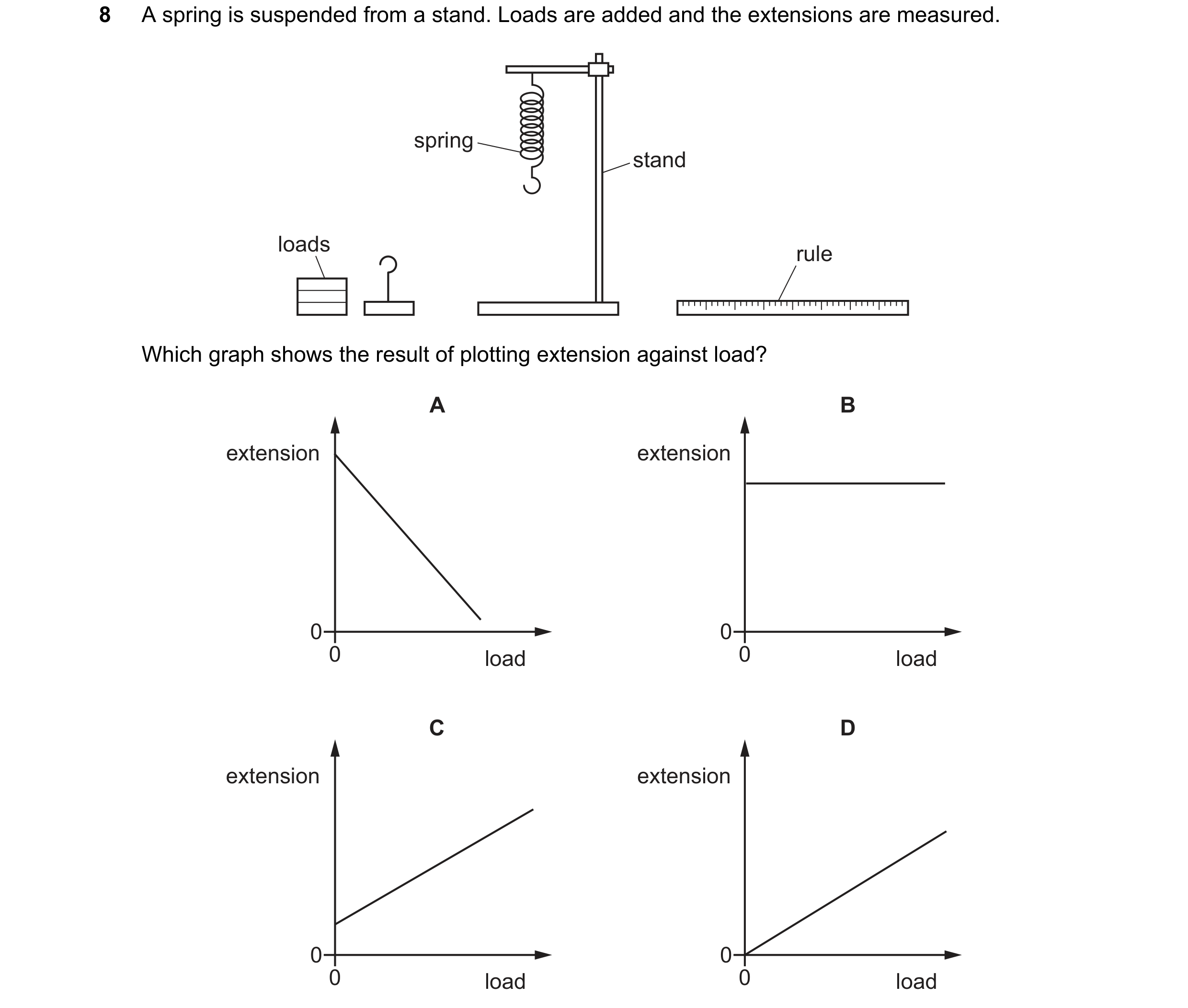 68 / 113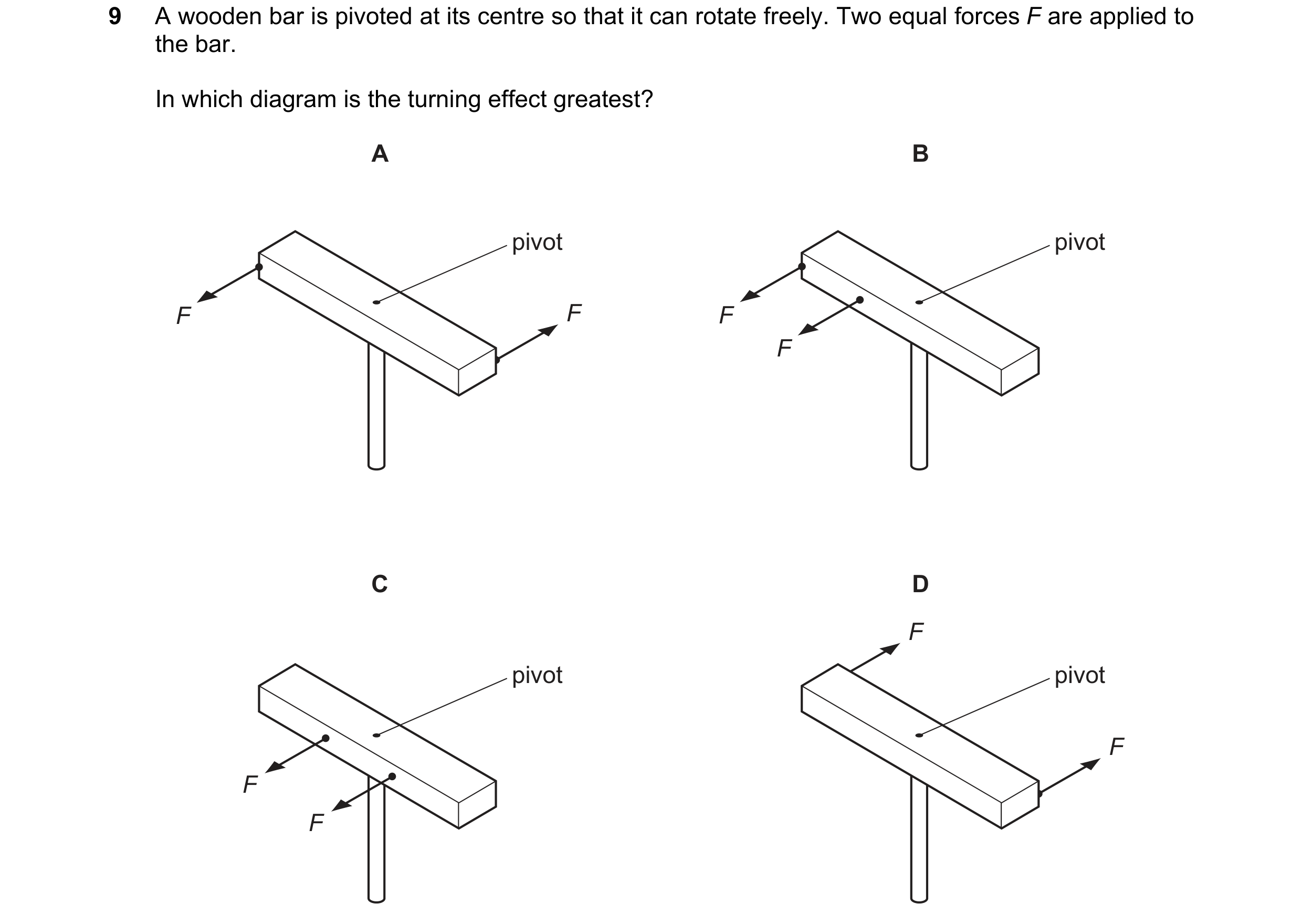
 69 / 113
 70 / 113
 71 / 113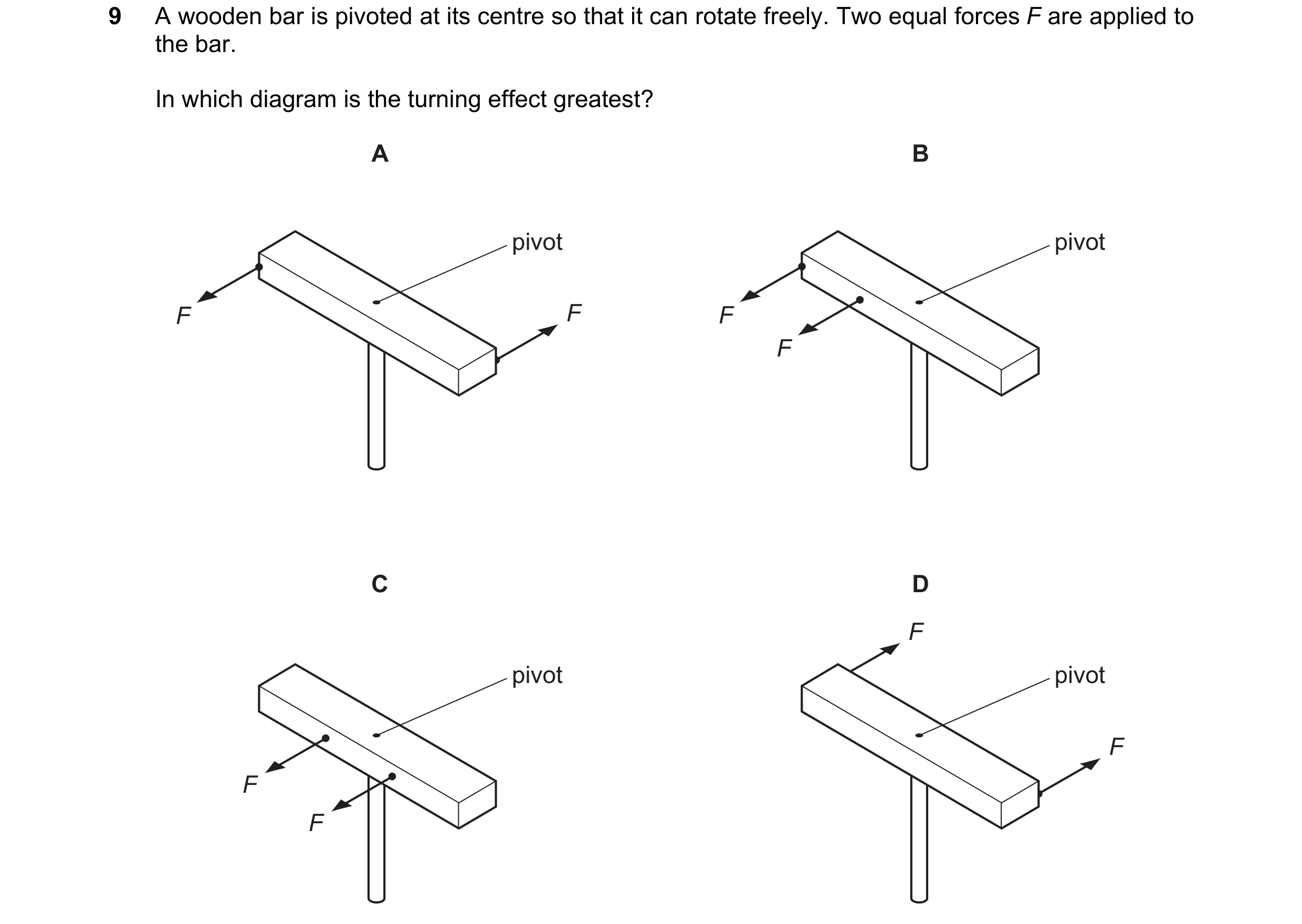
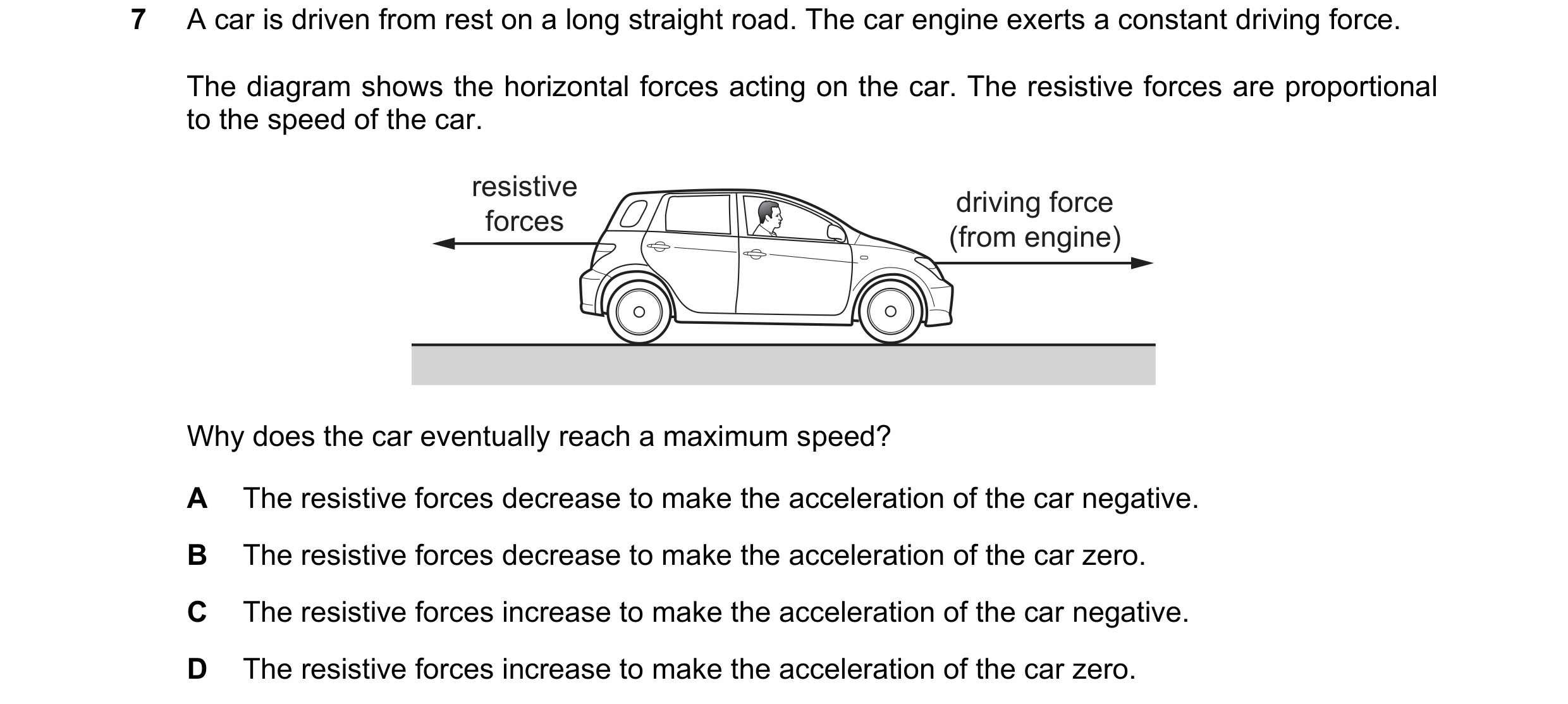 72 / 113
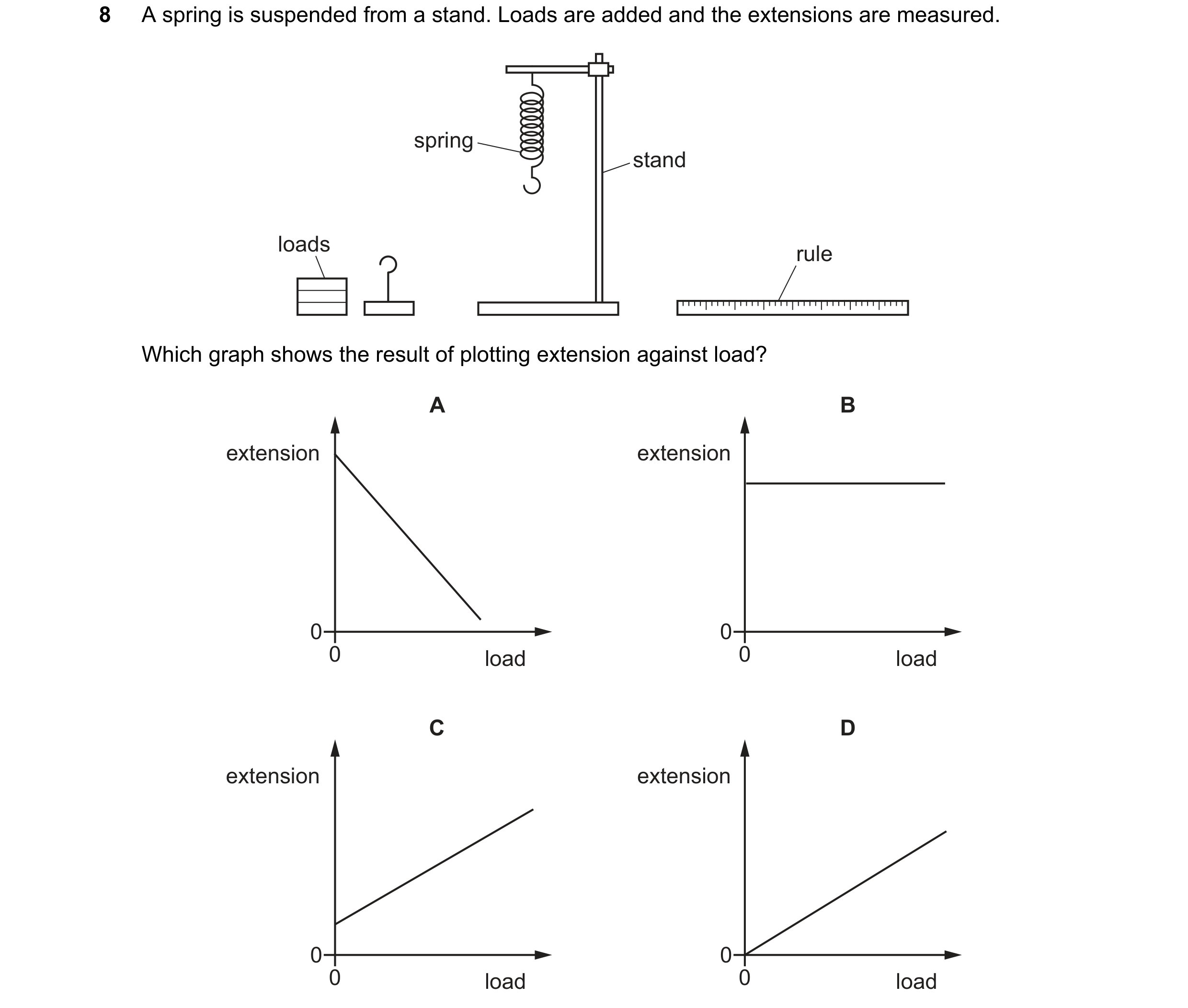 73 / 113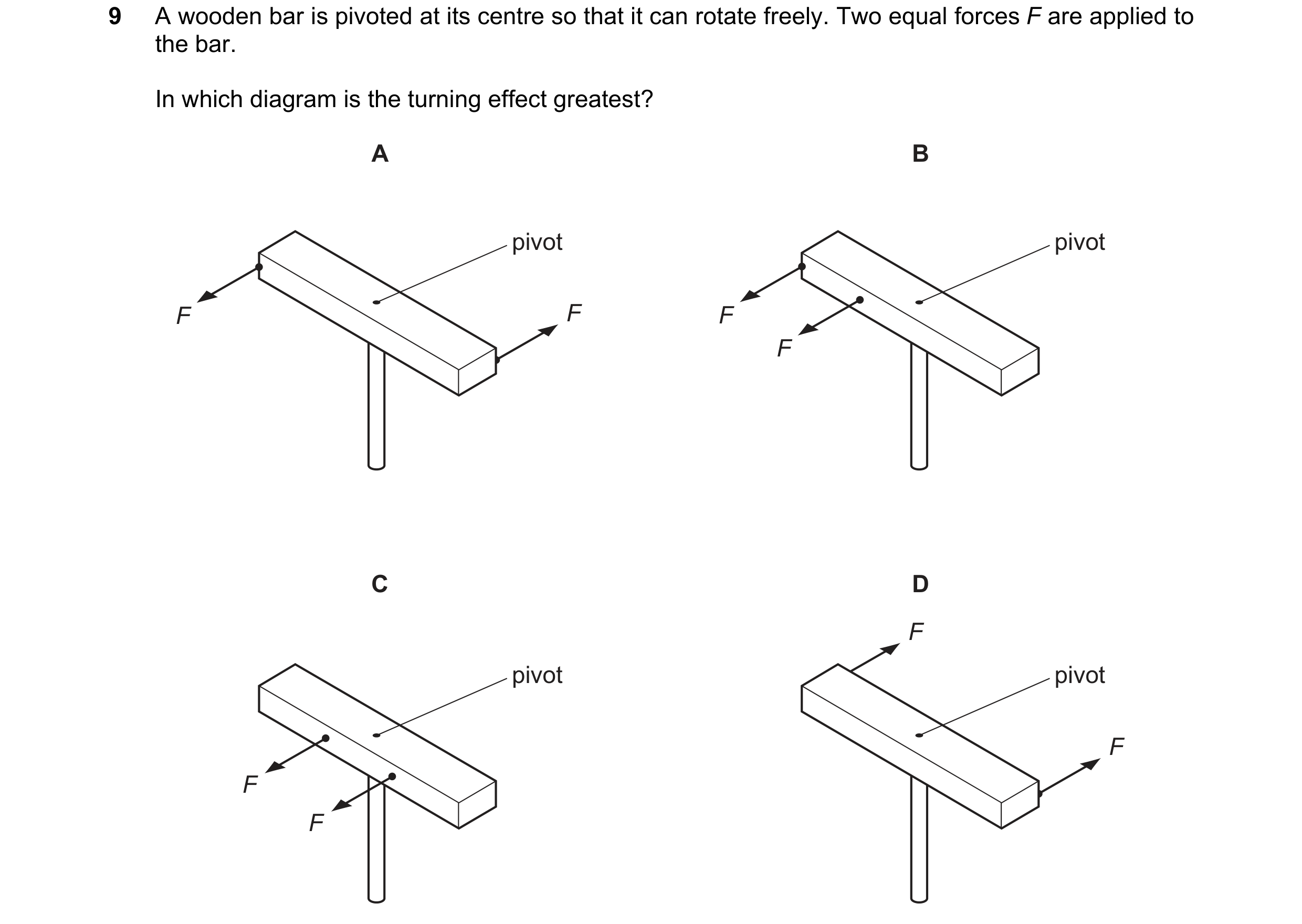

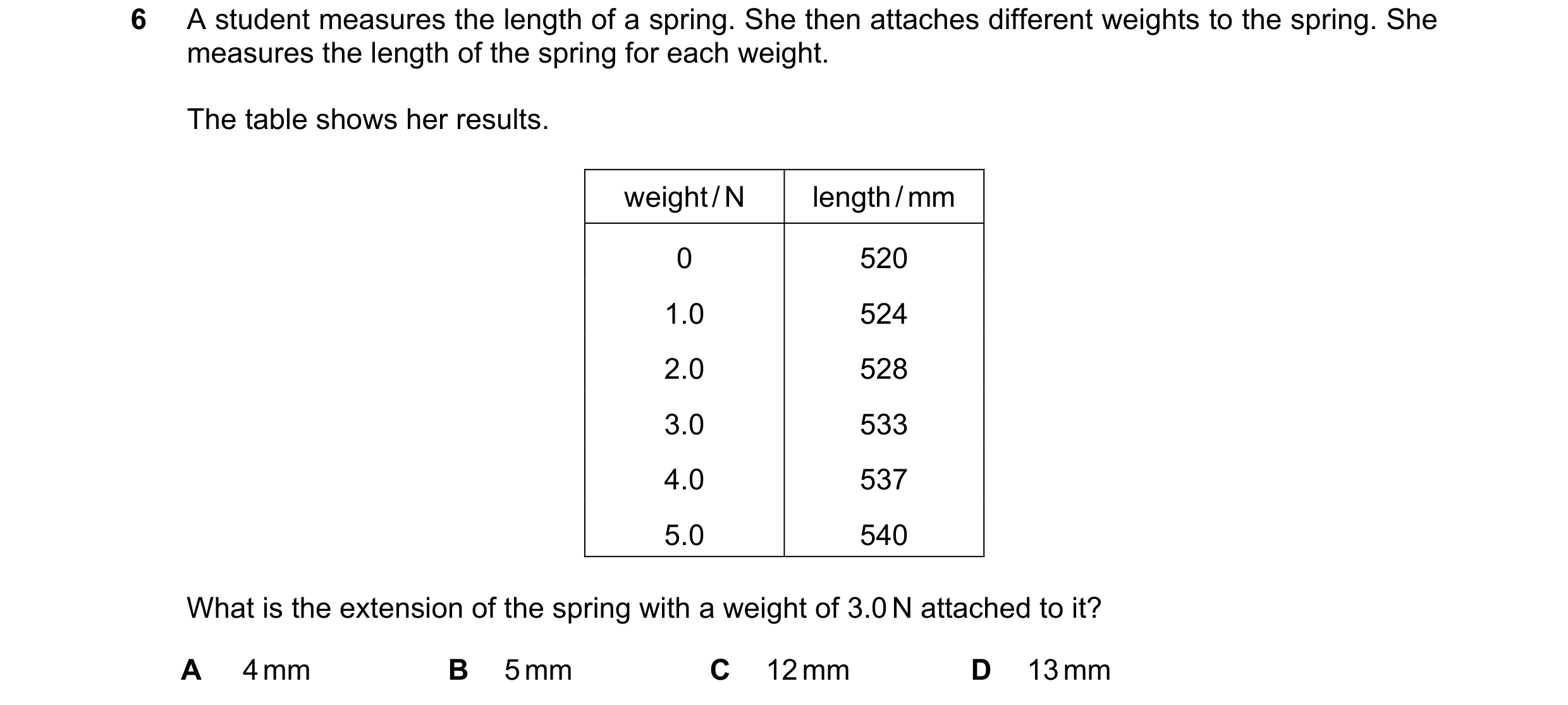 74 / 113
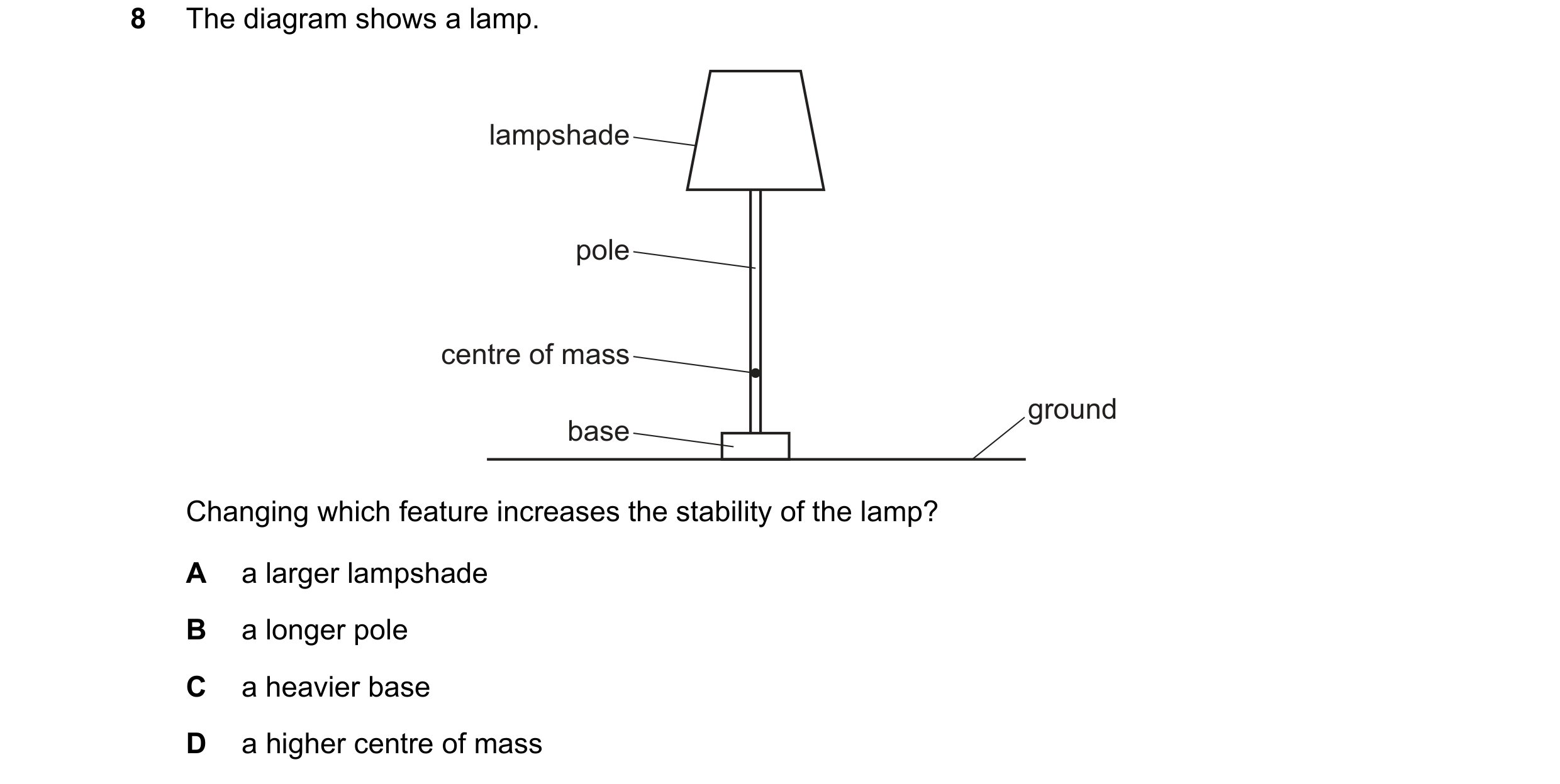
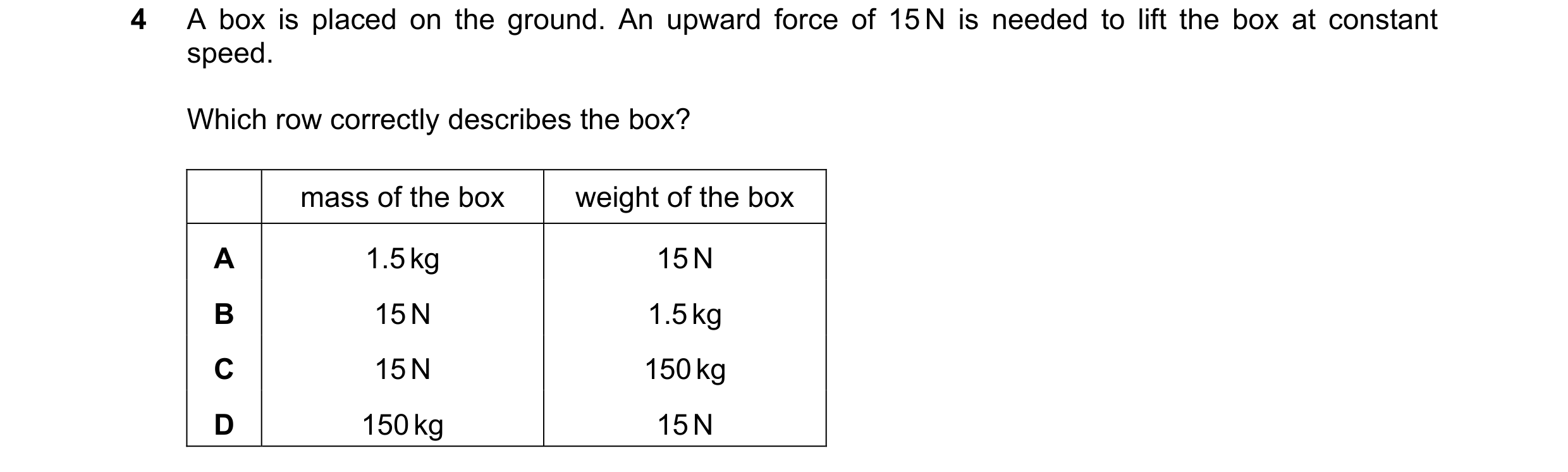 75 / 113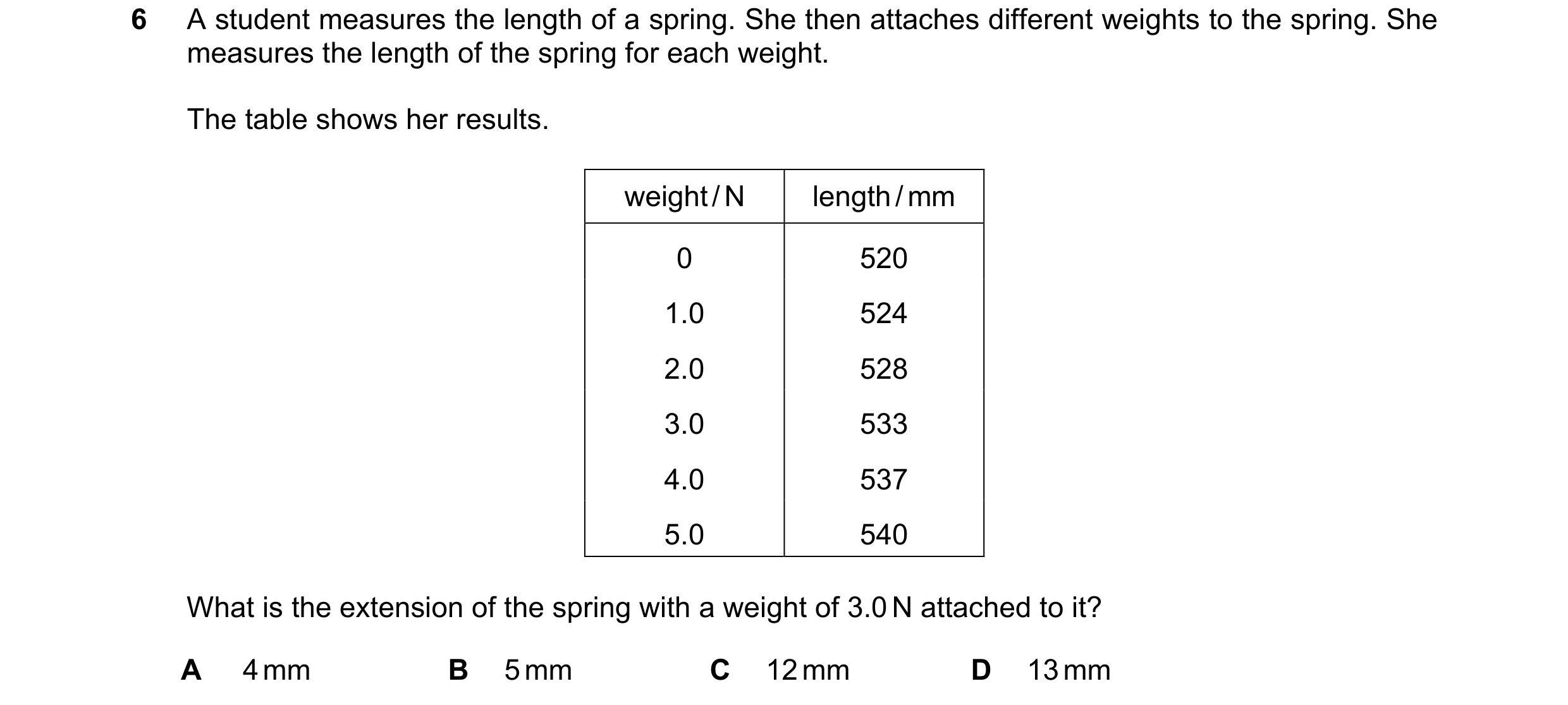

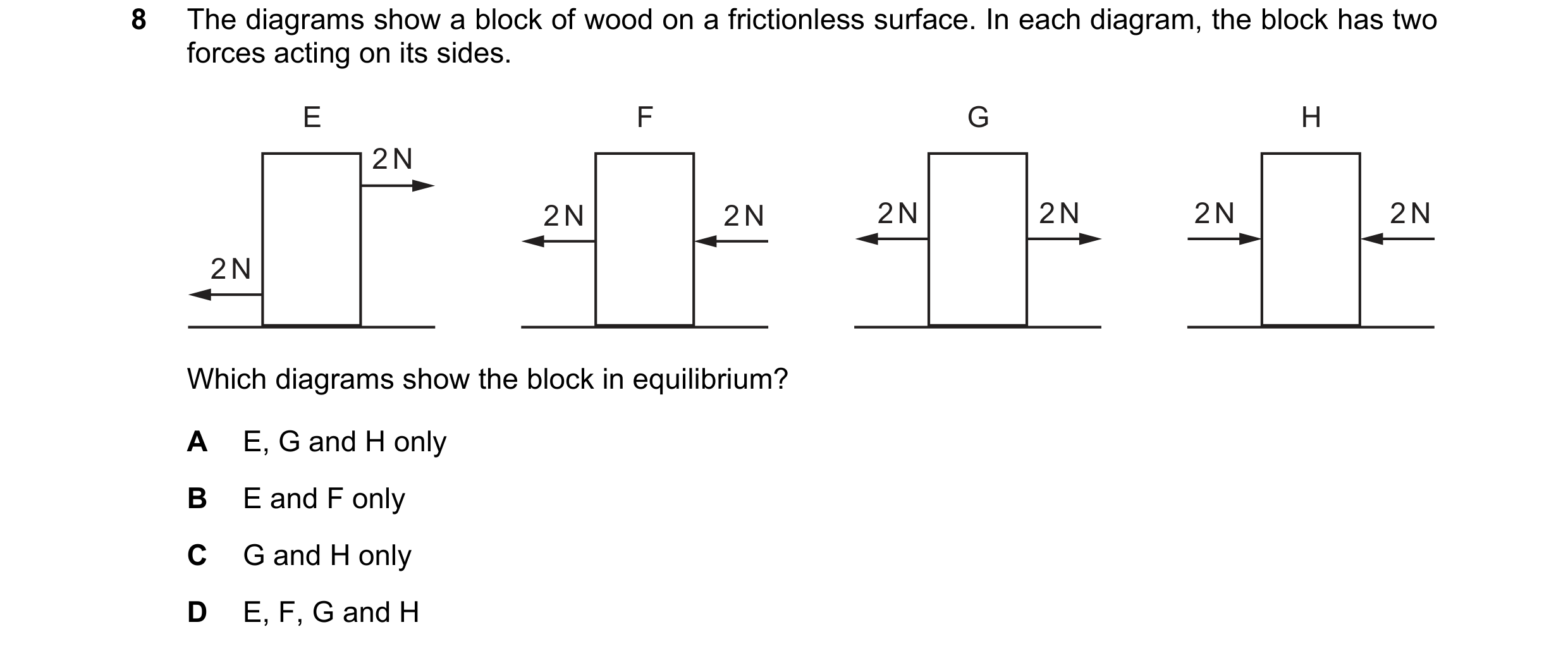 76 / 113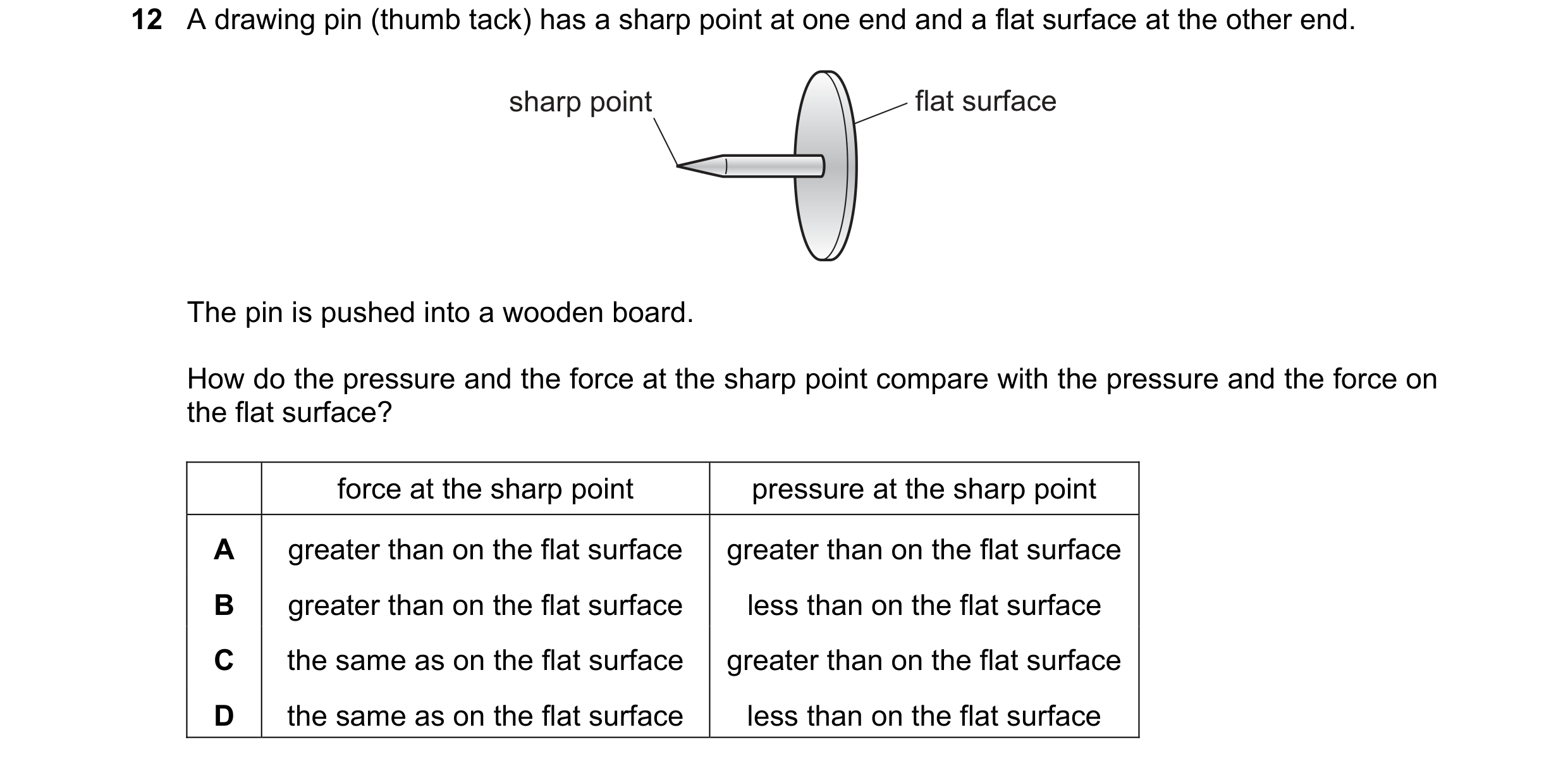
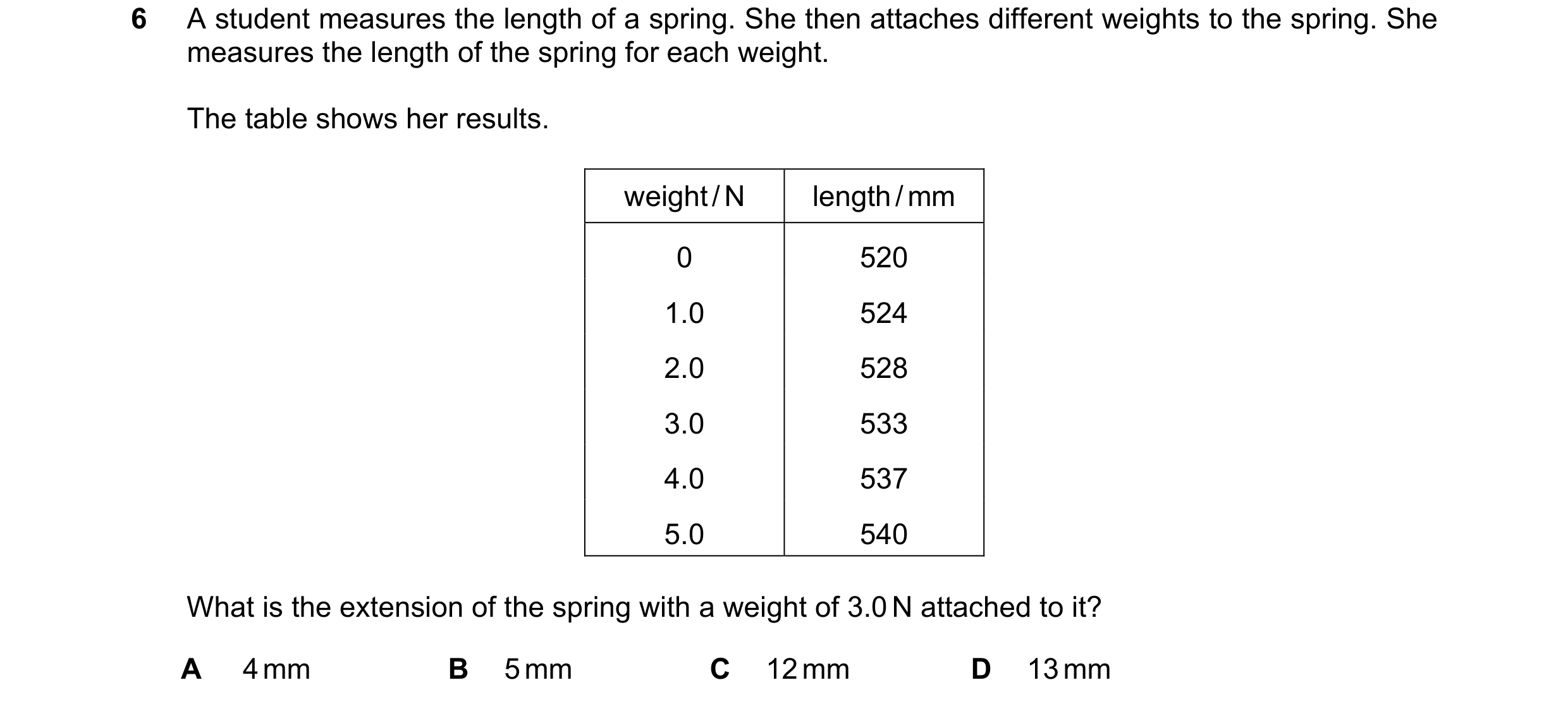
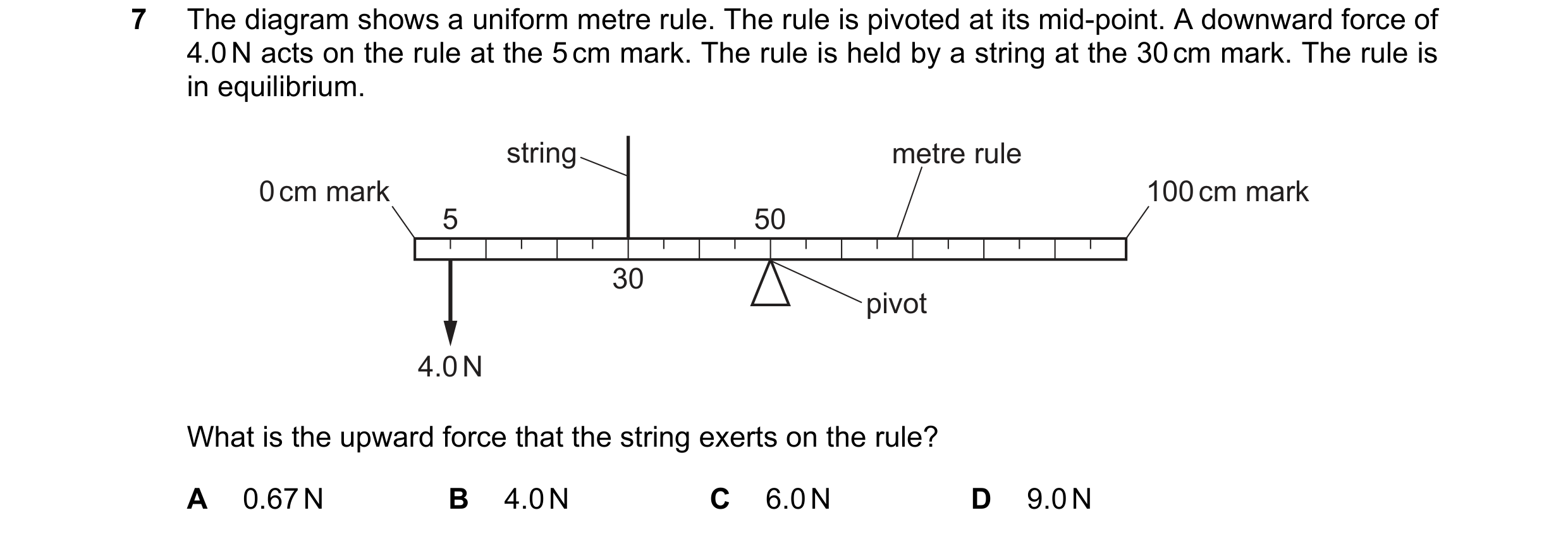 77 / 113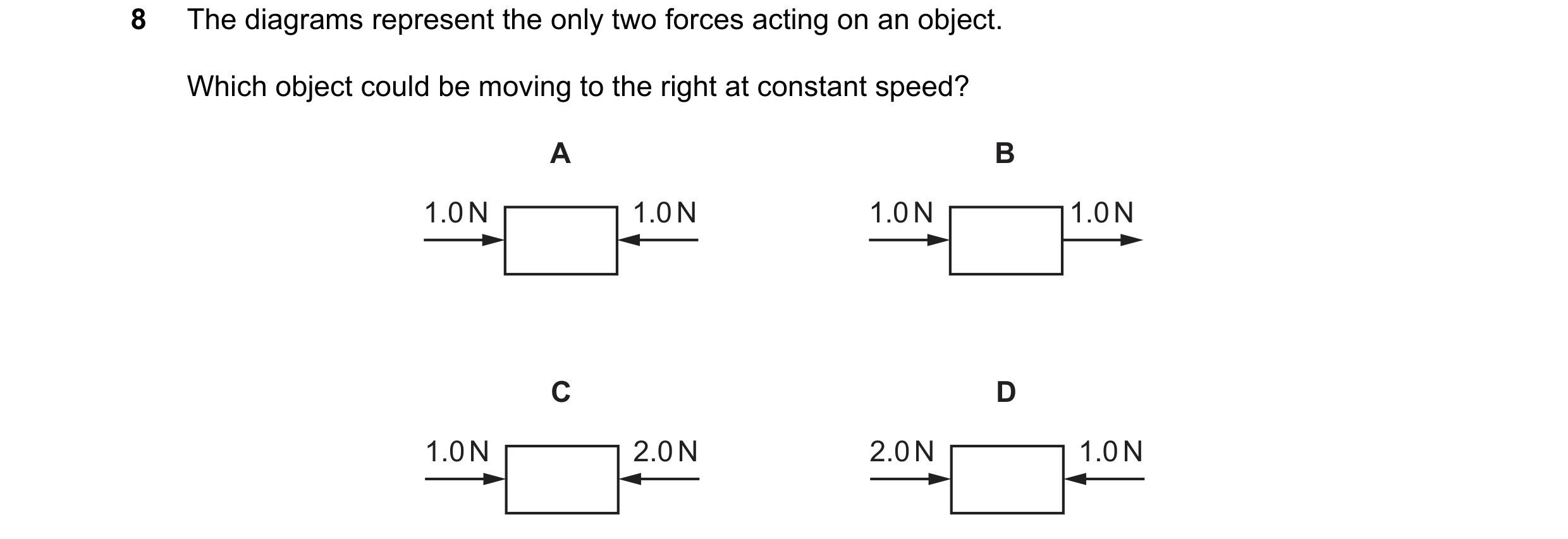
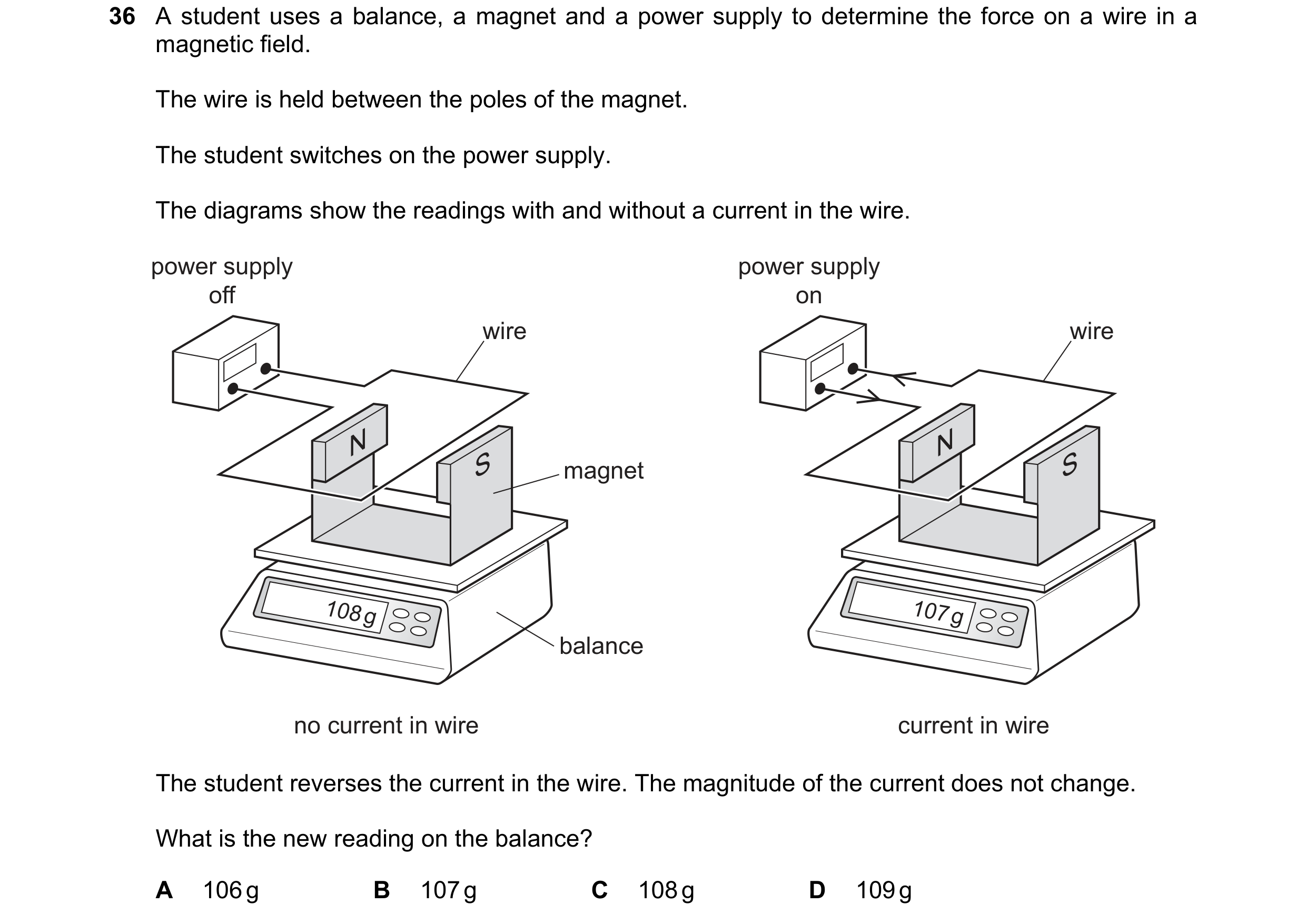 78 / 113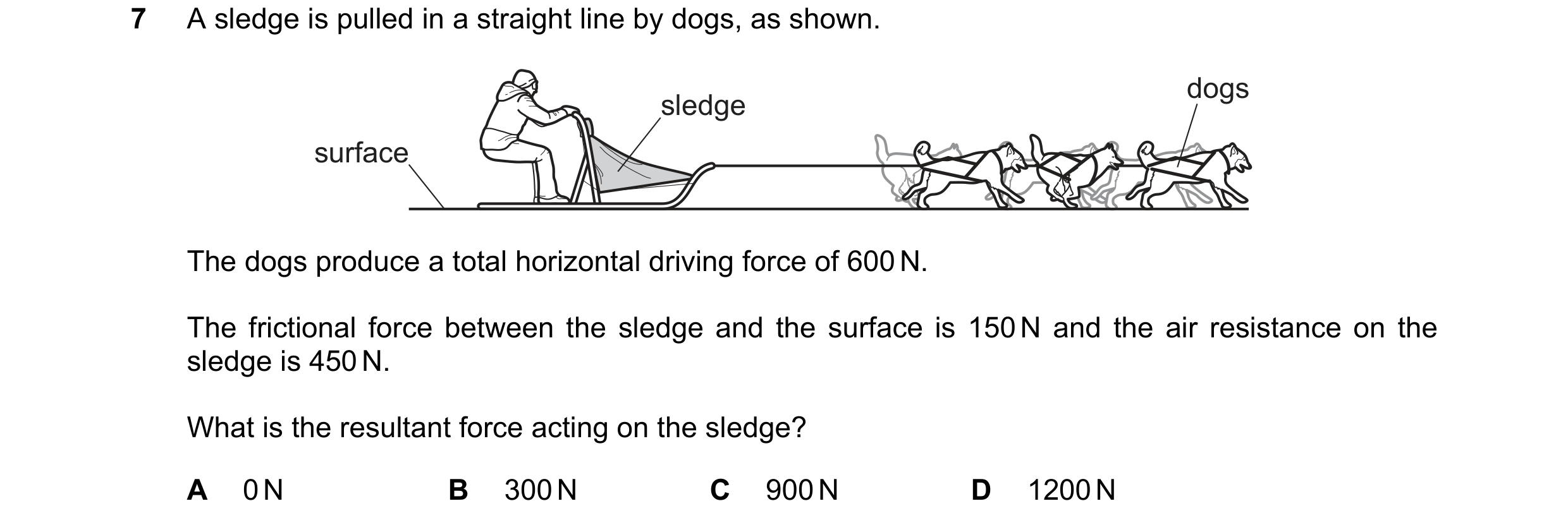
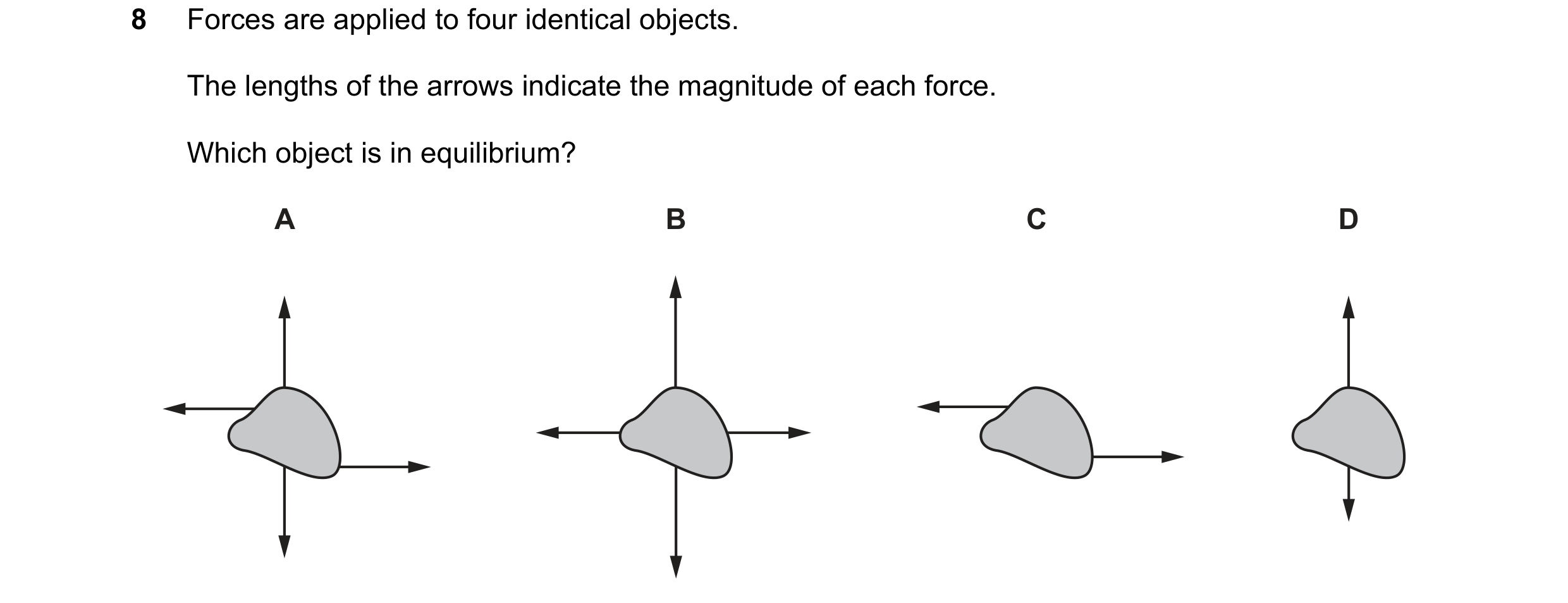 79 / 113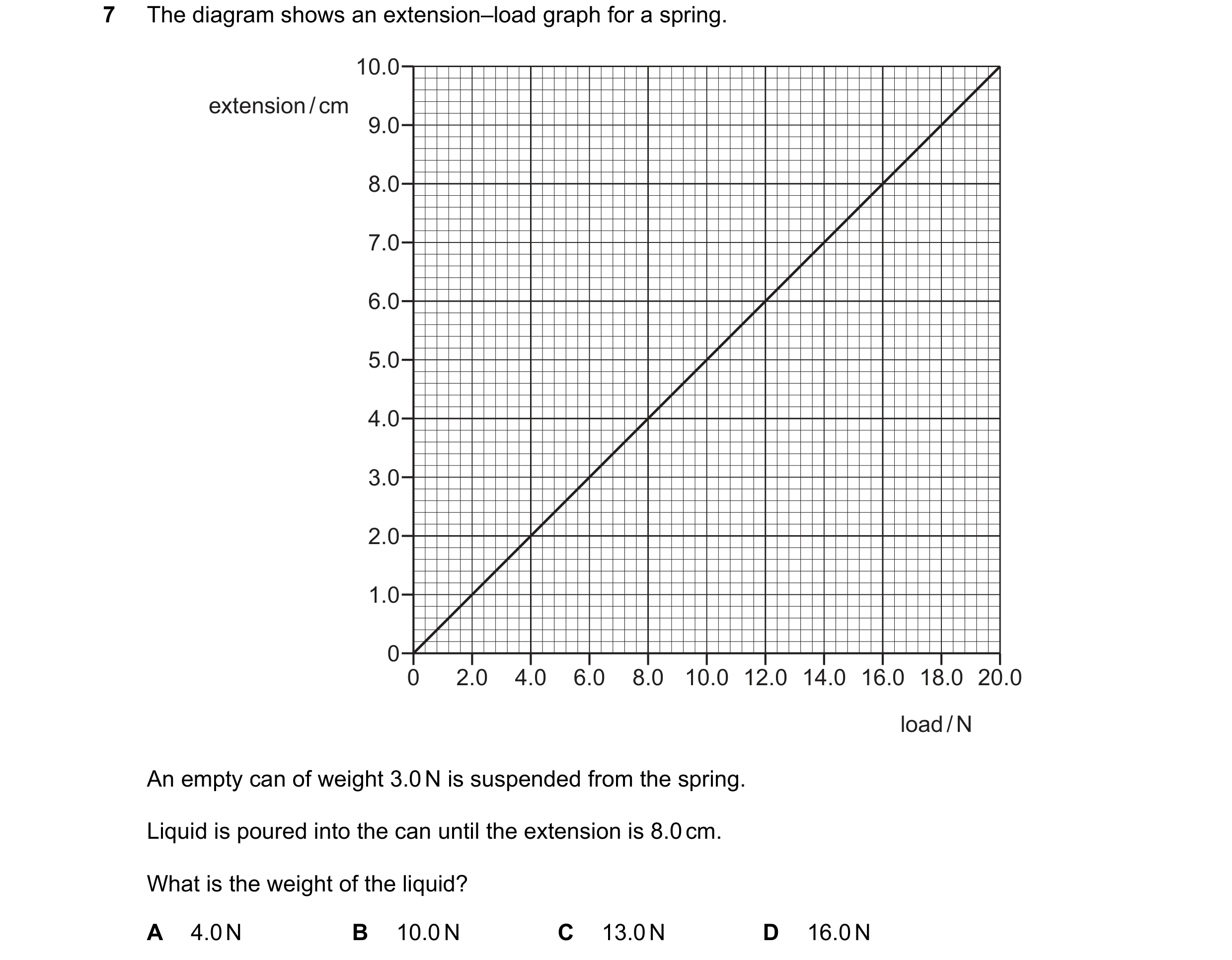
 80 / 113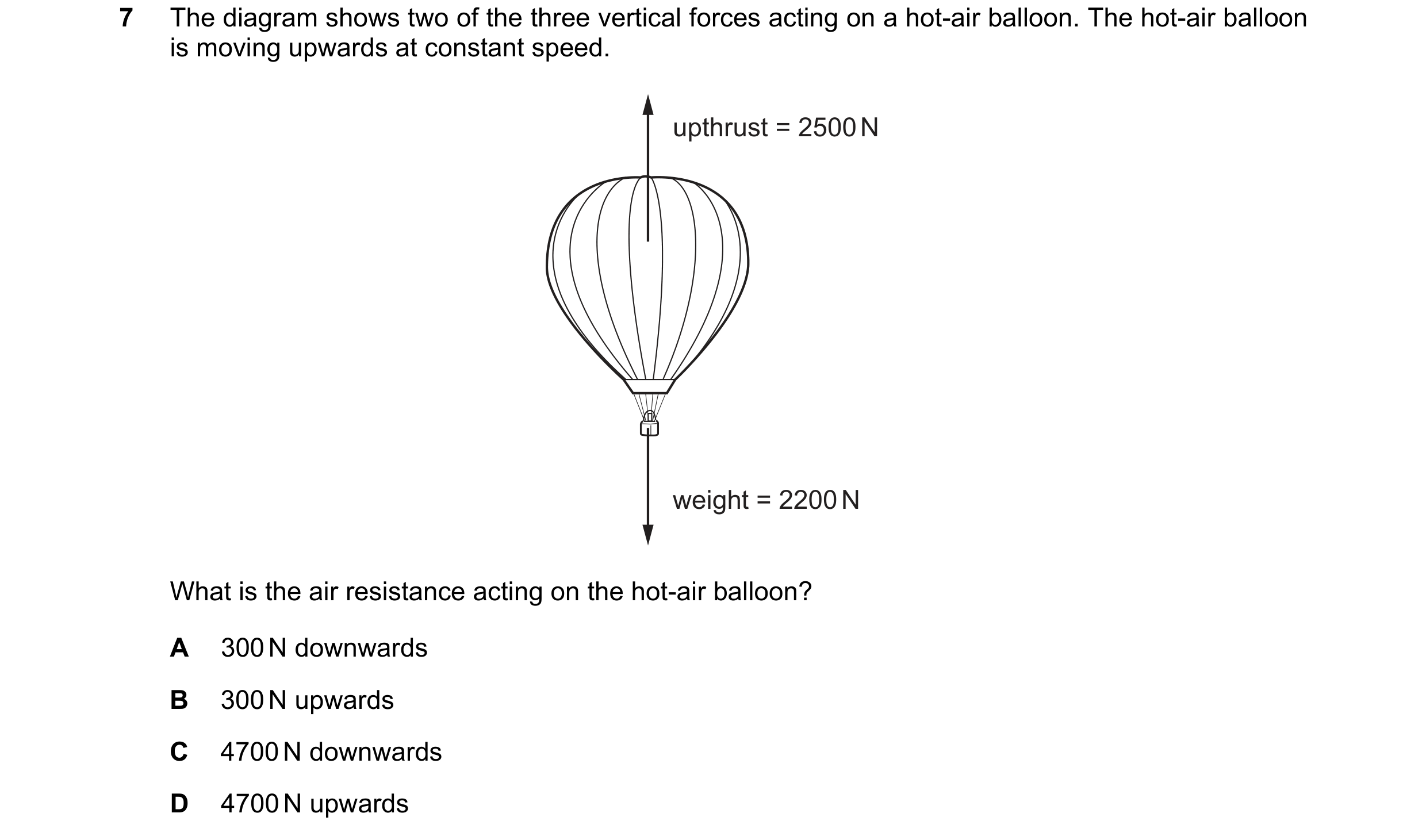
 81 / 113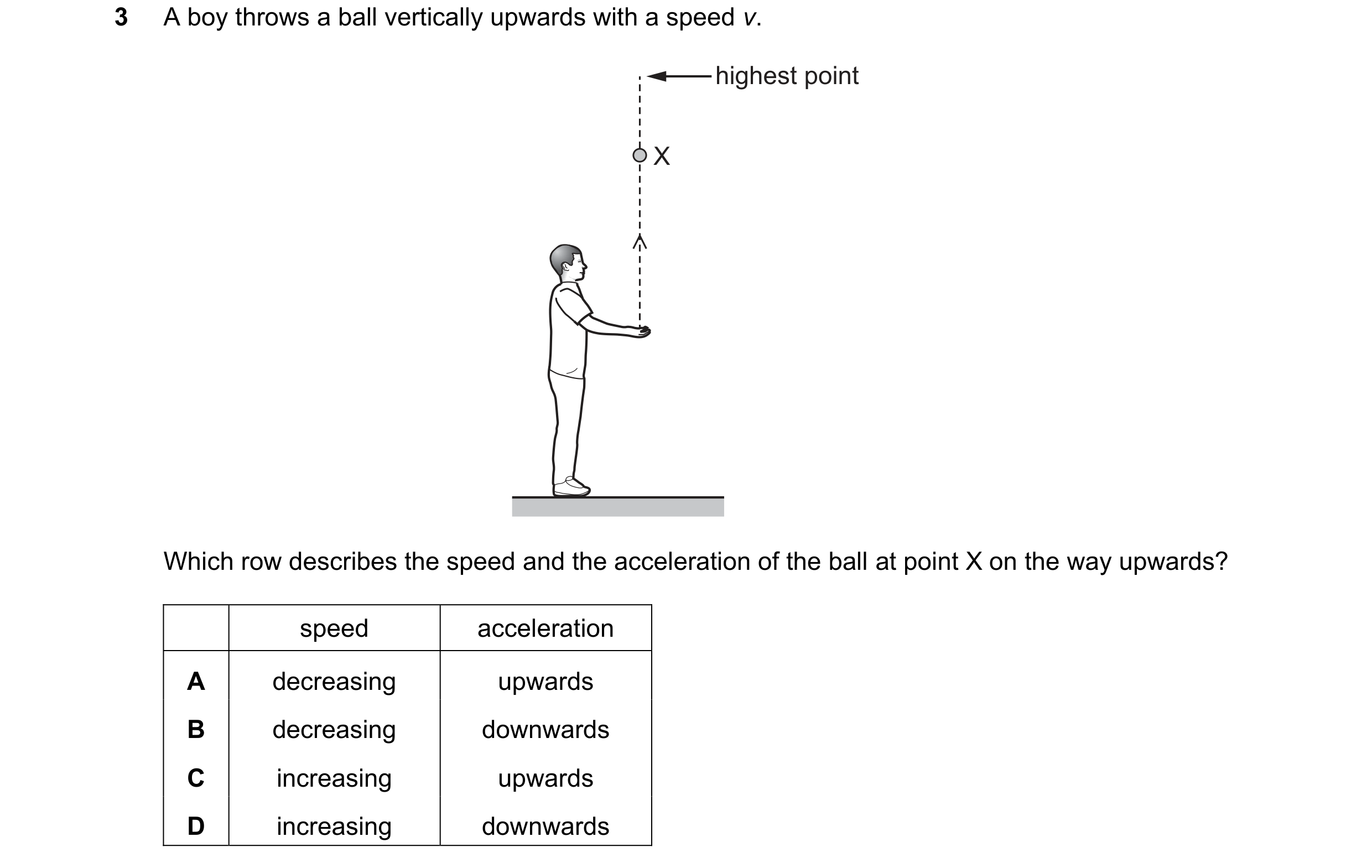

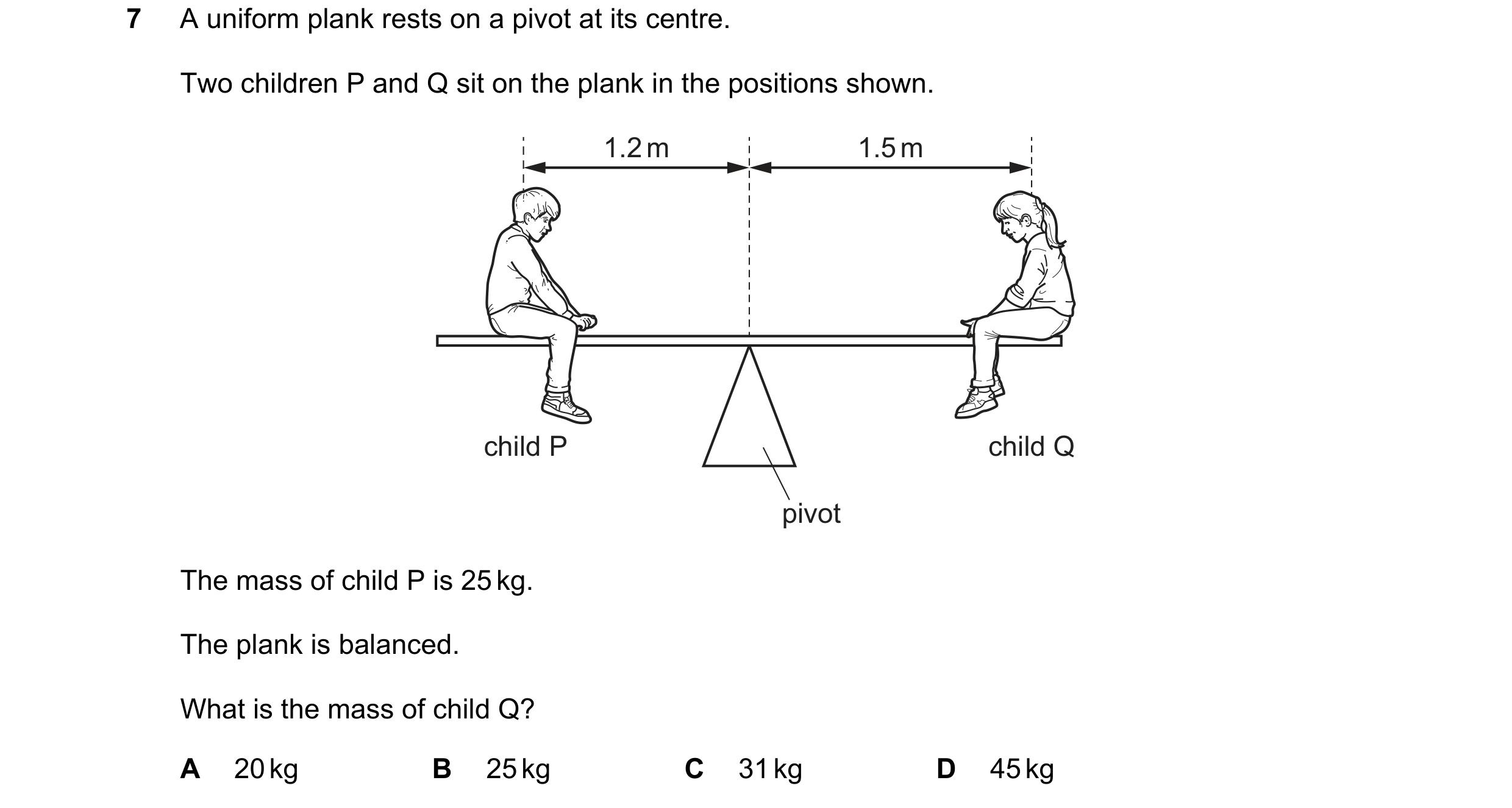 82 / 113

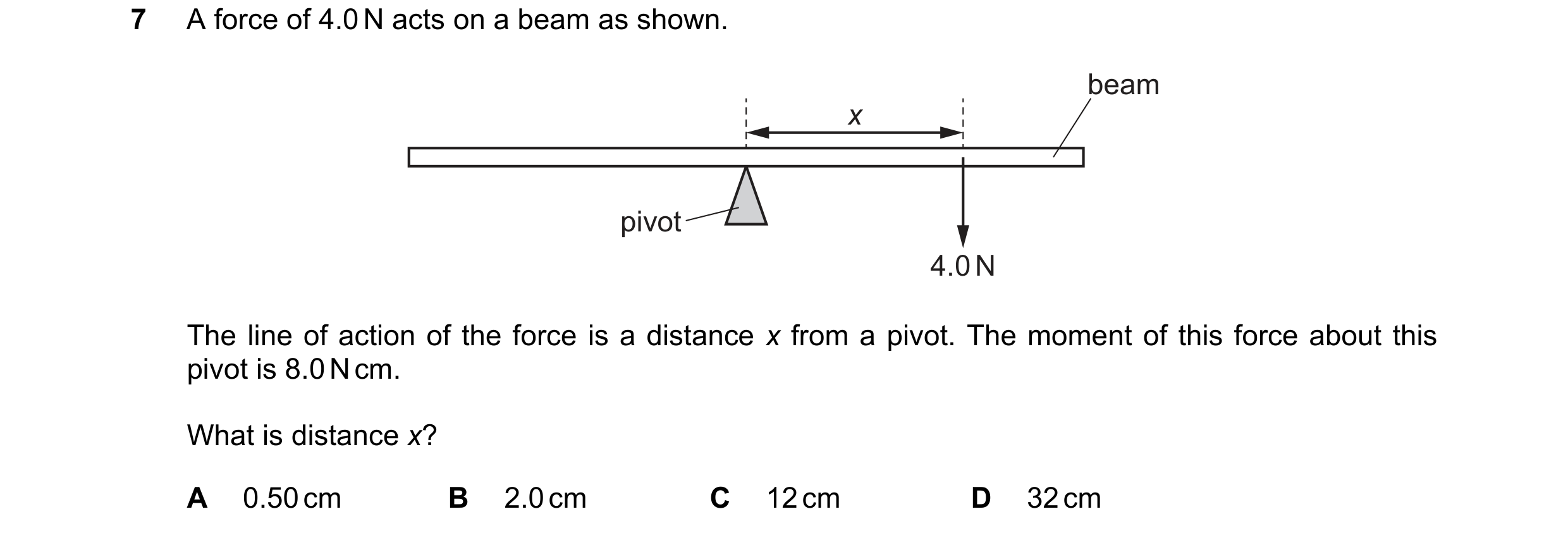
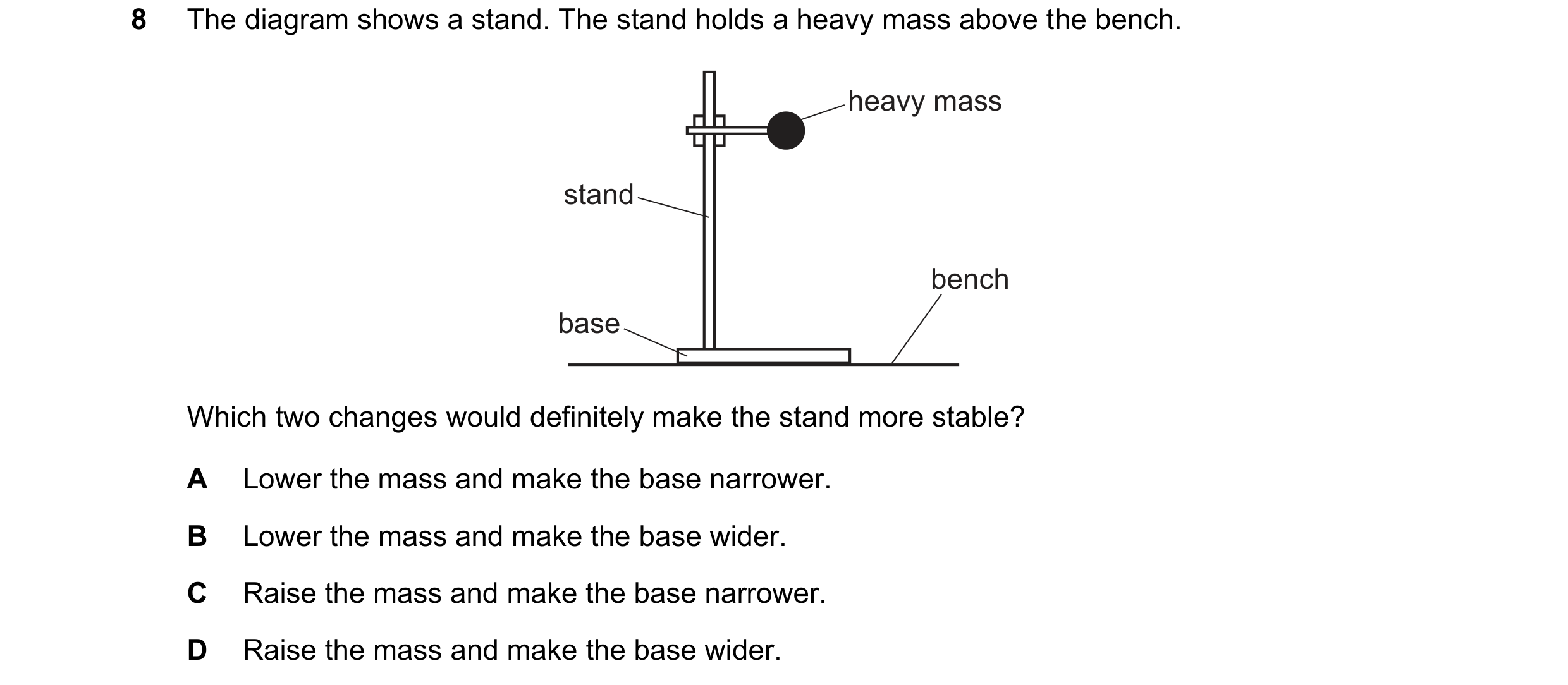 83 / 113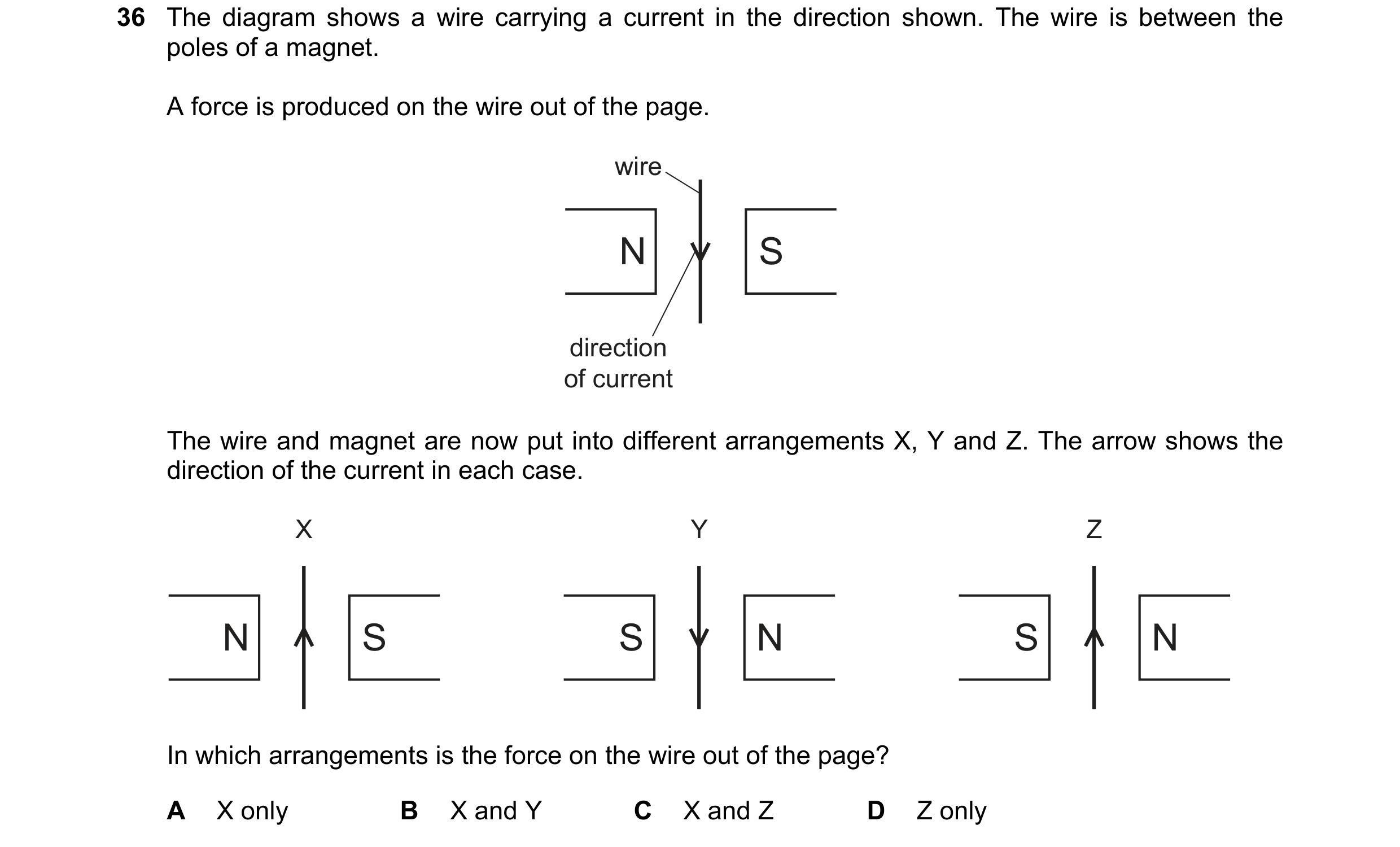

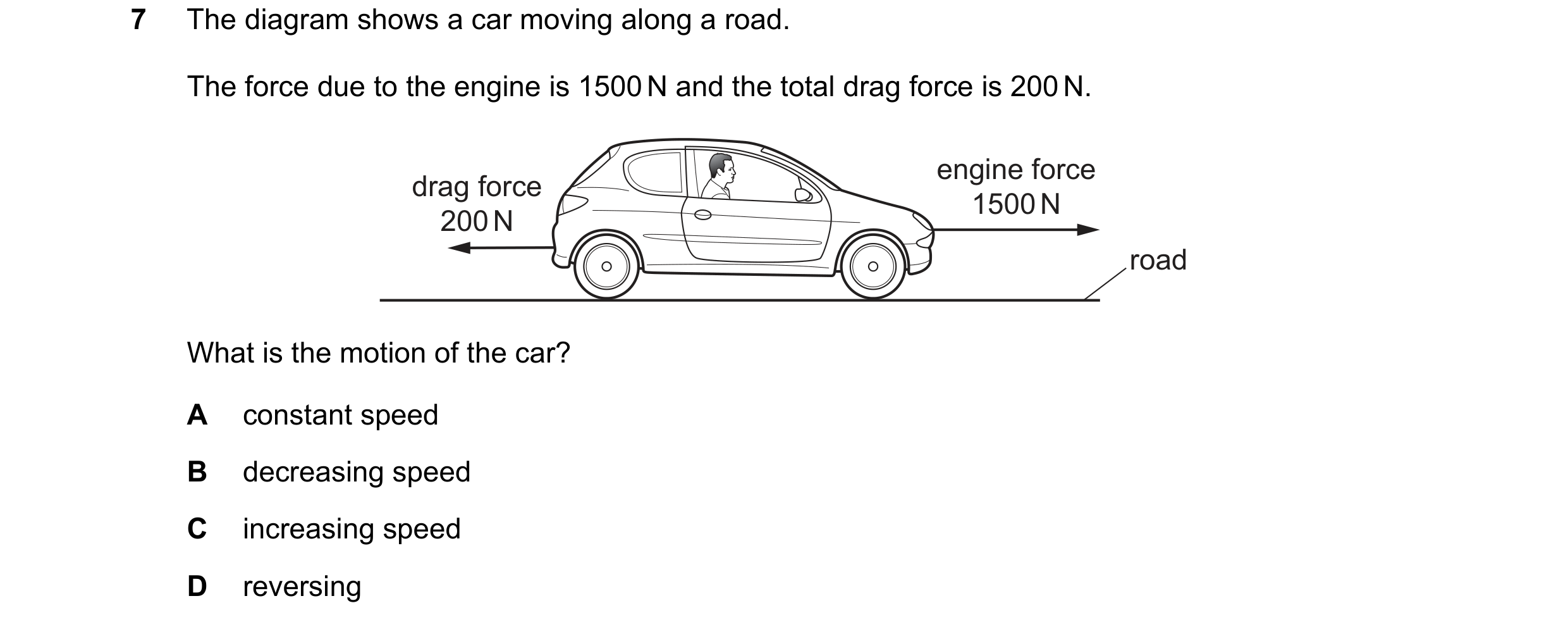 84 / 113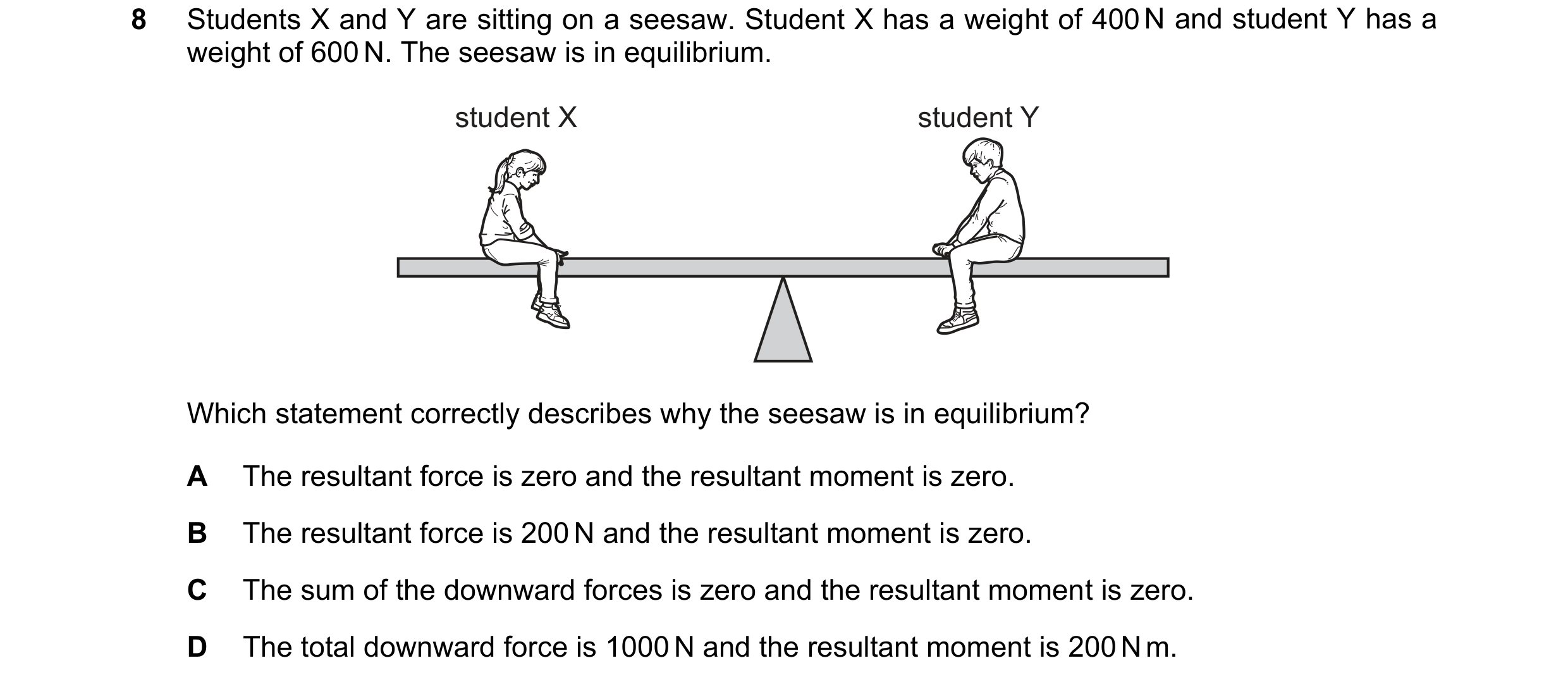
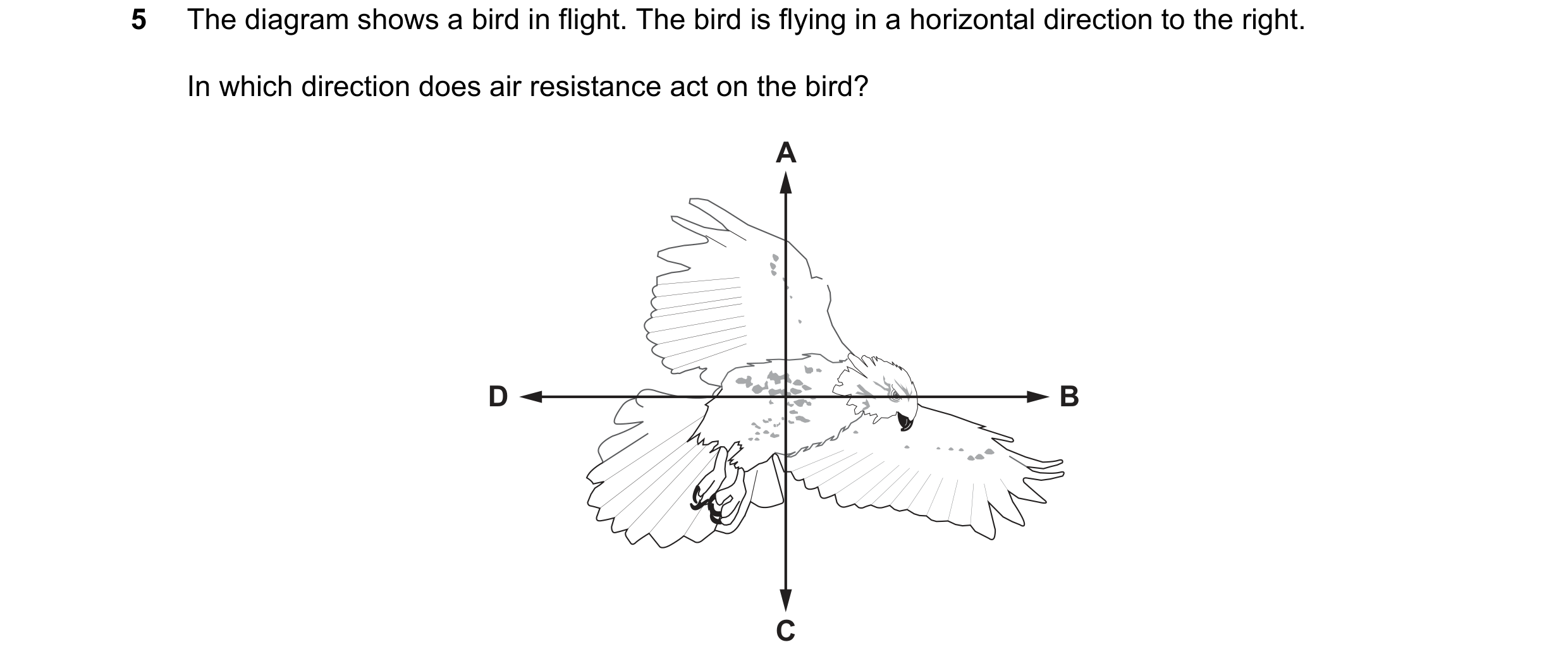
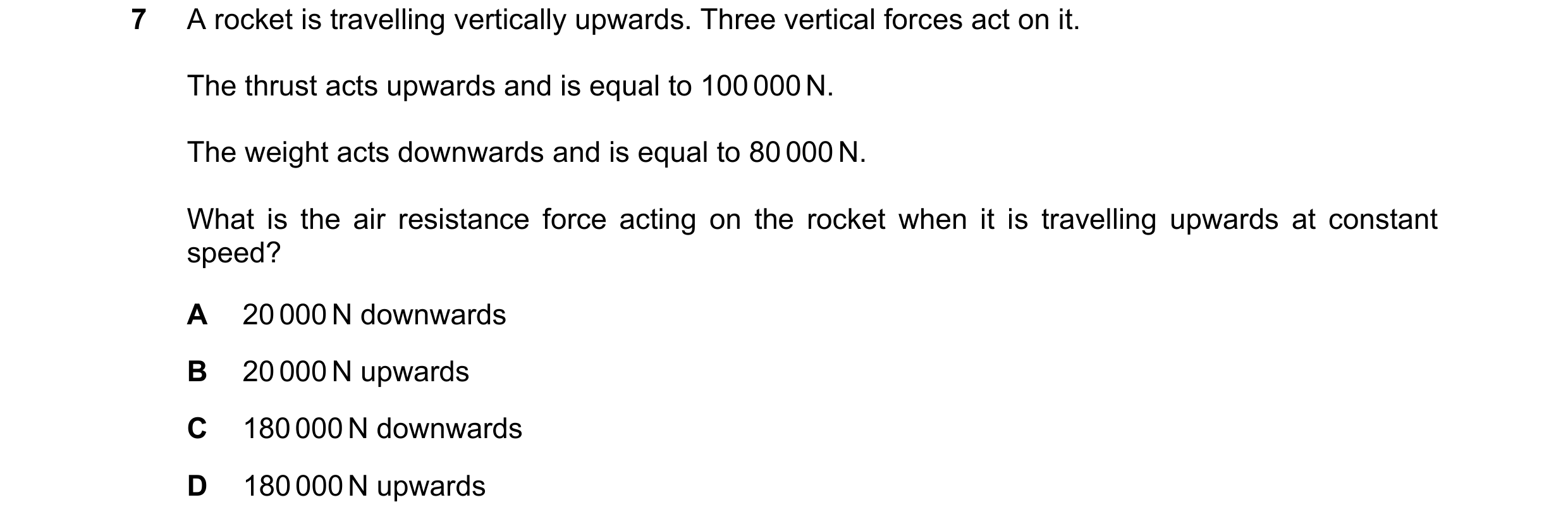 85 / 113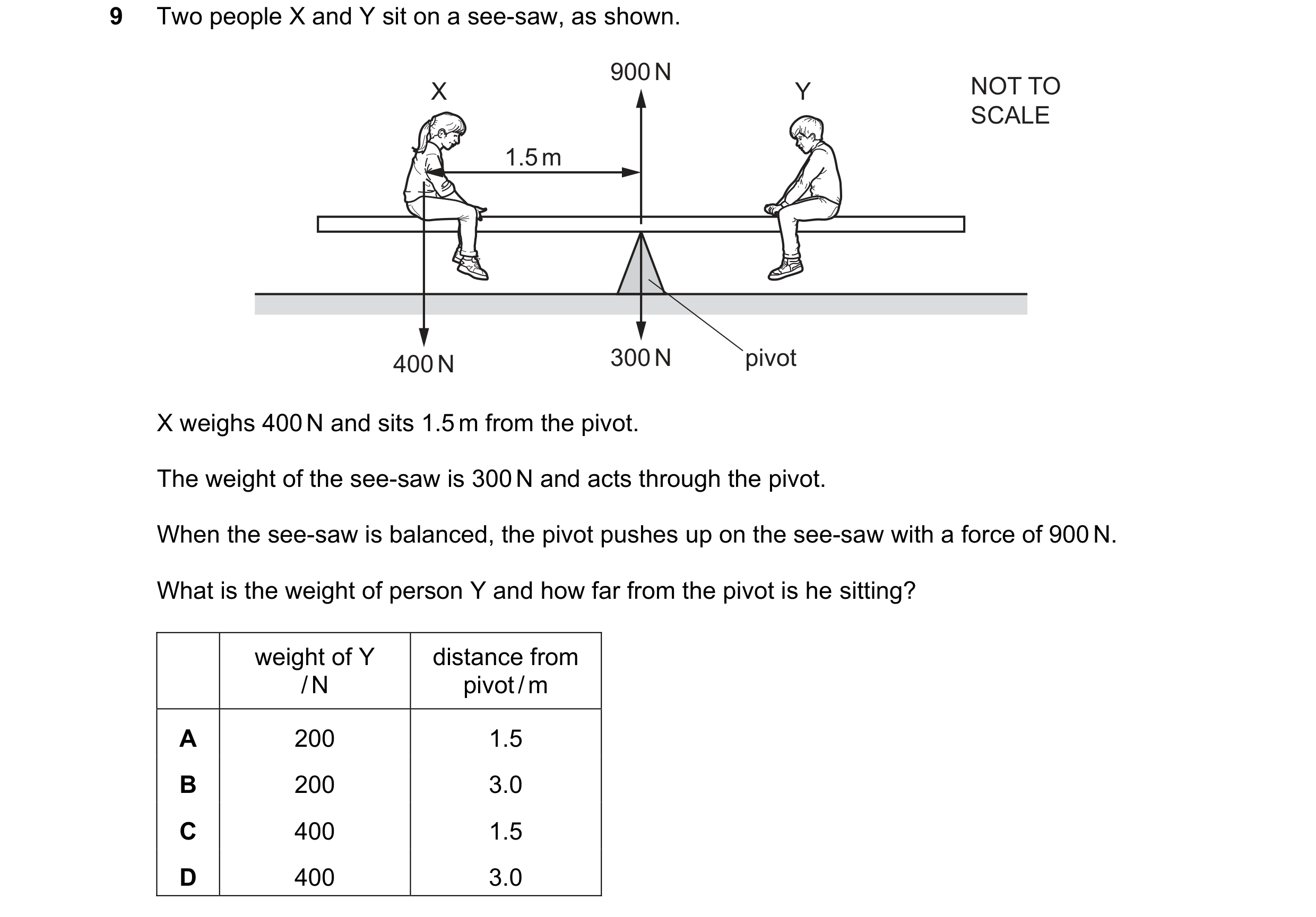
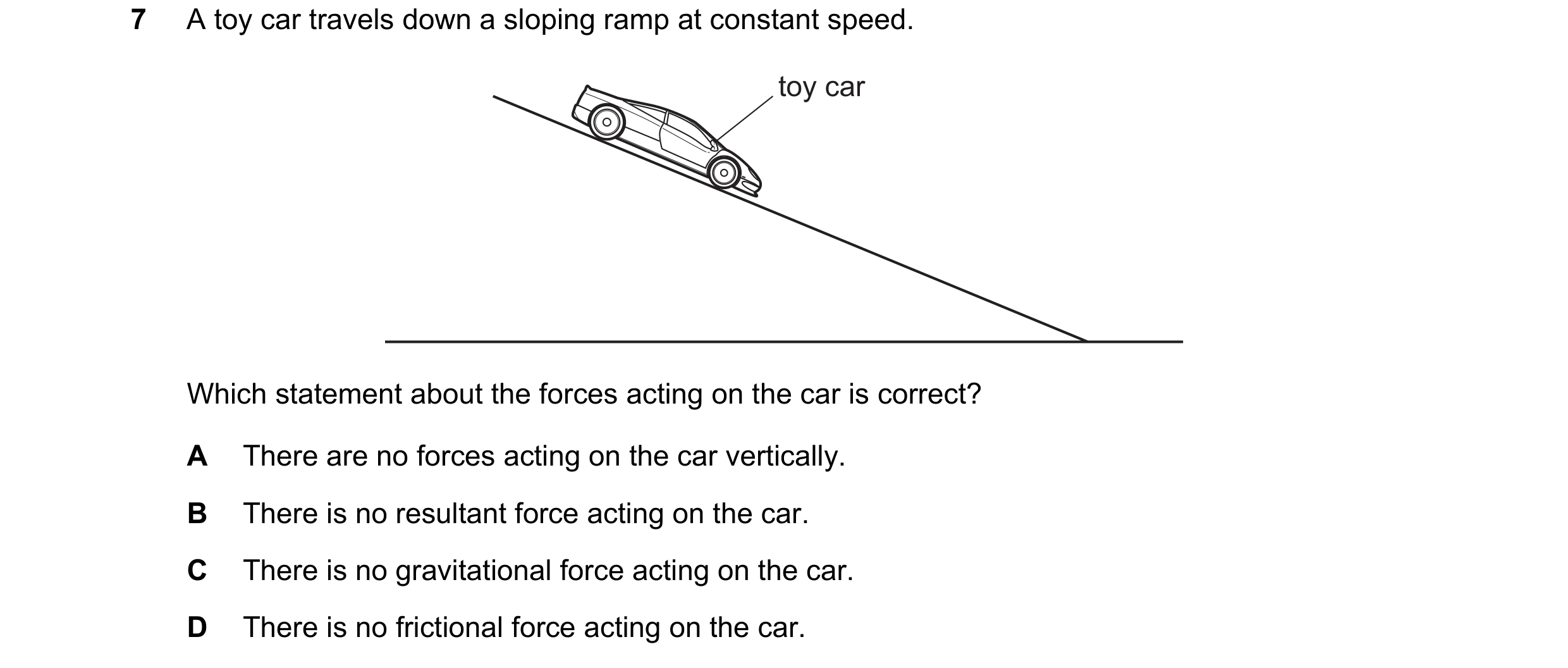 86 / 113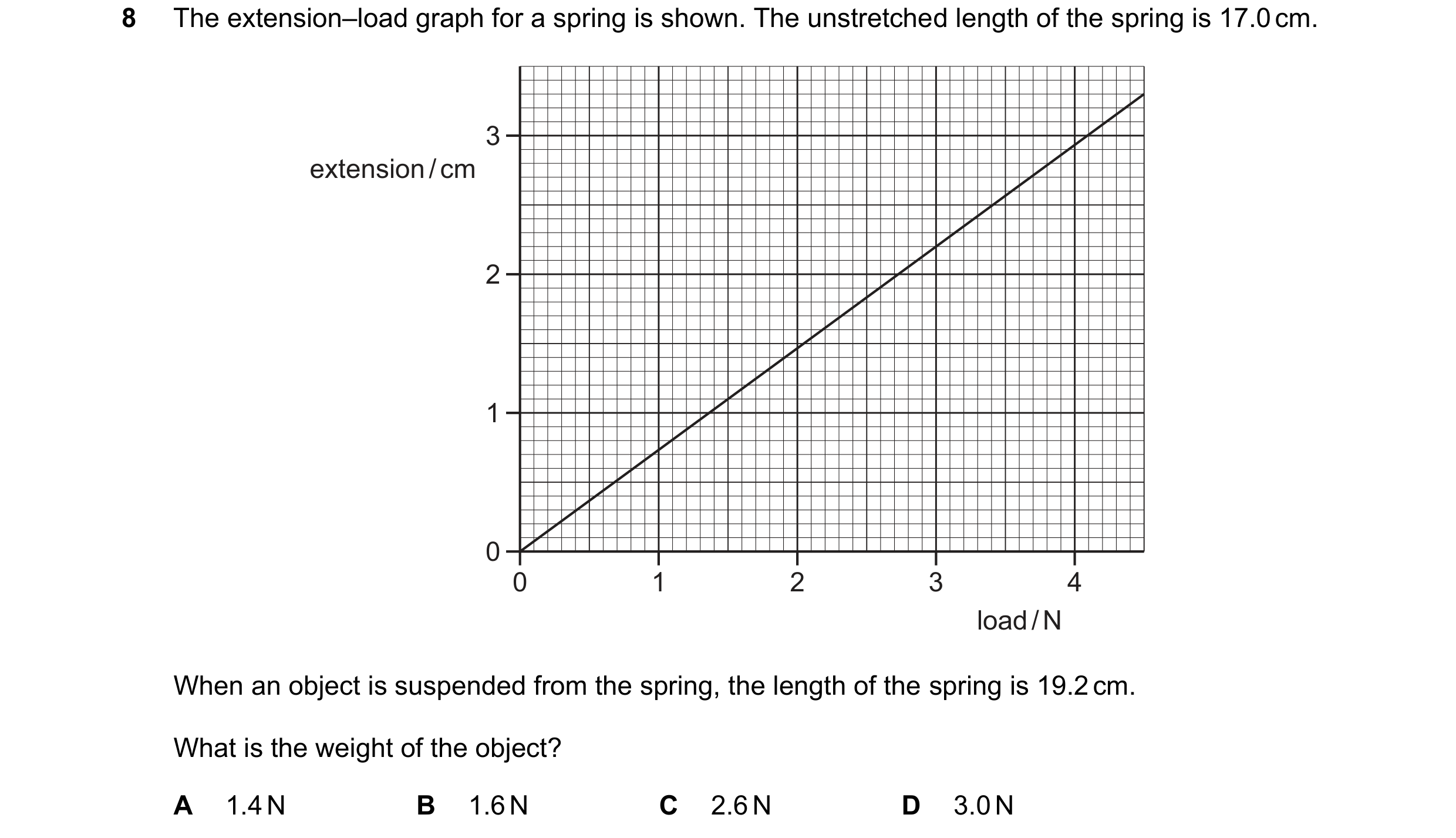
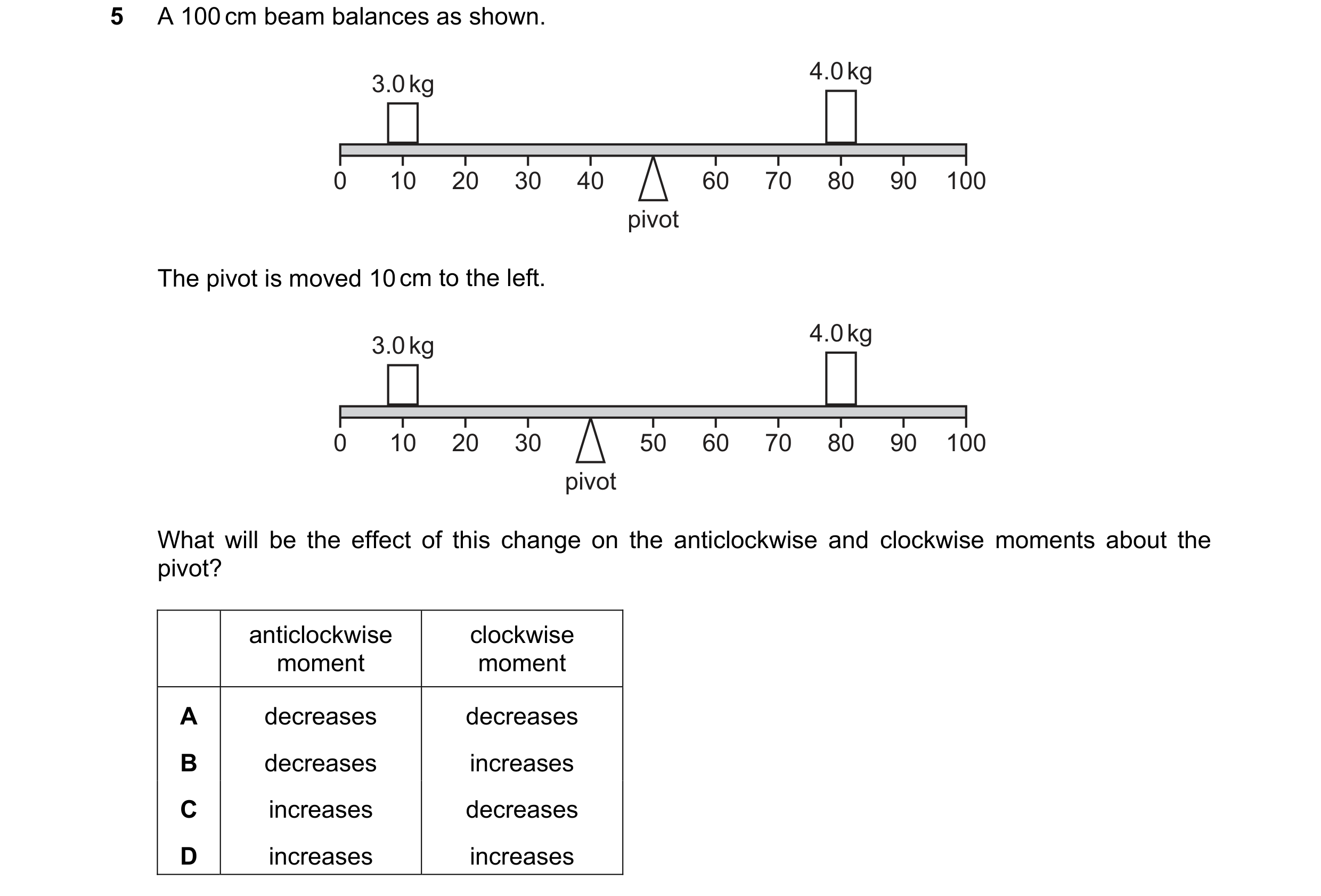 87 / 113
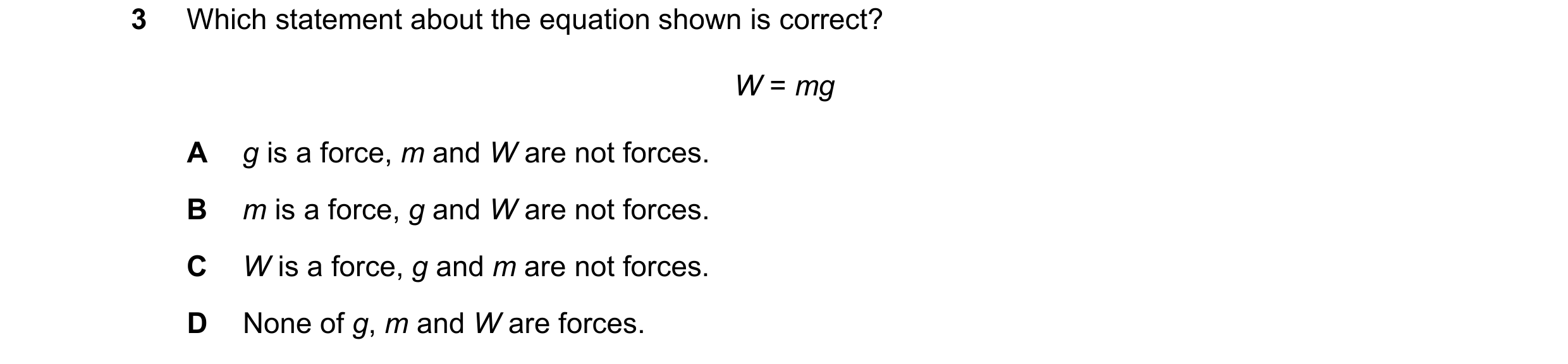
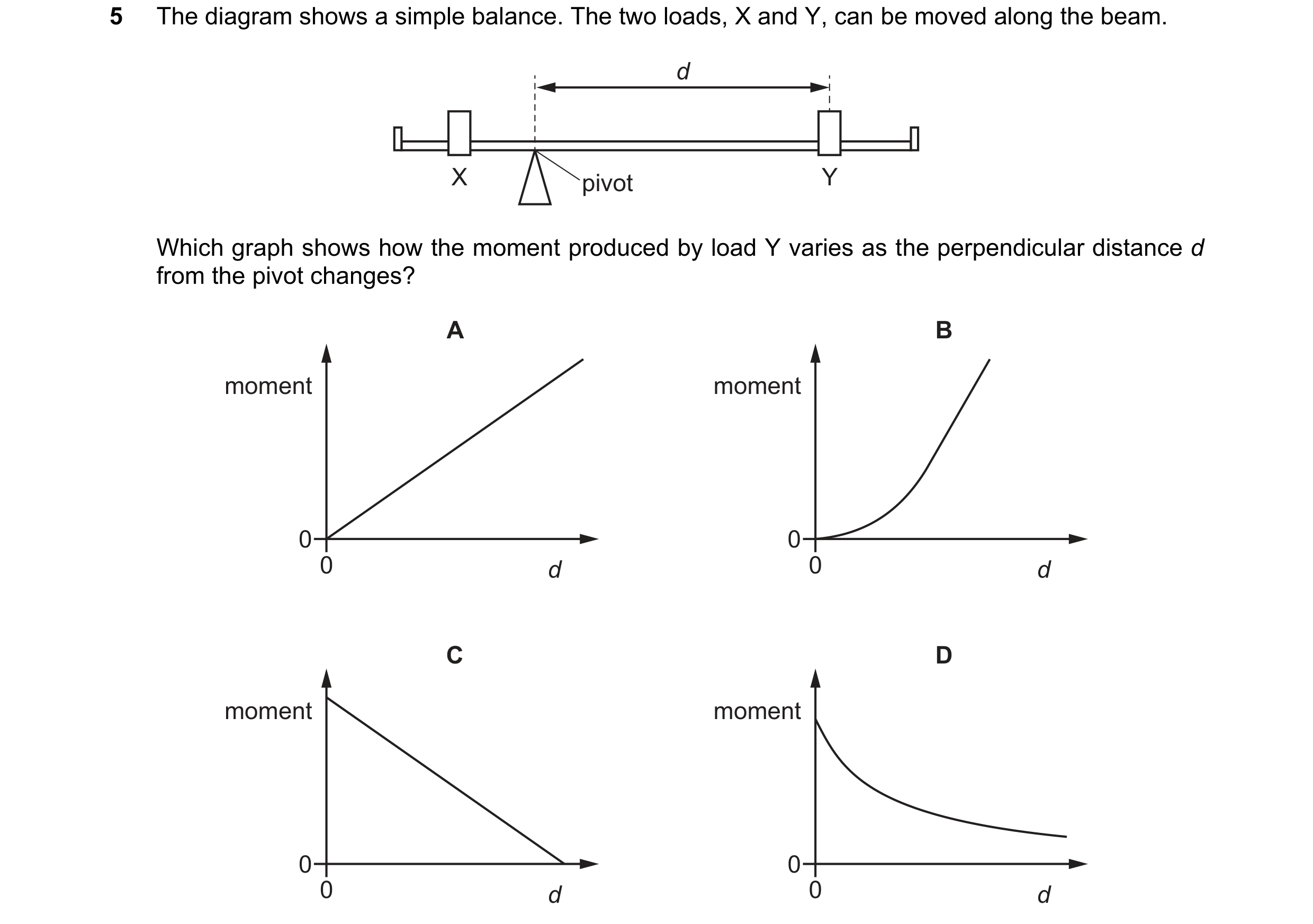 88 / 113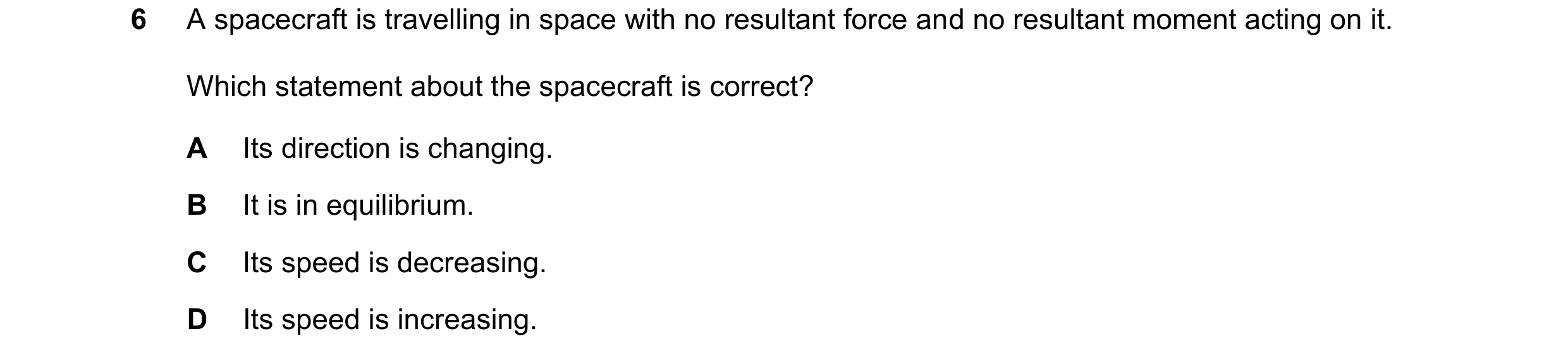
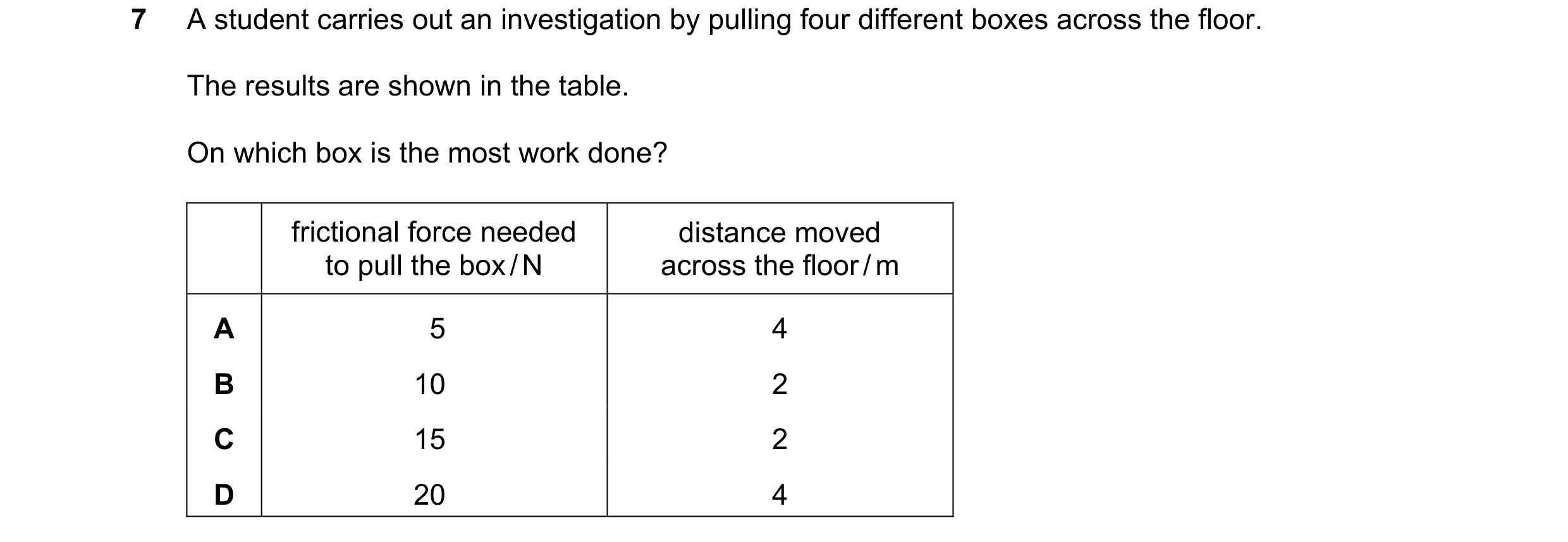
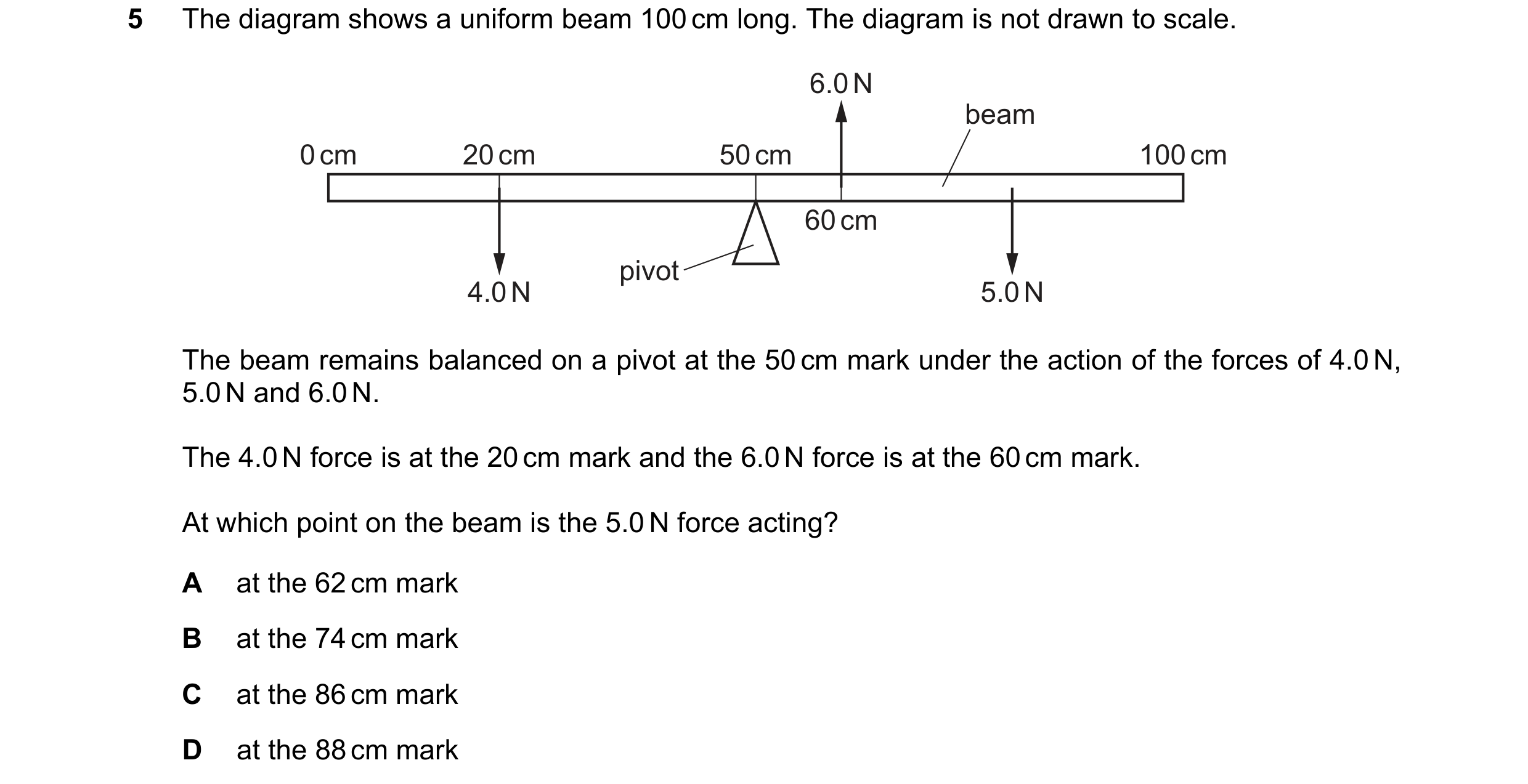
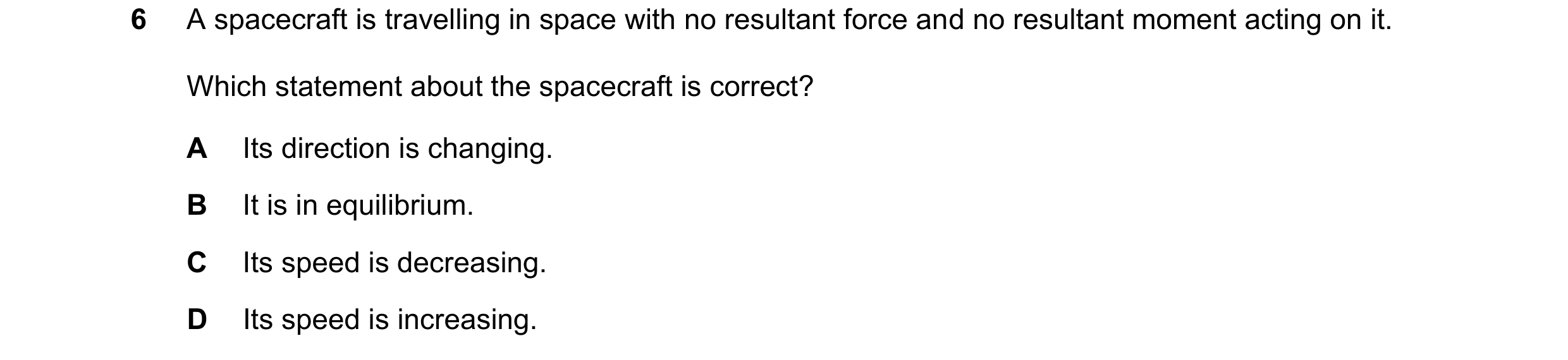 89 / 113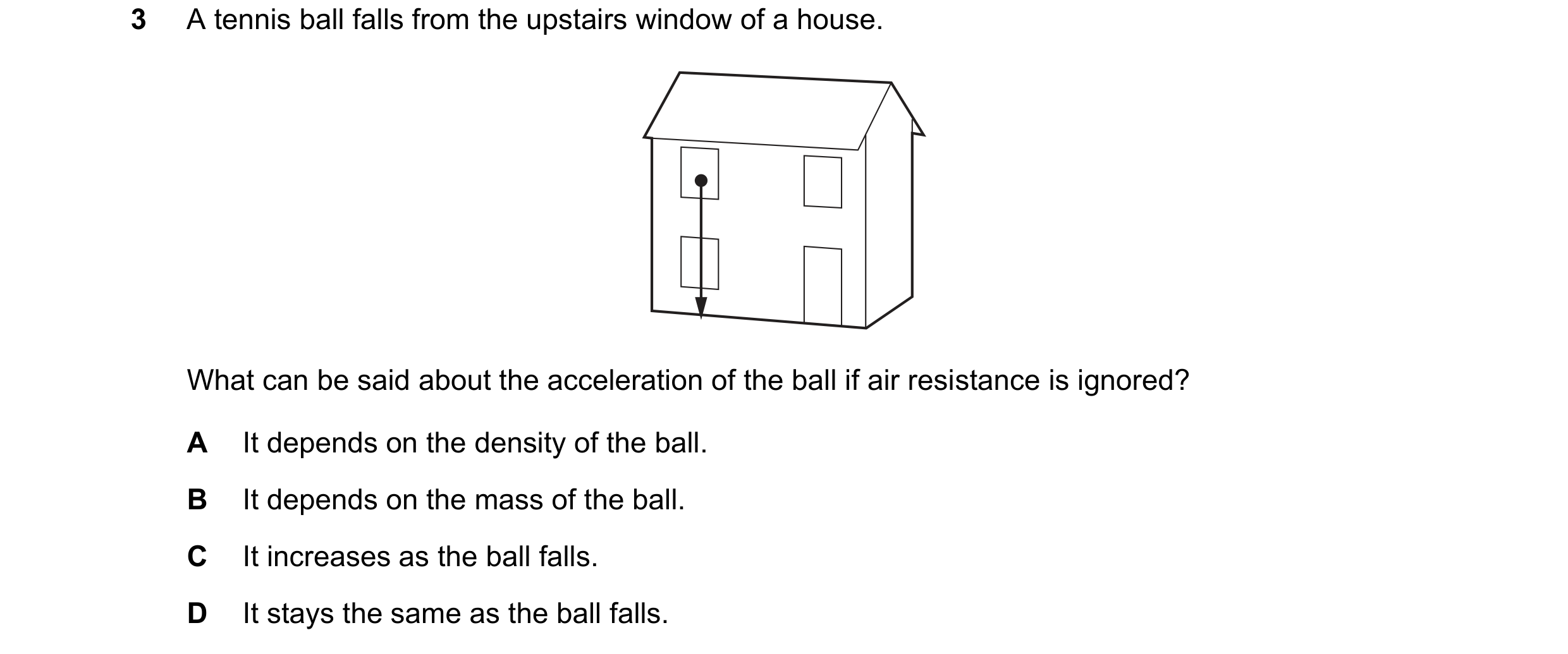
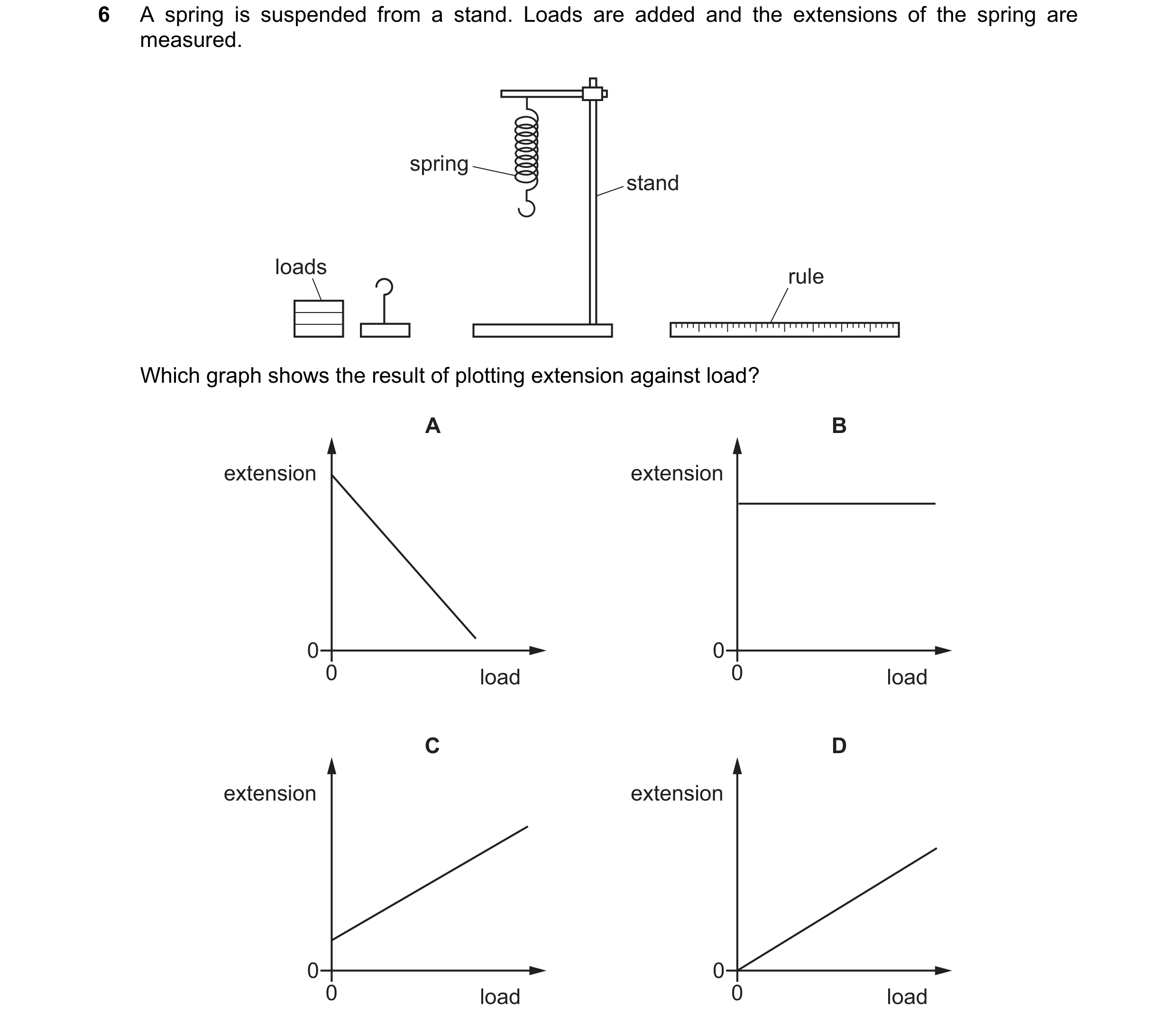 90 / 113
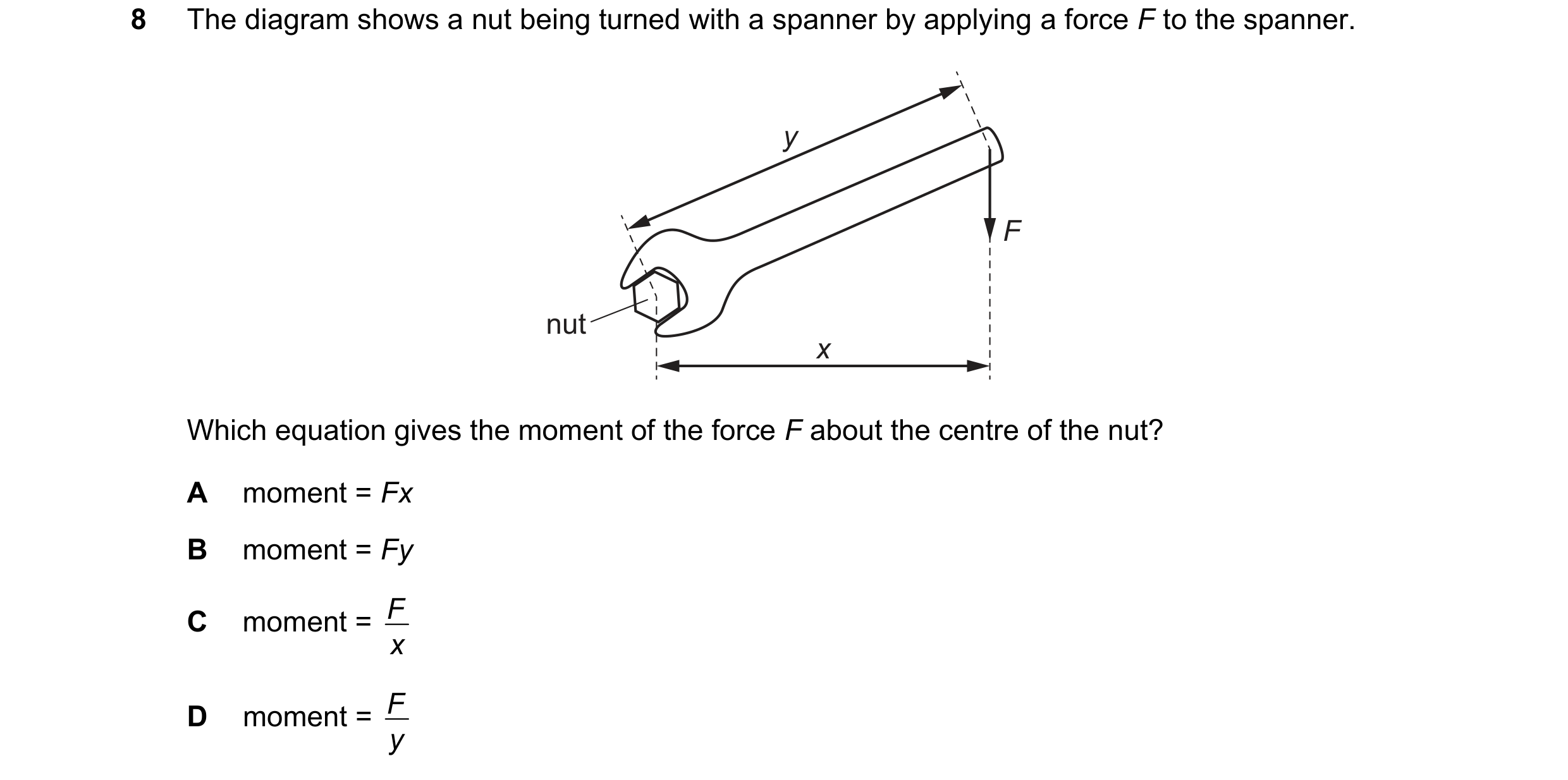
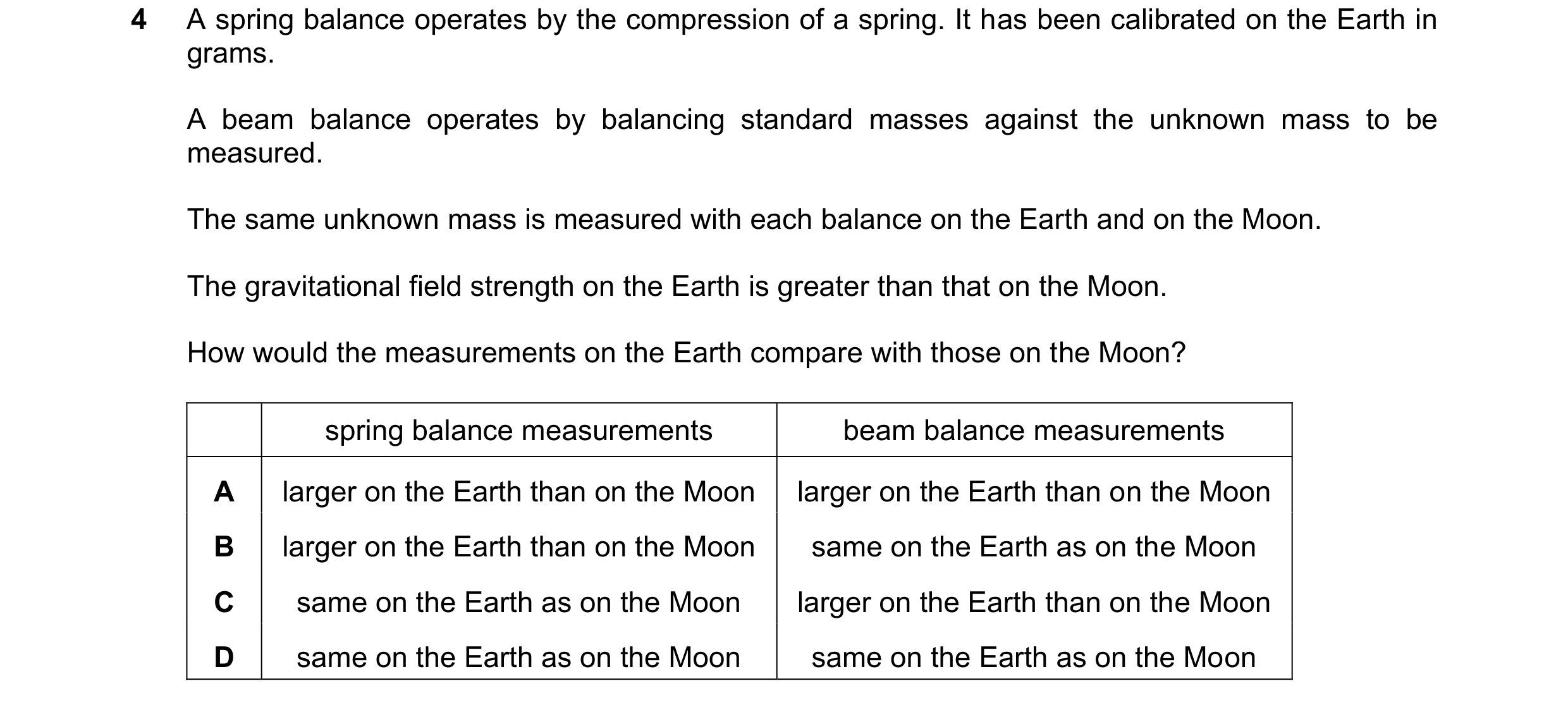
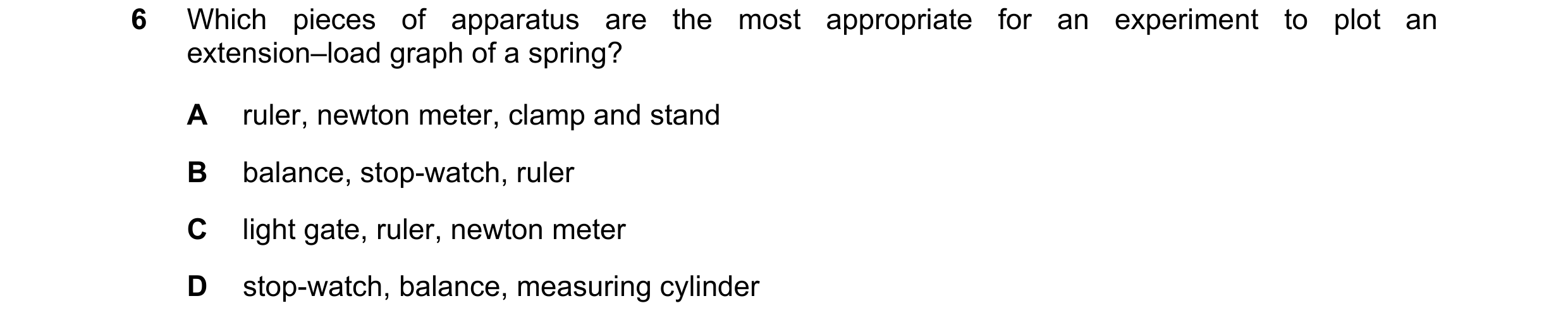 91 / 113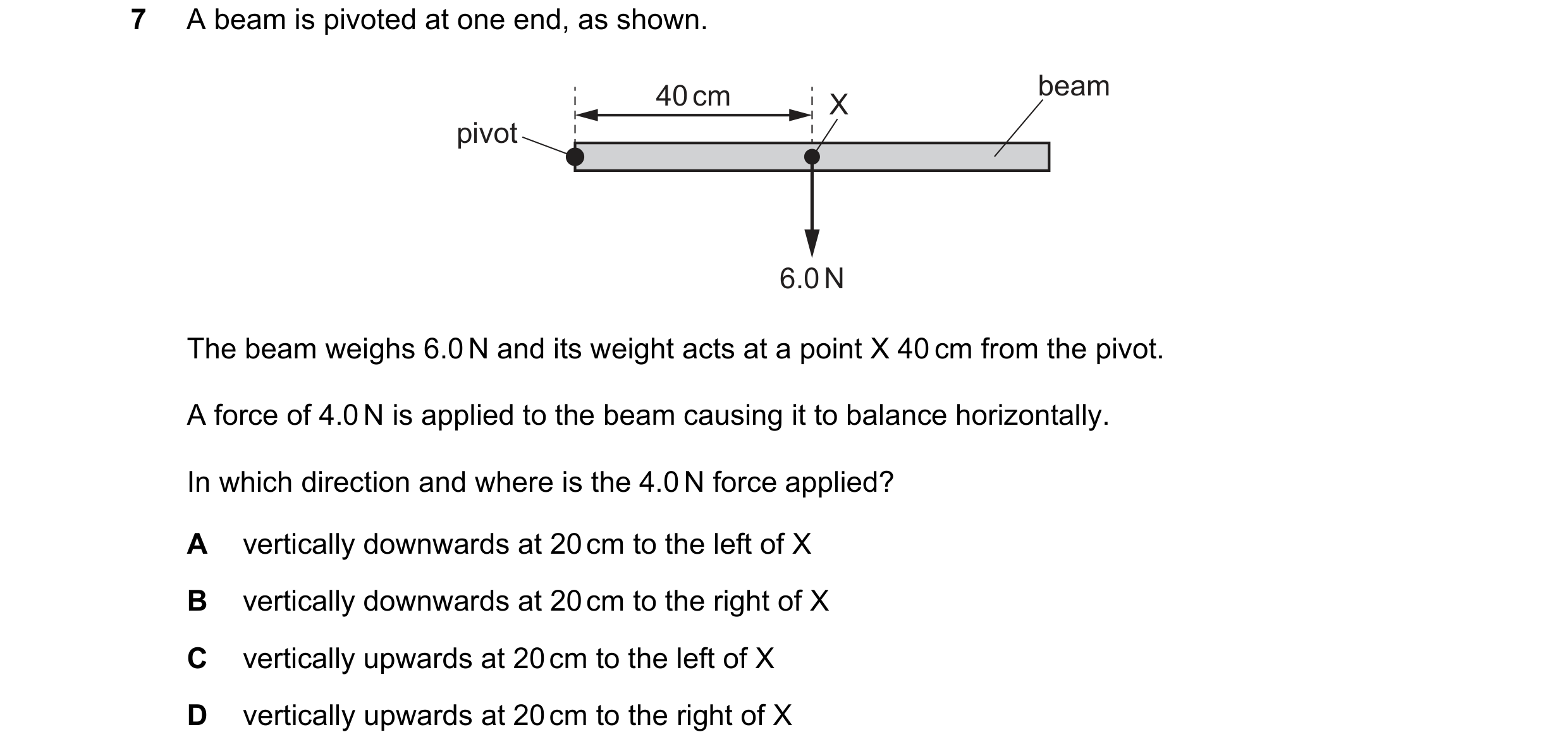
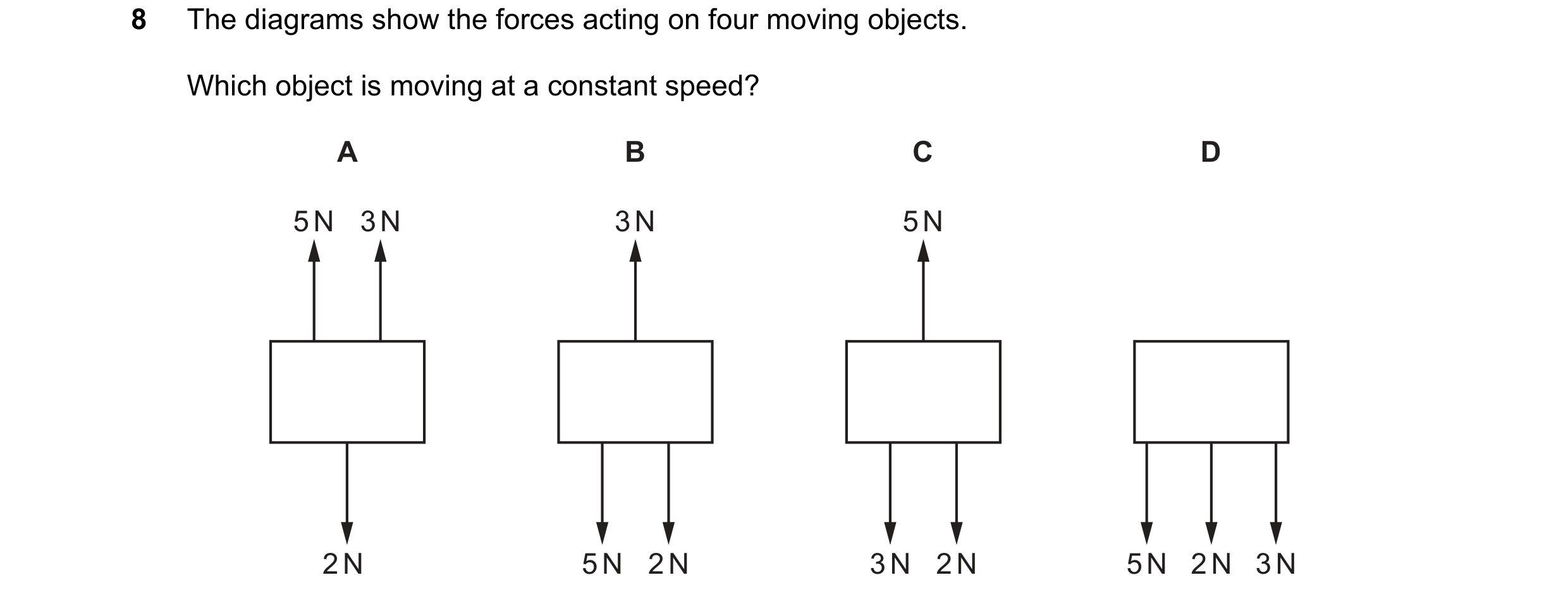
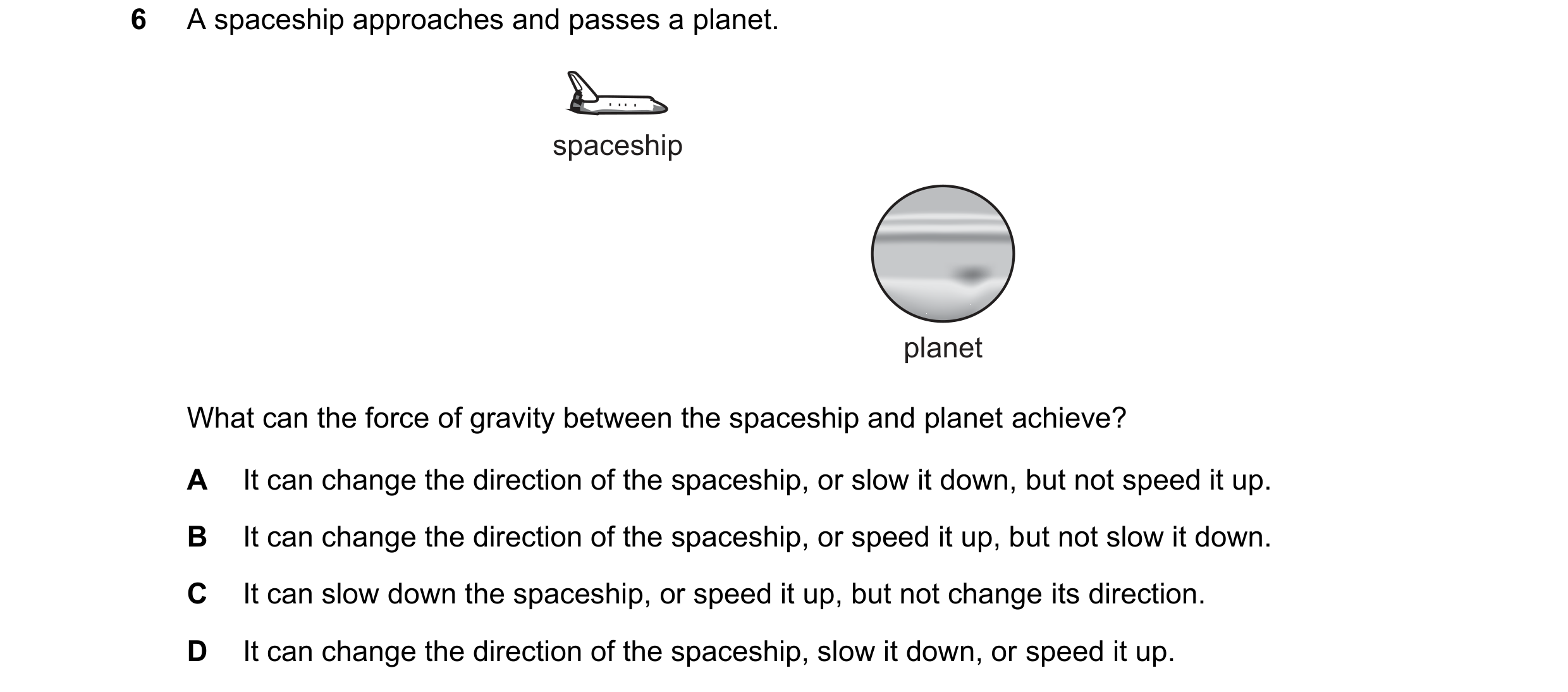 92 / 113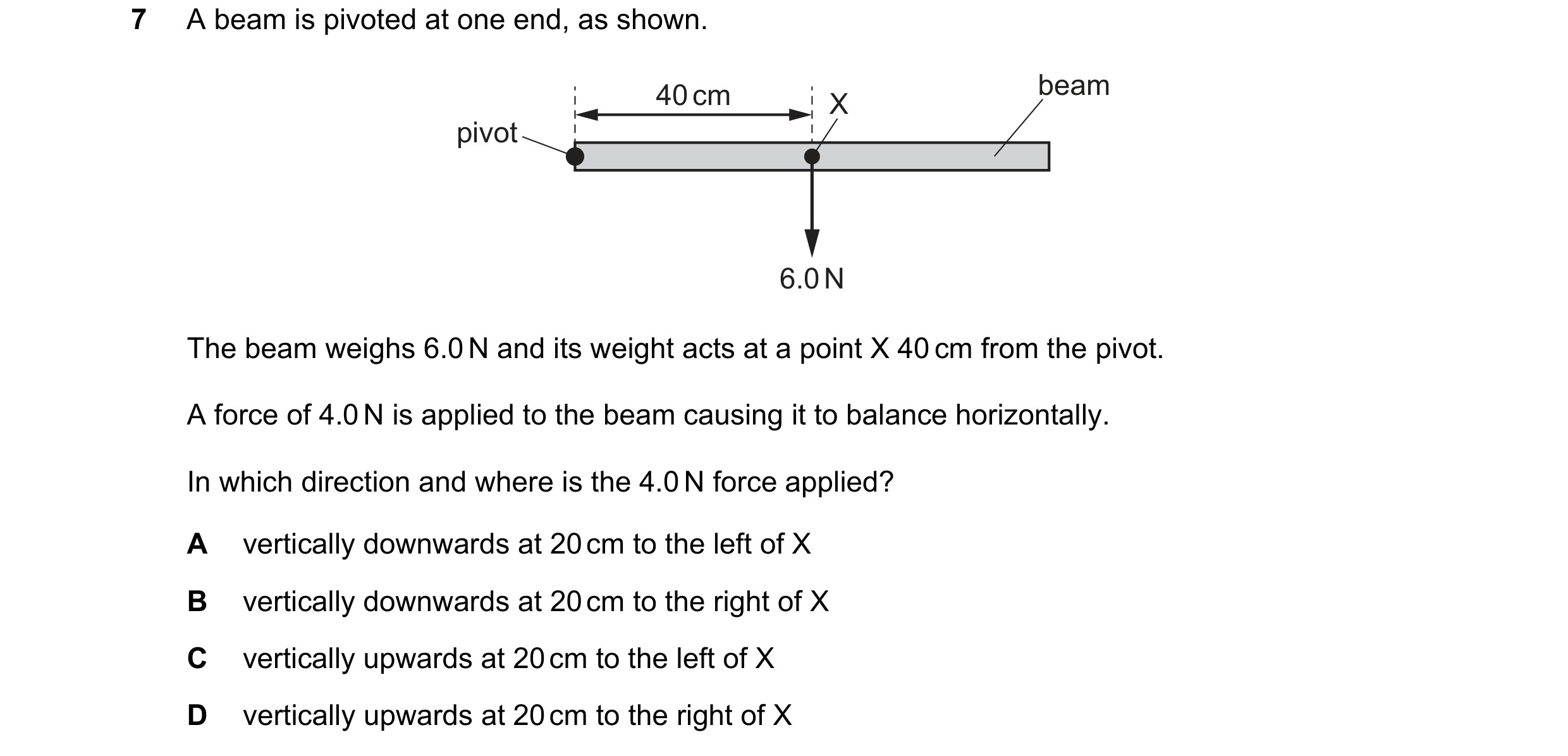
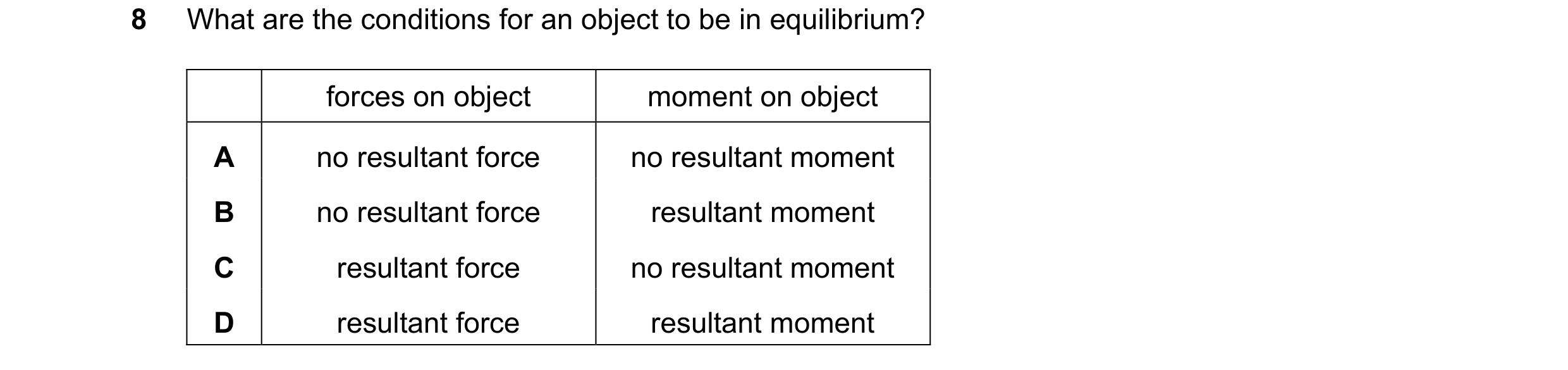
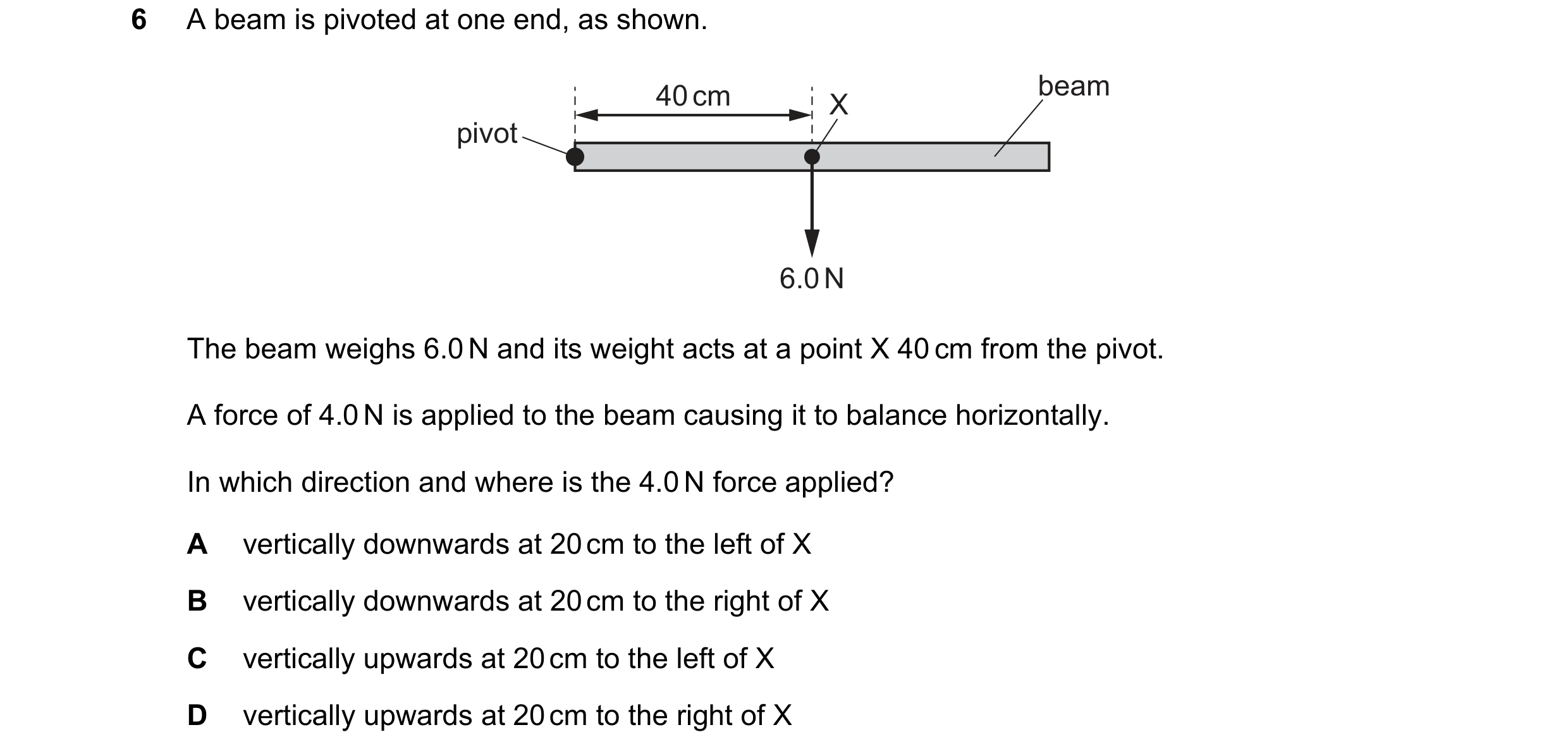 93 / 113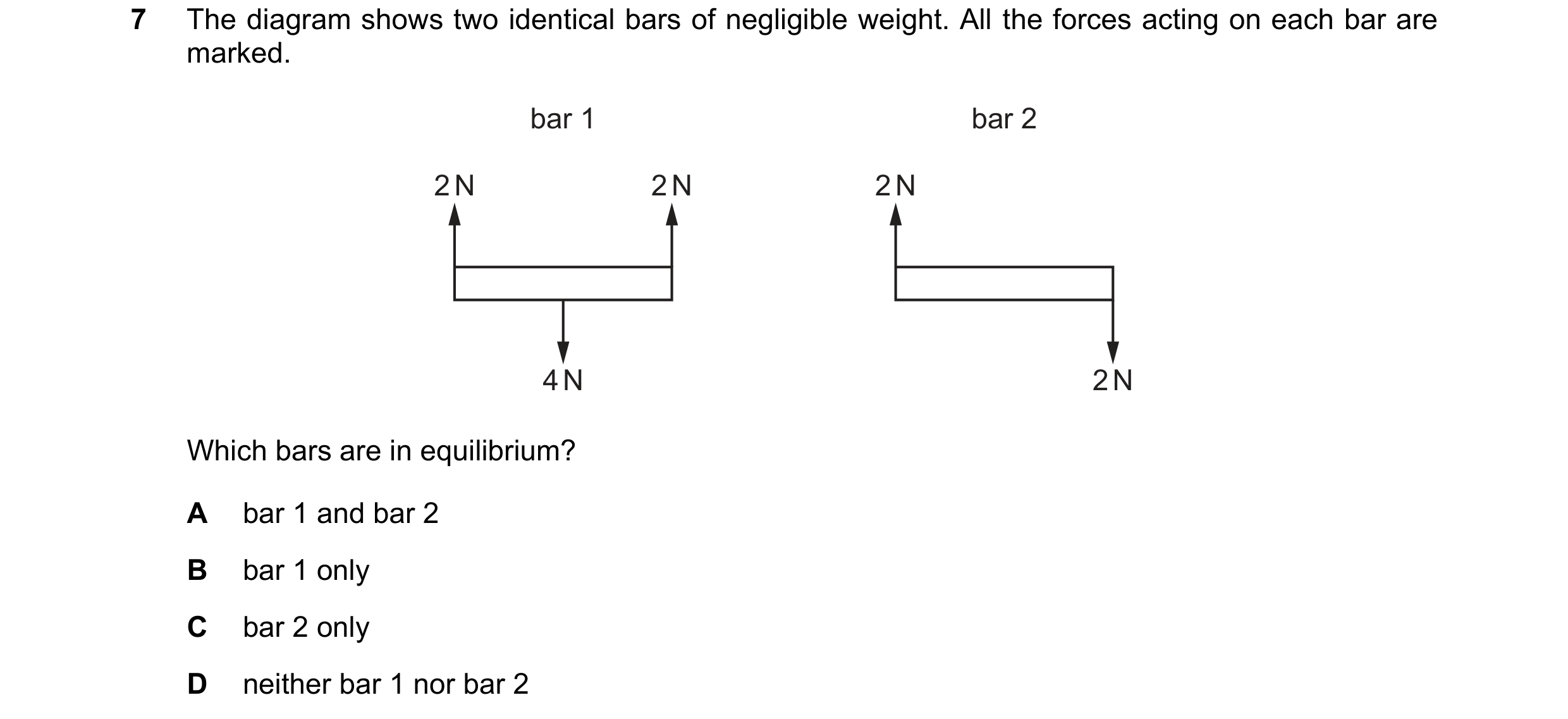
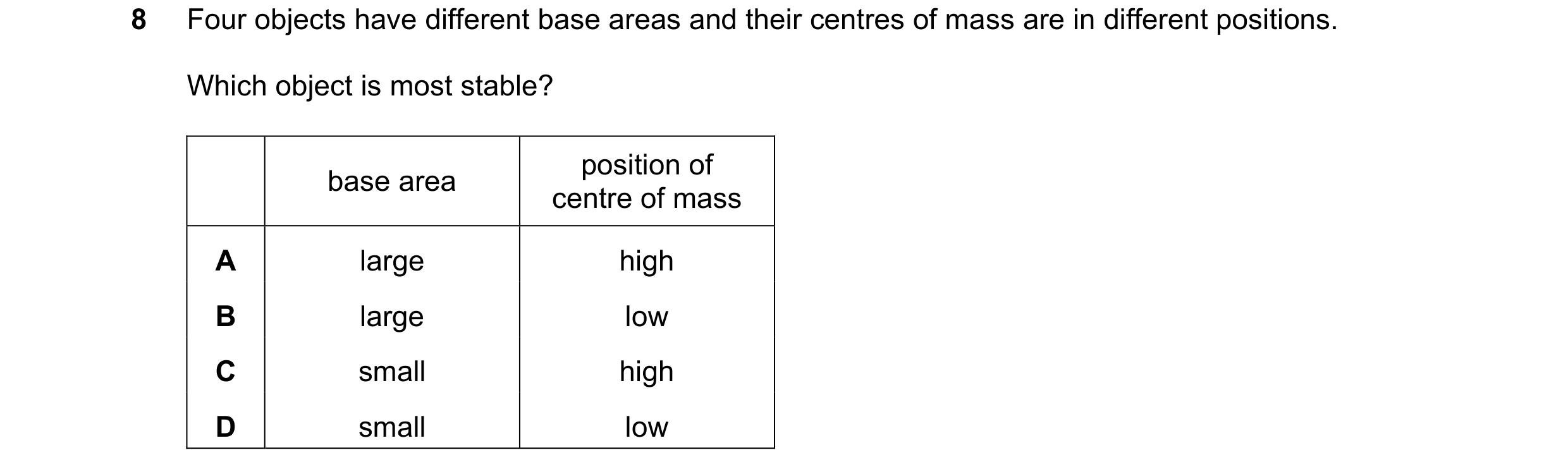

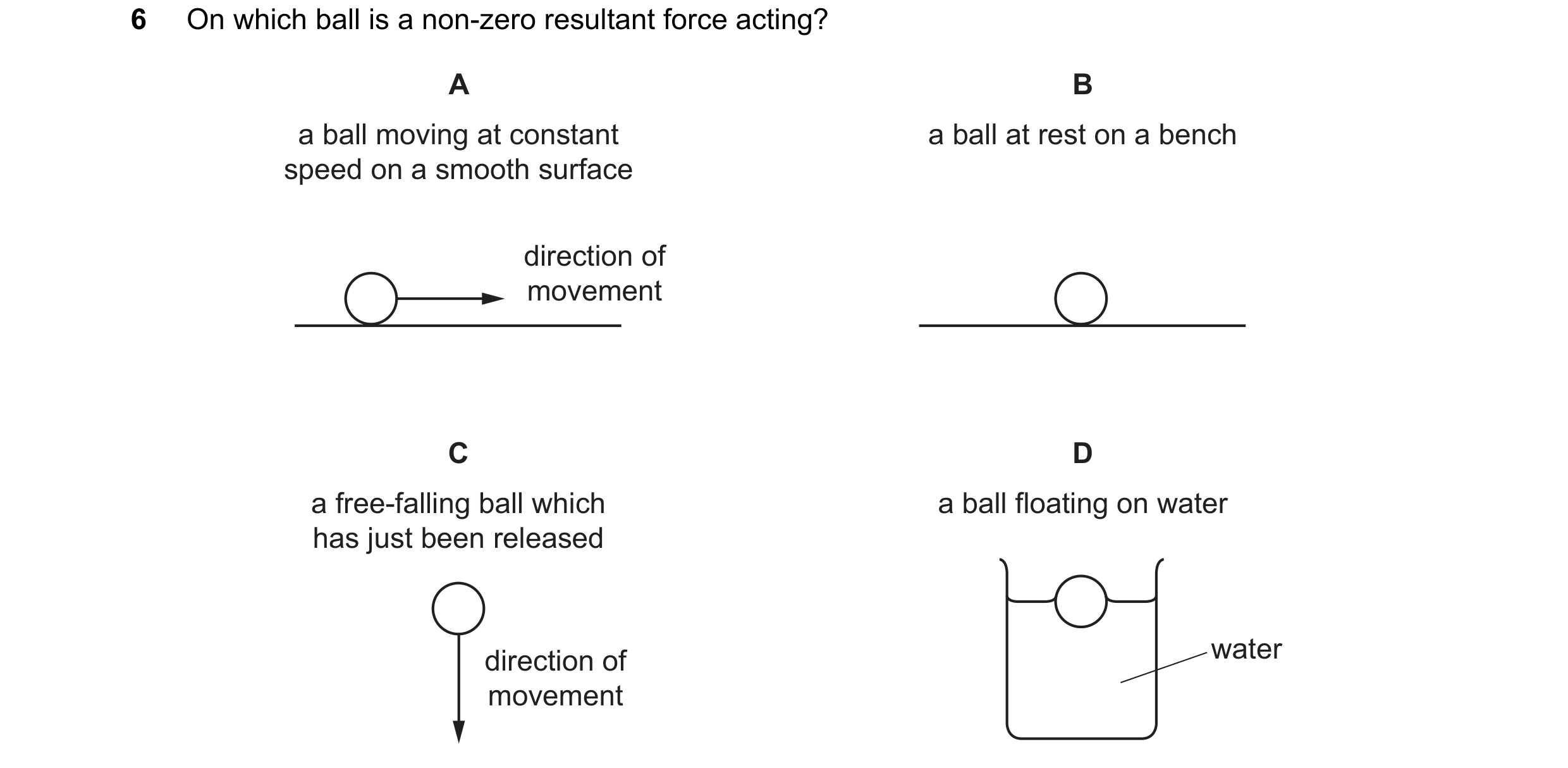 94 / 113
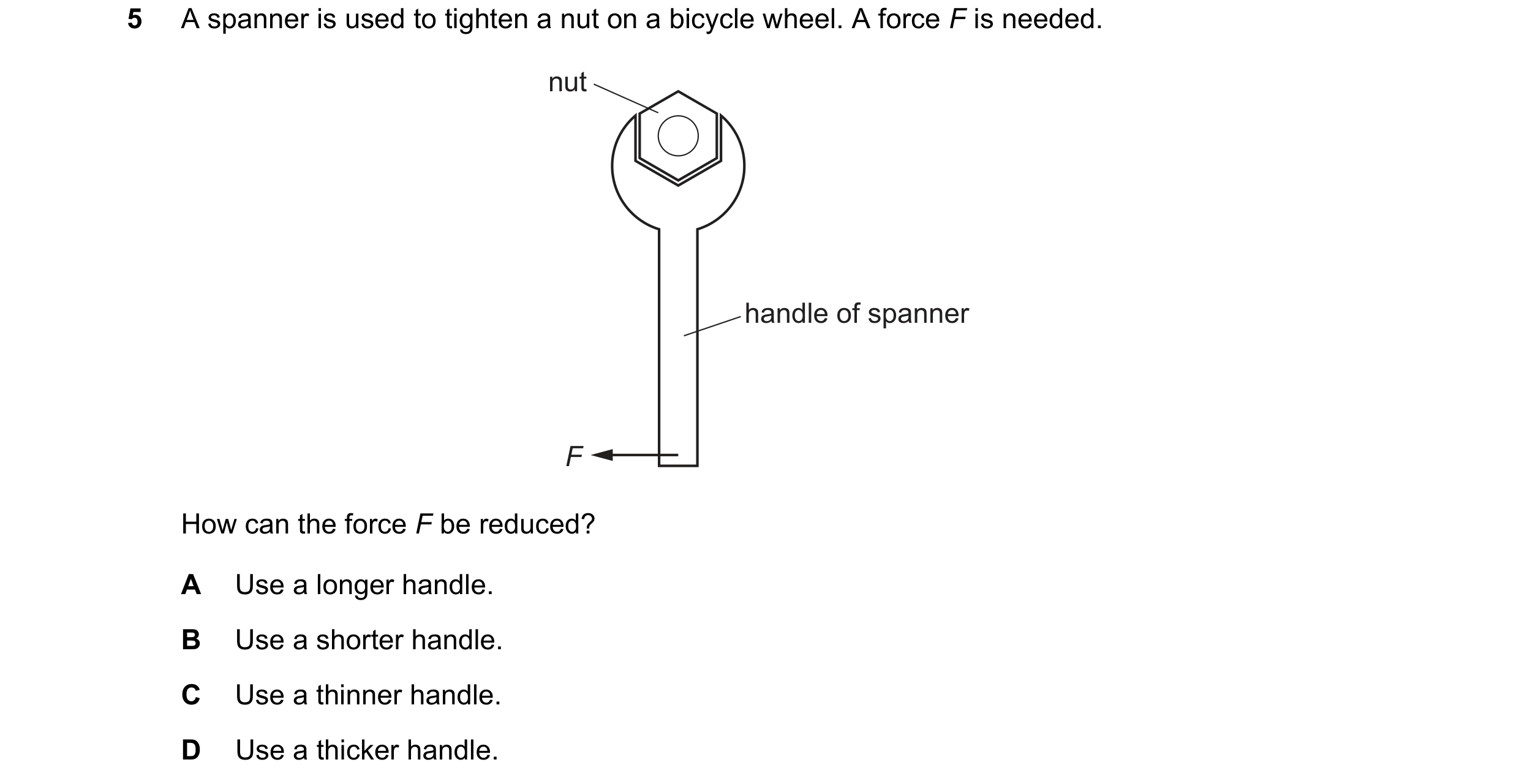
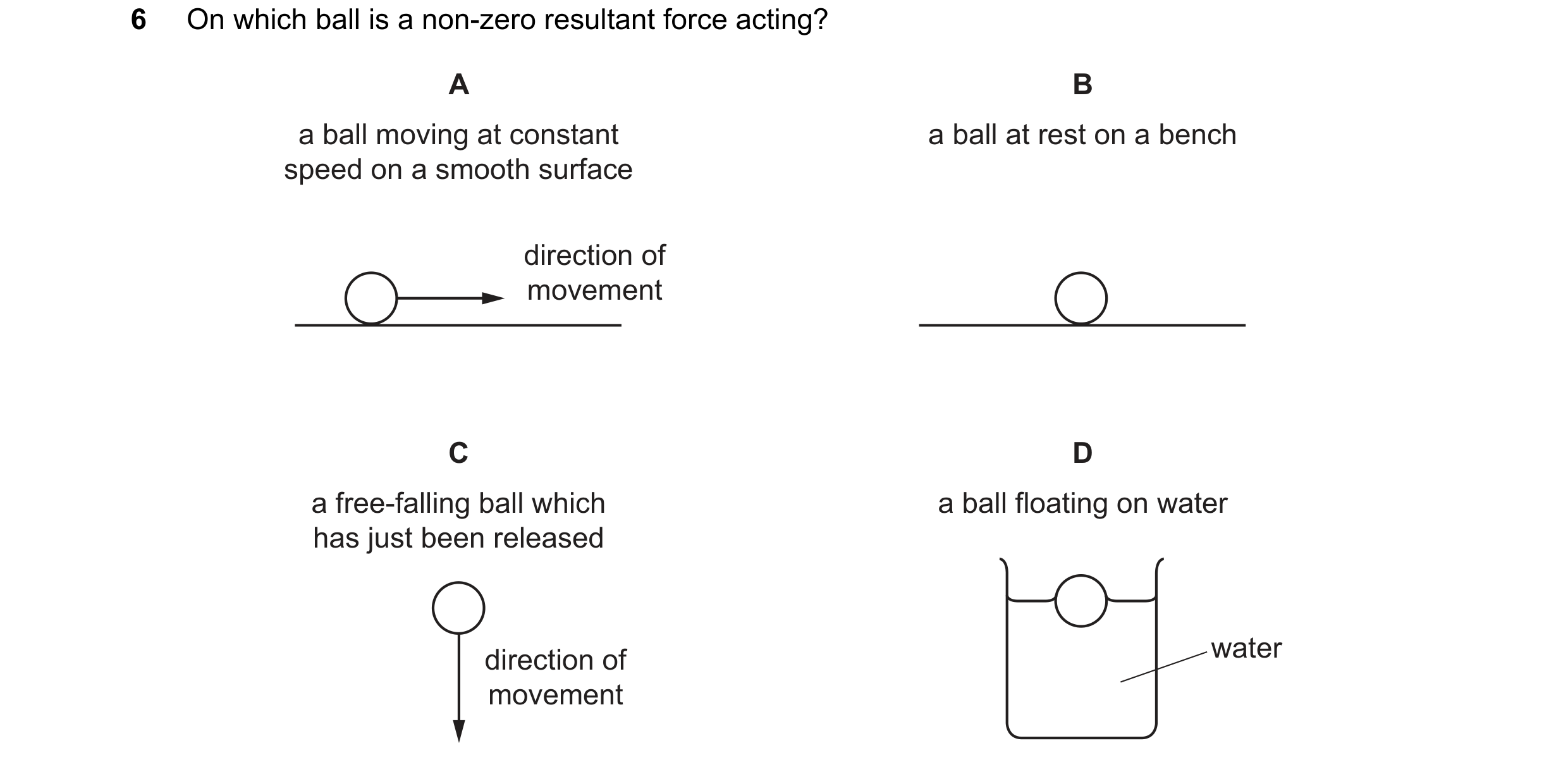 95 / 113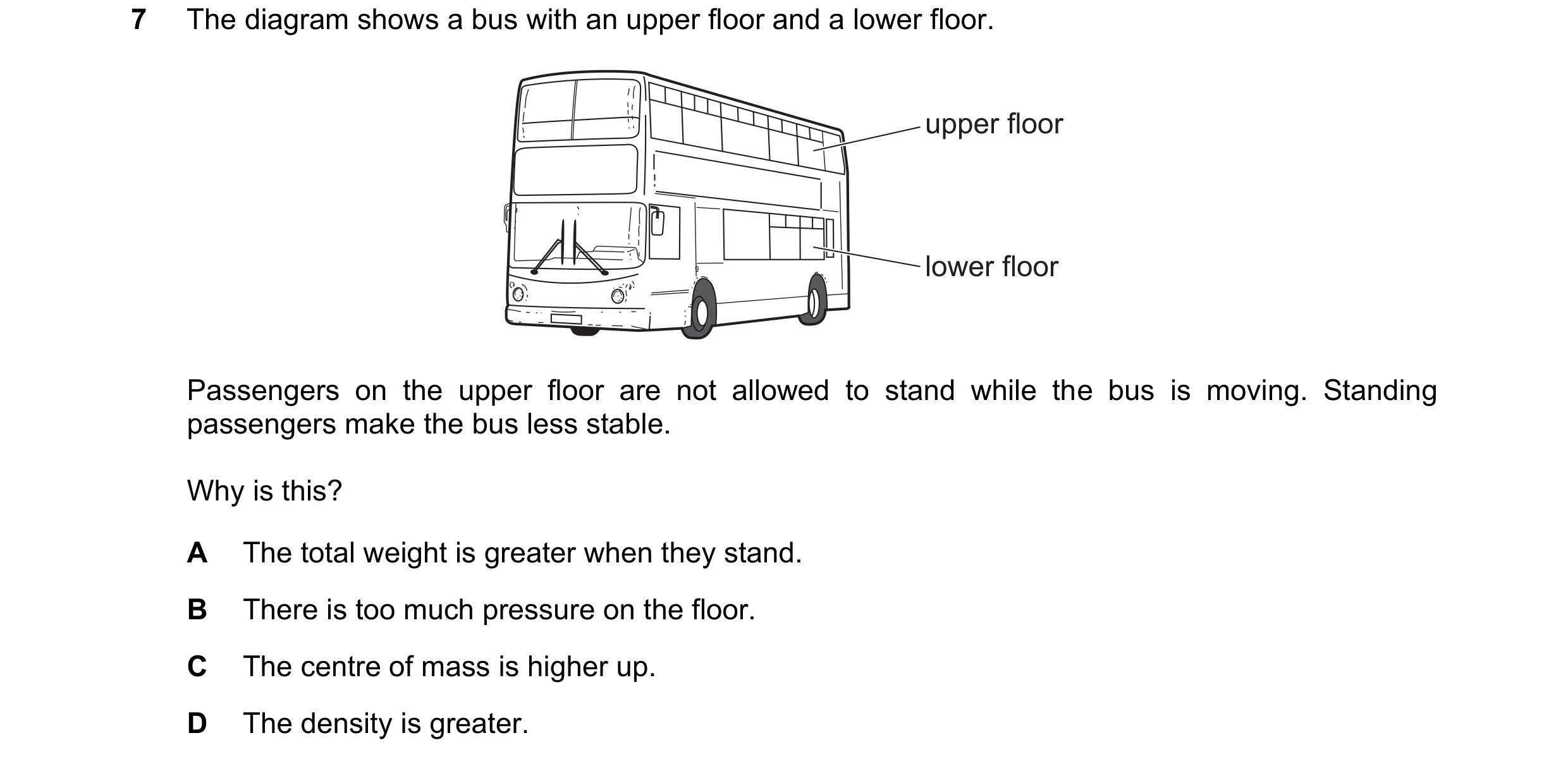
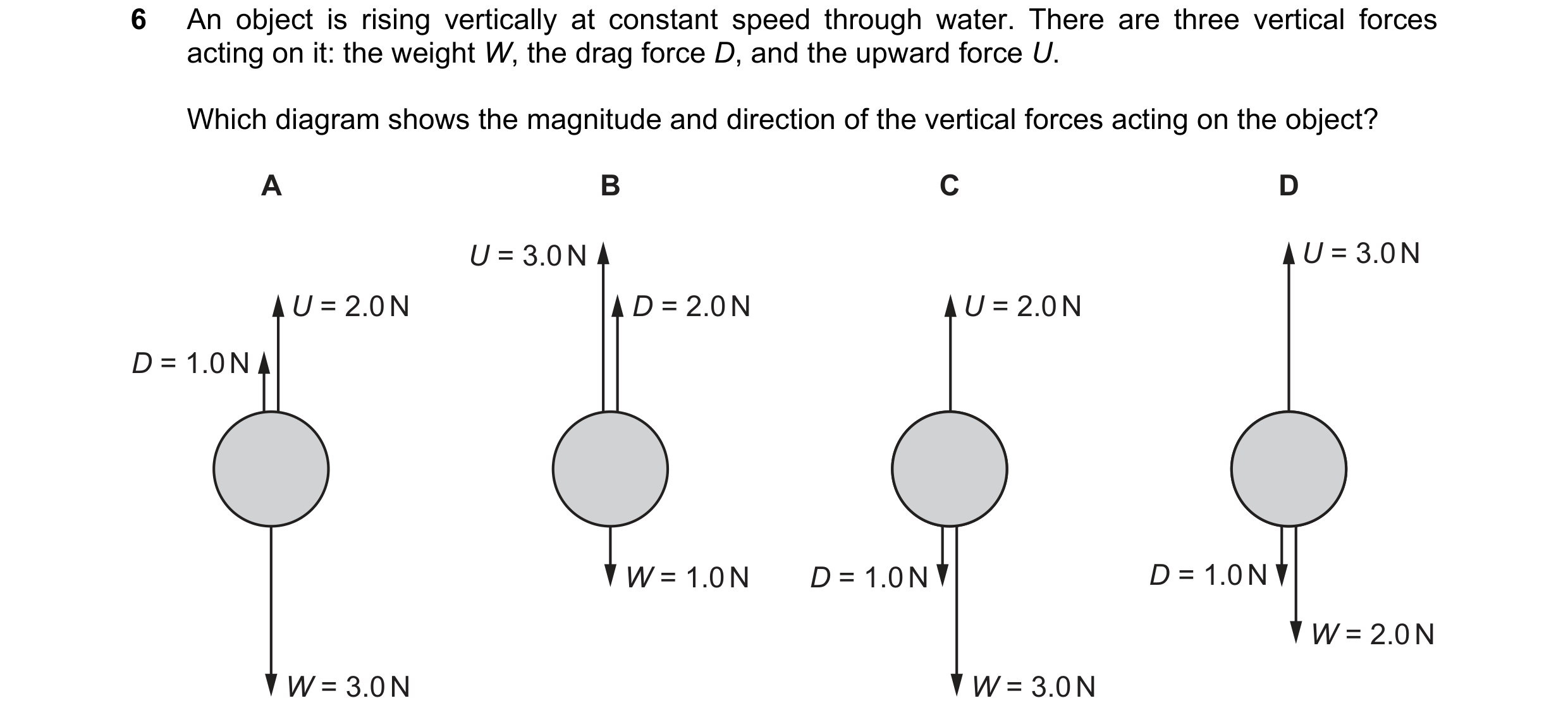

 96 / 113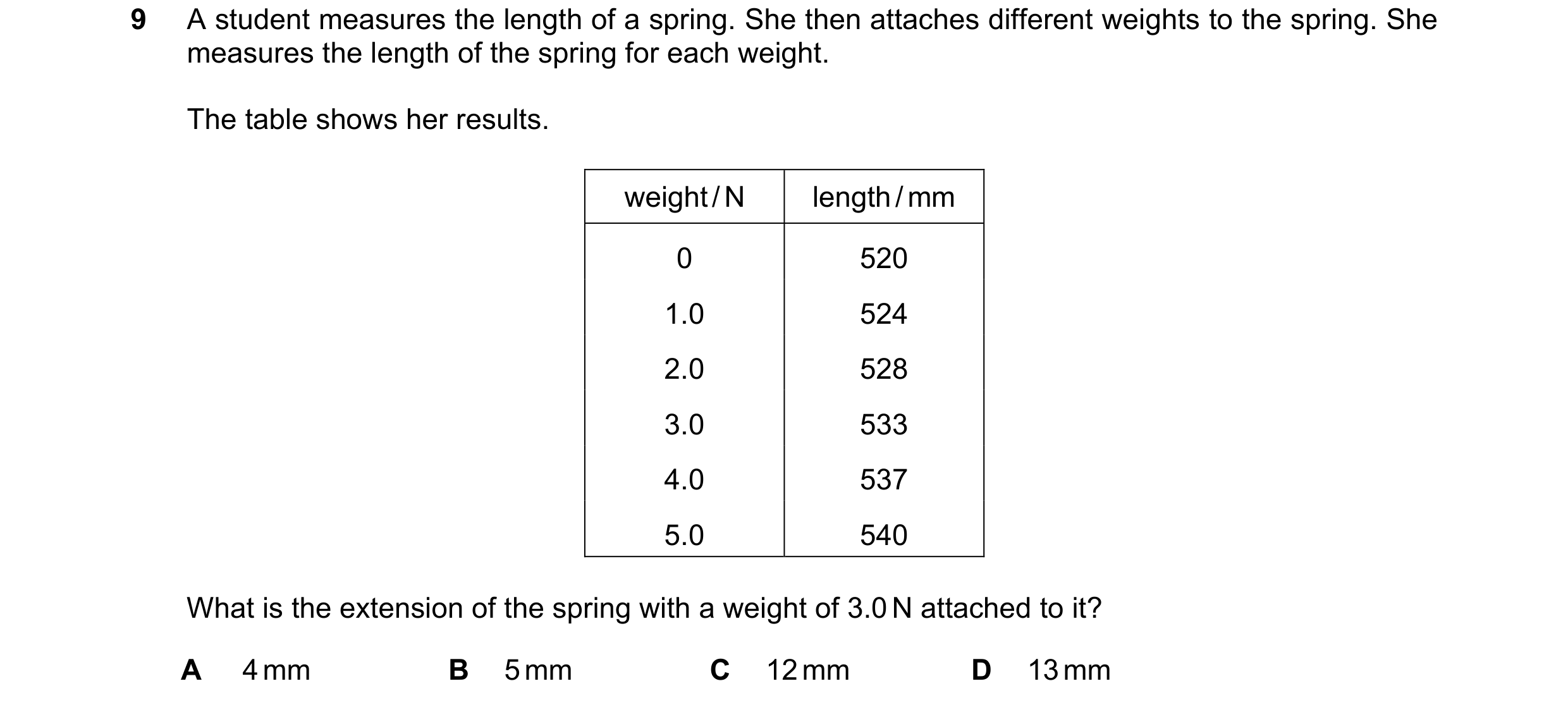
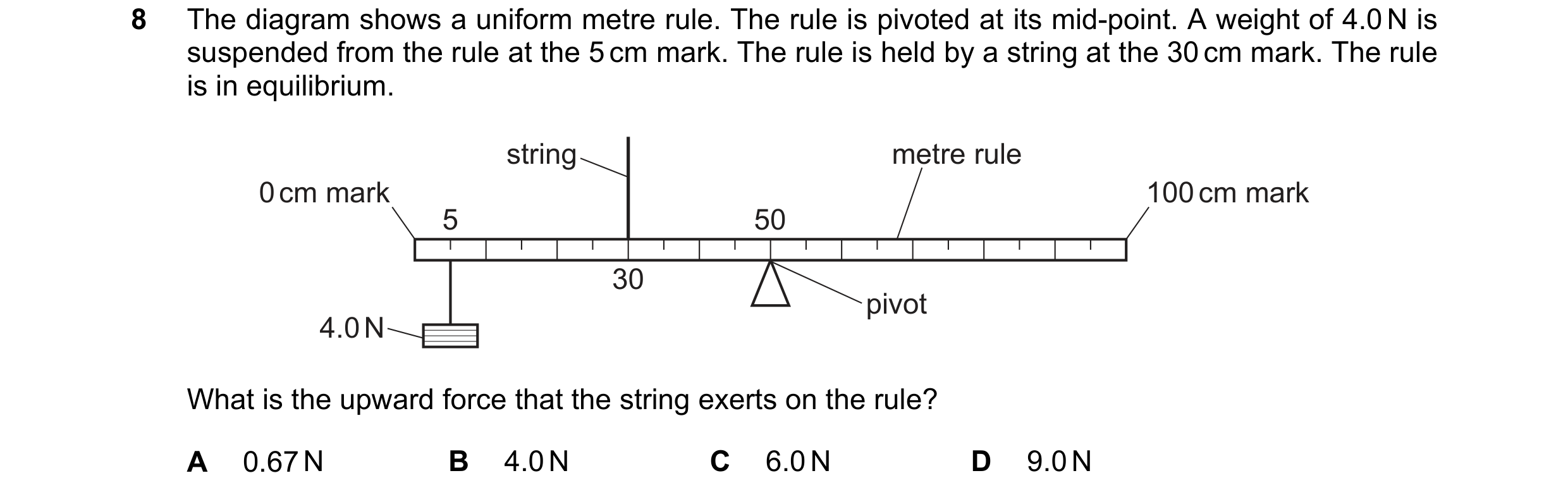 97 / 113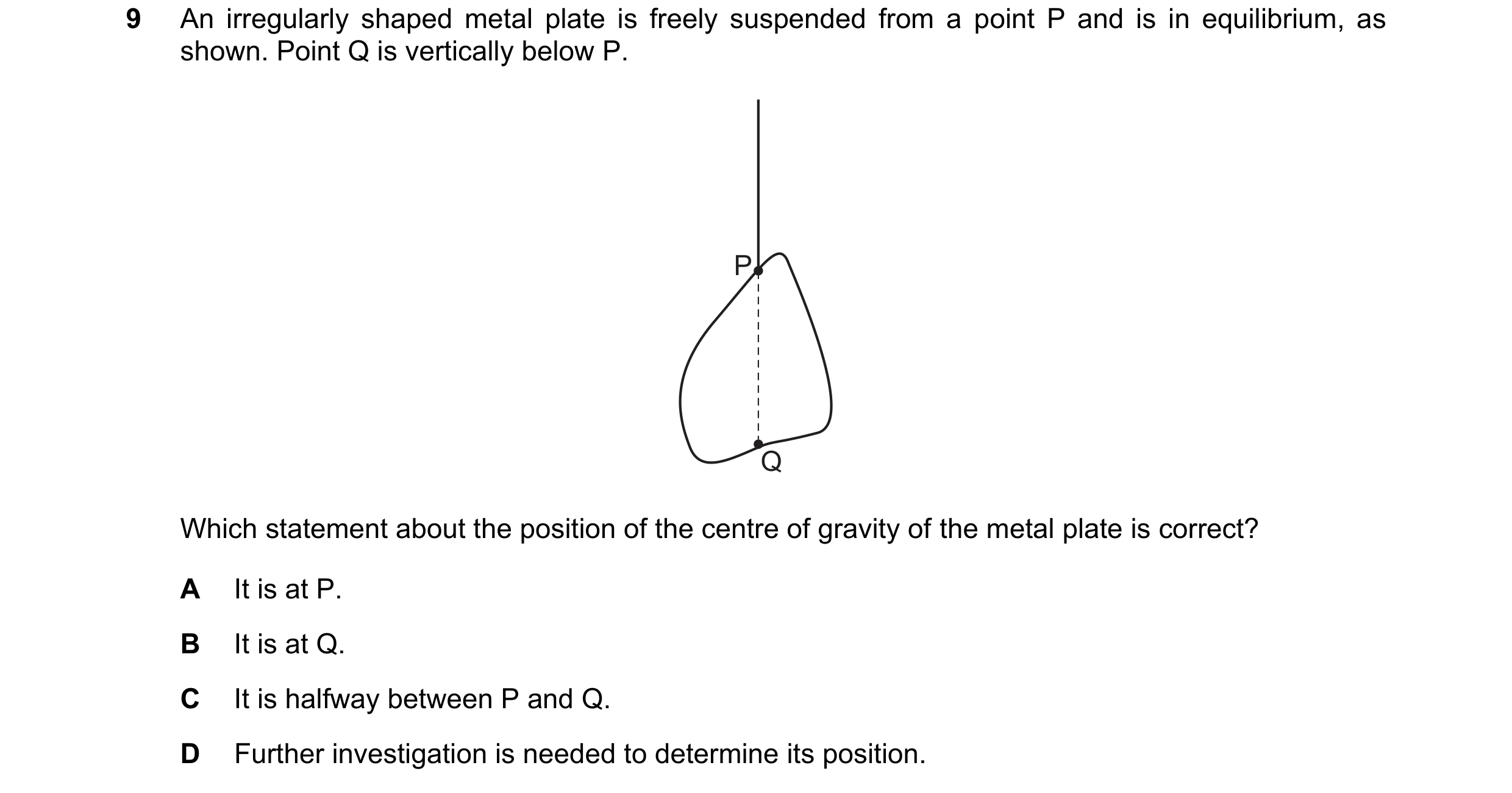
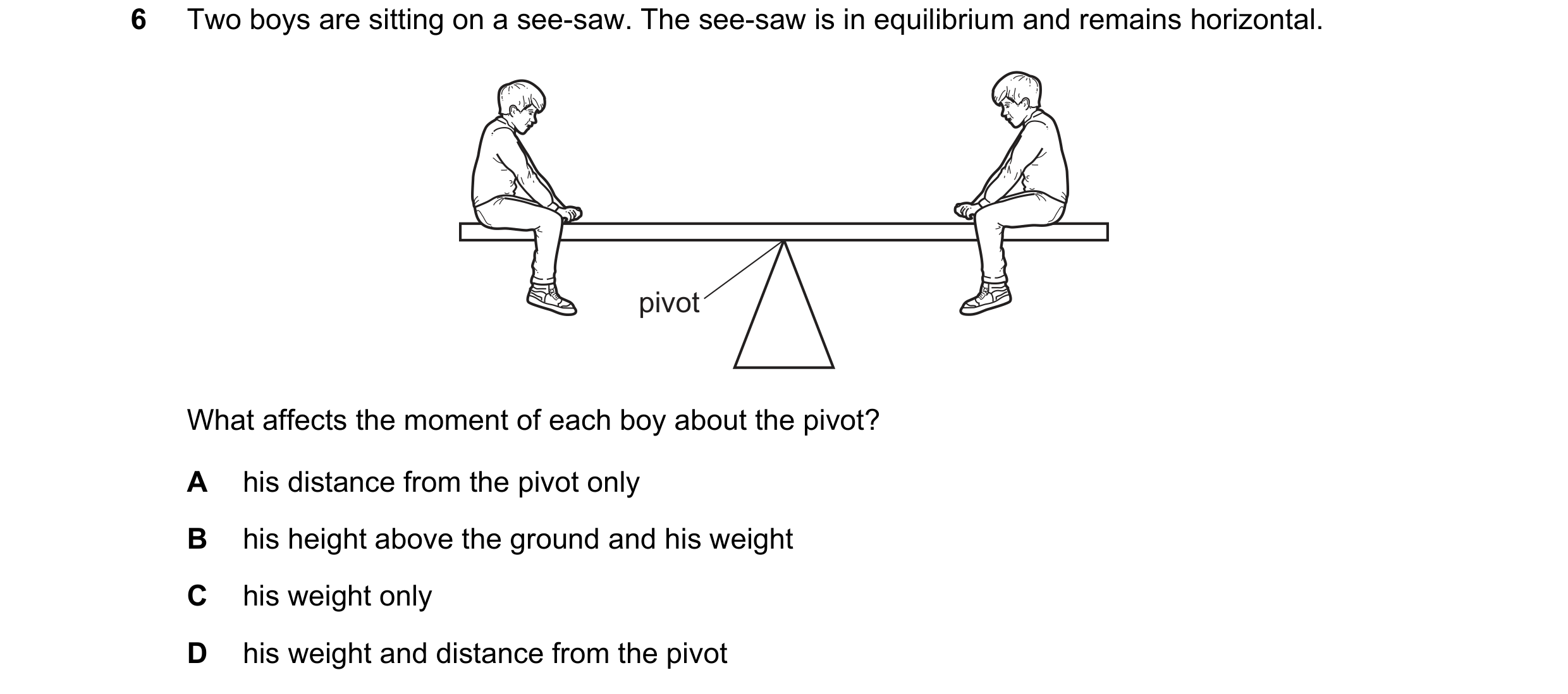
 98 / 113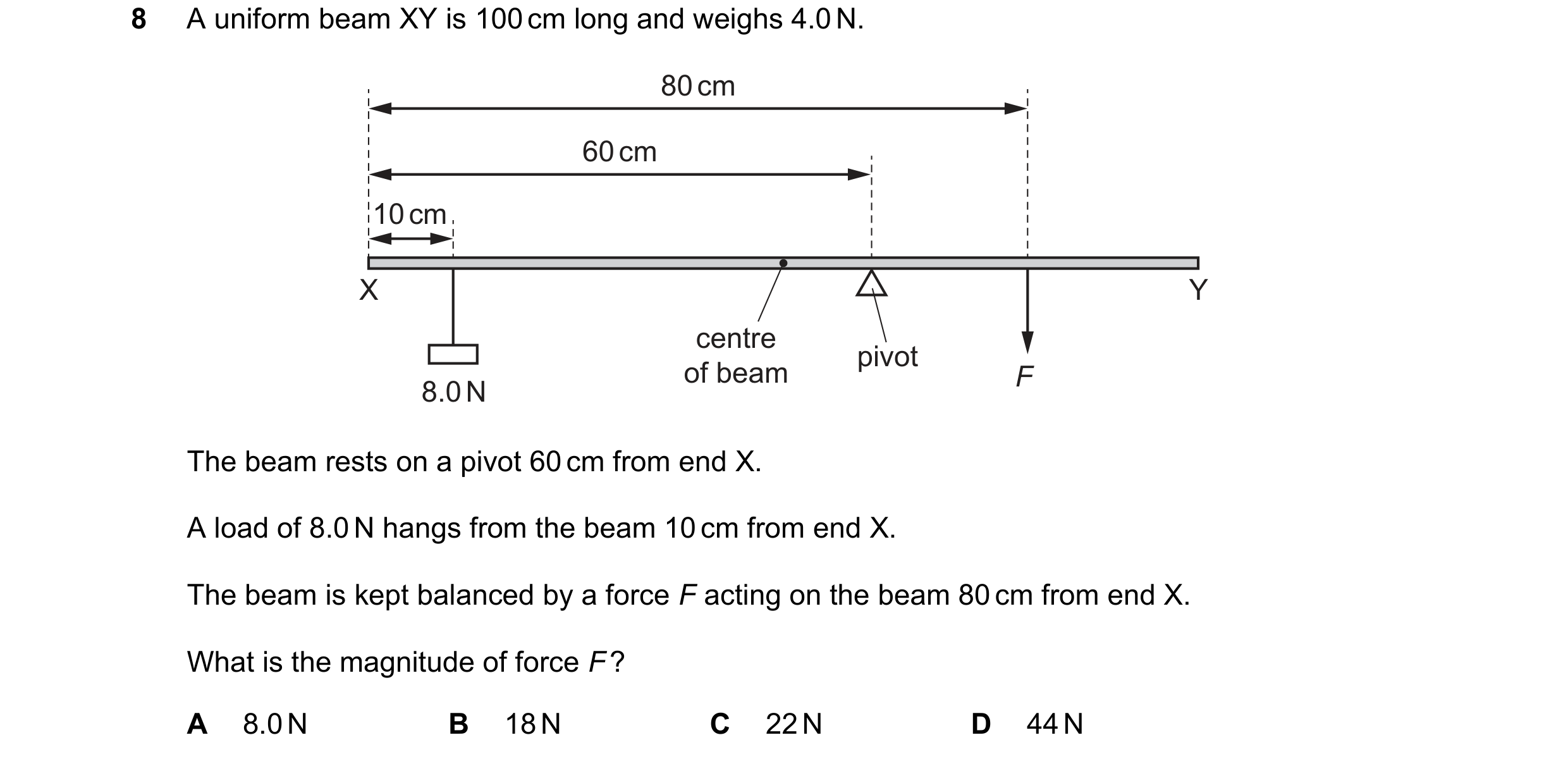
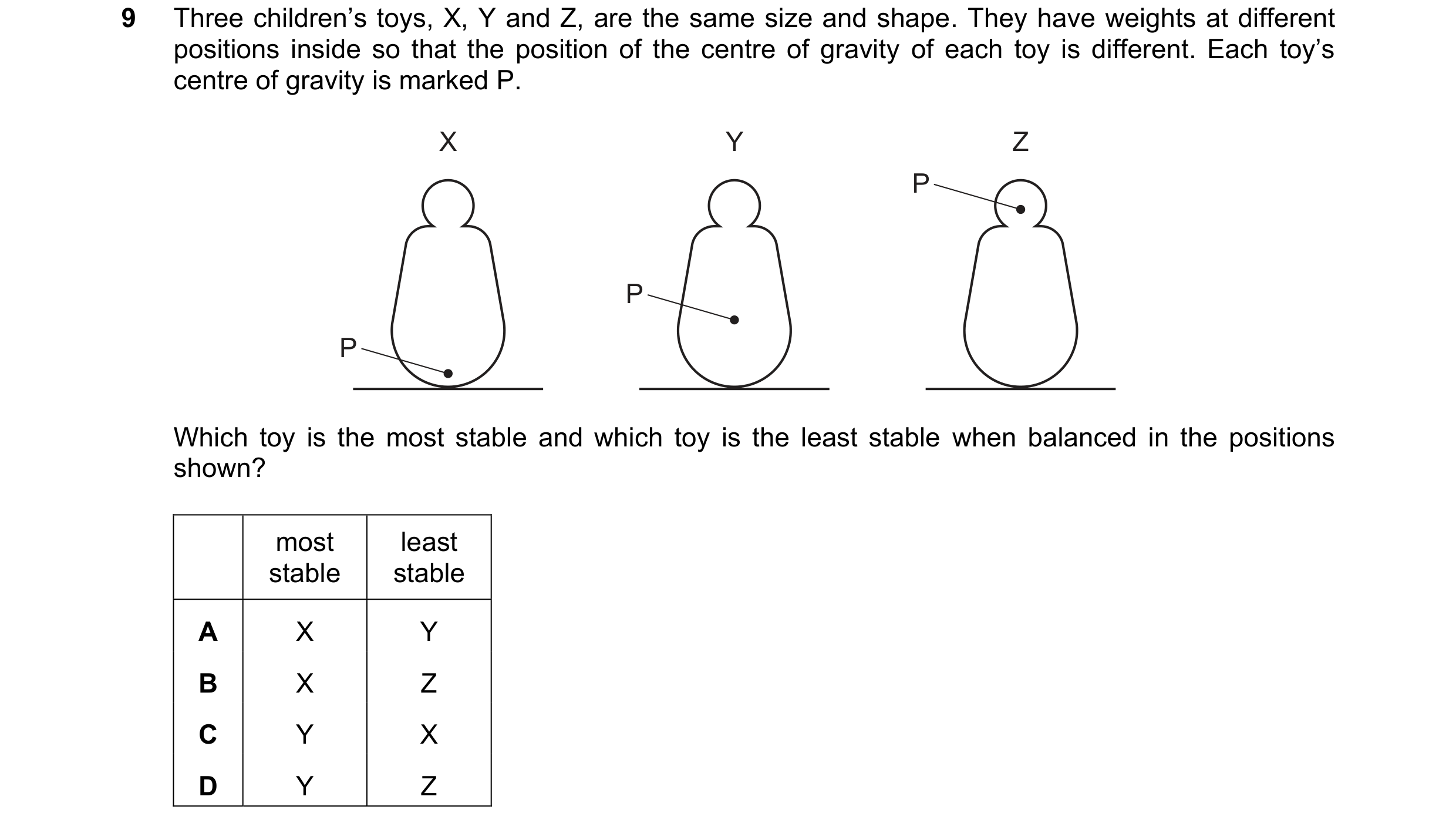
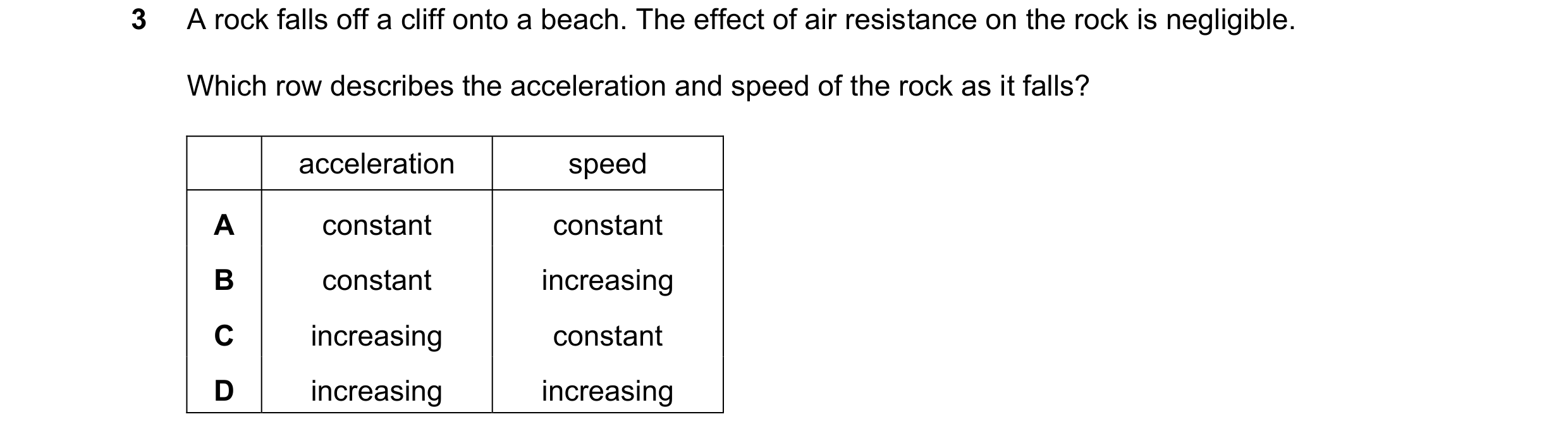 99 / 113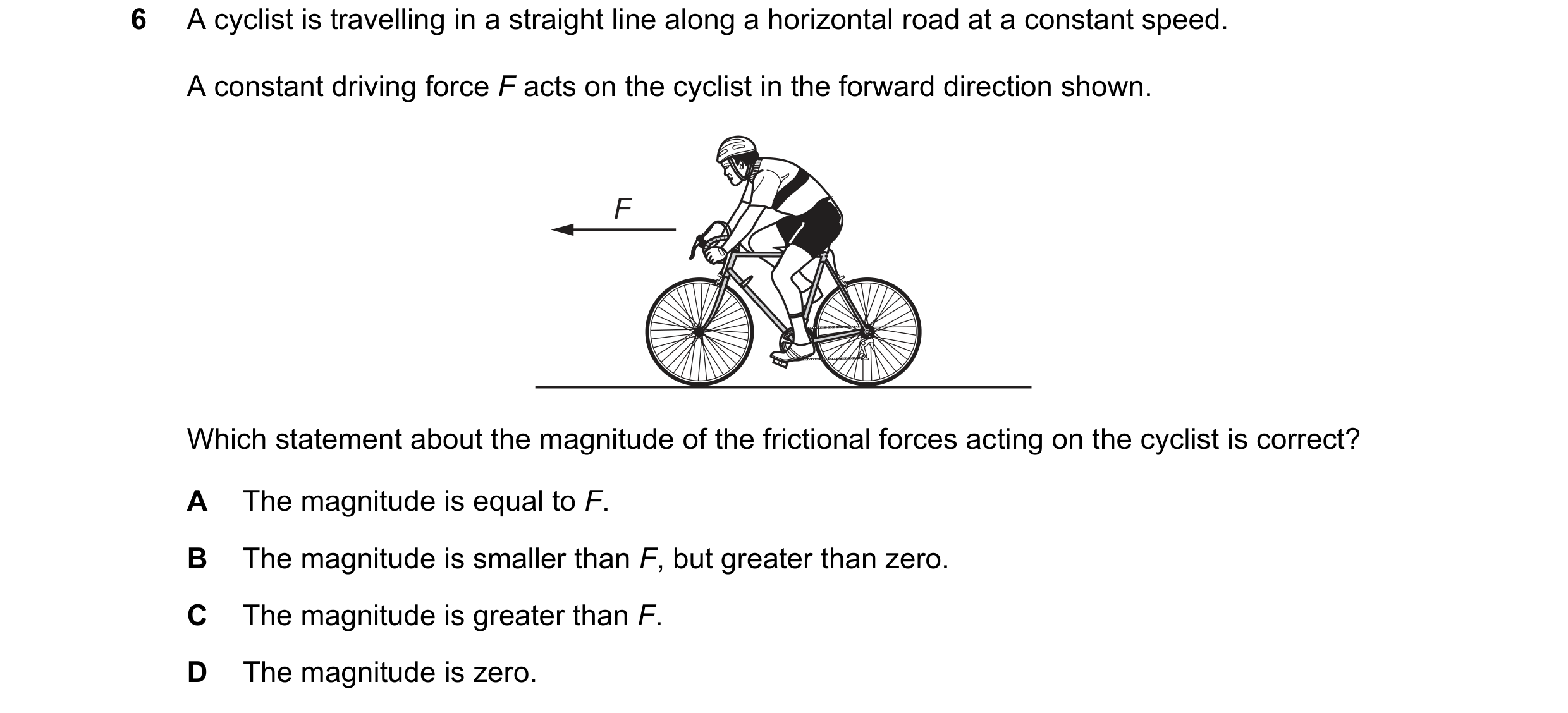
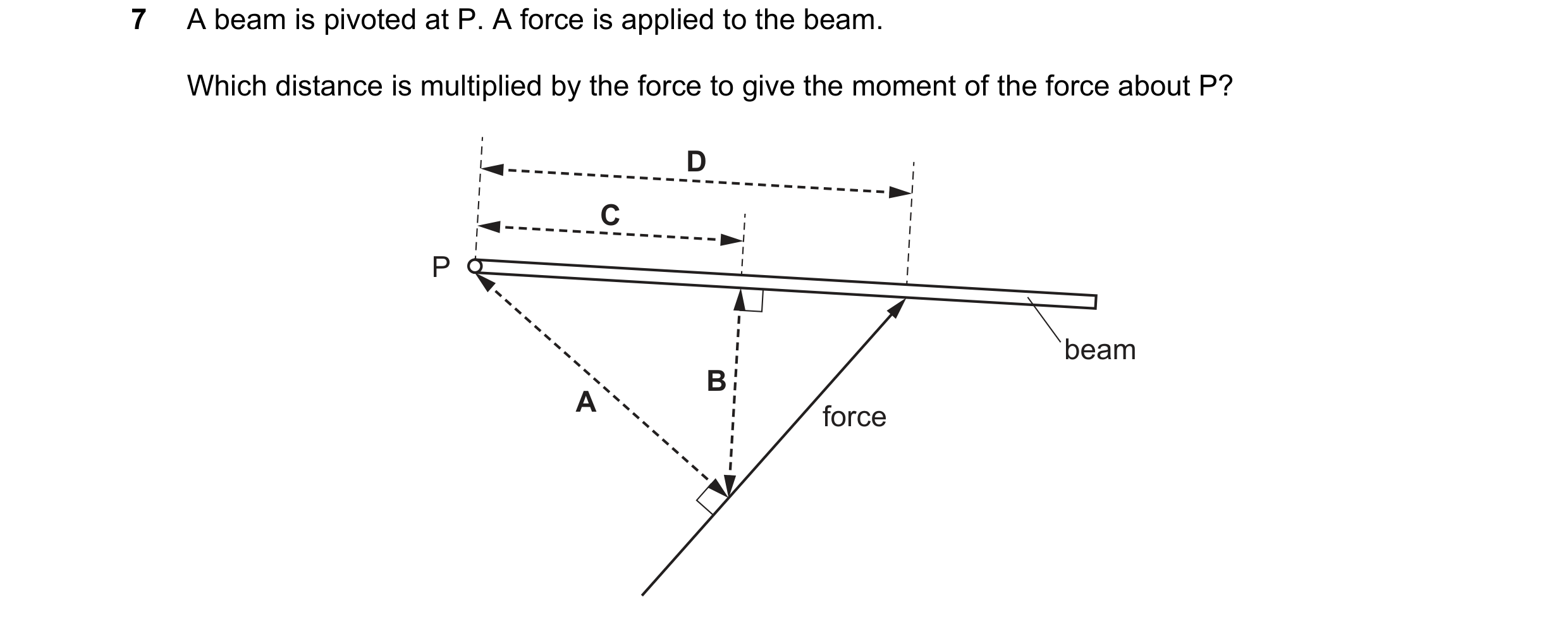
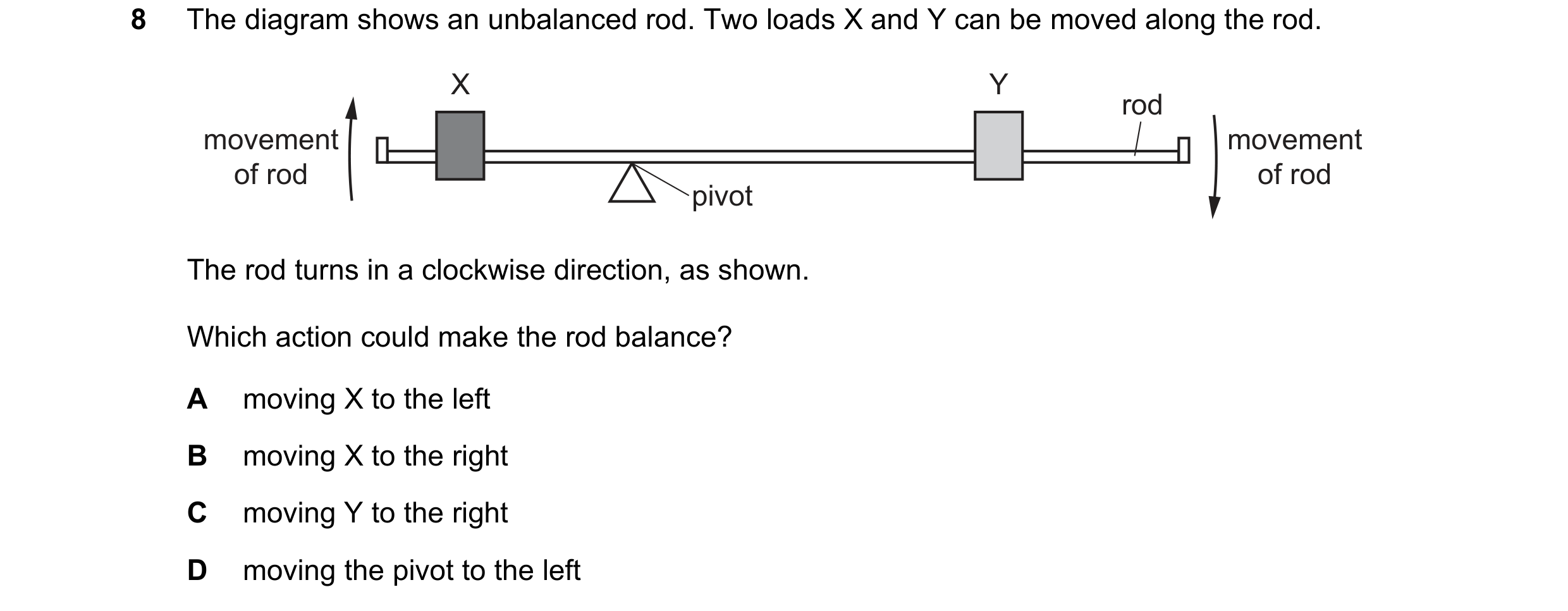 100 / 113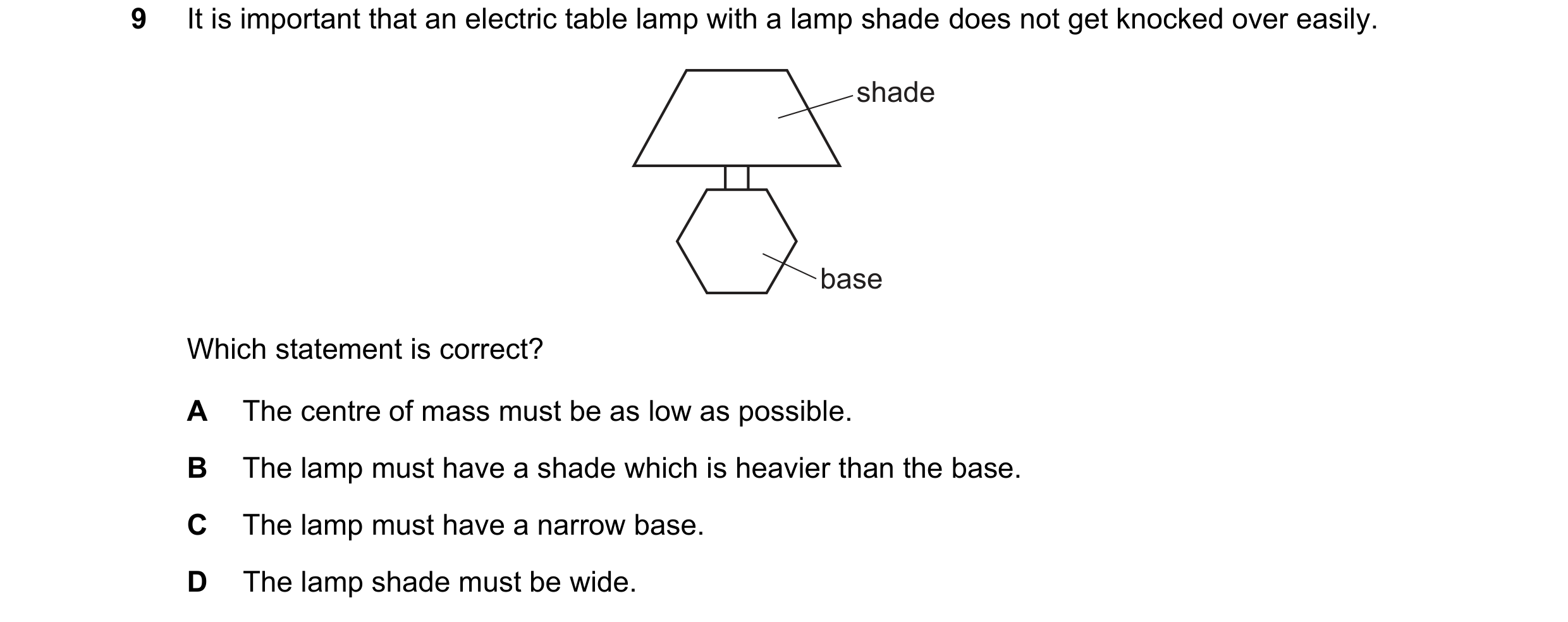
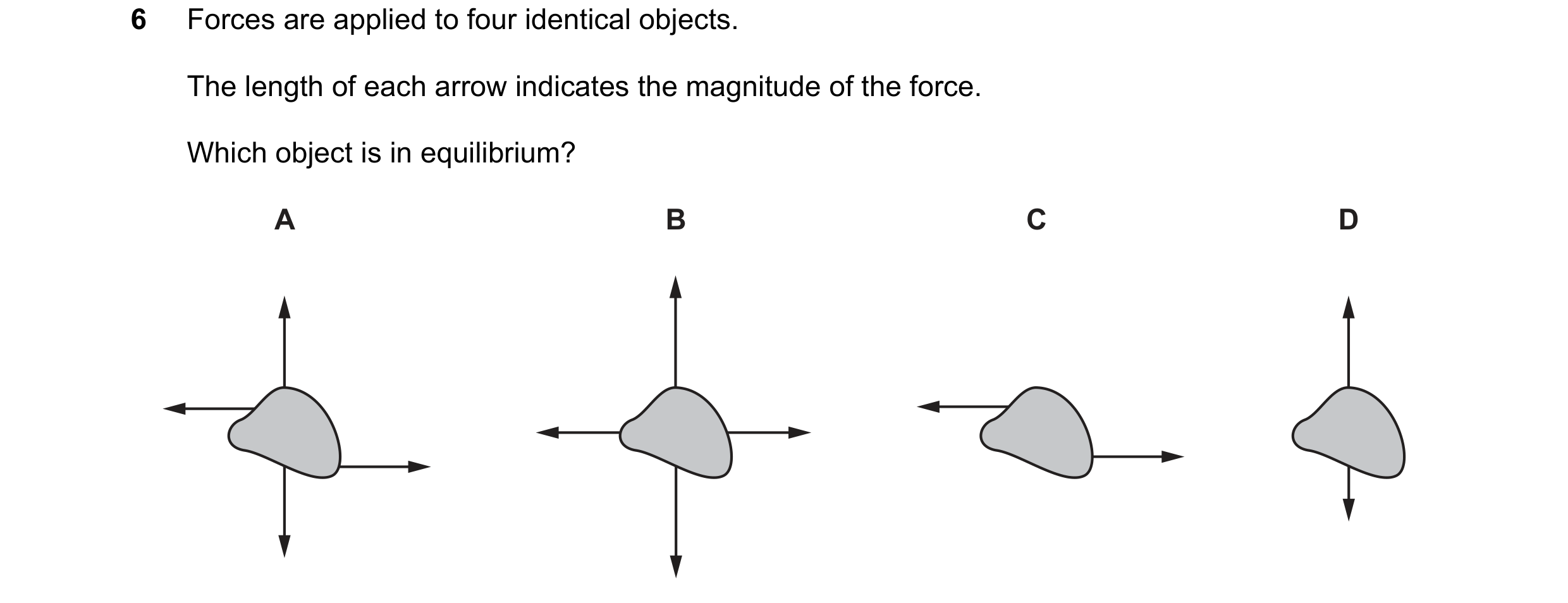
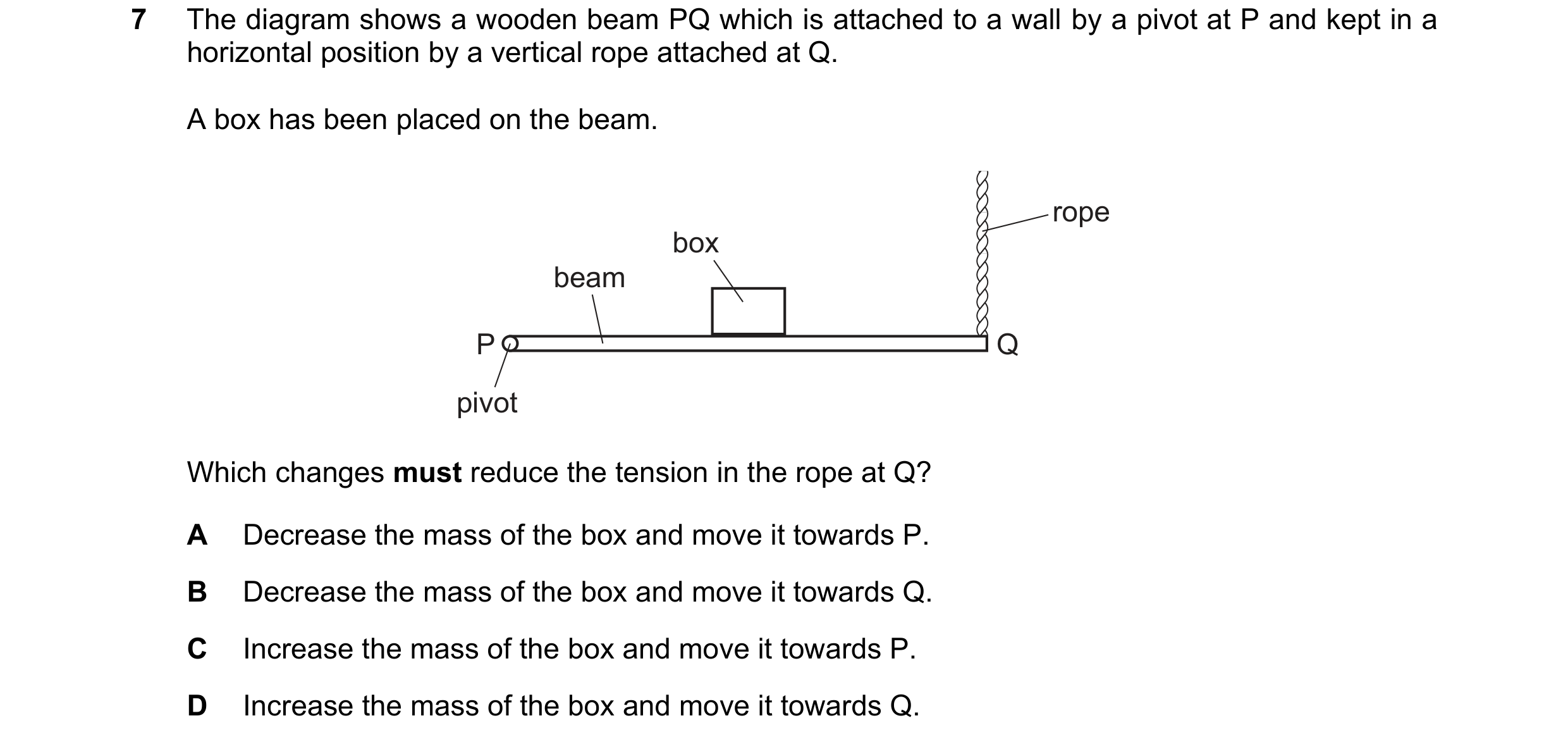 101 / 113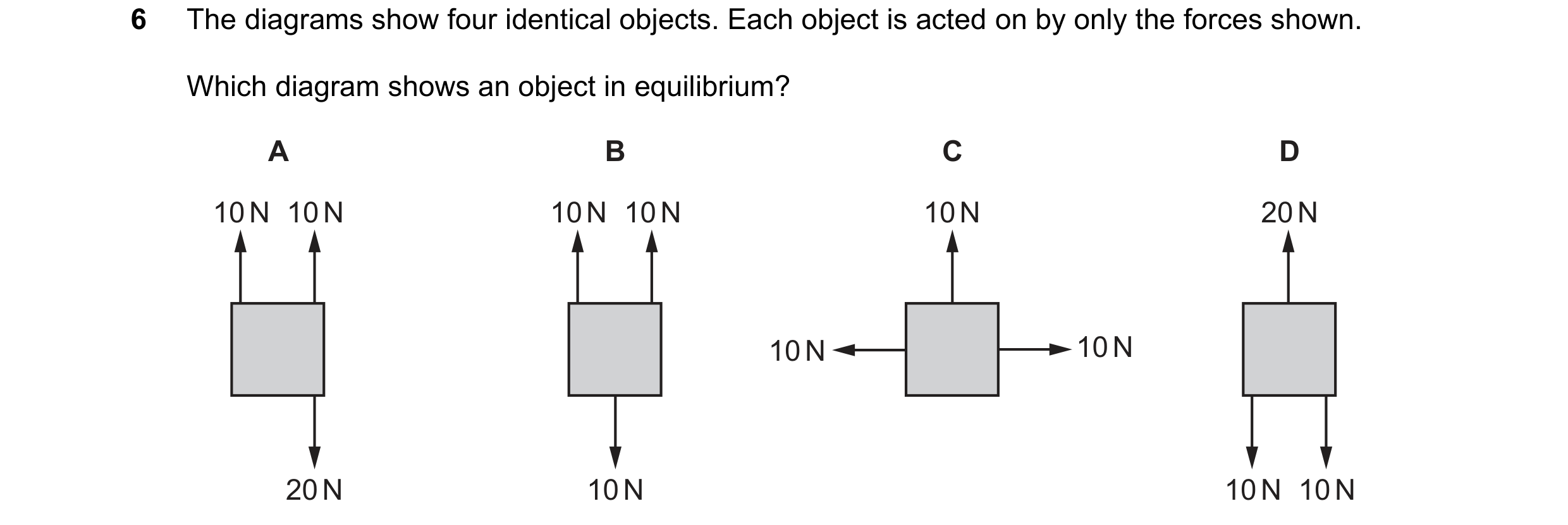
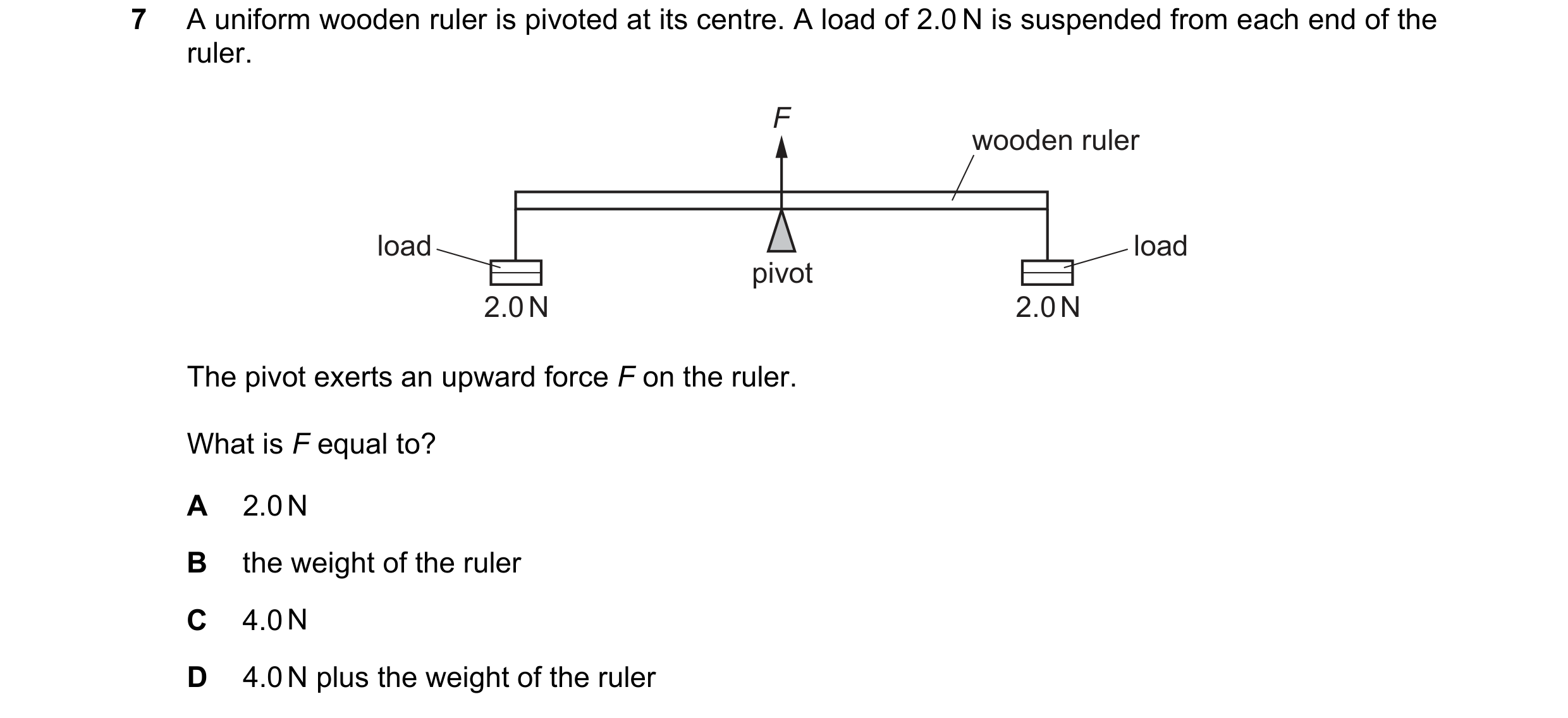
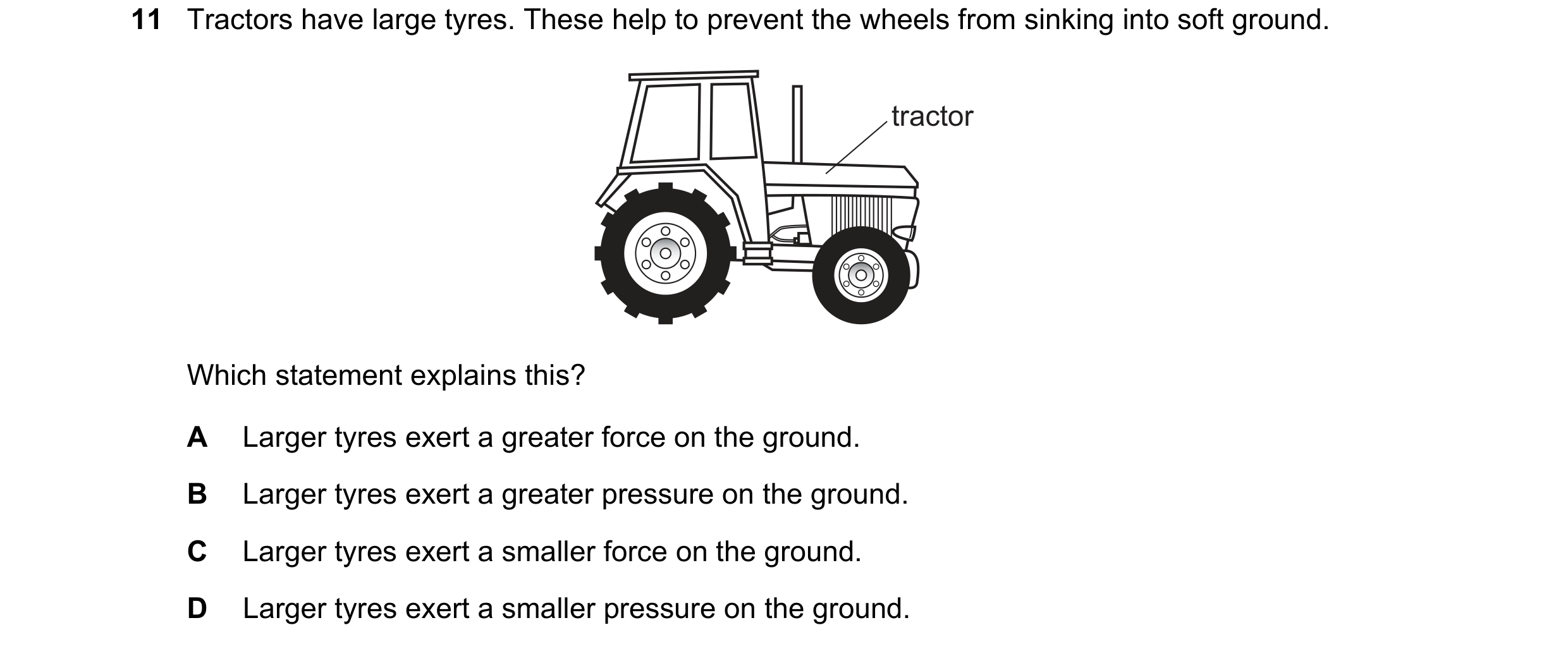 102 / 113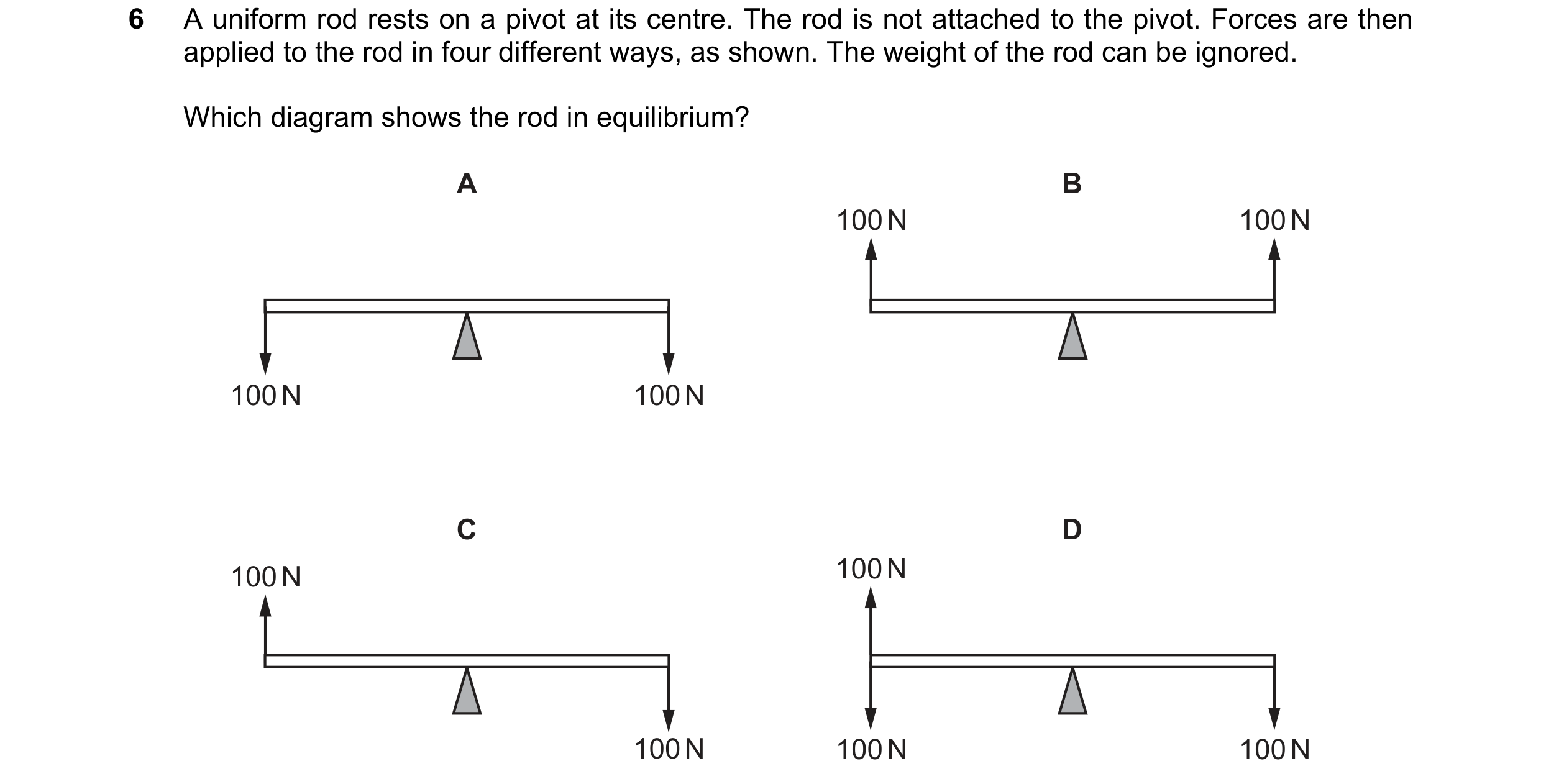
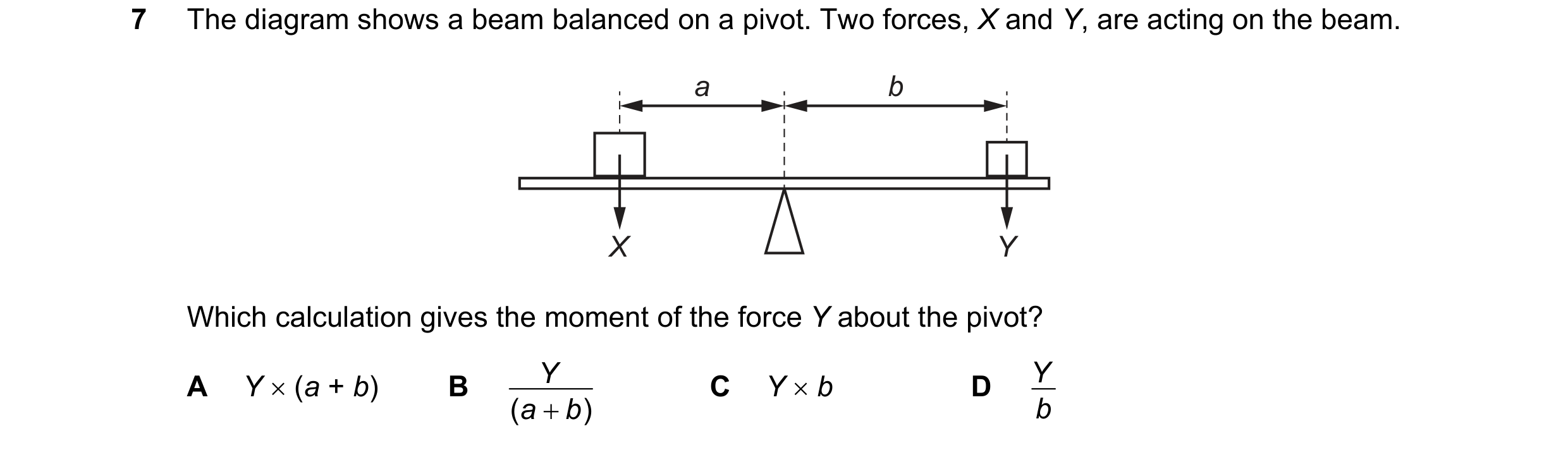

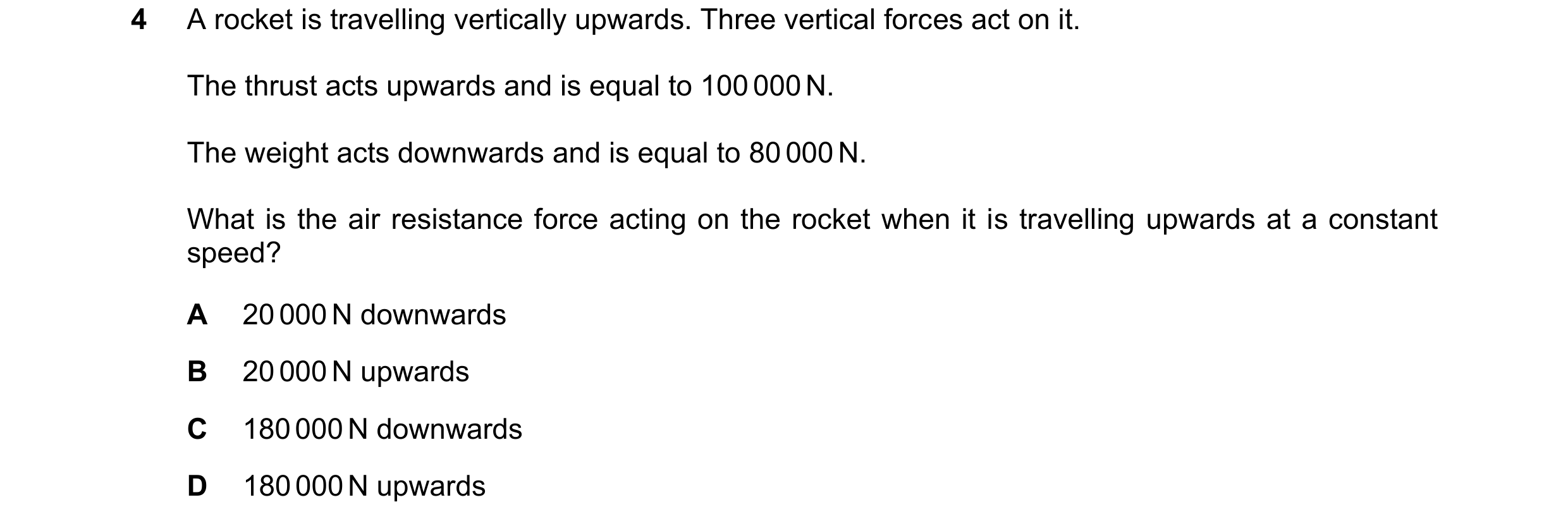 103 / 113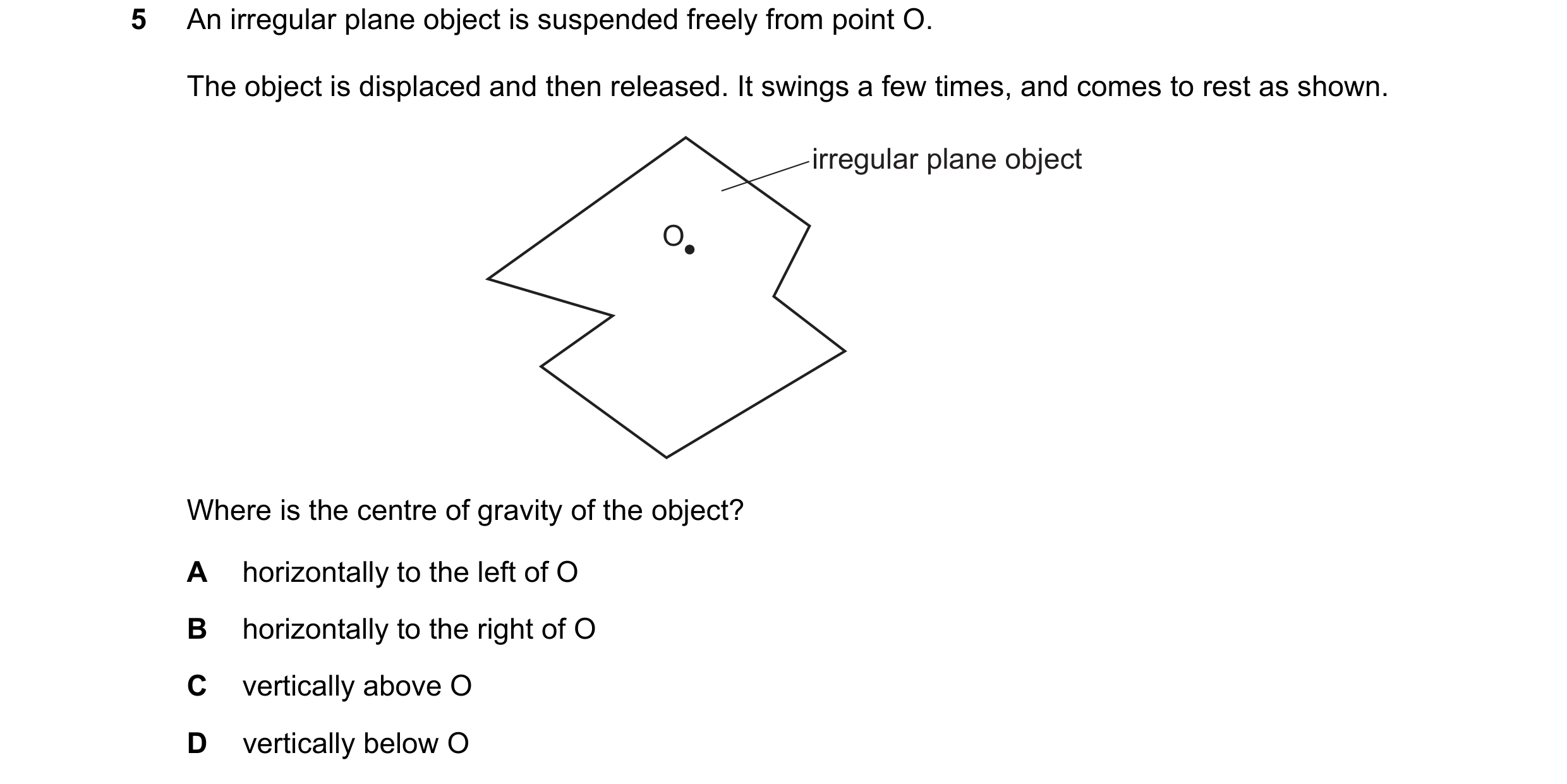
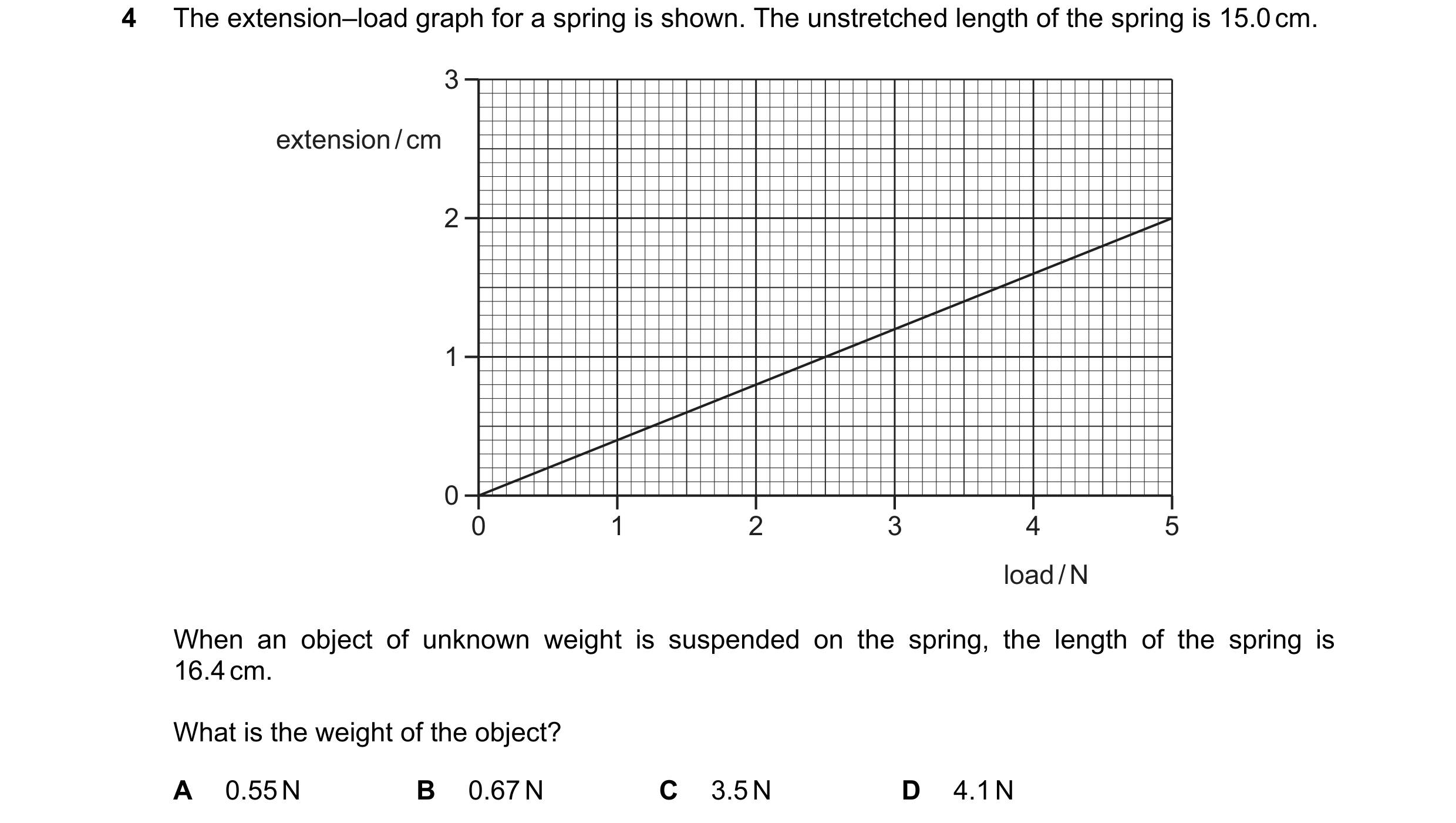 104 / 113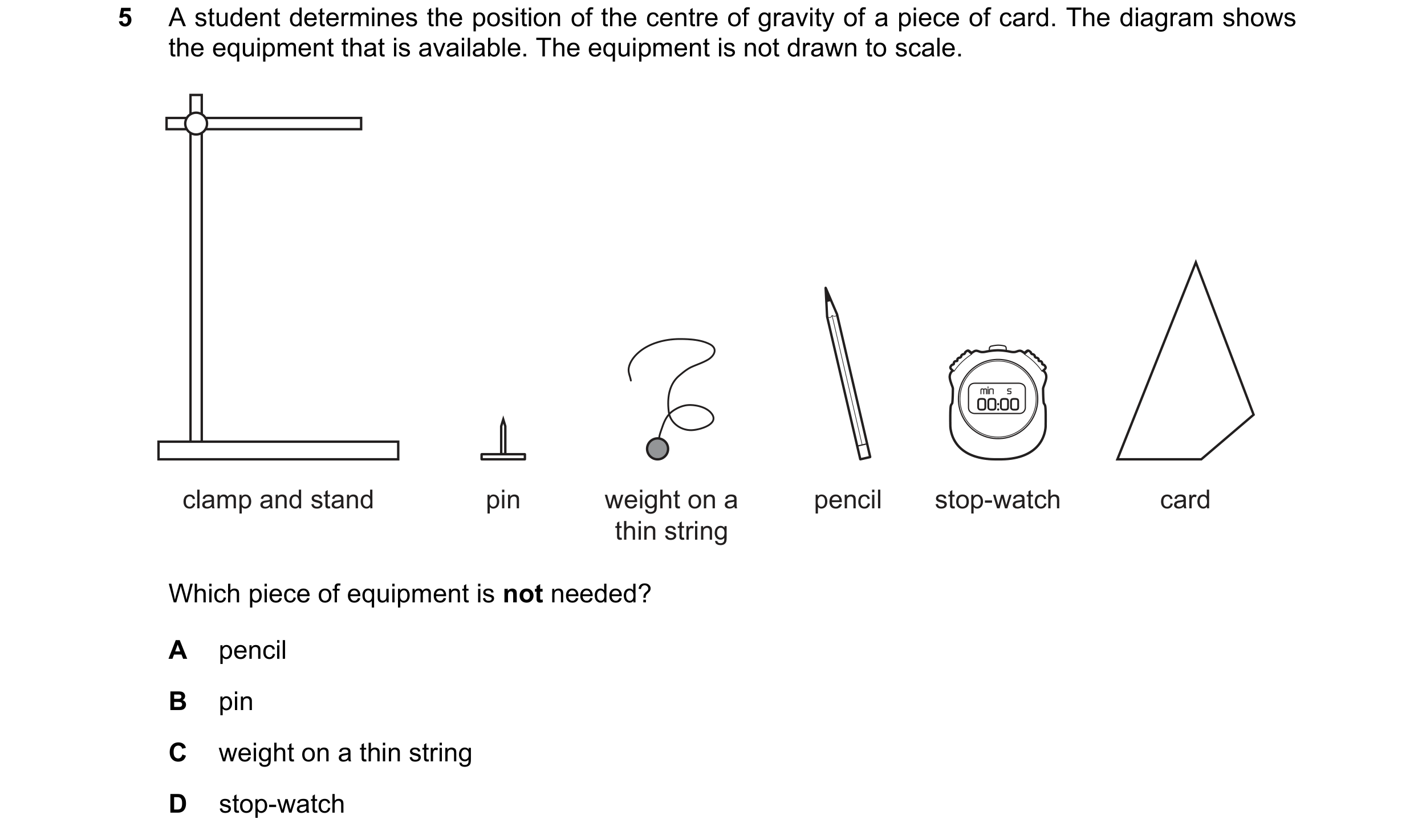
 105 / 113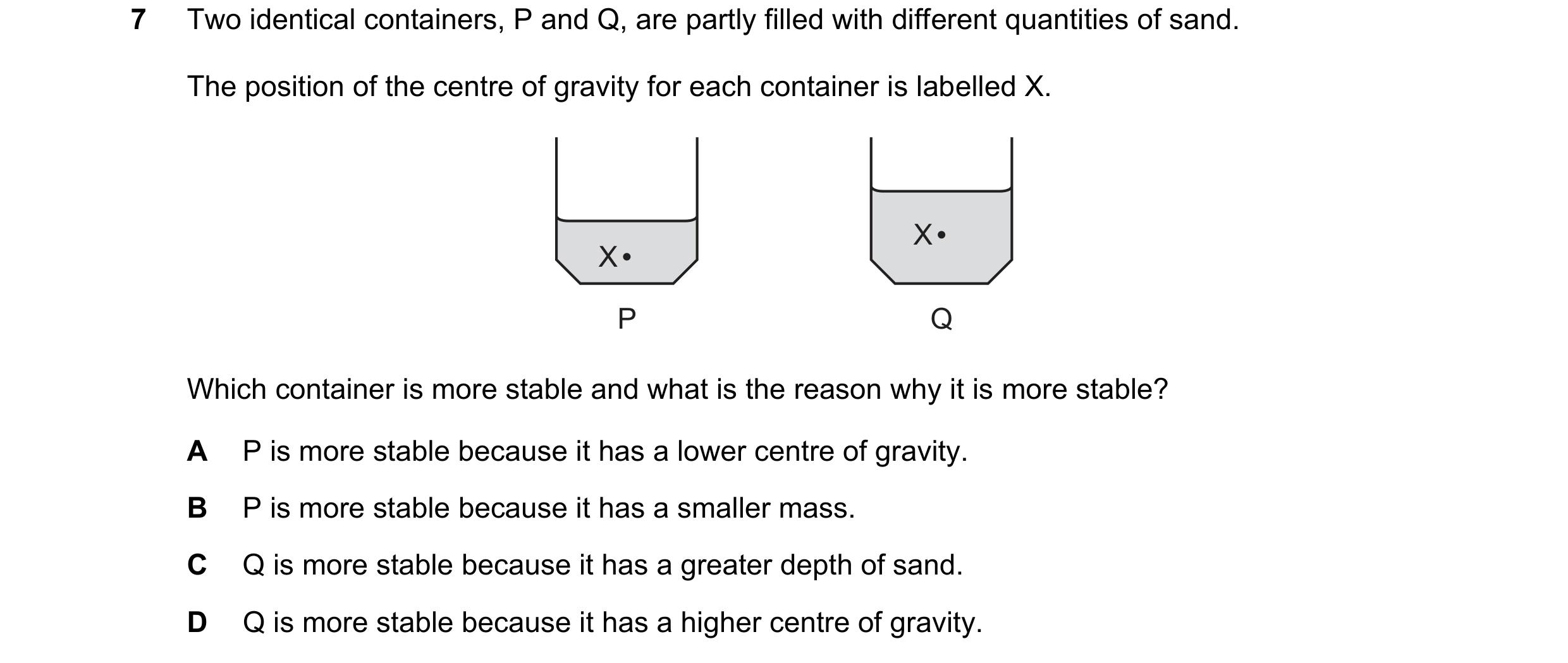
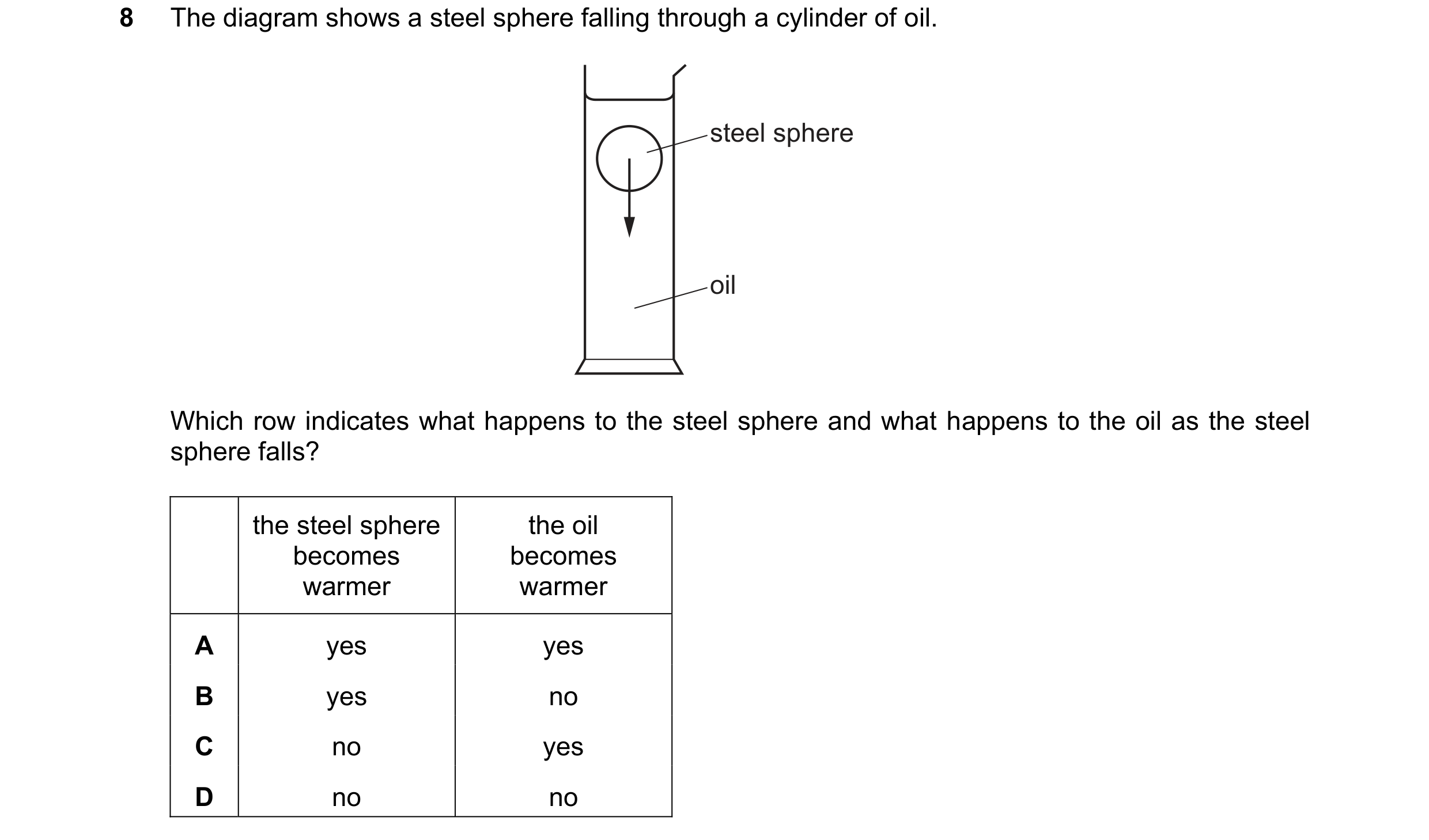 106 / 113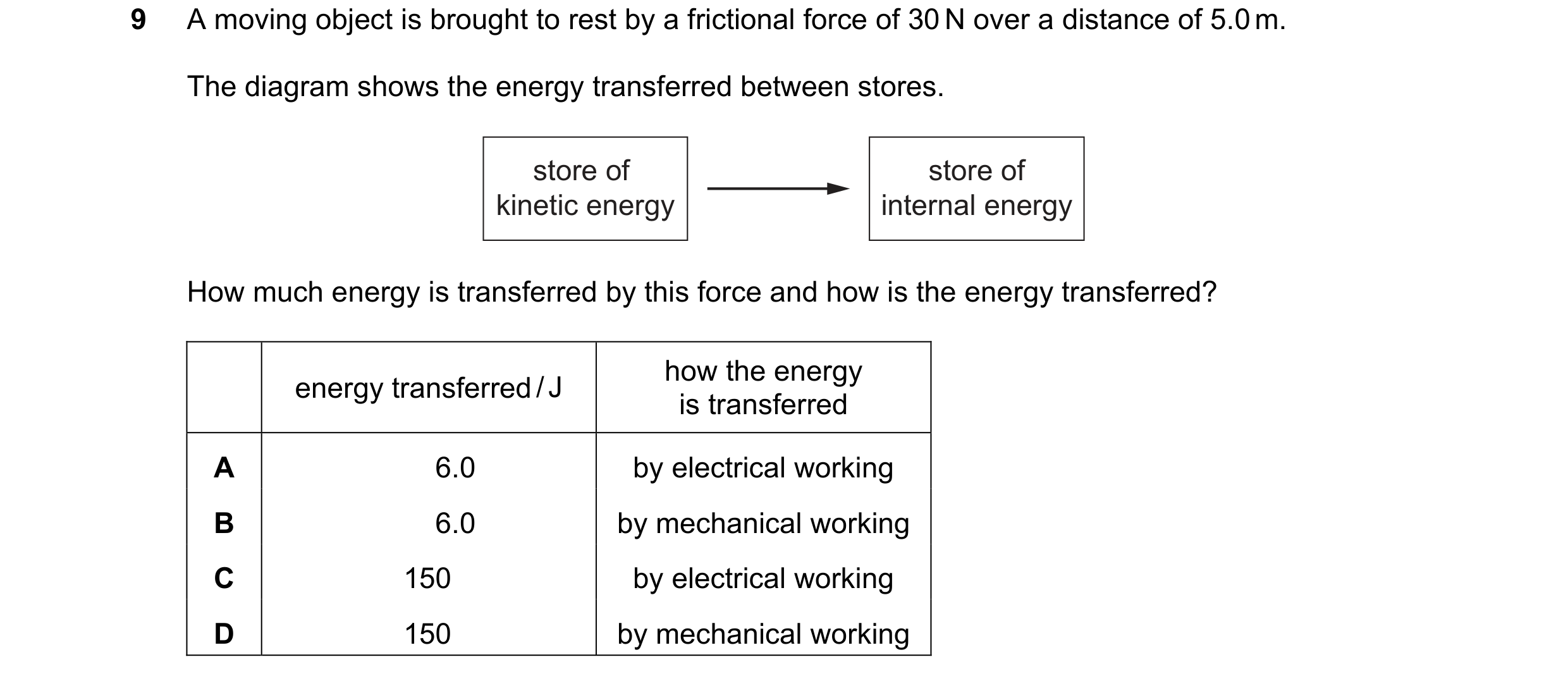
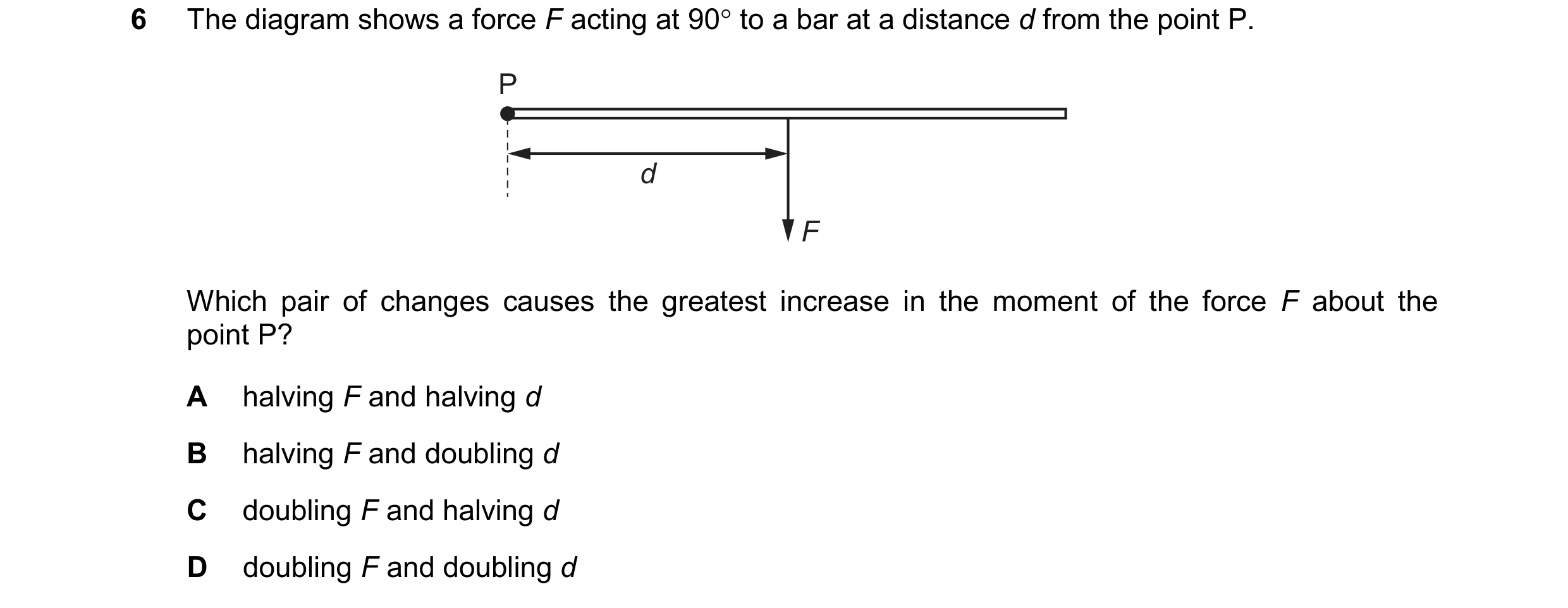

 107 / 113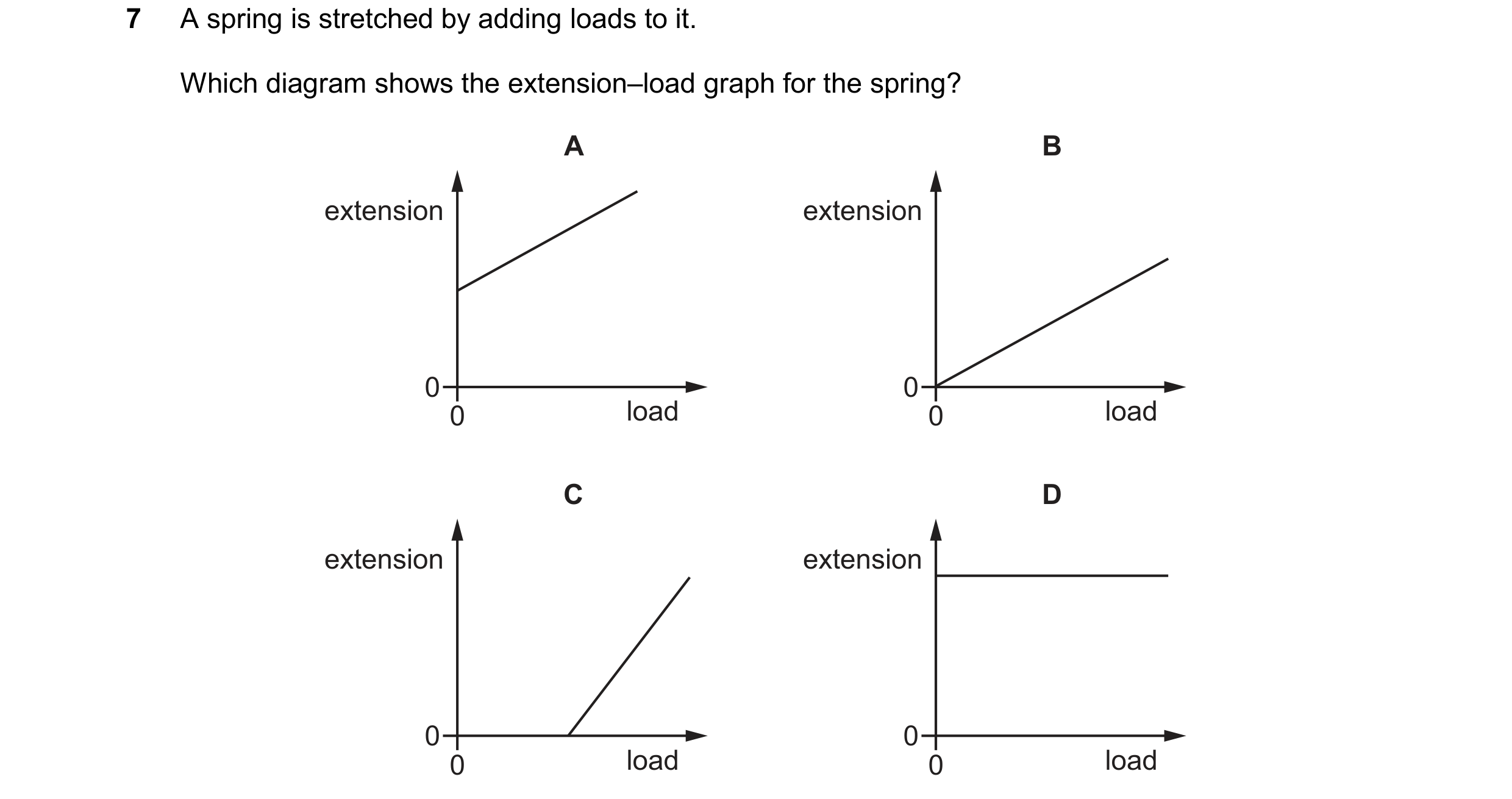
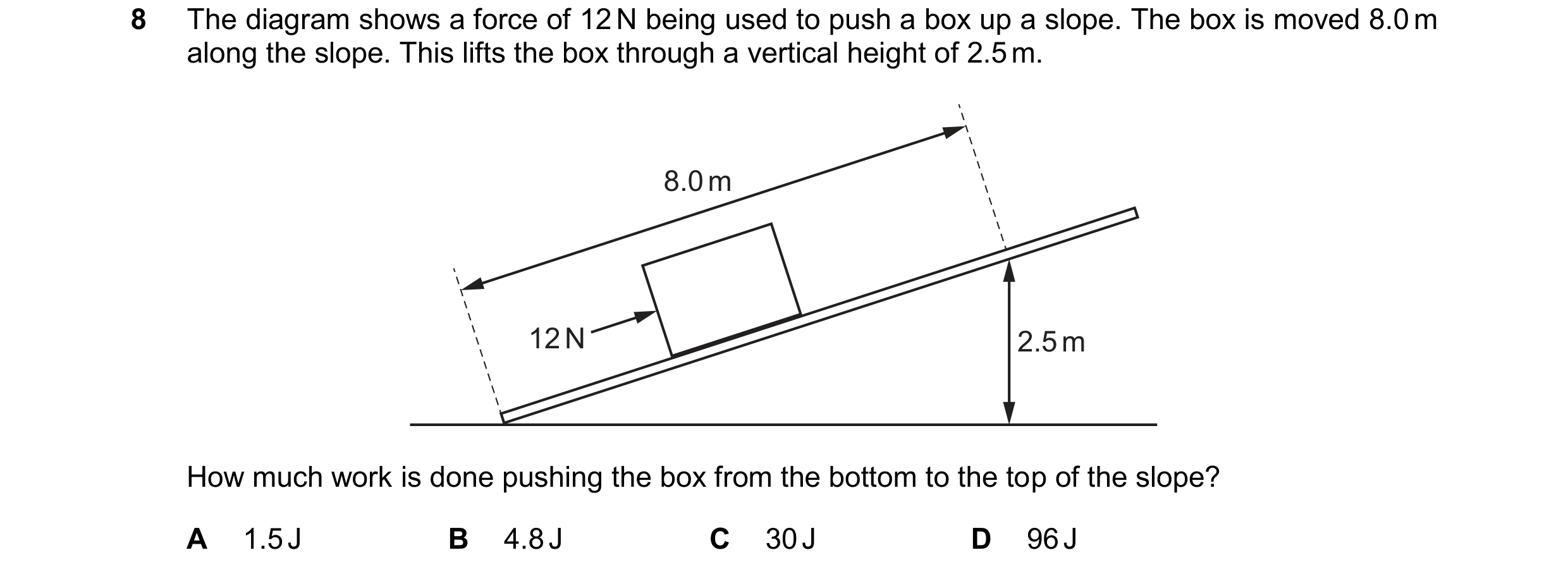

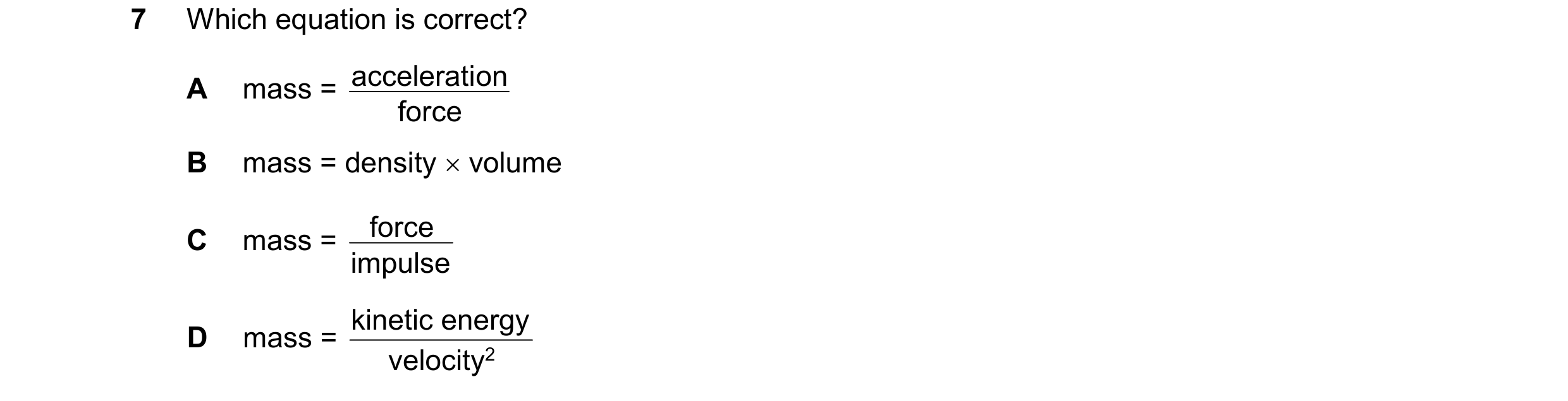 108 / 113
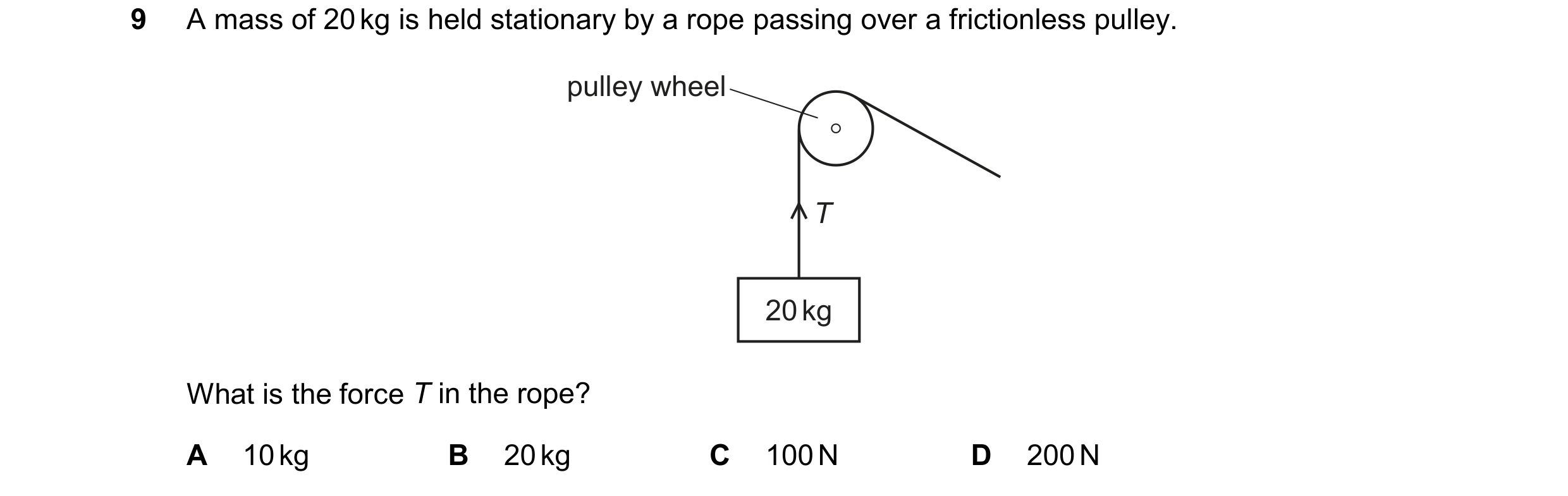
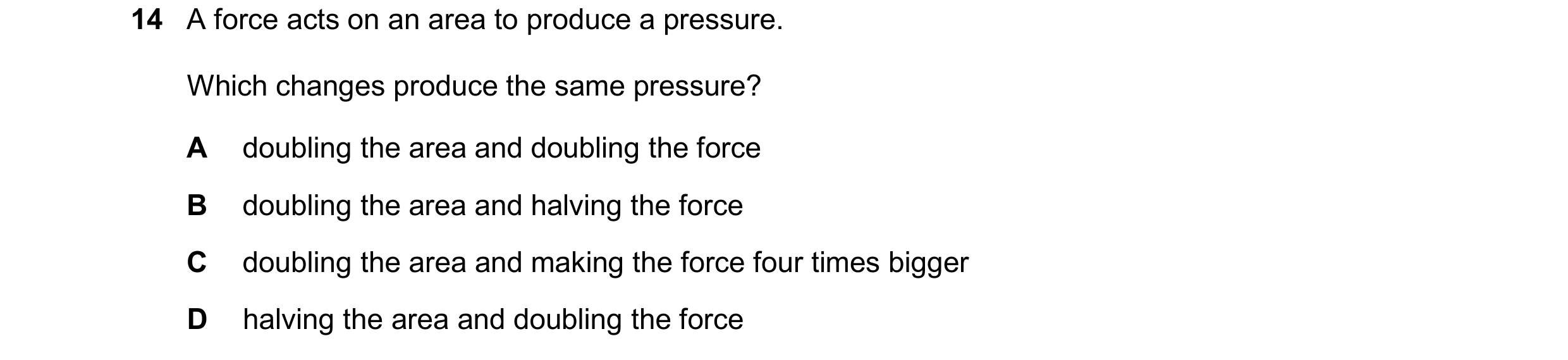
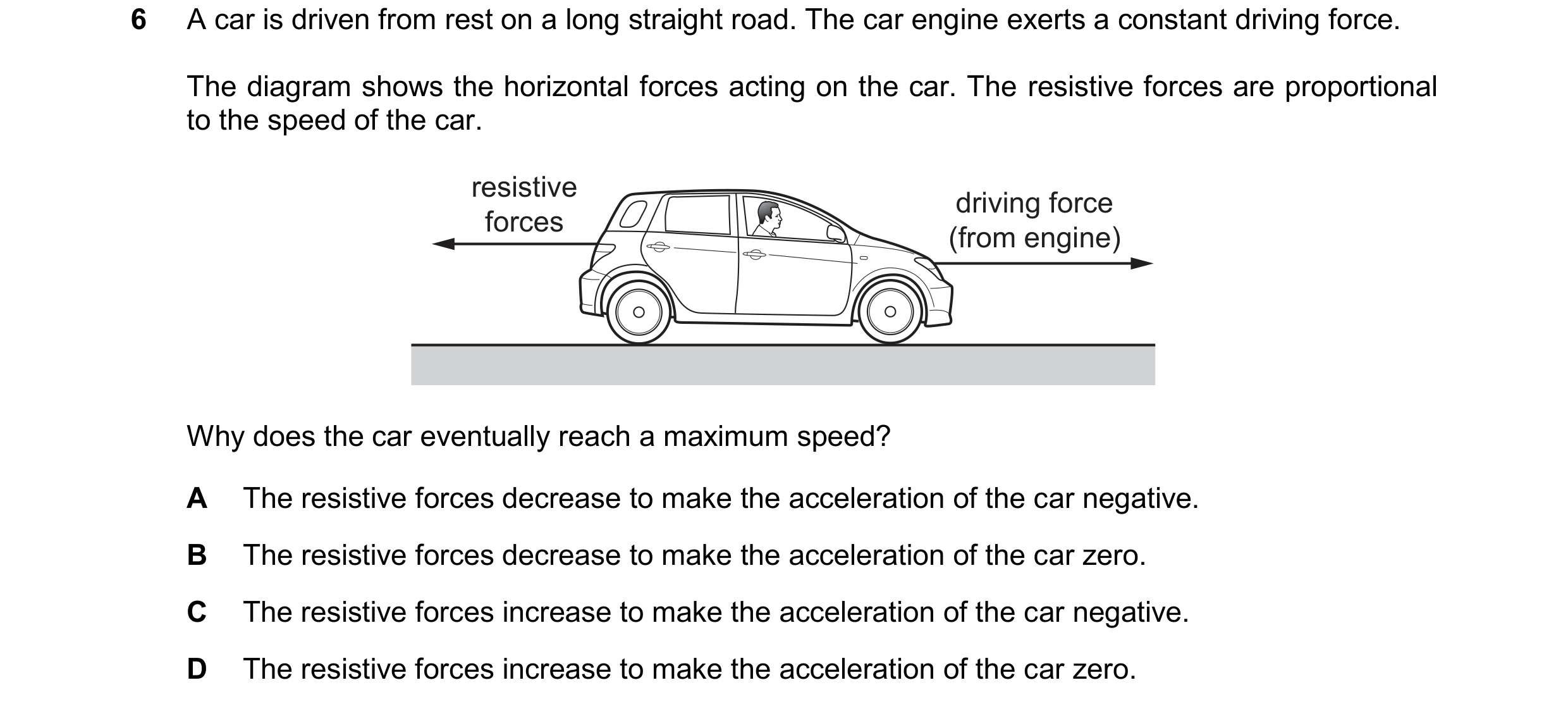 109 / 113
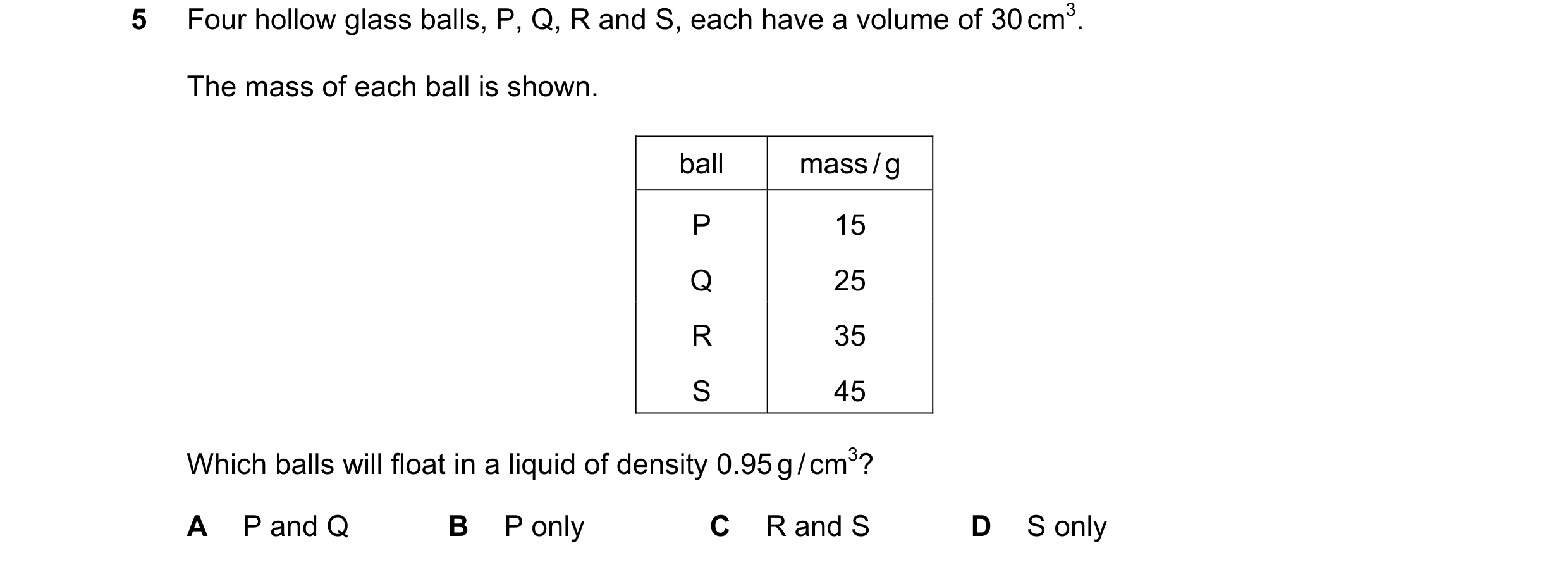
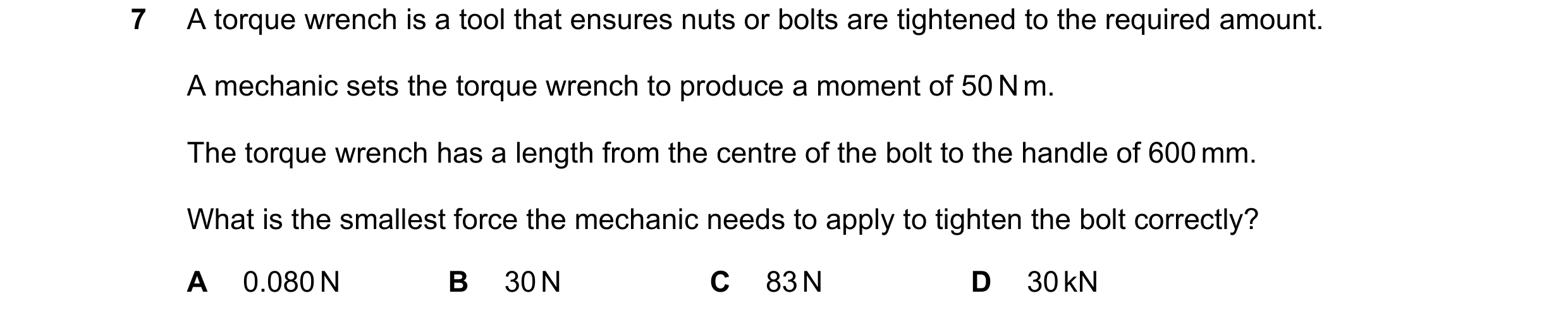
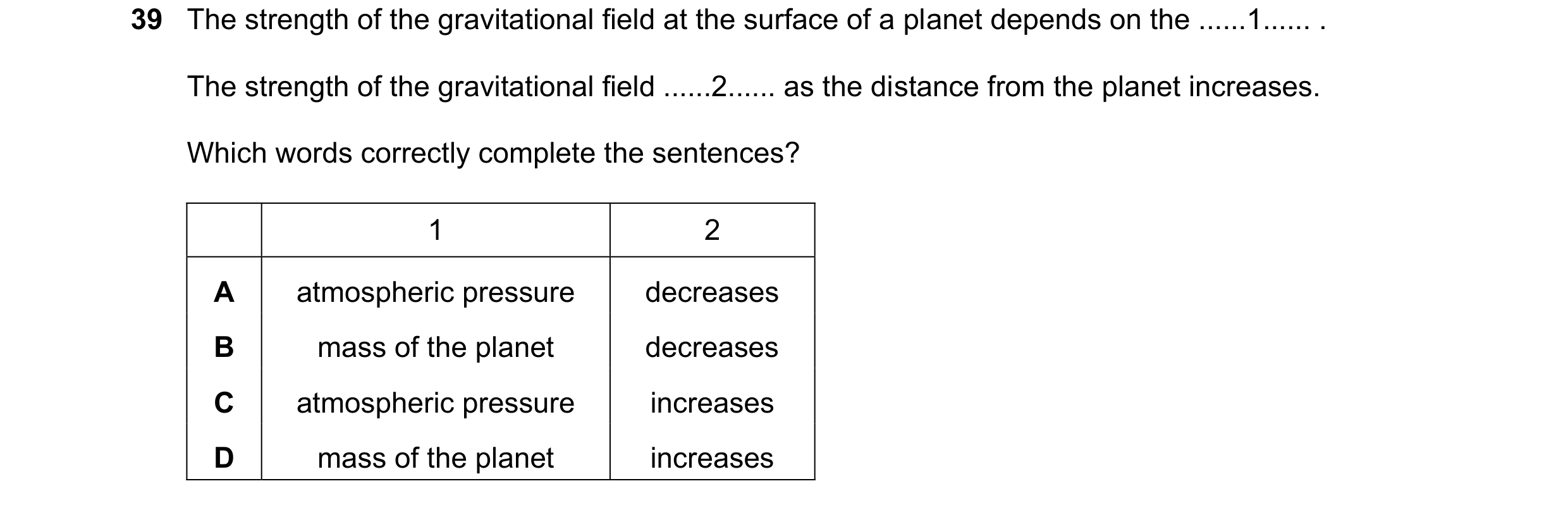 110 / 113
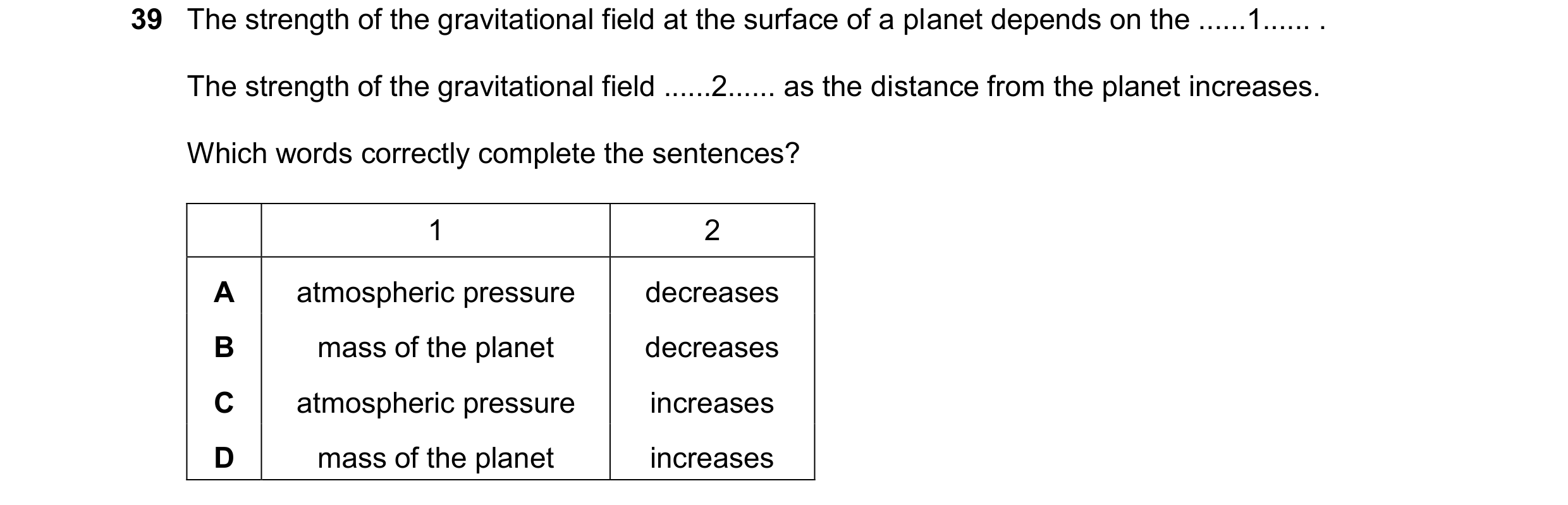
 111 / 113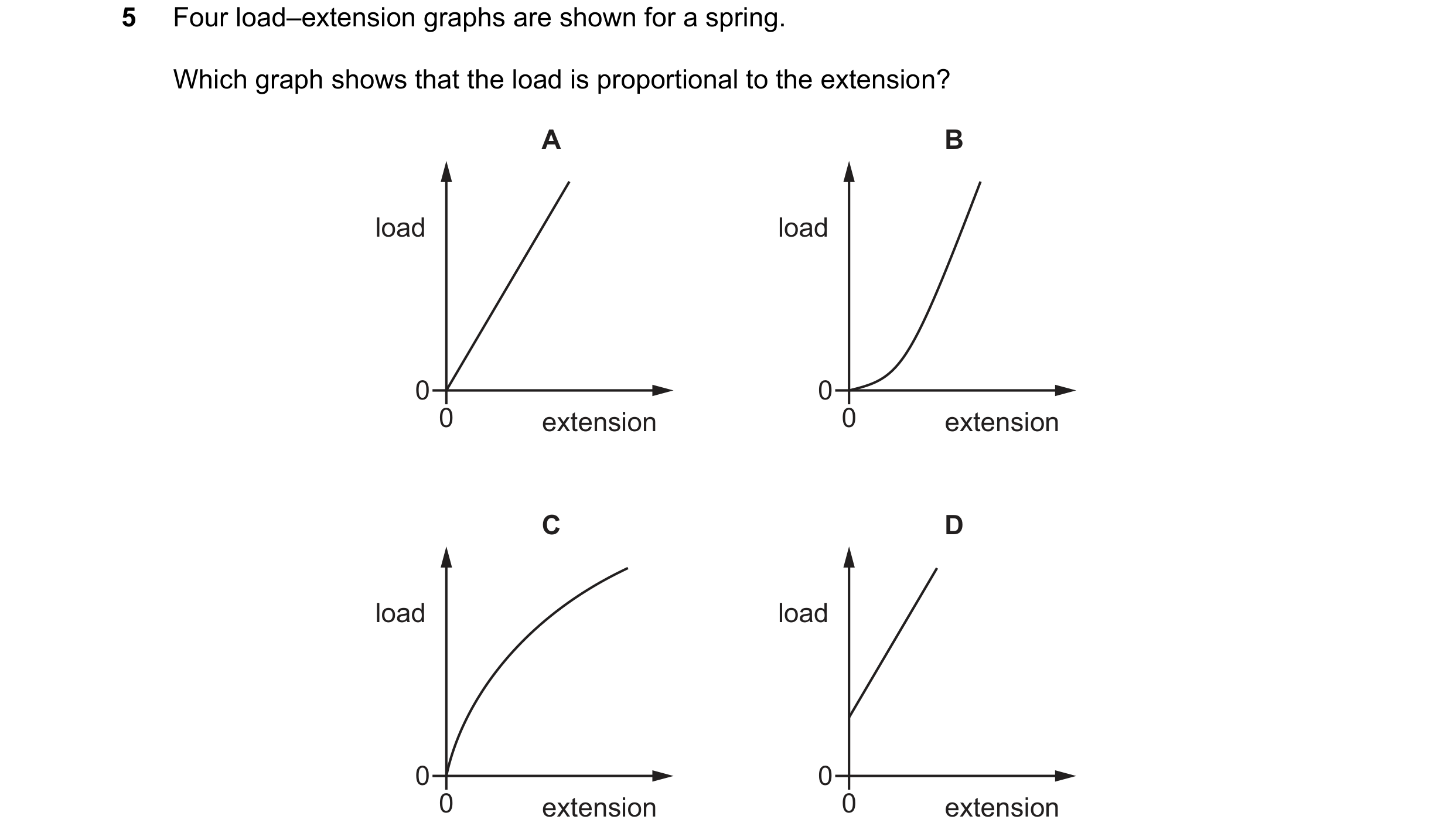
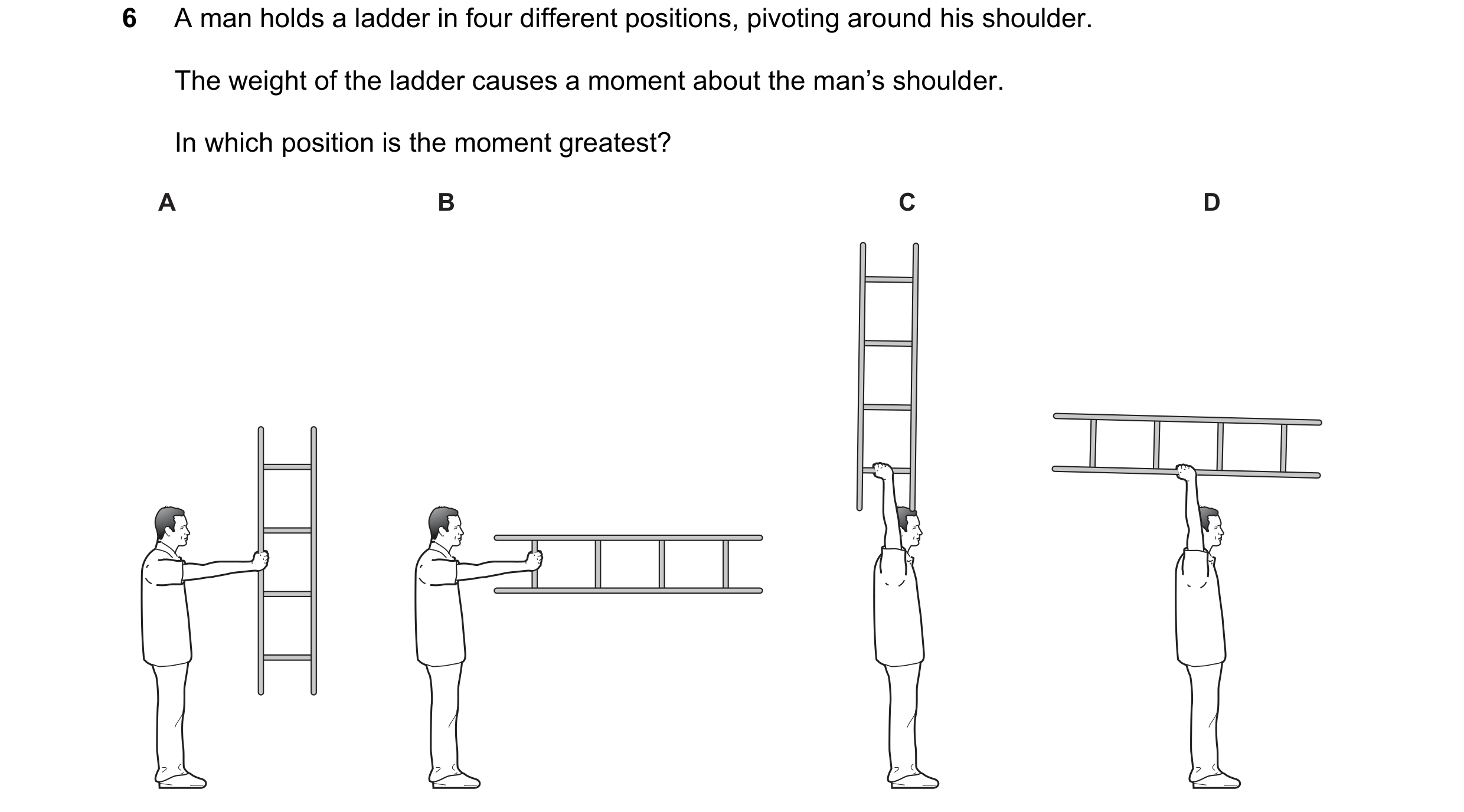 112 / 113
 113 / 113