Questions as text
Q1 · How many of the following materials conduct electricity? 0625/11 May/June 2005
28 How many of the following materials conduct electricity? aluminium silver iron plastic A 1 B 2 C 3 D 4
1 marks
Answer: C
This question in 0625/11 May/June 2005
Q2 · Which circuit should be used to find the resistance of a lamp? 0625/11 Oct/Nov 2005
28 Which circuit should be used to find the resistance of a lamp? A B A V A V C D V V A A
1 marks
Answer: C
This question in 0625/11 Oct/Nov 2005
Q3 · The table shows the voltage and current ratings for four electric heaters 0625/11 Oct/Nov 2005
29 The table shows the voltage and current ratings for four electric heaters. Which heater has the least resistance? voltage / V current / A A 110 5.0 B 110 10 C 230 5.0 D 230 10
1 marks
Answer: B
This question in 0625/11 Oct/Nov 2005
Q4 · Charged particles are emitted from the cathode of an oscilloscope 0625/11 Oct/Nov 2005
37 Charged particles are emitted from the cathode of an oscilloscope. What is the name and the charge of these particles? name of particles charge of particles A electrons negative B electrons positive C protons negative D protons positive
1 marks
Answer: A
This question in 0625/11 Oct/Nov 2005
Q5 · What are the symbols used for the units of current and resistance? 0625/11 May/June 2006
28 What are the symbols used for the units of current and resistance? unit of current unit of resistance A A W B A Ω C V W D V Ω
1 marks
Answer: B
This question in 0625/11 May/June 2006
Q6 · When a plastic comb is placed next to a small piece of aluminium foil hanging from a… 0625/11 May/June 2006
29 When a plastic comb is placed next to a small piece of aluminium foil hanging from a nylon thread, the foil is repelled by the comb. Why is this? A The comb is charged and the foil is uncharged. B The comb is uncharged and the foil is charged. C The comb and the foil have charge of opposite signs. D The comb and the foil have charge of the same sign.
1 marks
Answer: D
This question in 0625/11 May/June 2006
Q7 · Four resistors and an ammeter are connected to a battery as shown 0625/11 May/June 2006
32 Four resistors and an ammeter are connected to a battery as shown. The ammeter reads 2 A. Which of the four labelled points in the circuit is the only one where the current is less than 2 A? A A C D B
1 marks
Answer: C
This question in 0625/11 May/June 2006
Q8 · A cathode-ray tube has an anode and an earthed cathode 0625/11 May/June 2006
37 A cathode-ray tube has an anode and an earthed cathode. Which line in the table shows the charge and the temperature of the anode? anode charge anode temperature A negative cool B negative hot C positive cool D positive hot
1 marks
Answer: C
This question in 0625/11 May/June 2006
Q9 · Four wires are made from the same material 0625/11 May/June 2007
28 Four wires are made from the same material. Which wire has the greatest resistance? length of wire / cm diameter of wire / mm A 50 0.1 B 50 0.2 C 100 0.1 D 100 0.2
1 marks
Answer: C
This question in 0625/11 May/June 2007
Q10 · A plastic rod is rubbed with a dry cloth and becomes positively charged 0625/11 May/June 2007
29 A plastic rod is rubbed with a dry cloth and becomes positively charged. Why has the rod become positively charged? A It has gained electrons. B It has gained neutrons. C It has lost electrons. D It has lost neutrons.
1 marks
Answer: C
This question in 0625/11 May/June 2007
Q11 · The diagram shows a lamp connected to a transformer 0625/11 May/June 2007
36 The diagram shows a lamp connected to a transformer. 40 turns 200 turns 12 V a.c. What is the potential difference across the lamp? A 2.4 V B 12 V C 60 V D 240 V
1 marks
Answer: C
This question in 0625/11 May/June 2007
Q12 · A beam of cathode rays passes through an electric field between two parallel plates 0625/11 May/June 2007
37 A beam of cathode rays passes through an electric field between two parallel plates. + + + + + + cathode rays – – – – – – In which direction is the beam deflected? A into the page B out of the page C towards the bottom of the page D towards the top of the page
1 marks
Answer: D
This question in 0625/11 May/June 2007
Q13 · Three charged balls, P, Q and R, are suspended by insulated threads 0625/11 Oct/Nov 2007
27 Three charged balls, P, Q and R, are suspended by insulated threads. Ball P is negatively charged. insulated thread P – Q Q R What are the charges on Q and on R? Q R A positive positive B positive negative C negative positive D negative negative
1 marks
Answer: C
This question in 0625/11 Oct/Nov 2007
Q14 · The circuit shows a current I in a resistor of resistance R 0625/11 Oct/Nov 2007
28 The circuit shows a current I in a resistor of resistance R. 3.0 V I R Which line gives possible values of I and of R? I / A R / Ω A 1.5 1.5 B 1.5 2.0 C 6.0 2.0 D 4.0 12.0
1 marks
Answer: B
This question in 0625/11 Oct/Nov 2007
Q15 · The circuit shown in the diagram contains an unknown component X, hidden in a box 0625/11 Oct/Nov 2007
29 The circuit shown in the diagram contains an unknown component X, hidden in a box. The voltage-current graph for X is as shown. variable voltage supply + – voltage A X 0 V 0 current What is the component X? A a capacitor B a closed switch C a metallic resistor D an open switch
1 marks
Answer: C
This question in 0625/11 Oct/Nov 2007
Q16 · The diagram shows a battery connected to three identical resistors 0625/11 Oct/Nov 2007
31 The diagram shows a battery connected to three identical resistors. Four ammeters A, B, C and D are connected in the circuit. Which ammeter shows the smallest reading? A A A D A B A C
1 marks
Answer: B
This question in 0625/11 Oct/Nov 2007
Q17 · A mains electrical circuit uses insulated copper cable and the cable overheats 0625/11 Oct/Nov 2007
34 A mains electrical circuit uses insulated copper cable and the cable overheats. To prevent the cable overheating, how should the cable be changed, and why? A Use thicker copper cable which has less resistance. B Use thicker insulation which stops the heat escaping. C Use thinner copper cable which has more resistance. D Use thinner insulation which allows less heat to escape.
1 marks
Answer: A
This question in 0625/11 Oct/Nov 2007
Q18 · The diagram shows a cathode-ray tube 0625/11 Oct/Nov 2007
37 The diagram shows a cathode-ray tube. electron top beam screen Y2 X2 heater Y1 X1 cathode anode Y-plates X-plates bottom What must be done to deflect the electron beam upwards? A make X1 more positive than X2 B make X2 more positive than X1 C make Y1 more positive than Y2 D make Y2 more positive than Y1
1 marks
Answer: D
This question in 0625/11 Oct/Nov 2007
Q19 · A polythene rod repels an inflated balloon hanging from a nylon thread 0625/11 May/June 2008
29 A polythene rod repels an inflated balloon hanging from a nylon thread. What charges must the rod and the balloon carry? A The rod and the balloon carry opposite charges. B The rod and the balloon carry like charges. C The rod is charged but the balloon is not. D The balloon is charged but the rod is not.
1 marks
Answer: B
This question in 0625/11 May/June 2008
Q20 · In order to produce a beam of cathode rays, a heated filament is placed near to an anode… 0625/11 May/June 2008
36 In order to produce a beam of cathode rays, a heated filament is placed near to an anode in an evacuated glass vessel. evacuated glass vessel anode heated filament What is the type of charge on the anode and why is this charge chosen? charge reason A negative to attract electrons B negative to repel electrons C positive to attract electrons D positive to repel electrons
1 marks
Answer: C
This question in 0625/11 May/June 2008
Q21 · When there is an electric current in a metal wire, what flows through the wire? 0625/11 Oct/Nov 2008
28 When there is an electric current in a metal wire, what flows through the wire? A atoms B electrons C neutrons D protons
1 marks
Answer: B
This question in 0625/11 Oct/Nov 2008
Q22 · The table shows the voltage and current ratings for four electric heaters 0625/11 Oct/Nov 2008
29 The table shows the voltage and current ratings for four electric heaters. Which heater has the least resistance? voltage / V current / A A 110 5.0 B 110 10.0 C 230 5.0 D 230 10.0
1 marks
Answer: B
This question in 0625/11 Oct/Nov 2008
Q23 · The diagram shows four different circuits 0625/11 Oct/Nov 2008
31 The diagram shows four different circuits. P Q 3 Ω 5 Ω R S 3 Ω 3 Ω 5 Ω 5 Ω What is the order of increasing resistance of these circuits? lowest highest resistance resistance A P Q R S B R S P Q C S P Q R D P R Q S
1 marks
Answer: C
This question in 0625/11 Oct/Nov 2008
Q24 · A cathode-ray beam passes through an electric field between charged parallel plates 0625/11 Oct/Nov 2008
36 A cathode-ray beam passes through an electric field between charged parallel plates. + cathode-ray beam – In which direction is the beam deflected? A towards the negative plate B towards the positive plate C into the page D out of the page
1 marks
Answer: B
This question in 0625/11 Oct/Nov 2008
Q25 · When the thermistor in the circuit below is heated, the lamp becomes brighter 0625/11 Oct/Nov 2008
37 When the thermistor in the circuit below is heated, the lamp becomes brighter. Why does this happen? A The resistance of the lamp decreases. B The resistance of the lamp increases. C The resistance of the thermistor decreases. D The resistance of the thermistor increases.
1 marks
Answer: C
This question in 0625/11 Oct/Nov 2008
Q26 · Which particle does not experience a force due to an electric field? 0625/11 May/June 2009
27 Which particle does not experience a force due to an electric field? A α-particle B electron C neutron D proton
1 marks
Answer: C
This question in 0625/11 May/June 2009
Q27 · Using the circuit shown, the current I is found for various voltages V 0625/11 May/June 2009
28 Using the circuit shown, the current I is found for various voltages V. The temperature of the resistor does not change. variable direct voltage V A I Which graph shows the results obtained? A B C D I I I I 0 0 0 0 0 V 0 V 0 V 0 V
1 marks
Answer: A
This question in 0625/11 May/June 2009
Q28 · In the circuit shown, ammeter X reads 0.5 A 0625/11 May/June 2009
29 In the circuit shown, ammeter X reads 0.5 A. 4.0 V X A A Y 3.0 Ω 5.0 Ω What does ammeter Y read? A 0 B 0.5 A C 3.5 A D 4.0 A
1 marks
Answer: B
This question in 0625/11 May/June 2009
Q29 · In the circuits shown, all the resistors are identical 0625/11 May/June 2009
30 In the circuits shown, all the resistors are identical. Which circuit has the least resistance? A B C D
1 marks
Answer: C
This question in 0625/11 May/June 2009
Q30 · In a cathode-ray tube, a hot tungsten cathode releases particles by thermionic emission 0625/11 May/June 2009
36 In a cathode-ray tube, a hot tungsten cathode releases particles by thermionic emission. What are these particles? A α-particles B electrons C protons D tungsten atoms
1 marks
Answer: B
This question in 0625/11 May/June 2009
Q31 · The diagram shows a cathode-ray tube 0625/11 May/June 2009
37 The diagram shows a cathode-ray tube. cathode anode top Y plate P screen bottom Y plate A student wants the cathode rays to make a spot at P on the screen. Which parts of the cathode-ray tube should be positive? A anode and top Y plate B anode and bottom Y plate C cathode and top Y plate D cathode and bottom Y plate
1 marks
Answer: A
This question in 0625/11 May/June 2009
Q32 · A pupil measures the potential difference across a device and the current in it 0625/11 Oct/Nov 2009
27 A pupil measures the potential difference across a device and the current in it. Which calculation gives the resistance of the device? A current + potential difference B current ÷ potential difference C potential difference ÷ current D potential difference × current
1 marks
Answer: C
This question in 0625/11 Oct/Nov 2009
Q33 · A student uses a length of wire as a resistor 0625/11 Oct/Nov 2009
28 A student uses a length of wire as a resistor. He discovers that the resistance of the wire is too small. To be certain of making a resistor of higher value, he should use a piece of wire that is A longer and thicker. B longer and thinner. C shorter and thicker. D shorter and thinner.
1 marks
Answer: B
This question in 0625/11 Oct/Nov 2009
Q34 · The diagram shows a battery connected to two identical resistors 0625/11 Oct/Nov 2009
29 The diagram shows a battery connected to two identical resistors. Three ammeters M1, M2 and M3 are connected in the circuit. M1 A A M3 A M2 Meter M1 reads 1.0 A. What are the readings on M2 and on M3? reading on M2 / A reading on M3 / A A 0.5 0.0 B 0.5 0.5 C 0.5 1.0 D 1.0 1.0
1 marks
Answer: D
This question in 0625/11 Oct/Nov 2009
Q35 · The diagram shows a beam of cathode rays entering an electric field 0625/11 Oct/Nov 2009
36 The diagram shows a beam of cathode rays entering an electric field. – beam + In which direction is the beam deflected by the field? A downwards B upwards C into the page D out of the page
1 marks
Answer: A
This question in 0625/11 Oct/Nov 2009
Q36 · To create cathode rays in a vacuum, what might be a suitable potential difference to… 0625/11 Oct/Nov 2009
37 To create cathode rays in a vacuum, what might be a suitable potential difference to connect between the cathode and anode? A 6 V a.c. B 6 V d.c. C 600 V a.c. D 600 V d.c.
1 marks
Answer: D
This question in 0625/11 Oct/Nov 2009
Q37 · A pupil measures the potential difference across a device and the current in it 0625/12 Oct/Nov 2009
25 A pupil measures the potential difference across a device and the current in it. Which calculation gives the resistance of the device? A current + potential difference B current ÷ potential difference C potential difference ÷ current D potential difference × current
1 marks
Answer: C
This question in 0625/12 Oct/Nov 2009
Q38 · A student uses a length of wire as a resistor 0625/12 Oct/Nov 2009
26 A student uses a length of wire as a resistor. He discovers that the resistance of the wire is too small. To be certain of making a resistor of higher value, he should use a piece of wire that is A longer and thicker. B longer and thinner. C shorter and thicker. D shorter and thinner.
1 marks
Answer: B
This question in 0625/12 Oct/Nov 2009
Q39 · The diagram shows a battery connected to two identical resistors 0625/12 Oct/Nov 2009
30 The diagram shows a battery connected to two identical resistors. Three ammeters M1, M2 and M3 are connected in the circuit. M1 A A M3 A M2 Meter M1 reads 1.0 A. What are the readings on M2 and on M3? reading on M2 / A reading on M3 / A A 0.5 0.0 B 0.5 0.5 C 0.5 1.0 D 1.0 1.0
1 marks
Answer: D
This question in 0625/12 Oct/Nov 2009
Q40 · The diagram shows a beam of cathode rays entering an electric field 0625/12 Oct/Nov 2009
35 The diagram shows a beam of cathode rays entering an electric field. – beam + In which direction is the beam deflected by the field? A downwards B upwards C into the page D out of the page
1 marks
Answer: A
This question in 0625/12 Oct/Nov 2009
Q41 · To create cathode rays in a vacuum, what might be a suitable potential difference to… 0625/12 Oct/Nov 2009
36 To create cathode rays in a vacuum, what might be a suitable potential difference to connect between the cathode and anode? A 6 V a.c. B 6 V d.c. C 600 V a.c. D 600 V d.c.
1 marks
Answer: D
This question in 0625/12 Oct/Nov 2009
Q42 · The table shows the lengths and diameters of four copper wires 0625/11 May/June 2010
28 The table shows the lengths and diameters of four copper wires. Which wire has the least resistance? length / m diameter / mm A 0.50 1.0 B 0.50 2.5 C 0.75 1.0 D 0.75 2.5
1 marks
Answer: B
This question in 0625/11 May/June 2010
Q43 · A circuit is set up to measure the resistance of a resistor R 0625/11 May/June 2010
29 A circuit is set up to measure the resistance of a resistor R. The meter readings are 2.0 A and 3.0 V. A V R What is the resistance of the resistor R? A 0.67 Ω B 1.5 Ω C 5.0 Ω D 6.0 Ω
1 marks
Answer: B
This question in 0625/11 May/June 2010
Q44 · A lamp is connected in four circuits in turn, each using identical batteries 0625/11 May/June 2010
31 A lamp is connected in four circuits in turn, each using identical batteries. The resistors are all identical. In which circuit will the lamp be brightest? A B C D
1 marks
Answer: C
This question in 0625/11 May/June 2010
Q45 · A cathode-ray tube has an anode and an earthed cathode 0625/11 May/June 2010
37 A cathode-ray tube has an anode and an earthed cathode. Which row shows the charge on the anode and the temperature of the cathode? cathode anode charge temperature A negative cool B negative hot C positive cool D positive hot
1 marks
Answer: D
This question in 0625/11 May/June 2010
Q46 · A lamp is connected in four circuits in turn, each using identical batteries 0625/12 May/June 2010
29 A lamp is connected in four circuits in turn, each using identical batteries. The resistors are all identical. In which circuit will the lamp be brightest? A B C D
1 marks
Answer: C
This question in 0625/12 May/June 2010
Q47 · A circuit is set up to measure the resistance of a resistor R 0625/12 May/June 2010
30 A circuit is set up to measure the resistance of a resistor R. The meter readings are 2.0 A and 3.0 V. A V R What is the resistance of the resistor R? A 0.67 Ω B 1.5 Ω C 5.0 Ω D 6.0 Ω
1 marks
Answer: B
This question in 0625/12 May/June 2010
Q48 · The table shows the lengths and diameters of four copper wires 0625/12 May/June 2010
31 The table shows the lengths and diameters of four copper wires. Which wire has the least resistance? length / m diameter / mm A 0.50 1.0 B 0.50 2.5 C 0.75 1.0 D 0.75 2.5
1 marks
Answer: B
This question in 0625/12 May/June 2010
Q49 · A potential difference (p.d.) across a resistor causes a current in it 0625/11 Oct/Nov 2010
28 A potential difference (p.d.) across a resistor causes a current in it. resistor current p.d. The p.d. and the resistance of the resistor can both be changed. Which row shows two changes that will both increase the current in the resistor? change change A decrease p.d. decrease resistance B decrease p.d. increase resistance C increase p.d. decrease resistance D increase p.d. increase resistance
1 marks
Answer: C
This question in 0625/11 Oct/Nov 2010
Q50 · The diagram shows a circuit containing two ammeters and three resistors 0625/11 Oct/Nov 2010
29 The diagram shows a circuit containing two ammeters and three resistors. ammeter ammeter A A X Y R1 R2 R3 Which of the ammeters will show the current in resistor R2? A ammeter X only B ammeter Y only C both ammeter X and ammeter Y D neither ammeter X nor ammeter Y
1 marks
Answer: C
This question in 0625/11 Oct/Nov 2010
Q51 · Which component can store energy and can be used in time-delay circuits? 0625/11 Oct/Nov 2010
30 Which component can store energy and can be used in time-delay circuits? A a capacitor B a potentiometer C a resistor D a thermistor
1 marks
Answer: A
This question in 0625/11 Oct/Nov 2010
Q52 · A circuit contains two resistors connected in parallel with a battery 0625/11 Oct/Nov 2010
31 A circuit contains two resistors connected in parallel with a battery. R P 2 Ω Q 4 Ω Which of the following statements about the currents at P, Q and R is true? A The current at P is the greatest. B The current at Q is the greatest. C The current at R is the greatest. D The current is the same at points P, Q and R.
1 marks
Answer: C
This question in 0625/11 Oct/Nov 2010
Q53 · The potential divider shown is connected across a constant 12 V supply 0625/11 Oct/Nov 2010
32 The potential divider shown is connected across a constant 12 V supply. V1 20 Ω 12 V V2 R When R has a value of 20 Ω, the voltmeter readings are equal. How do these readings change when the value of R is reduced to 10 Ω? reading on V1 reading on V2 A decreases decreases B decreases increases C increases decreases D increases increases
1 marks
Answer: C
This question in 0625/11 Oct/Nov 2010
Q54 · An electric field is set up between two parallel plates 0625/11 Oct/Nov 2010
37 An electric field is set up between two parallel plates. Cathode rays are directed into this field, parallel to the plates. + cathode rays – In which direction are the cathode rays deflected by the electric field? A downwards B upwards C into the page D out of the page
1 marks
Answer: B
This question in 0625/11 Oct/Nov 2010
Q55 · A potential difference (p.d.) across a resistor causes a current in it 0625/12 Oct/Nov 2010
27 A potential difference (p.d.) across a resistor causes a current in it. resistor current p.d. The p.d. and the resistance of the resistor can both be changed. Which row shows two changes that will both increase the current in the resistor? change change A decrease p.d. decrease resistance B decrease p.d. increase resistance C increase p.d. decrease resistance D increase p.d. increase resistance
1 marks
Answer: C
This question in 0625/12 Oct/Nov 2010
Q56 · Which component can store energy and can be used in time-delay circuits? 0625/12 Oct/Nov 2010
28 Which component can store energy and can be used in time-delay circuits? A a capacitor B a potentiometer C a resistor D a thermistor
1 marks
Answer: A
This question in 0625/12 Oct/Nov 2010
Q57 · An electric field is set up between two parallel plates 0625/12 Oct/Nov 2010
37 An electric field is set up between two parallel plates. Cathode rays are directed into this field, parallel to the plates. + cathode rays – In which direction are the cathode rays deflected by the electric field? A downwards B upwards C into the page D out of the page
1 marks
Answer: B
This question in 0625/12 Oct/Nov 2010
Q58 · The diagram shows a circuit containing two ammeters and three resistors 0625/13 Oct/Nov 2010
28 The diagram shows a circuit containing two ammeters and three resistors. ammeter ammeter A A X Y R1 R2 R3 Which of the ammeters will show the current in resistor R2? A ammeter X only B ammeter Y only C both ammeter X and ammeter Y D neither ammeter X nor ammeter Y
1 marks
Answer: C
This question in 0625/13 Oct/Nov 2010
Q59 · A circuit contains two resistors connected in parallel with a battery 0625/13 Oct/Nov 2010
29 A circuit contains two resistors connected in parallel with a battery. R P 2 Ω Q 4 Ω Which of the following statements about the currents at P, Q and R is true? A The current at P is the greatest. B The current at Q is the greatest. C The current at R is the greatest. D The current is the same at points P, Q and R.
1 marks
Answer: C
This question in 0625/13 Oct/Nov 2010
Q60 · A potential difference (p.d.) across a resistor causes a current in it 0625/13 Oct/Nov 2010
30 A potential difference (p.d.) across a resistor causes a current in it. resistor current p.d. The p.d. and the resistance of the resistor can both be changed. Which row shows two changes that will both increase the current in the resistor? change change A decrease p.d. decrease resistance B decrease p.d. increase resistance C increase p.d. decrease resistance D increase p.d. increase resistance
1 marks
Answer: C
This question in 0625/13 Oct/Nov 2010
Q61 · The potential divider shown is connected across a constant 12 V supply 0625/13 Oct/Nov 2010
31 The potential divider shown is connected across a constant 12 V supply. V1 20 Ω 12 V V2 R When R has a value of 20 Ω, the voltmeter readings are equal. How do these readings change when the value of R is reduced to 10 Ω? reading on V1 reading on V2 A decreases decreases B decreases increases C increases decreases D increases increases
1 marks
Answer: C
This question in 0625/13 Oct/Nov 2010
Q62 · Which component can store energy and can be used in time-delay circuits? 0625/13 Oct/Nov 2010
32 Which component can store energy and can be used in time-delay circuits? A a capacitor B a potentiometer C a resistor D a thermistor
1 marks
Answer: A
This question in 0625/13 Oct/Nov 2010
Q63 · An electric field is set up between two parallel plates 0625/13 Oct/Nov 2010
37 An electric field is set up between two parallel plates. Cathode rays are directed into this field, parallel to the plates. + cathode rays – In which direction are the cathode rays deflected by the electric field? A downwards B upwards C into the page D out of the page
1 marks
Answer: B
This question in 0625/13 Oct/Nov 2010
Q64 · An ammeter and an 18 Ω resistor are connected in series with a battery 0625/11 May/June 2011
27 An ammeter and an 18 Ω resistor are connected in series with a battery. The reading on the ammeter is 0.50 A. The resistance of the battery and the ammeter can be ignored. A 18 Ω What is the electromotive force (e.m.f.) of the battery? A 9.0 N B 9.0 V C 36 N D 36 V
1 marks
Answer: B
This question in 0625/11 May/June 2011
Q65 · A polythene rod repels an inflated balloon hanging from a nylon thread 0625/11 May/June 2011
28 A polythene rod repels an inflated balloon hanging from a nylon thread. What charges must the rod and the balloon carry? A The rod and the balloon carry opposite charges. B The rod and the balloon carry like charges. C The rod is charged but the balloon is not. D The balloon is charged but the rod is not.
1 marks
Answer: B
This question in 0625/11 May/June 2011
Q66 · The diagram shows a thermistor in a potential divider 0625/11 May/June 2011
31 The diagram shows a thermistor in a potential divider. A voltmeter is connected across the thermistor. V The graph shows how the resistance of the thermistor changes with temperature. resistance temperature As the thermistor becomes warmer, what happens to its resistance and what happens to the reading on the voltmeter? resistance voltmeter reading A decreases decreases B decreases increases C increases decreases D increases increases
1 marks
Answer: A
This question in 0625/11 May/June 2011
Q67 · The diagram shows a cathode-ray tube 0625/11 May/June 2011
36 The diagram shows a cathode-ray tube. power supply Y vacuum screen X What are the correct labels for X and for Y? X Y A negative anode positive cathode B negative cathode positive anode C positive anode negative cathode D positive cathode negative anode
1 marks
Answer: B
This question in 0625/11 May/June 2011
Q68 · A beam of cathode rays passes between two parallel metal plates connected to a… 0625/11 May/June 2011
37 A beam of cathode rays passes between two parallel metal plates connected to a high-voltage d.c. power supply. Which path does the beam follow? C + + + + + + D cathode B rays A
1 marks
Answer: C
This question in 0625/11 May/June 2011
Q69 · An ammeter and an 18 Ω resistor are connected in series with a battery 0625/12 May/June 2011
25 An ammeter and an 18 Ω resistor are connected in series with a battery. The reading on the ammeter is 0.50 A. The resistance of the battery and the ammeter can be ignored. A 18 Ω What is the electromotive force (e.m.f.) of the battery? A 9.0 N B 9.0 V C 36 N D 36 V
1 marks
Answer: B
This question in 0625/12 May/June 2011
Q70 · Which circuit includes a capacitor and what does the capacitor do in this circuit? 0625/12 May/June 2011
27 Which circuit includes a capacitor and what does the capacitor do in this circuit? what the circuit capacitor does A potential divider stores current B potential divider stores energy C time delay stores current D time delay stores energy
1 marks
Answer: D
This question in 0625/12 May/June 2011
Q71 · The diagram shows a thermistor in a potential divider 0625/12 May/June 2011
29 The diagram shows a thermistor in a potential divider. A voltmeter is connected across the thermistor. V The graph shows how the resistance of the thermistor changes with temperature. resistance temperature As the thermistor becomes warmer, what happens to its resistance and what happens to the reading on the voltmeter? resistance voltmeter reading A decreases decreases B decreases increases C increases decreases D increases increases
1 marks
Answer: A
This question in 0625/12 May/June 2011
Q72 · A polythene rod repels an inflated balloon hanging from a nylon thread 0625/12 May/June 2011
30 A polythene rod repels an inflated balloon hanging from a nylon thread. What charges must the rod and the balloon carry? A The rod and the balloon carry opposite charges. B The rod and the balloon carry like charges. C The rod is charged but the balloon is not. D The balloon is charged but the rod is not.
1 marks
Answer: B
This question in 0625/12 May/June 2011
Q73 · A beam of cathode rays passes between two parallel metal plates connected to a… 0625/12 May/June 2011
39 A beam of cathode rays passes between two parallel metal plates connected to a high-voltage d.c. power supply. Which path does the beam follow? C + + + + + + D cathode B rays A
1 marks
Answer: C
This question in 0625/12 May/June 2011
Q74 · The diagram shows a cathode-ray tube 0625/12 May/June 2011
40 The diagram shows a cathode-ray tube. power supply Y vacuum screen X What are the correct labels for X and for Y? X Y A negative anode positive cathode B negative cathode positive anode C positive anode negative cathode D positive cathode negative anode
1 marks
Answer: B
This question in 0625/12 May/June 2011
Q75 · An ammeter and an 18 Ω resistor are connected in series with a battery 0625/13 May/June 2011
25 An ammeter and an 18 Ω resistor are connected in series with a battery. The reading on the ammeter is 0.50 A. The resistance of the battery and the ammeter can be ignored. A 18 Ω What is the electromotive force (e.m.f.) of the battery? A 9.0 N B 9.0 V C 36 N D 36 V
1 marks
Answer: B
This question in 0625/13 May/June 2011
Q76 · Which of these is an electric current? 0625/11 Oct/Nov 2012
29 Which of these is an electric current? A a beam of atoms B a beam of electrons C a beam of molecules D a beam of neutrons
1 marks
Answer: B
This question in 0625/11 Oct/Nov 2012
Q77 · The diagram shows a circuit used to find the resistance of lamp L 0625/11 Oct/Nov 2012
30 The diagram shows a circuit used to find the resistance of lamp L. Blocks P, Q and R represent the different components used. 12 V P R L Q Which is a correct possible choice of components to use for P, Q and R? P Q R A ammeter variable resistor voltmeter B variable resistor voltmeter ammeter C voltmeter ammeter variable resistor D voltmeter variable resistor ammeter
1 marks
Answer: B
This question in 0625/11 Oct/Nov 2012
Q78 · An electric oven is connected to the mains supply using insulated copper wires 0625/11 Oct/Nov 2012
34 An electric oven is connected to the mains supply using insulated copper wires. The wires become very warm. What can be done to prevent so much heat being produced in the connecting wires? A Use thicker copper wires. B Use thinner copper wires. C Use thicker insulation. D Use thinner insulation.
1 marks
Answer: A
This question in 0625/11 Oct/Nov 2012
Q79 · Which of these is an electric current? 0625/12 Oct/Nov 2012
27 Which of these is an electric current? A a beam of atoms B a beam of electrons C a beam of molecules D a beam of neutrons
1 marks
Answer: B
This question in 0625/12 Oct/Nov 2012
Q80 · The diagram shows two voltmeters, P and Q, connected to a potential divider 0625/12 Oct/Nov 2012
29 The diagram shows two voltmeters, P and Q, connected to a potential divider. V voltmeter P X V voltmeter Q The sliding connection at point X is moved towards the top of the diagram. What happens to the reading on P and to the reading on Q? reading on P reading on Q A decreases decreases B decreases increases C increases decreases D increases increases
1 marks
Answer: B
This question in 0625/12 Oct/Nov 2012
Q81 · The diagram shows a circuit used to find the resistance of lamp L 0625/12 Oct/Nov 2012
30 The diagram shows a circuit used to find the resistance of lamp L. Blocks P, Q and R represent the different components used. 12 V P R L Q Which is a correct possible choice of components to use for P, Q and R? P Q R A ammeter variable resistor voltmeter B variable resistor voltmeter ammeter C voltmeter ammeter variable resistor D voltmeter variable resistor ammeter
1 marks
Answer: B
This question in 0625/12 Oct/Nov 2012
Q82 · An electric oven is connected to the mains supply using insulated copper wires 0625/12 Oct/Nov 2012
36 An electric oven is connected to the mains supply using insulated copper wires. The wires become very warm. What can be done to prevent so much heat being produced in the connecting wires? A Use thicker copper wires. B Use thinner copper wires. C Use thicker insulation. D Use thinner insulation.
1 marks
Answer: A
This question in 0625/12 Oct/Nov 2012
Q83 · A beam of cathode rays passes between two parallel, charged metal plates in a vacuum 0625/12 Oct/Nov 2012
37 A beam of cathode rays passes between two parallel, charged metal plates in a vacuum. cathode rays – + – + – + – + – + – + – + – + – + – + In which direction is the beam deflected? A into the page B out of the page C to the left of the page D to the right of the page
1 marks
Answer: D
This question in 0625/12 Oct/Nov 2012
Q84 · Which row identifies quantities that are measured in newtons? 0625/13 Oct/Nov 2012
5 Which row identifies quantities that are measured in newtons? electromotive force mass weight (e.m.f.) A no no yes B no yes yes C yes no no D yes yes no
1 marks
Answer: A
This question in 0625/13 Oct/Nov 2012
Q85 · Which is the worst electrical conductor? 0625/13 Oct/Nov 2012
29 Which is the worst electrical conductor? A aluminium B carbon (graphite) C iron D sulfur
1 marks
Answer: D
This question in 0625/13 Oct/Nov 2012
Q86 · The circuit shows a 24 V battery connected to two resistors in series 0625/13 Oct/Nov 2012
30 The circuit shows a 24 V battery connected to two resistors in series. A R V The reading on the ammeter is 2.0 A and the reading on the voltmeter is 8.0 V. What is the resistance of resistor R? A 0.25 Ω B 4.0 Ω C 10 Ω D 16 Ω
1 marks
Answer: B
This question in 0625/13 Oct/Nov 2012
Q87 · The diagram shows a potential divider circuit 0625/13 Oct/Nov 2012
33 The diagram shows a potential divider circuit. V The temperature of the thermistor increases. What happens to the resistance of the thermistor, and what happens to the reading on the voltmeter? resistance of voltmeter thermistor reading A decreases decreases B decreases increases C increases decreases D increases increases
1 marks
Answer: A
This question in 0625/13 Oct/Nov 2012
Q88 · An electric oven is connected to the mains supply using insulated copper wires 0625/13 Oct/Nov 2012
34 An electric oven is connected to the mains supply using insulated copper wires. The wires become very warm. What can be done to prevent so much heat being produced in the connecting wires? A Use thicker copper wires. B Use thinner copper wires. C Use thicker insulation. D Use thinner insulation.
1 marks
Answer: A
This question in 0625/13 Oct/Nov 2012
Q89 · The metal filament shown is heated by passing a current through it 0625/13 Oct/Nov 2012
37 The metal filament shown is heated by passing a current through it. This makes it hot and it releases electrons. metal filament vacuum What is the name of this process of releasing electrons? A convection B evaporation C radioactive emission D thermionic emission
1 marks
Answer: D
This question in 0625/13 Oct/Nov 2012
Q90 · Three charged balls, P, Q and R are suspended by insulating threads 0625/11 May/June 2013
28 Three charged balls, P, Q and R are suspended by insulating threads. Ball P is negatively charged. Ball Q is brought close to ball P. insulating thread P – Q Ball Q is now brought close to ball R. Q R What are the charges on ball Q and on ball R? ball Q ball R A positive positive B positive negative C negative positive D negative negative
1 marks
Answer: C
This question in 0625/11 May/June 2013
Q91 · Which circuit could be used to determine the resistance of the resistor R? 0625/11 May/June 2013
29 Which circuit could be used to determine the resistance of the resistor R? A B V A R R A V C D V A R R V A
1 marks
Answer: B
This question in 0625/11 May/June 2013
Q92 · Which copper wire would have the smallest resistance? 0625/11 May/June 2013
30 Which copper wire would have the smallest resistance? A a long, thick wire B a long, thin wire C a short, thick wire D a short, thin wire
1 marks
Answer: C
This question in 0625/11 May/June 2013
Q93 · The diagram shows an electrical circuit 0625/11 May/June 2013
31 The diagram shows an electrical circuit. L M N P O Between which two points must a voltmeter be connected to find the potential difference across the bell? A L and M B M and N C N and O D O and P
1 marks
Answer: D
This question in 0625/11 May/June 2013
Q94 · The reading on the ammeter in the circuit is 1.0 A 0625/11 May/June 2013
32 The reading on the ammeter in the circuit is 1.0 A. A second ammeter is connected in the circuit. It also reads 1.0 A. At which labelled point is it connected? 1.0 A A A D B C
1 marks
Answer: D
This question in 0625/11 May/June 2013
Q95 · Three charged balls, P, Q and R are suspended by insulating threads 0625/12 May/June 2013
28 Three charged balls, P, Q and R are suspended by insulating threads. Ball P is negatively charged. Ball Q is brought close to ball P. insulating thread P – Q Ball Q is now brought close to ball R. Q R What are the charges on ball Q and on ball R? ball Q ball R A positive positive B positive negative C negative positive D negative negative
1 marks
Answer: C
This question in 0625/12 May/June 2013
Q96 · Which group contains only good electrical conductors? 0625/12 May/June 2013
29 Which group contains only good electrical conductors? A air, carbon (graphite), plastic B air, gold, mercury C carbon (graphite), copper, mercury D copper, gold, plastic
1 marks
Answer: C
This question in 0625/12 May/June 2013
Q97 · A student investigates a circuit that contains two parallel resistors 0625/12 May/June 2013
30 A student investigates a circuit that contains two parallel resistors. The circuit includes meters R, S and T which are all connected correctly. R S T resistors Which types of meter are R, S and T? meter R meter S meter T A ammeter ammeter ammeter B ammeter voltmeter voltmeter C voltmeter ammeter ammeter D voltmeter voltmeter voltmeter
1 marks
Answer: A
This question in 0625/12 May/June 2013
Q98 · The diagram shows an experiment to demonstrate electromagnetic induction 0625/12 May/June 2013
37 The diagram shows an experiment to demonstrate electromagnetic induction. X A wire N S Y X and Y are joined, in turn, by four wires, each made of a different material. Each wire is then moved quickly downwards between the magnets. Which material will not give rise to an induced current in the wire? A aluminium B copper C iron D nylon
1 marks
Answer: D
This question in 0625/12 May/June 2013
Q99 · A beam of cathode rays passes between two charged metal plates 0625/12 May/June 2013
38 A beam of cathode rays passes between two charged metal plates. + cathode rays – What happens to the beam as it passes between the plates? A It is deflected into the paper. B It is deflected out of the paper. C It is deflected towards the negative plate. D It is deflected towards the positive plate.
1 marks
Answer: D
This question in 0625/12 May/June 2013
Q100 · Three charged balls, P, Q and R are suspended by insulating threads 0625/13 May/June 2013
28 Three charged balls, P, Q and R are suspended by insulating threads. Ball P is negatively charged. Ball Q is brought close to ball P. insulating thread P – Q Ball Q is now brought close to ball R. Q R What are the charges on ball Q and on ball R? ball Q ball R A positive positive B positive negative C negative positive D negative negative
1 marks
Answer: C
This question in 0625/13 May/June 2013
Q101 · Which copper wire would have the smallest resistance? 0625/13 May/June 2013
29 Which copper wire would have the smallest resistance? A a long, thick wire B a long, thin wire C a short, thick wire D a short, thin wire
1 marks
Answer: C
This question in 0625/13 May/June 2013
Q102 · The diagram shows an electrical circuit 0625/13 May/June 2013
30 The diagram shows an electrical circuit. L M N P O Between which two points must a voltmeter be connected to find the potential difference across the bell? A L and M B M and N C N and O D O and P
1 marks
Answer: D
This question in 0625/13 May/June 2013
Q103 · Which circuit could be used to determine the resistance of the resistor R? 0625/13 May/June 2013
31 Which circuit could be used to determine the resistance of the resistor R? A B V A R R A V C D V A R R V A
1 marks
Answer: B
This question in 0625/13 May/June 2013
Q104 · The reading on the ammeter in the circuit is 1.0 A 0625/13 May/June 2013
33 The reading on the ammeter in the circuit is 1.0 A. A second ammeter is connected in the circuit. It also reads 1.0 A. At which labelled point is it connected? 1.0 A A A D B C
1 marks
Answer: D
This question in 0625/13 May/June 2013
Q105 · In a cathode-ray tube, particles are fired at a screen 0625/13 May/June 2013
37 In a cathode-ray tube, particles are fired at a screen. What are these particles? A α-particles B electrons C neutrons D protons
1 marks
Answer: B
This question in 0625/13 May/June 2013
Q106 · The diagram shows an experiment to demonstrate electromagnetic induction 0625/13 May/June 2013
38 The diagram shows an experiment to demonstrate electromagnetic induction. X A wire N S Y X and Y are joined, in turn, by four wires, each made of a different material. Each wire is then moved quickly downwards between the magnets. Which material will not give rise to an induced current in the wire? A aluminium B copper C iron D nylon
1 marks
Answer: D
This question in 0625/13 May/June 2013
Q107 · Which equation can be used to calculate the resistance R of a resistor? 0625/11 Oct/Nov 2013
28 Which equation can be used to calculate the resistance R of a resistor? A V = I ÷ R B I = V × R C R = V × I D V = I × R
1 marks
Answer: D
This question in 0625/11 Oct/Nov 2013
Q108 · A student wishes to measure first the electromotive force (e.m.f.) of a battery, and then… 0625/11 Oct/Nov 2013
29 A student wishes to measure first the electromotive force (e.m.f.) of a battery, and then the potential difference (p.d.) across a resistor. She has the resistor, the battery and some connecting wires. What else does she need? A a force meter (newton meter) and a voltmeter B an ammeter and a voltmeter C an ammeter only D a voltmeter only
1 marks
Answer: D
This question in 0625/11 Oct/Nov 2013
Q109 · Two similar balloons hang side by side, on insulating threads, a short distance apart 0625/11 Oct/Nov 2013
30 Two similar balloons hang side by side, on insulating threads, a short distance apart. They are both rubbed with the same dry cloth and become charged. Which diagram shows how the balloons hang after charging? A B C D
1 marks
Answer: B
This question in 0625/11 Oct/Nov 2013
Q110 · When the thermistor in the circuit below is heated, the current in the lamp increases 0625/11 Oct/Nov 2013
31 When the thermistor in the circuit below is heated, the current in the lamp increases. Why does this happen? A The resistance of the lamp decreases. B The resistance of the lamp increases. C The resistance of the thermistor decreases. D The resistance of the thermistor increases.
1 marks
Answer: C
This question in 0625/11 Oct/Nov 2013
Q111 · A student connects various resistors in parallel pairs 0625/11 Oct/Nov 2013
32 A student connects various resistors in parallel pairs. Underneath each diagram is a statement about the total resistance of each pair of resistors. Which statement is correct? A B 2 Ω 5 Ω 2 Ω 1 Ω The total resistance is 4 Ω. The total resistance is between 1 Ω and 5 Ω. C D 10 Ω 20 Ω 5 Ω 10 Ω The total resistance is less than 5 Ω. The total resistance is more than 20 Ω.
1 marks
Answer: C
This question in 0625/11 Oct/Nov 2013
Q112 · The diagram shows a cathode-ray tube used to produce cathode rays 0625/11 Oct/Nov 2013
38 The diagram shows a cathode-ray tube used to produce cathode rays. filament (cathode) anode + cathode-ray tube current I power supply – + – metal plates Which change would increase the deflection of the cathode rays? A decreasing the current I in the filament B increasing the current I in the filament C increasing the potential difference between the filament and the anode D increasing the potential difference between the metal plates
1 marks
Answer: D
This question in 0625/11 Oct/Nov 2013
Q113 · Which equation can be used to calculate the resistance R of a resistor? 0625/12 Oct/Nov 2013
28 Which equation can be used to calculate the resistance R of a resistor? A V = I ÷ R B I = V × R C R = V × I D V = I × R
1 marks
Answer: D
This question in 0625/12 Oct/Nov 2013
Q114 · A student wishes to measure first the electromotive force (e.m.f.) of a battery, and then… 0625/12 Oct/Nov 2013
29 A student wishes to measure first the electromotive force (e.m.f.) of a battery, and then the potential difference (p.d.) across a resistor. She has the resistor, the battery and some connecting wires. What else does she need? A a force meter (newton meter) and a voltmeter B an ammeter and a voltmeter C an ammeter only D a voltmeter only
1 marks
Answer: D
This question in 0625/12 Oct/Nov 2013
Q115 · When the thermistor in the circuit below is heated, the current in the lamp increases 0625/12 Oct/Nov 2013
30 When the thermistor in the circuit below is heated, the current in the lamp increases. Why does this happen? A The resistance of the lamp decreases. B The resistance of the lamp increases. C The resistance of the thermistor decreases. D The resistance of the thermistor increases.
1 marks
Answer: C
This question in 0625/12 Oct/Nov 2013
Q116 · Two similar balloons hang side by side, on insulating threads, a short distance apart 0625/12 Oct/Nov 2013
31 Two similar balloons hang side by side, on insulating threads, a short distance apart. They are both rubbed with the same dry cloth and become charged. Which diagram shows how the balloons hang after charging? A B C D
1 marks
Answer: B
This question in 0625/12 Oct/Nov 2013
Q117 · The diagram shows a cathode-ray tube used to produce cathode rays 0625/12 Oct/Nov 2013
40 The diagram shows a cathode-ray tube used to produce cathode rays. filament (cathode) anode + cathode-ray tube current I power supply – + – metal plates Which change would increase the deflection of the cathode rays? A decreasing the current I in the filament B increasing the current I in the filament C increasing the potential difference between the filament and the anode D increasing the potential difference between the metal plates
1 marks
Answer: D
This question in 0625/12 Oct/Nov 2013
Q118 · A negatively charged plastic rod P is placed above a positively charged plastic rod Q 0625/13 Oct/Nov 2013
28 A negatively charged plastic rod P is placed above a positively charged plastic rod Q. P – – – – – Q + + + + + What are the directions of the electrostatic forces on rod P and on rod Q? electrostatic force electrostatic force on rod P on rod Q A downwards downwards B downwards upwards C upwards downwards D upwards upwards
1 marks
Answer: B
This question in 0625/13 Oct/Nov 2013
Q119 · A student wishes to measure first the electromotive force (e.m.f.) of a battery, and then… 0625/13 Oct/Nov 2013
29 A student wishes to measure first the electromotive force (e.m.f.) of a battery, and then the potential difference (p.d.) across a resistor. She has the resistor, the battery and some connecting wires. What else does she need? A a force meter (newton meter) and a voltmeter B an ammeter and a voltmeter C an ammeter only D a voltmeter only
1 marks
Answer: D
This question in 0625/13 Oct/Nov 2013
Q120 · Two similar balloons hang side by side, on insulating threads, a short distance apart 0625/13 Oct/Nov 2013
30 Two similar balloons hang side by side, on insulating threads, a short distance apart. They are both rubbed with the same dry cloth and become charged. Which diagram shows how the balloons hang after charging? A B C D
1 marks
Answer: B
This question in 0625/13 Oct/Nov 2013
Q121 · The diagram shows a circuit 0625/13 Oct/Nov 2013
32 The diagram shows a circuit. A What should be increased to increase the current in the circuit? A the e.m.f. of the battery B the length of the connecting wires C the resistance of the resistor D the temperature of the resistor
1 marks
Answer: A
This question in 0625/13 Oct/Nov 2013
Q122 · An electric motor is connected to the mains supply by insulated wires 0625/13 Oct/Nov 2013
34 An electric motor is connected to the mains supply by insulated wires. The circuit is protected by a fuse, but the connecting wires become hot. insulated connecting wire live M motor neutral insulated connecting wire How could the wires be prevented from becoming so hot? A Connect a second fuse in the neutral wire. B Use a fuse with a higher current rating. C Use thicker connecting wires. D Use thicker insulation on the connecting wires.
1 marks
Answer: C
This question in 0625/13 Oct/Nov 2013
Q123 · The diagram shows the screen of a cathode-ray tube 0625/13 Oct/Nov 2013
38 The diagram shows the screen of a cathode-ray tube. Cathode rays produced behind the screen strike the screen at P. On their way to the screen, the cathode rays pass between two parallel metal plates. screen P S Which arrangement of the metal plates will cause the beam to be deflected and strike the screen at S? A B C D + – + – – + – +
1 marks
Answer: D
This question in 0625/13 Oct/Nov 2013
Q124 · A plastic rod and a dry cloth are uncharged 0625/11 May/June 2014
27 A plastic rod and a dry cloth are uncharged. The rod is now rubbed with the cloth and they both become charged. The rod becomes negatively charged because some charged particles move from the cloth to the rod. What is the charge on the cloth and which particles moved in the charging process? charge on particles that cloth moved A negative electrons B negative neutrons C positive electrons D positive neutrons
1 marks
Answer: C
This question in 0625/11 May/June 2014
Q125 · The diagram shows an incomplete circuit 0625/11 May/June 2014
28 The diagram shows an incomplete circuit. X Y A Four wires of different length and thickness are connected in turn between point X and point Y. All four wires are made of the same metal. Which wire will cause the greatest reading on the ammeter? A long and thick B long and thin C short and thick D short and thin
1 marks
Answer: C
This question in 0625/11 May/June 2014
Q126 · The diagram shows a circuit containing a battery, a lamp, a switch and another component X 0625/11 May/June 2014
29 The diagram shows a circuit containing a battery, a lamp, a switch and another component X. The switch is initially closed and the lamp is lit. The switch is now opened and the lamp remains lit for several seconds before slowly going out. component X What is component X? A a capacitor B a light-dependent resistor C a thermistor D a variable resistor
1 marks
Answer: A
This question in 0625/11 May/June 2014
Q127 · The diagram shows part of an electric circuit 0625/11 May/June 2014
31 The diagram shows part of an electric circuit. 12 V V 0 V The light falling on the light-dependent resistor (LDR) increases in brightness. What happens to the resistance of the LDR and what happens to the reading on the voltmeter? resistance of reading on LDR voltmeter A decreases decreases B decreases increases C increases decreases D increases increases
1 marks
Answer: B
This question in 0625/11 May/June 2014
Q128 · Which labelled component in the circuit shown controls the brightness of lamp X? 0625/11 May/June 2014
32 Which labelled component in the circuit shown controls the brightness of lamp X? A V X B C D
1 marks
Answer: B
This question in 0625/11 May/June 2014
Q129 · A beam of cathode rays passes between two parallel metal plates connected to a… 0625/11 May/June 2014
37 A beam of cathode rays passes between two parallel metal plates connected to a high-voltage d.c. power supply. Which path does the beam follow? metal plate B + + + + + + A cathode C rays D metal plate
1 marks
Answer: B
This question in 0625/11 May/June 2014
Q130 · Two balloons, X and Y, are suspended by insulating threads 0625/12 May/June 2014
28 Two balloons, X and Y, are suspended by insulating threads. They are each held near a negatively charged balloon. The balloons hang as shown. insulating insulating threads threads – – – – – – – – – – – – – X – – Y ––– – – – – – – What is the charge on balloon X and what is the charge on balloon Y? balloon X balloon Y A negative negative B negative positive C positive negative D positive positive
1 marks
Answer: B
This question in 0625/12 May/June 2014
Q131 · Which quantities is a voltmeter used to measure? 0625/12 May/June 2014
29 Which quantities is a voltmeter used to measure? A current and e.m.f. only B current and p.d. only C e.m.f. and p.d. only D e.m.f., current and p.d
1 marks
Answer: C
This question in 0625/12 May/June 2014
Q132 · A beam of cathode rays passes between two parallel metal plates connected to a… 0625/12 May/June 2014
37 A beam of cathode rays passes between two parallel metal plates connected to a high-voltage d.c. power supply. Which path does the beam follow? metal plate B + + + + + + A cathode C rays D metal plate
1 marks
Answer: B
This question in 0625/12 May/June 2014
Q133 · A plastic rod and a dry cloth are uncharged 0625/13 May/June 2014
25 A plastic rod and a dry cloth are uncharged. The rod is now rubbed with the cloth and they both become charged. The rod becomes negatively charged because some charged particles move from the cloth to the rod. What is the charge on the cloth and which particles moved in the charging process? charge on particles that cloth moved A negative electrons B negative neutrons C positive electrons D positive neutrons
1 marks
Answer: C
This question in 0625/13 May/June 2014
Q134 · Which labelled component in the circuit shown controls the brightness of lamp X? 0625/13 May/June 2014
27 Which labelled component in the circuit shown controls the brightness of lamp X? A V X B C D
1 marks
Answer: B
This question in 0625/13 May/June 2014
Q135 · The diagram shows part of an electric circuit 0625/13 May/June 2014
28 The diagram shows part of an electric circuit. 12 V V 0 V The light falling on the light-dependent resistor (LDR) increases in brightness. What happens to the resistance of the LDR and what happens to the reading on the voltmeter? resistance of reading on LDR voltmeter A decreases decreases B decreases increases C increases decreases D increases increases
1 marks
Answer: B
This question in 0625/13 May/June 2014
Q136 · The diagram shows an incomplete circuit 0625/13 May/June 2014
29 The diagram shows an incomplete circuit. X Y A Four wires of different length and thickness are connected in turn between point X and point Y. All four wires are made of the same metal. Which wire will cause the greatest reading on the ammeter? A long and thick B long and thin C short and thick D short and thin
1 marks
Answer: C
This question in 0625/13 May/June 2014
Q137 · A beam of cathode rays passes between two parallel metal plates connected to a… 0625/13 May/June 2014
40 A beam of cathode rays passes between two parallel metal plates connected to a high-voltage d.c. power supply. Which path does the beam follow? metal plate B + + + + + + A cathode C rays D metal plate
1 marks
Answer: B
This question in 0625/13 May/June 2014
Q138 · Which row gives the unit for energy and the unit for electromotive force (e.m.f.)? 0625/11 Oct/Nov 2014
28 Which row gives the unit for energy and the unit for electromotive force (e.m.f.)? energy e.m.f. A J N B J V C W N D W V
1 marks
Answer: B
This question in 0625/11 Oct/Nov 2014
Q139 · A student carries out an experiment to investigate the resistance of a resistor R 0625/11 Oct/Nov 2014
29 A student carries out an experiment to investigate the resistance of a resistor R. She takes a series of readings of potential difference (p.d.) and current, and plots a graph of her results. Which circuit should she use? A B V A A R R V C D A V A R R V
1 marks
Answer: A
This question in 0625/11 Oct/Nov 2014
Q140 · The diagram shows a circuit with a 3.0 Ω resistor and a 2.0 Ω resistor connected in… 0625/11 Oct/Nov 2014
30 The diagram shows a circuit with a 3.0 Ω resistor and a 2.0 Ω resistor connected in parallel. 6.0 V A 3.0 Ω 2.0 Ω The switch is open, and the ammeter reads 2.0 A. The switch is now closed and the ammeter reads the total current in both resistors. What is the ammeter reading with the switch closed? A 1.2 A B 3.0 A C 4.0 A D 5.0 A
1 marks
Answer: D
This question in 0625/11 Oct/Nov 2014
Q141 · The diagram shows a circuit with a 3.0 Ω resistor and a 2.0 Ω resistor connected in… 0625/12 Oct/Nov 2014
19 The diagram shows a circuit with a 3.0 Ω resistor and a 2.0 Ω resistor connected in parallel. 6.0 V A 3.0 Ω 2.0 Ω The switch is open, and the ammeter reads 2.0 A. The switch is now closed and the ammeter reads the total current in both resistors. What is the ammeter reading with the switch closed? A 1.2 A B 3.0 A C 4.0 A D 5.0 A
1 marks
Answer: D
This question in 0625/12 Oct/Nov 2014
Q142 · The current in a kettle is 10 A and it is protected by a 13 A fuse 0625/12 Oct/Nov 2014
25 The current in a kettle is 10 A and it is protected by a 13 A fuse. The owner of the kettle replaces the 13 A fuse with a 3 A fuse. What happens when the kettle is switched on? A The fuse blows and the kettle is damaged. B The fuse blows and the kettle is undamaged. C The fuse does not blow and the kettle works correctly. D The fuse does not blow but the kettle fails to work.
1 marks
Answer: B
This question in 0625/12 Oct/Nov 2014
Q143 · Which row gives the unit for energy and the unit for electromotive force (e.m.f.)? 0625/12 Oct/Nov 2014
32 Which row gives the unit for energy and the unit for electromotive force (e.m.f.)? energy e.m.f. A J N B J V C W N D W V
1 marks
Answer: B
This question in 0625/12 Oct/Nov 2014
Q144 · A student carries out an experiment to investigate the resistance of a resistor R 0625/12 Oct/Nov 2014
36 A student carries out an experiment to investigate the resistance of a resistor R. She takes a series of readings of potential difference (p.d.) and current, and plots a graph of her results. Which circuit should she use? A B V A A R R V C D A V A R R V
1 marks
Answer: A
This question in 0625/12 Oct/Nov 2014
Q145 · In a cathode-ray tube, a hot tungsten cathode releases particles by thermionic emission 0625/12 Oct/Nov 2014
40 In a cathode-ray tube, a hot tungsten cathode releases particles by thermionic emission. What are these particles? A α-particles B electrons C protons D tungsten atoms
1 marks
Answer: B
This question in 0625/12 Oct/Nov 2014
Q146 · Four wires are made from the same material 0625/13 Oct/Nov 2014
28 Four wires are made from the same material. Which wire has the least resistance? diameter of length of wire / mm wire / cm A 0.2 100 B 0.2 200 C 0.4 100 D 0.4 200
1 marks
Answer: C
This question in 0625/13 Oct/Nov 2014
Q147 · A 30 Ω resistor is connected in series with another resistor and a 6.0 V battery 0625/13 Oct/Nov 2014
29 A 30 Ω resistor is connected in series with another resistor and a 6.0 V battery. The current in the circuit is 0.12 A. A voltmeter is connected across the other resistor. 6.0 V 0.12 A 30 Ω V What is the reading on the voltmeter? A 2.4 V B 3.6 V C 6.0 V D 9.6 V
1 marks
Answer: A
This question in 0625/13 Oct/Nov 2014
Q148 · A circuit contains four ammeters A, B, C and D, and three resistors with different values 0625/13 Oct/Nov 2014
30 A circuit contains four ammeters A, B, C and D, and three resistors with different values. Which ammeter shows the largest reading? A A D 10 Ω A B A 20 Ω 30 Ω A C
1 marks
Answer: D
This question in 0625/13 Oct/Nov 2014
Q149 · The diagram shows a circuit with a fixed resistor connected in series with a… 0625/13 Oct/Nov 2014
32 The diagram shows a circuit with a fixed resistor connected in series with a light-dependent resistor (LDR). A voltmeter is connected across the LDR. V A bright lamp shines light onto the LDR. The lamp is then switched off and this causes the voltmeter reading to change. Which row shows the change in the resistance of the LDR and the change in the voltmeter reading when the lamp is switched off? resistance of voltmeter LDR reading A decreases decreases B decreases increases C increases decreases D increases increases
1 marks
Answer: D
This question in 0625/13 Oct/Nov 2014
Q150 · In a cathode-ray tube, a hot tungsten cathode releases particles by thermionic emission 0625/13 Oct/Nov 2014
37 In a cathode-ray tube, a hot tungsten cathode releases particles by thermionic emission. What are these particles? A α-particles B electrons C protons D tungsten atoms
1 marks
Answer: B
This question in 0625/13 Oct/Nov 2014
Q151 · A teacher wishes to show the production of electrostatic charges 0625/12 Feb/March 2015
27 A teacher wishes to show the production of electrostatic charges. She holds a rod and rubs it with a cotton cloth. A copper rod, a glass rod, a plastic rod and a steel rod are available. Which two rods would both be suitable to use? A a copper rod and a glass rod B a glass rod and a plastic rod C a plastic rod and a copper rod D a plastic rod and a steel rod
1 marks
Answer: B
This question in 0625/12 Feb/March 2015
Q152 · A student wishes to determine the resistance of a resistor 0625/12 Feb/March 2015
28 A student wishes to determine the resistance of a resistor. She uses an ammeter and a voltmeter in a circuit. In which circuit are the ammeter and voltmeter connected correctly? A B A A V V C D V A A V
1 marks
Answer: B
This question in 0625/12 Feb/March 2015
Q153 · A battery is connected to two crocodile clips and a lamp 0625/12 Feb/March 2015
29 A battery is connected to two crocodile clips and a lamp. There is a gap between the crocodile clips. crocodile clips Four cylinders W, X, Y and Z are made of the same metal but have different dimensions. The cylinders are connected in turn, by their ends, between the crocodile clips. The diagrams of the cylinders are all drawn to the same scale. W X Y Z Which cylinder makes the lamp glow most brightly and which cylinder makes the lamp glow least brightly? most brightly least brightly A W Y B W Z C X Y D X Z
1 marks
Answer: C
This question in 0625/12 Feb/March 2015
Q154 · What happens in the process of thermionic emission? 0625/12 Feb/March 2015
37 What happens in the process of thermionic emission? A Complete molecules are emitted from the surface of a hot liquid. B Single atoms are emitted from the surface of a hot liquid. C Electrons are emitted from the surface of a hot metal. D Protons are emitted from the surface of a hot metal.
1 marks
Answer: C
This question in 0625/12 Feb/March 2015
Q155 · The diagram shows a piece of metal resistance wire 0625/11 May/June 2015
27 The diagram shows a piece of metal resistance wire. Which wire, made of the same metal, has a smaller resistance? A a wire of the same length with a larger diameter B a wire of the same length with a smaller diameter C a wire of greater length with the same diameter D a wire of greater length with a smaller diameter
1 marks
Answer: A
This question in 0625/11 May/June 2015
Q156 · What is the unit of electromotive force (e.m.f.)? 0625/11 May/June 2015
28 What is the unit of electromotive force (e.m.f.)? A ampere B joule C volt D watt
1 marks
Answer: C
This question in 0625/11 May/June 2015
Q157 · The circuit diagram shows a 4.0 Ω resistor and an 8.0 Ω resistor connected to a 6.0 V… 0625/11 May/June 2015
29 The circuit diagram shows a 4.0 Ω resistor and an 8.0 Ω resistor connected to a 6.0 V battery. 6.0 V 4.0 Ω 8.0 Ω What is the current in the battery? A 0.50 A B 0.75 A C 1.5 A D 2.0 A
1 marks
Answer: A
This question in 0625/11 May/June 2015
Q158 · The diagram shows a design for a cathode-ray tube 0625/11 May/June 2015
37 The diagram shows a design for a cathode-ray tube. A tube with this design does not work. power supply heated anode vacuum cold cathode Which change should be made so that the tube works properly to produce cathode rays? A Heat the cathode instead of the anode. B Reverse the connections of the power supply. C Use air in the tube instead of a vacuum. D Use an a.c. power supply instead of a d.c. power supply.
1 marks
Answer: A
This question in 0625/11 May/June 2015
Q159 · A student has wires of different lengths and different diameters 0625/12 May/June 2015
27 A student has wires of different lengths and different diameters. The wires are all made of the same metal. The student measures the resistance of one wire. Which wire has a greater resistance than the wire he has measured? A a shorter wire with a larger diameter B a shorter wire with the same diameter C a wire of the same length with a larger diameter D a wire of the same length with a smaller diameter
1 marks
Answer: D
This question in 0625/12 May/June 2015
Q160 · The circuit diagram shows a 4.0 Ω resistor and an 8.0 Ω resistor connected to a 6.0 V… 0625/12 May/June 2015
28 The circuit diagram shows a 4.0 Ω resistor and an 8.0 Ω resistor connected to a 6.0 V battery. 6.0 V 4.0 Ω 8.0 Ω What is the potential difference (p.d.) across the 4.0 Ω resistor? A 0.5 V B 2.0 V C 4.0 V D 6.0 V
1 marks
Answer: D
This question in 0625/12 May/June 2015
Q161 · Two thin, uncharged strips of plastic 0625/12 May/June 2015
29 Diagram 1 shows two thin, uncharged strips of plastic. Diagram 2 shows the same strips after they have been rubbed with a dry cloth. strips of plastic diagram 1 diagram 2 Which row describes the charge on the strips after rubbing, and the force between the strips after rubbing? charge on strips force between strips A opposite attraction B opposite repulsion C the same attraction D the same repulsion
1 marks
Answer: D
This question in 0625/12 May/June 2015
Q162 · Two 5.0 Ω resistors are connected as shown in the diagram 0625/12 May/June 2015
31 Two 5.0 Ω resistors are connected as shown in the diagram. 5.0 Ω 5.0 Ω What is the total resistance of this combination? A less than 5.0 Ω B 5.0 Ω C more than 5.0 Ω but less than 10.0 Ω D 10.0 Ω
1 marks
Answer: A
This question in 0625/12 May/June 2015
Q163 · The diagram shows a 10 Ω resistor and a 20 Ω resistor connected in a potential divider… 0625/12 May/June 2015
32 The diagram shows a 10 Ω resistor and a 20 Ω resistor connected in a potential divider circuit. 10 Ω 12.0 V 20 Ω V What is the reading on the voltmeter? A 4.0 V B 6.0 V C 8.0 V D 12.0 V
1 marks
Answer: C
This question in 0625/12 May/June 2015
Q164 · The diagram shows a cathode-ray tube 0625/12 May/June 2015
37 The diagram shows a cathode-ray tube. power supply vacuum heated cold cathode anode The tube is not working properly. Which change should be made so that the tube works properly to produce a continuous beam of cathode rays? A Heat the anode instead of the cathode. B Reverse the connections of the power supply. C Use an a.c. power supply instead of a d.c. power supply. D Use air in the tube instead of a vacuum.
1 marks
Answer: B
This question in 0625/12 May/June 2015
Q165 · What is the unit of electromotive force (e.m.f.)? 0625/13 May/June 2015
27 What is the unit of electromotive force (e.m.f.)? A ampere B newton C ohm D volt
1 marks
Answer: D
This question in 0625/13 May/June 2015
Q166 · Which sample of copper wire has the greatest electrical resistance? 0625/13 May/June 2015
28 Which sample of copper wire has the greatest electrical resistance? length of wire / m diameter of wire / mm A 1.0 2.0 B 1.0 4.0 C 10 2.0 D 10 4.0
1 marks
Answer: C
This question in 0625/13 May/June 2015
Q167 · The circuit diagram shows a 4.0 Ω resistor and an 8.0 Ω resistor connected to a 6.0 V… 0625/13 May/June 2015
29 The circuit diagram shows a 4.0 Ω resistor and an 8.0 Ω resistor connected to a 6.0 V battery. 6.0 V 4.0 Ω 8.0 Ω What is the current in the 8.0 Ω resistor? A 0 A B 0.50 A C 0.75 A D 1.0 A
1 marks
Answer: C
This question in 0625/13 May/June 2015
Q168 · The diagram shows a 10 Ω resistor and a 20 Ω resistor connected in a potential divider… 0625/13 May/June 2015
32 The diagram shows a 10 Ω resistor and a 20 Ω resistor connected in a potential divider circuit. 10 Ω 12.0 V 20 Ω V What is the reading on the voltmeter? A 4.0 V B 6.0 V C 8.0 V D 12.0 V
1 marks
Answer: C
This question in 0625/13 May/June 2015
Q169 · The diagram shows a cathode-ray tube 0625/13 May/June 2015
37 The diagram shows a cathode-ray tube. cathode-rays cathode anode Which electrode should be heated, and which electrode should be positive? heated electrode positive electrode A anode anode B anode cathode C cathode anode D cathode cathode
1 marks
Answer: C
This question in 0625/13 May/June 2015
Q170 · Which row gives the unit for electromotive force (e.m.f.) and the unit for potential… 0625/14 May/June 2015
27 Which row gives the unit for electromotive force (e.m.f.) and the unit for potential difference (p.d.)? electromotive potential force difference A newton joule B newton volt C volt joule D volt volt
1 marks
Answer: D
This question in 0625/14 May/June 2015
Q171 · Which sample of copper wire has the greatest electrical resistance? 0625/14 May/June 2015
29 Which sample of copper wire has the greatest electrical resistance? length of wire / m diameter of wire / mm A 1.0 2.0 B 1.0 4.0 C 10 2.0 D 10 4.0
1 marks
Answer: C
This question in 0625/14 May/June 2015
Q172 · A student uses the circuit shown to determine the resistance of the two identical… 0625/14 May/June 2015
30 A student uses the circuit shown to determine the resistance of the two identical resistors. A V The voltmeter reading is 2.2 V and the ammeter reading is 0.25 A. What is the resistance of each resistor? A 0.275 Ω B 0.55 Ω C 4.4 Ω D 8.8 Ω
1 marks
Answer: C
This question in 0625/14 May/June 2015
Q173 · The diagram shows a cathode-ray tube 0625/14 May/June 2015
36 The diagram shows a cathode-ray tube. cathode-rays cathode anode Which electrode should be heated, and which electrode should be positive? heated electrode positive electrode A anode anode B anode cathode C cathode anode D cathode cathode
1 marks
Answer: C
This question in 0625/14 May/June 2015
Q174 · Which particles are emitted during thermionic emission? 0625/14 May/June 2015
37 Which particles are emitted during thermionic emission? A atoms B electrons C neutrons D protons
1 marks
Answer: B
This question in 0625/14 May/June 2015
Q175 · What is the unit of electrical power? 0625/11 Oct/Nov 2015
27 What is the unit of electrical power? A ampere B joule C volt D watt
1 marks
Answer: D
This question in 0625/11 Oct/Nov 2015
Q176 · Some resistors are made using one type of wire 0625/11 Oct/Nov 2015
28 Some resistors are made using one type of wire. Two different lengths of wire are available. Each length is available in two different diameters. Which wire has the highest resistance? A the wire with the greater length and the larger diameter B the wire with the greater length and the smaller diameter C the wire with the smaller length and the larger diameter D the wire with the smaller length and the smaller diameter
1 marks
Answer: B
This question in 0625/11 Oct/Nov 2015
Q177 · Four students are each given an identical resistor and asked to find its resistance 0625/11 Oct/Nov 2015
29 Four students are each given an identical resistor and asked to find its resistance. They each measure the potential difference across the resistor and the current in it. One student makes a mistake. Which row shows the results of the student that makes a mistake? potential difference / V current / A A 1.2 0.500 B 2.4 1.100 C 1.5 0.625 D 3.0 1.250
1 marks
Answer: B
This question in 0625/11 Oct/Nov 2015
Q178 · The diagram shows cathode rays entering an electric field between two charged plates 0625/11 Oct/Nov 2015
37 The diagram shows cathode rays entering an electric field between two charged plates. + + + + + + cathode rays – – – – – – How does the path of the cathode rays change and why? A They move towards the negative plate because cathode rays have a negative charge. B They move towards the negative plate because cathode rays have a positive charge. C They move towards the positive plate because cathode rays have a negative charge. D They move towards the positive plate because cathode rays have a positive charge.
1 marks
Answer: C
This question in 0625/11 Oct/Nov 2015
Q179 · Two plastic rods P and Q are both negatively charged 0625/12 Oct/Nov 2015
27 Two plastic rods P and Q are both negatively charged. Rod P hangs freely. Y X rod P rod Q The end of rod Q is brought near to end X of rod P, and then near to end Y of rod P. What happens to the rods in each position? near end X near end Y A they attract they attract B they attract they repel C they repel they attract D they repel they repel
1 marks
Answer: D
This question in 0625/12 Oct/Nov 2015
Q180 · Which circuit shows a voltmeter measuring the p.d 0625/12 Oct/Nov 2015
28 Which circuit shows a voltmeter measuring the p.d. across a resistor? A B V V C D V V
1 marks
Answer: B
This question in 0625/12 Oct/Nov 2015
Q181 · A student has four pieces of resistance wire made of the same material 0625/12 Oct/Nov 2015
29 A student has four pieces of resistance wire made of the same material. Each piece is connected in turn between the terminals X and Y in the circuit. X Y In which wire is the current the largest? length of wire / m diameter of wire / mm A 0.5 0.5 B 0.5 1.0 C 1.0 0.5 D 1.0 1.0
1 marks
Answer: B
This question in 0625/12 Oct/Nov 2015
Q182 · A beam of cathode rays enters an electric field between two charged plates 0625/12 Oct/Nov 2015
37 A beam of cathode rays enters an electric field between two charged plates. Which diagram shows a path that the rays could take? A B – – cathode cathode rays rays + + C D – – cathode cathode rays rays + +
1 marks
Answer: B
This question in 0625/12 Oct/Nov 2015
Q183 · Which row gives the energy change in a battery and the energy change in a solar cell? 0625/13 Oct/Nov 2015
8 Which row gives the energy change in a battery and the energy change in a solar cell? battery solar cell A chemical to electrical electrical to light B chemical to electrical light to electrical C electrical to chemical electrical to light D electrical to chemical light to electrical
1 marks
Answer: B
This question in 0625/13 Oct/Nov 2015
Q184 · A plastic rod is rubbed with a cotton cloth 0625/13 Oct/Nov 2015
27 A plastic rod is rubbed with a cotton cloth. This process causes the rod and the cloth to become charged. These charges cause a force between the rod and the cloth. Which row compares the charges on the rod and the cloth, and describes the effect of the force between the rod and the cloth? charges on rod effect and cloth A opposite they attract B opposite they repel C the same they attract D the same they repel
1 marks
Answer: A
This question in 0625/13 Oct/Nov 2015
Q185 · A metal wire of circular cross-section has diameter d and length l 0625/13 Oct/Nov 2015
28 A metal wire of circular cross-section has diameter d and length l. current wire l d Which pair of changes, if both are carried out, must increase the resistance of the wire? A decrease l and decrease d B decrease l and increase d C increase l and decrease d D increase l and increase d
1 marks
Answer: C
This question in 0625/13 Oct/Nov 2015
Q186 · The circuit shown contains a battery, a 6.0 Ω resistor and two meters X and Y 0625/13 Oct/Nov 2015
29 The circuit shown contains a battery, a 6.0 Ω resistor and two meters X and Y. One meter records current and one meter records potential difference. meter X 6.0 Ω meter Y Which row shows possible values for the readings on the meters? meter X meter Y A 2.0 A 12 V B 2.0 V 12 A C 12 A 2.0 V D 12 V 2.0 A
1 marks
Answer: A
This question in 0625/13 Oct/Nov 2015
Q187 · Identical resistors are connected together to form arrangements X, Y and Z 0625/13 Oct/Nov 2015
31 Identical resistors are connected together to form arrangements X, Y and Z. arrangement X arrangement Y arrangement Z What is the correct order of the resistances of the arrangements from the largest to the smallest? A X → Y → Z B Y → X → Z C Z → X → Y D Z → Y → X
1 marks
Answer: D
This question in 0625/13 Oct/Nov 2015
Q188 · Four lamps are each labelled '60 W 230 V' 0625/13 Oct/Nov 2015
33 Four lamps are each labelled '60 W 230 V'. In which circuit are the lamps connected so that they operate at normal brightness? A B C D 230 V 230 V 230 V 230 V
1 marks
Answer: B
This question in 0625/13 Oct/Nov 2015
Q189 · The diagram shows a cathode-ray tube 0625/13 Oct/Nov 2015
37 The diagram shows a cathode-ray tube. The tube is not working. power supply cold anode air heated cathode Which change should be made to make the tube work to produce cathode rays? A Change round the connections of the power supply. B Heat the anode instead of the cathode. C Use an a.c. power supply instead of a d.c. power supply. D Use a vacuum in the tube instead of air.
1 marks
Answer: D
This question in 0625/13 Oct/Nov 2015
Q190 · Which produces an electromotive force (e.m.f.)? 0625/12 Feb/March 2016
29 Which produces an electromotive force (e.m.f.)? A a battery B a filament lamp C a resistor D a spring balance
1 marks
Answer: A
This question in 0625/12 Feb/March 2016
Q191 · The table describes four different resistance wires 0625/12 Feb/March 2016
30 The table describes four different resistance wires. They are all made from the same metal. Which wire has the smallest resistance? length of diameter of wire / m wire / mm A 2.0 1.0 B 2.0 1.5 C 3.0 1.0 D 3.0 1.5
1 marks
Answer: B
This question in 0625/12 Feb/March 2016
Q192 · The diagram shows a 40 Ω resistor and a 60 Ω resistor connected in parallel 0625/12 Feb/March 2016
32 The diagram shows a 40 Ω resistor and a 60 Ω resistor connected in parallel. 60 Ω P Q 40 Ω What is the total resistance between points P and Q? A less than 40 Ω B 50 Ω C between 60 Ω and 100 Ω D 100 Ω
1 marks
Answer: A
This question in 0625/12 Feb/March 2016
Q193 · The circuit shown includes two meters X and Y, connected correctly 0625/11 May/June 2016
29 The circuit shown includes two meters X and Y, connected correctly. X Y Which row gives the unit of the quantity measured by X and the unit of the quantity measured by Y? meter X meter Y A ampere ampere B ampere volt C volt ampere D volt volt
1 marks
Answer: D
This question in 0625/11 May/June 2016
Q194 · A polythene rod is rubbed with a cloth 0625/11 May/June 2016
30 A polythene rod is rubbed with a cloth. polythene rod cloth The rod and the cloth both become charged as electrons move between them. The rod becomes negatively charged. Which diagram shows how the rod becomes negatively charged, and the final charge on the cloth? A B electron electron – – movement – – – movement – – – – – + + – – + + – – + – – + – ++ + + – ++ + + + + + + C D electron electron – – – movement – – – movement – – – – – – – – – – – – – – – – – –– – – – –– – – – – – –
1 marks
Answer: B
This question in 0625/11 May/June 2016
Q195 · The circuit shown contains three ammeters X, Y and Z 0625/11 May/June 2016
32 The circuit shown contains three ammeters X, Y and Z. X A Z A 10 Ω A 20 Ω Y Which ammeter has the largest reading? A X B Y C Z D They all have the same reading.
1 marks
Answer: C
This question in 0625/11 May/June 2016
Q196 · The diagram shows part of a circuit used to switch street lamps on and off automatically 0625/11 May/June 2016
33 The diagram shows part of a circuit used to switch street lamps on and off automatically. + LDR – In the evening it gets dark. Which row shows the effect on the resistance of the light-dependent resistor (LDR) and on the potential difference (p.d.) across it? resistance of LDR p.d. across LDR A decreases decreases B decreases increases C increases decreases D increases increases
1 marks
Answer: D
This question in 0625/11 May/June 2016
Q197 · Two meters are connected in a circuit to measure the current in a component and the… 0625/12 May/June 2016
29 Two meters are connected in a circuit to measure the current in a component and the potential difference across the component. Which meters are used and how are they connected to the component? A an ammeter in parallel for current, a voltmeter in series for potential difference B an ammeter in series for current, a voltmeter in parallel for potential difference C a voltmeter in parallel for current, an ammeter in series for potential difference D a voltmeter in series for current, an ammeter in parallel for potential difference
1 marks
Answer: B
This question in 0625/12 May/June 2016
Q198 · A wire has a certain electrical resistance 0625/12 May/June 2016
30 A wire has a certain electrical resistance. The diameter and length of the wire may be changed. Which pair of changes must cause the resistance of the wire to increase? change of change of diameter length A decrease decrease B decrease increase C increase decrease D increase increase
1 marks
Answer: B
This question in 0625/12 May/June 2016
Q199 · The diagram shows two resistors connected in a circuit 0625/12 May/June 2016
32 The diagram shows two resistors connected in a circuit. 6.0 Ω 12 Ω What could be the combined resistance of this arrangement of resistors? A 4.0 Ω B 6.0 Ω C 9.0 Ω D 18 Ω
1 marks
Answer: A
This question in 0625/12 May/June 2016
Q200 · The diagram shows part of a circuit used to switch street lamps on and off automatically 0625/12 May/June 2016
33 The diagram shows part of a circuit used to switch street lamps on and off automatically. + LDR – In the evening it gets dark. Which row shows the effect on the resistance of the light-dependent resistor (LDR) and on the potential difference (p.d.) across it? resistance of LDR p.d. across LDR A decreases decreases B decreases increases C increases decreases D increases increases
1 marks
Answer: D
This question in 0625/12 May/June 2016
Q201 · A flexible electrical cable consists of a central conductor and outer insulation 0625/13 May/June 2016
29 A flexible electrical cable consists of a central conductor and outer insulation. central outer conductor insulation Which pair of materials is suitable for the cable? central conductor outer insulation A copper plastic B lead wood C plastic copper D wood lead
1 marks
Answer: A
This question in 0625/13 May/June 2016
Q202 · The diagram shows a battery connected to two resistors 0625/13 May/June 2016
30 The diagram shows a battery connected to two resistors. R Four students separately measure the electromotive force (e.m.f.) of the battery, the current in the resistors, and the potential difference (p.d.) across resistor R. Their results are shown in the table below. Which row shows values with their correct units? e.m.f. current p.d. A 3.0 A 0.30 V 1.5 A B 3.0 A 0.30 A 1.5 V C 3.0 V 0.30 V 1.5 A D 3.0 V 0.30 A 1.5 V
1 marks
Answer: D
This question in 0625/13 May/June 2016
Q203 · A polythene rod is rubbed with a cloth 0625/11 Oct/Nov 2016
28 A polythene rod is rubbed with a cloth. The rod becomes positively charged because of the movement of charged particles. Which row gives the name of these charged particles, and the direction in which they move? charged direction of particles movement A electrons from cloth to rod B electrons from rod to cloth C protons from cloth to rod D protons from rod to cloth
1 marks
Answer: B
This question in 0625/11 Oct/Nov 2016
Q204 · An ammeter and an 18 Ω resistor are connected in series with a battery 0625/11 Oct/Nov 2016
30 An ammeter and an 18 Ω resistor are connected in series with a battery. The reading on the ammeter is 0.50 A. A 18 Ω What is the electromotive force (e.m.f.) of the battery? A 9.0 N B 9.0 V C 36 N D 36 V
1 marks
Answer: B
This question in 0625/11 Oct/Nov 2016
Q205 · A source of constant electromotive force (e.m.f.) is connected across a thermistor 0625/11 Oct/Nov 2016
31 A source of constant electromotive force (e.m.f.) is connected across a thermistor. There is an electric current in the thermistor. current The temperature of the thermistor is reduced. Which row shows what happens to the resistance of the thermistor and what happens to the current? resistance current A increases decreases B increases increases C stays the same decreases D stays the same increases
1 marks
Answer: A
This question in 0625/11 Oct/Nov 2016
Q206 · In the diagram, rod R hangs from an insulating thread 0625/12 Oct/Nov 2016
28 In the diagram, rod R hangs from an insulating thread. insulating thread Q R + + + + + moves away from rod Q When the positively charged rod Q is brought close to rod R, rod R moves away from rod Q. Which conclusion can be made from this observation? A Rod R is charged, but it is not possible to identify the sign of the charge. B Rod R must be positively charged. C Rod R must be negatively charged. D Rod R is uncharged.
1 marks
Answer: B
This question in 0625/12 Oct/Nov 2016
Q207 · An ammeter and an 18 Ω resistor are connected in series with a battery 0625/12 Oct/Nov 2016
30 An ammeter and an 18 Ω resistor are connected in series with a battery. The reading on the ammeter is 0.50 A. A 18 Ω What is the electromotive force (e.m.f.) of the battery? A 9.0 N B 9.0 V C 36 N D 36 V
1 marks
Answer: B
This question in 0625/12 Oct/Nov 2016
Q208 · A source of constant electromotive force (e.m.f.) is connected across a light-dependent… 0625/12 Oct/Nov 2016
31 A source of constant electromotive force (e.m.f.) is connected across a light-dependent resistor (LDR). There is an electric current in the LDR. current The brightness of the light falling on the LDR is reduced. Which row shows what happens to the resistance of the LDR and what happens to the current? resistance current A decreases decreases B decreases increases C increases decreases D increases increases
1 marks
Answer: C
This question in 0625/12 Oct/Nov 2016
Q209 · In which circuit does the ammeter read 2.0 A? 0625/12 Oct/Nov 2016
33 In which circuit does the ammeter read 2.0 A? A B 12 V 12 V A A 6.0 Ω 6.0 Ω 3.0 Ω 3.0 Ω C D 6.0 V 18 V A A 6.0 Ω 6.0 Ω 3.0 Ω 3.0 Ω
1 marks
Answer: B
This question in 0625/12 Oct/Nov 2016
Q210 · A student holds a rod in his hand 0625/13 Oct/Nov 2016
28 A student holds a rod in his hand. cloth hand rod He rubs the rod with a cloth. The rod gains a positive charge. Of which material could the rod be made, and which transfer of charge has happened? material of rod transfer of charge A metal negative charge from rod to cloth B metal positive charge from cloth to rod C plastic negative charge from rod to cloth D plastic positive charge from cloth to rod
1 marks
Answer: C
This question in 0625/13 Oct/Nov 2016
Q211 · An ammeter and an 18 Ω resistor are connected in series with a battery 0625/13 Oct/Nov 2016
30 An ammeter and an 18 Ω resistor are connected in series with a battery. The reading on the ammeter is 0.50 A. A 18 Ω What is the electromotive force (e.m.f.) of the battery? A 9.0 N B 9.0 V C 36 N D 36 V
1 marks
Answer: B
This question in 0625/13 Oct/Nov 2016
Q212 · The diagram shows a potential divider 0625/13 Oct/Nov 2016
33 The diagram shows a potential divider. 6 V 0 V When brighter light falls on the light-dependent resistor (LDR), its resistance changes. What happens to the resistance of the LDR and what happens to the current in it? resistance of LDR current in LDR A decreases decreases B decreases increases C increases decreases D increases increases
1 marks
Answer: B
This question in 0625/13 Oct/Nov 2016
Q213 · Which particles move in a metal to cause an electric current? 0625/12 Feb/March 2017
29 Which particles move in a metal to cause an electric current? A electrons B neutrons C nucleons D protons
1 marks
Answer: A
This question in 0625/12 Feb/March 2017
Q214 · The diagrams represent four copper wires 0625/12 Feb/March 2017
30 The diagrams represent four copper wires. Which wire has the greatest resistance? A B C D 20 mm 20 mm 10 mm 10 mm 1 mm 2 mm 1 mm 2 mm
1 marks
Answer: C
This question in 0625/12 Feb/March 2017
Q215 · In the circuits shown, each of the resistors has a resistance of 1.0 Ω 0625/12 Feb/March 2017
32 In the circuits shown, each of the resistors has a resistance of 1.0 Ω. Which circuit has the greatest resistance? A B C D
1 marks
Answer: C
This question in 0625/12 Feb/March 2017
Q216 · A student rubs a plastic rod with a cloth 0625/11 May/June 2017
28 A student rubs a plastic rod with a cloth. The rod becomes positively charged. What has happened to the rod? A It has gained electrons. B It has gained protons. C It has lost electrons. D It has lost protons.
1 marks
Answer: C
This question in 0625/11 May/June 2017
Q217 · The circuit shows a 2.0 Ω resistor and a 1.0 Ω resistor connected to a 12 V battery 0625/11 May/June 2017
29 The circuit shows a 2.0 Ω resistor and a 1.0 Ω resistor connected to a 12 V battery. 12 V 2.0 Ω 1.0 Ω What is the current in the 2.0 Ω resistor? A 4.0 A B 6.0 A C 24 A D 36 A
1 marks
Answer: A
This question in 0625/11 May/June 2017
Q218 · A student tests the electrical conduction of four materials 0625/12 May/June 2017
28 A student tests the electrical conduction of four materials. aluminium iron plastic silver Which materials conduct electricity? A aluminium, iron and silver only B aluminium and silver only C iron, silver and plastic only D plastic only
1 marks
Answer: A
This question in 0625/12 May/June 2017
Q219 · Which material is a conductor of electricity? 0625/13 May/June 2017
28 Which material is a conductor of electricity? A brass B glass C plastic D wood
1 marks
Answer: A
This question in 0625/13 May/June 2017
Q220 · The diagram shows a circuit containing two resistors of resistance 1.0 Ω and 2.0 Ω 0625/13 May/June 2017
29 The diagram shows a circuit containing two resistors of resistance 1.0 Ω and 2.0 Ω. A voltmeter is connected across the 1.0 Ω resistor by connecting P to X. The reading on the voltmeter is 6.0 V. 1.0 Ω X 2.0 Ω Y P V P is moved to point Y in the circuit. What is the new reading on the voltmeter? A 3.0 V B 6.0 V C 12 V D 18 V
1 marks
Answer: D
This question in 0625/13 May/June 2017
Q221 · The circuit diagram shows a simple circuit with a battery of electromotive force (e.m.f.)… 0625/13 May/June 2017
30 The circuit diagram shows a simple circuit with a battery of electromotive force (e.m.f.) 6.0 V and two bulbs each of resistance 2.0 Ω. ammeter 1 A A ammeter 2 Which row gives the readings on the ammeters? reading on reading on ammeter 1 / A ammeter 2 / A A 1.5 0 B 1.5 1.5 C 3.0 0 D 3.0 1.5
1 marks
Answer: B
This question in 0625/13 May/June 2017
Q222 · The diagram shows three identical heating elements connected to a power supply 0625/13 May/June 2017
31 The diagram shows three identical heating elements connected to a power supply. switch 1 switch 2 switch 3 power supply Which arrangement of switches causes most power to be used? switch 1 switch 2 switch 3 A closed closed closed B closed open closed C closed open open D open closed closed
1 marks
Answer: A
This question in 0625/13 May/June 2017
Q223 · A student investigates the electrostatic charges on three objects P, Q and R 0625/11 Oct/Nov 2017
29 A student investigates the electrostatic charges on three objects P, Q and R. The student places object P on the insulated pan of a balance and notes the reading on the balance. The student then holds object Q a small distance above object P and notes the reading on the balance. Finally, the student holds object R the small distance above object P and notes the reading on the balance. The student’s observations are shown. object Q object R object P 86.5 g 131.7 g 78.2 g Which row gives possible charges that explain these observations? charge on P charge on Q charge on R A negative positive negative B negative negative negative C positive positive negative D positive negative positive
1 marks
Answer: C
This question in 0625/11 Oct/Nov 2017
Q224 · Which equation is used to calculate resistance? 0625/11 Oct/Nov 2017
30 Which equation is used to calculate resistance? A resistance = p.d. + current B resistance = p.d. – current C resistance = p.d. × current D resistance = p.d. ÷ current
1 marks
Answer: D
This question in 0625/11 Oct/Nov 2017
Q225 · A student connects a circuit with a power supply, a lamp and an ammeter 0625/11 Oct/Nov 2017
31 A student connects a circuit with a power supply, a lamp and an ammeter. Where must the ammeter be connected? A in parallel with the lamp to measure current in the lamp B in parallel with the lamp to measure potential difference across the lamp C in series with the lamp to measure current in the lamp D in series with the lamp to measure potential difference across the lamp
1 marks
Answer: C
This question in 0625/11 Oct/Nov 2017
Q226 · The diagram shows a circuit with a fixed resistor connected in series with a thermistor… 0625/11 Oct/Nov 2017
34 The diagram shows a circuit with a fixed resistor connected in series with a thermistor and an ammeter. A Which row shows how temperature change affects the resistance of the thermistor and the current in the circuit? resistance of temperature current in circuit thermistor A decreases decreases increases B decreases increases decreases C increases decreases decreases D increases increases increases
1 marks
Answer: B
This question in 0625/11 Oct/Nov 2017
Q227 · Which circuit can be used to determine the resistance of resistor R? 0625/12 Oct/Nov 2017
30 Which circuit can be used to determine the resistance of resistor R? A B C D V V A A V R R R V R A A
1 marks
Answer: C
This question in 0625/12 Oct/Nov 2017
Q228 · A wire has a resistance R 0625/12 Oct/Nov 2017
31 A wire has a resistance R. A second wire made from the same metal has double the length and has double the diameter of the first wire. What is the resistance of the second wire? A R B R C 4R D 8R 2
1 marks
Answer: A
This question in 0625/12 Oct/Nov 2017
Q229 · The circuit diagram shows a 4.0 Ω resistor and an 8.0 Ω resistor connected to a 6.0 V… 0625/12 Oct/Nov 2017
32 The circuit diagram shows a 4.0 Ω resistor and an 8.0 Ω resistor connected to a 6.0 V battery. 6.0 V 4.0 Ω 8.0 Ω What is the potential difference (p.d.) across the 4.0 Ω resistor? A 0.5 V B 2.0 V C 4.0 V D 6.0 V
1 marks
Answer: B
This question in 0625/12 Oct/Nov 2017
Q230 · The diagram shows a motor and a light-dependent resistor (LDR) connected in a circuit 0625/12 Oct/Nov 2017
33 The diagram shows a motor and a light-dependent resistor (LDR) connected in a circuit. M Which change decreases the current in the motor so that it turns more slowly? A connecting a resistor in parallel with the LDR B connecting a resistor in series with the LDR C exchanging the positions of the motor and the LDR in the circuit D increasing the brightness of the light falling on the LDR
1 marks
Answer: B
This question in 0625/12 Oct/Nov 2017
Q231 · The diagram shows a circuit with a fixed resistor connected in series with a thermistor… 0625/12 Oct/Nov 2017
34 The diagram shows a circuit with a fixed resistor connected in series with a thermistor and an ammeter. A Which row shows how temperature change affects the resistance of the thermistor and the current in the circuit? resistance of temperature current in circuit thermistor A decreases decreases increases B decreases increases decreases C increases decreases decreases D increases increases increases
1 marks
Answer: B
This question in 0625/12 Oct/Nov 2017
Q232 · In which unit is the electromotive force (e.m.f.) of a battery measured? 0625/13 Oct/Nov 2017
29 In which unit is the electromotive force (e.m.f.) of a battery measured? A A B J C N D V
1 marks
Answer: D
This question in 0625/13 Oct/Nov 2017
Q233 · A plastic rod is rubbed with a cloth 0625/11 May/June 2018
30 A plastic rod is rubbed with a cloth. The rod becomes positively charged. What happens to the plastic rod and what is the charge on the cloth? plastic rod charge on cloth A gains electrons negative B gains electrons positive C loses electrons negative D loses electrons positive
1 marks
Answer: C
This question in 0625/11 May/June 2018
Q234 · A student measures the potential difference across a device and the current in the device 0625/11 May/June 2018
31 A student measures the potential difference across a device and the current in the device. Which calculation gives the resistance of the device? A current + potential difference B current ÷ potential difference C potential difference ÷ current D potential difference × current
1 marks
Answer: C
This question in 0625/11 May/June 2018
Q235 · The diagrams show three ammeters 0625/12 May/June 2018
27 The diagrams show three ammeters. 1 2 3 2.0 3.0 4.0 6.0 1.0 4.0 2.0 8.0 4.50 A 0.0 5.0 0.0 10.0 A A Which ammeters show the same value of current? A 1, 2 and 3 B 1 and 2 only C 1 and 3 only D 2 and 3 only
1 marks
Answer: B
This question in 0625/12 May/June 2018
Q236 · A student measures the potential difference across a device and the current in the device 0625/12 May/June 2018
28 A student measures the potential difference across a device and the current in the device. Which calculation gives the resistance of the device? A current + potential difference B current ÷ potential difference C potential difference ÷ current D potential difference × current
1 marks
Answer: C
This question in 0625/12 May/June 2018
Q237 · A lamp is connected across one cell, then across two cells 0625/12 May/June 2018
29 A lamp is connected across one cell, then across two cells. The potential difference (p.d.) across the lamp and the current in it are measured in each case. The results are shown. number p.d. / V current / A of cells 1 2.8 0.25 2 5.4 0.40 What is the change in the resistance of the lamp when the number of cells is increased from one to two? A It decreases by 0.015 Ω. B It increases by 1.5 Ω. C It increases by 2.3 Ω. D It increases by 17 Ω.
1 marks
Answer: C
This question in 0625/12 May/June 2018
Q238 · Which statement about electric charges is correct? 0625/13 May/June 2018
26 Which statement about electric charges is correct? A Like charges attract and unlike charges attract. B Like charges attract and unlike charges repel. C Like charges repel and unlike charges attract. D Like charges repel and unlike charges repel.
1 marks
Answer: C
This question in 0625/13 May/June 2018
Q239 · The diagrams show two readings on the same ammeter 0625/13 May/June 2018
27 The diagrams show two readings on the same ammeter. Reading 1 is taken before the ammeter is connected in a circuit. Reading 2 shows the reading when the ammeter is connected in a circuit. 1 2 1 2 0 3 0 3 A A reading 1 reading 2 not connected in a circuit connected in a circuit What is the current in the circuit? A 0.80 A B 0.90 A C 0.95 A D 1.20 A
1 marks
Answer: B
This question in 0625/13 May/June 2018
Q240 · A student measures the potential difference across a device and the current in the device 0625/13 May/June 2018
28 A student measures the potential difference across a device and the current in the device. Which calculation gives the resistance of the device? A current + potential difference B current ÷ potential difference C potential difference ÷ current D potential difference × current
1 marks
Answer: C
This question in 0625/13 May/June 2018
Q241 · A negatively charged plastic rod P is placed above a positively charged plastic rod Q 0625/11 Oct/Nov 2018
28 A negatively charged plastic rod P is placed above a positively charged plastic rod Q. P – – – – – Q + + + + + What are the directions of the electrostatic forces on rod P and on rod Q? electrostatic force electrostatic force on rod P on rod Q A downwards downwards B downwards upwards C upwards downwards D upwards upwards
1 marks
Answer: B
This question in 0625/11 Oct/Nov 2018
Q242 · The diagrams show the scales of three ammeters 0625/11 Oct/Nov 2018
29 The diagrams show the scales of three ammeters. 2 3 2 3 4 6 1 4 1 4 2 8 0 5 0 5 0 10 A A A ammeter 1 ammeter 2 ammeter 3 Which ammeters show the same current reading? A all three ammeters B ammeter 1 and ammeter 2 only C ammeter 1 and ammeter 3 only D ammeter 2 and ammeter 3 only
1 marks
Answer: C
This question in 0625/11 Oct/Nov 2018
Q243 · A negatively charged plastic rod P is placed above a positively charged plastic rod Q 0625/12 Oct/Nov 2018
28 A negatively charged plastic rod P is placed above a positively charged plastic rod Q. P – – – – – Q + + + + + What are the directions of the electrostatic forces on rod P and on rod Q? electrostatic force electrostatic force on rod P on rod Q A downwards downwards B downwards upwards C upwards downwards D upwards upwards
1 marks
Answer: B
This question in 0625/12 Oct/Nov 2018
Q244 · The diagrams show the readings on an ammeter in a series circuit before and after the… 0625/12 Oct/Nov 2018
29 The diagrams show the readings on an ammeter in a series circuit before and after the switch in the circuit has been closed. switch open switch closed 2 3 2 3 1 4 1 4 0 5 0 5 A A What is the current in the circuit when the switch is closed? A 3.2 A B 3.4 A C 3.6 A D 3.8 A
1 marks
Answer: B
This question in 0625/12 Oct/Nov 2018
Q245 · The diagram shows part of a circuit which contains an ammeter, a voltmeter and a resistor… 0625/13 Oct/Nov 2018
27 The diagram shows part of a circuit which contains an ammeter, a voltmeter and a resistor R. The ammeter and the voltmeter are in the correct positions to determine the resistance of R. meter P R meter Q Which expression gives the value of R? A reading of meter P ÷ reading of meter Q B (reading of meter P)2 × reading of meter Q C reading of meter Q × reading of meter P D reading of meter Q ÷ reading of meter P
1 marks
Answer: D
This question in 0625/13 Oct/Nov 2018
Q246 · A negatively charged plastic rod P is placed above a positively charged plastic rod Q 0625/13 Oct/Nov 2018
28 A negatively charged plastic rod P is placed above a positively charged plastic rod Q. P – – – – – Q + + + + + What are the directions of the electrostatic forces on rod P and on rod Q? electrostatic force electrostatic force on rod P on rod Q A downwards downwards B downwards upwards C upwards downwards D upwards upwards
1 marks
Answer: B
This question in 0625/13 Oct/Nov 2018
Q247 · Which row shows the meaning of the quantity e.m.f 0625/13 Oct/Nov 2018
29 Which row shows the meaning of the quantity e.m.f. and the unit in which it is measured? meaning unit A electromagnetic force N B electromagnetic force V C electromotive force N D electromotive force V
1 marks
Answer: D
This question in 0625/13 Oct/Nov 2018
Q248 · A voltmeter that is not connected to anything 0625/13 Oct/Nov 2018
30 Diagram 1 shows a voltmeter that is not connected to anything. It shows a small reading, called a zero error, because it is not correctly adjusted. Diagram 2 shows the same meter used to measure the p.d. across a resistor in a circuit. 4 6 4 6 2 8 2 8 0 10 0 10 V V diagram 1 diagram 2 What is the p.d. across the resistor? A 4.6 V B 4.7 V C 5.2 V D 5.4 V
1 marks
Answer: C
This question in 0625/13 Oct/Nov 2018
Q249 · A 4 Ω resistor and a 2 Ω resistor are connected to a 12 V battery in a circuit 0625/13 Oct/Nov 2018
33 A 4 Ω resistor and a 2 Ω resistor are connected to a 12 V battery in a circuit. 4 Ω 12 V 2 Ω What is the current in the 2 Ω resistor? A 0.5 A B 2.0 A C 3.0 A D 6.0 A
1 marks
Answer: B
This question in 0625/13 Oct/Nov 2018
Q250 · Which statement about a voltmeter is correct? 0625/12 Feb/March 2019
28 Which statement about a voltmeter is correct? A A voltmeter measures the current in a component and is connected in series with the component. B A voltmeter measures the current in a component and is connected in parallel with the component. C A voltmeter measures the potential difference (p.d.) across a component and is connected in series with the component. D A voltmeter measures the potential difference (p.d.) across a component and is connected in parallel with the component.
1 marks
Answer: D
This question in 0625/12 Feb/March 2019
Q251 · The diagram shows a potential divider circuit 0625/12 Feb/March 2019
32 The diagram shows a potential divider circuit. V P V Q The resistance of the variable resistor is increased. Which row shows what happens to the reading on voltmeter P and on voltmeter Q? reading on voltmeter P reading on voltmeter Q A decreases decreases B decreases increases C increases decreases D increases increases
1 marks
Answer: C
This question in 0625/12 Feb/March 2019
Q252 · The current in a kettle is 10 A and the kettle is protected by a 13 A fuse 0625/12 Feb/March 2019
33 The current in a kettle is 10 A and the kettle is protected by a 13 A fuse. The owner of the kettle replaces the 13 A fuse with a 3 A fuse. What happens when the kettle is switched on? A The fuse melts and the kettle might be damaged. B The fuse melts and the kettle is undamaged. C The fuse does not melt and the kettle works correctly. D The fuse does not melt but the kettle fails to work.
1 marks
Answer: B
This question in 0625/12 Feb/March 2019
Q253 · A voltmeter and an ammeter are used to measure the resistance of a resistor 0625/11 May/June 2019
31 A voltmeter and an ammeter are used to measure the resistance of a resistor. Which diagram shows the voltmeter and the ammeter correctly connected? A B C D A V A V A V A V
1 marks
Answer: B
This question in 0625/11 May/June 2019
Q254 · The diagram shows a circuit containing a d.c 0625/11 May/June 2019
33 The diagram shows a circuit containing a d.c. power supply, a motor and a variable resistor. Three ammeters X, Y and Z show the current in different parts of the circuit. + – X A A Z A M Y The reading on X is 4.0 A. Which statement is correct? A The readings on Y and Z are both less than 4.0 A. B The readings on Y and Z are both equal to 4.0 A. C The readings on Y and Z are both greater than 4.0 A. D The reading on Z is zero.
1 marks
Answer: B
This question in 0625/11 May/June 2019
Q255 · A lamp is to be connected in a circuit so that the potential difference (p.d.) across it… 0625/11 May/June 2019
34 A lamp is to be connected in a circuit so that the potential difference (p.d.) across it can be varied from 0 to 6 V. Which circuit would be most suitable? A B 6 V 6 V C D 6 V 6 V
1 marks
Answer: B
This question in 0625/11 May/June 2019
Q256 · An electric heater is plugged into the mains supply using a fused plug 0625/11 May/June 2019
35 An electric heater is plugged into the mains supply using a fused plug. The current in the heater is 10 A. The cable attached to the heater is rated at 15 A. The fuses available are rated at 1 A, 3 A, 5 A and 13 A. Which fuse should be used? A 1 A B 3 A C 5 A D 13 A
1 marks
Answer: D
This question in 0625/11 May/June 2019
Q257 · Two thin, uncharged strips of plastic 0625/12 May/June 2019
30 Diagram 1 shows two thin, uncharged strips of plastic. Diagram 2 shows the same strips after they have been rubbed with a dry cloth. strips strips of plastic of plastic diagram 1 diagram 2 Which row describes the charge on the strips after rubbing, and the force between the strips after rubbing? charge on strips force between strips A opposite attraction B opposite repulsion C the same attraction D the same repulsion
1 marks
Answer: D
This question in 0625/12 May/June 2019
Q258 · An ammeter and a voltmeter are used to determine the resistance of a resistor 0625/12 May/June 2019
31 An ammeter and a voltmeter are used to determine the resistance of a resistor. Which circuit diagram shows the ammeter and the voltmeter correctly connected? A B C D V A V V A R R R A R A V
1 marks
Answer: B
This question in 0625/12 May/June 2019
Q259 · Two thin, uncharged strips of plastic 0625/13 May/June 2019
30 Diagram 1 shows two thin, uncharged strips of plastic. Diagram 2 shows the same strips after they have been rubbed with a dry cloth. strips strips of plastic of plastic diagram 1 diagram 2 Which row describes the charge on the strips after rubbing, and the force between the strips after rubbing? charge on strips force between strips A opposite attraction B opposite repulsion C the same attraction D the same repulsion
1 marks
Answer: D
This question in 0625/13 May/June 2019
Q260 · A student is designing a lighting circuit for a dolls’ house 0625/13 May/June 2019
33 A student is designing a lighting circuit for a dolls’ house. He sets up two different circuits. Each circuit contains a 12 V power supply and three identical lamps. Each lamp is designed to operate at normal brightness when connected individually to a 12 V supply. 12 V power 12 V power supply supply 12 12 circuit 1 circuit 2 Which statement is correct? A In circuit 1, each of the lamps is at normal brightness. B In circuit 1, if one lamp fails, the other lamps remain lit. C In circuit 2, if one lamp fails, the other lamps remain lit. D In circuit 2, the current from the power supply is less than in circuit 1.
1 marks
Answer: C
This question in 0625/13 May/June 2019
Q261 · A lamp is to be connected in a circuit so that the potential difference (p.d.) across it… 0625/13 May/June 2019
34 A lamp is to be connected in a circuit so that the potential difference (p.d.) across it can be varied from 0 to 6 V. Which circuit would be most suitable? A B 6 V 6 V C D 6 V 6 V
1 marks
Answer: B
This question in 0625/13 May/June 2019
Q262 · A plastic rod is rubbed with a dry cloth 0625/11 Oct/Nov 2019
29 A plastic rod is rubbed with a dry cloth. The rod becomes positively charged. Why has the rod become positively charged? A It has gained electrons. B It has gained neutrons. C It has lost electrons. D It has lost neutrons.
1 marks
Answer: C
This question in 0625/11 Oct/Nov 2019
Q263 · A teacher asks her class “What quantity can be recorded in volts?” 0625/11 Oct/Nov 2019
30 A teacher asks her class “What quantity can be recorded in volts?”. Student 1 says “The potential difference across a resistor”. Student 2 says “The rating of a fuse”. Student 3 says “The electromotive force of a battery”. Which students are correct? A 1 only B 1 and 2 C 1 and 3 D 2 and 3
1 marks
Answer: C
This question in 0625/11 Oct/Nov 2019
Q264 · The circuit shows two lamps connected to a d.c 0625/11 Oct/Nov 2019
31 The circuit shows two lamps connected to a d.c. supply. The same lamps and power supply are arranged in different ways, as shown. P Q R In which circuits will the lamps be the same brightness as in the original circuit? A Q only B P and Q only C P and R only D P, Q and R
1 marks
Answer: D
This question in 0625/11 Oct/Nov 2019
Q265 · A student uses 100 cm of resistance wire XY in a circuit to make a potential divider 0625/11 Oct/Nov 2019
33 A student uses 100 cm of resistance wire XY in a circuit to make a potential divider. X sliding contact l V Y He changes the length of wire l by moving the sliding contact along the resistance wire. Which graph shows how the voltmeter reading changes as the length of wire l is increased from zero to 100 cm? A B voltmeter voltmeter reading / V reading / V 0 0 0 100 0 100 l / cm l / cm C D voltmeter voltmeter reading / V reading / V 0 0 0 100 0 100 l / cm l / cm
1 marks
Answer: A
This question in 0625/11 Oct/Nov 2019
Q266 · A plastic rod is rubbed with a dry cloth 0625/12 Oct/Nov 2019
29 A plastic rod is rubbed with a dry cloth. The rod becomes positively charged. Why has the rod become positively charged? A It has gained electrons. B It has gained neutrons. C It has lost electrons. D It has lost neutrons.
1 marks
Answer: C
This question in 0625/12 Oct/Nov 2019
Q267 · Which quantity has the same unit as potential difference (p.d.)? 0625/12 Oct/Nov 2019
30 Which quantity has the same unit as potential difference (p.d.)? A current B electromotive force (e.m.f.) C resistance D moment of a force
1 marks
Answer: B
This question in 0625/12 Oct/Nov 2019
Q268 · A student determines the resistance of an electric lamp 0625/12 Oct/Nov 2019
31 A student determines the resistance of an electric lamp. He measures the current in the lamp and the potential difference (p.d.) across it. Which circuit did he use? A B A A V V C D V V A A
1 marks
Answer: D
This question in 0625/12 Oct/Nov 2019
Q269 · The circuit shows a wire WX connected to a cell 0625/12 Oct/Nov 2019
33 The circuit shows a wire WX connected to a cell. 100 cm W X V The potential difference (p.d.) between W and X is 1.5 V. What is the reading on the voltmeter? A 0.4 V B 0.6 V C 0.9 V D 4.0 V
1 marks
Answer: B
This question in 0625/12 Oct/Nov 2019
Q270 · A plastic rod is rubbed with a dry cloth 0625/13 Oct/Nov 2019
29 A plastic rod is rubbed with a dry cloth. The rod becomes positively charged. Why has the rod become positively charged? A It has gained electrons. B It has gained neutrons. C It has lost electrons. D It has lost neutrons.
1 marks
Answer: C
This question in 0625/13 Oct/Nov 2019
Q271 · Three statements about electric charge are given 0625/11 May/June 2020
29 Three statements about electric charge are given. 1 An ammeter directly measures how much electric charge is in an object. 2 A moving electric charge can be detected by an ammeter. 3 A flow of electric charge is an electric current. Which statements are correct? A 1 and 2 only B 1 and 3 only C 2 and 3 only D 1, 2 and 3
1 marks
Answer: C
This question in 0625/11 May/June 2020
Q272 · Each of the four diagrams M, N, O and P shows a separate pair of insulating rods 0625/11 May/June 2020
30 Each of the four diagrams M, N, O and P shows a separate pair of insulating rods. Each rod is charged as shown. diagram M diagram N – – – – – – + + + – – + – – – – – – + + + diagram O diagram P – – – + + + + + + + + + – + + + – – – + + + + + + + + + In which two arrangements do the pairs of rods experience a force of repulsion? A M and N B O and P C M and P D N and O
1 marks
Answer: C
This question in 0625/11 May/June 2020
Q273 · A student uses the circuit shown to determine the resistance of two identical resistors 0625/11 May/June 2020
31 A student uses the circuit shown to determine the resistance of two identical resistors. A V The voltmeter reading is 2.2 V and the ammeter reading is 0.25 A. What is the resistance of each resistor? A 0.275 Ω B 0.55 Ω C 4.4 Ω D 8.8 Ω
1 marks
Answer: C
This question in 0625/11 May/June 2020
Q274 · A cloth is used to rub an uncharged plastic rod 0625/12 May/June 2020
29 A cloth is used to rub an uncharged plastic rod. Both the rod and the cloth become charged. Why does the plastic rod become negatively charged and the cloth become positively charged? A The rod gains electrons and the cloth gains positive charges. B The rod gains electrons and the cloth loses electrons. C The rod loses electrons and the cloth gains electrons. D The rod loses electrons and the cloth loses positive charges.
1 marks
Answer: B
This question in 0625/12 May/June 2020
Q275 · The diagram shows a circuit 0625/12 May/June 2020
30 The diagram shows a circuit. The wire between P and Q can be removed and replaced by a circuit component. P Q R S T Where should a voltmeter be connected to measure the potential difference (p.d.) across the lamp? A between P and Q in place of the wire B in parallel with R and S C in parallel with R and T D in parallel with S and T
1 marks
Answer: B
This question in 0625/12 May/June 2020
Q276 · A student uses the circuit shown to determine the resistance of two identical resistors 0625/12 May/June 2020
31 A student uses the circuit shown to determine the resistance of two identical resistors. A V The voltmeter reading is 2.2 V and the ammeter reading is 0.25 A. What is the resistance of each resistor? A 0.275 Ω B 0.55 Ω C 4.4 Ω D 8.8 Ω
1 marks
Answer: C
This question in 0625/12 May/June 2020
Q277 · The diagrams P, Q and R show three voltage–time graphs 0625/12 May/June 2020
35 The diagrams P, Q and R show three voltage–time graphs. diagram P diagram Q + + voltage voltage 0 0 0 time 0 time – – diagram R + voltage 0 0 time – Which graphs show an alternating voltage? A P and Q only B P and R only C Q and R only D P, Q and R
1 marks
Answer: D
This question in 0625/12 May/June 2020
Q278 · The diagram shows a positively charged conducting sphere and a wire connected to earth 0625/13 May/June 2020
29 The diagram shows a positively charged conducting sphere and a wire connected to earth. positively charged sphere + + + wire + + + earth insulating support What happens when the wire is touched onto the sphere? A Electrons flow from earth to the sphere. B Electrons flow from the sphere to earth. C Positive charges flow from earth to the sphere. D Positive charges flow from the sphere to earth.
1 marks
Answer: A
This question in 0625/13 May/June 2020
Q279 · Three electrical quantities are listed 0625/13 May/June 2020
30 Three electrical quantities are listed. ● potential difference ● electromotive force ● current Which quantities are measured in volts? A potential difference only B potential difference and current only C potential difference and electromotive force only D potential difference, electromotive force and current
1 marks
Answer: C
This question in 0625/13 May/June 2020
Q280 · A student uses the circuit shown to determine the resistance of two identical resistors 0625/13 May/June 2020
31 A student uses the circuit shown to determine the resistance of two identical resistors. A V The voltmeter reading is 2.2 V and the ammeter reading is 0.25 A. What is the resistance of each resistor? A 0.275 Ω B 0.55 Ω C 4.4 Ω D 8.8 Ω
1 marks
Answer: C
This question in 0625/13 May/June 2020
Q281 · The graphs show how the currents in three circuits vary with time 0625/13 May/June 2020
35 The graphs show how the currents in three circuits vary with time. circuit 1 circuit 2 1.5 1.5 current / A 1.0 current / A 1.0 0.5 0.5 0.0 0.0 –0.5 –0.5 –1.0 –1.0 –1.5 –1.5 time time circuit 3 1.5 current / A 1.0 0.5 0.0 –0.5 –1.0 –1.5 time In which circuits is there a direct current? A 1 and 2 B 1 and 3 C 2 only D 3 only
1 marks
Answer: B
This question in 0625/13 May/June 2020
Q282 · What is an electric current in a metal wire? 0625/11 Oct/Nov 2020
29 What is an electric current in a metal wire? A a flow of electrons B a flow of neutrons C a flow of nucleons D a flow of protons
1 marks
Answer: A
This question in 0625/11 Oct/Nov 2020
Q283 · Four wires are made of the same metal 0625/11 Oct/Nov 2020
30 Four wires are made of the same metal. Which wire has the greatest resistance? A a 100 cm long wire with a diameter of 3.0 mm B a 100 cm long wire with a diameter of 6.0 mm C a 10 cm long wire with a diameter of 3.0 mm D a 10 cm long wire with a diameter of 6.0 mm
1 marks
Answer: A
This question in 0625/11 Oct/Nov 2020
Q284 · A polythene rod is charged negatively by rubbing it with a cloth 0625/12 Oct/Nov 2020
29 A polythene rod is charged negatively by rubbing it with a cloth. Which statement explains why the rod has become charged? A The rod has gained electrons. B The rod has gained protons. C The rod has lost electrons. D The rod has lost protons.
1 marks
Answer: A
This question in 0625/12 Oct/Nov 2020
Q285 · There is a current in a variable resistor when a potential difference (p.d.) is applied… 0625/12 Oct/Nov 2020
30 There is a current in a variable resistor when a potential difference (p.d.) is applied across it. In which situation is the current increased? A Decrease the p.d. and keep the resistance the same. B Decrease the p.d. and increase the resistance. C Keep the p.d. the same and decrease the resistance. D Keep the p.d. the same and increase the resistance.
1 marks
Answer: C
This question in 0625/12 Oct/Nov 2020
Q286 · Which statement about charging an insulator is correct? 0625/13 Oct/Nov 2020
29 Which statement about charging an insulator is correct? A It can be given an electrostatic charge by placing it in a magnetic field. B It can be given an electrostatic charge by connecting it to a battery. C It can be given an electrostatic charge by friction. D It cannot be given an electrostatic charge.
1 marks
Answer: C
This question in 0625/13 Oct/Nov 2020
Q287 · Each diagram shows part of a circuit 0625/13 Oct/Nov 2020
30 Each diagram shows part of a circuit. The circle represents an instrument used to measure the potential difference (p.d.) across the resistor. diagram 1 diagram 2 Which row is correct? diagram which shows the the unit of p.d. meter correctly connected A amperes diagram 1 B amperes diagram 2 C volts diagram 1 D volts diagram 2
1 marks
Answer: D
This question in 0625/13 Oct/Nov 2020
Q288 · A length of metal wire is used as a resistor in a circuit 0625/12 Feb/March 2021
31 A length of metal wire is used as a resistor in a circuit. Which change to the wire results in an increase in current in the circuit? A connecting a second identical length of wire in parallel with the original wire B connecting a second identical length of wire in series with the original wire C decreasing the thickness of the wire D increasing the length of the wire
1 marks
Answer: A
This question in 0625/12 Feb/March 2021
Q289 · The diagram shows a circuit containing a power supply, a lamp and a motor 0625/12 Feb/March 2021
32 The diagram shows a circuit containing a power supply, a lamp and a motor. Three ammeters measure the current at different points in the circuit. The readings on the ammeters are I1, I2 and I3. ammeter reading I1 A ammeter reading I2 A ammeter reading I3 M A Which statement about the ammeter readings is correct? A All three readings are the same. B I1 is greater than I2 and is greater than I3. C I2 is greater than I1 and is greater than I3. D I3 is greater than I1 and is greater than I2.
1 marks
Answer: B
This question in 0625/12 Feb/March 2021
Q290 · A student designs a circuit to use as a dimmer switch for a lamp 0625/12 Feb/March 2021
33 A student designs a circuit to use as a dimmer switch for a lamp. X Y What happens to the brightness of the lamp and the potential difference (p.d.) across the lamp, when the slider is moved from X to Y? brightness of lamp p.d. across the lamp A decreases decreases B decreases increases C increases decreases D increases increases
1 marks
Answer: A
This question in 0625/12 Feb/March 2021
Q291 · A student rubs a plastic rod with a cloth 0625/12 May/June 2021
29 A student rubs a plastic rod with a cloth. The rod becomes positively charged. What has happened to the rod? A It has gained electrons. B It has gained protons. C It has lost electrons. D It has lost protons.
1 marks
Answer: C
This question in 0625/12 May/June 2021
Q292 · A student connects a circuit with a resistor X 0625/12 May/June 2021
30 A student connects a circuit with a resistor X. The reading on the ammeter is 2.0 A. The reading on the voltmeter is 6.0 V. A X V She needs to produce a circuit with a total resistance of 10 . Which resistor should she add in series to the circuit? A 2 B 3 C 7 D 10
1 marks
Answer: C
This question in 0625/12 May/June 2021
Q293 · The information on the back of a television is shown 0625/12 May/June 2021
33 The information on the back of a television is shown. 220–240 V ~50 Hz 0.6 A Which fuse provides the best protection for the circuit? A 0.5 A B 1 A C 5 A D 13 A
1 marks
Answer: B
This question in 0625/12 May/June 2021
Q294 · In which circuit is the ammeter measuring the flow of charge through the lamp? 0625/11 Oct/Nov 2021
26 In which circuit is the ammeter measuring the flow of charge through the lamp? A B C D A A A A
1 marks
Answer: B
This question in 0625/11 Oct/Nov 2021
Q295 · In circuit 1, a negative charge flows in a clockwise direction 0625/11 Oct/Nov 2021
27 In circuit 1, a negative charge flows in a clockwise direction. The bulb is bright. In circuit 2, the battery is reversed as shown. The bulb is equally bright. circuit 1 circuit 2 Which charge flows in circuit 2 and in which direction? charge direction A negative anticlockwise B negative clockwise C positive anticlockwise D positive clockwise
1 marks
Answer: A
This question in 0625/11 Oct/Nov 2021
Q296 · The diagram shows a circuit containing two resistors of resistance 1.0 and 2.0 0625/11 Oct/Nov 2021
28 The diagram shows a circuit containing two resistors of resistance 1.0 and 2.0 . A voltmeter is connected across the 1.0 resistor by connecting P to X. The reading on the voltmeter is 6.0 V. 1.0 Ω X 2.0 Ω Y P V P is moved to point Y in the circuit. What is the new reading on the voltmeter? A 3.0 V B 6.0 V C 12 V D 18 V
1 marks
Answer: D
This question in 0625/11 Oct/Nov 2021
Q297 · Which graph represents an alternating current (a.c.)? 0625/11 Oct/Nov 2021
35 Which graph represents an alternating current (a.c.)? A B current current 0 0 0 time 0 time C D current current 0 0 0 time 0 time
1 marks
Answer: A
This question in 0625/11 Oct/Nov 2021
Q298 · Which circuit symbol represents a component used to measure electric current? 0625/12 Oct/Nov 2021
26 Which circuit symbol represents a component used to measure electric current? A B C D A G V
1 marks
Answer: A
This question in 0625/12 Oct/Nov 2021
Q299 · Four wires made of the same metal have different lengths and different diameters 0625/12 Oct/Nov 2021
27 Four wires made of the same metal have different lengths and different diameters. Which wire has the lowest resistance? length diameter A long large B long small C short large D short small
1 marks
Answer: C
This question in 0625/12 Oct/Nov 2021
Q300 · The diagram shows a circuit containing two resistors of resistance 1.0 and 2.0 0625/12 Oct/Nov 2021
28 The diagram shows a circuit containing two resistors of resistance 1.0 and 2.0 . A voltmeter is connected across the 1.0 resistor by connecting P to X. The reading on the voltmeter is 6.0 V. 1.0 Ω X 2.0 Ω Y P V P is moved to point Y in the circuit. What is the new reading on the voltmeter? A 3.0 V B 6.0 V C 12 V D 18 V
1 marks
Answer: D
This question in 0625/12 Oct/Nov 2021
Q301 · Which device is used to measure the flow of charge in an electrical circuit? 0625/12 Oct/Nov 2021
29 Which device is used to measure the flow of charge in an electrical circuit? A ammeter B voltmeter C battery D newton meter
1 marks
Answer: A
This question in 0625/12 Oct/Nov 2021
Q302 · An electric current in a copper wire is due to the flow of charge 0625/13 Oct/Nov 2021
26 An electric current in a copper wire is due to the flow of charge. Which particles are moving along the wire? A -particles B copper nuclei C electrons D protons
1 marks
Answer: C
This question in 0625/13 Oct/Nov 2021
Q303 · Which row correctly shows a conductor and an insulator? 0625/13 Oct/Nov 2021
27 Which row correctly shows a conductor and an insulator? conductor insulator A rubber plastic B iron nylon C air wood D copper steel
1 marks
Answer: B
This question in 0625/13 Oct/Nov 2021
Q304 · The diagram shows a circuit containing two resistors of resistance 1.0 and 2.0 0625/13 Oct/Nov 2021
28 The diagram shows a circuit containing two resistors of resistance 1.0 and 2.0 . A voltmeter is connected across the 1.0 resistor by connecting P to X. The reading on the voltmeter is 6.0 V. 1.0 Ω X 2.0 Ω Y P V P is moved to point Y in the circuit. What is the new reading on the voltmeter? A 3.0 V B 6.0 V C 12 V D 18 V
1 marks
Answer: D
This question in 0625/13 Oct/Nov 2021
Q305 · What is the unit of electromotive force (e.m.f.)? 0625/13 Oct/Nov 2021
29 What is the unit of electromotive force (e.m.f.)? A ampere B newton C ohm D volt
1 marks
Answer: D
This question in 0625/13 Oct/Nov 2021
Q306 · Two resistors, with resistances R1 and R2, are connected in parallel 0625/13 Oct/Nov 2021
32 Two resistors, with resistances R1 and R2, are connected in parallel. The resistance R1 is greater than the resistance R2. R1 R2 What is the resistance of the parallel combination? A less than either R1 or R2 B equal to R1 C equal to R2 D the average of R1 and R2
1 marks
Answer: A
This question in 0625/13 Oct/Nov 2021
Q307 · When wiring a house, it is important to use the correct cables 0625/13 Oct/Nov 2021
36 When wiring a house, it is important to use the correct cables. The current ratings of four different cables are listed. All four cables are used in series in the same circuit. Which cable is most likely to overheat? A 6 A B 10 A C 15 A D 30 A
1 marks
Answer: A
This question in 0625/13 Oct/Nov 2021
Q308 · The diagram shows a piece of metal resistance wire 0625/12 Feb/March 2022
29 The diagram shows a piece of metal resistance wire. Which wire, made of the same metal, has a smaller resistance? A a wire of the same length with a larger diameter B a wire of the same length with a smaller diameter C a wire of greater length with the same diameter D a wire of greater length with a smaller diameter
1 marks
Answer: A
This question in 0625/12 Feb/March 2022
Q309 · Which labelled component in the circuit shown controls the brightness of lamp X? 0625/12 Feb/March 2022
30 Which labelled component in the circuit shown controls the brightness of lamp X? A V X B C D
1 marks
Answer: B
This question in 0625/12 Feb/March 2022
Q310 · The diagram shows a charged plastic rod and an uncharged metal sphere 0625/11 May/June 2022
28 The diagram shows a charged plastic rod and an uncharged metal sphere. The metal sphere is suspended by an insulating thread. insulating thread + + + + + plastic rod metal sphere The plastic rod is then moved close to the metal sphere. Which row is correct? the overall state of observation the metal sphere A The rod attracts the sphere. charged B The rod attracts the sphere. uncharged C The rod repels the sphere. charged D The rod repels the sphere. uncharged
1 marks
Answer: B
This question in 0625/11 May/June 2022
Q311 · A large battery is labelled with various items of information about the battery 0625/11 May/June 2022
29 A large battery is labelled with various items of information about the battery. 12 V 30 kg 216 kJ 680 A One of these items of information is the electromotive force (e.m.f.) of the battery. What is the e.m.f. of the battery? A 12 V B 30 kg C 216 kJ D 680 A
1 marks
Answer: A
This question in 0625/11 May/June 2022
Q312 · The circuit shown is being used to measure the resistance of resistor Z 0625/11 May/June 2022
30 The circuit shown is being used to measure the resistance of resistor Z. Y Z X What is the correct combination of meters to determine the resistance of resistor Z? meter X meter Y A ammeter ammeter B ammeter voltmeter C voltmeter ammeter D voltmeter voltmeter
1 marks
Answer: C
This question in 0625/11 May/June 2022
Q313 · Four circuits are set up 0625/12 May/June 2022
29 Four circuits are set up. In which circuit does the meter measure the potential difference (p.d.) across the resistor? A B C D V A A V
1 marks
Answer: D
This question in 0625/12 May/June 2022
Q314 · A resistor has a potential difference (p.d.) of 12 V across it and a current of 0.60 A in… 0625/12 May/June 2022
30 A resistor has a potential difference (p.d.) of 12 V across it and a current of 0.60 A in it. What is the resistance of the resistor? A 0.050 B 2.0 C 7.2 D 20
1 marks
Answer: D
This question in 0625/12 May/June 2022
Q315 · A girl rubs a plastic rod with a cloth 0625/13 May/June 2022
28 A girl rubs a plastic rod with a cloth. The plastic rod then repels a positively charged object. Which row is correct? the state of what happened when the plastic rod the rod was rubbed A negatively charged it gained some electrons B negatively charged it lost some protons C positively charged it lost some electrons D positively charged it gained some protons
1 marks
Answer: C
This question in 0625/13 May/June 2022
Q316 · Which circuit shows a meter being used correctly to measure the current in a resistor? 0625/13 May/June 2022
29 Which circuit shows a meter being used correctly to measure the current in a resistor? A B C D A V A V
1 marks
Answer: A
This question in 0625/13 May/June 2022
Q317 · A resistor and a battery are connected in series 0625/13 May/June 2022
30 A resistor and a battery are connected in series. The value of the resistor is 20 . The potential difference (p.d.) of the battery is 4.0 V. What is the current in the resistor? A 0.20 A B 4.0 A C 5.0 A D 80 A
1 marks
Answer: A
This question in 0625/13 May/June 2022
Q318 · The information describes the currents in three different circuits 0625/13 May/June 2022
35 The information describes the currents in three different circuits. Circuit P has a steady current of 0.52 A in one direction. Circuit Q has a current that continually changes between 0.25 A and 0.35 A but is always in the same one direction. Circuit R has a peak current of 0.52 A that changes direction periodically. Which circuits contain a direct current? A P only B P and Q C Q and R D R only
1 marks
Answer: B
This question in 0625/13 May/June 2022
Q319 · An electric hairdryer is rated 230 V, 2 A 0625/12 Oct/Nov 2022
25 An electric hairdryer is rated 230 V, 2 A. Which circuit could be used to check that these ratings are correct? A B power power supply supply V A hairdryer A hairdryer V C D power power supply supply V A hairdryer hairdryer A V
1 marks
Answer: D
This question in 0625/12 Oct/Nov 2022
Q320 · The diagram shows a circuit used to control the potential difference (p.d.) across a lamp 0625/12 Oct/Nov 2022
26 The diagram shows a circuit used to control the potential difference (p.d.) across a lamp. The variable resistor is adjusted until the p.d. across the lamp is 6.0 V. The current in the lamp is 0.5 A. V What is the resistance of the lamp? A 0.083 Ω B 3.0 Ω C 6.5 Ω D 12.0 Ω
1 marks
Answer: D
This question in 0625/12 Oct/Nov 2022
Q321 · What are the units of electromotive force (e.m.f.)? 0625/12 Oct/Nov 2022
27 What are the units of electromotive force (e.m.f.)? A amperes B watts C ohms D volts
1 marks
Answer: D
This question in 0625/12 Oct/Nov 2022
Q322 · A circuit containing a cell, a resistor and a lamp is set up as shown 0625/12 Oct/Nov 2022
29 A circuit containing a cell, a resistor and a lamp is set up as shown. A student connects a voltmeter to the circuit in one of the positions shown. In which position does the voltmeter measure the potential difference (p.d.) across the lamp? A V B V V D V C
1 marks
Answer: C
This question in 0625/12 Oct/Nov 2022
Q323 · Which piece of equipment is designed to produce a type of electromagnetic wave? 0625/13 Oct/Nov 2022
16 Which piece of equipment is designed to produce a type of electromagnetic wave? A electric fire B electric generator C electric motor D electromagnet
1 marks
Answer: A
This question in 0625/13 Oct/Nov 2022
Q324 · Copper wires are used to connect an electric circuit 0625/13 Oct/Nov 2022
25 Copper wires are used to connect an electric circuit. Which particles flow in the wires when the circuit is switched on? A atoms B electrons C ions D neutrons
1 marks
Answer: B
This question in 0625/13 Oct/Nov 2022
Q325 · A student is investigating a resistance wire 0625/13 Oct/Nov 2022
26 A student is investigating a resistance wire. She measures the current in a 50 cm length of resistance wire. A resistance wire The student repeats the experiment using a 100 cm length of the same resistance wire. What is the effect of this change on the current in the circuit and on the resistance of the wire? effect on effect on current resistance A decreases decreases B decreases increases C increases decreases D increases increases
1 marks
Answer: B
This question in 0625/13 Oct/Nov 2022
Q326 · What is the full name of the term e.m.f.? 0625/13 Oct/Nov 2022
27 What is the full name of the term e.m.f.? A electromotive field B electromotive force C electromotive frequency D electromotive friction
1 marks
Answer: B
This question in 0625/13 Oct/Nov 2022
Q327 · The diagram shows the circuit that a student uses to determine the resistance of resistor… 0625/13 Oct/Nov 2022
29 The diagram shows the circuit that a student uses to determine the resistance of resistor R. meter 1 R meter 2 Which row describes meter 1 and meter 2? meter 1 meter 2 A ammeter ammeter B ammeter voltmeter C voltmeter ammeter D voltmeter voltmeter
1 marks
Answer: C
This question in 0625/13 Oct/Nov 2022
Q328 · The diagram shows a potential divider circuit 0625/13 Oct/Nov 2022
30 The diagram shows a potential divider circuit. V The temperature of the thermistor increases. What happens to the resistance of the thermistor, and what happens to the reading on the voltmeter? resistance of voltmeter thermistor reading A decreases decreases B decreases increases C increases decreases D increases increases
1 marks
Answer: A
This question in 0625/13 Oct/Nov 2022
Q329 · The diagram shows a circuit containing a cell, a lamp and two ammeters 0625/13 Oct/Nov 2022
32 The diagram shows a circuit containing a cell, a lamp and two ammeters. ammeter 1 A A ammeter 2 The current reading on ammeter 2 is 0.20 A. What is the name for this type of circuit and what is the reading on ammeter 1? type of circuit reading on ammeter 1 A series 0.20 A B series greater than 0.20 A C parallel 0.20 A D parallel greater than 0.20 A
1 marks
Answer: A
This question in 0625/13 Oct/Nov 2022
Q330 · A laboratory has a standard wire of known resistance 0625/12 Feb/March 2023
26 A laboratory has a standard wire of known resistance. It also has other wires, made from the same material as the standard wire, but of different lengths and diameters. Which wire would definitely have a resistance of less than the standard wire? wire length wire diameter A longer larger B longer smaller C shorter larger D shorter smaller
1 marks
Answer: C
This question in 0625/12 Feb/March 2023
Q331 · A rechargeable battery contains lithium 0625/12 Feb/March 2023
34 A rechargeable battery contains lithium. The lithium exists as positive lithium ions. How does an ion of lithium differ from an atom of lithium? A The ion has fewer electrons orbiting the nucleus. B The ion has more electrons orbiting the nucleus. C The nucleus of the ion has less charge. D The nucleus of the ion is more positively charged.
1 marks
Answer: A
This question in 0625/12 Feb/March 2023
Q332 · A plastic rod is rubbed with a cloth 0625/11 May/June 2023
24 A plastic rod is rubbed with a cloth. plastic rod cloth The rod and the cloth both become charged as electrons move between them. The rod becomes negatively charged. Which diagram shows how the rod becomes negatively charged and shows the final charge on the cloth? A B electron electron – – movement – – – movement – – – – – + + – – + + – – + – – + – ++ + + – ++ + + + + final charge + + final charge on the cloth on the cloth C D electron electron – – – movement – – – movement – – – – – – – – – – – – – – – – – –– – – – –– – – – – final charge – – final charge on the cloth on the cloth
1 marks
Answer: B
This question in 0625/11 May/June 2023
Q333 · Which particles move to cause a current in a copper wire? 0625/11 May/June 2023
25 Which particles move to cause a current in a copper wire? A copper atoms B electrons from the copper atoms C protons from the copper nuclei D neutrons from the copper nuclei
1 marks
Answer: B
This question in 0625/11 May/June 2023
Q334 · Four students draw a circuit diagram of the apparatus used to measure the resistance of… 0625/11 May/June 2023
26 Four students draw a circuit diagram of the apparatus used to measure the resistance of resistor R. Which circuit is correct? A B V A R R A V C D V A R R A V
1 marks
Answer: D
This question in 0625/11 May/June 2023
Q335 · The battery on a bicycle is connected in parallel to its lamp and bell 0625/11 May/June 2023
27 The battery on a bicycle is connected in parallel to its lamp and bell. The circuit includes two switches, S1 and S2. S1 bell S2 The cyclist closes S1 to light the lamp. She then also closes S2 to sound the bell. What happens to the current in the battery and the power output from the battery when the cyclist closes S2? current in power output the battery from the battery A increases increases B increases stays the same C stays the same increases D stays the same stays the same
1 marks
Answer: A
This question in 0625/11 May/June 2023
Q336 · A simple electric generator induces an electromotive force (e.m.f.) 0625/11 May/June 2023
31 A simple electric generator induces an electromotive force (e.m.f.). Which modification would increase the induced e.m.f.? A Increase the number of turns in the coil of the generator. B Increase the distance between the magnetic poles. C Reduce the strength of the magnetic field around the coil. D Reverse the direction of the magnetic field.
1 marks
Answer: A
This question in 0625/11 May/June 2023
Q337 · A plastic rod is rubbed with a dry cloth 0625/12 May/June 2023
24 A plastic rod is rubbed with a dry cloth. The rod becomes positively charged. Why has the rod become positively charged? A It has gained electrons. B It has gained neutrons. C It has lost electrons. D It has lost neutrons.
1 marks
Answer: C
This question in 0625/12 May/June 2023
Q338 · Which statement about electric current in a conductor is correct? 0625/12 May/June 2023
25 Which statement about electric current in a conductor is correct? A In a d.c. circuit, the electric current gradually decreases along the conductor. B In a d.c. circuit, the free electrons flow back and forth. C In an a.c. circuit, the electric current remains exactly the same all the time. D In an a.c. circuit, the flow of charge changes direction continually.
1 marks
Answer: D
This question in 0625/12 May/June 2023
Q339 · A lamp rated 12 V, 2.0 A is switched on for 60 s 0625/12 May/June 2023
27 A lamp rated 12 V, 2.0 A is switched on for 60 s. How much energy is transferred? A 0.40 J B 10 J C 360 J D 1400 J
1 marks
Answer: D
This question in 0625/12 May/June 2023
Q340 · A plastic rod and a dry cloth are uncharged 0625/13 May/June 2023
24 A plastic rod and a dry cloth are uncharged. The rod is now rubbed with the cloth and they both become charged. The rod becomes negatively charged because some charged particles move from the cloth to the rod. What is the charge on the cloth and which particles moved in the charging process? charge particles on cloth that moved A negative electrons B negative neutrons C positive electrons D positive neutrons
1 marks
Answer: C
This question in 0625/13 May/June 2023
Q341 · A power supply of electromotive force (e.m.f.) 12 V is connected across a 3 resistor 0625/13 May/June 2023
25 A power supply of electromotive force (e.m.f.) 12 V is connected across a 3 resistor. Which ammeter is most suitable to measure the current in the resistor? A an ammeter with a range 0–0.5 A B an ammeter with a range 0–1 A C an ammeter with a range 0–5 A D an ammeter with a range 0–50 A
1 marks
Answer: C
This question in 0625/13 May/June 2023
Q342 · The cost of electrical energy is $0.25 for each unit of 1 kW h 0625/13 May/June 2023
26 The cost of electrical energy is $0.25 for each unit of 1 kW h. A 2200 W heater is switched on for 48 minutes. What is the cost of this use? A $0.44 B $0.55 C $26 D $440
1 marks
Answer: A
This question in 0625/13 May/June 2023
Q343 · Object 1 is given a negative charge and placed on a balance 0625/11 Oct/Nov 2023
25 Object 1 is given a negative charge and placed on a balance. Object 2, which is also charged, is brought close to object 1 and the reading on the balance changes as shown. object 2 object 1 93.5 g 92.9 g Which action would further decrease the reading on the balance? A Add the same number of electrons to both objects. B Remove the same number of electrons from both objects. C Transfer electrons from object 1 to object 2. D Transfer electrons from object 2 to object 1.
1 marks
Answer: D
This question in 0625/11 Oct/Nov 2023
Q344 · Which statement about a voltmeter is correct? 0625/11 Oct/Nov 2023
26 Which statement about a voltmeter is correct? A It has a scale which is marked in amperes (A). B It must be connected in series in a circuit. C It measures potential difference (p.d.). D It must have three terminals.
1 marks
Answer: C
This question in 0625/11 Oct/Nov 2023
Q345 · How does the resistance of a metallic wire change: ● as its length increases ● as its… 0625/11 Oct/Nov 2023
27 How does the resistance of a metallic wire change: ● as its length increases ● as its cross-sectional area decreases? resistance as resistance as cross-sectional length increases area decreases A decreases decreases B decreases increases C increases decreases D increases increases
1 marks
Answer: D
This question in 0625/11 Oct/Nov 2023
Q346 · A plastic rod is rubbed with a cloth 0625/11 Oct/Nov 2023
28 A plastic rod is rubbed with a cloth. The rod becomes positively charged because of the movement of charged particles. Which row gives the name of these charged particles and the direction in which they move? charged direction of particles movement A electrons from cloth to rod B electrons from rod to cloth C protons from cloth to rod D protons from rod to cloth
1 marks
Answer: B
This question in 0625/11 Oct/Nov 2023
Q347 · A battery is connected to an ammeter and a resistor 0625/12 Oct/Nov 2023
25 A battery is connected to an ammeter and a resistor. A The ammeter reading is 0.20 A. An electrical insulator is connected in parallel with the resistor. What is the ammeter reading? A 0 A B between 0 A and 0.20 A C 0.20 A D greater than 0.20 A
1 marks
Answer: C
This question in 0625/12 Oct/Nov 2023
Q348 · Which unit is used to measure electromotive force (e.m.f.)? 0625/12 Oct/Nov 2023
26 Which unit is used to measure electromotive force (e.m.f.)? A ampere B joule C volt D watt
1 marks
Answer: C
This question in 0625/12 Oct/Nov 2023
Q349 · Which equation is correct for resistance R, potential difference (p.d.) V and current I ? 0625/12 Oct/Nov 2023
27 Which equation is correct for resistance R, potential difference (p.d.) V and current I ? V I A R = I B R = V + I C R = V D R = V I
1 marks
Answer: A
This question in 0625/12 Oct/Nov 2023
Q350 · A student uses an ammeter to measure the current in a resistor 0625/13 Oct/Nov 2023
25 A student uses an ammeter to measure the current in a resistor. He considers three different circuits, as shown. 1 2 3 A A A In which of the circuits does the ammeter measure the current in the resistor? A 1, 2 and 3 B 1 and 2 only C 1 only D 3 only
1 marks
Answer: B
This question in 0625/13 Oct/Nov 2023
Q351 · Which substances both contain large concentrations of free electrons? 0625/13 Oct/Nov 2023
26 Which substances both contain large concentrations of free electrons? A aluminium and glass B copper and water C copper and nylon D silver and gold
1 marks
Answer: D
This question in 0625/13 Oct/Nov 2023
Q352 · What is the unit of resistance? 0625/13 Oct/Nov 2023
27 What is the unit of resistance? A ampere B ohm C volt D watt
1 marks
Answer: B
This question in 0625/13 Oct/Nov 2023
Q353 · A teacher wishes to show the production of electrostatic charges 0625/13 Oct/Nov 2023
28 A teacher wishes to show the production of electrostatic charges. She holds a rod and rubs it with a cotton cloth. A copper rod, a glass rod, a plastic rod and a steel rod are available. Which two rods would both be suitable to use? A a copper rod and a glass rod B a glass rod and a plastic rod C a plastic rod and a copper rod D a plastic rod and a steel rod
1 marks
Answer: B
This question in 0625/13 Oct/Nov 2023
Q354 · Resistors of resistance 2.0Q and 3.0Q are connected in two different circuits 0625/13 Oct/Nov 2023
29 Resistors of resistance 2.0Q and 3.0Q are connected in two different circuits.
2.00 3.0Q
What is the total resistance in each circuit?
series parallel
A less than 2.0Q less than 2.00
B less than 2.0Q greater than 3.0Q
Cc greater than 3.0Q less than 2.0Q
D greater than 3.00 greater than 3.0Q
1 marks
Answer: C
This question in 0625/13 Oct/Nov 2023
Q355 · The current in an electrical heater is 5.0 A 0625/13 Oct/Nov 2023
30 The current in an electrical heater is 5.0 A. The heater is connected to the mains by a flexible cable that can carry a current of up to 15 A. The mains circuit can carry a current of up to 30 A. Different fuses are available to protect the heater’s cable. Which fuse is the most suitable? A 4.0 A B 10 A C 20 A D 40 A
1 marks
Answer: B
This question in 0625/13 Oct/Nov 2023
Q356 · A polythene rod is charged by friction 0625/12 Feb/March 2024
24 A polythene rod is charged by friction. The polythene rod becomes negatively charged. Which statement is correct? A The rod gains electrons. B The rod loses electrons. C The rod gains protons. D The rod loses protons.
1 marks
Answer: A
This question in 0625/12 Feb/March 2024
Q357 · What is the unit of electromotive force (e.m.f.)? 0625/12 Feb/March 2024
25 What is the unit of electromotive force (e.m.f.)? A ampere B newton C ohm D volt
1 marks
Answer: D
This question in 0625/12 Feb/March 2024
Q358 · What is an electric current and how is an ammeter positioned in a circuit to measure the… 0625/11 May/June 2024
26 What is an electric current and how is an ammeter positioned in a circuit to measure the current in a resistor? what is an positioning electric current? of an ammeter A a flow of charge in parallel with the resistor B a flow of charge in series with the resistor C a flow of voltage in parallel with the resistor D a flow of voltage in series with the resistor
1 marks
Answer: B
This question in 0625/11 May/June 2024
Q359 · Which unit is used for the potential difference (p.d.) between two points in an… 0625/11 May/June 2024
27 Which unit is used for the potential difference (p.d.) between two points in an electrical circuit? A ampere (A) B joule (J) C ohm () D volt (V)
1 marks
Answer: D
This question in 0625/11 May/June 2024
Q360 · Which graph of voltage against time shows an a.c 0625/13 May/June 2024
26 Which graph of voltage against time shows an a.c. voltage? A B voltage voltage 0 0 0 time 0 time C D voltage voltage 0 0 0 time 0 time
1 marks
Answer: D
This question in 0625/13 May/June 2024
Q361 · There is a current I in a resistor for a time t 0625/13 May/June 2024
27 There is a current I in a resistor for a time t. The potential difference (p.d) across the resistor is V. What does the product IVt represent? A the charge flowing through the resistor B the energy transferred by the resistor C the power dissipated by the resistor D the resistance of the resistor
1 marks
Answer: B
This question in 0625/13 May/June 2024
Q362 · A transformer has 400 turns on the primary coil connected to the 240 V mains supply 0625/13 May/June 2024
30 A transformer has 400 turns on the primary coil connected to the 240 V mains supply. There are two secondary coils to serve different parts of a television. Secondary coil 1 has 2500 turns and secondary coil 2 has 20 turns. Which row is correct? p.d. across p.d. across secondary coil 1 / V secondary coil 2 / V A 12 3.2 B 1500 12 C 4200 12 D 4200 33
1 marks
Answer: B
This question in 0625/13 May/June 2024
Q363 · Which row about electrical conduction in metals is correct? 0625/11 Oct/Nov 2024
25 Which row about electrical conduction in metals is correct? statement 1 statement 2 A It is the movement of free electrons. Electric charge is a flow of current. B It is the movement of positive ions. Electric charge is a flow of current. C It is the movement of free electrons. Electric current is a flow of charge. D It is the movement of positive ions. Electric current is a flow of charge.
1 marks
Answer: C
This question in 0625/11 Oct/Nov 2024
Q364 · The diagram shows three wires, P, Q and R 0625/11 Oct/Nov 2024
26 The diagram shows three wires, P, Q and R. They are all made from the same metal. P Q R 2 cm 2 cm 4 cm 0.8 cm2 0.8 cm2 1.6 cm2 Which list gives the wires in order of resistance, from lowest to highest? A P Q R B Q R P C R P Q D R Q P
1 marks
Answer: C
This question in 0625/11 Oct/Nov 2024
Q365 · A 60 W lamp operates at normal brightness for 2.0 minutes 0625/11 Oct/Nov 2024
27 A 60 W lamp operates at normal brightness for 2.0 minutes. How much energy is transferred by the lamp? A 0.50 J B 30 J C 120 J D 7200 J
1 marks
Answer: D
This question in 0625/11 Oct/Nov 2024
Q366 · The mains voltage is 120 V 0625/11 Oct/Nov 2024
30 The mains voltage is 120 V. Which fuse should be fitted to an electric kettle with a power of 1.5 kW? A 3 A B 5 A C 10 A D 13 A
1 marks
Answer: D
This question in 0625/11 Oct/Nov 2024
Q367 · Direct current (d.c.) can be represented on a voltage–time graph 0625/12 Oct/Nov 2024
25 Direct current (d.c.) can be represented on a voltage–time graph. Which graph shows the correct waveform for a d.c. supply? A B voltage voltage 0 0 0 time 0 time C D voltage voltage 0 0 0 time 0 time
1 marks
Answer: D
This question in 0625/12 Oct/Nov 2024
Q368 · A resistor with a potential difference (p.d.) of 100 V across it carries a current of 5.0… 0625/12 Oct/Nov 2024
26 A resistor with a potential difference (p.d.) of 100 V across it carries a current of 5.0 mA. What is the resistance of the resistor? A 0.50 B 20 C 500 D 20 000
1 marks
Answer: D
This question in 0625/12 Oct/Nov 2024
Q369 · The diagram shows the information label on an electric kettle 0625/12 Oct/Nov 2024
27 The diagram shows the information label on an electric kettle. Voltage: 110 V a.c. Power: 1500 W Frequency: 50 Hz What is the value of the current when the kettle is heating water? A 0.073 A B 2.2 A C 3.7 A D 14 A
1 marks
Answer: D
This question in 0625/12 Oct/Nov 2024
Q370 · Which circuit enables the resistance of the thermistor to be determined? 0625/12 Oct/Nov 2024
28 Which circuit enables the resistance of the thermistor to be determined? A B V V A A C D A A V V
1 marks
Answer: C
This question in 0625/12 Oct/Nov 2024
Q371 · The diagram shows the safety label on an electric oven 0625/12 Oct/Nov 2024
30 The diagram shows the safety label on an electric oven. 60 Hz 240 V ~ 10.1 A The oven is connected to a mains electric circuit. A fuse is placed in the circuit to protect the cabling and prevent overheating if there is fault. Where should the fuse be placed and which rating should the fuse have? position of fuse fuse rating / A A live wire 10 B live wire 13 C neutral wire 10 D neutral wire 13
1 marks
Answer: B
This question in 0625/12 Oct/Nov 2024
Q372 · The diagram shows a simple circuit 0625/13 Oct/Nov 2024
26 The diagram shows a simple circuit. A wire V The ammeter reading is 2.0 A and the voltmeter reading is 6.0 V. What is the resistance of the wire? A 0.33 B 3.0 C 8.0 D 12
1 marks
Answer: B
This question in 0625/13 Oct/Nov 2024
Q373 · A lamp is rated 240 V, 0.40 A 0625/13 Oct/Nov 2024
27 A lamp is rated 240 V, 0.40 A. The lamp operates at normal brightness for 1.0 min. How much energy does the lamp transfer? A 60 J B 96 J C 600 J D 5800 J
1 marks
Answer: D
This question in 0625/13 Oct/Nov 2024
Q374 · Why are electrical cables often made from copper? 0625/12 Feb/March 2025
29 Why are electrical cables often made from copper? A Copper contains free electrons and is a good conductor. B Copper contains free electrons and is a good insulator. C Copper contains free protons and is a good conductor. D Copper contains free protons and is a good insulator.
1 marks
Answer: A
This question in 0625/12 Feb/March 2025
Q375 · There is a current I in a resistor 0625/12 Feb/March 2025
30 There is a current I in a resistor. The potential difference (p.d.) across the resistor is V. What does the product IV represent? A the charge flowing through the resistor B the energy transferred by the resistor C the power dissipated by the resistor D the resistance of the resistor
1 marks
Answer: C
This question in 0625/12 Feb/March 2025
Q376 · Four 2.0 V cells are connected together in series to make a battery, as shown 0625/12 Feb/March 2025
32 Four 2.0 V cells are connected together in series to make a battery, as shown. What is the combined electromotive force (e.m.f.) of the battery? A 0.50 V B 2.0 V C 6.0 V D 8.0 V
1 marks
Answer: D
This question in 0625/12 Feb/March 2025
Q377 · An isolated metal sphere is positively charged 0625/12 Feb/March 2025
33 An isolated metal sphere is positively charged. It is then brought near to another isolated metal sphere that is neutral. left right + + + + + + + + + + positively charged + + neutral metal sphere metal sphere What happens to the charges on the neutral sphere as the positively charged sphere is brought close to it? A Some positive charges move to the left and some negative charges move to the right. B Some positive charges move to the right and some negative charges move to the left. C Some positive charges move to the right, but the negative charges do not move. D The positive charges do not move, but some negative charges move to the left.
1 marks
Answer: D
This question in 0625/12 Feb/March 2025
Q378 · The potential difference (p.d.) across a car headlamp is 12 V 0625/12 Feb/March 2025
34 The potential difference (p.d.) across a car headlamp is 12 V. The current in the lamp is 2.5 A. How much energy is transferred by the lamp in 1.0 hour? A 1800 J B 1800 W C 108 000 J D 108 000 W
1 marks
Answer: C
This question in 0625/12 Feb/March 2025
Q379 · The table gives data for four different electrical devices 0625/11 May/June 2025
27 The table gives data for four different electrical devices. Which device develops the greatest power? device voltage current A car headlight 12 V 3.0 A B cooling fan 110 V 0.40 A C electric spark generator 400 kV 0.10 mA D mains lamp 240 V 0.20 A
1 marks
Answer: D
This question in 0625/11 May/June 2025
Q380 · A plastic rod is charged by friction 0625/11 May/June 2025
30 A plastic rod is charged by friction. The plastic rod becomes positively charged. Which particles are transferred in this process? A atoms B electrons C protons D neutrons
1 marks
Answer: B
This question in 0625/11 May/June 2025
Q381 · A glass rod is rubbed with a silk cloth 0625/12 May/June 2025
25 A glass rod is rubbed with a silk cloth. The glass rod becomes positively charged. Which statement explains how this happens? A Negative charges move from the glass rod to the silk cloth. B Negative charges move from the silk cloth to the glass rod. C Positive charges move from the glass rod to the silk cloth. D Positive charges move from the silk cloth to the glass rod.
1 marks
Answer: A
This question in 0625/12 May/June 2025
Q382 · Which statement describes what is happening when there is an electric current in a metal… 0625/12 May/June 2025
26 Which statement describes what is happening when there is an electric current in a metal wire? A Electrons in the wire vibrate. B Electrons move along the wire. C Positive charges in the wire vibrate. D Positive charges move along the wire.
1 marks
Answer: B
This question in 0625/12 May/June 2025
Q383 · Which two electrical quantities have the same unit? 0625/12 May/June 2025
27 Which two electrical quantities have the same unit? A current and charge B electromotive force (e.m.f.) and potential difference (p.d.) C potential difference (p.d.) and current D resistance and electromotive force (e.m.f.)
1 marks
Answer: B
This question in 0625/12 May/June 2025
Q384 · A 10 V d.c 0625/12 May/June 2025
28 A 10 V d.c. power supply is connected across a resistor. The current in the resistor is 0.050 A. What is the resistance of the resistor? A 0.0050 B 0.50 C 2.0 D 200
1 marks
Answer: D
This question in 0625/12 May/June 2025
Q385 · A 240 V mains-powered vacuum cleaner has a power output of 2700 W 0625/12 May/June 2025
31 A 240 V mains-powered vacuum cleaner has a power output of 2700 W. Which fuse is suitable for use in the plug of the vacuum cleaner? A 3 A B 5 A C 10 A D 13 A
1 marks
Answer: D
This question in 0625/12 May/June 2025
Q386 · A glass rod is rubbed with a silk cloth 0625/13 May/June 2025
25 A glass rod is rubbed with a silk cloth. The glass rod becomes positively charged. Which statement explains how this happens? A Negative charges move from the glass rod to the silk cloth. B Negative charges move from the silk cloth to the glass rod. C Positive charges move from the glass rod to the silk cloth. D Positive charges move from the silk cloth to the glass rod.
1 marks
Answer: A
This question in 0625/13 May/June 2025
Q387 · Which statement describes what is happening when there is an electric current in a metal… 0625/13 May/June 2025
26 Which statement describes what is happening when there is an electric current in a metal wire? A Electrons in the wire vibrate. B Electrons move along the wire. C Positive charges in the wire vibrate. D Positive charges move along the wire.
1 marks
Answer: B
This question in 0625/13 May/June 2025
Q388 · Which two electrical quantities have the same unit? 0625/13 May/June 2025
27 Which two electrical quantities have the same unit? A current and charge B electromotive force (e.m.f.) and potential difference (p.d.) C potential difference (p.d.) and current D resistance and electromotive force (e.m.f.)
1 marks
Answer: B
This question in 0625/13 May/June 2025
Q389 · A 10 V d.c 0625/13 May/June 2025
28 A 10 V d.c. power supply is connected across a resistor. The current in the resistor is 0.050 A. What is the resistance of the resistor? A 0.0050 B 0.50 C 2.0 D 200
1 marks
Answer: D
This question in 0625/13 May/June 2025
Q390 · A 240 V mains-powered vacuum cleaner has a power output of 2700 W 0625/13 May/June 2025
31 A 240 V mains-powered vacuum cleaner has a power output of 2700 W. Which fuse is suitable for use in the plug of the vacuum cleaner? A 3 A B 5 A C 10 A D 13 A
1 marks
Answer: D
This question in 0625/13 May/June 2025
Q391 · Which statement describes a direct current in a circuit? 0625/12 Oct/Nov 2025
28 Which statement describes a direct current in a circuit? A Charges change their direction of flow. B Charges flow in many directions. C Charges flow in only one direction. D Charges only flow away from a cell.
1 marks
Answer: C
This question in 0625/12 Oct/Nov 2025
Q392 · Potential difference (p.d.) is the … work done by a unit charge passing through a… 0625/12 Oct/Nov 2025
29 Potential difference (p.d.) is the … work done by a unit charge passing through a component. Which word completes the sentence? A electrical B magnetic C mechanical D thermal
1 marks
Answer: A
This question in 0625/12 Oct/Nov 2025
Q393 · There is a current I in a resistor for a time t 0625/12 Oct/Nov 2025
30 There is a current I in a resistor for a time t. The potential difference (p.d.) across the resistor is V. Which equation gives the energy E transferred by the resistor? I V tI Vt A E = t B E = V C E = I D E = IVt
1 marks
Answer: D
This question in 0625/12 Oct/Nov 2025
Q394 · A student writes three statements about electric current 0625/13 Oct/Nov 2025
27 A student writes three statements about electric current. 1 Electric current is a flow of charge. 2 Electric current in a circuit is measured using a voltmeter. 3 The direction of an alternating current (a.c.) continually changes. Which statements are correct? A 1, 2 and 3 B 1 and 2 only C 1 and 3 only D 2 and 3 only
1 marks
Answer: C
This question in 0625/13 Oct/Nov 2025
Q395 · Electromotive force (e.m.f.) is defined in terms of the energy supplied in driving which… 0625/13 Oct/Nov 2025
28 Electromotive force (e.m.f.) is defined in terms of the energy supplied in driving which physical quantity around a complete circuit? A charge B resistance C potential difference (p.d.) D power
1 marks
Answer: A
This question in 0625/13 Oct/Nov 2025
Q396 · A student measures the resistance of a wire 0625/13 Oct/Nov 2025
29 A student measures the resistance of a wire. Which two measurements must the student make? A length and current B potential difference (p.d.) and current C cross-sectional area and power D potential difference (p.d.) and diameter
1 marks
Answer: B
This question in 0625/13 Oct/Nov 2025
Q397 · There is a current of 2.0 A in a resistor of resistance 8.0 0625/13 Oct/Nov 2025
30 There is a current of 2.0 A in a resistor of resistance 8.0 . What is the potential difference (p.d.) across the resistor? A 0.25 V B 4.0 V C 8.0 V D 16 V
1 marks
Answer: D
This question in 0625/13 Oct/Nov 2025
Q398 · There is a current of 2.0 A in a resistor for a time of 30 s 0625/13 Oct/Nov 2025
31 There is a current of 2.0 A in a resistor for a time of 30 s. The potential difference (p.d.) across the resistor is 12 V. How much energy is transferred in the resistor? A 1.25 J B 5.0 J C 180 J D 720 J
1 marks
Answer: D
This question in 0625/13 Oct/Nov 2025
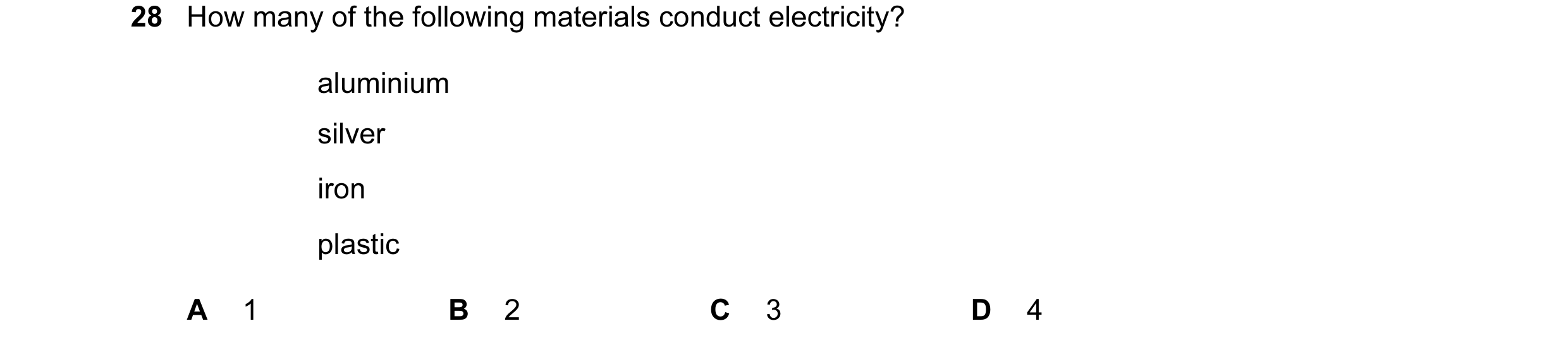
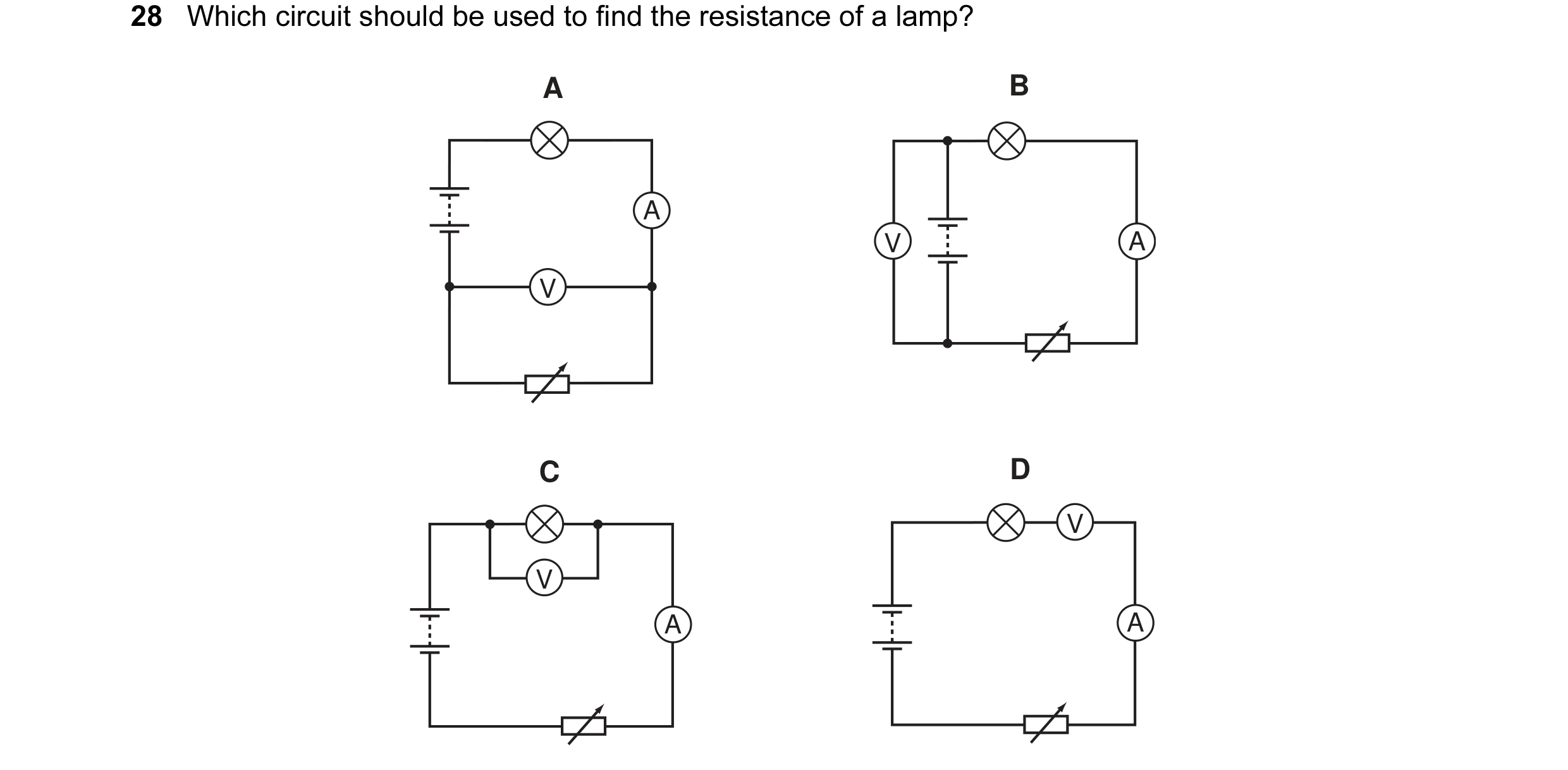
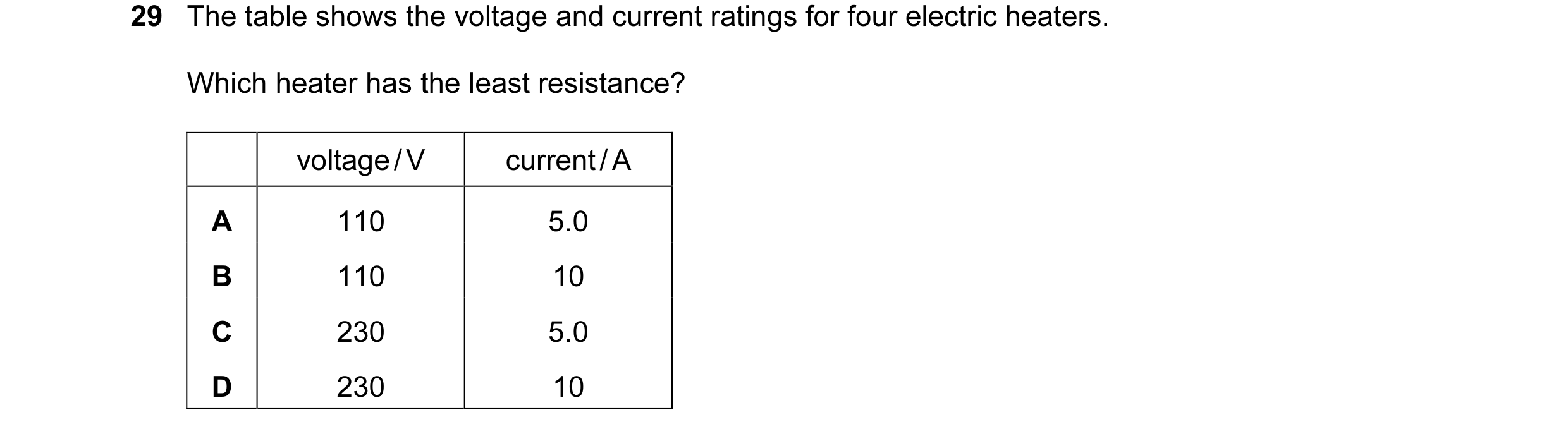
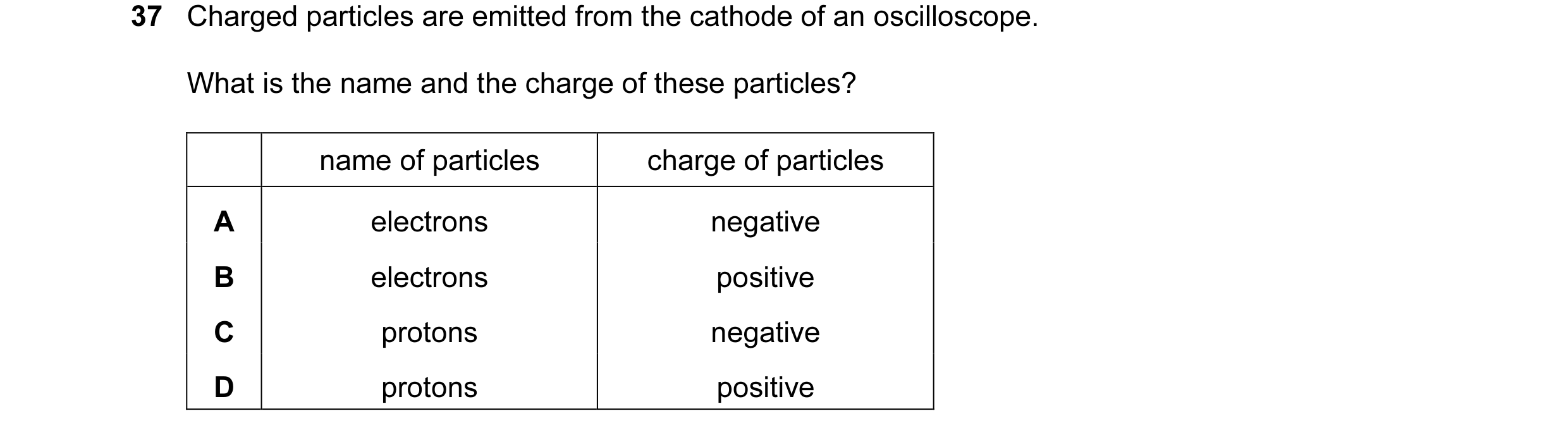 1 / 127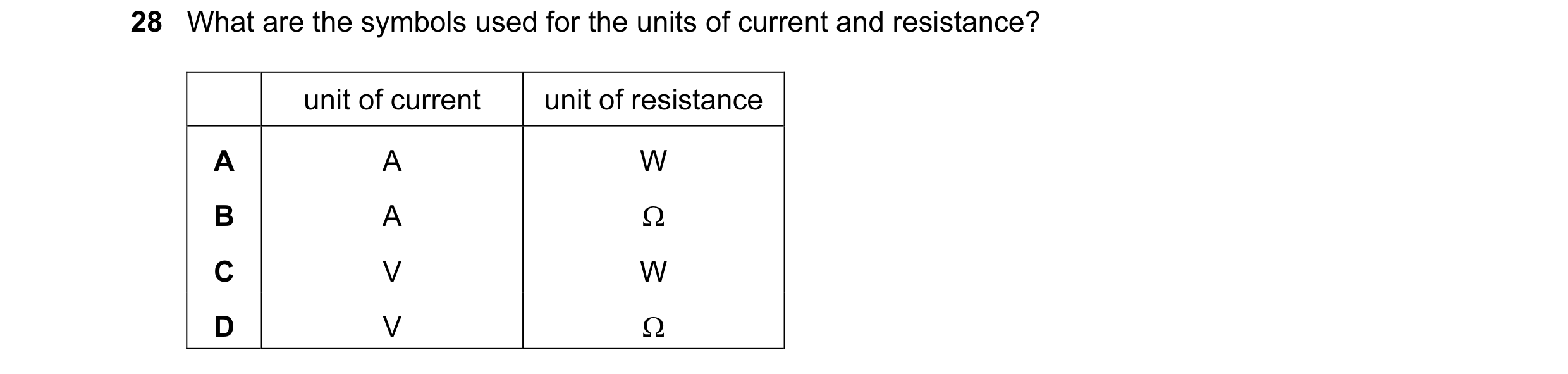
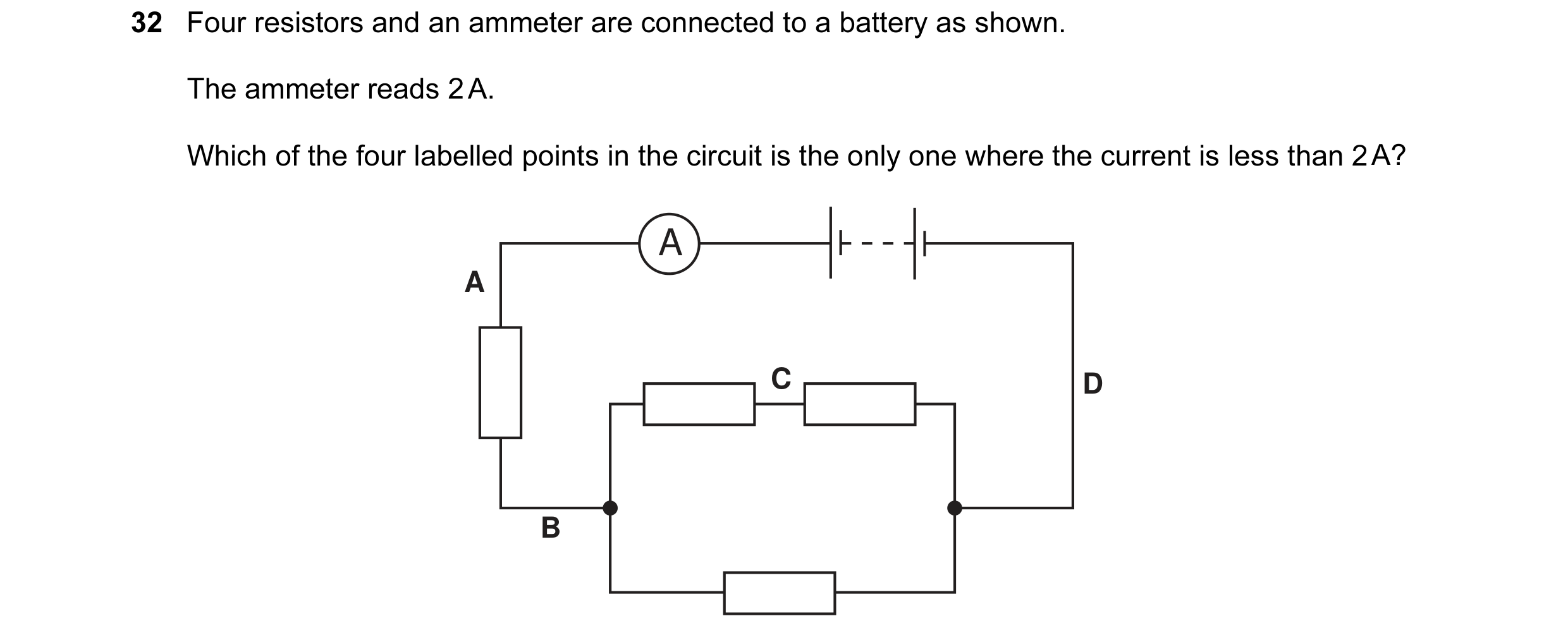
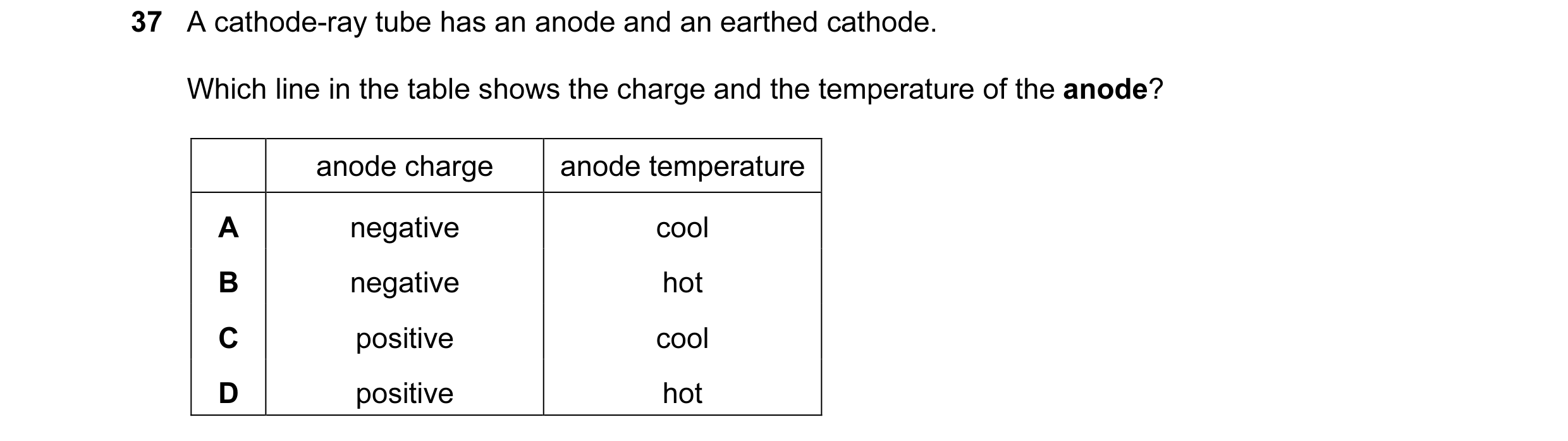 2 / 127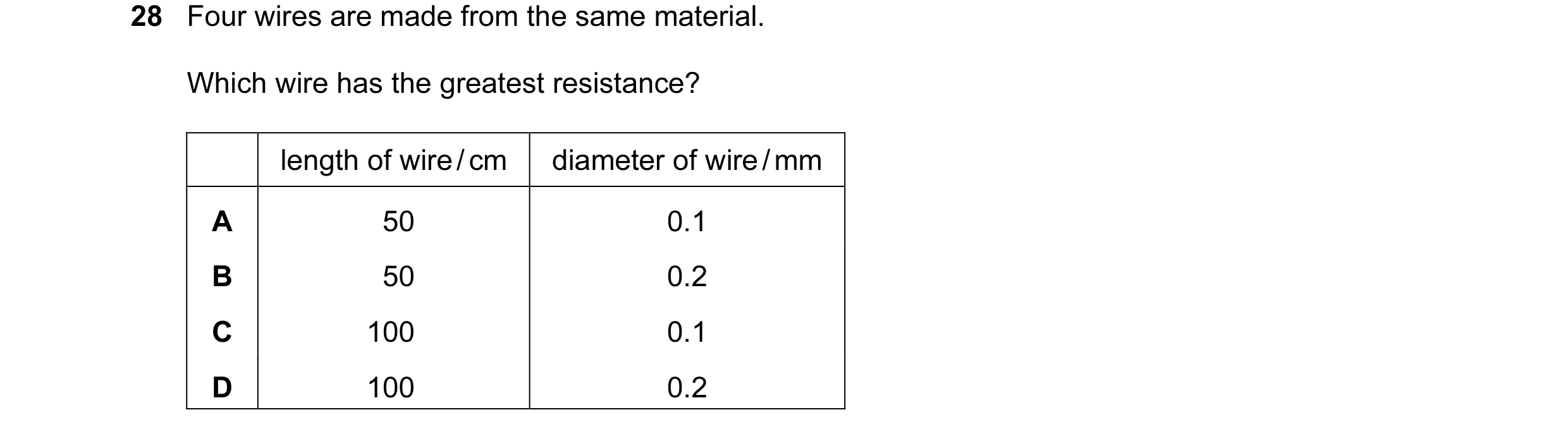
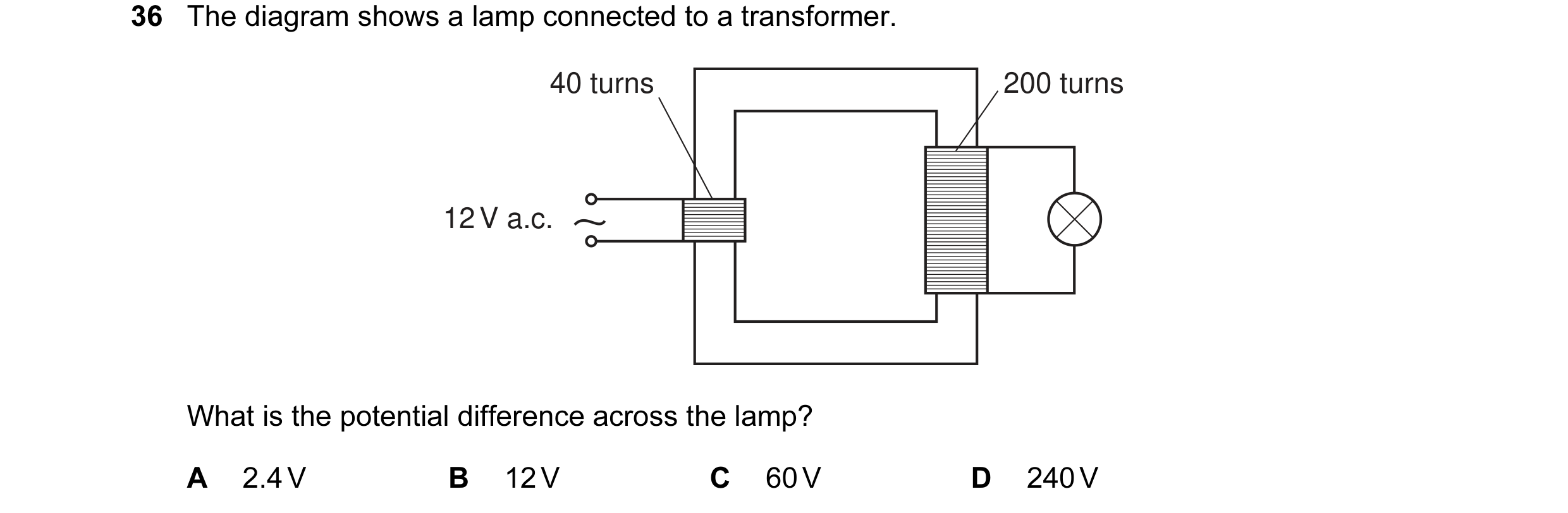
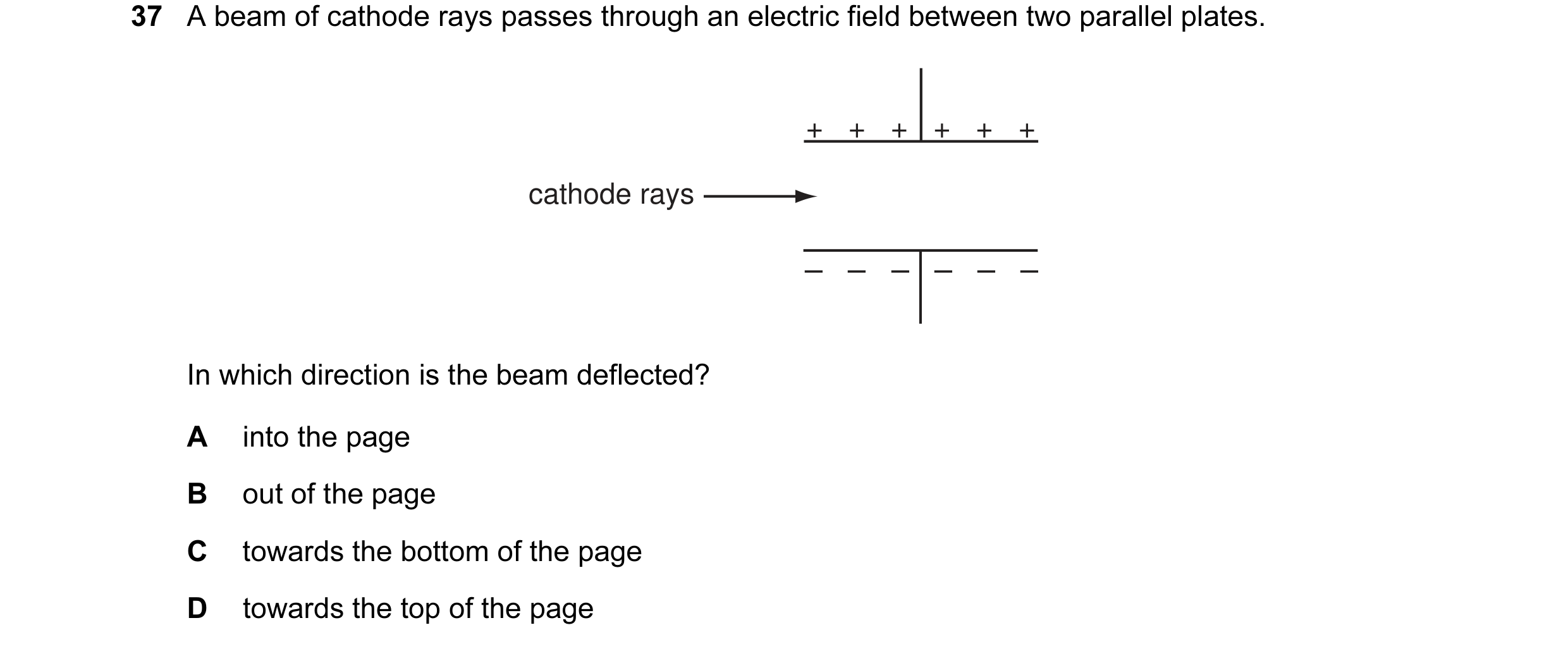 3 / 127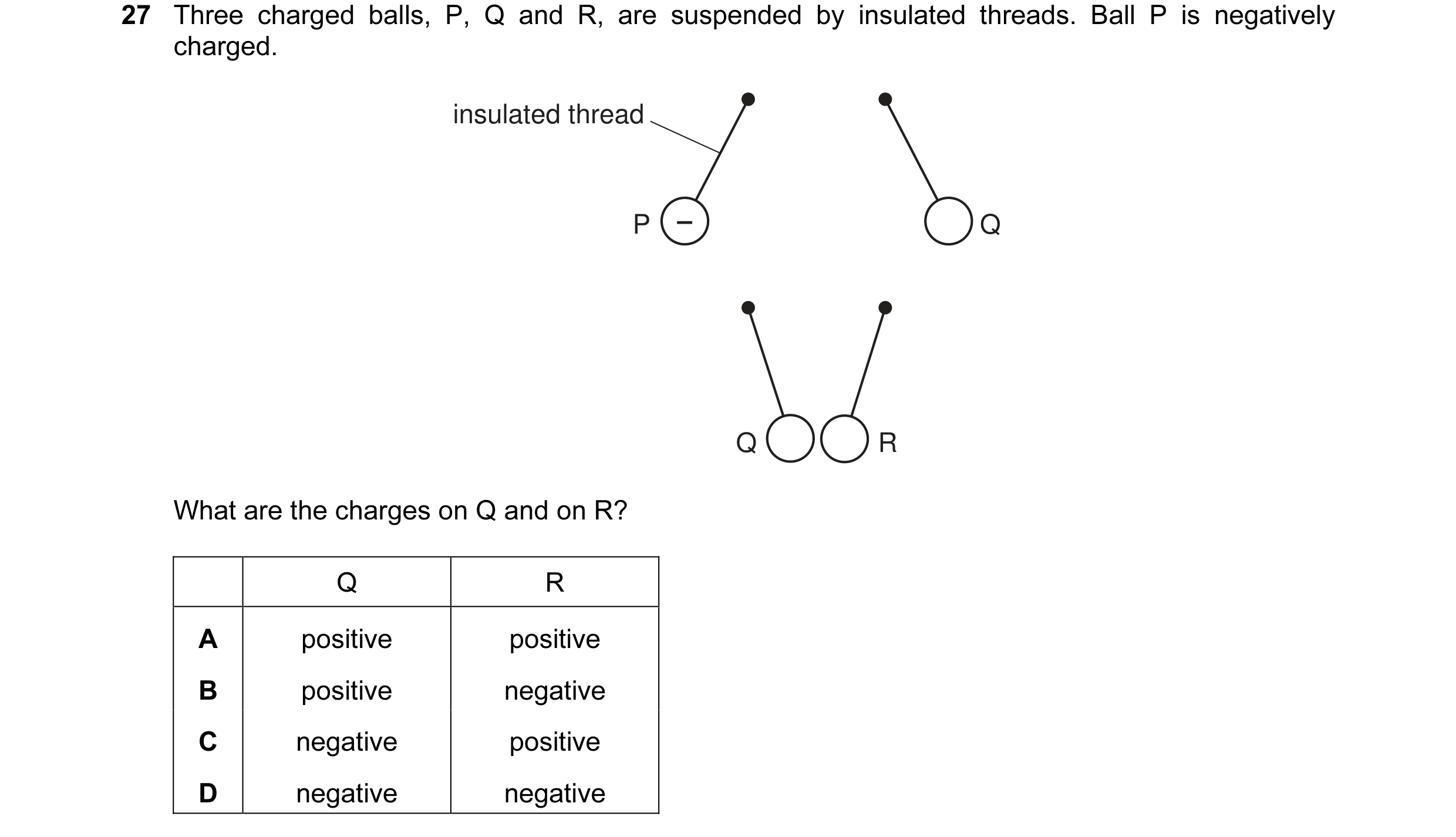
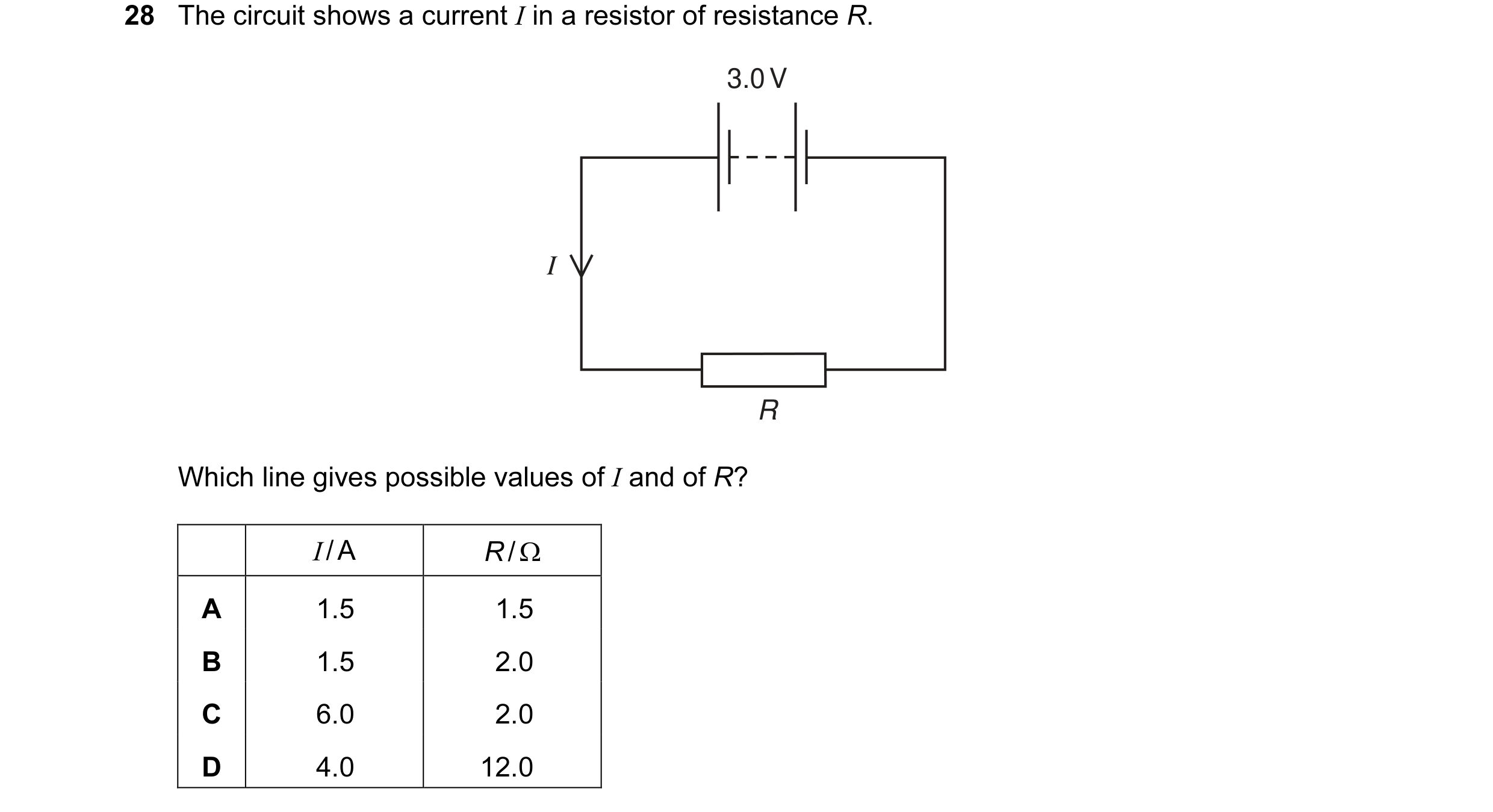 4 / 127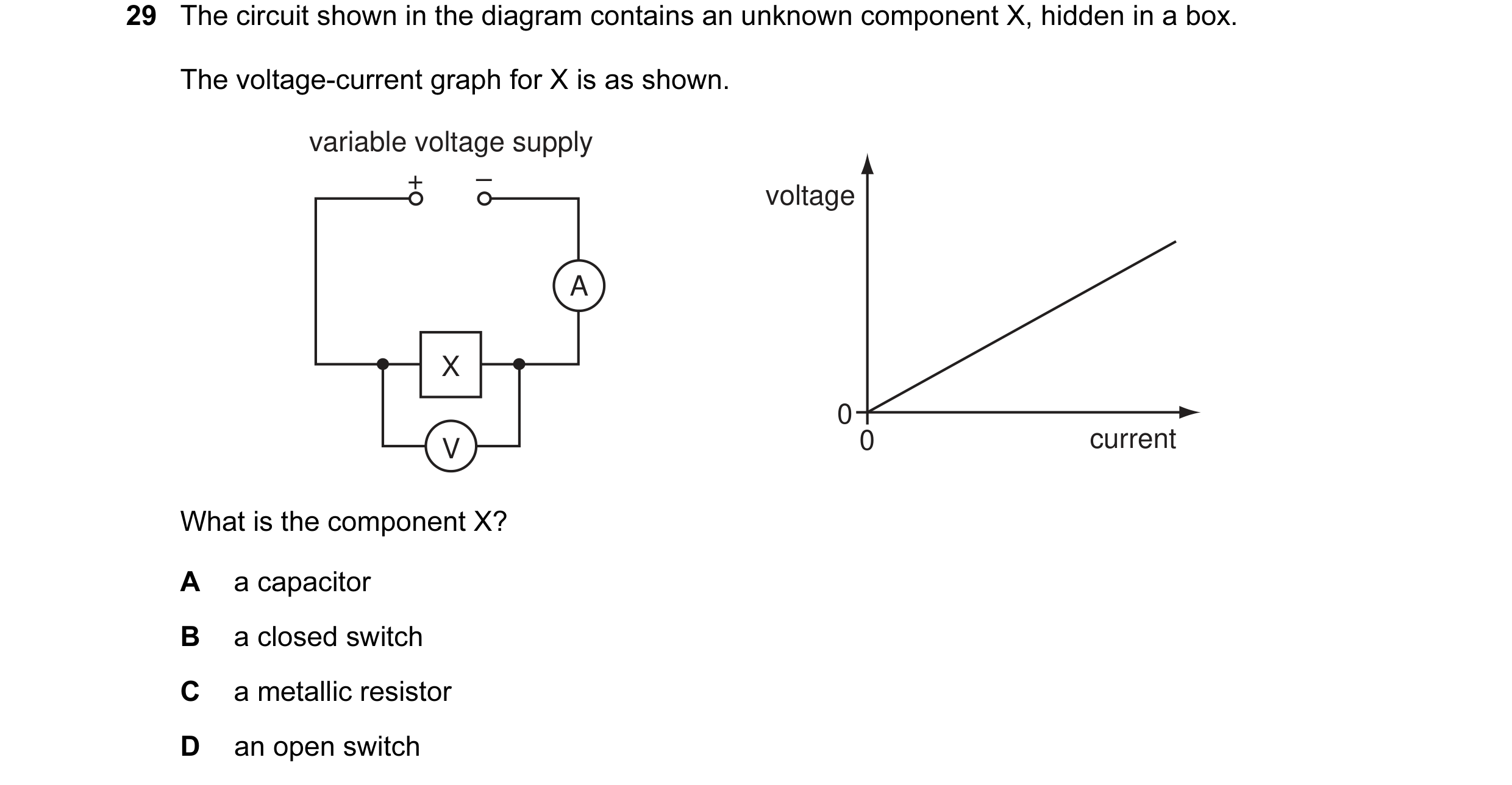
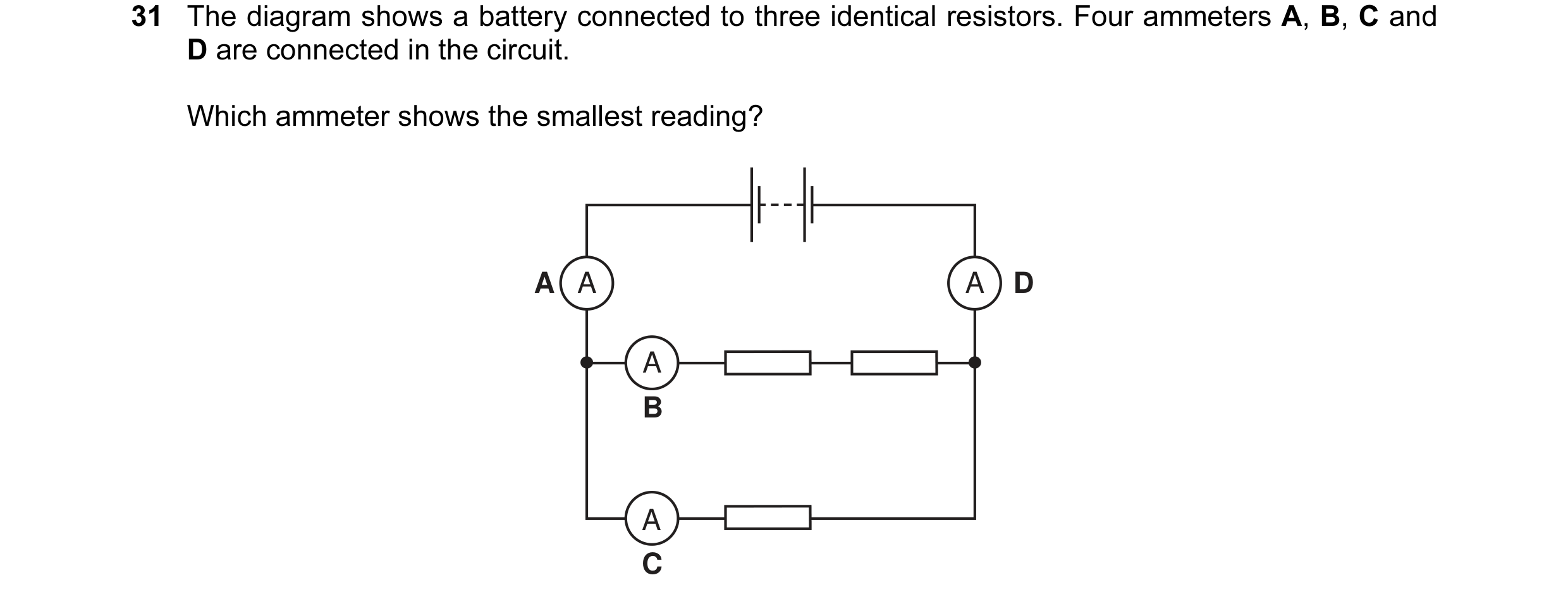
 5 / 127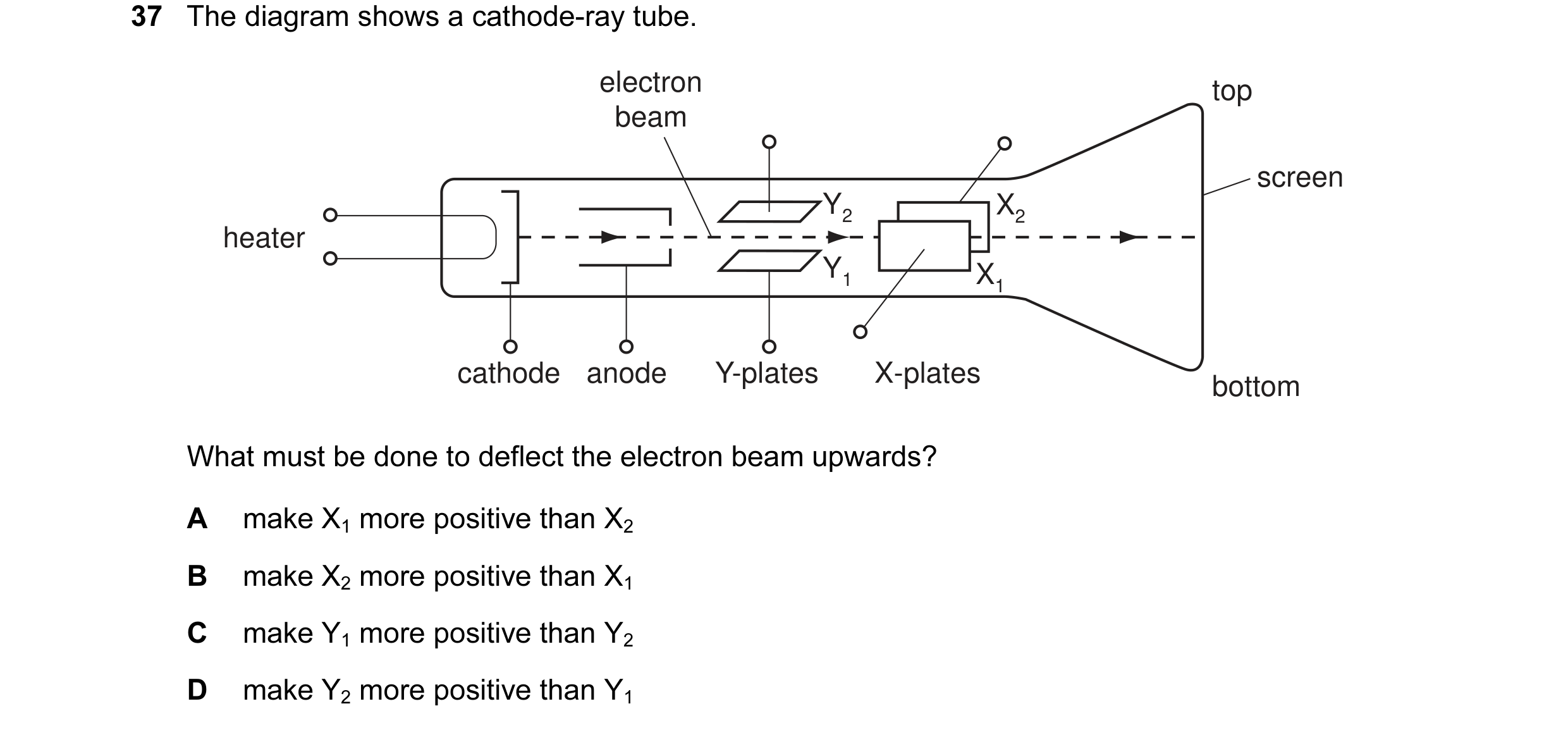
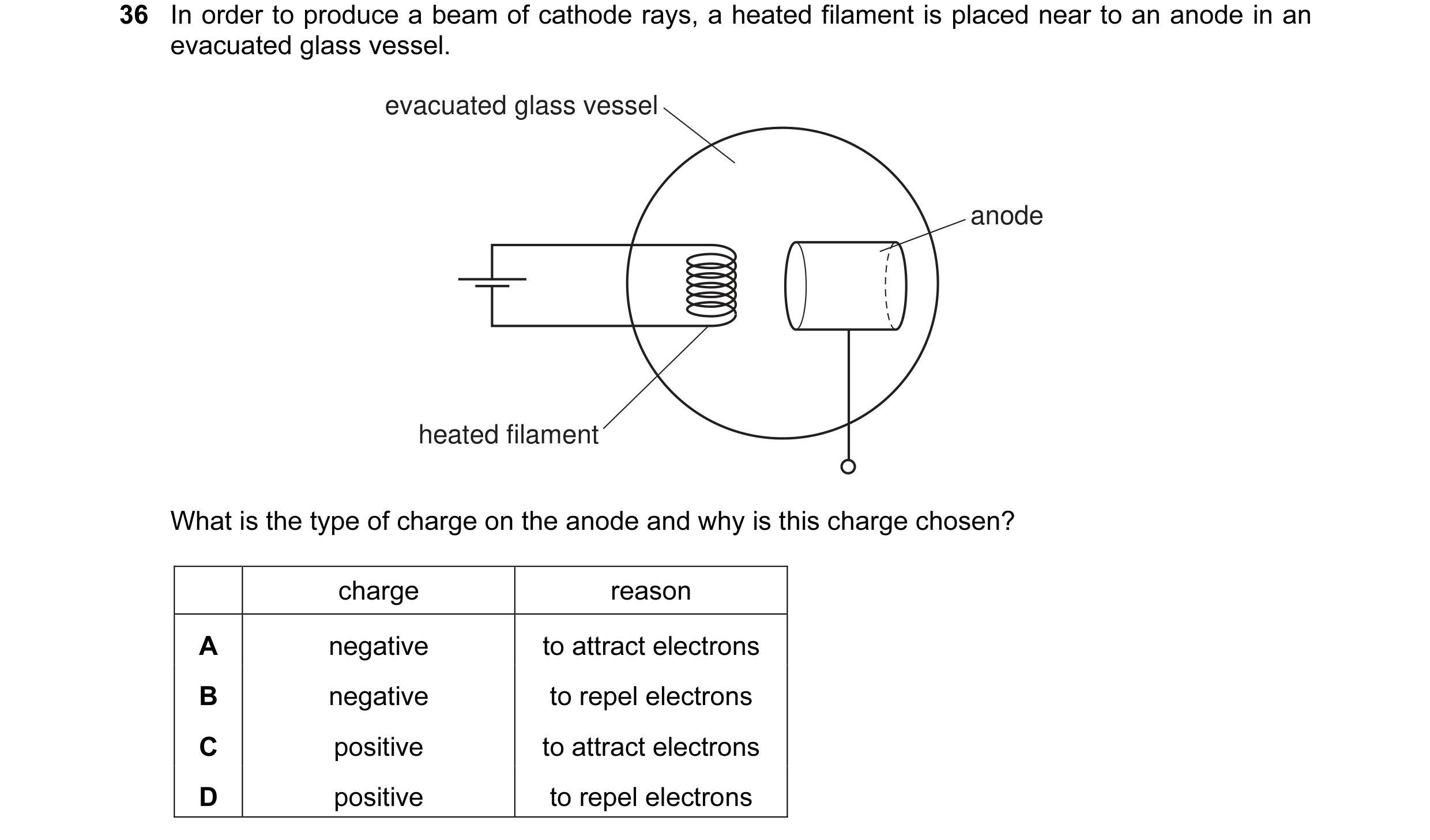 6 / 127
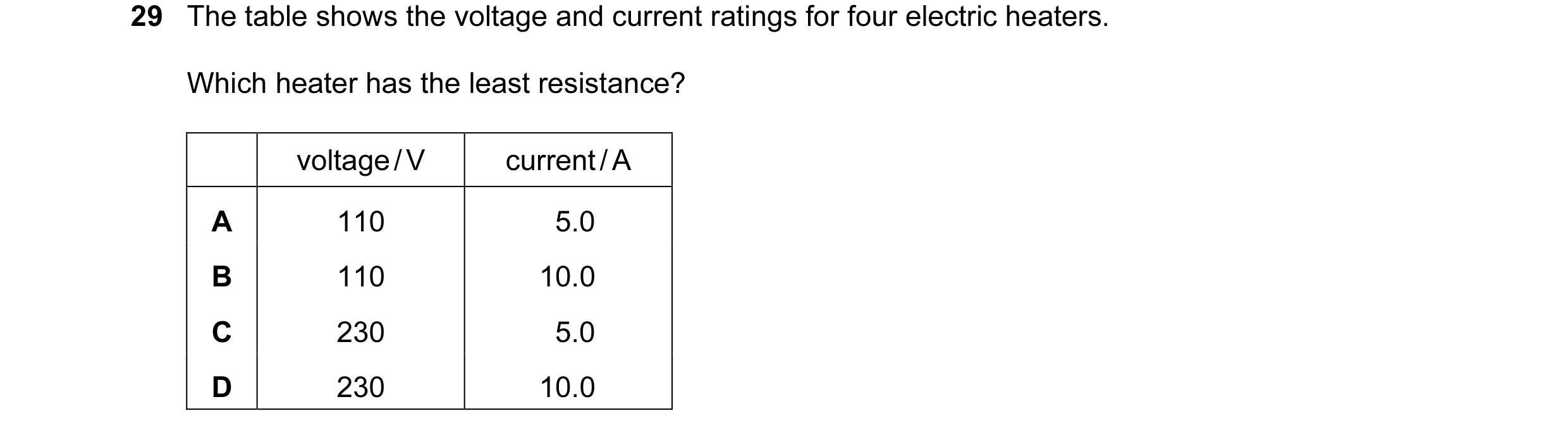
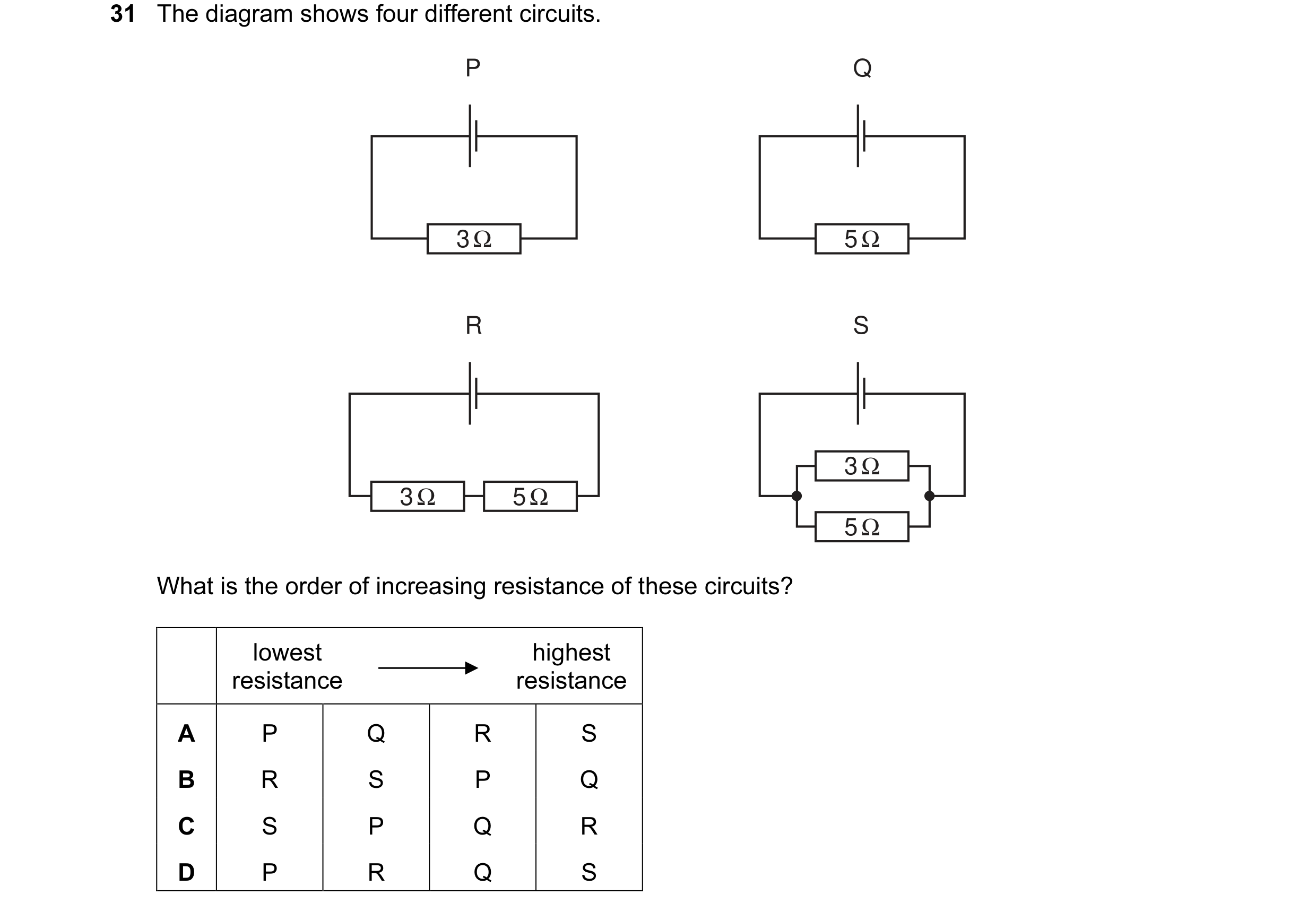 7 / 127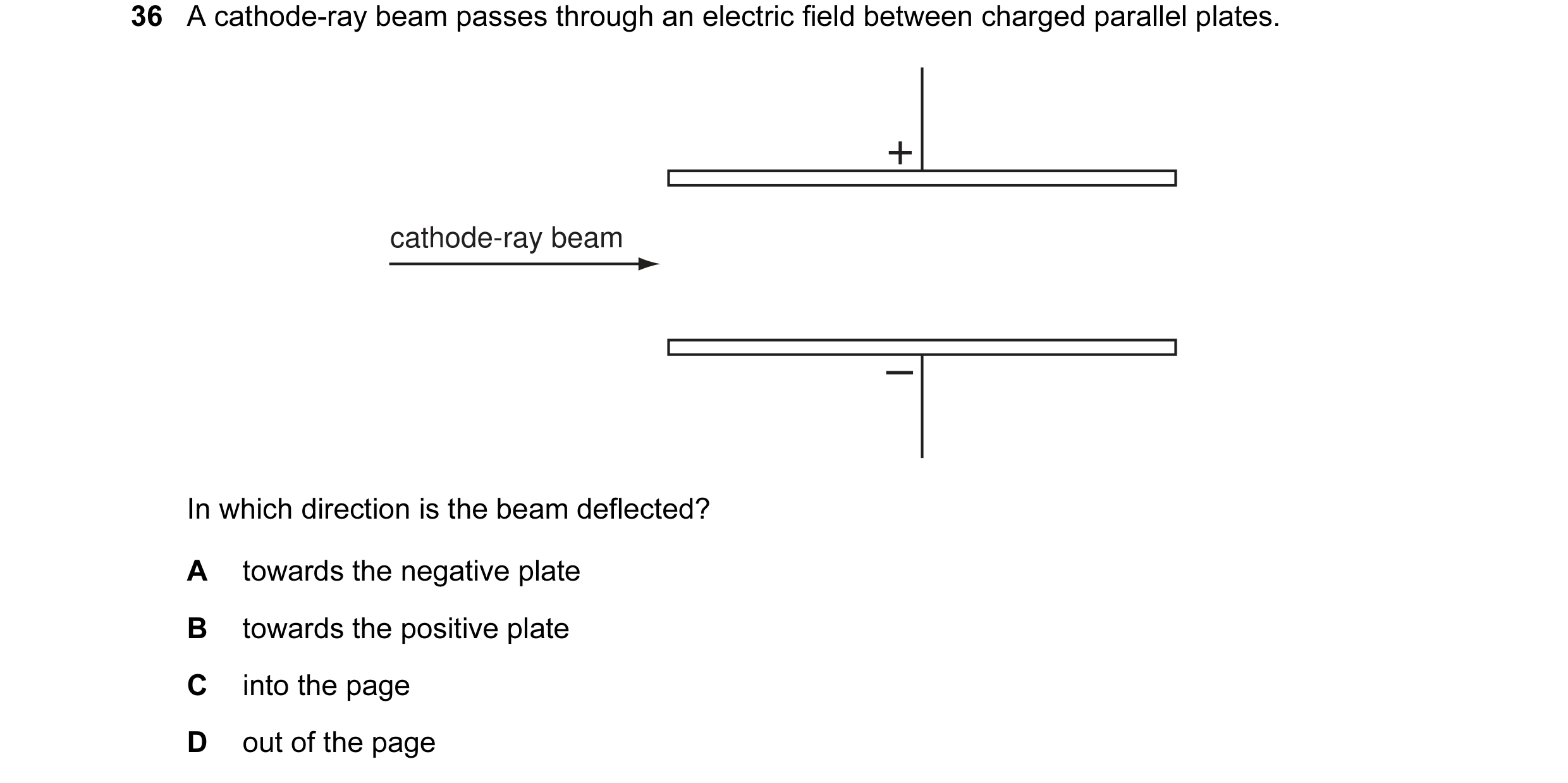
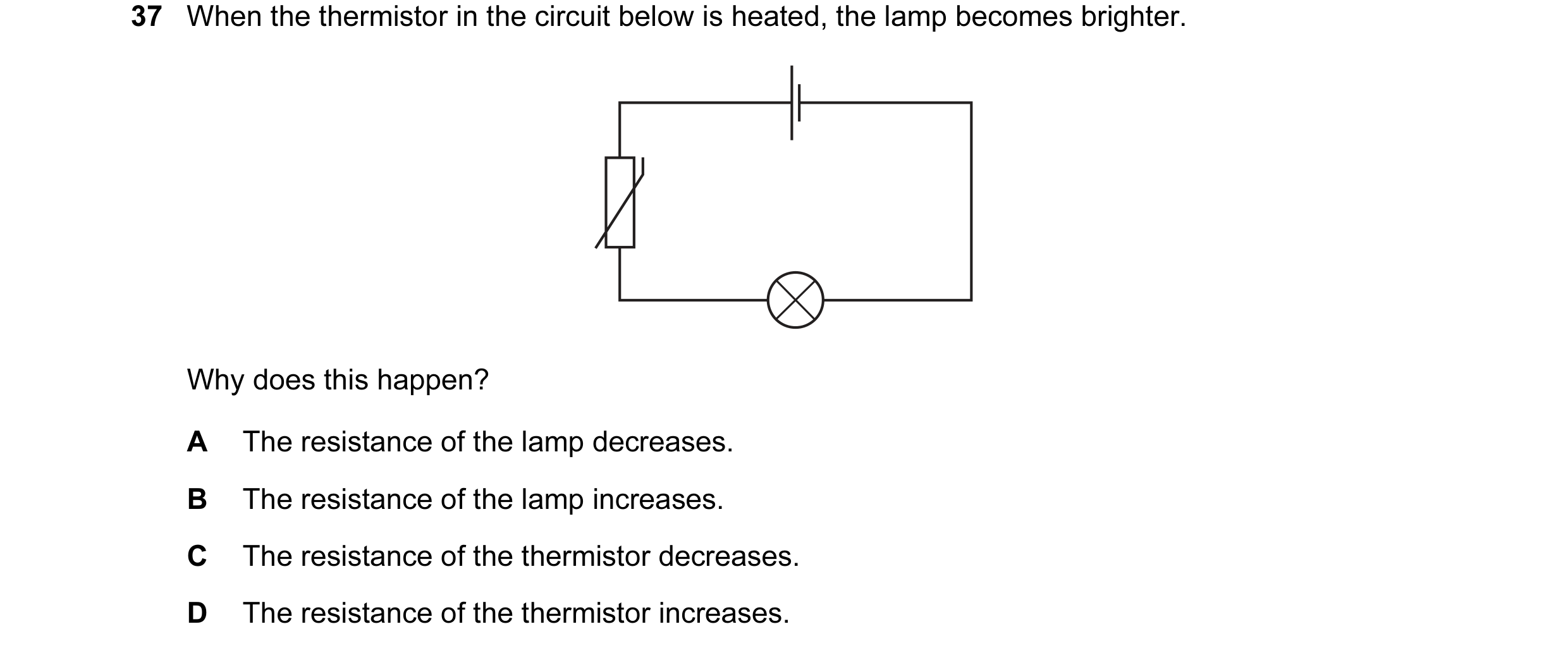
 8 / 127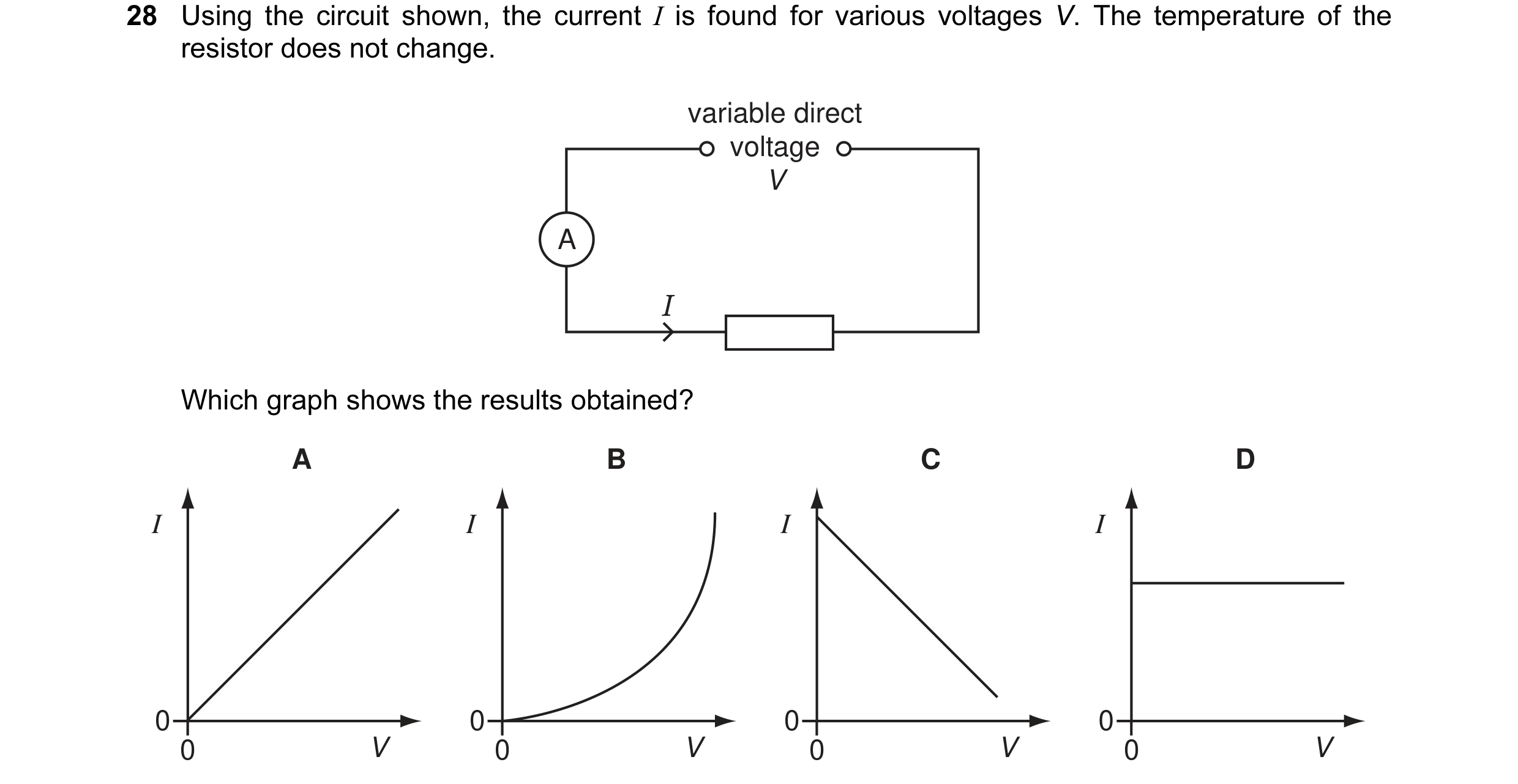
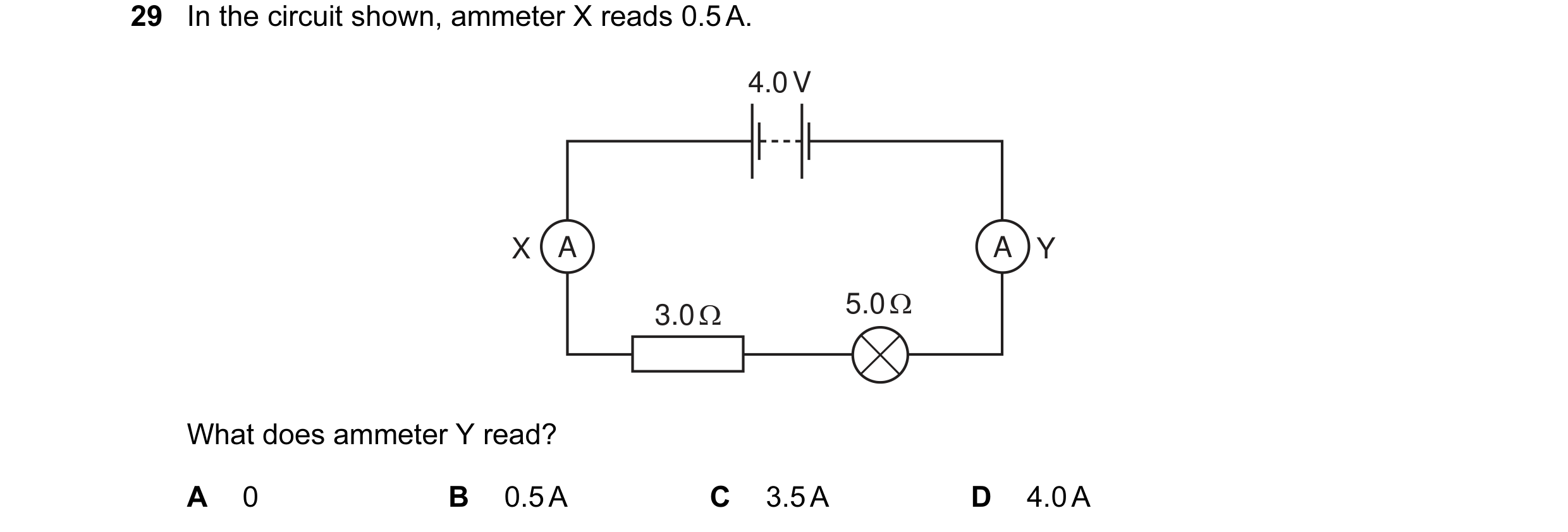
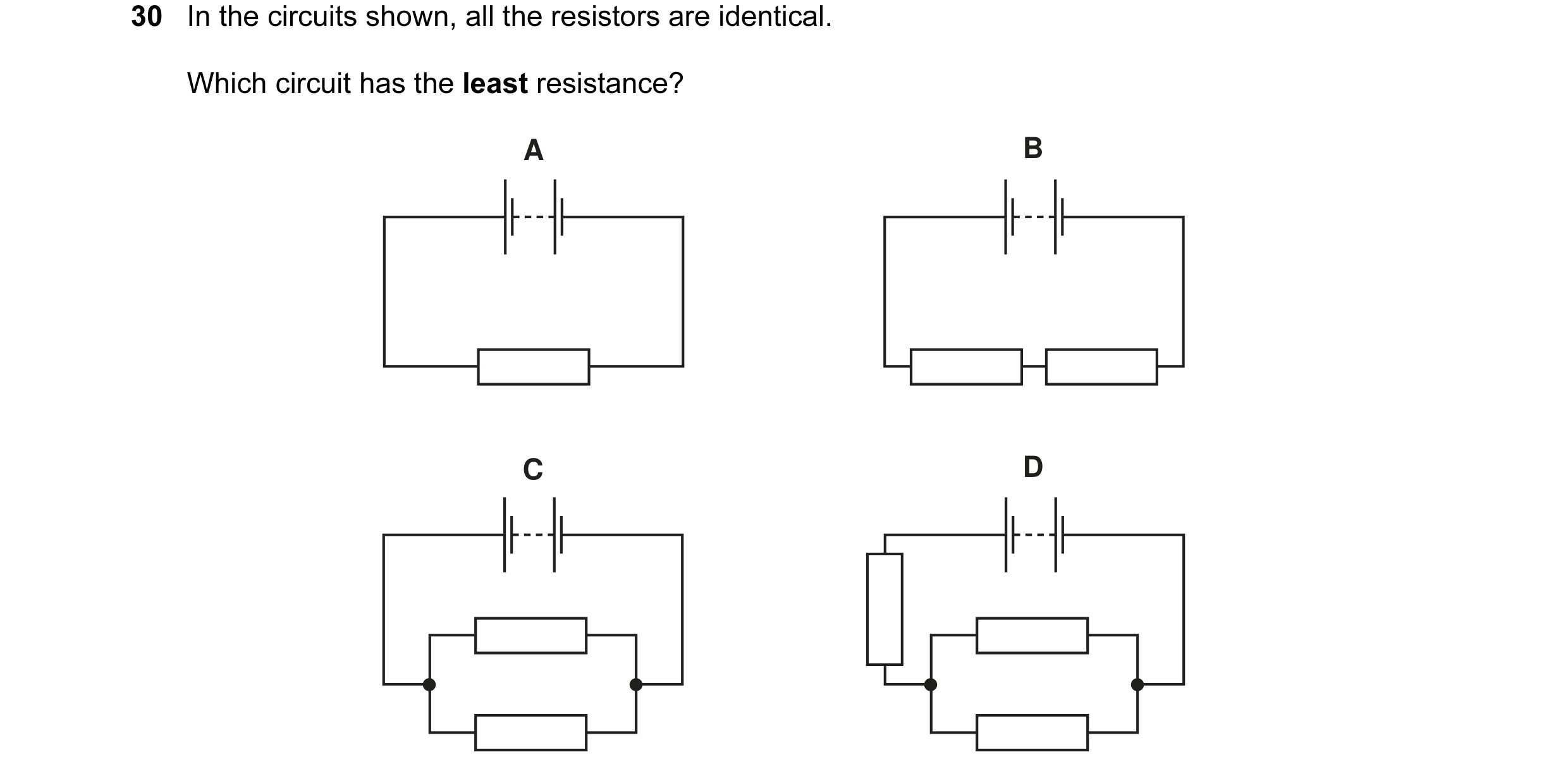 9 / 127
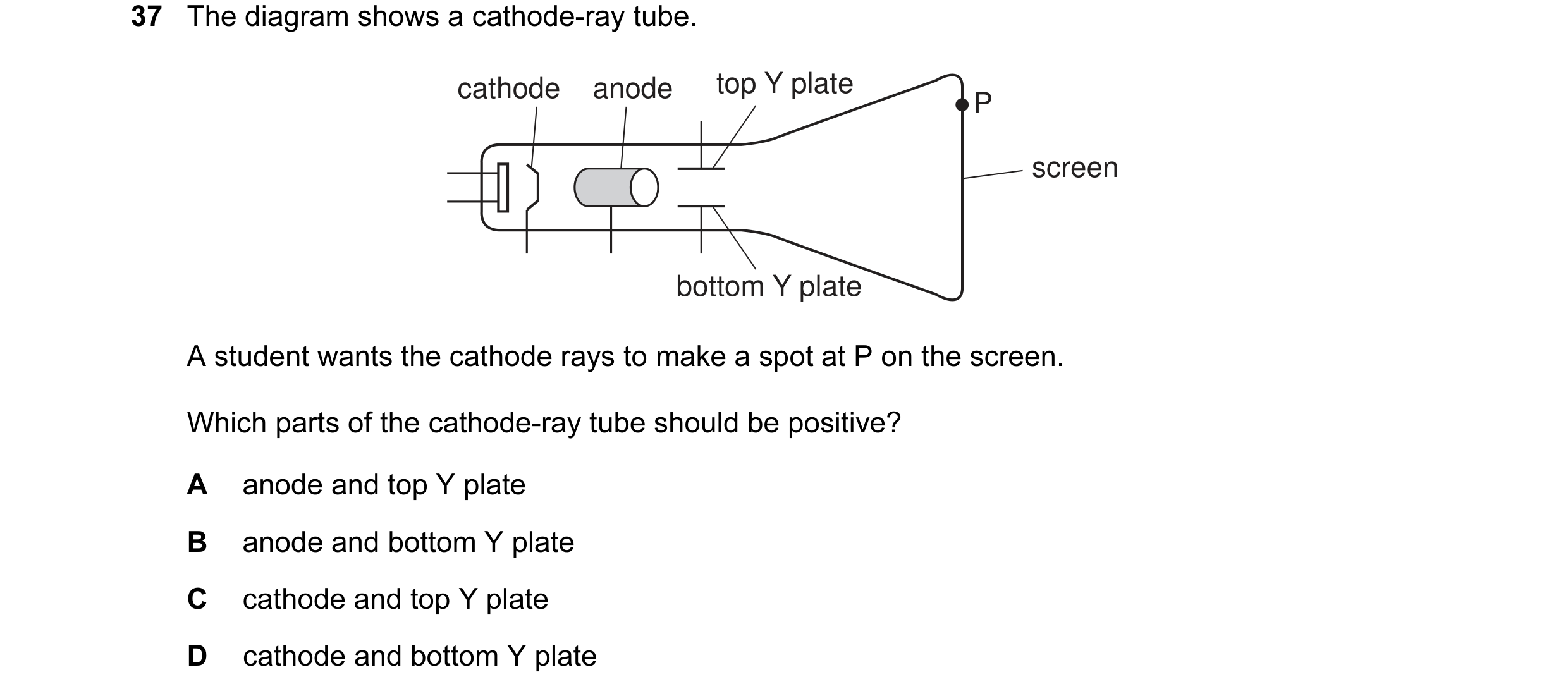
 10 / 127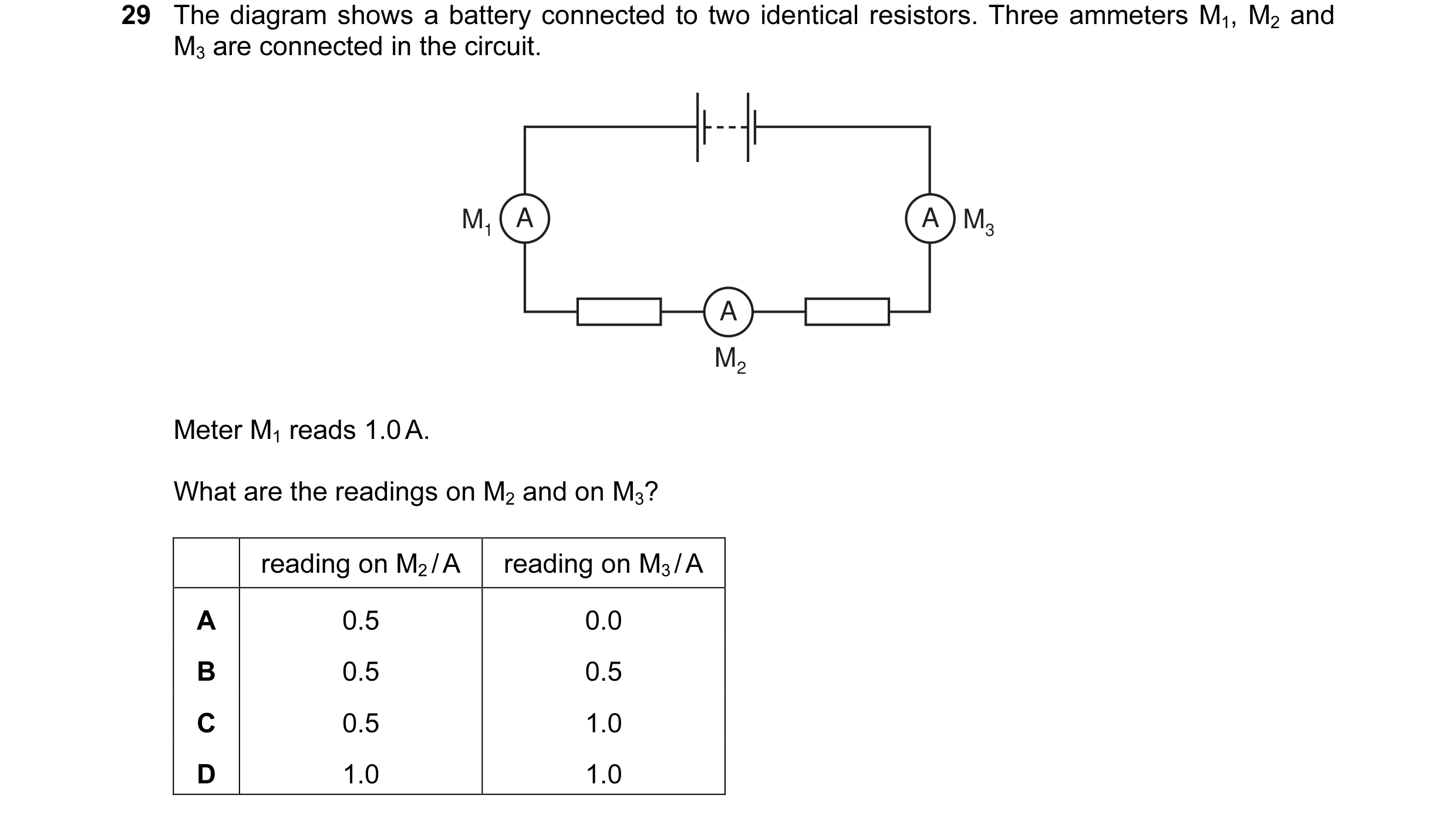
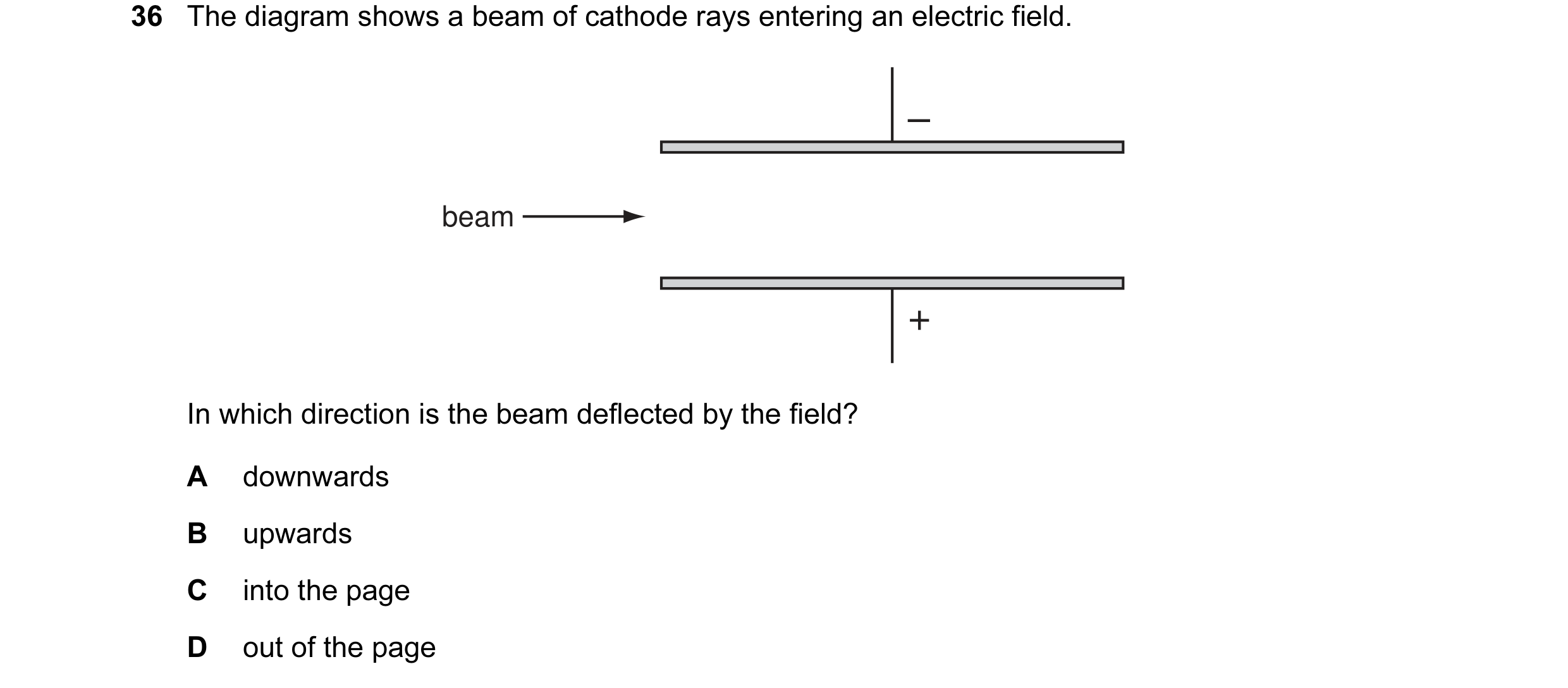
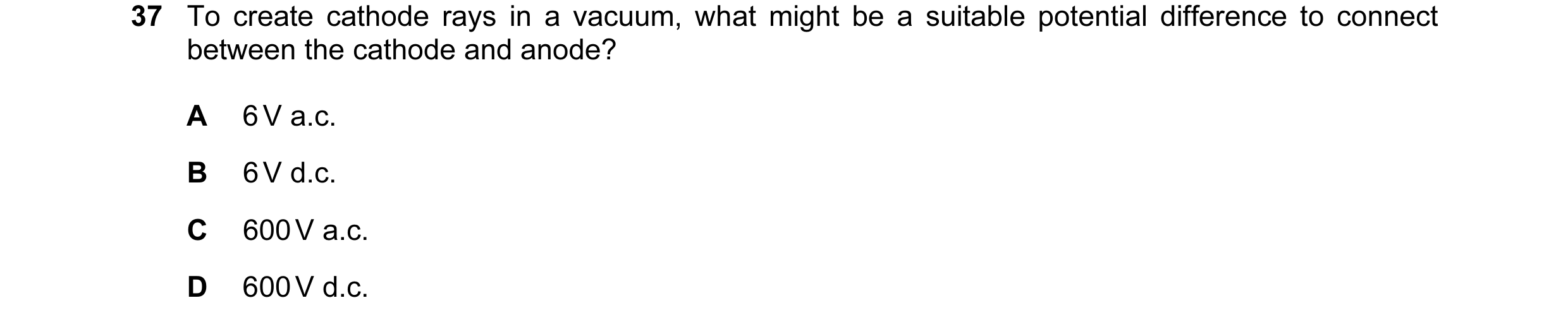 11 / 127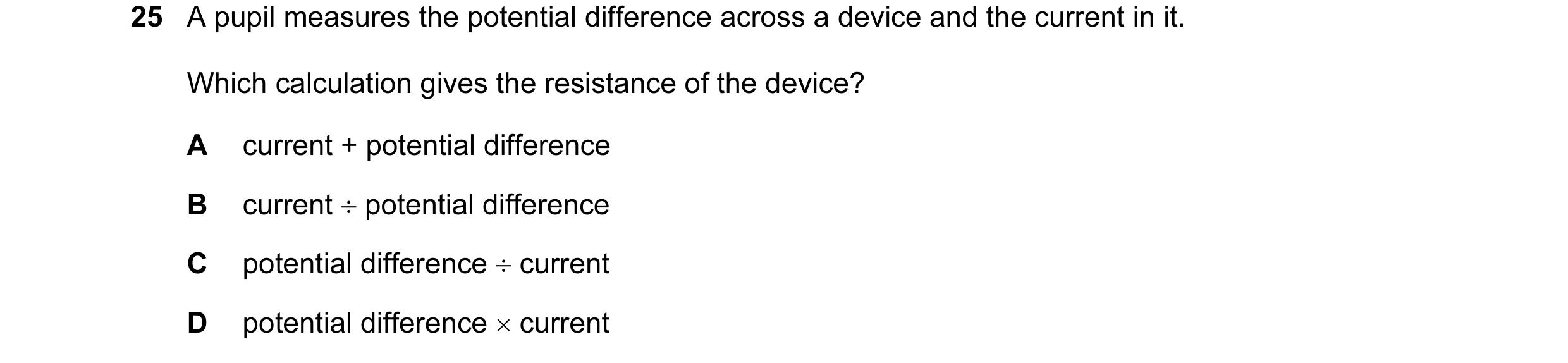
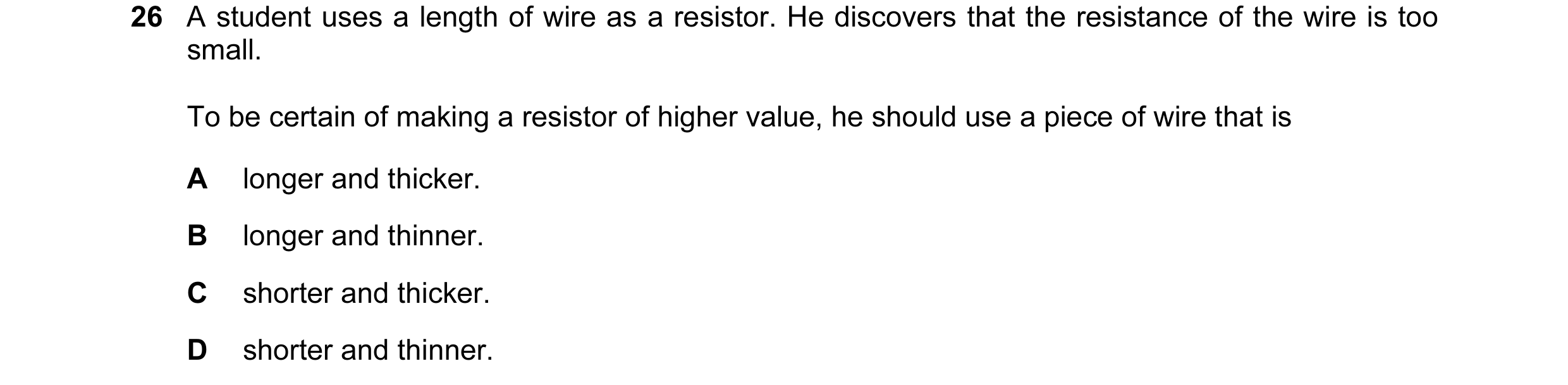
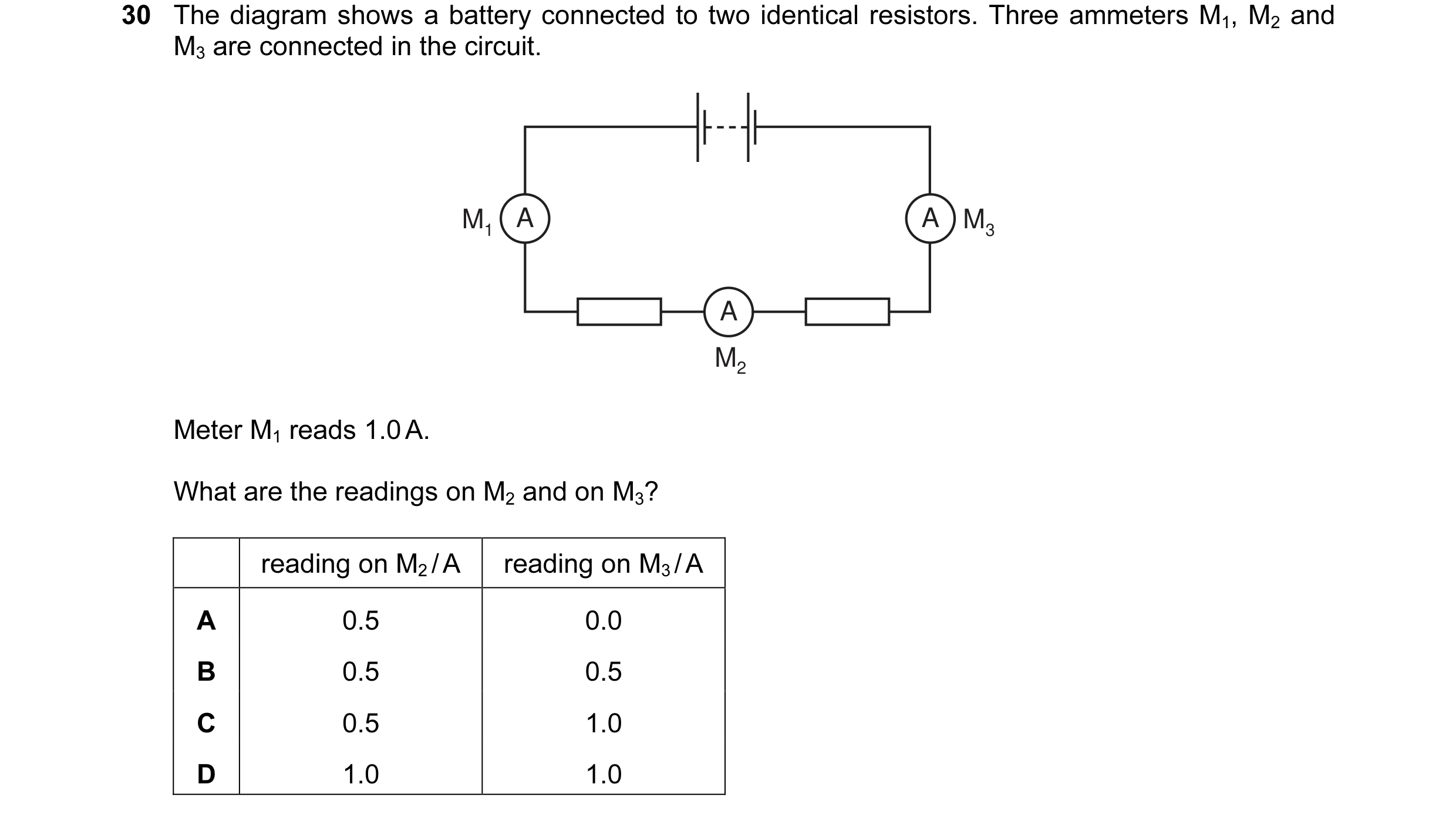 12 / 127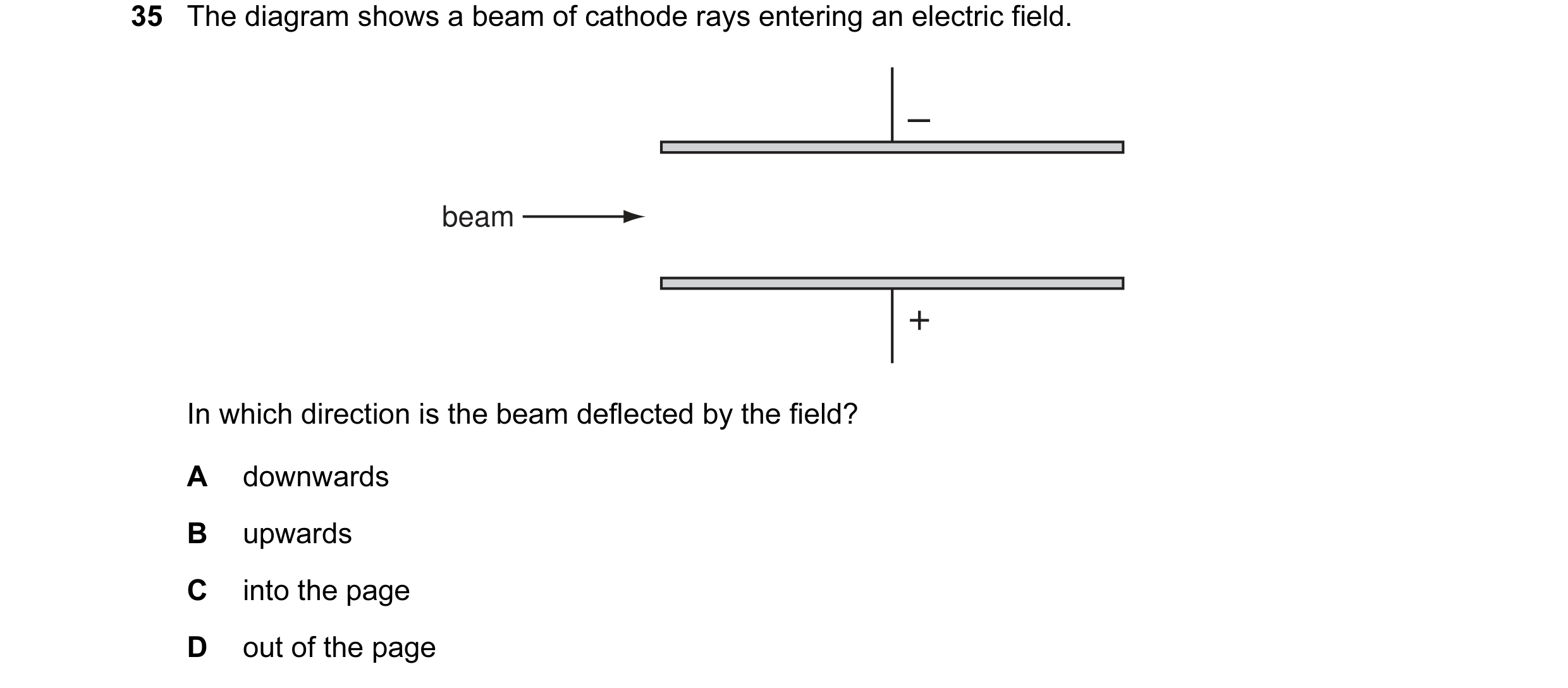
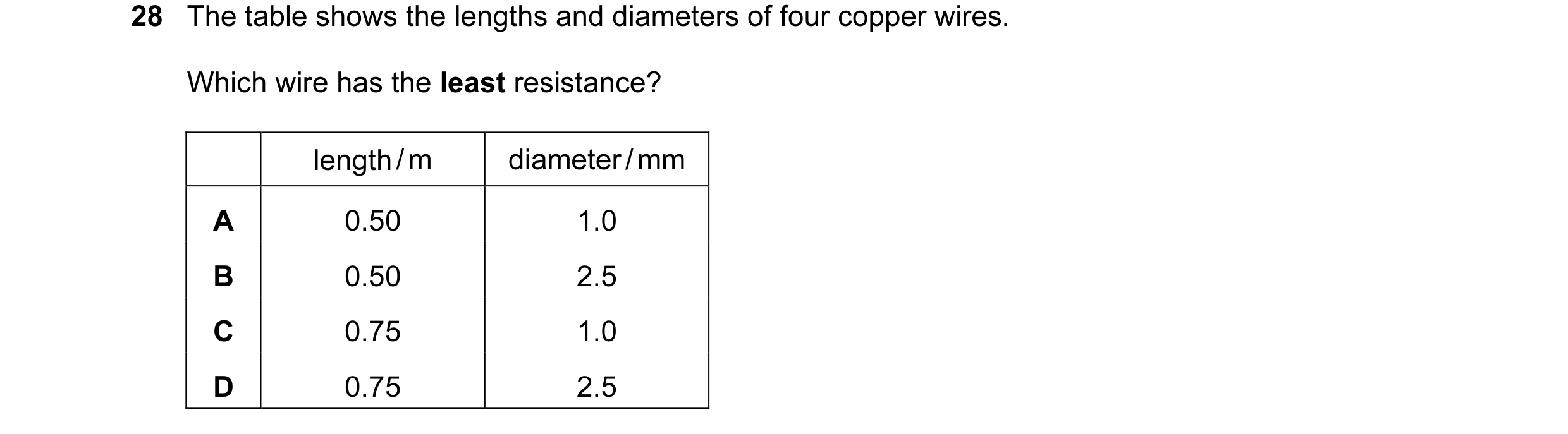
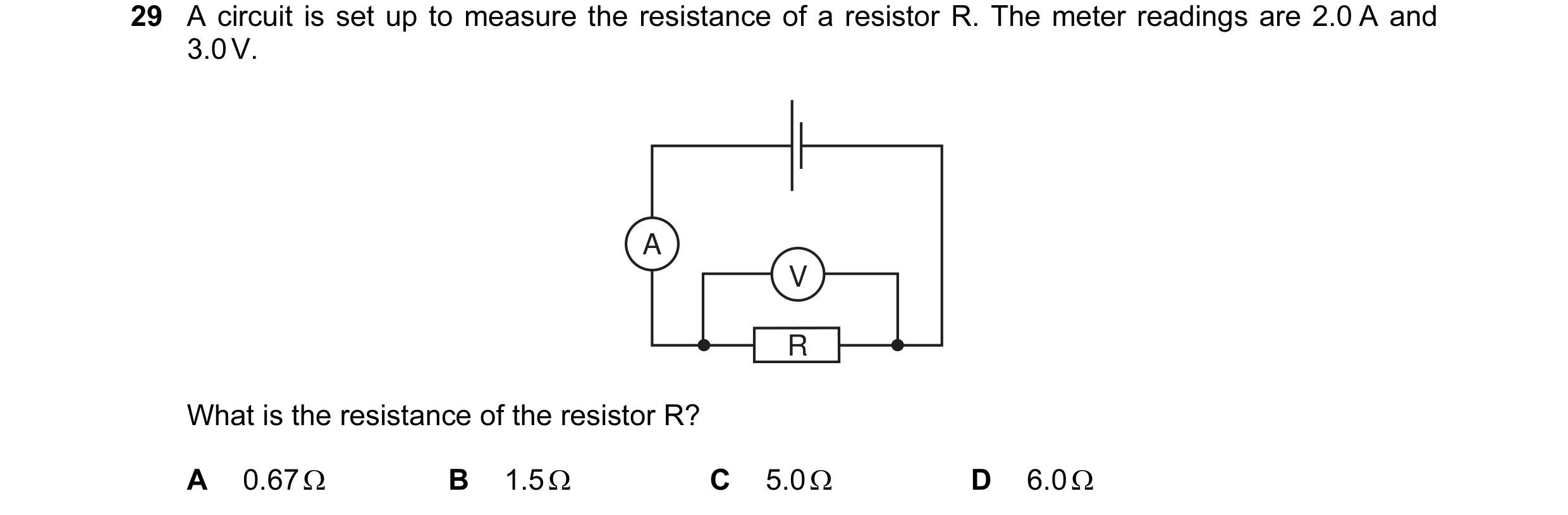 13 / 127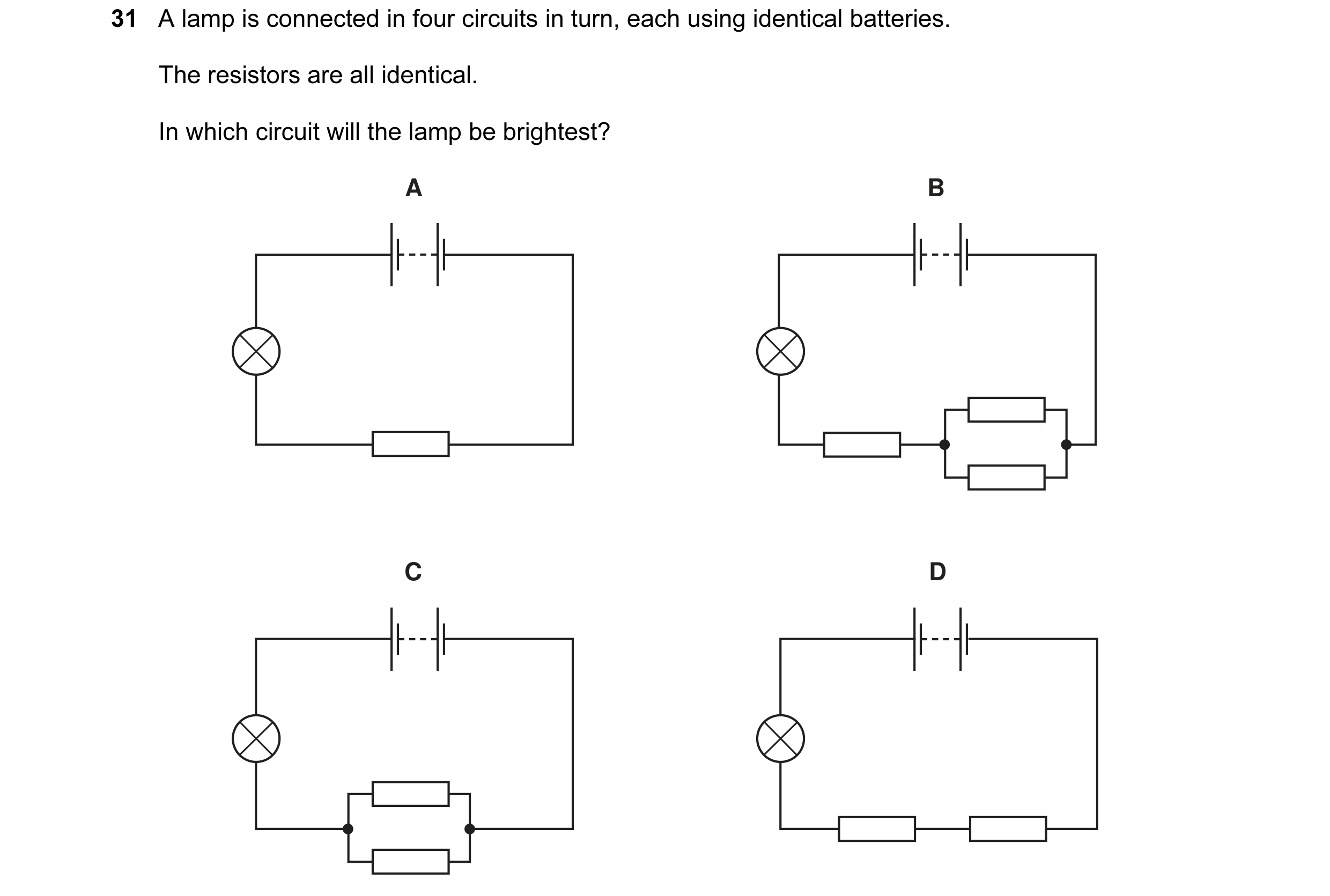
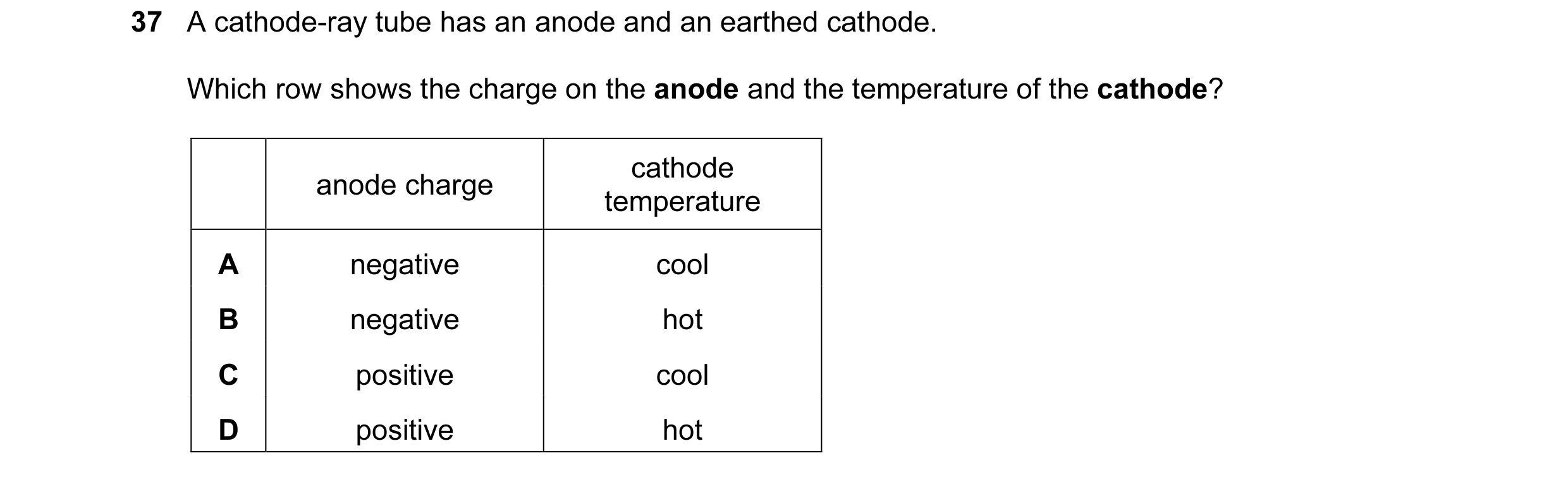 14 / 127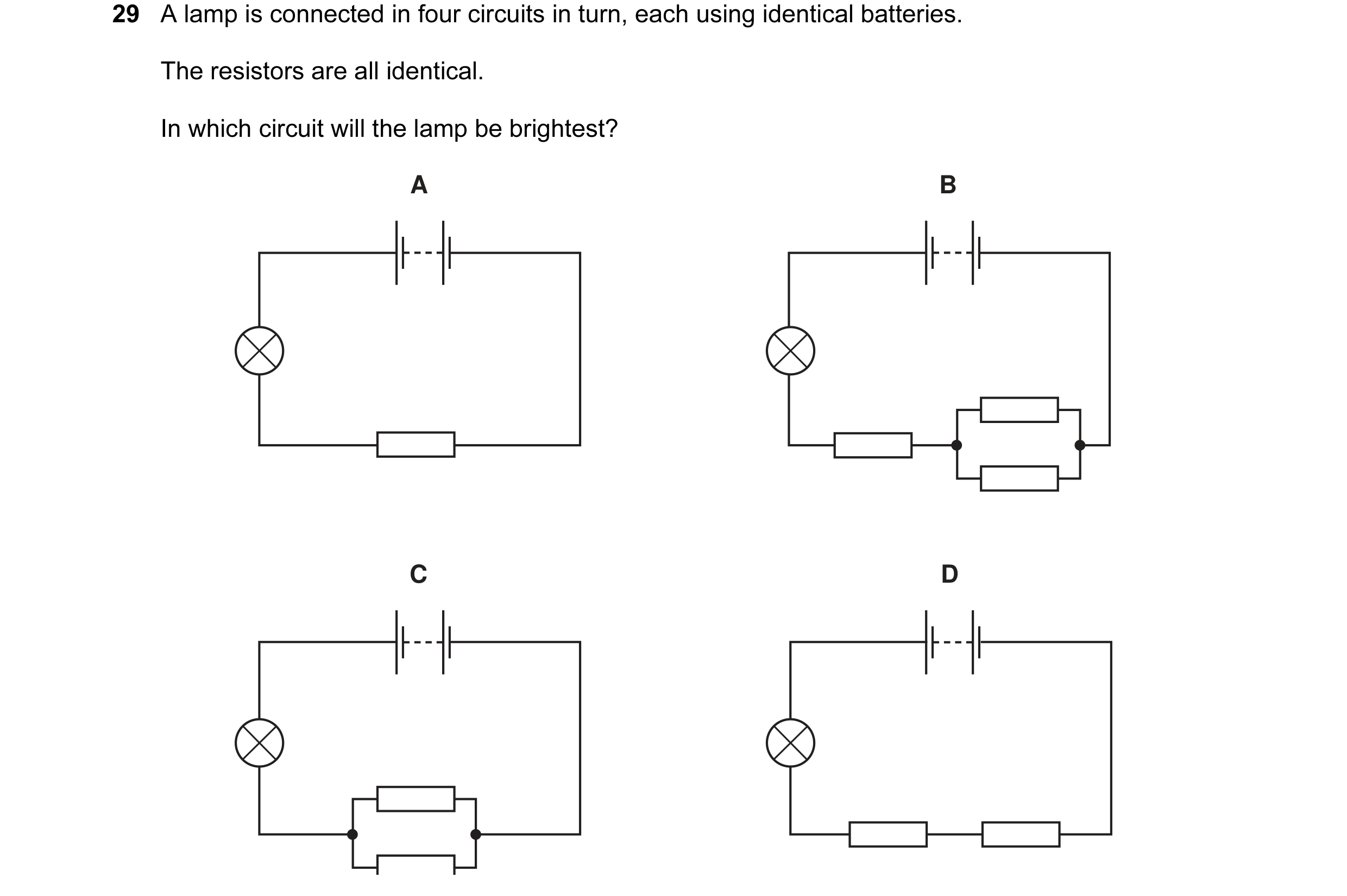
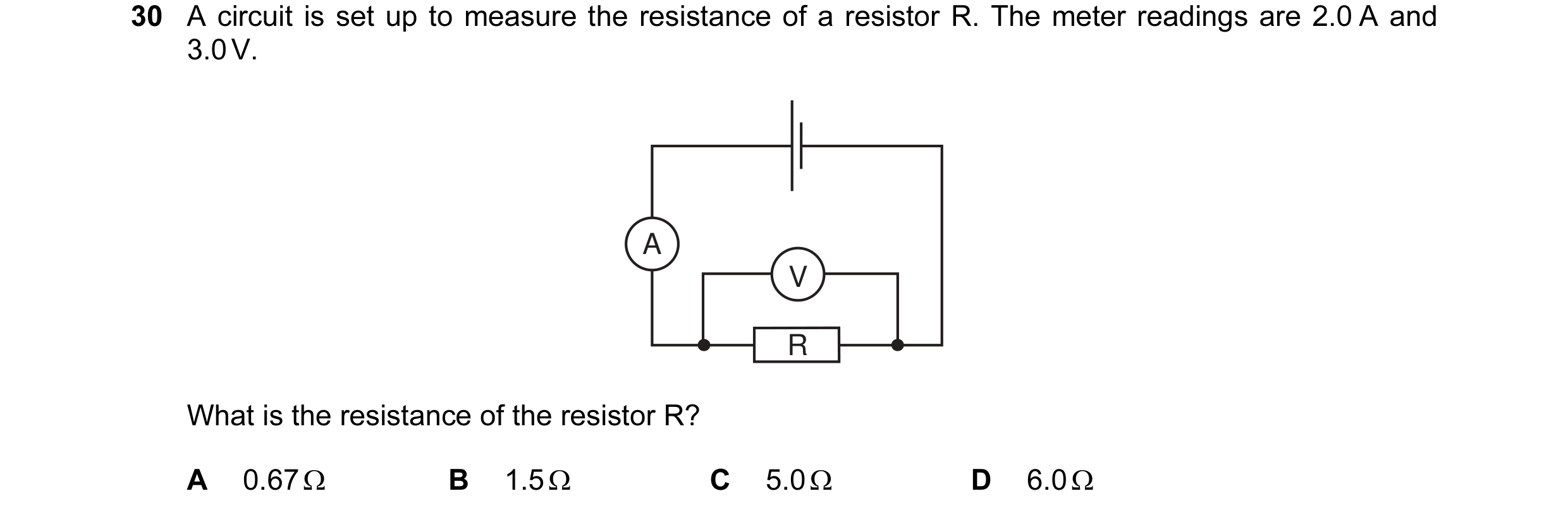
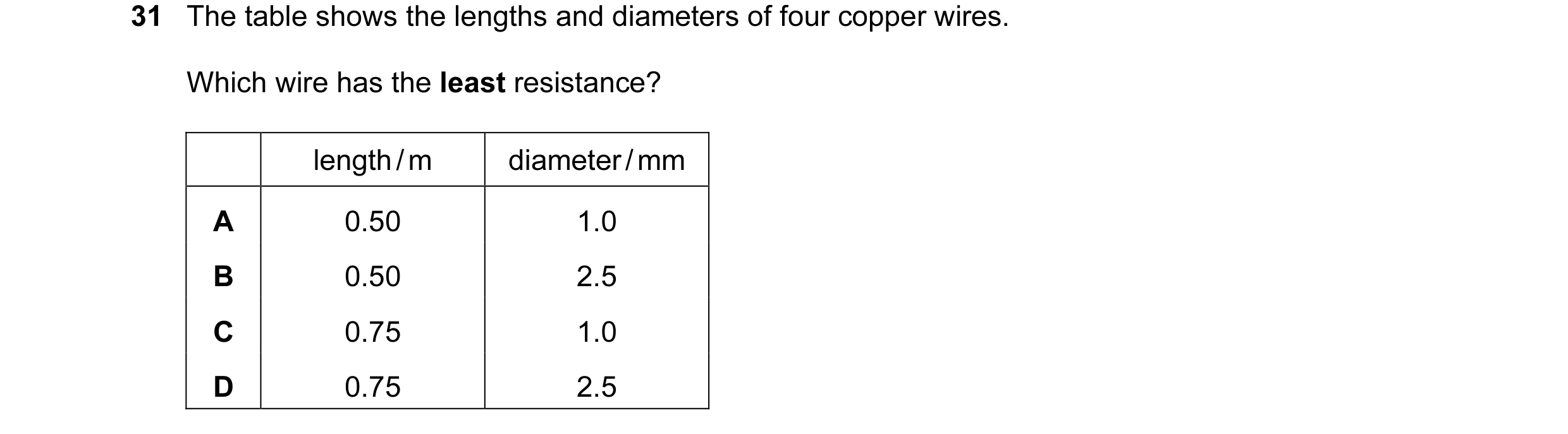 15 / 127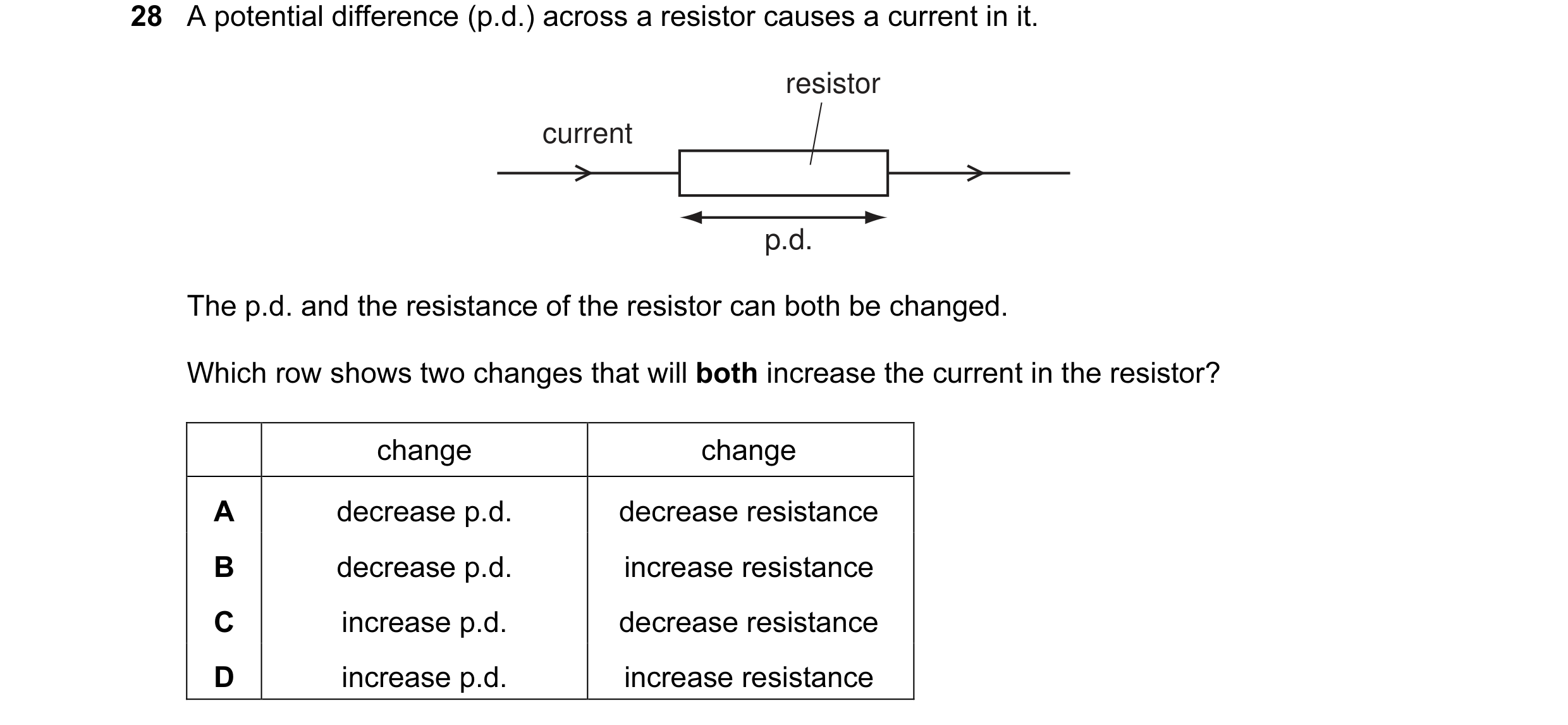
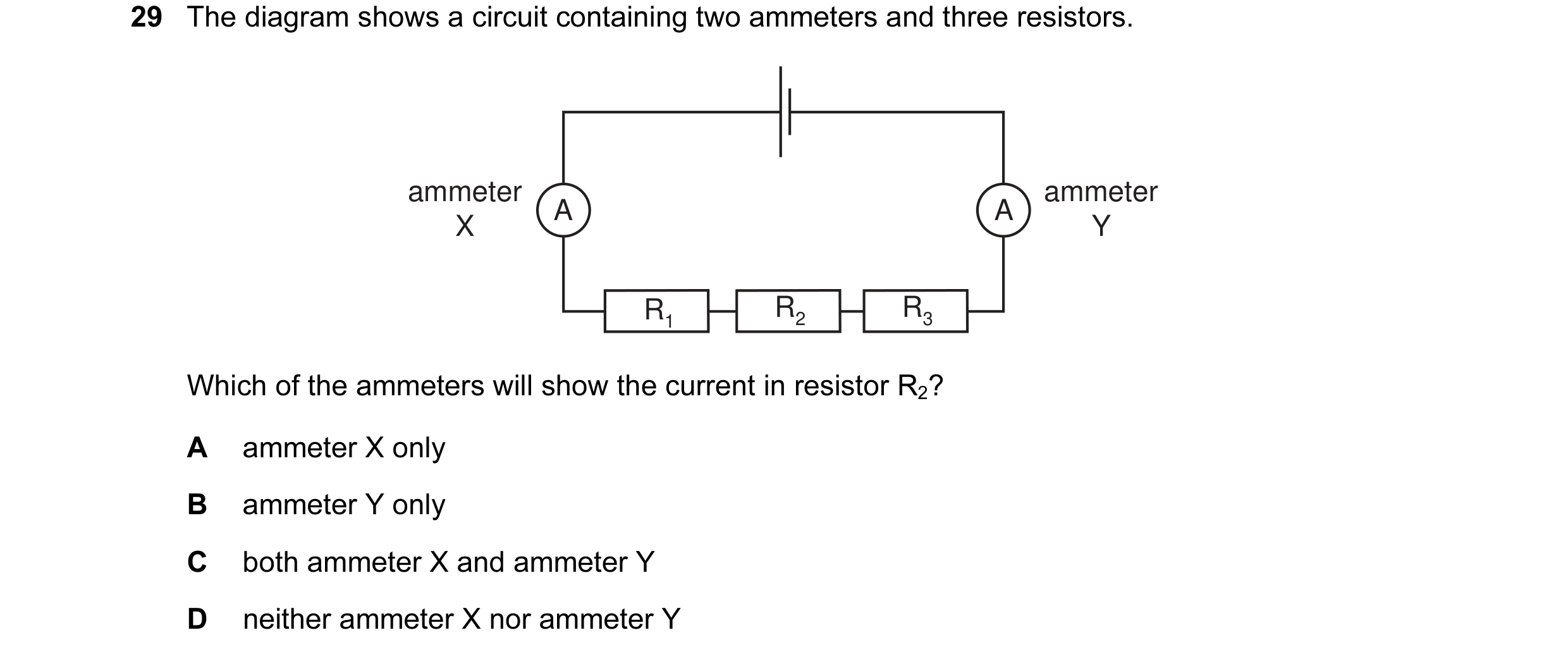
 16 / 127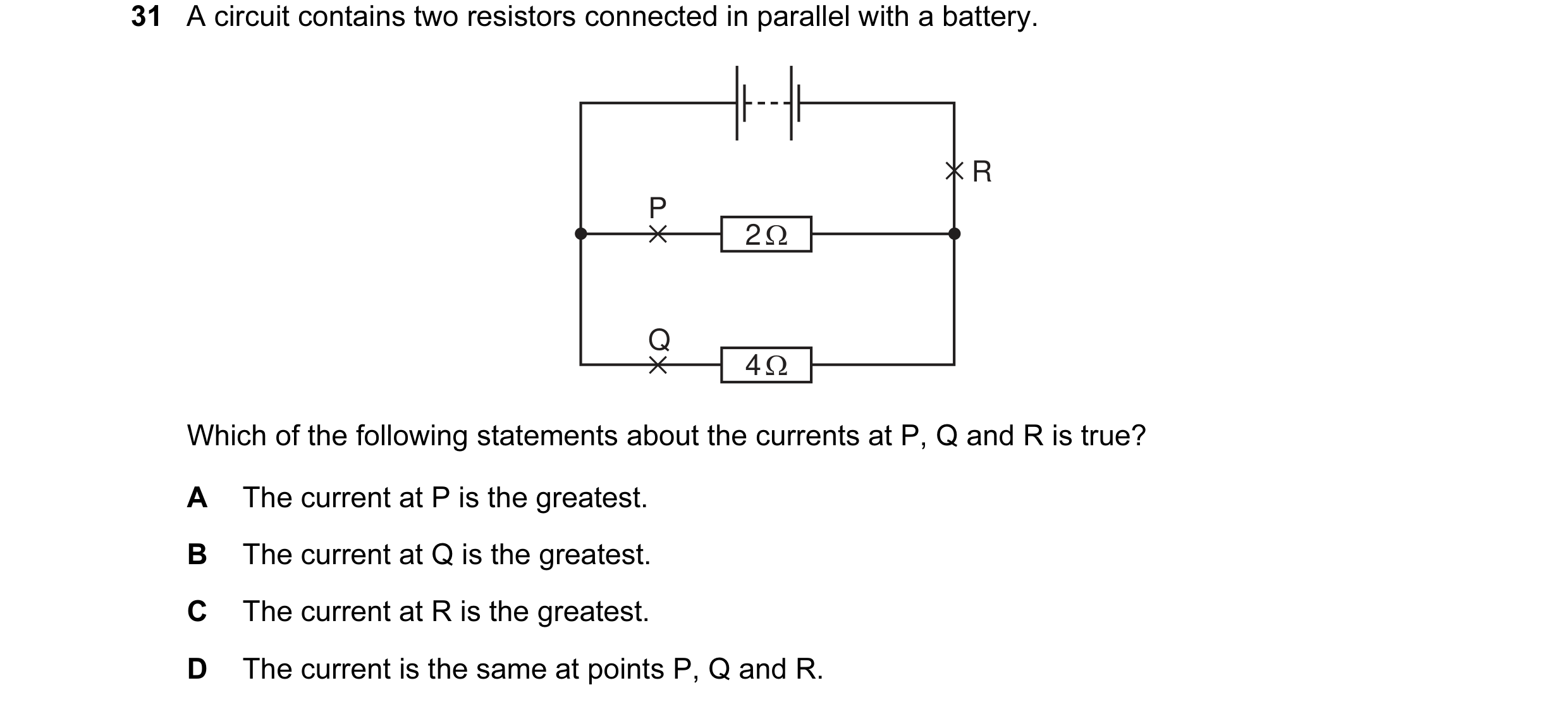
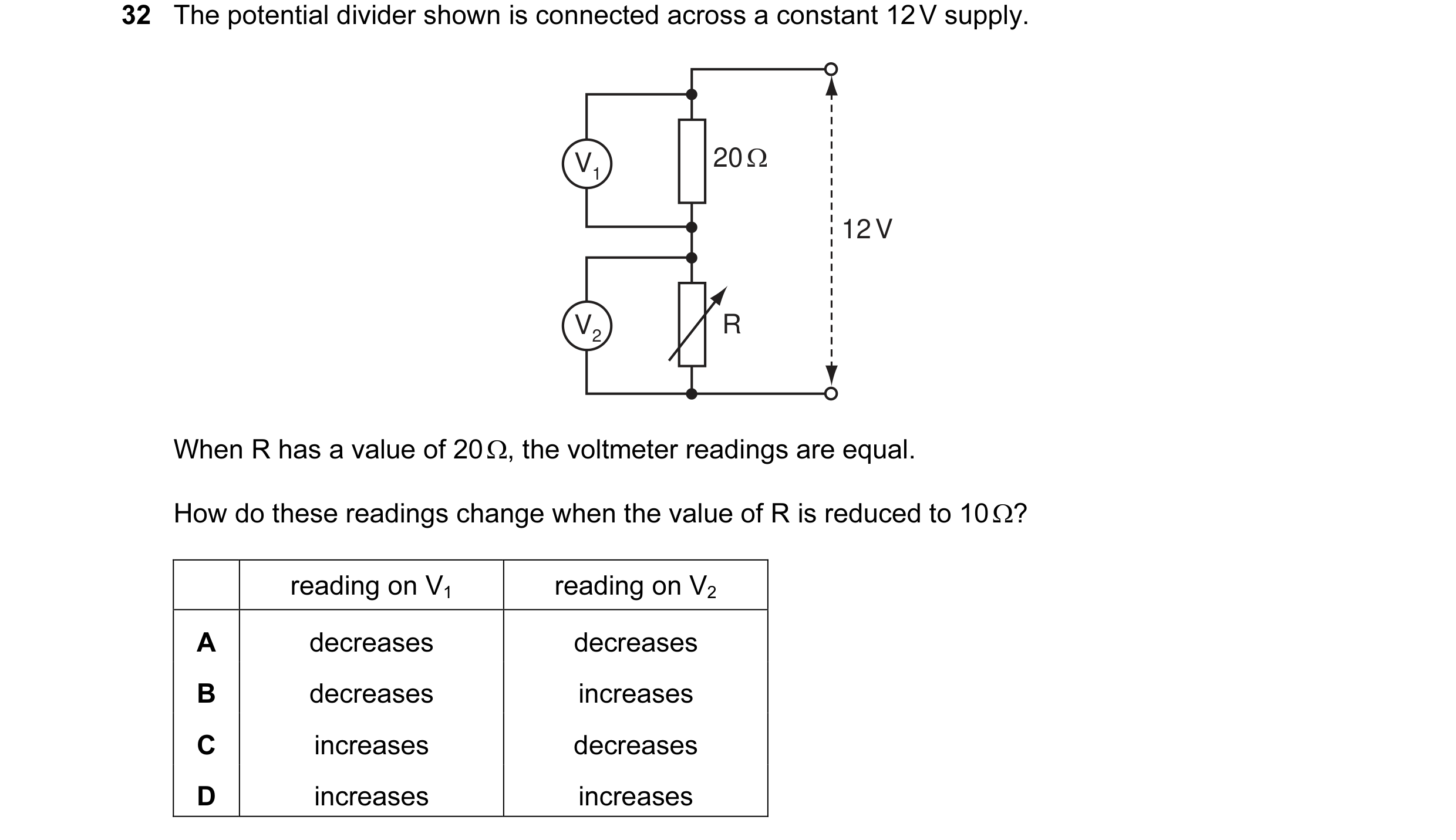 17 / 127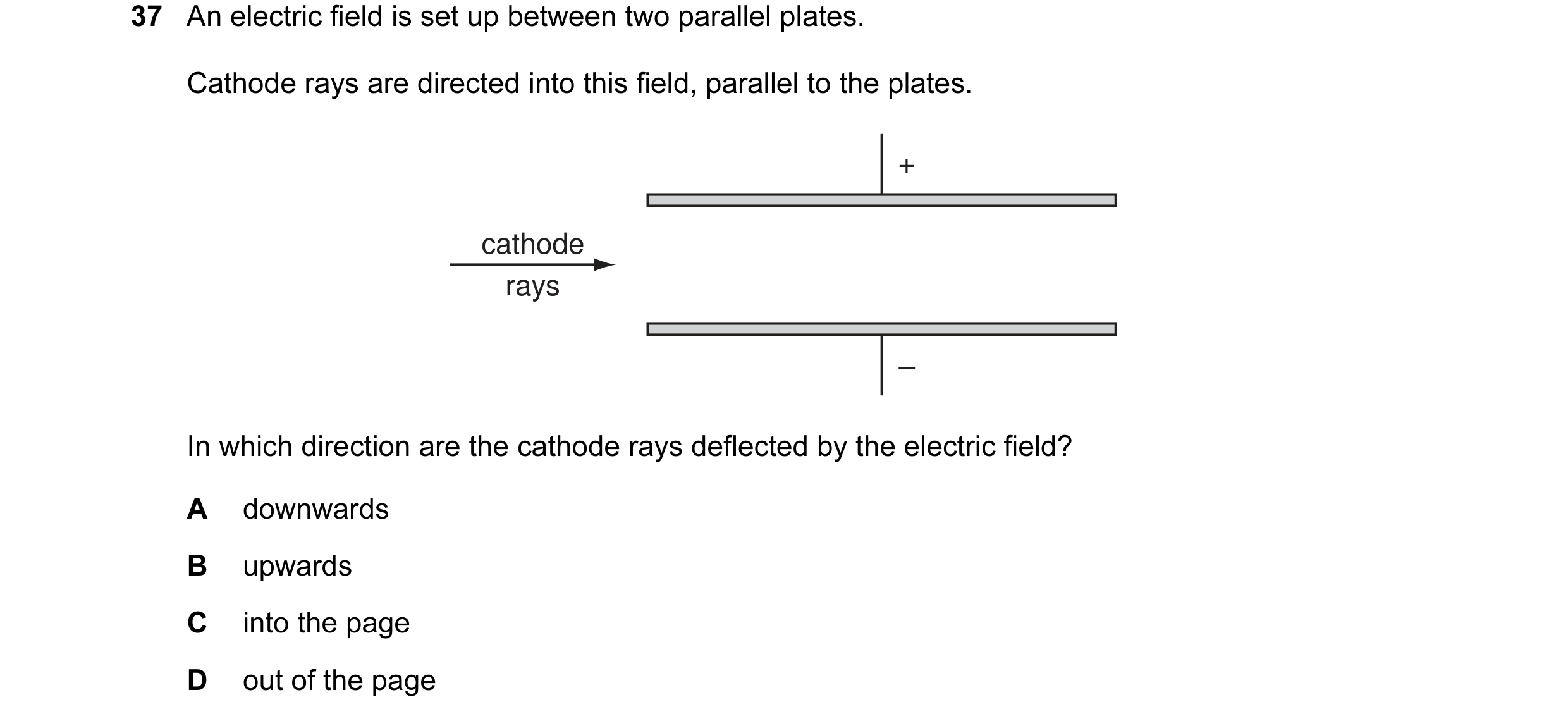
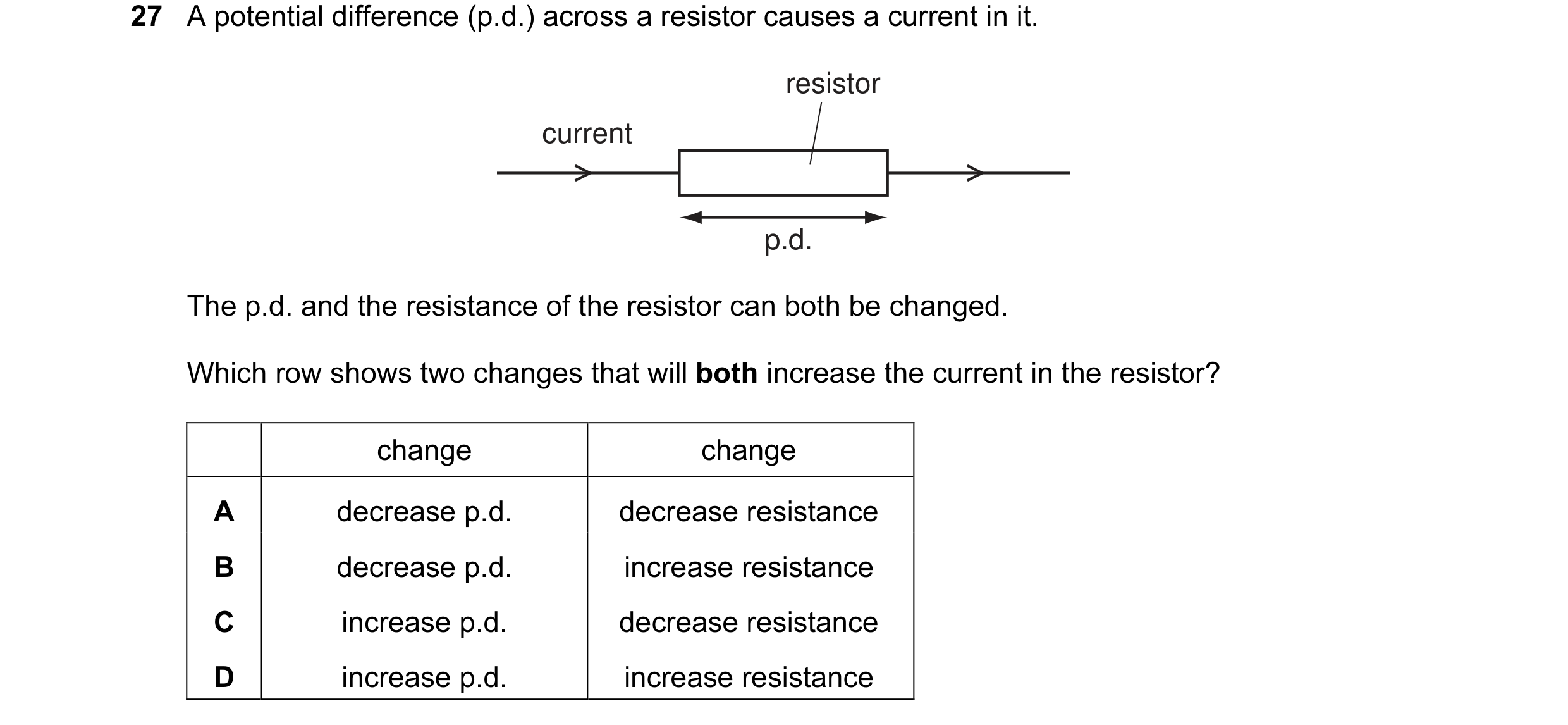
 18 / 127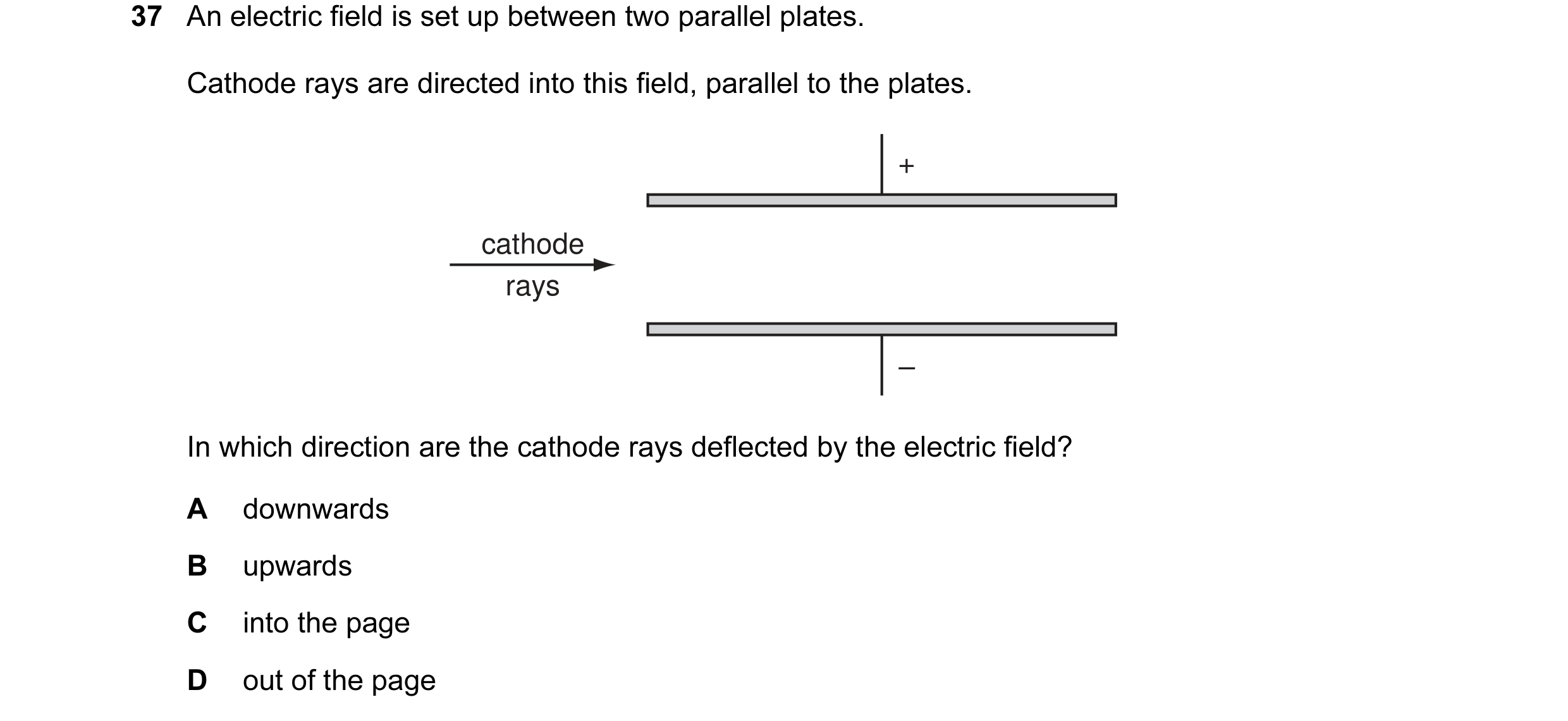
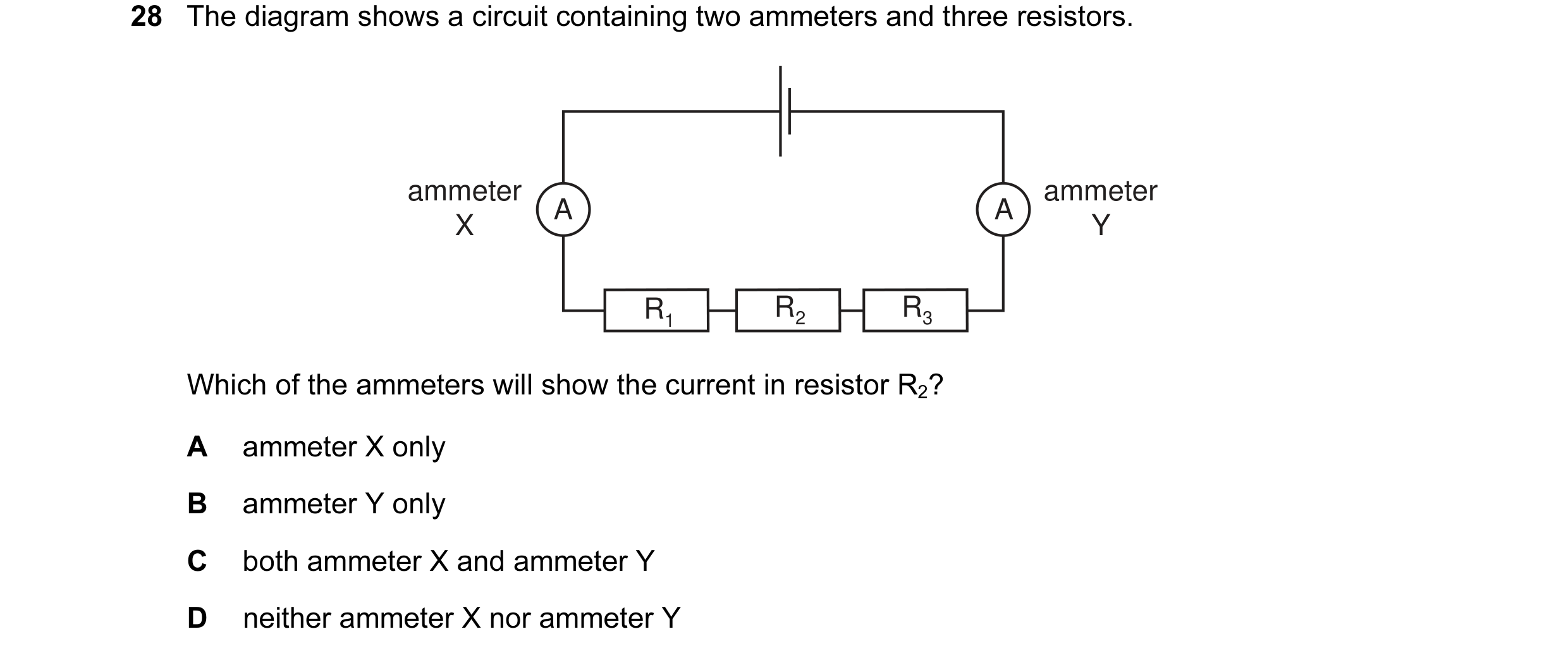
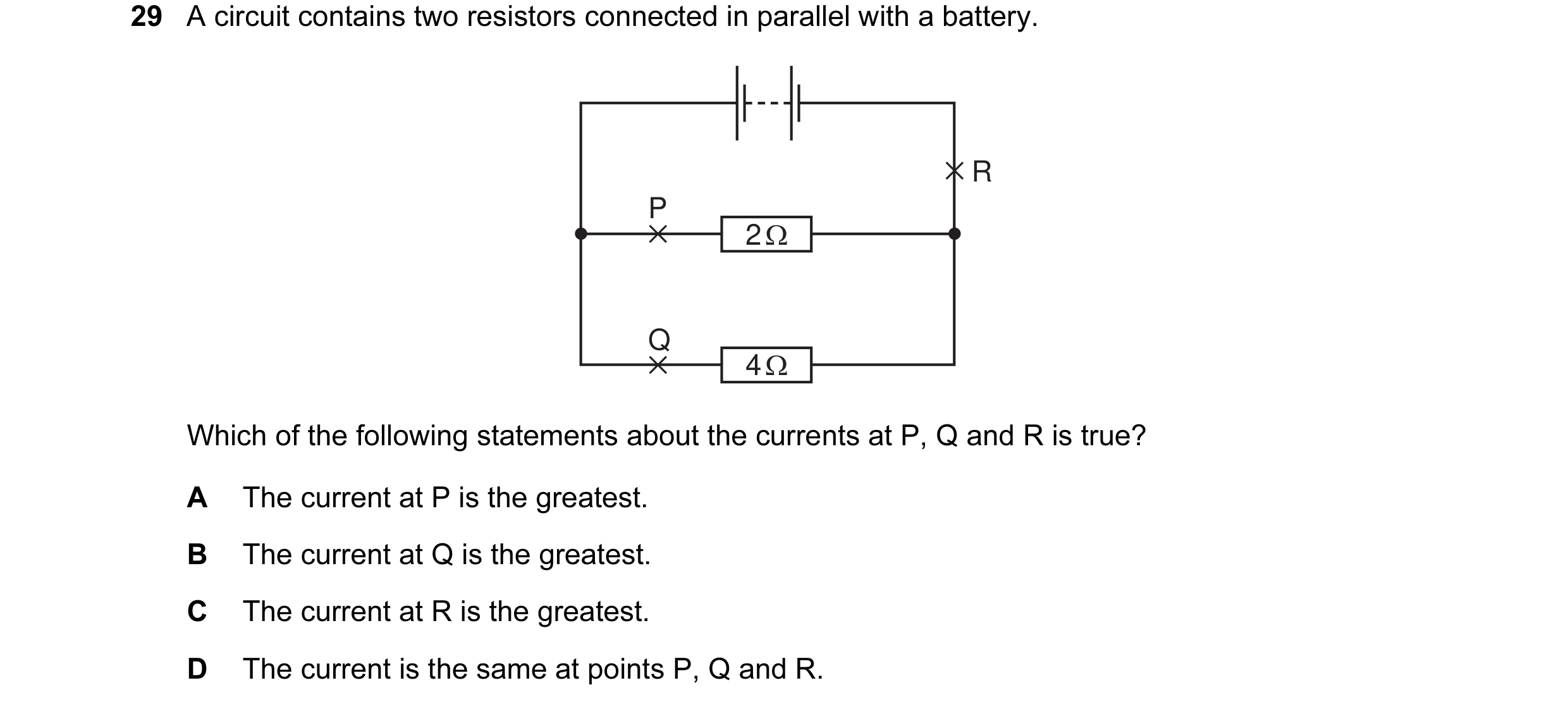 19 / 127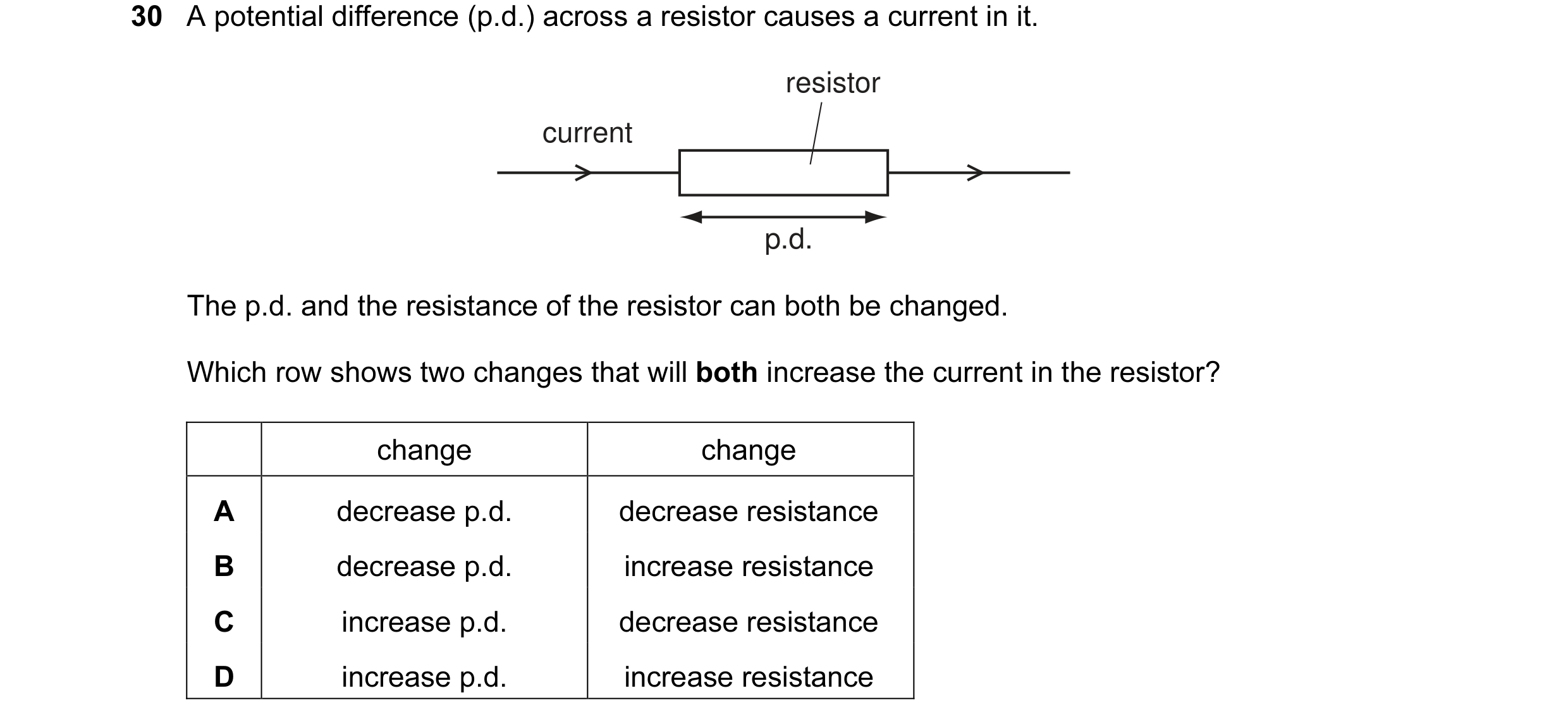
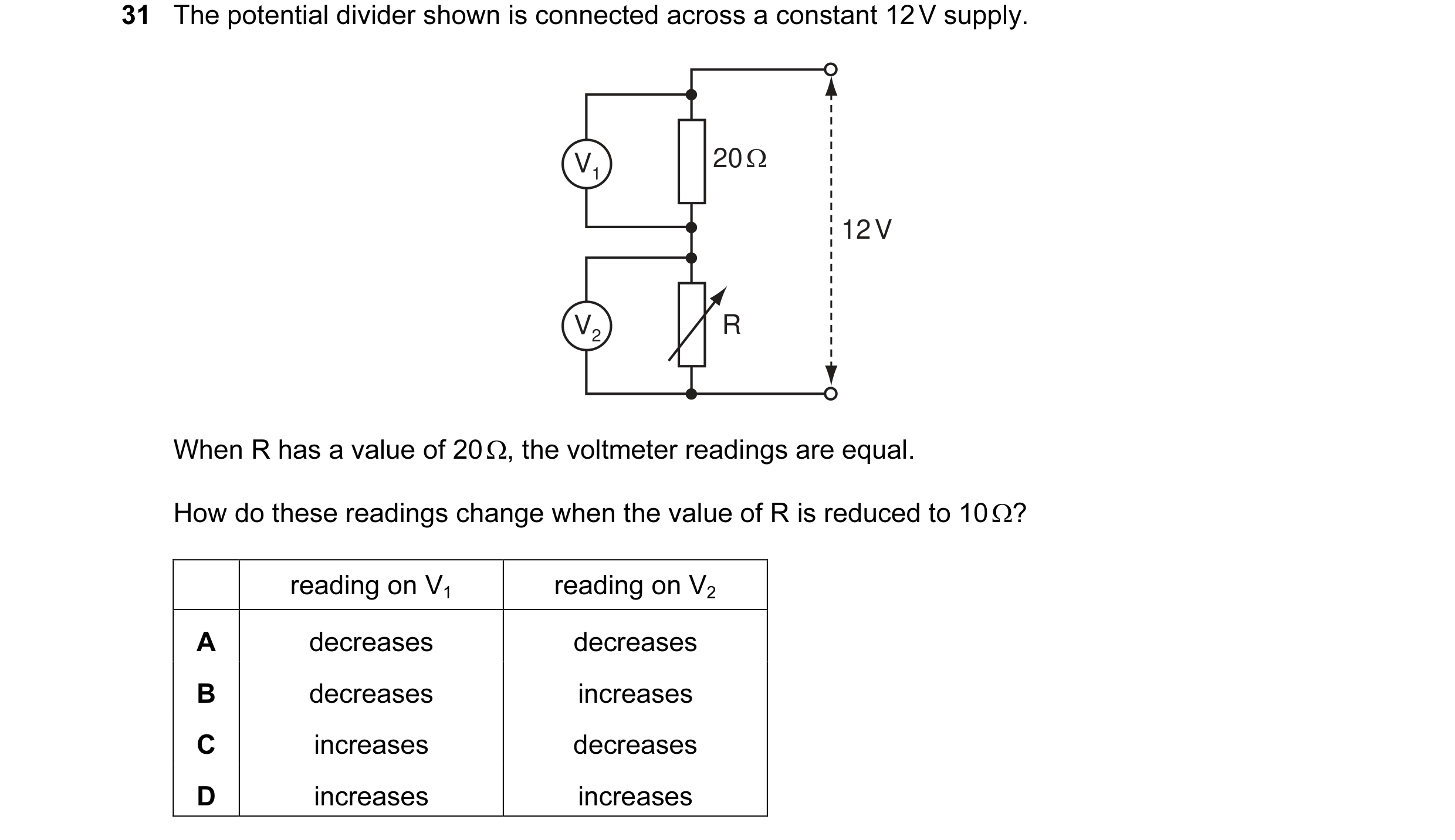
 20 / 127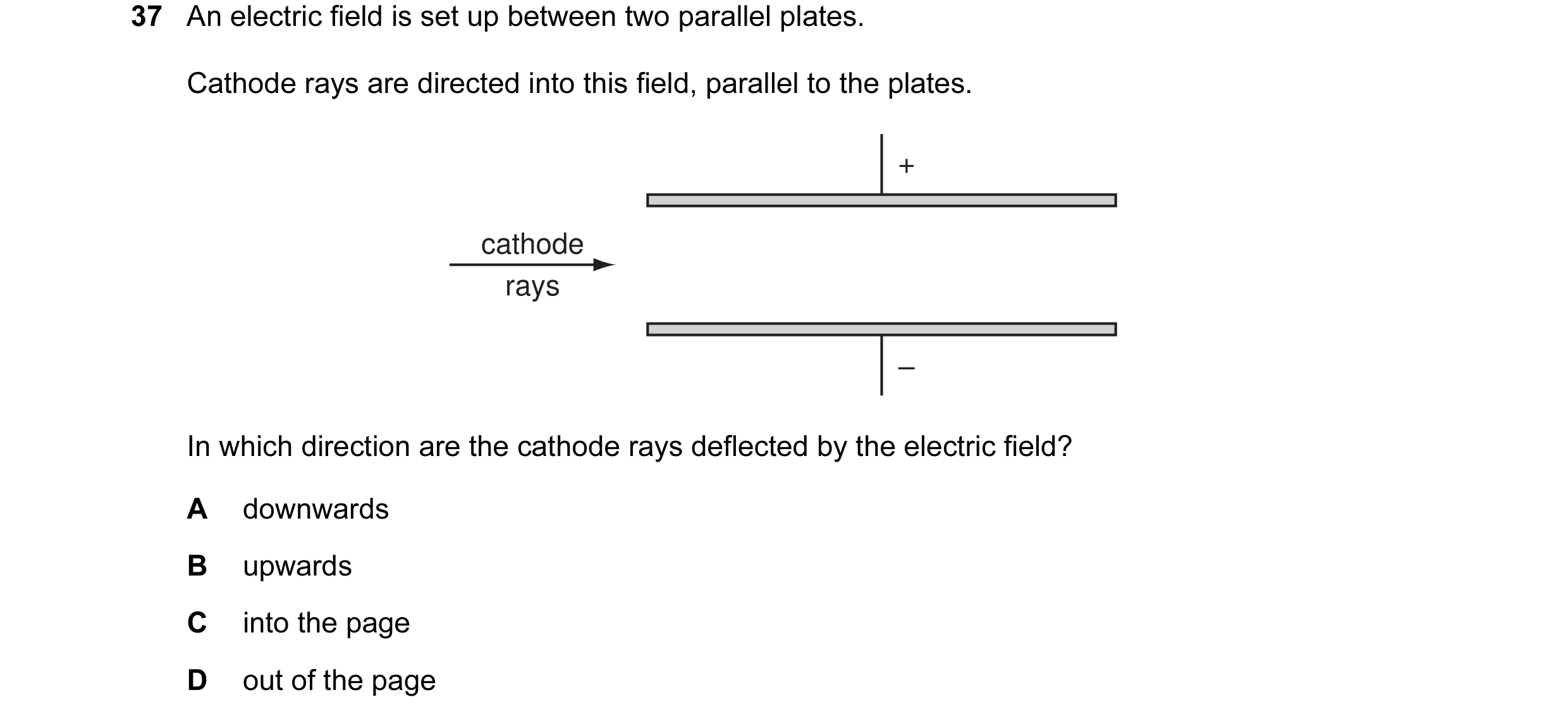
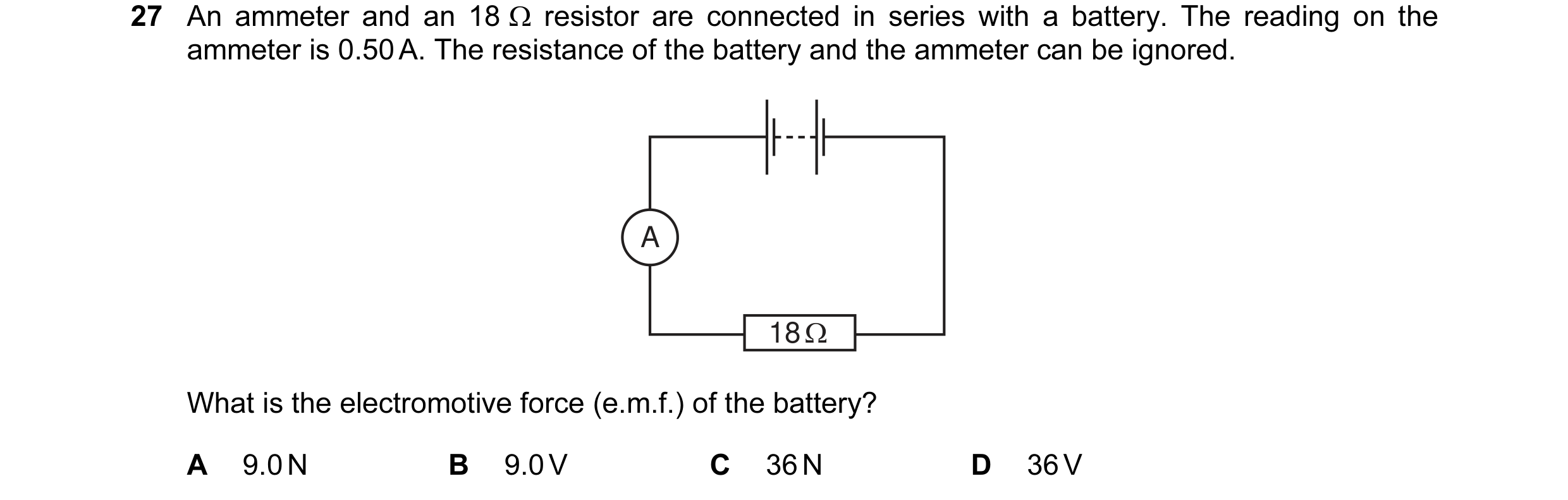
 21 / 127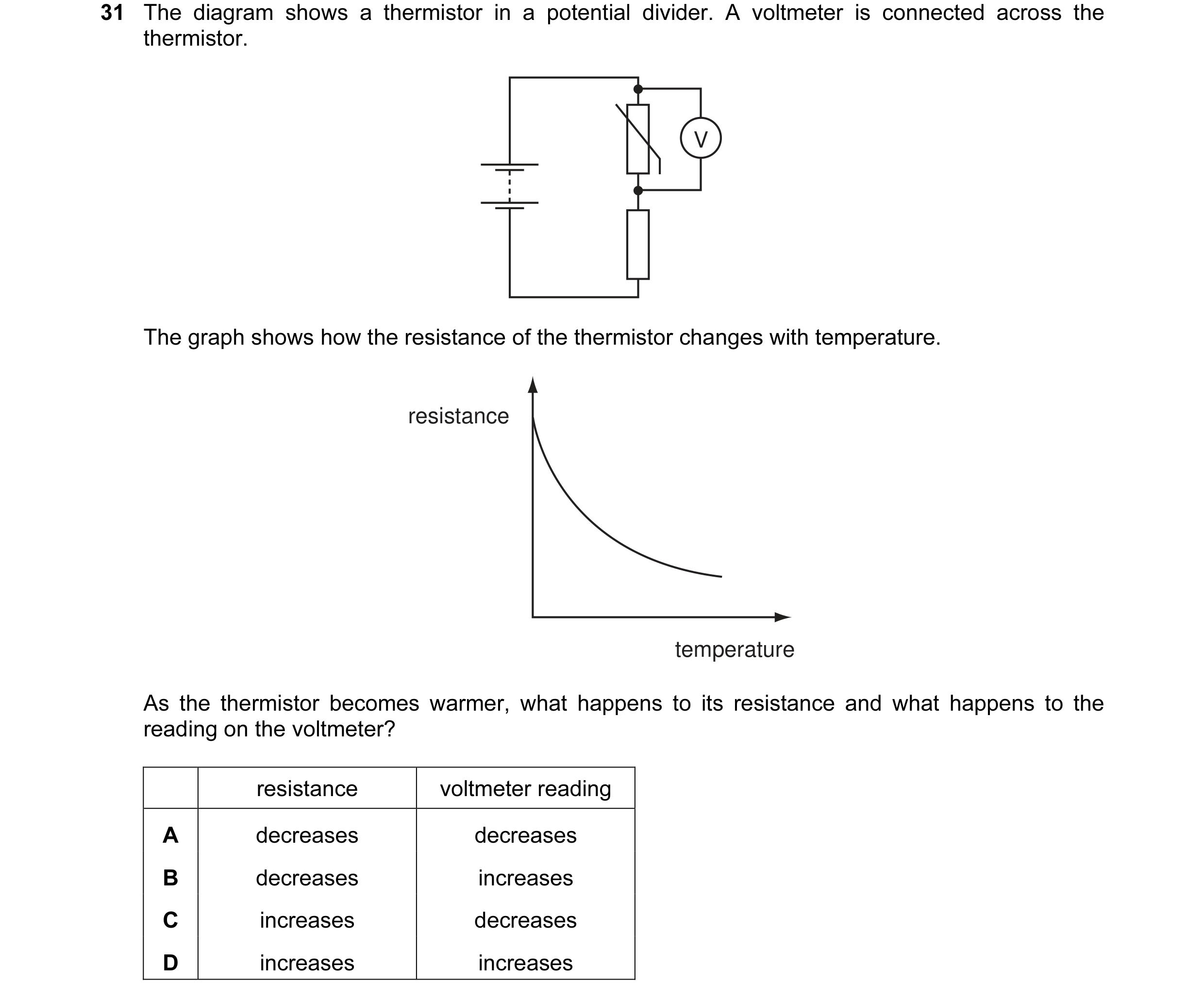
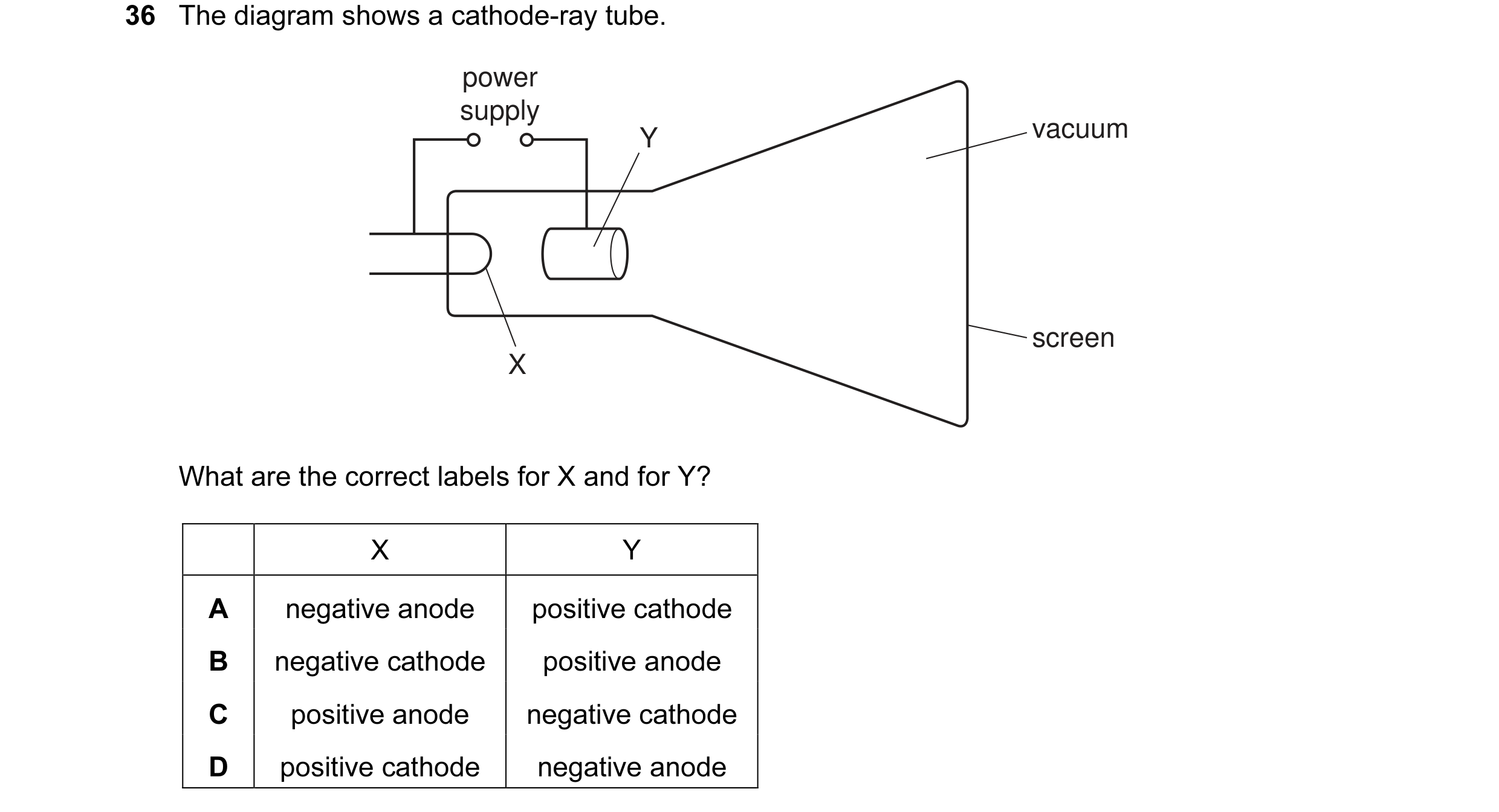 22 / 127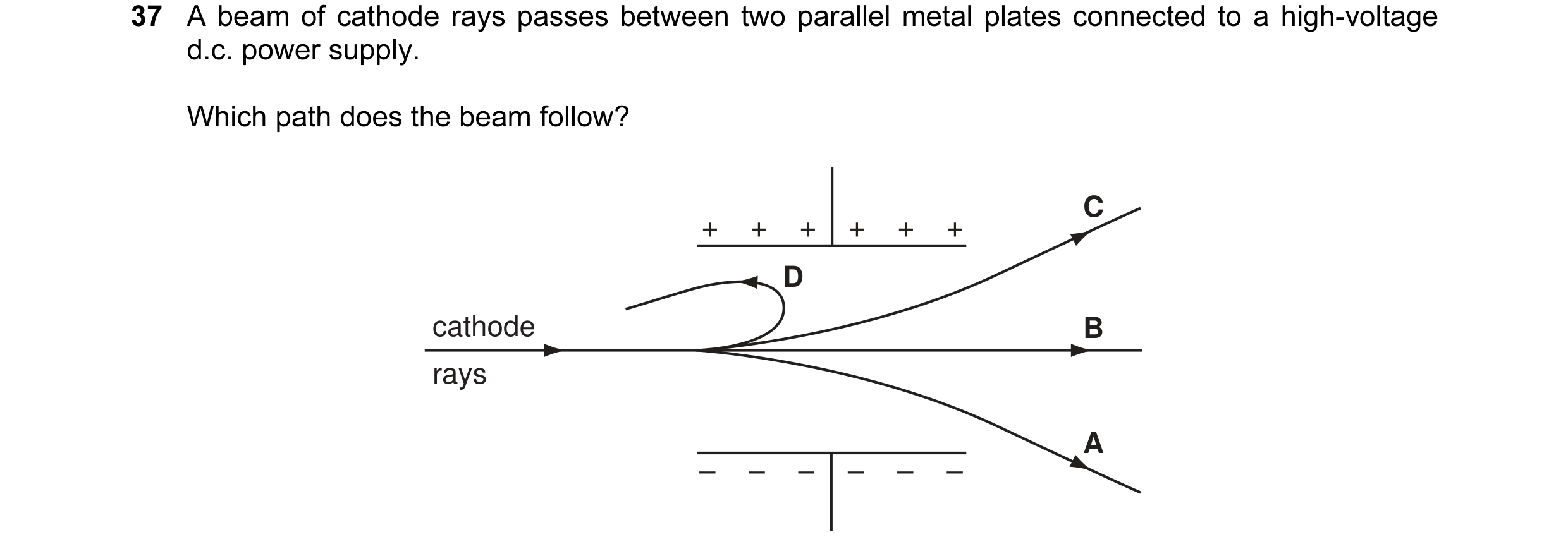
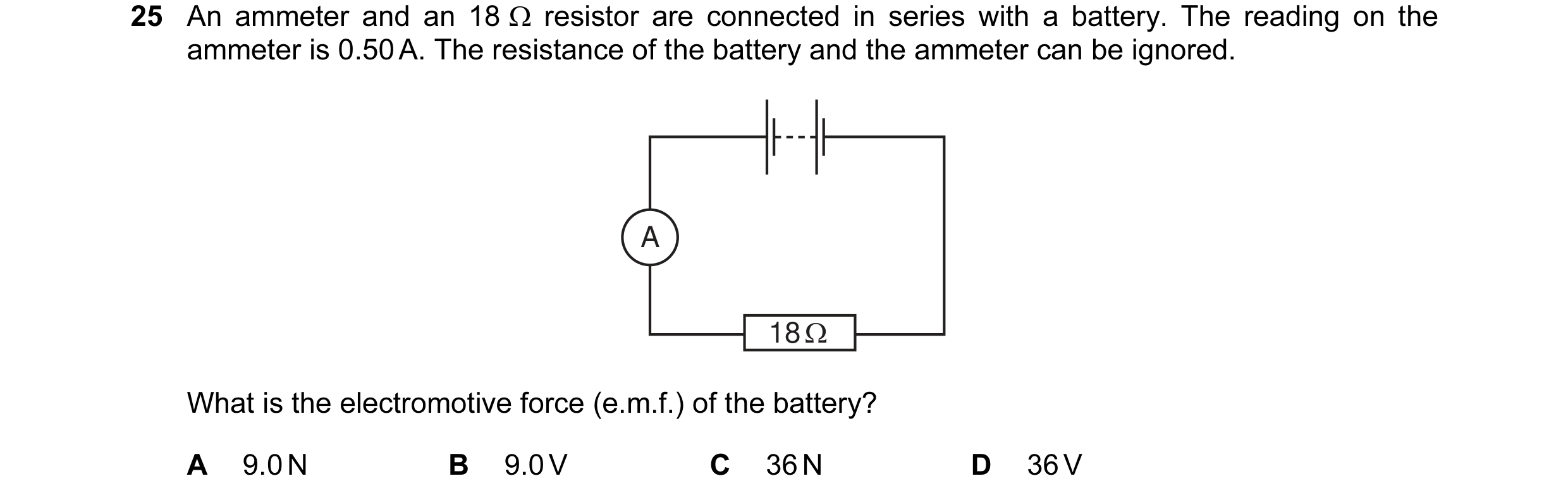
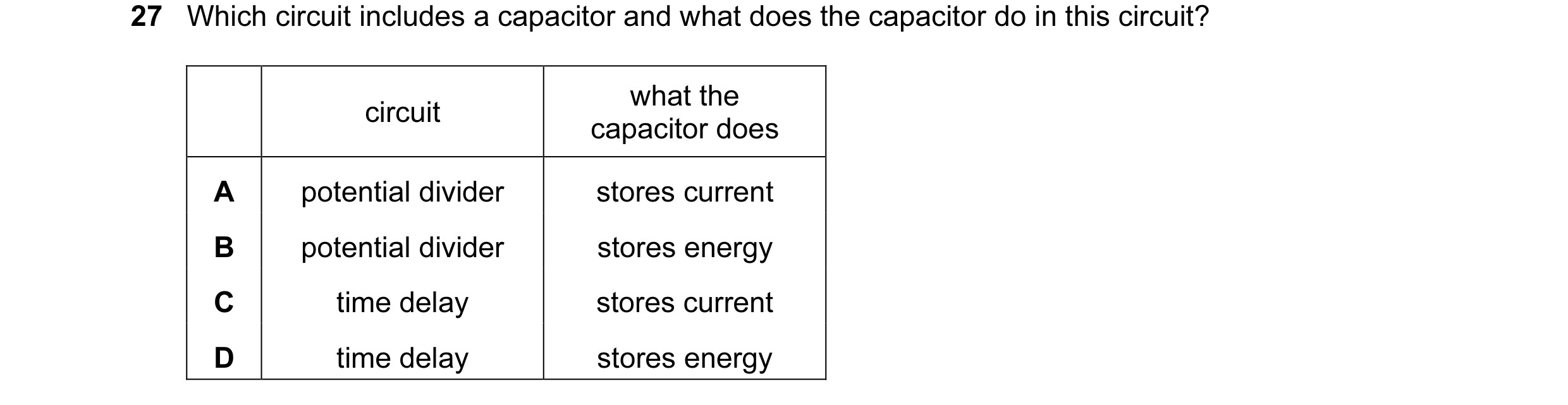 23 / 127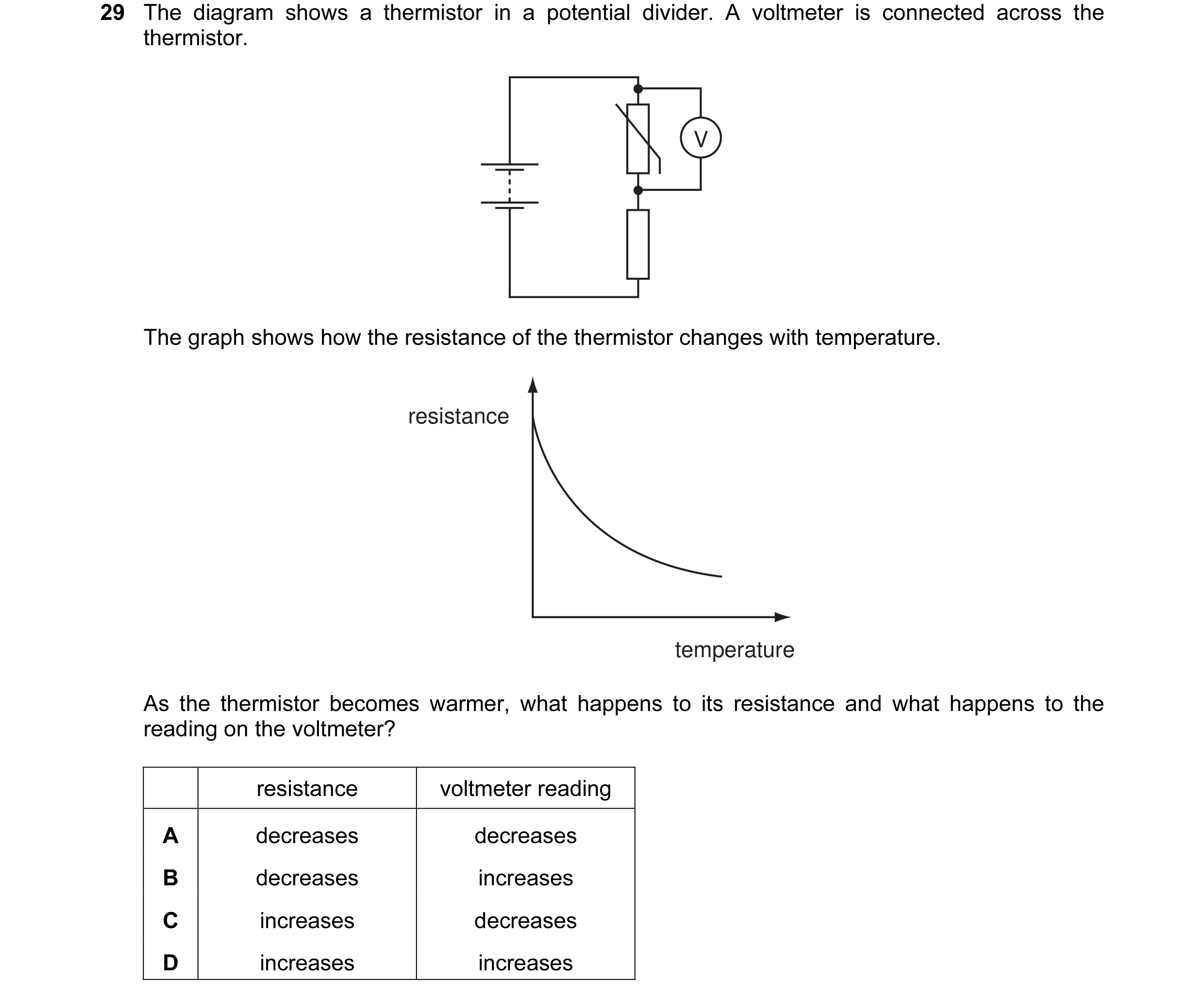
 24 / 127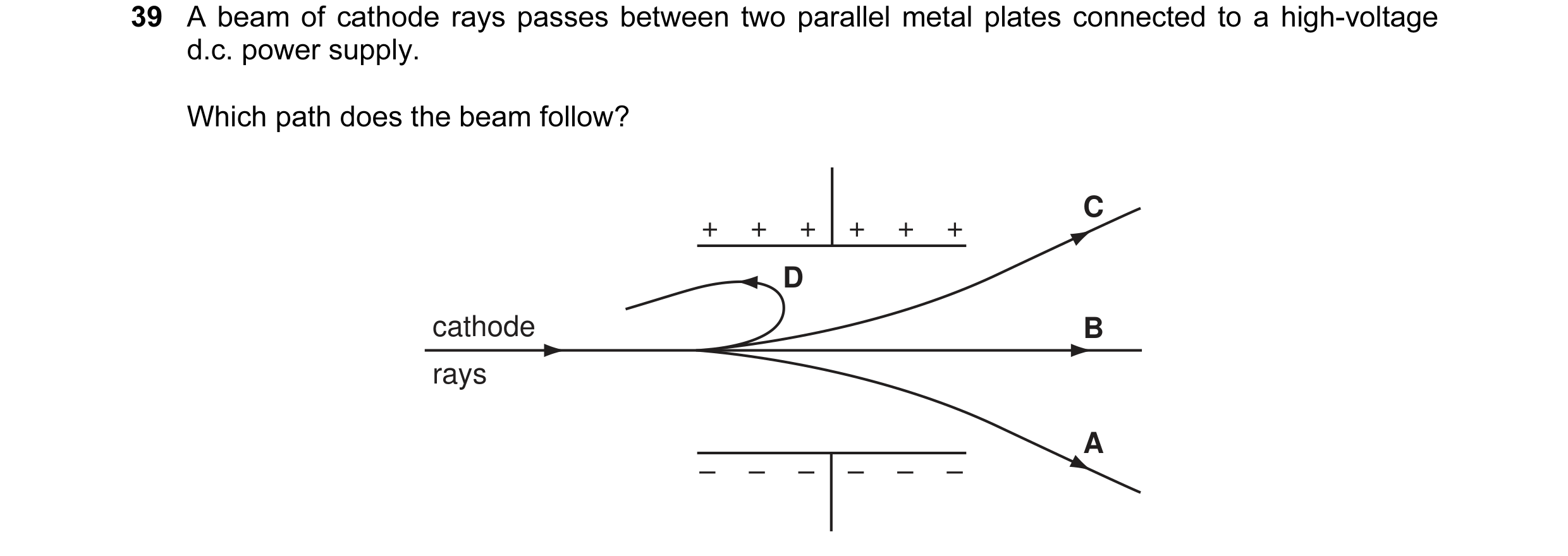
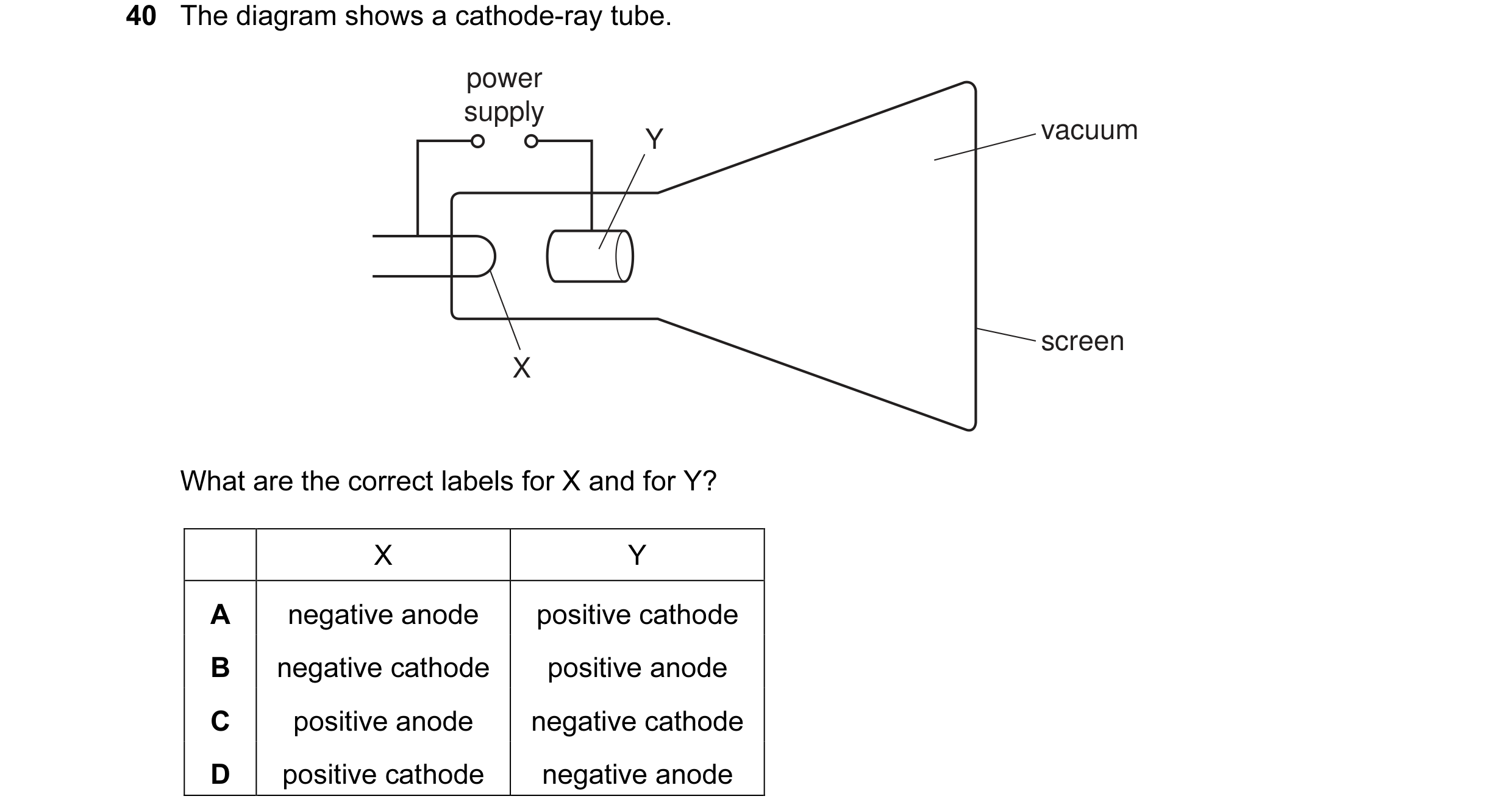
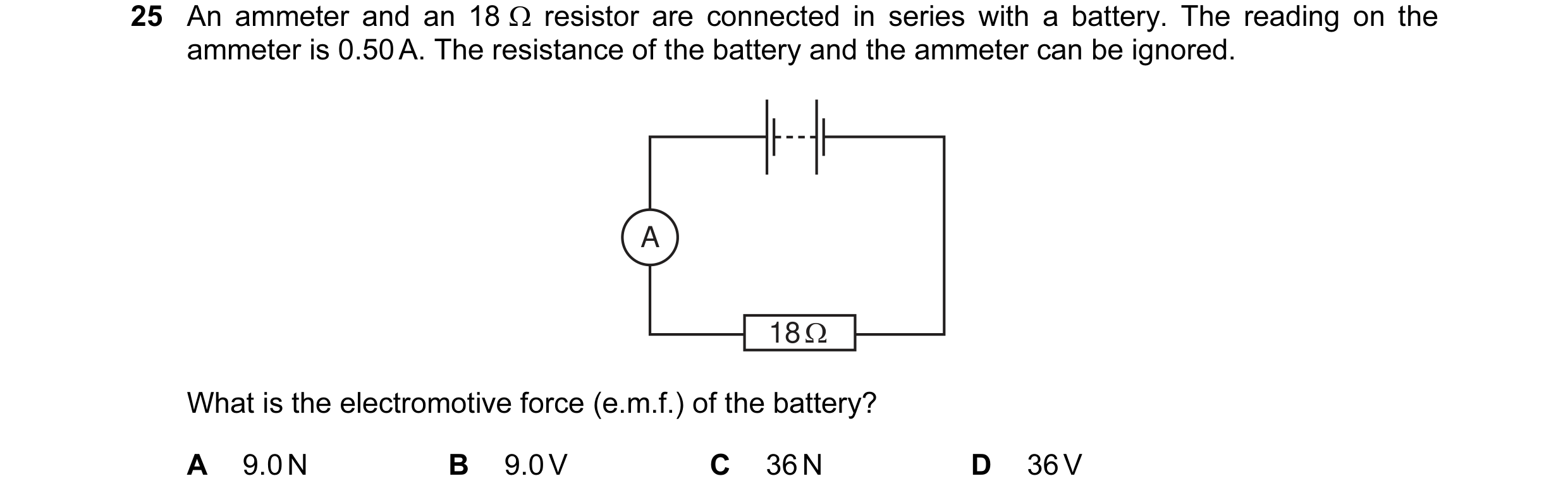 25 / 127
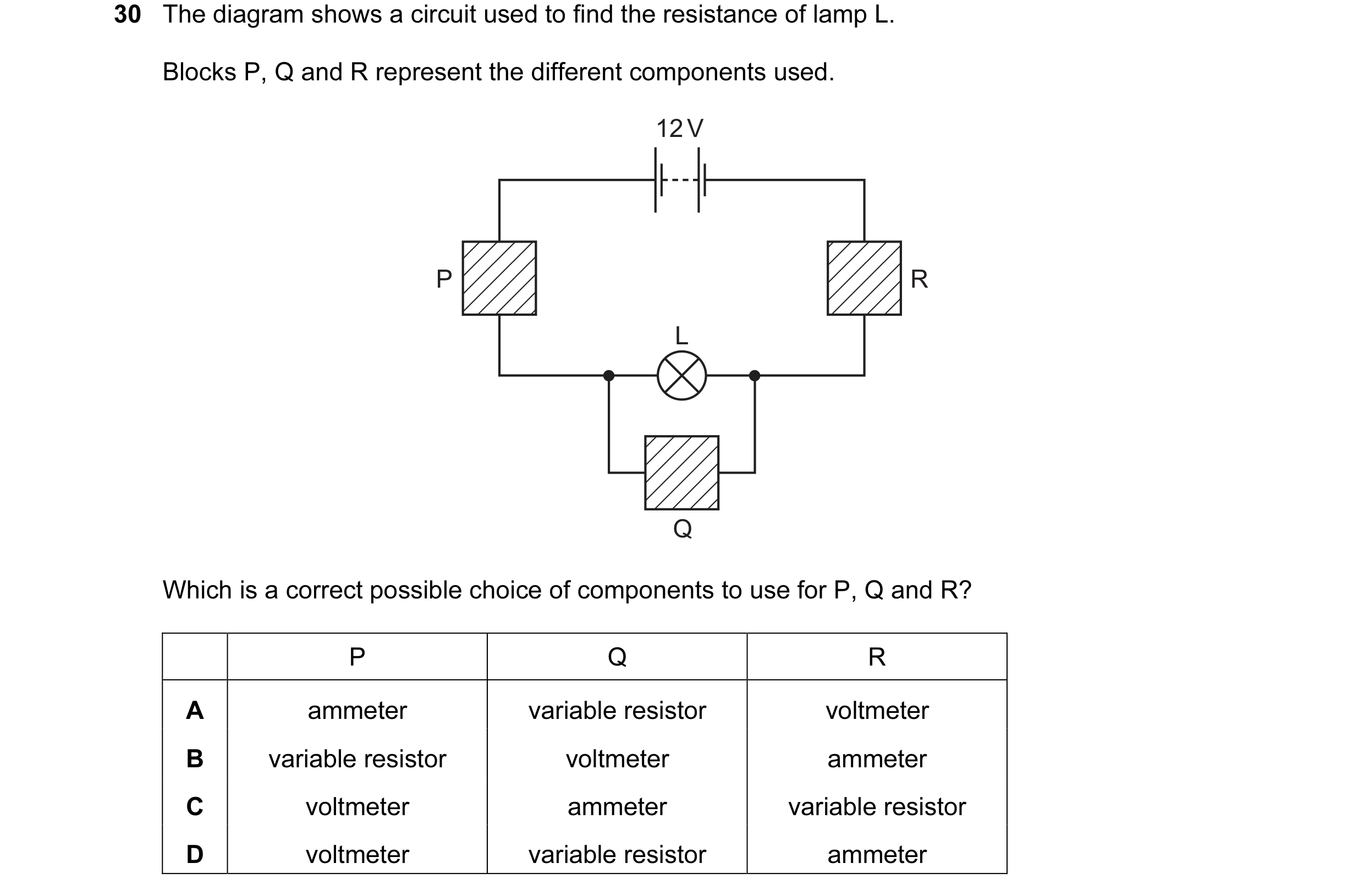
 26 / 127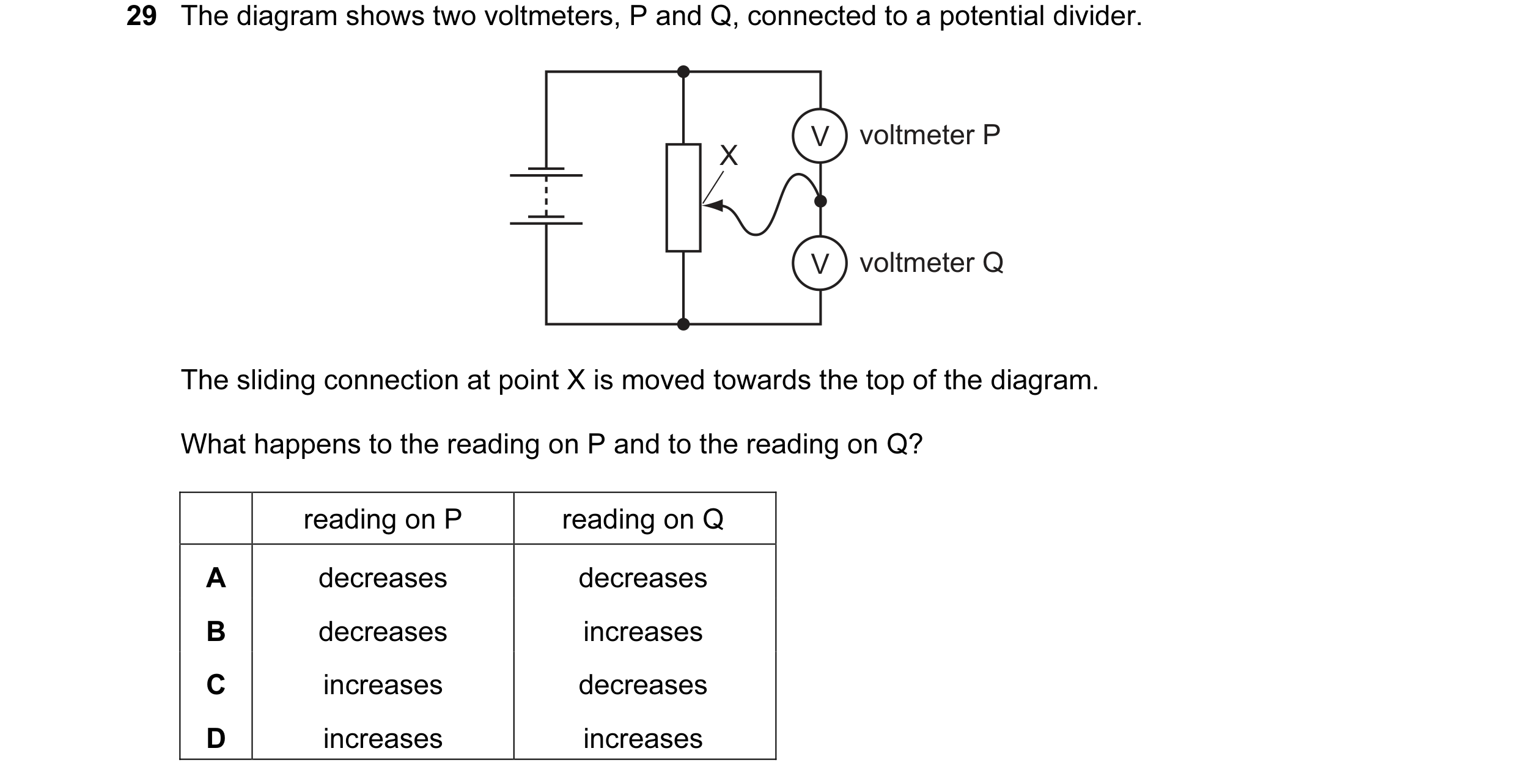
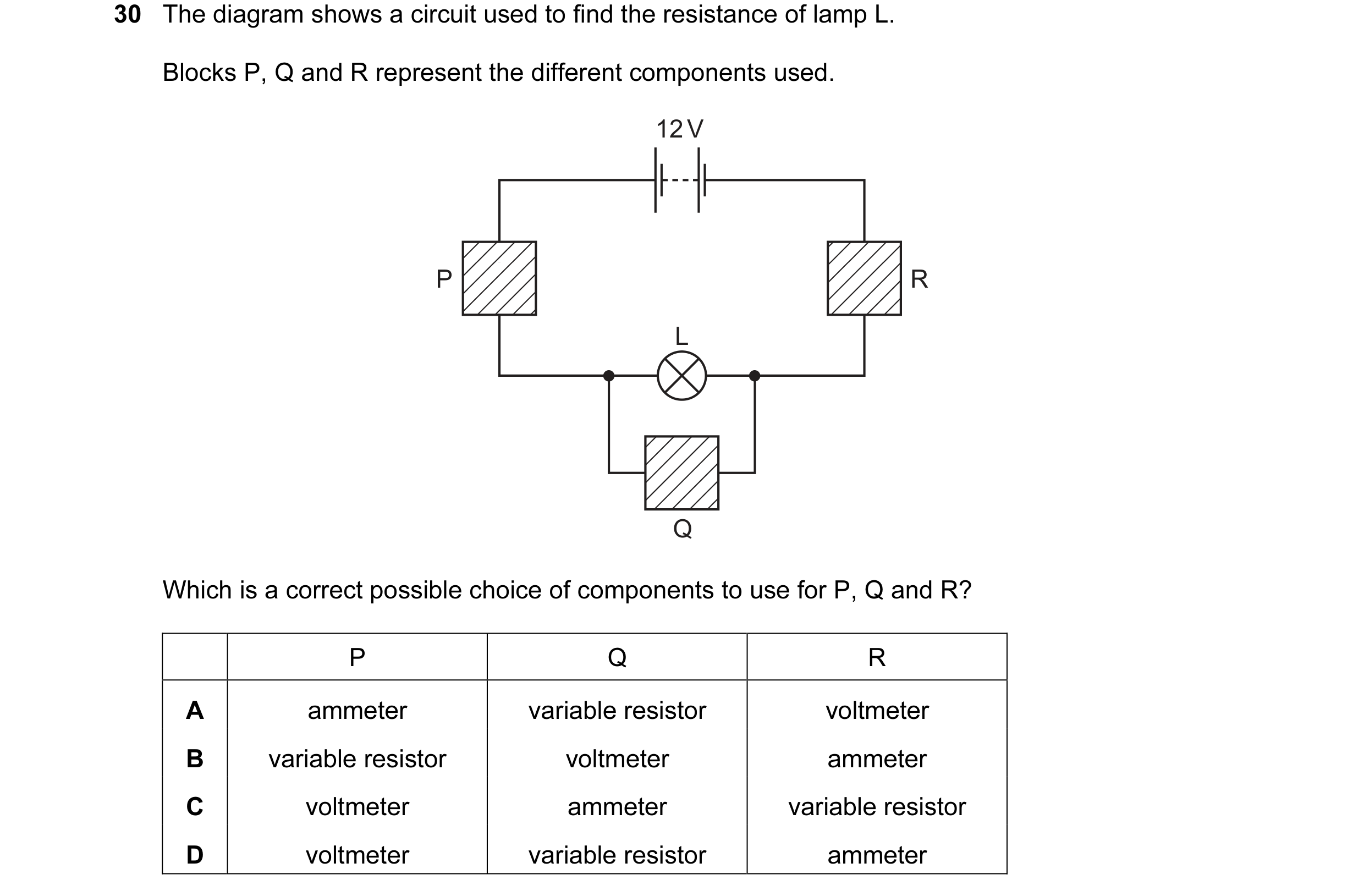 27 / 127
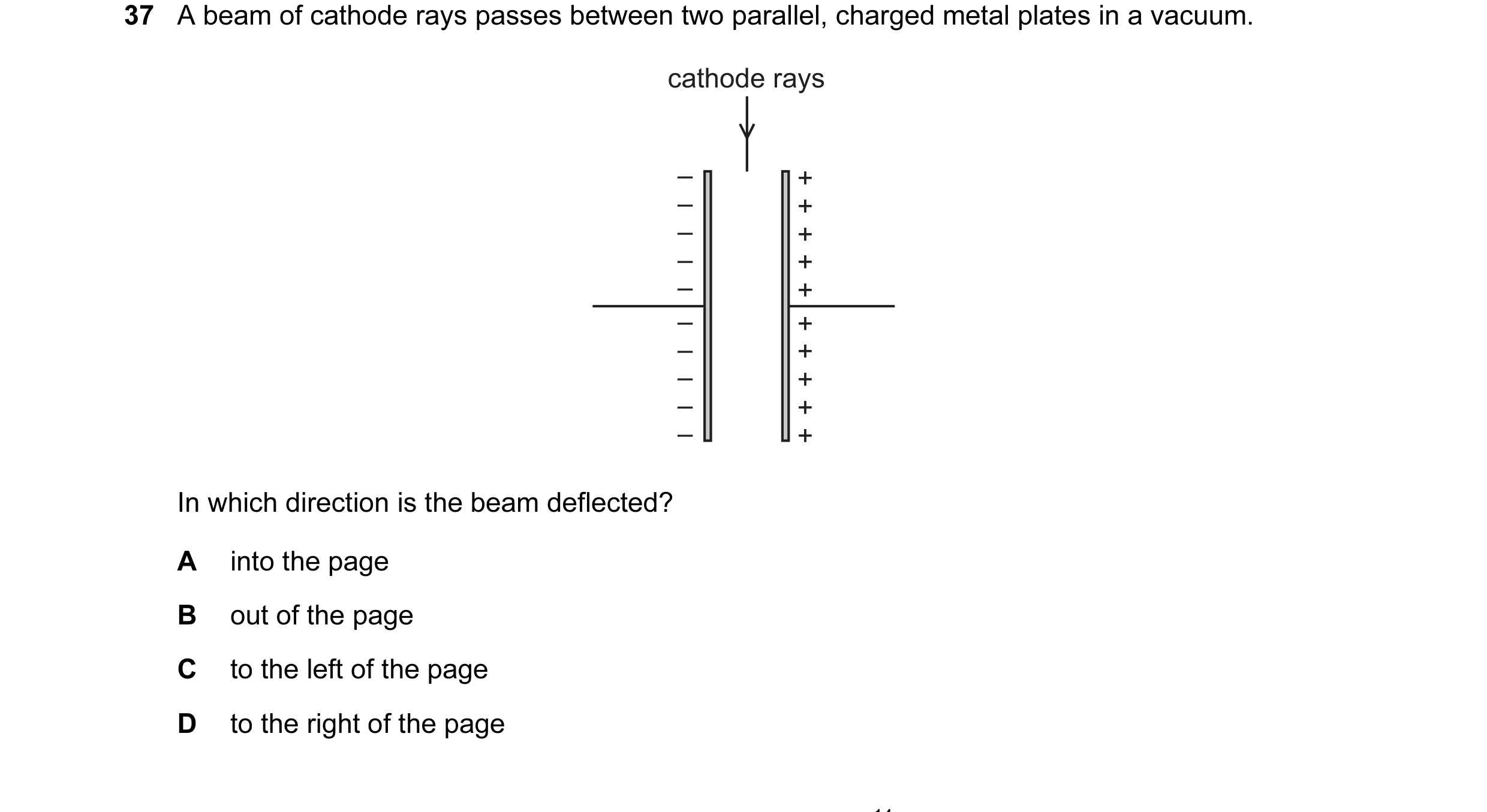
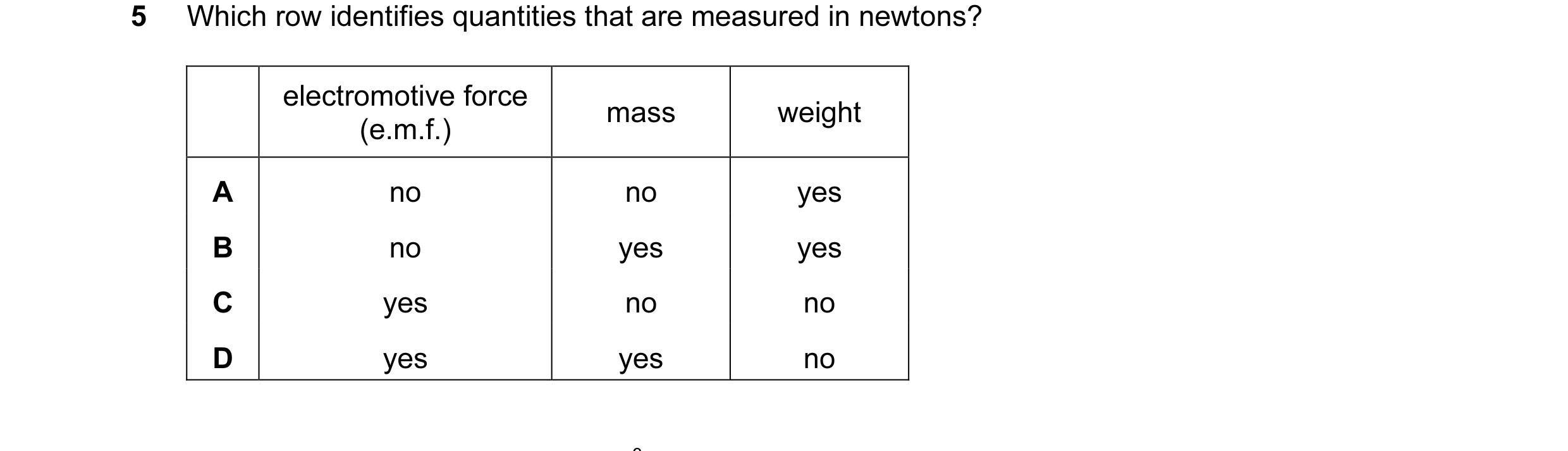
 28 / 127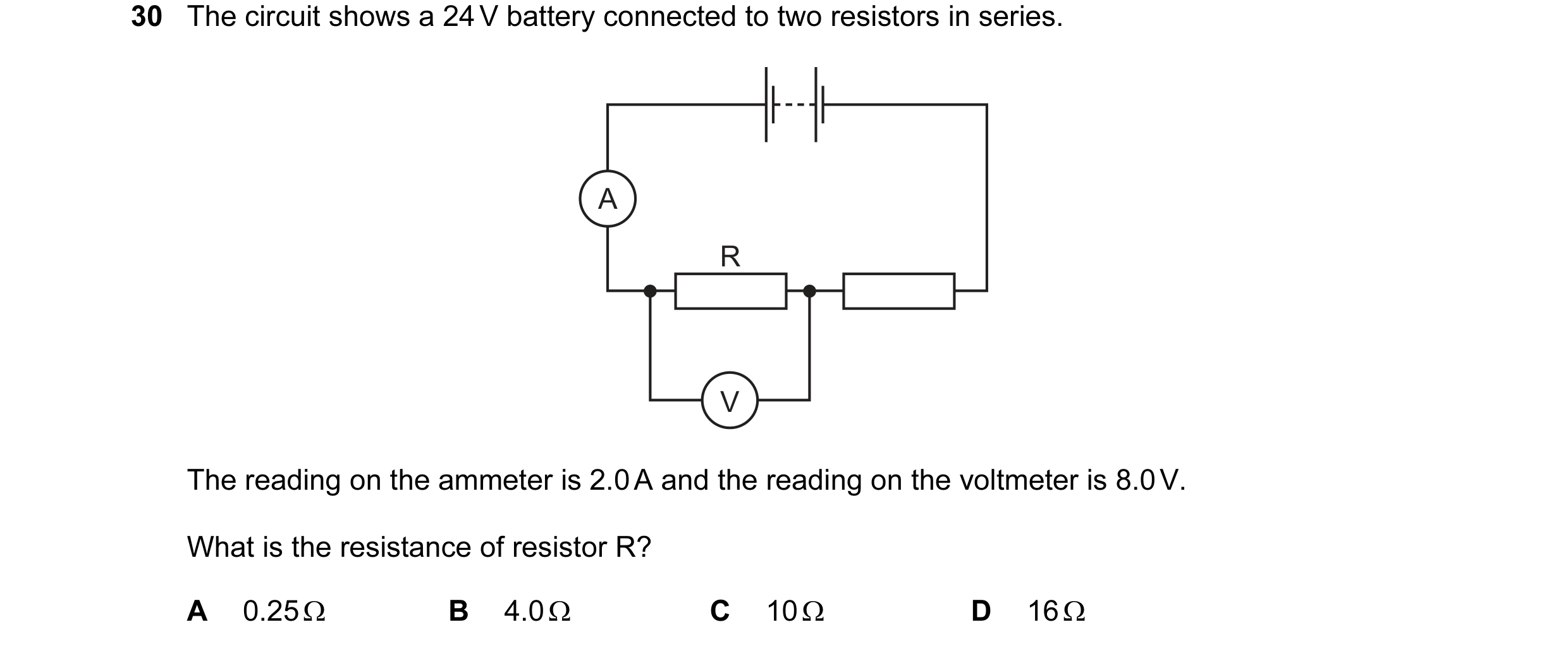
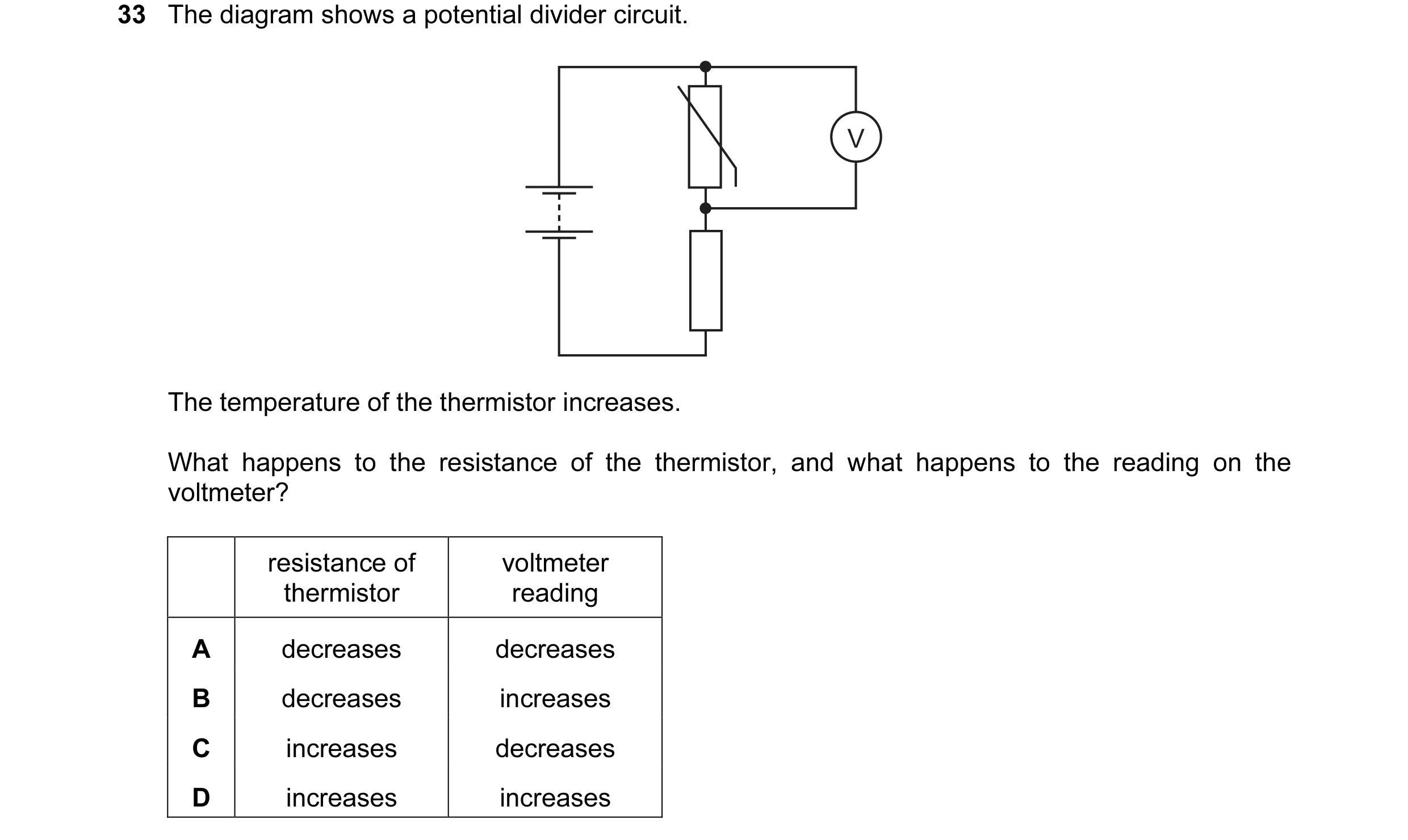
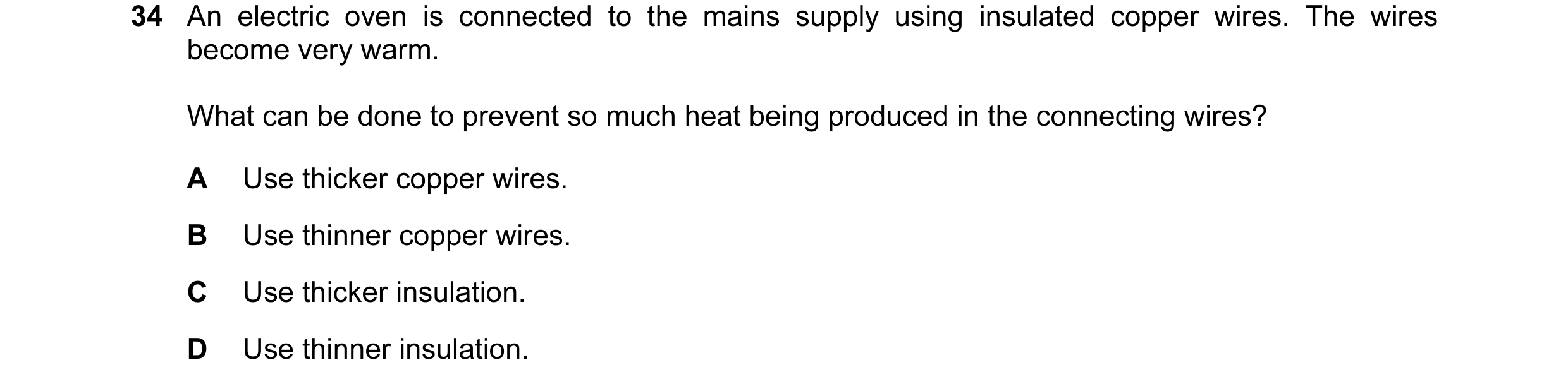 29 / 127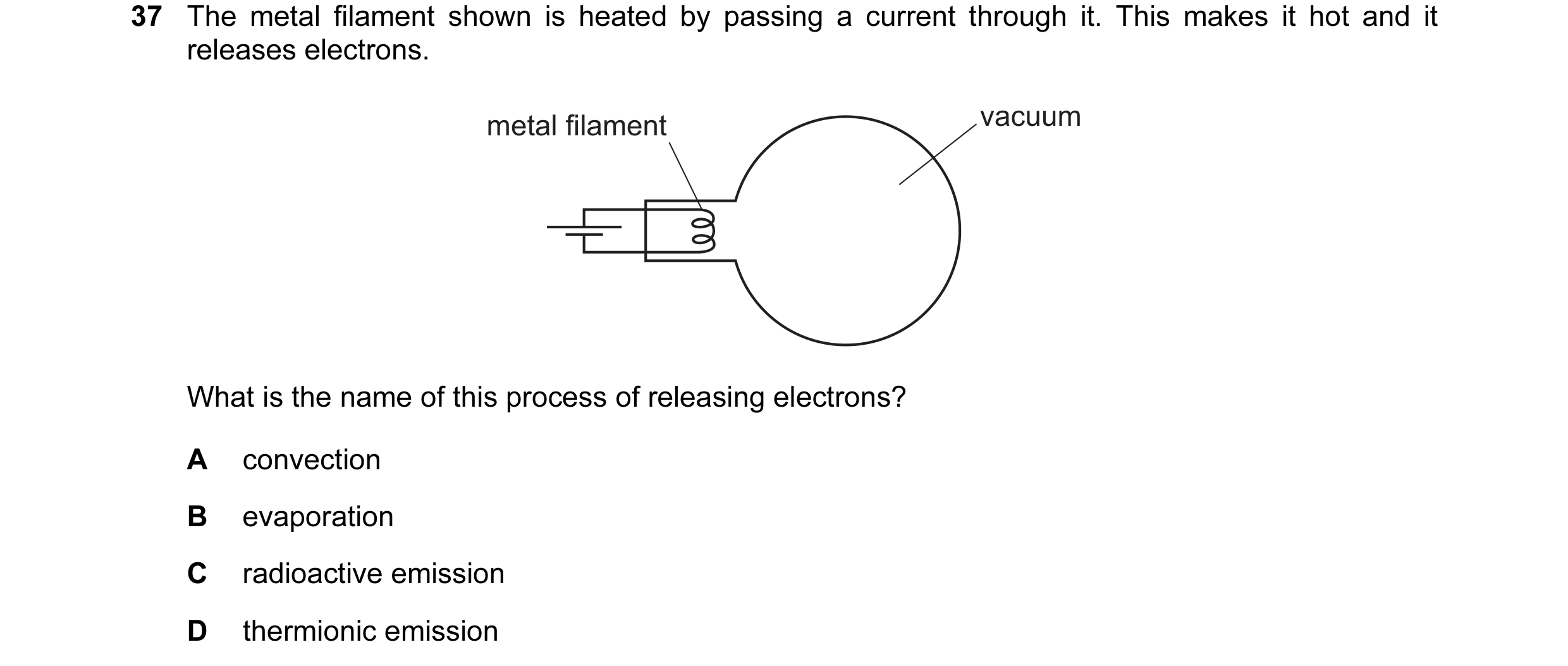
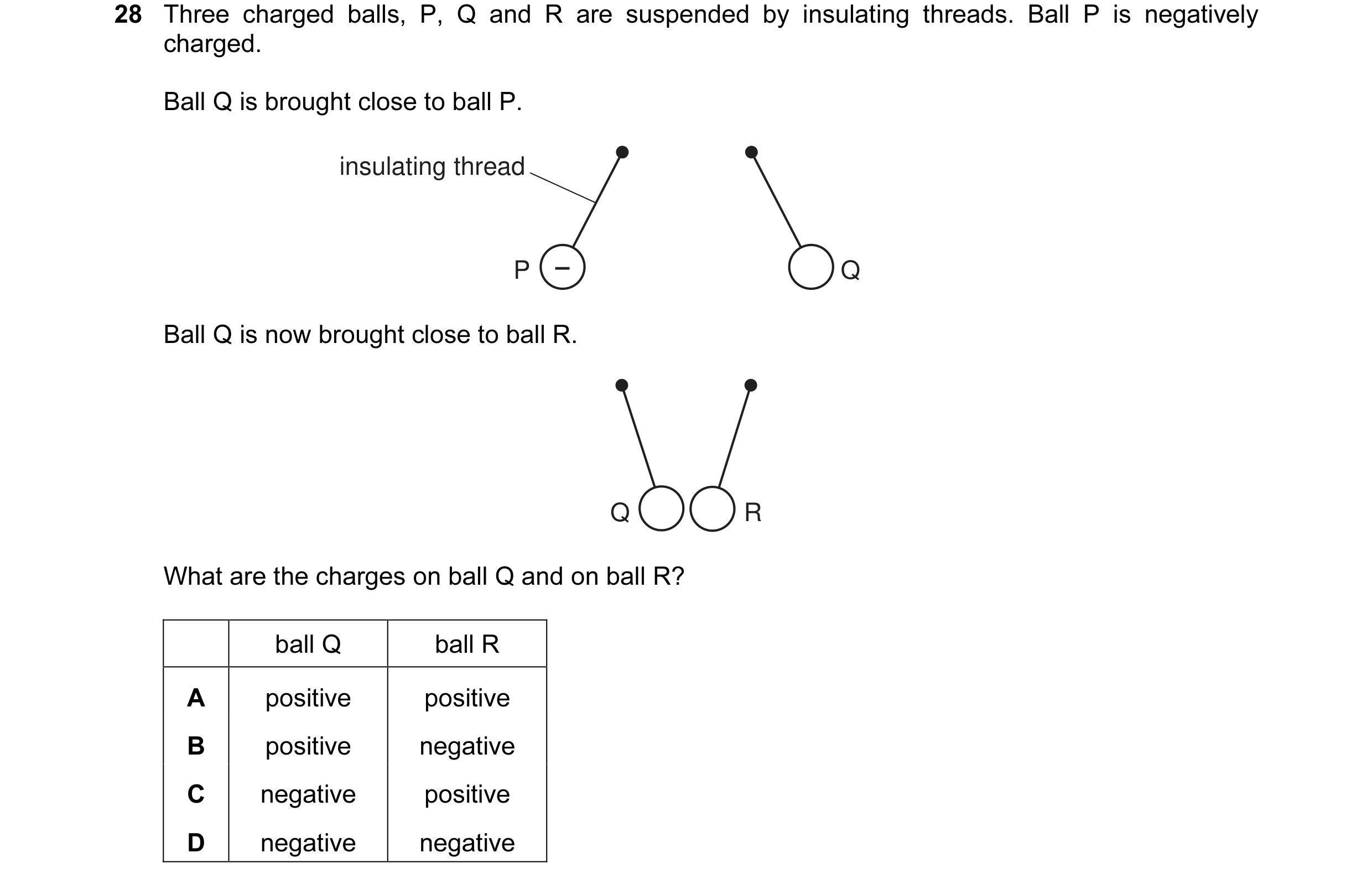 30 / 127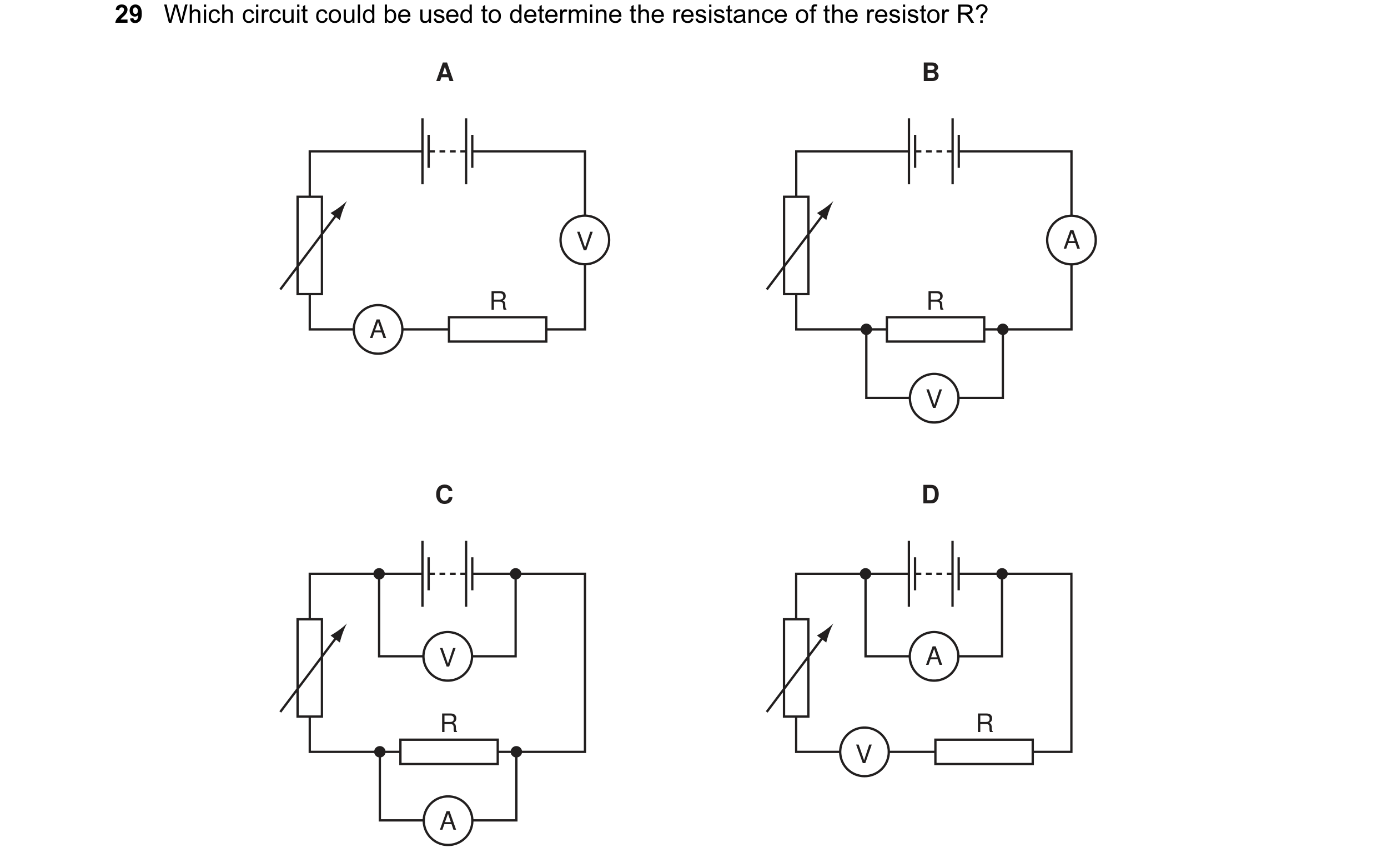

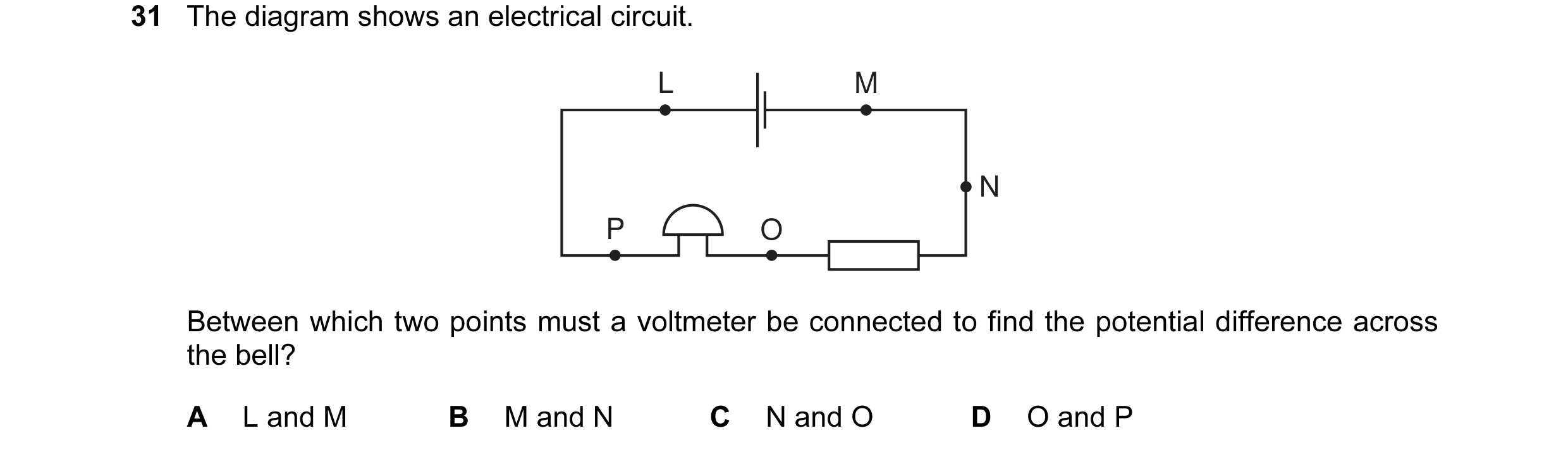 31 / 127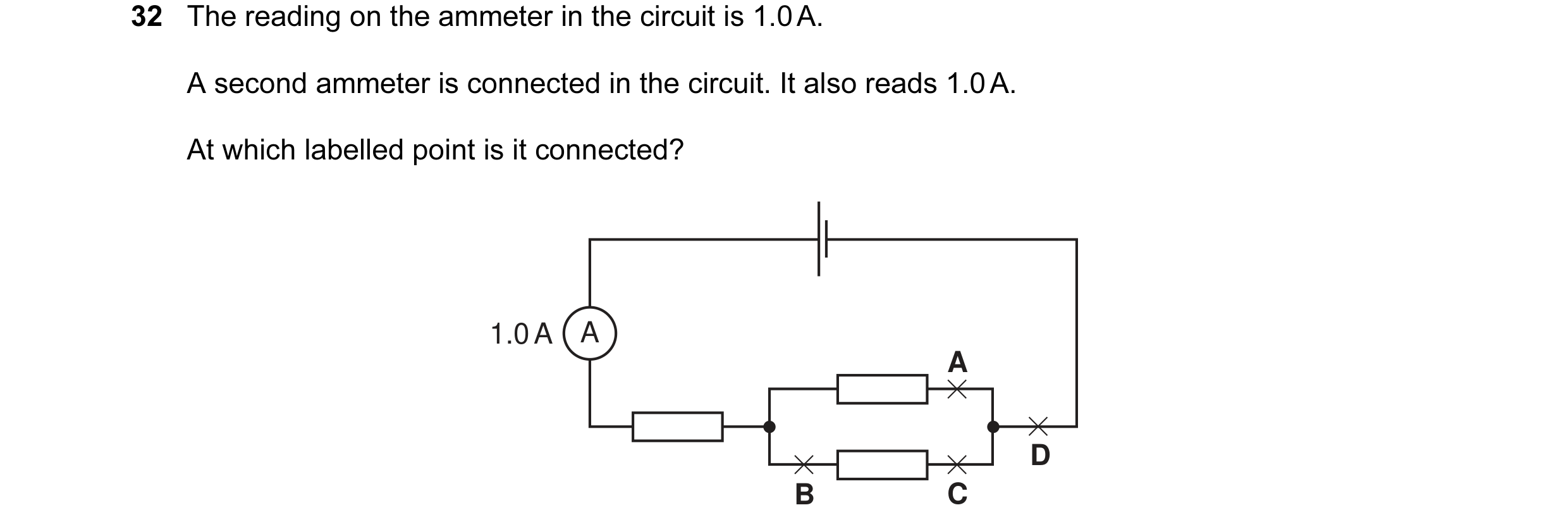
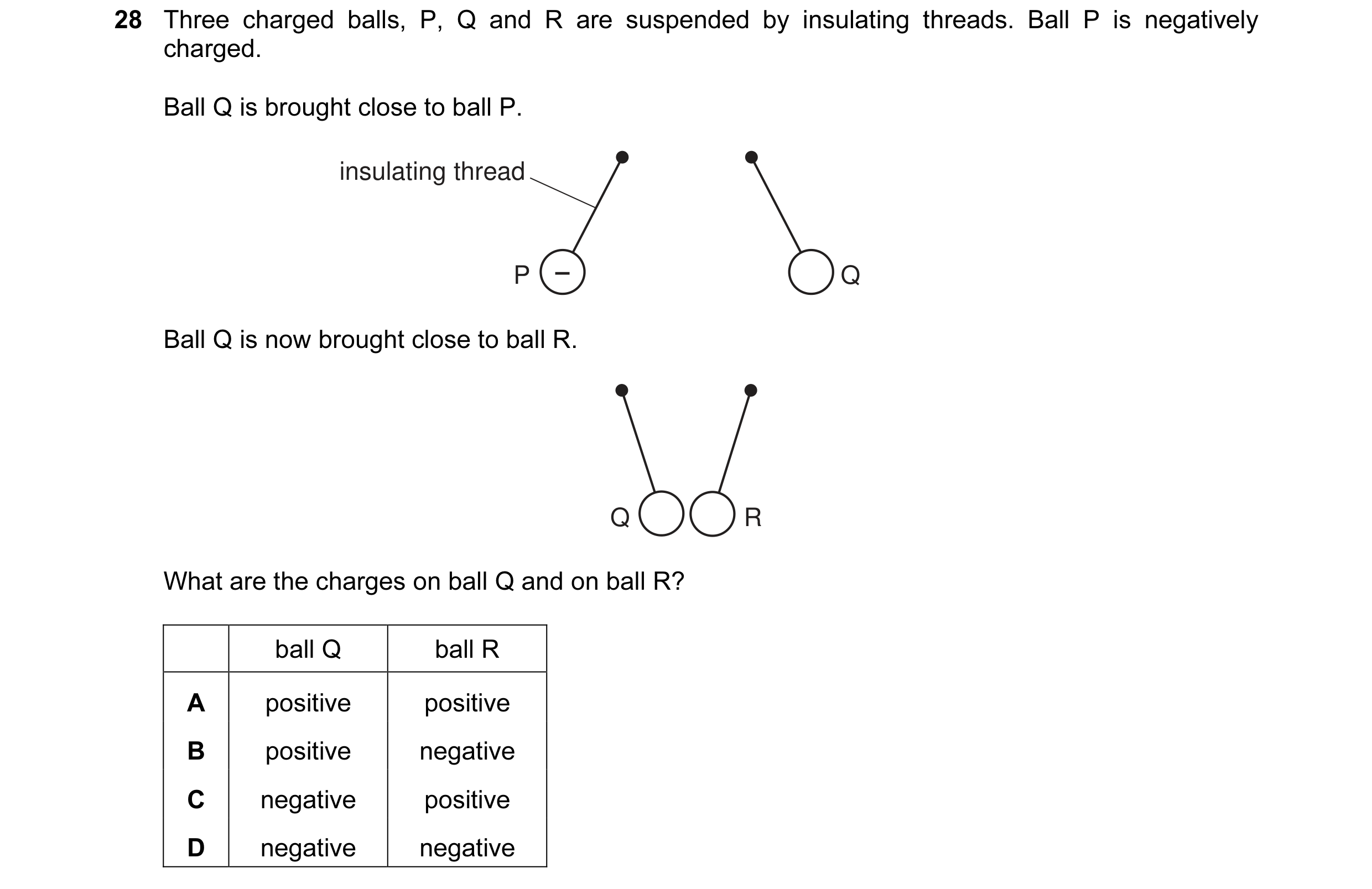
 32 / 127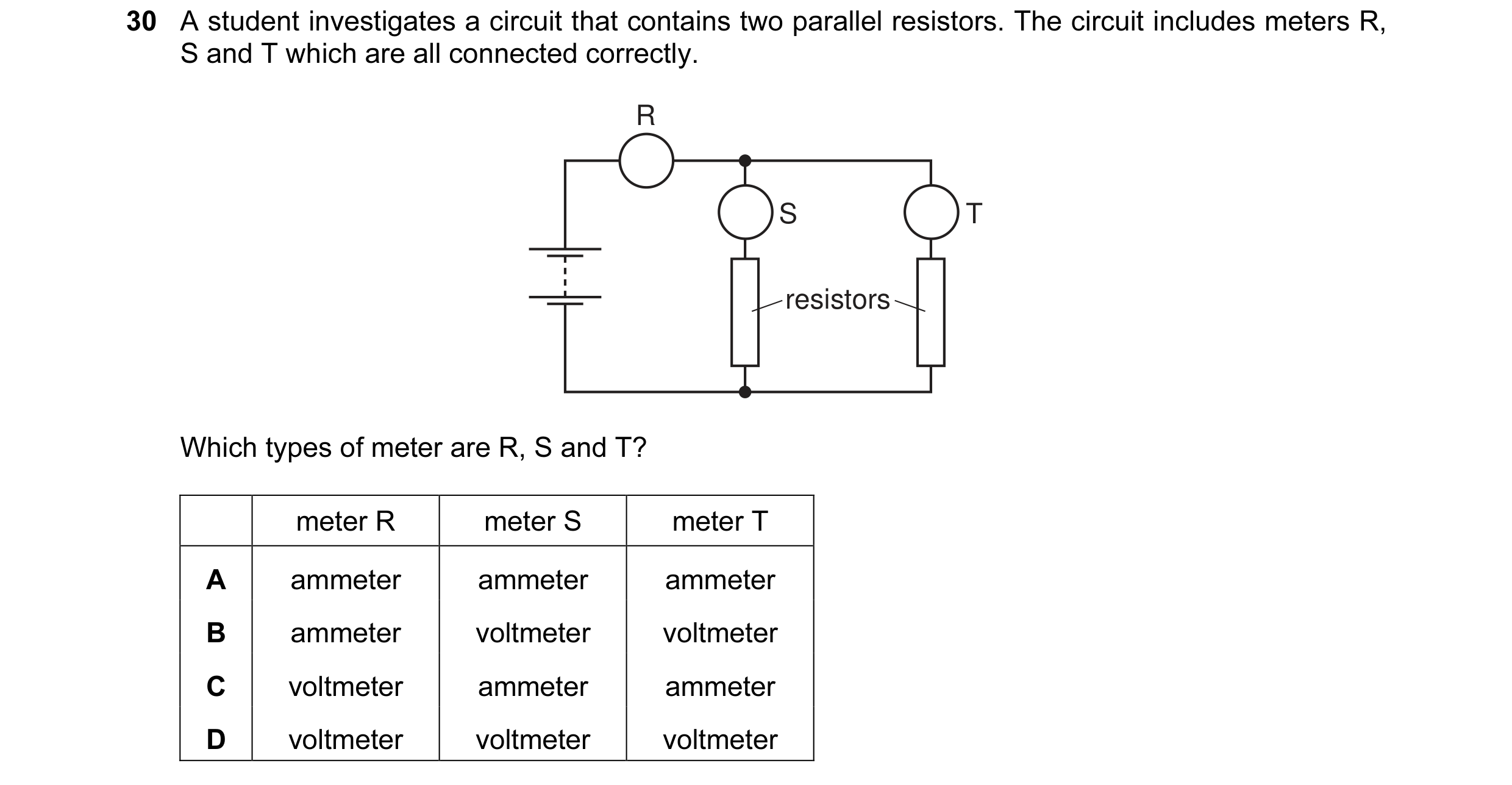
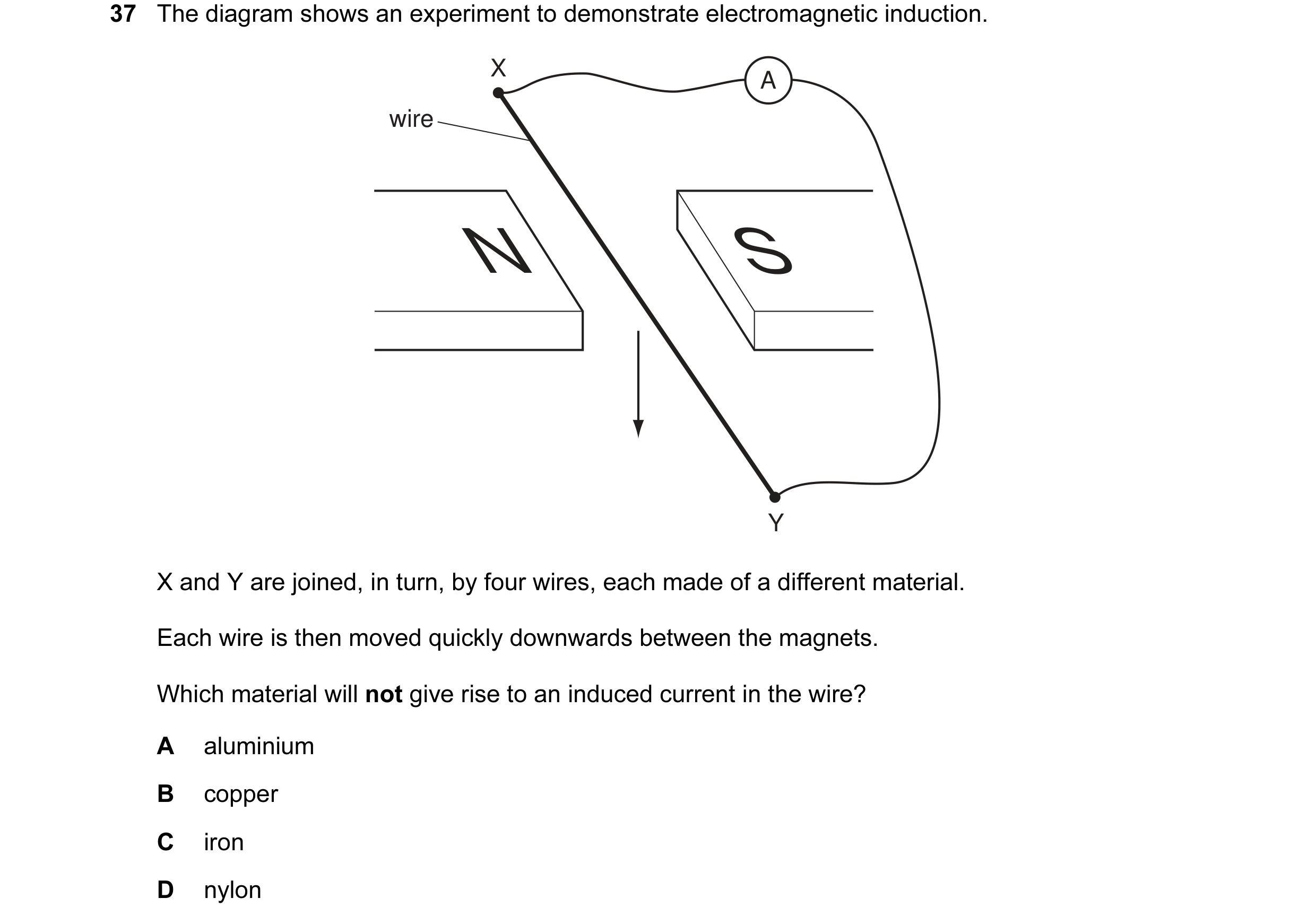 33 / 127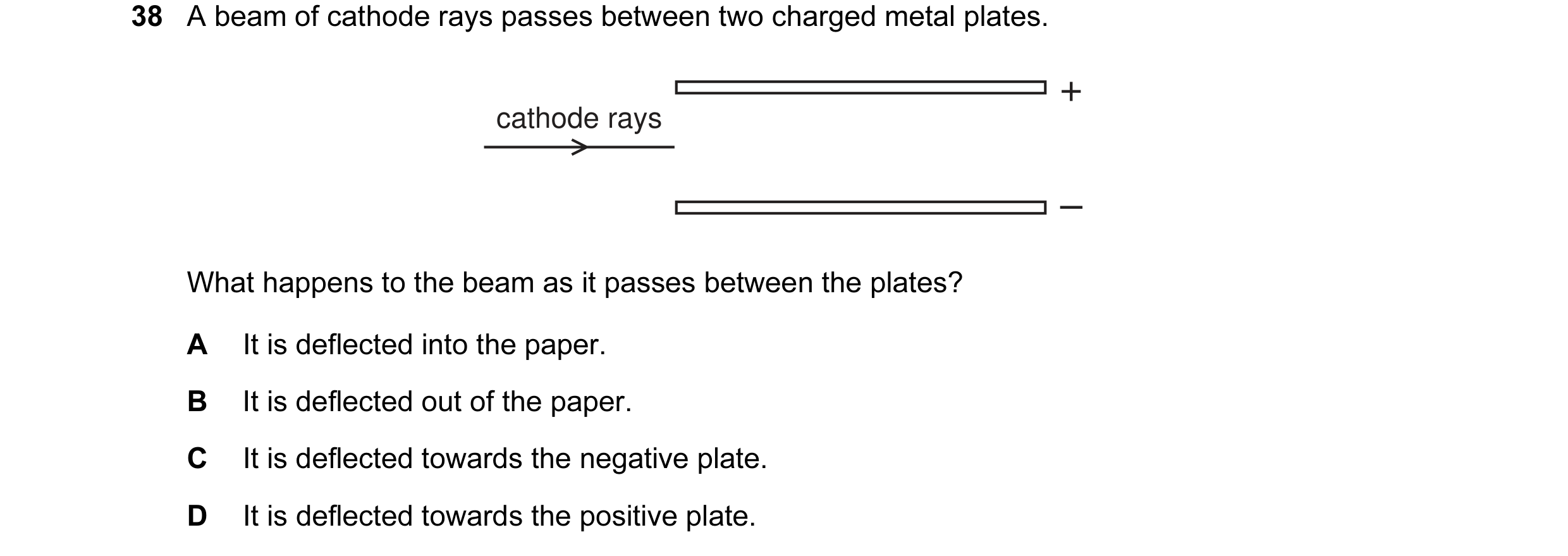
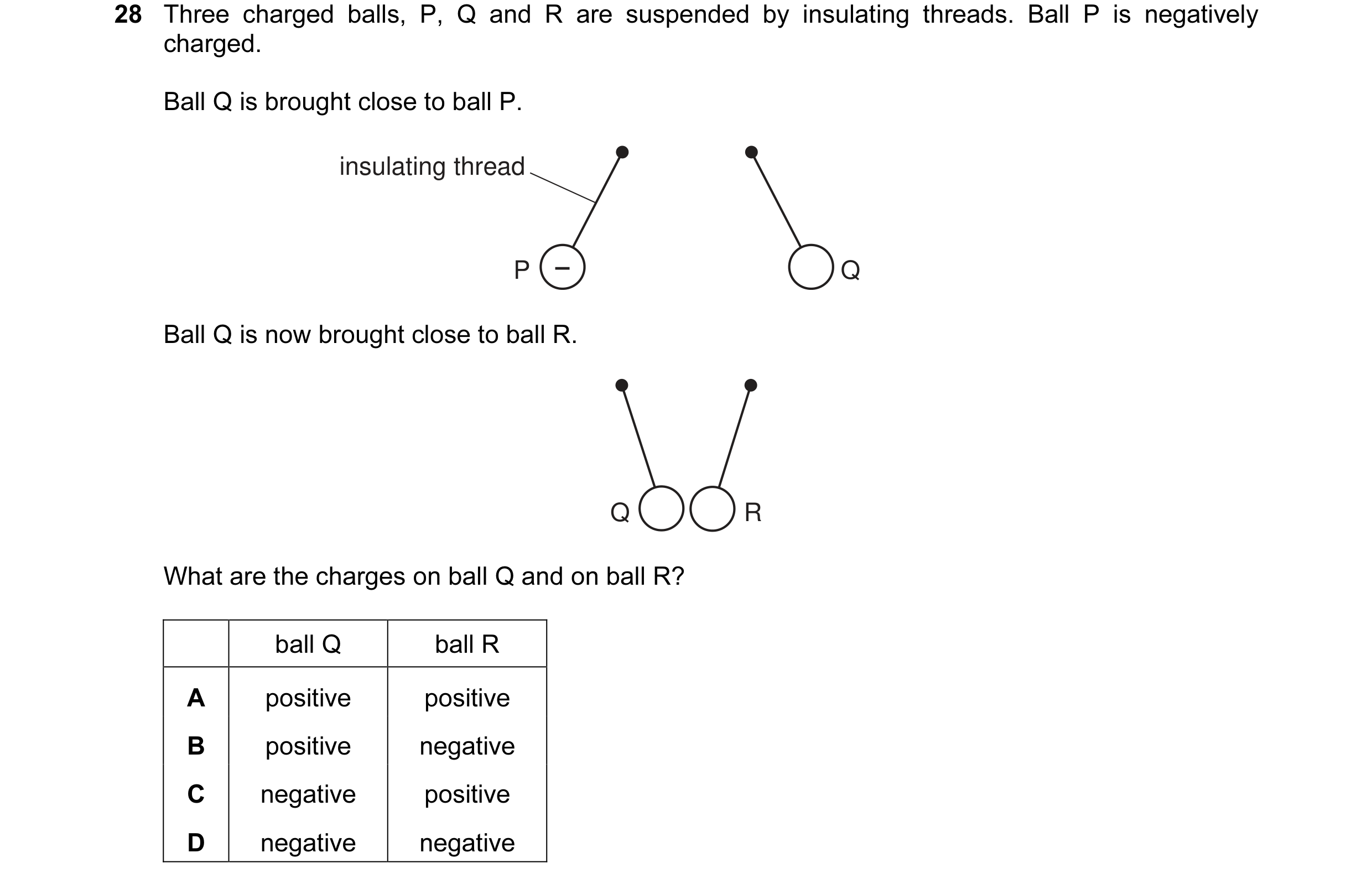
 34 / 127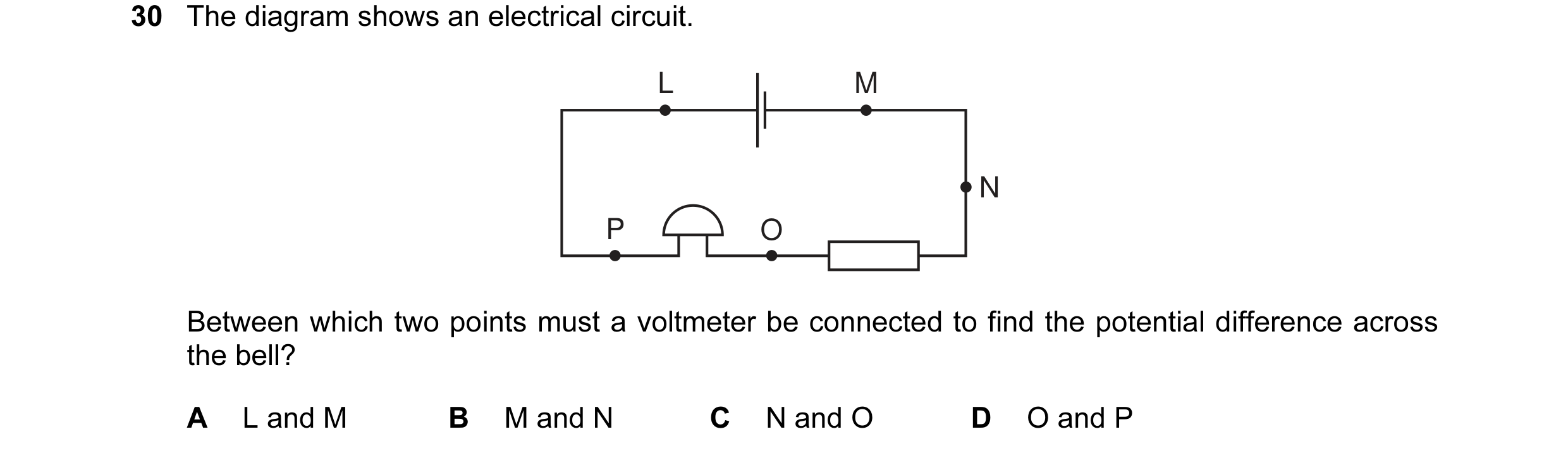
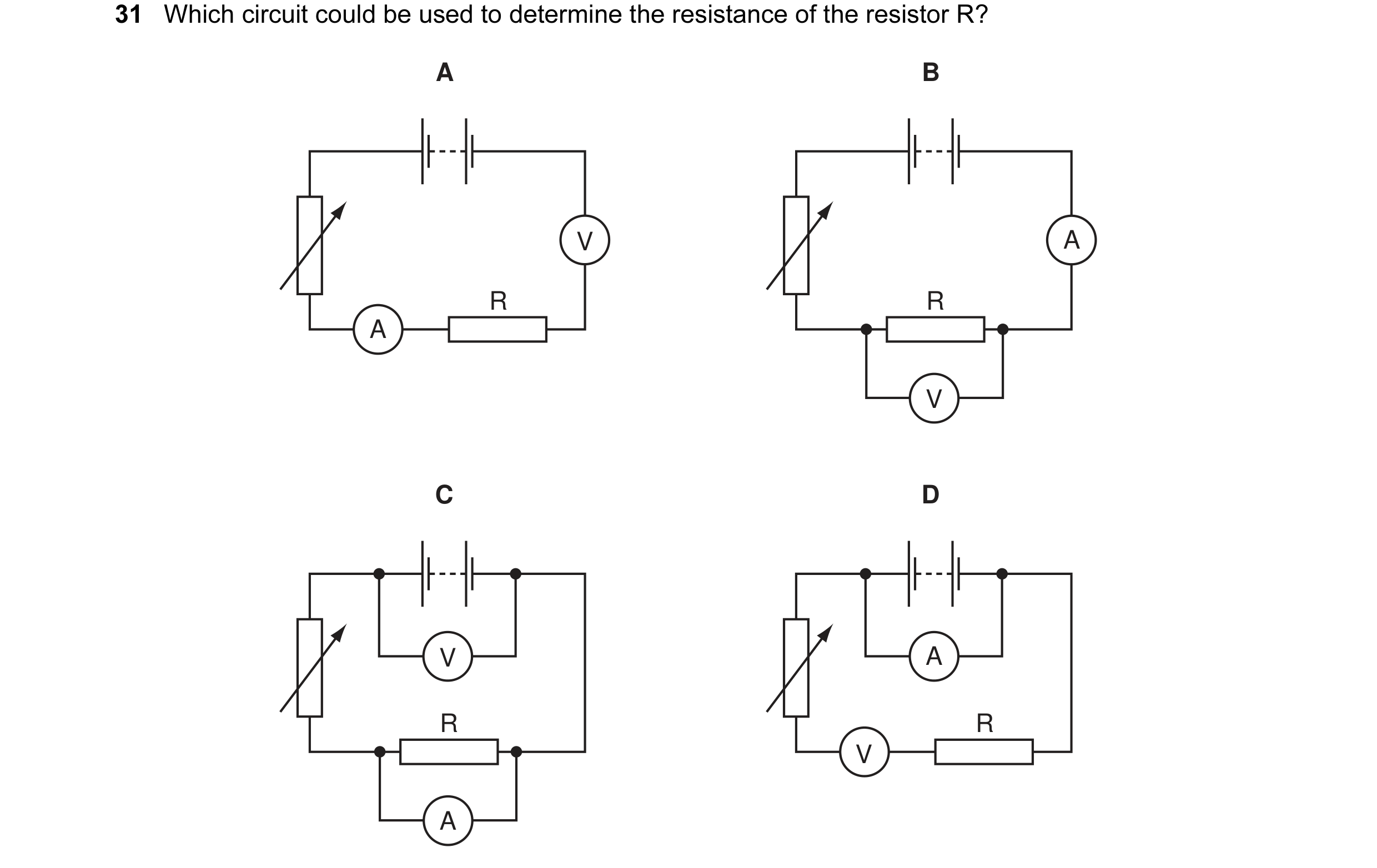
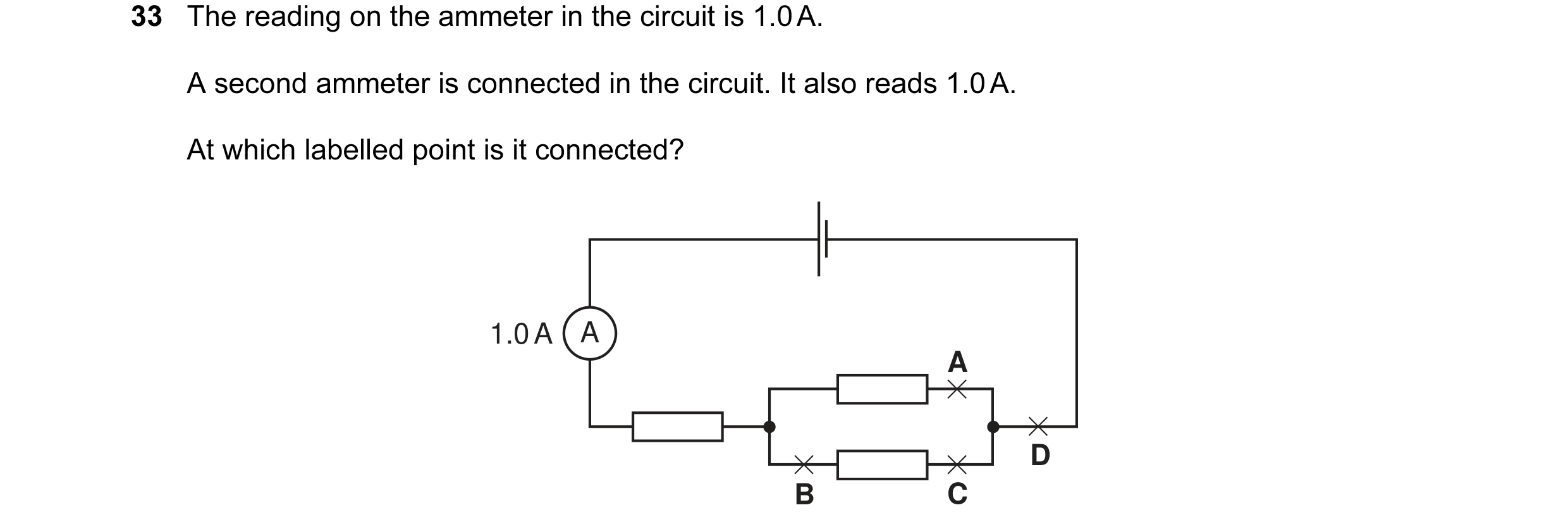 35 / 127
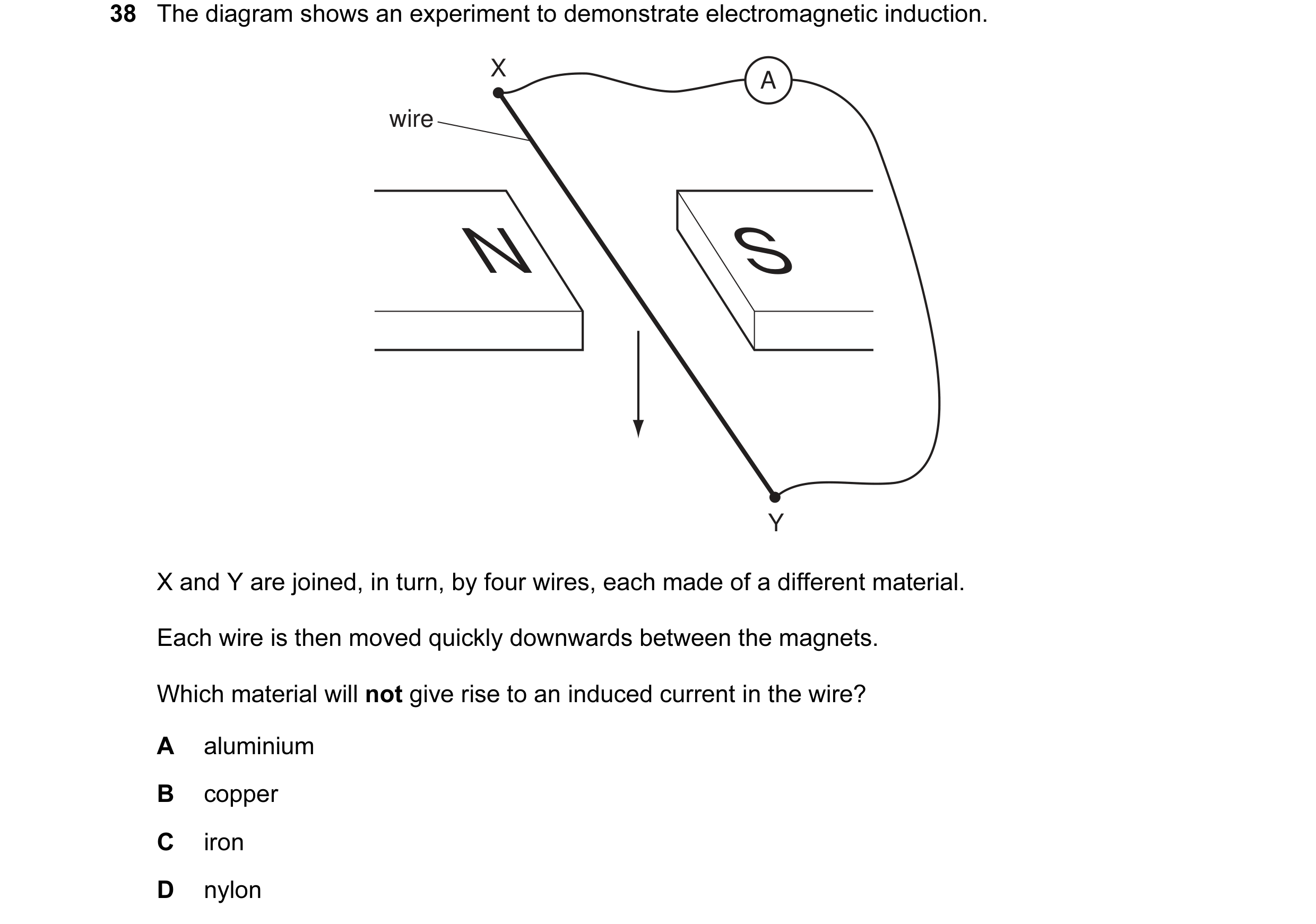

 36 / 127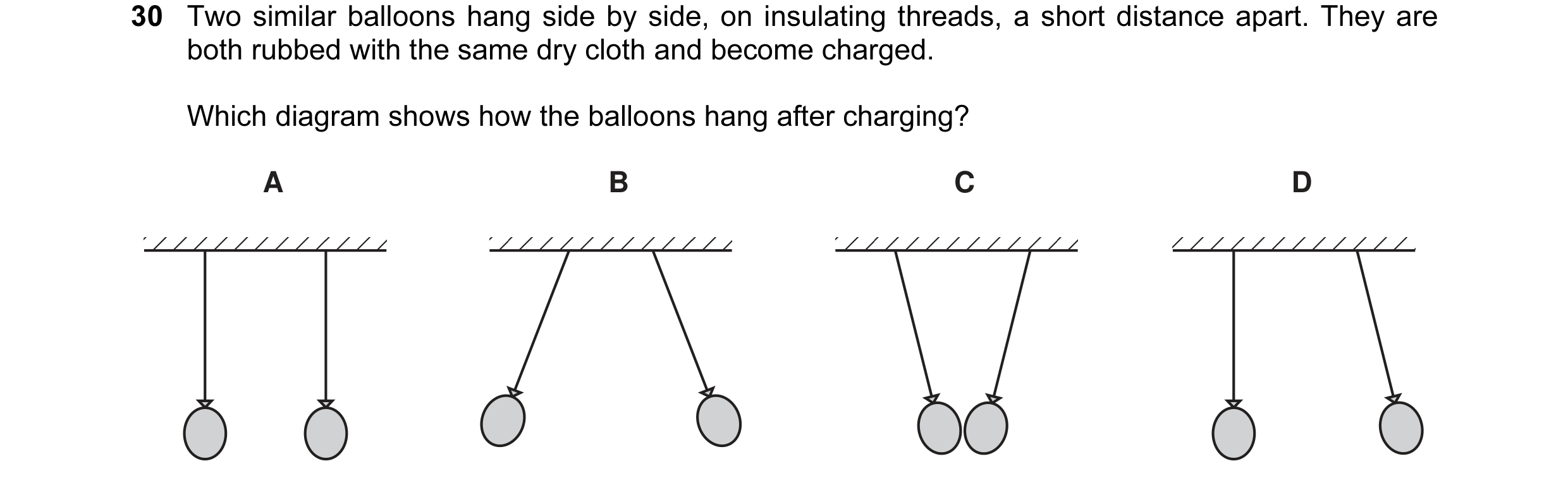
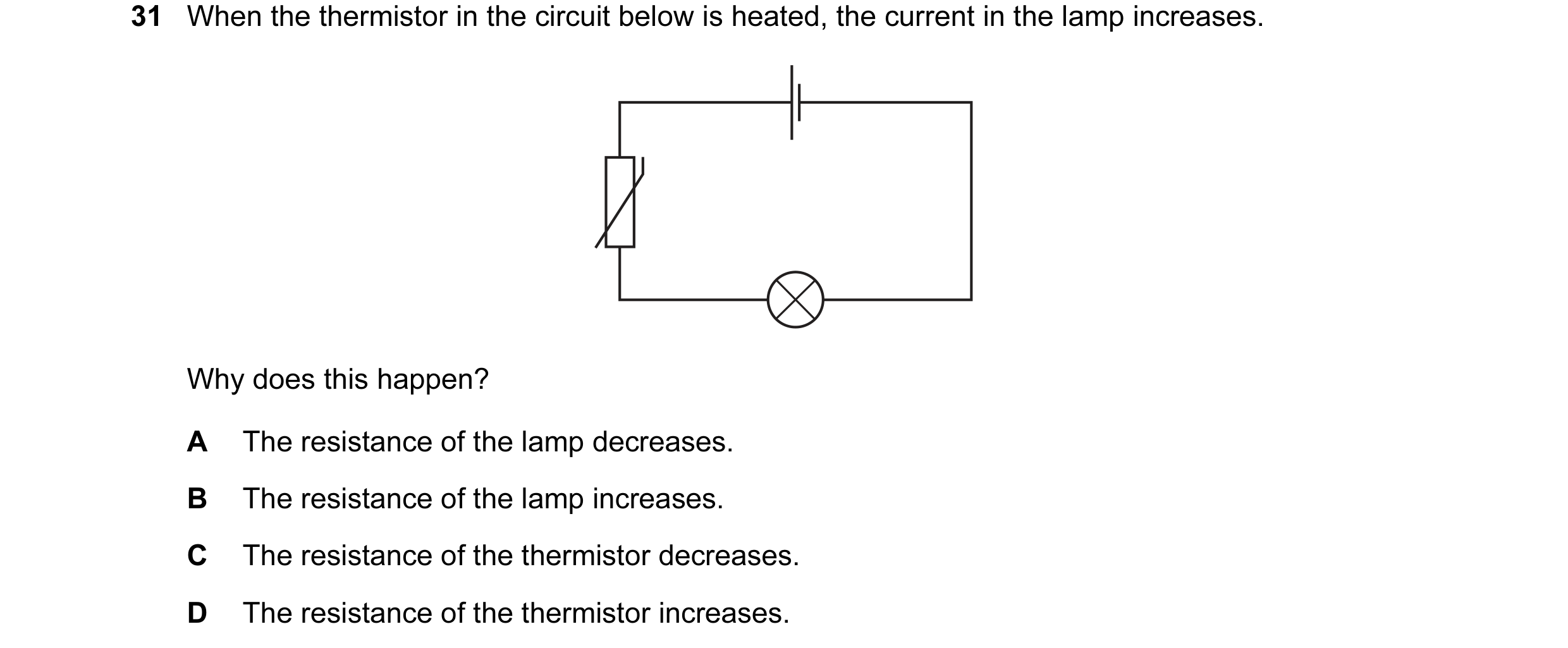
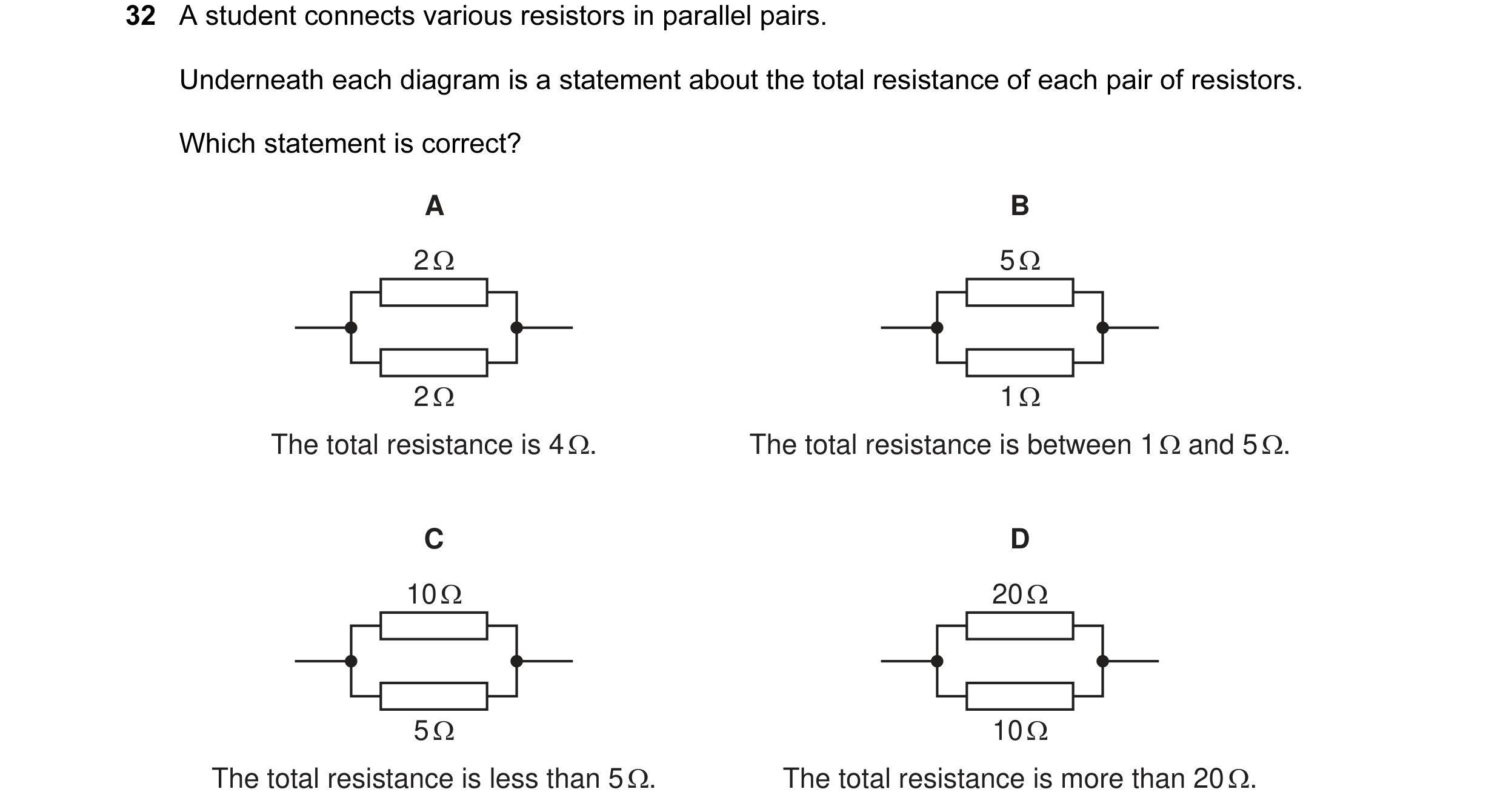 37 / 127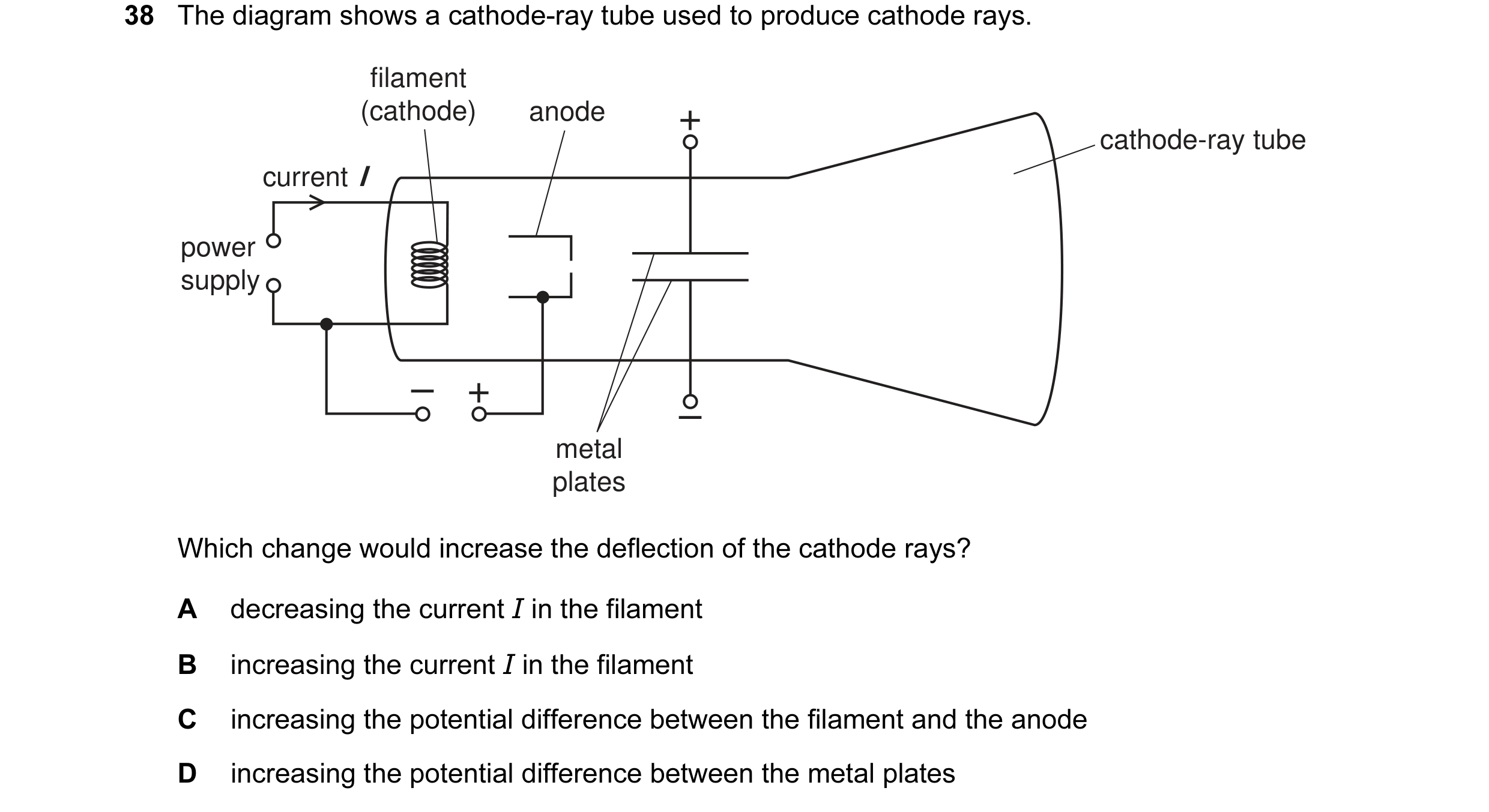

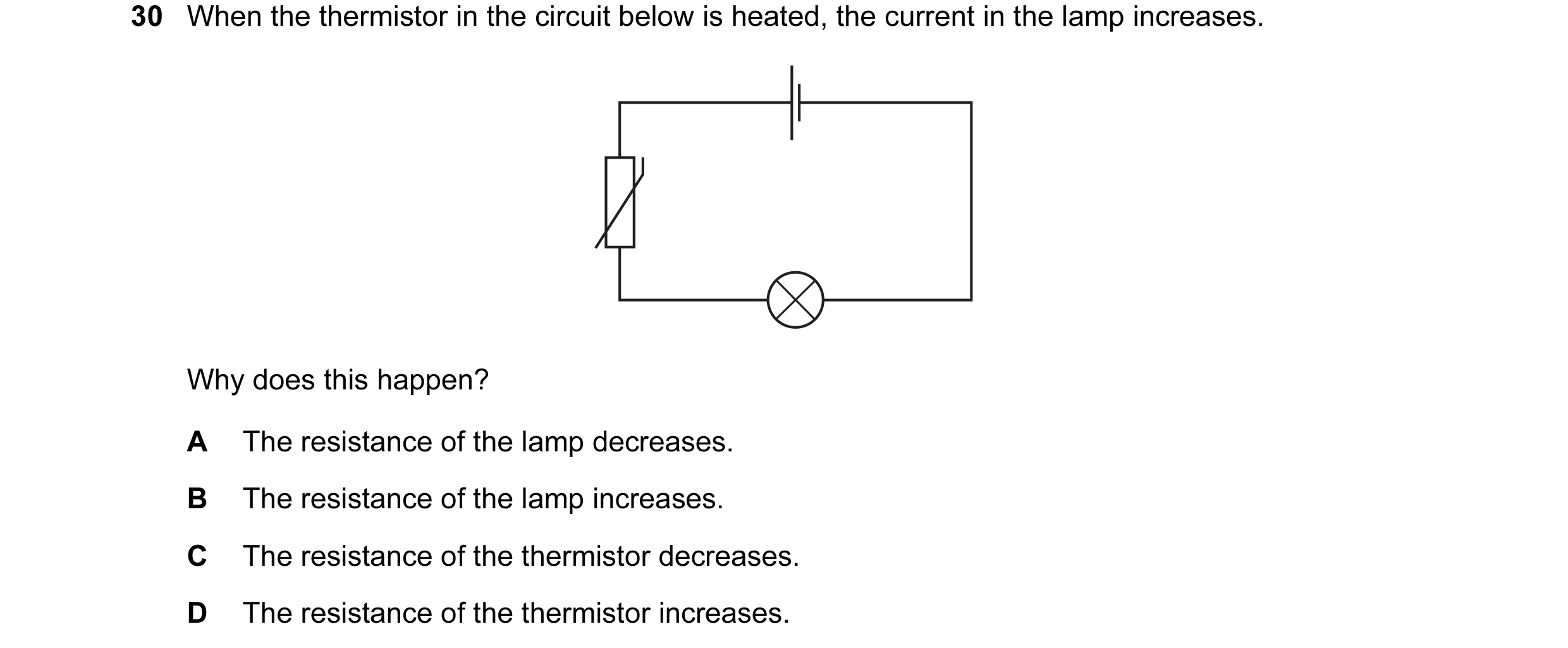 38 / 127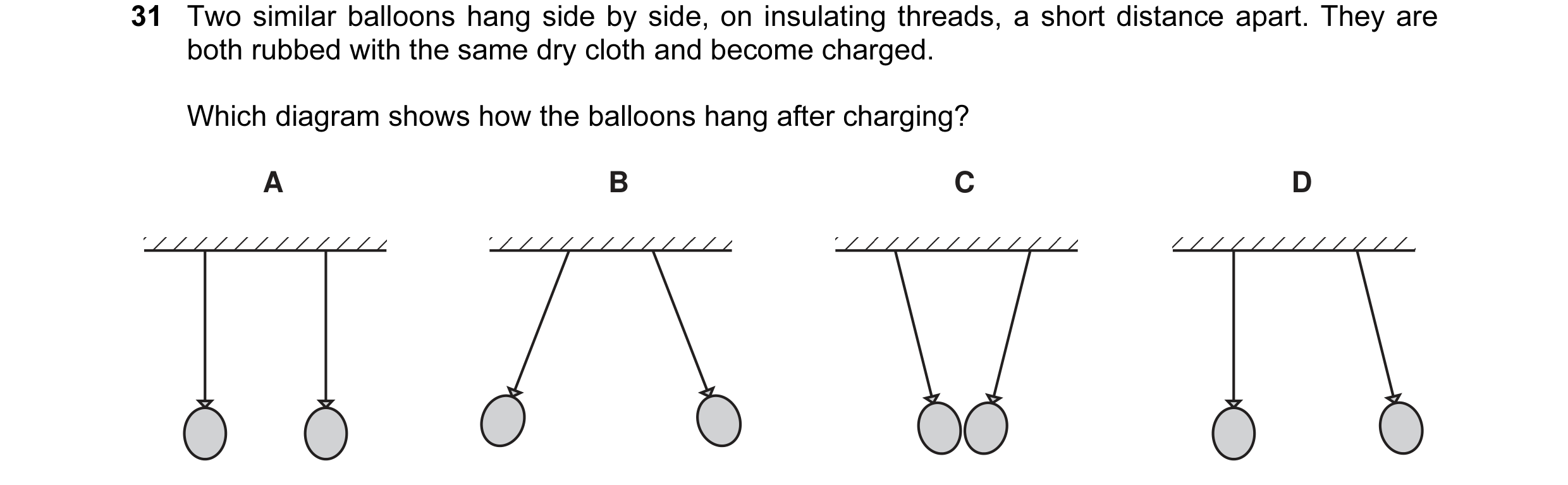
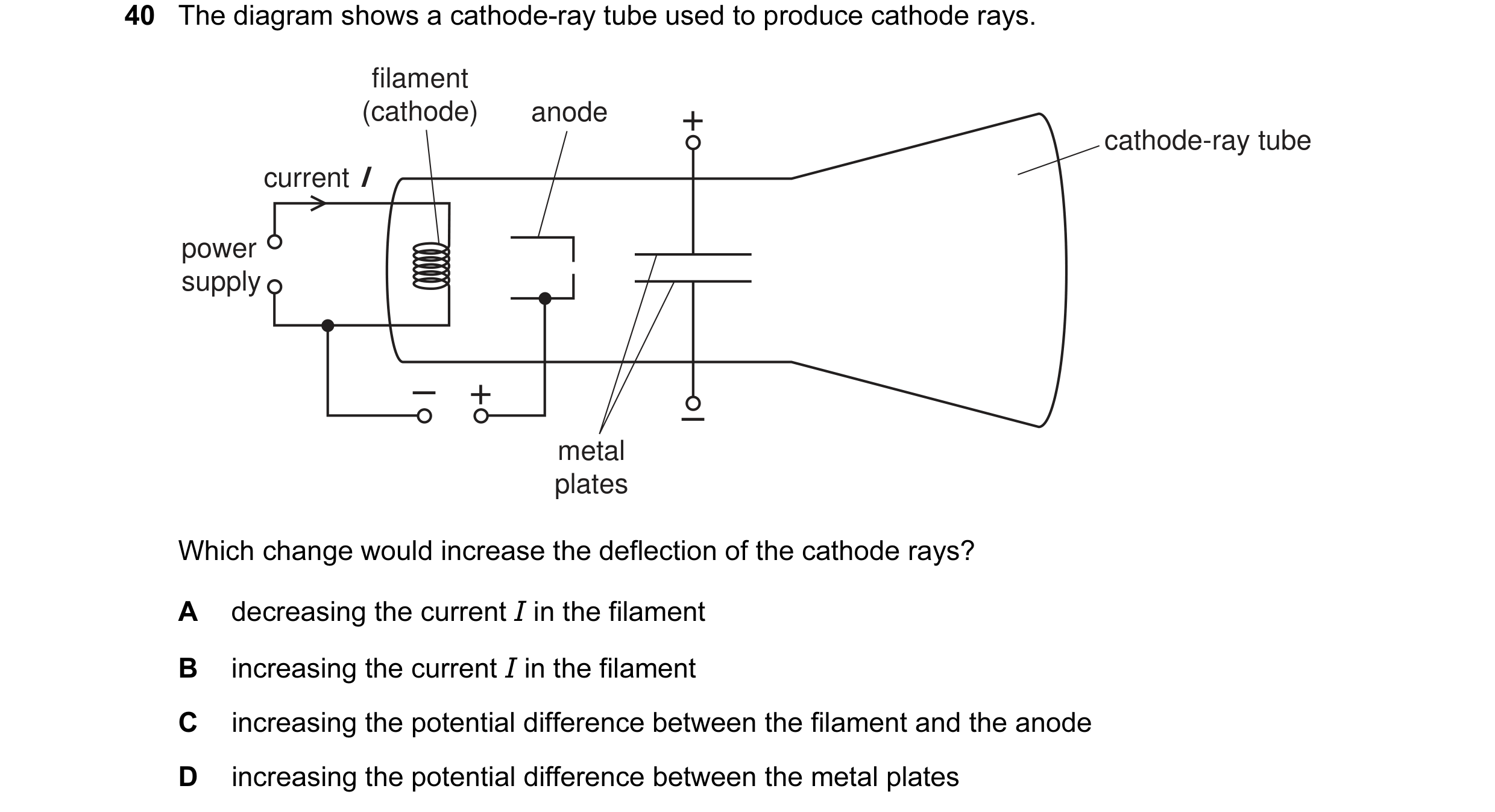
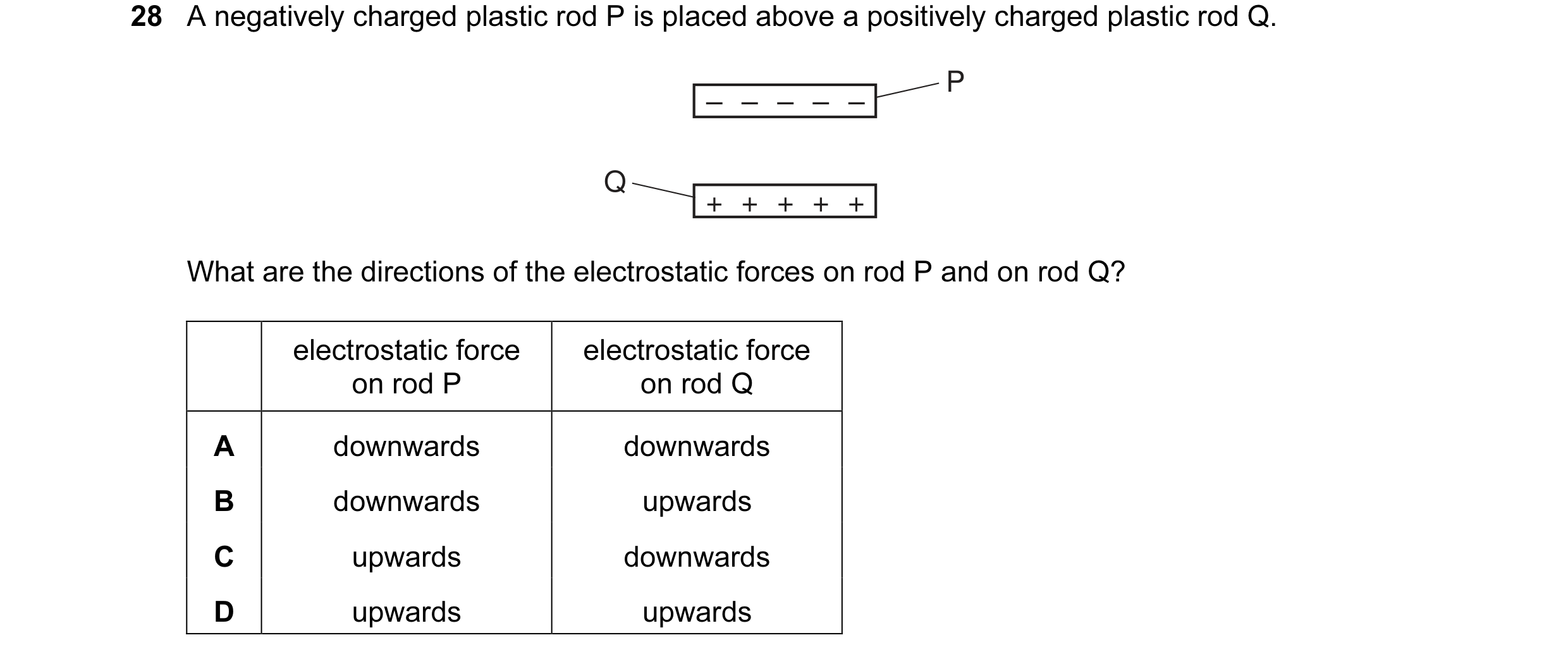 39 / 127
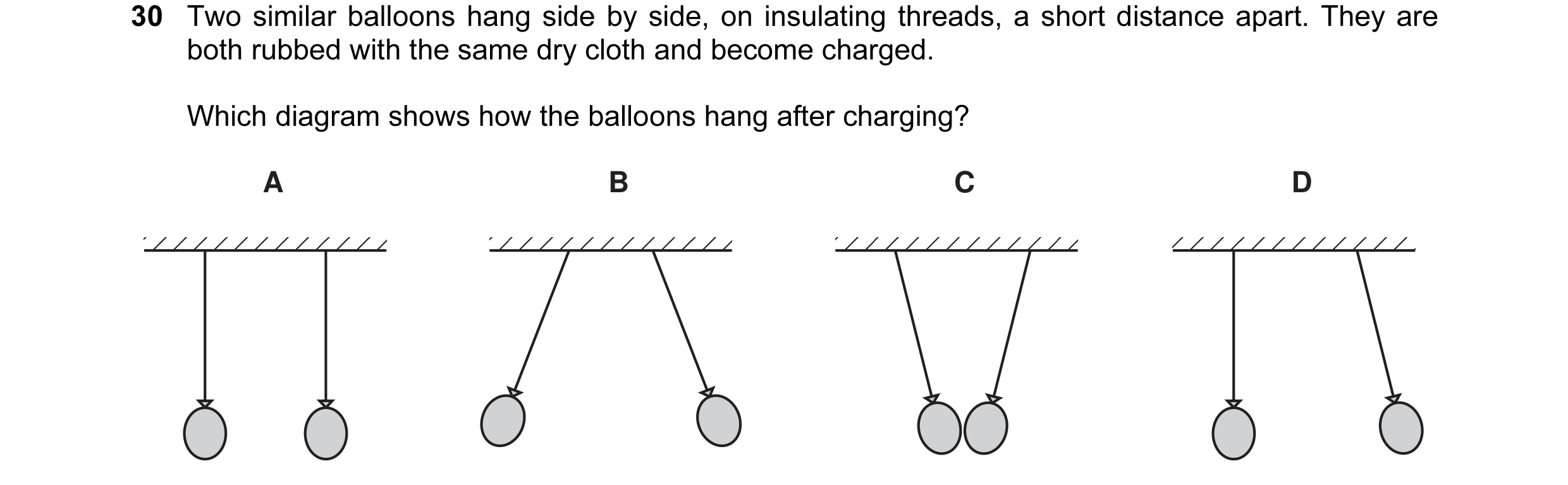
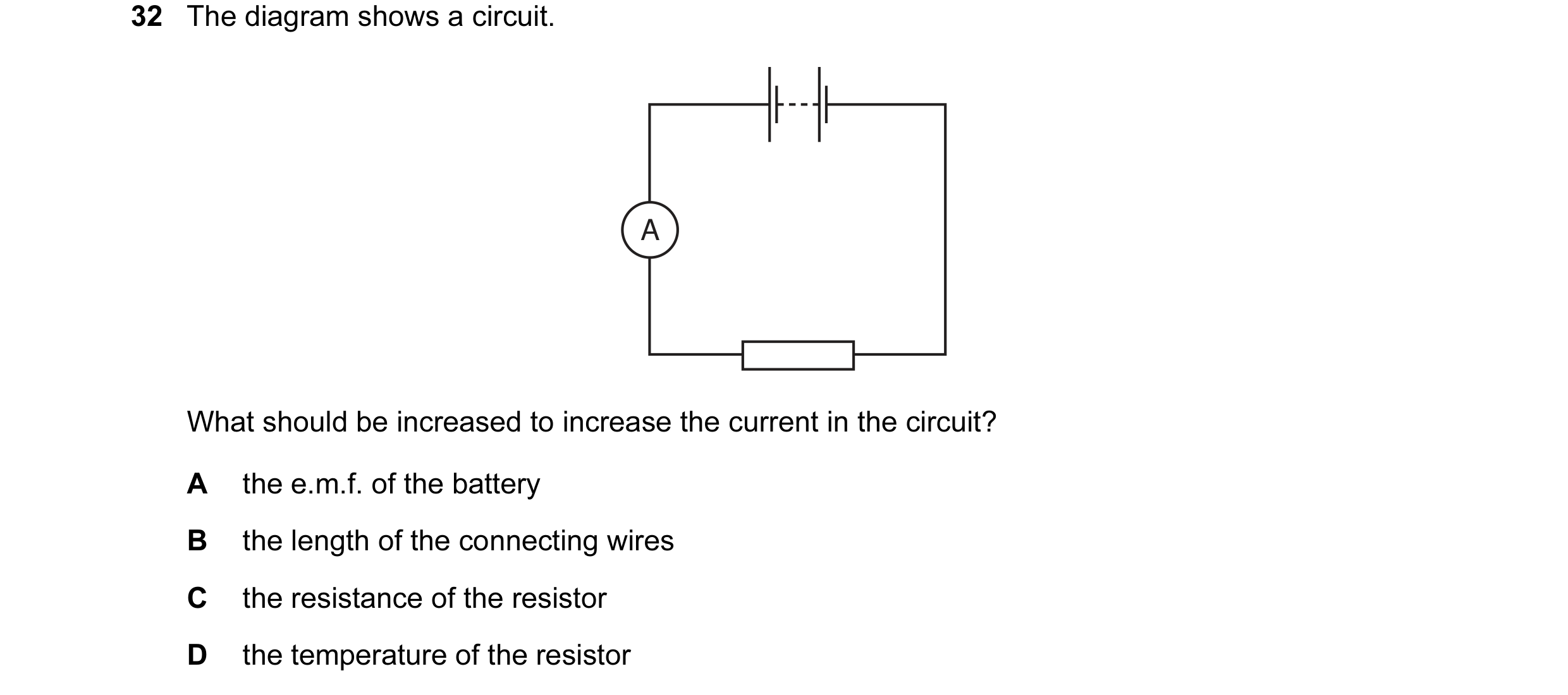 40 / 127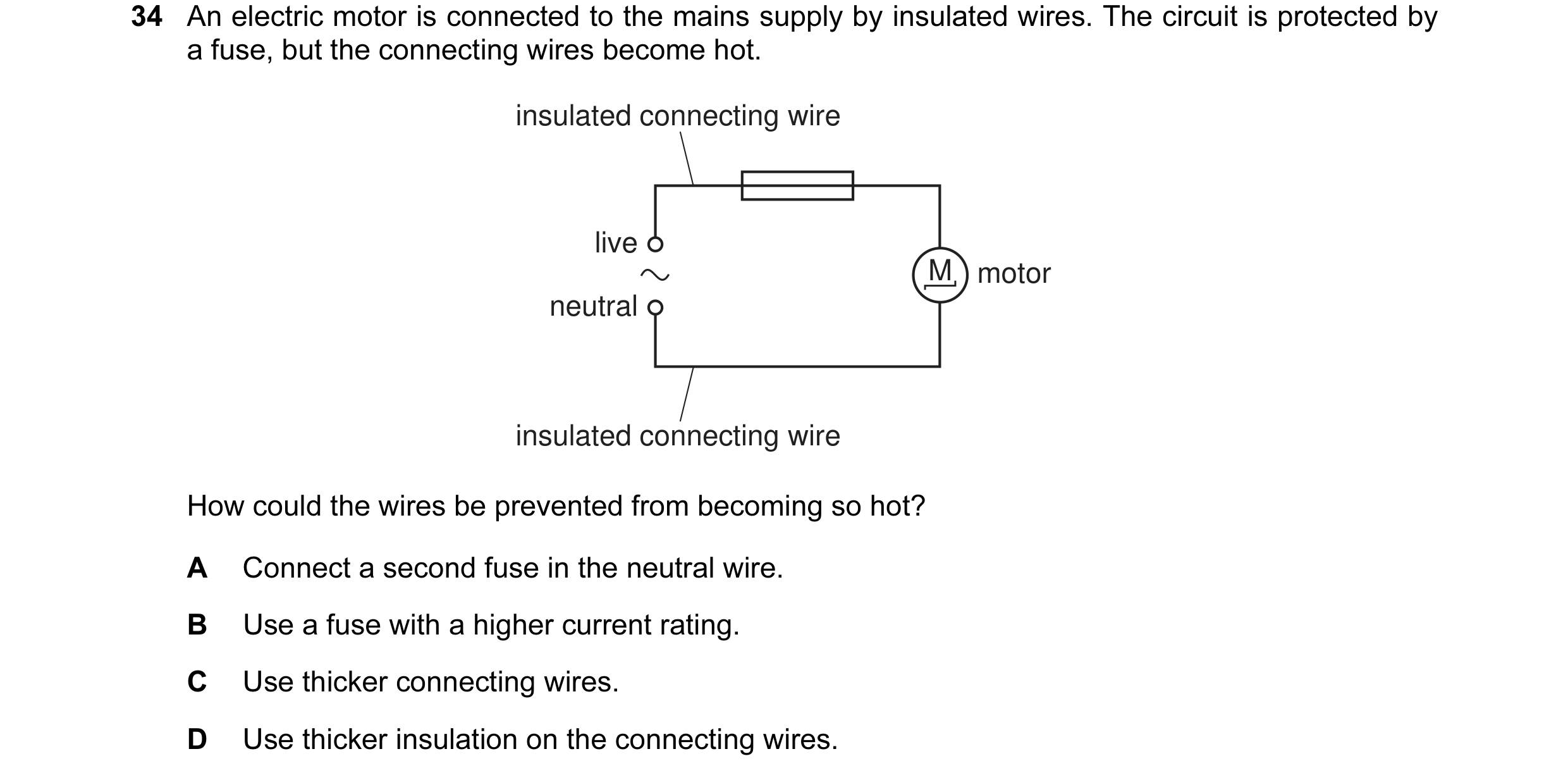
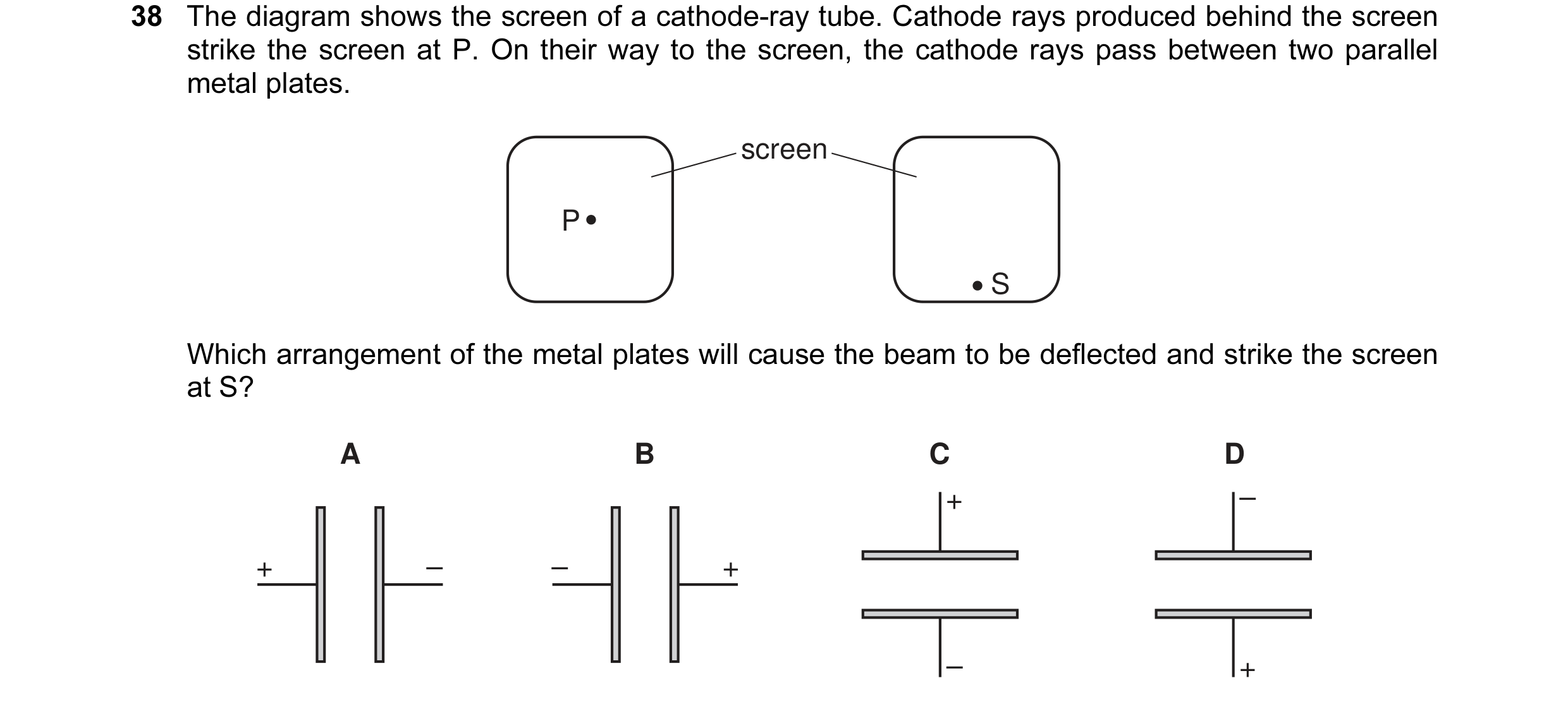
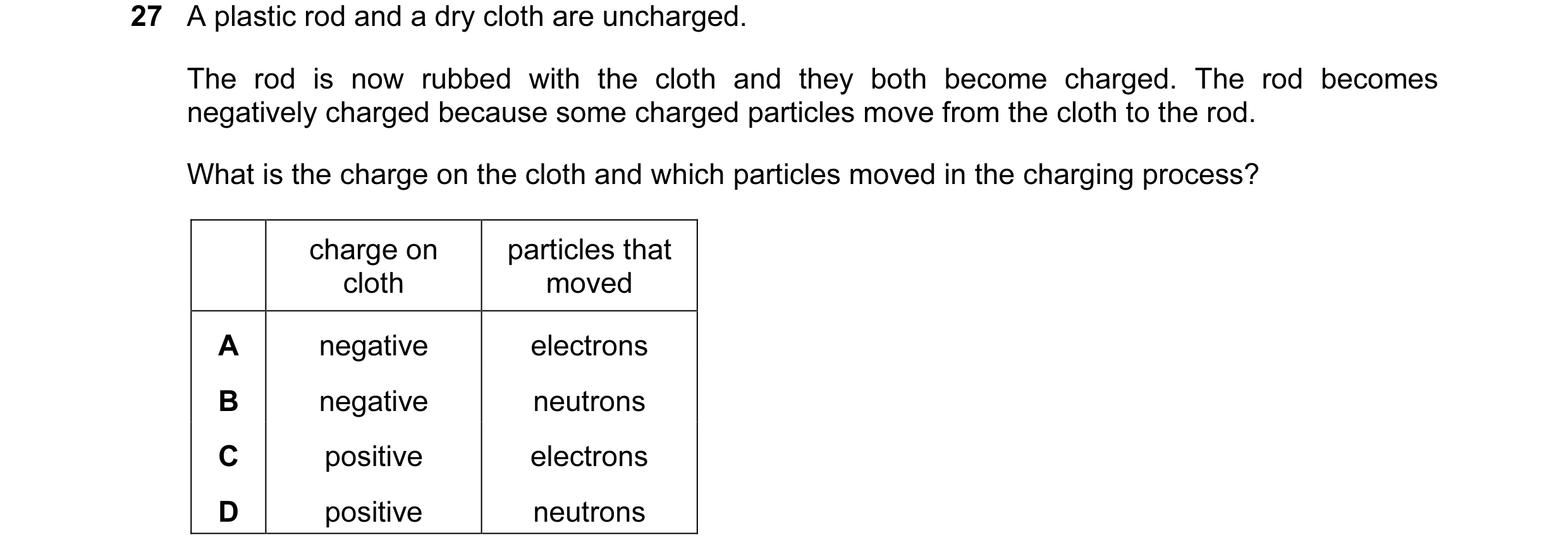 41 / 127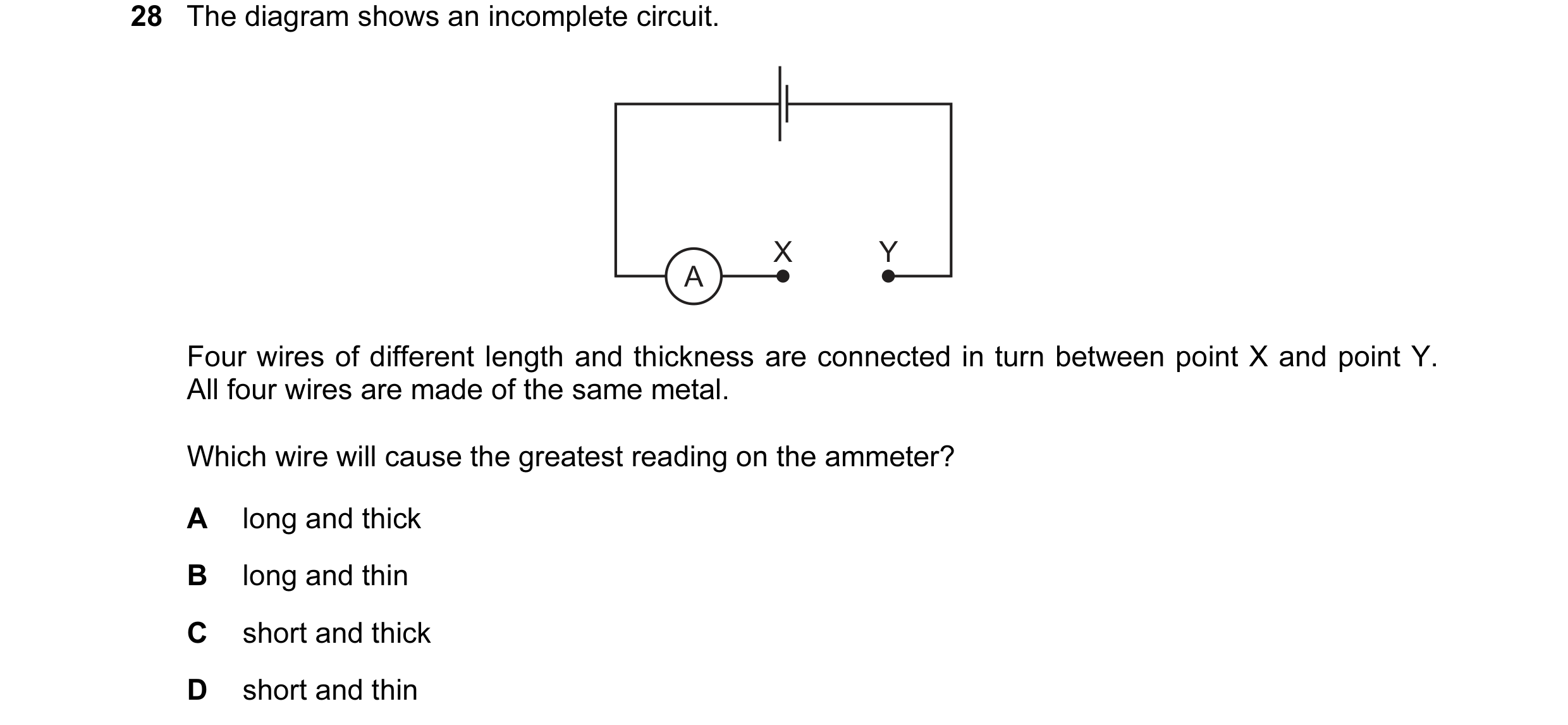
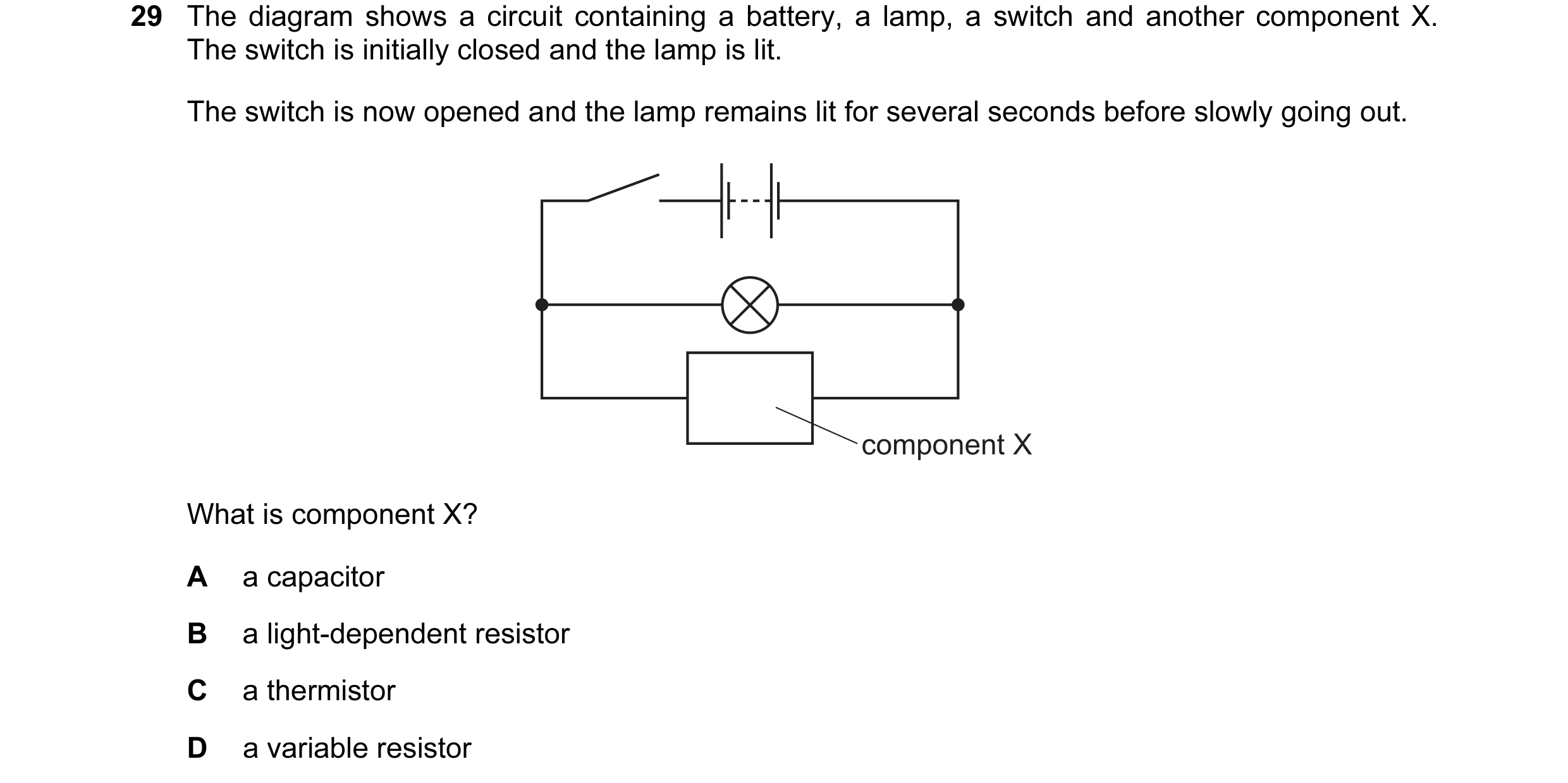 42 / 127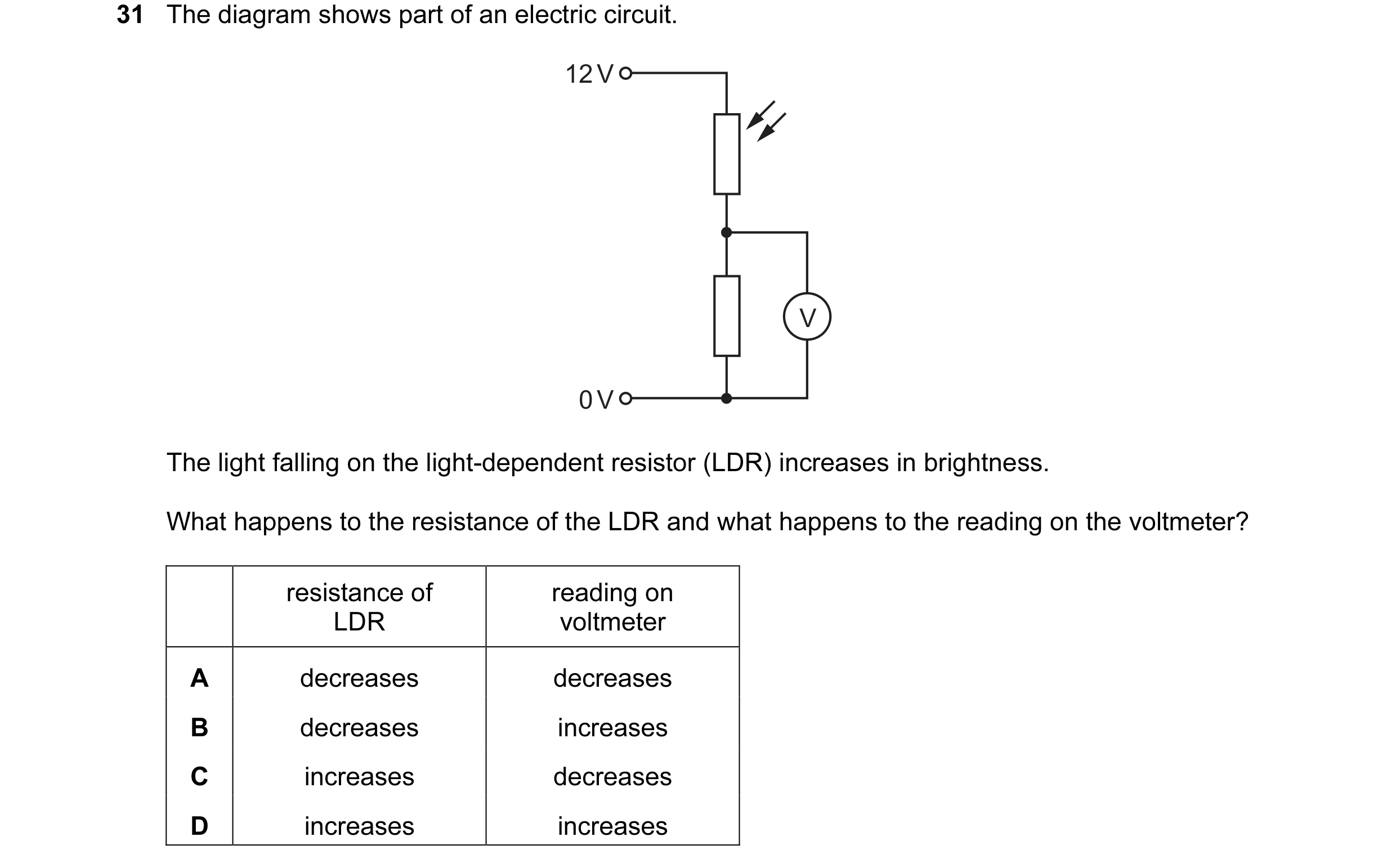
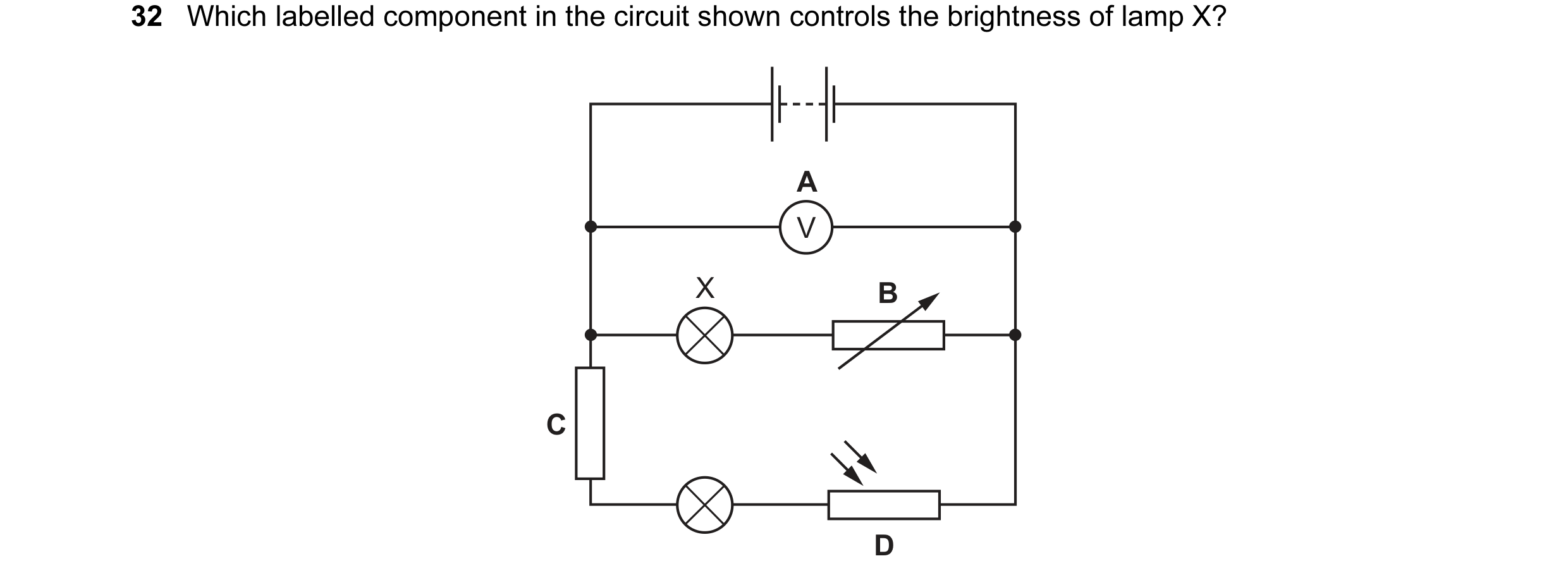 43 / 127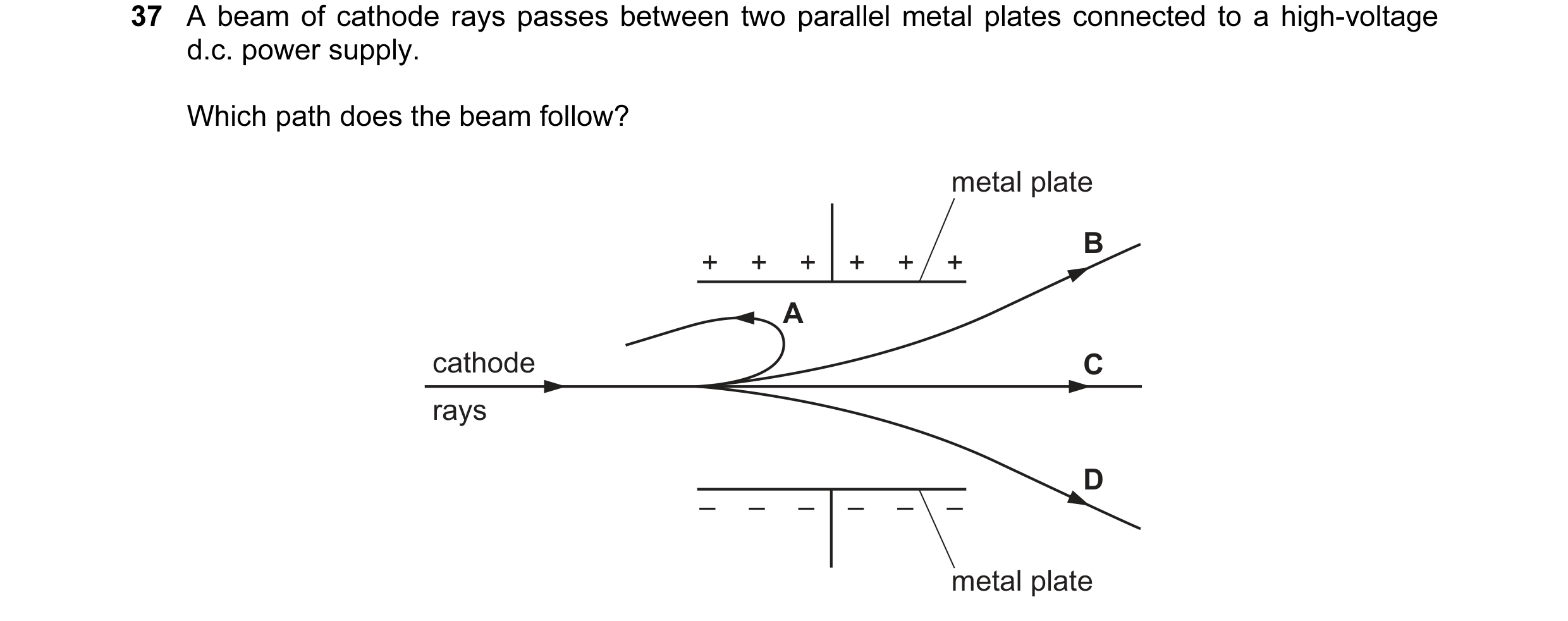
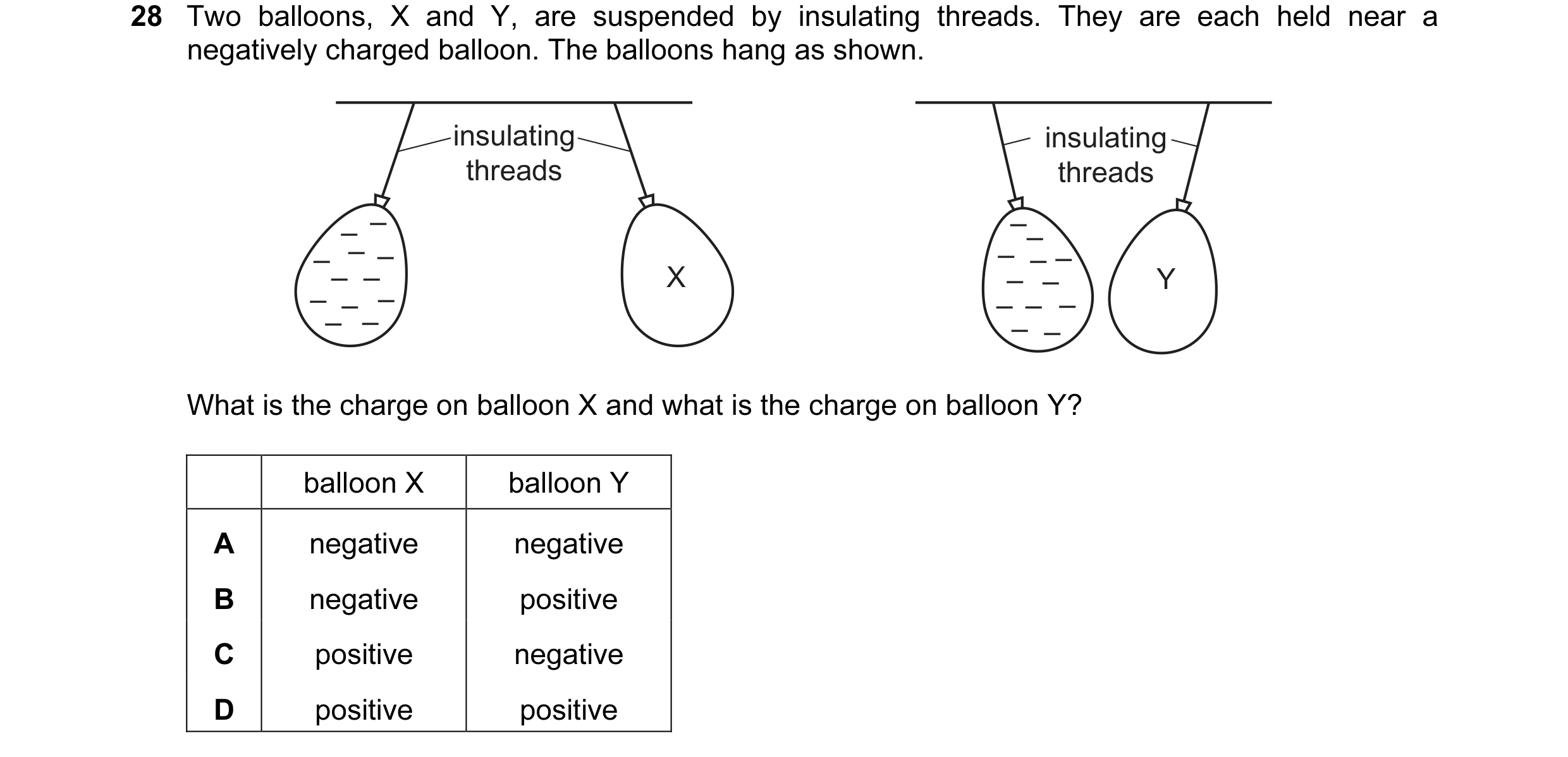
 44 / 127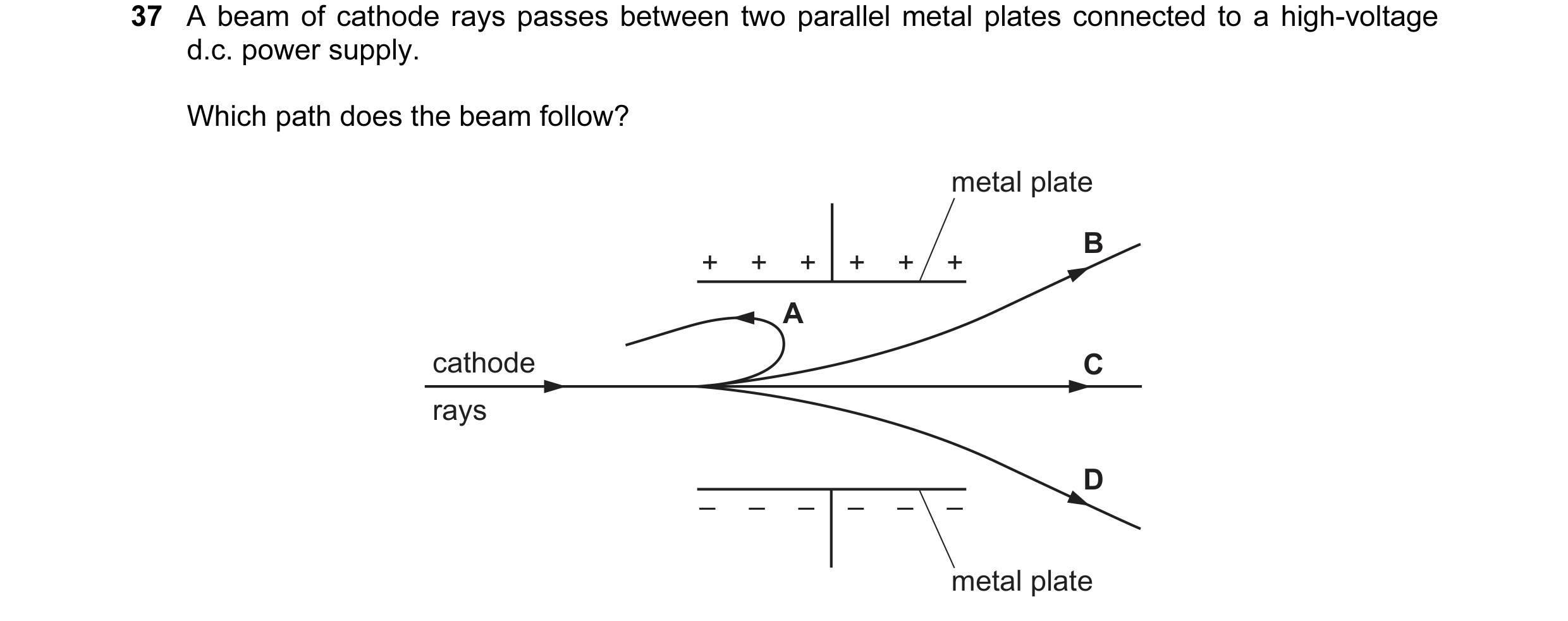
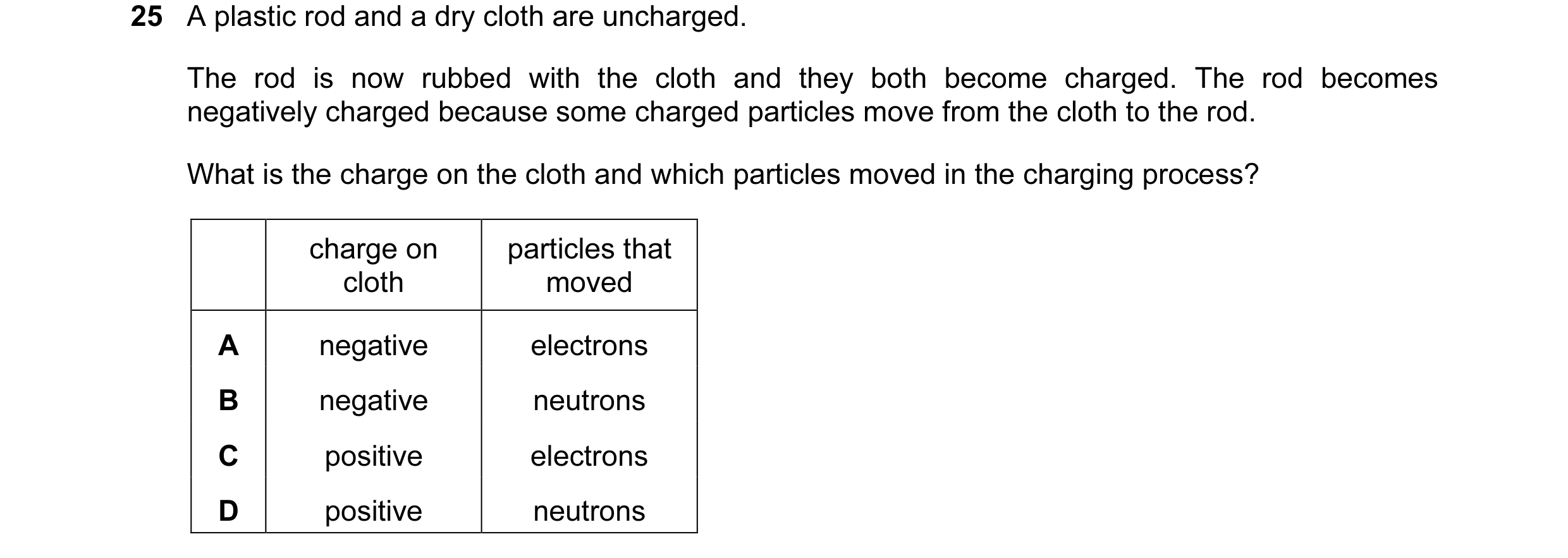
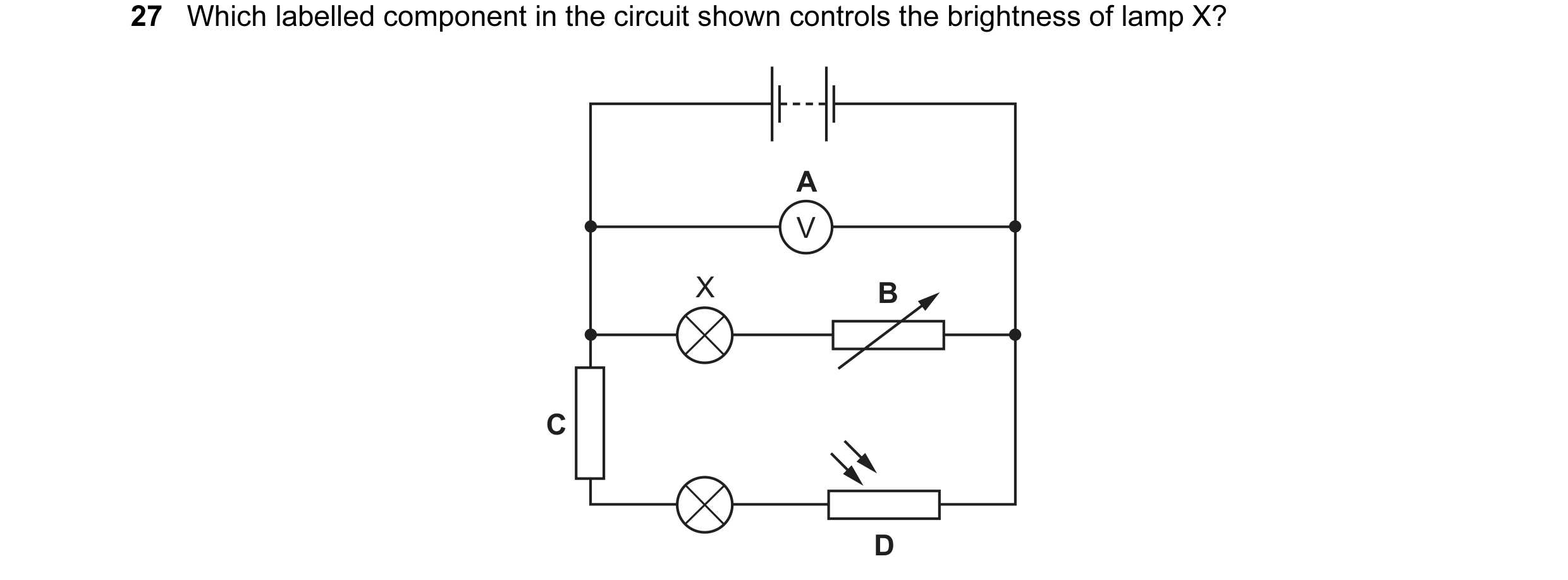 45 / 127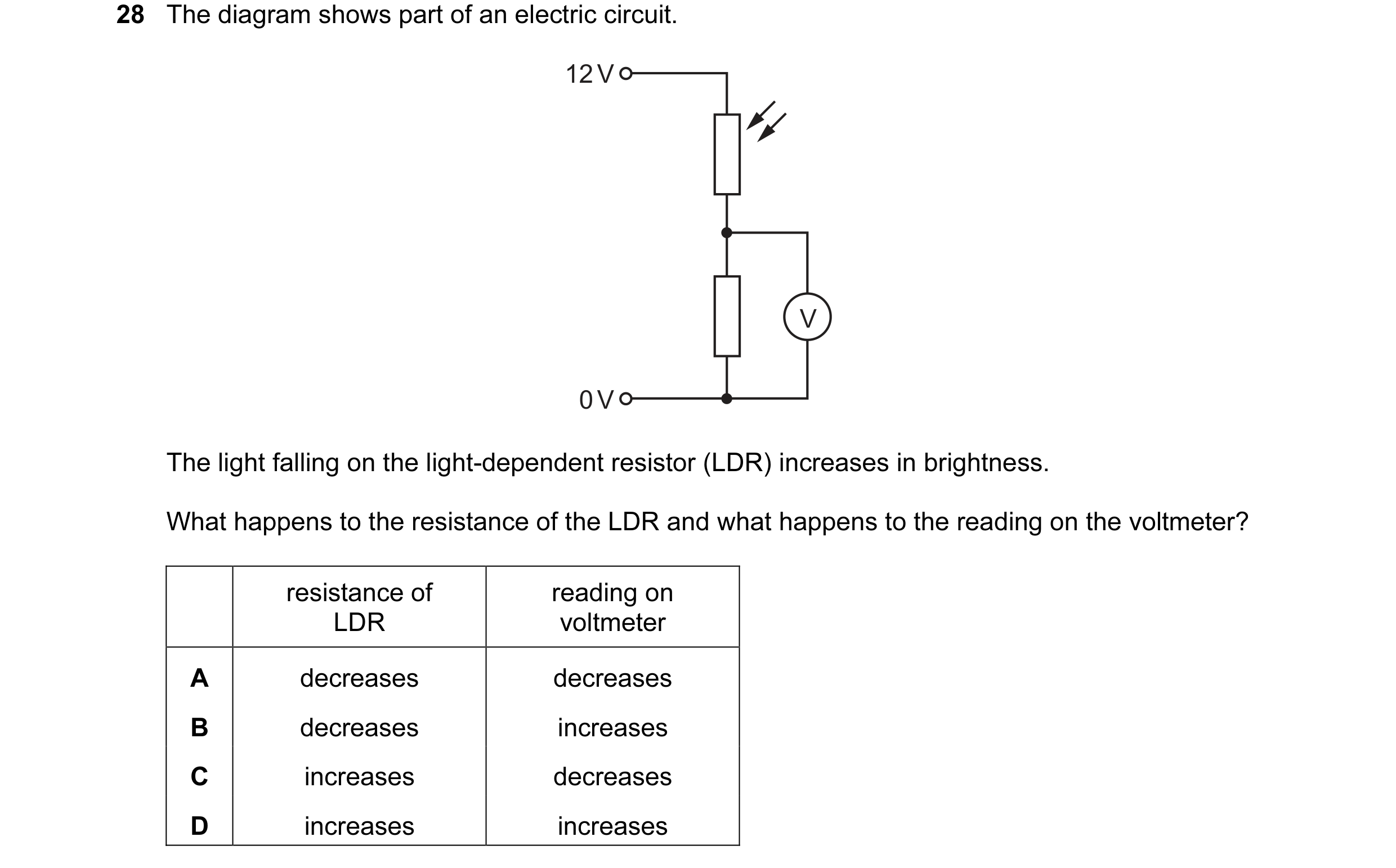
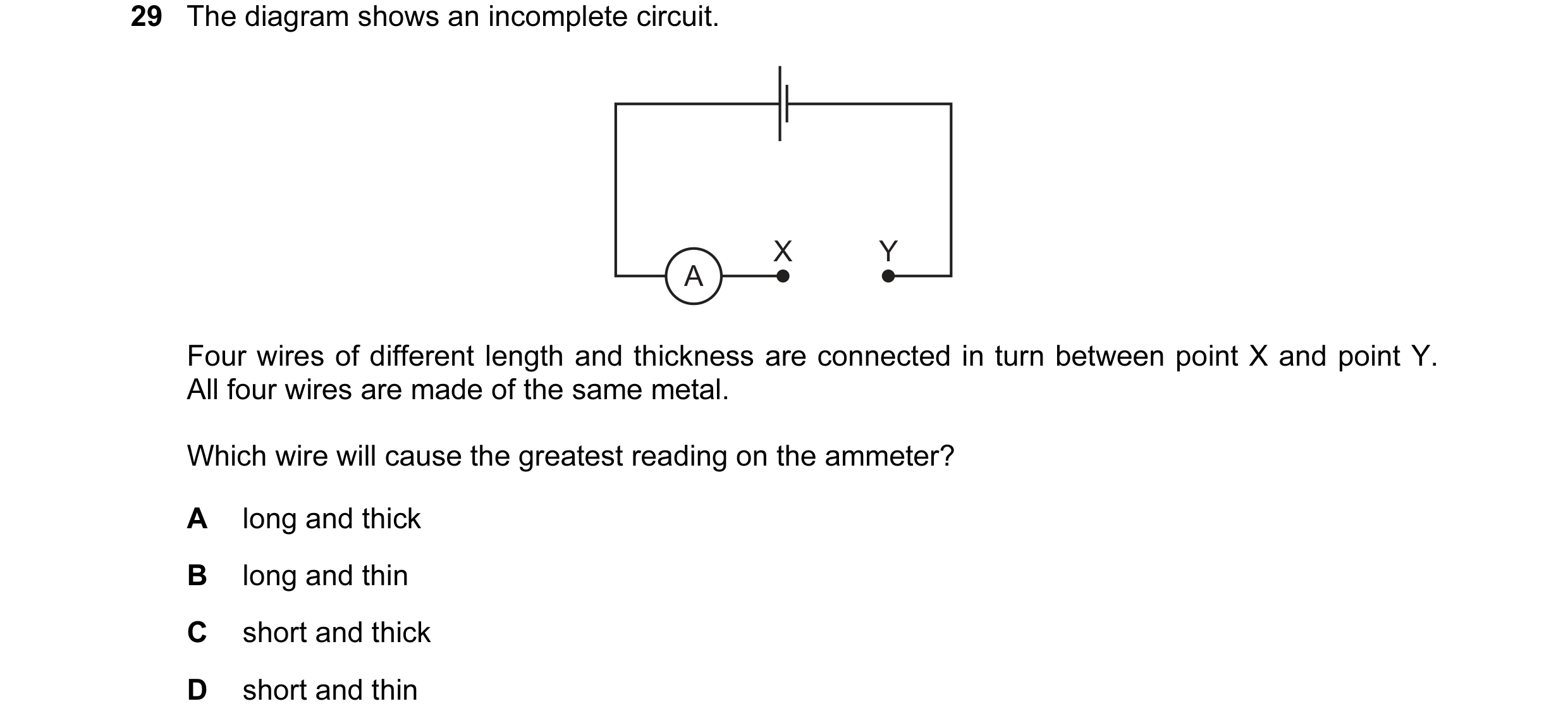 46 / 127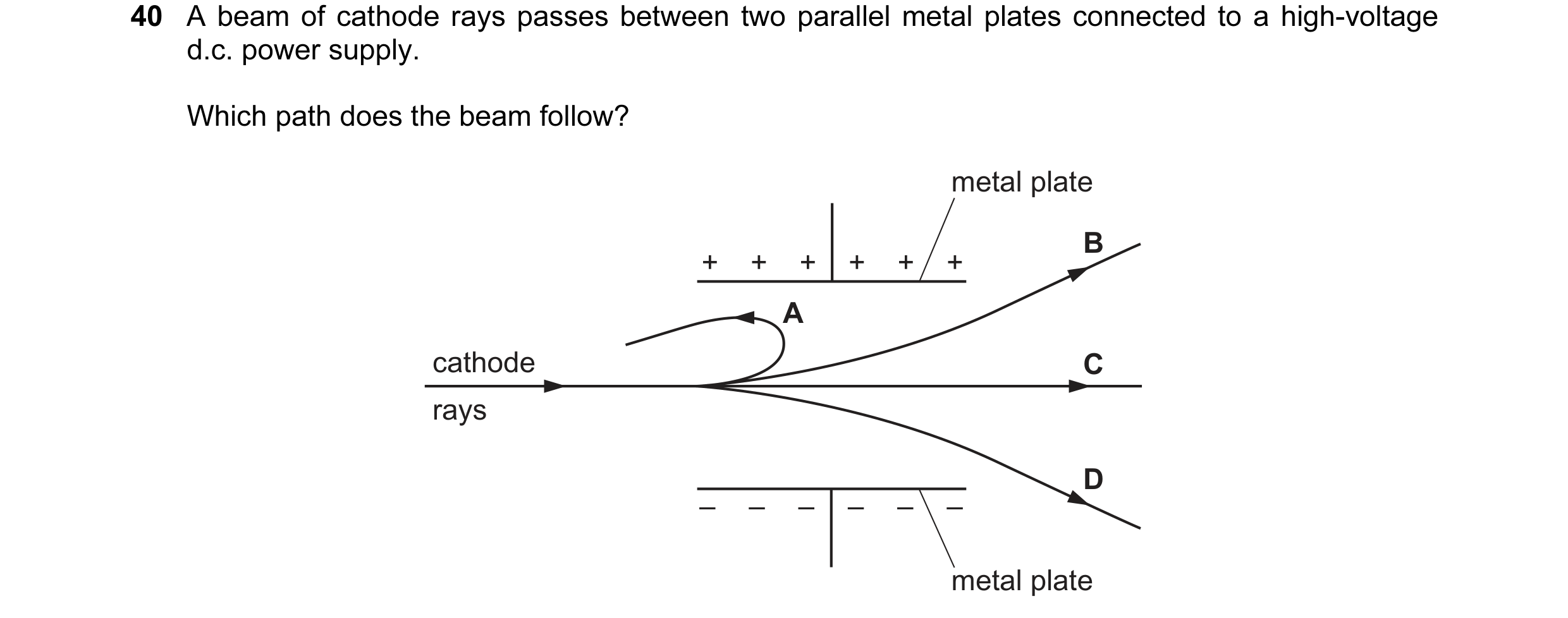
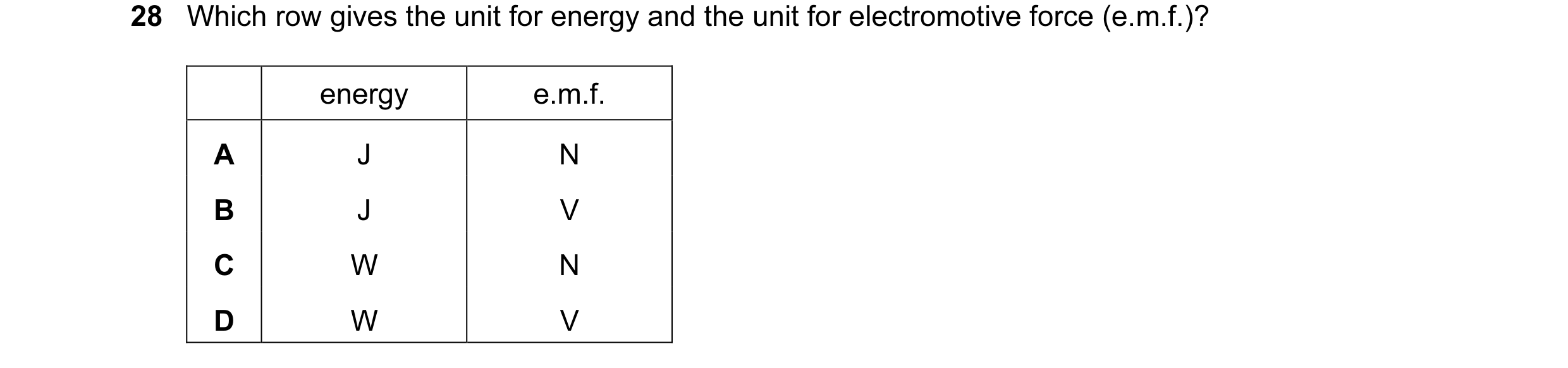
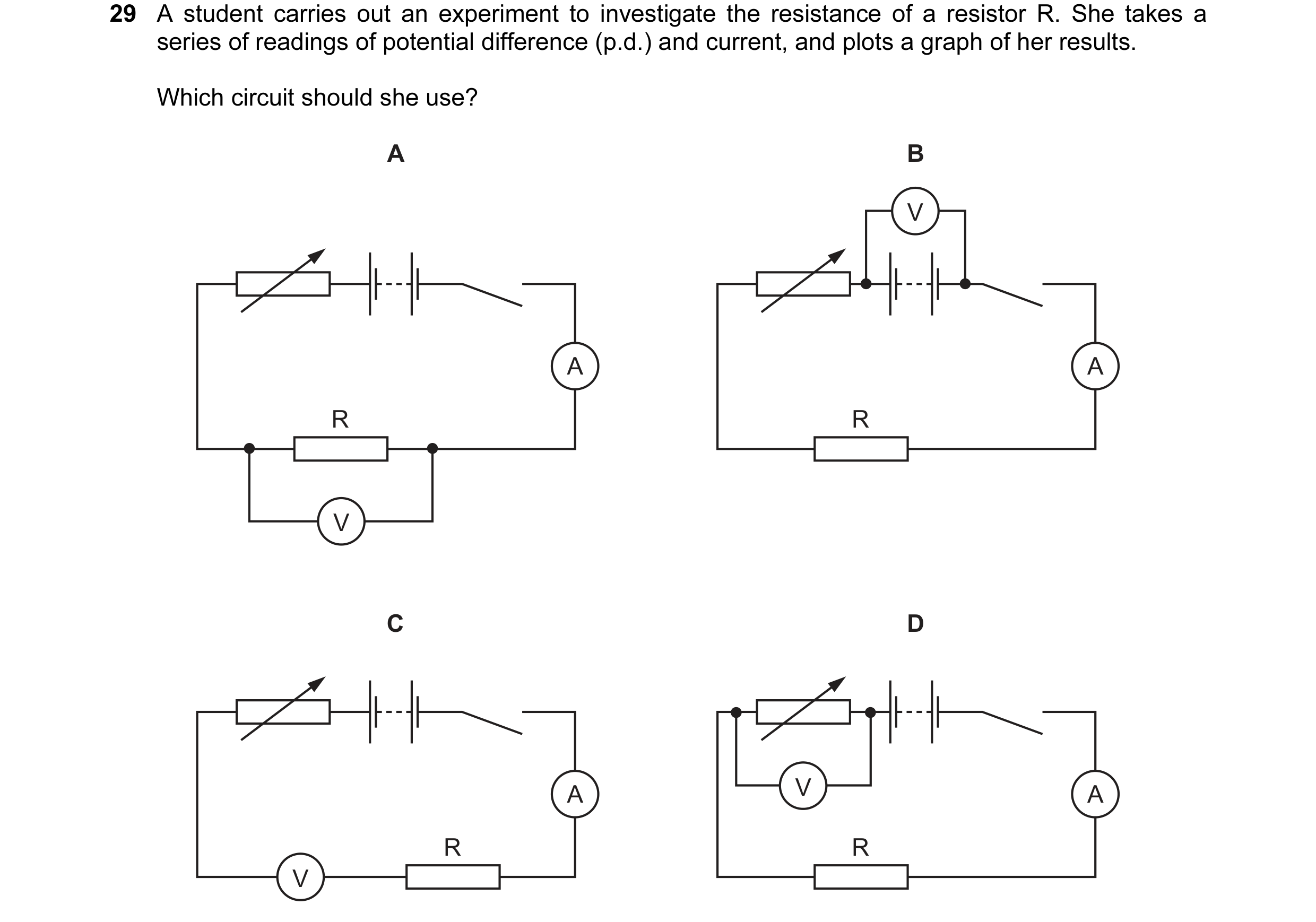 47 / 127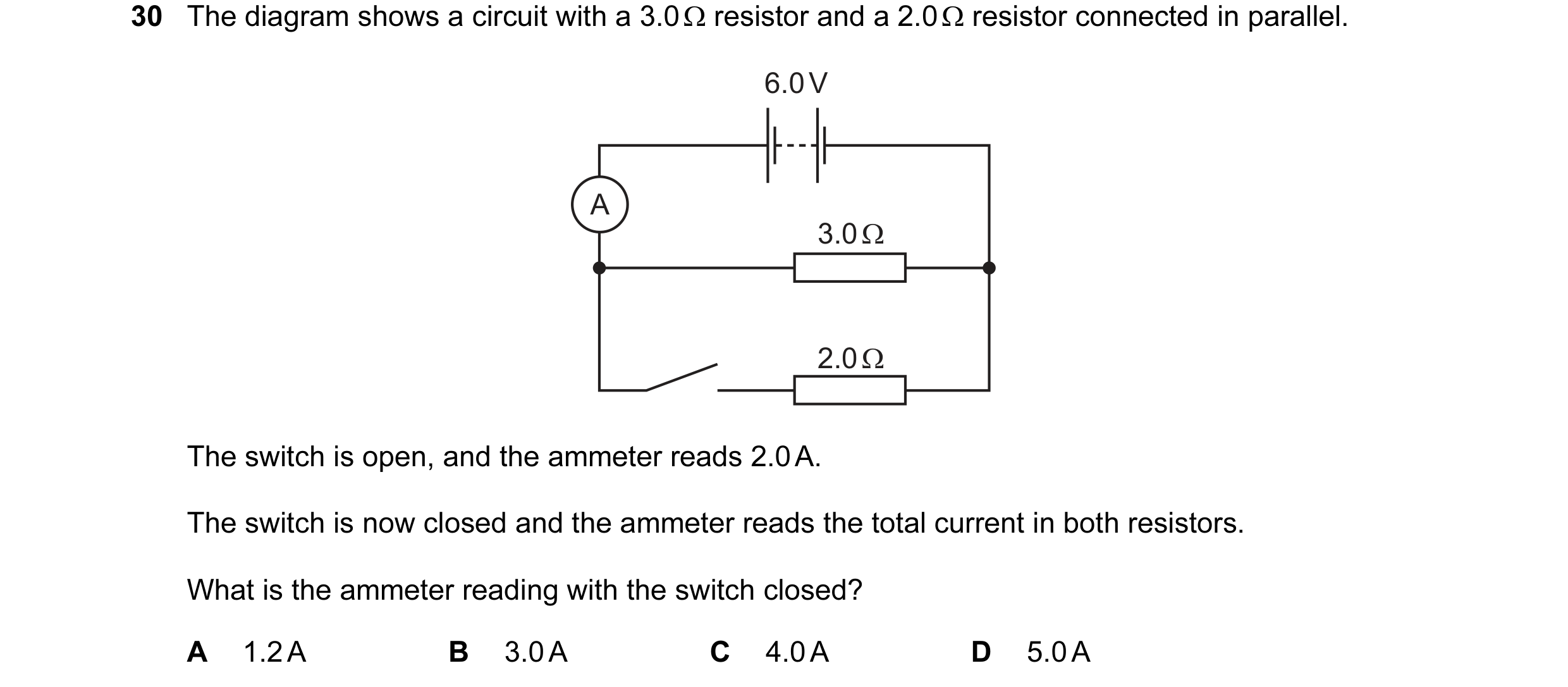
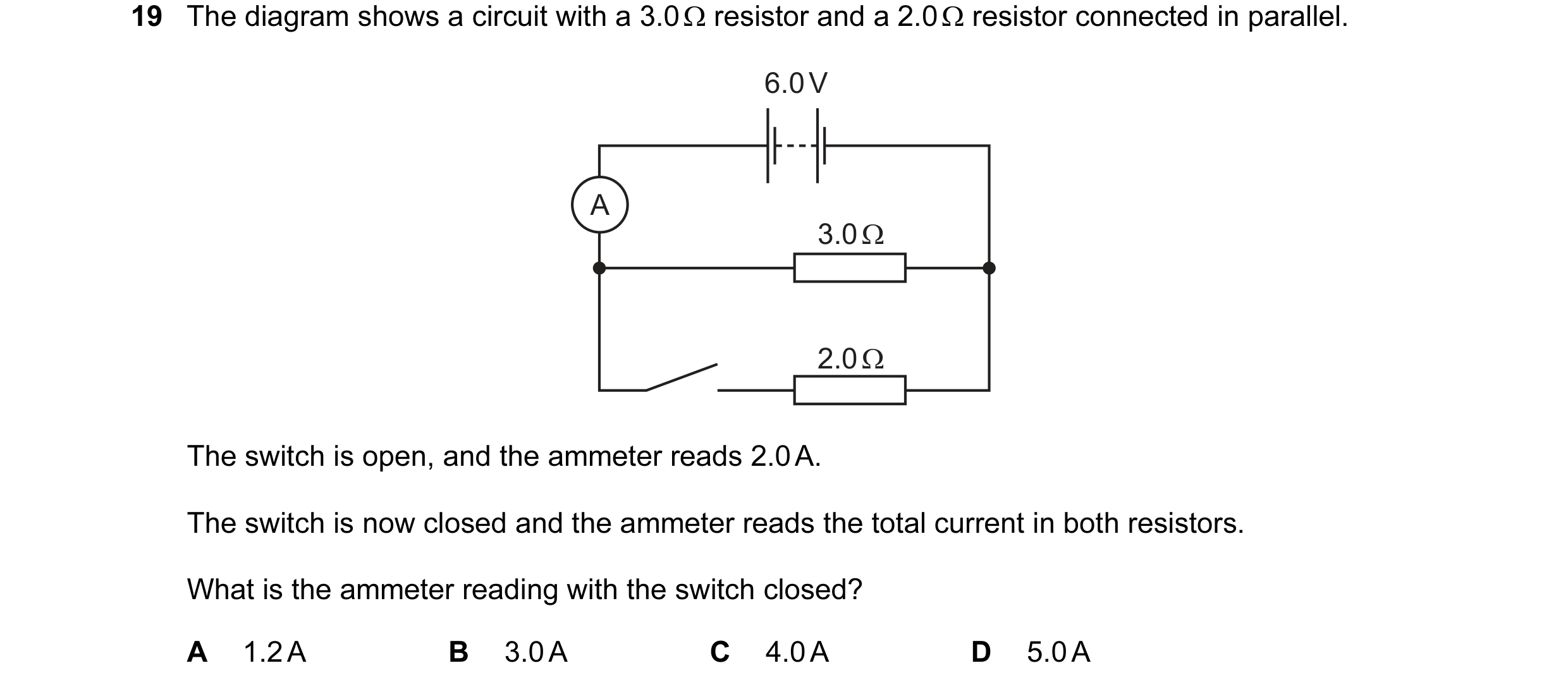
 48 / 127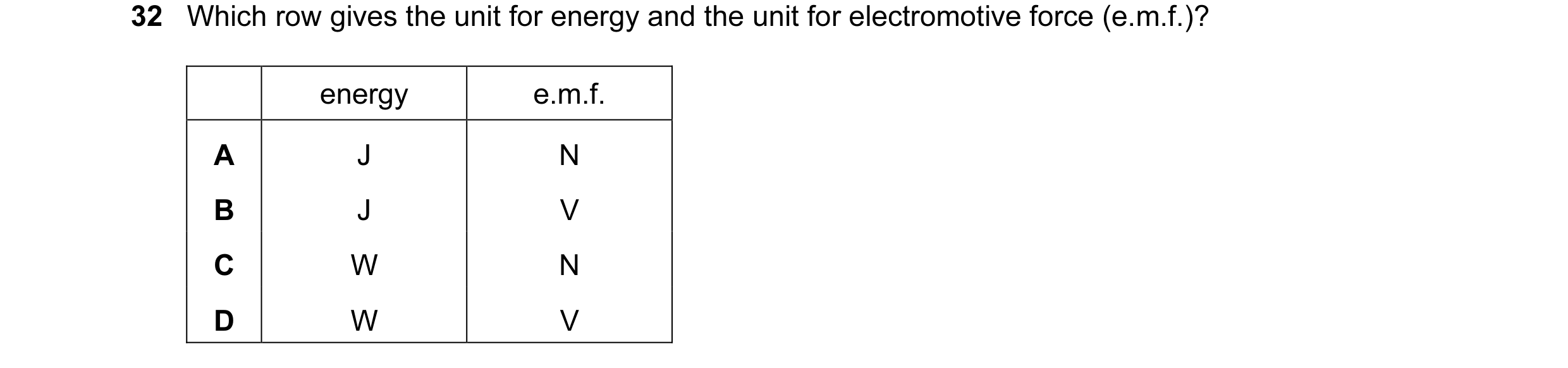
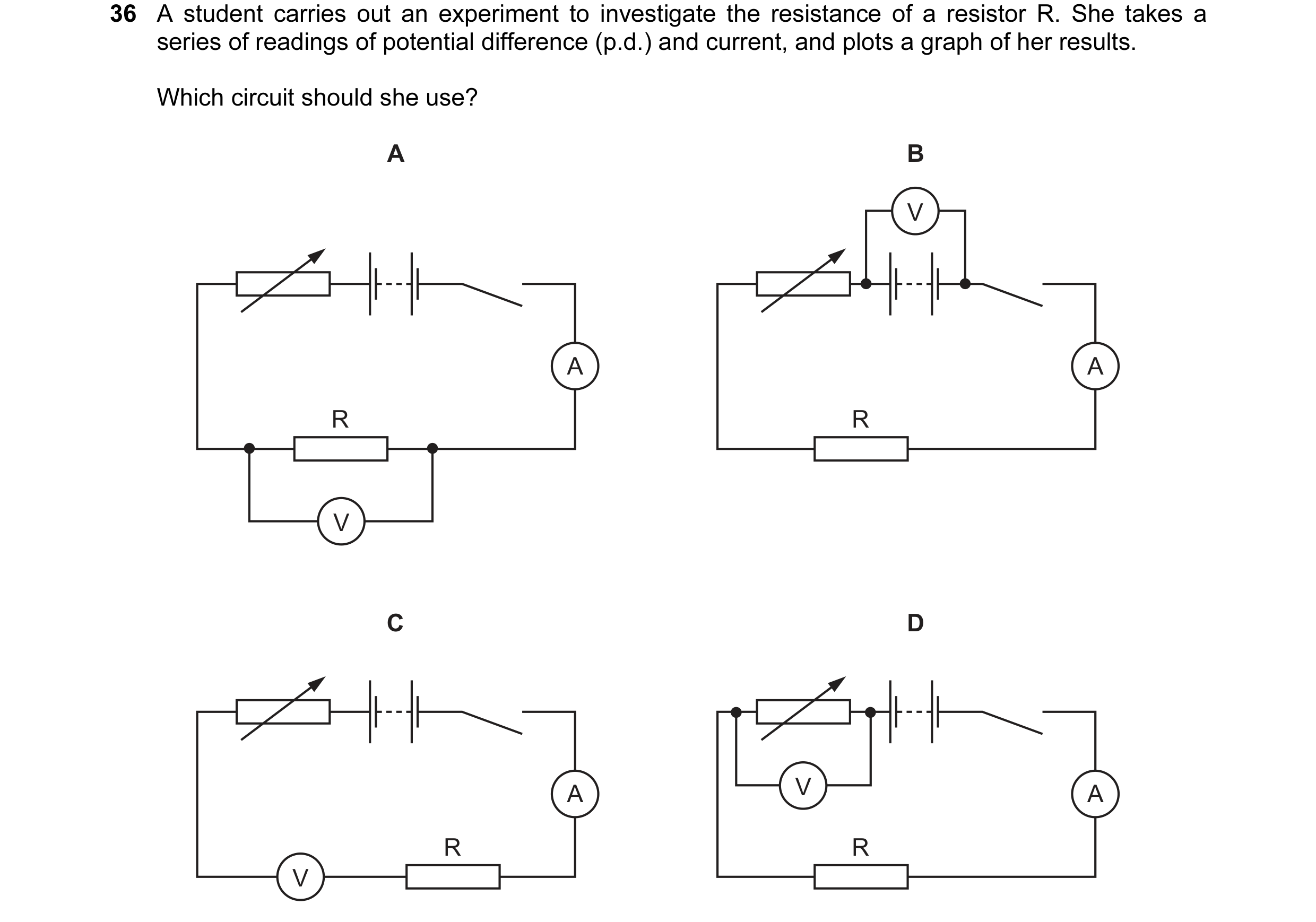
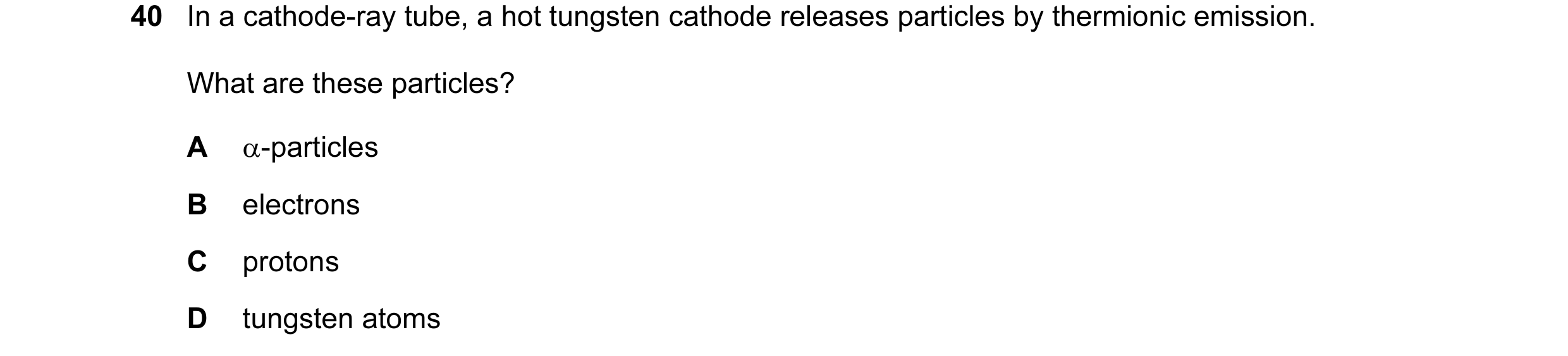 49 / 127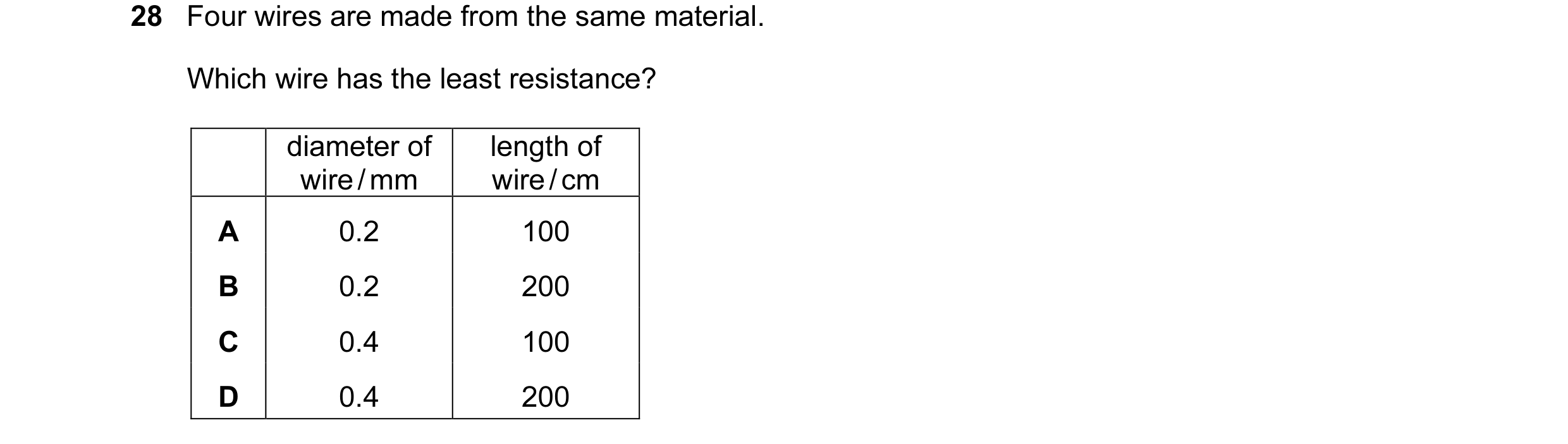
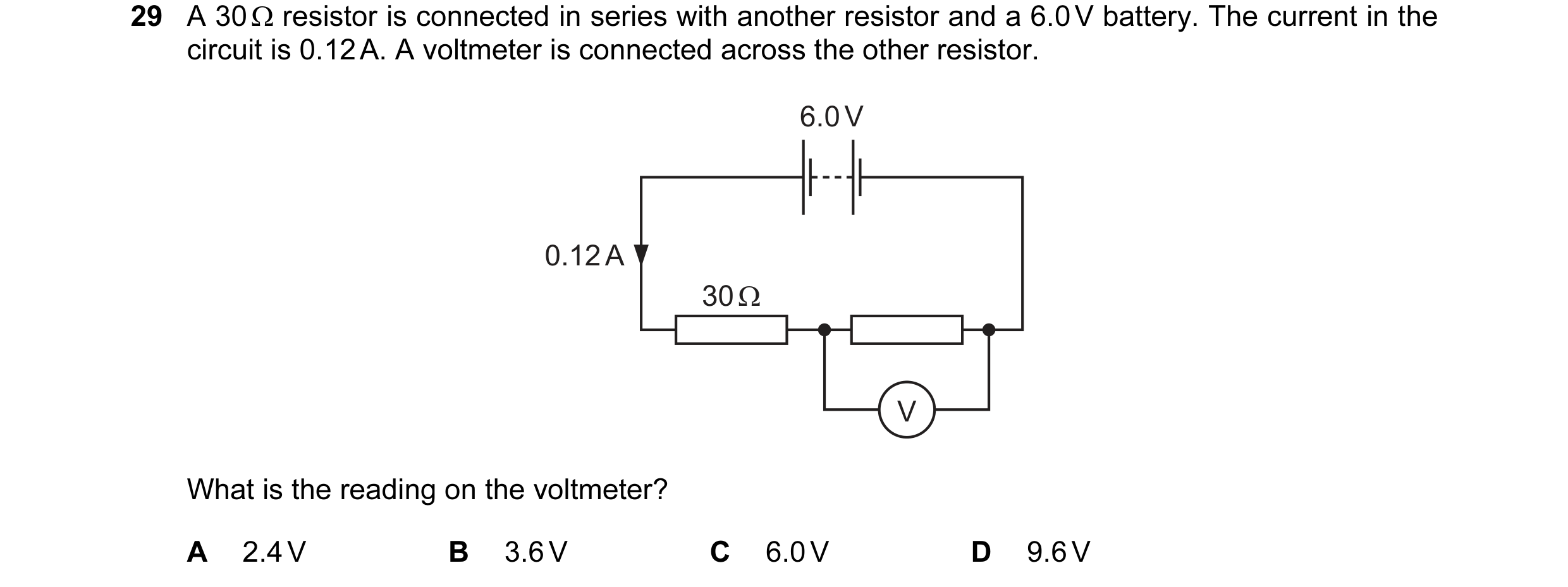
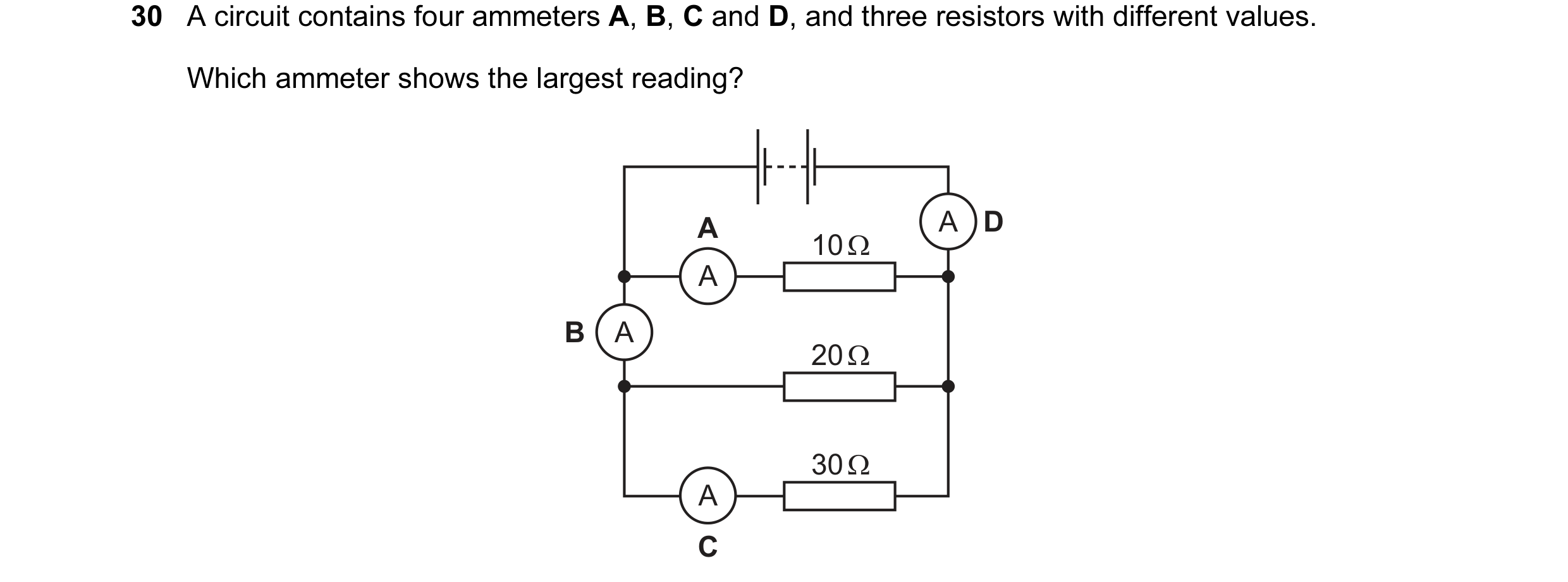 50 / 127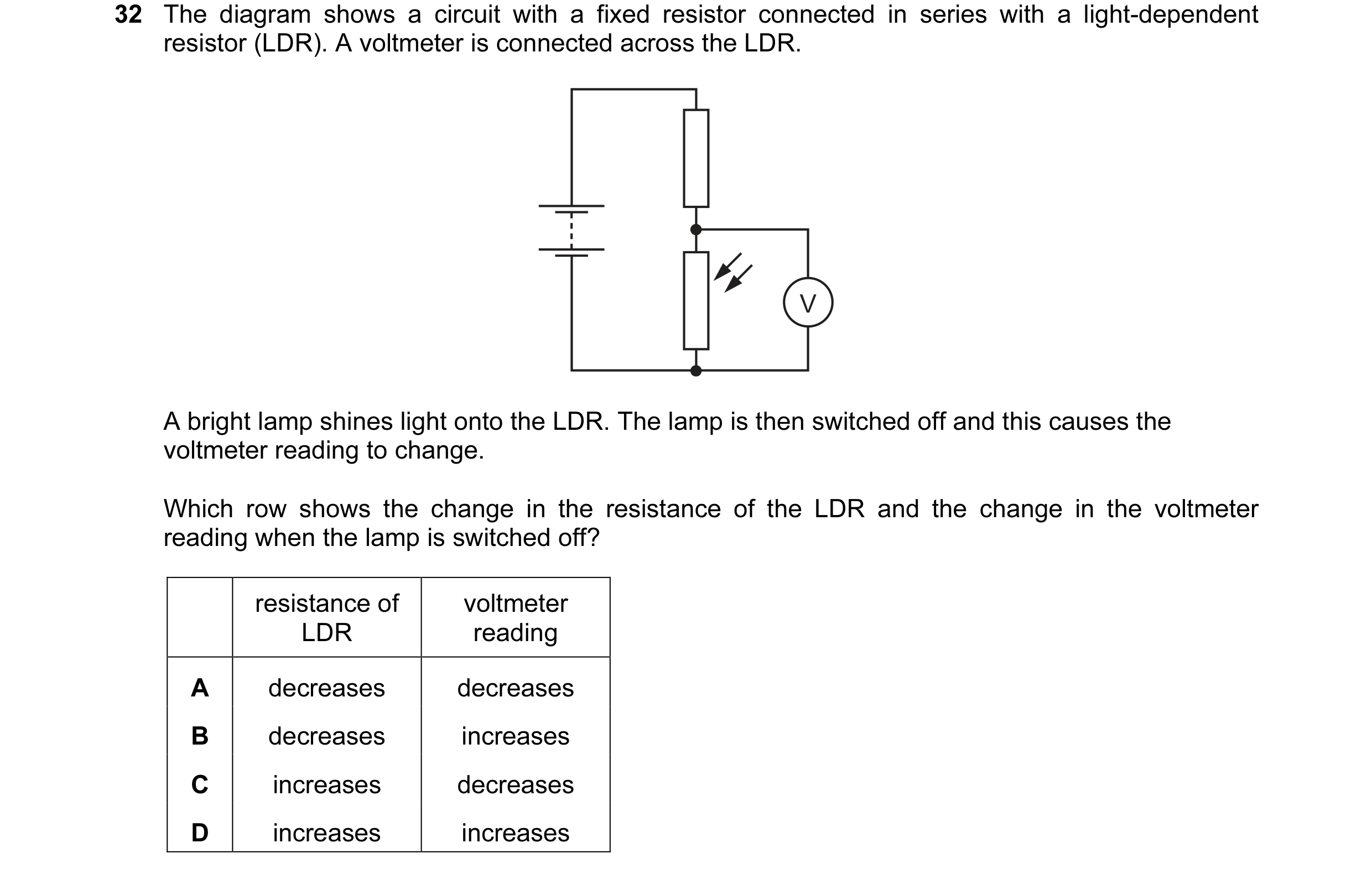
 51 / 127
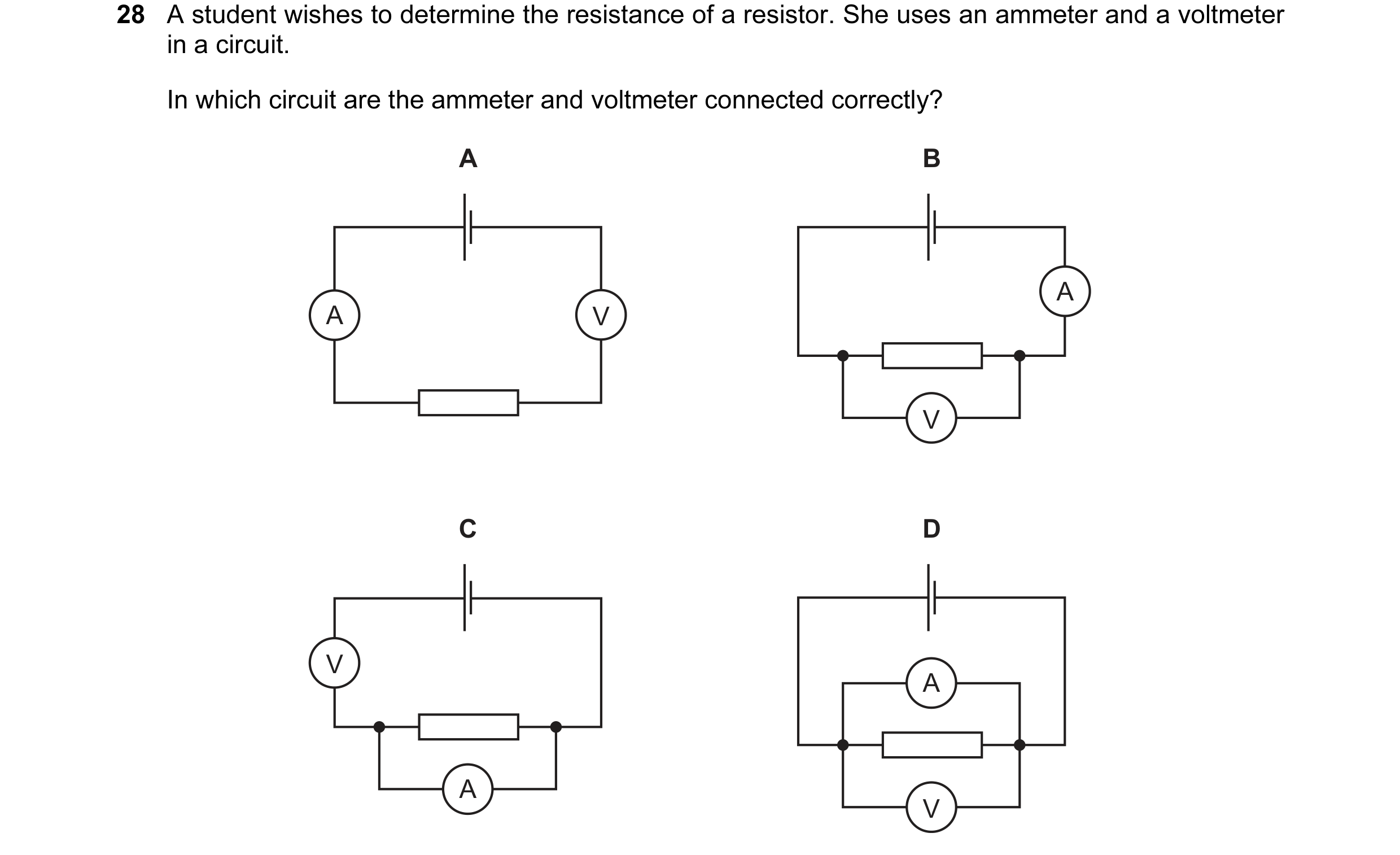 52 / 127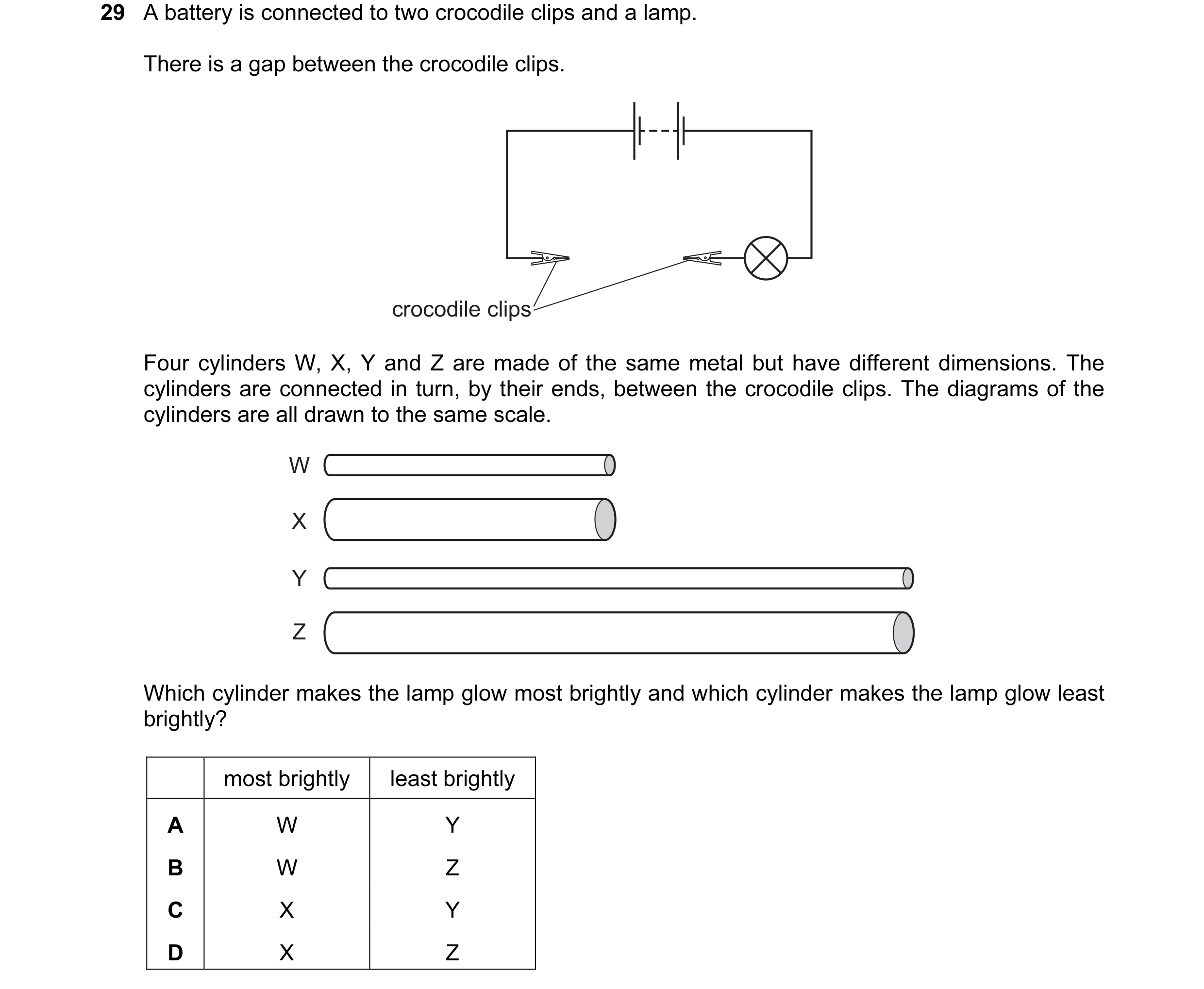

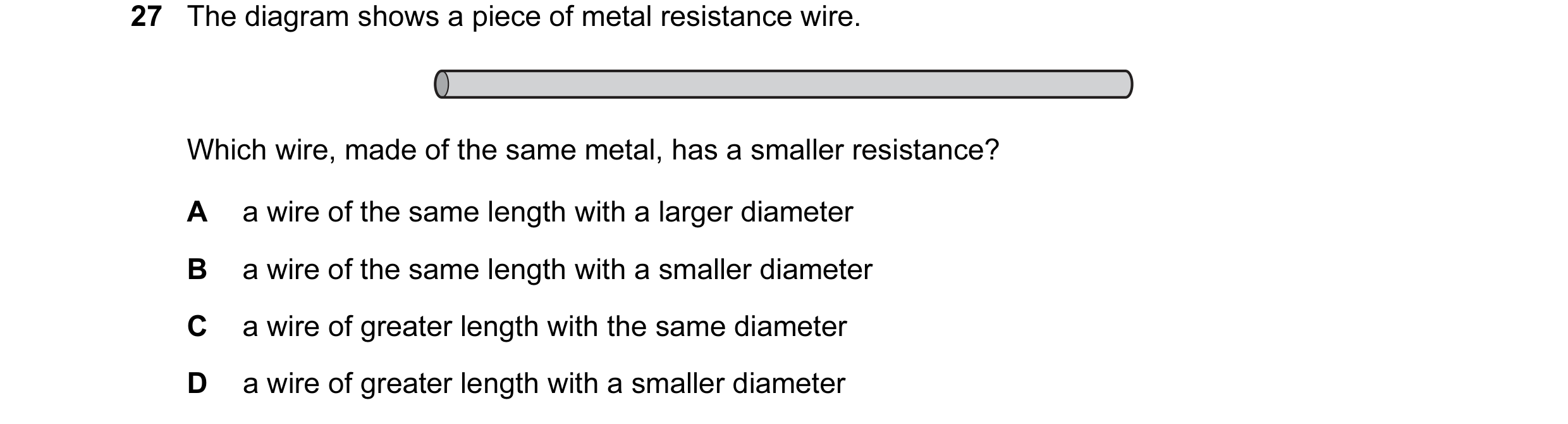 53 / 127
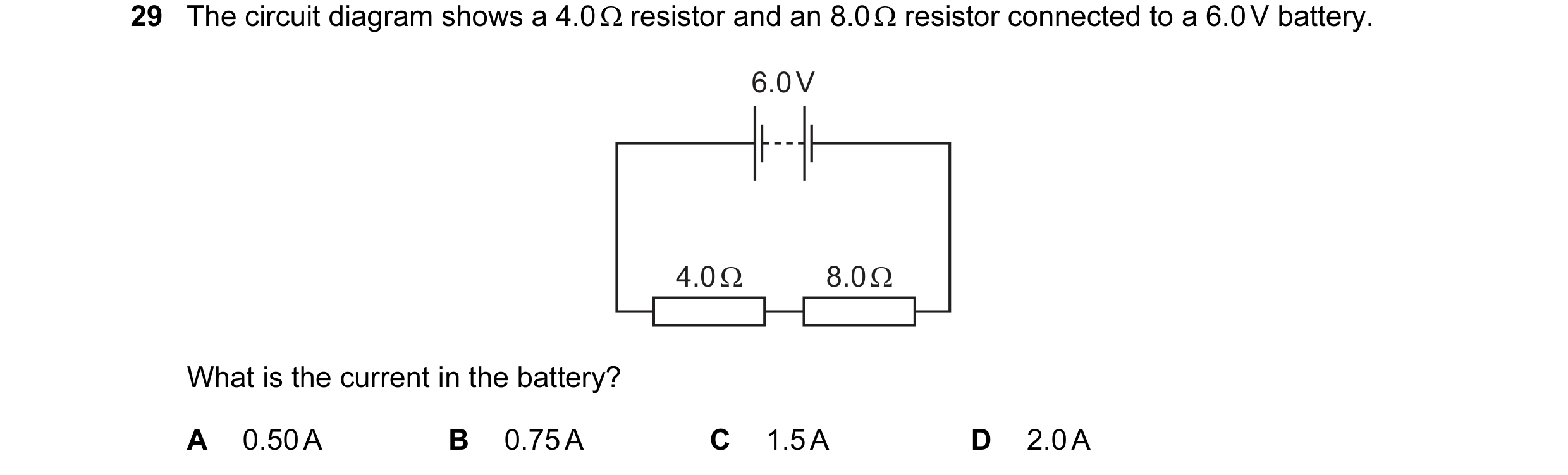
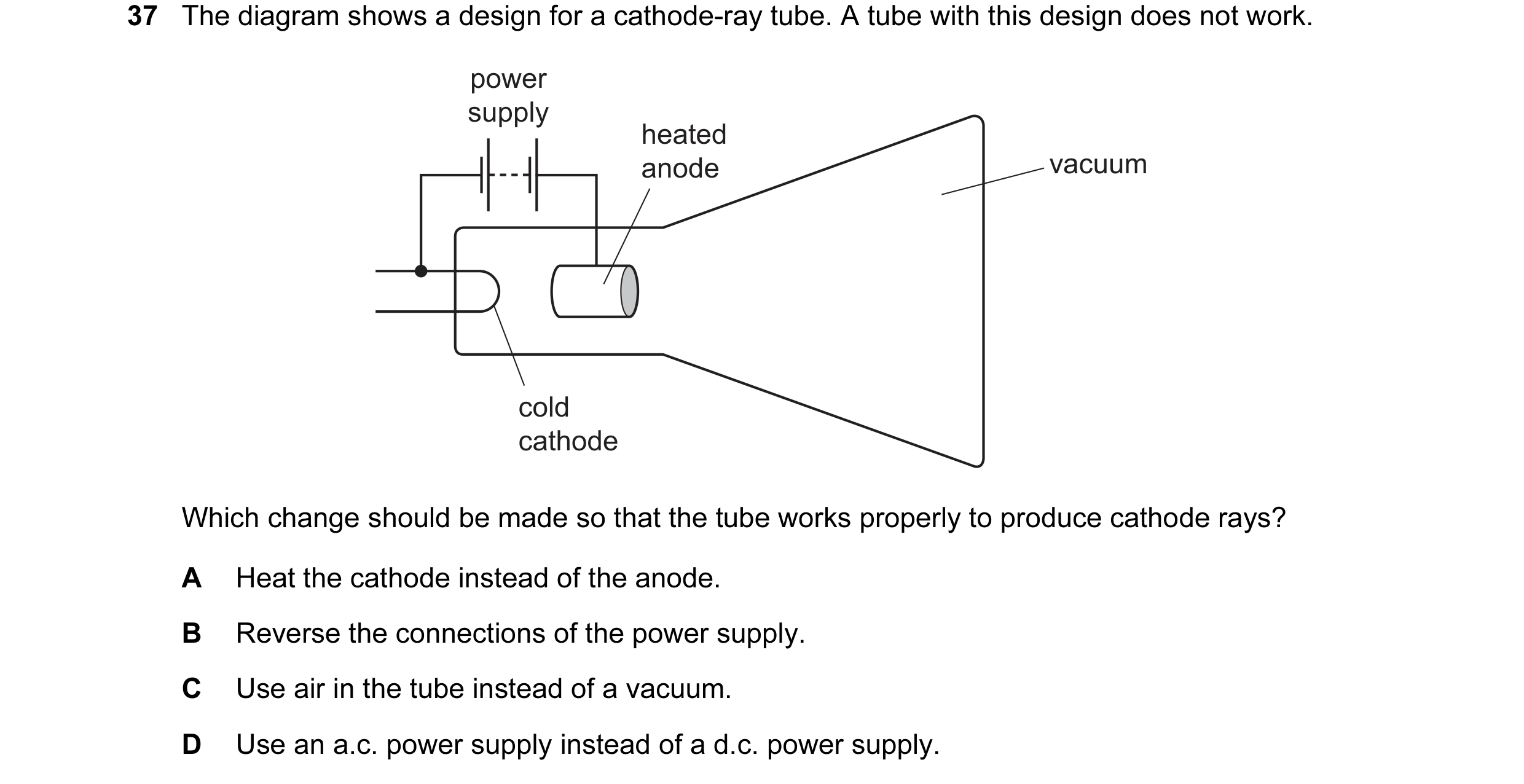
 54 / 127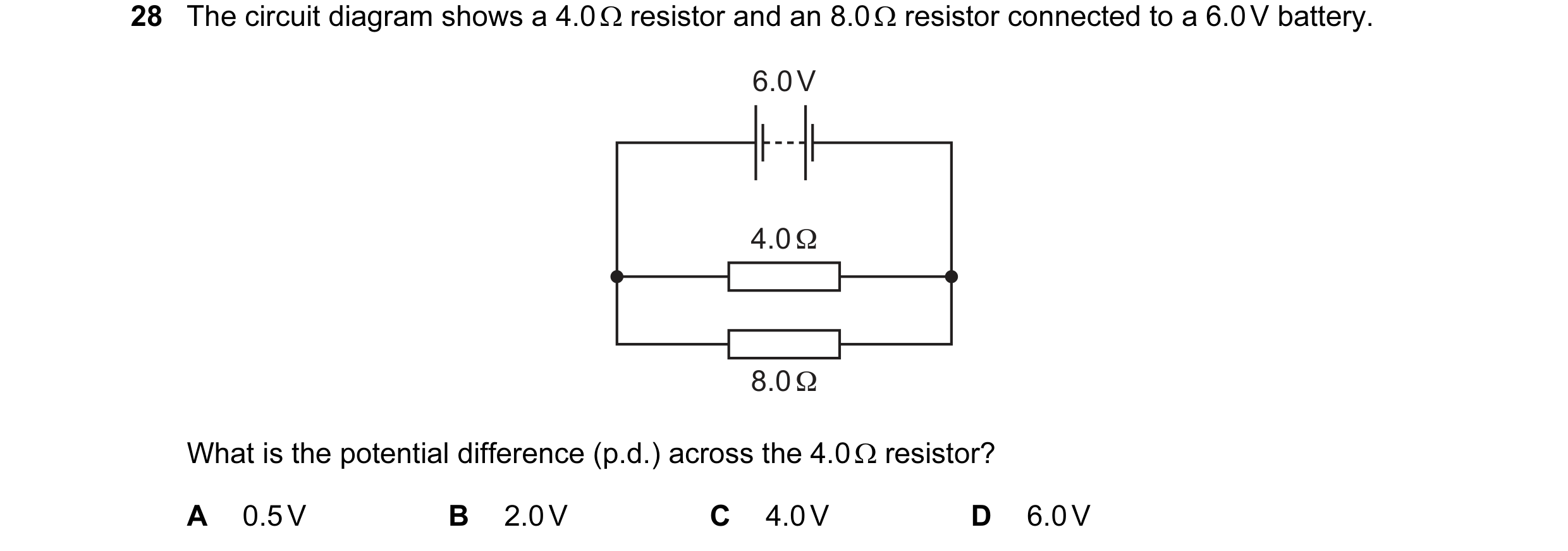
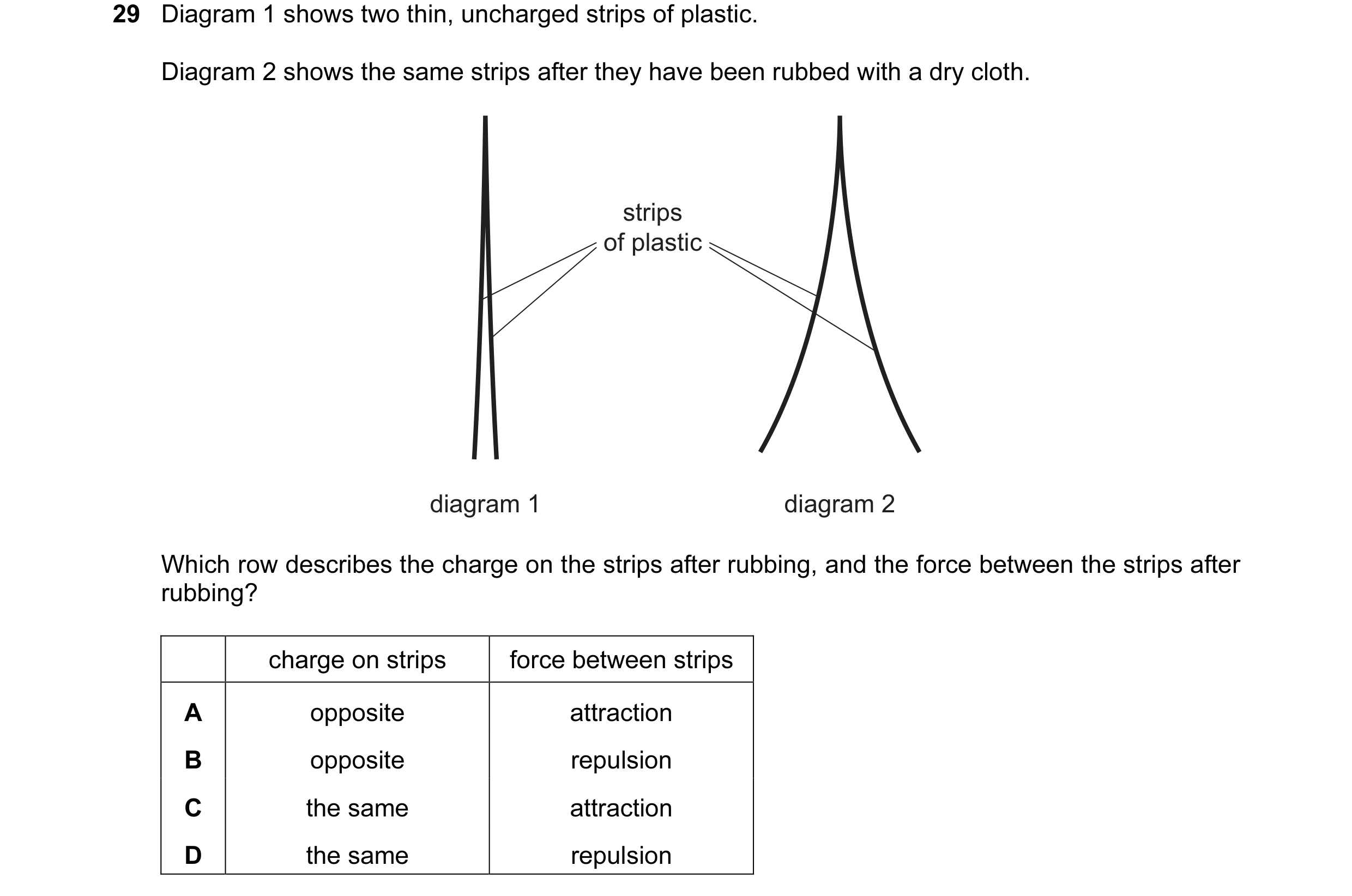 55 / 127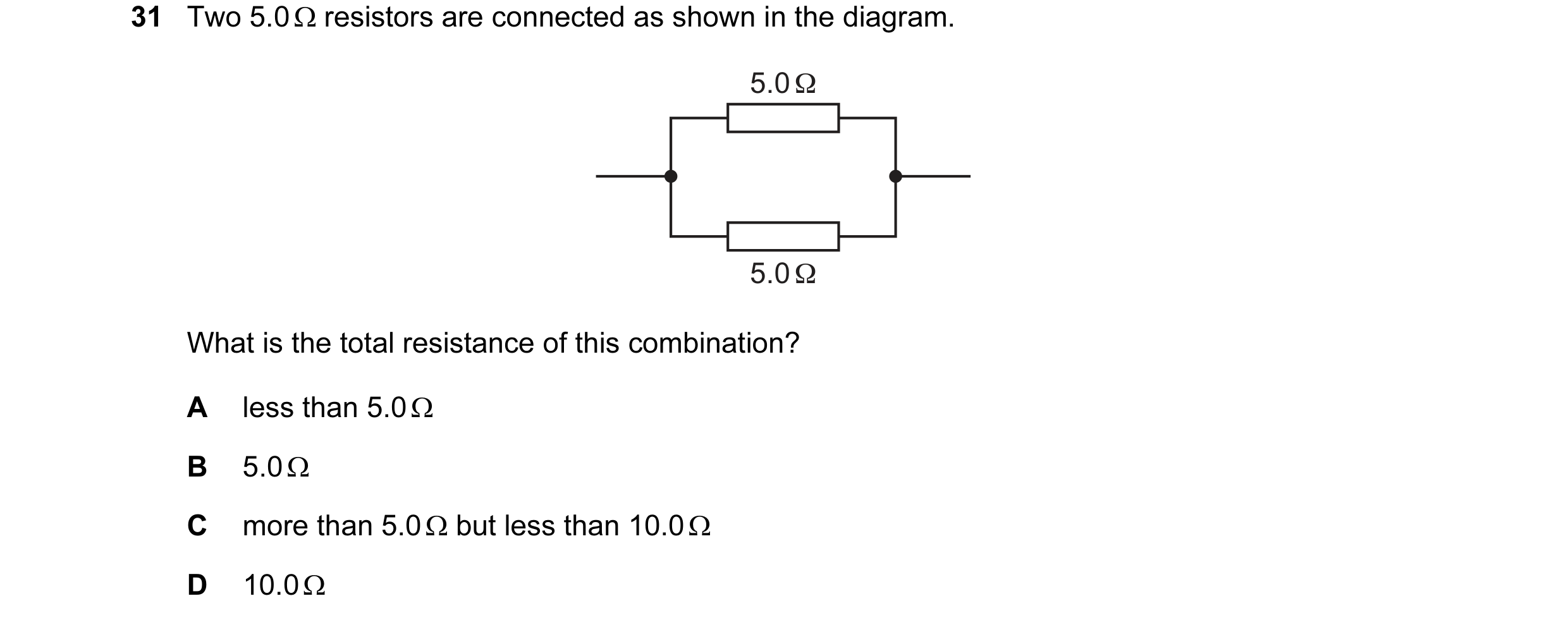
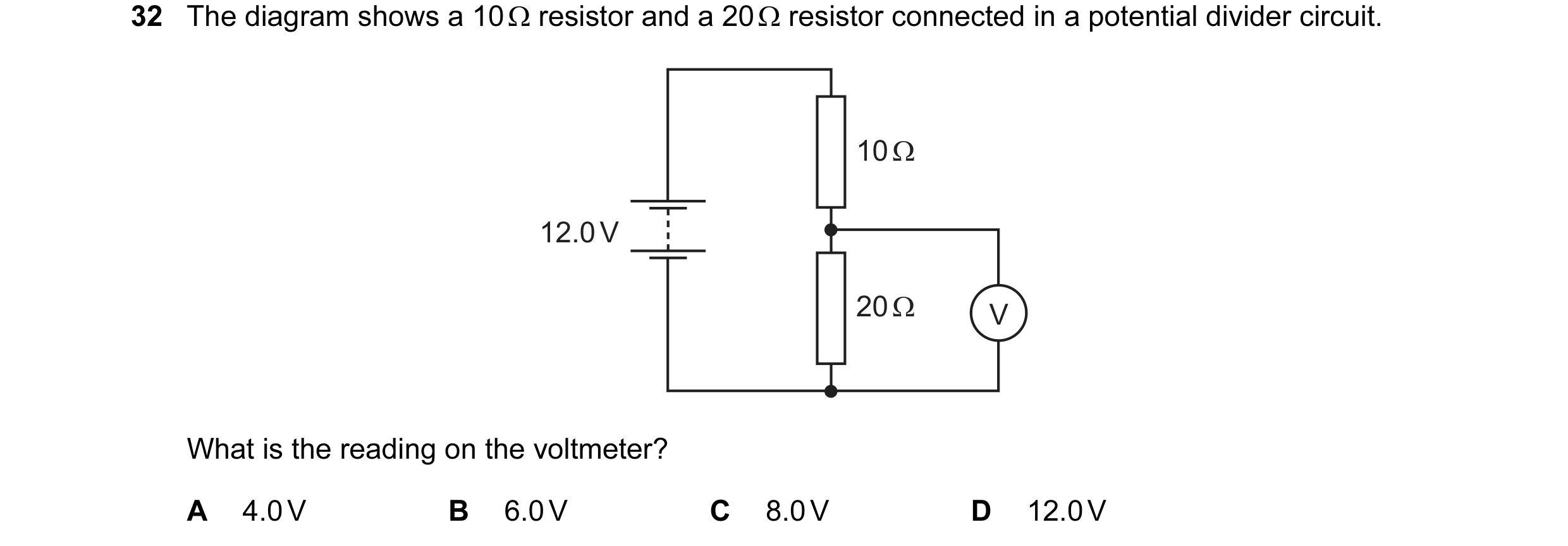
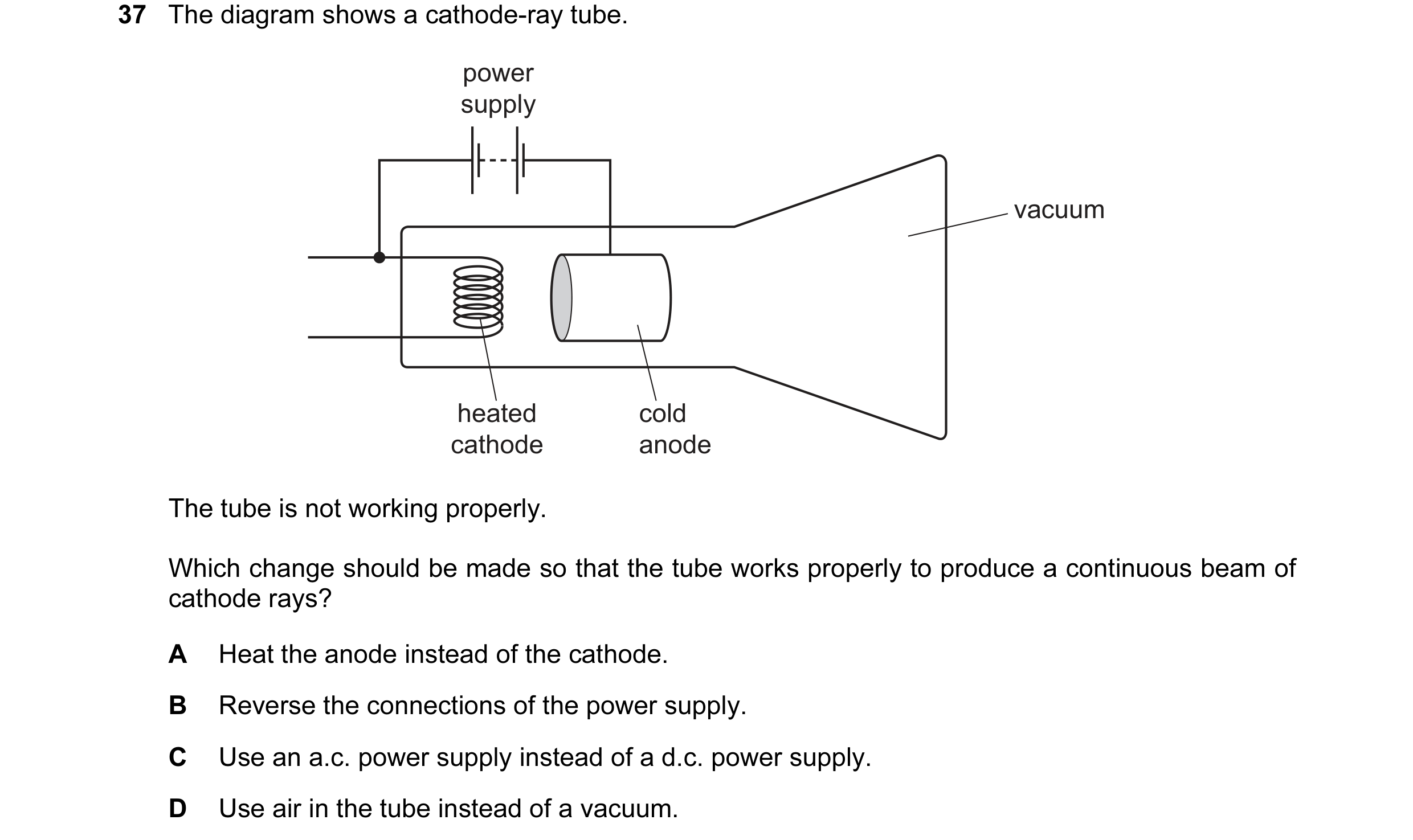 56 / 127
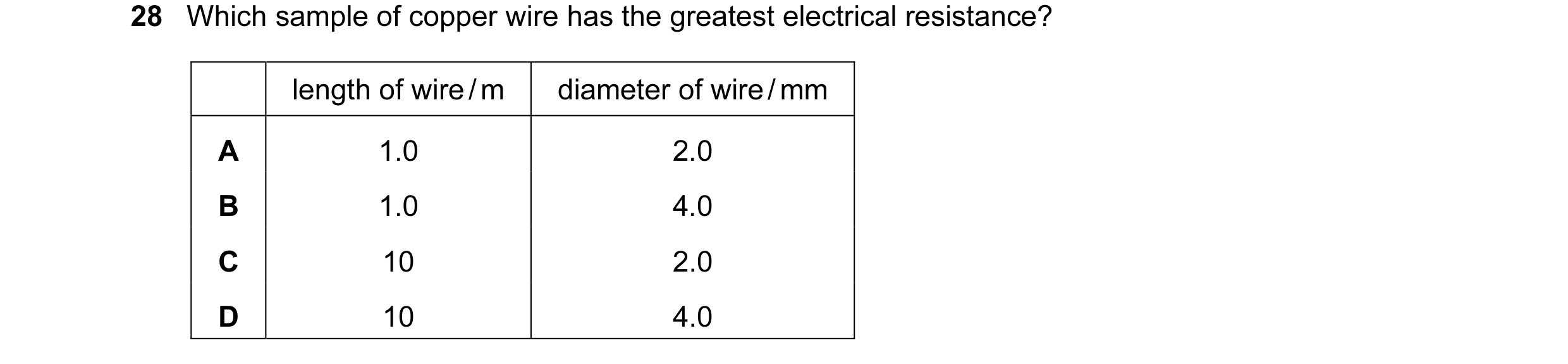
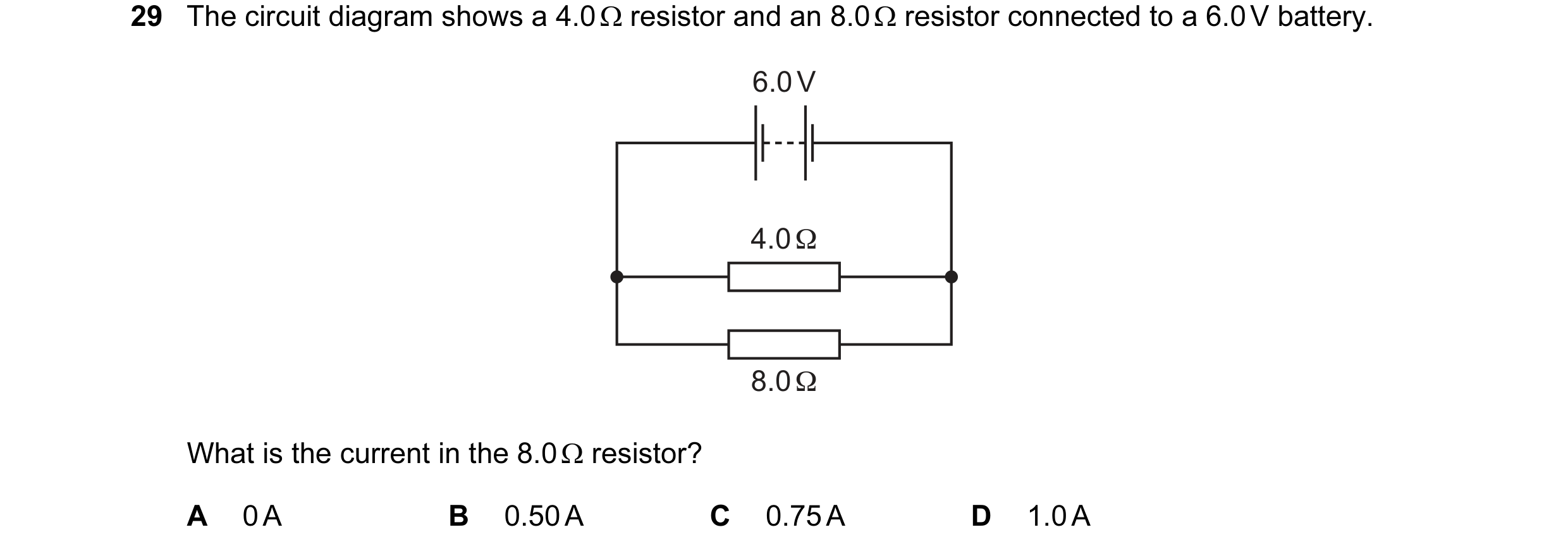
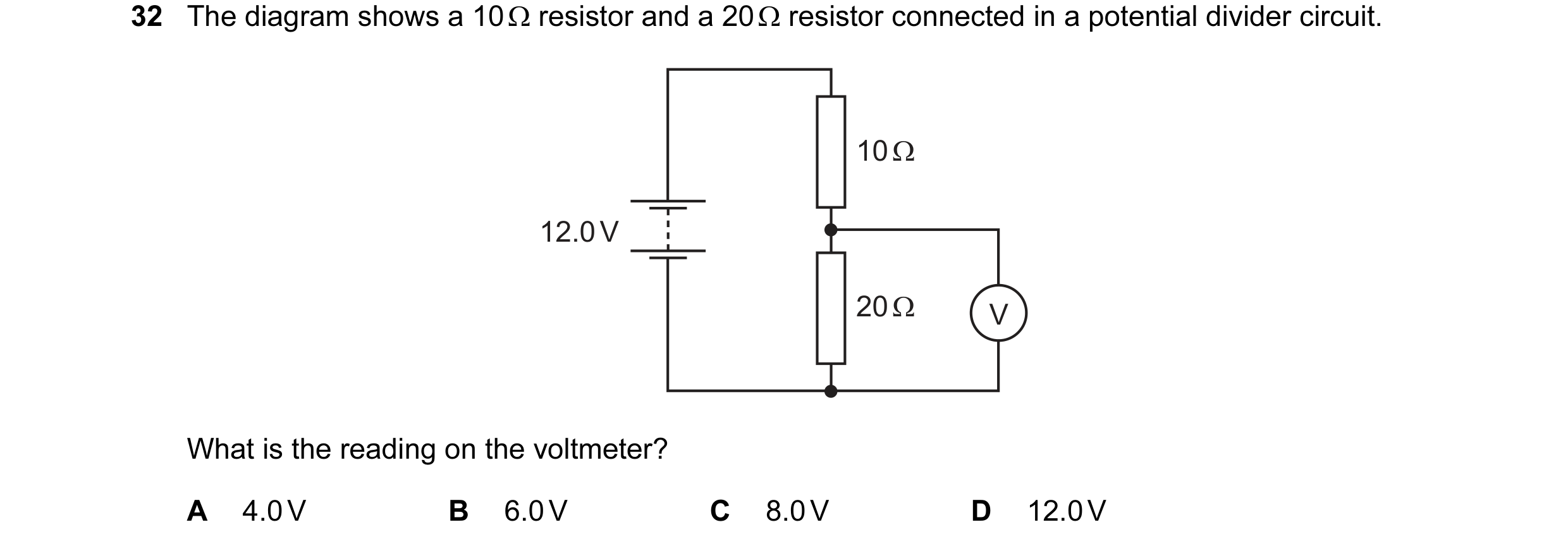 57 / 127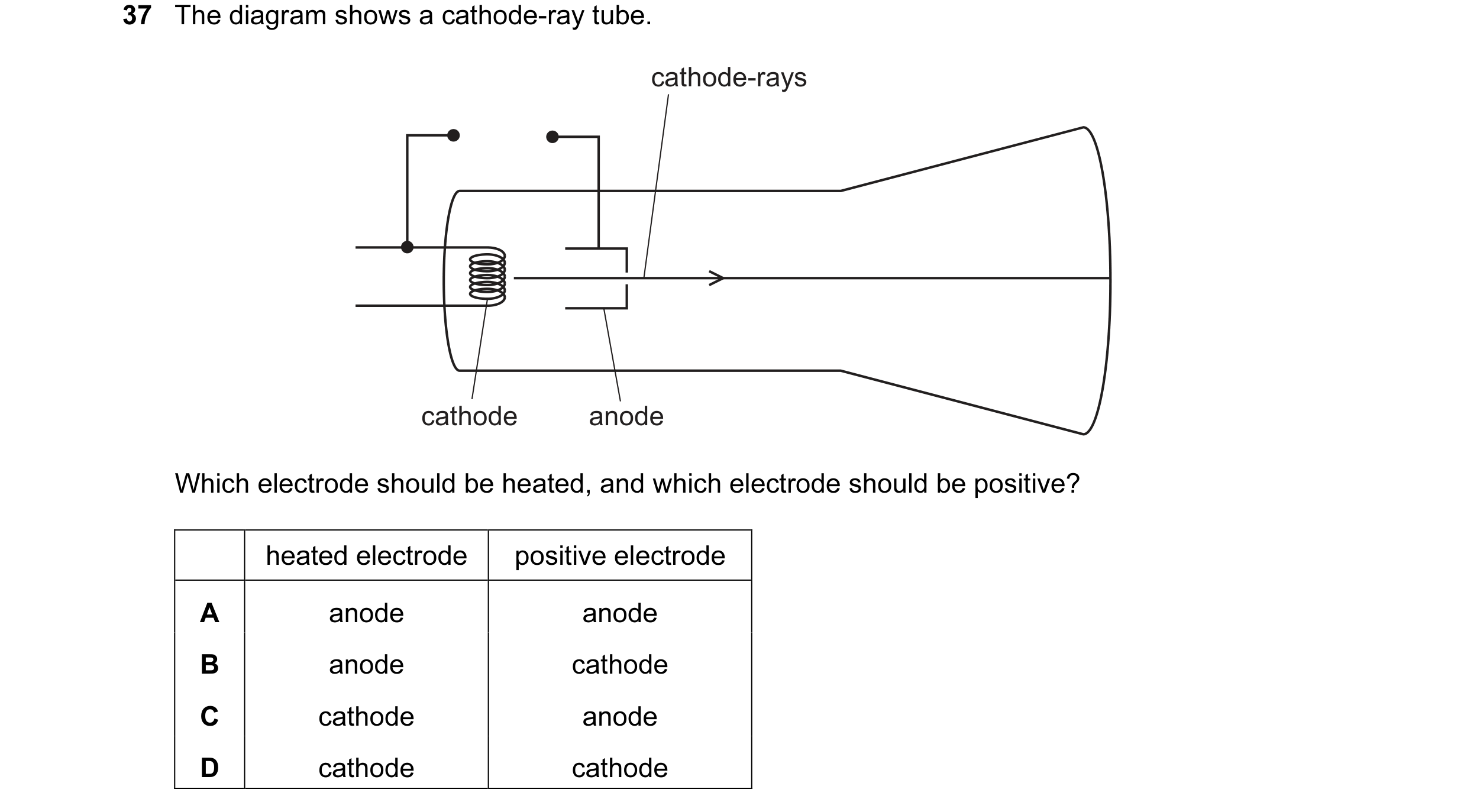
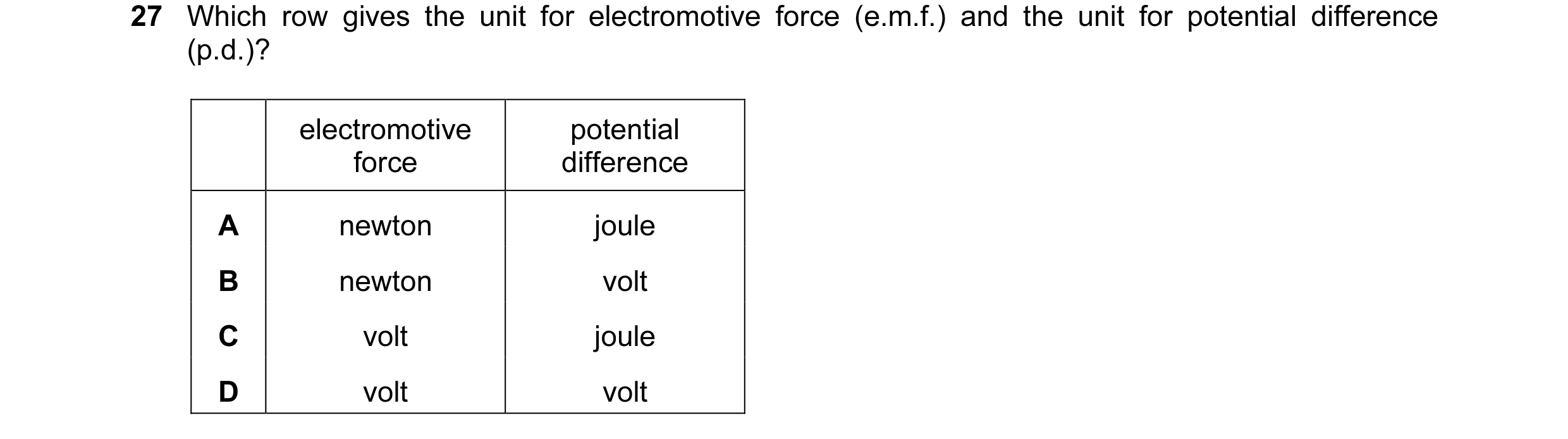
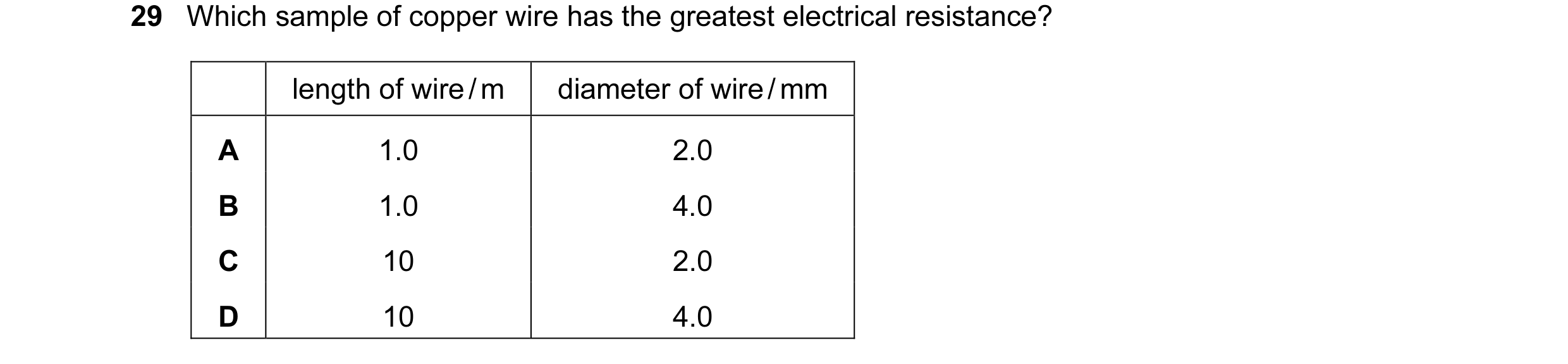 58 / 127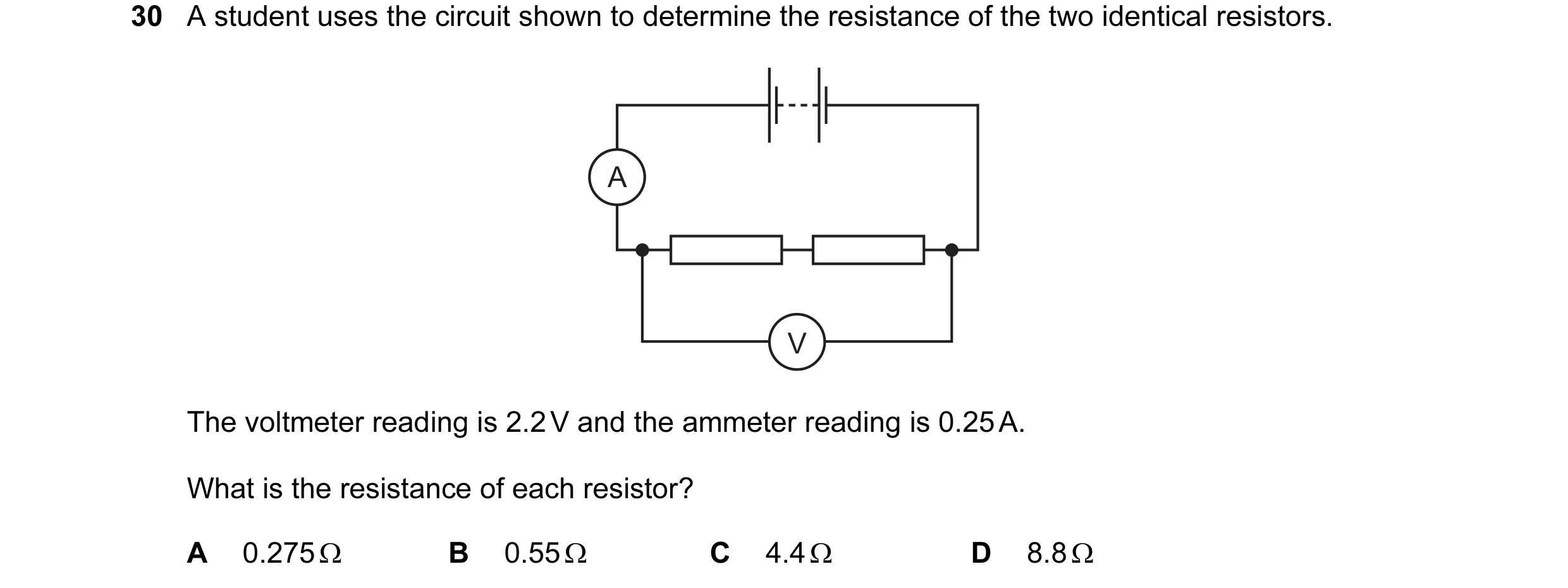
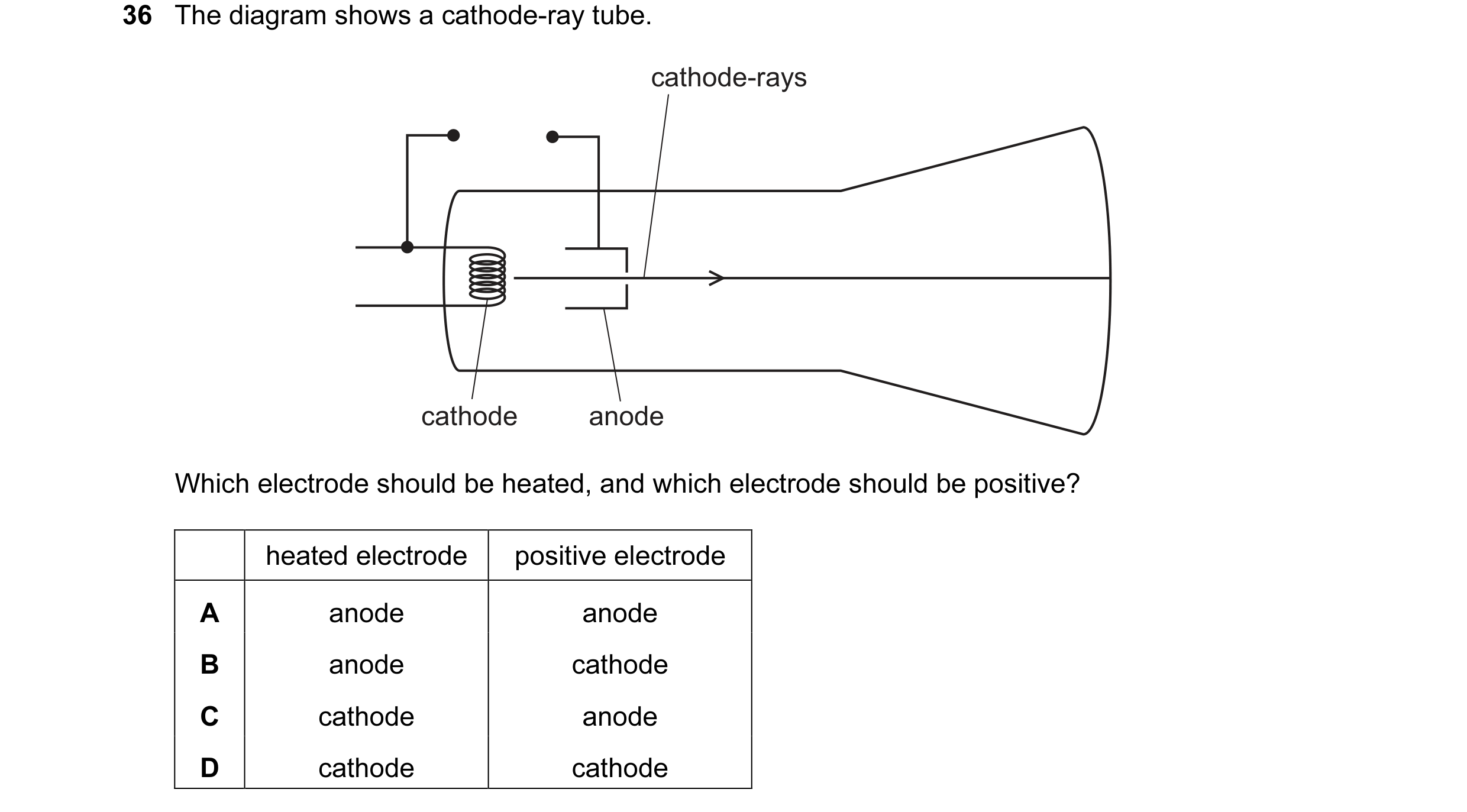
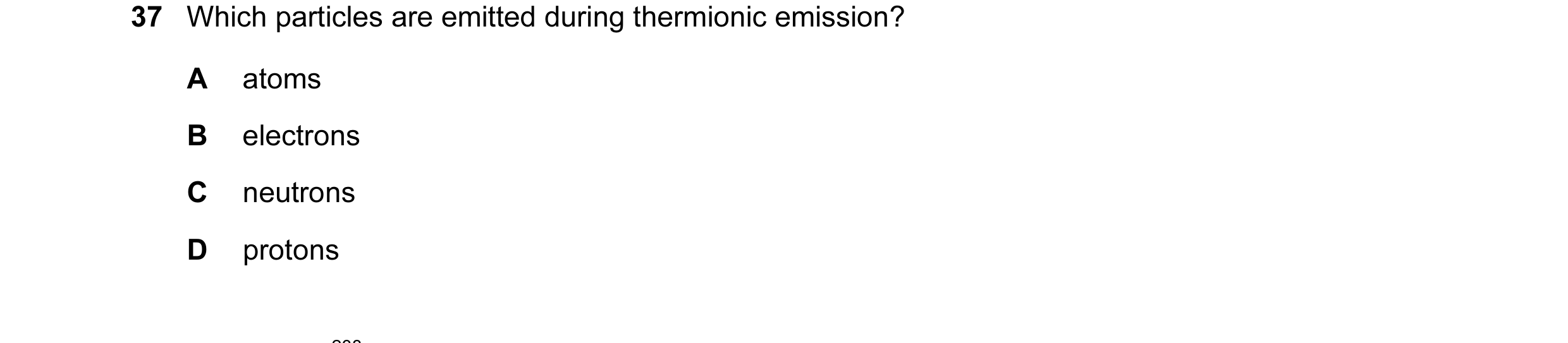
 59 / 127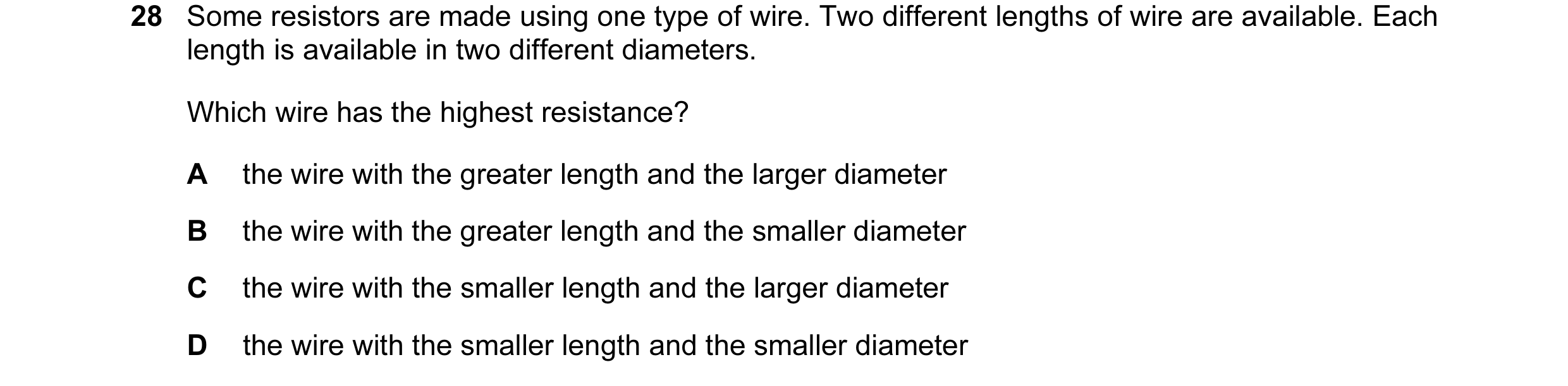
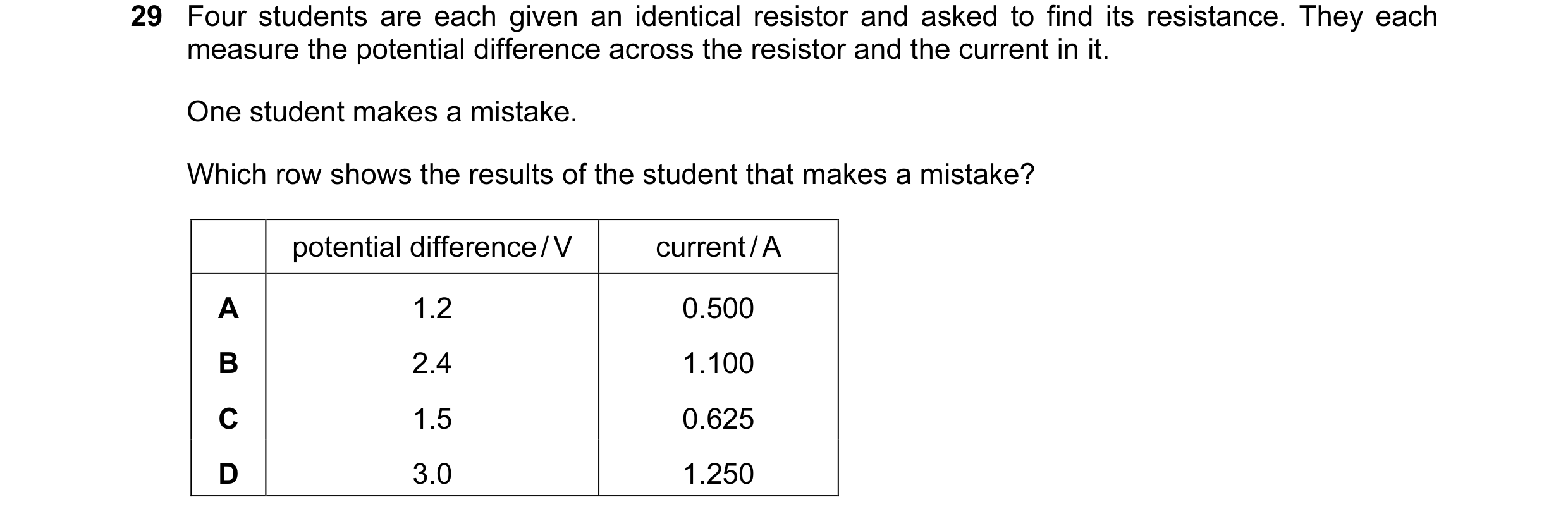
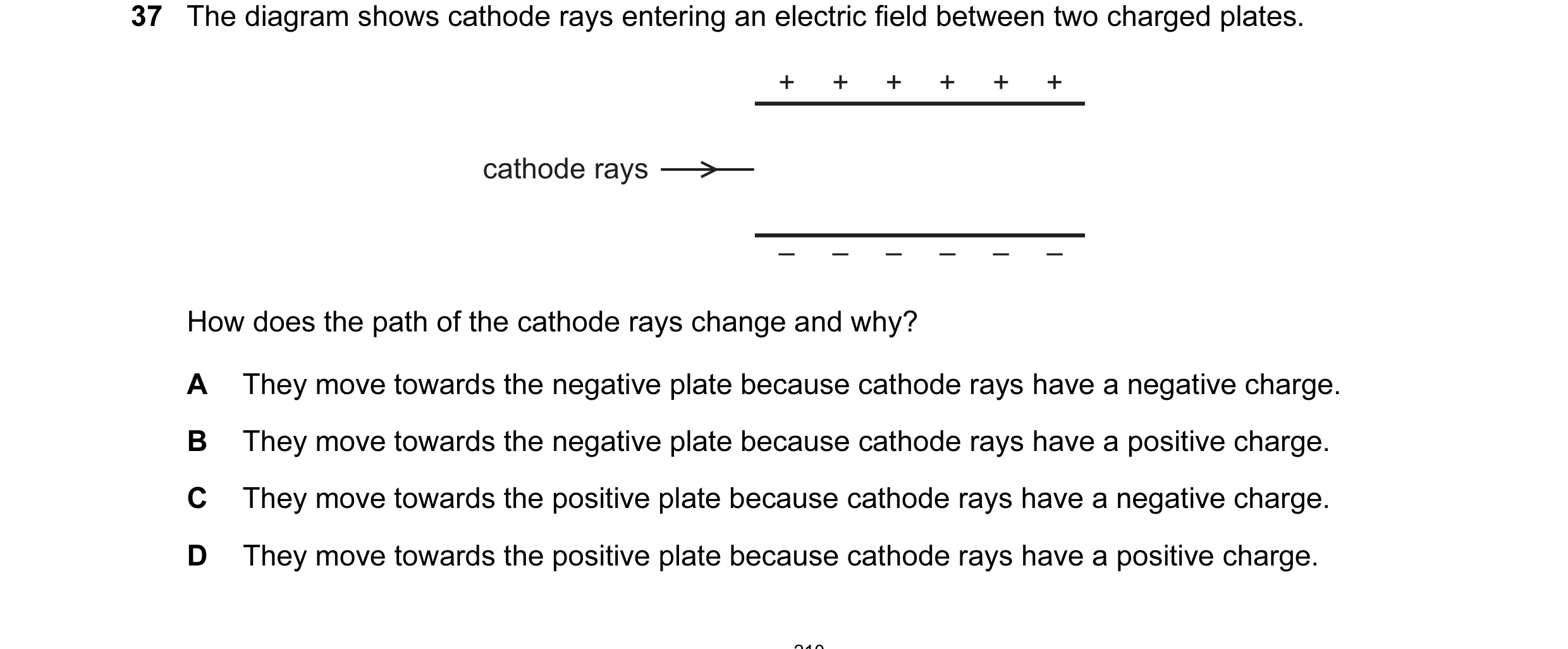 60 / 127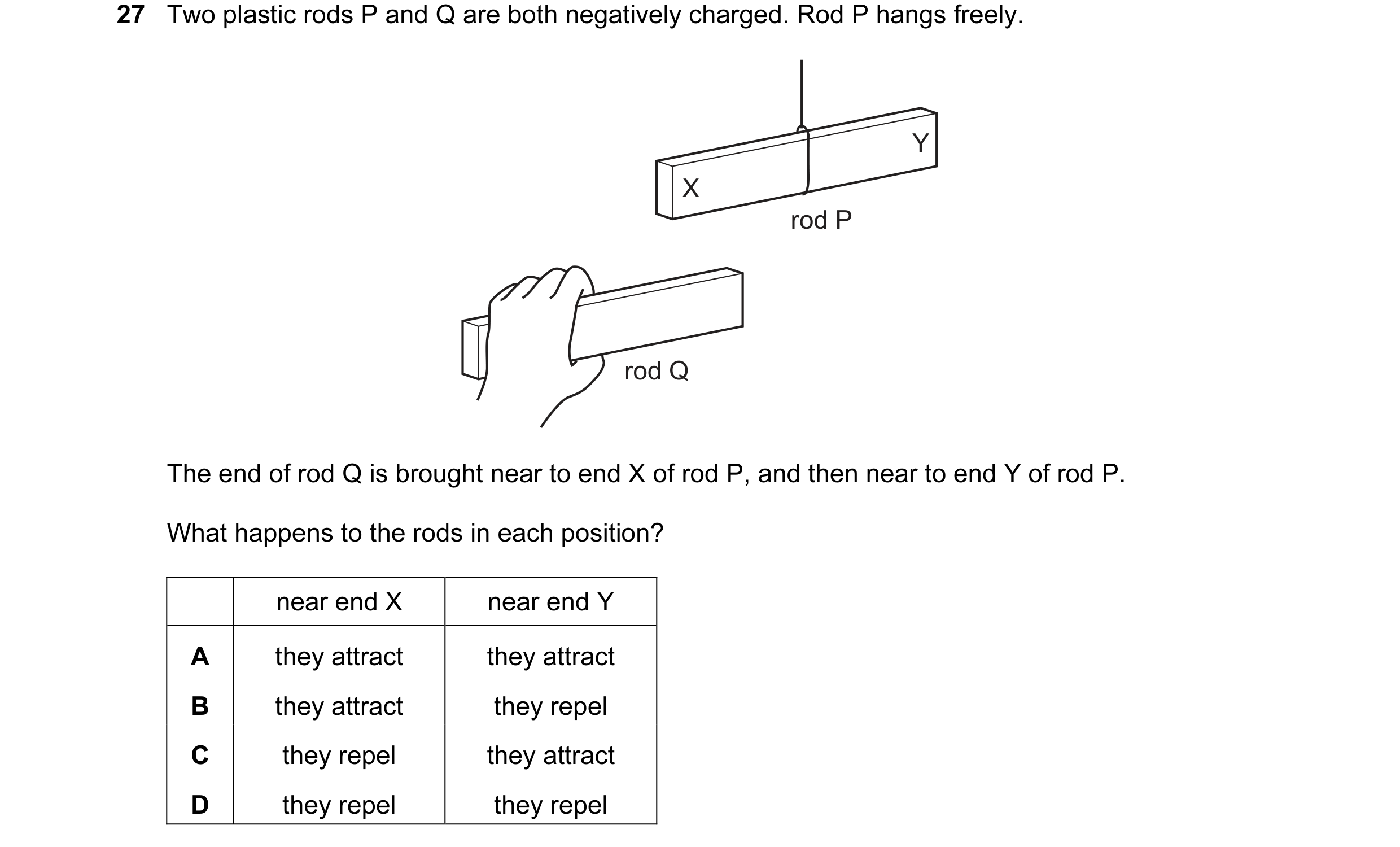
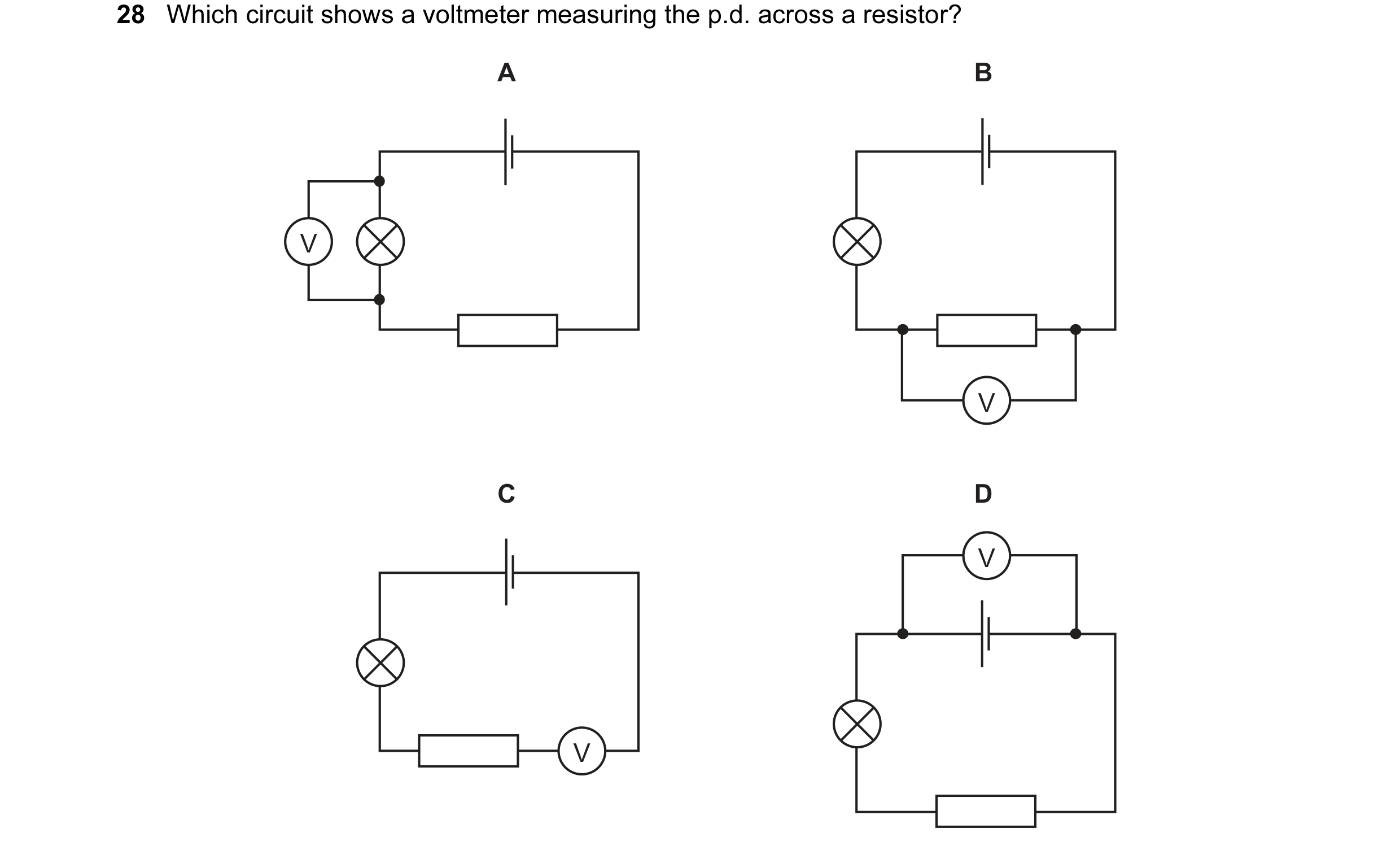 61 / 127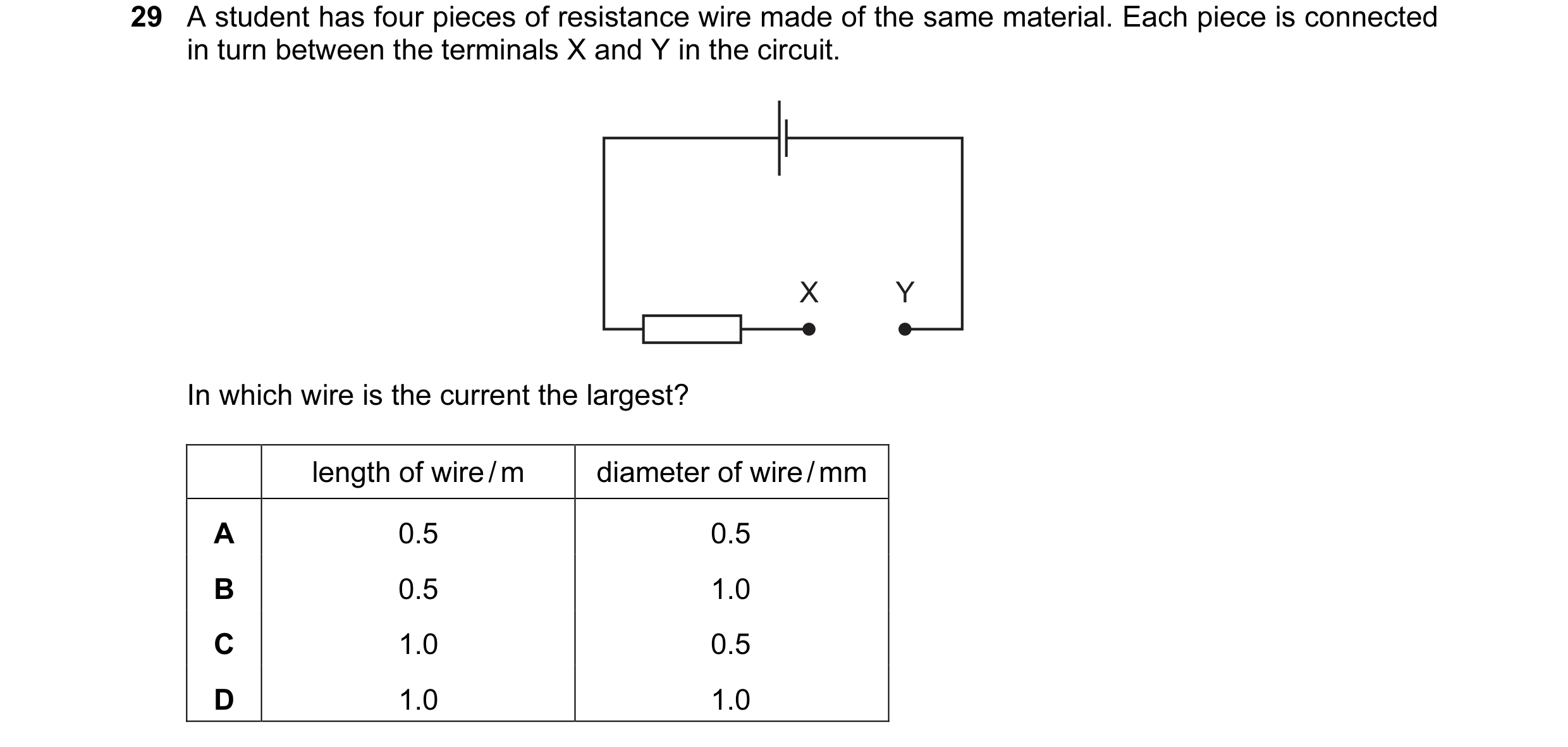
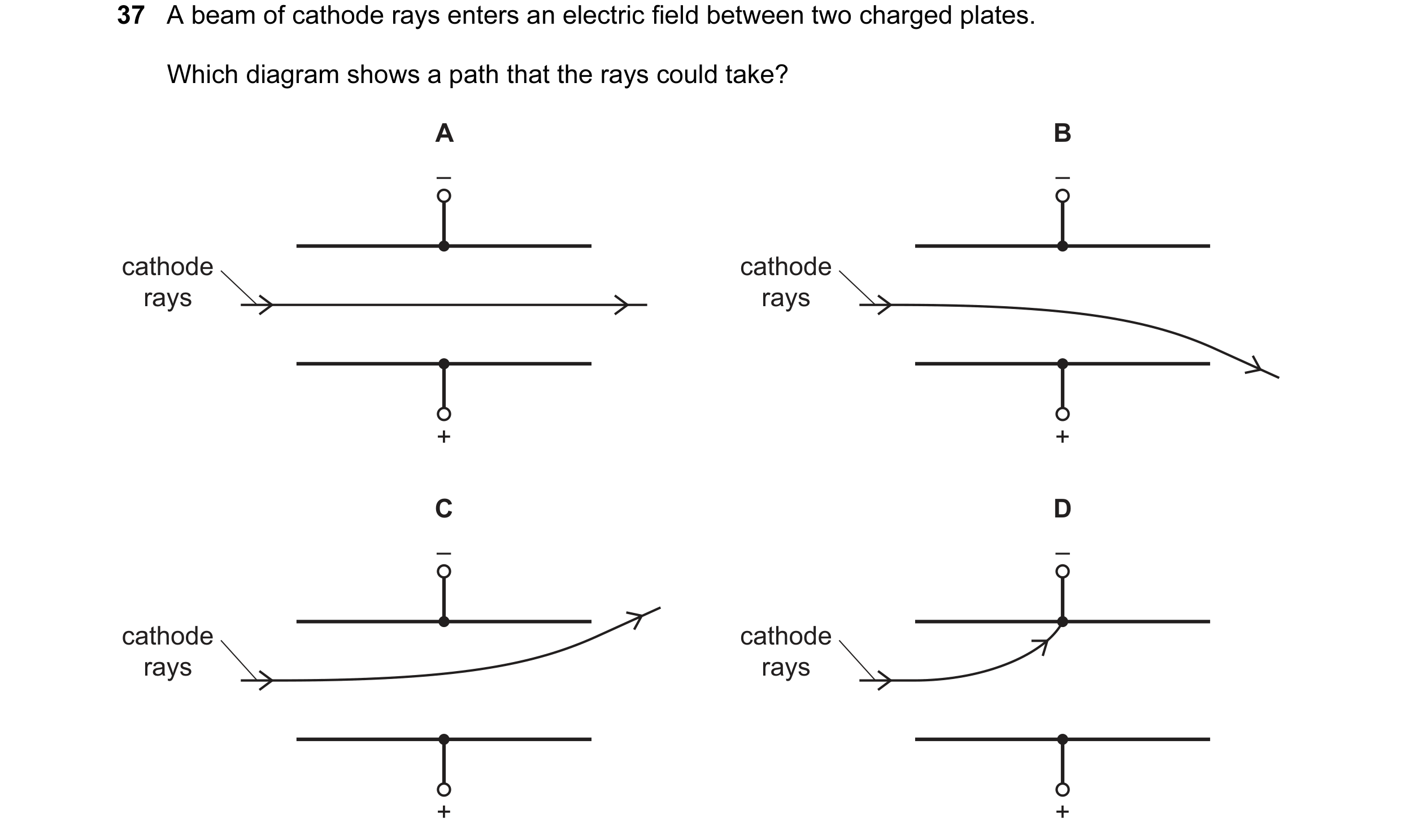
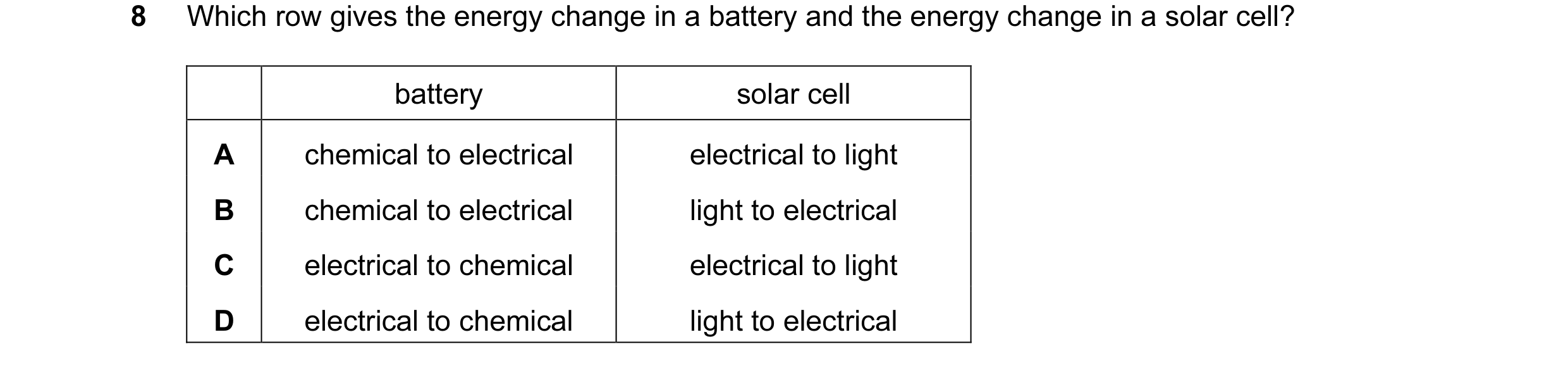 62 / 127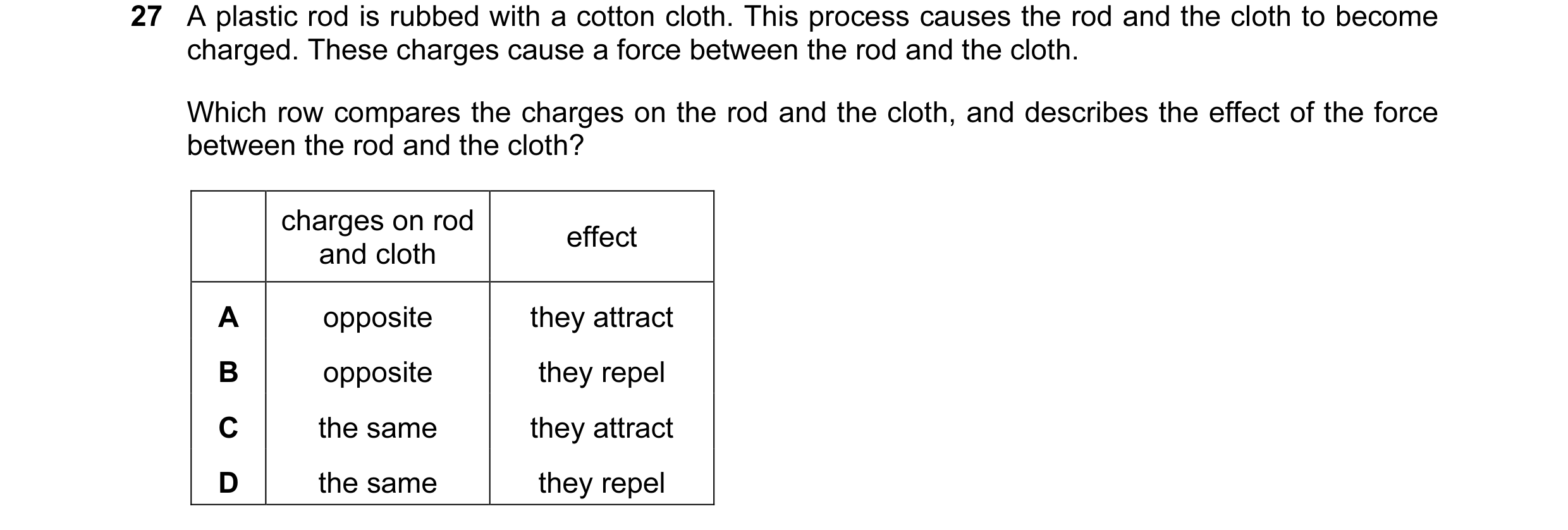
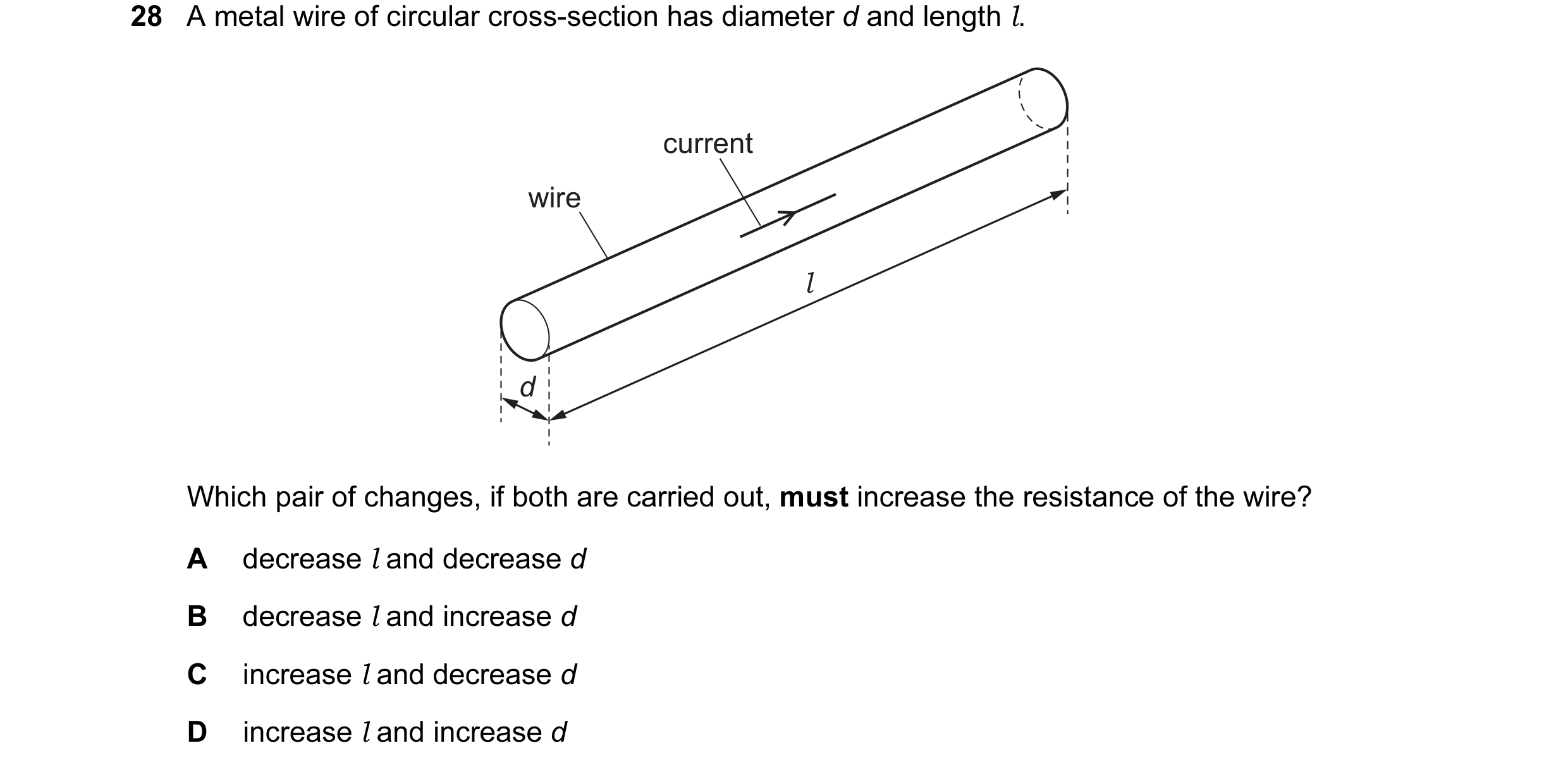 63 / 127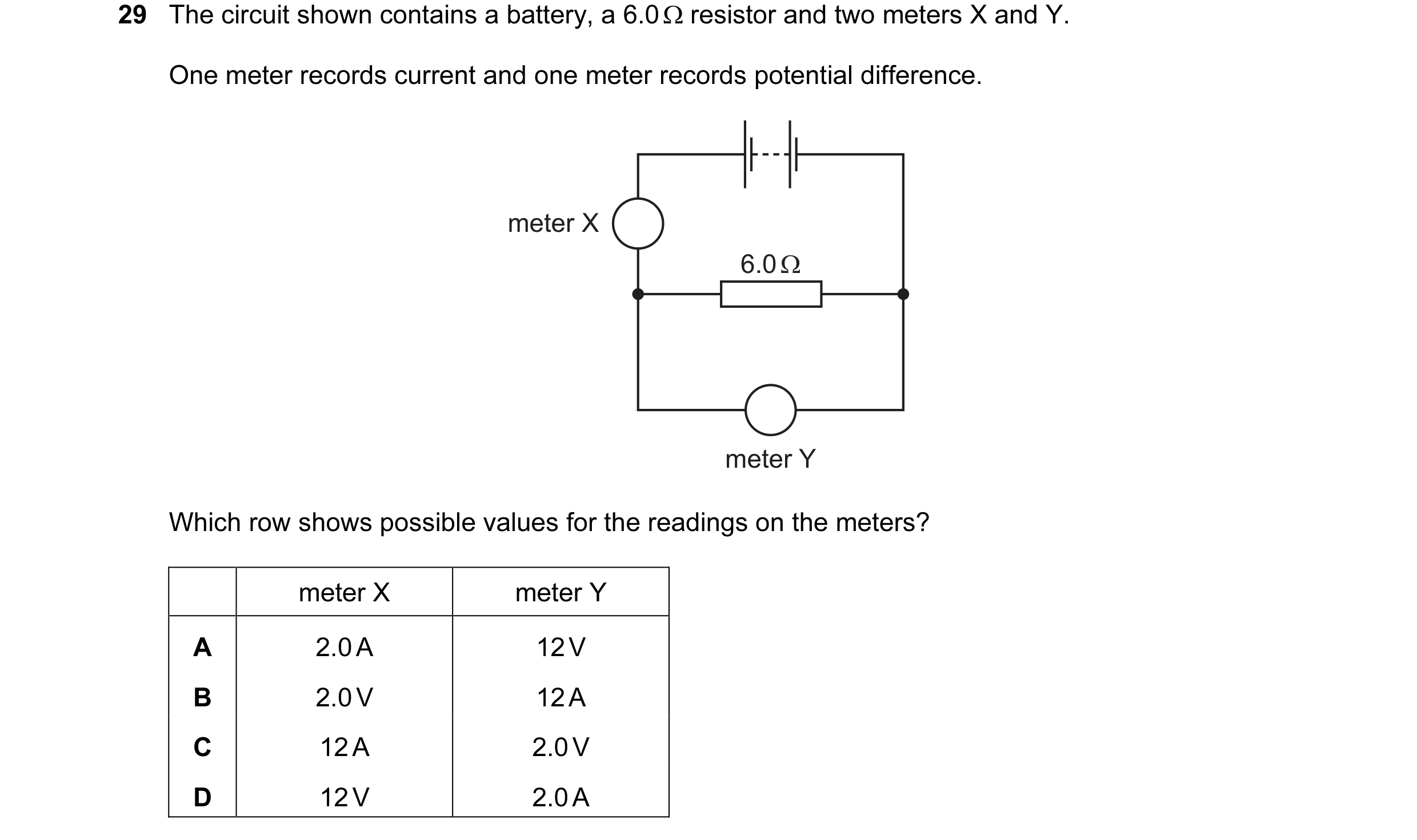
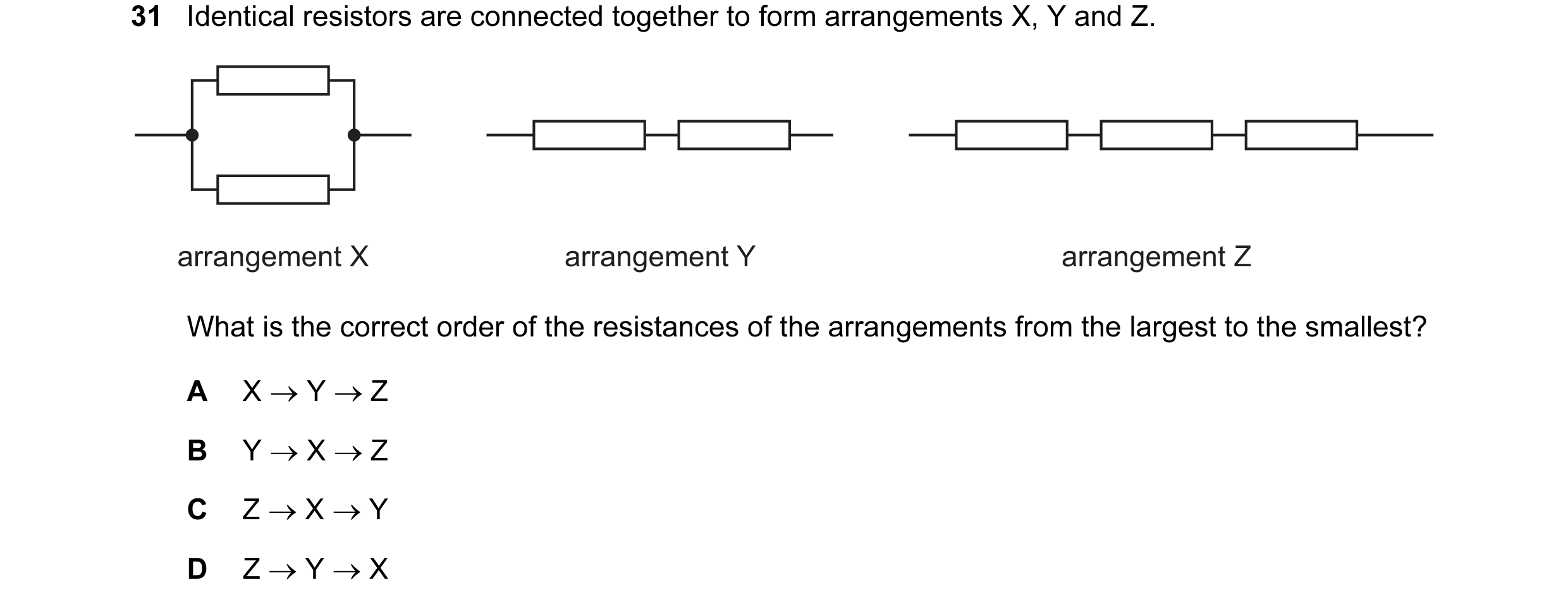
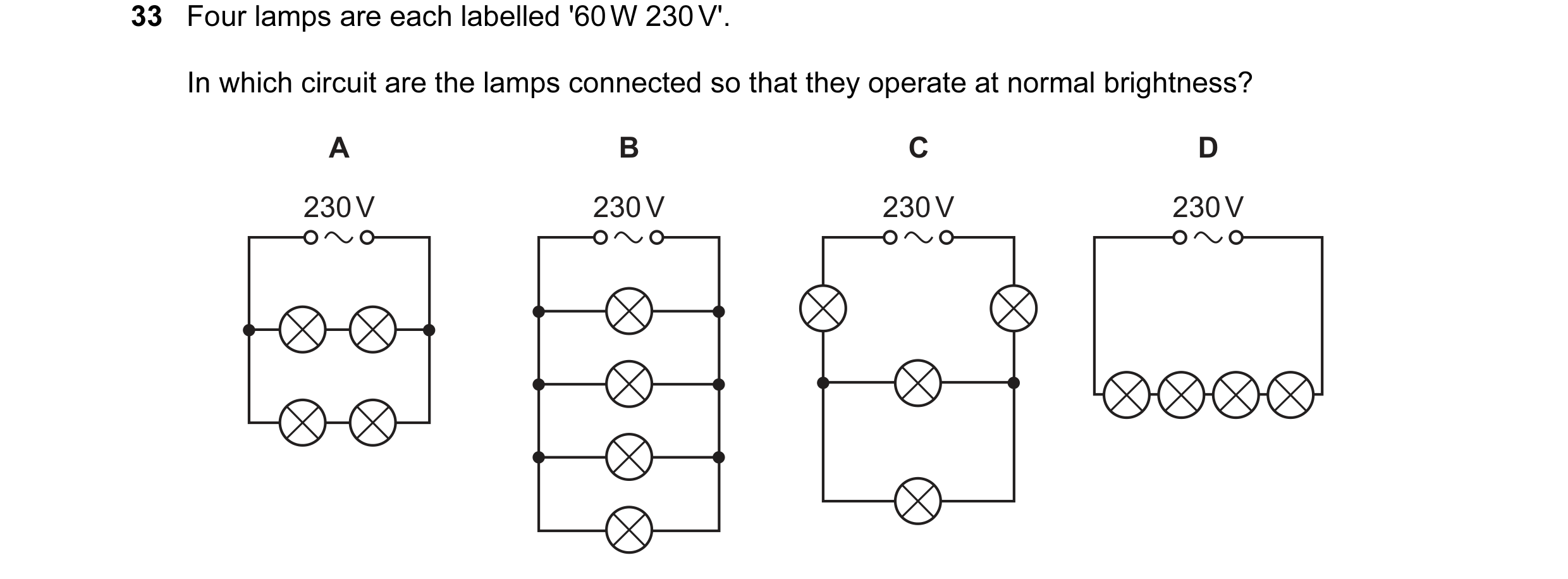 64 / 127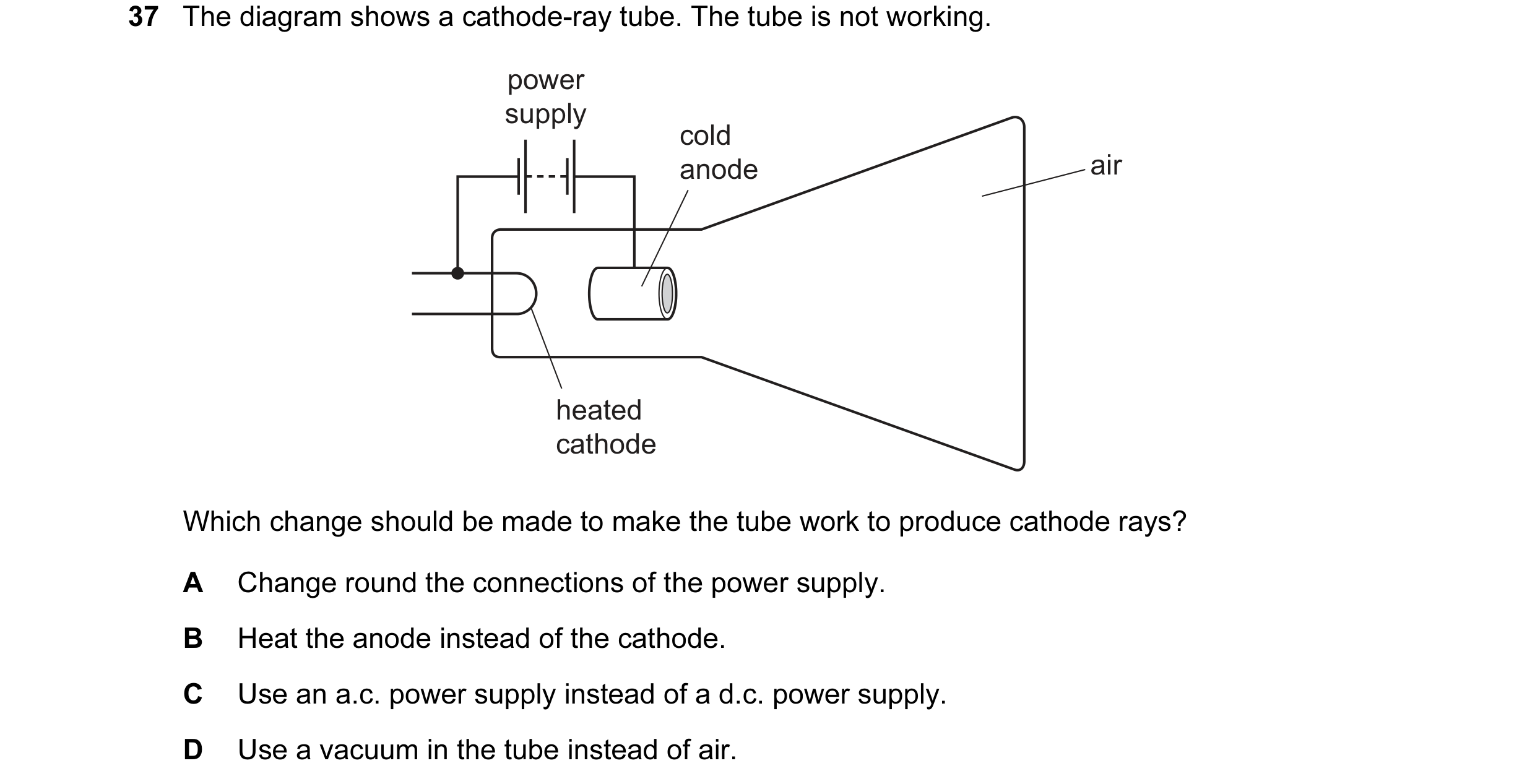

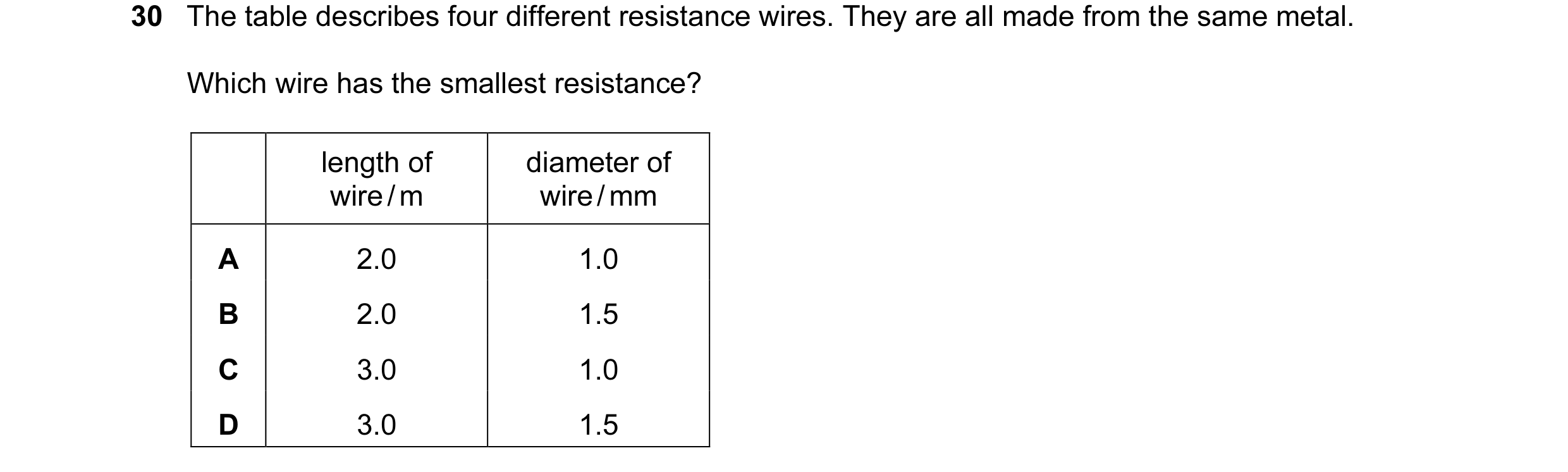 65 / 127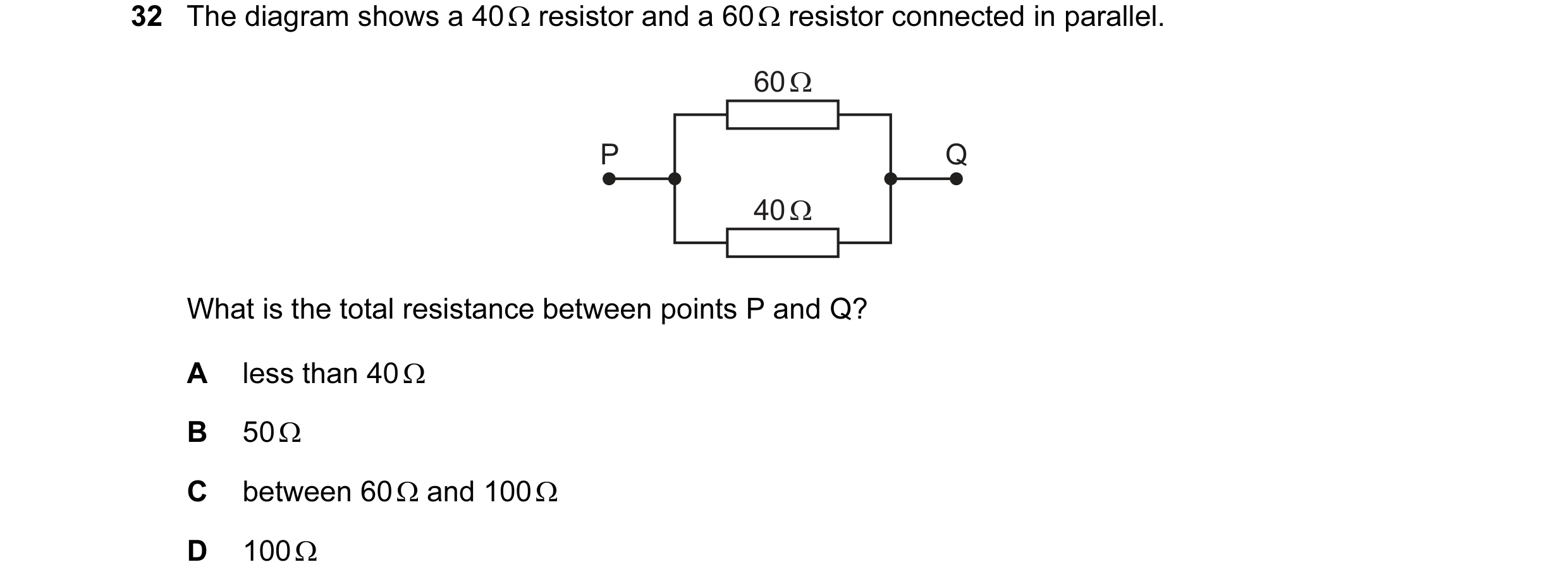
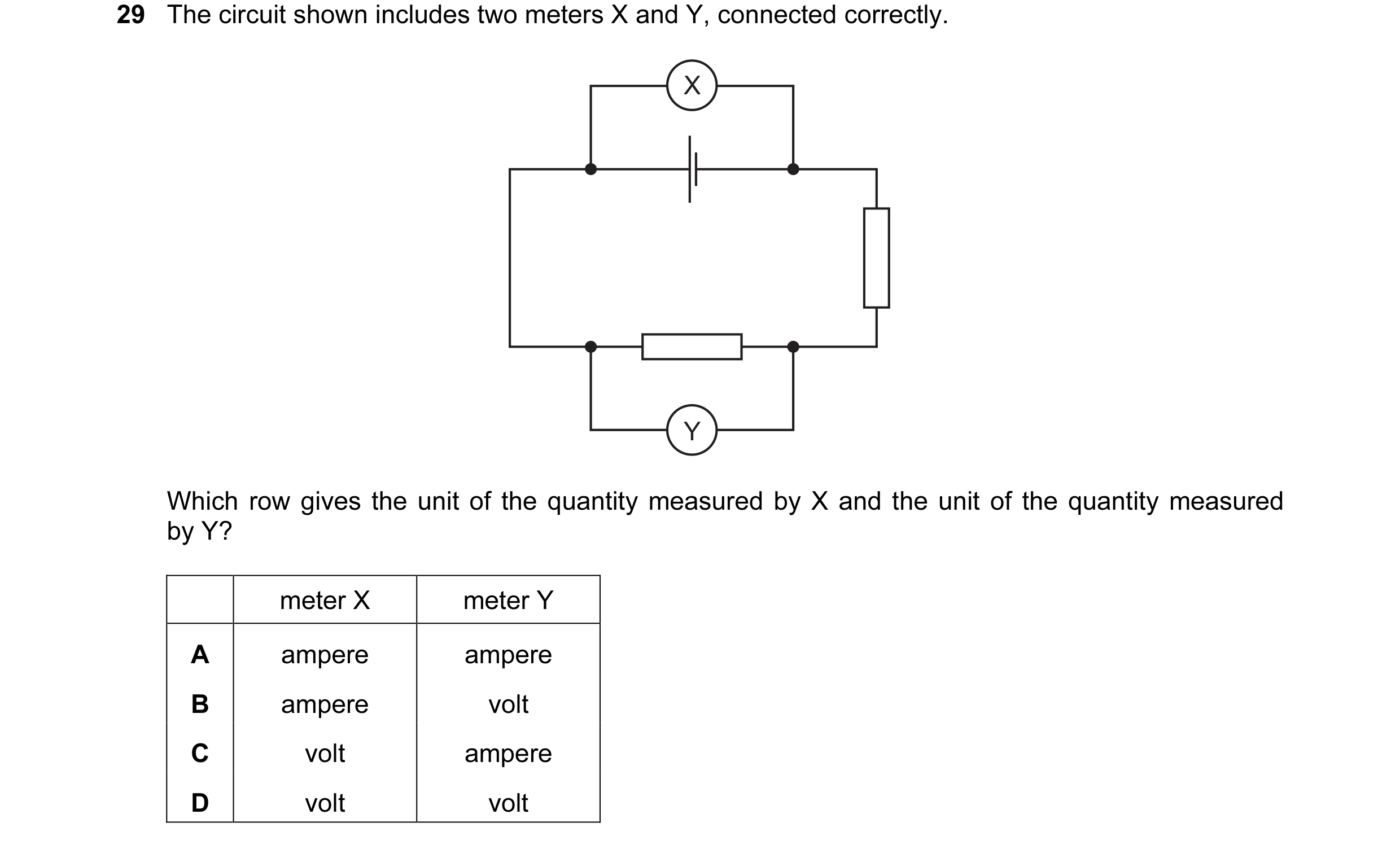 66 / 127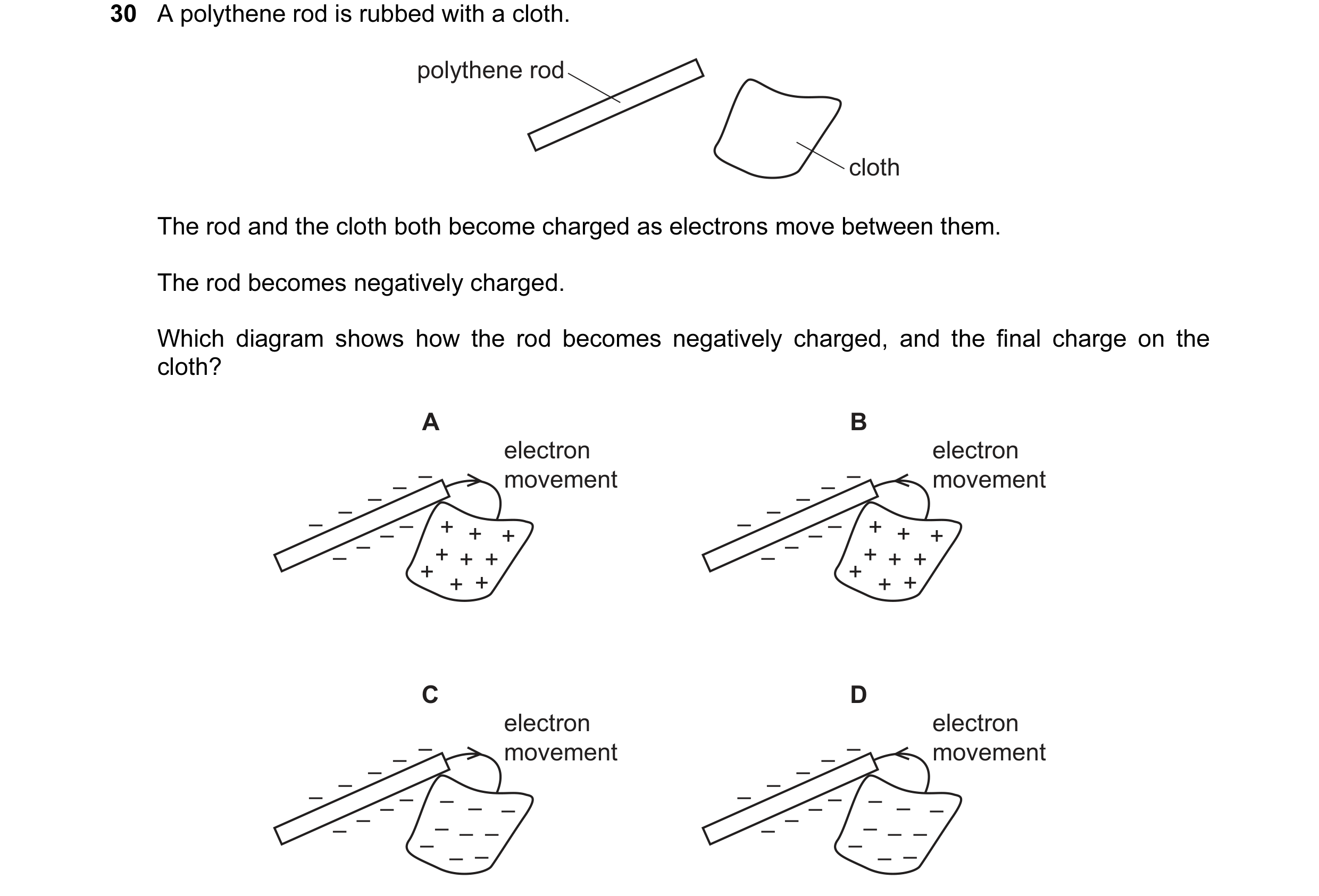
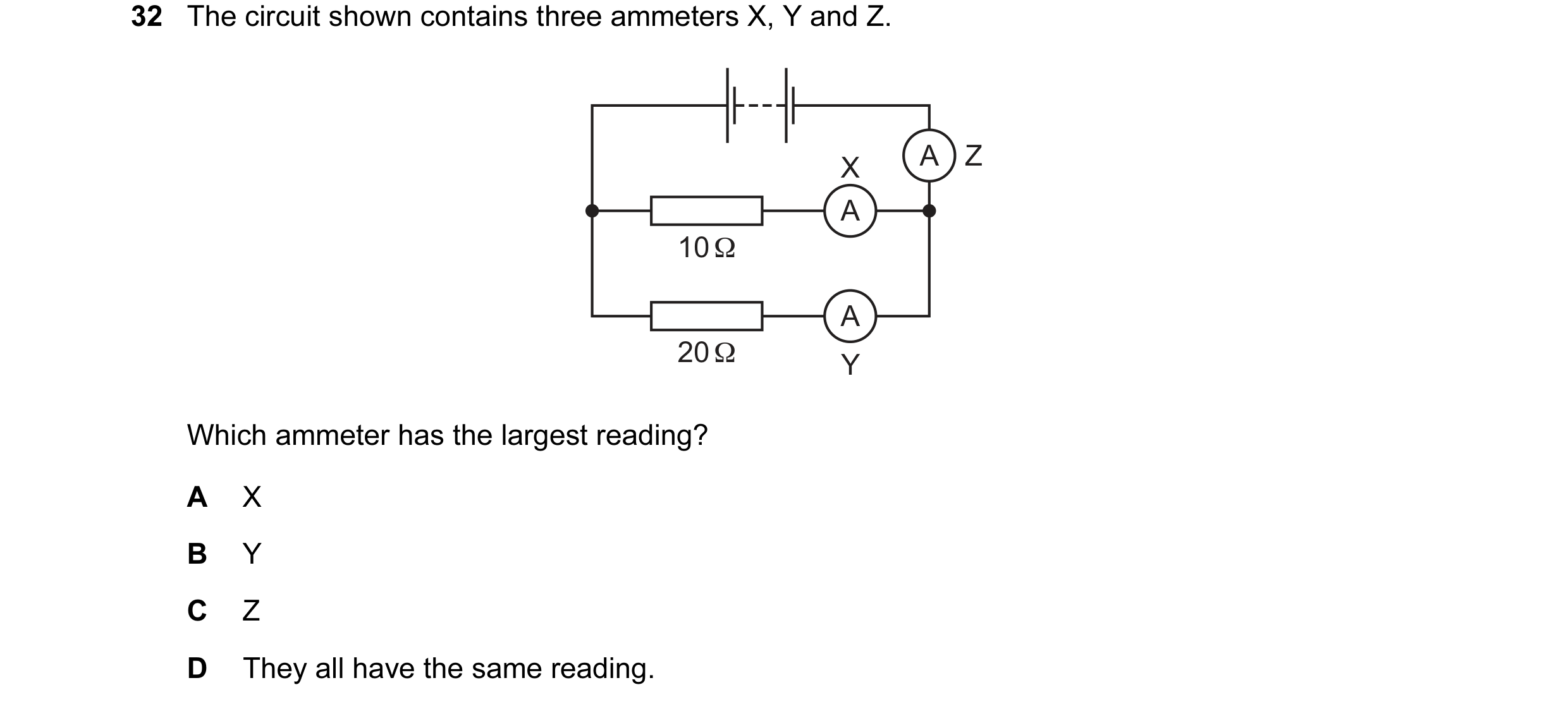 67 / 127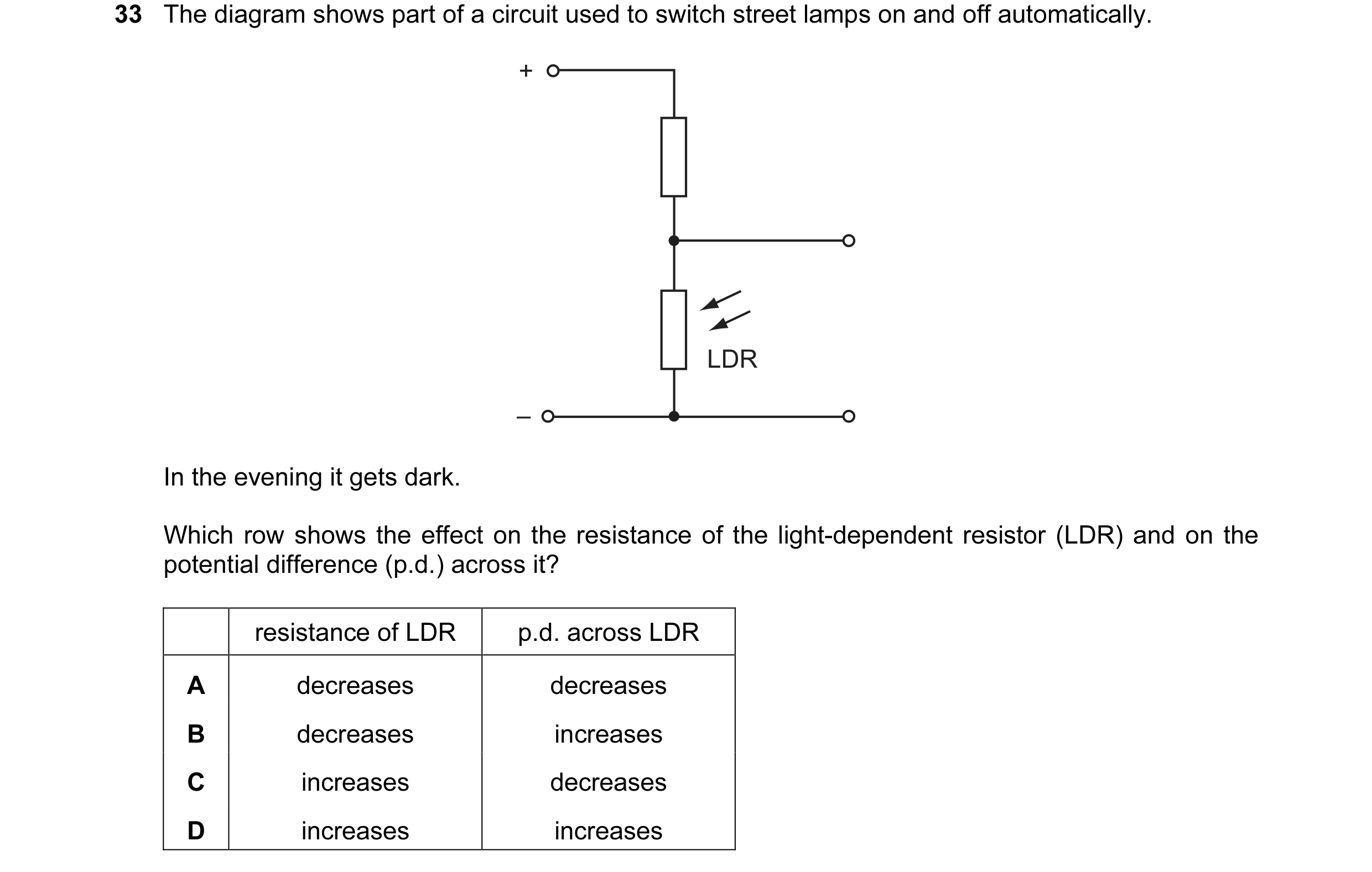
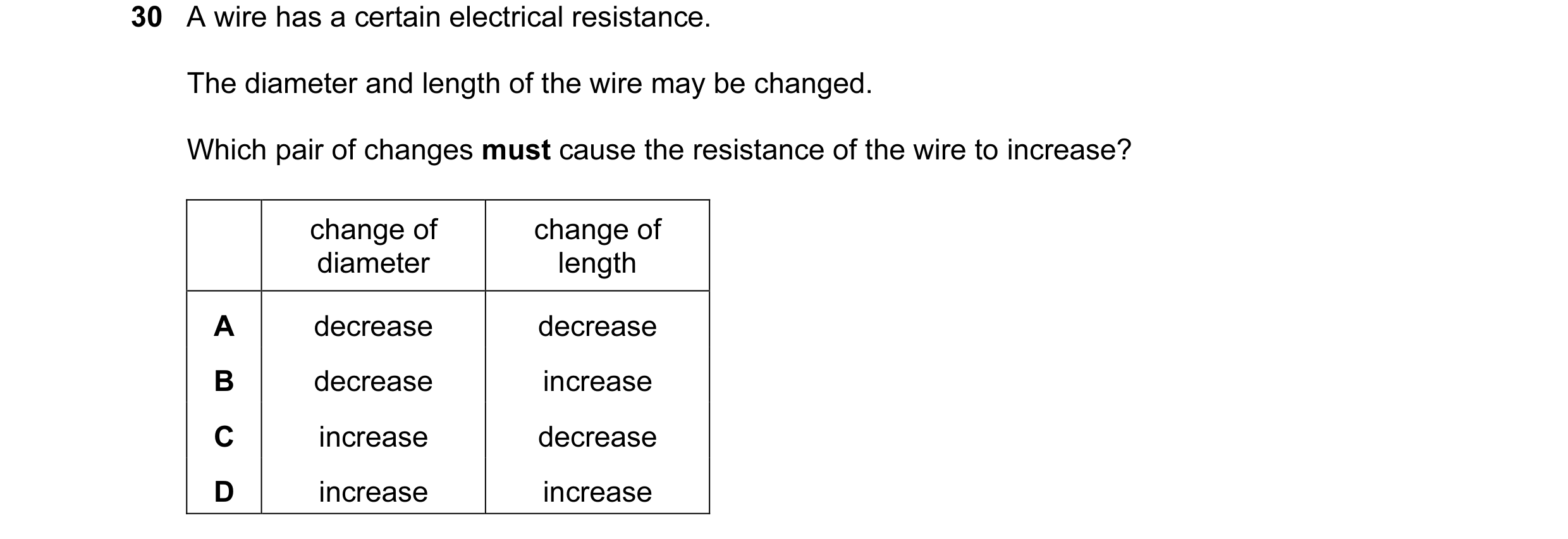 68 / 127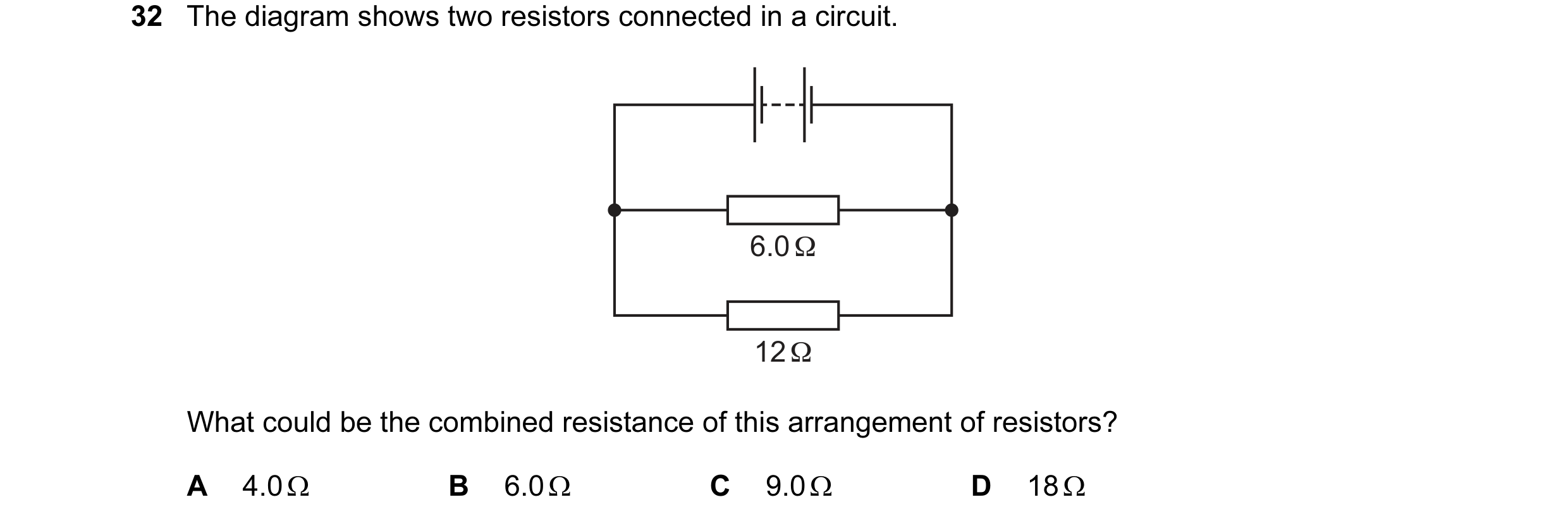
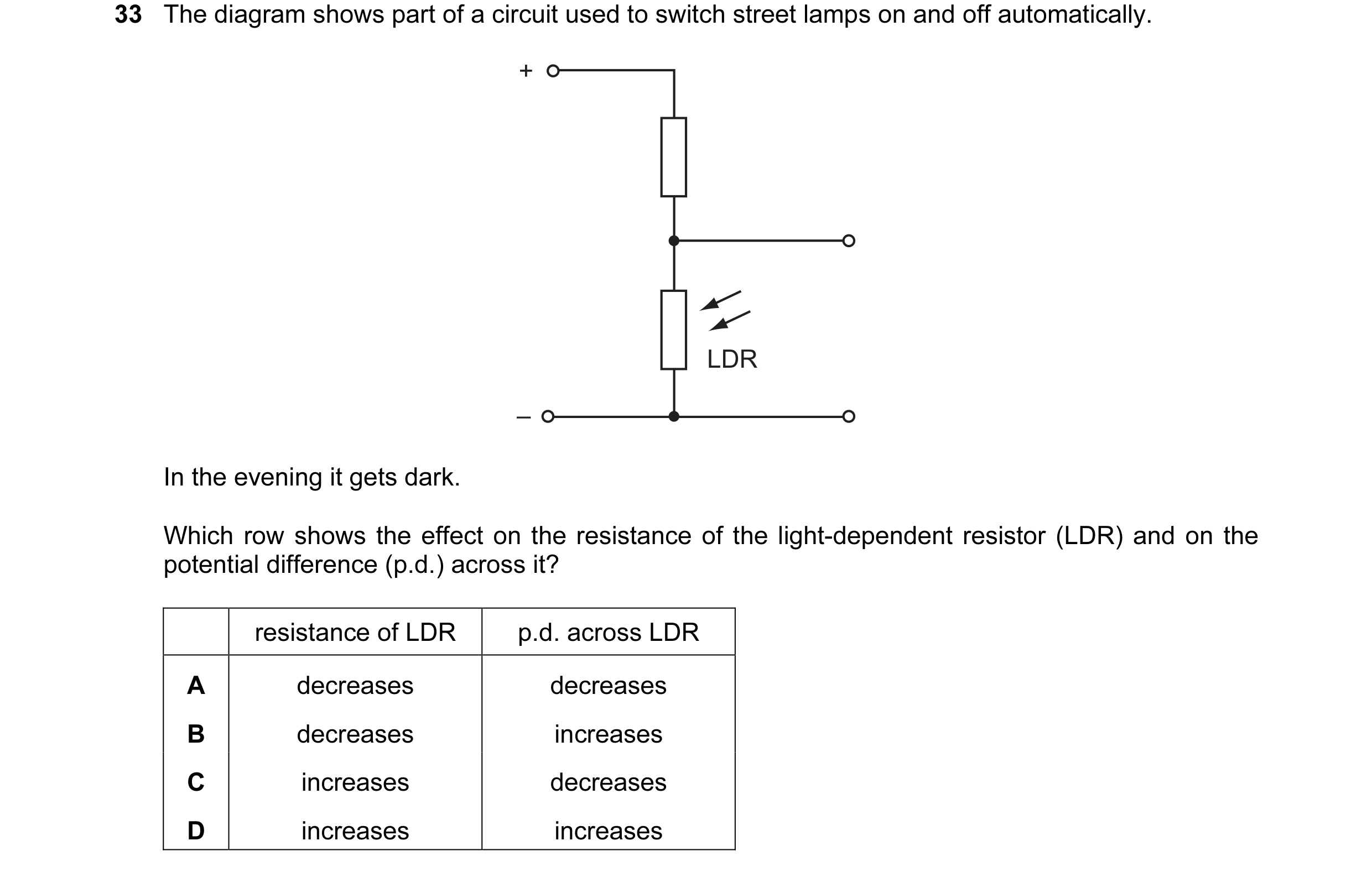
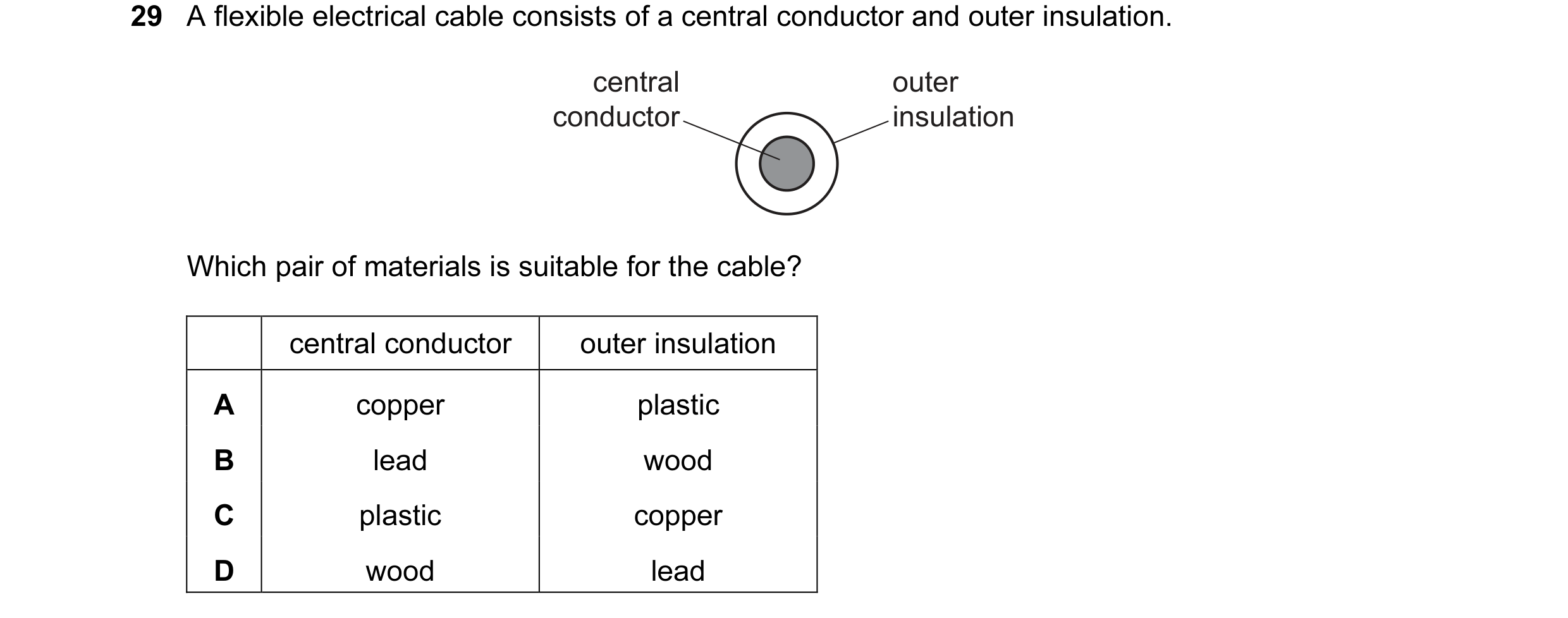 69 / 127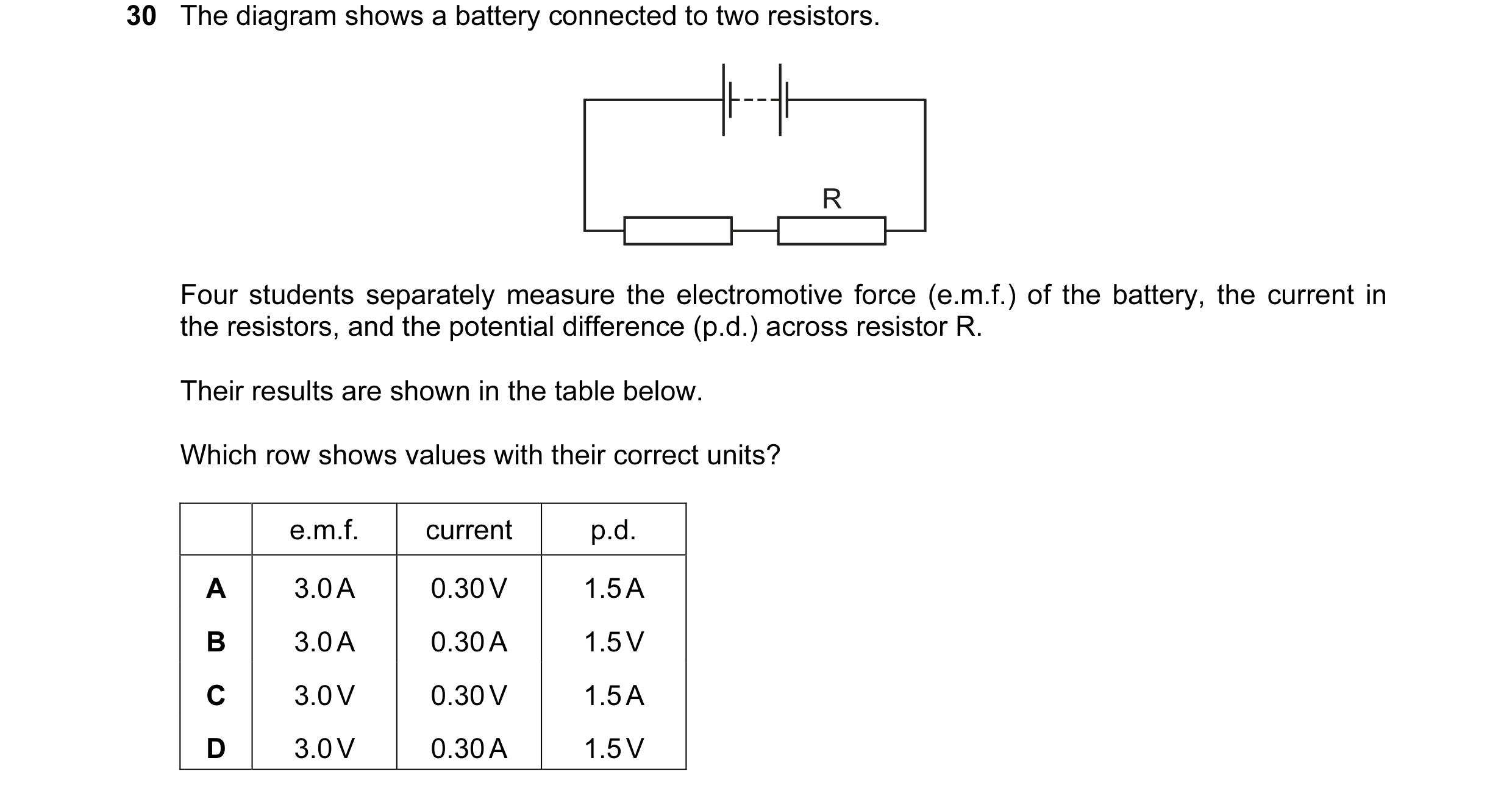
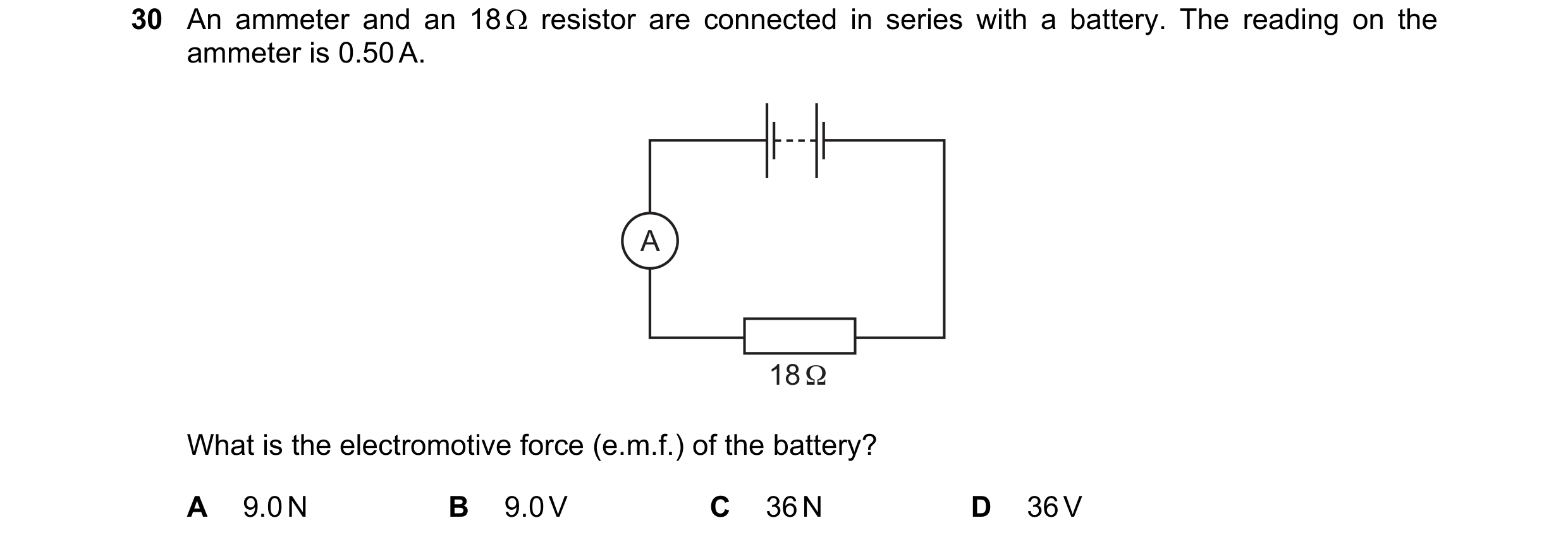 70 / 127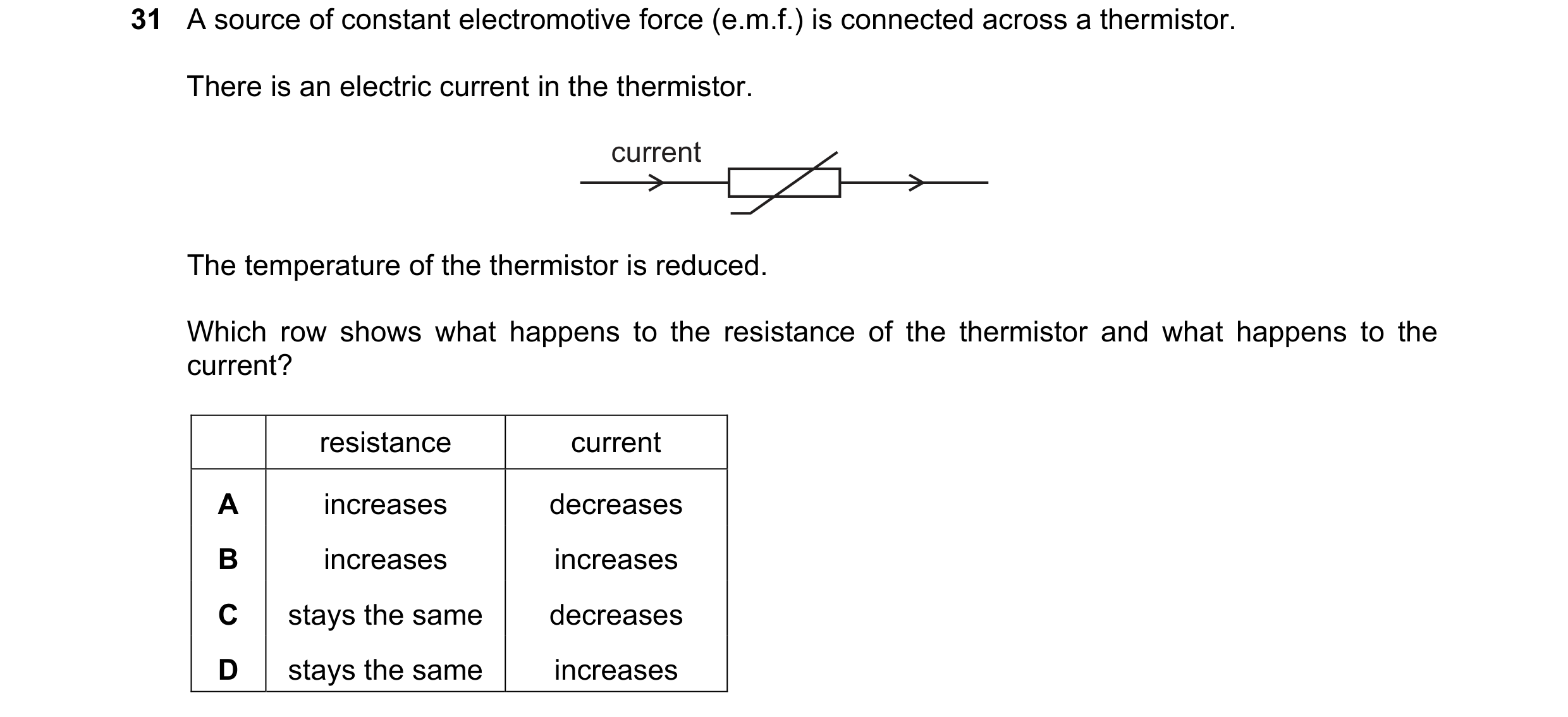
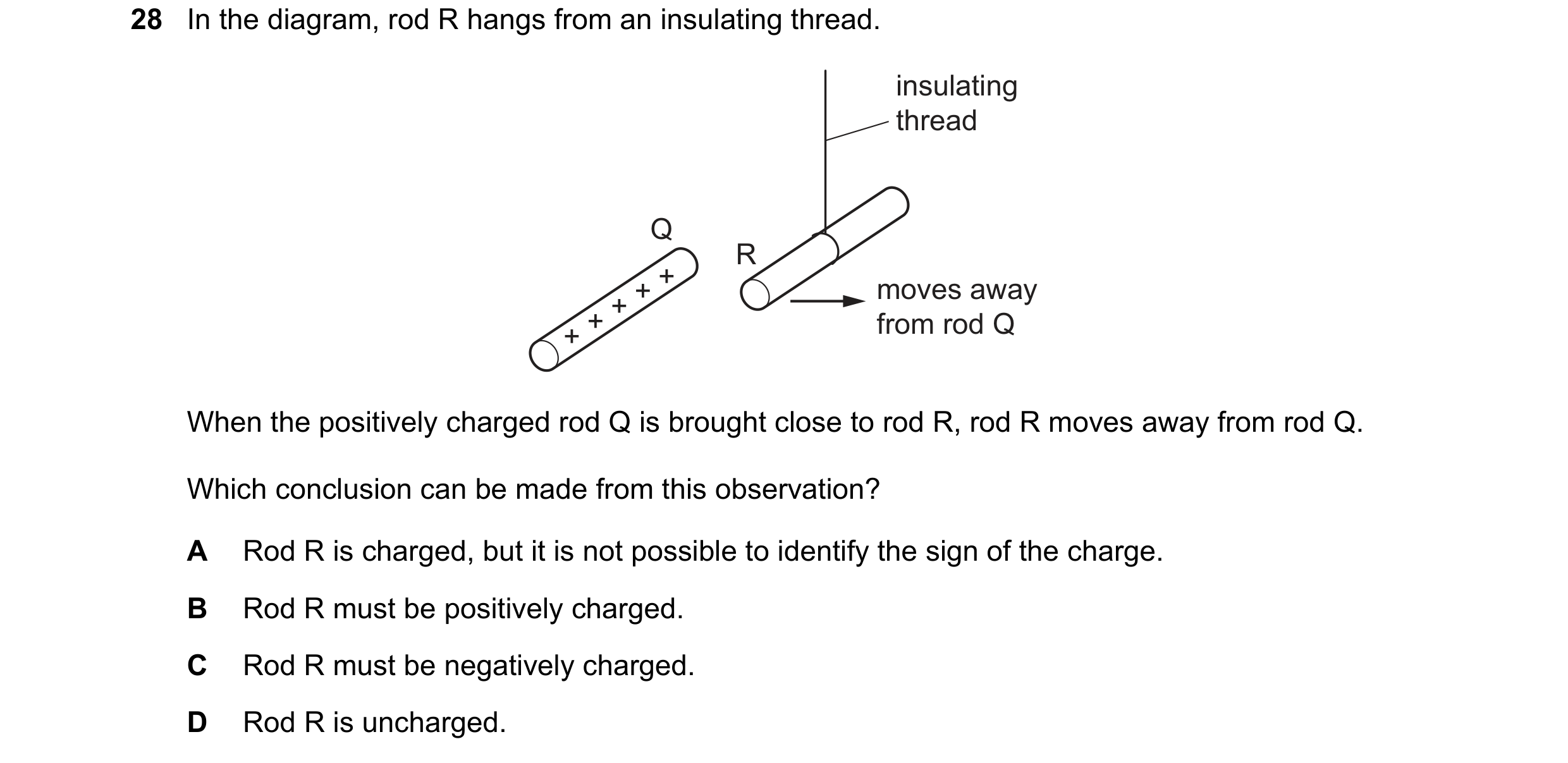
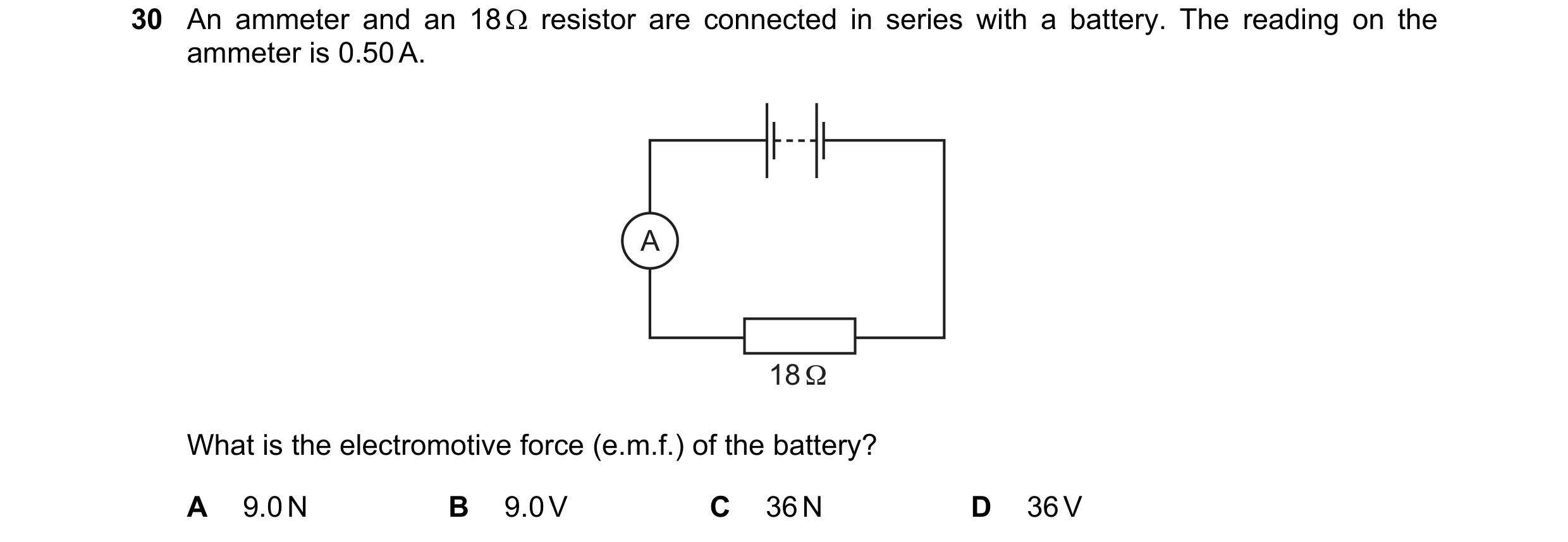 71 / 127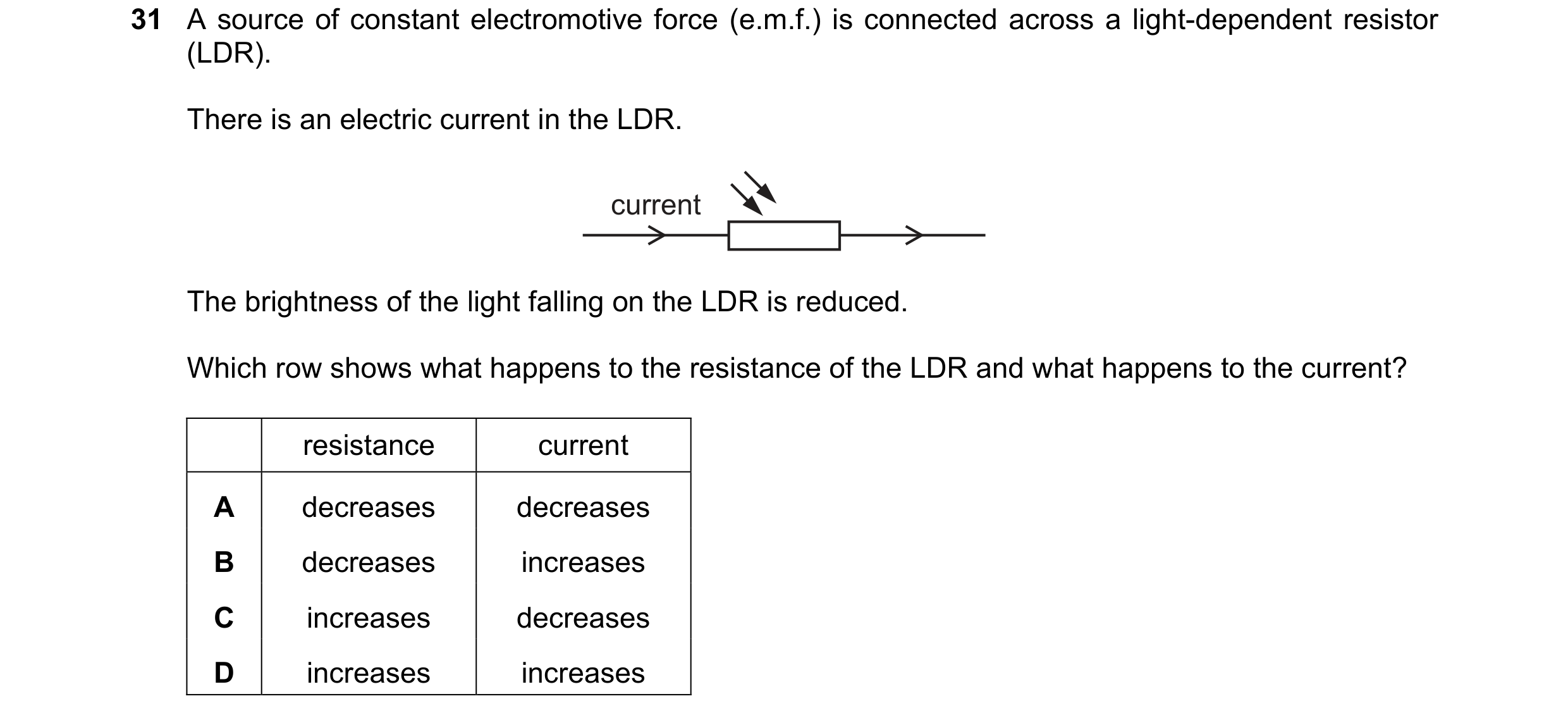
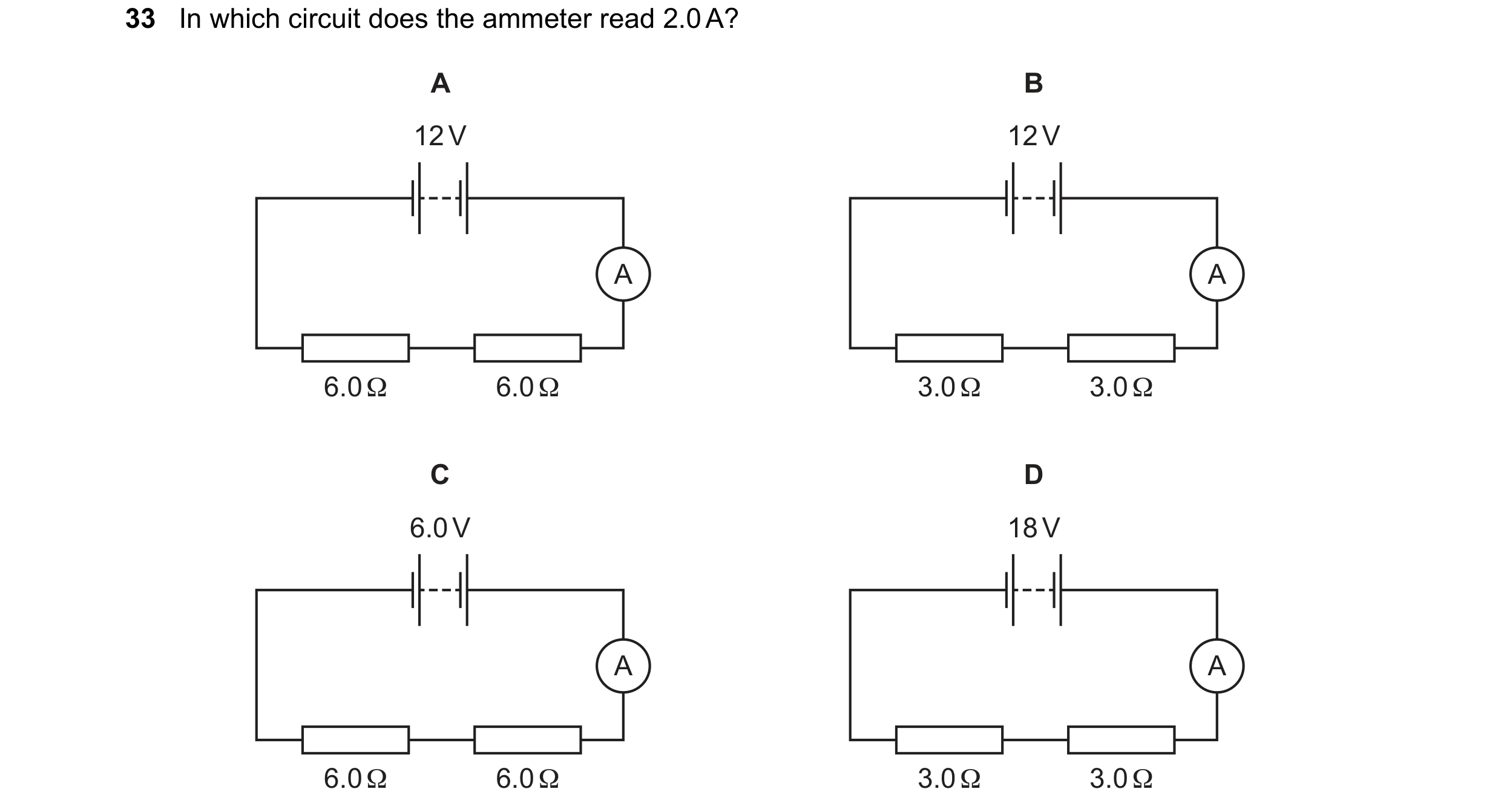 72 / 127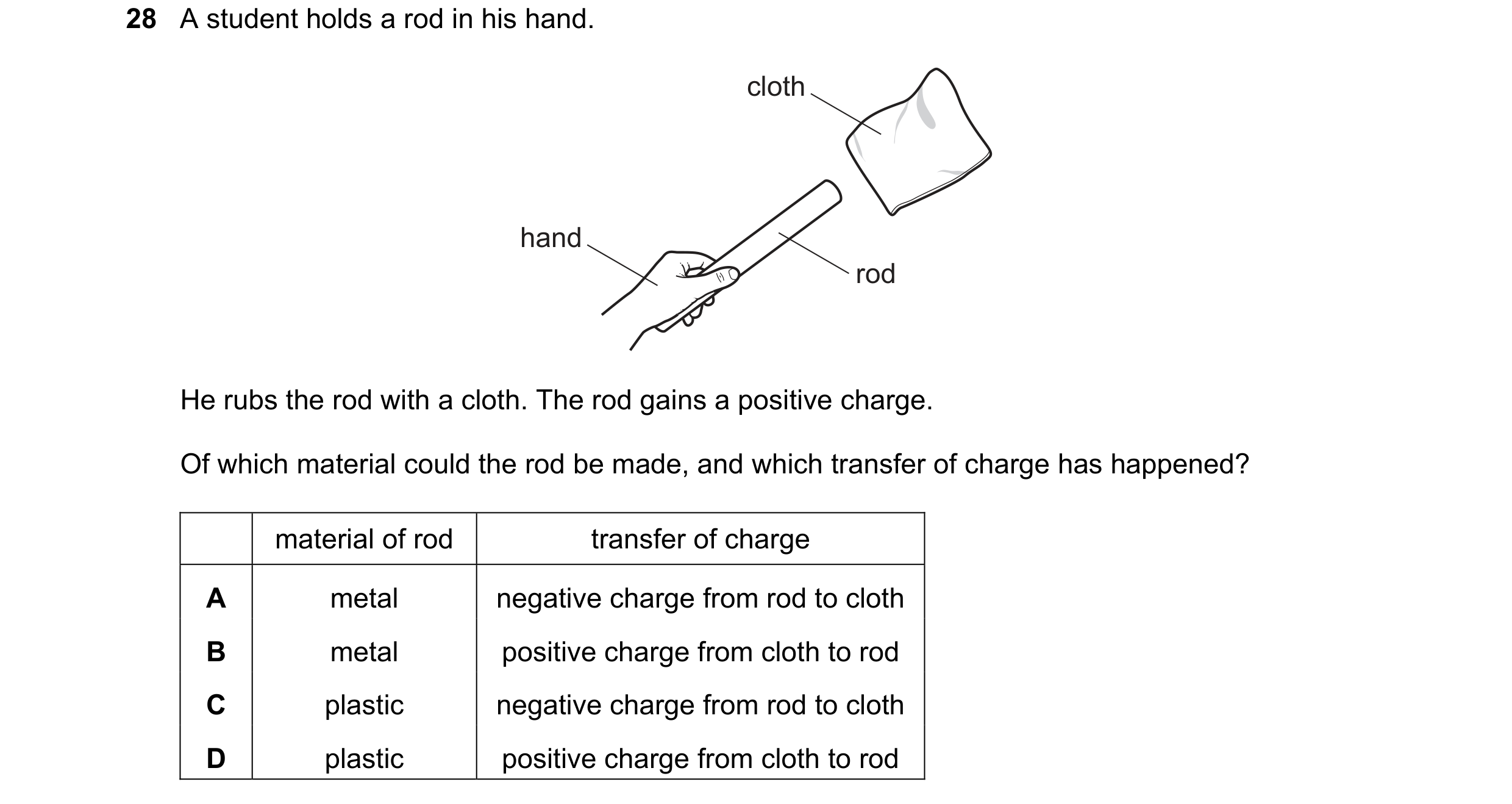
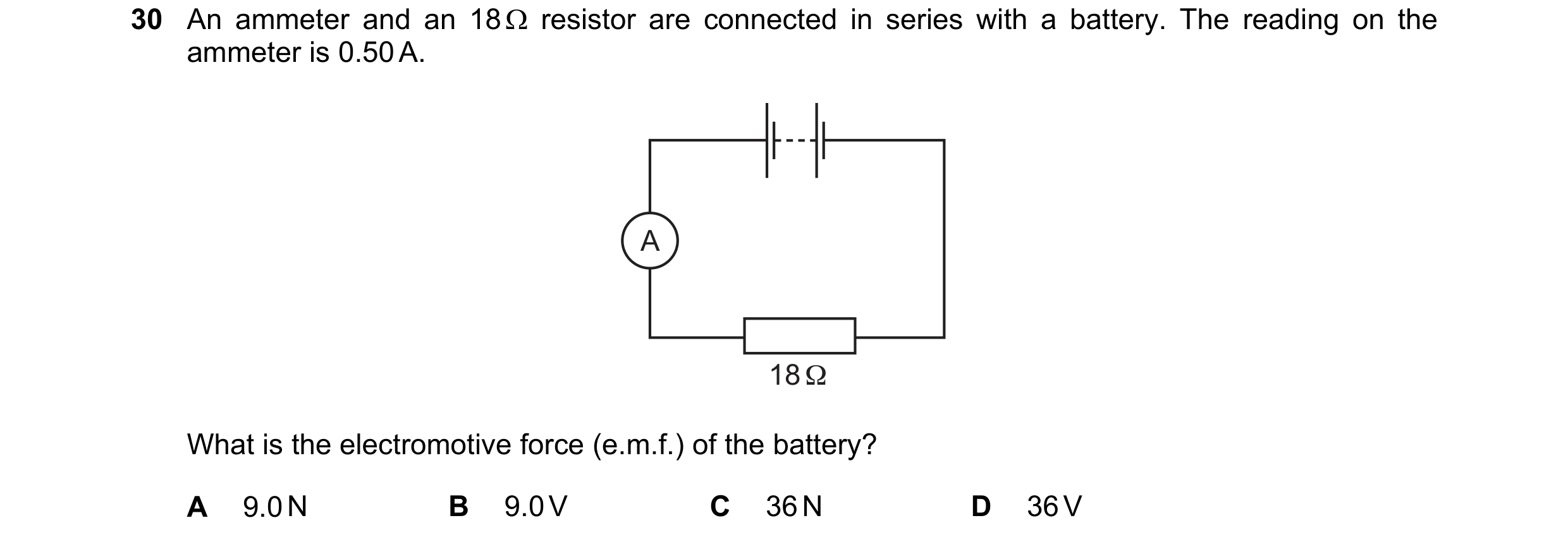 73 / 127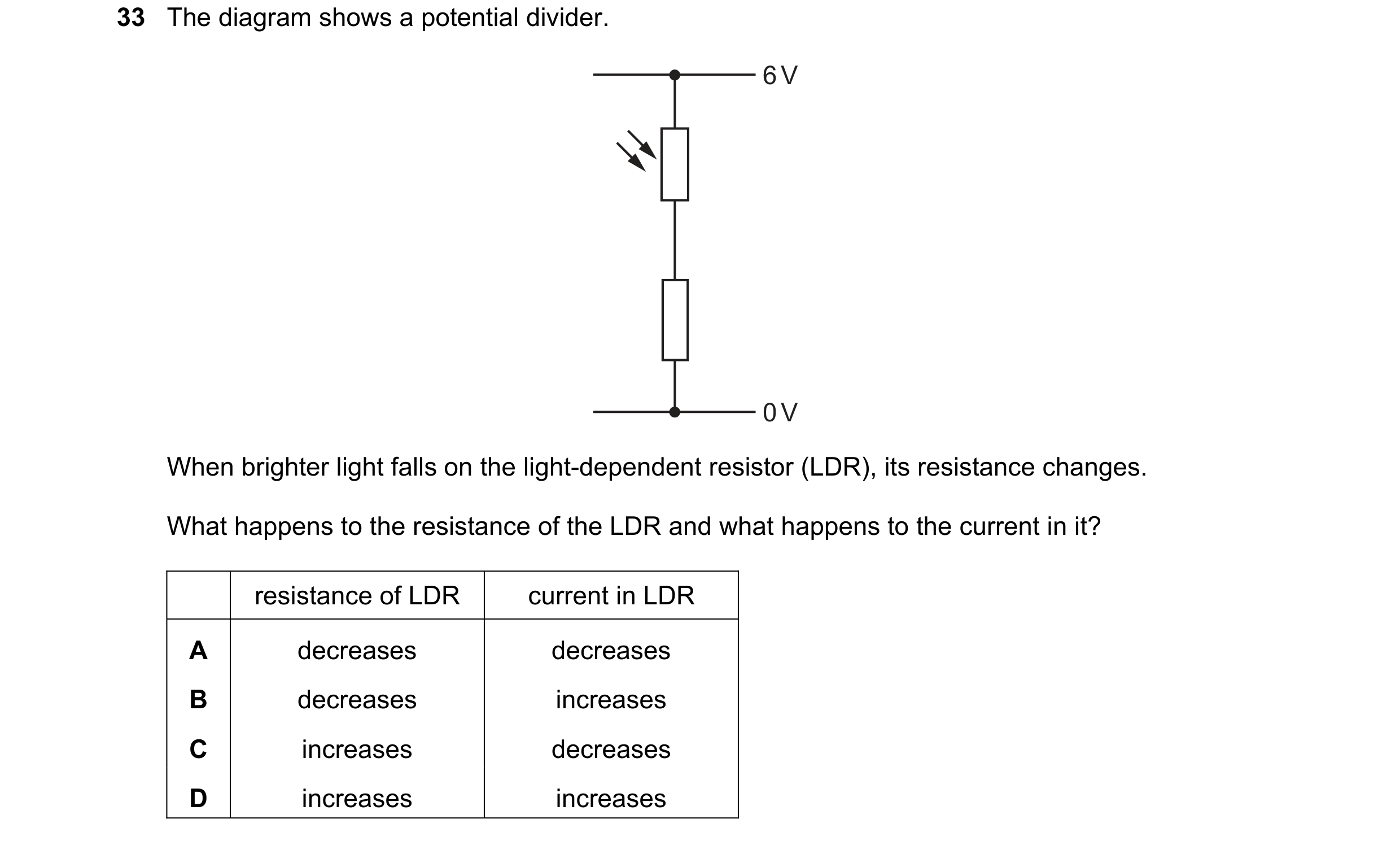

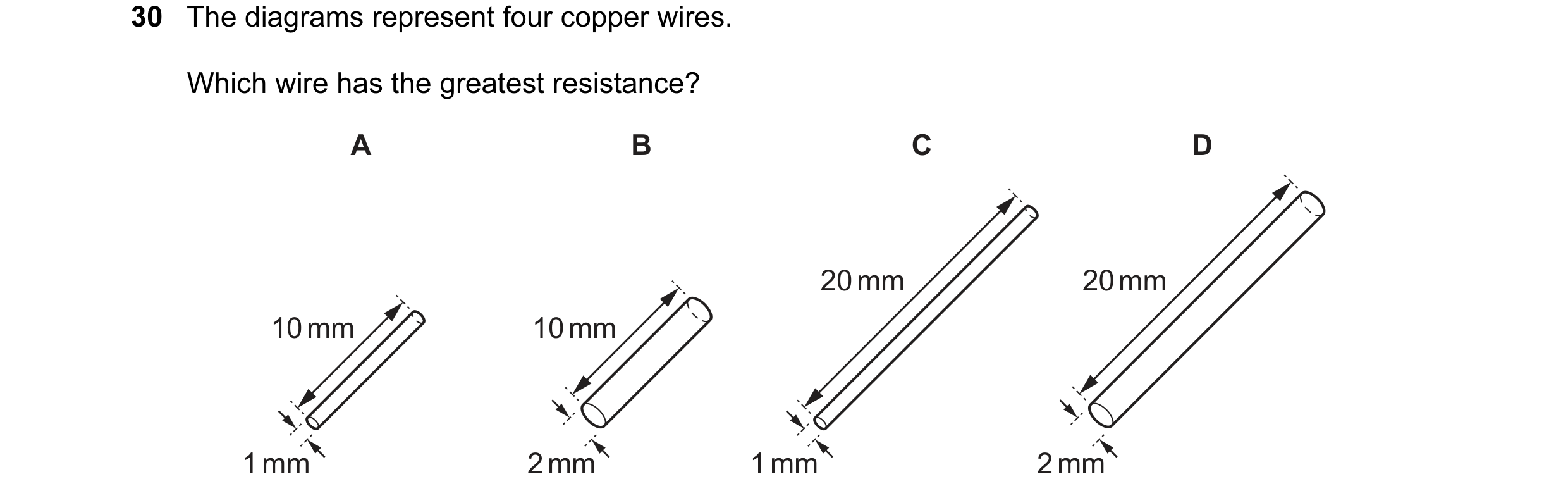 74 / 127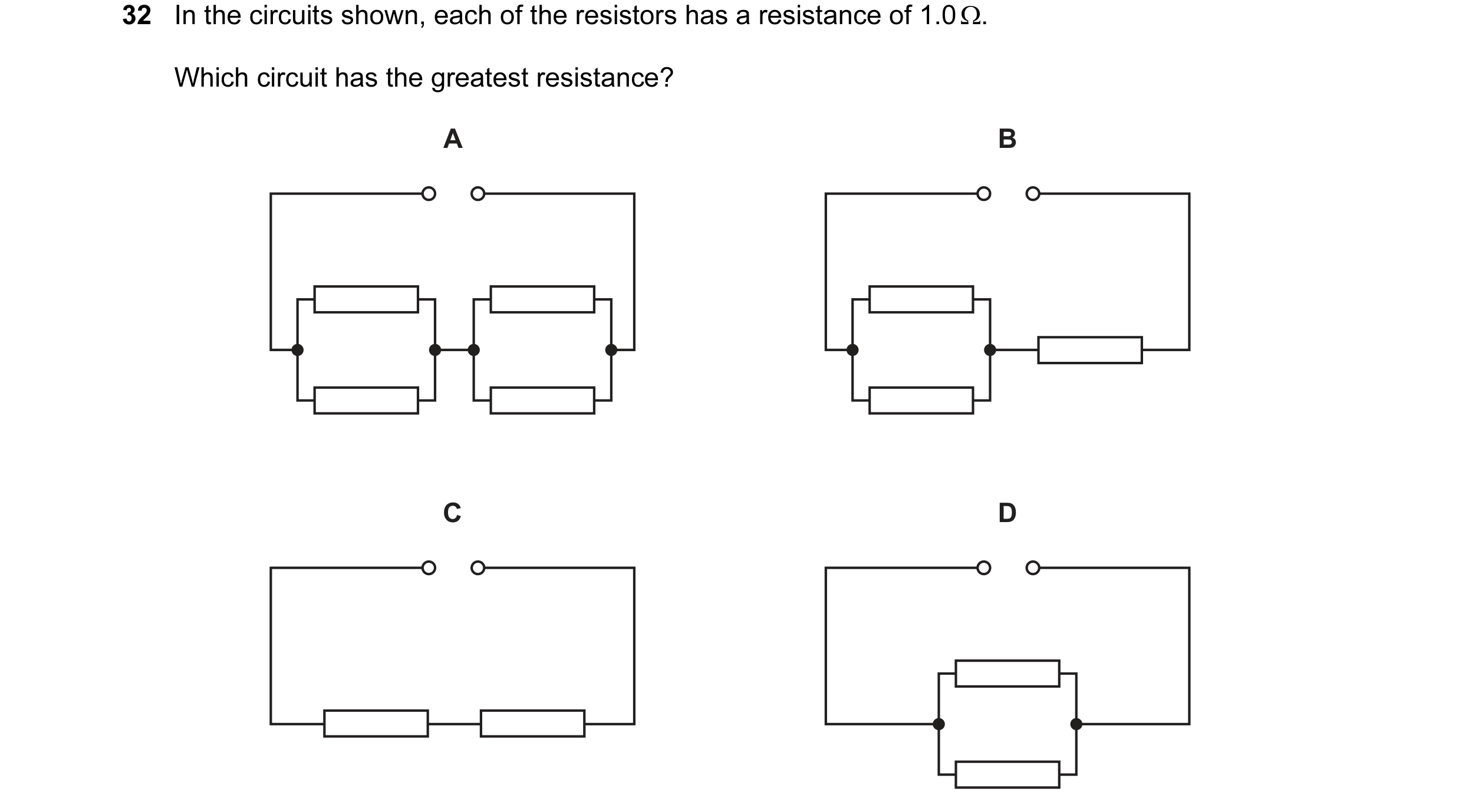
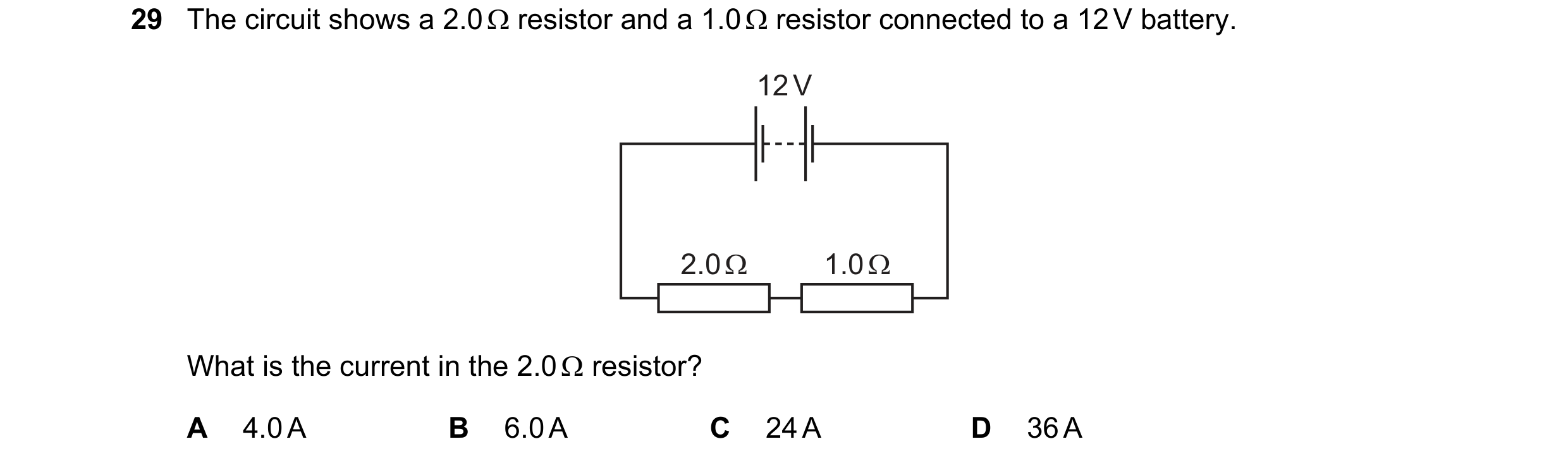 75 / 127

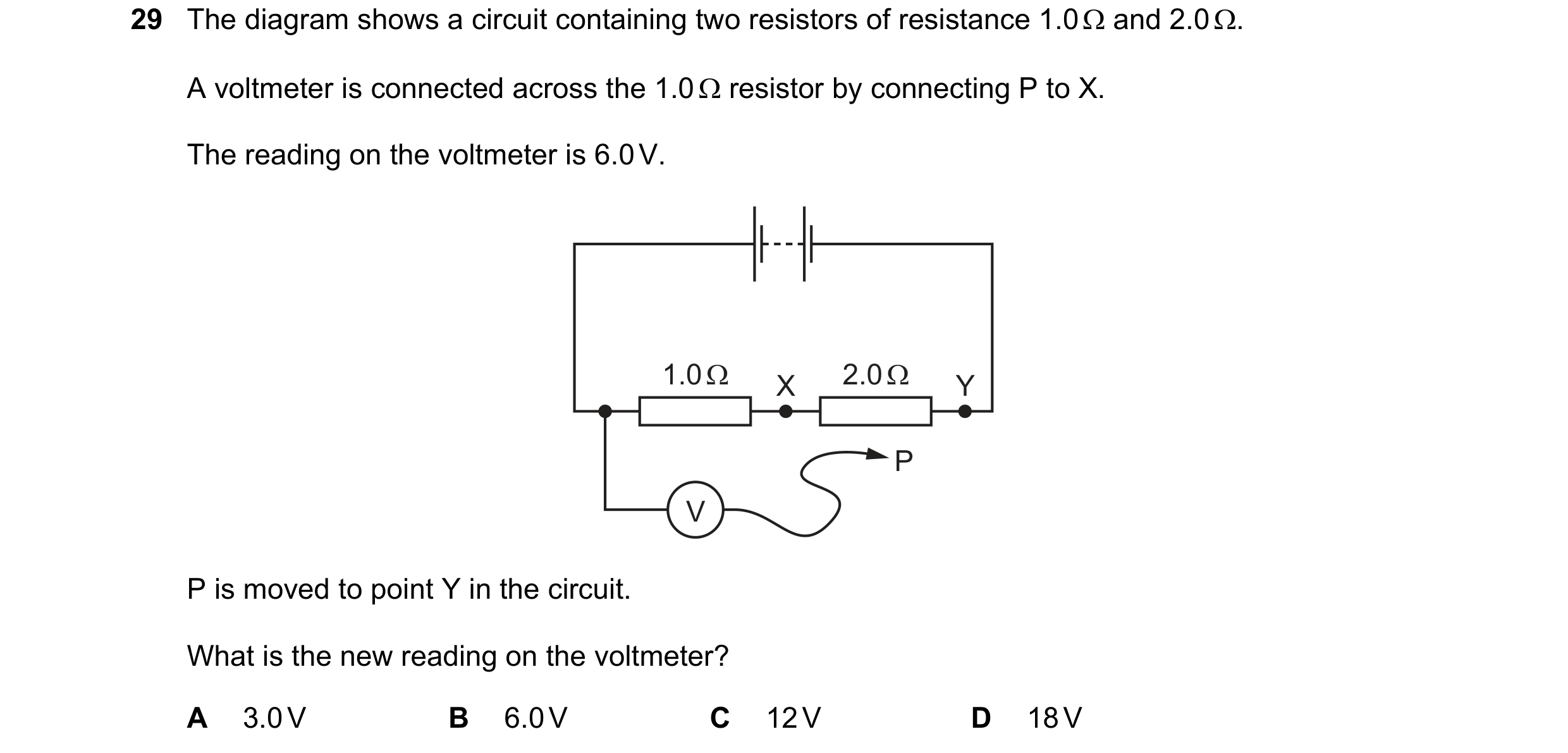 76 / 127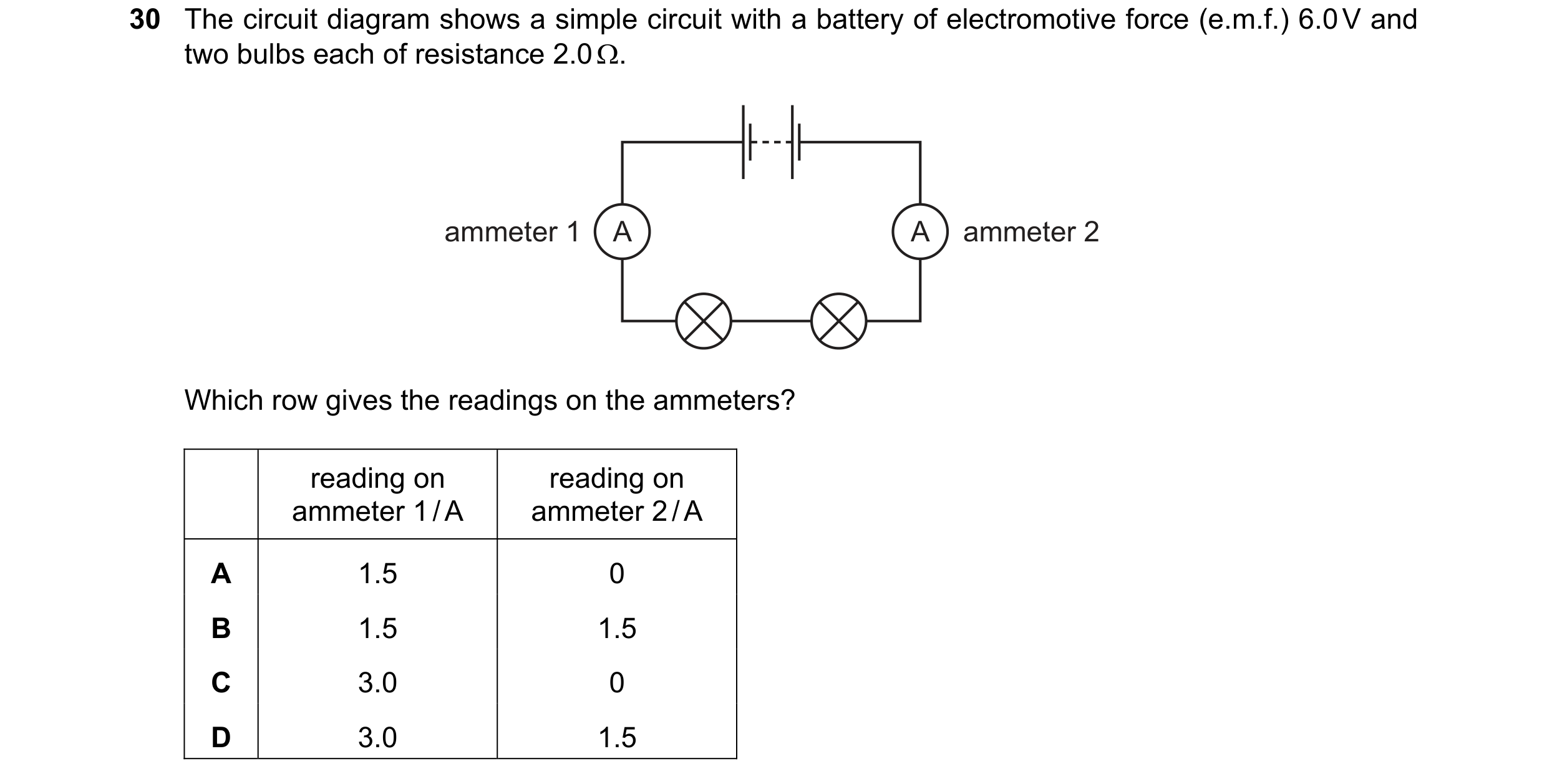
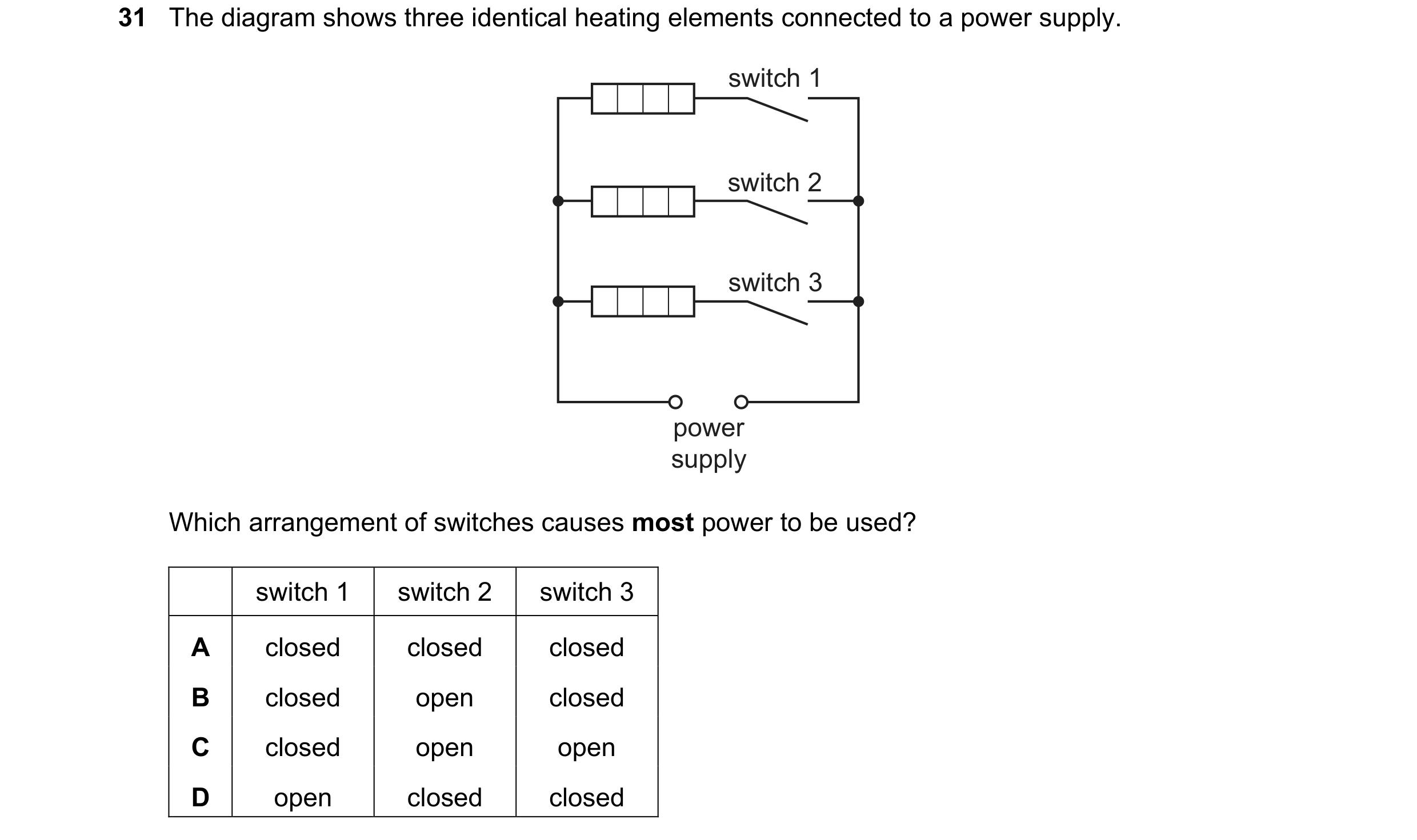 77 / 127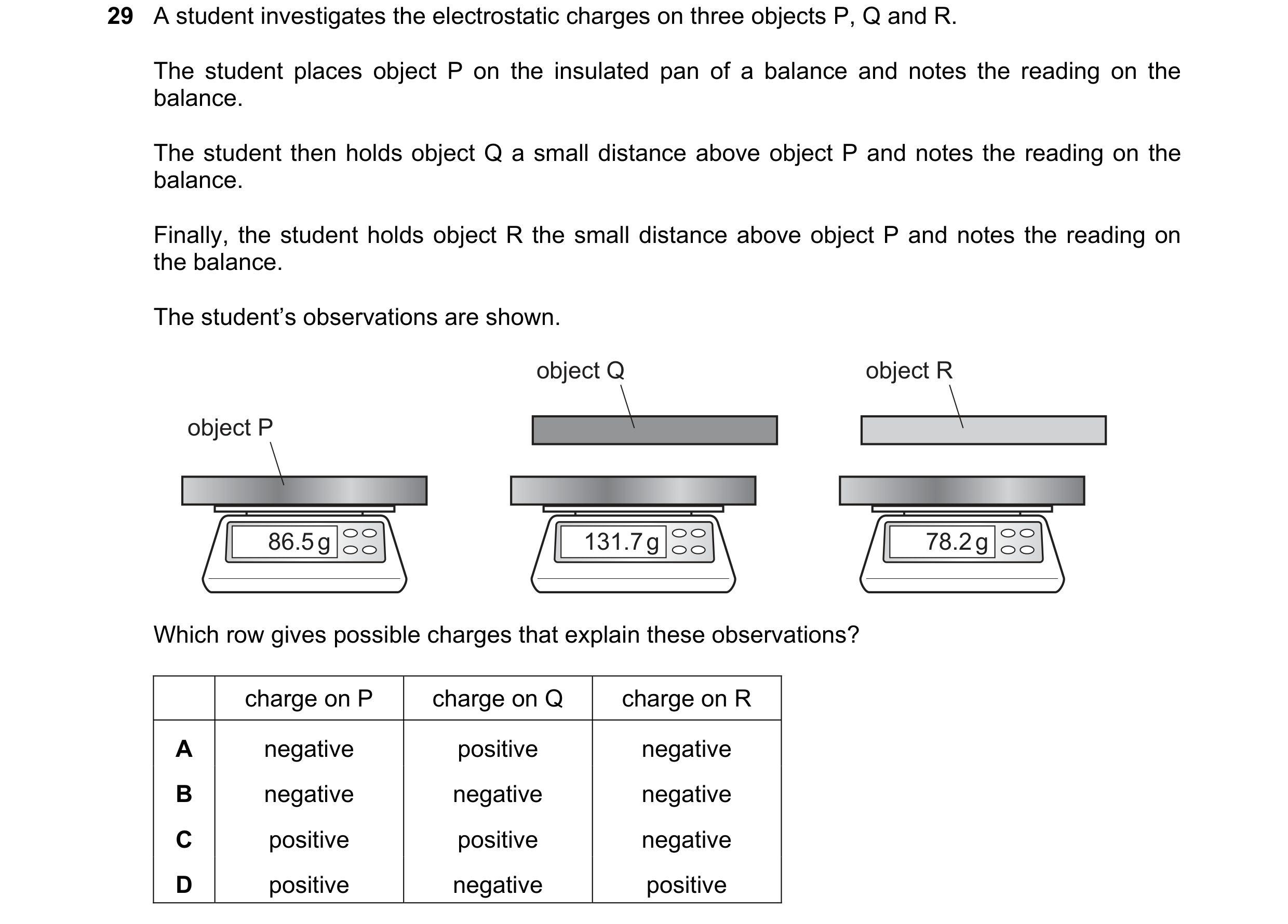

 78 / 127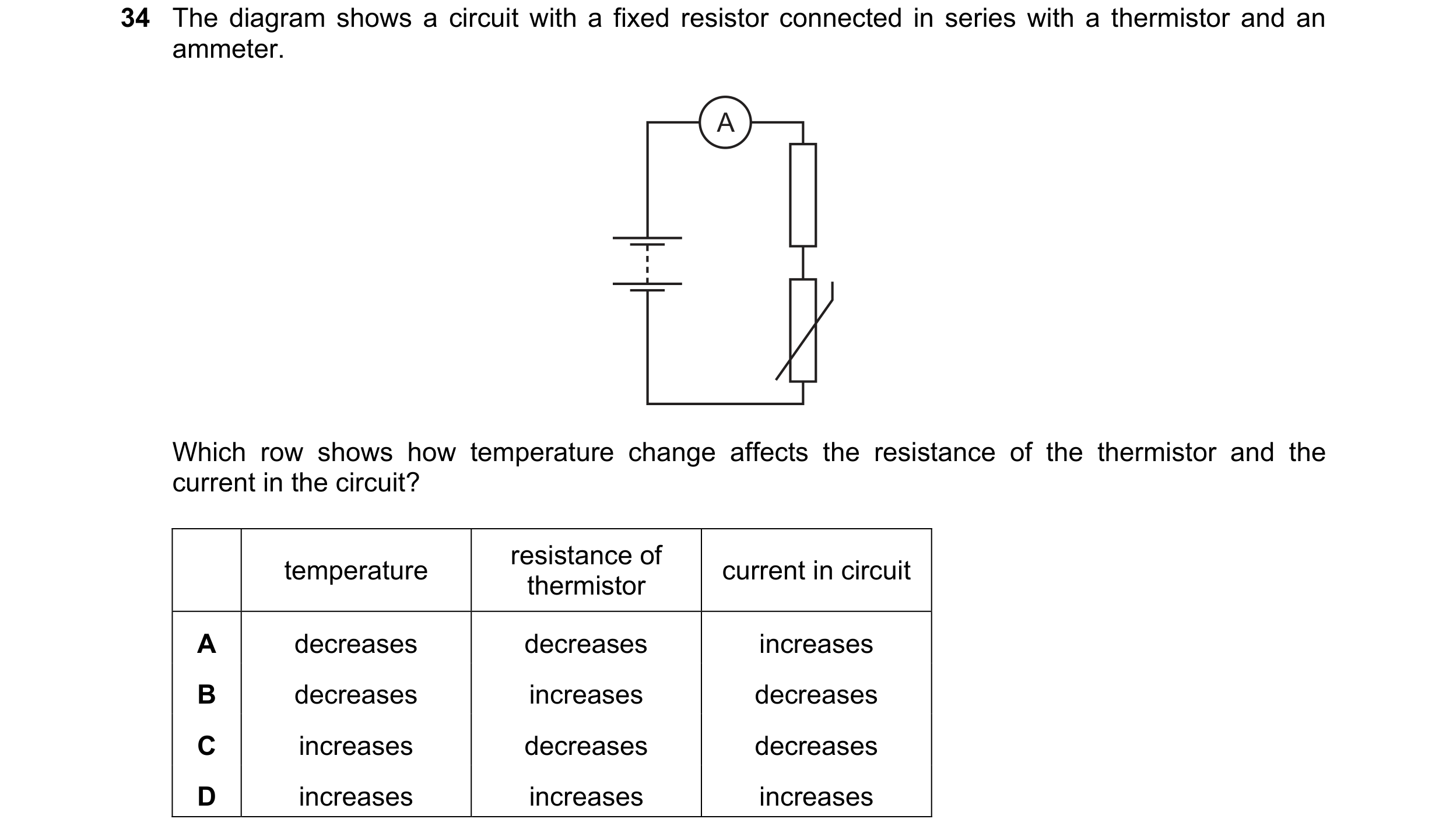
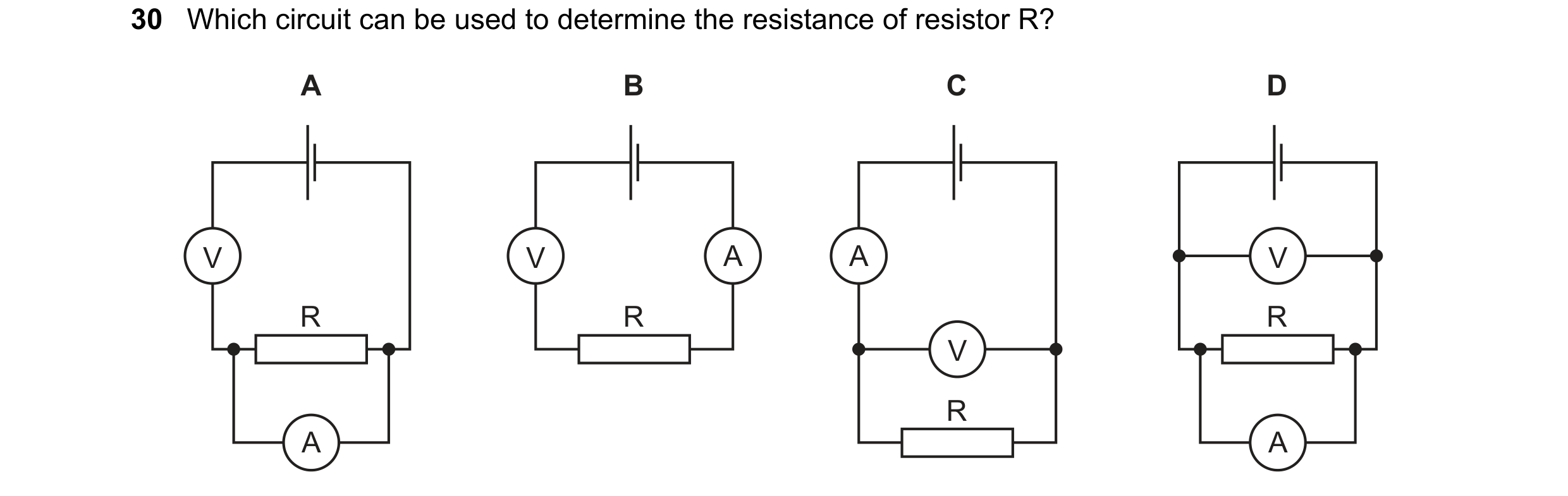
 79 / 127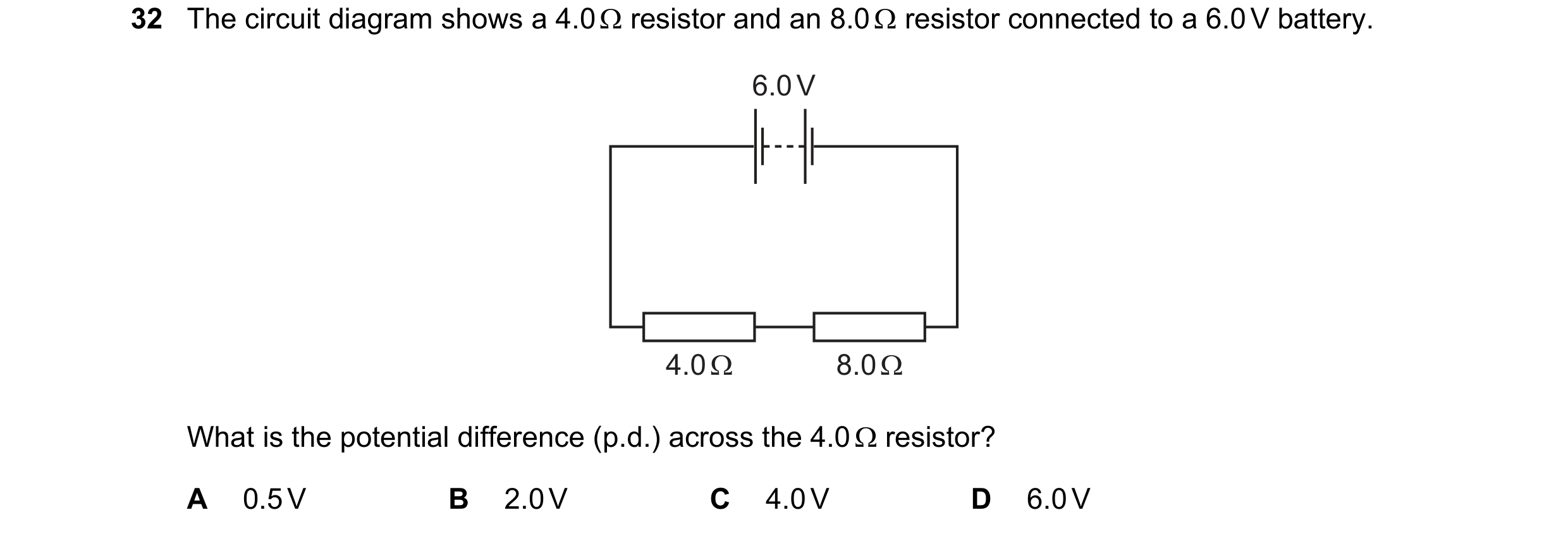
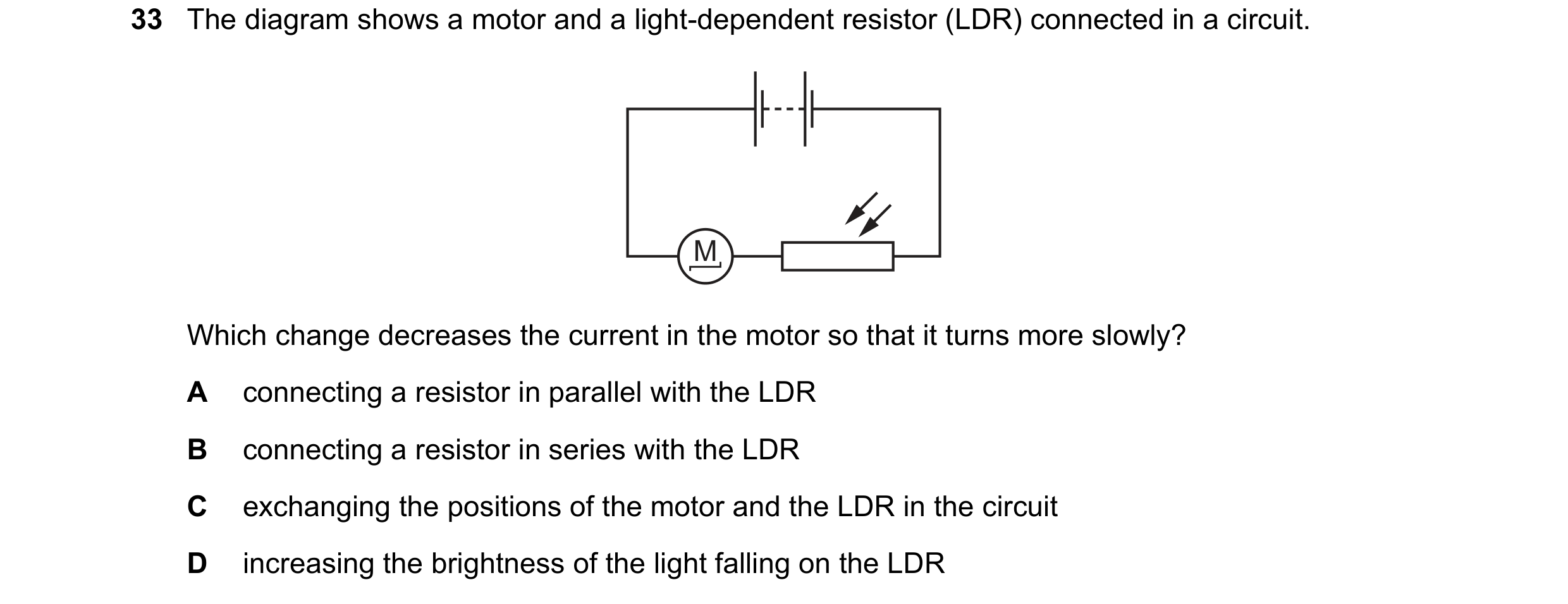
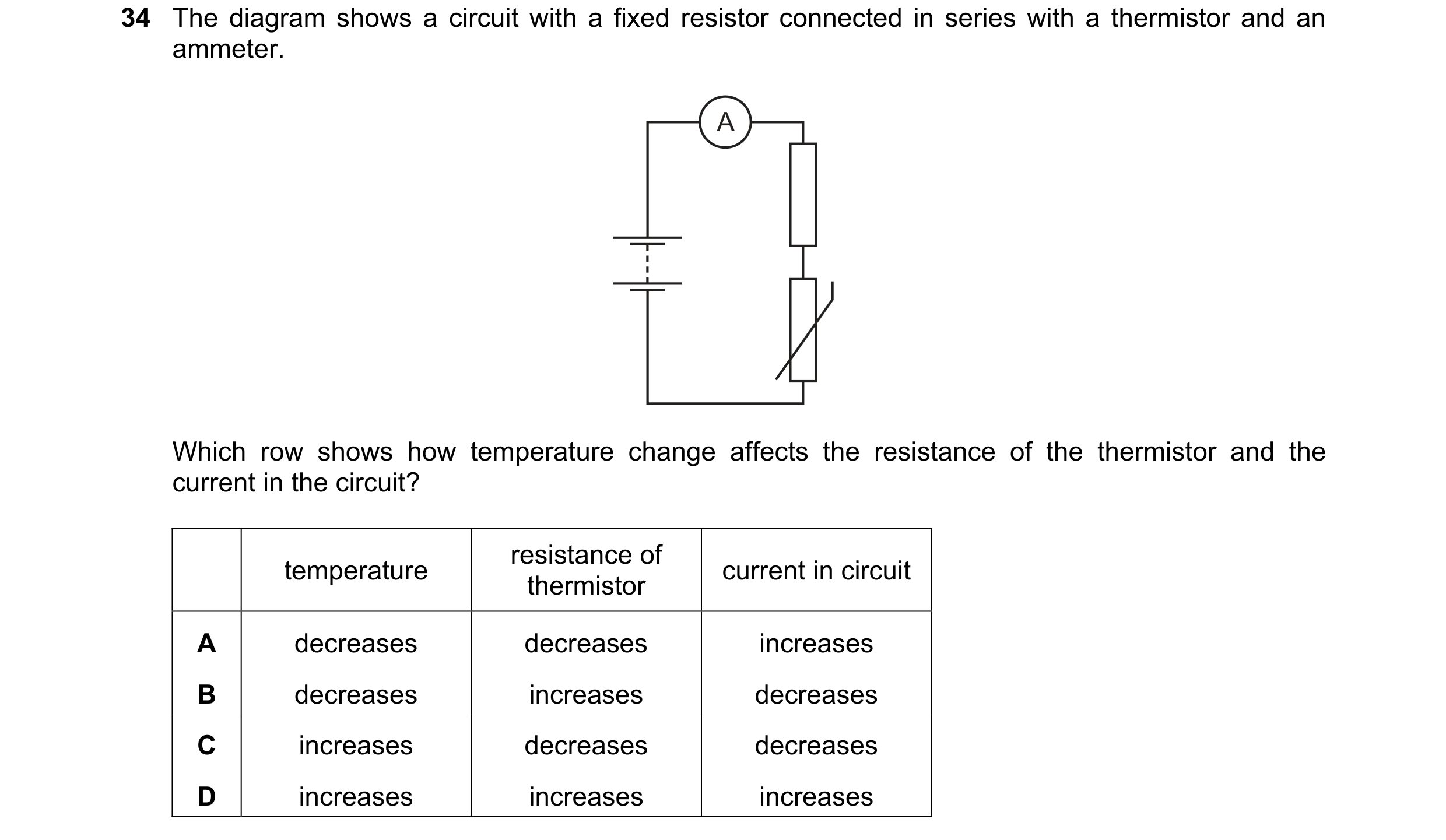 80 / 127
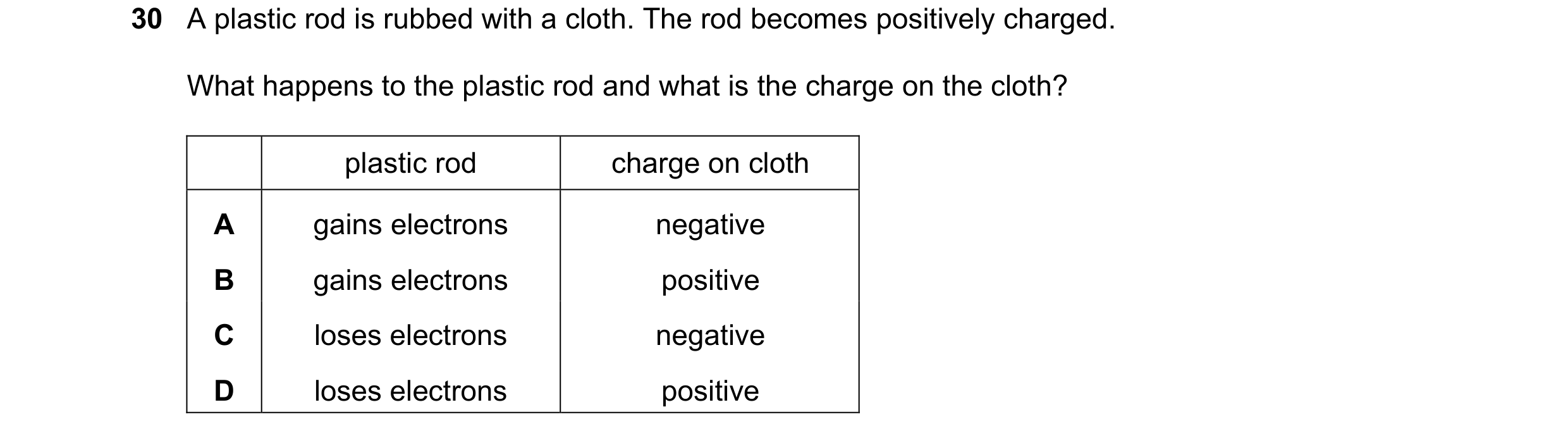
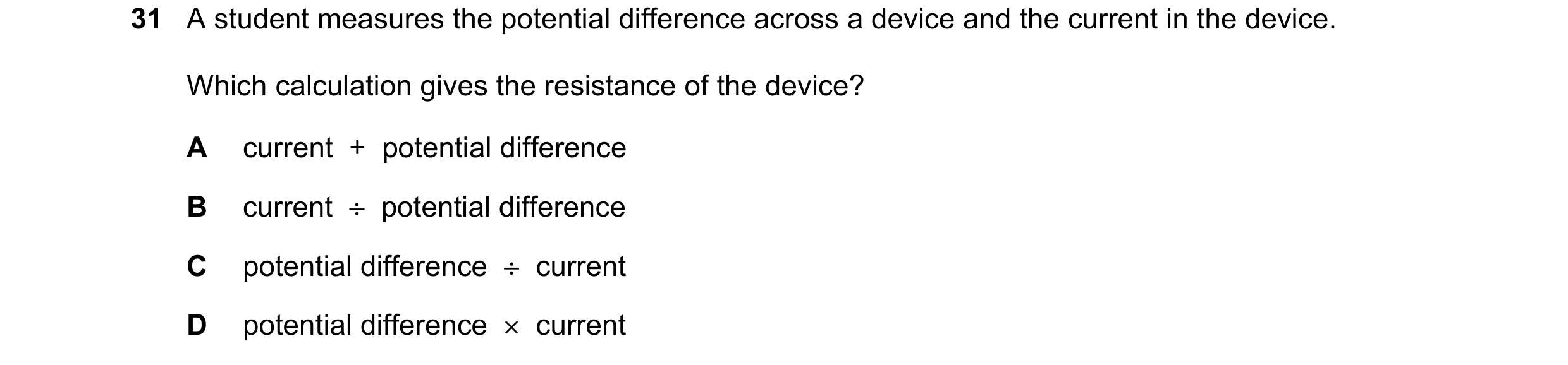
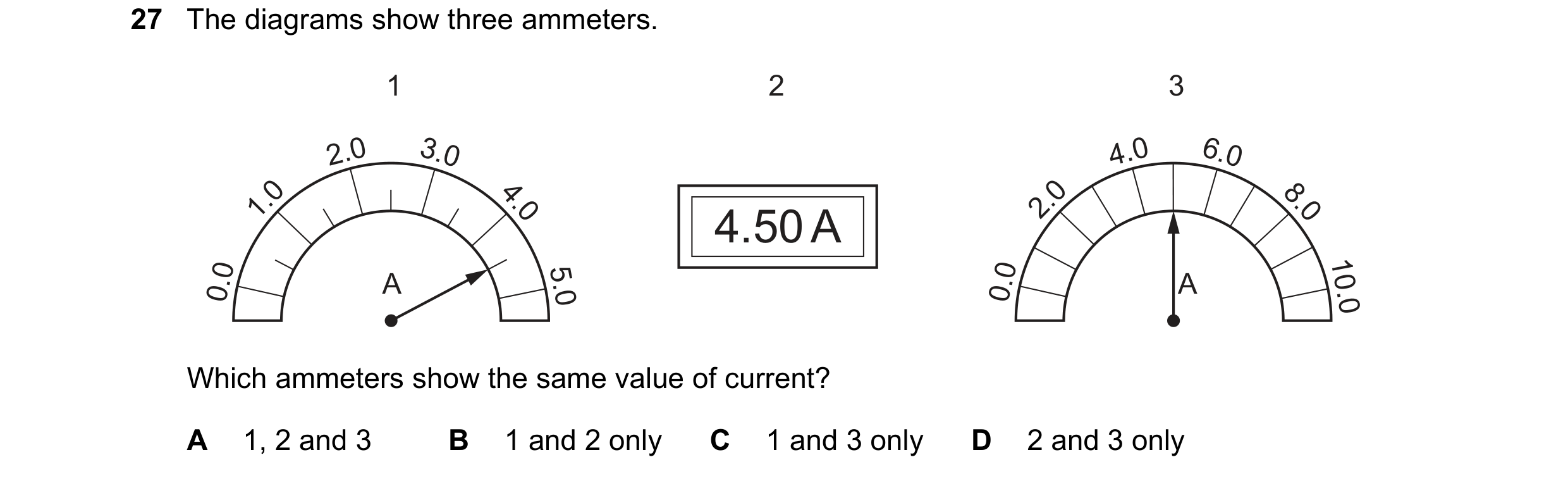
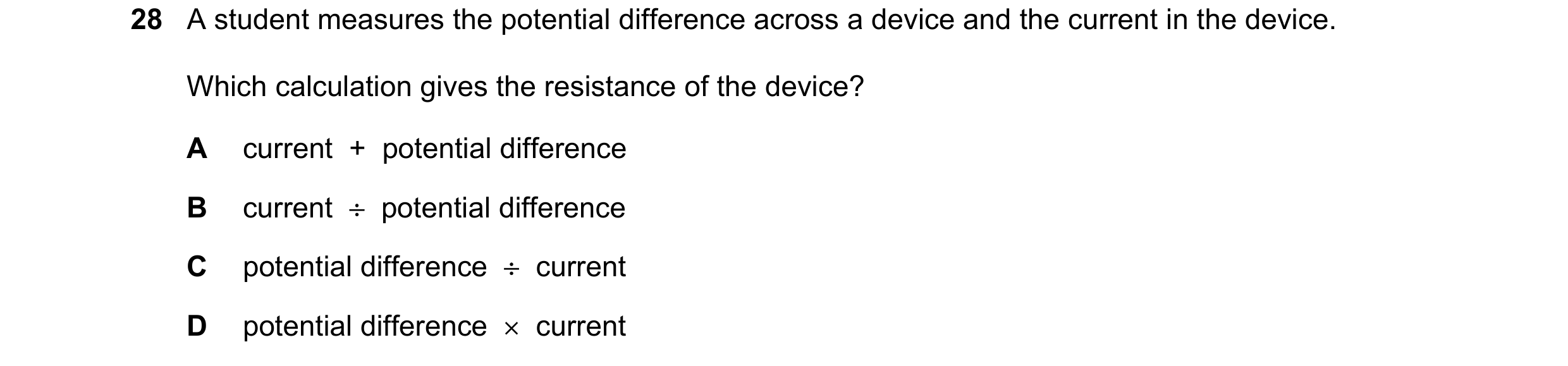 81 / 127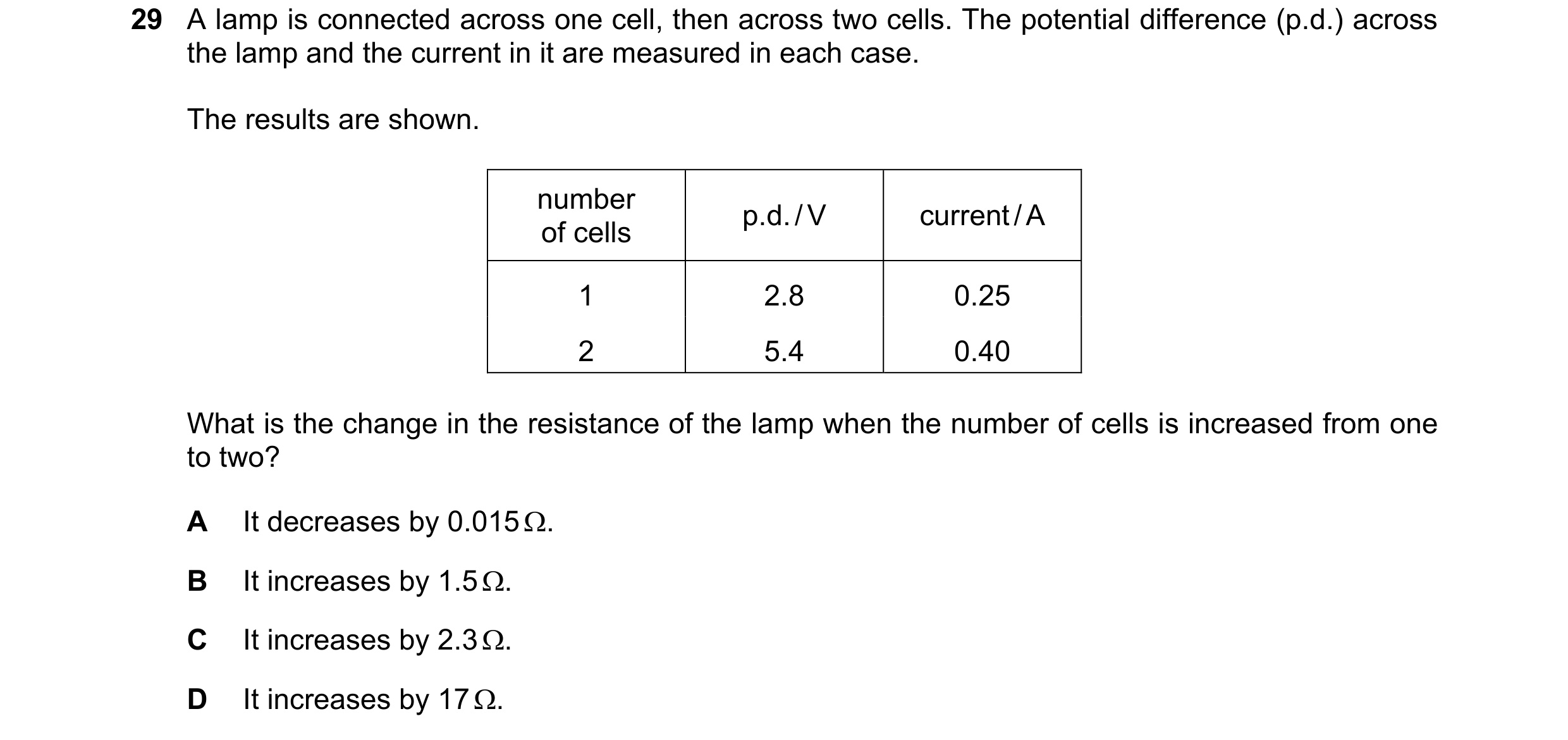

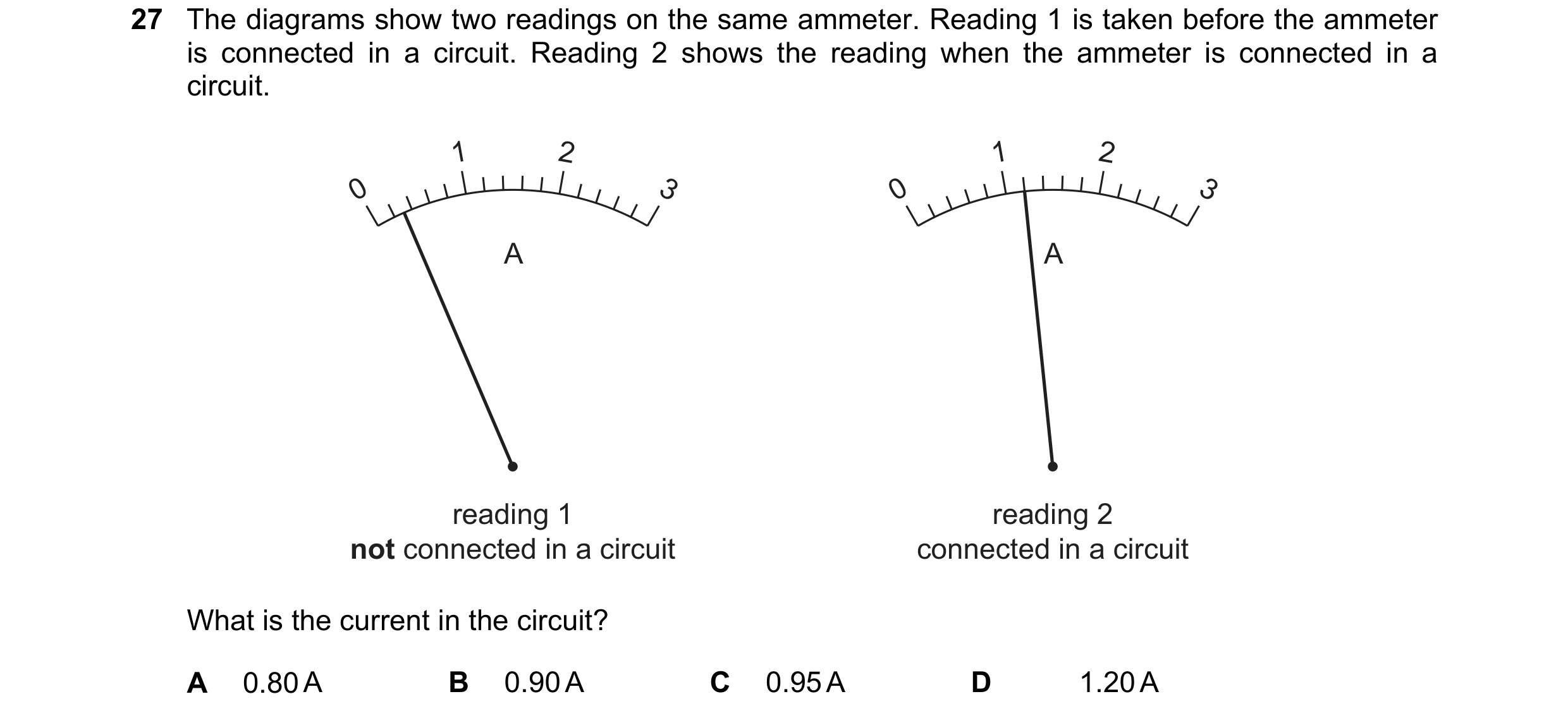
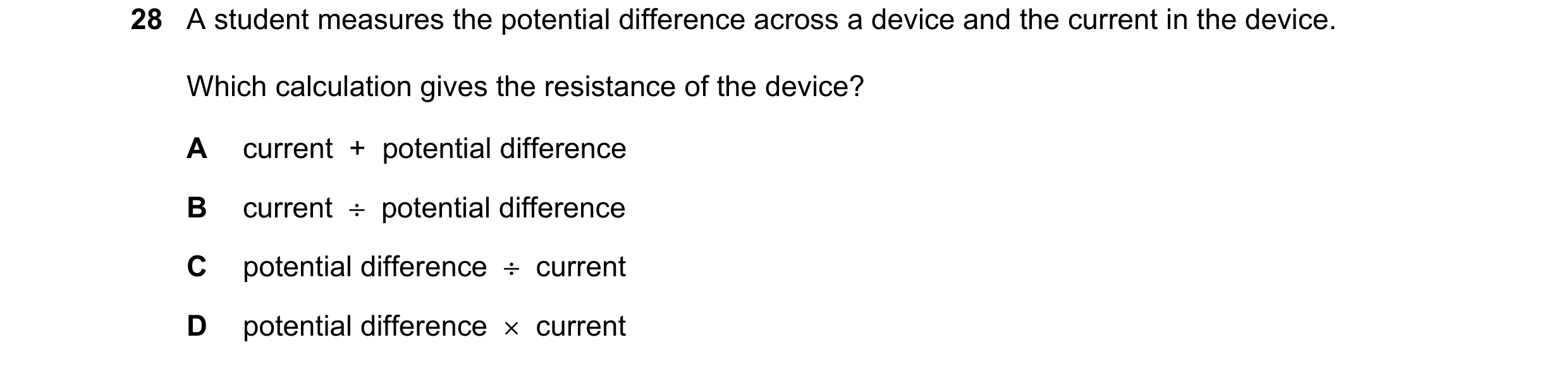 82 / 127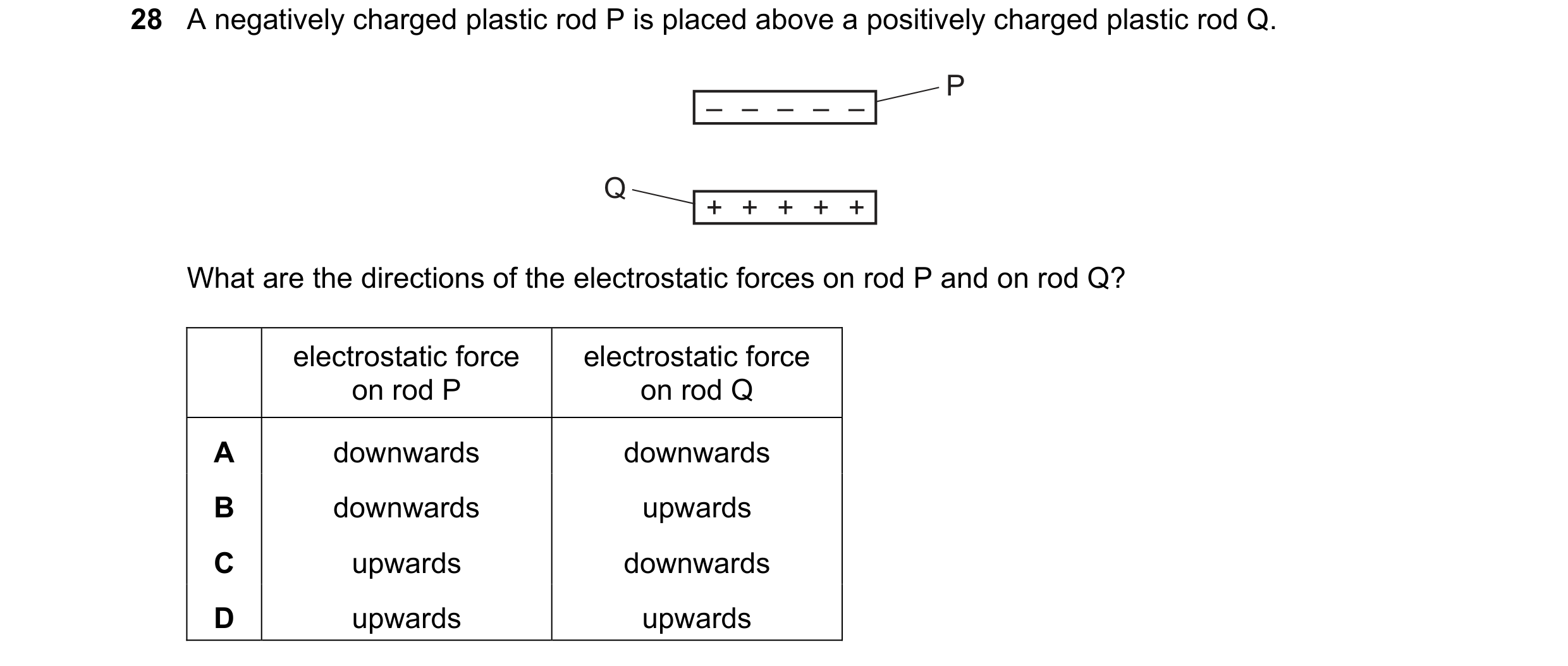
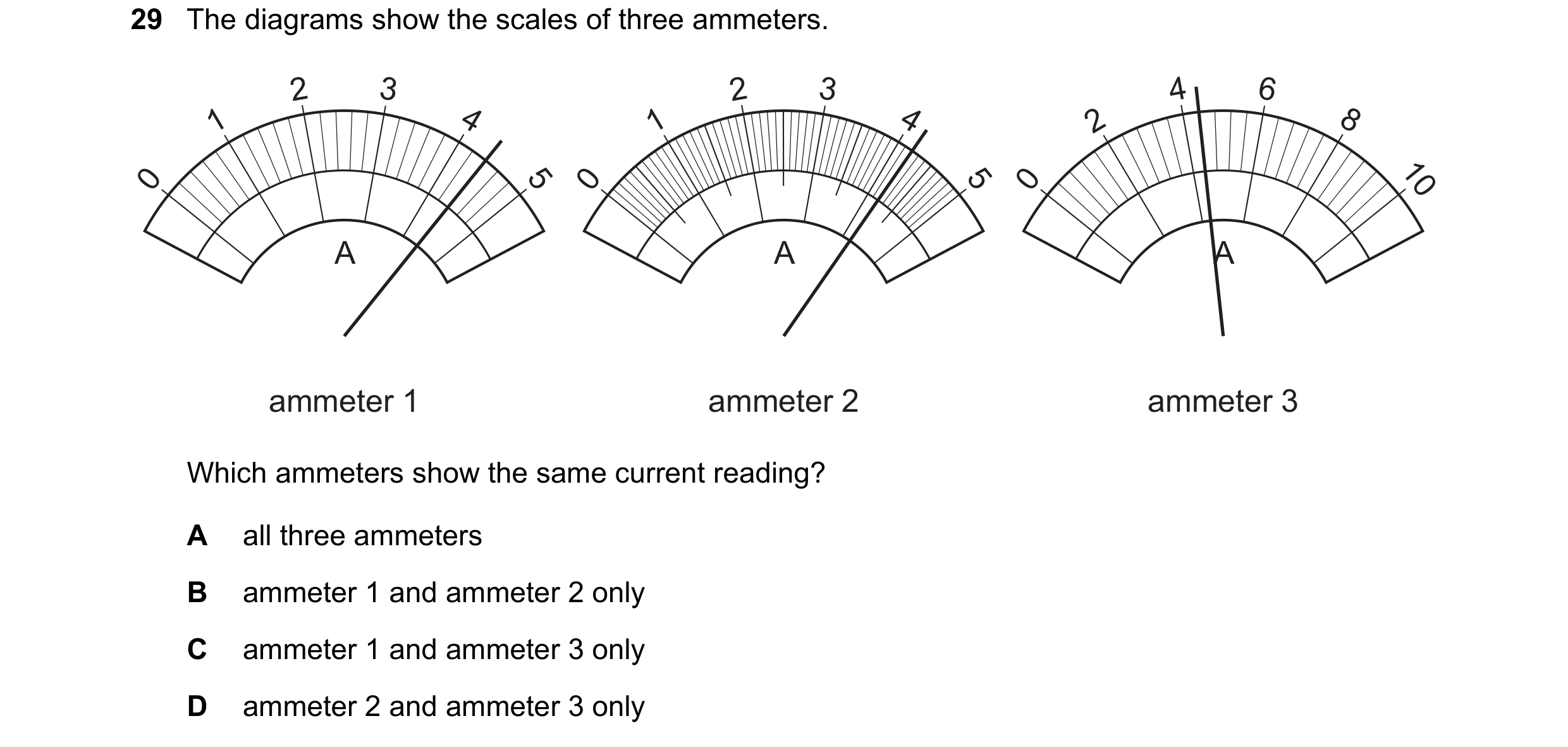
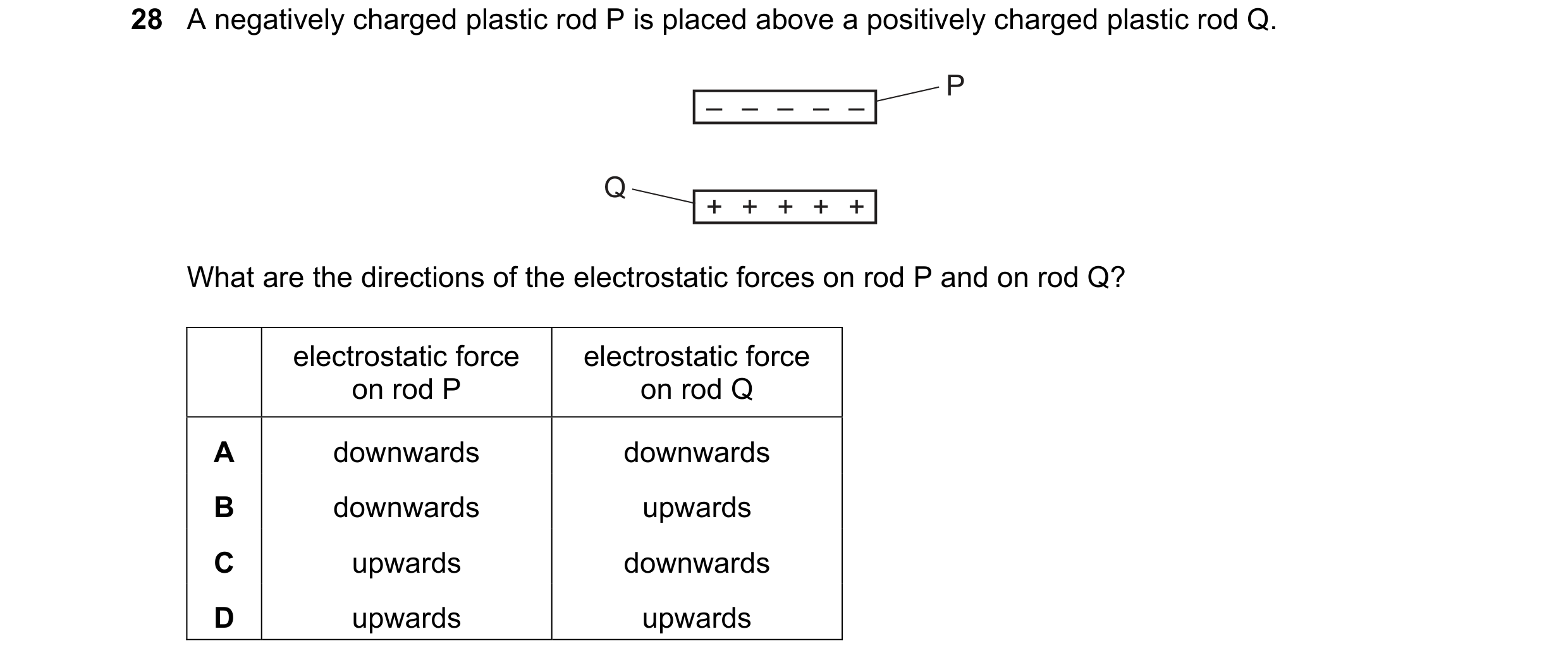 83 / 127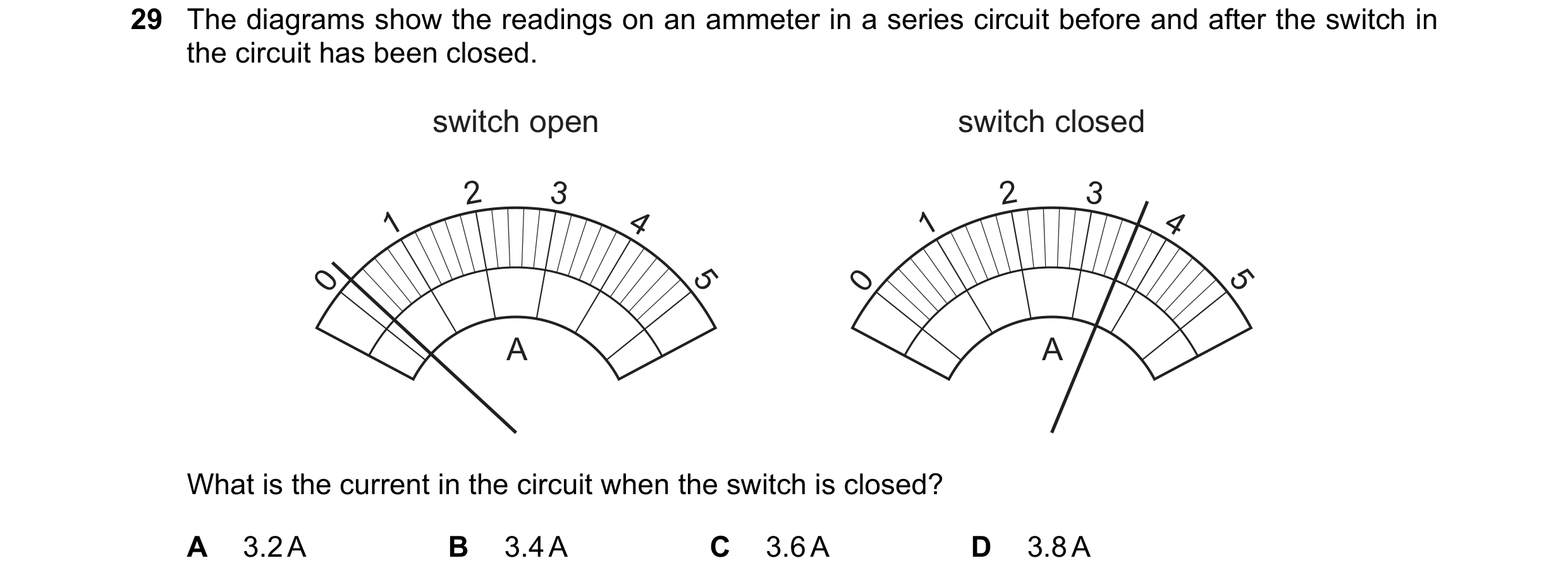
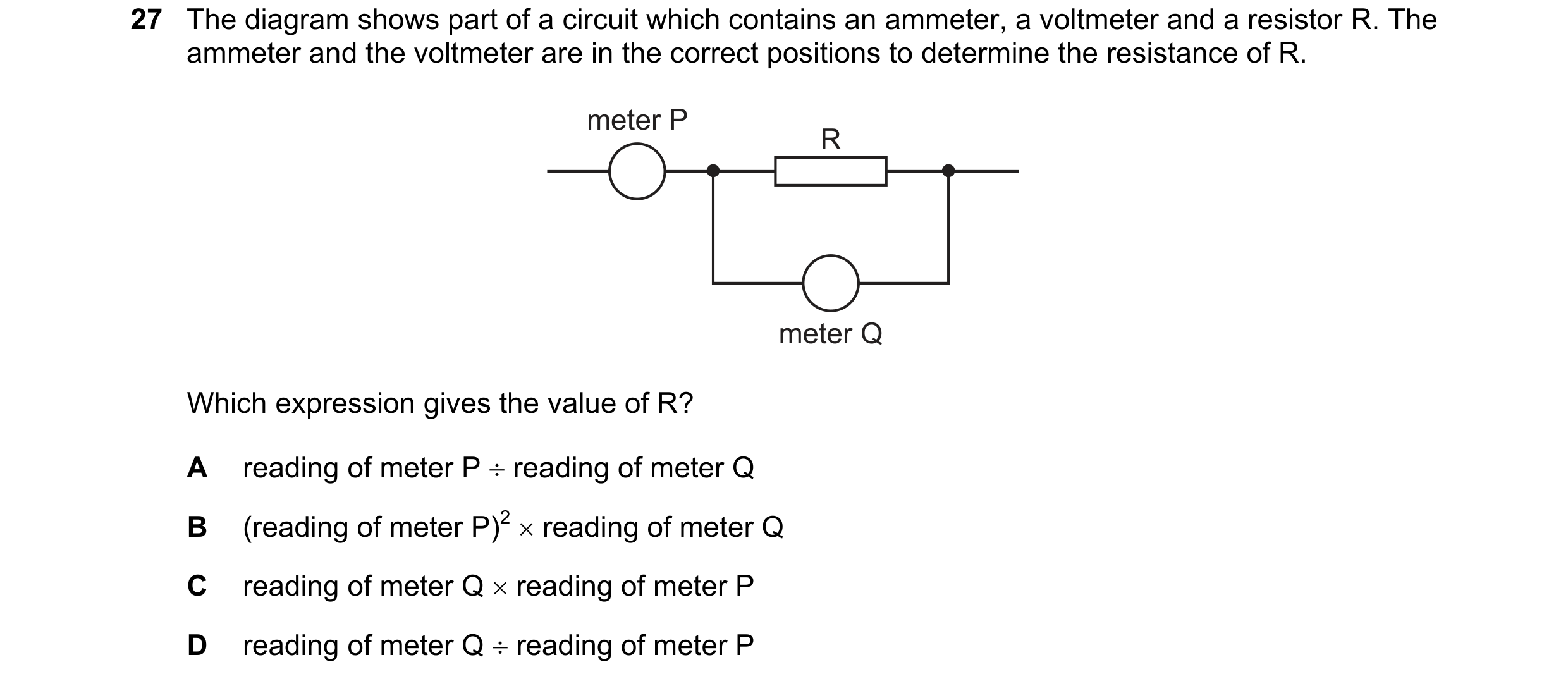
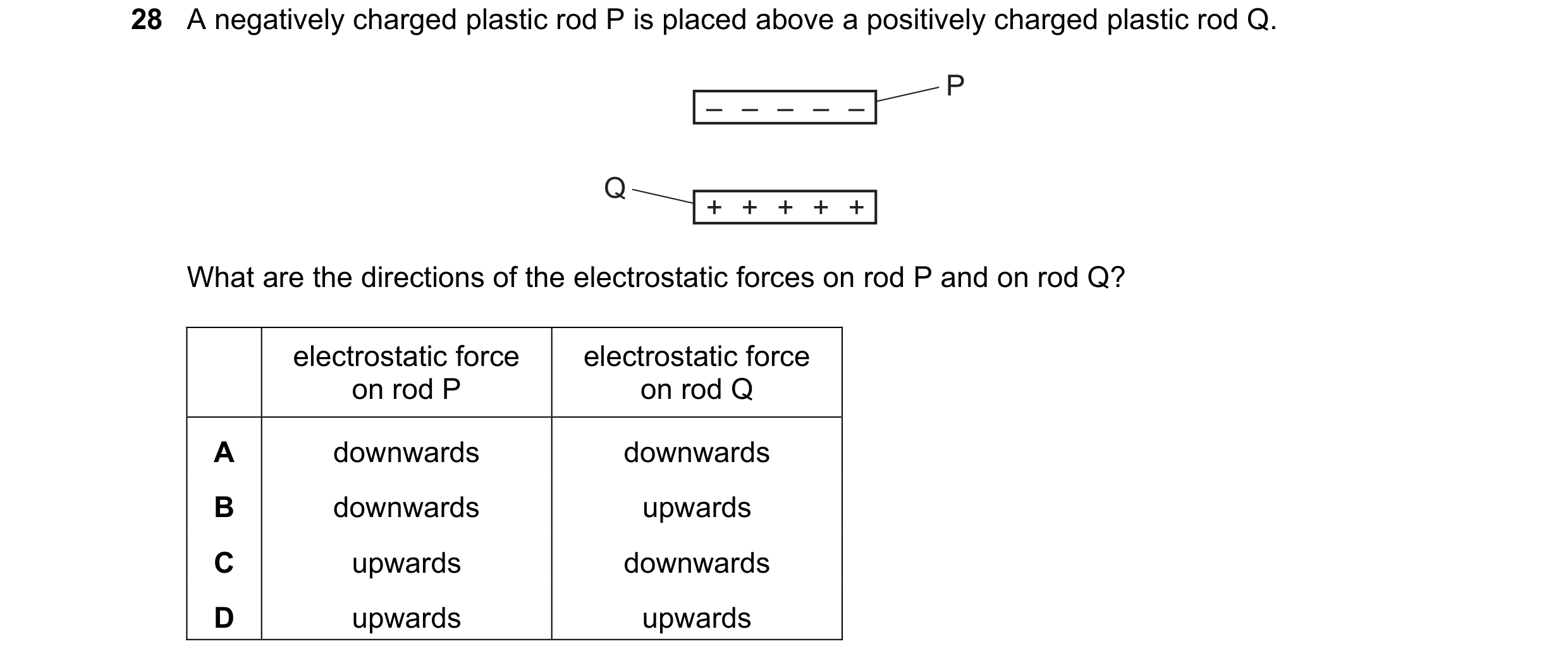 84 / 127
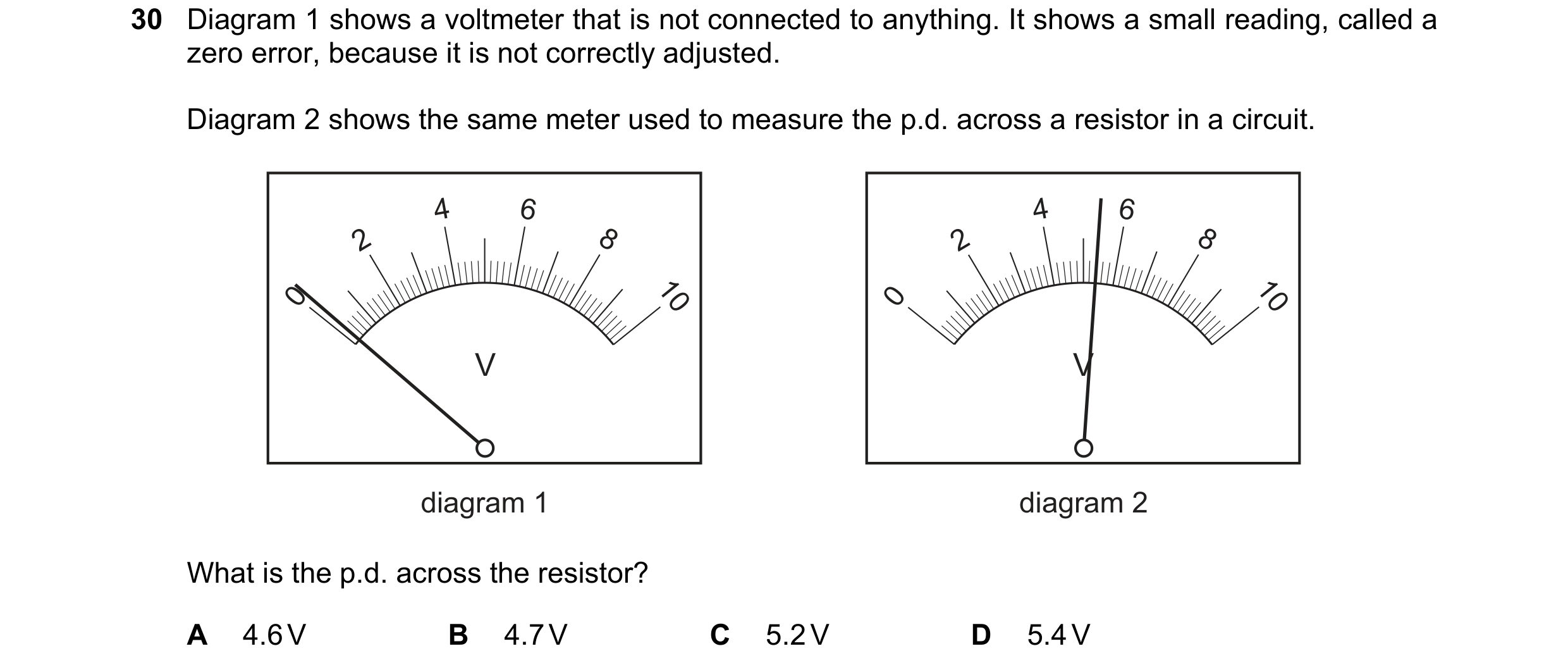
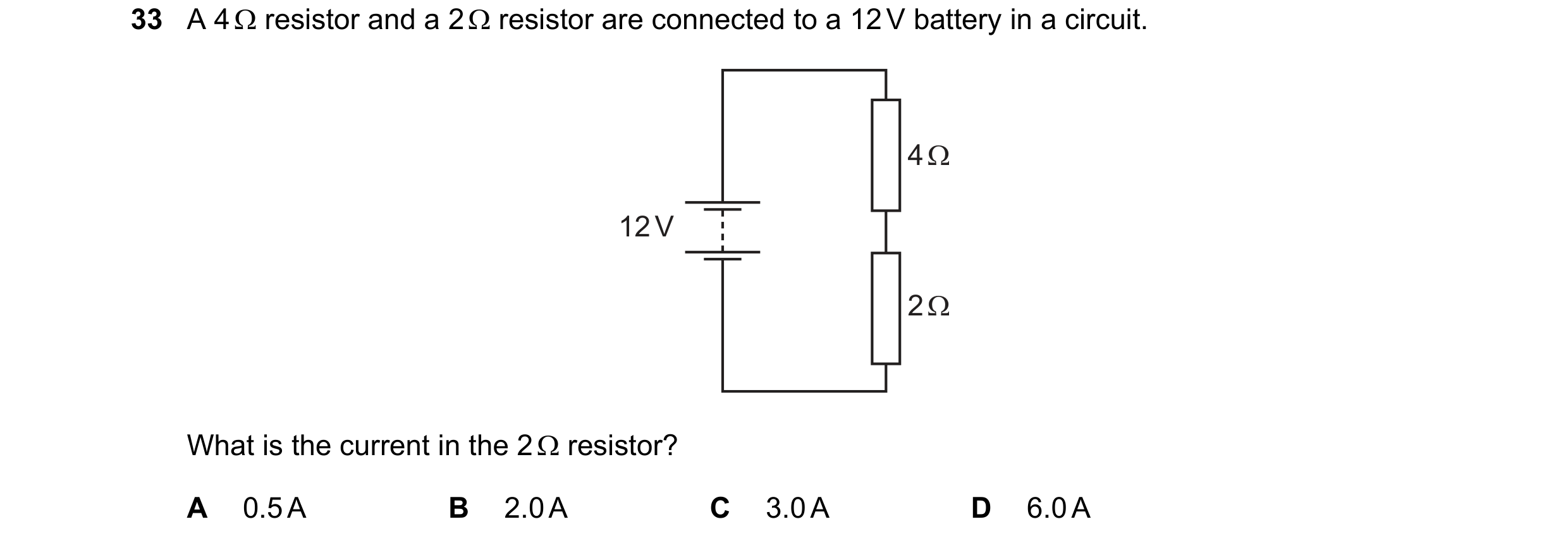
 85 / 127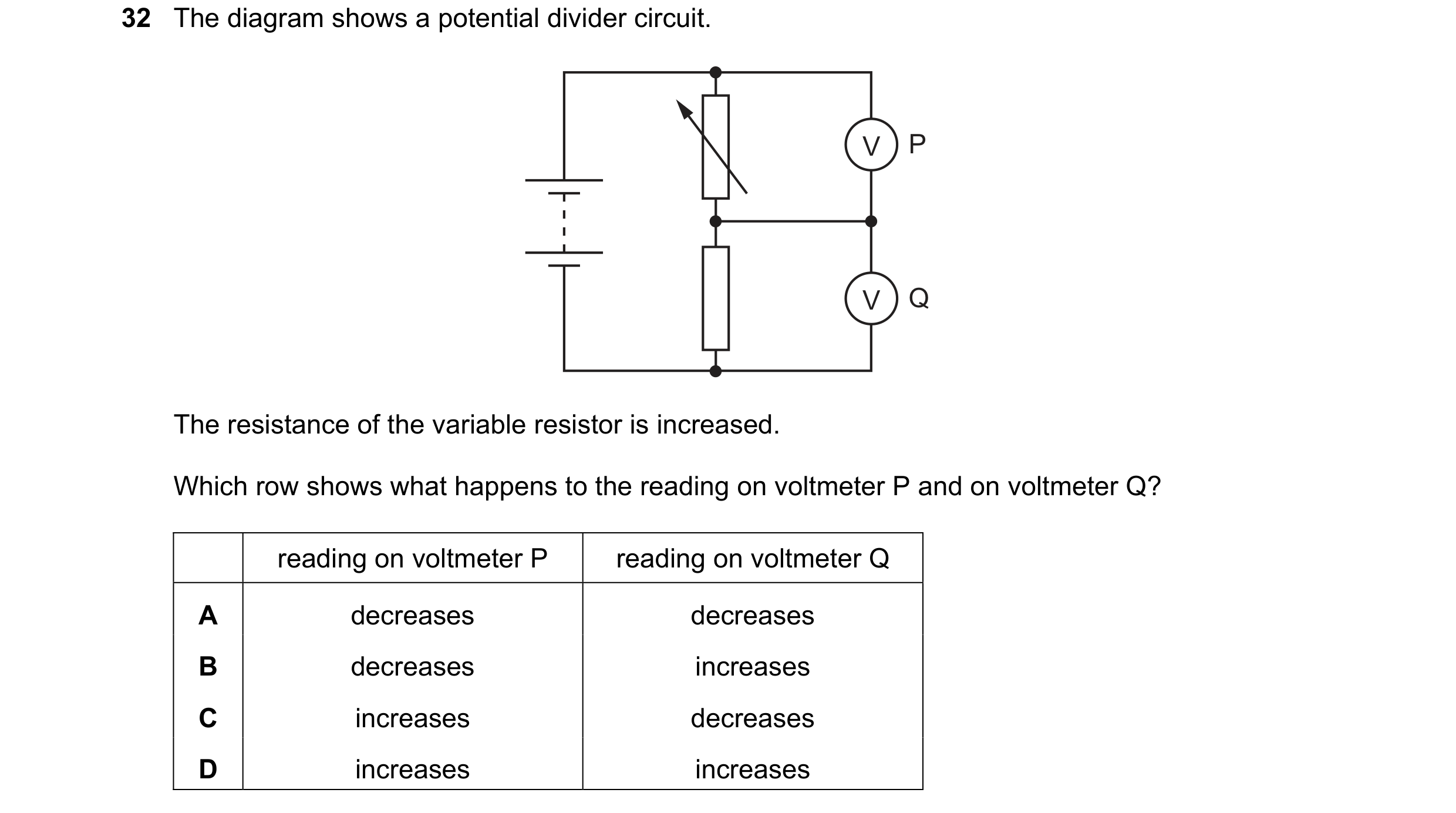
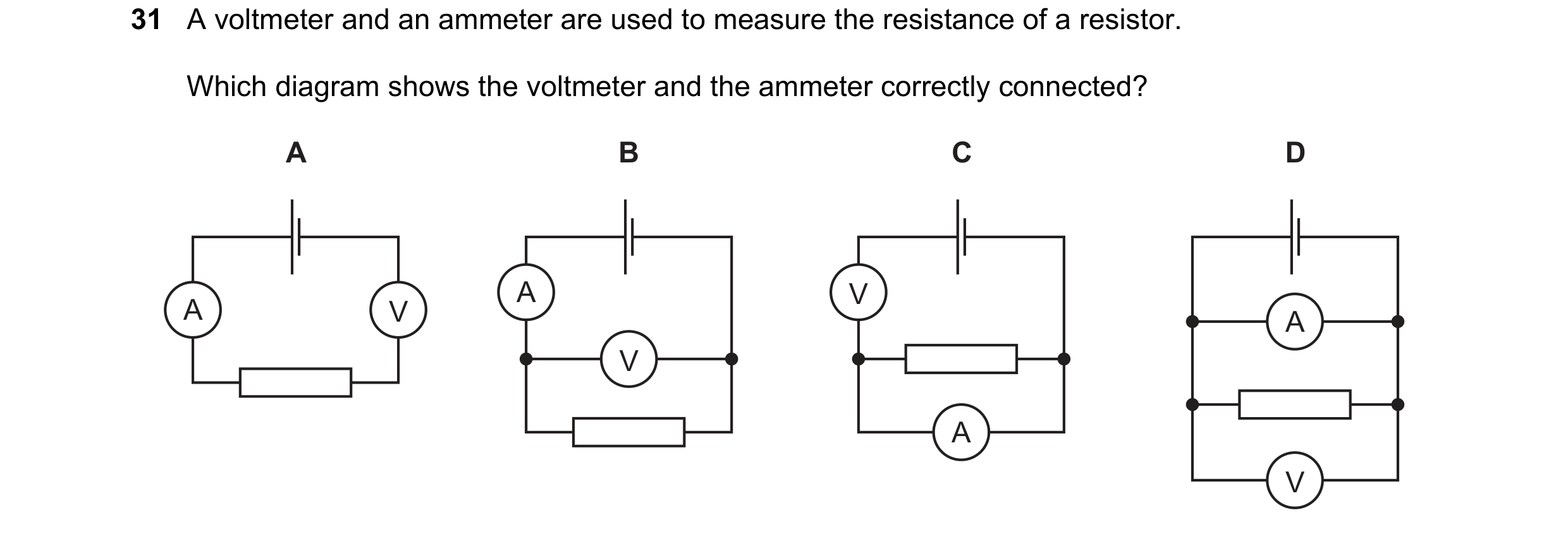 86 / 127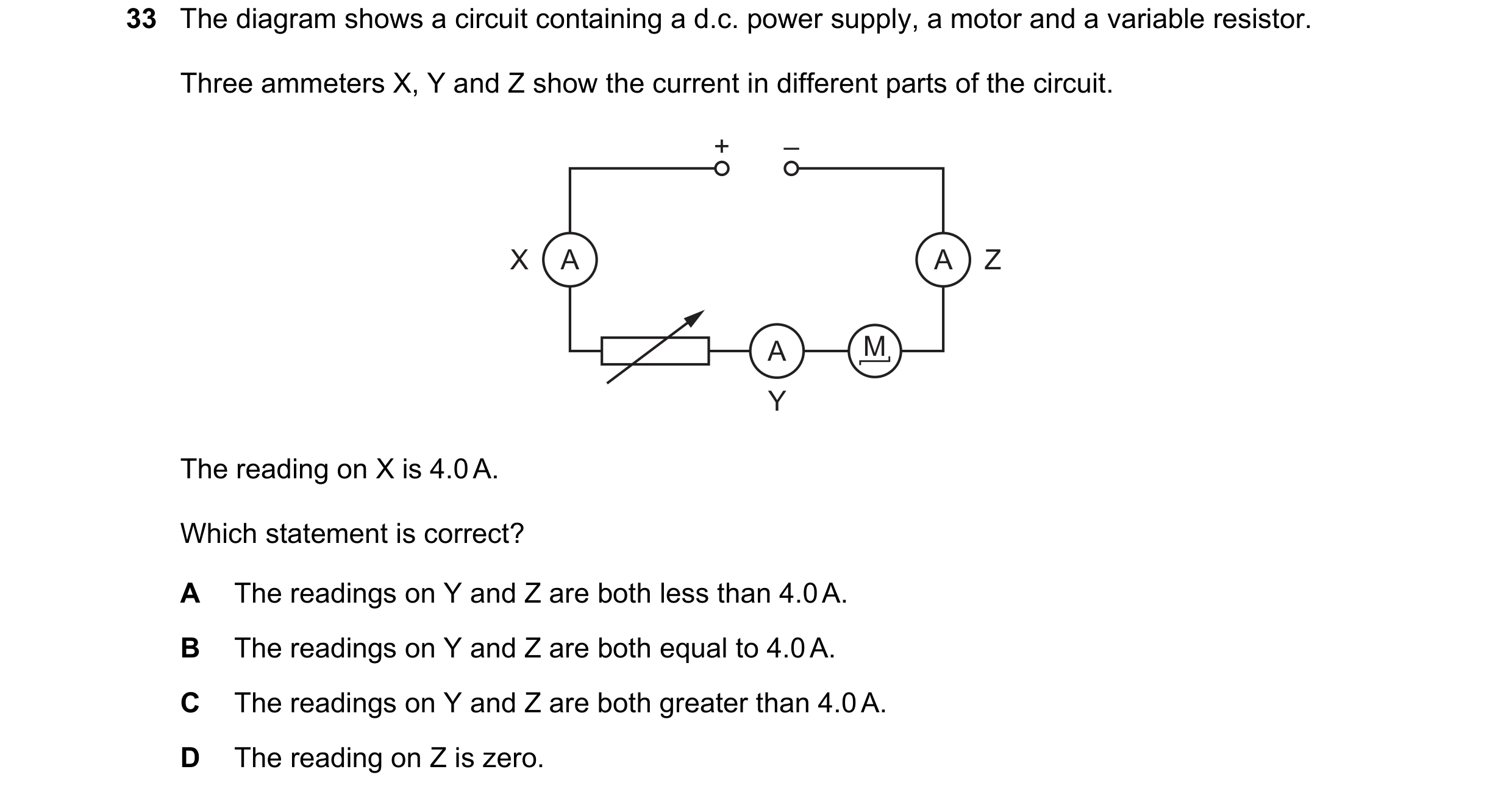
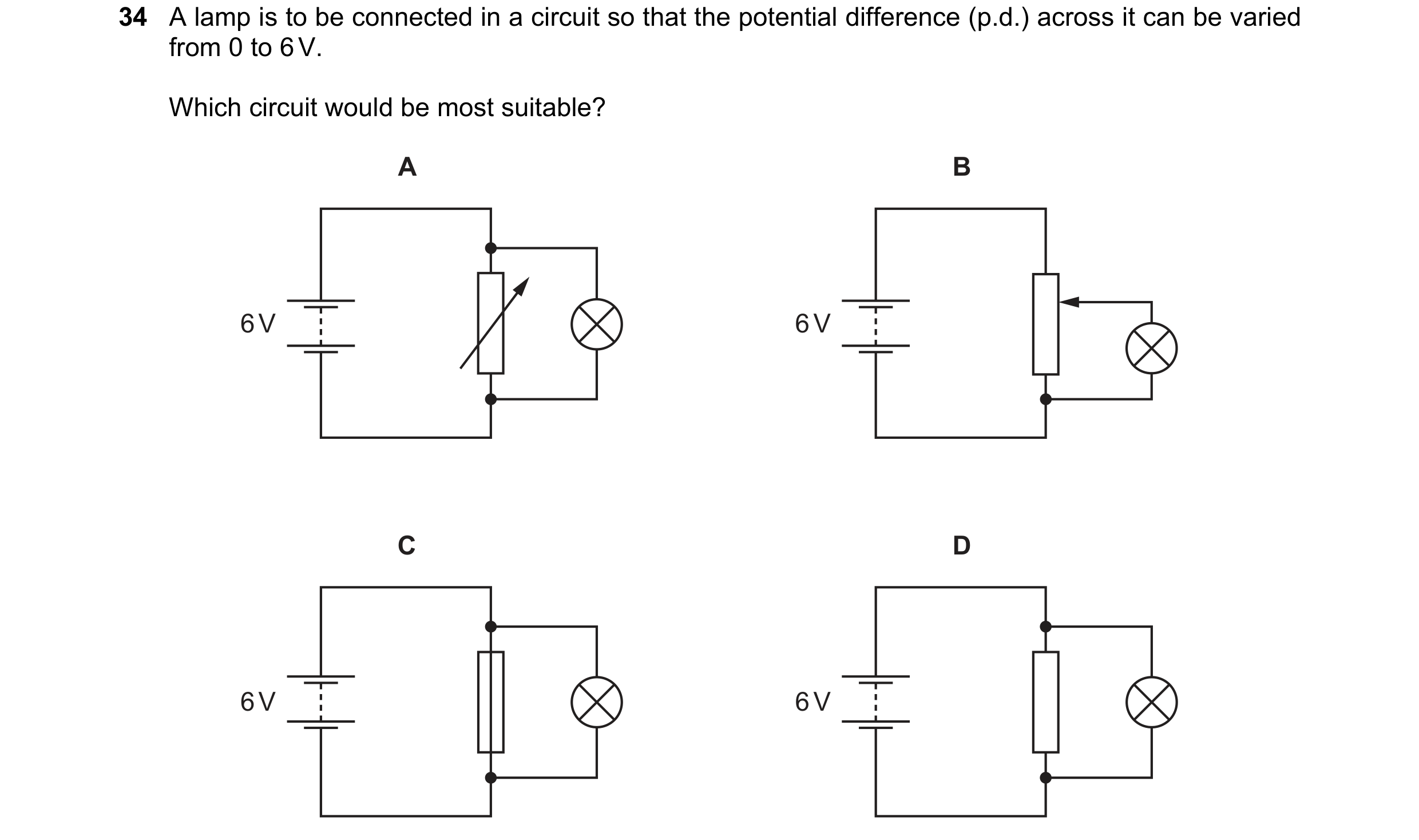
 87 / 127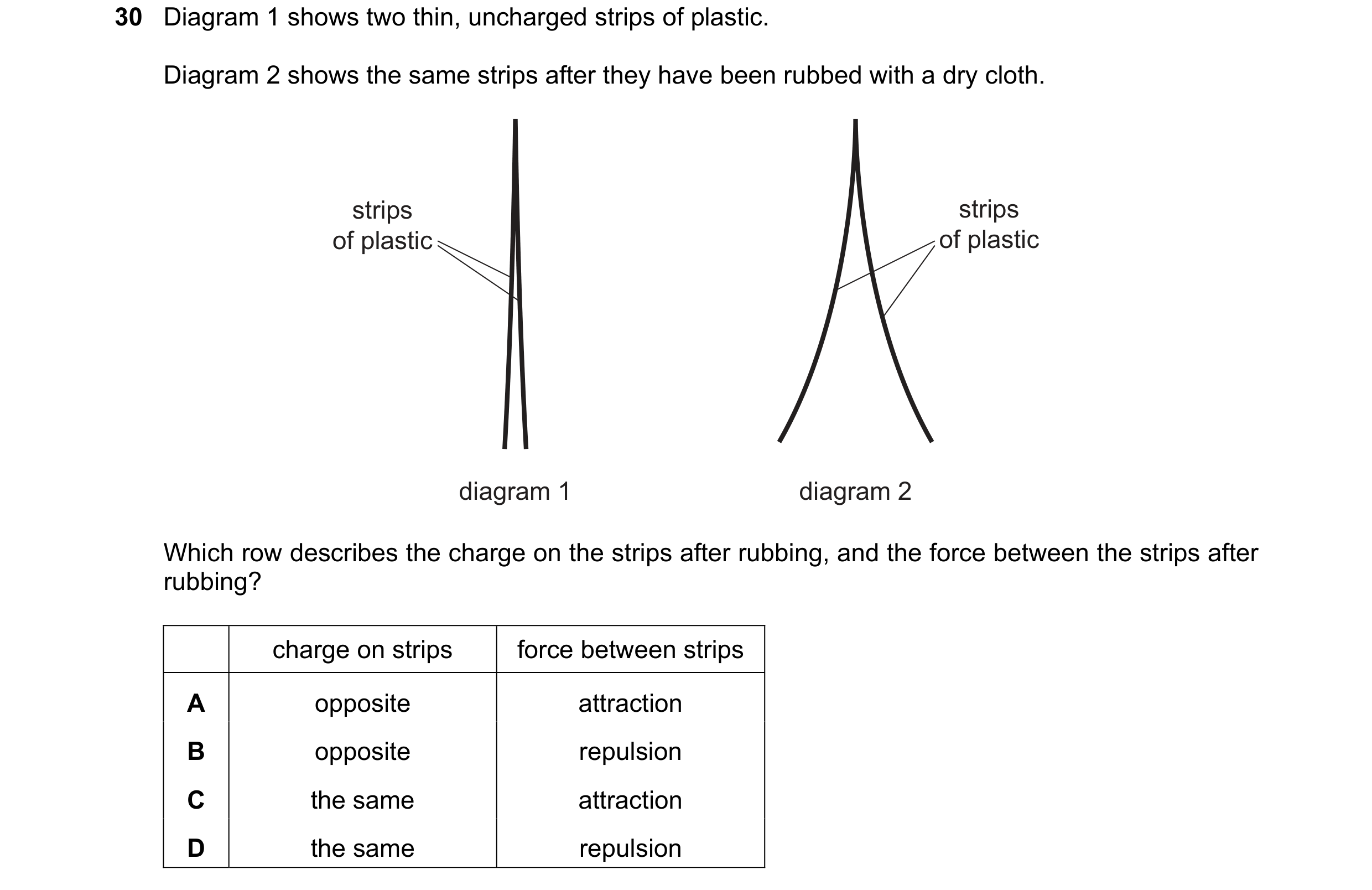
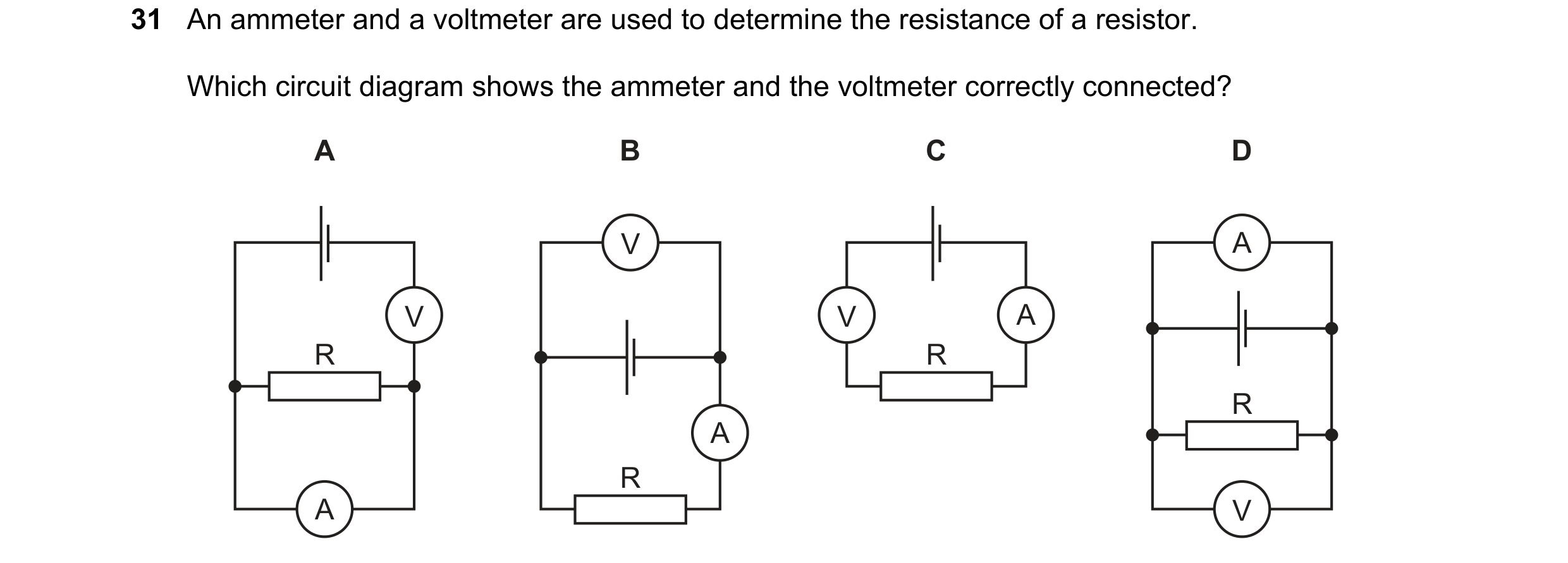 88 / 127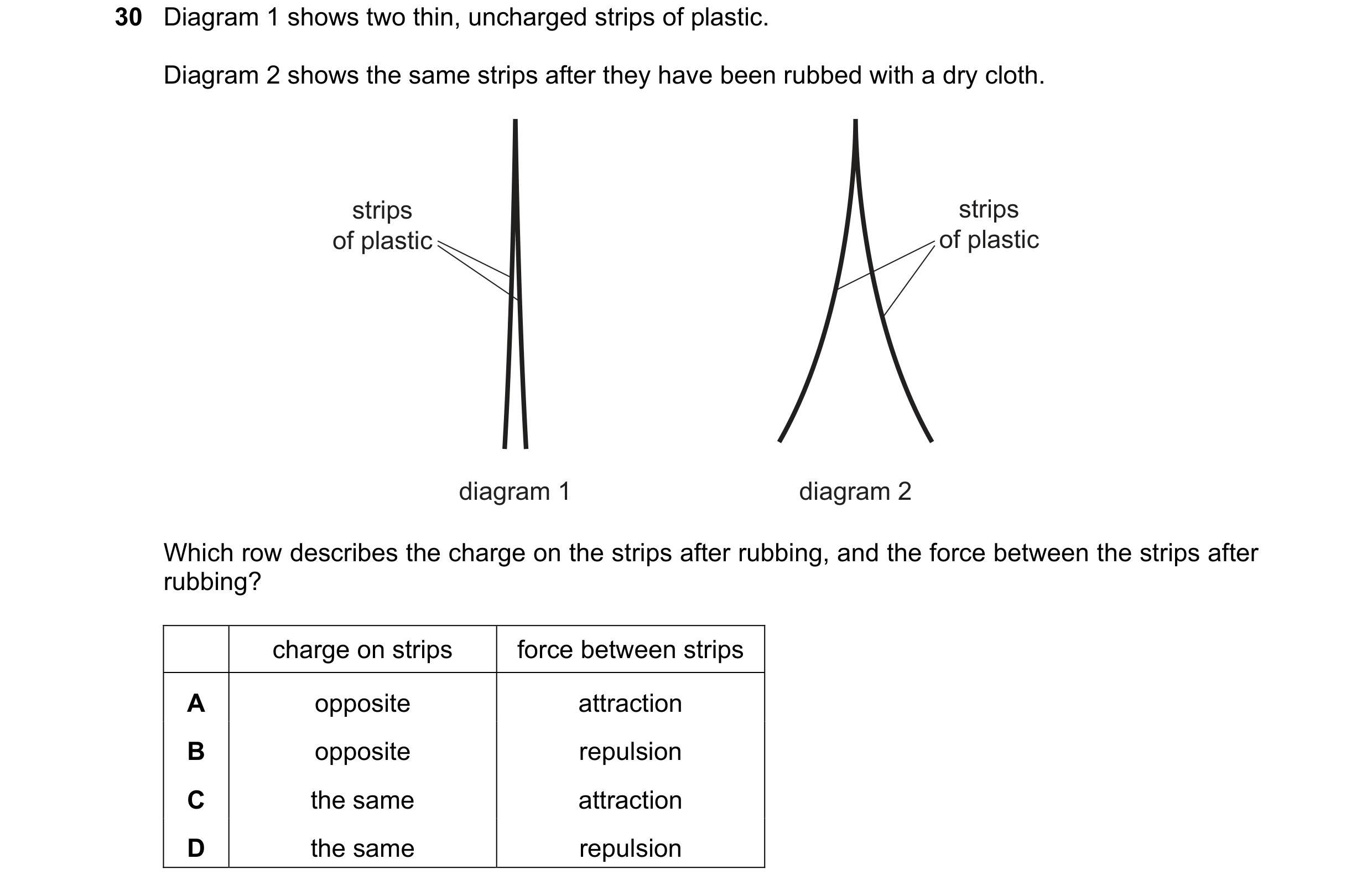
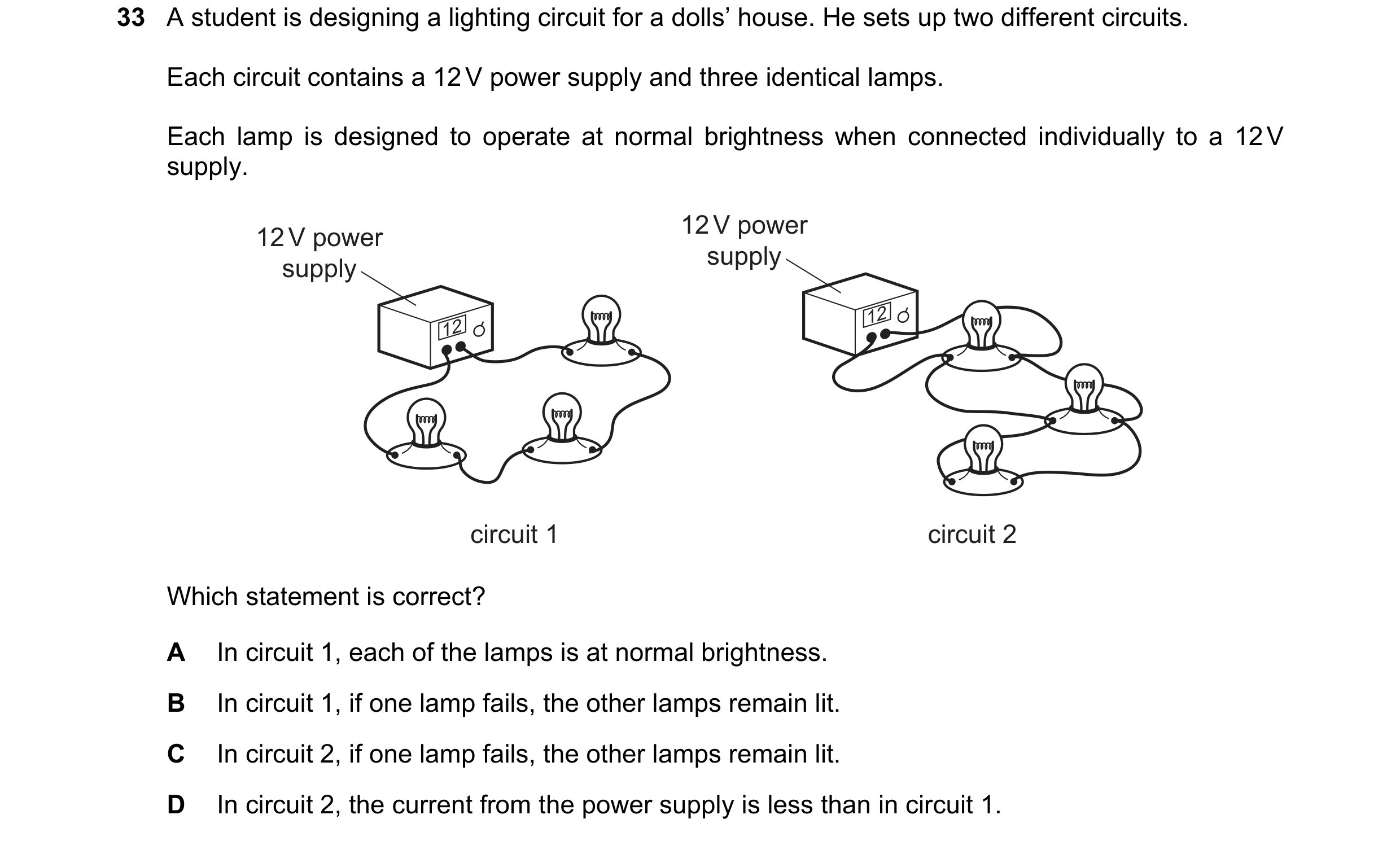 89 / 127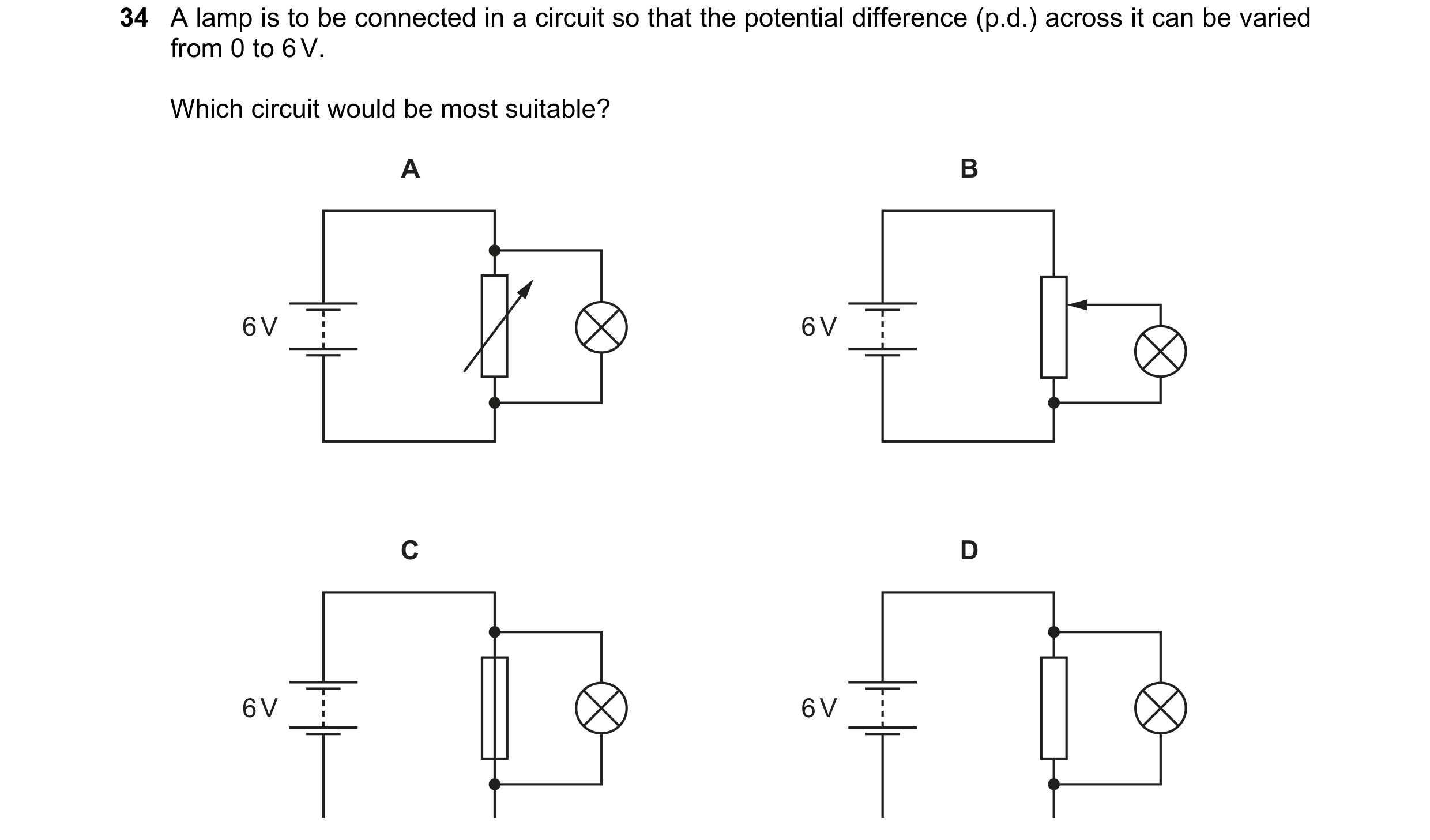
 90 / 127
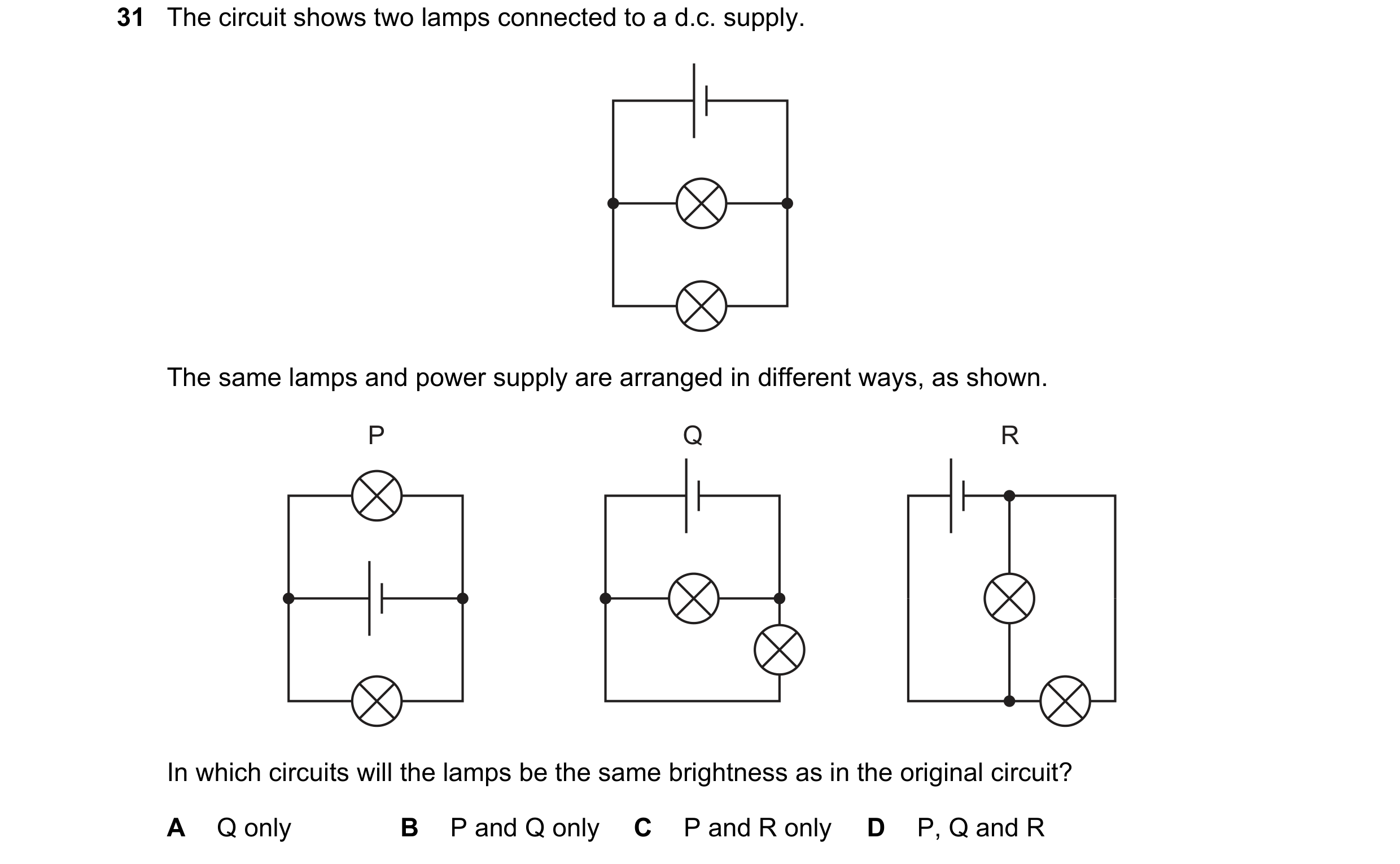 91 / 127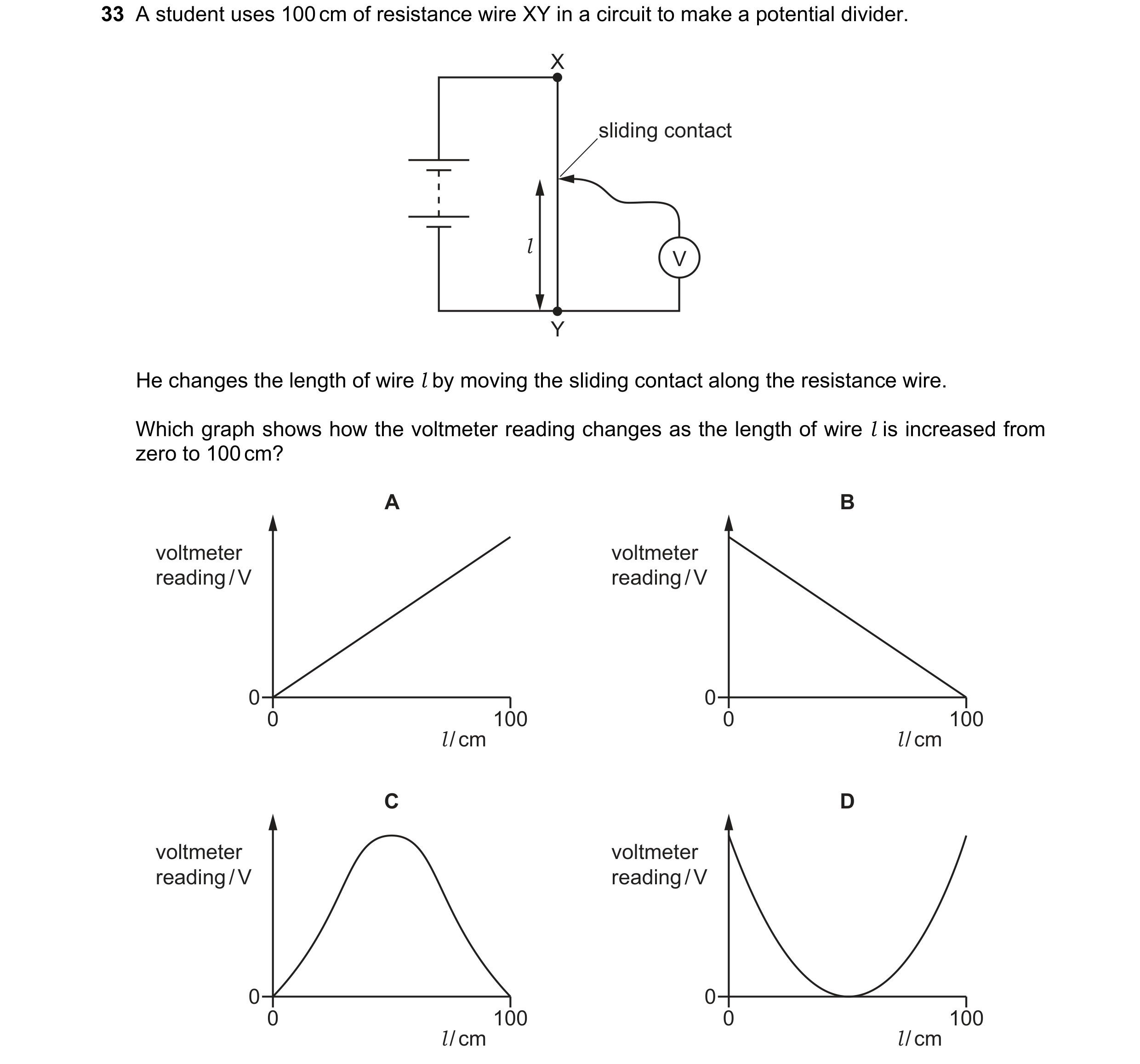
 92 / 127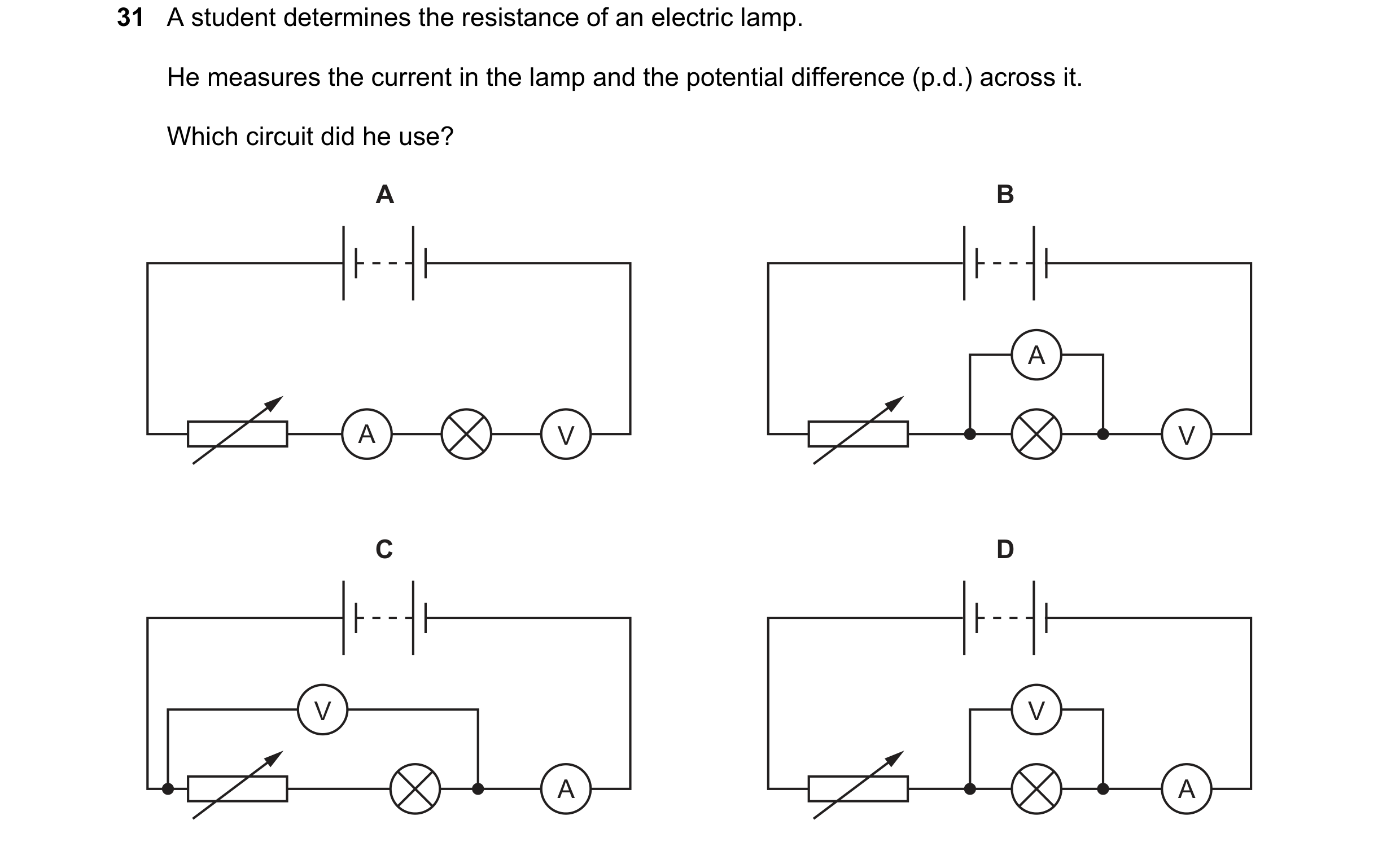
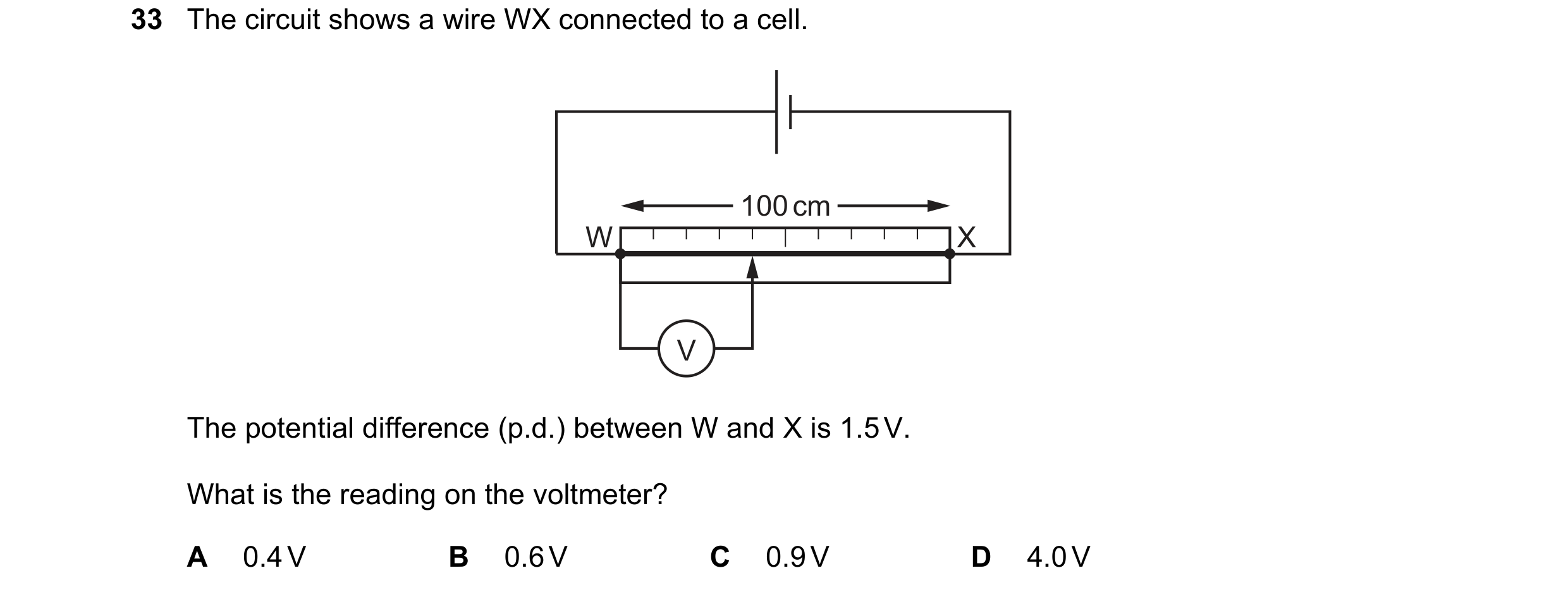
 93 / 127
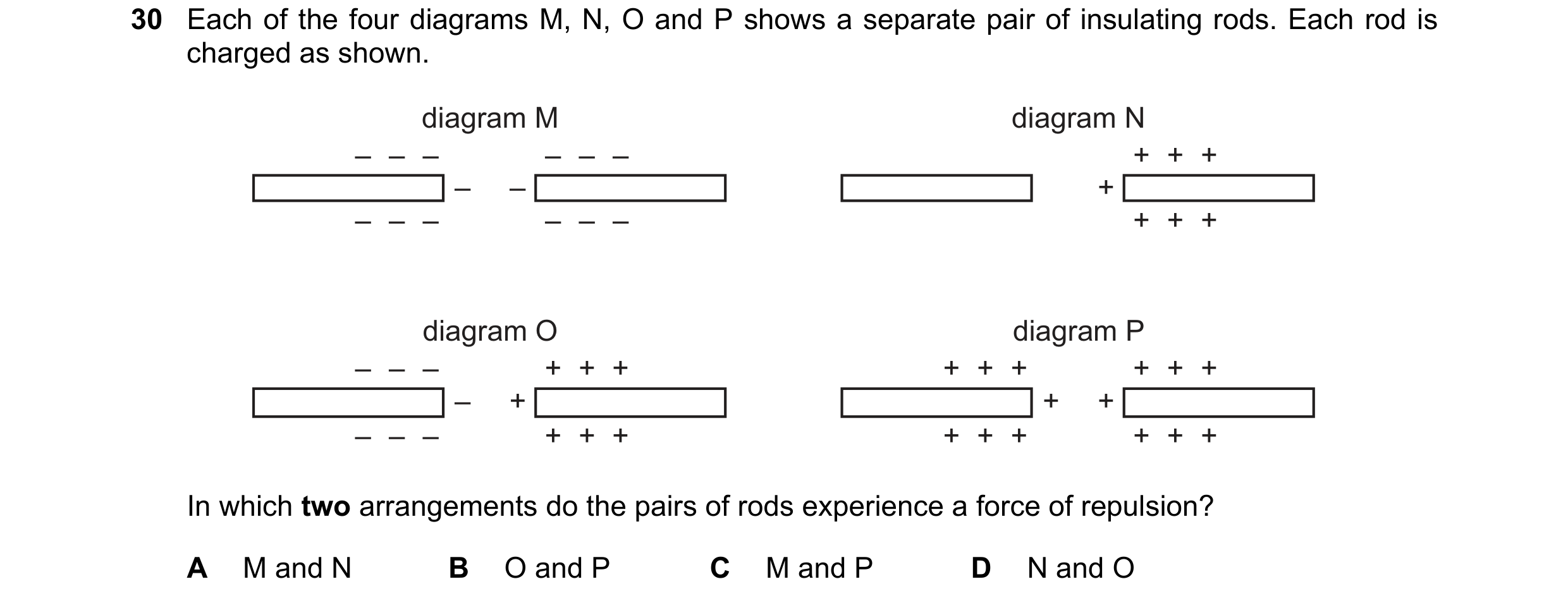
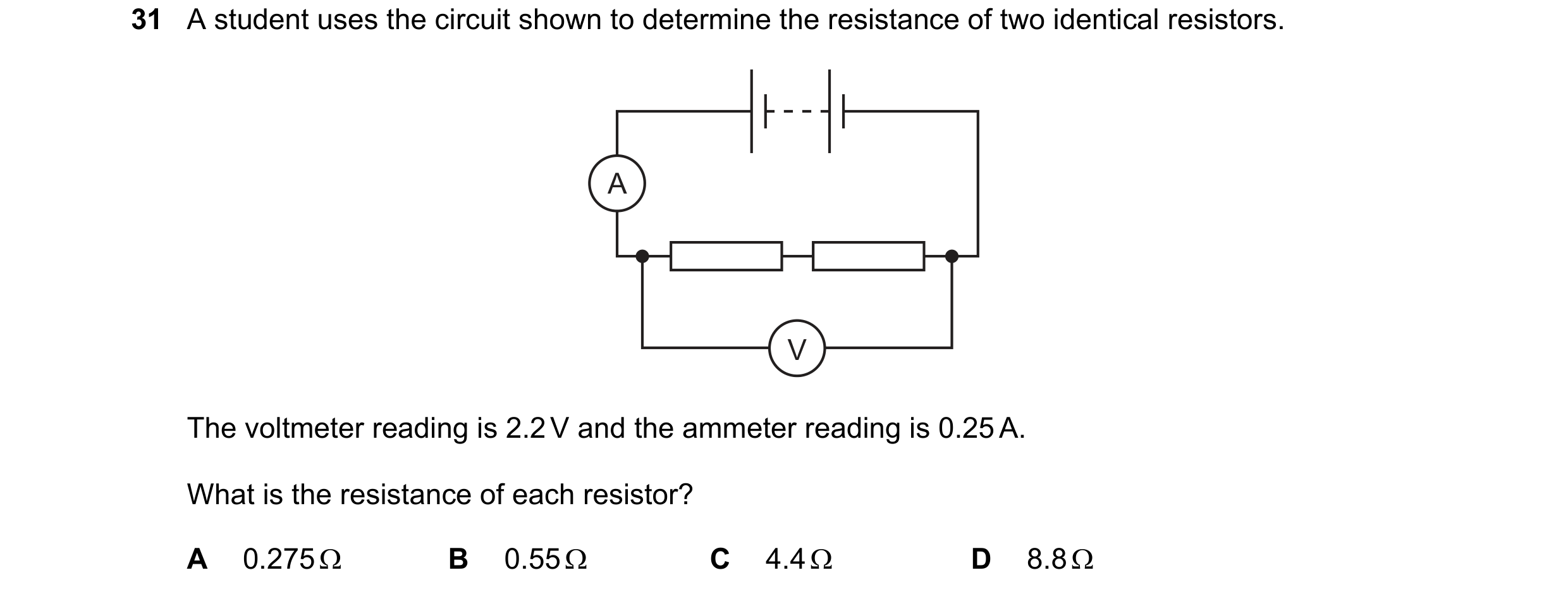
 94 / 127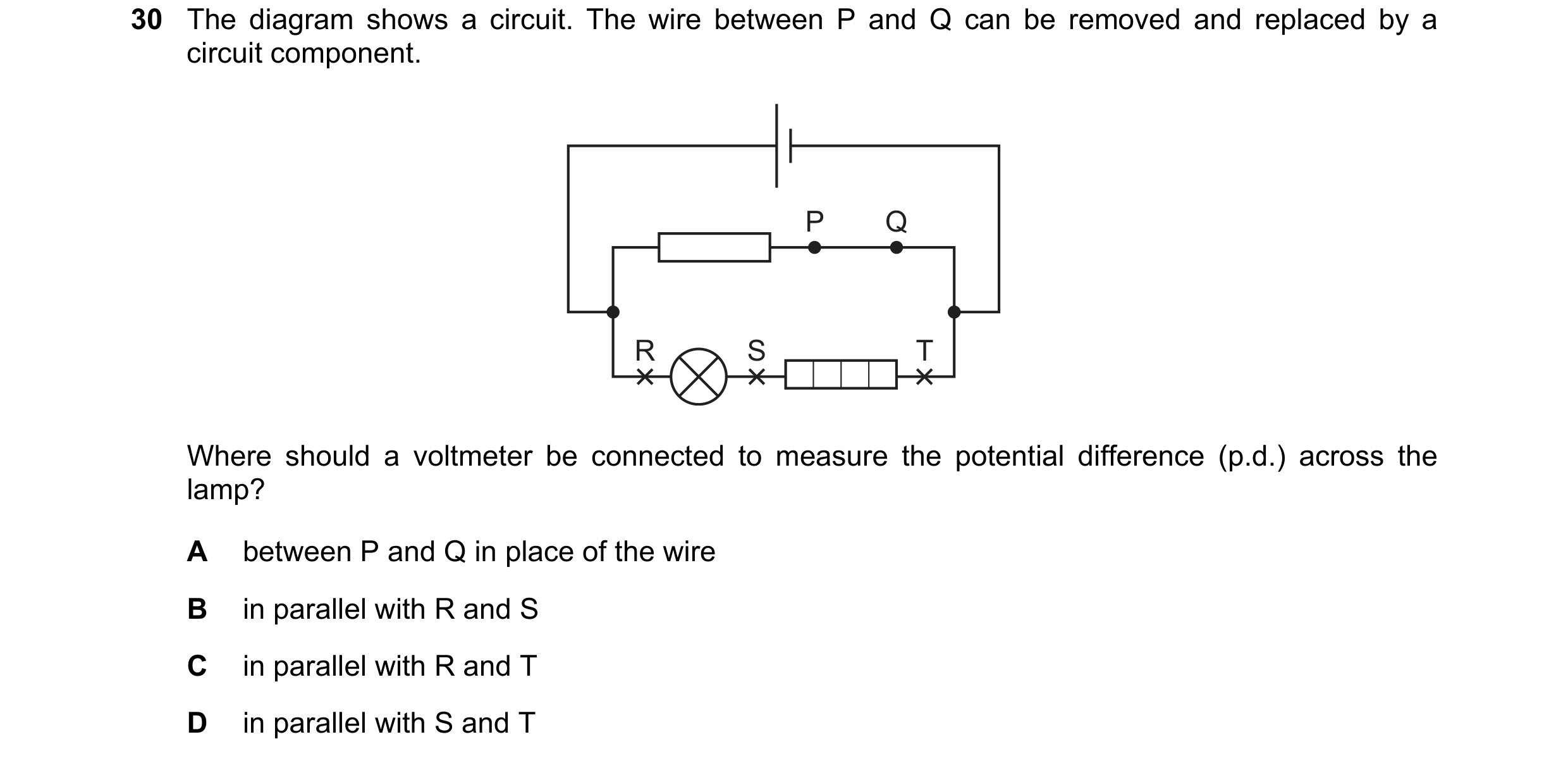
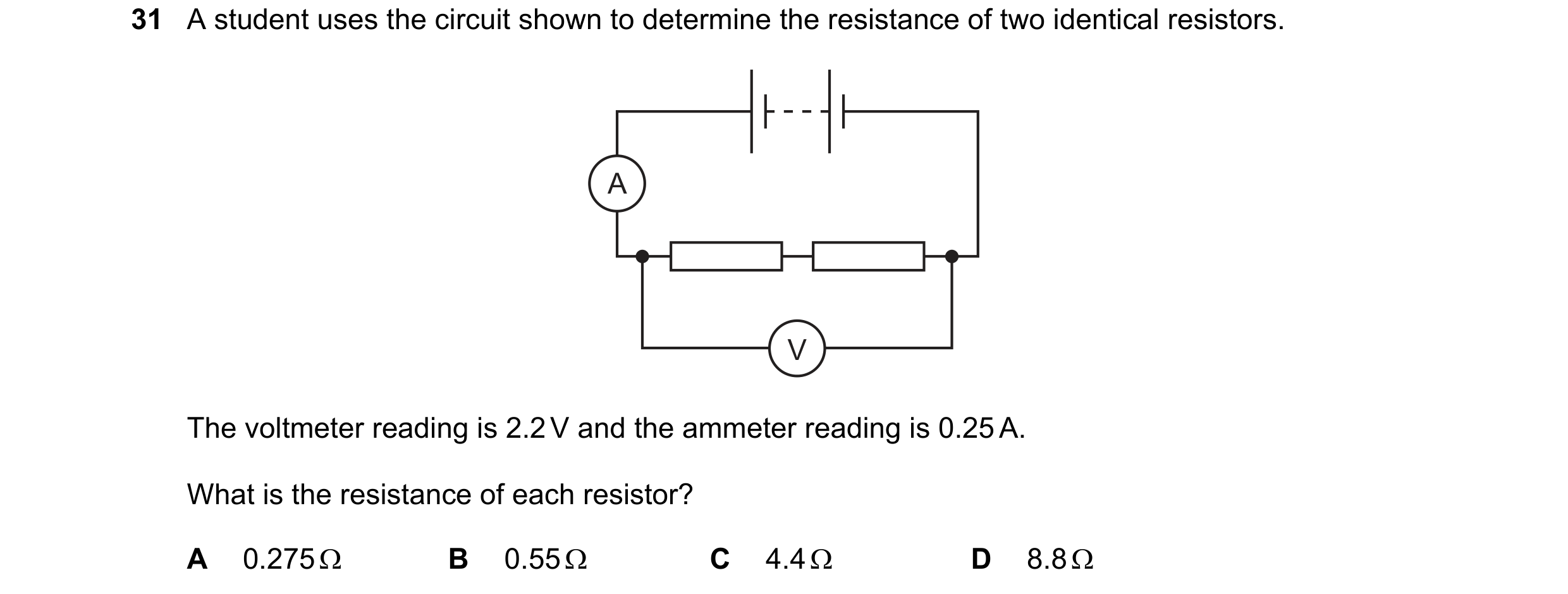
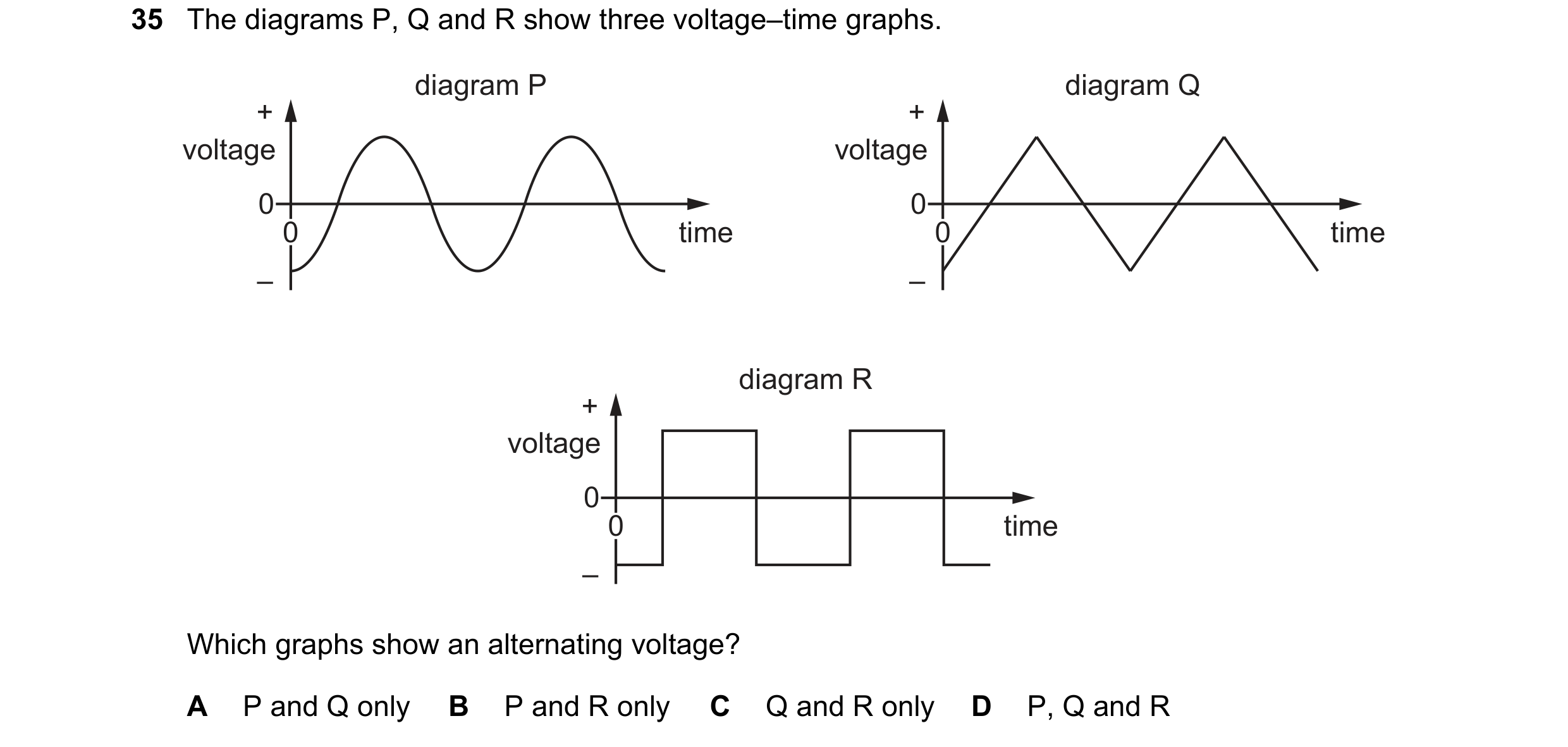 95 / 127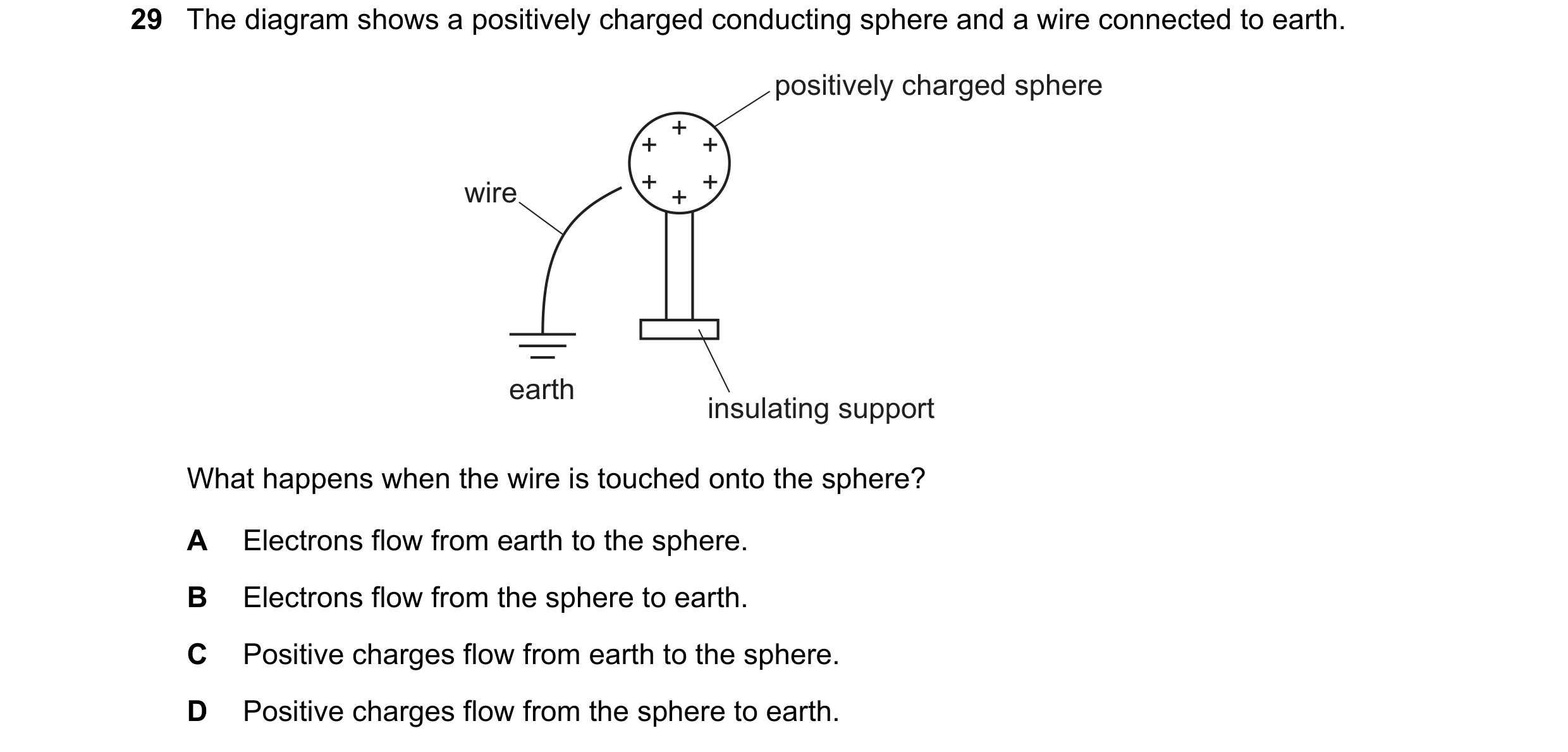
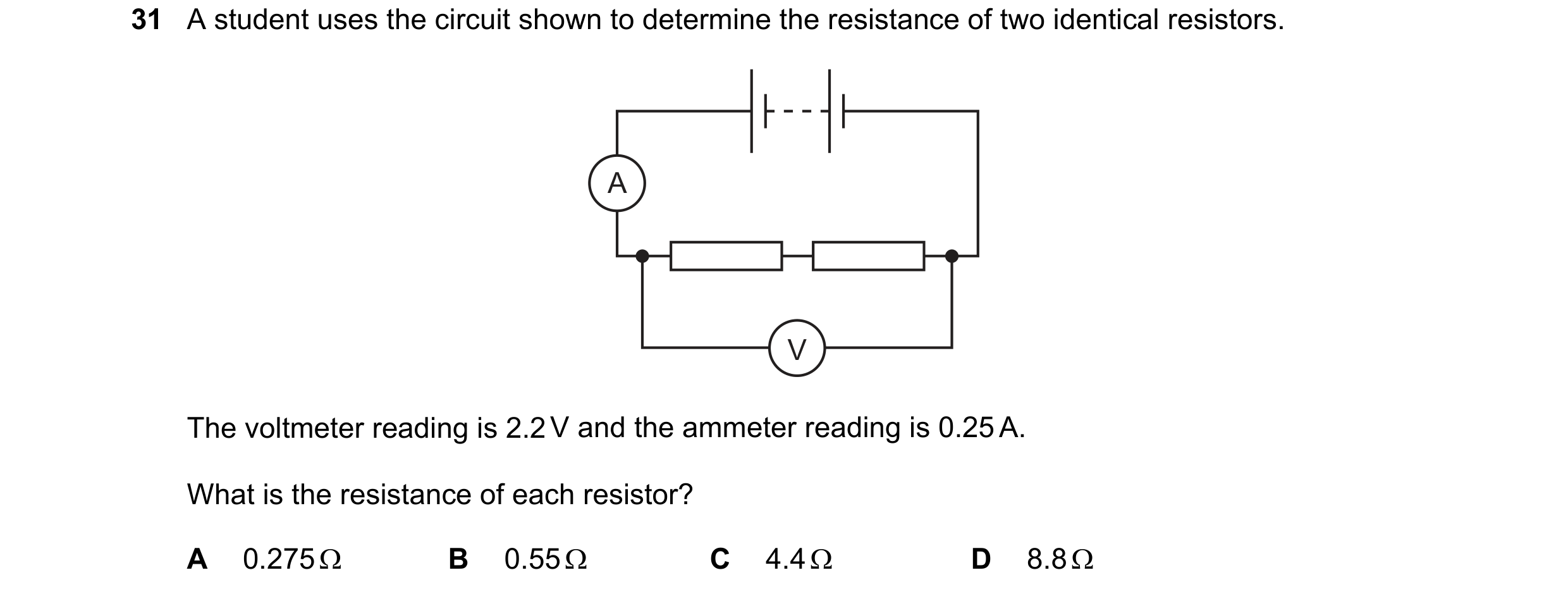 96 / 127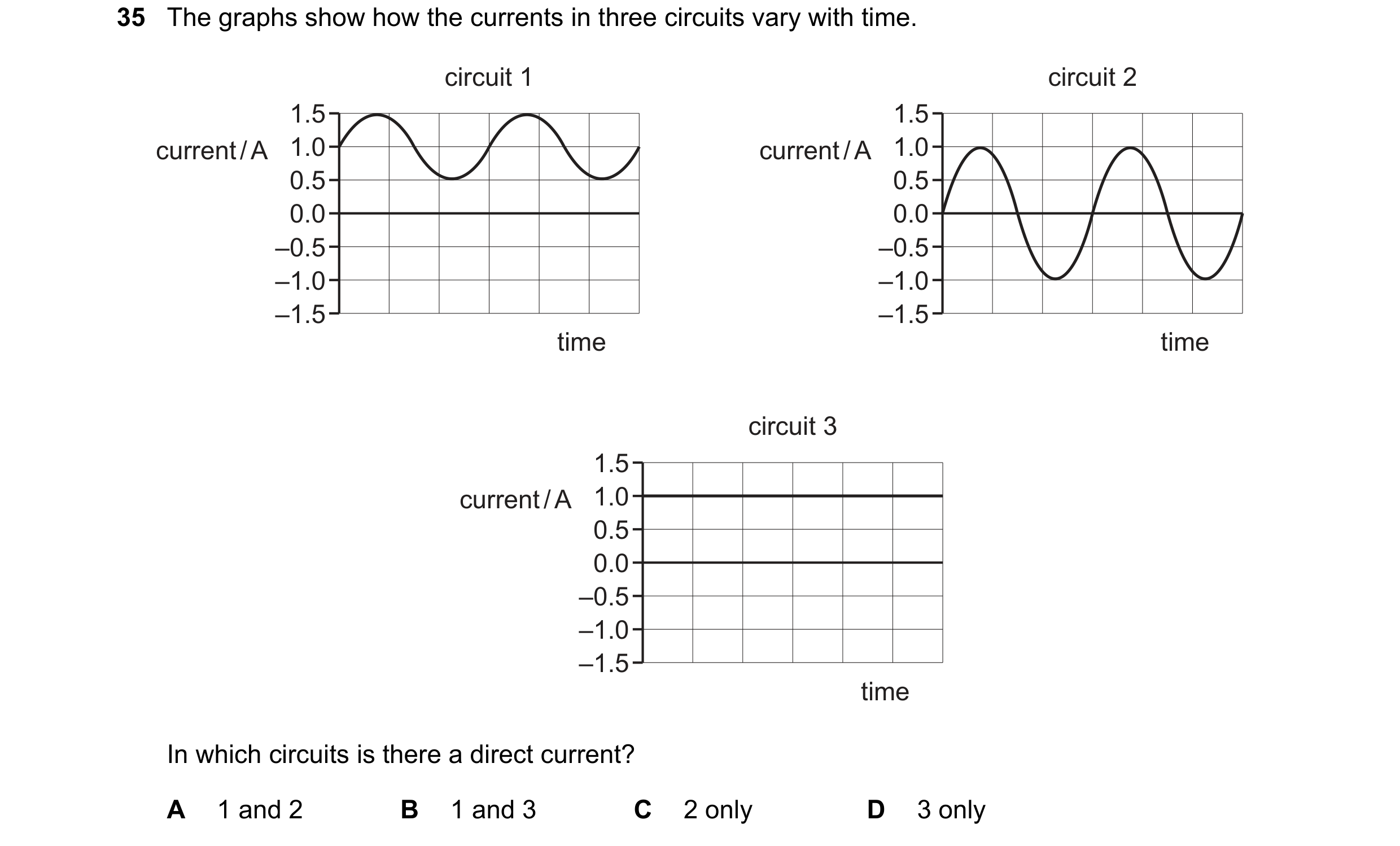

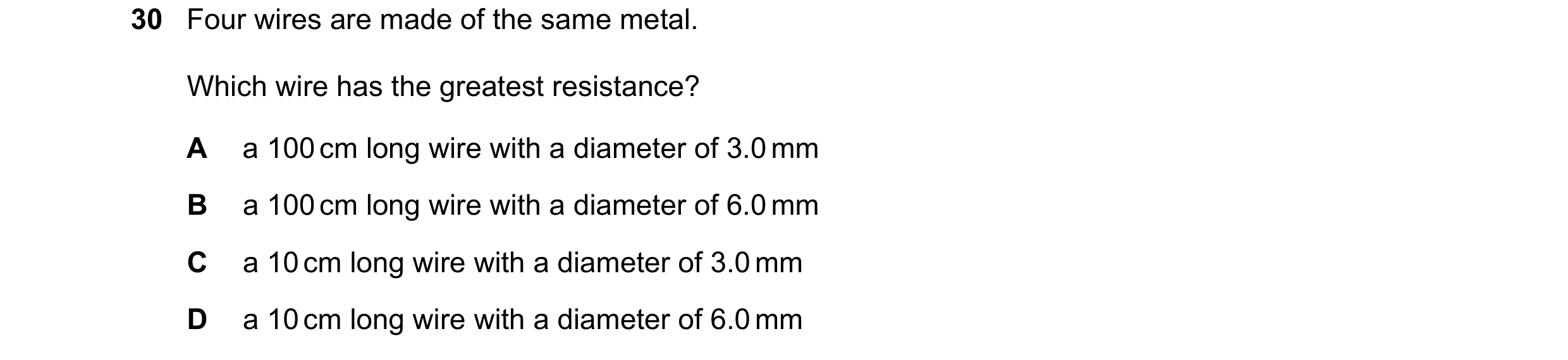
 97 / 127

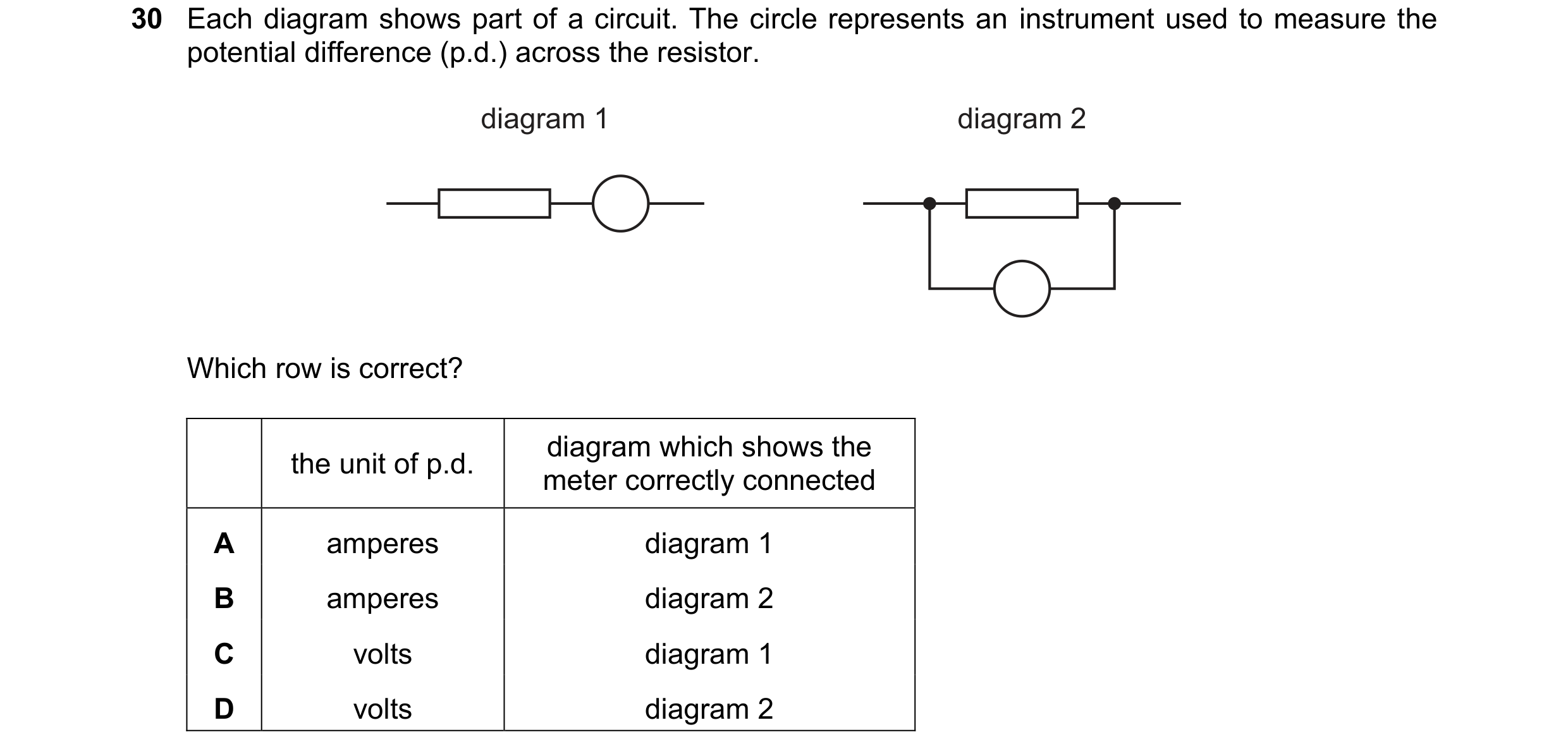
 98 / 127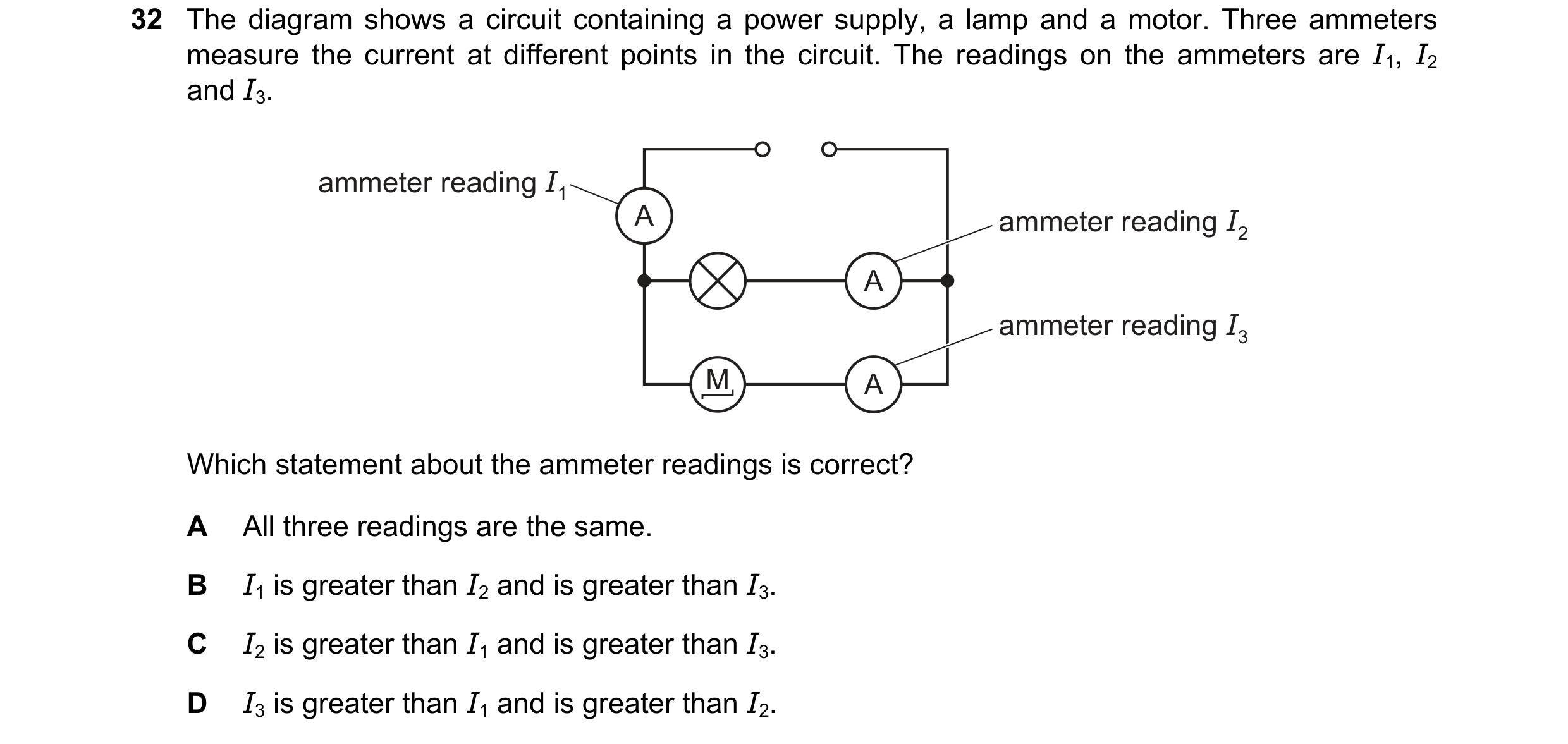
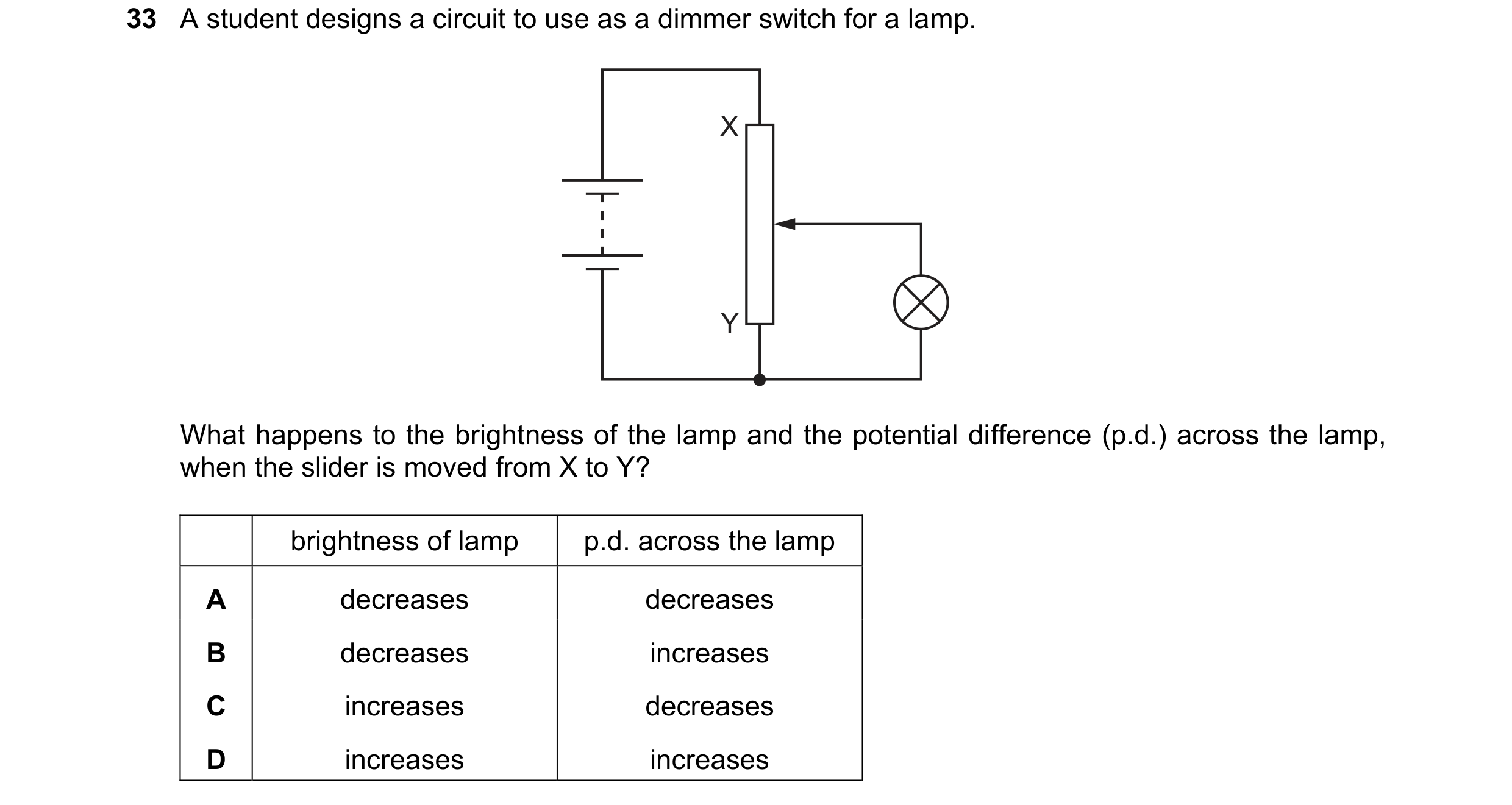
 99 / 127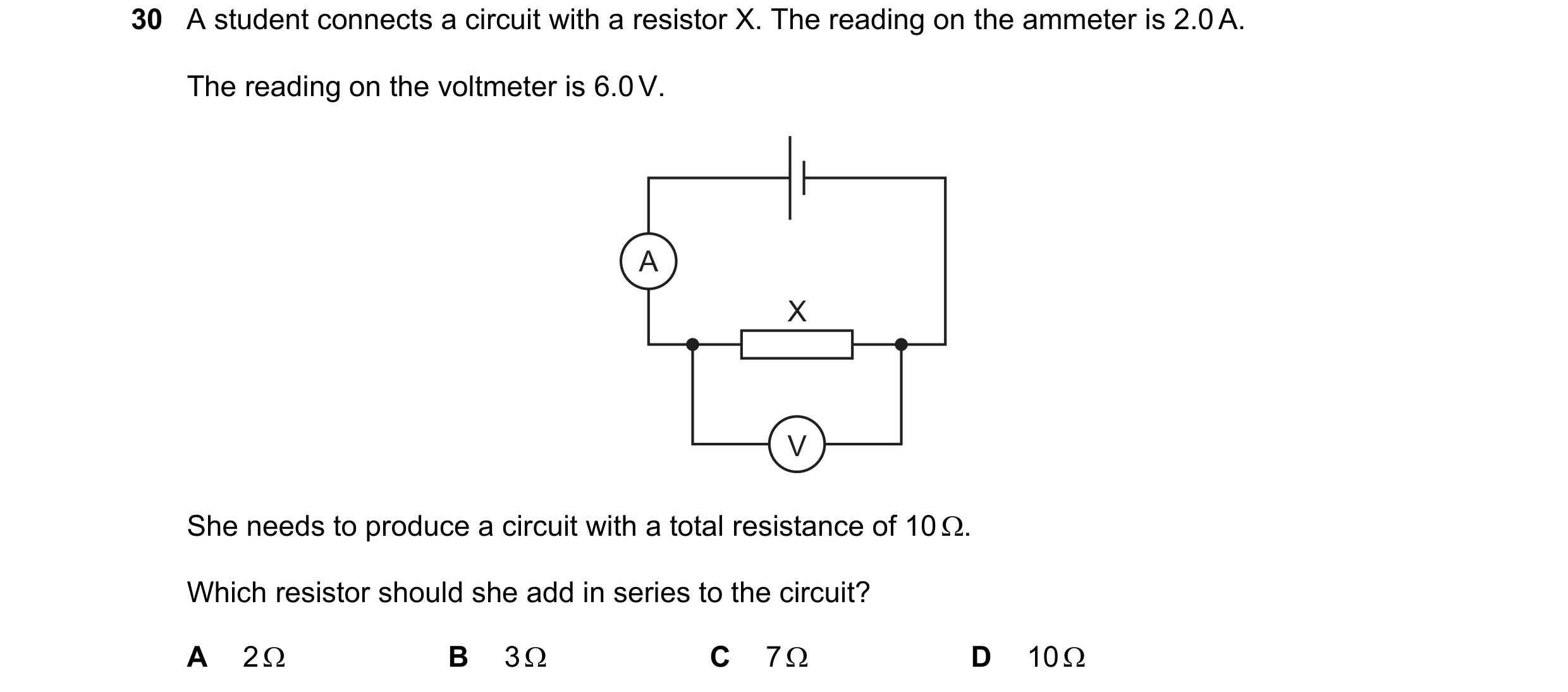
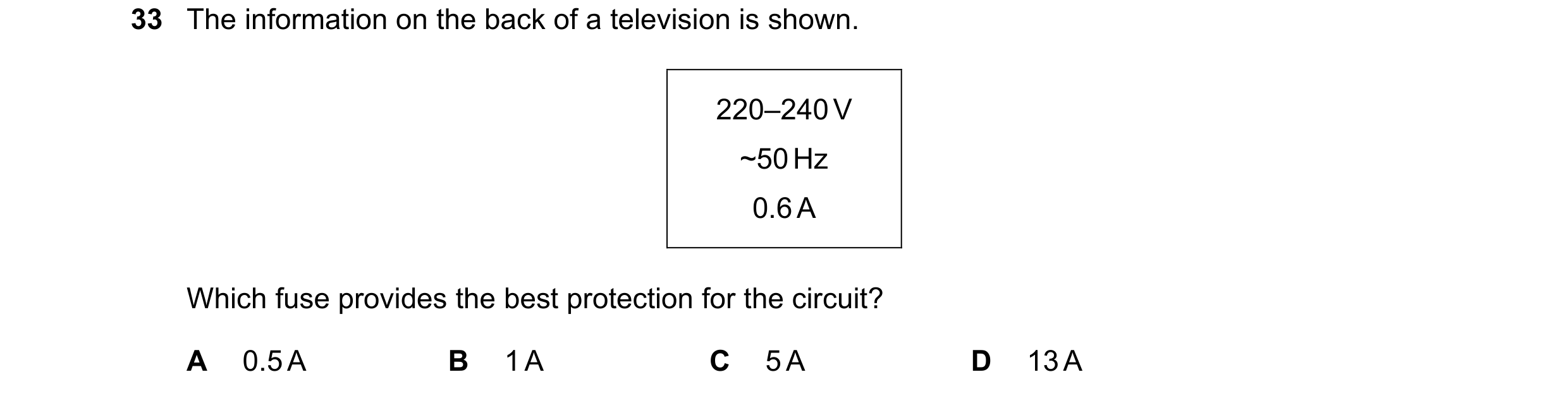
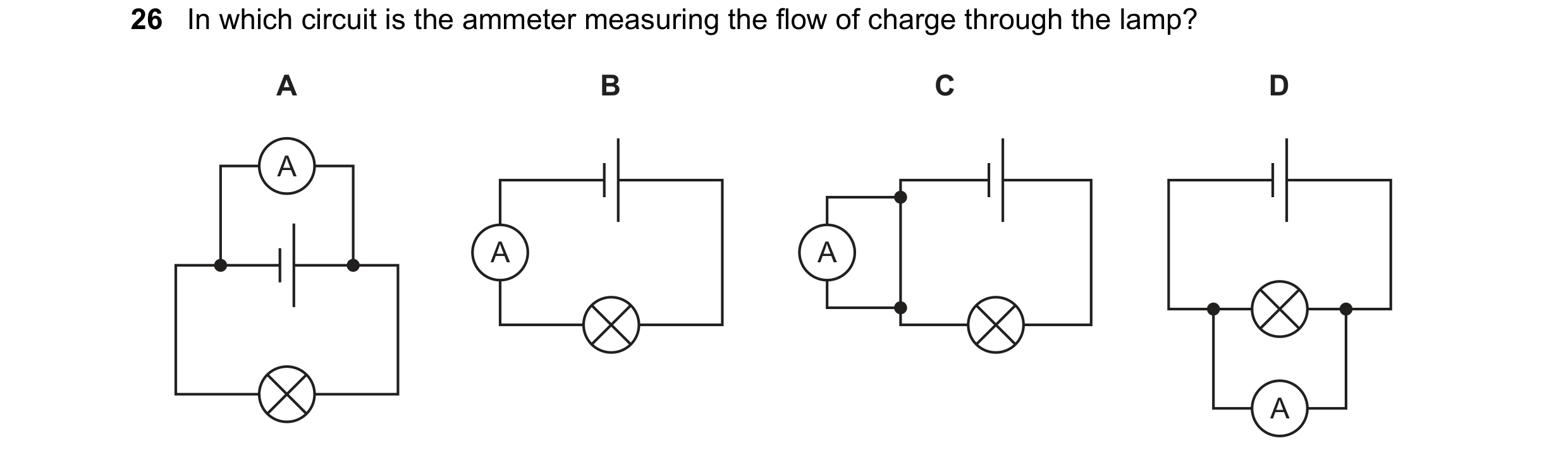 100 / 127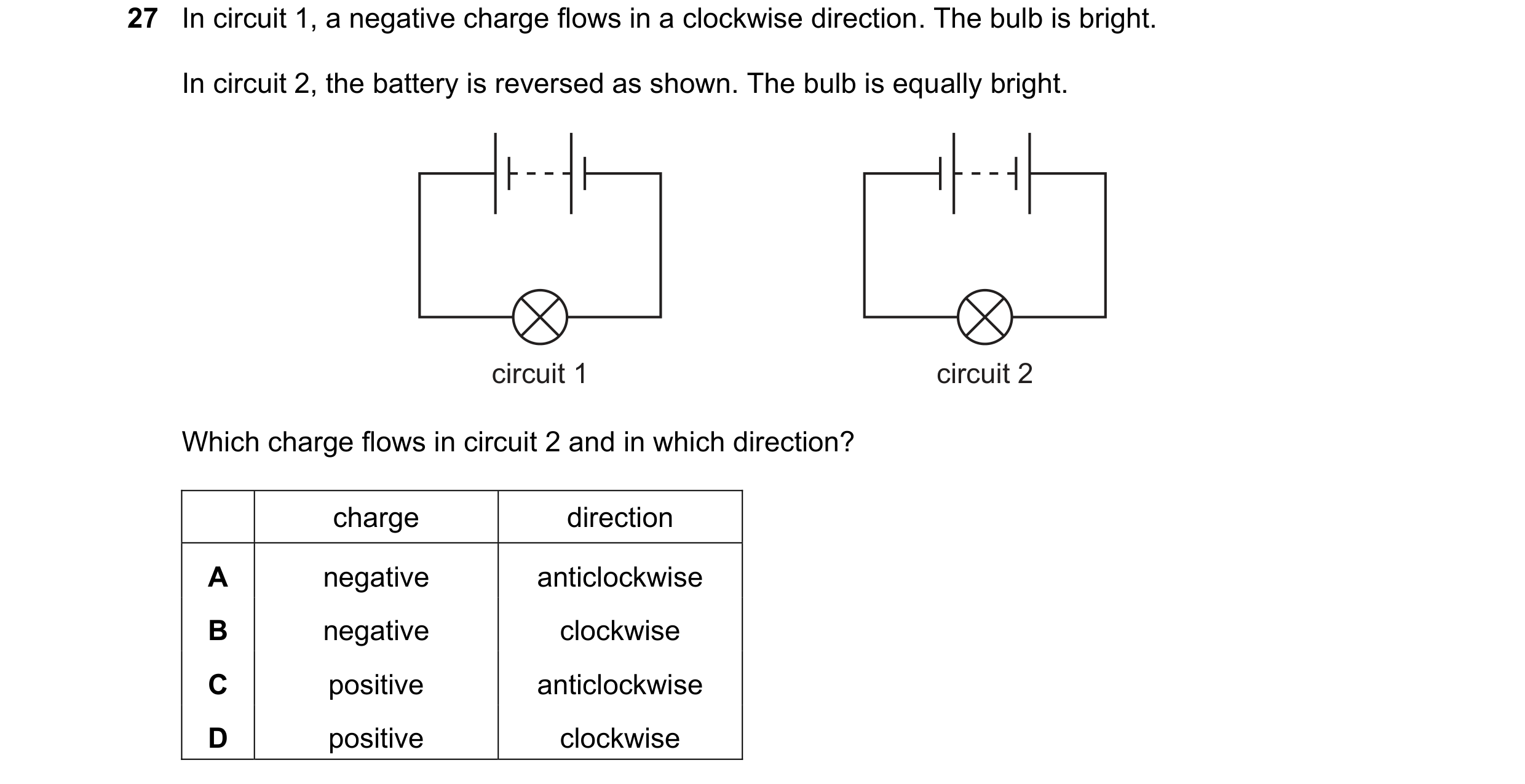
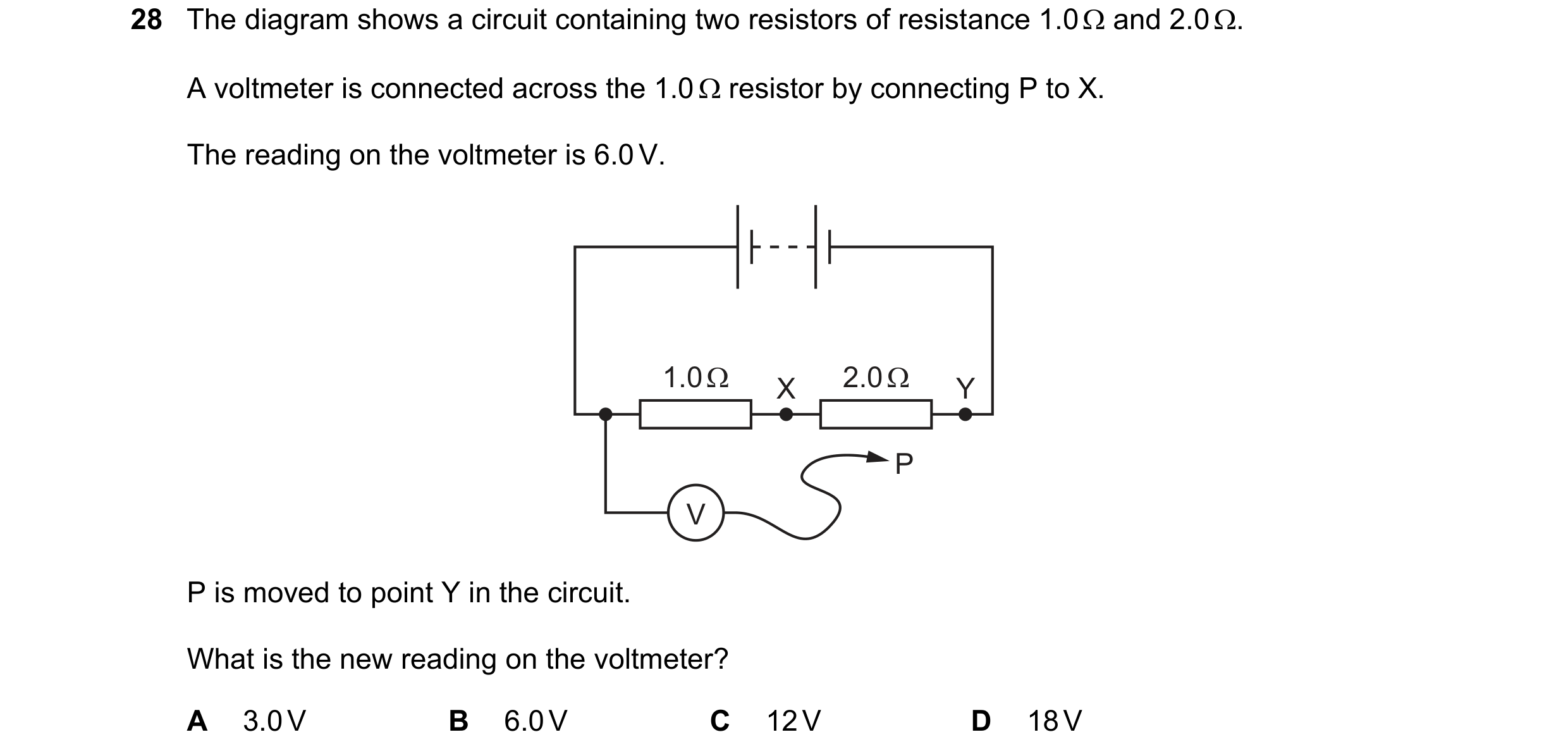 101 / 127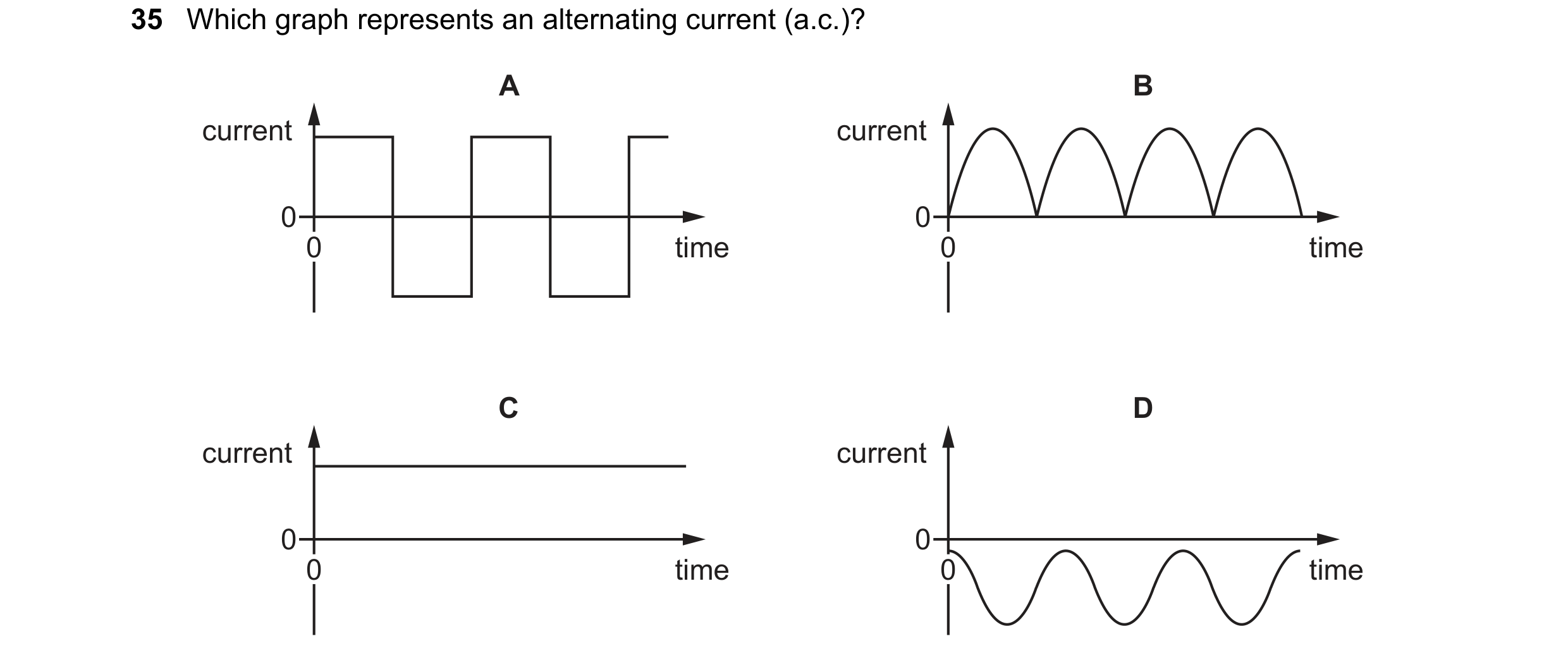

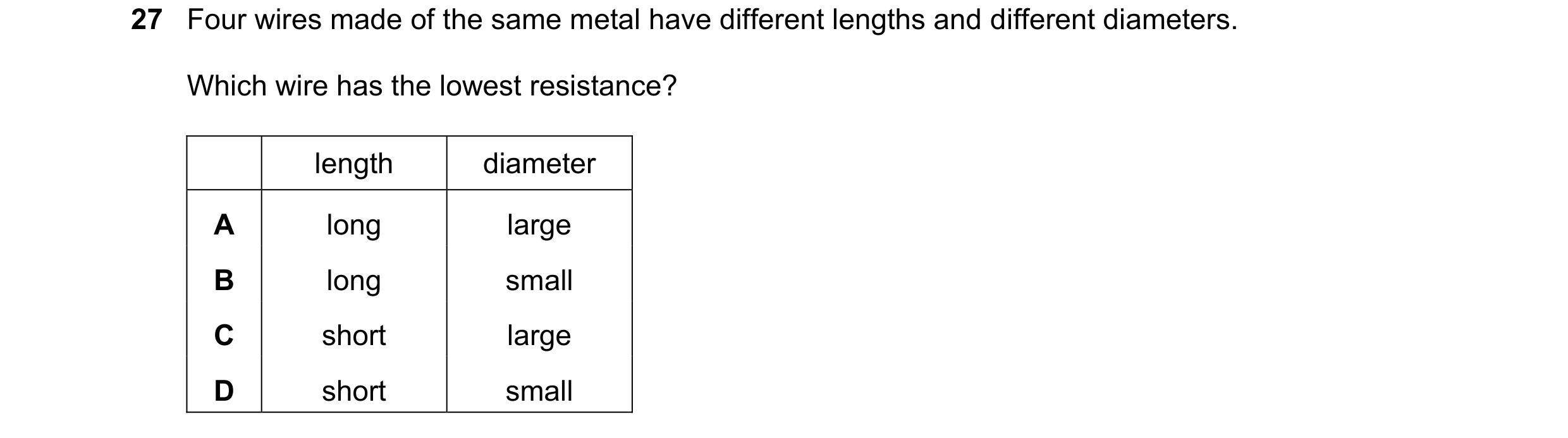
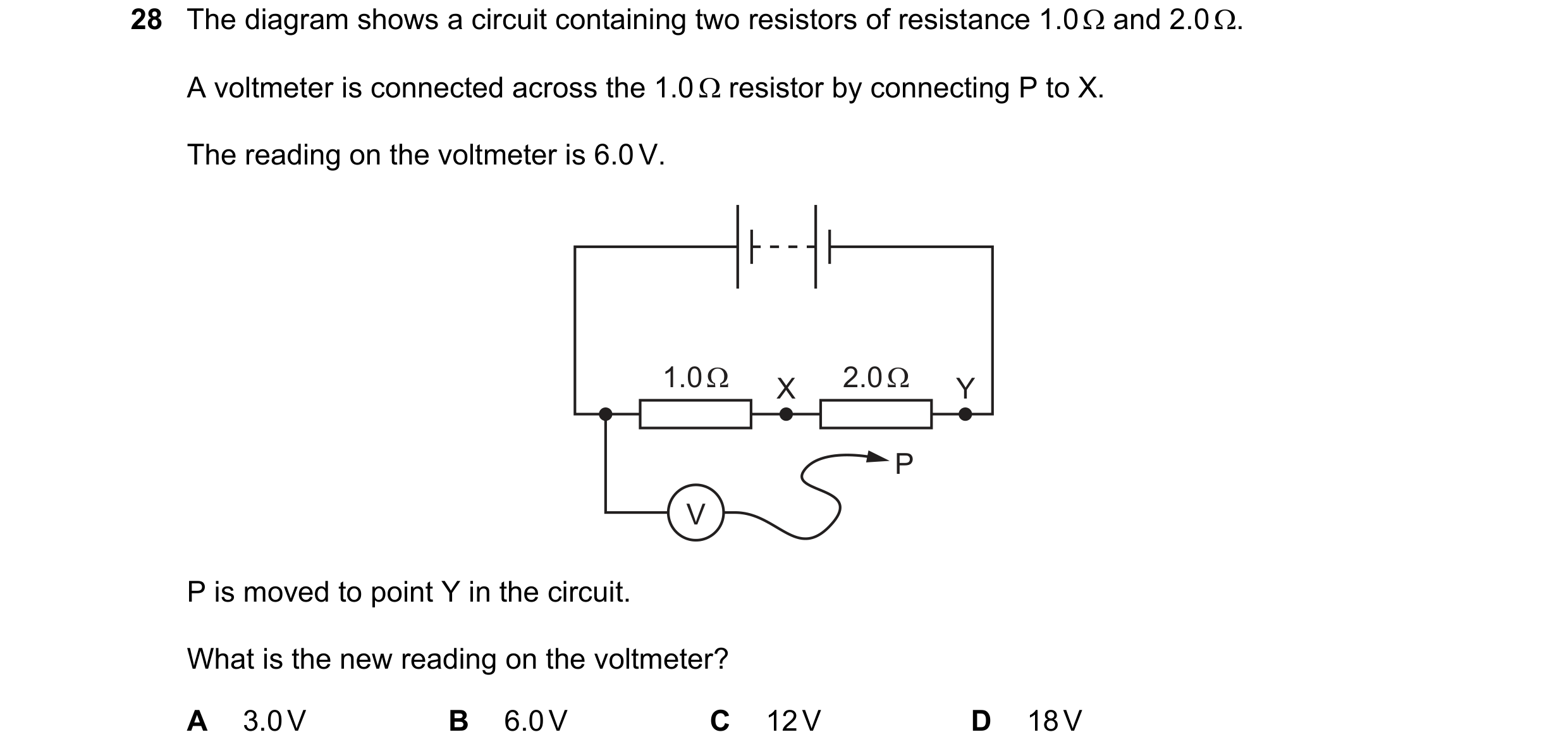 102 / 127
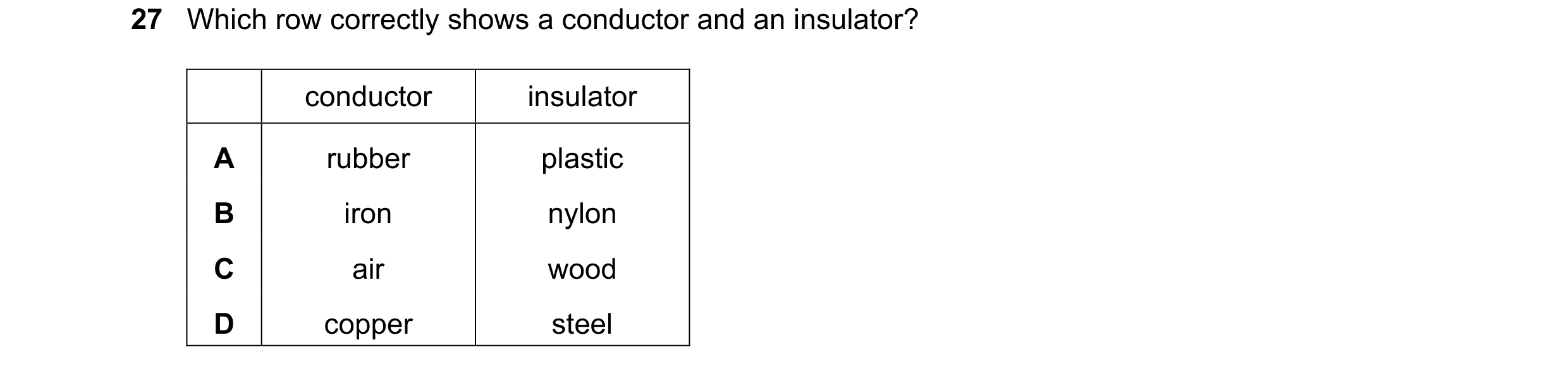
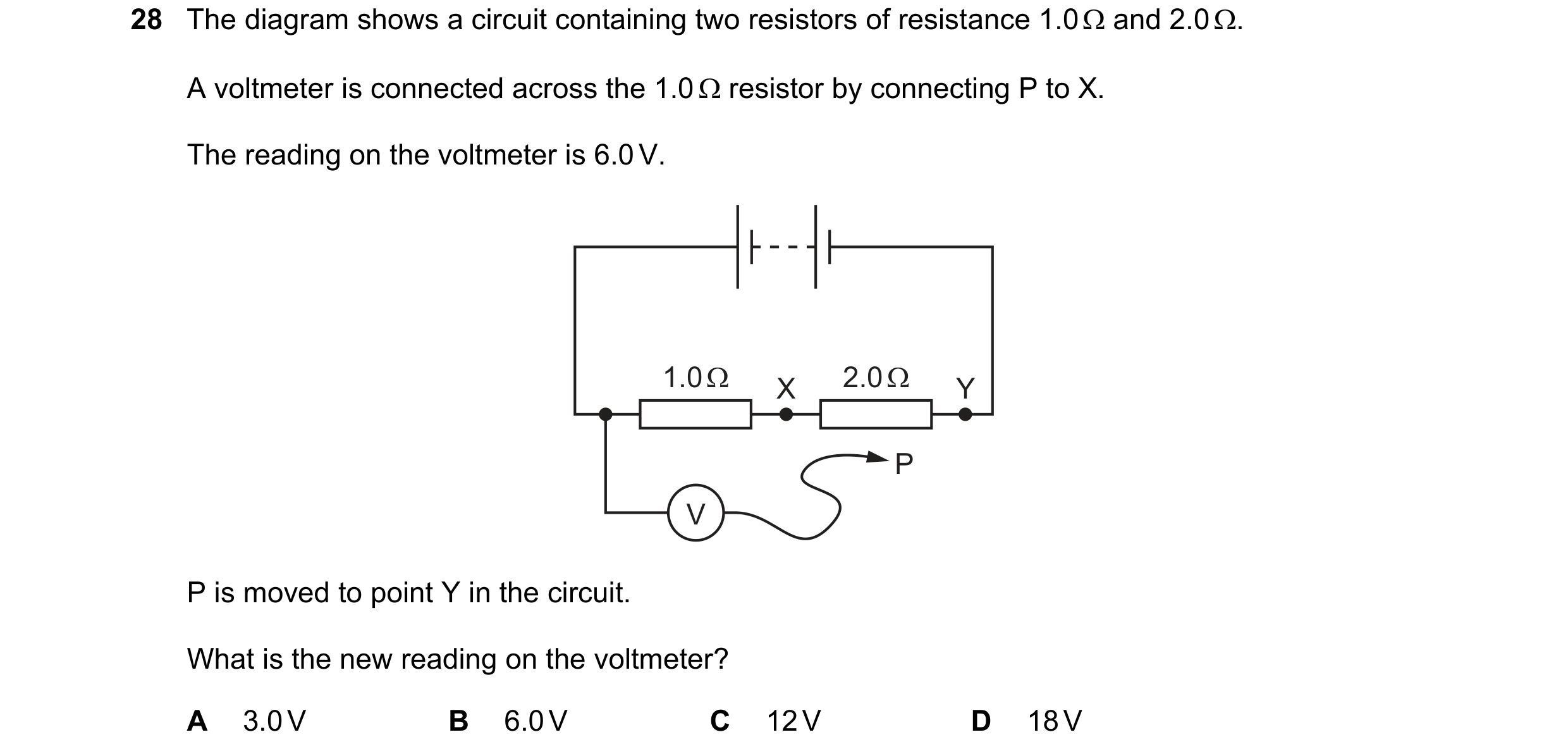
 103 / 127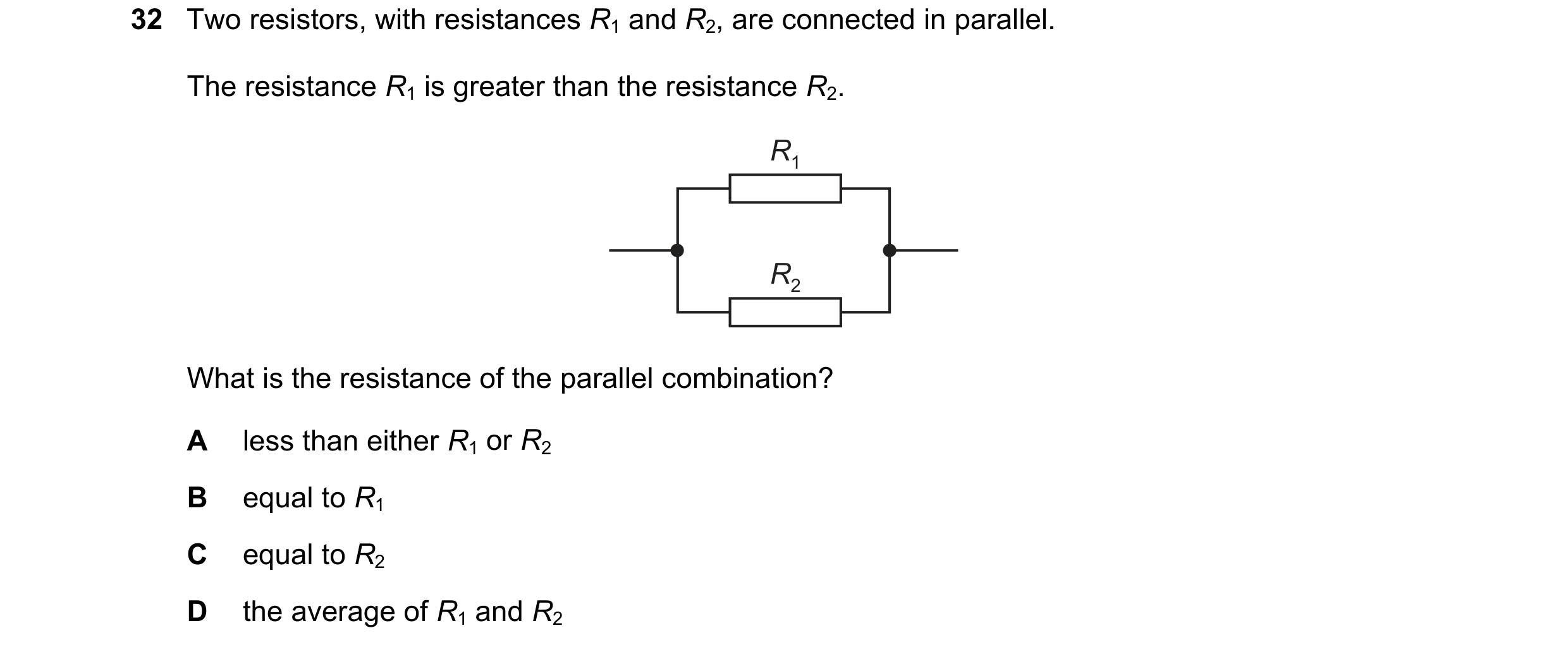
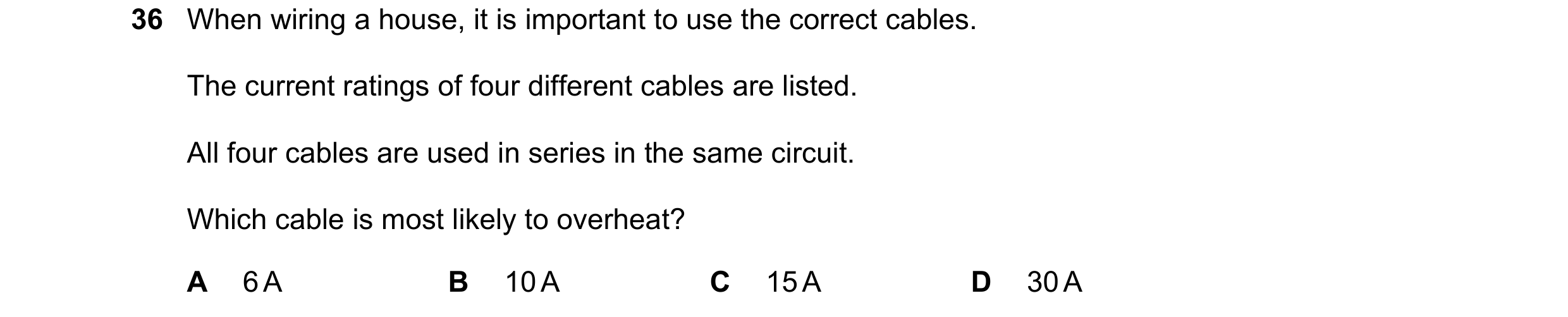
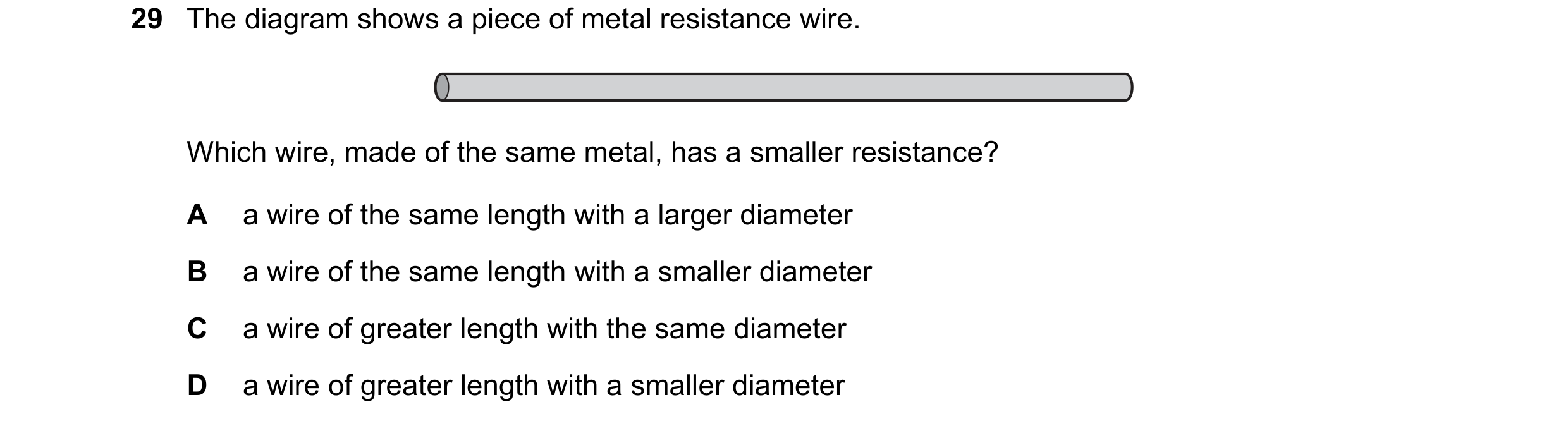
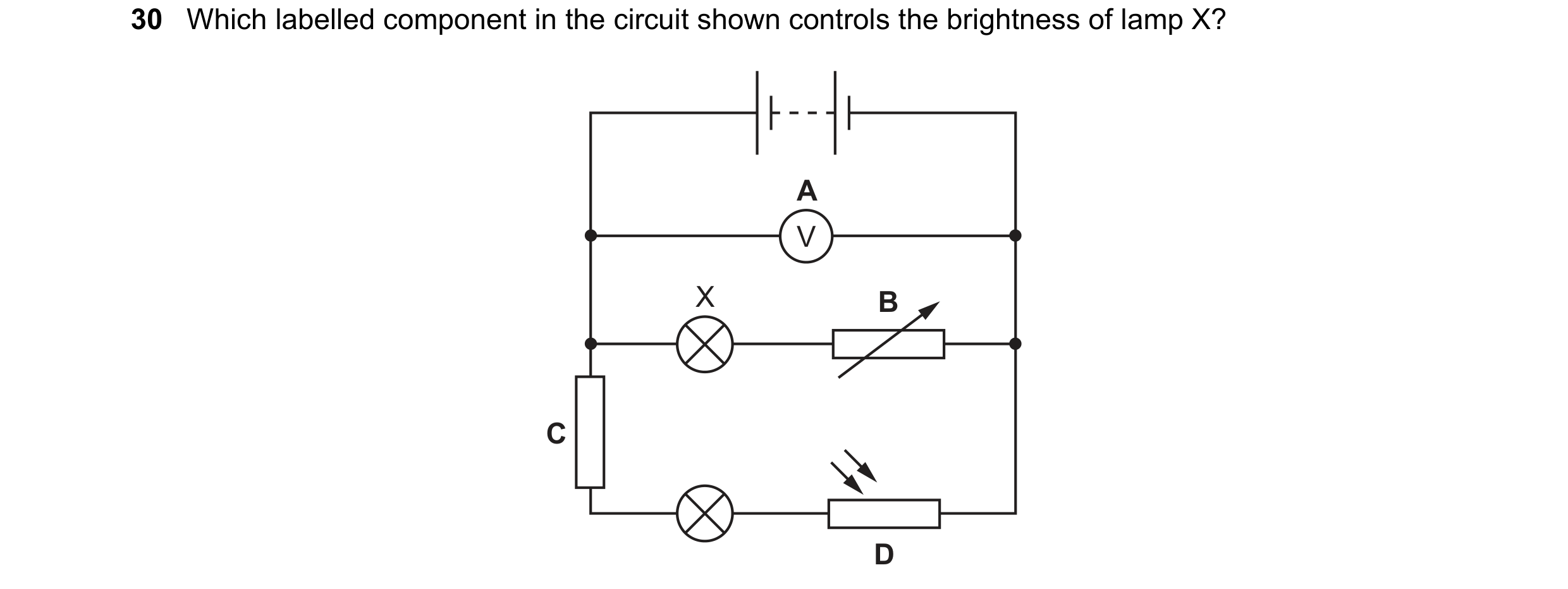 104 / 127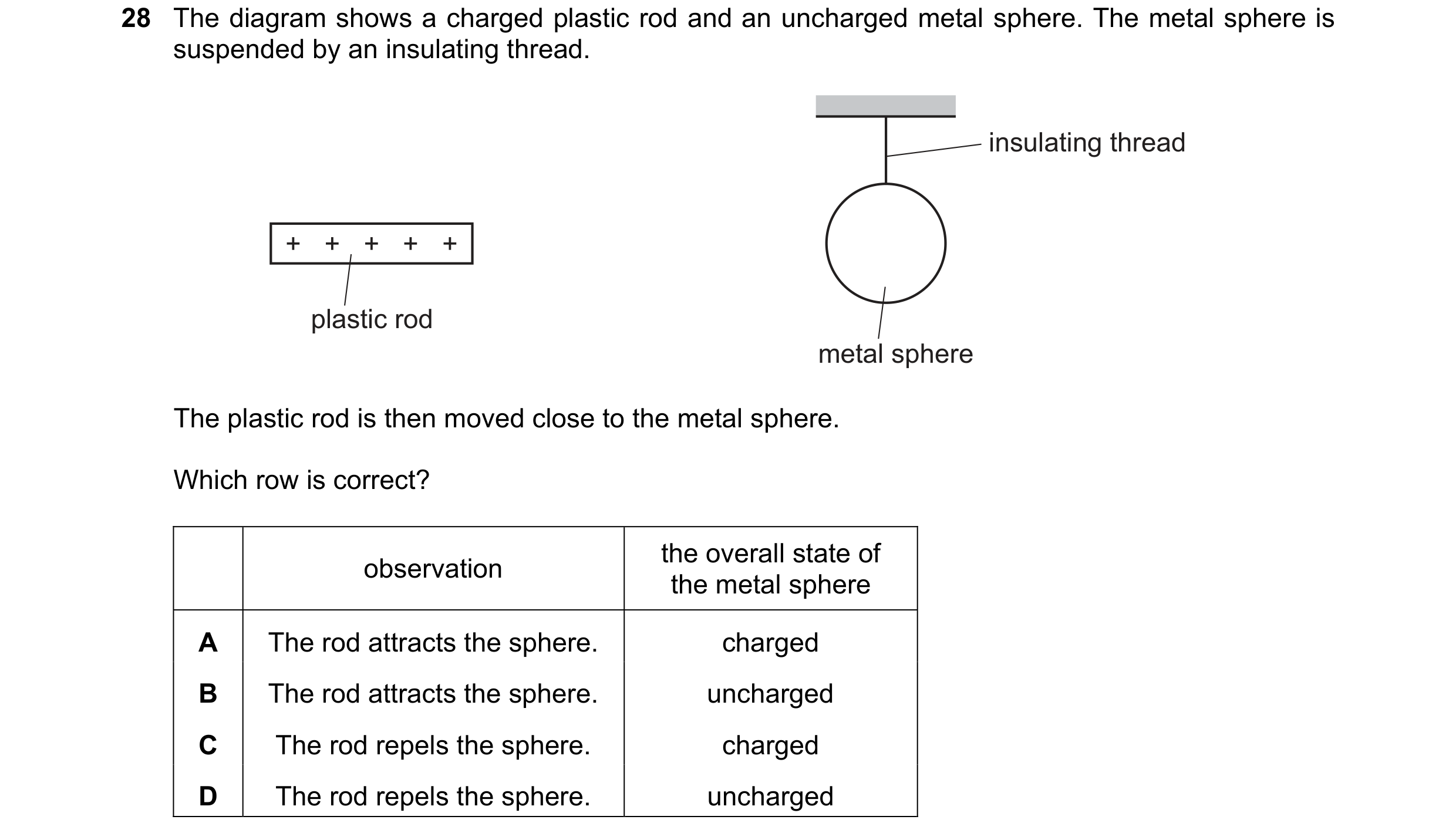
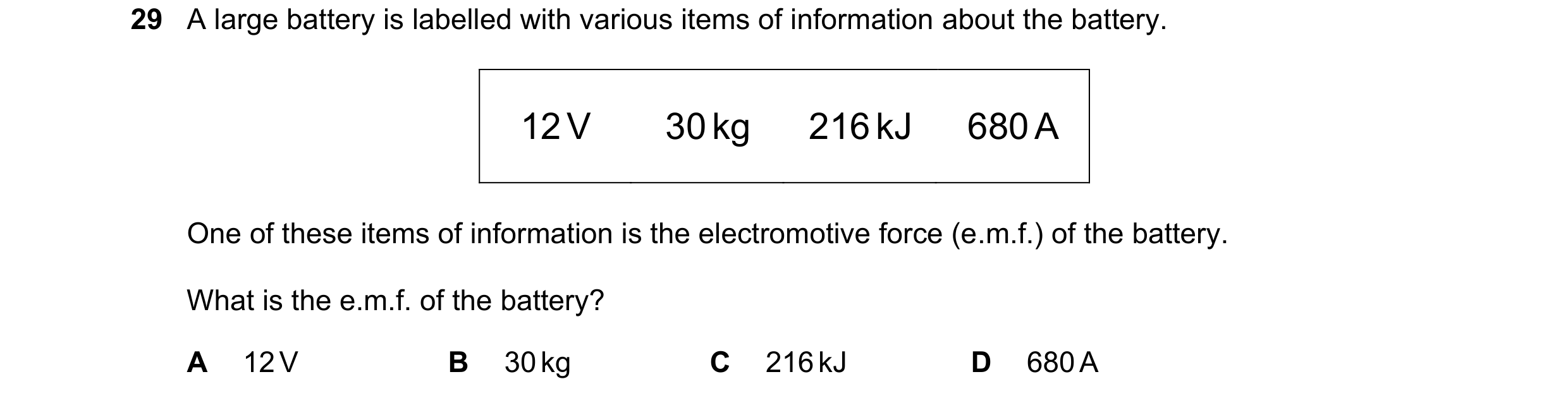
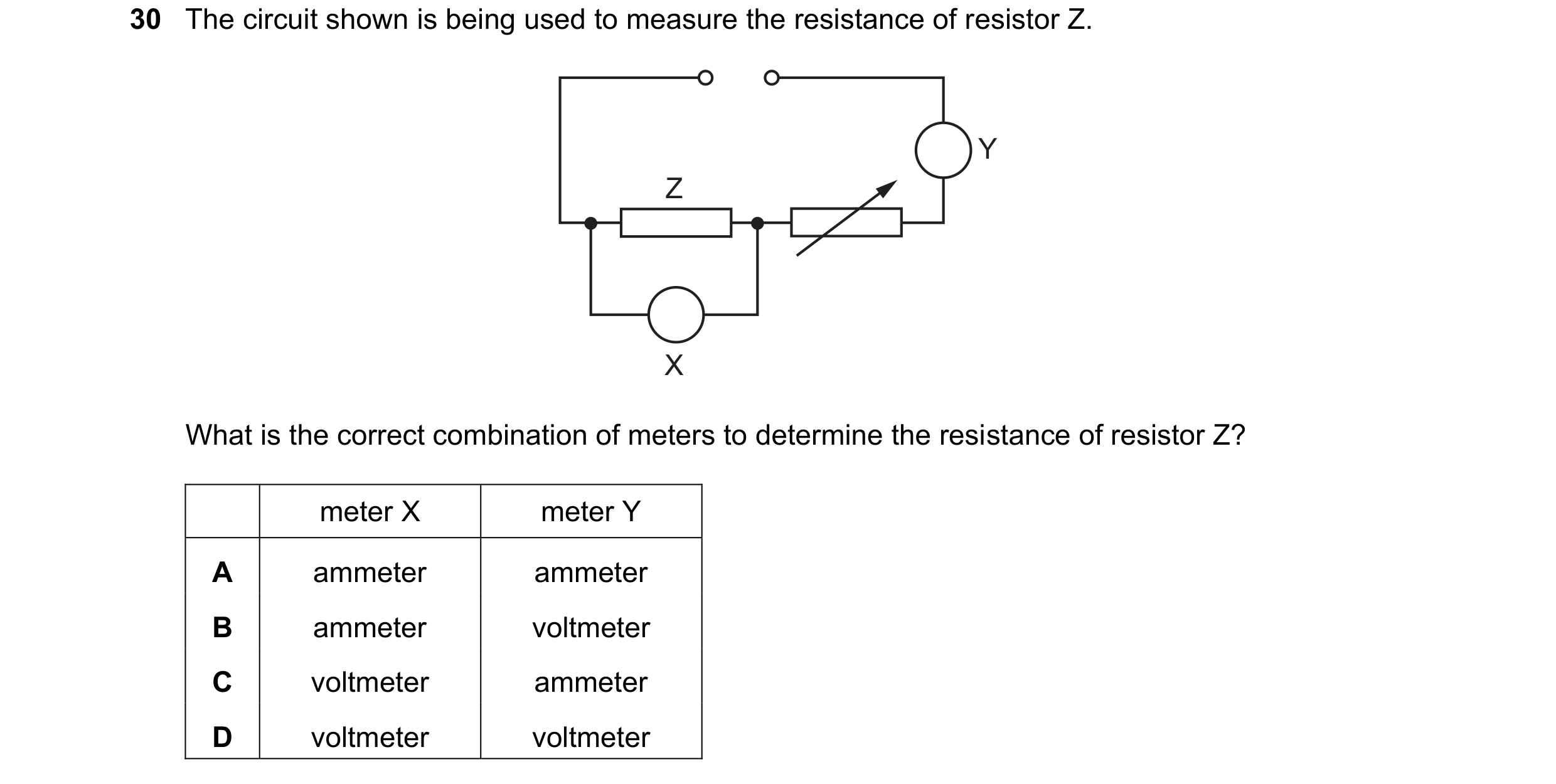 105 / 127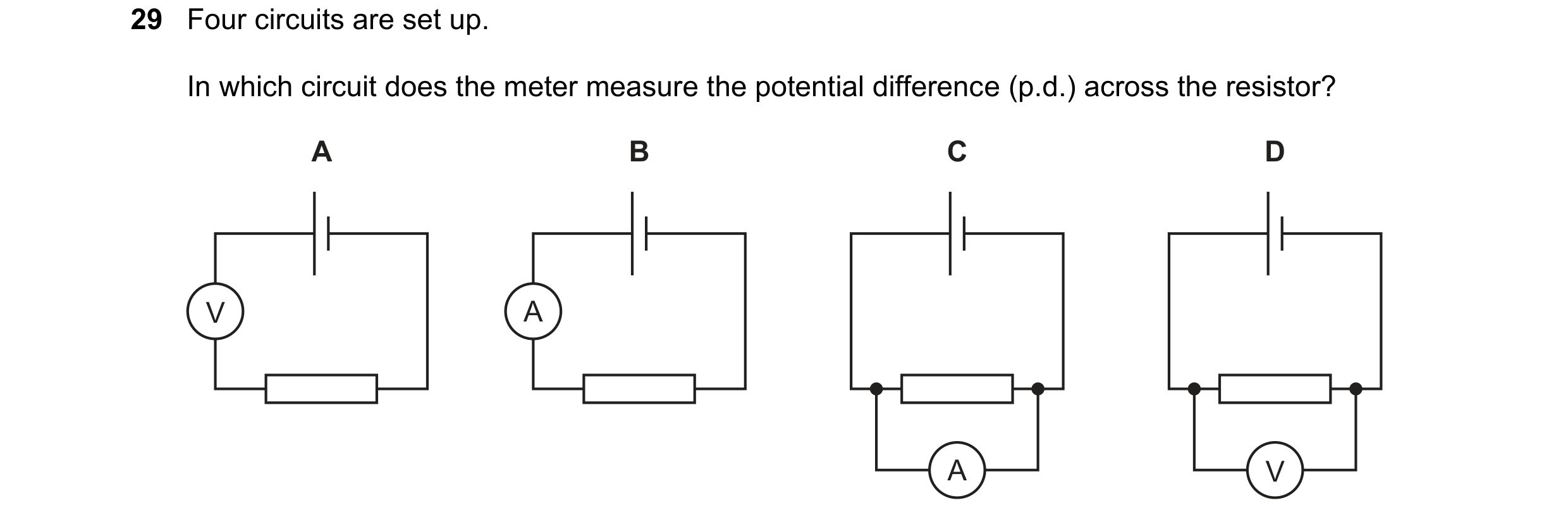

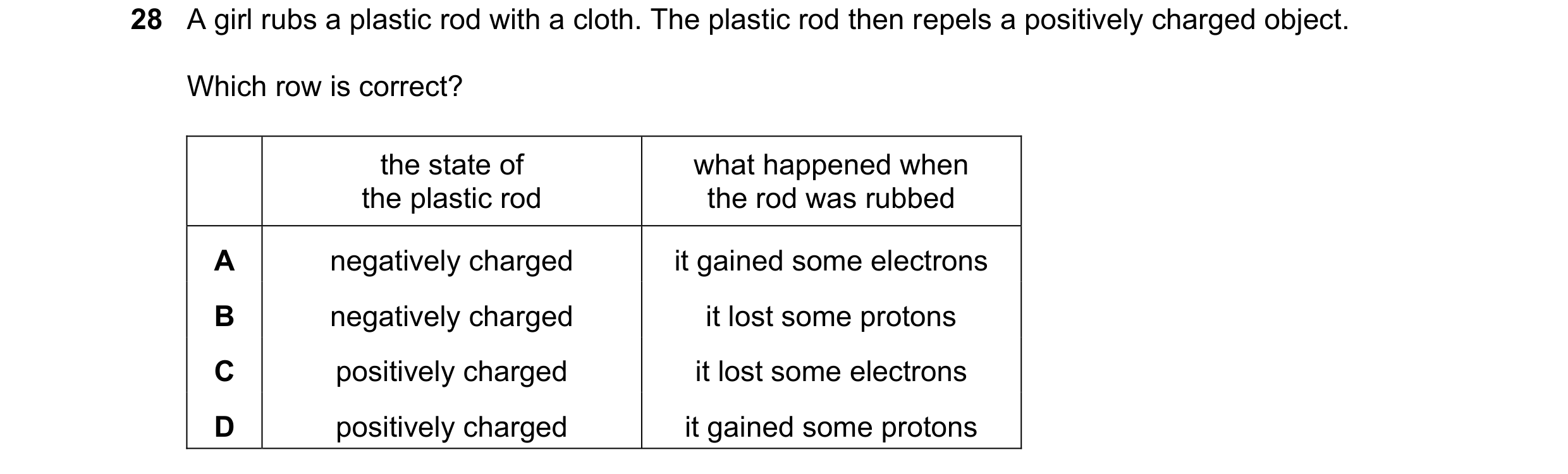
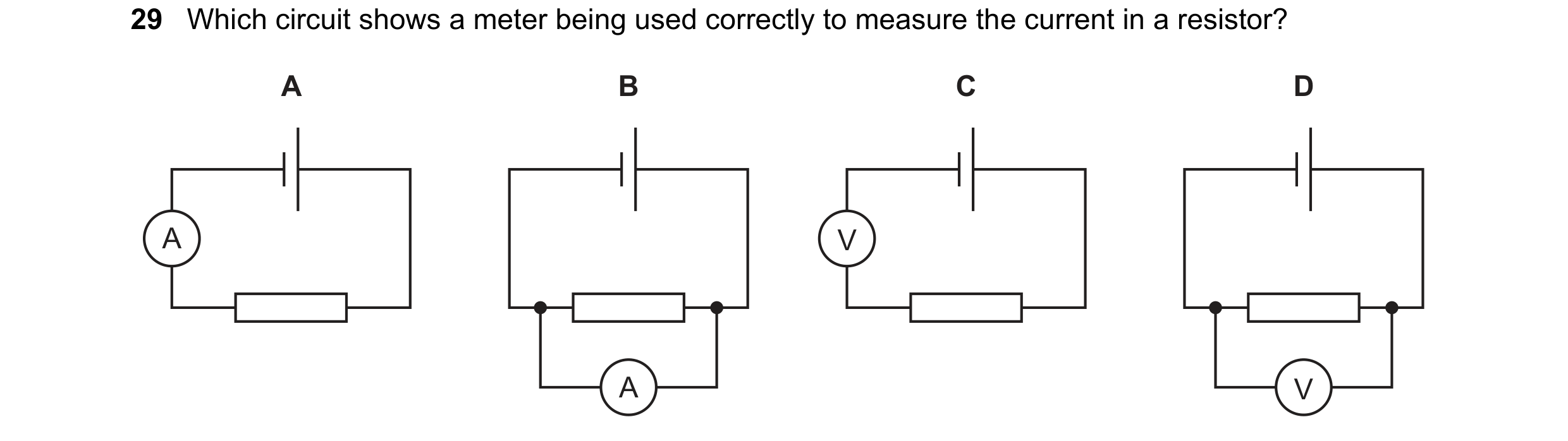
 106 / 127
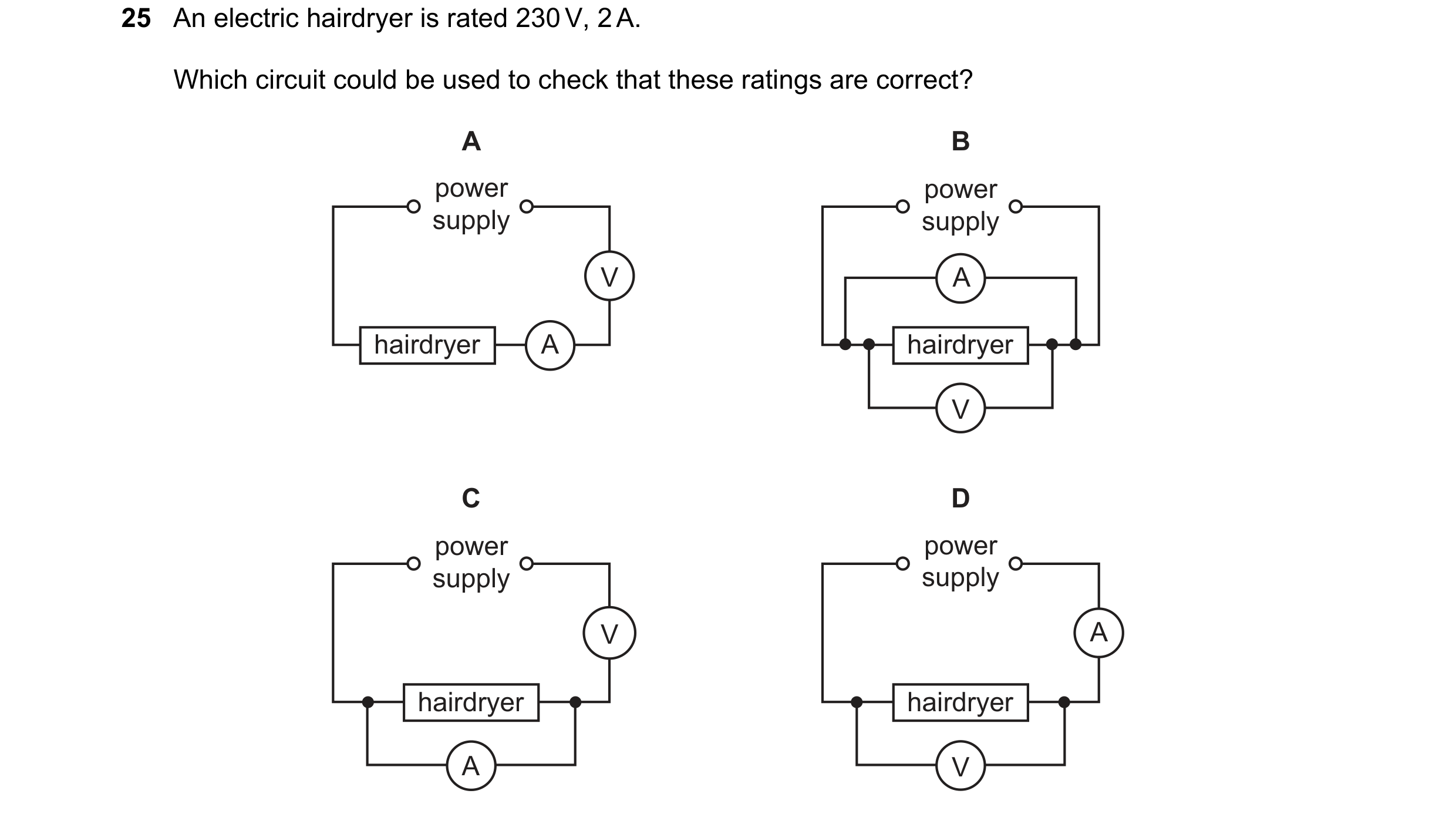
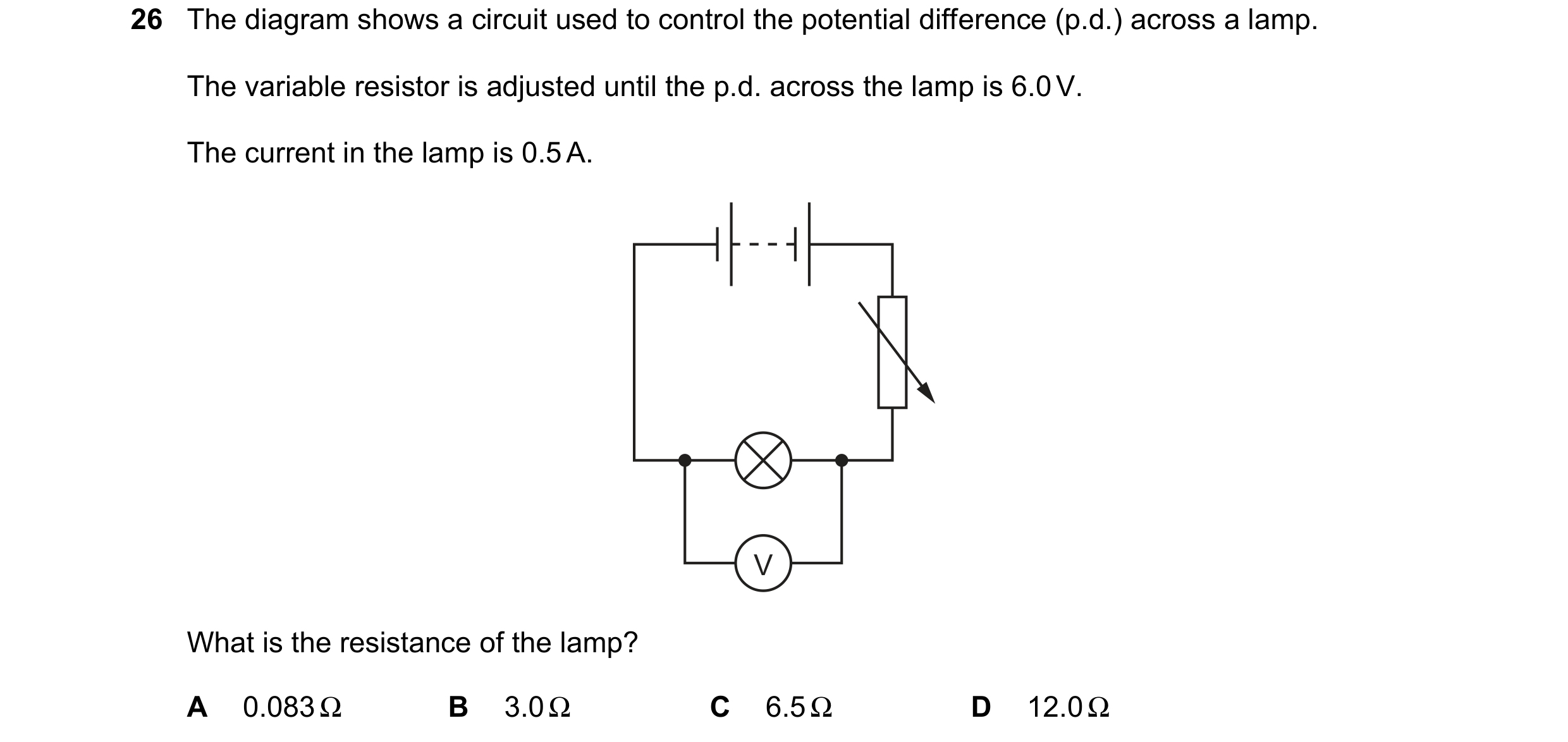 107 / 127
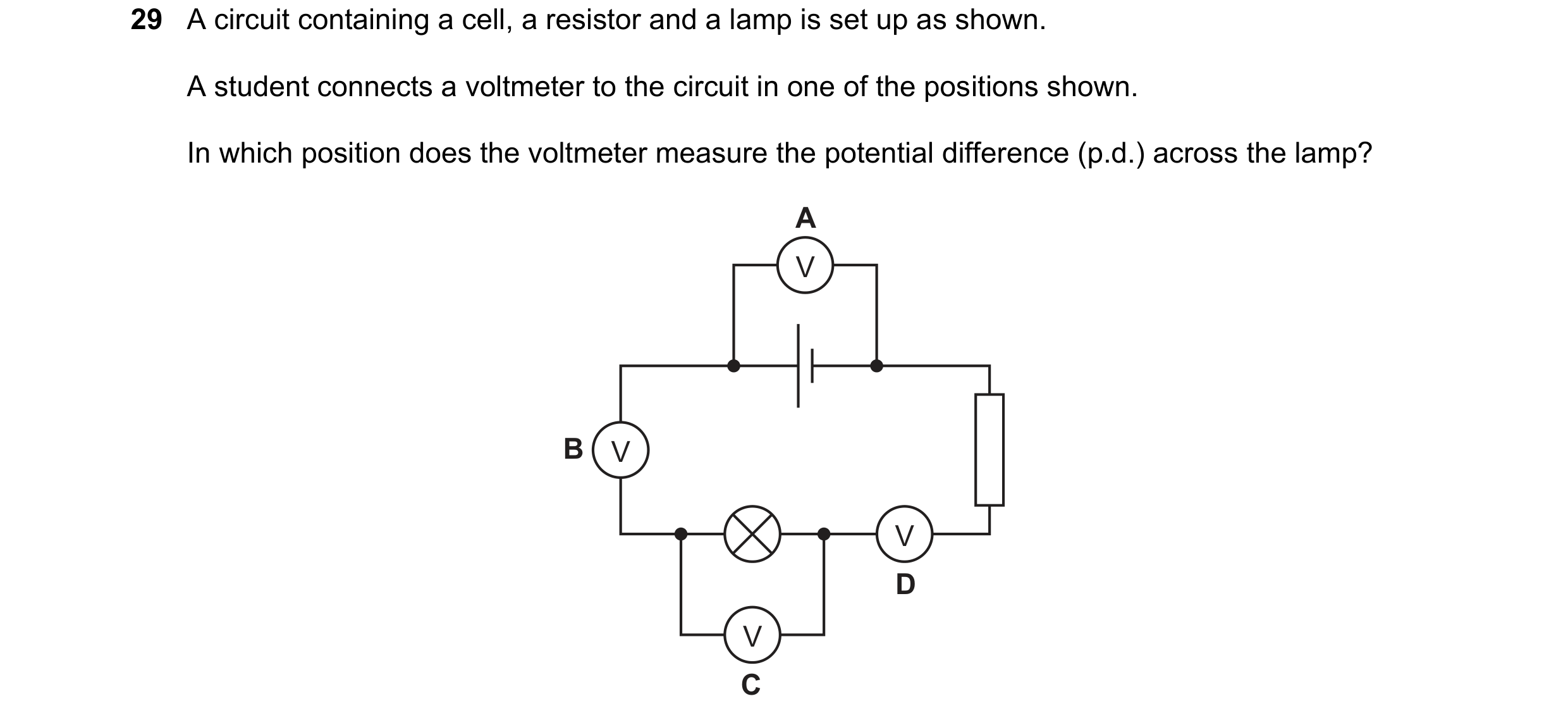

 108 / 127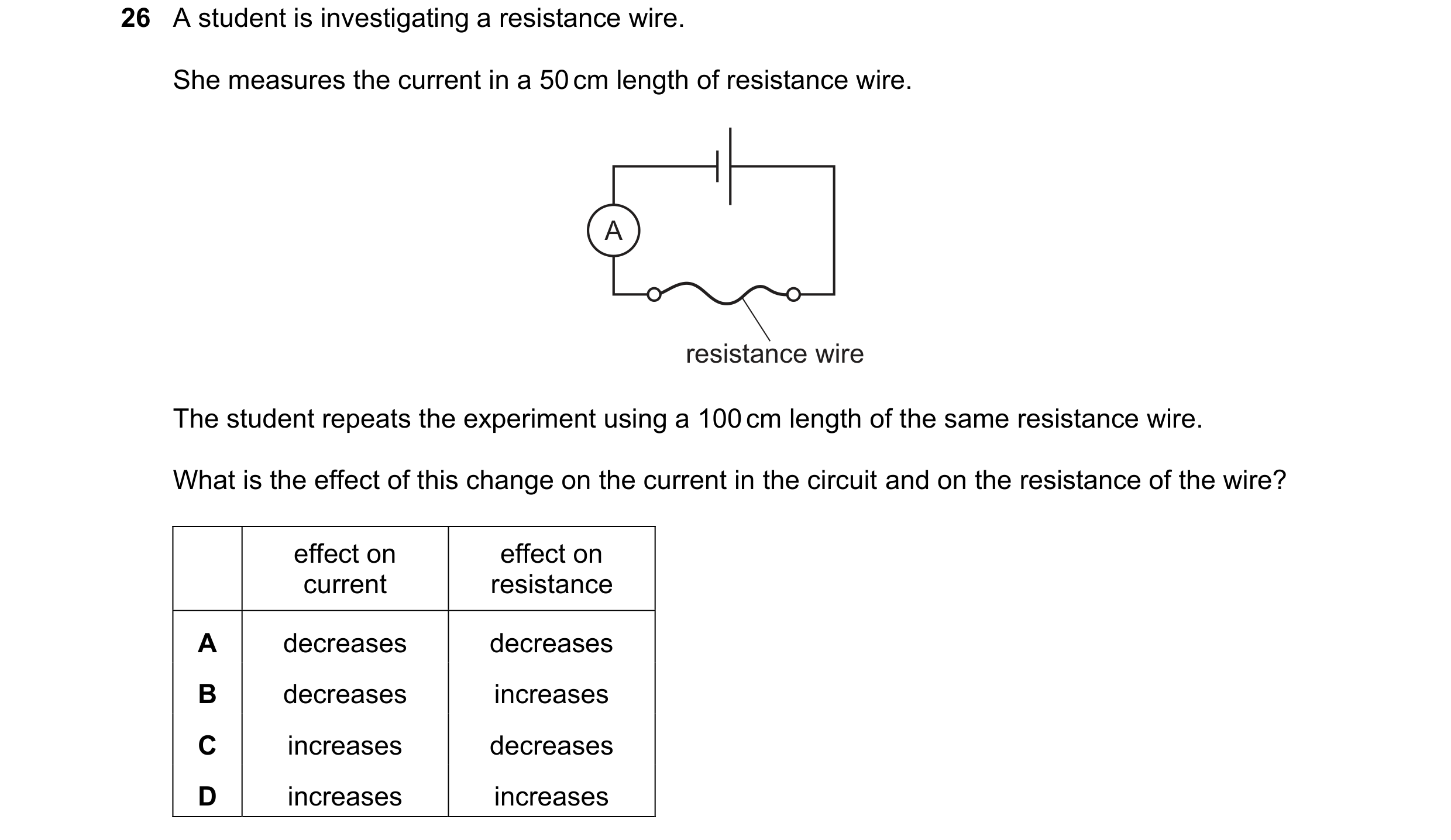

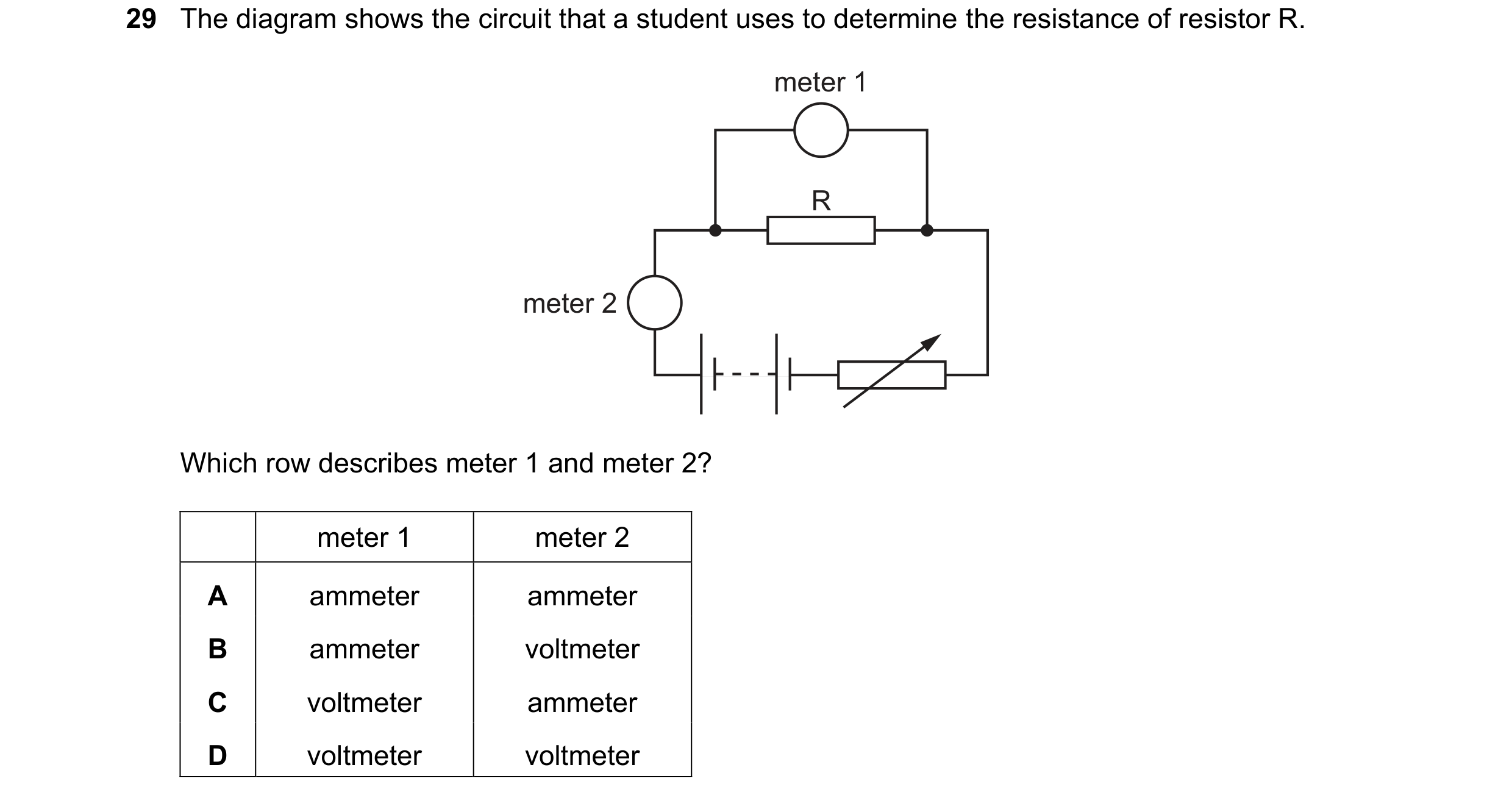 109 / 127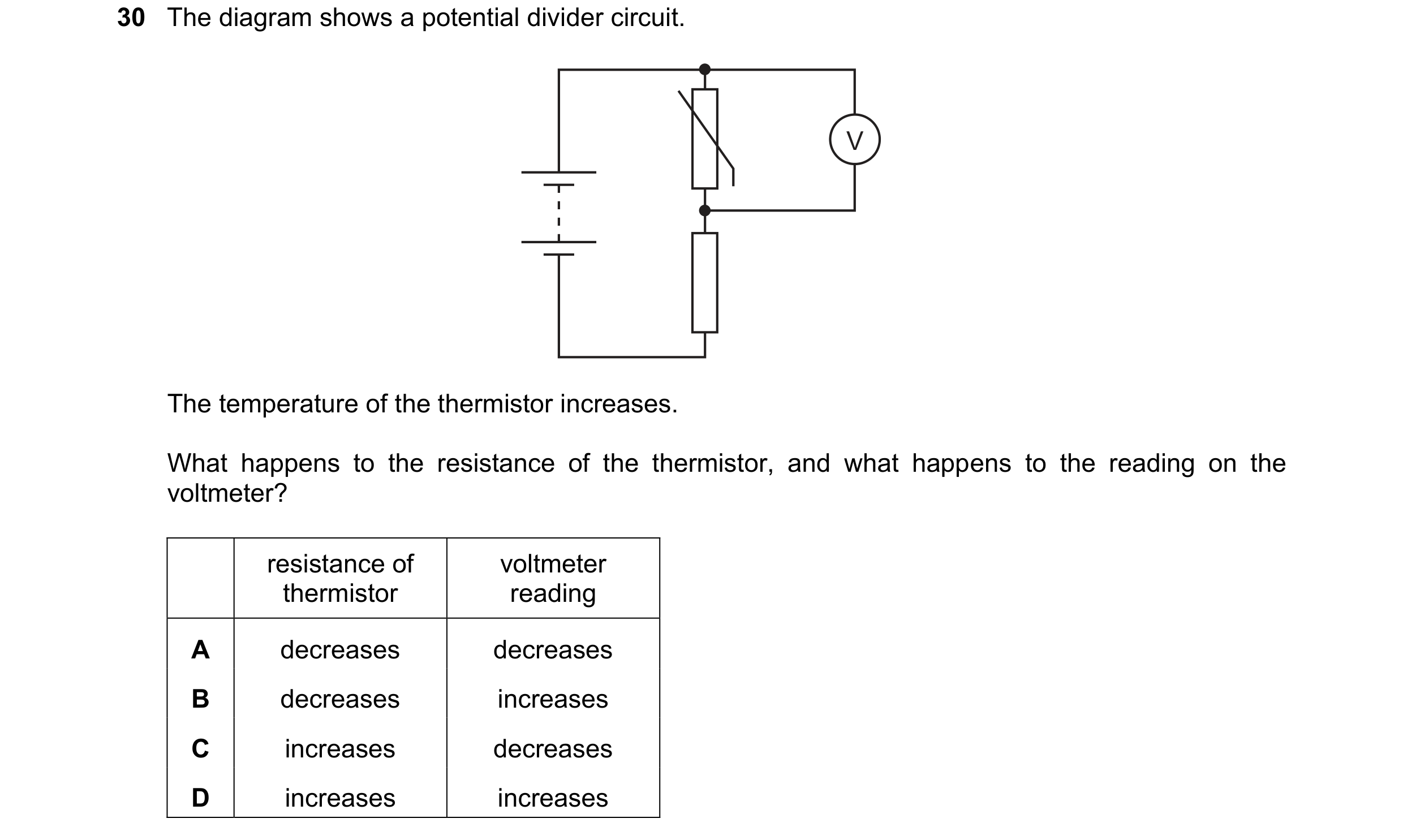
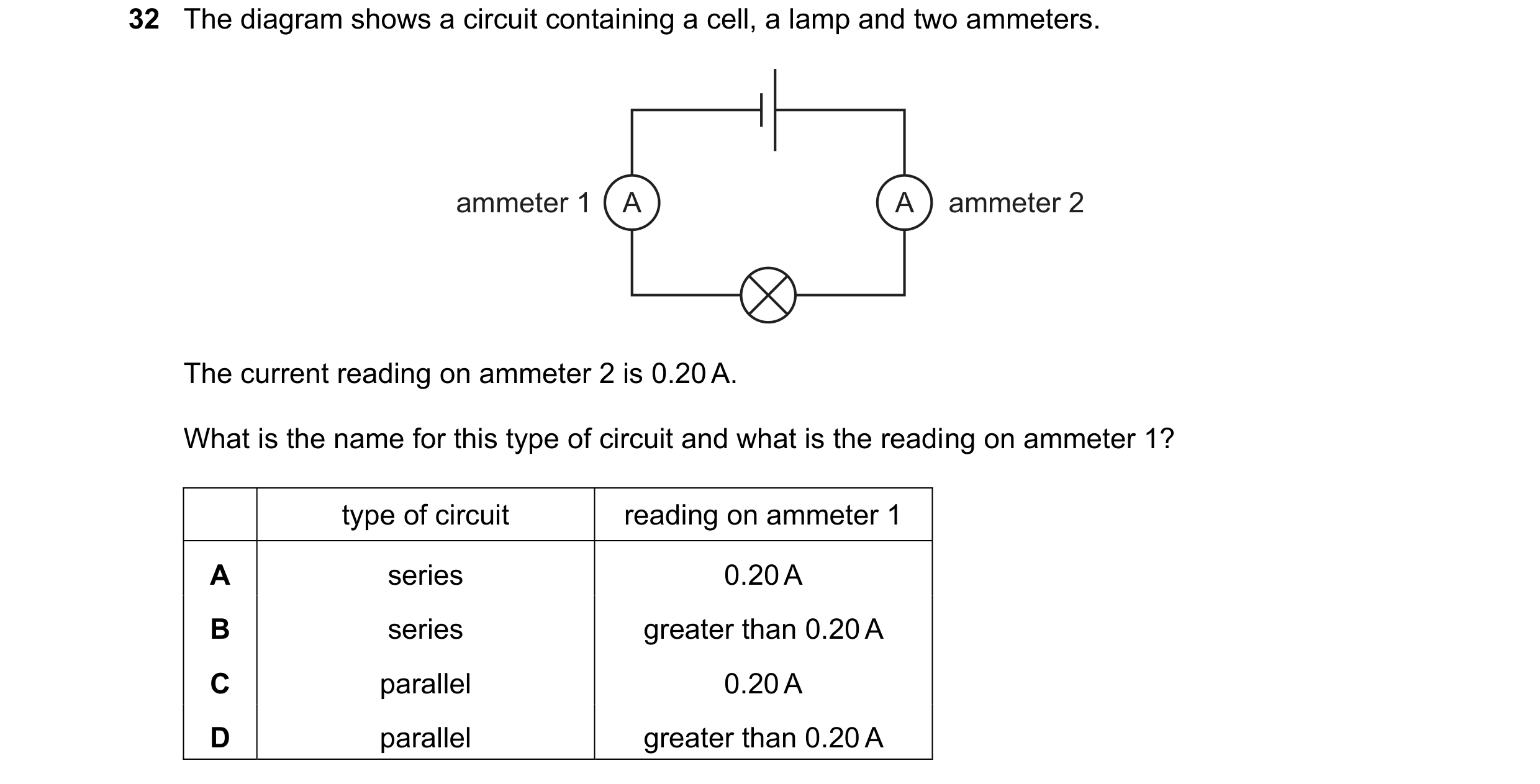 110 / 127
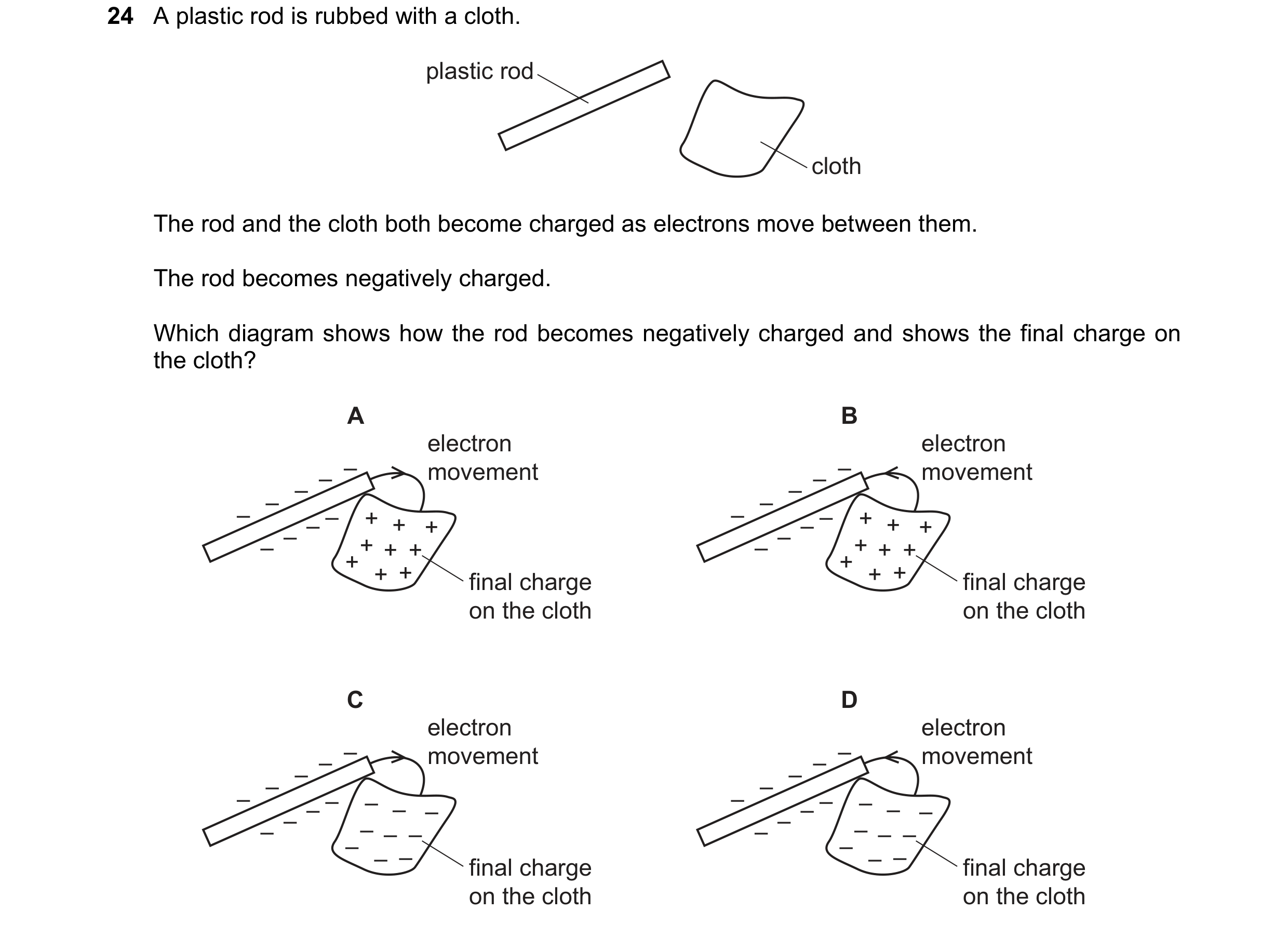 111 / 127
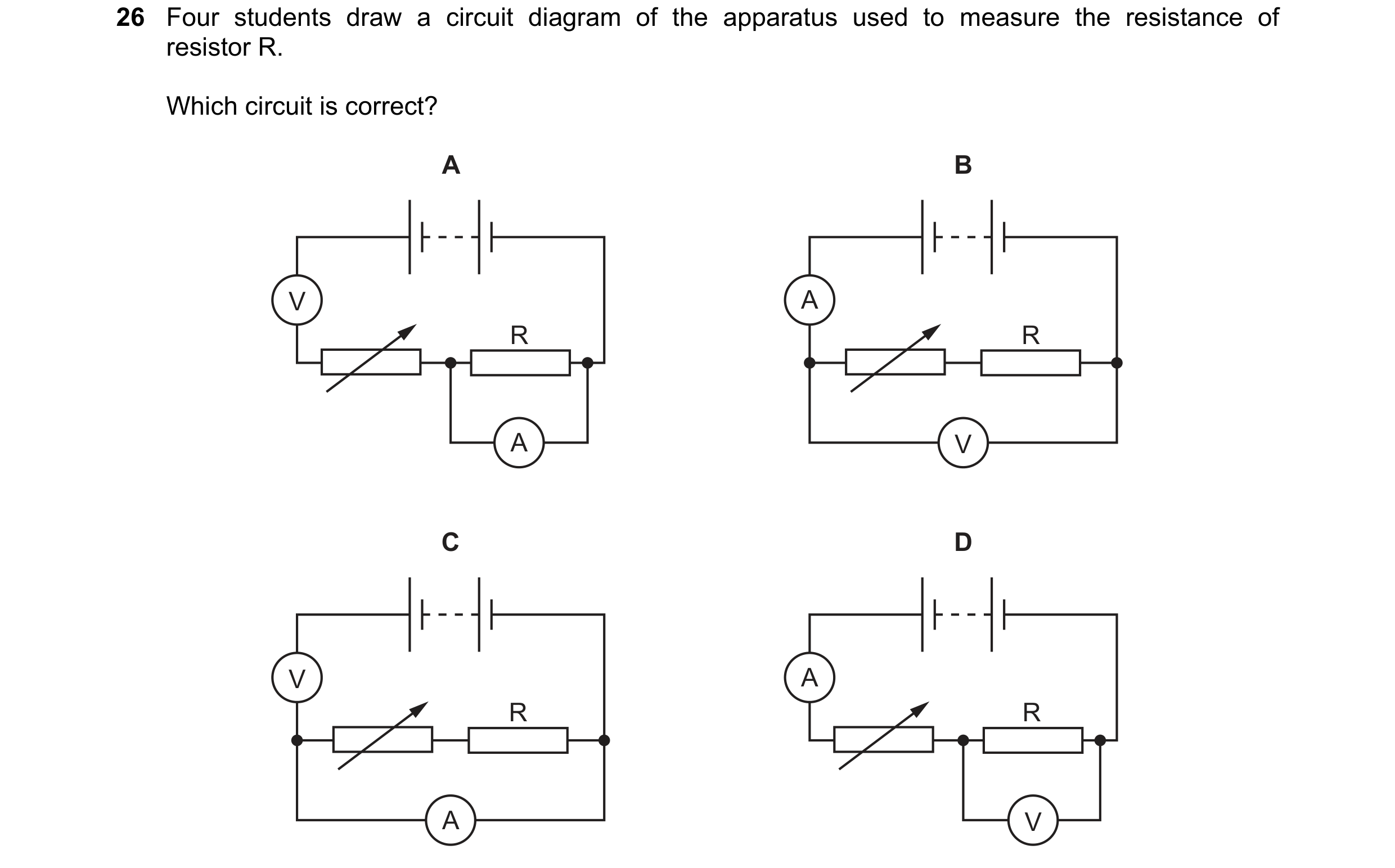 112 / 127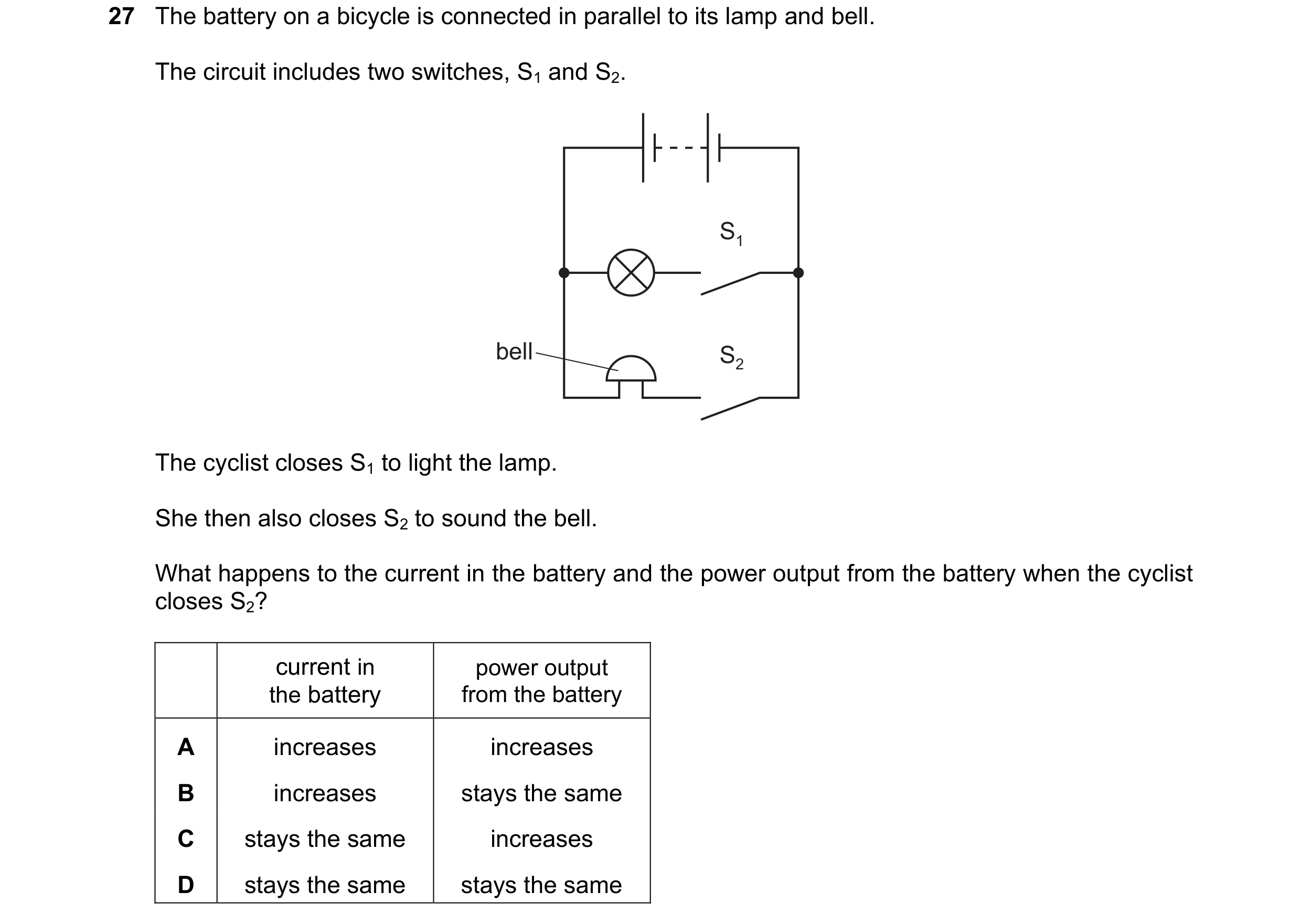
 113 / 127
 114 / 127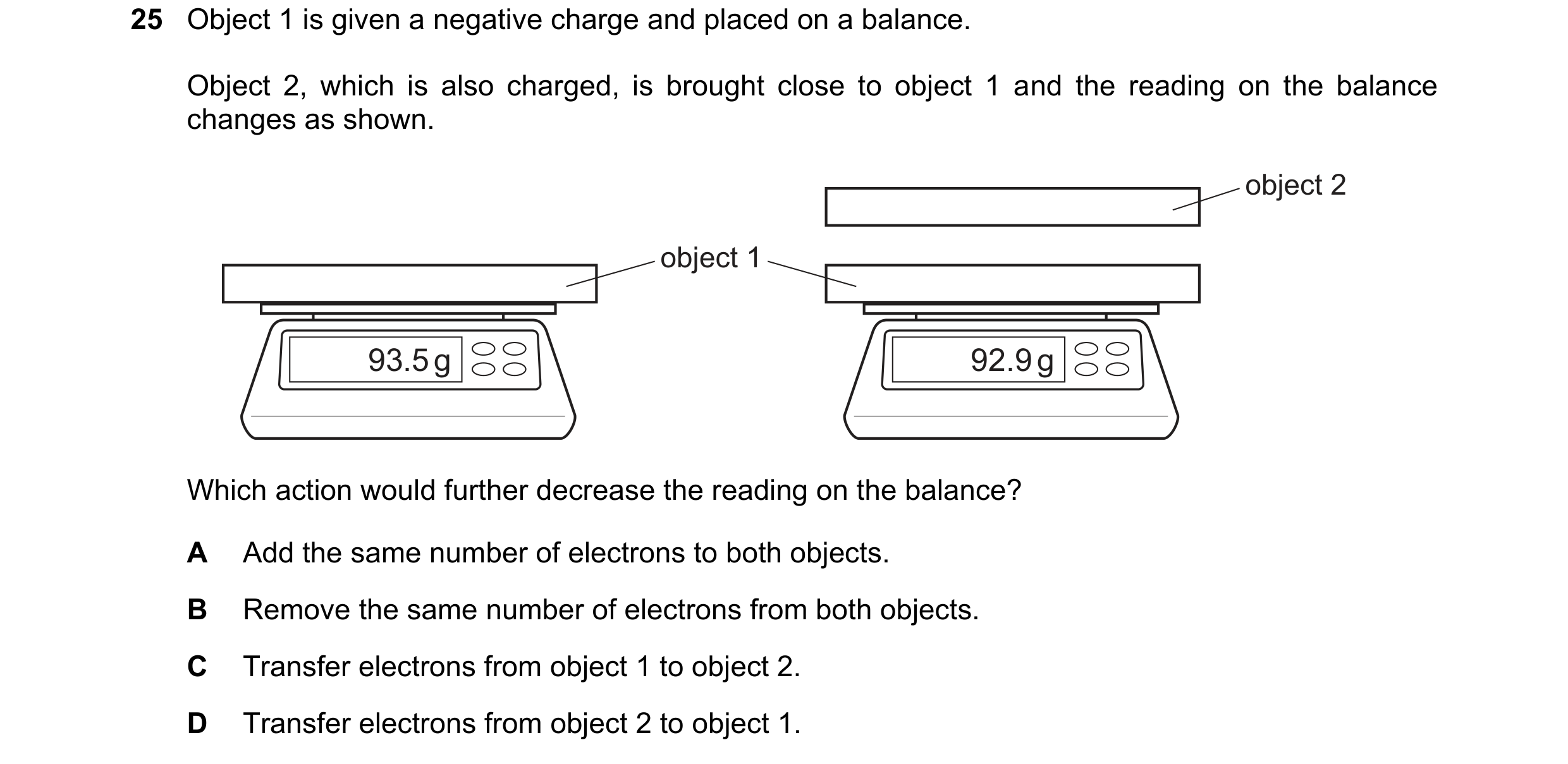

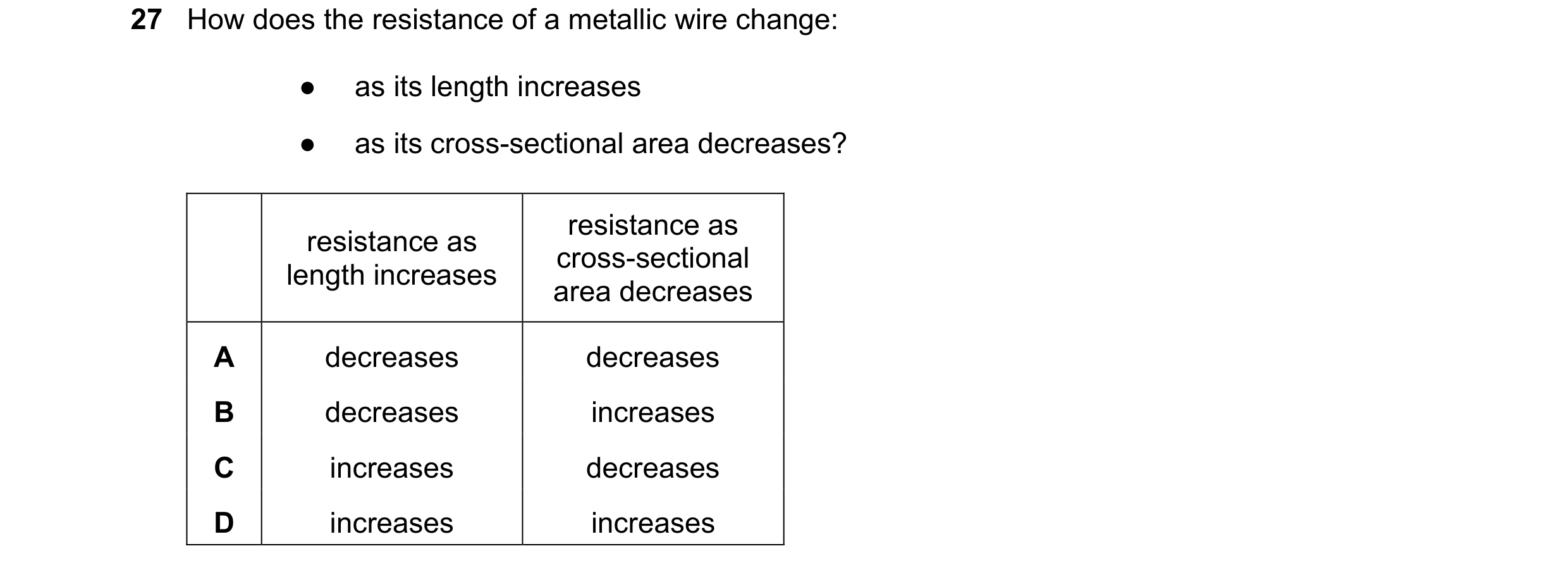 115 / 127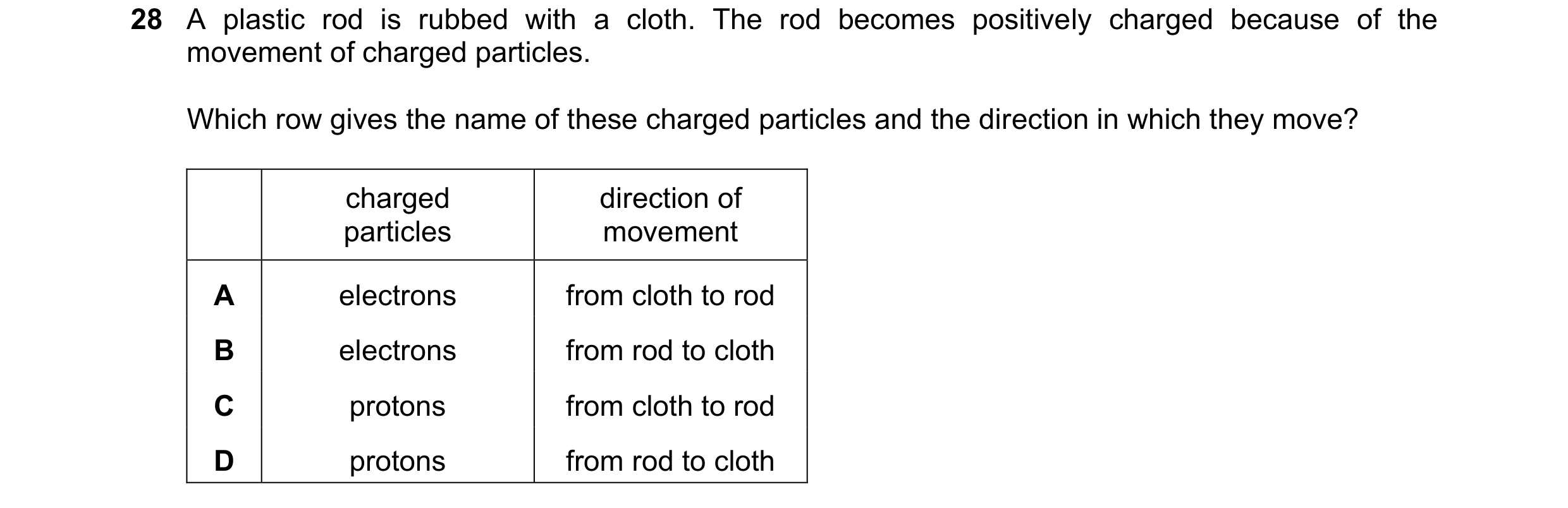
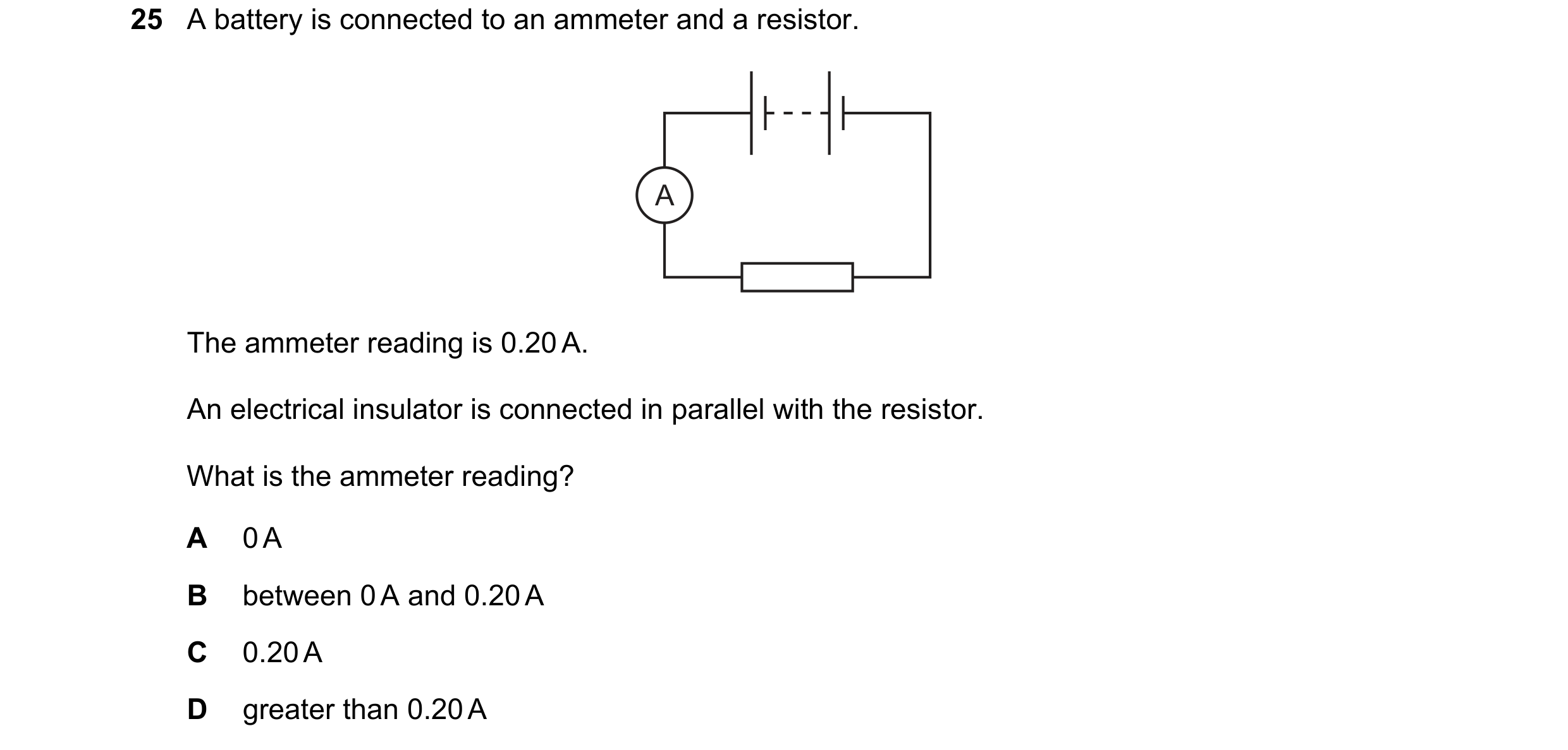

 116 / 127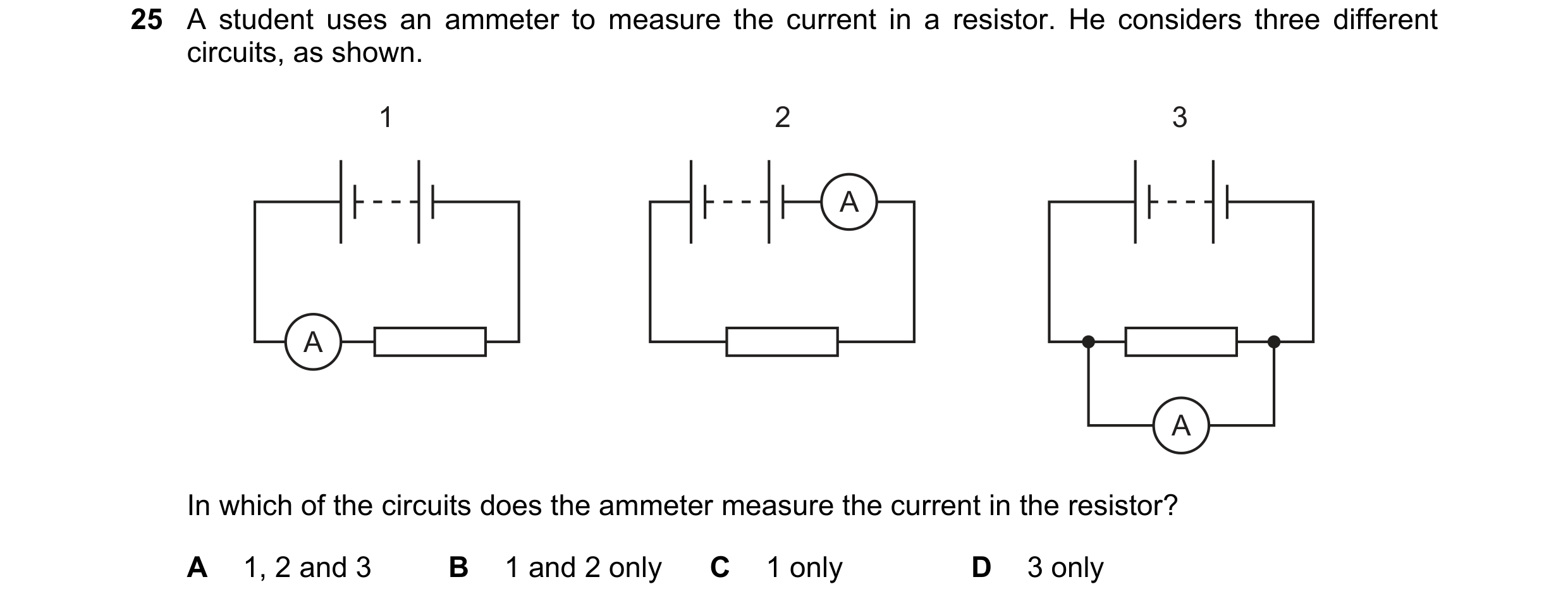


 117 / 127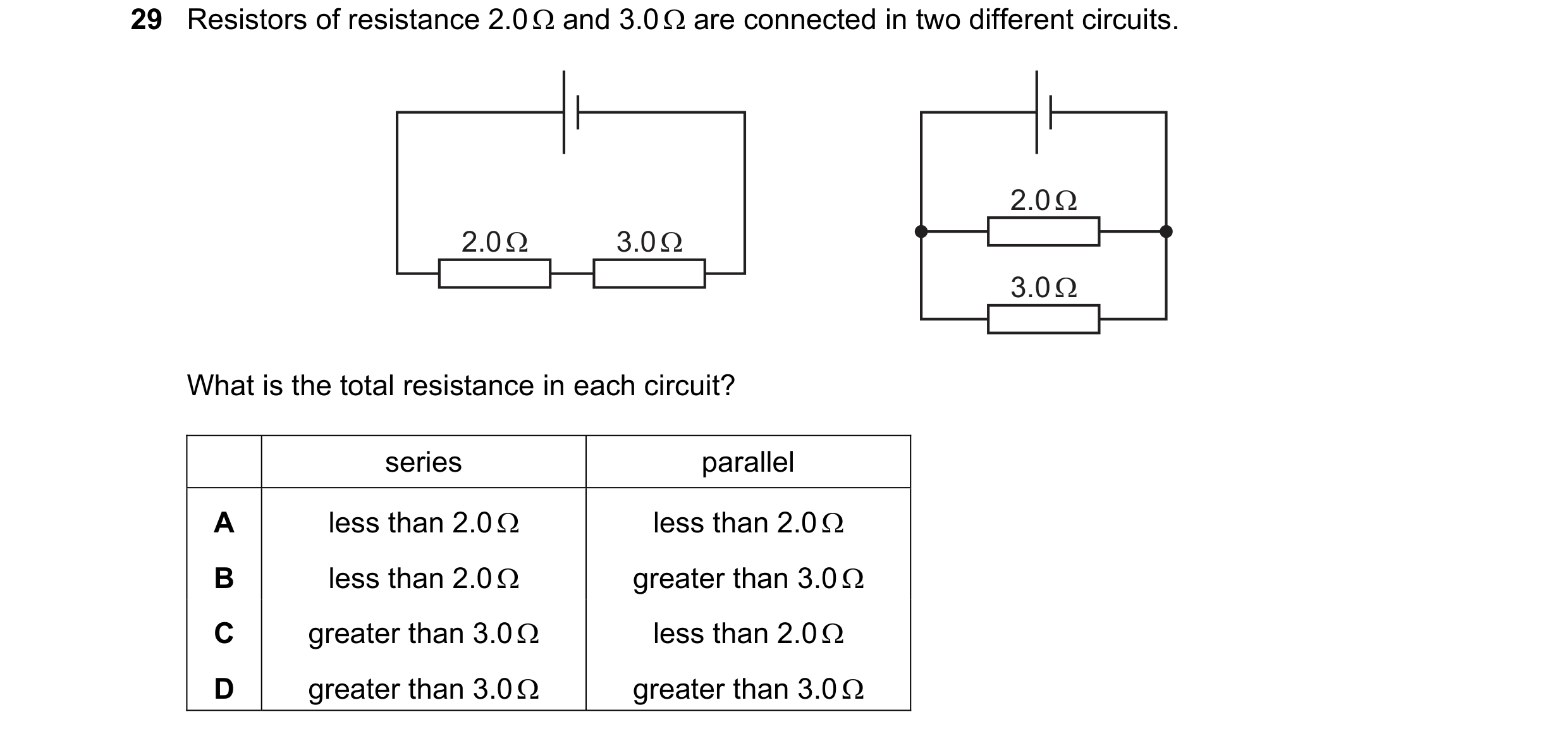
 118 / 127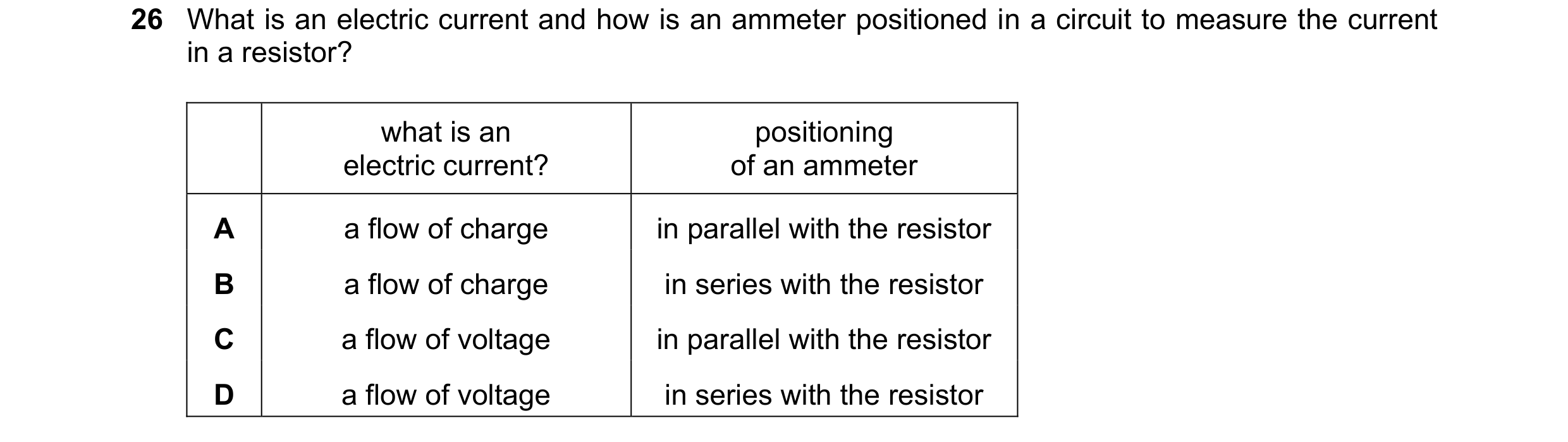

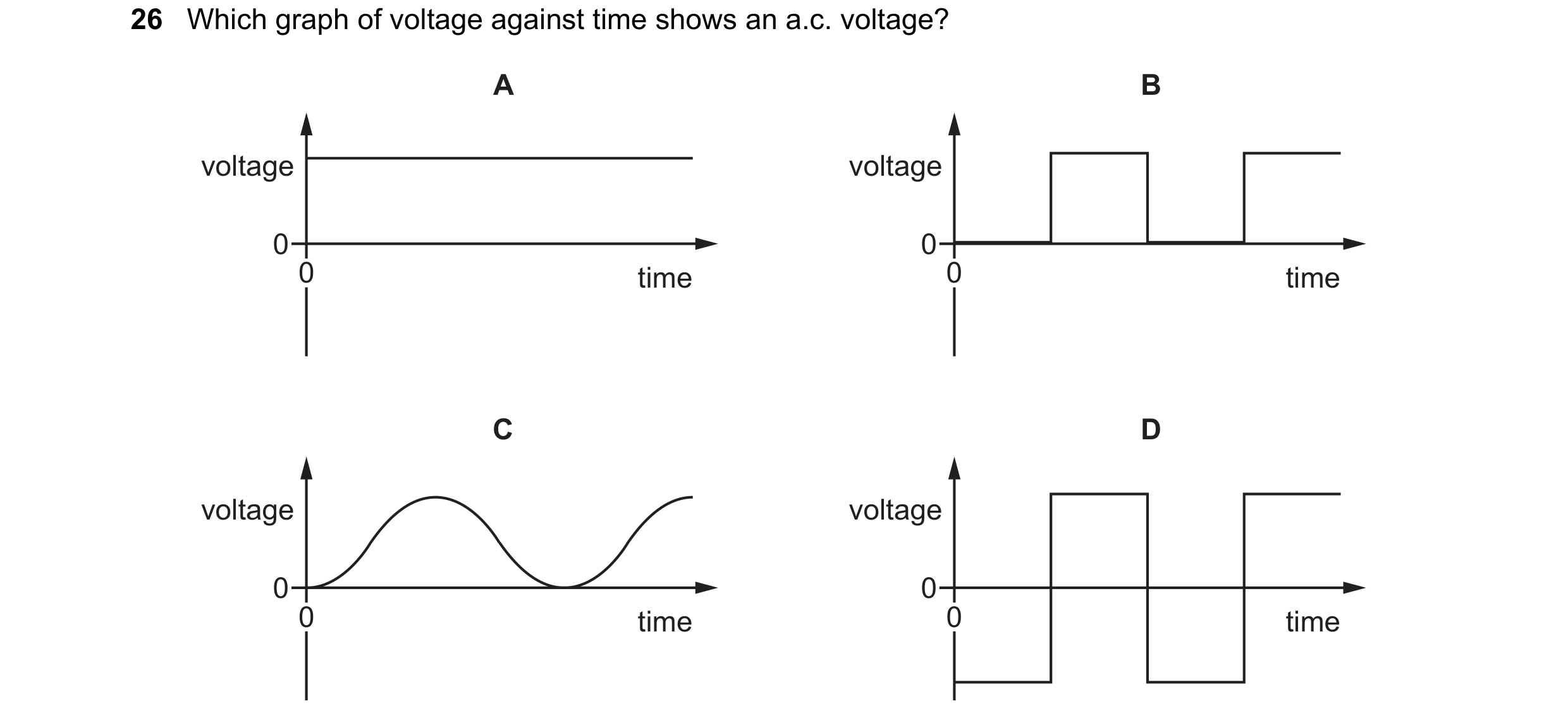
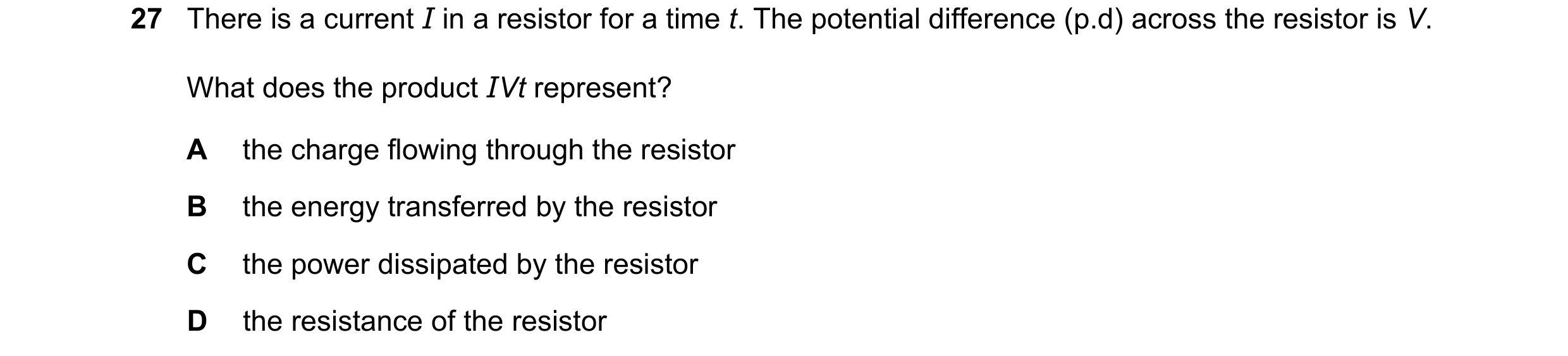 119 / 127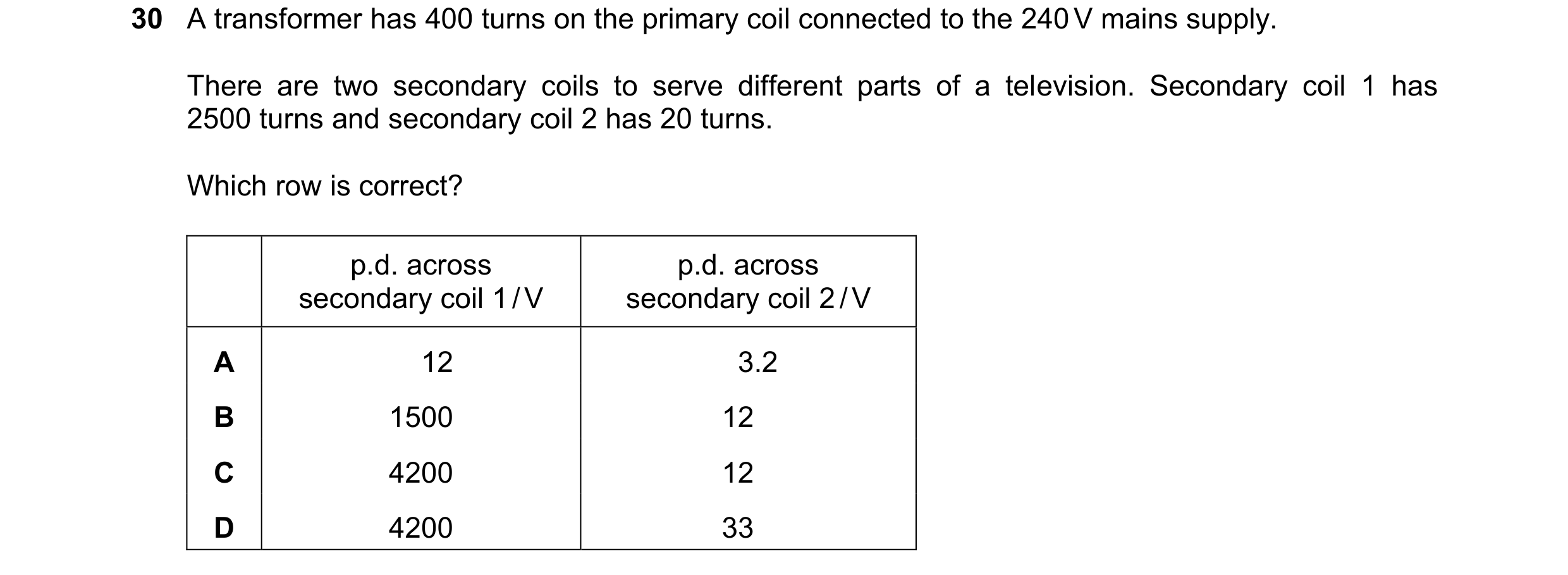
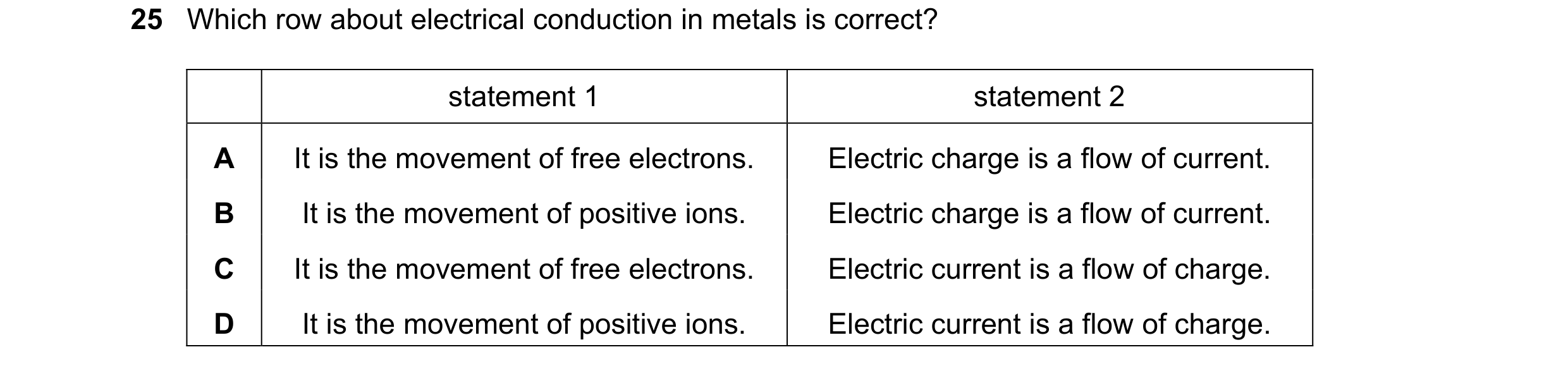
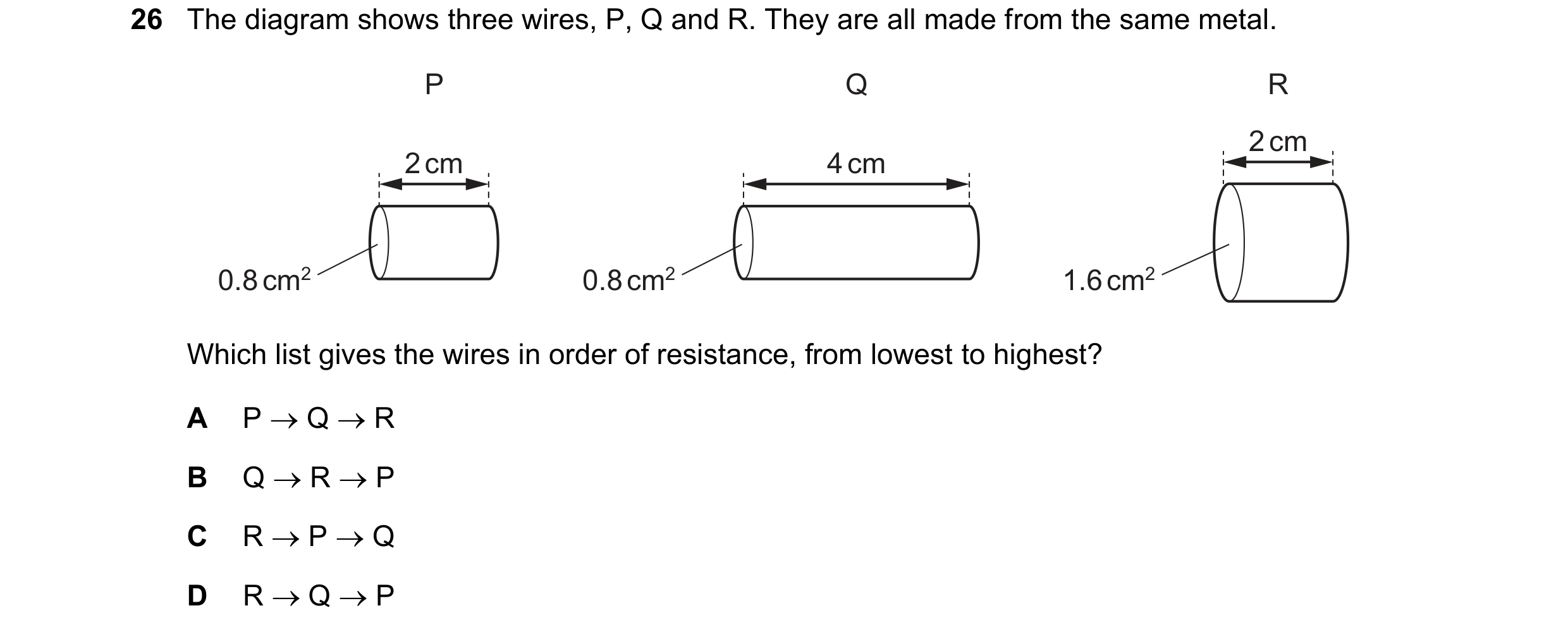

 120 / 127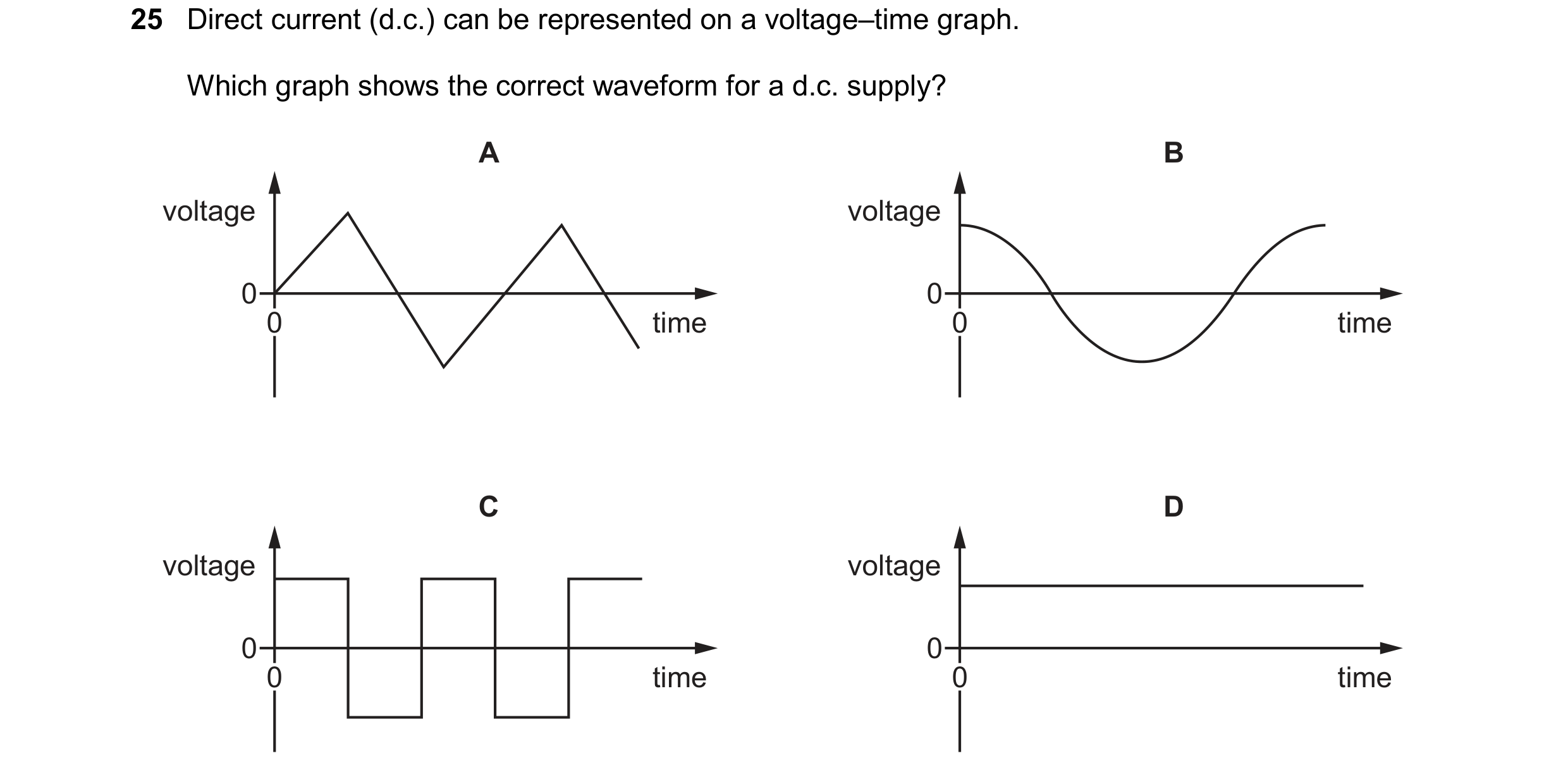

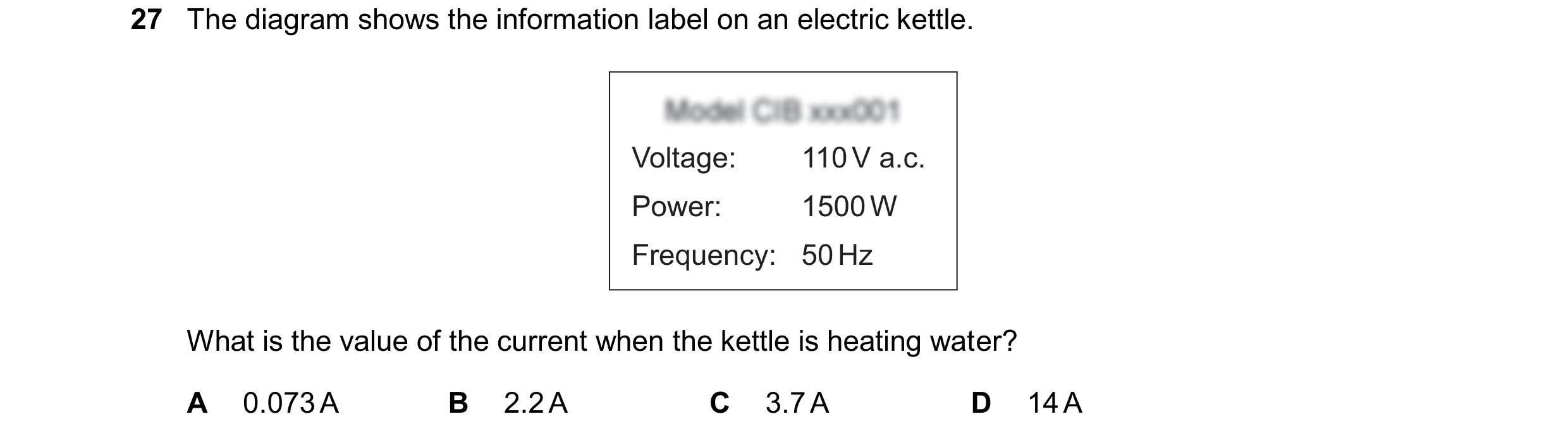 121 / 127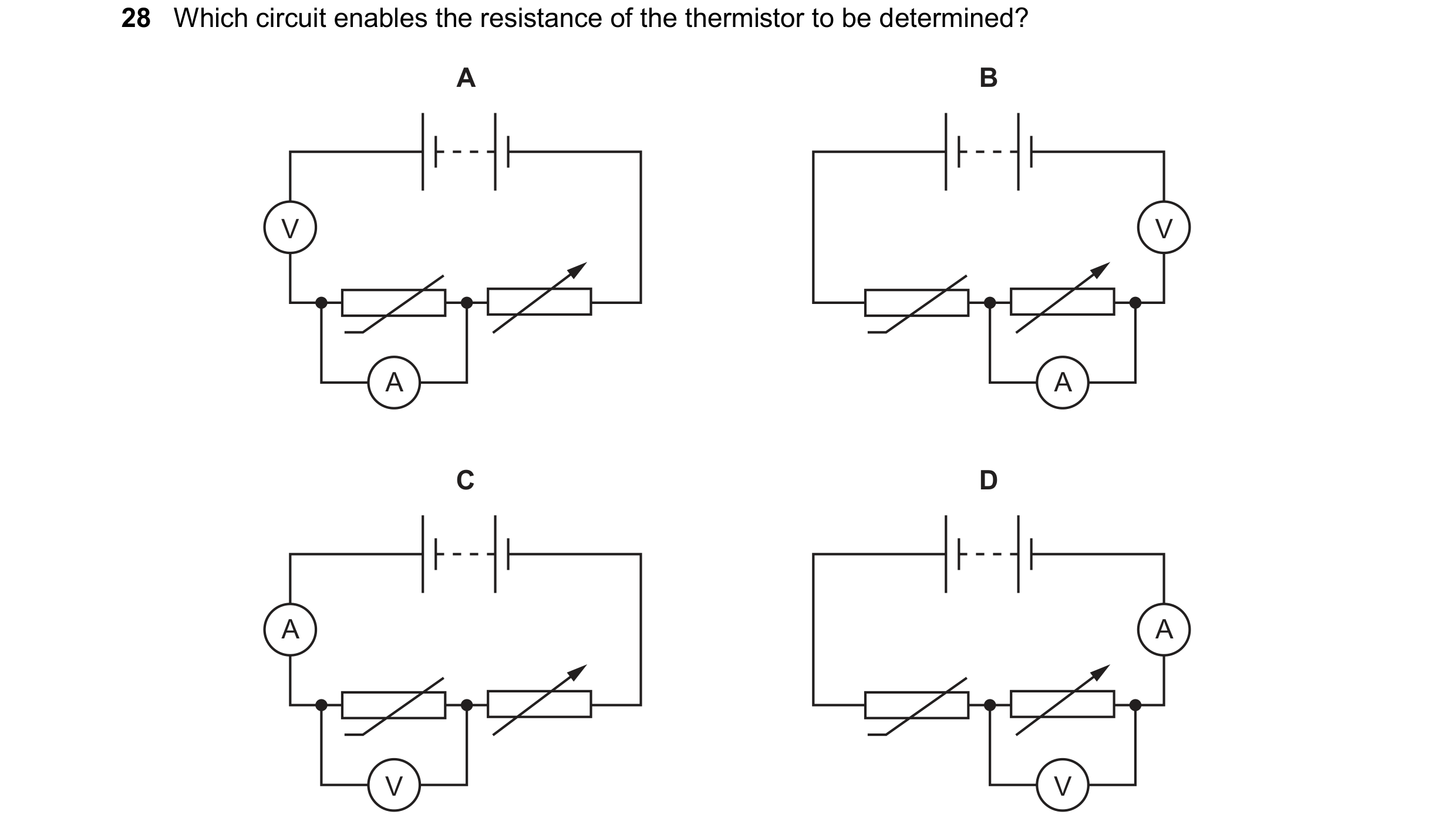
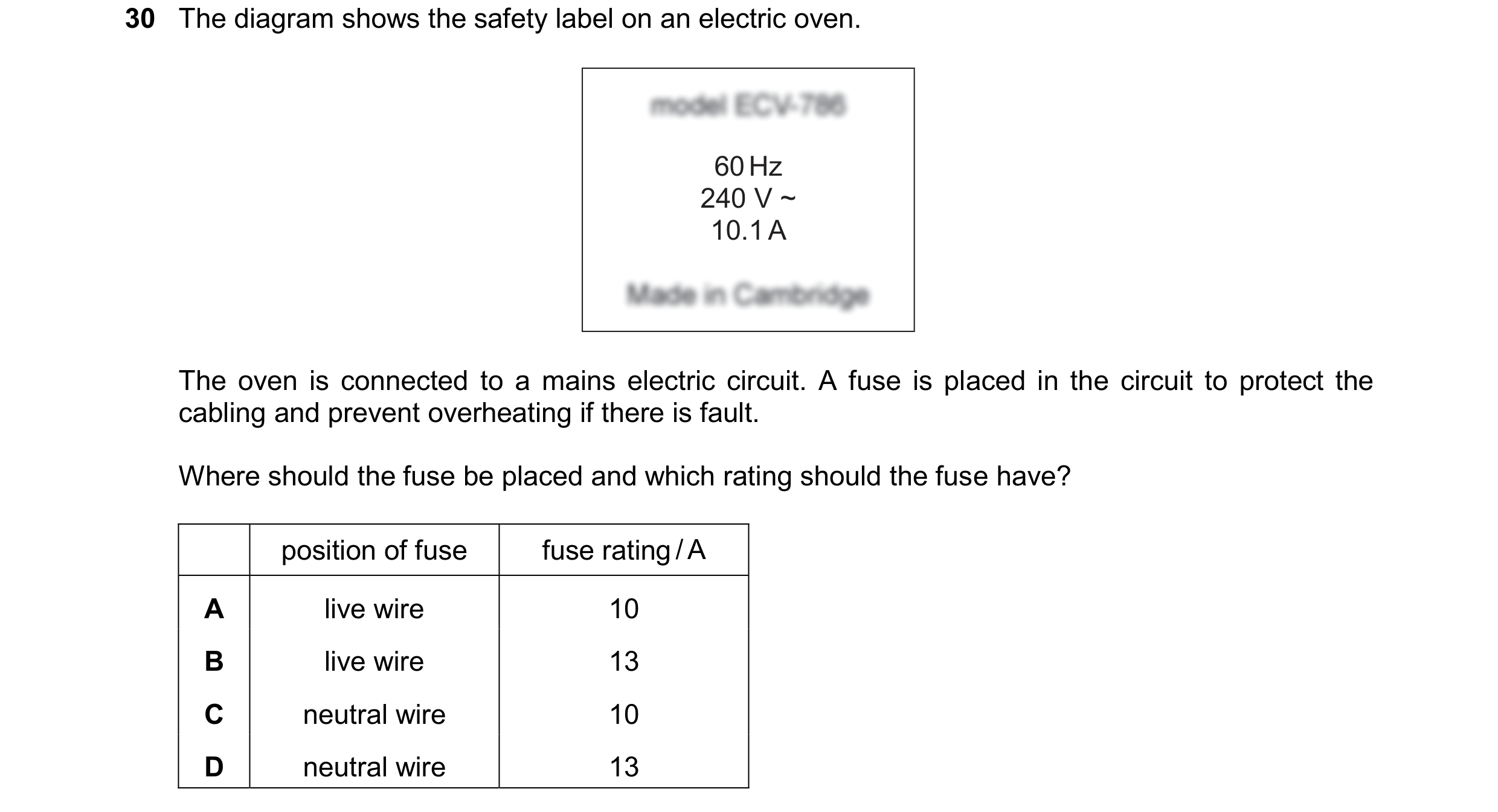 122 / 127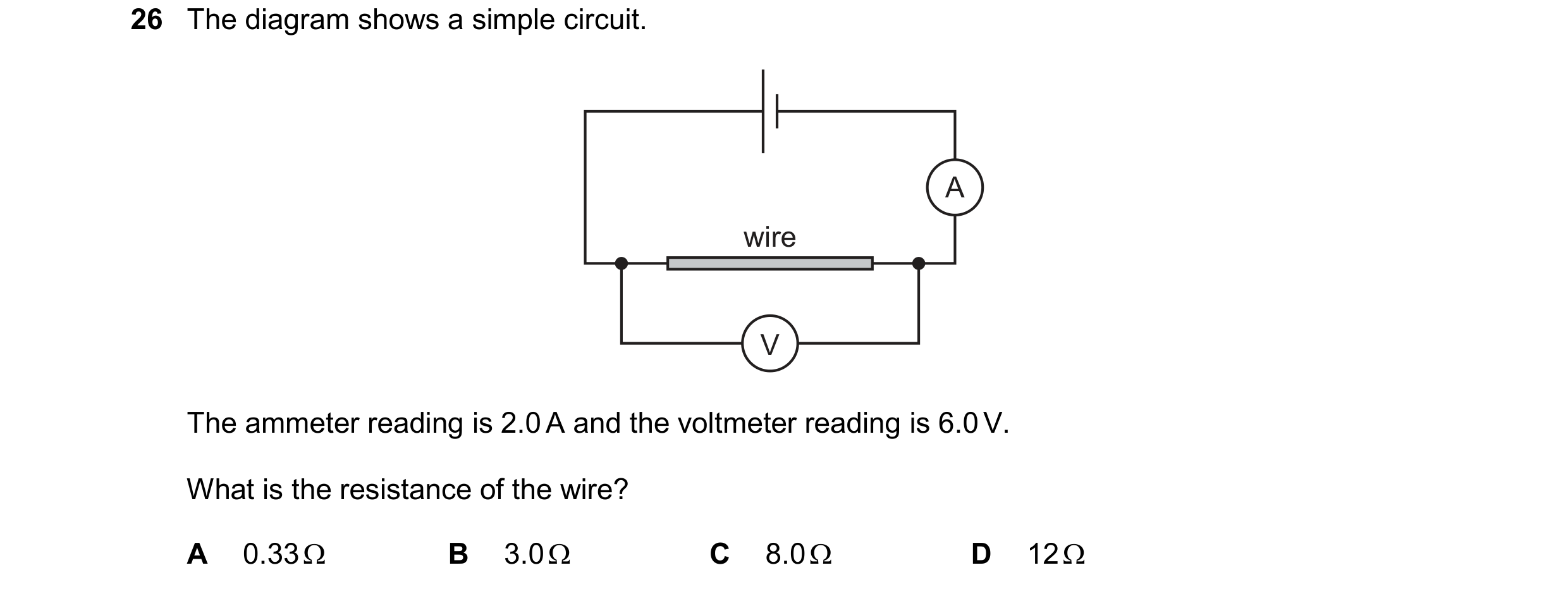


 123 / 127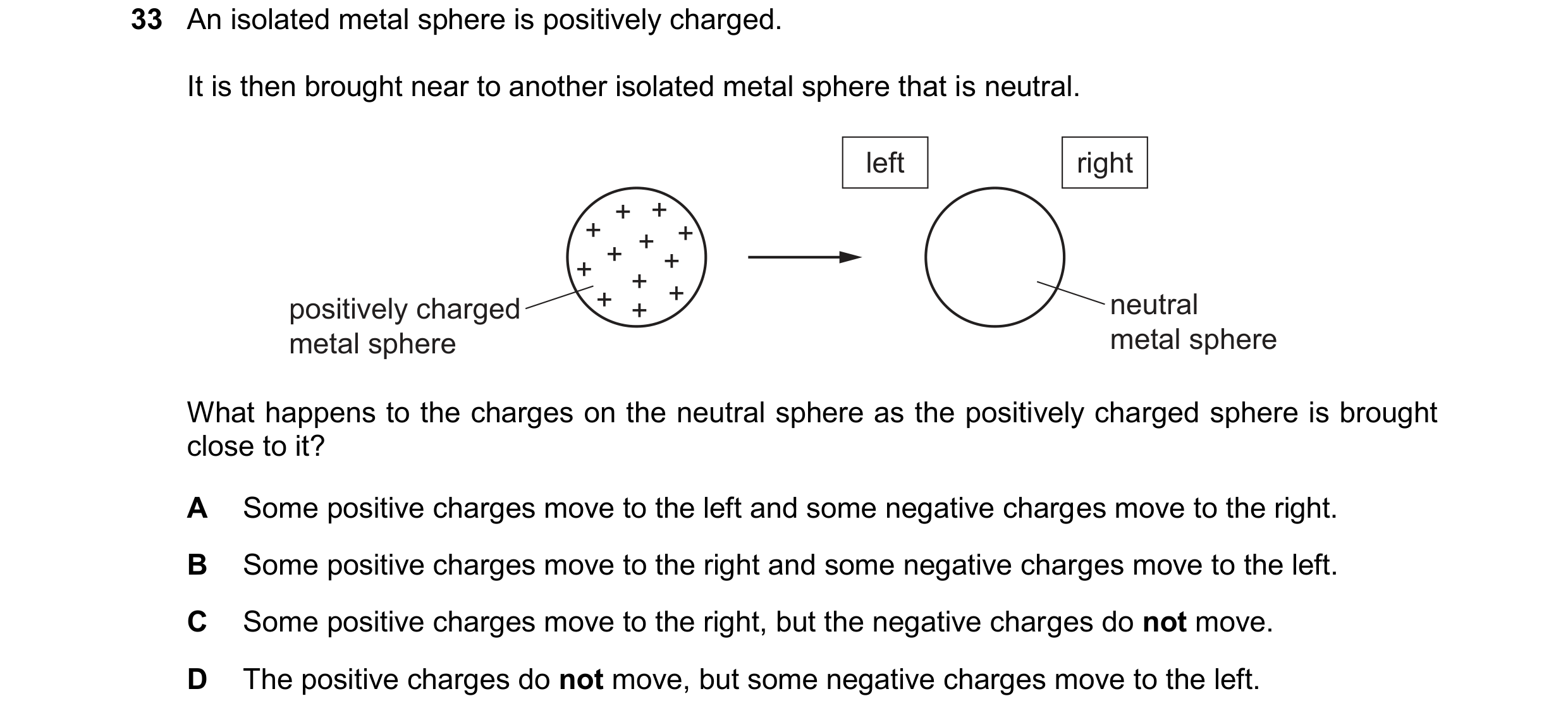

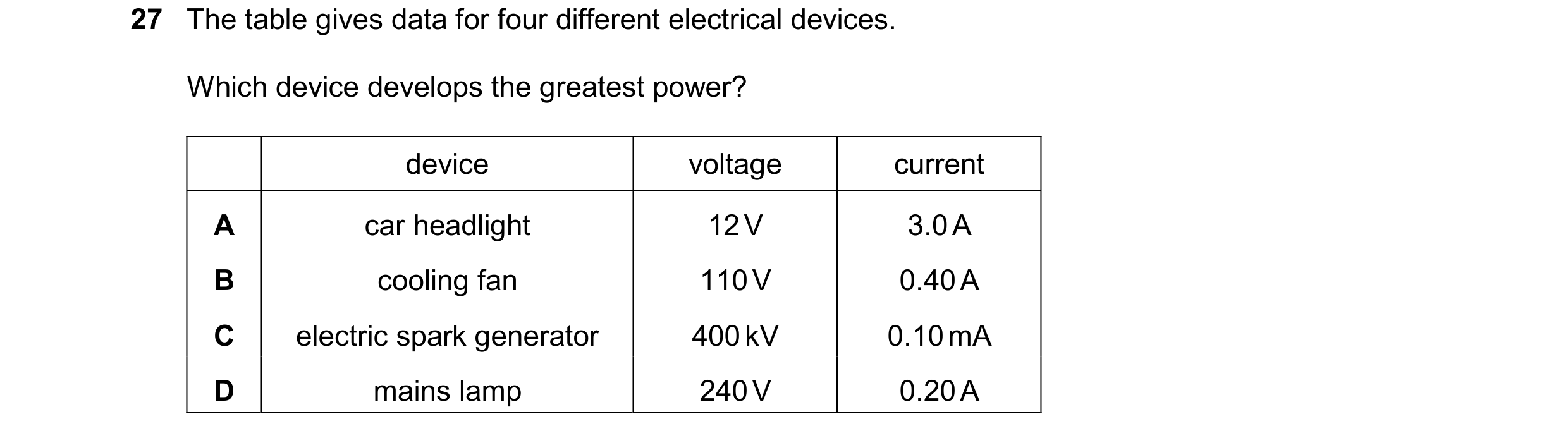
 124 / 127




 125 / 127



 126 / 127


 127 / 127