Questions as text
Q1 · The three balls shown are dropped from a bench 0625/11 May/June 2005
2 The three balls shown are dropped from a bench. aluminium lead wood Which balls have the same acceleration? A aluminium and lead only B aluminium and wood only C lead and wood only D aluminium, lead and wood
1 marks
Answer: D
This question in 0625/11 May/June 2005
Q2 · A car accelerates from traffic lights 0625/11 May/June 2005
3 A car accelerates from traffic lights. The graph shows how the car’s speed changes with time. speed m / s 20 0 0 10 time / s How far does the car travel before it reaches a steady speed? A 10 m B 20 m C 100 m D 200 m
1 marks
Answer: C
This question in 0625/11 May/June 2005
Q3 · The graph represents part of the journey of a car 0625/11 Oct/Nov 2005
2 The graph represents part of the journey of a car. 30 speed m / s 20 10 0 0 10 20 30 40 time / s What distance does the car travel during this part of the journey? A 150 m B 300 m C 600 m D 1200 m
1 marks
Answer: B
This question in 0625/11 Oct/Nov 2005
Q4 · A man crosses a road 8.0 m wide at a speed of 2.0 m / s 0625/11 Oct/Nov 2005
3 A man crosses a road 8.0 m wide at a speed of 2.0 m / s. movement of man man 8.0 m How long does the man take to cross the road? A 4.0 s B 6.0 s C 10 s D 16 s
1 marks
Answer: A
This question in 0625/11 Oct/Nov 2005
Q5 · A man standing at the top of a cliff throws a stone 0625/11 Oct/Nov 2005
10 A man standing at the top of a cliff throws a stone. X Y Which forms of energy does the stone have at X and at Y? energy at X energy at Y A gravitational only kinetic only B kinetic only gravitational only C gravitational only gravitational and kinetic D gravitational and kinetic gravitational and kinetic
1 marks
Answer: D
This question in 0625/11 Oct/Nov 2005
Q6 · When the horn on a ship is sounded, the passengers hear an echo from a cliff after 4.0 s 0625/11 Oct/Nov 2005
25 When the horn on a ship is sounded, the passengers hear an echo from a cliff after 4.0 s. If the speed of sound is 340 m / s, how far away is the cliff? A 170 m B 340 m C 680 m D 1360 m
1 marks
Answer: C
This question in 0625/11 Oct/Nov 2005
Q7 · The graph represents the movement of a body accelerating from rest 0625/11 May/June 2006
2 The graph represents the movement of a body accelerating from rest. 10 speed m / s 8 6 4 2 0 1 2 3 4 5 time / s After 5 seconds how far has the body moved? A 2 m B 10 m C 25 m D 50 m
1 marks
Answer: C
This question in 0625/11 May/June 2006
Q8 · A child is standing on the platform of a station, watching the trains 0625/11 May/June 2006
3 A child is standing on the platform of a station, watching the trains. A train travelling at 30 m / s takes 3 s to pass the child. What is the length of the train? A 10 m B 30 m C 90 m D 135 m
1 marks
Answer: C
This question in 0625/11 May/June 2006
Q9 · The graph shows the progress of an athlete in a 100 m race 0625/11 May/June 2007
2 The graph shows the progress of an athlete in a 100 m race. 100 distance travelled / m 80 60 40 20 0 0 1 2 3 4 5 6 7 8 9 10 11 12 13 14 time / s What time was taken to travel 10 m from the start? A 2.4 s B 2.8 s C 65 s D 70 s
1 marks
Answer: B
This question in 0625/11 May/June 2007
Q10 · Two stones of different weight fall at the same time from a table 0625/11 May/June 2007
3 Two stones of different weight fall at the same time from a table. Air resistance may be ignored. What will happen and why? what will happen why A both stones hit the floor at the same time the acceleration of free fall is constant B both stones hit the floor at the same time they fall at constant speed C the heavier stone hits the floor first acceleration increases with weight D the heavier stone hits the floor first speed increases with weight
1 marks
Answer: A
This question in 0625/11 May/June 2007
Q11 · A starting pistol is fired 640 m away from a spectator 0625/11 May/June 2007
24 A starting pistol is fired 640 m away from a spectator. 640 m spectator The spectator hears the sound of the starting pistol two seconds after seeing the flash from the gun. What is the speed of sound in air? A 160 m / s B 320 m / s C 640 m / s D 1280 m / s
1 marks
Answer: B
This question in 0625/11 May/June 2007
Q12 · Four students try to explain what is meant by acceleration 0625/11 Oct/Nov 2007
2 Four students try to explain what is meant by acceleration. Which student makes a correct statement? A It is related to the changing speed of an object. B It is the distance an object travels in one second. C It is the force acting on an object divided by the distance it travels in one second. D It is the force acting on an object when it is near to the Earth.
1 marks
Answer: A
This question in 0625/11 Oct/Nov 2007
Q13 · A tennis player hits a ball hard and 0.4 s later hears an echo from a wall 0625/11 Oct/Nov 2007
3 A tennis player hits a ball hard and 0.4 s later hears an echo from a wall. The speed of sound in air is 330 m / s. How far away is the player from the wall? A 66 m B 132 m C 264 m D 825 m
1 marks
Answer: A
This question in 0625/11 Oct/Nov 2007
Q14 · The speed-time graph shown is for a bus travelling between stops 0625/11 May/June 2008
2 The speed-time graph shown is for a bus travelling between stops. Where on the graph is the acceleration of the bus the greatest? C speed B A D time
1 marks
Answer: B
This question in 0625/11 May/June 2008
Q15 · The circuit of a motor racing track is 3 km in length 0625/11 May/June 2008
3 The circuit of a motor racing track is 3 km in length. In a race, a car goes 25 times round the circuit in 30 minutes. What is the average speed of the car? A 75 km / hour B 90 km / hour C 150 km / hour D 750 km / hour
1 marks
Answer: C
This question in 0625/11 May/June 2008
Q16 · Which equation can be used to calculate the speed of sound? 0625/11 May/June 2008
25 Which equation can be used to calculate the speed of sound? distance A speed = time B speed = distance × time time C speed = distance D speed = time + distance
1 marks
Answer: A
This question in 0625/11 May/June 2008
Q17 · A tennis player hits a ball over the net 0625/11 Oct/Nov 2008
2 A tennis player hits a ball over the net. P Q R In which position is the ball accelerating? A P and Q only B P and R only C Q and R only D P, Q and R
1 marks
Answer: D
This question in 0625/11 Oct/Nov 2008
Q18 · A car travels at various speeds during a short journey 0625/11 Oct/Nov 2008
3 A car travels at various speeds during a short journey. The table shows the distances travelled and the time taken during each of four stages P, Q, R and S. stage P Q R S distance travelled / km 1.8 3.6 2.7 2.7 time taken / minutes 2 2 4 3 During which two stages is the car travelling at the same speed? A P and Q B P and S C Q and R D R and S
1 marks
Answer: B
This question in 0625/11 Oct/Nov 2008
Q19 · The graph represents the movement of a body 0625/11 May/June 2009
2 The graph represents the movement of a body. 10 speed m / s 8 6 4 2 0 0 1 2 3 4 5 time / s How far has the body moved after 5 s? A 2 m B 10 m C 25 m D 50 m
1 marks
Answer: C
This question in 0625/11 May/June 2009
Q20 · A car travels 100 km 0625/11 May/June 2009
3 A car travels 100 km. The highest speed of the car is 90 km/h, and the lowest speed is 30 km/h. The journey takes two hours. What is the average speed for the journey? A 30 km / h B 50 km / h C 60 km / h D 90 km / h
1 marks
Answer: B
This question in 0625/11 May/June 2009
Q21 · A ball is thrown upwards 0625/11 Oct/Nov 2009
2 A ball is thrown upwards. What effect does the force of gravity have on the ball? A It produces a constant acceleration downwards. B It produces a constant acceleration upwards. C It produces a decreasing acceleration upwards. D It produces an increasing acceleration downwards.
1 marks
Answer: A
This question in 0625/11 Oct/Nov 2009
Q22 · A car accelerates from traffic lights 0625/11 Oct/Nov 2009
3 A car accelerates from traffic lights. The graph shows the car’s speed plotted against time. speed m / s 20 0 0 10 time / s How far does the car travel before it reaches a constant speed? A 10 m B 20 m C 100 m D 200 m
1 marks
Answer: C
This question in 0625/11 Oct/Nov 2009
Q23 · The object in the diagram is acted upon by the two forces shown 0625/11 Oct/Nov 2009
8 The object in the diagram is acted upon by the two forces shown. 3 N 2 N object What is the effect of these forces? A The object moves to the left with constant speed. B The object moves to the left with constant acceleration. C The object moves to the right with constant speed. D The object moves to the right with constant acceleration.
1 marks
Answer: D
This question in 0625/11 Oct/Nov 2009
Q24 · A car accelerates from traffic lights 0625/12 Oct/Nov 2009
1 A car accelerates from traffic lights. The graph shows the car’s speed plotted against time. speed m / s 20 0 0 10 time / s How far does the car travel before it reaches a constant speed? A 10 m B 20 m C 100 m D 200 m
1 marks
Answer: C
This question in 0625/12 Oct/Nov 2009
Q25 · A ball is thrown upwards 0625/12 Oct/Nov 2009
4 A ball is thrown upwards. What effect does the force of gravity have on the ball? A It produces a constant acceleration downwards. B It produces a constant acceleration upwards. C It produces a decreasing acceleration upwards. D It produces an increasing acceleration downwards.
1 marks
Answer: A
This question in 0625/12 Oct/Nov 2009
Q26 · The object in the diagram is acted upon by the two forces shown 0625/12 Oct/Nov 2009
7 The object in the diagram is acted upon by the two forces shown. 3 N 2 N object What is the effect of these forces? A The object moves to the left with constant speed. B The object moves to the left with constant acceleration. C The object moves to the right with constant speed. D The object moves to the right with constant acceleration.
1 marks
Answer: D
This question in 0625/12 Oct/Nov 2009
Q27 · Two distance / time graphs and two speed / time graphs are shown 0625/11 May/June 2010
3 Two distance / time graphs and two speed / time graphs are shown. Which graph represents an object that is at rest? A B distance distance 00 00 time time C D speed speed 00 00 time time
1 marks
Answer: B
This question in 0625/11 May/June 2010
Q28 · A snail moves along a ruler 0625/11 May/June 2010
4 A snail moves along a ruler. It takes 20 s to move from Q to R. P Q R 0 2 cm 12 What is its average speed from Q to R? A 12 cm / s 20 B 12 − 2 cm / s 20 C 20 cm / s 12 D 20 cm / s 12 − 2
1 marks
Answer: B
This question in 0625/11 May/June 2010
Q29 · Which statement about a moving object is correct? 0625/11 May/June 2010
8 Which statement about a moving object is correct? A When an object is accelerating, the resultant force acting on it must equal zero. B When an object is moving at a steady speed, the air resistance acting on it must equal zero. C When an object is moving at a steady speed, the resultant force acting on it must equal zero. D When an object is moving, there must be a resultant force acting on it.
1 marks
Answer: C
This question in 0625/11 May/June 2010
Q30 · A snail moves along a ruler 0625/12 May/June 2010
2 A snail moves along a ruler. It takes 20 s to move from Q to R. P Q R 0 2 cm 12 What is its average speed from Q to R? A 12 cm / s 20 B 12 − 2 cm / s 20 C 20 cm / s 12 D 20 cm / s 12 − 2
1 marks
Answer: B
This question in 0625/12 May/June 2010
Q31 · Two distance / time graphs and two speed / time graphs are shown 0625/12 May/June 2010
5 Two distance / time graphs and two speed / time graphs are shown. Which graph represents an object that is at rest? A B distance distance 00 00 time time C D speed speed 00 00 time time
1 marks
Answer: B
This question in 0625/12 May/June 2010
Q32 · Which statement about a moving object is correct? 0625/12 May/June 2010
6 Which statement about a moving object is correct? A When an object is accelerating, the resultant force acting on it must equal zero. B When an object is moving at a steady speed, the air resistance acting on it must equal zero. C When an object is moving at a steady speed, the resultant force acting on it must equal zero. D When an object is moving, there must be a resultant force acting on it.
1 marks
Answer: C
This question in 0625/12 May/June 2010
Q33 · Four athletes run twice around a track 0625/11 Oct/Nov 2010
2 Four athletes run twice around a track. The table shows their times at the end of each lap. Which athlete runs the second lap the fastest? athlete time at end of first lap / s time at end of second lap / s A 22.99 47.04 B 23.04 47.00 C 23.16 47.18 D 23.39 47.24
1 marks
Answer: D
This question in 0625/11 Oct/Nov 2010
Q34 · The diagram shows the speed / time graph for an object moving at constant speed 0625/11 Oct/Nov 2010
3 The diagram shows the speed / time graph for an object moving at constant speed. 2 speed m / s 1 0 0 1 2 3 4 time / s What is the distance travelled by the object in the first 3 s? A 1.5 m B 2.0 m C 3.0 m D 6.0 m
1 marks
Answer: D
This question in 0625/11 Oct/Nov 2010
Q35 · A car travels along the route PQRST in 30 minutes 0625/11 Oct/Nov 2010
4 A car travels along the route PQRST in 30 minutes. S 5 km Q 10 km T 5 km 10 km R P What is the average speed of the car? A 10 km / hour B 20 km / hour C 30 km / hour D 60 km / hour
1 marks
Answer: D
This question in 0625/11 Oct/Nov 2010
Q36 · Four athletes run twice around a track 0625/12 Oct/Nov 2010
5 Four athletes run twice around a track. The table shows their times at the end of each lap. Which athlete runs the second lap the fastest? athlete time at end of first lap / s time at end of second lap / s A 22.99 47.04 B 23.04 47.00 C 23.16 47.18 D 23.39 47.24
1 marks
Answer: D
This question in 0625/12 Oct/Nov 2010
Q37 · A car travels along the route PQRST in 30 minutes 0625/12 Oct/Nov 2010
6 A car travels along the route PQRST in 30 minutes. S 5 km Q 10 km T 5 km 10 km R P What is the average speed of the car? A 10 km / hour B 20 km / hour C 30 km / hour D 60 km / hour
1 marks
Answer: D
This question in 0625/12 Oct/Nov 2010
Q38 · The diagram shows the speed / time graph for an object moving at constant speed 0625/12 Oct/Nov 2010
7 The diagram shows the speed / time graph for an object moving at constant speed. 2 speed m / s 1 0 0 1 2 3 4 time / s What is the distance travelled by the object in the first 3 s? A 1.5 m B 2.0 m C 3.0 m D 6.0 m
1 marks
Answer: D
This question in 0625/12 Oct/Nov 2010
Q39 · Four athletes run twice around a track 0625/13 Oct/Nov 2010
7 Four athletes run twice around a track. The table shows their times at the end of each lap. Which athlete runs the second lap the fastest? athlete time at end of first lap / s time at end of second lap / s A 22.99 47.04 B 23.04 47.00 C 23.16 47.18 D 23.39 47.24
1 marks
Answer: D
This question in 0625/13 Oct/Nov 2010
Q40 · A car travels along the route PQRST in 30 minutes 0625/13 Oct/Nov 2010
8 A car travels along the route PQRST in 30 minutes. S 5 km Q 10 km T 5 km 10 km R P What is the average speed of the car? A 10 km / hour B 20 km / hour C 30 km / hour D 60 km / hour
1 marks
Answer: D
This question in 0625/13 Oct/Nov 2010
Q41 · The diagram shows the speed / time graph for an object moving at constant speed 0625/13 Oct/Nov 2010
9 The diagram shows the speed / time graph for an object moving at constant speed. 2 speed m / s 1 0 0 1 2 3 4 time / s What is the distance travelled by the object in the first 3 s? A 1.5 m B 2.0 m C 3.0 m D 6.0 m
1 marks
Answer: D
This question in 0625/13 Oct/Nov 2010
Q42 · A ship sends a pulse of sound vertically downwards to the sea bed 0625/13 Oct/Nov 2010
22 A ship sends a pulse of sound vertically downwards to the sea bed. An echo is heard 0.4 seconds later. If the speed of sound in the water is 1200 m / s, how deep is the water below the ship? A 240 m B 480 m C 1500 m D 3000 m
1 marks
Answer: A
This question in 0625/13 Oct/Nov 2010
Q43 · An object moves initially with constant speed and then with constant acceleration 0625/11 May/June 2011
2 An object moves initially with constant speed and then with constant acceleration. Which graph shows this motion? A B speed speed 0 0 00 time time C D speed speed 0 0 00 time time
1 marks
Answer: B
This question in 0625/11 May/June 2011
Q44 · A tennis player hits a ball hard and 0.40 s later hears the echo from a wall 0625/11 May/June 2011
3 A tennis player hits a ball hard and 0.40 s later hears the echo from a wall. The speed of sound in air is 330 m / s. How far away is the player from the wall? A 66 m B 132 m C 264 m D 825 m
1 marks
Answer: A
This question in 0625/11 May/June 2011
Q45 · Two farmers use an electrically powered elevator to lift bales of hay 0625/11 May/June 2011
10 Two farmers use an electrically powered elevator to lift bales of hay. All the bales of hay have the same mass. bale of hay As sunset approaches, they increase the speed of the motor so that more bales are lifted up in a given time. How does this affect the work done in lifting each bale and the useful output power of the motor? work done in useful output power lifting each bale of the motor A increases decreases B increases increases C no change decreases D no change increases
1 marks
Answer: D
This question in 0625/11 May/June 2011
Q46 · A tennis player hits a ball hard and 0.40 s later hears the echo from a wall 0625/12 May/June 2011
1 A tennis player hits a ball hard and 0.40 s later hears the echo from a wall. The speed of sound in air is 330 m / s. How far away is the player from the wall? A 66 m B 132 m C 264 m D 825 m
1 marks
Answer: A
This question in 0625/12 May/June 2011
Q47 · An object moves initially with constant speed and then with constant acceleration 0625/12 May/June 2011
6 An object moves initially with constant speed and then with constant acceleration. Which graph shows this motion? A B speed speed 0 0 00 time time C D speed speed 0 0 00 time time
1 marks
Answer: B
This question in 0625/12 May/June 2011
Q48 · An object moves initially with constant speed and then with constant acceleration 0625/13 May/June 2011
6 An object moves initially with constant speed and then with constant acceleration. Which graph shows this motion? A B speed speed 0 0 00 time time C D speed speed 0 0 00 time time
1 marks
Answer: B
This question in 0625/13 May/June 2011
Q49 · Two stones of different weight fall at the same time from a table 0625/11 Oct/Nov 2012
2 Two stones of different weight fall at the same time from a table. Air resistance may be ignored. What will happen and why? what will happen why A both stones hit the floor at the same time acceleration of free fall is constant B both stones hit the floor at the same time they fall at constant speed C the heavier stone hits the floor first acceleration increases with weight D the heavier stone hits the floor first speed increases with weight
1 marks
Answer: A
This question in 0625/11 Oct/Nov 2012
Q50 · The speed-time graph shown is for a bus travelling between stops 0625/11 Oct/Nov 2012
3 The speed-time graph shown is for a bus travelling between stops. Where on the graph is the acceleration of the bus greatest? C speed B A D time
1 marks
Answer: B
This question in 0625/11 Oct/Nov 2012
Q51 · The speed-time graph shown is for a bus travelling between stops 0625/12 Oct/Nov 2012
1 The speed-time graph shown is for a bus travelling between stops. Where on the graph is the acceleration of the bus greatest? C speed B A D time
1 marks
Answer: B
This question in 0625/12 Oct/Nov 2012
Q52 · Two stones of different weight fall at the same time from a table 0625/12 Oct/Nov 2012
4 Two stones of different weight fall at the same time from a table. Air resistance may be ignored. What will happen and why? what will happen why A both stones hit the floor at the same time acceleration of free fall is constant B both stones hit the floor at the same time they fall at constant speed C the heavier stone hits the floor first acceleration increases with weight D the heavier stone hits the floor first speed increases with weight
1 marks
Answer: A
This question in 0625/12 Oct/Nov 2012
Q53 · Two stones of different weight fall at the same time from a table 0625/13 Oct/Nov 2012
2 Two stones of different weight fall at the same time from a table. Air resistance may be ignored. What will happen and why? what will happen why A both stones hit the floor at the same time acceleration of free fall is constant B both stones hit the floor at the same time they fall at constant speed C the heavier stone hits the floor first acceleration increases with weight D the heavier stone hits the floor first speed increases with weight
1 marks
Answer: A
This question in 0625/13 Oct/Nov 2012
Q54 · The speed-time graph shown is for a bus travelling between stops 0625/13 Oct/Nov 2012
3 The speed-time graph shown is for a bus travelling between stops. Where on the graph is the acceleration of the bus greatest? C speed B A D time
1 marks
Answer: B
This question in 0625/13 Oct/Nov 2012
Q55 · A large parcel is on a horizontal conveyor belt 0625/13 Oct/Nov 2012
8 A large parcel is on a horizontal conveyor belt. The conveyor belt moves the parcel towards a lorry. lorry parcel conveyor belt The parcel travels towards the lorry at a constant speed. Only two horizontal forces act on the parcel: air resistance, and friction with the conveyor belt. Which row correctly compares the directions and the sizes of these two forces? directions sizes A opposite different B opposite the same C the same different D the same the same
1 marks
Answer: B
This question in 0625/13 Oct/Nov 2012
Q56 · Which person is experiencing an acceleration? 0625/11 May/June 2013
2 Which person is experiencing an acceleration? A a driver of a car that is braking to stop at traffic lights B a passenger in a train that is stationary in a railway station C a shopper in a large store ascending an escalator (moving stairs) at a uniform rate D a skydiver falling at constant speed towards the Earth
1 marks
Answer: A
This question in 0625/11 May/June 2013
Q57 · A car travels at various speeds during a short journey 0625/11 May/June 2013
3 A car travels at various speeds during a short journey. The table shows the distances travelled and the times taken during each of four stages P, Q, R and S. stage P Q R S distance travelled / km 1.8 3.6 2.7 2.7 time taken / minutes 2 2 4 3 During which two stages is the car travelling at the same average speed? A P and Q B P and S C Q and R D R and S
1 marks
Answer: B
This question in 0625/11 May/June 2013
Q58 · A car moves along a level road 0625/11 May/June 2013
7 A car moves along a level road. The diagram shows all of the horizontal forces acting on the car. 800 N air resistance 2000 N force 500 N from engine friction Which statement is correct? A The car is slowing down. B The car is speeding up. C The car is moving at a constant speed. D The car is moving backwards.
1 marks
Answer: B
This question in 0625/11 May/June 2013
Q59 · A student claps once when standing 100 m away from a large wall 0625/11 May/June 2013
25 A student claps once when standing 100 m away from a large wall. The speed of sound in air is 330 m / s. How long after clapping does the student hear an echo? A 0.30 s B 0.61 s C 1.7 s D 3.3 s
1 marks
Answer: B
This question in 0625/11 May/June 2013
Q60 · A heavy metal ball falls vertically downwards through air past four equally spaced levels… 0625/12 May/June 2013
2 A heavy metal ball falls vertically downwards through air past four equally spaced levels J, K, L and M. metal ball level J level K level L level M The times taken to fall from one level to the next are measured. Where is the speed of the ball greatest and which time is shortest? speed is time is greatest between shortest between A J and K J and K B J and K L and M C L and M J and K D L and M L and M
1 marks
Answer: D
This question in 0625/12 May/June 2013
Q61 · A car travels at various speeds during a short journey 0625/12 May/June 2013
3 A car travels at various speeds during a short journey. The table shows the distances travelled and the times taken during each of four stages P, Q, R and S. stage P Q R S distance travelled / km 1.8 3.6 2.7 2.7 time taken / minutes 2 2 4 3 During which two stages is the car travelling at the same average speed? A P and Q B P and S C Q and R D R and S
1 marks
Answer: B
This question in 0625/12 May/June 2013
Q62 · Some sound from a loudspeaker at P travels directly to Q 0625/12 May/June 2013
25 Some sound from a loudspeaker at P travels directly to Q. Sound also reaches Q after being reflected from a wall at R. loudspeaker wall P 8 m 10 m R 8 m Q The speed of sound is 330 m / s. What is the difference in time for a sound to travel from P to Q by the two routes? A 6 s B 16 C D s (6 × 330) s (16 × 330) s 330 330
1 marks
Answer: A
This question in 0625/12 May/June 2013
Q63 · A car travels at various speeds during a short journey 0625/13 May/June 2013
2 A car travels at various speeds during a short journey. The table shows the distances travelled and the times taken during each of four stages P, Q, R and S. stage P Q R S distance travelled / km 1.8 3.6 2.7 2.7 time taken / minutes 2 2 4 3 During which two stages is the car travelling at the same average speed? A P and Q B P and S C Q and R D R and S
1 marks
Answer: B
This question in 0625/13 May/June 2013
Q64 · Which person is experiencing an acceleration? 0625/13 May/June 2013
3 Which person is experiencing an acceleration? A a driver of a car that is braking to stop at traffic lights B a passenger in a train that is stationary in a railway station C a shopper in a large store ascending an escalator (moving stairs) at a uniform rate D a skydiver falling at constant speed towards the Earth
1 marks
Answer: A
This question in 0625/13 May/June 2013
Q65 · A car moves along a level road 0625/13 May/June 2013
6 A car moves along a level road. The diagram shows all of the horizontal forces acting on the car. 800 N air resistance 2000 N force 500 N from engine friction Which statement is correct? A The car is slowing down. B The car is speeding up. C The car is moving at a constant speed. D The car is moving backwards.
1 marks
Answer: B
This question in 0625/13 May/June 2013
Q66 · A student claps once when standing 100 m away from a large wall 0625/13 May/June 2013
26 A student claps once when standing 100 m away from a large wall. The speed of sound in air is 330 m / s. How long after clapping does the student hear an echo? A 0.30 s B 0.61 s C 1.7 s D 3.3 s
1 marks
Answer: B
This question in 0625/13 May/June 2013
Q67 · The diagram shows the speed / time graph for a train as it travels along a track 0625/11 Oct/Nov 2013
2 The diagram shows the speed / time graph for a train as it travels along a track. R speed P Q S T 0 0 time For which part of the graph is the train’s speed changing at the greatest rate? A PQ B QR C RS D ST
1 marks
Answer: C
This question in 0625/11 Oct/Nov 2013
Q68 · A small steel ball is dropped from a low balcony 0625/11 Oct/Nov 2013
3 A small steel ball is dropped from a low balcony. Ignoring air resistance, which statement describes its motion? A It falls with constant acceleration. B It falls with constant speed. C It falls with decreasing speed. D It falls with increasing acceleration.
1 marks
Answer: A
This question in 0625/11 Oct/Nov 2013
Q69 · The diagram shows the speed / time graph for a train as it travels along a track 0625/12 Oct/Nov 2013
1 The diagram shows the speed / time graph for a train as it travels along a track. R speed P Q S T 0 0 time For which part of the graph is the train’s speed changing at the greatest rate? A PQ B QR C RS D ST
1 marks
Answer: C
This question in 0625/12 Oct/Nov 2013
Q70 · A small steel ball is dropped from a low balcony 0625/12 Oct/Nov 2013
3 A small steel ball is dropped from a low balcony. Ignoring air resistance, which statement describes its motion? A It falls with constant acceleration. B It falls with constant speed. C It falls with decreasing speed. D It falls with increasing acceleration.
1 marks
Answer: A
This question in 0625/12 Oct/Nov 2013
Q71 · A loudspeaker on a boat produces a pulse of sound in the sea 0625/12 Oct/Nov 2013
25 A loudspeaker on a boat produces a pulse of sound in the sea. The echo of the pulse is received back at the boat after 3.0 s. The depth of the sea under the boat is 2250 m. boat pulse of sound sea bed (not to scale) From this information, what is the speed of sound in the sea water? A 330 m / s B 750 m / s C 1500 m / s D 6750 m / s
1 marks
Answer: C
This question in 0625/12 Oct/Nov 2013
Q72 · The graph shows how the distance travelled by a vehicle changes with time 0625/13 Oct/Nov 2013
2 The graph shows how the distance travelled by a vehicle changes with time. distance Q R P S 0 0 time Which row describes the speed of the vehicle in each section of the graph? P to Q Q to R R to S A constant zero constant B constant zero decreasing C increasing constant decreasing D increasing zero decreasing
1 marks
Answer: A
This question in 0625/13 Oct/Nov 2013
Q73 · A small steel ball is dropped from a low balcony 0625/13 Oct/Nov 2013
3 A small steel ball is dropped from a low balcony. Ignoring air resistance, which statement describes its motion? A It falls with constant acceleration. B It falls with constant speed. C It falls with decreasing speed. D It falls with increasing acceleration.
1 marks
Answer: A
This question in 0625/13 Oct/Nov 2013
Q74 · An aeroplane is landing 0625/13 Oct/Nov 2013
9 An aeroplane is landing. As it descends towards the runway, its speed reduces. What are the energy changes that take place during the descent? A kinetic + gravitational → thermal (heat) B kinetic → gravitational + thermal (heat) C kinetic + thermal (heat) → gravitational D thermal (heat) → kinetic + gravitational
1 marks
Answer: A
This question in 0625/13 Oct/Nov 2013
Q75 · To estimate the width of a valley, a climber starts a stopwatch as he shouts 0625/13 Oct/Nov 2013
24 To estimate the width of a valley, a climber starts a stopwatch as he shouts. He hears an echo from the opposite side of the valley after 1.0 s. sound climber valley The sound travels at 330 m / s. What is the width of the valley? A 82.5 m B 165 m C 330 m D 660 m
1 marks
Answer: B
This question in 0625/13 Oct/Nov 2013
Q76 · Which distance / time graph represents the motion of an object moving at constant speed? 0625/11 May/June 2014
2 Which distance / time graph represents the motion of an object moving at constant speed? A B distance distance 0 0 0 time 0 time C D distance distance 0 0 0 time 0 time
1 marks
Answer: D
This question in 0625/11 May/June 2014
Q77 · The graph shows how the speed of a car changes with time 0625/11 May/June 2014
3 The graph shows how the speed of a car changes with time. speed m / s 14 0 0 24 time / s Which calculation gives the distance travelled by the car in 24 seconds? 14 A m 24 24 B m 14 24 × 14 C m 2 D ( 24 × 14 ) m
1 marks
Answer: C
This question in 0625/11 May/June 2014
Q78 · Which distance / time graph represents the motion of an object moving at constant speed? 0625/12 May/June 2014
2 Which distance / time graph represents the motion of an object moving at constant speed? A B distance distance 0 0 0 time 0 time C D distance distance 0 0 0 time 0 time
1 marks
Answer: D
This question in 0625/12 May/June 2014
Q79 · A car takes 15 minutes to travel along a road that is 20 km long 0625/12 May/June 2014
3 A car takes 15 minutes to travel along a road that is 20 km long. What is the average speed of the car? A 0.75 km / h B 5.0 km / h C 80 km / h D 300 km / h
1 marks
Answer: C
This question in 0625/12 May/June 2014
Q80 · The graph shows how the speed of a car changes with time 0625/13 May/June 2014
2 The graph shows how the speed of a car changes with time. speed m / s 14 0 0 24 time / s Which calculation gives the distance travelled by the car in 24 seconds? 14 A m 24 24 B m 14 24 × 14 C m 2 D ( 24 × 14 ) m
1 marks
Answer: C
This question in 0625/13 May/June 2014
Q81 · Which distance / time graph represents the motion of an object moving at constant speed? 0625/13 May/June 2014
3 Which distance / time graph represents the motion of an object moving at constant speed? A B distance distance 0 0 0 time 0 time C D distance distance 0 0 0 time 0 time
1 marks
Answer: D
This question in 0625/13 May/June 2014
Q82 · The graph shows how the speed of a car changes with time 0625/11 Oct/Nov 2014
2 The graph shows how the speed of a car changes with time. speed 0 U V W X Y time Between which two times is the car stationary? A U and V B V and W C W and X D X and Y
1 marks
Answer: D
This question in 0625/11 Oct/Nov 2014
Q83 · A man stands by a railway track 0625/11 Oct/Nov 2014
3 A man stands by a railway track. A train travelling at 40 m / s takes 2.0 s to pass the man. What is the length of the train? A 20 m B 38 m C 40 m D 80 m
1 marks
Answer: D
This question in 0625/11 Oct/Nov 2014
Q84 · In which situation is no resultant force needed? 0625/11 Oct/Nov 2014
7 In which situation is no resultant force needed? A a car changing direction at a steady speed B a car moving in a straight line at a steady speed C a car slowing down D a car speeding up
1 marks
Answer: B
This question in 0625/11 Oct/Nov 2014
Q85 · A man stands by a railway track 0625/12 Oct/Nov 2014
1 A man stands by a railway track. A train travelling at 40 m / s takes 2.0 s to pass the man. What is the length of the train? A 20 m B 38 m C 40 m D 80 m
1 marks
Answer: D
This question in 0625/12 Oct/Nov 2014
Q86 · The graph shows how the speed of a car changes with time 0625/12 Oct/Nov 2014
3 The graph shows how the speed of a car changes with time. speed 0 U V W X Y time Between which two times is the car stationary? A U and V B V and W C W and X D X and Y
1 marks
Answer: D
This question in 0625/12 Oct/Nov 2014
Q87 · In which situation is no resultant force needed? 0625/12 Oct/Nov 2014
8 In which situation is no resultant force needed? A a car changing direction at a steady speed B a car moving in a straight line at a steady speed C a car slowing down D a car speeding up
1 marks
Answer: B
This question in 0625/12 Oct/Nov 2014
Q88 · The graph shows how the speed of a car changes with time 0625/13 Oct/Nov 2014
2 The graph shows how the speed of a car changes with time. speed 0 U V W X Y time Between which two times is the car stationary? A U and V B V and W C W and X D X and Y
1 marks
Answer: D
This question in 0625/13 Oct/Nov 2014
Q89 · An aeroplane flies from town X to town Z, stopping for 1 hour at town Y to pick up more… 0625/13 Oct/Nov 2014
3 An aeroplane flies from town X to town Z, stopping for 1 hour at town Y to pick up more passengers. The distances between the towns are shown in the diagram. Y 300 km 200 km Z X The total time taken between leaving X and arriving at Z is 3 hours. What is the average speed of the aeroplane in the air? A 500 B 500 C 500 D 500 km / h km / h km / h km / h 4 3 2 1
1 marks
Answer: C
This question in 0625/13 Oct/Nov 2014
Q90 · In which situation is no resultant force needed? 0625/13 Oct/Nov 2014
7 In which situation is no resultant force needed? A a car changing direction at a steady speed B a car moving in a straight line at a steady speed C a car slowing down D a car speeding up
1 marks
Answer: B
This question in 0625/13 Oct/Nov 2014
Q91 · The graph represents the motion of a train travelling between two stations 0625/12 Feb/March 2015
2 The graph represents the motion of a train travelling between two stations. 20 speed m / s 10 0 0 100 200 300 400 500 600 700 800 900 time / s Which statement about the train is correct? A Its acceleration takes a longer time than its deceleration. B It travels at constant speed for less than half of its journey time. C It travels 2000 m in the first 100 s. D It travels 10 000 m at constant speed.
1 marks
Answer: B
This question in 0625/12 Feb/March 2015
Q92 · A car travels 6.0 km along a main road in 6.0 minutes 0625/12 Feb/March 2015
3 A car travels 6.0 km along a main road in 6.0 minutes. It then travels 2.0 km along a minor road in 6.0 minutes. minor road 6.0 km 2.0 km 6.0 minutes 6.0 minutes main road Which calculation of average speed for the whole journey is correct? A 8.0 ÷ 12.0 = 0.67 km / minute B 12.0 ÷ 8.0 = 1.5 km / minute C 8.0 + 12.0 = 20 km / minute D 8.0 × 12.0 = 96 km / minute
1 marks
Answer: A
This question in 0625/12 Feb/March 2015
Q93 · A pulse of sound is produced at the bottom of a boat 0625/12 Feb/March 2015
24 A pulse of sound is produced at the bottom of a boat. The sound travels through the water and is reflected from the sea-bed. The sound reaches the boat again after 1.3 s. The sea-bed is 1000 m below the boat. boat 1000 m sea-bed Using this information, what is the speed of sound in the water? A 769 m / s B 1300 m / s C 1538 m / s D 2600 m / s
1 marks
Answer: C
This question in 0625/12 Feb/March 2015
Q94 · A car moves with constant speed and then constant acceleration 0625/11 May/June 2015
2 A car moves with constant speed and then constant acceleration. Which graph is the speed-time graph for the car? A B C D speed speed speed speed 0 0 0 0 0 time 0 time 0 time 0 time
1 marks
Answer: C
This question in 0625/11 May/June 2015
Q95 · A car travels 100 km 0625/11 May/June 2015
3 A car travels 100 km. The journey takes two hours. The highest speed of the car is 80 km / h, and the lowest speed is 40 km / h. What is the average speed for the journey? A 40 km / h B 50 km / h C 60 km / h D 120 km / h
1 marks
Answer: B
This question in 0625/11 May/June 2015
Q96 · What does the area under a speed-time graph represent? 0625/12 May/June 2015
2 What does the area under a speed-time graph represent? A acceleration B average speed C deceleration D distance travelled
1 marks
Answer: D
This question in 0625/12 May/June 2015
Q97 · A car travels 100 km 0625/12 May/June 2015
3 A car travels 100 km. The journey takes two hours. The highest speed of the car is 80 km / h, and the lowest speed is 40 km / h. What is the average speed for the journey? A 40 km / h B 50 km / h C 60 km / h D 120 km / h
1 marks
Answer: B
This question in 0625/12 May/June 2015
Q98 · The diagrams show four identical objects 0625/12 May/June 2015
6 The diagrams show four identical objects. Each object is acted on by only the three forces shown. Which object accelerates to the right, with the smallest acceleration? A B 20 N 10 N 10 N 30 N 30 N 20 N C D 10 N 10 N 20 N 20 N 30 N 30 N
1 marks
Answer: C
This question in 0625/12 May/June 2015
Q99 · A man holding a starting pistol stands 640 m away from a spectator 0625/12 May/June 2015
24 A man holding a starting pistol stands 640 m away from a spectator. 640 m spectator The spectator hears the sound of the starting pistol 2.0 s after seeing the flash from the pistol. Using this information, what is the speed of sound in air? A 160 m / s B 320 m / s C 640 m / s D 1280 m / s
1 marks
Answer: B
This question in 0625/12 May/June 2015
Q100 · The speed-time graph shows the motion of a car 0625/13 May/June 2015
2 The speed-time graph shows the motion of a car. Q R speed P 0 0 time Which row describes the motion? between P and Q between Q and R A accelerating moving at constant speed B accelerating not moving C moving at constant speed decelerating D moving at constant speed not moving
1 marks
Answer: A
This question in 0625/13 May/June 2015
Q101 · A car travels 100 km 0625/13 May/June 2015
3 A car travels 100 km. The journey takes two hours. The highest speed of the car is 80 km / h, and the lowest speed is 40 km / h. What is the average speed for the journey? A 40 km / h B 50 km / h C 60 km / h D 120 km / h
1 marks
Answer: B
This question in 0625/13 May/June 2015
Q102 · The diagram shows the distance-time graph of an object 0625/14 May/June 2015
2 The diagram shows the distance-time graph of an object. distance 0 0 time Which statement describes the object? A It is accelerating. B It is moving at a constant speed. C It is slowing down. D It is stationary.
1 marks
Answer: B
This question in 0625/14 May/June 2015
Q103 · A tennis player hits a ball hard and 0.40 s later hears the echo from a wall 0625/14 May/June 2015
3 A tennis player hits a ball hard and 0.40 s later hears the echo from a wall. The speed of sound in air is 330 m / s. How far away is the player from the wall? A 66 m B 132 m C 264 m D 825 m
1 marks
Answer: A
This question in 0625/14 May/June 2015
Q104 · A car travels along a horizontal road at a constant speed 0625/14 May/June 2015
6 A car travels along a horizontal road at a constant speed. Three horizontal forces act on the car. The diagram shows two of these three forces. direction of motion forwards air resistance force from engine 300 N 1500 N What is the size and the direction of the third horizontal force acting on the car? A 1200 N backwards B 1200 N forwards C 1800 N backwards D 1800 N forwards
1 marks
Answer: A
This question in 0625/14 May/June 2015
Q105 · The graph represents the motion of a car 0625/11 Oct/Nov 2015
2 The graph represents the motion of a car. 20 speed m / s 10 0 0 5 10 15 20 25 30 time / s What is the distance travelled by the car while it is moving at a constant speed? A 100 m B 150 m C 250 m D 300 m
1 marks
Answer: A
This question in 0625/11 Oct/Nov 2015
Q106 · A car travels along the route PQRST in 30 minutes 0625/11 Oct/Nov 2015
3 A car travels along the route PQRST in 30 minutes. S 5 km Q 10 km T 5 km 10 km R P What is the average speed of the car? A 10 km / hour B 20 km / hour C 30 km / hour D 60 km / hour
1 marks
Answer: D
This question in 0625/11 Oct/Nov 2015
Q107 · The table shows the readings on a car speedometer at 5 second intervals 0625/12 Oct/Nov 2015
2 The table shows the readings on a car speedometer at 5 second intervals. speed time / s km / h 0 0 5 30 10 50 15 60 20 65 Which row describes the speed and the acceleration of the car? speed acceleration A decreasing zero B decreasing not zero C increasing zero D increasing not zero
1 marks
Answer: D
This question in 0625/12 Oct/Nov 2015
Q108 · A car travels along the route PQRST in 30 minutes 0625/12 Oct/Nov 2015
3 A car travels along the route PQRST in 30 minutes. S 5 km Q 10 km T 5 km 10 km R P What is the average speed of the car? A 10 km / hour B 20 km / hour C 30 km / hour D 60 km / hour
1 marks
Answer: D
This question in 0625/12 Oct/Nov 2015
Q109 · The diagram shows the distance-time graph for a car 0625/13 Oct/Nov 2015
2 The diagram shows the distance-time graph for a car. At which labelled point is the car moving with constant speed? distance B D A C 0 0 time
1 marks
Answer: A
This question in 0625/13 Oct/Nov 2015
Q110 · A car travels along the route PQRST in 30 minutes 0625/13 Oct/Nov 2015
3 A car travels along the route PQRST in 30 minutes. S 5 km Q 10 km T 5 km 10 km R P What is the average speed of the car? A 10 km / hour B 20 km / hour C 30 km / hour D 60 km / hour
1 marks
Answer: D
This question in 0625/13 Oct/Nov 2015
Q111 · A pulse of sound is produced at the bottom of a boat 0625/13 Oct/Nov 2015
23 A pulse of sound is produced at the bottom of a boat. The sound travels through the water and is reflected from the sea bed. The sound reaches the boat again after 1.2 s. The speed of sound in the water is 1500 m / s. boat sea bed How far below the bottom of the boat is the sea bed? A 450 m B 900 m C 1800 m D 3600 m
1 marks
Answer: B
This question in 0625/13 Oct/Nov 2015
Q112 · A ball is dropped from a table-top 0625/12 Feb/March 2016
2 A ball is dropped from a table-top. Air resistance may be ignored. X Which row describes the velocity and the acceleration of the ball at point X? acceleration velocity A constant constant B constant increasing C increasing constant D increasing increasing
1 marks
Answer: B
This question in 0625/12 Feb/March 2016
Q113 · The diagram shows the speed-time graph for a car 0625/12 Feb/March 2016
3 The diagram shows the speed-time graph for a car. speed Y X 0 0 time Which area represents the distance travelled while the car is accelerating? A X B X + Y C Y D Y – X
1 marks
Answer: A
This question in 0625/12 Feb/March 2016
Q114 · A train begins a journey from a station and travels 60 km in a time of 20 minutes 0625/11 May/June 2016
2 A train begins a journey from a station and travels 60 km in a time of 20 minutes. What is the average speed of the train? A 3.0 m / s B 5.0 m / s C 50 m / s D 60 m / s
1 marks
Answer: C
This question in 0625/11 May/June 2016
Q115 · Two runners take part in a race 0625/11 May/June 2016
3 Two runners take part in a race. The graph shows how the speed of each runner changes with time. runner 1 speed runner 2 0 0 t time What does the graph show about the runners at time t ? A Both runners are moving at the same speed. B Runner 1 has zero acceleration. C Runner 1 is overtaking runner 2. D Runner 2 is slowing down.
1 marks
Answer: A
This question in 0625/11 May/June 2016
Q116 · The graph shows how the speed of a van changes with time for part of its journey 0625/12 May/June 2016
2 The graph shows how the speed of a van changes with time for part of its journey. In which labelled section is the van decelerating? speed 0 0 A B C D time
1 marks
Answer: B
This question in 0625/12 May/June 2016
Q117 · A large stone is dropped from a bridge into a river 0625/12 May/June 2016
3 A large stone is dropped from a bridge into a river. Air resistance can be ignored. Which row describes the acceleration and the speed of the stone as it falls? acceleration speed of of the stone the stone A constant constant B constant increasing C increasing constant D increasing increasing
1 marks
Answer: B
This question in 0625/12 May/June 2016
Q118 · A car travels along a straight road 0625/12 May/June 2016
7 A car travels along a straight road. The speed-time graph for this journey is shown. During which labelled part of the journey is the resultant force on the car zero? speed C B D A 0 0 time
1 marks
Answer: B
This question in 0625/12 May/June 2016
Q119 · An object moves at a constant speed for some time, then begins to accelerate 0625/13 May/June 2016
2 An object moves at a constant speed for some time, then begins to accelerate. Which distance-time graph shows this motion? A B distance distance 0 0 0 time 0 time C D distance distance 0 0 0 time 0 time
1 marks
Answer: C
This question in 0625/13 May/June 2016
Q120 · A car travels at an average speed of 60 km / h for 15 minutes 0625/13 May/June 2016
3 A car travels at an average speed of 60 km / h for 15 minutes. How far does the car travel in this time? A 4.0 km B 15 km C 240 km D 900 km
1 marks
Answer: B
This question in 0625/13 May/June 2016
Q121 · A heavy object is released near the surface of the Earth and falls freely 0625/13 May/June 2016
4 A heavy object is released near the surface of the Earth and falls freely. Air resistance can be ignored. Which statement about the acceleration of the object due to gravity is correct? A The acceleration depends on the mass of the object. B The acceleration depends on the volume of the object. C The acceleration is constant. D The acceleration is initially zero and increases as the object falls.
1 marks
Answer: C
This question in 0625/13 May/June 2016
Q122 · A feather falls through the air 0625/13 May/June 2016
7 A feather falls through the air. Its downward speed is constant. Which statement about the feather is correct? A No energy is lost to the air as the feather falls. B The air resistance acting on the feather is greater than its weight. C The feather experiences no resultant vertical force. D There is a resultant downward force on the feather.
1 marks
Answer: C
This question in 0625/13 May/June 2016
Q123 · The graph shows how the distance travelled by a vehicle changes with time 0625/11 Oct/Nov 2016
2 The graph shows how the distance travelled by a vehicle changes with time. S distance Q R P 0 0 time Which row describes the speed of the vehicle in each section of the graph? P to Q Q to R R to S A constant zero constant B constant zero decreasing C increasing constant decreasing D increasing zero constant
1 marks
Answer: A
This question in 0625/11 Oct/Nov 2016
Q124 · A stone falls freely from the top of a cliff 0625/11 Oct/Nov 2016
3 A stone falls freely from the top of a cliff. Air resistance may be ignored. Which graph shows how the acceleration of the stone varies with time as it falls? A B acceleration acceleration 0 0 0 time 0 time C D acceleration acceleration 0 0 0 time 0 time
1 marks
Answer: D
This question in 0625/11 Oct/Nov 2016
Q125 · The graph shows how the distance travelled by a vehicle changes with time 0625/12 Oct/Nov 2016
2 The graph shows how the distance travelled by a vehicle changes with time. S distance Q R P 0 0 time Which row describes the speed of the vehicle in each section of the graph? P to Q Q to R R to S A constant zero constant B constant zero decreasing C increasing constant decreasing D increasing zero constant
1 marks
Answer: A
This question in 0625/12 Oct/Nov 2016
Q126 · A stone falls freely from the top of a cliff 0625/12 Oct/Nov 2016
3 A stone falls freely from the top of a cliff. Air resistance may be ignored. Which graph shows how the acceleration of the stone varies with time as it falls? A B acceleration acceleration 0 0 0 time 0 time C D acceleration acceleration 0 0 0 time 0 time
1 marks
Answer: D
This question in 0625/12 Oct/Nov 2016
Q127 · The graph shows how the distance travelled by a vehicle changes with time 0625/13 Oct/Nov 2016
2 The graph shows how the distance travelled by a vehicle changes with time. S distance Q R P 0 0 time Which row describes the speed of the vehicle in each section of the graph? P to Q Q to R R to S A constant zero constant B constant zero decreasing C increasing constant decreasing D increasing zero constant
1 marks
Answer: A
This question in 0625/13 Oct/Nov 2016
Q128 · A stone falls freely from the top of a cliff 0625/13 Oct/Nov 2016
3 A stone falls freely from the top of a cliff. Air resistance may be ignored. Which graph shows how the acceleration of the stone varies with time as it falls? A B acceleration acceleration 0 0 0 time 0 time C D acceleration acceleration 0 0 0 time 0 time
1 marks
Answer: D
This question in 0625/13 Oct/Nov 2016
Q129 · In a laboratory, a ball is dropped in a vacuum and falls 200 cm 0625/12 Feb/March 2017
2 In a laboratory, a ball is dropped in a vacuum and falls 200 cm. ball 0 cm 50 cm rule 100 cm 150 cm 200 cm Which statement describes the acceleration of the ball? A It is greater at 10 cm than at 200 cm. B It is greatest at 200 cm. C It is smaller at 50 cm than at 100 cm. D It is the same value at 50 cm as at 150 cm.
1 marks
Answer: D
This question in 0625/12 Feb/March 2017
Q130 · A man stands by a railway track 0625/12 Feb/March 2017
3 A man stands by a railway track. A train travelling at 40 m / s takes 2.0 s to pass the man. What is the length of the train? A 20 m B 38 m C 40 m D 80 m
1 marks
Answer: D
This question in 0625/12 Feb/March 2017
Q131 · On Earth, a ball is dropped and falls 2.0 m in a vacuum 0625/11 May/June 2017
2 On Earth, a ball is dropped and falls 2.0 m in a vacuum. The acceleration of the ball at 1.0 m is 10 m / s2. 0 m ball 0.5 m 1.0 m 1.5 m 2.0 m What is the acceleration of the ball at 0.5 m? A 5.0 m / s2 B 10 m / s2 C 15 m / s2 D 20 m / s2
1 marks
Answer: B
This question in 0625/11 May/June 2017
Q132 · The speed-time graph represents a motorcycle journey 0625/11 May/June 2017
3 The speed-time graph represents a motorcycle journey. In which part of the graph is the acceleration equal to zero? 40 speed m / s C 30 B 20 D 10 A 0 0 10 20 30 40 50 60 70 80 90 100 time / s
1 marks
Answer: C
This question in 0625/11 May/June 2017
Q133 · A student determines the average speed of a bubble rising through a liquid at constant… 0625/12 May/June 2017
2 A student determines the average speed of a bubble rising through a liquid at constant speed. When the student starts the stopwatch the bubble is at position P. After 2.0 s the bubble is at position Q. bubble 18 Q 19 20 21 22 23 24 25 P 26 cm 27 bubble What is the speed of the bubble between P and Q? A 3.2 cm / s B 3.7 cm / s C 6.4 cm / s D 7.4 cm / s
1 marks
Answer: B
This question in 0625/12 May/June 2017
Q134 · The speed-time graph represents a motorcycle journey 0625/12 May/June 2017
3 The speed-time graph represents a motorcycle journey. In which part of the graph is the acceleration equal to zero? 40 speed m / s C 30 B 20 D 10 A 0 0 10 20 30 40 50 60 70 80 90 100 time / s
1 marks
Answer: C
This question in 0625/12 May/June 2017
Q135 · The speed-time graph represents a motorcycle journey 0625/13 May/June 2017
3 The speed-time graph represents a motorcycle journey. In which part of the graph is the acceleration equal to zero? 40 speed m / s C 30 B 20 D 10 A 0 0 10 20 30 40 50 60 70 80 90 100 time / s
1 marks
Answer: C
This question in 0625/13 May/June 2017
Q136 · The graph shows how the speed of a car varies over a period of 10 s 0625/11 Oct/Nov 2017
2 The graph shows how the speed of a car varies over a period of 10 s. speed m / s 10 0 0 5 10 time / s How far does the car travel during the 10 s? A 10 m B 50 m C 75 m D 100 m
1 marks
Answer: C
This question in 0625/11 Oct/Nov 2017
Q137 · The diagram shows how the speed of a falling object changes with time 0625/11 Oct/Nov 2017
3 The diagram shows how the speed of a falling object changes with time. speed Y Z X 0 0 time Which row describes the motion of the object between X and Y, and between Y and Z? between X and Y between Y and Z A accelerating at rest B accelerating constant speed C decelerating at rest D decelerating constant speed
1 marks
Answer: B
This question in 0625/11 Oct/Nov 2017
Q138 · The graph represents the motion of a vehicle 0625/12 Oct/Nov 2017
2 The graph represents the motion of a vehicle. 20 speed m / s 0 0 400 time / s What is the distance travelled by the vehicle in 400 s? A 20 m B 400 m C 4000 m D 8000 m
1 marks
Answer: C
This question in 0625/12 Oct/Nov 2017
Q139 · The speed-time graph represents the motion of an object 0625/12 Oct/Nov 2017
3 The speed-time graph represents the motion of an object. 18 16 speed m / s 14 12 10 8.0 6.0 4.0 2.0 0.0 0.0 1.0 2.0 3.0 4.0 5.0 6.0 time / s What is the average speed of the object? A 2.0 m / s B 6.0 m / s C 8.5 m / s D 11 m / s
1 marks
Answer: D
This question in 0625/12 Oct/Nov 2017
Q140 · A student finds that it takes sound 0.33 seconds to travel 100 metres 0625/12 Oct/Nov 2017
27 A student finds that it takes sound 0.33 seconds to travel 100 metres. From this information, what is the speed of sound? A 30 m / s B 60 m / s C 300 m / s D 600 m / s
1 marks
Answer: C
This question in 0625/12 Oct/Nov 2017
Q141 · A car accelerates from rest and travels a distance of 100 m in 10 seconds 0625/13 Oct/Nov 2017
2 A car accelerates from rest and travels a distance of 100 m in 10 seconds. Which speed-time graph represents the motion of this car? A B speed speed 20 m / s m / s 15 5 0 0 0 10 time / s 0 10 time / s C D speed speed m / s m / s 10 10 0 0 0 10 time / s 0 10 time / s
1 marks
Answer: B
This question in 0625/13 Oct/Nov 2017
Q142 · The diagram is the speed-time graph for a bicycle journey 0625/13 Oct/Nov 2017
3 The diagram is the speed-time graph for a bicycle journey. speed 0 0 20 40 50 70 time / s When is the bicycle moving at a constant speed? A between 0 and 20 s B between 20 s and 40 s C between 40 s and 50 s D between 50 s and 70 s
1 marks
Answer: B
This question in 0625/13 Oct/Nov 2017
Q143 · A car is moving along a straight, level road, with a constant acceleration 0625/11 May/June 2018
2 A car is moving along a straight, level road, with a constant acceleration. Which graph shows the motion of the car? A B distance distance 0 0 0 time 0 time C D speed speed 0 0 0 time 0 time
1 marks
Answer: D
This question in 0625/11 May/June 2018
Q144 · A car takes 15 minutes to travel along a road that is 20 km long 0625/11 May/June 2018
3 A car takes 15 minutes to travel along a road that is 20 km long. What is the average speed of the car? A 0.75 km / h B 5.0 km / h C 80 km / h D 300 km / h
1 marks
Answer: C
This question in 0625/11 May/June 2018
Q145 · A car is moving in a straight line on a level road 0625/11 May/June 2018
8 A car is moving in a straight line on a level road. Its engine provides a forward force on the car. A second force of equal size acts on the car due to resistive forces. Which statement describes what happens? A The car changes direction. B The car moves at a constant speed. C The car slows down. D The car speeds up.
1 marks
Answer: B
This question in 0625/11 May/June 2018
Q146 · A ball is dropped in an evacuated tube 0625/12 May/June 2018
2 A ball is dropped in an evacuated tube. A series of photographs is taken at equal time intervals from the time of release. Another ball of the same size but twice the mass is also dropped in the same evacuated tube and photographed. Which diagram shows the motion of the heavier ball? heavier ball (mass ×2) first ball A B C D
1 marks
Answer: B
This question in 0625/12 May/June 2018
Q147 · A car takes 15 minutes to travel along a road that is 20 km long 0625/12 May/June 2018
3 A car takes 15 minutes to travel along a road that is 20 km long. What is the average speed of the car? A 0.75 km / h B 5.0 km / h C 80 km / h D 300 km / h
1 marks
Answer: C
This question in 0625/12 May/June 2018
Q148 · Four balls with different masses are dropped from the heights shown 0625/13 May/June 2018
2 Four balls with different masses are dropped from the heights shown. Air resistance may be ignored. Which ball has the greatest average speed? A B C D 1.0 kg 2.0 kg 3.0 kg 4.0 m 4.0 kg 3.0 m 2.0 m 1.0 m ground
1 marks
Answer: D
This question in 0625/13 May/June 2018
Q149 · A car takes 15 minutes to travel along a road that is 20 km long 0625/13 May/June 2018
3 A car takes 15 minutes to travel along a road that is 20 km long. What is the average speed of the car? A 0.75 km / h B 5.0 km / h C 80 km / h D 300 km / h
1 marks
Answer: C
This question in 0625/13 May/June 2018
Q150 · It takes 0.24 seconds for a microwave signal to travel from a transmitting station on… 0625/13 May/June 2018
22 It takes 0.24 seconds for a microwave signal to travel from a transmitting station on Earth to a satellite and then back to the station on Earth. Microwaves travel at 3.0 × 10⁸ m / s. How far is the transmitting station from the satellite? A 36 000 km B 72 000 km C 36 000 000 km D 72 000 000 km
1 marks
Answer: A
This question in 0625/13 May/June 2018
Q151 · The diagrams are distance-time graphs for four bodies 0625/11 Oct/Nov 2018
2 The diagrams are distance-time graphs for four bodies. Which body is moving with an increasing speed? A B distance distance 0 0 0 time 0 time C D distance distance 0 0 0 time 0 time
1 marks
Answer: D
This question in 0625/11 Oct/Nov 2018
Q152 · A runner runs 300 m at an average speed of 3.0 m / s 0625/11 Oct/Nov 2018
3 A runner runs 300 m at an average speed of 3.0 m / s. She then runs another 300 m at an average speed of 6.0 m / s. What is her average speed for the total distance of 600 m? A 2.0 m / s B 4.0 m / s C 4.5 m / s D 8.0 m / s
1 marks
Answer: B
This question in 0625/11 Oct/Nov 2018
Q153 · The graph shows how the speed of an object varies with time 0625/12 Oct/Nov 2018
2 The graph shows how the speed of an object varies with time. At which point on the graph is the greatest distance travelled per second? D speed C B A 0 0 time
1 marks
Answer: D
This question in 0625/12 Oct/Nov 2018
Q154 · An athlete runs at a speed of 8 m / s for 10 s, and then at a speed of 6 m / s for 12 s 0625/12 Oct/Nov 2018
3 An athlete runs at a speed of 8 m / s for 10 s, and then at a speed of 6 m / s for 12 s. Which calculation gives the average speed of the athlete in m / s? 8 + 6 A 2 (8 × 10) + (6 × 12) B 22 (8 ÷ 10) + (6 ÷ 12) C 22 (10 ÷ 8) + (12 ÷ 6) D 22
1 marks
Answer: B
This question in 0625/12 Oct/Nov 2018
Q155 · A girl goes for a ride on her bicycle 0625/13 Oct/Nov 2018
2 A girl goes for a ride on her bicycle. The diagram shows how her speed changes with time for part of her journey. In which labelled section is she moving with constant speed? speed 0 0 A B C D time
1 marks
Answer: A
This question in 0625/13 Oct/Nov 2018
Q156 · A boy runs 400 m at an average speed of 4.0 m / s 0625/13 Oct/Nov 2018
3 A boy runs 400 m at an average speed of 4.0 m / s. He runs the first 200 m in 40 s. How long does he take to run the second 200 m? A 60 s B 66.7 s C 80 s D 140 s
1 marks
Answer: A
This question in 0625/13 Oct/Nov 2018
Q157 · A car moves along a level road 0625/13 Oct/Nov 2018
8 A car moves along a level road. The diagram shows all of the horizontal forces acting on the car. 800 N air resistance 2000 N force 500 N from engine friction Which statement is correct? A The car is slowing down. B The car is speeding up. C The car is moving at a constant speed. D The car is moving backwards.
1 marks
Answer: B
This question in 0625/13 Oct/Nov 2018
Q158 · An object is moving with uniform deceleration 0625/12 Feb/March 2019
2 An object is moving with uniform deceleration. Which statement describes its motion? A Its rate of change of speed is decreasing. B Its speed is constant. C Its speed is decreasing. D Its speed is increasing.
1 marks
Answer: C
This question in 0625/12 Feb/March 2019
Q159 · A ball rolls down a ramp 0625/12 Feb/March 2019
3 A ball rolls down a ramp. The time it takes to move from X to Y is measured. ball height of ramp X ramp Y Which other quantity must be measured in order to calculate the average speed of the ball between point X and point Y? A angle of slope B diameter of ball C distance between X and Y D height of ramp
1 marks
Answer: C
This question in 0625/12 Feb/March 2019
Q160 · A pulse of sound is produced at the bottom of a boat 0625/12 Feb/March 2019
25 A pulse of sound is produced at the bottom of a boat. The sound travels through the water and is reflected from the sea-bed. The sound reaches the boat again after 1.3 s. The sea-bed is 1000 m below the boat. boat 1000 m sea-bed Using this information, what is the speed of sound in the water? A 770 m / s B 1300 m / s C 1500 m / s D 2600 m / s
1 marks
Answer: C
This question in 0625/12 Feb/March 2019
Q161 · A long-distance runner wishes to calculate her average speed for a race 0625/11 May/June 2019
2 A long-distance runner wishes to calculate her average speed for a race. Which calculation should she use? total distance A average speed = total time B average speed = total distance × total time total time C average speed = total distance D average speed = total distance + total time
1 marks
Answer: A
This question in 0625/11 May/June 2019
Q162 · A heavy metal ball falls vertically downwards through air past four equally spaced levels… 0625/11 May/June 2019
3 A heavy metal ball falls vertically downwards through air past four equally spaced levels J, K, L and M. metal ball level J level K level L level M The times taken to fall from one level to the next are measured. Where is the speed of the ball greatest and which time is shortest? speed is time is greatest between shortest between A J and K J and K B J and K L and M C L and M J and K D L and M L and M
1 marks
Answer: D
This question in 0625/11 May/June 2019
Q163 · A pulse of sound is produced at the bottom of a boat 0625/11 May/June 2019
26 A pulse of sound is produced at the bottom of a boat. The sound travels through the water and is reflected from a shoal of fish. The sound reaches the boat again after 1.2 s. The speed of sound in the water is 1500 m / s. boat shoal of fish How far below the bottom of the boat is the shoal of fish? A 450 m B 900 m C 1800 m D 3600 m
1 marks
Answer: B
This question in 0625/11 May/June 2019
Q164 · A car travels at constant speed 0625/12 May/June 2019
2 A car travels at constant speed. Which pair of graphs show how the distance travelled by the car and how the car’s speed vary with time? distance speed A 0 0 0 time 0 time distance speed B 0 0 0 time 0 time distance speed C 0 0 0 time 0 time distance speed D 0 0 0 time 0 time
1 marks
Answer: C
This question in 0625/12 May/June 2019
Q165 · A heavy metal ball falls vertically downwards through air past four equally spaced levels… 0625/12 May/June 2019
3 A heavy metal ball falls vertically downwards through air past four equally spaced levels J, K, L and M. metal ball level J level K level L level M The times taken to fall from one level to the next are measured. Where is the speed of the ball greatest and which time is shortest? speed is time is greatest between shortest between A J and K J and K B J and K L and M C L and M J and K D L and M L and M
1 marks
Answer: D
This question in 0625/12 May/June 2019
Q166 · The diagram shows the speed-time graph for a car 0625/13 May/June 2019
2 The diagram shows the speed-time graph for a car. speed Y X 0 0 time Which row describes the motion of the car at point X and at point Y? point X point Y A at rest moving with constant speed B moving with constant speed at rest C moving with changing speed at rest D moving with changing speed moving with constant speed
1 marks
Answer: D
This question in 0625/13 May/June 2019
Q167 · A heavy metal ball falls vertically downwards through air past four equally spaced levels… 0625/13 May/June 2019
3 A heavy metal ball falls vertically downwards through air past four equally spaced levels J, K, L and M. metal ball level J level K level L level M The times taken to fall from one level to the next are measured. Where is the speed of the ball greatest and which time is shortest? speed is time is greatest between shortest between A J and K J and K B J and K L and M C L and M J and K D L and M L and M
1 marks
Answer: D
This question in 0625/13 May/June 2019
Q168 · A car is driven from rest on a long straight road 0625/13 May/June 2019
7 A car is driven from rest on a long straight road. The car engine exerts a constant driving force. The diagram shows the horizontal forces acting on the car. The resistive forces are proportional to the speed of the car. resistive driving force forces (from engine) Why does the car eventually reach a maximum speed? A The resistive forces decrease to make the acceleration of the car negative. B The resistive forces decrease to make the acceleration of the car zero. C The resistive forces increase to make the acceleration of the car negative. D The resistive forces increase to make the acceleration of the car zero.
1 marks
Answer: D
This question in 0625/13 May/June 2019
Q169 · The graph shows how the speed of an object changes with time 0625/11 Oct/Nov 2019
2 The graph shows how the speed of an object changes with time. 12 speed m / s 8 4 0 0 2 4 6 8 10 time / s How far does the object travel in 10 seconds? A 8 m B 10 m C 40 m D 80 m
1 marks
Answer: C
This question in 0625/11 Oct/Nov 2019
Q170 · A car travels at an average speed of 60 km / h for 15 minutes 0625/11 Oct/Nov 2019
3 A car travels at an average speed of 60 km / h for 15 minutes. How far does the car travel in 15 minutes? A 4.0 km B 15 km C 240 km D 900 km
1 marks
Answer: B
This question in 0625/11 Oct/Nov 2019
Q171 · A man hears a starting pistol fire 1.5 seconds after he sees a puff of smoke from the… 0625/11 Oct/Nov 2019
26 A man hears a starting pistol fire 1.5 seconds after he sees a puff of smoke from the pistol. The sound and the smoke are made at the same time. The starting pistol is 450 metres away from the man. What is the speed of sound calculated from this observation? A 150 m / s B 300 m / s C 330 m / s D 625 m / s
1 marks
Answer: B
This question in 0625/11 Oct/Nov 2019
Q172 · The graph shows the motion of a car for a five-second period 0625/12 Oct/Nov 2019
2 The graph shows the motion of a car for a five-second period. speed 0 0 3 5 time / s Which row is correct? the car is moving at the car is at rest at a constant speed at A 0.0 s 2.0 s B 0.0 s 4.0 s C 4.0 s 0.0 s D 4.0 s 2.0 s
1 marks
Answer: B
This question in 0625/12 Oct/Nov 2019
Q173 · A car travels at an average speed of 60 km / h for 15 minutes 0625/12 Oct/Nov 2019
3 A car travels at an average speed of 60 km / h for 15 minutes. How far does the car travel in 15 minutes? A 4.0 km B 15 km C 240 km D 900 km
1 marks
Answer: B
This question in 0625/12 Oct/Nov 2019
Q174 · A man hears a starting pistol fire 1.5 seconds after he sees a puff of smoke from the… 0625/12 Oct/Nov 2019
26 A man hears a starting pistol fire 1.5 seconds after he sees a puff of smoke from the pistol. The sound and the smoke are made at the same time. The starting pistol is 450 metres away from the man. What is the speed of sound calculated from this observation? A 150 m / s B 300 m / s C 330 m / s D 625 m / s
1 marks
Answer: B
This question in 0625/12 Oct/Nov 2019
Q175 · An object begins to fall close to the Earth’s surface 0625/13 Oct/Nov 2019
2 An object begins to fall close to the Earth’s surface. Air resistance can be ignored. Which statement about the object’s acceleration is correct? A The acceleration is constant. B The acceleration decreases as the body falls. C The acceleration increases as the body falls. D The acceleration is zero.
1 marks
Answer: A
This question in 0625/13 Oct/Nov 2019
Q176 · A car travels at an average speed of 60 km / h for 15 minutes 0625/13 Oct/Nov 2019
3 A car travels at an average speed of 60 km / h for 15 minutes. How far does the car travel in 15 minutes? A 4.0 km B 15 km C 240 km D 900 km
1 marks
Answer: B
This question in 0625/13 Oct/Nov 2019
Q177 · A man hears a starting pistol fire 1.5 seconds after he sees a puff of smoke from the… 0625/13 Oct/Nov 2019
26 A man hears a starting pistol fire 1.5 seconds after he sees a puff of smoke from the pistol. The sound and the smoke are made at the same time. The starting pistol is 450 metres away from the man. What is the speed of sound calculated from this observation? A 150 m / s B 300 m / s C 330 m / s D 625 m / s
1 marks
Answer: B
This question in 0625/13 Oct/Nov 2019
Q178 · The motion of an object is represented by the speed–time graph shown 0625/11 May/June 2020
2 The motion of an object is represented by the speed–time graph shown. speed area under the graph 0 0 time Which quantity is equal to the area under the graph? A acceleration B average speed C distance travelled D kinetic energy
1 marks
Answer: C
This question in 0625/11 May/June 2020
Q179 · Which statement about acceleration is correct? 0625/11 May/June 2020
3 Which statement about acceleration is correct? A It is related to the changing speed of an object. B It is the distance an object travels in one second. C It is the force acting on an object divided by the distance it travels in one second. D It is the force acting on an object when it is near to the Earth.
1 marks
Answer: A
This question in 0625/11 May/June 2020
Q180 · The graph shows how the speed of an object varies with time 0625/12 May/June 2020
2 The graph shows how the speed of an object varies with time. At which labelled time is the acceleration greatest? speed 0 0 A B C D time
1 marks
Answer: A
This question in 0625/12 May/June 2020
Q181 · Which statement about acceleration is correct? 0625/12 May/June 2020
3 Which statement about acceleration is correct? A It is related to the changing speed of an object. B It is the distance an object travels in one second. C It is the force acting on an object divided by the distance it travels in one second. D It is the force acting on an object when it is near to the Earth.
1 marks
Answer: A
This question in 0625/12 May/June 2020
Q182 · The speed–time graph shows the motion of an object 0625/13 May/June 2020
2 The speed–time graph shows the motion of an object. 5 speed m / s 0 0 5 10 15 20 25 time / s How far does the object travel at constant speed? A 25 m B 50 m C 75 m D 125 m
1 marks
Answer: B
This question in 0625/13 May/June 2020
Q183 · Which statement about acceleration is correct? 0625/13 May/June 2020
3 Which statement about acceleration is correct? A It is related to the changing speed of an object. B It is the distance an object travels in one second. C It is the force acting on an object divided by the distance it travels in one second. D It is the force acting on an object when it is near to the Earth.
1 marks
Answer: A
This question in 0625/13 May/June 2020
Q184 · The diagram shows two of the three vertical forces acting on a hot-air balloon 0625/13 May/June 2020
7 The diagram shows two of the three vertical forces acting on a hot-air balloon. The hot-air balloon is moving upwards at constant speed. upthrust = 2500 N weight = 2200 N What is the air resistance acting on the hot-air balloon? A 300 N downwards B 300 N upwards C 4700 N downwards D 4700 N upwards
1 marks
Answer: A
This question in 0625/13 May/June 2020
Q185 · The speed–time graph represents a journey 0625/11 Oct/Nov 2020
2 The speed–time graph represents a journey. speed X Y 00 time How does the graph show that the distance travelled in section X of the journey is greater than the distance travelled in section Y? A The area below section X of the graph is greater than the area below section Y. B The gradient of section X of the graph is greater than the gradient of section Y. C The speed at the end of section X of the journey is greater than the speed at the end of section Y. D The time for section X of the journey is greater than the time for section Y.
1 marks
Answer: A
This question in 0625/11 Oct/Nov 2020
Q186 · A boy throws a ball vertically upwards with a speed v 0625/11 Oct/Nov 2020
3 A boy throws a ball vertically upwards with a speed v. highest point X Which row describes the speed and the acceleration of the ball at point X on the way upwards? speed acceleration A decreasing upwards B decreasing downwards C increasing upwards D increasing downwards
1 marks
Answer: B
This question in 0625/11 Oct/Nov 2020
Q187 · A car driver measures the time taken to complete four separate journeys 0625/12 Oct/Nov 2020
2 A car driver measures the time taken to complete four separate journeys. In which journey does the driver have the greatest average speed? distance / km time / h A 60 2 B 60 3 C 120 3 D 120 4
1 marks
Answer: C
This question in 0625/12 Oct/Nov 2020
Q188 · The graph shows how the speed of an object varies with time 0625/12 Oct/Nov 2020
3 The graph shows how the speed of an object varies with time. speed 0 P Q time Which row describes the motion of the object at times P and Q? P Q A at rest accelerating B at rest decelerating C moving with constant speed accelerating D moving with constant speed decelerating
1 marks
Answer: C
This question in 0625/12 Oct/Nov 2020
Q189 · The diagram shows the distance–time graph for the motion of an object 0625/13 Oct/Nov 2020
2 The diagram shows the distance–time graph for the motion of an object. distance 0 0 time How can the motion of the object be described? A at rest, then constant deceleration B at rest, then constant speed C constant speed, then constant acceleration D constant speed, then constant deceleration
1 marks
Answer: B
This question in 0625/13 Oct/Nov 2020
Q190 · An athlete runs 300 m up a hill in 100 s 0625/13 Oct/Nov 2020
3 An athlete runs 300 m up a hill in 100 s. She then runs down the same hill in 50 s. What is her average speed for the whole run? A 2.0 m / s B 4.0 m / s C 8.0 m / s D 9.0 m / s
1 marks
Answer: B
This question in 0625/13 Oct/Nov 2020
Q191 · The diagram shows a car moving along a road 0625/13 Oct/Nov 2020
7 The diagram shows a car moving along a road. The force due to the engine is 1500 N and the total drag force is 200 N. engine force drag force 1500 N 200 N road What is the motion of the car? A constant speed B decreasing speed C increasing speed D reversing
1 marks
Answer: C
This question in 0625/13 Oct/Nov 2020
Q192 · Two rockets are launched at the same time from the surface of the Earth 0625/12 Feb/March 2021
2 Two rockets are launched at the same time from the surface of the Earth. The graph shows how the speeds of the rockets change with time. speed rocket P rocket Q 0 0 time Which statement about the rockets is correct? A Both rockets travel the same distance. B Rocket P accelerates and then decelerates. C Rocket P travels further than rocket Q. D Rocket Q has zero acceleration.
1 marks
Answer: C
This question in 0625/12 Feb/March 2021
Q193 · A train begins a journey from a station and travels 60 km in a time of 20 minutes 0625/12 Feb/March 2021
3 A train begins a journey from a station and travels 60 km in a time of 20 minutes. What is the average speed of the train? A 3.0 m / s B 5.0 m / s C 50 m / s D 60 m / s
1 marks
Answer: C
This question in 0625/12 Feb/March 2021
Q194 · A cyclist records his speed and the distance travelled during a journey 0625/12 May/June 2021
2 A cyclist records his speed and the distance travelled during a journey. He then plots the data against time for different sections of his journey. Which graph shows a section when he is moving with constant speed? A B distance speed 0 0 0 time 0 time C D distance speed 0 0 0 time 0 time
1 marks
Answer: C
This question in 0625/12 May/June 2021
Q195 · Two stones of different weights fall at the same time from a table 0625/12 May/June 2021
3 Two stones of different weights fall at the same time from a table. Air resistance may be ignored. What will happen and why? what will happen why A Both stones hit the floor at the same time. Acceleration of free fall is constant. B Both stones hit the floor at the same time. They fall at constant speed. C The heavier stone hits the floor first. Acceleration increases with weight. D The heavier stone hits the floor first. Speed increases with weight.
1 marks
Answer: A
This question in 0625/12 May/June 2021
Q196 · A toy car travels down a sloping ramp at constant speed 0625/12 May/June 2021
7 A toy car travels down a sloping ramp at constant speed. toy car Which statement about the forces acting on the car is correct? A There are no forces acting on the car vertically. B There is no resultant force acting on the car. C There is no gravitational force acting on the car. D There is no frictional force acting on the car.
1 marks
Answer: B
This question in 0625/12 May/June 2021
Q197 · The diagrams show distance–time graphs for four objects 0625/11 Oct/Nov 2021
2 The diagrams show distance–time graphs for four objects. Which graph represents an object moving with an increasing speed? A B distance distance 0 0 0 time 0 time C D distance distance 0 0 0 time 0 time
1 marks
Answer: D
This question in 0625/11 Oct/Nov 2021
Q198 · Which graph represents an object that is moving at constant speed? 0625/12 Oct/Nov 2021
2 Which graph represents an object that is moving at constant speed? A B distance distance 0 0 0 time 0 time C D distance distance 0 0 0 time 0 time
1 marks
Answer: D
This question in 0625/12 Oct/Nov 2021
Q199 · The graph shows how the speed of a car varies with time at the start of a journey 0625/13 Oct/Nov 2021
2 The graph shows how the speed of a car varies with time at the start of a journey. 6 speed 5 m / s 4 3 2 1 0 0 1 2 3 4 time / s Which distance–time graph represents the motion of the car over the same time period? A B 12 12 10 10 distance / m distance / m 8 8 6 6 4 4 2 2 0 0 0 1 2 3 4 0 1 2 3 4 time / s time / s C D 6 6 5 5 distance / m distance / m 4 4 3 3 2 2 1 1 0 0 0 1 2 3 4 0 1 2 3 4 time / s time / s
1 marks
Answer: A
This question in 0625/13 Oct/Nov 2021
Q200 · A spacecraft is travelling in space with no resultant force and no resultant moment… 0625/13 Oct/Nov 2021
6 A spacecraft is travelling in space with no resultant force and no resultant moment acting on it. Which statement about the spacecraft is correct? A Its direction is changing. B It is in equilibrium. C Its speed is decreasing. D Its speed is increasing.
1 marks
Answer: B
This question in 0625/13 Oct/Nov 2021
Q201 · The diagram shows a speed–time graph for a moving object 0625/12 Feb/March 2022
2 The diagram shows a speed–time graph for a moving object. speed 0 0 time Which statement describes the motion of the object? A The speed of the object is increasing with constant acceleration. B The speed of the object is increasing with an acceleration that is not constant. C The speed of the object is decreasing with constant deceleration. D The speed of the object is decreasing with a deceleration that is not constant.
1 marks
Answer: A
This question in 0625/12 Feb/March 2022
Q202 · A tennis ball falls from the upstairs window of a house 0625/12 Feb/March 2022
3 A tennis ball falls from the upstairs window of a house. What can be said about the acceleration of the ball if air resistance is ignored? A It depends on the density of the ball. B It depends on the mass of the ball. C It increases as the ball falls. D It stays the same as the ball falls.
1 marks
Answer: D
This question in 0625/12 Feb/March 2022
Q203 · A child pushes a toy car along a horizontal surface and then releases it 0625/12 Feb/March 2022
9 A child pushes a toy car along a horizontal surface and then releases it. As the car slows down, what is the main energy transfer? A from chemical to thermal B from chemical to kinetic C from kinetic to gravitational (potential) D from kinetic to thermal
1 marks
Answer: D
This question in 0625/12 Feb/March 2022
Q204 · The speed–time graph for a train is shown 0625/11 May/June 2022
2 The speed–time graph for a train is shown. R 20 speed km / h 15 Q S 10 5 P 0 0 10 20 30 40 50 60 70 80 90 100 time / s Which regions of the graph show the train moving? A P, Q, R and S B Q, R and S only C Q and S only D R only
1 marks
Answer: B
This question in 0625/11 May/June 2022
Q205 · A man stands next to a railway track 0625/11 May/June 2022
3 A man stands next to a railway track. A train travelling at 40 m / s takes 2.0 s to pass the man. What is the length of the train? A 20 m B 38 m C 40 m D 80 m
1 marks
Answer: D
This question in 0625/11 May/June 2022
Q206 · The diagrams show the forces acting on four moving objects 0625/11 May/June 2022
8 The diagrams show the forces acting on four moving objects. Which object is moving at a constant speed? A B C D 5 N 3 N 3 N 5 N 2 N 5 N 2 N 3 N 2 N 5 N 2 N 3 N
1 marks
Answer: C
This question in 0625/11 May/June 2022
Q207 · What is used to determine the distance travelled by an object in motion? 0625/12 May/June 2022
2 What is used to determine the distance travelled by an object in motion? A the area under a distance–time graph B the area under a speed–time graph C the gradient of a distance–time graph D the gradient of a speed–time graph
1 marks
Answer: B
This question in 0625/12 May/June 2022
Q208 · A man stands next to a railway track 0625/12 May/June 2022
3 A man stands next to a railway track. A train travelling at 40 m / s takes 2.0 s to pass the man. What is the length of the train? A 20 m B 38 m C 40 m D 80 m
1 marks
Answer: D
This question in 0625/12 May/June 2022
Q209 · The graph shows the motion of a car 0625/13 May/June 2022
2 The graph shows the motion of a car. 15 speed m / s 10 5 0 0 10 20 time / s Which row correctly describes this motion? acceleration distance travelled / m A constant 200 B constant 300 C increasing at a constant rate 200 D increasing at a constant rate 300
1 marks
Answer: A
This question in 0625/13 May/June 2022
Q210 · A man stands next to a railway track 0625/13 May/June 2022
3 A man stands next to a railway track. A train travelling at 40 m / s takes 2.0 s to pass the man. What is the length of the train? A 20 m B 38 m C 40 m D 80 m
1 marks
Answer: D
This question in 0625/13 May/June 2022
Q211 · The diagrams show speed–time graphs for four different bodies moving for 6.0 s 0625/12 Oct/Nov 2022
2 The diagrams show speed–time graphs for four different bodies moving for 6.0 s. Which body travelled the least distance? A B 8.0 8.0 speed speed m / s m / s 6.0 6.0 4.0 4.0 2.0 2.0 0 0 0 2.0 4.0 6.0 0 2.0 4.0 6.0 time / s time / s C D 8.0 8.0 speed speed m / s m / s 6.0 6.0 4.0 4.0 2.0 2.0 0 0 0 2.0 4.0 6.0 0 2.0 4.0 6.0 time / s time / s
1 marks
Answer: B
This question in 0625/12 Oct/Nov 2022
Q212 · A 100 m race is started by firing a gun 0625/12 Oct/Nov 2022
24 A 100 m race is started by firing a gun. The gun makes a bang and a puff of smoke at the same time. starter finishing judge 100 m When does the finishing judge see the smoke and when does he hear the bang? sees the smoke hears the bang A almost immediately almost immediately B almost immediately after about 0.3 s C after about 0.3 s almost immediately D after about 0.3 s after about 0.3 s
1 marks
Answer: B
This question in 0625/12 Oct/Nov 2022
Q213 · The velocity–time graph for a car is shown 0625/13 Oct/Nov 2022
2 The velocity–time graph for a car is shown. 25 velocity m / s 20 15 10 5 0 0 5 10 15 20 25 30 35 time / s What is the distance travelled by the car in 35 s? A 250 m B 350 m C 450 m D 700 m
1 marks
Answer: B
This question in 0625/13 Oct/Nov 2022
Q214 · On which ball is a non-zero resultant force acting? 0625/13 Oct/Nov 2022
6 On which ball is a non-zero resultant force acting? A B a ball moving at constant a ball at rest on a bench speed on a smooth surface direction of movement C D a free-falling ball which a ball floating on water has just been released direction of water movement
1 marks
Answer: C
This question in 0625/13 Oct/Nov 2022
Q215 · A 100 m race is started by firing a gun 0625/13 Oct/Nov 2022
24 A 100 m race is started by firing a gun. The gun makes a bang and a puff of smoke at the same time. starter finishing judge 100 m When does the finishing judge see the smoke and when does he hear the bang? sees the smoke hears the bang A almost immediately almost immediately B almost immediately after about 0.3 s C after about 0.3 s almost immediately D after about 0.3 s after about 0.3 s
1 marks
Answer: B
This question in 0625/13 Oct/Nov 2022
Q216 · The diagram shows the speed–time graph for a car 0625/12 Feb/March 2023
2 The diagram shows the speed–time graph for a car. speed Y X 0 0 time Which row describes the motion of the car at point X and at point Y? point X point Y A at rest moving with constant speed B moving with constant speed at rest C moving with changing speed at rest D moving with changing speed moving with constant speed
1 marks
Answer: D
This question in 0625/12 Feb/March 2023
Q217 · A ball is dropped in a vacuum from a height of 4.0 m above the surface of Mars 0625/12 Feb/March 2023
3 A ball is dropped in a vacuum from a height of 4.0 m above the surface of Mars. The acceleration of the ball at a height of 2.0 m is 3.8 m / s2. What is the acceleration of the ball at a height of 1.0 m above the surface of Mars? A 1.9 m / s2 B 3.8 m / s2 C 5.7 m / s2 D 7.6 m / s2
1 marks
Answer: B
This question in 0625/12 Feb/March 2023
Q218 · An object is rising vertically at constant speed through water 0625/12 Feb/March 2023
6 An object is rising vertically at constant speed through water. There are three vertical forces acting on it: the weight W, the drag force D, and the upward force U. Which diagram shows the magnitude and direction of the vertical forces acting on the object? A B C D U = 3.0 N U = 3.0 N U = 2.0 N D = 2.0 N U = 2.0 N D = 1.0 N W = 1.0 N D = 1.0 N D = 1.0 N W = 2.0 N W = 3.0 N W = 3.0 N
1 marks
Answer: D
This question in 0625/12 Feb/March 2023
Q219 · The graph represents the motion of a vehicle 0625/11 May/June 2023
2 The graph represents the motion of a vehicle. 20 speed m / s 0 0 400 time / s What is the distance travelled by the vehicle in 400 s? A 20 m B 400 m C 4000 m D 8000 m
1 marks
Answer: C
This question in 0625/11 May/June 2023
Q220 · The diagram shows a distance–time graph for an object moving in a straight line 0625/11 May/June 2023
3 The diagram shows a distance–time graph for an object moving in a straight line. Y 12 distance / m X 6 0 0 10 30 time / s What is the average speed between X and Y? A 0.20 m / s B 0.30 m / s C 0.40 m / s D 0.60 m / s
1 marks
Answer: B
This question in 0625/11 May/June 2023
Q221 · Four objects are moving 0625/11 May/June 2023
7 Four objects are moving. Which object has a zero resultant force acting on it? A the object moving at a decreasing speed B the object moving at an increasing speed C the object moving at a constant speed in a circle D the object moving at a constant speed in a straight line
1 marks
Answer: D
This question in 0625/11 May/June 2023
Q222 · A child runs up a set of stairs four times 0625/11 May/June 2023
12 A child runs up a set of stairs four times. The time taken for each run is recorded. Which time is measured when the child’s useful power is greatest? A 10 s B 20 s C 30 s D 40 s
1 marks
Answer: A
This question in 0625/11 May/June 2023
Q223 · Student X fires a starting pistol which produces smoke and sound 0625/11 May/June 2023
22 Student X fires a starting pistol which produces smoke and sound. Student Y is standing 100 m away and sees the smoke the instant it is produced. The speed of sound in air is 340 m / s. What is the time delay between student Y seeing the smoke and hearing the sound? A 0.29 s B 0.59 s C 1.7 s D 3.4 s
1 marks
Answer: A
This question in 0625/11 May/June 2023
Q224 · The speed–time graph represents a short journey 0625/12 May/June 2023
2 The speed–time graph represents a short journey. speed 0 0 time Which distance–time graph represents the same journey? A B distance distance 0 0 0 time 0 time C D distance distance 0 0 0 time 0 time
1 marks
Answer: B
This question in 0625/12 May/June 2023
Q225 · The graph represents the motion of a car 0625/12 May/June 2023
3 The graph represents the motion of a car. 10 speed m / s 8 6 4 2 0 0 1 2 3 4 5 time / s How far has the car moved between 0 and 5 s? A 2 m B 10 m C 25 m D 50 m
1 marks
Answer: C
This question in 0625/12 May/June 2023
Q226 · A boy shouts and hears the echo from a tall building 2.2 s later 0625/12 May/June 2023
22 A boy shouts and hears the echo from a tall building 2.2 s later. The speed of sound in air is 330 m / s. How far away from the boy is the building? A 150 m B 300 m C 360 m D 730 m
1 marks
Answer: C
This question in 0625/12 May/June 2023
Q227 · The speed–time graph shows the motion of an object 0625/13 May/June 2023
2 The speed–time graph shows the motion of an object. 5 speed m / s 0 0 5 10 15 20 25 time / s How far does the object travel at constant speed? A 25 m B 50 m C 75 m D 125 m
1 marks
Answer: B
This question in 0625/13 May/June 2023
Q228 · A rock falls off a cliff onto a beach 0625/13 May/June 2023
3 A rock falls off a cliff onto a beach. The effect of air resistance on the rock is negligible. Which row describes the acceleration and speed of the rock as it falls? acceleration speed A constant constant B constant increasing C increasing constant D increasing increasing
1 marks
Answer: B
This question in 0625/13 May/June 2023
Q229 · The graph shows the speed of a car travelling through a town 0625/11 Oct/Nov 2023
2 The graph shows the speed of a car travelling through a town. Which section of the graph represents a period when the car is decelerating? speed m / s C B D A 0 0 time / s
1 marks
Answer: D
This question in 0625/11 Oct/Nov 2023
Q230 · A student measures the average speed of a cyclist in a race 0625/12 Oct/Nov 2023
2 A student measures the average speed of a cyclist in a race. Which quantities must she measure? A the total time taken to complete the race and the time taken for the cyclist to reach her highest speed B the total time taken to complete the race and the total distance travelled by the cyclist at her highest speed C the total time taken to complete the race and the total distance travelled by the cyclist D the time taken to reach her highest speed and the total distance travelled by the cyclist
1 marks
Answer: C
This question in 0625/12 Oct/Nov 2023
Q231 · The graph shows the motion of a sprinter 0625/12 Oct/Nov 2023
3 The graph shows the motion of a sprinter. 10.0 speed 8.0 m / s 6.0 4.0 2.0 0 0 1.0 2.0 3.0 4.0 5.0 6.0 7.0 time / s She accelerates steadily from rest to 8.0 m / s in 4.0 s. How far does she travel in the last three seconds of her acceleration? A 9.0 m B 15 m C 16 m D 24 m
1 marks
Answer: B
This question in 0625/12 Oct/Nov 2023
Q232 · A train is on a straight track 0625/13 Oct/Nov 2023
2 A train is on a straight track. The graph shows how a quantity y varies with time. y 0 0 time Which statements can be true? 1 The train is stationary and y represents the distance from the last station. 2 The train is moving and y represents the distance from the last station. 3 The train is stationary and y represents the speed of the train. 4 The train is moving and y represents the speed of the train. A 1 and 2 B 1 and 4 C 2 and 3 D 3 and 4
1 marks
Answer: B
This question in 0625/13 Oct/Nov 2023
Q233 · A car moves through a measured distance s in a known time t 0625/12 Feb/March 2024
2 A car moves through a measured distance s in a known time t. What is the correct equation used to calculate the average speed v of the car? s v = s t t v = s t 2 A v = B C v = D t s
1 marks
Answer: A
This question in 0625/12 Feb/March 2024
Q234 · A student stands 75 m from a wall and makes a short, loud sound by tapping two pieces of… 0625/12 Feb/March 2024
22 A student stands 75 m from a wall and makes a short, loud sound by tapping two pieces of wood together. What is the approximate time between making the sound and the student hearing the echo produced? A 0.2 s B 0.5 s C 2 s D 5 s
1 marks
Answer: B
This question in 0625/12 Feb/March 2024
Q235 · A car travels along a road at a constant speed 0625/13 May/June 2024
2 A car travels along a road at a constant speed. What correctly describes the speed–time graph of the car? A a horizontal line B a vertical line C a diagonal line upwards D a curved line with increasing gradient
1 marks
Answer: A
This question in 0625/13 May/June 2024
Q236 · Four objects are moving along a straight line 0625/13 May/June 2024
3 Four objects are moving along a straight line. The distance of each object from a fixed point on the line is plotted against time. Which object is decelerating? A B distance from distance from fixed point fixed point 0 0 0 time 0 time C D distance from distance from fixed point fixed point 0 0 0 time 0 time
1 marks
Answer: C
This question in 0625/13 May/June 2024
Q237 · A single force acts upon an object and the volume of the object does not change 0625/13 May/June 2024
6 A single force acts upon an object and the volume of the object does not change. Which statement is correct? A The density of the object changes. B The velocity of the object changes. C The mass of the object changes. D The weight of the object changes.
1 marks
Answer: B
This question in 0625/13 May/June 2024
Q238 · The diagram shows the speed–time graph of an object 0625/11 Oct/Nov 2024
2 The diagram shows the speed–time graph of an object. In which section does the object have the largest acceleration? D speed C B A 0 0 time
1 marks
Answer: B
This question in 0625/11 Oct/Nov 2024
Q239 · An object begins to fall close to the Earth’s surface 0625/11 Oct/Nov 2024
3 An object begins to fall close to the Earth’s surface. Air resistance can be ignored. Which statement about the object’s acceleration is correct? A The acceleration is constant. B The acceleration decreases as the body falls. C The acceleration increases as the body falls. D The acceleration is zero.
1 marks
Answer: A
This question in 0625/11 Oct/Nov 2024
Q240 · The horn on a ship makes a sound 0625/11 Oct/Nov 2024
23 The horn on a ship makes a sound. The captain on the ship hears an echo from a cliff 4.0 s later. The speed of sound is 340 m / s. How far away is the cliff from the ship? A 170 m B 340 m C 680 m D 1400 m
1 marks
Answer: C
This question in 0625/11 Oct/Nov 2024
Q241 · The diagram shows how the speed of a falling object changes with time 0625/12 Oct/Nov 2024
2 The diagram shows how the speed of a falling object changes with time. speed Y Z X 0 0 time Which row describes the motion of the object between X and Y, and between Y and Z? between X and Y between Y and Z A accelerating at rest B accelerating constant speed C decelerating at rest D decelerating constant speed
1 marks
Answer: B
This question in 0625/12 Oct/Nov 2024
Q242 · The speed–time graph represents a journey 0625/12 Oct/Nov 2024
3 The speed–time graph represents a journey. Y speed X 0 0 time How does the graph show that the distance travelled in section X of the journey is greater than the distance travelled in section Y? A The area under section X of the graph is greater than the area under section Y. B The gradient of section X of the graph is greater than the gradient of section Y. C The speed at the end of section X of the journey is greater than the speed at the end of section Y. D The time for section X of the journey is greater than the time for section Y.
1 marks
Answer: A
This question in 0625/12 Oct/Nov 2024
Q243 · Which statement is correct? 0625/13 Oct/Nov 2024
2 Which statement is correct? A speed = distance travelled time taken B speed = velocity in a given direction time taken C velocity = distance travelled D velocity = speed in a given direction
1 marks
Answer: D
This question in 0625/13 Oct/Nov 2024
Q244 · A stone falls freely from the top of a cliff 0625/13 Oct/Nov 2024
3 A stone falls freely from the top of a cliff. Air resistance may be ignored. Which graph shows how the acceleration of the stone varies with time as it falls? A B acceleration acceleration 0 0 0 time 0 time C D acceleration acceleration 0 0 0 time 0 time
1 marks
Answer: D
This question in 0625/13 Oct/Nov 2024
Q245 · A pulse of sound is produced at the bottom of a boat 0625/13 Oct/Nov 2024
23 A pulse of sound is produced at the bottom of a boat. The sound travels through the water and is reflected from the seabed. The reflected sound reaches the boat 1.3 s after the sound was produced. The seabed is 1000 m below the boat. boat 1000 m seabed Using this information, what is the speed of sound in the water? A 770 m / s B 1300 m / s C 1500 m / s D 2600 m / s
1 marks
Answer: C
This question in 0625/13 Oct/Nov 2024
Q246 · The diagram shows a radio signal from the Earth being reflected by Pluto and returning to… 0625/13 Oct/Nov 2024
39 The diagram shows a radio signal from the Earth being reflected by Pluto and returning to the Earth. The distance between the Earth and Pluto is 0.00050 light-years. Pluto Earth What is the time taken for the radio signal to return to the Earth after being sent? A 2000 years B 1000 years C 0.0010 years D 0.00050 years
1 marks
Answer: C
This question in 0625/13 Oct/Nov 2024
Q247 · Four students are instructed to find the time it takes for a ball bearing to fall through… 0625/12 Feb/March 2025
3 Four students are instructed to find the time it takes for a ball bearing to fall through a vertical height of 1.0 m. Each student uses a different procedure. Which student follows the correct procedure? A The student measures the time taken for the ball to fall 1.0 m five times. He then adds the times taken together and divides by five. B The student measures the time taken for the ball to fall 1.0 m five times. He then multiplies the times taken together and divides by five. C The student measures the time taken for the ball to fall 2.0 m. He then divides the time taken by two. D The student measures the time taken for the ball to fall 2.0 m five times. He then adds the times taken together and divides by ten.
1 marks
Answer: A
This question in 0625/12 Feb/March 2025
Q248 · The graph shows the motion of a car for a 5-second period 0625/12 Feb/March 2025
4 The graph shows the motion of a car for a 5-second period. speed 0 0 3 5 time / s Which row shows a time when the car is at rest and a time when it is moving at a constant speed? the car is moving at the car is at rest at a constant speed at A 0.0 s 2.0 s B 0.0 s 4.0 s C 4.0 s 0.0 s D 4.0 s 2.0 s
1 marks
Answer: B
This question in 0625/12 Feb/March 2025
Q249 · Which equation is correct? 0625/12 Feb/March 2025
7 Which equation is correct? accelerati on A mass = force B mass = density volume force C mass = impulse kinetic energy D mass = velocity 2
1 marks
Answer: B
This question in 0625/12 Feb/March 2025
Q250 · Which statement about the speed and velocity of an object is correct? 0625/11 May/June 2025
2 Which statement about the speed and velocity of an object is correct? A The speed and velocity of an object are always greater than zero. B The speed of an object is always greater than its velocity. C The velocity of an object is equal to its speed in a given direction. D Speed can be measured in m / s but velocity can only be measured in km / h.
1 marks
Answer: C
This question in 0625/11 May/June 2025
Q251 · The table shows a student’s times in three races 0625/11 May/June 2025
3 The table shows a student’s times in three races. race distance / m time / s 1 100 12 2 150 17 3 200 25 What is the order of the student’s average speeds in each race, from lowest to highest? A 1 2 3 B 1 3 2 C 2 1 3 D 3 1 2
1 marks
Answer: D
This question in 0625/11 May/June 2025
Q252 · A speed–time graph is plotted for the motion of a car 0625/12 May/June 2025
3 A speed–time graph is plotted for the motion of a car. Which quantity does the area under the speed–time graph represent? A acceleration of the car B average speed of the car C distance travelled by the car D final velocity of the car
1 marks
Answer: C
This question in 0625/12 May/June 2025
Q253 · A speed–time graph is plotted for the motion of a car 0625/13 May/June 2025
3 A speed–time graph is plotted for the motion of a car. Which quantity does the area under the speed–time graph represent? A acceleration of the car B average speed of the car C distance travelled by the car D final velocity of the car
1 marks
Answer: C
This question in 0625/13 May/June 2025
Q254 · Which statement about acceleration is correct? 0625/12 Oct/Nov 2025
3 Which statement about acceleration is correct? A It is related to the changing speed of an object. B It is the distance an object travels in one second. C It is the force acting on an object divided by the distance it travels in one second. D It is the force acting on an object when it is near to the Earth.
1 marks
Answer: A
This question in 0625/12 Oct/Nov 2025
Q255 · Four balls with different masses are dropped from the heights shown 0625/13 Oct/Nov 2025
2 Four balls with different masses are dropped from the heights shown. Air resistance can be ignored. Which ball has the greatest average speed? A B C D 1.0 kg 2.0 kg 3.0 kg 4.0 m 4.0 kg 3.0 m 2.0 m 1.0 m ground
1 marks
Answer: D
This question in 0625/13 Oct/Nov 2025
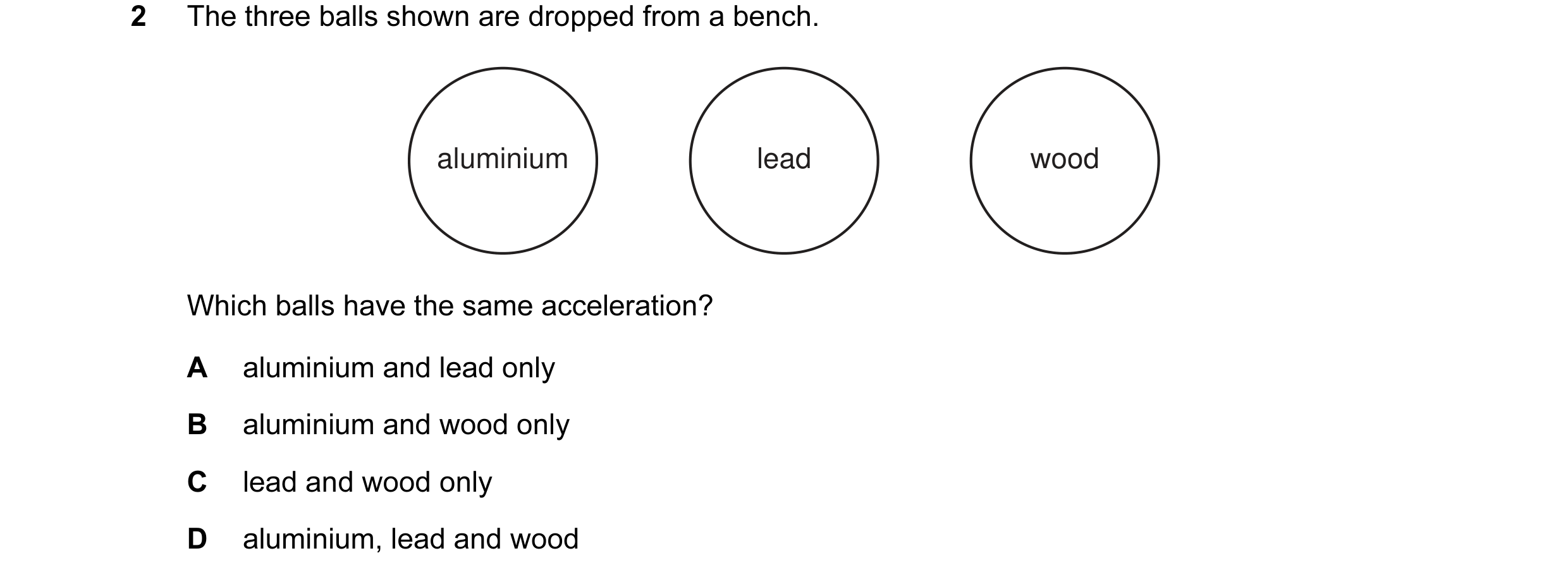
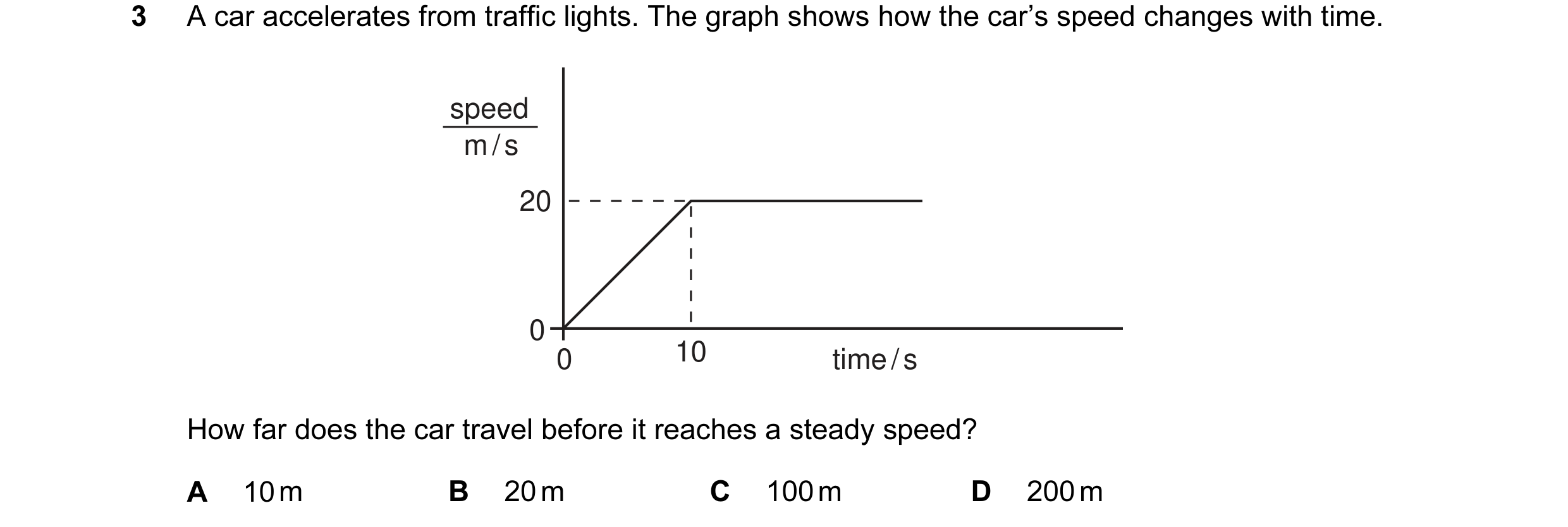
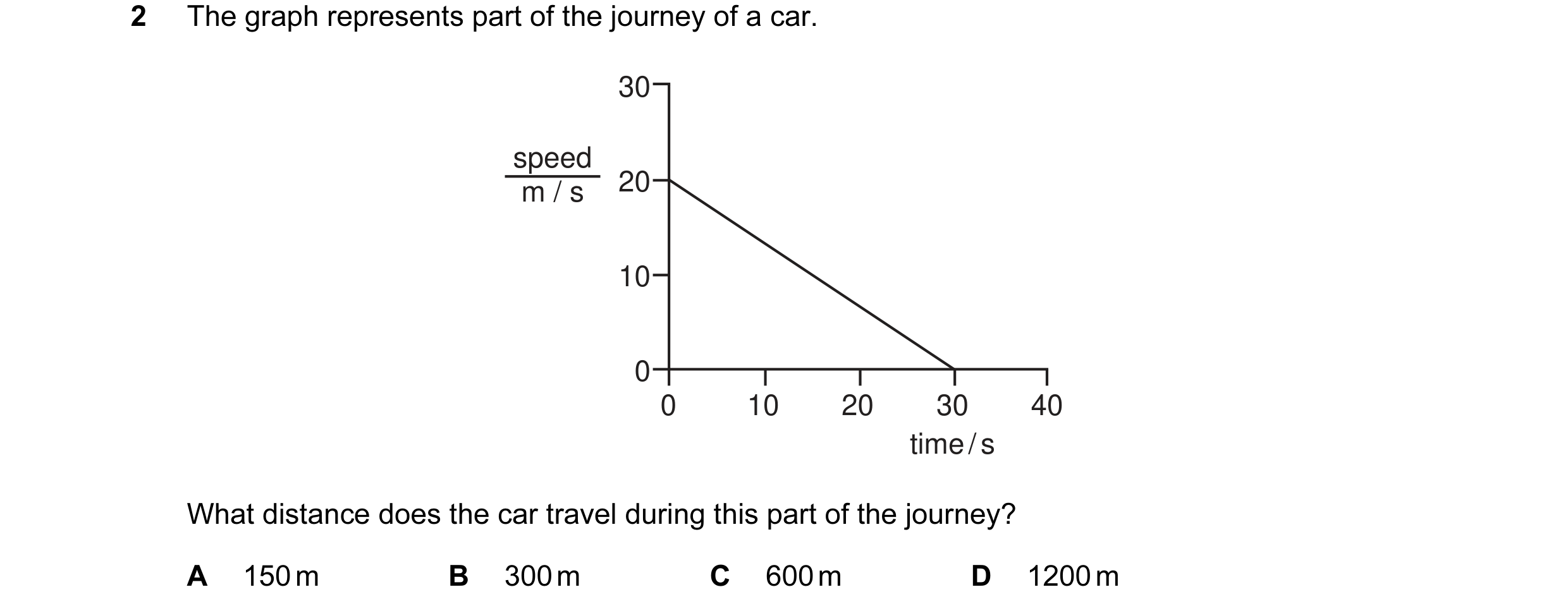 1 / 84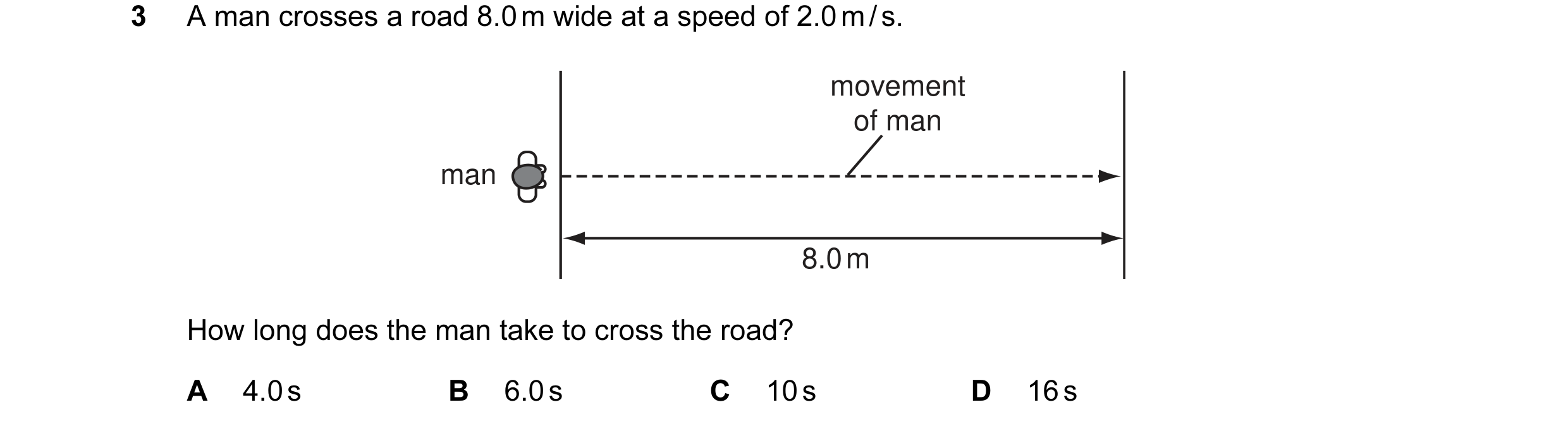
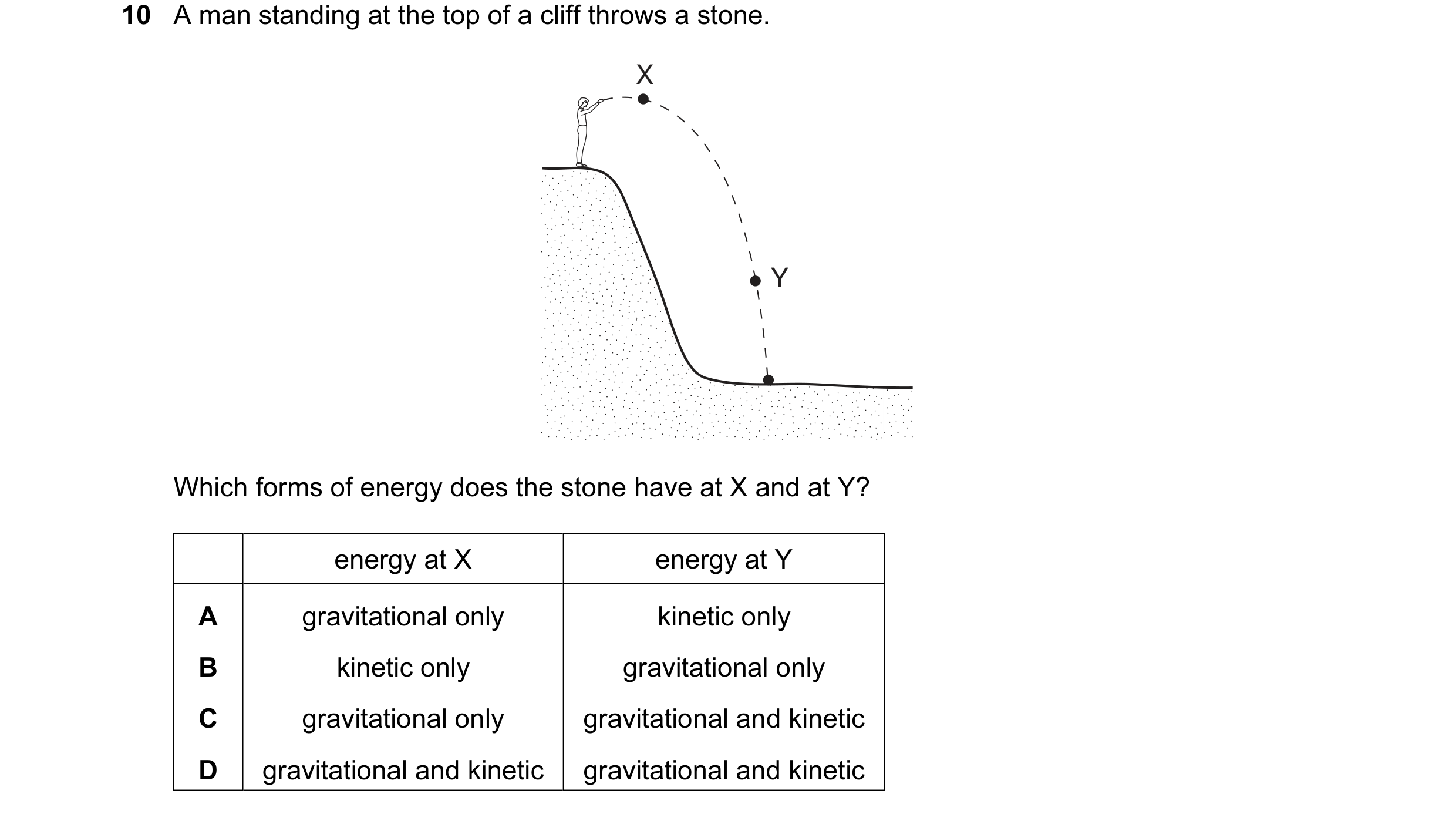
 2 / 84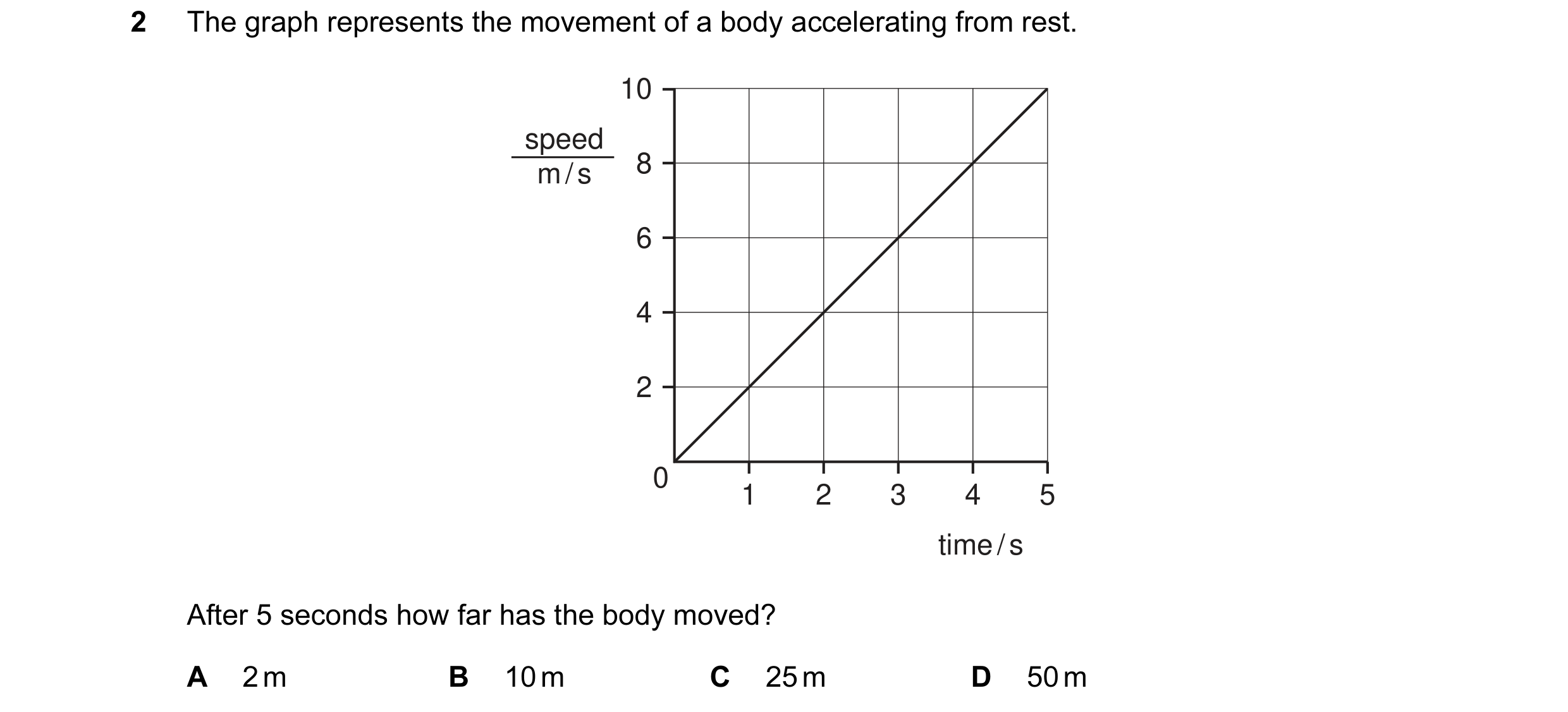
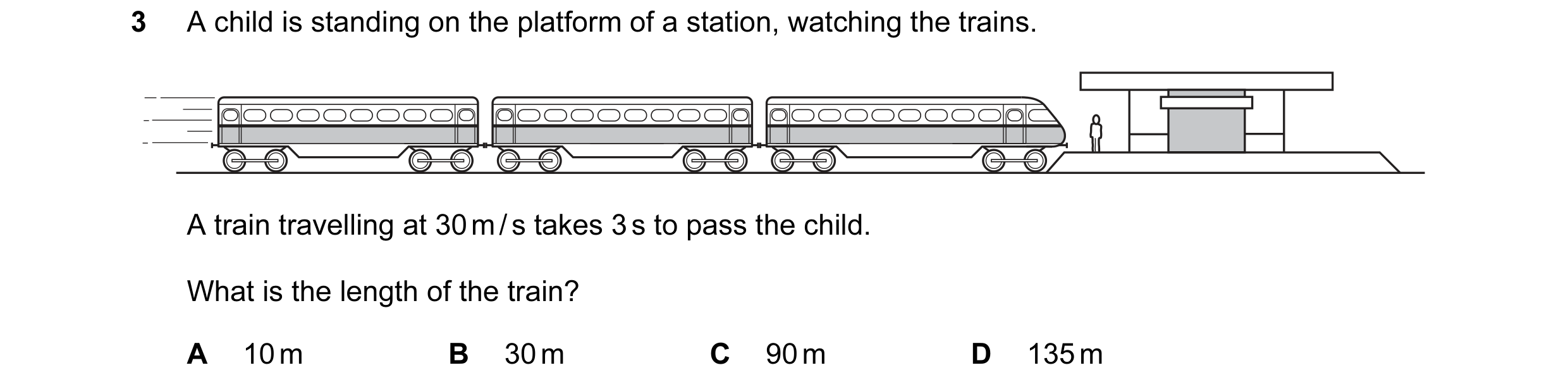 3 / 84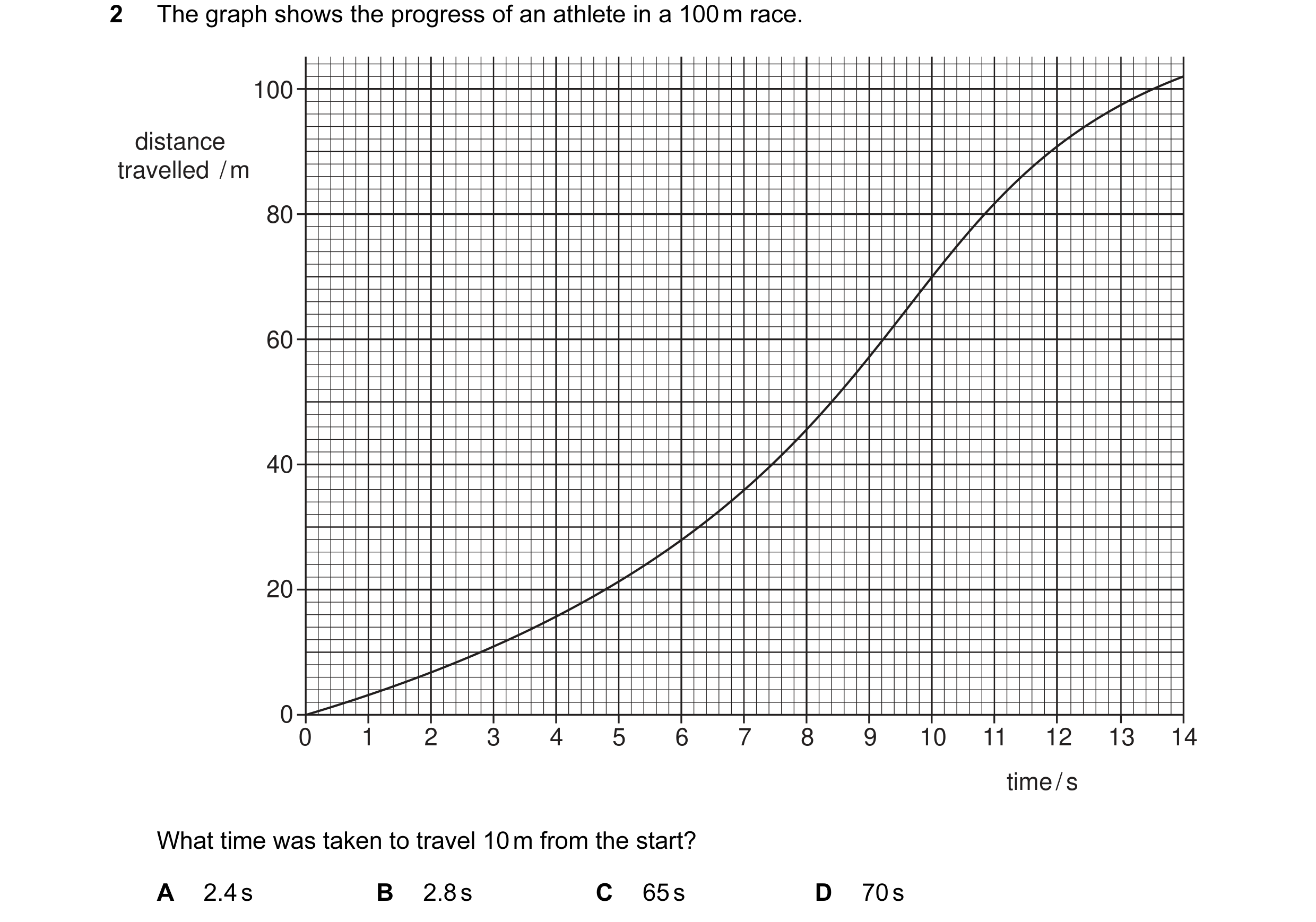
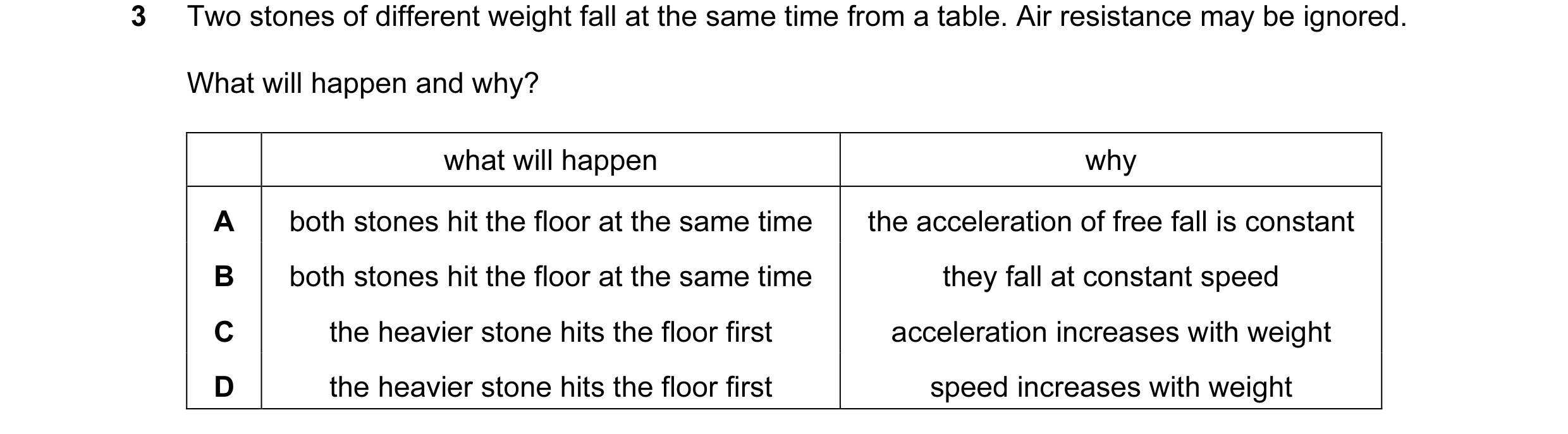
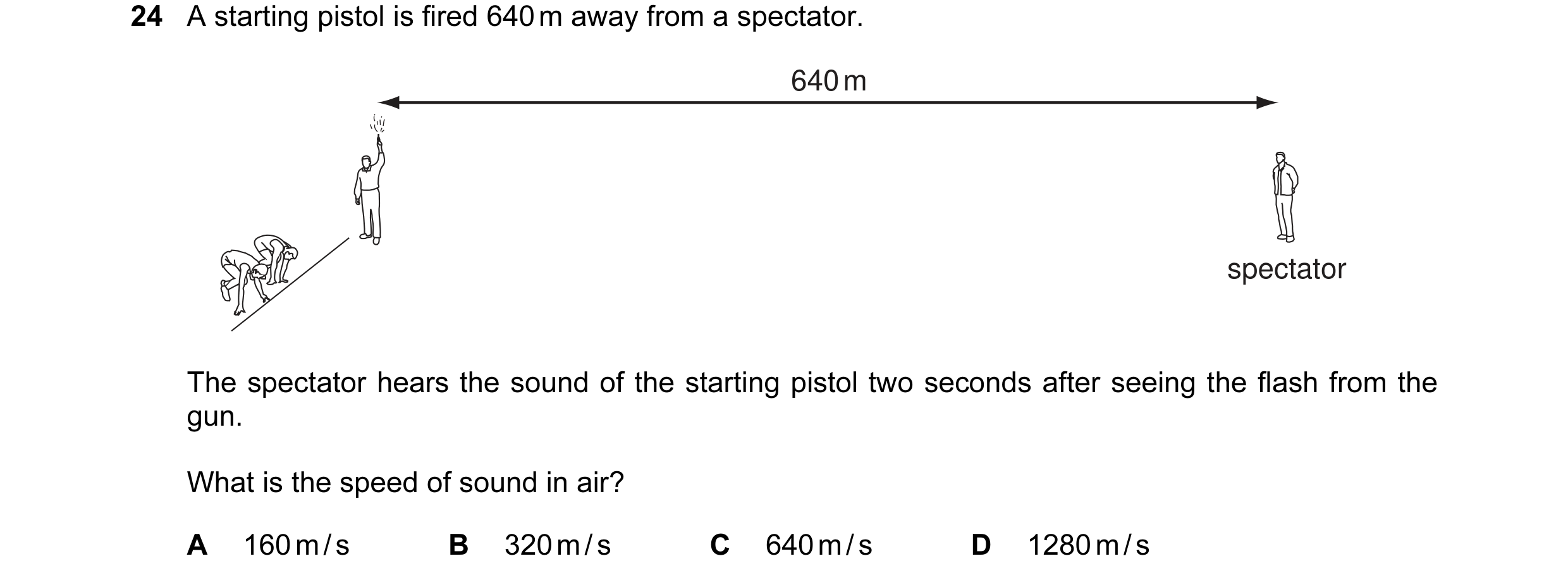 4 / 84
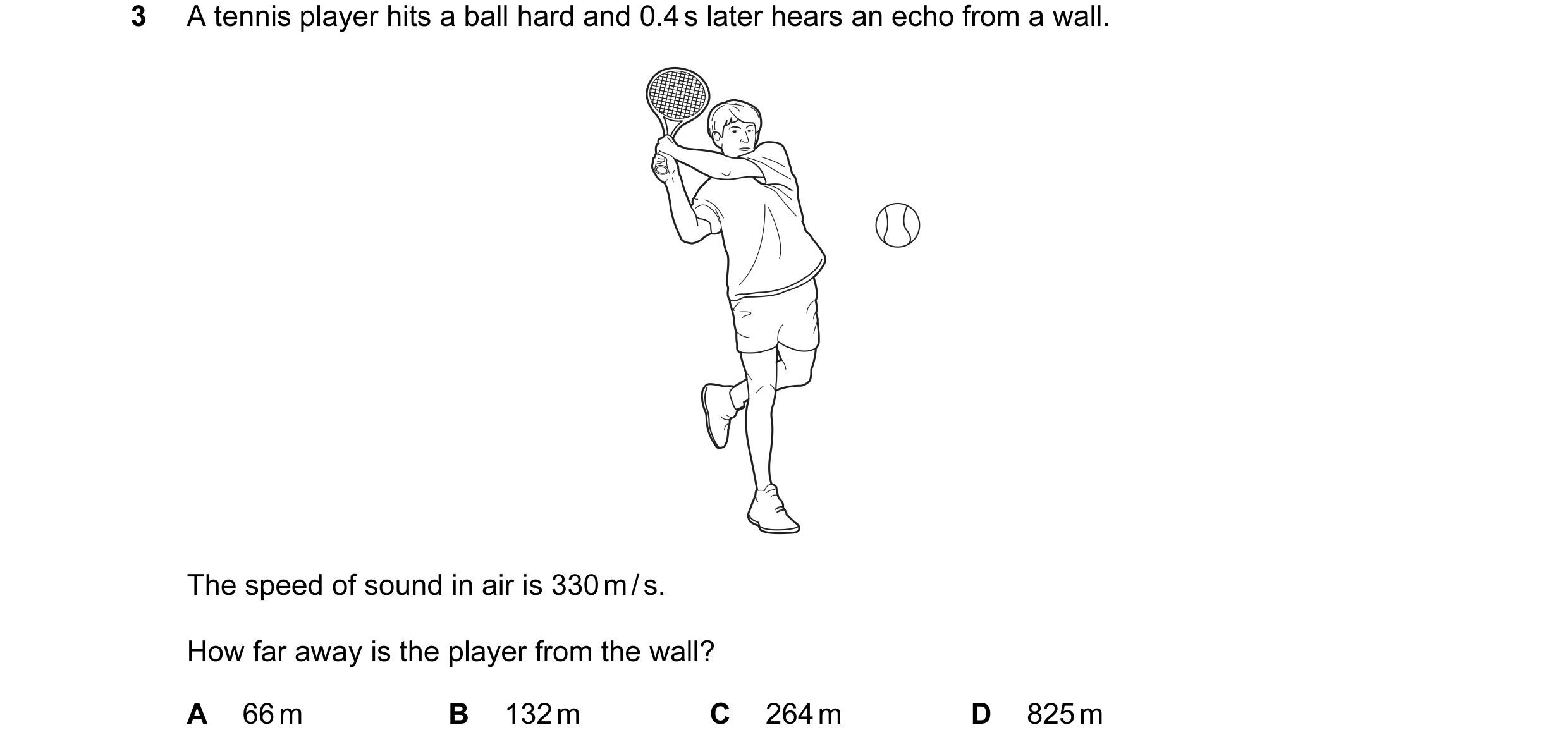
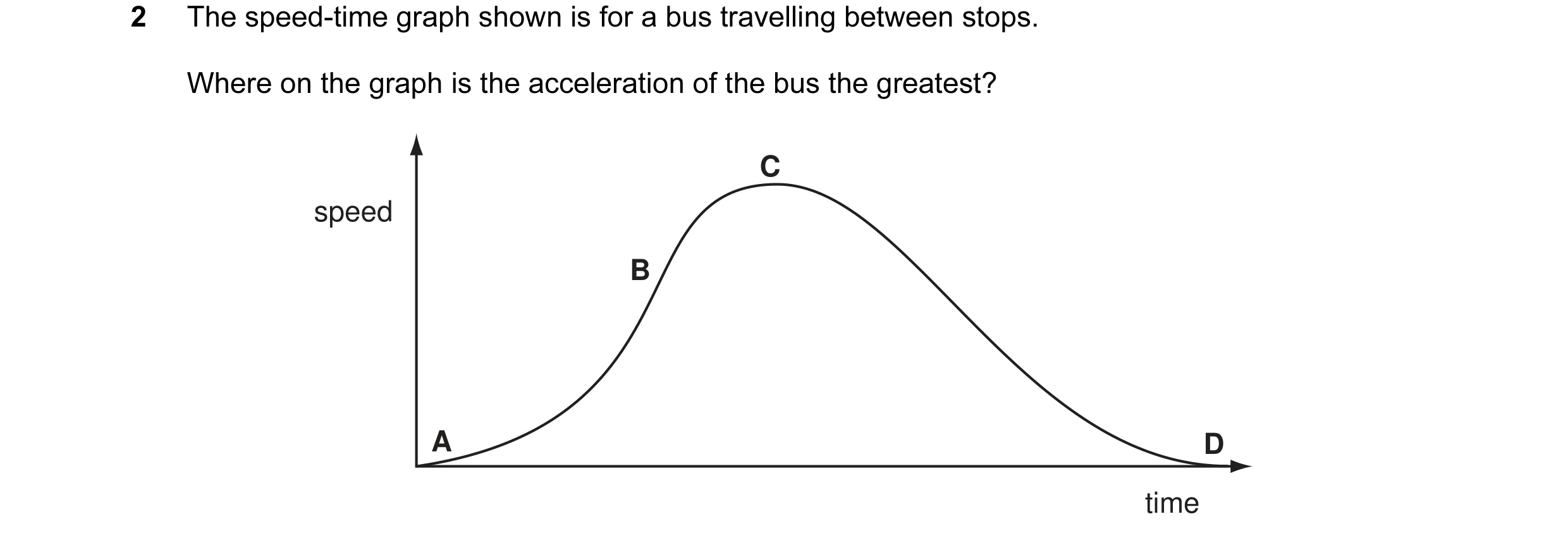
 5 / 84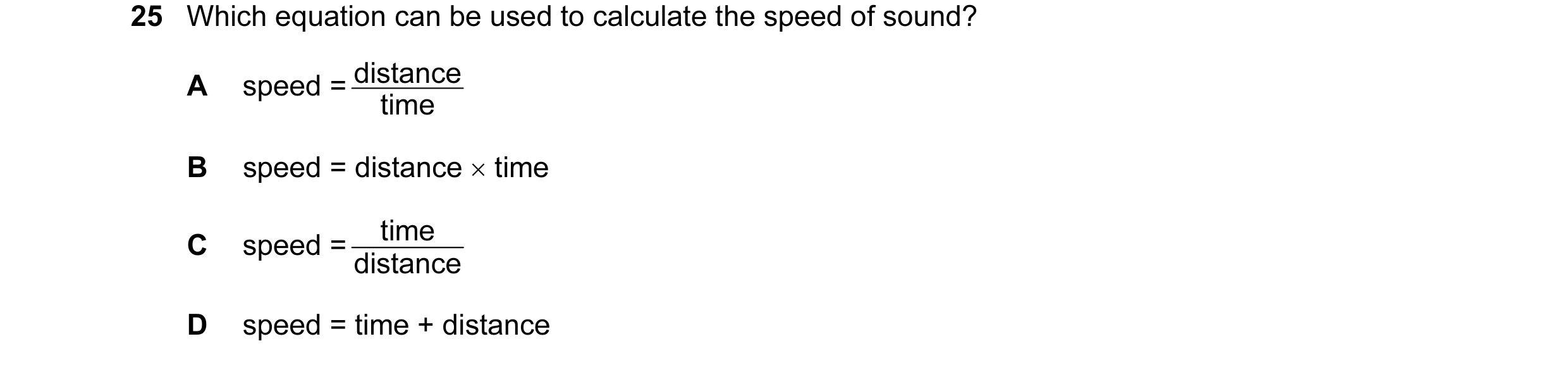
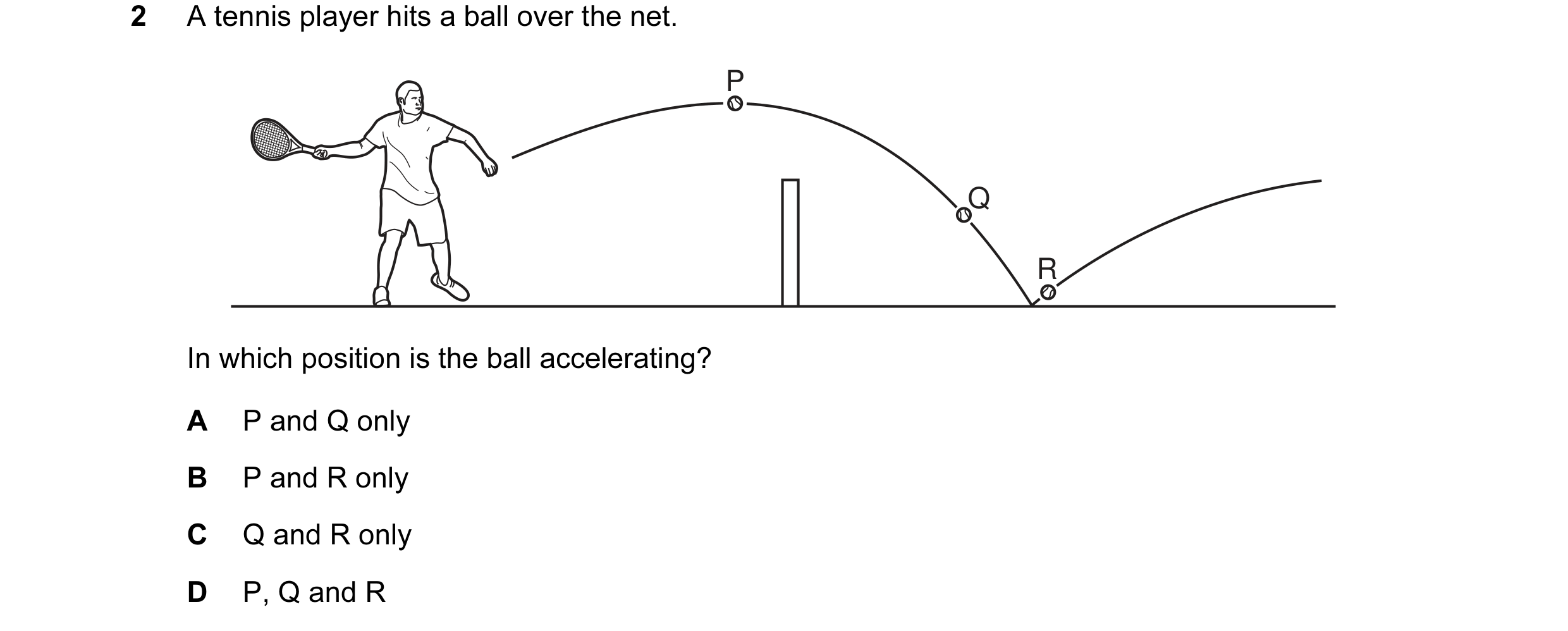
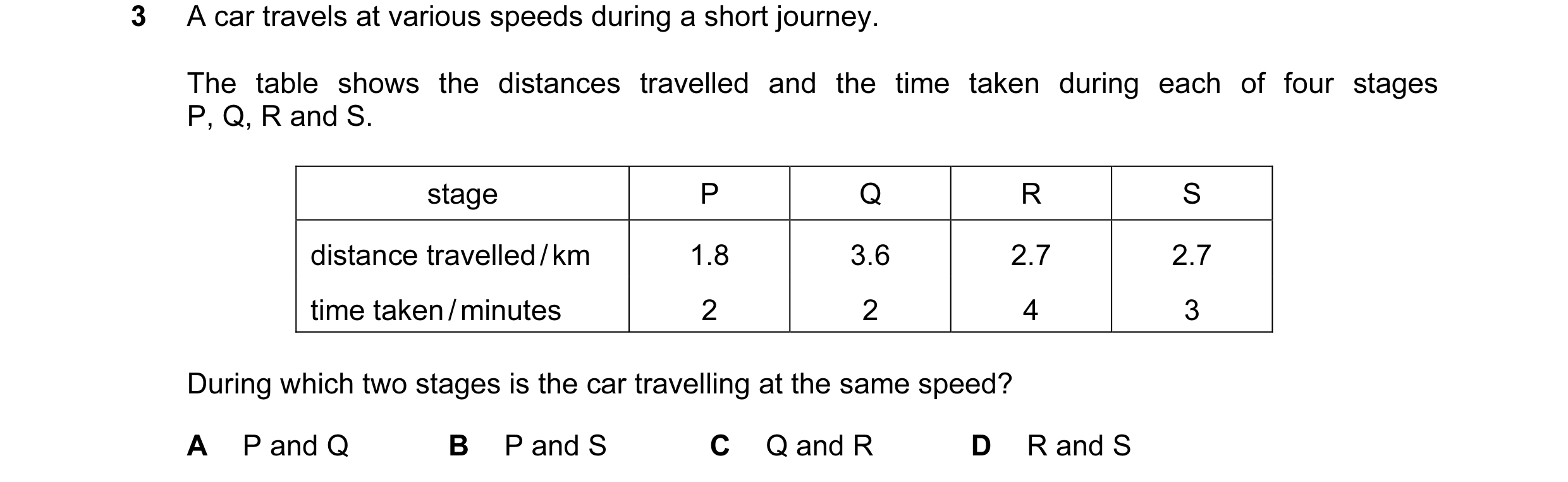 6 / 84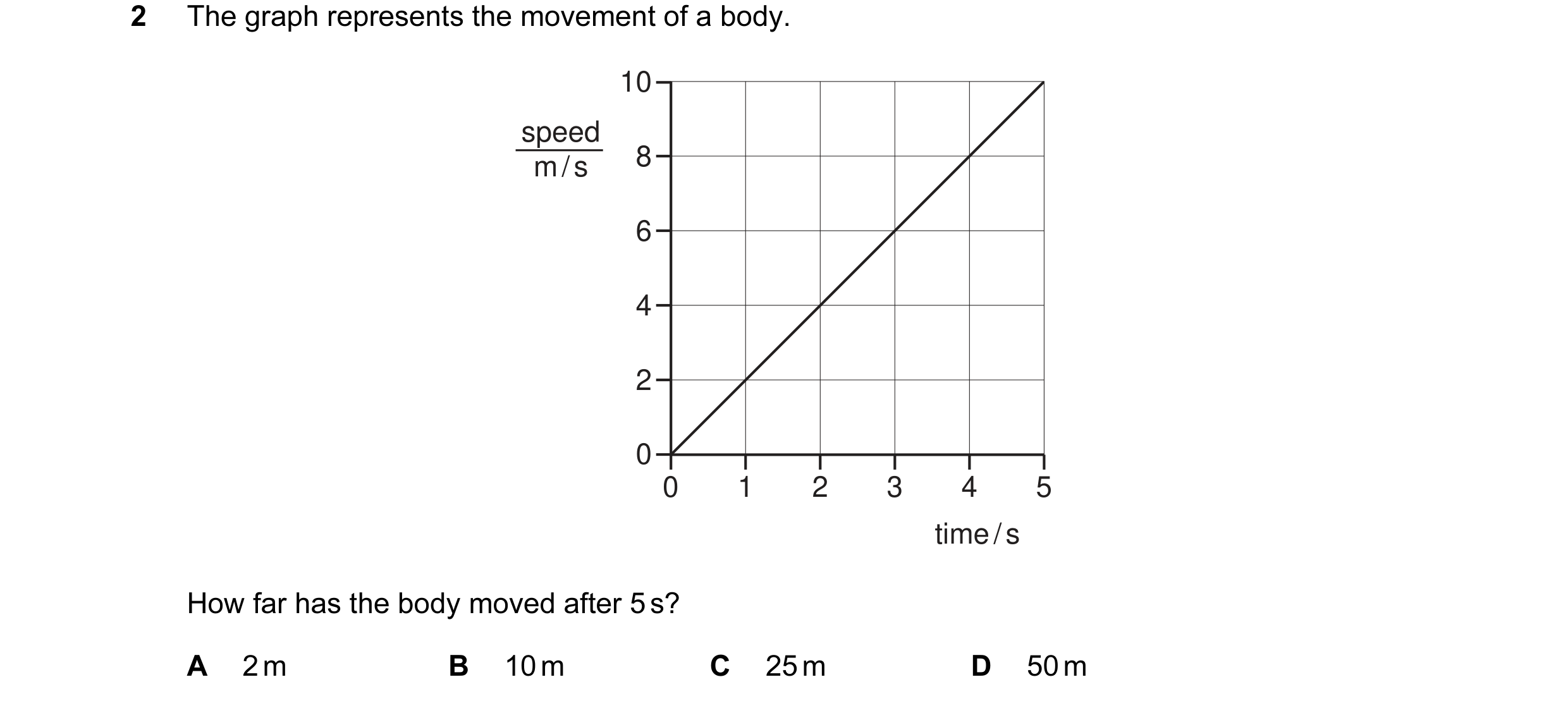

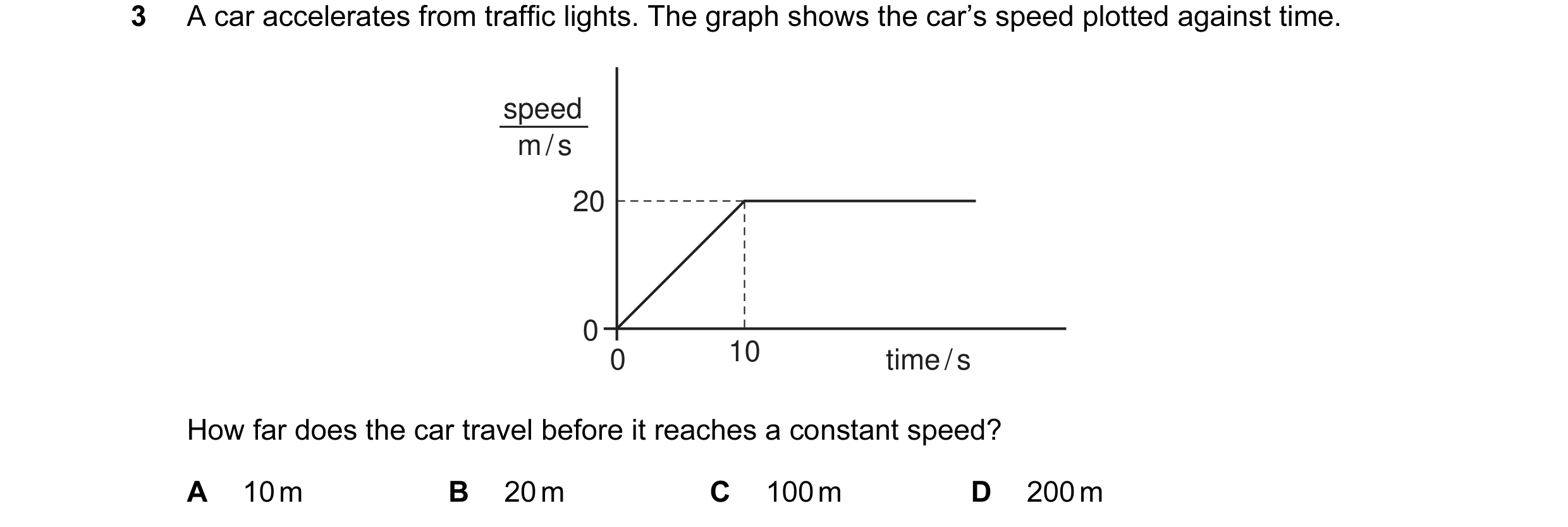 7 / 84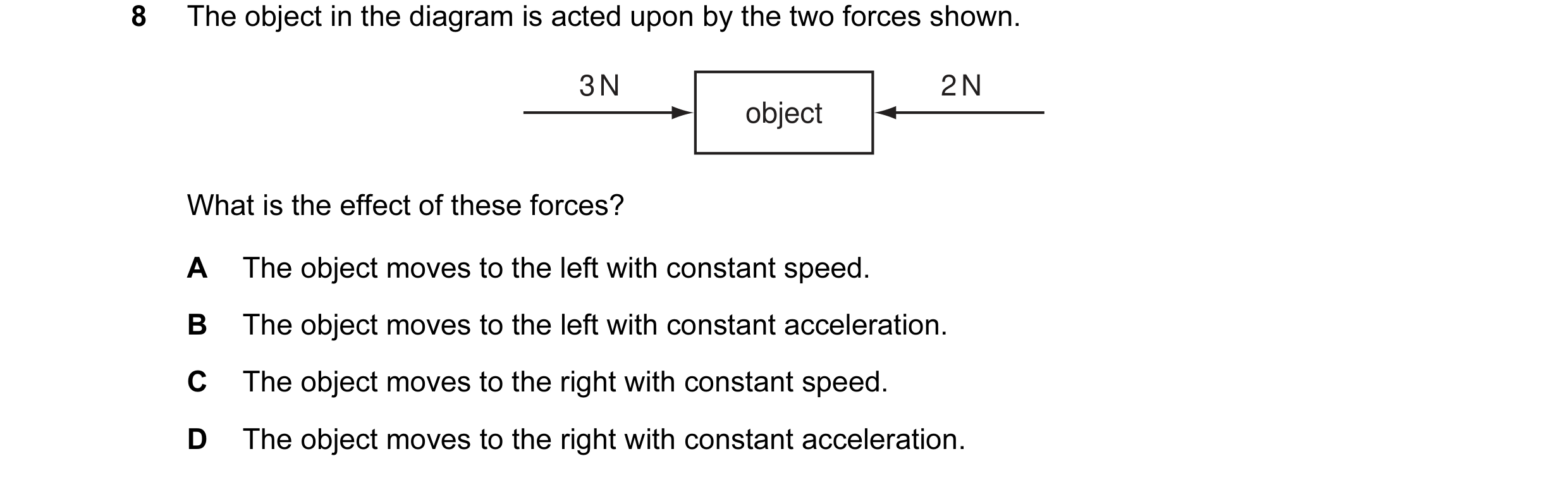
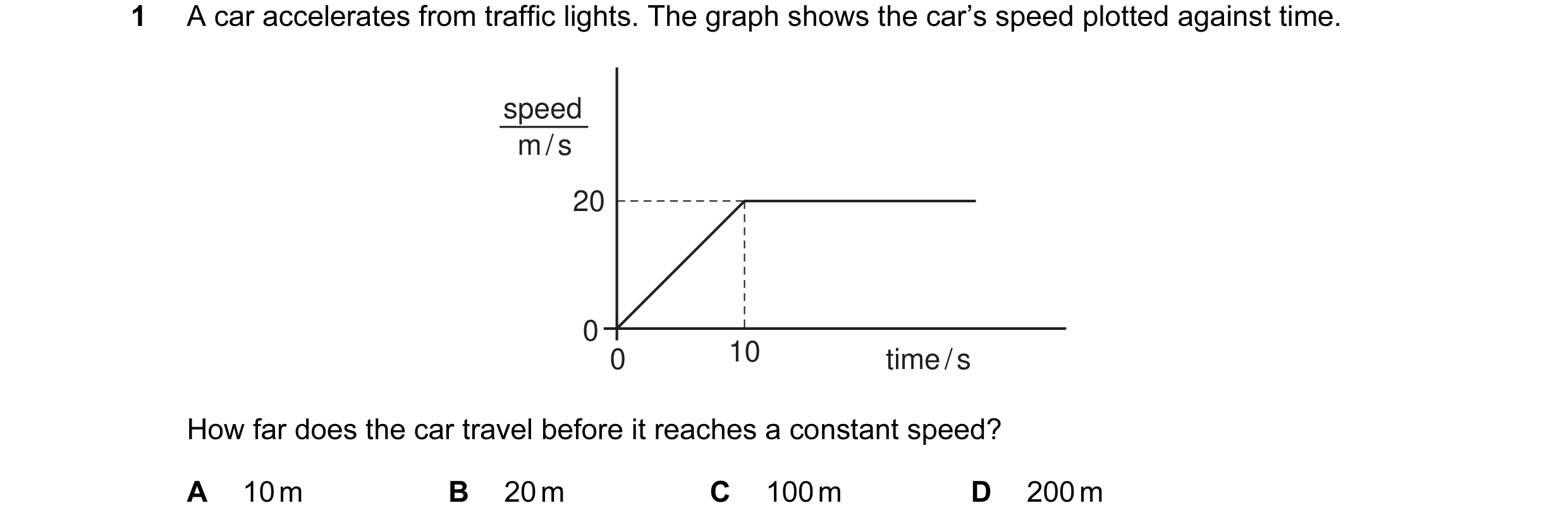
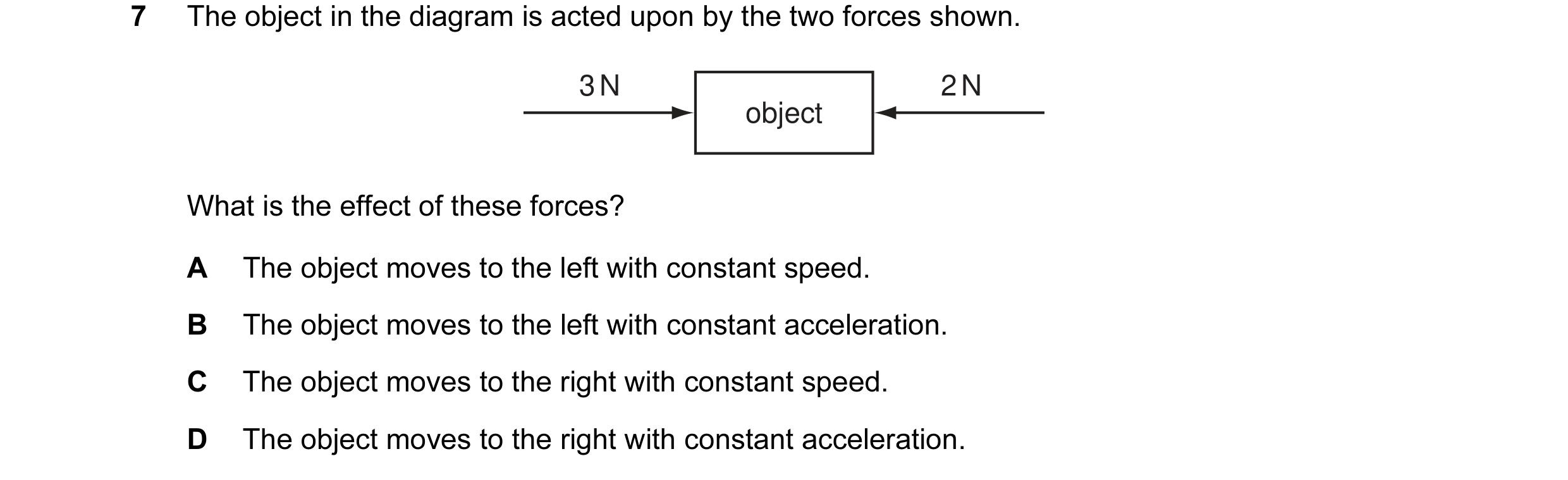 8 / 84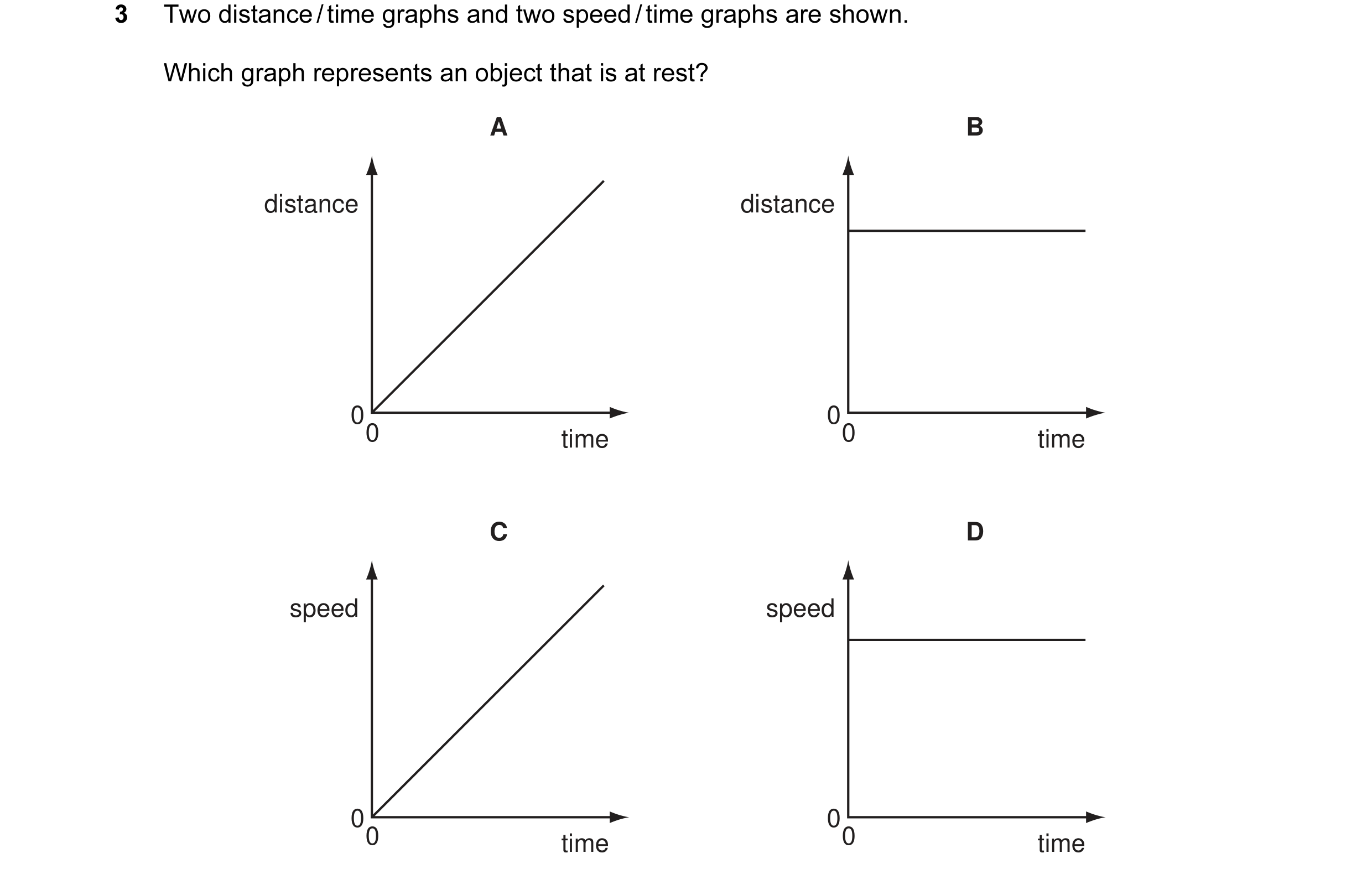
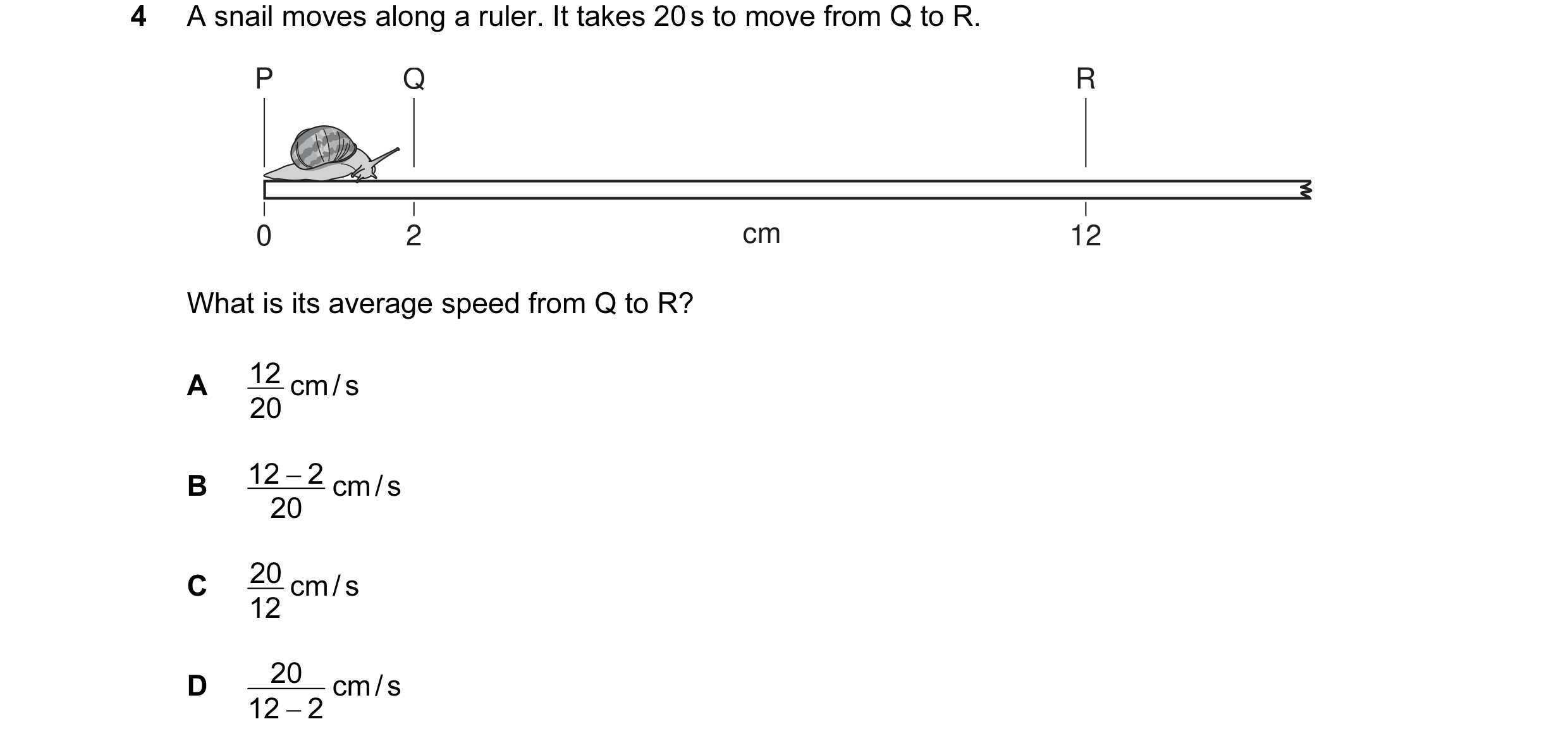
 9 / 84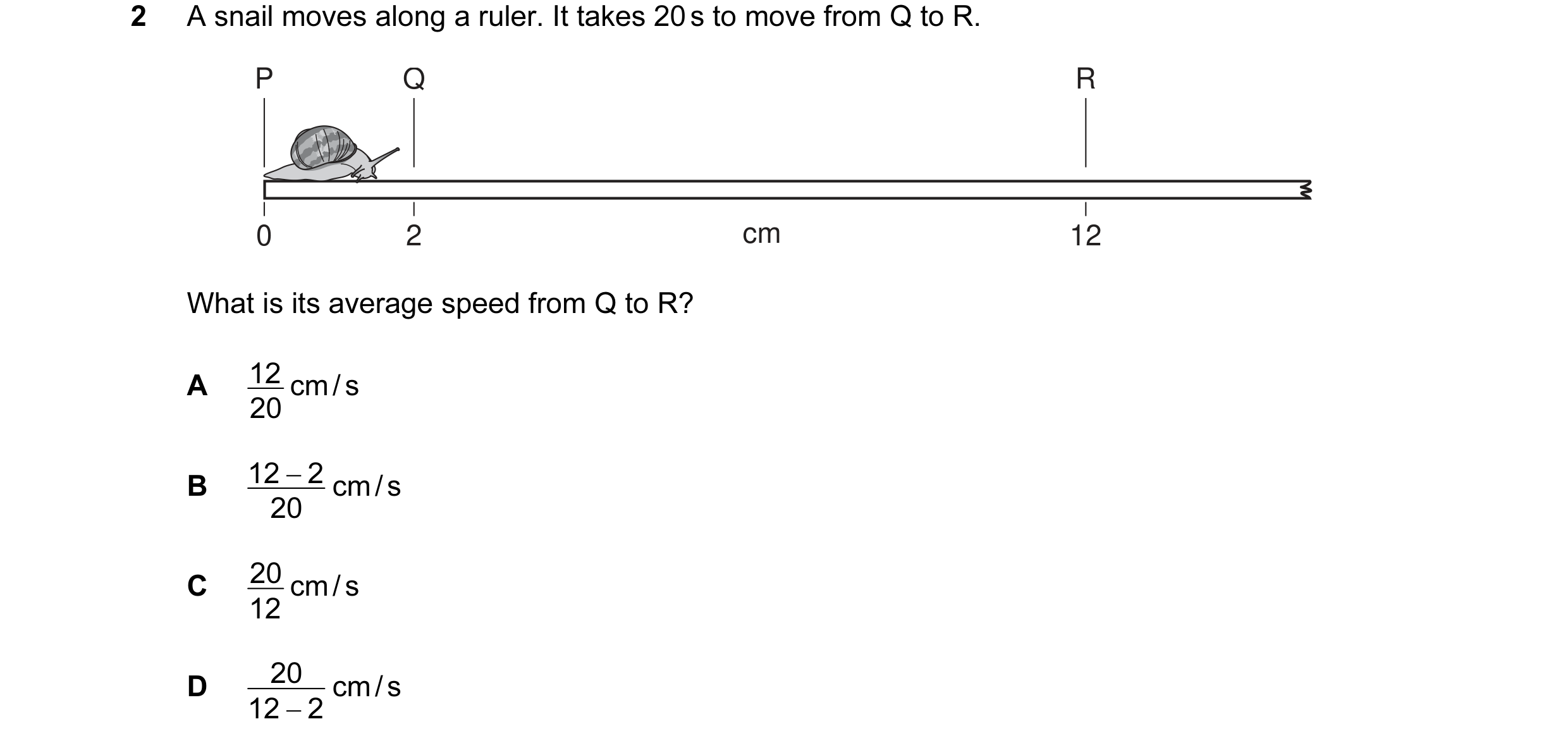
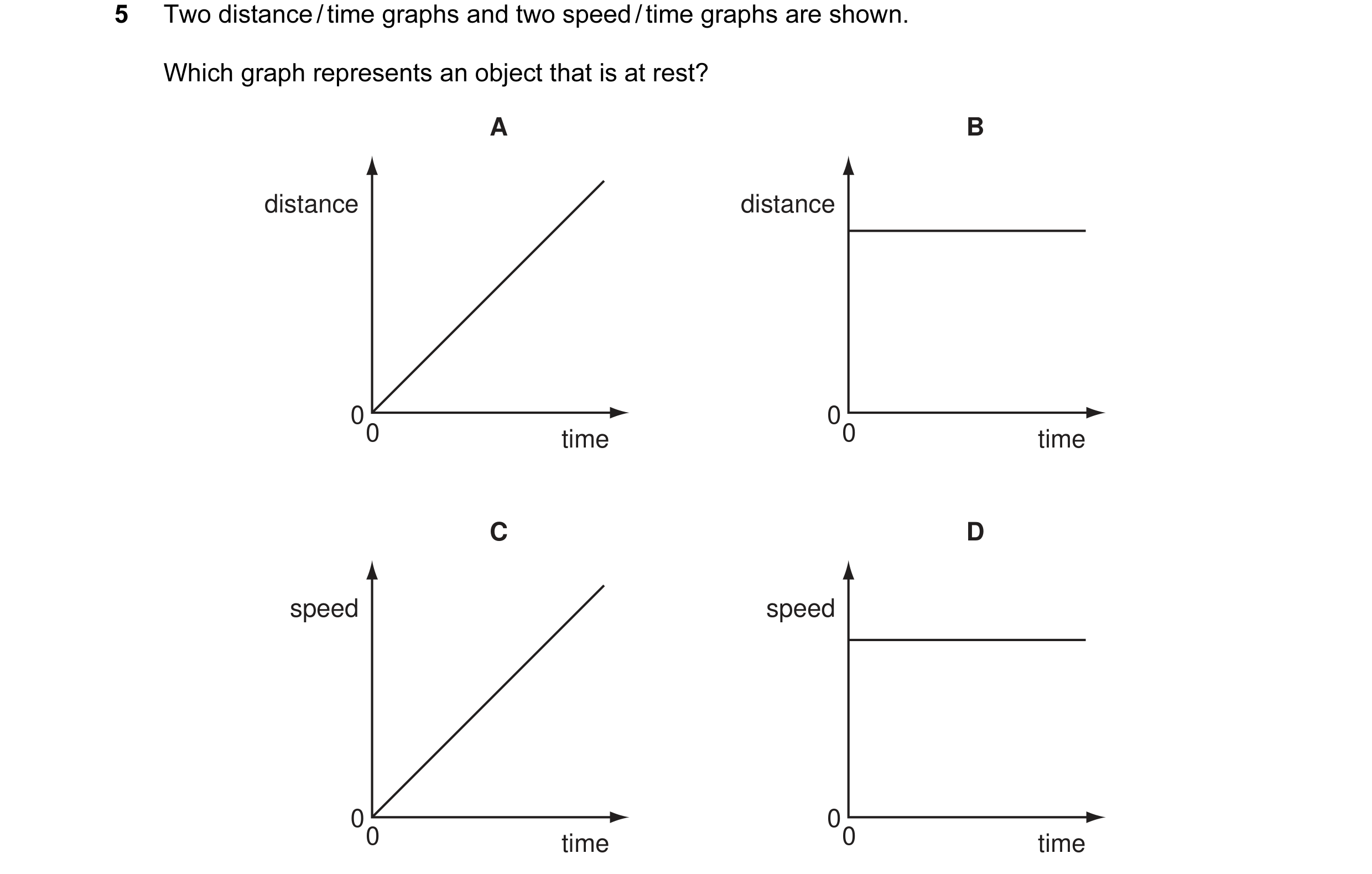
 10 / 84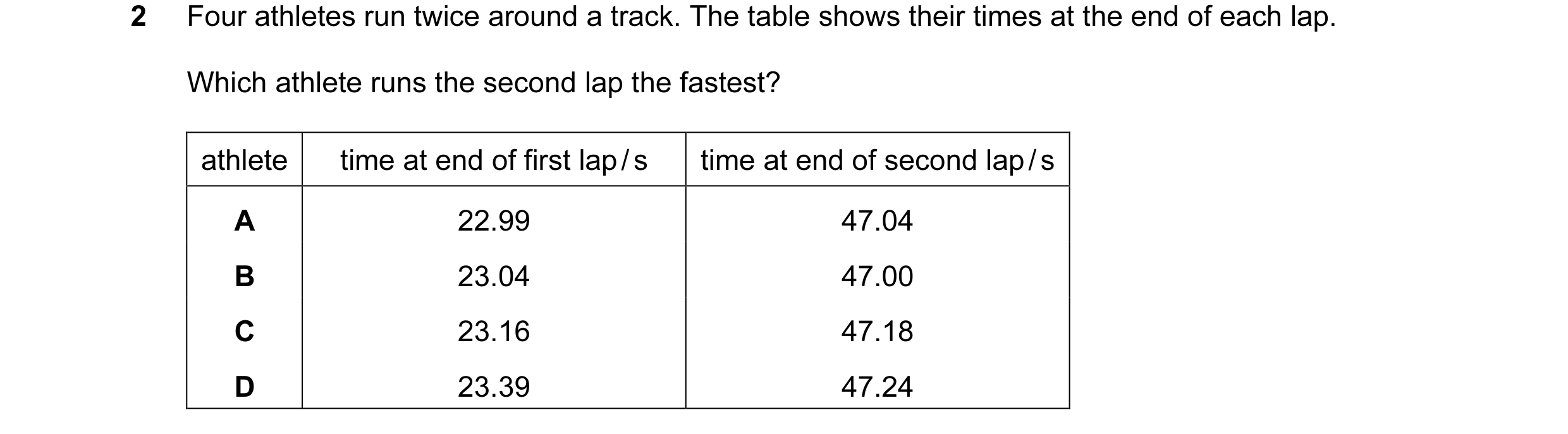
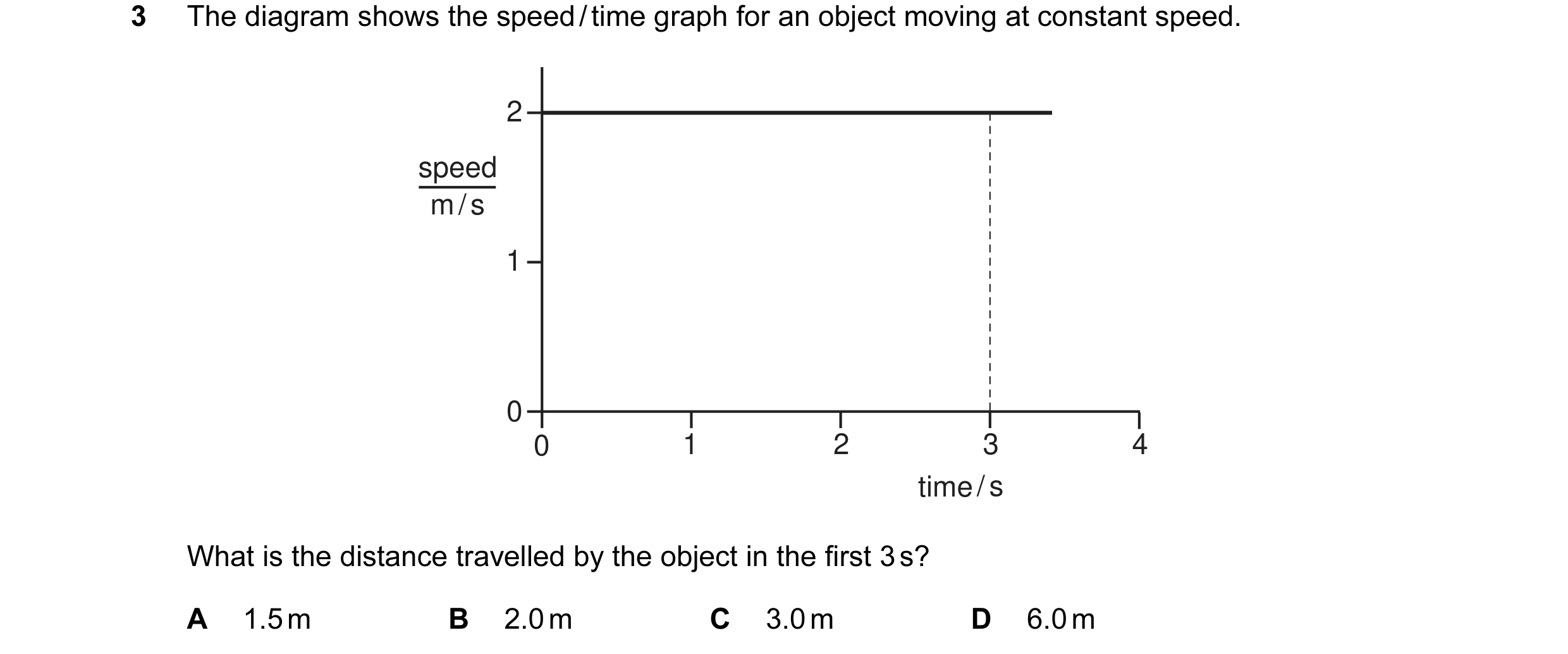
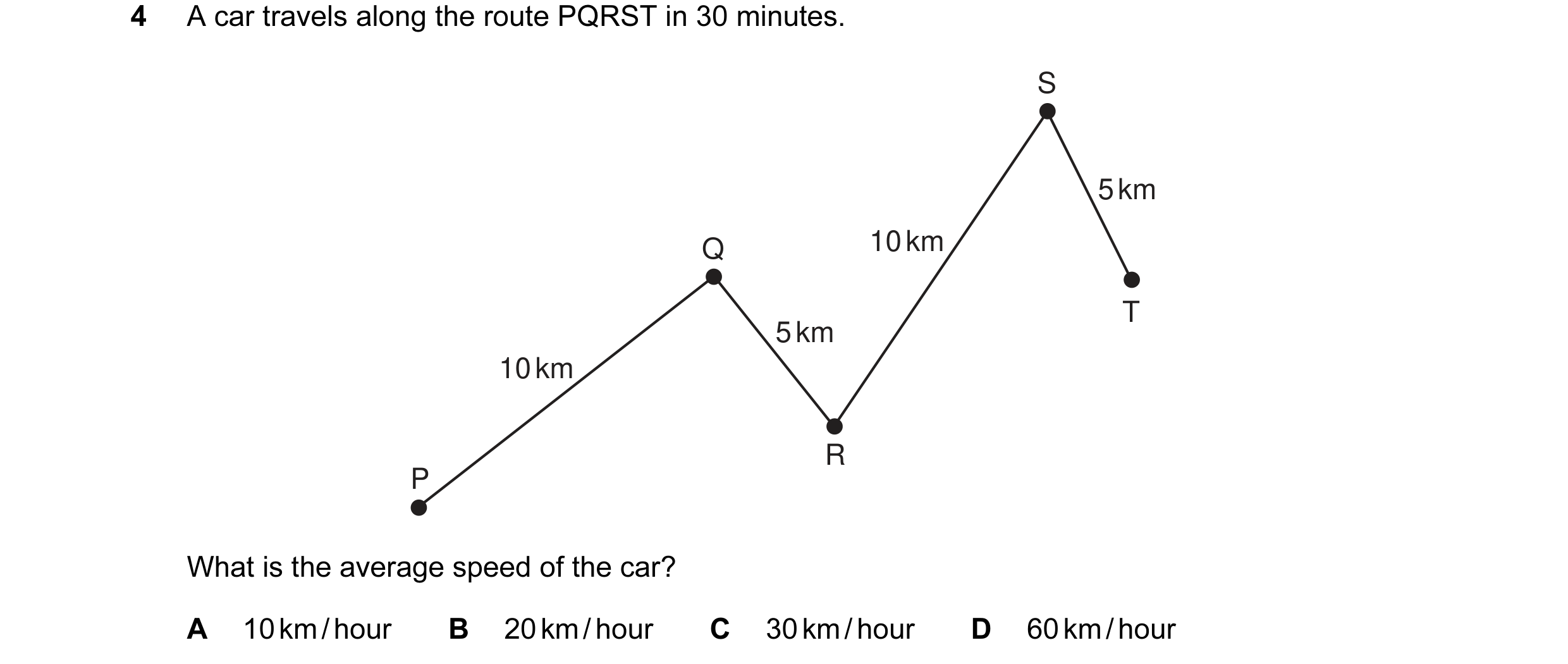 11 / 84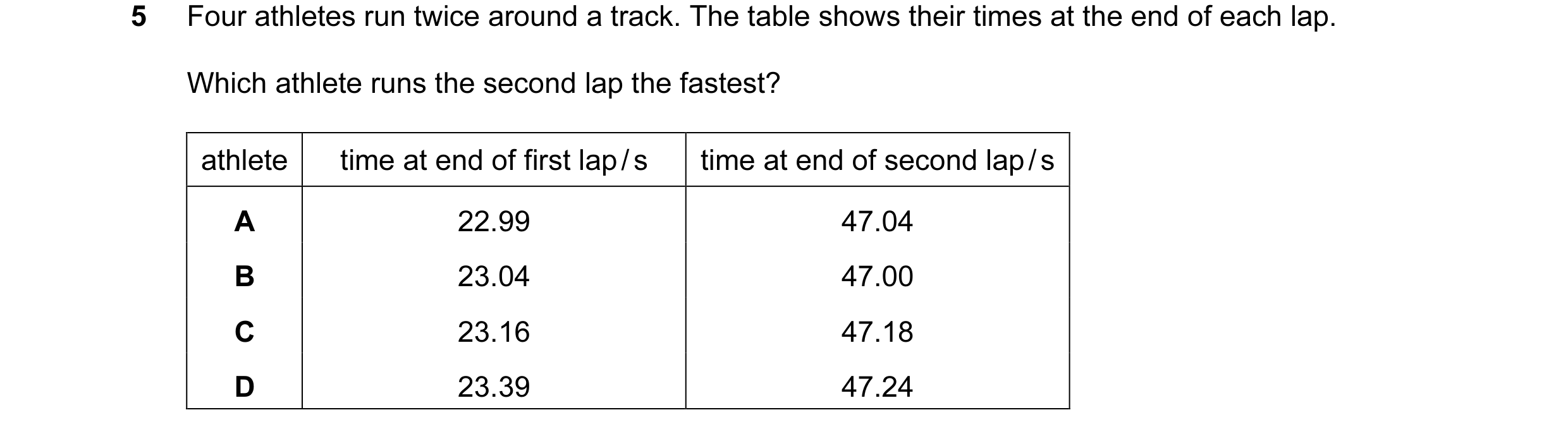
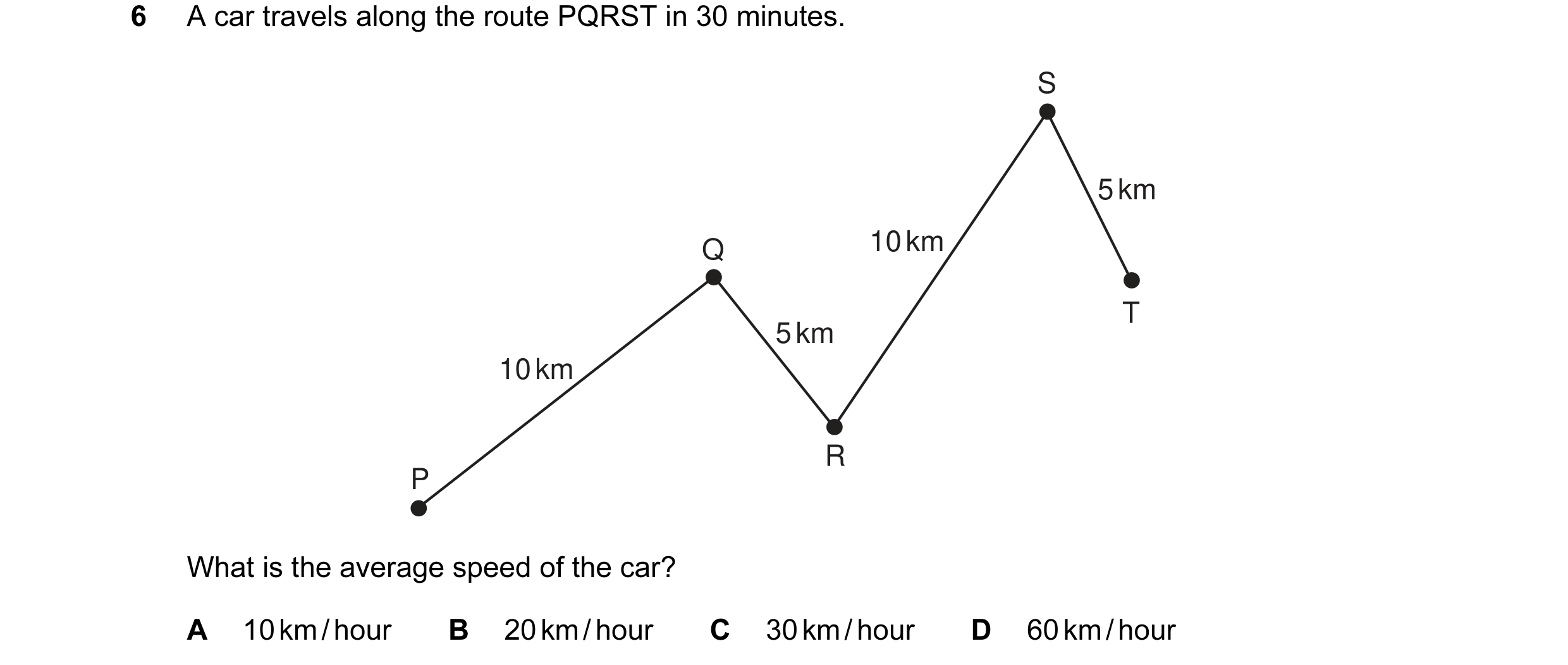
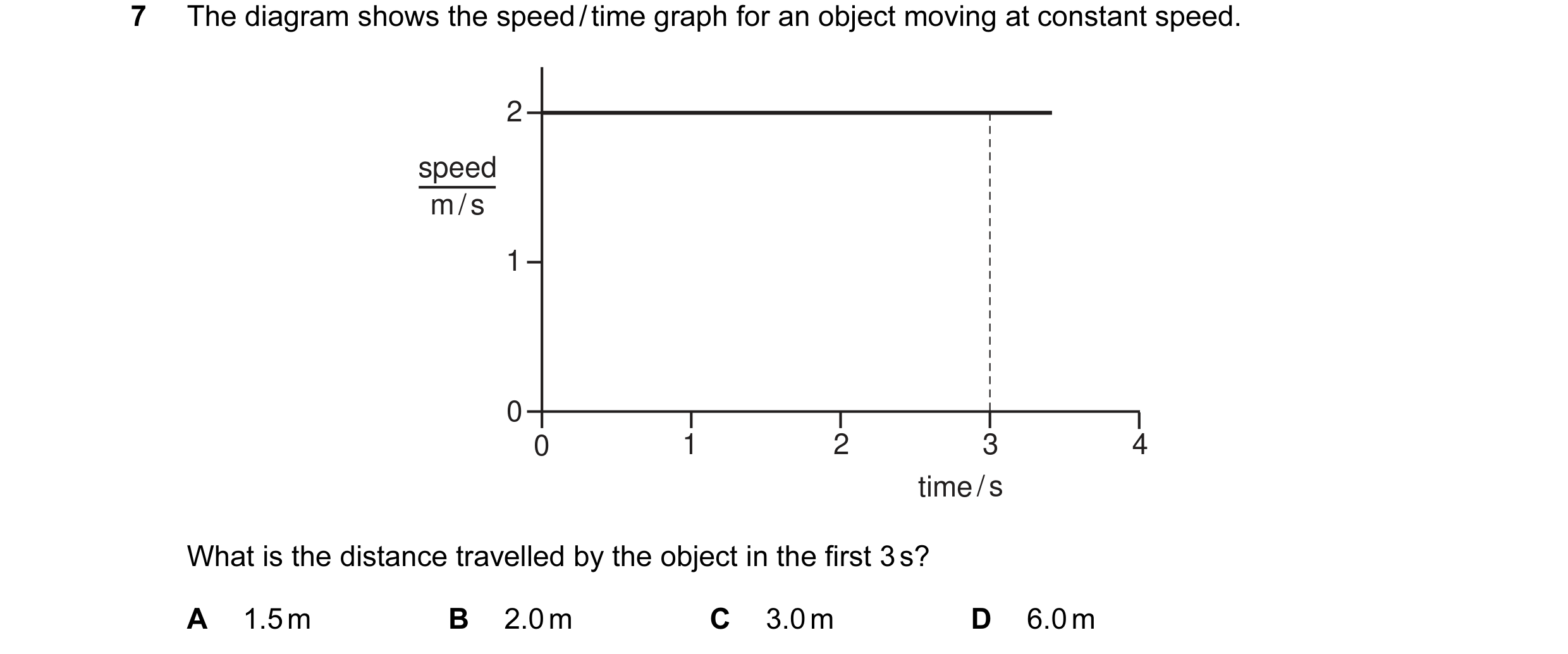 12 / 84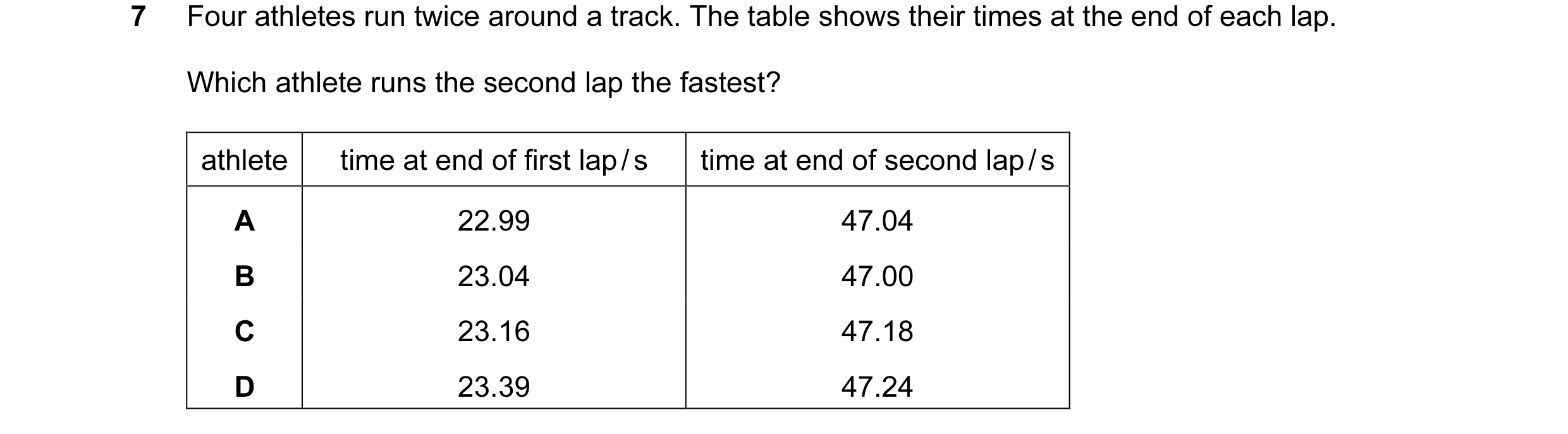
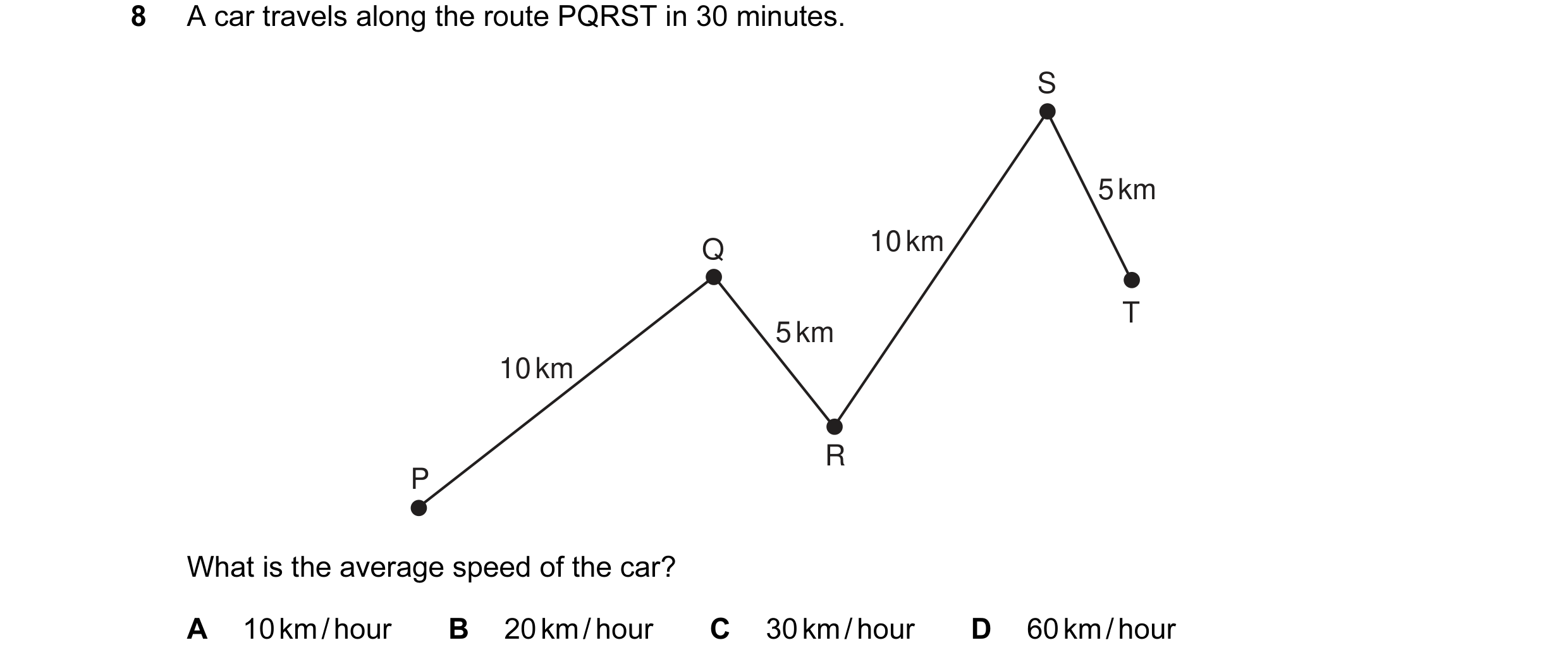
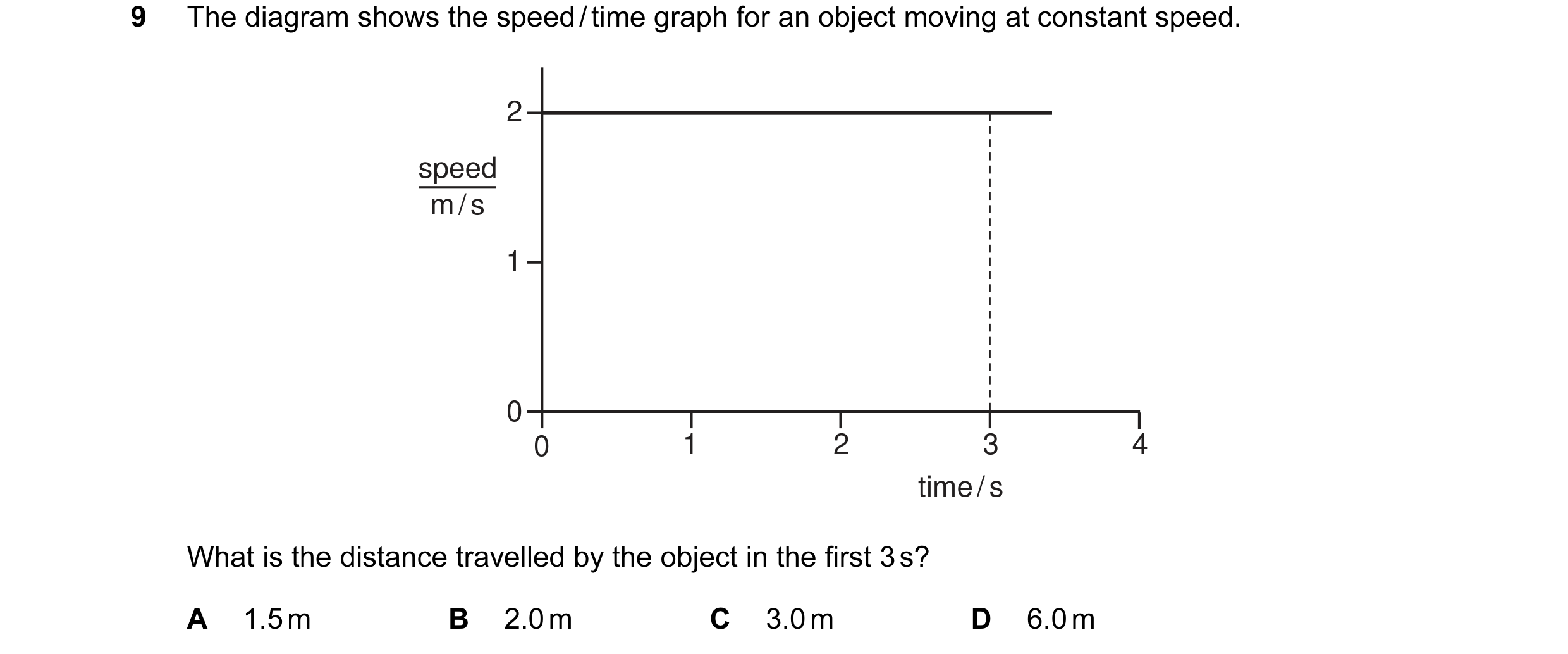
 13 / 84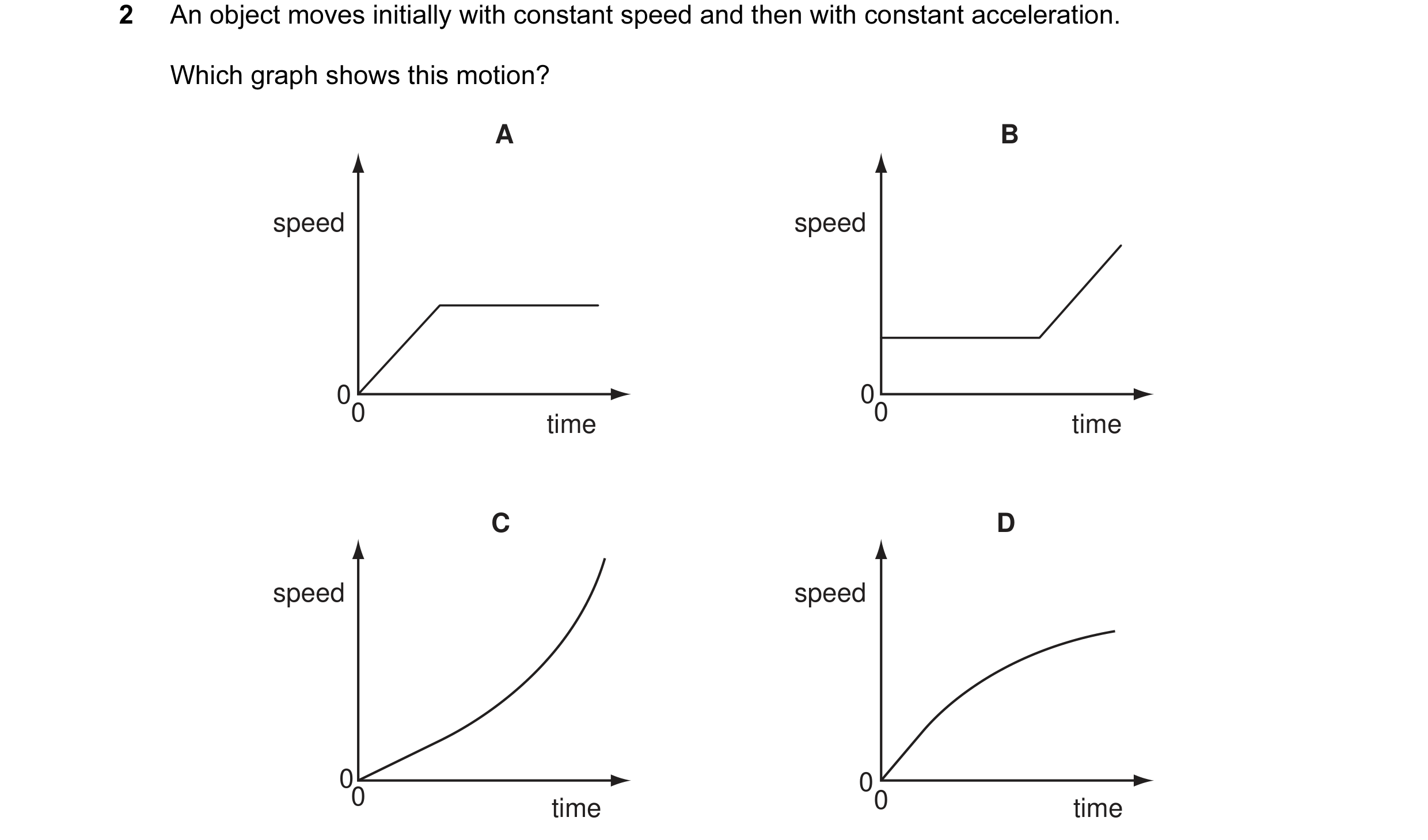
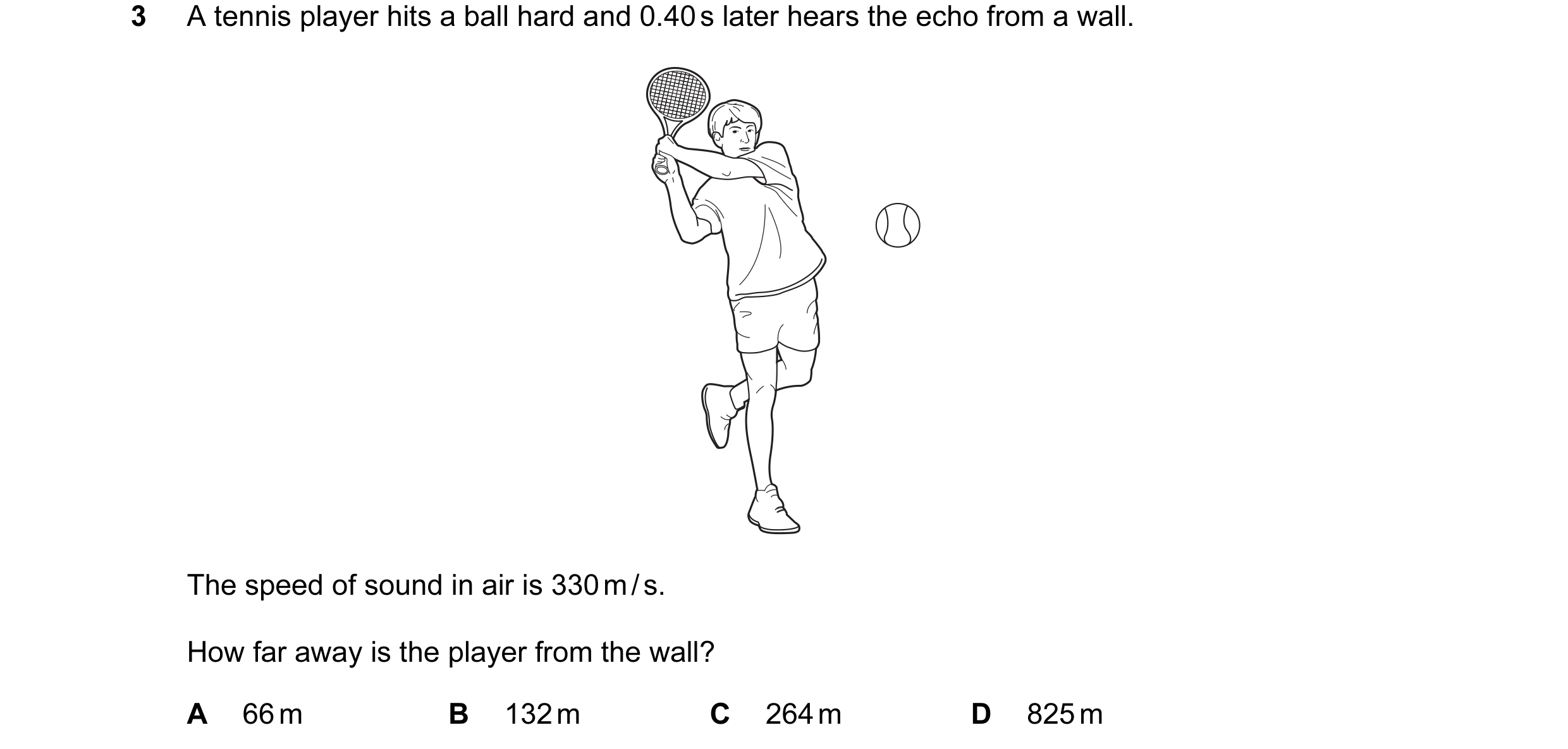 14 / 84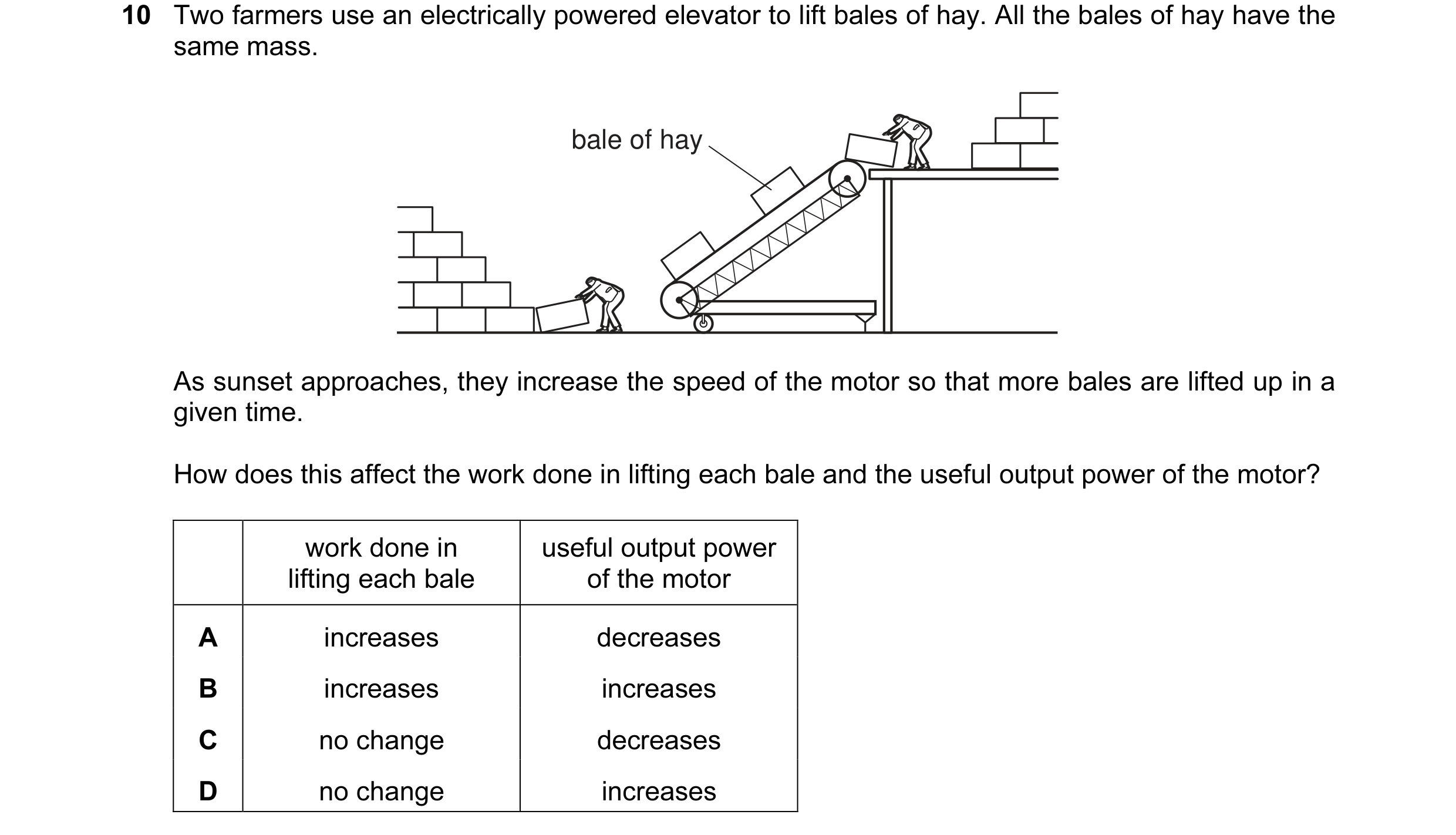
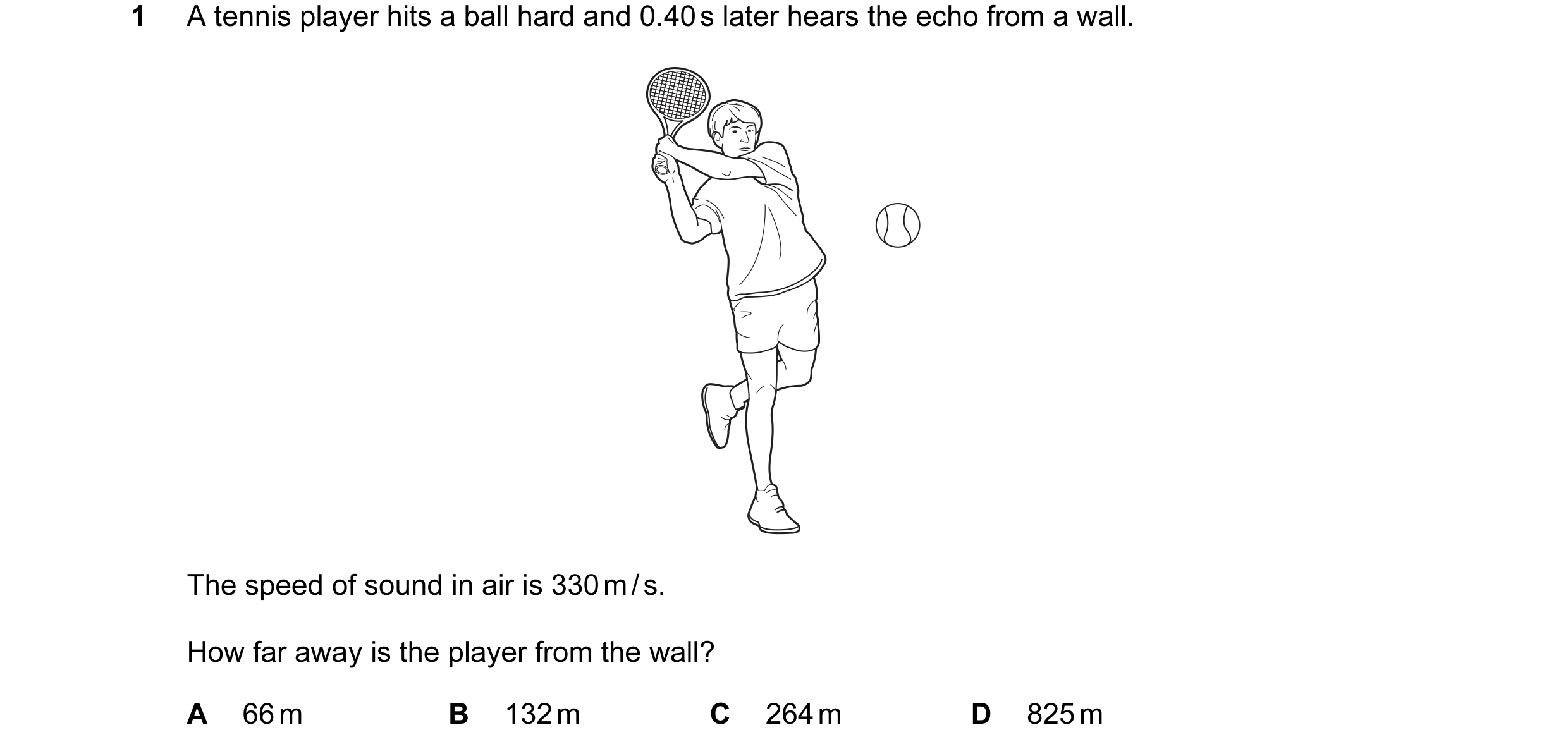 15 / 84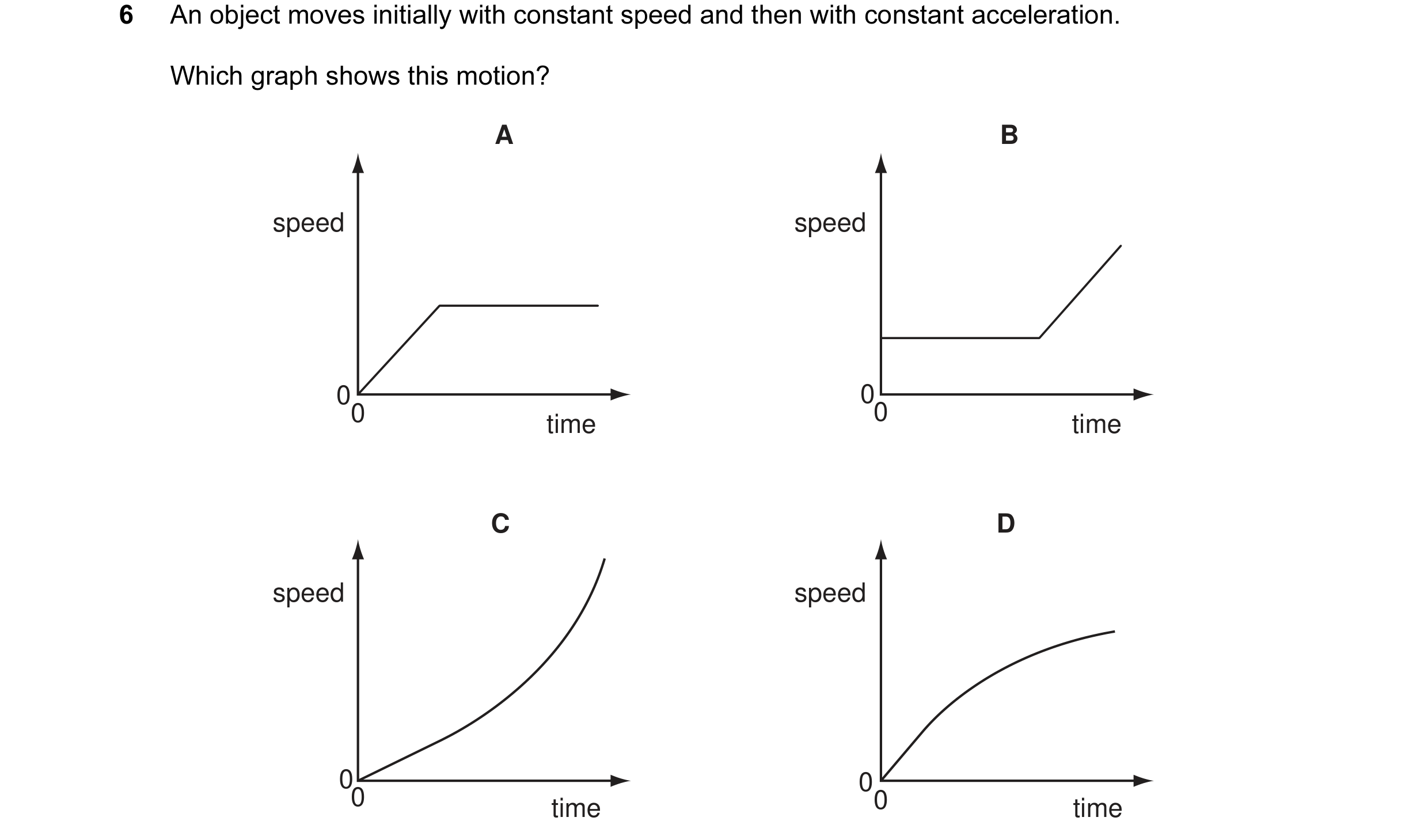
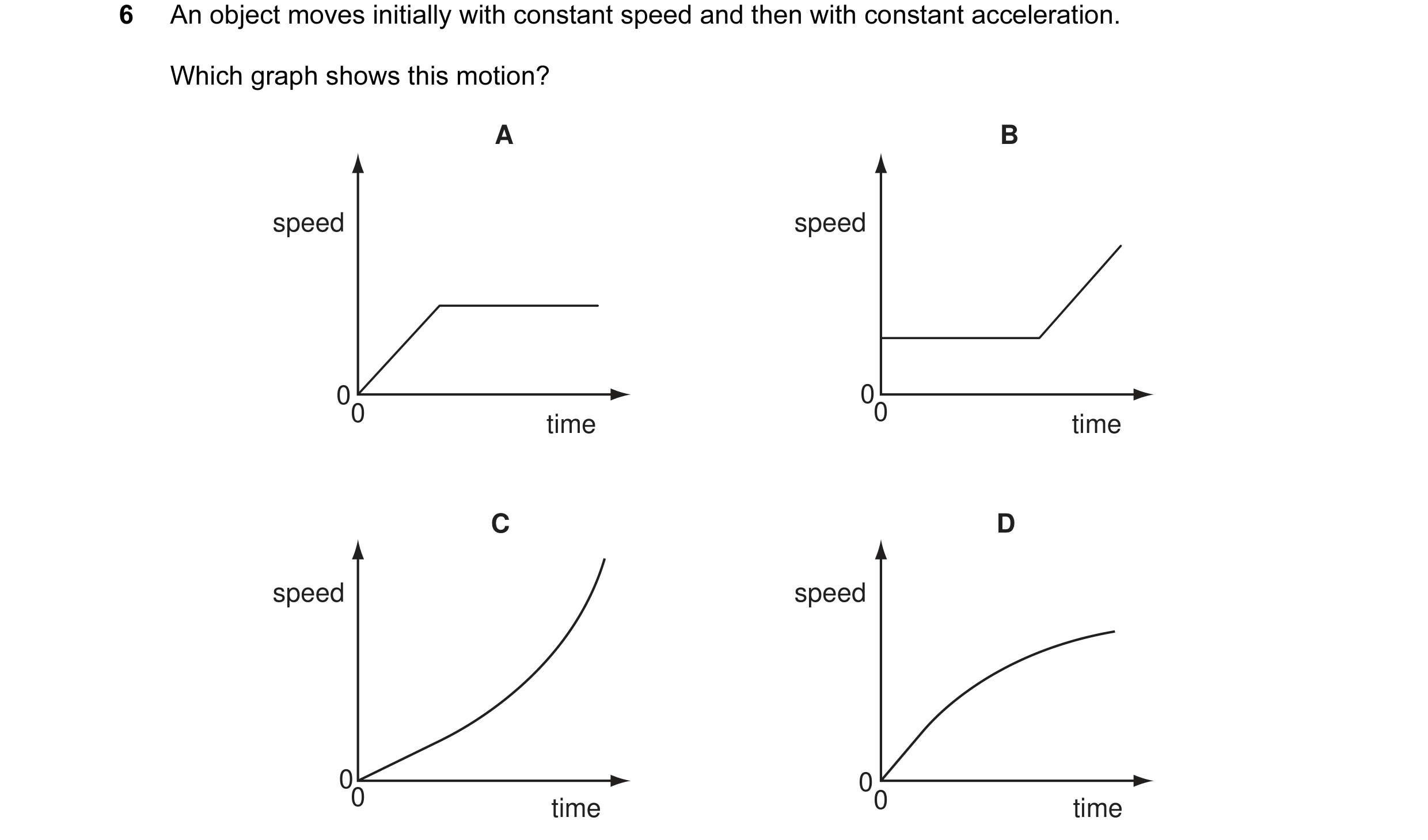 16 / 84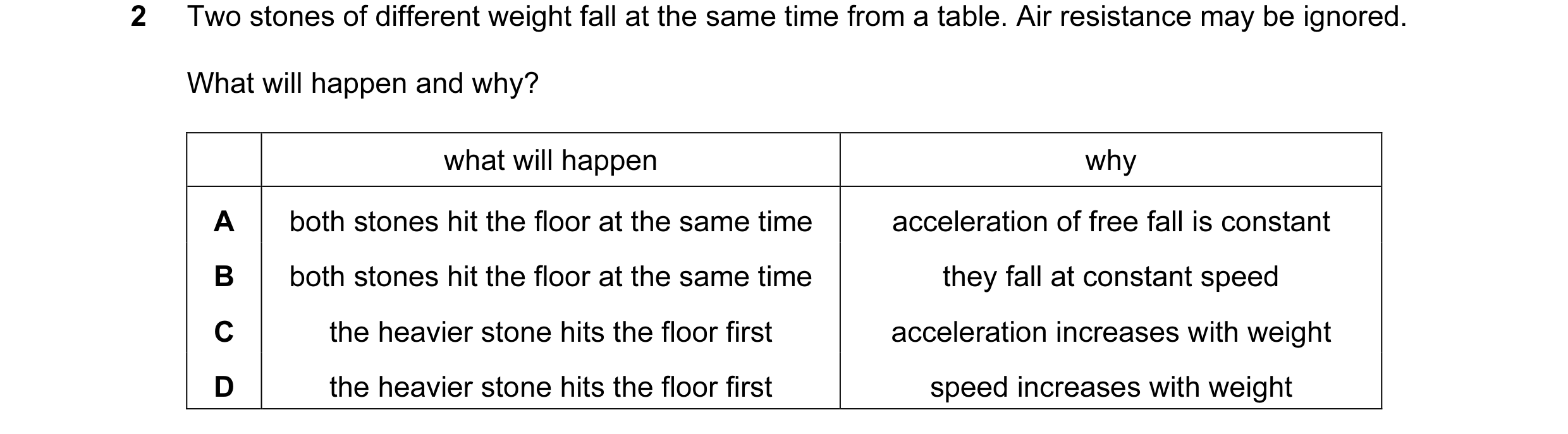
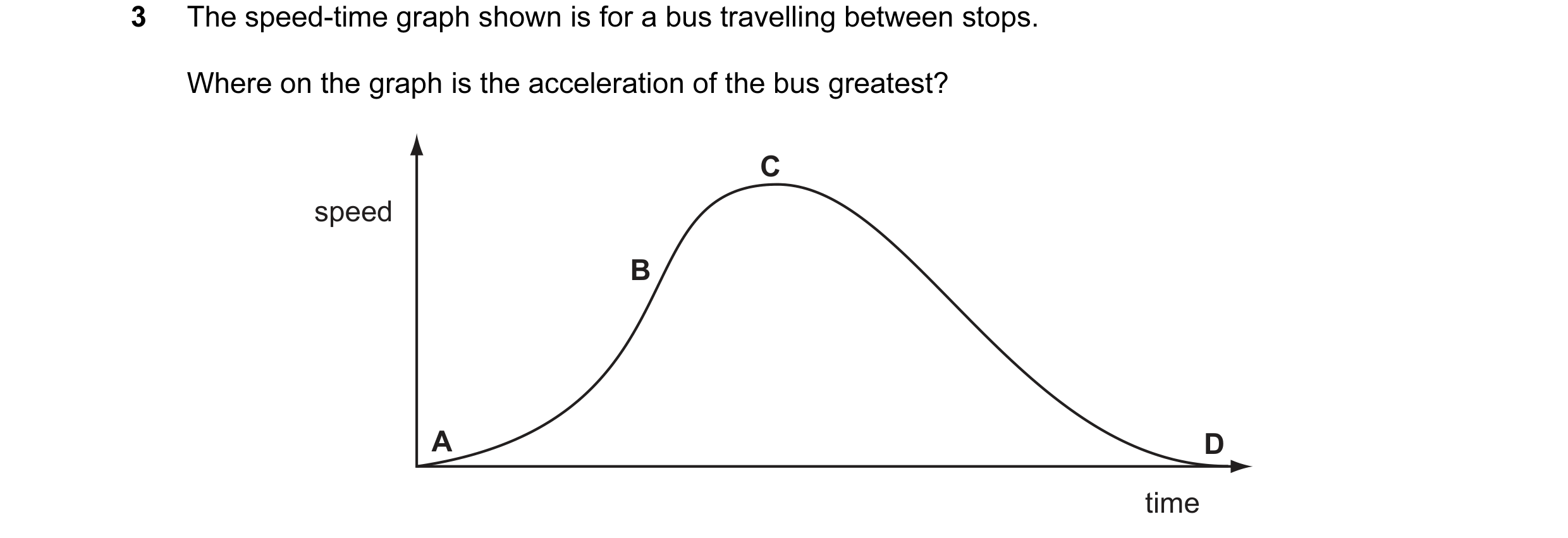
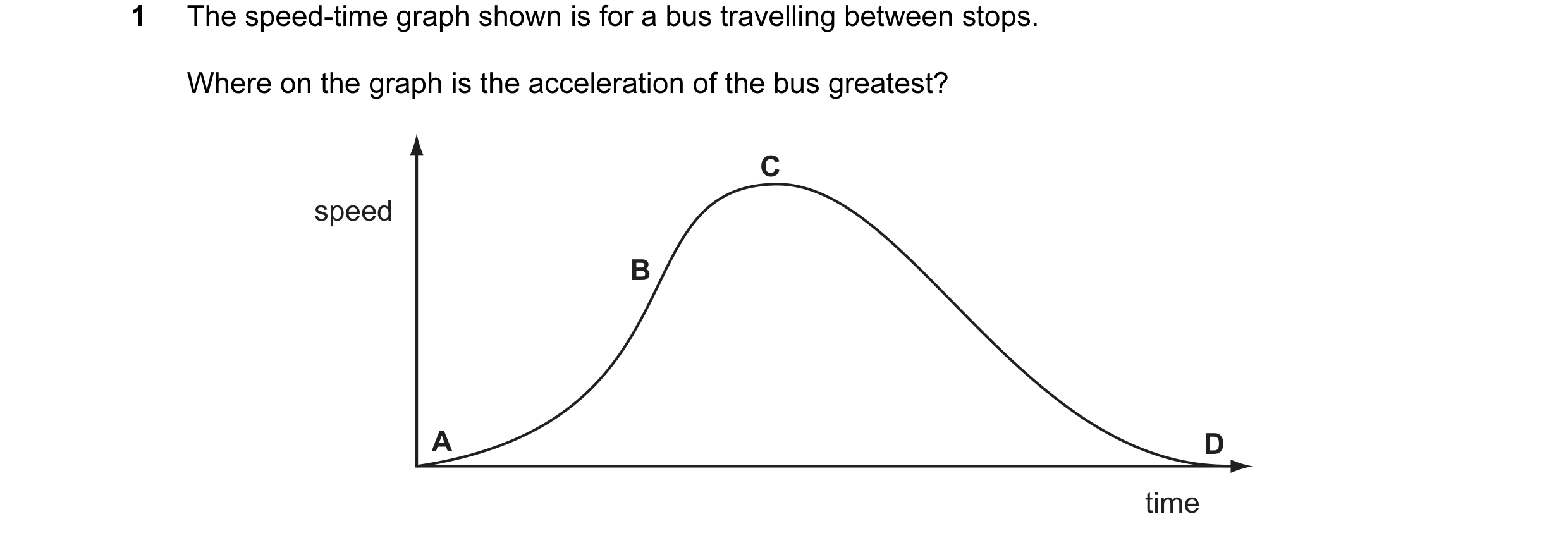
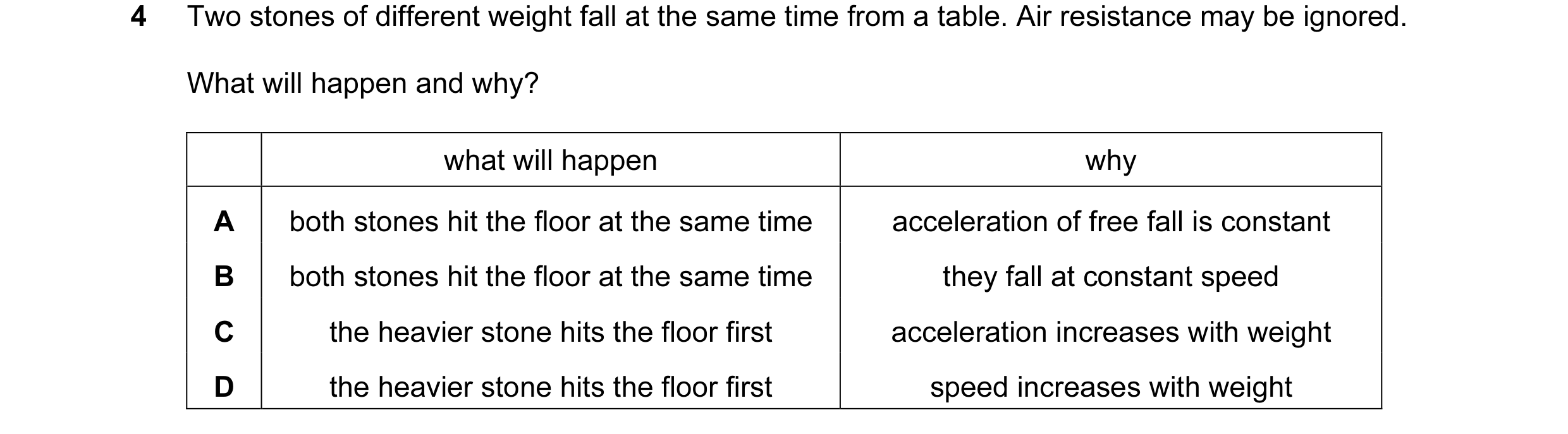 17 / 84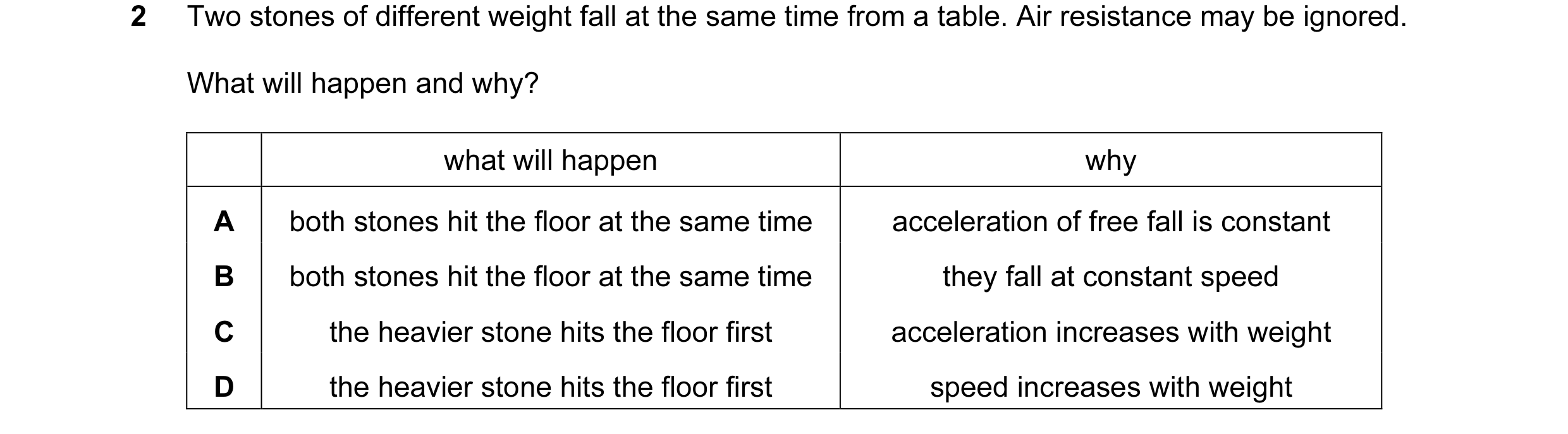
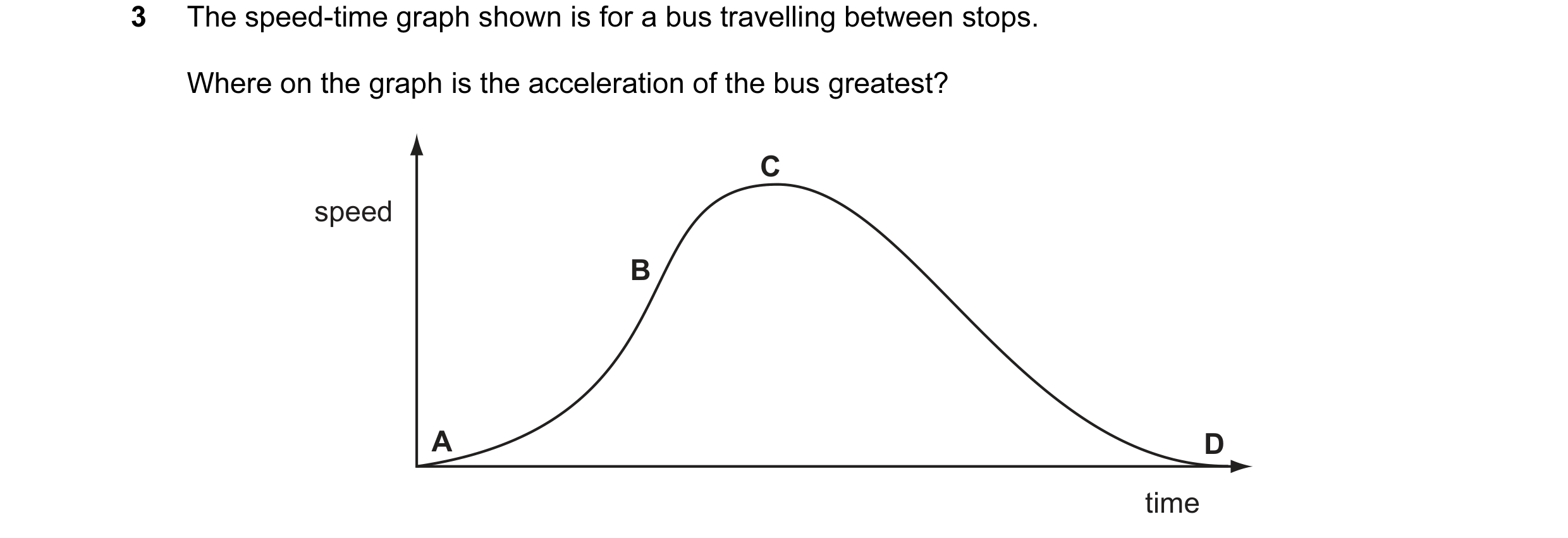
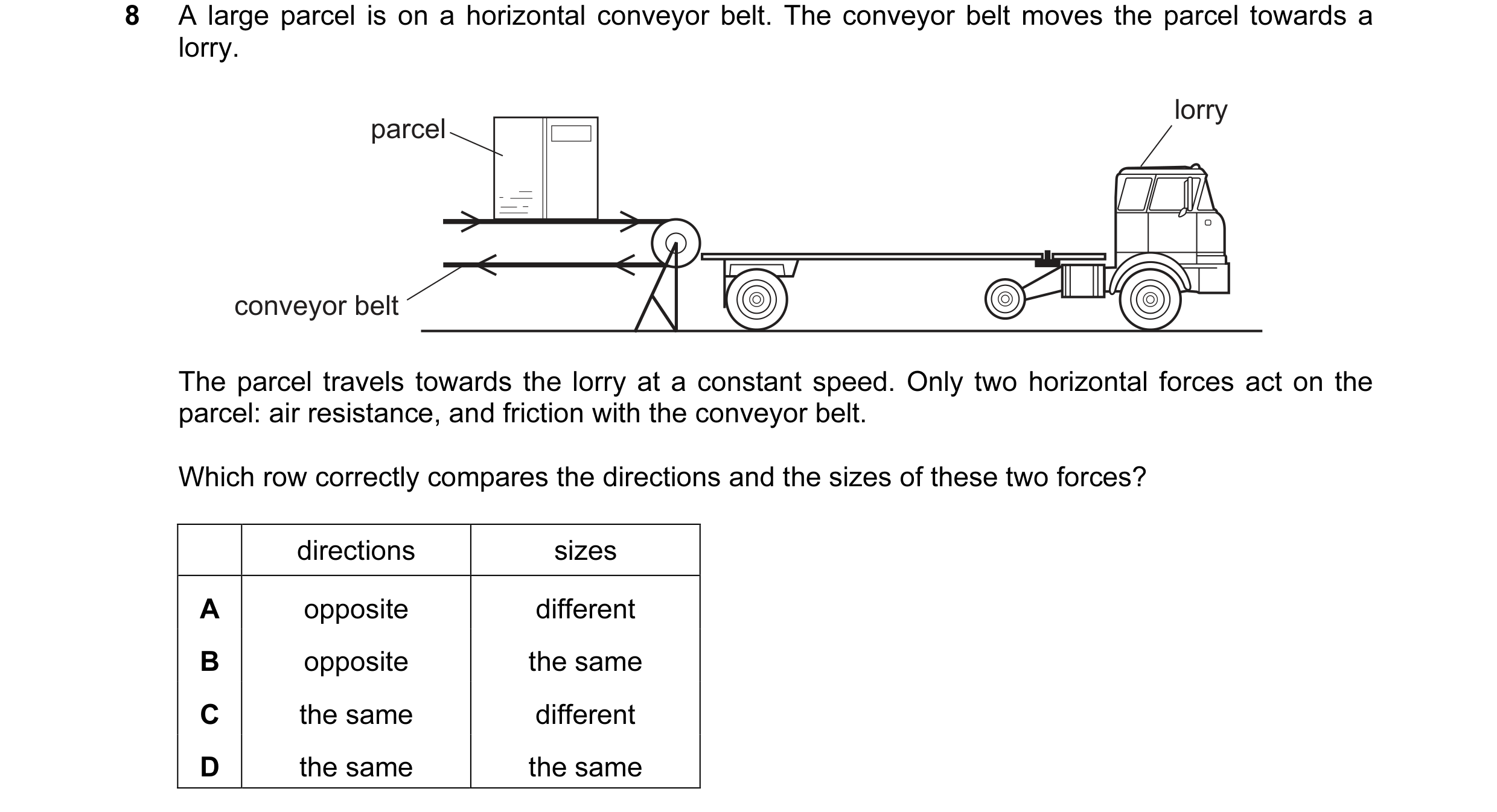
 18 / 84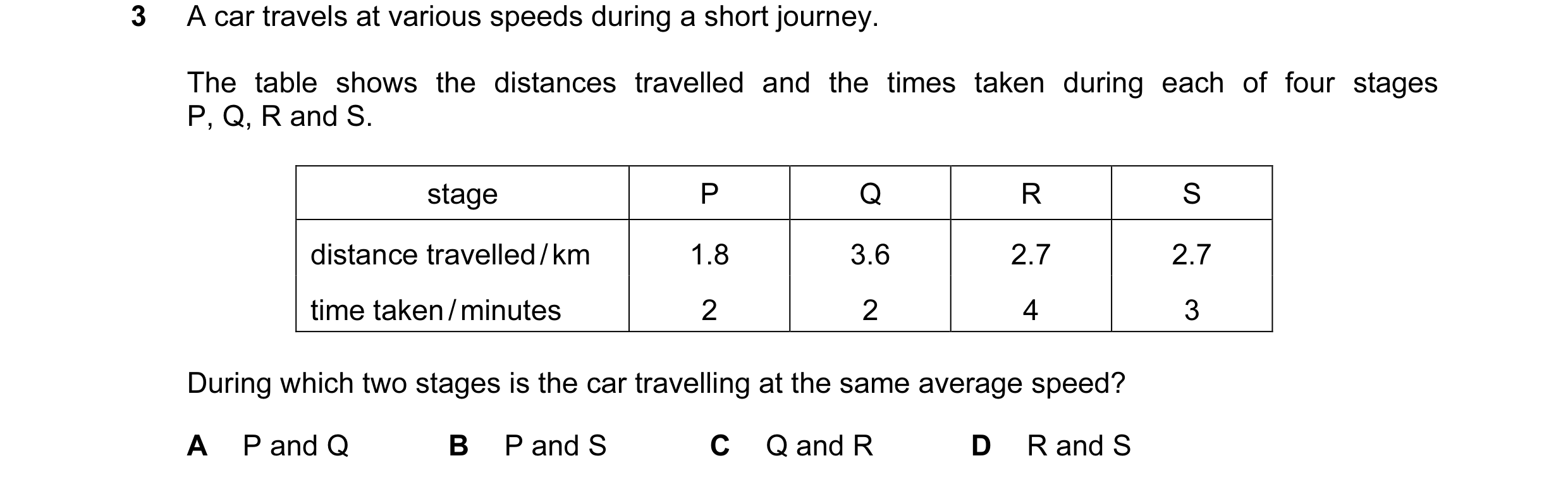
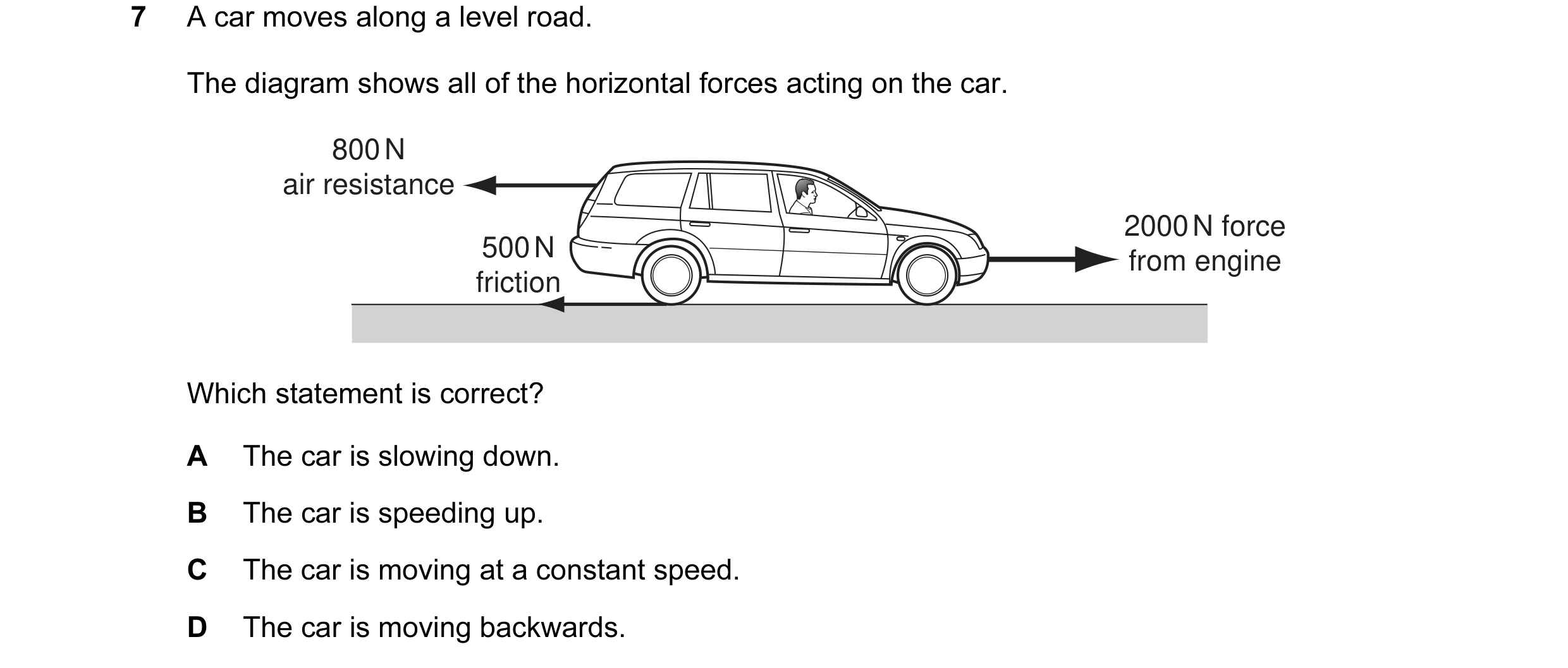
 19 / 84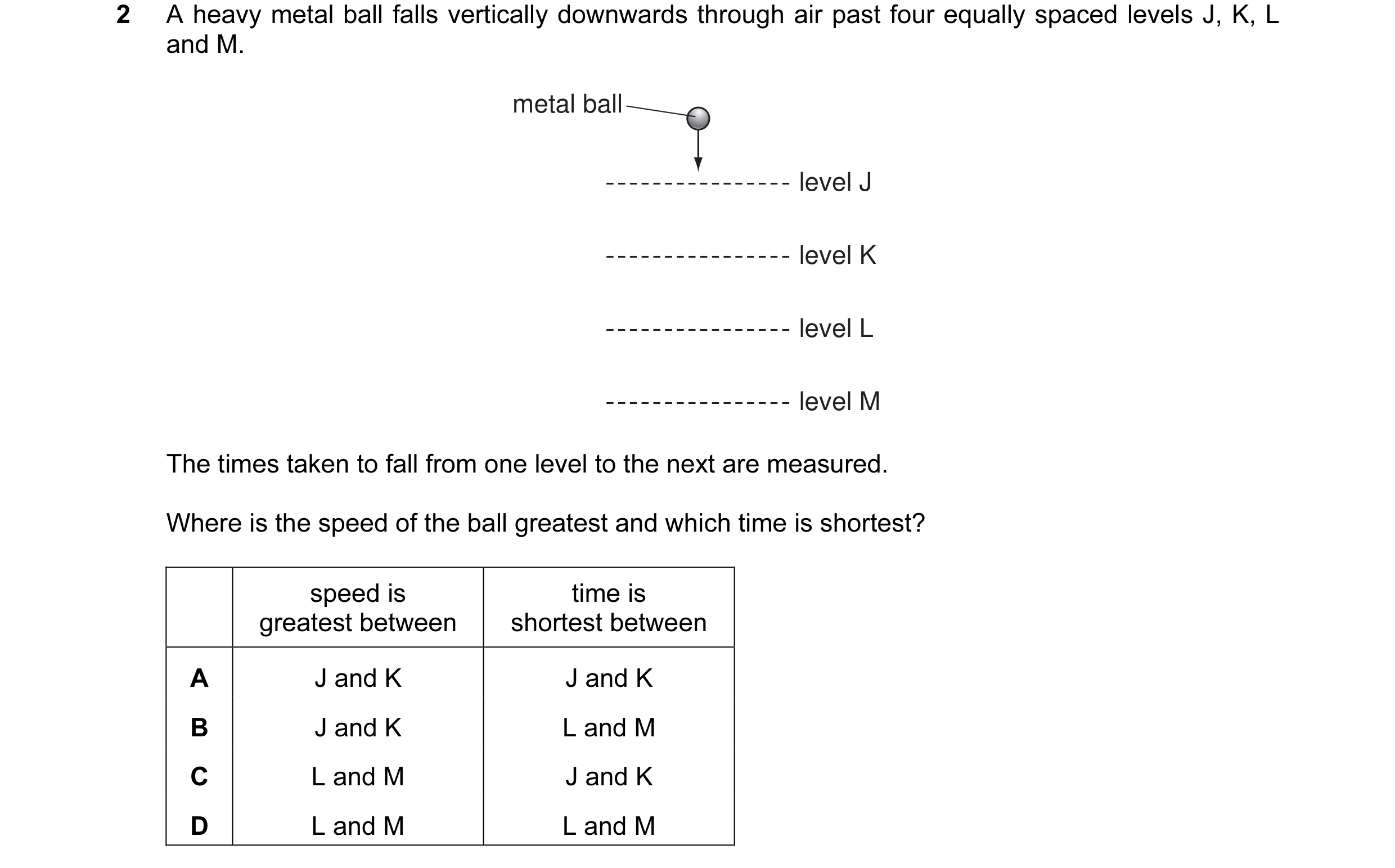
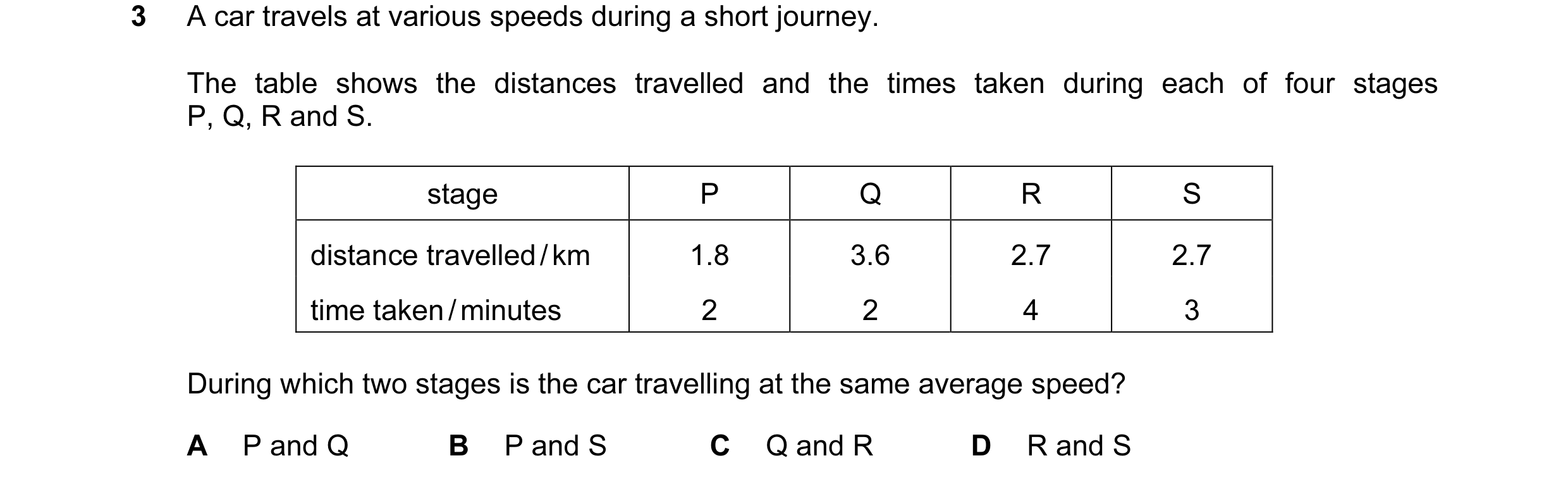 20 / 84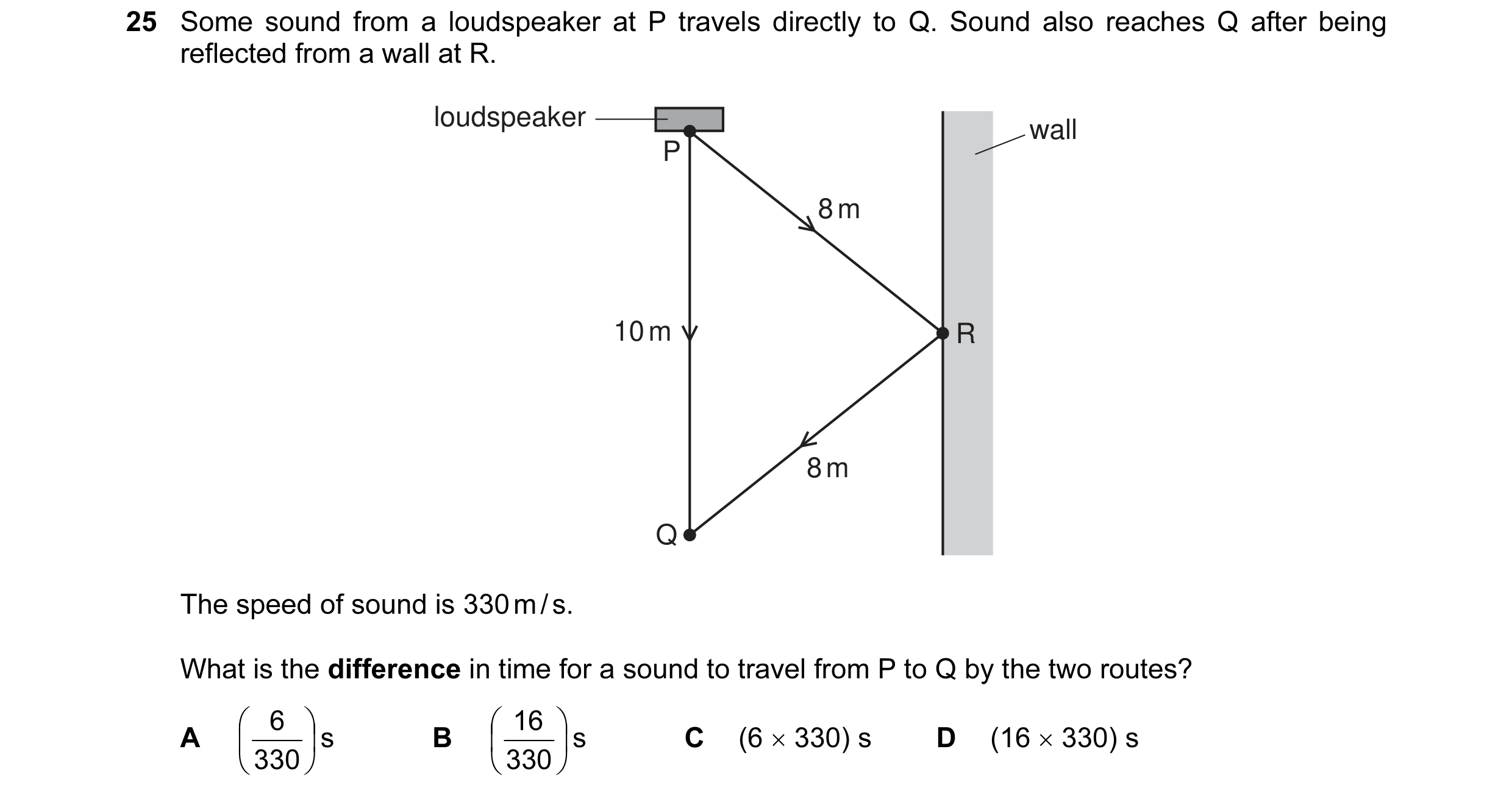
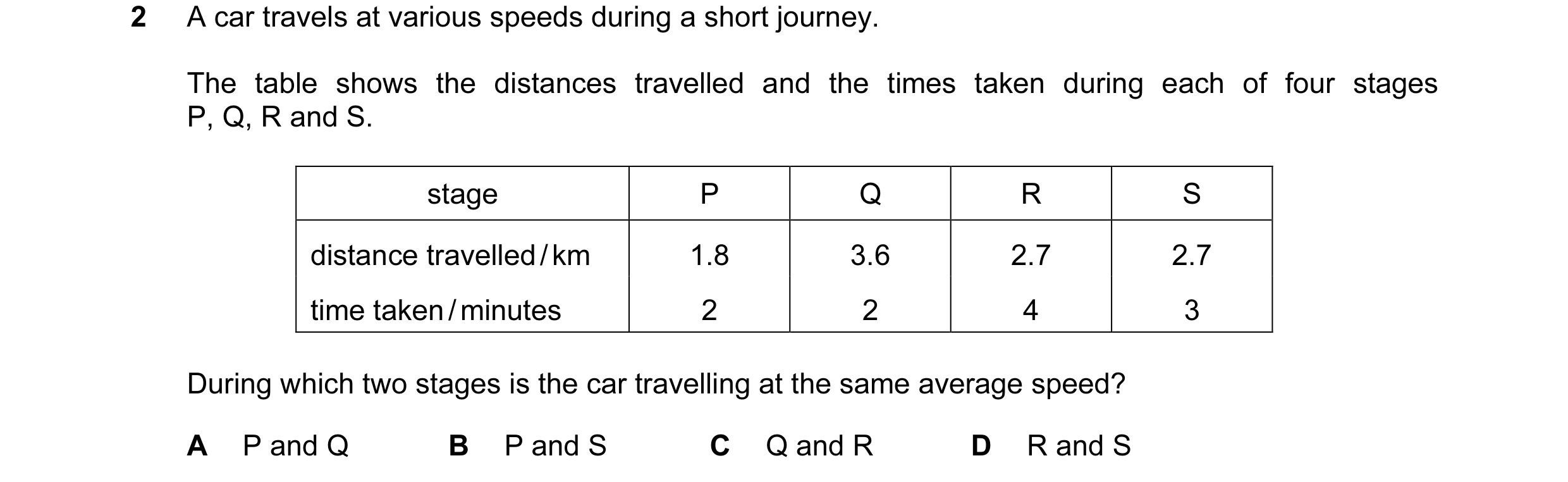
 21 / 84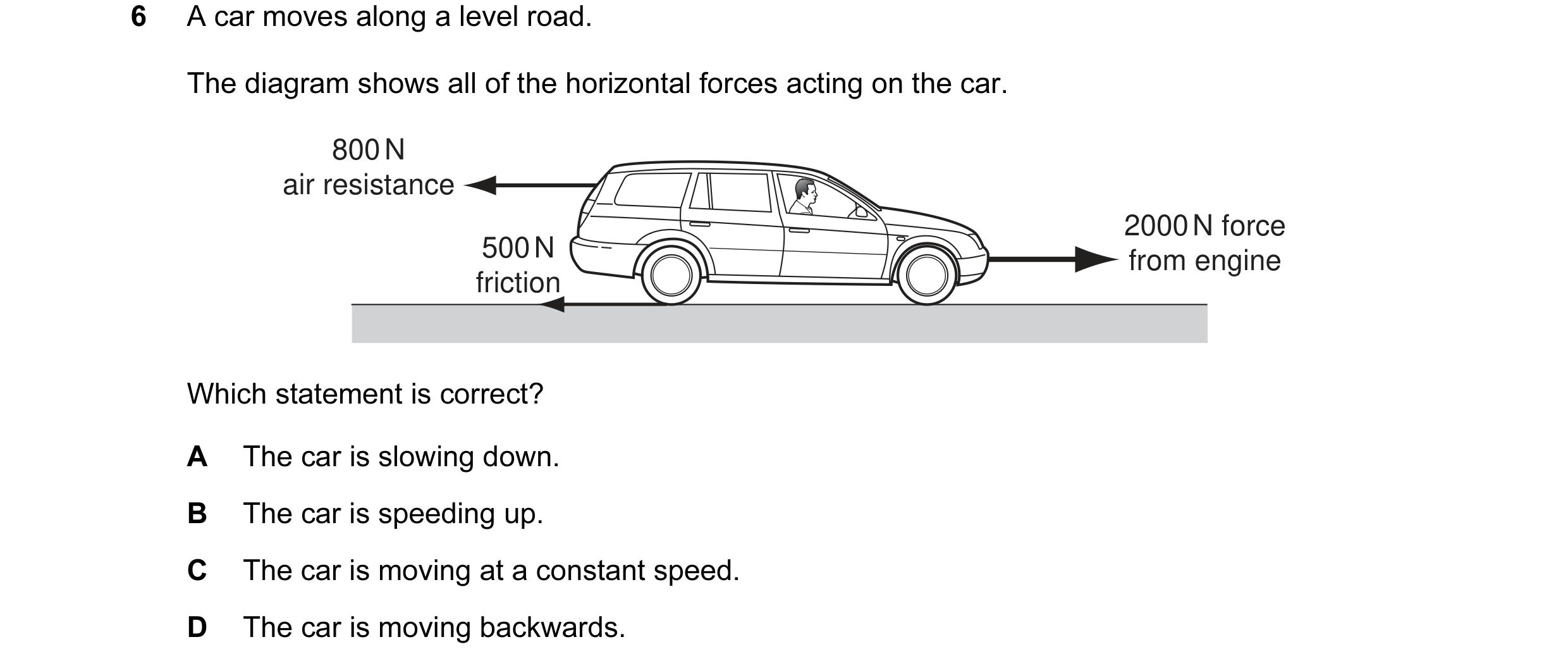

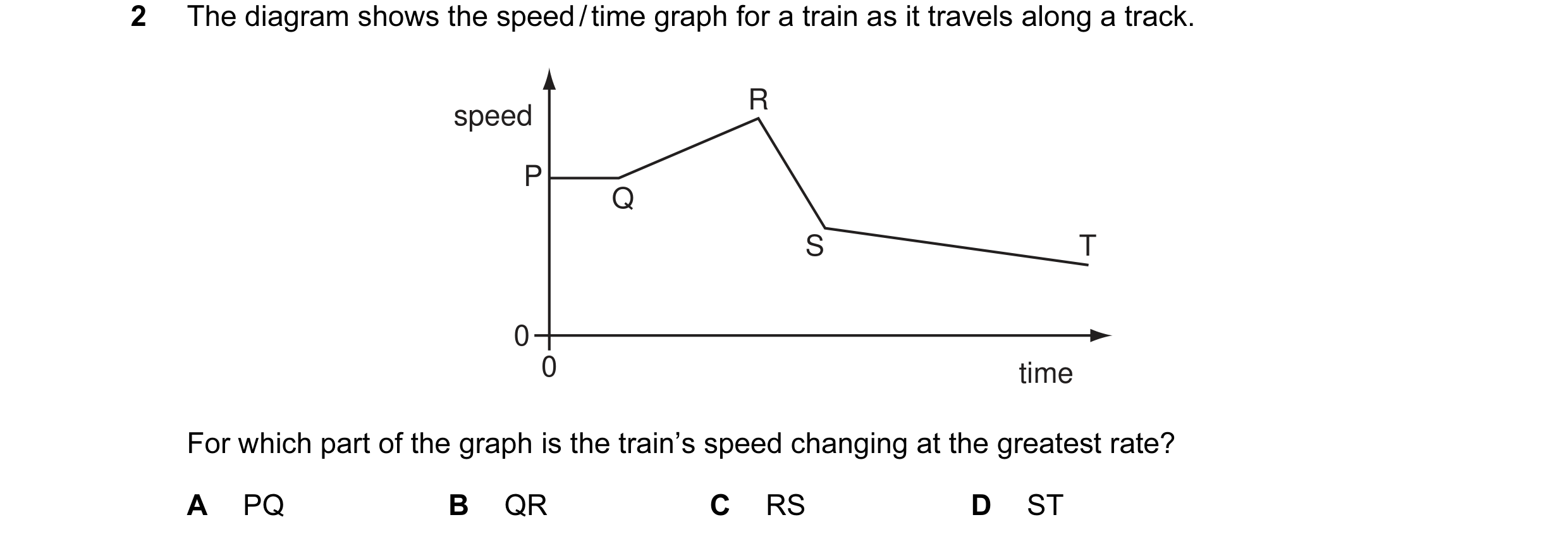
 22 / 84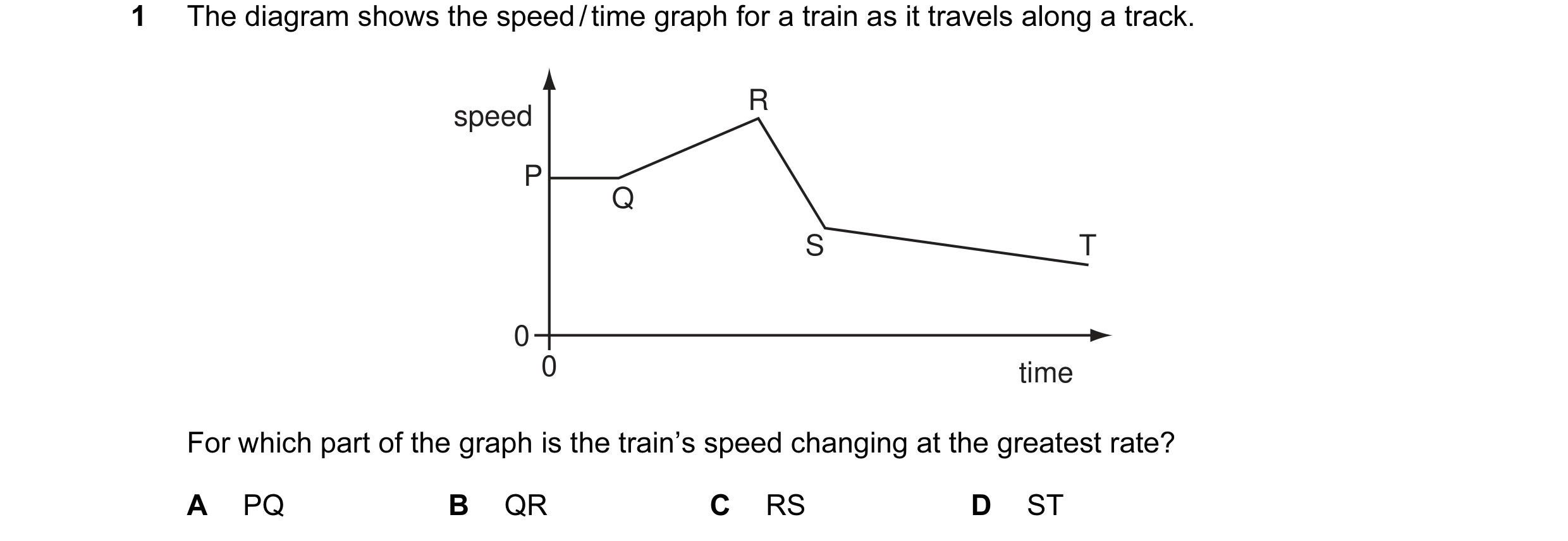
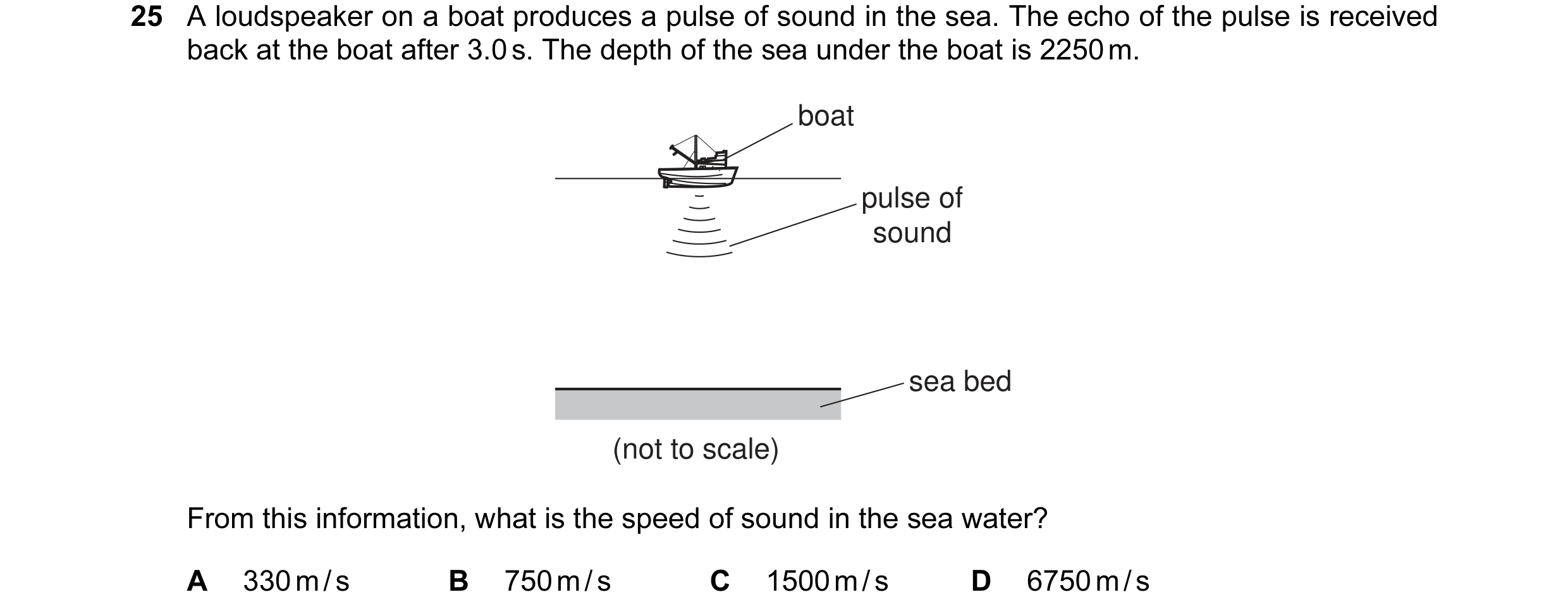 23 / 84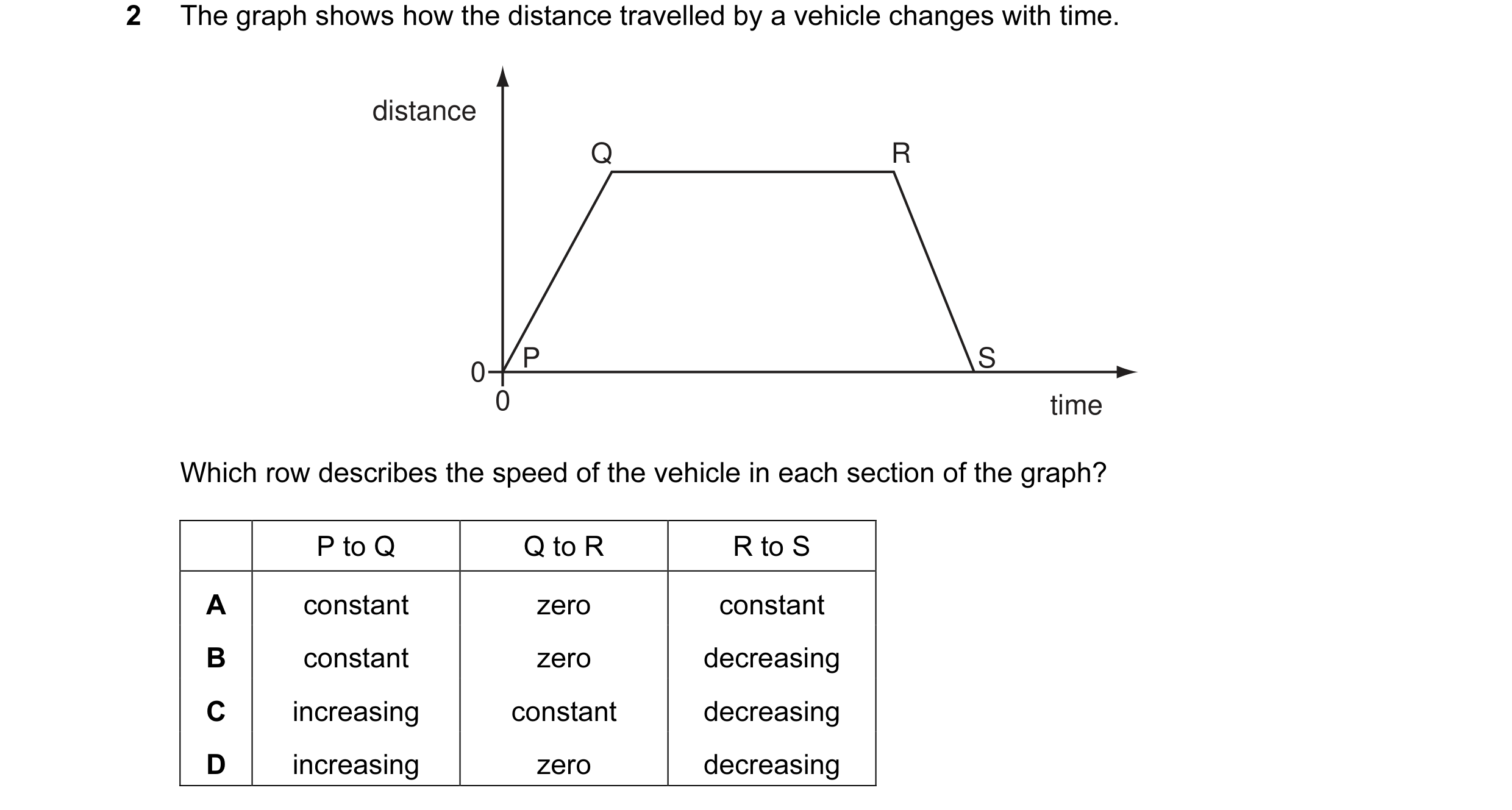
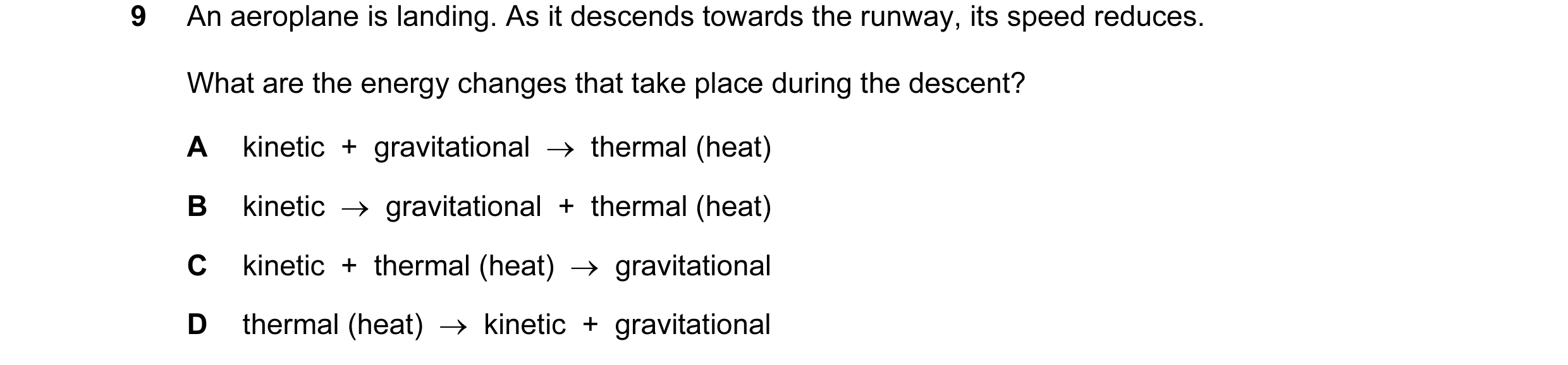 24 / 84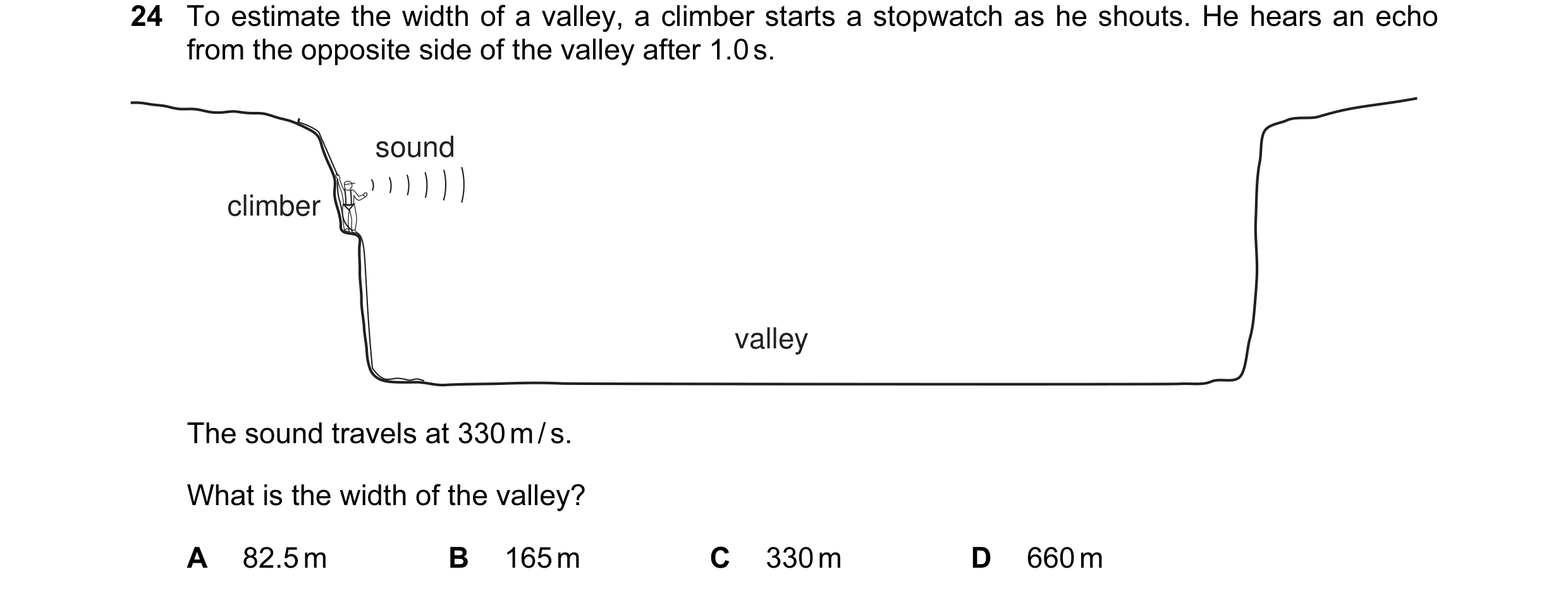
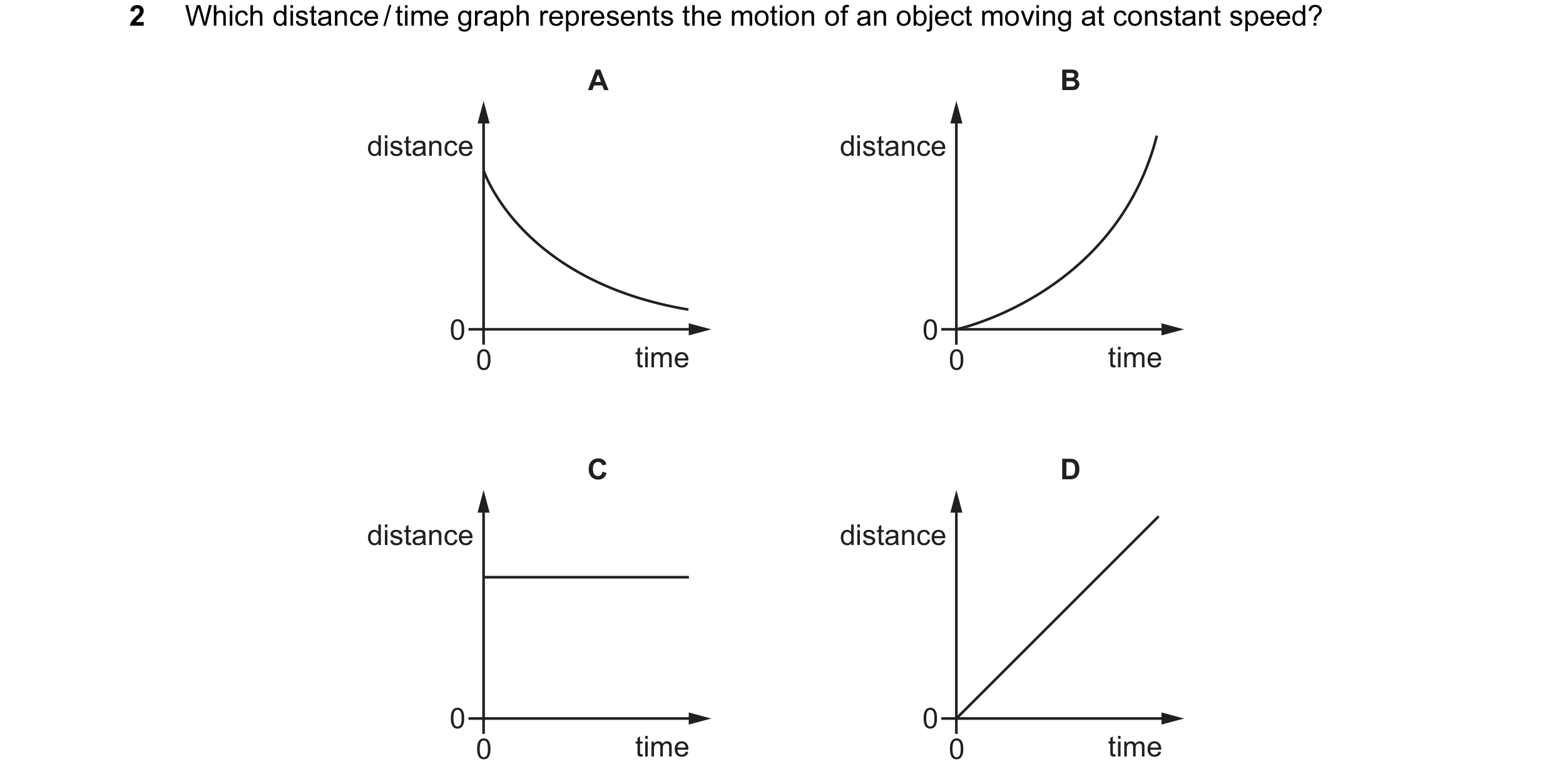 25 / 84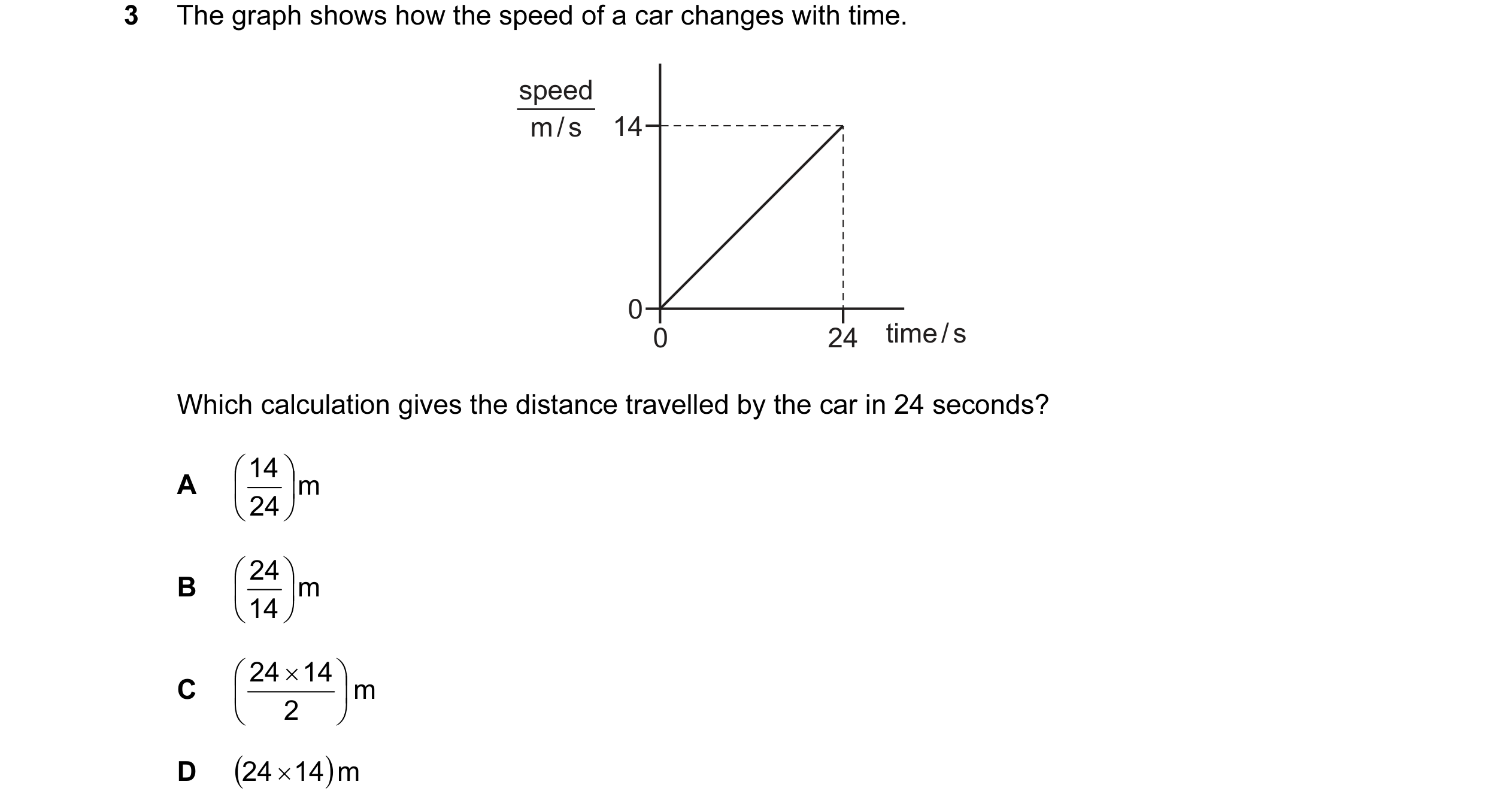
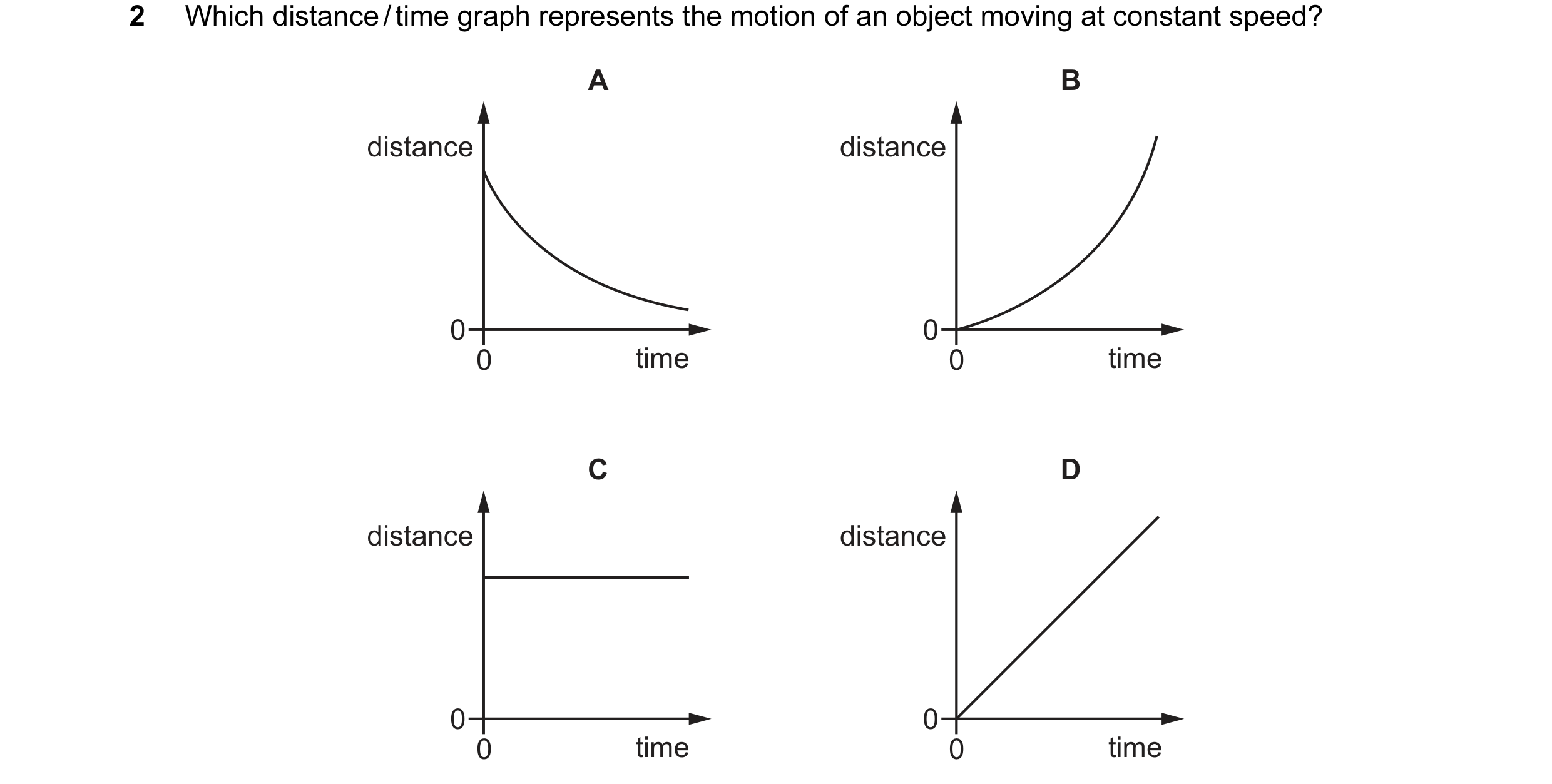
 26 / 84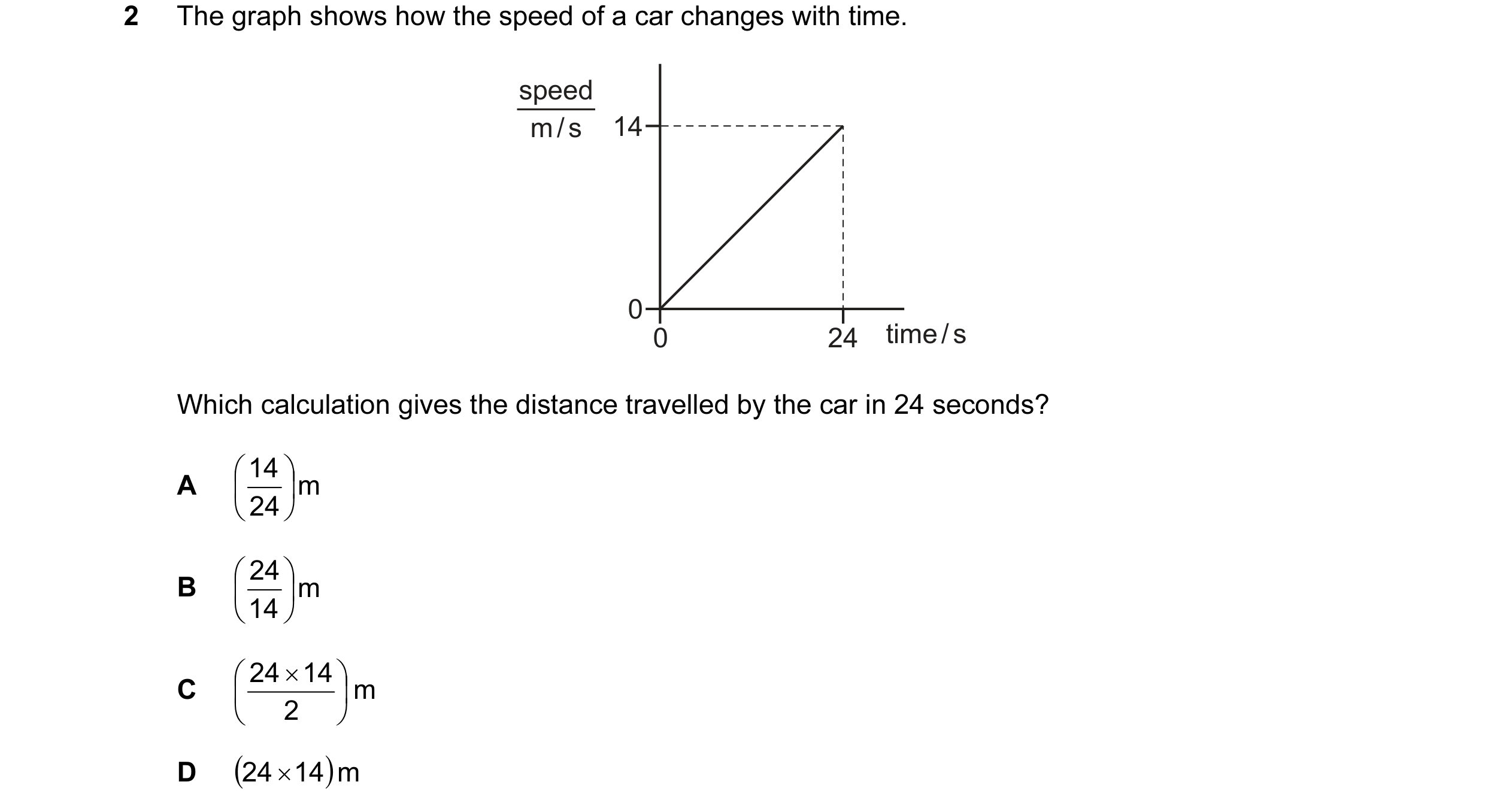
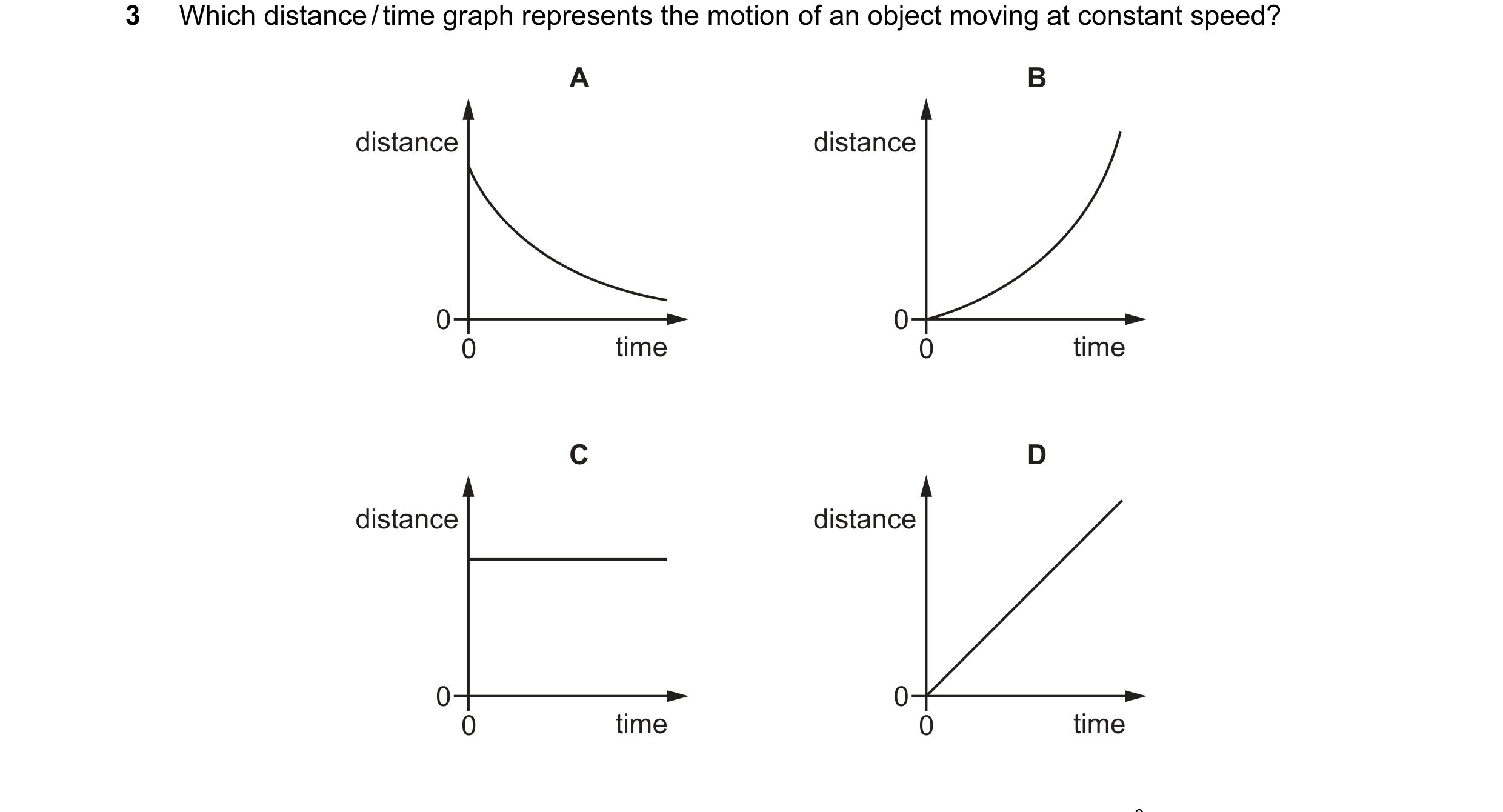 27 / 84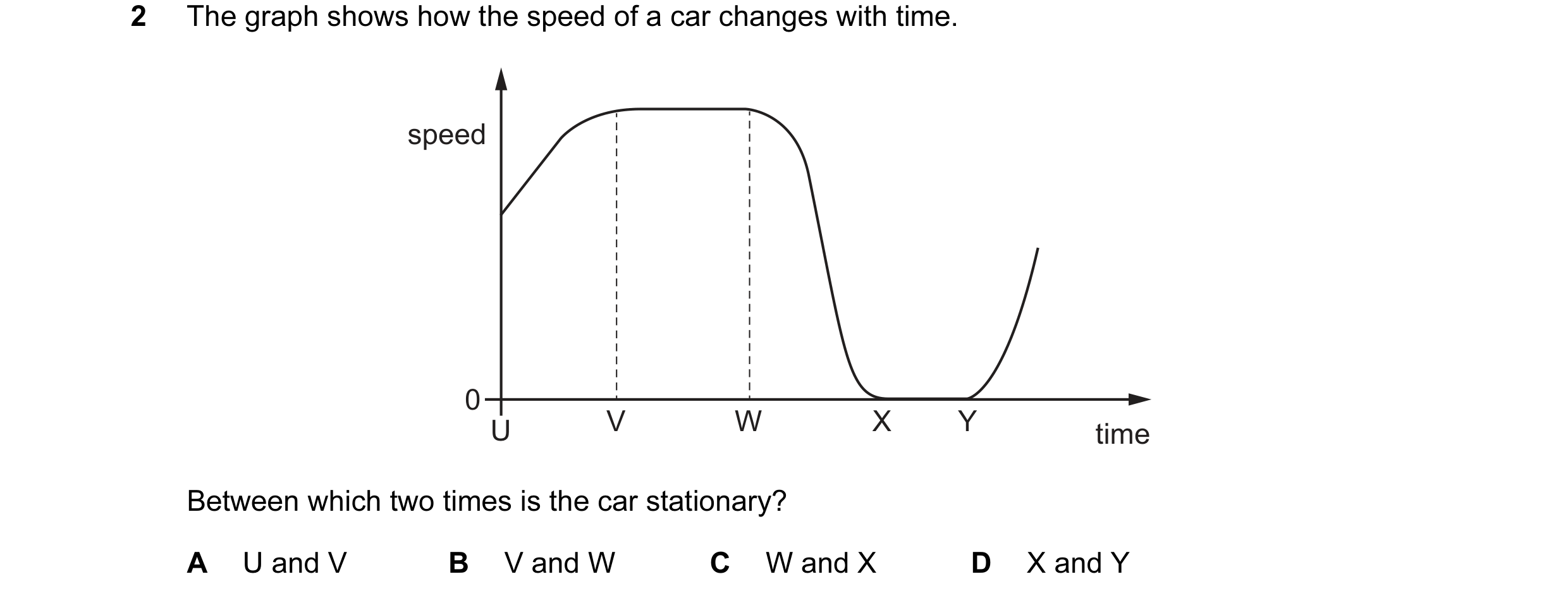
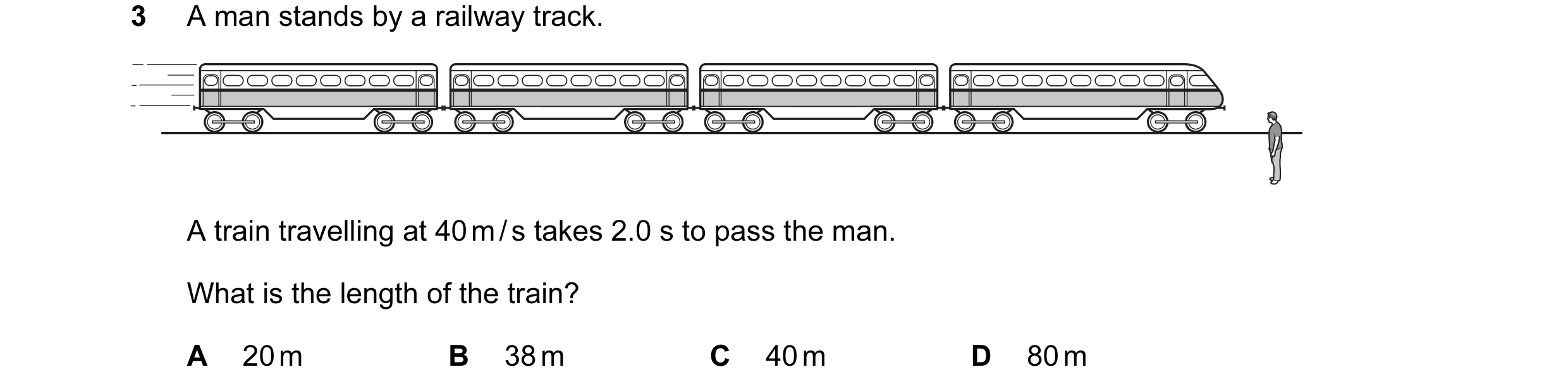

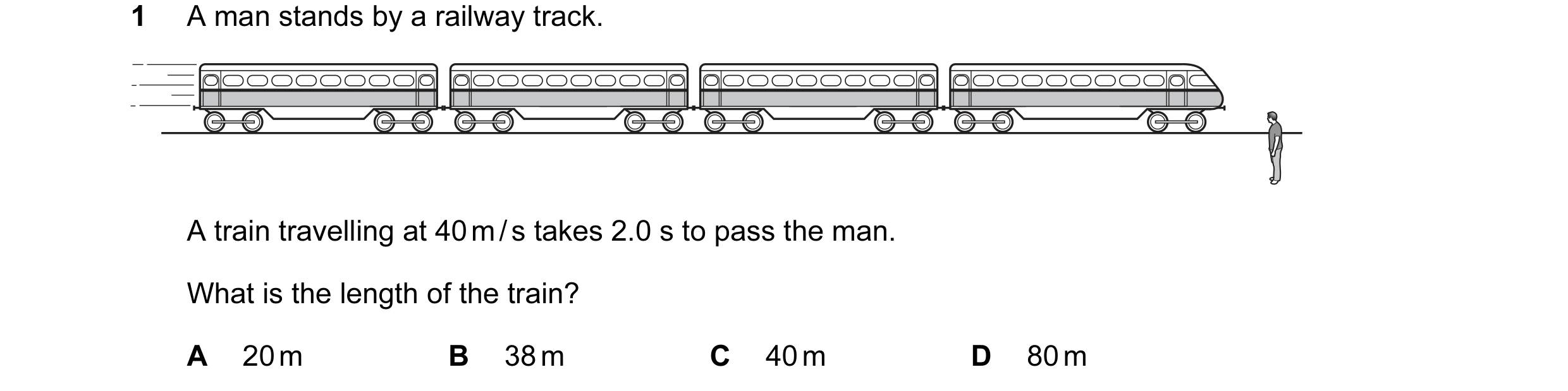 28 / 84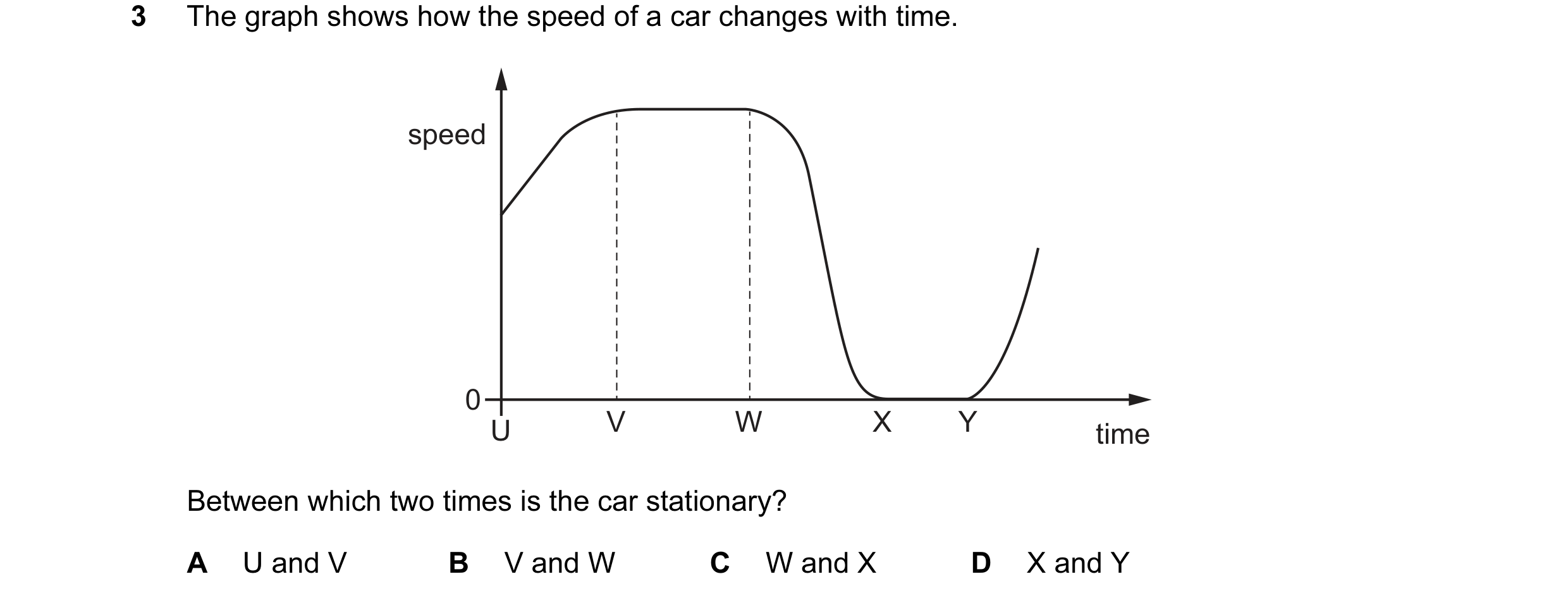

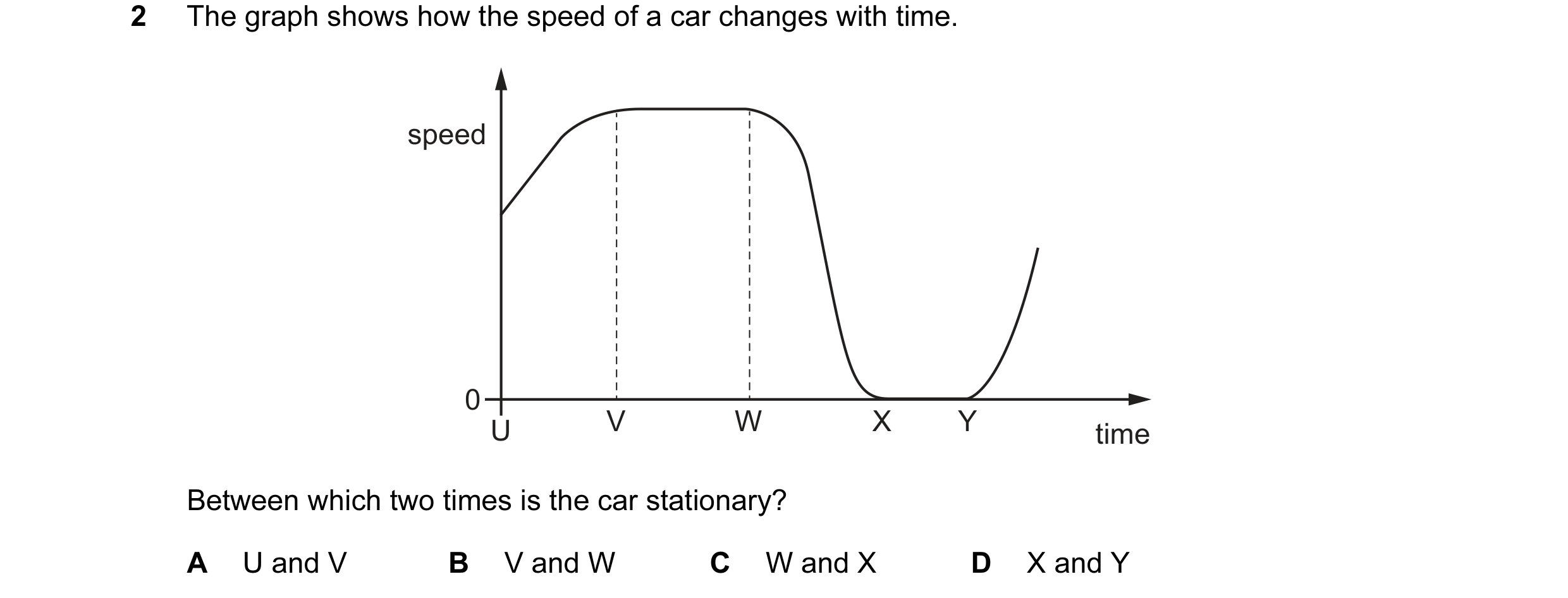
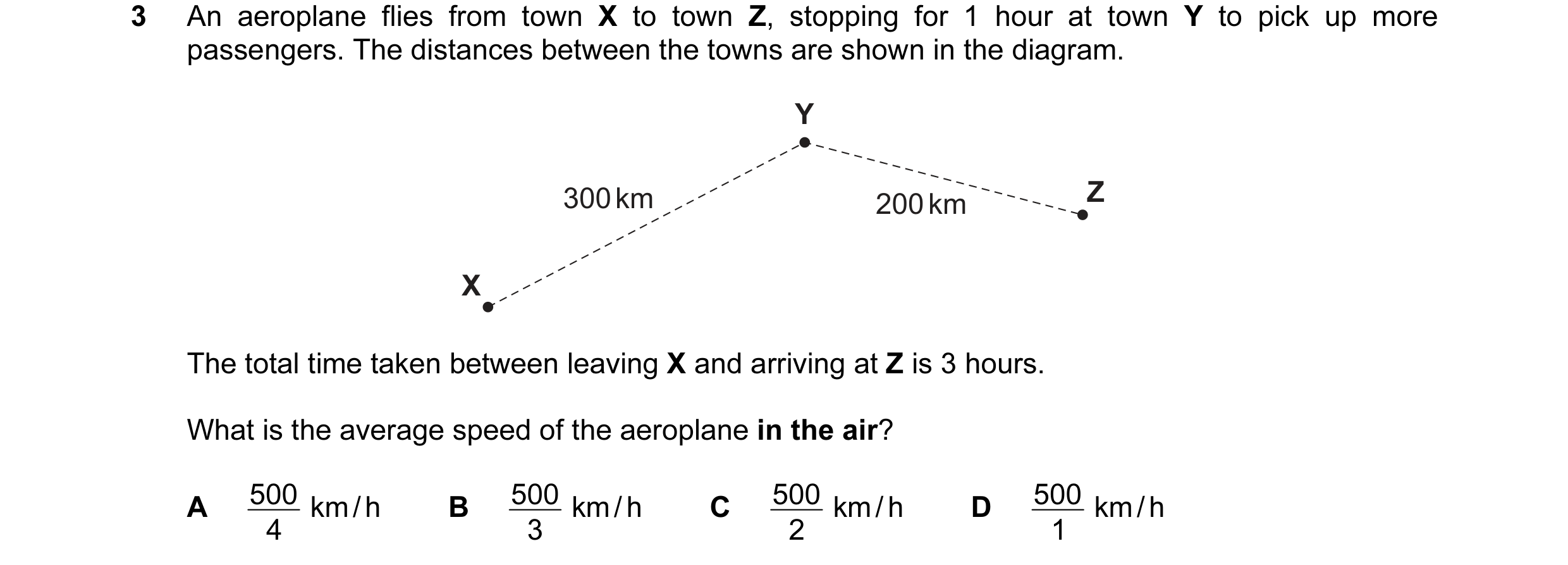 29 / 84
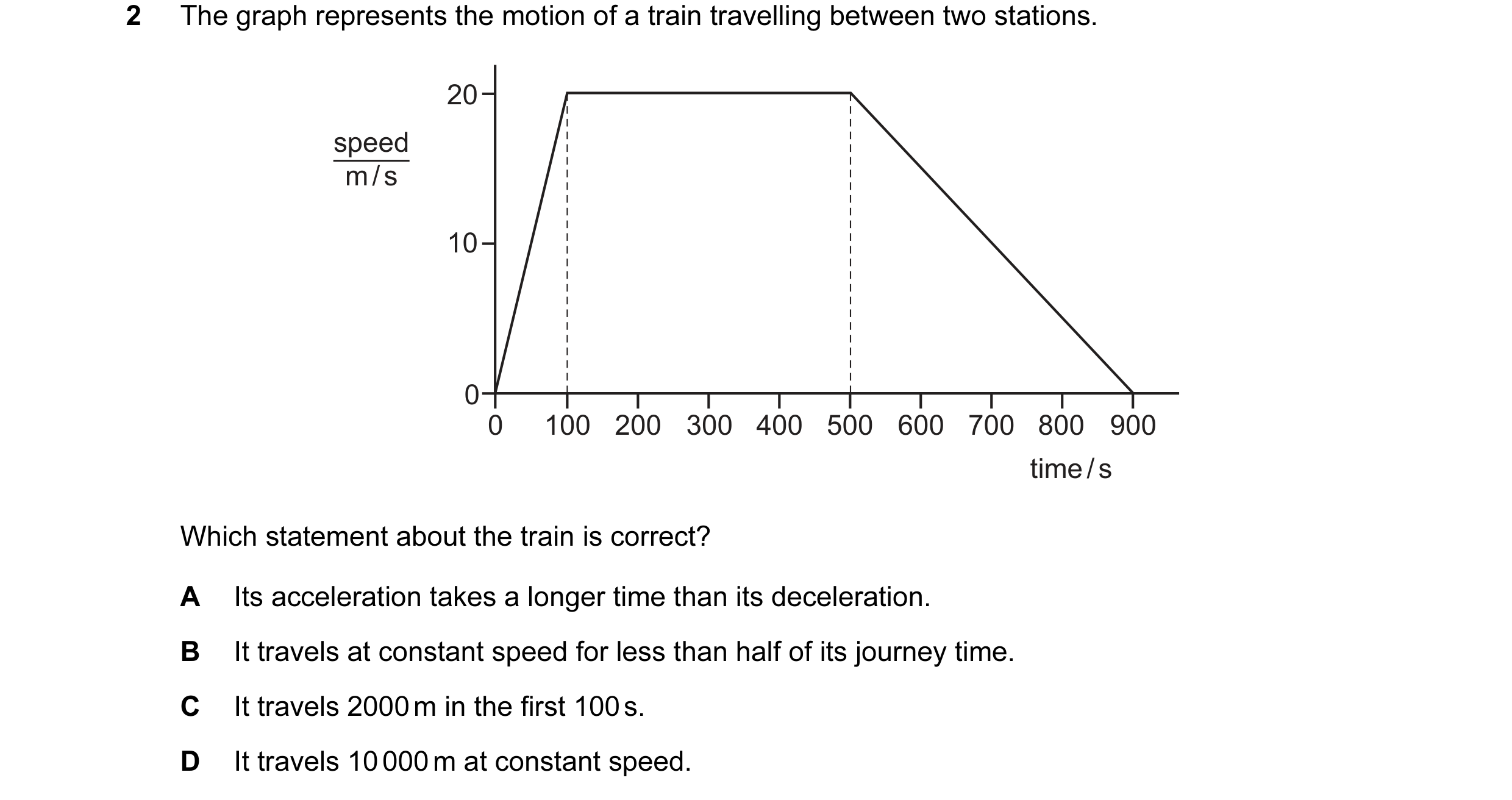
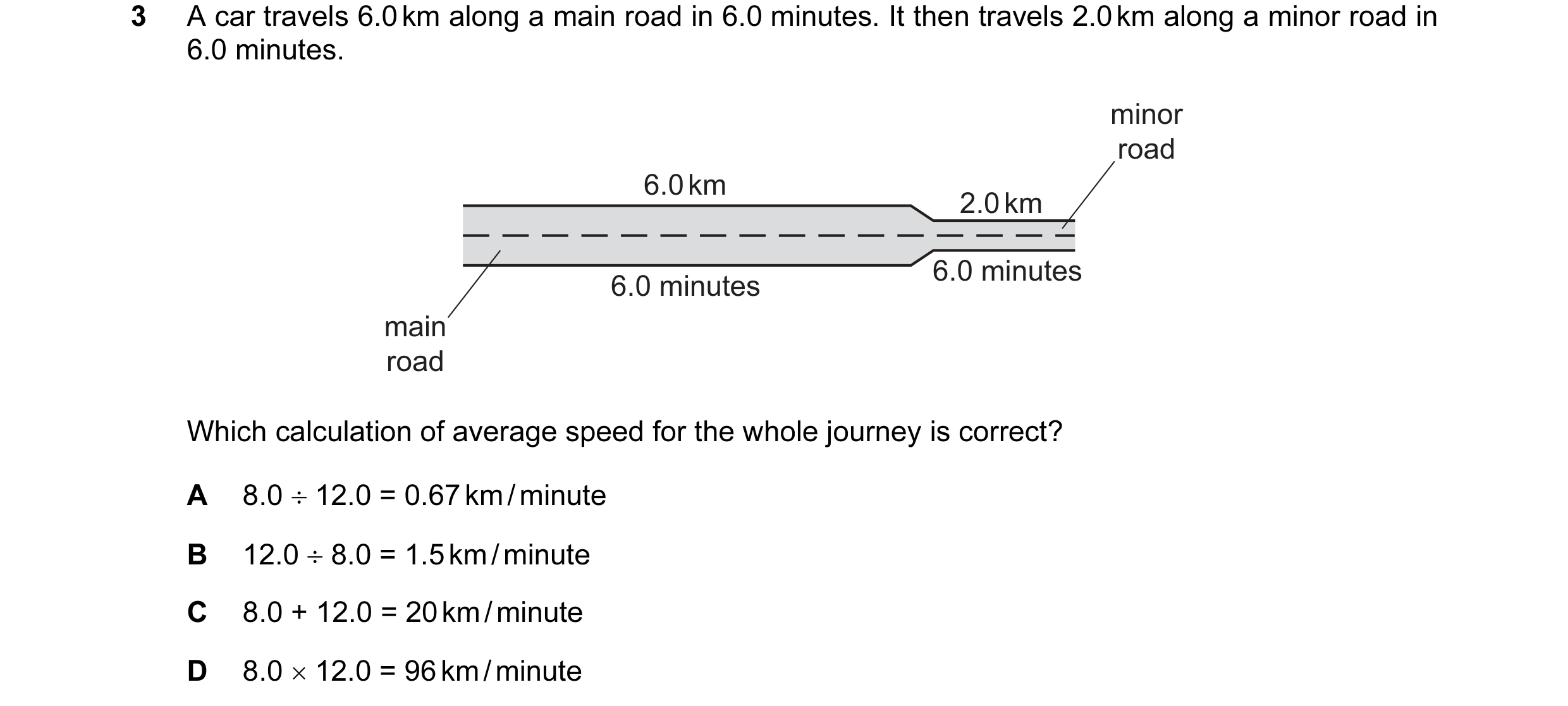 30 / 84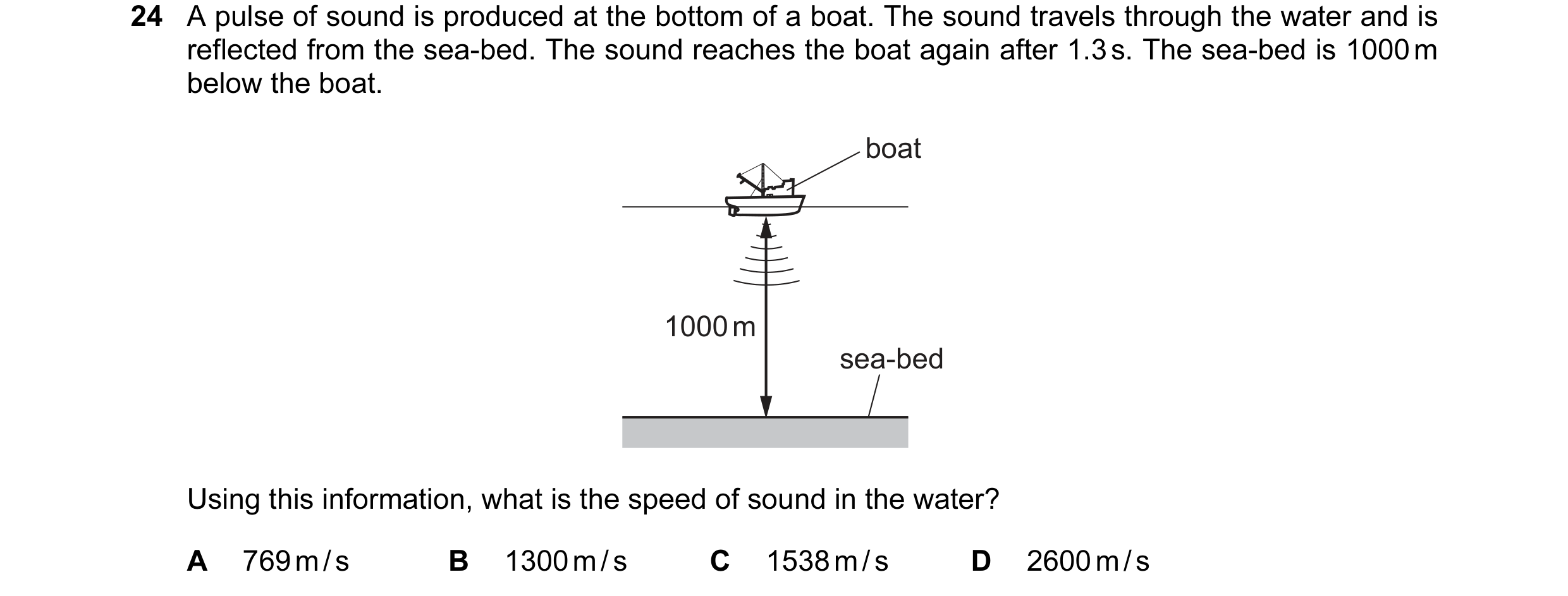
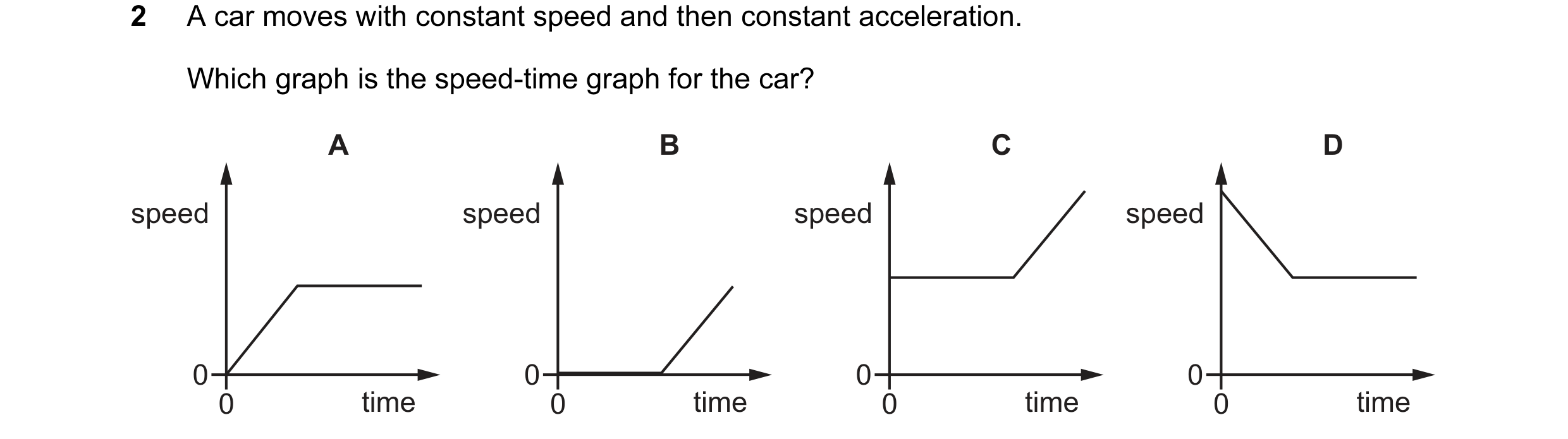


 31 / 84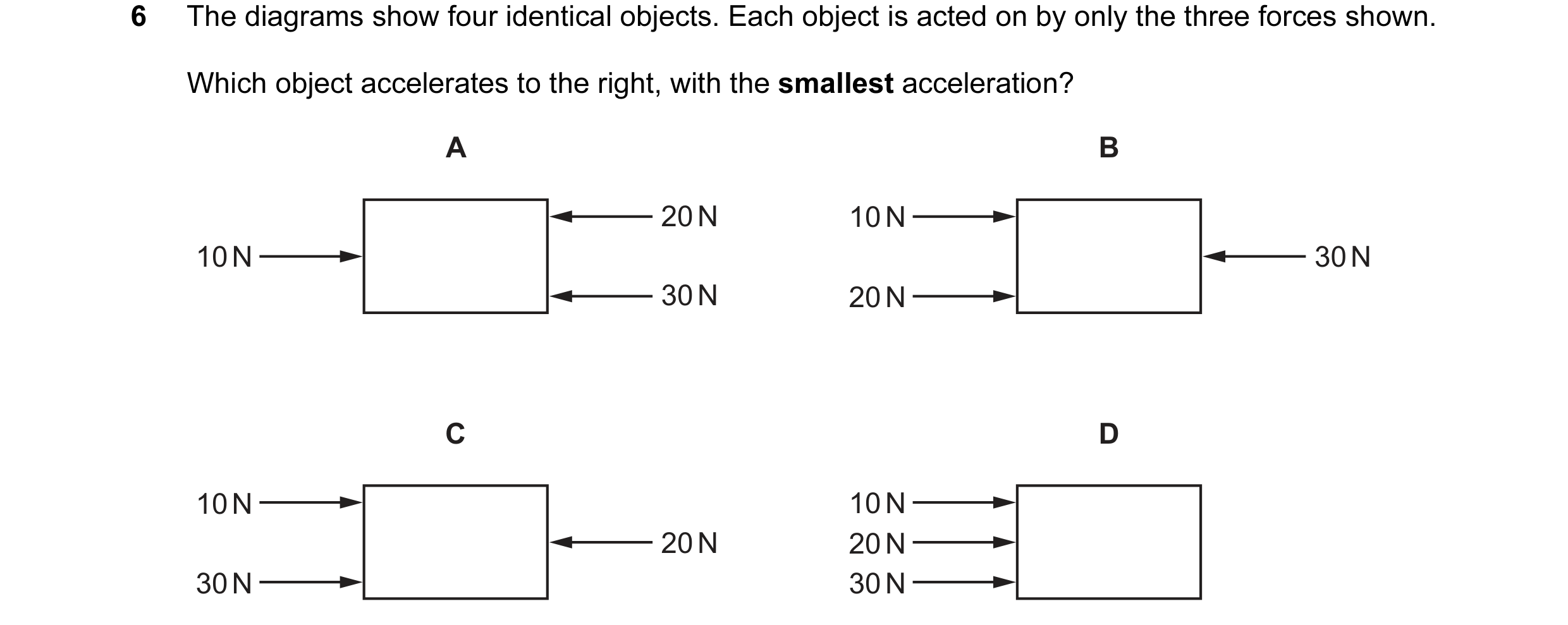
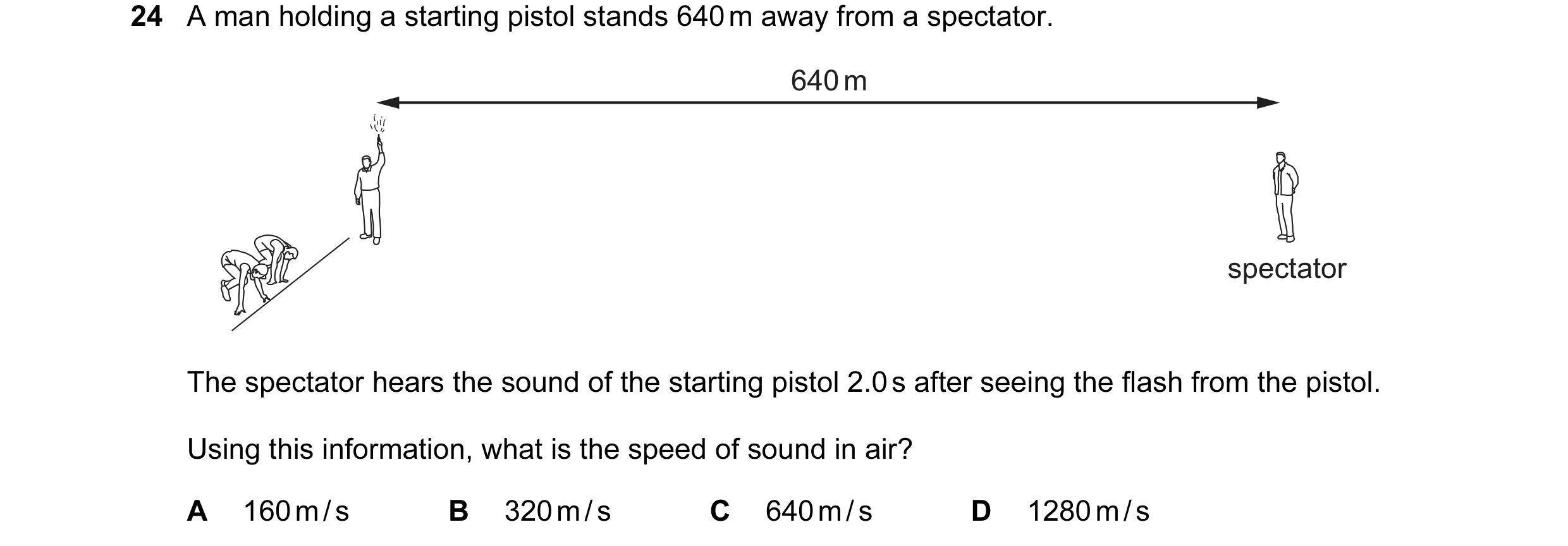
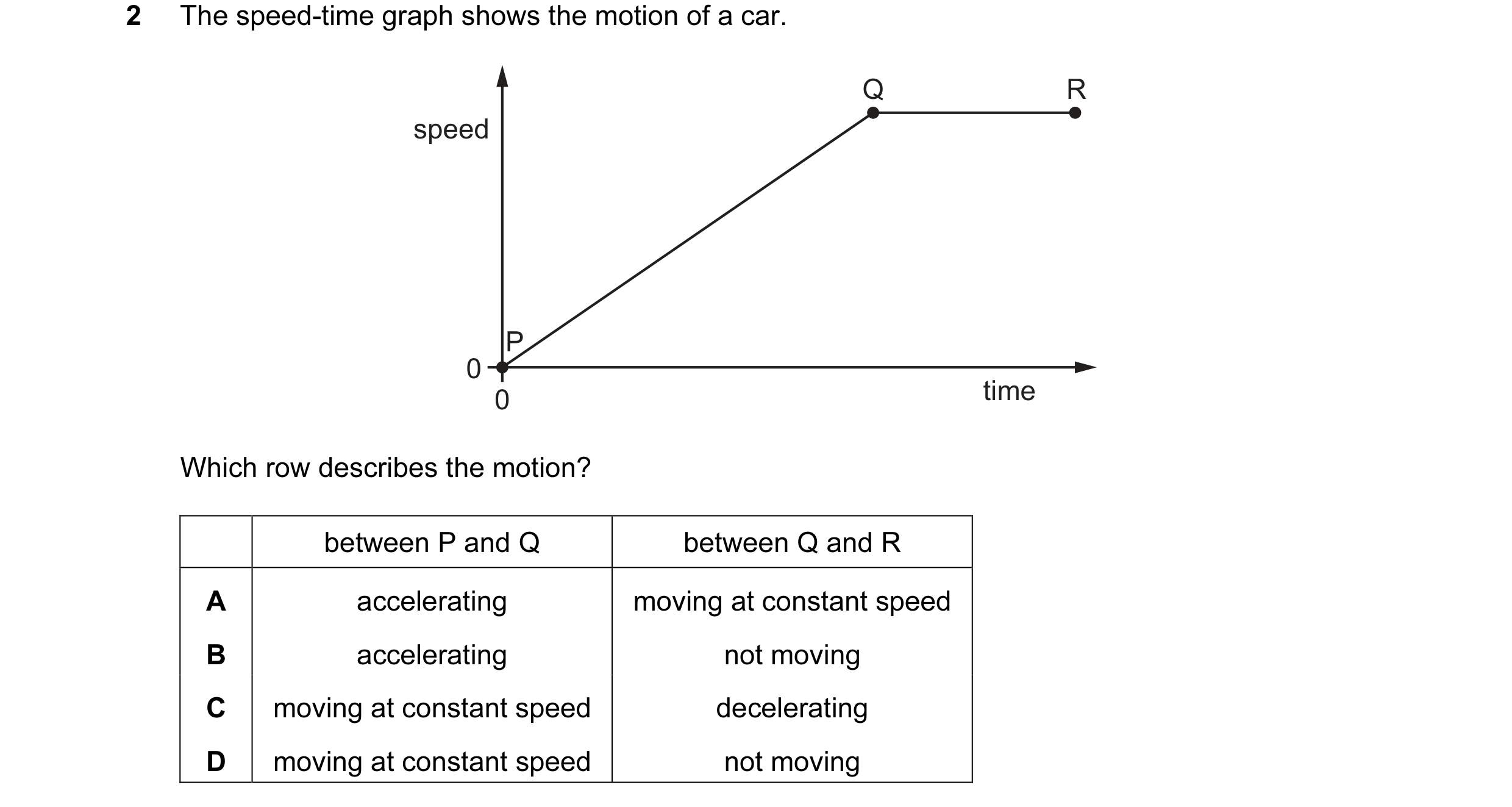 32 / 84
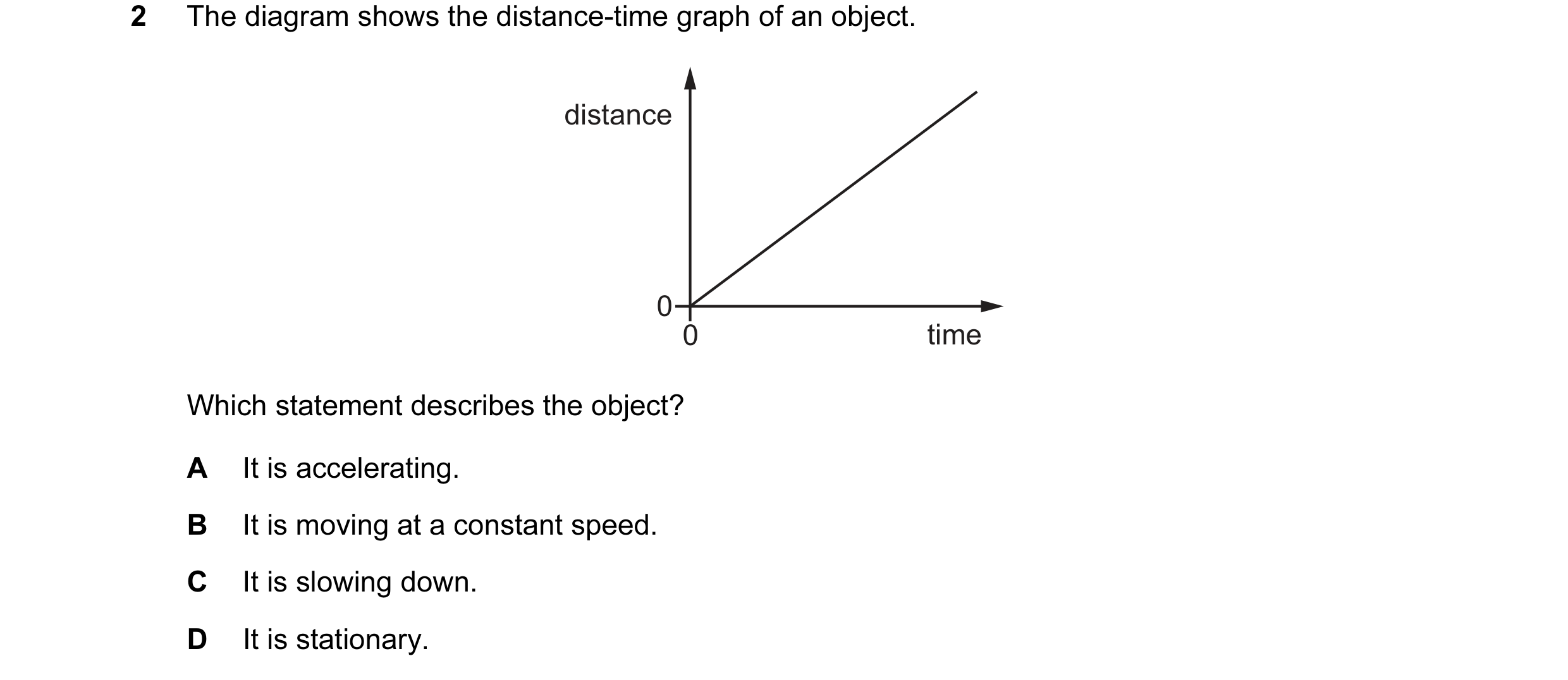
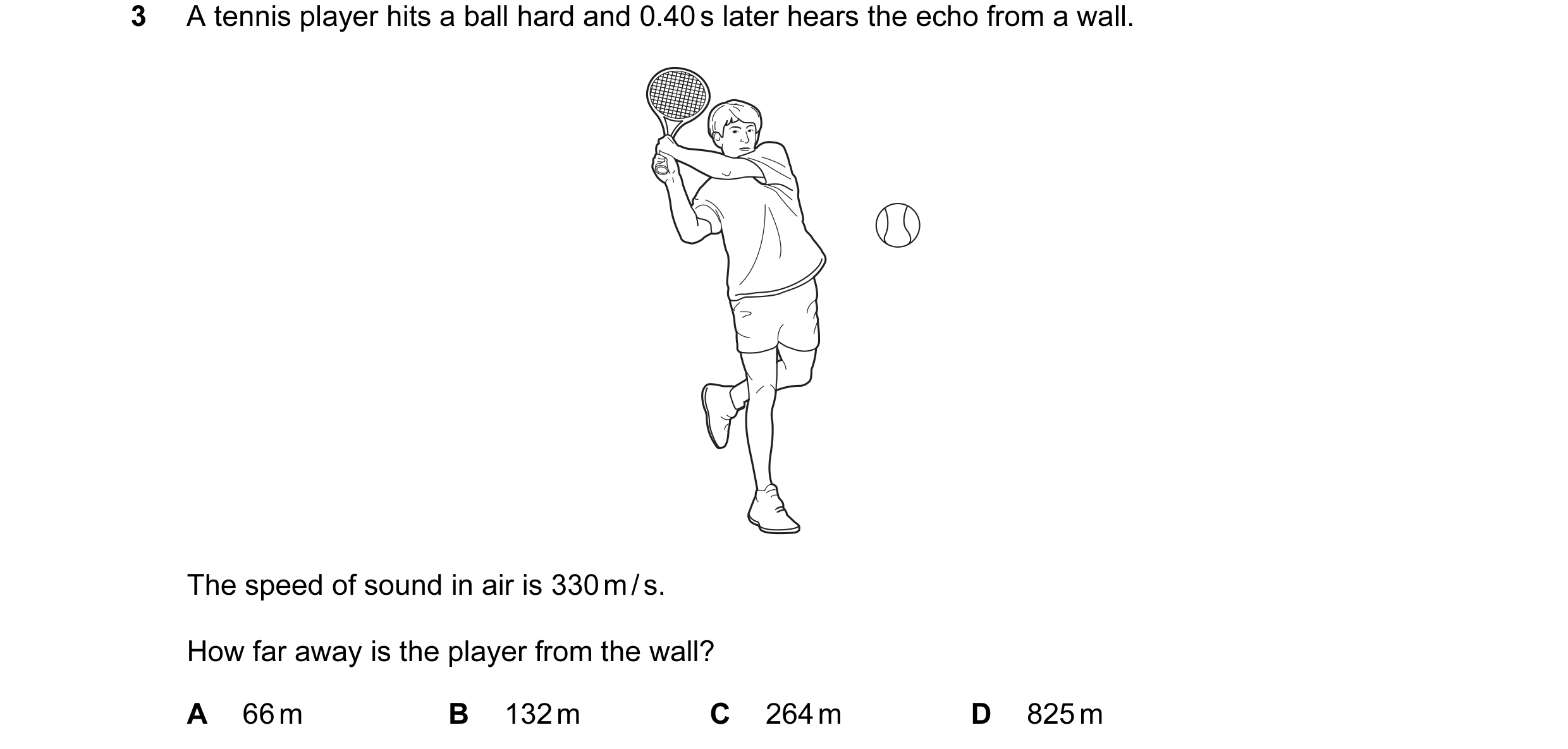 33 / 84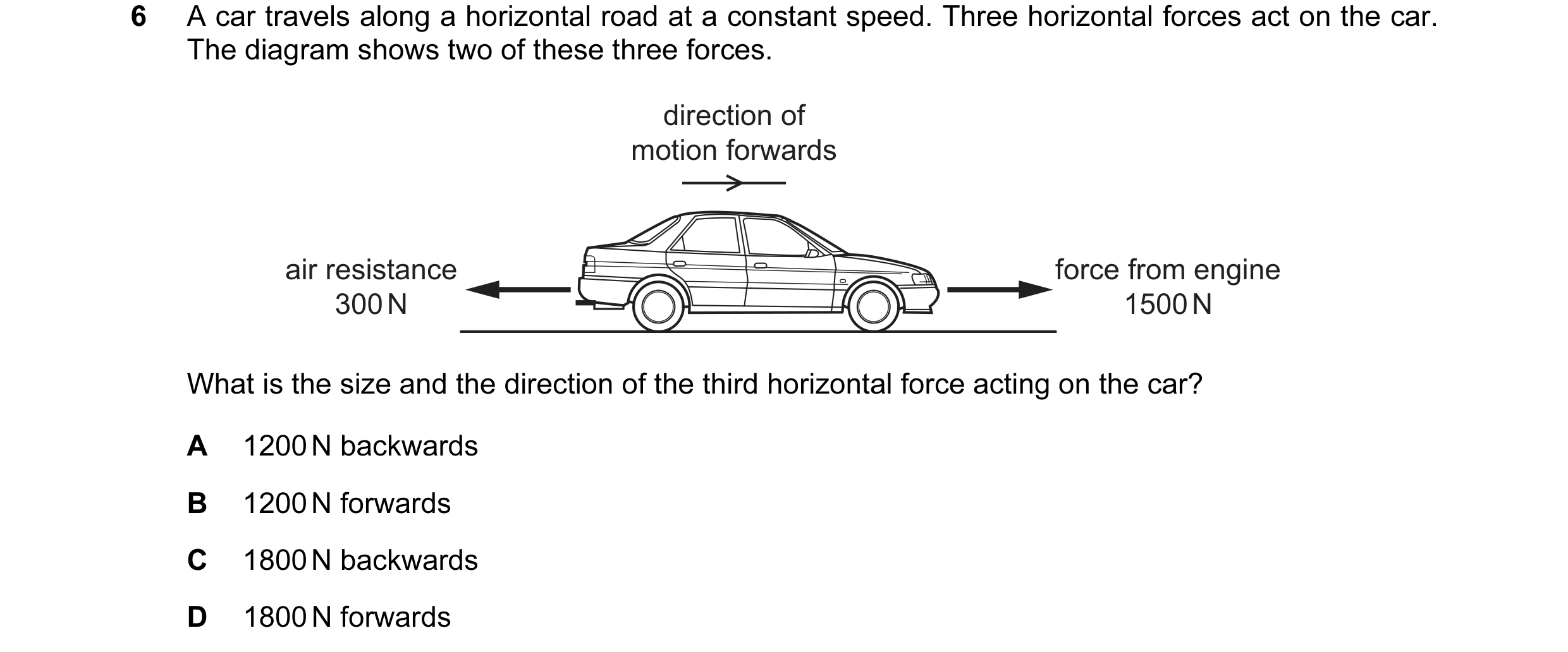
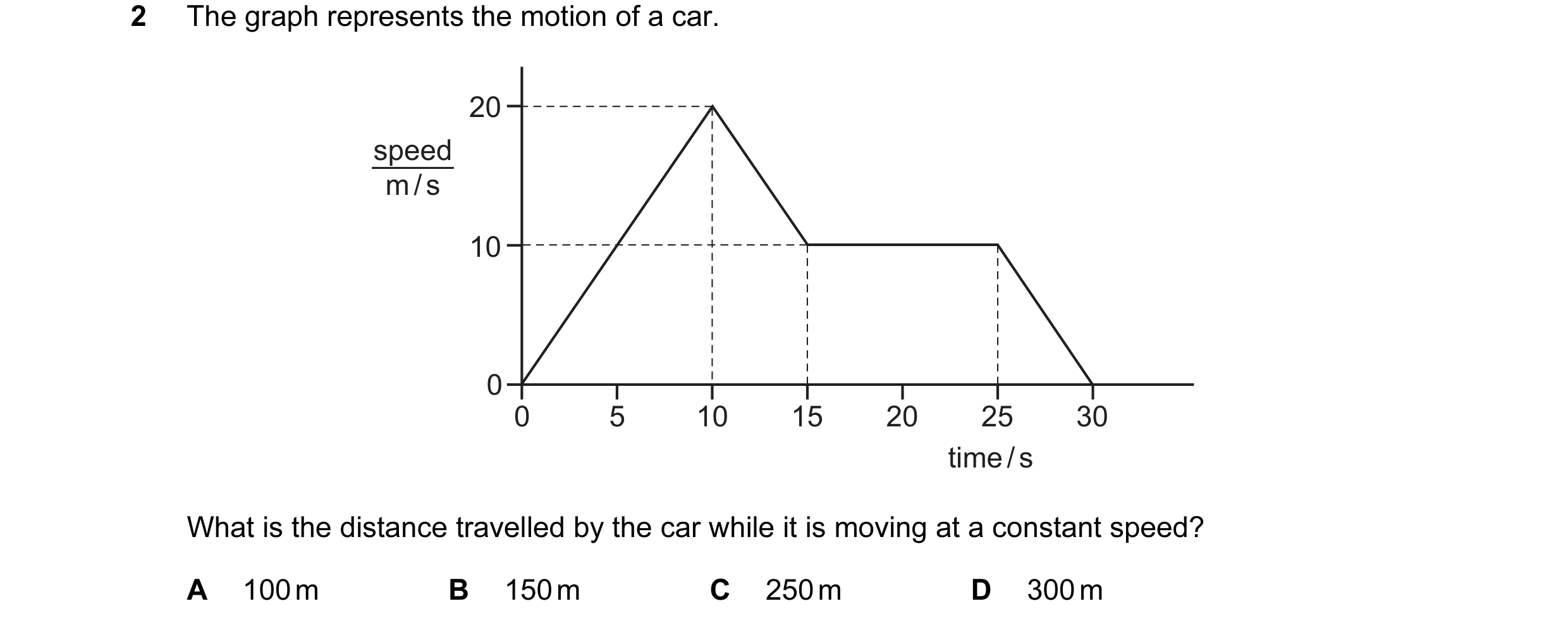
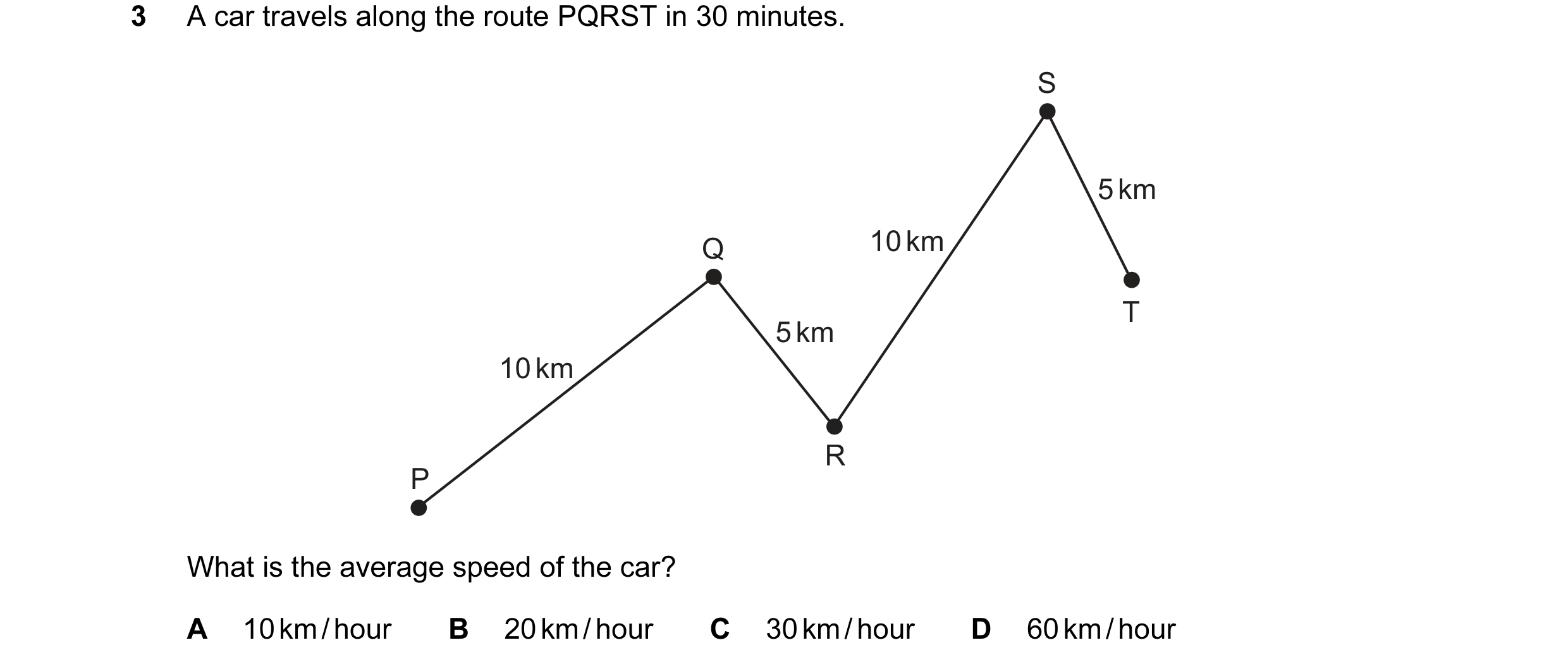 34 / 84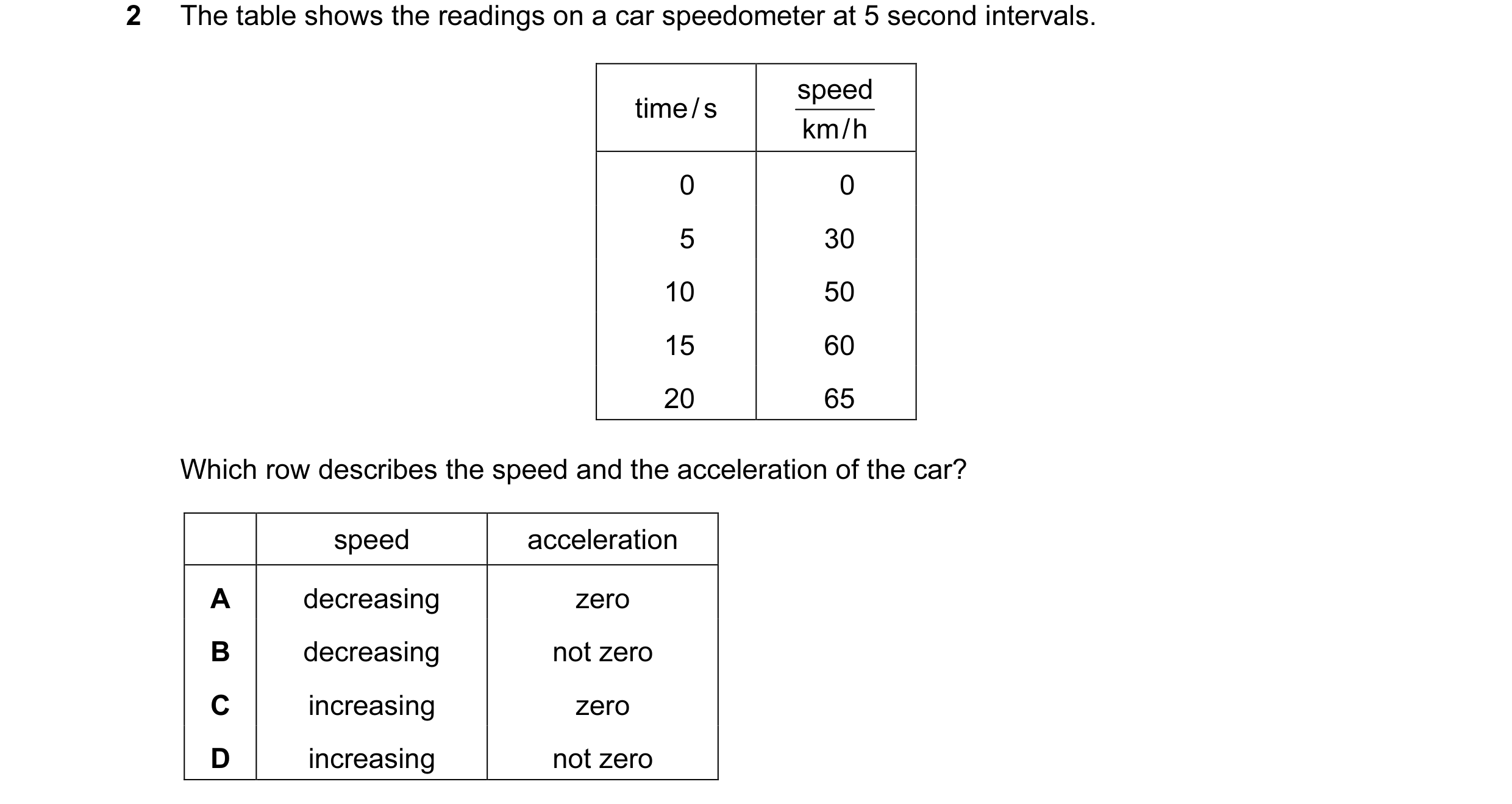
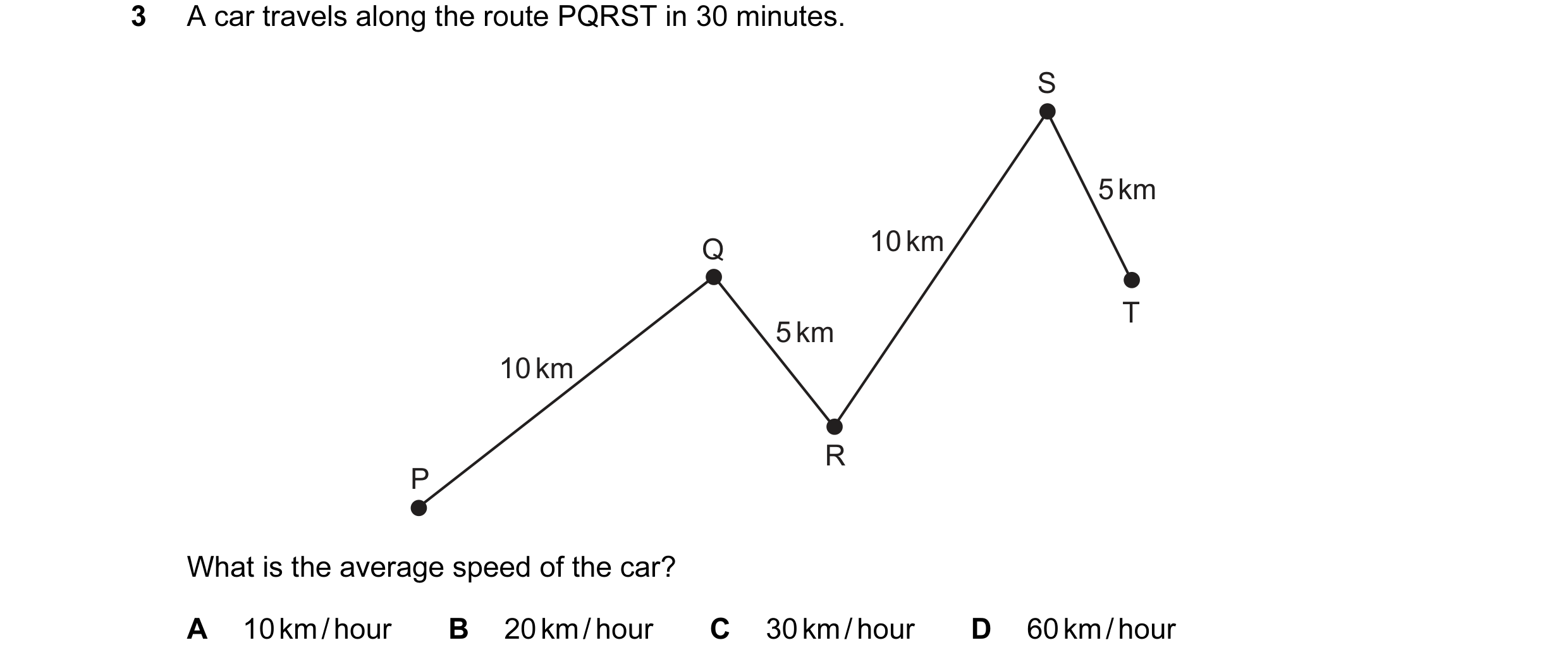
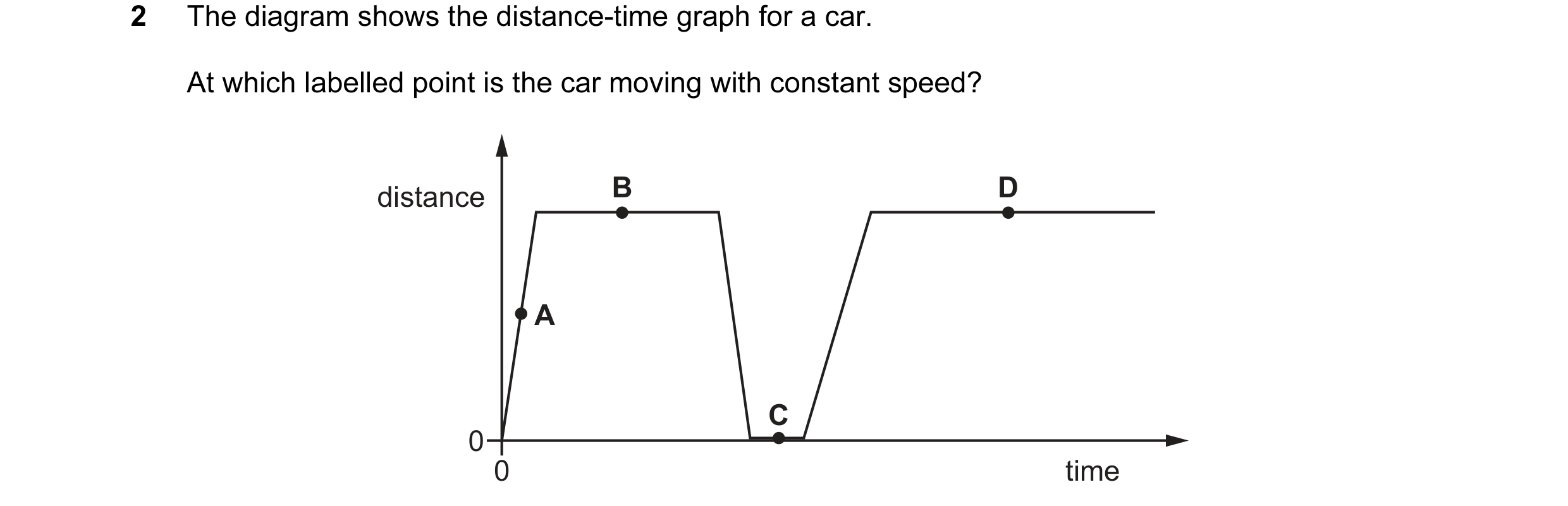 35 / 84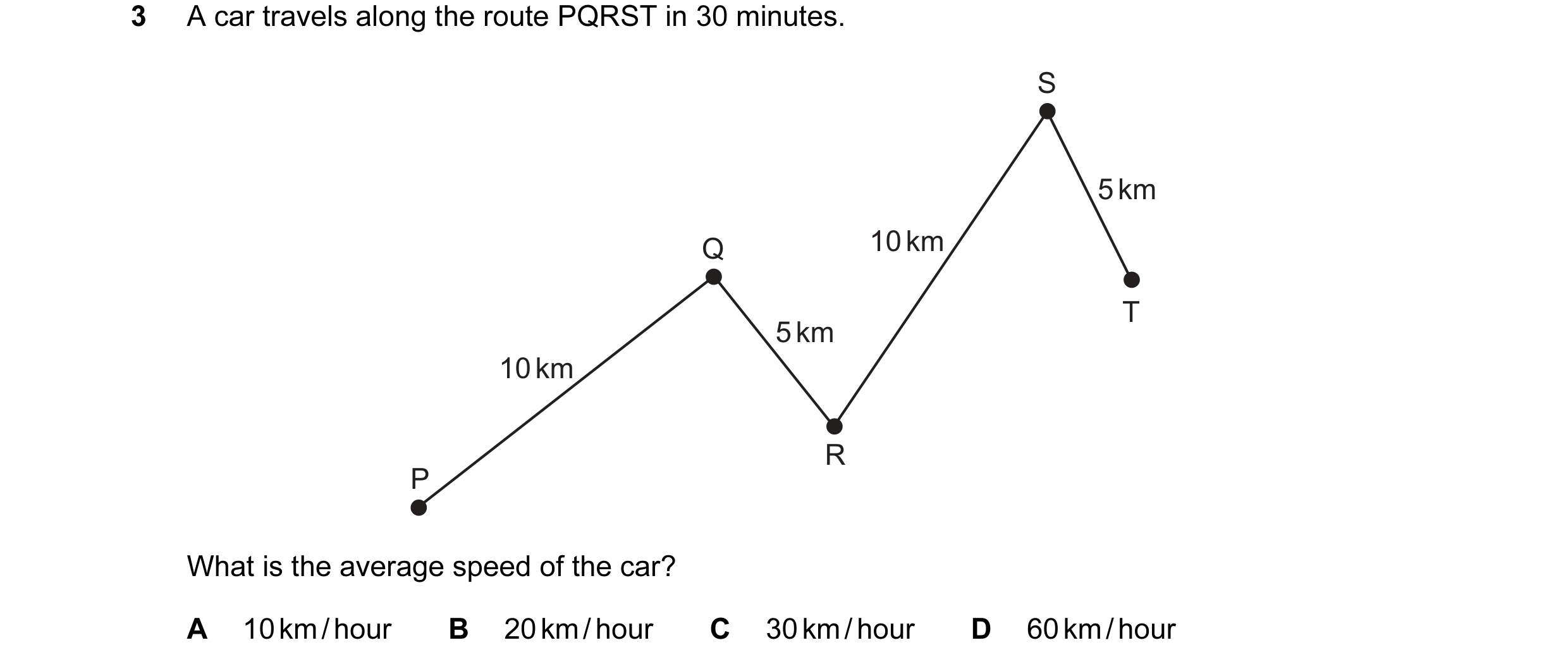
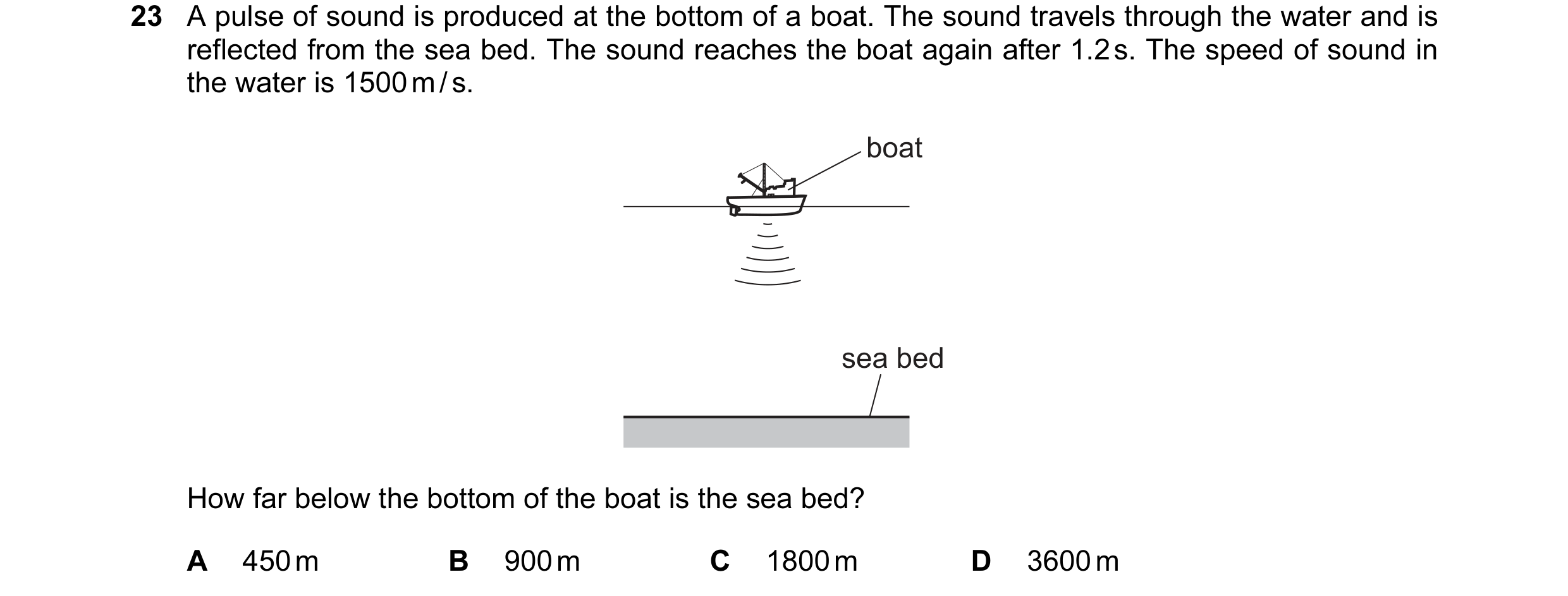
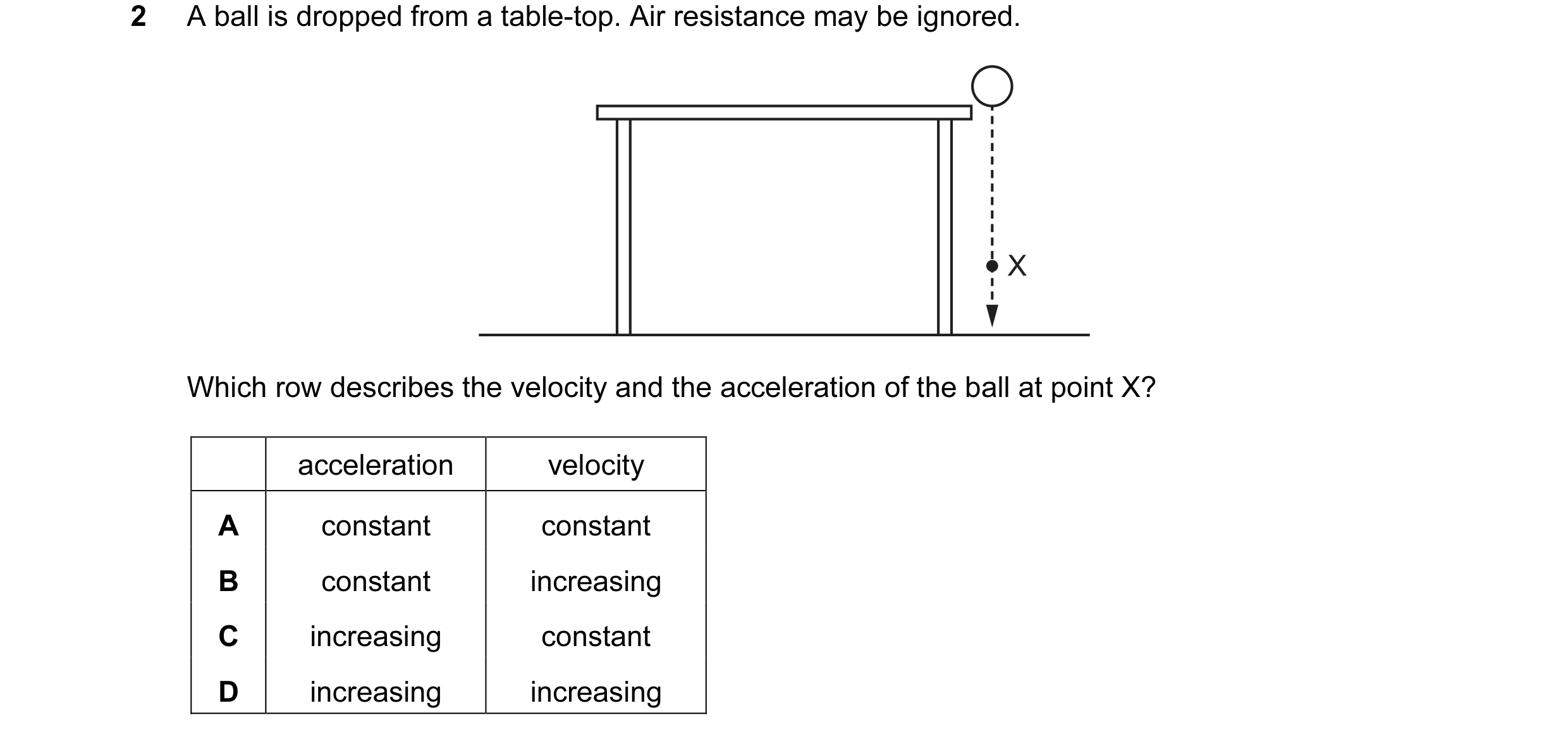 36 / 84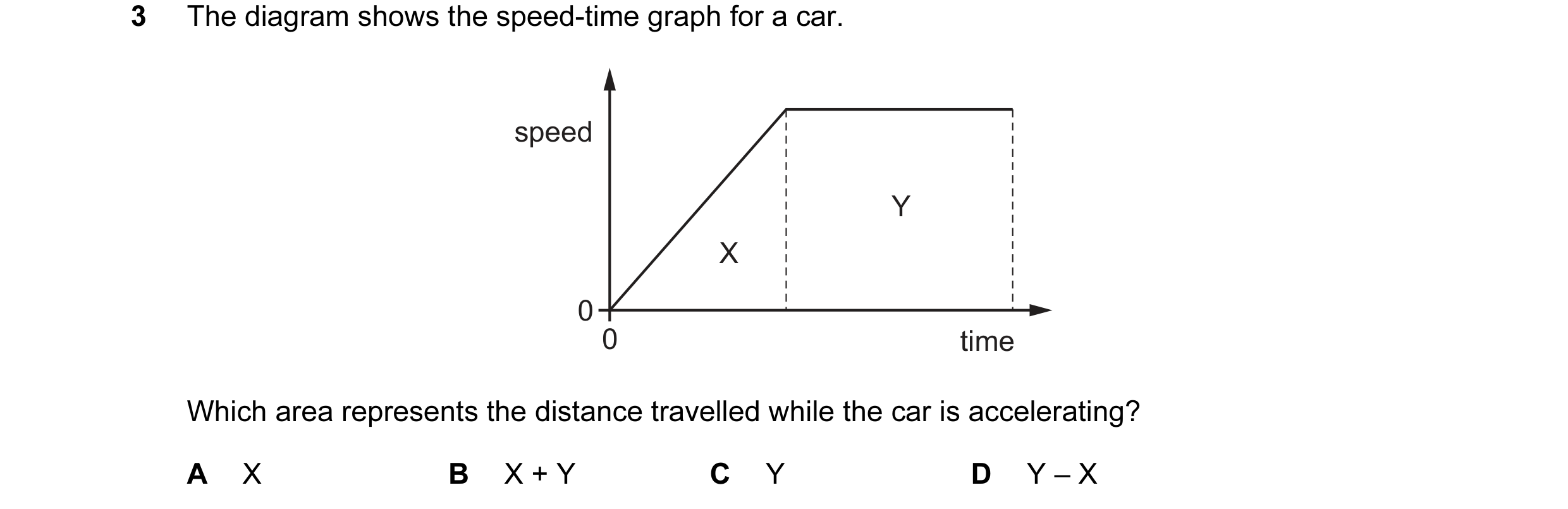

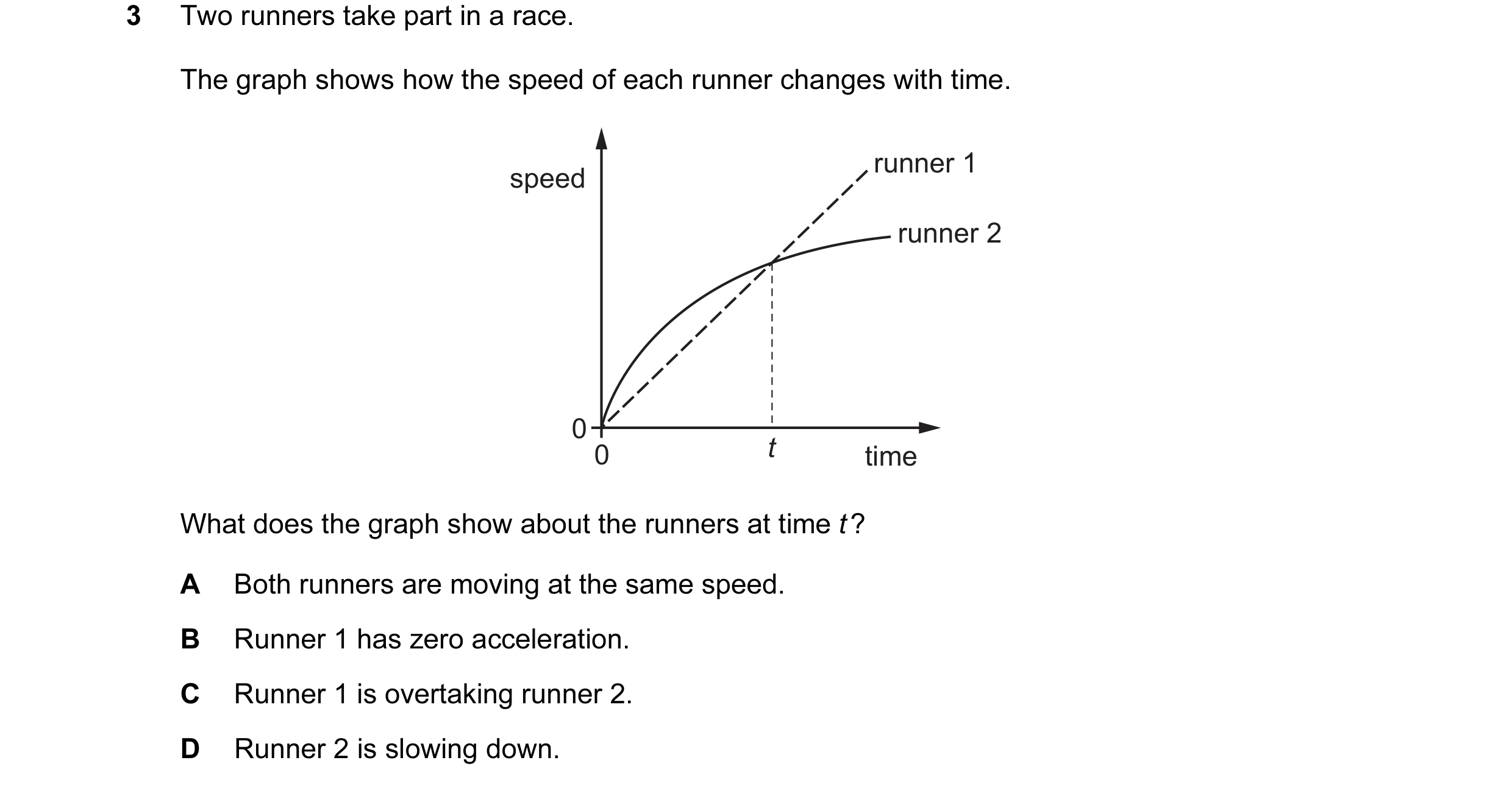
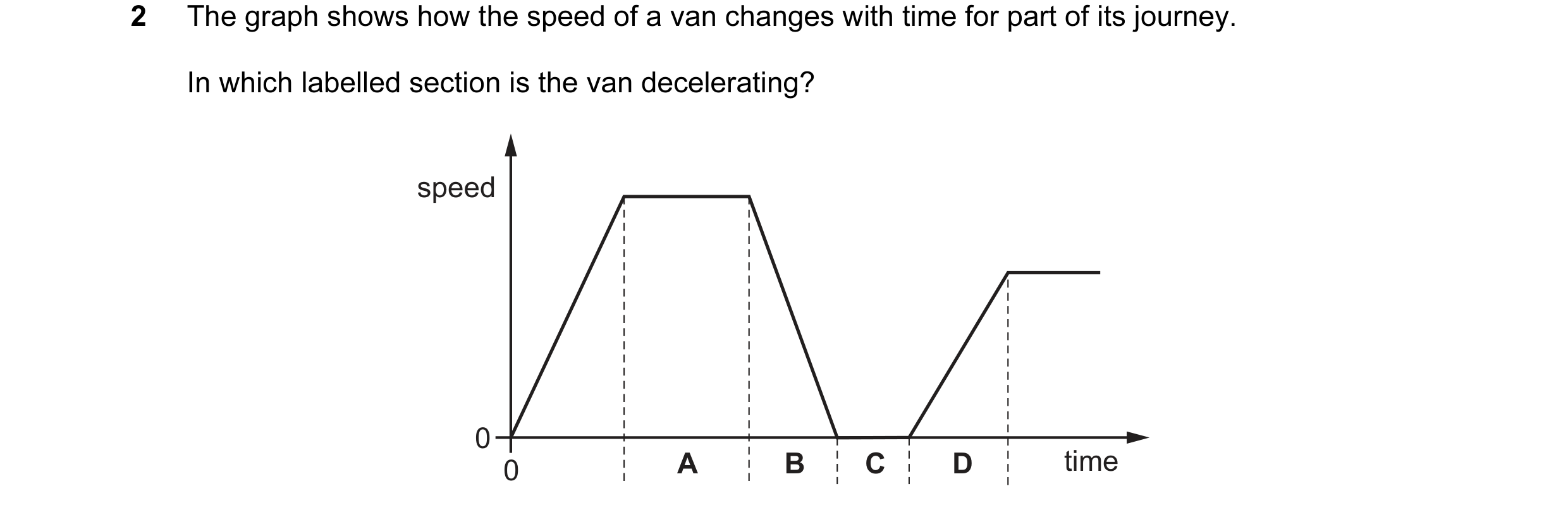 37 / 84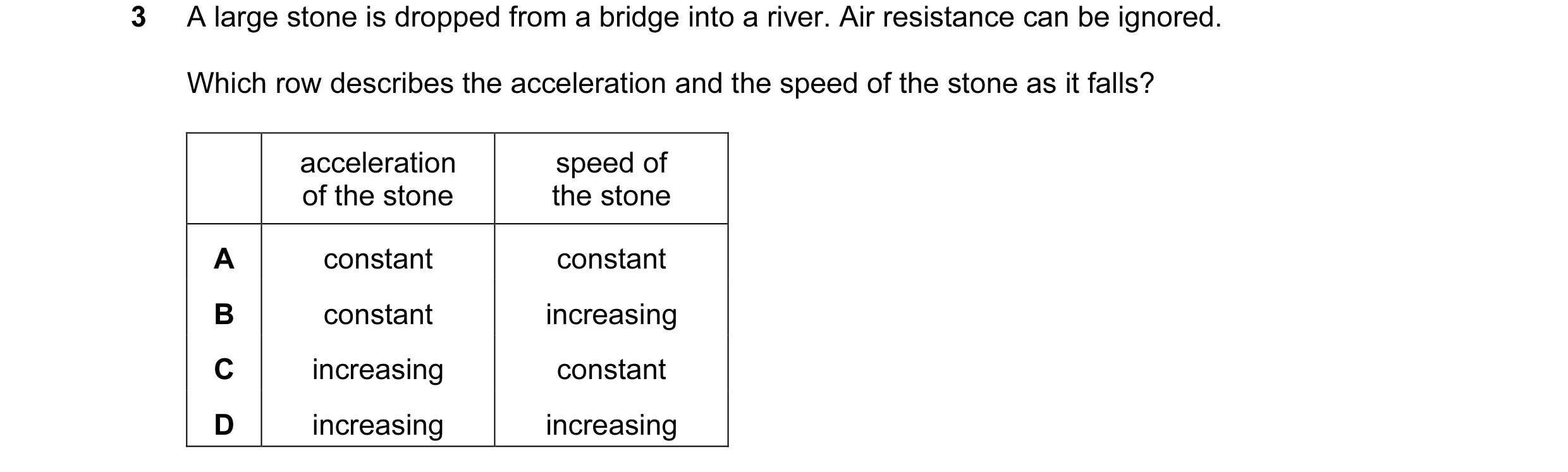
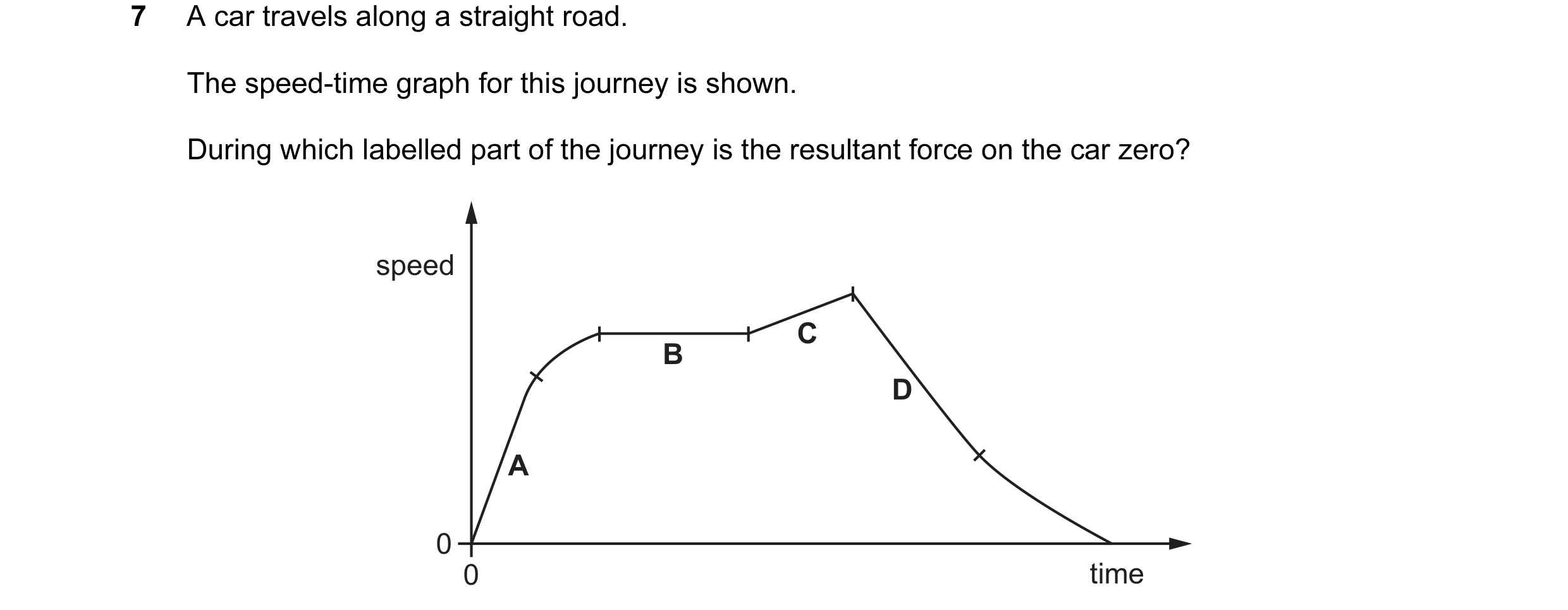
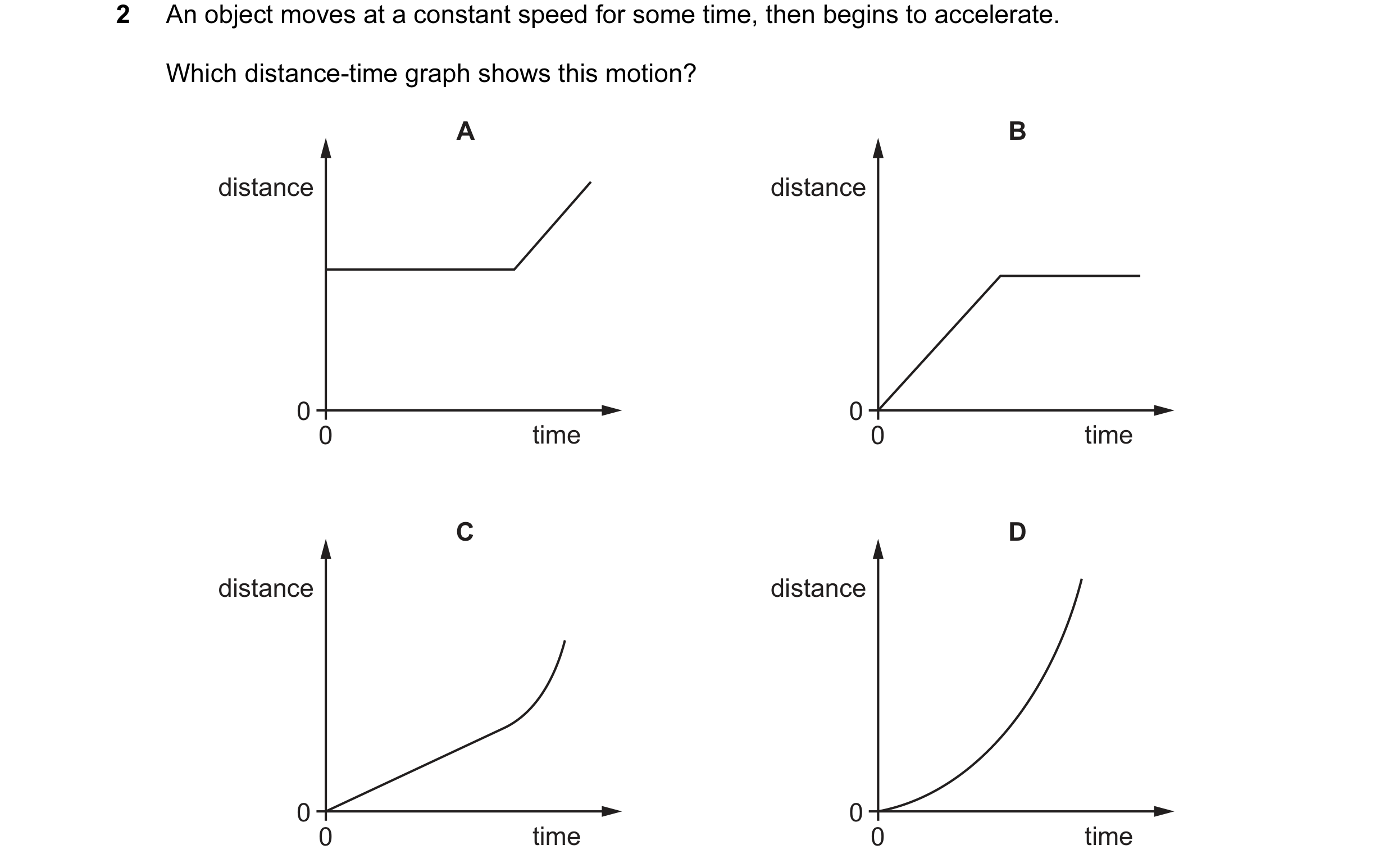 38 / 84
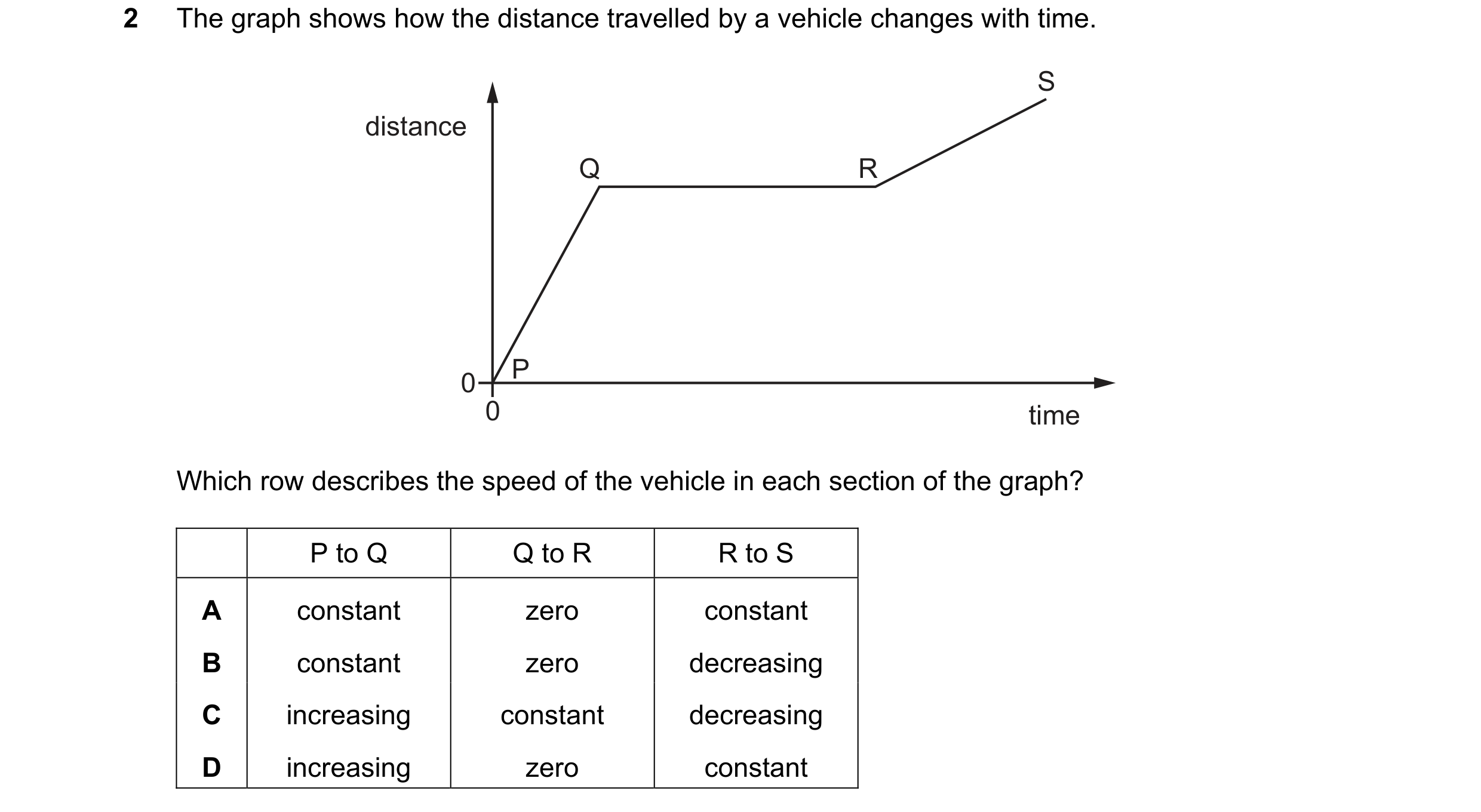 39 / 84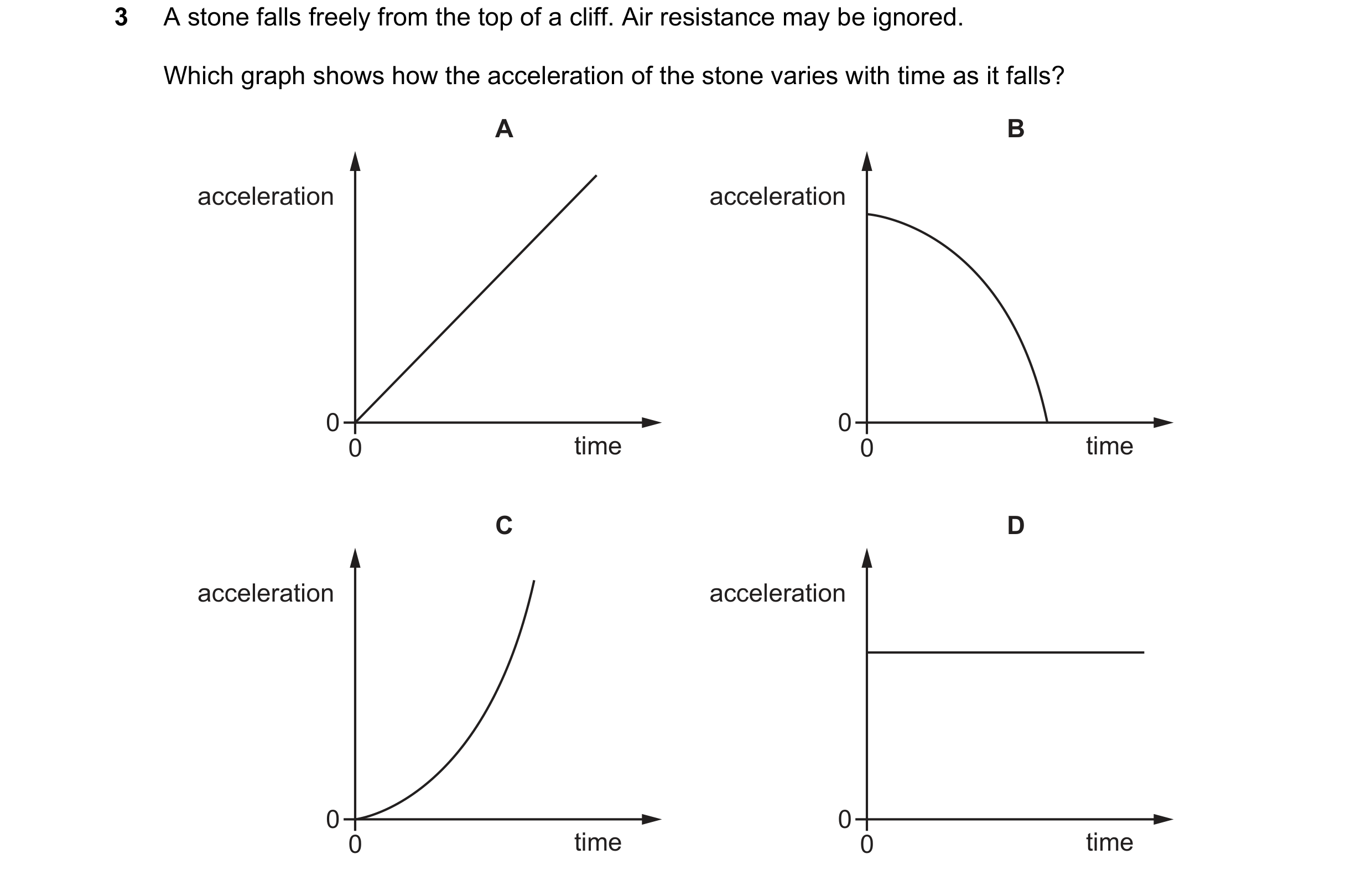
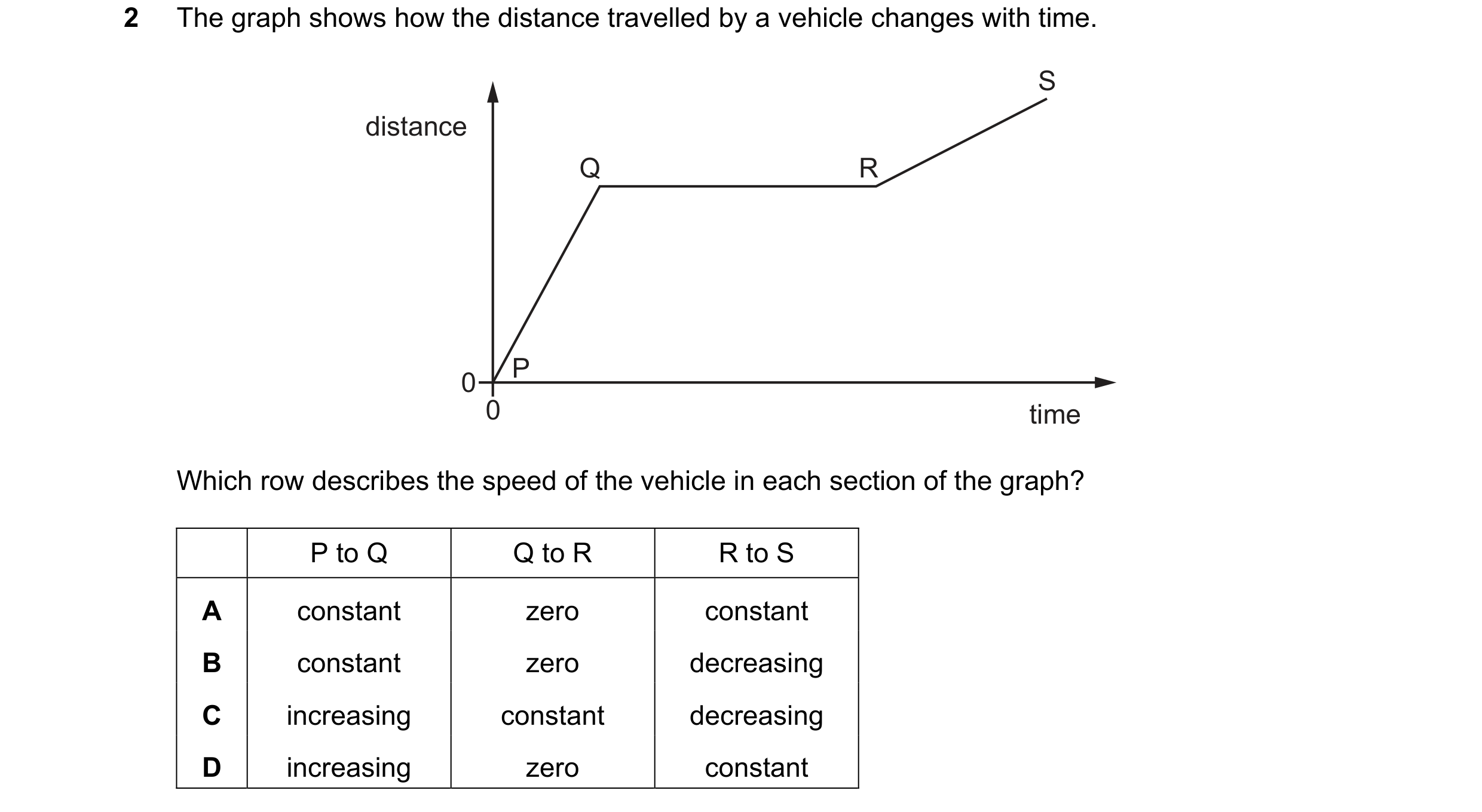 40 / 84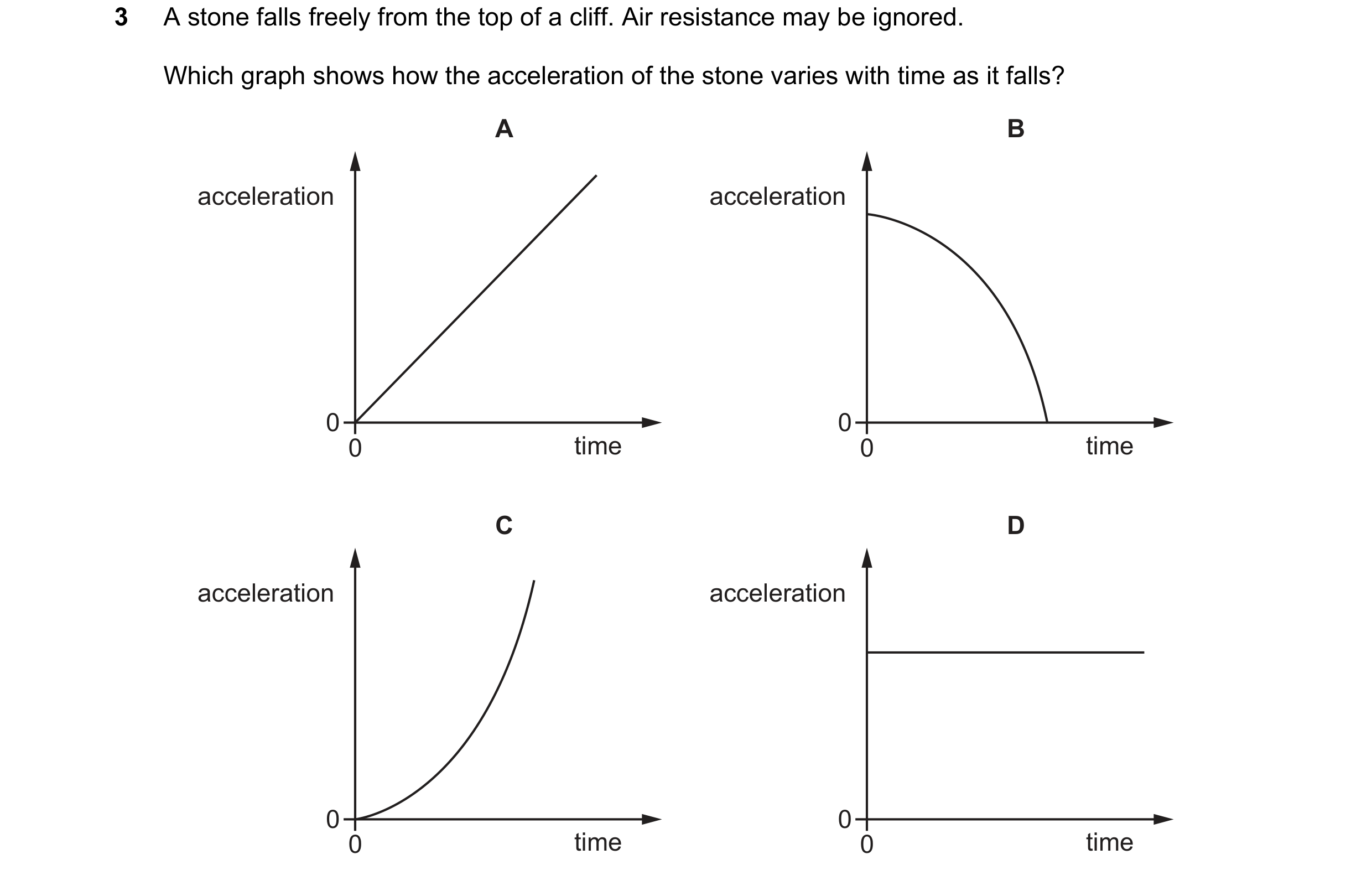
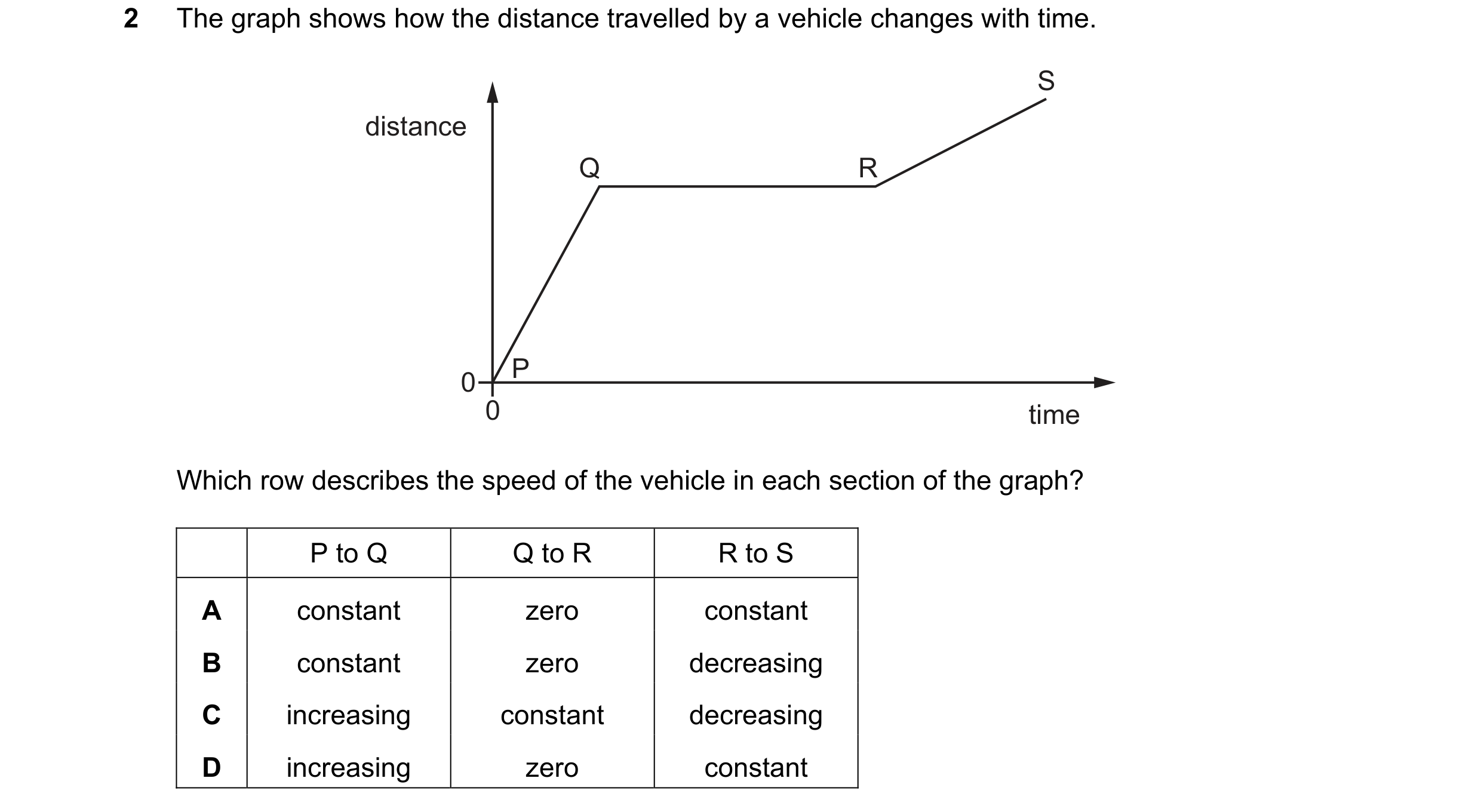 41 / 84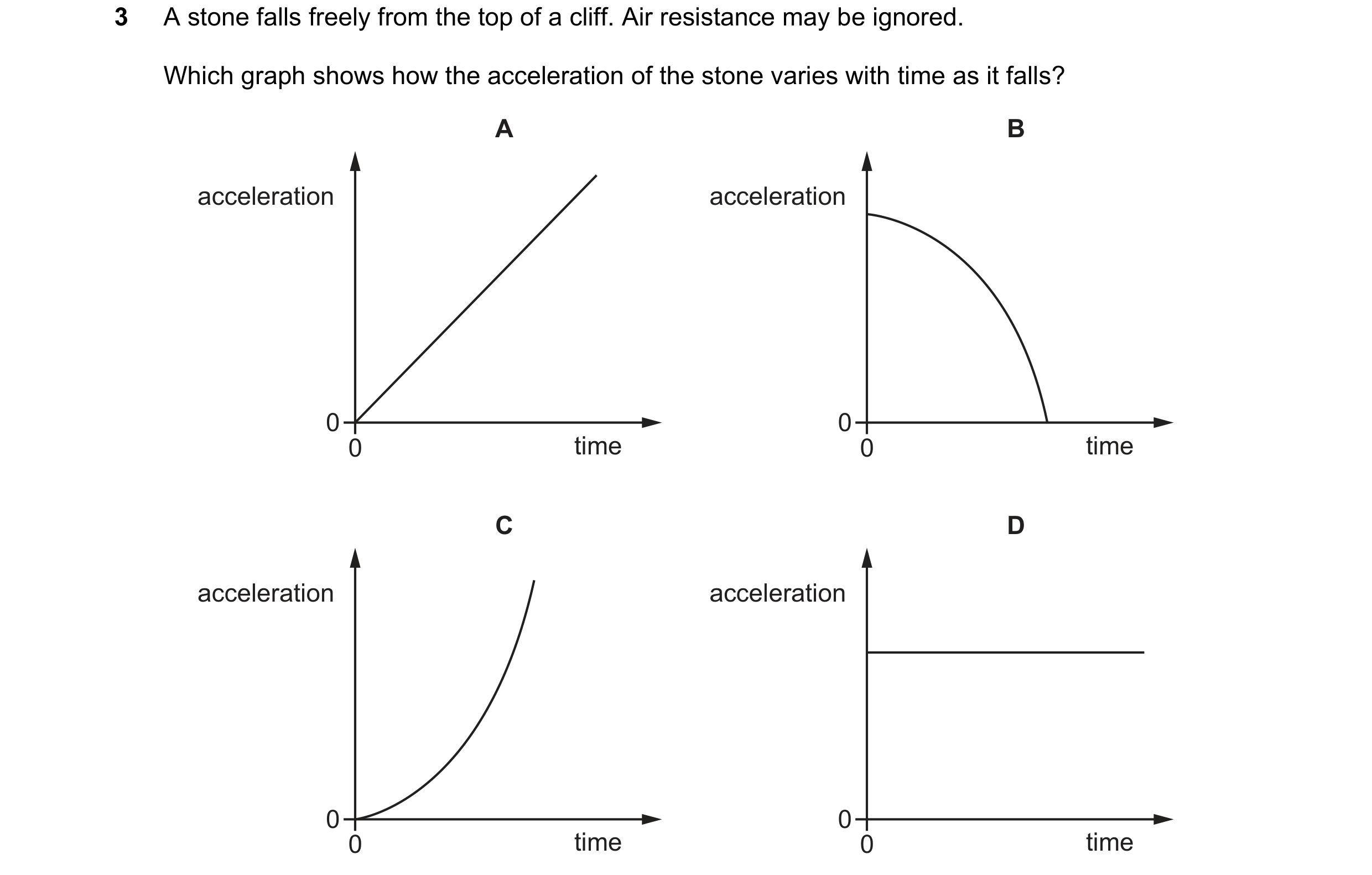
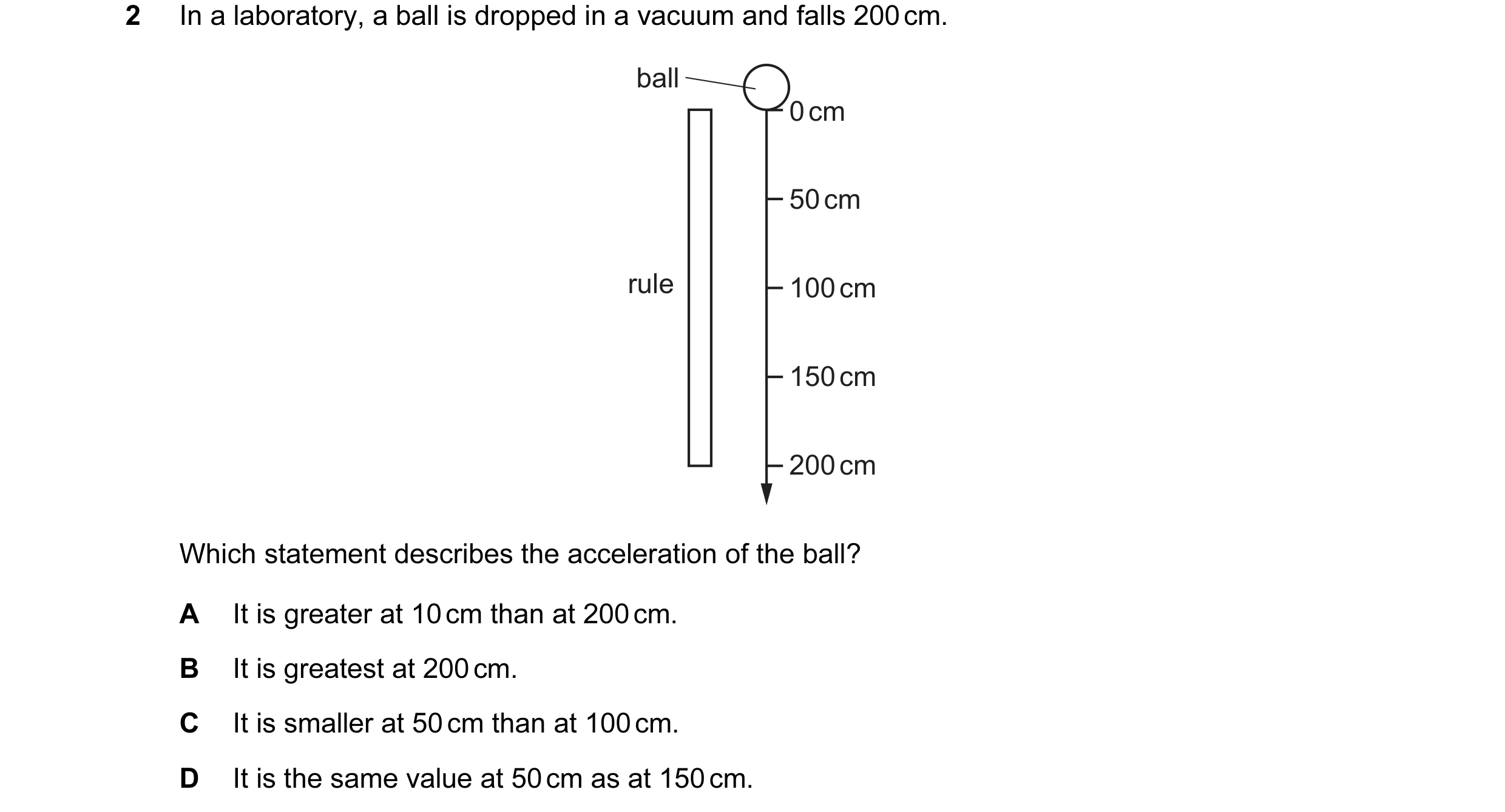 42 / 84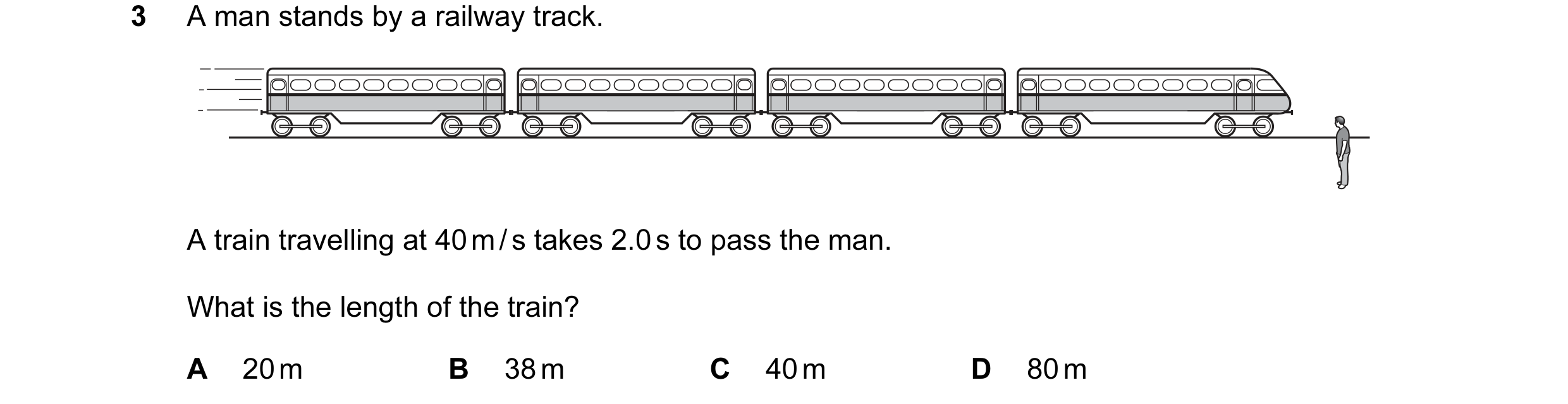
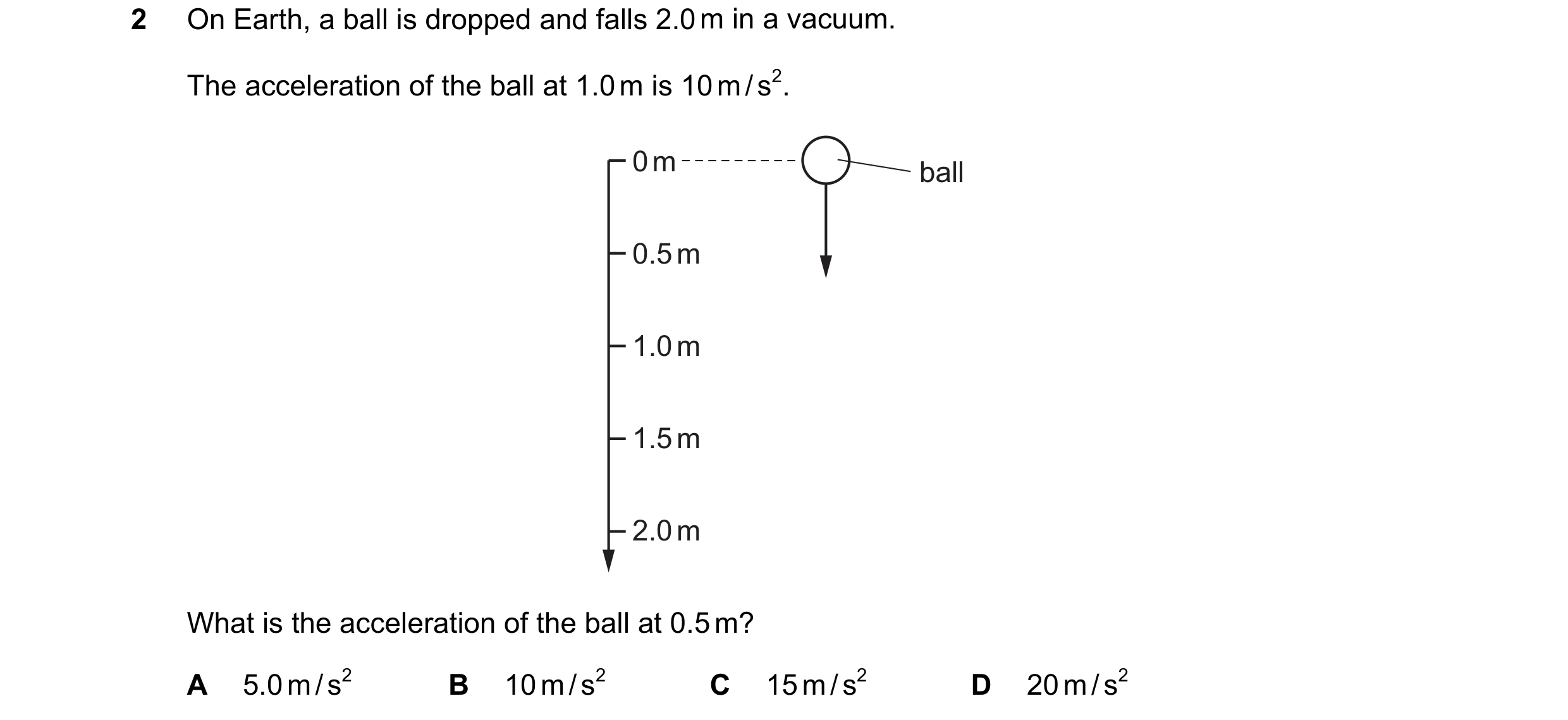
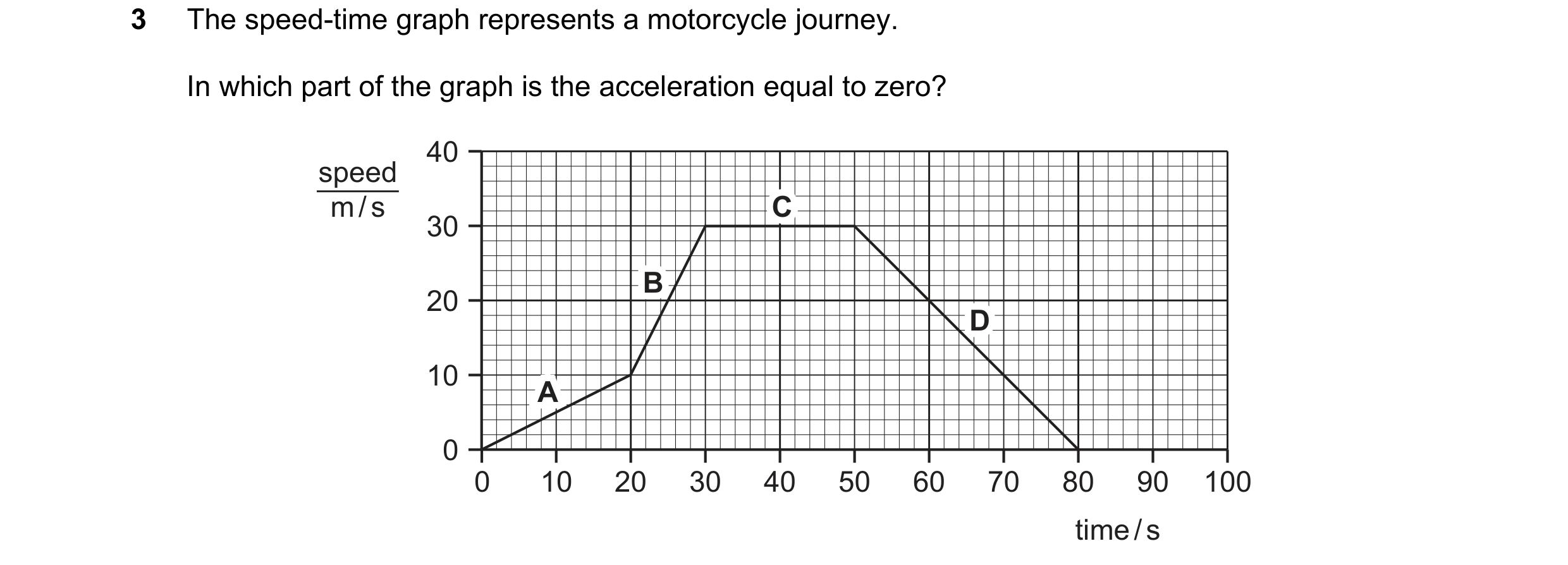 43 / 84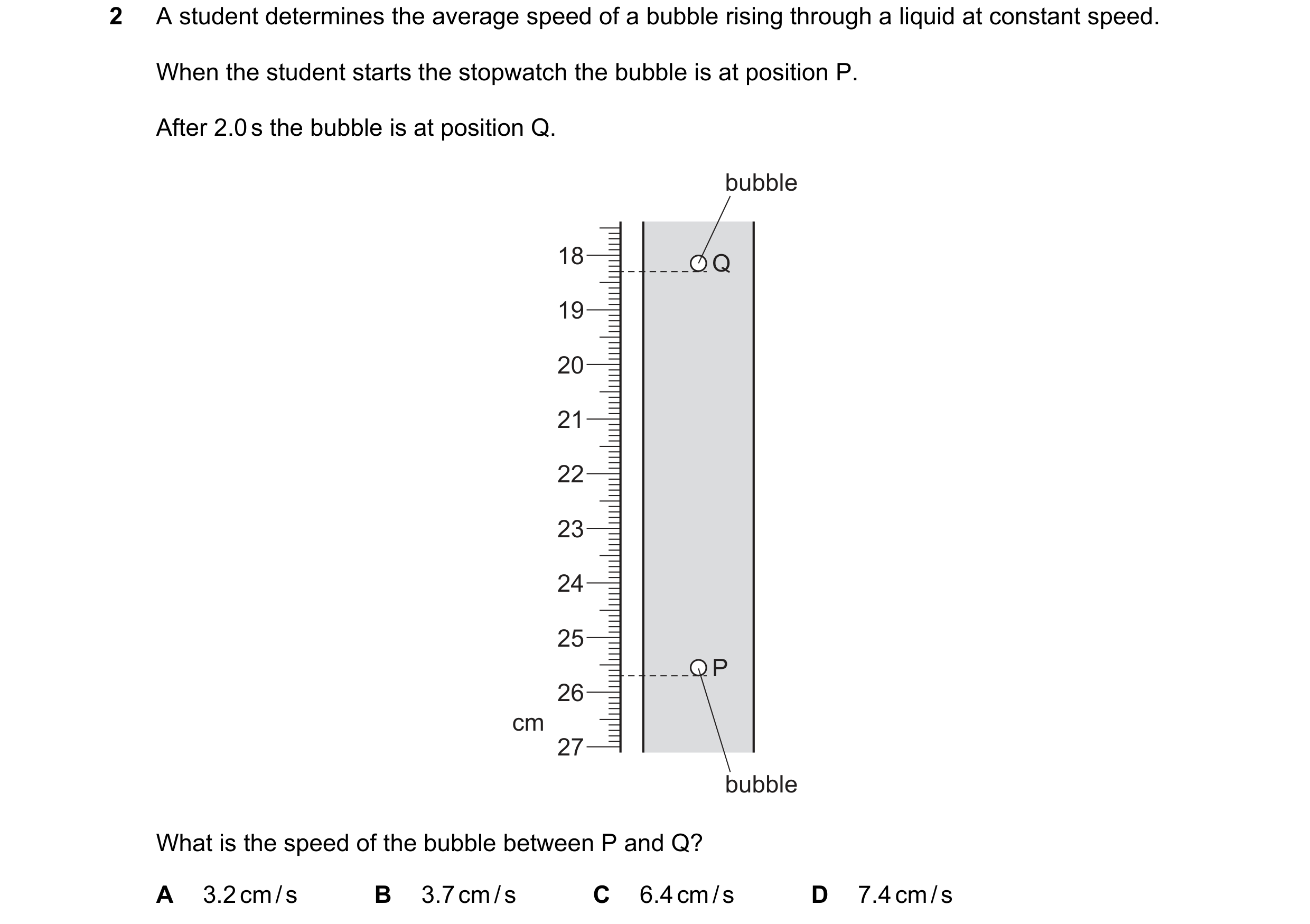
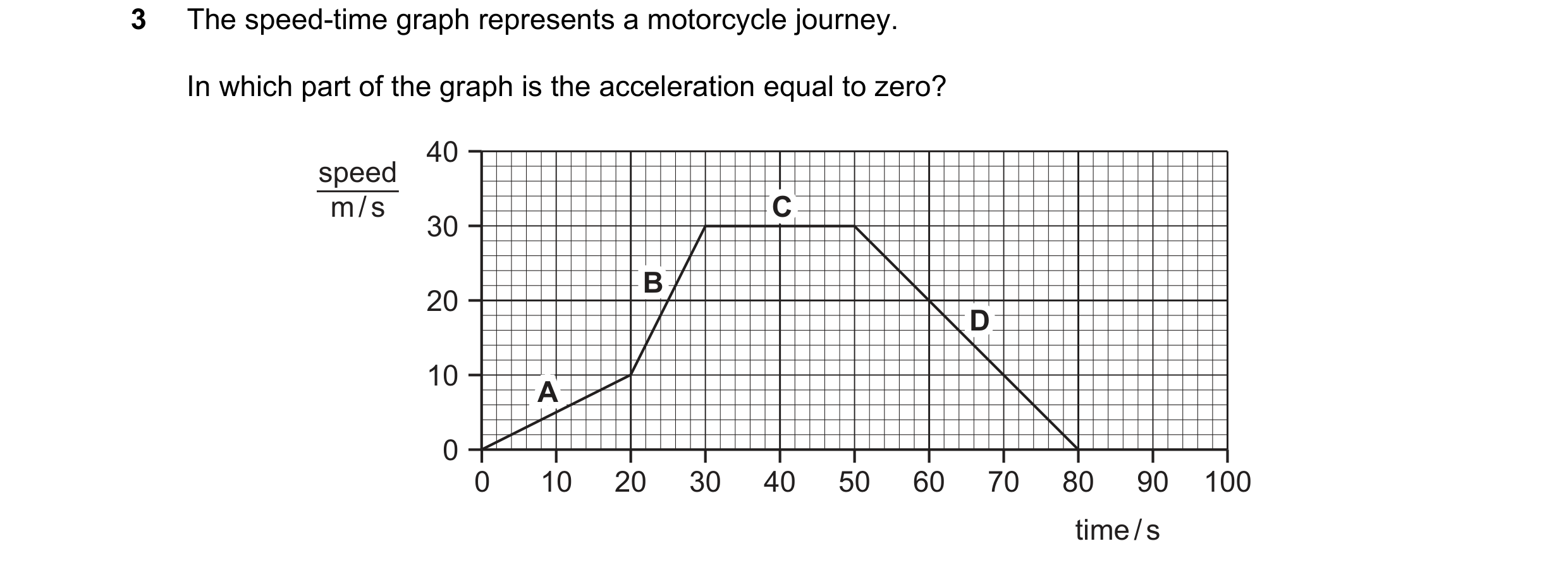 44 / 84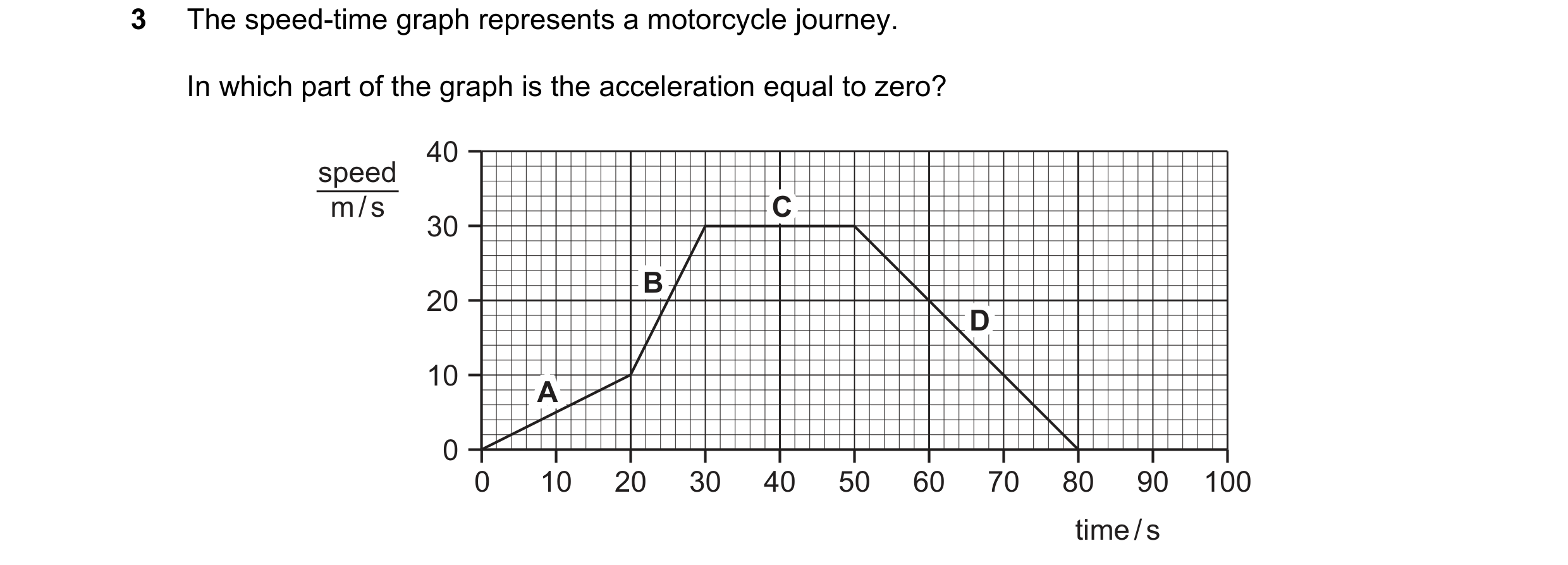
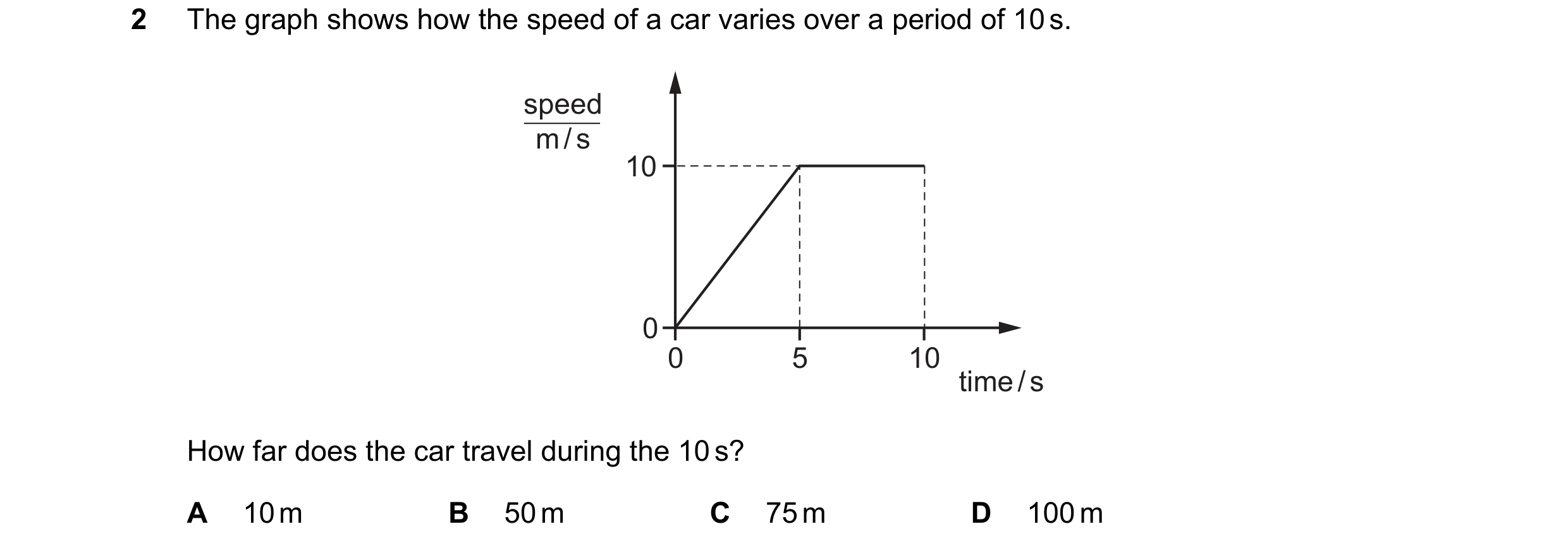
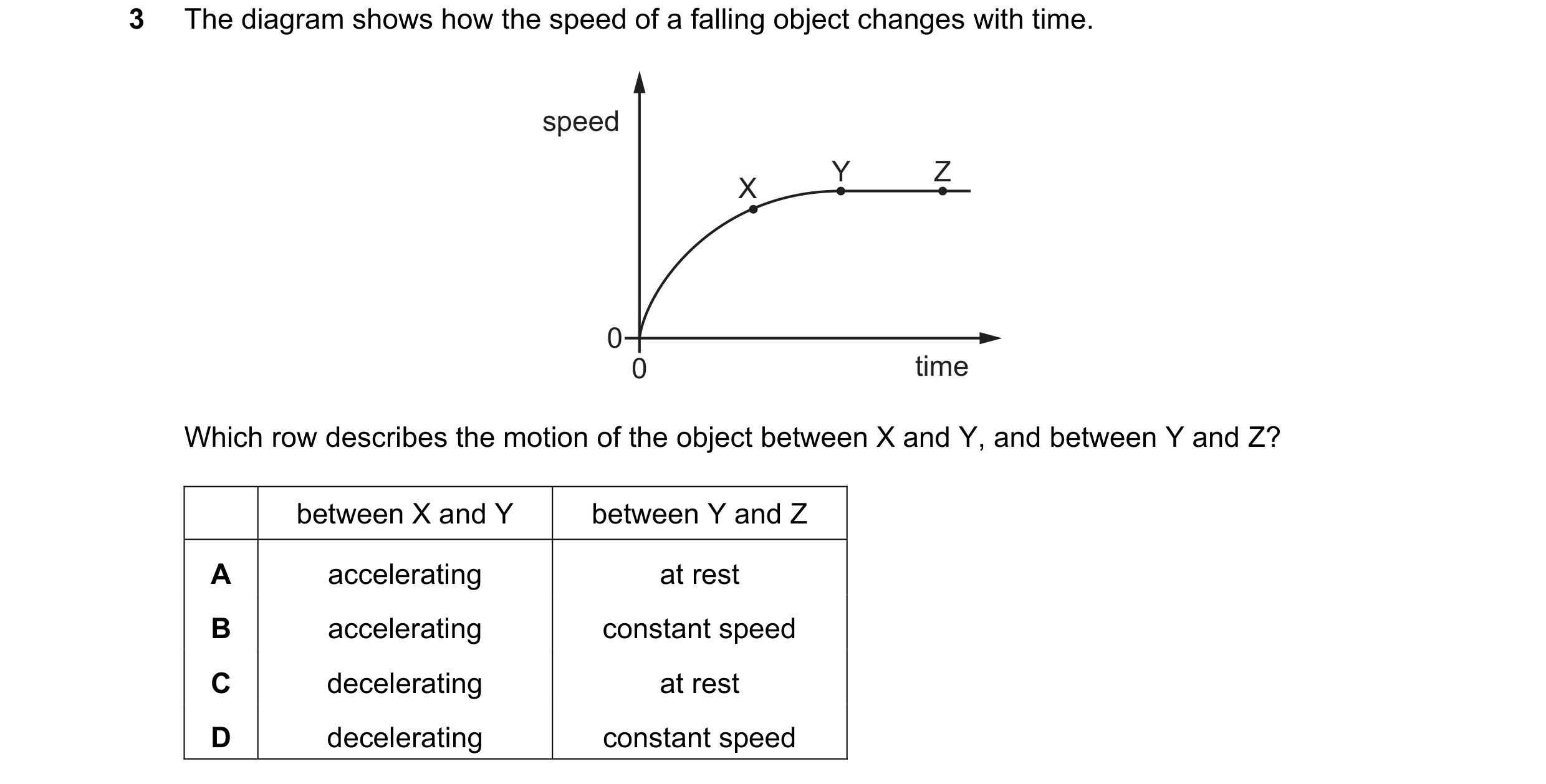 45 / 84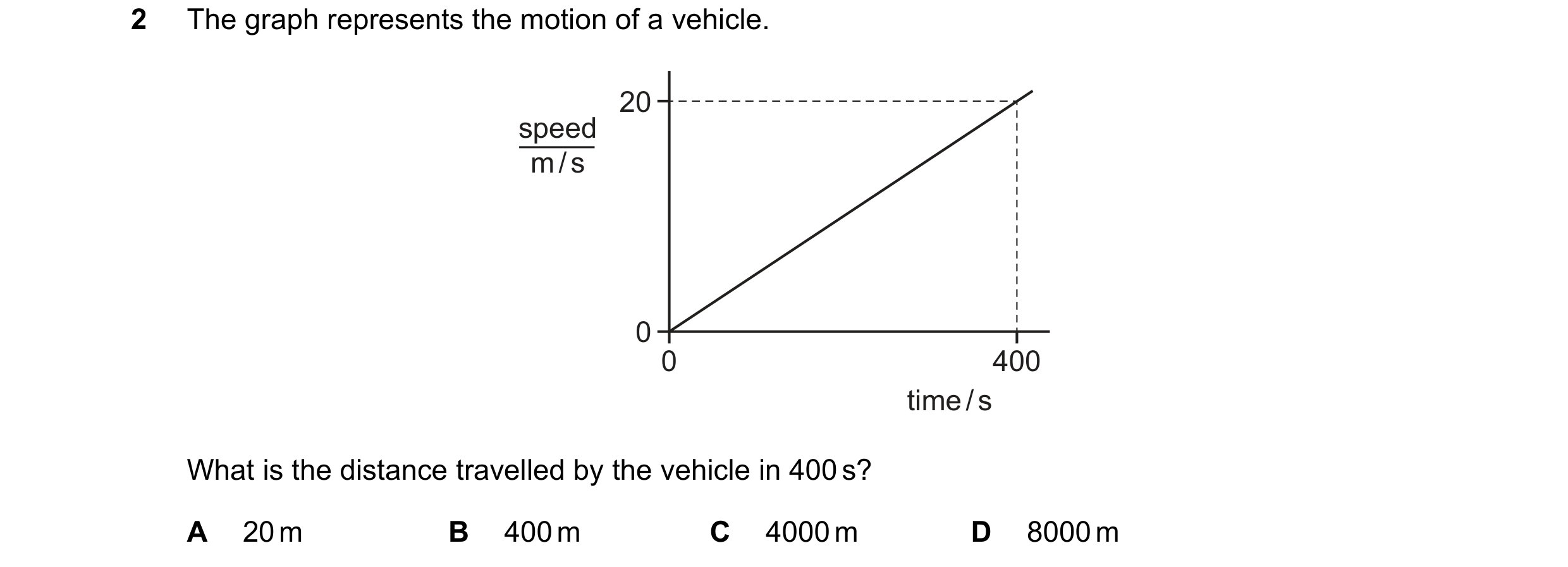
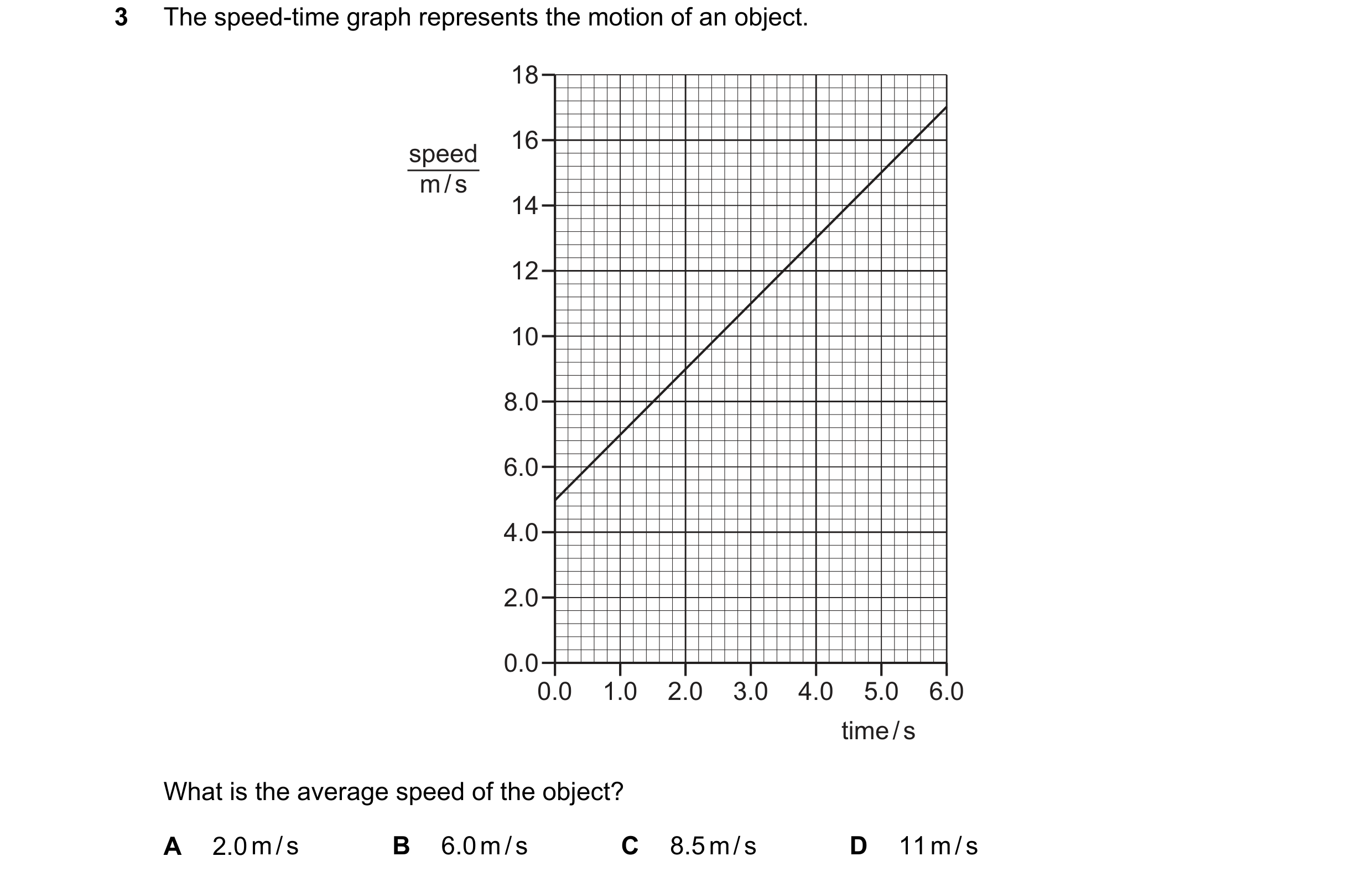
 46 / 84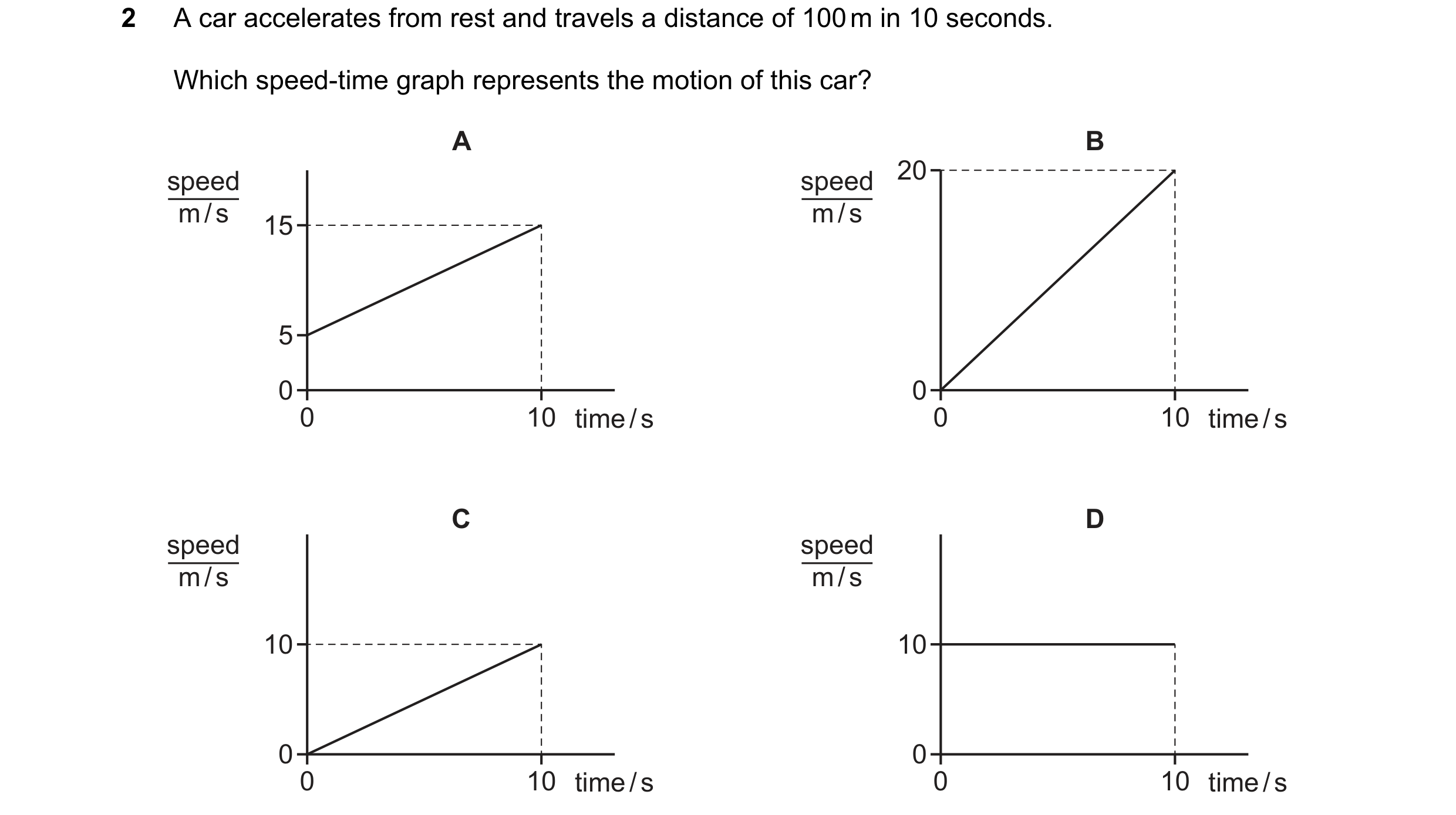
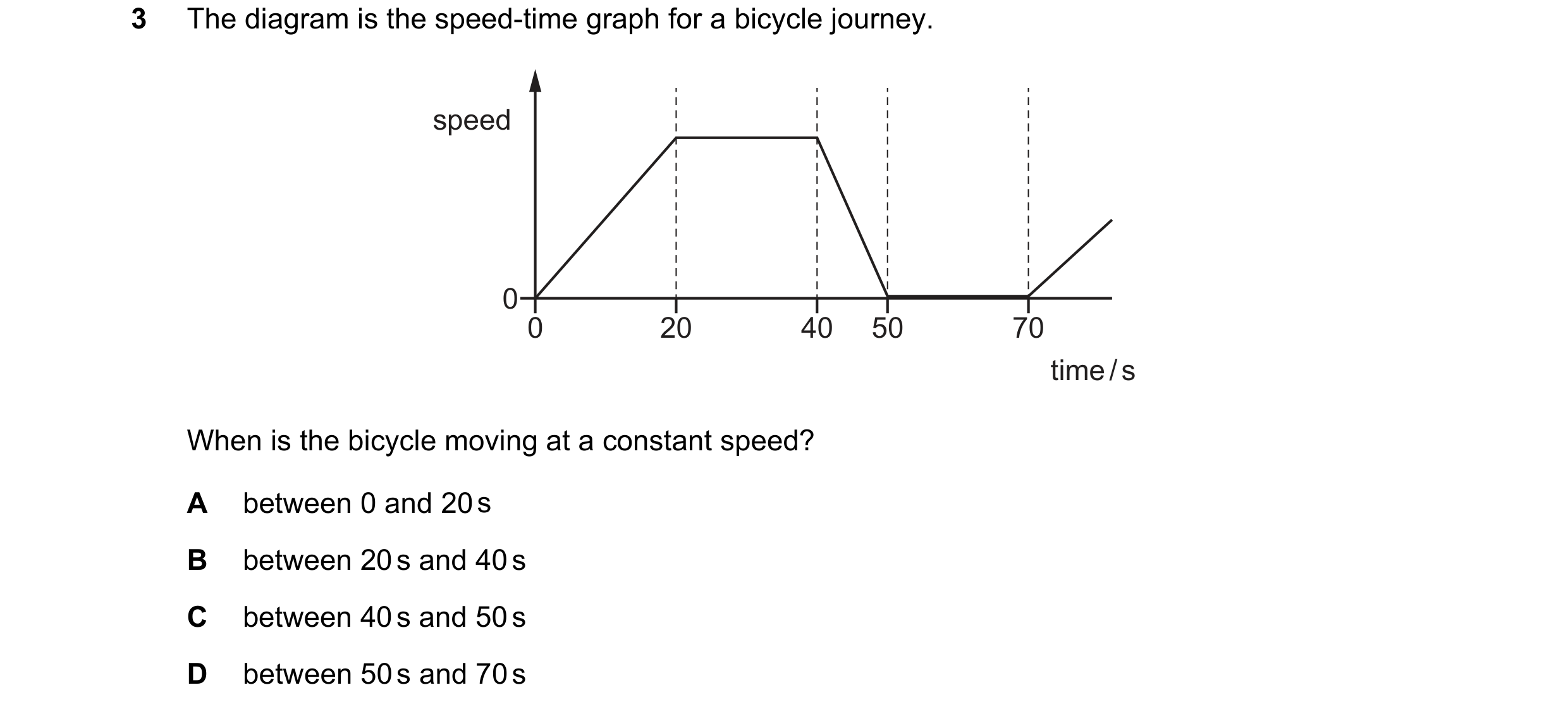 47 / 84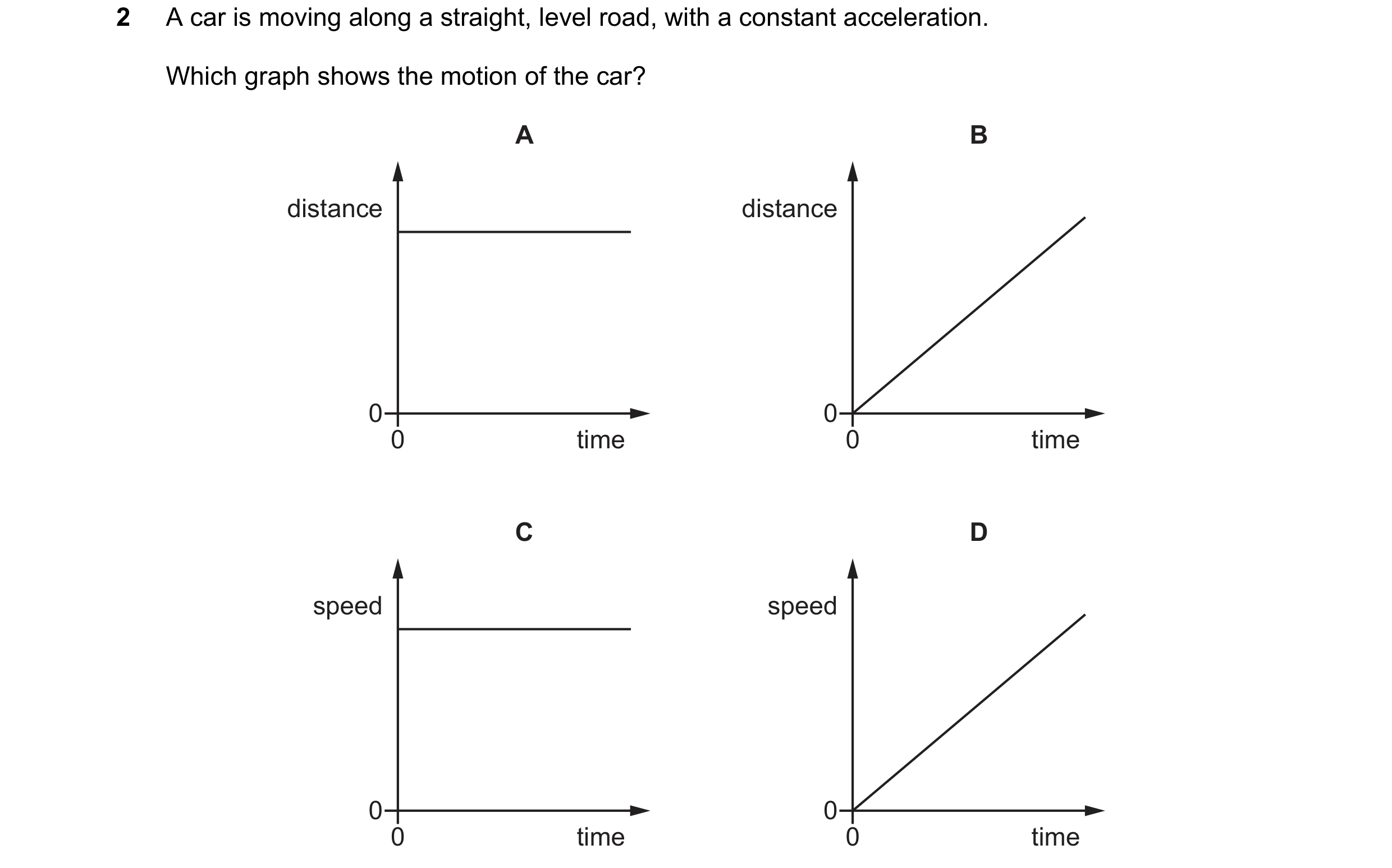

 48 / 84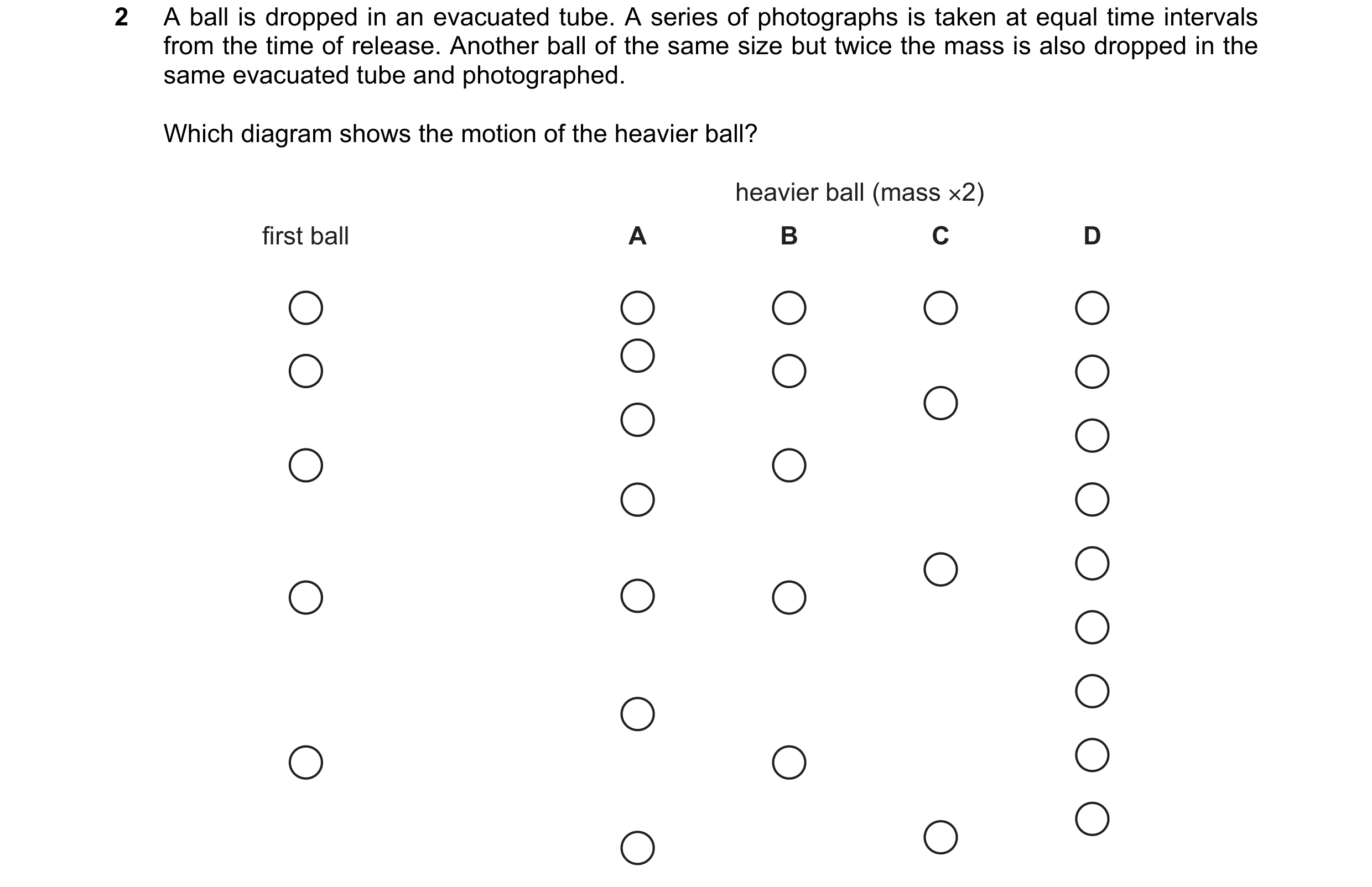

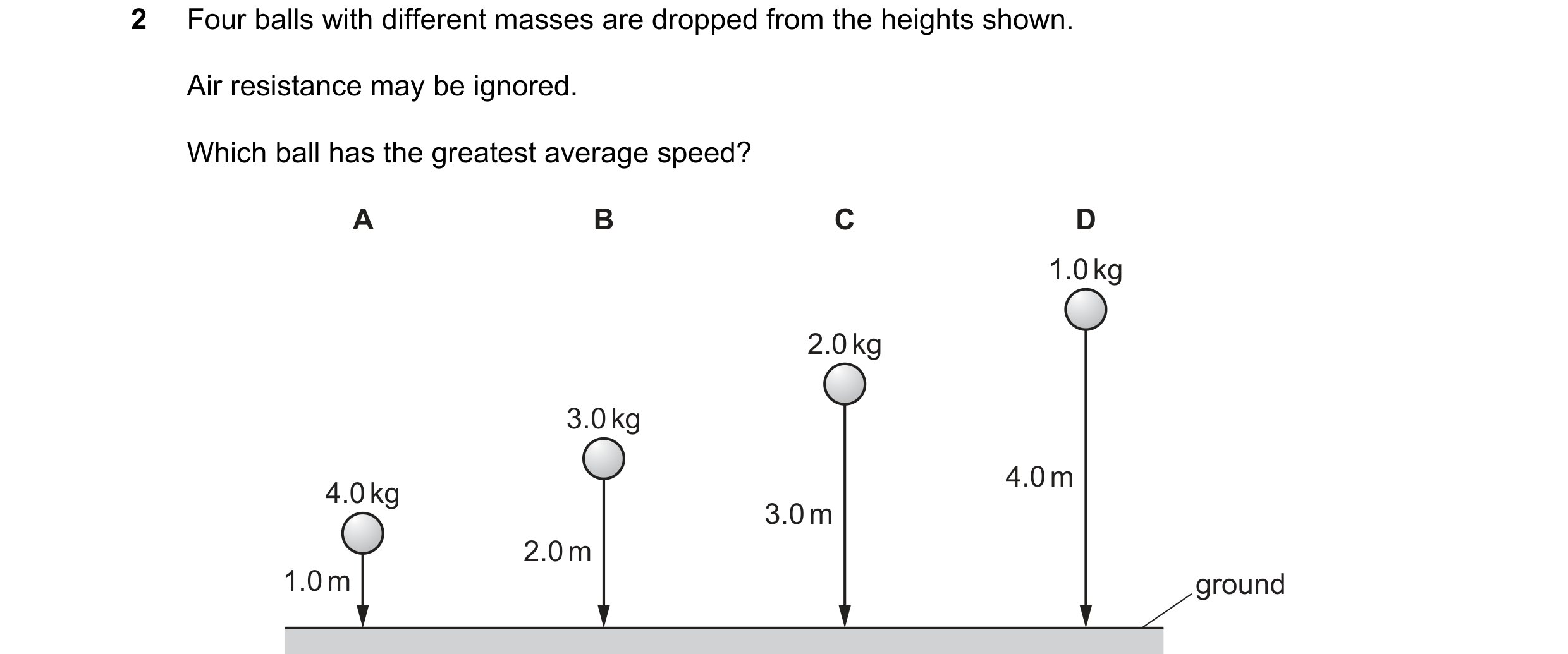
 49 / 84
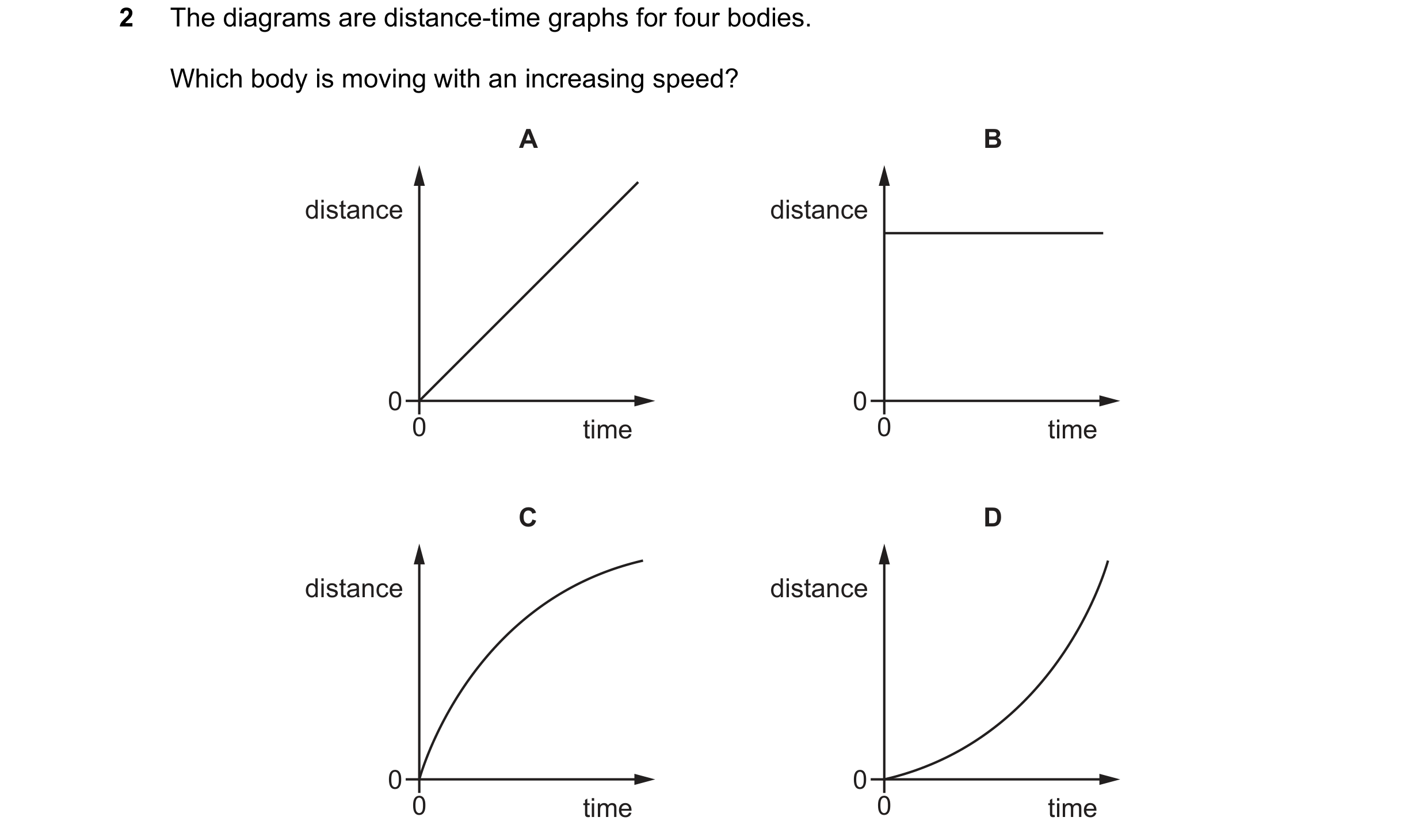

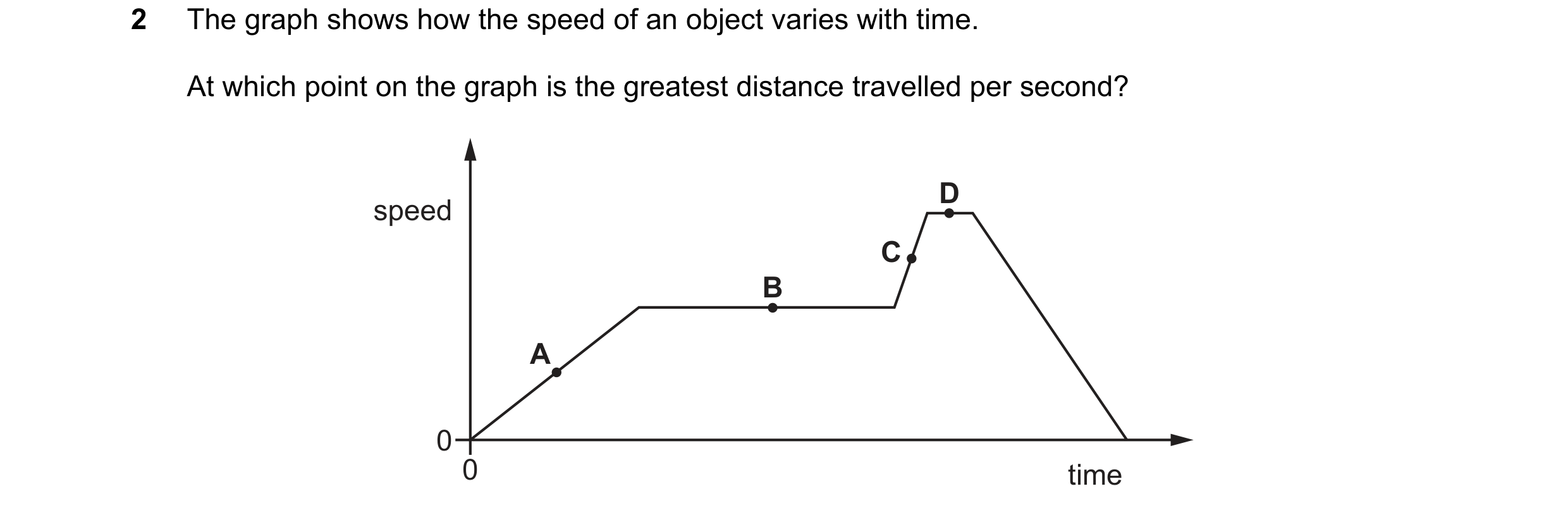 50 / 84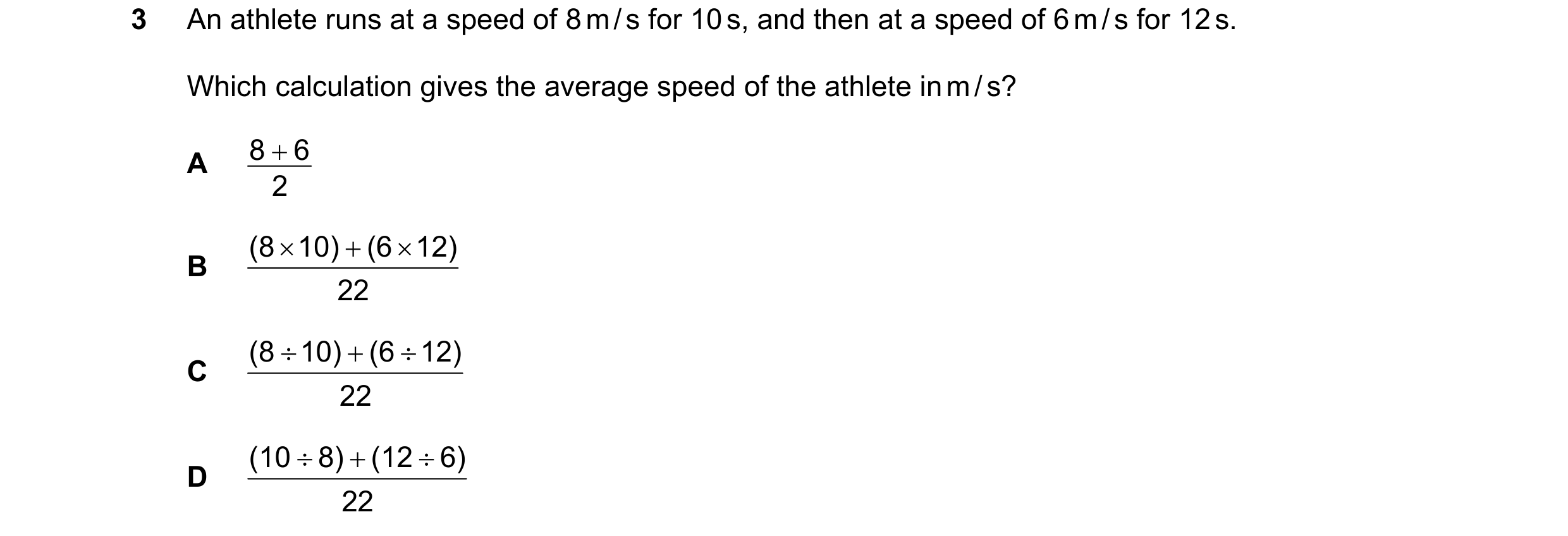
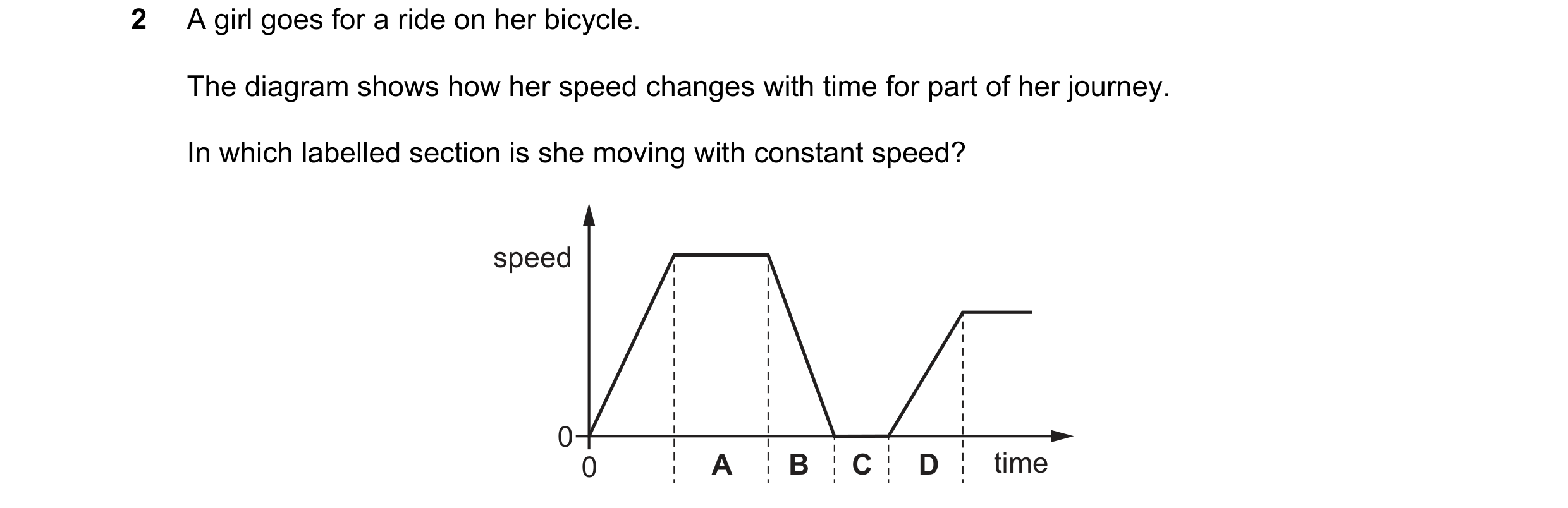

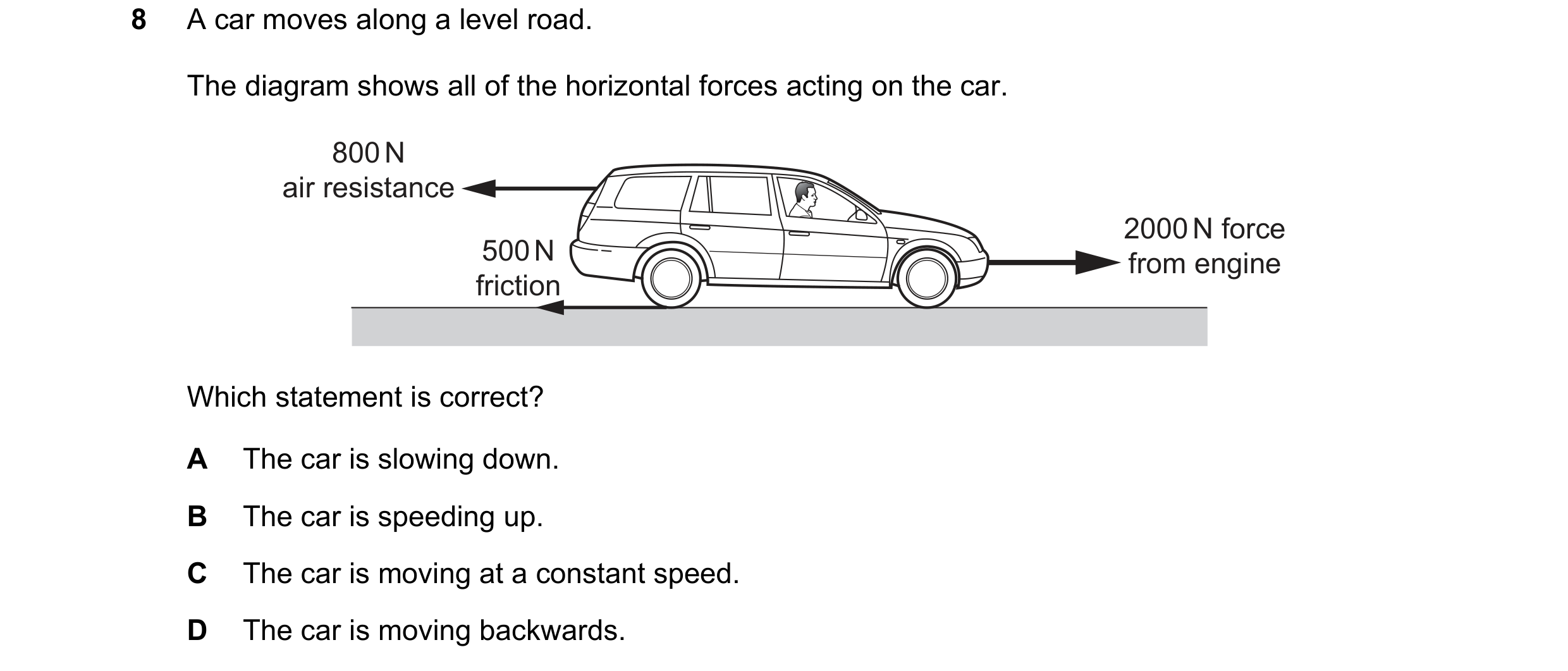 51 / 84
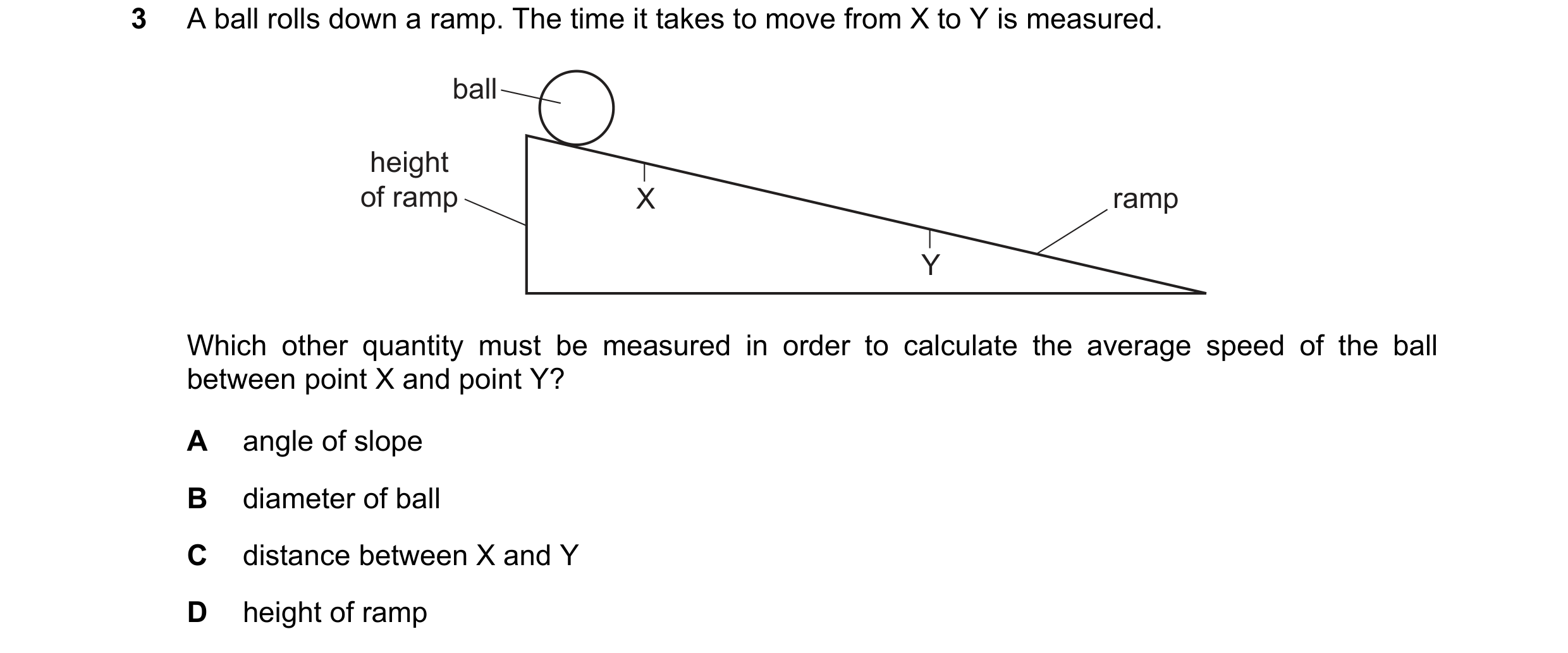
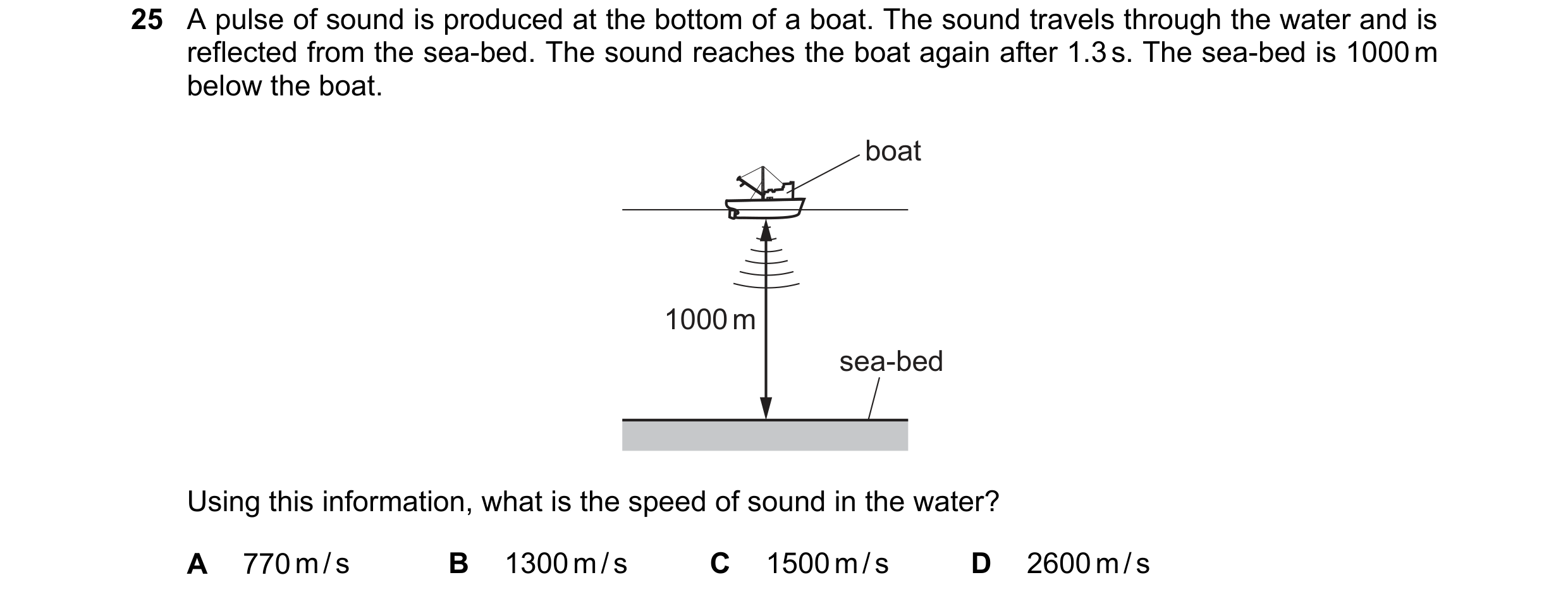
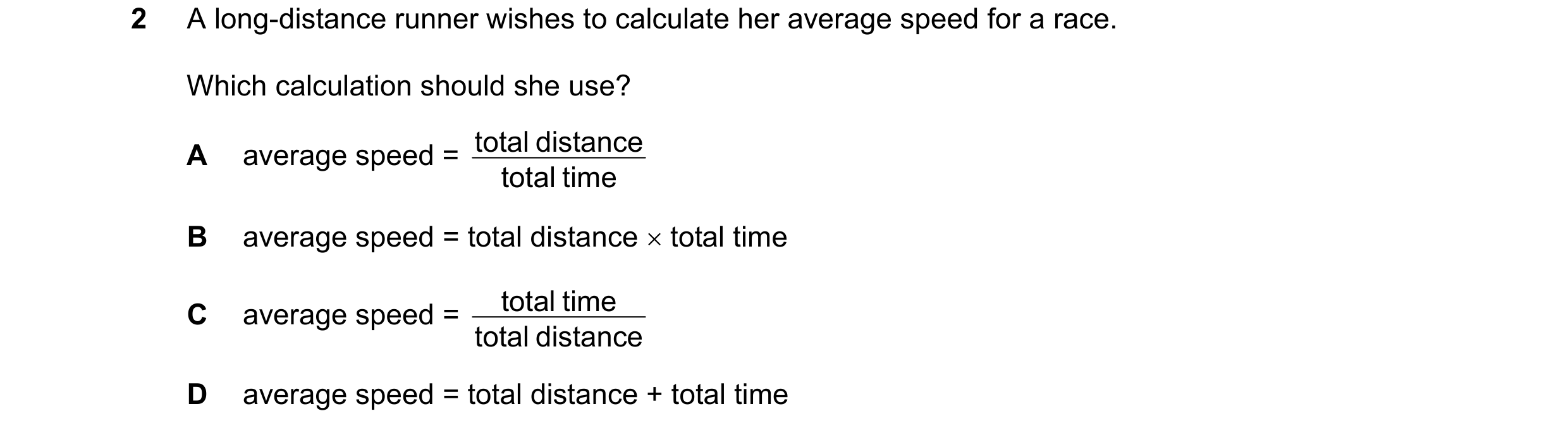 52 / 84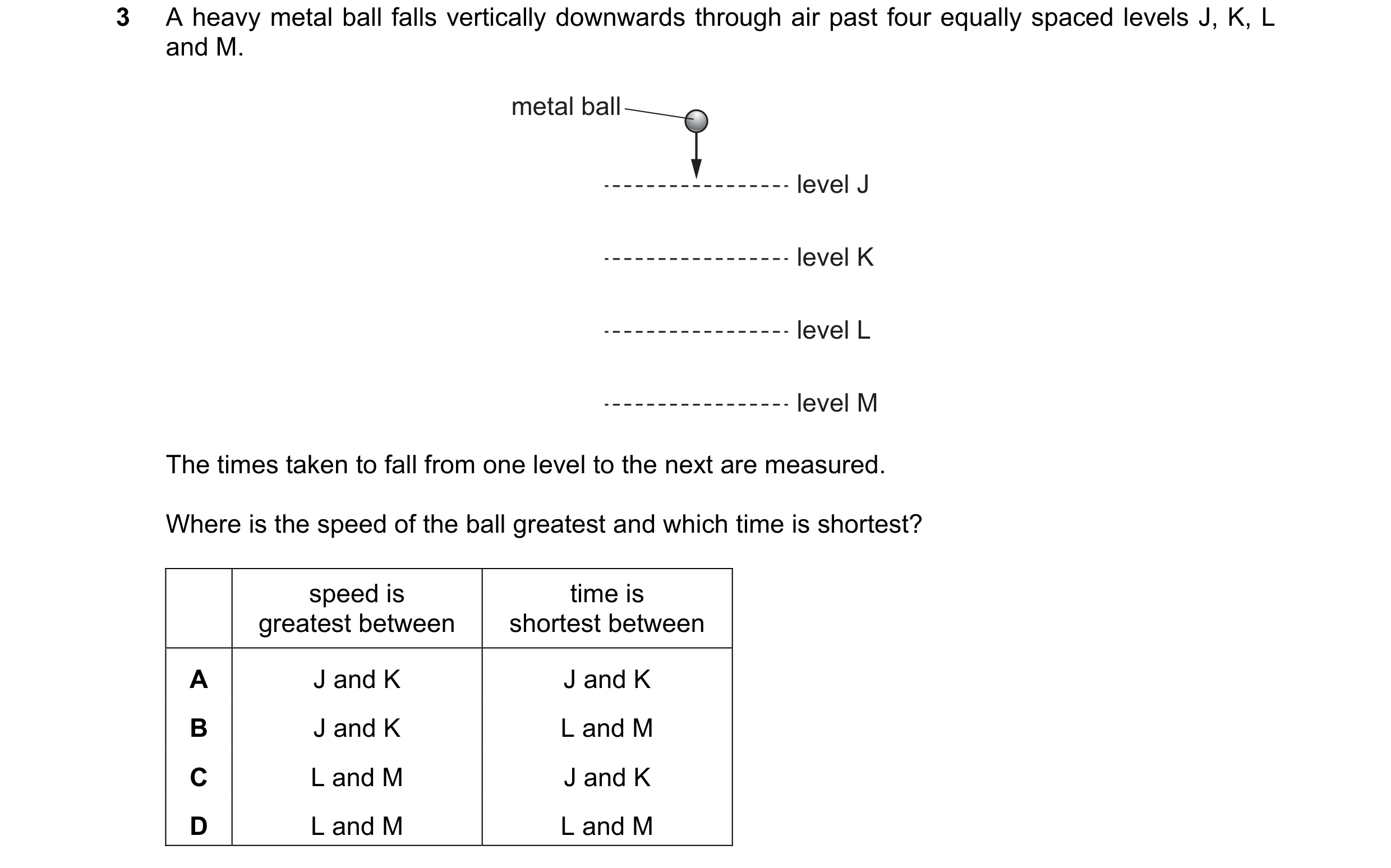
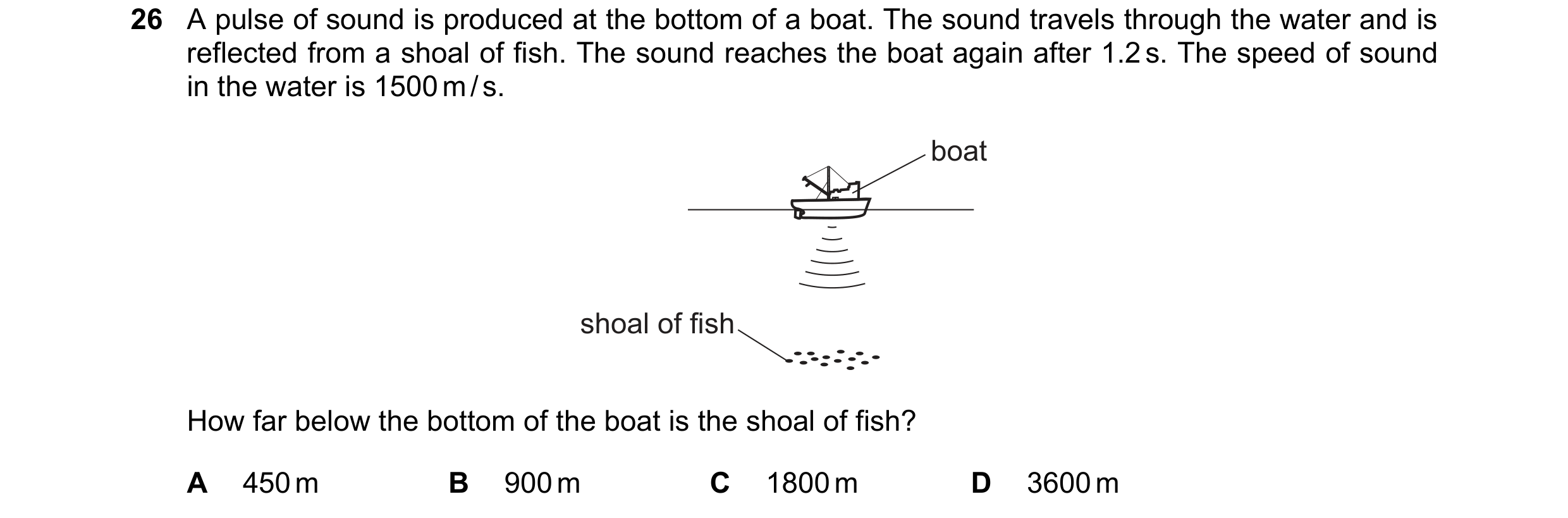 53 / 84
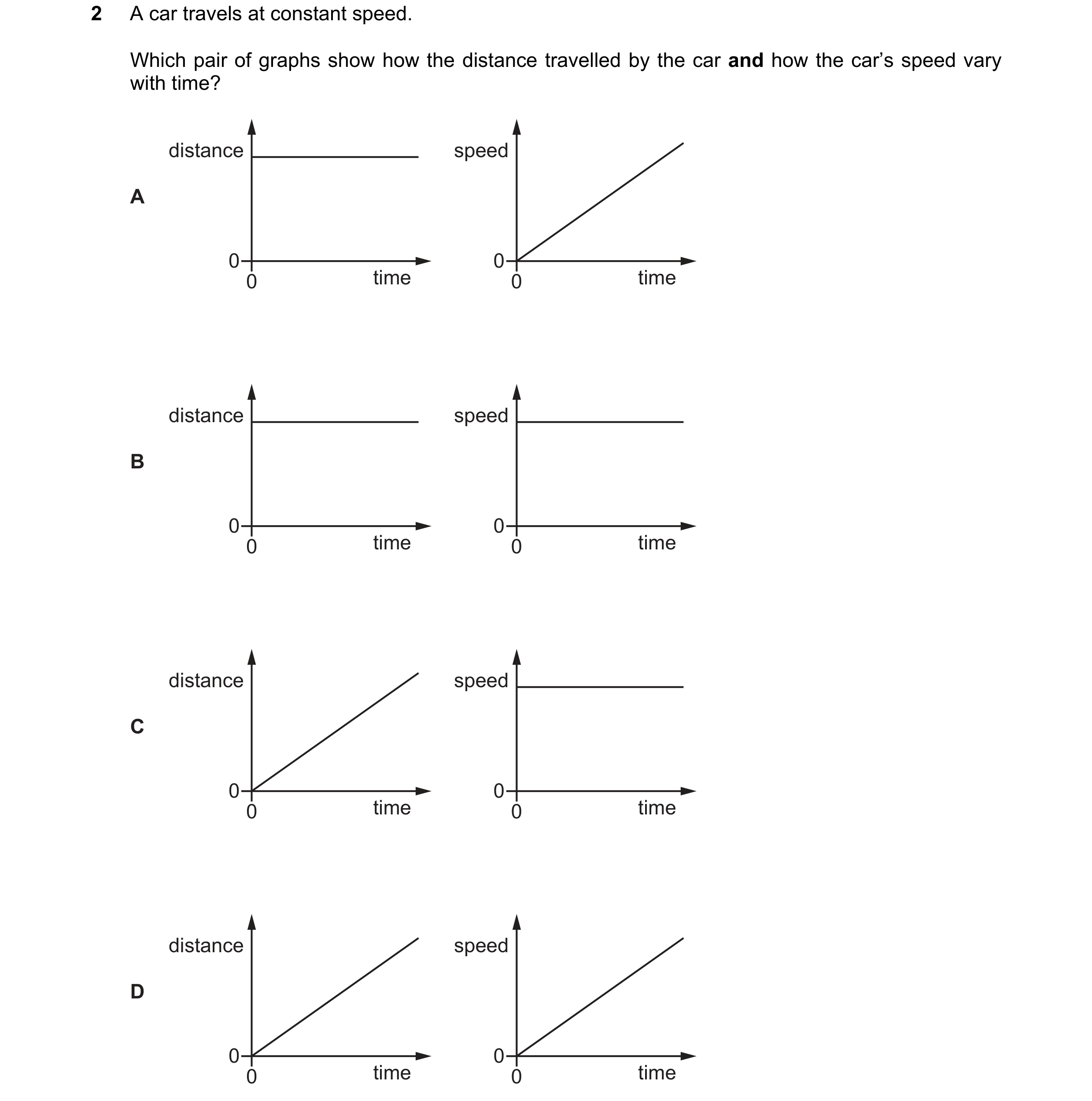 54 / 84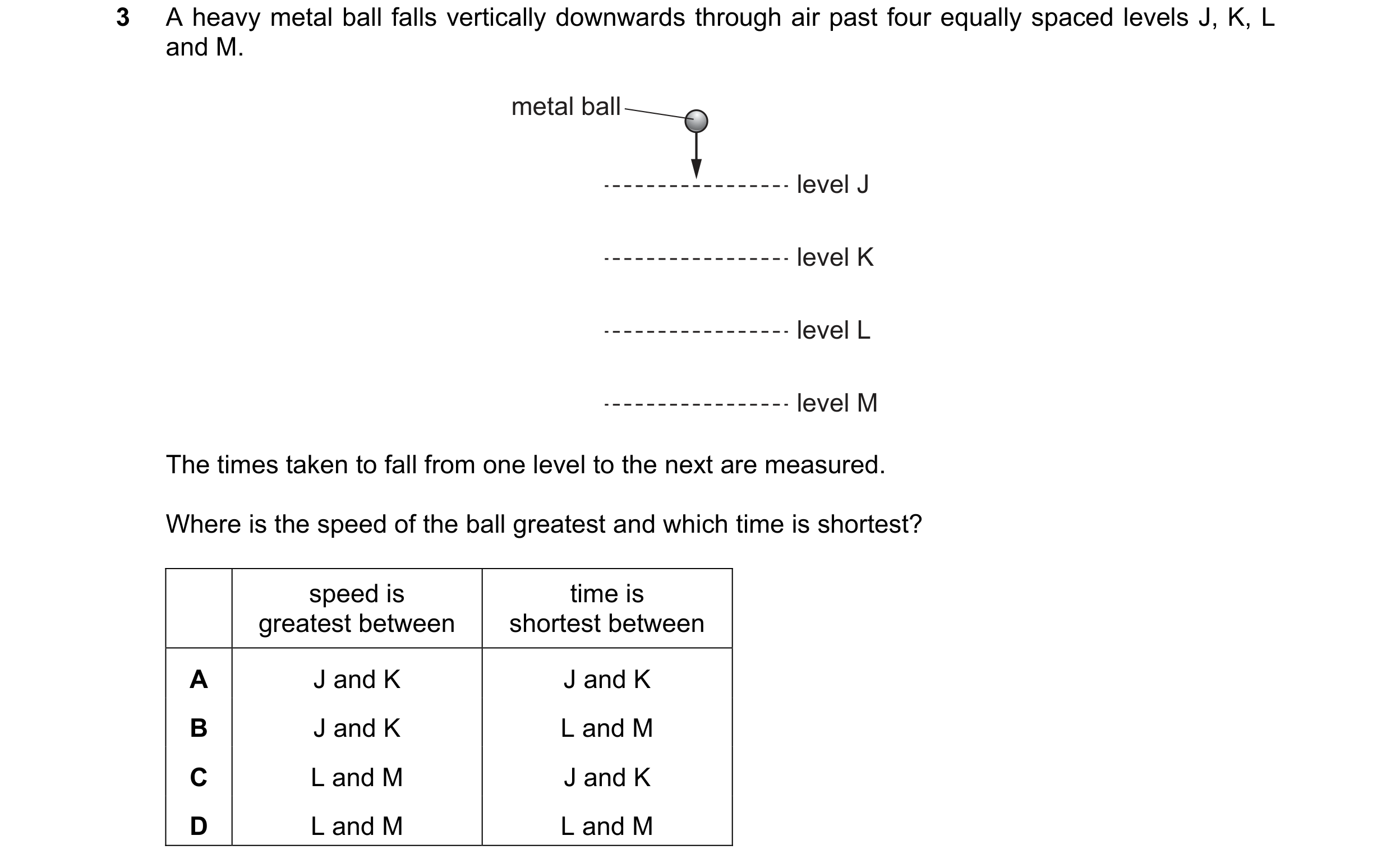
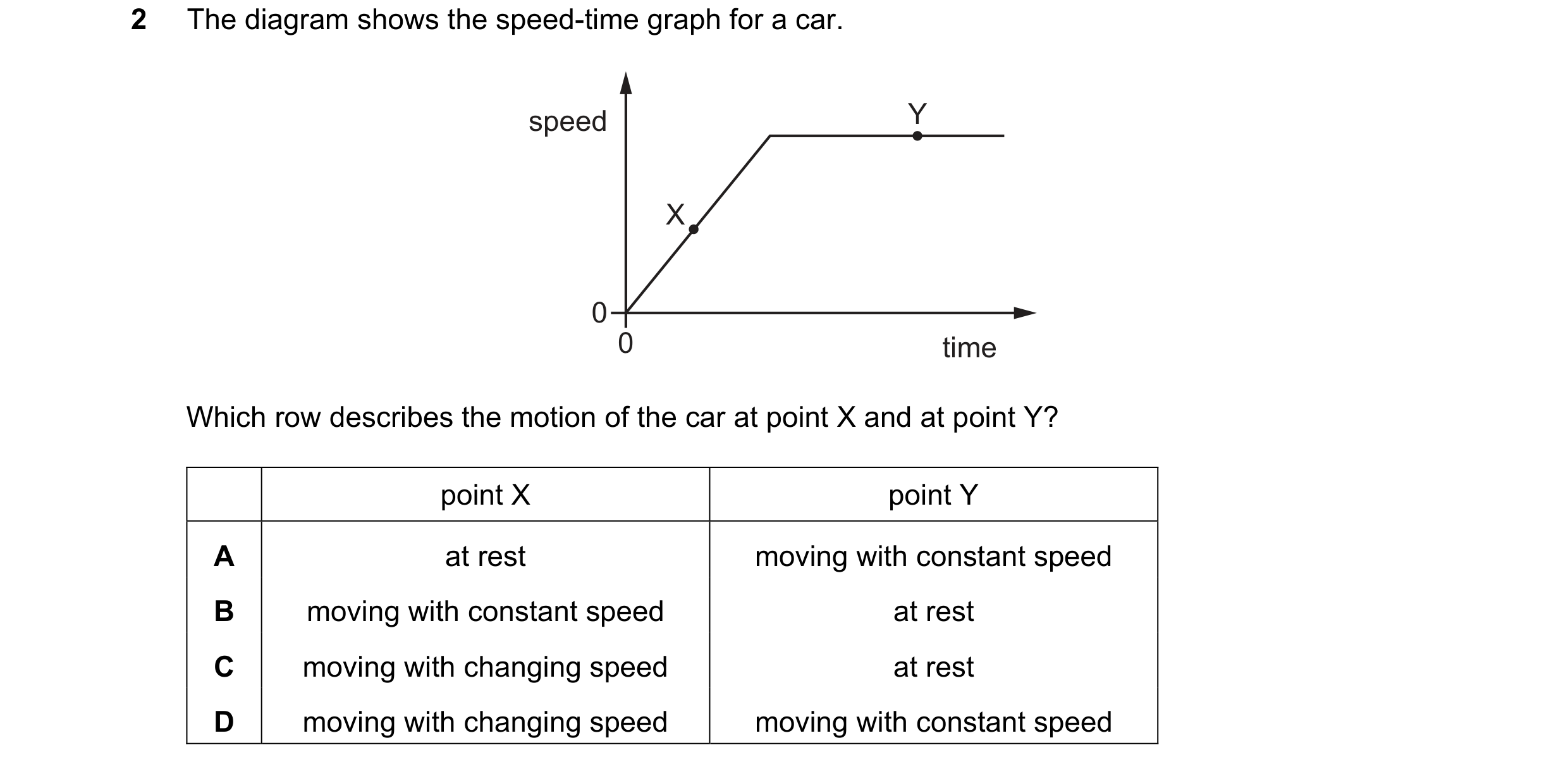 55 / 84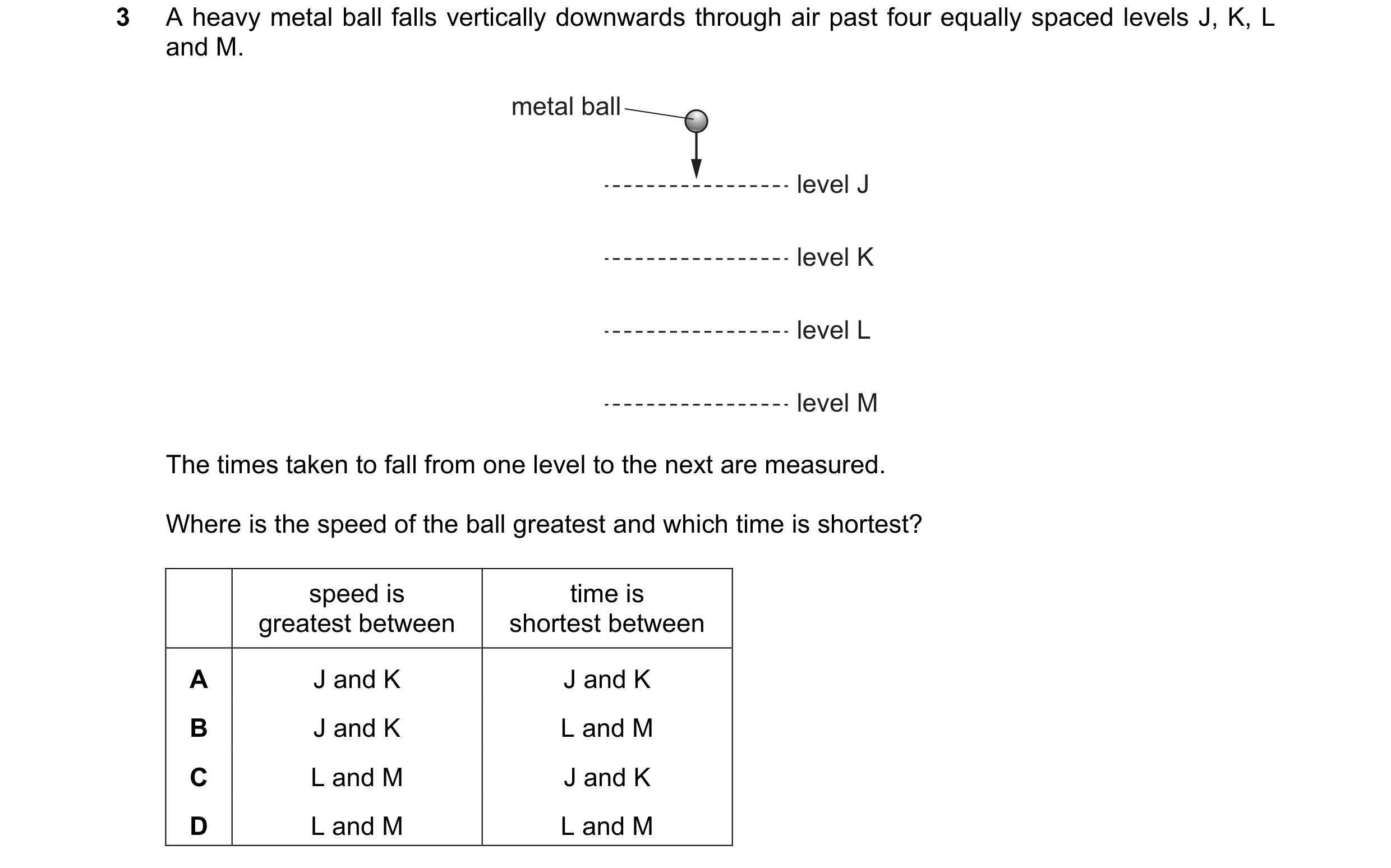
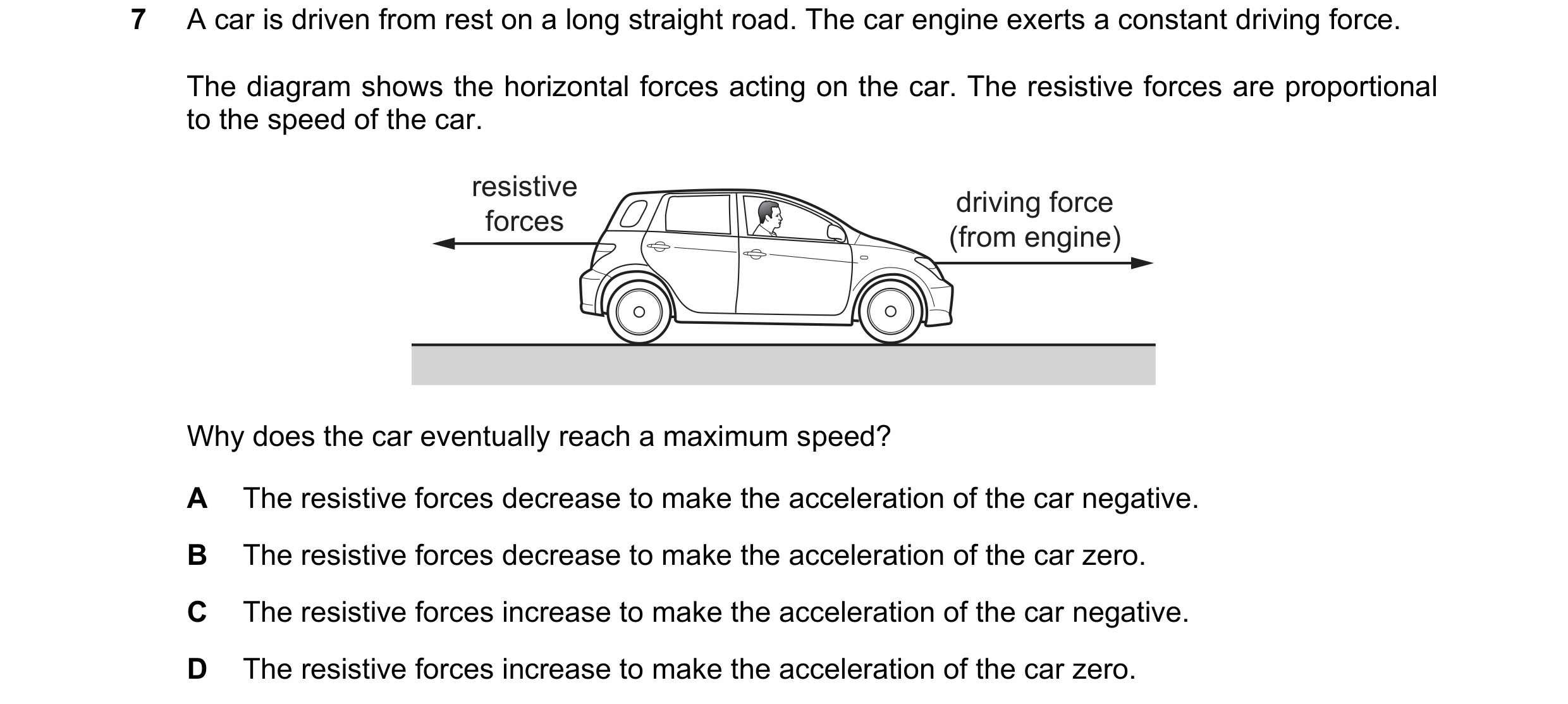 56 / 84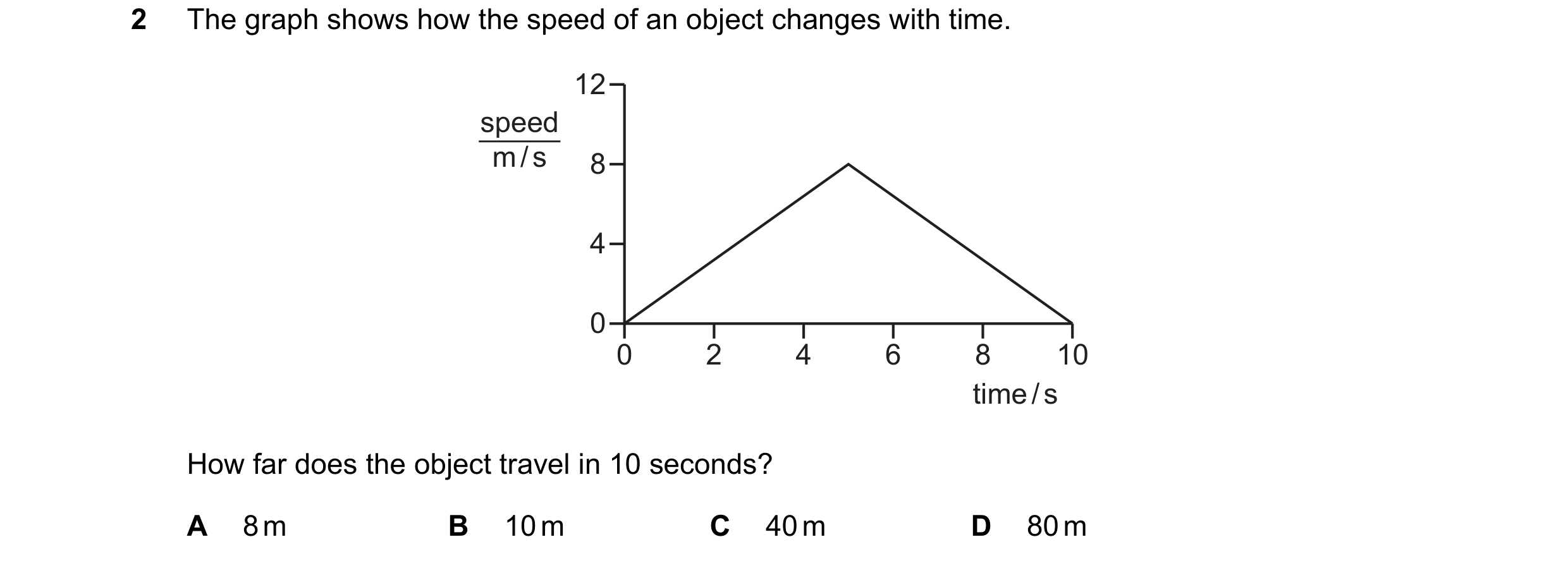


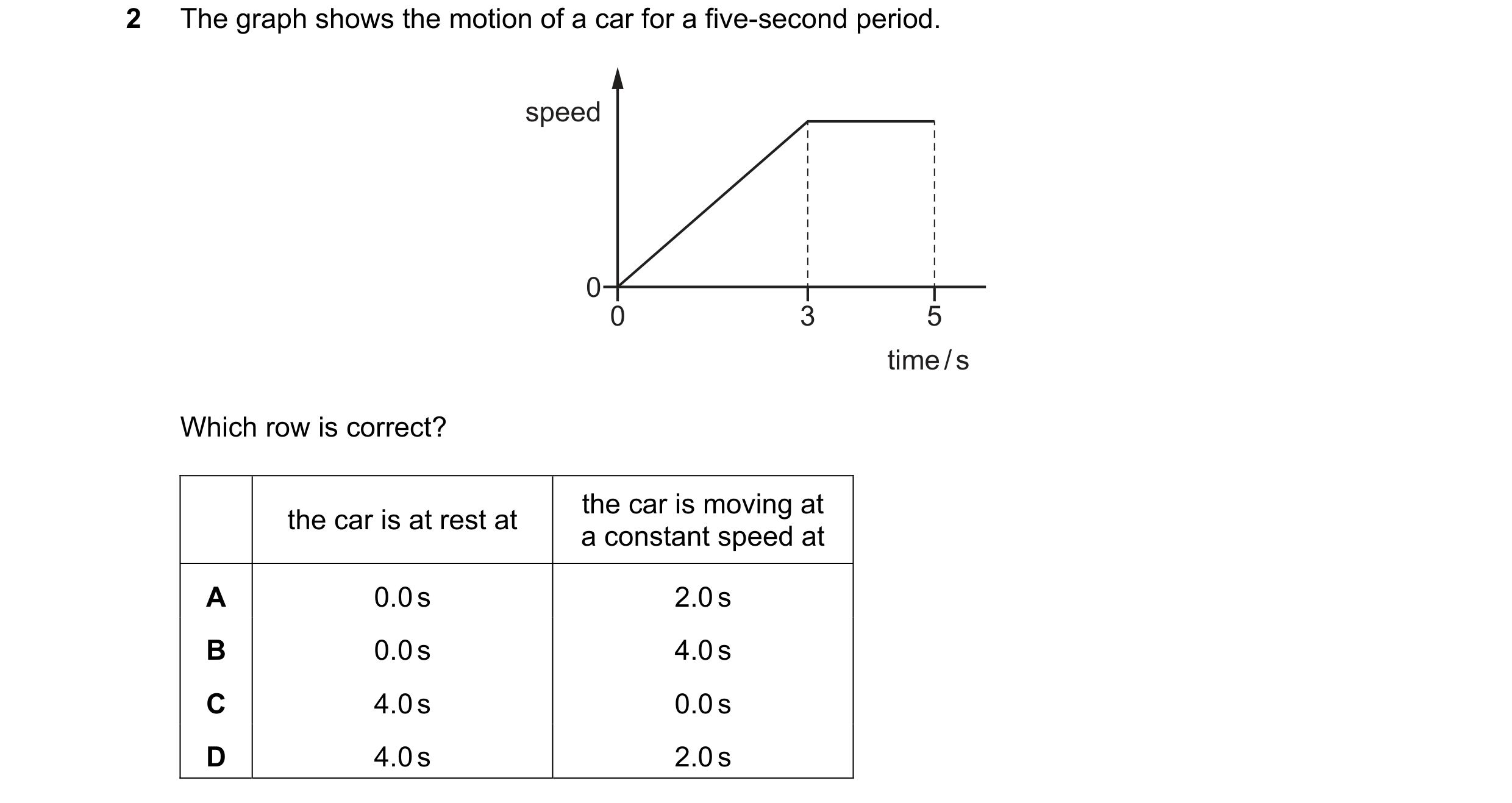
 57 / 84


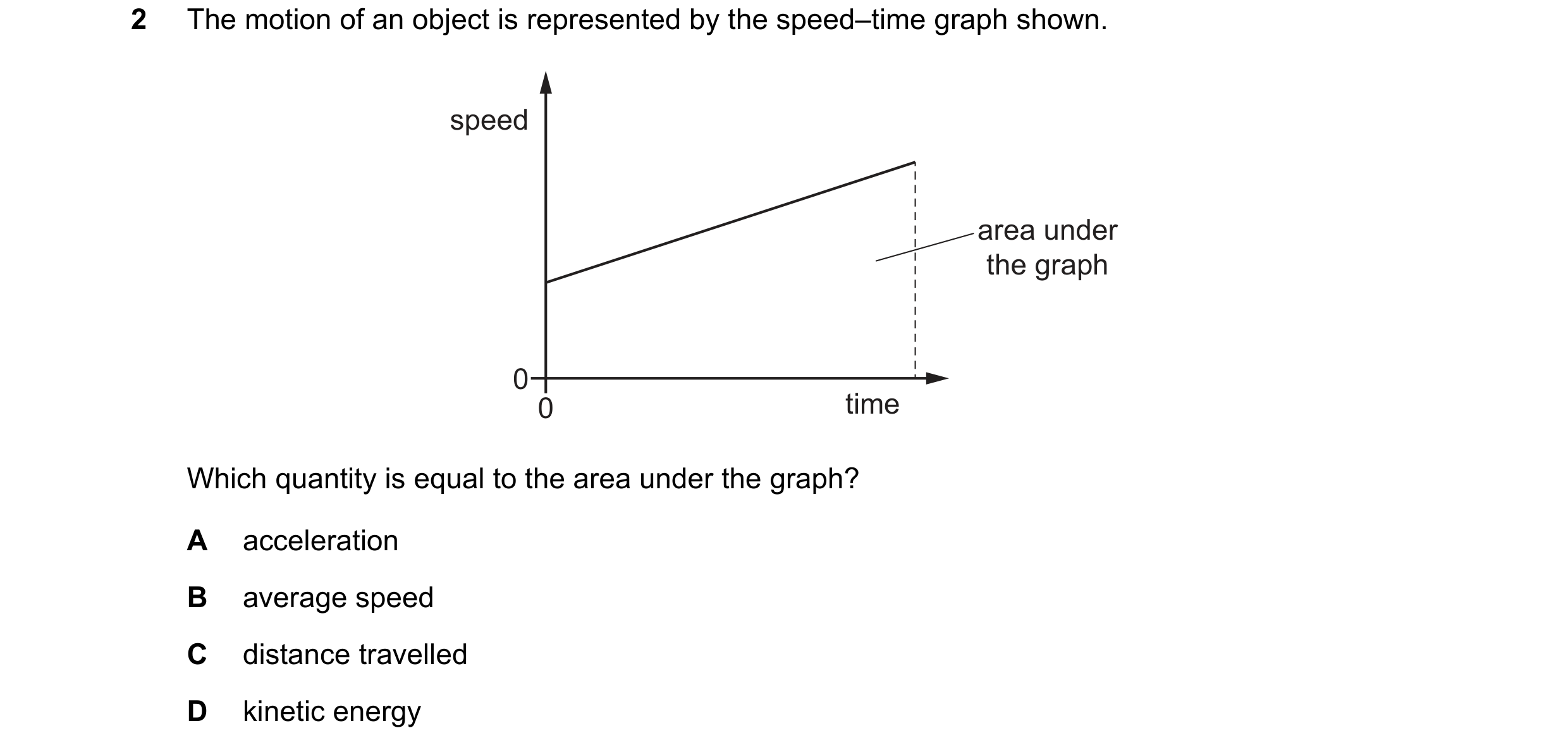 58 / 84
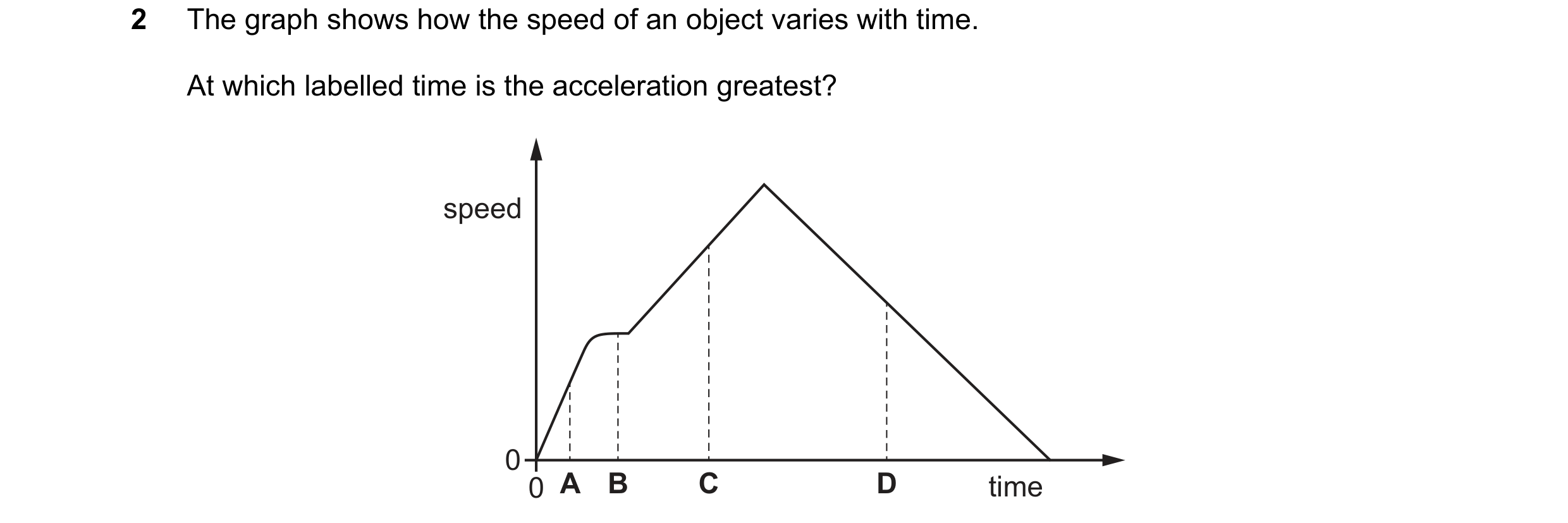

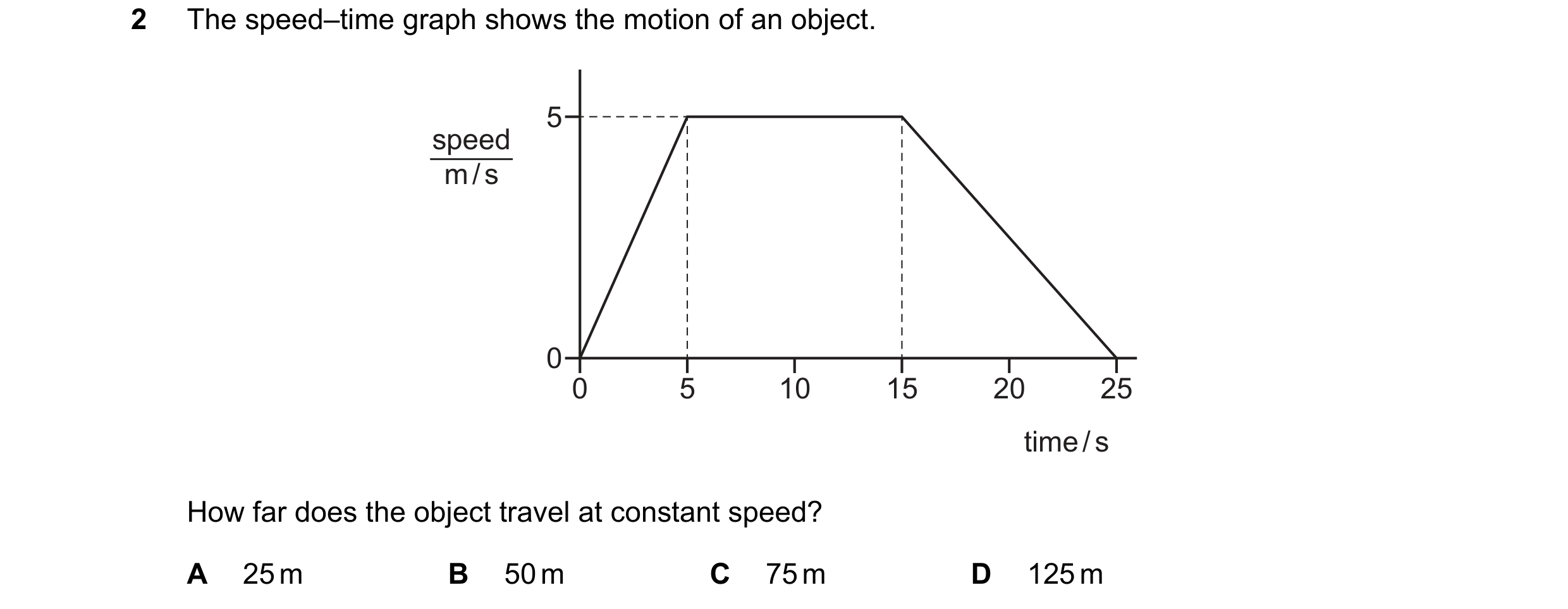
 59 / 84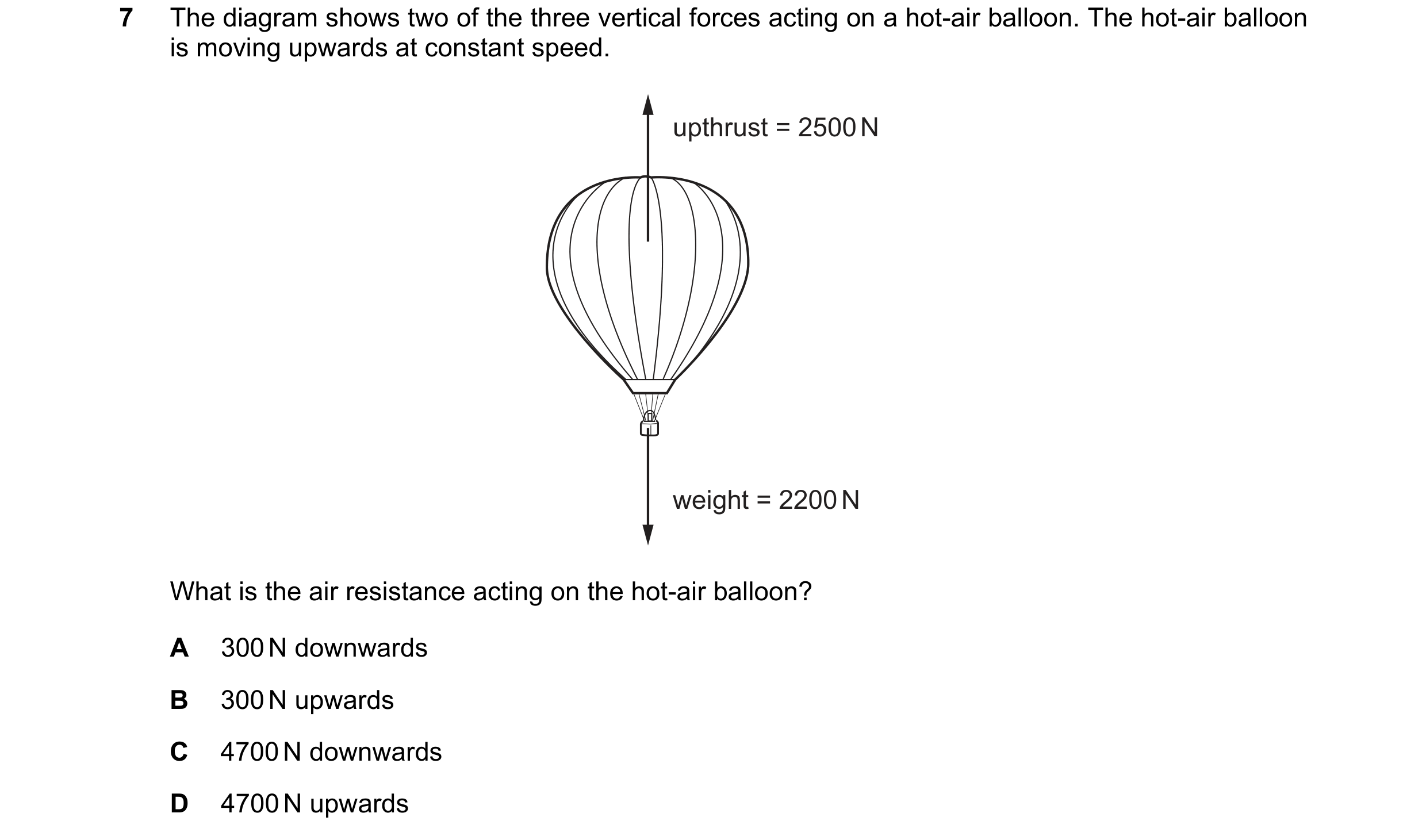
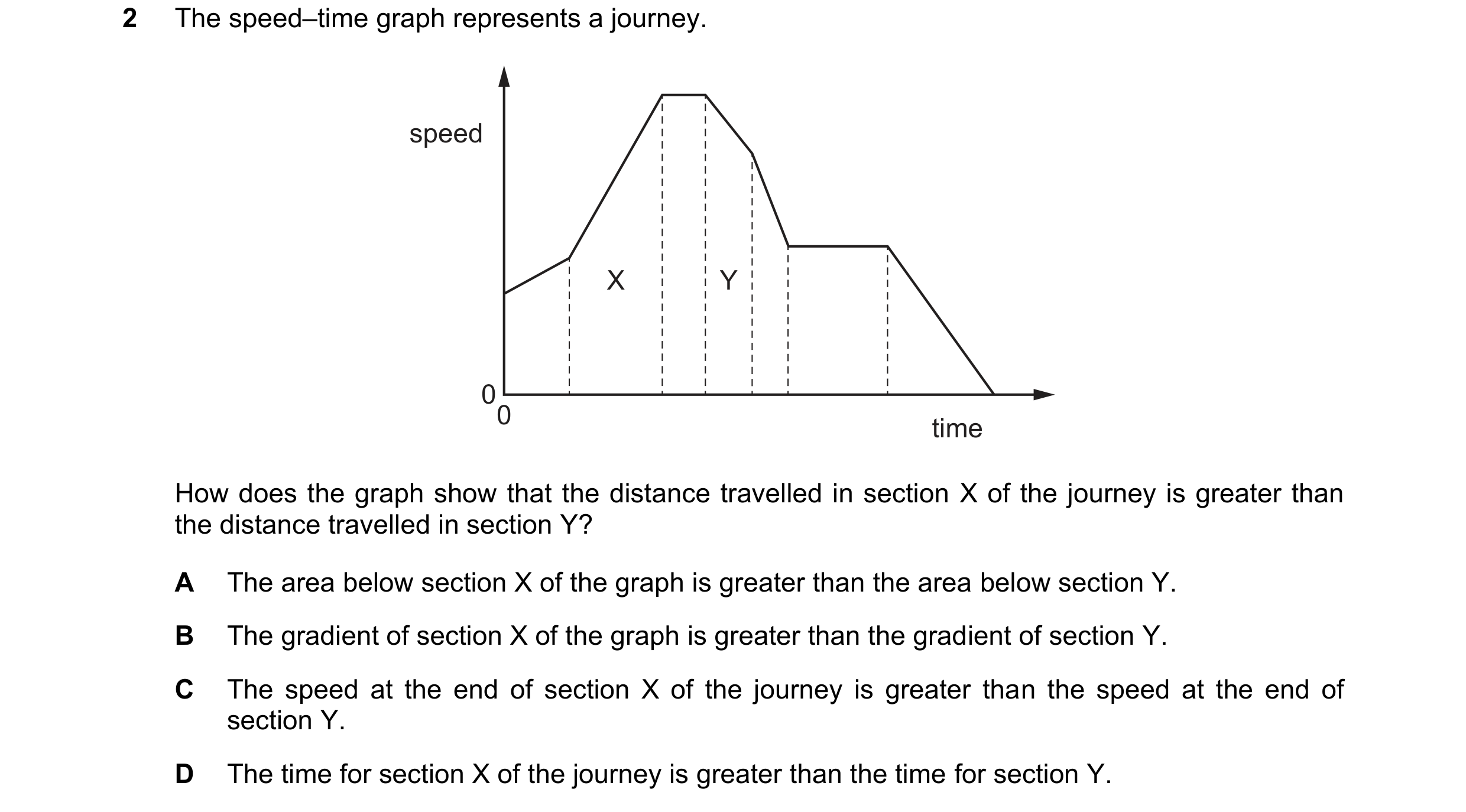 60 / 84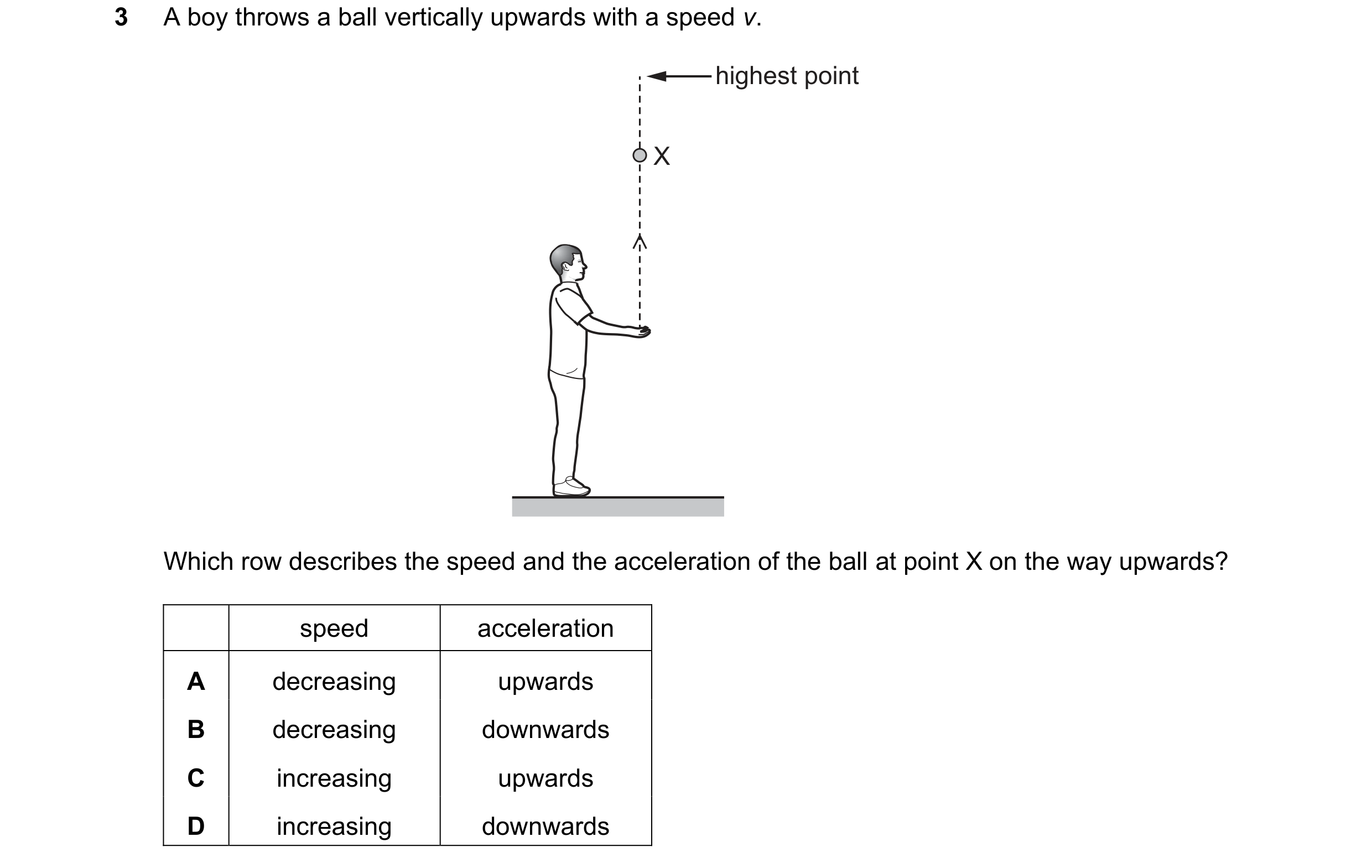
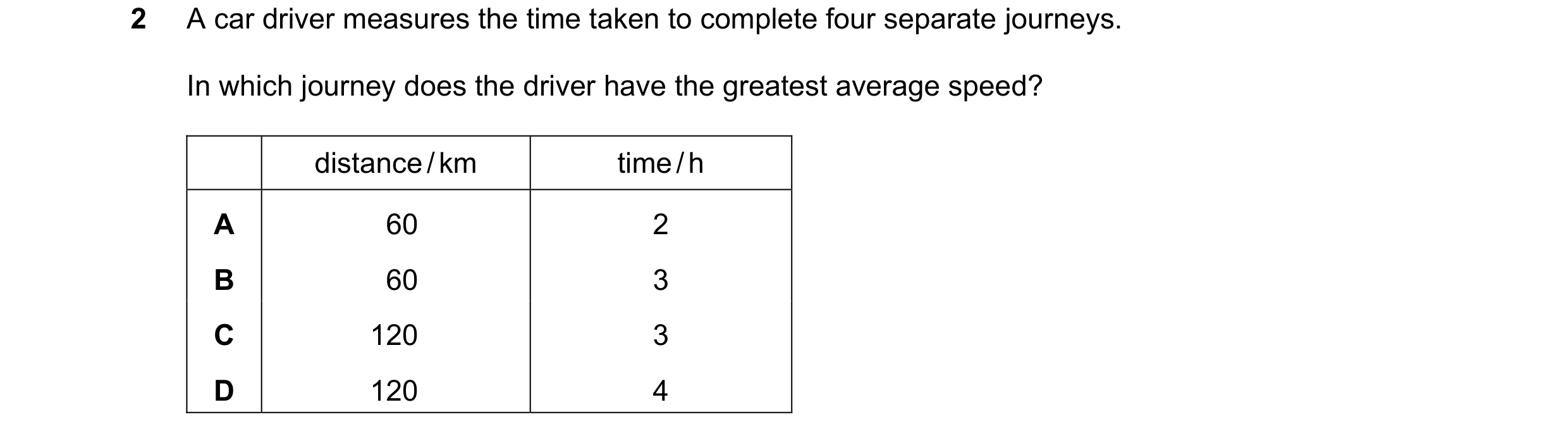 61 / 84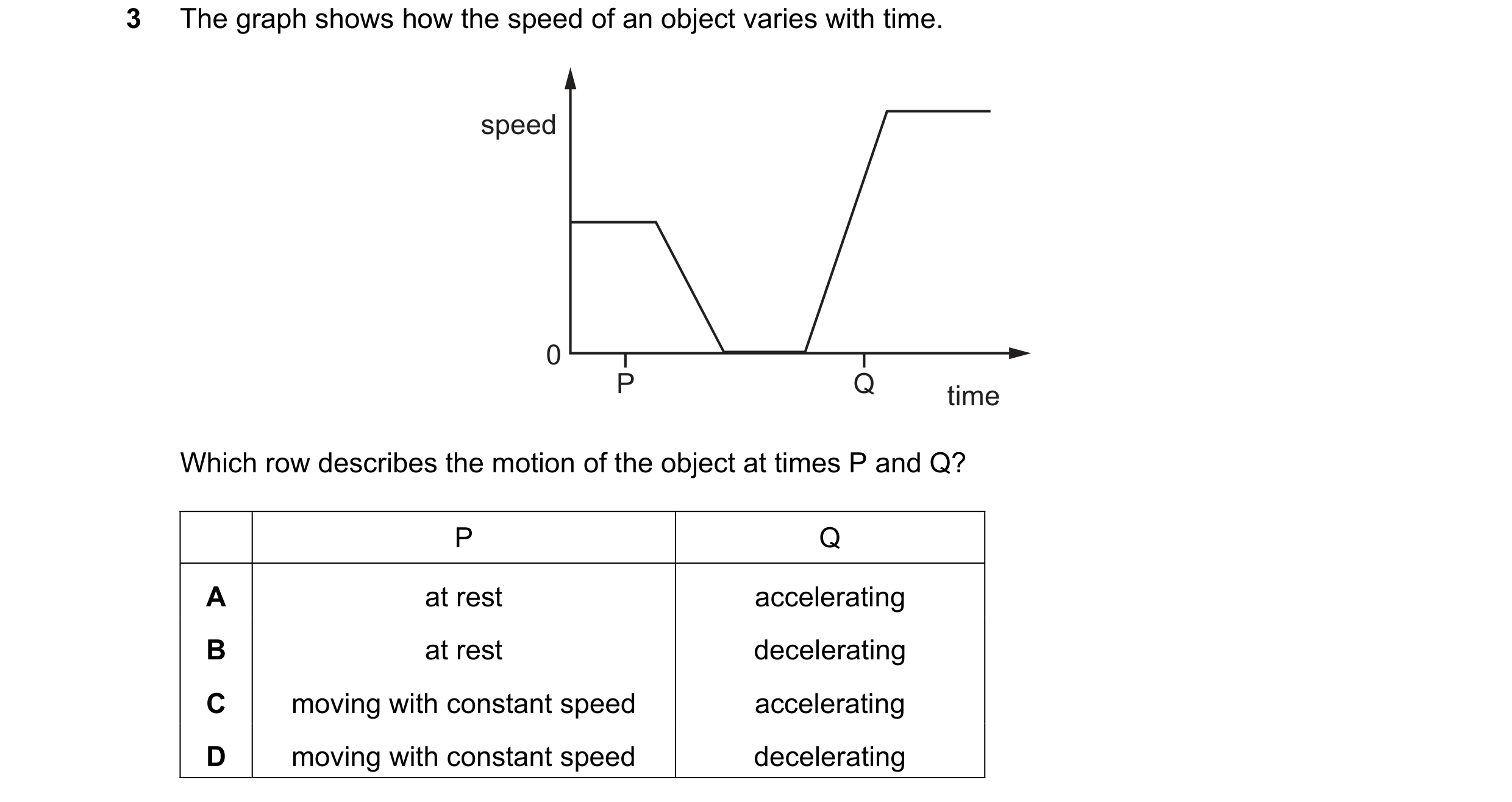
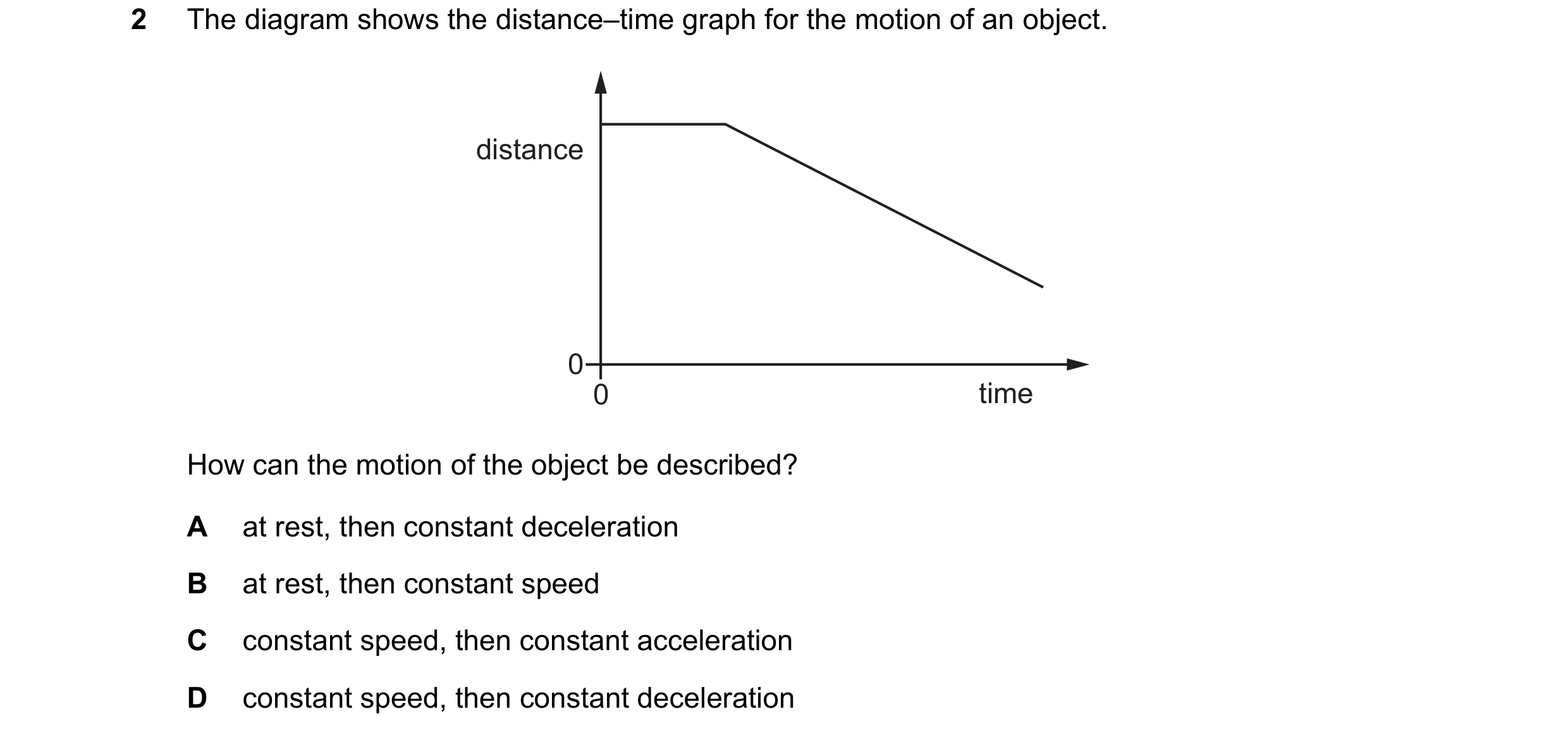
 62 / 84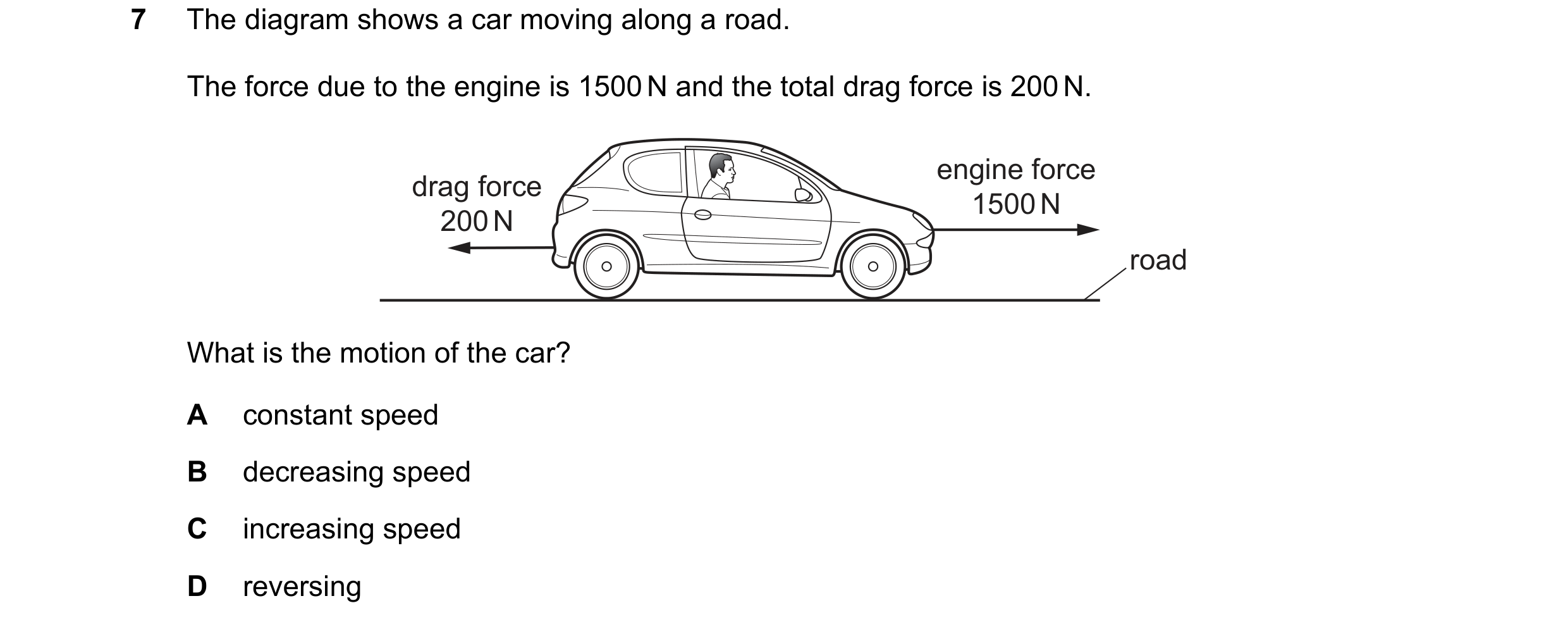
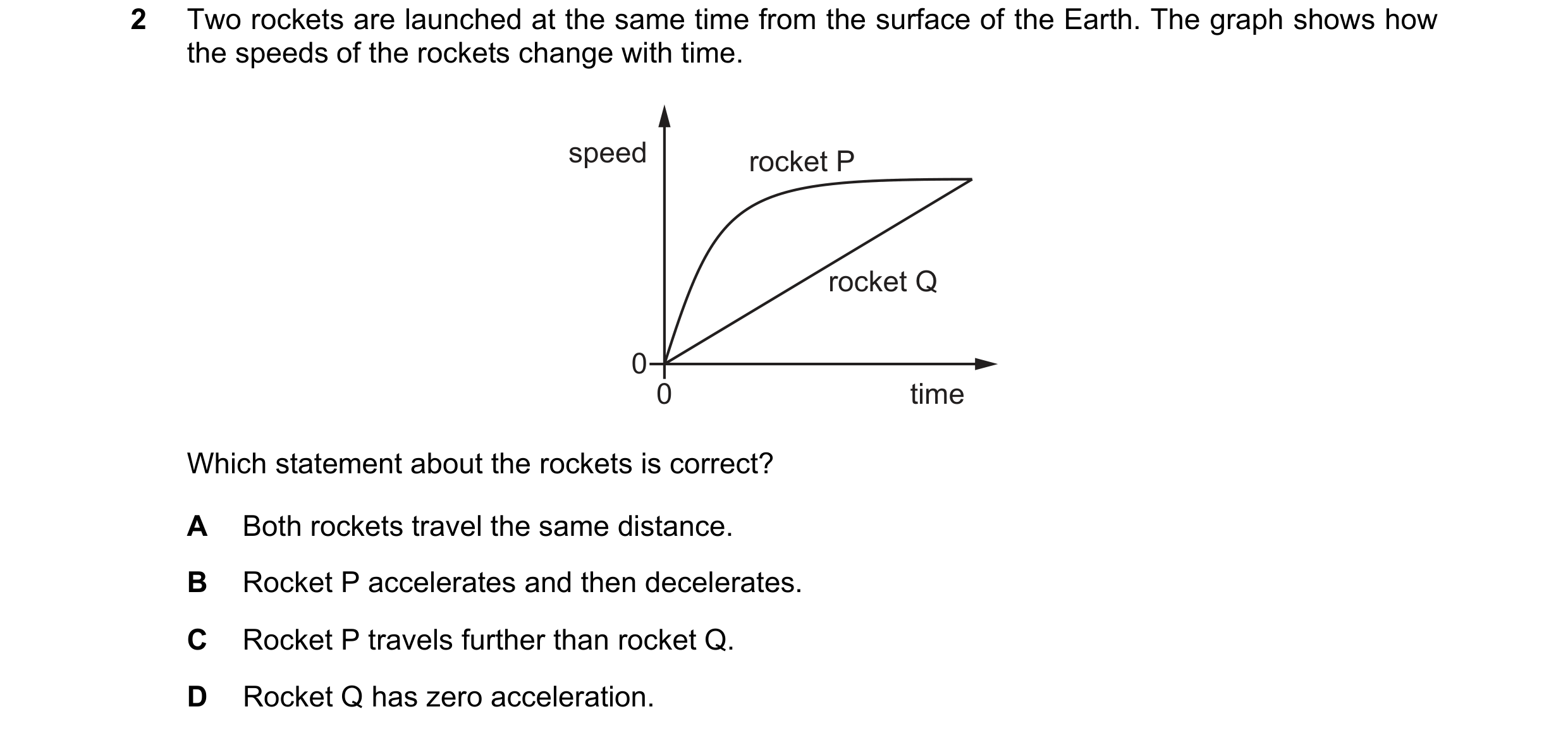
 63 / 84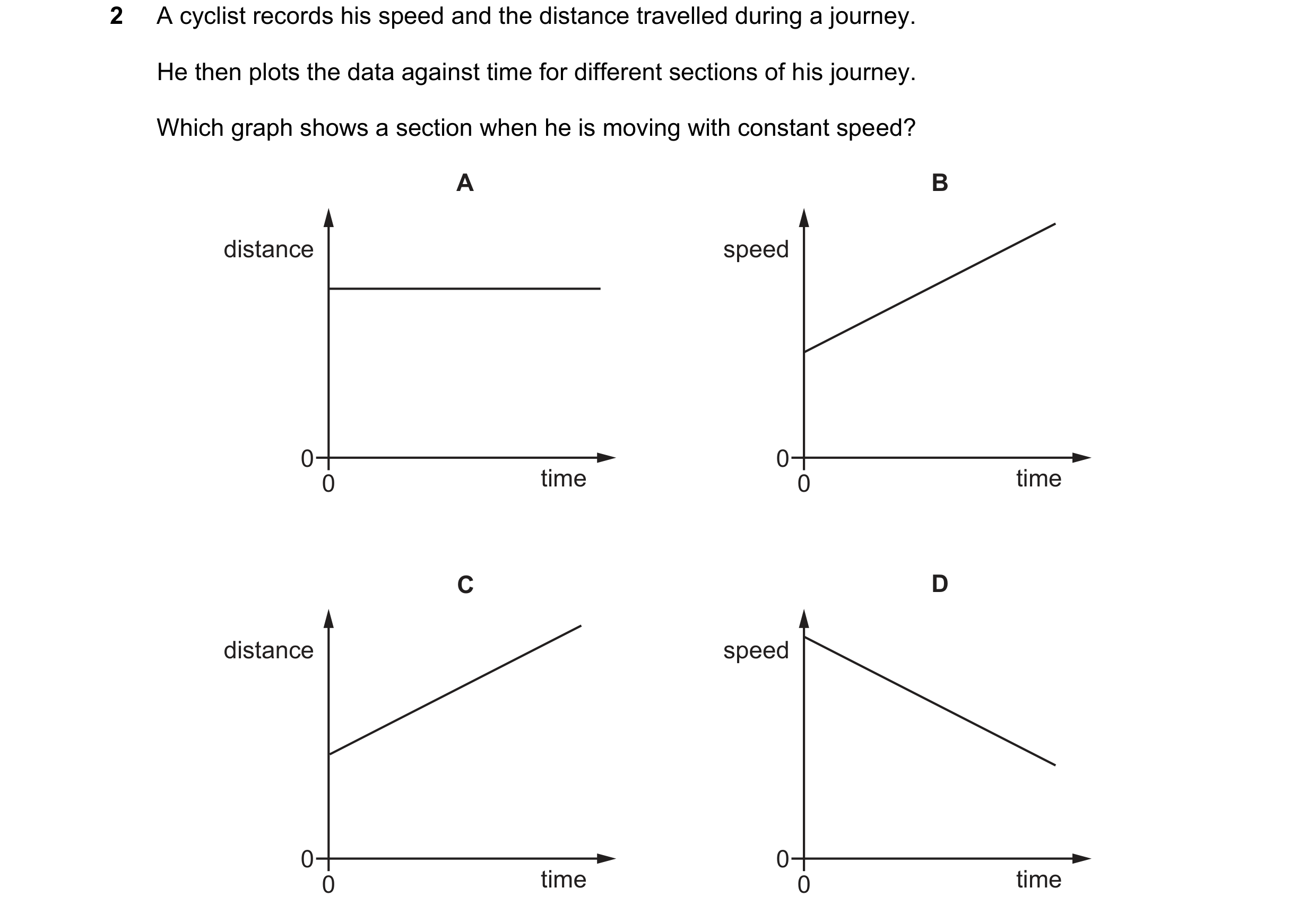
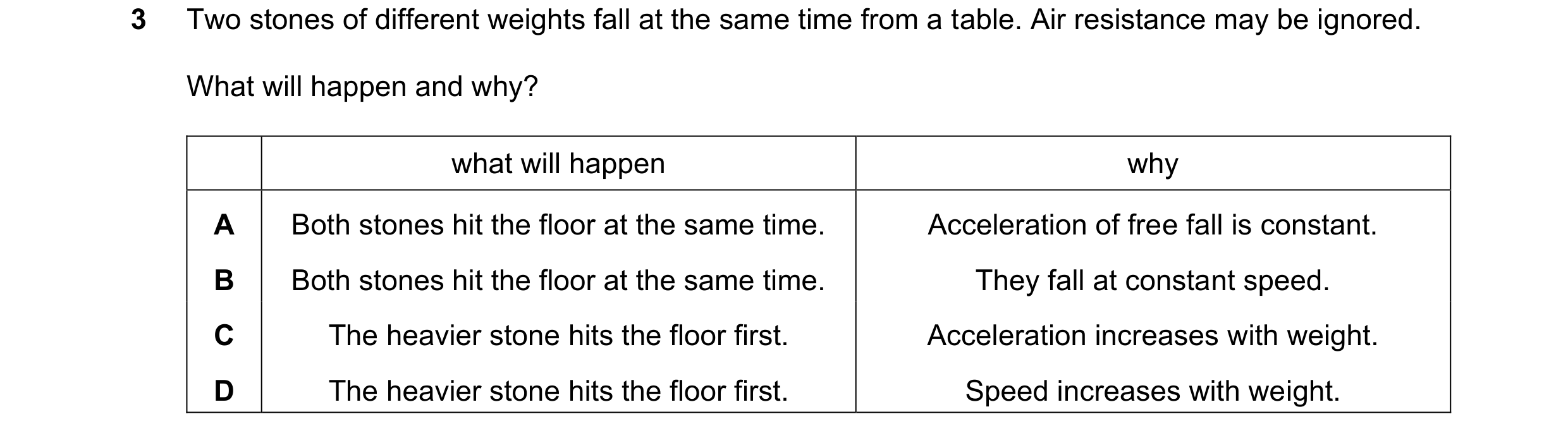 64 / 84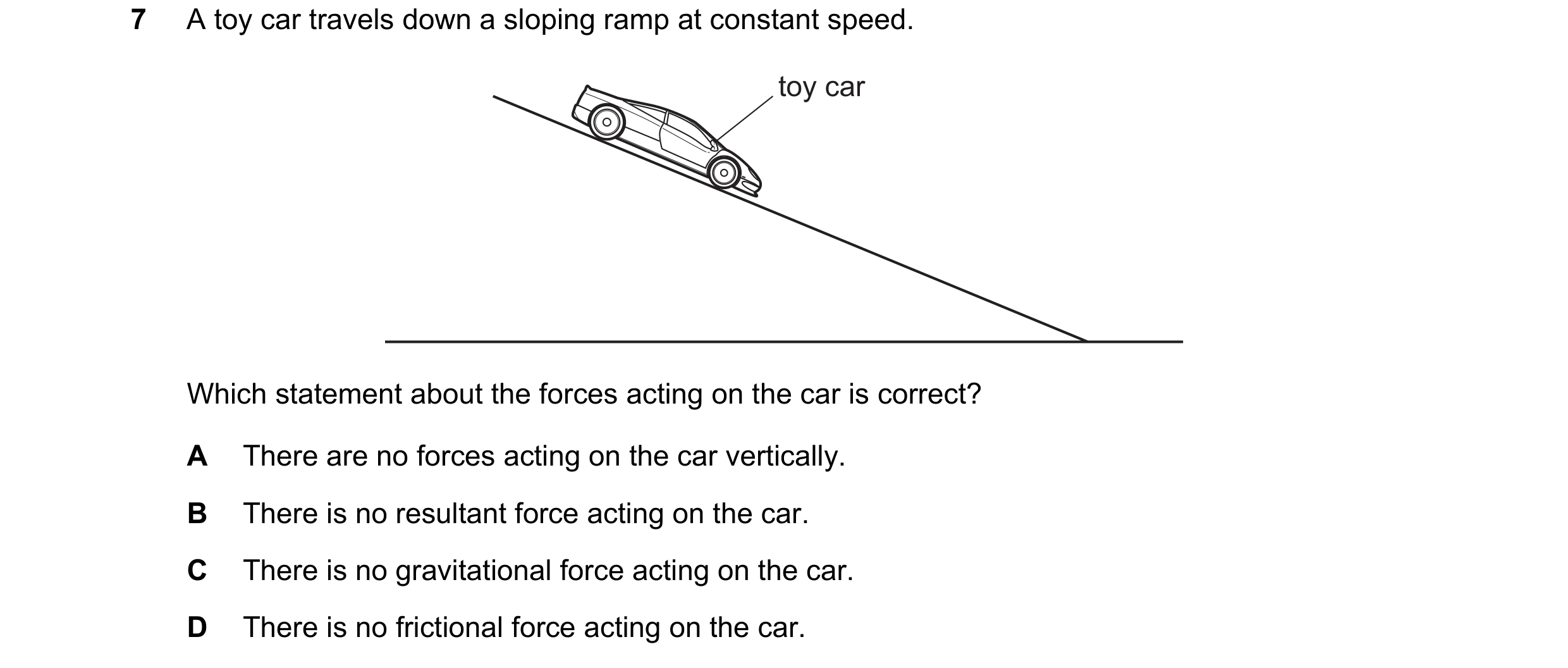
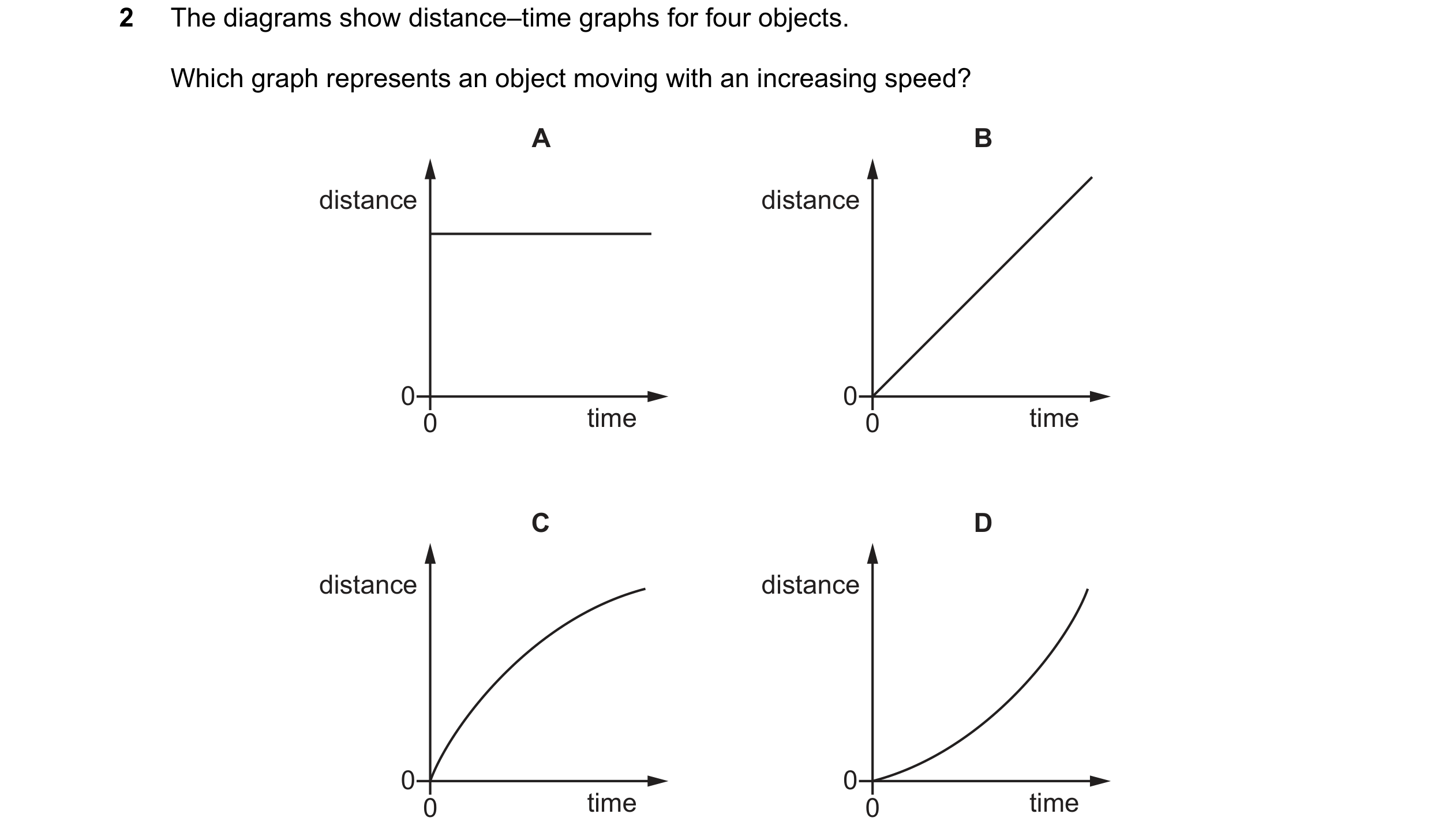 65 / 84
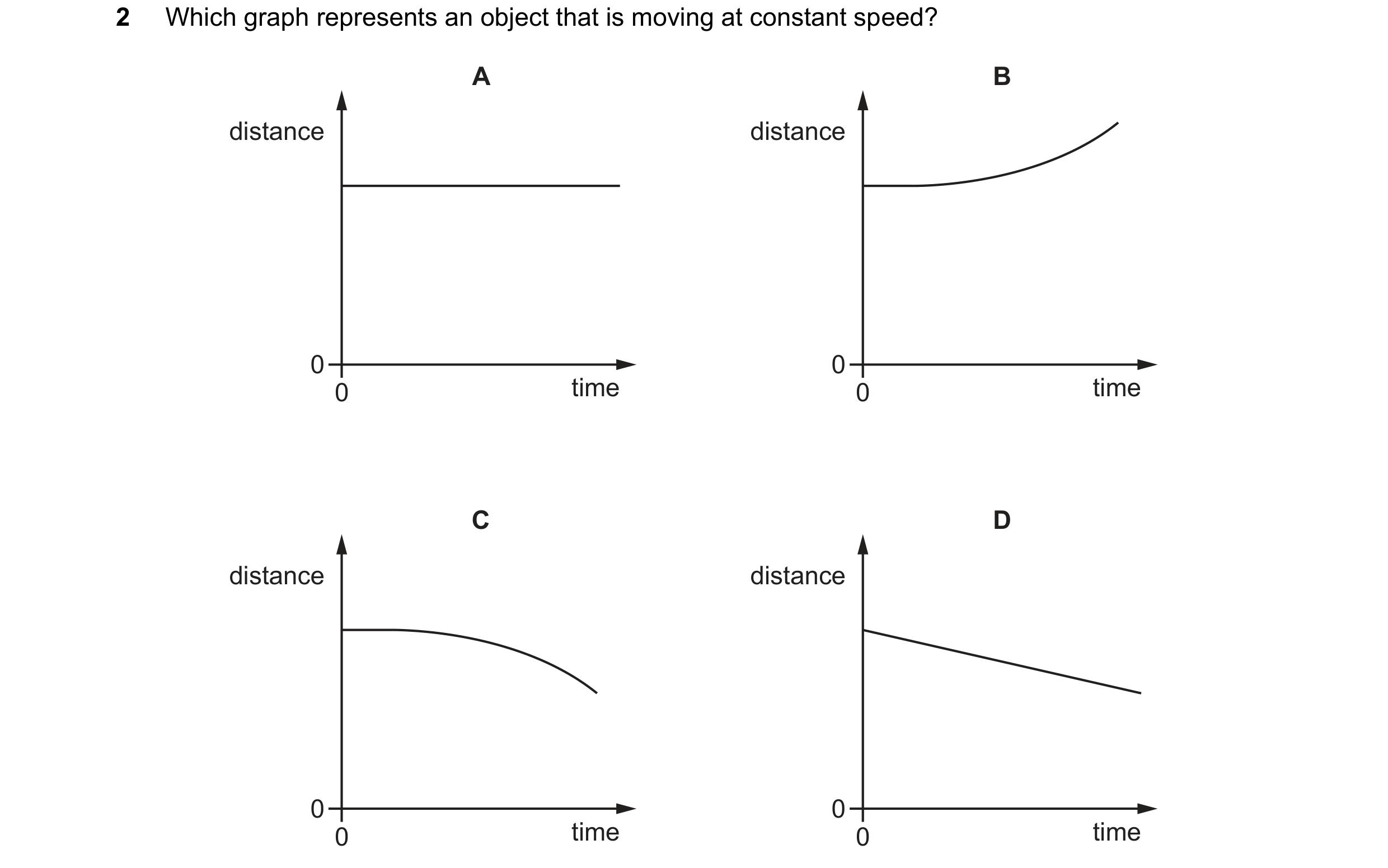 66 / 84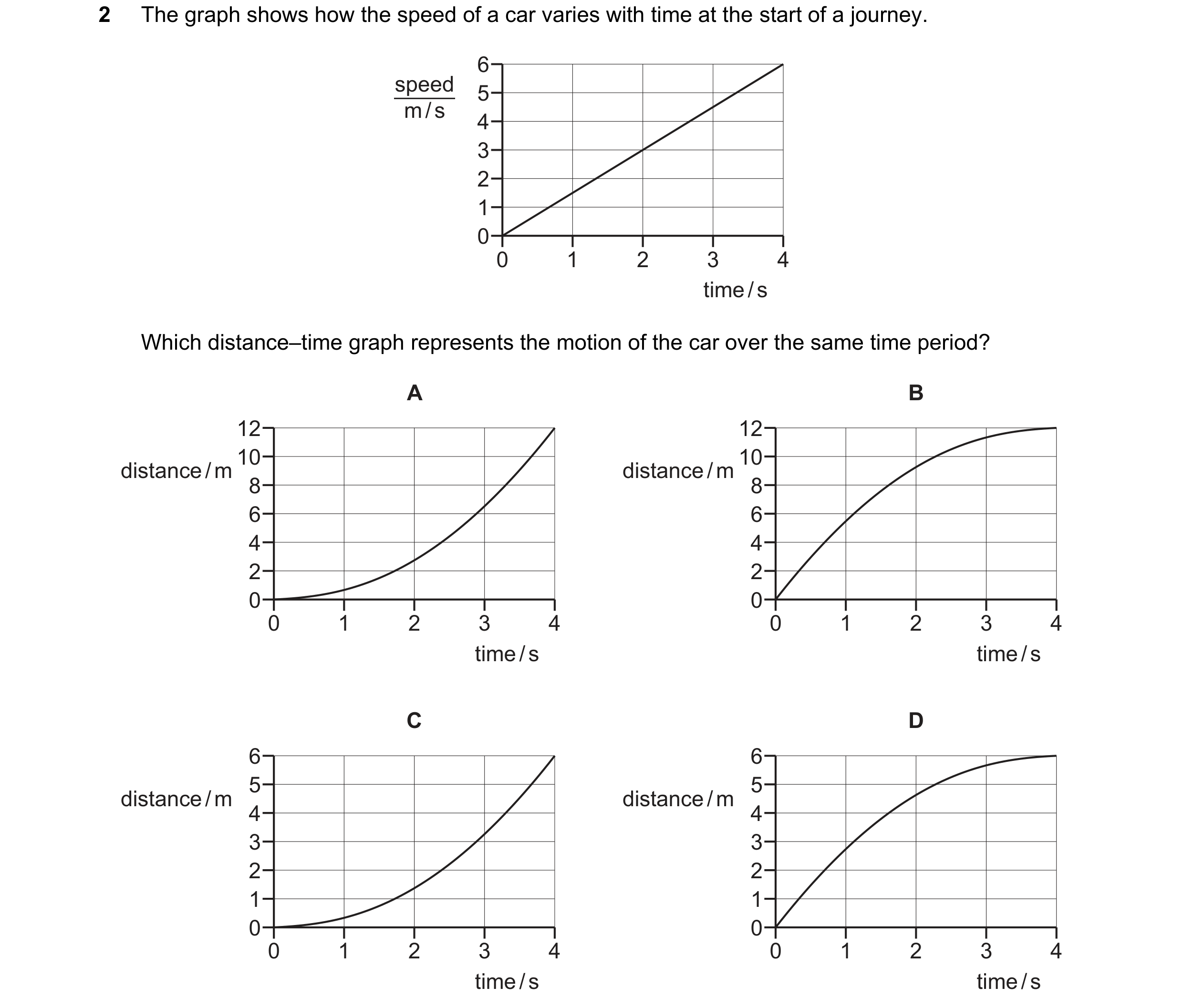
 67 / 84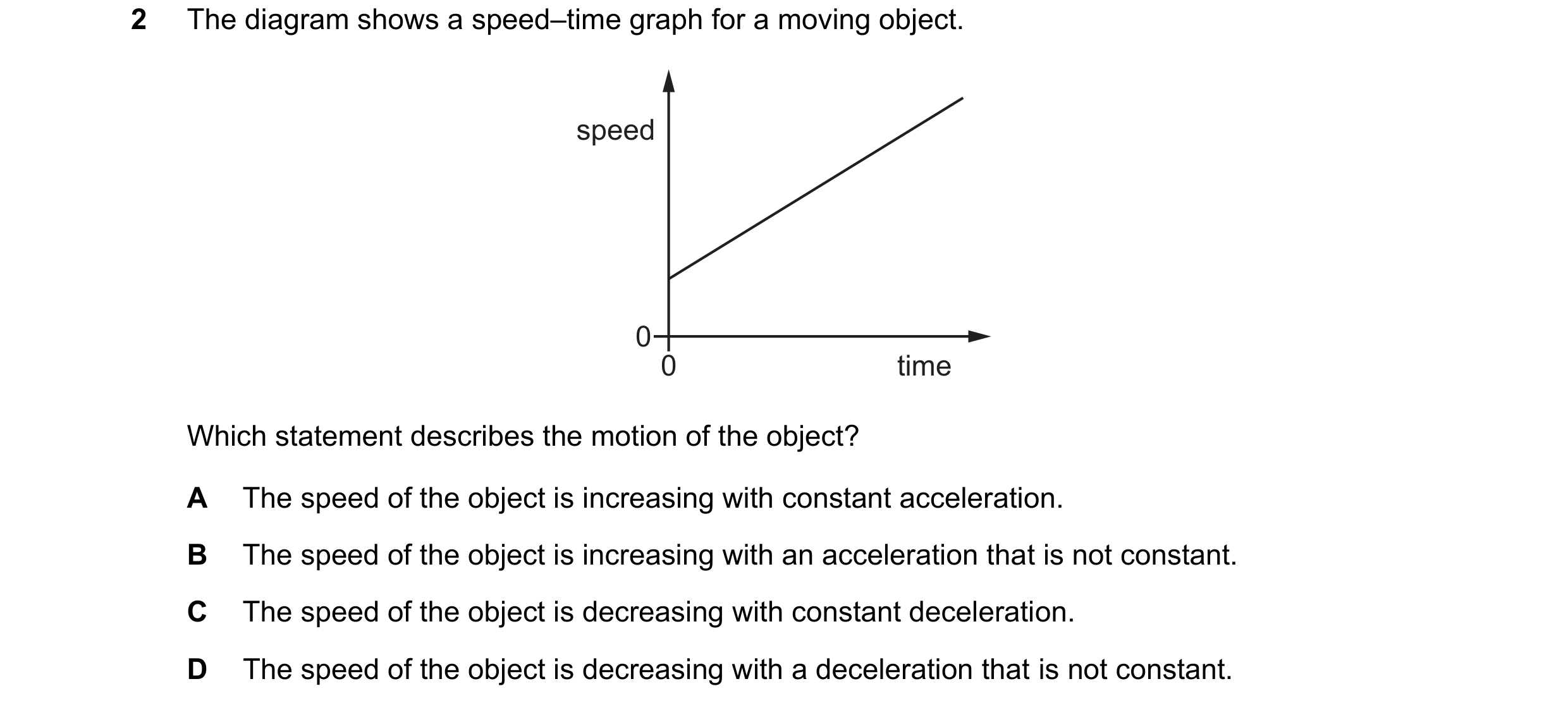
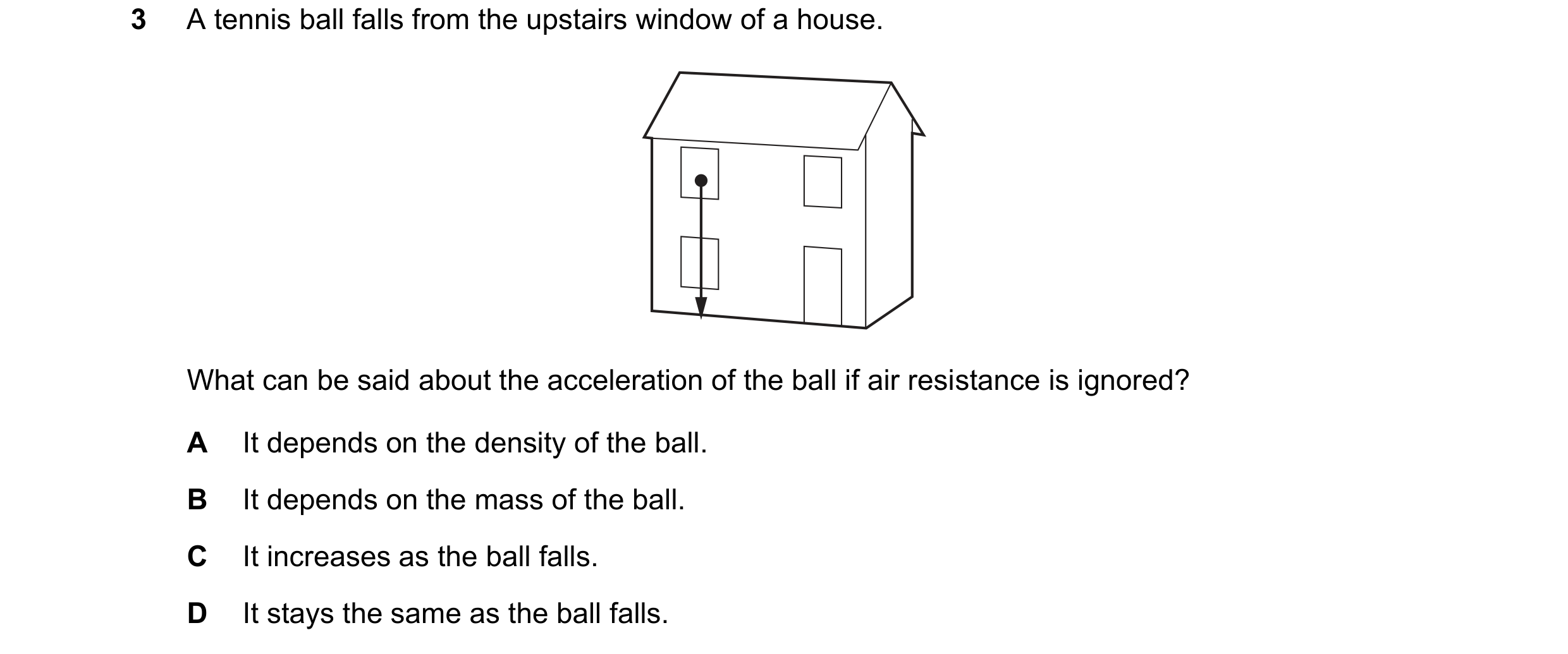
 68 / 84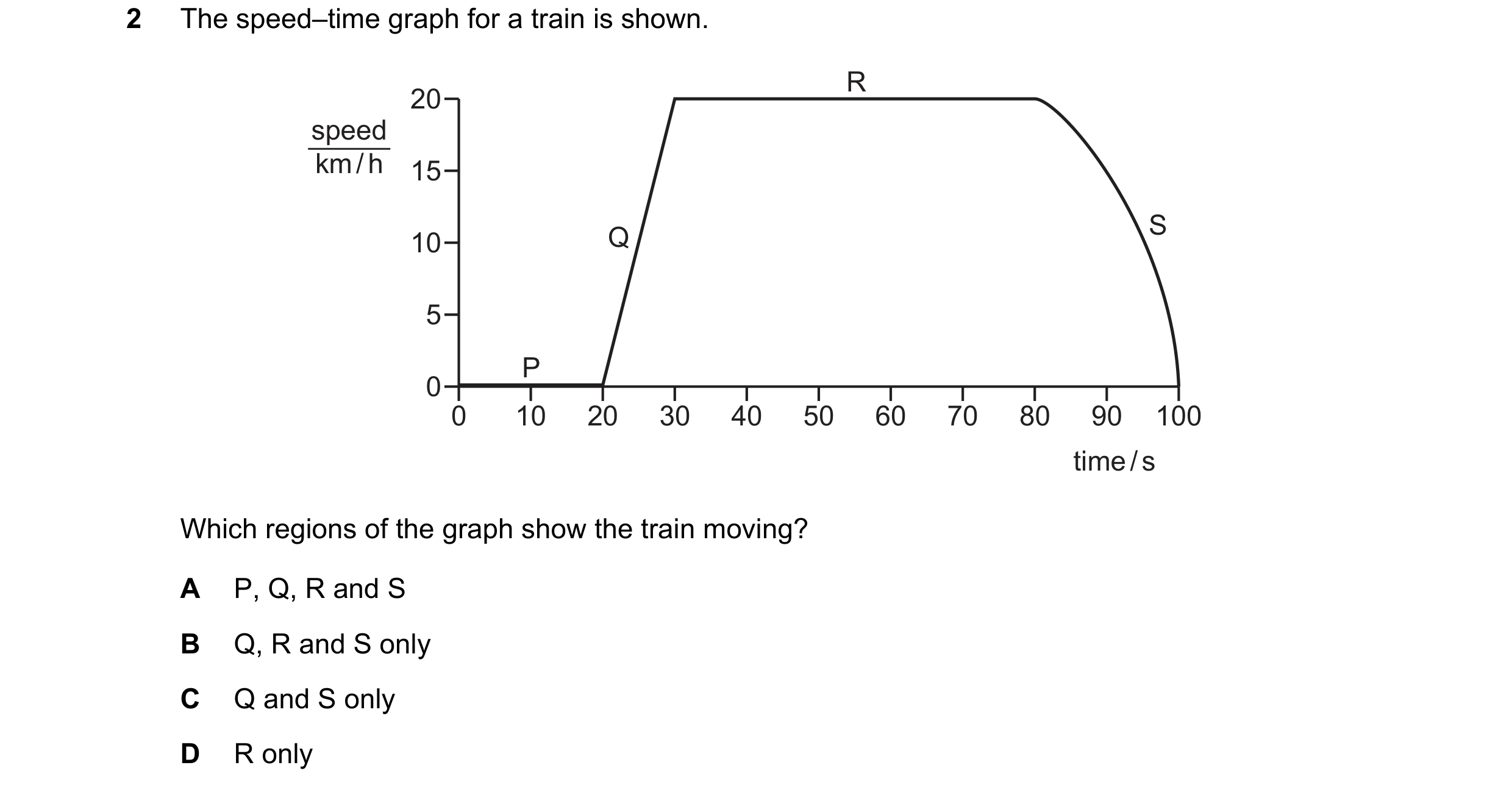
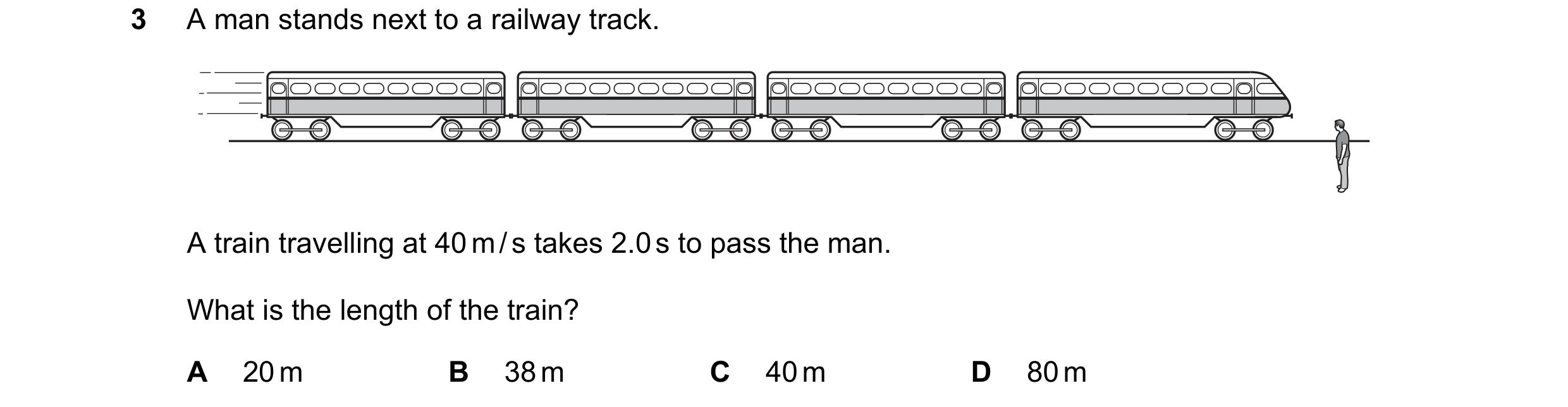
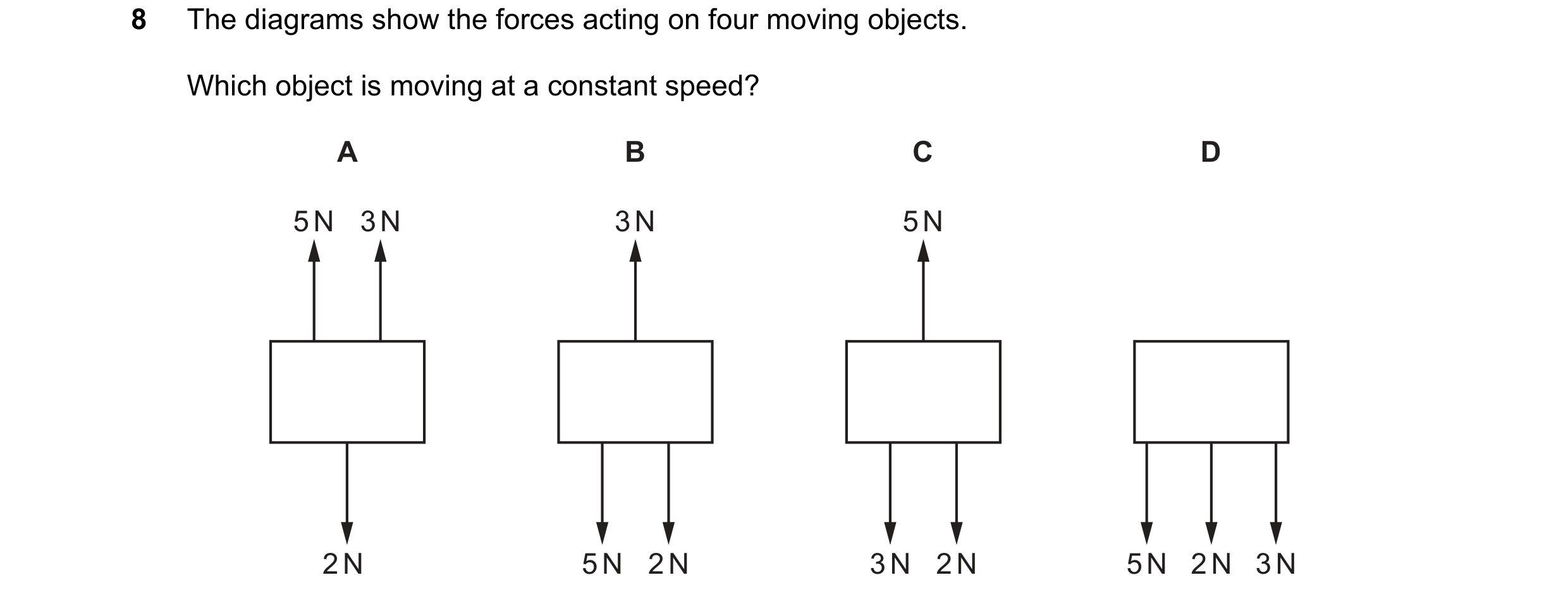
 69 / 84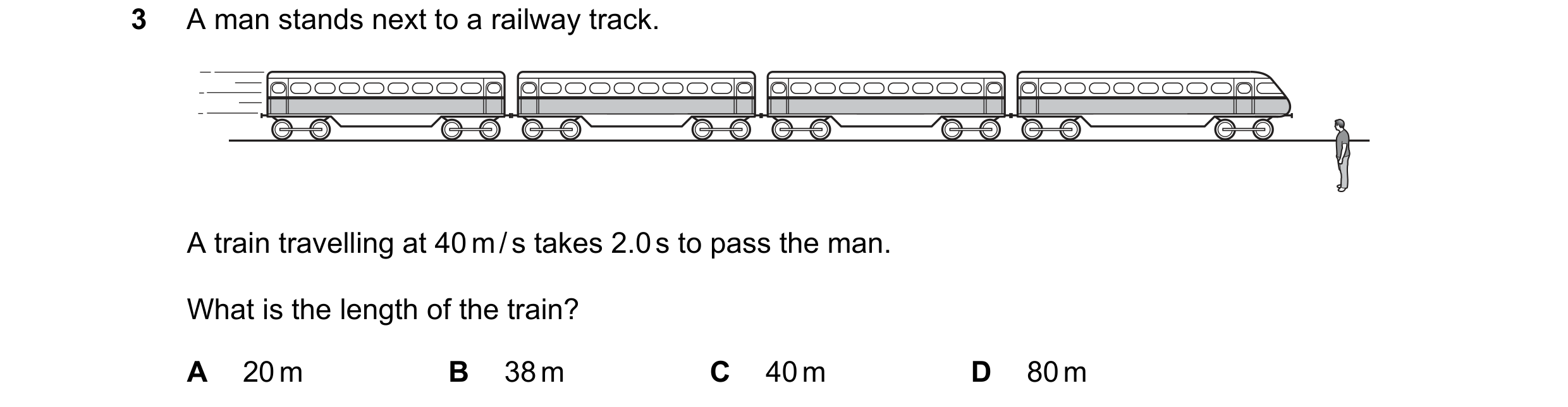
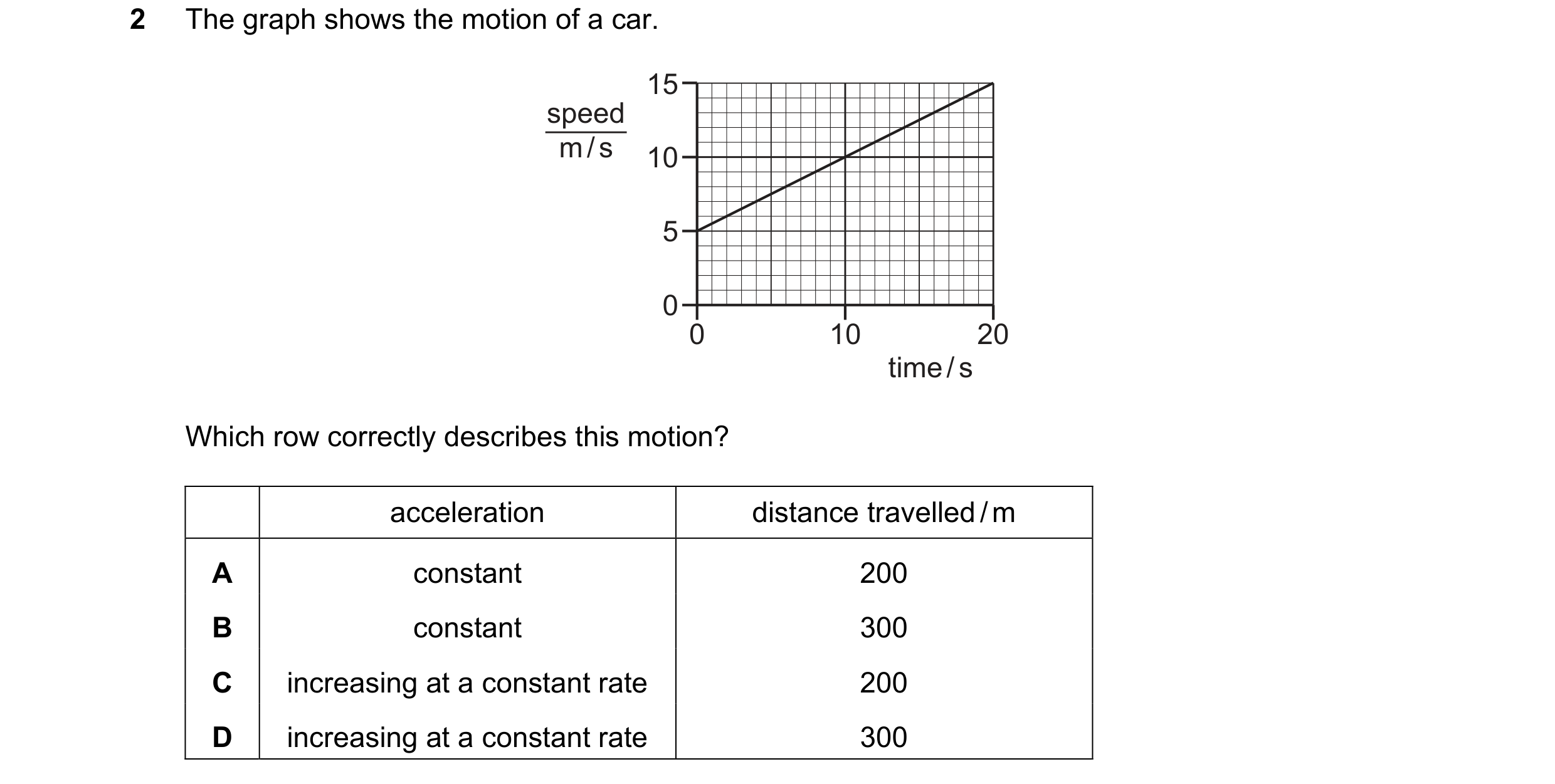
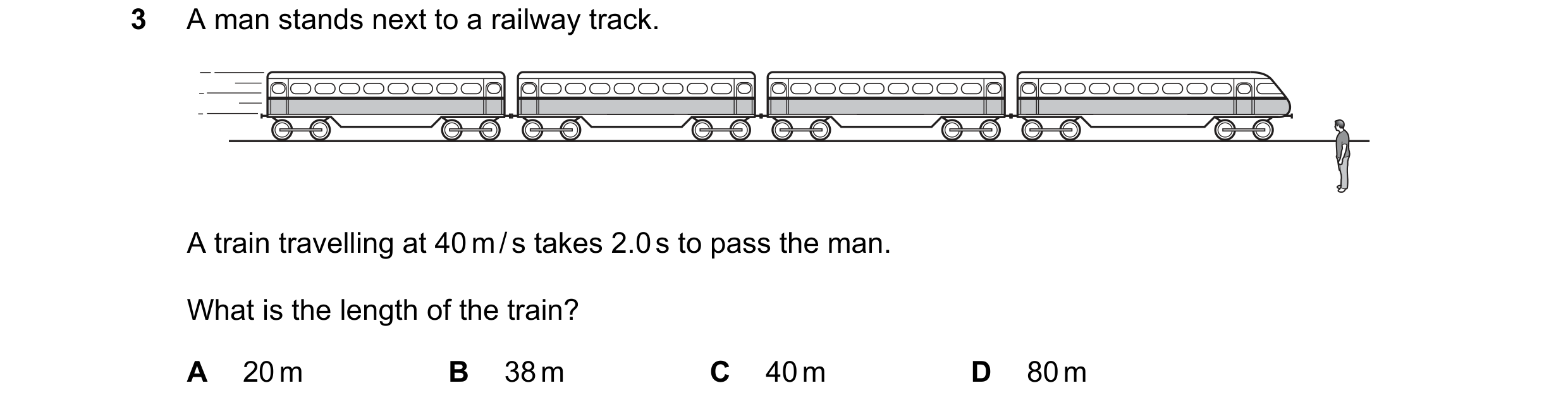 70 / 84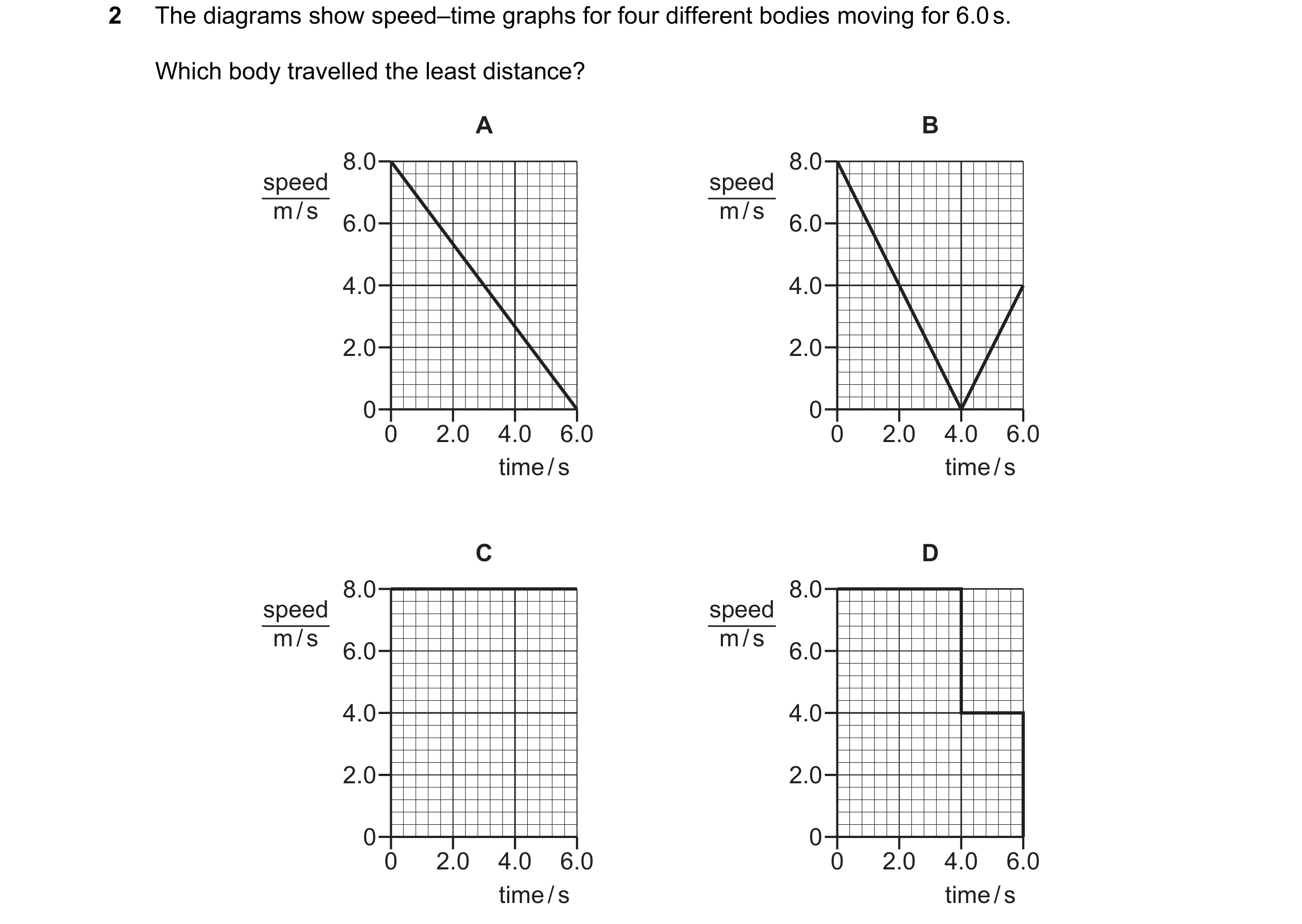
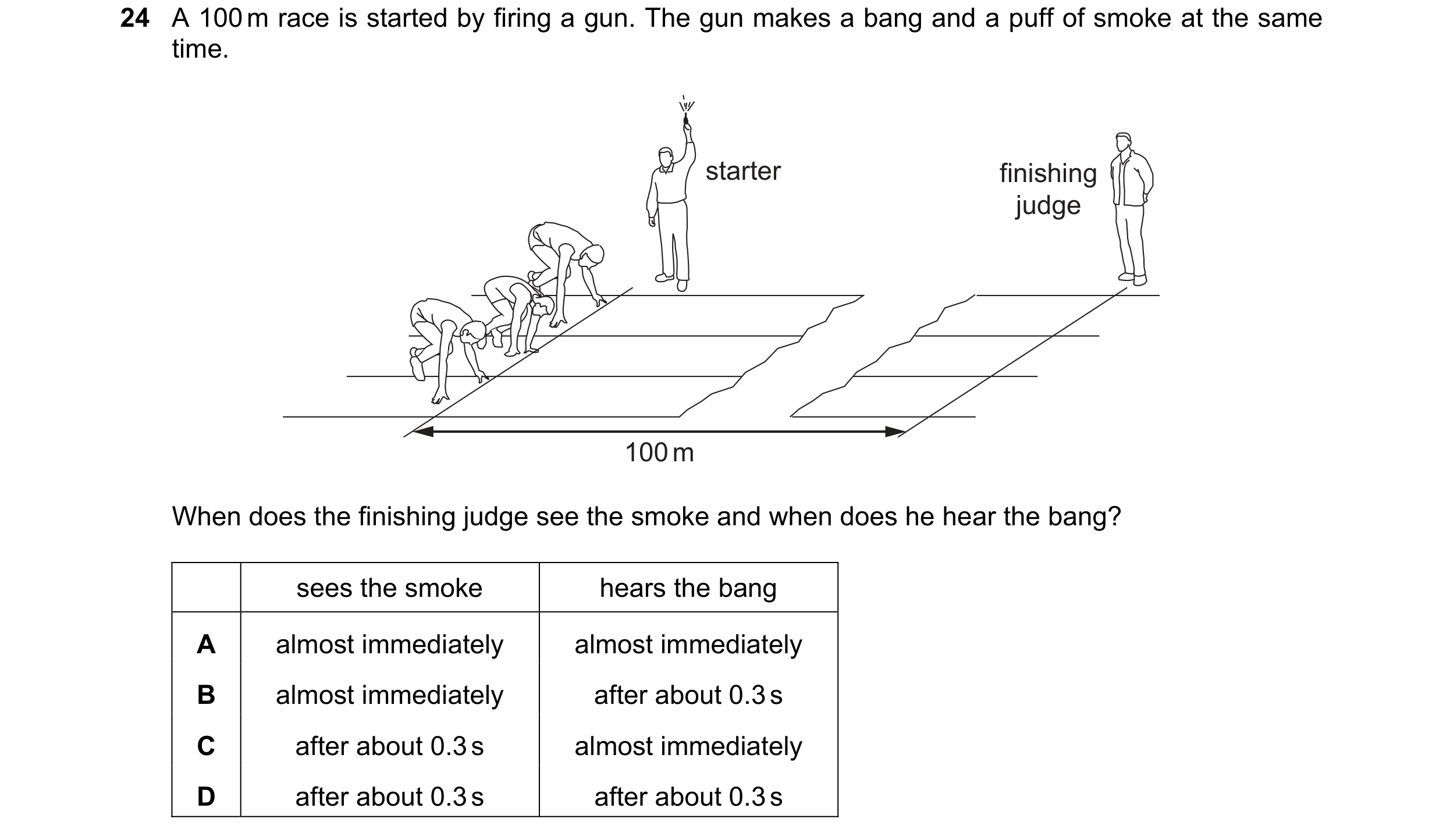 71 / 84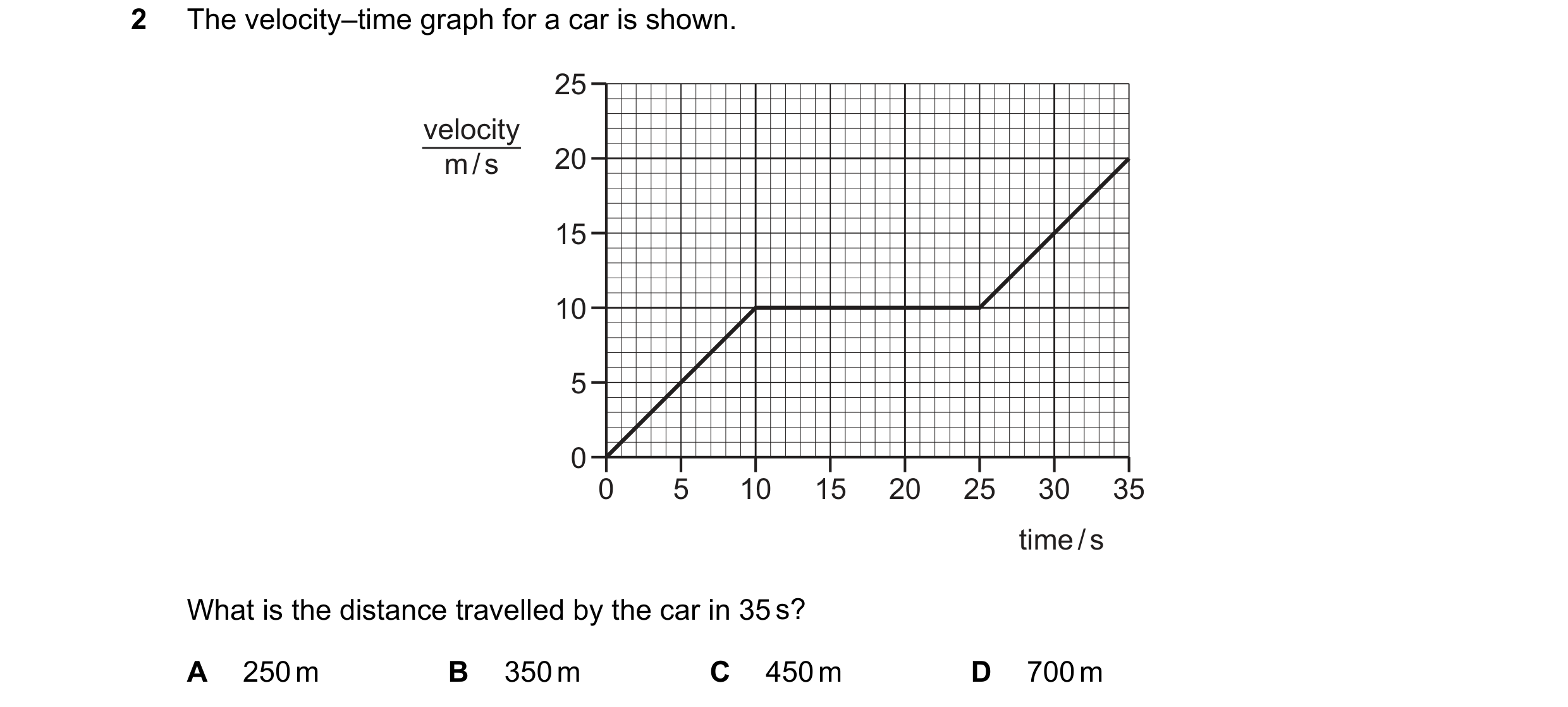
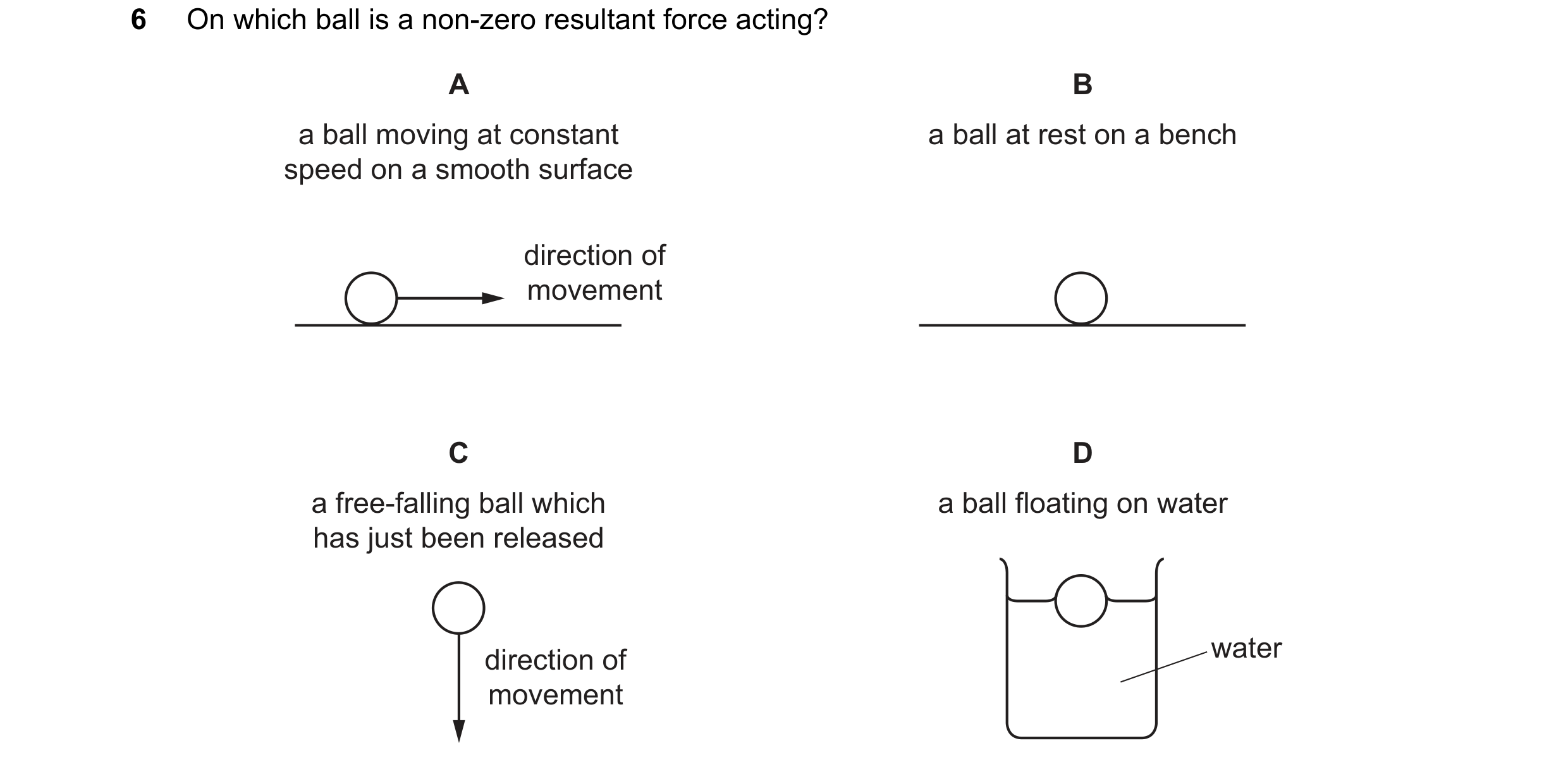 72 / 84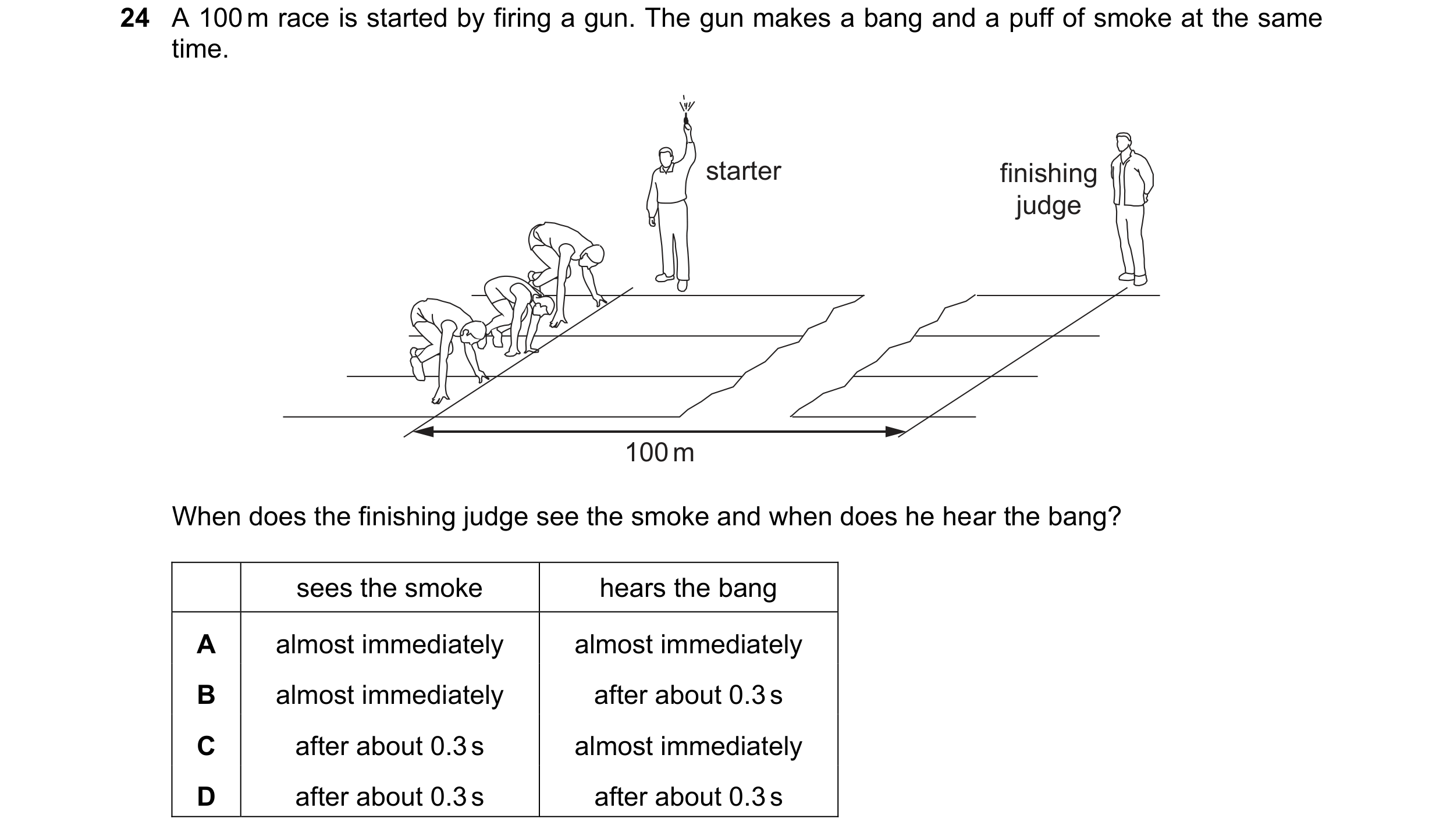
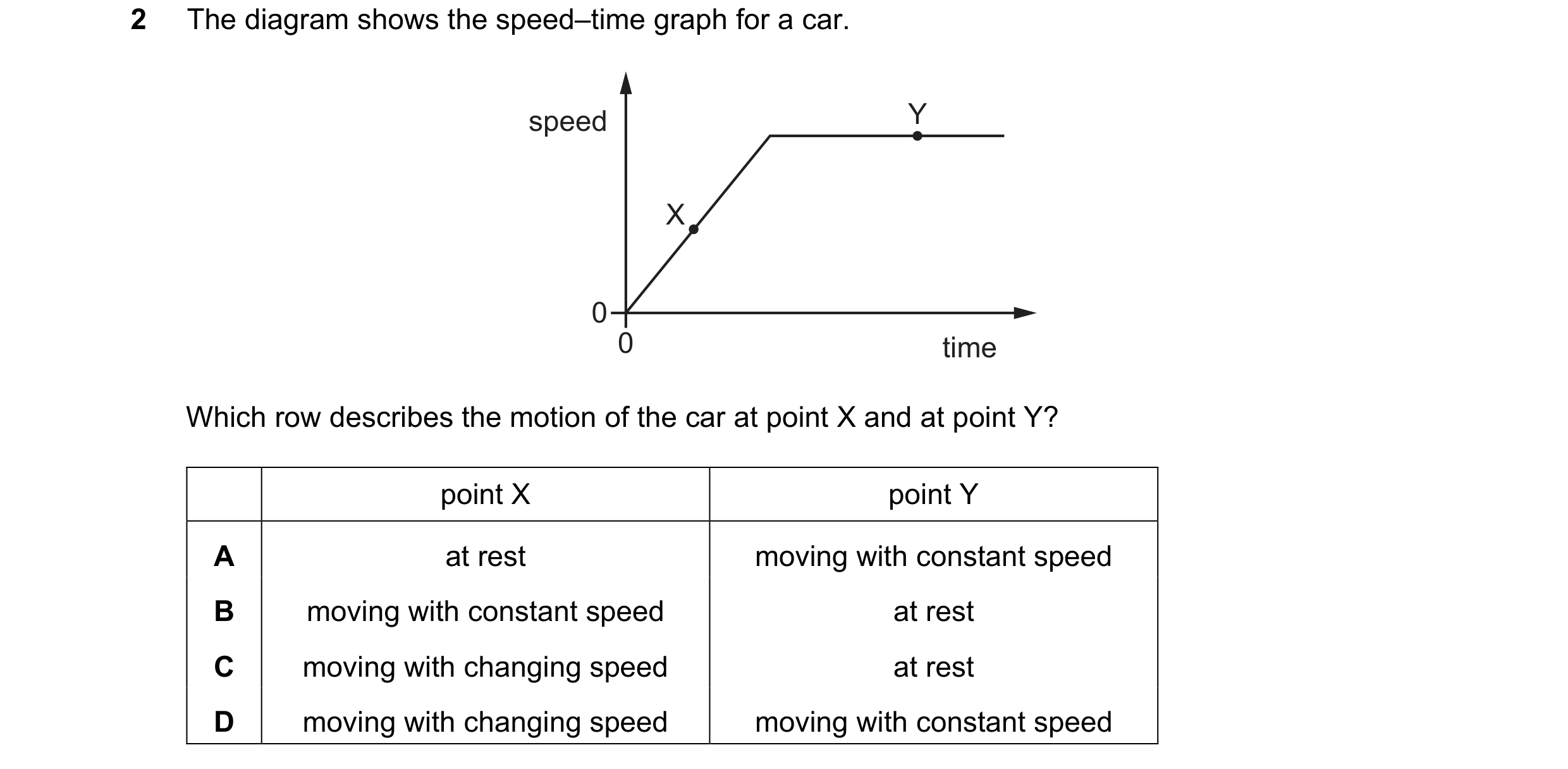
 73 / 84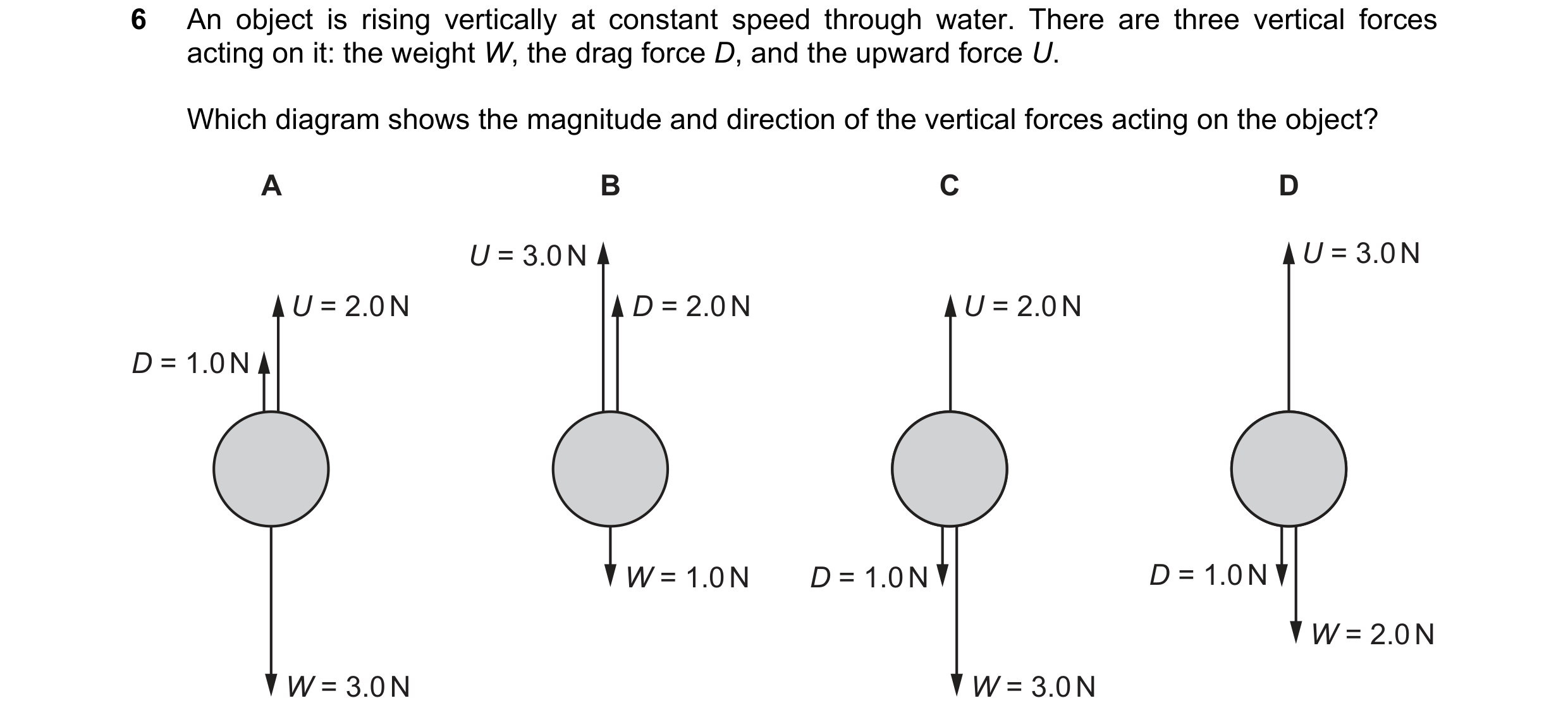
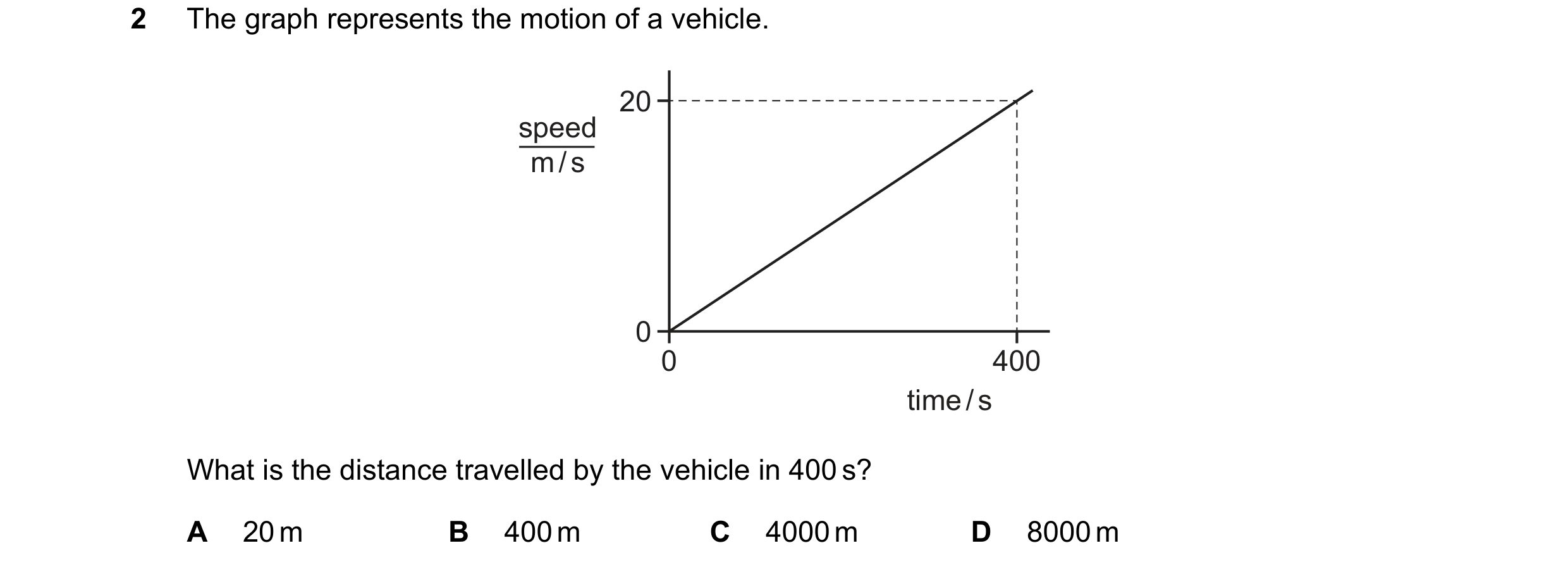
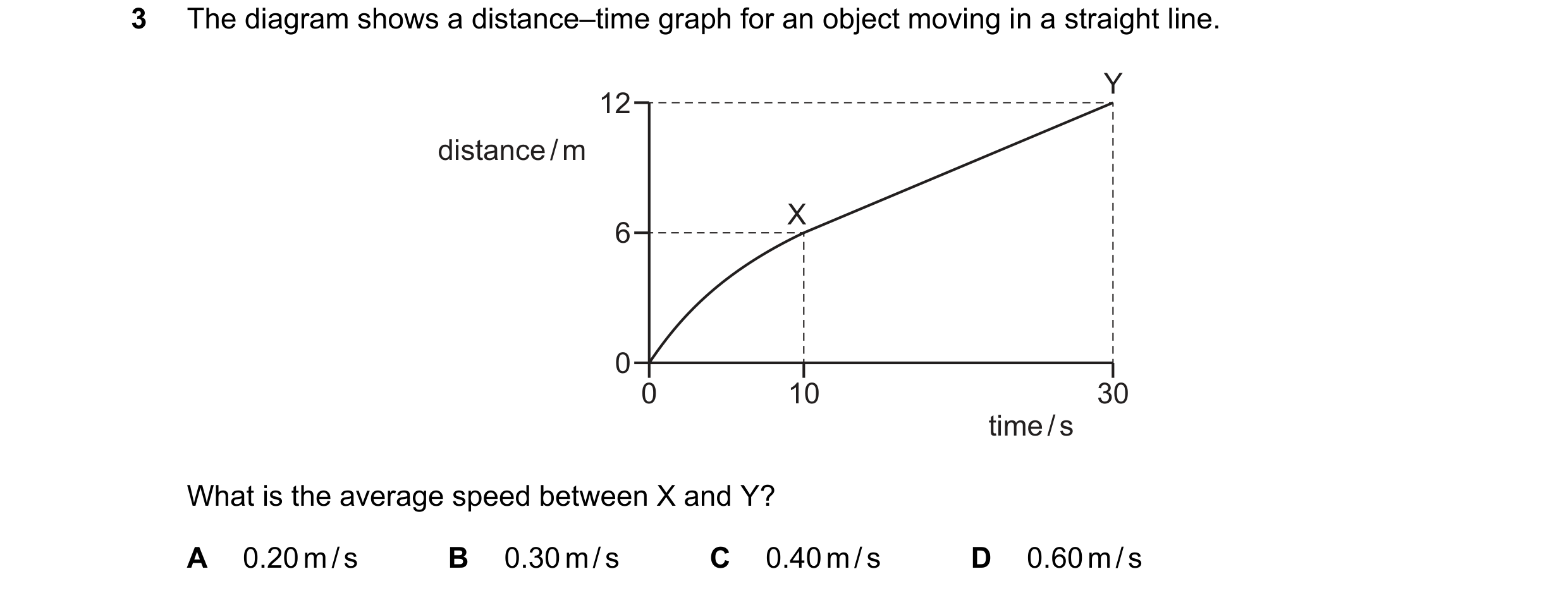 74 / 84


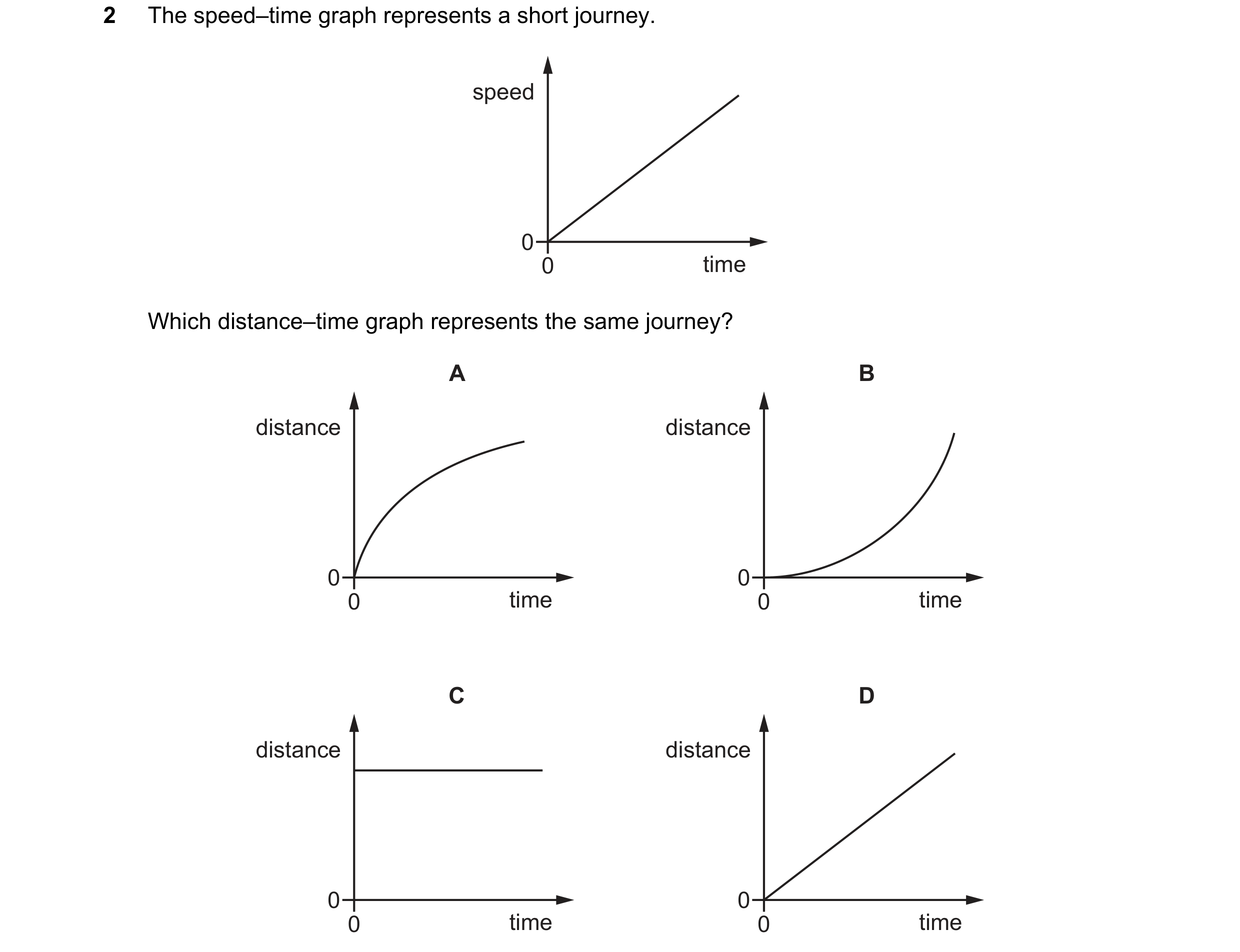 75 / 84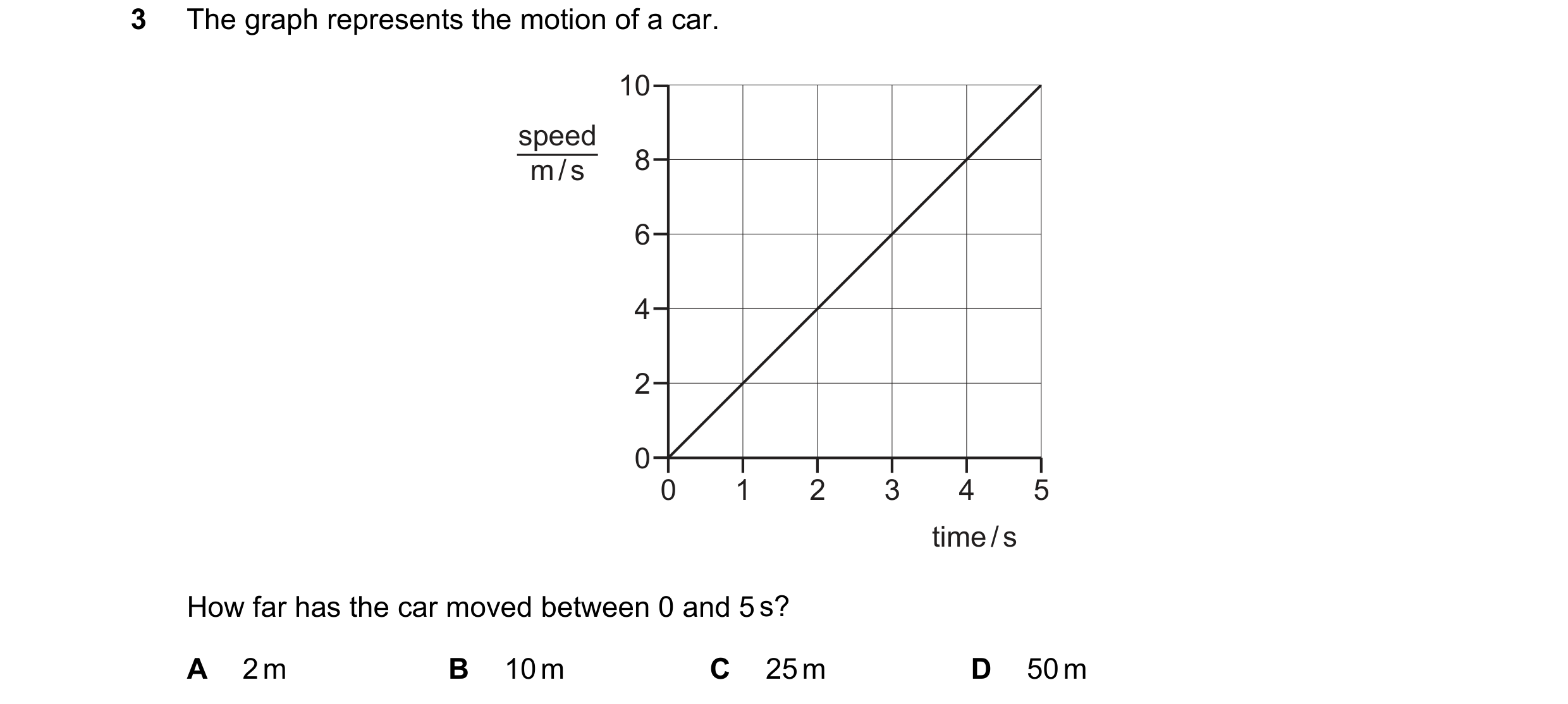

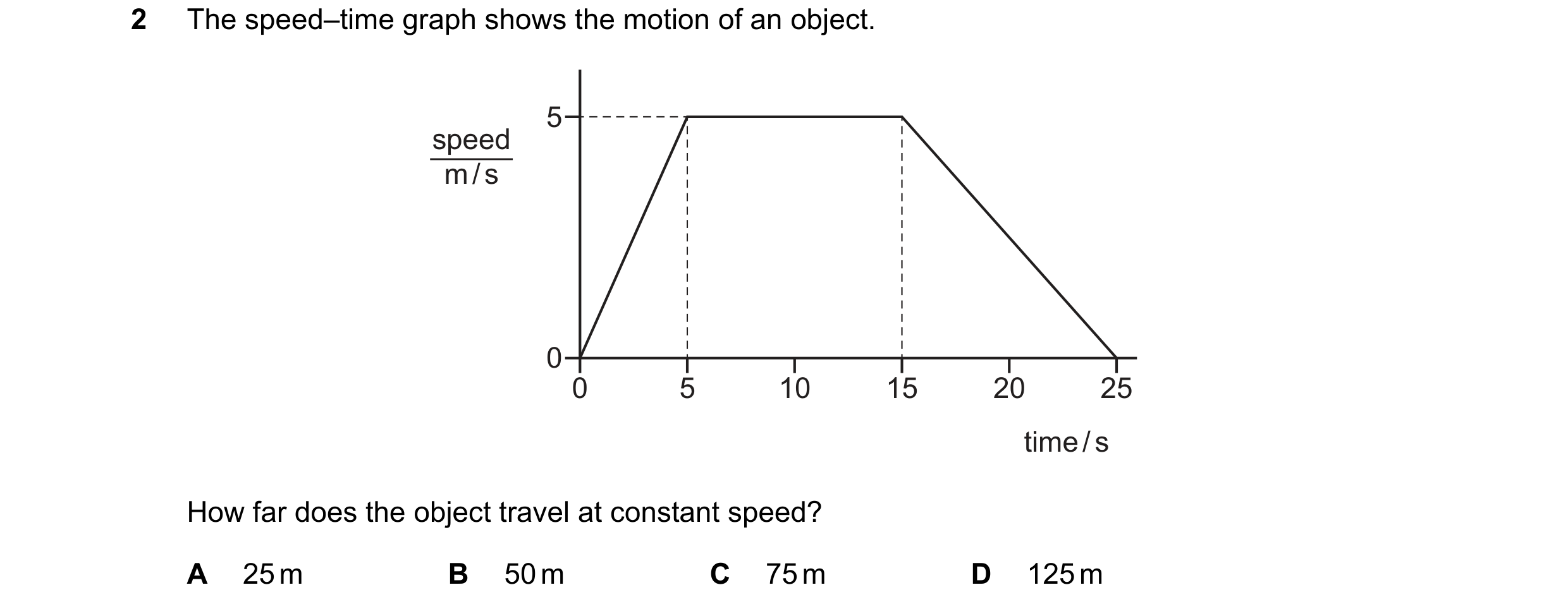
 76 / 84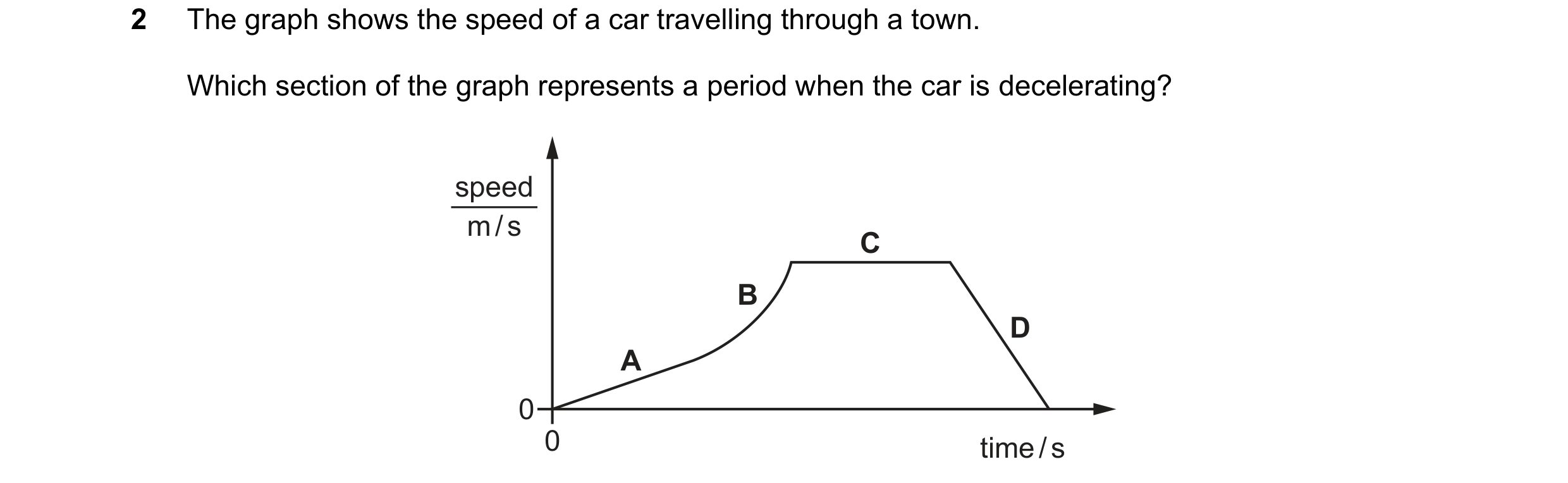
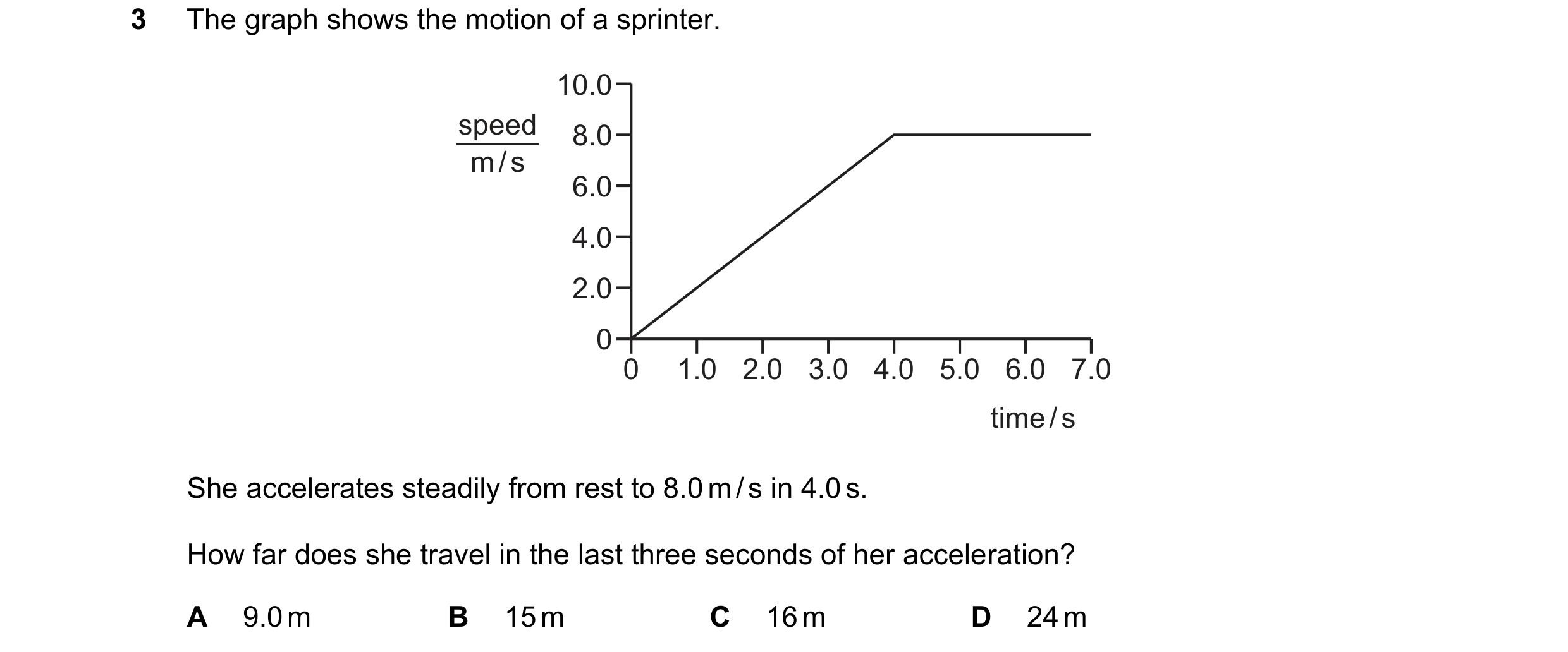 77 / 84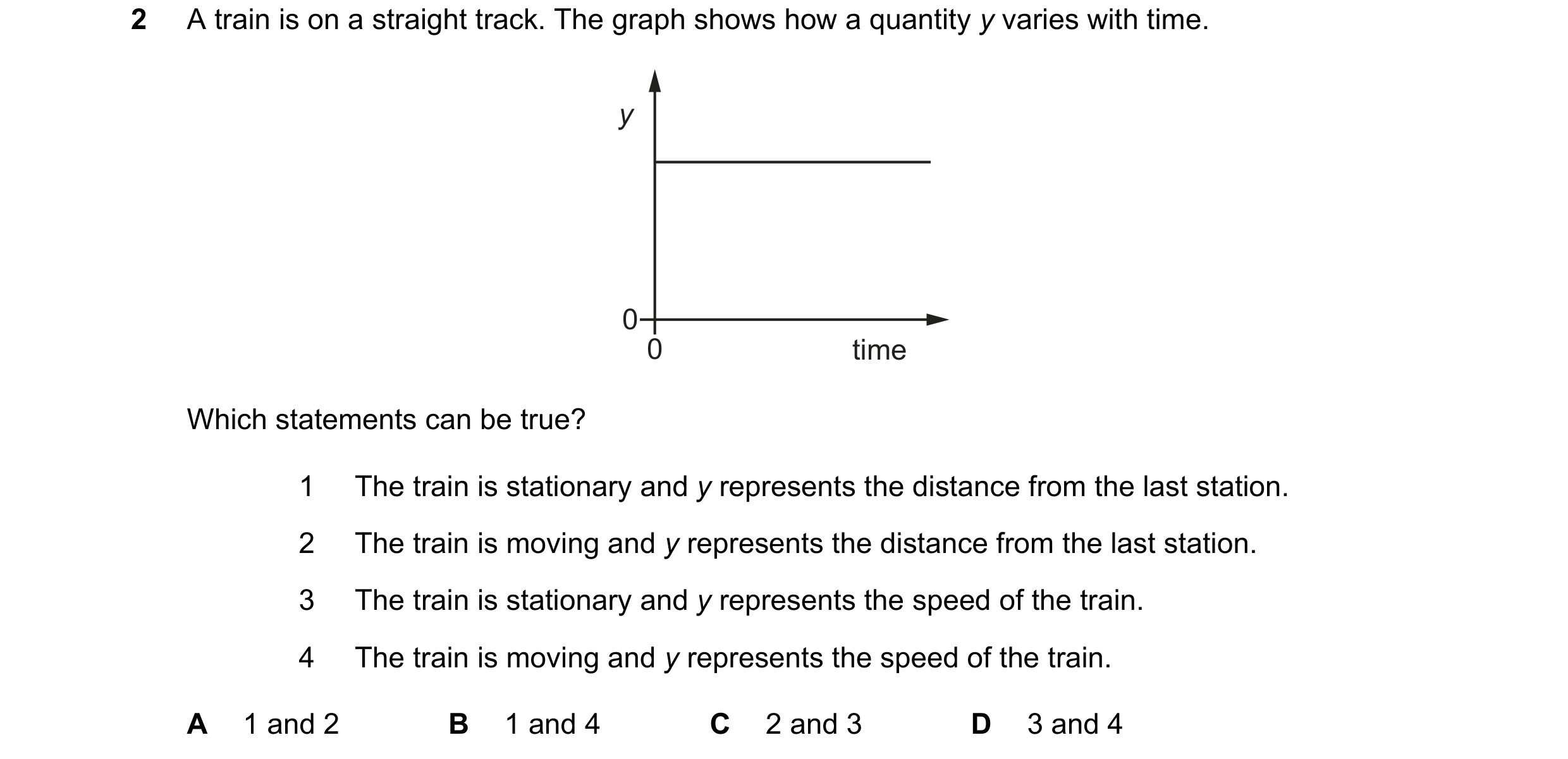


 78 / 84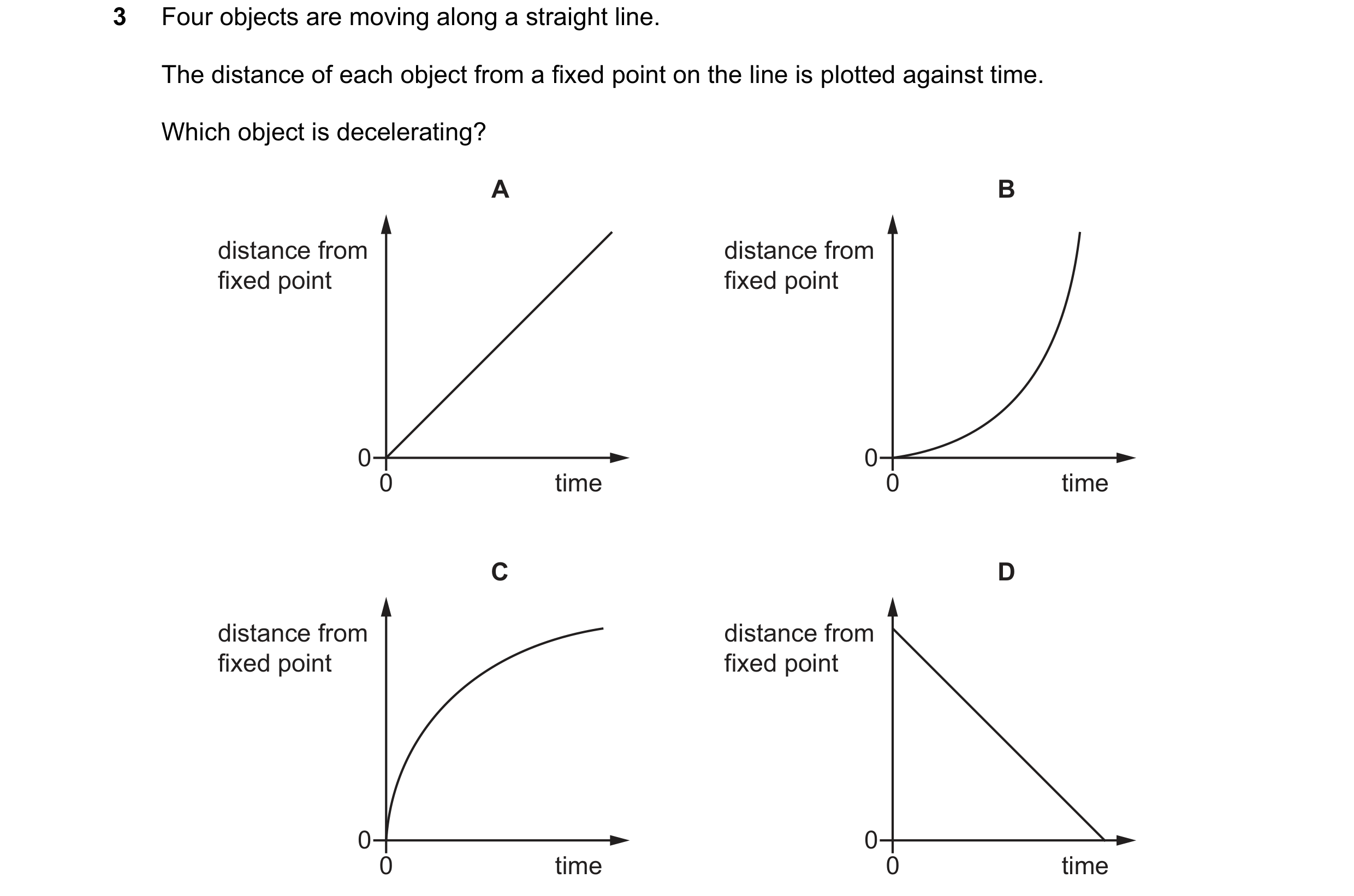
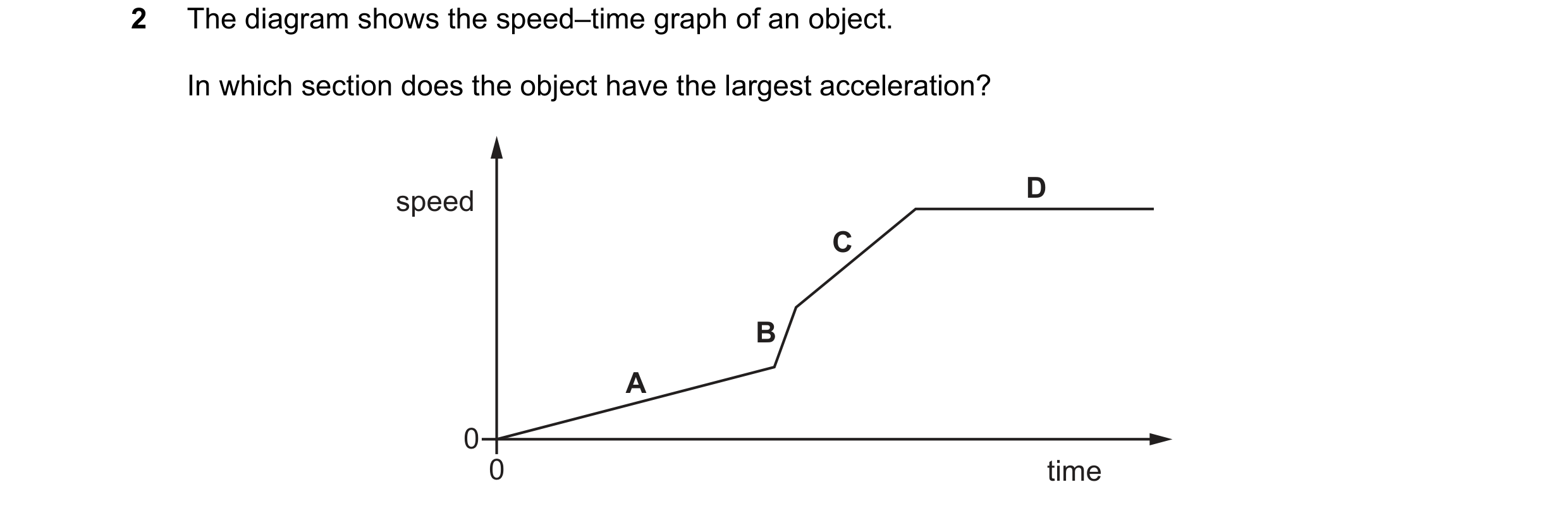 79 / 84

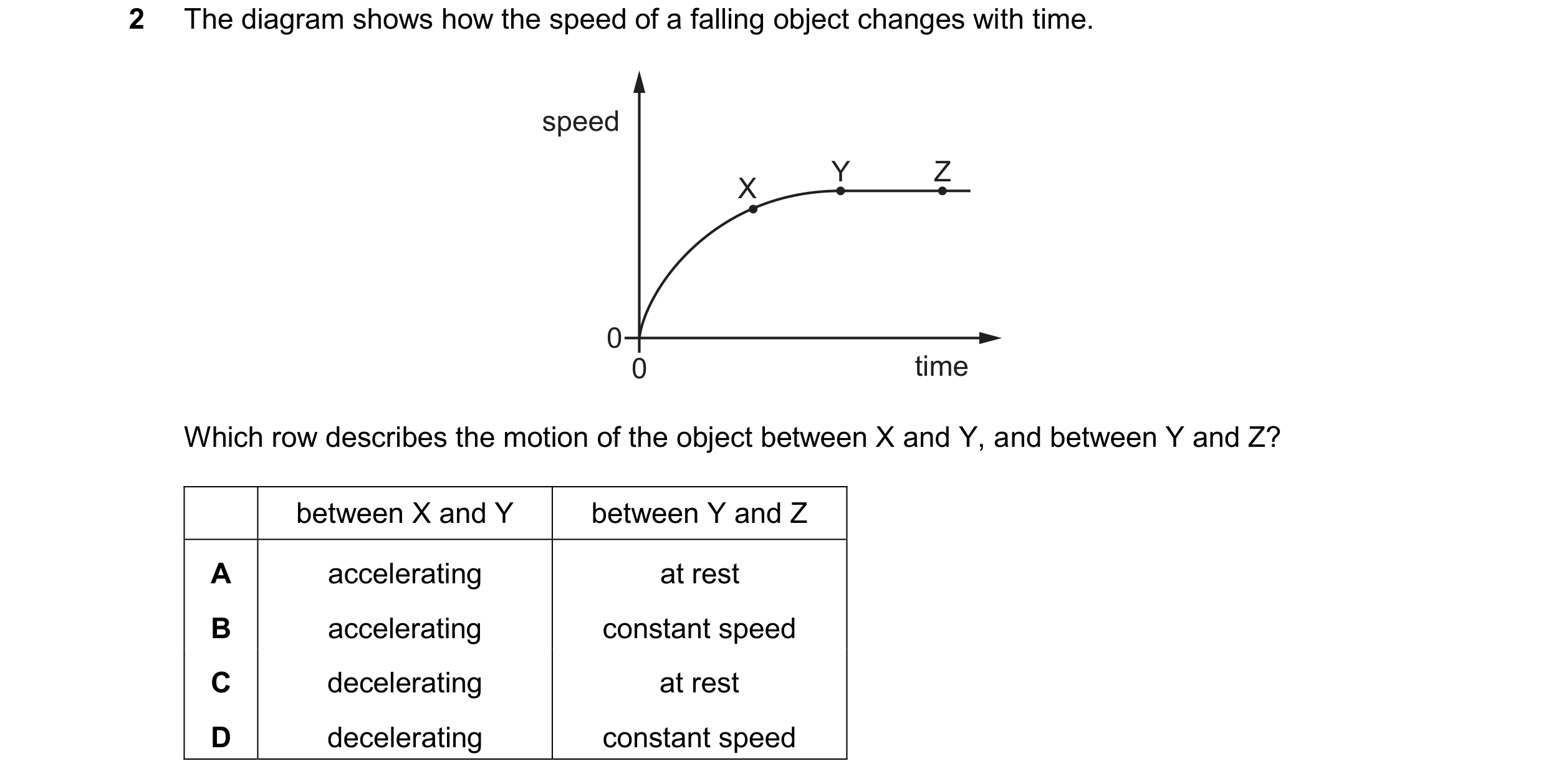 80 / 84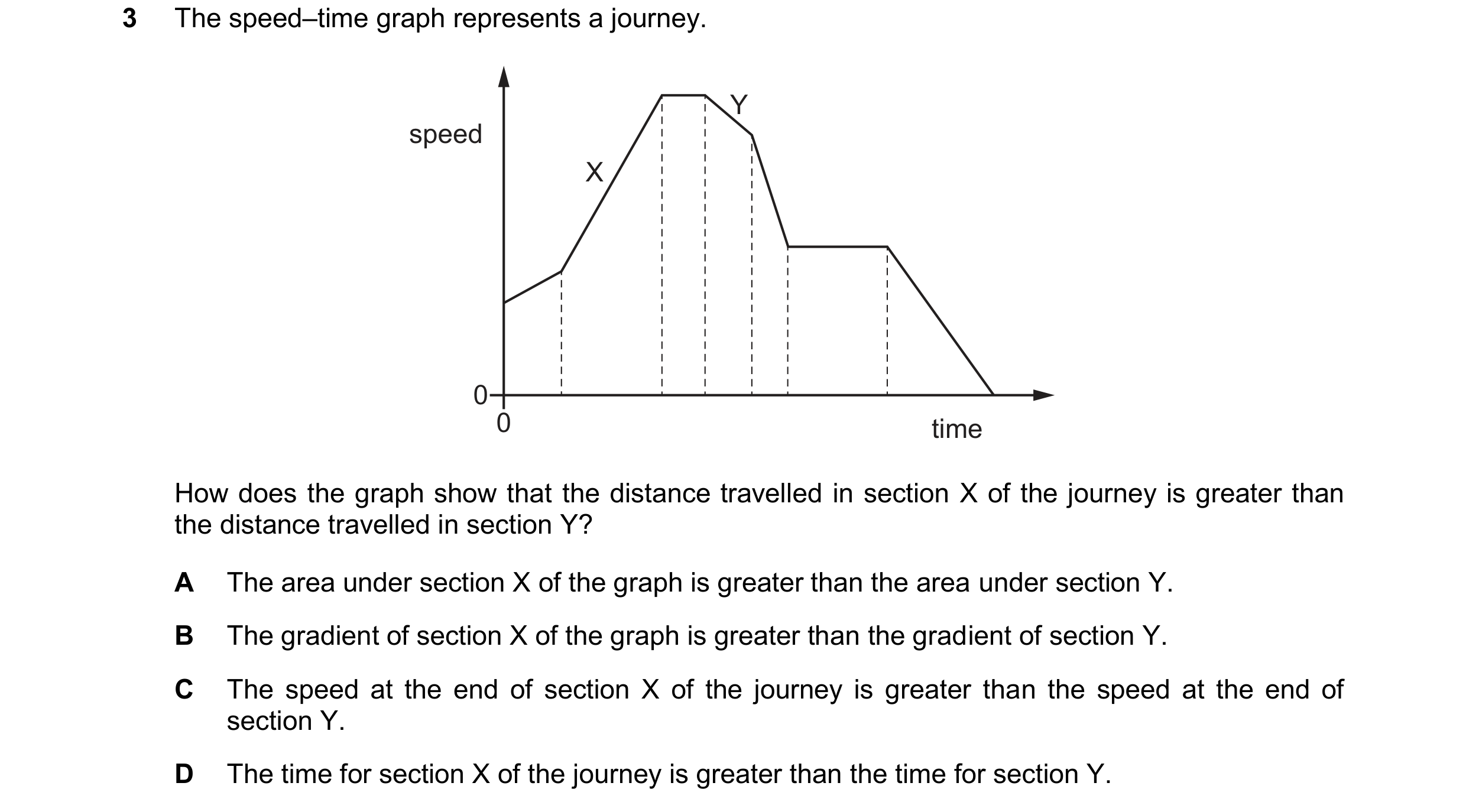
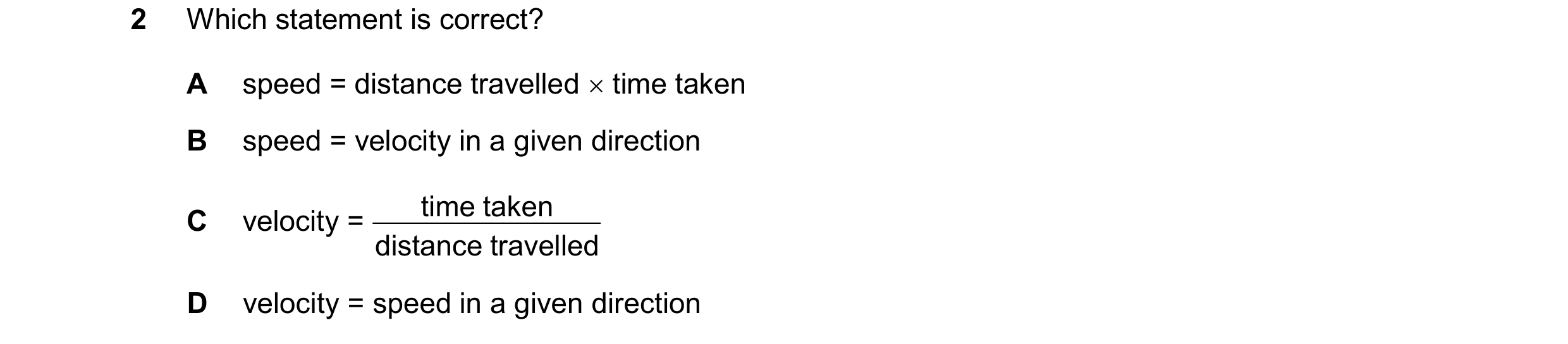
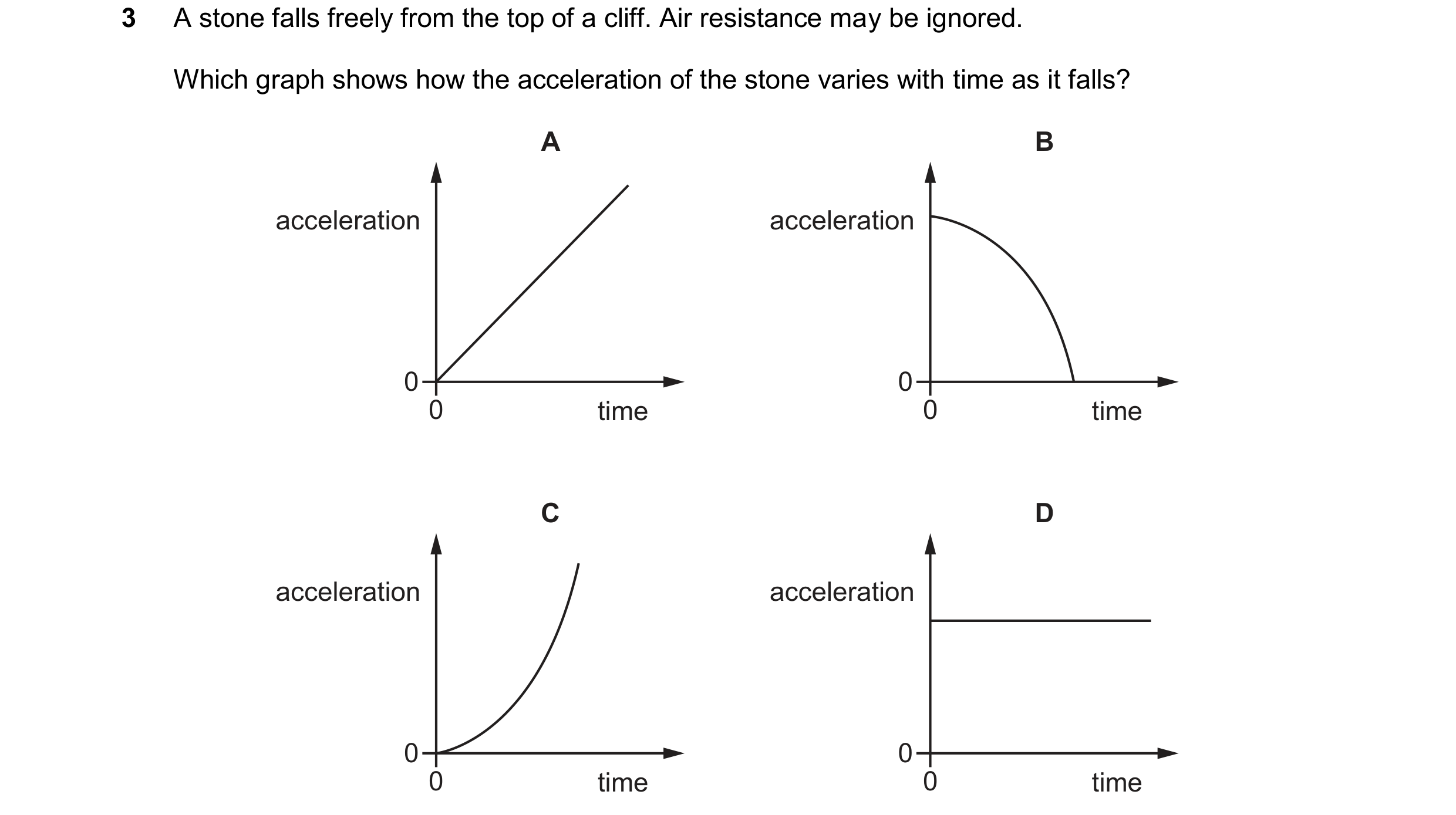 81 / 84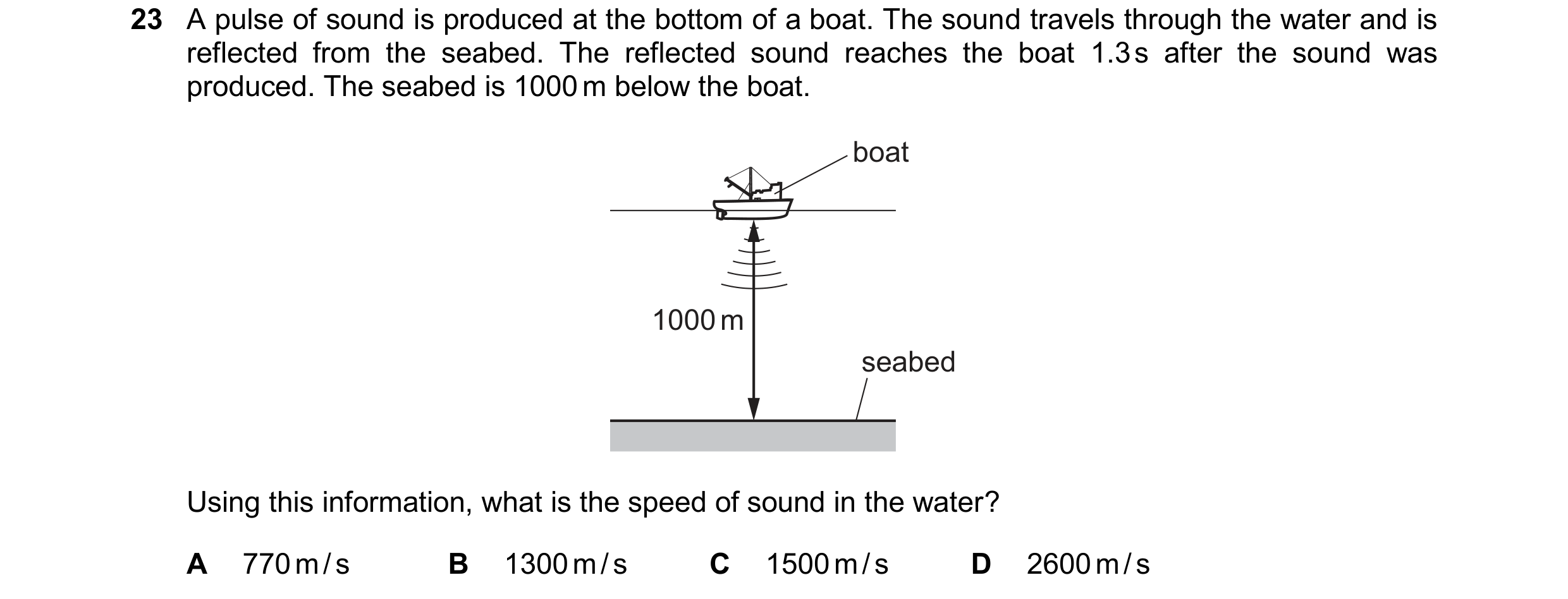
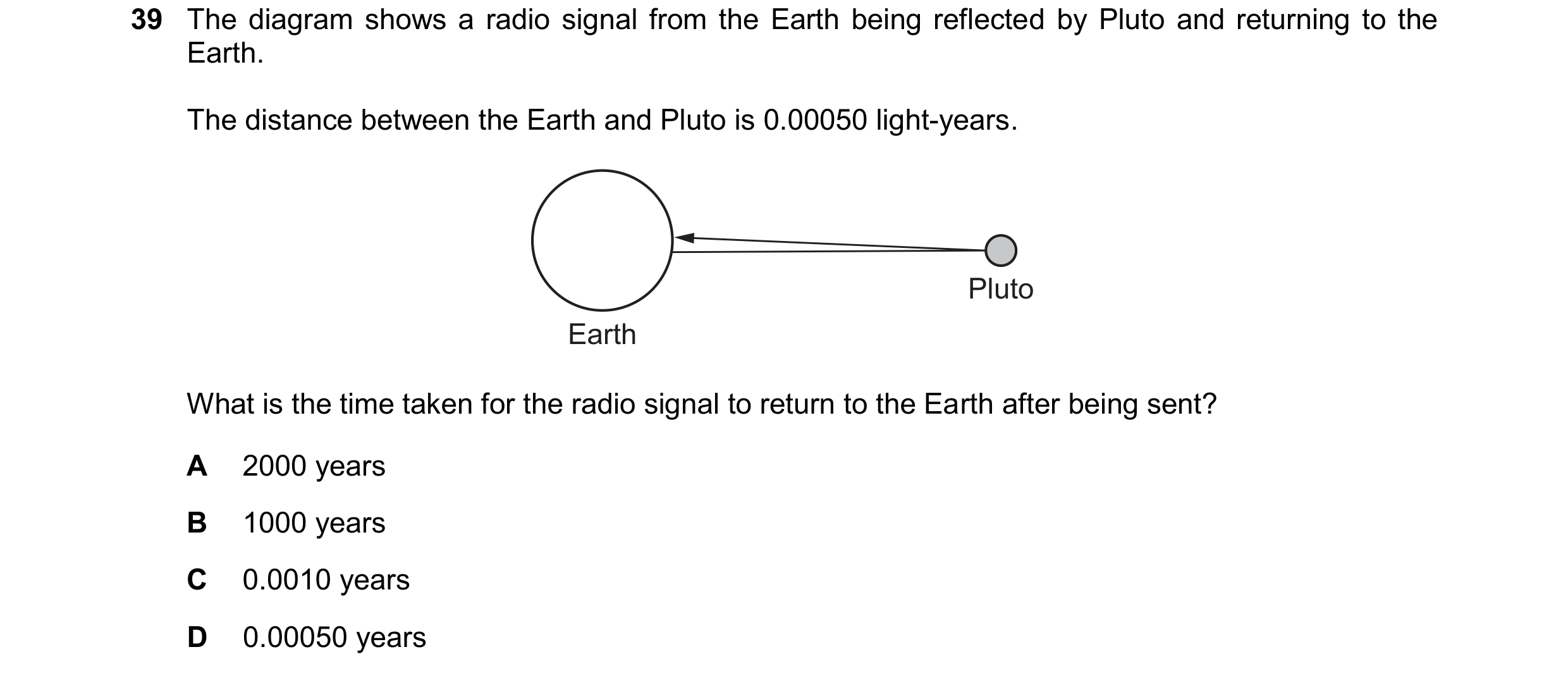
 82 / 84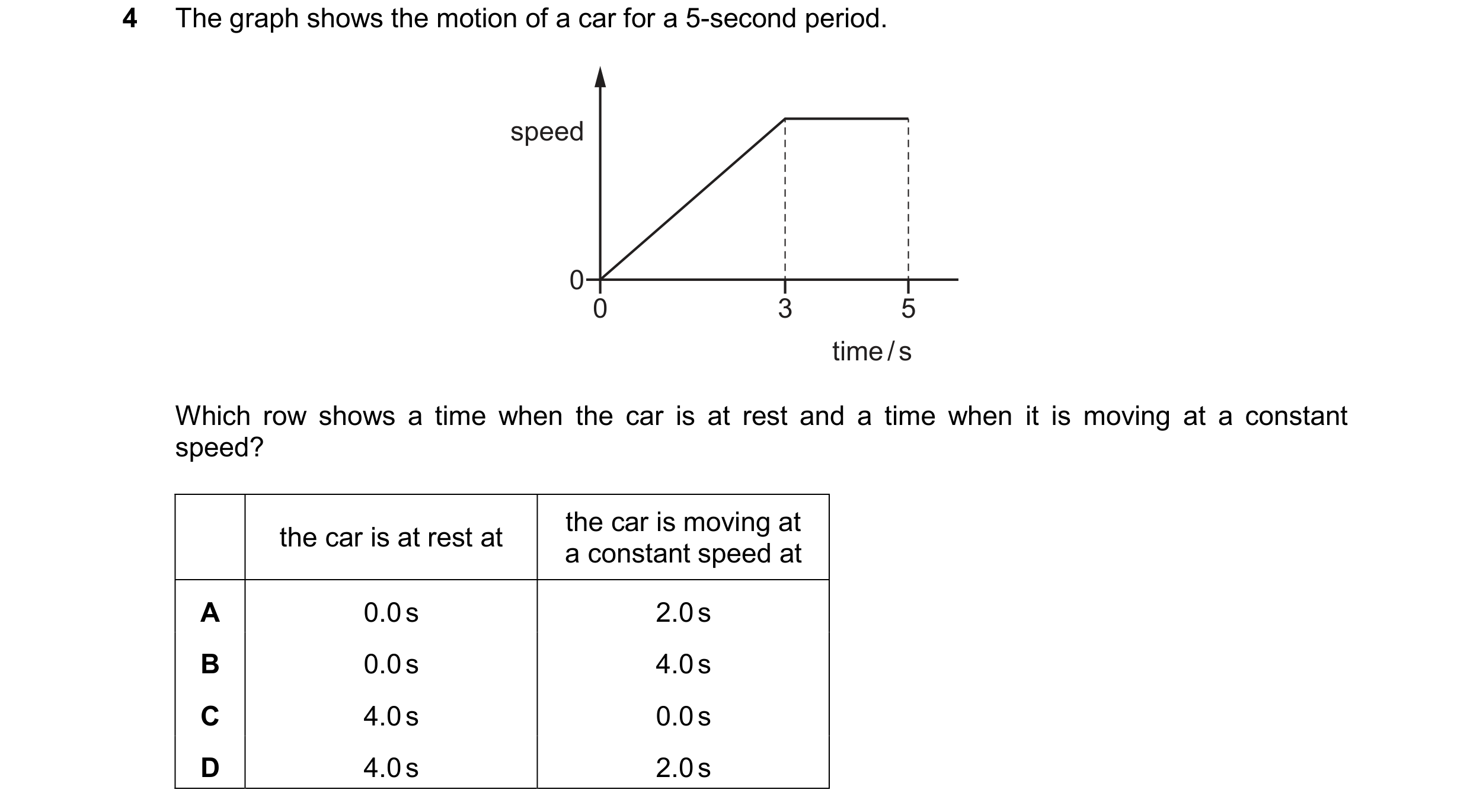
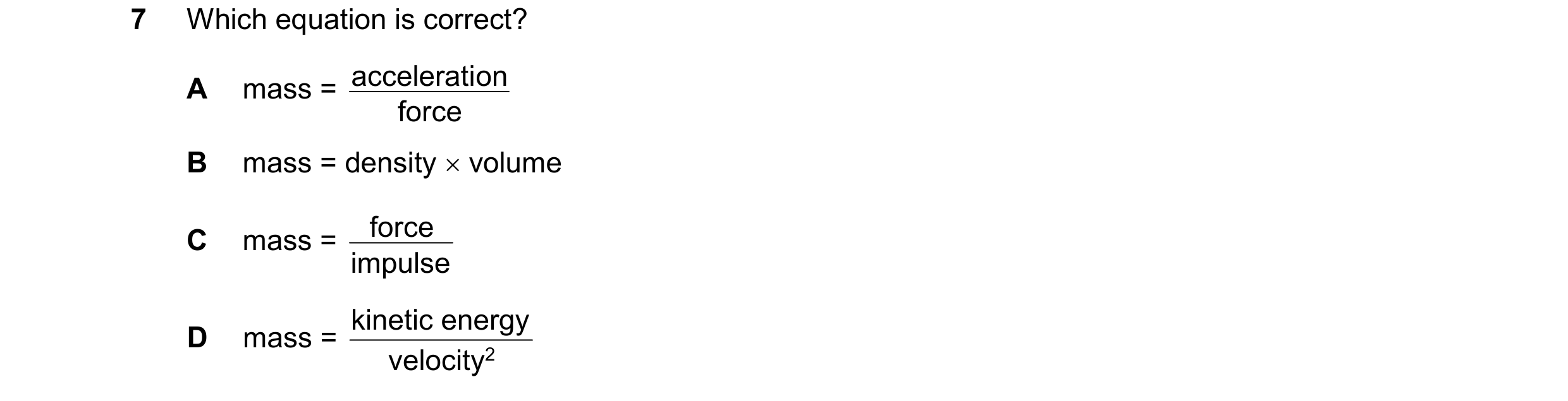

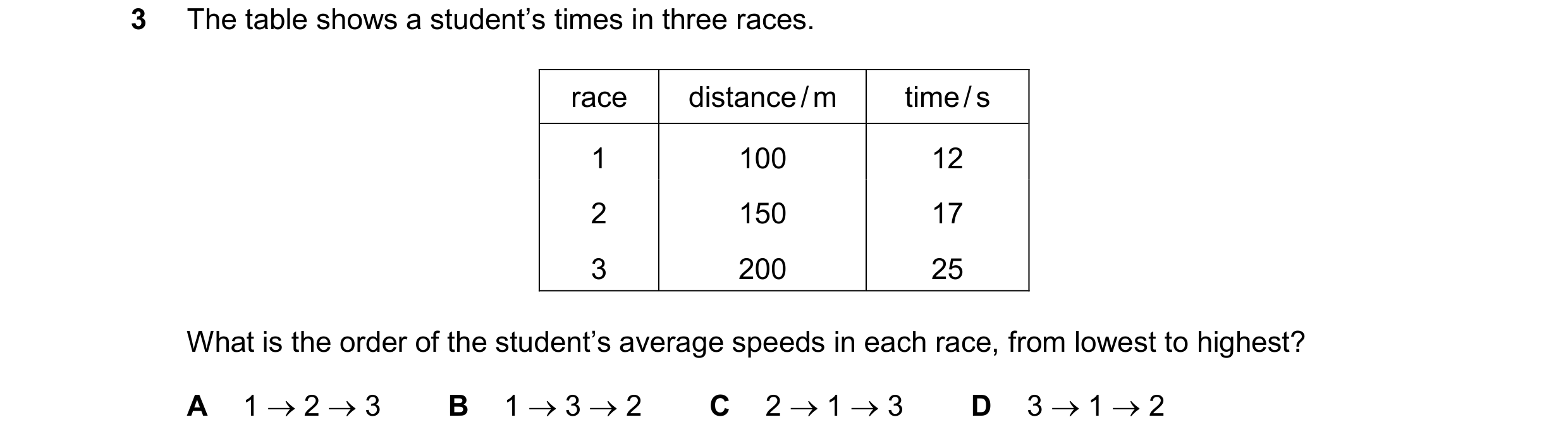 83 / 84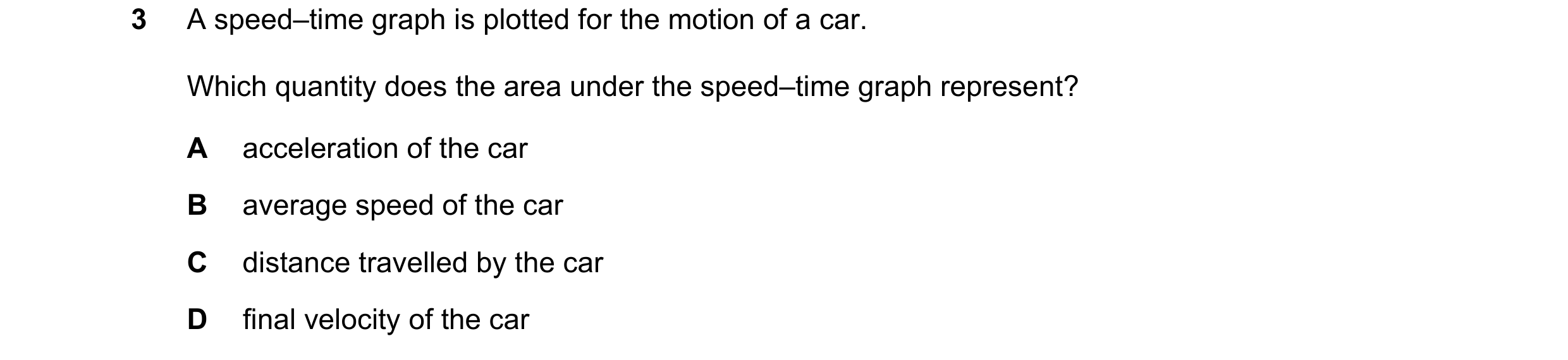
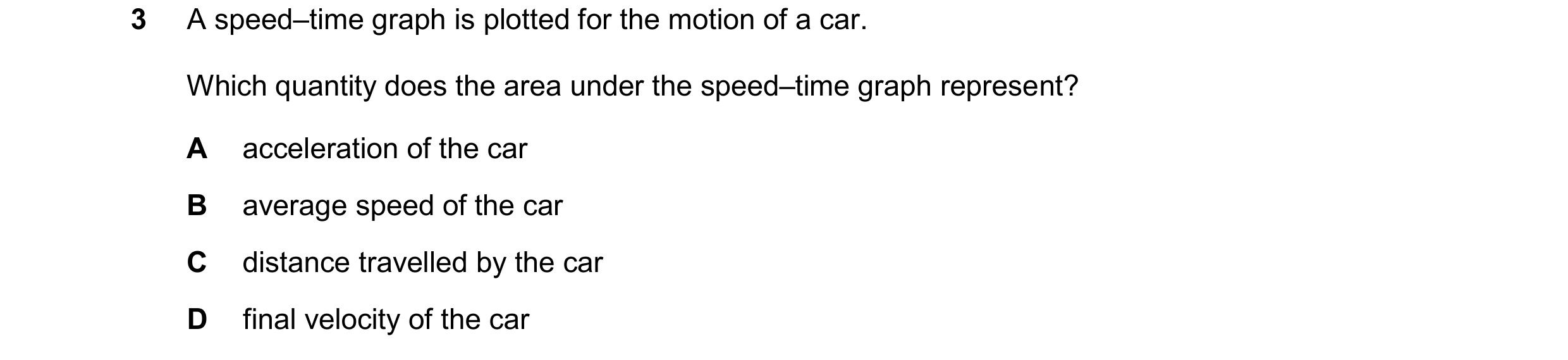

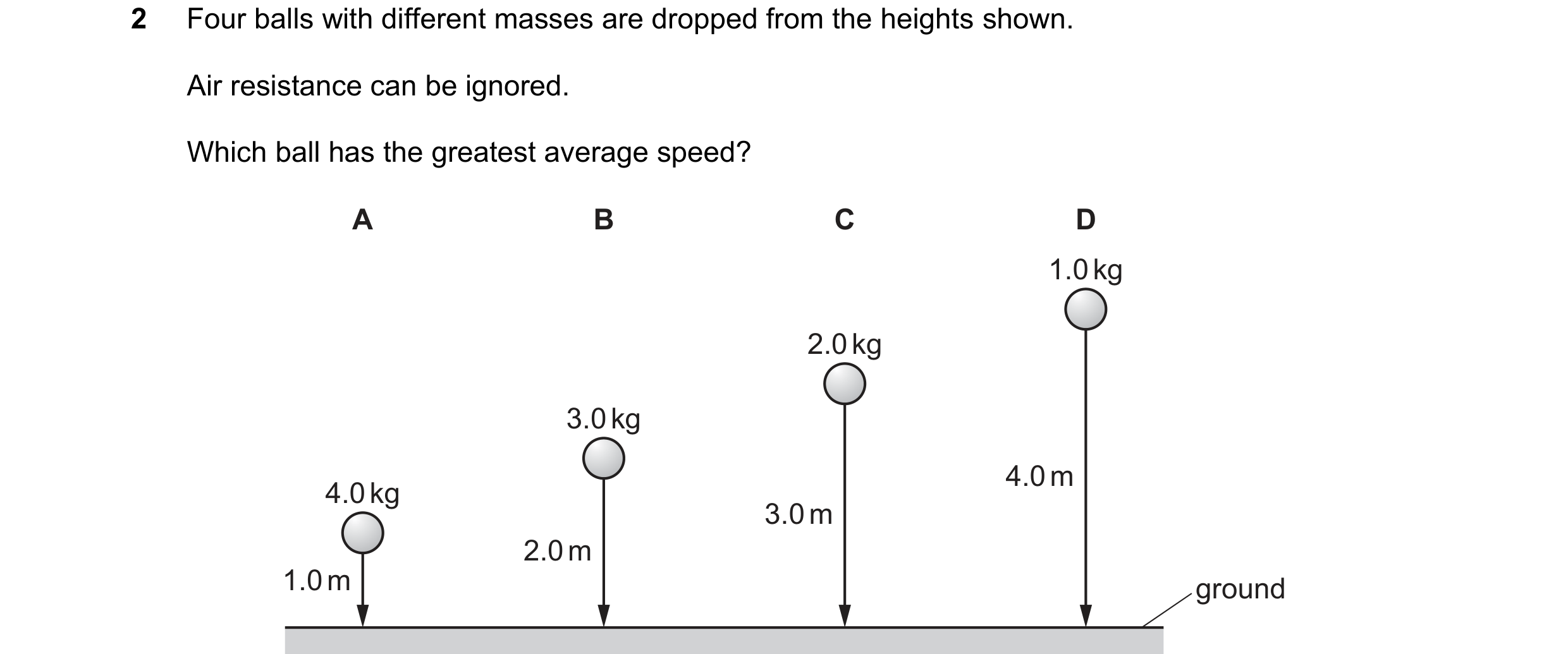 84 / 84