Questions as text
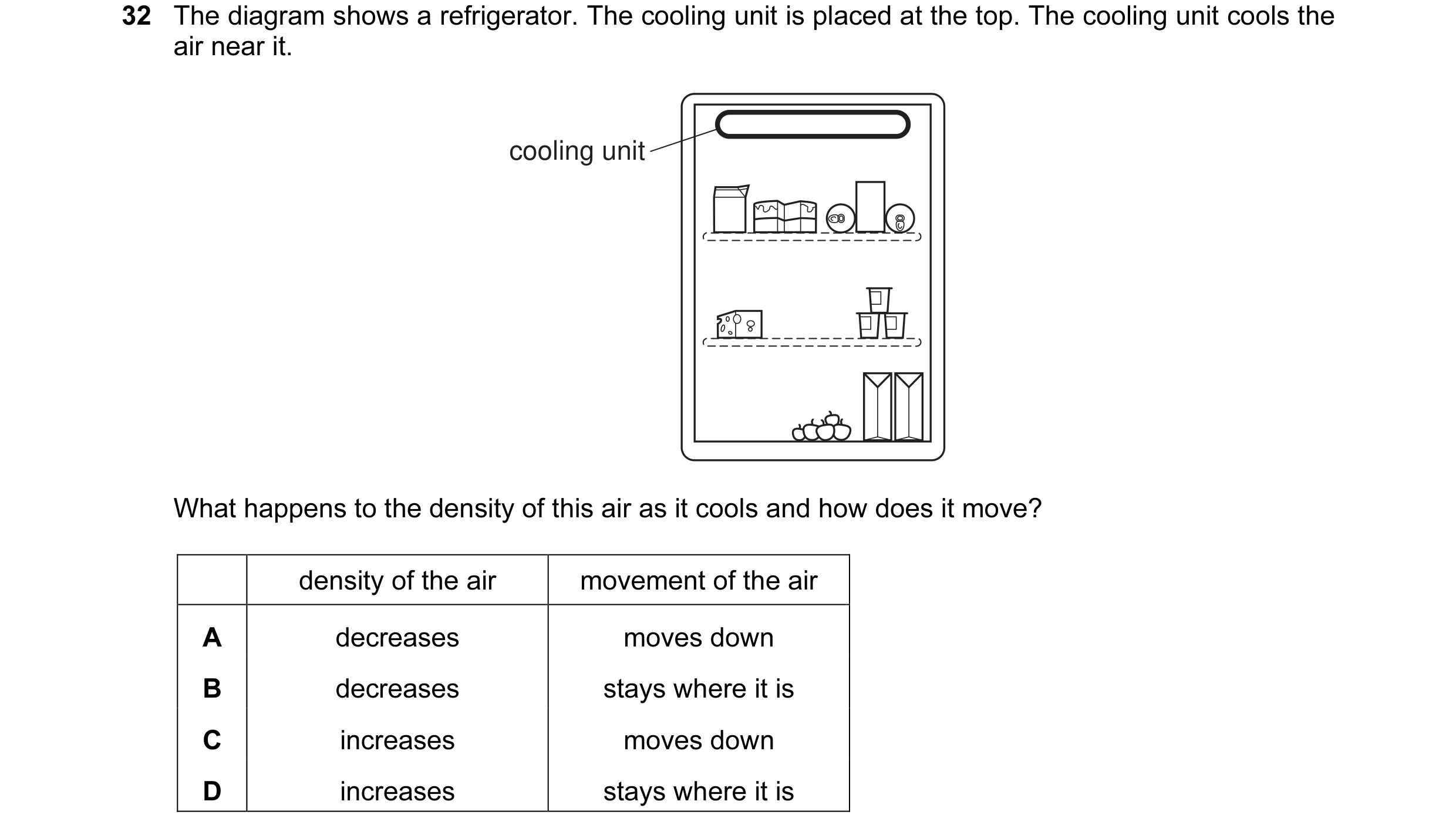
Q1 · The diagram shows a refrigerator 0653/11 May/June 2007
32 The diagram shows a refrigerator. The cooling unit is placed at the top. The cooling unit cools the air near it. cooling unit What happens to the density of this air as it cools and how does it move? density of the air movement of the air A decreases moves down B decreases stays where it is C increases moves down D increases stays where it is
1 marks
Answer: C
This question in 0653/11 May/June 2007
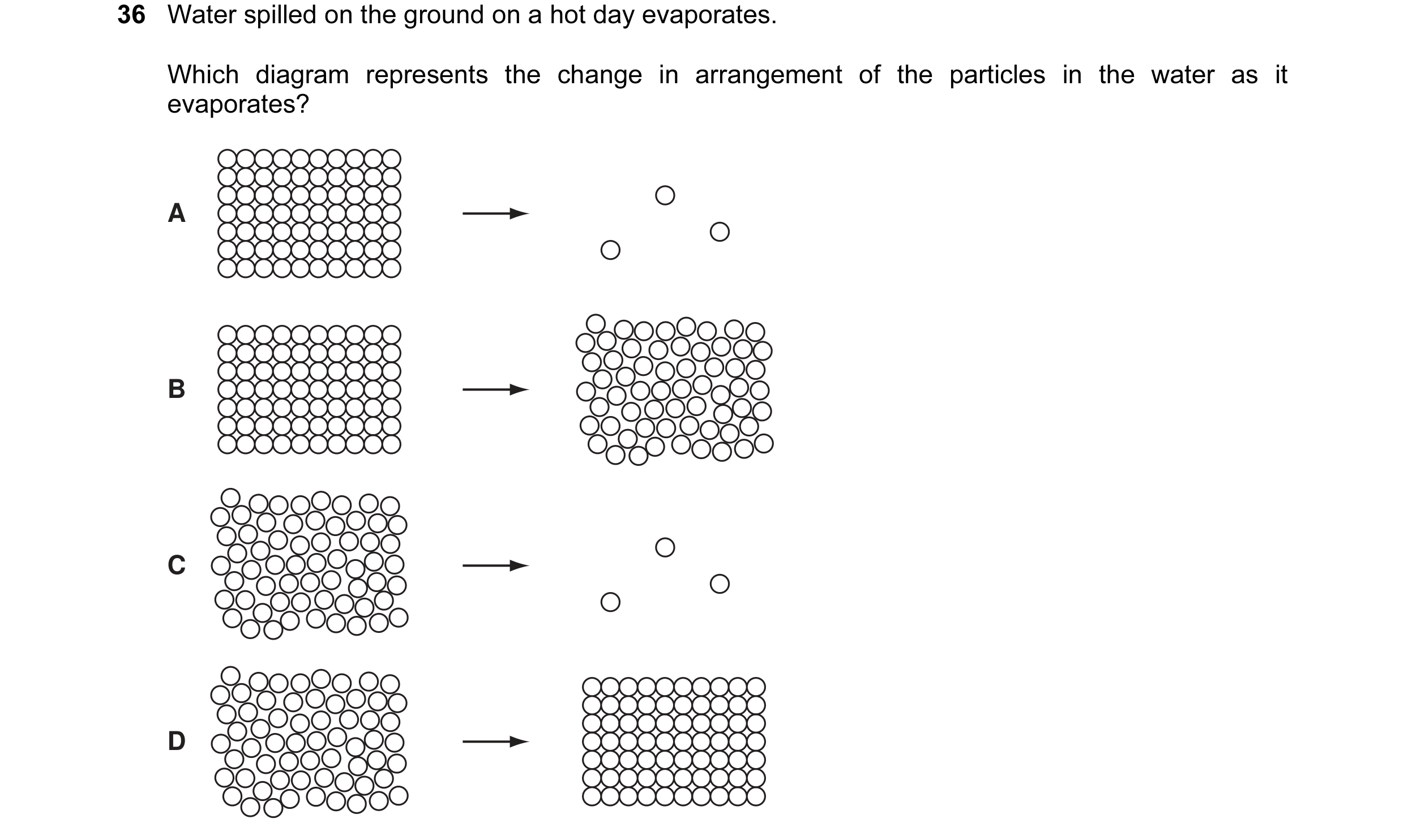
Q2 · Water spilled on the ground on a hot day evaporates 0653/11 May/June 2010
36 Water spilled on the ground on a hot day evaporates. Which diagram represents the change in arrangement of the particles in the water as it evaporates? A B C D
1 marks
Answer: C
This question in 0653/11 May/June 2010
Q3 · Water spilled on the ground on a hot day evaporates 0653/12 May/June 2010
28 Water spilled on the ground on a hot day evaporates. Which diagram represents the change in arrangement of the particles in the water as it evaporates? A B C D
1 marks
Answer: C
This question in 0653/12 May/June 2010
Q4 · Water spilled on the ground on a hot day evaporates 0653/13 May/June 2010
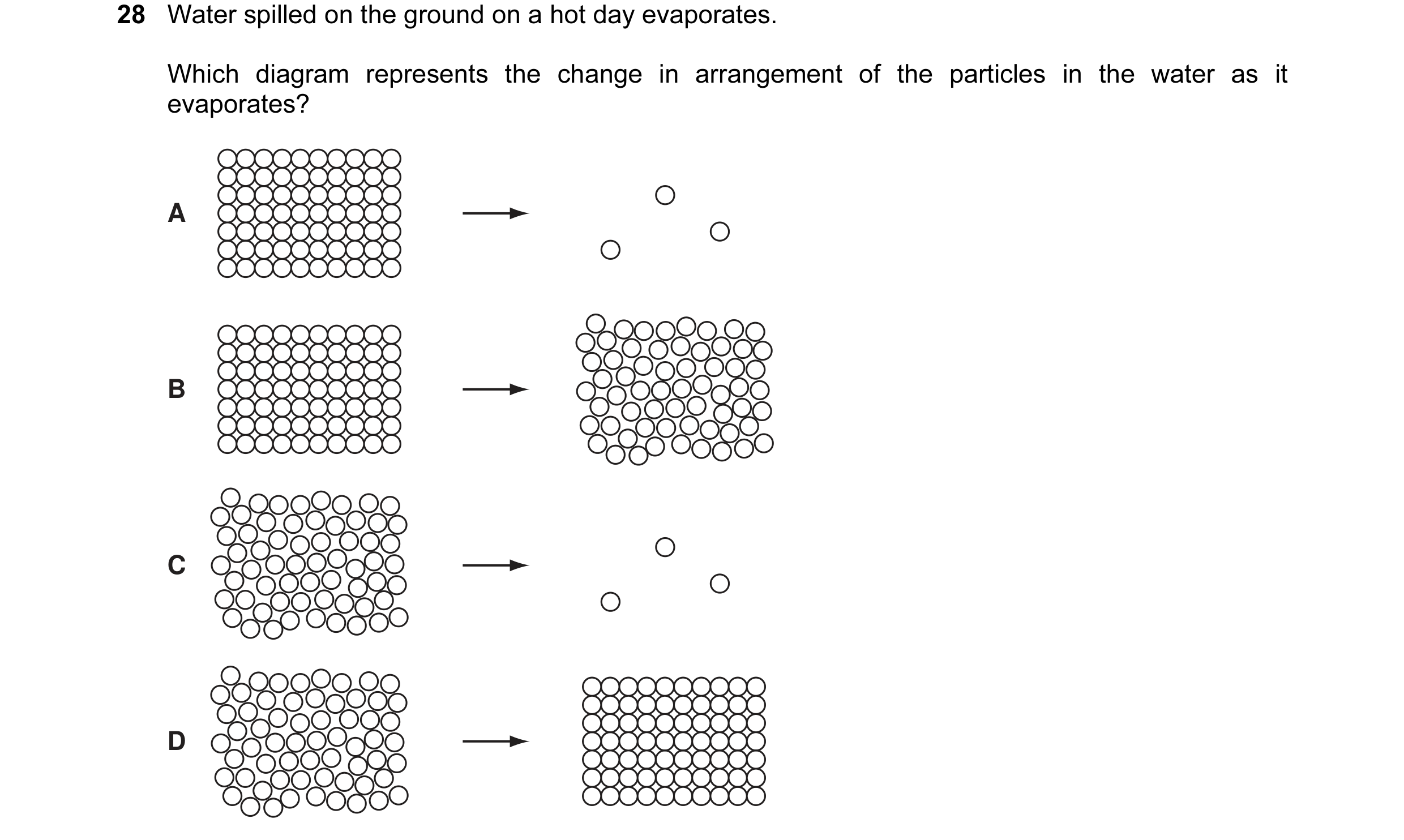
28 Water spilled on the ground on a hot day evaporates. Which diagram represents the change in arrangement of the particles in the water as it evaporates? A B C D
1 marks
Answer: C
This question in 0653/13 May/June 2010
Q5 · The temperature of a liquid is below its boiling point 0653/11 May/June 2012
31 The temperature of a liquid is below its boiling point. The liquid evaporates. Which row is correct about where the evaporation occurs and what effect this has on the temperature of the liquid? effect on the where evaporation occurs temperature of the liquid A in all parts of the liquid temperature falls B in all parts of the liquid temperature rises C only on the surface of the liquid temperature falls D only on the surface of the liquid temperature rises
1 marks
This question in 0653/11 May/June 2012
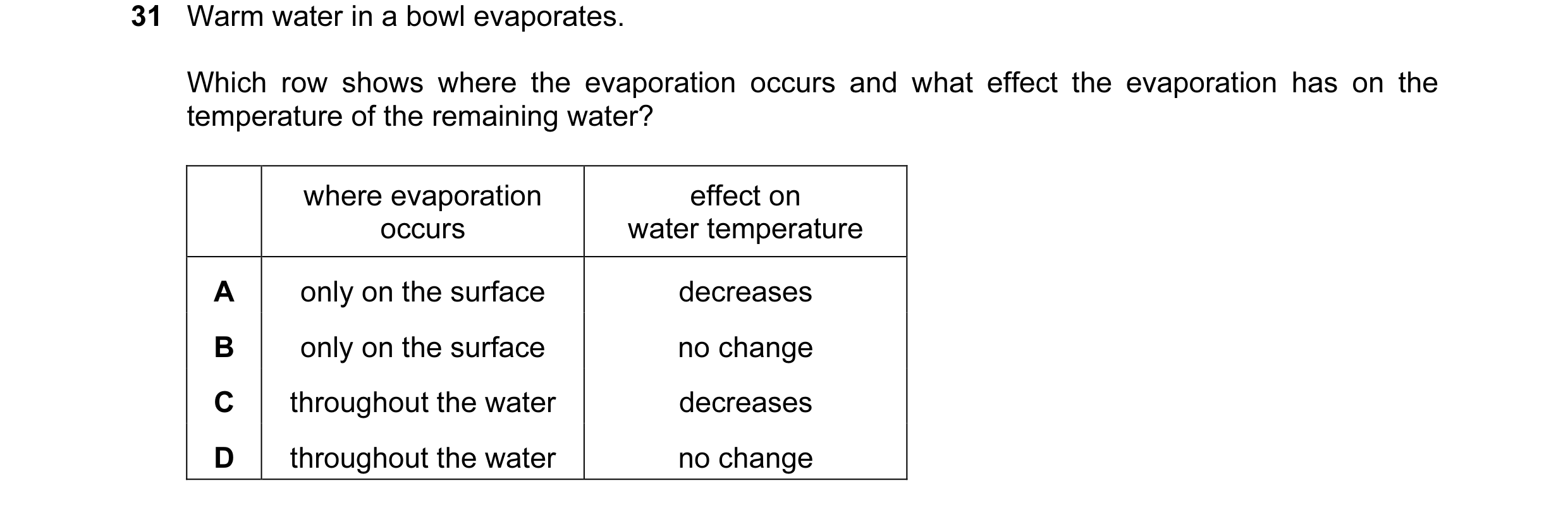
Q6 · Warm water in a bowl evaporates 0653/12 May/June 2012
31 Warm water in a bowl evaporates. Which row shows where the evaporation occurs and what effect the evaporation has on the temperature of the remaining water? where evaporation effect on occurs water temperature A only on the surface decreases B only on the surface no change C throughout the water decreases D throughout the water no change
1 marks
Answer: A
This question in 0653/12 May/June 2012
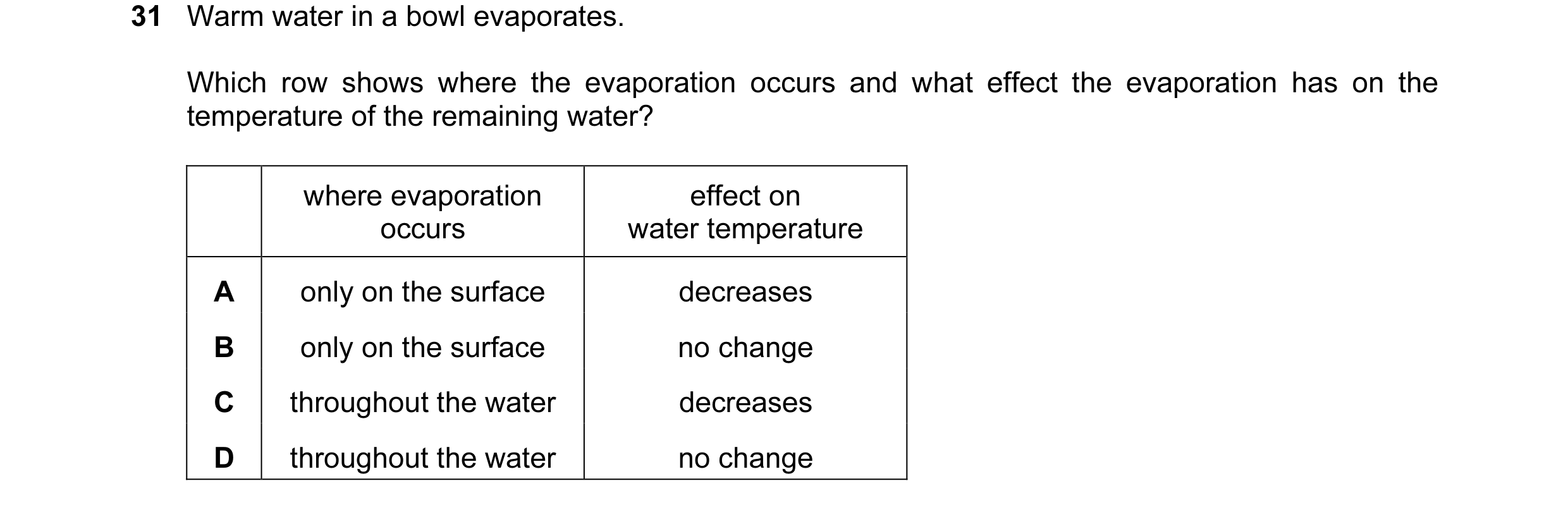
Q7 · Warm water in a bowl evaporates 0653/13 May/June 2012
31 Warm water in a bowl evaporates. Which row shows where the evaporation occurs and what effect the evaporation has on the temperature of the remaining water? where evaporation effect on occurs water temperature A only on the surface decreases B only on the surface no change C throughout the water decreases D throughout the water no change
1 marks
Answer: A
This question in 0653/13 May/June 2012
Q8 · When sweat evaporates, which change of state takes place? 0653/12 May/June 2013
31 When sweat evaporates, which change of state takes place? A gas to liquid B liquid to gas C liquid to solid D solid to gas
1 marks
Answer: B
This question in 0653/12 May/June 2013
Q9 · When sweat evaporates, which change of state takes place? 0653/13 May/June 2013
29 When sweat evaporates, which change of state takes place? A gas to liquid B liquid to gas C liquid to solid D solid to gas
1 marks
Answer: B
This question in 0653/13 May/June 2013
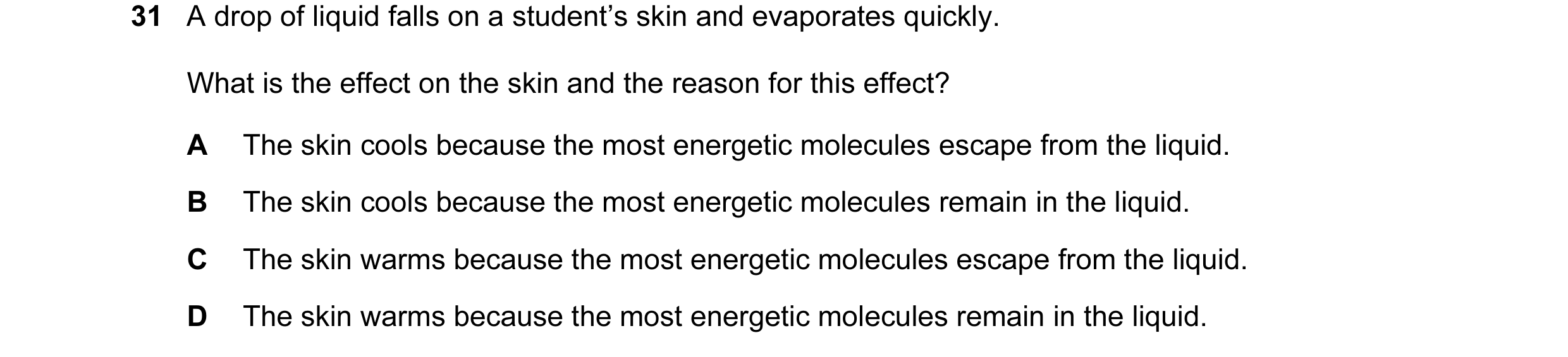
Q10 · A drop of liquid falls on a student’s skin and evaporates quickly 0653/11 Oct/Nov 2013
31 A drop of liquid falls on a student’s skin and evaporates quickly. What is the effect on the skin and the reason for this effect? A The skin cools because the most energetic molecules escape from the liquid. B The skin cools because the most energetic molecules remain in the liquid. C The skin warms because the most energetic molecules escape from the liquid. D The skin warms because the most energetic molecules remain in the liquid.
1 marks
Answer: A
This question in 0653/11 Oct/Nov 2013
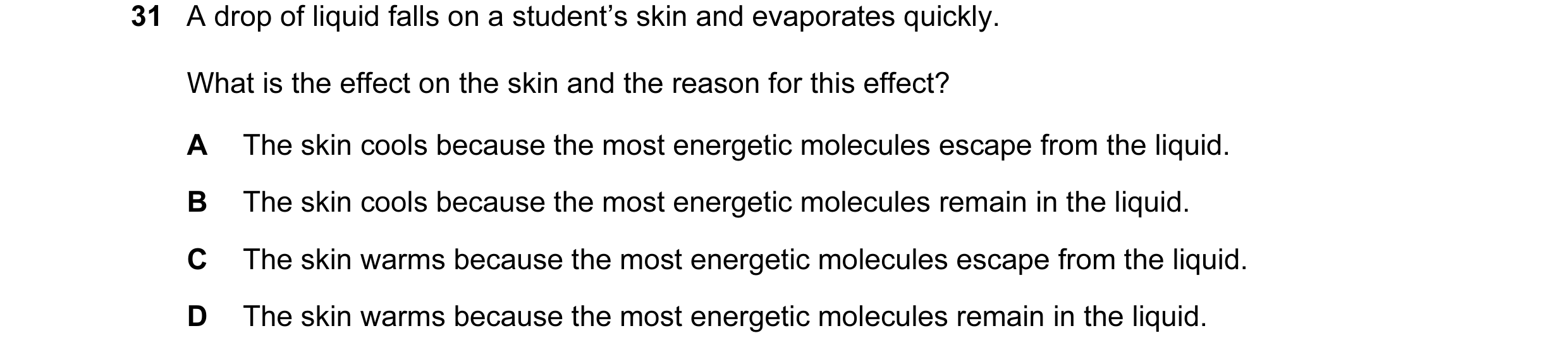
Q11 · A drop of liquid falls on a student’s skin and evaporates quickly 0653/12 Oct/Nov 2013
31 A drop of liquid falls on a student’s skin and evaporates quickly. What is the effect on the skin and the reason for this effect? A The skin cools because the most energetic molecules escape from the liquid. B The skin cools because the most energetic molecules remain in the liquid. C The skin warms because the most energetic molecules escape from the liquid. D The skin warms because the most energetic molecules remain in the liquid.
1 marks
Answer: A
This question in 0653/12 Oct/Nov 2013
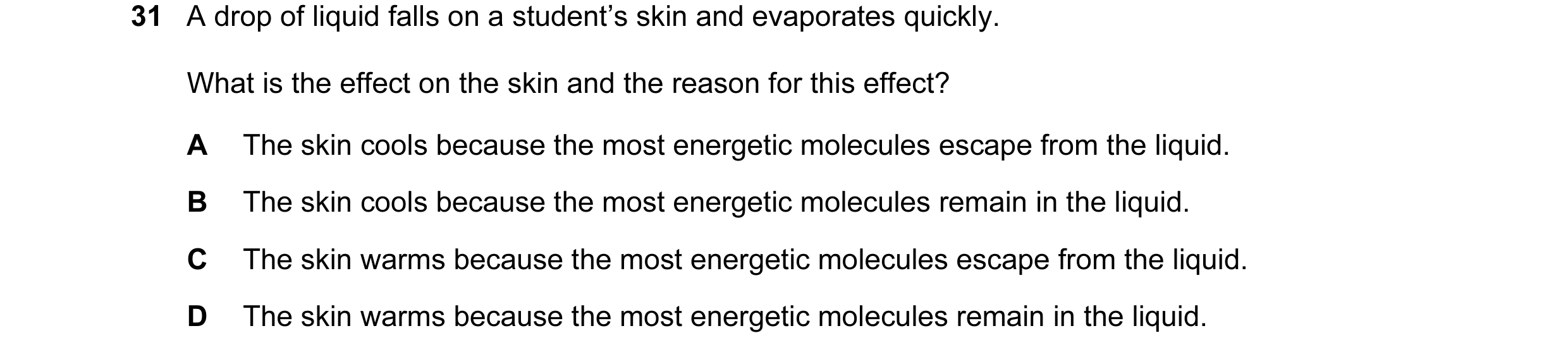
Q12 · A drop of liquid falls on a student’s skin and evaporates quickly 0653/13 Oct/Nov 2013
31 A drop of liquid falls on a student’s skin and evaporates quickly. What is the effect on the skin and the reason for this effect? A The skin cools because the most energetic molecules escape from the liquid. B The skin cools because the most energetic molecules remain in the liquid. C The skin warms because the most energetic molecules escape from the liquid. D The skin warms because the most energetic molecules remain in the liquid.
1 marks
Answer: A
This question in 0653/13 Oct/Nov 2013
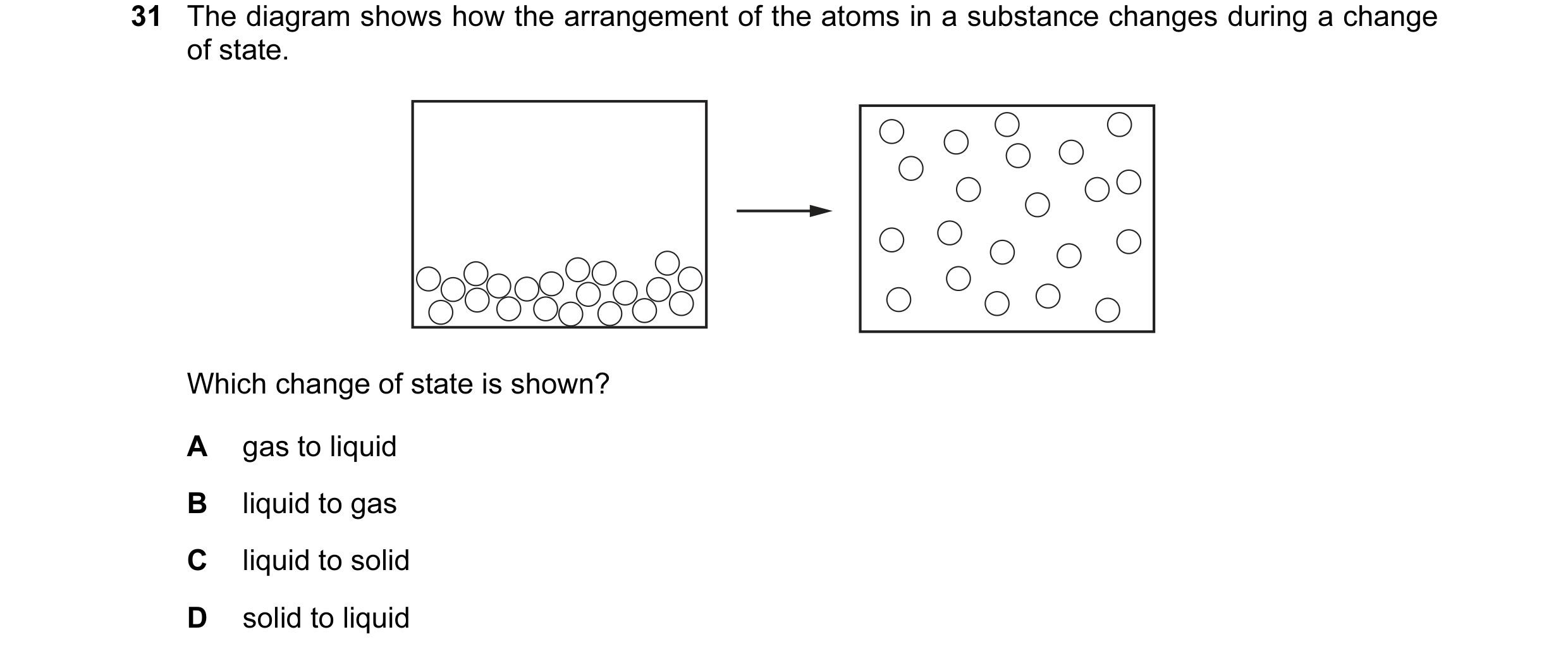
Q13 · The diagram shows how the arrangement of the atoms in a substance changes during a change… 0653/11 May/June 2014
31 The diagram shows how the arrangement of the atoms in a substance changes during a change of state. Which change of state is shown? A gas to liquid B liquid to gas C liquid to solid D solid to liquid
1 marks
Answer: B
This question in 0653/11 May/June 2014
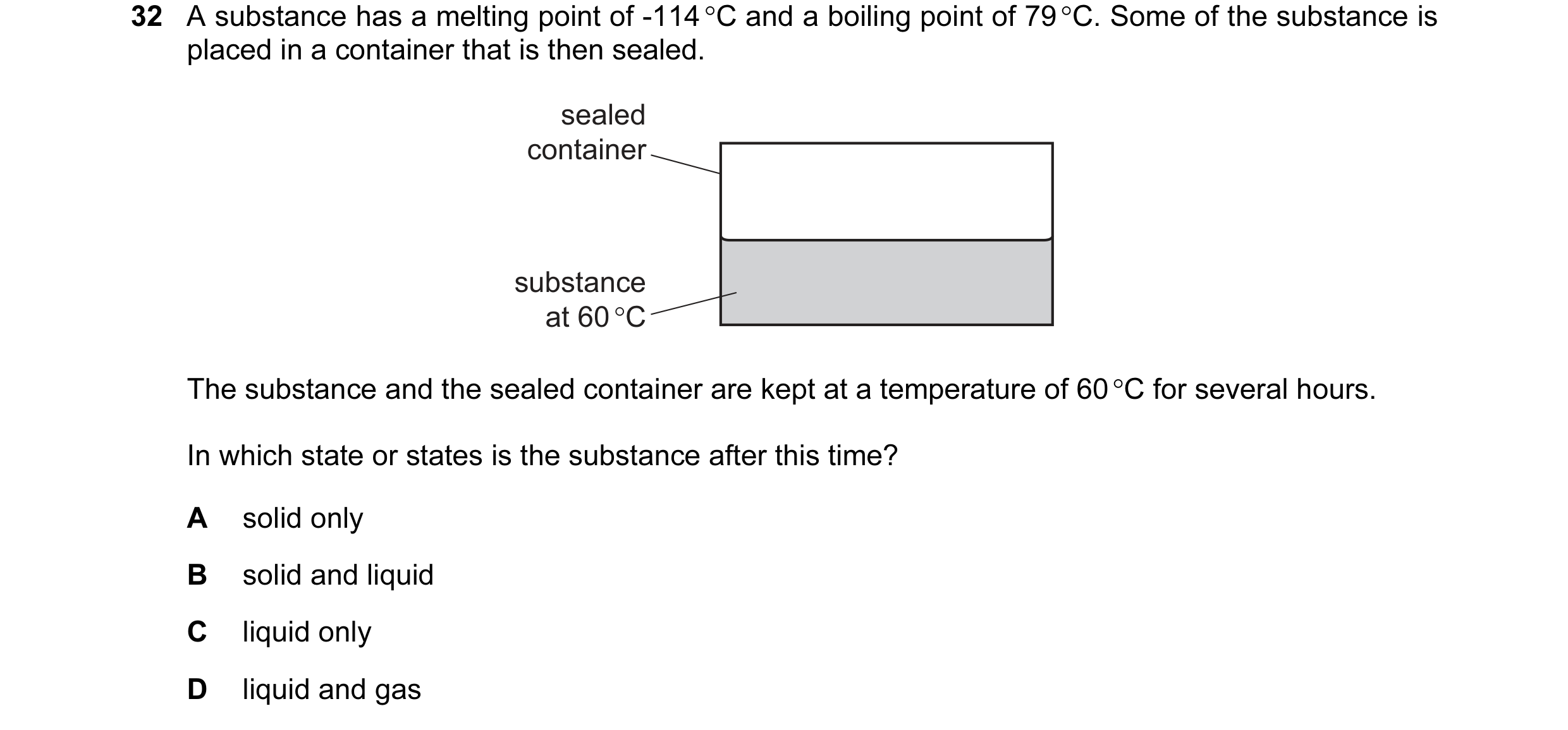
Q14 · A substance has a melting point of -114 °C and a boiling point of 79 °C 0653/11 May/June 2014
32 A substance has a melting point of -114 °C and a boiling point of 79 °C. Some of the substance is placed in a container that is then sealed. sealed container substance at 60 °C The substance and the sealed container are kept at a temperature of 60 °C for several hours. In which state or states is the substance after this time? A solid only B solid and liquid C liquid only D liquid and gas
1 marks
Answer: D
This question in 0653/11 May/June 2014
Q15 · The diagram shows how the arrangement of the atoms in a substance changes during a change… 0653/12 May/June 2014
31 The diagram shows how the arrangement of the atoms in a substance changes during a change of state. Which change of state is shown? A gas to liquid B liquid to gas C liquid to solid D solid to liquid
1 marks
Answer: B
This question in 0653/12 May/June 2014
Q16 · A substance has a melting point of -114 °C and a boiling point of 79 °C 0653/13 May/June 2014
31 A substance has a melting point of -114 °C and a boiling point of 79 °C. Some of the substance is placed in a container that is then sealed. sealed container substance at 60 °C The substance and the sealed container are kept at a temperature of 60 °C for several hours. In which state or states is the substance after this time? A solid only B solid and liquid C liquid only D liquid and gas
1 marks
Answer: D
This question in 0653/13 May/June 2014
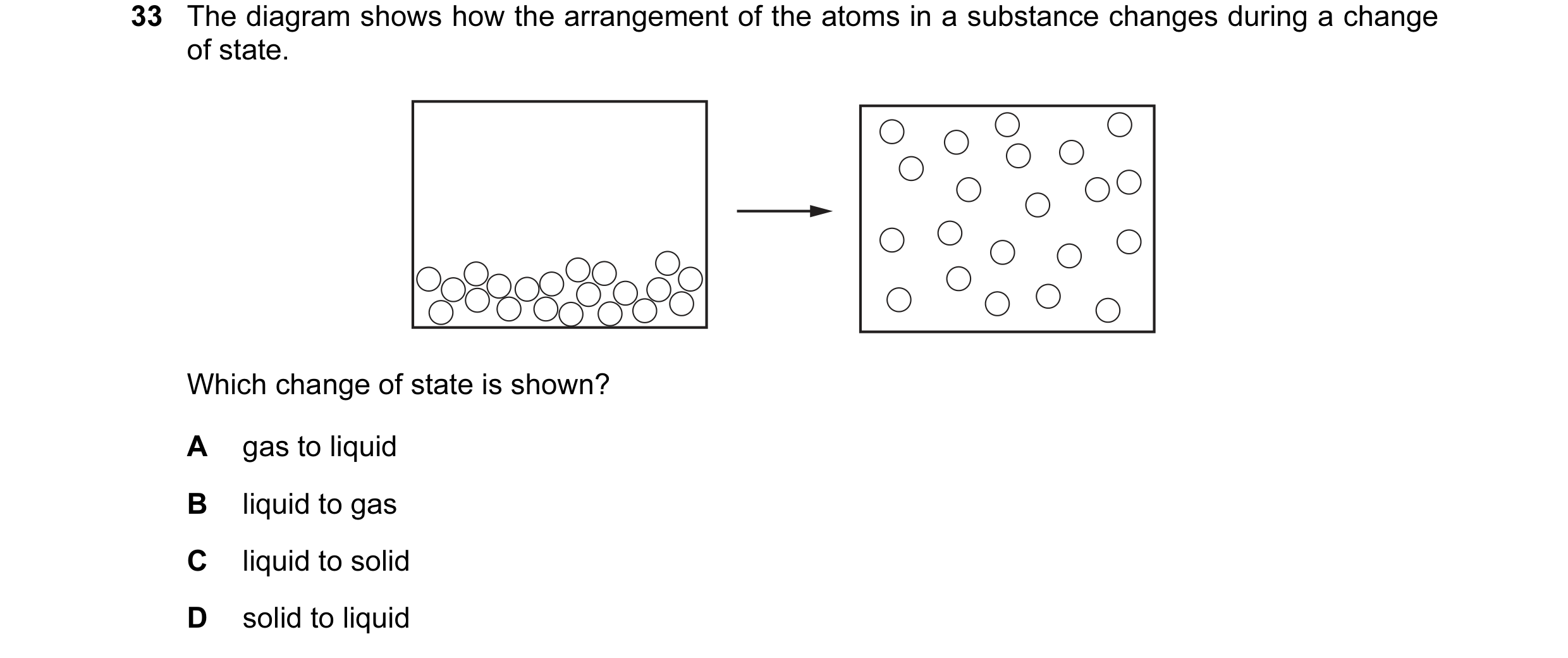
Q17 · The diagram shows how the arrangement of the atoms in a substance changes during a change… 0653/13 May/June 2014
33 The diagram shows how the arrangement of the atoms in a substance changes during a change of state. Which change of state is shown? A gas to liquid B liquid to gas C liquid to solid D solid to liquid
1 marks
Answer: B
This question in 0653/13 May/June 2014
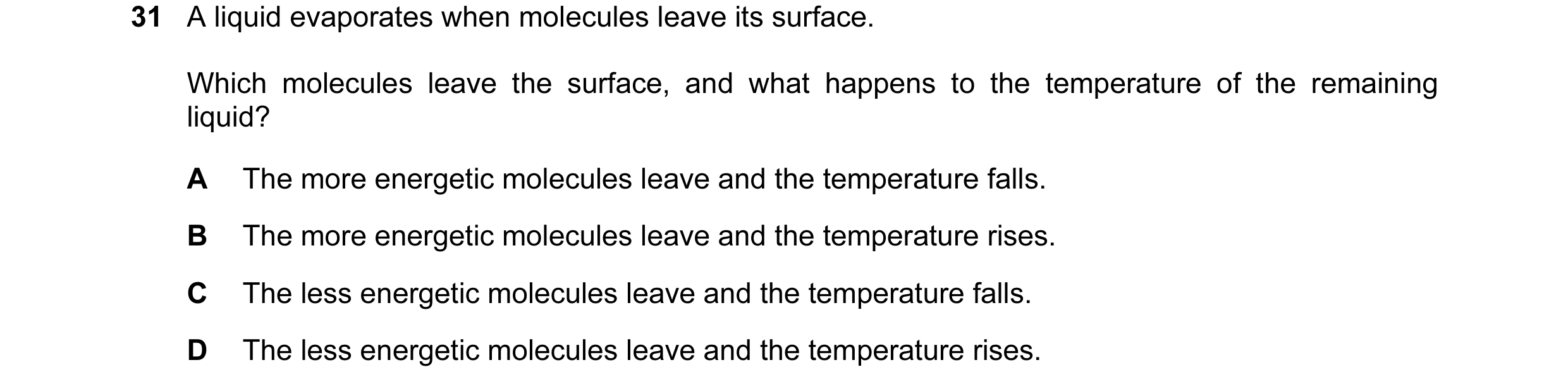
Q18 · A liquid evaporates when molecules leave its surface 0653/11 Oct/Nov 2014
31 A liquid evaporates when molecules leave its surface. Which molecules leave the surface, and what happens to the temperature of the remaining liquid? A The more energetic molecules leave and the temperature falls. B The more energetic molecules leave and the temperature rises. C The less energetic molecules leave and the temperature falls. D The less energetic molecules leave and the temperature rises.
1 marks
Answer: A
This question in 0653/11 Oct/Nov 2014
Q19 · A telephone engineer connects a wire between two poles on a very hot day in a desert 0653/11 Oct/Nov 2014
32 A telephone engineer connects a wire between two poles on a very hot day in a desert. He makes the wire very tight. very tight wire pole pole During the night, it becomes very cold. What could happen to the wire, and why? what could happen why A it breaks it contracts B it breaks it expands C it sags lower down it contracts D it sags lower down it expands
1 marks
Answer: A
This question in 0653/11 Oct/Nov 2014
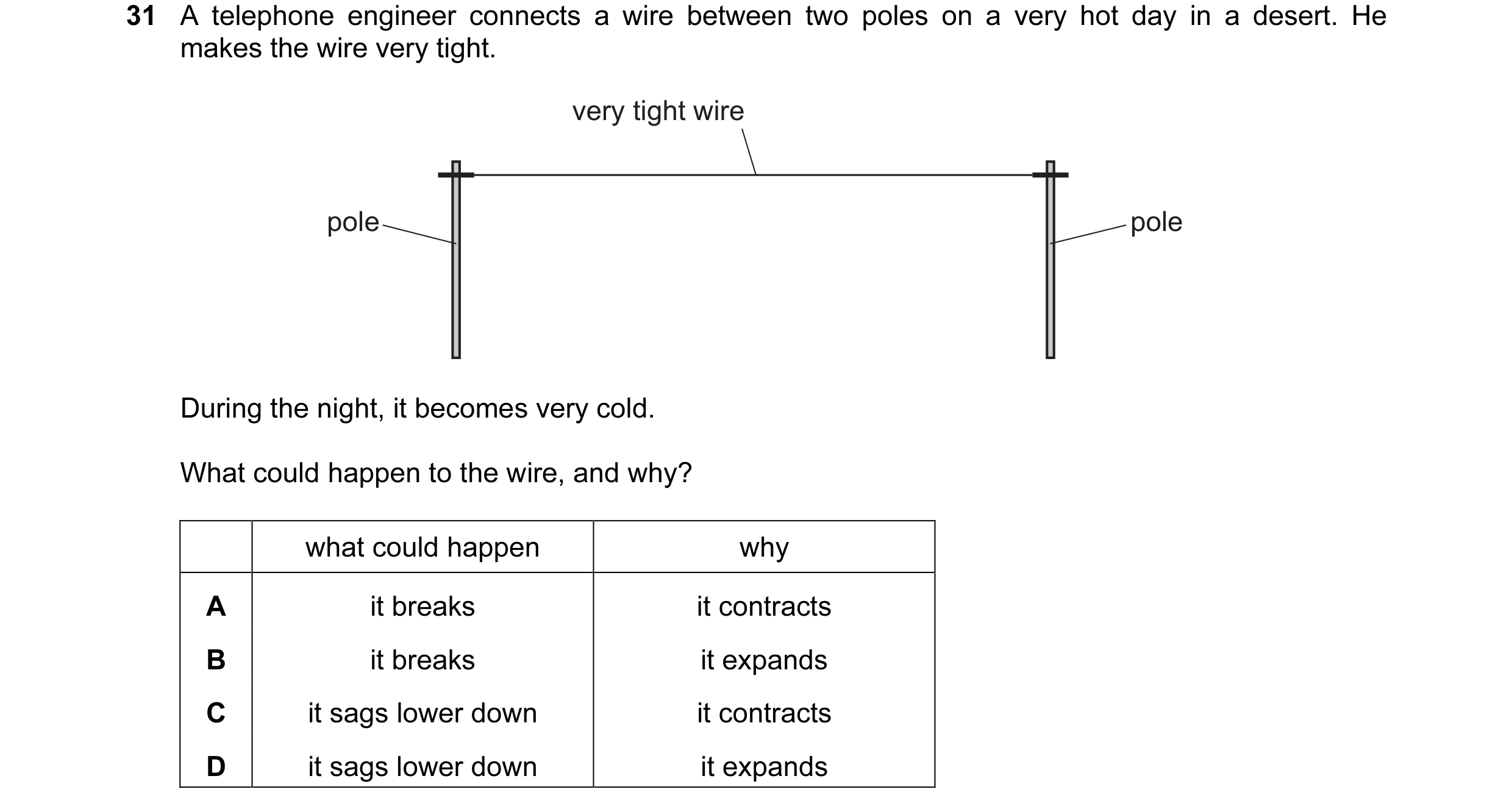
Q20 · A telephone engineer connects a wire between two poles on a very hot day in a desert 0653/12 Oct/Nov 2014
31 A telephone engineer connects a wire between two poles on a very hot day in a desert. He makes the wire very tight. very tight wire pole pole During the night, it becomes very cold. What could happen to the wire, and why? what could happen why A it breaks it contracts B it breaks it expands C it sags lower down it contracts D it sags lower down it expands
1 marks
Answer: A
This question in 0653/12 Oct/Nov 2014
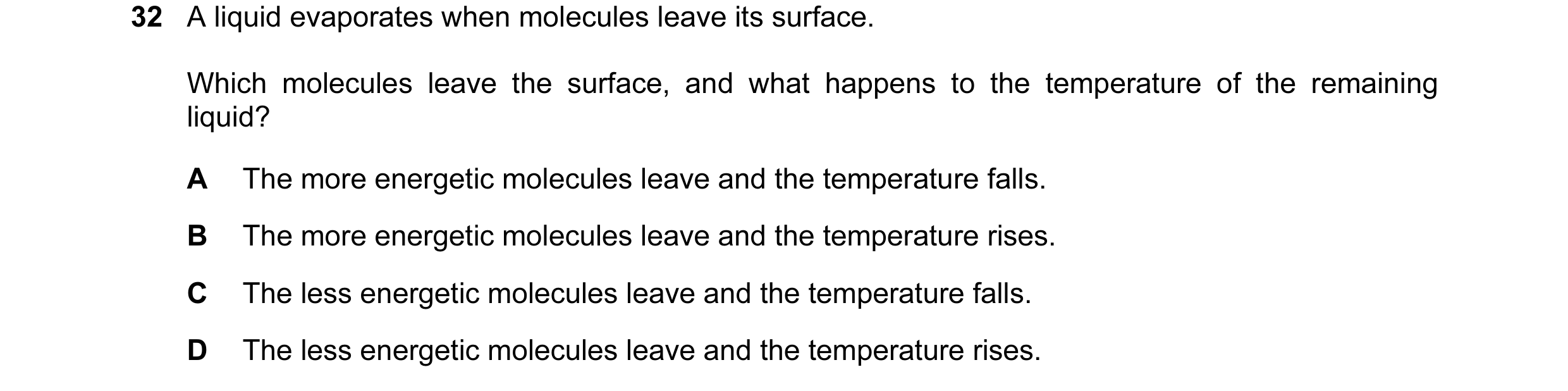
Q21 · A liquid evaporates when molecules leave its surface 0653/12 Oct/Nov 2014
32 A liquid evaporates when molecules leave its surface. Which molecules leave the surface, and what happens to the temperature of the remaining liquid? A The more energetic molecules leave and the temperature falls. B The more energetic molecules leave and the temperature rises. C The less energetic molecules leave and the temperature falls. D The less energetic molecules leave and the temperature rises.
1 marks
Answer: A
This question in 0653/12 Oct/Nov 2014
Q22 · Two samples of air are placed in a sealed container, as shown 0653/13 Oct/Nov 2014
3 Two samples of air are placed in a sealed container, as shown. high low oxygen oxygen concentration concentration partition LEFT RIGHT The partition is removed. What will be the situation in the container one hour later? A All the oxygen molecules have stopped moving. B Oxygen molecules are moving in all directions. C There will be a higher concentration of oxygen on the left than on the right. D There will be a higher concentration of oxygen on the right than on the left.
1 marks
Answer: B
This question in 0653/13 Oct/Nov 2014
Q23 · Which statement describes evaporation? 0653/13 Oct/Nov 2014
31 Which statement describes evaporation? A The most energetic molecules of a liquid escape from the surface into the air. B The most energetic molecules of a liquid return to the liquid from the air. C The least energetic molecules of a liquid escape from the surface into the air. D The least energetic molecules of a liquid return to the liquid from the air.
1 marks
Answer: A
This question in 0653/13 Oct/Nov 2014
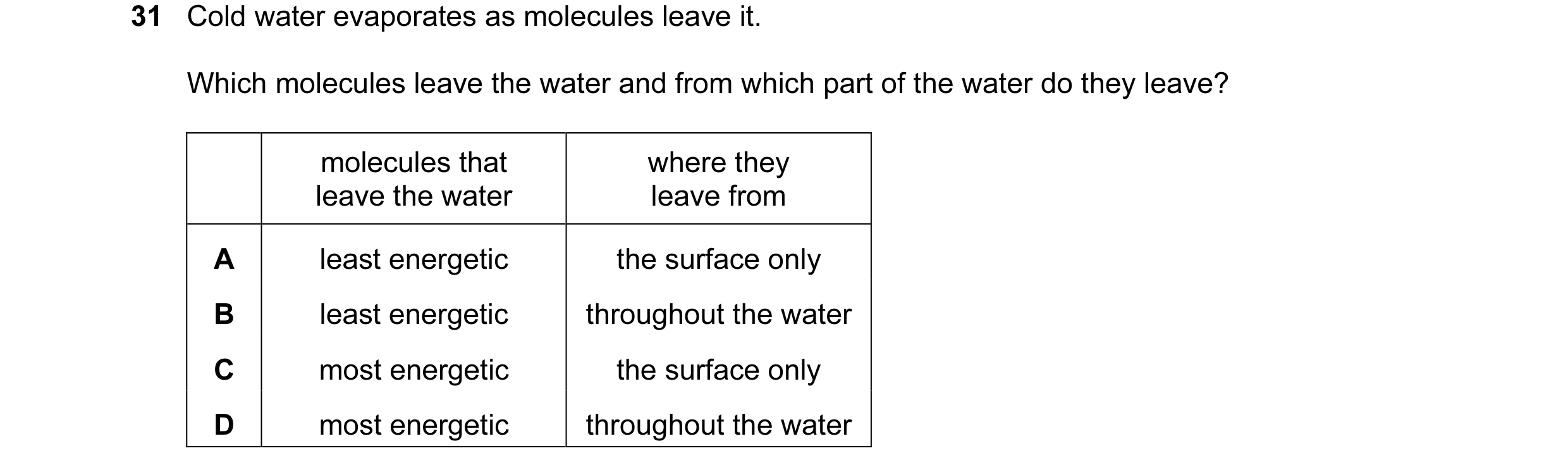
Q24 · Cold water evaporates as molecules leave it 0653/11 May/June 2015
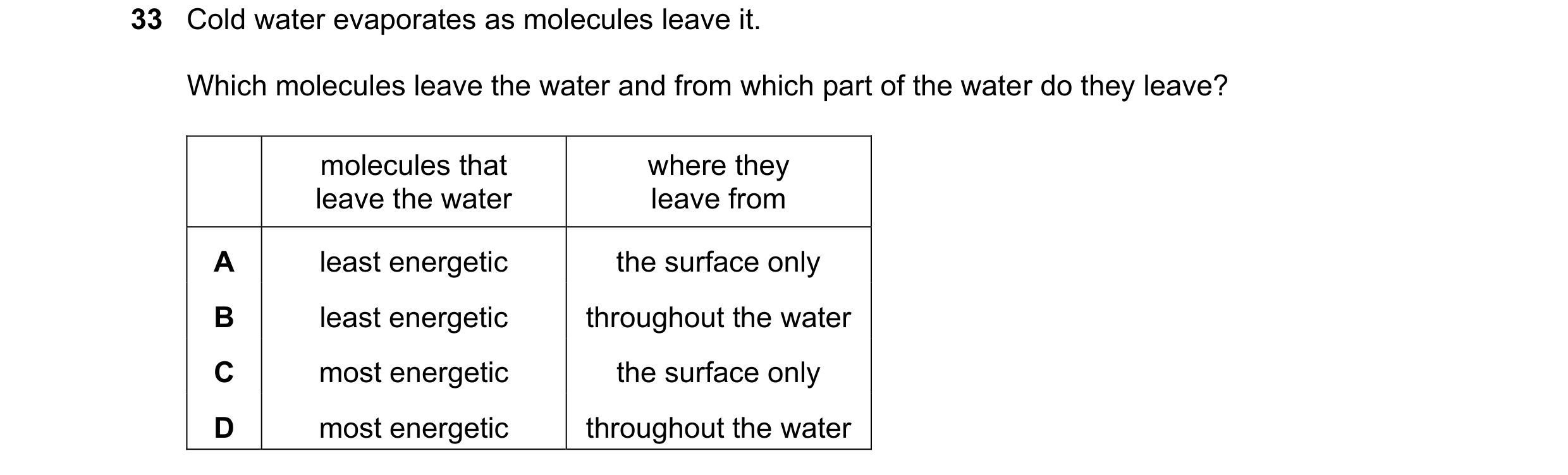
31 Cold water evaporates as molecules leave it. Which molecules leave the water and from which part of the water do they leave? molecules that where they leave the water leave from A least energetic the surface only B least energetic throughout the water C most energetic the surface only D most energetic throughout the water
1 marks
Answer: C
This question in 0653/11 May/June 2015
Q25 · Which statement about the evaporation of a liquid is not correct? 0653/12 May/June 2015
31 Which statement about the evaporation of a liquid is not correct? A Evaporation happens only at one particular temperature. B Evaporation happens only at the surface of the liquid. C Evaporation happens when the more energetic molecules escape from the liquid. D The energy required for evaporation can cause the liquid to cool.
1 marks
Answer: A
This question in 0653/12 May/June 2015
Q26 · A container of milk is wrapped in a wet cloth 0653/13 May/June 2015
31 A container of milk is wrapped in a wet cloth. Air blows over the cloth. The temperature of the milk changes as the water in the cloth evaporates. Which statement is correct? A The temperature of the milk falls because the less energetic water molecules escape from the cloth. B The temperature of the milk falls because the more energetic water molecules escape from the cloth. C The temperature of the milk rises because the less energetic water molecules escape from the cloth. D The temperature of the milk rises because the more energetic water molecules escape from the cloth.
1 marks
Answer: B
This question in 0653/13 May/June 2015
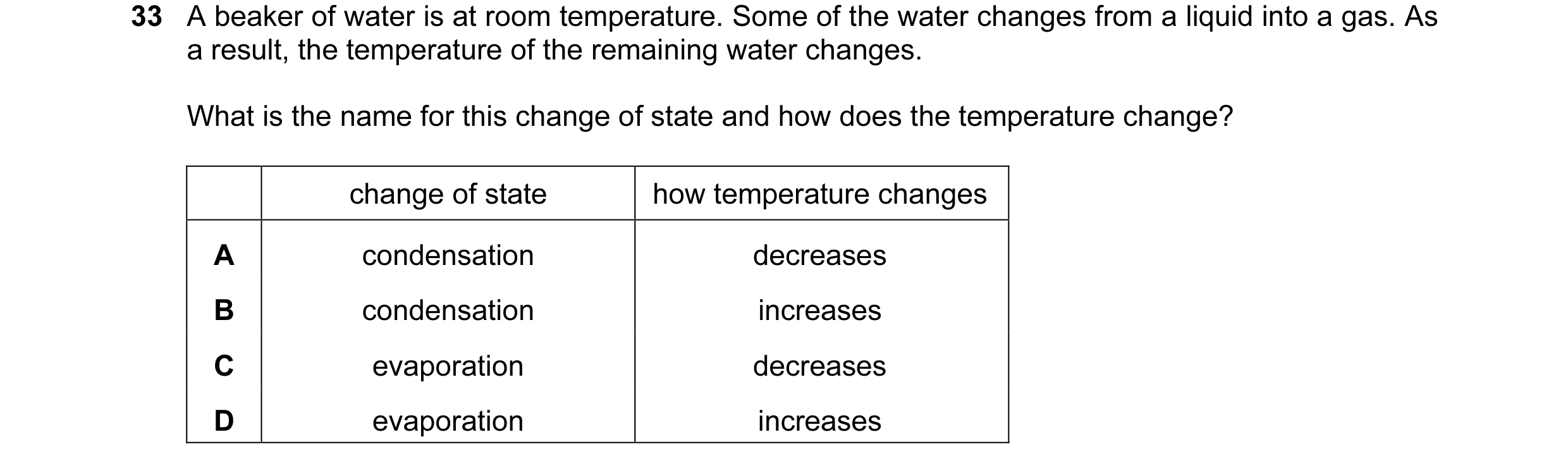
Q27 · A beaker of water is at room temperature 0653/11 Oct/Nov 2015
33 A beaker of water is at room temperature. Some of the water changes from a liquid into a gas. As a result, the temperature of the remaining water changes. What is the name for this change of state and how does the temperature change? change of state how temperature changes A condensation decreases B condensation increases C evaporation decreases D evaporation increases
1 marks
Answer: C
This question in 0653/11 Oct/Nov 2015
Q28 · Which statement about the molecules of a gas at 0 °C is correct? 0653/12 Oct/Nov 2015
33 Which statement about the molecules of a gas at 0 °C is correct? A They do not move. B They move about randomly. C They move around each other in circular orbits. D They vibrate about fixed positions.
1 marks
Answer: B
This question in 0653/12 Oct/Nov 2015
Q29 · Which statement describes the molecules in a gas? 0653/13 Oct/Nov 2015
33 Which statement describes the molecules in a gas? A They are close together and move about quickly. B They are close together and move about slowly. C They are far apart and move about quickly. D They are far apart and move about slowly.
1 marks
Answer: C
This question in 0653/13 Oct/Nov 2015
Q30 · When a liquid evaporates, molecules escape from its surface and the temperature of the… 0653/11 May/June 2016
31 When a liquid evaporates, molecules escape from its surface and the temperature of the remaining liquid changes. Which row is correct for the escaping molecules and for the temperature change of the remaining liquid? the molecules escaping the temperature of from the surface have the remaining liquid A the highest energy decreases B the highest energy increases C the lowest energy decreases D the lowest energy increases
1 marks
Answer: A
This question in 0653/11 May/June 2016
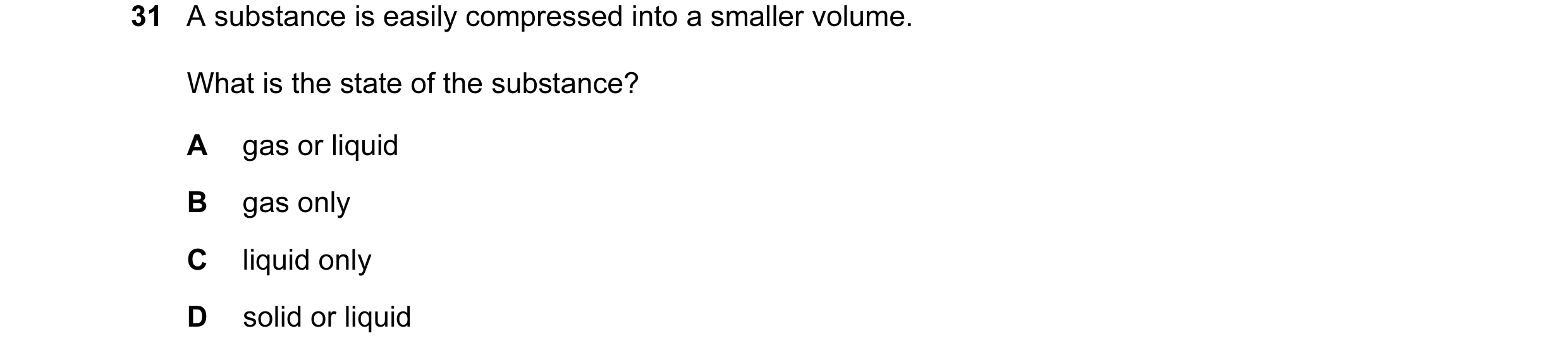
Q31 · A substance is easily compressed into a smaller volume 0653/12 May/June 2016
31 A substance is easily compressed into a smaller volume. What is the state of the substance? A gas or liquid B gas only C liquid only D solid or liquid
1 marks
Answer: B
This question in 0653/12 May/June 2016
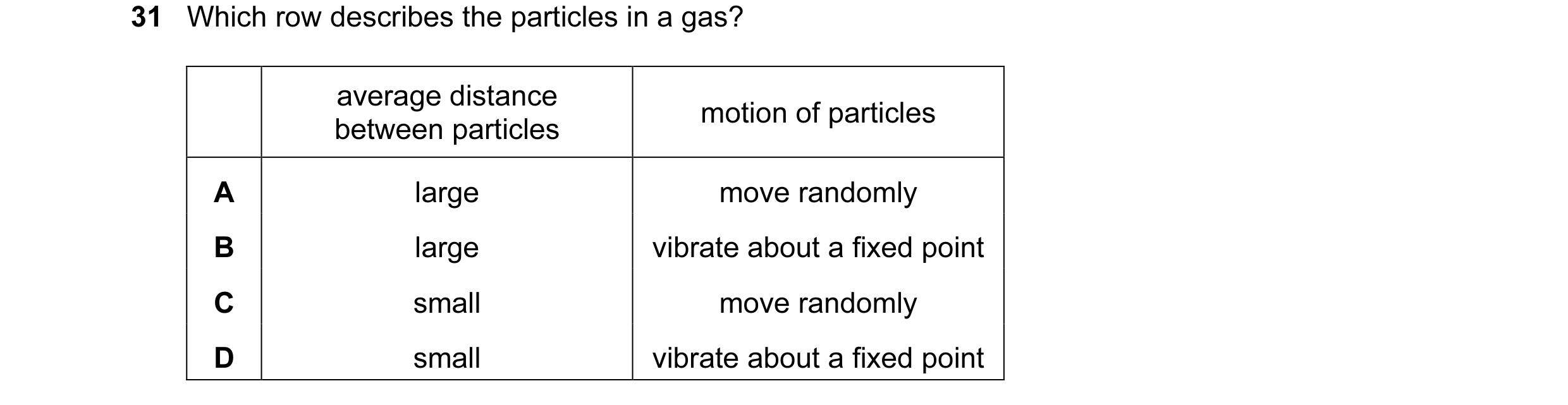
Q32 · Which row describes the particles in a gas? 0653/13 May/June 2016
31 Which row describes the particles in a gas? average distance motion of particles between particles A large move randomly B large vibrate about a fixed point C small move randomly D small vibrate about a fixed point
1 marks
Answer: A
This question in 0653/13 May/June 2016
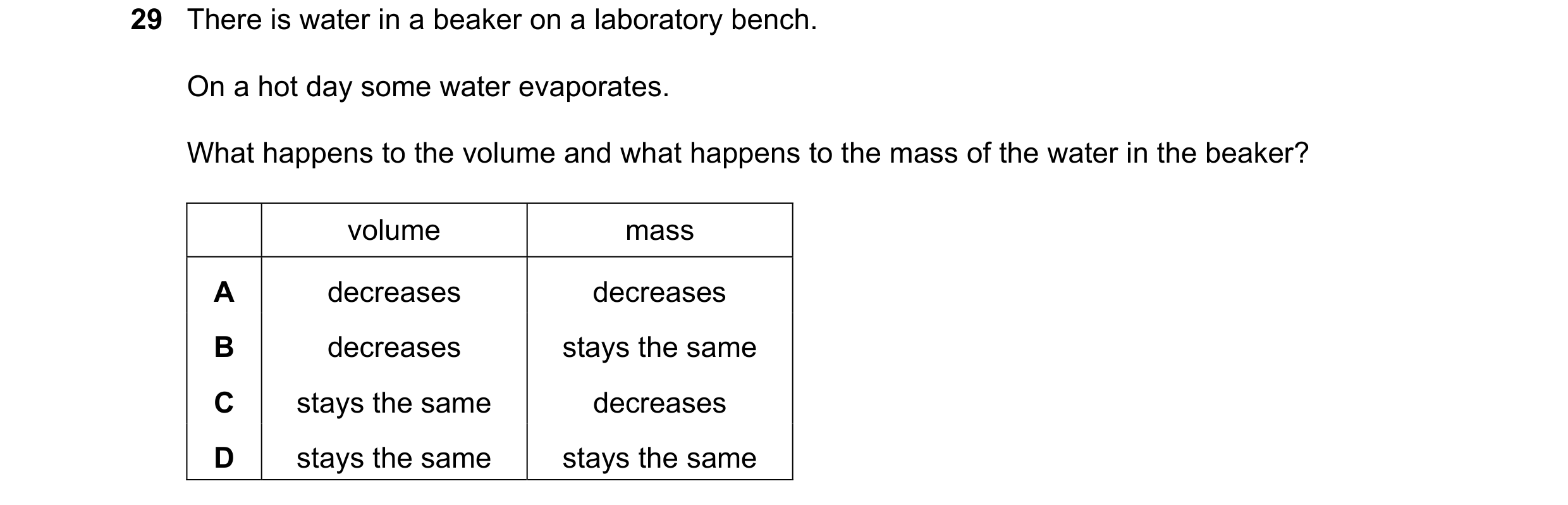
Q33 · There is water in a beaker on a laboratory bench 0653/11 Oct/Nov 2016
29 There is water in a beaker on a laboratory bench. On a hot day some water evaporates. What happens to the volume and what happens to the mass of the water in the beaker? volume mass A decreases decreases B decreases stays the same C stays the same decreases D stays the same stays the same
1 marks
Answer: A
This question in 0653/11 Oct/Nov 2016
Q34 · A bowl contains some warm water 0653/11 Oct/Nov 2016
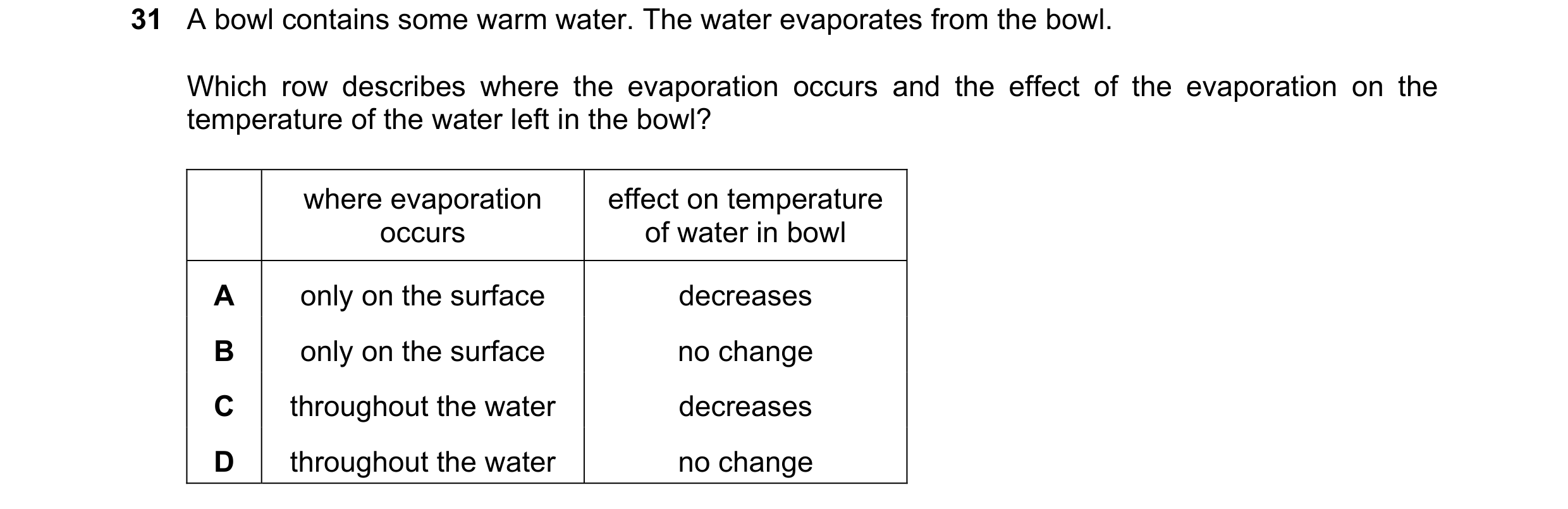
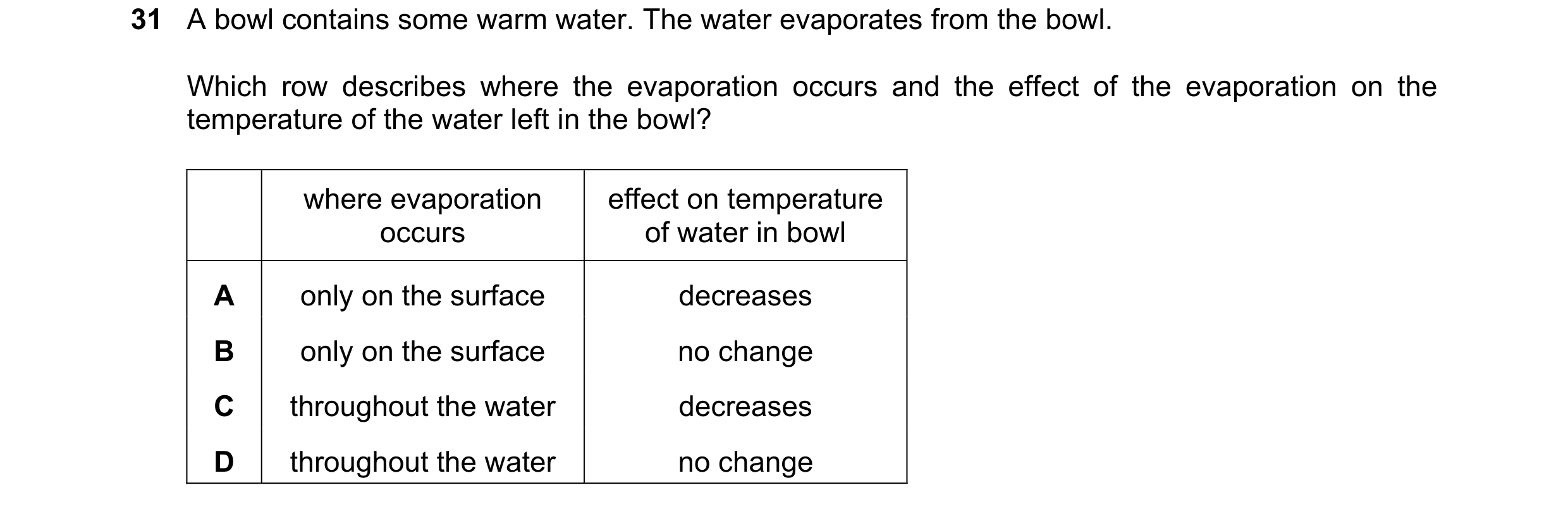
31 A bowl contains some warm water. The water evaporates from the bowl. Which row describes where the evaporation occurs and the effect of the evaporation on the temperature of the water left in the bowl? where evaporation effect on temperature occurs of water in bowl A only on the surface decreases B only on the surface no change C throughout the water decreases D throughout the water no change
1 marks
Answer: A
This question in 0653/11 Oct/Nov 2016
Q35 · A bowl contains some warm water 0653/12 Oct/Nov 2016
31 A bowl contains some warm water. The water evaporates from the bowl. Which row describes where the evaporation occurs and the effect of the evaporation on the temperature of the water left in the bowl? where evaporation effect on temperature occurs of water in bowl A only on the surface decreases B only on the surface no change C throughout the water decreases D throughout the water no change
1 marks
Answer: A
This question in 0653/12 Oct/Nov 2016
Q36 · A bowl contains some warm water 0653/13 Oct/Nov 2016
31 A bowl contains some warm water. The water evaporates from the bowl. Which row describes where the evaporation occurs and the effect of the evaporation on the temperature of the water left in the bowl? where evaporation effect on temperature occurs of water in bowl A only on the surface decreases B only on the surface no change C throughout the water decreases D throughout the water no change
1 marks
Answer: A
This question in 0653/13 Oct/Nov 2016
Q37 · A liquid changes into a gas and this causes the temperature of the liquid to change 0653/11 May/June 2017
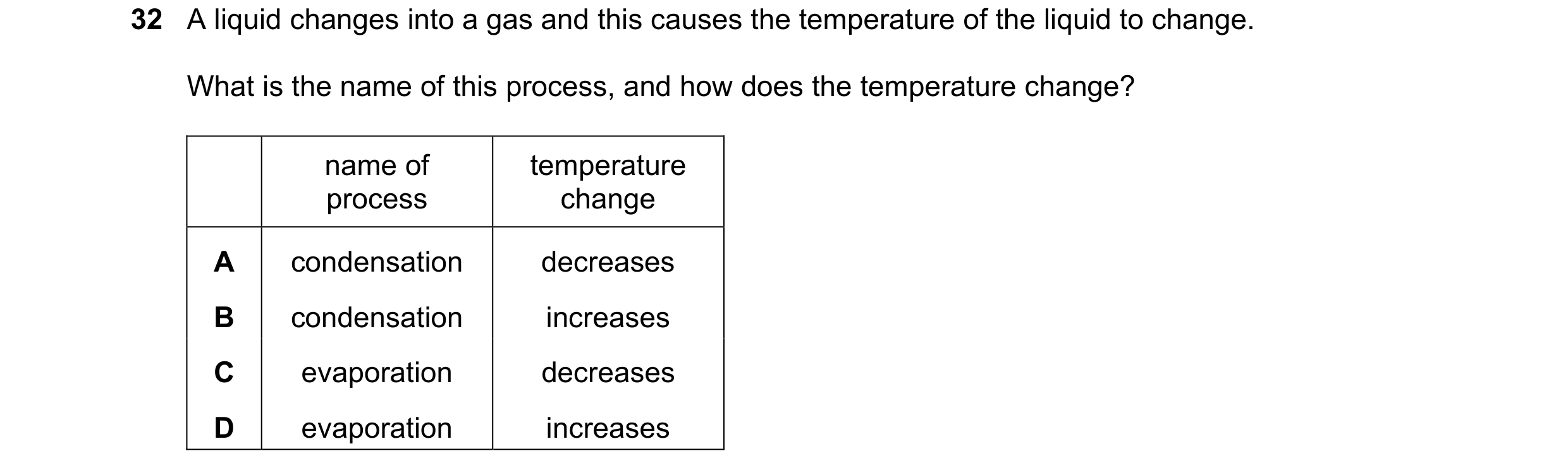
32 A liquid changes into a gas and this causes the temperature of the liquid to change. What is the name of this process, and how does the temperature change? name of temperature process change A condensation decreases B condensation increases C evaporation decreases D evaporation increases
1 marks
Answer: C
This question in 0653/11 May/June 2017
Q38 · When a liquid evaporates, which molecules escape and what happens, if anything, to the… 0653/11 Oct/Nov 2017
32 When a liquid evaporates, which molecules escape and what happens, if anything, to the temperature of the remaining liquid? molecules temperature of escaping remaining liquid A less energetic decreases molecules B less energetic stays the same molecules C more energetic decreases molecules D more energetic stays the same molecules
1 marks
Answer: C
This question in 0653/11 Oct/Nov 2017
Q39 · The molecules in a substance are close together but free to change positions with each… 0653/12 Oct/Nov 2017
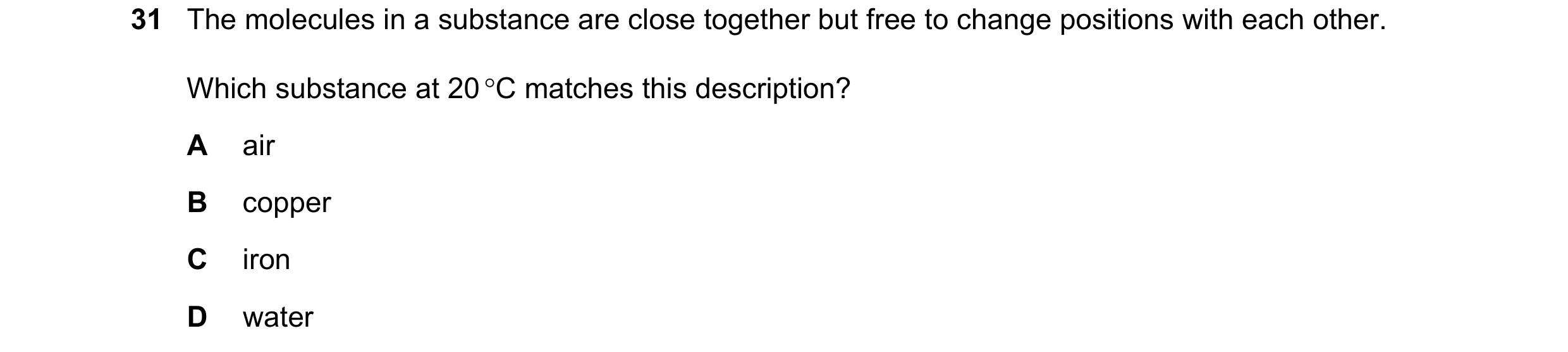
31 The molecules in a substance are close together but free to change positions with each other. Which substance at 20 °C matches this description? A air B copper C iron D water
1 marks
Answer: D
This question in 0653/12 Oct/Nov 2017
Q40 · On a hot day with no wind, a boy swims in warm water in a swimming pool 0653/13 Oct/Nov 2017
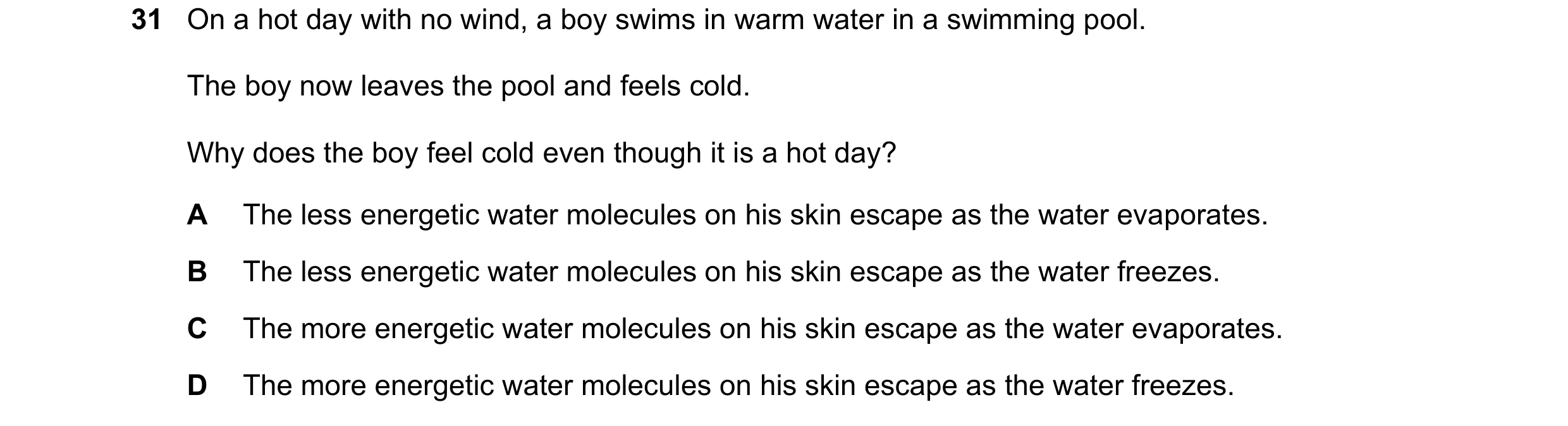
31 On a hot day with no wind, a boy swims in warm water in a swimming pool. The boy now leaves the pool and feels cold. Why does the boy feel cold even though it is a hot day? A The less energetic water molecules on his skin escape as the water evaporates. B The less energetic water molecules on his skin escape as the water freezes. C The more energetic water molecules on his skin escape as the water evaporates. D The more energetic water molecules on his skin escape as the water freezes.
1 marks
Answer: C
This question in 0653/13 Oct/Nov 2017
Q41 · A substance is a gas and loses energy thermally at a constant rate 0653/13 Oct/Nov 2017
32 A substance is a gas and loses energy thermally at a constant rate. The graph shows how the temperature of the gas changes with time. Two points on the graph are labelled P and Q. temperature P Q 0 0 time In which state is the substance at P and in which state is the substance at Q? state at P state at Q A all gas all liquid B all gas gas and liquid C gas and liquid all liquid D gas and liquid gas and liquid
1 marks
Answer: C
This question in 0653/13 Oct/Nov 2017
Q42 · What is a property of both solids and liquids? 0653/12 Feb/March 2018
33 What is a property of both solids and liquids? A They always fill a container. B They can flow. C They have a fixed shape. D They have a fixed volume.
1 marks
Answer: D
This question in 0653/12 Feb/March 2018
Q43 · Three beakers contain samples of the same substance 0653/11 May/June 2018
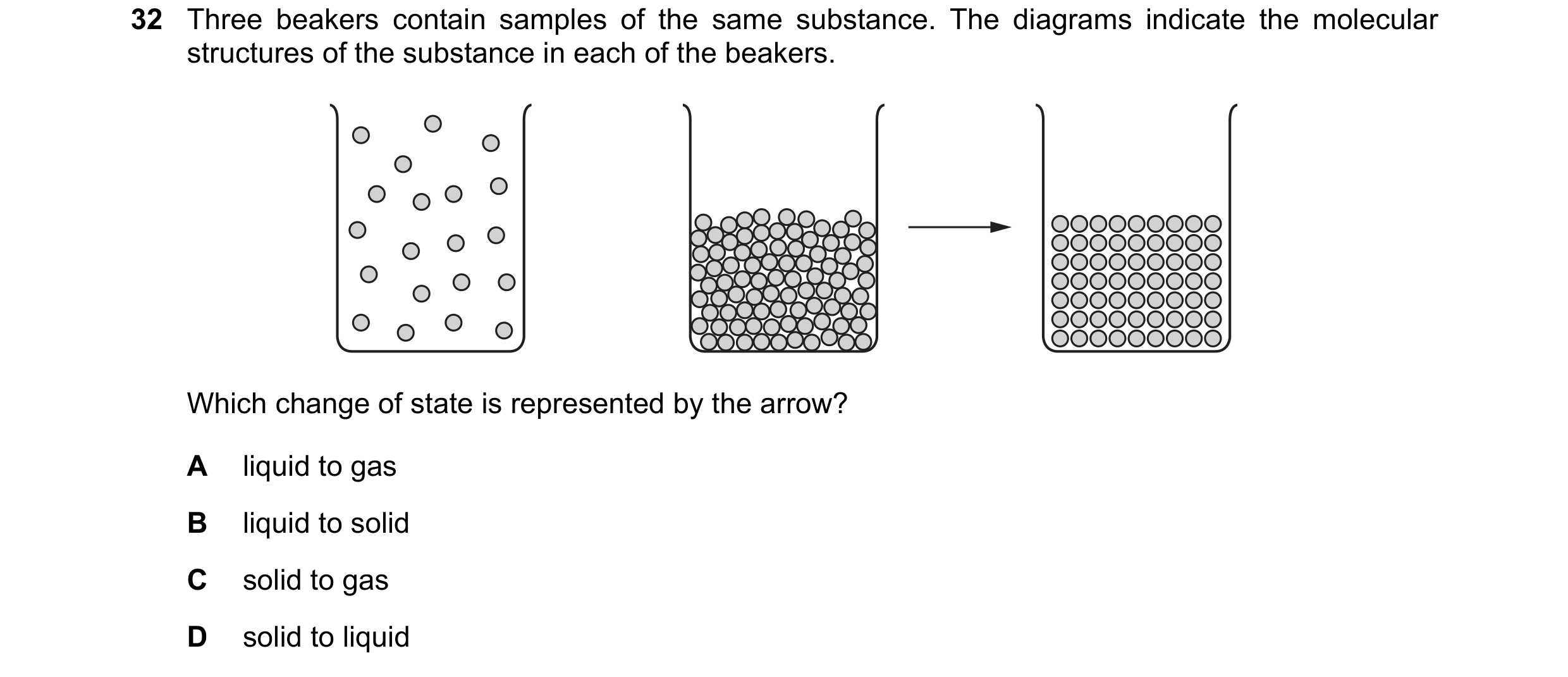
32 Three beakers contain samples of the same substance. The diagrams indicate the molecular structures of the substance in each of the beakers. Which change of state is represented by the arrow? A liquid to gas B liquid to solid C solid to gas D solid to liquid
1 marks
Answer: B
This question in 0653/11 May/June 2018
Q44 · A ball moves along hard, horizontal ground 0653/12 May/June 2018
30 A ball moves along hard, horizontal ground. The ball reaches a horizontal patch of mud. The mud causes the ball to stop. What is the main energy change as the ball moves in the mud? A gravitational energy to kinetic energy B gravitational energy to thermal energy C kinetic energy to gravitational energy D kinetic energy to thermal energy
1 marks
Answer: D
This question in 0653/12 May/June 2018
Q45 · A liquid at room temperature is in an open dish 0653/12 May/June 2018
32 A liquid at room temperature is in an open dish. The liquid is evaporating. Which statement about the evaporation is correct? A It causes the liquid’s surroundings to become warmer. B It happens only at the surface of the liquid. C It happens only when the room reaches a certain temperature. D It involves the molecules with the least energy escaping from the liquid.
1 marks
Answer: B
This question in 0653/12 May/June 2018
Q46 · A liquid at room temperature is in an open dish 0653/13 May/June 2018
32 A liquid at room temperature is in an open dish. The liquid is evaporating. Which statement about the evaporation is correct? A It causes the liquid’s surroundings to become warmer. B It happens only at the surface of the liquid. C It happens only when the room reaches a certain temperature. D It involves the molecules with the least energy escaping from the liquid.
1 marks
Answer: B
This question in 0653/13 May/June 2018
Q47 · A scientist investigates two different substances, P and Q 0653/11 Oct/Nov 2018
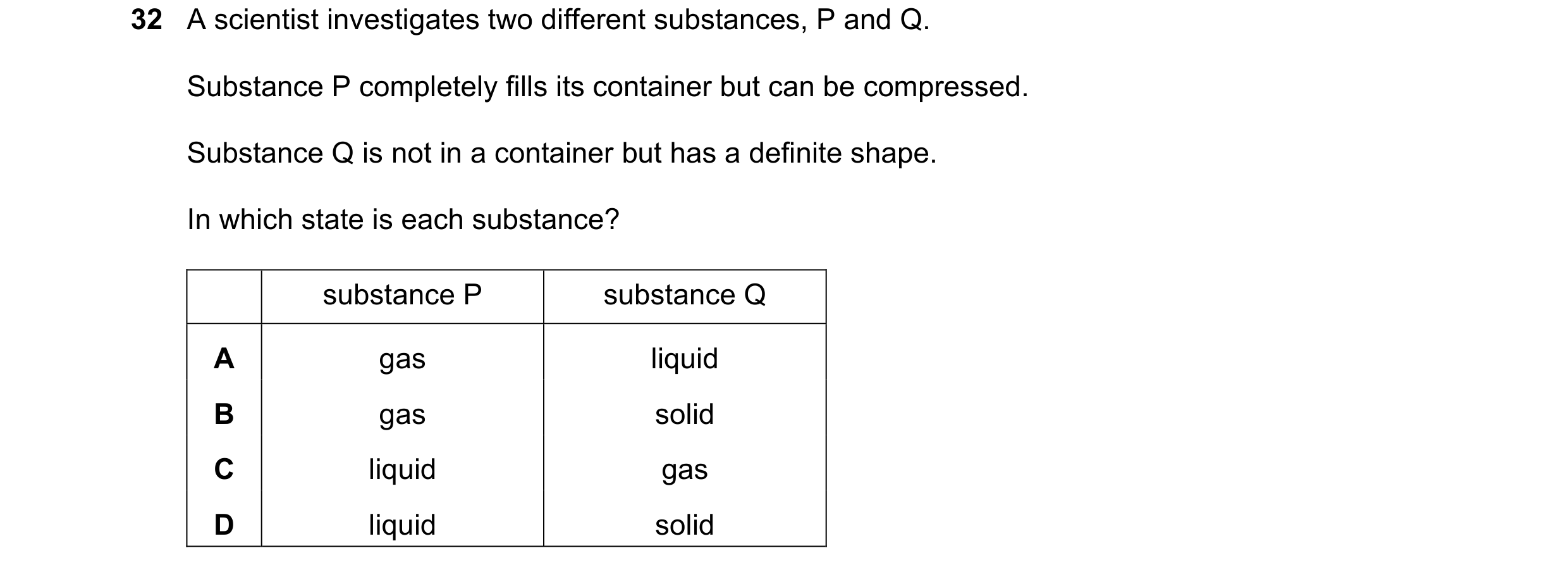
32 A scientist investigates two different substances, P and Q. Substance P completely fills its container but can be compressed. Substance Q is not in a container but has a definite shape. In which state is each substance? substance P substance Q A gas liquid B gas solid C liquid gas D liquid solid
1 marks
Answer: B
This question in 0653/11 Oct/Nov 2018
Q48 · A liquid evaporates when molecules leave its surface 0653/11 Oct/Nov 2018
33 A liquid evaporates when molecules leave its surface. Which molecules leave the surface, and what happens to the temperature of the remaining liquid? A The more energetic molecules leave and the temperature falls. B The more energetic molecules leave and the temperature rises. C The less energetic molecules leave and the temperature falls. D The less energetic molecules leave and the temperature rises.
1 marks
Answer: A
This question in 0653/11 Oct/Nov 2018
Q49 · A liquid evaporates when molecules leave its surface 0653/12 Oct/Nov 2018
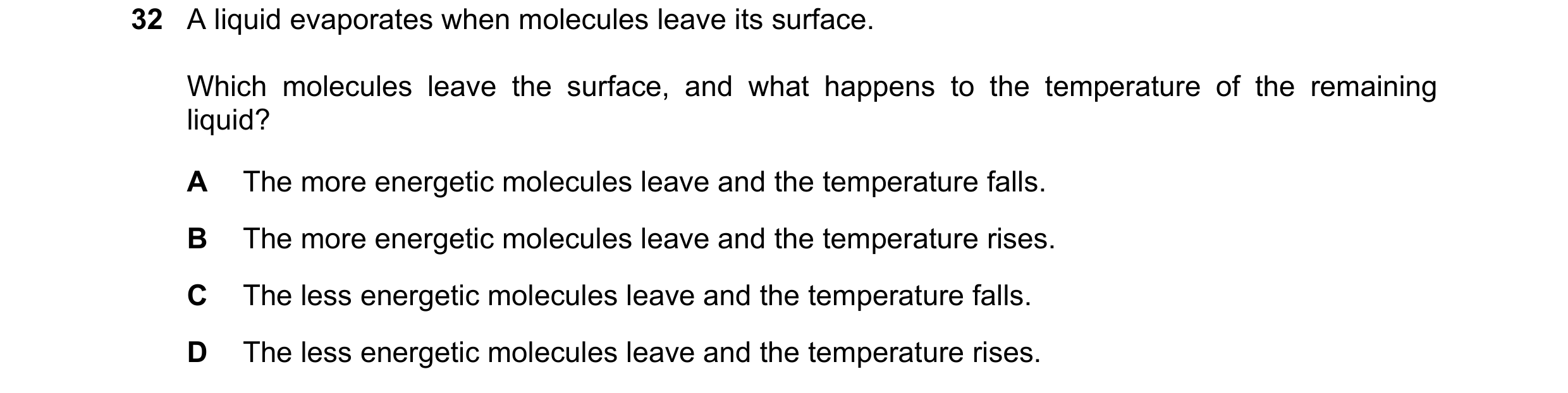
32 A liquid evaporates when molecules leave its surface. Which molecules leave the surface, and what happens to the temperature of the remaining liquid? A The more energetic molecules leave and the temperature falls. B The more energetic molecules leave and the temperature rises. C The less energetic molecules leave and the temperature falls. D The less energetic molecules leave and the temperature rises.
1 marks
Answer: A
This question in 0653/12 Oct/Nov 2018
Q50 · A liquid evaporates when molecules leave its surface 0653/13 Oct/Nov 2018
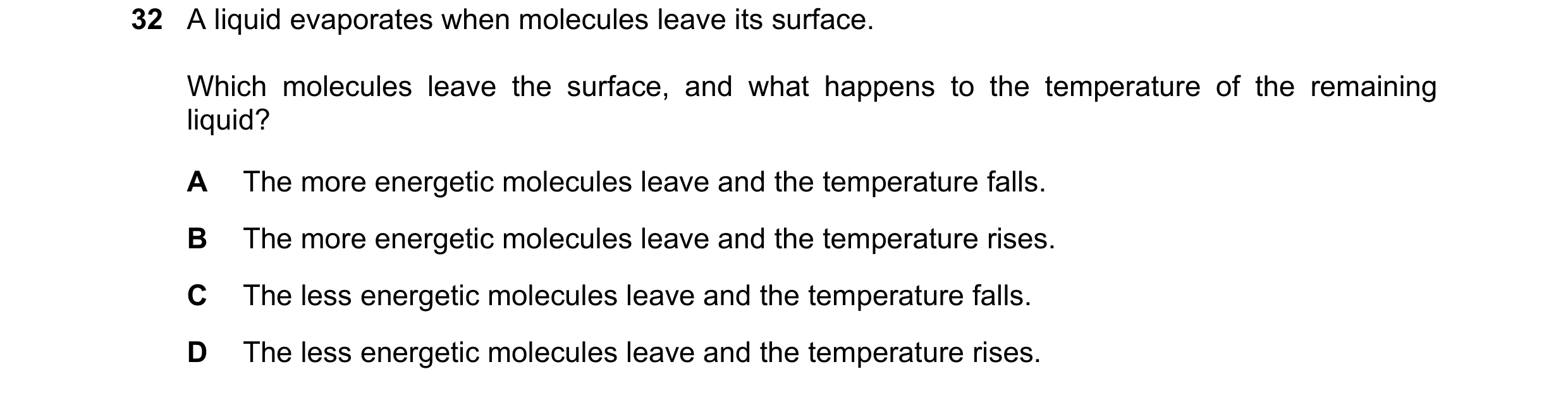
32 A liquid evaporates when molecules leave its surface. Which molecules leave the surface, and what happens to the temperature of the remaining liquid? A The more energetic molecules leave and the temperature falls. B The more energetic molecules leave and the temperature rises. C The less energetic molecules leave and the temperature falls. D The less energetic molecules leave and the temperature rises.
1 marks
Answer: A
This question in 0653/13 Oct/Nov 2018
Q51 · Which statement describes oxygen molecules at room temperature and pressure? 0653/12 Feb/March 2019
14 Which statement describes oxygen molecules at room temperature and pressure? A They are closely packed and move around slowly. B They are closely packed and vibrate about a fixed point. C They are loosely packed and move around rapidly. D They are loosely packed and vibrate about a fixed point.
1 marks
Answer: C
This question in 0653/12 Feb/March 2019
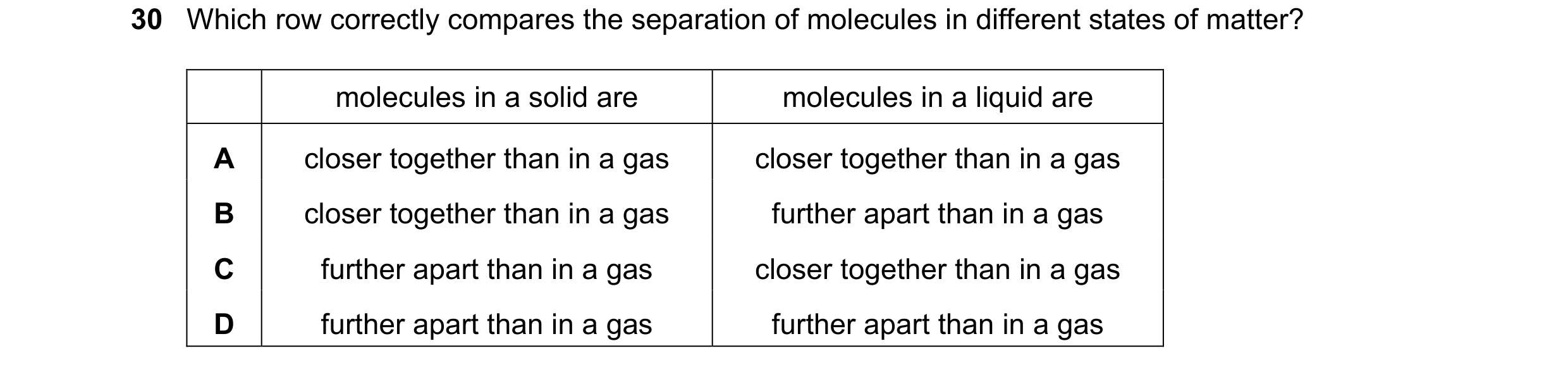
Q52 · Which row correctly compares the separation of molecules in different states of matter? 0653/12 Feb/March 2019
30 Which row correctly compares the separation of molecules in different states of matter? molecules in a solid are molecules in a liquid are A closer together than in a gas closer together than in a gas B closer together than in a gas further apart than in a gas C further apart than in a gas closer together than in a gas D further apart than in a gas further apart than in a gas
1 marks
Answer: A
This question in 0653/12 Feb/March 2019
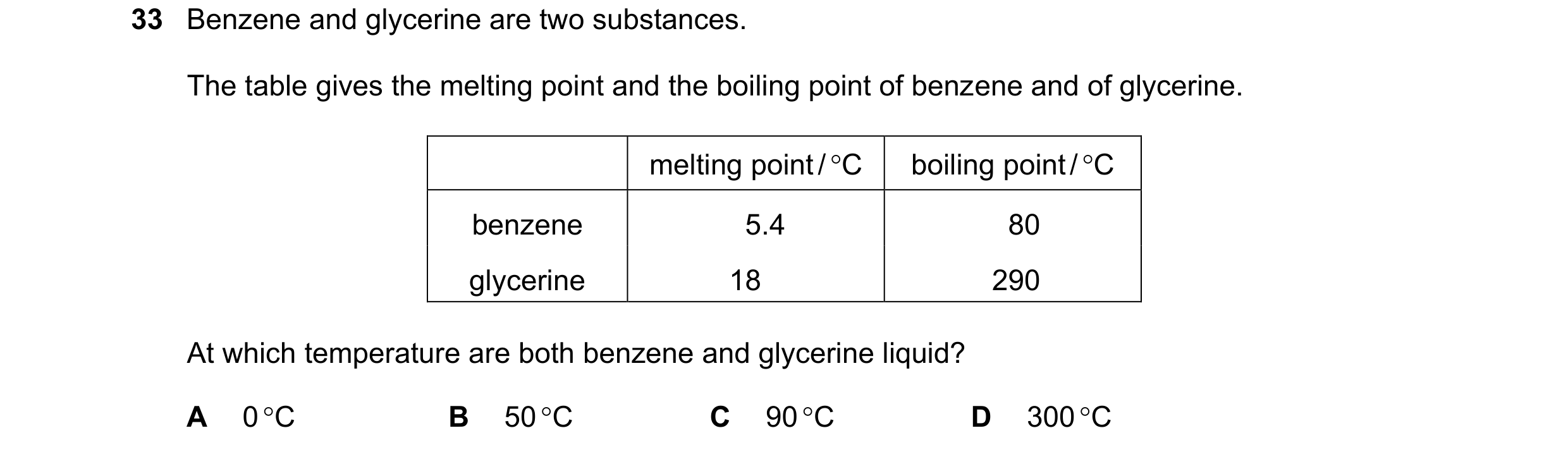
Q53 · Benzene and glycerine are two substances 0653/11 May/June 2019
33 Benzene and glycerine are two substances. The table gives the melting point and the boiling point of benzene and of glycerine. melting point / °C boiling point / °C benzene 5.4 80 glycerine 18 290 At which temperature are both benzene and glycerine liquid? A 0 °C B 50 °C C 90 °C D 300 °C
1 marks
Answer: B
This question in 0653/11 May/June 2019
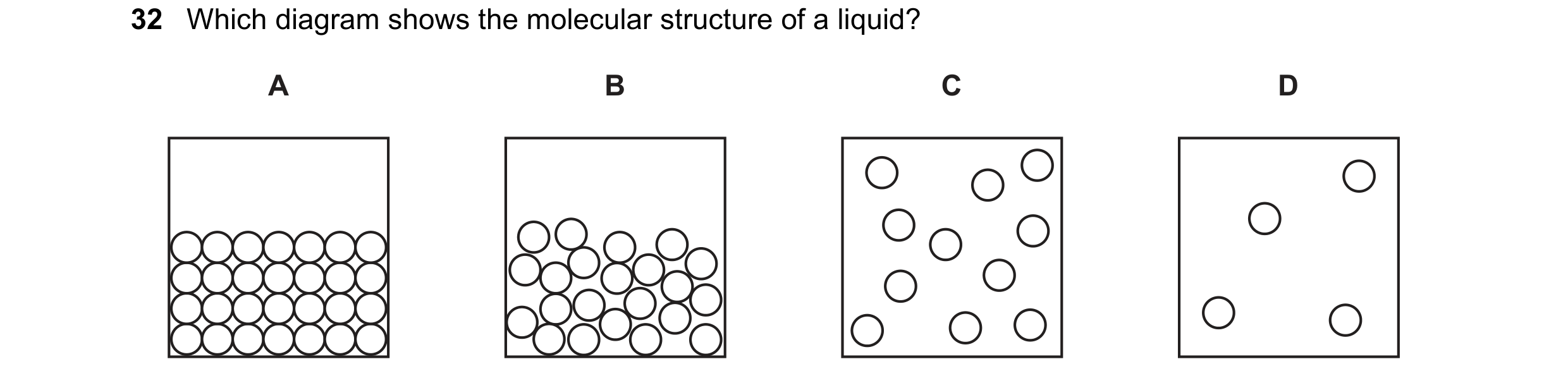
Q54 · Which diagram shows the molecular structure of a liquid? 0653/12 May/June 2019
32 Which diagram shows the molecular structure of a liquid? A B C D
1 marks
Answer: B
This question in 0653/12 May/June 2019
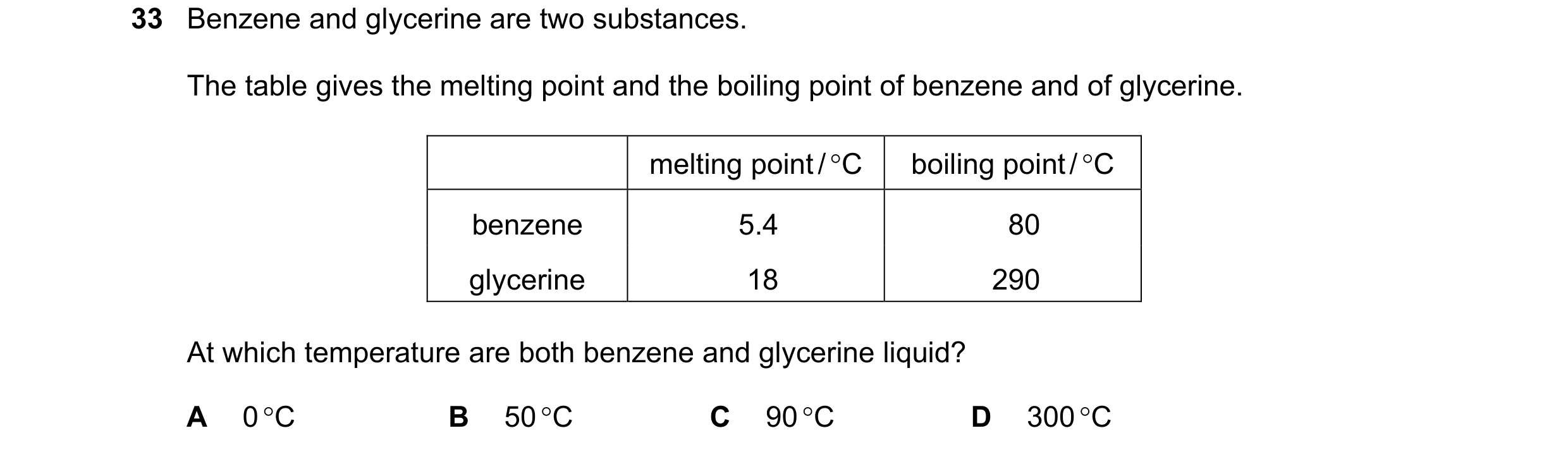
Q55 · Benzene and glycerine are two substances 0653/12 May/June 2019
33 Benzene and glycerine are two substances. The table gives the melting point and the boiling point of benzene and of glycerine. melting point / °C boiling point / °C benzene 5.4 80 glycerine 18 290 At which temperature are both benzene and glycerine liquid? A 0 °C B 50 °C C 90 °C D 300 °C
1 marks
Answer: B
This question in 0653/12 May/June 2019
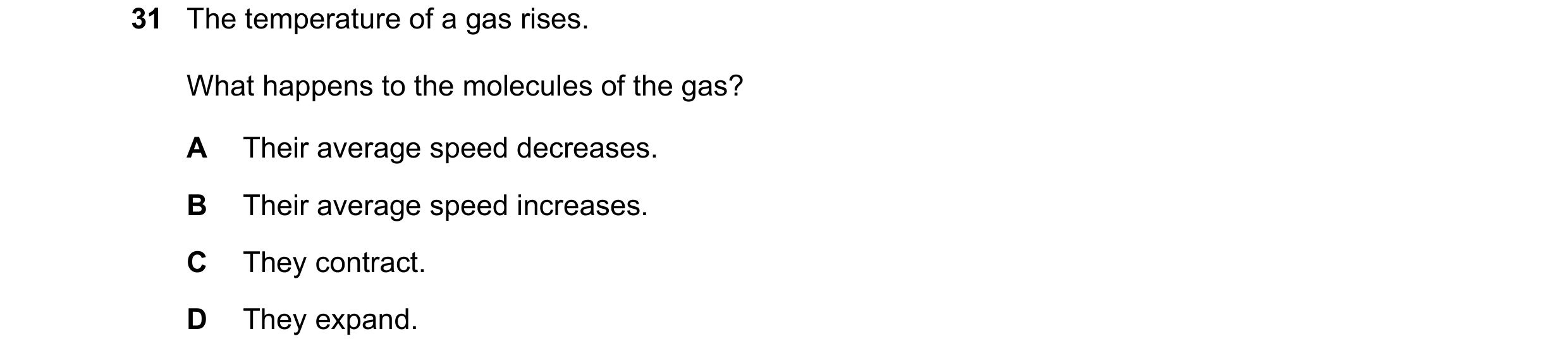
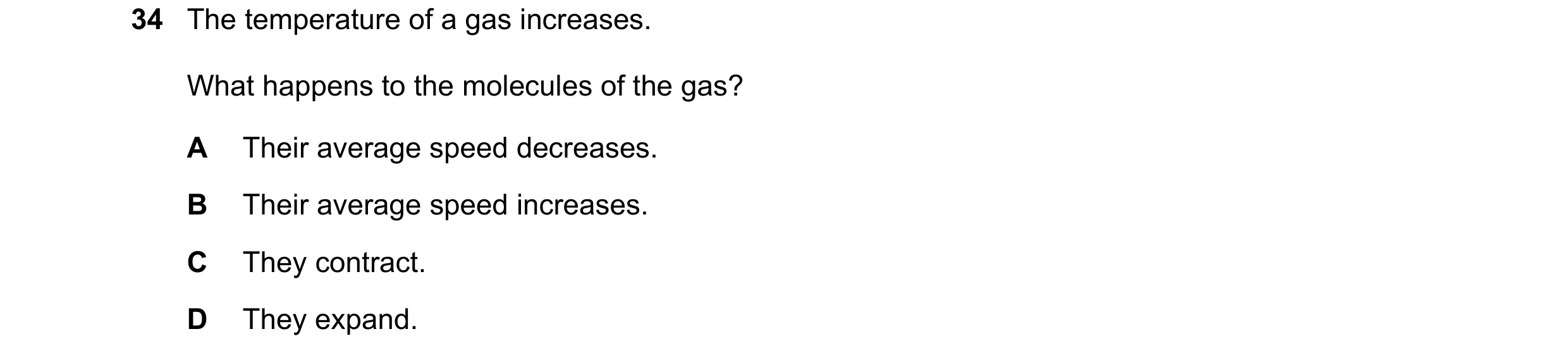
Q56 · The temperature of a gas rises 0653/13 May/June 2019
31 The temperature of a gas rises. What happens to the molecules of the gas? A Their average speed decreases. B Their average speed increases. C They contract. D They expand.
1 marks
Answer: B
This question in 0653/13 May/June 2019
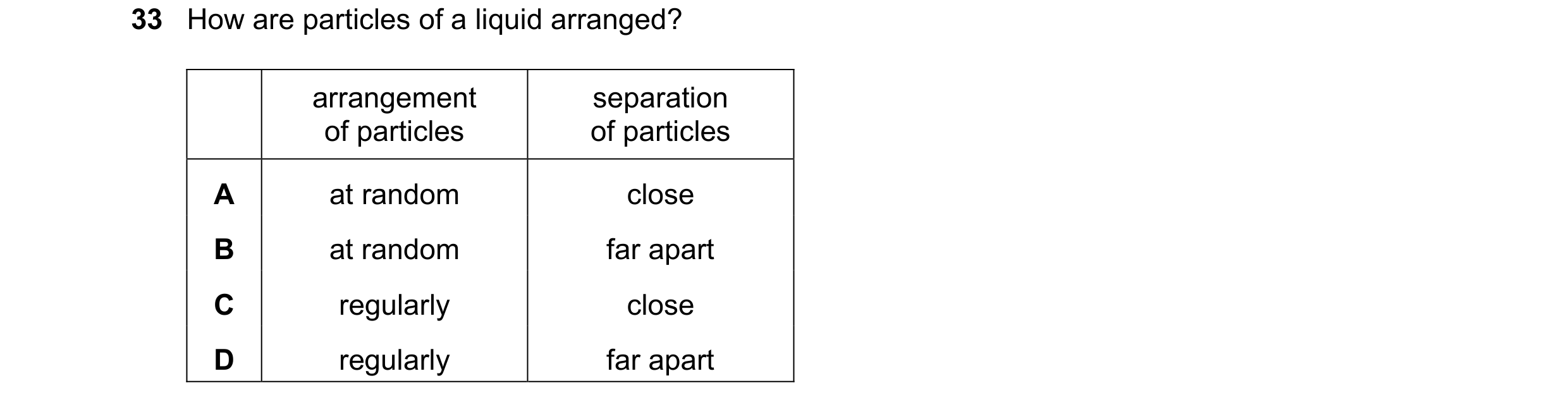
Q57 · How are particles of a liquid arranged? 0653/11 Oct/Nov 2019
33 How are particles of a liquid arranged? arrangement separation of particles of particles A at random close B at random far apart C regularly close D regularly far apart
1 marks
Answer: A
This question in 0653/11 Oct/Nov 2019
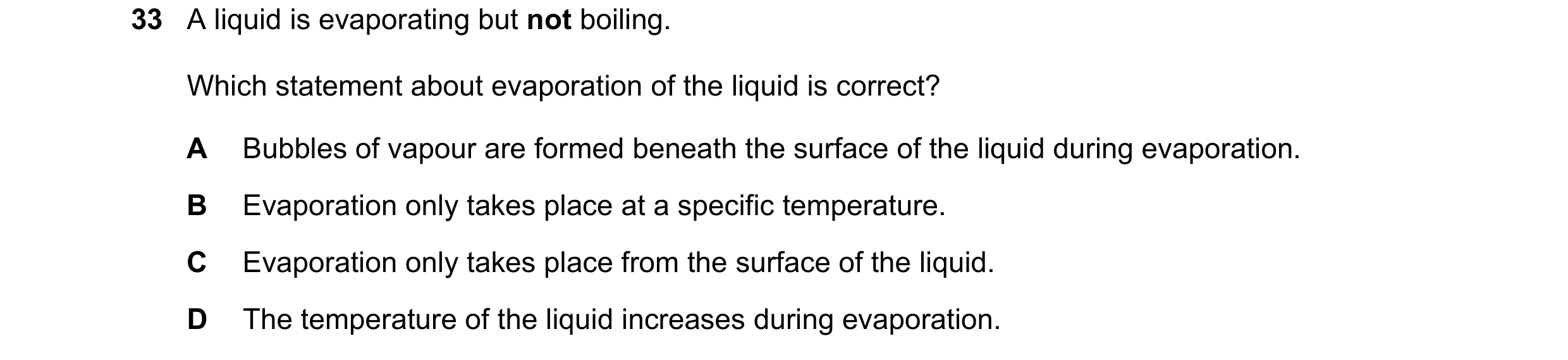
Q58 · A liquid is evaporating but not boiling 0653/12 Oct/Nov 2019
33 A liquid is evaporating but not boiling. Which statement about evaporation of the liquid is correct? A Bubbles of vapour are formed beneath the surface of the liquid during evaporation. B Evaporation only takes place at a specific temperature. C Evaporation only takes place from the surface of the liquid. D The temperature of the liquid increases during evaporation.
1 marks
Answer: C
This question in 0653/12 Oct/Nov 2019
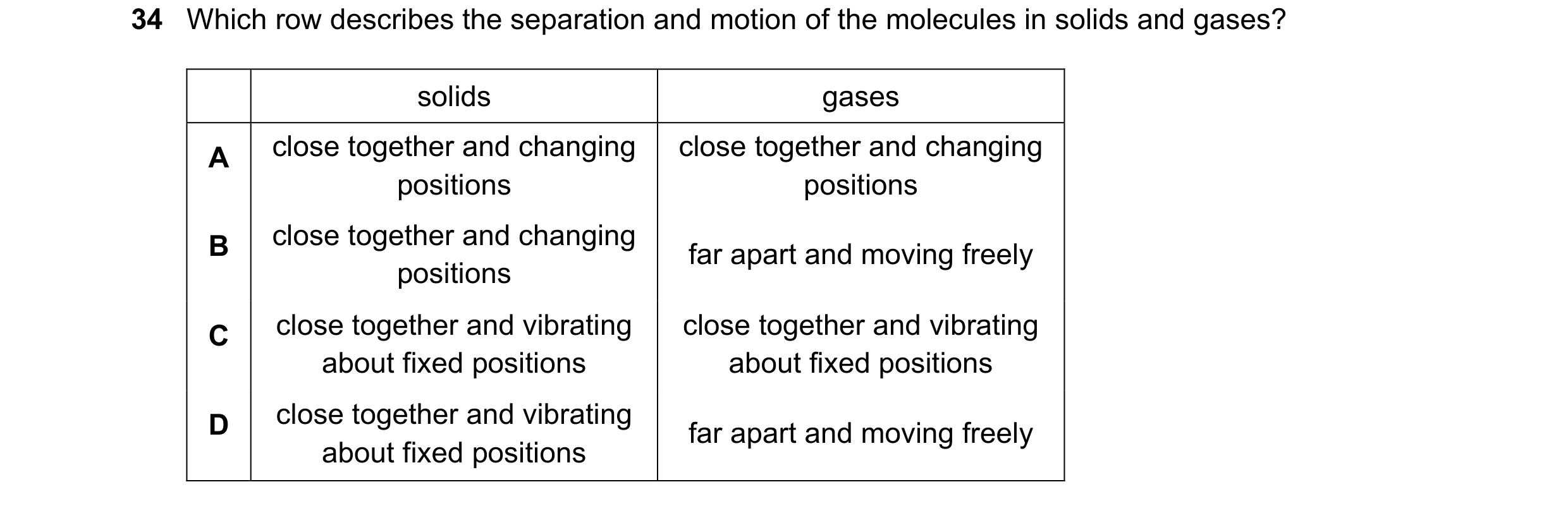
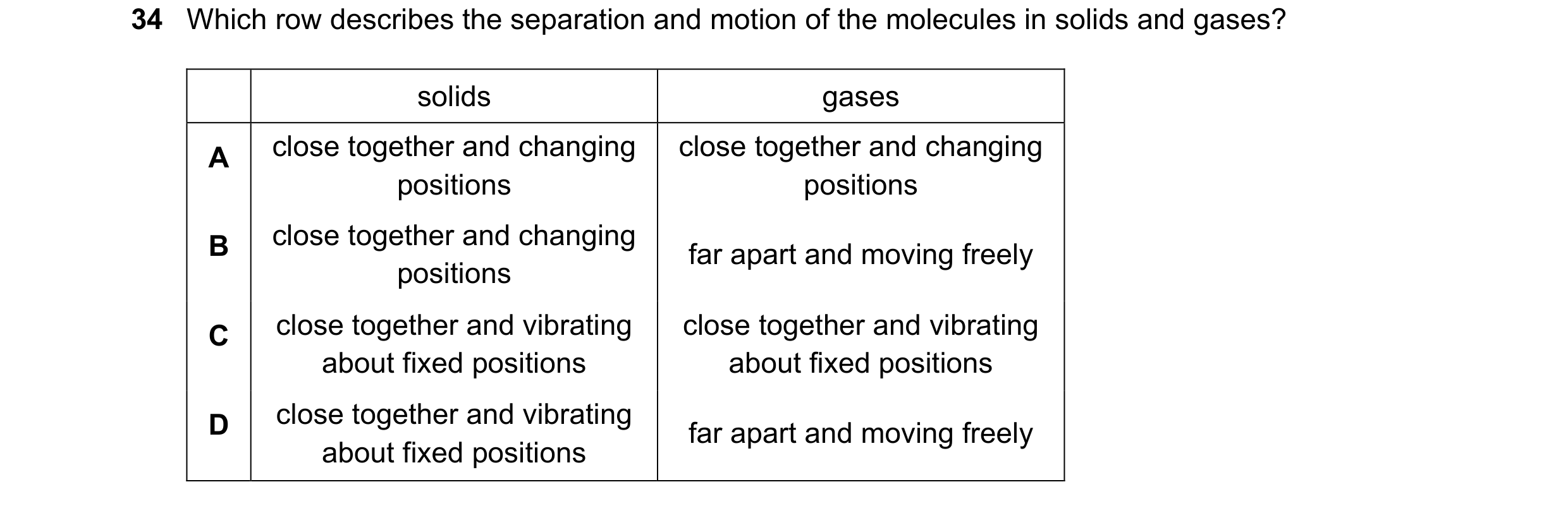
Q59 · Which row describes the separation and motion of the molecules in solids and gases? 0653/12 Oct/Nov 2019
34 Which row describes the separation and motion of the molecules in solids and gases? solids gases A close together and changing close together and changing positions positions B close together and changing far apart and moving freely positions C close together and vibrating close together and vibrating about fixed positions about fixed positions D close together and vibrating far apart and moving freely about fixed positions
1 marks
Answer: D
This question in 0653/12 Oct/Nov 2019
Q60 · A liquid is evaporating but not boiling 0653/13 Oct/Nov 2019
33 A liquid is evaporating but not boiling. Which statement about evaporation of the liquid is correct? A Bubbles of vapour are formed beneath the surface of the liquid during evaporation. B Evaporation only takes place at a specific temperature. C Evaporation only takes place from the surface of the liquid. D The temperature of the liquid increases during evaporation.
1 marks
Answer: C
This question in 0653/13 Oct/Nov 2019
Q61 · Which row describes the separation and motion of the molecules in solids and gases? 0653/13 Oct/Nov 2019
34 Which row describes the separation and motion of the molecules in solids and gases? solids gases A close together and changing close together and changing positions positions B close together and changing far apart and moving freely positions C close together and vibrating close together and vibrating about fixed positions about fixed positions D close together and vibrating far apart and moving freely about fixed positions
1 marks
Answer: D
This question in 0653/13 Oct/Nov 2019
Q62 · The molecules in a substance are close together but free to change positions with each… 0653/11 May/June 2020
33 The molecules in a substance are close together but free to change positions with each other. Which substance at 20 °C matches this description? A air B copper C iron D water
1 marks
Answer: D
This question in 0653/11 May/June 2020
Q63 · What happens as a liquid starts to evaporate? 0653/11 Oct/Nov 2020
33 What happens as a liquid starts to evaporate? A The mass of the remaining liquid increases. B The mass of the remaining liquid is constant. C The temperature of the remaining liquid decreases. D The temperature of the remaining liquid increases.
1 marks
Answer: C
This question in 0653/11 Oct/Nov 2020
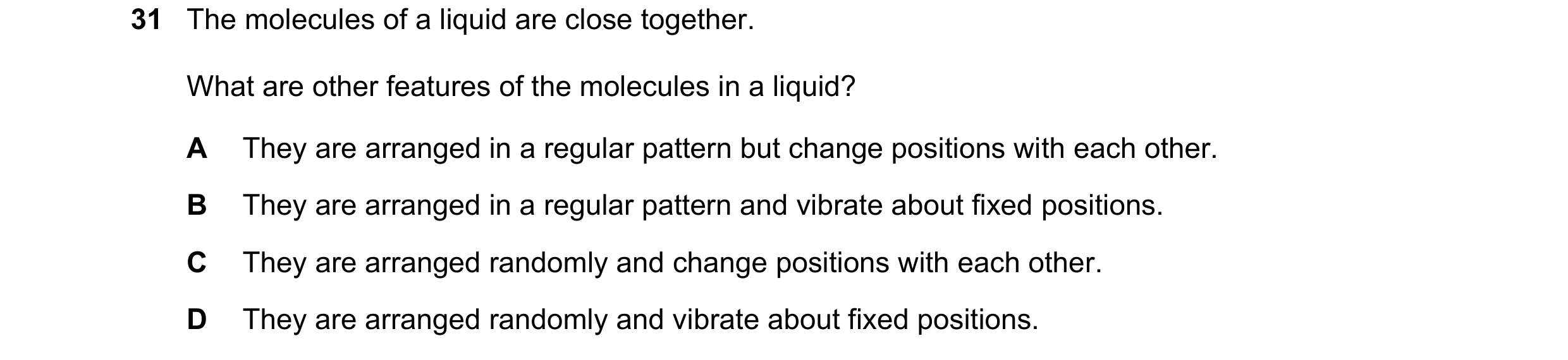
Q64 · The molecules of a liquid are close together 0653/12 Oct/Nov 2020
31 The molecules of a liquid are close together. What are other features of the molecules in a liquid? A They are arranged in a regular pattern but change positions with each other. B They are arranged in a regular pattern and vibrate about fixed positions. C They are arranged randomly and change positions with each other. D They are arranged randomly and vibrate about fixed positions.
1 marks
Answer: C
This question in 0653/12 Oct/Nov 2020
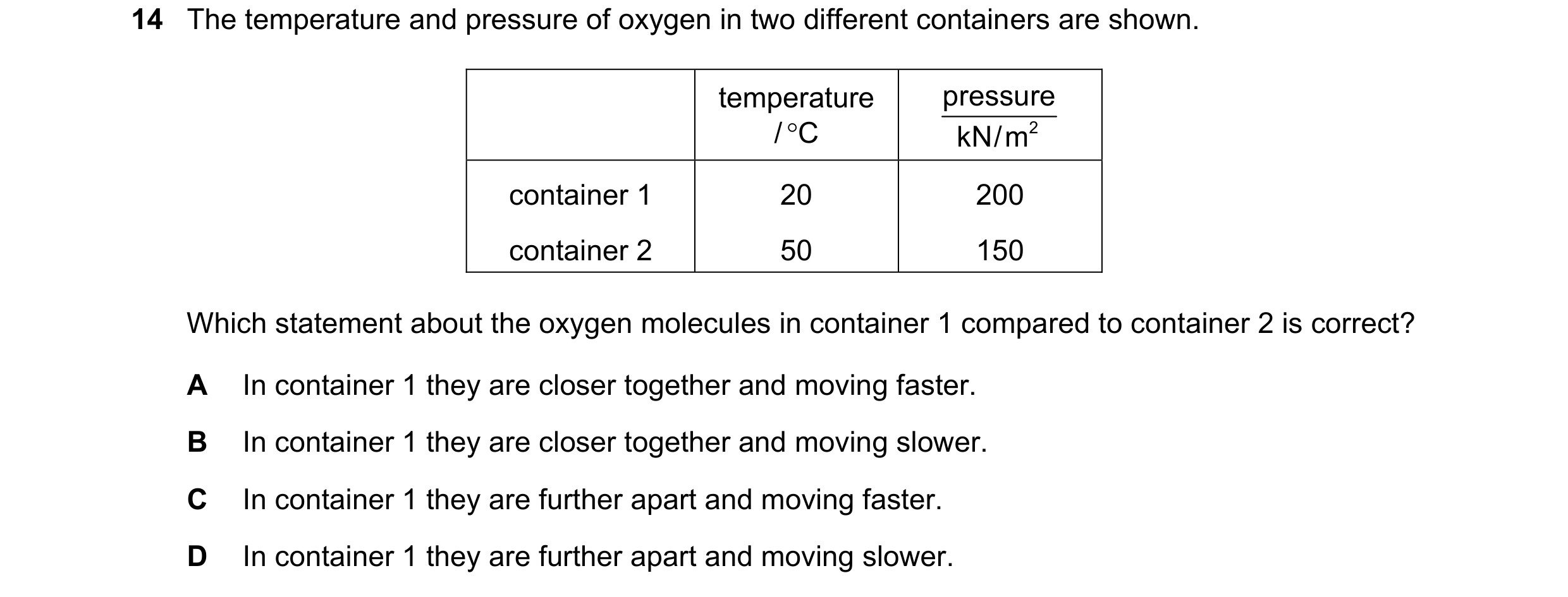
Q65 · The temperature and pressure of oxygen in two different containers are shown 0653/13 Oct/Nov 2020
14 The temperature and pressure of oxygen in two different containers are shown. temperature p r es ur s e / C kN / m 2 container 1 20 200 container 2 50 150 Which statement about the oxygen molecules in container 1 compared to container 2 is correct? A In container 1 they are closer together and moving faster. B In container 1 they are closer together and moving slower. C In container 1 they are further apart and moving faster. D In container 1 they are further apart and moving slower.
1 marks
Answer: B
This question in 0653/13 Oct/Nov 2020
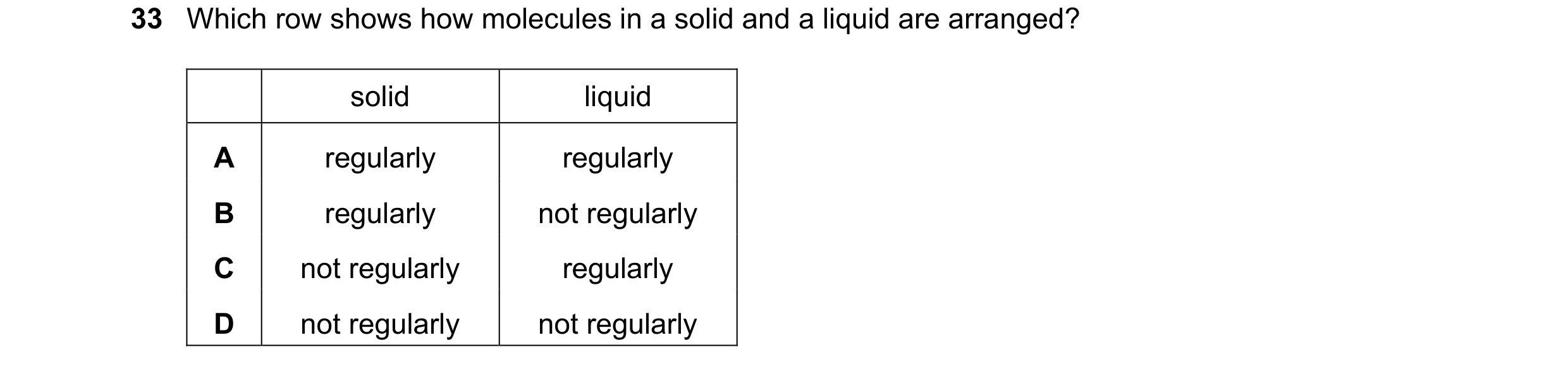
Q66 · Which row shows how molecules in a solid and a liquid are arranged? 0653/13 Oct/Nov 2020
33 Which row shows how molecules in a solid and a liquid are arranged? solid liquid A regularly regularly B regularly not regularly C not regularly regularly D not regularly not regularly
1 marks
Answer: B
This question in 0653/13 Oct/Nov 2020
Q67 · A fixed mass of argon gas in a sealed container is heated 0653/11 May/June 2021
14 A fixed mass of argon gas in a sealed container is heated. The pressure inside the container increases. Which statement explains why the pressure increases? A There is an increase in the number of gaseous particles inside the container. B There is an increase in the number of collisions per second between the particles of gas and the walls of the container. C The particles of gas have less energy and collide with the wall of the container more frequently. D There is a decrease in the space that the particles have to move in.
1 marks
Answer: B
This question in 0653/11 May/June 2021
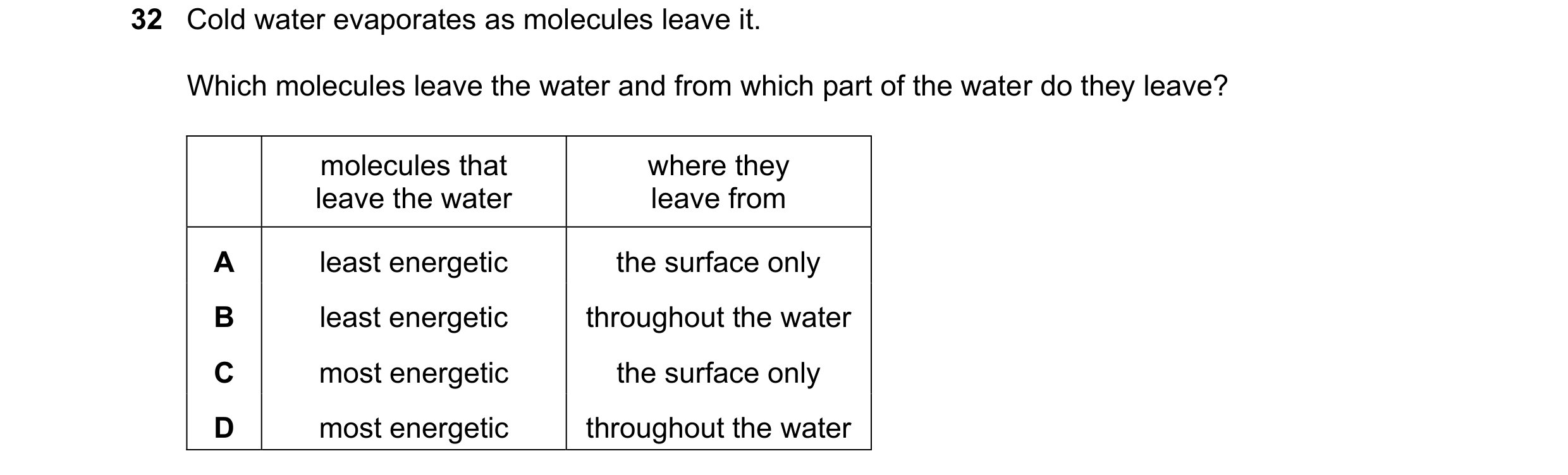
Q68 · Cold water evaporates as molecules leave it 0653/11 May/June 2021
32 Cold water evaporates as molecules leave it. Which molecules leave the water and from which part of the water do they leave? molecules that where they leave the water leave from A least energetic the surface only B least energetic throughout the water C most energetic the surface only D most energetic throughout the water
1 marks
Answer: C
This question in 0653/11 May/June 2021
Q69 · Cold water evaporates as molecules leave it 0653/12 May/June 2021
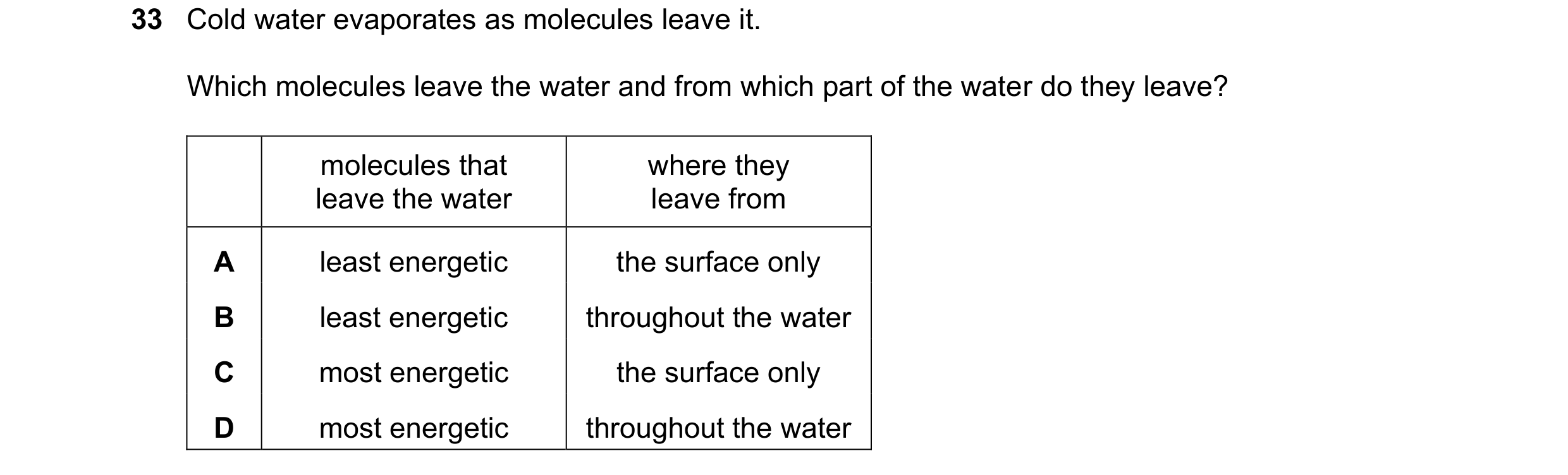
33 Cold water evaporates as molecules leave it. Which molecules leave the water and from which part of the water do they leave? molecules that where they leave the water leave from A least energetic the surface only B least energetic throughout the water C most energetic the surface only D most energetic throughout the water
1 marks
Answer: C
This question in 0653/12 May/June 2021
Q70 · Cold water evaporates as molecules leave it 0653/13 May/June 2021
33 Cold water evaporates as molecules leave it. Which molecules leave the water and from which part of the water do they leave? molecules that where they leave the water leave from A least energetic the surface only B least energetic throughout the water C most energetic the surface only D most energetic throughout the water
1 marks
Answer: C
This question in 0653/13 May/June 2021
Q71 · The most energetic molecules of a liquid escape from its surface and the temperature of… 0653/11 Oct/Nov 2021
33 The most energetic molecules of a liquid escape from its surface and the temperature of the liquid decreases. Which process is occurring? A boiling B condensation C evaporation D melting
1 marks
Answer: C
This question in 0653/11 Oct/Nov 2021
Q72 · A gas is trapped in a container 0653/12 Feb/March 2022
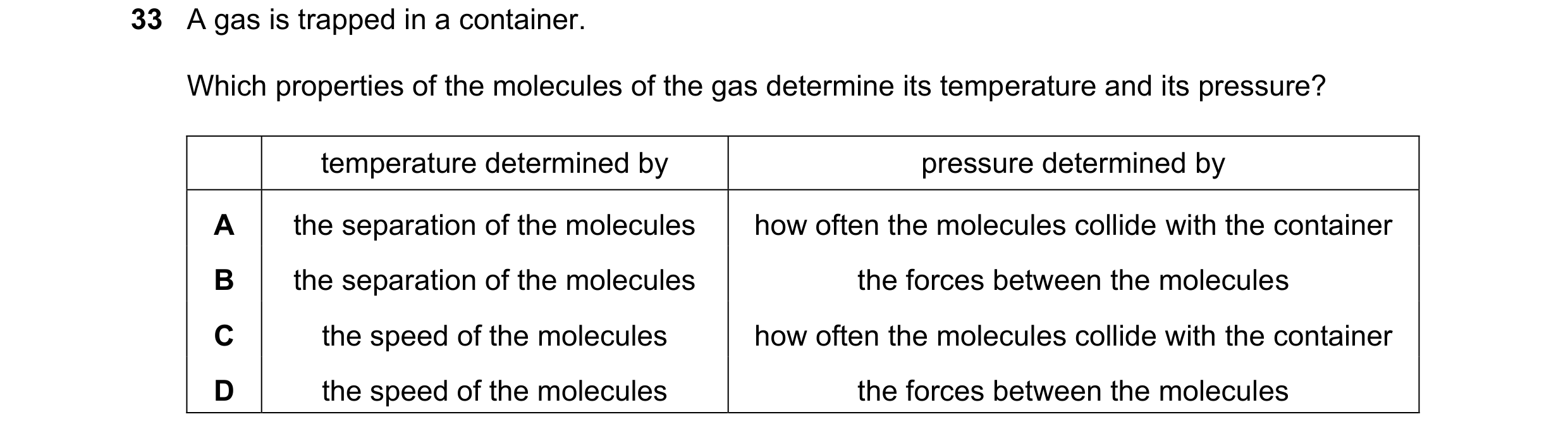
33 A gas is trapped in a container. Which properties of the molecules of the gas determine its temperature and its pressure? temperature determined by pressure determined by A the separation of the molecules how often the molecules collide with the container B the separation of the molecules the forces between the molecules C the speed of the molecules how often the molecules collide with the container D the speed of the molecules the forces between the molecules
1 marks
Answer: C
This question in 0653/12 Feb/March 2022
Q73 · What happens to water molecules when water freezes? 0653/11 May/June 2022
14 What happens to water molecules when water freezes? A They become arranged more regularly. B They become smaller. C They move much closer together. D They move faster.
1 marks
Answer: A
This question in 0653/11 May/June 2022
Q74 · Which process is the escape of more-energetic molecules from the surface of a liquid? 0653/11 May/June 2022
32 Which process is the escape of more-energetic molecules from the surface of a liquid? A condensation B convection C evaporation D radiation
1 marks
Answer: C
This question in 0653/11 May/June 2022
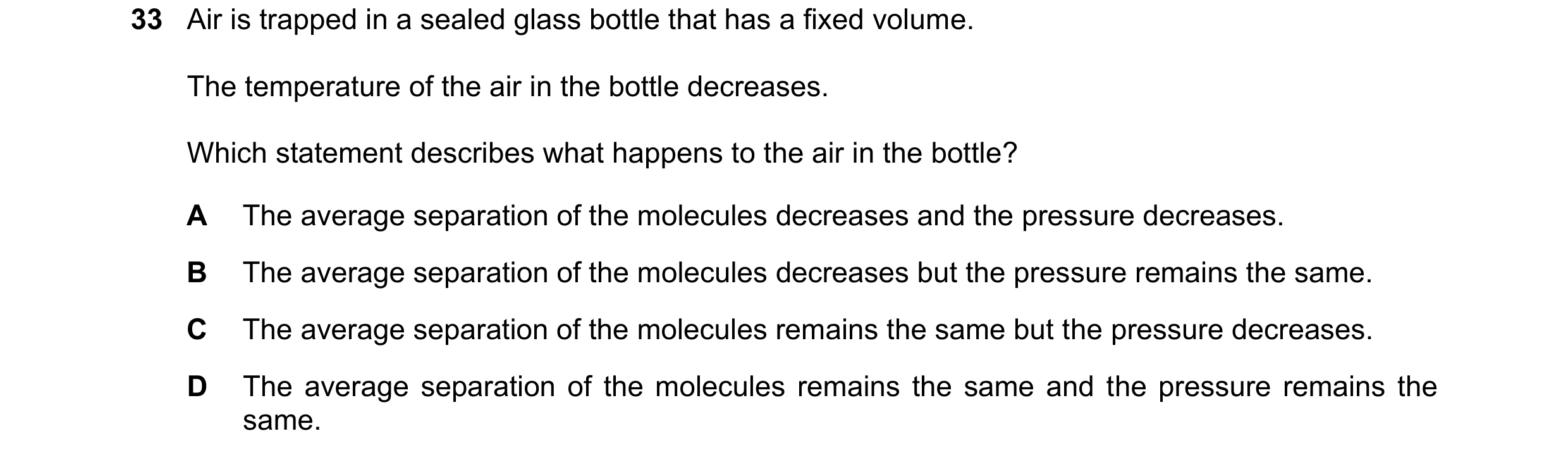
Q75 · Air is trapped in a sealed glass bottle that has a fixed volume 0653/12 May/June 2022
33 Air is trapped in a sealed glass bottle that has a fixed volume. The temperature of the air in the bottle decreases. Which statement describes what happens to the air in the bottle? A The average separation of the molecules decreases and the pressure decreases. B The average separation of the molecules decreases but the pressure remains the same. C The average separation of the molecules remains the same but the pressure decreases. D The average separation of the molecules remains the same and the pressure remains the same.
1 marks
Answer: C
This question in 0653/12 May/June 2022
Q76 · During evaporation, molecules escape from a liquid 0653/11 Oct/Nov 2022
33 During evaporation, molecules escape from a liquid. Which molecules escape and what happens to the temperature of the liquid that remains? molecules temperature of that escape liquid that remains A less energetic decreases B less energetic increases C more energetic decreases D more energetic increases
1 marks
Answer: C
This question in 0653/11 Oct/Nov 2022
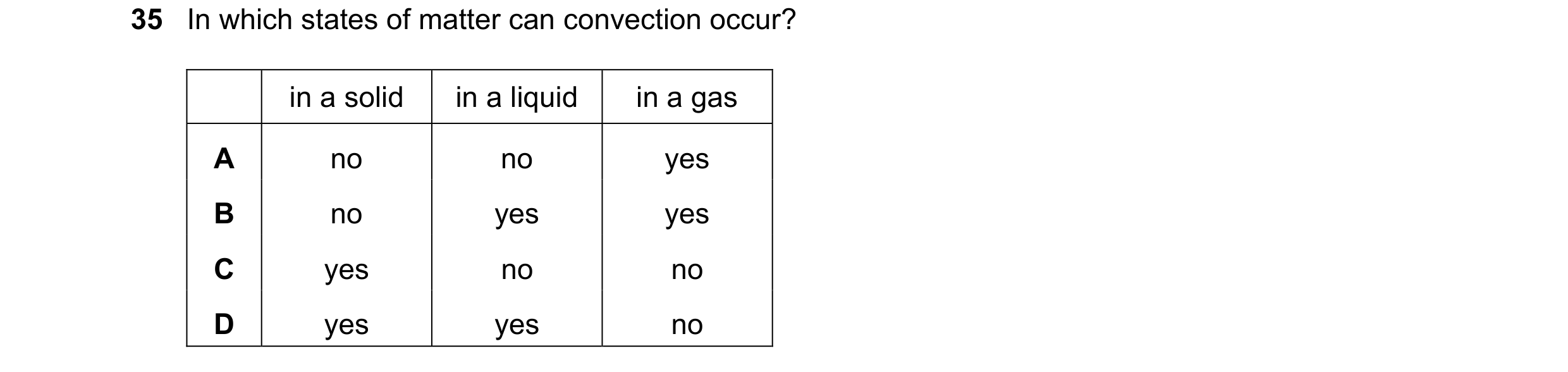
Q77 · In which states of matter can convection occur? 0653/12 Feb/March 2023
35 In which states of matter can convection occur? in a solid in a liquid in a gas A no no yes B no yes yes C yes no no D yes yes no
1 marks
Answer: B
This question in 0653/12 Feb/March 2023
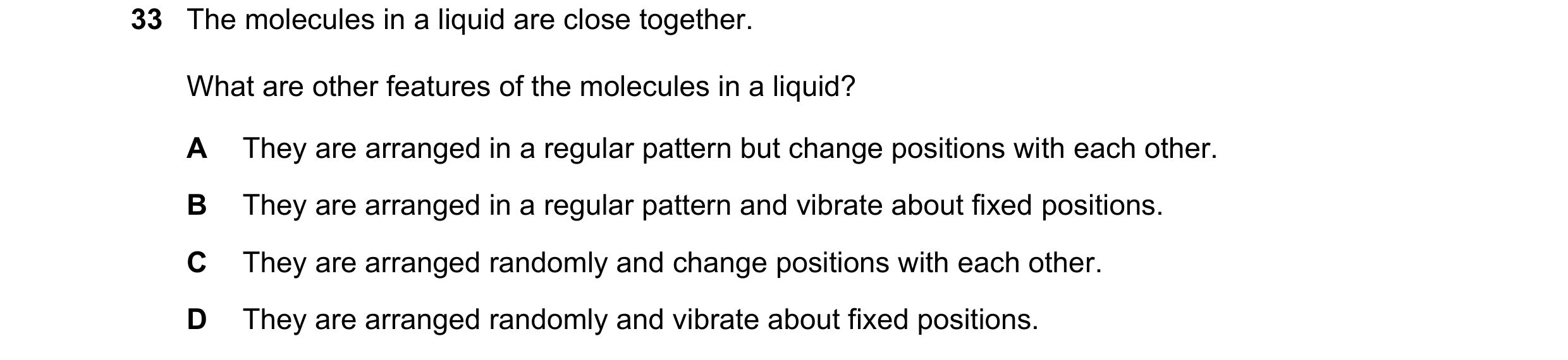
Q78 · The molecules in a liquid are close together 0653/11 May/June 2023
33 The molecules in a liquid are close together. What are other features of the molecules in a liquid? A They are arranged in a regular pattern but change positions with each other. B They are arranged in a regular pattern and vibrate about fixed positions. C They are arranged randomly and change positions with each other. D They are arranged randomly and vibrate about fixed positions.
1 marks
Answer: C
This question in 0653/11 May/June 2023
Q79 · What happens as a liquid starts to evaporate? 0653/12 May/June 2023
33 What happens as a liquid starts to evaporate? A The mass of the remaining liquid increases. B The mass of the remaining liquid is constant. C The temperature of the remaining liquid decreases. D The temperature of the remaining liquid increases.
1 marks
Answer: C
This question in 0653/12 May/June 2023
Q80 · Which statement describes the molecules in a gas? 0653/13 May/June 2023
33 Which statement describes the molecules in a gas? A They are close together and move about quickly. B They are close together and move about slowly. C They are far apart and move about quickly. D They are far apart and move about slowly.
1 marks
Answer: C
This question in 0653/13 May/June 2023
Q81 · The molecules in a substance are close together but free to change positions with each… 0653/11 Oct/Nov 2023
34 The molecules in a substance are close together but free to change positions with each other. Which substance at 20 C matches this description? A air B copper C iron D water
1 marks
Answer: D
This question in 0653/11 Oct/Nov 2023
Q82 · Which statement about the boiling point of a substance is correct? 0653/12 Oct/Nov 2023
32 Which statement about the boiling point of a substance is correct? A At all temperatures above its boiling point, a substance must be a gas. B At all temperatures above its boiling point, a substance must be a liquid. C At all temperatures below its boiling point, a substance must be a gas. D At all temperatures below its boiling point, a substance must be a liquid.
1 marks
Answer: A
This question in 0653/12 Oct/Nov 2023
Q83 · Which statement about the boiling point of a substance is correct? 0653/13 Oct/Nov 2023
32 Which statement about the boiling point of a substance is correct? A At all temperatures above its boiling point, a substance must be a gas. B At all temperatures above its boiling point, a substance must be a liquid. C At all temperatures below its boiling point, a substance must be a gas. D At all temperatures below its boiling point, a substance must be a liquid.
1 marks
Answer: A
This question in 0653/13 Oct/Nov 2023
Q84 · Which statement about the particles in a gas is correct? 0653/12 Feb/March 2024
14 Which statement about the particles in a gas is correct? A The particles are vibrating back and forward with regular motion. B At higher pressure, the particles move faster. C At higher pressure, the spaces between the particles decreases. D When the temperature is increased, the particles move closer together.
1 marks
Answer: C
This question in 0653/12 Feb/March 2024
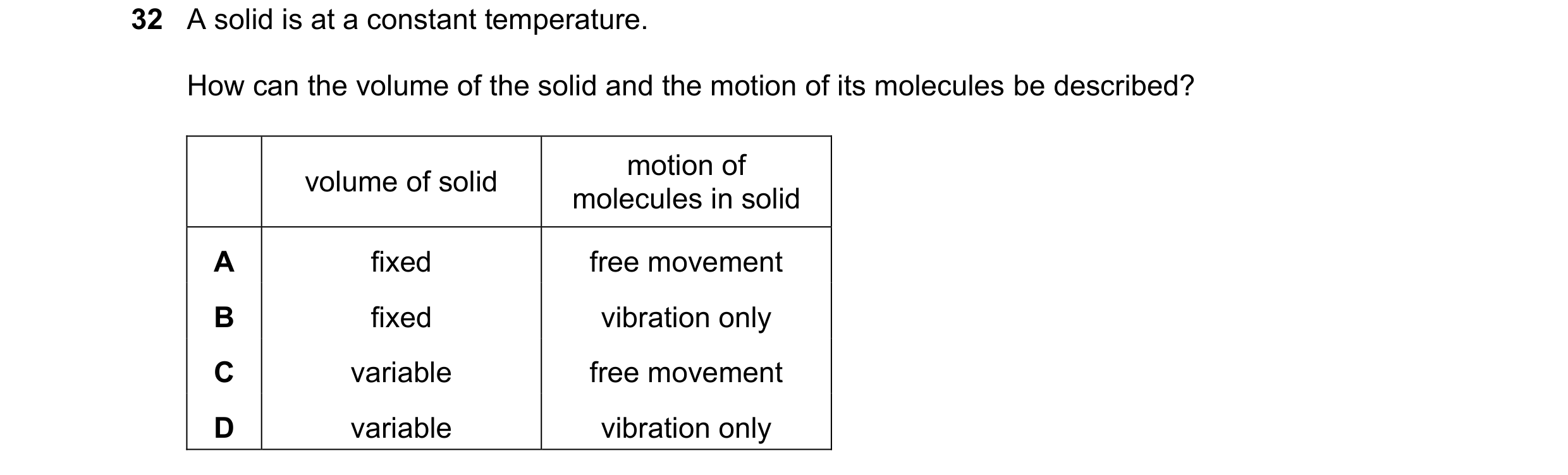
Q85 · A solid is at a constant temperature 0653/12 Feb/March 2024
32 A solid is at a constant temperature. How can the volume of the solid and the motion of its molecules be described? motion of volume of solid molecules in solid A fixed free movement B fixed vibration only C variable free movement D variable vibration only
1 marks
Answer: B
This question in 0653/12 Feb/March 2024
Q86 · A fixed mass of argon gas in a sealed container is heated 0653/11 May/June 2024
14 A fixed mass of argon gas in a sealed container is heated. The pressure inside the container increases. Which statement explains why the pressure increases? A There is an increase in the number of gaseous particles inside the container. B There is an increase in the number of collisions per second between the particles of gas and the walls of the container. C The particles of gas have less energy and collide with the wall of the container more frequently. D There is a decrease in the space that the particles have to move in.
1 marks
Answer: B
This question in 0653/11 May/June 2024
Q87 · The temperature of a gas increases 0653/11 May/June 2024
34 The temperature of a gas increases. What happens to the molecules of the gas? A Their average speed decreases. B Their average speed increases. C They contract. D They expand.
1 marks
Answer: B
This question in 0653/11 May/June 2024
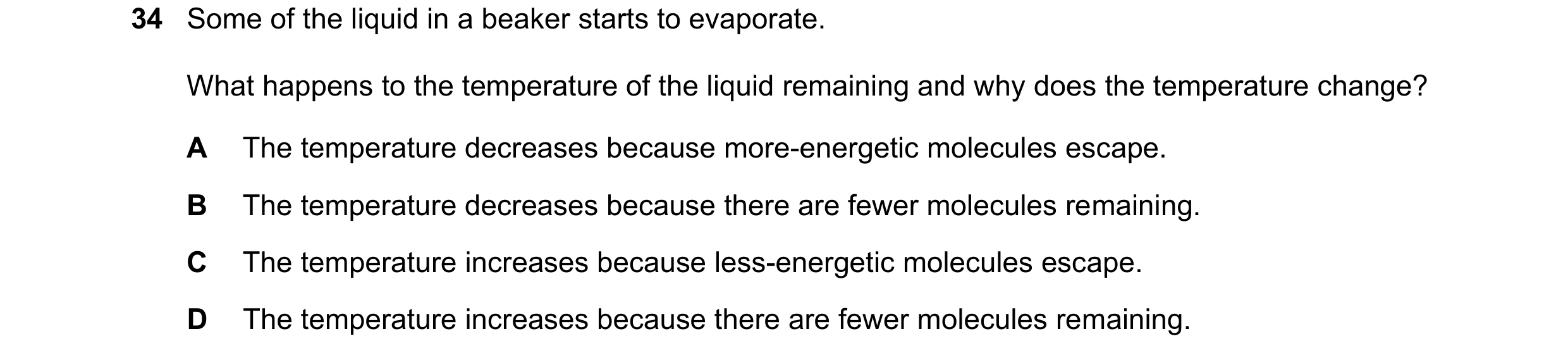
Q88 · Some of the liquid in a beaker starts to evaporate 0653/12 May/June 2024
34 Some of the liquid in a beaker starts to evaporate. What happens to the temperature of the liquid remaining and why does the temperature change? A The temperature decreases because more-energetic molecules escape. B The temperature decreases because there are fewer molecules remaining. C The temperature increases because less-energetic molecules escape. D The temperature increases because there are fewer molecules remaining.
1 marks
Answer: A
This question in 0653/12 May/June 2024
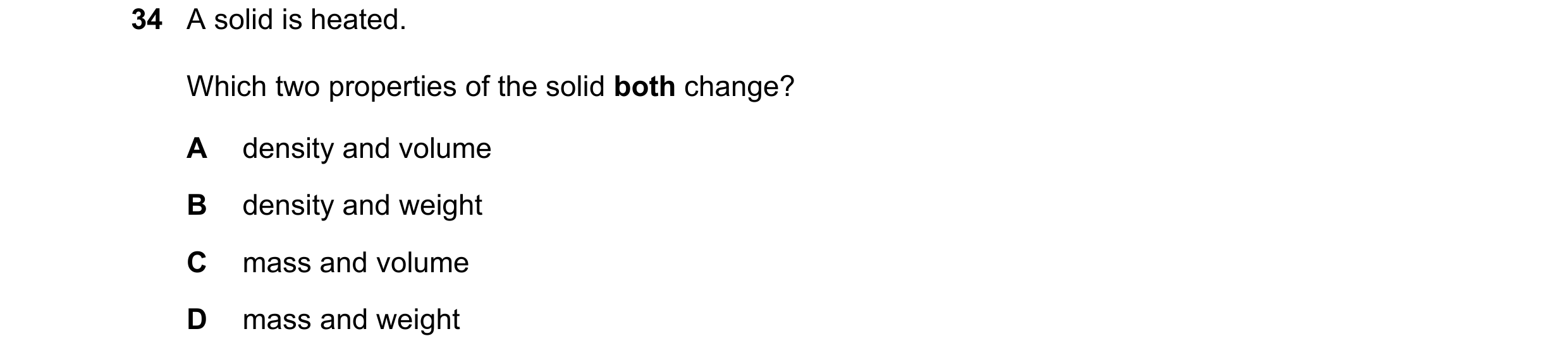
Q89 · A solid is heated 0653/13 May/June 2024
34 A solid is heated. Which two properties of the solid both change? A density and volume B density and weight C mass and volume D mass and weight
1 marks
Answer: A
This question in 0653/13 May/June 2024
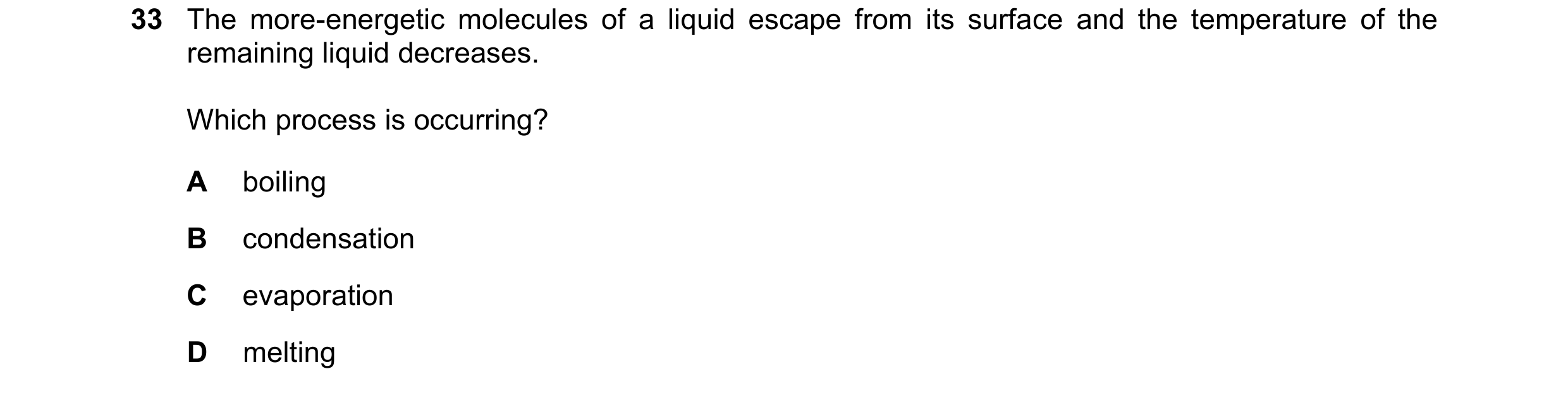
Q90 · The more-energetic molecules of a liquid escape from its surface and the temperature of… 0653/11 Oct/Nov 2024
33 The more-energetic molecules of a liquid escape from its surface and the temperature of the remaining liquid decreases. Which process is occurring? A boiling B condensation C evaporation D melting
1 marks
Answer: C
This question in 0653/11 Oct/Nov 2024
Q91 · Benzene and glycerine are two substances 0653/12 Oct/Nov 2024
33 Benzene and glycerine are two substances. The table gives the melting point and the boiling point of benzene and of glycerine. melting point / C boiling point / C benzene 5.4 80 glycerine 18 290 At which temperature are both benzene and glycerine liquid? A 0 C B 50 C C 90 C D 300 C
1 marks
Answer: B
This question in 0653/12 Oct/Nov 2024
Q92 · Benzene and glycerine are two substances 0653/13 Oct/Nov 2024
33 Benzene and glycerine are two substances. The table gives the melting point and the boiling point of benzene and of glycerine. melting point / C boiling point / C benzene 5.4 80 glycerine 18 290 At which temperature are both benzene and glycerine liquid? A 0 C B 50 C C 90 C D 300 C
1 marks
Answer: B
This question in 0653/13 Oct/Nov 2024
Q93 · Which statement is correct for both liquids and gases? 0653/12 Feb/March 2025
31 Which statement is correct for both liquids and gases? A They are able to flow. B They occupy a fixed volume. C Their particles are close together. D Their particles have a regular arrangement.
1 marks
Answer: A
This question in 0653/12 Feb/March 2025
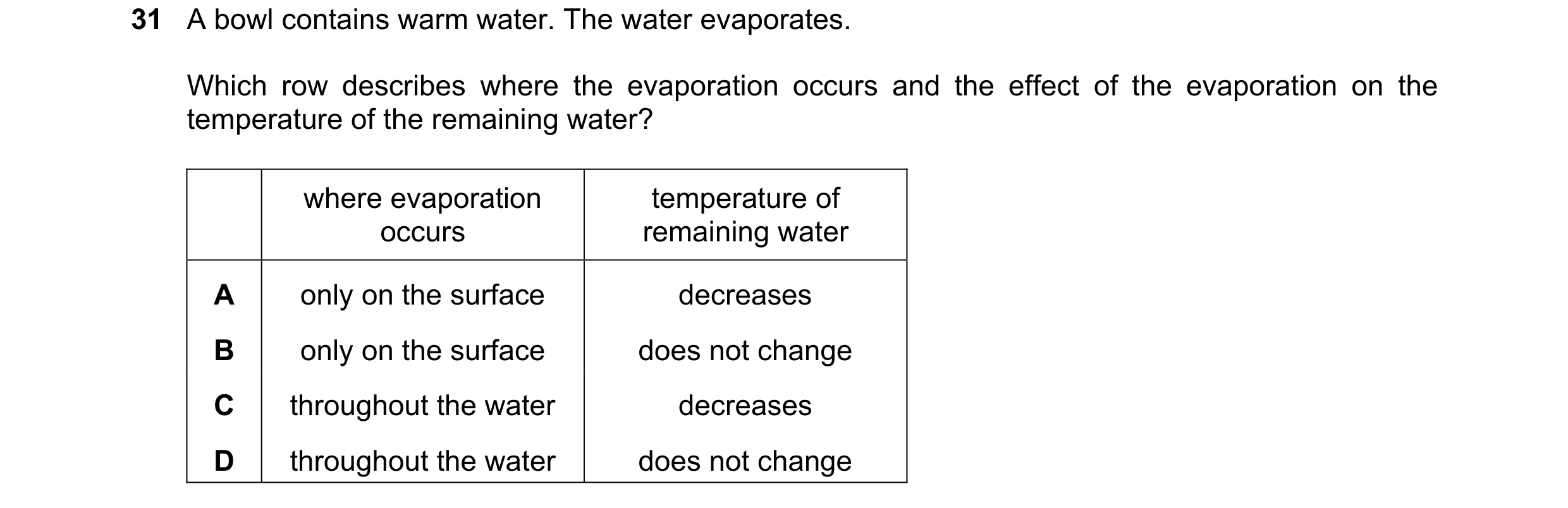
Q94 · A bowl contains warm water 0653/11 May/June 2025
31 A bowl contains warm water. The water evaporates. Which row describes where the evaporation occurs and the effect of the evaporation on the temperature of the remaining water? where evaporation temperature of occurs remaining water A only on the surface decreases B only on the surface does not change C throughout the water decreases D throughout the water does not change
1 marks
Answer: A
This question in 0653/11 May/June 2025
Q95 · Which process is the escape of the more energetic particles from the surface of a liquid? 0653/12 May/June 2025
30 Which process is the escape of the more energetic particles from the surface of a liquid? A conduction B convection C evaporation D radiation
1 marks
Answer: C
This question in 0653/12 May/June 2025
Q96 · Which row shows how particles in a liquid and a gas are arranged? 0653/12 May/June 2025
32 Which row shows how particles in a liquid and a gas are arranged? liquid gas A regularly regularly B regularly not regularly C not regularly regularly D not regularly not regularly
1 marks
Answer: D
This question in 0653/12 May/June 2025
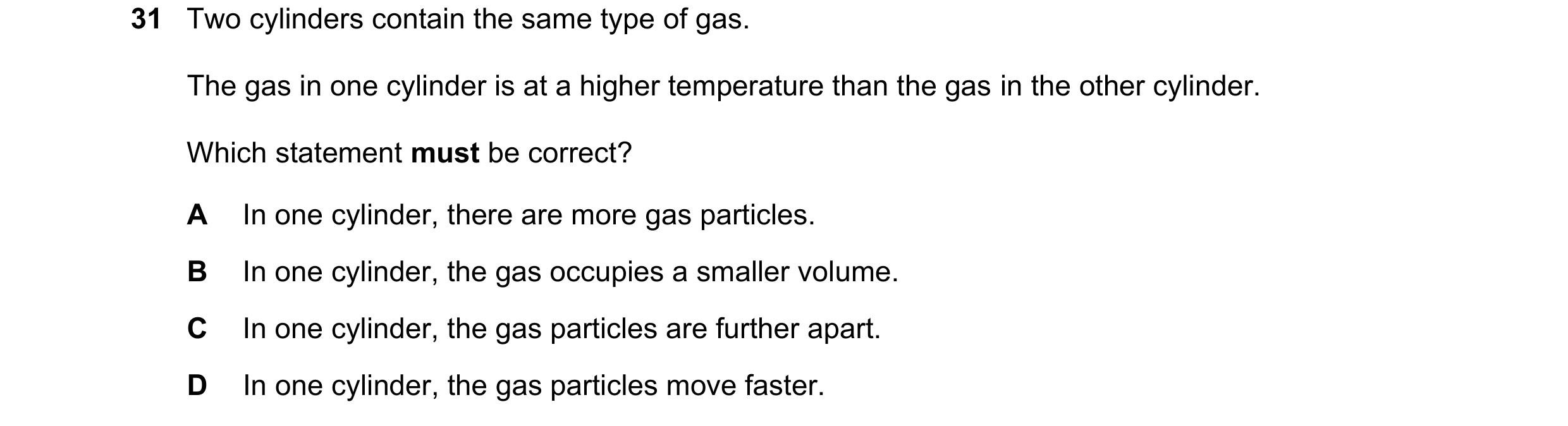
Q97 · Two cylinders contain the same type of gas 0653/13 May/June 2025
31 Two cylinders contain the same type of gas. The gas in one cylinder is at a higher temperature than the gas in the other cylinder. Which statement must be correct? A In one cylinder, there are more gas particles. B In one cylinder, the gas occupies a smaller volume. C In one cylinder, the gas particles are further apart. D In one cylinder, the gas particles move faster.
1 marks
Answer: D
This question in 0653/13 May/June 2025
Q98 · What is a property of a liquid? 0653/11 Oct/Nov 2025
31 What is a property of a liquid? A It always fills the container it is in. B It is always more dense than a solid. C It has a fixed volume. D It has a fixed shape.
1 marks
Answer: C
This question in 0653/11 Oct/Nov 2025
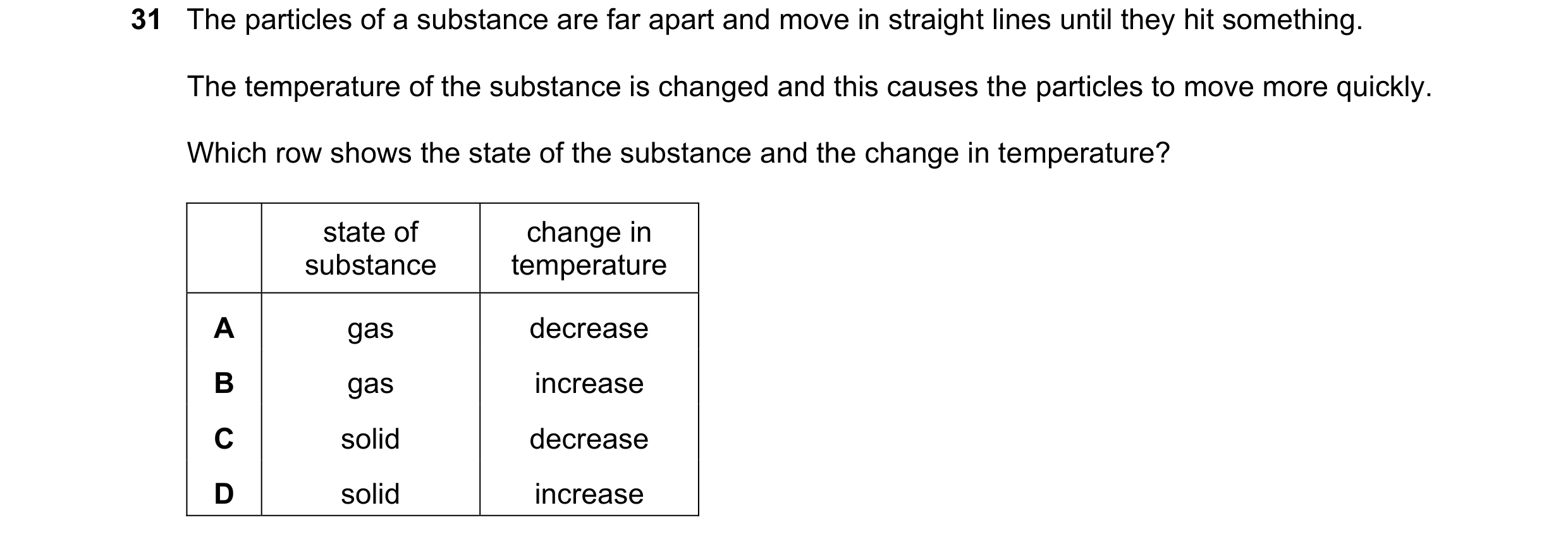
Q99 · The particles of a substance are far apart and move in straight lines until they hit… 0653/12 Oct/Nov 2025
31 The particles of a substance are far apart and move in straight lines until they hit something. The temperature of the substance is changed and this causes the particles to move more quickly. Which row shows the state of the substance and the change in temperature? state of change in substance temperature A gas decrease B gas increase C solid decrease D solid increase
1 marks
Answer: B
This question in 0653/12 Oct/Nov 2025
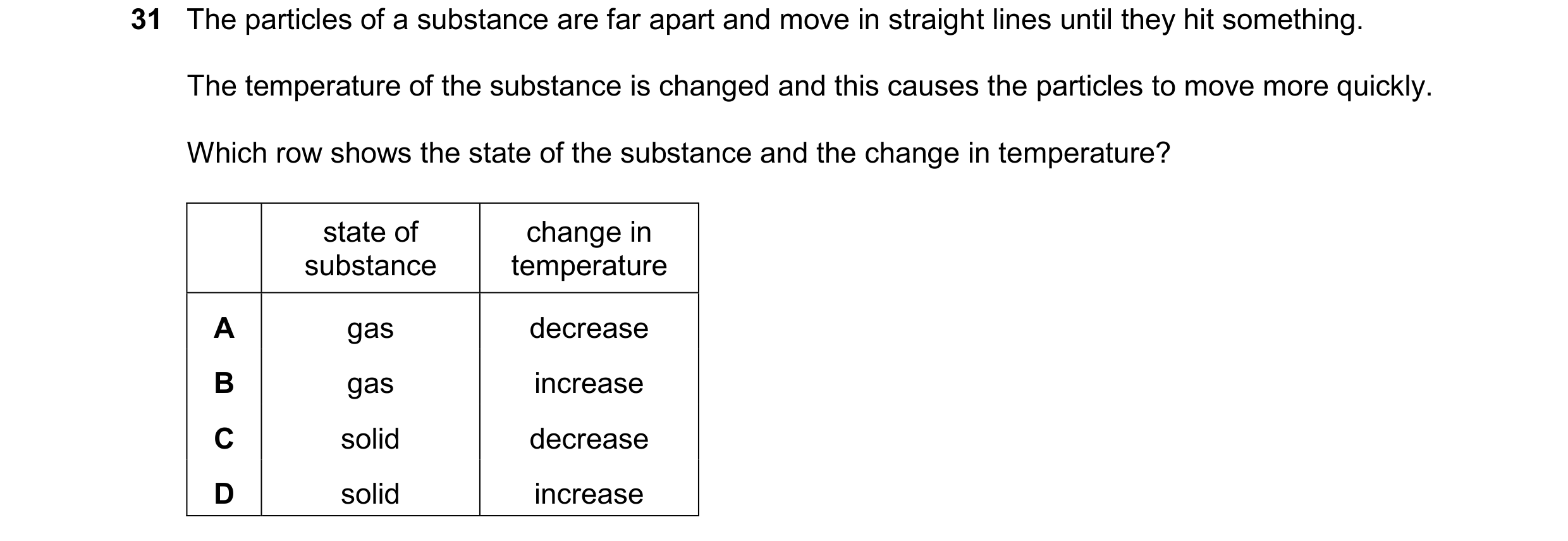
Q100 · The particles of a substance are far apart and move in straight lines until they hit… 0653/13 Oct/Nov 2025
31 The particles of a substance are far apart and move in straight lines until they hit something. The temperature of the substance is changed and this causes the particles to move more quickly. Which row shows the state of the substance and the change in temperature? state of change in substance temperature A gas decrease B gas increase C solid decrease D solid increase
1 marks
Answer: B
This question in 0653/13 Oct/Nov 2025
 1 / 26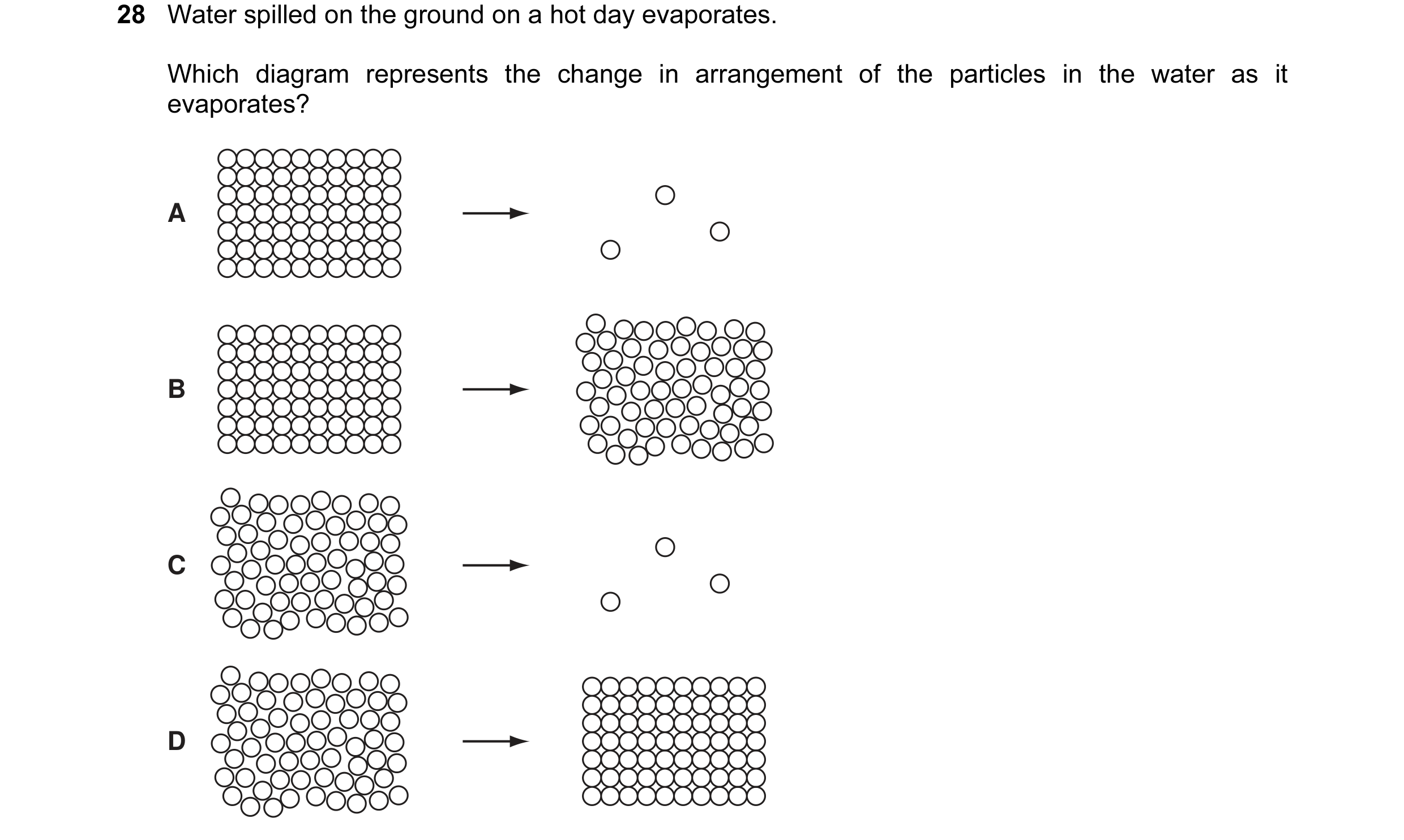
 2 / 26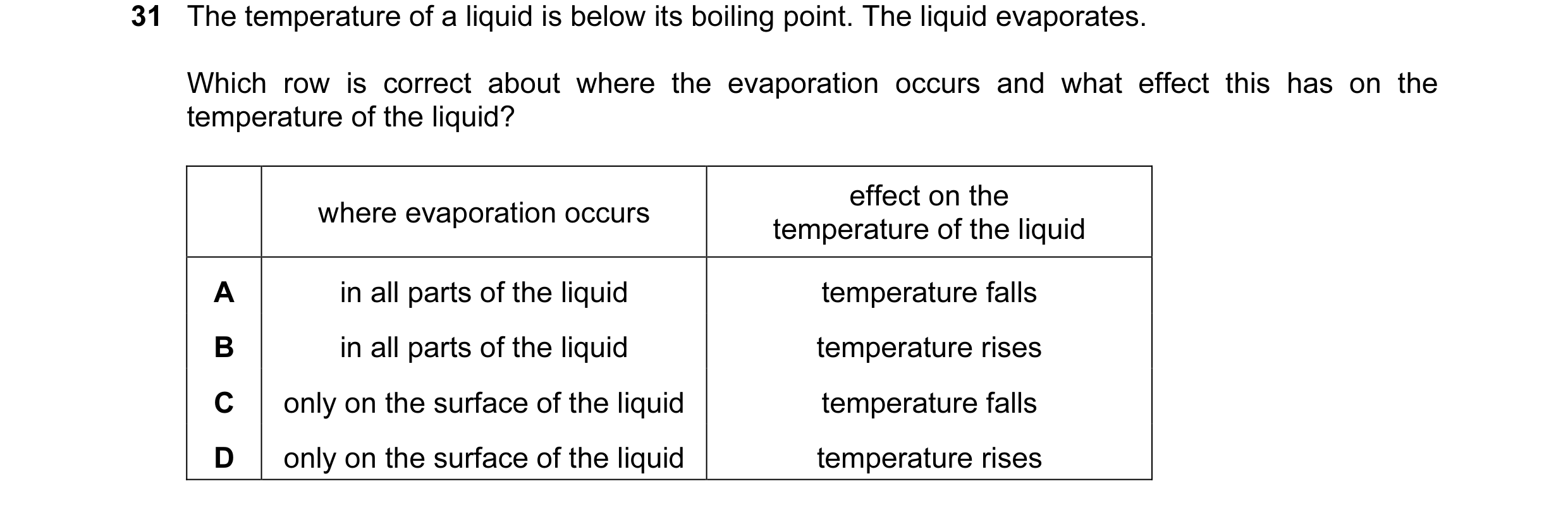
 3 / 26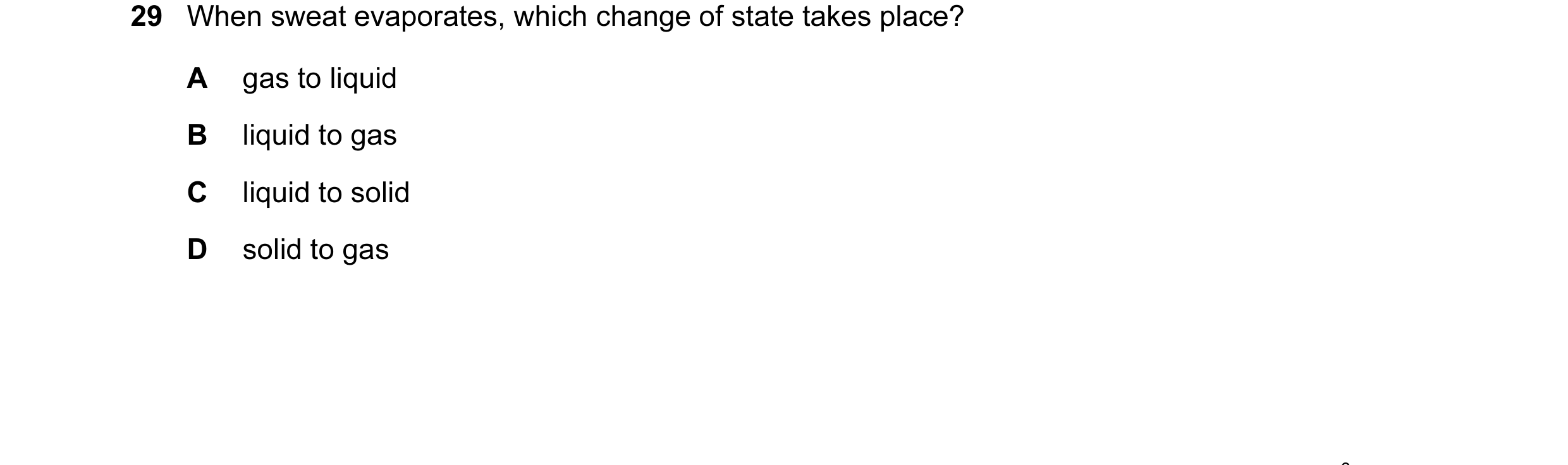
 4 / 26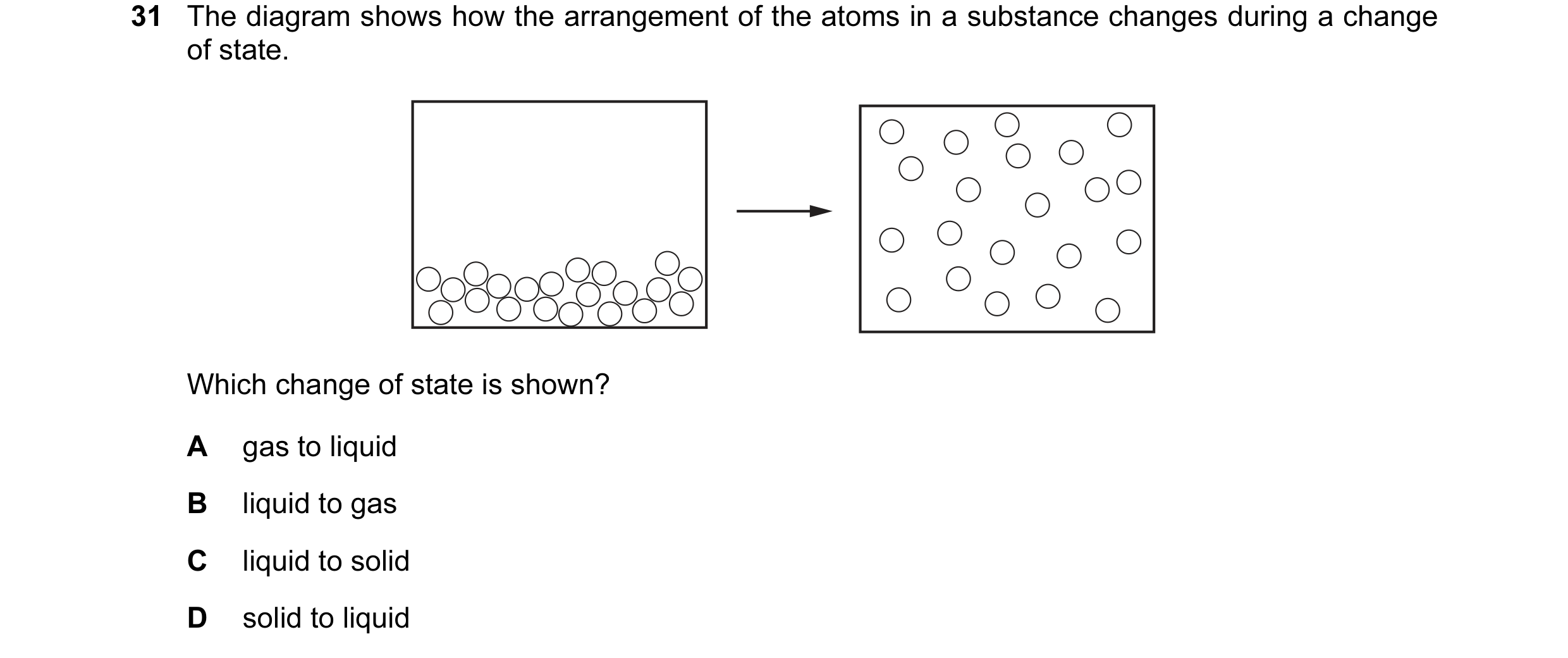
 5 / 26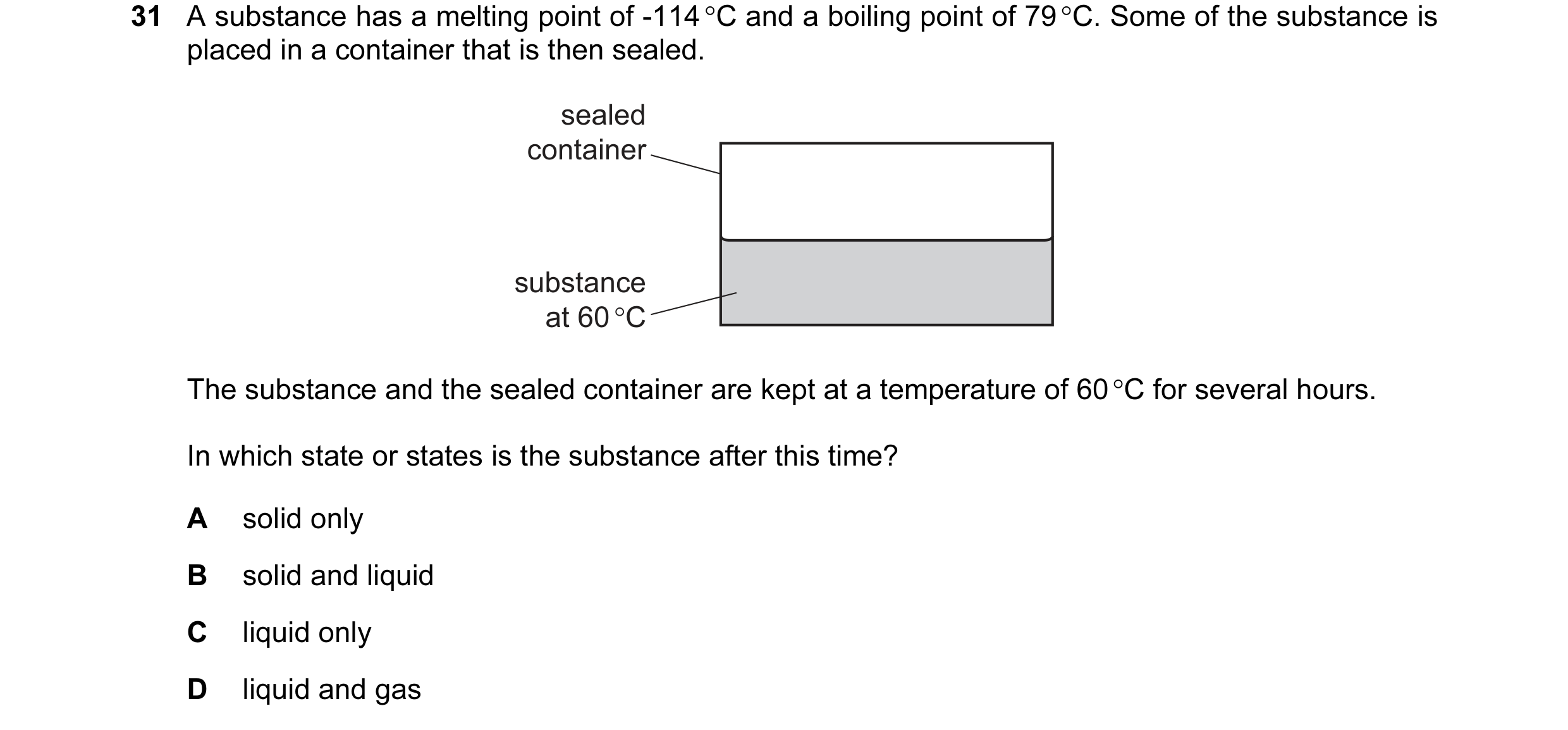
 6 / 26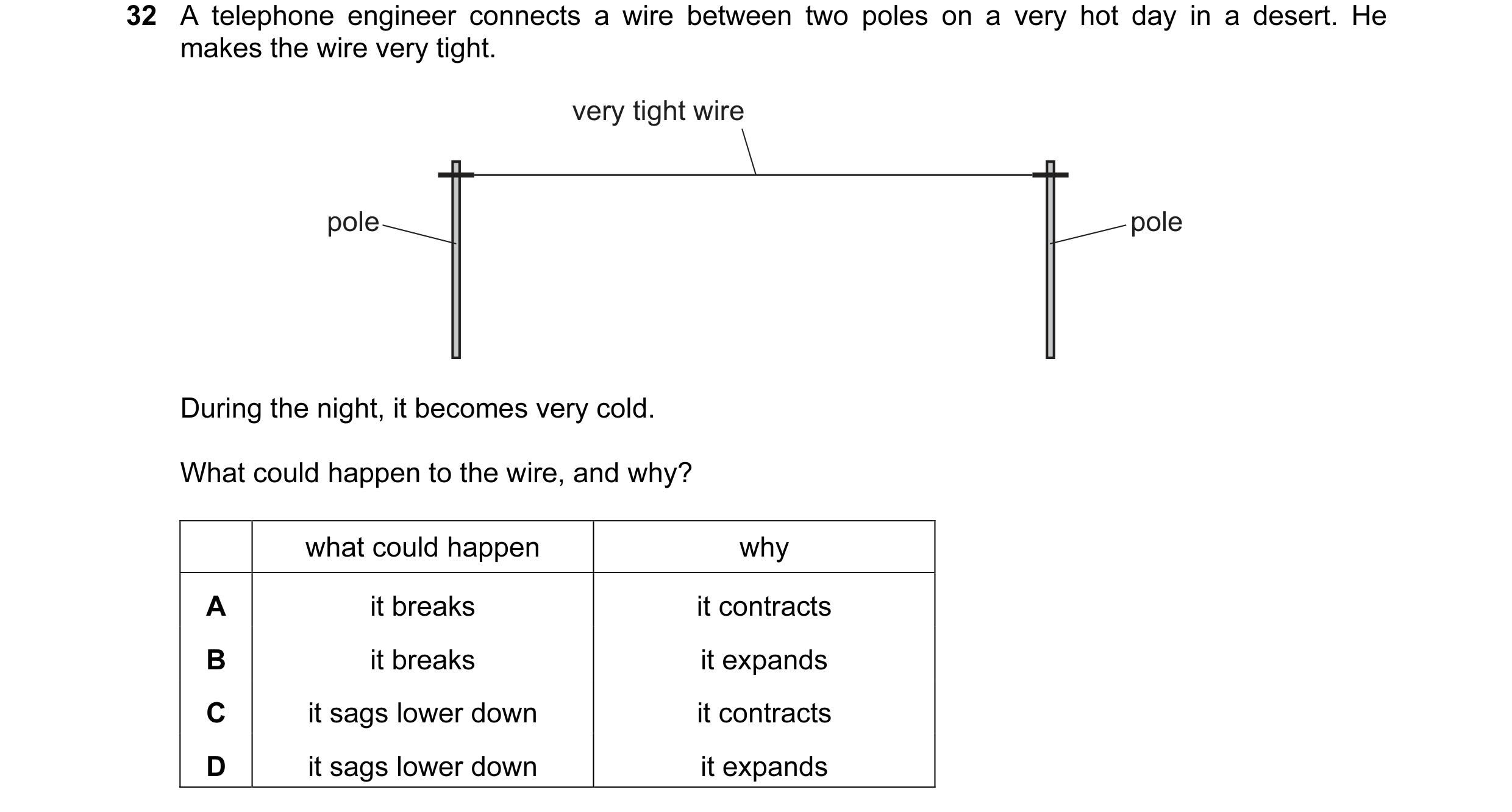
 7 / 26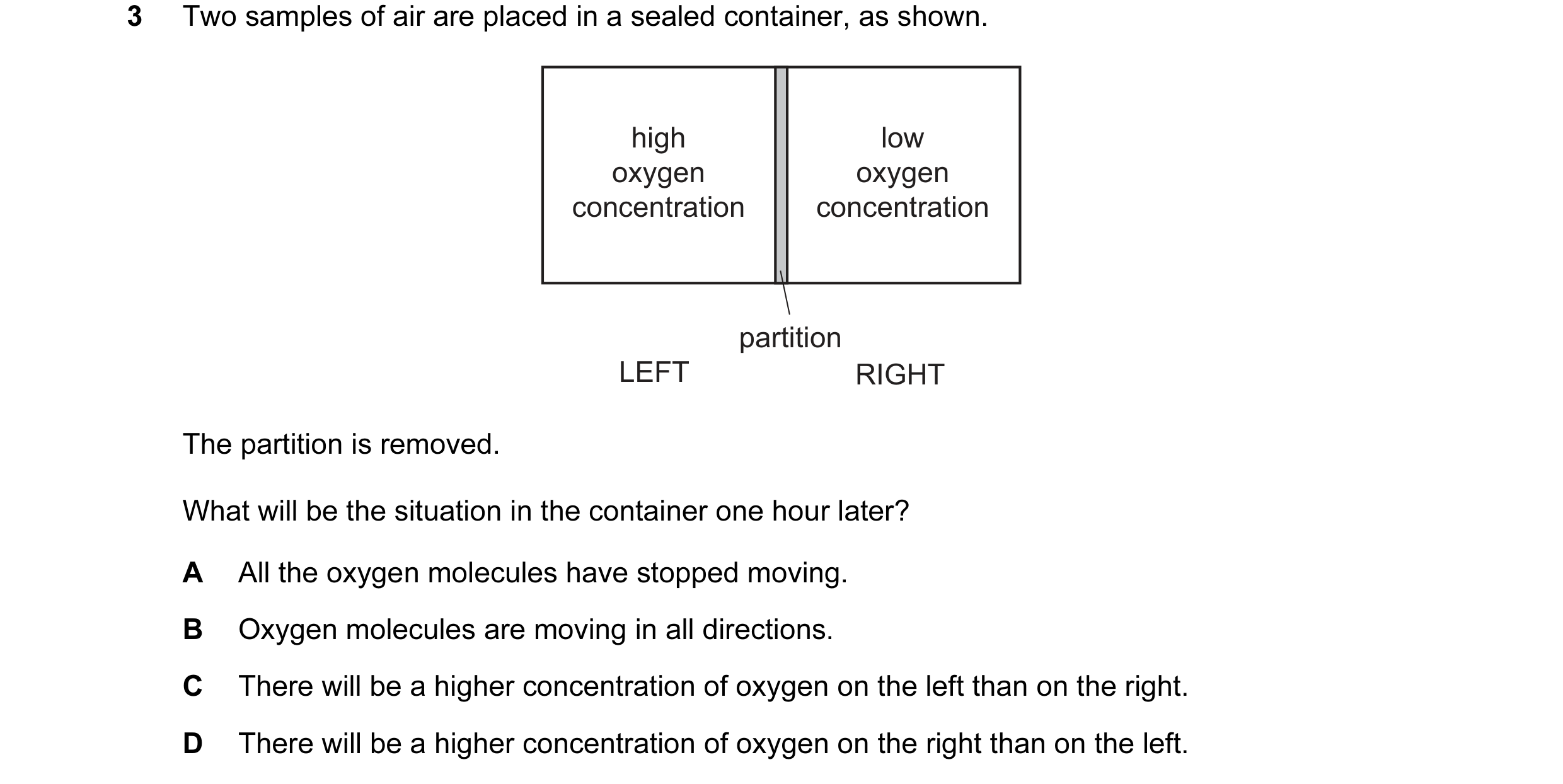

 8 / 26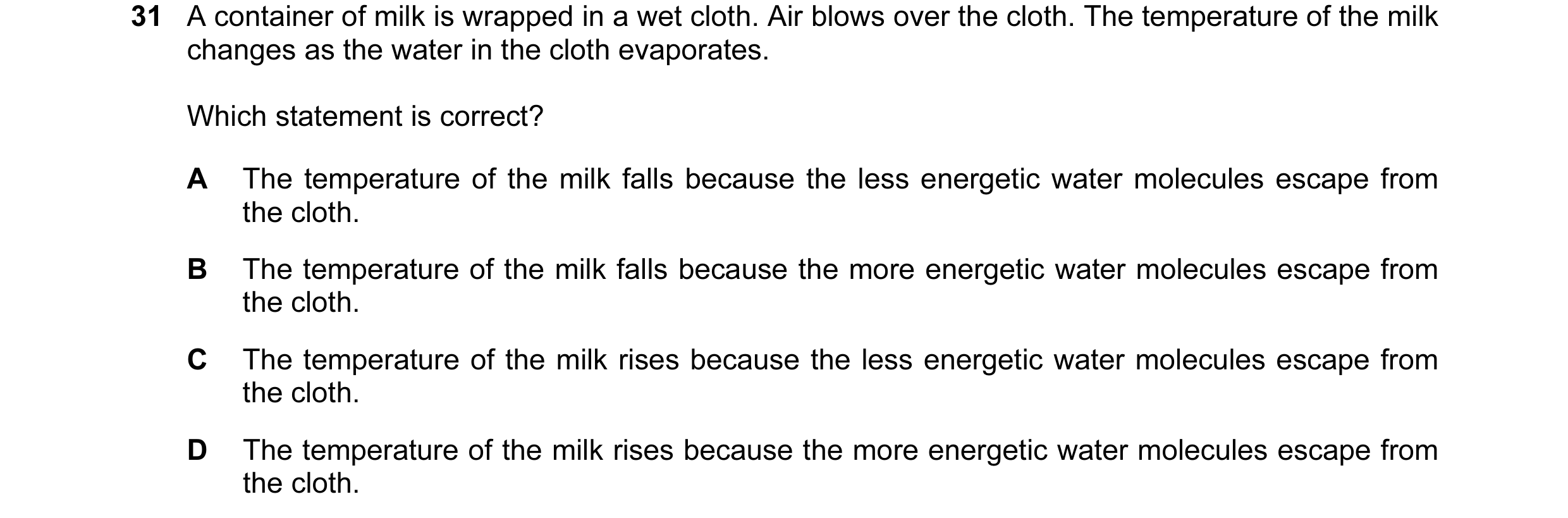

 9 / 26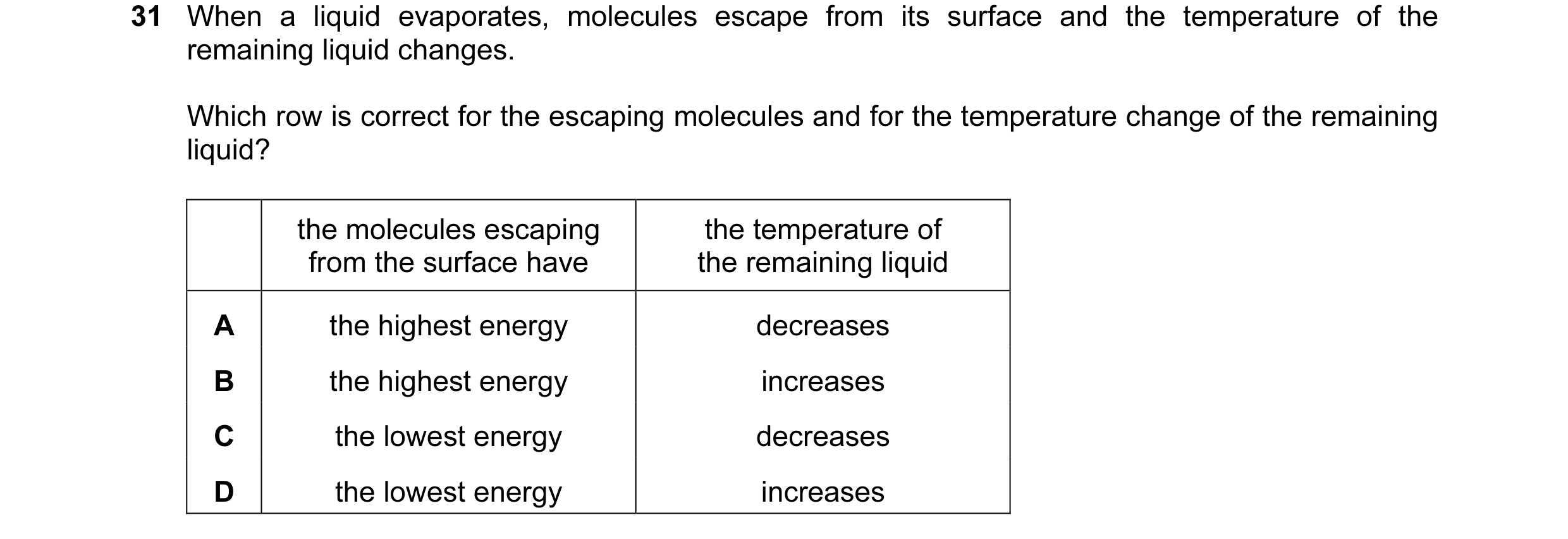
 10 / 26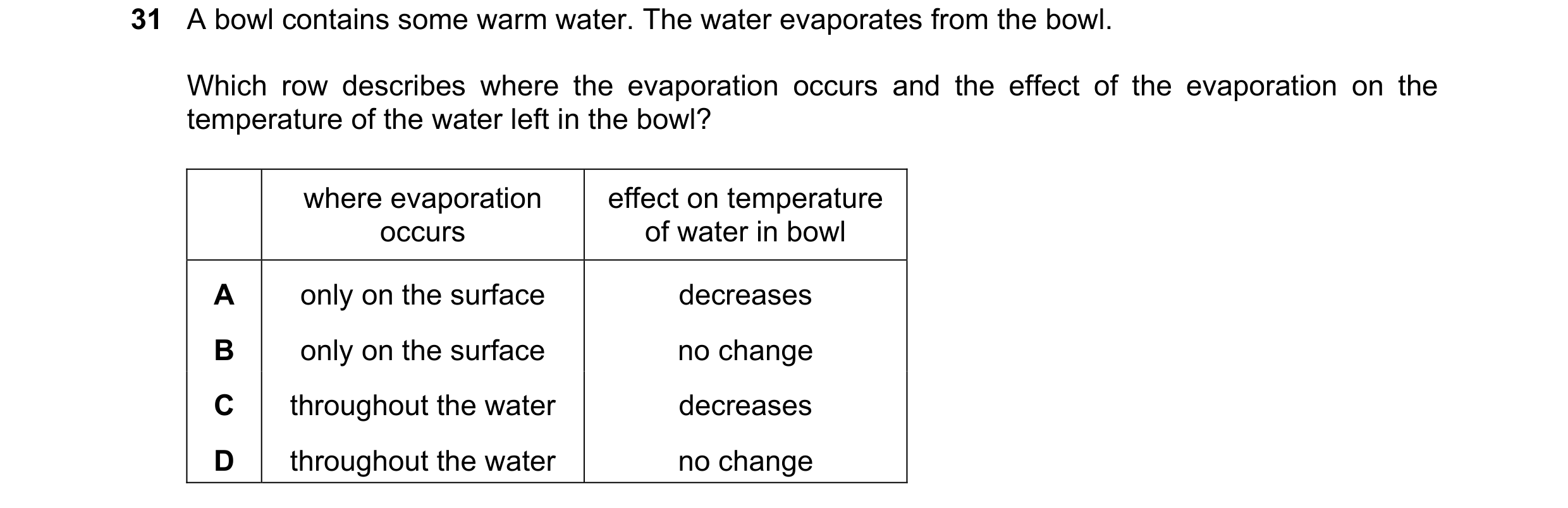
 11 / 26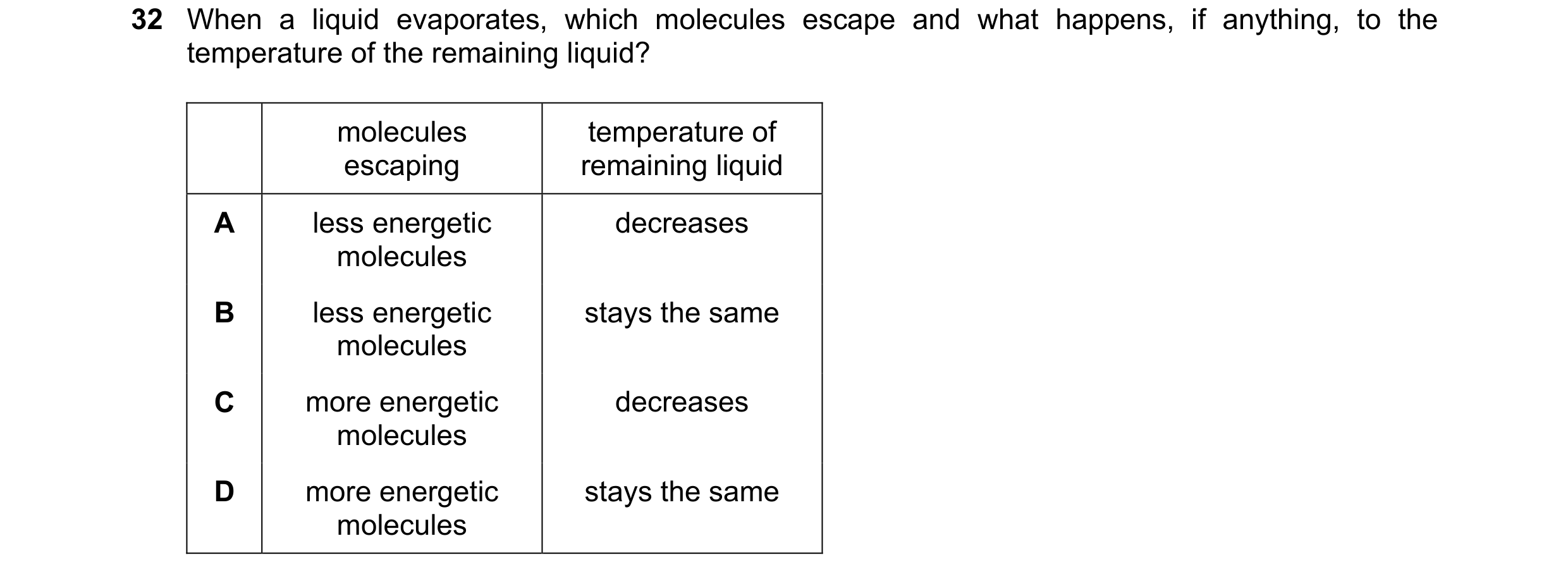
 12 / 26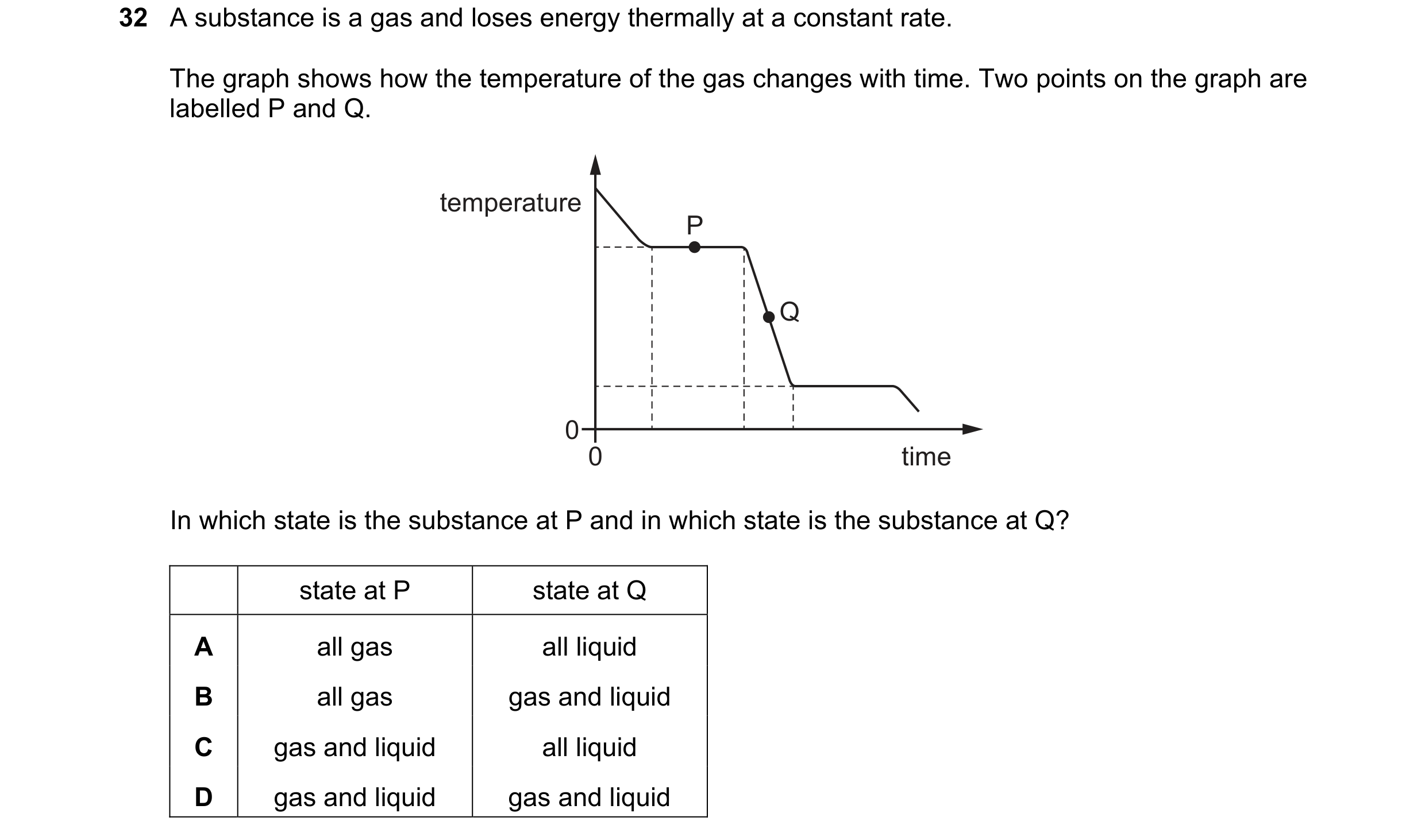

 13 / 26
 14 / 26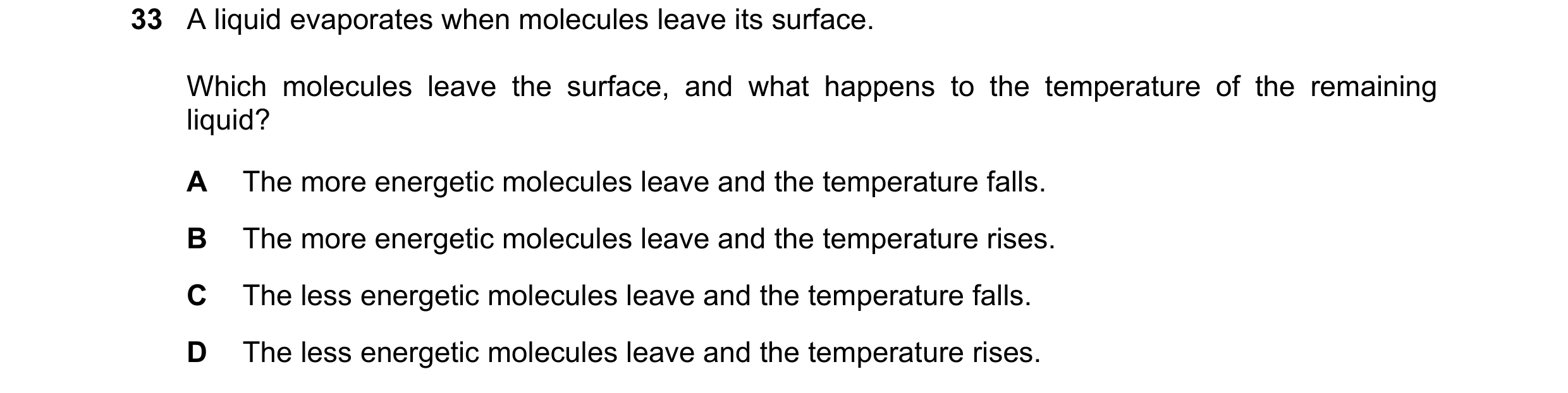

 15 / 26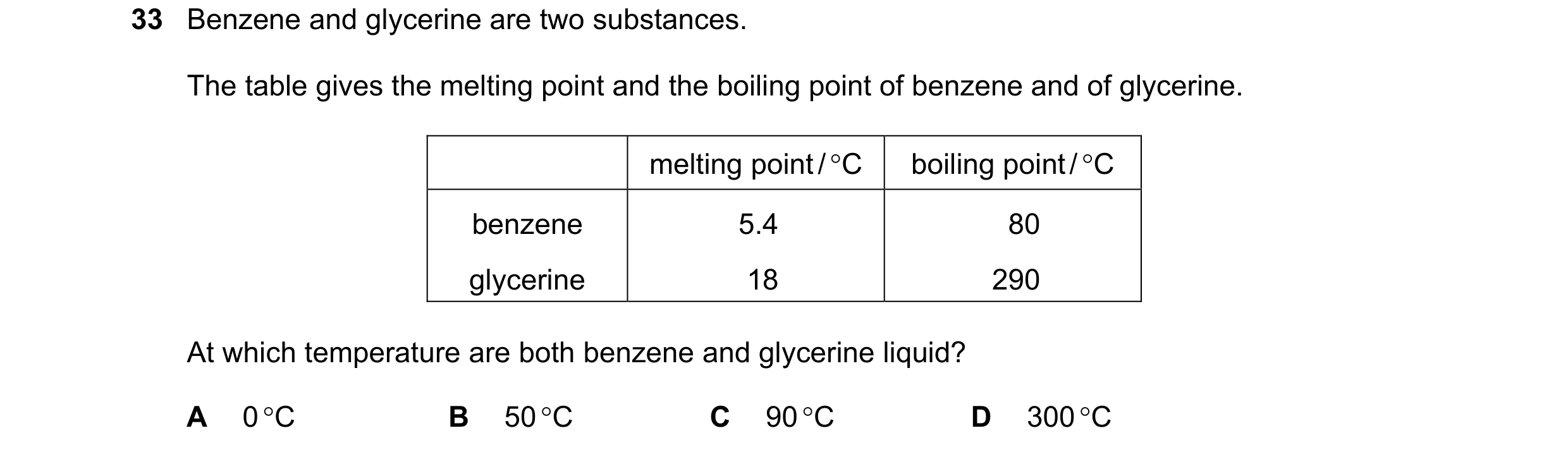
 16 / 26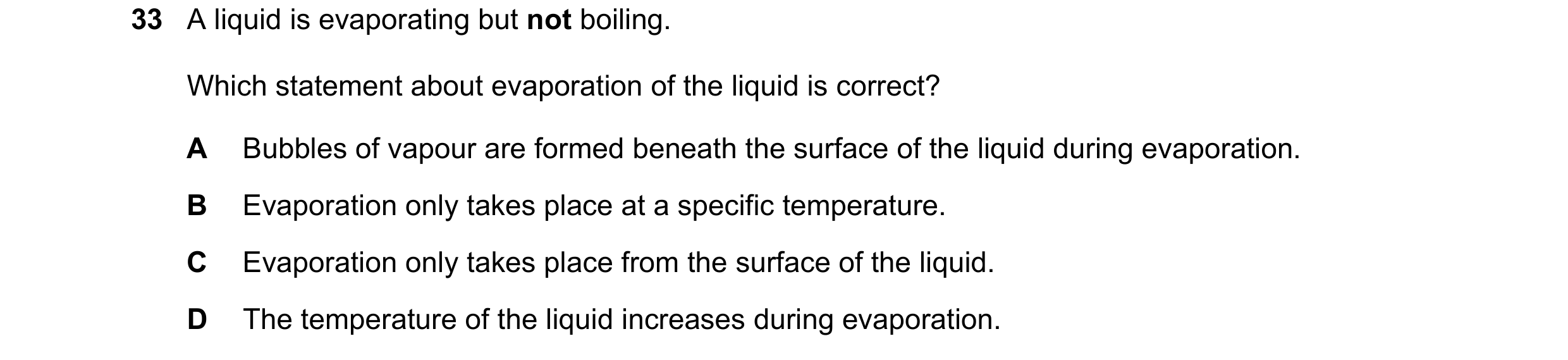
 17 / 26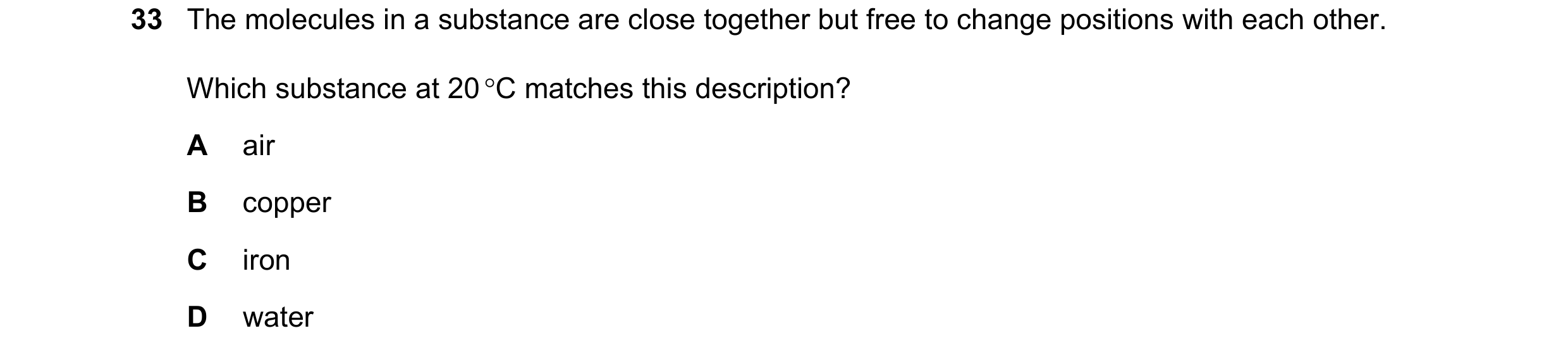

 18 / 26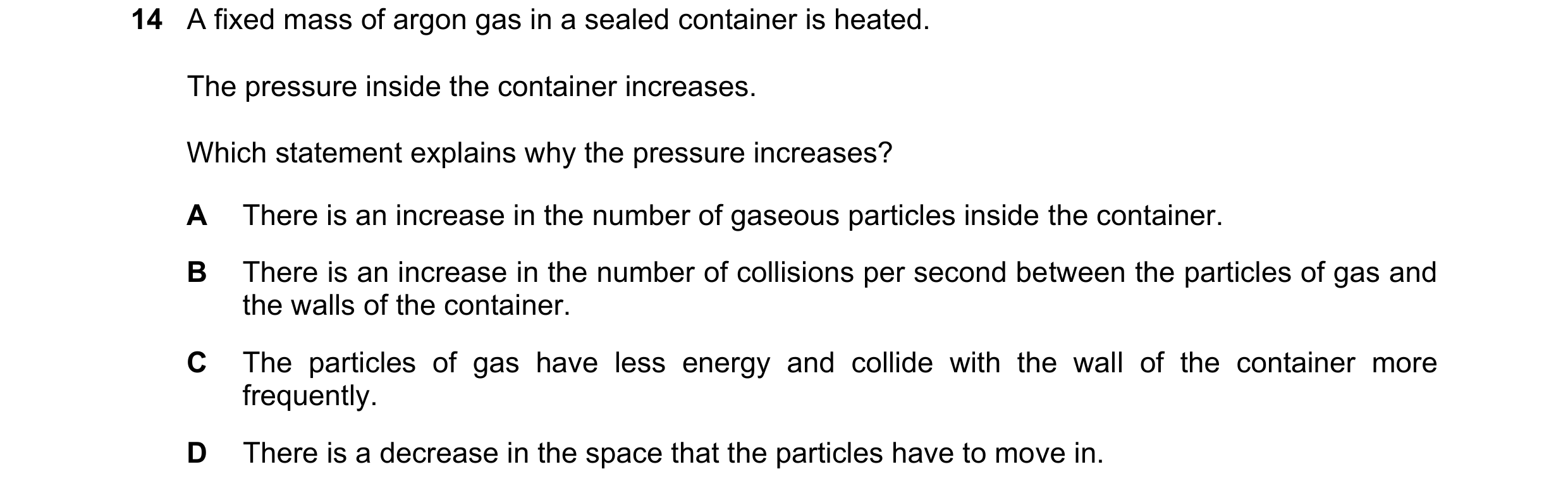
 19 / 26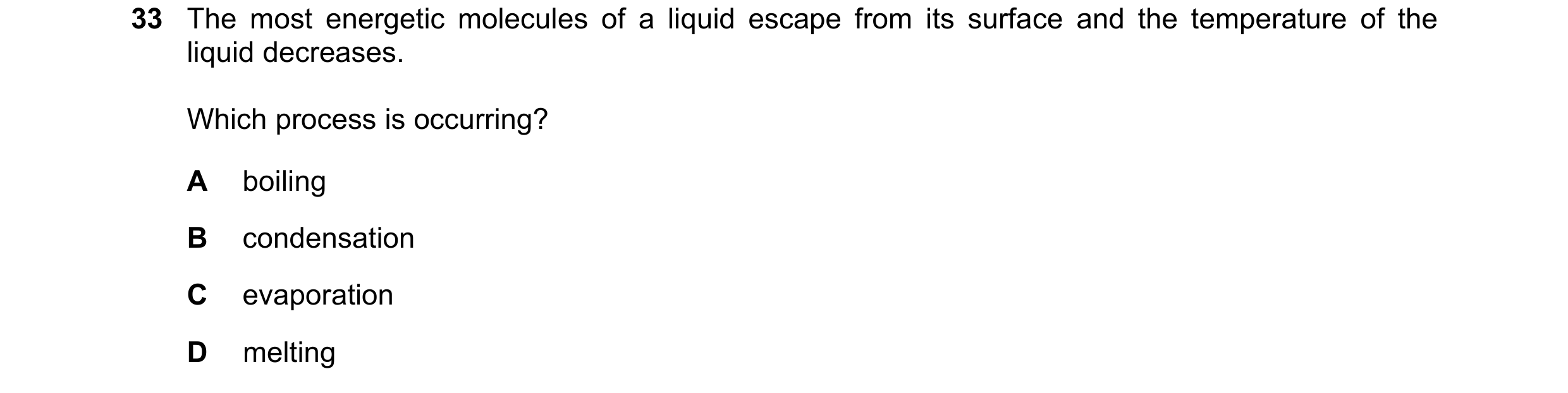


 20 / 26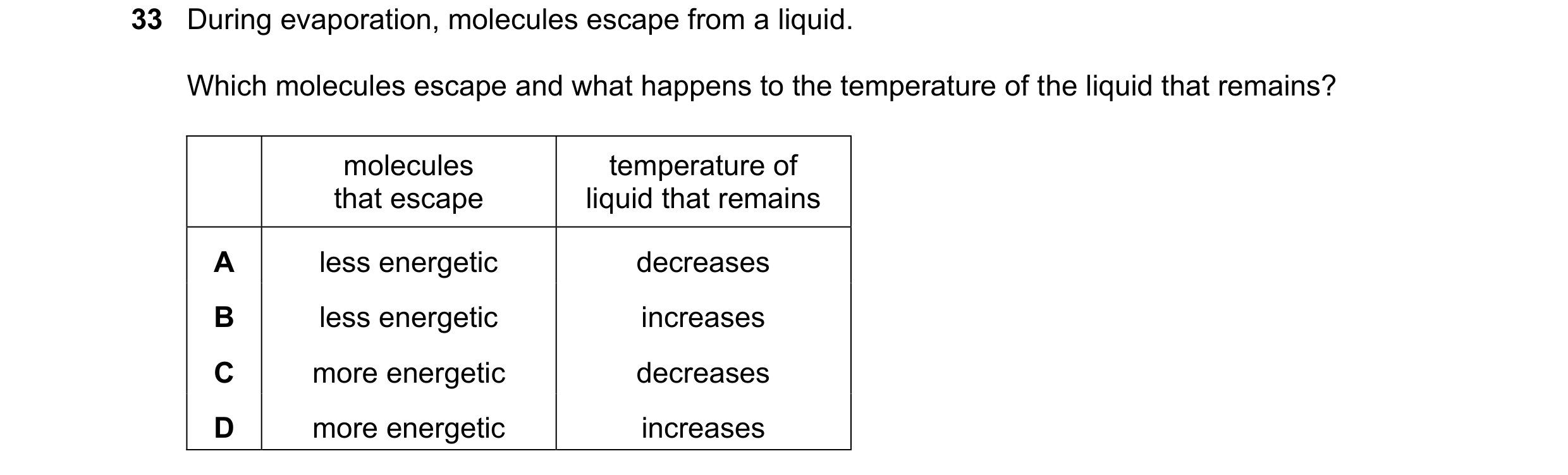

 21 / 26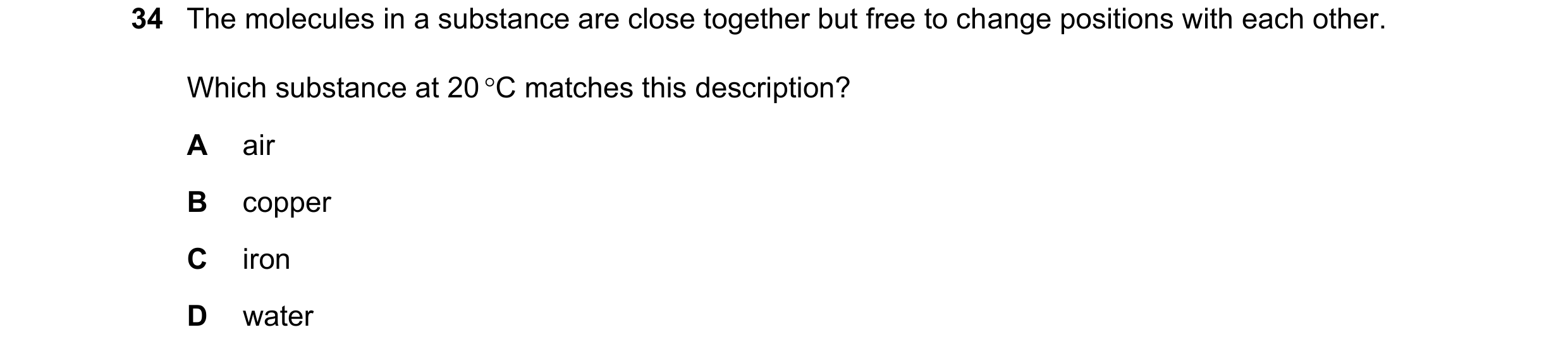



 22 / 26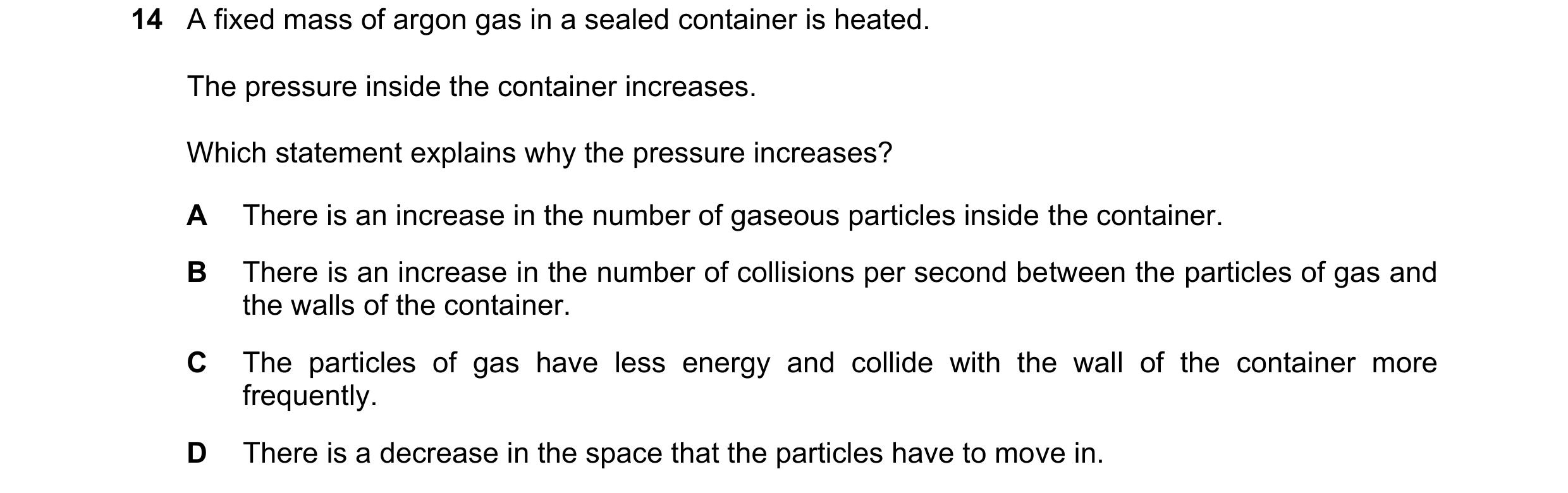
 23 / 26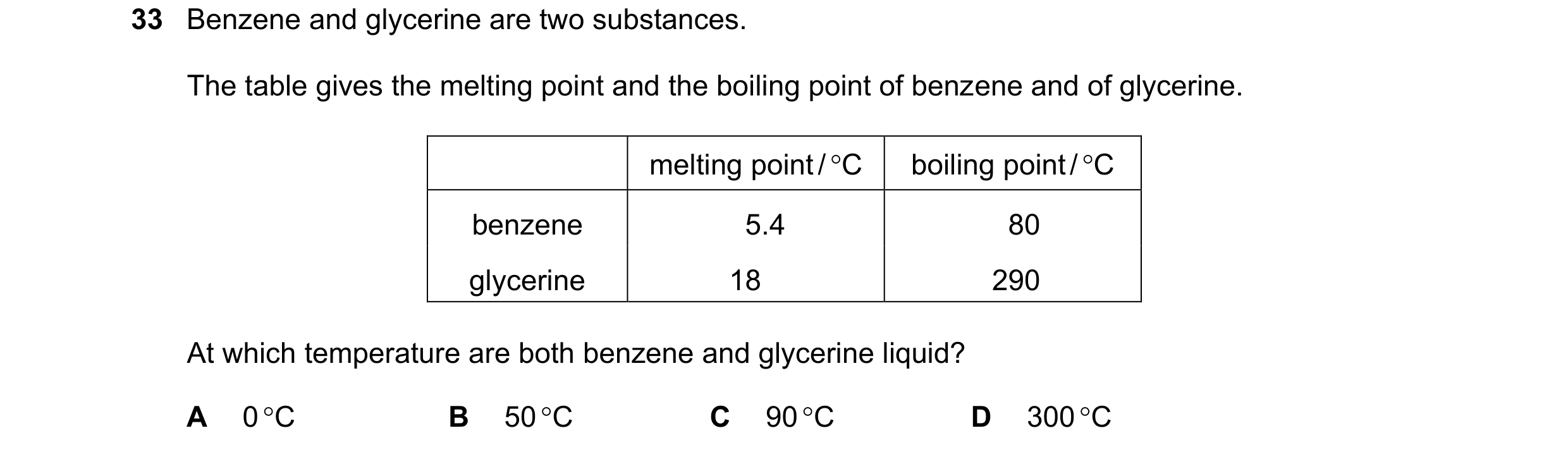

 24 / 26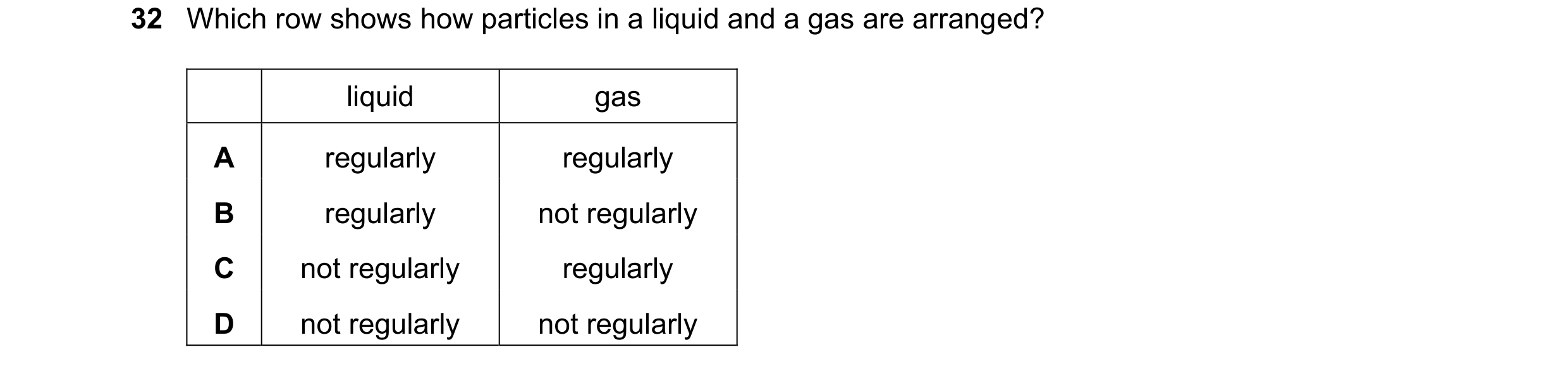

 25 / 26
 26 / 26