Questions as text
Q1 · For Examiner's NOT TO Use x cm SCALE 2x cm The perimeter of the rectangle in the diagram… 0580/31 May/June 2005
6 (a) For Examiner's NOT TO Use x cm SCALE 2x cm The perimeter of the rectangle in the diagram above is 36 centimetres. (i) Find the value of x. Answer(a)(i) x = [2] (ii) Using this value of x, calculate the area of the rectangle. Answer(a)(ii) cm2 [2] (b) 4z + 2 NOT TO 3y y + 3 SCALE 10z – 1 The diagram above shows another rectangle. (i) In this rectangle 3y = y + 3. Solve the equation to find y. Answer(b)(i) y = [2] (ii) Write down an equation in z. Answer(b)(ii) [1] (iii) Solve the equation in part (b)(ii) to find z. Answer(b)(iii) z = [3] (c) For 4a+b Examiner's Use NOT TO a–b 3 SCALE 17 The diagram above shows another rectangle. (i) Write down two equations in a and b. Answer(c)(i) [2] (ii) Solve these two equations simultaneously to find a and b. Answer(c)(ii) a = b = [3]
15 marks
Mark scheme: 6 (a) (i) 6 2 M1 for 6x = 36 or 3x = 18 o.e. (ii) 72 2 f.t. f.t. is 2 x (a)(i) x (a)(i) M1 (f.t.) for 6 x 12, 2 x 36, 2 x 6 x 6 (b) (i) 1.5 or 1 ½ or 3/2 2 M1 for 3y – y = 3 o.e. [unknown on one side] (ii) 4z + 2 = 10z – 1 1 accept any equivalent equation in z if (b)(ii) is left blank may recover mark if 4z + 2 = 10z – 1 seen in (b)(iii) (iii) 0.5 or ½ or 3/6 3 B1 for correct single z term B1 for correct single constant term (c) (i) a – b = 3 o.e. 4a + b = 17 o.e. } 1,1 if (c)(i) is left blank may recover mark(s) 5a = 20 } with a – b = 3, 4a + b = 17, 5a = 20 seen in (c)(ii) 4a + b + 3 = a – b + 17 (ii) (a=) 4 and (b=) 1 3 2 for either (a=) 4 or (b=) 1 or M1 (f.t.) for correctly eliminating one of the variables 15
This question in 0580/31 May/June 2005
Q2 · For C Examiner's Use R Sea North North Land 14 km A B At midday, a ship is somewhere… 0580/31 May/June 2005
7 For C Examiner's Use R Sea North North Land 14 km A B At midday, a ship is somewhere along the line from A to C. (a) By measuring an angle, write down the three figure bearing of the ship from A. Answer(a) [2] (b) The coastguard at B sees the ship on a bearing of 350o. (i) On the diagram draw accurately the line showing a bearing of 350o from B. [1] (ii) On the diagram mark the position of the ship, S. [1] (c) (i) Measure the length, in centimetres, of the line AB on the diagram. Answer(c)(i) cm [1] (ii) The distance from A to B is 14 kilometres. Calculate the scale of the drawing. Give your answer in the form 1:n. Answer(c)(ii) 1: [2] (d) The ship is sailing straight for the rocks, R. For There is a lighthouse at A. Examiner's The range of the light from the lighthouse is 10 kilometres. Use (i) Using your scale, draw the locus of points that are 10 kilometres from A. [2] (ii) Draw the line SR on the diagram. How far is the ship from the rocks when the light from the lighthouse is first seen on the ship? Answer(d)(ii) km [2] (e) If the ship does not alter course it will hit the rocks at 12 40. A lifeboat sets off from the coastguard station, B, at 12 00 and sails straight towards the rocks. (i) Measure and calculate the distance, in kilometres, from the coastguard station, B, to the rocks, R. Answer(e)(i) km [2] (ii) Calculate the speed, in kilometres per hour, at which the lifeboat must sail to reach the rocks by 12 40. Answer(e)(ii) km/h [3] (iii) A knot is 1 nautical mile per hour. One nautical mile is equal to 1.85 kilometres. Calculate the speed found in part (e)(ii) in knots. Answer(e)(iii) knots [2]
18 marks
Mark scheme: 7 (a) 050 ( ± 2) 2 M1 for correct angle but not 3 figures i.e. 50 ( ± 2 ) (b) (i) correct line drawn 1 length at least 3 cms long ( ± 2) (ii) correct position 1 f.t. f.t is from line drawn in (b)(i) marked ( ± 2 mm) but must be on the line AC (c) (i) 7 ( ± 2 mm) 1 (ii) 200000 2 c.a.o. 1 for figs 2 or SC1 for figs 1.94 to 2.06 IGCSE – JUNE 2005 0580/0581 3 (d) (i) correct locus drawn 2 f.t. f.t. is for their scale (normally 5 cm) at least over sea allow dotted/dashed locus SC1 for any other circle with centre A drawn SC1 for ¼ correct circle over sea (ii) correct line SR 1 f.t. f.t. is for their S allow dotted/dashed line drawn 5 to 6 incl. 1 no f.t. on this part (e) (i) 18.6 to 19.4 incl. 2 SC1 for 9.3 to 9.7 incl. seen (ii) 27.9 to 29.1 incl. 3 M1 for conversion of minutes to hours (min of 0.66, 0.67 if dec.) M1 (indep) f.t. for their distance (e)(i)/their time taken (iii) 15.4 2 f.t. f.t. is (e)(ii)/1.85 M1 for (e)(ii)/1.85 seen 18
This question in 0580/31 May/June 2005
Q3 · For C Examiner's Use NOT TO SCALE A B 6 cm C 4 cm NOT TO SCALE B A 8 cm The diagram above… 0580/31 May/June 2005
8 For C Examiner's Use NOT TO SCALE A B 6 cm C 4 cm NOT TO SCALE B A 8 cm The diagram above shows a cuboid and its net. (a) Calculate the total surface area of the cuboid. Answer(a) cm2 [3] (b) Calculate the volume of the cuboid. For Examiner's Use Answer(b) cm3 [2] (c) An ant walks directly from A to C on the surface of the cuboid. (i) Draw a straight line on the net to show this route. [1] (ii) Calculate the length of the ant’s journey. Answer(c)(ii) cm [3] (iii) Calculate the size of angle CAB on the net. Answer(c)(iii) Angle CAB = [3]
12 marks
Mark scheme: 8 (a) 208 3 M2 for 2(24 + 32 + 48) or 48 + 64 + 96 or 160 + 24 + 24 o.e. or M1 for 24 or 32 or 48 or 160 seen (b) 192 2 M1 for 6 x 8 x 4 (c) (i) straight line AC 1 (ii) 12.8 3 M2 for 10 + 8 or 100 + 64 or 164 or M1 for 10 + 8 or 100 + 64 or 164 or SC1 for complete correct use of Pythagoras (iii) 51.3 or 51.4 3 M1 for 10/8 and tan seen o.e. and M1 for tan 10/8 seen o.e. [the o.e include sin or cos with their (c)(ii)] or SC1 for complete correct use of a trig. ratio 12 104
This question in 0580/31 May/June 2005
Q4 · In the diagram below ABD is a straight line 0580/31 Oct/Nov 2005
2 In the diagram below ABD is a straight line. For AB = 4 m and AC = 6 m. Angle BAC = 90°. Examiner's Use A 4 m B D NOT TO 6 m SCALE C (a) (i) Use trigonometry to calculate angle ABC. Answer(a)(i) Angle ABC= [2] (ii) Find angle CBD. Answer(a)(ii) Angle CBD= [1] (b) Calculate the length of BC. Answer(b) BC = m [2] (c) Work out the perimeter and area of triangle ABC. Give the correct units for each. Answer (c) Perimeter = Area = [3]
8 marks
Mark scheme: 2 (a) (i) 56.3 2 M1 for tan ABC = 6/4 oe (ii) 123.7 1√ (b) 7.21 2 M1 for 62 + 42 oe (c) 17.2 m 3√ M1 for area method 12 m2 A1 for both numerically correct B1 for both units correct [8]
This question in 0580/31 Oct/Nov 2005
Q5 · The diagram shows a swimming pool with cross-section ABCDE 0580/31 Oct/Nov 2005
6 The diagram shows a swimming pool with cross-section ABCDE. For The pool is 6 metres long and 3 metres wide. Examiner's AB = 2 m, ED = 1 m and BC = 3.6 m. Use 6 m 3 m NOT TO 1 m SCALE E A 2 m D B C 3.6 m (a) (i) Calculate the area of the cross-section ABCDE. Show your working. Answer(a)(i) m2 [4] (ii) Calculate the volume of the water in the pool when it is full. Give your answer in litres. [1 cubic metre is 1000 litres.] Answer(a)(ii) litres [2] (iii) One litre of water evaporates every hour for each square metre of the water surface. How many litres of water will evaporate in 2 hours? Answer(a)(iii) litres [2] For (b) Another pool holds 61 500 litres of water. Examiner's Jon uses a hosepipe to fill this pool. Use Water flows through the hosepipe at 1000 litres per hour. (i) Calculate how long it takes to fill the pool. Give your answer in hours and minutes. Answer(b)(i) hours minutes [2] (ii) Change 61 500 litres to gallons. [4.55 litres = 1 gallon.] Answer(b)(ii) gallons [1] (iii) Every 10 000 gallons of water needs 2.5 litres of purifier. How many litres of purifier does Jon use for this pool? Answer(b)(iii) litres [2] (iv) The purifier is sold in 1 litre bottles. How many bottles of purifier must Jon buy for this pool? Answer(b)(iv) [1]
14 marks
Mark scheme: 6 (a) (i) 10.8 www 4 M1 for evidence of shape being broken down (or 6 by 2 rectangle – triangle) +M1 for one correct rectangular area. +M1 for evidence of triangle calculation (ii) 32400 2√ SC1 for figs 322 to 323 or M1 for (a)(i) x 3 x 1000 (iii) 36 2 M1 for 6 x 3 x 2 (b) (i) 61 hours and 30 min 2 M1 for 61.5 (ii) art 13500 1 (iii) 3.38 2 M1 for their (b)(ii) x 2.5/10000 (iv) 4 1 √ rounding up [14]
This question in 0580/31 Oct/Nov 2005
Q6 · Calculate the interior angle of a regular heptagon (seven-sided polygon) 0580/31 Oct/Nov 2006
3 (a) (i) Calculate the interior angle of a regular heptagon (seven-sided polygon). For Write down all the figures on your calculator display. Examiner's Use Answer(a) (i) [2] (ii) Round your answer to part (a)(i) to 1 decimal place. Answer(a) (ii) [1] (b) xº NOT TO 80º 95º SCALE 3yº The diagram shows four angles around a point. (i) Write down an equation in x and y. Answer(b) (i) [1] (ii) Simplify your equation. Answer(b) (ii) [1] (iii) Find y when x = 65. Answer(b) (iii) y = [2] (c) (i) For A Examiner's Use aº NOT TO SCALE 70º 2bº C B Explain why a + 2b = 110 in the triangle above. Answer(c) (i) [1] (ii) NOT TO SCALE bº aº Explain why a + b = 90 in the semi-circle above. Answer(c) (ii) [1] (iii) Solve the equations a + 2b = 110, a + b = 90. Answer(c) (iii) a = b = [2] (iv) Work out the size of angle ABC in the triangle in part (c)(i). Answer(c) (iv) Angle ABC = [1]
12 marks
Mark scheme: 3 (a) (i) 128.571…… or 128° 3 4 ′ (….) 2 M1 for 180 – 360/7 oe (ii) 128.6 1 ft Follow through their (a)(i). (b) (i) x + 3y + 80 + 95 = 360 (or better) 1 (ii) x + 3y = 185 oe 1 Both marks may be gained in (b)(i) (iii) 40 2 ft M1 for x correctly substituted into the linear equation. Follow through their (b)(ii) provided linear in x and y. (c) (i) 180° or angle sum of triangle mentioned 1 (ii) Angle in a semi-circle mentioned. 1 (iii) (a =) 70 1 SC1 for a = 20 b = 70 (b =) 20 1 (iv) 40 1ft 2 × their value for b provided 0 < b < 55. 12
This question in 0580/31 Oct/Nov 2006
Q7 · For A X B Examiner's Use NOT TO 10 cm SCALE 55º D 18 cm C The diagram shows a rectangular… 0580/31 Oct/Nov 2006
5 For A X B Examiner's Use NOT TO 10 cm SCALE 55º D 18 cm C The diagram shows a rectangular tile ABCD which has a shaded triangle DXB. DC = 18 centimetres, BC = 10 centimetres and angle ADX = 55°. (a) Calculate the area of triangle BDC. Answer(a) cm2 [2] (b) Calculate the length of AX. Answer(b) cm [2] (c) Calculate the shaded area. Answer(c) cm2 [3] (d) Calculate the length of BD. Answer(d) cm [2]
9 marks
Mark scheme: 5 (a) 90 2 M1 for 0.5 × 18 × 10 (b) 14.3 art 2 M1 for 10 × tan 55oe (c) 18.5 to 18.6 3 M1 for 0.5 × 10 × their (b) or M1 18 – their (b) 1 M1 x 10 x their BX 2 M1 for Their (a) – (0.5 × 10 × their (b)) (d) 20.6 art 2 M1 for √( 182 + 102) oe 9
This question in 0580/31 Oct/Nov 2006
Q8 · For Examiner's 20 cm Use NOT TO 10 cm SCALE brick face Part of the wall (a) A builder… 0580/31 Oct/Nov 2006
6 For Examiner's 20 cm Use NOT TO 10 cm SCALE brick face Part of the wall (a) A builder estimates the number of bricks in a wall by dividing the area of the wall by the area of the face of a brick. A brick wall is 10 metres long and 1.5 metres high. Each brick is 20 centimetres long and 10 centimetres high. Calculate how many bricks the builder estimates are in the wall. Show all your working. Answer(a) bricks [3] (b) Another wall will need 720 bricks. The builder adds an extra 5% to this number to allow for mistakes. (i) Calculate how many bricks the builder needs to buy. Answer(b) (i) bricks [2] (ii) Bricks are sold in packs of 100 which can not be split. How many packs should the builder buy? Answer(b) (ii) packs [1] (c) The builder mixes sand and cement in the ratio 5:2 to make mortar. He wants 14 buckets of mortar. (i) How many buckets of sand and how many buckets of cement does he need? Answer(c) (i) He needs buckets of sand and buckets of cement. [2] (ii) One bag of cement fills 3.5 buckets. How many bags of cement must the builder buy? Answer(c) (ii) bags [1]
9 marks
Mark scheme: 6 (a) 750cao 3 M1 Figs 10 ÷ figs 20 and figs 15 ÷ figs 10. OR M1 Figs 10 x Figs 15 and Figs 20 x Figs 10 M1 dep bricks in length × bricks in height. M1 dep. area of wall ÷ area of brick. If MO then SC1 for Figs 75 (b) (i) 756 2 M1 for 720 × 1.05 oe (ii) 8 1ft Their (b)(i) rounded up to the number of hundreds (c) (i) 10 1 4 1 (ii) 2 1ft Their cement buckets ÷ 3.5 and rounded up to next whole number 9
This question in 0580/31 Oct/Nov 2006
Q9 · For NOT TO Examiner's SCALE Use A A 3 cm 3 cm 3 cm 3 cm 8 cm B D C B 3 cm C 3 cm Diagram… 0580/31 Oct/Nov 2007
7 For NOT TO Examiner's SCALE Use A A 3 cm 3 cm 3 cm 3 cm 8 cm B D C B 3 cm C 3 cm Diagram 1 Diagram 2 A physics teacher uses a set of identical triangular glass prisms in a lesson. Diagram 1 shows one of the prisms. Diagram 2 shows the cross-section of one prism. The triangle ABC is equilateral, with sides of length 3 cm and height AD. (a) (i) Calculate the length of AD. Answer(a)(i) cm [2] (ii) Calculate the area of triangle ABC. Answer(a)(ii) cm2 [2] (iii) The length of the prism is 8 cm. Calculate the volume of the prism. Answer(a)(iii) cm3 [2] (b) After the lesson, the glass prisms are put into a box, which is also a triangular prism. For The cross-section is an equilateral triangle, with sides of length 9 cm. Examiner's The length of the box is 16 cm. Use NOT TO SCALE 9 cm 9 cm 16 cm 9 cm (i) Work out the largest number of glass prisms that can fit into the box. Answer(b)(i) [2] (ii) Sketch a net of the box. (Accurate construction is not required.) [1] (iii) Calculate the surface area of the box. Answer(b)(iii) cm2 [6] (iv) The box was made out of plastic, which cost 6 cents per square centimetre. To make the box, 540 cm2 of plastic was bought. Calculate the total cost of the plastic, giving your answer in dollars. Answer(b)(iv) $ [2]
17 marks
Mark scheme: 7 (a) (i) 2.60 art or 2.6 B2 M1 for √(3²–1.5²) or better (√6.75) oe (ii) 3.90 art or 3.9 B2 ft M1 for 0.5 x 3 x their(a)(i) (iii) 31.2 art B2 ft M1 for 8 x their (a)(ii) (b) (i) 18 www2 M1 for 9 triangles implied, or 2 x k, or attempted sketch (ii) reasonable sketch B1 shows 3 rectangles, 2 triangles in reasonable proportion (iii) area of "rectangle" M1 for 16 x 9, 144, 3 x 9 x 16, 27 x 16, 432 height of triangle M1 for √(9²–4.5²), √60.75, 7.79, 7.8, 3 x (a)(i) ft or trig area of triangle M1 for 0.5 x height (ft but not 9) x 9, 35.1, 70.2, 70.1 OR M2 for 9 x 3.90, 9 x their (a)(ii), 35.1 , 70.2, 70.1 total area M1 3 rectangles and 2 triangles, 432 + 70.2 or 70.1 soi 502 art A2 if M<3 then add SC3 for 502 art with no wrong working seen (iv) 32.4(0) B2 M1 for 540 x 6 or figs 324 [17]
This question in 0580/31 Oct/Nov 2007
Q10 · Calculate the area of a circle with radius 3.7 centimetres 0580/31 May/June 2008
5 (a) (i) Calculate the area of a circle with radius 3.7 centimetres. For Examiner's Use Answer(a)(i) cm2 [2] (ii) A can of tomatoes is a cylinder with radius 3.7 centimetres and height h centimetres. The volume of the cylinder is 430 cubic centimetres. Calculate h. Answer(a)(ii) h = [2] 2 cans NOT TO SCALE 3 cans 2 cans (b) Twelve cans fit exactly inside a box 3 cans long, 2 cans wide and 2 cans high. (i) Write down the length, width and height of the box. Answer(b)(i) length = cm width = cm height = cm [3] (ii) Calculate the volume of the box. Answer(b)(ii) cm3 [2] (iii) Calculate the percentage of the volume of the box occupied by the cans. Answer(b)(iii) % [3]
12 marks
Mark scheme: 5 (a) (i) 43.0 art or 43 B2 M1 for π x 3.7² (ii) 10.0 art or 10 B2ft M1 for 430 ÷ their (a)(i) ft (b) (i) (length) = 22.2 B1 accept length and width interchanged (width) = 14.8 B1 (height) = 20 B1ft ft is 2 x their (a)(ii) (ii) 6570 art B2 ft ft is their L x W x H from (b)(i) M1 for L x W x H ft (substituted) (iii) 78.5 (%) art B3 ft ft is 5160 ÷ their (b)(ii) x 100 but only if answer < 100 B1 for 12 x 430 or 5160 M1 for 5160 ÷ their (b)(ii) x 100 [12]
This question in 0580/31 May/June 2008
Q11 · The width of a rectangle is x centimetres 0580/31 May/June 2008
8 (a) The width of a rectangle is x centimetres. For Examiner's The length of the rectangle is 3 centimetres more than the width. Use Write down an expression, in terms of x, for (i) the length of the rectangle, Answer(a)(i) cm [1] (ii) the area of the rectangle. Answer(a)(ii) cm2 [1] (iii) The area of the rectangle is 7 square centimetres. Show that x2 + 3x − 7 = 0. Answer (a)(iii) [1] (b) (i) Complete the tables of values for the equation y = x2 + 3x − 7. x −5 −4 −3 −2 −1 0 1 2 y 3 −7 −9 −7 3 [3] (ii) On the grid below, draw the graph of y = x2 + 3x − 7 for −5 Y x Y 2. For y Examiner's Use 4 2 x –5 –4 –3 –2 –1 0 1 2 A –2 –4 –6 –8 –10 [4] (c) (i) Use your graph to find the solutions to the equation x2 + 3x − 7 = 0. Answer(c)(i) x = or x = [2] (ii) Find the length of the rectangle in part (a). Answer(c)(ii) cm [1] (d) The point A(1, −1) is marked on the grid. (i) Draw a straight line through A with a gradient of 2. [1] (ii) Write down the equation of this line in the form y = mx + c. Answer(d)(ii) y = [2]
16 marks
Mark scheme: 8 (a) (i) x + 3 B1 (ii) x (x + 3) or x² +3x B1 ft from their (a)(i) (iii) x² +3x = 7 x² +3x - 7 = 0 E1 both lines seen (b) (i) -3, -9, -3 B3 B1, B1, B1 (ii) 8 points correctly plotted P3 ft P2ft or 6 or 7, P1ft for 4 or 5 (+/- 1/2 small square) smooth curve C1 (must go below y = -9) IGCSE – May/June 2008 0580/0581 03 (c) (i) 1.5 to 1.6 B1 ft -4.5 to -4.6 B1 ft ft is their intersections with the x-axis (ii) 4.5 to 4.6 B1 ft ft is their positive (c)(i) + 3 (d) (i) correct line L1 long enough to cross y axis (+/- 1/2 small square) (ii) (y =) 2x - 3 B1,B1ft B1 for 2 (as coefficient of x) B1 ft for their intersection with the y-axis [16]
This question in 0580/31 May/June 2008
Q12 · Write down the name of a polygon with 8 sides 0580/31 May/June 2009
6 (a) Write down the name of a polygon with 8 sides. For Examiner's Use Answer(a) [1] (b) Find the size of the interior angle of a regular polygon with 8 sides. Answer(b) [2] (c) A regular 8-sided polygon, centre O, and side 8 cm, is shown below. M is the mid-point of the side AB. F E NOT TO SCALE G D O H C A M B 8 cm (i) Show that OM = 9.66 cm correct to 3 significant figures. Answer (c)(i) [3] (ii) Calculate the area of the triangle AOB. For Examiner's Use Answer(c)(ii) cm2 [2] (iii) Calculate the area of the polygon. Answer(c)(iii) cm2 [1] (d) The polygon forms the cross-section of a box. The box is a prism of height 12 cm. Calculate the volume of the box. Answer(d) cm3 [1] (e) The box contains 200 toffees in the shape of cuboids, 3 cm by 2 cm by 2 cm. Calculate (i) the total volume of the 200 toffees, Answer(e)(i) cm3 [2] (ii) the percentage of the volume of the box not filled by the toffees. Answer(e)(ii) % [3]
15 marks
Mark scheme: 6 (a) Octagon 1 (b) 135 2 M1 for 180 − (360 ÷ 8) oe (c) (i) Angle OAB = their (b)/2 or W1ft 67.5 or 22.5 correct values, angle AOM = 90 − their (b)/2 4 × tan ‘67.5’ or 4 ÷ tan ‘22.5’ M1 9.656… or 9.66 A1cao Dep on W1 and M1 (ii) 38.6 to 38.64 2 M1 for 0.5 × 8 × 9.66 (iii) 308.8 to 309.12 1ft Their (c) (ii) × 8 (d) 3705.6 to 3709.44 or 3710 1ft Their (c) (iii) × 12 (e) (i) 2400 2cao M1 for 3 × 2 × 2 × 200 (ii) 35.2(3…) to 35.3(0…) 3cao M1 for their ((d) − (e) (i)) soi. (d)− (e)(i) M1 for (d) × 100 (e)(i) Or M2 for (1 (d) ) × 100 SC1 for Answer 64.7 to 64.77
This question in 0580/31 May/June 2009
Q13 · For D C Examiner's 7 cm NOT TO Use SCALE M X L A 7 cm B In the diagram, ABCD is a square… 0580/31 Oct/Nov 2010
4 For D C Examiner's 7 cm NOT TO Use SCALE M X L A 7 cm B In the diagram, ABCD is a square of side 7 cm. BLC and DMA are equilateral triangles. (a) Find the perimeter of the shape ABLCDM. Answer(a) cm [1] (b) (i) Write down the size of angle CBL. Answer(b)(i) Angle CBL = [1] (ii) Calculate the length of LX. Answer(b)(ii) LX = cm [2] (c) (i) Calculate the area of triangle BLC. Answer(c)(i) cm2 [2] (ii) Calculate the area of the shape ABLCDM. Answer(c)(ii) cm2 [2]
8 marks
Mark scheme: 4 (a) 42 1 (b) (i) 60° 1 x x (ii) 6.06(217…) 2 M1 ft for = cos 30 or = sin 60 or 7 7 x 5.3 = tan 60 or = tan 30 or better 5.3 x (c) (i) 21.2 to 21.4 ft 2ft M1 for 12 × 7 × their (b)(ii) oe (ii) 91.4 to 91.7 ft 2ft M1 ft 7 × 7 + 2 (their (c)(i)) or B1 for 49 5 1 3 75
This question in 0580/31 Oct/Nov 2010
Q14 · For C Examiner's Use NOT TO D SCALE 85 cm 65 cm A 50 cm B The diagram represents the… 0580/32 Oct/Nov 2010
7 For C Examiner's Use NOT TO D SCALE 85 cm 65 cm A 50 cm B The diagram represents the cross-section of a storage box. AB = 50 cm, AD = 65 cm and BC = 85 cm. AD is parallel to BC. (a) Write down the geometrical name of the quadrilateral ABCD. Answer(a) [1] (b) Calculate angle DCB. Answer(b) Angle DCB = [3] (c) Calculate the area of the cross-section ABCD. Answer(c) cm2 [2] (d) The storage box is 96 cm long. Calculate the volume of the box. Write down the units of your answer. 96 cm Answer(d) [2]
8 marks
Mark scheme: 7 (a) Trapezium 1 (b) 68.2 3 M2 for tan = 50 ÷ (85–65) or better B1 for 85 – 65 (= 20) seen in working area (c) 3750 2 M1 for 0.5(65 + 85) × 50 (d) 360 000 1ft ft their (c) × 96, correct to a minimum of 3sf cm3 1 units mark independent
This question in 0580/32 Oct/Nov 2010
Q15 · For Examiner's Use NOT TO SCALE 8 cm D C 6 cm 20 cm A 12 cm B The diagram shows a prism… 0580/33 Oct/Nov 2010
6 For Examiner's Use NOT TO SCALE 8 cm D C 6 cm 20 cm A 12 cm B The diagram shows a prism of length 20 cm. The cross-section of the prism is a trapezium, ABCD, with AB parallel to DC. AB = 12 cm, DC = 8 cm and the perpendicular distance between AB and DC is 6 cm. (a) Calculate (i) the area of the trapezium ABCD, Answer(a)(i) cm2 [2] (ii) the volume of the prism. Answer(a)(ii) cm3 [1] (b) The prism is solid and made of brass. For Examiner's (i) One cubic centimetre of brass has a mass of 8.5 grams. Use Calculate the mass of the prism. Give your answer in kilograms. Answer(b)(i) kg [2] (ii) Brass costs $2.26 for one kilogram. How much will the brass cost to make this prism? Give your answer correct to 2 decimal places. Answer(b)(ii) $ [2]
7 marks
Mark scheme: 6 (a) (i) 60 2 M1 for full method for area with correct values (ii) 1200 1ft ft their (i) × 20 (b) (i) 10.2 2ft SC1 for figs 102 or M1 for (a)(ii) × 8.5 ÷ 1000 ft their (a)(ii) × 8.5 ÷ 1000 and SC in same way (ii) 23.05 2ft ft their (b)(i) × 2.26 M1 for 23.052 or 23.1 or (b)(i) × 2.26 or B1ind for correctly rounding to 2 dp an answer with more than 2 dp
This question in 0580/33 Oct/Nov 2010
Q16 · The area, A, of a sector of a circle of radius r is given by the formula below 0580/33 Oct/Nov 2010
8 The area, A, of a sector of a circle of radius r is given by the formula below. For Examiner's Use π r 2 A = 5 (a) Calculate the area when the radius is 7.5 cm. Answer(a) cm2 [2] (b) Make r the subject of the formula. Answer(b) r = [3] (c) Calculate r when A = 4.8 cm2. Answer(c) r = cm [2]
7 marks
Mark scheme: 8 (a) 35.3 art 2 M1 for substituting r = 7.5 in formula 5 A (b) 3 M1 for correctly multiplying by 5 π M1 for correctly dividing by π M1 for correctly taking a square root (c) 2.76 art cao 2 M1 for substituting 4.8 in their (b) or if working backwards from original formula, substituting and reaching r2 = 5 × 4.8 ÷ π IGCSE – October/November 2010 0580 33
This question in 0580/33 Oct/Nov 2010
Q17 · For Examiner's Use The shape above is the net of a solid drawn on a 1 cm square grid 0580/31 May/June 2011
2 For Examiner's Use The shape above is the net of a solid drawn on a 1 cm square grid. (a) Write down the geometrical name of the solid. Answer(a) [1] (b) Find the perimeter of the net. Answer(b) cm [1] (c) Work out For Examiner's (i) the area of one of the triangles, Use Answer(c)(i) cm2 [2] (ii) the volume of the solid. Answer(c)(ii) cm3 [2] (d) A cuboid of length 4 cm and width 3 cm has the same volume as the solid. Calculate the height of the cuboid. Answer(d) cm [2]
8 marks
Mark scheme: 2 (a) (triangular) prism 1 (b) 49.6 to 50.4 1 (c) (i) 6 2 M1 for ½ × 4 × 3 oe (ii) 42 2ft M1 for their (c)(i) × 7 (d) 3.5 2ft M1 for their (c)(ii) ÷ (3 × 4) oe
This question in 0580/31 May/June 2011
Q18 · For y Examiner's Use 6 5 4 A 3 2 1 x –6 –5 –4 –3 –2 –1 0 1 2 3 4 5 6 –1 B –2 –3 –4 –5 –6… 0580/32 May/June 2011
2 For y Examiner's Use 6 5 4 A 3 2 1 x –6 –5 –4 –3 –2 –1 0 1 2 3 4 5 6 –1 B –2 –3 –4 –5 –6 The diagram shows two triangles drawn on a 1 cm square grid. (a) (i) Describe fully the single transformation which maps triangle A onto triangle B. Answer(a)(i) [3] (ii) Calculate the area of triangle A. Answer(a)(ii) cm2 [2] (iii) Find the perimeter of triangle A. Answer(a)(iii) cm [1] (b) Reflect triangle A in the x-axis. Label the image P. [1] (c) Rotate triangle A through 90° clockwise about (0, 0). Label the image Q. [2] (d) Describe fully the single transformation which maps triangle P onto triangle Q. Answer(d) [2]
11 marks
Mark scheme: 2 (a) (i) Enlargement 1 (Scale factor) − 12 1 Independent marks 1 (centre) origin oe (ii) 12 2 M1 for 0.5 × 6 × 4 or SC1 for –12 (iii) 15.7 to 16.5(cm) 1 (b) Image (0, −2), (−6, −2) and (−4, −6) 1 (c) Image (2, 0), (2, 6) and (6, 4) 2 SC1 rotation 90° anti-clockwise or 90° clockwise about any other point (d) Reflection 1 Independent marks y = −x oe 1 if no equation given then accept correct line drawn on diagram IGCSE – May/June 2011 0580 32
This question in 0580/32 May/June 2011
Q19 · Solve the equation 2(x + 4) = 3(x + 2) + 8 0580/31 Oct/Nov 2011
7 (a) Solve the equation 2(x + 4) = 3(x + 2) + 8 . For Examiner's Use Answer(a) x = [3] (b) Make z the subject of za + b = 3 . Answer(b) z = [2] (c) Find x when 2x3 = 54 . Answer(c) x = [2] (d) A rectangular field has a length of x metres. For The width of the field is (2x – 5) metres. Examiner's Use (i) Show that the perimeter of the field is (6x – 10) metres. Answer (d)(i) [2] (ii) The perimeter of the field is 50 metres. Find the length of the field. Answer(d)(ii) length = m [2]
11 marks
Mark scheme: 7 (a) −6 www 3 M2 for 8 = x + 6 + 8 or better or –x + 8 = 6 + 8 or better M1 for 2x + 8 or 3x + 6 or 3x + 14 3 − b 3 b b 3 (b) or − 2 B1 for 3 – b seen or z + = a a a a a 54 (c) 3 2 B1 for or better 2 SC1 for embedded answer ie 2 × 33 = 54 or 2 × 3 × 3 × 3 = 54 (d) (i) x + x + 2x − 5 + 2x − 5 = 6x – 10 2 M1 accept 2x + 2(2x – 5) or 2(x + 2x – 5) E1 dep (ii) 10 2 M1 for 6x – 10 = 50 0
This question in 0580/31 Oct/Nov 2011
Q20 · For Examiner's Use x m 2 m 10 m NOT TO SCALE 5 m The diagram shows a ramp in the form of… 0580/31 Oct/Nov 2011
10 For Examiner's Use x m 2 m 10 m NOT TO SCALE 5 m The diagram shows a ramp in the form of a triangular prism. The cross-section is a right-angled triangle of length 5 m and height 2 m. (a) Find the value of x. Give your answer correct to 1 decimal place. Answer(a) x = [3] (b) Find the area of the cross-section. Answer(b) m2 [2] (c) The ramp is 10 m long. Calculate the volume of the ramp. Answer(c) m3 [1] (d) Calculate the total surface area of all five faces of the ramp. For Examiner's Use Answer(d) m2 [3] (e) Each face of the ramp is painted. Paint costs $2.25 per square metre. Calculate the total cost of the paint. Answer(e) $ [1] Question 11 is printed on the next page.
10 marks
Mark scheme: 10 (a) 5.4 cao 3 M1 for 22 + 52 (= x2) implied by 29 A1 5.38(51..) or 29 or 5.39 B1 indep for rounding their answer to 1 decimal place (b) 5 2 M1 for 0.5 × 5 × 2 oe (c) 50 1ft 10 × their (b) (d) 134 3ft M2 for 2 × their (b) + 10 × their (a) + 2 × 10 + 5 × 10 or better M1 for any 3 faces correct (e) 301.5(0) 1ft Their (d) × 2.25
This question in 0580/31 Oct/Nov 2011
Q21 · For E NOT TO Examiner's SCALE Use F 16 cm D C 24 cm A 30 cm B The diagram shows a wedge… 0580/32 Oct/Nov 2011
6 For E NOT TO Examiner's SCALE Use F 16 cm D C 24 cm A 30 cm B The diagram shows a wedge in the shape of a triangular prism. AB = 30 cm, AF = 16 cm and BC = 24 cm. Angle BAF = 90°. (a) Calculate (i) the area of triangle ABF, Answer(a)(i) cm2 [2] (ii) the volume of the wedge. Answer(a)(ii) cm3 [1] (b) (i) Calculate BF. Answer(b)(i) cm [2] (ii) 1.6 cm NOT TO SCALE A coin with diameter 1.6 cm is rolled down the sloping surface of the wedge. It travels in a straight line parallel to BF, starting on FE and ending on BC. Calculate the number of complete turns it makes. Answer(b)(ii) [3] (c) On the grid, complete the net of the wedge. For The base and one of the triangles have been drawn for you. Examiner's Use Each square on the grid represents a square of side 4 centimetres. [3] (d) Calculate the surface area of the wedge. Answer(d) cm2 [3]
14 marks
Mark scheme: 6 (a) (i) 240 2 M1 for 0.5 × 30 × 16 (ii) 5760 1ft ft is (a)(i) × 24 (b) (i) 34 2 M1 for (FB 2) = 16 2 + 30 2 (ii) 6 3 M1 for (circumference) = 1.6 × π M1 dep their (b)(i) ÷ their 1.6π (6.76 implies M1, M1) If 0 scored either SC1 for their (b)(i) ÷ 3.2 × π and then SC1 for truncating correctly If M1 or still 0 scored then SC1 for truncating correctly any number with at least 1 decimal place (c) 6 by 4 rectangle above 1 6 by their 8.5 rectangle below 1ft ft (b)(i) ÷ 4 Correct triangle on AB 1 1 1 (d) 2400 3cao M2 for × 30 × 16 + × 30 × 16 + 16 × 24 + 2 2 30 × 24 + their 34 × 24 (M1 for any 3 areas) If 0, SC2 for 150 or SC1 for 120 (3 rectangles) or SC1 for 30 (2 triangles)
This question in 0580/32 Oct/Nov 2011
Q22 · For P Examiner's Use 5 cm NOT TO SCALE Q 12 cm R 25 cm The diagram shows a solid… 0580/33 Oct/Nov 2011
9 For P Examiner's Use 5 cm NOT TO SCALE Q 12 cm R 25 cm The diagram shows a solid triangular prism of length 25 cm. The cross-section of the prism is triangle PQR. PQ = 5 cm, QR = 12 cm and angle PQR = 90°. (a) (i) Calculate the volume of the prism. Answer(a)(i) cm3 [3] (ii) The prism is made from wood. The mass of 1 cm3 of the wood is 0.96 g. Calculate the mass of the prism. Give your answer in kilograms. Answer(a)(ii) kg [2] (b) (i) Show that PR = 13 cm. For Examiner's Answer(b)(i) Use [2] (ii) The prism is completely covered with plastic at a cost of $0.08 per square centimetre. By finding the total area of the two triangles and the three rectangles, calculate the total cost of the plastic used. Answer(b)(ii) $ [4]
11 marks
Mark scheme: 9 (a) (i) 750 3 M2 for 0.5 × 12 × 5 × 25 seen or implied (M1 for 0.5 × 12 × 5 or M1 for their area of cross-section × 25) (ii) 0.72 2ft ft their (i) × 0.00096 SC1 for 720 (or ft their (i) × 0.96) (b) (i) 52 + 122 M1 169 M1 1 (ii) 64.8(0) www4 4 M2 for 2 × × 12 × 5 + 25 × 13 + 25 × 12 + 25 × 5 2 (M1 for any three correct) M1 for their area × 0.08
This question in 0580/33 Oct/Nov 2011
Q23 · For y Examiner's Use B 6 4 2 A E C x –4 –2 0 2 4 6 8 10 12 –2 –4 –6 Triangle ABC is drawn… 0580/31 May/June 2012
6 For y Examiner's Use B 6 4 2 A E C x –4 –2 0 2 4 6 8 10 12 –2 –4 –6 Triangle ABC is drawn on a 1cm2 grid. E is the point (0, 0). (a) Write down the gradient of the line AB. Answer(a) [2] (b) The gradient of BC is – 0.5 . Write down the equation of the line BC in the form y = mx + c. Answer(b) y = [2] (c) Write down the ratio AE : EC. For Give your answer in its simplest form. Examiner's Use Answer(c) : [2] (d) Measure angle ABE. Answer(d) Angle ABE = [1] (e) Triangle ABE is similar to triangle BCE. Explain what the word similar tells you about the triangles ABE and BCE. Answer(e) [2] (f) Calculate the area of triangle ABC. Answer(f) cm2 [3] (g) ABCD is a rectangle. (i) Mark point D on the grid. [1] (ii) Write down the co-ordinates of D. Answer(g)(ii) ( , ) [1]
14 marks
Mark scheme: (e) 6 × 10⁻³ 4 M1 ‘50’ × ‘120’ figs seen in area calculation A1 for 6000 seen (implied by 0.006 later) M1 for dividing by 1000², 0.05 & 0.12 seen or ×10–6 oe somewhere B1 ft from ‘their 0.006’ provided SF power is –ve Or SC1 for 0.6 × 10⁻² oe 9 (a) (i) 226 to 226.224 cm³ 3 M1 π × 3² × 8 B1 for units : cm³ (ii) 8 cao www 4 B1 1500 used M1ft 3 × their (a)(i) 4 their 1500 M1ft 3 × their (a)(i) 4 16 (b) 5.09 (5.092 to 5.10) 2 M1 π (c) 148 cm² 3 M2 for 2 × 4 × 5 + 2 × 4 × 6 + 2 × 5 × 6 SC1 for 2 × 4 × 5 oe or 4 × 5 + 4 × 6 + 5 × 6 implied by 40, 48, 60 or 74, or list of 20, 20, 24, 24, 30, 30 (d) (i) mv oe 1 (ii) msv oe 1ft Ft (d)(i) × s (iii) 1000 msv oe 1ft Ft (d)(ii) × 1000
This question in 0580/31 May/June 2012
Q24 · The diagram shows a regular hexagon inside a circle, centre O and radius 8 cm 0580/33 May/June 2012
9 The diagram shows a regular hexagon inside a circle, centre O and radius 8 cm. For Each vertex of the hexagon is on the circumference of the circle. Examiner's A and B are two vertices of the hexagon and M is the midpoint of AB. Use NOT TO SCALE O 8 cm A M B (a) Calculate (i) angle AOB, Answer(a)(i) Angle AOB = [1] (ii) angle AOM. Answer(a)(ii) Angle AOM = [1] (b) Write down the length AB. Answer(b) AB = cm [1] (c) Show that the length of OM = 6.93 cm, correct to 3 significant figures. Answer(c) [2] (d) Calculate the area of triangle AOB. For Examiner's Use Answer(d) cm2 [2] (e) Calculate the shaded area. Answer(e) cm2 [4] Question 10 is printed on the next page.
11 marks
Mark scheme: 9 (a) (i) 60 1 (ii) 30 1ft ft their (i) ÷ 2 (b) 8 (cm) 1 x (c) cos 30 = or 82 = x2 + 42 M1ft ft their angle AOM or AB 8 6.928 … A1 (d) 27.7(2) cao 2 1 M1 × their (b) × 6.93 soi 2 (e) 34.7–34.9 4 M1 (circle) = π × 82 soi M1 (hexagon) = 6 × their (d) soi M1dep their circle – their hexagon
This question in 0580/33 May/June 2012
Q25 · For B 20 m C Examiner's Use NOT TO SCALE 15 m A 32 m D The diagram shows a plot of land… 0580/31 Oct/Nov 2012
5 For B 20 m C Examiner's Use NOT TO SCALE 15 m A 32 m D The diagram shows a plot of land, ABCD, in the shape of a trapezium. (a) Show that CD = 19.2 m, correct to 1 decimal place. Answer(a) [2] (b) A fence is built around the perimeter of the plot of land. The cost of the fence is $35 for each metre. Calculate the total cost of the fence. Answer(b) $ [2] (c) Calculate the area of the plot of land. Give your answer in square metres. Answer(c) m2 [2] (d) A house is built on the plot of land. For The area of the plot is divided in the ratio house : grounds = 3 : 7 . Examiner's Use Calculate the area of the grounds. Answer(d) m2 [2] (e) (i) In the space below, make a scale drawing of the plot of land. Use a scale of 1 centimetre to represent 4 metres. The side AB has been drawn for you. B A [2] (ii) Measure angle ADC. Answer(e)(ii) Angle ADC = [1] (iii) Use your diagram to find the actual length BD in metres. Answer(e)(iii) BD = m [1]
12 marks
Mark scheme: 5 (a) (CD2 =) (32 – 20)2 + 152 oe M1 (CD =) 369 = 19.20 to 19.21 A1 A0 for 19.2 alone. 2 M1 for 20 + 15 + 32 + 19.2(1) [implied by (b) 3017 86.2(1)] Or M1 for (20 × 35) + (15 × 35) + (32 × 35) + (19.2(1) × 35) 2 M1 for (20 + 32) × 15 ÷ 2 oe (c) 390 2ft M1 for ‘their (c)’ × 7 ÷ 10 (d) 273 2 B1 for C or D correctly positioned (e) (i) trapezium constructed BC = 5 cm, AD = 8 cm Both 90o to AB 1ft (ii) 49 – 53° 1ft (iii) 34.4 – 36.4 m
This question in 0580/31 Oct/Nov 2012
Q26 · A water tank in the shape of a cuboid measures 55 cm by 40 cm by 75 cm 0580/31 Oct/Nov 2012
8 (a) A water tank in the shape of a cuboid measures 55 cm by 40 cm by 75 cm. For Examiner's Use (i) Find the volume of the tank. Answer(a)(i) cm3 [2] (ii) Write down the volume of the tank in litres. Answer(a)(ii) litres [1] (b) Another water tank contains 260 litres. (i) The tank is emptied at a rate of 25 litres per minute. Work out the time taken to completely empty the tank. Give your answer in minutes and seconds. Answer(b)(i) minutes seconds [2] (ii) 260 litres is given correct to the nearest 10 litres. Write down the lower bound of this amount. Answer(b)(ii) litres [1] (c) A different tank is in the shape of a cube. It has a volume of 27 000 cm3. Find the height of this tank. Answer(c) cm [2]
8 marks
Mark scheme: 8 (a) (i) 165 000 2 M1 for figs 165 or 55 × 40 × 75 seen (ii) 165 1ft ‘their (a)(i)’ ÷ 1000 (b) (i) 10 minutes 24 seconds 2 M1 for 260 ÷ 25 or 10.4 seen or 624 seen (ii) 255 1 3 27000 (c) 30 2 M1 for
This question in 0580/31 Oct/Nov 2012
Q27 · An area of 94 500 m2 in a city is developed 0580/32 Oct/Nov 2012
1 An area of 94 500 m2 in a city is developed. For Examiner's Use (a) The area is divided into housing, shops and a park in the ratio housing : shops : park = 7 : 6 : 5 . (i) Show that the area of the park is 26 250 m2. Answer(a)(i) [2] (ii) Calculate the area for housing. Answer(a)(ii) m2 [1] (b) The diagram shows the children’s playground in the park. 76 m NOT TO SCALE 45 m 100 m (i) Calculate the area of the playground. Answer(b)(i) m2 [2] (ii) What fraction of the area of the park does the playground occupy? Answer(b)(ii) [1] (c) Buildings occupy 30 625 m2 of the area for housing. For Examiner's Use Calculate the percentage of the area for housing occupied by buildings. Answer(c) % [1] 5 3 (d) Of the buildings, are bungalows and are houses. 12 8 The rest of the buildings are apartments. (i) Complete these equivalent fractions. 5 3 = = [2] 12 24 8 24 5 (ii) Show that of the buildings are apartments. 24 Answer(d)(ii) [1] (iii) There are 120 buildings altogether. Work out the number of houses. Answer(d)(iii) [1]
11 marks
Mark scheme: Qu. Answers Mark Part Marks 1 (a) (i) 94 500 ÷ (7 + 6 + 5) or M1 94 500 ÷ 18 Multiply by 5 M1dep dependent on first mark (ii) 36 750 1 (b) (i) 3960 2 M1 for 0.5 × (76 + 100) × 45 oe 3960 1ft their(b)(i) (ii) oe Ft for 26250 26250 provided answer is integer/integer and less than 1 (c) 83.3(3...) 1ft 30625 Ft for × 100 their (a)(ii) (d) (i) 10 9 1, 1 10 9 (ii) 1 − − M1ft Accept 1 – 19/24 24 24 (iii) 45 1
This question in 0580/32 Oct/Nov 2012
Q28 · For D Examiner's Use NOT TO SCALE 42° E C F H 8.5 m 6 m G 2 m A 12 m B The diagram shows… 0580/33 Oct/Nov 2012
8 For D Examiner's Use NOT TO SCALE 42° E C F H 8.5 m 6 m G 2 m A 12 m B The diagram shows a house, built on level ground. ABCE is a rectangle with AB = 12 m and BC = 8.5 m. CDE is an isosceles triangle. (a) Use trigonometry to calculate DF. Answer(a) DF = m [2] (b) Calculate the area of triangle CDE. Answer(b) m2 [2] (c) A ladder, GH, of length 6 m, leans against the house wall. The foot of the ladder is 2 m from this wall. Calculate AH. Answer(c) AH = m [3] (d) This diagram shows the plan of the driveway to the house. For Examiner's Use HOUSE 12 m NOT TO SCALE 18 m 3 m 14 m Work out the perimeter of the driveway. Answer(d) m [2] (e) The driveway is made from concrete. The concrete is 15 cm thick. Calculate the volume of concrete used for the driveway. Give your answer in cubic metres. Answer(e) m3 [4]
13 marks
Mark scheme: 8 (a) 5.4(0) 2 M1 tan 42 = DF/6 or better (b) 32.4 2ft M1 12 × their 5.4 ft 2 (c) 5.66 3 M2 6 2 − 2 2 or better (accept √32 or 5.65) or M1 62 − 22 or better (accept 32 ) (d) 64 2 M1 12 + 18 + 14 + 3 + 2 + 15 (e) 33.3 cao 4 M1 (12 × 18) + (their (2) × 3) oe and A1 222 and M1 their 222 ft × 0.15
This question in 0580/33 Oct/Nov 2012
Q29 · Finn is going camping 0580/32 May/June 2013
6 Finn is going camping. For Examiner′s The diagram shows his tent. Use 2.5 m B NOT TO SCALE 1.5 m 1.2 m A M C ABC is an isosceles triangle. M is the midpoint of AC. AB = 1.5 m and BM = 1.2 m. (a) Show that AM = 0.9 m. Answer(a) [2] (b) Use trigonometry to calculate angle ABM. Answer(b) Angle ABM = … [2] (c) The tent is a prism of length 2.5 m. For Examiner′s The area of triangle ABC is 1.08 m2. Use Calculate the volume of the tent. Give the units of your answer. Answer(c) … … [2] (d) Calculate the surface area of the tent, including the base. Answer(d) … m2 [3] _____________________________________________________________________________________
9 marks
Mark scheme: 6 (a) AM2 + 1.22 = 1.52 or [AM2] = 1.52 – 1.22 M1 [AM=] √ (1.52 – 1.22) or √( 2.25 – 1.44) or √0.81 M1dep 2.1 (b) 36.9 or 36.87 or 36.8[6 … ] 2 M1 for cos[ABM] = oe or better 5.1 (c) 2.7 1 m3 1 indep (d) 14.2 or 14.16 3 M2 for 2 × 0.5 × 2 × 0.9 × 1.2 + 2.5 × 2 × 0.9 + 2 × 2.5 × 1.5 or better or M1 for 2.5 × 2 × 0.9 or 2 × 2.5 × 1.5 or better if M0 then SC1 for 13.41 IGCSE – May/June 2013 0580 32
This question in 0580/32 May/June 2013
Q30 · For Examiner′s 30 m A B Use NOT TO SCALE HOUSE 17 m D C The rectangle ABCD shows Mr Liu’s… 0580/31 Oct/Nov 2013
6 For Examiner′s 30 m A B Use NOT TO SCALE HOUSE 17 m D C The rectangle ABCD shows Mr Liu’s garden. (a) Mr Liu puts a fence around three sides of his garden, AB, BC and CD. The fence costs $3.28 per metre. Calculate the cost of the fence. Answer(a) $ … [2] (b) (i) Calculate the area of Mr Liu’s garden. Answer(b)(i) … m2 [2] (ii) Mr Liu uses an area of 408 m2 in his garden for a lawn, fl owers and vegetables. He divides this area into three parts, in the ratio lawn : fl owers : vegetables = 5 : 3 : 4 . Calculate the area used for each part. Answer(b)(ii) Lawn … m2 Flowers … m2 Vegetables … m2 [3] (c) Mr Liu walks in a straight line across his garden from A to C. For Examiner′s Use Calculate the distance Mr Liu walks. Answer(c) … m [3] (d) Mr Liu has a circular pond, radius 4.5 m, in his garden. (i) Calculate the area of the pond. Answer(d)(i) … m2 [2] (ii) The pond is fi lled with water to a depth of 2 metres. Calculate the volume of water in the pond. Answer(d)(ii) … m3 [1] _____________________________________________________________________________________
13 marks
Mark scheme: 6 (a) 252.56 2 M1 for (30 + 30 + 17) × 3.28 or better oe (b) (i) 510 2 M1 for 30 × 17 (ii) 170 3 M2 for 2 correct areas clearly identified 102 or M1 for 408 ÷ (5 + 3 + 4) soi by 34 or 136 one correct area clearly identified SC2 for three correct answers in incorrect places (c) 34.5 3 M2 for 30 2 + 17 2 soi by 1189 or M1 for 302 + 172 soi by 1189 (d) (i) 63.6 or 63.61 – 63.63 2 M1 for 4.52 × π or 20.25 π (ii) 127 or 127.2… 1FT FT for their (d)(i) × 2 IGCSE – October/November 2013 0580 31
This question in 0580/31 Oct/Nov 2013
Q31 · For Examiner′s y Use 8 7 6 5 B 4 3 A 2 1 x –6 –5 –4 –3 –2 –1 0 1 2 3 4 5 6 7 8 –1 –2 C –3… 0580/32 Oct/Nov 2013
1 For Examiner′s y Use 8 7 6 5 B 4 3 A 2 1 x –6 –5 –4 –3 –2 –1 0 1 2 3 4 5 6 7 8 –1 –2 C –3 –4 –5 –6 –7 –8 Triangles A, B and C are shown on a 1 cm2 grid. (a) Write down the mathematical name for triangle A. Answer(a) … [1] (b) Complete the following statement. Triangles A, B and C are … triangles because they are the same shape and size. [1] (c) Describe fully the single transformation that maps For Examiner′s Use (i) triangle A onto triangle B, Answer(c)(i) … … [2] (ii) triangle A onto triangle C. Answer(c)(ii) … … [3] (d) Refl ect triangle A in the x-axis. Label the image P. [1] (e) Enlarge triangle A, scale factor 2, centre (0, 0). Label the image Q. [2] (f) Calculate the area of triangle Q. Answer(f) … cm2 [2] _____________________________________________________________________________________
12 marks
Mark scheme: 1 (a) Scalene [triangle] 1 1 (b) Congruent (c) (i) translation 1 − 6 1 Accept 6 left and 2 up. 2 (ii) rotation 1 SC1, 1, 1 for 180° 1 Enlargement, [SF=] –1,(0,0) [Centre] ( 0,0 ) 1 (d) Image (1, –2), (4, –2), (2, –3) 1 (e) Image (2, 4), (8, 4), (4, 6) 2 B1 for 2 times enlargement, incorrect centre (f) 6 2FT M1 for 0.5 × their base × their height IGCSE – October/November 2013 0580 32 5 80
This question in 0580/32 Oct/Nov 2013
Q32 · The diagram shows four quadrilaterals drawn on a 1 cm2 grid 0580/33 Oct/Nov 2013
2 The diagram shows four quadrilaterals drawn on a 1 cm2 grid. For Examiner′s Use y 8 7 X 6 5 A 4 3 2 1 x –8 –7 –6 –5 –4 –3 –2 –1 0 1 2 3 4 5 6 7 8 –1 –2 –3 B C –4 –5 –6 –7 –8 (a) Write down the mathematical name of the quadrilateral X. Answer(a) … [1] (b) Describe fully the single transformation that maps quadrilateral X onto quadrilateral For Examiner′s Use (i) A, Answer(b)(i) … … [3] (ii) B, Answer(b)(ii) … … [2] (iii) C. Answer(b)(iii) … … [3] (c) (i) Calculate the length of the longest side of quadrilateral X. Show that your answer rounds to 3.16 cm, correct to 3 signifi cant fi gures. Answer(c)(i) [2] (ii) Calculate the perimeter of quadrilateral X. Answer(c)(ii) … cm [3] (iii) Find the perimeter of quadrilateral C. Answer(c)(iii) … cm [1] _____________________________________________________________________________________
15 marks
Mark scheme: 2 (a) Kite 1 (b) (i) Rotation 1 90° clockwise (or 270° anti- 1 clockwise) oe [centre] origin oe 1 (ii) Translation 1 − 2 Accept 2 left and 10 down oe 1 − 10 IGCSE – October/November 2013 0580 33 (iii) Enlargement 1 [Scale Factor] –3 1 [centre] (–3, 4) 1 (c) (i) [x2 =] 32 + 12 M1 M1 for 32 + 12 or better [x =] 3 2 + 1 2 or [x = 9 + 1 Needs a value to 3 or more decimal places M1dep or 10 and = 3.162… (ii) 9.15 3 B1 for 2 or 1.41 or better seen M1 for 2 x 3.16 + 2 x their 1.41... soi by 9.14 If zero scored SC1 if answer in range 8.6 to 9.6 (iii) 27.45 to 27.5 1FT their (c)(ii) ×3
This question in 0580/33 Oct/Nov 2013
Q33 · For Examiner′s D Use E C NOT TO SCALE 2.25 m 1.5 m A B 1.0 m The diagram shows a… 0580/33 Oct/Nov 2013
7 For Examiner′s D Use E C NOT TO SCALE 2.25 m 1.5 m A B 1.0 m The diagram shows a trapezium ABCD. AB = 1.0 m, AD = 2.25 m, BC = 1.5 m and angle DEC = 90°. (a) Using trigonometry, calculate angle DCE. Answer(a) Angle DCE = … [3] (b) Calculate the area of the trapezium ABCD. Answer(b) … m2 [2] (c) ABCD is the cross-section of a box. The box is 2 m long. Calculate the volume of the box. D C 2 m B A Answer(c) … m3 [1] (d) On the grid, complete the net of the box. For Examiner′s The base and one face of the box have been drawn for you. Use The scale is 2 cm to 1 m. [4] _____________________________________________________________________________________
10 marks
Mark scheme: 7 (a) [Angle DCE =] 36.9 or 36.8699 to 36.9 3 B1 for [DE =] 0.75 soi their DE M1 for than DCE = 0.1 (b) 1.875 or 1.88 2 M1 for 0.5 × (1.5 + 2.25) × 1.0 oe (c) 3.75 1FT their (b) × 2 IGCSE – October/November 2013 0580 33 (d) 3 rectangles and 1 trapezium correctly 4 B1 for rectangle to right 6 by 8 squares placed on the grid with correct scale and B1 for an accurate and correctly placed size. trapezium B1 for a rectangle to left 9 by 8 squares B1 for rectangle 5 by 8 squares and further to the left
This question in 0580/33 Oct/Nov 2013
Q34 · Y 10 9 8 7 6 5 4 S 3 2 1 P x –8 –7 –6 –5 –4 –3 –2 –1 0 1 2 3 4 5 6 7 8 –1 –2 T –3 –4 –5… 0580/31 May/June 2014
3 y 10 9 8 7 6 5 4 S 3 2 1 P x –8 –7 –6 –5 –4 –3 –2 –1 0 1 2 3 4 5 6 7 8 –1 –2 T –3 –4 –5 –6 –7 –8 –9 –10 The diagram shows two shapes, S and T, on a 1 cm2 grid. P is the point (–2, 0). (a) (i) Write down the mathematical name of shape S. Answer(a)(i) … [1] (ii) How many lines of symmetry does shape S have? Answer(a)(ii) … [1] (b) Describe the single transformation that maps shape S onto shape T. Answer(b) … … [2] (c) On the grid, (i) draw the refl ection of shape S in the y-axis, [2] (ii) draw the rotation of shape S about (0, 0) through 90° anti-clockwise. [2] (d) On the grid, draw the enlargement of shape S with scale factor 2 and centre P (–2, 0). Label the image E. [2] (e) (i) Work out the area of shape S. Answer(e)(i) … cm2 [2] (ii) How many shapes, identical to shape S, will fi ll shape E completely? Answer(e)(ii) … [1] (iii) Work out the area of shape E. Answer(e)(iii) … cm2 [1] __________________________________________________________________________________________
14 marks
Mark scheme: 3 (a) (i) Parallelogram 1 (ii) 0 1 (b) Translation 1 9 1 Independent Accept 9 right, 6 down −6 (c) (i) (1, 4), (4, 4), (5, 2), (2, 2). 2 SC1 for reflection in x-axis (ii) (−4, −1), (−4, −4), (−2, −5), (−2, −2) 2 SC1 for rotation 90° clockwise or correct rotation any centre (d) (–6,8), (0,8), (–8,4), (–2,4) 2 SC1 for enlargement of S, scale factor 2, wrong position (e) (i) 6 2 M1 for 3 × 2 (ii) 4 1 (iii) 24 1FT FT their(e)(i) × their (e)(ii) Or FT area of their (d) if a parallelogram and not congruent to S.
This question in 0580/31 May/June 2014
Q35 · Use a ruler and compasses only in parts (a), (c) and (d) of this question 0580/31 May/June 2014
5 Use a ruler and compasses only in parts (a), (c) and (d) of this question. Show all your construction arcs. A 100 m B E 120 m P 150 m C 100 m D Scale: 1 cm to 20 m Maria owns a farm. The scale drawing shows part of the boundary of the farm. The scale is 1 centimetre represents 20 metres. (a) The point F is such that AF = 140 m and EF = 160 m. Angle BAF and angle DEF are both obtuse angles. Complete the scale drawing of the farm boundary ABCDEF. [2] (b) Write down the name of the polygon ABCDEF. Answer(b) … [1] (c) (i) Construct the perpendicular bisector of the side CD. [2] (ii) Construct the bisector of angle ABC. [2] (iii) All the farm buildings are within a region that is ● nearer to C than to D and ● nearer to BC than to BA. Shade the region containing the farm buildings. [1] (d) A fence post, P, is shown on the boundary DE. (i) Construct the locus of points that are 50 m from P and also inside the farm boundary. [2] (ii) A region for keeping pigs is within 50 m of P and inside the farm boundary. Calculate the actual area for keeping pigs. Answer(d)(ii) … m2 [2] __________________________________________________________________________________________
12 marks
Mark scheme: 5 (a) Hexagon correct with arcs. 2 B1 for correct hexagon without arcs AF = 7 cm (±2mm) EF = 8 cm (±2mm) or one length correct with arcs. Or B1 for two correct arcs (b) Hexagon 1 (c) (i) Bisector of CD with 2 pairs of arcs 2 B1 for correct bisector with one pair or no arcs (ii) Bisector of angle ABC with 2 pairs of correct 2 B1 for bisector without 2 pairs of arcs. arcs (iii) Correct enclosed region shaded 1FT Their enclosed region provided at least 1 mark in each of parts (i) and (ii) (d) (i) Semi-circle radius 2.5cm (±2mm) from P and 2 SC1 for arc centre P radius 2.5cm inside polygon Or for arc inside polygon centre P touching boundaries twice or any circle centre P. (ii) 3930 or 3926 to 3928 2 M1 for (π × 50²) ÷ 2 oe
This question in 0580/31 May/June 2014
Q36 · B A NOT TO SCALE 240 cm 180 cm D C 120 cm The diagram shows the cross section ABCD of a… 0580/32 May/June 2014
2 B A NOT TO SCALE 240 cm 180 cm D C 120 cm The diagram shows the cross section ABCD of a shed. AD = 180 cm, DC = 120 cm and BC = 240 cm. (a) (i) Write down the mathematical name of the cross section ABCD. Answer(a)(i) … [1] (ii) Calculate the area of the cross section ABCD. Give the units of your answer. Answer(a)(ii) … … [3] (iii) The shed is a prism of length 2.5 metres. Calculate the volume of the shed. Give your answer in cubic metres. Answer(a)(iii) … m3 [2] (iv) Calculate the length AB. Answer(a)(iv) AB = … cm [3] (b) Here is a scale drawing of a garden, GHIJ. The scale is 1 centimetre represents 5 metres. I H G J Scale: 1 cm to 5 m The shed is placed in the garden so that it is ● nearer to GJ than to IJ and ● within 20 m of H. Using a ruler and compasses only, construct and shade the region where the shed can be placed. Show all your construction arcs. [5] __________________________________________________________________________________________
14 marks
Mark scheme: 2 (a) (i) Trapezium 1 (ii) 25 200 2 SCB3 for 2.52 m2 180 + 240 × 120 M1 for 2 1 or 180 × 120 + × 120 × 60 2 8.1 + 4.2 1 or × 2.1 or 1.8 × 1.2 + × 1.2 × 0.6 oe 2 2 cm2 1 (iii) 6.3 2 M1 for their (a)(ii) × 2.5 oe or figs 63 (iv) 134 or 134.1 to 134.2 3 B1 for 60 seen on diagram or used M1 for 1202 + (their ‘240 – 180’) 2 or better (b) correct angle bisector of angle J 2 M1 for the correct angle bisector of angle J without with two pairs of supporting arcs arcs arc centre H radius 4 cm 2 M1 for any arc centre H correct region shaded 1 dep on at least both M marks
This question in 0580/32 May/June 2014
Q37 · NOT TO 5p + 3r 7p – 6r SCALE p + 2r Write an expression for the perimeter of this triangle 0580/32 May/June 2014
7 (a) NOT TO 5p + 3r 7p – 6r SCALE p + 2r Write an expression for the perimeter of this triangle. Give your answer in its simplest form. Answer(a) … [2] (b) Another triangle has a perimeter 12w – 2z . Calculate this perimeter when w = 16 and z = –3. Answer(b) … [2] (c) Solve. (i) 5a = 32 Answer(c)(i) a = … [1] (ii) 5b + 23 = 8 Answer(c)(ii) b = … [2] (iii) 5c + 7 = 2(c – 10) Answer(c)(iii) c = … [3] (d) (i) Multiply out the brackets. 8(2x + 3) Answer(d)(i) … [1] (ii) Factorise completely. 6x2 – 12x Answer(d)(ii) … [2] (e) Write each expression in its simplest form. (i) 3q4 × 5q2 Answer(e)(i) … [2] (ii) t 8 ÷ t 2 Answer(e)(ii) … [1] __________________________________________________________________________________________
16 marks
Mark scheme: 7 (a) 13p – r Final Answer 2 B1 for either 13p or – r in the answer or 13p – r spoilt (b) 198 2 M1 for 12 × 16 – 2 × –3 or B1 for 192 or + 6 or – (–6) seen (c) (i) 6.4 or 6 2 1 5 (ii) 2 M1 for first correct step, i.e. 5b = 8 – 23 or better, –3 23 8 or b + = or better 5 5 (iii) 3 B1 for 2c – 20 –9 M1FT for correctly collecting cs on one side and numbers on the other, e.g. 5c – 2c = –7 – 20 or better (d) (i) 16x + 24 1 (ii) 6x (x – 2) 2 B1 for x(6x – 12), 6(x2 – 2x), 2(3x² – 6x), 3( 2x² – 4x), 2x (3x – 6) or 3x(2x – 4) (e) (i) 15q6 2 B1 for 15qn (n not 0) or kq6 ( k not 0) (ii) t6 1
This question in 0580/32 May/June 2014
Q38 · NOT TO SCALE h 10 cm The triangle has an area of 30 cm2 and a base of 10 cm 0580/33 May/June 2014
8 (a) NOT TO SCALE h 10 cm The triangle has an area of 30 cm2 and a base of 10 cm. Calculate the perpendicular height h of the triangle. Answer(a) h = … cm [2] (b) D 8 cm C NOT TO SCALE 7 cm A B 14 cm AB is parallel to CD. AB is 14 cm and CD is 8 cm. The perpendicular distance between AB and CD is 7 cm. (i) Write down the mathematical name for the quadrilateral ABCD. Answer(b)(i) … [1] (ii) Calculate the area of ABCD. Answer(b)(ii) … cm2 [2] (c) An isosceles triangle has an angle of 40°. Tikka draws the triangle with angles 40°, 70° and 70°. Kanwarpreet draws a different correct triangle. What angles did Kanwarpreet use? Answer(c) 40°, … , … [2] __________________________________________________________________________________________ Question 9 is printed on the next page.
7 marks
Mark scheme: 8 30× 2 (a) 6 2 M1 for oe or better 10 (b) (i) Trapezium 1 (14 + 8) (ii) 77 2 M1 for × 7 oe 2 (c) [40], 40, 100 1, 1
This question in 0580/33 May/June 2014
Q39 · Y 9 8 7 6 5 4 3 P 2 1 x –8 –7 –6 –5 –4 –3 –2 –1 0 1 2 3 4 5 6 –1 –2 –3 –4 –5 H –6 G –7 –8… 0580/31 Oct/Nov 2014
2 y 9 8 7 6 5 4 3 P 2 1 x –8 –7 –6 –5 –4 –3 –2 –1 0 1 2 3 4 5 6 –1 –2 –3 –4 –5 H –6 G –7 –8 –9 Two congruent quadrilaterals, G and H, and a point P are shown on this 1 cm2 grid. (a) (i) Write down the mathematical name of the shaded quadrilateral. Answer(a)(i) … [1] (ii) Calculate the area of the shaded quadrilateral. Give the units of your answer. Answer(a)(ii) … … [3] (b) Describe fully the single transformation that maps quadrilateral G onto quadrilateral H. Answer(b) … … [3] (c) On the grid, draw the images of quadrilateral G after the following transformations. (i) Refl ection in the line y = 0. [2] -5 (ii) Translation by the vector [2] e 7 o. (iii) Enlargement by scale factor 0.5 with centre P. [2] (d) On quadrilateral H mark, with an arc, an obtuse angle. [1] __________________________________________________________________________________________
14 marks
Mark scheme: 2 (a) (i) Trapezium 1 (ii) 16 2 M1 for ½(2 + 6) × 4 oe cm2 1 (b) Rotation B1 Independent marks 90°[anti-clockwise] oe B1 [centre] (–2, –8) B1 (c) (i) Correct reflection in y = 0 2 SC1 for correct reflection in x = 0 (ii) Translation 5 left and 7 up 2 SC1 for one of 5 left or 7 up (iii) Correct Enlargement 2 SC1 for enlargement, SF ½, but incorrectly placed. (d) Obtuse angle marked 1
This question in 0580/31 Oct/Nov 2014
Q40 · 180 cm NOT TO SCALE x cm 50 cm x cm 30 cm 20 cm 480 cm The diagram shows the cross… 0580/31 Oct/Nov 2014
4 180 cm NOT TO SCALE x cm 50 cm x cm 30 cm 20 cm 480 cm The diagram shows the cross section of a medal presentation platform. (a) Show that x = 150. Answer(a) [2] (b) Work out the perimeter of the cross section. Answer(b) … cm [2] (c) (i) Calculate the area of the cross section. Answer(c)(i) … cm2 [2] (ii) The platform is a prism, 170 cm deep. Find the volume of the platform. Answer(c)(ii) … cm3 [1] (iii) The prism is completely fi lled with a light material. 1 cubic metre of this material has mass 16 kg. Calculate the mass of the material used. Answer(c)(iii) … kg [2] __________________________________________________________________________________________
9 marks
Mark scheme: 4 (a) x + x + 180 = 480 M1 M1 2x = 300 (b) 2 M1 for 2 × 480 + 2 × (20 + 30) oe 1060 [cm] (c) (i) 2 M1 for 30 × 150 + 50 × 180 + 20 × 16 500 150 oe (ii) 1FT FT their (c)(i) × 170 2 805 000 (iii) 44.9 or 44-88 2FT FT their (c)(ii) ÷ 100³ × 16 M1 for their (c)(ii) × 16
This question in 0580/31 Oct/Nov 2014
Q41 · A 9 cm F G 50 cm B NOT TO SCALE E 52 cm D 12 cm H 70 cm C The diagram shows a rectangle… 0580/32 Oct/Nov 2014
5 A 9 cm F G 50 cm B NOT TO SCALE E 52 cm D 12 cm H 70 cm C The diagram shows a rectangle ABCD divided into three sections by the lines EF and HG. AF = 9 cm, GB = 50 cm, DH = 12 cm, HC = 70 cm and HG = 52 cm. (a) Write down the mathematical name of (i) quadrilateral BCHG, Answer(a)(i) … [1] (ii) the shaded polygon. Answer(a)(ii) … [1] (b) (i) Show by calculation that BC = 48 cm. Answer(b)(i) [2] (ii) Calculate the area of rectangle ABCD. Answer(b)(ii) … cm2 [2] (c) Calculate (i) the perimeter of BCHG, Answer(c)(i) … cm [1] (ii) the area of BCHG. Answer(c)(ii) … cm2 [2] (d) E is the midpoint of AD. Find the area of triangle AEF. Answer(d) … cm2 [3] (e) Work out the area of the shaded polygon. Answer(e) … cm2 [1] __________________________________________________________________________________________
13 marks
Mark scheme: 5 (a) (i) Trapezium 1 (ii) Pentagon 1 (b) (i) [BC =] 52 2 − 20 2 [= 48] B2 B1 for 522 = BC2 + (70 – 50)2 or 522 = BC2 + 202 or BC2 = 522 – 202 (ii) 3936 or 3940 2 M1 for (70 + 12) × 48 oe (c) (i) 220 1 (ii) 2880 2 M1 for 0.5(50 + 70) × 48 oe (d) 108 3 B1 for [AE=] 24 M1 for 0.5 × their AE × 9 (e) 948 1FT FT their (b)(ii) – (their (c)(ii) + their (d))
This question in 0580/32 Oct/Nov 2014
Q42 · The grid shows part of the net of a cuboid 0580/32 Feb/March 2015
6 (a) The grid shows part of the net of a cuboid. Complete the net. [2] (b) The volume of another cuboid is 60 cm3. Each side is a whole number of centimetres long. Write down a possible set of dimensions for the cuboid. Answer(b) Length … cm Width … cm Height … cm [2] (c) Each side of a cube has length 2 cm. Work out the total surface area of the cube. Give the units of your answer. Answer(c) … … [3] (d) Change 9 cm2 into mm2. Answer(d) … mm2 [1] (e) The diagram shows a triangle. B NOT TO SCALE 11 m A 8 m C (i) Calculate the length AB. Answer(e)(i) AB = … m [3] (ii) Use trigonometry to calculate angle ACB. Answer(e)(ii) Angle ACB = … [2] (f) NOT TO SCALE The diameter of the large circle is 13 cm. The radius of the small circle is 2 cm. Calculate the shaded area. Answer(f) … cm2 [4] __________________________________________________________________________________________
17 marks
Mark scheme: 6 (a) correct net drawn 2 B1 for 2 correct faces seen added to correct edges of net (b) 60,1,1 or 30,2,1 or 20,3,1 or 2 SC1 for 3 numbers with a product of 60 but 15,4,1 or 15,2,2 or 12,5,1 or including non-integer values 10,6,1 or 10,3,2 or 6,5,2 or 5,4,3 (c) 24 2 M1 for 2 × 2 × 6 oe cm2 1 (d) 900 1 (e) (i) 7.55 or 7.549 … 3 M2 for (11 2 − 8 2 ) or M1 for AB2 + 82 = 112 8 (ii) 43.3 or 43.34 2 M1 for cos [C] = or better 11 (f) 120 or 120.16 to 120.2 4 B1 for 6.5 seen M2 for their 6.52π – their 22π (must be using πr2) or M1 for 6.52π or 22π seen If M0 scored, SC1 for 165π or 518(.3) to 518.43 or 41.25π or 129.59 … to 129.6075
This question in 0580/32 Feb/March 2015
Q43 · D B C NOT TO 63° SCALE A A, B and C lie on a circle with diameter AC 0580/31 May/June 2015
8 (a) D B C NOT TO 63° SCALE A A, B and C lie on a circle with diameter AC. AC is extended to D and angle BAC = 63°. Work out angle BCD. Give reasons to explain your answer. Answer(a) Angle BCD = … because … … … [4] (b) NOT TO SCALE 6 cm 3cm The diagram shows a circle with radius 3 cm inside a square of side 6 cm. Calculate the shaded area. Answer(b) … cm2 [5] (c) F NOT TO SCALE 45 cm 27 cm H G FGH is a right-angled triangle. Calculate (i) GH, Answer(c)(i) GH = … cm [3] (ii) the perimeter of the triangle, Answer(c)(ii) … cm [1] (iii) the area of the triangle. Answer(c)(iii) … cm2 [2] __________________________________________________________________________________________
15 marks
Mark scheme: 8 (a) 153 2 M1 for 90 + 63 or 180 − (90 + 63) oe or [angle BCA =]27 two correct geometrical reasons 2 B1 for angle [in] semi-circle [is 90] B1 for angles [in a] triangle [sum to] 180 or angles [on a] straight line [sum to] 180 3 2 (b) 14.8 5 M2 for × π × 3 or M1 for π × 32 4 or 14.79 to 14.80 M1 for 6 × 6 or 36 M1 dep for their 6 × 6 – their k × π × 32 (c) (i) 36 3 M2 for 45 2 − 27 2 or better or M1 for 452 = GH2 + 272 or better (ii) 108 1FT (iii) 486 2FT M1FT for 0.5 × 27 × their (c)(i)
This question in 0580/31 May/June 2015
Q44 · A NOT TO SCALE O C B D E The diagram shows a circle, centre O and diameter AD 0580/32 May/June 2015
3 A NOT TO SCALE O C B D E The diagram shows a circle, centre O and diameter AD. B is on the circumference of the circle and the line CDE touches the circle at D. AD = 21 cm and CD = 16 cm. (a) Calculate (i) the circumference of the circle, Answer(a)(i) … cm [2] (ii) the area of the circle. Answer(a)(ii) … cm2 [2] (b) (i) Write down the size of angle ABD. Answer(b)(i) Angle ABD = … [1] (ii) BD = 9 cm. Show that AB = 19.0 cm, correct to 3 significant figures. Answer(b)(ii) [3] (c) (i) Calculate the area of triangle ABD. Answer(c)(i) … cm2 [2] (ii) Work out the total area of the shaded segments of the circle. Answer(c)(ii) … cm2 [2] (d) (i) Write down the mathematical name of the line CDE. Answer(d)(i) … [1] (ii) Write down the mathematical name of the line OD. Answer(d)(ii) … [1] (iii) Use trigonometry to calculate the size of angle OCD. Answer(d)(iii) Angle OCD = … [2] __________________________________________________________________________________________
16 marks
Mark scheme: 3 (a) (i) 66.0 or 65.97 to 65.98 … 2 M1 for π × 21 (ii) 346 or 346.3 to 346.4 … 2 M1 for π × (21 ÷ 2)2 (b) (i) 90 1 (ii) ( 212 − 9 2 ) M2 M1 for 212 = AB2 + 92 or [AB2] = 212 – 92 18.97(……) A1 (c) (i) 85.5 2 M1 for 0.5 × 19 × 9 (ii) 87.5 or 87.65 to 87.823 2FT M1FT for 0.5 × their (a)(ii) (d) (i) Tangent 1 (ii) Radius 1 ( 21 ÷ 2 ) (iii) 33.3 or 33.27(……) 2 M1 for tan[ ] = or better 16
This question in 0580/32 May/June 2015
Q45 · Y 10 9 8 7 6 5 4 3 C 2 1 x –7 –6 –5 –4 –3 –2 –1 0 1 2 3 4 5 6 7 –1 –2 –3 –4 A –5 –6 B –7… 0580/32 May/June 2015
5 y 10 9 8 7 6 5 4 3 C 2 1 x –7 –6 –5 –4 –3 –2 –1 0 1 2 3 4 5 6 7 –1 –2 –3 –4 A –5 –6 B –7 –8 –9 –10 (a) For the shaded quadrilateral, write down (i) its mathematical name, Answer(a)(i) … [1] (ii) the number of lines of symmetry. Answer(a)(ii) … [1] (b) The quadrilaterals are drawn on a 1 cm2 grid. Work out the area of the shaded quadrilateral. Answer(b) … cm2 [1] (c) Describe fully the single transformation that maps the shaded quadrilateral onto (i) quadrilateral A, Answer(c)(i) … … [2] (ii) quadrilateral B, Answer(c)(ii) … … [2] (iii) quadrilateral C. Answer(c)(iii) … … [3] (d) On the grid, draw the image of the shaded quadrilateral after a rotation of 90° clockwise about the origin. [2] __________________________________________________________________________________________
12 marks
Mark scheme: 5 (a) (i) Kite 1 (ii) 1 1 (b) 12 1 (c) (i) Translation 1 7 1 −9 (ii) Reflection 1 y = −1 oe 1 (iii) Enlargement 1 1 1 [Scale Factor] 2 1 [Centre] (−6, 0) (d) Correct rotation 2 B1 for a ‘correct’ rotation of 90° anti- clockwise or correct orientation but wrong position 1 1 6 (a) (i) 3 × 60 [= 195] 4 (ii) 22 45 2 B1 for [Total time =] 6 [hours] 30 [minutes] or 1 6 [hours] or 390 [minutes] 2 or M1 for adding to 16 15 their attempt at 1 1 3 + 2 + 45 4 2 (iii) 13 : 10 : 3 2 B1 for 3 1 : 2 1 : 3 or 195 : 150 : 45 or 4 2 4 better or SC1 for 13,10,3 in the wrong order in a ratio (b) (i) 78 1 (ii) 30 1 (iii) 87 1FT 195 – (their (b)(i) + their (b)(ii)) 22 5. − 20 7. (c) 8 3 M2 for × 100 or better 22 5. or B1 for 22.5 – 20.7
This question in 0580/32 May/June 2015
Q46 · Write the mathematical name under each of these triangles 0580/33 May/June 2015
2 (a) Write the mathematical name under each of these triangles. 8 cm 8 cm 8 cm 8 cm 8 cm 12 cm NOT TO SCALE 8 cm 12 cm … … … [3] (b) NOT TO 2 cm SCALE 5 cm 8 cm 12 cm (i) Find the perimeter of this shape. Answer(b)(i) … cm [1] (ii) Find the area of this shape. Give the units of your answer. Answer(b)(ii) … … [3] (c) C NOT TO 6 cm SCALE B 16 cm A In the diagram AB is the diameter of the circle and C is a point on the circumference. AB = 16 cm and BC = 6 cm. (i) Give a reason why angle ACB = 90°. Answer(c)(i) … … [1] (ii) Calculate AC. Answer(c)(ii) AC = … cm [3] (iii) Calculate the shaded area. Answer(c)(iii) … cm2 [5]
16 marks
Mark scheme: 2 (a) equilateral 3 B1 for each isosceles right-angled or scalene (b) (i) 40 1 (ii) 86 2 M1 for 8 × 12 – 2 × 5 oe cm2 1 B1indep for cm2 (c) (i) angle [in a] semi-circle [=90] 1 accept any correct equivalent statement 2 − 6 2 oe or better (ii) 14.8 3 M2 for 16 or M1 for AC2 + 62 = 162 or better (iii) 56.0 to 56.144 5 M2 for π × 82 ÷ 2 oe or M1 for π × 82 M1 for 6 × their (c)(ii) ÷ 2 oe or 44.4[…] M1dep for the area of their semi-circle – the area of their triangle
This question in 0580/33 May/June 2015
Q47 · Irina has some solid building blocks 0580/31 Oct/Nov 2015
6 Irina has some solid building blocks. (a) Write down the mathematical name of this solid. Answer(a) … [1] (b) Irina describes the shape of a different block. She says: It has 12 edges and 8 vertices. All the faces are the same shape. Write down the mathematical name of this solid. Answer(b) … [1] (c) The diagram shows the end face of another block. A NOT TO 6 cm SCALE 3 cm B C (i) Show that BC = 5.2 cm, correct to 1 decimal place. Answer(c)(i) [3] (ii) Find the area of triangle ABC. Answer(c)(ii) … cm2 [2] (iii) This block is a triangular prism with length 8 cm. Calculate the volume of the block. Answer(c)(iii) … cm3 [1] (d) The diagram shows another building block. NOT TO SCALE 6 cm 4 cm x cm 8 cm (i) Calculate the area of the end face of this block. Answer(d)(i) … cm2 [2] (ii) The volume of this block is 336 cm3. Find the value of x. Answer(d)(ii) x = … [1] __________________________________________________________________________________________
11 marks
Mark scheme: 6 (a) Cylinder 1 (b) Cube or cuboid 1 (c) (i) 6 2 − 3 2 M2 M1 for 62 = 32 + BC2 or (BC2 = ) 62 – 32 5.19… A1 (ii) 7.79 to 7.8 2 M1 for 0.5 × 5.2 × 3 (iii) 62.4 1FT FT 8 × their (c)(ii) (d) (i) 28 2 M1 for 0.5 × (6 + 8) × 4 oe (ii) 12 1FT FT 336 ÷ their (d)(i)
This question in 0580/31 Oct/Nov 2015
Q48 · The diagram shows part of a net for a cuboid drawn on a 1 cm2 grid 0580/32 Oct/Nov 2015
3 (a) The diagram shows part of a net for a cuboid drawn on a 1 cm2 grid. (i) Complete the diagram for the net of the cuboid. [1] (ii) Calculate the surface area of the cuboid. Answer(a)(ii) … cm2 [2] (iii) Calculate the volume of the cuboid. Give the units of your answer. Answer(a)(iii) … … [3] (b) A different cuboid has volume 60 cm3. Its sides are all integer lengths. All of its sides have length greater than 1cm. The length of one of its sides is a square number. Write down the dimensions of the cuboid. Answer(b) … cm by … cm by … cm [2]
8 marks
Mark scheme: 3 (a) (i) Correct net 1 (ii) 132 2 M1 for ( 2 × 5 + 2 × 8 + 5 × 8) × 2 oe or SC1 for correct area of their net, if it has 6 rectangles (iii) 80 2 M1 for 8 × 5 × 2 cm3 1 (b) 3, 4, 5 2 M1 for any 3 integers with a product of 60 or M1 for any 3 numbers with a product of 60, satisfying 2 of the conditions
This question in 0580/32 Oct/Nov 2015
Q49 · E F D A NOT TO 7 cm SCALE 5 cm B 4 cm C The diagram shows a solid in the shape of a… 0580/32 Feb/March 2016
5 E F D A NOT TO 7 cm SCALE 5 cm B 4 cm C The diagram shows a solid in the shape of a triangular prism. AC = 5 cm, BC = 4 cm and CD = 7 cm. Angle ABC = 90°. (a) What does the word prism tell you about the solid in the diagram? … [1] (b) Show that AB = 3 cm. [2] (c) Calculate the volume of the prism. Give the units of your answer. … … [4] (d) On the 1 cm2 grid, complete the net of the prism. Two faces have been drawn for you. [3] (e) Calculate the surface area of the prism. … cm2 [2]
12 marks
Mark scheme: 5 (a) constant cross-sectional area oe 1 (b) [AB2] + 42 = 52 M1 [AB] = 5 2 − 4 2 = 9 M1 3 × 4 (c) 42 3 M2 for × 7 2 3 × 4 or M1 for 2 If zero scored SC1 for answer 84 cm3 1 B1 independent (d) correct net drawn 3 M1 for 7 × 4 rectangle drawn in correct place M1 for one 3,4,5 triangle drawn correctly
This question in 0580/32 Feb/March 2016
Q50 · Jared is building a house 0580/31 May/June 2016
8 Jared is building a house. (a) 11.8 m NOT TO SCALE 7.5 m 2.8 m 3.2 m 3.2 m The diagram shows the plan of the floor of the house. (i) Find the area of the floor. … m2 [3] (ii) For every square metre of floor area, it costs $2175 to build the house. Calculate the cost of building the house. Give your answer correct to 3 significant figures. $ … [2] (b) NOT TO SCALE 1.8 m x° 1.75 m The diagram shows a section of the roof. Using trigonometry, calculate the value of x. x = … [2] (c) Jared invests $50 000 for three years at a rate of 2% per year compound interest. Calculate the total amount Jared receives at the end of the three years. $ … [3] (d) Jared also built an apartment for $180 000. He sells it for $198 000. Calculate the percentage profit that he makes. … % [3]
13 marks
Mark scheme: 8 (a) (i) 73.38 3 B1 for 5.4 or 4.7 soi M1 for a completely correct method (ii) 160 000 2FT B1FT for their (a)(i) × 2175 or 159601.5[0] (b) 45.8 or 45.80 to 45.81 2 M1 for tan [ =] 1.8 ÷ 1.75 (c) 53 060.4[0] 3 M2 for 50 000 × 1.023 oe or M1 for two years compound interest eg 50 000 × 1.022 oe implied by 52 020
This question in 0580/31 May/June 2016
Q51 · Y 6 5 A 4 3 2 1 x –6 –5 –4–4 –3 –2 –1 0 1 2 3 4 5 6 –1 –2 B –3 –4 –5 –6 The diagram shows… 0580/31 Oct/Nov 2016
4 y 6 5 A 4 3 2 1 x –6 –5 –4–4 –3 –2 –1 0 1 2 3 4 5 6 –1 –2 B –3 –4 –5 –6 The diagram shows two trapeziums, A and B, on a 1 cm2 grid. (a) Find the area of trapezium A. Give the units of your answer. … … [2] (b) (i) Describe fully the single transformation that maps trapezium A onto trapezium B. … … [3] 5 (ii) On the grid, translate trapezium A by the vector [2] 2 f- p. (iii) On the grid, enlarge trapezium A with centre (0, 0) and scale factor 0.5 . [2]
9 marks
Mark scheme: 4 (a) 3 1 cm2 1 (b) (i) Rotation 1 90° [anticlockwise] oe 1 [Centre] (0,0) oe 1 5 k (ii) Correct trapezium 2 B1 for translation of or k −2 (iii) Correct trapezium 2 B1 for correct size and orientation but incorrect position
This question in 0580/31 Oct/Nov 2016
Q52 · Ten students estimate the length and width of their rectangular school hall 0580/32 Feb/March 2017
7 Ten students estimate the length and width of their rectangular school hall. The results are shown in the table. Student A B C D E F G H I J Length (m) 35 50 38 45.5 21 38.5 40 44 45 26 Width (m) 23 36.5 28 30 12 23 22 31 35 18 The first 8 results have been plotted on the scatter diagram. 40 35 30 25 Width (m) 20 15 10 5 0 5 10 15 20 25 30 35 40 45 50 55 60 Length (m) (a) On the scatter diagram, plot the results for students I and J. [1] (b) What type of correlation is shown by this scatter diagram? … [1] (c) (i) On the scatter diagram, draw a line of best fit. [1] (ii) Another student, Pedro, estimates the length of the hall as 31 m. His result for the width is missing. Use your line of best fit to estimate his result for the width. … m [1] (d) The actual measurements of the hall are length 44 m and width 34 m. NOT TO SCALE 34 m 44 m (i) The teacher says a ‘good estimator’ has both estimates no more than 5 m from the actual measurements. Write down the letters of the students who are ‘good estimators’. … [2] (ii) Work out the perimeter of the hall. … m [1] (iii) Calculate the length of a diagonal of the hall. … m [2] (e) The hall is divided into two areas. 16 m NOT TO SCALE 34 m 44 m Find the shaded area. … m2 [2]
11 marks
Mark scheme: 7 (a) I, J correctly plotted 1 (b) positive 1 (c) (i) ruled line of best fit 1 (ii) 16 to 19 1 (d) (i) D, H, I 2 M1 for 2 correct and no extras or for 3 correct and 1 extra (ii) 156 1 (iii) 55.6 or 55.60 to 55.61 2 M1 for 342 + 442 or better (e) 1020 2 (16 + 44 ) M1 for × 34 oe 2
This question in 0580/32 Feb/March 2017
Question 53 0580/32 May/June 2017
2 (a) Simplify. 5a + 6a - a … [1] (b) 3f – 4g NOT TO SCALE 5f + 2g Write an expression for the perimeter of the rectangle. Give your answer in its simplest form. … [3] (c) (i) Work out the value of 5x + 10 y when x = 7 and y = 9 . … [2] (ii) Work out the value of 4r 2 - pr when p = 3 and r = 5 . … [2] (d) Solve. 5 3x - 6 = 75 ^ h x = … [3] (e) Mr and Mrs Barker have three children, Molly, Dean and Raul. Age, in terms of x Molly’s age is x years x Dean is 5 years younger than Molly x - 5 Raul is 4 years older than Molly Mr Barker is 4 times older than Molly Mrs Barker is 6 years younger than Mr Barker (i) Complete the table with expressions in terms of x. [2] (ii) The total of the five ages is 125 years. Write down an equation in terms of x and show that it simplifies to 11x - 7 = 125 . [1] (iii) Solve the equation 11x - 7 = 125 to find Molly’s age. Molly’s age = … years [2]
16 marks
Mark scheme: 2(a) 10a final answer 1 2(b) 16f – 4g final answer 3 M2 for 2 × (5f + 2g) + 2×(3f − 4g) oe or or 4(4f – g) final answer B1 for 10f +4g or 6f −8g or 8f −2g or 16f + kg or kf – 4g 2(c)(i) 125 2 M1 for 5 × 7 + 9 × 10 or better 2(c)(ii) 85 2 M1 for 4 × 52 – 3 × 5 or better 2(d) 7 3 M1 for 15x – 30 [= 75] or 3x – 6 = 15 M1FT for correct second step 2(e)(i) x + 4 2 B1 for any two correct 4x 4x – 6 2(e)(ii) x + x–5 + x+4 + 4x + 4x–6 = 125 1 2(e)(iii) 12 2 7 125 M1 for 11x = 125 + 7 or x – = 11 11 or better
This question in 0580/32 May/June 2017
Q54 · Simone makes a fruit cake 0580/33 May/June 2017
5 Simone makes a fruit cake. (a) (i) The recipe needs 175 g sugar, 200 g butter and 225 g flour. Write the ratio sugar : butter : flour in its simplest form. … : … : … [2] (ii) The recipe needs a total of 600 g of fruit. The ratio sultanas : currants : raisins = 4 : 3 : 1. Work out the mass of each type of fruit. Sultanas = … g Currants = … g Raisins = … g [3] (b) The cake can be made in either a cylindrical tin or a square-based tin. (i) The cylindrical tin has radius 10 cm. NOT TO In this tin the cake is 5 cm high. SCALE Show that the volume of the cake is 1600 cm3, correct to 2 significant figures. [2] (ii) In the square-based tin, the cake is 4 cm high. NOT TO The volume of the cake is 1600 cm3. SCALE Work out the length of a side of the base of this tin. … cm [2] (c) The mass, m grams, of the cake is 1340 g, correct to the nearest 20 g. Complete the statement about the value of m. … G m < … [2] (d) The number of kilocalories (kcal) in one quarter of the cake is 1290 kcal. The whole cake is cut into 12 equal pieces. (i) Calculate the number of kilocalories in one piece of cake. … kcal [2] (ii) The daily recommended number of kilocalories for Simone is 2000 kcal. Work out the number of kilocalories in one piece of cake as a percentage of 2000 kcal. … % [1]
14 marks
Mark scheme: 5(a)(i) 7 : 8 : 9 2 M1 for 35 : 40 : 45 oe If zero scored, SC1 for 7,8,9 in wrong order 5(a)(ii) 300 3 600 M1 for or better 225 ( 4 + 3 + 1) 75 and A1 for one correct answer in the correct place or for two correct answers not in the correct place 5(b)(i) π ×102 × 5 M1 1570 to 1571 A1 5(b)(ii) 20 2 M1 for 1600 = 4 ×l 2 or better 5(c) 1330 1 1350 1 SC1 for correct but answers reversed 5(d)(i) 430 2 M1 for 1290 × 4 or for recognising that 1290 is 3 pieces 5(d)(ii) 21.5 1FT their ( d )( i ) 1FT is × 100 2000
This question in 0580/33 May/June 2017
Q55 · The quadrilateral ABCD is a scale drawing of a farmer’s field 0580/33 May/June 2017
8 The quadrilateral ABCD is a scale drawing of a farmer’s field. Side AD and side BC are parallel. Angle DAB and angle ABC are right angles. A D B C (a) Write down the mathematical name of the quadrilateral. … [1] (b) The side of the field, AB, is 28 m. (i) Complete this statement. The scale of the diagram is 1 centimetre represents … metres. [2] (ii) Work out the actual area of the field in m2. … m2 [3] (c) The field has two fences. Each fence extends across the field until it meets another side. • Fence 1 is the perpendicular bisector of CD. • Fence 2 is the bisector of angle ABC. Using a straight edge and compasses only, construct the two fences on the diagram. Show all your construction arcs. [4] (d) The region of the field that is 16 m or less from A is planted with wheat. (i) Using a ruler and compasses only, construct and shade the region planted with wheat. [3] (ii) Work out the actual area of the region that is planted with wheat. … m2 [2] Question 9 is printed on the next page.
15 marks
Mark scheme: 8(a) trapezium 1 8(b)(i) 4 2 B1 for 7 cm seen 8(b)(ii) 1120 nfww 3 B1 for 8 [cm] and 12 [cm] seen or 8 × their (b)(i) [m] or 12 × their (b)(i) [m] evaluated ( their 8 + their12 ) M1 for × their 7 or 2 ( their 32 + their 48 ) × 28 oe 2 8(c) correct perpendicular bisector 2 B1 for correct bisector drawn without arcs or wrong arcs drawn with 2 pairs of arcs and or correct short line with arcs extending across field to side or for two pairs of correct arcs BC correct angle bisector drawn 2 B1 for correct bisector drawn without arcs or wrong arcs with 2 pairs of arcs and or correct short line with arcs extending across field to side or for two pairs of correct arcs AD 8(d)(i) Accurately drawn and correct 3 B1 for 4 cm length seen or implied region shaded B1 one arc drawn centre A and touching AB and AD B1 correct shading Maximum B2 8(d)(ii) 201 nfww or 201.06 to 201.09 2 M1 for π × 162 or π × their radius 2 or better
This question in 0580/33 May/June 2017
Q56 · Jeff owns a clothes shop 0580/31 Oct/Nov 2017
2 Jeff owns a clothes shop. (a) Shirt Tie Coat $24 $12.50 $46 A customer buys 3 shirts, 5 ties and 1 coat. Calculate the total cost. $ … [3] (b) A jacket has a price of $64. Jeff increases this price by 8%. Calculate the new price. $ … [2] (c) Jeff also increases the price of a dress from $250 to $280. Calculate the percentage increase in the price of the dress. … % [3] (d) The shop has a rectangular floor measuring 5.5 m by 8.5 m. The floor covering costs $12 per square metre. Calculate the cost of the floor covering. $ … [3] (e) Jeff invests $3600 for 3 years at a rate of 6% per year compound interest. Work out the value of the investment at the end of the 3 years. $ … [3]
14 marks
Mark scheme: 2(a) 180.5[0] 3 M2 for 3 × 24 + 5 × 12.50 + 46 oe or M1 for 3 × 24 or 5 × 12.50 or better, soi by 72 or 62.5 2(b) 69.12 2 M1 for 64 × 1.08 oe 2(c) 12 3 M2 for ( 280250 – 1) × 100 or 280250− 250 × 100 oe or M1 for 280250 – 1 or 280250 × 100 or 280250− 250 oe 2(d) 561 3 M1 for 5.5 × 8.5 soi by 46.75 M1 for their 46.75 × 12 2(e) 4287.66 3 M2 for 3600 × (1 + 1006 )3 oe or M1 for 3600 × (1 + 1006 )2 oe soi by 4044.96 If zero scored, SC2 for 687.6576, 687.658, 687.66, 687.65, 687.7, 688 or 690
This question in 0580/31 Oct/Nov 2017
Q57 · Multiply out the brackets and simplify 0580/31 Oct/Nov 2017
8 (a) Multiply out the brackets and simplify. 5 2x + 3 - 2 x + 4 ^ h ^ h … [2] (b) (i) An equilateral triangle has side length 2x. Write down an expression, in terms of x, for the perimeter of the triangle. Give your answer in its simplest form. … [1] (ii) A square has a perimeter of 20a. Write down an expression, in terms of a, for the length of one side of the square. Give your answer in its simplest form. … [1] (c) The diagram shows a rectangle. 3y + 1 NOT TO SCALE 2y + 5 Find an expression, in terms of y, for the perimeter of the rectangle. Give your answer in its simplest form. … [3] (d) One mint costs m cents. One toffee costs 6 cents more than one mint. The cost of 3 mints and 7 toffees is 182 cents. Write an equation, in terms of m, and solve it to find the cost of one mint. Cost of one mint = … cents [5]
12 marks
Mark scheme: 8(a) 8x + 7 final answer 2 B1 for 10x + 15 or –2x – 8 or 8x + j or kx + 7 as final answer 8(b)(i) 6x final answer 1 8(b)(ii) 5a final answer 1 8(c) 10y + 12 or 2(5y + 6) 3 M1 for 2(3y + 1) + 2(2y + 5) oe final answer B1 for 10y + j or ky + 12 (k≠0) 8(d) 7(m + 6) + 3m = 182 or 2 B1 for m + 6 7m + 42 + 3m = 182 or 7t + 3m = 182 14 3 M1 for 7m + 42 [+ 3m = 182] M1 for 7m + 3m = 182 − 42 or better OR M2 for [m=] (182 – (6 × 7)) / (7 + 3) or better or M1 for 182 – (6 × 7) or better
This question in 0580/31 Oct/Nov 2017
Q58 · The diagram shows a triangle, A, on a 1 cm2 grid 0580/31 Oct/Nov 2017
9 (a) The diagram shows a triangle, A, on a 1 cm2 grid. A (i) Find the area of triangle A. … cm2 [2] (ii) On the grid, draw an enlargement of triangle A with scale factor 2. [2] (b) y 7 6 5 4 3 B 2 1 x 0 –7 –6 –5 –4 –3 –2 –1 1 2 3 4 5 6 7 –1 –2 C –3 –4 –5 –6 –7 (i) Describe fully the single transformation that maps triangle B onto triangle C. … … [3] (ii) Reflect triangle B in the line y = –1. [2] 5 (iii) Translate triangle B by the vector [2] f 1 p. Question 10 is printed on the next page.
11 marks
Mark scheme: 9(a)(i) 7.5 2 M1 for 12 × 5 × 3 or evidence of counting squares 9(a)(ii) Correct enlargement 2 B1 for one line correctly scaled 9(b)(i) Rotation 3 B1 for each [centre] (0,0) oe 180° 9(b)(ii) Correct reflection with points 2 B1 for reflection in y = k or x = –1 (–3,–3), (–1,–5) and (–6,–6) 9(b)(iii) Correct translation with points 2 B1 for a correct horizontal translation (5 to the right) (4,4), (2,2) and (–1,5) or a correct vertical translation (1 up)
This question in 0580/31 Oct/Nov 2017
Q59 · The diagram shows two triangles A and B and point P on a 1 cm2 grid 0580/33 Oct/Nov 2017
4 The diagram shows two triangles A and B and point P on a 1 cm2 grid. y 7 6 5 4 3 A 2 1 P x 0 –6 –5 –4 –3 –2 –1 1 2 3 4 5 6 7 8 –1 B –2 –3 –4 –5 (a) Write down the mathematical name for triangle A. … [1] (b) Describe fully the single transformation that maps triangle A onto triangle B. … … [2] (c) Rotate triangle A by 90° clockwise about (0, 0). [2] (d) (i) Work out the area of triangle A. … cm2 [1] (ii) Enlarge triangle A with scale factor 2 and centre P. [2] (iii) Complete the statement. The area of the enlarged triangle is … times the area of triangle A. [2]
10 marks
Mark scheme: 4(a) Scalene 1 4(b) Translation 1 −5 1 −4 4(c) Correct rotation 2 B1 for correct orientation but Vertices (2, –1), (2, –4), (3, –2) wrong position or for rotation of 90° anticlockwise about origin 4(d)(i) 1.5 oe 1 4(d)(ii) Correct enlargement 2 B1 for correct size and orientation, Vertices (1, 3), (3, 5), (7, 3) incorrect position 4(d)(iii) 4 2 1 M1 for × 6 × 2 soi by 6 2 or correct method to find area of their triangle
This question in 0580/33 Oct/Nov 2017
Q60 · The diagram shows a trapezium ABCD 0580/33 Oct/Nov 2017
8 (a) The diagram shows a trapezium ABCD. D C NOT TO 6 cm SCALE 5 cm A B 8 cm (i) Draw accurately trapezium ABCD. Side AD has been drawn for you. D A [2] (ii) Measure the size of the obtuse angle. … [1] (iii) Measure the length of CD in centimetres. … cm [1] (iv) Calculate the area of trapezium ABCD. … cm2 [2] (b) NOT TO 25 cm SCALE 30 cm The diagram shows a cylinder with diameter 30 cm and height 25 cm. (i) Calculate the volume of the cylinder. … cm3 [3] (ii) The cylinder is placed inside a cuboid. The cylinder touches all the faces of the cuboid. NOT TO SCALE Calculate the surface area of the cuboid. … cm2 [3] Question 9 is printed on the next page.
12 marks
Mark scheme: 8(a)(i) Correct trapezium 2 M1 for AB = 8 cm and BC = 6 cm or AB and DC perpendicular to AD 8(a)(ii) 124 1FT FT their obtuse angle at C (or B) 8(a)(iii) 4.7 1FT FT their CD 8(a)(iv) 31.25 to 32.25 2 M1 for 0.5 × 5 × (8 + their (iii)) oe 8(b)(i) 17 700 or 17 671 to 17 674 3 M2 for π × 152 × 25 or B1 for 15 seen If zero scored, SC1 for answer 70 700 or 70 685 to 70 695 or 22 500π 8(b)(ii) 4800 3 M2 for 2 × 30 × 30 + 4 × 30 × 25 oe or better or M1 for 30 × 30 and 30 × 25 or B1 for cuboid 30 by 30 by 25 soi
This question in 0580/33 Oct/Nov 2017
Q61 · Y 5 4 3 Q 2 1 B A R P x –7 –6 –5 –4 –3 –2 –1 0 1 2 3 4 5 6 7 C D –1 –2 S –3 –4 –5 The… 0580/31 May/June 2018
4 y 5 4 3 Q 2 1 B A R P x –7 –6 –5 –4 –3 –2 –1 0 1 2 3 4 5 6 7 C D –1 –2 S –3 –4 –5 The diagram shows a quadrilateral PQRS which is made from four congruent triangles A, B, C and D. (a) Write down the mathematical name for the quadrilateral PQRS. … [1] (b) (i) Write down the co-ordinates of S. ( … , … ) [1] (ii) Measure the obtuse angle PSR. … [1] (c) (i) Measure the length of the line PQ. … cm [1] (ii) Work out the perimeter of the quadrilateral PQRS. … cm [1] (d) Describe fully the single transformation that maps (i) triangle A onto triangle B, … … [2] (ii) triangle A onto triangle C. … … [3] 1 (e) On the grid, draw the image of triangle D after a translation by the vector [2] c- 2m.
12 marks
Mark scheme: 4(a) Rhombus 1 4(b)(i) (0, –2) 1 4(b)(ii) 136 1 4(c)(i) 5.4 1 4(c)(ii) 21.5 or 21.6 1 FT their (c)(i) × 4 4(d)(i) Reflection 2 B1 for each y-axis oe 4(d)(ii) Rotation 3 B1 for each 180 oe (0, 0) oe 4(e) Triangle (1, –2) (1, –4) (6, –2) 2 1 k B1 for or k −2
This question in 0580/31 May/June 2018
Q62 · Y 8 7 6 5 4 3 2 1 x 0 –8 –7 –6 –5 –4 –3 –2 –1 1 2 3 4 5 6 7 8 –1 A –2 –3 –4 –5 –6 (a)… 0580/32 May/June 2018
2 y 8 7 6 5 4 3 2 1 x 0 –8 –7 –6 –5 –4 –3 –2 –1 1 2 3 4 5 6 7 8 –1 A –2 –3 –4 –5 –6 (a) Write down the mathematical name of the shaded quadrilateral shown on the grid. … [1] (b) Describe fully the single transformation that maps the shaded quadrilateral onto quadrilateral A. … … [3] (c) Complete this statement with a fraction in its simplest form. The area of quadrilateral A is … of the area of the shaded quadrilateral. [3] (d) On the grid, draw the image of - 4 (i) shape A after a translation by the vector , [2] c 7 m (ii) shape A after a rotation of 180° about the origin, [2] (iii) shape A after a reflection in the line x = 2. [2]
13 marks
Mark scheme: 2(a) Trapezium 1 2(b) Enlargement 3 B1 for each 1 [Scale factor] oe 3 [Centre] (−5, −5) 2(c) 1 3 1 2 B2 for 9 3 or B1 for [shaded area] 13.5 or [area of A] 1.5 seen 1.5 M1 for oe their13.5 2(d)(i) Image at (−6, 6),(−5, 6),(−5, 5), 2 − 4 k (−7, 5) B1 for image of A at or k 7 2(d)(ii) Image at (1, 1), (1, 2), (3, 2), (2, 1) 2 B1 for 180° rotation with incorrect centre 2(d)(iii) Image at (5, −2), (5, −1), (6, −1), 2 B1 for reflection in y = 2 or in x = k (7, −2)
This question in 0580/32 May/June 2018
Q63 · Draw all the lines of symmetry on each shape 0580/33 May/June 2018
2 (a) Draw all the lines of symmetry on each shape. [4] (b) The diagram shows an isosceles triangle and a straight line AB. NOT TO SCALE 48° x° y° A B Find the value of x and the value of y. x = … y = … [2] (c) Find the size of one interior angle of a regular decagon. … [3] (d) P C k° NOT TO B SCALE j° O 37° R A The points A, B and C lie on the circumference of a circle, centre O. PBR is a tangent to the circle and angle BAC = 37°. Find the value of j and the value of k. j = … k = … [3] (e) A NOT TO SCALE 18 cm B D E C ABC and ADE are isosceles triangles, each with perpendicular height 18 cm. BC = 35 cm and DE = 27 cm. Find the total area of the two shaded parts of the diagram. … cm2 [3]
15 marks
Mark scheme: 2(a) [star] 6 correct lines only 2 B1 for 3 correct lines [rectangle] 2 correct lines only 2 B1 for only 1 correct line or 2 correct lines and 1 wrong 2(b) [x = ] 66 2 B1 for one correct angle [y = ] 114 or for both angles adding to 180 2(c) 144 3 M1 for 360 ÷ 10 soi by 36 M1 for [y = ] 180 – their 36 If 0 scored SC2 for a correct interior angle of a regular polygon (greater than 90), providing not from wrong working 2(d) [j = ] 53 3 B2 for one correct angle [k = ] 37 or B1 for 90 seen, marked on drawing in the correct place or for both angles adding to 90 2(e) 72 3 M1 for (18 × 35) ÷ 2 implied by 315 M1 for (18 × 27) ÷ 2 implied by 243
This question in 0580/33 May/June 2018
Q64 · Nora makes a birthday cake 0580/31 Oct/Nov 2018
7 Nora makes a birthday cake. (a) Nora has a packet containing 250 g of cherries. 7 She uses of the cherries in the cake. 10 Find the mass of cherries she has left. … g [2] (b) The cake is made by putting a small cylinder of cake on top of a large cylinder of cake. The radius of the large cylinder is 15 cm. 8 cm The radius of the small cylinder is 8 cm. The height of each cylinder is 10 cm. NOT TO 10 cm SCALE 10 cm 15 cm (i) Calculate the total volume of the cake. … cm3 [3] (ii) Nora wraps a ribbon around the large cylinder. The ribbon is 4 cm longer than needed to go all the way around this cylinder. Calculate the length of this ribbon. … cm [3] (c) The mass, m grams, of the cake is 1250 g, correct to the nearest 10 g. Complete this statement about the value of m. … G m 1 … [2]
10 marks
Mark scheme: 7(a) 75 2 7 M1 for − 1 × 250 oe 10 or B1 for answer 175 7(b)(i) 9080 or 9079 to 9081 3 M2 for π × 82 × 10 + π × 152 × 10 soi or M1 for π × 8 2 [× 10 or × 20 ] soi or π × 15 2 [× 10 or × 20 ] soi 7(b)(ii) 98.2 or 98.3 3 M1 for 2 × π × 15 soi or 98.24 to 98.26 M1 for their circumference + 4 7(c) 1245, 1255 2 B1 for one correct or both values correct but reversed
This question in 0580/31 Oct/Nov 2018
Q65 · 120 m D C NOT TO 90 m SCALE A B 150 m The diagram shows a field in the shape of a… 0580/31 Oct/Nov 2018
9 120 m D C NOT TO 90 m SCALE A B 150 m The diagram shows a field in the shape of a trapezium. AB = 150 m, BC = 90 m and CD = 120 m. Angle ABC = angle BCD = 90°. (a) Calculate the area of the field. … m2 [2] (b) (i) Show that AD = 95 m, correct to the nearest metre. [3] (ii) A fence is built around the perimeter of the field. It costs $48 to build each 5-metre section of the fence. Calculate the cost of building this fence. $ … [3]
8 marks
Mark scheme: 9(a) 12 150 2 1 M1 for × (120 + 150 ) × 90 oe 2 or M1 for 90 2 + (150 − 120 ) 2 2 + (150 − 120 ) 2 M29(b)(i) [ AD = ] 90 = 94.9 or 94.8[…] A1 9(b)(ii) 4368 3 95 + 120 + 150 + 90 M2 for × 48 oe 5 or M1 for 95 + 120 + 150 + 90 soi or 455 95 120 150 90 or and and and 5 5 5 5
This question in 0580/31 Oct/Nov 2018
Q66 · Draw all the lines of symmetry on the rectangle below 0580/32 Oct/Nov 2018
5 (a) Draw all the lines of symmetry on the rectangle below. [2] (b) Work out the size of one interior angle of a regular hexagon. … [3] (c) The diagram shows a plan of a garden. 40 m NOT TO 10 m SCALE 24 m 24 m 12 m 12 m Work out the area of the garden. … m2 [3] (d) A NOT TO x° SCALE 132° B C D The diagram shows an isosceles triangle, ABC. BCD is a straight line. Find the value of x. x = … [2] (e) The diagram shows a hollow metal pipe in the shape of a cylinder. NOT TO SCALE 18 cm (i) This diagram shows the cross-section of the pipe. NOT TO 7.5 cm SCALE 6 cm Work out the shaded area. … cm2 [3] (ii) The cylinder is 18 cm long. Work out the volume of the metal. … cm3 [1] (iii) Work out the curved surface area of the outside of the pipe. … cm2 [3]
17 marks
Mark scheme: 5(a) Two correct lines 2 B1 for 1 correct line and no diagonals or 2 correct lines and one diagonal 5(b) 120 3 M2 for 180 − (360 ÷ 6) oe or (6 – 2) × 180 ÷ 6 oe or M1 for 360 ÷ 6 oe or (6 – 2) × 180 oe 5(c) 736 3 M2 for 40 × 24 − (24 − 10) × (40 − 2 × 12) oe or M1 for one of these two areas or B1 for one of 14 or 16 seen OR M2 for 2 × (24 × 12) + 10 × (40 − 2 × 12) or M1 for one of these three areas or B1 for one of 14 or 16 seen OR M2 for 40 × 10 + 2 × (24 – 10) × 12 or M1 for one of these three areas or B1 for one of 14 or 16 seen 5(d) 84 2 M1 for 180 − 2 × (180 − 132) or better or B1 for 48 seen 5(e)(i) 63.6 or 63.61 to 63.63 3 M2 for 7.52 × π − 62 × π or better or M1 for 7.52 × π or 62 × π or better 5(e)(ii) 1140 or 1150 or 1144 to 1146 1 FT their (e)(i) × 18 evaluated 5(e)(iii) 848 or 848.2 to 848.4 3 M2 for 2 × π × 7.5 × 18 or better or M1 for 2 × π × 7.5 or better If 0 scored SC1 for 679 or 678.5 to 678.7
This question in 0580/32 Oct/Nov 2018
Q67 · The diagram shows a right-angled triangle 0580/32 Oct/Nov 2018
9 (a) The diagram shows a right-angled triangle. x° NOT TO SCALE 37° Find the value of x. x = … [1] (b) The diagram shows another right-angled triangle. NOT TO 9 cm SCALE 6.8 cm (i) Work out the area of the triangle. Give the units of your answer. … … [3] (ii) Calculate the perimeter of the triangle. … cm [3]
7 marks
Mark scheme: 9(a) 53 1 9(b)(i) 30.6 2 M1 for 9 × 6.8 ÷ 2 cm2 1 9(b)(ii) 27.1 or 27.08 … 3 2 2 M2 for 6.8 + 9 or M1 for 6.82 + 92 or 127.24 or B1 for 6.8 + 9 + k, where 9 < k < 15.8
This question in 0580/32 Oct/Nov 2018
Q68 · The diagram shows a rectangle and two semicircles with diameters AC and BD 0580/32 Feb/March 2019
9 The diagram shows a rectangle and two semicircles with diameters AC and BD. This diagram is a scale drawing of a running track. AC = BD = 60 m AB = CD = 120 m A B 60 m C 120 m D (a) (i) Complete the statement. 1 centimetre represents … metres. [2] (ii) Work out the total length of the running track in metres. … m [3] (iii) Shreva walks at 1.4 m/s. Work out how long it will take her to walk once around the track. Give your answer in minutes and seconds, correct to the nearest second. … minutes … seconds [3] (b) Talan completes one lap of the track every 80 seconds. (i) Work out how many laps he can complete in one hour. … [2] (ii) Naima completes one lap of the track every 88 seconds. Talan and Naima start running from point A on the track at the same time. They each complete a number of laps of the track. Work out the smallest number of laps they each complete before they are both at point A again at the same time. Talan completes … laps and Naima completes … laps. [3]
13 marks
Mark scheme: 9(a)(i) 15 2 B1 for 4 cm or 8 cm 9(a)(ii) 428 or 429 or 428.4 or 428.5 3 M2 for 120 × 2 + 60π or 428.49 to 428.52 or M1 for 60π If 0 scored SC1 for 28.6 or 28.56 to 28.57 9(a)(iii) 5 minutes 6 seconds 3 FT their (a)(ii) their (a)(ii) M1 for 1.4 M1dep for ÷ 60 9(b)(i) 45 2 60 × 60 M1 for oe 80 9(b)(ii) 11, 10 3 B2 for 880 or 8 × 10 × 11 oe or B1 for 880k, k > 1 or M1 for 80, 160, 240.. and 88, 176, 264,… or 8 × 10 and 8 × 11 seen
This question in 0580/32 Feb/March 2019
Q69 · Using a straight edge and compasses only, construct the equilateral triangle ABC 0580/32 Feb/March 2019
10 (a) Using a straight edge and compasses only, construct the equilateral triangle ABC. The base AB has been drawn for you. A B [2] (b) 16 m NOT TO SCALE 14 m 24 m Calculate the area of this trapezium. … m2 [2] (c) Each interior angle of a regular polygon is 162°. Calculate the number of sides of the polygon. … [3] (d) NOT TO SCALE h cm 6h cm The area of this triangle is 363 cm2. Calculate the value of h. h = … [3] (e) NOT TO SCALE This shape is drawn using two semicircles that have the same centre. The large semicircle has radius 7 cm. The small semicircle has radius 3 cm. Calculate the area of the shape. … cm2 [3]
13 marks
Mark scheme: 10(a) correct triangle drawn with arcs 2 B1 for correct triangle without arcs or for correct arcs 10(b) 280 2 1 M1 for ( 24 + 16 ) × 14 oe 2 10(c) 20 3 360 M2 for or better 180 − 162 or M1 for 180 − 162 or ( n − 2 ) × 180 = 162 n or better 10(d) 11 3 2 363 M2 for h = or better 3 1 or M1 for × h × 6 h = 363 oe 2 10(e) 62.8 or 62.83 to 62.84 3 1 2 1 2 M2 for π × 7 − π × 3 oe 2 2 1 2 1 2 or M1 for × π × 7 or × π × 3 2 2
This question in 0580/32 Feb/March 2019
Q70 · The diagram shows a rectangle with length 7a and width 2a 0580/31 May/June 2019
5 (a) The diagram shows a rectangle with length 7a and width 2a. 7a NOT TO SCALE 2a Write an expression, in its simplest form, for (i) the perimeter, … [2] (ii) the area. … [2] (b) The nth term of a sequence is n2 + 5. Find the first three terms of this sequence. … , … , … [2] 12(c) (i) Complete the table of values for y = , x ! 0 . x x -6 -4 -3 -2 -1 1 2 3 4 6 y -2 -3 12 2 [3] 12 (ii) On the grid, draw the graph of y = for -6 G x G -1 and 1 G x G 6. x y 12 10 8 6 4 2 – 6 – 5 – 4 – 3 – 2 – 1 0 1 2 3 4 5 6 x – 2 – 4 – 6 – 8 – 10 –12 [4] (iii) On the grid, draw the line y = 8. [1] 12 (iv) Use your graph to solve = 8. x x = … [1]
15 marks
Mark scheme: 5(a)(i) 18a final answer 2 M1 for 2 × (7a + 2a) oe 5(a)(ii) 14a2 final answer 2 M1 for 7a × 2a 5(b) 6 9 14 2 B1 for 2 correct or 5 6 9 5(c)(i) −4 −6 −12 6 4 3 3 B2 for 4 or 5 correct or B1 for 2 or 3 correct 5(c)(ii) Correct curve 4 B3FT for 9 or 10 points correctly plotted or B2FT for 7 or 8 points correctly plotted or B1FT for 5 or 6 points correctly plotted 5(c)(iii) Correct ruled line drawn 1 5(c)(iv) 1.3 to 1.7 1 FT their curve and their line
This question in 0580/31 May/June 2019
Q71 · The diagram shows four shapes A, B, C and D and a point P on a 1 cm2 grid 0580/32 May/June 2019
5 The diagram shows four shapes A, B, C and D and a point P on a 1 cm2 grid. y 12 11 10 A 9 C 8 D 7 6 5 B 4 3 P 2 1 0 – 6 – 5 – 4 – 3 – 2 – 1 1 2 3 4 5 6 7 8 x (a) Find (i) the perimeter of shape A, … cm [1] (ii) the area of shape A. … cm2 [1] (b) (i) Write down the co-ordinates of point P. ( … , … ) [1] (ii) Find the co-ordinates of the image of point P when (a) P is reflected in the y-axis, ( … , … ) [1] (b) P is reflected in the line y = 6 . ( … , … ) [2] (iii) Find the vector that translates point P to the point (49, - 12) . [2] f p (c) Describe fully the single transformation that maps (i) shape A onto shape B, … … [3] (ii) shape C onto shape D. … … [3]
14 marks
Mark scheme: 5(a)(i) 16 1 5(a)(ii) 12 1 5(b)(i) (5, 2) 1 5(b)(ii)(a) (−5, 2) 1 5(b)(ii)(b) (5, 10) 2 B1 for (5, k) or (7, 2) 5(b)(iii) 44 2 FT their (b)(i) −14 44 49 − their 5 B1 for or k k k k or or −14 −12 − their 2 5(c)(i) Enlargement 3 B1 for each (SF) 0.5 oe (centre) (−3, 1) 5(c)(ii) Rotation 3 B1 for each 180° (centre) (4, 8)
This question in 0580/32 May/June 2019
Q72 · The grid shows the first three diagrams in a sequence 0580/32 May/June 2019
6 (a) The grid shows the first three diagrams in a sequence. Each diagram is made using identical small squares. Each square has sides that are 1 unit long. Diagram 1 Diagram 2 Diagram 3 Diagram 4 (i) On the grid, draw Diagram 4. [1] (ii) Complete the table. Diagram number 1 2 3 4 Perimeter 4 12 20 [1] (iii) Find an expression, in terms of n, for the perimeter of Diagram n. … [2] (iv) For one of the diagrams in the sequence the perimeter is 300 units. Work out its Diagram number. … [2] (v) Diagram 3 is drawn on a piece of card. The side of each small square is 7 cm. The diagram is the net of an open box. Calculate the volume of this box. Give the units of your answer. … … [3] (b) These are the first four diagrams in a sequence. Each diagram is made from small equilateral triangles. Diagram 1 Diagram 2 Diagram 3 Diagram 4 (i) Write down the number of lines of symmetry of Diagram 3. … [1] (ii) Complete the table. Diagram number (n) 1 2 3 4 Number of white triangles (w) 1 3 6 Number of grey triangles (g) 0 3 Total number of small triangles (t) 1 4 [2] (iii) Find a formula, in terms of n, for the total number of small triangles, t, in Diagram n. t = … [1] + 1) . (iv) The formula for the number of white triangles, w, in Diagram n is w = 12 n (n Show that this formula gives the correct number of white triangles when n = 3 . [2] (v) Complete this statement for Diagram 15. When n = 15 , w = … , g = … and t = … [3]
18 marks
Mark scheme: 6(a)(i) Diagram 4 correctly drawn 1 6(a)(ii) 28 1 6(a)(iii) 8n − 4 oe final answer 2 M1 for kn − 4 ( k ≠ 0) or 8n ± c 6(a)(iv) 38 2 M1 for their (a)(iii) = 300 provided their (a)(iii) is linear 6(a)(v) 686 2 M1 for 7 × 7 × 14 or 0.07 × 0.07 × 0.14 or 70 × 70 × 140 oe cm3 1 Units must be consistent with working or numerical answer 6(b)(i) 3 1 6(b)(ii) – – – 10 2 B1 for 3 or 4 correct – 1 – 6 – – 9 16 6(b)(iii) [ t = ] n 2 oe 1 6(b)(iv) 1 1 2 1 M1 × 3 ( 3 + 1) or × 3 + × 3 2 2 2 [ = ] 6 A1 6(b)(v) [w =] 120 1 [g =] 105 2 B1 for each [t =] 225 If B0B0 scored award B1 if their w + their g = theirt or FT(b)(iii) for their t if their(b)(iii) is quadratic
This question in 0580/32 May/June 2019
Q73 · A triangle is isosceles 0580/32 May/June 2019
7 (a) A triangle is isosceles. One of its angles is 96°. Find the other two angles. … and … [1] (b) NOT TO SCALE 45° 6x° 5x° 3x° Find the value of x. x = … [4] (c) Work out the size of one interior angle of a regular polygon with 20 sides. … [3] (d) C 7.4 m 2.3 m NOT TO SCALE A B The diagram shows a right-angled triangle ABC. Calculate the length of AB. AB = … m [2] (e) The diagram shows the vertices of a triangle lying on the circumference of a circle with centre O. 61° NOT TO SCALE O b° Find the value of b. Give a reason for your answer. b = … because … [2]
12 marks
Mark scheme: 7(a) 42, 42 1 7(b) 22.5 4 B3 for 14 x = 315 or M2 for 45 + 3 x + 5 x + 6 x = 360 oe or M1 for 45 + 3 x + 5 x + 6 x oe or 14x If 0 scored and 45 + bx = 360 or better seen then 360 − 45 SC1 for x = oe b OR 360 − 45 B3 for 14 or B1 for 14 and B1 for 360 − 45 oe 7(c) 162 3 360 ( 20 − 2 )180 M2 for 180 − oe or oe 20 20 360 or M1 for or ( 20 − 2 ) 180 20 7(d) 7.75 or 7.74[9…] 2 M1 for x 2 = 7.4 2 + 2.3 2 or better 7(e) 29 2 B1 for each angle [in a] semicircle [is] 90°
This question in 0580/32 May/June 2019
Q74 · Three quadrilaterals are shown on a 1 cm2 grid 0580/33 May/June 2019
2 Three quadrilaterals are shown on a 1 cm2 grid. y 8 7 6 5 4 3 2 1 – 7 – 6 – 5 – 4 – 3 – 2 – 1 0 1 2 3 4 5 6 7 8 x – 1 – 2 – 3 A – 4 B – 5 – 6 – 7 – 8 (a) Write down the mathematical name of the shaded quadrilateral. … [1] (b) For the shaded quadrilateral (i) measure the perimeter, … cm [1] (ii) work out the area. … cm2 [1] (c) Describe fully the single transformation that maps the shaded quadrilateral onto (i) quadrilateral A, … … [2] (ii) quadrilateral B. … … [3] (d) On the grid, (i) reflect the shaded quadrilateral in the line x = 1, [2] 1 (ii) enlarge the shaded quadrilateral by scale factor , centre (- 1, 0) . [2] 2
12 marks
Mark scheme: 2(a) Trapezium 1 2(b)(i) 16 or 15.8 to 16.2 1 2(b)(ii) 14 1 2(c)(i) Translation 2 B1 for each −9 −8 2(c)(ii) Rotation 3 B1 for each 90˚ clockwise oe [about] (0, 0) oe 2(d)(i) Correct shape 2 B1 for reflection in x = k or y = 1 Vertices (−1, 4), (−1, 6), (−5, 6), (−5, 1) 2(d)(ii) Correct shape 2 B1 for any enlargement, SF 12 with different Vertices centre (3, 0.5), (3, 3), (1, 3), (1, 2)
This question in 0580/33 May/June 2019
Q75 · The scale drawing shows a play area, ABCDE 0580/33 May/June 2019
5 The scale drawing shows a play area, ABCDE. The scale is 1 centimetre represents 3 metres. D h E C A B Scale: 1 cm to 3 m (a) Find the actual distance h in metres. h = … m [2] (b) Find the actual area of triangle CDE. … m2 [3] (c) A straight path crosses the play area from C to AB. It is equidistant from CB and CD. Using a straight edge and compasses only, construct the path. Show all your construction arcs. [2] (d) There is a circular pool in the play area. The pool has a diameter of 8 m. Calculate (i) the circumference of the pool, … m [2] (ii) the area of the pool. … m2 [2]
11 marks
Mark scheme: 5(a) 10.8 to 12 2 B1 for 3.6 cm to 4.0 cm measured 5(b) 191 to 220 3 B1 for 11.8 to 12.2 measured or 35.4 to 36.6 M1 for 0.5 × their (a) × their actual EC oe 5(c) Correct ruled bisector of angle BCD 2 B1 for correct angle bisector with with correct arcs no/incorrect arcs, or two pairs of supporting arcs or correct line short of AB with or without arcs 5(d)(i) 25.1 or 25.13 to 25.14 2 M1 for 8 × π oe 5(d)(ii) 50.3 or 50.26 to 50.272 2 M1 for π (0.5 × 8)2 oe
This question in 0580/33 May/June 2019
Q76 · Soraya makes rectangular flags 0580/31 Oct/Nov 2019
7 (a) Soraya makes rectangular flags. (i) On the rectangle, draw the lines of symmetry. [2] (ii) Each flag measures 1.2 m by 1.8 m. Calculate the area of one flag. … m2 [2] (b) Each flag costs $15 to make. Soraya sells one flag for $21. Calculate the percentage profit. … % [3] (c) Soraya makes 30 flags. 11 flags are pink, 7 are yellow, 5 are blue, 4 are silver and 3 are green. Soraya takes a flag at random. Find the probability that the flag she takes is (i) pink, … [1] (ii) not blue, … [1] (iii) red. … [1] (d) Soraya decides to make a mathematically similar flag. 1.8 m 2.4 m 1.2 m h NOT TO SCALE Calculate the height, h, of the new flag. h = … m [2] (e) NOT TO 25 m SCALE 8 m The diagram shows a flagpole in Soraya’s garden. The flagpole has height 25 m. A rope from the top of the flagpole is tied to the ground 8 m from its base. Calculate the length of this rope. … m [2]
14 marks
Mark scheme: 7(a)(i) Two correct lines drawn 2 B1 for one correct, no extras or two correct and one extra 7(a)(ii) 2.16 2 M1 for 1.2 × 1.8 7(b) 40 3 21 − 15 M2 for [× 100] or 15 21 − 1 [×100] 15 21 or × 100 [−100] oe 15 21 or M1 for or 21−15 15 7(c)(i) 11 1 oe 30 7(c)(ii) 25 1 oe 30 7(c)(iii) 0 1 7(d) 1.6 2 2.4 1.8 1.8 1.2 M1 for or or or soi 1.8 2.4 1.2 1.8 7(e) 26.2 or 26.24 to 26.25 2 M1 for 252 + 82 or better
This question in 0580/31 Oct/Nov 2019
Q77 · Henry decorates a room 0580/32 Oct/Nov 2019
2 Henry decorates a room. (a) Complete Henry’s shopping bill. Item Cost ($) 3 tins of paint at $15.95 each 2 brushes at $7.50 each 1 roll of tape at $2.90 2.90 Total [2] (b) 5.3 m 1.8 m NOT TO 3.2 m SCALE 2.4 m The diagram shows the floor of the room. (i) Calculate the area of the floor. … m2 [2] (ii) Henry buys varnish for the floor of the room. 500 ml of varnish covers 8 m2 of floor. Calculate the amount of varnish Henry needs. … ml [2] (c) This scale drawing shows the window in the room. The scale is 1 centimetre represents 40 centimetres. Scale: 1 cm to 40 cm Work out the actual length and height of the window. Length = … cm Height = … cm [2] (d) NOT TO SCALE 2.6 m 1.9 m 1.8 m The diagram shows one wall of the room. Calculate the area of the wall. … m2 [2] (e) Henry buys a circular mirror for the room. The diameter of the mirror is 80 cm. Calculate the circumference of the mirror. … cm [2]
12 marks
Mark scheme: 2(a) 47.85 2 B1 for one of first two values correct 15[.00] 65.75 2(b)(i) 12.9 2 M1 for 1.8 × 5.3 + 2.4 × (3.2 – 1.8) oe or 3.2 × 2.4 + 1.8 × (5.3 – 2.4) oe or 5.3 × 3.2 − (5.3 – 2.4) × (3.2 – 1.8) oe 2(b)(ii) 806.25 2 FT their (b)(i) × 62.5 M1 for their (b)(i) ÷ 8 × 500 oe 2(c) 160 2 B1 for each 100 or for 4 and 2.5 seen 2(d) 4.05 2 1 M1 for × (9.1 + 6.2 ) × 8.1 oe 2 2(e) 251 or 251.3 to 251.4 2 M1 for π × 80 oe
This question in 0580/32 Oct/Nov 2019
Q78 · The diagram shows a shape made from two rectangles 0580/33 Oct/Nov 2019
7 (a) The diagram shows a shape made from two rectangles. 32 cm 9 cm 24 cm NOT TO SCALE 18 cm (i) Work out the perimeter. … cm [2] (ii) Work out the area. … cm2 [2] (b) The diagram shows a triangle between two parallel lines, AB and CD. A B v° y° 128° NOT TO SCALE 63° w° C D Find the value of (i) v, v = … [1] (ii) w, w = … [1] (iii) y. y = … [1] (c) These two cuboids have the same volume. NOT TO SCALE h cm 18.6 cm 8.2 cm 30.6 cm 10.2 cm 16.4 cm Find the value of h. h = … [3] (d) The diagram shows two similar triangles, ABC and DEF. NOT TO SCALE E B 6 cm C 48 cm F A 8.5 cm D Calculate DF. DF = … cm [2]
12 marks
Mark scheme: 7(a)(i) 112 2 B1 for 14 or 15 or M1 for 9 + 32 + 24 + 18 + their 14 + their 15 or 2(24 + 32) 7(a)(ii) 558 2 M1 for 24 × 18 + 9 × their 14 oe or 32 × 9 + 18 × their 15 oe or 32 × 24 − their 14 × their 15 oe 7(b)(i) 52 1 7(b)(ii) 52 1 FT their (b)(i) 7(b)(iii) 65 1 FT 180 – 63 − their (b)(i) or 180 – 63 − their (b)(ii) 7(c) 12.4 3 M2 for (18.6 × 16.4 × 10.2) ÷ (30.6 × 8.2) oe or M1 for 18.6 × 16.4 × 10.2 or 3111.408 or 30.6 × 8.2 × h or 250.92h 7(d) 68 nfww 2 48 6 8.5 6 M1 for or or or oe 6 48 6 8.5
This question in 0580/33 Oct/Nov 2019
Q79 · 2.4 m NOT TO SCALE 5 m 9 m The diagram shows the front of Pranav’s house 0580/32 Feb/March 2020
4 (a) 2.4 m NOT TO SCALE 5 m 9 m The diagram shows the front of Pranav’s house. (i) Work out the total area of the front of his house. … m2 [3] (ii) The door is 0.9 m wide and 2.1 m high. Each of the four windows are 1.5 m wide and 1.2 m high. Work out the total area of the door and the four windows. … m2 [3] (iii) Pranav paints the front of his house but not the door and not the four windows. Work out the area he paints. … m2 [1] (b) Pranav paints a wall of area 53 m2. One litre of paint covers an area of 4.5 m2. Paint is sold in 2.5 litre tins, each costing $24.75 . Pranav buys the least number of tins to paint this wall. Work out the cost of the paint. $ … [4]
11 marks
Mark scheme: 4(a)(i) 55.8 3 M2 for 5 × 9 + 0.5 × 2.4 × 9 oe or M1 for 5 × 9 or 0.5 × 2.4 × 9 oe Alternative method 1 M2 for 2 × (7.4 + 5) × 4.5 oe 2 1 or M1 for (7.4 + 5) × 4.5 oe 2 4(a)(ii) 9.09 3 M2 for 0.9 × 2.1 + 4 × 1.5 × 1.2 oe or M1 for 0.9 × 2.1 oe or [4 ×] 1.5 × 1.2 oe 4(a)(iii) 46.7 or 46.71 1 FT their (a)(i) – their (a)(ii) 4(b) 123.75 nfww 4 53 M2 for 4.5 × 2.5 53 or M1 for or 4.5 × 2.5 4.5 B1FT for 5 [tins]
This question in 0580/32 Feb/March 2020
Q80 · The diagram shows the net of a triangular prism on a 1 cm2 grid 0580/31 May/June 2020
3 The diagram shows the net of a triangular prism on a 1 cm2 grid. (a) Write down the mathematical name for the type of triangle shown on the grid. … [1] (b) (i) Measure the perpendicular height of the triangle. … cm [1] (ii) Calculate the area of the triangle. … cm2 [2] (iii) Calculate the volume of the triangular prism. … cm3 [2]
6 marks
Mark scheme: 3(a) Equilateral 1 3(b)(i) 4.1 to 4.5 1 3(b)(ii) 10.25 to 11.25 2 M1 for 0.5 × 5 × their (b)(i) 3(b)(iii) 61.5 to 67.5 2 FT their (b)(ii) B1 for 6 seen
This question in 0580/31 May/June 2020
Q81 · NOT TO 3 cm SCALE 2 cm 6 cm The diagram shows a cuboid 0580/32 May/June 2020
6 (a) NOT TO 3 cm SCALE 2 cm 6 cm The diagram shows a cuboid. On the 1 cm2 grid, complete the net of the cuboid. One face has been drawn for you. [3] (b) A cube has a surface area of 384 cm2. Find the length of one of its sides. … cm [3] (c) 4 cm NOT TO SCALE 12 cm 7 cm The diagram shows a right-angled triangular prism. Work out the volume of the prism. … cm3 [3]
9 marks
Mark scheme: 6(a) Correct ruled net of cuboid 3 B2 for 3 or 4 further correct faces drawn in the correct places or B1 for 1 or 2 further correct faces drawn in the correct places 6(b) 8 3 M1 for 384 ÷ 6 M1dep for their 64 6(c) 168 3 M2 for (7 × 4 ÷ 2) × 12 oe or M1 for (7 × 4 ÷ 2) or their area × 12
This question in 0580/32 May/June 2020
Q82 · NOT TO SCALE 6 m 8 m The diagram shows a rectangular patio with sides 6 m and 8 m 0580/33 May/June 2020
3 (a) NOT TO SCALE 6 m 8 m The diagram shows a rectangular patio with sides 6 m and 8 m. (i) Work out the perimeter of the patio. … m [1] (ii) Henri covers the patio floor with square tiles. The tiles are 0.5 m by 0.5 m. Work out the number of tiles he needs. … [2] (b) The diagram shows the net of a solid on a 1 cm2 grid. (i) Write down the mathematical name for the solid. … [1] (ii) Work out the volume of the solid. … cm3 [2] (c) A square has perimeter 12x. Find an expression, in terms of x, for the area of the square. Give your answer in its simplest form. … [3] (d) B NOT TO SCALE A C 10 cm The diagram shows a semicircle with diameter AC. B is a point on the circumference and AB = BC. Work out the area of triangle ABC. … cm2 [3]
12 marks
Mark scheme: 3(a)(i) 28 1 3(a)(ii) 192 2 8 6 M1 for × oe 0.5 0.5 or B1 for 16 and 12 or 4 tiles = 1 m2 soi 3(b)(i) Cuboid 1 3(b)(ii) 10 2 M1 for 5 × 2 [× 1] 3(c) 9x 2 3 12 x 2 M2 for oe 4 12 x or M1 for oe 4 If 0 scored, SC1 for final answer kx 2 3(d) 25 3 B1 for height is 5 [cm] 1 M1 for × 10 × 5 oe 2
This question in 0580/33 May/June 2020
Q83 · Write down the mathematical name for this (i) quadrilateral, … [1] (ii) solid 0580/32 Oct/Nov 2020
3 (a) Write down the mathematical name for this (i) quadrilateral, … [1] (ii) solid. … [1] (b) The area of a square is 64 cm2. Work out the length of one side of the square. … cm [1] (c) The length, l, of a rectangle is 3 cm longer than the width, w. The perimeter of the rectangle is 26 cm. Calculate the length, l, and the width, w. l = … cm w = … cm [3] (d) A cuboid measures 6 cm by 3 cm by 1 cm. (i) On the 1 cm2 grid, draw an accurate net of this cuboid. One face has been drawn for you. [3] (ii) Calculate the surface area of the cuboid. … cm2 [2]
11 marks
Mark scheme: 3(a)(i) Trapezium 1 3(a)(ii) Cylinder 1 3(b) 8 1 3(c) 8 3 M2 for 4w = 20 oe 5 or M1 for w + w + 3 + w + w + 3 = 26 oe If 0 scored, SC2 for correct answers reversed or SC1 for 2 answers where l + w = 13 3(d)(i) Correct net 3 B2 for 4 more correct faces in correct position or B1 for 2 or 3 more correct faces in correct position 3(d)(ii) 54 2 M1 for [2 ×] (6 × 3 + 6 × 1 + 3 × 1) oe
This question in 0580/32 Oct/Nov 2020
Q84 · The diagram shows a point P, a shape S and lines A and B on a 1cm2 grid 0580/32 Feb/March 2021
6 The diagram shows a point P, a shape S and lines A and B on a 1cm2 grid. y 9 P 8 7 6 A S 5 4 3 2 1 B x – 2 – 1 0 1 2 3 4 5 6 7 8 9 10 (a) Line A is parallel to line B. Explain what parallel means. … [1] (b) Write down the coordinates of point P. ( … , … ) [1] (c) (i) Write down the mathematical name for shape S. … [1] (ii) Work out the area of shape S. … cm2 [1] (d) (i) Find the gradient of line A. … [1] (ii) Write down the equation of line A. … [2]
7 marks
Mark scheme: 6(a) Correct explanation 1 6(b) (5,8) 1 6(c)(i) Parallelogram 1 6(c)(ii) 15 1 6(d)(i) 2 1 oe 5 6(d)(ii) 2 2 2 y = their x + 6 oe B1 for their x + 6 5 5 final answer 2 or y = their x + c , c ≠ 6 5 or y = mx + 6, m ≠ 0
This question in 0580/32 Feb/March 2021
Q85 · On the 1cm2 grid, draw one rectangle that has • a perimeter of 22 cm and • an area of… 0580/32 Feb/March 2021
9 (a) On the 1cm2 grid, draw one rectangle that has • a perimeter of 22 cm and • an area of 24cm2. [2] (b) 94° 127° NOT TO SCALE x° 298° Work out the value of x. Write down the two geometrical properties needed to find x. 1 … 2 … x = … [4] (c) P Draw a tangent to the circle at point P. [1] (d) The exterior angle of a regular polygon is 24°. Work out the number of sides of this polygon. … [1] (e) D 13.6 cm x cm NOT TO SCALE 41° A B C 7.4 cm Calculate the value of x. x = … [5]
13 marks
Mark scheme: 9(a) 8 cm by 3 cm rectangle drawn 2 B1 for rectangle with perimeter 22 or for rectangle with area 24 If no rectangle drawn, SC1 for showing calculations that go together and satisfy either area=24 or perimeter=22 9(b) 77 with two correct properties 4 B2 for 77 or M1 for 360 − 298 B1 for angles [at a] point [add to] 360 B1 for angles [in a] quadrilateral [add to] 360 9(c) Ruled tangent drawn 1 9(d) 15 1 9(e) 17.4 or 17.39… 5 M2 for 13.6 2 − 7.4 2 oe or better 2 2 2 or M1 for 7.4 + ( BD ) = 13.6 oe and theirBD M2FT for x = sin 41 theirBD or M1FT for sin41 = oe or better x BD or B1 for stating sin41 = or better x
This question in 0580/32 Feb/March 2021
Q86 · B NOT TO 6 cm SCALE A 10 cm O C A, B and C lie on a circle, centre O, diameter AC 0580/31 May/June 2021
8 (a) B NOT TO 6 cm SCALE A 10 cm O C A, B and C lie on a circle, centre O, diameter AC. (i) Complete this statement. Angle ABC is 90° because … [1] (ii) Work out the area of triangle ABC. … cm2 [2] (iii) Work out AC. AC = … cm [2] (b) Make r the subject of the formula A = rr2 . r = … [2] (c) NOT TO SCALE The diagram shows a circle inside a square. The circle touches the four sides of the square. The area of the square is 81 cm 2. Calculate the shaded area. … cm2 [4] Question 9 is printed on the next page.
11 marks
Mark scheme: 8(a)(i) Angle [in a] semicircle 1 8(a)(ii) 30 2 6 × 10 M1 for 2 8(a)(iii) 11.7 or 11.66… 2 2 2 2 M1 for [x =] 6 +10 or better 8(b) A 2 A 2 [ r = ] M1 for = r or A = π × r π π 8(c) 17.4 or 17.37 to 17.38… 4 2 81 M3 for 81 −π oe 2 OR M1 for 81 their 81 2 and M1 for π 2 81 2 and M1 for 81 − their π 2
This question in 0580/31 May/June 2021
Q87 · The diagram shows four polygons on a 1 cm 2 grid 0580/32 May/June 2021
2 The diagram shows four polygons on a 1 cm 2 grid. y 1111 1010 99 A 88 77 66 55 44 C 33 22 11 0 x –– 77 –– 66 –– 55 –– 44 –– 33 –– 22 –– 11 11 22 33 44 55 66 77 –– 11 –– 22 –– 33 –– 44 B –– 55 –– 66 –– 77 –– 88 –– 99 (a) Write down the mathematical name of the shaded polygon. … [1] (b) Find the area of the shaded polygon. … cm2 [2] (c) Describe fully the single transformation that maps (i) the shaded polygon onto polygon A, … … [2] (ii) the shaded polygon onto polygon B, … … [3] (iii) the shaded polygon onto polygon C. … … [3] (d) On the grid, draw the image of the shaded polygon after a reflection in the line y = 0 . [2]
13 marks
Mark scheme: 2(a) Pentagon 1 2(b) 12 2 B1 for 10 to 14 2(c)(i) Translation 2 B1 for each 7 4 2(c)(ii) Rotation 3 B1 for each [centre] (0, 0) oe 180° 2(c)(iii) Enlargement 3 B1 for each [centre] (4, 2) [scale factor] 0.5 oe 2(d) Correct reflection 2 B1 for a correct reflection in x = 0 or in (−2, −2), (−1, −4), (−2, −6), (−4, −6) y = k k ≠ 0 or for 4 correct points (−6, −4)
This question in 0580/32 May/June 2021
Q88 · The diagram shows a scale drawing of Joel’s rectangular garden 0580/33 May/June 2021
3 (a) The diagram shows a scale drawing of Joel’s rectangular garden. The scale is 1 centimetre represents 8 metres. Scale: 1 cm to 8 m Find the actual area of his garden. … m2 [3] (b) The diagram shows a rectangular gate, FGHJ, in Joel’s garden. F J NOT TO SCALE G H GJ = 2.1 m and FG = 0.85 m. Find FJ. FJ = … m [3] (c) 85 m NOT TO SCALE patio grass 24 m The diagram shows Brenda’s rectangular garden. There is a patio in the shape of a quarter-circle. She wants to grow grass in the shaded part of the garden. She needs 40 g of grass seed per square metre. Grass seed is sold in 1 kg bags which cost $6.80 per bag. Calculate the cost of the grass seed she needs to buy. $ … [6]
12 marks
Mark scheme: 3(a) 3840 3 B1 for 5.8 to 6.2 or 9.8 to 10.2 or 4050 or 3637.76 to 4047.36 M1 for their length × their width or for use of 82 3(b) 1.92 or 1.920… 3 M2 for 2.12 − 0.852 or better or M1 for 2.12 = FJ2 + 0.852 or better 3(c) 435.2[0] cao 6 M1 for 85 × 24 M1 for π × 242 ÷ 4 oe M1 for their 2040 – their 452 M1 for their area × 100040 oe M1 for their 64 × 6.8[0]
This question in 0580/33 May/June 2021
Q89 · 15 m NOT TO 15 m SCALE 12 m 22 m The diagram shows a shape made from a quarter circle and… 0580/32 Oct/Nov 2021
7 (a) 15 m NOT TO 15 m SCALE 12 m 22 m The diagram shows a shape made from a quarter circle and a trapezium. Find the total area of this shape. … m2 [4] (b) h cm NOT TO 15.8 cm SCALE The diagram shows a rectangle. The area of the rectangle is 387.1 cm 2. Find the value of h. h = … [2] (c) NOT TO SCALE 15 cm 32 cm 18 cm The diagram shows a right-angled triangular prism. Find the volume of the prism. … cm3 [3]
9 marks
Mark scheme: 7(a) 399 or 398.7… 4 1 15 + 22 M3 for 152 × π × 4 + × 12 oe 2 or M2 for 152 × π × 14 oe 15 + 22 or 152 × π and × 12 oe 2 15 + 22 or M1 for 152 × π or × 12 oe 2 7(b) 24.5 2 M1 for 387.1 ÷ 15.8 7(c) 4320 3 M2 for 15 × 18 × 12 × 32 oe or M1 for 15 × 18 × 12 oe
This question in 0580/32 Oct/Nov 2021
Q90 · D NOT TO SCALE A 74.9 cm 21.4 cm B 14.8 cm C E F Right-angled triangles ABC and DEF are… 0580/32 Oct/Nov 2021
8 (a) D NOT TO SCALE A 74.9 cm 21.4 cm B 14.8 cm C E F Right-angled triangles ABC and DEF are similar. (i) Calculate EF. EF = … cm [2] (ii) Calculate angle BCA. Angle BCA = … [2] (b) The diagram shows two congruent rectangular tiles placed together. H NOT TO 32.5 cm SCALE G The width of each tile is 32.5 cm and GH = 84.5 cm . Find the length of each tile. … cm [4] (c) Town B is 72 km from town A on a bearing of 058°. Town C is 60 km due east of town B. (i) Using a scale of 1 cm to represent 12 km, complete the scale drawing to show the positions of town B and town C. North A Scale: 1 cm to 12 km [3] (ii) Measure the bearing of town C from town A. … [1]
12 marks
Mark scheme: 8(a)(i) 51.8 2 EF 14.8 M1 for = oe or better 74.9 21.4 8(a)(ii) 46.2 or 46.24… 2 14.8 M1 for cos [ =] oe 21.4 8(b) 39 4 B3 for 78 1 2 2 or M3 for × 84.5 − 32.5 or better 2 or M2 for 84.5 2 − 32.5 2 or better or M1 for [ ]2 + 32.52 = 84.52 or better 8(c)(i) Accurate scale drawing 3 B1 for accurate bearing at A of 058° B1 for AB of length of 6 cm B1 for BC of length of 5 cm in direction east 8(c)(ii) Correct bearing 1 Strict FT on bearing of C from A
This question in 0580/32 Oct/Nov 2021
Q91 · A cuboid measures 4 cm by 2 cm by 2 cm 0580/33 Oct/Nov 2021
5 (a) A cuboid measures 4 cm by 2 cm by 2 cm. (i) On the 1 cm2 grid, draw an accurate net of this cuboid. One face has been drawn for you. [3] (ii) Calculate the surface area of the cuboid. … cm2 [2] (iii) A factory makes 5000 of these cuboids. 25 of the cuboids are checked and 3 of these cuboids are faulty. How many of the 5000 cuboids are expected to be faulty? … [2] (b) The surface area of a cube is 294 cm2. Calculate the volume of the cube. … cm3 [3] (c) The length, l cm, of a line is measured as 24 cm, correct to the nearest centimetre. Complete the statement about the value of l. … G l 1 … [2]
12 marks
Mark scheme: 5(a)(i) Fully correct net 3 B2 for 4 more correct faces in correct position or B1 for 2 or 3 more correct faces in correct position 5(a)(ii) 40 2 M1 for 4 (4 × 2) + 2(2 × 2) oe 5(a)(iii) 600 2 M1 for 3 ÷ 25 [× 5000] oe 5(b) 343 3 M2 for (294 ÷ 6) 3 oe or M1 for 294 ÷ 6 or better 5(c) 23.5 2 B1 for each 24.5 If 0 scored, SC1 for both correct but reversed
This question in 0580/33 Oct/Nov 2021
Q92 · Tarak has two fields 0580/32 Feb/March 2022
9 Tarak has two fields. He grows wheat, barley and corn in his fields. (a) P S NOT TO 174 m SCALE 126 m 53° Q 120 m R The diagram shows Tarak’s two triangular fields, PQR and PRS. Angle RPS = 90° and angle PRS = 53°. PQ = 174 m, QR = 120 m and PR = 126 m. (i) Show that angle PRQ = 90°. [2] (ii) Calculate the area of the quadrilateral PQRS. Give your answer correct to 4 significant figures. … m2 [5] (b) (i) The mass, m tonnes, of wheat grown in 2021 is 4.3 tonnes, correct to 1 decimal place. Complete this statement about the value of m. … G m 1 … [2] (ii) In 2020, 2.6 tonnes of barley is grown. In 2021, 3.25 tonnes of barley is grown. Show that the percentage increase in barley grown from 2020 to 2021 is 25%. [1] (iii) In 2019, 2.4 tonnes of corn is grown. In 2020, 20% more corn is grown than in 2019. In 2021, 20% less corn is grown than in 2020. Calculate the amount of corn grown in 2021. … tonnes [3]
13 marks
Mark scheme: 9(a)(i) Complete method shown and 2 M1 for correct Pythagoras evaluated e.g. 120 2 + 126 2 = 174 2 9(a)(ii) 18 090 cao 5 B4 for 18 081 to 18 094.1 OR M2 for 126 × tan53 x or M1 for tan53 = 126 and 1 M1 for × 120 × 126 2 1 or × 126 ×theirPS 2 1 or × 126 × (120 + theirPS ) oe 2 If 0 scored, SC1 for evidence of rounding their answer to 4sf 9(b)(i) 4.25 4.35 2 B1 for each If 0 scored, SC1 for answers correct but reversed 9(b)(ii) Complete method seen 1 3.25 − 2.6 e.g. × 100 [ = 25 ] 2.6 9(b)(iii) 2.304 3 100 + 20 100 − 20 M2 for 2.4 × × oe 100 100 100 + 20 or M1 for 2.4 × oe 100 100 − 20 100 + 20 or B1 for and used 100 100
This question in 0580/32 Feb/March 2022
Q93 · NOT TO SCALE 4 cm 7 cm 3 cm The diagram shows a right-angled triangular prism 0580/31 May/June 2022
4 (a) NOT TO SCALE 4 cm 7 cm 3 cm The diagram shows a right-angled triangular prism. (i) On the 1 cm 2 grid, complete a net of this prism. One face has been drawn for you. [4] (ii) Work out the volume of this prism. … cm3 [2] (b) NOT TO SCALE The diagram shows a rectangle with 6 congruent circles inside. Each circle touches the adjacent circles and the sides of the rectangle. The radius of each circle is 8 cm. (i) Show that the length of the rectangle is 48 cm. [1] (ii) Find the area of the rectangle. Give the units of your answer. … … [3] (iii) Calculate the percentage of the rectangle that is shaded. … % [3]
13 marks
Mark scheme: 4(a)(i) Fully correct net 4 B1 for 5 7 rectangle and B2 for 3 correct faces in the correct places or B1 for 1 or 2 correct faces in the correct places 4(a)(ii) 42 2 1 M1 for 2 4 3 7 oe 4(b)(i) 2 8 3 or 16 + 16 + 16 1 or 16 3 or 8 6 or 8 + 8 + 8 + 8 + 8 + 8 4(b)(ii) 1536 2 M1 for 32 48 oe cm2 1 4(b)(iii) 21.5 or 21.45 to 21.47 3 M1 for π 82 [ 6] oe (b)(ii) their 1206 M1 for 100 oe (b)(ii) their 1206 or 100 100 oe (b)(ii) their 1206 or 1 100 oe (b)(ii)
This question in 0580/31 May/June 2022
Q94 · The diagram shows the net of a cuboid 0580/32 May/June 2022
4 (a) The diagram shows the net of a cuboid. NOT TO SCALE 5 cm 7.8 cm A (i) Work out the area of the shaded rectangle, A. … cm2 [2] (ii) The volume of the cuboid is 468 cm 3. Complete the statement. The dimensions of the cuboid are … cm by … cm by … cm [2] (b) A cylinder has a radius of 8 cm and a height of 12 cm. Calculate, in terms of r, the volume of the cylinder. … cm3 [2] (c) NOT TO 7 cm SCALE 12 cm The diagram shows a circle with a diameter of 7 cm and a parallelogram with a base of 12 cm. The circle touches two of the sides of the parallelogram. Calculate the shaded area. … cm2 [3]
9 marks
Mark scheme: 4(a)(i) 39 2 M1 for 7.8 5 or B1 for 7.8 and 5 marked on two correct sides of rectangle A 4(a)(ii) 5 7.8 12 2 468 468 M1FT for oe or for 7.8 5 their(i) 4(b) 768π final answer 2 M1 for π 82 12 oe 4(c) 45.5 or 45.51 to 45.52 3 M2 for 12 7 π 3.52 oe or M1 for 12 7 oe or M1 for π 3.52 oe
This question in 0580/32 May/June 2022
Q95 · NOT TO 2 cm A SCALE 4 cm B 12 cm The area of rectangle A is equal to the area of… 0580/32 Oct/Nov 2022
7 (a) NOT TO 2 cm A SCALE 4 cm B 12 cm The area of rectangle A is equal to the area of rectangle B. Work out which rectangle has the greater perimeter and by how much. Rectangle … has the greater perimeter by … cm [4] (b) A circle has an area of 150 cm 2. Calculate the radius of this circle. … cm [3] (c) NOT TO SCALE 16 cm 16 cm 12 cm An isosceles triangle has base 12 cm and sides 16 cm. Find the area of this triangle. … cm2 [5]
12 marks
Mark scheme: 7(a) A 8 4 B2 for [length =] 6 or M1 for [area A =] 2 × 12 M1 for 2 × (2 + 12) oe or 2 × (4 + 24 ÷ 4) oe 7(b) 6.91 or 6.909… 3 150 M2 for π or M1 for [r2 = ] 150 ÷ π 7(c) 89.0 or 88.98 to 89 5 2 1 2 12 M4 for 2 × 12 × 16 − oe 2 OR B3 for [height =] 14.8 or 14.83… or 220 or 2 55 or M2 for 162 − ( 122 ) 2 oe or better or M1 for [...]2 + ( 122 ) 2 = 162 oe M1dep for 12 × 12 × their 14.8 oe
This question in 0580/32 Oct/Nov 2022
Q96 · In this part, all measurements are in centimetres 0580/33 Oct/Nov 2022
5 (a) In this part, all measurements are in centimetres. x x 2 2 B C NOT TO SCALE x + 4 2x x + 4 15 A D The diagram shows a rectangle, ABCD. (i) Show that the length AD is 5x + 8 . [1] (ii) The area of ABCD is 360 cm 2. Work out the value of x. x = … [4] (iii) Find the total shaded area. … cm2 [1] (b) NOT TO SCALE 18 cm 6 cm 65 cm 15 cm 30 cm 15 cm Rectangular box Cuboid The diagram shows an open rectangular box and a solid cuboid. (i) Show that a maximum of 24 of these cuboids will fit inside the box. [1] (ii) 24 of these cuboids are placed inside the box. Calculate the volume of empty space in the box. Give the units of your answer. … … [4] (c) NOT TO SCALE x cm The diagram shows a solid cube with side x cm. The total surface area of the cube is 486 cm 2. Calculate the value of x. x = … [2]
13 marks
Mark scheme: 5(a)(i) x x 1 x + 4 + + 2x + + x + 4 2 2 5(a)(ii) 3.2 4 M3 for 75x = 240 or 5x = 16 or better OR 360 M2 for 75x + 120 = 360 or 5x + 8 = 15 or better or M1 for 15 (5x + 8) = 360 oe M1 for reaching ax = d from their ax + b = c If 0 scored, SC1 for [length =] 24 5(a)(iii) 48 1 FT their (a)(ii) 15 5(b)(i) 3 2 4 [= 24] 1 5(b)(ii) 2700 3 M2 for 18 30 65 – 24 6 15 15 oe or (65 – 60) 30 18 oe or M1 for 18 30 65 or [24 ] 6 15 15 or 65 – 60 cm3 1 5(c) 9 2 M1 for 6x2 = 486 oe or better
This question in 0580/33 Oct/Nov 2022
Q97 · The diagram shows three triangles, A, B and C, on a 1 cm 2 grid 0580/32 Feb/March 2023
5 The diagram shows three triangles, A, B and C, on a 1 cm 2 grid. y 10 9 8 7 6 5 A 4 3 2 B 1 – 5 – 4 – 3 – 2 – 1 0 1 2 3 4 5 6 7 8 9 x – 1 c – 2 – 3 – 4 C – 5 – 6 – 7 – 8 – 9 – 10 – 11 (a) Measure angle c. Angle c = … [1] (b) hypotenuse equilateral isosceles acute congruent obtuse trigonometry cosine reflex Complete these statements using two different words from the box. (i) Angle c is … [1] (ii) Triangles A and C are … [1] (c) Work out the area of triangle A. Give the units of your answer. … … [3] (d) Describe fully the single transformation that maps (i) triangle A onto triangle B … … [3] (ii) triangle A onto triangle C. … … [3] (e) On the grid, draw the image of 3 (i) triangle A after a translation by the vector [2] e- 10o (ii) triangle A after a reflection in the line x = 4 . [2]
16 marks
Mark scheme: 5(a) 18 1 5(b)(i) Acute 1 5(b)(ii) Congruent 1 5(c) 9 2 6 3 M1 for oe 2 cm2 1 5(d)(i) Enlargement 3 B1 for each [centre] ( −4, 0 ) 1 [scale factor] 3 5(d)(ii) Rotation 3 B1 for each [centre] (2,0) 180° 5(e)(i) Correct translation vertices at 2 3 ( 8, −1) , ( 5, −4 ) , ( 5, −10 ) B1 for a translation of or k k −10 5(e)(ii) Correct reflection vertices at 2 B1 for a reflection in x = k or ( 3, 9 ) , ( 6, 6 ) , ( 6, 0 ) y = 4
This question in 0580/32 Feb/March 2023
Q98 · NOT TO 2y SCALE 3y Write down an expression for the area of this rectangle 0580/32 Feb/March 2023
9 (a) NOT TO 2y SCALE 3y Write down an expression for the area of this rectangle. Give your answer in its simplest form. … [2] (b) In this part, all measurements are in centimetres. NOT TO SCALE x + 70 3x – 10 4x – 50 The perimeter of the triangle is 526 cm. Find the value of x. x = … [3]
5 marks
Mark scheme: 9(a) 6y 2 cao 2 M1 for 2 y 3 y or for final answer ky 2 9(b) 64.5 3 M2 for 4 x + 3x + x = 526 − 70 + 10 + 50 or better OR M1 for 3 x − 10 + x + 70 + 4 x − 50 = 526 or better or for their ax + b = k leading to k − b x = a
This question in 0580/32 Feb/March 2023
Q99 · B NOT TO 13.2 cm SCALE 4.54.5 cmcm C 8.9 cm A The diagram shows a right-angled triangle… 0580/31 May/June 2023
10 B NOT TO 13.2 cm SCALE 4.54.5 cmcm C 8.9 cm A The diagram shows a right-angled triangle, ABC, and a semicircle. The radius of the semicircle is 4.5 cm. AC = 8.9 cm and BC = 13.2 cm. (a) Calculate the shaded area. Give the units of your answer. … … [5] (b) Calculate AB. AB = … cm [2]
7 marks
Mark scheme: 10(a) 26.9 or 26.92 to 26.93….. 4 M3 for 0.5 × 8.9 × 13.2 – 0.5 × π × 4.52 oe or M1 for 0.5 × 8.9 ×13.2 and M1 for 0.5 × π × 4.52 and M1 for subtraction of their areas cm2 1 10(b) 15.9 or 15.92[……] 2 M1 for 8.92 + 13.22 or better
This question in 0580/31 May/June 2023
Q100 · NOT TO SCALE This rectangle has an area of 12 cm2 and a perimeter of 16 cm 0580/32 May/June 2023
5 (a) NOT TO SCALE This rectangle has an area of 12 cm2 and a perimeter of 16 cm. NOT TO SCALE This shape is made from six of these rectangles. Find the area and perimeter of this shape. Area = … cm2 Perimeter = … cm [4] (b) NOT TO SCALE 11.7 cm 8.4 cm 16 cm Find the area of this triangle. … cm2 [2] (c) A circle has a circumference of 28 cm. Work out the radius of the circle. … cm [2] (d) A cube has a volume of 125 m3. Work out the surface area of the cube. … m2 [3]
11 marks
Mark scheme: 5(a) [a =] 72 4 B1 for [a =] 72 [p =] 52 AND B3 for [p =] 52 or B1 for lengths of 6 and 2 M1 for use of 6l + 8w 5(b) 67.2 2 16 8.4 M1 for oe 2 If M0 scored, SC1 for 101 to 101.4 …. 5(c) 4.46 2 M1 for 28 ÷ 2π oe 5(d) 150 3 M2 for 6 × ( 3 125 )2 oe or M1 for 3 125 oe
This question in 0580/32 May/June 2023
Q101 · The diagram shows a shape on a 1 cm 2 grid 0580/33 May/June 2023
3 (a) The diagram shows a shape on a 1 cm 2 grid. Work out the area of the shape. … cm2 [1] (b) 7 cm NOT TO SCALE 12 cm Work out the perimeter of the rectangle. … cm [1] (c) A square has an area of 841 cm 2. Work out the length of one side of the square. … cm [1] (d) The diagram shows a cuboid made from 1 cm 3 cubes. NOT TO SCALE (i) Work out the volume of the cuboid. … cm3 [1] (ii) Write down the dimensions of a different cuboid that can be made using all of the cubes. … cm by … cm by … cm [1] (e) NOT TO SCALE The diagram shows three small circles and one large circle. The large circle has radius 20 cm. The small circles each have radius 4 cm. Work out the shaded area. Give your answer in terms of r. … cm2 [3] (f) The exterior angle of a 9-sided regular polygon is 40°. (i) Work out the size of the interior angle of this polygon. … [1] (ii) NOT TO SCALE x° x° The diagram shows a regular pentagon inside part of a regular 9-sided polygon. Work out the value of x. x = … [4]
13 marks
Mark scheme: 3(a) 9.5 1 3(b) 38 1 3(c) 29 1 3(d)(i) 48 1 3(d)(ii) Correct dimensions 1 3(e) 352π cao nfww 3 M2 for π20 2 3 π4 2 oe or M1 for π20 2 or π4 2 oe 3(f)(i) 140 1 3(f)(ii) 16 4 B2 for 108 360 or M1 for 180 oe or 5 5 2 180 oe 5 AND 140 108 M1 for or 2 their (f)(i) their108 2
This question in 0580/33 May/June 2023
Question 102 0580/32 Oct/Nov 2023
6 (a) Simplify. a + 4 a - 3a … [1] (b) Simplify. 8b - 4 # 7b … [1] (c) 4x + 3 x + 7 3x - 9 NOT TO SCALE 9x + 8 7x + 3 The perimeter of this shape is equal to the perimeter of a square. Find an expression for the length of one side of the square. Give your answer in its simplest form. … [4] (d) Victoria buys 5 cups of tea and 4 cakes for $15.69 . Isabella buys 3 cups of tea and 7 cakes for $17.97 . Write down a pair of simultaneous equations and solve them to find the cost of one cup of tea and the cost of one cake. You must show all your working. Tea $ … Cake $ … [6]
12 marks
Mark scheme: 6(a) 2a final answer 1 6(b) – 20b final answer 1 6(c) 6x + 3 final answer 4 24 x+12 B3 for seen or 6x + 3 seen then 4 spoilt 24 x + k kx+12 or B2 for 24x + 12 or or seen 4 4 k≠0 or M2 for 3 x – 9 + 4 x + 3 + x + 7 + 9 x + 8 + 7 x + 3 oe 4 or M1 for 3x – 9 + 4x + 3 + x + 7 + 9x + 8 + 7x + 3 oe or B1 for 24x + k or kx + 12 seen k≠0 6(d) 5t + 4c = 15.69 oe B1 3t + 7c = 17.97 oe B1 correctly equating one set of M1 coefficients correct method to eliminate one M1 variable t = 1.65 A1 c = 1.86 A1 If A0 scored, SC1 for 2 values satisfying one of the original equations or if no working shown, but 2 correct answers given
This question in 0580/32 Oct/Nov 2023
Q103 · C NOT TO SCALE 18 cm 9.6 cm A O B The diagram shows a semicircle with diameter AB 0580/33 Oct/Nov 2023
9 (a) C NOT TO SCALE 18 cm 9.6 cm A O B The diagram shows a semicircle with diameter AB. O is the midpoint of AB and C is a point on the circumference. (i) Calculate the area of triangle ABC. … cm2 [2] (ii) Show that AB = 20.4 cm. [2] (iii) Calculate the shaded area. … cm2 [2] (b) The diagram shows two right-angled triangles, PQR and XYZ. Y NOT TO 46° SCALE Q 26 cm 51° P R X 34 cm Z Calculate the difference in the heights RQ and XY. … cm [4]
10 marks
Mark scheme: 9(a)(i) 86.4 2 M1 for ½ × 9.6 × 18 oe 9(a)(ii) 2 2 M2 M1 for 9.62 + 182 9.6 + 18 leading to 20.4 9(a)(iii) 77[.0] or 77.02 to 77.05 2 2 20.4 M1 for [½ ×] π × soi 2 9(b) 12.6 or 12.62 to 12.63 4 34 M3 for – 26 × sin 51 oe tan 46 or RQ M1 for sin 51 = or better oe 26 34 M1 for tan 46 = or better oe XY
This question in 0580/33 Oct/Nov 2023
Q104 · The diagram shows four quadrilaterals, A, B, C and D, on a 1 cm 2 grid 0580/32 May/June 2024
3 The diagram shows four quadrilaterals, A, B, C and D, on a 1 cm 2 grid. y 12 11 10 9 8 7 6 5 4 D 3 A 2 1 – 8 – 7 – 6 – 5 – 4 – 3 – 2 – 1 0 1 2 3 4 5 6 7 8 x – 1 – 2 – 3 – 4 B – 5 – 6 – 7 – 8 C – 9 – 10 – 11 (a) Write down the mathematical name of quadrilateral A. … [1] (b) (i) Find the area of quadrilateral A. … cm2 [1] (ii) Measure the perimeter of quadrilateral A. … cm [1] (c) Describe fully the single transformation that maps (i) quadrilateral A onto quadrilateral B … … [2] (ii) quadrilateral A onto quadrilateral C … … [2] (iii) quadrilateral A onto quadrilateral D. … … [3] (d) On the grid, enlarge quadrilateral A by scale factor 2, centre ( - 3, - 3) . [2]
12 marks
Mark scheme: 3(a) Trapezium 1 3(b)(i) 7.5 1 3(b)(ii) 11 to 11.4 1 3(c)(i) Translation 2 B1 for each 9 7 3(c)(ii) Reflection 2 B1 for each y = −3 oe 3(c)(iii) Rotation 3 B1 for each (0, 0) 90° clockwise 3(d) Trapezium drawn at 2 B1 for correct enlargement, scale factor (−1, 5),(−7, 5),(−7, 11),(−3, 11) 2, but in the wrong position.
This question in 0580/32 May/June 2024
Q105 · NOT TO SCALE x° 125° The diagram shows a pair of parallel lines and a straight line 0580/32 May/June 2024
5 (a) NOT TO SCALE x° 125° The diagram shows a pair of parallel lines and a straight line. (i) Write down the mathematical name for the type of angle marked 125°. … [1] (ii) Give the geometrical reason why the value of x is 125. … [1] (b) y° NOT TO SCALE 70° 58° The diagram shows three straight lines. Find the value of y. Write down the geometrical properties needed to find the value of y. … … y = … [3] (c) NOT TO C SCALE D E 74° A B O The diagram shows a circle, centre O, with diameter AOB. The line CDE touches the circle at D and angle DOB = 74° . (i) Write down the mathematical name of the line CDE. … [1] (ii) Work out angle ODB. Angle ODB = … [2] (iii) Work out angle BDE. Give a geometrical reason for your answer. Angle BDE = … because … … [2] (d) Find the interior angle of a regular 15-sided polygon. … [2]
12 marks
Mark scheme: 5(a)(i) Obtuse 1 5(a)(ii) Alternate angles 1 5(b) Opposite angles 2 B1 for each angles in a triangle add to180 52 1 5(c)(i) Tangent 1 5(c)(ii) 53 2 M1 for (180 – 74) ÷ 2 5(c)(iii) 37 1 FT for 90 –their (c)(ii) Angle between tangent and 1 radius = 90° 5(d) 156 2 360 (15 2) 180 M1 for 180 − or oe 15 15
This question in 0580/32 May/June 2024
Q106 · B 3.6 m A NOT TO SCALE 4.7 m E F 1.7 m C D 5.5 m The diagram shows a plan, ABCDE, of the… 0580/32 May/June 2024
8 B 3.6 m A NOT TO SCALE 4.7 m E F 1.7 m C D 5.5 m The diagram shows a plan, ABCDE, of the floor of a room in Jo’s house. F is a point inside the room. (a) (i) Show that EF = 1.9 m . [1] (ii) Work out AF. AF = … m [1] (b) Calculate the area of the floor. … m2 [3] (c) A cupboard in the room is in the shape of a cuboid. The area of the base of the cupboard is 1.2 m2 and the height of the cupboard is 2.3 m. Calculate the volume of the cupboard. Give the units of your answer. … … [2] (d) Jo buys 275 floor tiles which cost $1.64 each. Calculate the total cost of the floor tiles. $ … [1] (e) Jo builds a patio in the shape of a semicircle with radius 2.3 m. Calculate the area of the patio. … m2 [2] Question 9 is printed on the next page.
10 marks
Mark scheme: 8(a)(i) 5.5 – 3.6 [= 1.9] 1 8(a)(ii) 3 1 8(b) 23 3 M2 for 4.7 × 3.6 + 1.9 × 1.7 + 0.5 × 1.9 × their (a)(ii) or 3.6 ×their(a)(ii) + 5.5 × 1.7 + 0.5 × 1.9 × their(a)(ii) or 5.5 × 4.7 − 0.5 × 1.9 × their (a)(ii) or 0.5 (3.6 + 5.5) their (a)(ii) + 1.7 5.5 or 0.5 (1.7 + 4.7) 1.9 + 3.6 4.7 or M1 for 4.7 × 3.6 + 1.9 × 1.7 or 3.6 × their (a)(ii) + 5.5 × 1.7 or 0.5 × 1.9 × their (a)(ii) or 5.5 × 4.7 or 0.5 (3.6 + 5.5) their (a)(ii) or 0.5 (1.7 + 4.7) 1.9 8(c) 2.76 1 m3 1 8(d) 451 1 8(e) 8.31 or 8.309 to 8.311 2 M1 for [0.5]π × 2.32 oe
This question in 0580/32 May/June 2024
Q107 · 8.2 cm NOT TO 5.4 cm SCALE 12.6 cm Find the area of this trapezium 0580/33 May/June 2024
8 (a) 8.2 cm NOT TO 5.4 cm SCALE 12.6 cm Find the area of this trapezium. … cm2 [2] (b) NOT TO SCALE 4.5 cm b cm The area of this triangle is 15.3 cm 2. Find the value of b. b = … [2] (c) A circle has a circumference of 58.6 cm . Find the radius of this circle. … cm [2] (d) 28 cm NOT TO SCALE 12 cm The diagram shows a rectangle with two semicircles removed. Calculate the shaded area. … cm2 [4]
10 marks
Mark scheme: 8(a) 56.2 or 56.16 2 8.2 12.6 M1 for 5.4 oe 2 8(b) 6.8 2 M1 for 12 × 4.5 × b = 15.3 or better 8(c) 9.33 or 9.325 to 9.327 2 M1 for 58.6 ÷ [2]π 8(d) 223 or 222.8 to 222.91 4 M1 for 28 × 12 or 336 M1 for π × 62 oe M1 for their 336 − their 113
This question in 0580/33 May/June 2024
Q108 · NOT TO 10 cm SCALE 4 cm 7 cm Find the perimeter of the triangle 0580/31 Oct/Nov 2024
7 (a) NOT TO 10 cm SCALE 4 cm 7 cm Find the perimeter of the triangle. … cm [1] (b) The diagram shows a shape made from rectangles. 18.6 cm 4 cm NOT TO 7 cm 7 cm SCALE 13.5 cm Calculate the area of the shape. … cm2 [3] (c) The diagram shows a right-angled triangle ABC. B NOT TO 27.2 cm SCALE A C 24 cm Calculate the area of the triangle. … cm2 [5] (d) Calculate the volume of a sphere with diameter 5.25 cm. 4 [The volume, V, of a sphere with radius r is V = rr 3.] 3 … cm3 [2]
11 marks
Mark scheme: 7(a) 21 1 7(b) 118.1 cao 3 M2 for 18.6 × 4 + (13.5 – 4) × (18.6 –7 – 7) oe or 2 × 4 × 7 + 13.5 × (18.6 –7 –7) oe or 18.6 × 13.5 – 2 ×7 × (13.5 – 4) oe or 2×4×7+ (13.5–4)×(18.6–7–7)+ (18.6– 7–7)×4 oe or B1 for 9.5 or 4.6 seen 7(c) 153.6 cao 5 B3 for 12.8 or M2 for 27.22 – 242 oe or M1 for AB2 + 242 = 27.22 oe AND M1 for 0.5 × 24 × their AB oe 7(d) 75.8 or 75.76 to 75.78 2 4 5.25 3 M1 for oe 3 2
This question in 0580/31 Oct/Nov 2024
Q109 · Calculate the volume of a cylinder with radius 7.8 cm and height 15 cm 0580/32 Oct/Nov 2024
4 (a) Calculate the volume of a cylinder with radius 7.8 cm and height 15 cm. … cm3 [2] (b) A cube has a volume of 3375 cm3. Calculate the surface area of this cube. … cm2 [3] (c) Area A = 37 000 cm2 Area B = 5.4 m2 Which of these two areas is the larger? You must show all your working. Area … [2] (d) The diagram shows a right-angled triangle ABC. A NOT TO 15 cm SCALE 7 cm B C Calculate angle ACB. Angle ACB = … [2] (e) The diagram shows a rectangle DEFG. D G NOT TO SCALE 31.2 cm 12 cm E F DE = 12 cm and DF = 31.2 cm. Calculate the area of the rectangle DEFG. … cm2 [4]
13 marks
Mark scheme: 4(a) 2870 or 2867 to 2867.4 2 M1 for π × 7.82 × 15 oe 4(b) 1350 3 3 2 M2 for 3375 oe or better or M1 for 3 3375 oe 4(c) 5.4 × 1002 = 54 000 M1 or 37 000 ÷ 1002 = 3.7 Area B A1 4(d) 27.8 or 27.81… to 27.82 2 7 M1 for sin[...] = or better 15 −1 7 or 90 − cos oe 15 4(e) 345.6 4 B3 for 28.8 OR M2 for 31.22 – 122 oe or M1 for [...]2 + 122 = 31.22 oe M1dep for their 28.8 × 12
This question in 0580/32 Oct/Nov 2024
Q110 · 8 m NOT TO SCALE 11 m 6 m 15 m The diagram shows a plan of Zak’s garden 0580/33 Oct/Nov 2024
6 (a) 8 m NOT TO SCALE 11 m 6 m 15 m The diagram shows a plan of Zak’s garden. Find the perimeter of the garden. … m [2] (b) Zak records the temperature in his garden each night for one week. Sunday Monday Tuesday Wednesday Thursday Friday Saturday 4 °C 1 °C -2 °C 2 °C -5 °C 3 °C -4 °C (i) Which night was coldest? … [1] (ii) Find the difference in temperature between Friday night and Saturday night. … °C [1] (c) Zak buys pea plants, bean plants and sunflower plants in the ratio peas : beans : sunflowers = 7 : 5 : 2. He buys 45 bean plants. Show that the total number of plants he buys is 126. [2] (d) Zak has a water barrel. On Monday the barrel contains 120 litres of water. On Friday the barrel contains 43.2 litres of water. Calculate the percentage decrease of the water in the barrel. … % [2] (e) Zak drives to a shop. 1 The journey takes 1 hours. 4 He drives at an average speed of 57 km/h. Calculate the distance he drives. … km [2] (f) Machine hire charges 1st day $22.60 Each additional day $11.80 Zak pays $69.80 to hire a machine. Calculate the number of days he hires it for. … days [3]
13 marks
Mark scheme: 6(a) 52 2 M1 for 15 – 8 and 11 – 6 or 2 × 11 + 2 × 15 oe or 11 + 8 + (11 − 6 ) + (15 − 8 ) + 6 + 15 oe 6(b)(i) Thursday 1 6(b)(ii) 7 1 6(c) 45 ÷ 5 × (7 + 5 + 2) [=126] M2 M1 for 45 ÷ 5 6(d) 64 2 120 − 43.2 M1 for [×100] 120 43.2 or [100−] ×100 120 43.2 or 1 − [×100] 120 6(e) 71.25 2 M1 for their time × 57 oe 6(f) 5 nfww 3 69.80 – 22.60 M2 for oe 11.80 or M1 for 69.80 – 22.60 or 22.60 + 11.80 + 11.80 +. or better
This question in 0580/33 Oct/Nov 2024
Q111 · A cuboid measures 3 cm by 7 cm by 11 cm 0580/32 Feb/March 2025
9 A cuboid measures 3 cm by 7 cm by 11 cm. Calculate the surface area of the cuboid. … cm2 [3]
3 marks
Mark scheme: 9 262 3 M2 for [2] ( 3 7 + 3 11 + 7 11) oe or M1 for 3 7 or 3 11 or 7 11 oe
This question in 0580/32 Feb/March 2025
Q112 · The diagram shows a shape made from a square and four congruent isosceles triangles 0580/31 May/June 2025
16 The diagram shows a shape made from a square and four congruent isosceles triangles. 7.8 cm NOT TO 14 cm SCALE Work out the area of this shape. … cm2 [3]
3 marks
Mark scheme: 16 109.2 3 1 M2 for 7.8 × 7.8 + 4 × × 7.8 × 2 14 − 7.8 oe 2 or M1 for 7.8 × 7.8 oe 1 14 − 7.8 or [ ×] 7.8 × oe 2 2
This question in 0580/31 May/June 2025
Q113 · The surface area of a solid cube is 121.5 cm 2 0580/31 Oct/Nov 2025
13 (a) The surface area of a solid cube is 121.5 cm 2 . Calculate the length of the side of the cube. … cm [3] (b) 10 cm NOT TO h SCALE 15 cm The area of the trapezium is 106.25 cm 2. (i) Calculate the height of the trapezium. … cm [2] (ii) Convert 106.25 cm 2 into m2. … m2 [1]
6 marks
Mark scheme: 13(a) 4.5 nfww 3 121.5 M2 for oe 6 121.5 or M1 for oe 6 13(b)(i) 8.5 2 1 M1 for (10 + 15)h = 106.25 oe or better 2 13(b)(ii) 0.010625 cao 1
This question in 0580/31 Oct/Nov 2025
Q114 · NOT TO SCALE 16 m 10 m The diagram shows a garden 0580/32 Oct/Nov 2025
22 NOT TO SCALE 16 m 10 m The diagram shows a garden. The garden has a circular pond and the shaded area is grass. The width of the grass area is equal to the diameter of the pond. (a) Find the area of the pond. … m2 [2] (b) Find the area of the grass. … m2 [2] (c) Find the percentage of the garden that is grass. … % [2]
6 marks
Mark scheme: 22(a) 78.5 or 78.6 or 78.53 to 78.55 2 2 10 M1 for π × oe 2 22(b) 121 or 120.7 to 120.8 2 FT 1 M1FT for 10 × 16 − × their (a) oe 2 22(c) 60.4 to 60.8 2 their ( b ) M1FT for [100] oe 1 10 16 + their ( a ) 2 their ( b ) or [100] oe their ( b ) + their ( a )
This question in 0580/32 Oct/Nov 2025
Q115 · 6 cm NOT TO SCALE 15 cm 14 cm Calculate the perimeter of this trapezium 0580/32 Oct/Nov 2025
23 6 cm NOT TO SCALE 15 cm 14 cm Calculate the perimeter of this trapezium. … cm [4]
4 marks
Mark scheme: 23 52 4 B3 for 17 OR B1 for 8 correctly identified M1 for 152 + (their 8)2 oe M1dep for 14 + 15 + 6 + their 17 soi
This question in 0580/32 Oct/Nov 2025
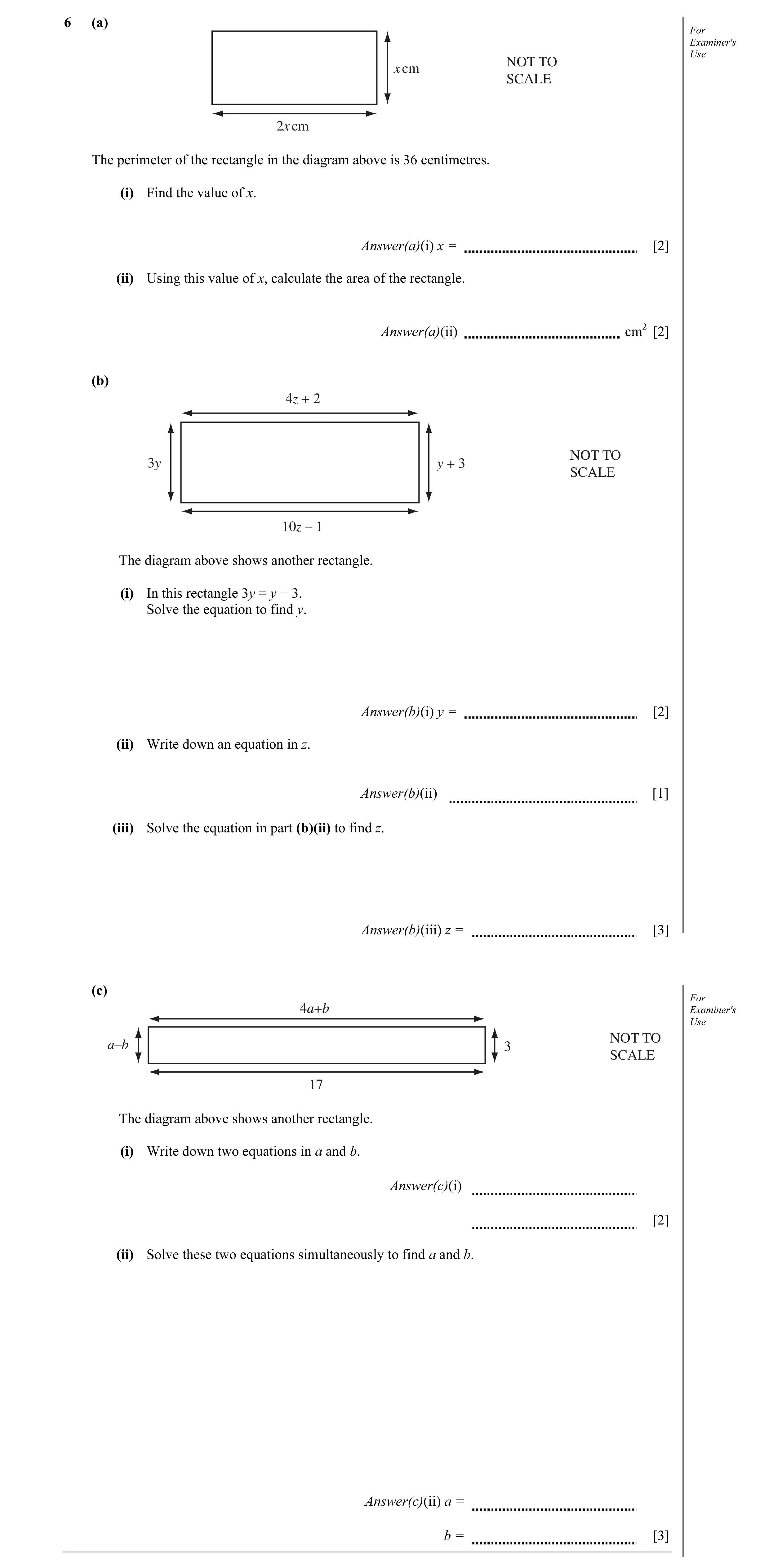
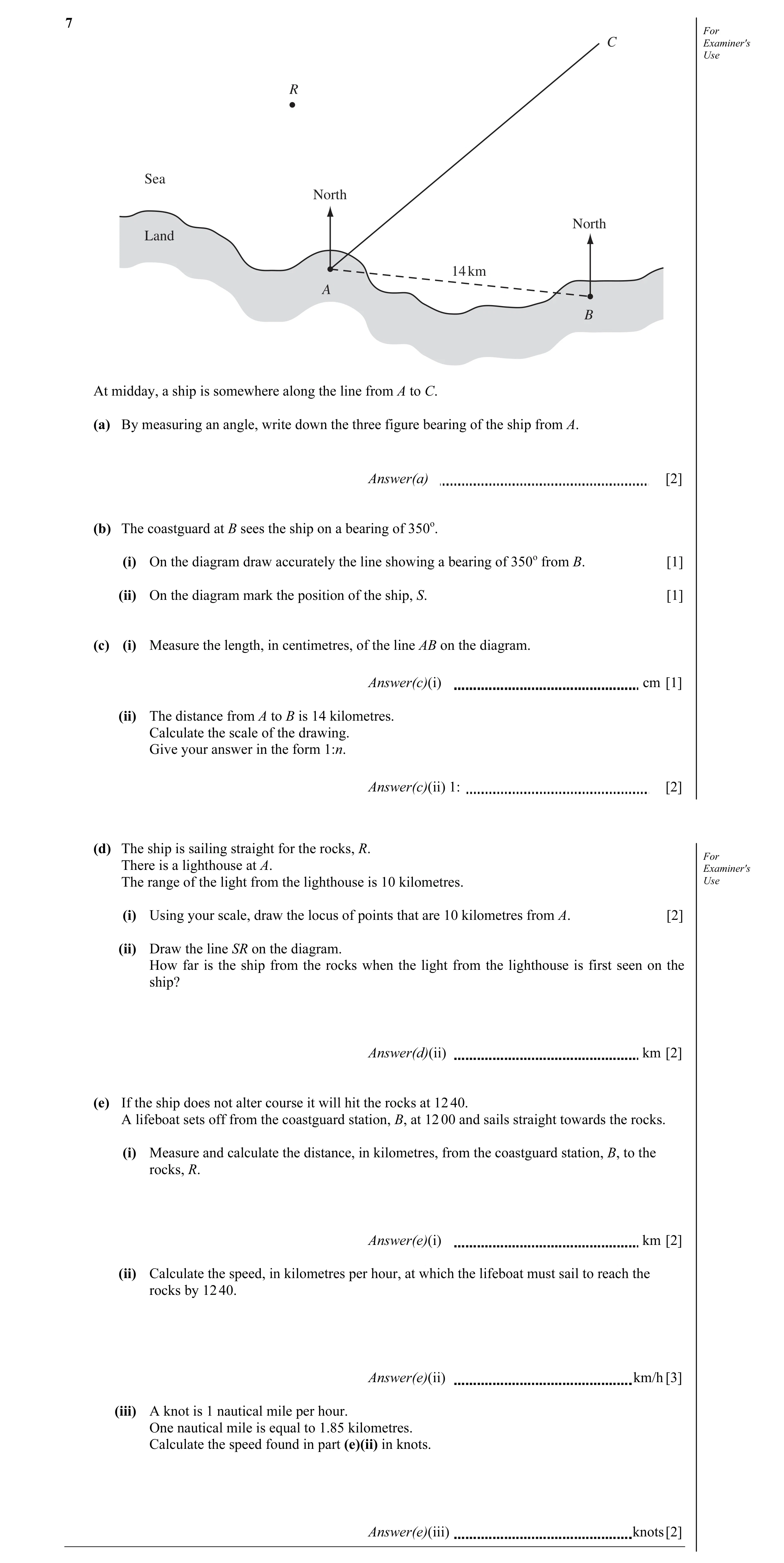
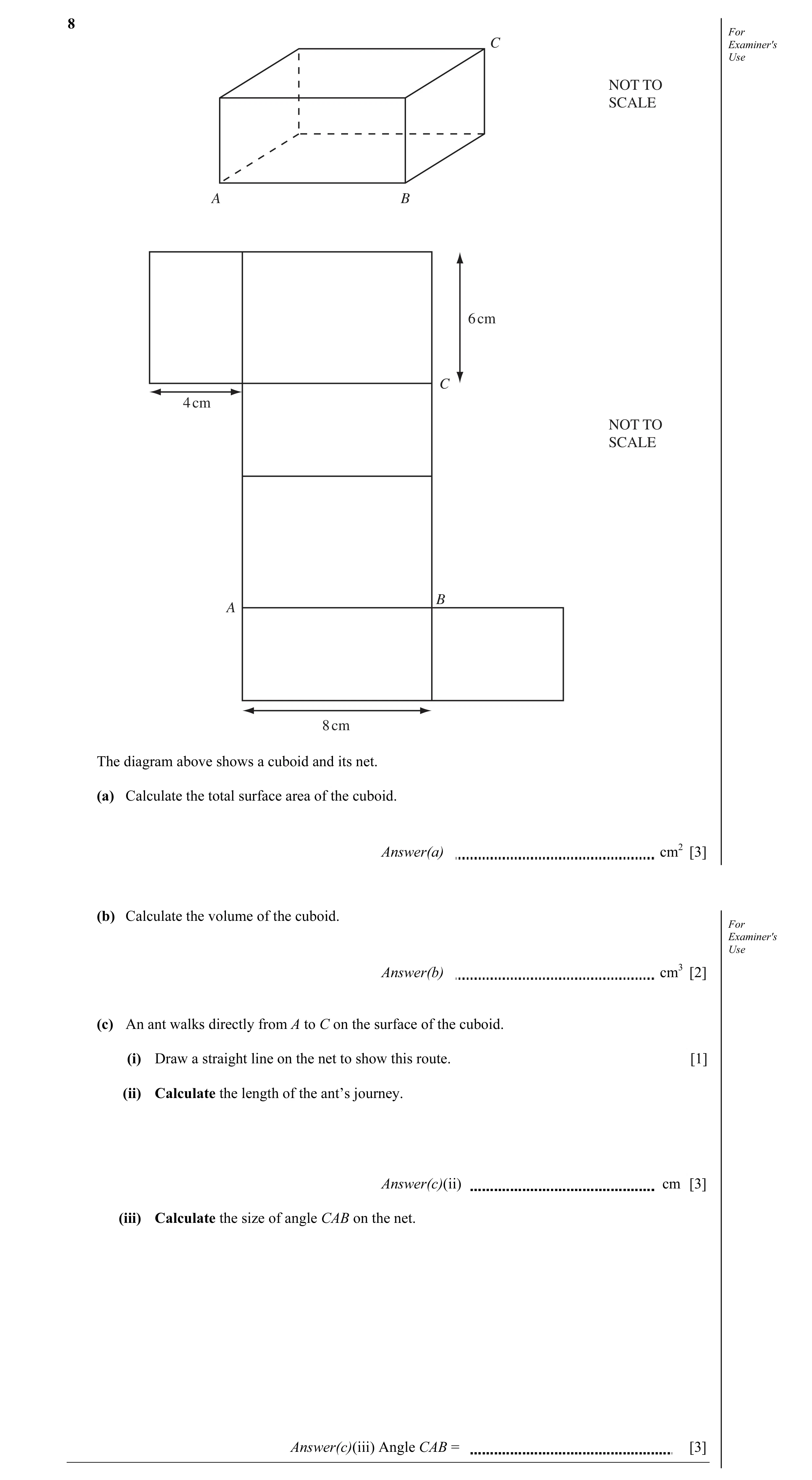
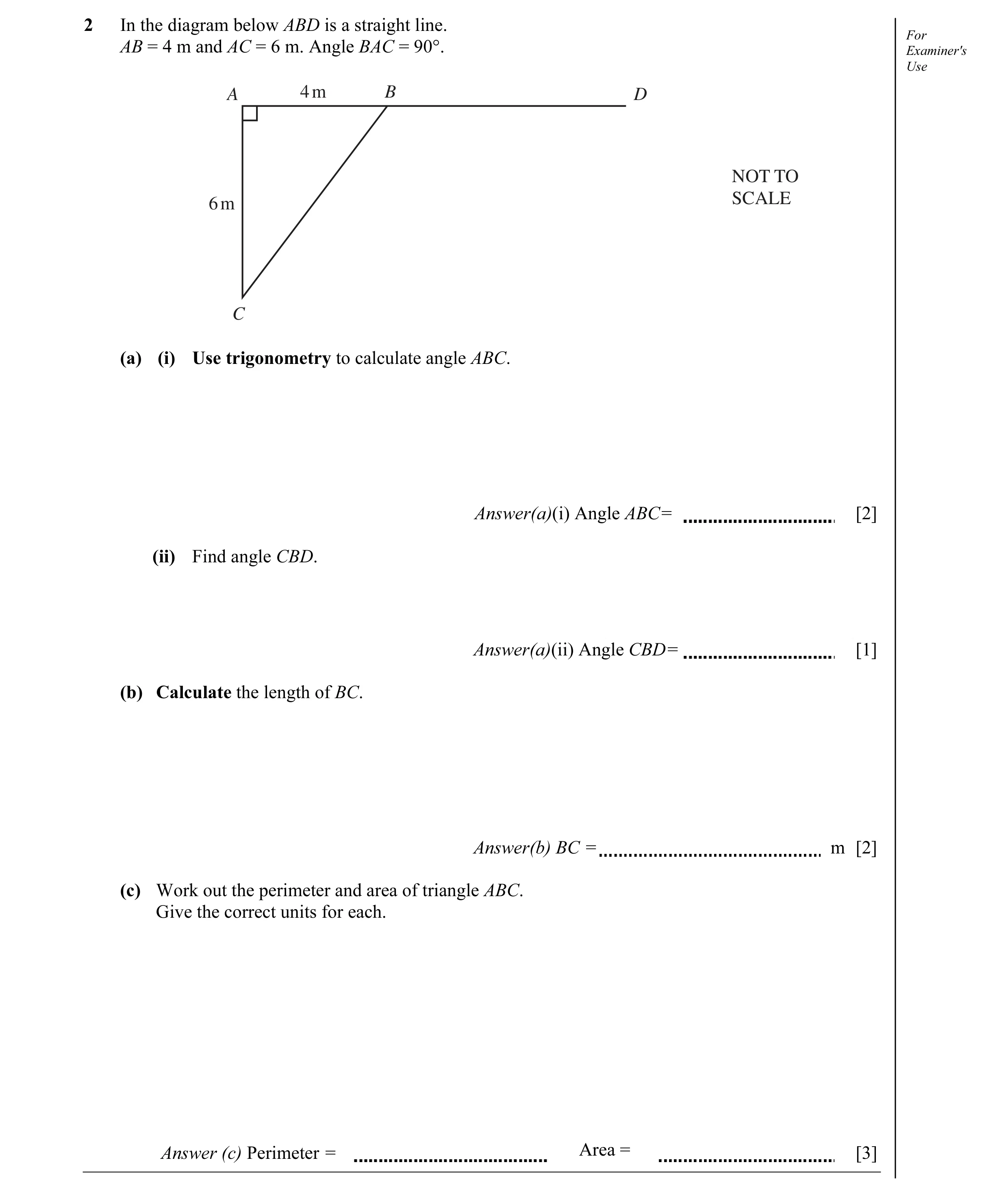 7 / 184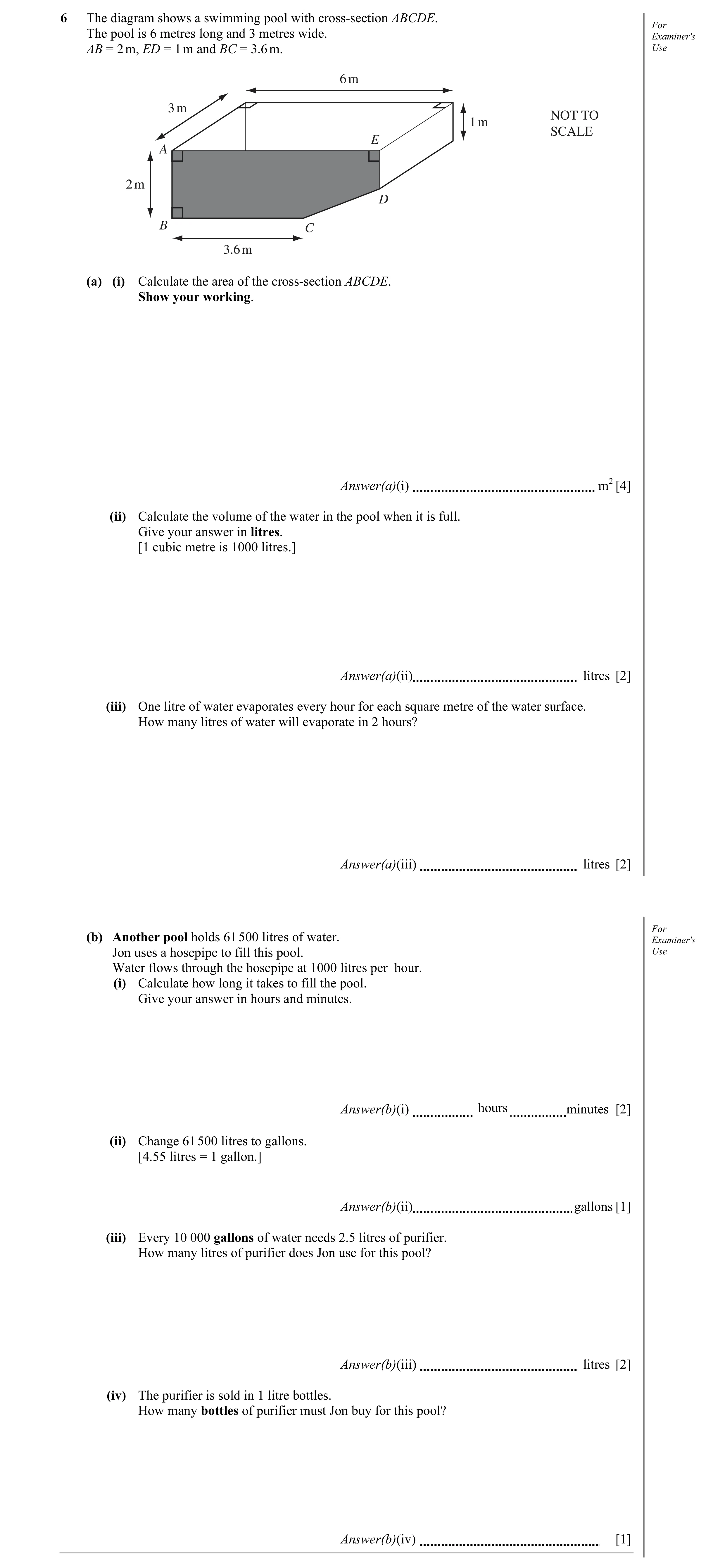
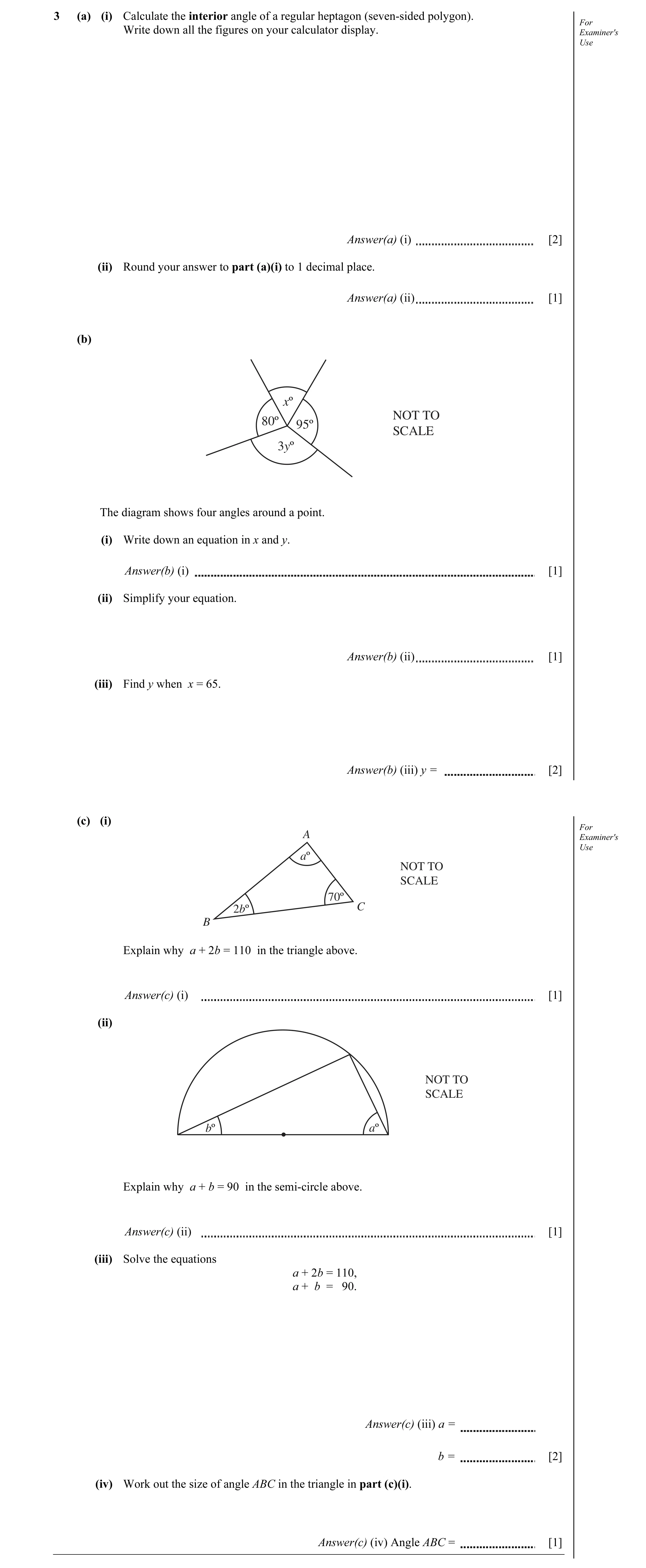
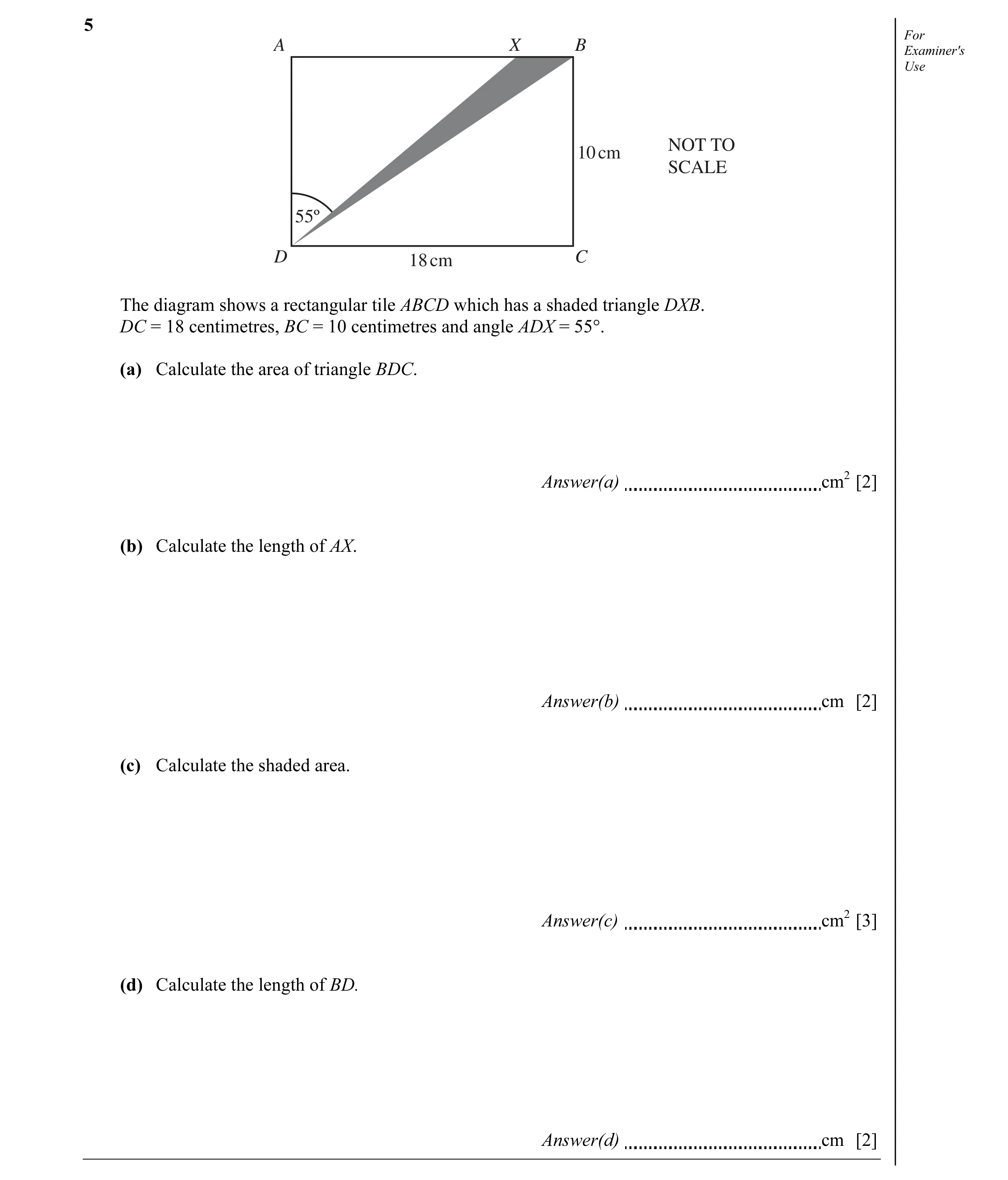 12 / 184
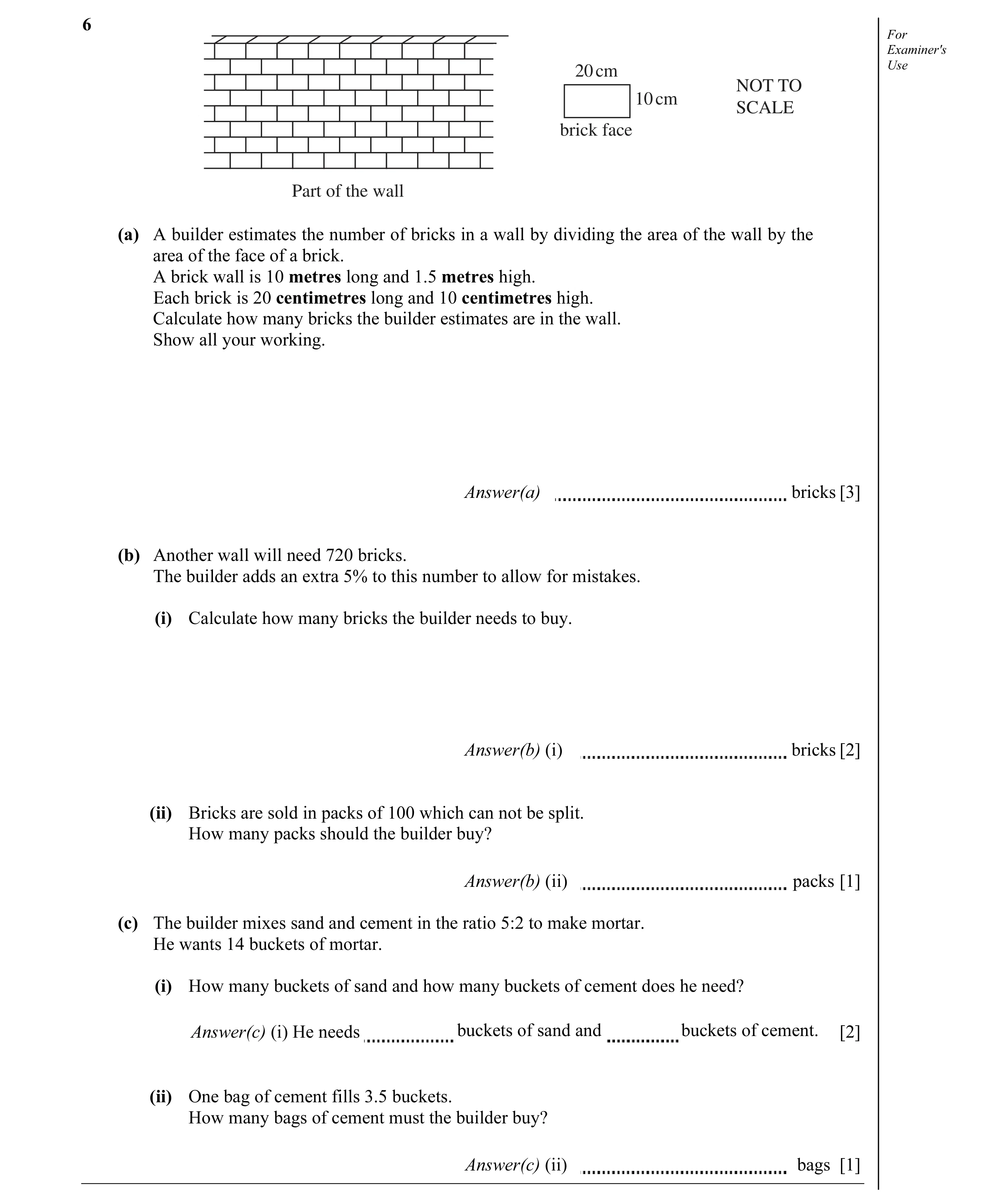 13 / 184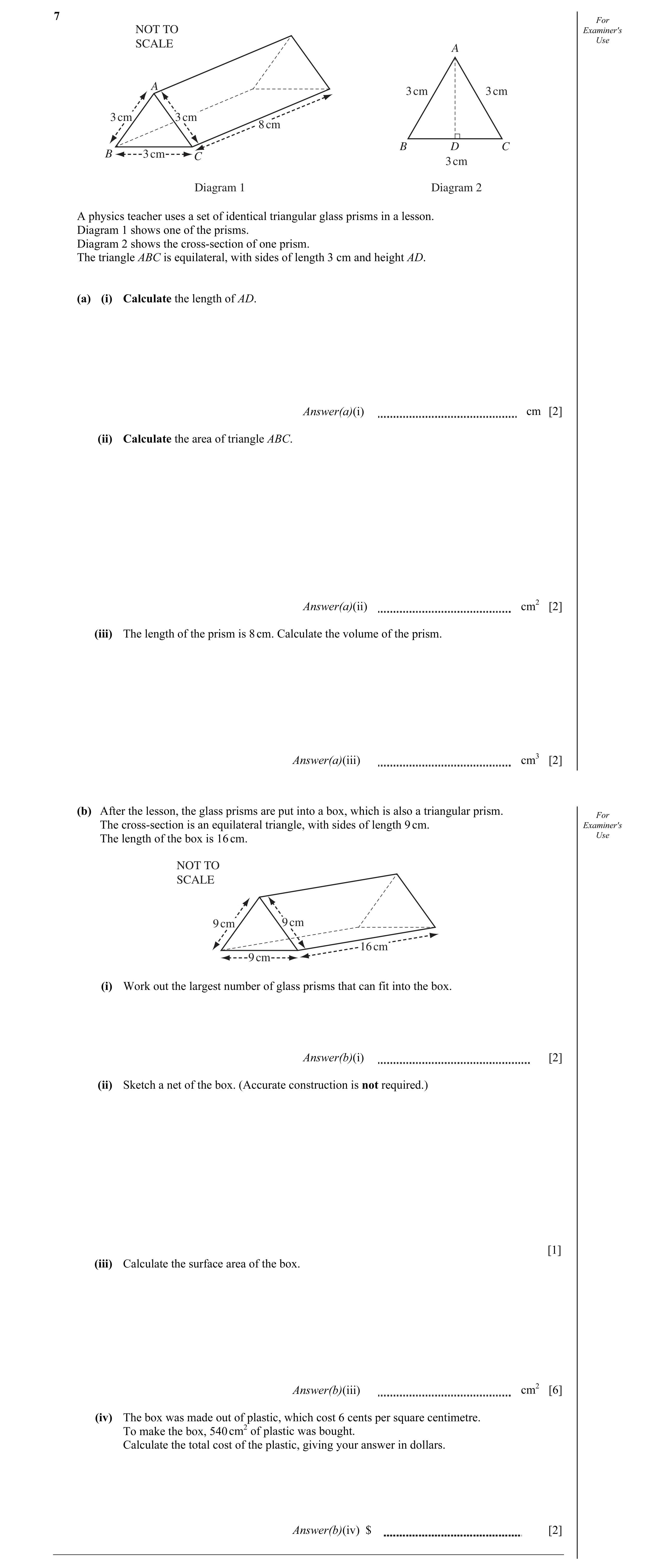
![Question 10: (a) (i) Calculate the area of a circle with radius 3.7 centimetres. For Examiner's Use Answer(a)(i) cm2 [2] (ii) A can of tomatoes is a cyl…](https://img.pastlit.com/crops/76d945c1-bd14-42a7-8a53-1c0fda1c0703/q5.webp) 16 / 184
16 / 184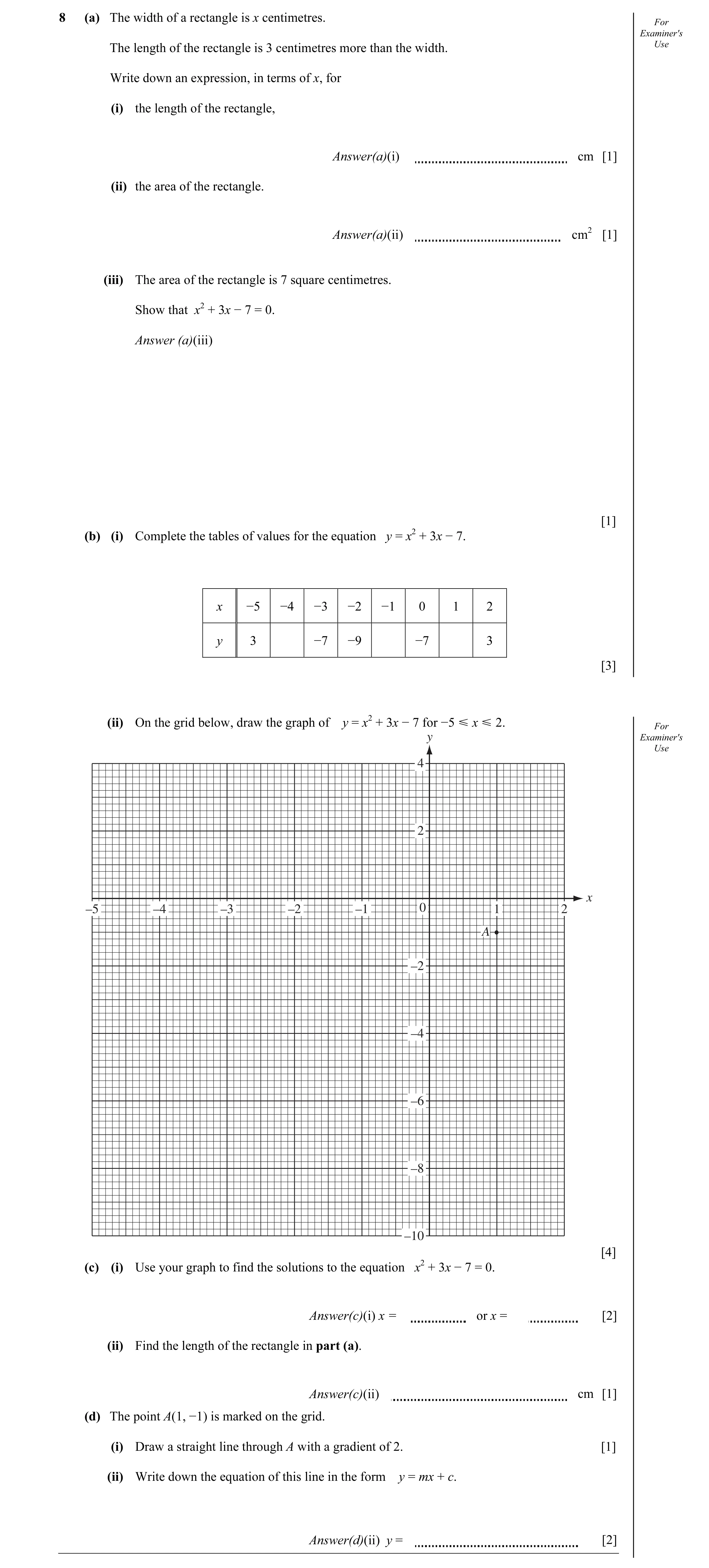
![Question 12: (a) Write down the name of a polygon with 8 sides. For Examiner's Use Answer(a) [1] (b) Find the size of the interior angle of a regular po…](https://img.pastlit.com/crops/348dae6f-a731-4dc3-97a1-00657539a354/q6.webp)
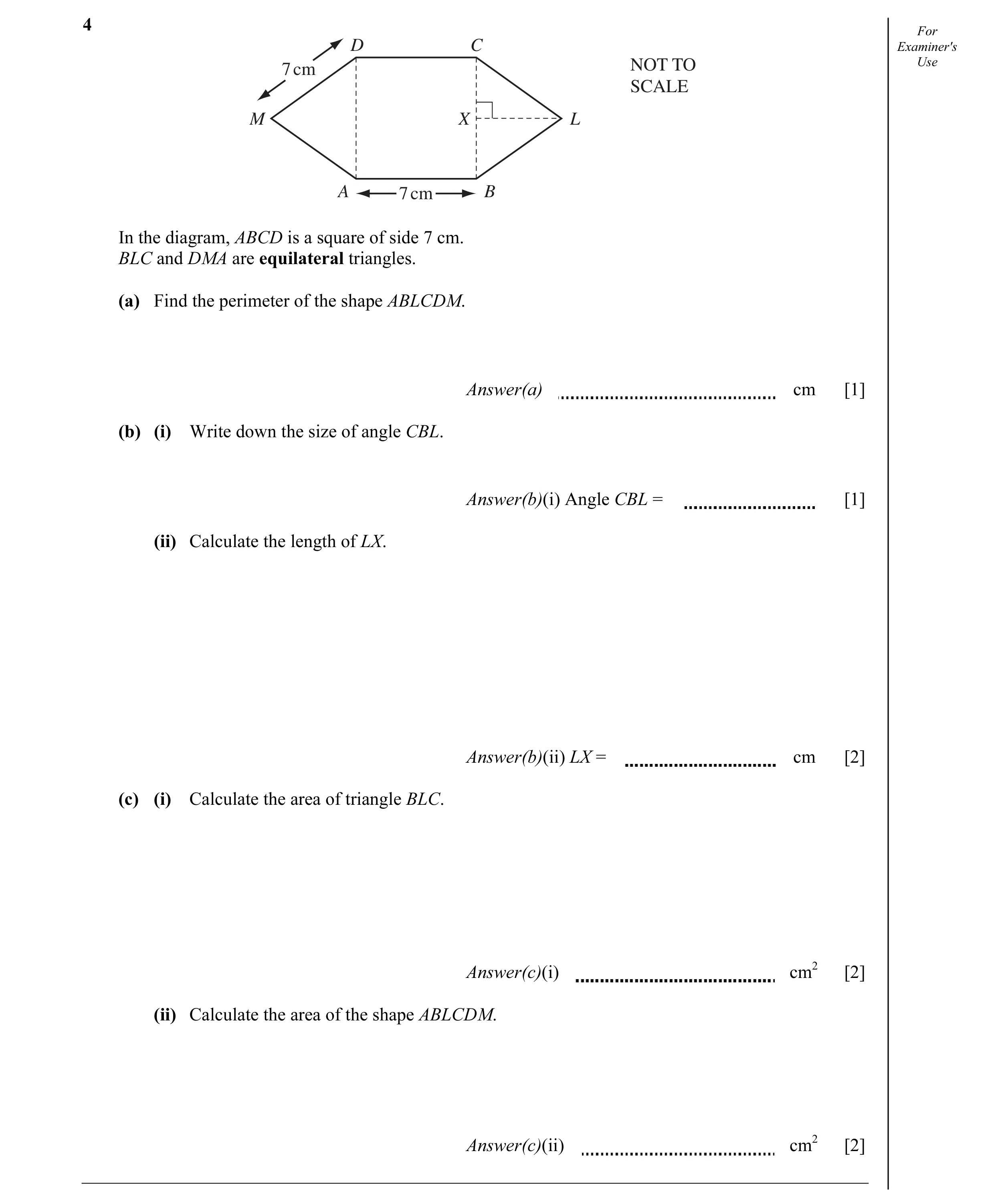 21 / 184
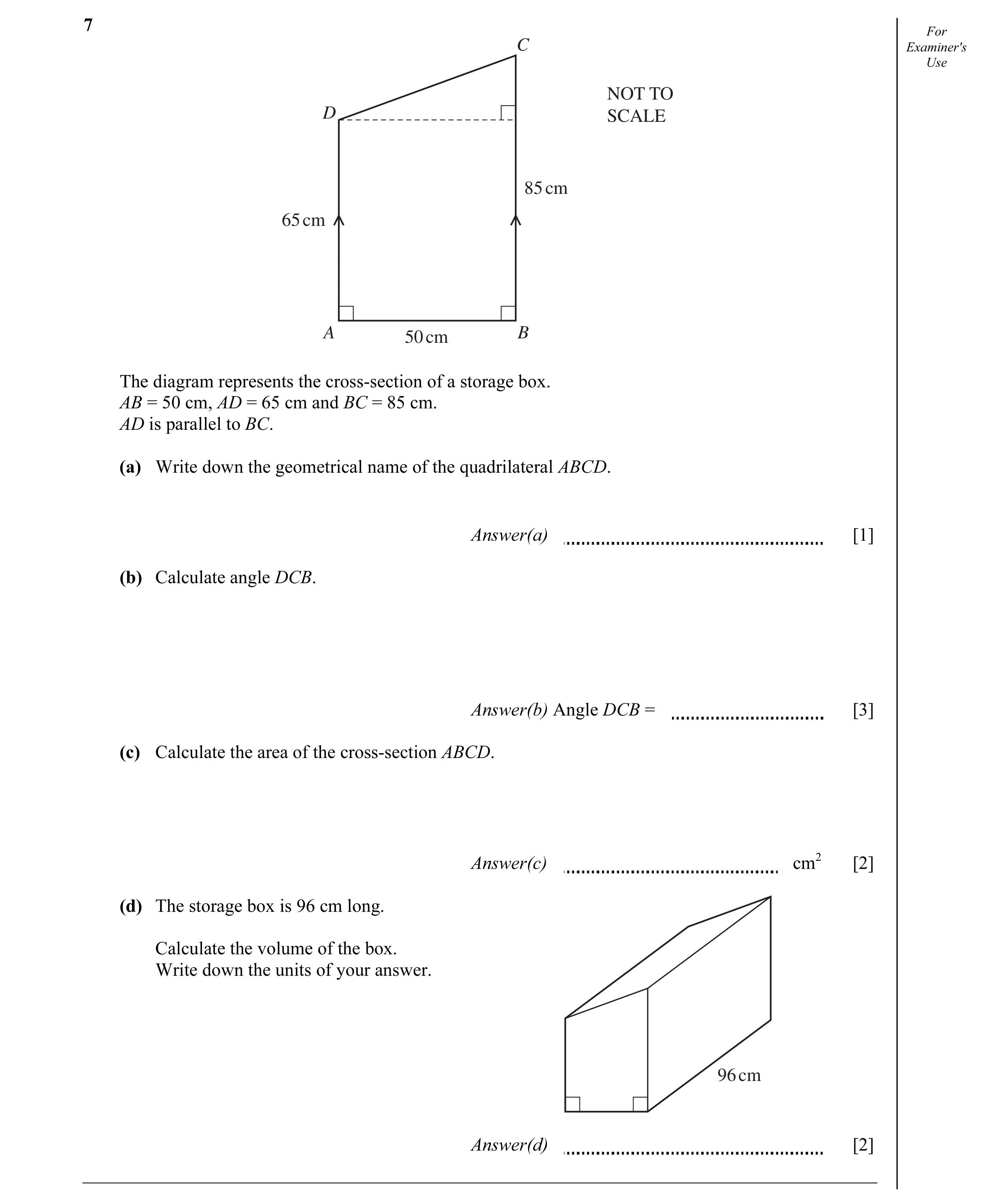 22 / 184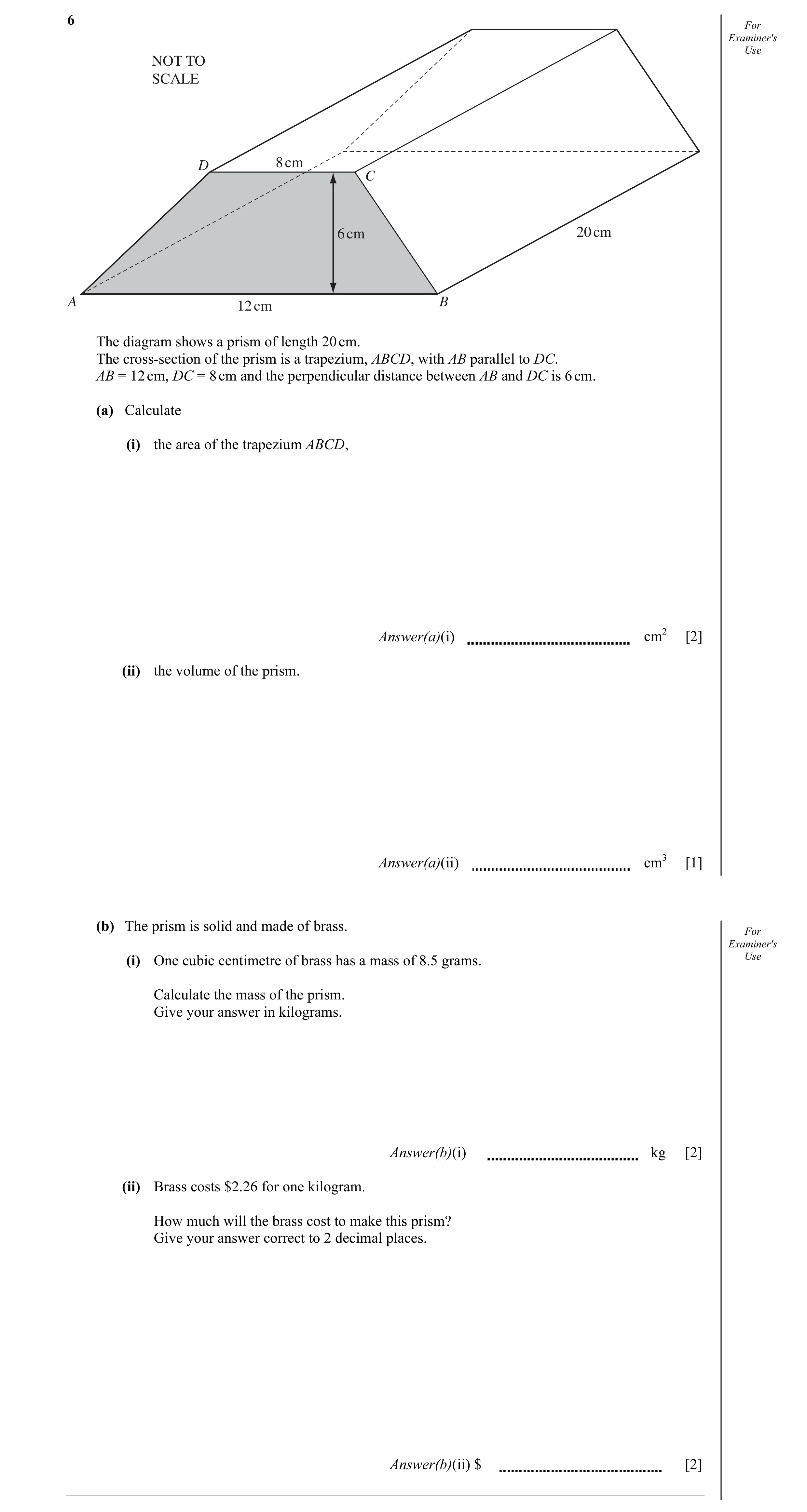
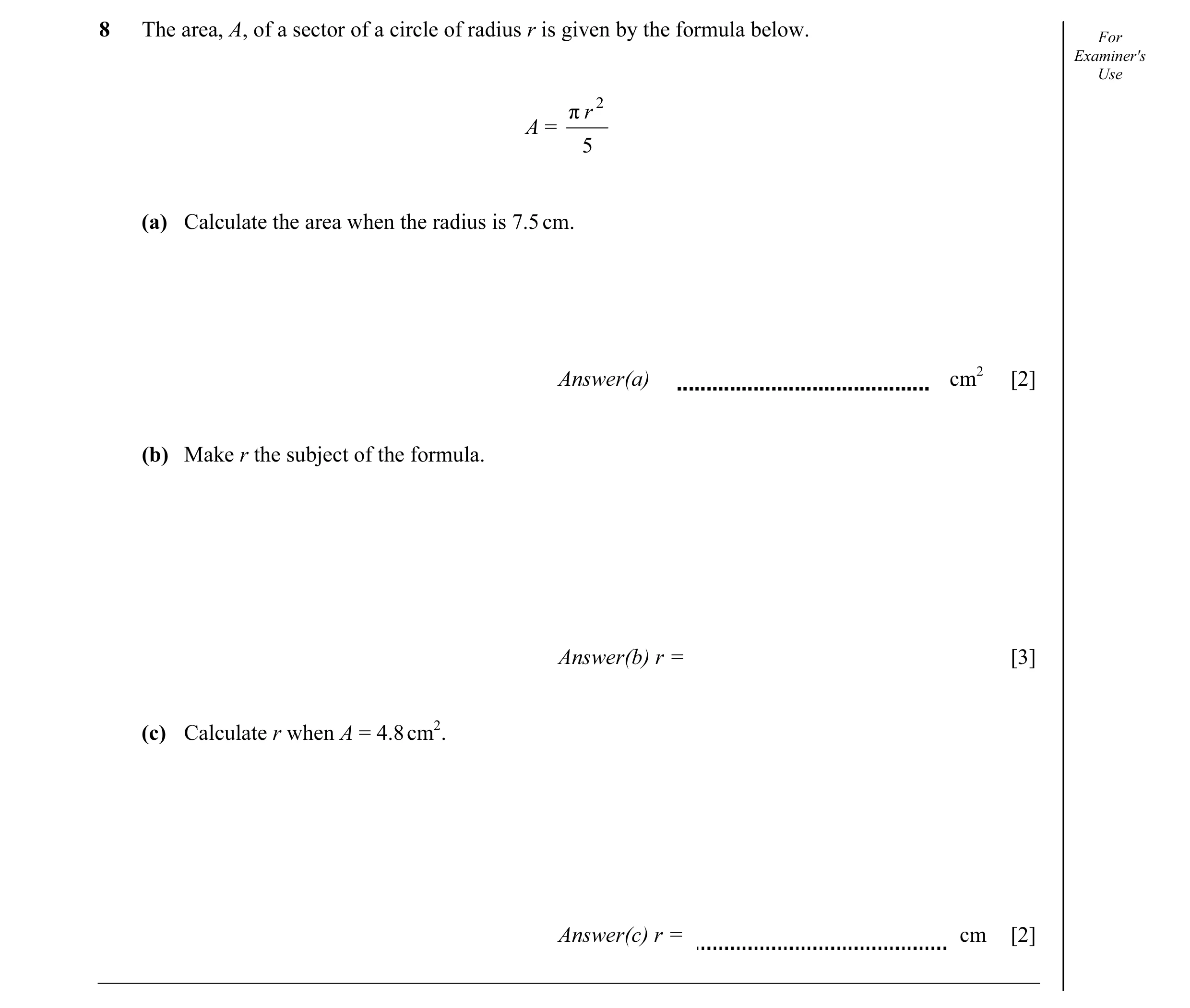 25 / 184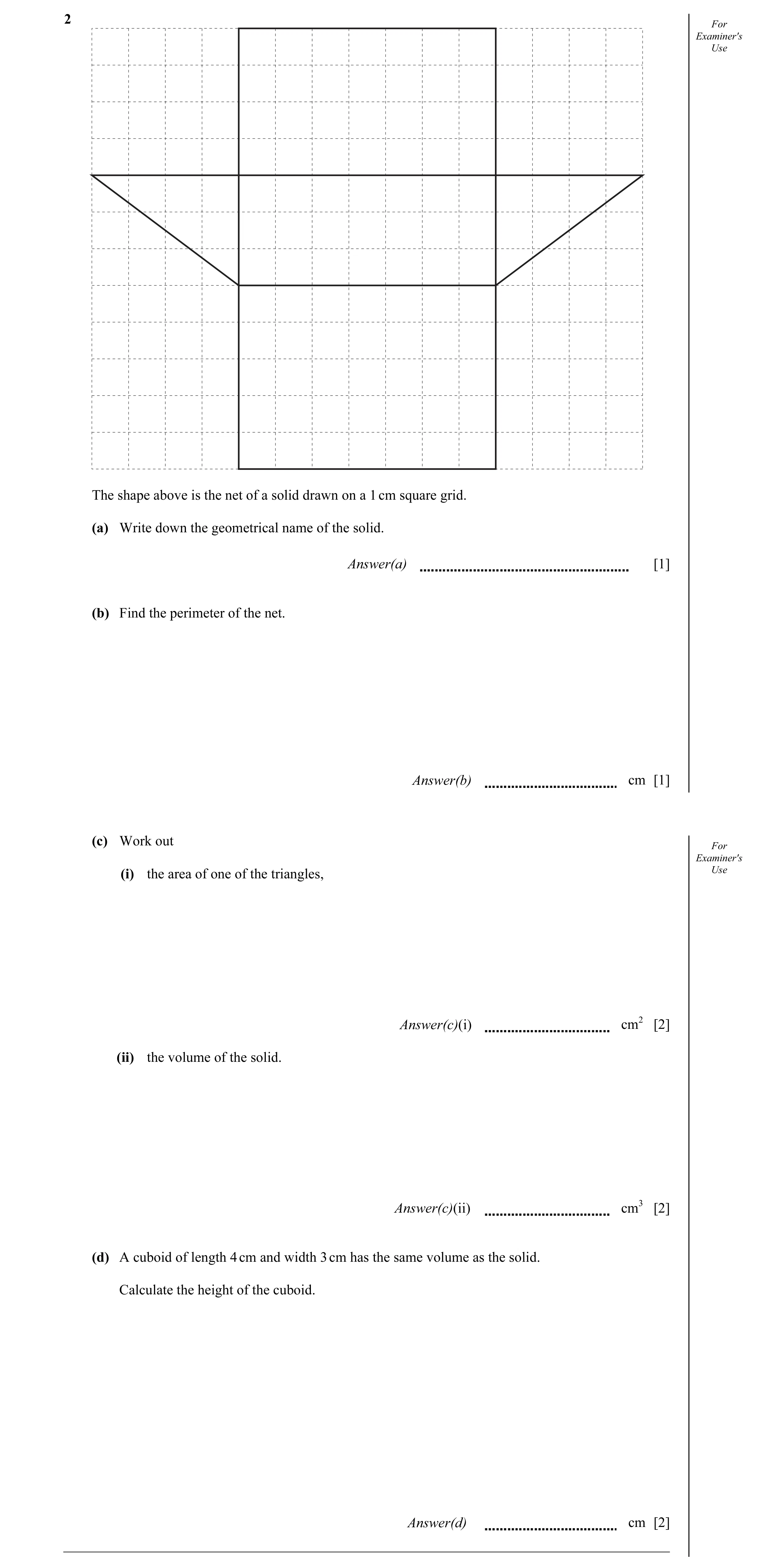
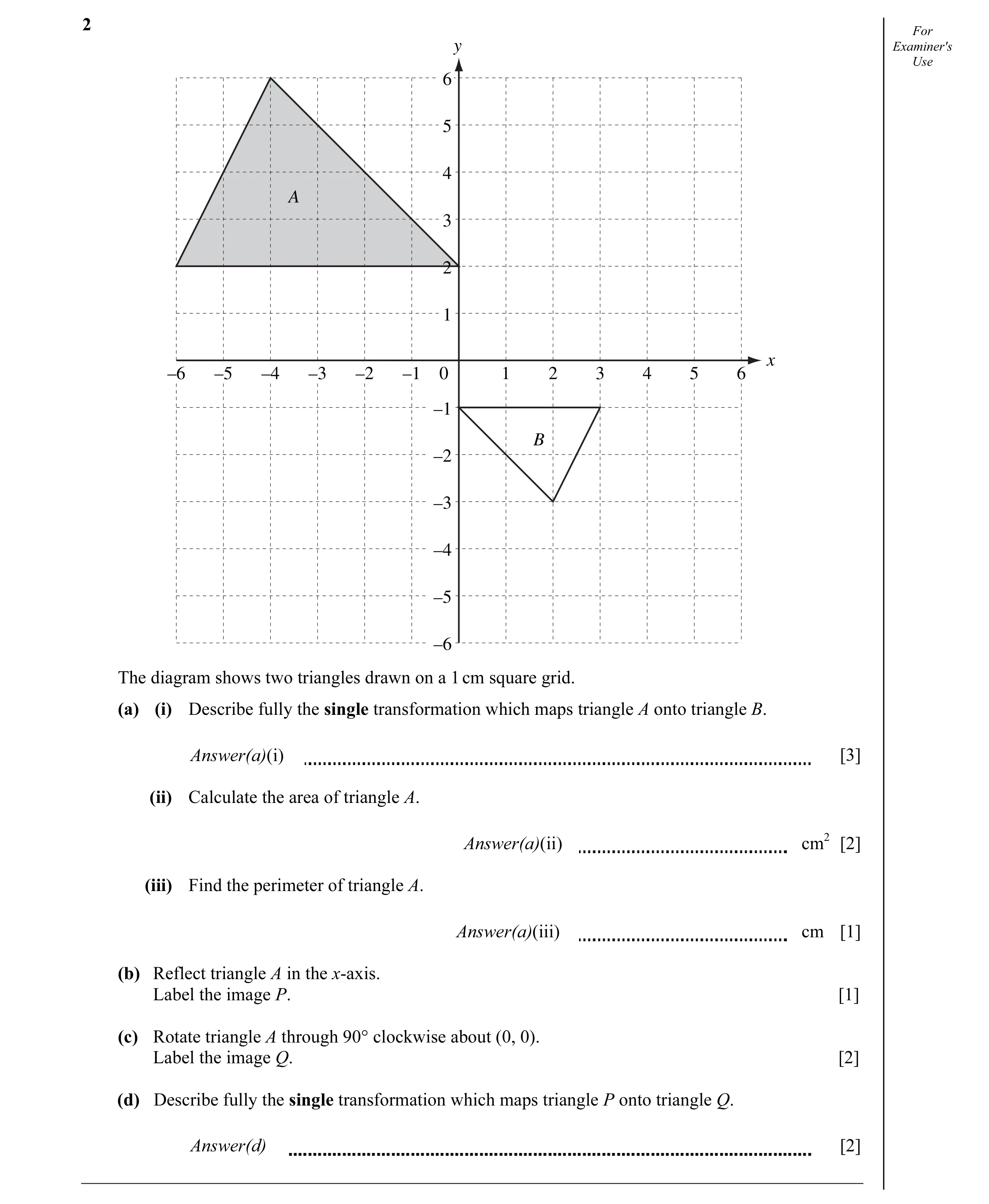 28 / 184
![Question 19: (a) Solve the equation 2(x + 4) = 3(x + 2) + 8 . For Examiner's Use Answer(a) x = [3] (b) Make z the subject of za + b = 3 . Answer(b) z = …](https://img.pastlit.com/crops/be10c202-aa4a-4bb6-8545-c5e4b865cf94/q7.webp) 29 / 184
29 / 184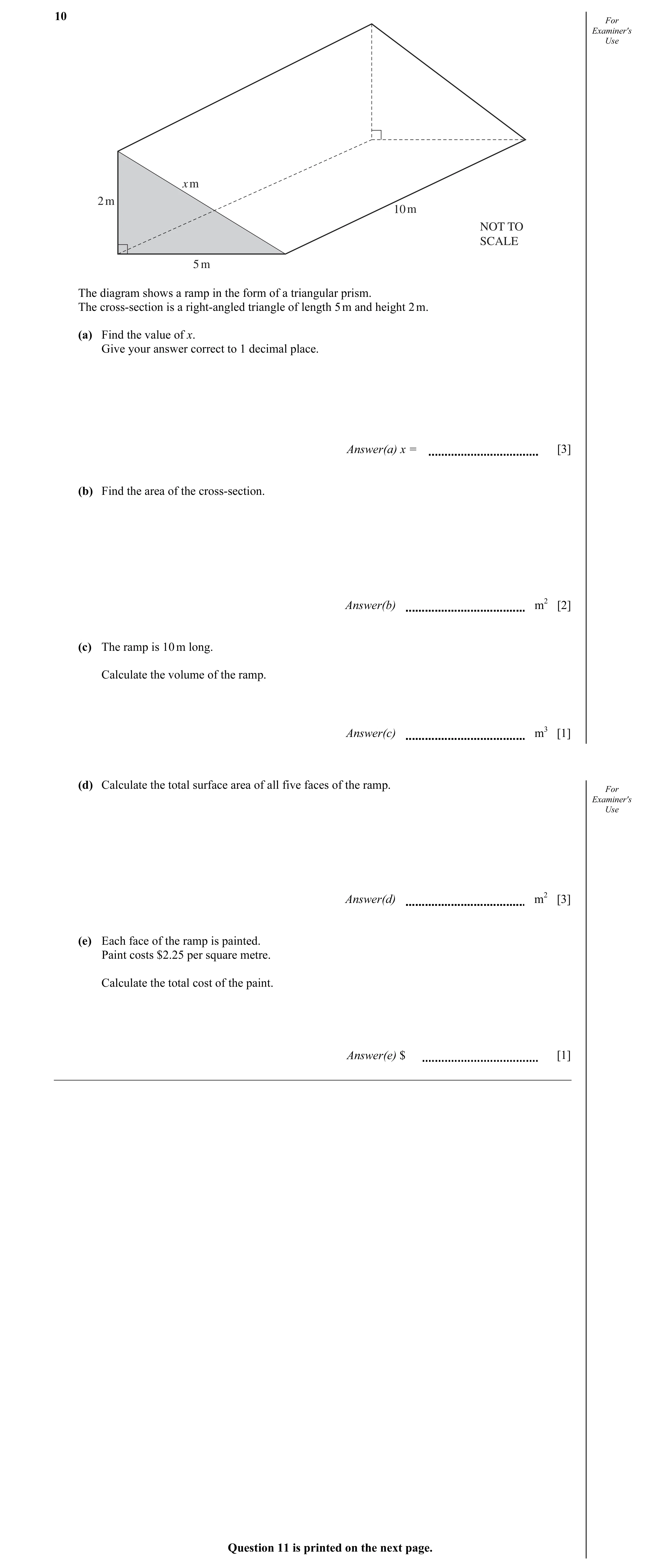
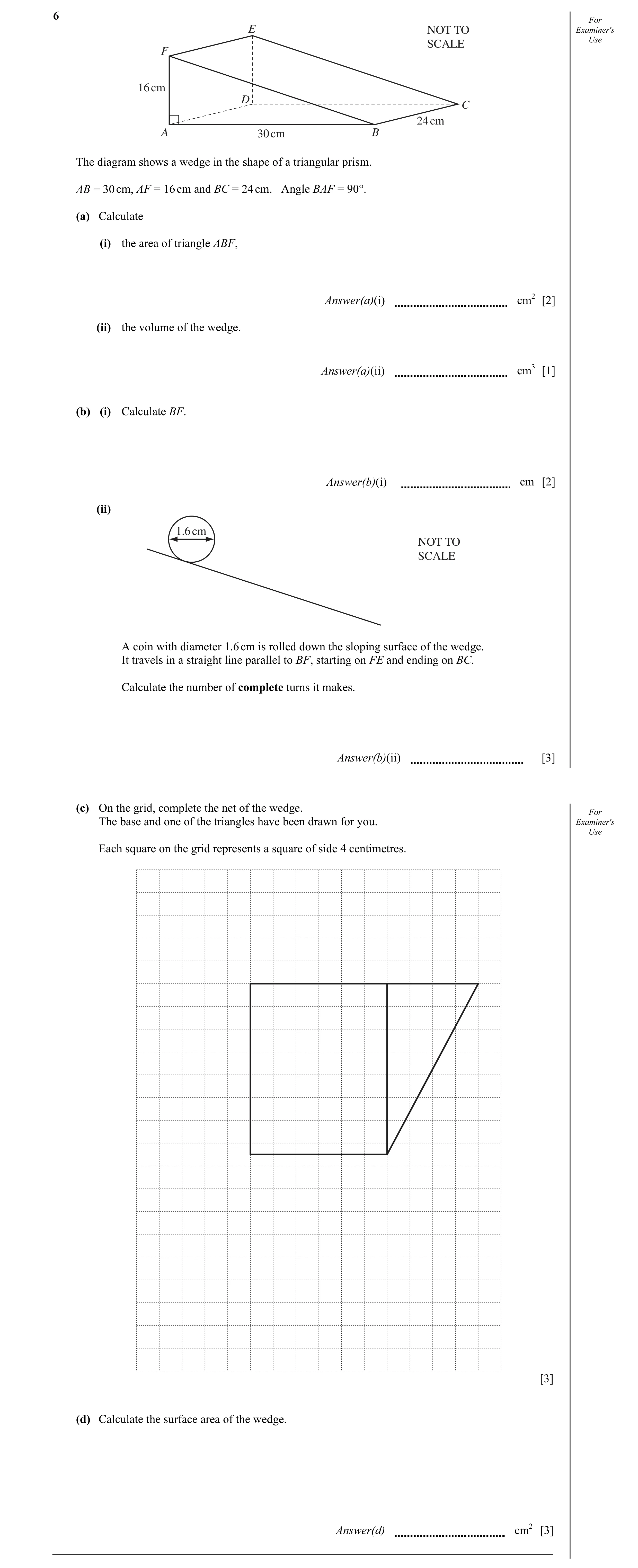
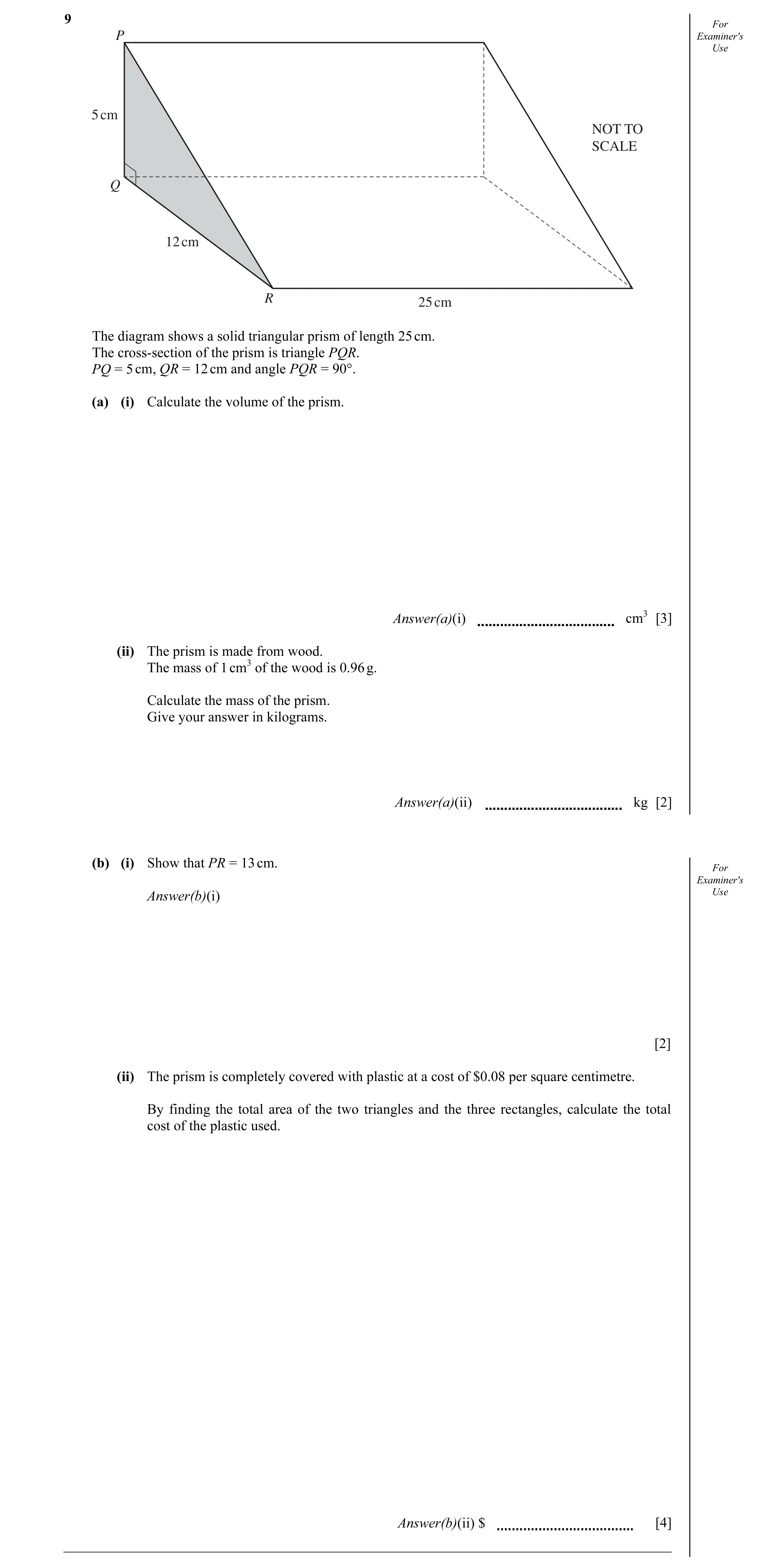
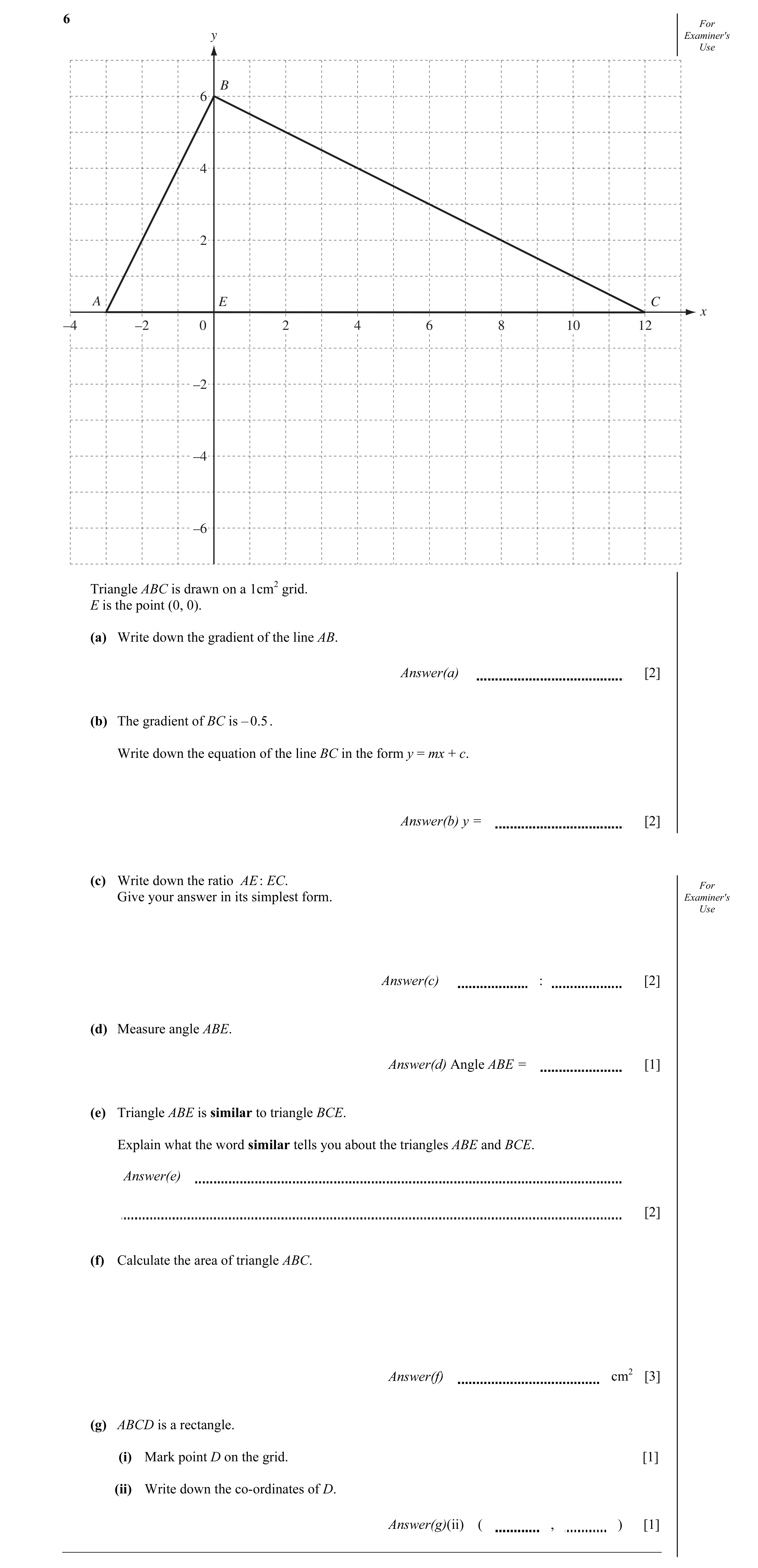
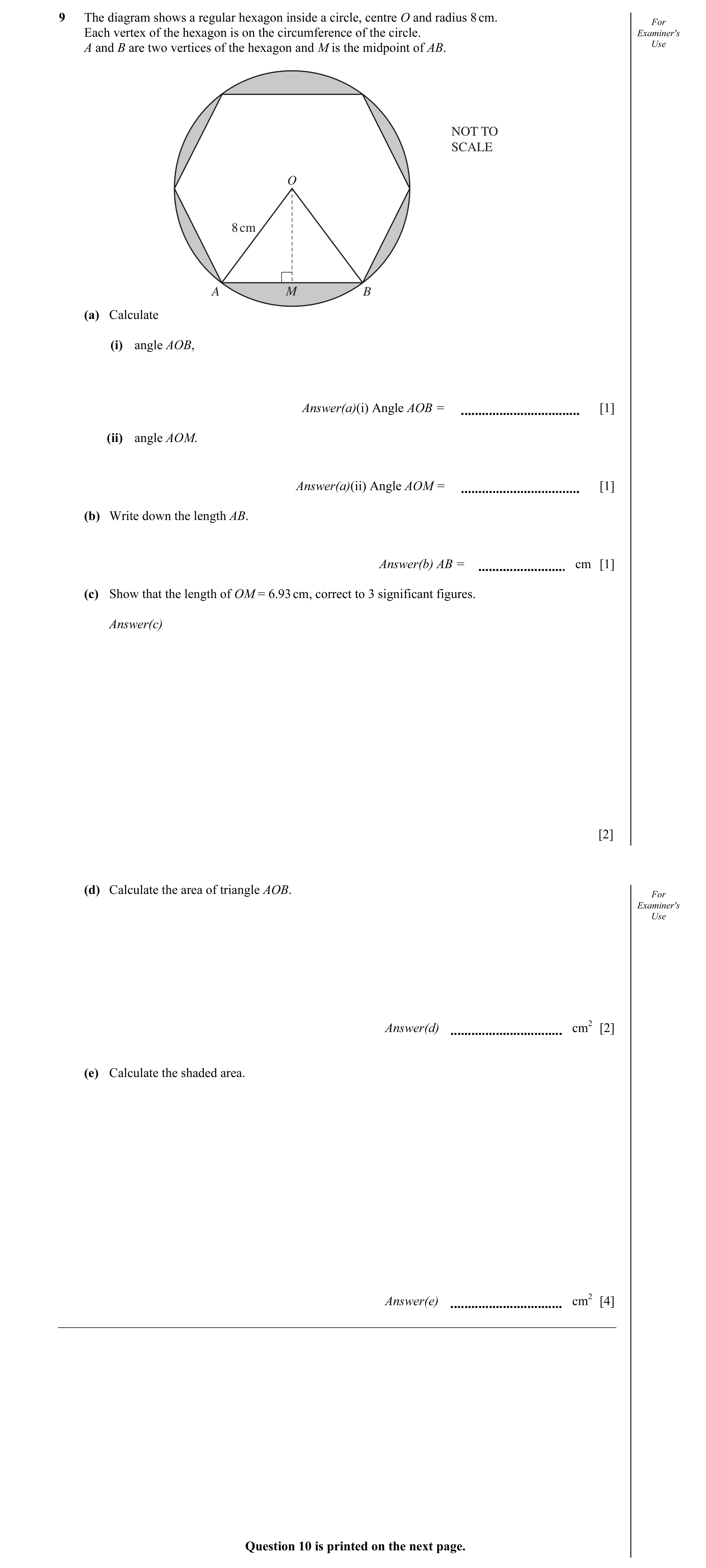
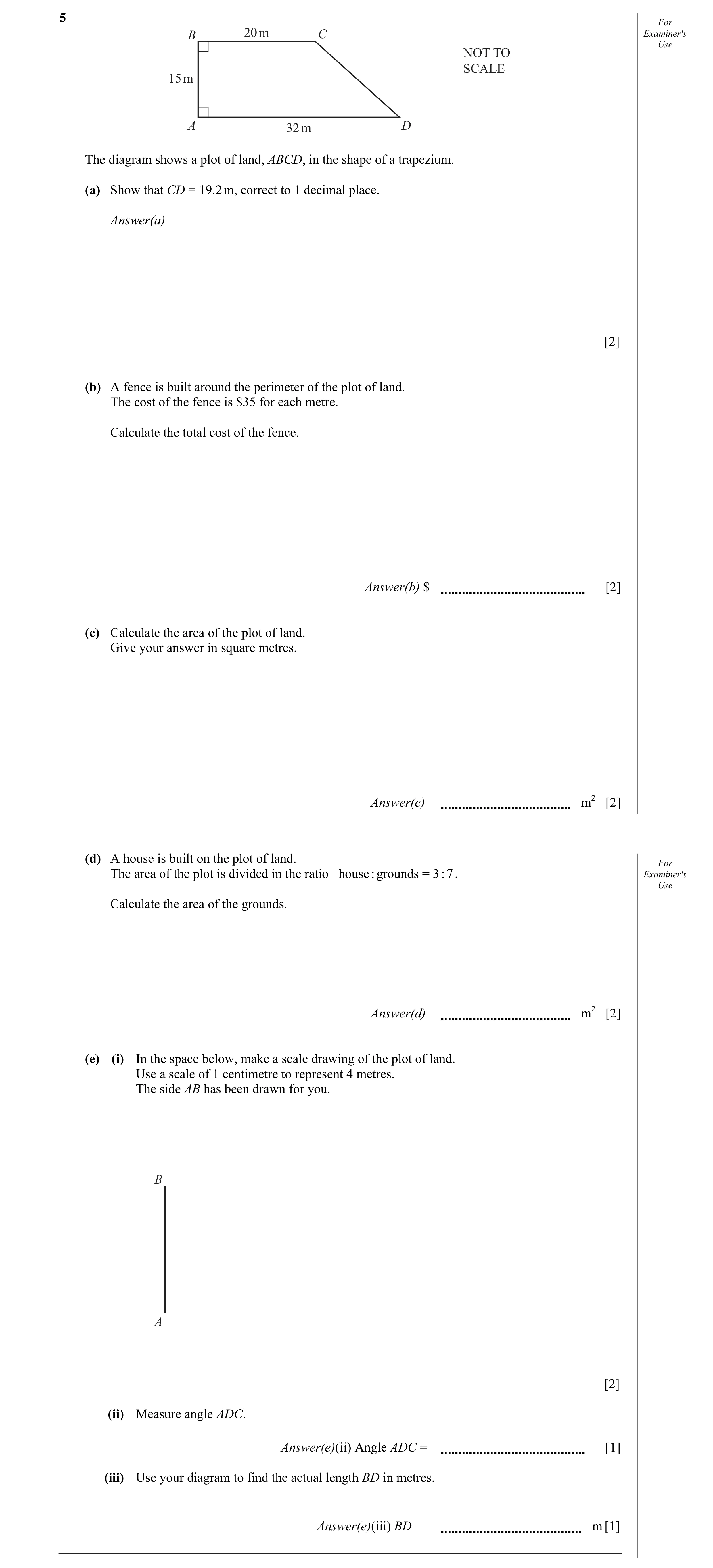
 42 / 184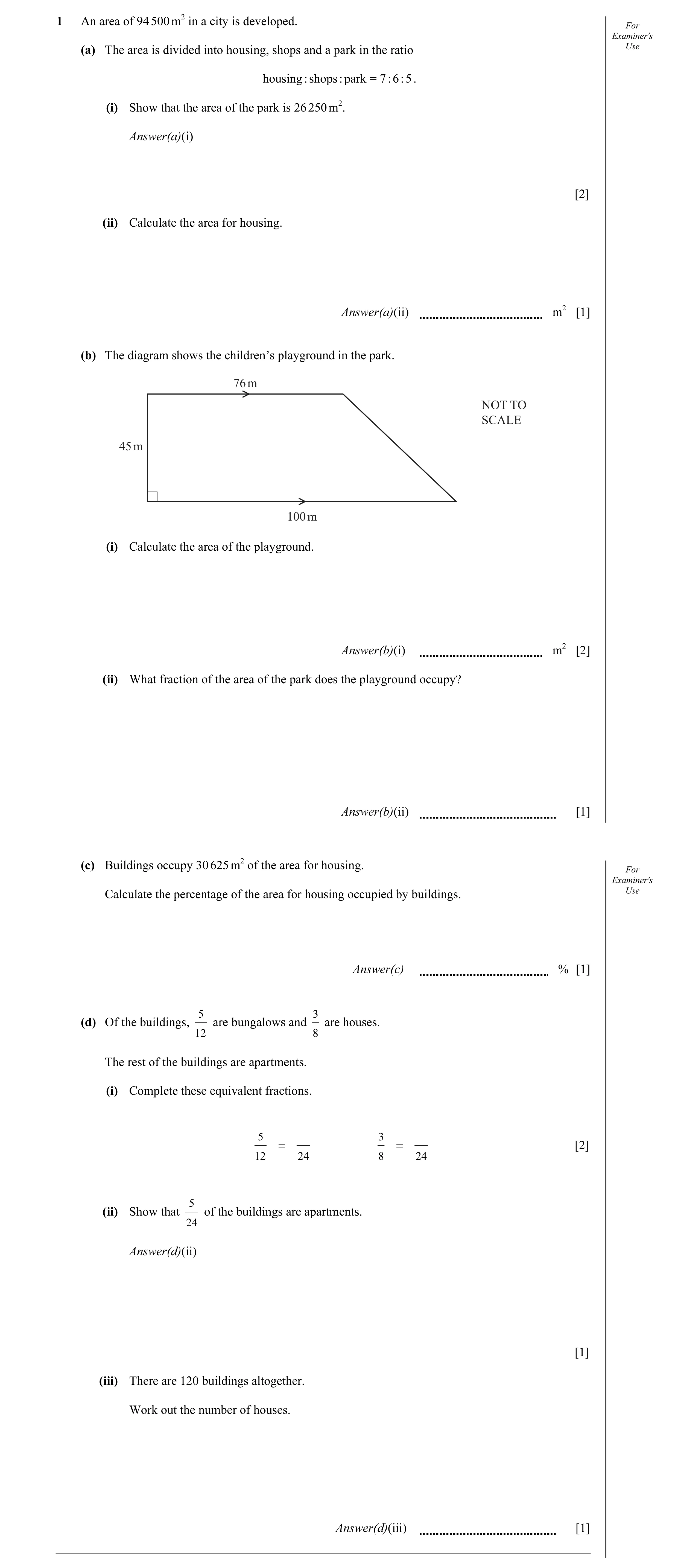
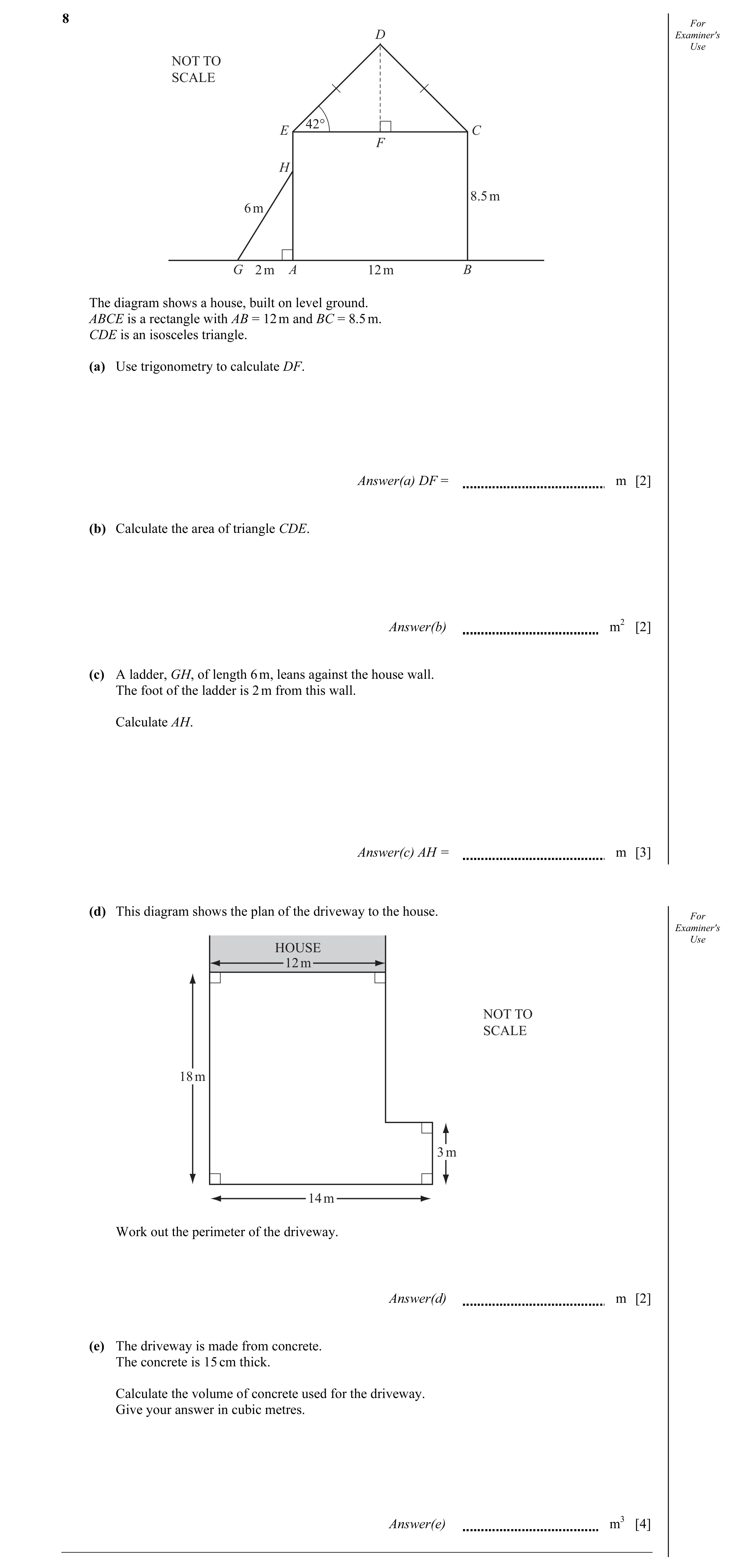
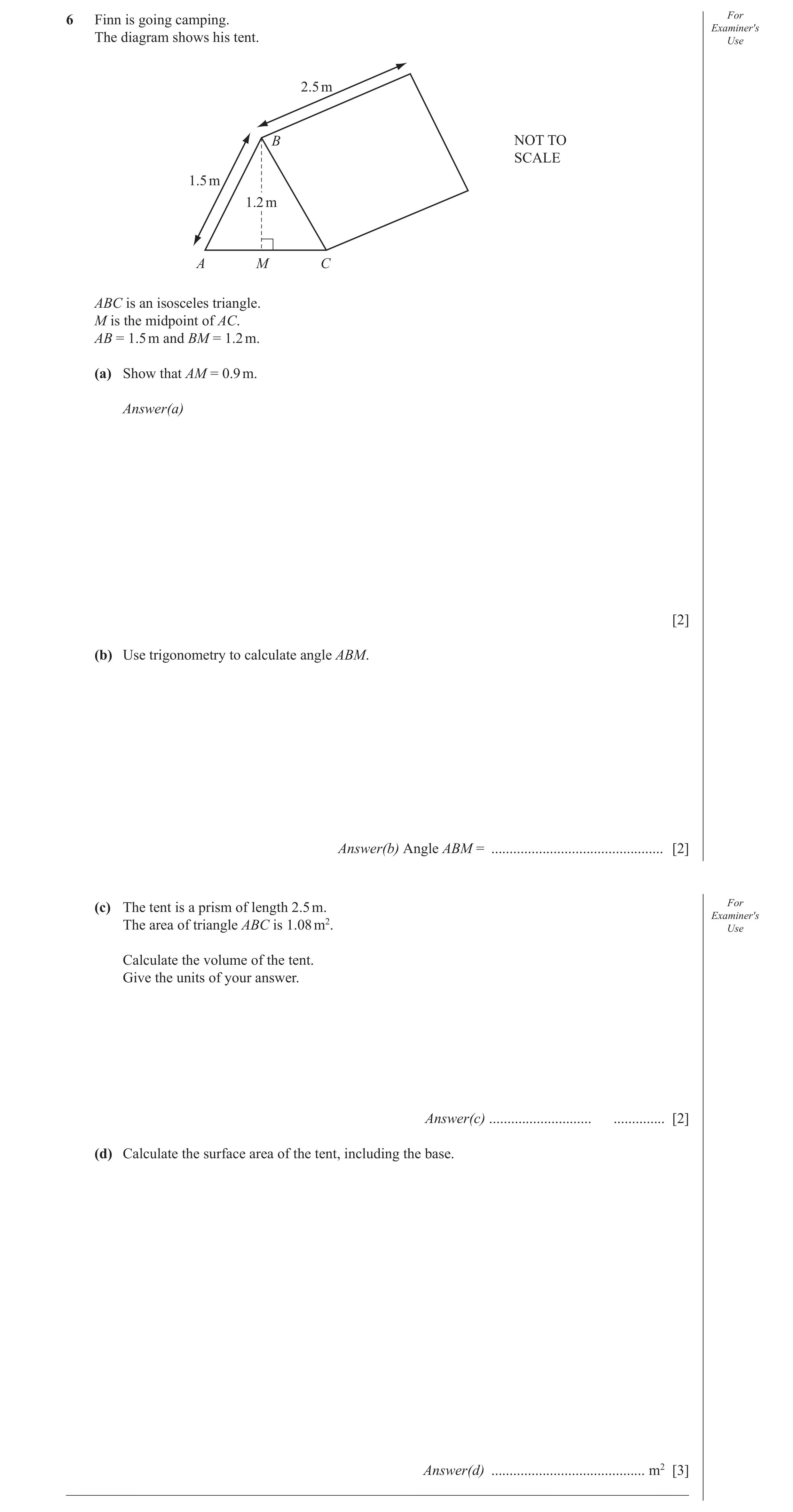
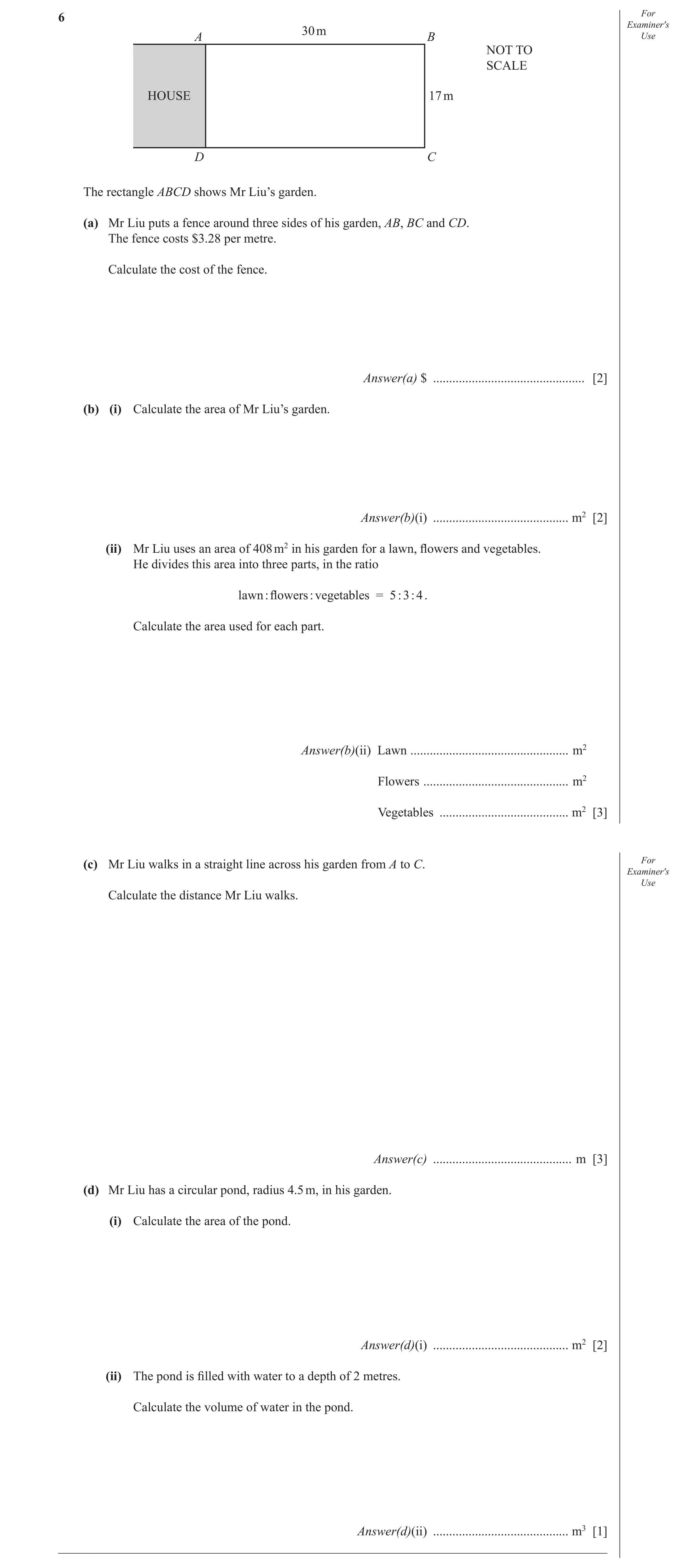
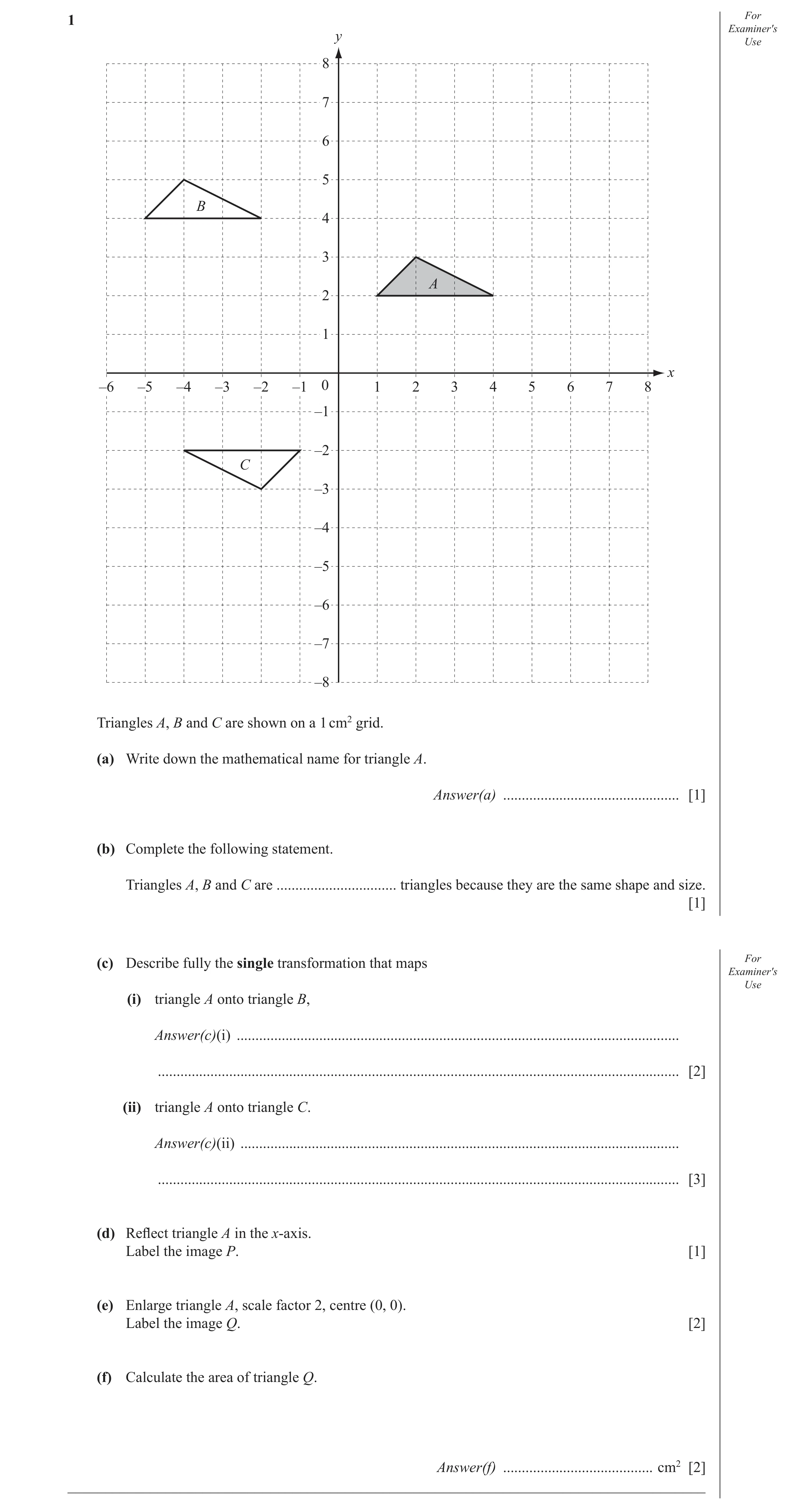
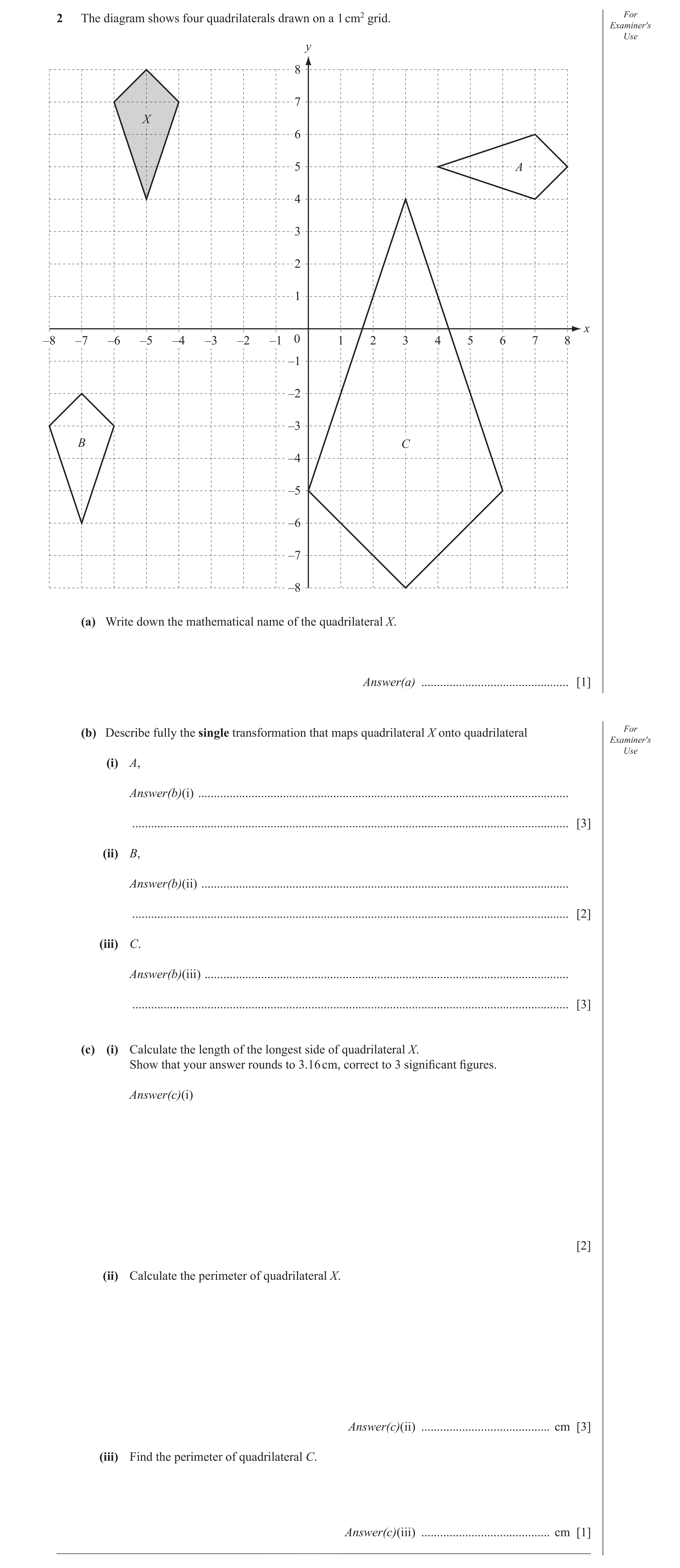
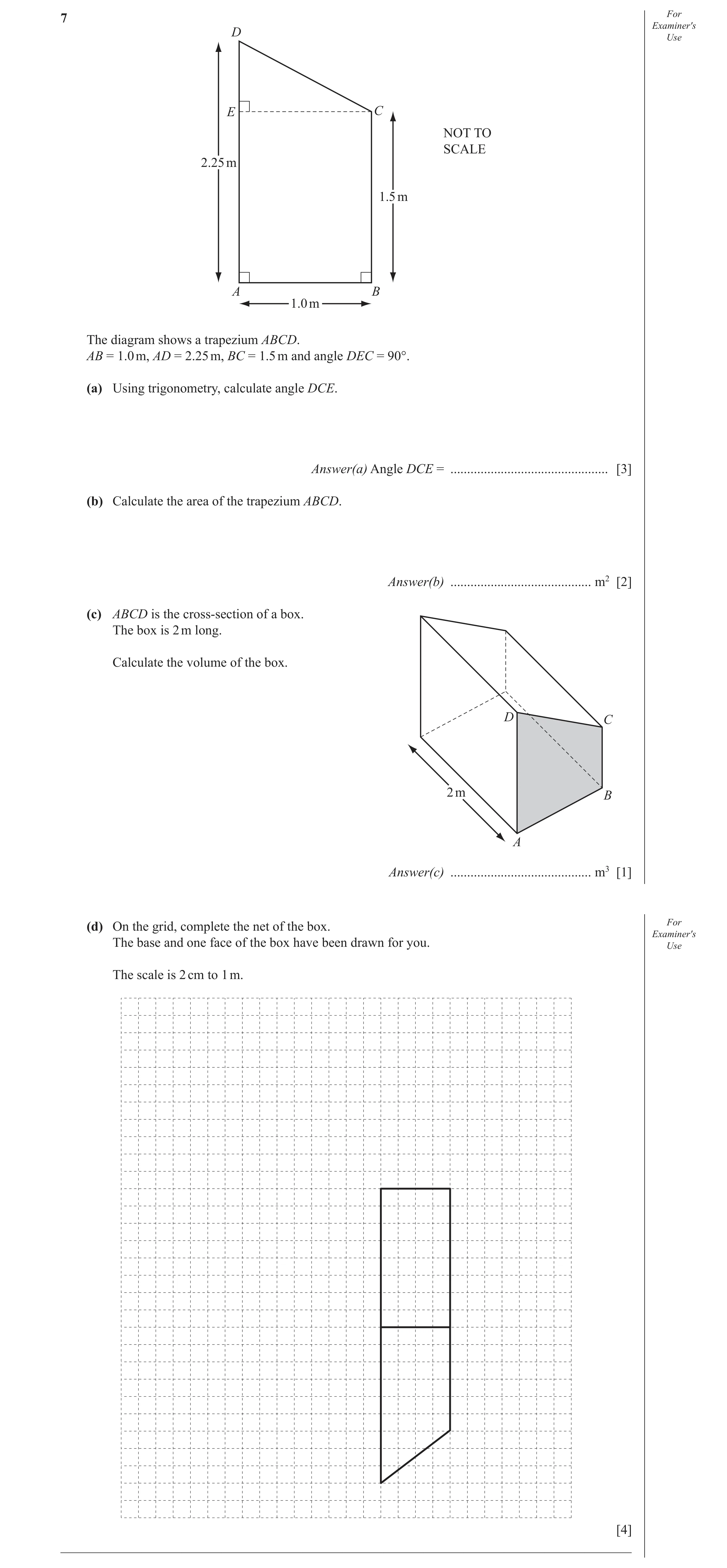
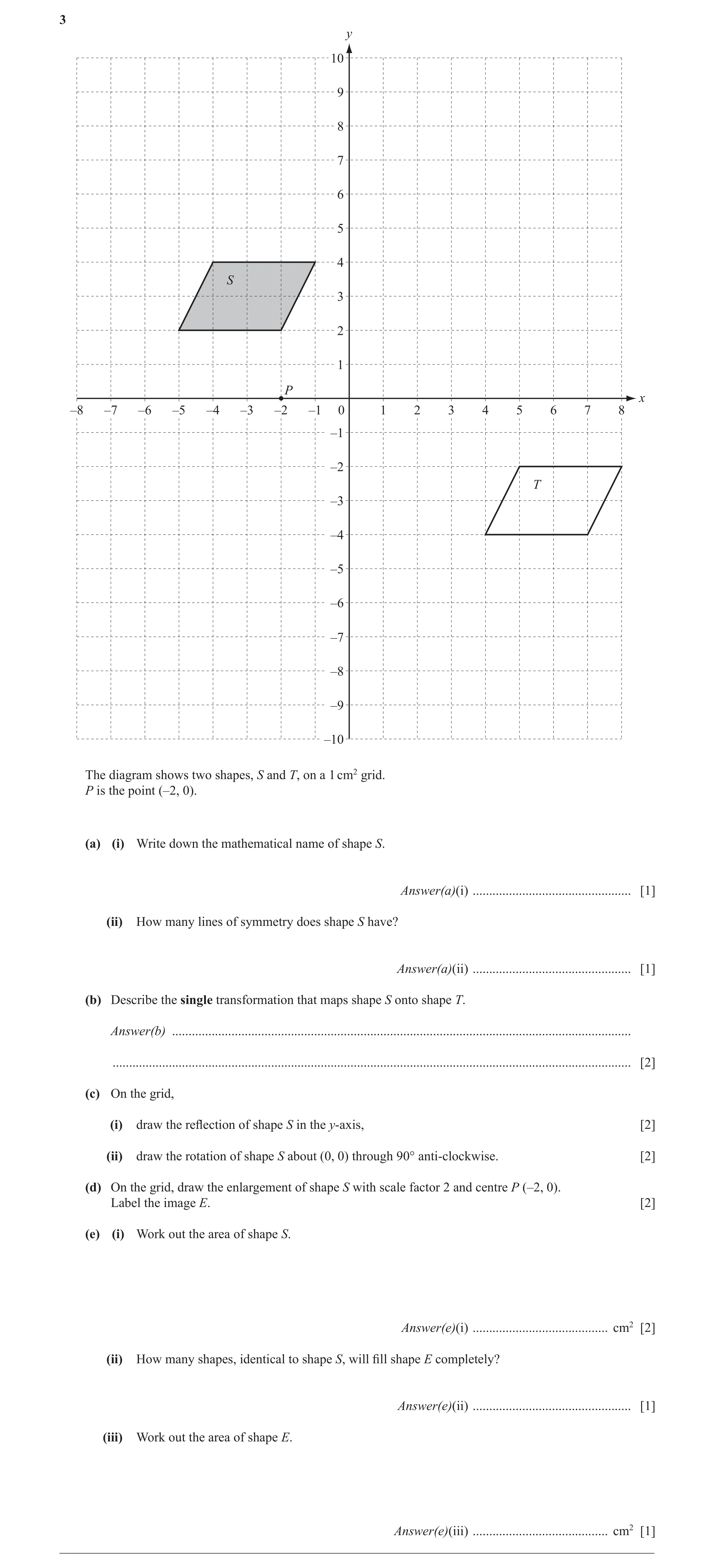
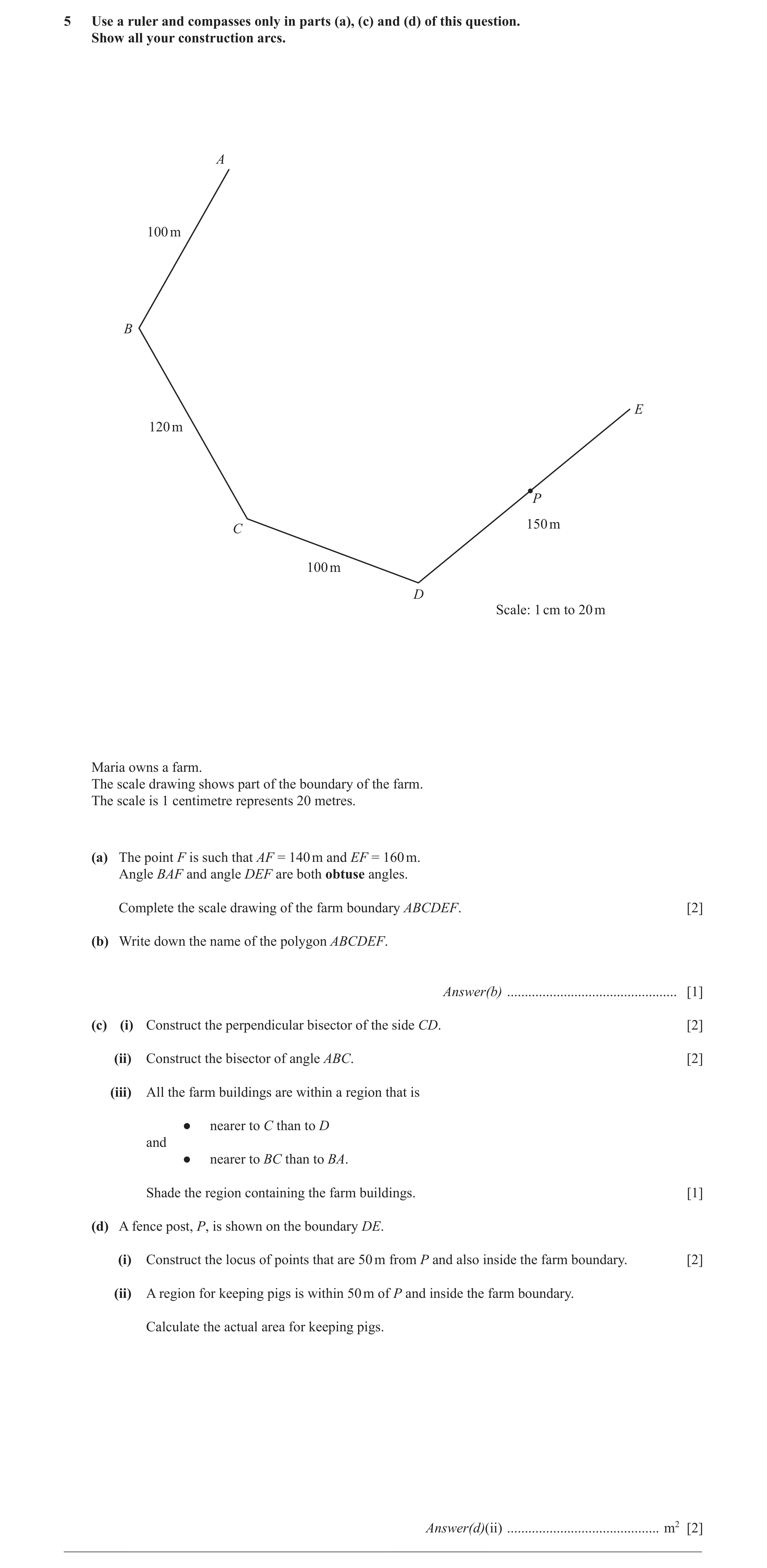
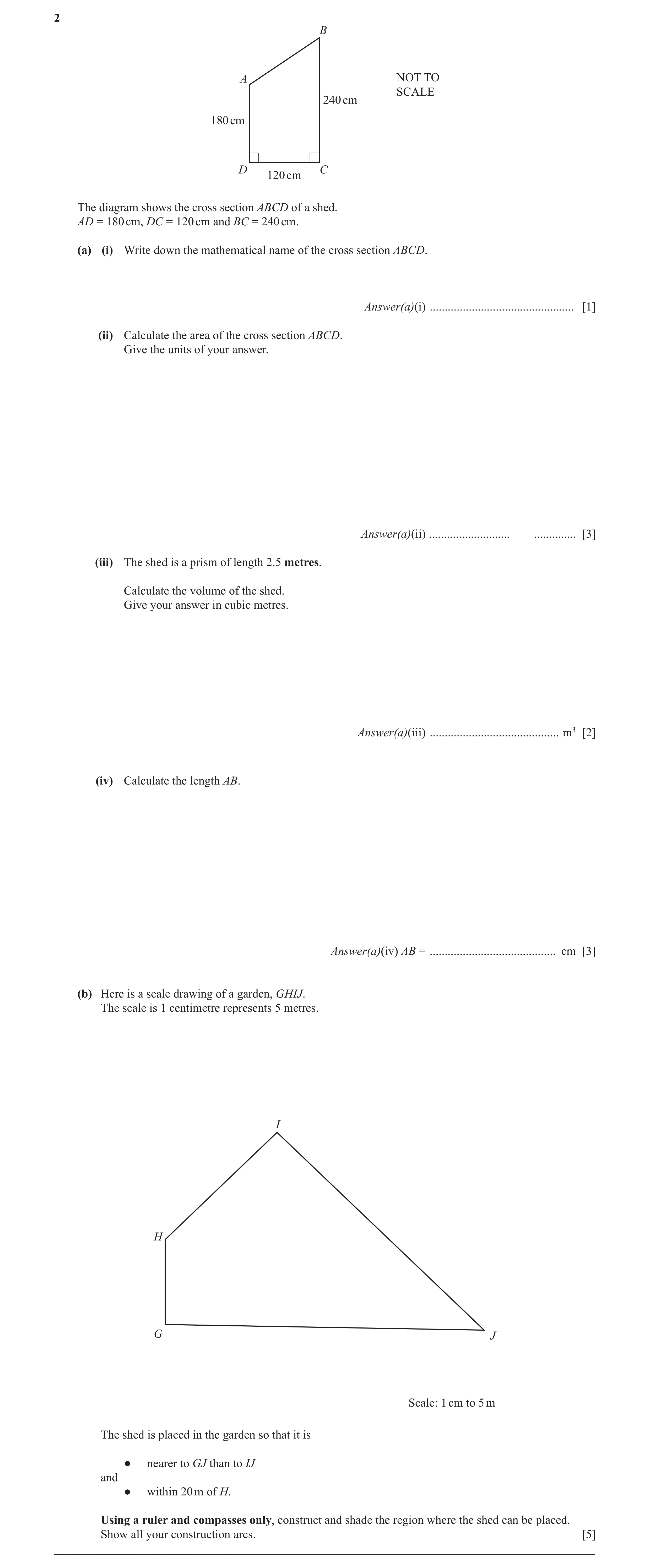
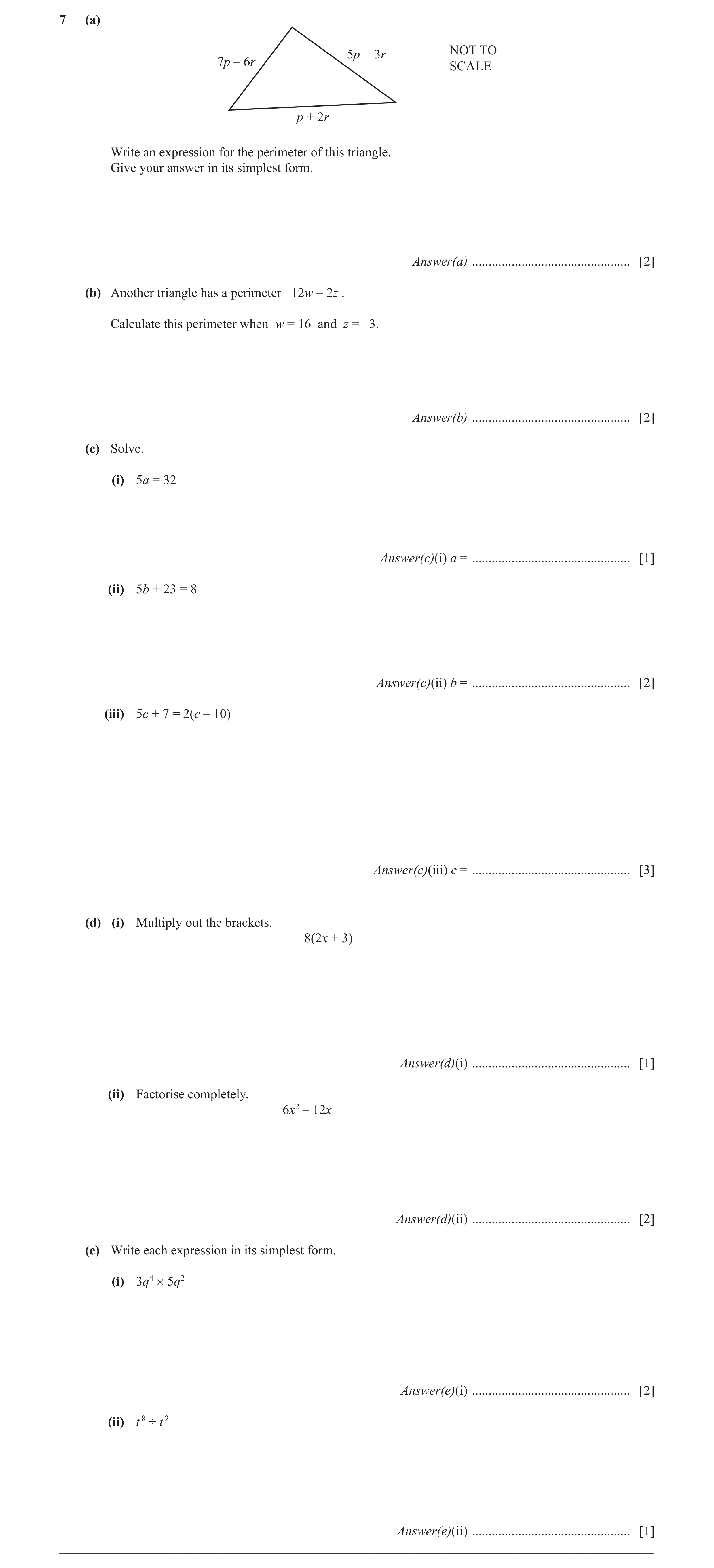
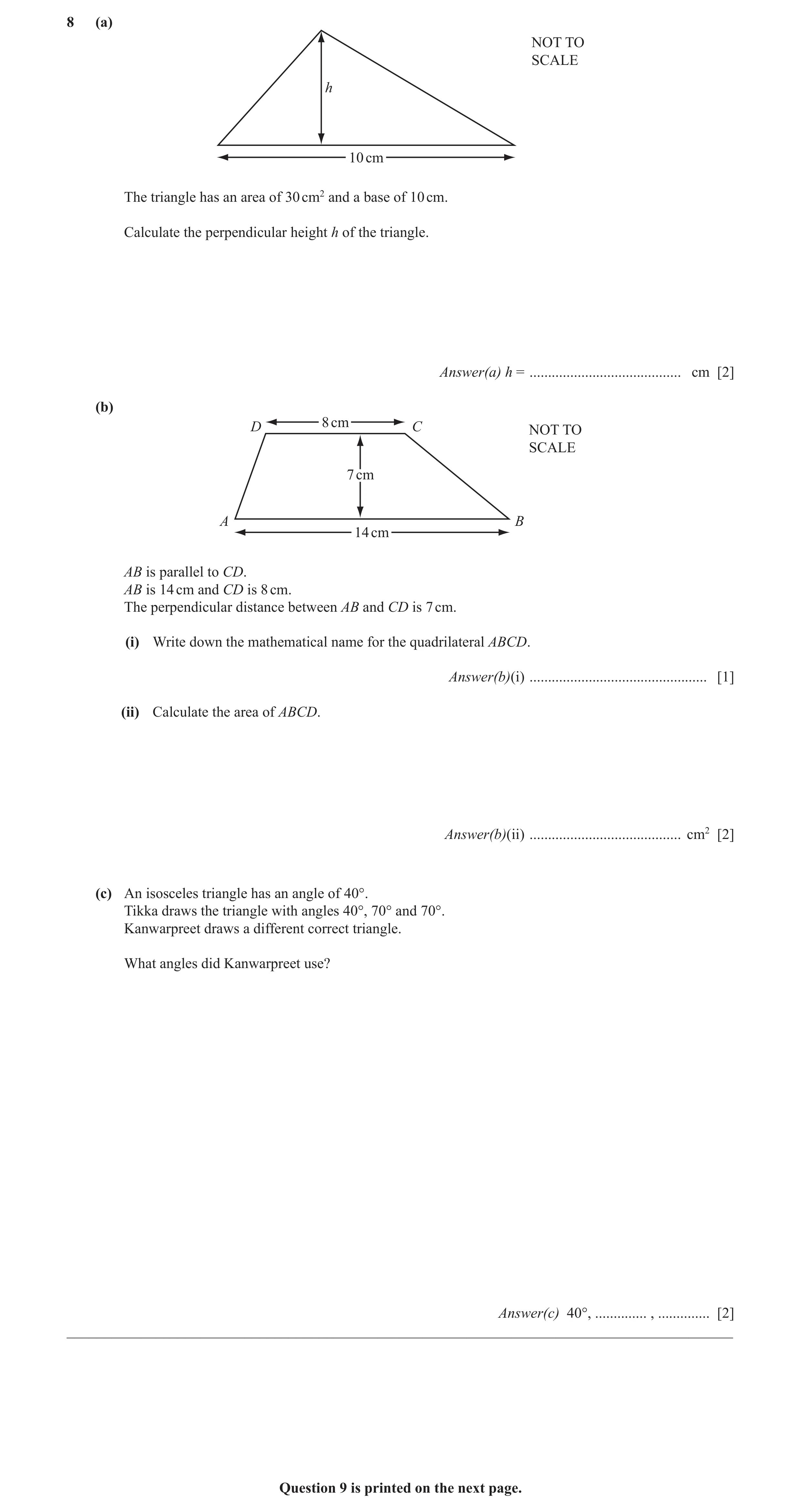
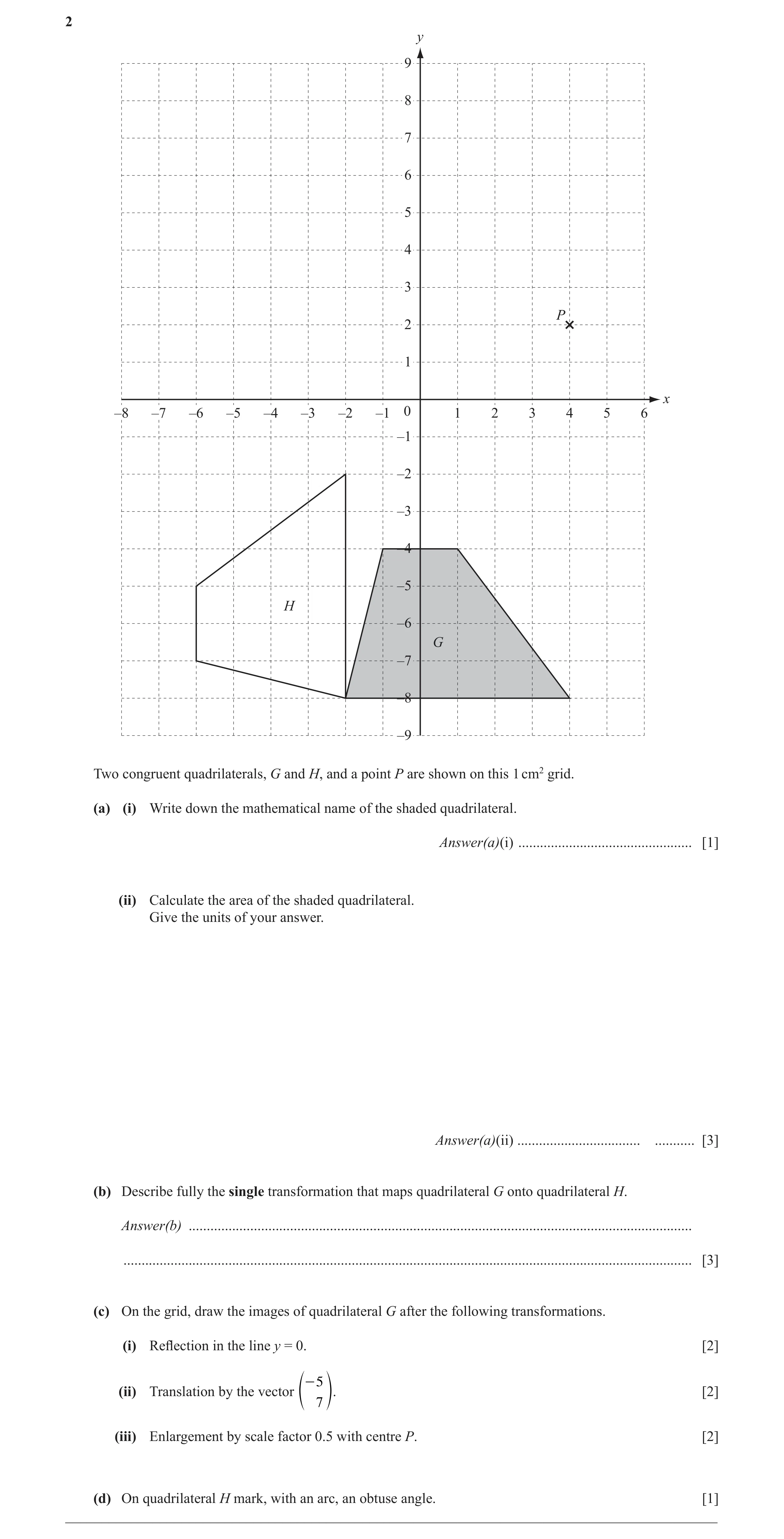
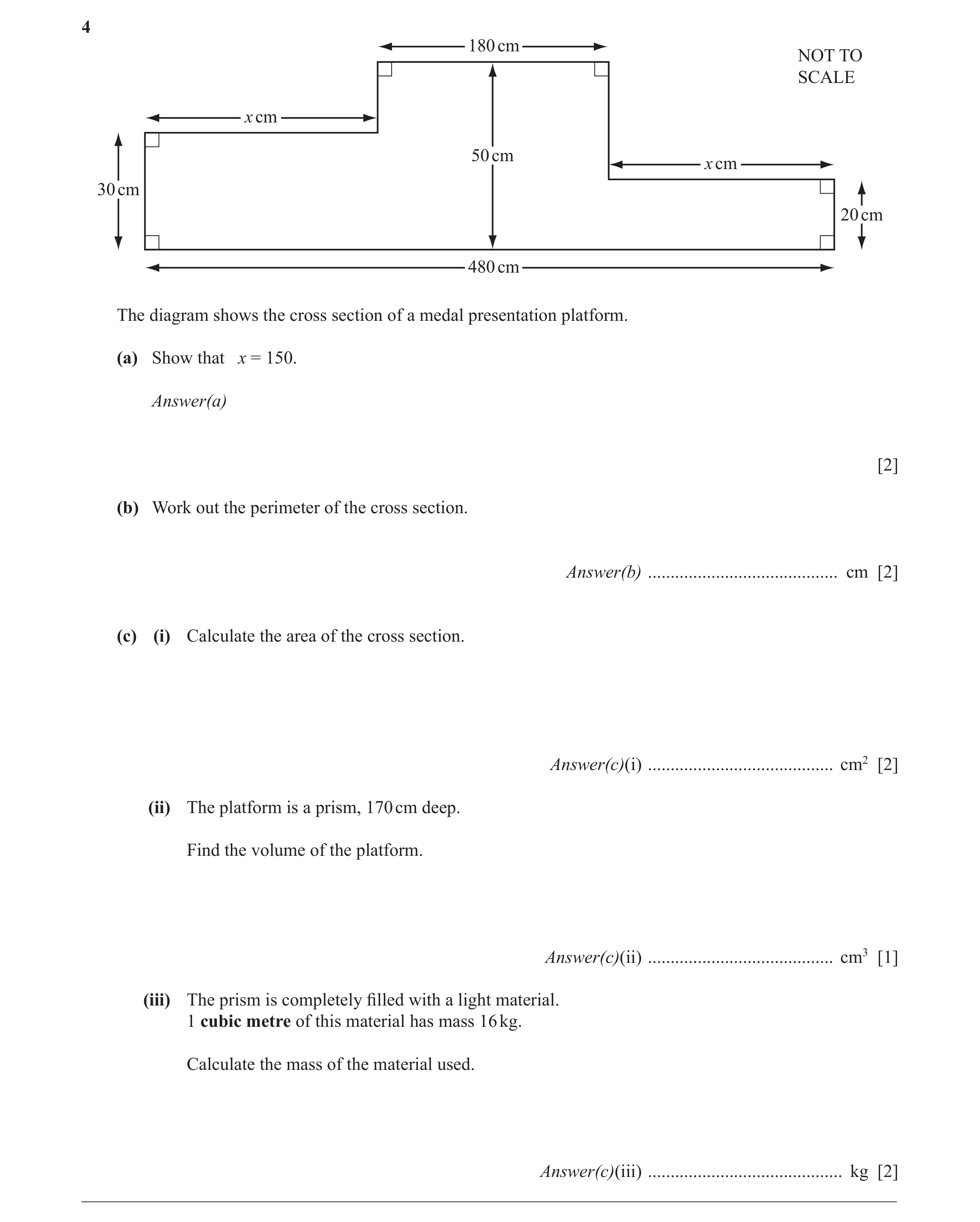 67 / 184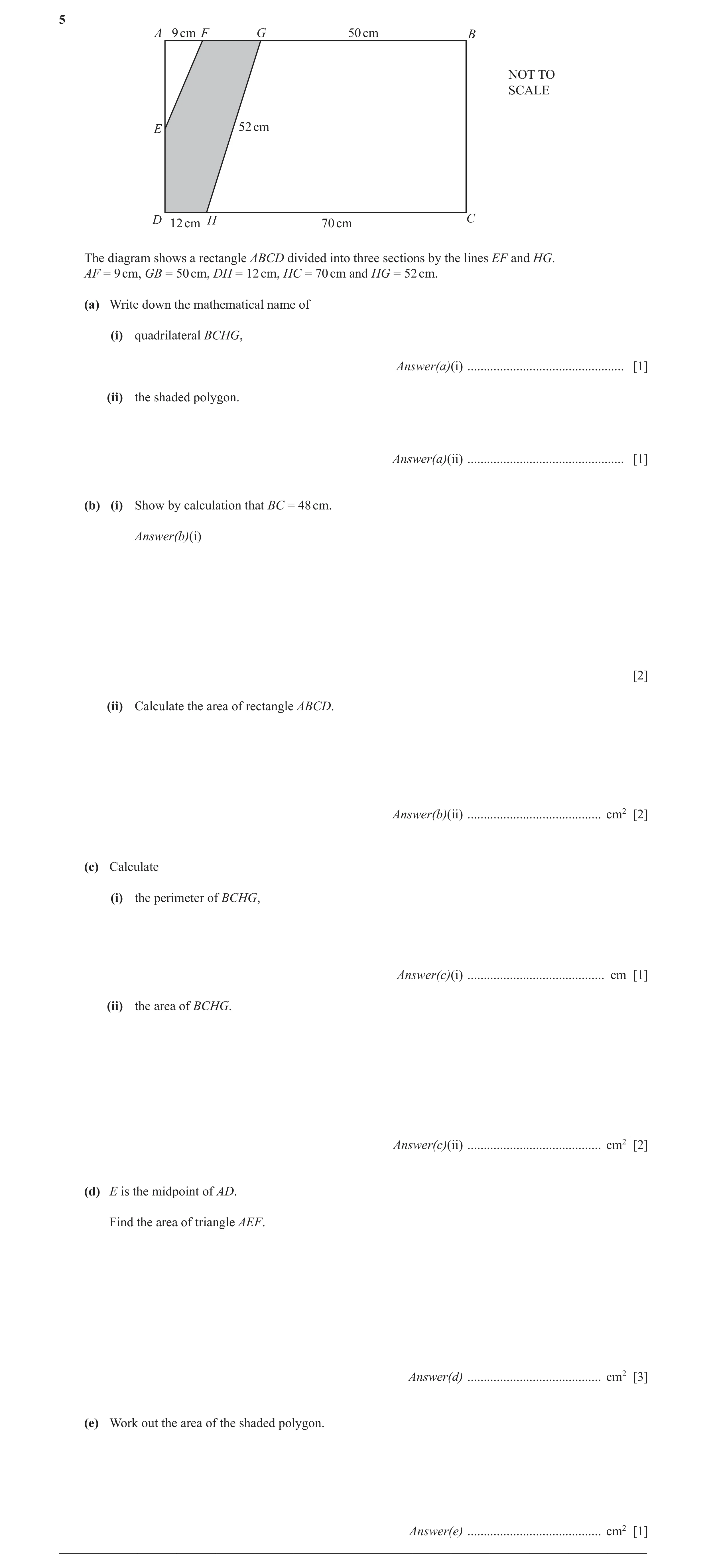
![Question 42: (a) The grid shows part of the net of a cuboid. Complete the net. [2] (b) The volume of another cuboid is 60 cm3. Each side is a whole numb…](https://img.pastlit.com/crops/dcd45baf-932a-4bbf-9f88-7bc3eecf09a2/q6.webp)
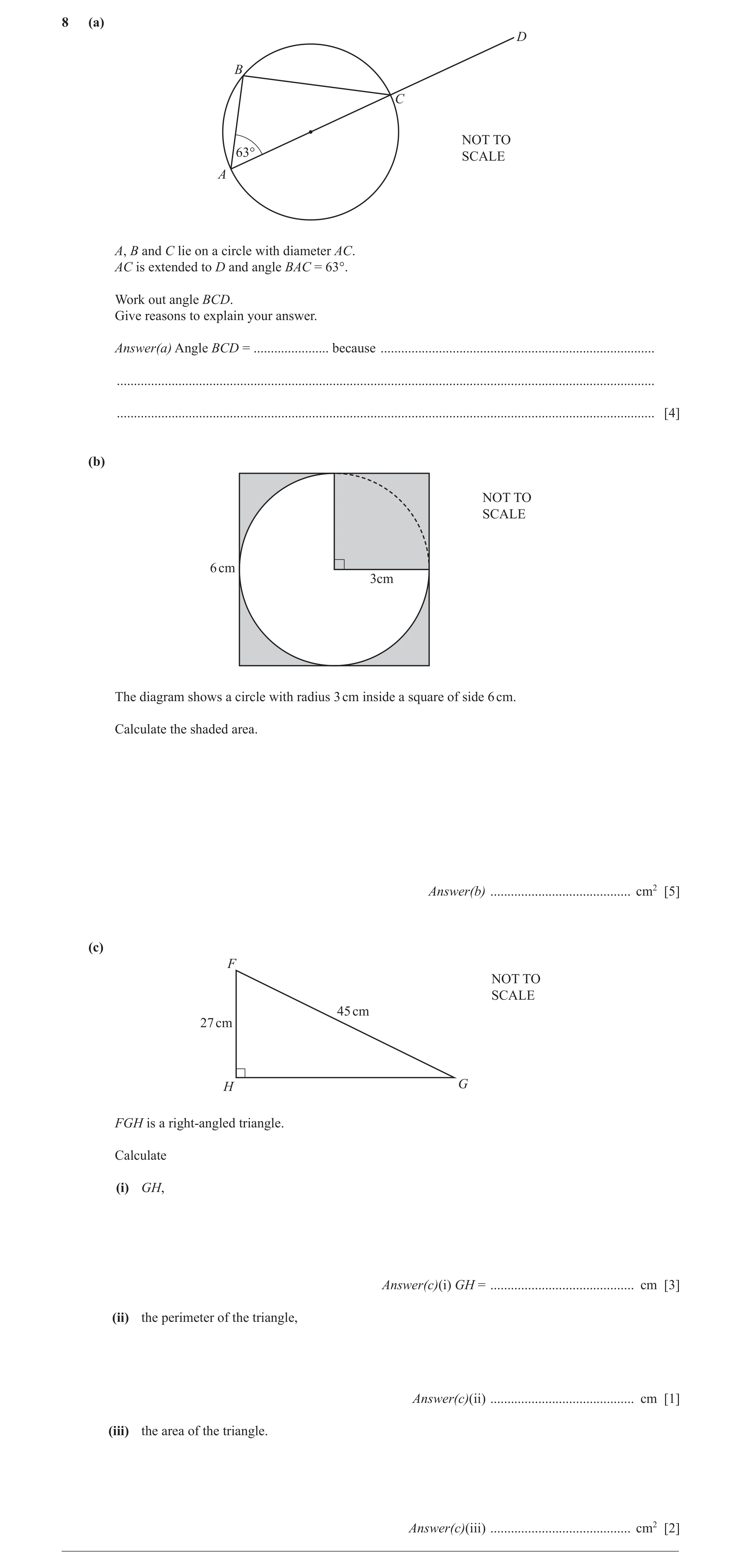
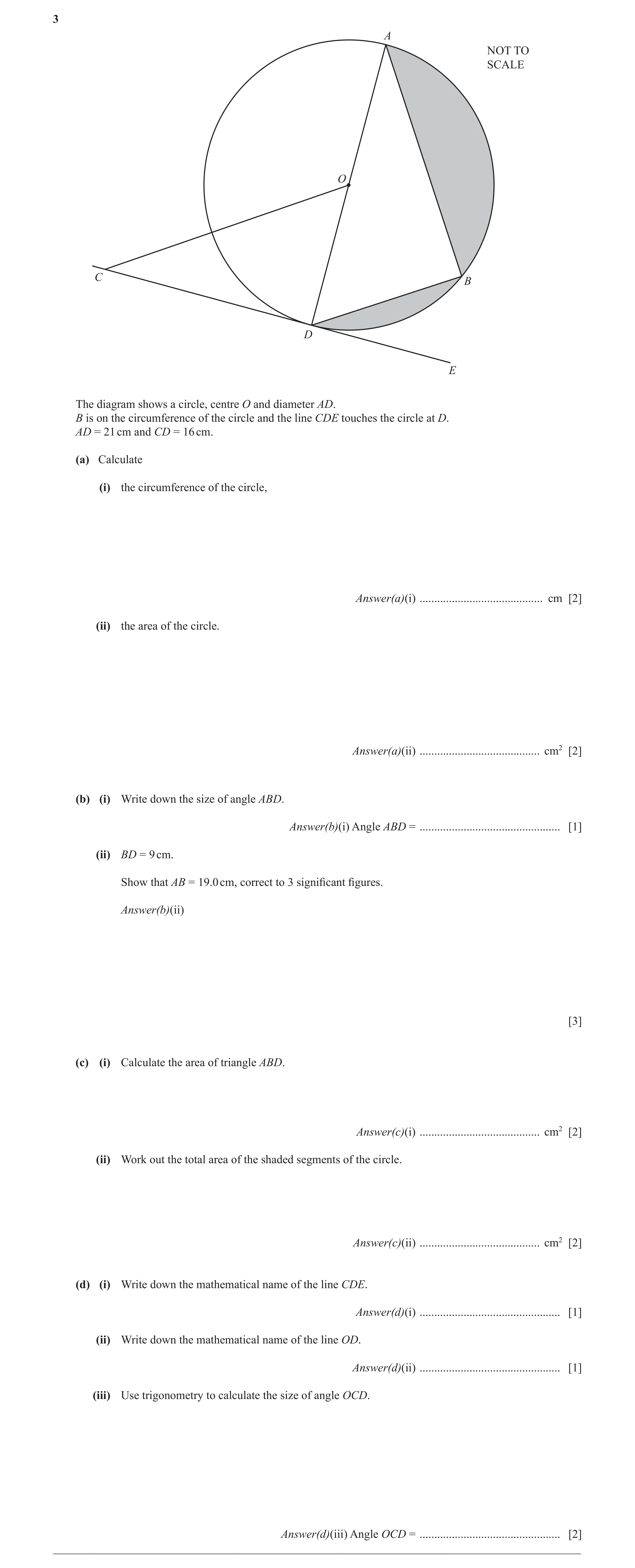
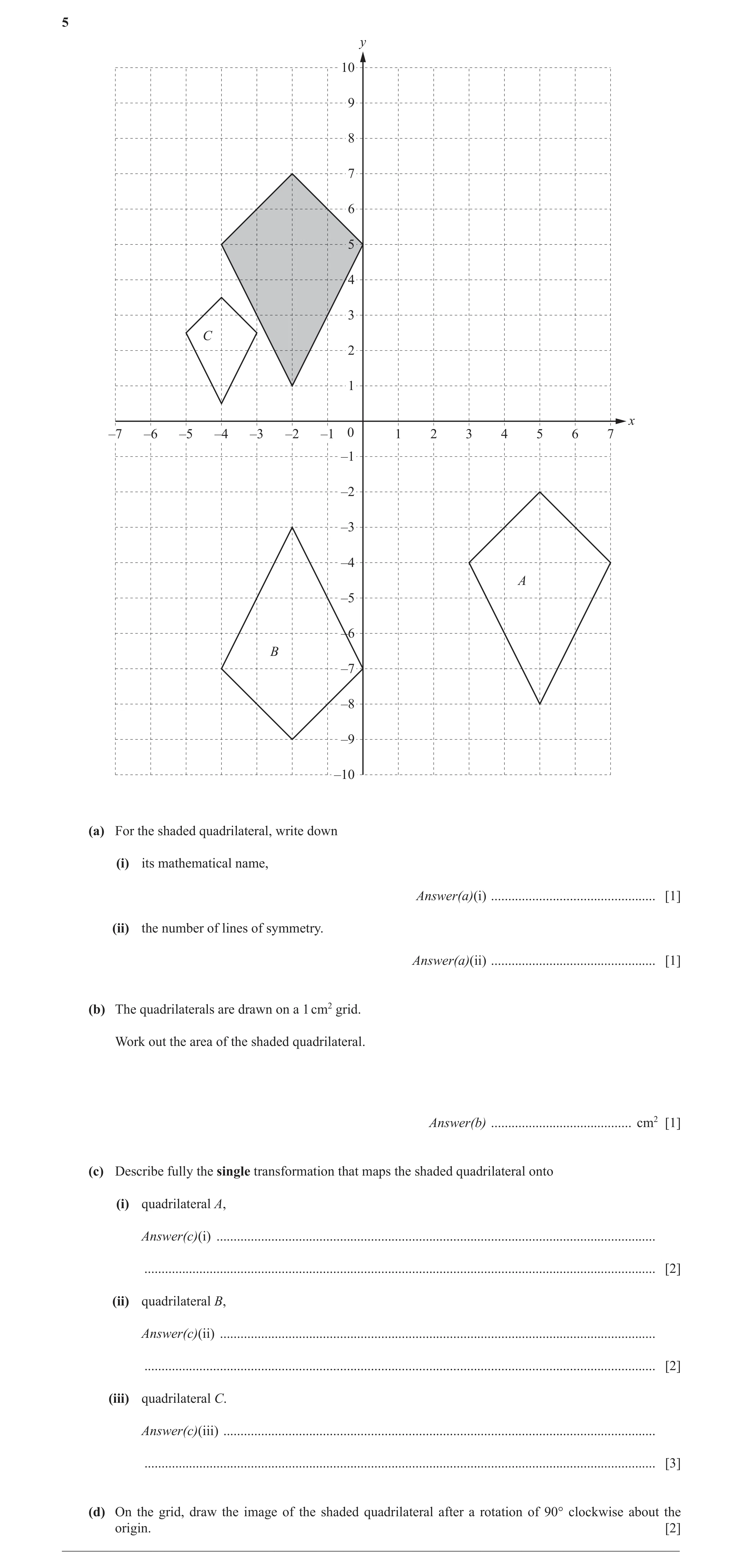
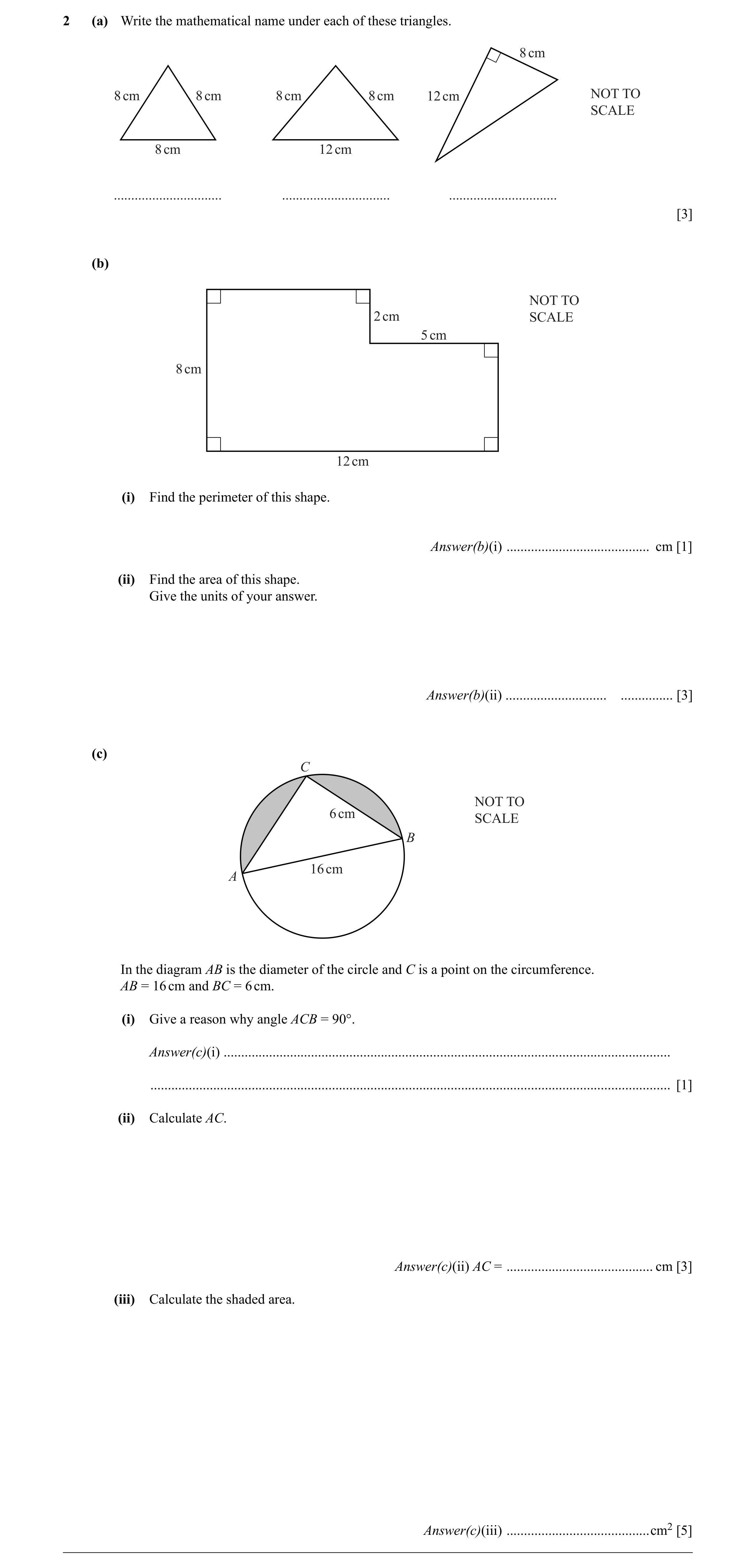
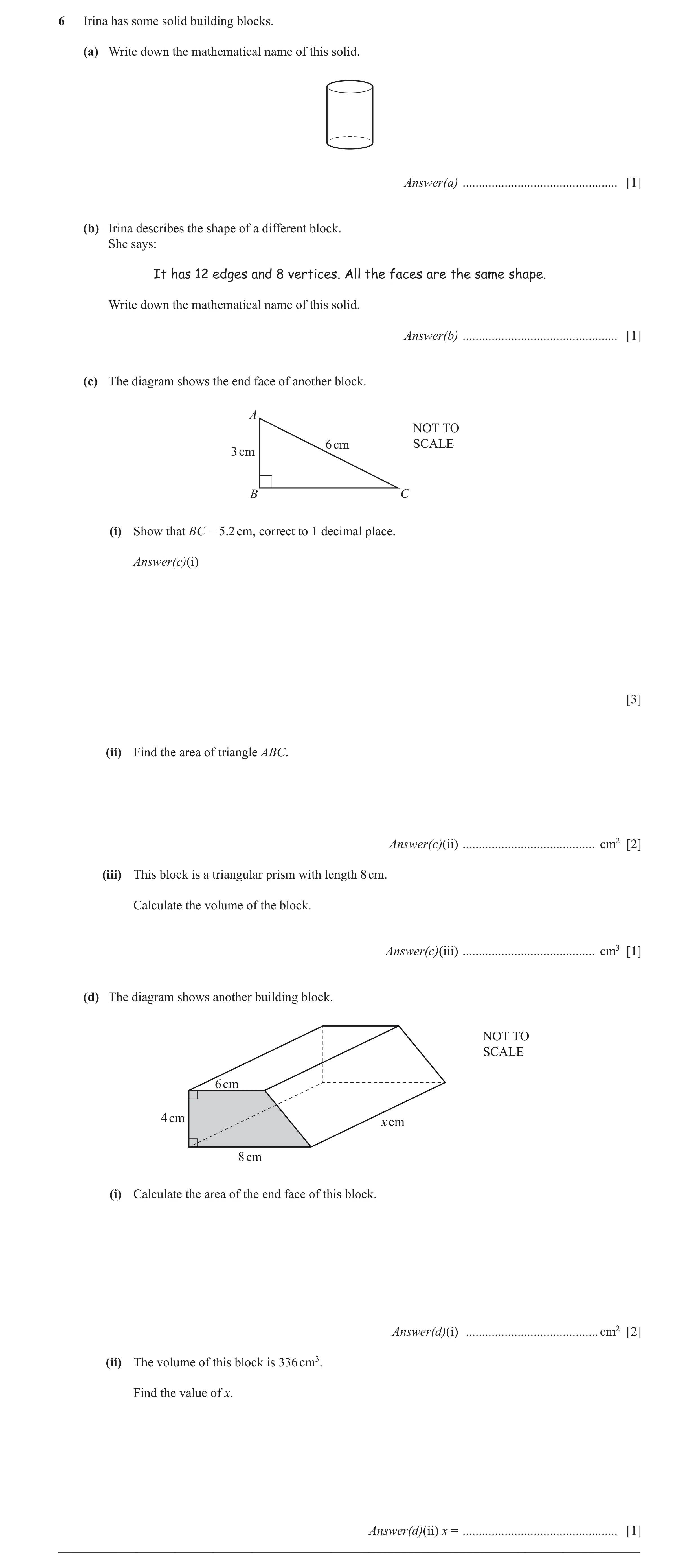
![Question 48: (a) The diagram shows part of a net for a cuboid drawn on a 1 cm2 grid. (i) Complete the diagram for the net of the cuboid. [1] (ii) Calcul…](https://img.pastlit.com/crops/7ab7d6f5-6845-40a0-8e69-0026b3364f47/q3.webp)
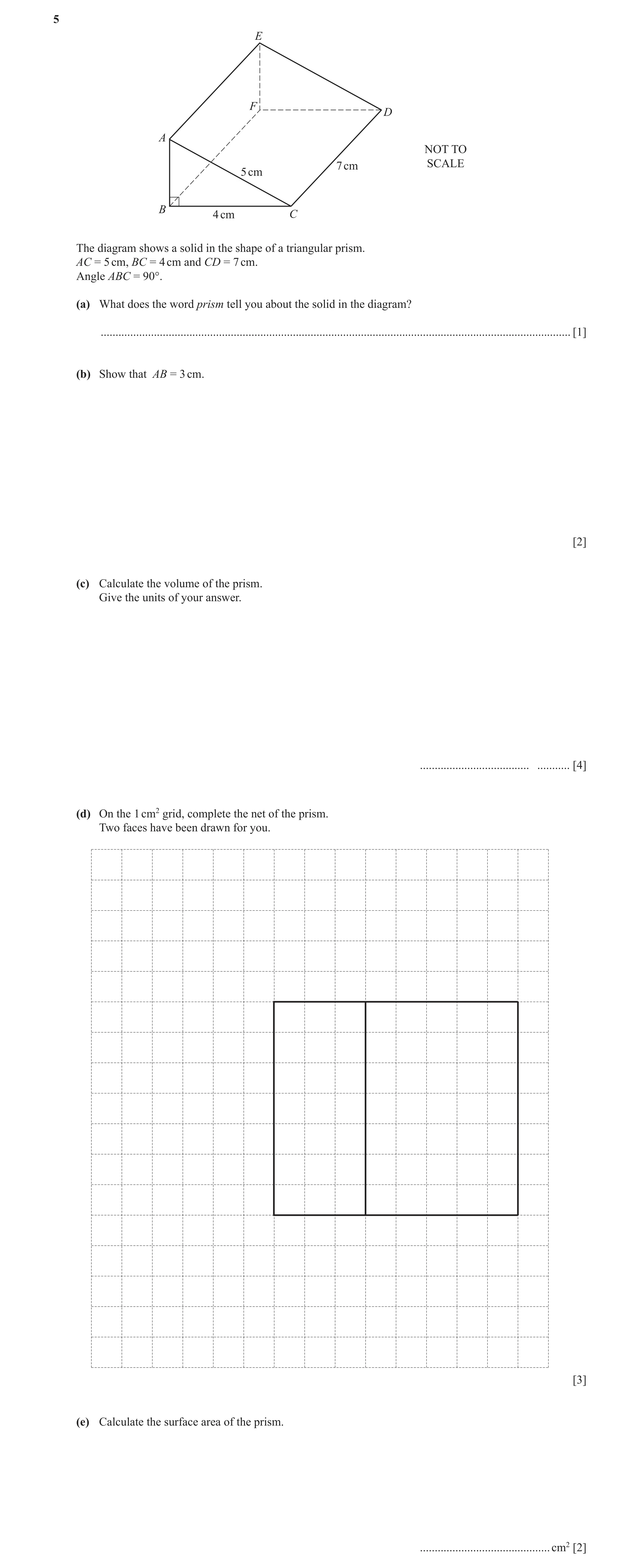
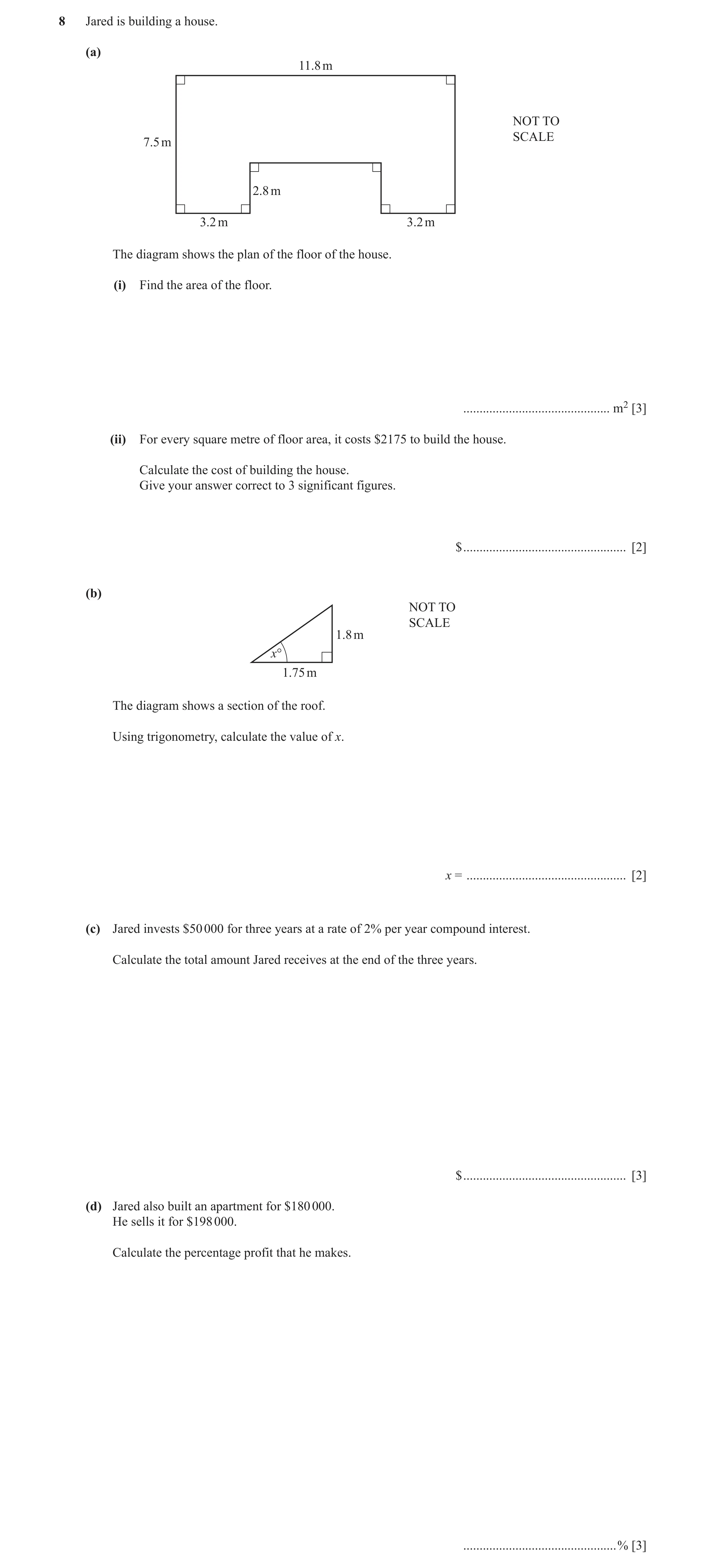
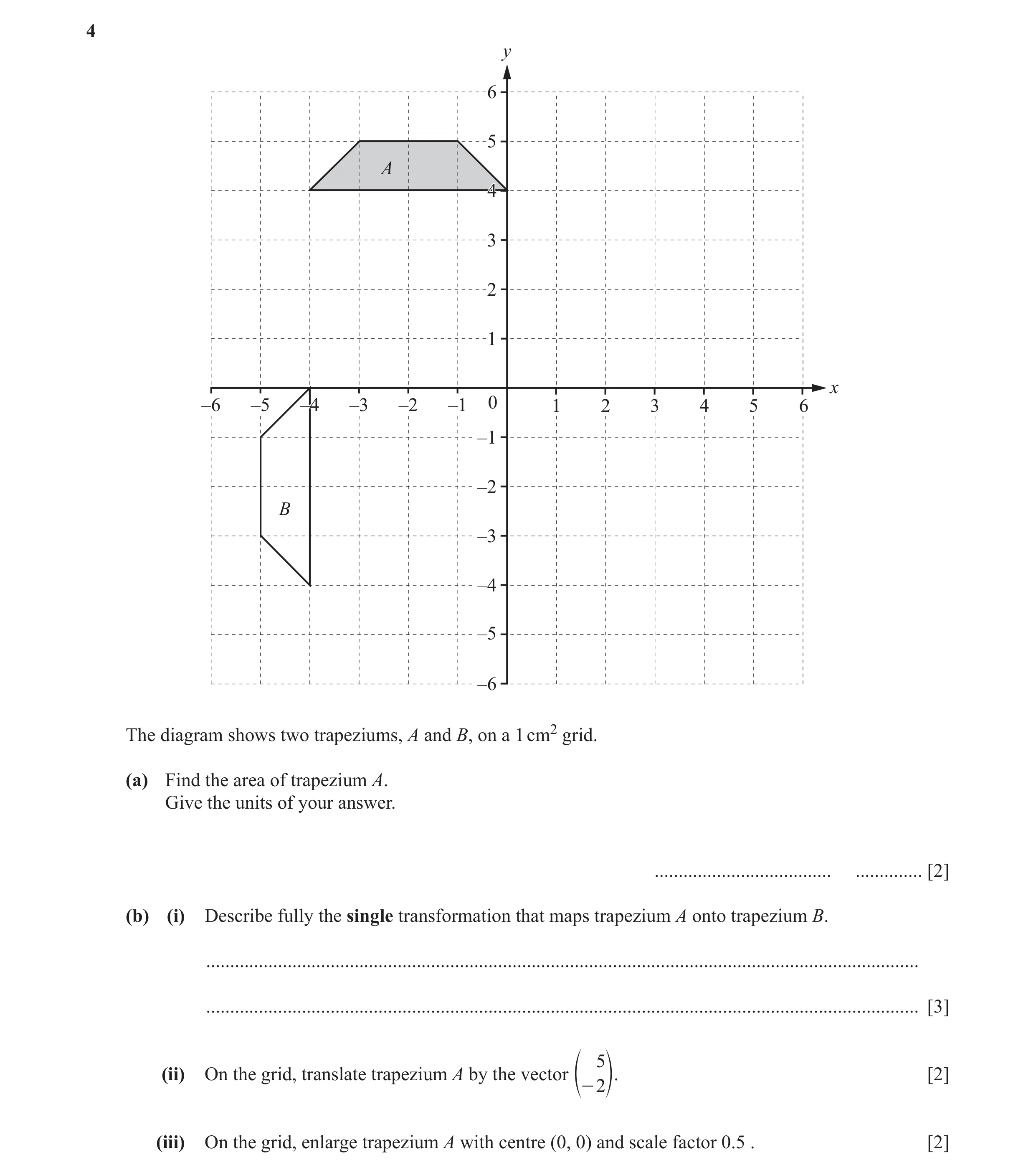 87 / 184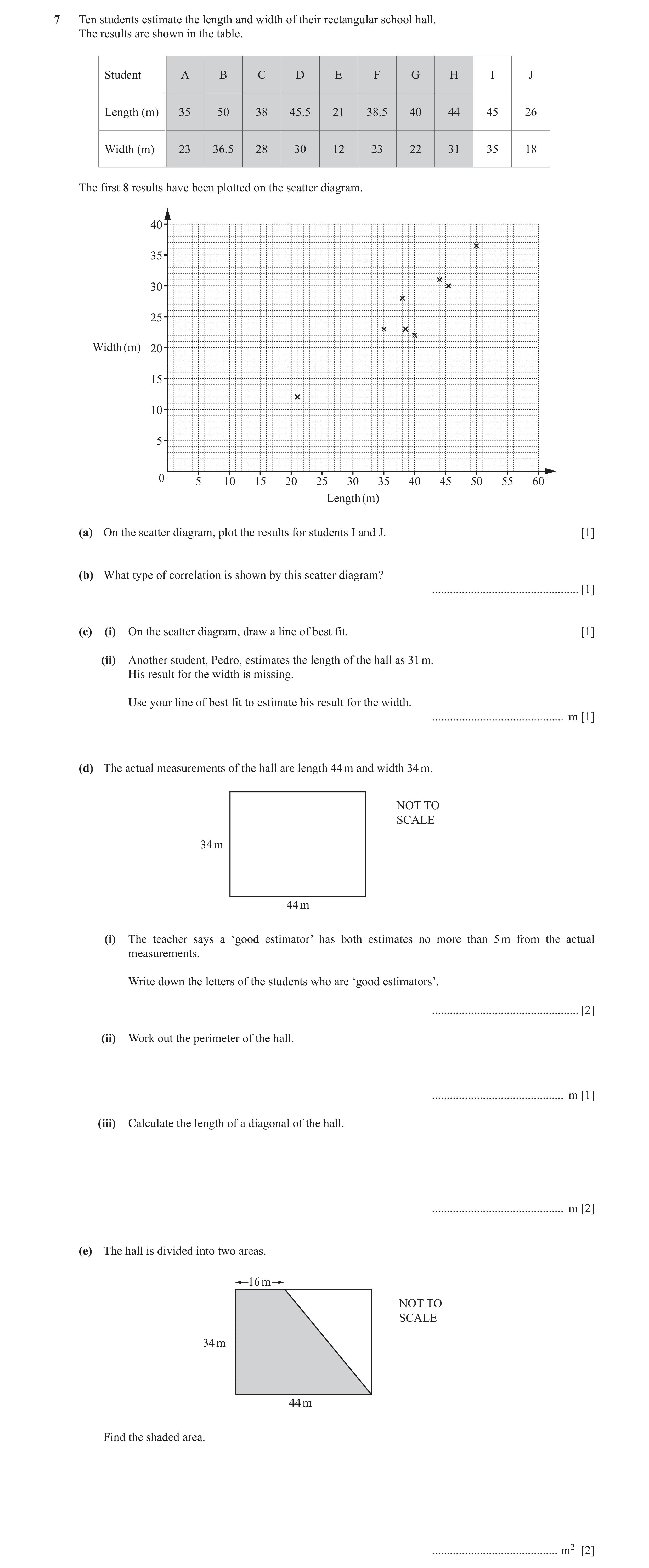
![Question 53: (a) Simplify. 5a + 6a - a ................................................. [1] (b) 3f – 4g NOT TO SCALE 5f + 2g Write an expression for th…](https://img.pastlit.com/crops/65ea02af-610c-4a73-9e87-832c7aa8b755/q2.webp)
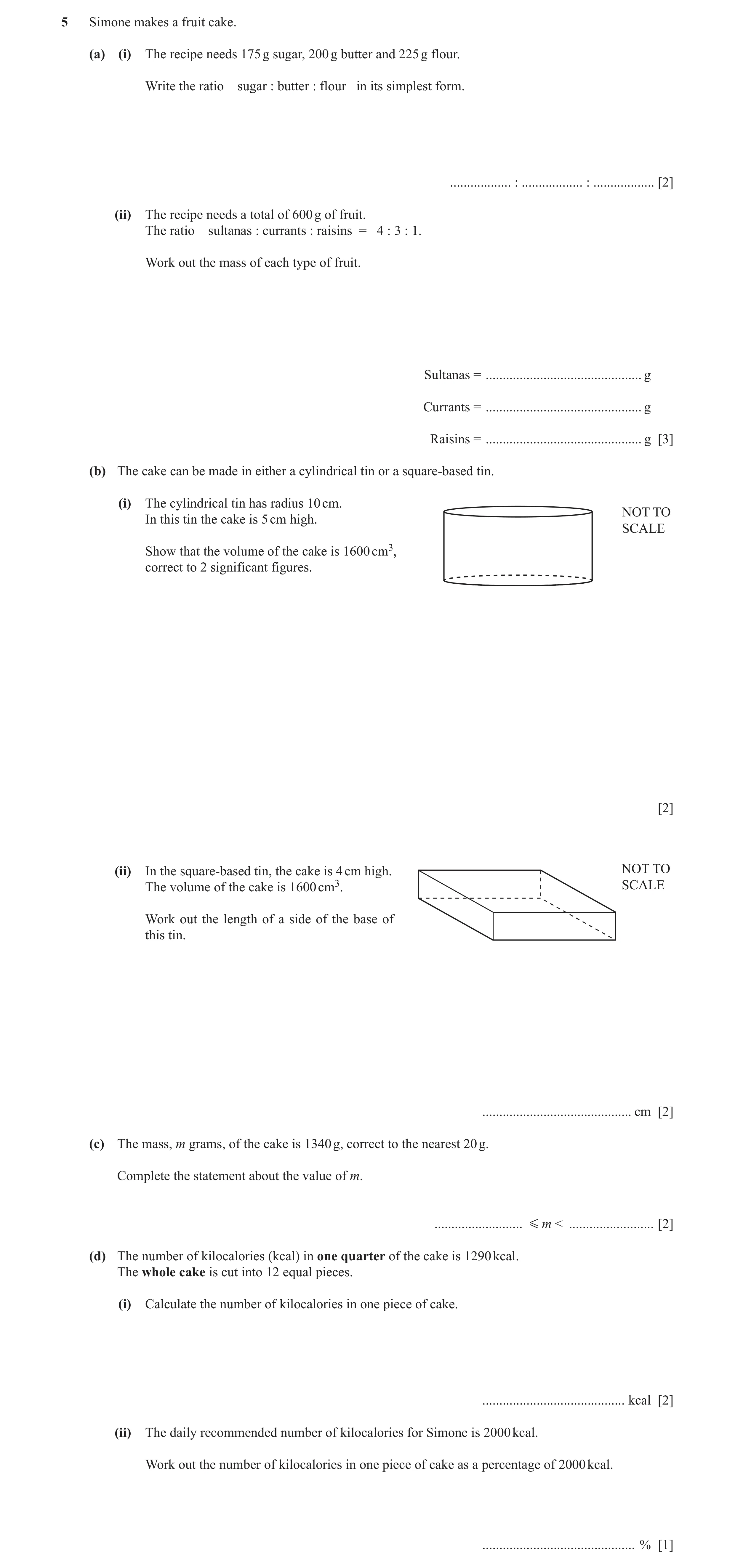
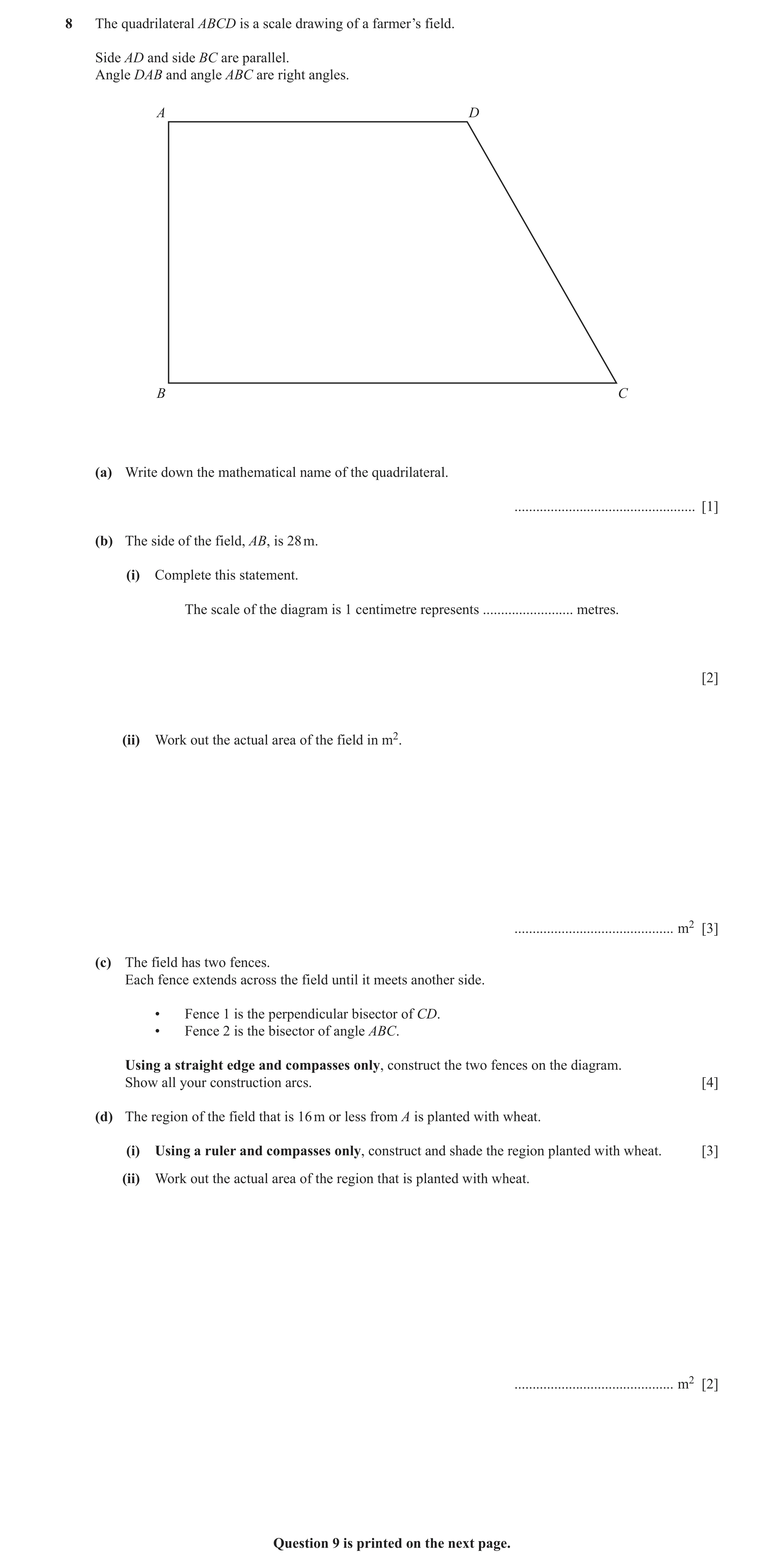
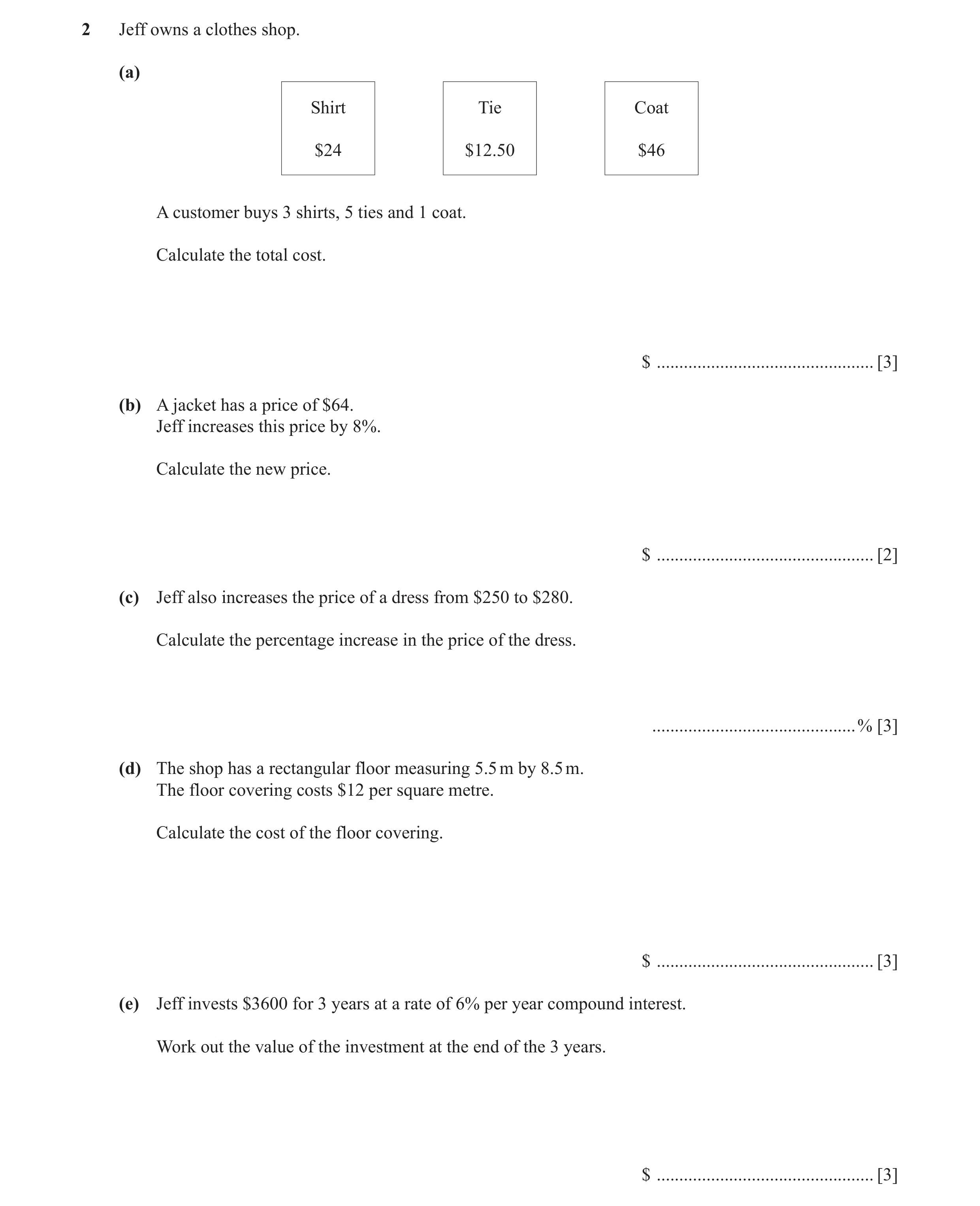 95 / 184
![Question 57: (a) Multiply out the brackets and simplify. 5 2x + 3 - 2 x + 4 ^ h ^ h ................................................. [2] (b) (i) An equ…](https://img.pastlit.com/crops/43c56002-14ed-403f-be73-7f519e6c0974/q8.webp)
![Question 58: (a) The diagram shows a triangle, A, on a 1 cm2 grid. A (i) Find the area of triangle A. ..........................................cm2 [2] …](https://img.pastlit.com/crops/43c56002-14ed-403f-be73-7f519e6c0974/q9.webp)
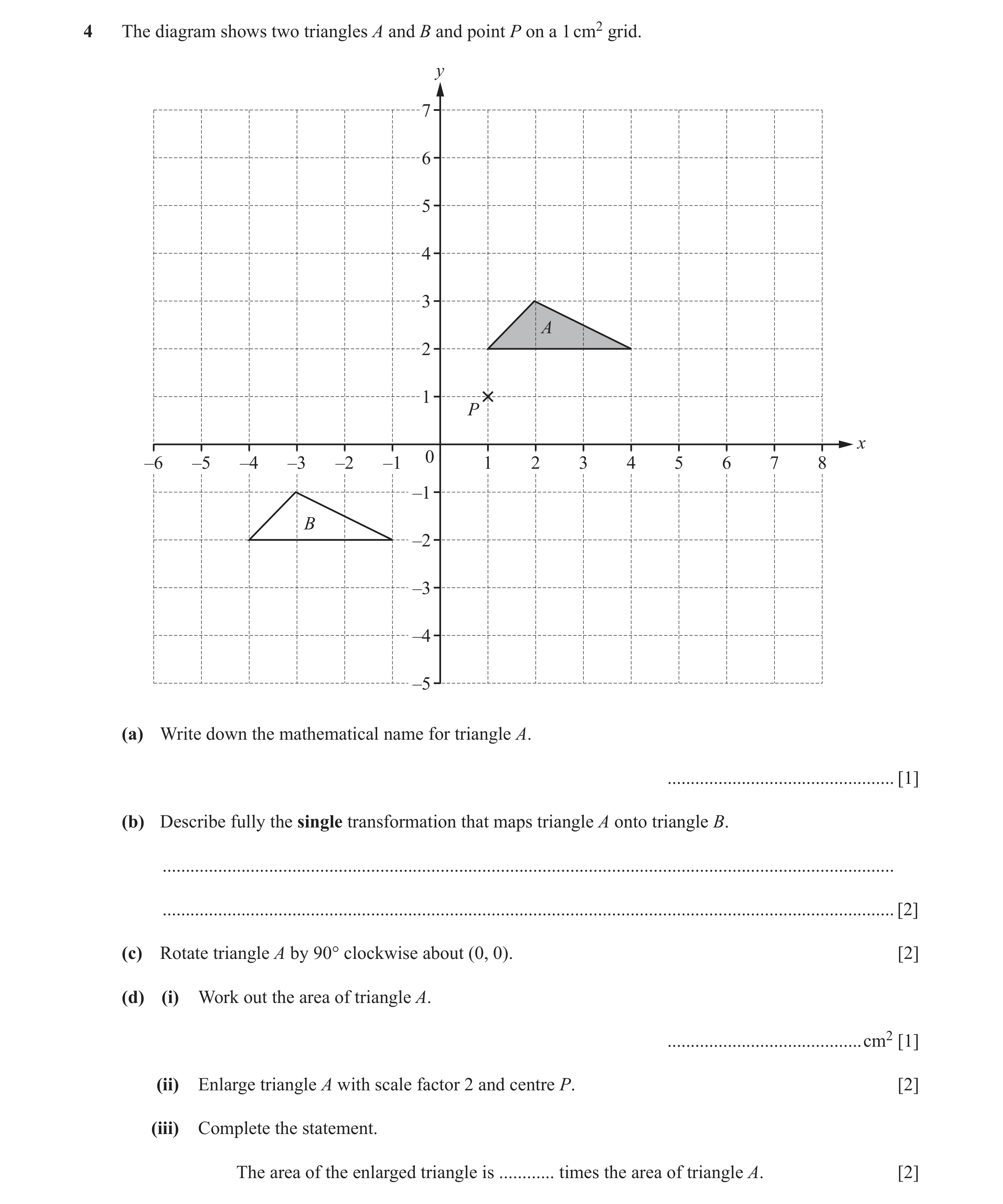 99 / 184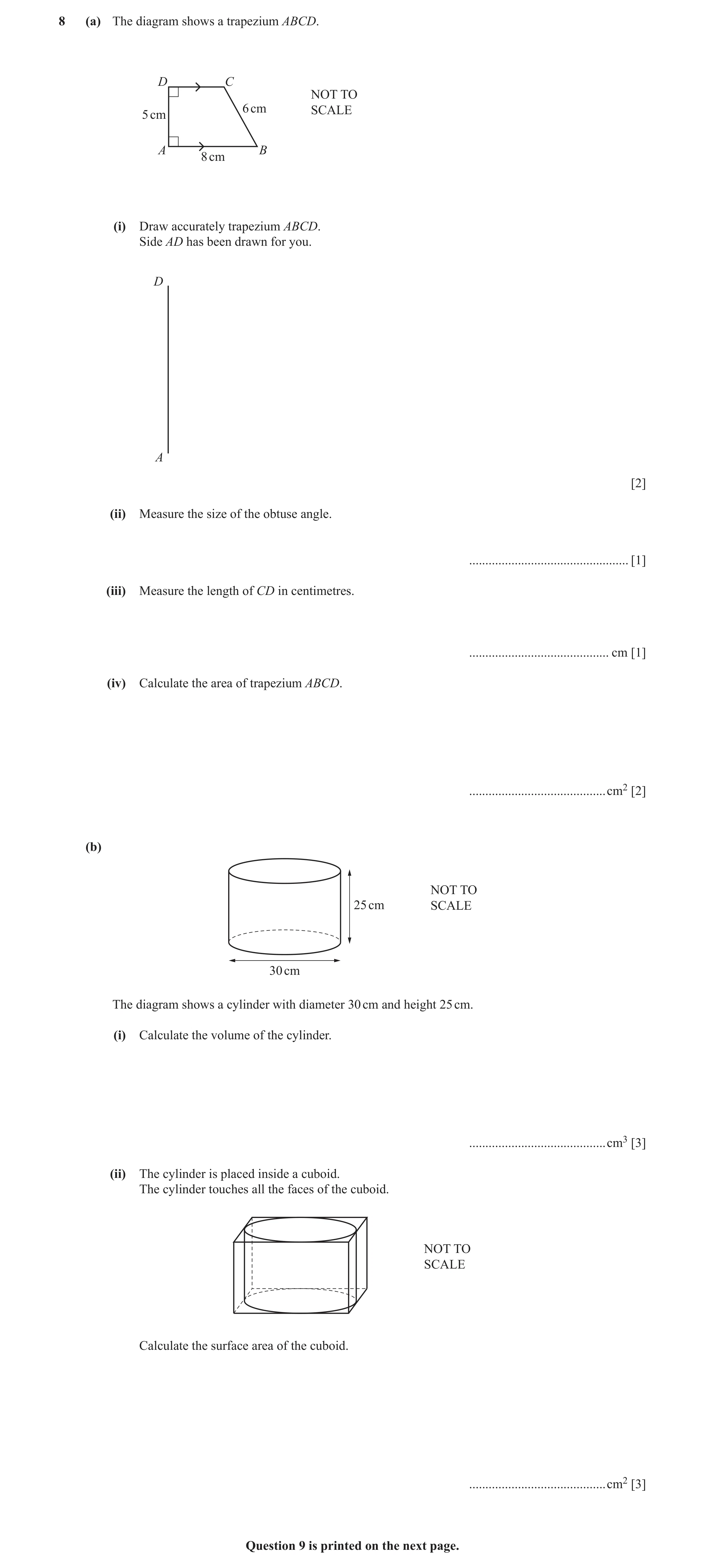
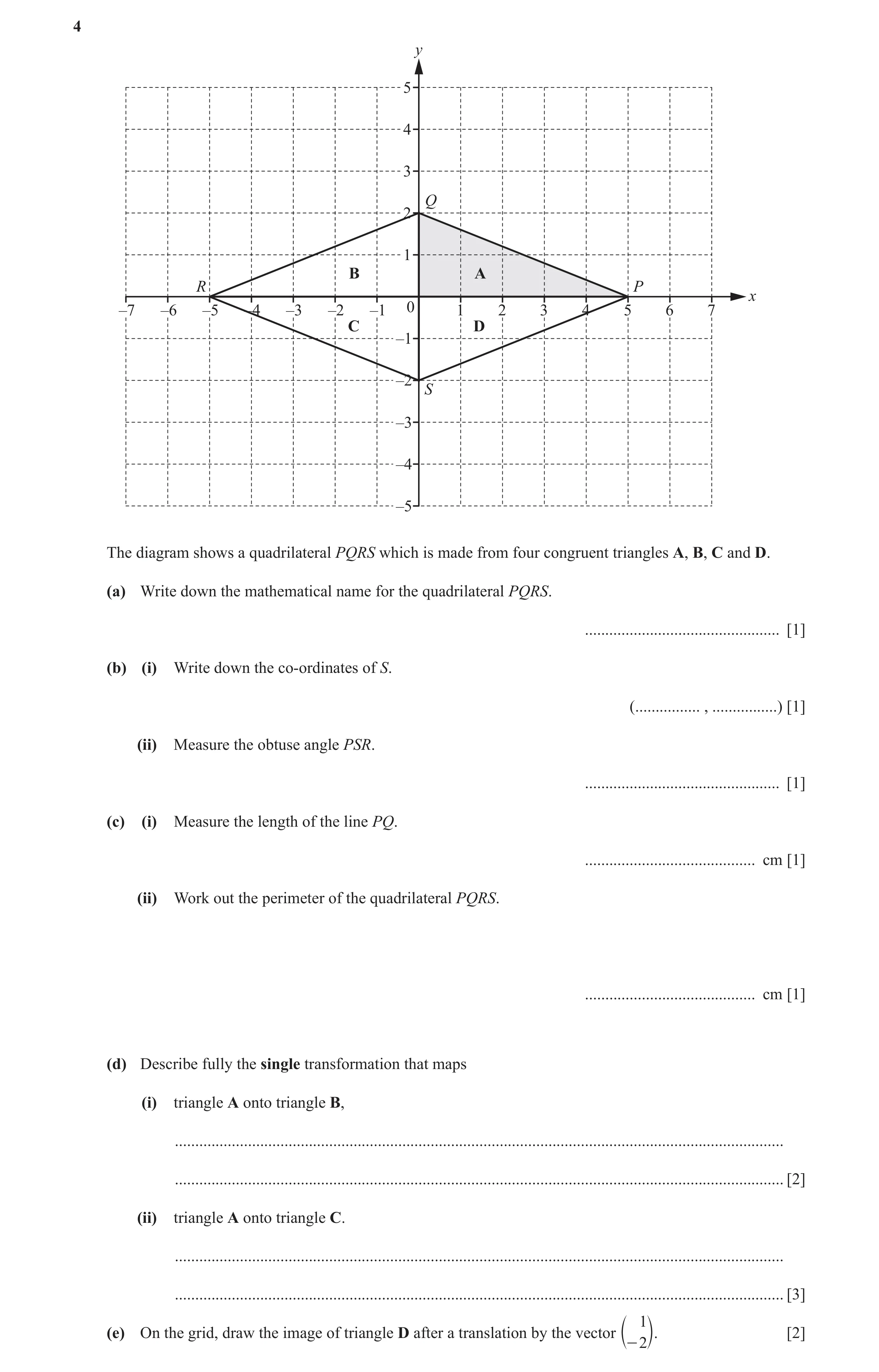
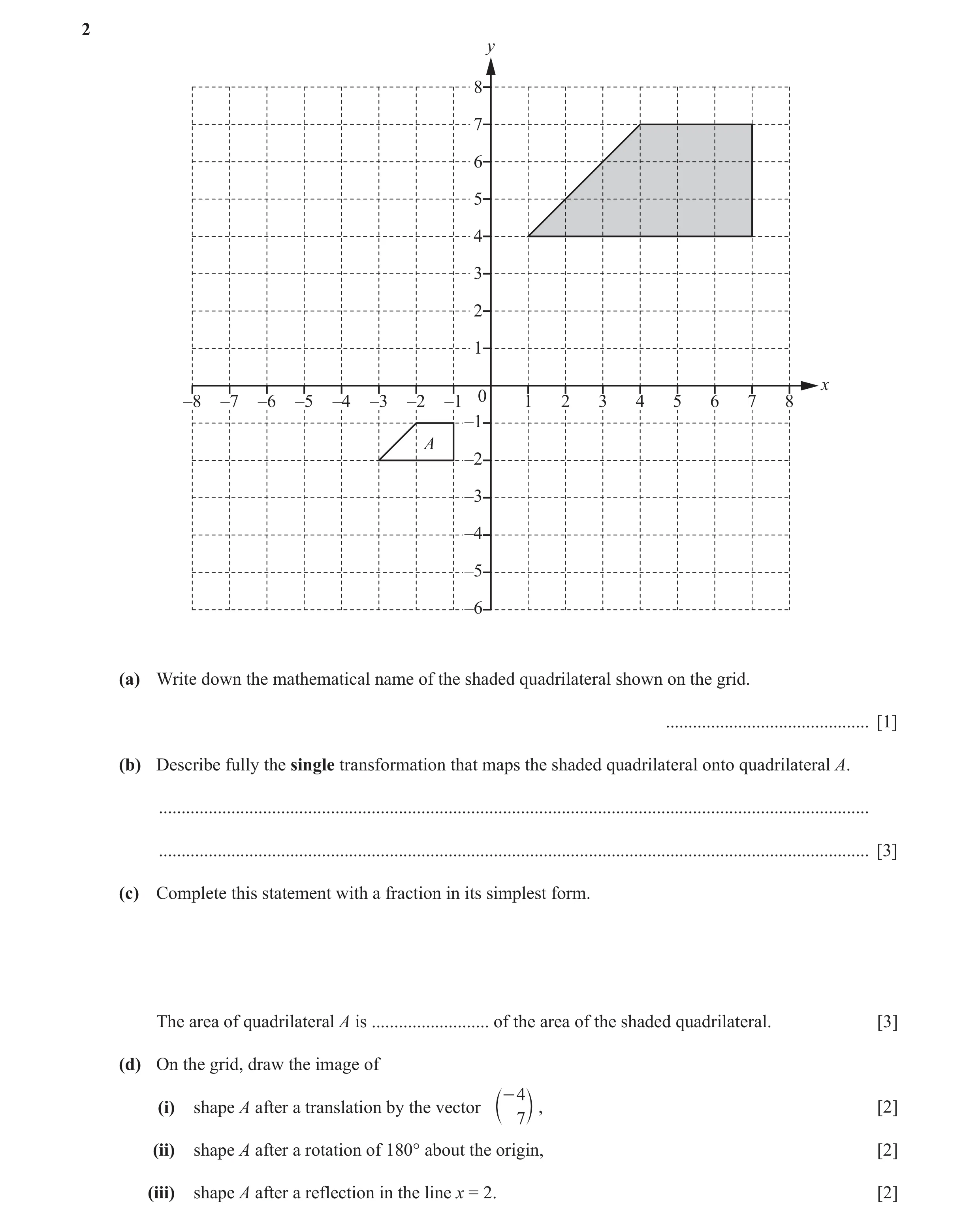 104 / 184
![Question 63: (a) Draw all the lines of symmetry on each shape. [4] (b) The diagram shows an isosceles triangle and a straight line AB. NOT TO SCALE 48° …](https://img.pastlit.com/crops/271dbb44-fdf6-4470-8e73-cf0feb44b84d/q2.webp)
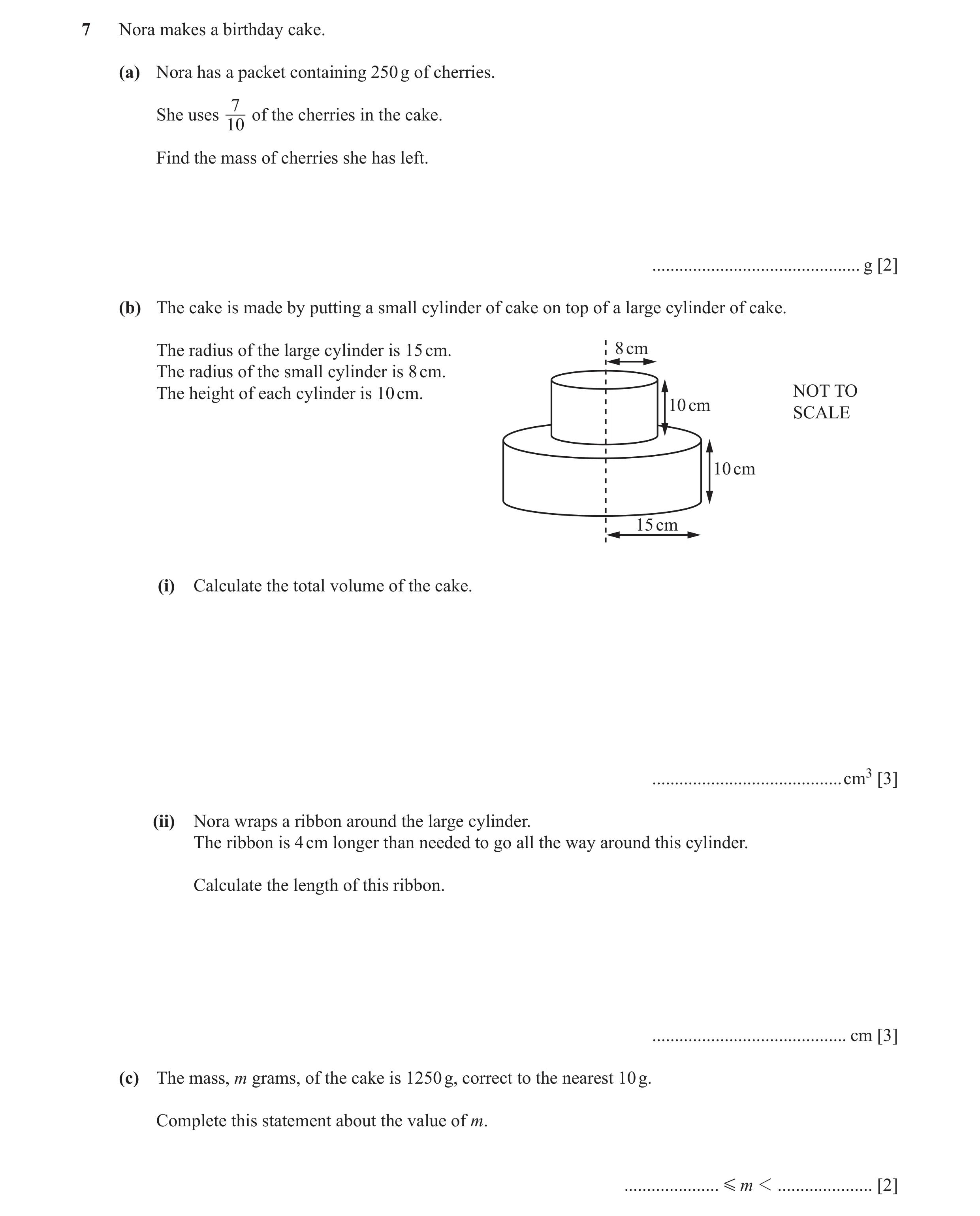 107 / 184
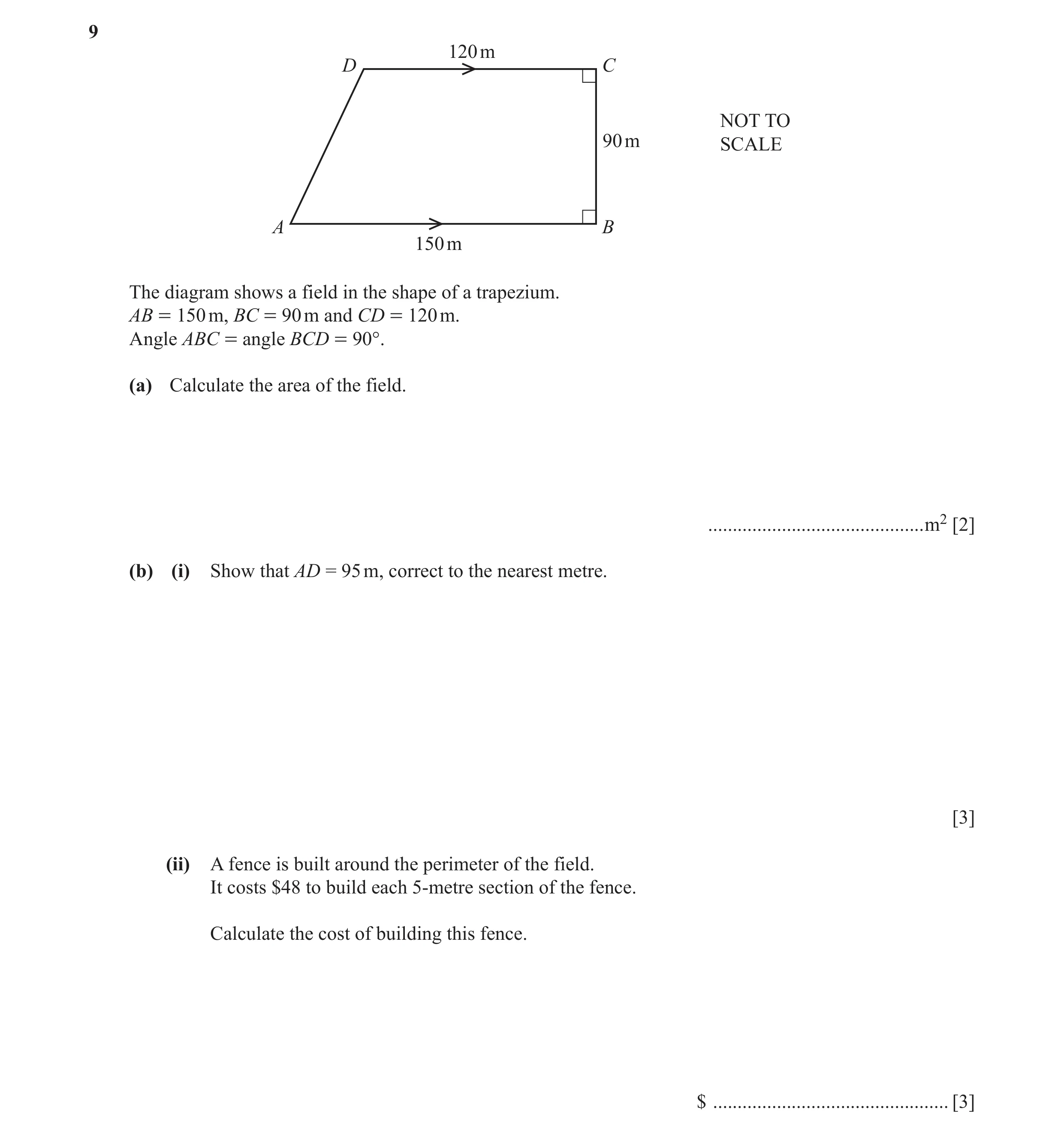 108 / 184
![Question 66: (a) Draw all the lines of symmetry on the rectangle below. [2] (b) Work out the size of one interior angle of a regular hexagon. ..........…](https://img.pastlit.com/crops/fd7080ae-7d67-43c8-a1a5-c05881c1ff49/q5.webp)
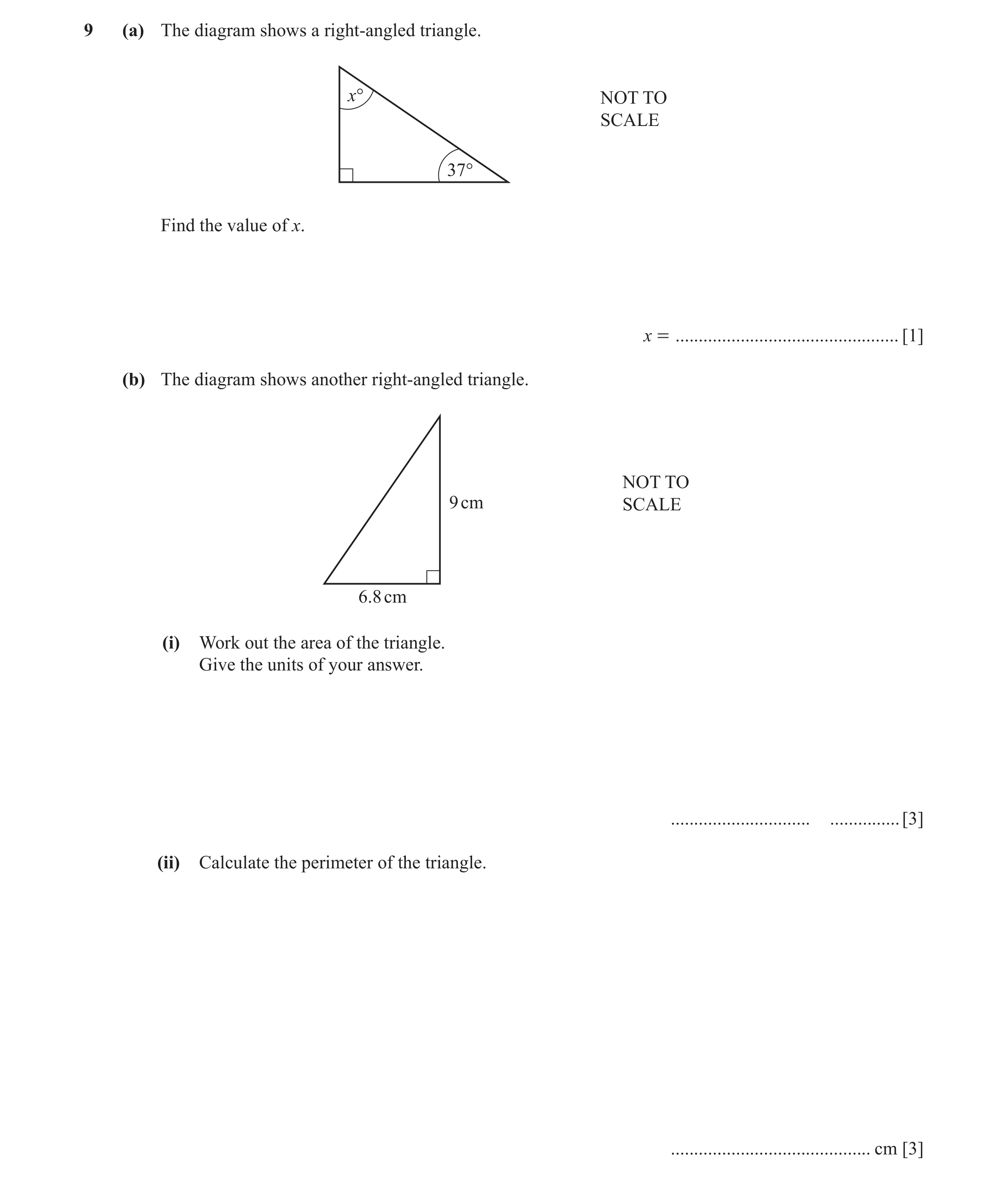 111 / 184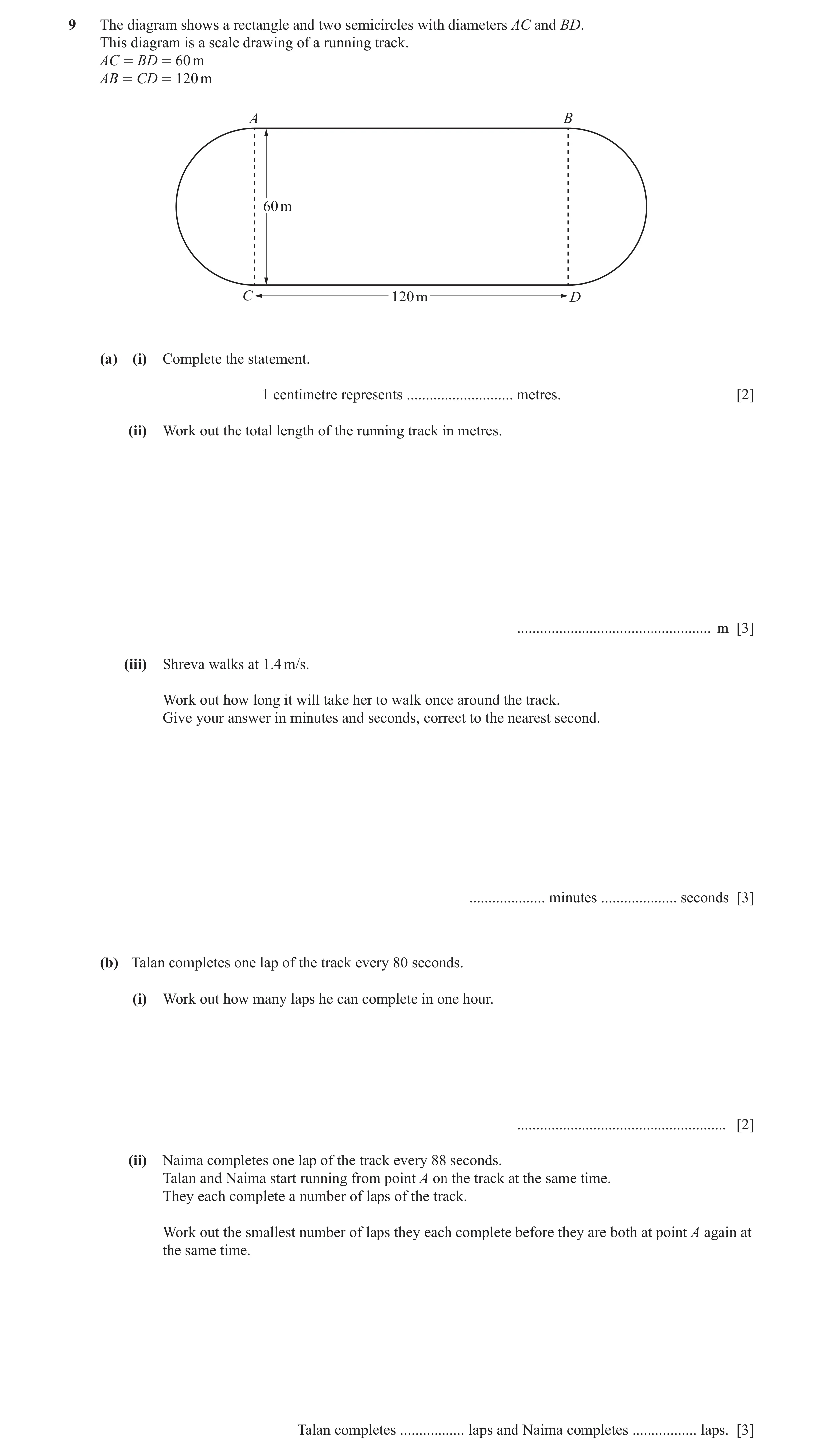
![Question 69: (a) Using a straight edge and compasses only, construct the equilateral triangle ABC. The base AB has been drawn for you. A B [2] (b) 16 m …](https://img.pastlit.com/crops/24d2ac9a-4f39-438c-94a1-1266c01e85ba/q10.webp)
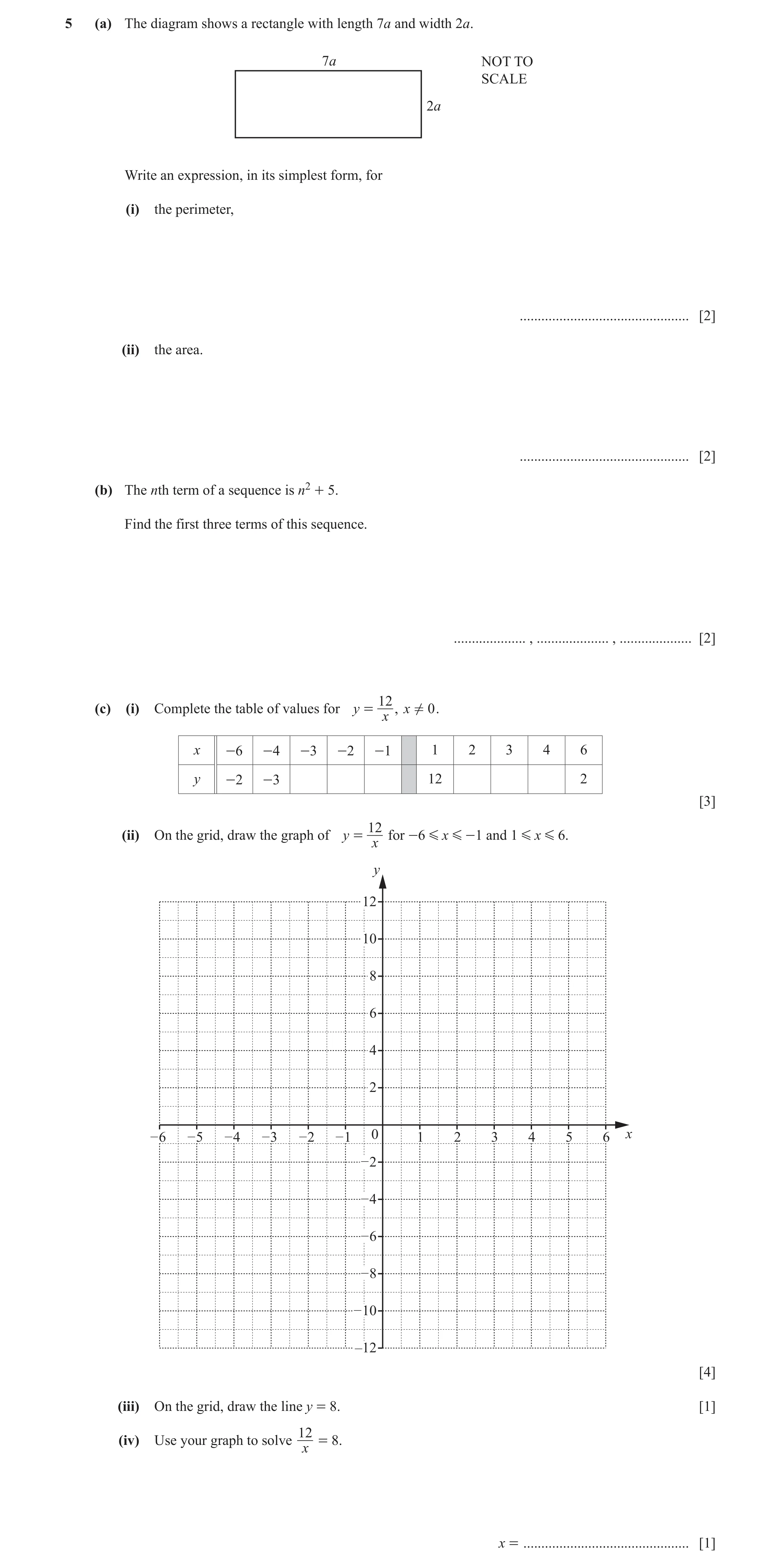
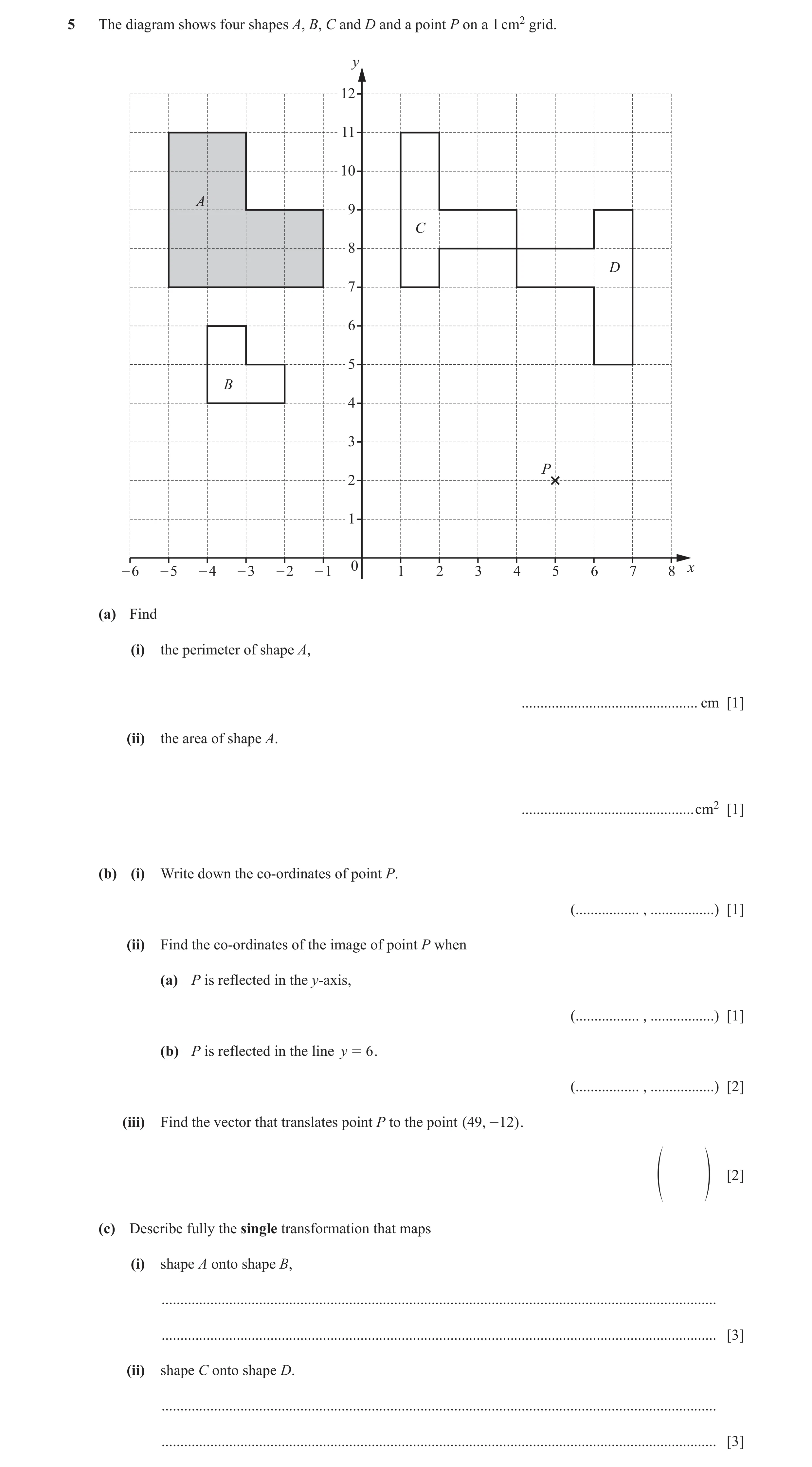
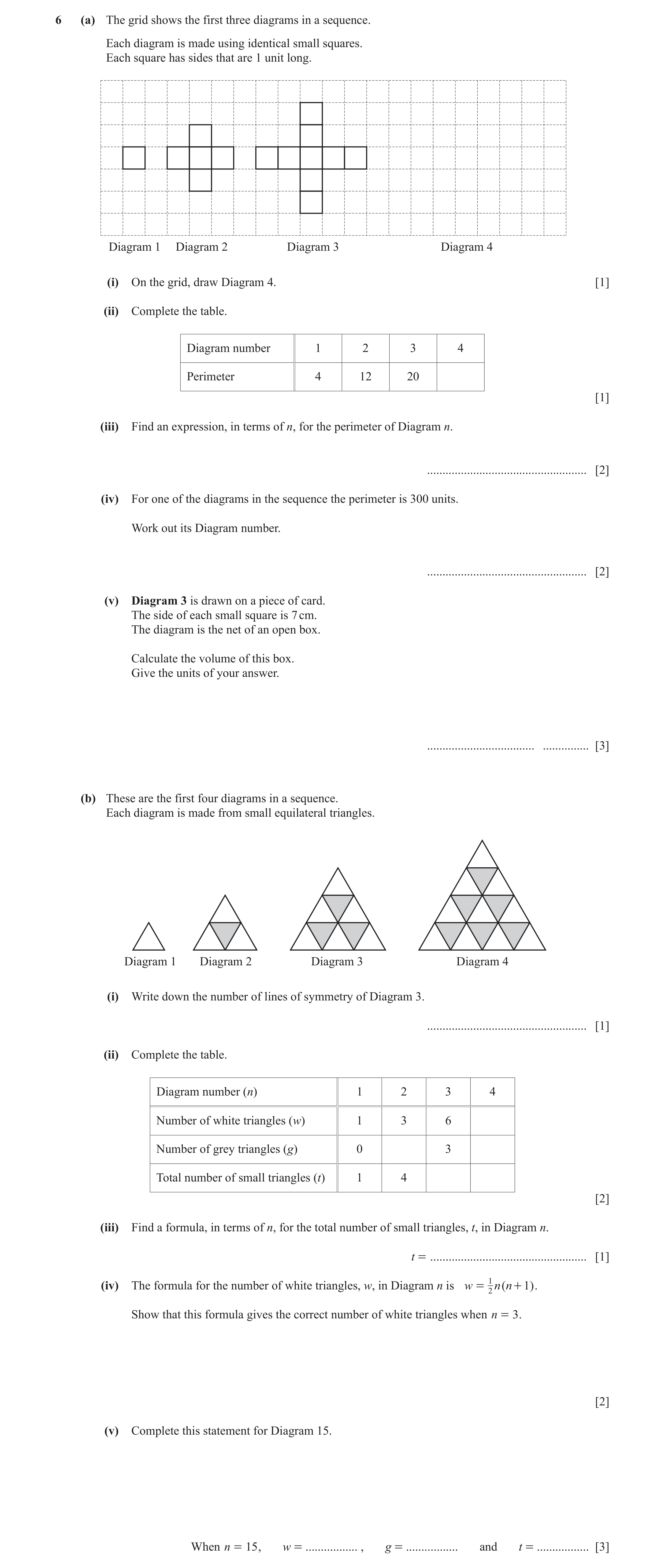
![Question 73: (a) A triangle is isosceles. One of its angles is 96°. Find the other two angles. ........................ and ........................ [1]…](https://img.pastlit.com/crops/5f8d81f0-1b66-4e47-b812-6c607e4942a9/q7.webp)
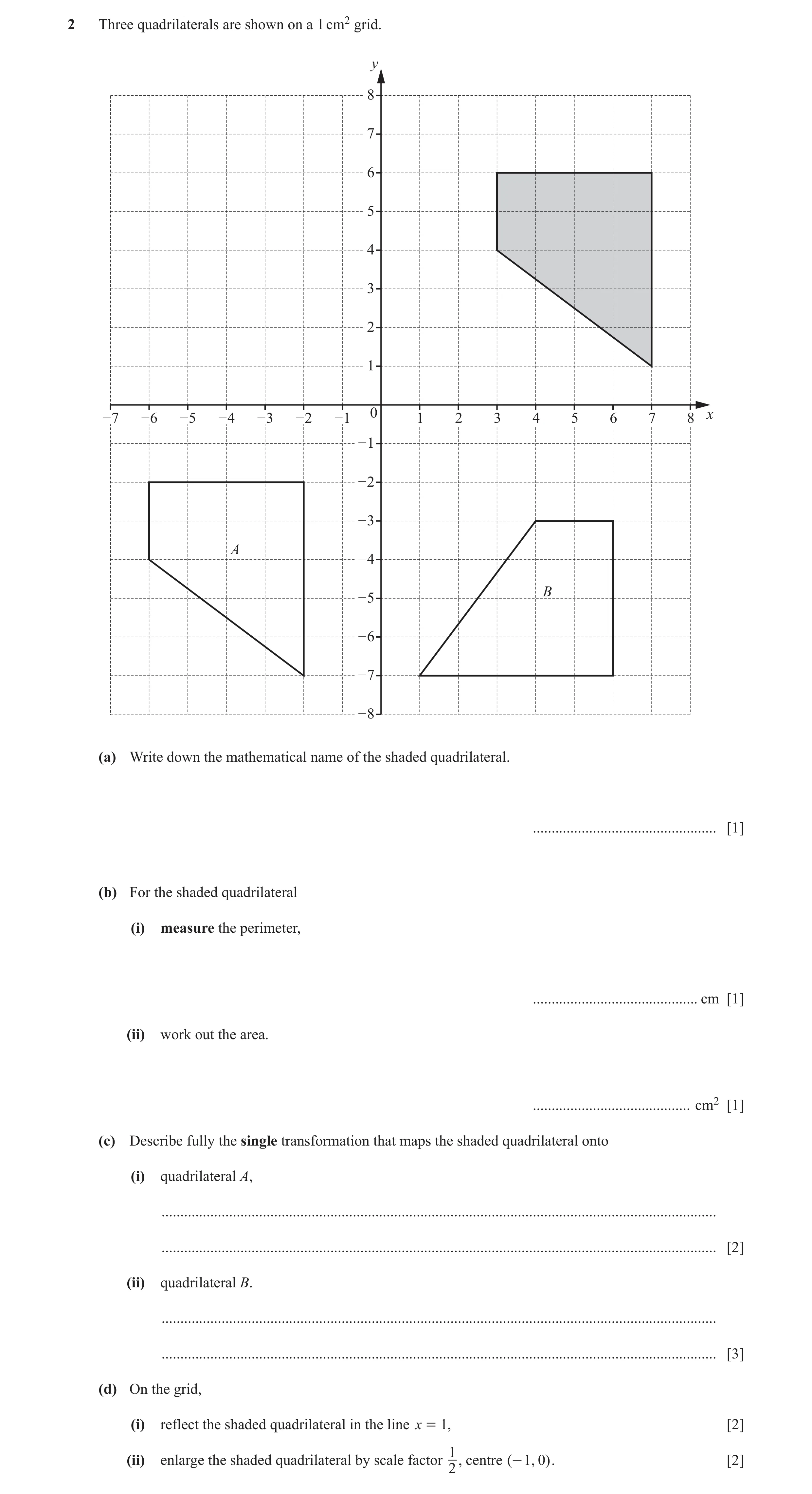
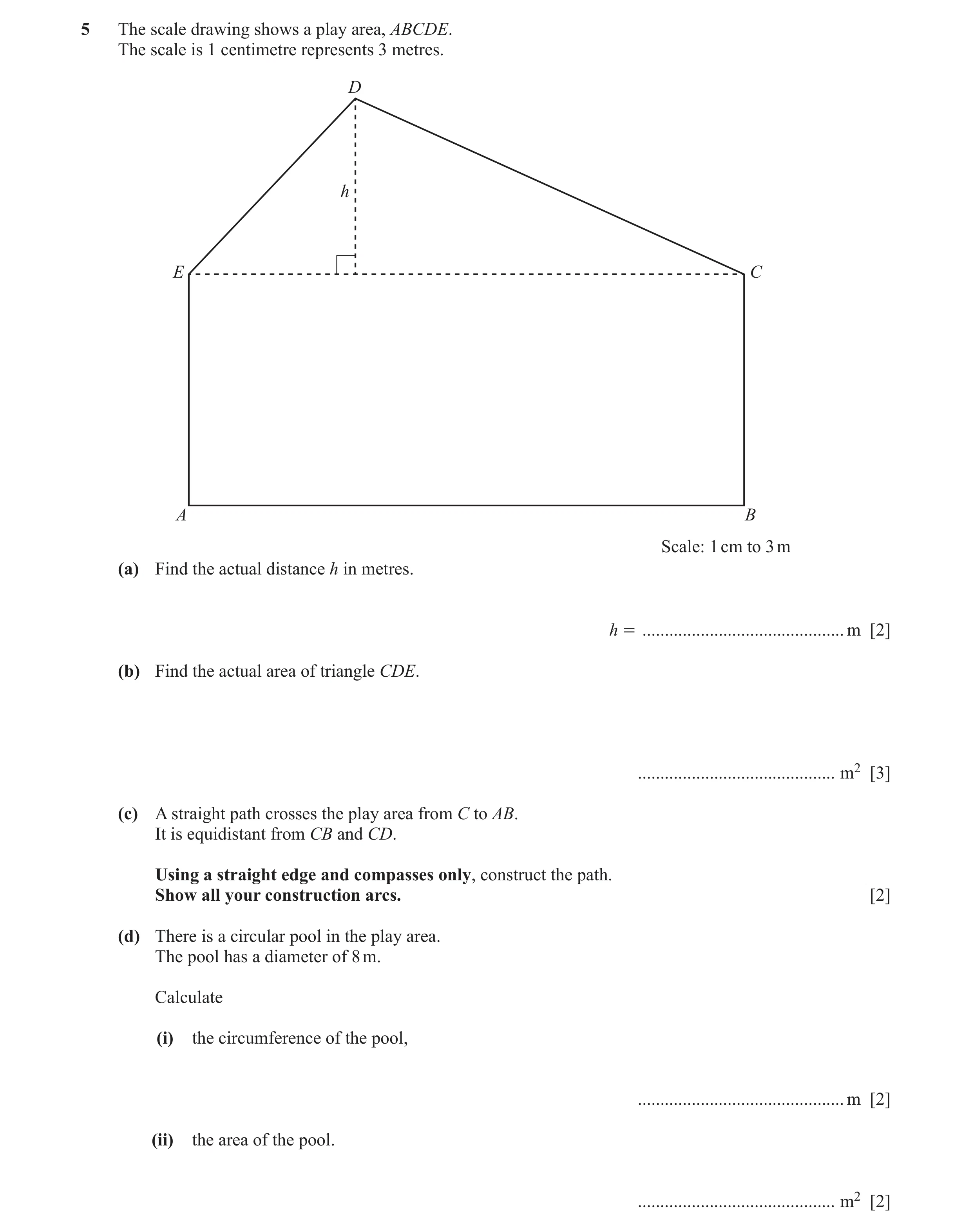 124 / 184
![Question 76: (a) Soraya makes rectangular flags. (i) On the rectangle, draw the lines of symmetry. [2] (ii) Each flag measures 1.2 m by 1.8 m. Calculate…](https://img.pastlit.com/crops/2bc5a897-a38d-4956-9610-c7c5234b5dec/q7.webp)
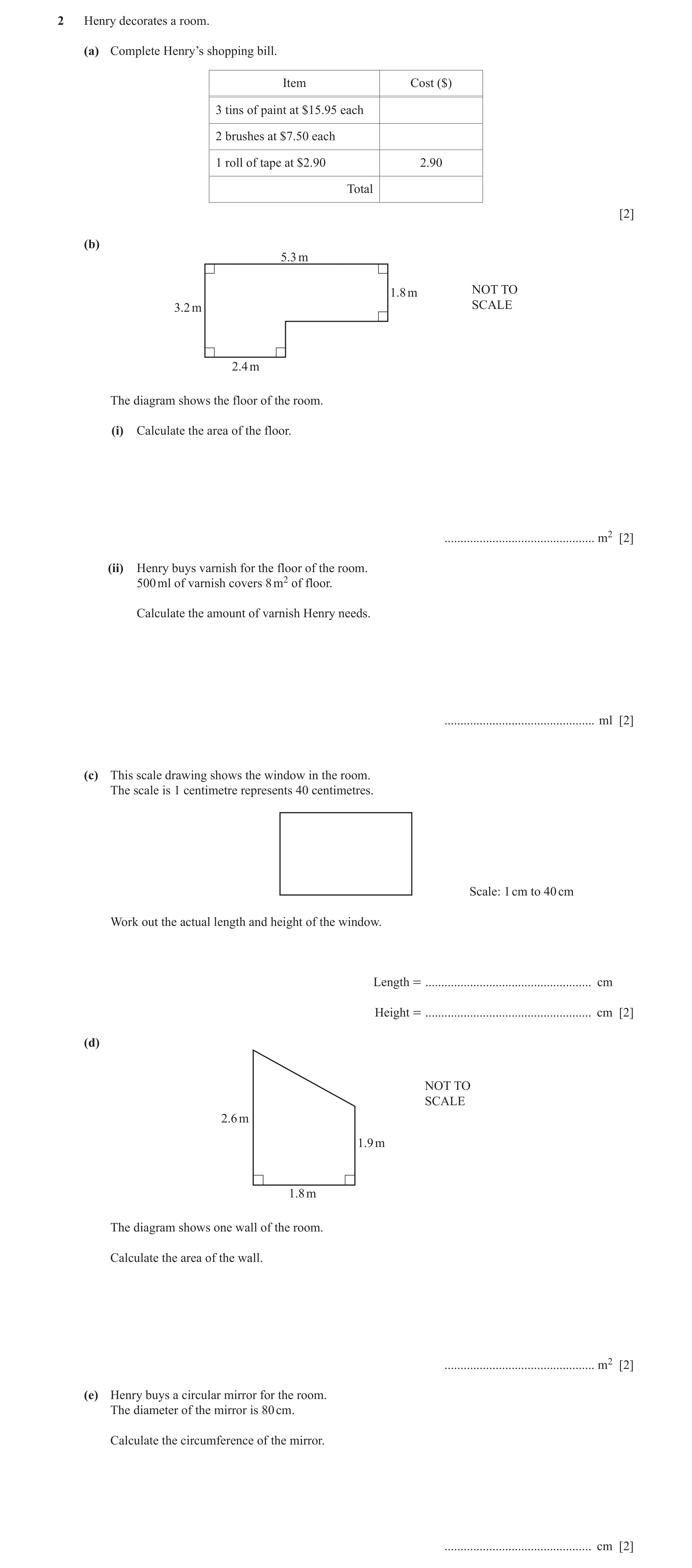
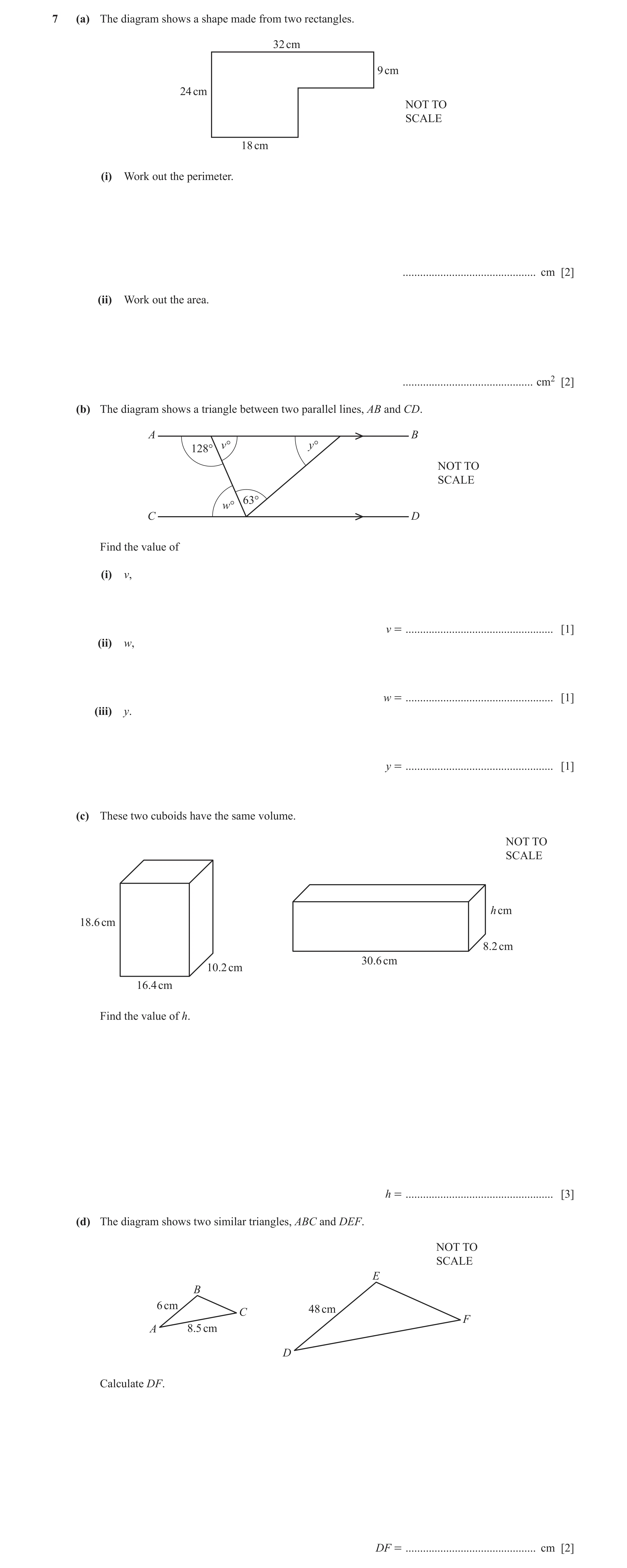
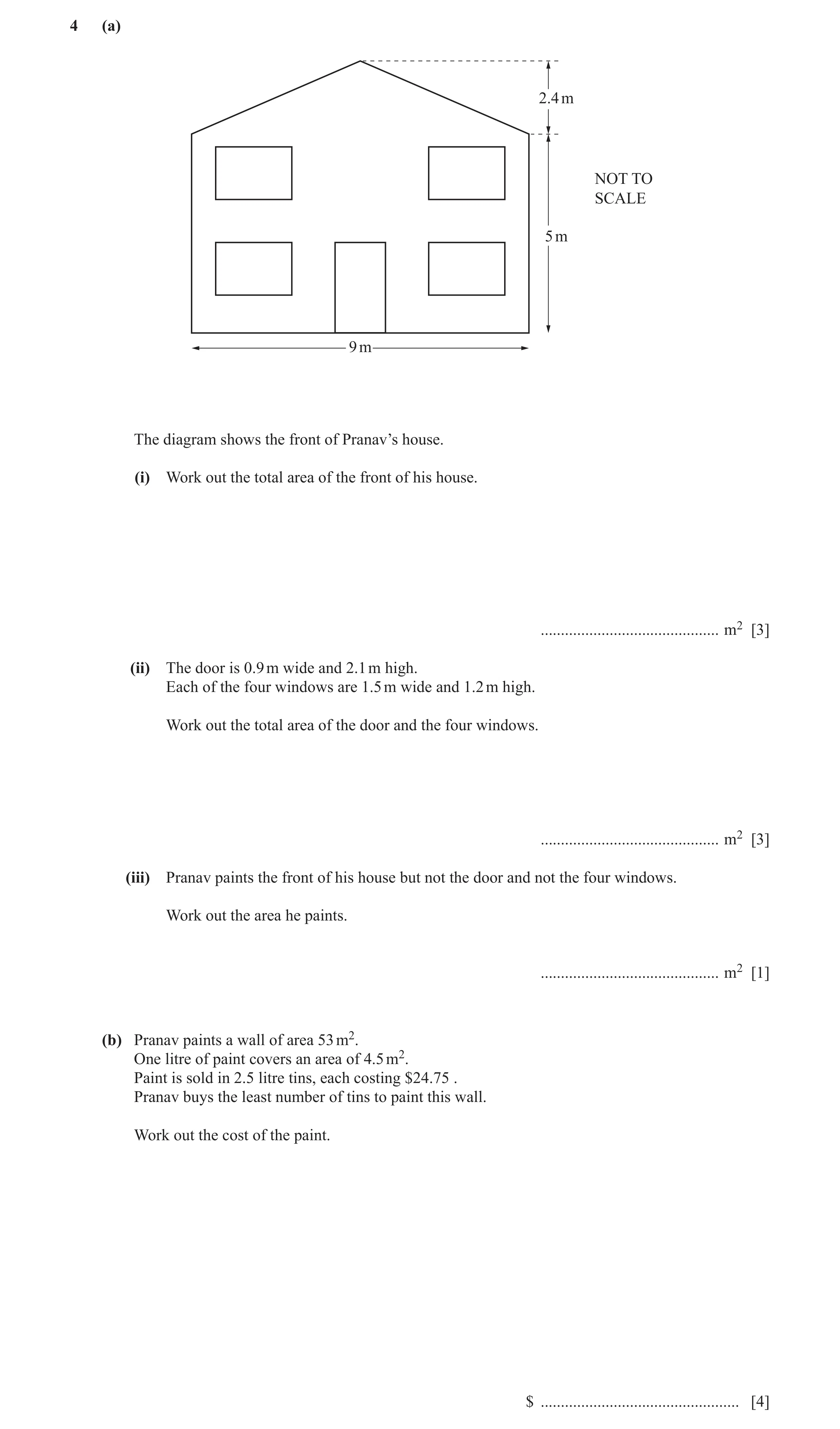
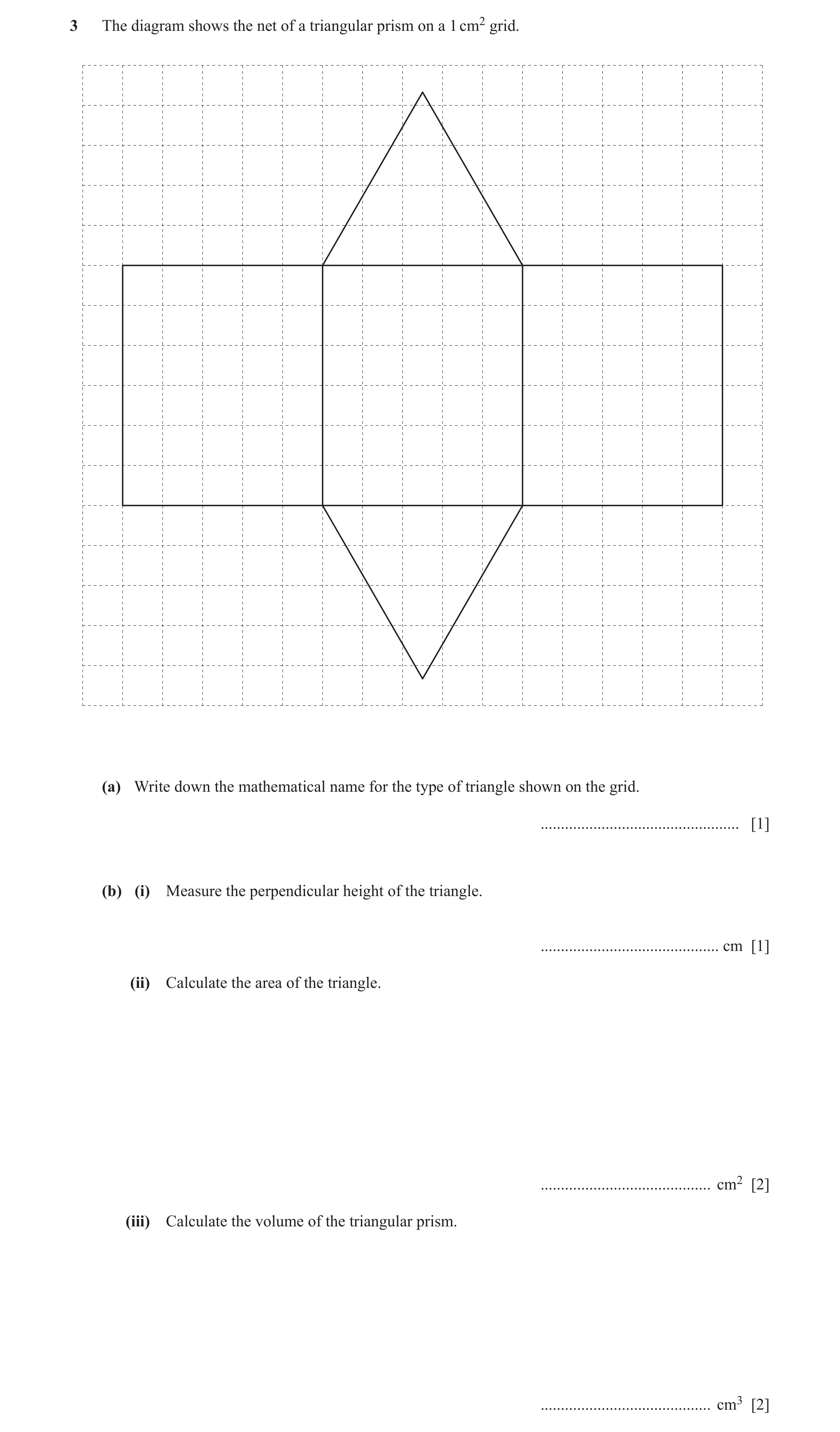
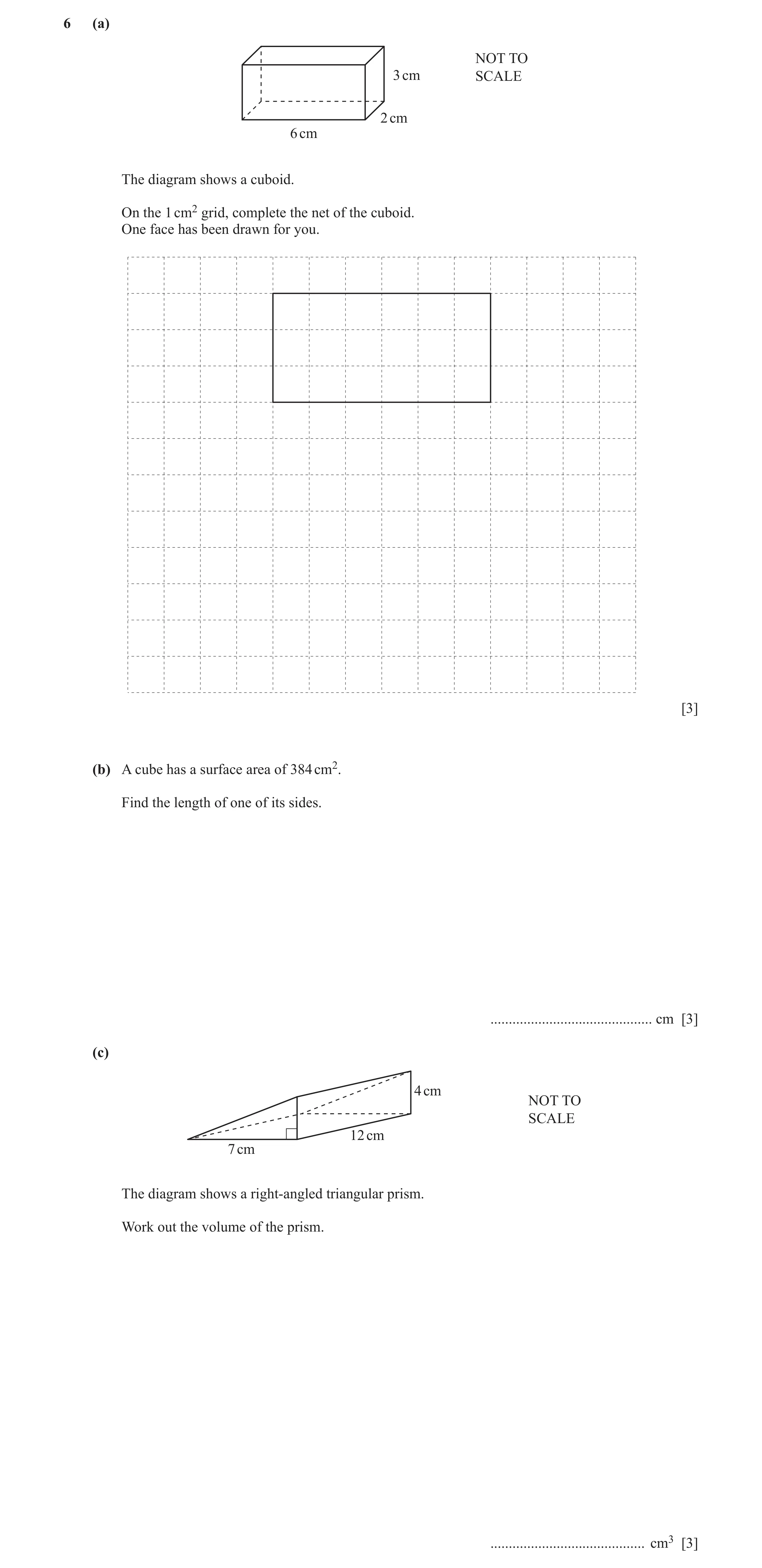
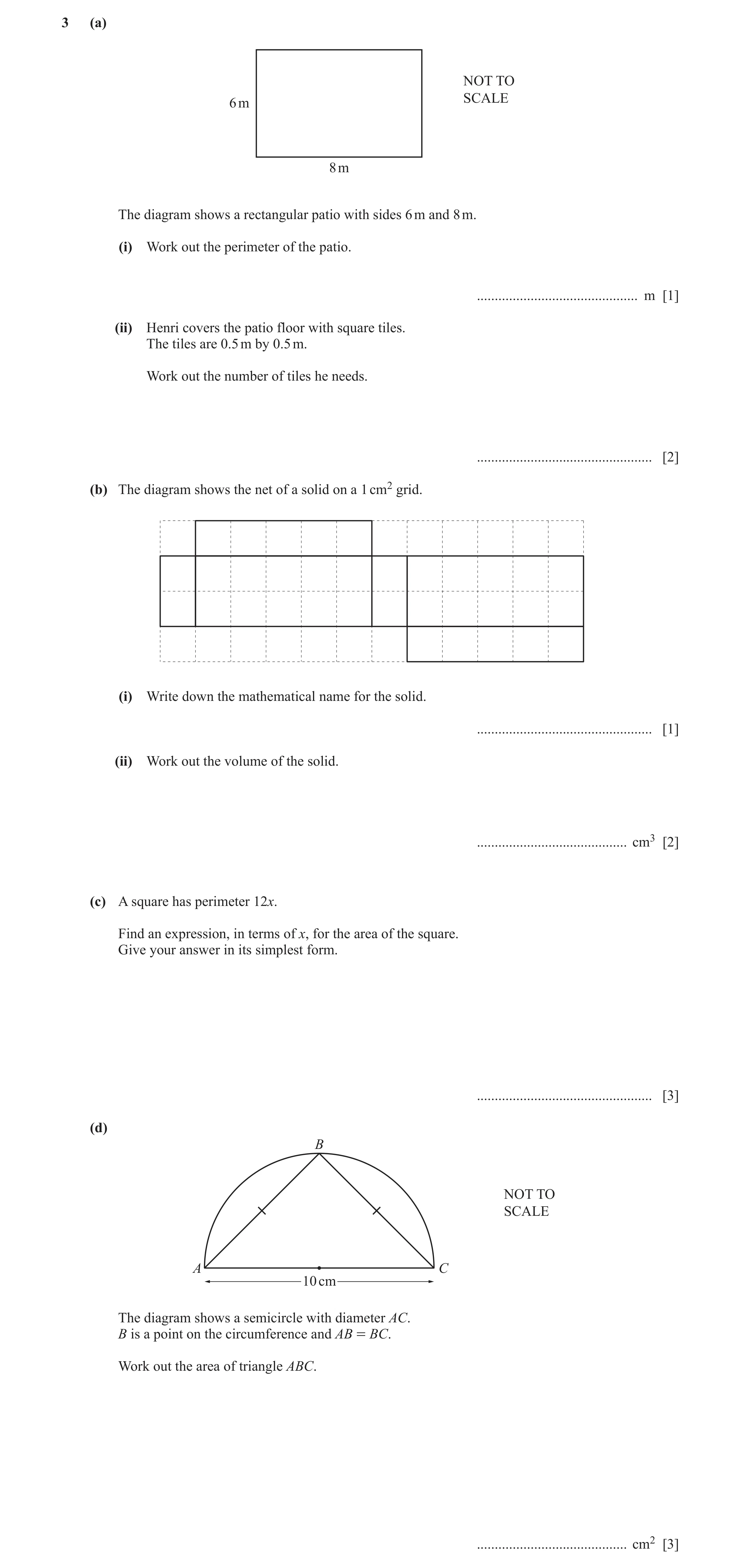
![Question 83: (a) Write down the mathematical name for this (i) quadrilateral, ................................................. [1] (ii) solid. ........…](https://img.pastlit.com/crops/4c3ceda7-6366-46e2-8f79-99af726499d4/q3.webp)
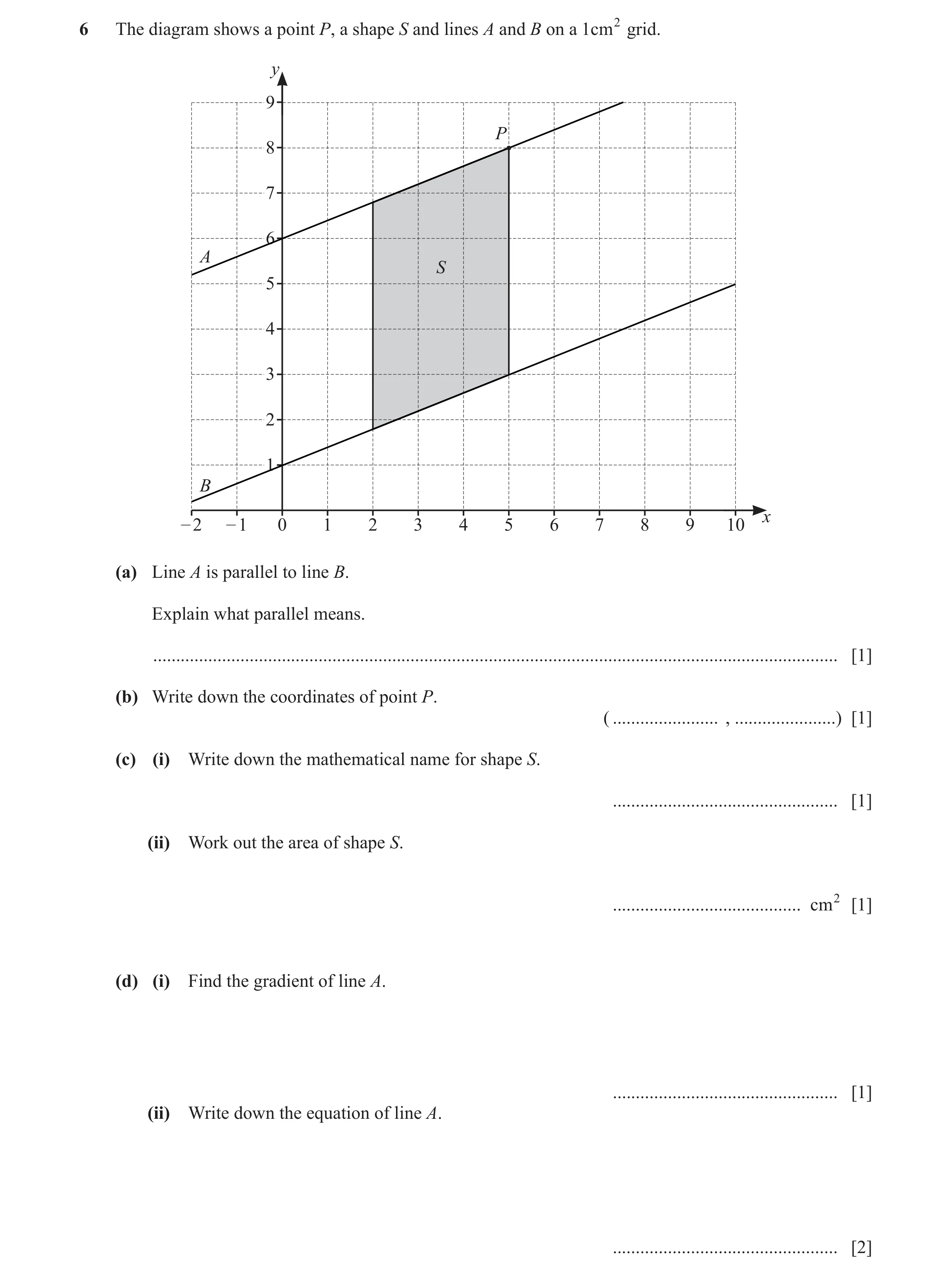 138 / 184
![Question 85: (a) On the 1cm2 grid, draw one rectangle that has • a perimeter of 22 cm and • an area of 24cm2. [2] (b) 94° 127° NOT TO SCALE x° 298° Work…](https://img.pastlit.com/crops/1fcbe8a1-d11f-4e6f-833a-064983c160bf/q9.webp)
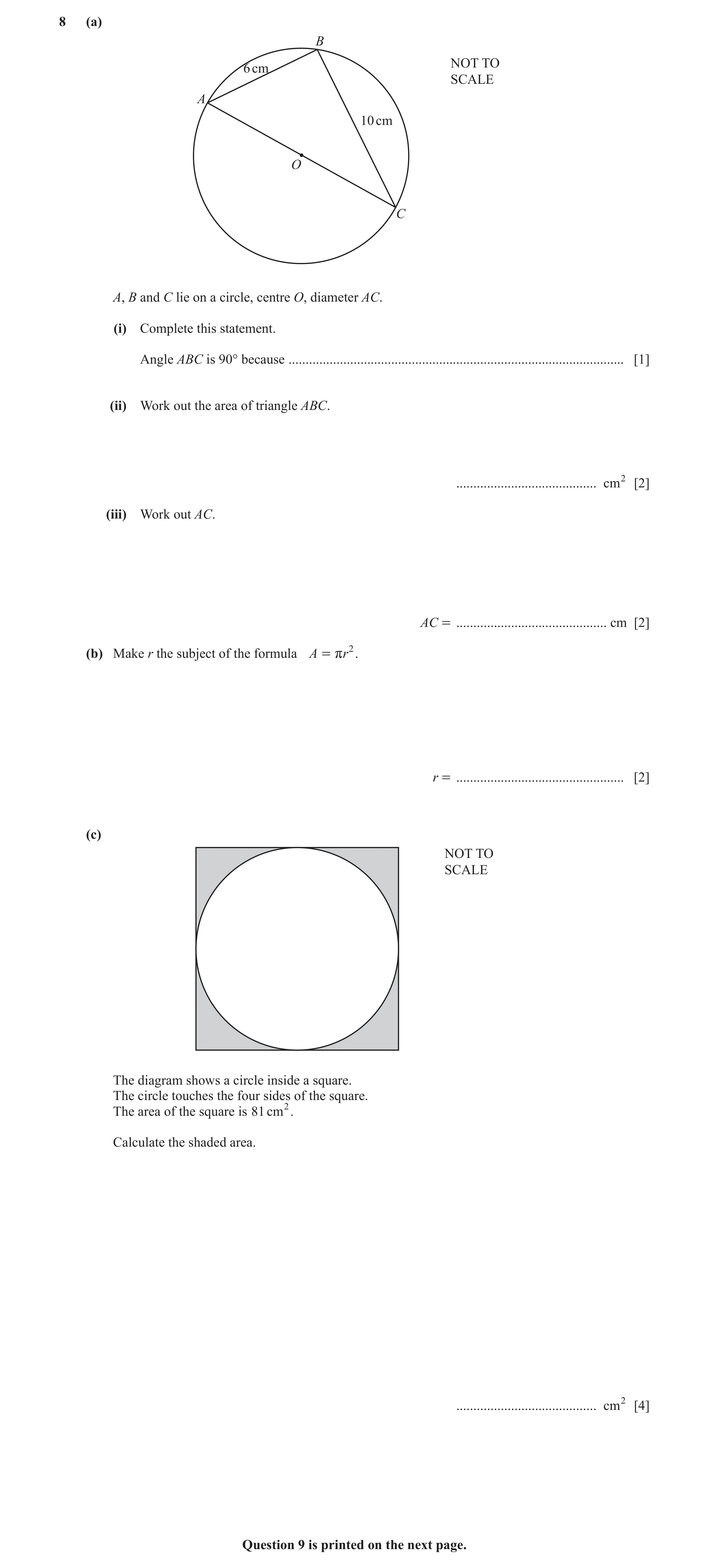
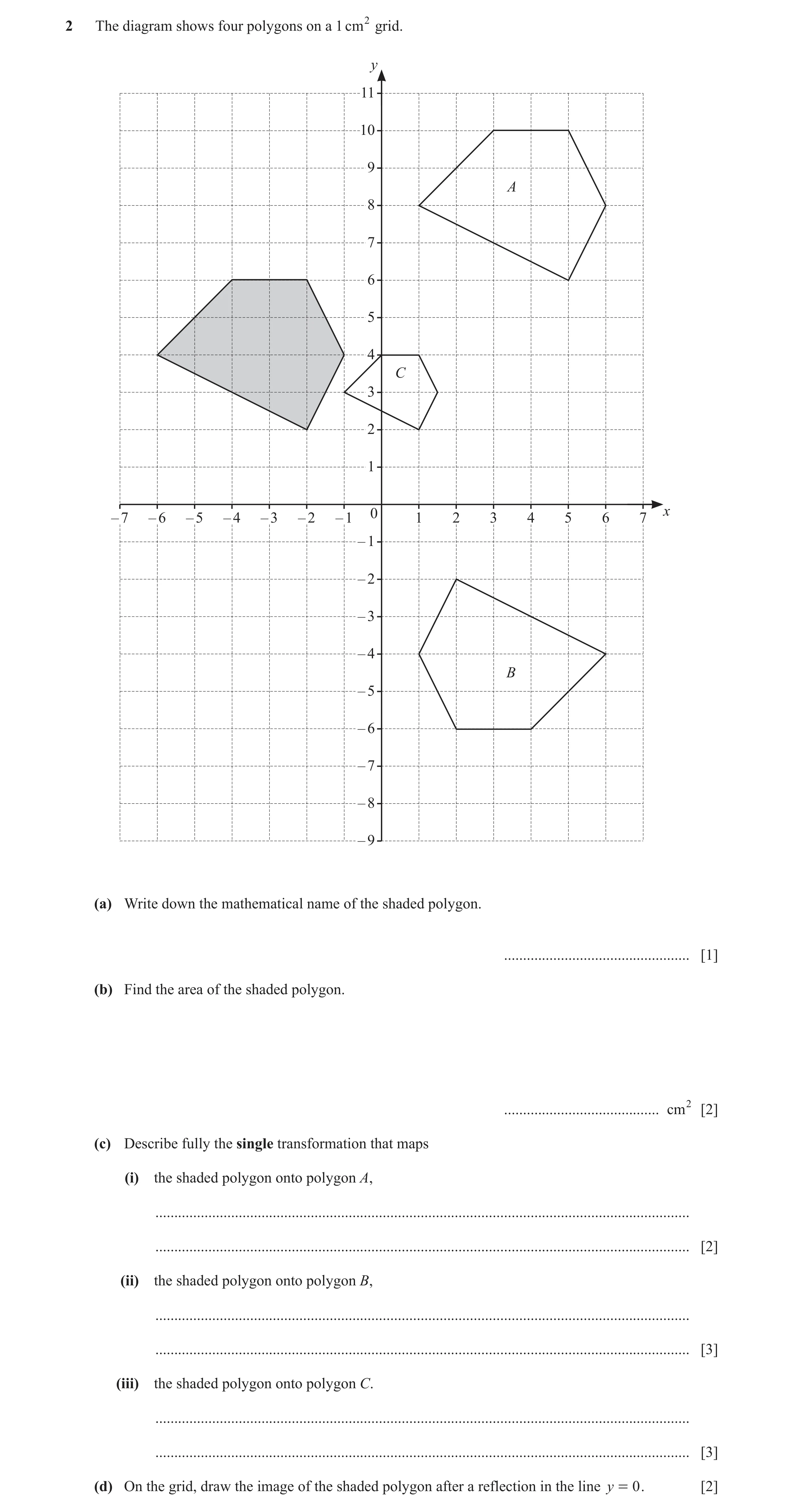
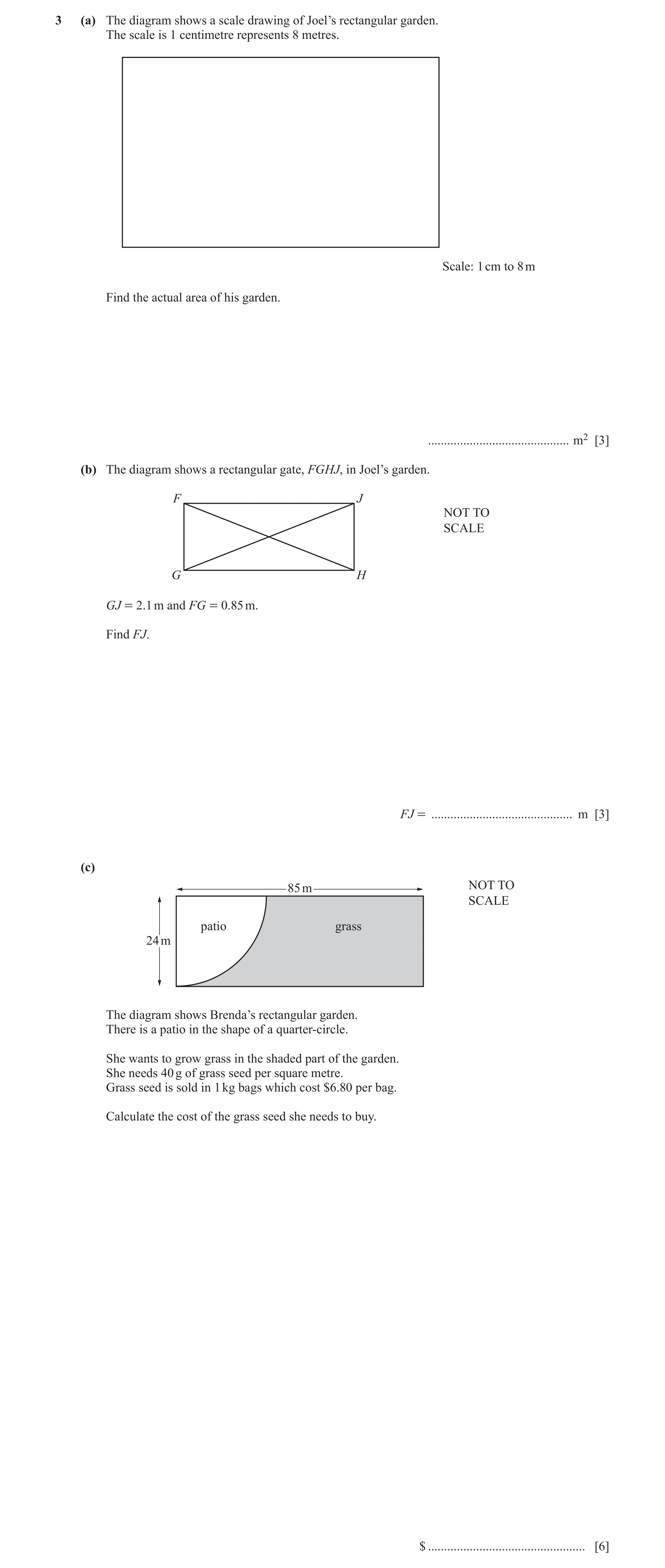
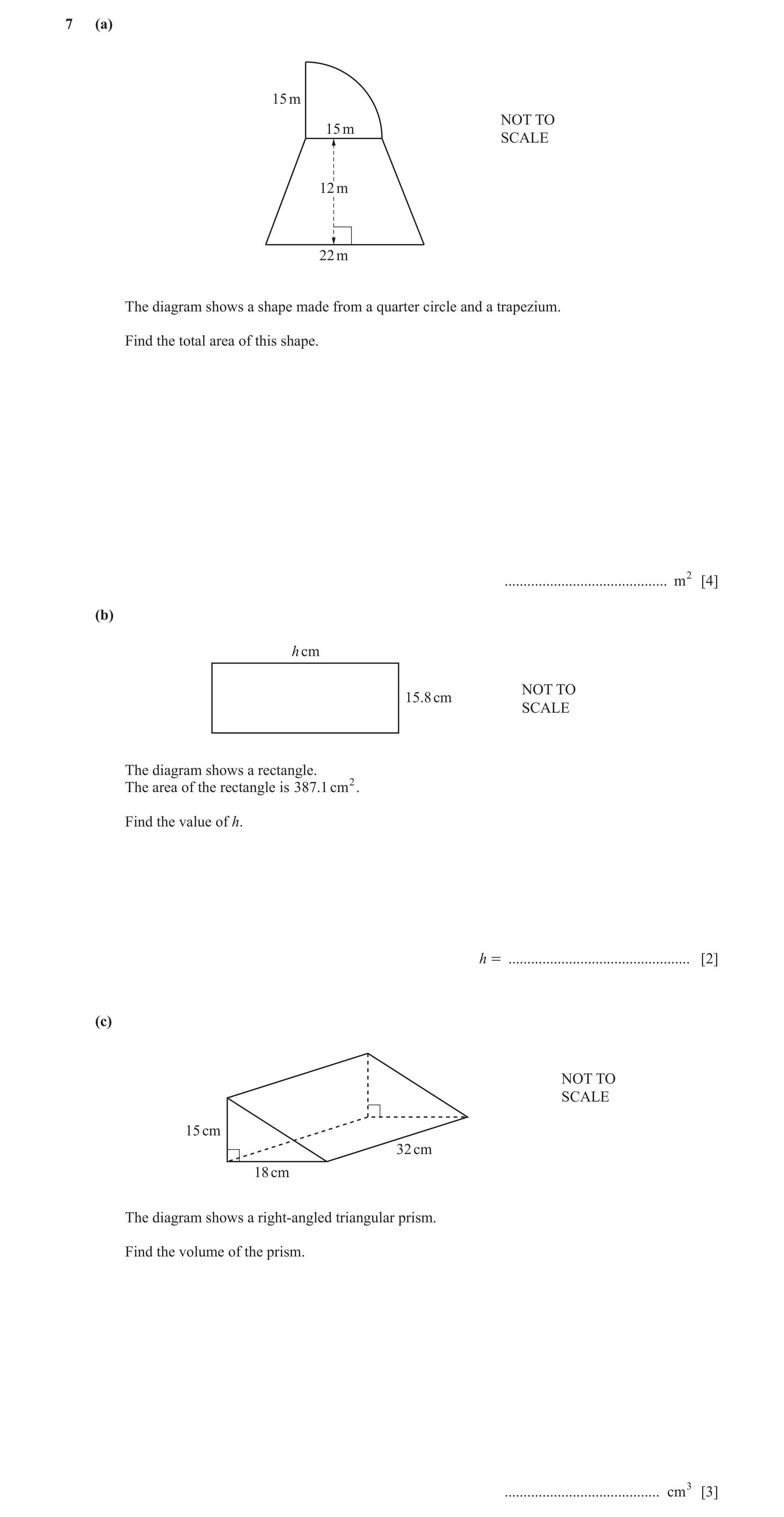
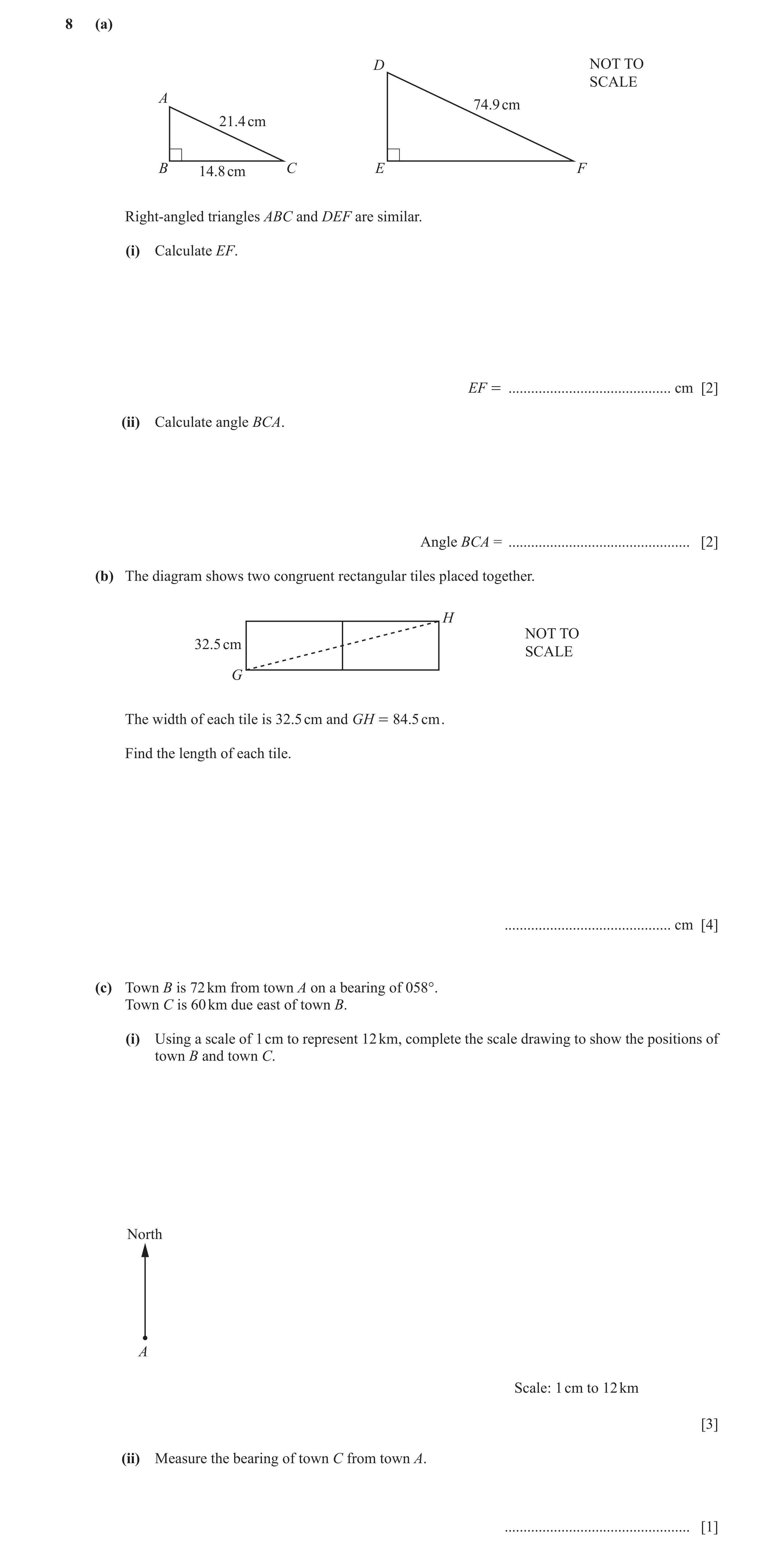
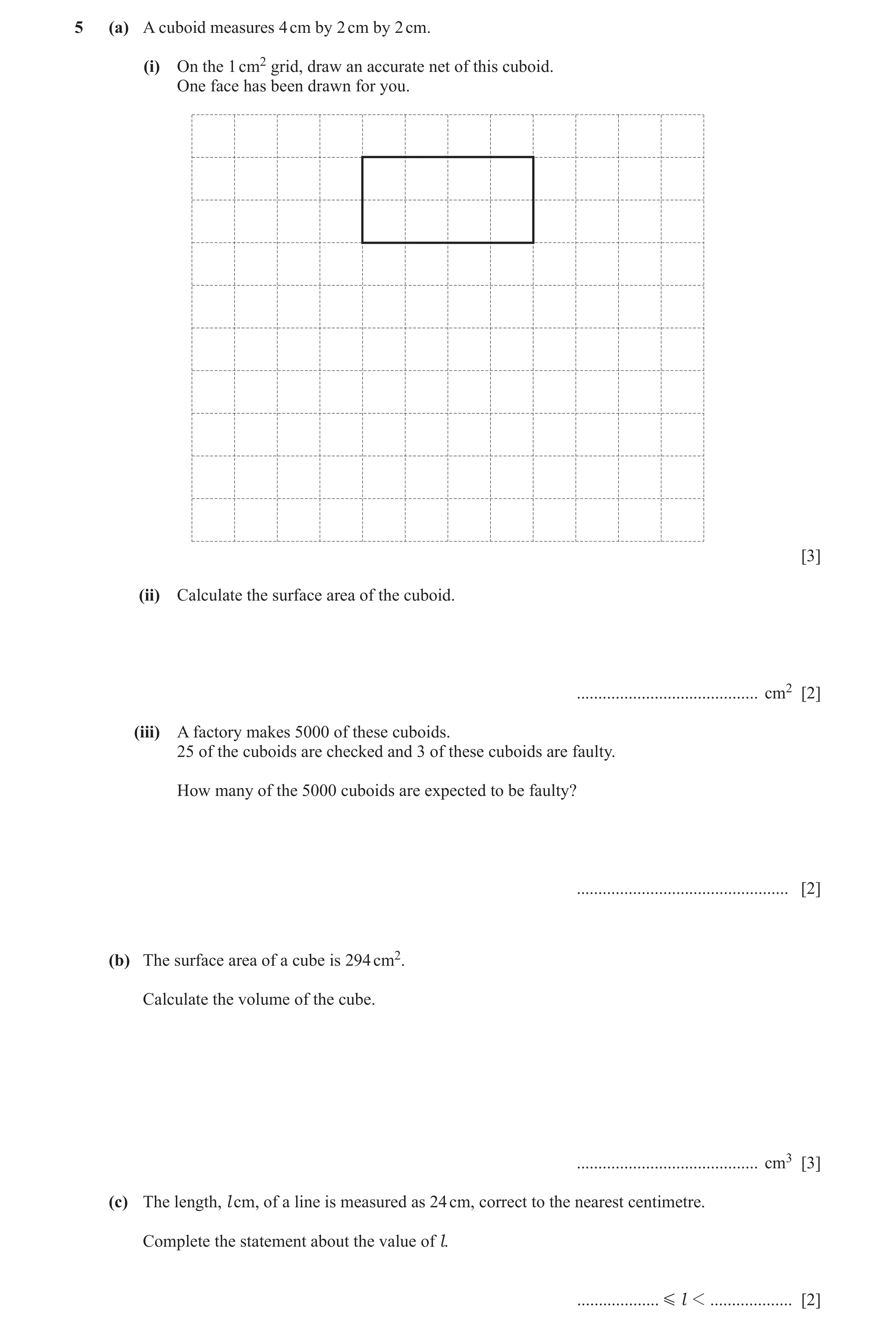
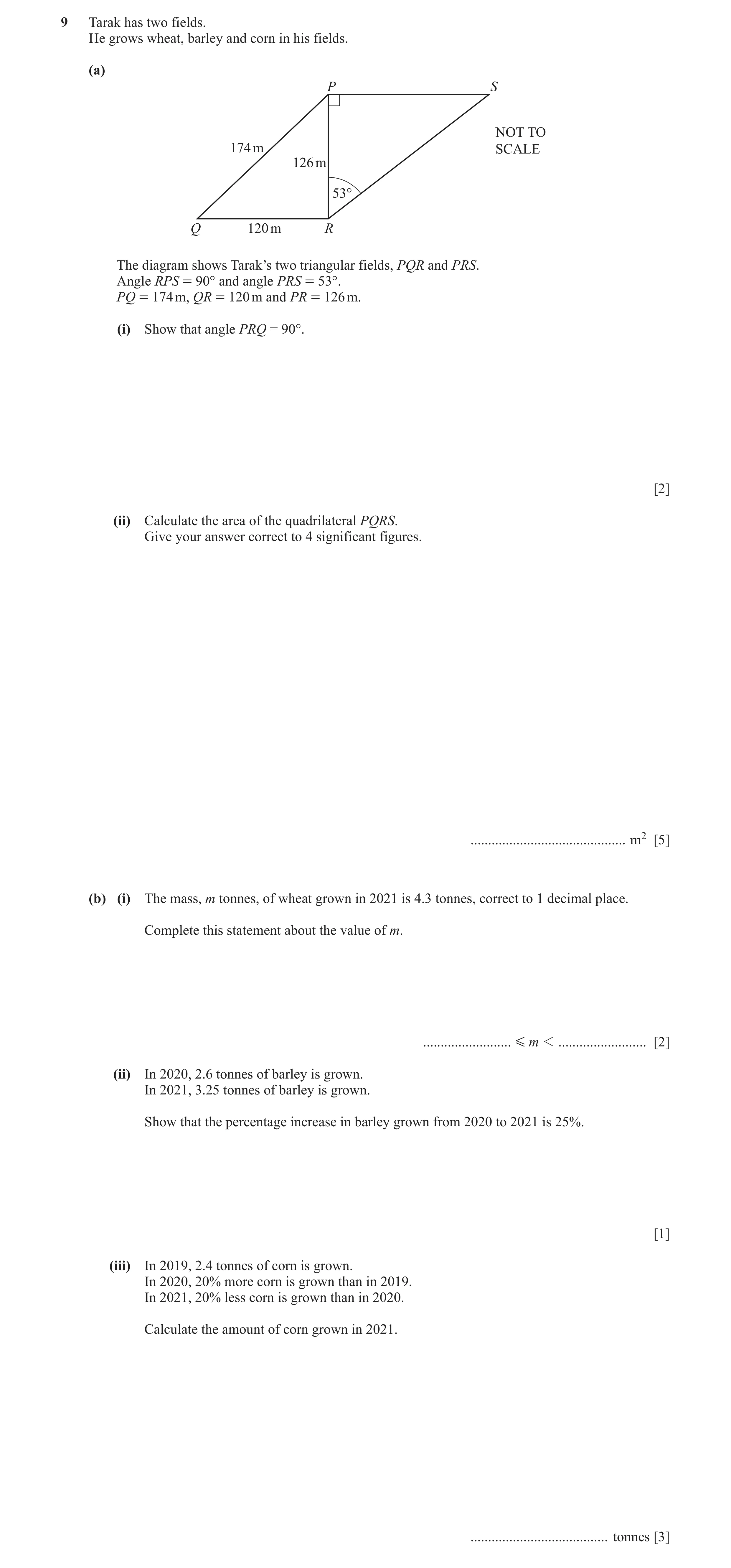
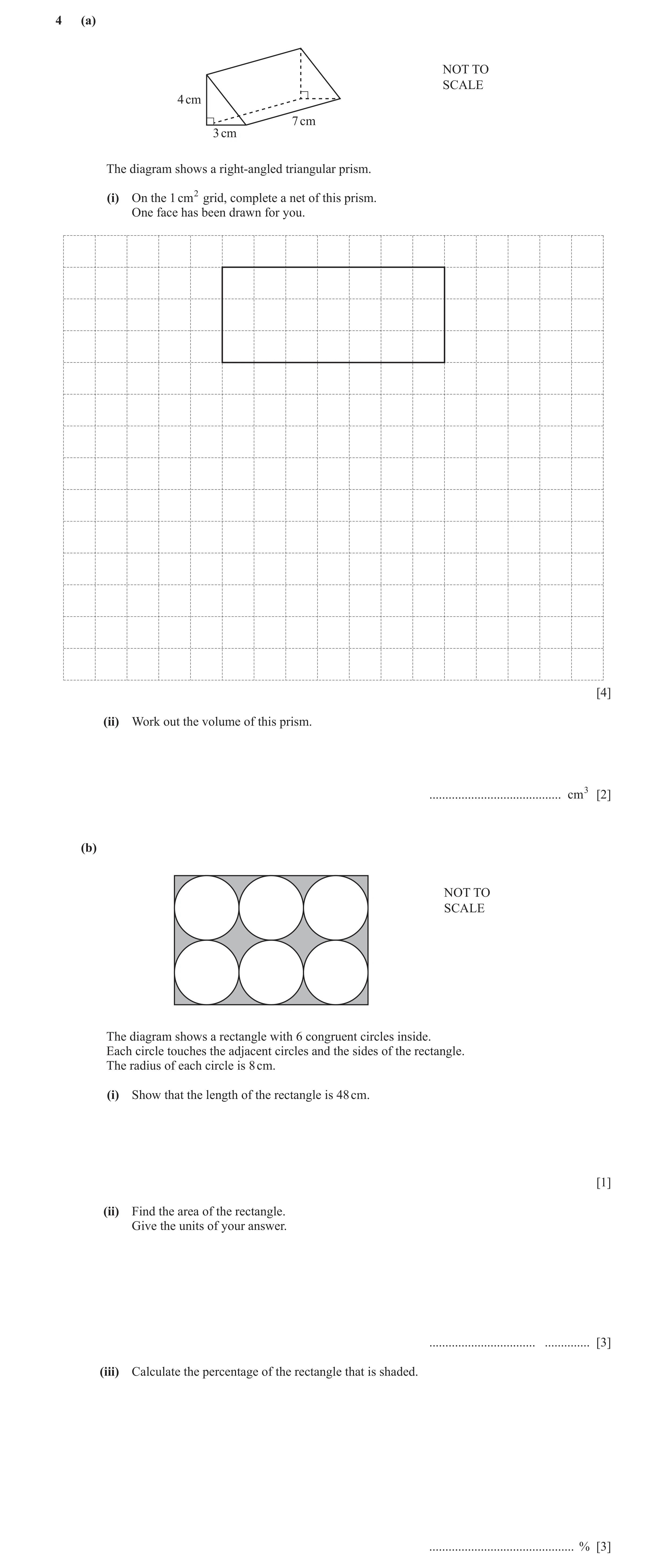
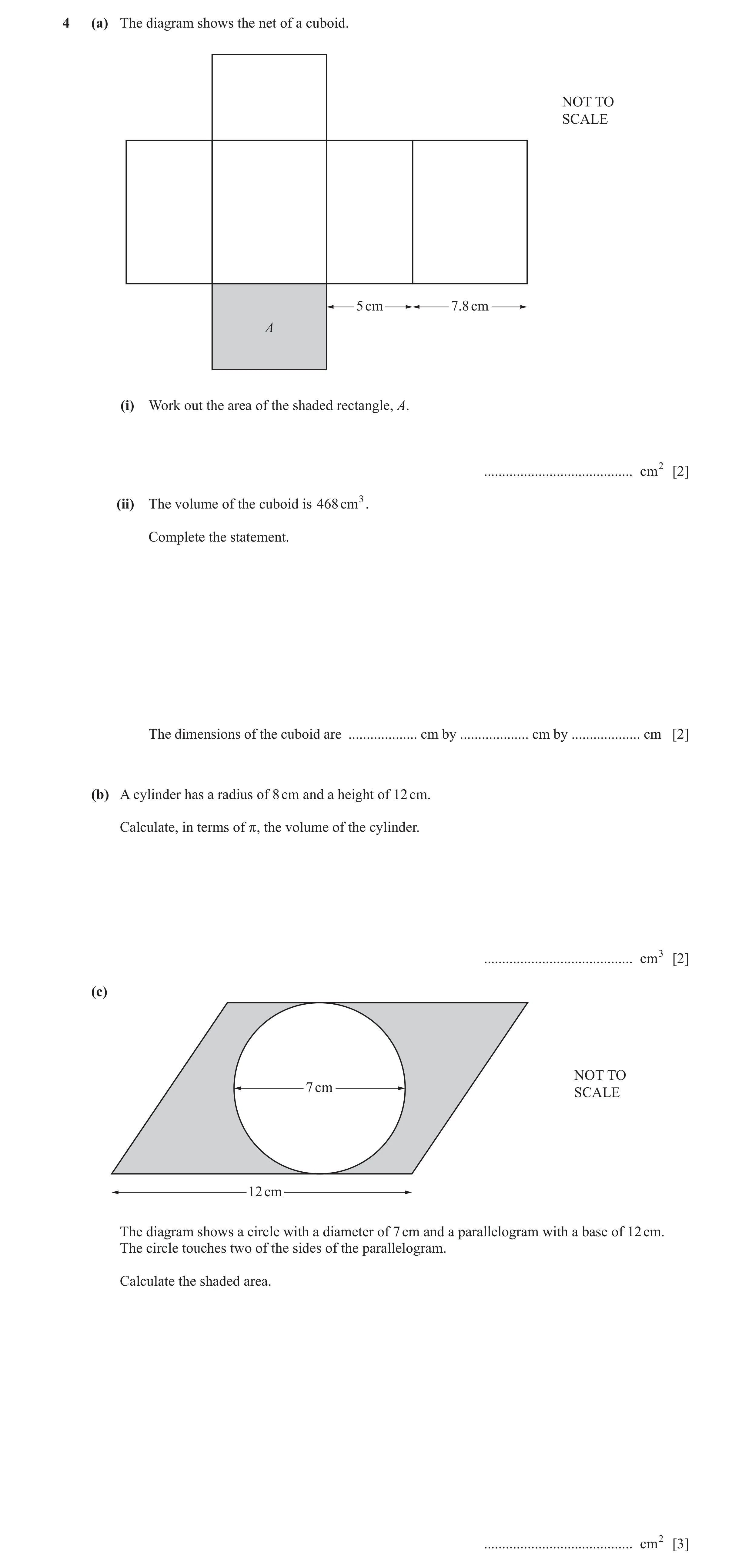
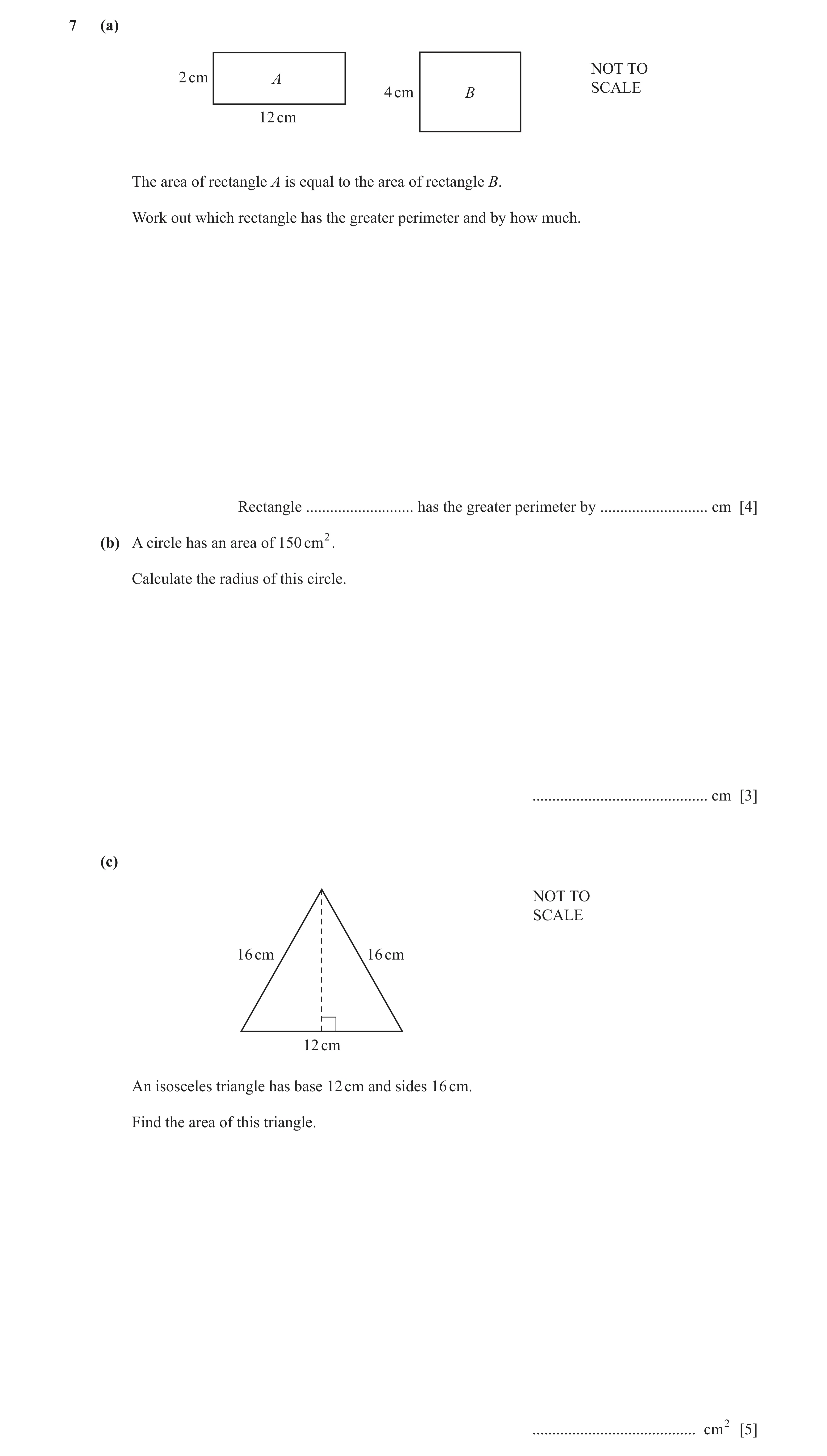
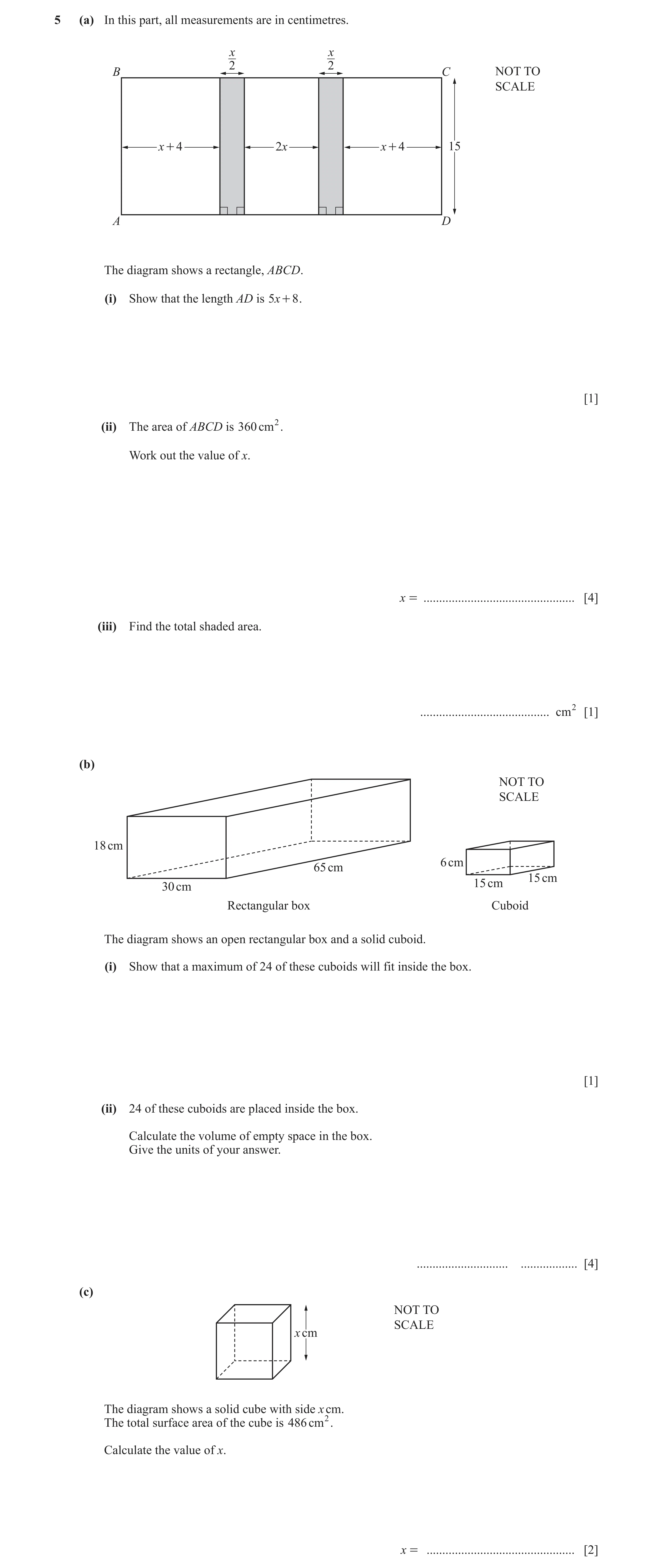
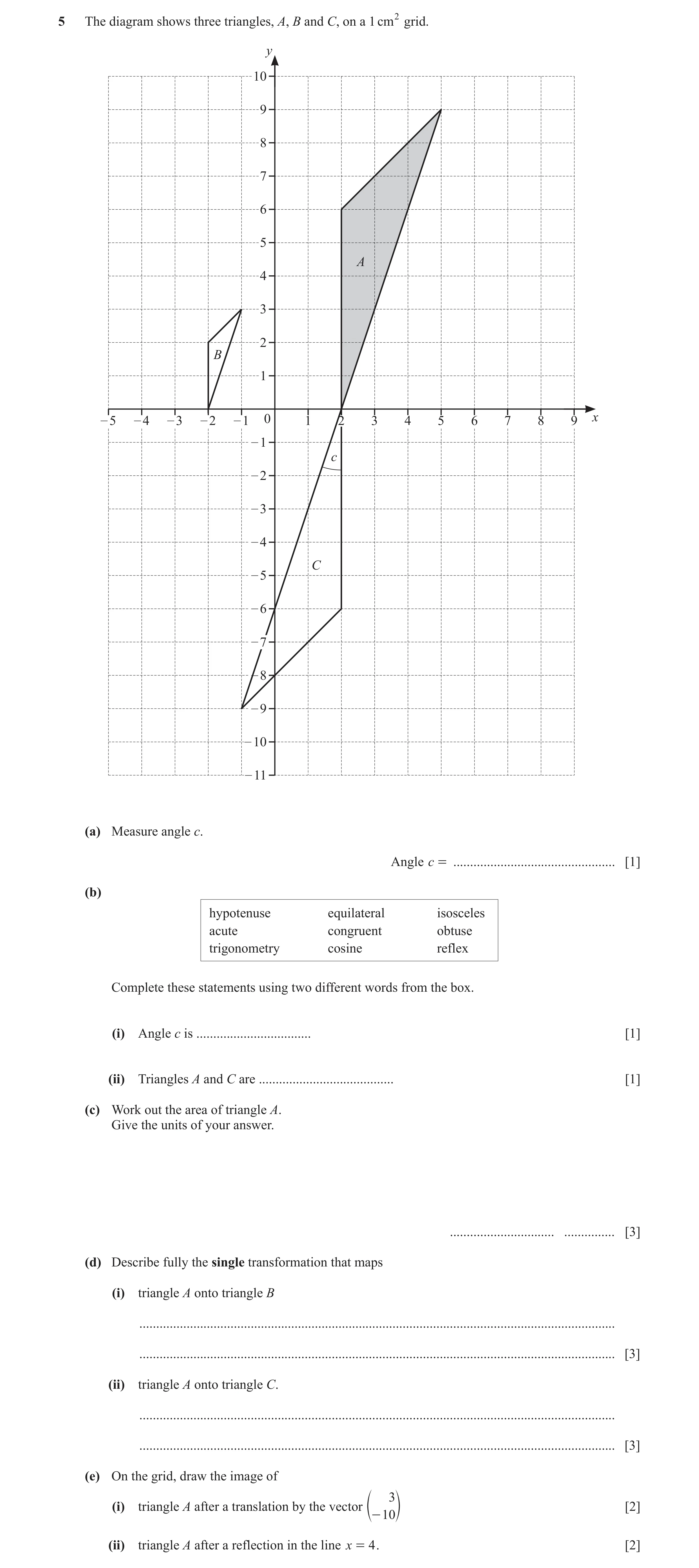
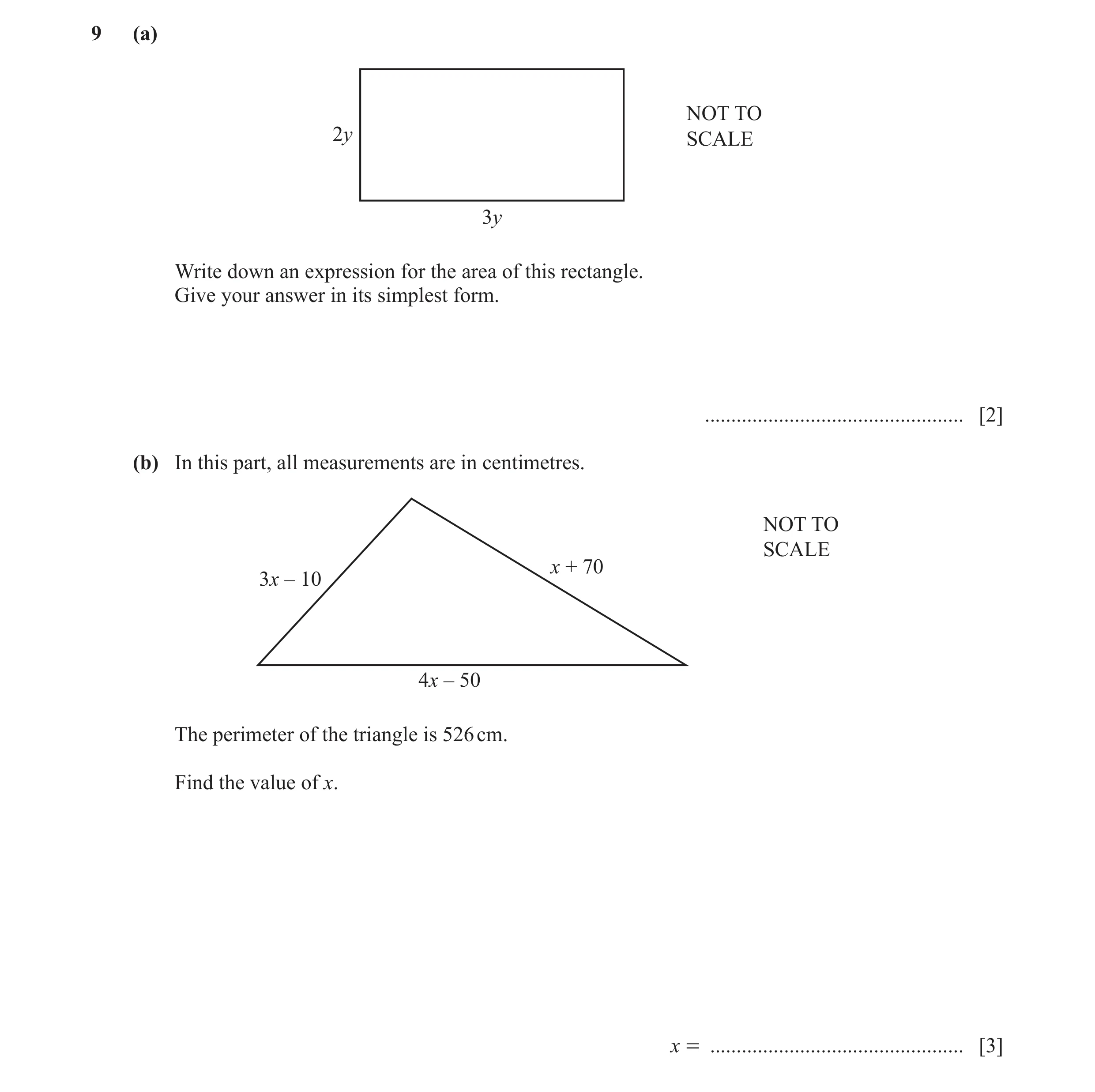 161 / 184
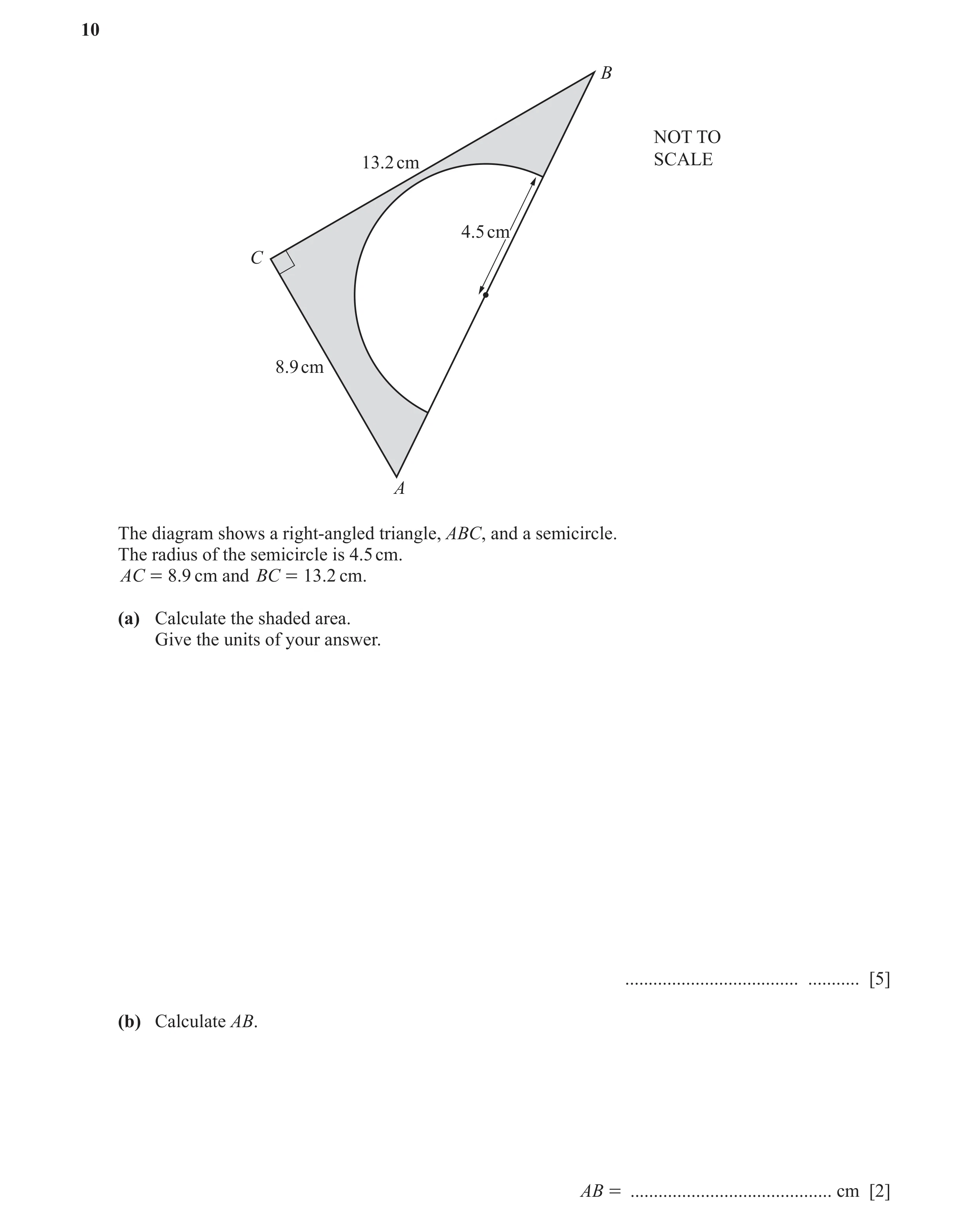 162 / 184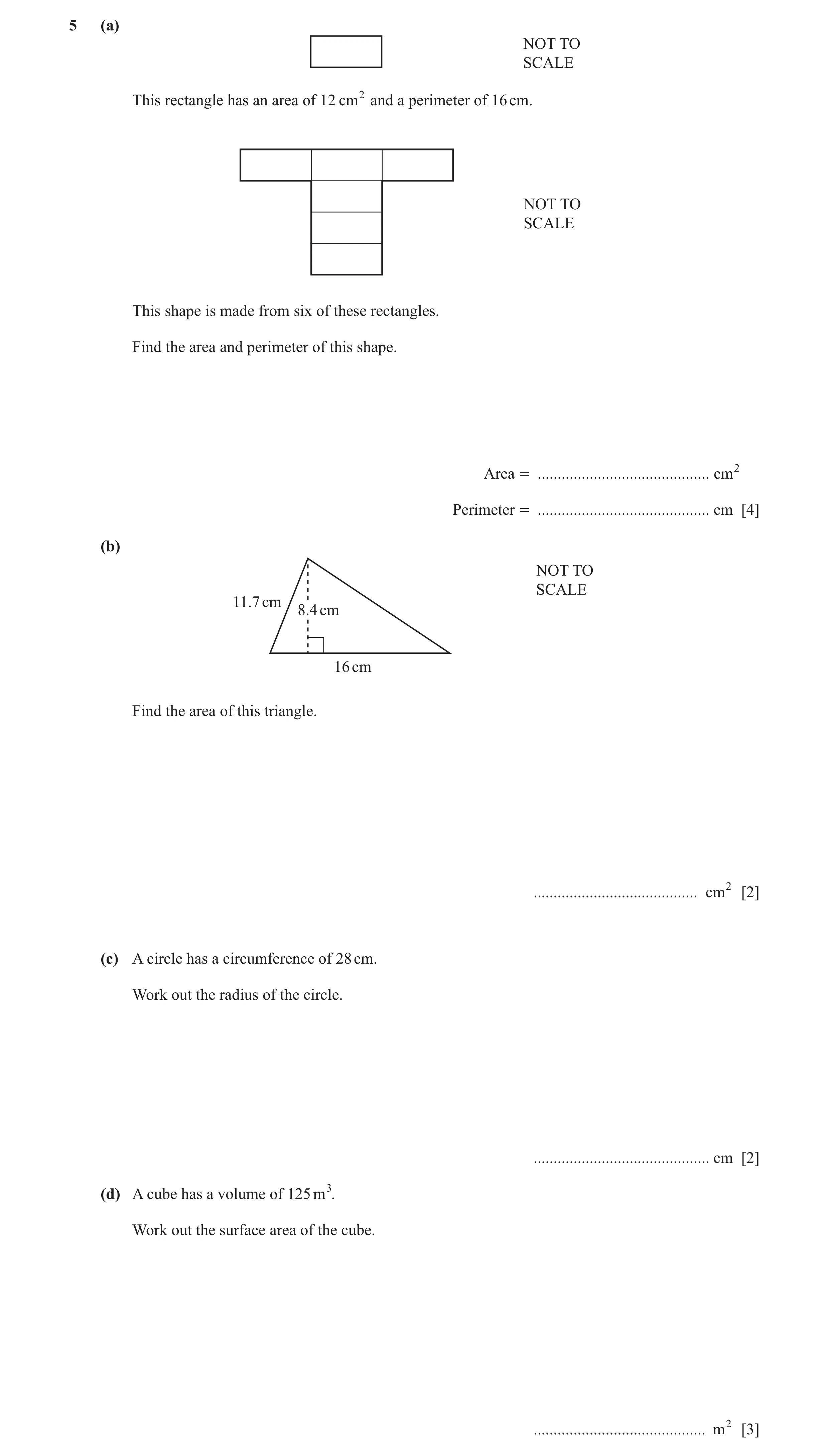
![Question 101: (a) The diagram shows a shape on a 1 cm 2 grid. Work out the area of the shape. .......................................... cm2 [1] (b) 7 cm…](https://img.pastlit.com/crops/1f360c8d-b38d-4eef-81db-0dbf6bf7a463/q3.webp)
![Question 102: (a) Simplify. a + 4 a - 3a ................................................. [1] (b) Simplify. 8b - 4 # 7b ................................…](https://img.pastlit.com/crops/e94073ea-fcf5-4cdf-afe9-b2ae391a4209/q6.webp)
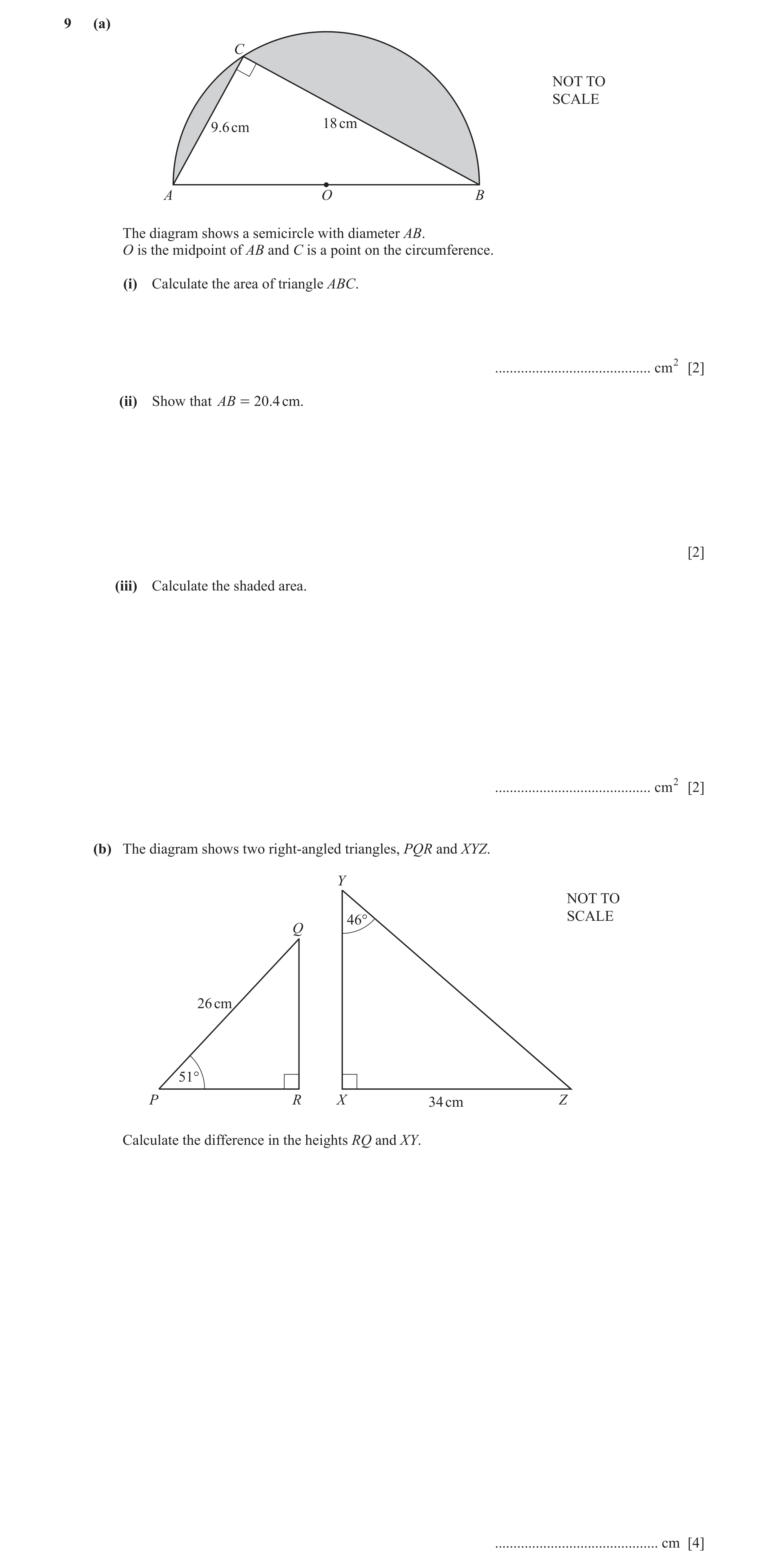
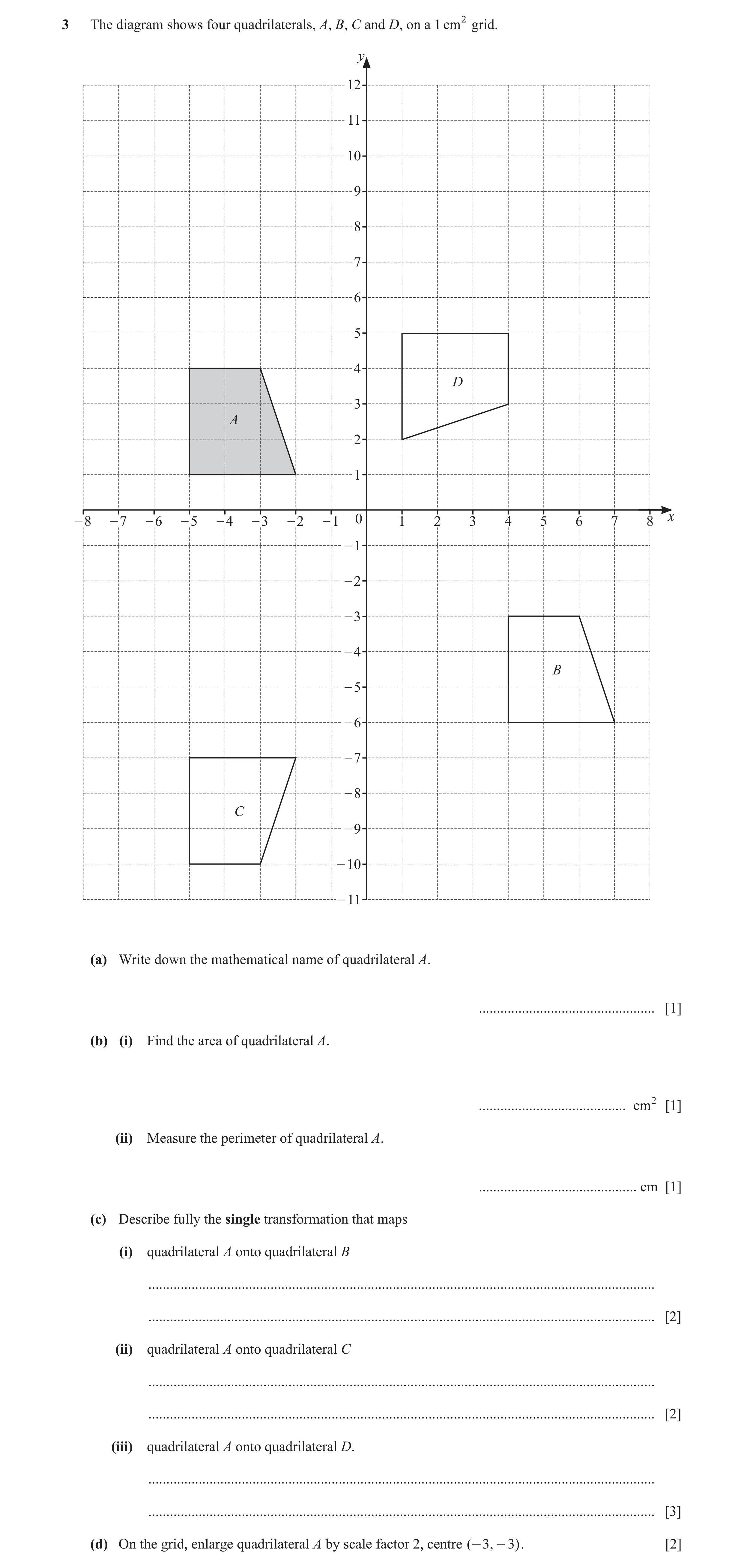
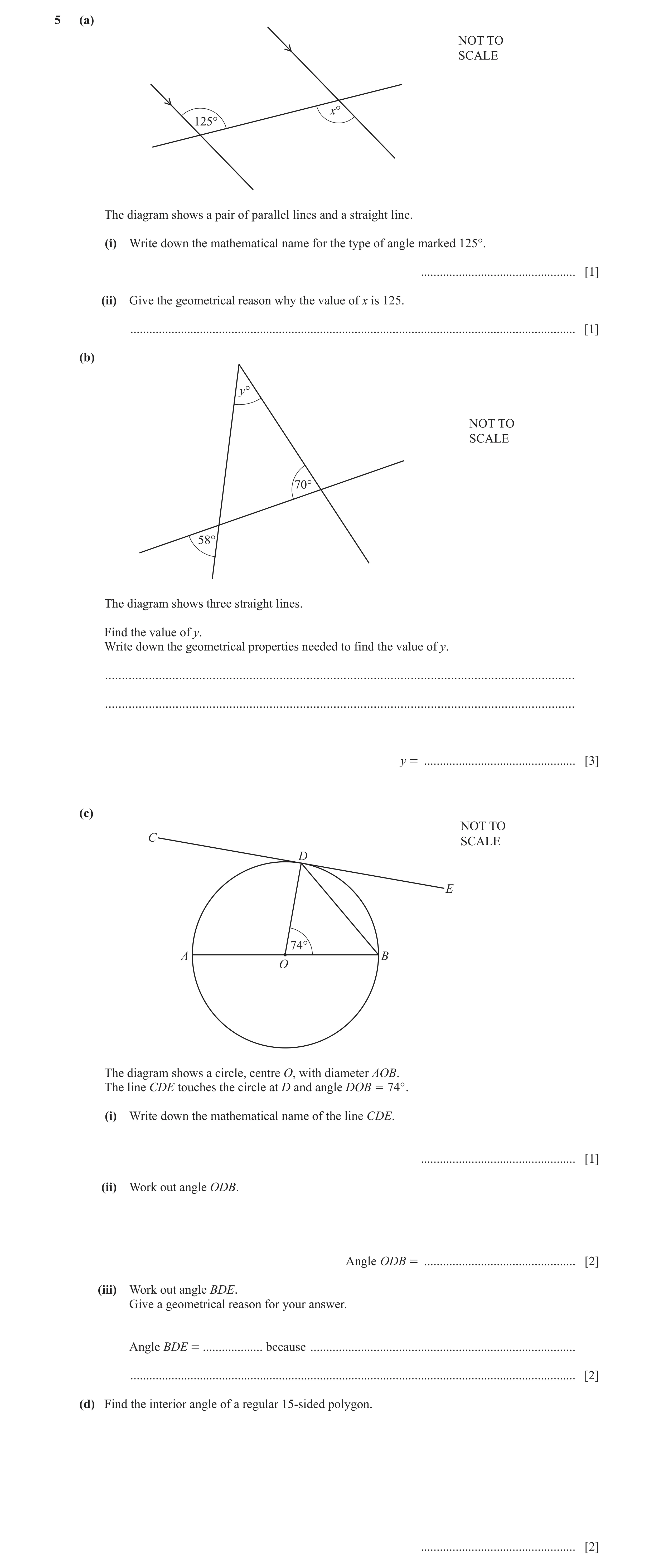
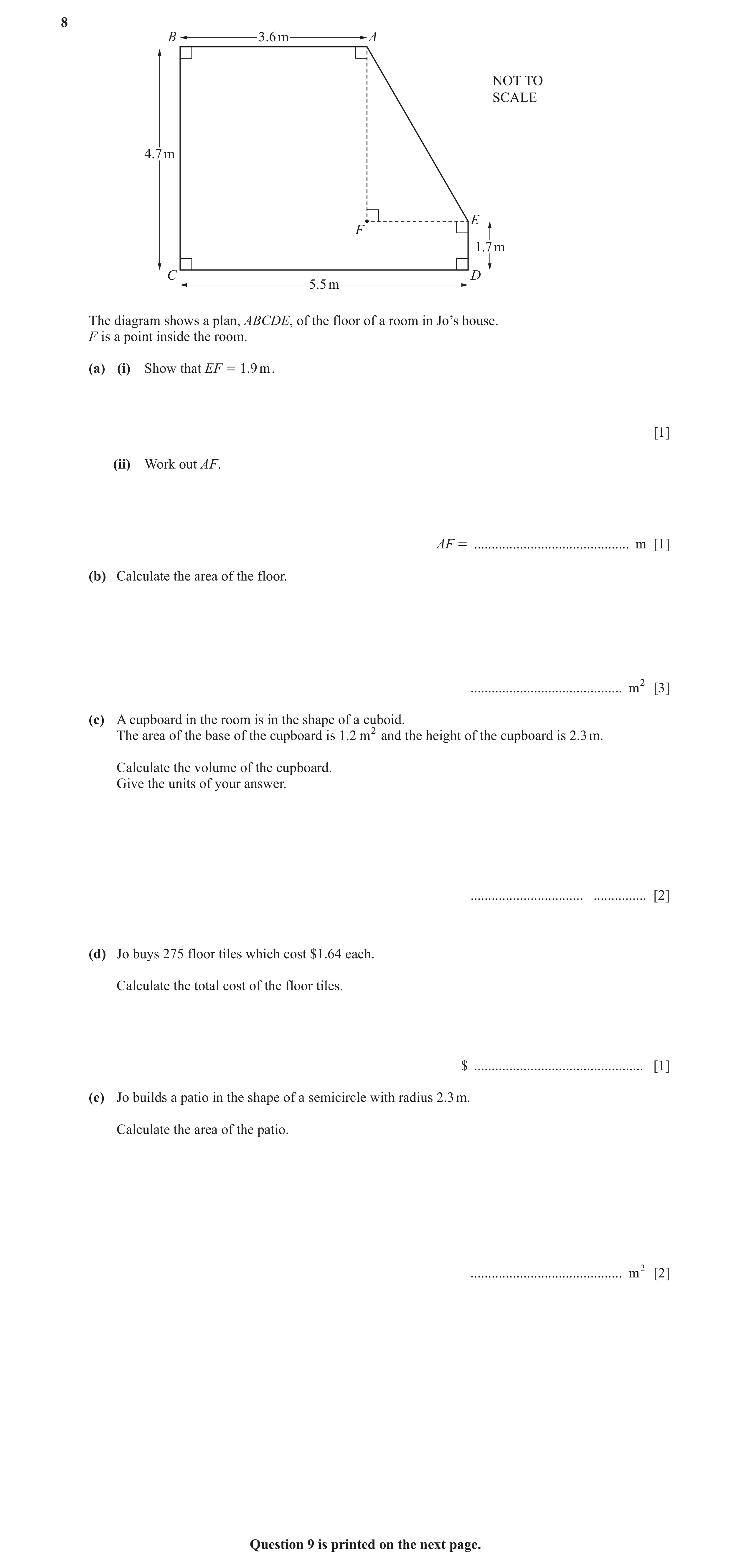
![Question 107: (a) 8.2 cm NOT TO 5.4 cm SCALE 12.6 cm Find the area of this trapezium. ......................................... cm2 [2] (b) NOT TO SCALE …](https://img.pastlit.com/crops/1bd61d0c-6088-4f43-8d54-52471b277ec4/q8.webp)
![Question 108: (a) NOT TO 10 cm SCALE 4 cm 7 cm Find the perimeter of the triangle. ............................................ cm [1] (b) The diagram sh…](https://img.pastlit.com/crops/a2efe686-db90-487b-a415-0737091e3760/q7.webp)
![Question 109: (a) Calculate the volume of a cylinder with radius 7.8 cm and height 15 cm. .......................................... cm3 [2] (b) A cube h…](https://img.pastlit.com/crops/c8ad130c-4f12-4a33-ba01-607046251534/q4.webp)
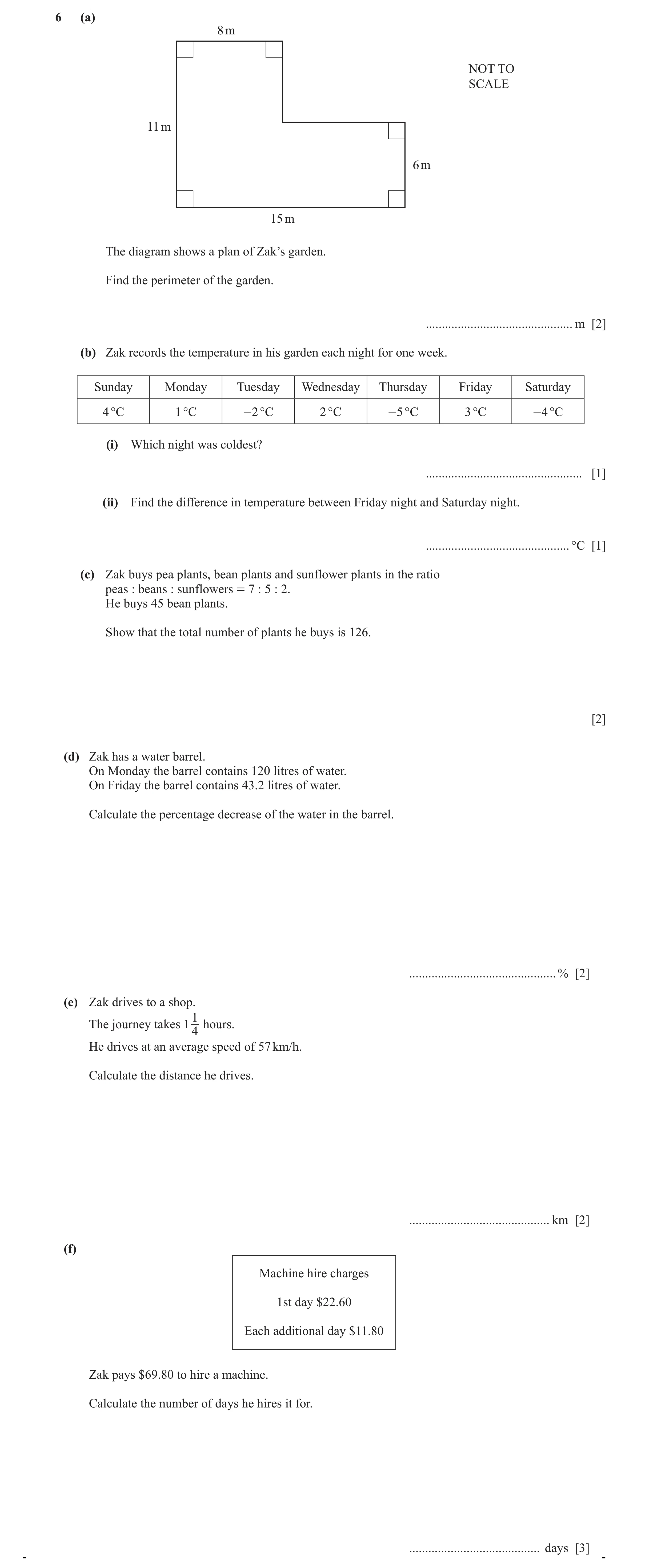
![Question 111: A cuboid measures 3 cm by 7 cm by 11 cm. Calculate the surface area of the cuboid. ......................................... cm2 [3]](https://img.pastlit.com/crops/bdf0340f-caf1-43ca-904c-55decc63e3bd/q9.webp) 180 / 184
180 / 184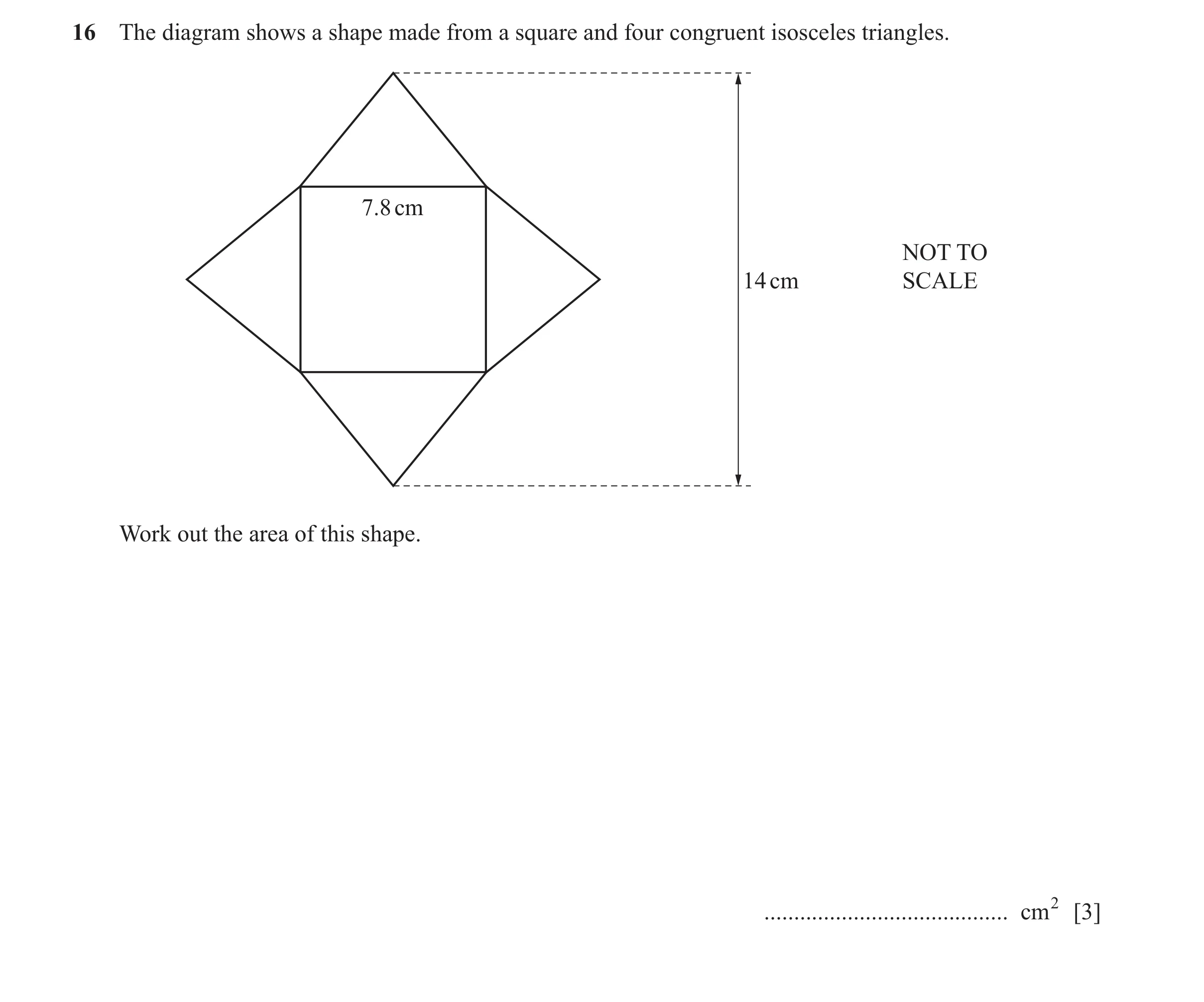 181 / 184
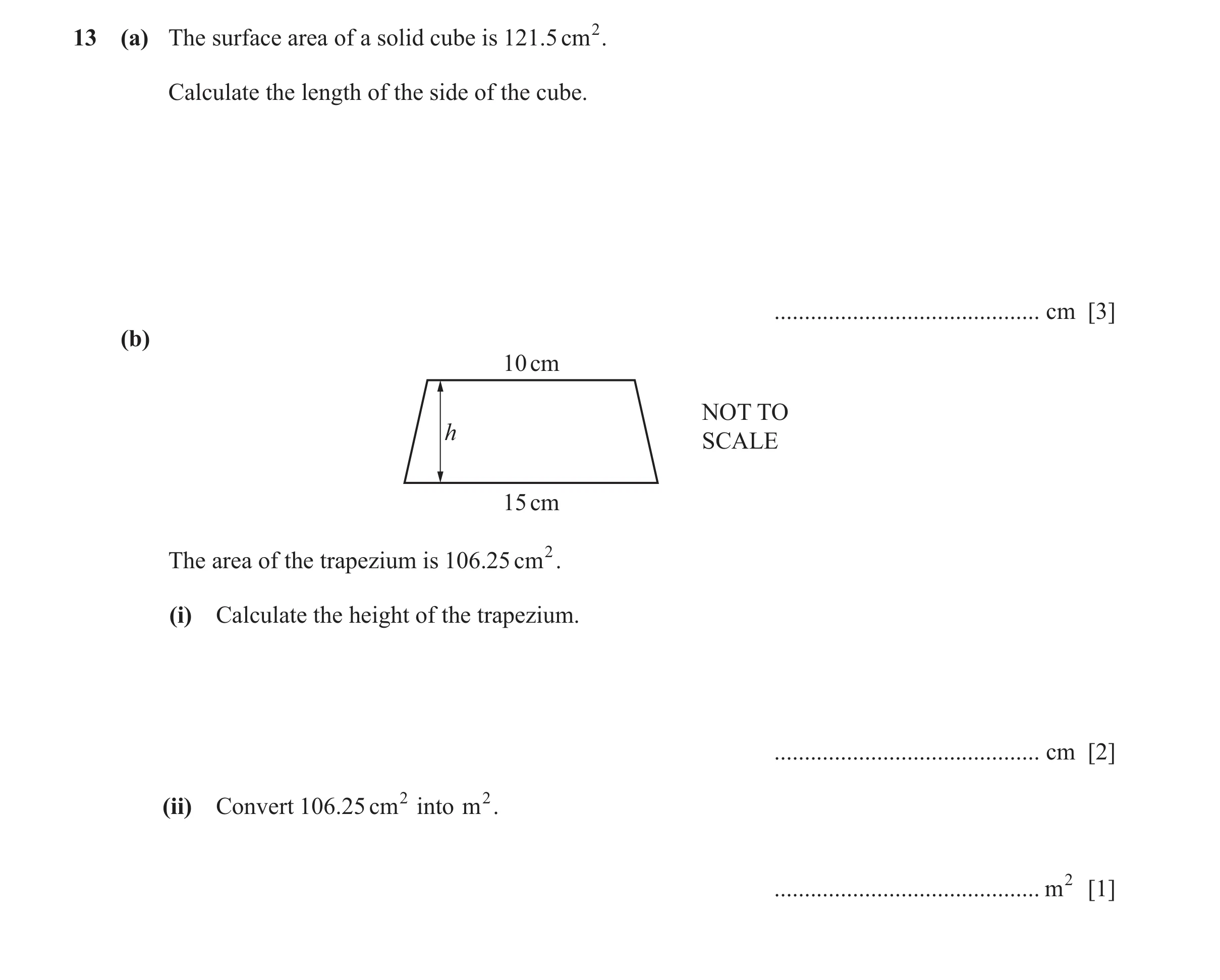 182 / 184
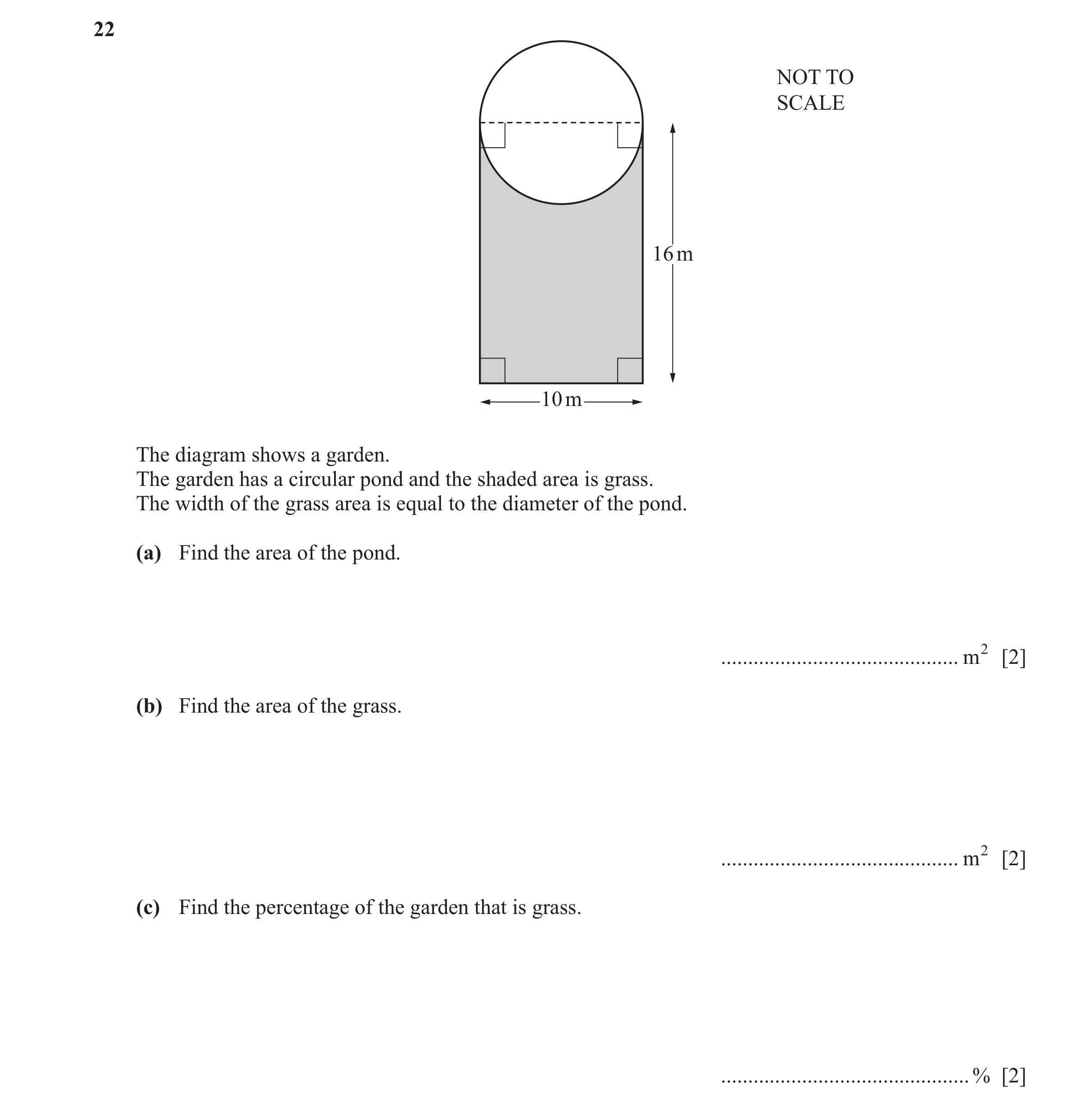 183 / 184
![Question 115: 6 cm NOT TO SCALE 15 cm 14 cm Calculate the perimeter of this trapezium. ............................................ cm [4]](https://img.pastlit.com/crops/16ba7d05-877b-4cb2-8c32-31f1cf651881/q23.webp) 184 / 184
184 / 184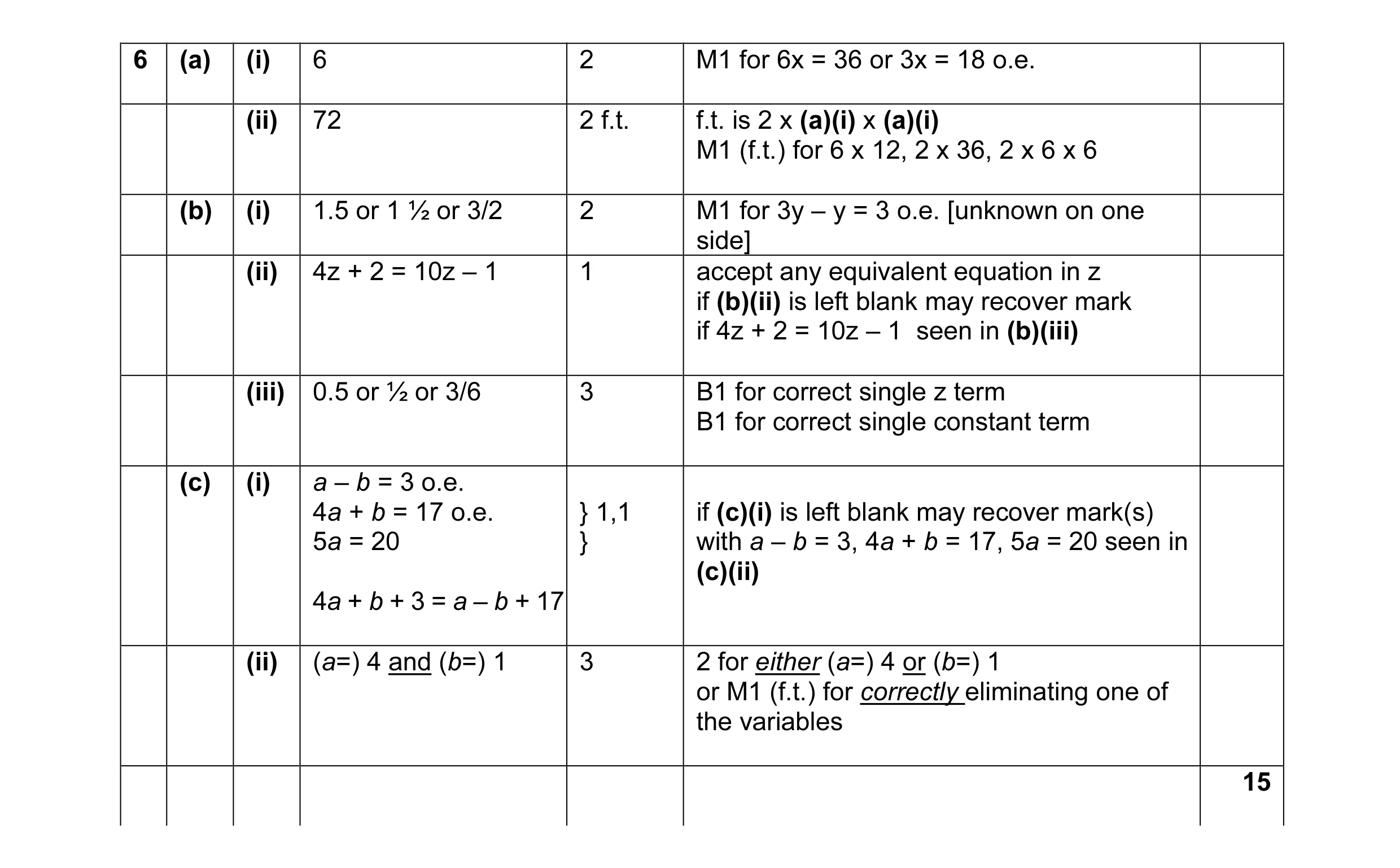 15
15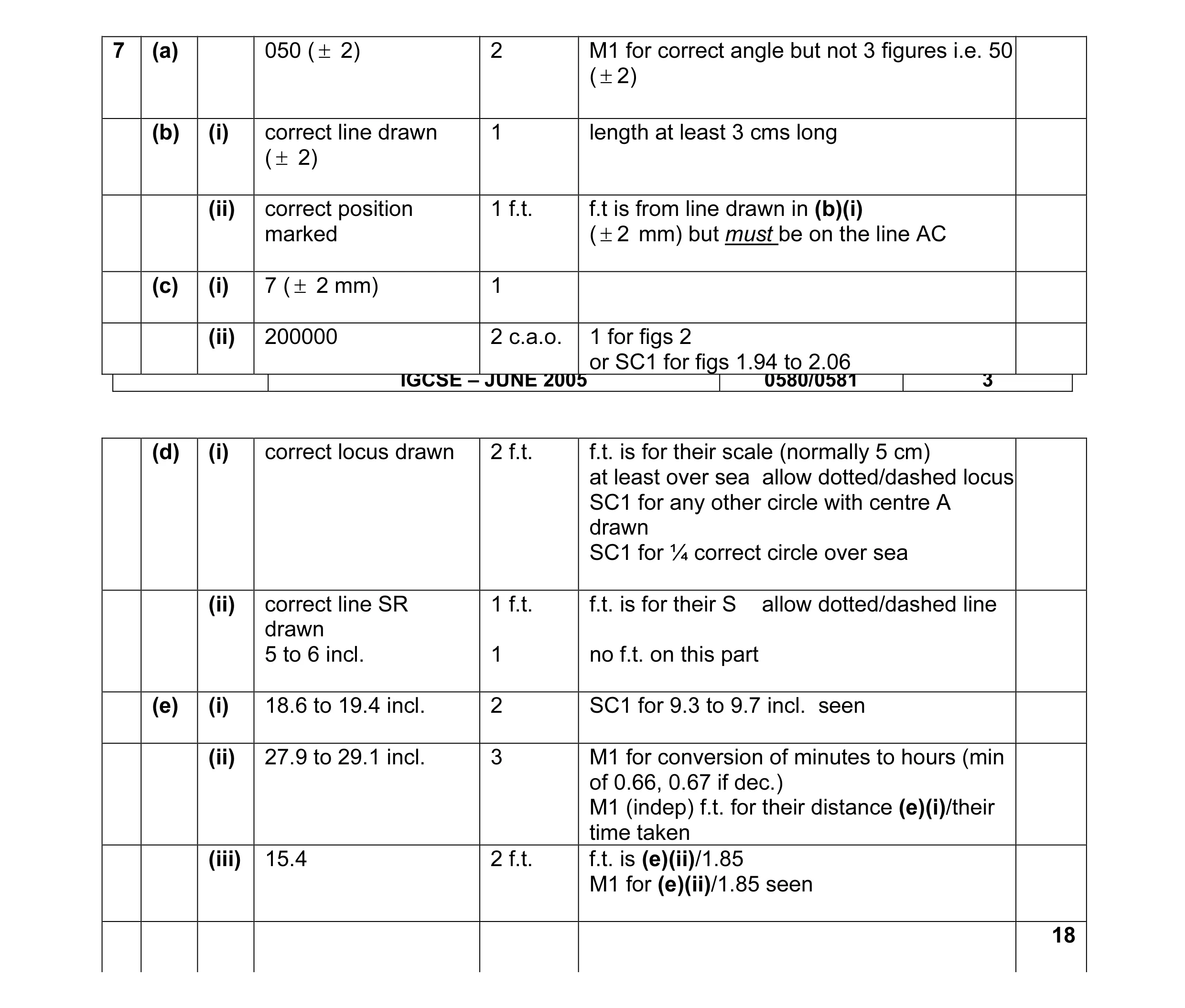 18
18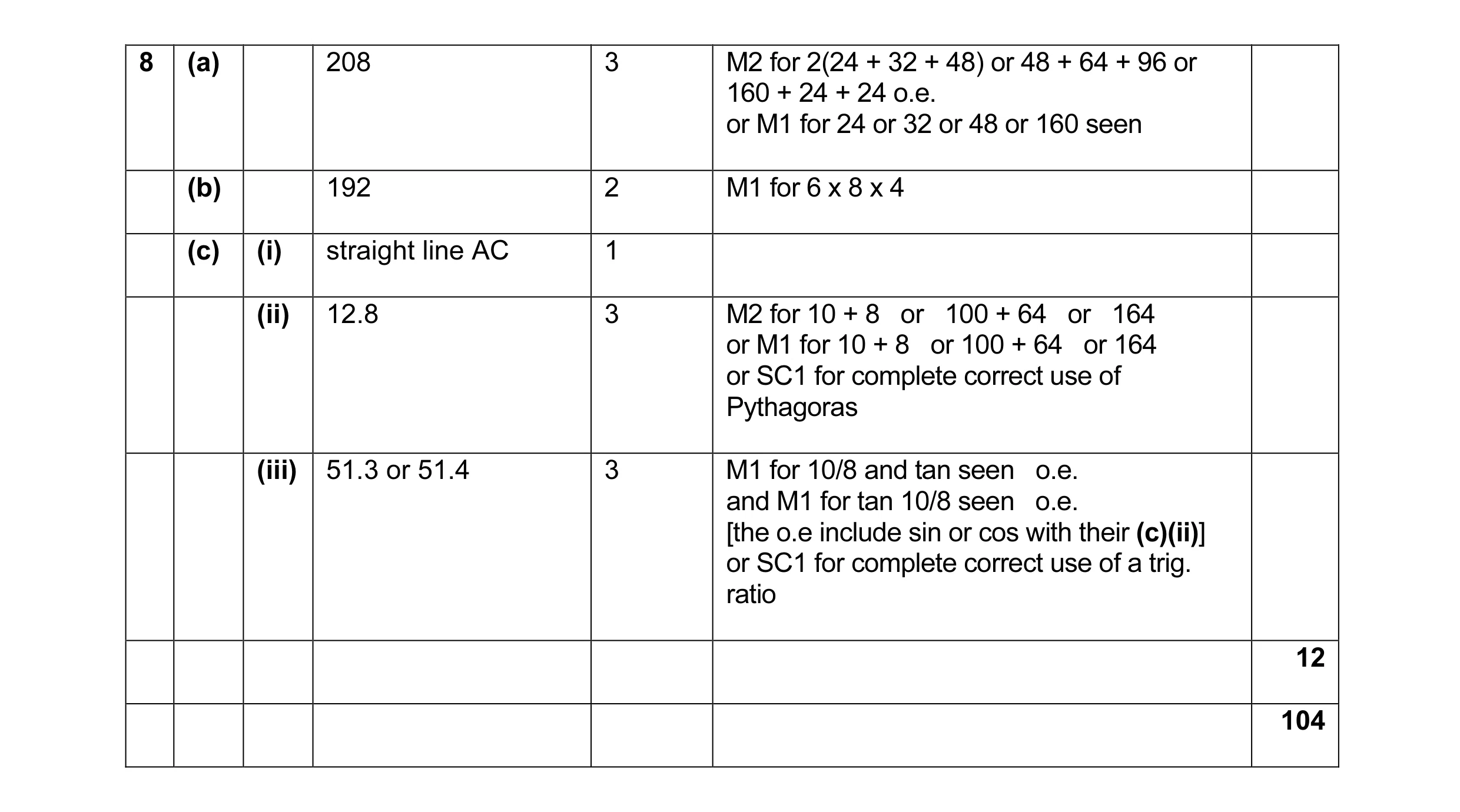 12
12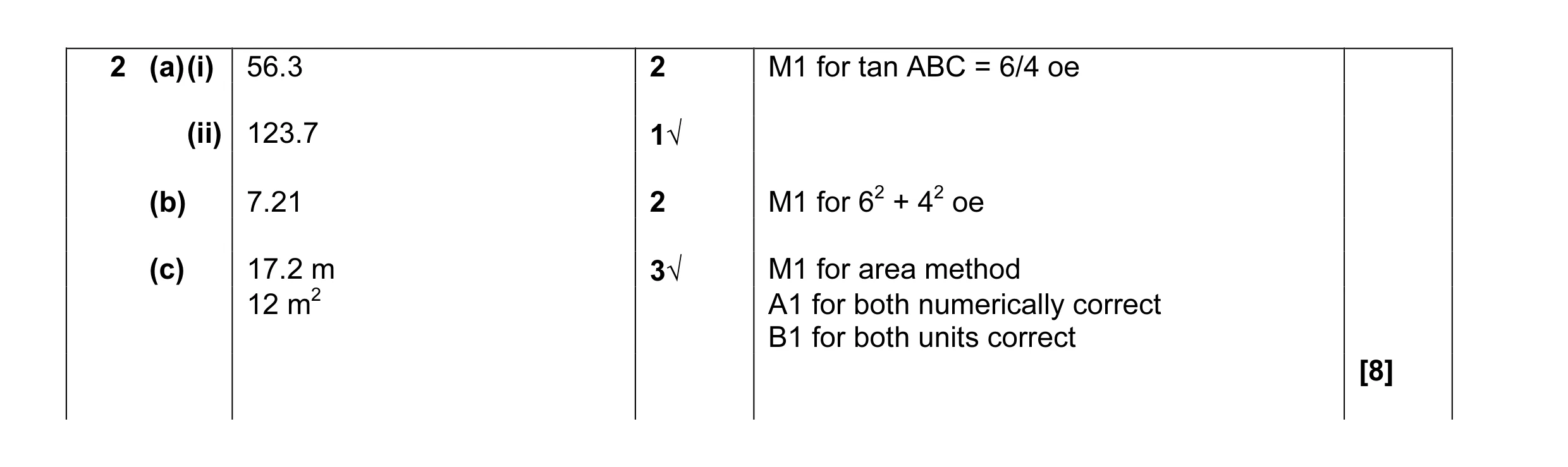 8
8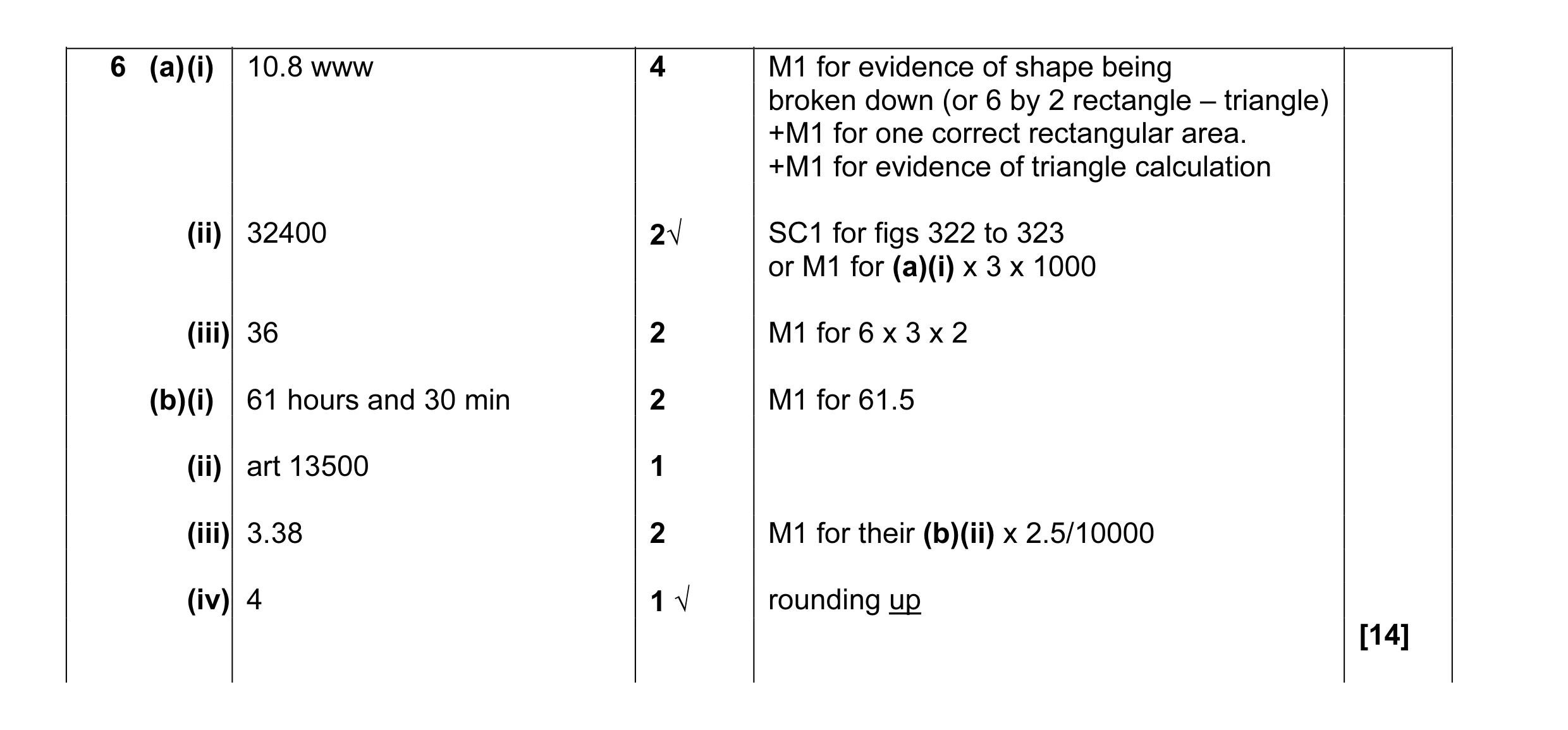 14
14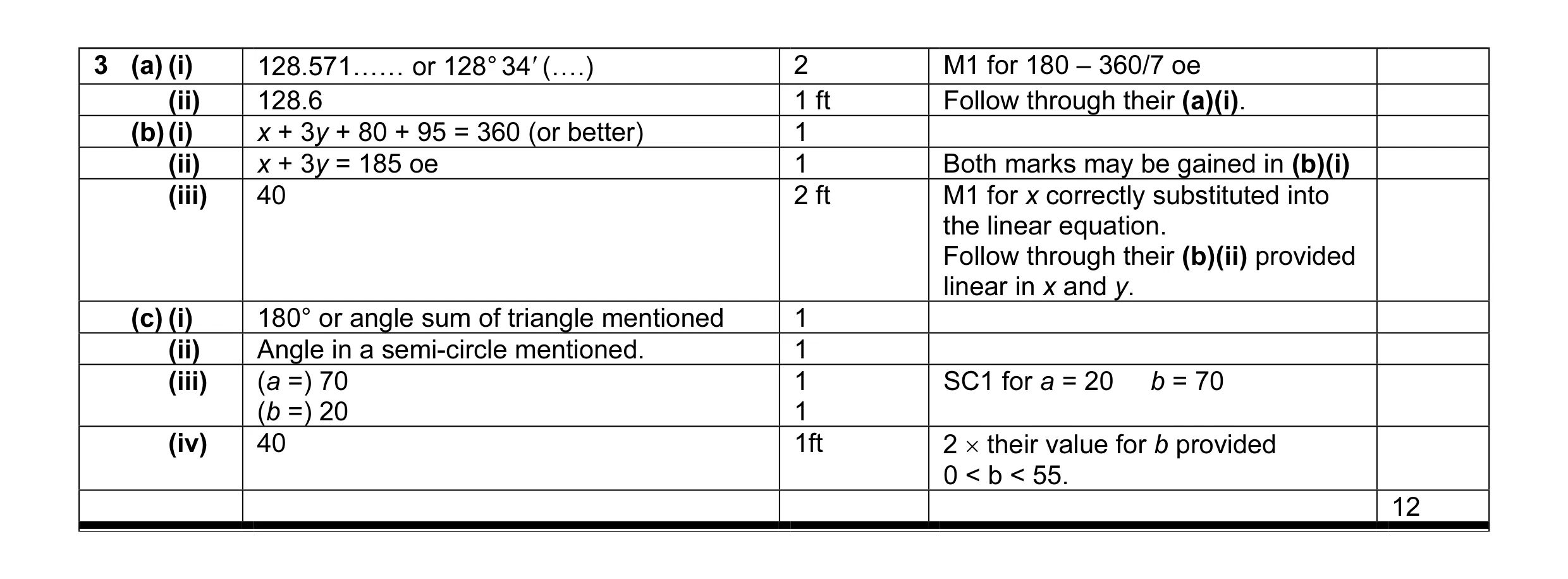 12
12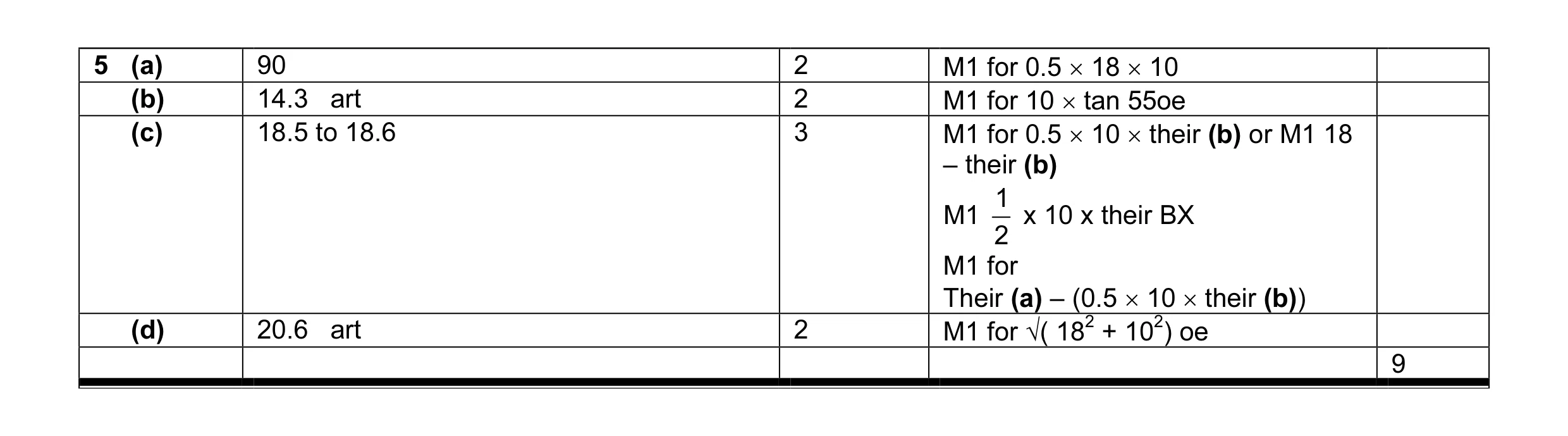 9
9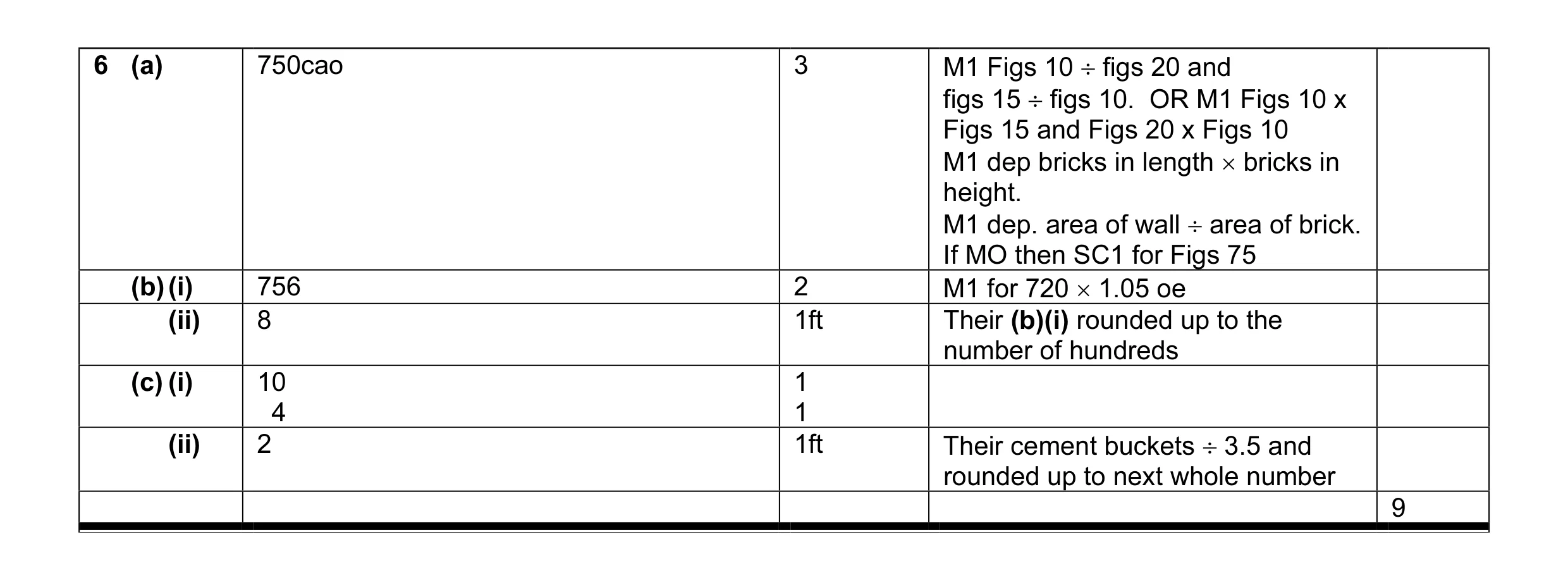 9
9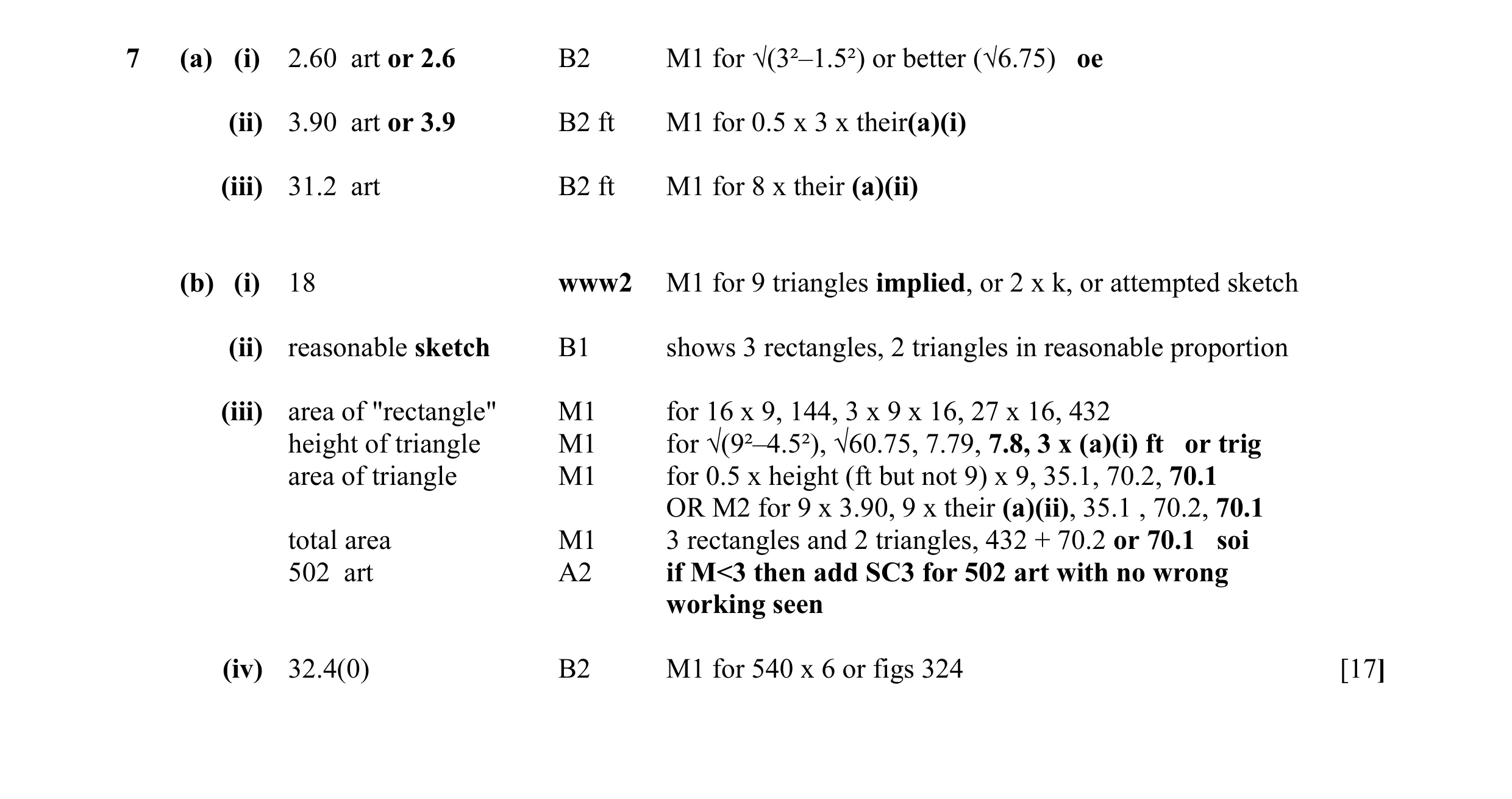 17
17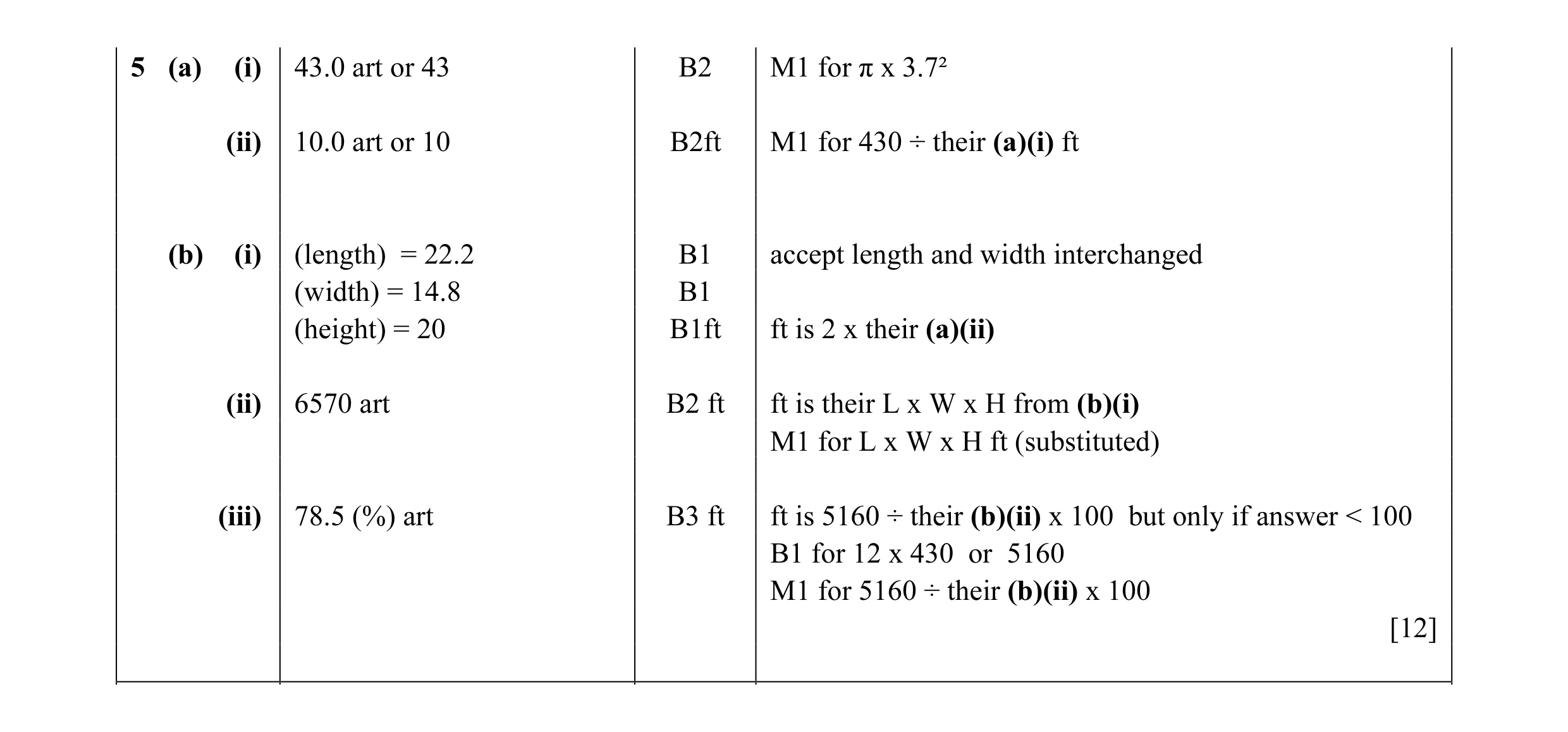 12
12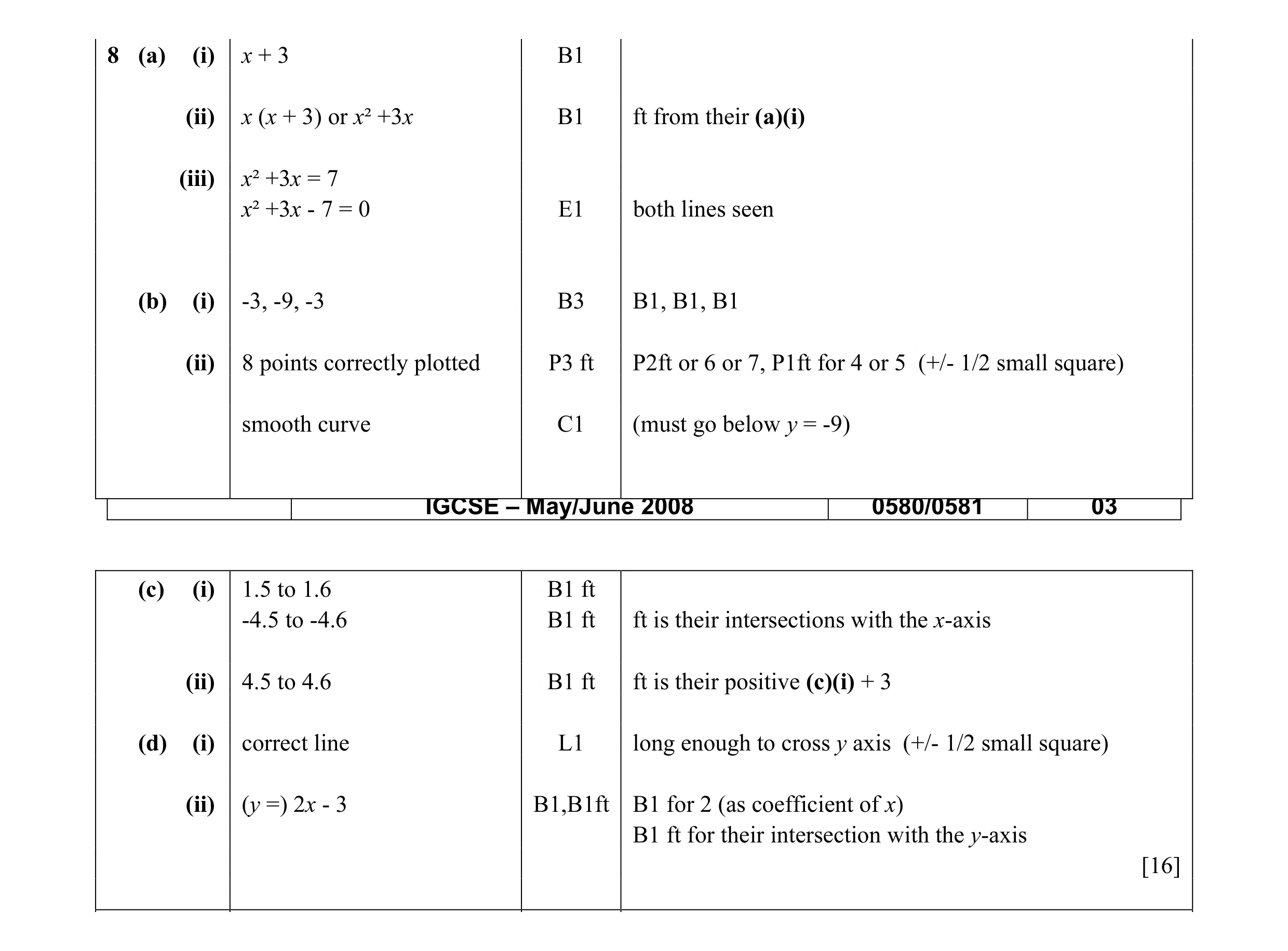 16
16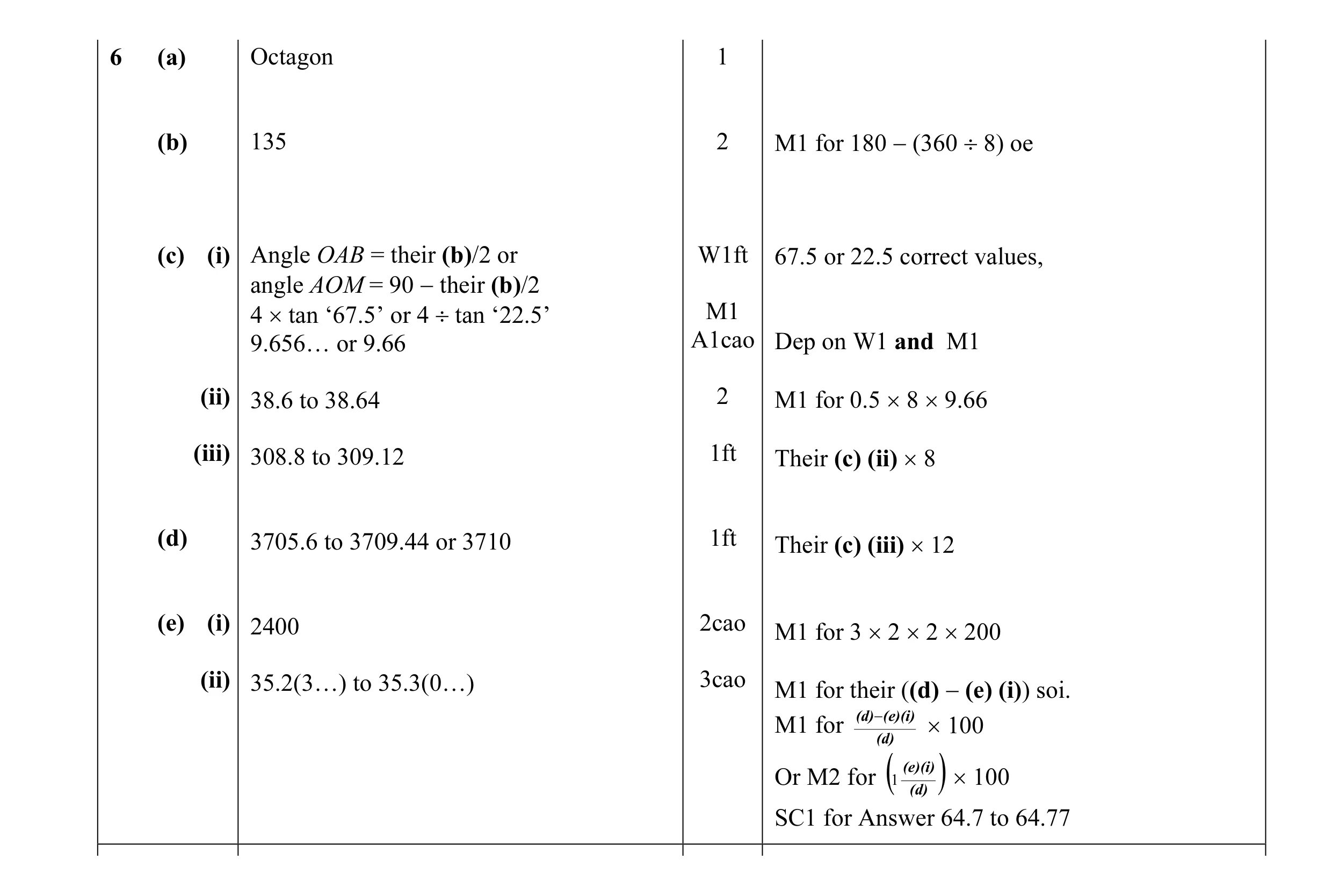 15
15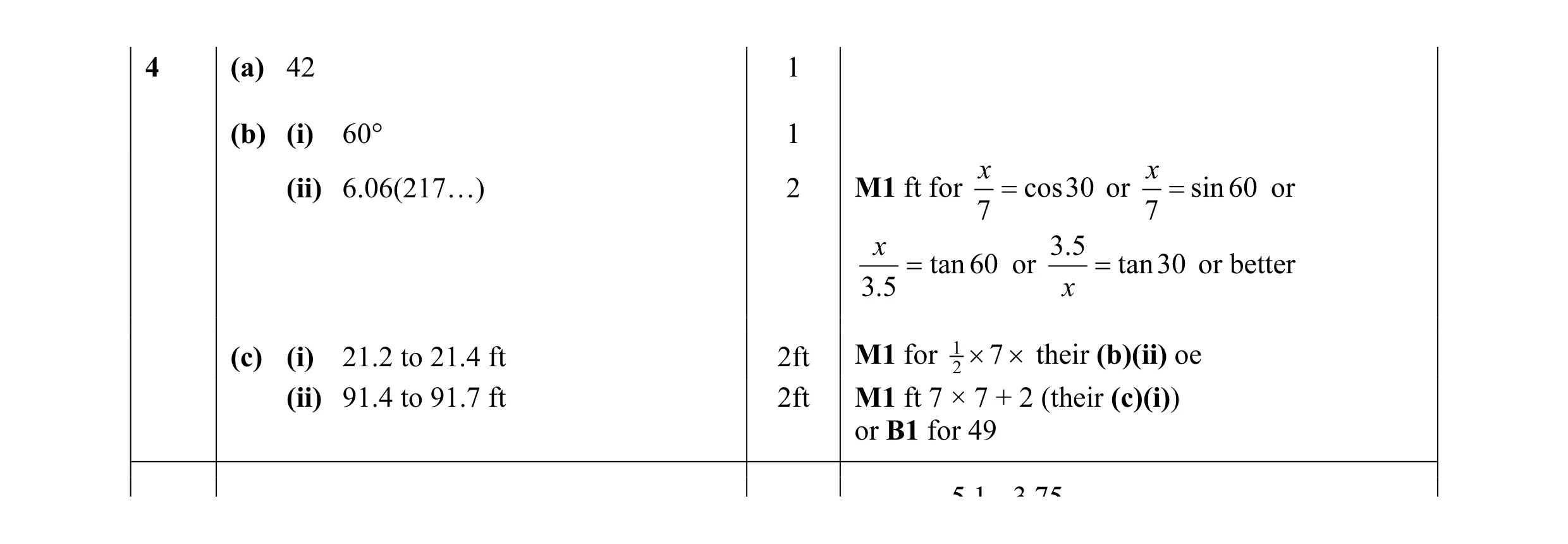 8
8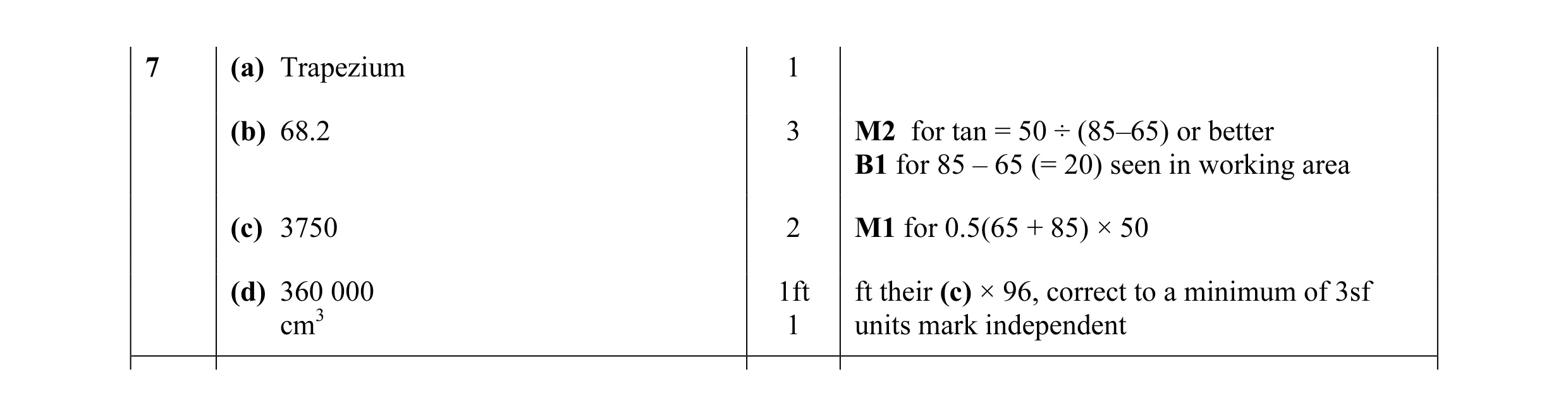 8
8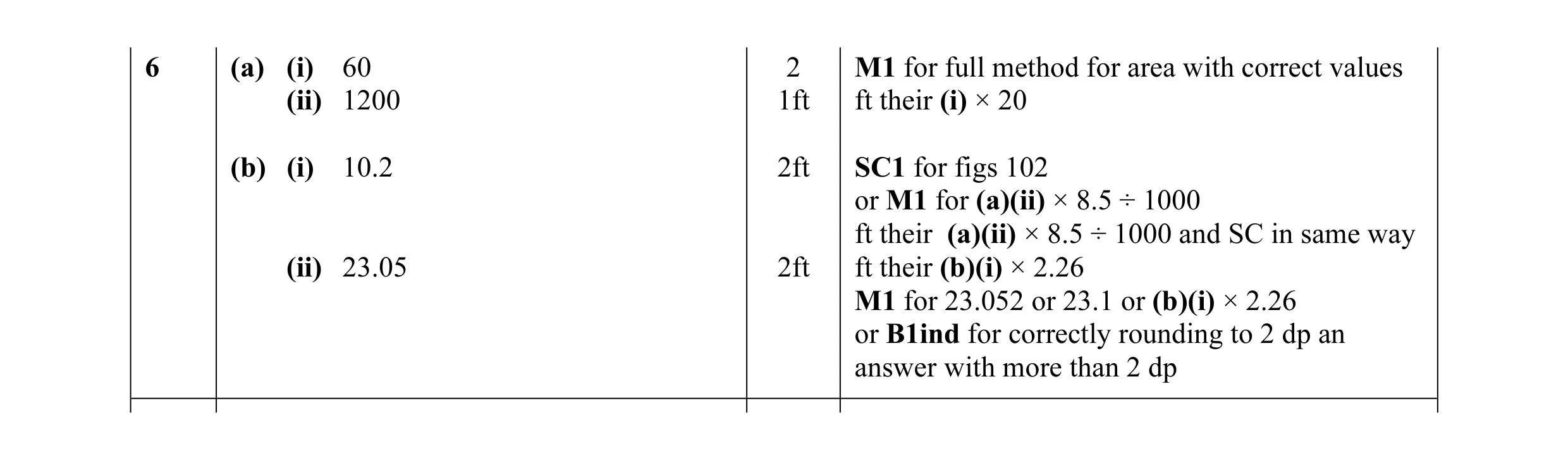 7
7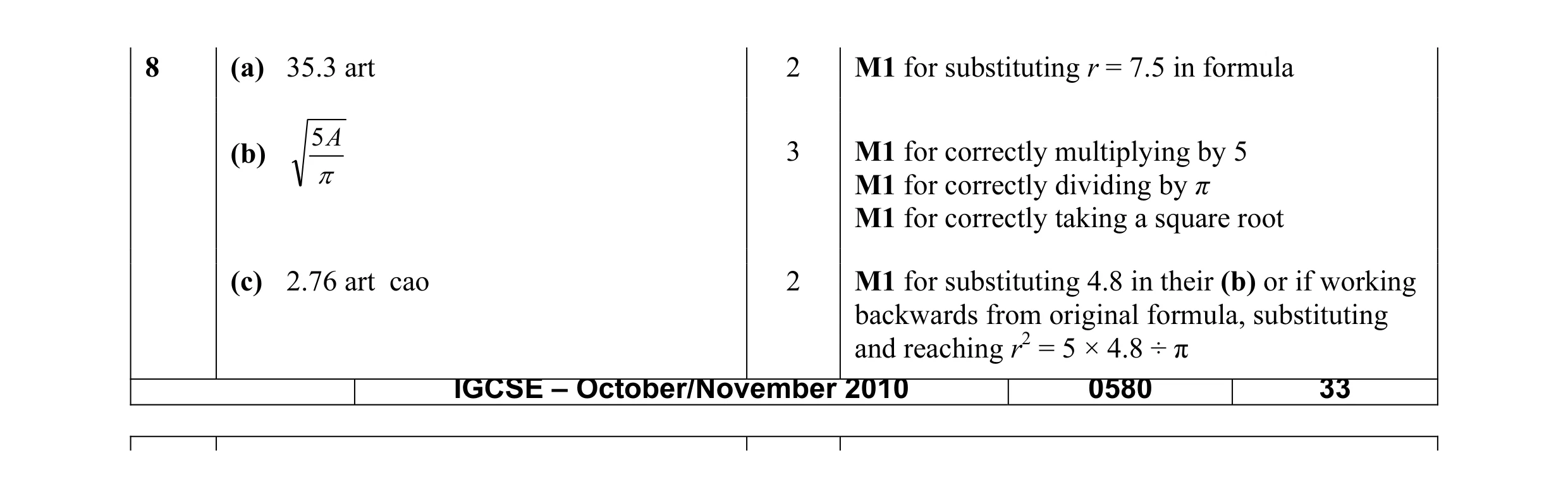 7
7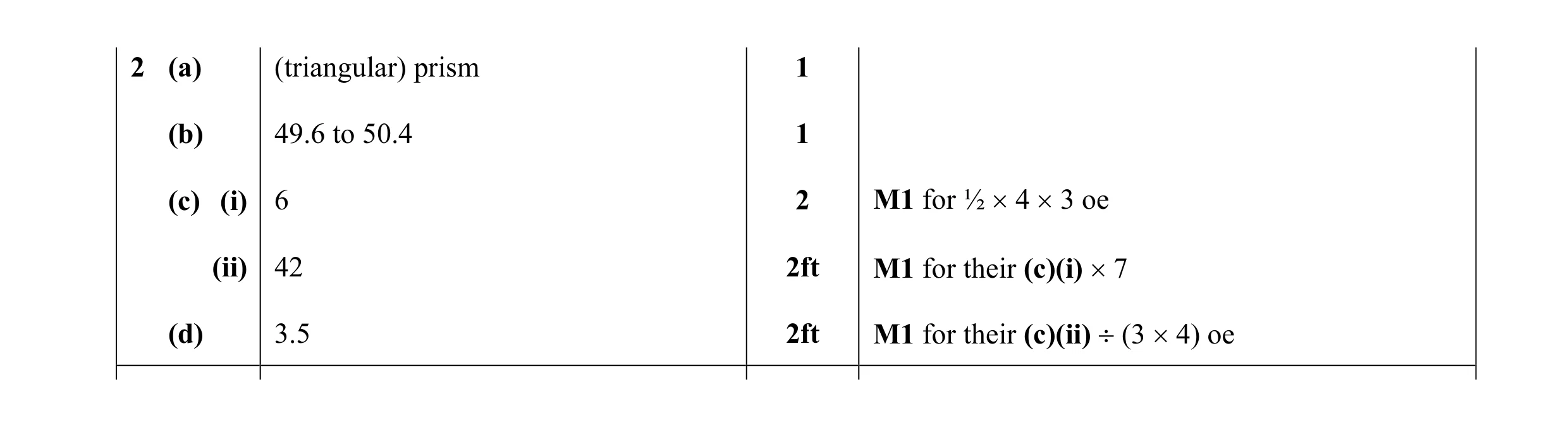 8
8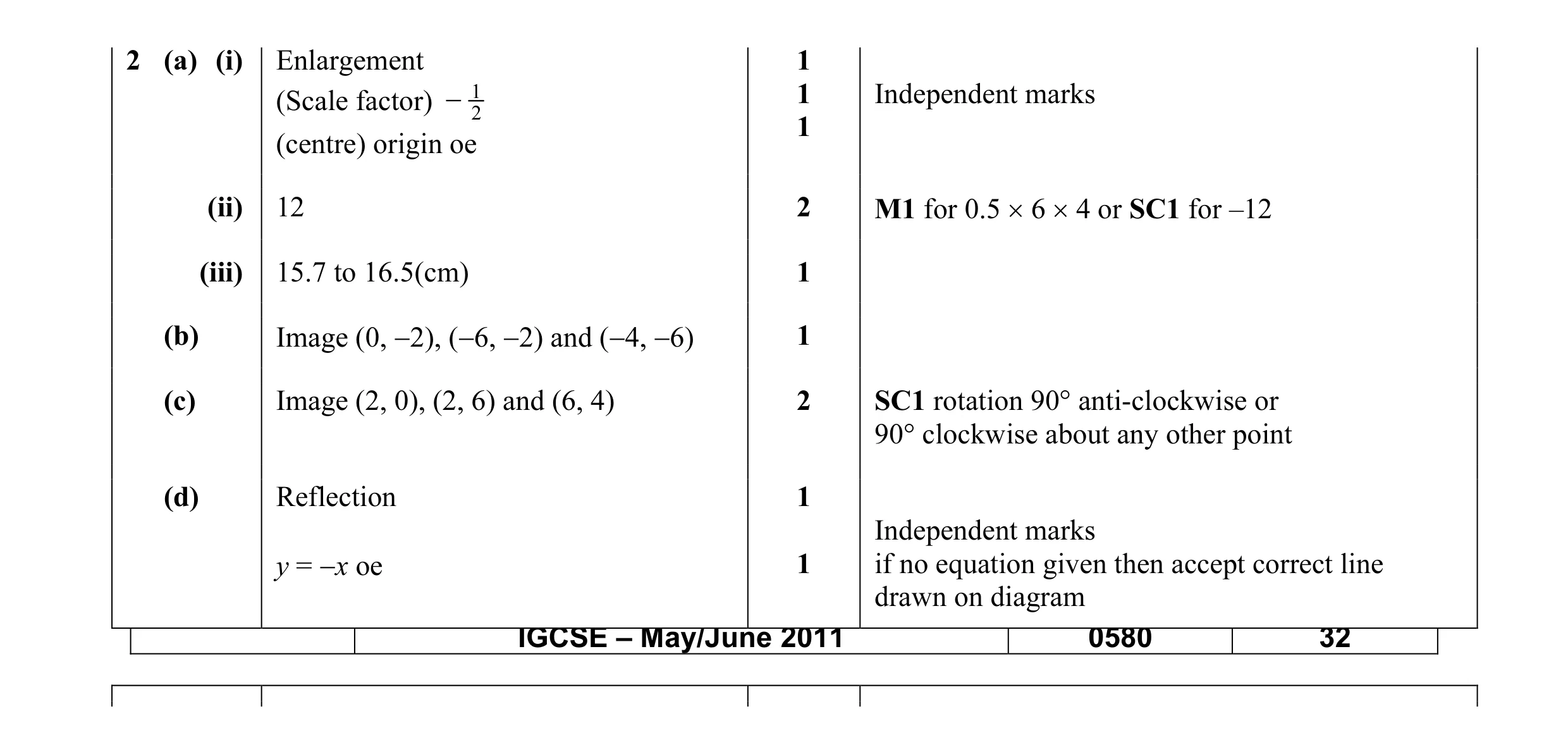 11
11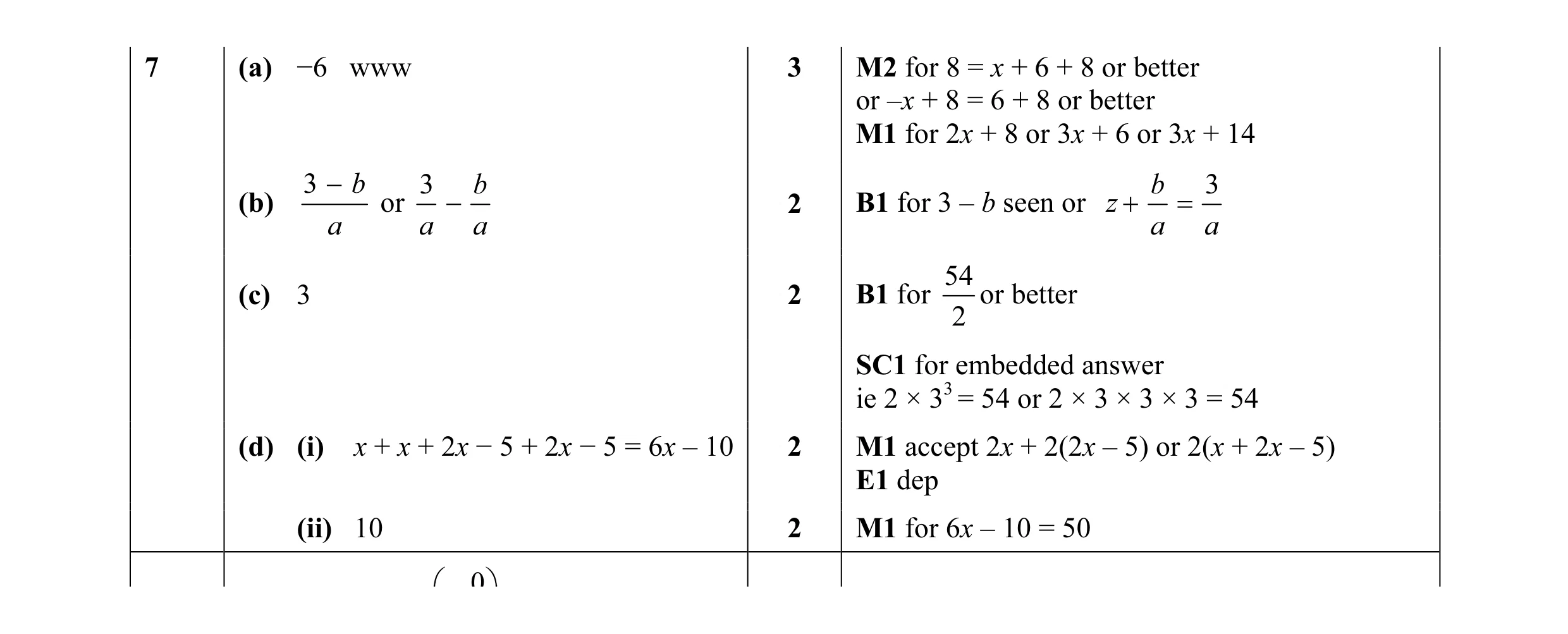 11
11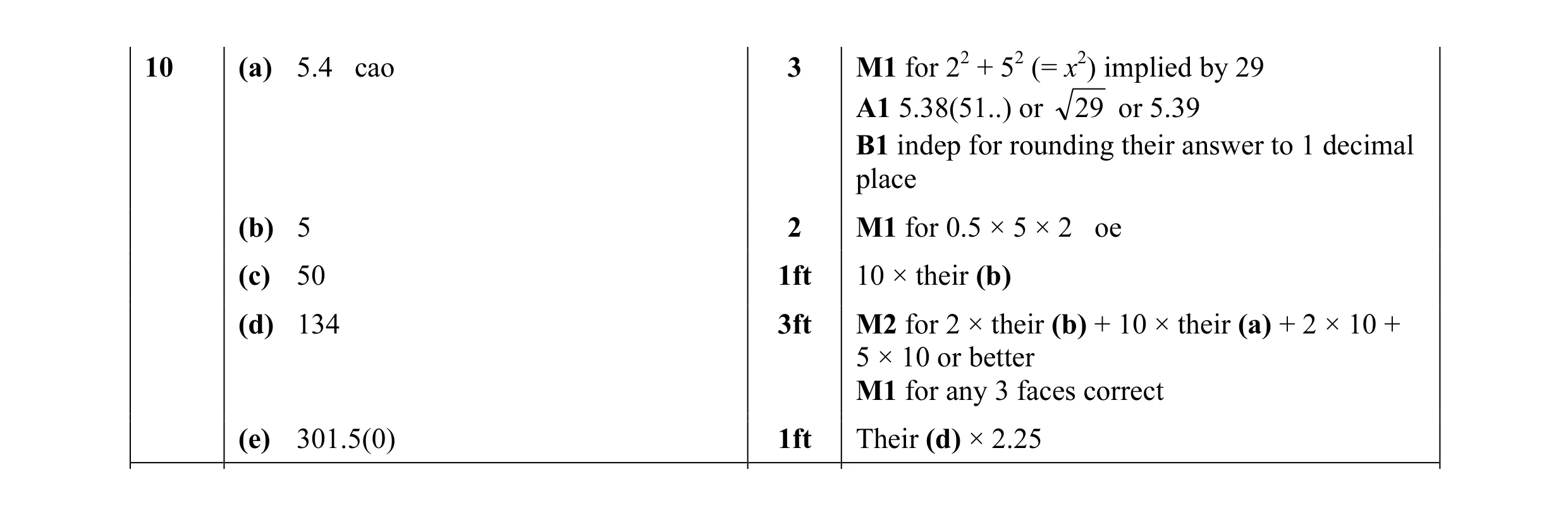 10
10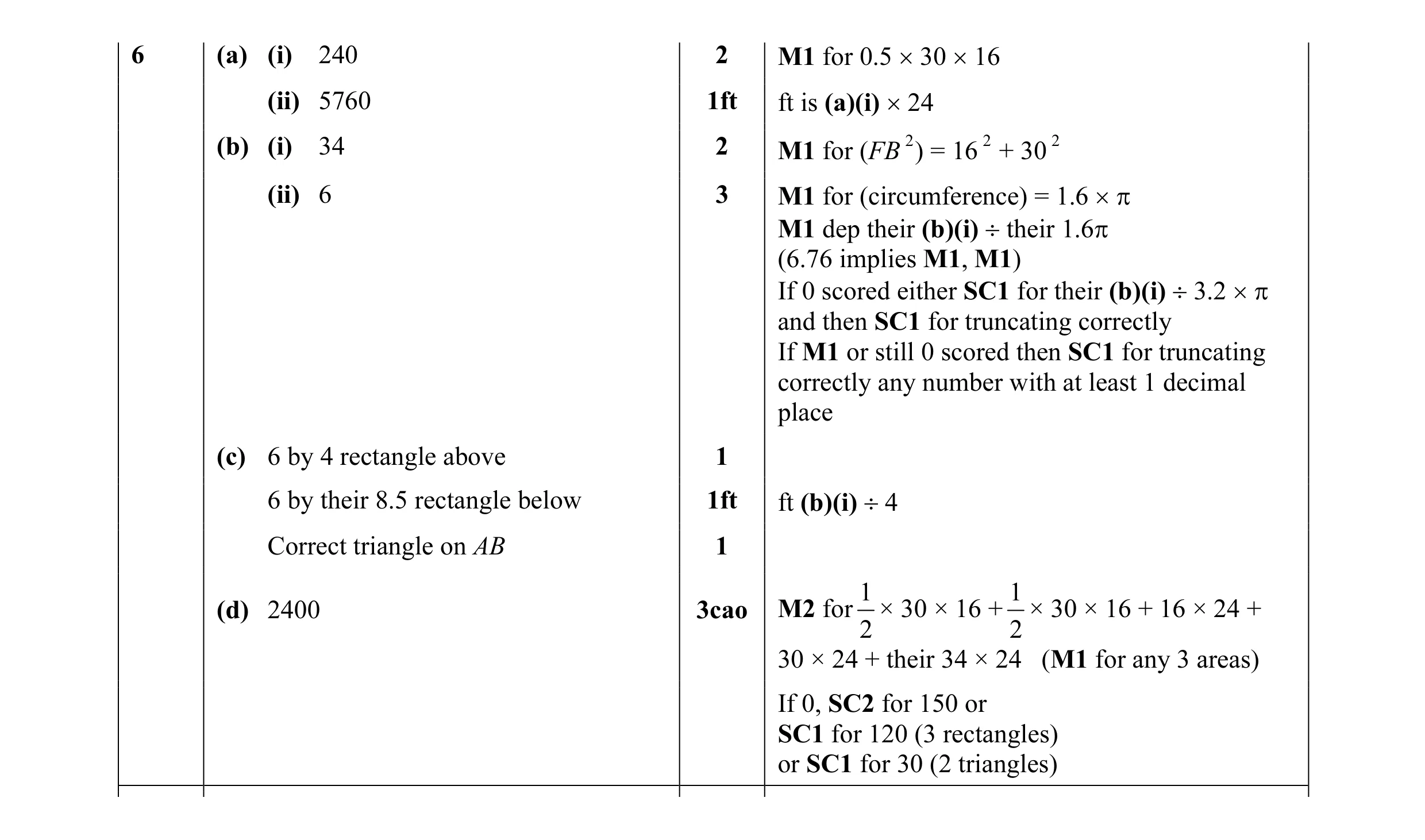 14
14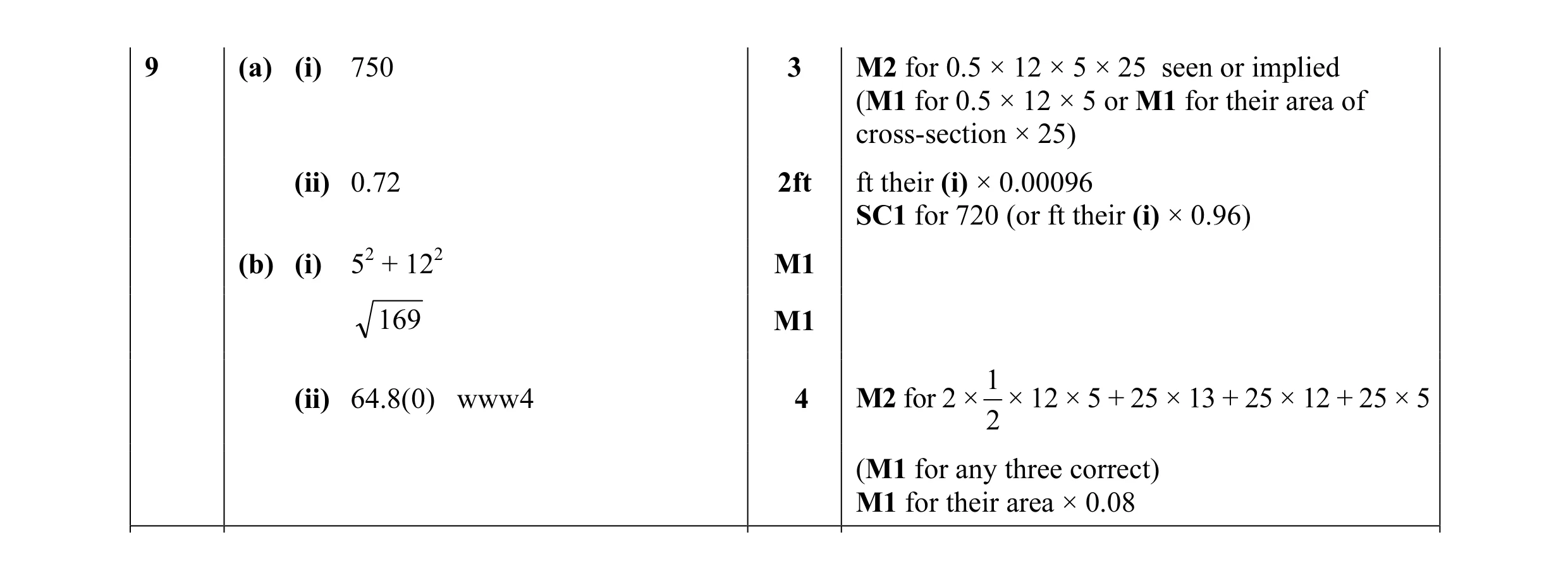 11
11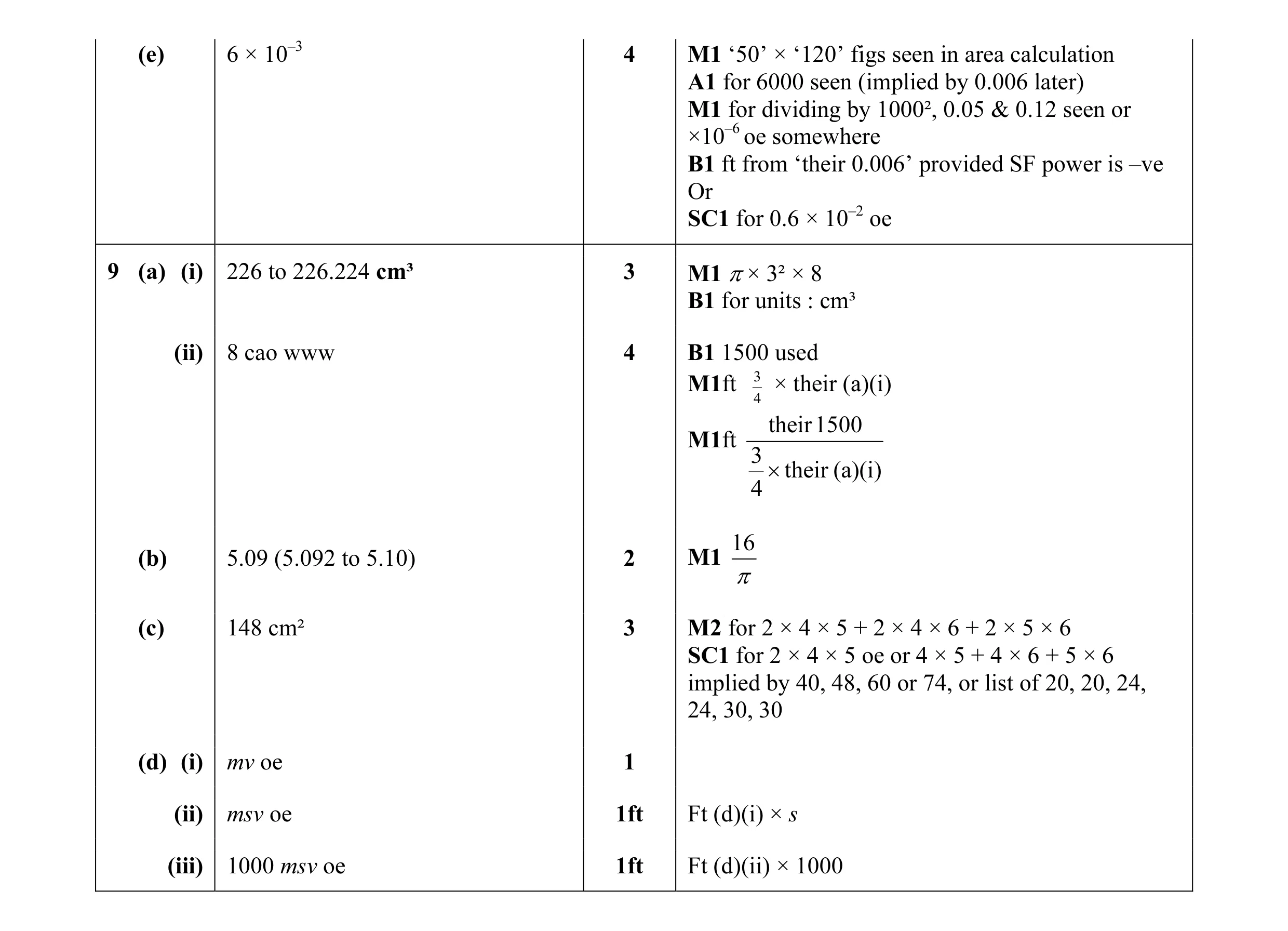 14
14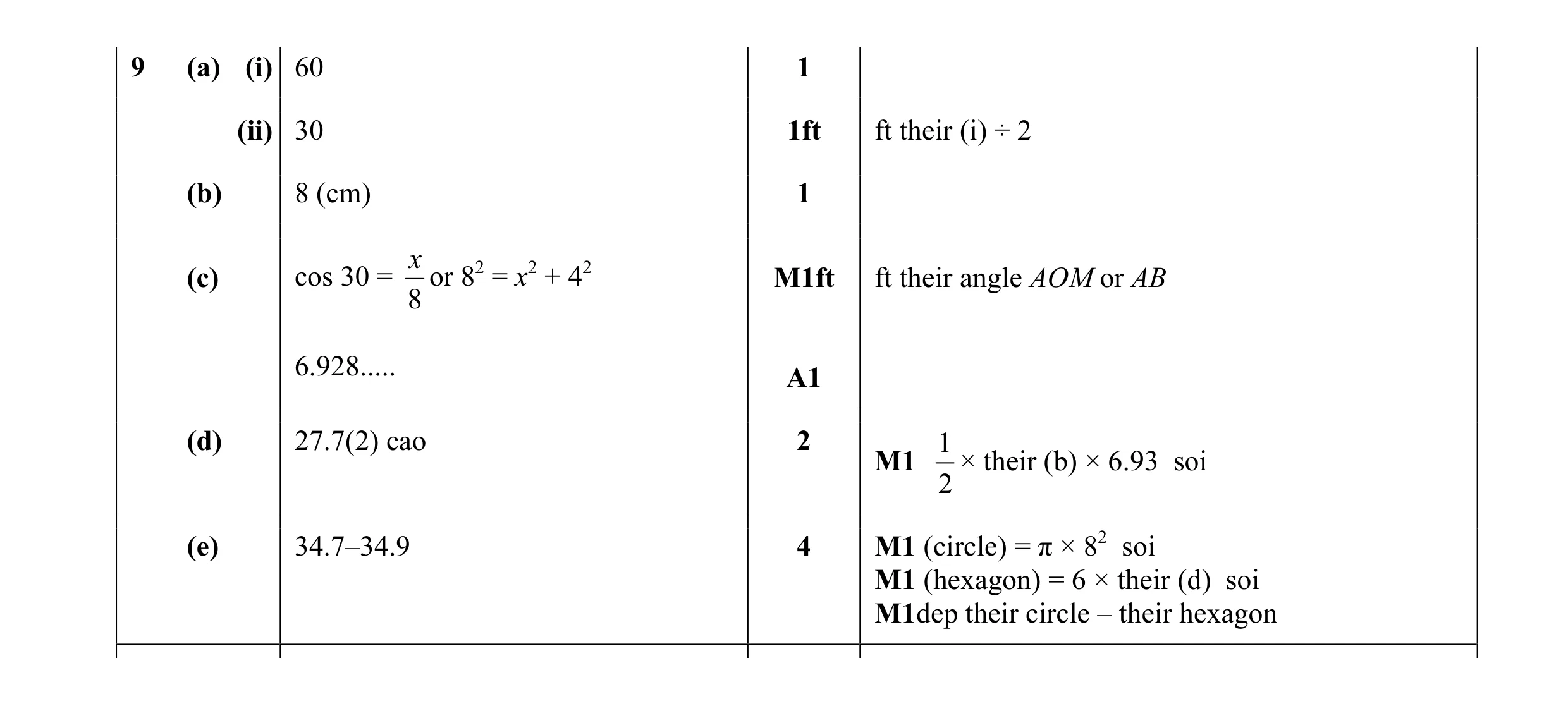 11
11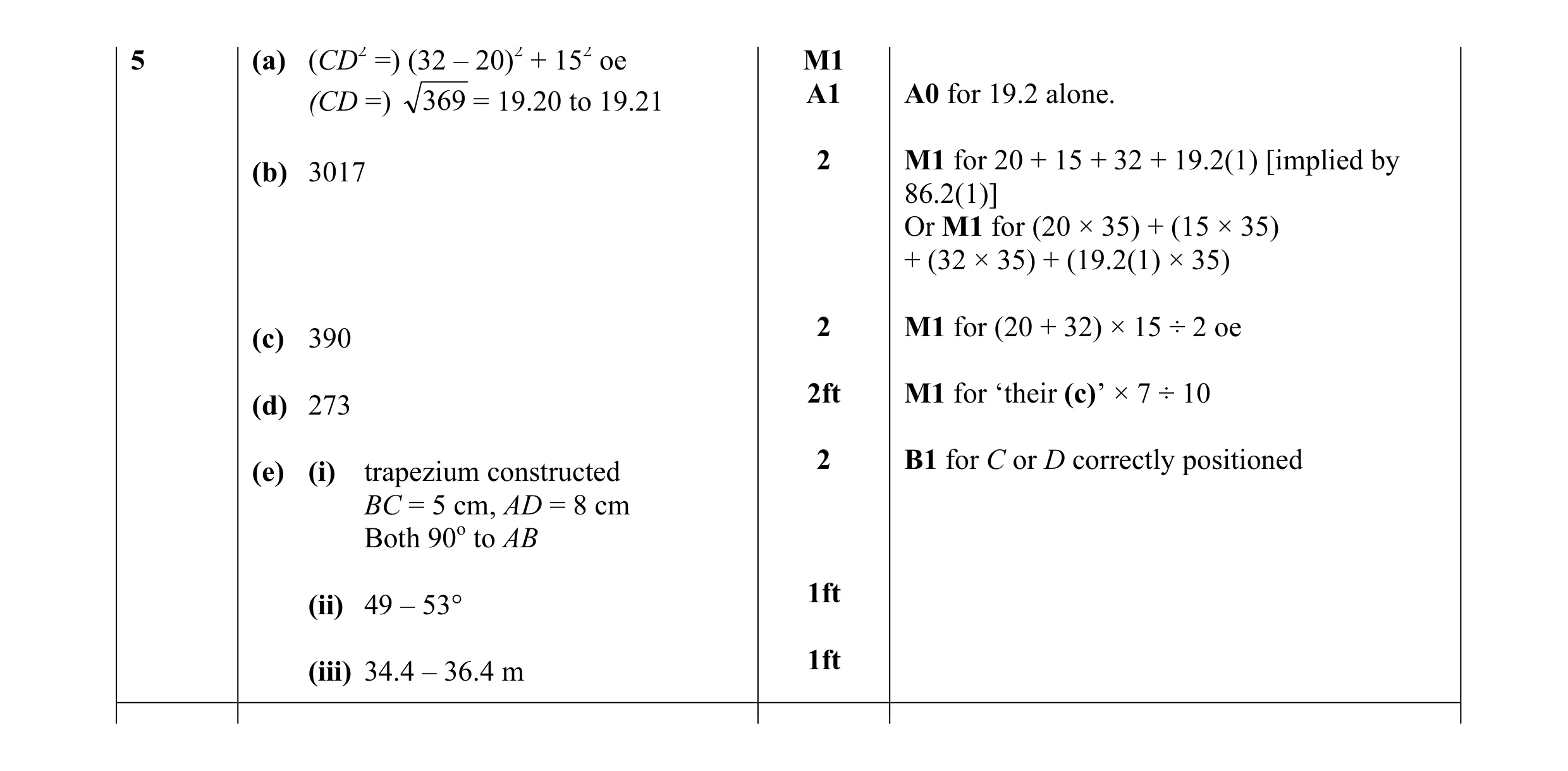 12
12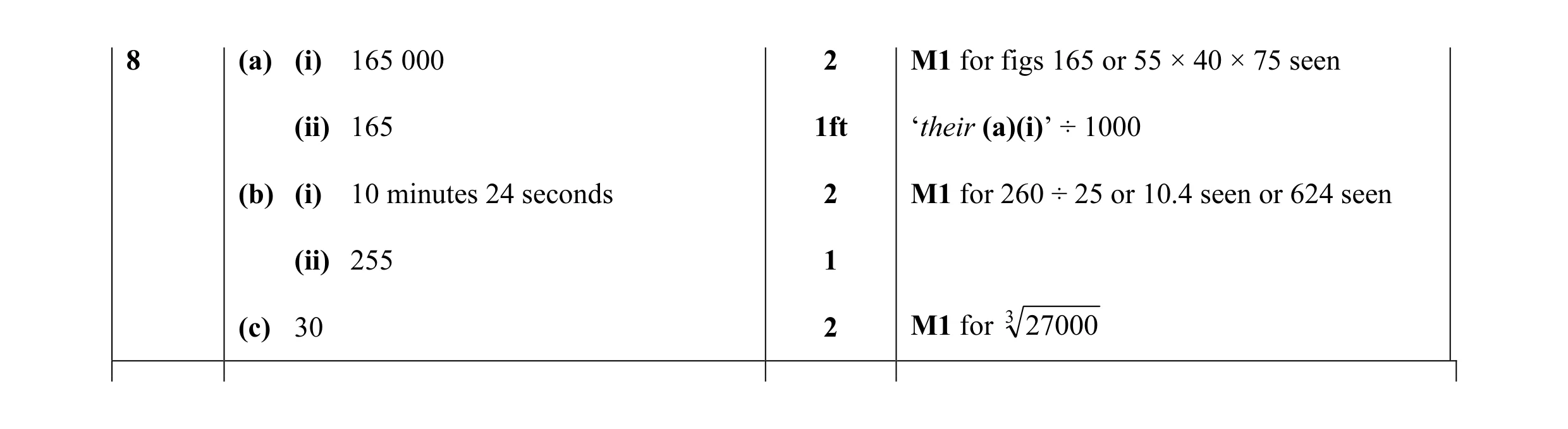 8
8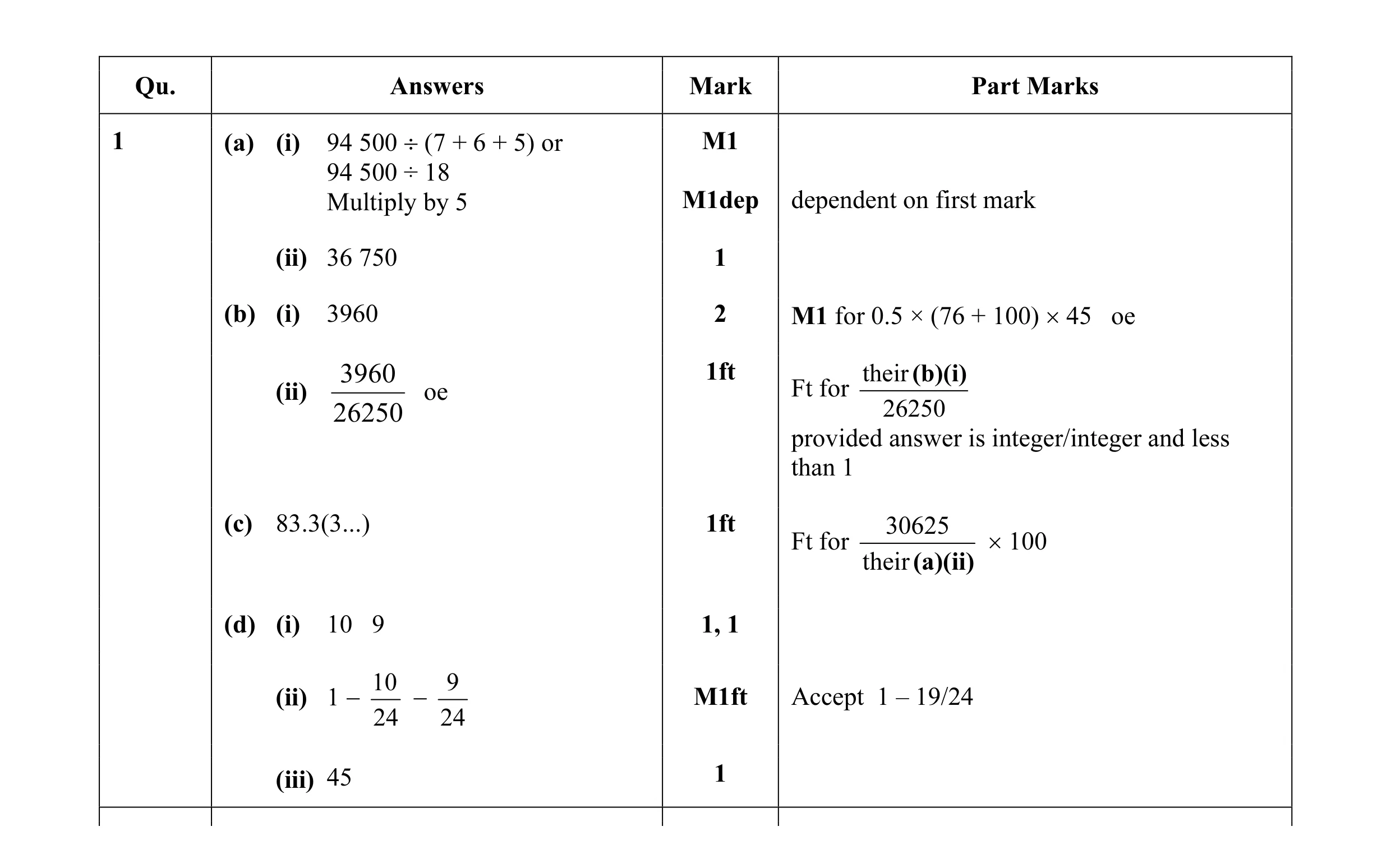 11
11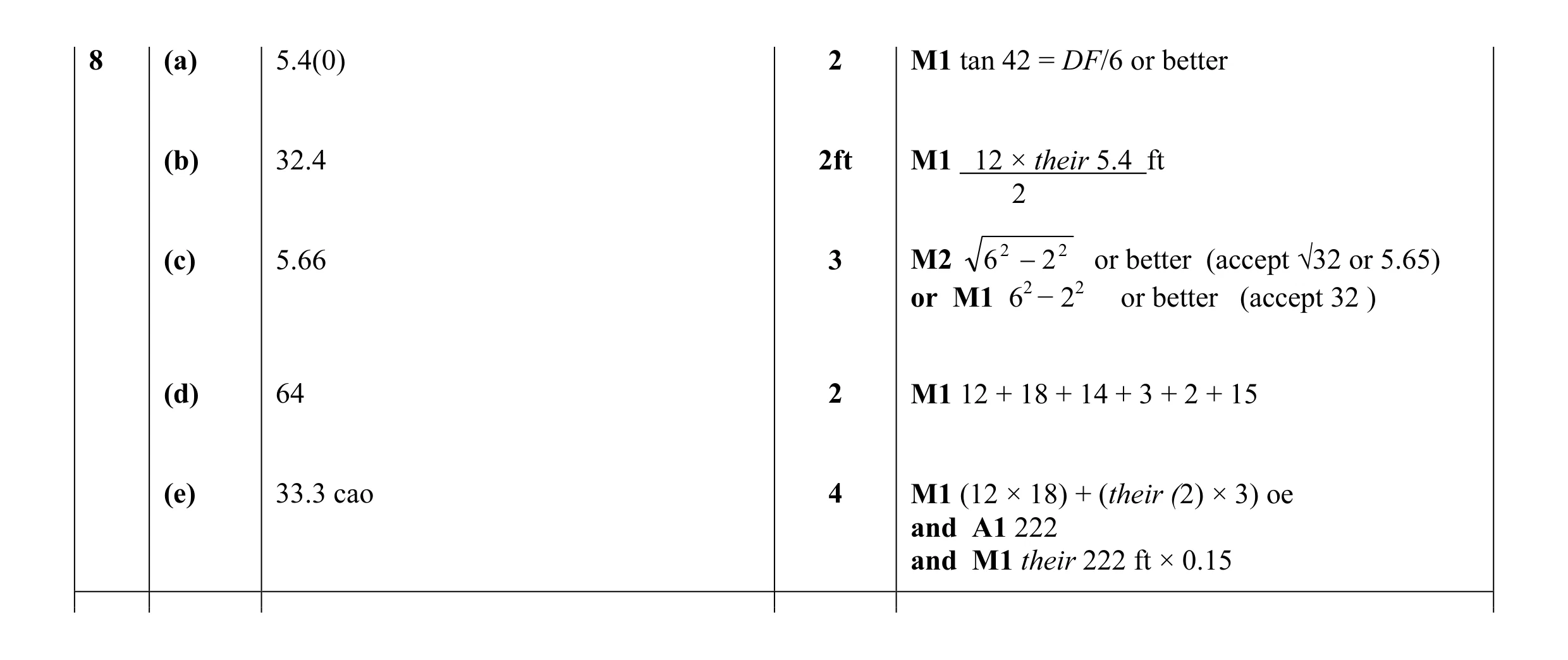 13
13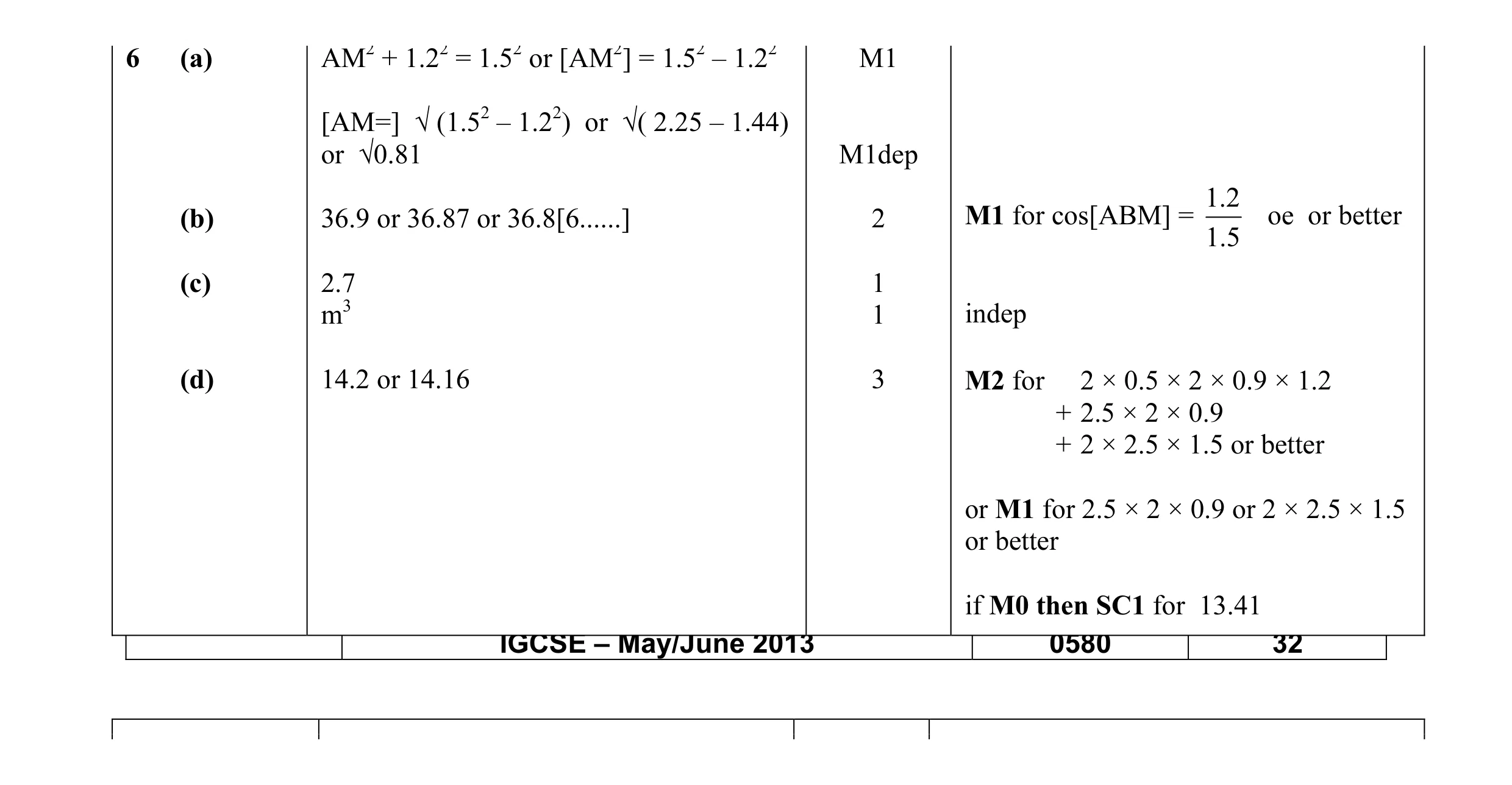 9
9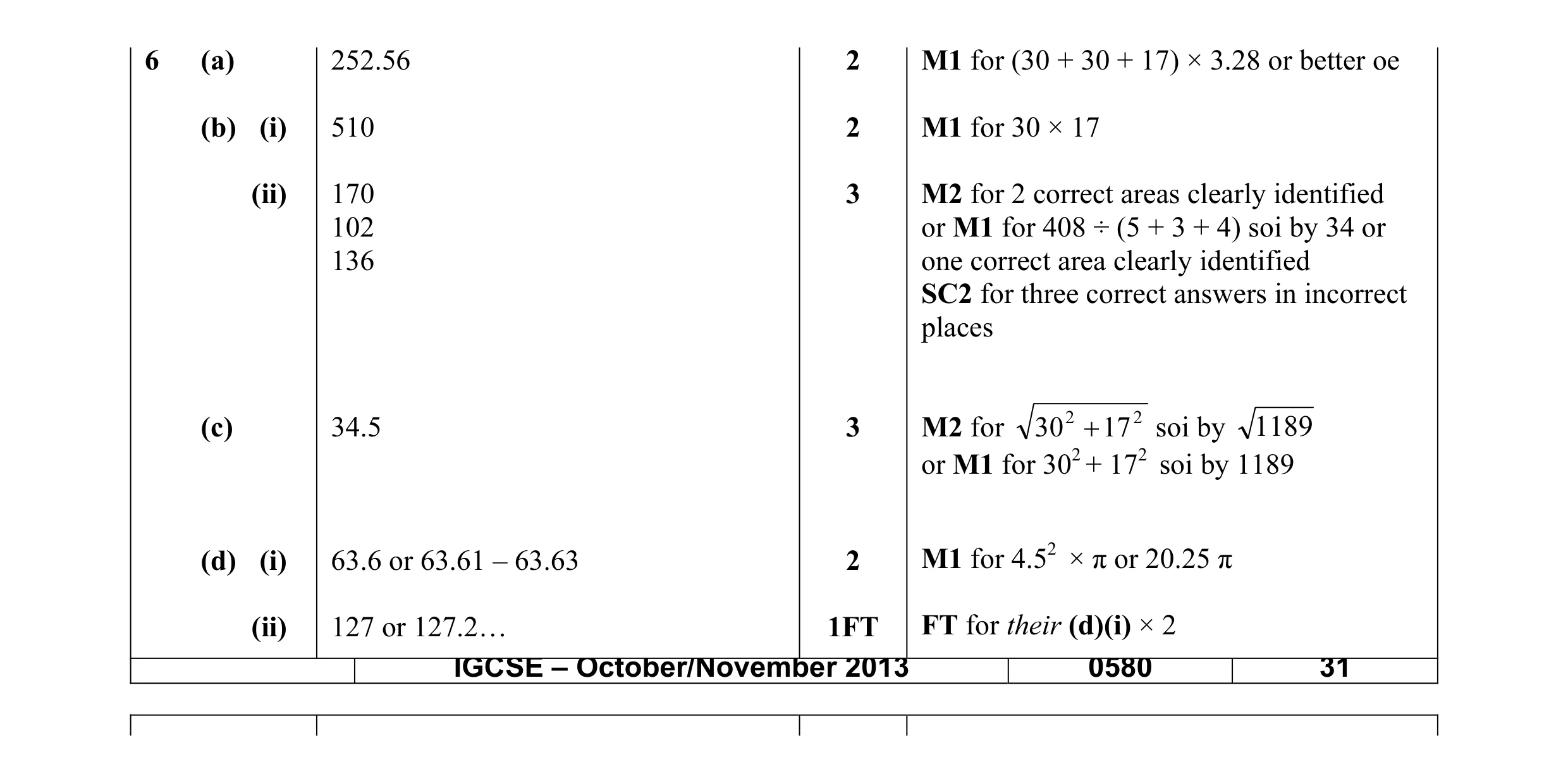 13
13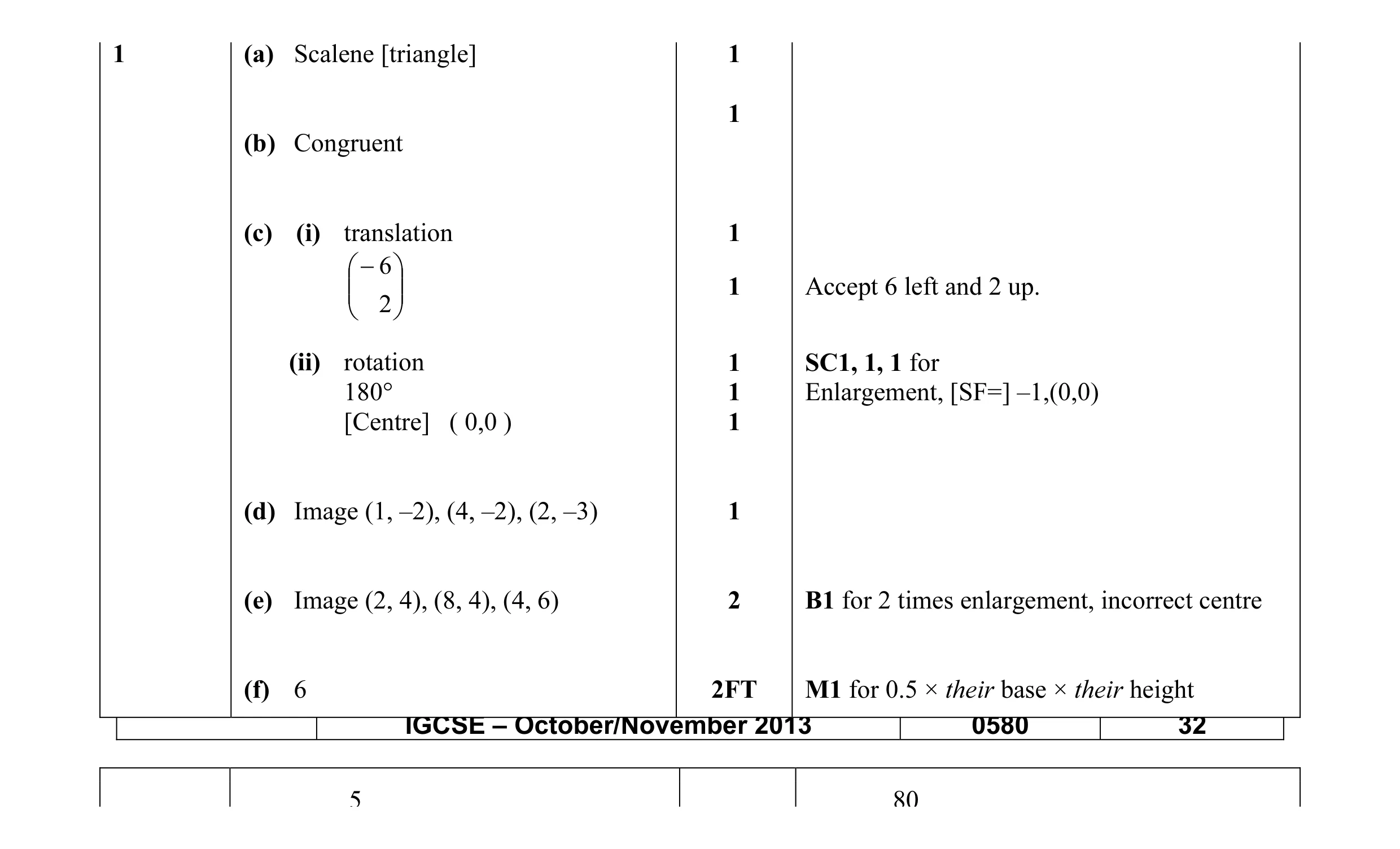 12
12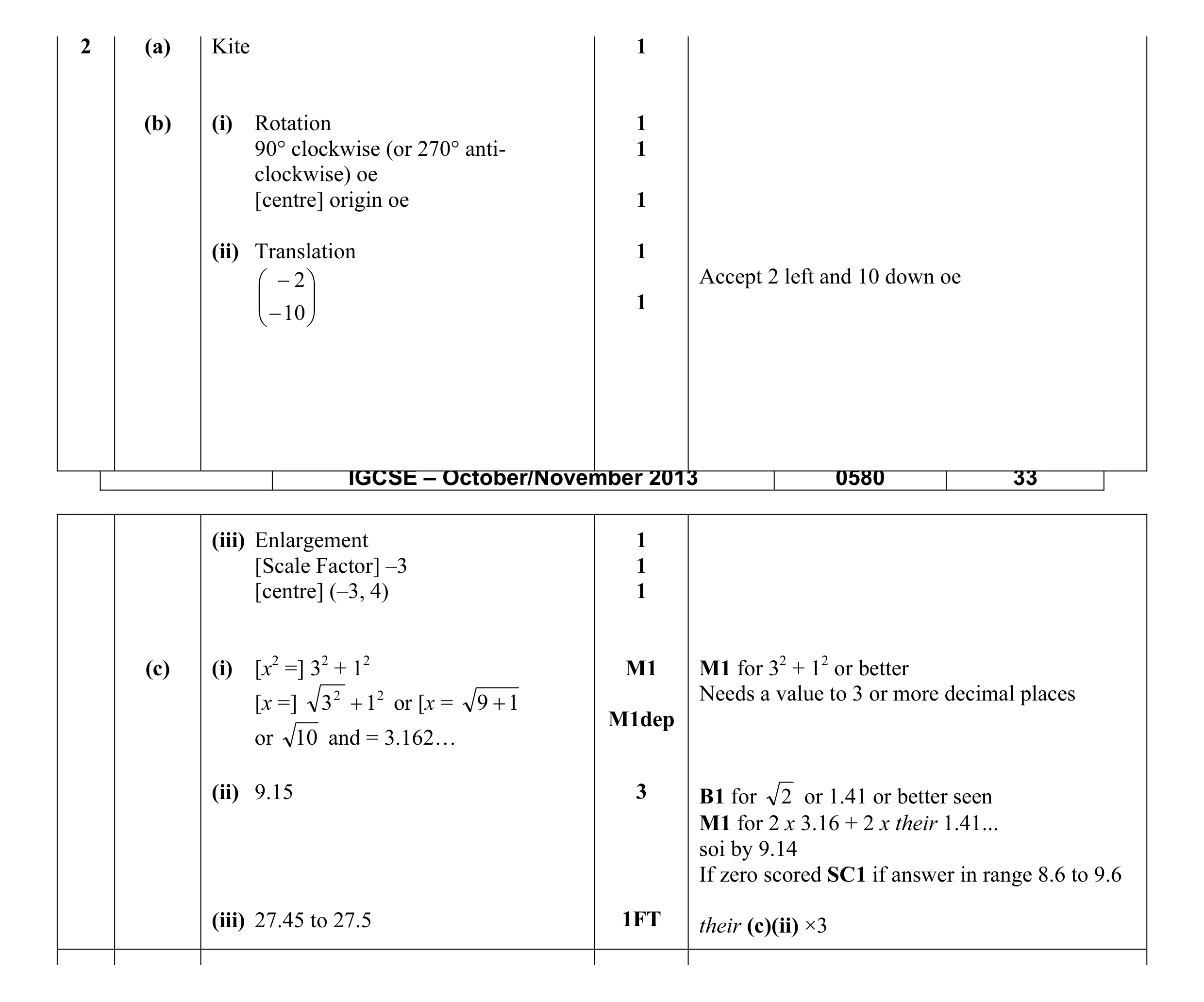 15
15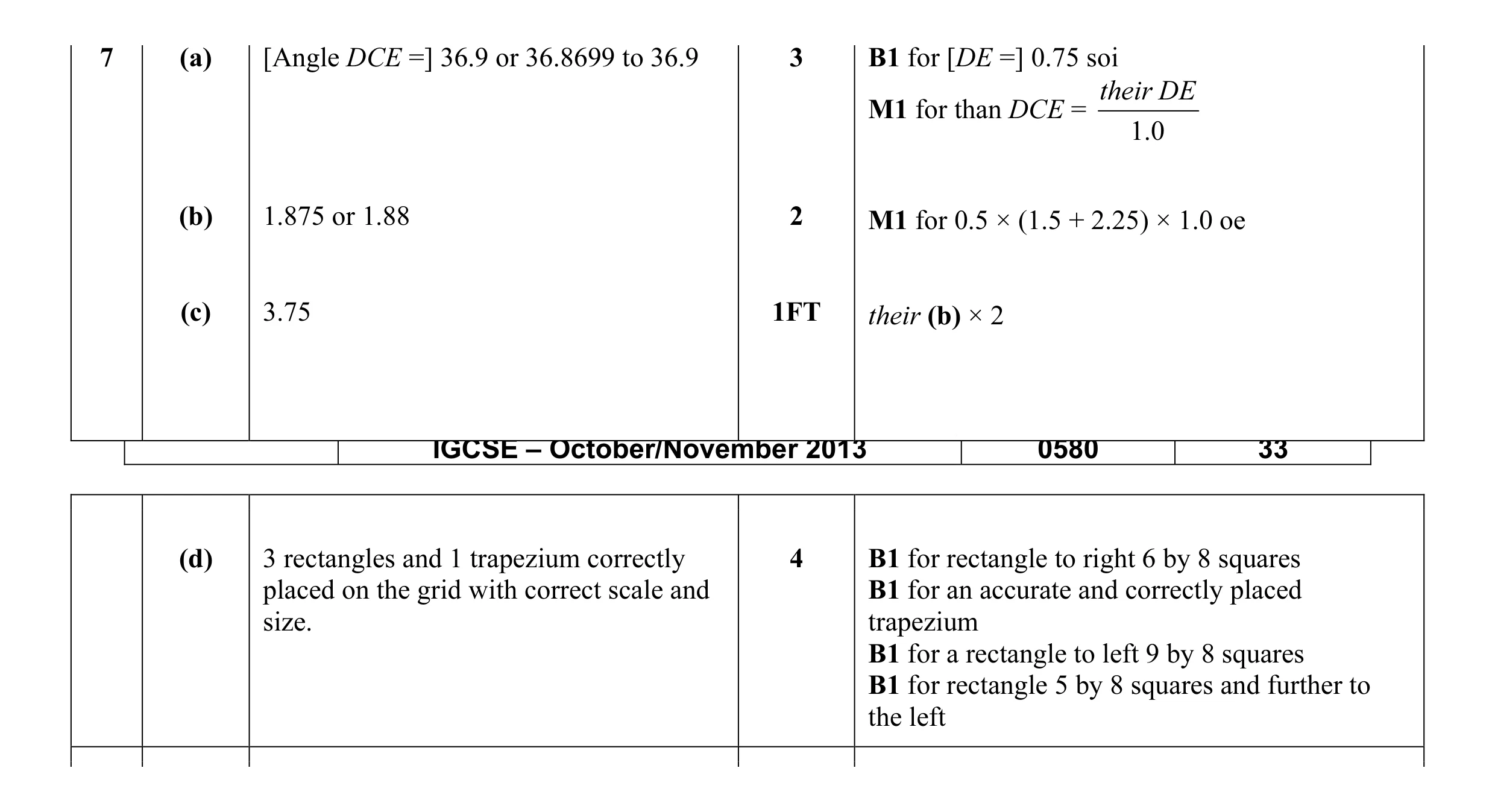 10
10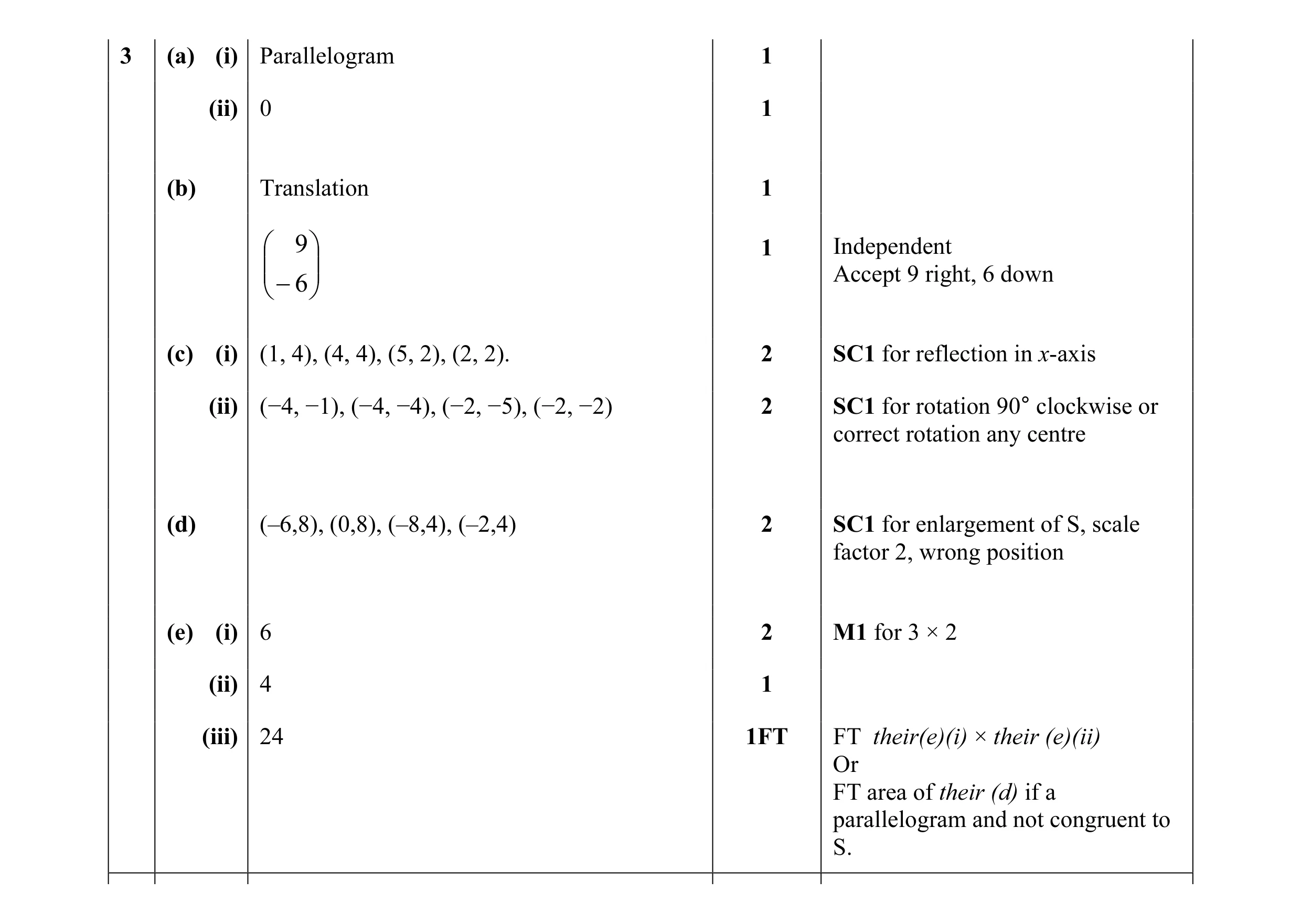 14
14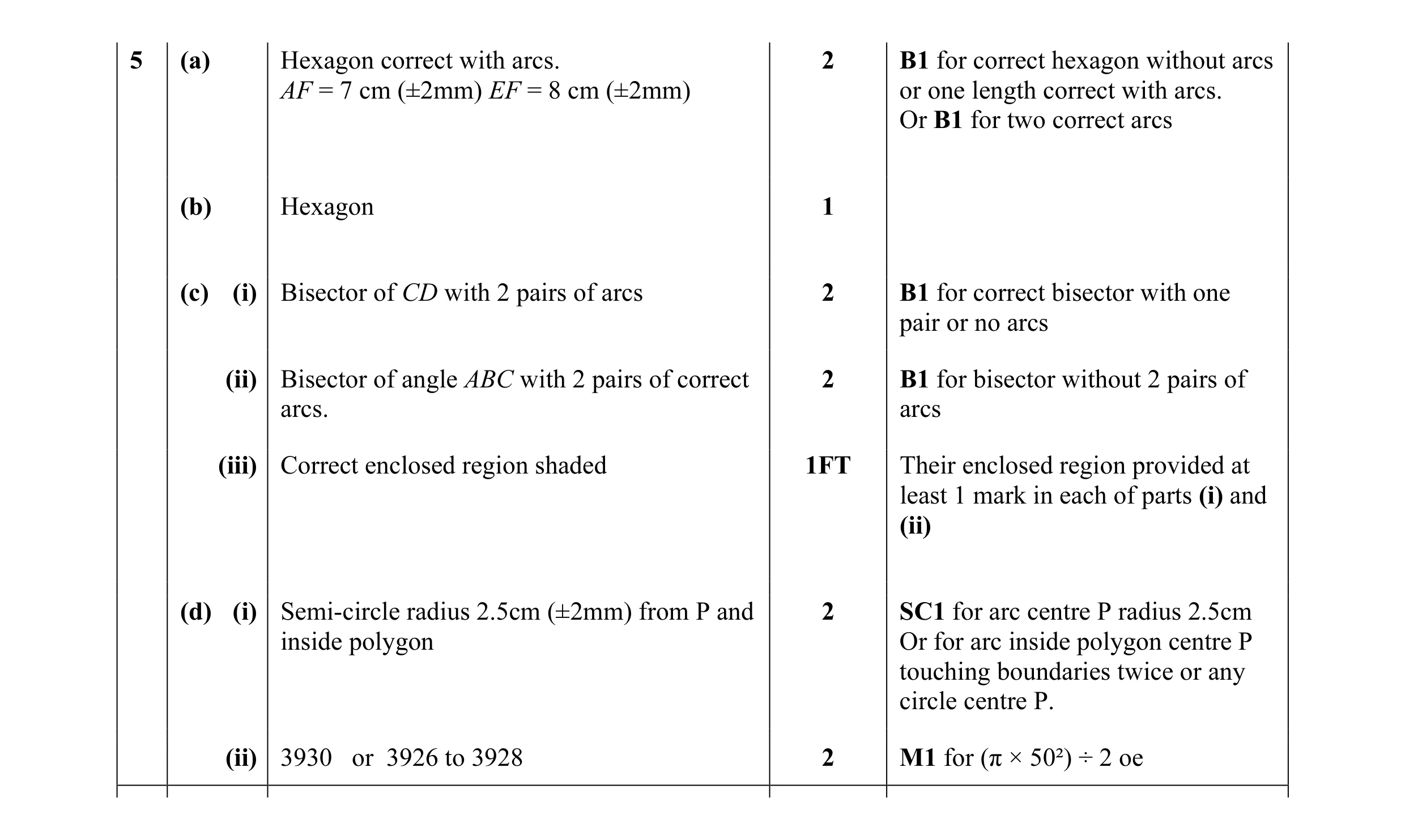 12
12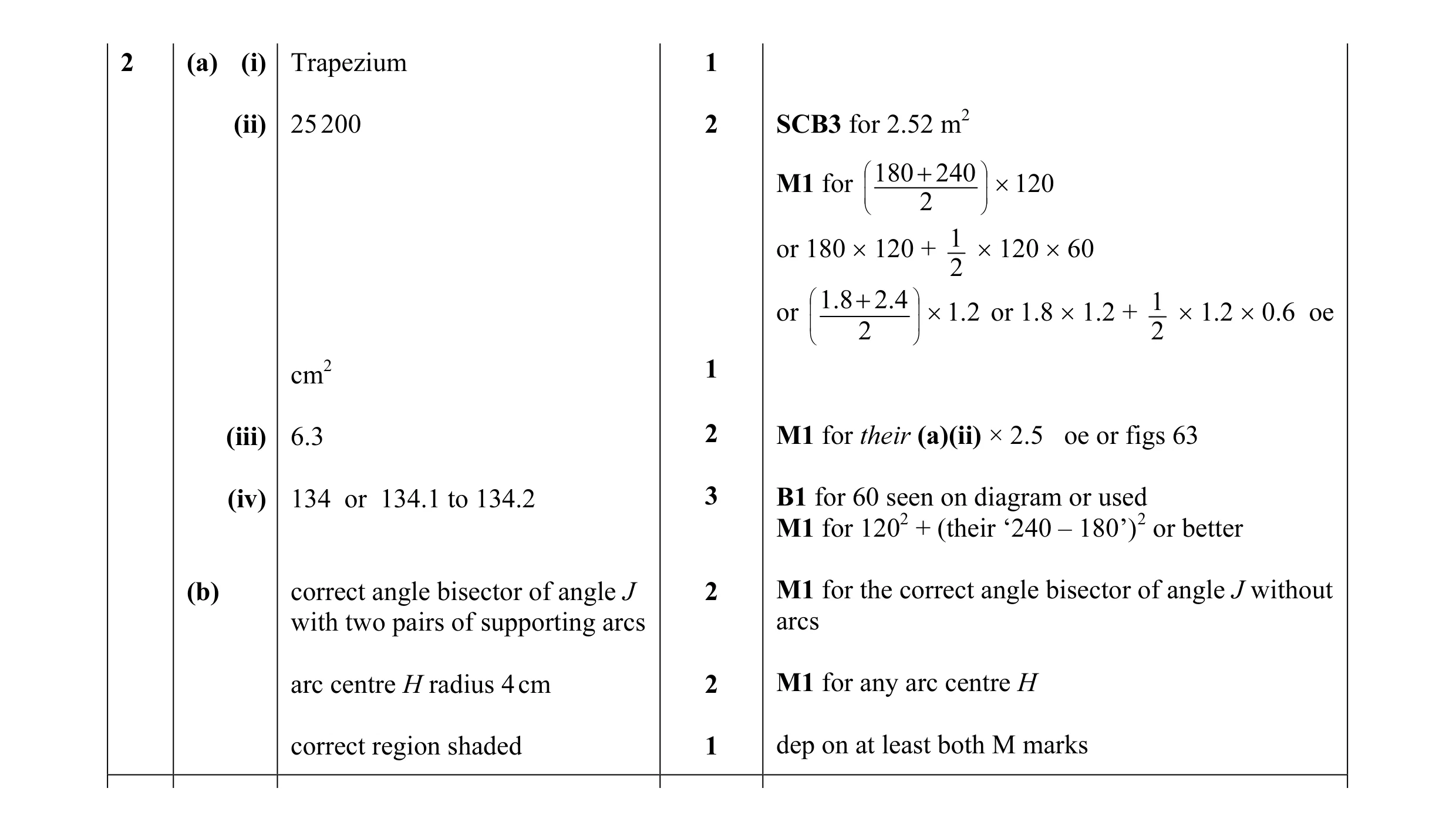 14
14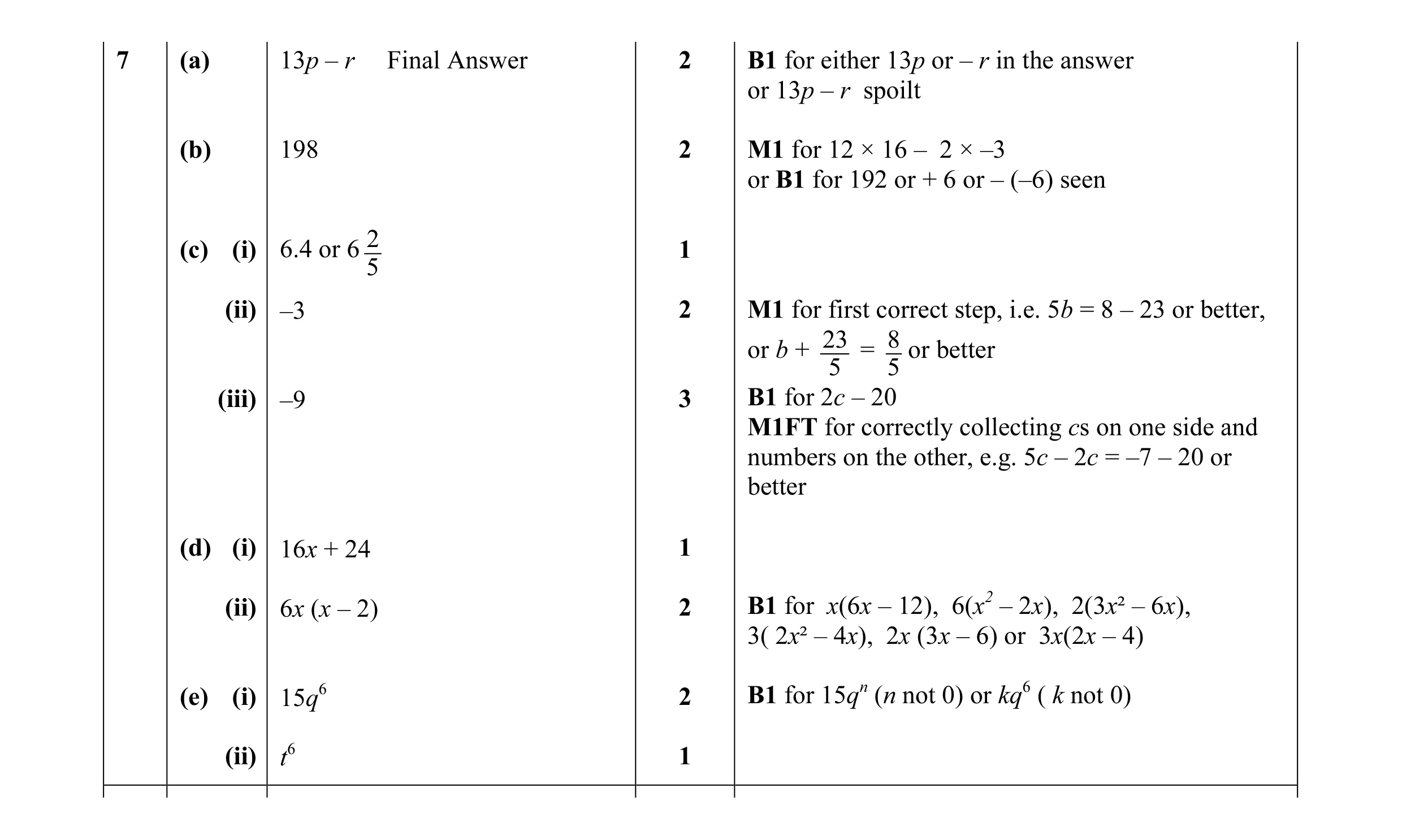 16
16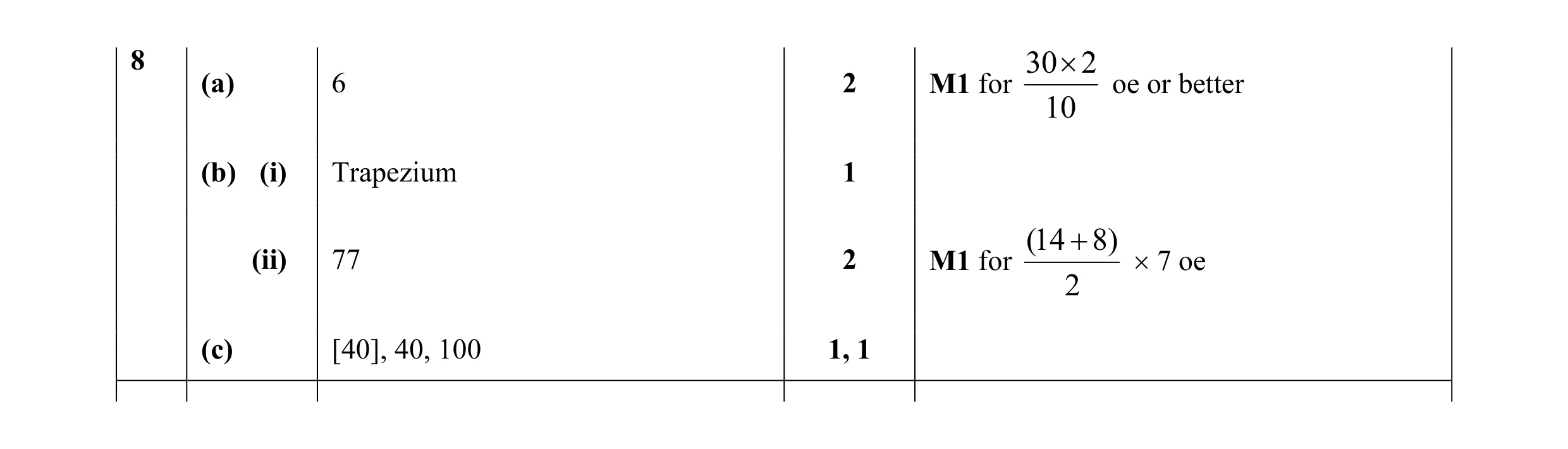 7
7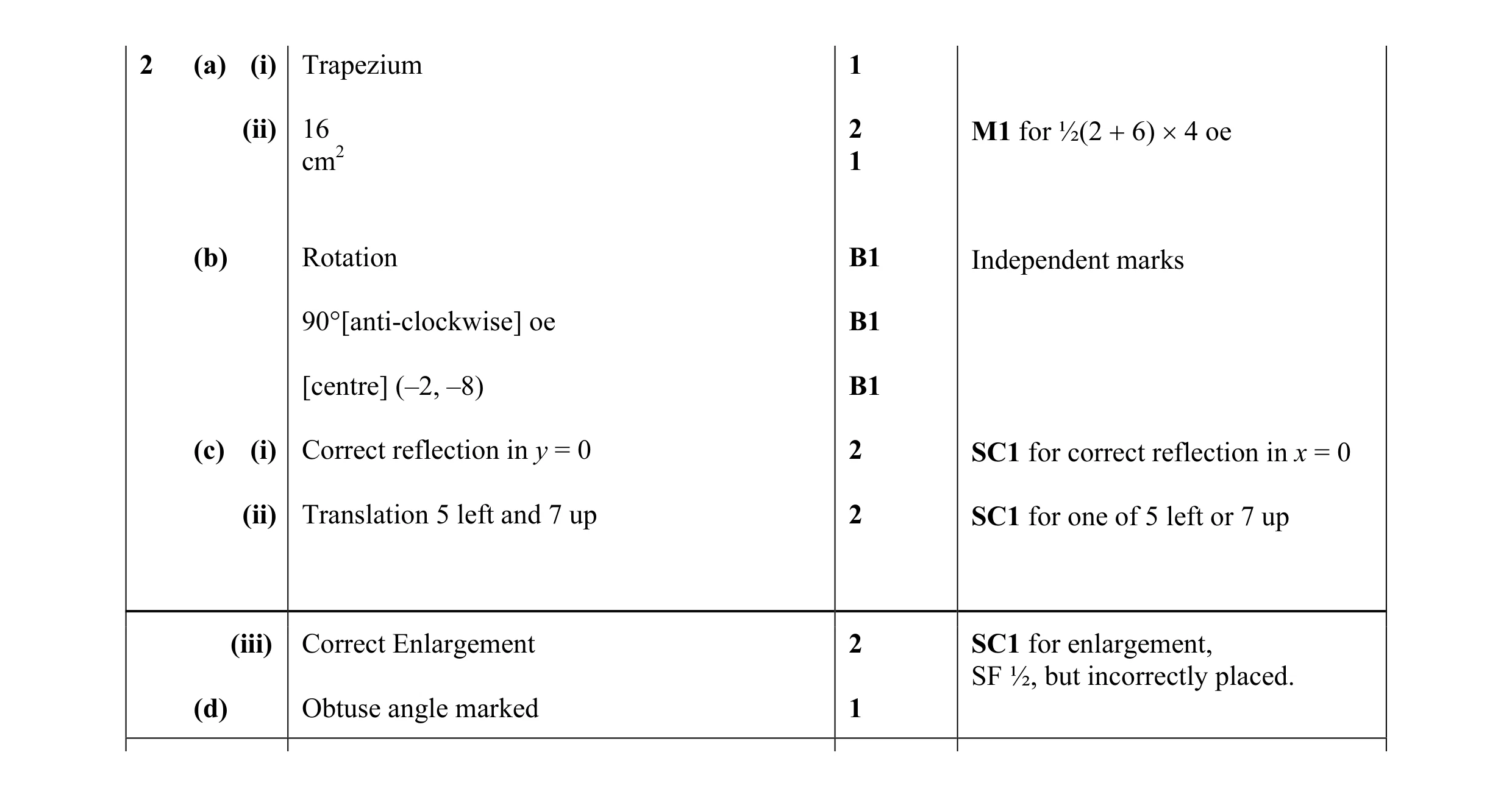 14
14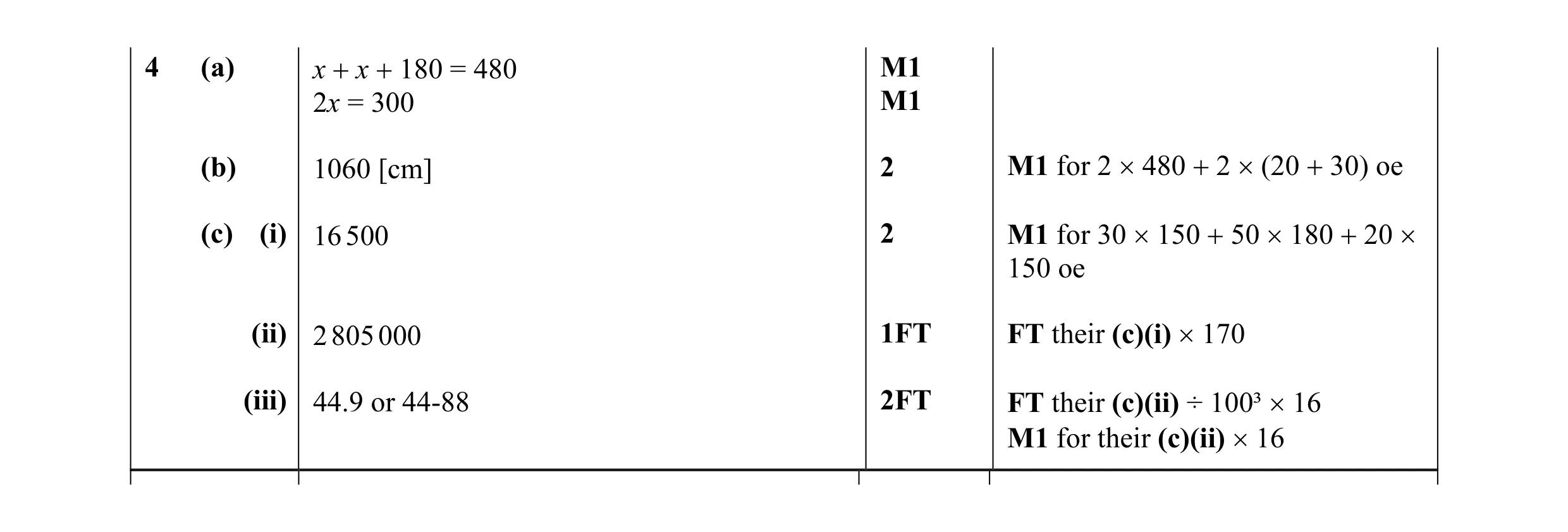 9
9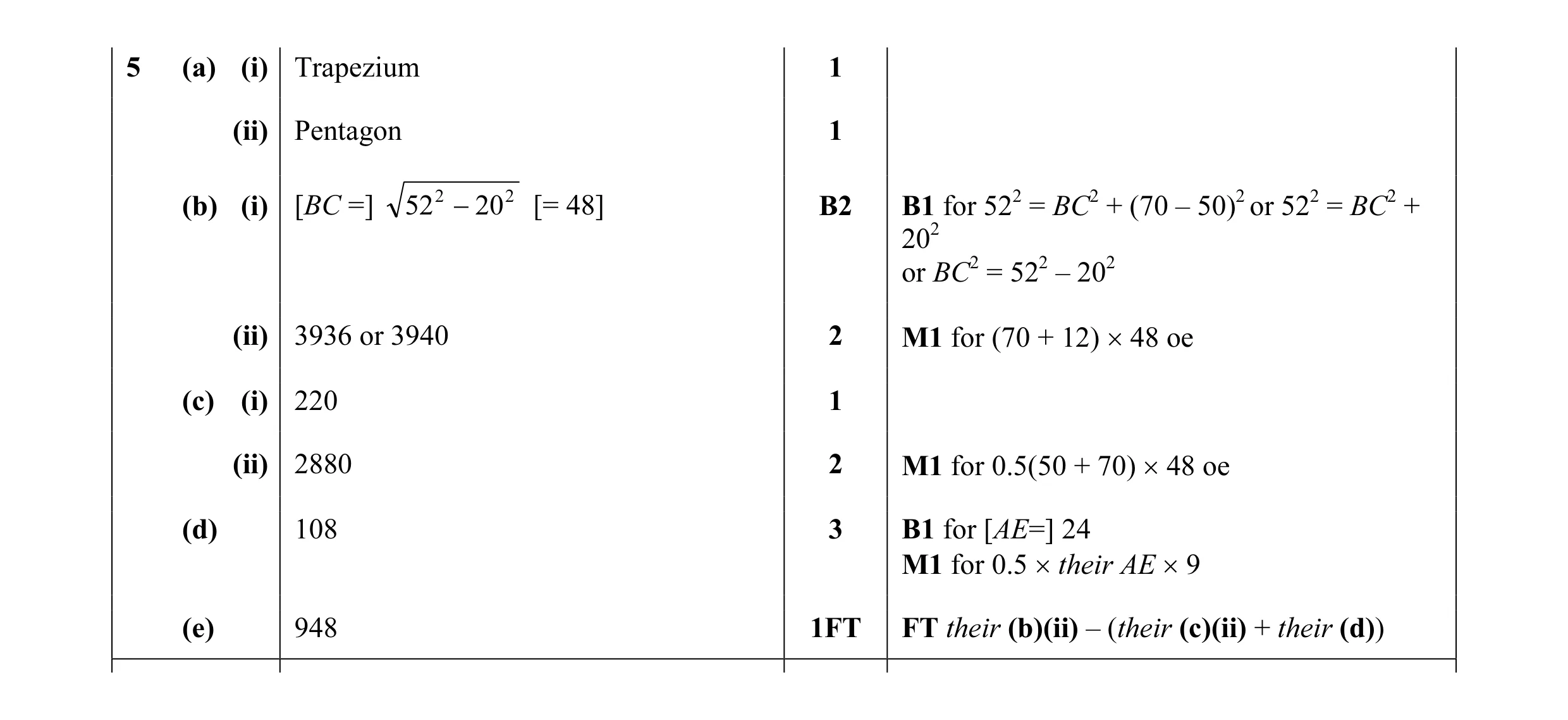 13
13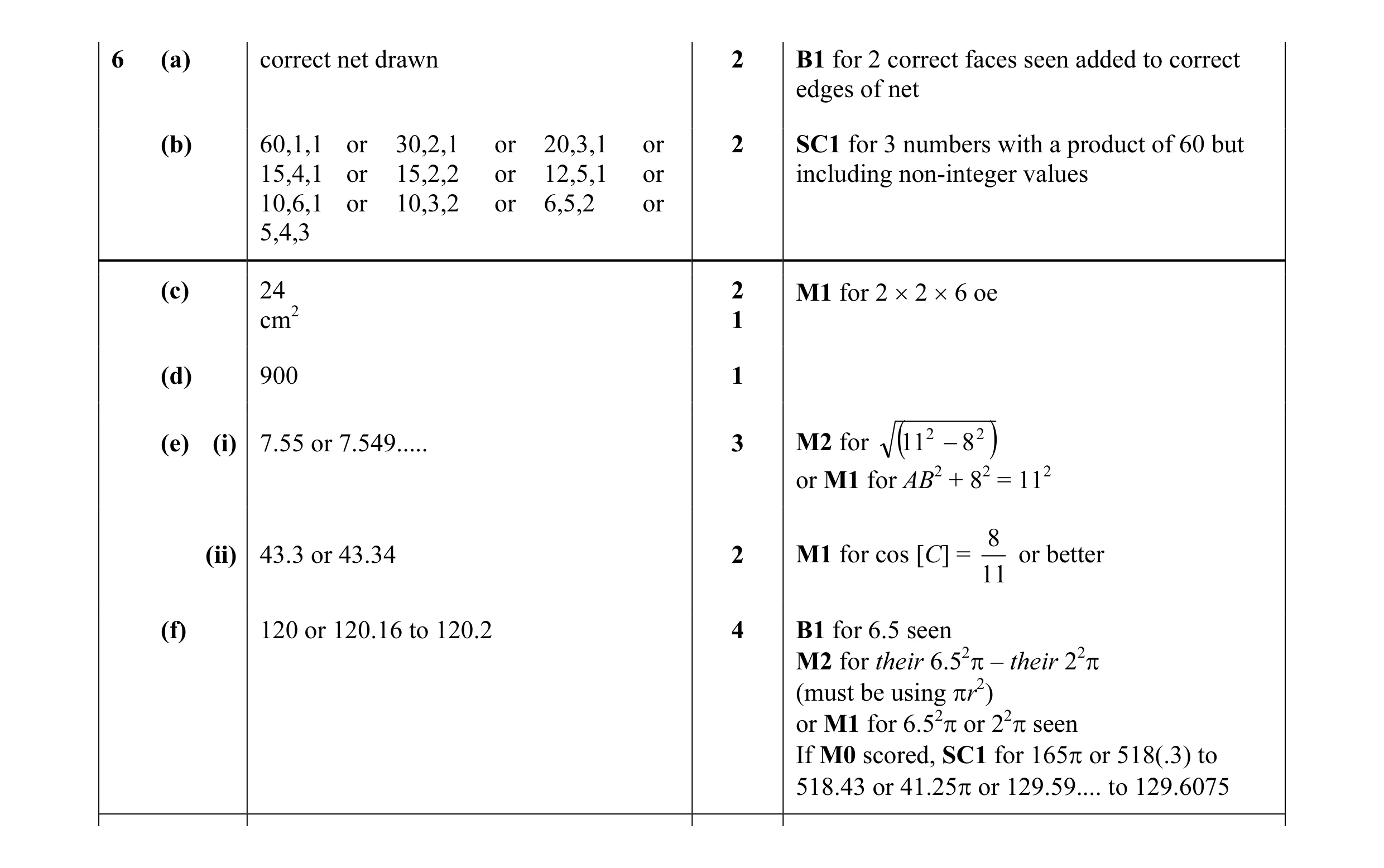 17
17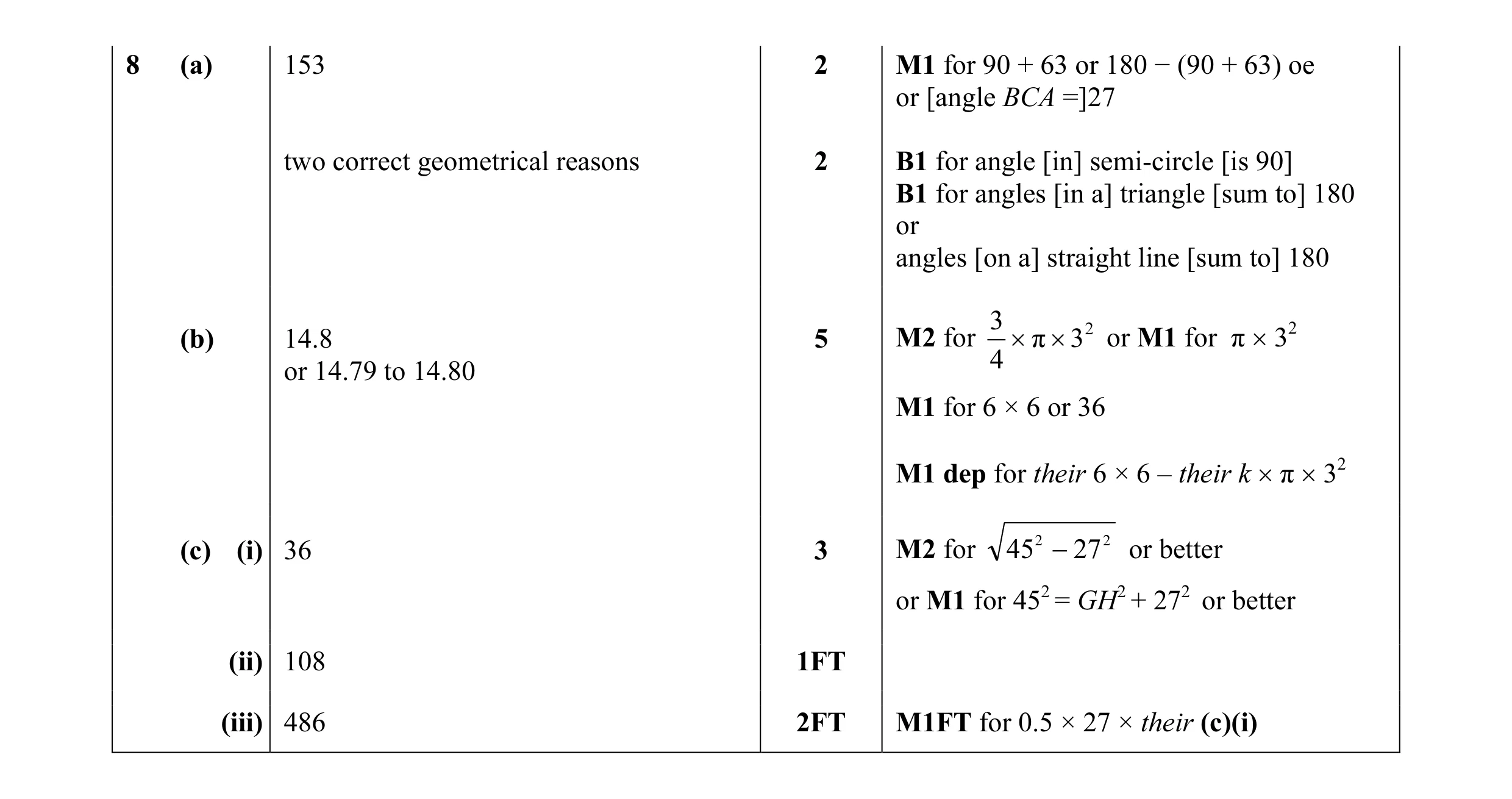 15
15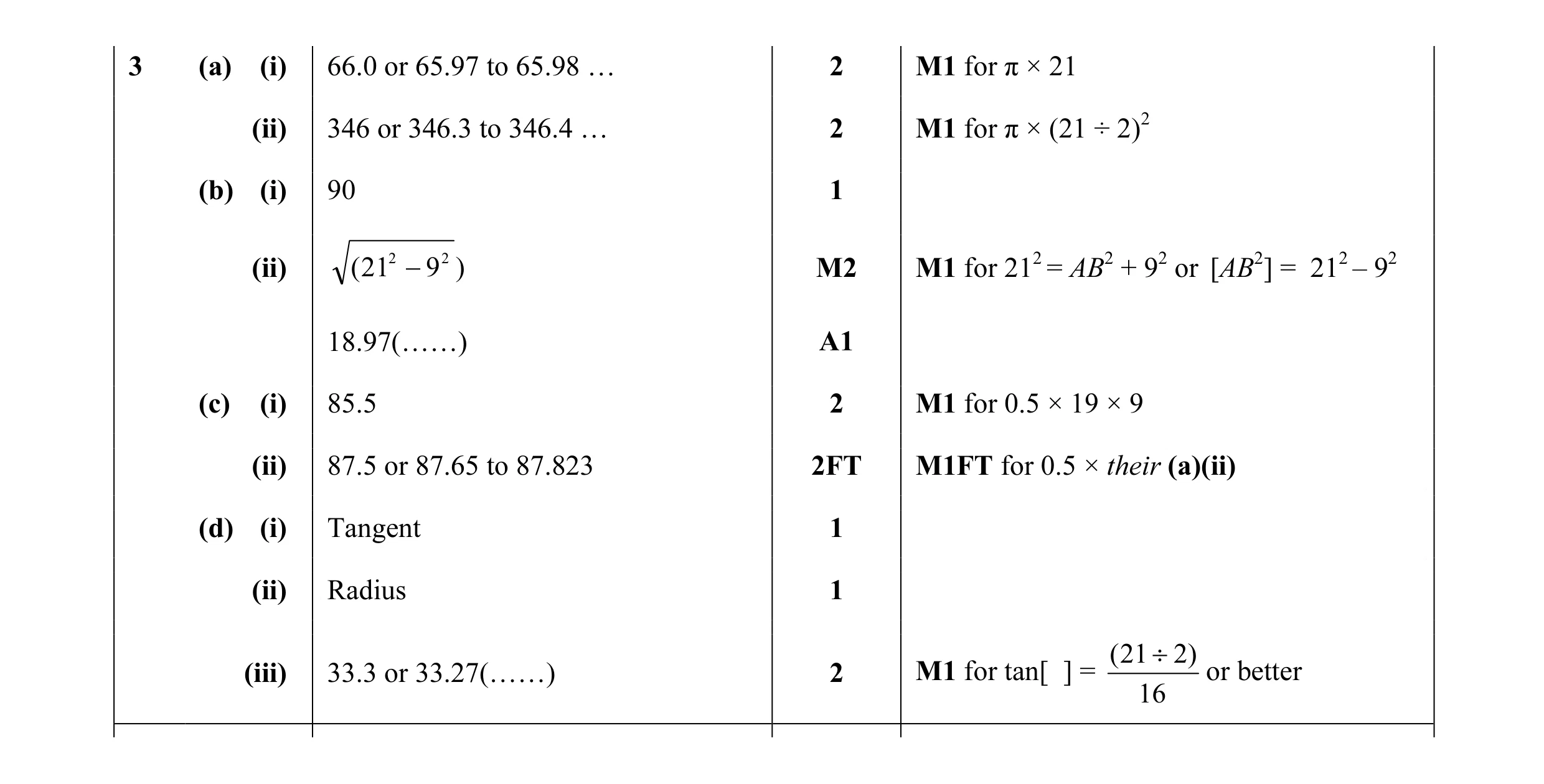 16
16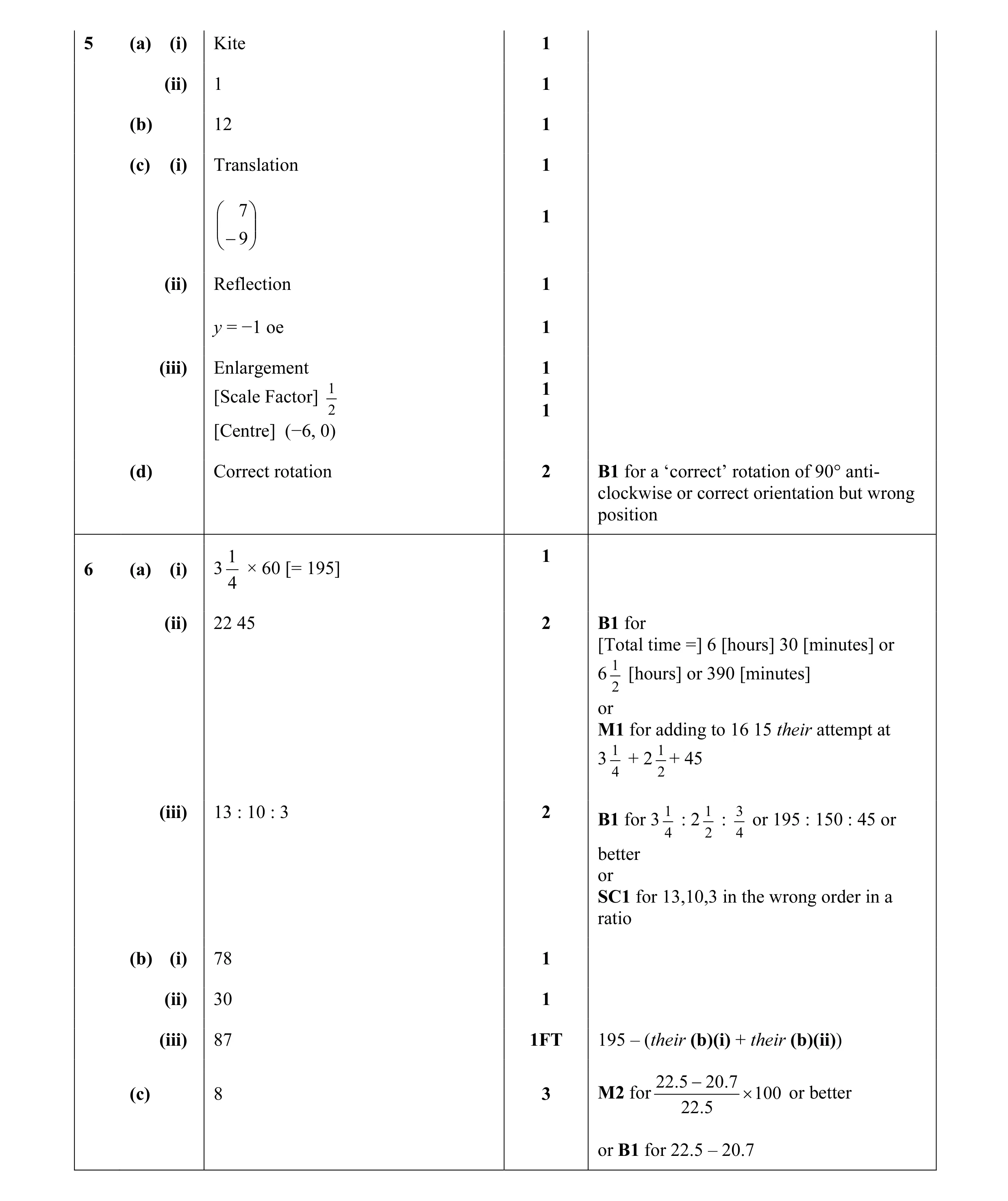 12
12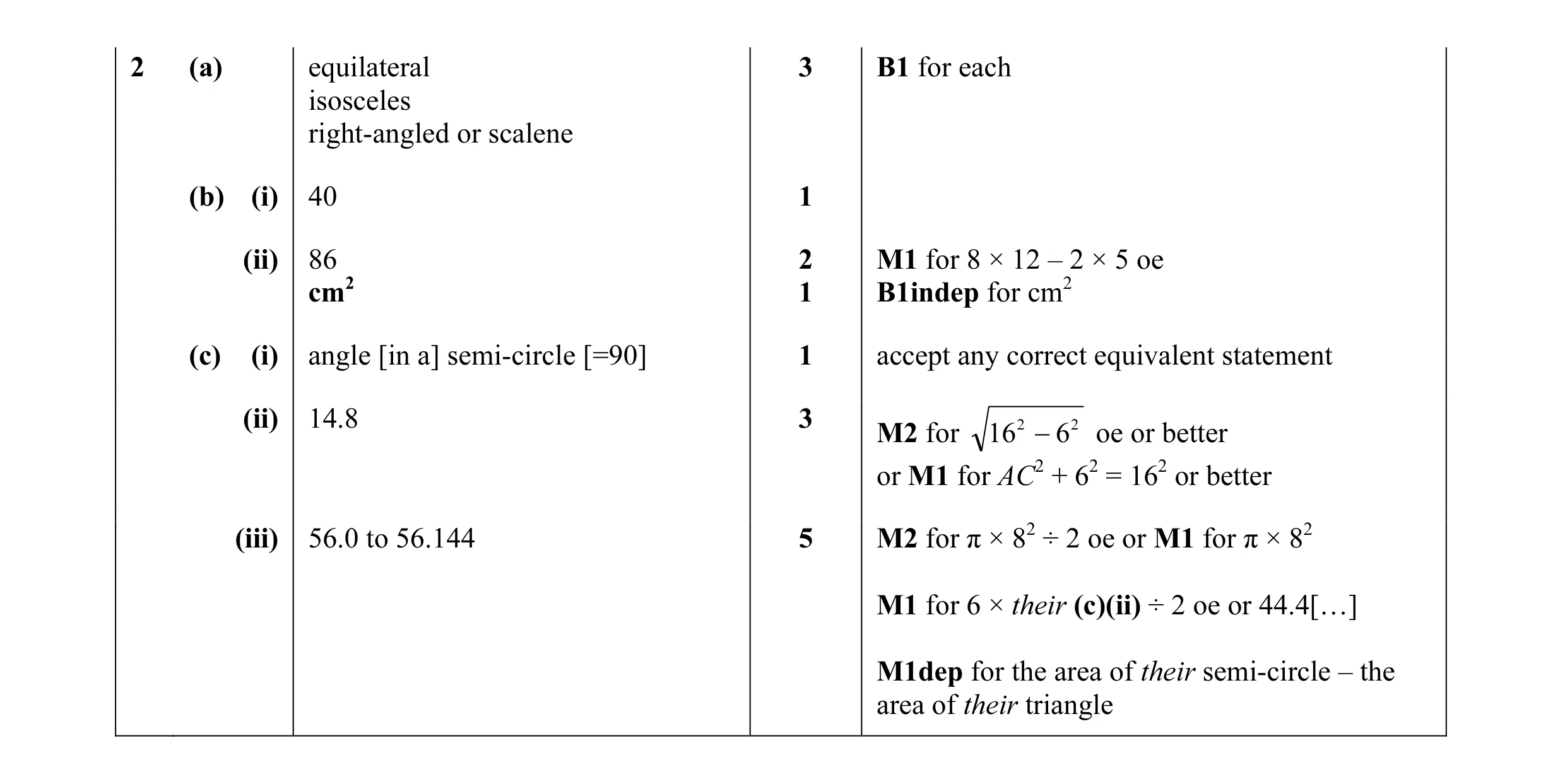 16
16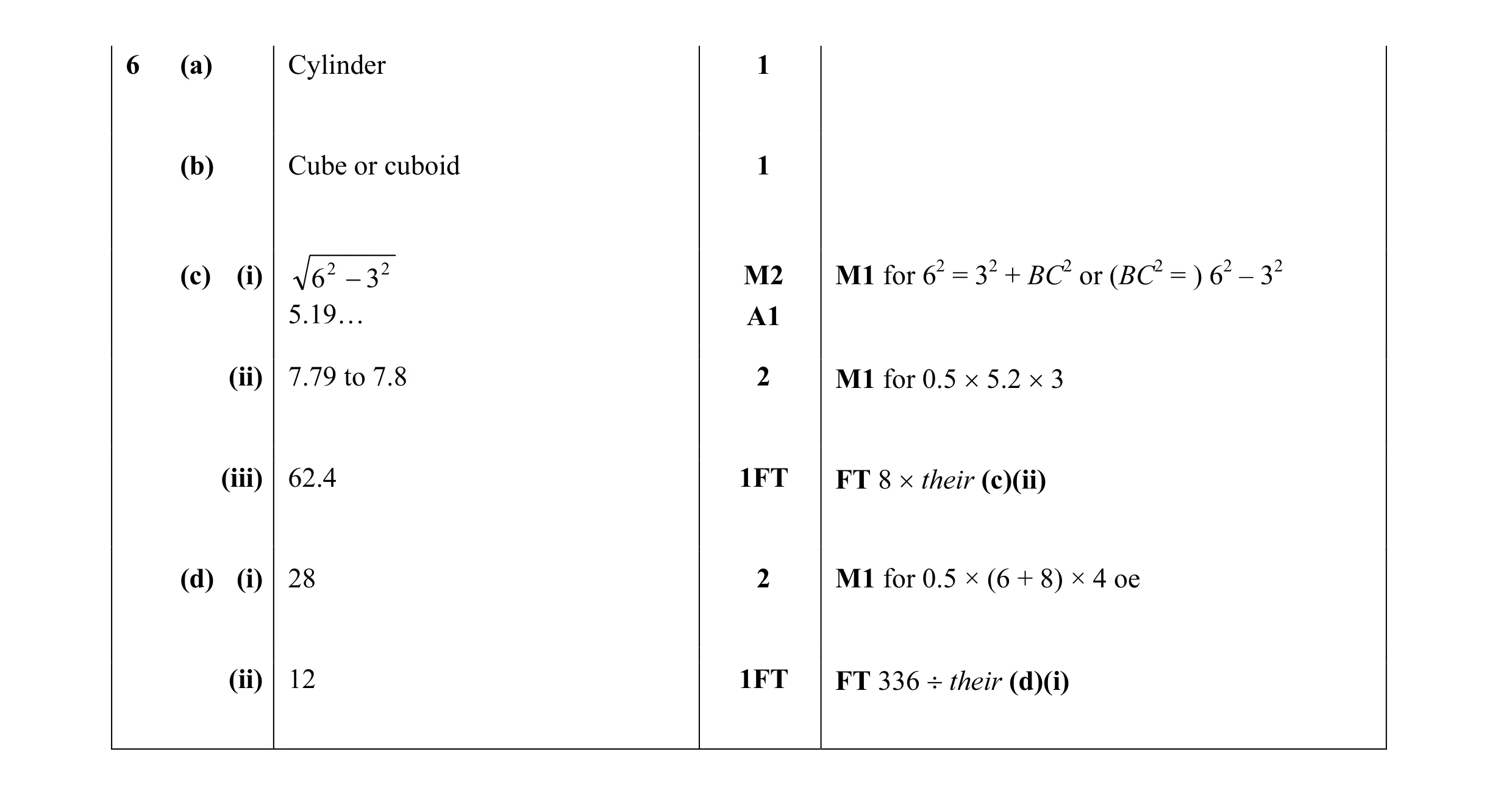 11
11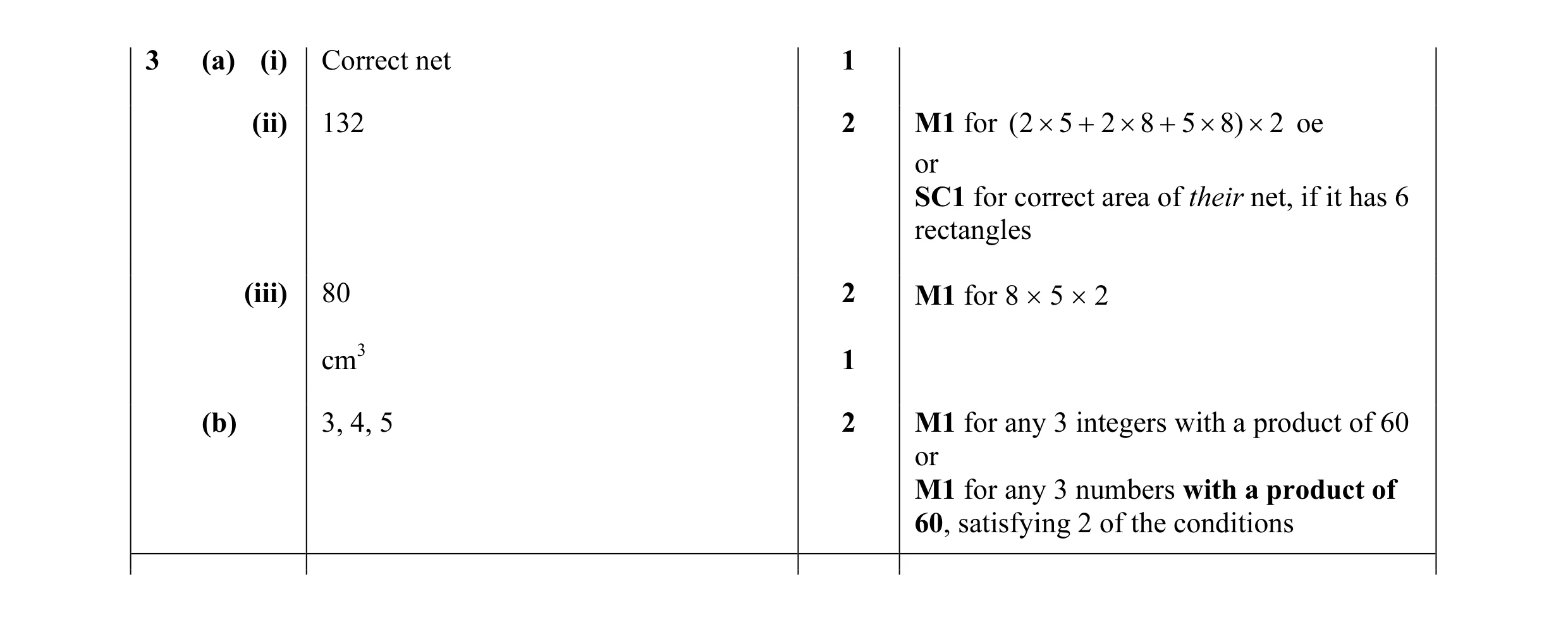 8
8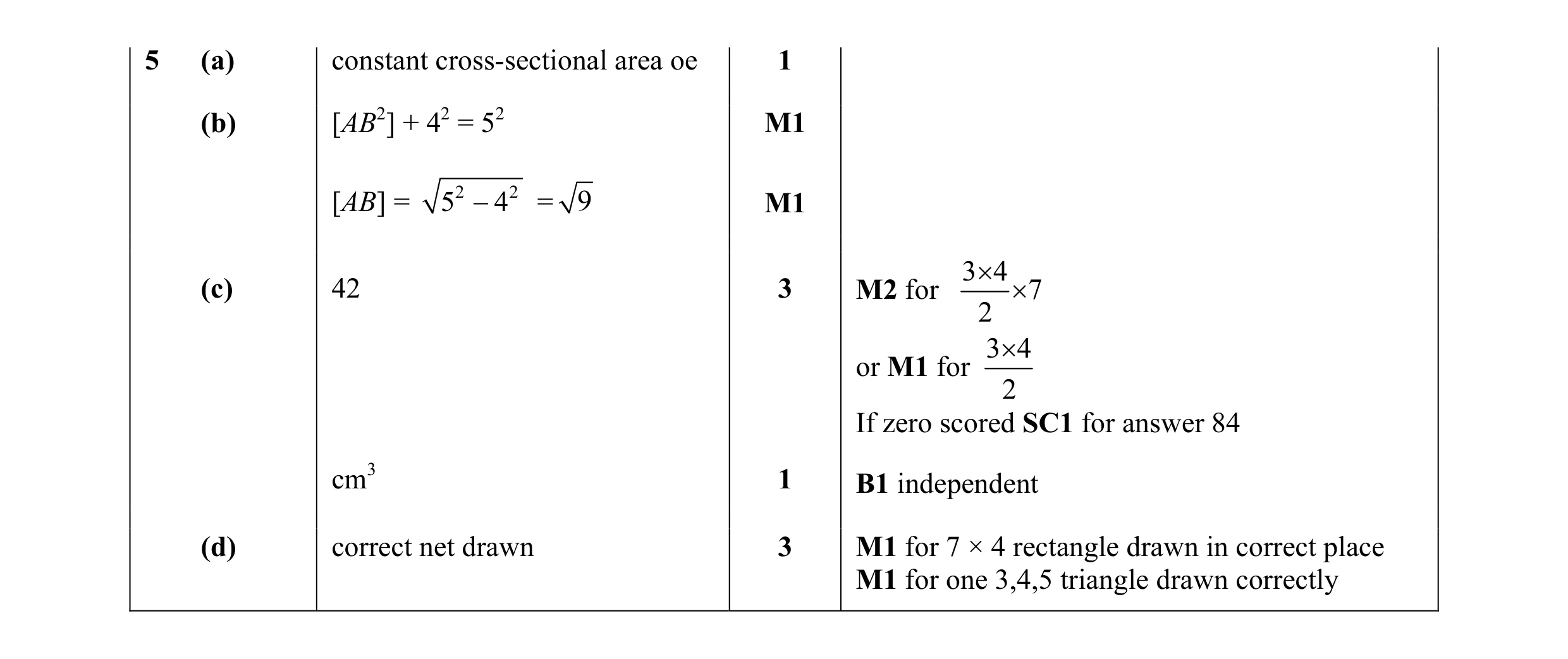 12
12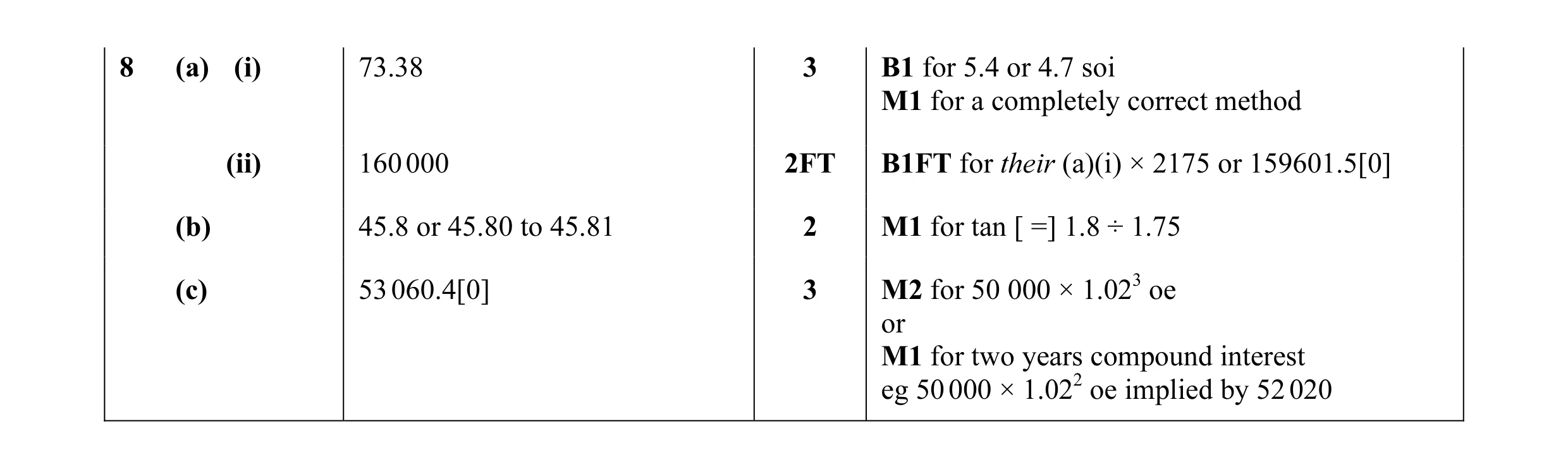 13
13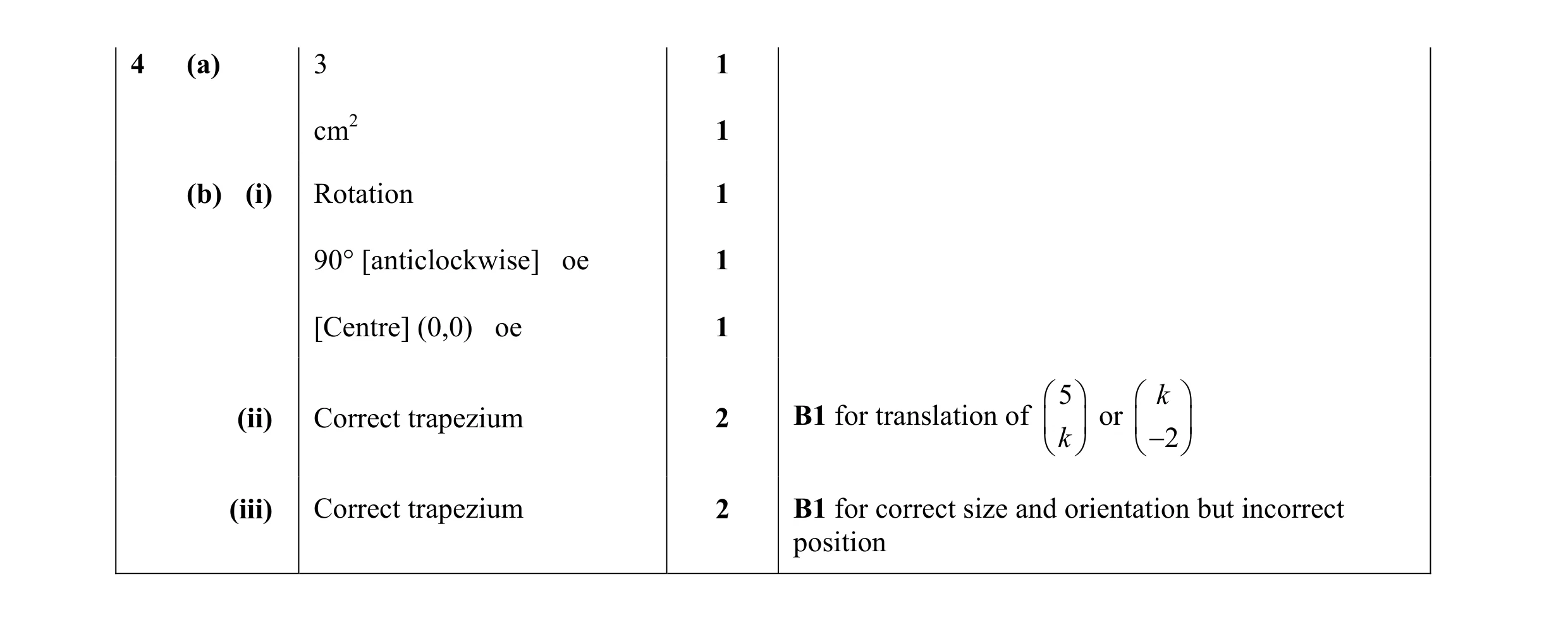 9
9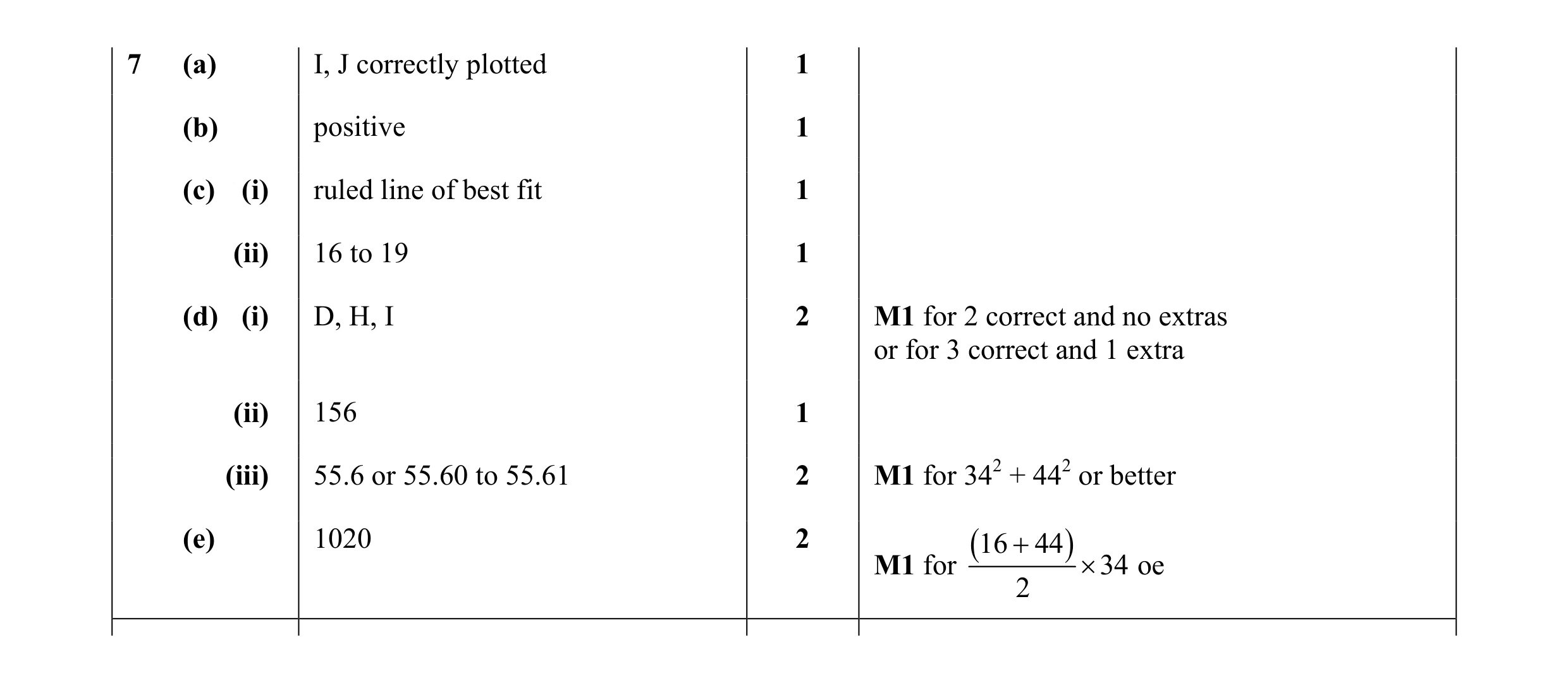 11
11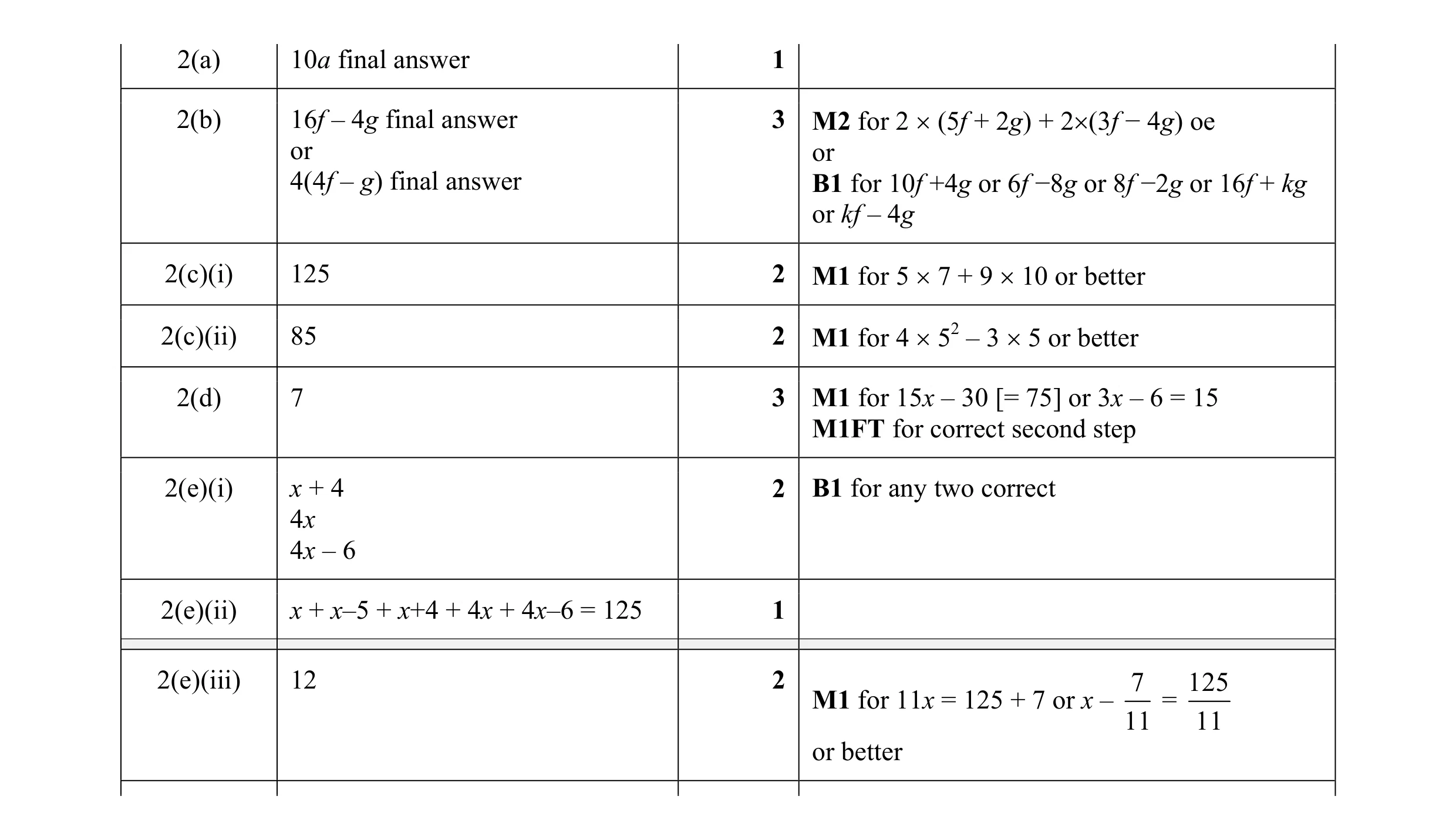 16
16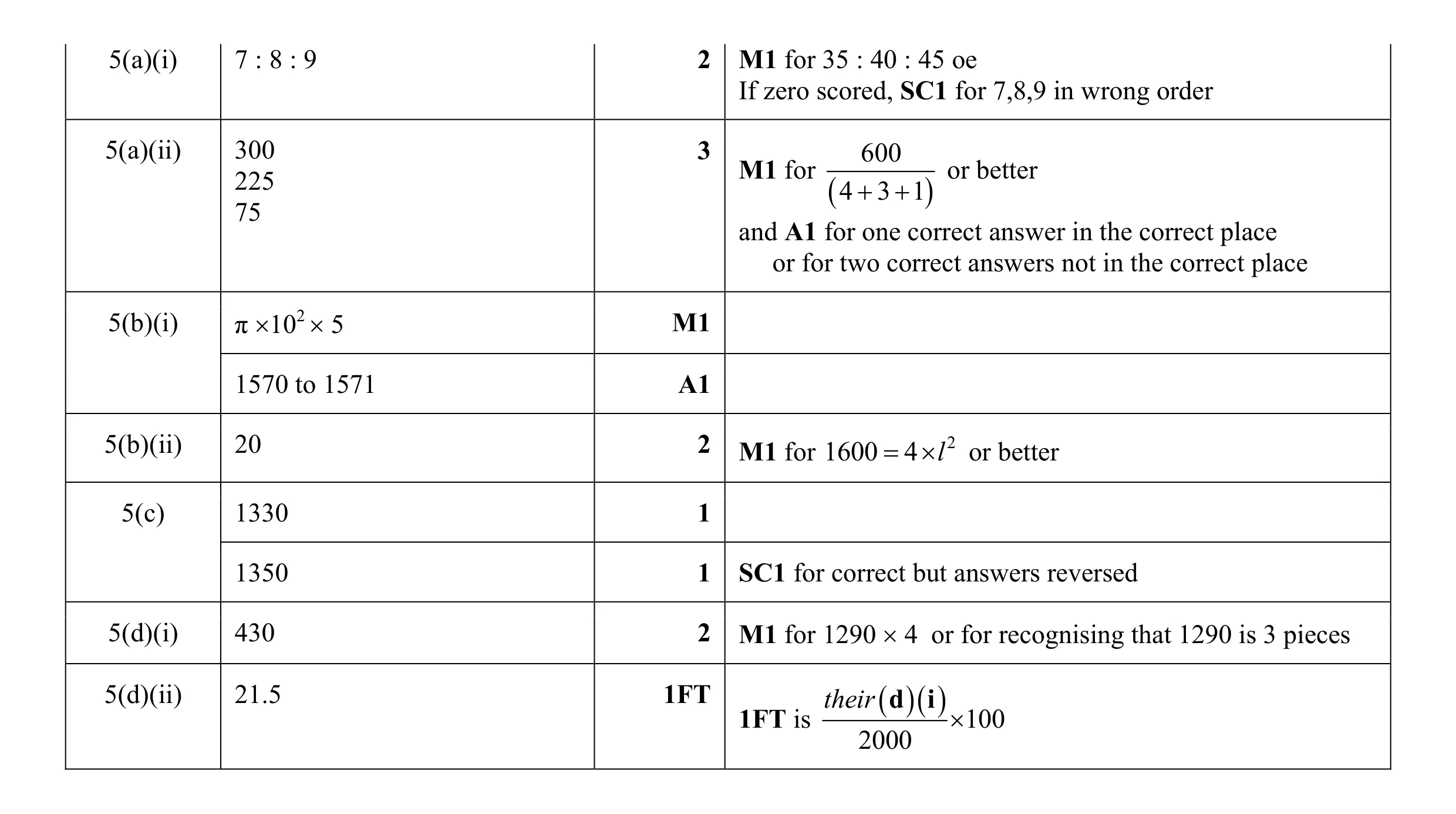 14
14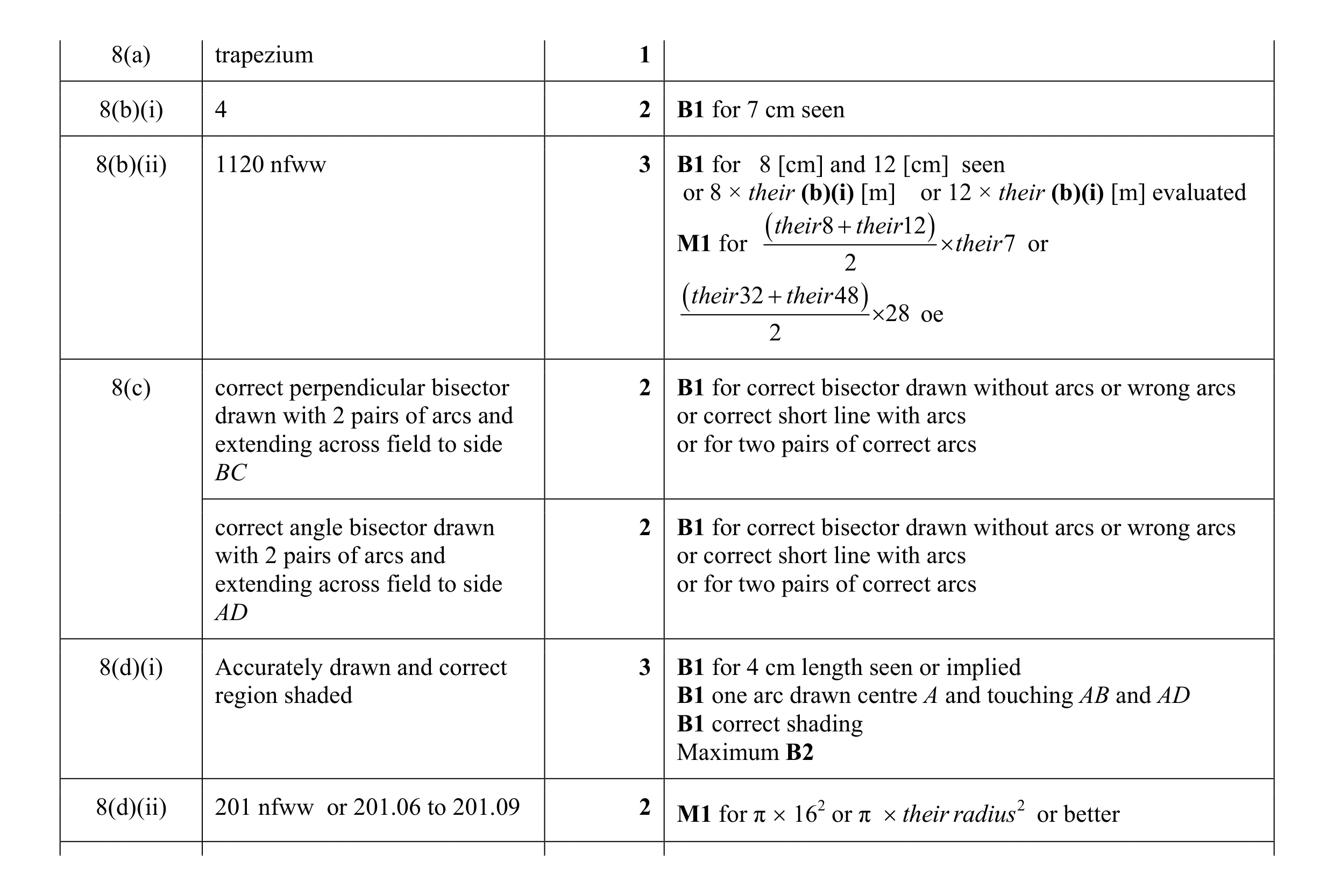 15
15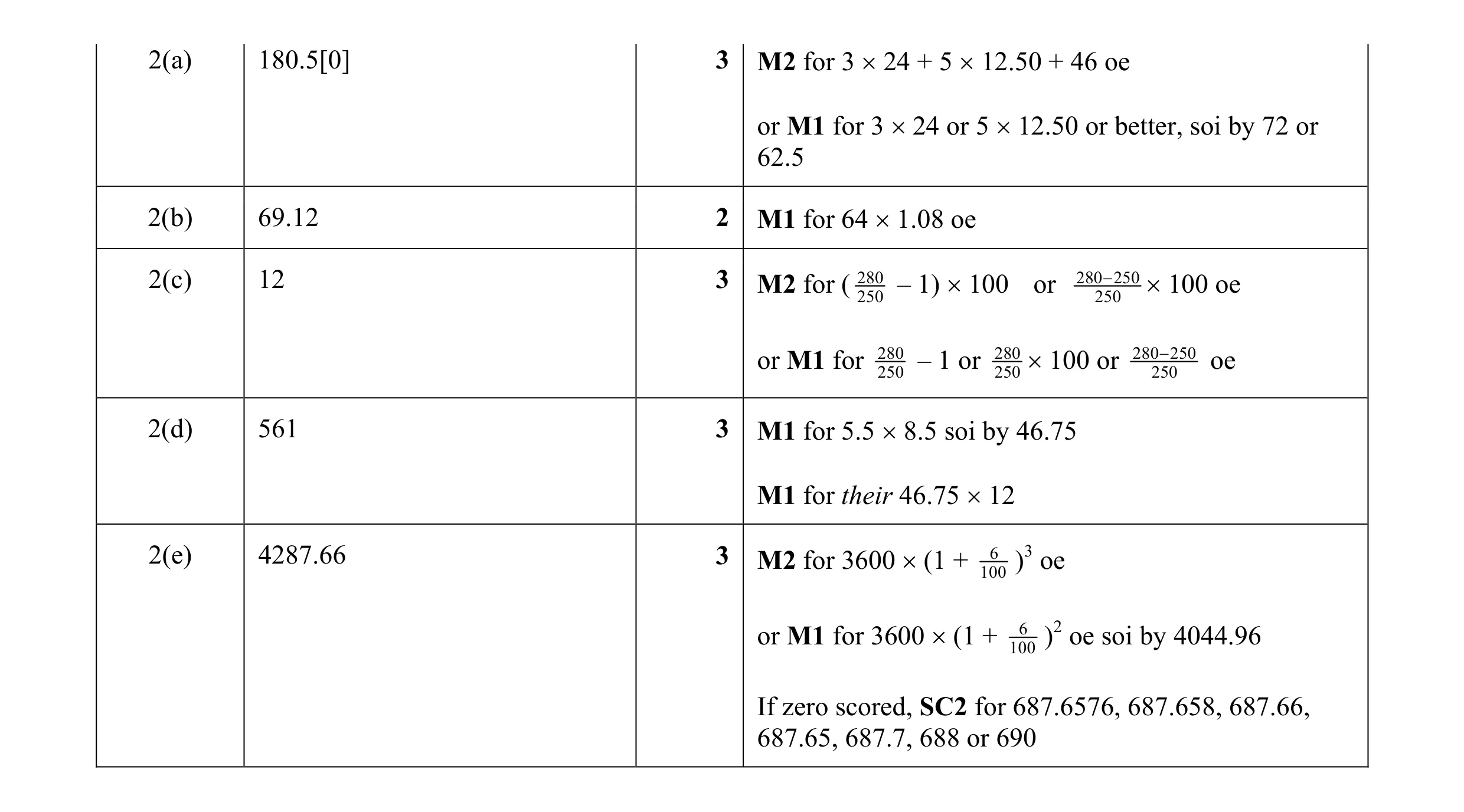 14
14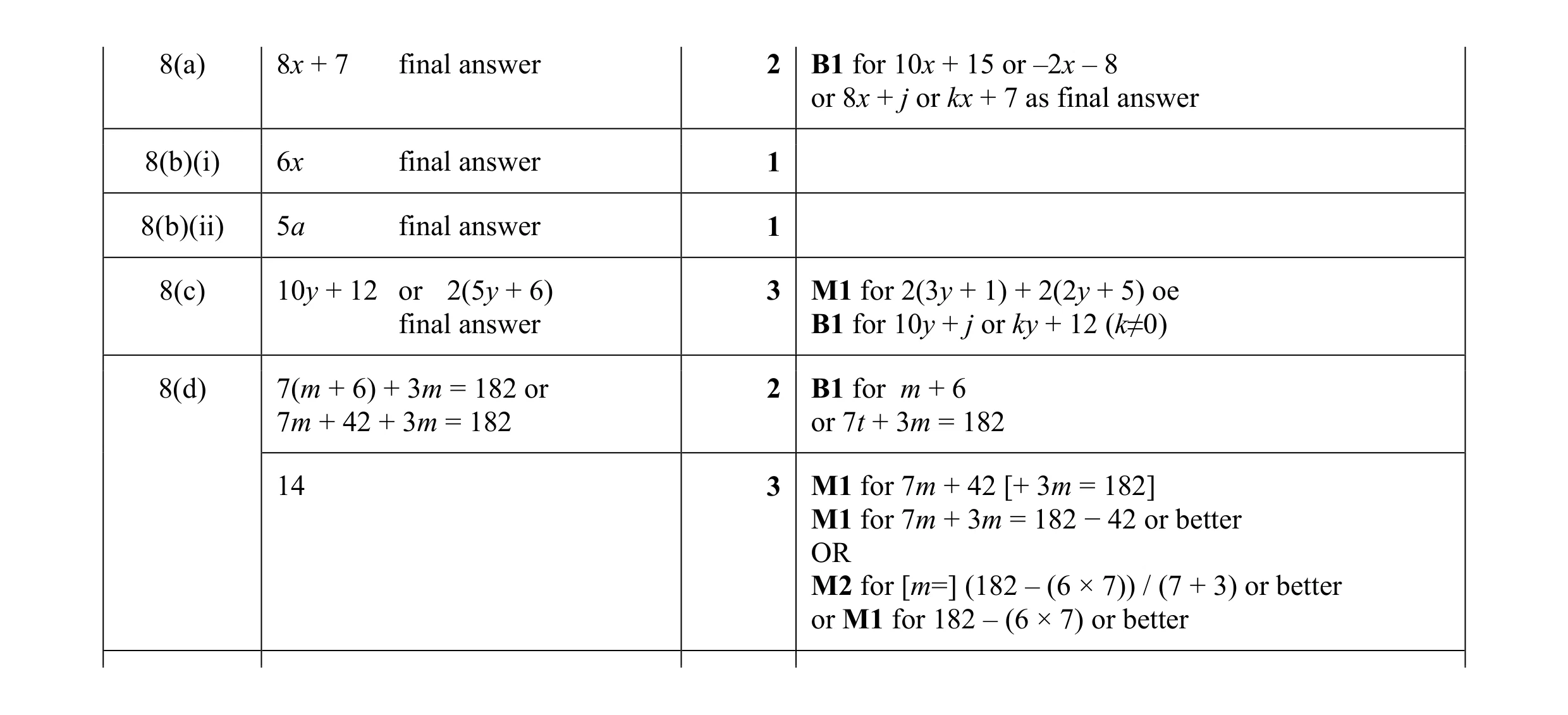 12
12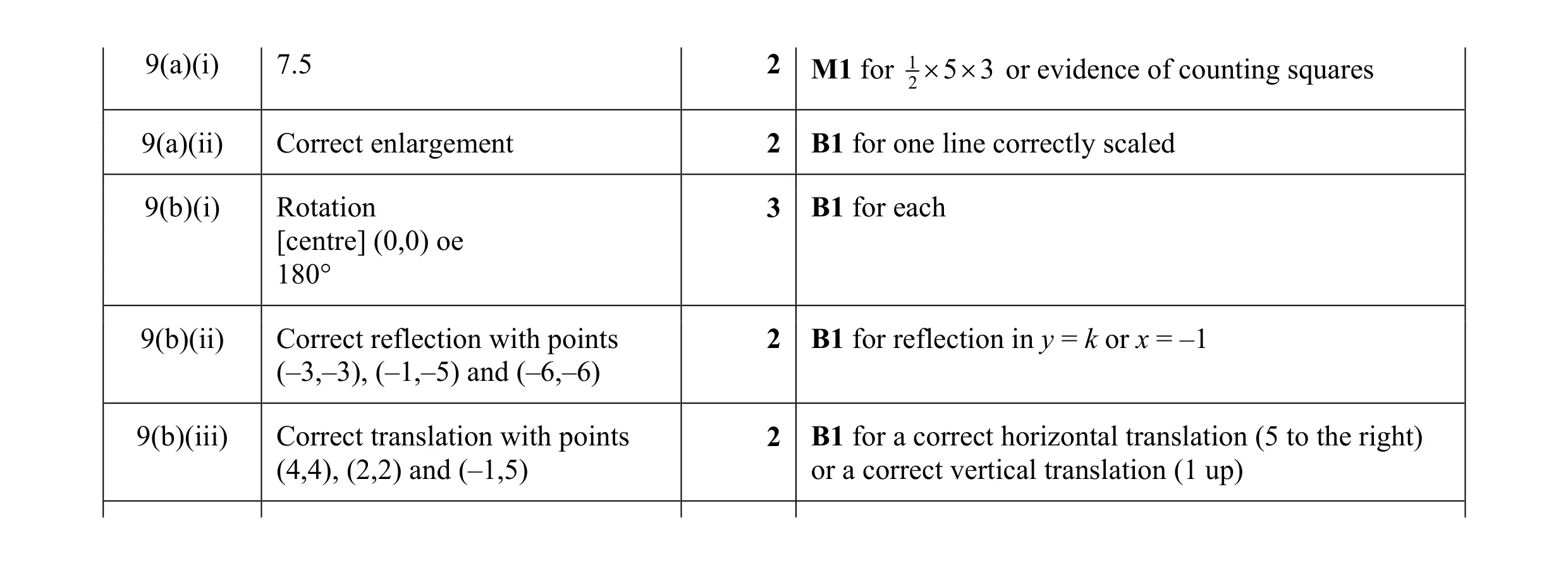 11
11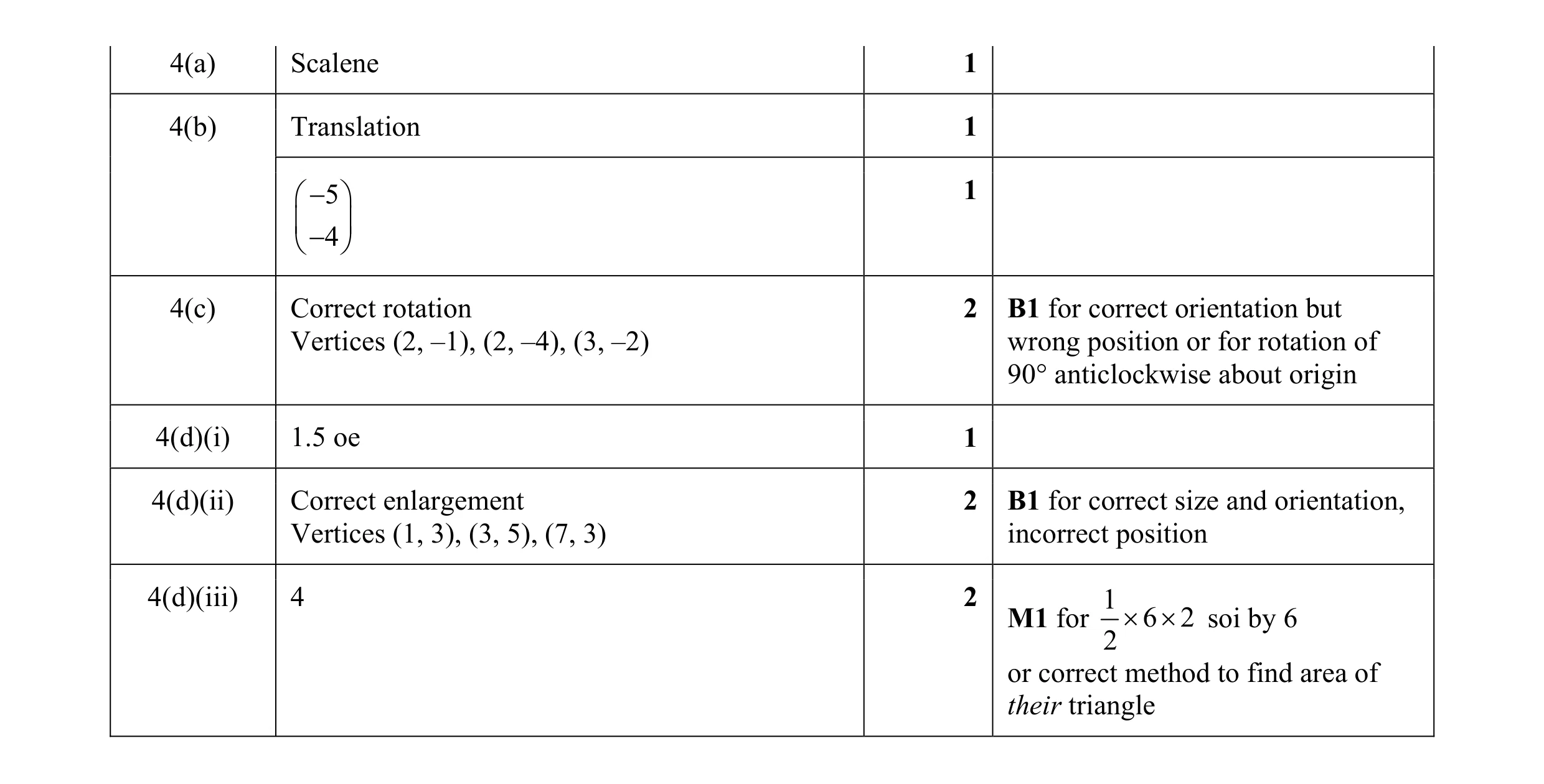 10
10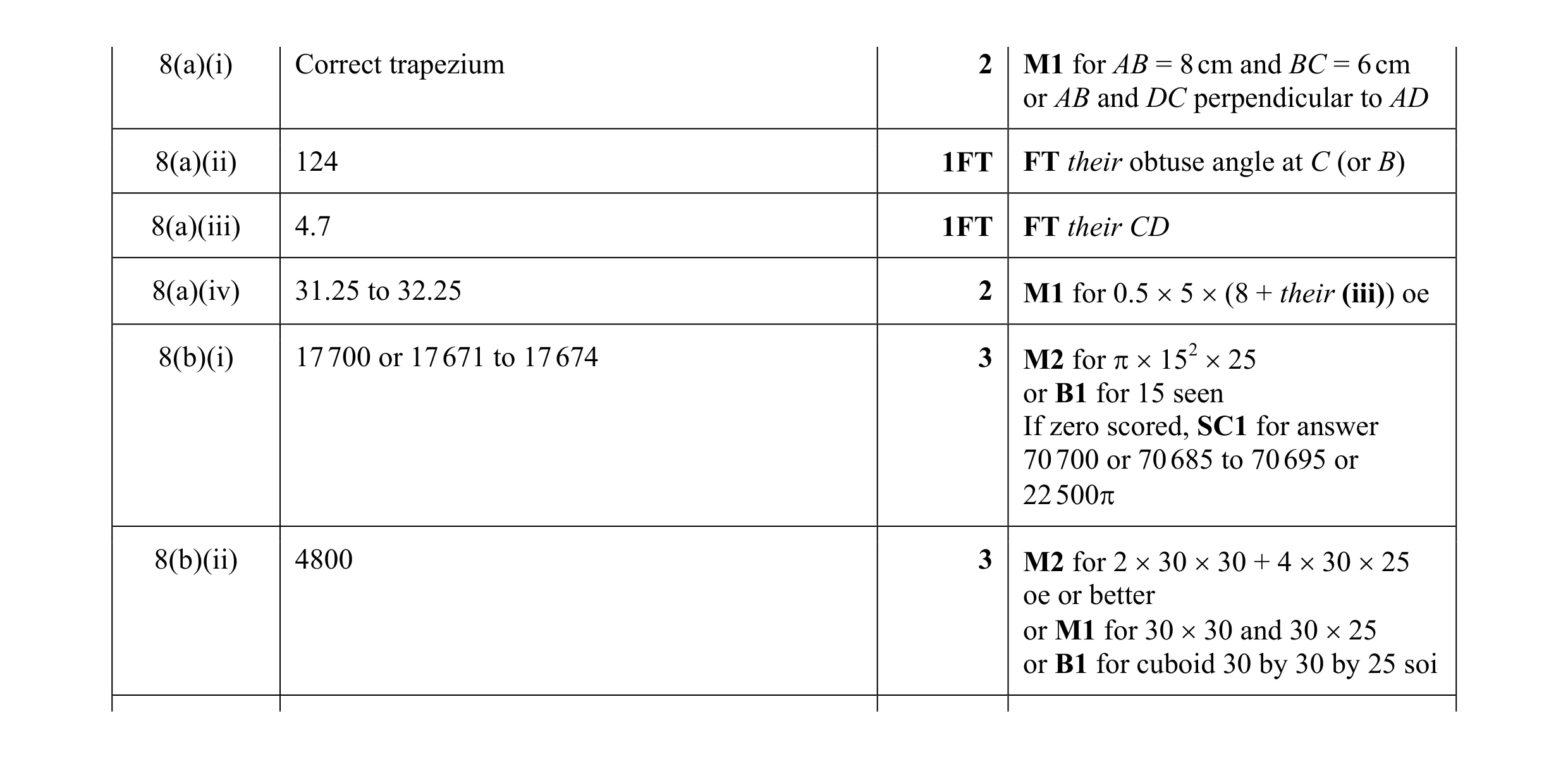 12
12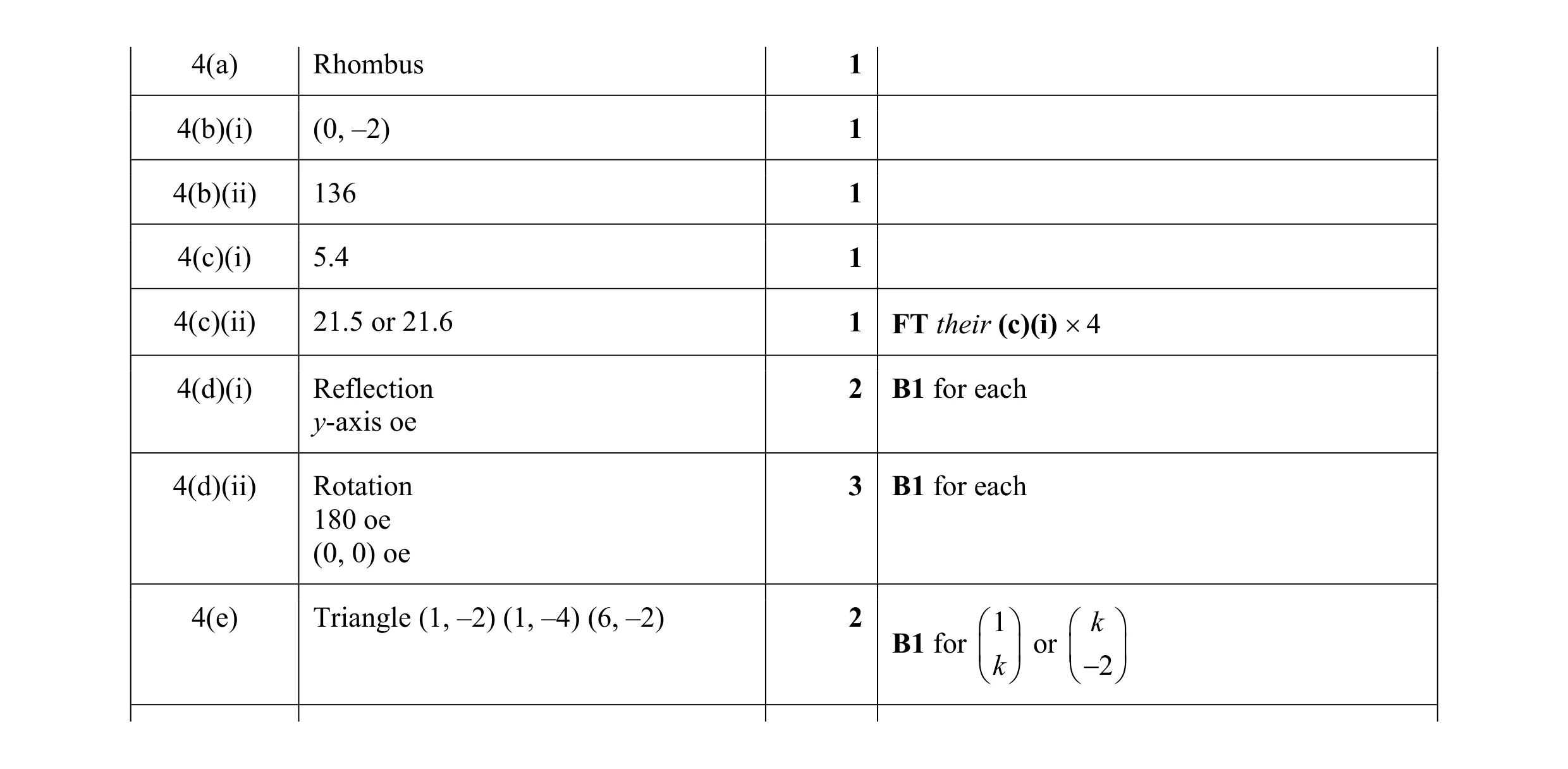 12
12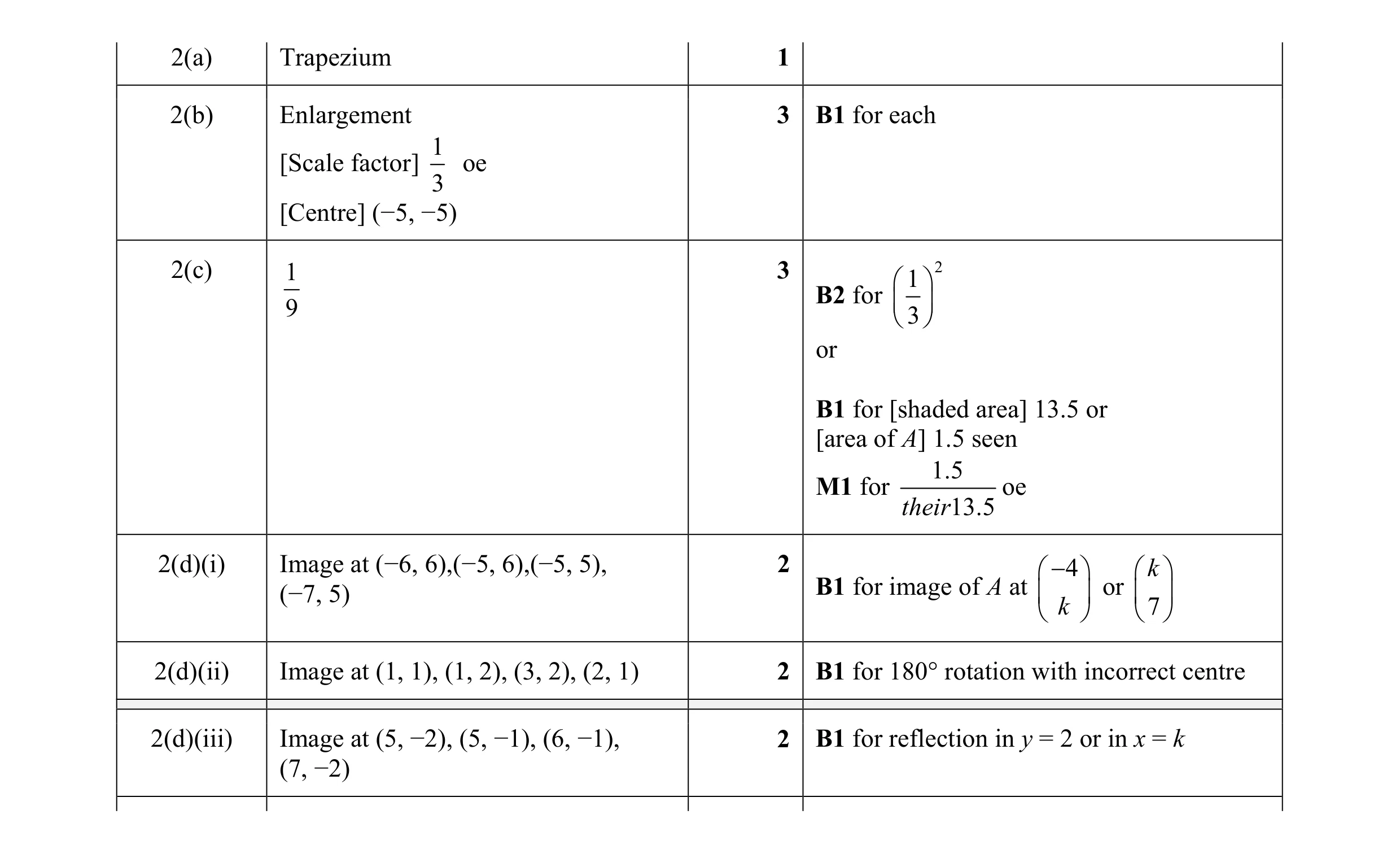 13
13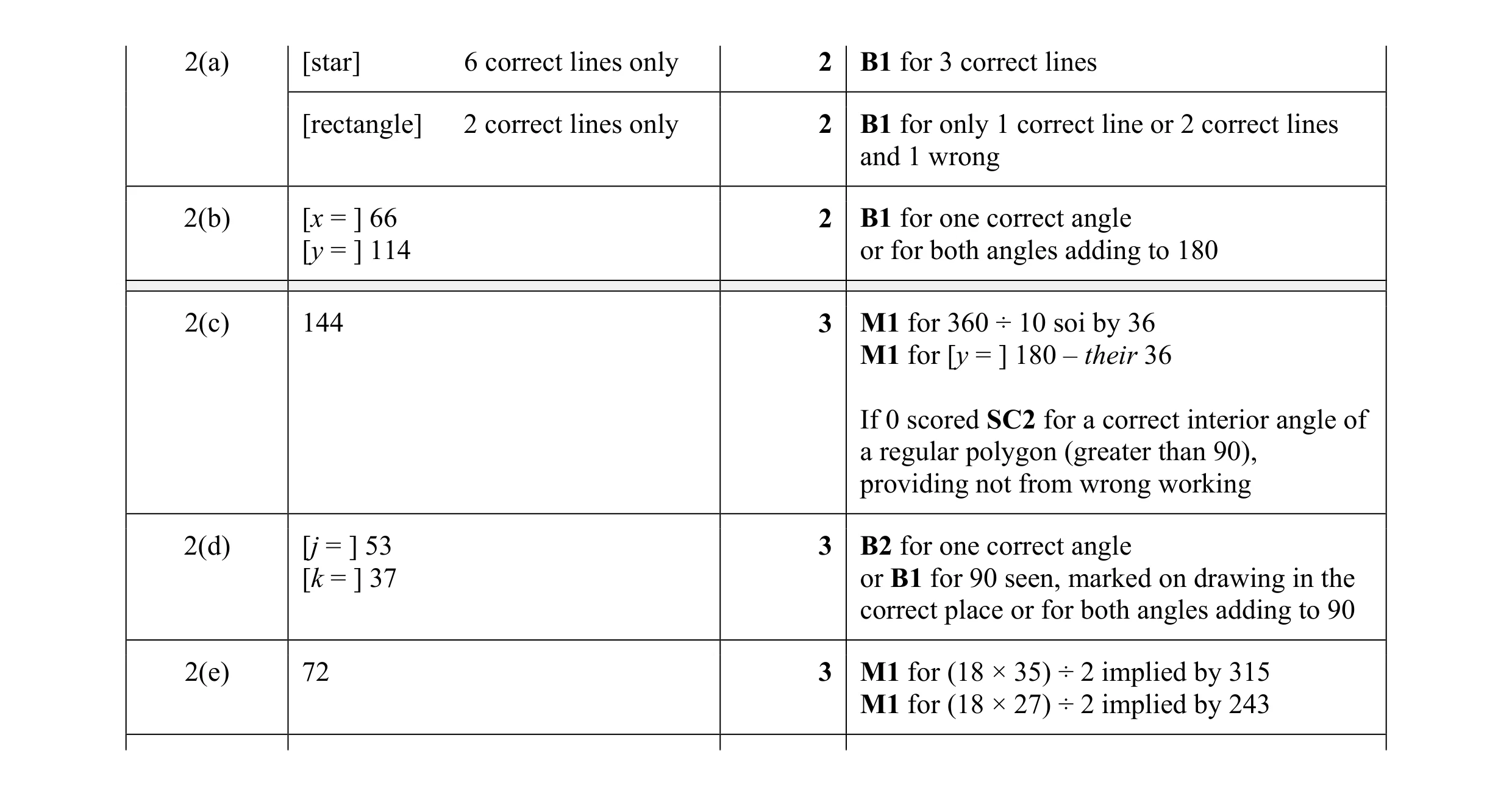 15
15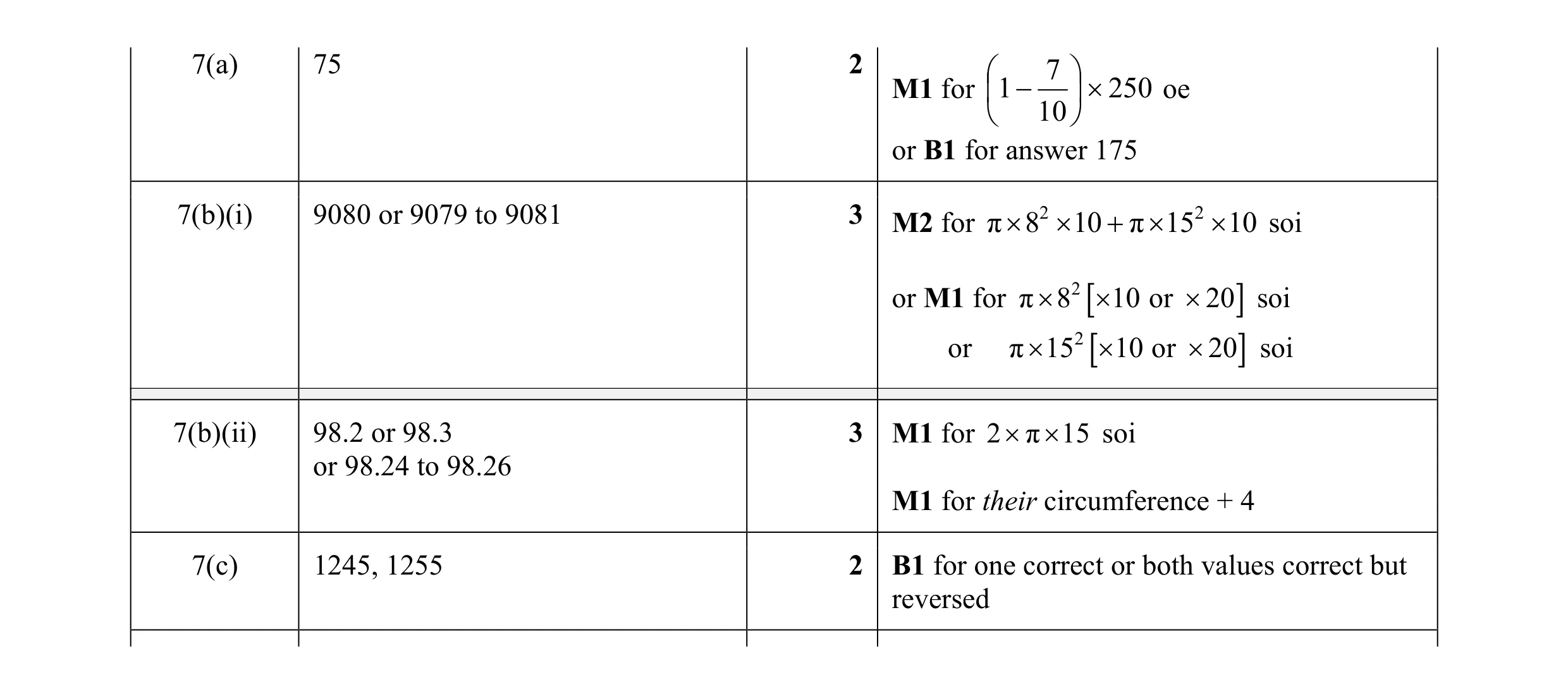 10
10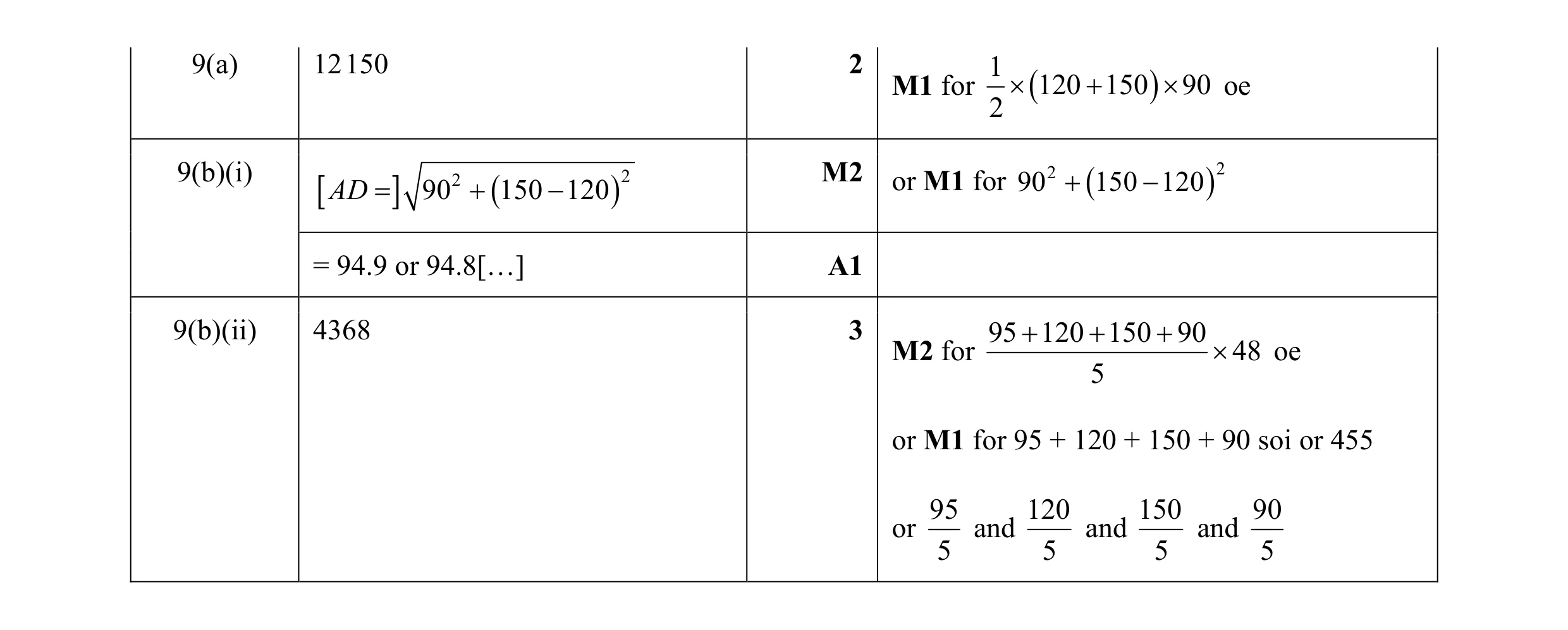 8
8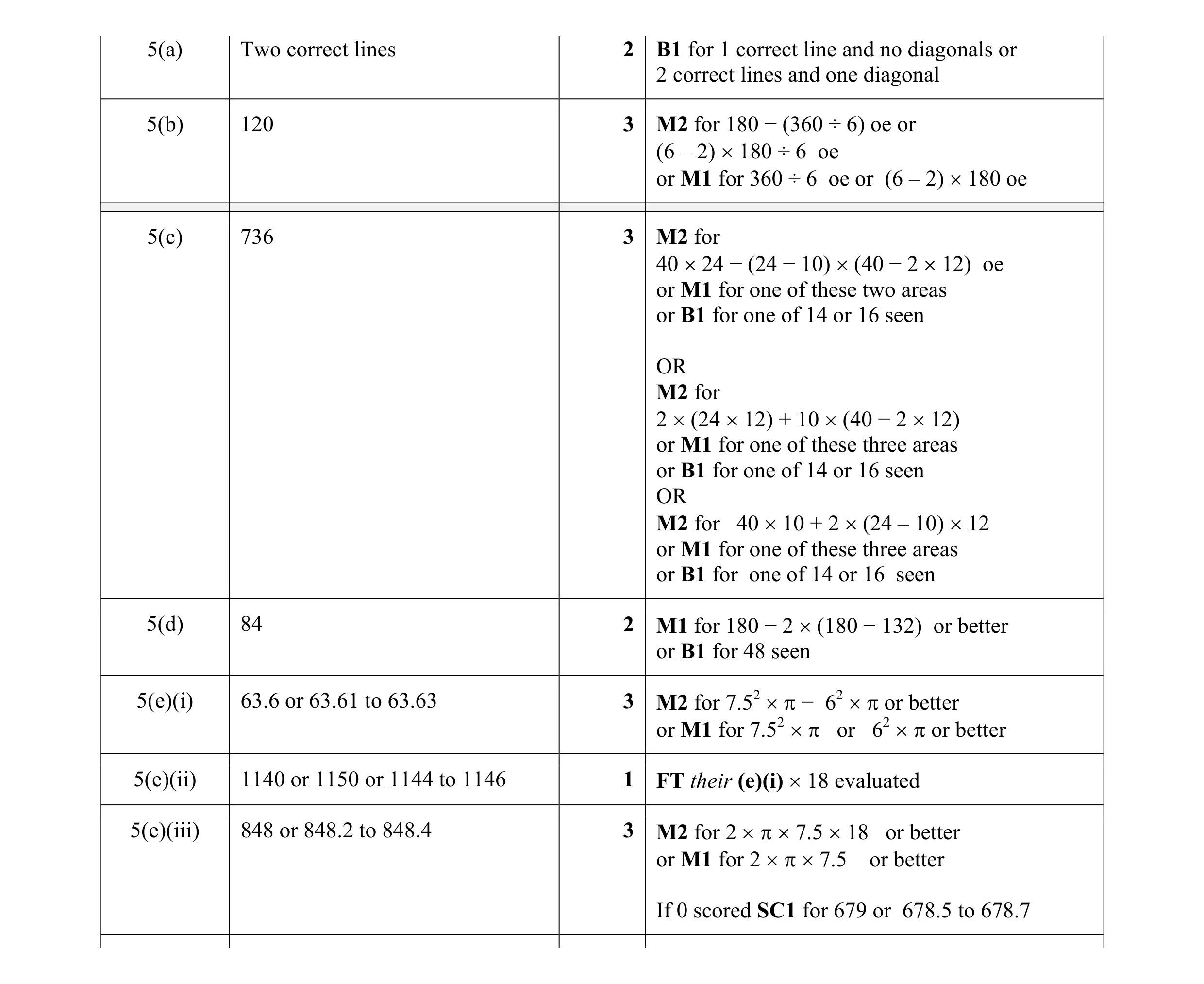 17
17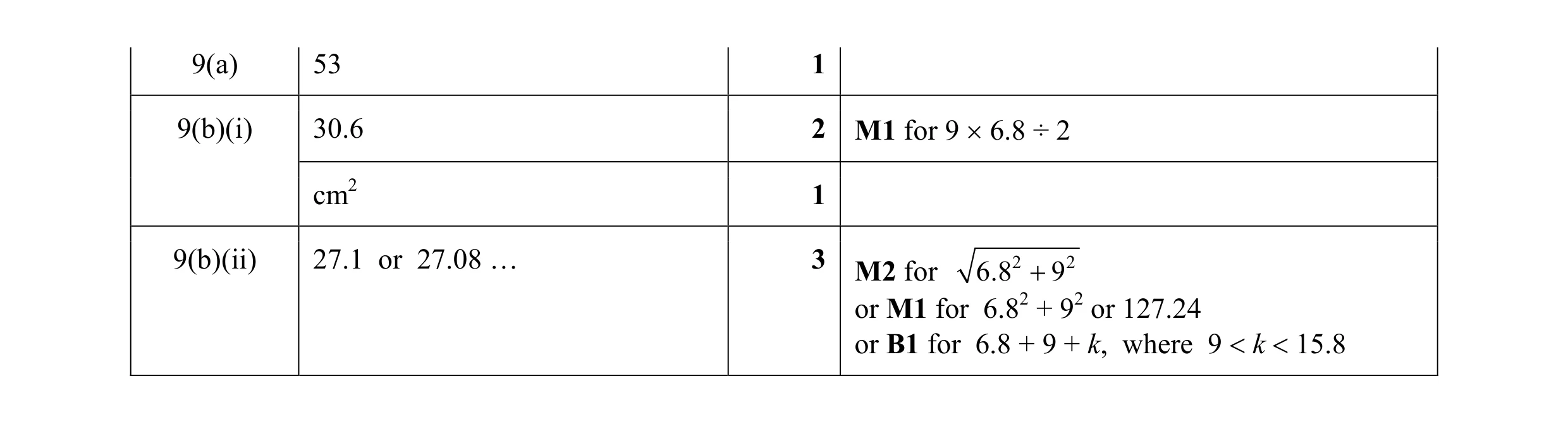 7
7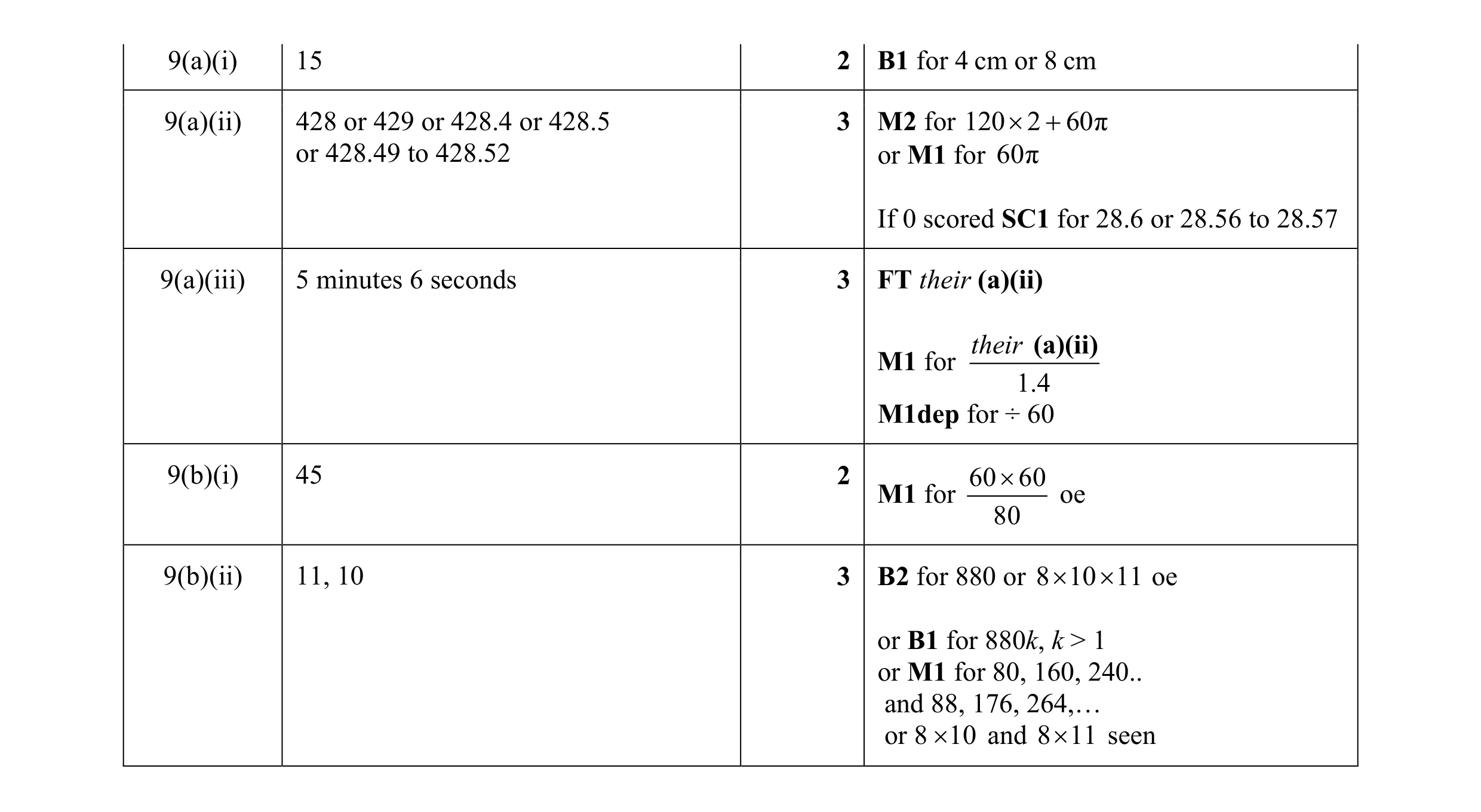 13
13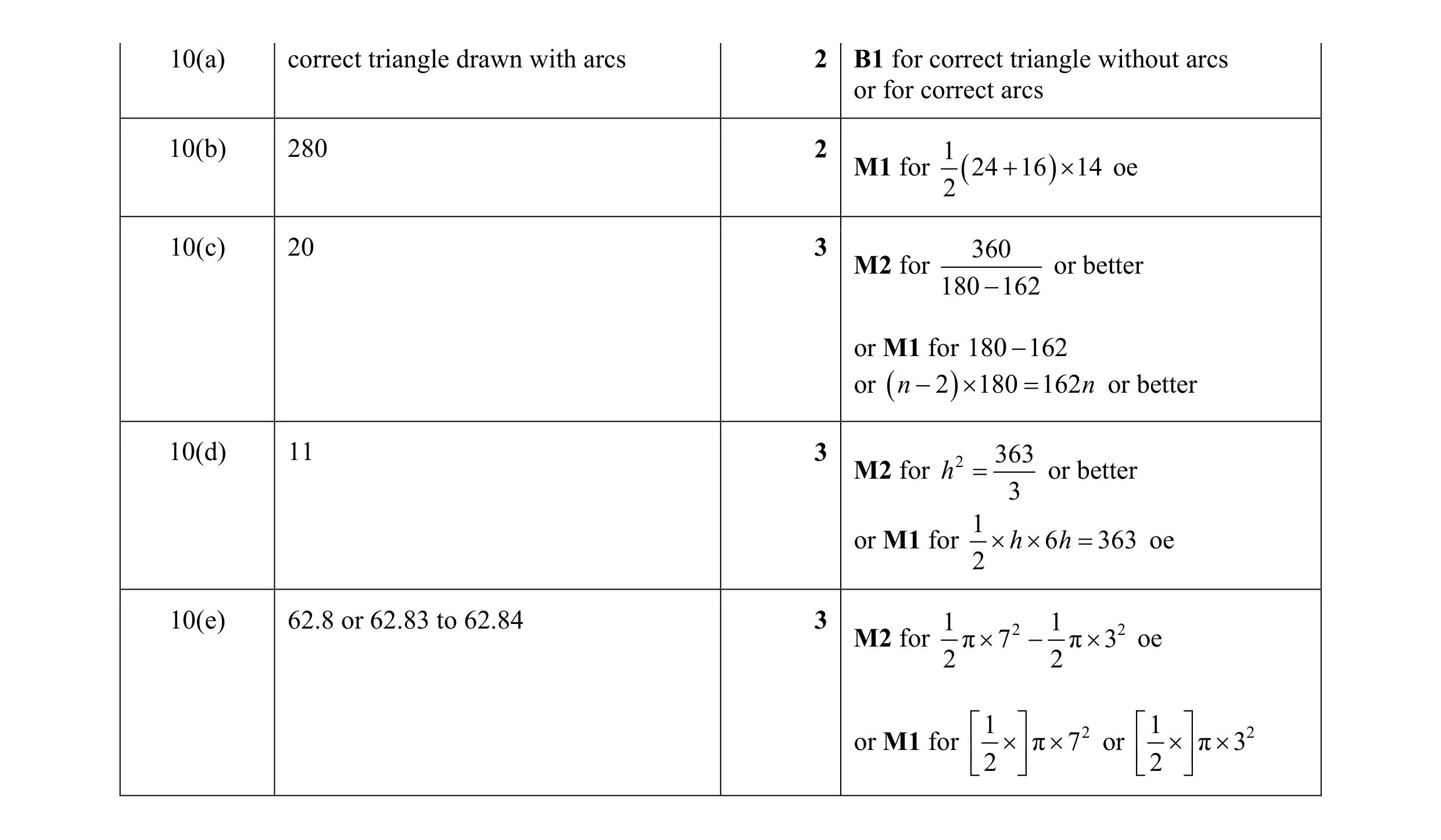 13
13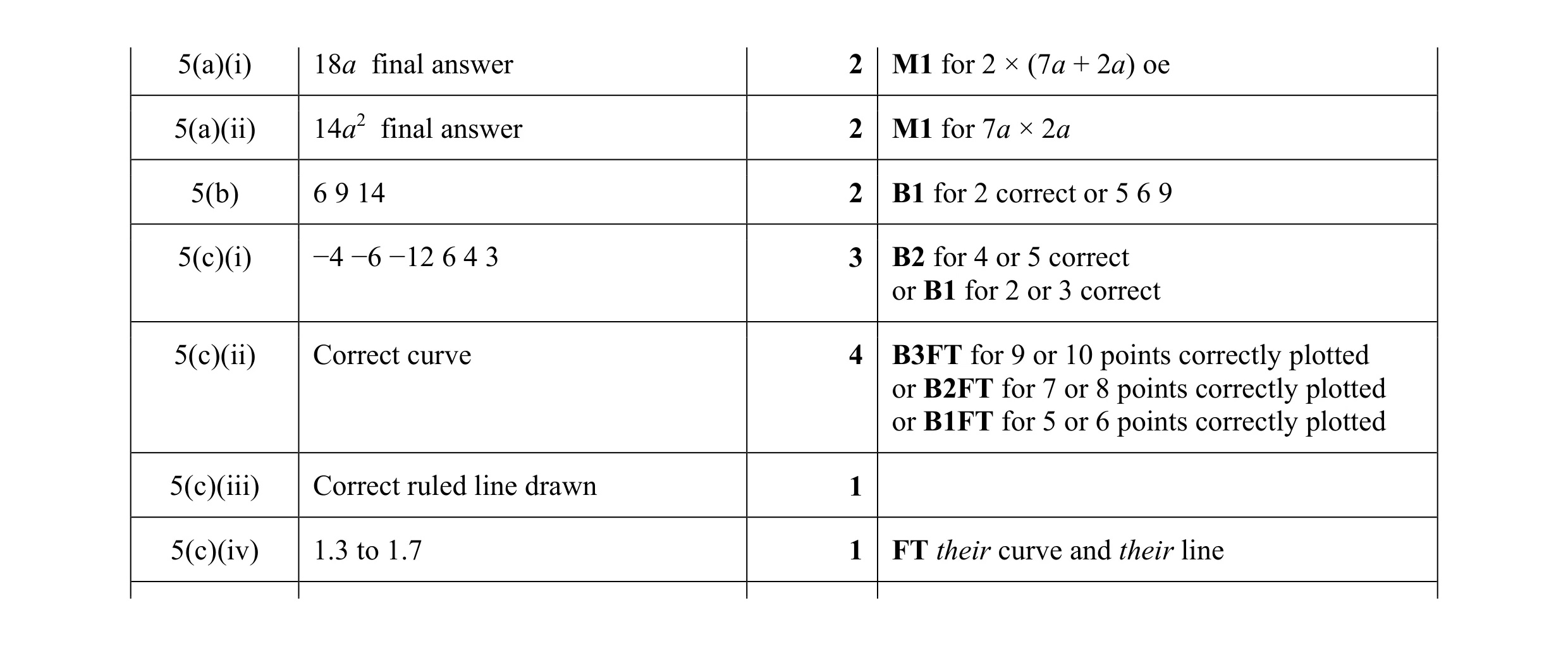 15
15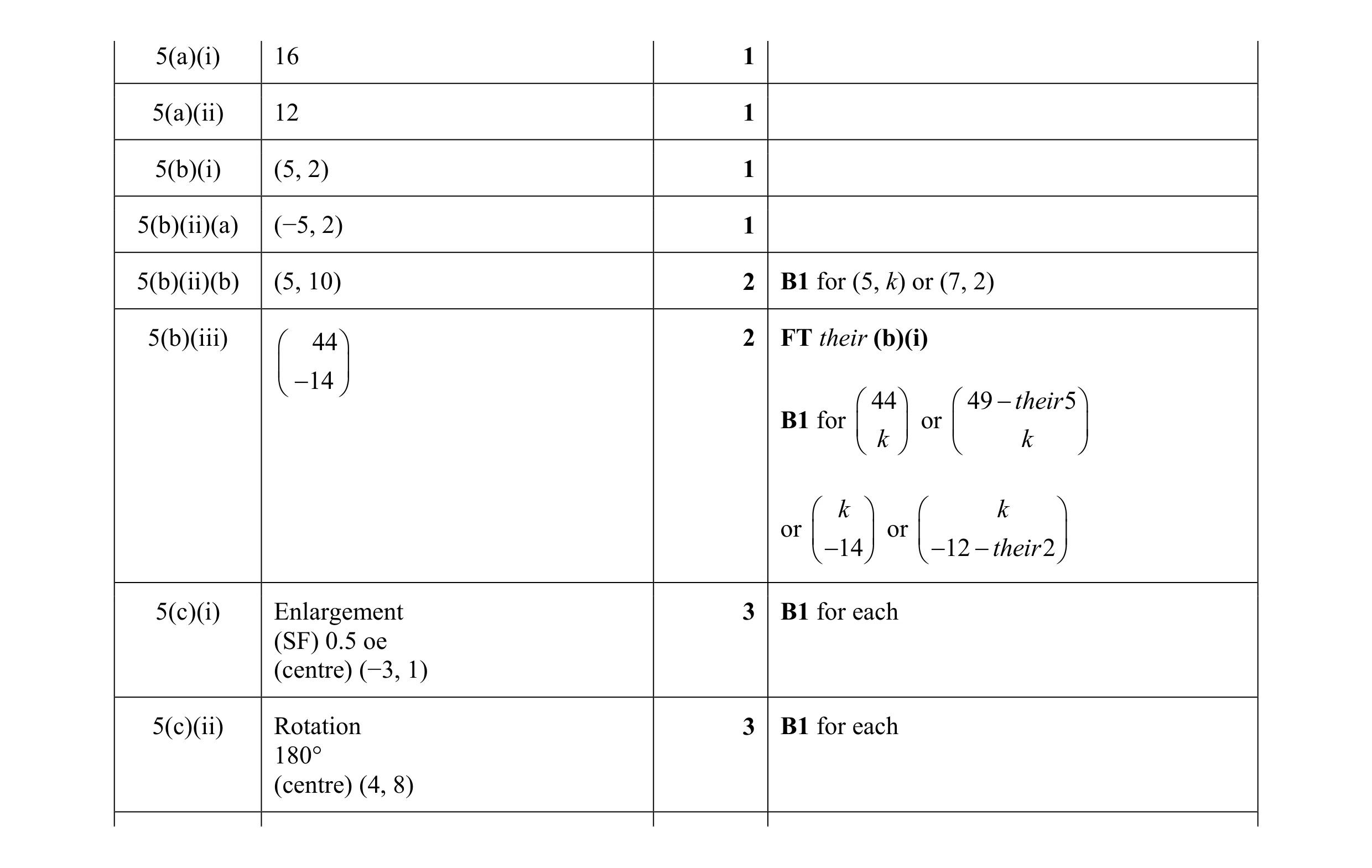 14
14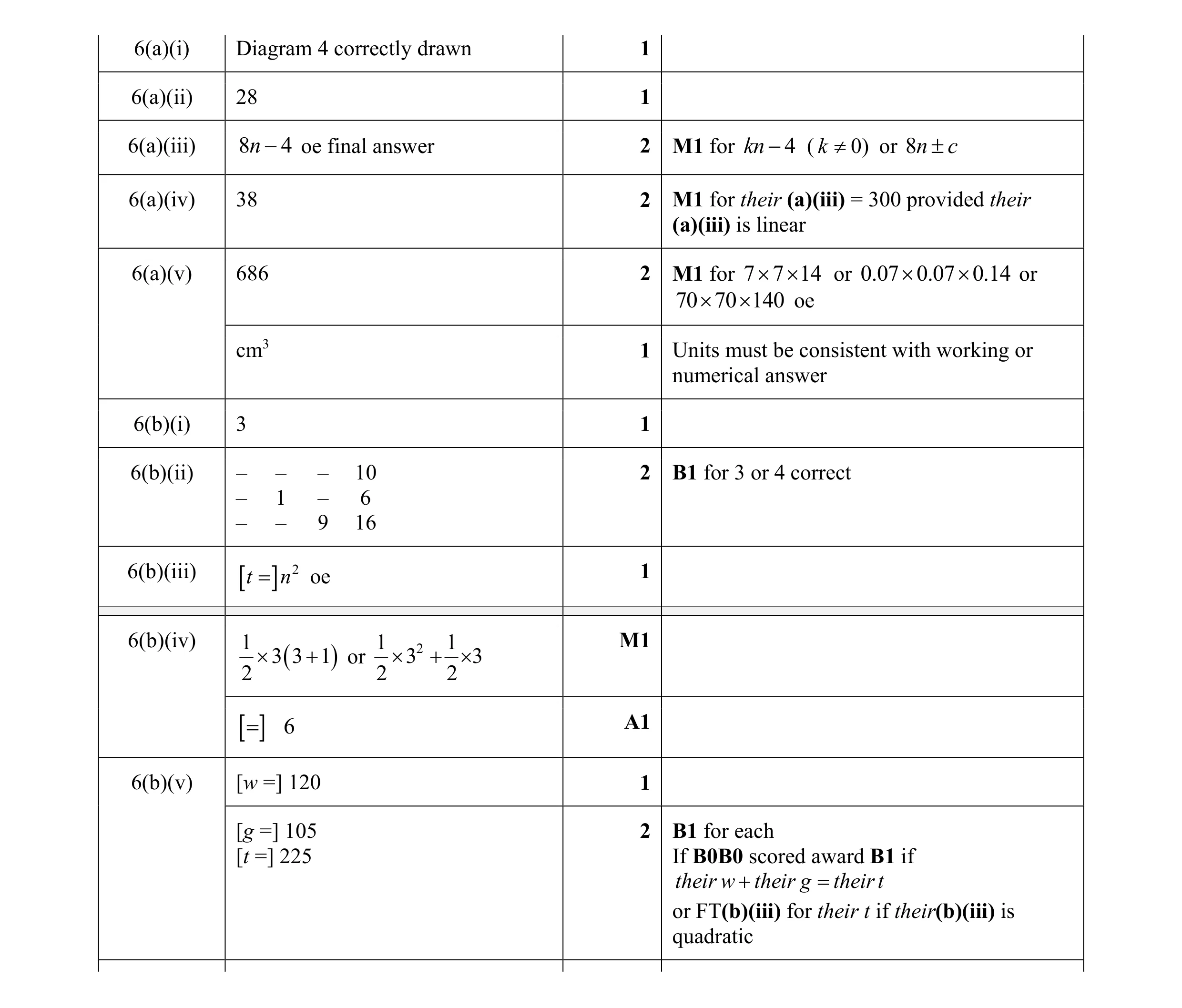 18
18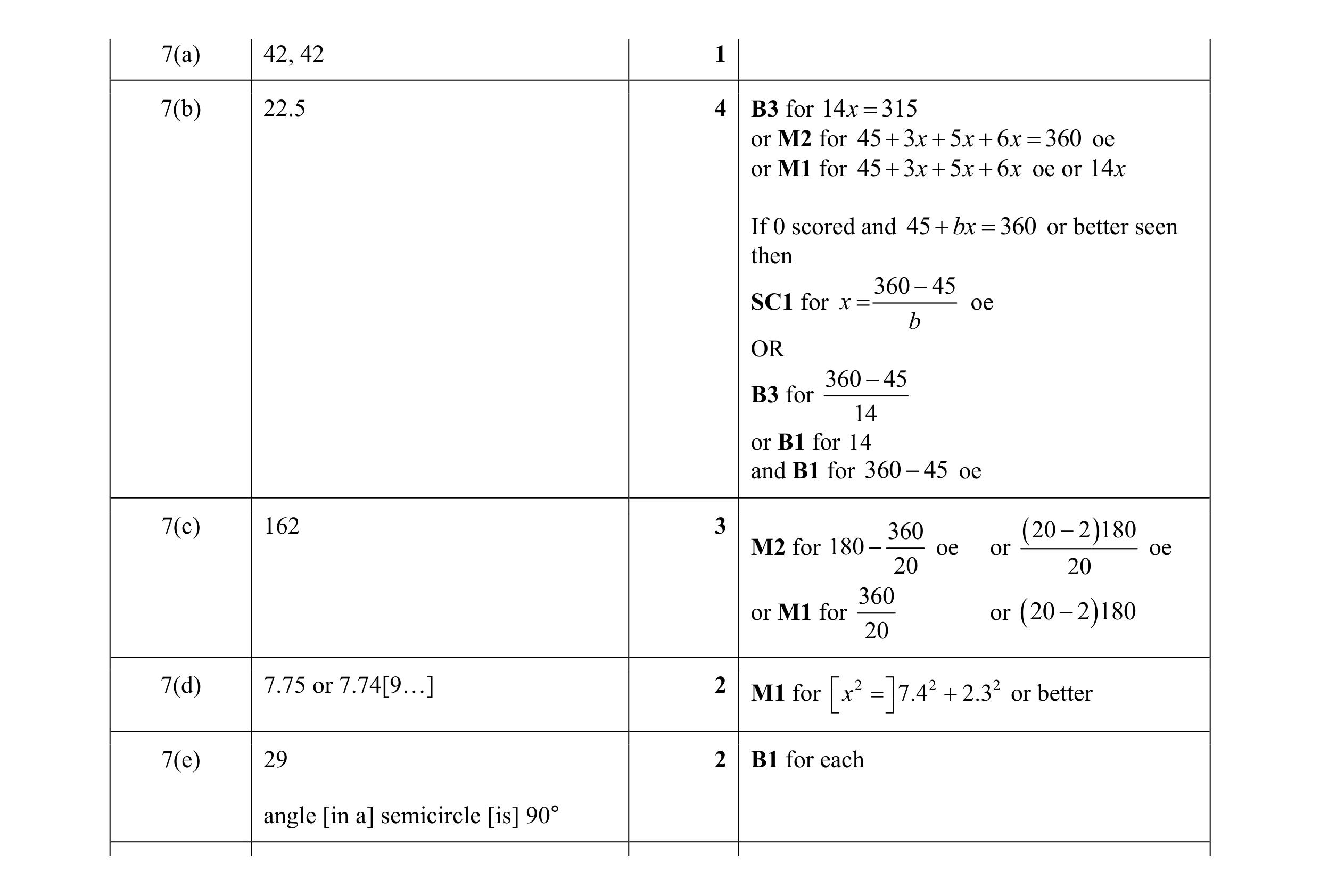 12
12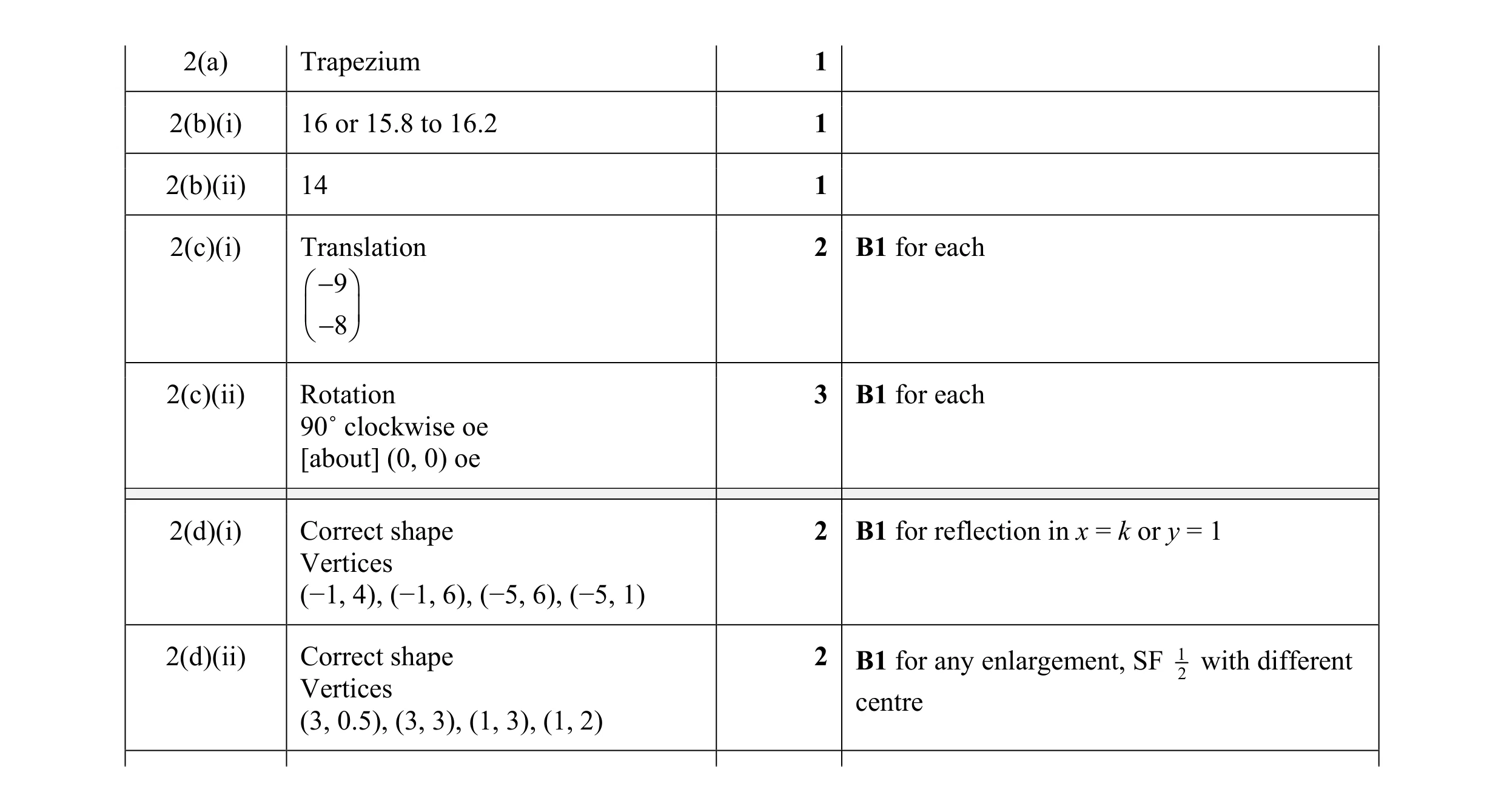 12
12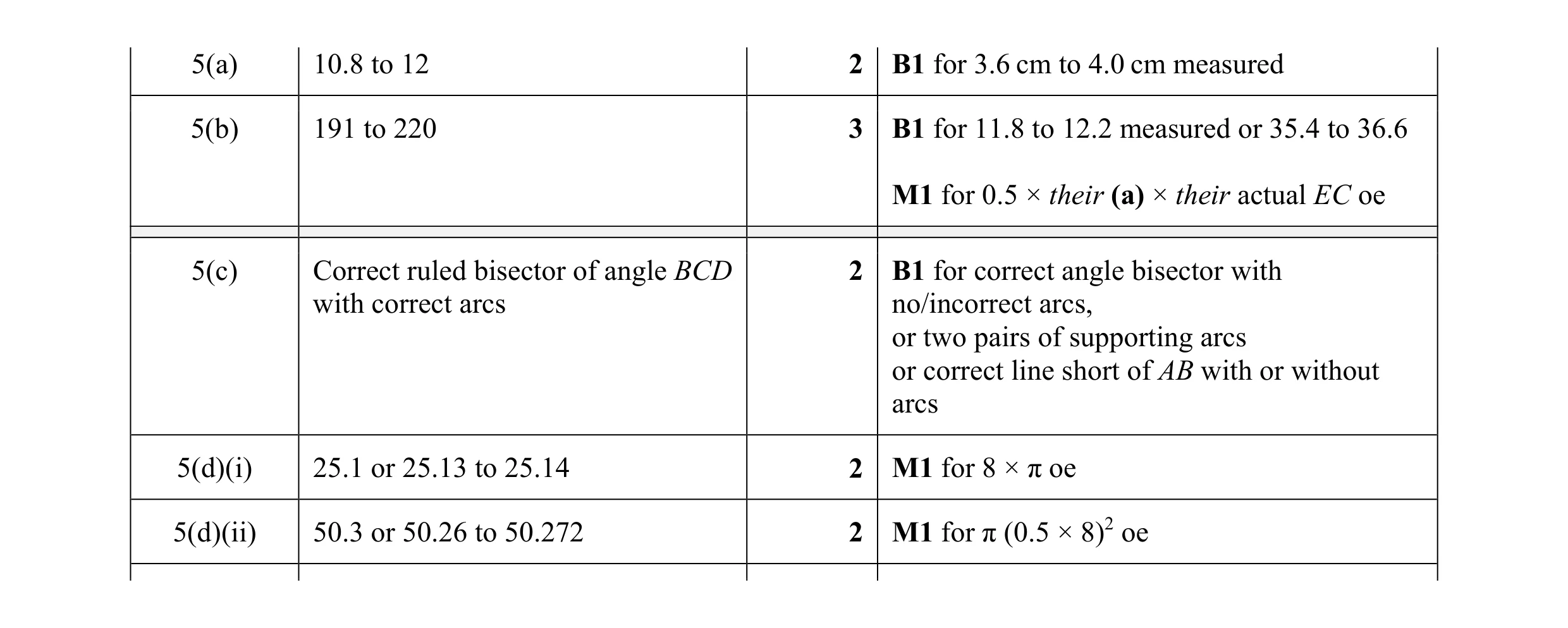 11
11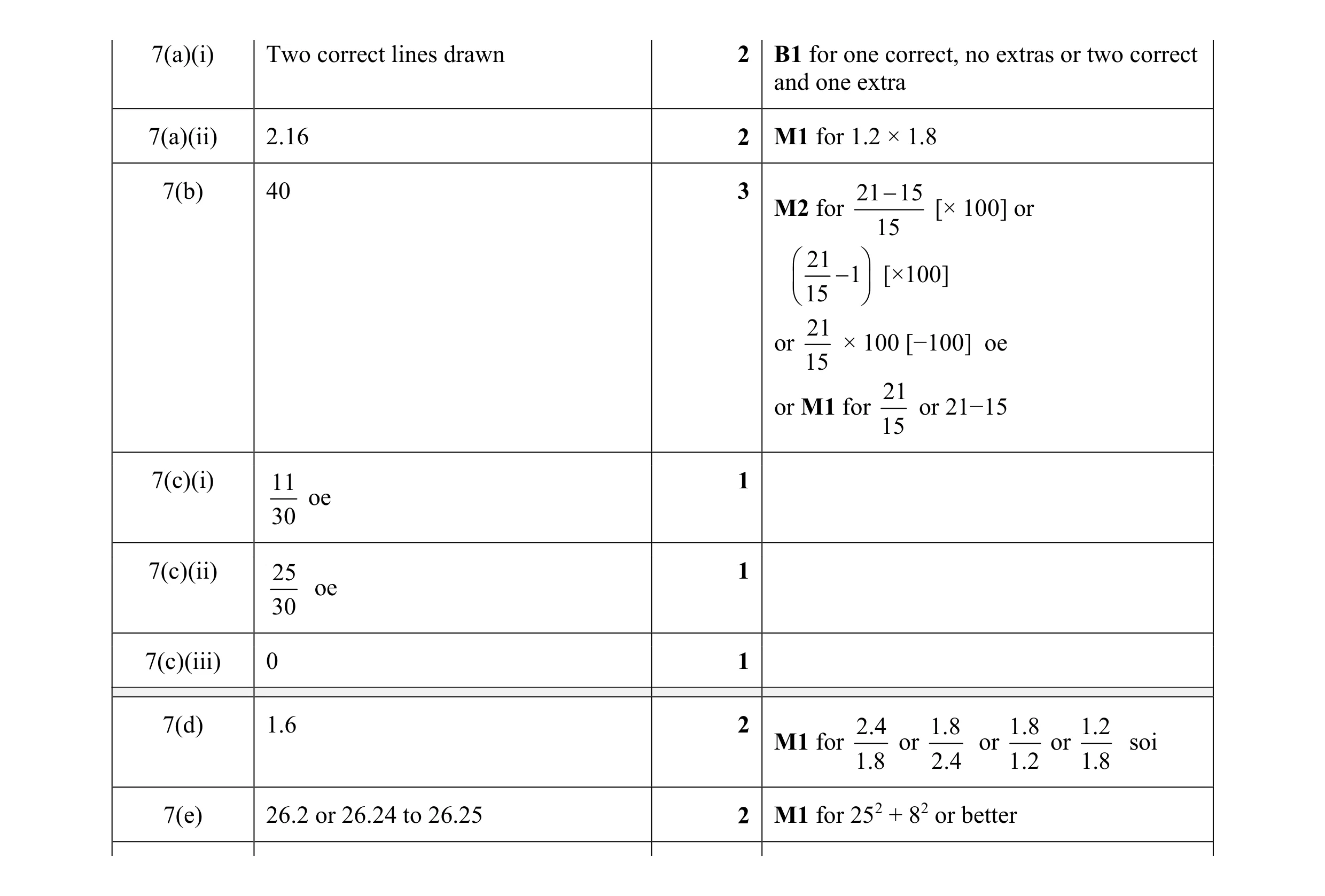 14
14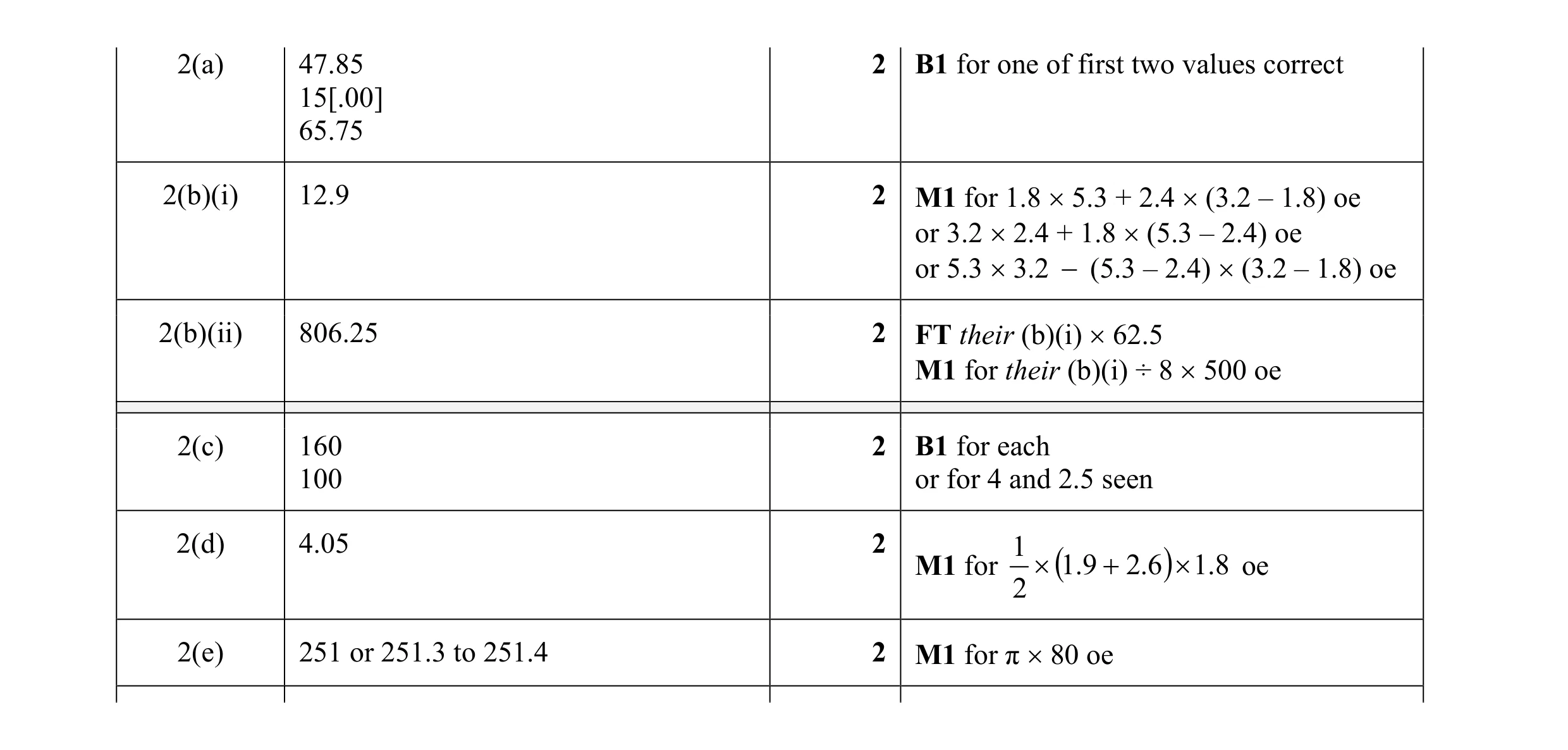 12
12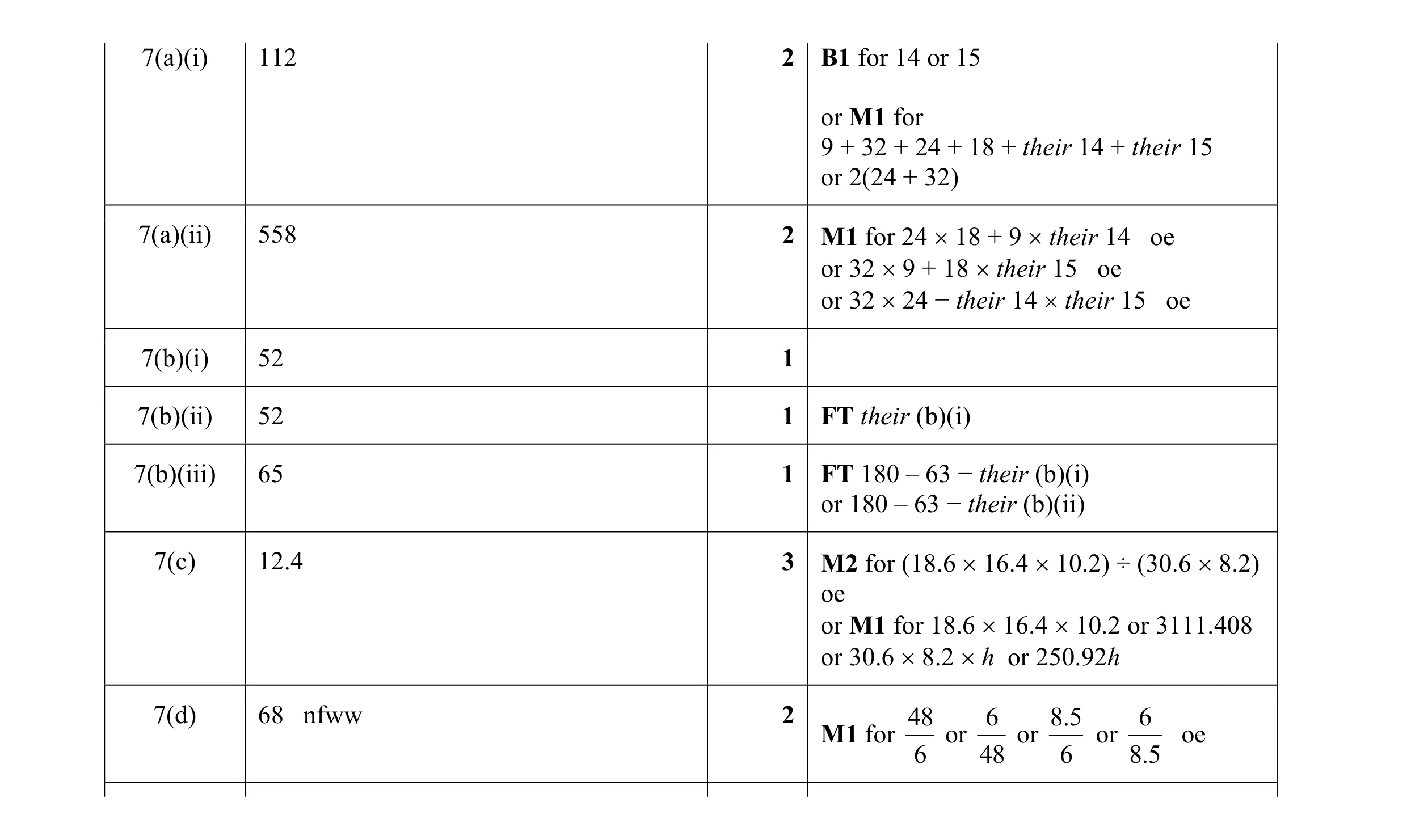 12
12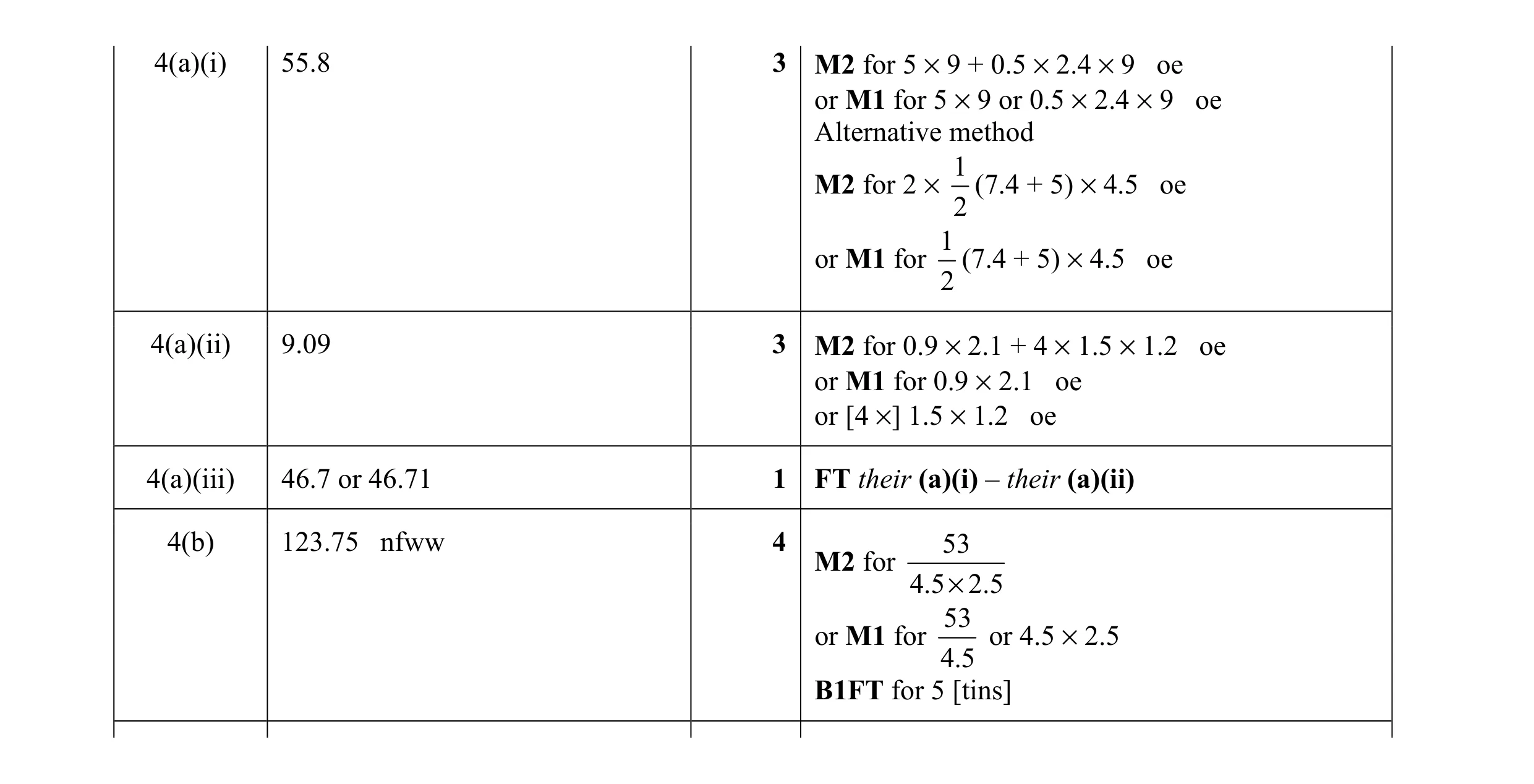 11
11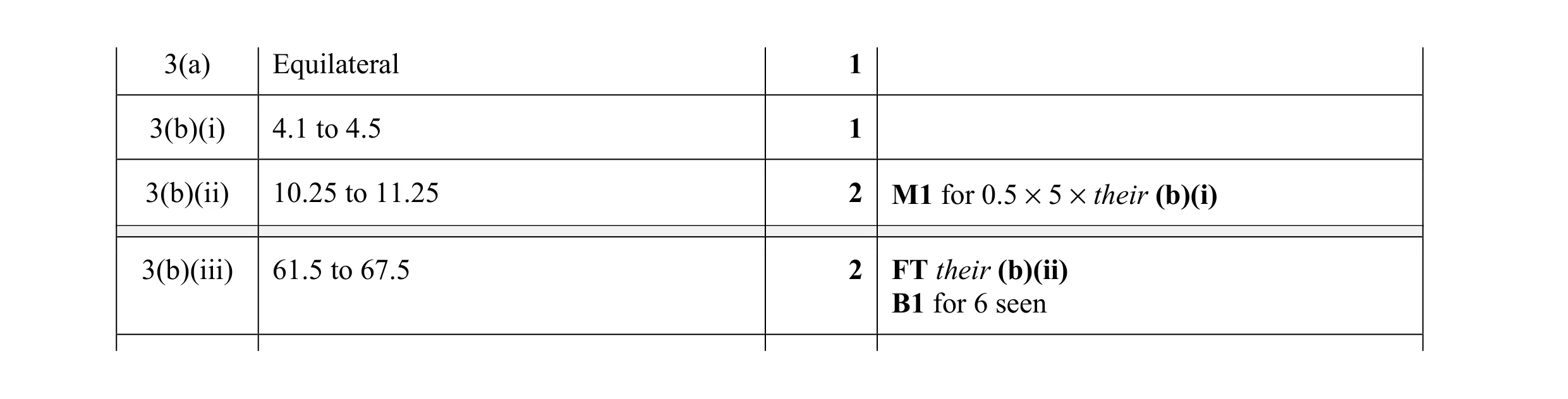 6
6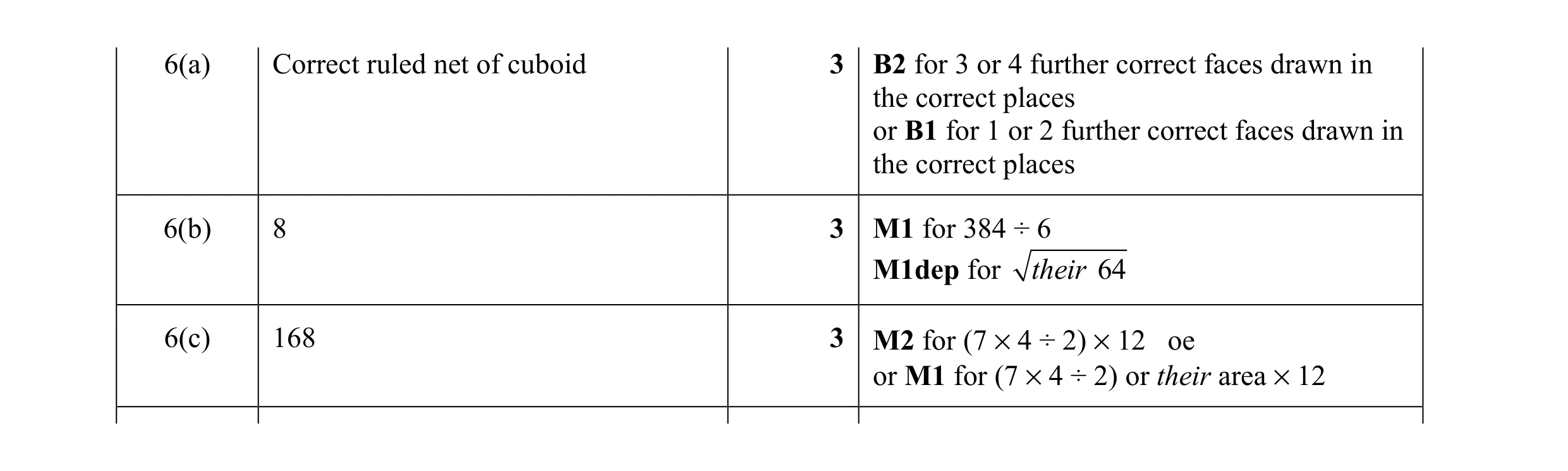 9
9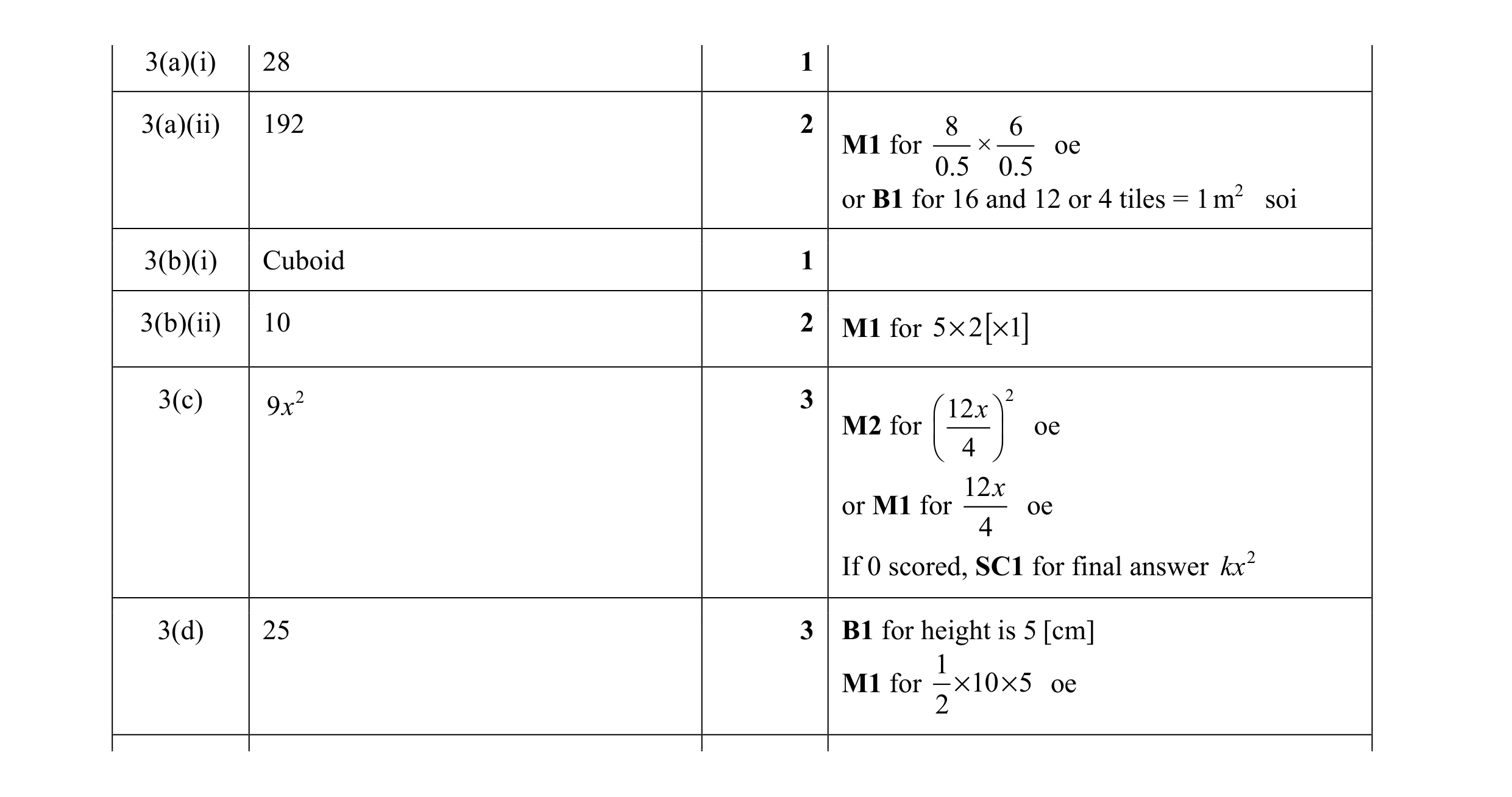 12
12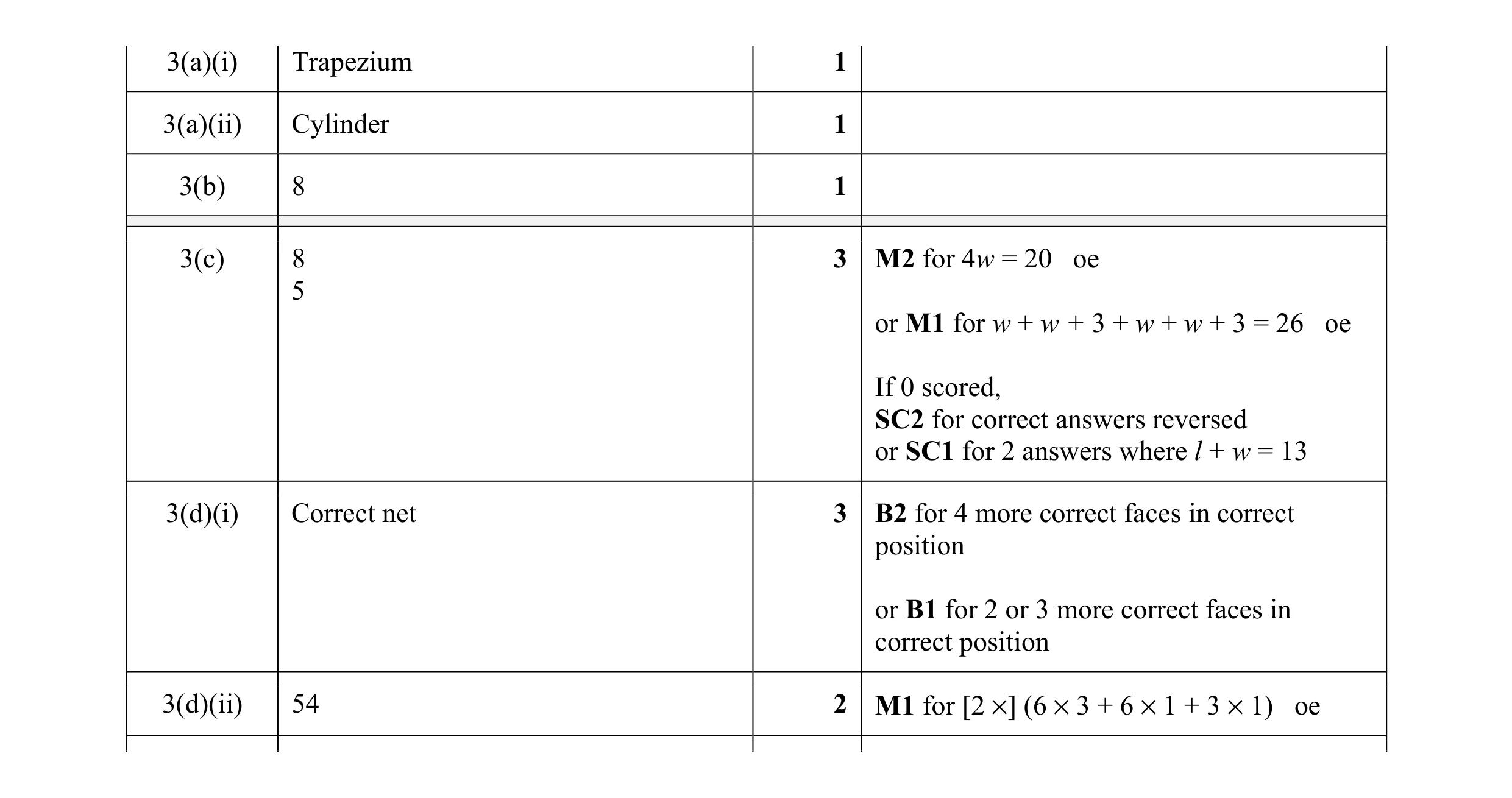 11
11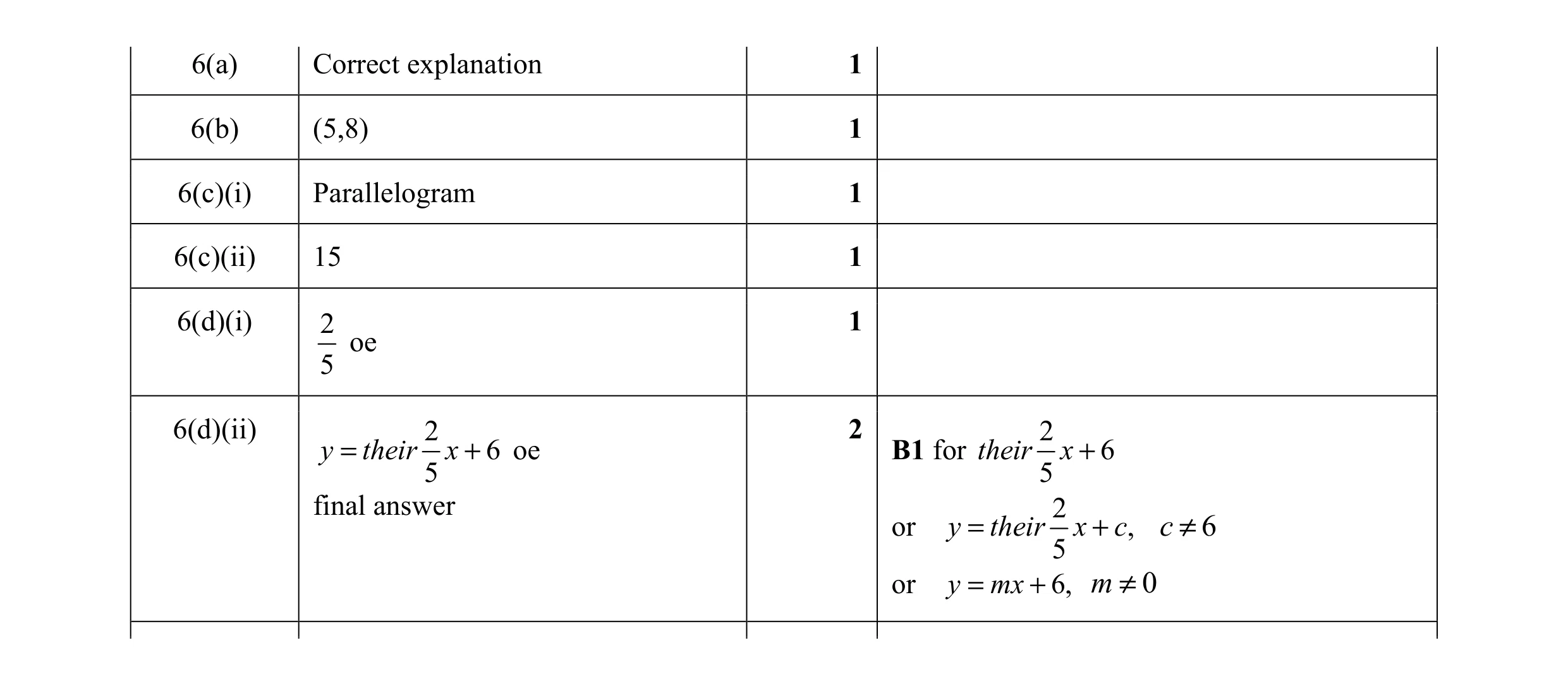 7
7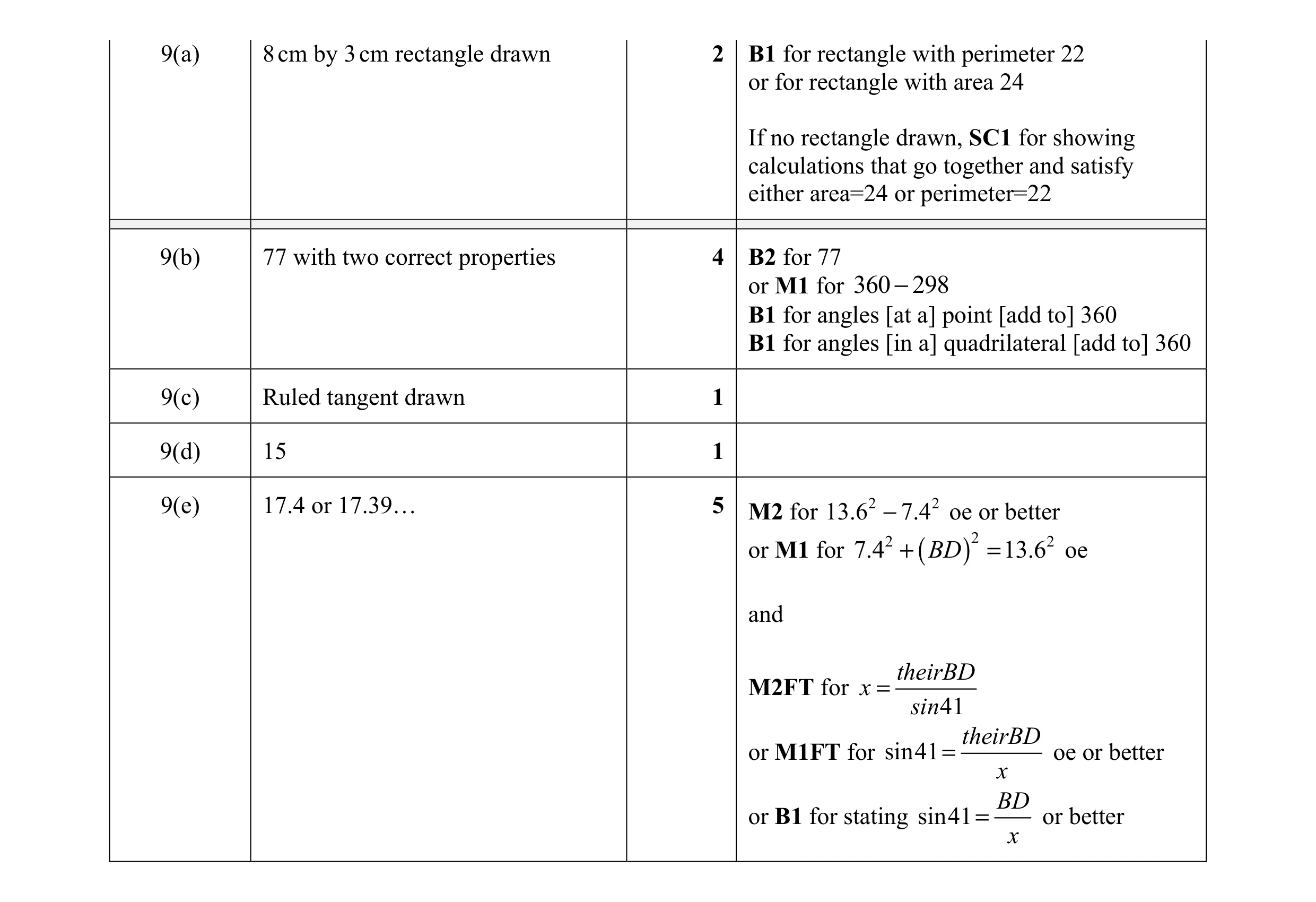 13
13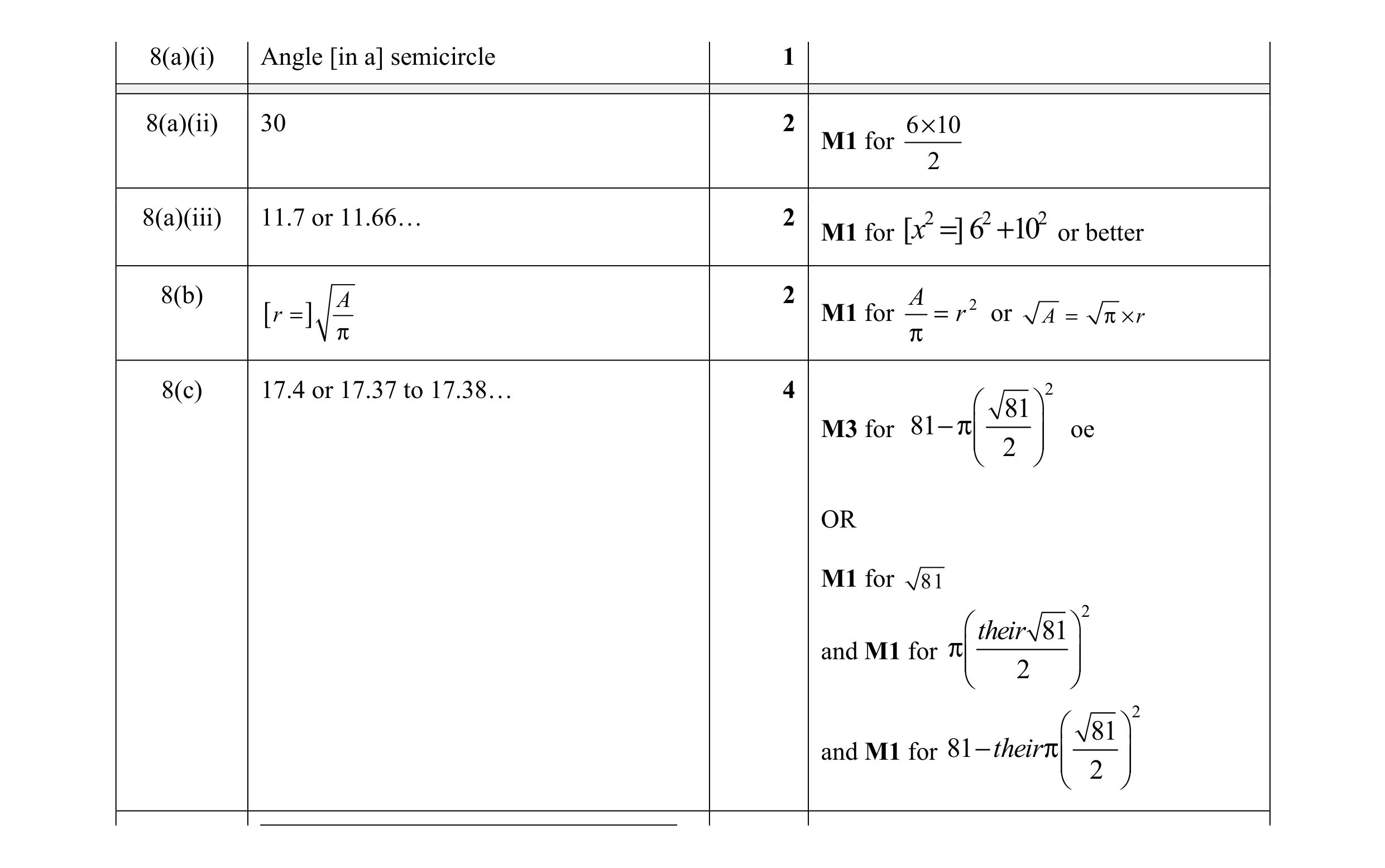 11
11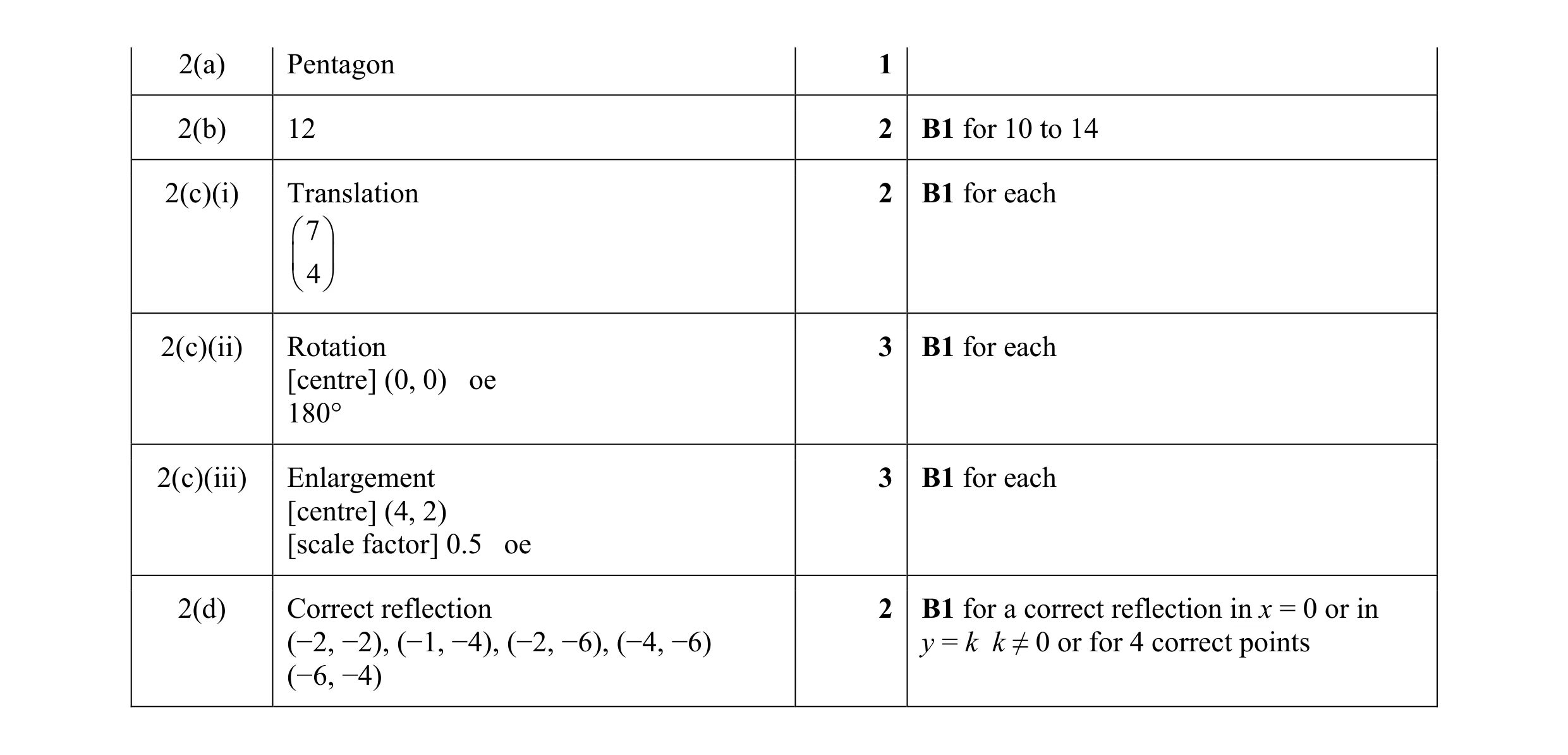 13
13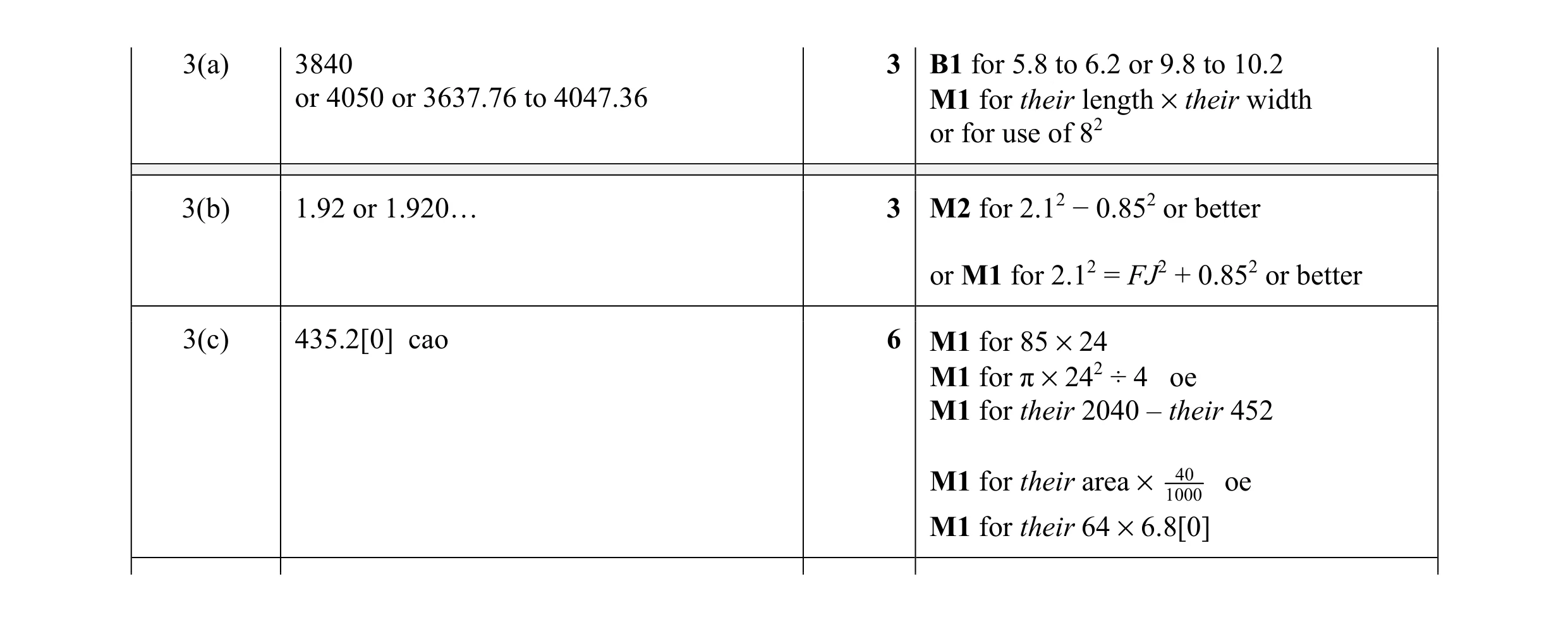 12
12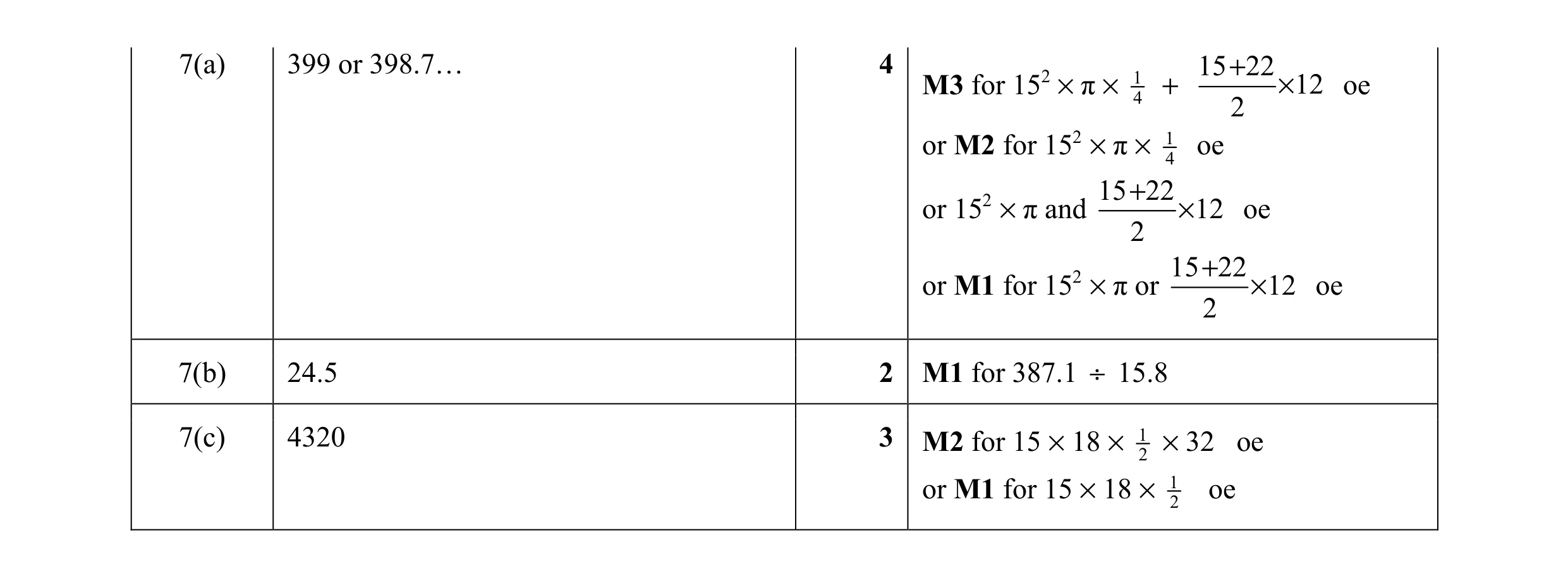 9
9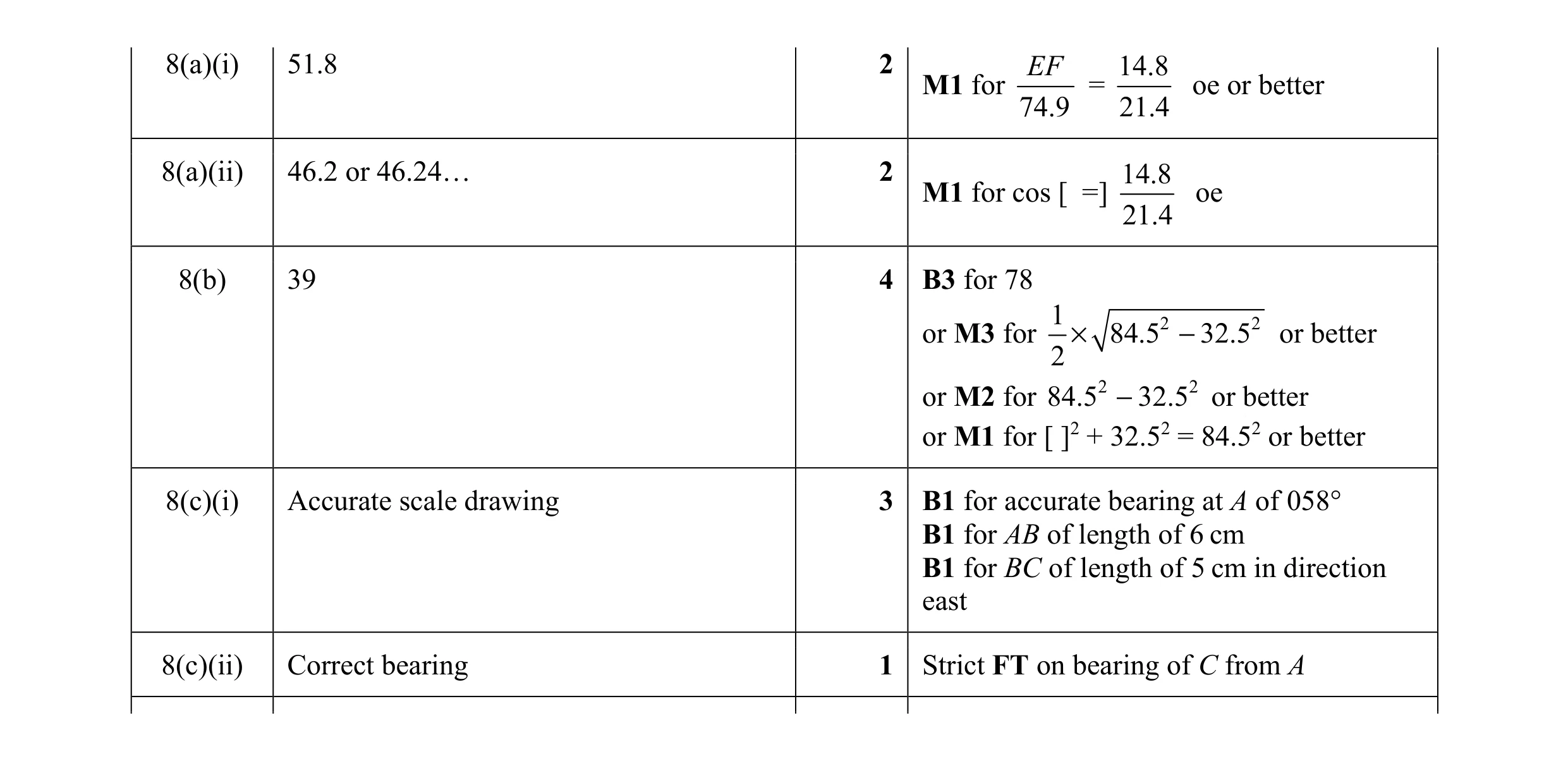 12
12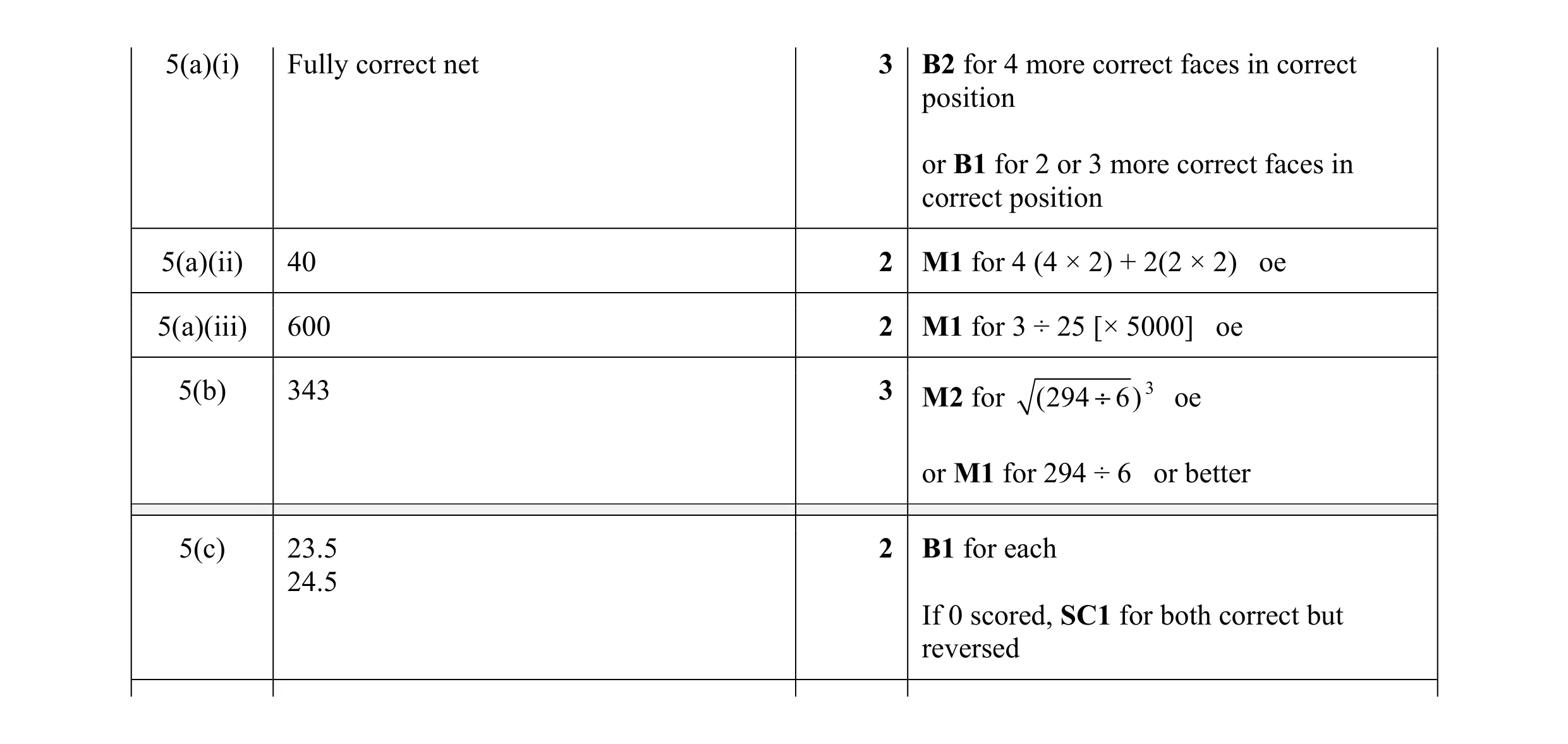 12
12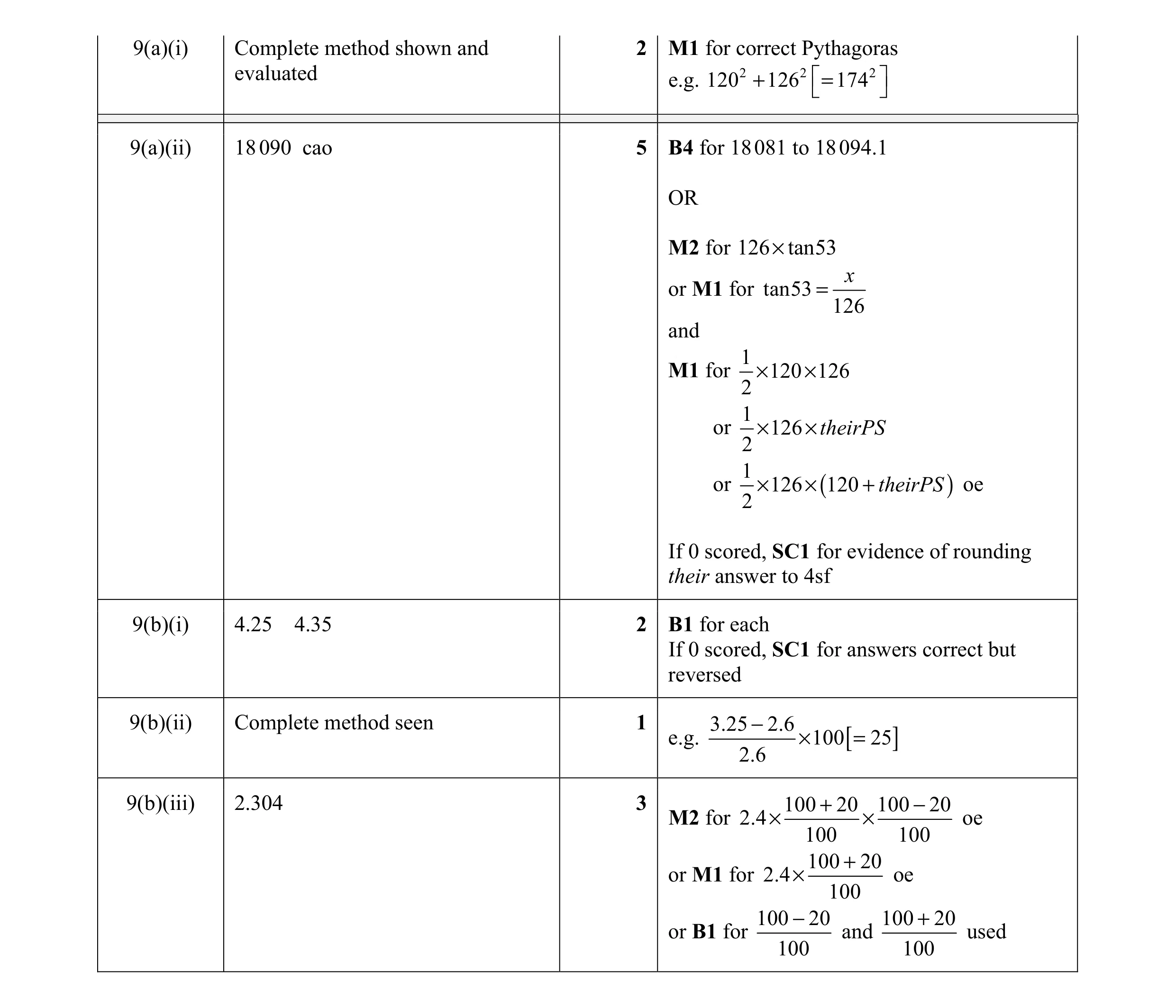 13
13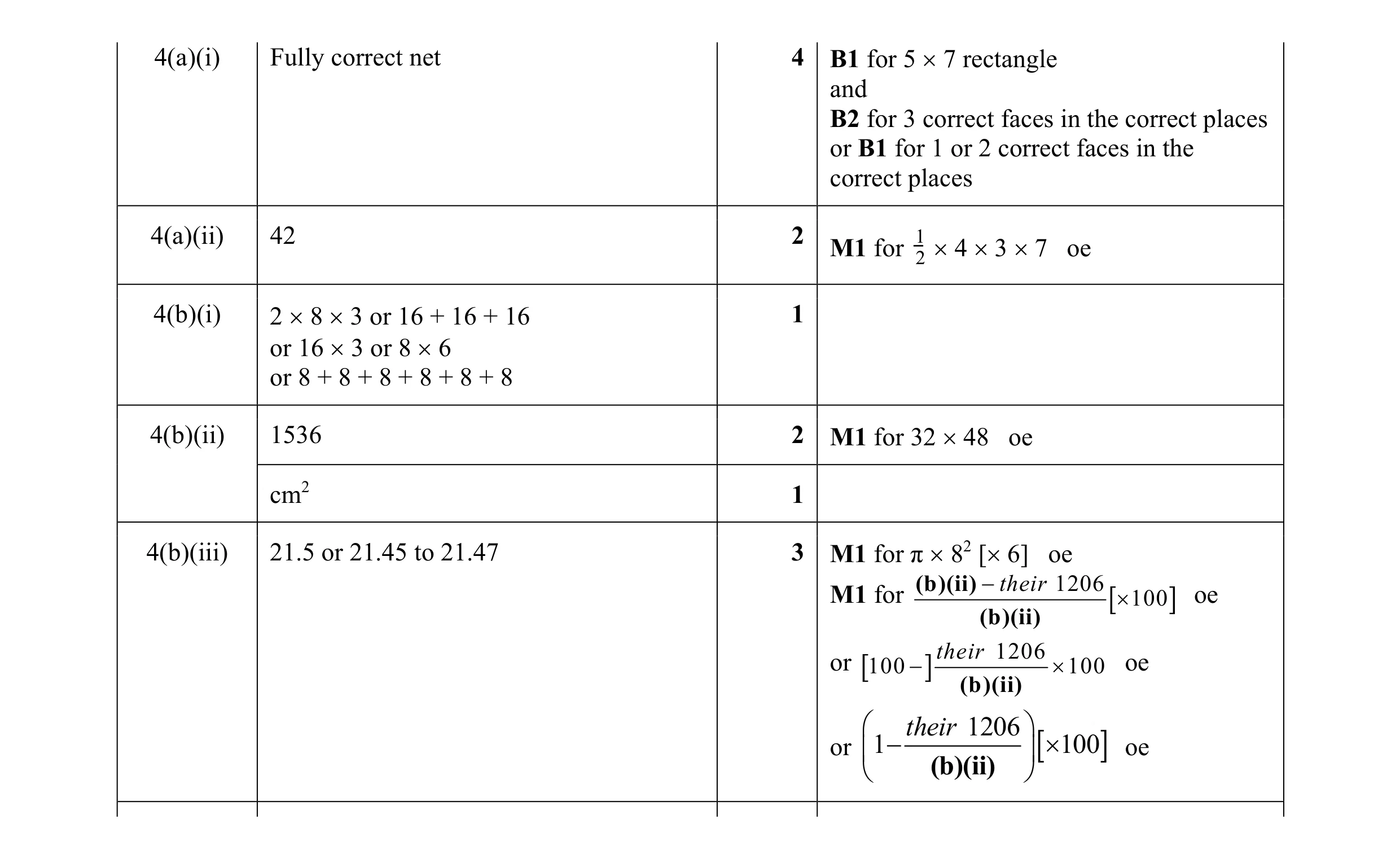 13
13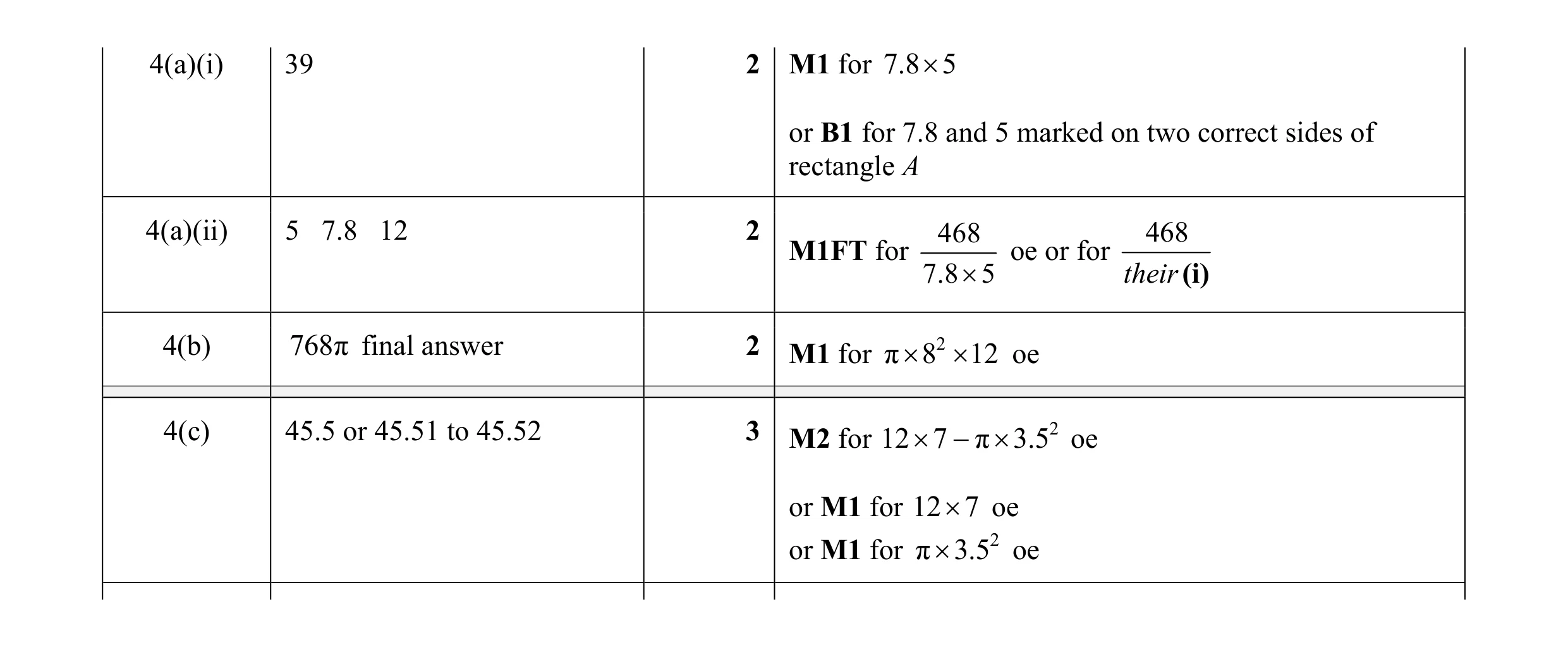 9
9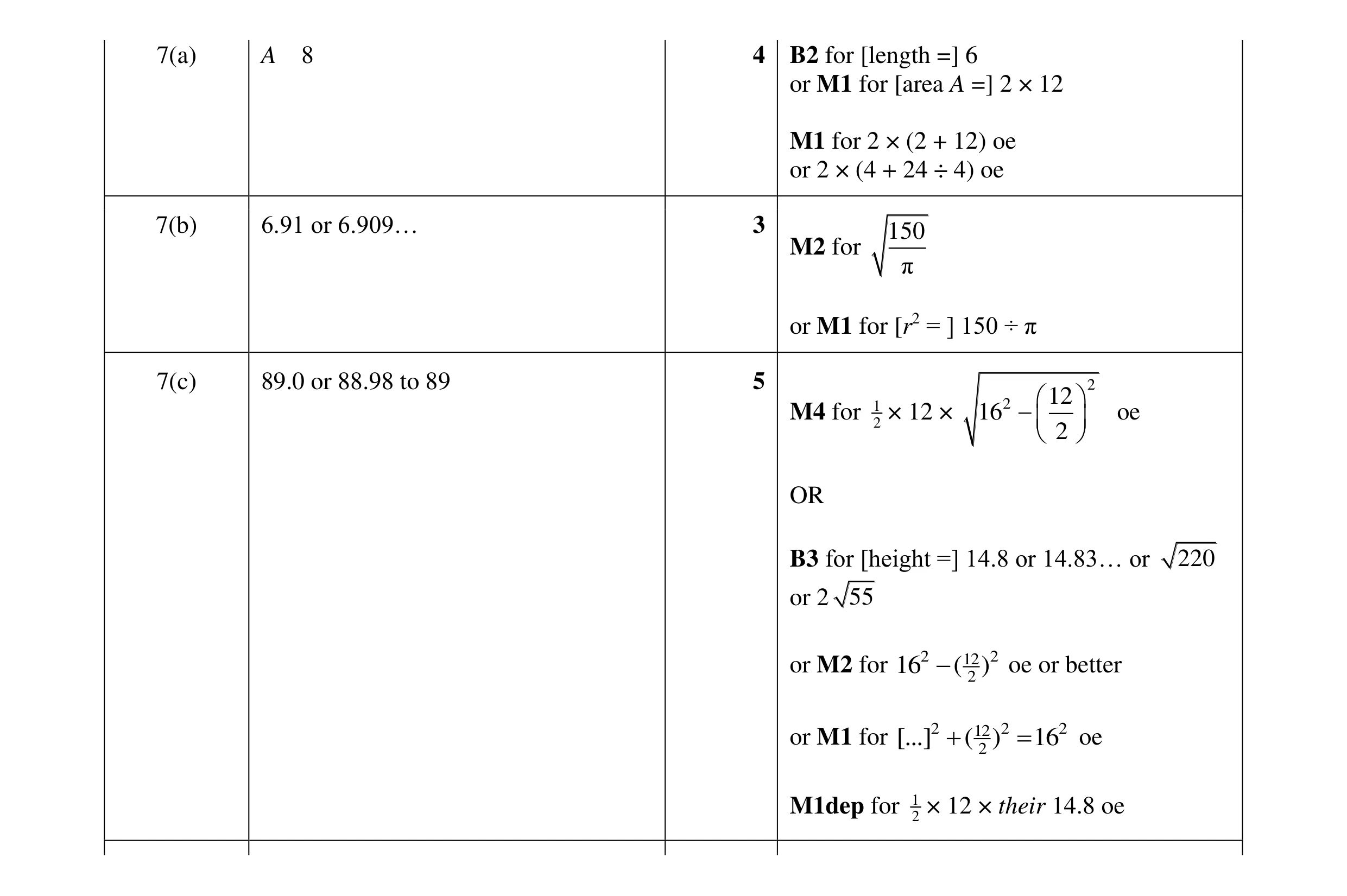 12
12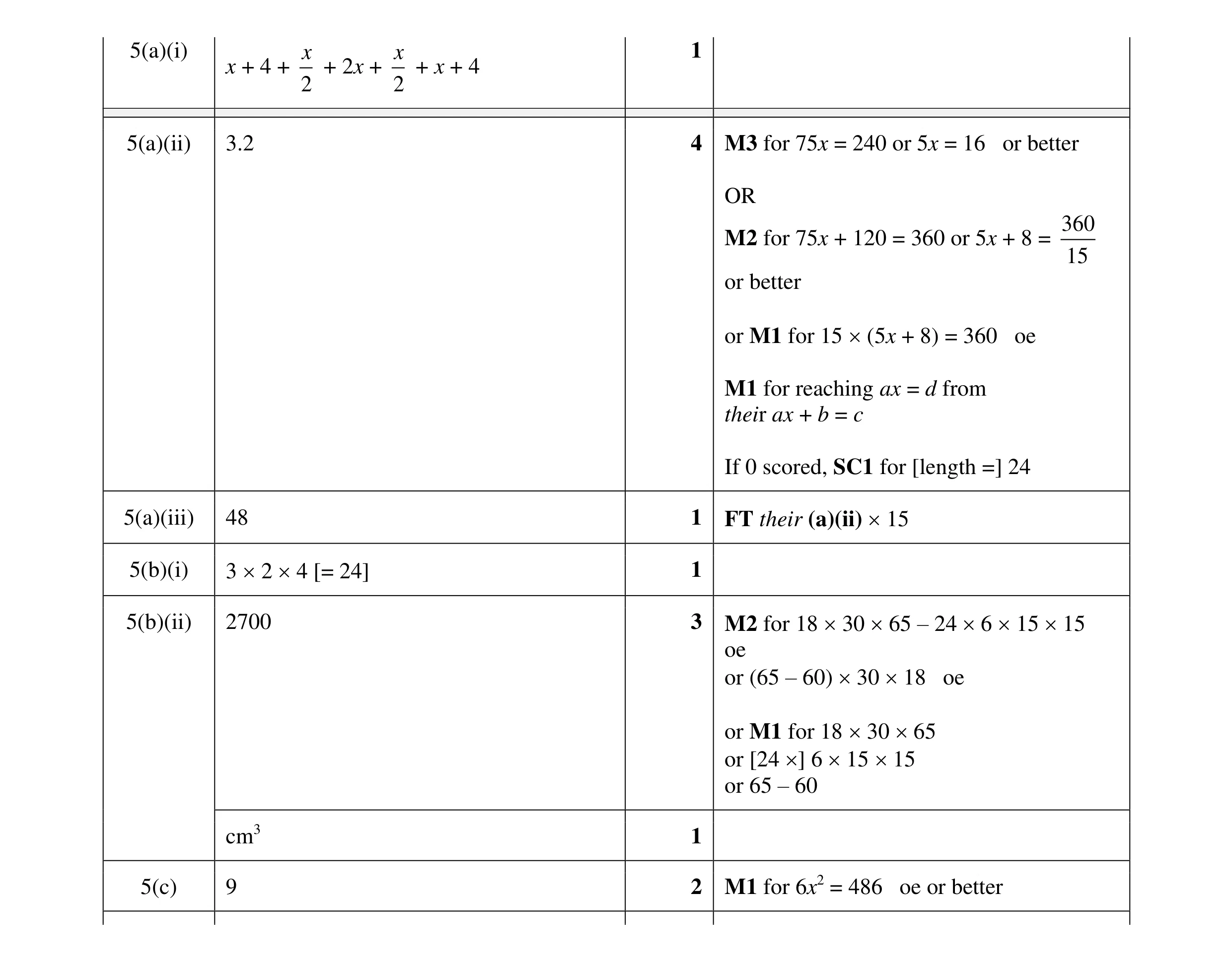 13
13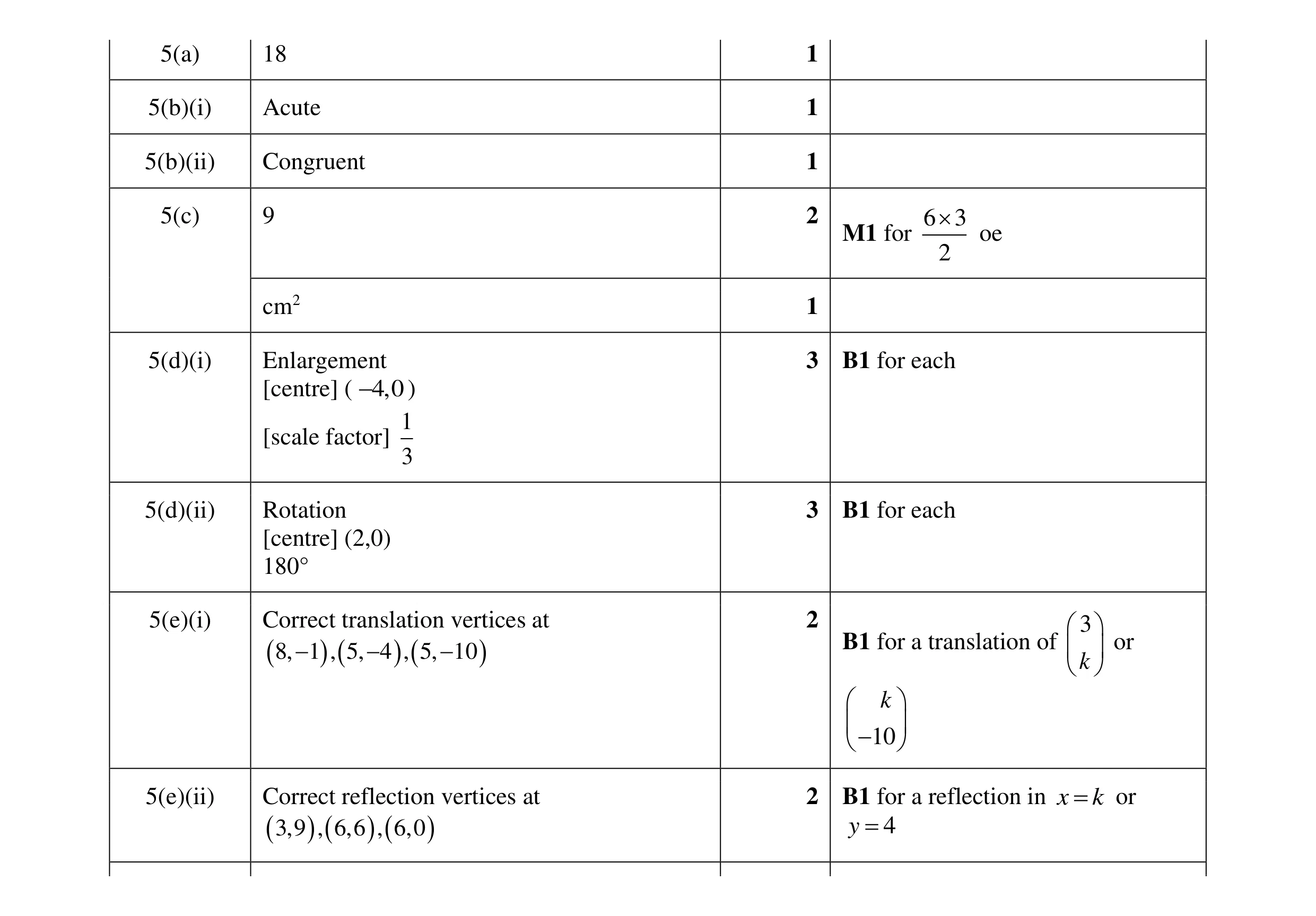 16
16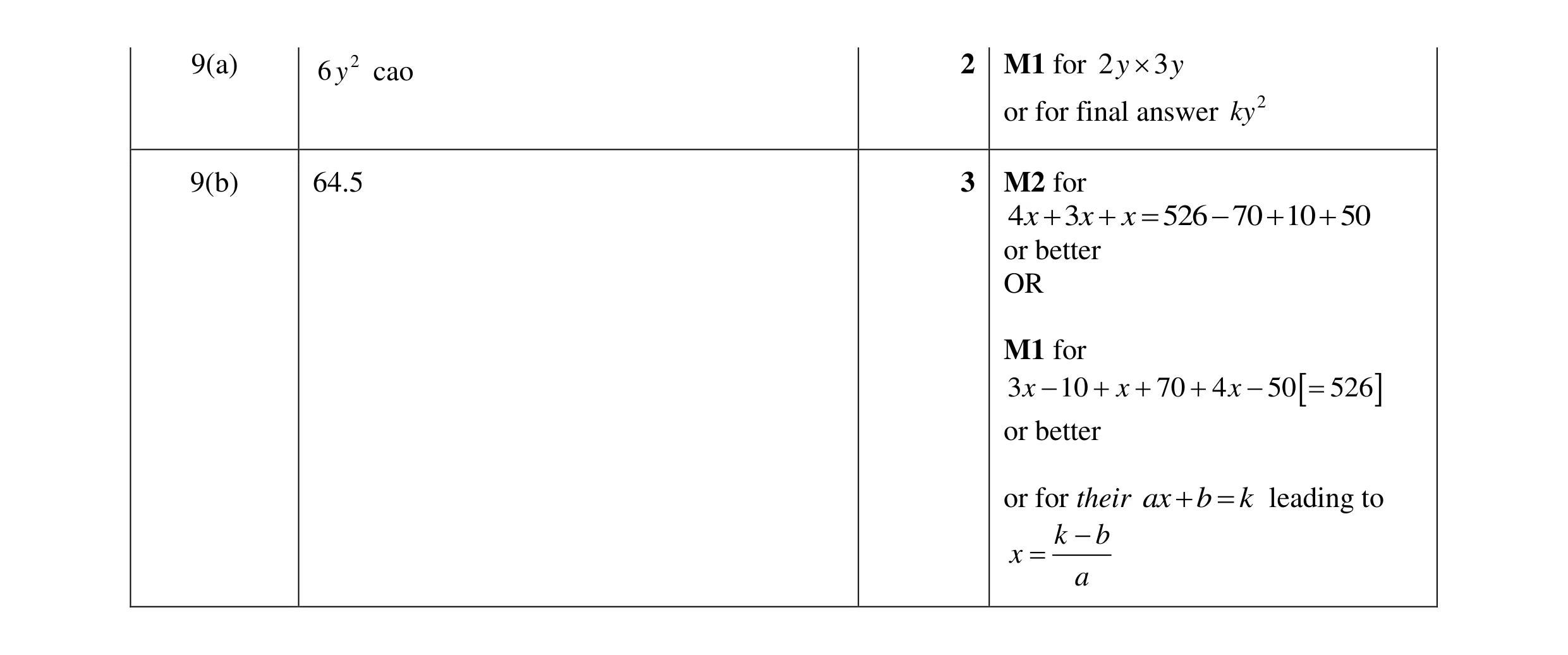 5
5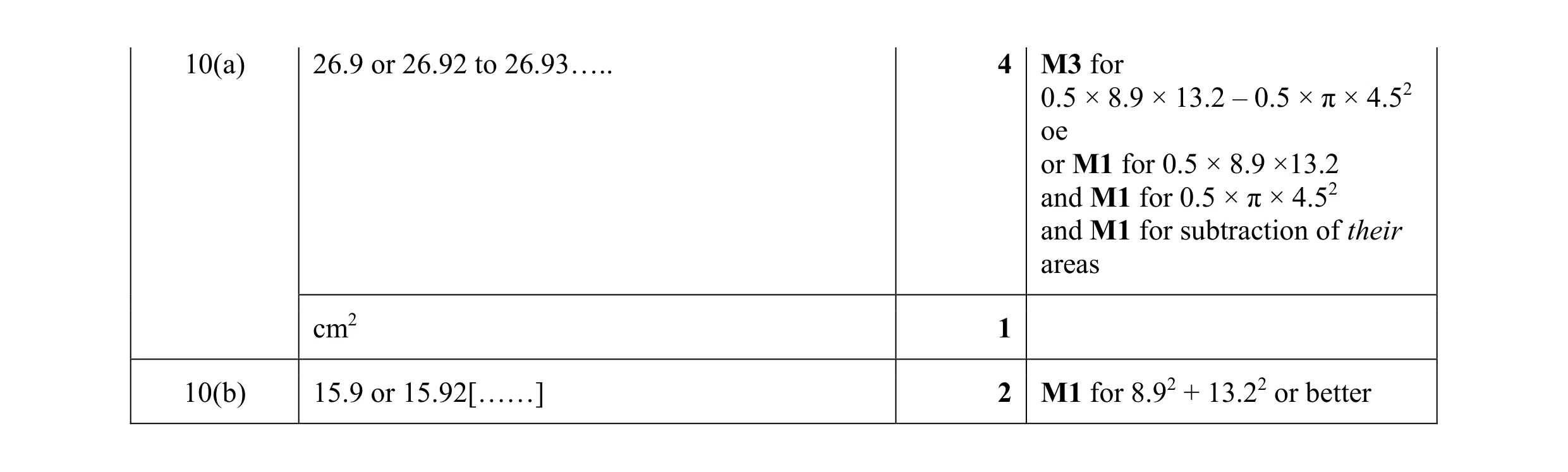 7
7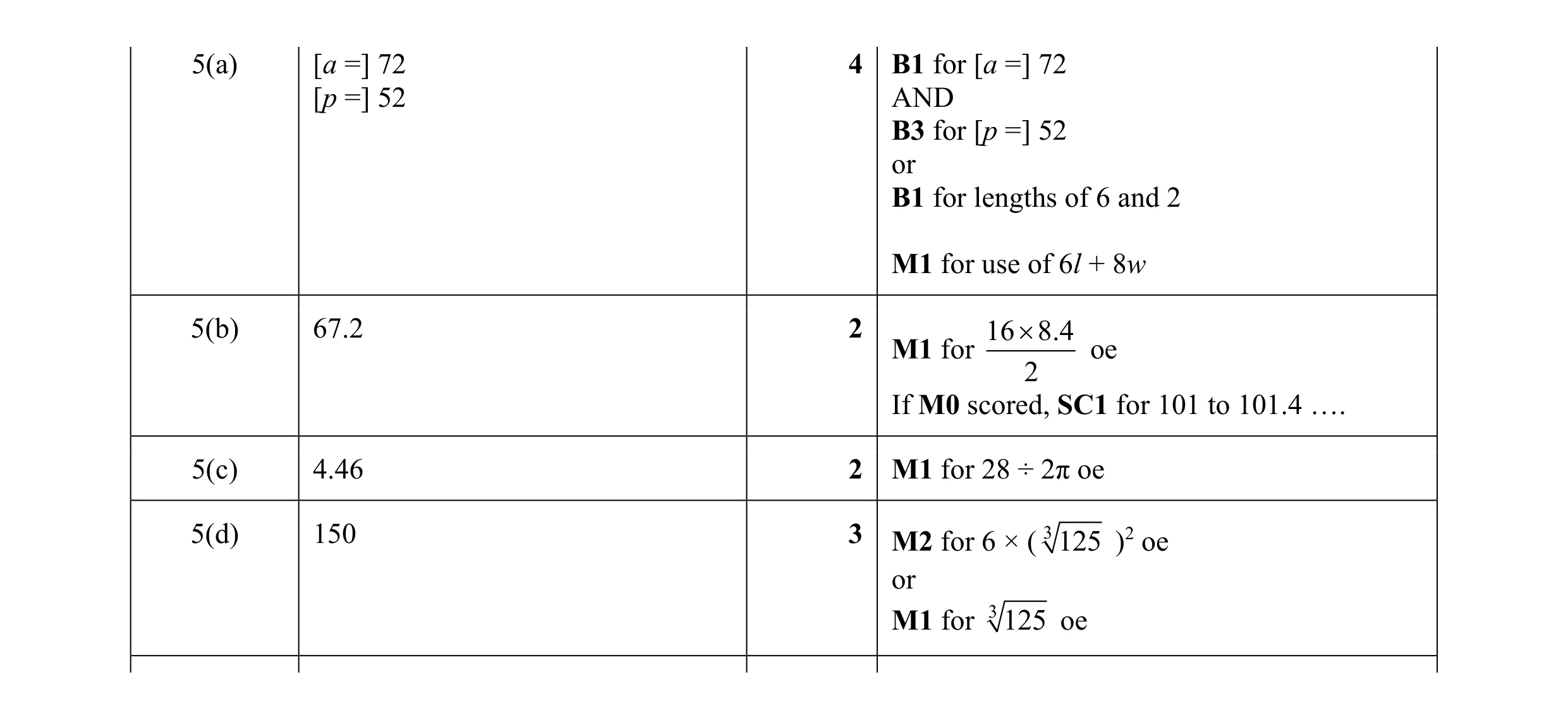 11
11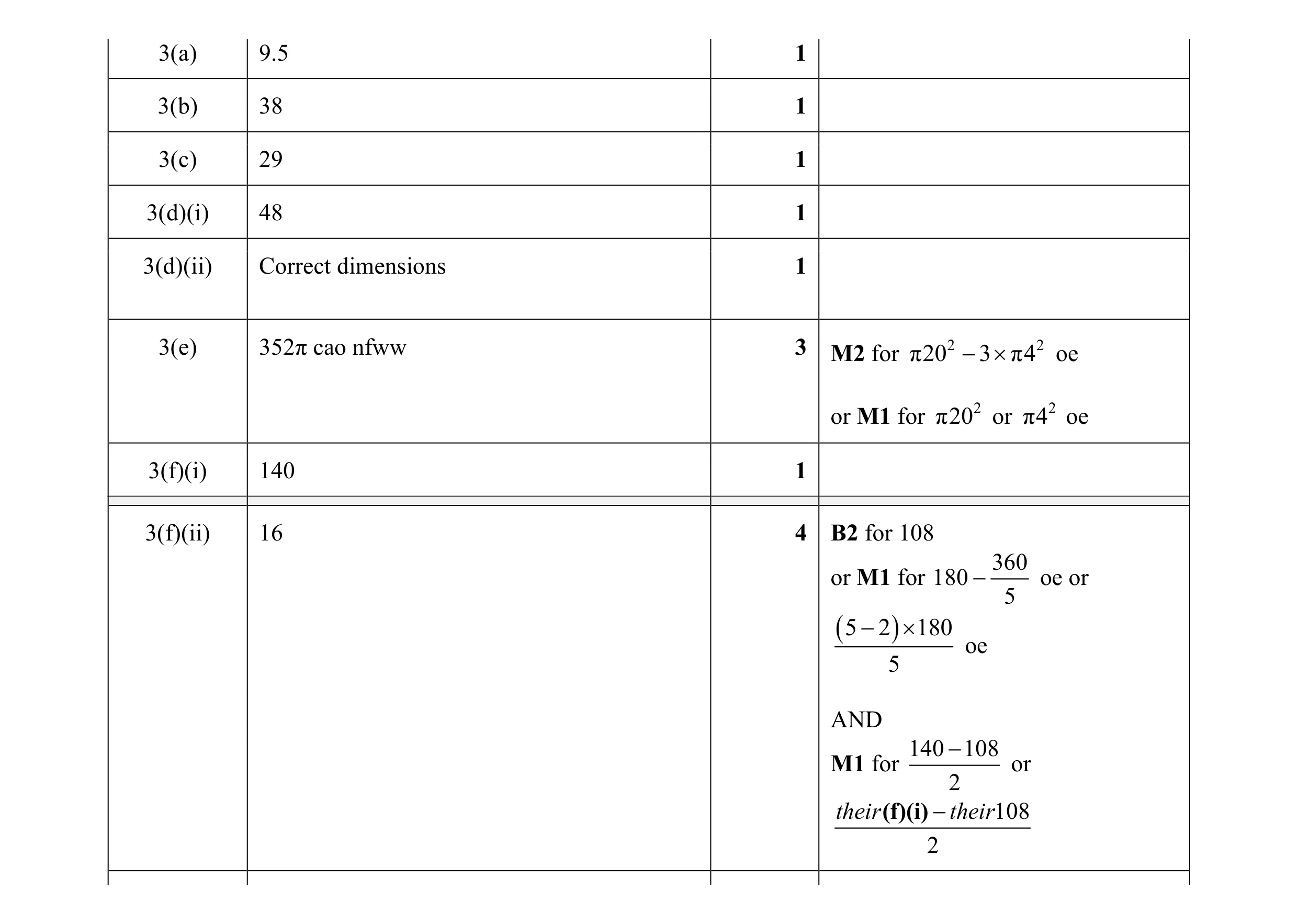 13
13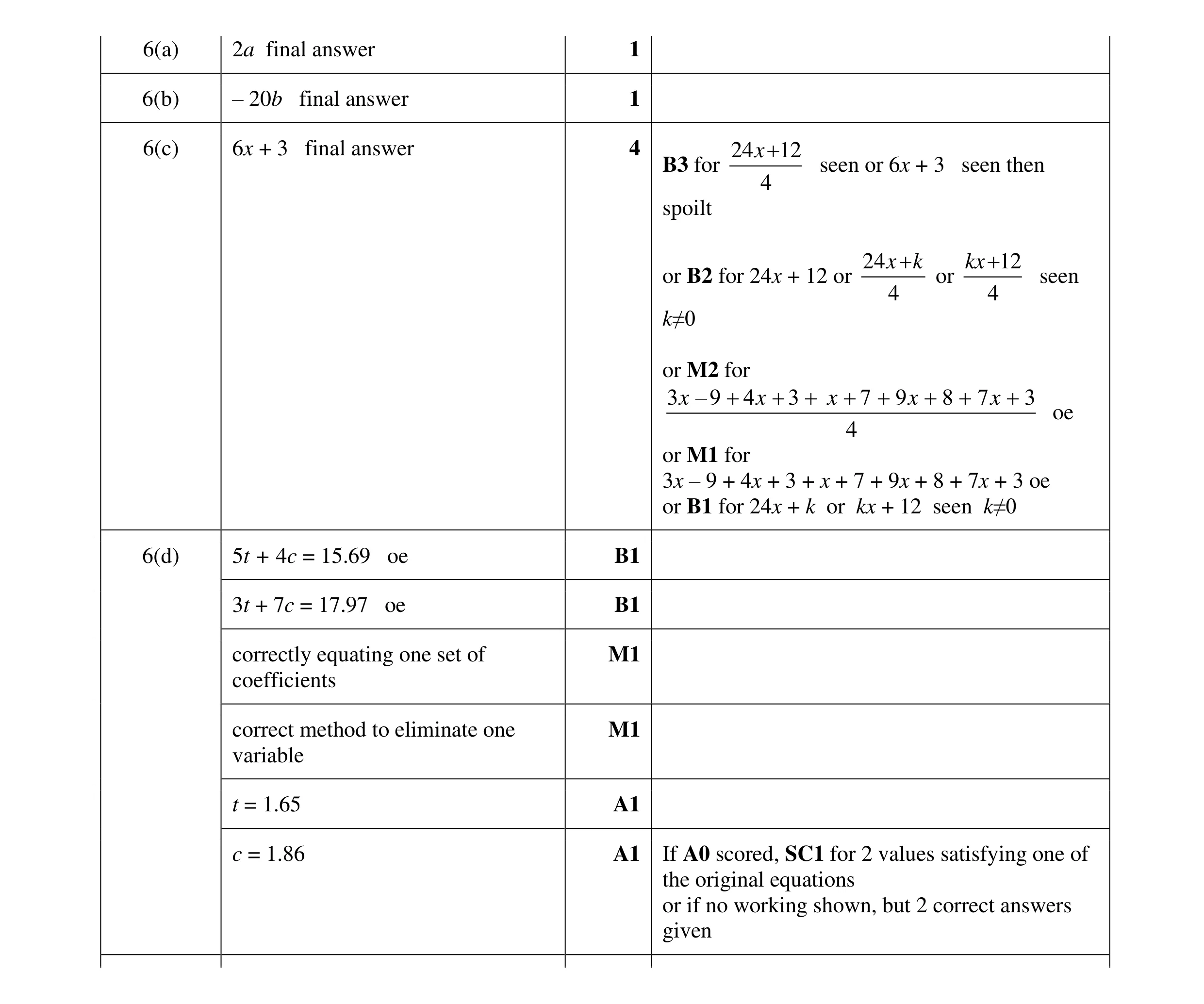 12
12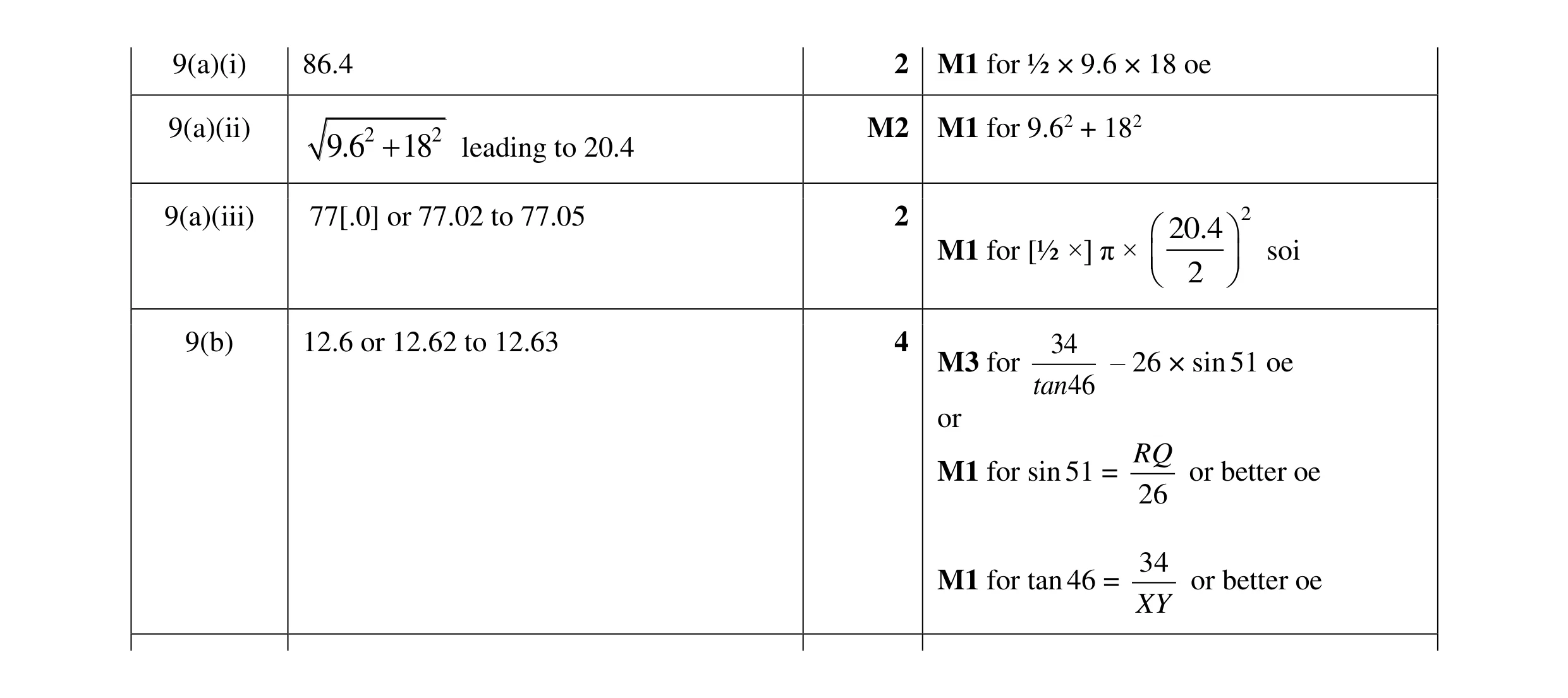 10
10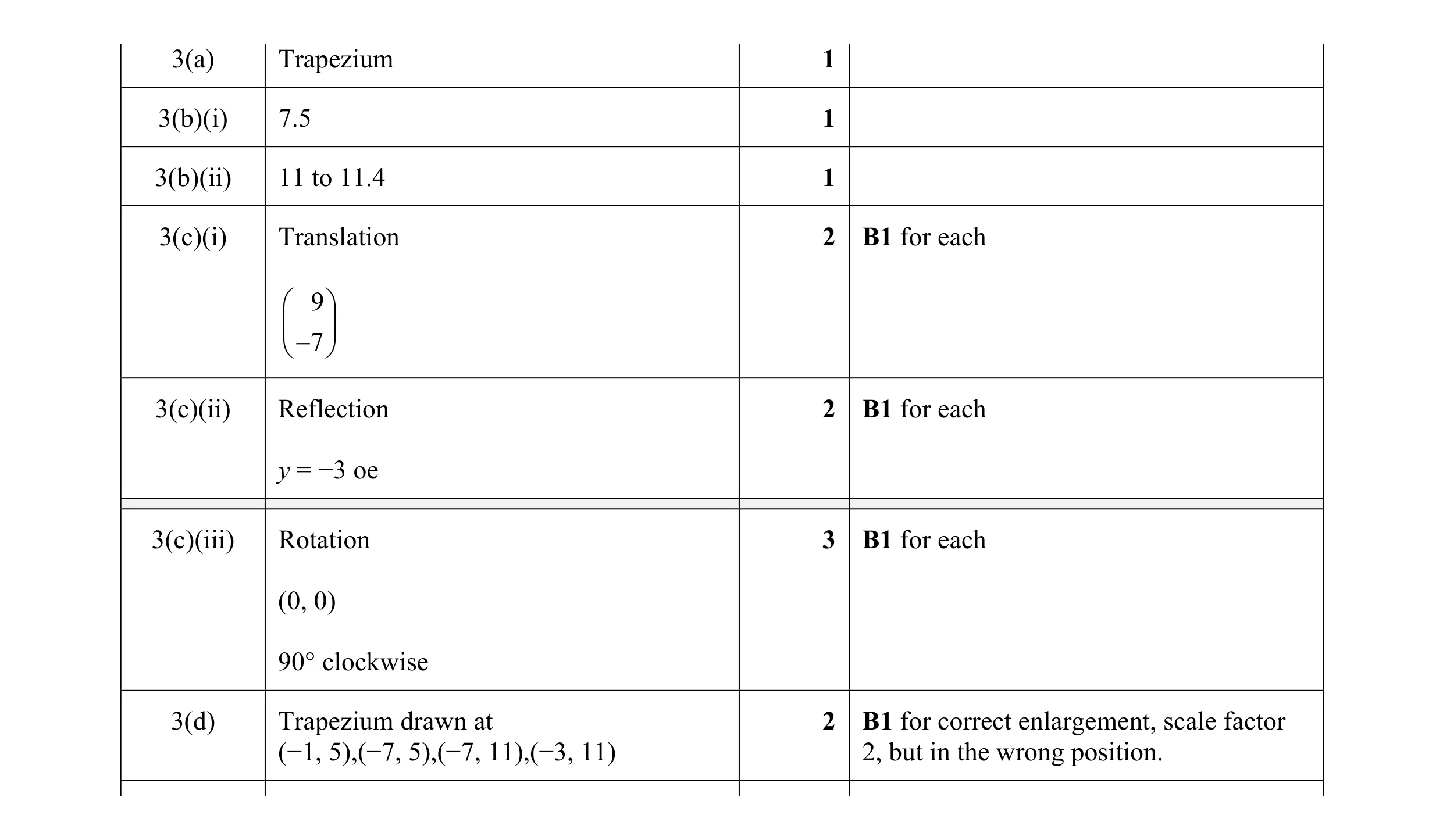 12
12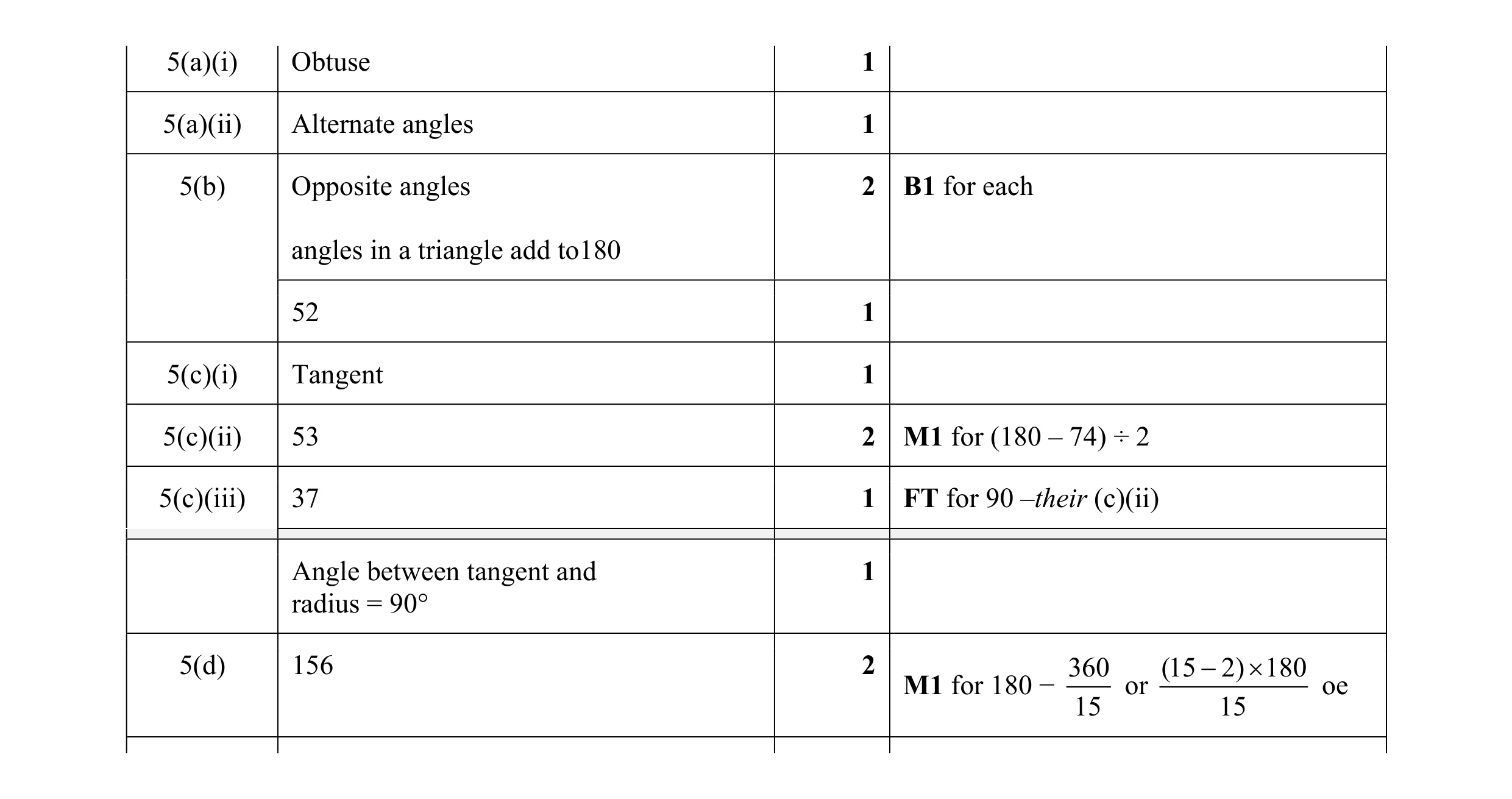 12
12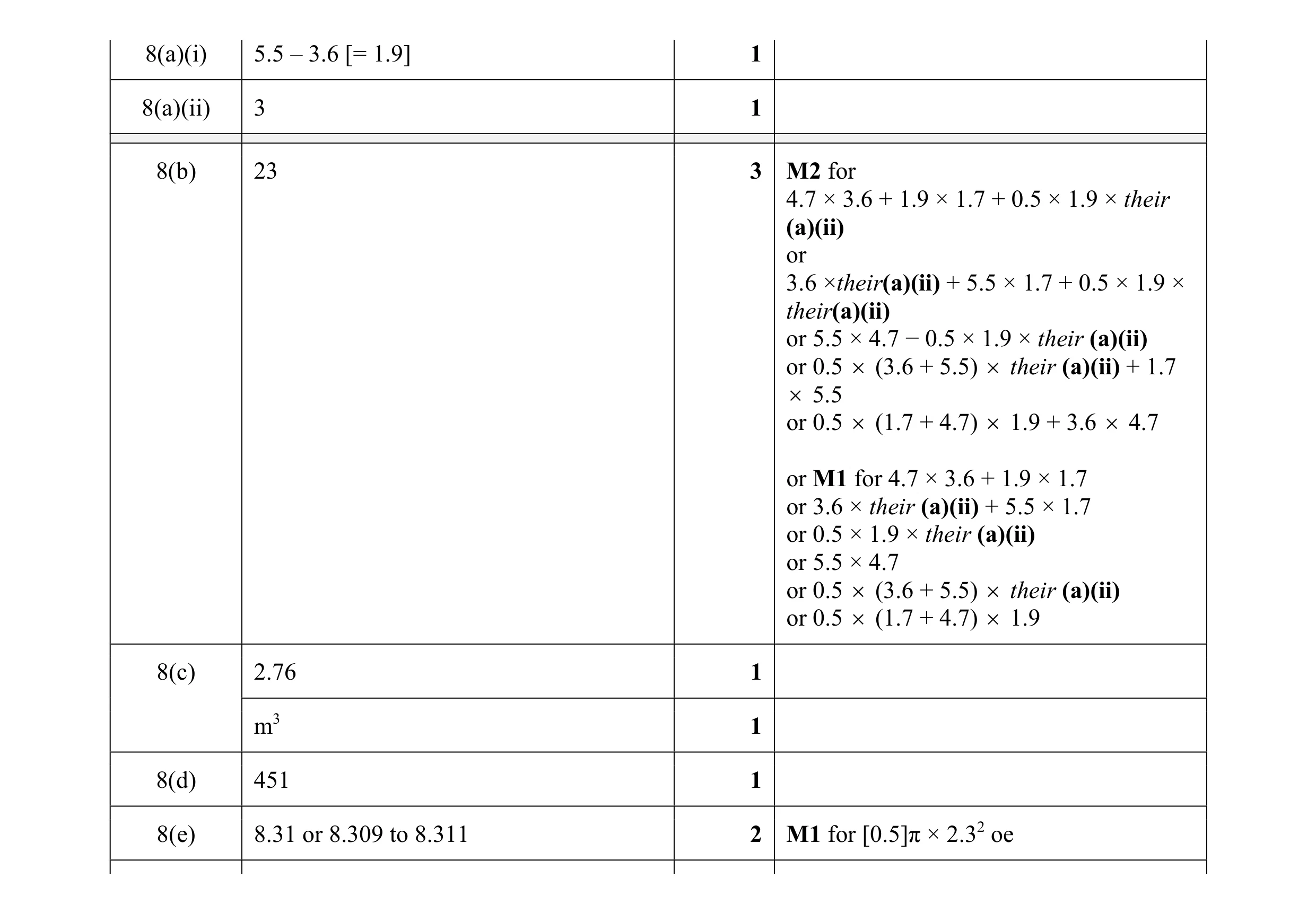 10
10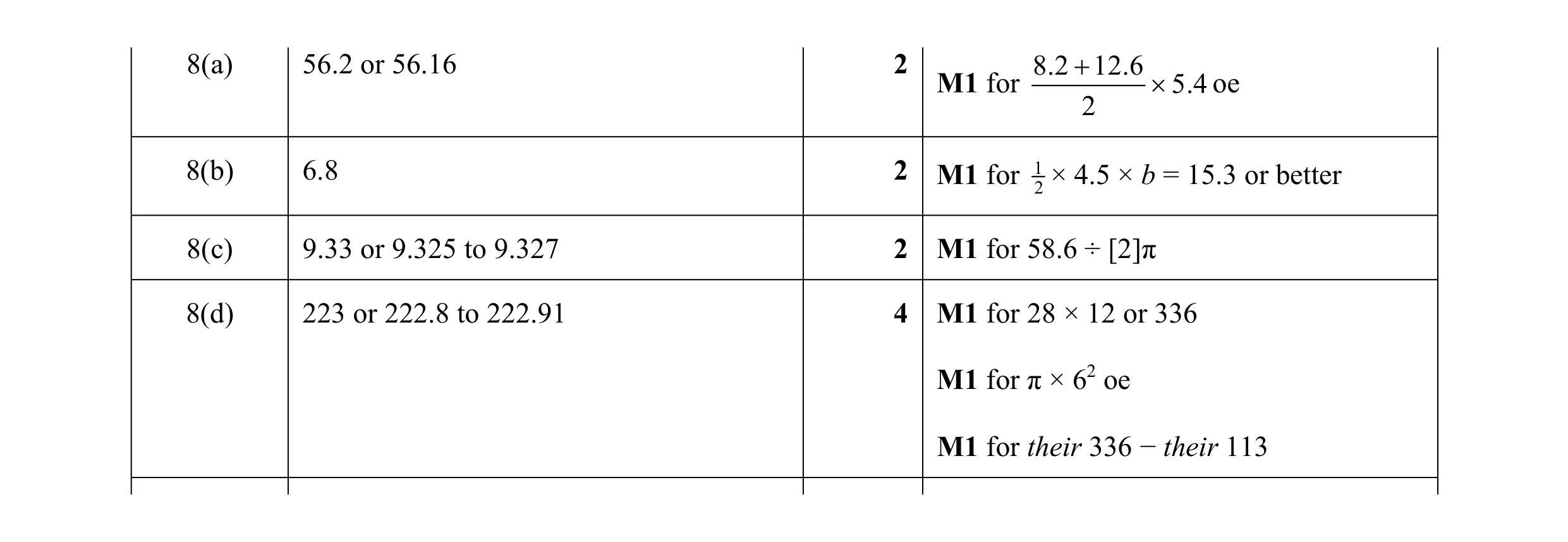 10
10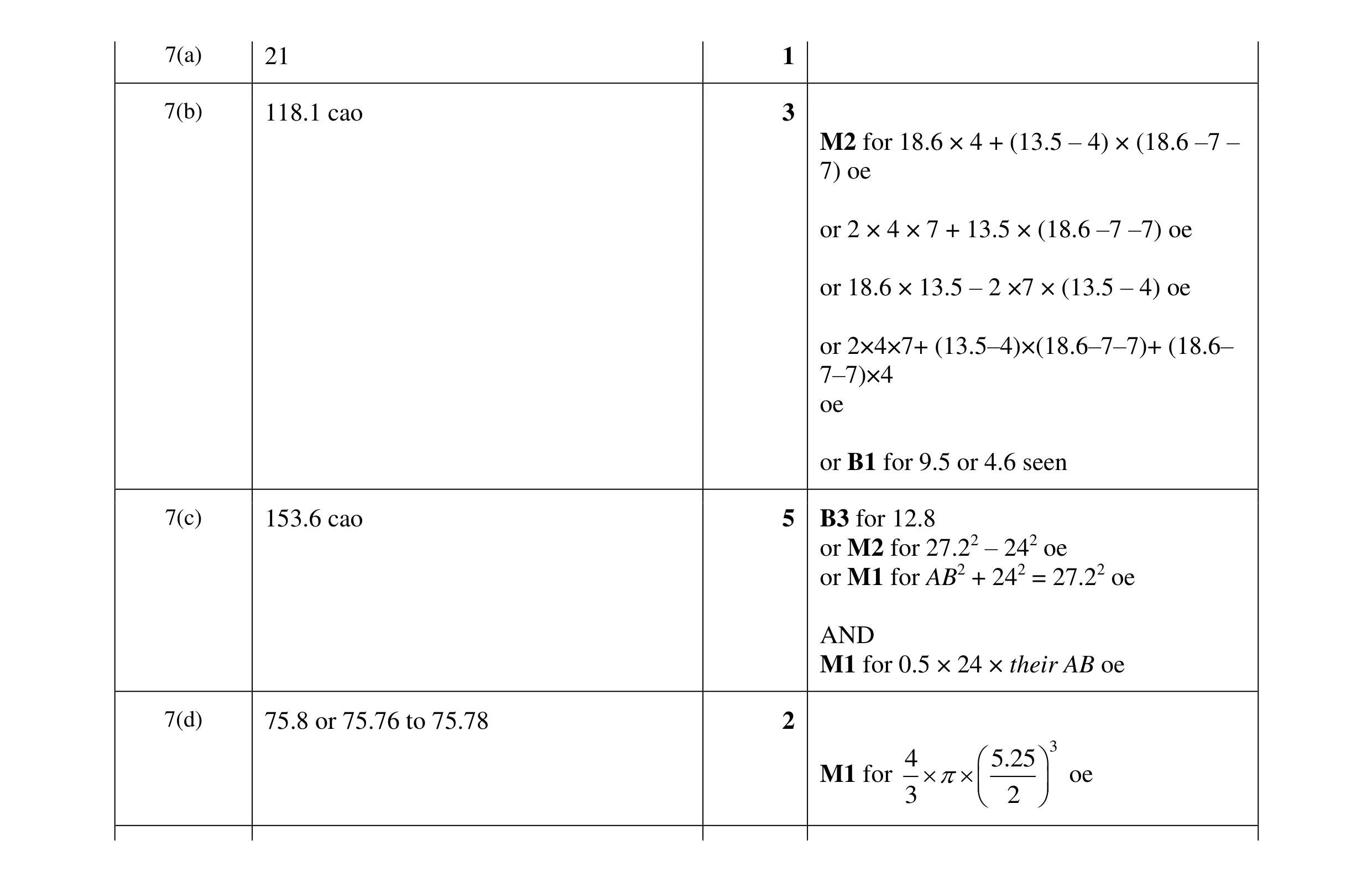 11
11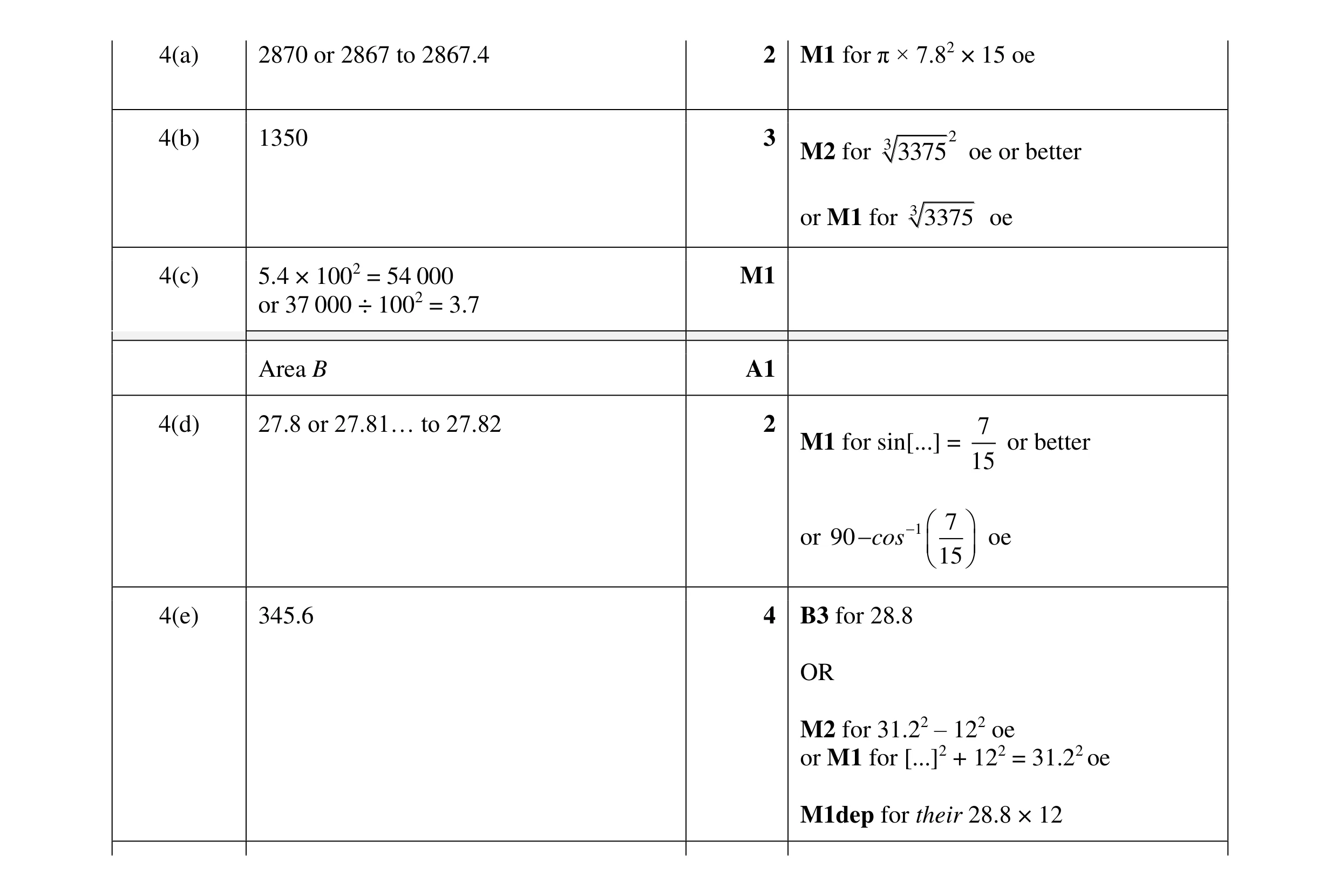 13
13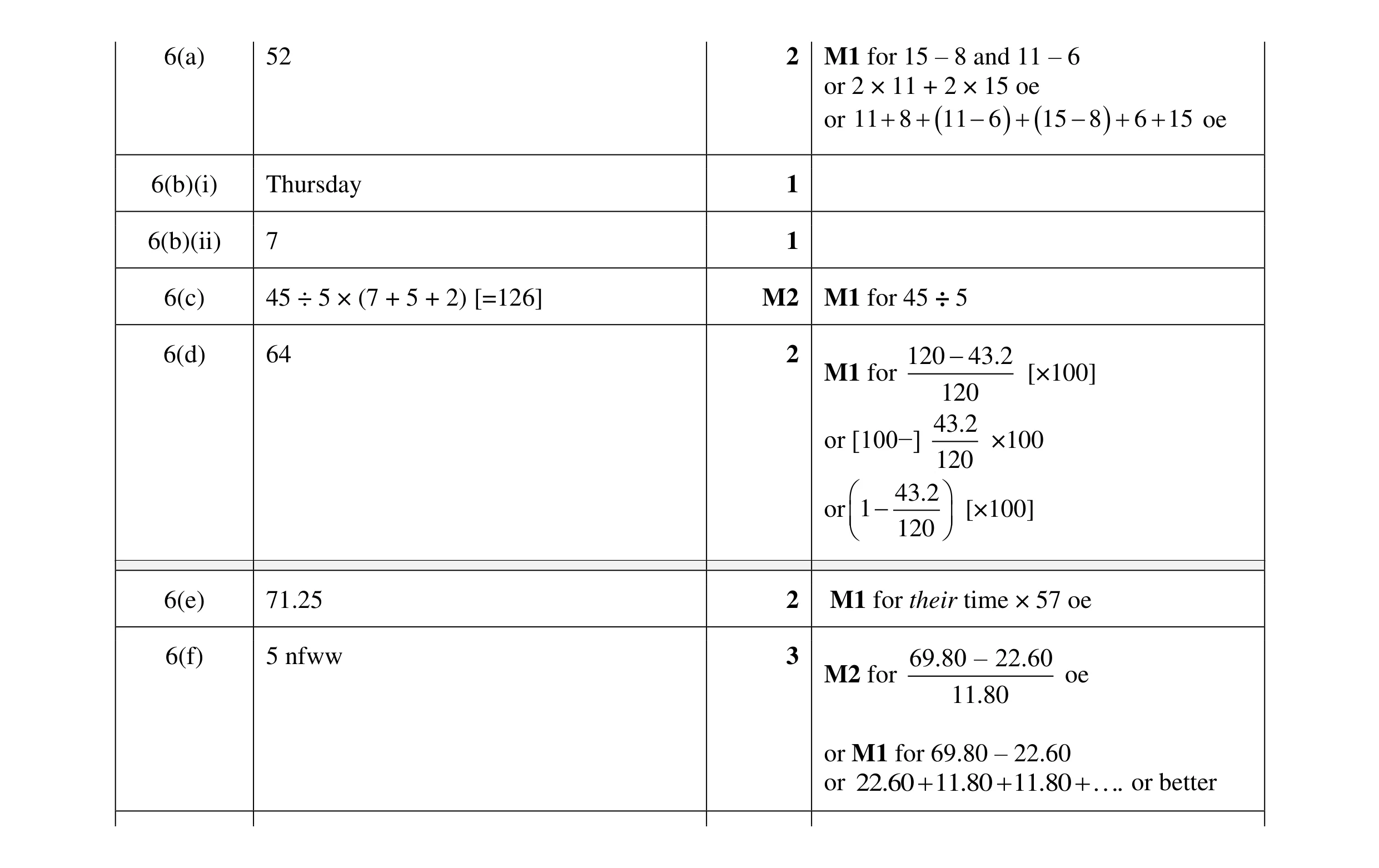 13
13 3
3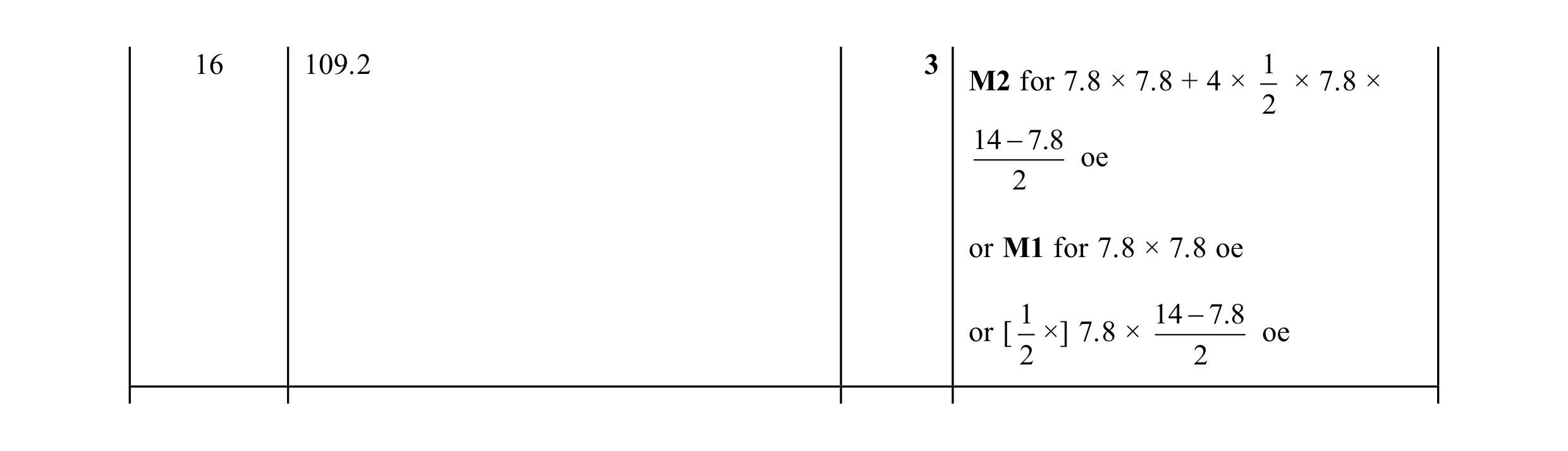 3
3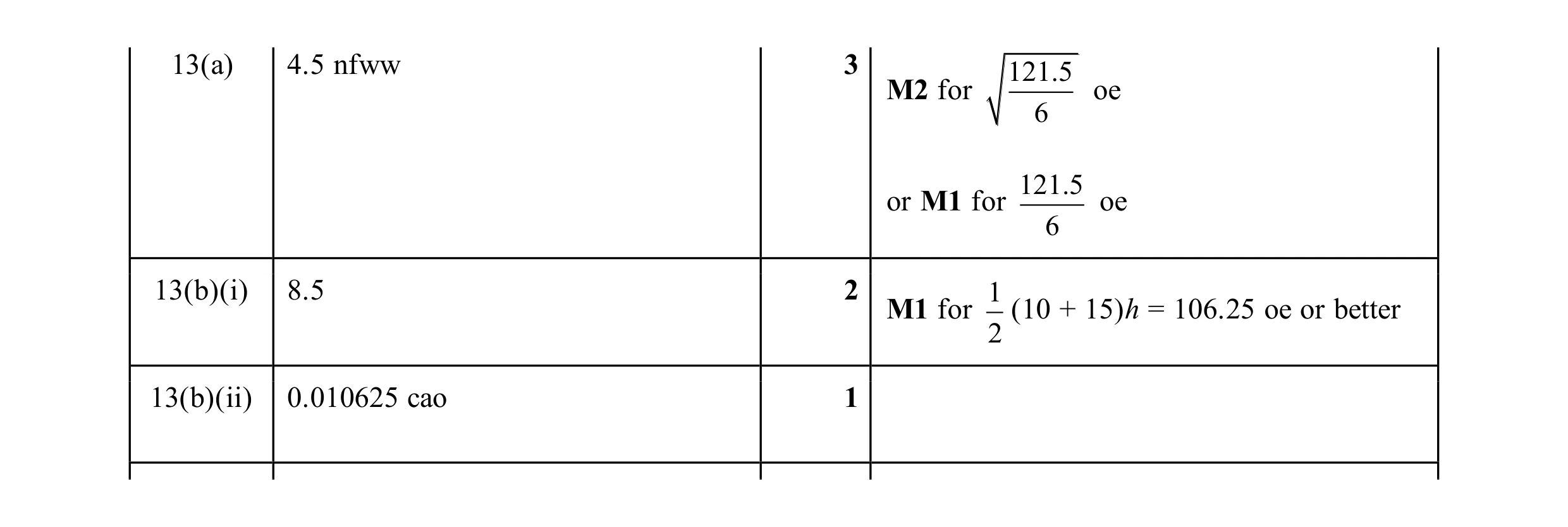 6
6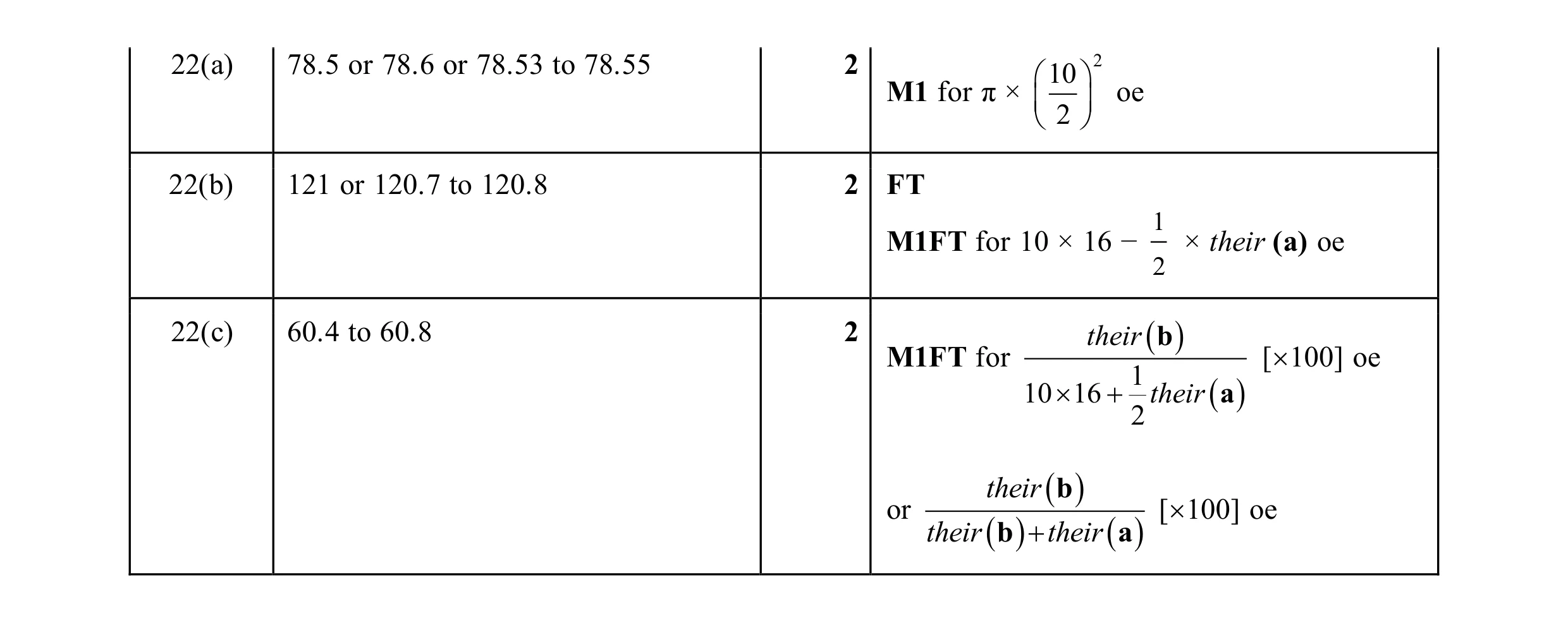 6
6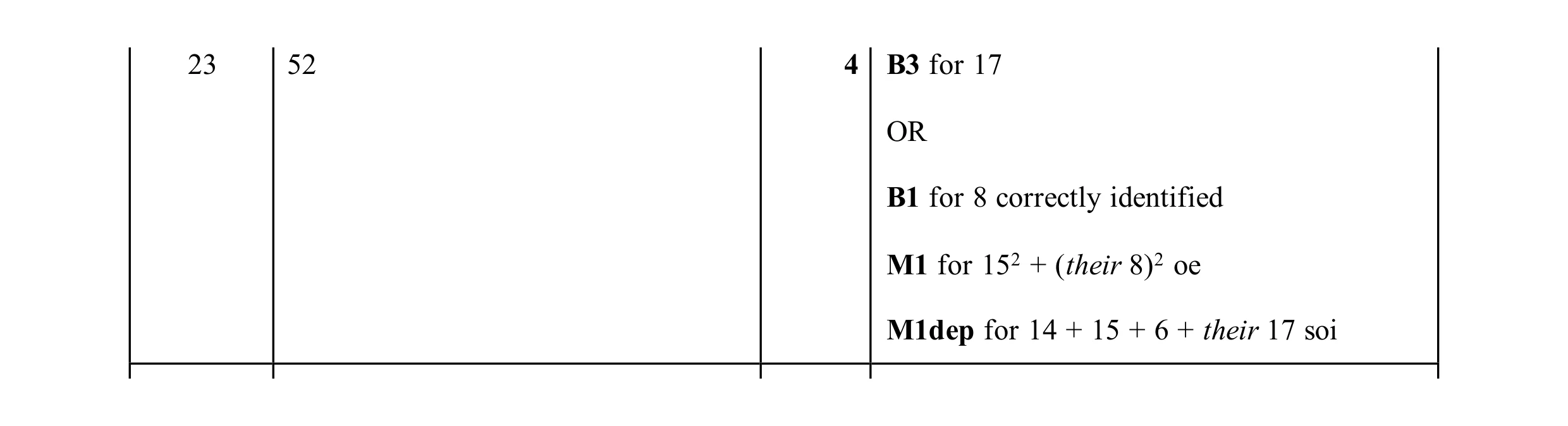 4
4