Questions as text
Q1 · A horizontal force of 90 N is used to push a box across a horizontal floor 9702/11 Oct/Nov 2004
16 A horizontal force of 90 N is used to push a box across a horizontal floor. The frictional force on the box is 50 N. What is the gain in kinetic energy of the box when it is moved through a distance of 6.0 m? A 240 J B 300 J C 540 J D 840 J
1 marks
Answer: A
This question in 9702/11 Oct/Nov 2004
Q2 · A cyclist is capable of generating an average power of 3.0 kW during a 4.0 km speed trial 9702/11 Oct/Nov 2004
17 A cyclist is capable of generating an average power of 3.0 kW during a 4.0 km speed trial. His aerodynamic suit and position on the cycle reduce resistive forces to 180 N. What is the approximate time achieved in the speed trial? A 140 s B 240 s C 1300 s D 2200 s
1 marks
Answer: B
This question in 9702/11 Oct/Nov 2004
Q3 · A constant force of 9.0 kN, parallel to an inclined plane, moves a body of weight 20 kN… 9702/11 Oct/Nov 2004
18 A constant force of 9.0 kN, parallel to an inclined plane, moves a body of weight 20 kN through a distance of 40 m along the plane at constant speed. The body gains 12 m in height, as shown. 40 m 9.0 kN 12 m 20 kN How much of the work done is dissipated as heat? A 120 kJ B 240 kJ C 360 kJ D 600 kJ
1 marks
Answer: A
This question in 9702/11 Oct/Nov 2004
Q4 · An object is thrown into the air 9702/11 Oct/Nov 2005
15 An object is thrown into the air. Which graph shows how the potential energy Ep of the object varies with height h above the ground? A B C D Ep Ep Ep Ep 0 0 0 0 0 h 0 h 0 h 0 h
1 marks
Answer: A
This question in 9702/11 Oct/Nov 2005
Q5 · The diagram shows a barrel of weight 1.0 x 10³ N on a frictionless slope inclined at 30 o… 9702/11 Oct/Nov 2005
16 The diagram shows a barrel of weight 1.0 x 10³ N on a frictionless slope inclined at 30 o to the horizontal. force of slope on barrel force barrel slope 1.0 x 10³ N 30 o A force is applied to the barrel to move it up the slope at constant speed. The force is parallel to the slope. What is the work done in moving the barrel a distance of 5.0 m up the slope? A 1.0 x 10⁴ J B 2.5 x 10³ J C 4.3 x 10³ J D 5.0 x 10³ J
1 marks
Answer: B
This question in 9702/11 Oct/Nov 2005
Q6 · A motorist travelling at 10 m s–1 can bring his car to rest in a braking distance of 10 m 9702/11 May/June 2006
17 A motorist travelling at 10 m s–1 can bring his car to rest in a braking distance of 10 m. In what distance could he bring the car to rest from a speed of 30 m s–1 using the same braking force? A 17 m B 30 m C 52 m D 90 m
1 marks
Answer: D
This question in 9702/11 May/June 2006
Q7 · In many old-style filament lamps, as much as 93 J of energy is emitted as thermal energy… 9702/11 Oct/Nov 2006
17 In many old-style filament lamps, as much as 93 J of energy is emitted as thermal energy for every 7 J of energy emitted as light. What is the efficiency of the lamp, as the percentage of electrical energy converted to light energy? A 7 % B 8 % C 92 % D 93 %
1 marks
Answer: A
This question in 9702/11 Oct/Nov 2006
Q8 · Which expression defines power? 9702/11 May/June 2007
14 Which expression defines power? A force × distance moved in the direction of the force B force × velocity C work done ÷ time taken D work done × time taken
1 marks
Answer: C
This question in 9702/11 May/June 2007
Q9 · The force-extension graph of a particular sample of rubber as a load is applied and then… 9702/11 May/June 2007
18 The force-extension graph of a particular sample of rubber as a load is applied and then removed is shown. force 0 0 extension What does the shaded area represent? A the energy transformed into heat during the complete cycle B the recoverable elastic potential energy stored at maximum extension C the work done on the sample while loading D the work done on the sample while unloading
1 marks
Answer: B
This question in 9702/11 May/June 2007
Q10 · Which quantities are conserved in an inelastic collision? 9702/11 May/June 2008
17 Which quantities are conserved in an inelastic collision? kinetic energy total energy linear momentum A conserved not conserved conserved B conserved not conserved not conserved C not conserved conserved conserved D not conserved conserved not conserved
1 marks
Answer: C
This question in 9702/11 May/June 2008
Q11 · The total energy input Ein in a process is partly transferred to useful energy output U… 9702/11 May/June 2008
19 The total energy input Ein in a process is partly transferred to useful energy output U, and partly to energy that is wasted W. What is the efficiency of the process? U × 100 % A W W × 100 % B E in U × 100 % C E in U + W D × 100 % E in
1 marks
Answer: C
This question in 9702/11 May/June 2008
Q12 · A block of weight W is pulled up a rough slope by a force F 9702/11 Oct/Nov 2008
15 A block of weight W is pulled up a rough slope by a force F. When the block has moved a distance x along the slope, it has risen height h. x F h W Which expressions give the amount of work done on the block and the amount of gravitational potential energy gained by the block? gravitational potential work done energy A Fx Wh B Fh Wx C Wx Fh D Wh Fx
1 marks
Answer: A
This question in 9702/11 Oct/Nov 2008
Q13 · Which operation involves the greatest mean power? 9702/11 Oct/Nov 2008
18 Which operation involves the greatest mean power? A a car moving against a resistive force of 0.4 kN at a constant speed of 20 m s–1 B a crane lifting a weight of 3 kN at a speed of 2 m s–1 C a crane lifting a weight of 5 kN at a speed of 1 m s–1 D a weight being pulled across a horizontal surface at a speed of 6 m s–1 against a frictional force of 1.5 kN
1 marks
Answer: D
This question in 9702/11 Oct/Nov 2008
Q14 · The forward motion of a motor-boat is opposed by forces F which vary with the boat’s… 9702/11 May/June 2009
14 The forward motion of a motor-boat is opposed by forces F which vary with the boat’s speed v in accordance with the relation F = k v 2, where k is a constant. The effective power of the propellers required to maintain the speed v is P. Which expression relates k, P and v ? P P P P A k = v B k = C k = D k = v 2 v 3 v 4
1 marks
Answer: C
This question in 9702/11 May/June 2009
Q15 · Two trolleys are placed together on a horizontal runway with a compressed spring between… 9702/11 Oct/Nov 2009
15 Two trolleys are placed together on a horizontal runway with a compressed spring between them. 2 kg 1 kg When they are released, the 2 kg trolley moves to the left at 2 m s–1. How much energy was stored in the spring? A 4 J B 6 J C 8 J D 12 J
1 marks
Answer: D
This question in 9702/11 Oct/Nov 2009
Q16 · Two trolleys are placed together on a horizontal runway with a compressed spring between… 9702/12 Oct/Nov 2009
14 Two trolleys are placed together on a horizontal runway with a compressed spring between them. 2 kg 1 kg When they are released, the 2 kg trolley moves to the left at 2 m s–1. How much energy was stored in the spring? A 4 J B 6 J C 8 J D 12 J
1 marks
Answer: D
This question in 9702/12 Oct/Nov 2009
Q17 · An ion is accelerated by a series of electrodes in a vacuum 9702/11 May/June 2010
3 An ion is accelerated by a series of electrodes in a vacuum. A graph of the power supplied to the ion is plotted against time. What is represented by the area under the graph between two times? A the change in kinetic energy of the ion B the average force on the ion C the change in momentum of the ion D the change in velocity of the ion Space for working
1 marks
Answer: A
This question in 9702/11 May/June 2010
Q18 · A force of 1000 N is needed to lift the hook of a crane at a steady velocity 9702/11 May/June 2010
15 A force of 1000 N is needed to lift the hook of a crane at a steady velocity. The crane is then used to lift a load of mass 1000 kg at a velocity of 0.50 m s–1. How much of the power developed by the motor of the crane is used in lifting the hook and the load? Assume that the acceleration of free fall g is equal to 10 m s–2. A 5.0 kW B 5.5 kW C 20 kW D 22 kW Space for working
1 marks
Answer: B
This question in 9702/11 May/June 2010
Q19 · A constant force F, acting on a car of mass m, moves the car up the slope through a… 9702/11 May/June 2010
16 A constant force F, acting on a car of mass m, moves the car up the slope through a distance s at constant velocity v. The angle of the slope to the horizontal is α. s F α Which expression gives the efficiency of the process? mgs sin α mv mv 2 mg sin α A B C D Fv Fs 2 Fs F
1 marks
Answer: D
This question in 9702/11 May/June 2010
Q20 · An ion is accelerated by a series of electrodes in a vacuum 9702/13 May/June 2010
7 An ion is accelerated by a series of electrodes in a vacuum. A graph of the power supplied to the ion is plotted against time. What is represented by the area under the graph between two times? A the change in kinetic energy of the ion B the average force on the ion C the change in momentum of the ion D the change in velocity of the ion Space for working
1 marks
Answer: A
This question in 9702/13 May/June 2010
Q21 · A constant force F, acting on a car of mass m, moves the car up the slope through a… 9702/13 May/June 2010
17 A constant force F, acting on a car of mass m, moves the car up the slope through a distance s at constant velocity v. The angle of the slope to the horizontal is α. s F α Which expression gives the efficiency of the process? mgs sin α mv mv 2 mg sin α A B C D Fv Fs 2 Fs F Space for working
1 marks
Answer: D
This question in 9702/13 May/June 2010
Q22 · A force of 1000 N is needed to lift the hook of a crane at a steady velocity 9702/13 May/June 2010
18 A force of 1000 N is needed to lift the hook of a crane at a steady velocity. The crane is then used to lift a load of mass 1000 kg at a velocity of 0.50 m s–1. How much of the power developed by the motor of the crane is used in lifting the hook and the load? Assume that the acceleration of free fall g is equal to 10 m s–2. A 5.0 kW B 5.5 kW C 20 kW D 22 kW
1 marks
Answer: B
This question in 9702/13 May/June 2010
Q23 · A box of weight 200 N is pushed so that it moves at a steady speed along a ramp, through… 9702/12 Oct/Nov 2010
14 A box of weight 200 N is pushed so that it moves at a steady speed along a ramp, through a height of 1.5 m. The ramp makes an angle of 30° with the ground. The frictional force on the box is 150 N while the box is moving. 1.5 m 30° 200 N What is the work done by the person? A 150 J B 300 J C 450 J D 750 J
1 marks
Answer: D
This question in 9702/12 Oct/Nov 2010
Q24 · The kinetic energy of a vehicle of mass 1000 kg is 4.5 × 10⁵ J 9702/12 Oct/Nov 2010
16 The kinetic energy of a vehicle of mass 1000 kg is 4.5 × 10⁵ J. It is stopped by applying a constant braking force of 6000 N. What is its stopping distance? A 37 m B 75 m C 150 m D 300 m
1 marks
Answer: B
This question in 9702/12 Oct/Nov 2010
Q25 · What are units of work, energy and power? 9702/12 Oct/Nov 2010
17 What are units of work, energy and power? work energy power A J N m J B J s–1 J J s–1 C N m N m W D N m W W
1 marks
Answer: C
This question in 9702/12 Oct/Nov 2010
Q26 · A steam turbine is used to drive a generator 9702/13 Oct/Nov 2010
16 A steam turbine is used to drive a generator. The input power to the turbine is PI and the output power PO. The power loss in the turbine is PL, as shown below. input power PI output power PO turbine generator power loss PL What is the efficiency of the turbine? P PI PL PO A L B C D P P P P O O I I Space for working
1 marks
Answer: D
This question in 9702/13 Oct/Nov 2010
Q27 · A block of mass 2.0 kg is released from rest on a slope 9702/11 May/June 2011
15 A block of mass 2.0 kg is released from rest on a slope. It travels 7.0 m down the slope and falls a vertical distance of 3.0 m. The block experiences a frictional force parallel to the slope of 5.0 N. 2.0 kg 7.0 m 3.0 m What is the speed of the block after falling this distance? A 4.9 m s–1 B 6.6 m s–1 C 8.6 m s–1 D 10.1 m s–1
1 marks
Answer: A
This question in 9702/11 May/June 2011
Q28 · A man has a mass of 80 kg 9702/11 May/June 2011
16 A man has a mass of 80 kg. He ties himself to one end of a rope which passes over a single fixed pulley. He pulls on the other end of the rope to lift himself up at an average speed of 50 cm s–1. What is the average useful power at which he is working? A 40 W B 0.39 kW C 4.0 kW D 39 kW Space for working
1 marks
Answer: B
This question in 9702/11 May/June 2011
Q29 · An electric motor produces 120 W of useful mechanical output power 9702/12 May/June 2011
18 An electric motor produces 120 W of useful mechanical output power. The efficiency of the motor is 60 %. Which row is correct? electrical power waste heat power input / W output / W A 72 48 B 192 72 C 200 72 D 200 80 Space for working
1 marks
Answer: D
This question in 9702/12 May/June 2011
Q30 · A hammer with 10 J of kinetic energy hits a nail and pushes it 5.0 mm into a plank 9702/12 May/June 2011
19 A hammer with 10 J of kinetic energy hits a nail and pushes it 5.0 mm into a plank. Both the hammer and nail come to rest after the collision. What is the average force that acts on the nail while it moves the 5.0 mm? A 0.050 N B 2.0 N C 50 N D 2000 N
1 marks
Answer: D
This question in 9702/12 May/June 2011
Q31 · A block of mass 2.0 kg is released from rest on a slope 9702/13 May/June 2011
15 A block of mass 2.0 kg is released from rest on a slope. It travels 7.0 m down the slope and falls a vertical distance of 3.0 m. The block experiences a frictional force parallel to the slope of 5.0 N. 2.0 kg 7.0 m 3.0 m What is the speed of the block after falling this distance? A 4.9 m s–1 B 6.6 m s–1 C 8.6 m s–1 D 10.1 m s–1
1 marks
Answer: A
This question in 9702/13 May/June 2011
Q32 · A man has a mass of 80 kg 9702/13 May/June 2011
17 A man has a mass of 80 kg. He ties himself to one end of a rope which passes over a single fixed pulley. He pulls on the other end of the rope to lift himself up at an average speed of 50 cm s–1. What is the average useful power at which he is working? A 40 W B 0.39 kW C 4.0 kW D 39 kW
1 marks
Answer: B
This question in 9702/13 May/June 2011
Q33 · The diagram shows a particle X, with kinetic energy Ek, about to collide with a… 9702/11 Oct/Nov 2011
16 The diagram shows a particle X, with kinetic energy Ek, about to collide with a stationary particle Y. Both particles have the same mass. X Y After colliding, X and Y travel onwards together as a single larger particle. How much kinetic energy is lost in the collision? E E 3 E A 0 B k C k D k 4 2 4
1 marks
Answer: C
This question in 9702/11 Oct/Nov 2011
Q34 · The first column in the table gives four examples of work being done 9702/11 Oct/Nov 2011
17 The first column in the table gives four examples of work being done. The second column gives more detail of the action. Which row is not correct? example detail A a girl dives from a diving work is done by the girl board into a swimming pool against gravity as she falls B a man pushes a car work is done by the along a level road man against friction C an electron is accelerated towards work is done on the electron a positively-charged plate by the electric field of the plate D a piston is pushed outwards work is done on the as a gas expands atmosphere by the gas Space for working
1 marks
Answer: A
This question in 9702/11 Oct/Nov 2011
Q35 · A trolley runs from P to Q along a track 9702/11 Oct/Nov 2011
18 A trolley runs from P to Q along a track. At Q its potential energy is 50 kJ less than at P. trolley P Q At P, the kinetic energy of the trolley is 5 kJ. Between P and Q, the work the trolley does against friction is 10 kJ. What is the kinetic energy of the trolley at Q? A 35 kJ B 45 kJ C 55 kJ D 65 kJ
1 marks
Answer: B
This question in 9702/11 Oct/Nov 2011
Q36 · An electric motor is required to produce 120 W of mechanical output power 9702/11 Oct/Nov 2011
19 An electric motor is required to produce 120 W of mechanical output power. The efficiency of the motor is 80 %. Which row is correct? electrical power waste heat output input to motor / W from motor / W A 120 24 B 120 96 C 150 30 D 150 120 Space for working
1 marks
Answer: C
This question in 9702/11 Oct/Nov 2011
Q37 · When a horizontal force F is applied to a frictionless trolley over a distance s, the… 9702/12 Oct/Nov 2011
15 When a horizontal force F is applied to a frictionless trolley over a distance s, the kinetic energy of the trolley changes from 4 J to 8 J. If a force of 2F is applied to the trolley over a distance of 2s, what will the original kinetic energy of 4 J become? A 16 J B 20 J C 32 J D 64 J
1 marks
Answer: B
This question in 9702/12 Oct/Nov 2011
Q38 · The kinetic energy of a vehicle of mass 1000 kg is 4.5 × 10⁵ J 9702/12 Oct/Nov 2011
16 The kinetic energy of a vehicle of mass 1000 kg is 4.5 × 10⁵ J. It is braked with a total constant braking force of 6000 N. What will be its stopping distance? A 37 m B 75 m C 150 m D 300 m Space for working
1 marks
Answer: B
This question in 9702/12 Oct/Nov 2011
Q39 · In many old-style filament lamps, as much as 92 J of energy is emitted as thermal energy… 9702/12 Oct/Nov 2011
17 In many old-style filament lamps, as much as 92 J of energy is emitted as thermal energy for every 8 J of energy emitted as light. What is the efficiency of the lamp, as the percentage of electrical energy converted to light energy? A 8 % B 9 % C 91 % D 92 %
1 marks
Answer: A
This question in 9702/12 Oct/Nov 2011
Q40 · The first column in the table gives four examples of work being done 9702/13 Oct/Nov 2011
16 The first column in the table gives four examples of work being done. The second column gives more detail of the action. Which row is not correct? example detail A a girl dives from a diving work is done by the girl board into a swimming pool against gravity as she falls B a man pushes a car work is done by the along a level road man against friction C an electron is accelerated towards work is done on the electron a positively-charged plate by the electric field of the plate D a piston is pushed outwards work is done on the as a gas expands atmosphere by the gas Space for working
1 marks
Answer: A
This question in 9702/13 Oct/Nov 2011
Q41 · The diagram shows a particle X, with kinetic energy Ek, about to collide with a… 9702/13 Oct/Nov 2011
17 The diagram shows a particle X, with kinetic energy Ek, about to collide with a stationary particle Y. Both particles have the same mass. X Y After colliding, X and Y travel onwards together as a single larger particle. How much kinetic energy is lost in the collision? E E 3 E A 0 B k C k D k 4 2 4
1 marks
Answer: C
This question in 9702/13 Oct/Nov 2011
Q42 · An electric motor is required to produce 120 W of mechanical output power 9702/13 Oct/Nov 2011
18 An electric motor is required to produce 120 W of mechanical output power. The efficiency of the motor is 80 %. Which row is correct? electrical power waste heat output input to motor / W from motor / W A 120 24 B 120 96 C 150 30 D 150 120 Space for working
1 marks
Answer: C
This question in 9702/13 Oct/Nov 2011
Q43 · A trolley runs from P to Q along a track 9702/13 Oct/Nov 2011
20 A trolley runs from P to Q along a track. At Q its potential energy is 50 kJ less than at P. trolley P Q At P, the kinetic energy of the trolley is 5 kJ. Between P and Q, the work the trolley does against friction is 10 kJ. What is the kinetic energy of the trolley at Q? A 35 kJ B 45 kJ C 55 kJ D 65 kJ
1 marks
Answer: B
This question in 9702/13 Oct/Nov 2011
Q44 · The diagram shows the design of a water wheel which drives a generator to produce… 9702/12 May/June 2012
18 The diagram shows the design of a water wheel which drives a generator to produce electrical energy. The flow rate of the water is 200 kg s–1. The generator supplies a current of 32 A at a voltage of 230 V. water direction of rotation 8.0 m generator Ignoring any changes in kinetic energy of the water, what is the efficiency of the system? A 14 % B 16 % C 22 % D 47 %
1 marks
Answer: D
This question in 9702/12 May/June 2012
Q45 · A car engine exerts an average force of 500 N in moving the car 1.0 km in 200 s 9702/12 May/June 2012
19 A car engine exerts an average force of 500 N in moving the car 1.0 km in 200 s. What is the average power developed by the engine? A 2.5 W B 2.5 kW C 100 kW D 100 MW
1 marks
Answer: B
This question in 9702/12 May/June 2012
Q46 · A piston in a gas supply pump has an area of 600 cm2 and it moves a distance of 40 cm… 9702/11 Oct/Nov 2012
19 A piston in a gas supply pump has an area of 600 cm2 and it moves a distance of 40 cm during one stroke. The pump moves the gas against a fixed pressure of 5000 Pa. How much work is done by the piston during one stroke? A 1.2 × 10² J B 1.2 × 10⁴ J C 1.2 × 10⁶ J D 1.2 × 10⁸ J Space for working
1 marks
Answer: A
This question in 9702/11 Oct/Nov 2012
Q47 · Water from a reservoir is fed to the turbine of a hydroelectric system at a rate of 500… 9702/11 Oct/Nov 2012
21 Water from a reservoir is fed to the turbine of a hydroelectric system at a rate of 500 kg s–1. The reservoir is 300 m above the level of the turbine. The electrical output from the generator driven by the turbine is 200 A at a potential difference of 6000 V. What is the efficiency of the system? A 8.0 % B 8.2 % C 80 % D 82 %
1 marks
Answer: D
This question in 9702/11 Oct/Nov 2012
Q48 · A crane is being used to lift containers off a ship 9702/12 Oct/Nov 2012
21 A crane is being used to lift containers off a ship. One container has a mass of 14 000 kg and is being lifted vertically with a speed of 3.2 m s–1. The electric motor being used to supply the power to lift the container is using a current of 240 A at a potential difference of 2200 V. What is the efficiency of the system? A 8.1 % B 8.5 % C 48 % D 83 %
1 marks
Answer: D
This question in 9702/12 Oct/Nov 2012
Q49 · Trains supply coal to a power station 9702/12 Oct/Nov 2012
22 Trains supply coal to a power station. The table below gives quantities describing the operation of the power station. symbol unit power station output P W number of trains per day N mass of coal on a train M kg energy from 1 kg of coal J J number of seconds in one day S Which expression gives the efficiency of the power station? A PS B PSN C NMJ D NM NMJ MJ PS PSJ Space for working
1 marks
Answer: A
This question in 9702/12 Oct/Nov 2012
Q50 · A 1.5 V cell supplies 0.20 A to a lamp for seven hours before the lamp goes out 9702/13 Oct/Nov 2012
3 A 1.5 V cell supplies 0.20 A to a lamp for seven hours before the lamp goes out. What is a sensible estimate for the initial chemical energy content of the cell? A 1 × 10² J B 1 × 10⁴ J C 1 × 10⁶ J D 1 × 10⁸ J
1 marks
Answer: B
This question in 9702/13 Oct/Nov 2012
Q51 · A transformer has the following input and output 9702/13 Oct/Nov 2012
20 A transformer has the following input and output. potential current / A difference / V input 11 000 28 output 240 1200 What is the efficiency of the transformer? A 0.94 % B 1.0 % C 11 % D 94 % Space for working
1 marks
Answer: D
This question in 9702/13 Oct/Nov 2012
Q52 · A 2.0 kg mass travelling at 3.0 m s–1 on a frictionless surface collides head-on with a… 9702/11 May/June 2013
11 A 2.0 kg mass travelling at 3.0 m s–1 on a frictionless surface collides head-on with a stationary 1.0 kg mass. The masses stick together on impact. 2.0 kg 1.0 kg 3.0 m s–1 at rest How much kinetic energy is lost on impact? A zero B 2.0 J C 2.4 J D 3.0 J
1 marks
Answer: D
This question in 9702/11 May/June 2013
Q53 · A solid rubber ball has a diameter of 8.0 cm 9702/11 May/June 2013
17 A solid rubber ball has a diameter of 8.0 cm. It is released from rest with the top of the ball 80 cm above a horizontal surface. It falls vertically and then bounces back up so that the maximum height reached by the top of the ball is 45 cm, as shown. 80 60 40 20 If the kinetic energy of the ball is 0.75 J just before it strikes the surface, what is its kinetic energy just after it leaves the surface? A 0.36 J B 0.39 J C 0.40 J D 0.42 J Space for working
1 marks
Answer: B
This question in 9702/11 May/June 2013
Q54 · A wind turbine has blades that sweep an area of 2000 m2 9702/11 May/June 2013
18 A wind turbine has blades that sweep an area of 2000 m2. It converts the power available in the wind to electrical power with an efficiency of 50%. What is the electrical power generated if the wind speed is 10 m s–1? (The density of air is 1.3 kg m–3.) A 130 kW B 650 kW C 1300 kW D 2600 kW
1 marks
Answer: B
This question in 9702/11 May/June 2013
Q55 · The diagram shows a wheel of circumference 0.30 m 9702/11 May/June 2013
19 The diagram shows a wheel of circumference 0.30 m. A rope is fastened at one end to a force meter. The rope passes over the wheel and supports a freely hanging load of 100 N. The wheel is driven by an electric motor at a constant rate of 50 revolutions per second. When the wheel is turning at this rate, the force meter reads 20 N. 50 rev s–1 wheel of circumference 0.30 m force meter 25 20 load 100 N N 15 10 5 0 What is the output power of the motor? A 0.3 kW B 1.2 kW C 1.8 kW D 3.8 kW Space for working
1 marks
Answer: B
This question in 9702/11 May/June 2013
Q56 · A ball is thrown vertically upwards 9702/12 May/June 2013
15 A ball is thrown vertically upwards. Neglecting air resistance, which statement is correct? A The kinetic energy of the ball is greatest at the greatest height attained. B By the principle of conservation of energy, the total energy of the ball is constant throughout its motion. C By the principle of conservation of momentum, the momentum of the ball is constant throughout its motion. D The potential energy of the ball increases uniformly with time during its ascent.
1 marks
Answer: B
This question in 9702/12 May/June 2013
Q57 · A bow of mass 400 g shoots an arrow of mass 120 g vertically upwards 9702/12 May/June 2013
16 A bow of mass 400 g shoots an arrow of mass 120 g vertically upwards. The potential energy stored in the bow just before release is 80 J. The system has an efficiency of 28%. What is the height reached by the arrow when air resistance is neglected? A 4 m B 19 m C 187 m D 243 m Space for working
1 marks
Answer: B
This question in 9702/12 May/June 2013
Q58 · A train on a mountain railway is carrying 200 people of average mass 70 kg up a slope at… 9702/12 May/June 2013
17 A train on a mountain railway is carrying 200 people of average mass 70 kg up a slope at an angle of 30° to the horizontal and at a speed of 6.0 m s–1. The train itself has a mass of 80 000 kg. The percentage of the power from the engine which is used to raise the passengers and the train is 40 %. What is the power of the engine? A 1.1 MW B 2.8 MW C 6.9 MW D 14 MW
1 marks
Answer: C
This question in 9702/12 May/June 2013
Q59 · A ball of mass m is thrown up to height h in air with an initial velocity v, as shown 9702/13 May/June 2013
14 A ball of mass m is thrown up to height h in air with an initial velocity v, as shown. v h P P Q Q Air resistance is considered negligible. The acceleration of free fall is g. What is the total work done by the gravitational force on the ball during its flight from P to Q? A zero B ½mv 2 C mgh D 2mgh
1 marks
Answer: A
This question in 9702/13 May/June 2013
Q60 · The diagram shows an arrangement used to find the output power of an electric motor 9702/13 May/June 2013
16 The diagram shows an arrangement used to find the output power of an electric motor. The wheel attached to the motor’s axle has a circumference of 0.5 m and the belt which passes over it is stationary when the weights have the values shown. motor wheel 20 N 50 N If the wheel is making 20 revolutions per second, what is the output power of the motor? A 300 W B 500 W C 600 W D 700 W
1 marks
Answer: A
This question in 9702/13 May/June 2013
Q61 · The diagram shows a barrel of weight 1.0 × 10³ N on a frictionless slope inclined at 30o… 9702/11 Oct/Nov 2013
17 The diagram shows a barrel of weight 1.0 × 10³ N on a frictionless slope inclined at 30o to the horizontal. force of slope on barrel force barrel slope 1.0 × 10³ N 30o A force is applied to the barrel to move it up the slope at constant speed. The force is parallel to the slope. What is the work done in moving the barrel a distance of 5.0 m up the slope? A 2.5 × 10³ J B 4.3 × 10³ J C 5.0 × 10³ J D 1.0 × 10⁴ J
1 marks
Answer: A
This question in 9702/11 Oct/Nov 2013
Q62 · A car travelling on a level road at a steady 20 m s–1 against a constant resistive force… 9702/11 Oct/Nov 2013
18 A car travelling on a level road at a steady 20 m s–1 against a constant resistive force develops a power of 40 kW. What is the magnitude of the resistive force? A 200 N B 800 N C 2000 N D 4000 N
1 marks
Answer: C
This question in 9702/11 Oct/Nov 2013
Q63 · A turbine at a hydroelectric power station is situated 30 m below the level of the… 9702/11 Oct/Nov 2013
19 A turbine at a hydroelectric power station is situated 30 m below the level of the surface of a large lake. The water passes through the turbine at a rate of 340 m3 per minute. The overall efficiency of the turbine and generator system is 90%. What is the output power of the power station? (The density of water is 1000 kg m–3.) A 0.15 MW B 1.5 MW C 1.7 MW D 90 MW Space for working
1 marks
Answer: B
This question in 9702/11 Oct/Nov 2013
Q64 · The diagram shows a barrel of weight 1.0 × 10³ N on a frictionless slope inclined at 30o… 9702/12 Oct/Nov 2013
17 The diagram shows a barrel of weight 1.0 × 10³ N on a frictionless slope inclined at 30o to the horizontal. force of slope on barrel force barrel slope 1.0 × 10³ N 30o A force is applied to the barrel to move it up the slope at constant speed. The force is parallel to the slope. What is the work done in moving the barrel a distance of 5.0 m up the slope? A 2.5 × 10³ J B 4.3 × 10³ J C 5.0 × 10³ J D 1.0 × 10⁴ J
1 marks
Answer: A
This question in 9702/12 Oct/Nov 2013
Q65 · A car travelling on a level road at a steady 20 m s–1 against a constant resistive force… 9702/12 Oct/Nov 2013
18 A car travelling on a level road at a steady 20 m s–1 against a constant resistive force develops a power of 40 kW. What is the magnitude of the resistive force? A 200 N B 800 N C 2000 N D 4000 N
1 marks
Answer: C
This question in 9702/12 Oct/Nov 2013
Q66 · A turbine at a hydroelectric power station is situated 30 m below the level of the… 9702/12 Oct/Nov 2013
19 A turbine at a hydroelectric power station is situated 30 m below the level of the surface of a large lake. The water passes through the turbine at a rate of 340 m3 per minute. The overall efficiency of the turbine and generator system is 90%. What is the output power of the power station? (The density of water is 1000 kg m–3.) A 0.15 MW B 1.5 MW C 1.7 MW D 90 MW Space for working
1 marks
Answer: B
This question in 9702/12 Oct/Nov 2013
Q67 · The graph shows how the total resistive force acting on a train varies with its speed 9702/13 Oct/Nov 2013
16 The graph shows how the total resistive force acting on a train varies with its speed. Part of this force is due to wheel friction, which is constant. The rest is due to wind resistance. 40 resistive force / kN 30 20 10 0 0 50 100 150 200 speed / km h–1 wind resistance What is the ratio at a speed of 200 km h–1? wheel friction A 4 B 5 C 8 D 10
1 marks
Answer: A
This question in 9702/13 Oct/Nov 2013
Q68 · The pump of a water pumping system uses 2.0 kW of electrical power when raising water 9702/13 Oct/Nov 2013
17 The pump of a water pumping system uses 2.0 kW of electrical power when raising water. The pumping system lifts 16 kg of water per second through a vertical height of 7.0 m. What is the efficiency of the pumping system? A 1.8% B 5.6% C 22% D 55%
1 marks
Answer: D
This question in 9702/13 Oct/Nov 2013
Q69 · An electrical generator is started at time zero 9702/13 Oct/Nov 2013
19 An electrical generator is started at time zero. The total electrical energy generated during the first 5 seconds is shown in the graph. 50 energy / J 40 30 20 10 0 0 1 2 3 4 5 time / s What is the maximum electrical power generated at any instant during these first 5 seconds? A 10 W B 13 W C 30 W D 50 W
1 marks
Answer: C
This question in 9702/13 Oct/Nov 2013
Q70 · What is the average power output of a laser that can deliver 0.20 J of energy in 10 ns? 9702/11 May/June 2014
14 What is the average power output of a laser that can deliver 0.20 J of energy in 10 ns? A 2 nW B 20 mW C 200 kW D 20 MW
1 marks
Answer: D
This question in 9702/11 May/June 2014
Q71 · A weight W hangs from a trolley that runs along a rail 9702/11 May/June 2014
15 A weight W hangs from a trolley that runs along a rail. The trolley moves horizontally through a distance p and simultaneously raises the weight through a height q. trolley rail Y r q X weight W p As a result, the weight moves through a distance r from X to Y. It starts and finishes at rest. How much work is done on the weight during this process? A Wp B W(p + q) C Wq D Wr
1 marks
Answer: C
This question in 9702/11 May/June 2014
Q72 · The engine of a car exerts a force of 600 N in moving the car 1.0 km in 150 seconds 9702/11 May/June 2014
16 The engine of a car exerts a force of 600 N in moving the car 1.0 km in 150 seconds. What is the average output power of the engine? A 4.0 W B 4.0 kW C 90 kW D 90 MW
1 marks
Answer: B
This question in 9702/11 May/June 2014
Q73 · The graph is a load-extension graph for a wire undergoing elastic deformation 9702/11 May/June 2014
21 The graph is a load-extension graph for a wire undergoing elastic deformation. 6 load / kg 4 2 0 0 5 10 15 20 25 extension / mm How much work is done on the wire to increase the extension from 10 mm to 20 mm? A 0.028 J B 0.184 J C 0.28 J D 0.37 J
1 marks
Answer: C
This question in 9702/11 May/June 2014
Q74 · A small mass is placed at point P on the inside surface of a smooth hemisphere 9702/12 May/June 2014
15 A small mass is placed at point P on the inside surface of a smooth hemisphere. It is then released from rest. When it reaches the lowest point T, its speed is 4.0 m s–1. The diagram (not to scale) shows the speed of the mass at other points Q, R and S as it slides down. Air resistance is negligible. P 1.0 m s–1 Q not to smooth 2.0 m s–1 scale hemisphere R 3.0 m s–1 S 4.0 m s–1 T The mass loses potential energy E in falling from P to T. E ? At which point has the mass lost potential energy 4 A Q B R C S D none of these Space for working
1 marks
Answer: B
This question in 9702/12 May/June 2014
Q75 · An escalator is 60 m long and lifts passengers through a vertical height of 30 m, as shown 9702/12 May/June 2014
16 An escalator is 60 m long and lifts passengers through a vertical height of 30 m, as shown. 30 m 60 m To drive the escalator against the forces of friction when there are no passengers requires a power of 2.0 kW. The escalator is used by passengers of average mass 60 kg and the power to overcome friction remains constant. How much power is required to drive the escalator when it is carrying 20 passengers and is travelling at 0.75 m s–1? A 4.4 kW B 6.4 kW C 8.8 kW D 10.8 kW
1 marks
Answer: B
This question in 9702/12 May/June 2014
Q76 · An electric motor has an input power Pin, useful output power Pout and efficiency η 9702/13 May/June 2014
16 An electric motor has an input power Pin, useful output power Pout and efficiency η. input power electric motor output power Pin of efficiency η Pout power lost How much power is lost by the motor? 1 1 A ηPin B −1 Pin C ηPout D −1 Pout η η
1 marks
Answer: D
This question in 9702/13 May/June 2014
Q77 · A ball drops onto a horizontal surface and bounces elastically 9702/13 May/June 2014
18 A ball drops onto a horizontal surface and bounces elastically. What happens to the kinetic energy of the ball during the very short time that it is in contact with the surface? A Most of the kinetic energy is lost as heat and sound energy. B The kinetic energy decreases to zero and then returns to its original value. C The kinetic energy remains constant because it is an elastic collision. D The kinetic energy remains constant in magnitude but changes direction.
1 marks
Answer: B
This question in 9702/13 May/June 2014
Q78 · A small electric motor is mounted on a bench, as shown 9702/11 Oct/Nov 2014
15 A small electric motor is mounted on a bench, as shown. The motor is connected to a 6.0 V supply and the current in the motor is 0.50 A. The motor is 50% efficient. motor 200 g What is the time taken to lift a mass of 200 g up through a height of 90 cm? A 0.59 s B 0.85 s C 1.2 s D 2.7 s
1 marks
Answer: C
This question in 9702/11 Oct/Nov 2014
Q79 · A projectile is launched at 45° to the horizontal with initial kinetic energy E 9702/11 Oct/Nov 2014
16 A projectile is launched at 45° to the horizontal with initial kinetic energy E. Assuming air resistance to be negligible, what will be the kinetic energy of the projectile when it reaches its highest point? A 0.50 E B 0.71 E C 0.87 E D E
1 marks
Answer: A
This question in 9702/11 Oct/Nov 2014
Q80 · A small electric motor is mounted on a bench, as shown 9702/12 Oct/Nov 2014
15 A small electric motor is mounted on a bench, as shown. The motor is connected to a 6.0 V supply and the current in the motor is 0.50 A. The motor is 50% efficient. motor 200 g What is the time taken to lift a mass of 200 g up through a height of 90 cm? A 0.59 s B 0.85 s C 1.2 s D 2.7 s
1 marks
Answer: C
This question in 9702/12 Oct/Nov 2014
Q81 · A constant force F, acting on a car of mass m, moves the car up a slope through a… 9702/13 Oct/Nov 2014
15 A constant force F, acting on a car of mass m, moves the car up a slope through a distance s at constant velocity v. The angle of the slope to the horizontal is α. s F α Which expression gives the efficiency of the process? mgs sin α mv mv 2 mg sin α A B C D Fv Fs 2 Fs F Space for working
1 marks
Answer: D
This question in 9702/13 Oct/Nov 2014
Q82 · The diagram shows a particle X, with kinetic energy Ek, about to collide with a… 9702/13 Oct/Nov 2014
16 The diagram shows a particle X, with kinetic energy Ek, about to collide with a stationary particle Y. Both particles have the same mass. X Y After colliding, X and Y travel onwards together as a single larger particle. How much kinetic energy is lost in the collision? E E 3 E A 0 B k C k D k 4 2 4
1 marks
Answer: C
This question in 9702/13 Oct/Nov 2014
Q83 · A box of weight 30 N is released from rest on a ramp that is at an angle of 30° to the… 9702/13 Oct/Nov 2014
17 A box of weight 30 N is released from rest on a ramp that is at an angle of 30° to the horizontal. The box slides down the ramp so that it falls through a vertical distance of 8.0 m. A constant frictional force of 10 N acts on the box while it is moving. 8.0 m 30 N 30° What is the kinetic energy of the box after falling through this distance? A 80 J B 160 J C 240 J D 400 J Space for working
1 marks
Answer: A
This question in 9702/13 Oct/Nov 2014
Q84 · A van driver adjusts the force on a van’s brakes so that the van travels at constant… 9702/13 Oct/Nov 2014
19 A van driver adjusts the force on a van’s brakes so that the van travels at constant speed down a hill from P to Q. P Q The magnitude of the change in the van’s kinetic energy is ∆Ek. The magnitude of the change in its gravitational potential energy is ∆Ep. Which statement is correct? A ∆Ek > ∆Ep B ∆Ek = ∆Ep C ∆Ep > ∆Ek > 0 D ∆Ek = 0
1 marks
Answer: D
This question in 9702/13 Oct/Nov 2014
Q85 · A team of nine dogs can pull a sledge with a combined force of 800 N at a speed of 1.5 m… 9702/11 May/June 2015
16 A team of nine dogs can pull a sledge with a combined force of 800 N at a speed of 1.5 m s–1 for 360 minutes. What is the average work done by each dog during this time? A 4.8 × 10⁴ J B 4.3 × 10⁵ J C 2.9 × 10⁶ J D 2.6 × 10⁷ J
1 marks
Answer: C
This question in 9702/11 May/June 2015
Q86 · Which statement is correct? 9702/11 May/June 2015
17 Which statement is correct? A A ball lands on the ground and bounces. The kinetic energy changes sign, because the ball changes direction. B A car drives up a slope at a steady speed. The power generated by the engine equals the potential energy gained per unit time. C An electric heater can be 100% efficient. D It is impossible for momentum to be conserved in a collision.
1 marks
Answer: C
This question in 9702/11 May/June 2015
Q87 · The diagram shows a pump called a hydraulic ram 9702/11 May/June 2015
18 The diagram shows a pump called a hydraulic ram. small high tank to be filled large reservoir (lake) lift height long inclined approach pipe pump In one such pump the long approach pipe holds 500 kg of water. A valve shuts when the speed of this water reaches 2.0 m s–1 and the kinetic energy of this water is used to lift a small quantity of water by a height of 15 m. The efficiency of the pump is 10%. Which mass of water could be lifted 15 m? A 0.15 kg B 0.68 kg C 1.5 kg D 6.8 kg
1 marks
Answer: B
This question in 9702/11 May/June 2015
Q88 · A conveyor belt is driven at velocity v by a motor 9702/11 May/June 2015
19 A conveyor belt is driven at velocity v by a motor. Sand drops vertically on to the belt at a rate of m kg s–1. What is the additional power needed to keep the conveyor belt moving at a steady speed when the sand starts to fall on it? A 1 mv B mv C 1 mv 2 D mv 2 2 2
1 marks
Answer: D
This question in 9702/11 May/June 2015
Q89 · Trolley X, moving along a horizontal frictionless track, collides with a stationary… 9702/12 May/June 2015
11 Trolley X, moving along a horizontal frictionless track, collides with a stationary trolley Y. The two trolleys become attached and move off together. Which statement about this interaction is correct? A Some of the kinetic energy of trolley X is changed to momentum in the collision. B Some of the momentum of trolley X is changed to kinetic energy in the collision. C Trolley X loses some of its momentum as heat in the collision. D Trolley X shares its momentum with trolley Y but some of its kinetic energy is lost.
1 marks
Answer: D
This question in 9702/12 May/June 2015
Q90 · The diagram shows a hydroelectric power station 9702/12 May/June 2015
16 The diagram shows a hydroelectric power station. The reservoir is linked to the turbines by a pipe of uniform cross-sectional area. reservoir X turbine house Y Water flows from X to Y at constant speed. Which statement about the change of energy of the water as it moves from X to Y is correct? A It gains both gravitational potential energy and kinetic energy. B It loses both elastic potential energy and kinetic energy. C It loses both elastic potential energy and gravitational potential energy. D It loses gravitational potential energy and gains elastic potential energy.
1 marks
Answer: D
This question in 9702/12 May/June 2015
Q91 · Water from a reservoir is fed to the turbine of a hydroelectric system at a rate of 500… 9702/12 May/June 2015
18 Water from a reservoir is fed to the turbine of a hydroelectric system at a rate of 500 kg s–1. The reservoir is 300 m above the level of the turbine. The electrical output from the generator driven by the turbine is 200 A at a potential difference of 6000 V. What is the efficiency of the system? A 8.0% B 8.2% C 80% D 82%
1 marks
Answer: D
This question in 9702/12 May/June 2015
Q92 · A combined heat and power (CHP) station generates electrical power and useful heat 9702/11 Oct/Nov 2015
16 A combined heat and power (CHP) station generates electrical power and useful heat. The diagram shows the input and output for a CHP station. wasted power 60 MW useful heating power input power 160 MW from fuel useful electrical power 100 MW What is the efficiency of the CHP station for producing useful power? A 31% B 38% C 50% D 81%
1 marks
Answer: D
This question in 9702/11 Oct/Nov 2015
Q93 · In ‘normal driving conditions’, an electric car has a range of 150 km 9702/11 Oct/Nov 2015
17 In ‘normal driving conditions’, an electric car has a range of 150 km. This uses all of the 200 MJ energy stored in its batteries. With the batteries initially fully charged, the car is driven 100 km in ‘normal driving conditions’. The batteries are then recharged from a household electrical supply delivering a constant current of 13.0 A at a potential difference (p.d.) of 230 V. What is the minimum time required to recharge the batteries? A 0.95 hours B 12.4 hours C 18.6 hours D 27.9 hours
1 marks
Answer: B
This question in 9702/11 Oct/Nov 2015
Q94 · An object of mass m travelling with speed v has a head-on collision with another object… 9702/12 Oct/Nov 2015
13 An object of mass m travelling with speed v has a head-on collision with another object of mass m travelling with speed v in the opposite direction. The two objects stick together after the collision. What is the total loss of kinetic energy in the collision? A 0 B 1 mv 2 C mv 2 D 2mv 2 2
1 marks
Answer: C
This question in 9702/12 Oct/Nov 2015
Q95 · A car of mass 500 kg is at rest at point X on a slope, as shown 9702/12 Oct/Nov 2015
16 A car of mass 500 kg is at rest at point X on a slope, as shown. The car’s brakes are released and the car rolls down the slope with its engine switched off. At point Y the car has moved through a vertical height of 30 m and has a speed of 11 m s–1. mass = 500 kg speed = 0 m s–1 X 30 m speed = 11 m s–1 Y What is the energy dissipated by frictional forces when the car moves from X to Y? A 3.0 × 10⁴ J B 1.2 × 10⁵ J C 1.5 × 10⁵ J D 1.8 × 10⁵ J
1 marks
Answer: B
This question in 9702/12 Oct/Nov 2015
Q96 · In which situation is no work done? 9702/12 Oct/Nov 2015
17 In which situation is no work done? A The air in a bicycle tyre is released because of a puncture. B A ball is dropped and falls to the ground. C A box moves at constant speed across a smooth horizontal surface. D A crane lifts a steel girder at constant speed.
1 marks
Answer: C
This question in 9702/12 Oct/Nov 2015
Q97 · A trolley starts from rest at X 9702/13 Oct/Nov 2015
16 A trolley starts from rest at X. It rolls down to Y and eventually comes to rest at Z. X Z Y Which row is a possible summary of the energy changes during this process? X to Y Y to Z A p.e. → k.e. k.e. → p.e. key B p.e. → k.e. k.e. → p.e. + heat p.e. = potential energy C p.e. → k.e. + heat k.e. → p.e. k.e. = kinetic energy D p.e. → k.e. + heat k.e. → p.e. + heat
1 marks
Answer: D
This question in 9702/13 Oct/Nov 2015
Q98 · An object of weight 15.0 N is pulled along a horizontal surface at a constant velocity of… 9702/13 Oct/Nov 2015
17 An object of weight 15.0 N is pulled along a horizontal surface at a constant velocity of 2.00 m s–1. The force pulling the object is 12.0 N at 30° to the horizontal, as shown. 2.00 m s–1 12.0 N 30° 15.0 N What is the power used to move the object? A 12.0 W B 20.8 W C 24.0 W D 30.0 W
1 marks
Answer: B
This question in 9702/13 Oct/Nov 2015
Q99 · The force diagram shows an aircraft accelerating 9702/12 Feb/March 2016
15 The force diagram shows an aircraft accelerating. At the instant shown, the velocity of the aircraft is 40 m s–1. velocity 40 m s–1 600 kN lift 200 kN 500 kN air resistance engine thrust 600 kN weight At which rate is its kinetic energy increasing? A 2.4 MW B 8.0 MW C 12 MW D 20 MW
1 marks
Answer: C
This question in 9702/12 Feb/March 2016
Q100 · The pump of a water pumping system uses 2.0 kW of electrical power when raising water 9702/12 Feb/March 2016
17 The pump of a water pumping system uses 2.0 kW of electrical power when raising water. The pumping system lifts 16 kg of water per second through a vertical height of 7.0 m. What is the efficiency of the pumping system? A 1.8% B 5.6% C 22% D 55%
1 marks
Answer: D
This question in 9702/12 Feb/March 2016
Q101 · A metal wire is stretched by a load 9702/12 Feb/March 2016
18 A metal wire is stretched by a load. The force-extension graph is shown. force 0 0 extension What is represented by the area under the whole graph? A the change in gravitational potential energy of the wire B the energy that would be released from the wire if the final load was removed C the energy transferred into heat energy in the wire D the work done in stretching the wire
1 marks
Answer: D
This question in 9702/12 Feb/March 2016
Q102 · The power P required to move an object through a medium at constant speed depends on the… 9702/11 May/June 2016
17 The power P required to move an object through a medium at constant speed depends on the speed v and the resistive force F acting on the object. The resistive force F also depends on the speed v. Which row shows a possible relationship between speed v, resistive force F and power P ? resistive force F power P A proportional to v constant B proportional to v proportional to v C proportional to v 2 proportional to v 2 D proportional to v 2 proportional to v 3
1 marks
Answer: D
This question in 9702/11 May/June 2016
Q103 · Which amount of energy is not 2400 J? 9702/11 May/June 2016
18 Which amount of energy is not 2400 J? A the decrease in gravitational potential energy of a body of mass 60 kg when it moves vertically downwards through 40 m near the Earth’s surface B the energy transferred in 15 s by a machine of power 160 W C the kinetic energy of a body of mass 12 kg moving at a speed of 20 m s–1 D the work done by a gas expanding against a constant external pressure of 120 kPa when its volume increases by 0.020 m3
1 marks
Answer: A
This question in 9702/11 May/June 2016
Q104 · A hammer with 10 J of kinetic energy hits a nail and pushes it 5.0 mm into a plank 9702/11 May/June 2016
19 A hammer with 10 J of kinetic energy hits a nail and pushes it 5.0 mm into a plank. Both the hammer and nail come to rest after the collision. What is the approximate average force that acts on the nail while it moves through 5.0 mm? A 0.050 N B 2.0 N C 50 N D 2000 N
1 marks
Answer: D
This question in 9702/11 May/June 2016
Q105 · A parachutist is falling at constant (terminal) velocity 9702/12 May/June 2016
16 A parachutist is falling at constant (terminal) velocity. Which statement is not correct? A Gravitational potential energy is converted into kinetic energy of the air. B Gravitational potential energy is converted into kinetic energy of the parachutist. C Gravitational potential energy is converted into thermal energy of the air. D Gravitational potential energy is converted into thermal energy of the parachutist.
1 marks
Answer: B
This question in 9702/12 May/June 2016
Q106 · An escalator in an underground station has 250 people standing on it and is moving with a… 9702/12 May/June 2016
18 An escalator in an underground station has 250 people standing on it and is moving with a velocity of 4.3 m s–1. The average mass of a person is 78 kg and the angle of the escalator to the horizontal is 40°. What is the minimum power required to lift these people? A 54 kW B 64 kW C 530 kW D 630 kW
1 marks
Answer: C
This question in 9702/12 May/June 2016
Q107 · An electric motor operating a lift has an output power of 20 kW 9702/12 May/June 2016
19 An electric motor operating a lift has an output power of 20 kW. motor cable 20 m lift and passengers 1500 kg The lift and passengers have a combined mass of 1500 kg. The motor raises the lift through a distance of 20 m. How long does it take? A 6 s B 15 s C 30 s D 60 s
1 marks
Answer: B
This question in 9702/12 May/June 2016
Q108 · Which row in the table gives the quantities that are conserved in a perfectly elastic… 9702/13 May/June 2016
9 Which row in the table gives the quantities that are conserved in a perfectly elastic collision between two gas molecules? total momentum total kinetic energy A conserved conserved B conserved not conserved C not conserved conserved D not conserved not conserved
1 marks
Answer: A
This question in 9702/13 May/June 2016
Q109 · A bungee jumper jumps from a platform and is decelerated by an elastic bungee cord, as… 9702/13 May/June 2016
16 A bungee jumper jumps from a platform and is decelerated by an elastic bungee cord, as shown. platform bungee jumper bungee cord bungee cord ground ground not to before jumping scale during the jump When the jumper makes the jump, his initial gravitational potential energy is converted into his kinetic energy and into elastic potential energy in the cord. At which part of the jump are all three types of energy non-zero? A on the platform before the jump B on the way down before the cord has started to extend C on the way down as he decelerates D at the bottom of the jump when he is stationary
1 marks
Answer: C
This question in 9702/13 May/June 2016
Q110 · An object of mass 0.30 kg is thrown vertically upwards from the ground with an initial… 9702/13 May/June 2016
17 An object of mass 0.30 kg is thrown vertically upwards from the ground with an initial velocity of 8.0 m s–1. The object reaches a maximum height of 1.9 m. How much work is done against air resistance as the object rises to its maximum height? A 4.0 J B 5.6 J C 9.6 J D 15 J
1 marks
Answer: A
This question in 9702/13 May/June 2016
Q111 · A racing car has an output power of 300 kW when travelling at a constant speed of 60 m s–1 9702/13 May/June 2016
18 A racing car has an output power of 300 kW when travelling at a constant speed of 60 m s–1. What is the total resistive force acting on the car? A 5 kN B 10 kN C 50 kN D 100 kN
1 marks
Answer: A
This question in 9702/13 May/June 2016
Q112 · The diagram shows the design of a water wheel which drives a generator to produce… 9702/13 May/June 2016
19 The diagram shows the design of a water wheel which drives a generator to produce electrical power. The flow rate of the water is 200 kg s–1. The generator supplies a current of 32 A at a voltage of 230 V. water direction of rotation 8.0 m generator Ignoring any changes in kinetic energy of the water, what is the efficiency of the system? A 14% B 16% C 22% D 47%
1 marks
Answer: D
This question in 9702/13 May/June 2016
Q113 · The diagram shows the force-extension graph for a sample of material 9702/13 May/June 2016
20 The diagram shows the force-extension graph for a sample of material. The sample is stretched and then returns to its original length. force area P area Q area R 00 extension Which area represents the work done to stretch the sample? A P + Q B P only C Q + R D R only
1 marks
Answer: C
This question in 9702/13 May/June 2016
Q114 · A hydroelectric power station uses the gravitational potential energy of water to… 9702/11 Oct/Nov 2016
17 A hydroelectric power station uses the gravitational potential energy of water to generate electrical energy. In one particular power station, the mass of water flowing per unit time is 1.5 × 10⁵ kg s–1. The water falls through a height of 120 m. The electrical power generated is 100 MW. What is the efficiency of the power station? A 5.6% B 43% C 57% D 68%
1 marks
Answer: C
This question in 9702/11 Oct/Nov 2016
Q115 · A truck of mass 500 kg moves from rest at the top of a section of track 400 m long and 30… 9702/11 Oct/Nov 2016
19 A truck of mass 500 kg moves from rest at the top of a section of track 400 m long and 30 m high, as shown. The frictional force acting on the truck is 250 N throughout its journey. 400 m 30 m What is the final speed of the truck? A 14 m s–1 B 24 m s–1 C 31 m s–1 D 190 m s–1
1 marks
Answer: A
This question in 9702/11 Oct/Nov 2016
Q116 · A hydroelectric power station uses the gravitational potential energy of water to… 9702/13 Oct/Nov 2016
17 A hydroelectric power station uses the gravitational potential energy of water to generate electrical energy. In one particular power station, the mass of water flowing per unit time is 1.5 × 10⁵ kg s–1. The water falls through a height of 120 m. The electrical power generated is 100 MW. What is the efficiency of the power station? A 5.6% B 43% C 57% D 68%
1 marks
Answer: C
This question in 9702/13 Oct/Nov 2016
Q117 · A truck of mass 500 kg moves from rest at the top of a section of track 400 m long and 30… 9702/13 Oct/Nov 2016
19 A truck of mass 500 kg moves from rest at the top of a section of track 400 m long and 30 m high, as shown. The frictional force acting on the truck is 250 N throughout its journey. 400 m 30 m What is the final speed of the truck? A 14 m s–1 B 24 m s–1 C 31 m s–1 D 190 m s–1
1 marks
Answer: A
This question in 9702/13 Oct/Nov 2016
Q118 · The total energy input Ein in a process is partly transferred to useful energy output U… 9702/12 Feb/March 2017
16 The total energy input Ein in a process is partly transferred to useful energy output U and partly transfered to energy that is wasted W. What is the efficiency of the process? A U × 100% E in B W × 100% E in C U × 100% W D U + W × 100% E in
1 marks
Answer: A
This question in 9702/12 Feb/March 2017
Q119 · A car of mass 1400 kg is travelling on a straight, horizontal road at a constant speed of… 9702/12 Feb/March 2017
19 A car of mass 1400 kg is travelling on a straight, horizontal road at a constant speed of 25 m s–1. The output power from the car’s engine is 30 kW. The car then travels up a slope at 2° to the horizontal, maintaining the same constant speed. 25 m s–1 1400 kg 25 m s–1 2° What is the output power of the car’s engine when travelling up the slope? A 12 kW B 31 kW C 42 kW D 65 kW
1 marks
Answer: C
This question in 9702/12 Feb/March 2017
Q120 · A man climbs slowly at a steady speed to the top of a ladder 9702/11 May/June 2017
15 A man climbs slowly at a steady speed to the top of a ladder. What is the main energy transfer taking place for the man as he climbs? A chemical potential to gravitational potential B chemical potential to kinetic C kinetic to gravitational potential D thermal (heat) to kinetic
1 marks
Answer: A
This question in 9702/11 May/June 2017
Q121 · During an interval of time, fuel supplies energy X to a car 9702/11 May/June 2017
16 During an interval of time, fuel supplies energy X to a car. Some of this energy is converted into kinetic energy as the car accelerates. The rest of the energy Y is lost as thermal energy. What is the efficiency of the car? X Y X − Y X − Y A B C D X − Y X − Y X Y
1 marks
Answer: C
This question in 9702/11 May/June 2017
Q122 · A mass is raised vertically 9702/11 May/June 2017
18 A mass is raised vertically. In time t, the increase in its gravitational potential energy is Ep and the increase in its kinetic energy is Ek. What is the average power input to the mass? E p − E E p + E A (Ep – Ek)t B (Ep + Ek)t C k D k t t
1 marks
Answer: D
This question in 9702/11 May/June 2017
Q123 · Water flows from a lake into a turbine that is a vertical distance of 90 m below the… 9702/11 May/June 2017
19 Water flows from a lake into a turbine that is a vertical distance of 90 m below the lake, as shown. lake 90 m turbine The mass flow rate of the water is 2400 kg min–1. The turbine has an efficiency of 75%. What is the output power of the turbine? A 26 kW B 35 kW C 1.6 MW D 2.1 MW
1 marks
Answer: A
This question in 9702/11 May/June 2017
Q124 · Which quantities are conserved in an inelastic collision? 9702/12 May/June 2017
14 Which quantities are conserved in an inelastic collision? kinetic energy total energy linear momentum A conserved not conserved conserved B conserved not conserved not conserved C not conserved conserved conserved D not conserved conserved not conserved
1 marks
Answer: C
This question in 9702/12 May/June 2017
Q125 · A cyclist is travelling at a constant speed up a hill 9702/12 May/June 2017
15 A cyclist is travelling at a constant speed up a hill. The frictional force resisting the cyclist’s motion is 8.0 N. The cyclist uses 450 J of energy to travel a distance of 20 m. What is the increase in the gravitational potential energy of the cyclist? A 160 J B 290 J C 440 J D 610 J
1 marks
Answer: B
This question in 9702/12 May/June 2017
Q126 · A stone of mass m falls from rest at the top of a cliff of height h into the sea below 9702/12 May/June 2017
16 A stone of mass m falls from rest at the top of a cliff of height h into the sea below. Just before hitting the sea the stone has speed v. What is the average force of air resistance acting on the stone during its fall? m ( v 2 − 2 gh ) v 2 v 2 A mg B C m g − D m gh −2 h 2 h
1 marks
Answer: C
This question in 9702/12 May/June 2017
Q127 · What is a correct derivation of the equation relating power, force and velocity? 9702/12 May/June 2017
18 What is a correct derivation of the equation relating power, force and velocity? work done A power = and work done = force × displacement time taken force × displaceme nt so power = time taken so power = force × velocity work done B power = and work done = force × distance time taken force × distance so power = time taken so power = force × velocity work done force C power = and work done = time taken displaceme nt force so power = × time taken displaceme nt force so power = velocity work done force D power = and work done = distance time taken force so power = distance × time taken force so power = velocity
1 marks
Answer: A
This question in 9702/12 May/June 2017
Q128 · The graph shows the variation of a quantity y with a quantity x for a body that is… 9702/13 May/June 2017
8 The graph shows the variation of a quantity y with a quantity x for a body that is falling in air at constant (terminal) velocity in a uniform gravitational field. quantity y 0 0 quantity x Which quantities could x and y represent? x y A air resistance acceleration B loss of height gain in kinetic energy C loss of potential energy work done against air resistance D time velocity
1 marks
Answer: C
This question in 9702/13 May/June 2017
Q129 · An ice-hockey puck of mass 150 g moves with an initial speed of 2.0 m s–1 along the… 9702/13 May/June 2017
10 An ice-hockey puck of mass 150 g moves with an initial speed of 2.0 m s–1 along the surface of an ice rink. The puck slides a distance of 30 m in a straight line before stopping. What is the average frictional force acting on the puck? A 0.010 N B 0.020 N C 0.067 N D 0.44 N
1 marks
Answer: A
This question in 9702/13 May/June 2017
Q130 · The first column in the table gives four examples of work being done 9702/13 May/June 2017
14 The first column in the table gives four examples of work being done. The second column gives more detail of the action. Which row is not correct? example detail A a girl dives from a diving work is done by the girl against board into a swimming pool the gravitational field as she falls B a man pushes a car work is done by the along a level road man against friction C an electron is accelerated towards work is done on the electron a positively charged plate by the electric field of the plate D a piston is pushed outwards work is done on the as a gas expands atmosphere by the gas
1 marks
Answer: A
This question in 9702/13 May/June 2017
Q131 · A steam turbine is used to drive a generator 9702/13 May/June 2017
15 A steam turbine is used to drive a generator. The input power to the turbine is PI and the output power is PO. The power loss in the turbine is PL, as shown below. input power PI output power PO turbine generator power loss PL What is the efficiency of the turbine? A P B PI C PL D PO L P P P P O O I I
1 marks
Answer: D
This question in 9702/13 May/June 2017
Q132 · A man has a mass of 80 kg 9702/13 May/June 2017
17 A man has a mass of 80 kg. He ties himself to one end of a rope which passes over a single fixed pulley. He pulls on the other end of the rope to lift himself up at an average speed of 50 cm s–1. What is the average useful power at which he is working? A 40 W B 0.39 kW C 4.0 kW D 39 kW
1 marks
Answer: B
This question in 9702/13 May/June 2017
Q133 · An ion is accelerated in a vacuum by a series of electrodes 9702/11 Oct/Nov 2017
3 An ion is accelerated in a vacuum by a series of electrodes. A graph of the power supplied to the ion is plotted against time. What is represented by the area under the graph between two times? A the average force on the ion B the change in kinetic energy of the ion C the change in momentum of the ion D the change in velocity of the ion
1 marks
Answer: B
This question in 9702/11 Oct/Nov 2017
Q134 · Power is transferred through a machine as shown 9702/11 Oct/Nov 2017
16 Power is transferred through a machine as shown. power input PI power output PO machine power loss PL What is the efficiency of the machine? P PL P PO A I B C L D P + P P P P O L I O I
1 marks
Answer: D
This question in 9702/11 Oct/Nov 2017
Q135 · A piston in a gas supply pump has an area of 400 cm2 9702/11 Oct/Nov 2017
17 A piston in a gas supply pump has an area of 400 cm2. The pump moves the gas against a fixed pressure of 3000 Pa. During part of its stroke, the piston moves a distance of 25 cm in one direction. How much work is done by the piston during this movement? A 30 J B 3.0 × 10³ J C 3.0 × 10⁵ J D 3.0 × 10⁷ J
1 marks
Answer: A
This question in 9702/11 Oct/Nov 2017
Q136 · A turbine at a hydroelectric power station is situated 30 m below the level of the… 9702/11 Oct/Nov 2017
19 A turbine at a hydroelectric power station is situated 30 m below the level of the surface of a large lake. The water passes through the turbine at a rate of 340 m3 per minute. The overall efficiency of the turbine and generator system is 90%. What is the output power of the power station? (The density of water is 1000 kg m–3.) A 0.15 MW B 1.5 MW C 1.7 MW D 90 MW
1 marks
Answer: B
This question in 9702/11 Oct/Nov 2017
Q137 · A ball of mass m is thrown up to height h in air with an initial velocity v, as shown 9702/12 Oct/Nov 2017
16 A ball of mass m is thrown up to height h in air with an initial velocity v, as shown. v h P Q Air resistance is negligible. The acceleration of free fall is g. What is the total work done by the gravitational force on the ball during its flight from P to Q? A zero B 1 mv 2 C mgh D 2mgh 2
1 marks
Answer: A
This question in 9702/12 Oct/Nov 2017
Q138 · A constant force F, acting on a car of mass m, moves the car up a slope through a… 9702/12 Oct/Nov 2017
17 A constant force F, acting on a car of mass m, moves the car up a slope through a distance s at constant velocity v. The angle of the slope to the horizontal is α. s F α gravitatio nal potential energy gained by car What is the ratio ? work done by force F mgs sin α mv mv 2 mg sin α A B C D Fv Fs 2 Fs F
1 marks
Answer: D
This question in 9702/12 Oct/Nov 2017
Q139 · A ball is thrown vertically upwards 9702/13 Oct/Nov 2017
15 A ball is thrown vertically upwards. Air resistance is negligible. Which statement is correct? A By the principle of conservation of energy, the total energy of the ball is constant throughout its motion. B By the principle of conservation of momentum, the momentum of the ball is constant throughout its motion. C The kinetic energy of the ball is greatest at the greatest height attained. D The potential energy of the ball increases at a constant rate during its ascent.
1 marks
Answer: A
This question in 9702/13 Oct/Nov 2017
Q140 · A car of total mass 1560 kg is travelling with a constant speed of 32 m s–1 9702/13 Oct/Nov 2017
16 A car of total mass 1560 kg is travelling with a constant speed of 32 m s–1. The driving force provided by the car is 680 N. The kinetic energy of the car is 800 kJ and its momentum is 50 000 N s. Which two items of data could be used to calculate the useful power output of the car? A driving force and momentum B kinetic energy and mass C mass and momentum D speed and driving force
1 marks
Answer: D
This question in 9702/13 Oct/Nov 2017
Q141 · The diagram shows an arrangement used to find the output power of an electric motor 9702/13 Oct/Nov 2017
19 The diagram shows an arrangement used to find the output power of an electric motor. The wheel attached to the motor’s axle has a circumference of 0.5 m and the belt which passes over it is stationary when the weights have the values shown. motor wheel 20 N belt 50 N When the wheel is making 20 revolutions per second, what is the output power of the motor? A 300 W B 500 W C 600 W D 700 W
1 marks
Answer: A
This question in 9702/13 Oct/Nov 2017
Q142 · A car of mass 1100 kg is travelling at a constant speed of 15 m s–1 up a slope inclined… 9702/12 Feb/March 2018
14 A car of mass 1100 kg is travelling at a constant speed of 15 m s–1 up a slope inclined at 10° to the horizontal. The combined frictional forces acting on the car are directed down the slope and are W , where W is the weight of the car. equal to 5 15 m s–1 10° What is the useful output power of the car’s engine? A 28 kW B 32 kW C 60 kW D 190 kW
1 marks
Answer: C
This question in 9702/12 Feb/March 2018
Q143 · An old-fashioned 60 W lamp converts 95% of its energy supply into heat 9702/12 Feb/March 2018
15 An old-fashioned 60 W lamp converts 95% of its energy supply into heat. A 4.0 W modern lamp has the same power output of light as the old-fashioned lamp. What is the efficiency of the modern lamp? A 5.0% B 6.7% C 75% D 95%
1 marks
Answer: C
This question in 9702/12 Feb/March 2018
Q144 · A small diesel engine uses a volume of 1.5 × 104 cm3 of fuel per hour to produce a useful… 9702/12 Feb/March 2018
17 A small diesel engine uses a volume of 1.5 × 104 cm3 of fuel per hour to produce a useful power output of 40 kW. It may be assumed that 34 kJ of energy is transferred to the engine when it uses 1.0 cm3 of fuel. What is the rate of transfer from the engine of energy that is wasted? A 102 kW B 142 kW C 182 kW D 470 kW
1 marks
Answer: A
This question in 9702/12 Feb/March 2018
Q145 · A train of mass 3.3 × 10⁶ kg is moving at a constant speed up a slope inclined at an… 9702/11 May/June 2018
14 A train of mass 3.3 × 10⁶ kg is moving at a constant speed up a slope inclined at an angle of 0.64° to the horizontal. The engine of the train is producing a useful output power of 14 MW. Assume that there are no frictional forces opposing the motion of the train. What is the speed of the train? A 0.43 m s–1 B 4.2 m s–1 C 39 m s–1 D 380 m s–1
1 marks
Answer: C
This question in 9702/11 May/June 2018
Q146 · An aircraft travels at a constant velocity of 90 m s–1 in horizontal flight 9702/11 May/June 2018
16 An aircraft travels at a constant velocity of 90 m s–1 in horizontal flight. The diagram shows some of the forces acting on the aircraft. drag thrust 2400 N weight The mass of the aircraft is 2000 kg. What is the power produced by the thrust force? A 1.8 × 10⁵ W B 2.2 × 10⁵ W C 1.8 × 10⁶ W D 2.0 × 10⁶ W
1 marks
Answer: B
This question in 9702/11 May/June 2018
Q147 · An electrical generator is started at time zero 9702/11 May/June 2018
17 An electrical generator is started at time zero. The total electrical energy generated during the first 5 seconds is shown in the graph. 50 energy / J 40 30 20 10 0 0 1 2 3 4 5 time / s What is the maximum electrical power generated at any instant during these first 5 seconds? A 10 W B 13 W C 30 W D 50 W
1 marks
Answer: C
This question in 9702/11 May/June 2018
Q148 · An elastic collision occurs between two bodies X and Y 9702/12 May/June 2018
9 An elastic collision occurs between two bodies X and Y. The mass of body X is m and the mass 3v in the opposite of body Y is 4m. Body X travels at speed v before the collision and speed 5 direction after the collision. Body Y is stationary before the collision. 3v v 5 X Y X Y m 4m m 4m before after What is the kinetic energy of body Y after the collision? 8 mv 2 34 mv 2 16 mv 2 1 mv 2 A B C D 10 50 50 5
1 marks
Answer: C
This question in 9702/12 May/June 2018
Q149 · In ‘normal driving conditions’, an electric car has a range of 150 km 9702/12 May/June 2018
16 In ‘normal driving conditions’, an electric car has a range of 150 km. This uses all of the 200 MJ of energy stored in its batteries. With the batteries initially fully charged, the car is driven 100 km in ‘normal driving conditions’. The batteries are then recharged from a household electrical supply delivering a constant current of 13.0 A at a potential difference of 230 V. What is the minimum time required to recharge the batteries? A 0.95 hours B 12.4 hours C 18.6 hours D 27.9 hours
1 marks
Answer: B
This question in 9702/12 May/June 2018
Q150 · A steel sphere is dropped vertically onto a horizontal metal plate 9702/12 May/June 2018
18 A steel sphere is dropped vertically onto a horizontal metal plate. The sphere hits the plate with speed u, leaves it at speed v, and rebounds vertically to half of its original height. Ignore air resistance. Which expression gives the value of u v ? A 1 B 1 C 1 D 1 – 1 2 2 2 2 2
1 marks
Answer: C
This question in 9702/12 May/June 2018
Q151 · A car of mass 500 kg is at rest at point X on a slope, as shown 9702/12 May/June 2018
19 A car of mass 500 kg is at rest at point X on a slope, as shown. The car’s brakes are released and the car rolls down the slope with its engine switched off. At point Y the car has moved through a vertical height of 30 m and has a speed of 11 m s–1. mass = 500 kg speed = 0 m s–1 X 30 m speed = 11 m s–1 Y What is the energy dissipated by frictional forces when the car moves from X to Y? A 3.0 × 10⁴ J B 1.2 × 10⁵ J C 1.5 × 10⁵ J D 1.8 × 10⁵ J
1 marks
Answer: B
This question in 9702/12 May/June 2018
Q152 · Gas is trapped inside a cylinder by a piston of cross-sectional area A 9702/13 May/June 2018
14 Gas is trapped inside a cylinder by a piston of cross-sectional area A. The piston is not frictionless. P r Q gas atmospheric pressure s The gas is heated and this causes it to expand, pushing back the piston through distance r from position P to position Q. The length of the gas column is then s. Which expression represents the amount of work done by the gas against the atmosphere during this expansion? A (atmospheric pressure) × Ar B (atmospheric pressure) × As C (pressure inside the gas) × Ar D (pressure inside the gas) × As
1 marks
Answer: A
This question in 9702/13 May/June 2018
Q153 · Water from a reservoir is fed to the turbine of a hydroelectric system at a rate of 510… 9702/13 May/June 2018
15 Water from a reservoir is fed to the turbine of a hydroelectric system at a rate of 510 kg s–1. The reservoir is 280 m above the level of the turbine. The electrical output from the generator driven by the turbine is a current of 205 A at a potential difference of 5800 V. What is the efficiency of the system? A 8.3% B 12% C 83% D 85%
1 marks
Answer: D
This question in 9702/13 May/June 2018
Q154 · A force of 1000 N is needed to lift the hook of a crane at a constant velocity 9702/13 May/June 2018
17 A force of 1000 N is needed to lift the hook of a crane at a constant velocity. The crane is then used to lift a load of mass 1000 kg at a constant velocity of 0.50 m s–1. What is the power needed to lift the hook and the load? A 4.9 kW B 5.4 kW C 20 kW D 22 kW
1 marks
Answer: B
This question in 9702/13 May/June 2018
Q155 · A rocket is fired upwards 9702/11 Oct/Nov 2018
14 A rocket is fired upwards. As it accelerates upwards after leaving the launch pad, which forms of energy are changing? A chemical energy, gravitational potential energy and kinetic energy B chemical energy and gravitational potential energy only C chemical energy and kinetic energy only D gravitational potential energy and kinetic energy only
1 marks
Answer: A
This question in 9702/11 Oct/Nov 2018
Q156 · An 8.00 N weight is attached to the lower end of a spring which is fixed at its upper end 9702/11 Oct/Nov 2018
16 An 8.00 N weight is attached to the lower end of a spring which is fixed at its upper end. The weight is initially held at rest at position X and the spring is unstretched. The weight is then released and falls to position Y, which is 4.00 cm below X. The weight oscillates and then eventually comes to rest at O, which is 2.00 cm below X. X 2.00 cm 8.00 N O 4.00 cm Y 8.00 N 8.00 N spring position after final position after unstretched initial drop many oscillations How much energy is lost from the system? A 0.04 J B 0.08 J C 0.16 J D 0.32 J
1 marks
Answer: B
This question in 9702/11 Oct/Nov 2018
Q157 · The force resisting the motion of a car is proportional to the square of the car’s speed 9702/11 Oct/Nov 2018
17 The force resisting the motion of a car is proportional to the square of the car’s speed. The magnitude of the force at a speed of 20.0 m s–1 is 800 N. What useful output power is required from the car’s engine to maintain a steady speed of 40.0 m s–1? A 32 kW B 64 kW C 128 kW D 512 kW
1 marks
Answer: C
This question in 9702/11 Oct/Nov 2018
Q158 · A bungee jumper on a platform over a river is attached to an elastic rope that is 20 m… 9702/12 Oct/Nov 2018
15 A bungee jumper on a platform over a river is attached to an elastic rope that is 20 m long when unstretched. He falls towards the river and his lowest point is 30 m below the platform. The initial gravitational potential energy of the jumper is transferred to other forms during the jump. Which other forms of energy do the jumper and rope have when the jumper has fallen half-way and when he is at the lowest point of his jump? half-way lowest point A kinetic energy and elastic potential energy kinetic energy and elastic potential energy B kinetic energy and elastic potential energy elastic potential energy only C kinetic energy only kinetic energy and elastic potential energy D kinetic energy only elastic potential energy only
1 marks
Answer: D
This question in 9702/12 Oct/Nov 2018
Q159 · A car of mass 1800 kg accelerates along a horizontal road so that its speed increases… 9702/12 Oct/Nov 2018
18 A car of mass 1800 kg accelerates along a horizontal road so that its speed increases from 20 m s–1 to 25 m s–1 in a time of 5.4 s. What is the average useful power output of the car’s engine? A 4.2 kW B 38 kW C 120 kW D 1100 kW
1 marks
Answer: B
This question in 9702/12 Oct/Nov 2018
Q160 · A variable force is applied to ensure that a constant power is supplied to a train 9702/12 Oct/Nov 2018
19 A variable force is applied to ensure that a constant power is supplied to a train. Which graph best shows the variation of the force F applied with the velocity v of the train? A B C D F F F F 0 0 0 0 0 v 0 v 0 v 0 v
1 marks
Answer: A
This question in 9702/12 Oct/Nov 2018
Q161 · Which statement about energy is not correct? 9702/13 Oct/Nov 2018
15 Which statement about energy is not correct? A Energy is never lost but it may be transferred between different forms. B In an inelastic collision, the total energy is constant. C The efficiency of a system is the ratio of the useful energy output to the total energy input. D When a machine does work, friction reduces the total energy.
1 marks
Answer: D
This question in 9702/13 Oct/Nov 2018
Q162 · An electric kettle is rated as having an input power of 1.50 kW and an efficiency of 65.0% 9702/13 Oct/Nov 2018
16 An electric kettle is rated as having an input power of 1.50 kW and an efficiency of 65.0%. The kettle is switched on for 2.00 minutes. How much energy is transferred to the water in the kettle? A 0.975 kJ B 117 kJ C 180 kJ D 277 kJ
1 marks
Answer: B
This question in 9702/13 Oct/Nov 2018
Q163 · A girl of mass 50 kg runs up a flight of 20 steps in 7.0 seconds 9702/13 Oct/Nov 2018
18 A girl of mass 50 kg runs up a flight of 20 steps in 7.0 seconds. Each step is 25 cm high. What is the useful average output power provided by the girl to climb the flight of steps? A 18 W B 36 W C 350 W D 2500 W
1 marks
Answer: C
This question in 9702/13 Oct/Nov 2018
Q164 · Which statement best represents the principle of conservation of energy? 9702/12 Feb/March 2019
15 Which statement best represents the principle of conservation of energy? A Energy cannot be used faster than it is created. B The supply of energy is limited, so energy must be conserved. C The total energy in a closed system is constant. D The total energy input to a system is equal to the useful energy output.
1 marks
Answer: C
This question in 9702/12 Feb/March 2019
Q165 · A crane is being used to lift containers off a ship 9702/12 Feb/March 2019
16 A crane is being used to lift containers off a ship. One container has a mass of 14 000 kg and is being lifted vertically with a speed of 3.2 m s–1. The electric motor being used to supply the power to lift the container is using a current of 240 A at a potential difference of 2200 V. What is the efficiency of the system? A 8.1% B 8.5% C 48% D 83%
1 marks
Answer: D
This question in 9702/12 Feb/March 2019
Q166 · The data below are taken from a test of a petrol engine for a motor car 9702/12 Feb/March 2019
17 The data below are taken from a test of a petrol engine for a motor car. power output 150 kW fuel consumption 20 litres per hour energy content of fuel 40 MJ per litre What is the ratio power output ? power input 150 × 10 3 A 40 × 10 6 × 20 × 60 × 60 150 × 10 3 × 60 × 60 B 20 × 40 × 10 6 150 × 10 3 × 40 × 10 6 × 20 C 60 × 60 150 × 10 3 × 20 D 40 × 10 3 × 60 × 60
1 marks
Answer: B
This question in 9702/12 Feb/March 2019
Q167 · Leonardo da Vinci proposed a flying machine that would work like a screw to lift the… 9702/12 Feb/March 2019
18 Leonardo da Vinci proposed a flying machine that would work like a screw to lift the pilot into the air. The ‘screw’ is rotated by the pilot. The machine and the pilot together have a total mass of 120 kg. Which useful output power must the pilot provide to move vertically upwards at a constant speed of 2.5 m s–1? A 48 W B 300 W C 470 W D 2900 W
1 marks
Answer: D
This question in 9702/12 Feb/March 2019
Q168 · A rope is attached to a sledge and a boy uses the rope to pull the sledge along a… 9702/11 May/June 2019
17 A rope is attached to a sledge and a boy uses the rope to pull the sledge along a horizontal surface with a constant velocity. The tension in the rope is 100 N and the rope is held at 30° to the horizontal. 100 N rope sledge 30° horizontal surface How much work does the boy do on the sledge when he pulls it a distance of 5.0 m along the surface? A 250 J B 290 J C 430 J D 500 J
1 marks
Answer: C
This question in 9702/11 May/June 2019
Q169 · A grasshopper of mass 0.12 g jumps vertically 9702/11 May/June 2019
19 A grasshopper of mass 0.12 g jumps vertically. It uses its back legs over a time of 0.020 s to jump, leaving the ground with a velocity of 3.0 m s–1. What is the average power developed by the legs of the grasshopper? A 9.0 × 10⁻³ W B 1.8 × 10⁻² W C 2.7 × 10⁻² W D 37 W
1 marks
Answer: C
This question in 9702/11 May/June 2019
Q170 · A parachutist is falling at constant (terminal) velocity 9702/12 May/June 2019
16 A parachutist is falling at constant (terminal) velocity. Which statement is not correct? A Gravitational potential energy is converted into kinetic energy of the air. B Gravitational potential energy is converted into kinetic energy of the parachutist. C Gravitational potential energy is converted into thermal energy of the air. D Gravitational potential energy is converted into thermal energy of the parachutist.
1 marks
Answer: B
This question in 9702/12 May/June 2019
Q171 · A combined heat and power (CHP) station generates electrical power and useful heat 9702/12 May/June 2019
17 A combined heat and power (CHP) station generates electrical power and useful heat. The diagram shows the input and output powers for a CHP station. wasted power 60 MW useful heating power input power 160 MW from fuel useful electrical power 100 MW What is the efficiency of the CHP station for producing useful power? A 31% B 38% C 50% D 81%
1 marks
Answer: D
This question in 9702/12 May/June 2019
Q172 · A train on a mountain railway is carrying 200 people of average mass 70 kg up a slope at… 9702/12 May/June 2019
19 A train on a mountain railway is carrying 200 people of average mass 70 kg up a slope at an angle of 30° to the horizontal and at a speed of 6.0 m s–1. The train itself has a mass of 80 000 kg. The percentage of the power from the engine which is used to raise the passengers and the train is 40%. What is the power of the engine? A 1.1 MW B 2.8 MW C 6.9 MW D 14 MW
1 marks
Answer: C
This question in 9702/12 May/June 2019
Q173 · Which statement about the principle of conservation of energy is correct? 9702/13 May/June 2019
15 Which statement about the principle of conservation of energy is correct? A Energy conversion helps to conserve energy sources. B Energy is conserved only in systems with an efficiency of 100%. C The supply of energy is limited so energy should be conserved. D The total amount of energy in a closed system is constant.
1 marks
Answer: D
This question in 9702/13 May/June 2019
Q174 · A student can run or walk up the stairs to her classroom 9702/13 May/June 2019
16 A student can run or walk up the stairs to her classroom. Which statement describes the power required and the gravitational potential energy gained while running up the stairs compared to walking up them? A Running provides more gravitational potential energy and uses more power. B Running provides more gravitational potential energy and uses the same power. C Running provides the same gravitational potential energy and uses more power. D Running provides the same gravitational potential energy and uses the same power.
1 marks
Answer: C
This question in 9702/13 May/June 2019
Q175 · An electric motor produces 120 W of useful mechanical output power 9702/11 Oct/Nov 2019
15 An electric motor produces 120 W of useful mechanical output power. The efficiency of the motor is 60%. Which row is correct? electrical power waste heat power input / W output / W A 72 48 B 192 72 C 200 72 D 200 80
1 marks
Answer: D
This question in 9702/11 Oct/Nov 2019
Q176 · The engine of a car exerts a force of 600 N in moving the car 1.0 km in 150 seconds 9702/11 Oct/Nov 2019
18 The engine of a car exerts a force of 600 N in moving the car 1.0 km in 150 seconds. What is the average useful output power of the engine? A 4.0 W B 4.0 kW C 90 kW D 90 MW
1 marks
Answer: B
This question in 9702/11 Oct/Nov 2019
Q177 · A power station using coal as fuel has an average power output of 3000 MW 9702/12 Oct/Nov 2019
15 A power station using coal as fuel has an average power output of 3000 MW. Coal is supplied by 20 trains each day. The efficiency of the station in converting the thermal energy released from the coal to electrical energy is 26%. A mass of 1.0 kg of coal will release 33 MJ of thermal energy when burnt. Which mass of coal does each train bring? A 2.5 × 10⁴ kg B 6.3 × 10⁴ kg C 1.5 × 10⁶ kg D 3.0 × 10⁷ kg
1 marks
Answer: C
This question in 9702/12 Oct/Nov 2019
Q178 · A wooden cylinder floats partially submerged in a bath of water 9702/12 Oct/Nov 2019
16 A wooden cylinder floats partially submerged in a bath of water. A force F is applied to the cylinder until it is just fully submerged. wooden cylinder water F Which statement is not correct? A Some of the water gains gravitational potential energy. B The cylinder loses gravitational potential energy. C Work is done by force F on the cylinder. D Work is done by the upthrust on the cylinder.
1 marks
Answer: D
This question in 9702/12 Oct/Nov 2019
Q179 · Trains supply coal to a power station 9702/13 Oct/Nov 2019
14 Trains supply coal to a power station. The table shows quantities describing the operation of the power station. symbol unit power station average output P W number of trains per day N mass of coal on a train M kg energy from 1 kg of coal E J number of seconds in one day S Which expression gives the efficiency of the power station? A NME PS B PSN ME C NM PS E D PSE NM
1 marks
Answer: A
This question in 9702/13 Oct/Nov 2019
Q180 · The maximum useful output power of a car travelling on a horizontal road is P 9702/13 Oct/Nov 2019
17 The maximum useful output power of a car travelling on a horizontal road is P. The total resistive force acting on the car is kv2, where v is the speed of the car and k is a constant. Which equation is correct when the car is travelling at maximum speed? v 3 = P v 2 = P P 2 P 3 A k B k C v = D v = k k
1 marks
Answer: A
This question in 9702/13 Oct/Nov 2019
Q181 · A ball is thrown vertically upwards from the surface of the Earth 9702/12 Feb/March 2020
15 A ball is thrown vertically upwards from the surface of the Earth. Which statement describes the energy of the ball as it rises through the air? A The kinetic energy of the ball decreases as the gravitational potential energy decreases. B The kinetic energy of the ball decreases as the gravitational potential energy increases. C The kinetic energy of the ball increases as the gravitational potential energy decreases. D The total energy of the ball increases.
1 marks
Answer: B
This question in 9702/12 Feb/March 2020
Q182 · A sledge of mass 50 kg sits on a snowy surface 9702/12 Feb/March 2020
16 A sledge of mass 50 kg sits on a snowy surface. It is pulled horizontally for 10 m against a frictional force of 200 N, then it is pulled horizontally across ice for 10 m. There is no friction between the ice and the sledge. It is lifted up vertically by 1 m and finally carried back at a constant speed to where it started. During which stage of its journey is most work done on the sledge? A being carried back 20 m at constant speed B being lifted up 1 m C being pulled 10 m across ice D being pulled 10 m across snow
1 marks
Answer: D
This question in 9702/12 Feb/March 2020
Q183 · A car travels at a constant speed of 25 m s–1 up a slope 9702/12 Feb/March 2020
18 A car travels at a constant speed of 25 m s–1 up a slope. The wheels driven by the engine exert a forward force of 3000 N. The total force due to air resistance and friction is 2100 N. The weight of the car has a component down the slope of 900 N. What is the rate at which thermal energy is dissipated? A zero B 2.3 × 10⁴ W C 5.3 × 10⁴ W D 7.5 × 10⁴ W
1 marks
Answer: C
This question in 9702/12 Feb/March 2020
Q184 · A block of weight 80 N is pushed a distance of 60 cm up a slope inclined at 30° to the… 9702/11 May/June 2020
17 A block of weight 80 N is pushed a distance of 60 cm up a slope inclined at 30° to the horizontal. There is a frictional force of 25 N between the block and the surface of the slope. 60 cm 80 N 30° weight horizontal What is the work Wg done against the gravitational force and the work Wf done against the frictional force? Wg / J Wf / J A 24 7.5 B 24 15 C 48 7.5 D 48 15
1 marks
Answer: B
This question in 9702/11 May/June 2020
Q185 · Power is transferred through a machine as shown 9702/11 May/June 2020
19 Power is transferred through a machine as shown. power input PI power output PO machine power loss PL What is the efficiency of the machine? P PL P PO A I B C L D P + P P P P O L I O I
1 marks
Answer: D
This question in 9702/11 May/June 2020
Q186 · During an interval of time, fuel supplies energy X to a car 9702/12 May/June 2020
14 During an interval of time, fuel supplies energy X to a car. Some of this energy is converted into kinetic energy as the car accelerates. The rest of the energy Y is lost as thermal energy. What is the efficiency of the car? X Y X − Y X − Y A B C D X − Y X − Y X Y
1 marks
Answer: C
This question in 9702/12 May/June 2020
Q187 · In which situation is work done on an object? 9702/12 May/June 2020
15 In which situation is work done on an object? A The object slides with a constant velocity along a horizontal frictionless surface in a vacuum. B A person holds the object at arm’s length and at a fixed height above the ground. C A person pushes the object up a frictionless ramp. D The stationary object floats partially submerged in water.
1 marks
Answer: C
This question in 9702/12 May/June 2020
Q188 · An escalator in an underground station has 25 people standing on it and is moving with a… 9702/12 May/June 2020
17 An escalator in an underground station has 25 people standing on it and is moving with a speed of 4.3 m s–1. The average mass of a person is 78 kg and the angle of the escalator to the horizontal is 40°. What is the minimum power required to lift these people? A 5.4 kW B 6.4 kW C 53 kW D 63 kW
1 marks
Answer: C
This question in 9702/12 May/June 2020
Q189 · A ball of mass m, moving at a velocity v, collides with a stationary ball of mass 2m 9702/13 May/June 2020
10 A ball of mass m, moving at a velocity v, collides with a stationary ball of mass 2m. The two balls stick together. Which fraction of the initial kinetic energy is lost on impact? 1 1 2 8 A 9 B 3 C 3 D 9
1 marks
Answer: C
This question in 9702/13 May/June 2020
Q190 · A trolley starts from rest at X 9702/13 May/June 2020
16 A trolley starts from rest at X. It rolls down to Y and eventually comes to rest at Z. X Z Y Which row is a possible summary of the energy changes during this process? X to Y Y to Z A PE → KE KE → PE key B PE → KE KE → PE + heat PE = potential energy C PE → KE + heat KE → PE KE = kinetic energy D PE → KE + heat KE → PE + heat
1 marks
Answer: D
This question in 9702/13 May/June 2020
Q191 · A cylinder is heated, causing the air inside to expand at a constant pressure of 2.2 ×… 9702/13 May/June 2020
17 A cylinder is heated, causing the air inside to expand at a constant pressure of 2.2 × 10⁵ Pa. piston raised piston 0.50 m cylinder air pressure 2.2 × 10⁵ Pa The expansion of the air causes the piston to rise through a vertical distance of 0.50 m, doing 11 kJ of work. Frictional forces are negligible. What is the cross-sectional area of the piston? A 1.0 × 10⁻⁴ m2 B 2.5 × 10⁻² m2 C 5.0 × 10⁻² m2 D 1.0 × 10⁻¹ m2
1 marks
Answer: D
This question in 9702/13 May/June 2020
Q192 · A ball slides down a curved track, as shown 9702/13 May/June 2020
18 A ball slides down a curved track, as shown. X 0.40 m Y Point X is at a height of 0.40 m above point Y. The speed of the ball at point X is 2.5 m s–1. Frictional forces are negligible. What is the speed of the ball at point Y? A 2.8 m s–1 B 3.2 m s–1 C 3.8 m s–1 D 14 m s–1
1 marks
Answer: C
This question in 9702/13 May/June 2020
Q193 · The force diagram shows an aircraft accelerating 9702/13 May/June 2020
19 The force diagram shows an aircraft accelerating. At the instant shown, the velocity of the aircraft is 40 m s–1. velocity 40 m s–1 600 kN lift 200 kN 500 kN air resistance engine thrust 600 kN weight At which rate is its kinetic energy increasing? A 2.4 MW B 8.0 MW C 12 MW D 20 MW
1 marks
Answer: C
This question in 9702/13 May/June 2020
Q194 · A trolley runs from P to Q along a track 9702/11 Oct/Nov 2020
15 A trolley runs from P to Q along a track. At Q its potential energy is 50 kJ less than at P. trolley P Q At P, the kinetic energy of the trolley is 5 kJ. Between P and Q, the trolley does 10 kJ of work against friction. What is the kinetic energy of the trolley at Q? A 35 kJ B 45 kJ C 55 kJ D 65 kJ
1 marks
Answer: B
This question in 9702/11 Oct/Nov 2020
Q195 · A hydroelectric power station uses the gravitational potential energy of water to… 9702/11 Oct/Nov 2020
16 A hydroelectric power station uses the gravitational potential energy of water to generate electrical energy. In one particular power station, the mass of water flowing per unit time is 1.5 105 kg s–1. The water falls through a vertical height of 120 m. The electrical power generated is 100 MW. What is the efficiency of the power station? A 5.6% B 43% C 57% D 77%
1 marks
Answer: C
This question in 9702/11 Oct/Nov 2020
Q196 · Which amount of energy is not 2400 J? 9702/11 Oct/Nov 2020
17 Which amount of energy is not 2400 J? A the decrease in gravitational potential energy of a mass of 60 kg when it moves vertically downwards through 40 m near the Earth’s surface B the energy transferred in 15 s by a machine of power 160 W C the kinetic energy of a mass of 12 kg moving at a speed of 20 m s–1 D the work done by a gas expanding against a constant external pressure of 120 kPa when its volume increases by 0.020 m3
1 marks
Answer: A
This question in 9702/11 Oct/Nov 2020
Q197 · A train of mass 300 000 kg is accelerating at 0.80 m s–2 9702/11 Oct/Nov 2020
18 A train of mass 300 000 kg is accelerating at 0.80 m s–2. At one instant, the speed of the train is 5.0 m s–1 and the resistive force to its motion is 15 kN. At this instant, what is the rate of increase of kinetic energy of the train? A 0.075 MW B 1.2 MW C 1.3 MW D 3.8 MW
1 marks
Answer: B
This question in 9702/11 Oct/Nov 2020
Q198 · A ball is thrown vertically upwards 9702/12 Oct/Nov 2020
16 A ball is thrown vertically upwards. Air resistance is negligible. Which statement is correct? A By the principle of conservation of energy, the total energy of the ball is constant throughout its motion. B By the principle of conservation of momentum, the momentum of the ball is constant throughout its motion. C The kinetic energy of the ball is greatest at the greatest height attained. D The potential energy of the ball increases at a constant rate during its ascent.
1 marks
Answer: A
This question in 9702/12 Oct/Nov 2020
Q199 · A hammer with 10 J of kinetic energy hits a nail and pushes it 5.0 mm into a plank 9702/12 Oct/Nov 2020
17 A hammer with 10 J of kinetic energy hits a nail and pushes it 5.0 mm into a plank. Both the hammer and nail come to rest after the collision. What is the approximate average force that acts on the nail while it moves through 5.0 mm? A 0.050 N B 2.0 N C 50 N D 2000 N
1 marks
Answer: D
This question in 9702/12 Oct/Nov 2020
Q200 · A racing car has an output power of 300 kW when travelling at a constant speed of 60 m s–1 9702/12 Oct/Nov 2020
19 A racing car has an output power of 300 kW when travelling at a constant speed of 60 m s–1. What is the total resistive force acting on the car? A 5 kN B 10 kN C 50 kN D 100 kN
1 marks
Answer: A
This question in 9702/12 Oct/Nov 2020
Q201 · A ball drops onto a horizontal surface and bounces elastically 9702/13 Oct/Nov 2020
16 A ball drops onto a horizontal surface and bounces elastically. What happens to the kinetic energy of the ball during the very short time that it is in contact with the surface? A Most of the kinetic energy is lost as heat and sound. B The kinetic energy decreases to zero and then returns to its original value. C The kinetic energy remains constant because it is an elastic collision. D The kinetic energy remains constant in magnitude but changes direction.
1 marks
Answer: B
This question in 9702/13 Oct/Nov 2020
Q202 · Some gas in a cylinder is supplied with thermal energy q 9702/13 Oct/Nov 2020
17 Some gas in a cylinder is supplied with thermal energy q. The gas does useful work in expanding at constant pressure p from volume V0 to volume VF, as shown. volume V0 gas pressure p volume VF Which expression gives the efficiency of this process? pV0 V p ( V F V ) ( V V ) A B F C 0 D F 0 q V q q V q 0 0
1 marks
Answer: C
This question in 9702/13 Oct/Nov 2020
Q203 · An object of mass 0.30 kg is thrown vertically upwards from the ground with an initial… 9702/13 Oct/Nov 2020
18 An object of mass 0.30 kg is thrown vertically upwards from the ground with an initial velocity of 8.0 m s–1. The object reaches a maximum height of 1.9 m. How much work is done against air resistance as the object rises to its maximum height? A 4.0 J B 5.6 J C 9.6 J D 15 J
1 marks
Answer: A
This question in 9702/13 Oct/Nov 2020
Q204 · A water pump raises a mass of 27 103 kg of water through a vertical distance of 80 m in… 9702/13 Oct/Nov 2020
19 A water pump raises a mass of 27 103 kg of water through a vertical distance of 80 m in a time of 1.0 hour. What is the average useful output power of the pump? A 0.60 kW B 5.9 kW C 36 kW D 350 kW
1 marks
Answer: B
This question in 9702/13 Oct/Nov 2020
Q205 · Two blocks, X and Y, are on a horizontal frictionless surface 9702/12 Feb/March 2021
15 Two blocks, X and Y, are on a horizontal frictionless surface. The mass of block Y is greater than that of block X. Block Y has a spring attached to its end. The blocks are pushed together so that the spring is compressed between them and the blocks are held stationary as shown. compressed spring frictionless surface X Y before release When released, the blocks move in opposite directions. Which statement is correct? A After release, the kinetic energy of block X must equal the kinetic energy of block Y. B After release, the sum of the kinetic energies of the blocks is equal to zero. C The total energy of the spring and blocks immediately before release is zero. D The total energy of the spring and blocks is equal to the energy needed to bring the blocks together.
1 marks
Answer: D
This question in 9702/12 Feb/March 2021
Q206 · A gas is contained in a cylinder by a movable piston 9702/12 Feb/March 2021
16 A gas is contained in a cylinder by a movable piston. final position of piston initial position of piston 35.0 cm gas 30.0 cm cylinder 20.0 cm The cylinder has a circular cross-section of diameter 20.0 cm. The pressure of the gas is 102 Pa and the piston is initially 30.0 cm from the base of the cylinder. The gas is heated causing the piston to move up so that it is 35.0 cm from the base. The pressure of the gas remains constant. How much work does the gas do in moving the piston? A 0.160 J B 0.641 J C 1.12 J D 4.49 J
1 marks
Answer: A
This question in 9702/12 Feb/March 2021
Q207 · An aircraft travels at a constant velocity of 90 m s–1 in horizontal flight 9702/12 Feb/March 2021
18 An aircraft travels at a constant velocity of 90 m s–1 in horizontal flight. The diagram shows the horizontal forces acting on the aircraft. drag thrust 2400 N The mass of the aircraft is 2000 kg. What is the power produced by the thrust force? A 1.8 × 10⁵ W B 2.2 × 10⁵ W C 1.8 × 10⁶ W D 2.0 × 10⁶ W
1 marks
Answer: B
This question in 9702/12 Feb/March 2021
Q208 · Which quantities are conserved in an inelastic collision? 9702/11 May/June 2021
10 Which quantities are conserved in an inelastic collision? kinetic energy total energy linear momentum A conserved not conserved conserved B conserved not conserved not conserved C not conserved conserved conserved D not conserved conserved not conserved
1 marks
Answer: C
This question in 9702/11 May/June 2021
Q209 · A rocket is fired upwards 9702/11 May/June 2021
15 A rocket is fired upwards. As it accelerates upwards after leaving the launch pad, which forms of energy are changing? A chemical energy, gravitational potential energy and kinetic energy B chemical energy and gravitational potential energy only C chemical energy and kinetic energy only D gravitational potential energy and kinetic energy only
1 marks
Answer: A
This question in 9702/11 May/June 2021
Q210 · A roll of tape of length 50 m requires a constant force of 20 N to unwrap it 9702/11 May/June 2021
16 A roll of tape of length 50 m requires a constant force of 20 N to unwrap it. 20 N roll of tape tape What is the work done in unwrapping the whole roll? A 0.4 J B 2.5 J C 500 J D 1000 J
1 marks
Answer: D
This question in 9702/11 May/June 2021
Q211 · A car of mass 500 kg is at rest at point X on a slope, as shown 9702/13 May/June 2021
18 A car of mass 500 kg is at rest at point X on a slope, as shown. The car’s brakes are released and the car rolls down the slope with its engine switched off. At point Y the car has moved through a vertical height of 30 m and has a speed of 11 m s–1. mass = 500 kg speed = 0 m s–1 X 30 m speed = 11 m s–1 Y What is the energy dissipated by frictional forces when the car moves from X to Y? A 3.0 104 J B 1.2 105 J C 1.5 105 J D 1.8 105 J
1 marks
Answer: B
This question in 9702/13 May/June 2021
Q212 · Which expression cannot be used to calculate power? 9702/13 May/June 2021
19 Which expression cannot be used to calculate power? (force displacement) A time B force velocity C work done time D work done velocity
1 marks
Answer: D
This question in 9702/13 May/June 2021
Q213 · Which statement about energy is not correct? 9702/11 Oct/Nov 2021
15 Which statement about energy is not correct? A Energy is never lost but it may be transferred between different forms. B In an inelastic collision, the total energy is constant. C The efficiency of a system is the ratio of the useful energy output to the total energy input. D When a machine does work, friction reduces the total energy.
1 marks
Answer: D
This question in 9702/11 Oct/Nov 2021
Q214 · Acar of mass 1500kg travels at a constant velocity of 30 ms” down a slope 9702/11 Oct/Nov 2021
18 Acar of mass 1500kg travels at a constant velocity of 30 ms” down a slope. The slope is at an
angle of 6.0° to the horizontal, as shown.
Car,
mass 1500 kg
constant velocity
of 30ms"
slope
resistive force,
2000N
horizontal --------------------------------1---------------====
The magnitude of the total resistive force acting on the car is 2000 N.
What is the power output of the car’s engine?
A 14kW B 60kW C 110kW D 380kW
1 marks
Answer: A
This question in 9702/11 Oct/Nov 2021
Q215 · A mechanical device does useful work at rate X and wastes energy at rate Y 9702/13 Oct/Nov 2021
17 A mechanical device does useful work at rate X and wastes energy at rate Y. Which expression gives the efficiency of this device? X ( X Y ) X ( X Y ) A Y B C D Y ( X Y ) ( X Y )
1 marks
Answer: C
This question in 9702/13 Oct/Nov 2021
Q216 · A water pump is driven by an engine 9702/13 Oct/Nov 2021
19 A water pump is driven by an engine. The pump raises a volume of 0.50 m3 of water in 1.0 minute from a depth of 30 m. The pump has an efficiency of 70%. The density of water is 1000 kg m–3. What is the useful output power from the engine? A 2.5 kW B 3.5 kW C 150 kW D 210 kW
1 marks
Answer: B
This question in 9702/13 Oct/Nov 2021
Q217 · The total energy input Ein in a process is partly transferred to useful energy output U… 9702/12 Feb/March 2022
15 The total energy input Ein in a process is partly transferred to useful energy output U and partly transferred to energy that is wasted W. What is the efficiency of the process? A U 100% E in B W 100% E in C U 100% W U W 100% D E in
1 marks
Answer: A
This question in 9702/12 Feb/March 2022
Q218 · An escalator is 60 m long and lifts passengers through a vertical height of 30 m, as shown 9702/12 Feb/March 2022
16 An escalator is 60 m long and lifts passengers through a vertical height of 30 m, as shown. 30 m 60 m To drive the escalator against the forces of friction when there are no passengers requires a power of 2.0 kW. The escalator is used by passengers of average mass 60 kg and the power to overcome friction remains constant. How much power is required to drive the escalator when it is carrying 20 passengers and is travelling at 0.75 m s–1? A 4.4 kW B 6.4 kW C 8.8 kW D 10.8 kW
1 marks
Answer: B
This question in 9702/12 Feb/March 2022
Q219 · A box slides down a rough ramp 9702/11 May/June 2022
16 A box slides down a rough ramp. The change in the gravitational potential energy of the box is 16 J as it moves between positions X and Y. The box has 24 J of kinetic energy at X and 35 J of kinetic energy at Y. box X ramp Y How much work is done against the frictional force? A 5 J B 19 J C 27 J D 43 J
1 marks
Answer: A
This question in 9702/11 May/June 2022
Q220 · The total energy supplied to an electric motor is E 9702/11 May/June 2022
17 The total energy supplied to an electric motor is E. Energy Q is wasted and the remaining energy does useful work. What is the efficiency of the motor? Q Q 1 – Q (1 Q ) A E B – 1 C D E E E
1 marks
Answer: C
This question in 9702/11 May/June 2022
Q221 · Which product of two quantities is equal to power? 9702/12 May/June 2022
16 Which product of two quantities is equal to power? A force distance B force velocity C work done time D work done velocity
1 marks
Answer: B
This question in 9702/12 May/June 2022
Q222 · Researchers have developed a new type of filament lamp with an efficiency of 40% 9702/12 May/June 2022
17 Researchers have developed a new type of filament lamp with an efficiency of 40%. Old-type filament lamps have an efficiency of 5.0%. The two types of lamp produce the same useful output power. What is the ratio input power to new type of lamp input power to old type of lamp ? A 0.13 B 0.63 C 1.6 D 8.0
1 marks
Answer: A
This question in 9702/12 May/June 2022
Q223 · Two trolleys are held together on a horizontal surface with a compressed spring between… 9702/11 Oct/Nov 2022
10 Two trolleys are held together on a horizontal surface with a compressed spring between them. 2 kg 1 kg When they are released, the trolleys lose contact with the spring. The trolley of mass 2 kg moves to the left at a final speed of 2 m s–1. How much elastic potential energy was stored in the spring? A 4 J B 6 J C 8 J D 12 J
1 marks
Answer: D
This question in 9702/11 Oct/Nov 2022
Q224 · A spring is compressed by a mass, as shown 9702/11 Oct/Nov 2022
16 A spring is compressed by a mass, as shown. mass spring before after Which statement describes the changes to the energy of the spring when it is compressed by the mass? A The spring gains both gravitational potential energy and elastic potential energy. B The spring gains gravitational potential energy and loses elastic potential energy. C The spring loses both gravitational potential energy and elastic potential energy. D The spring loses gravitational potential energy and gains elastic potential energy.
1 marks
Answer: D
This question in 9702/11 Oct/Nov 2022
Q225 · A man of mass 75 kg runs up a staircase consisting of 30 steps 9702/11 Oct/Nov 2022
17 A man of mass 75 kg runs up a staircase consisting of 30 steps. Each step is 20 cm high. The man takes a time of 7.0 s to run from the bottom of the staircase to the top. What is the average rate of increase of gravitational potential energy of the man? A 64 W B 450 W C 630 W D 4400 W
1 marks
Answer: C
This question in 9702/11 Oct/Nov 2022
Q226 · A motor is used to lift a load vertically upwards 9702/12 Oct/Nov 2022
17 A motor is used to lift a load vertically upwards. The load has weight W. The motor produces useful power output P. The load is lifted at constant velocity v. Which expression gives the time taken for the motor to lift the load vertically upwards through a distance d ? P Wv Wd Pv A B C D Wd P P W
1 marks
Answer: C
This question in 9702/12 Oct/Nov 2022
Q227 · A lamp is switched on for 2.0 hours 9702/12 Oct/Nov 2022
18 A lamp is switched on for 2.0 hours. The power input to the lamp is 1.0 W. The energy given out by the lamp as light is 7.0 103 J. How much energy is converted to other forms by the lamp? A 120 J B 200 J C 3400 J D 7200 J
1 marks
Answer: B
This question in 9702/12 Oct/Nov 2022
Q228 · A bungee jumper jumps from a platform and is decelerated by an elastic bungee cord, as… 9702/13 Oct/Nov 2022
17 A bungee jumper jumps from a platform and is decelerated by an elastic bungee cord, as shown. platform bungee jumper bungee cord bungee cord ground ground NOT TO before jumping SCALE during the jump When the jumper makes the jump, his initial gravitational potential energy is converted into his kinetic energy and into elastic potential energy in the cord. At which part of the jump are all three types of energy non-zero? A on the platform before the jump B on the way down before the cord has started to extend C on the way down as he decelerates D at the bottom of the jump when he is stationary
1 marks
Answer: C
This question in 9702/13 Oct/Nov 2022
Q229 · A system with an efficiency of 74% wastes 230 W of power 9702/12 Feb/March 2023
16 A system with an efficiency of 74% wastes 230 W of power. What is the useful output power of the system? A 170 W B 310 W C 650 W D 880 W
1 marks
Answer: C
This question in 9702/12 Feb/March 2023
Q230 · A projectile of mass 0.25 kg is at a height of 30 m above horizontal ground and… 9702/12 Feb/March 2023
17 A projectile of mass 0.25 kg is at a height of 30 m above horizontal ground and travelling at a speed of 15 m s–1. A short time later, it is at a height of 35 m above the horizontal ground and travelling at a speed of 5.0 m s–1. How much work is done against air resistance during this time? A 0 J B 13 J C 25 J D 37 J
1 marks
Answer: B
This question in 9702/12 Feb/March 2023
Q231 · Aman sits on a buggy that is pulled along by a wire attached to a kite 9702/11 May/June 2023
16 Aman sits on a buggy that is pulled along by a wire attached to a kite. The wire is at an angle of
40° to the horizontal and has a constant tension of 200N. The man and buggy travel a distance of
20m along a straight horizontal path. The wire and the path of the buggy are in the same vertical
plane.
What is the work done by the tension force on the man and buggy?
A 2.6kJ B 3.1kJ C 34kJ D 4.0kJ
1 marks
Answer: B
This question in 9702/11 May/June 2023
Q232 · A ball is thrown vertically upwards from the surface of the Earth 9702/11 May/June 2023
17 A ball is thrown vertically upwards from the surface of the Earth. Which statement describes the energy of the ball as it rises through the air? A The kinetic energy of the ball decreases as the gravitational potential energy decreases. B The kinetic energy of the ball decreases as the gravitational potential energy increases. C The kinetic energy of the ball increases as the gravitational potential energy decreases. D The total energy of the ball increases.
1 marks
Answer: B
This question in 9702/11 May/June 2023
Q233 · A steam turbine is used to drive a generator 9702/12 May/June 2023
15 A steam turbine is used to drive a generator. The input power to the turbine is PI and the output power is PO. The power loss in the turbine is PL, as shown. input power PI output power PO turbine generator power loss PL What is the efficiency of the turbine? P PI PL PO A L B C D P P P P O O I I
1 marks
Answer: D
This question in 9702/12 May/June 2023
Q234 · A variable force is applied to ensure that a constant power is supplied to a train 9702/12 May/June 2023
16 A variable force is applied to ensure that a constant power is supplied to a train. Which graph best shows the variation of the force F applied with the velocity v of the train? A B C D F F F F 0 0 0 0 0 v 0 v 0 v 0 v
1 marks
Answer: A
This question in 9702/12 May/June 2023
Q235 · An airport has a mechanical system for moving luggage 9702/13 May/June 2023
15 An airport has a mechanical system for moving luggage. The system uses a horizontal conveyor belt, a sloping conveyor belt, a lift and a frictionless slide. A suitcase is moved around the airport using this system. 12 m 10 m 8 m 16 m Resistive forces opposing the motion of the suitcase are negligible. For which movement of the suitcase is the net work done on the suitcase greatest? A moving the suitcase a distance of 8 m at a constant speed up the sloping conveyor belt B moving the suitcase a distance of 16 m at a constant speed along the horizontal conveyor belt C moving the suitcase a distance of 10 m at a constant speed vertically upwards on the lift D moving the suitcase a distance of 12 m at increasing speed downwards on the slide
1 marks
Answer: C
This question in 9702/13 May/June 2023
Q236 · A car moves along a horizontal road with a constant velocity v against a resistive force F 9702/13 May/June 2023
16 A car moves along a horizontal road with a constant velocity v against a resistive force F. The engine of the car has an efficiency of 25%. What is the input power to the engine? Fv 4.0 4.0 F A B C 4.0Fv D 4.0 Fv v
1 marks
Answer: C
This question in 9702/13 May/June 2023
Q237 · An electric car travels at a constant speed of 70 km h–1 for 80 km on a straight… 9702/12 Oct/Nov 2023
15 An electric car travels at a constant speed of 70 km h–1 for 80 km on a straight horizontal road and uses energy E from its battery. The total resistive force acting on the car is proportional to (speed)2. Assume that the electric motor is 100% efficient. How much energy is used from the battery when the car travels at a constant speed of 60 km h–1 for 80 km on the straight horizontal road? A 0.73E B 0.86E C 1.2E D 1.4E
1 marks
Answer: A
This question in 9702/12 Oct/Nov 2023
Q238 · What is meant by the efficiency of a system? 9702/12 Oct/Nov 2023
16 What is meant by the efficiency of a system? A the total energy input to the system divided by the useful energy output by the system B the useful energy output from the system divided by the energy wasted by the system C the useful energy output from the system divided by the total energy input to the system D the energy wasted by the system divided by the total energy input to the system
1 marks
Answer: C
This question in 9702/12 Oct/Nov 2023
Q239 · A wooden cylinder floats partially submerged in a bath of water 9702/13 Oct/Nov 2023
15 A wooden cylinder floats partially submerged in a bath of water. A force F is applied to the cylinder until it is just fully submerged. wooden cylinder water F Which statement is not correct? A Some of the water gains gravitational potential energy. B The cylinder loses gravitational potential energy. C Work is done by force F on the cylinder. D Work is done by the upthrust on the cylinder.
1 marks
Answer: D
This question in 9702/13 Oct/Nov 2023
Q240 · A system has a useful power output of 4.0 W and a wasted power of 16 W 9702/13 Oct/Nov 2023
16 A system has a useful power output of 4.0 W and a wasted power of 16 W. What is the efficiency of the system? A 5.0% B 20% C 25% D 80%
1 marks
Answer: B
This question in 9702/13 Oct/Nov 2023
Q241 · A boat moves at a constant velocity v through still water 9702/12 Feb/March 2024
16 A boat moves at a constant velocity v through still water. A constant drag force F acts on the boat. What is the power used by the boat to move through the water? A 1 Fv B Fv C 1 Fv 2 D Fv 2 2 2
1 marks
Answer: B
This question in 9702/12 Feb/March 2024
Q242 · The battery of a small tablet computer is initially uncharged 9702/12 Feb/March 2024
19 The battery of a small tablet computer is initially uncharged. It is connected to a constant 10 W power supply for 2.0 hours to charge the battery. The efficiency of the charging process is 80%. What is the total energy stored in the battery? A 1.6 101 J B 1.6 103 J C 5.8 104 J D 5.8 106 J
1 marks
Answer: C
This question in 9702/12 Feb/March 2024
Q243 · A box of weight 40 N is pushed with a horizontal force of 20 N along level ground for a… 9702/11 May/June 2024
17 A box of weight 40 N is pushed with a horizontal force of 20 N along level ground for a distance of 2.4 m. The box is then lifted at constant velocity through a height of 1.6 m by a vertical force. What is the total work done on the box by the two forces? A 80 J B 110 J C 120 J D 160 J
1 marks
Answer: B
This question in 9702/11 May/June 2024
Q244 · Which statement about efficiency is correct? 9702/11 May/June 2024
18 Which statement about efficiency is correct? A Efficiency does not have a unit. B The joule is a unit of efficiency. C The metre is a unit of efficiency. D The watt is a unit of efficiency.
1 marks
Answer: A
This question in 9702/11 May/June 2024
Q245 · A plane wave of amplitude A is incident on a surface of area S placed so that it is… 9702/11 May/June 2024
19 A plane wave of amplitude A is incident on a surface of area S placed so that it is perpendicular to the direction of travel of the wave. The energy per unit time reaching the surface is E. The amplitude of the wave is increased to 2A and the area of the surface is reduced to 1 S. 2 How much energy per unit time reaches this smaller surface? A 4E B 2E C E D 1 E 2
1 marks
Answer: B
This question in 9702/11 May/June 2024
Q246 · The force resisting the motion of a car is proportional to the square of the car’s speed 9702/12 May/June 2024
14 The force resisting the motion of a car is proportional to the square of the car’s speed. The magnitude of the force at a speed of 20.0 m s–1 is 800 N. What useful output power is required from the car’s engine to maintain a steady speed of 40.0 m s–1? A 32 kW B 64 kW C 128 kW D 512 kW
1 marks
Answer: C
This question in 9702/12 May/June 2024
Q247 · A box of weight W is pulled by a force P along a slope 9702/12 May/June 2024
15 A box of weight W is pulled by a force P along a slope. The length of the slope is d, and the box rises a height h. The frictional force between the box and the slope is F. The diagram shows the directions of the forces. d P h F W The purpose of the slope is to raise the box vertically. Which expression gives the efficiency of the slope? Fd Pd Wh Wh A B C D Wh Wh Fd Pd
1 marks
Answer: D
This question in 9702/12 May/June 2024
Q248 · In many filament lamps, as much as 92 J of energy is emitted as thermal energy for every… 9702/13 May/June 2024
15 In many filament lamps, as much as 92 J of energy is emitted as thermal energy for every 8 J of energy emitted as light. What is the efficiency of a filament lamp, as the percentage of electrical energy converted to light energy? A 8% B 9% C 91% D 92%
1 marks
Answer: A
This question in 9702/13 May/June 2024
Q249 · What is a unit of power? 9702/13 May/June 2024
16 What is a unit of power? A J C–1 B J m–1 C J N–1 D J s–1
1 marks
Answer: D
This question in 9702/13 May/June 2024
Q250 · A ball of mass m is thrown up to height h in air with an initial velocity v, as shown 9702/11 Oct/Nov 2024
18 A ball of mass m is thrown up to height h in air with an initial velocity v, as shown. v h P Q Air resistance is negligible. The acceleration of free fall is g. What is the total work done by the gravitational force on the ball during its flight from P to Q? A zero B 1 mv 2 C mgh D 2mgh 2
1 marks
Answer: A
This question in 9702/11 Oct/Nov 2024
Q251 · Two train carriages each of mass 5000 kg roll toward one another on a horizontal… 9702/12 Oct/Nov 2024
10 Two train carriages each of mass 5000 kg roll toward one another on a horizontal frictionless track. One is travelling at a speed of 2.00 m s–1 and the other at a speed of 1.00 m s–1, as shown. 2.00 m s–1 1.00 m s–1 5000 kg 5000 kg They collide and join together. What is the kinetic energy lost during the collision? A 1250 J B 7500 J C 11 250 J D 12 500 J
1 marks
Answer: C
This question in 9702/12 Oct/Nov 2024
Q252 · What is the definition of power? 9702/12 Oct/Nov 2024
15 What is the definition of power? A work done in one second B work done in unit time C work done per second D work done per unit time
1 marks
Answer: D
This question in 9702/12 Oct/Nov 2024
Q253 · A model car travels at a constant velocity of 12 m s–1 in a straight horizontal line 9702/12 Oct/Nov 2024
16 A model car travels at a constant velocity of 12 m s–1 in a straight horizontal line. The input power to the engine of the car is 800 W. The efficiency of the engine is 60%. What is the total horizontal resistive force on the car? A 27 N B 40 N C 67 N D 110 N
1 marks
Answer: B
This question in 9702/12 Oct/Nov 2024
Q254 · Which statement represents the principle of conservation of energy? 9702/12 Oct/Nov 2024
17 Which statement represents the principle of conservation of energy? A Energy cannot be used faster than it is created. B The supply of energy is limited, so energy must be conserved. C The total energy in a closed system is constant. D The total energy input to a system is equal to the useful energy output.
1 marks
Answer: C
This question in 9702/12 Oct/Nov 2024
Q255 · A barrel of mass 50 kg is loaded onto the back of a lorry 1.6 m high by pushing it up a… 9702/12 Oct/Nov 2024
18 A barrel of mass 50 kg is loaded onto the back of a lorry 1.6 m high by pushing it up a frictionless plank 3.4 m long. lorry 3.4 m barrel mass = 50 kg 1.6 m plank What is the minimum work done? A 80 J B 170 J C 780 J D 1700 J
1 marks
Answer: C
This question in 9702/12 Oct/Nov 2024
Q256 · A student can run or walk up the stairs to her classroom 9702/13 Oct/Nov 2024
18 A student can run or walk up the stairs to her classroom. Which statement describes the power required and the gravitational potential energy gained while running up the stairs compared to walking up them? A Running provides more gravitational potential energy and uses more power. B Running provides more gravitational potential energy and uses the same power. C Running provides the same gravitational potential energy and uses more power. D Running provides the same gravitational potential energy and uses the same power.
1 marks
Answer: C
This question in 9702/13 Oct/Nov 2024
Q257 · A weight W hangs from a trolley that runs along a rail 9702/13 Oct/Nov 2024
19 A weight W hangs from a trolley that runs along a rail. The trolley moves horizontally through a distance p and simultaneously raises the weight through a height q. trolley rail Y r q X weight W p As a result, the weight moves through a distance r from X to Y. It starts and finishes at rest. How much work is done on the weight during this process? A Wp B W(p + q) C Wq D Wr
1 marks
Answer: C
This question in 9702/13 Oct/Nov 2024
Q258 · Which relationship is used in the derivation of the equation shown? 9702/12 Feb/March 2025
14 Which relationship is used in the derivation of the equation shown? power = force velocity A displacement = velocity time B force = mass acceleration C momentum = mass velocity D velocity = acceleration time
1 marks
Answer: A
This question in 9702/12 Feb/March 2025
Q259 · A skateboarder and her skateboard have a total mass of 70 kg 9702/12 Feb/March 2025
16 A skateboarder and her skateboard have a total mass of 70 kg. She pushes on the ground with her foot to create a forward force F of 25 N on herself and the skateboard, as shown in the diagram. total mass of skateboarder and skateboard 70 kg F = 25 N The skateboarder and skateboard travel forwards a distance of 0.50 m before the skateboarder lifts her foot from the ground. What is the work done by F on the skateboarder and skateboard? A 13 J B 50 J C 340 J D 360 J
1 marks
Answer: A
This question in 9702/12 Feb/March 2025
Q260 · A turbine at a hydroelectric power station is situated at a vertical distance of 30 m… 9702/12 Feb/March 2025
17 A turbine at a hydroelectric power station is situated at a vertical distance of 30 m below the level of the surface of a large lake. The water passes through the turbine at a rate of 340 m3 per minute. The overall efficiency of the turbine and generator system is 90%. The density of water is 1000 kg m–3. What is the useful power output of the power station? A 0.15 MW B 1.5 MW C 1.7 MW D 90 MW
1 marks
Answer: B
This question in 9702/12 Feb/March 2025
Q261 · Leonardo da Vinci proposed a flying machine that would work like a screw to lift the… 9702/11 May/June 2025
12 Leonardo da Vinci proposed a flying machine that would work like a screw to lift the pilot into the air. The ‘screw’ is rotated by the pilot. The machine and the pilot together have a total mass of 120 kg. Which useful output power must the pilot provide to move vertically upwards at a constant speed of 2.5 m s–1? A 48 W B 300 W C 470 W D 2900 W
1 marks
Answer: D
This question in 9702/11 May/June 2025
Q262 · The points X, Y and Z are on a rough, horizontal surface 9702/11 May/June 2025
18 The points X, Y and Z are on a rough, horizontal surface. X 3.0 m Y Z A box P is pushed across the surface from X to Y and then from Y to Z. The distance from X to Y is 3.0 m. The work done against the frictional force in moving the box from X to Y is 150 J. The work done against the frictional force in moving the box from Y to Z is 200 J. An identical box Q is pushed in a straight line from X to Z. The magnitude of the frictional force between the boxes and the surface is constant. How much extra work is done against the frictional force in moving P than Q? A 100 J B 250 J C 350 J D 600 J
1 marks
Answer: A
This question in 9702/11 May/June 2025
Q263 · A parachutist is falling at constant (terminal) velocity 9702/11 May/June 2025
20 A parachutist is falling at constant (terminal) velocity. Which statement is not correct? A Gravitational potential energy is converted into kinetic energy of the air. B Gravitational potential energy is converted into kinetic energy of the parachutist. C Gravitational potential energy is converted into thermal energy of the air. D Gravitational potential energy is converted into thermal energy of the parachutist.
1 marks
Answer: B
This question in 9702/11 May/June 2025
Q264 · A ball of mass 1.2 kg travels horizontally at a speed of 3.0 m s–1 9702/12 May/June 2025
18 A ball of mass 1.2 kg travels horizontally at a speed of 3.0 m s–1. The ball hits a cushion and comes to rest over a horizontal distance of 0.020 m. What is the work done by the cushion on the ball to bring the ball to rest? A 0.24 J B 1.8 J C 5.4 J D 11 J
1 marks
Answer: C
This question in 9702/12 May/June 2025
Q265 · A box of mass 4.9 kg is pushed at a constant velocity from point P at the bottom of an… 9702/12 May/June 2025
19 A box of mass 4.9 kg is pushed at a constant velocity from point P at the bottom of an inclined plane to point Q at the top. The box is pushed by a force of 64 N acting parallel to the slope. The slope is inclined at an angle of 20° to the horizontal and the box moves through a vertical height of 5.8 m. Q 64 N 5.8 m 20° P What is the work done against the frictional force acting on the block between P and Q? A 280 J B 810 J C 960 J D 1100 J
1 marks
Answer: B
This question in 9702/12 May/June 2025
Q266 · Which expression gives the efficiency of a system? 9702/12 May/June 2025
20 Which expression gives the efficiency of a system? total energy input A useful energy output useful energy output + wasted energy output B total energy input useful energy output C total energy input wasted energy output D total energy input
1 marks
Answer: C
This question in 9702/12 May/June 2025
Q267 · An electric motor uses 1.7 kW of power when operating normally 9702/13 May/June 2025
17 An electric motor uses 1.7 kW of power when operating normally. The efficiency of the motor is 53%. What is the useful output power of the motor? A 0.032 kW B 0.90 kW C 3.2 kW D 90 kW
1 marks
Answer: B
This question in 9702/13 May/June 2025
Q268 · A ball is released from rest and falls vertically to the ground 9702/13 May/June 2025
18 A ball is released from rest and falls vertically to the ground. The kinetic energy EK of the ball varies as the height h of the ball above the ground changes. Air resistance is negligible. Which graph shows the variation of EK with h? A B EK EK 0 0 0 h 0 h C D EK EK 0 0 0 h 0 h
1 marks
Answer: D
This question in 9702/13 May/June 2025
Q269 · In which situation is work done on an object? 9702/14 May/June 2025
14 In which situation is work done on an object? A The object slides with a constant velocity along a horizontal frictionless surface in a vacuum. B A person holds the object at arm’s length and at a fixed height above the ground. C A person pushes the object up a frictionless ramp. D The stationary object floats partially submerged in water.
1 marks
Answer: C
This question in 9702/14 May/June 2025
Q270 · An electric motor operating a lift has an output power of 20 kW 9702/14 May/June 2025
15 An electric motor operating a lift has an output power of 20 kW. motor cable 20 m lift and passengers 1500 kg The lift and passengers have a combined mass of 1500 kg. The motor raises the lift at constant speed through a distance of 20 m. How long does it take? A 6 s B 15 s C 30 s D 60 s
1 marks
Answer: B
This question in 9702/14 May/June 2025
Q271 · In which situation is the least amount of energy transferred? 9702/14 May/June 2025
16 In which situation is the least amount of energy transferred? A A student and a motorcycle of total mass 80 kg come to rest from a speed of 2.0 m s–1. B A student of mass 50 kg falls a vertical distance of 2.0 m. C A student pushes a car with a horizontal force of 70 N for a horizontal distance of 2.0 m. D A student switches on a 70 W lamp for 20 s.
1 marks
Answer: C
This question in 9702/14 May/June 2025
Q272 · A bungee jumper jumps from a platform and is decelerated by an elastic bungee cord, as… 9702/11 Oct/Nov 2025
18 A bungee jumper jumps from a platform and is decelerated by an elastic bungee cord, as shown. before jumping during the jump platform bungee jumper bungee cord bungee cord ground ground NOT TO SCALE When the jumper makes the jump, his initial gravitational potential energy relative to the ground is converted into his kinetic energy and into elastic potential energy in the cord. At which part of the jump are all three types of energy non-zero? A on the platform before the jump B on the way down before the cord has started to extend C on the way down as he decelerates D at the bottom of the jump when he is stationary
1 marks
Answer: C
This question in 9702/11 Oct/Nov 2025
Q273 · A sailboat is pushed by the wind at a constant velocity v across a lake 9702/11 Oct/Nov 2025
19 A sailboat is pushed by the wind at a constant velocity v across a lake. The force of the wind and the velocity of the sailboat are in the same direction. Which additional information is required to determine the work done per unit time by the wind acting on the sailboat? A the force exerted by the wind B the distance travelled by the sailboat per unit time C the total energy input to the sailboat by the wind D the weight of the sailboat
1 marks
Answer: A
This question in 9702/11 Oct/Nov 2025
Q274 · The diagram shows a block on a slope 9702/12 Oct/Nov 2025
19 The diagram shows a block on a slope. 8.0 m 1.8 N h A constant force of 1.8 N in a direction parallel to the slope is exerted on the block. This causes the block to move along the slope at a constant speed. The block moves a distance of 8.0 m along the slope and gains height h. The work done against the frictional force acting on the block is 4.8 J. The weight of the block is 4.0 N. What is the value of h? A 1.2 m B 2.4 m C 3.6 m D 4.8 m
1 marks
Answer: B
This question in 9702/12 Oct/Nov 2025
Q275 · The motor of a crane lifts a load of mass 600 kg 9702/12 Oct/Nov 2025
20 The motor of a crane lifts a load of mass 600 kg. The load rises vertically at a constant speed of 12 m per minute. What is the useful power output of the motor? A 0.12 kW B 1.2 kW C 7.2 kW D 71 kW
1 marks
Answer: B
This question in 9702/12 Oct/Nov 2025
Q276 · A bungee jumper jumps from a platform and is decelerated by an elastic bungee cord, as… 9702/13 Oct/Nov 2025
18 A bungee jumper jumps from a platform and is decelerated by an elastic bungee cord, as shown. before jumping during the jump platform bungee jumper bungee cord bungee cord ground ground NOT TO SCALE When the jumper makes the jump, his initial gravitational potential energy relative to the ground is converted into his kinetic energy and into elastic potential energy in the cord. At which part of the jump are all three types of energy non-zero? A on the platform before the jump B on the way down before the cord has started to extend C on the way down as he decelerates D at the bottom of the jump when he is stationary
1 marks
Answer: C
This question in 9702/13 Oct/Nov 2025
Q277 · A sailboat is pushed by the wind at a constant velocity v across a lake 9702/13 Oct/Nov 2025
19 A sailboat is pushed by the wind at a constant velocity v across a lake. The force of the wind and the velocity of the sailboat are in the same direction. Which additional information is required to determine the work done per unit time by the wind acting on the sailboat? A the force exerted by the wind B the distance travelled by the sailboat per unit time C the total energy input to the sailboat by the wind D the weight of the sailboat
1 marks
Answer: A
This question in 9702/13 Oct/Nov 2025
Q278 · The diagram shows a block P of mass M connected by a string over a frictionless pulley to… 9702/14 Oct/Nov 2025
16 The diagram shows a block P of mass M connected by a string over a frictionless pulley to a
block Q of mass m.
Block P moves up the slope with a constant velocity v. The slope is at angle @ to the horizontal.
The acceleration of free fall is g.
The resistive forces on the blocks are negligible.
Which expressions give the energy transferred per unit time to block P?
1 mgv
2 Mgvsing
3. (M+ m)gv
A 1and2 B 1 only C 2and3 D 2only
1 marks
Answer: A
This question in 9702/14 Oct/Nov 2025
Q279 · The total energy supplied to an electric motor is E 9702/14 Oct/Nov 2025
18 The total energy supplied to an electric motor is E. Energy Q is wasted and the remaining energy does useful work. What is the efficiency of the motor? Q Q Q ( 1 – ) Q A B – 1 C 1 – D E E E E
1 marks
Answer: C
This question in 9702/14 Oct/Nov 2025


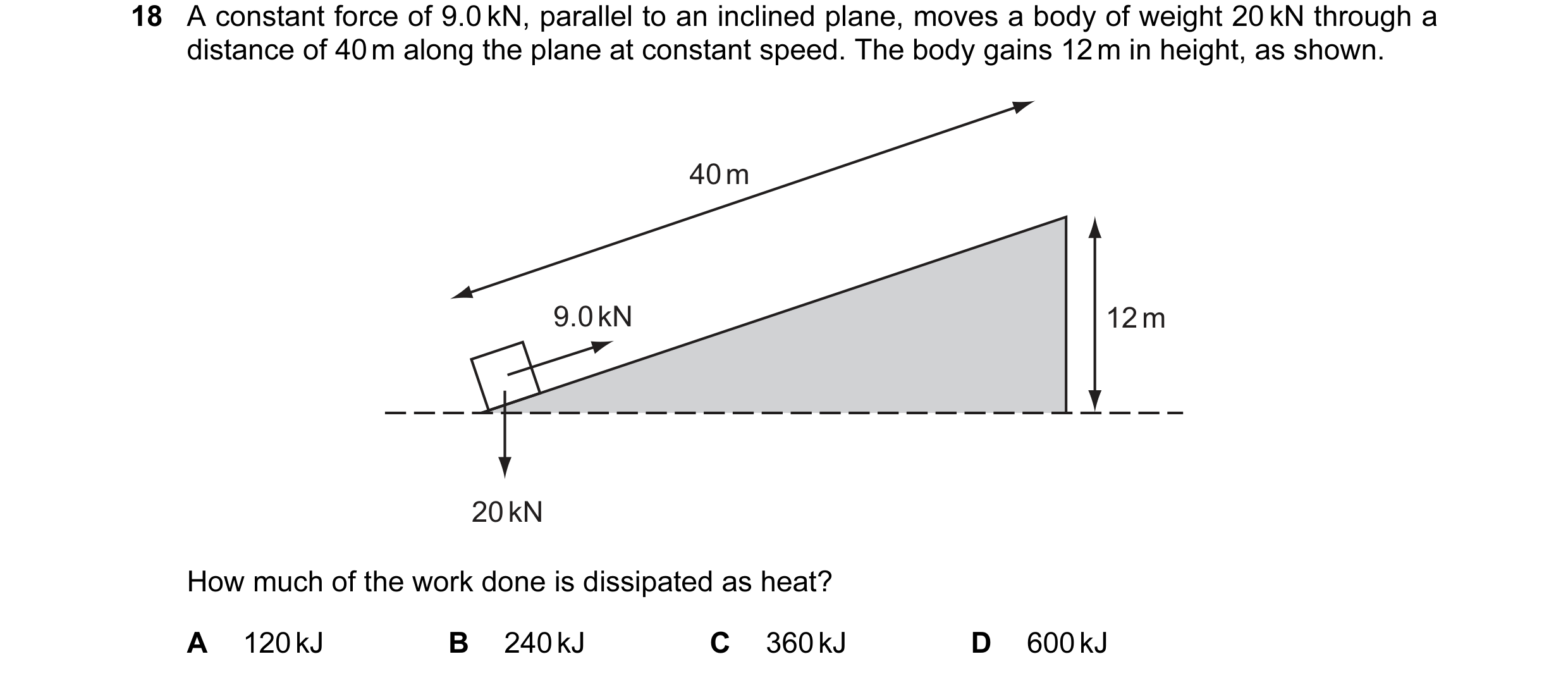
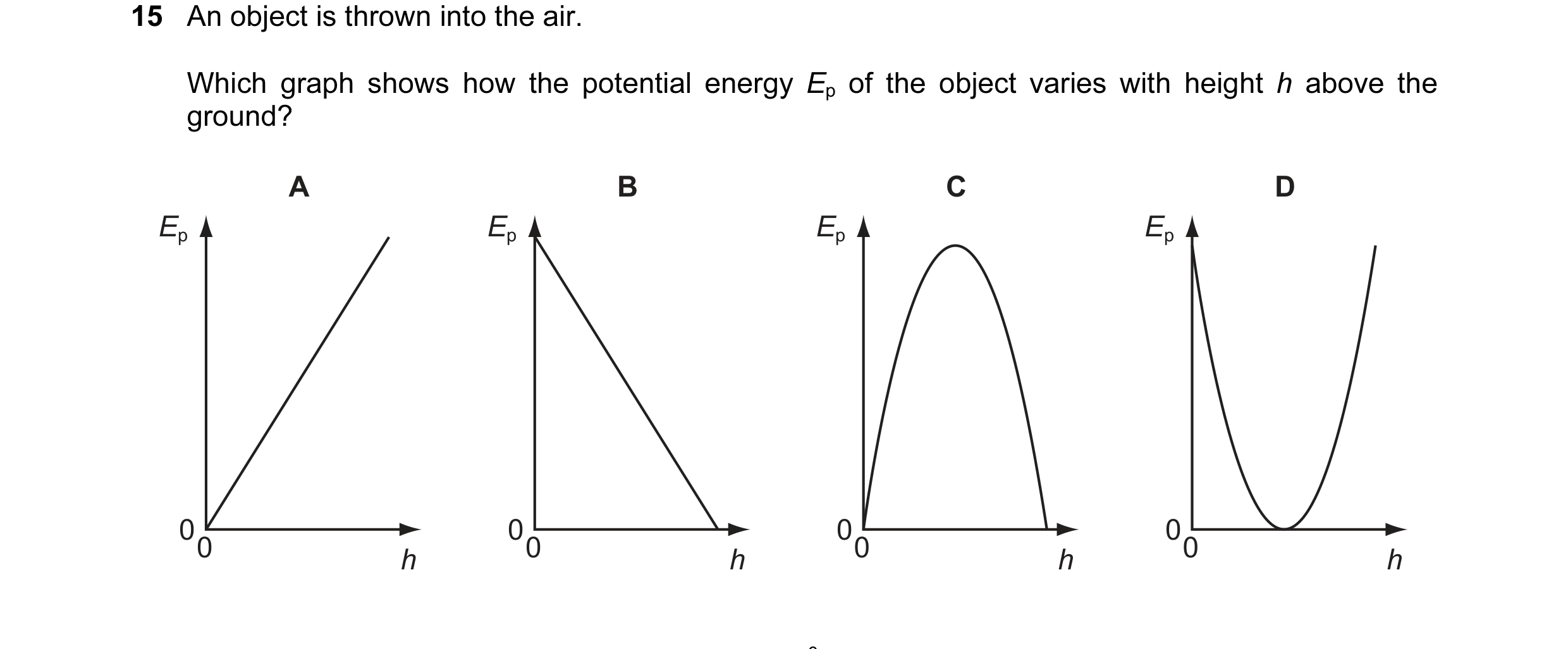 1 / 77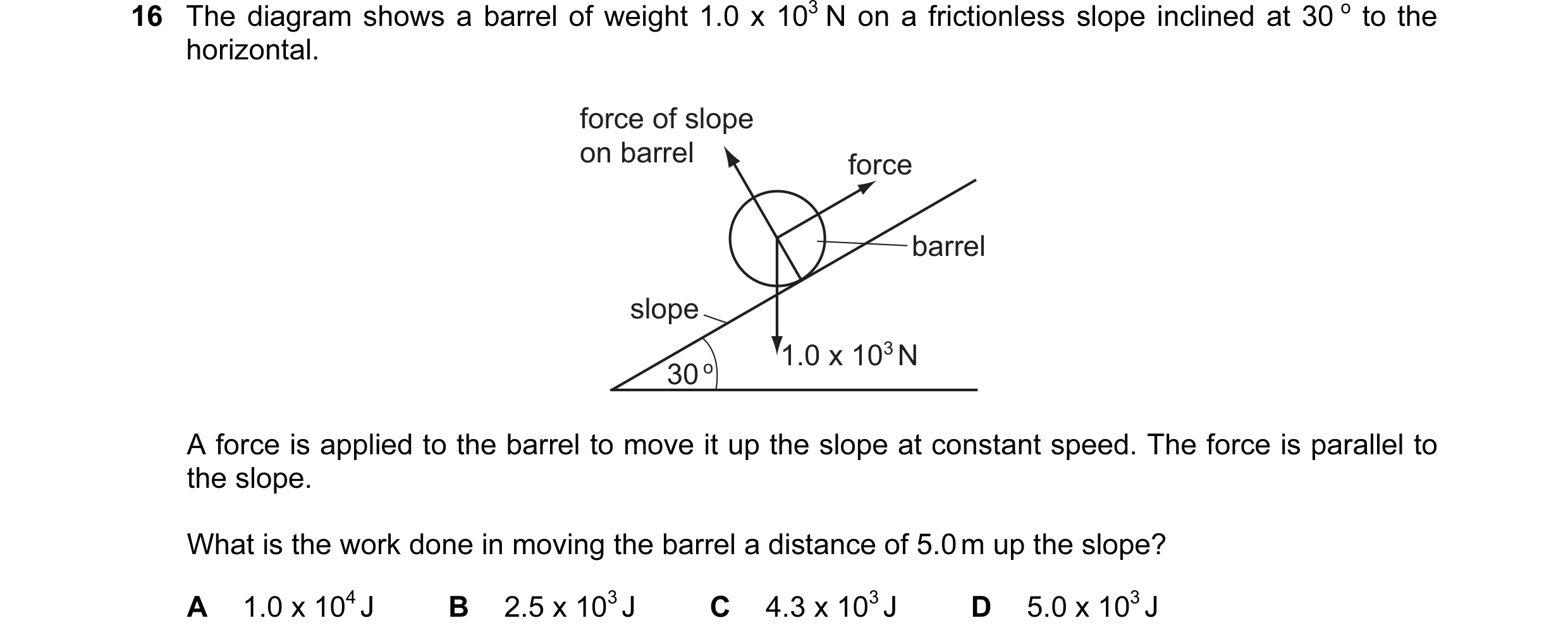


 2 / 77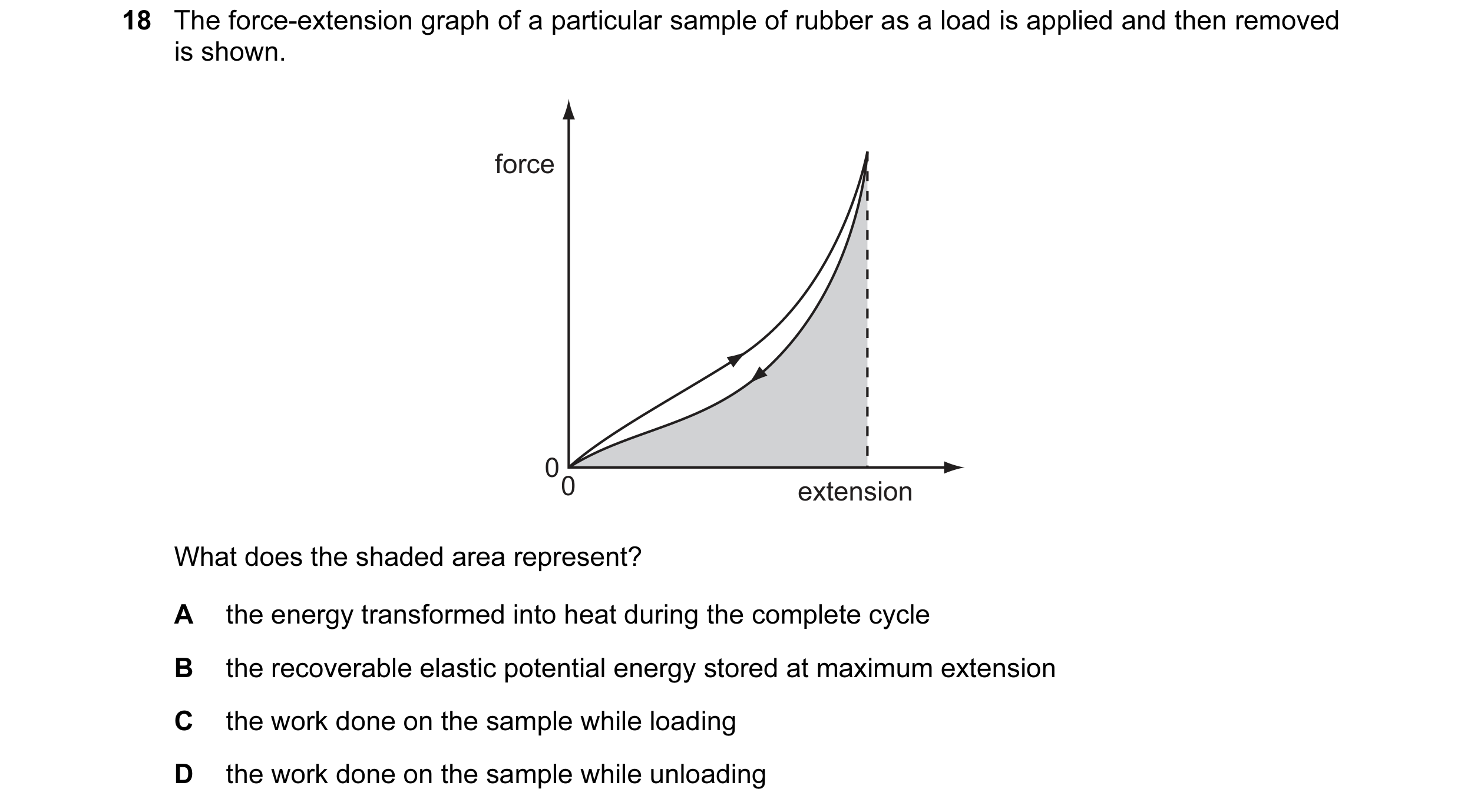
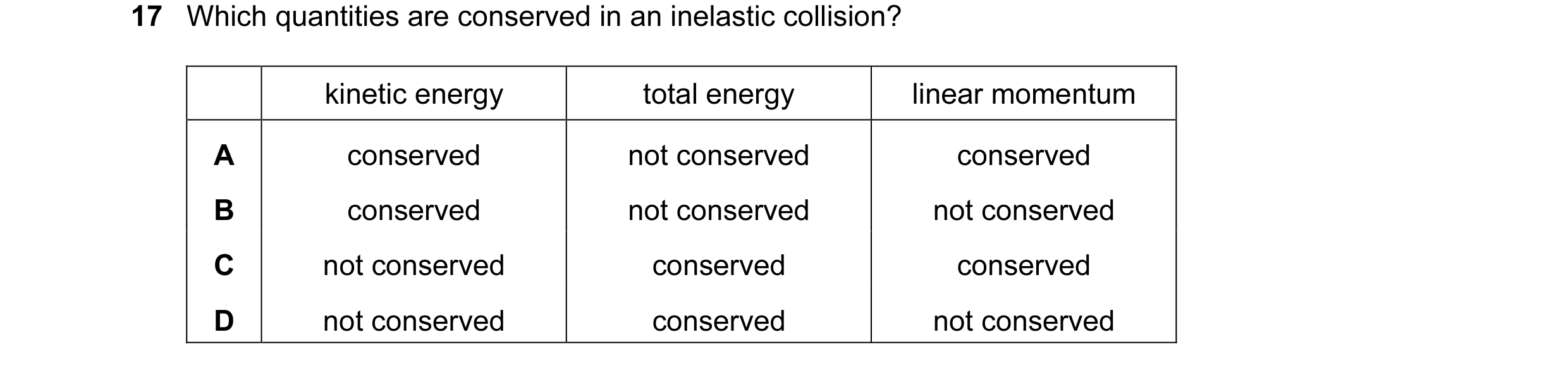
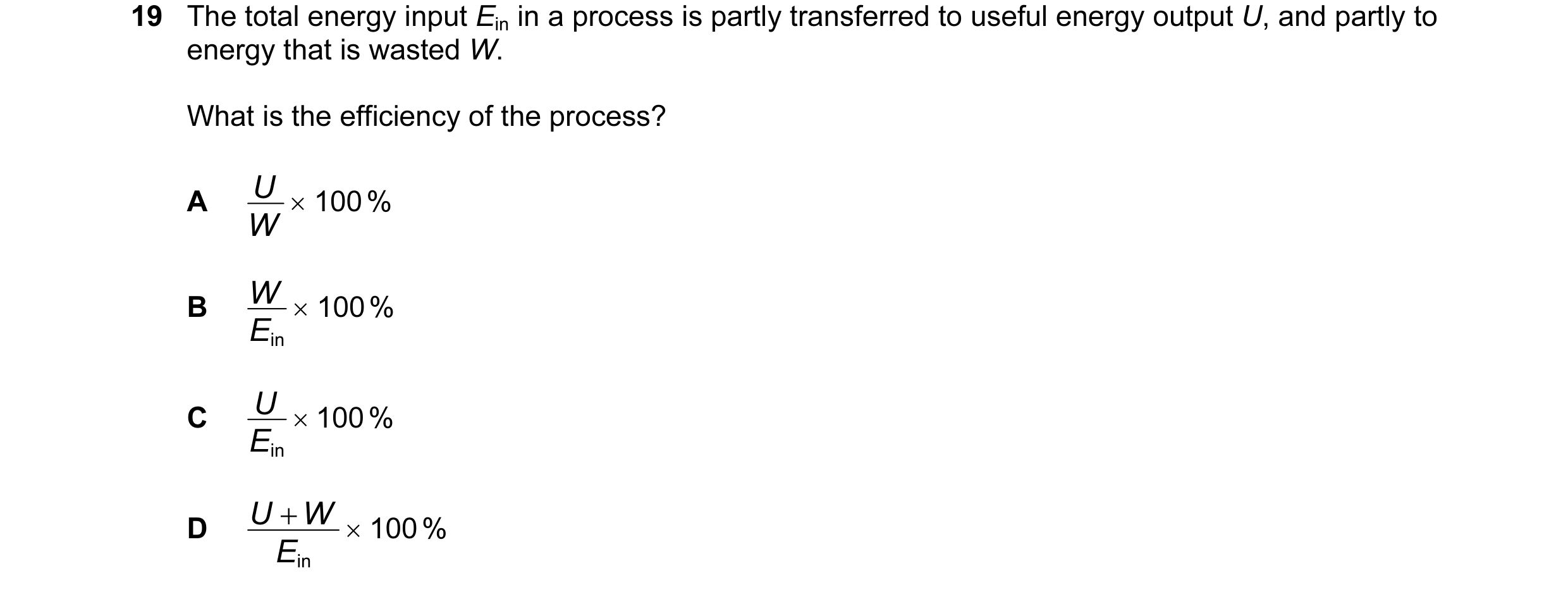 3 / 77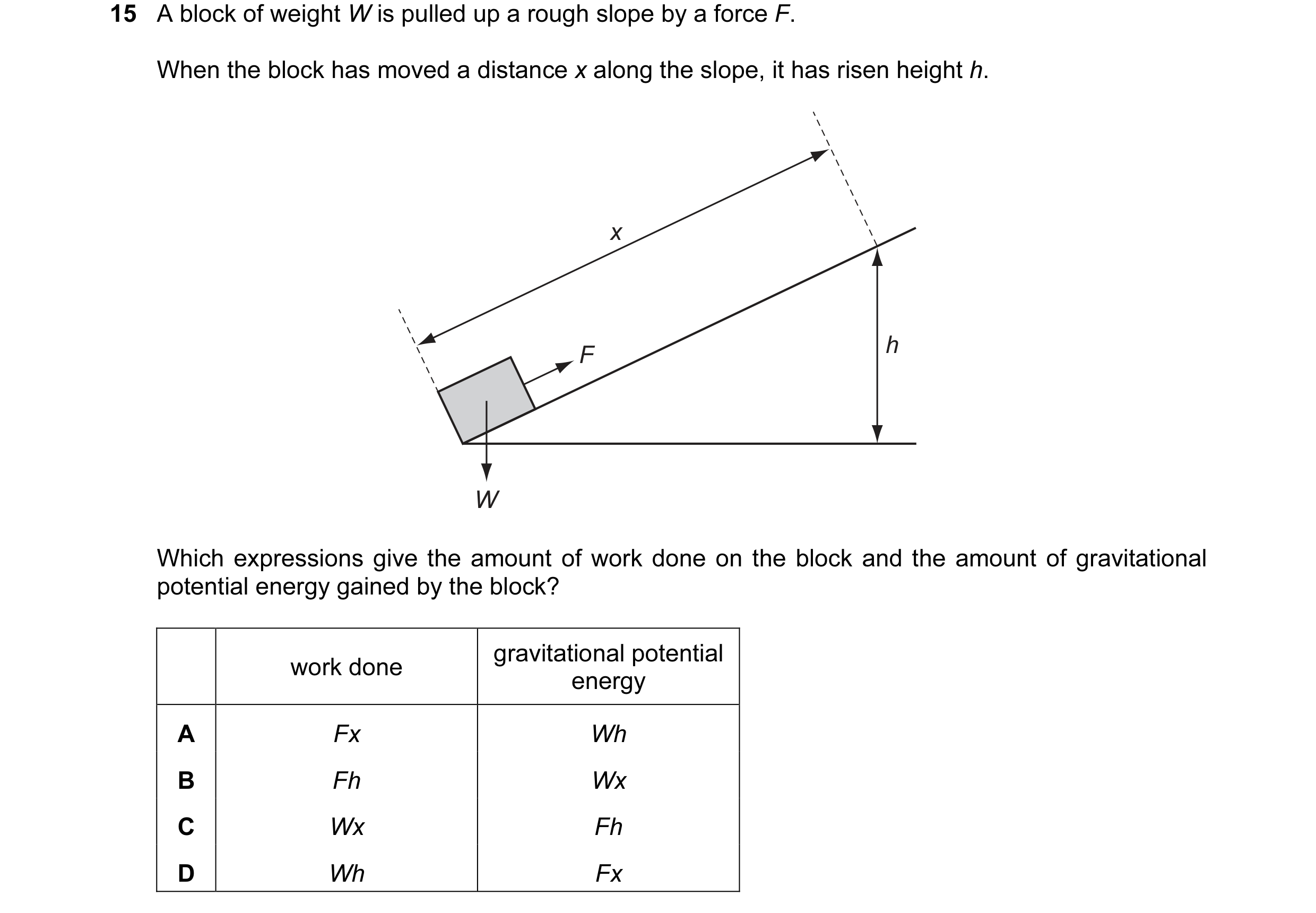
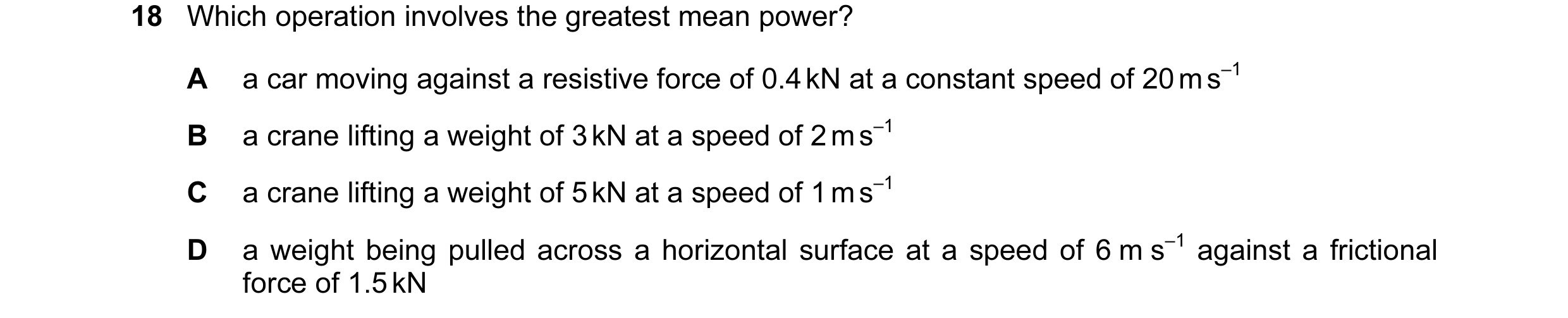
 4 / 77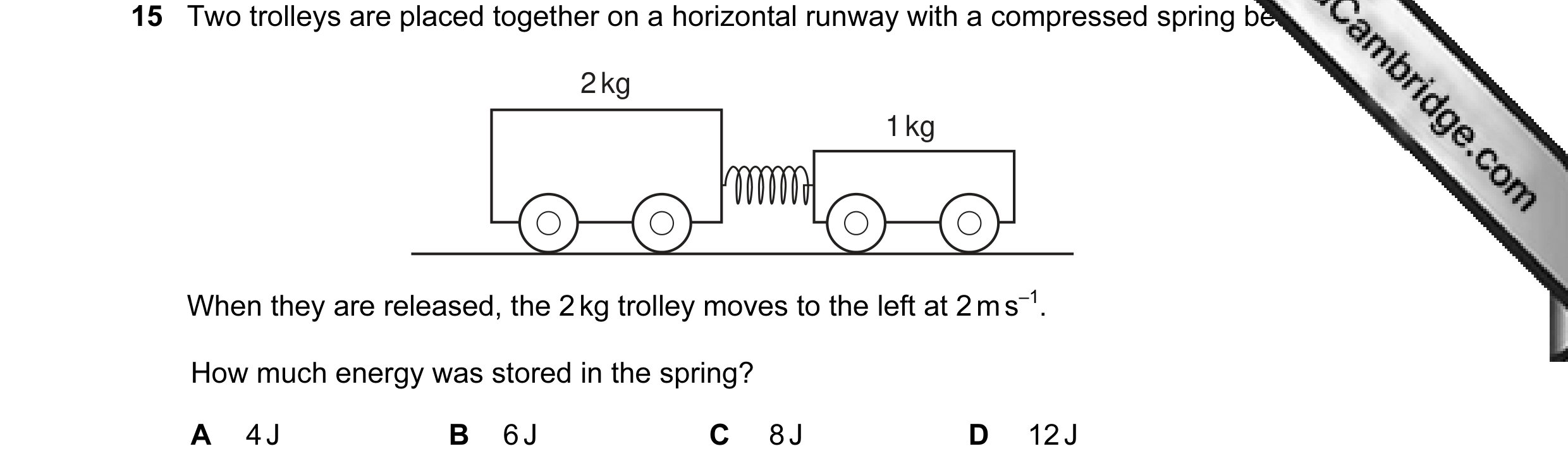
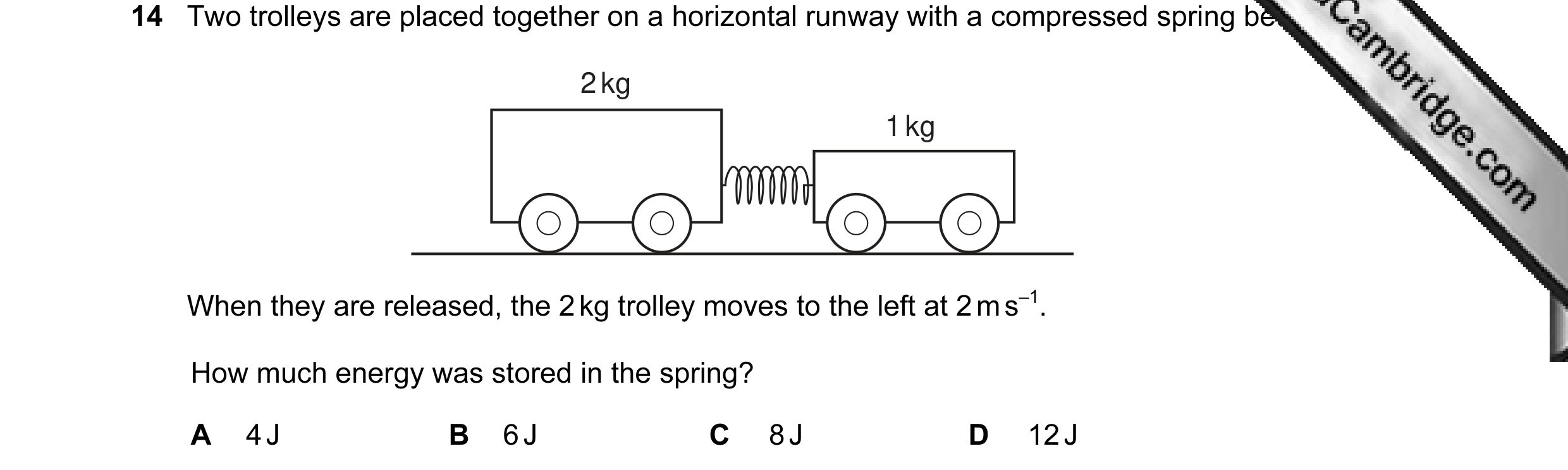
 5 / 77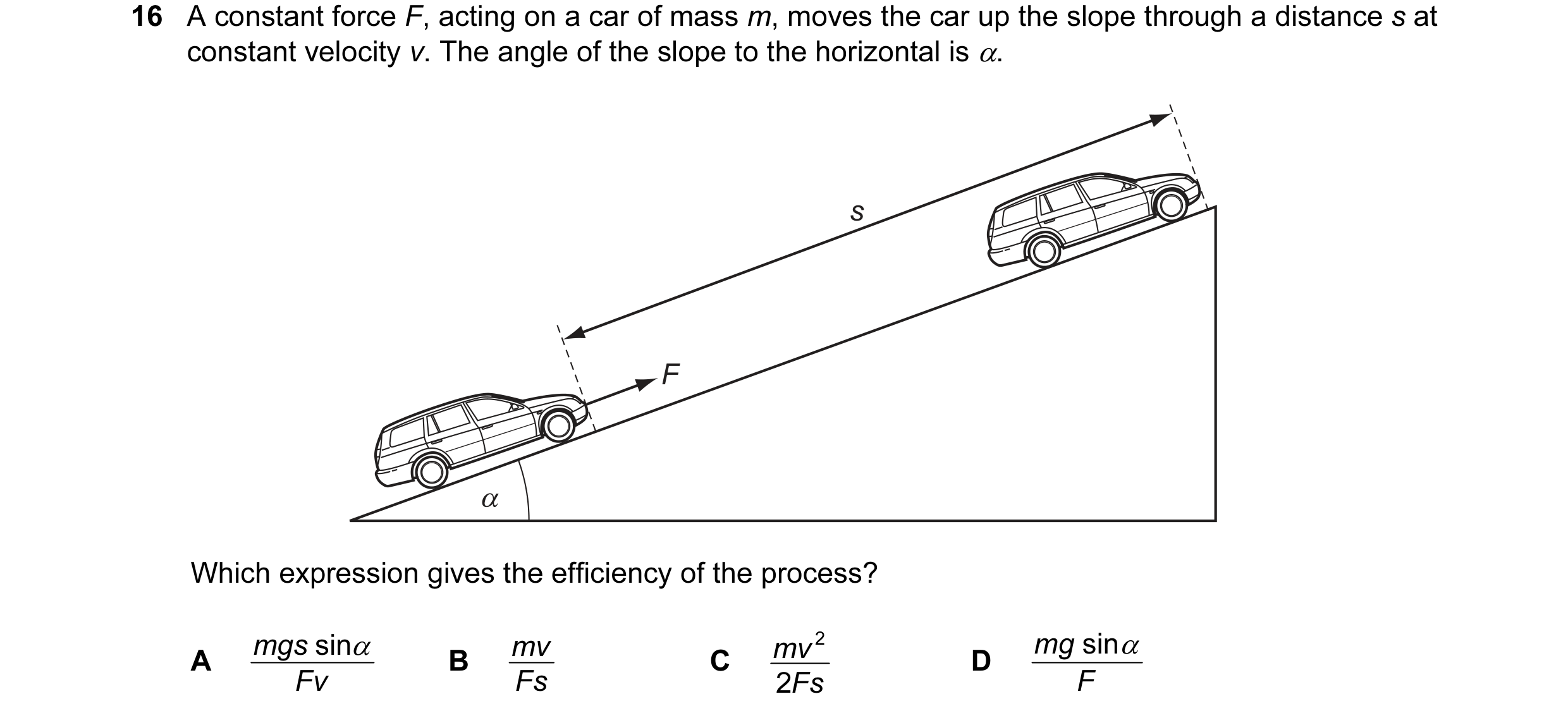
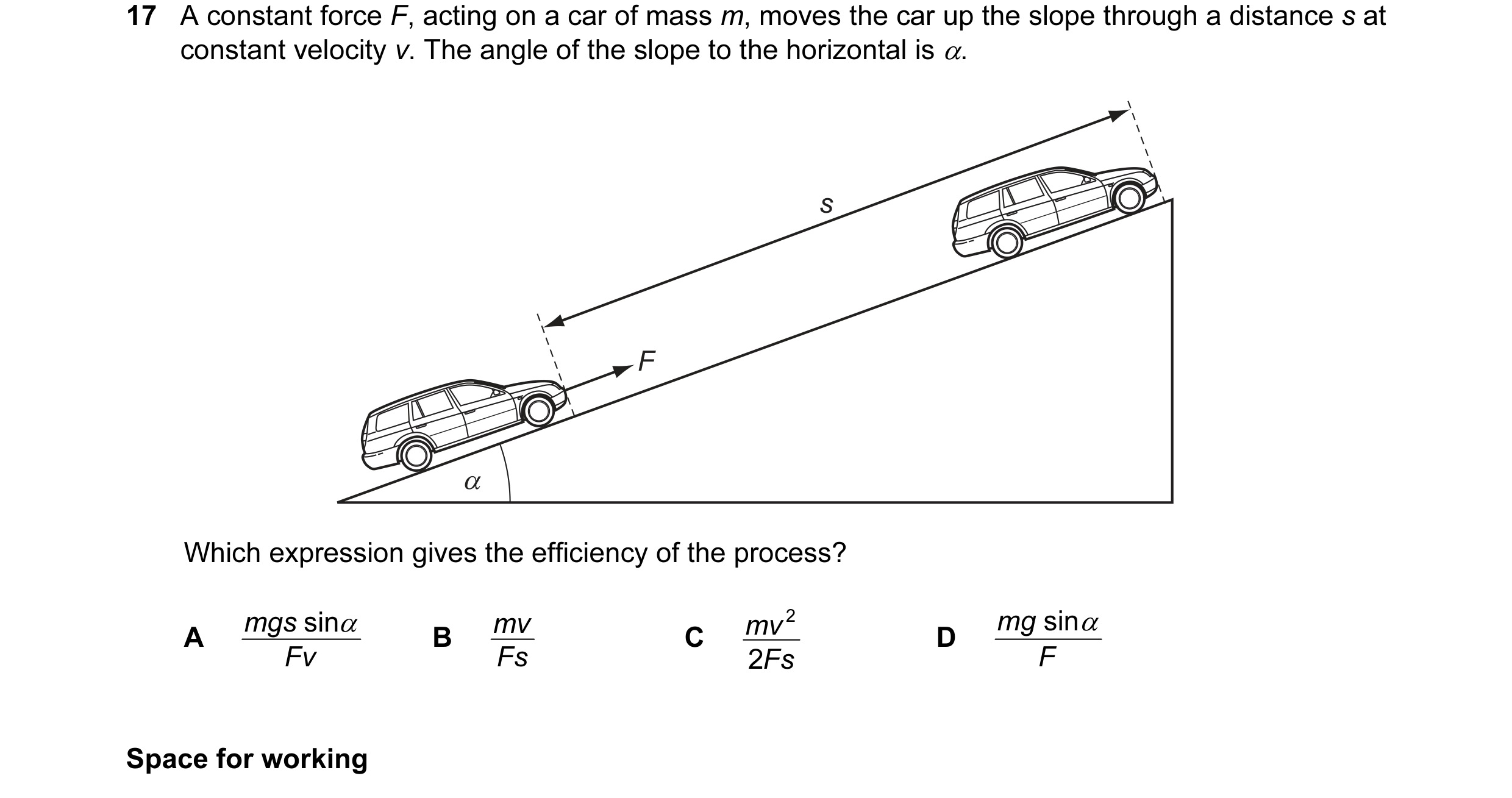 6 / 77
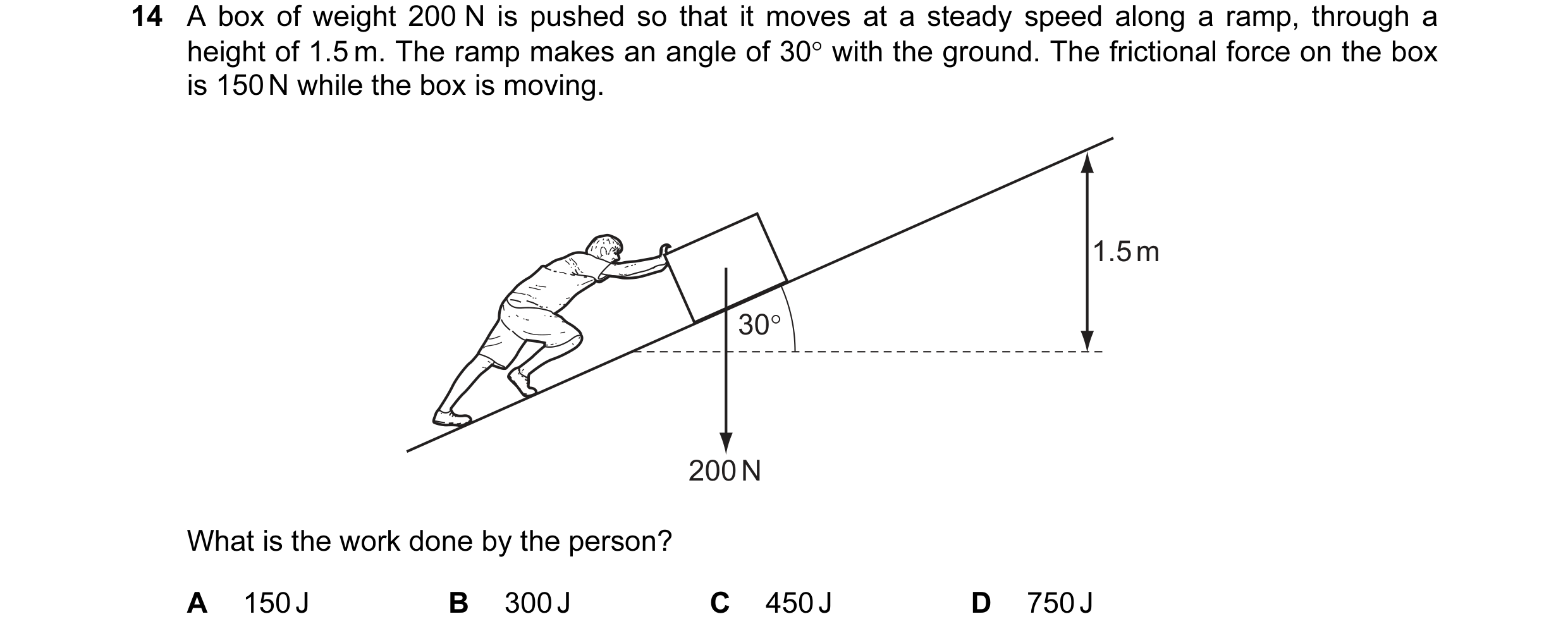

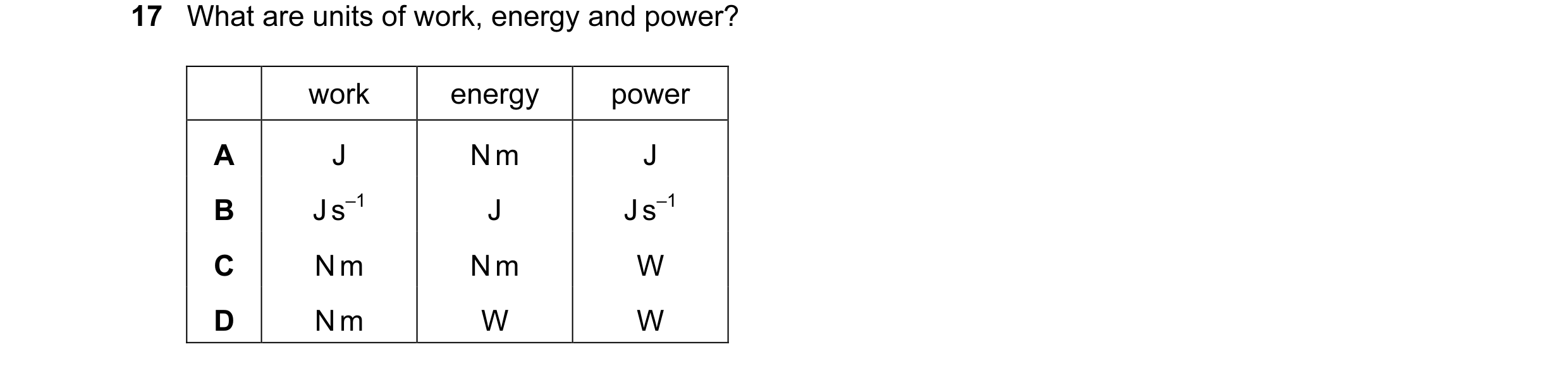 7 / 77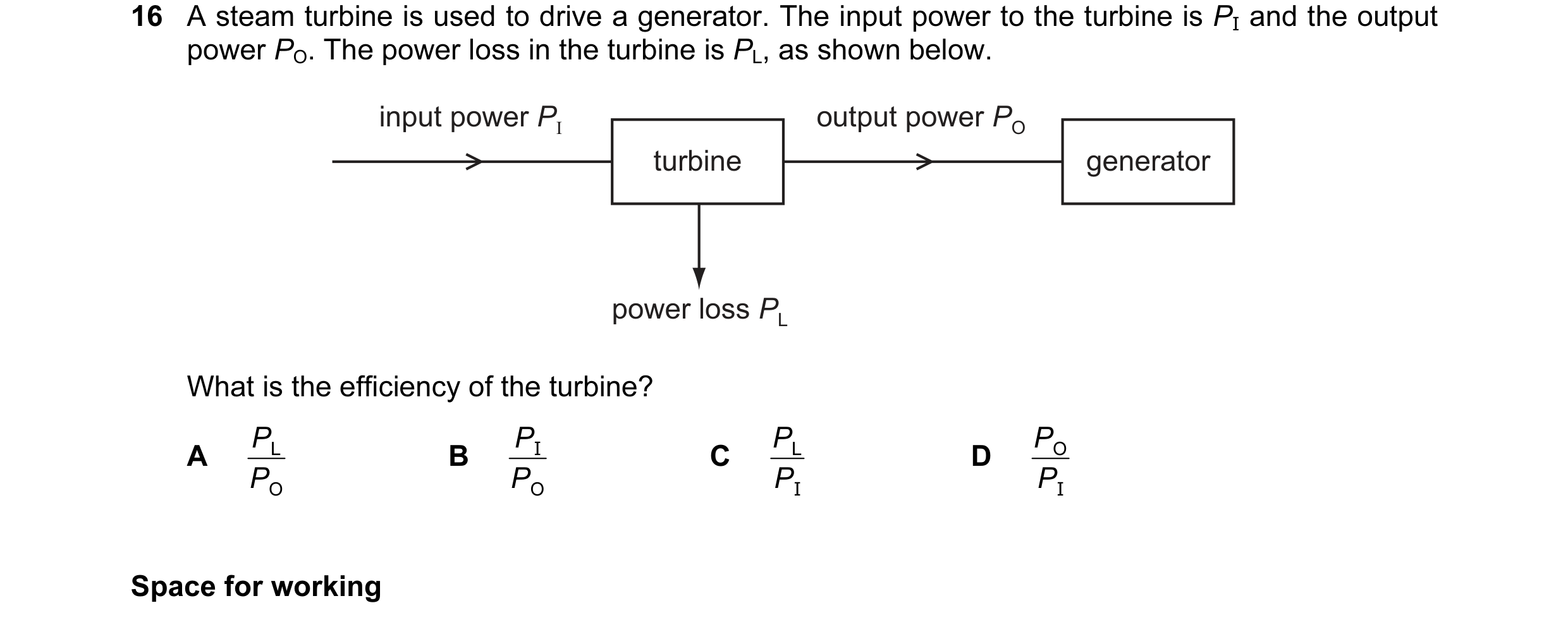
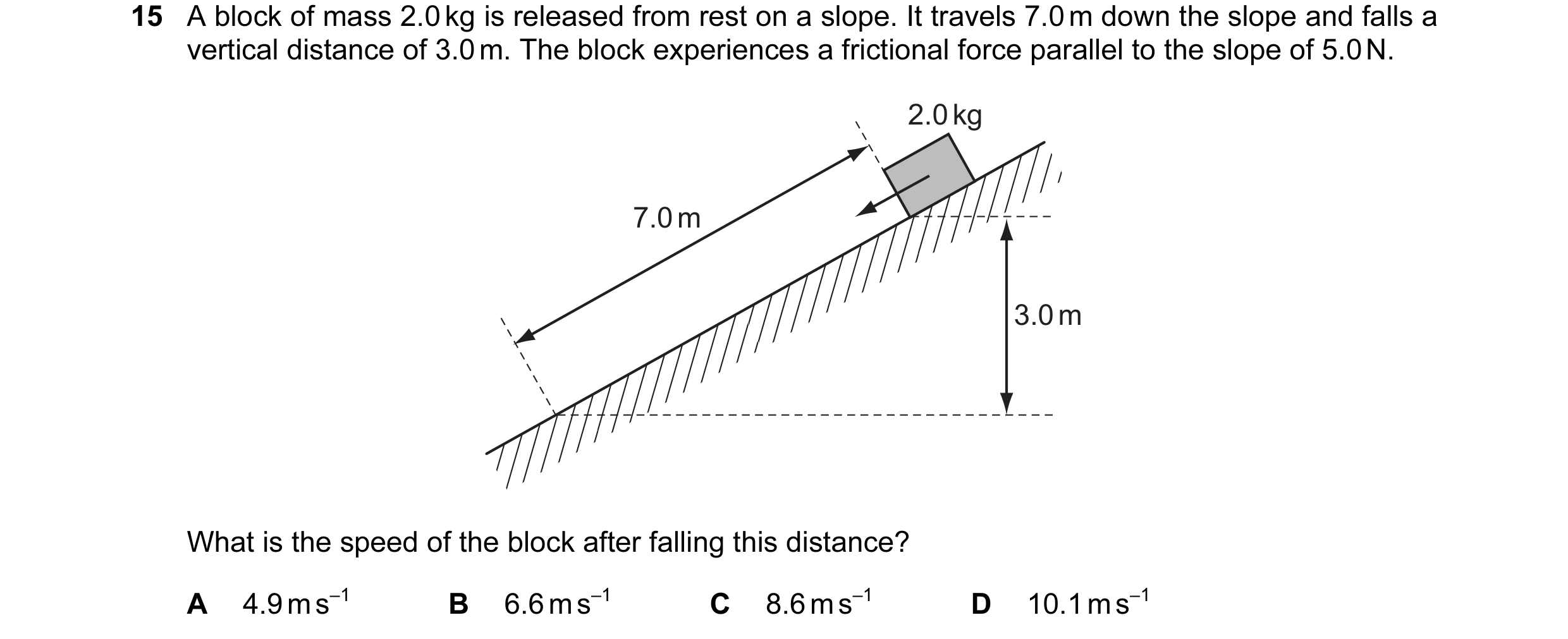 8 / 77
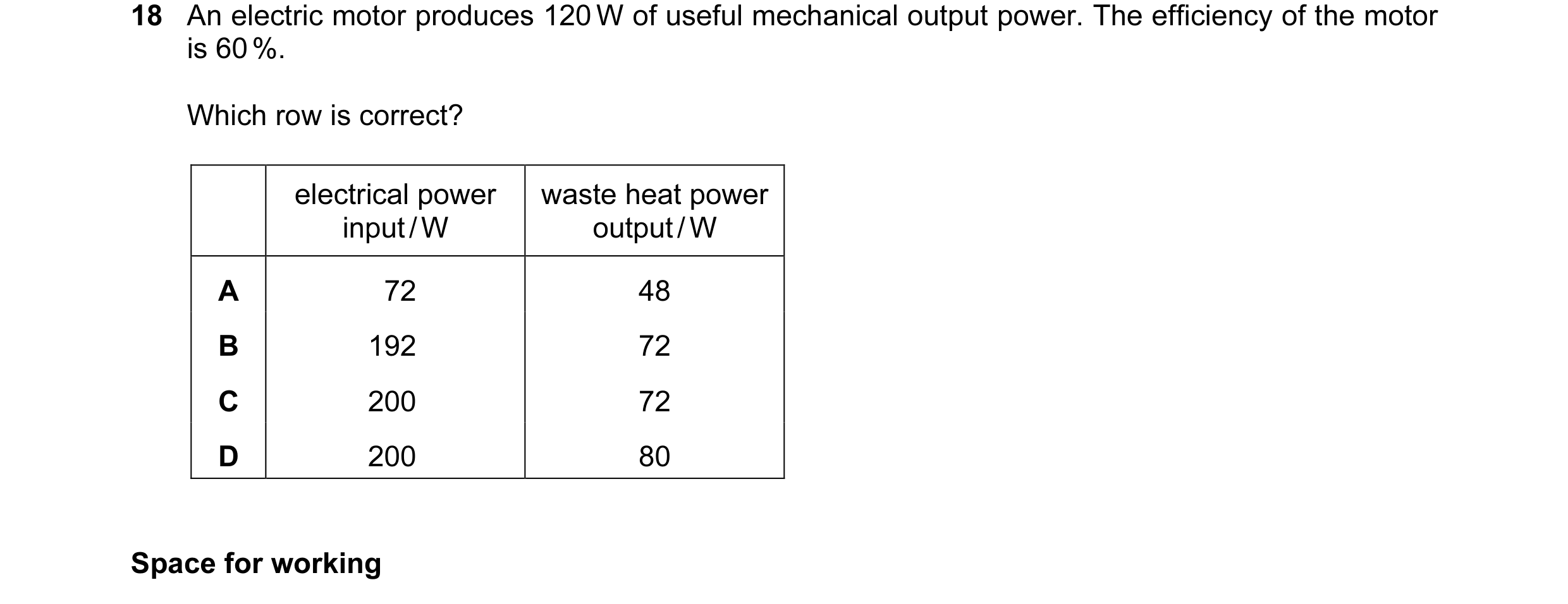
 9 / 77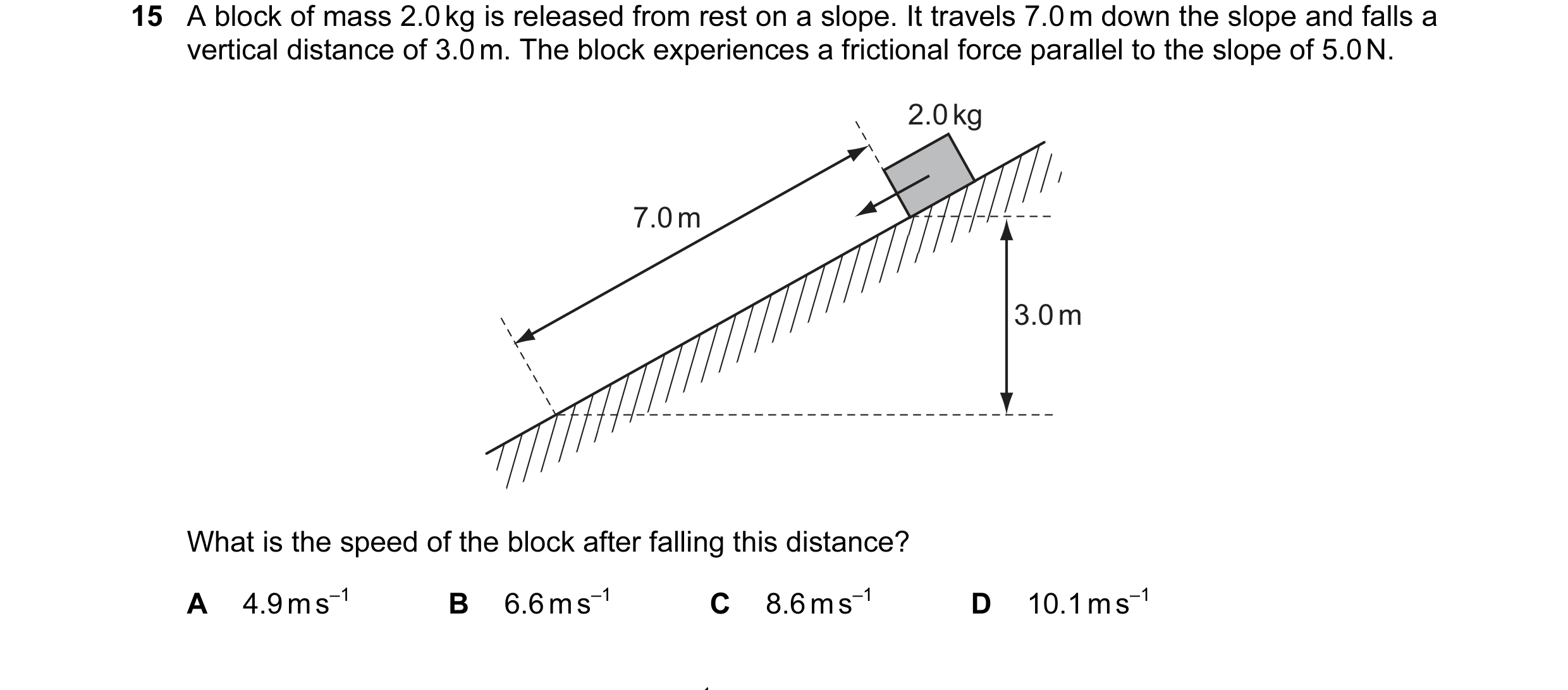

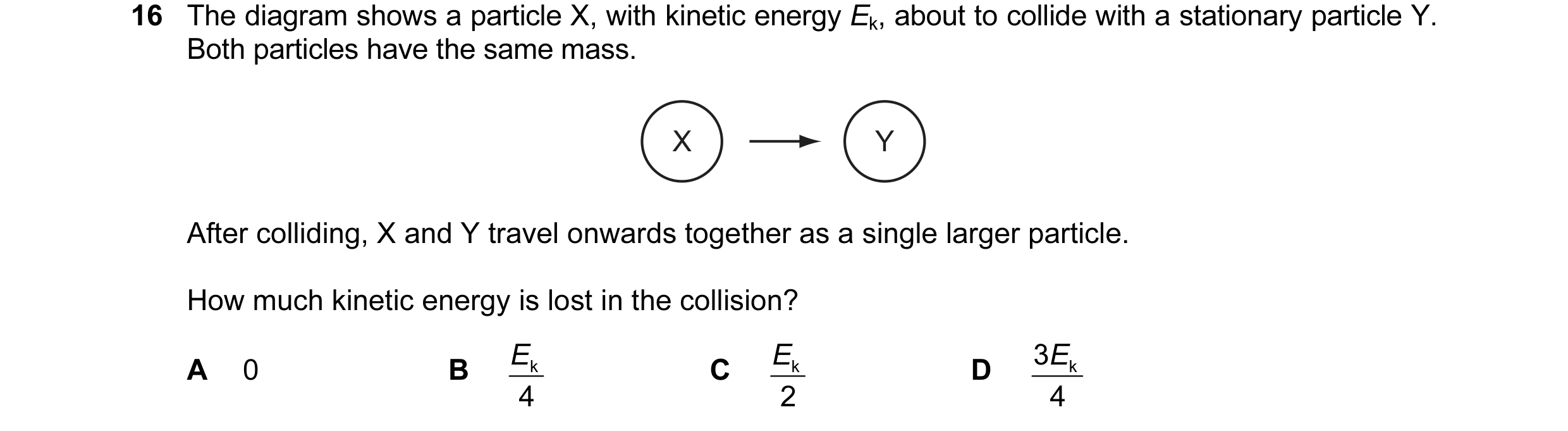
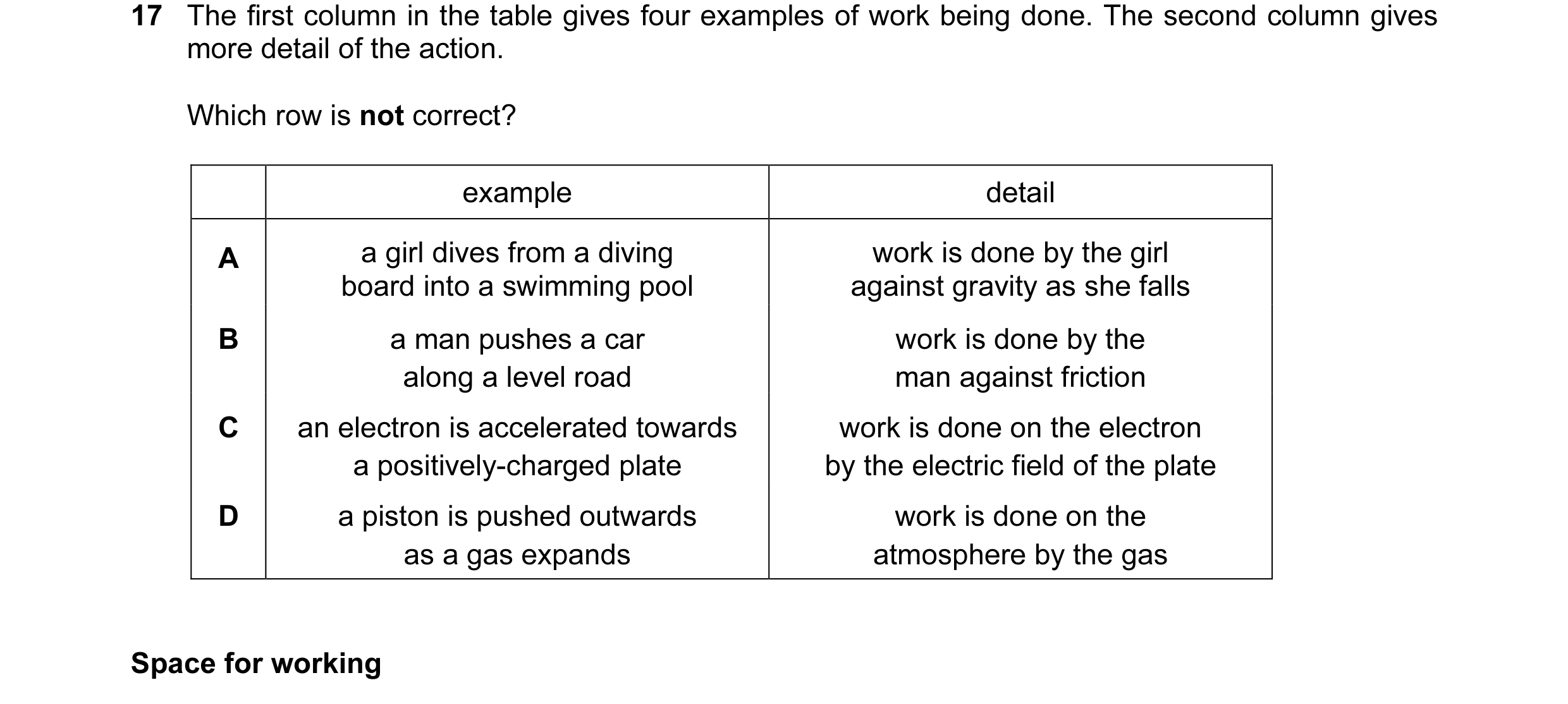 10 / 77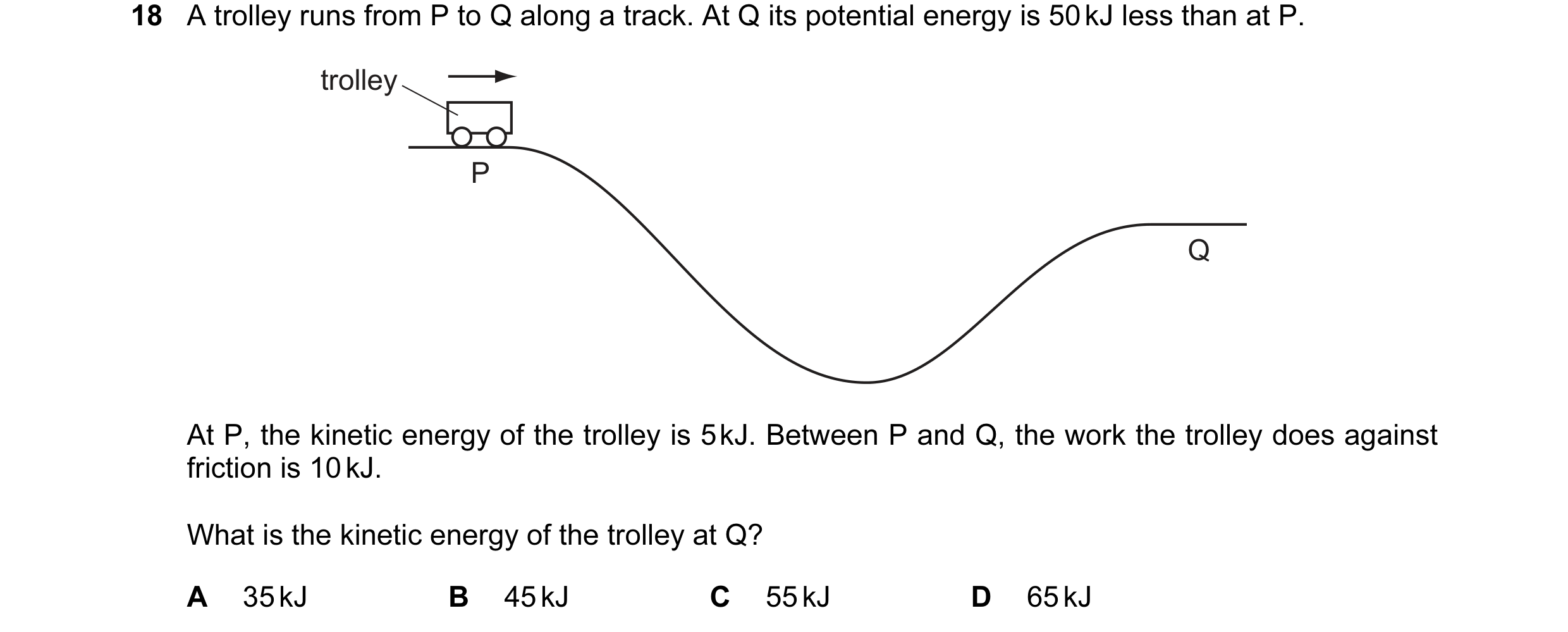
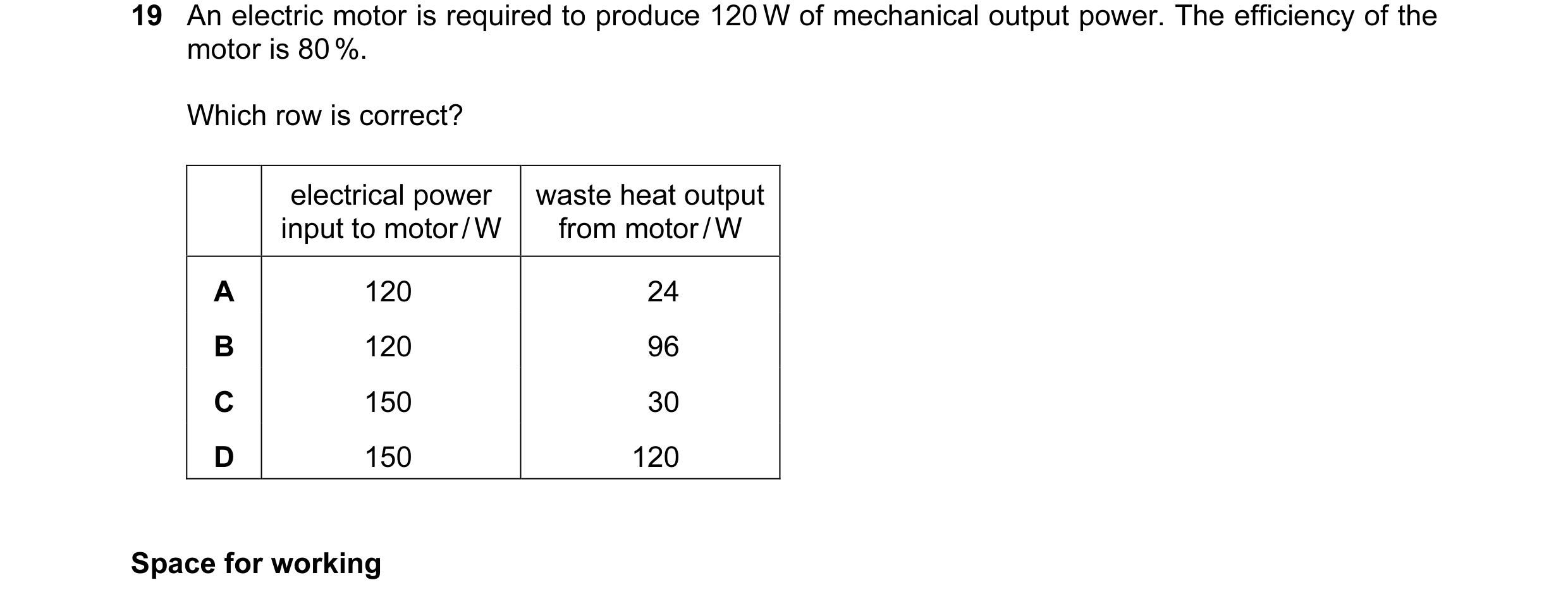

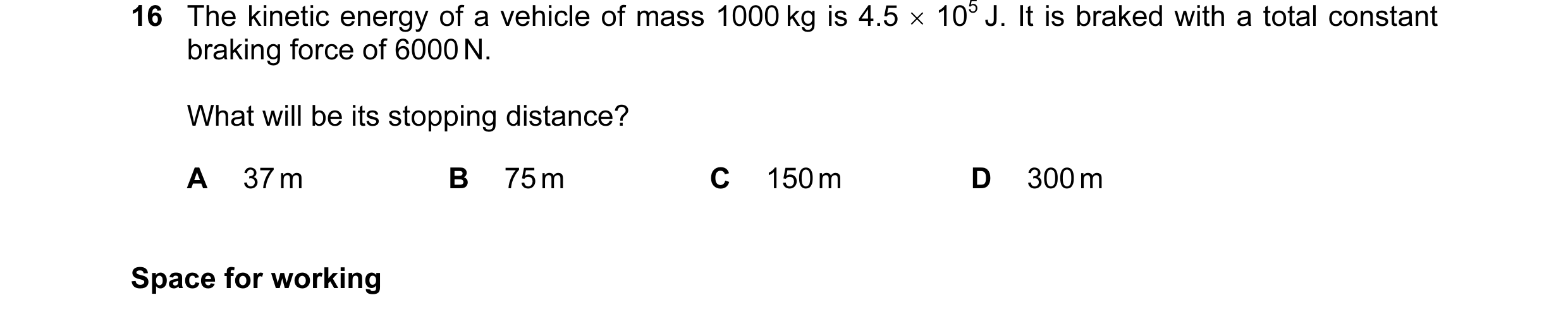 11 / 77
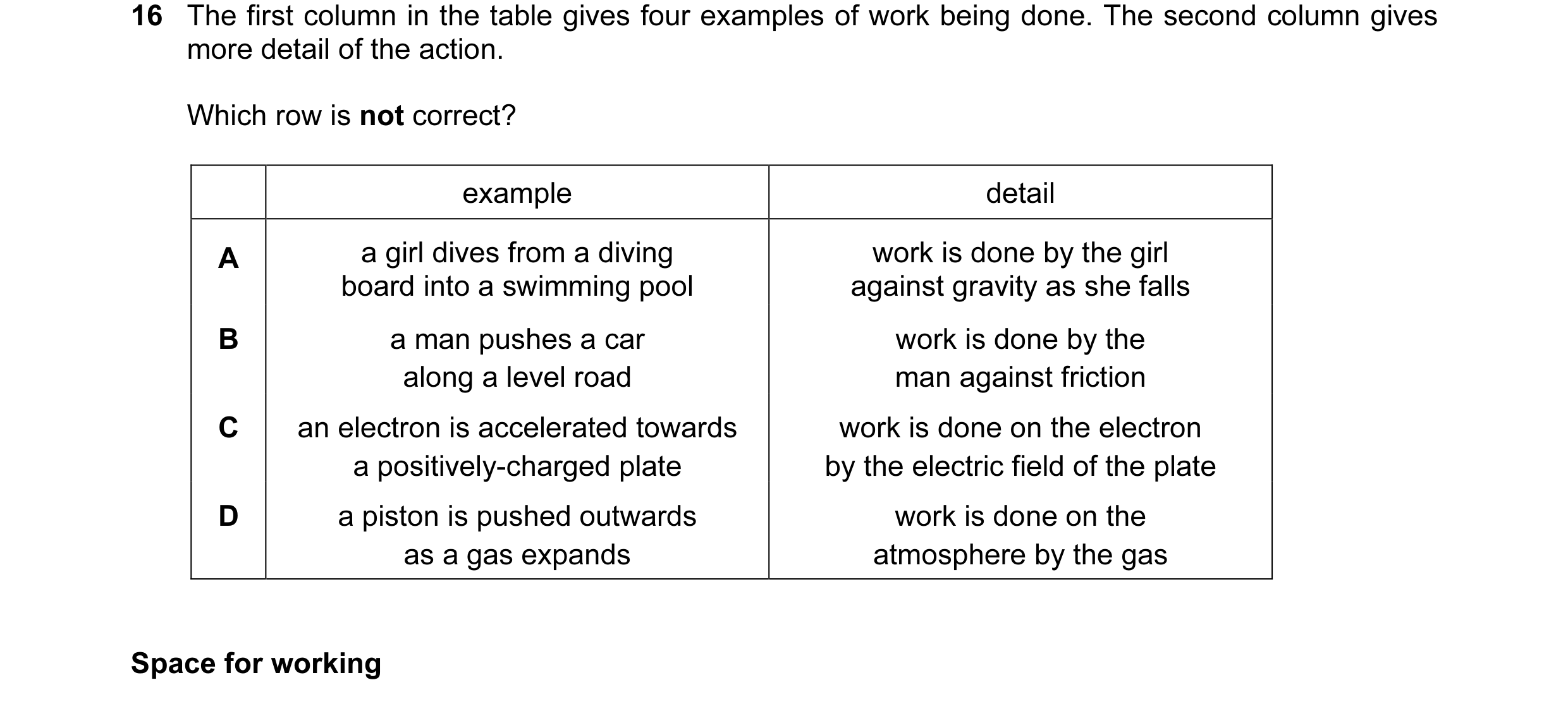
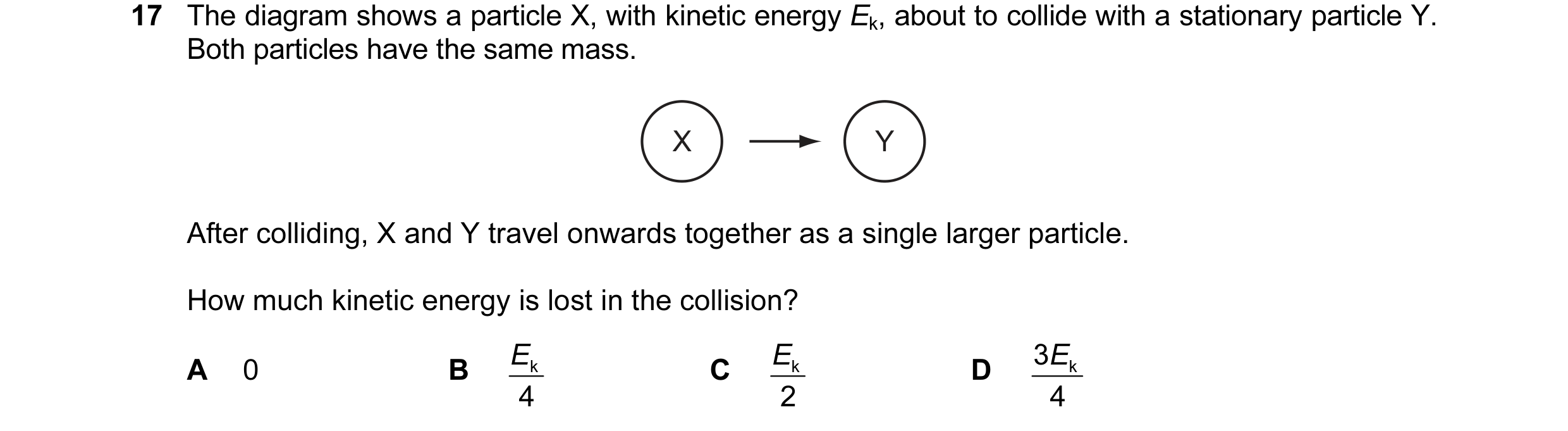
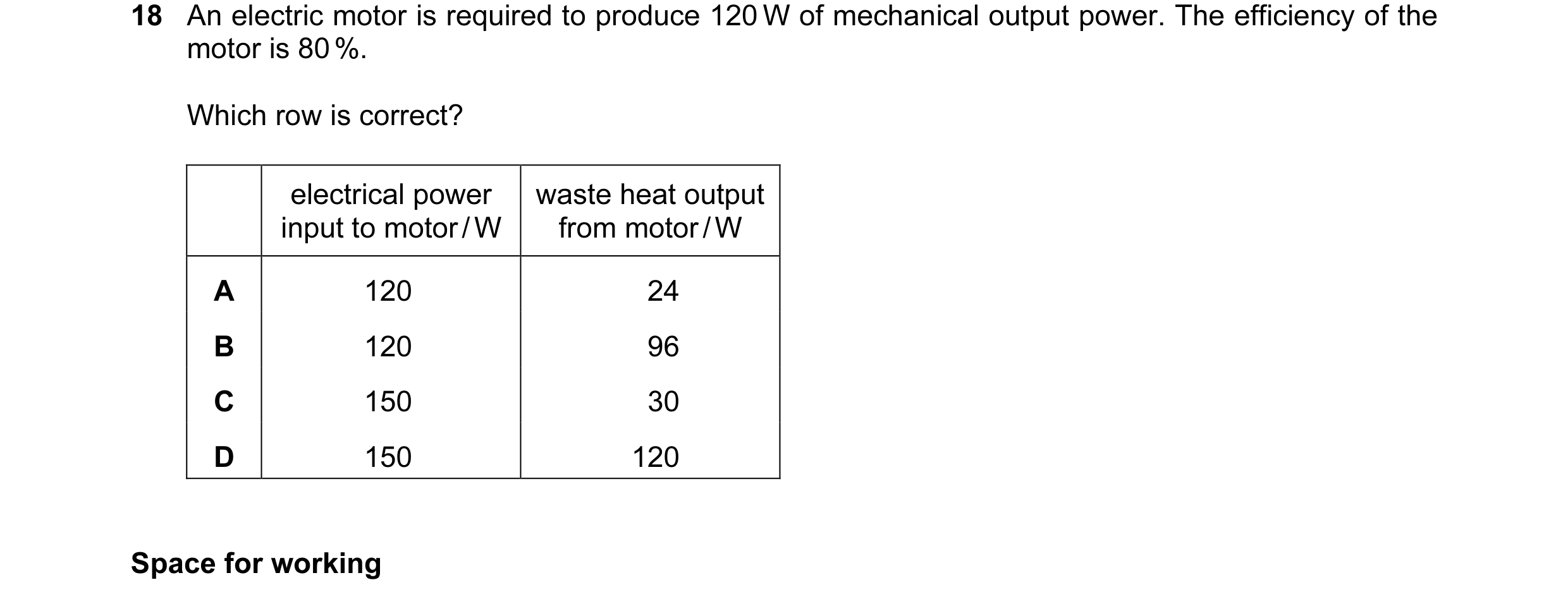 12 / 77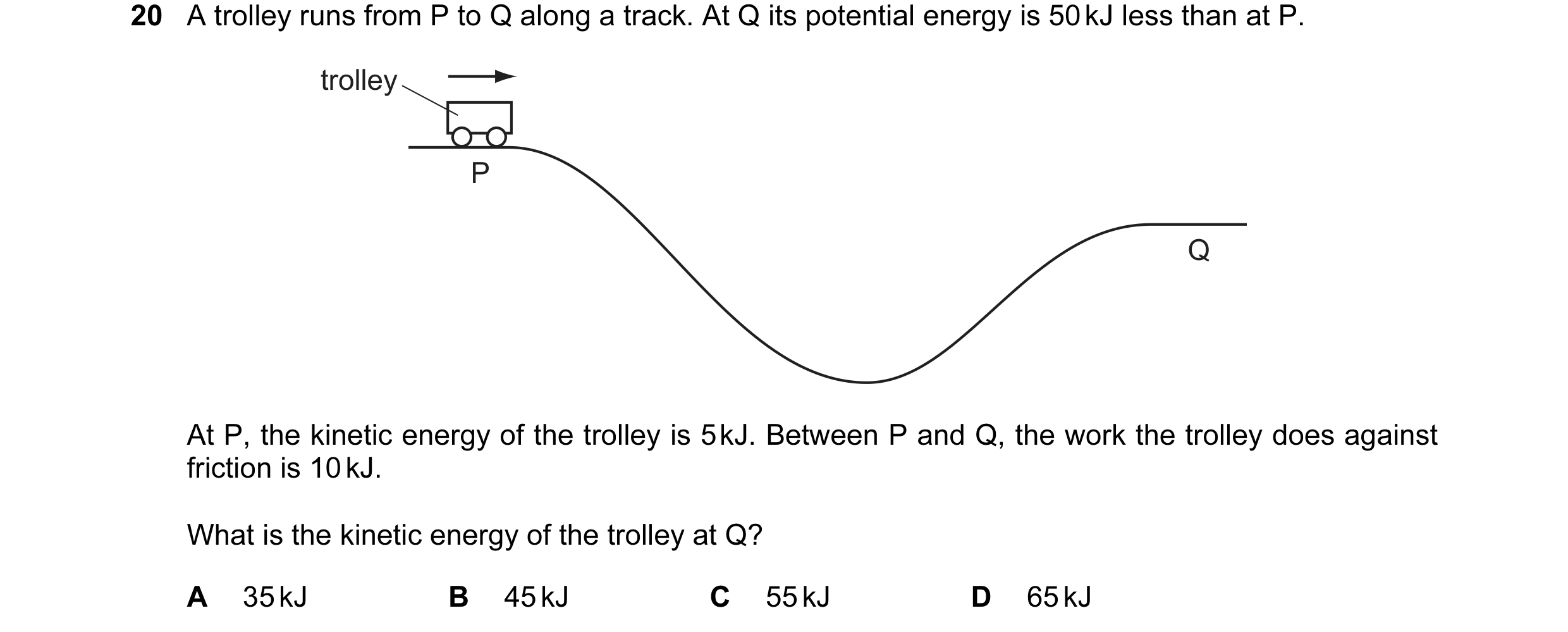
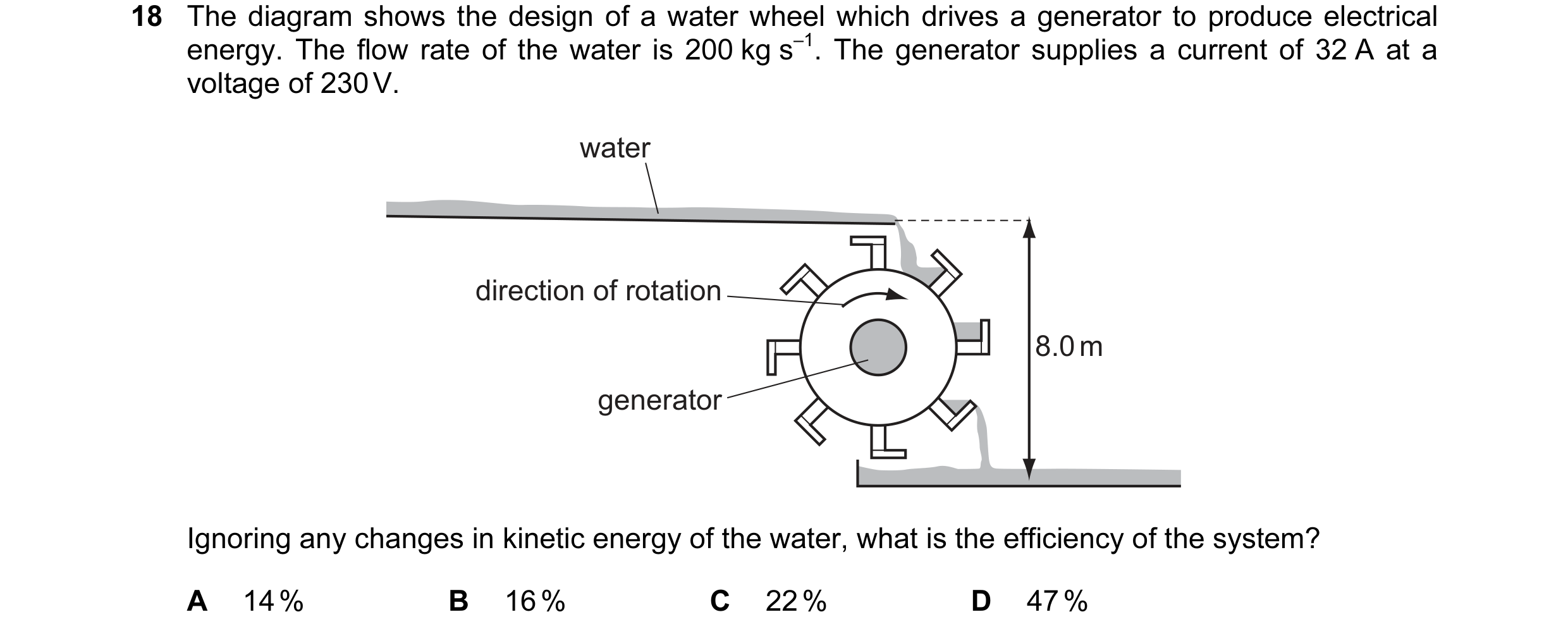

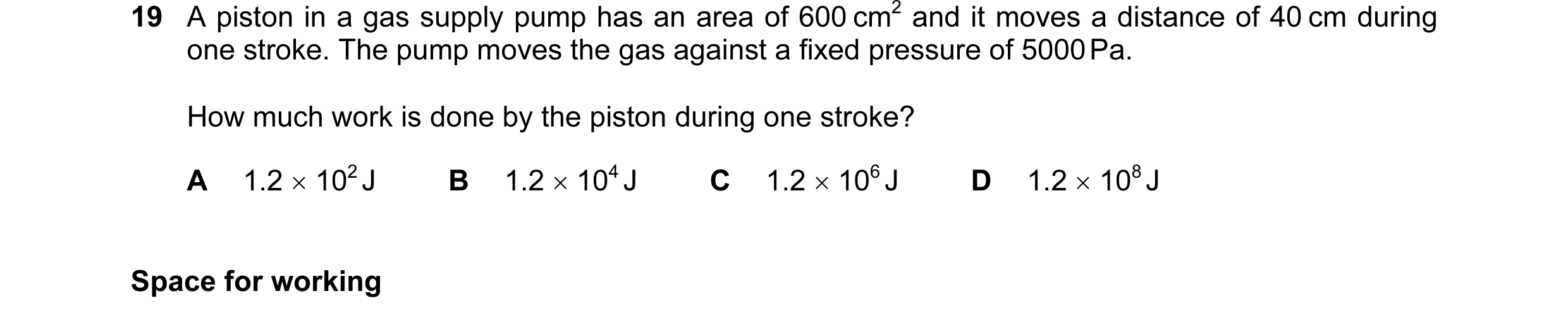 13 / 77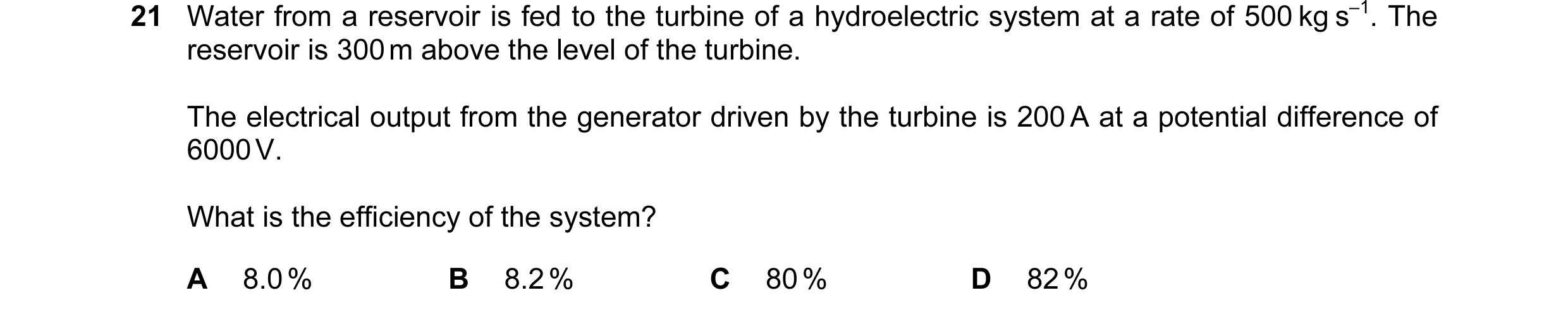
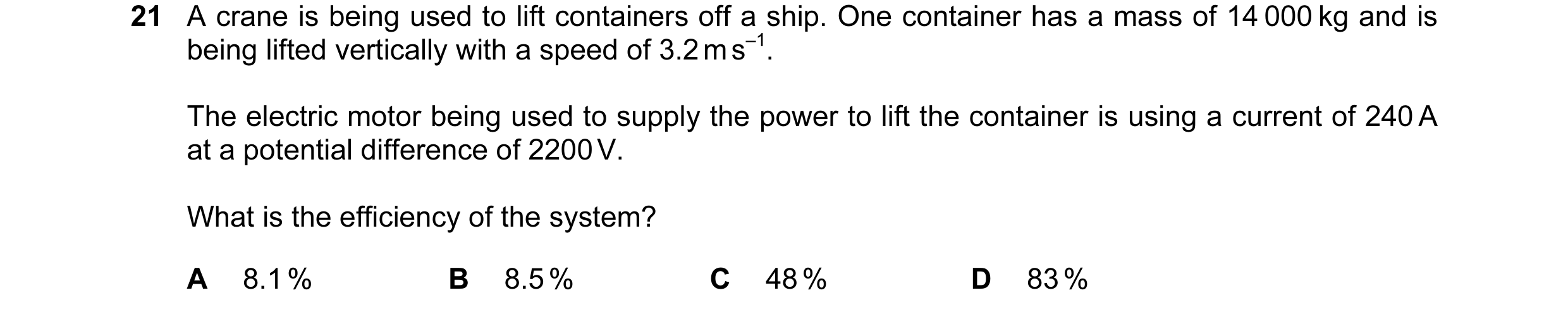
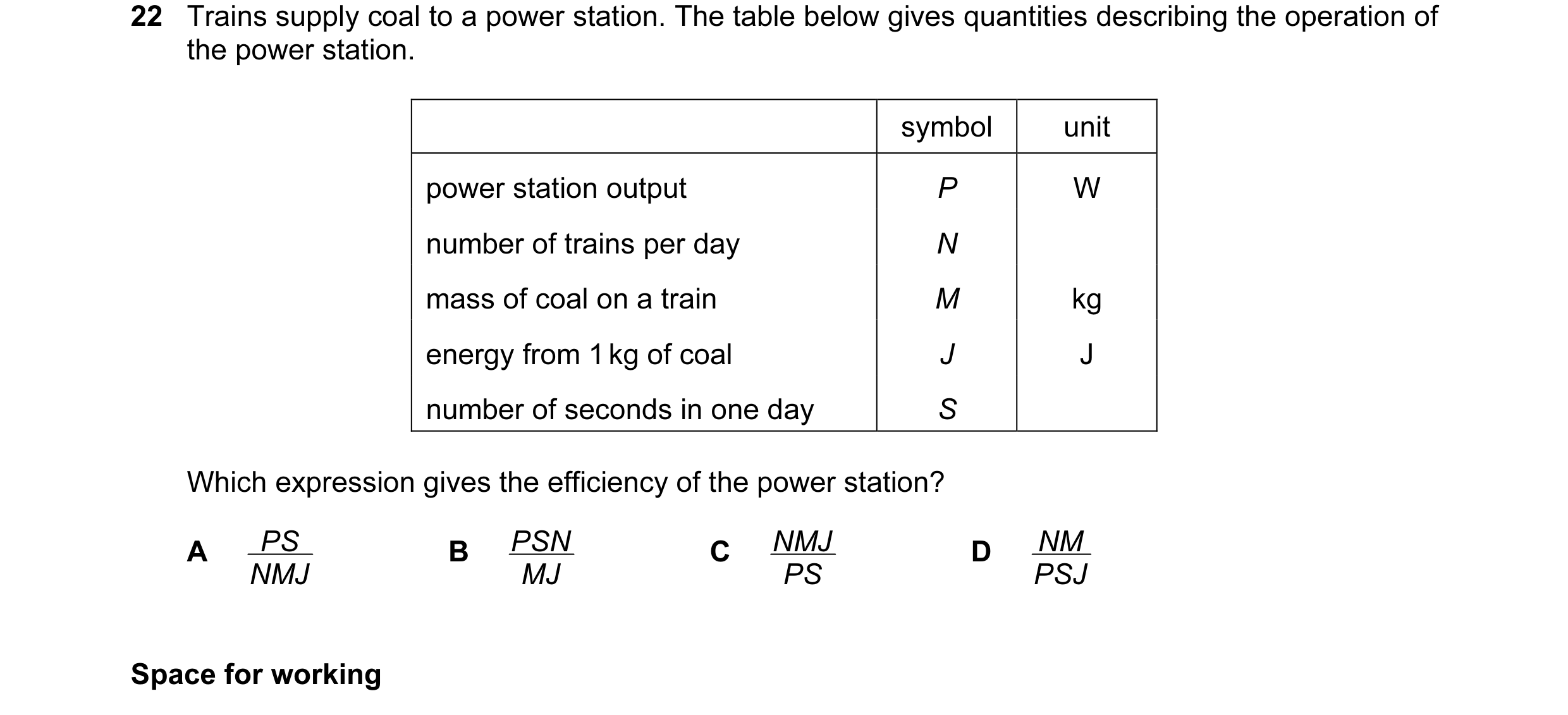

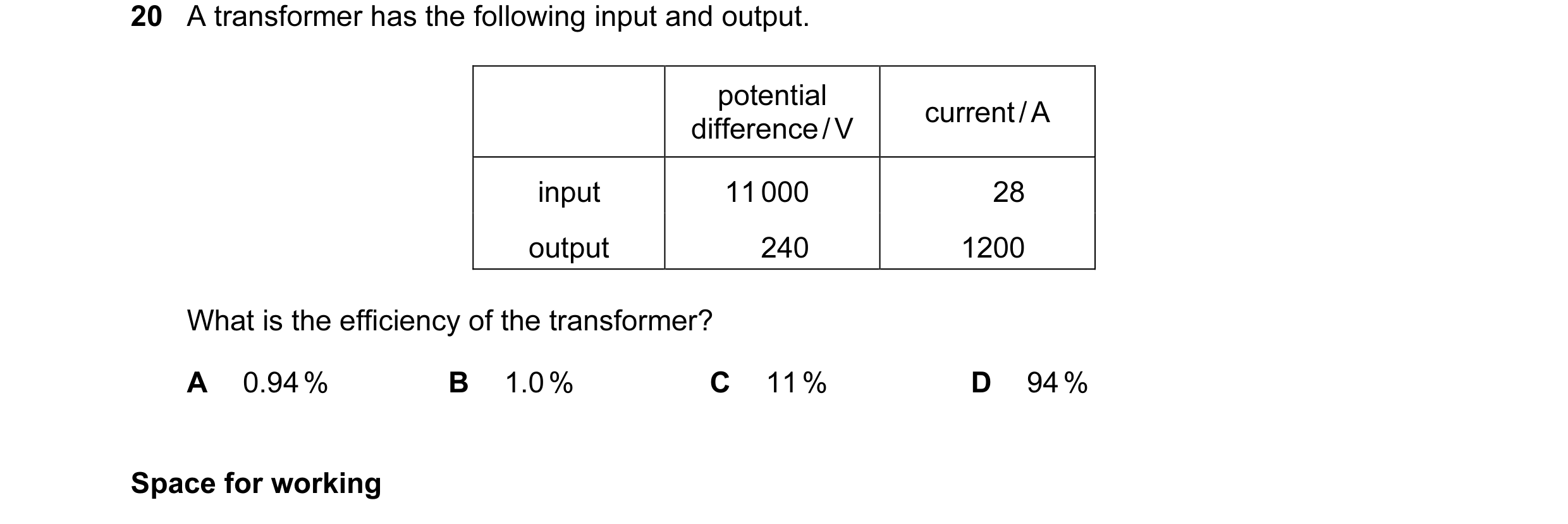 14 / 77
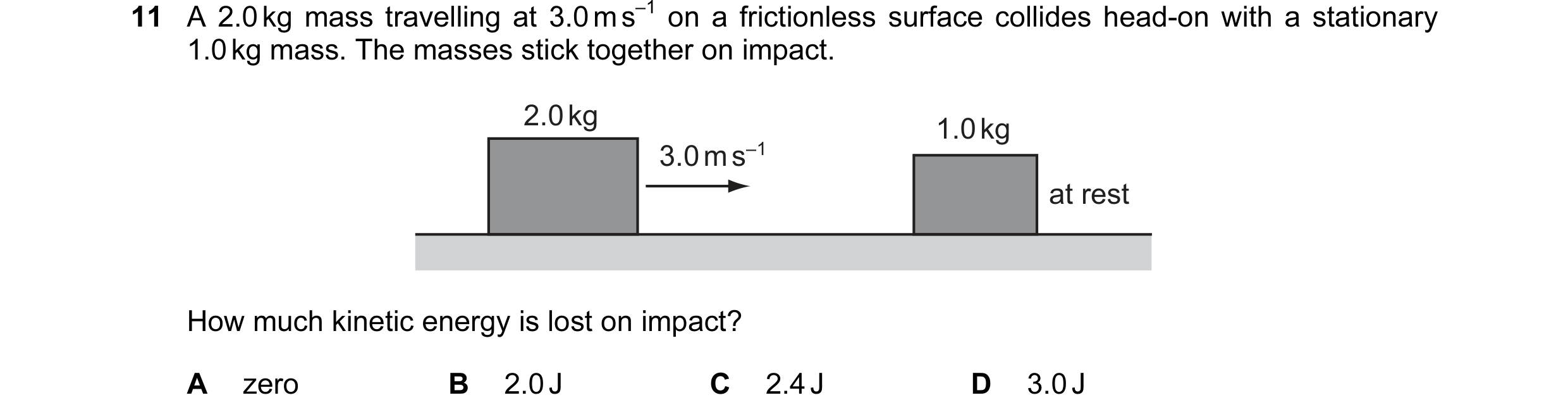 15 / 77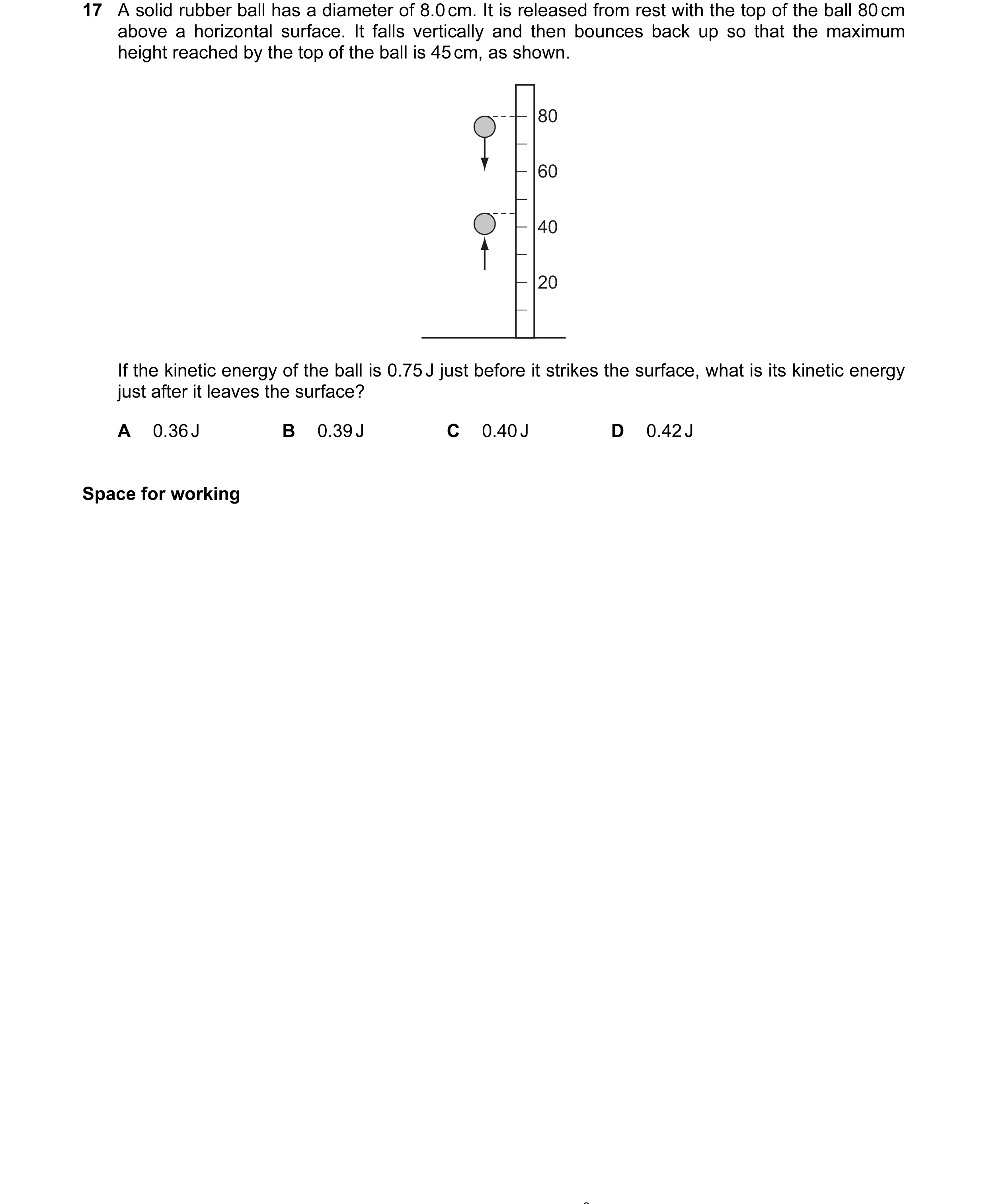
 16 / 77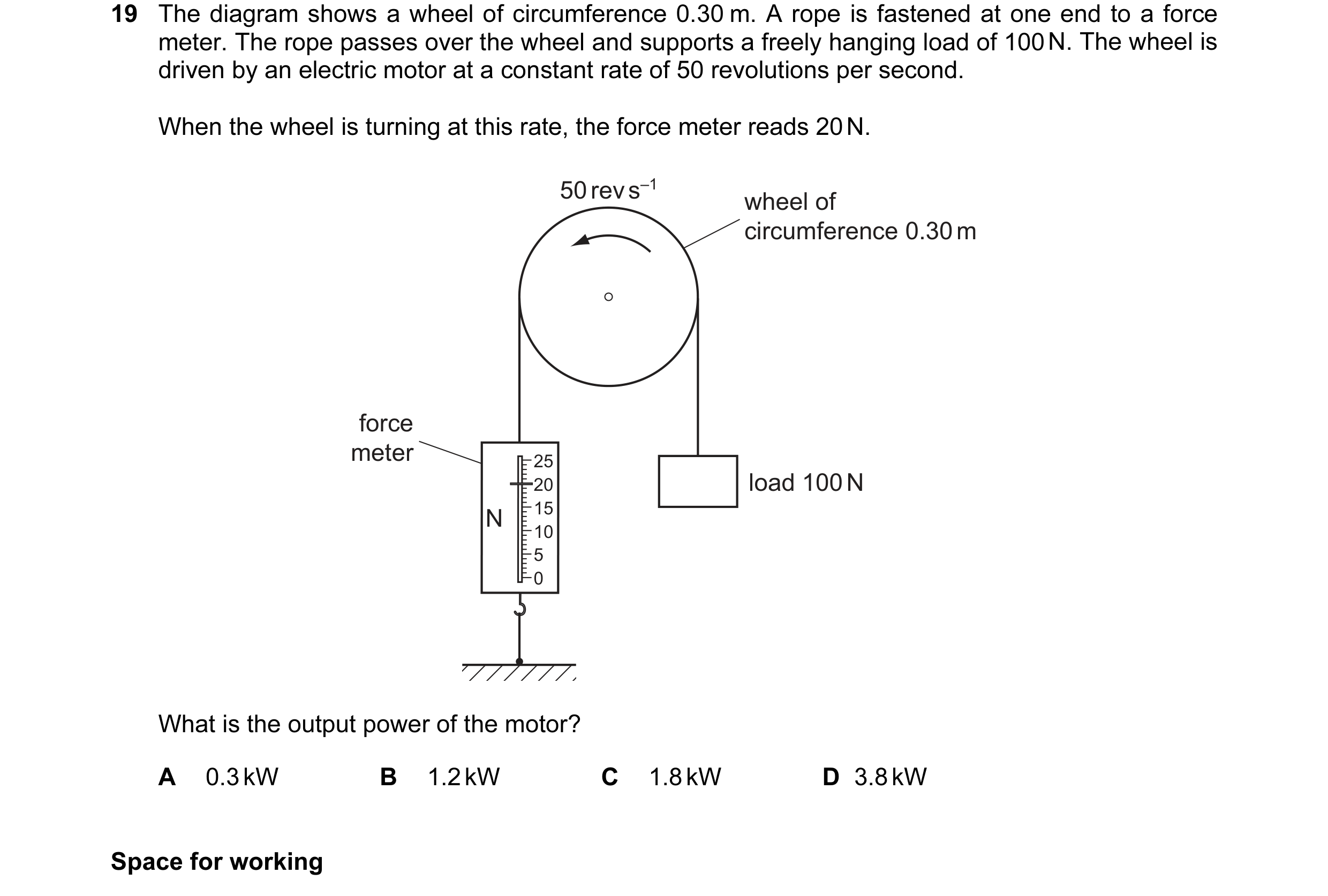
 17 / 77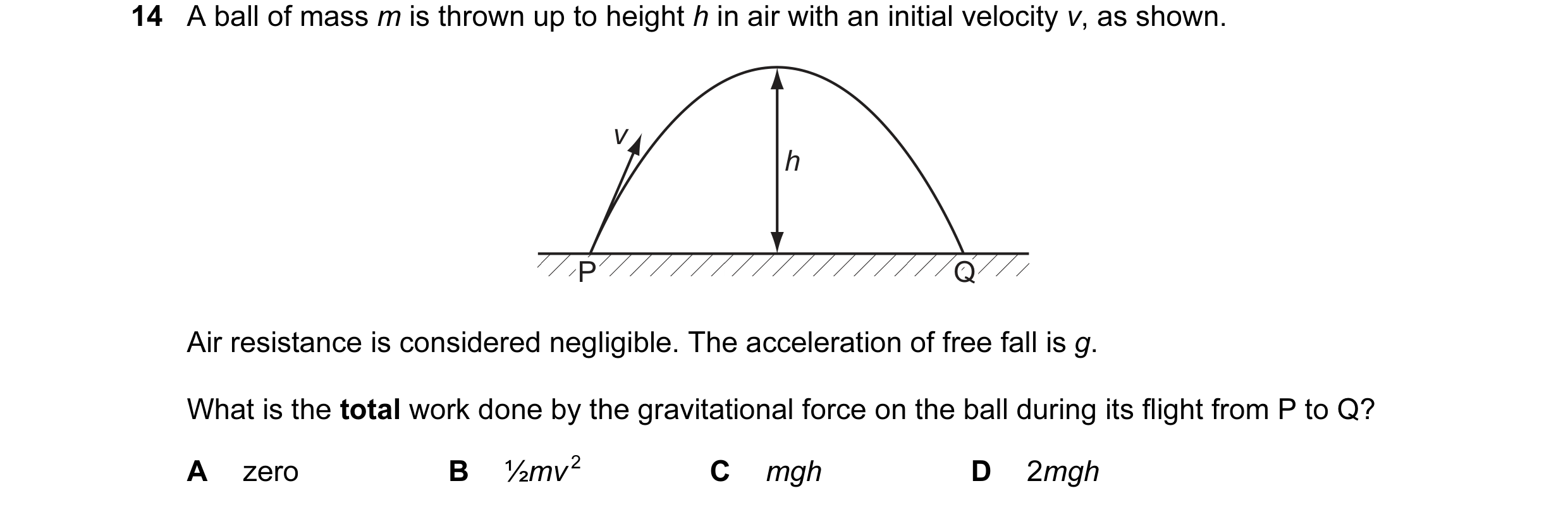
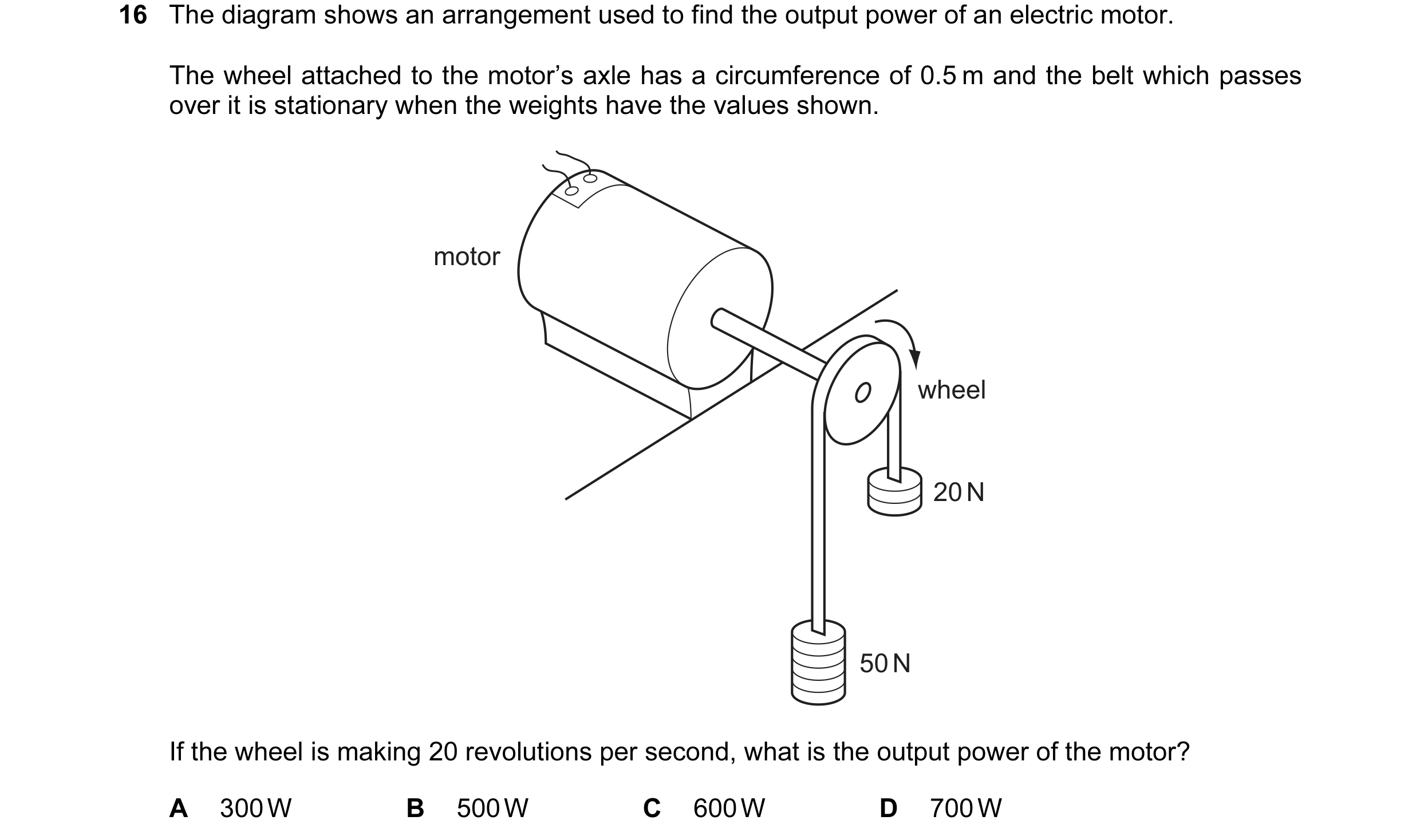
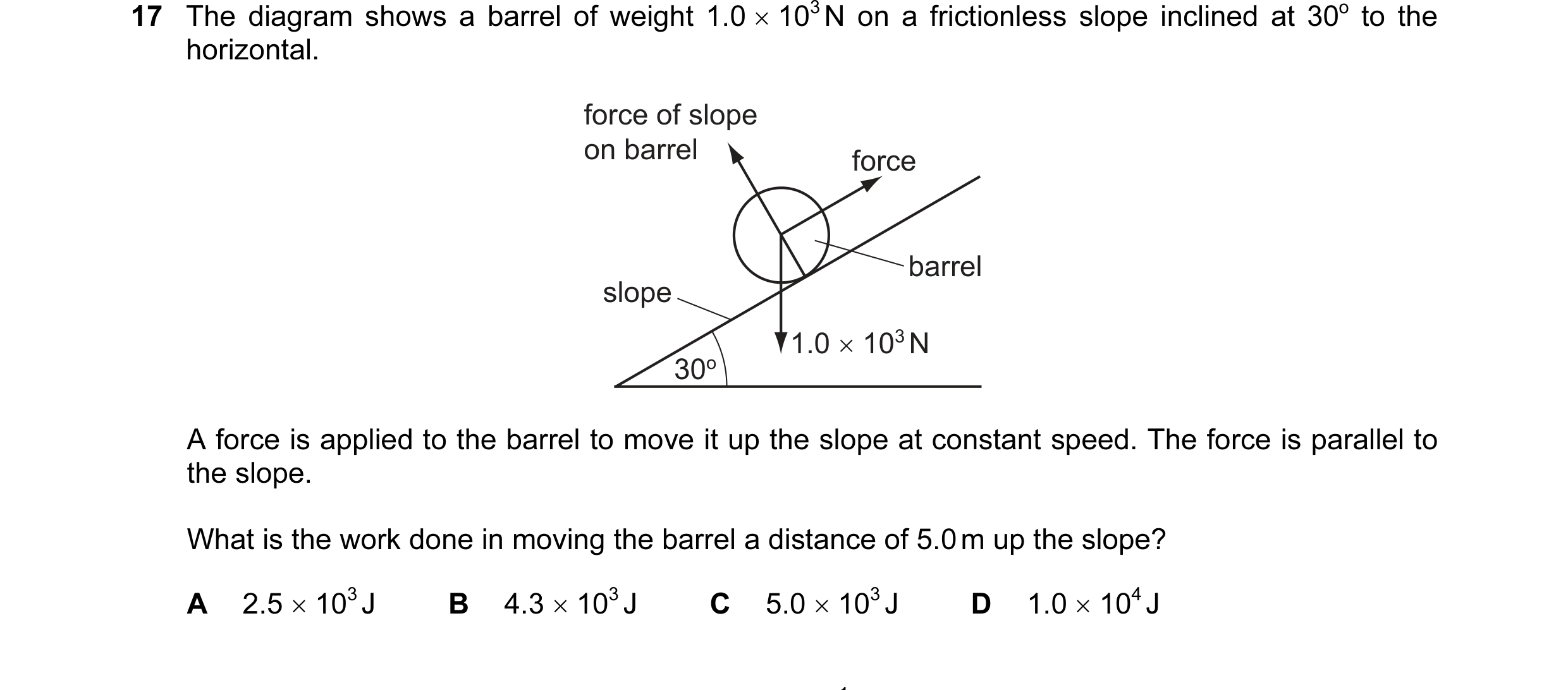 18 / 77
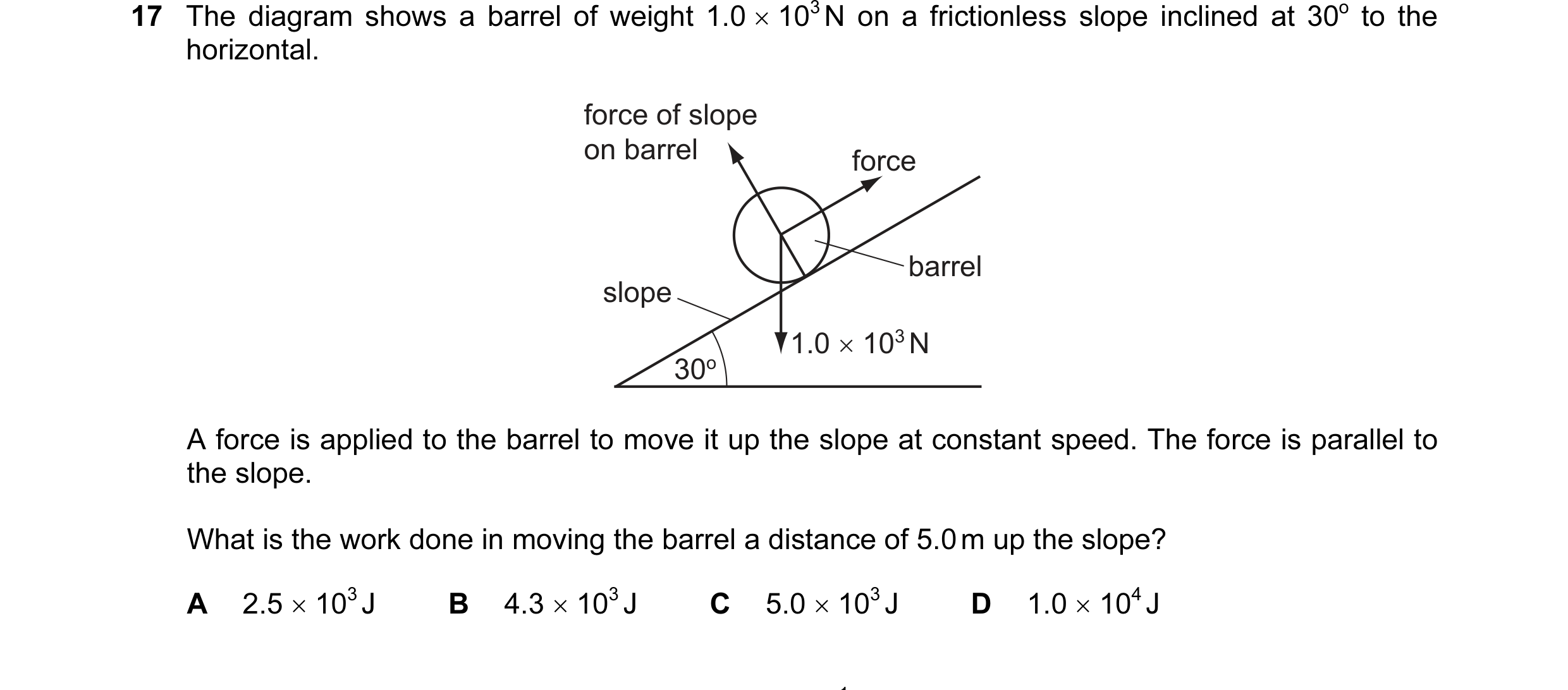

 19 / 77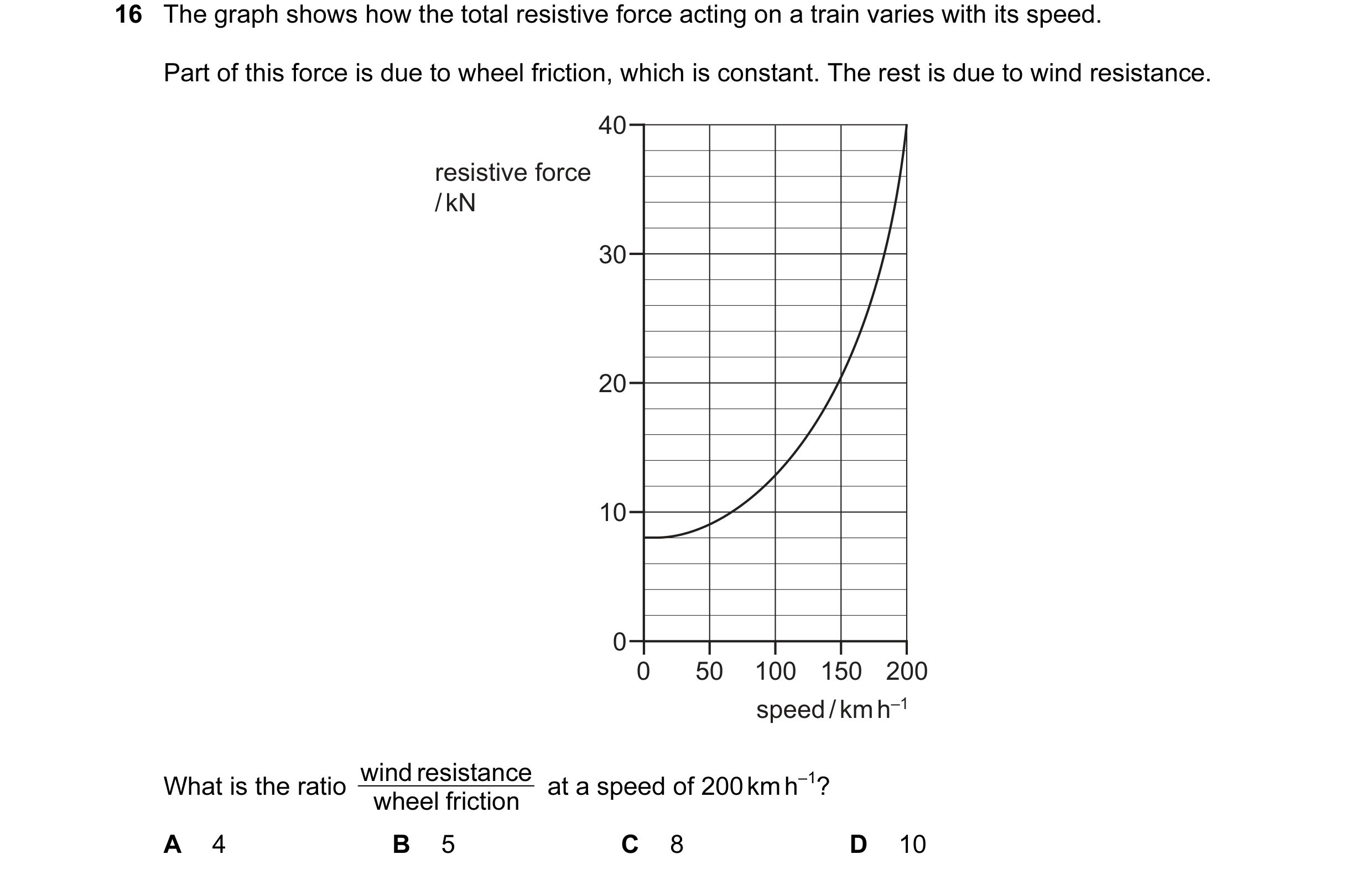

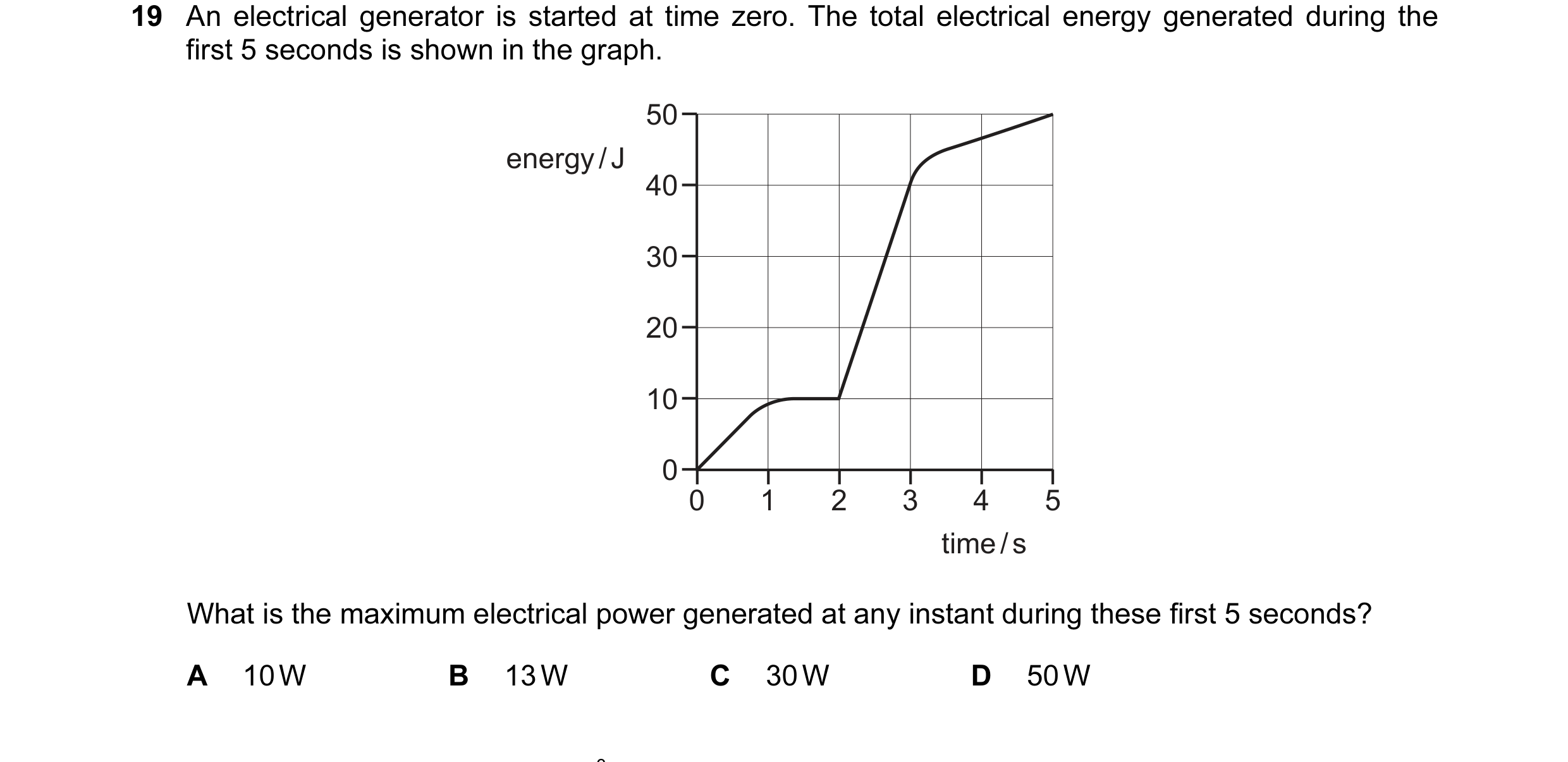 20 / 77
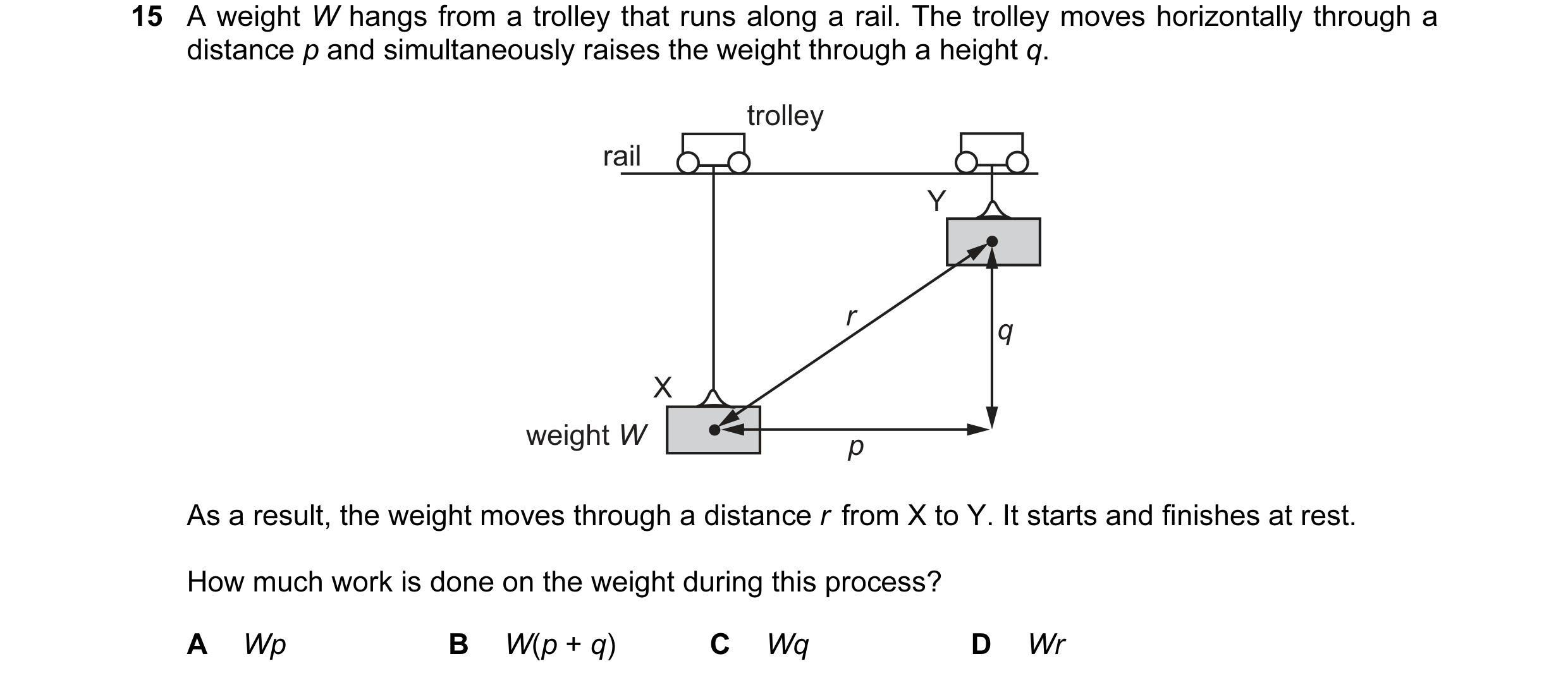

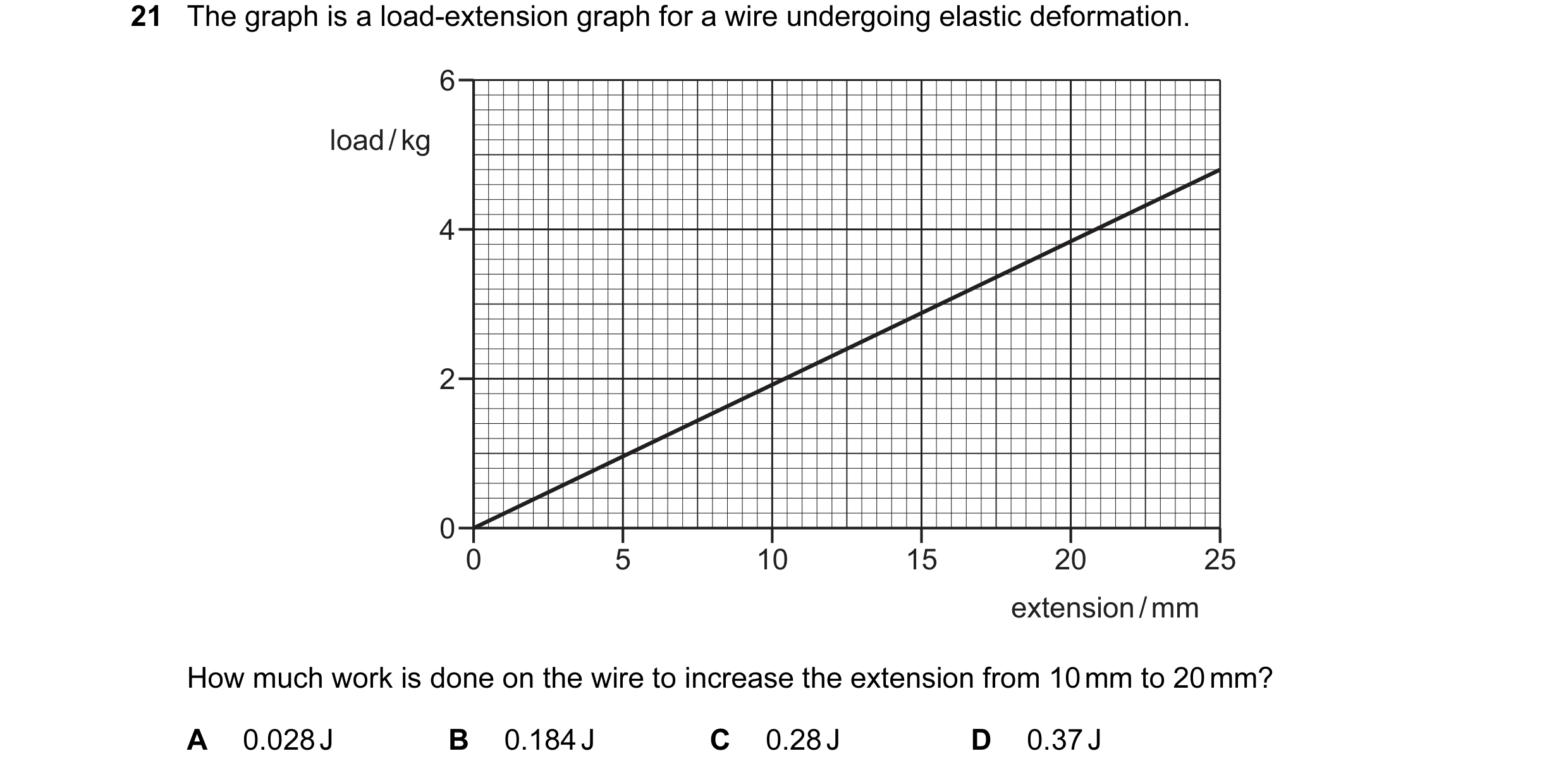 21 / 77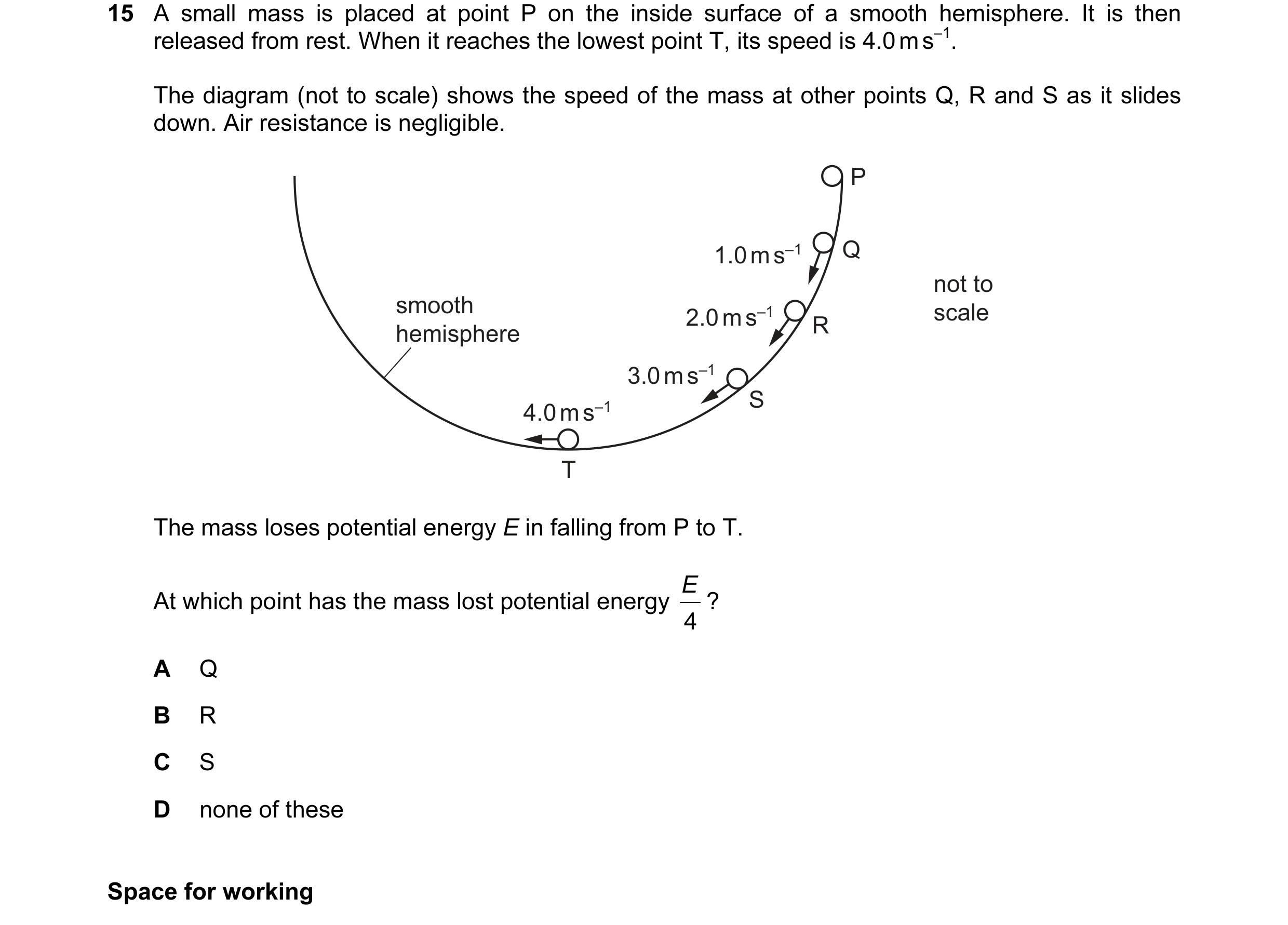
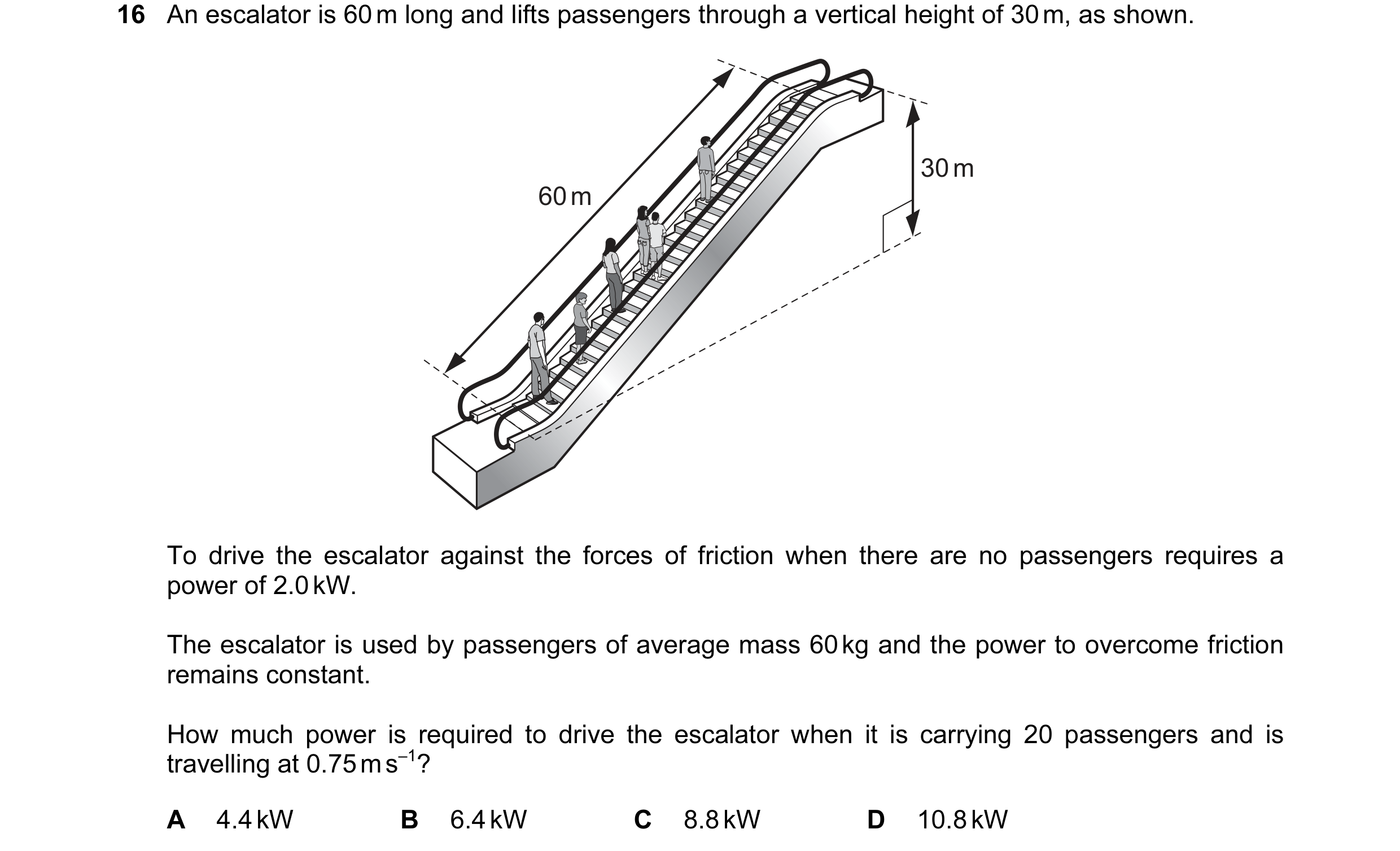 22 / 77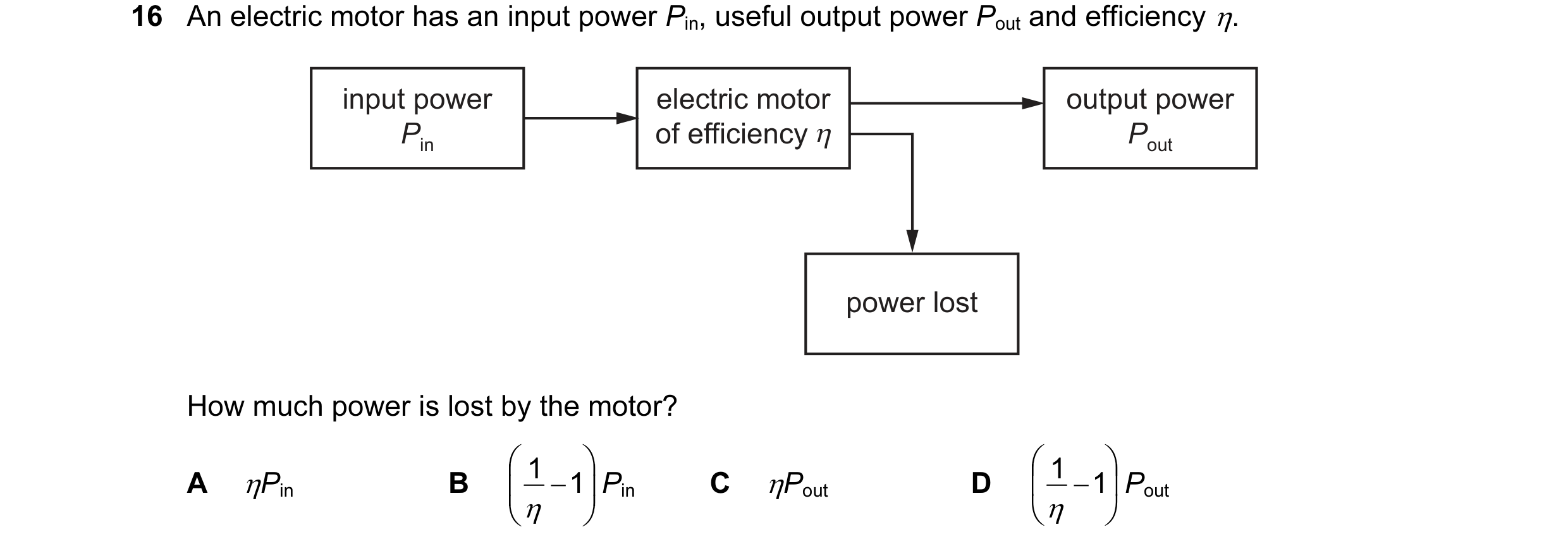
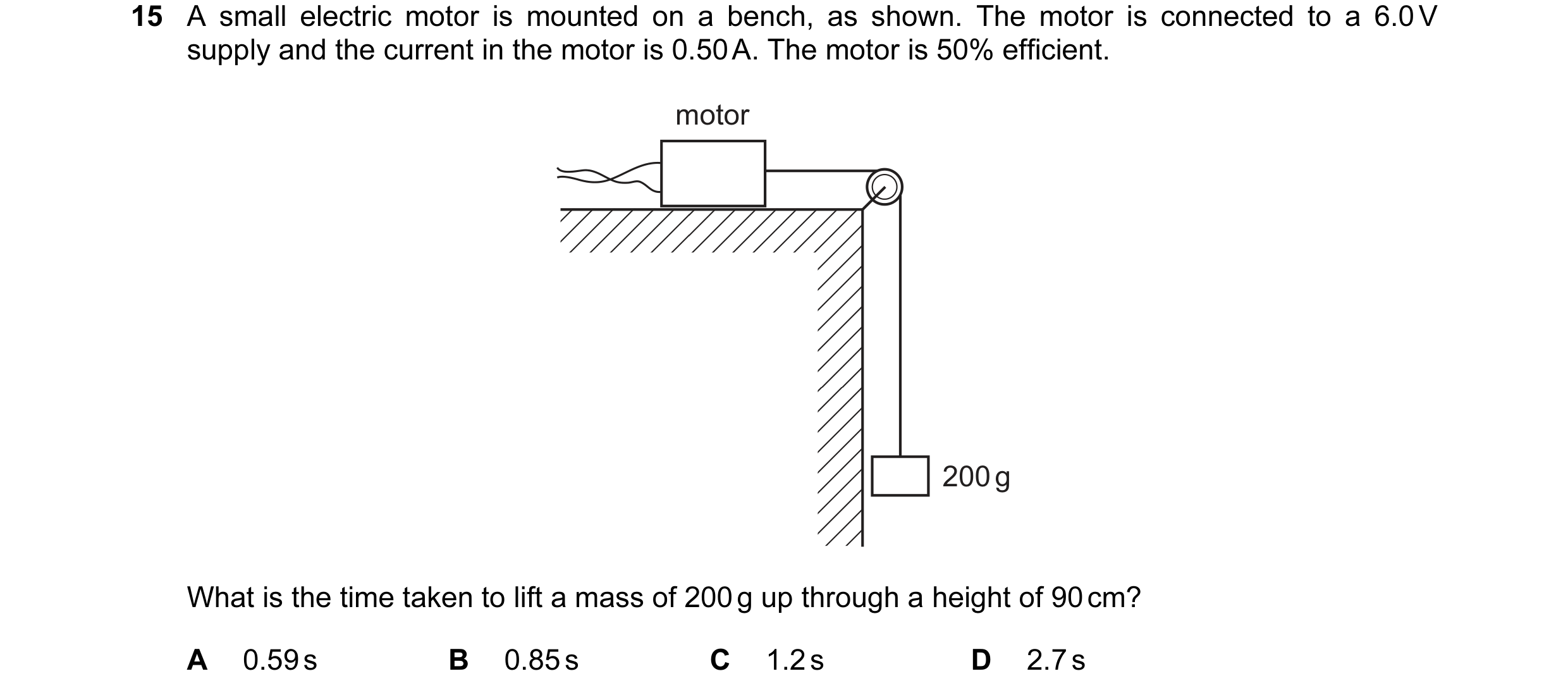
 23 / 77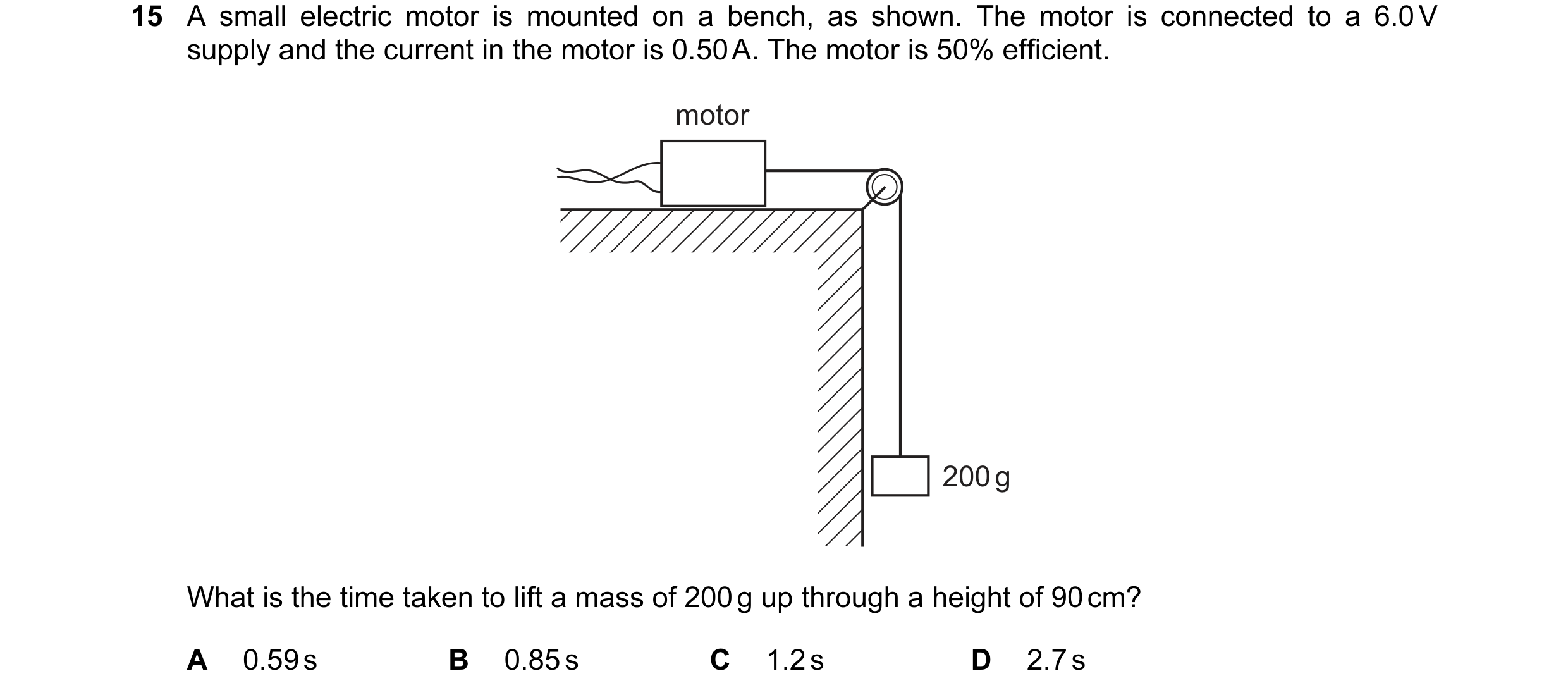
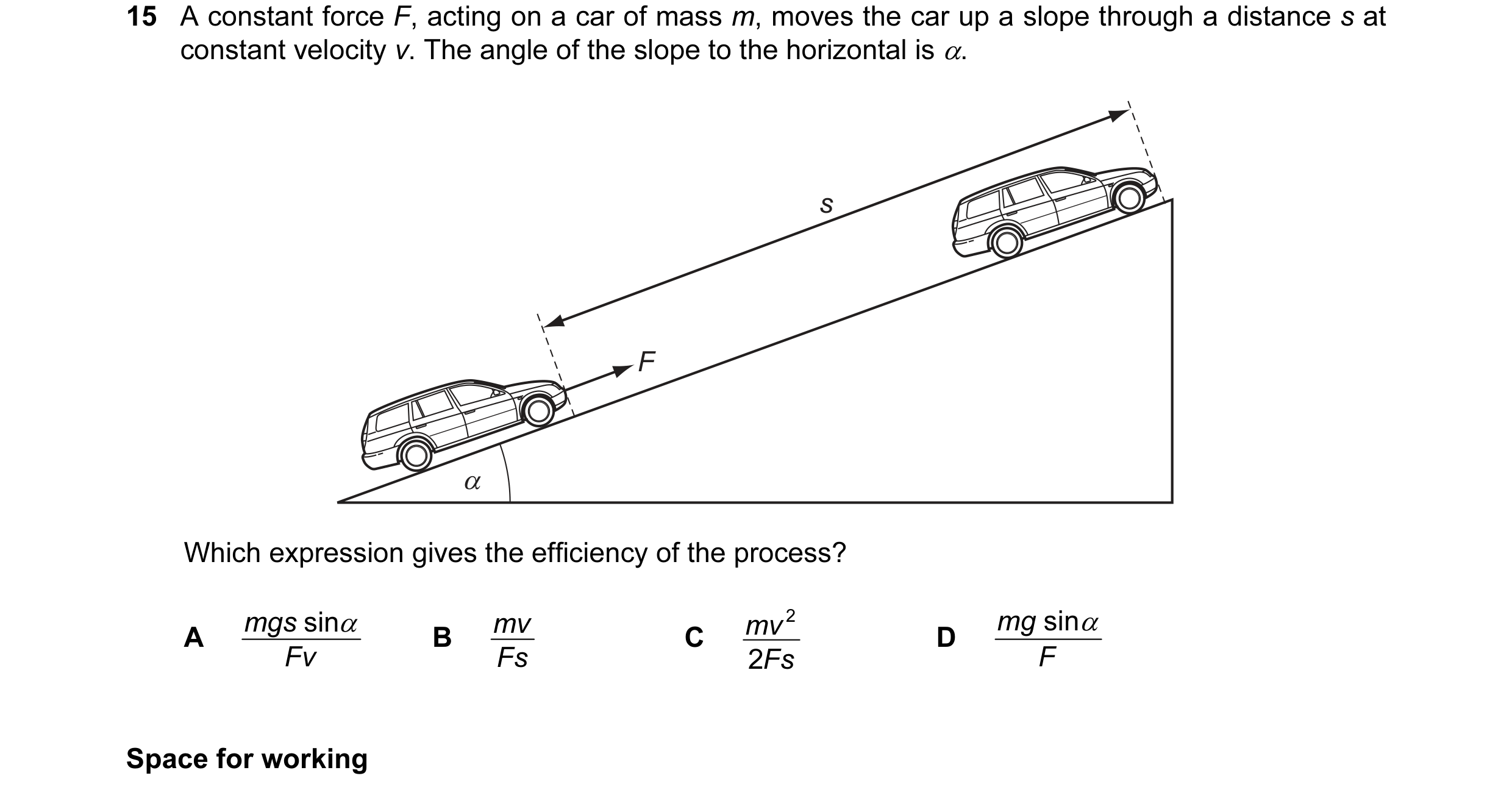
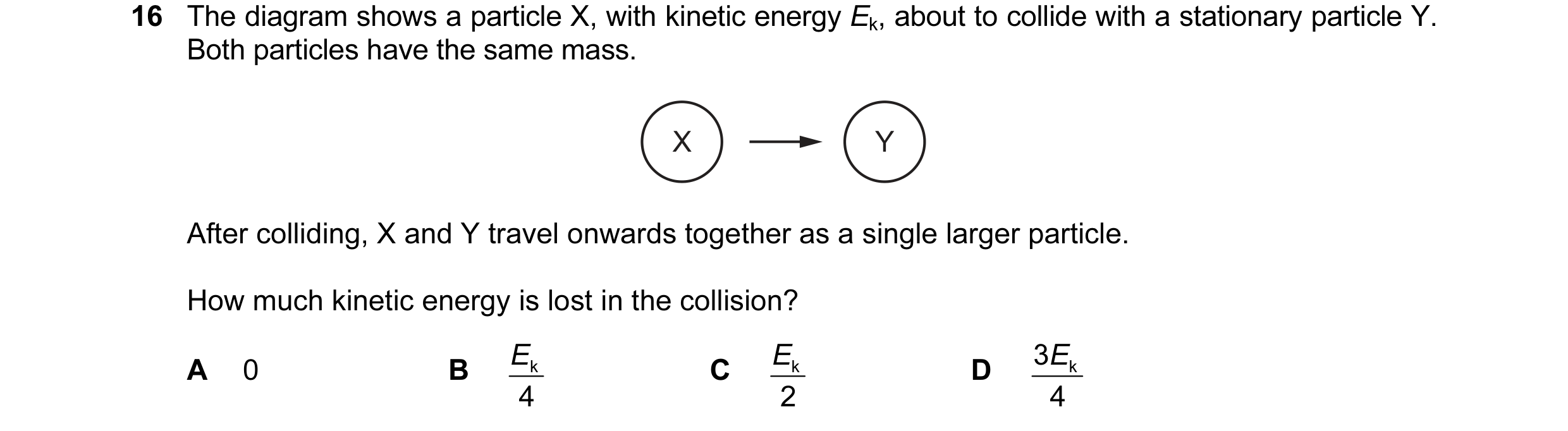 24 / 77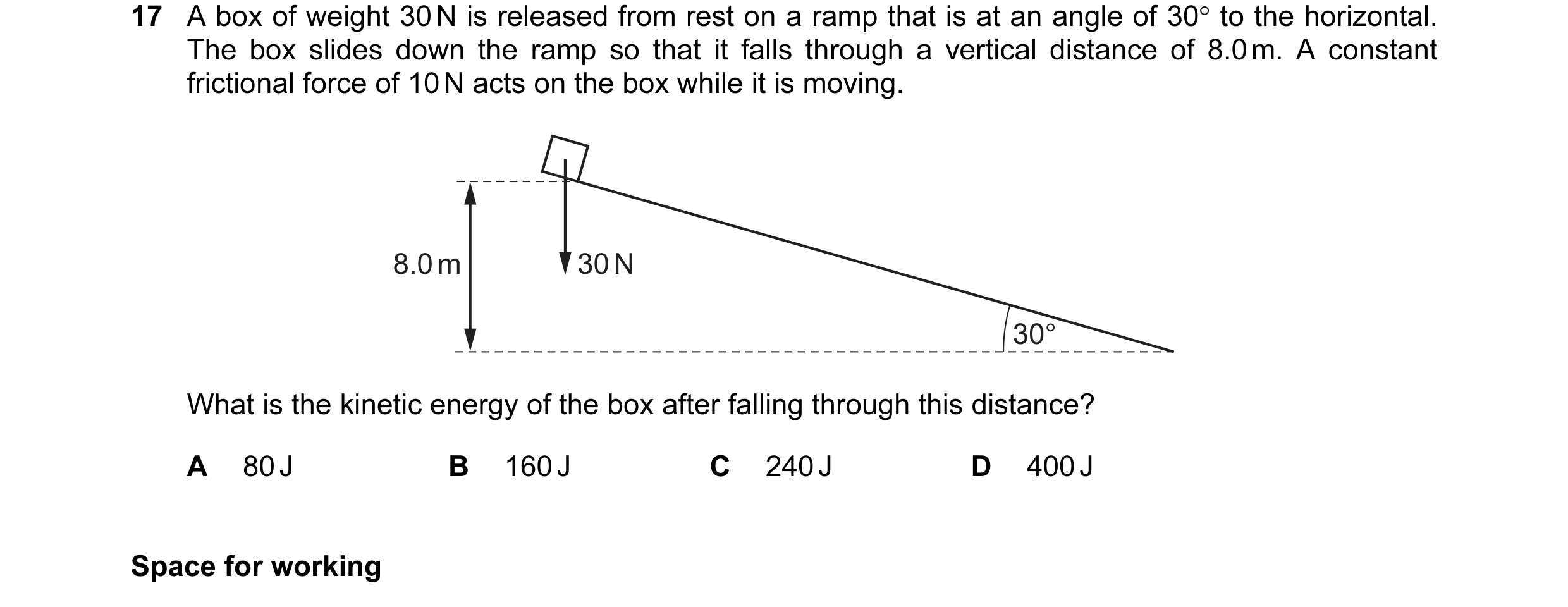
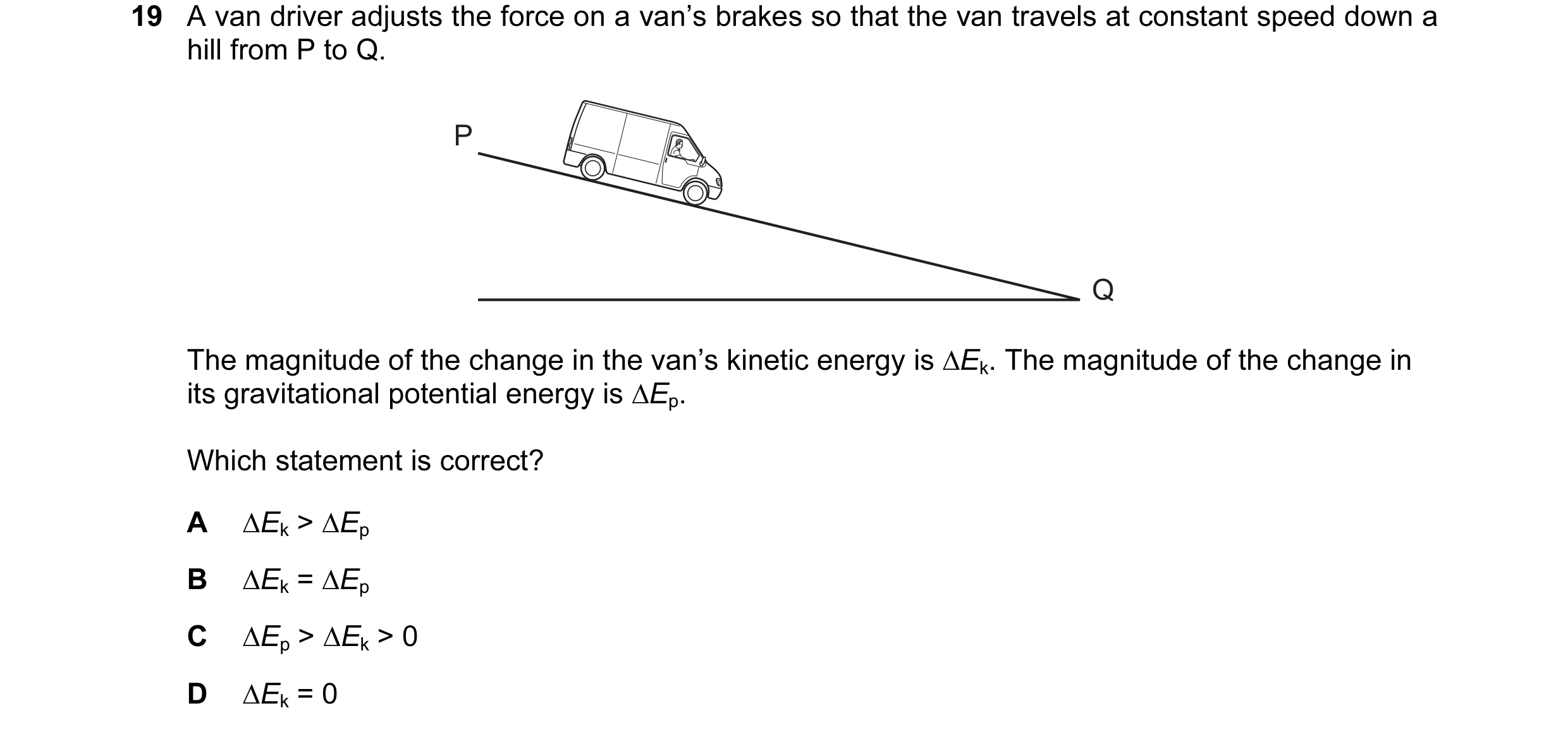

 25 / 77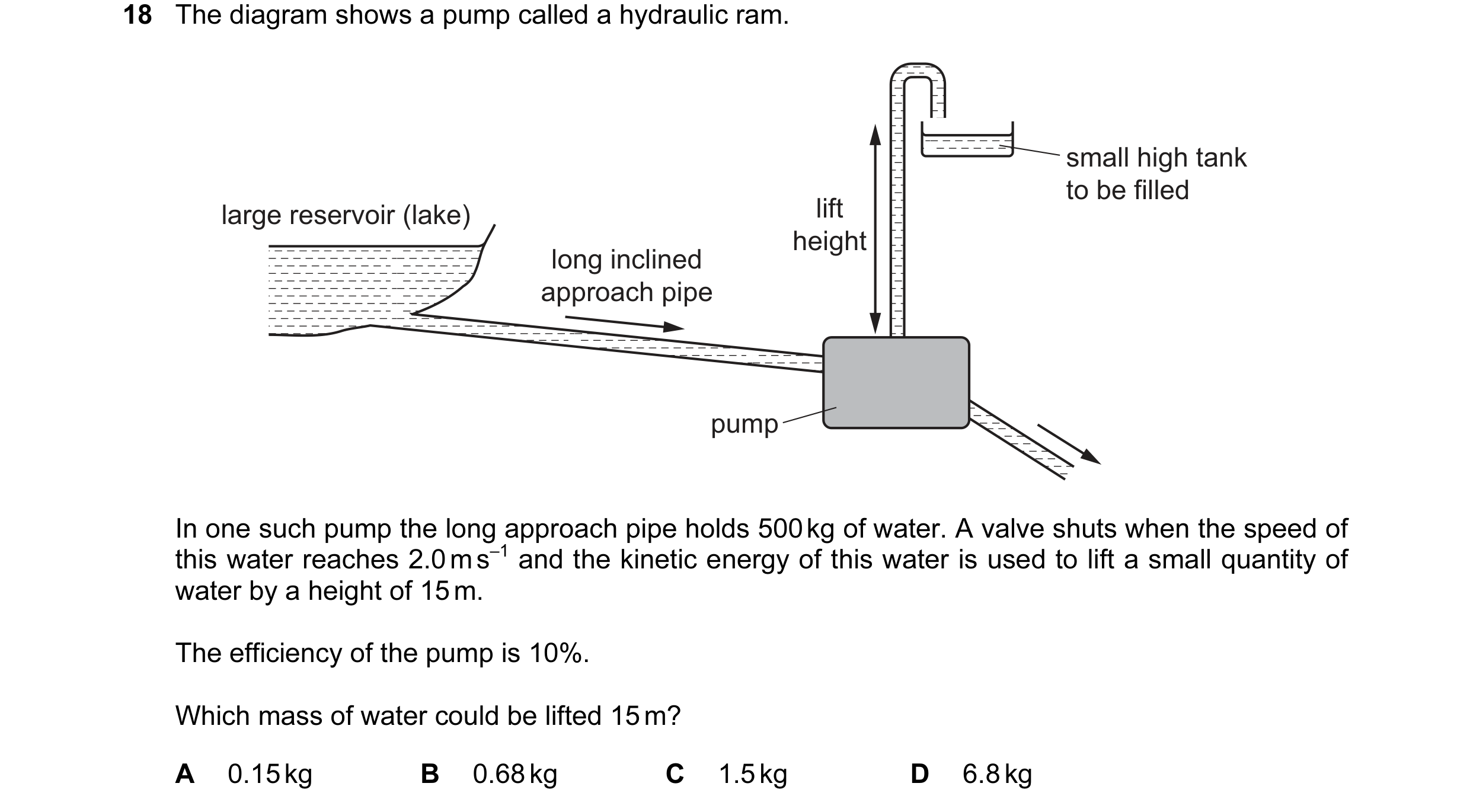

 26 / 77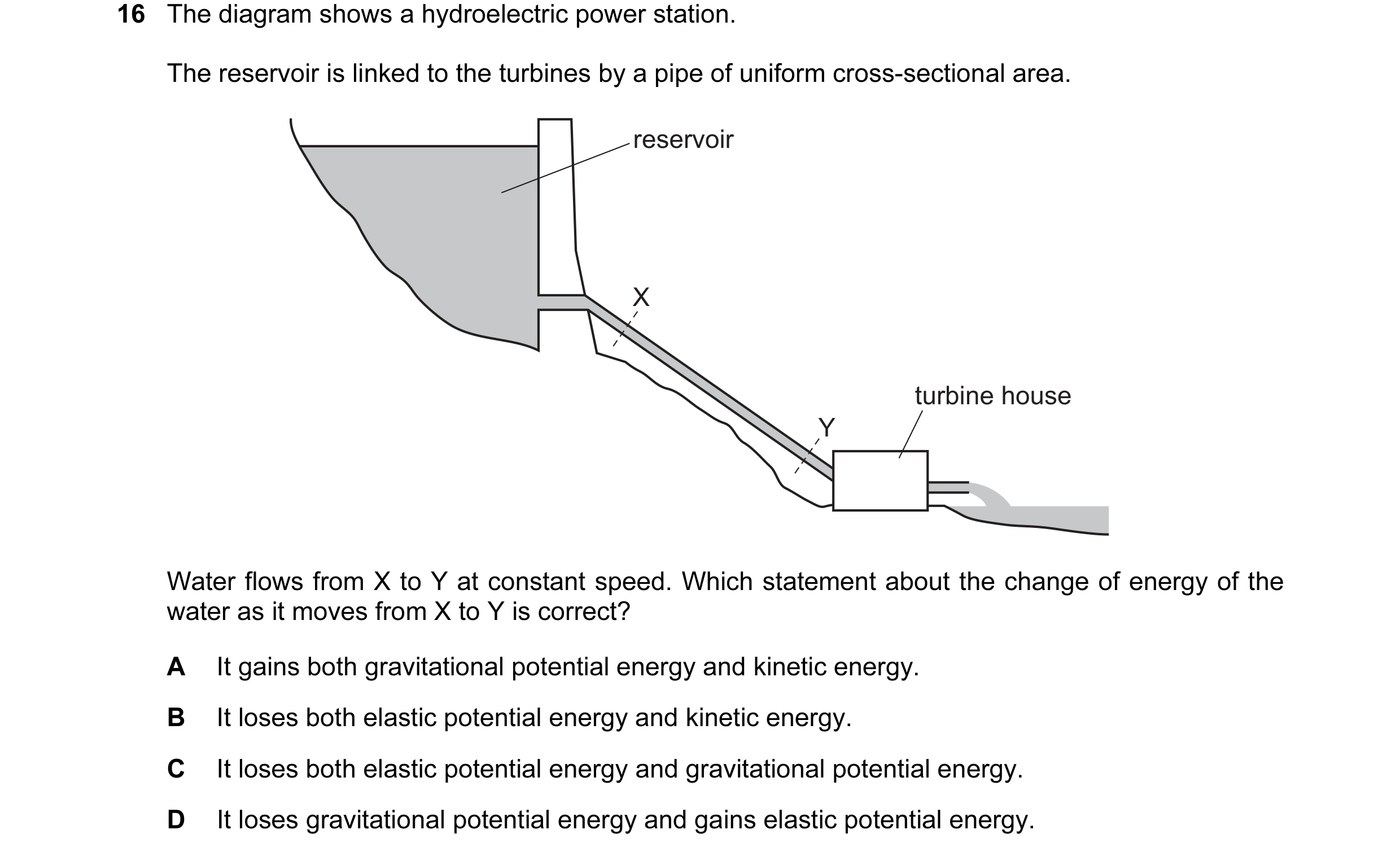

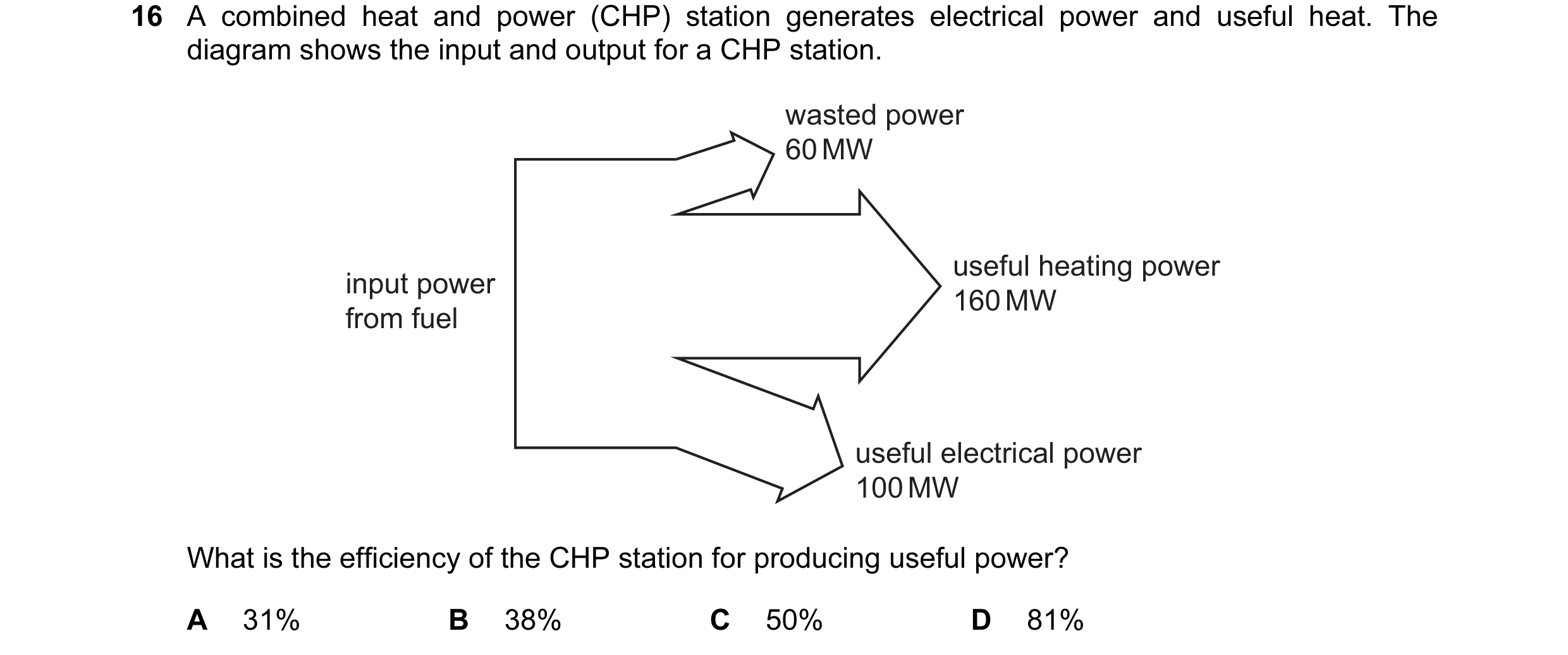 27 / 77

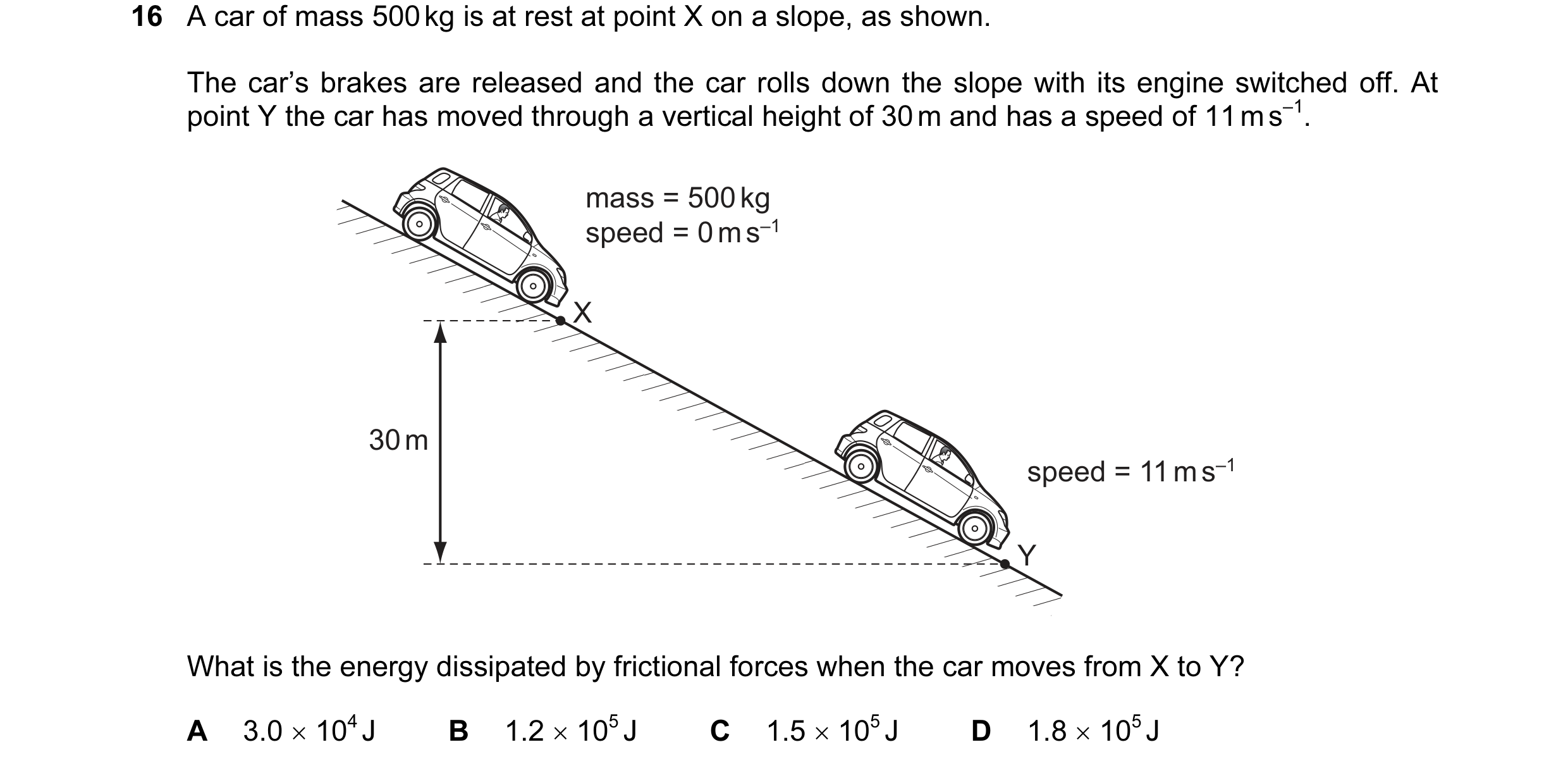
 28 / 77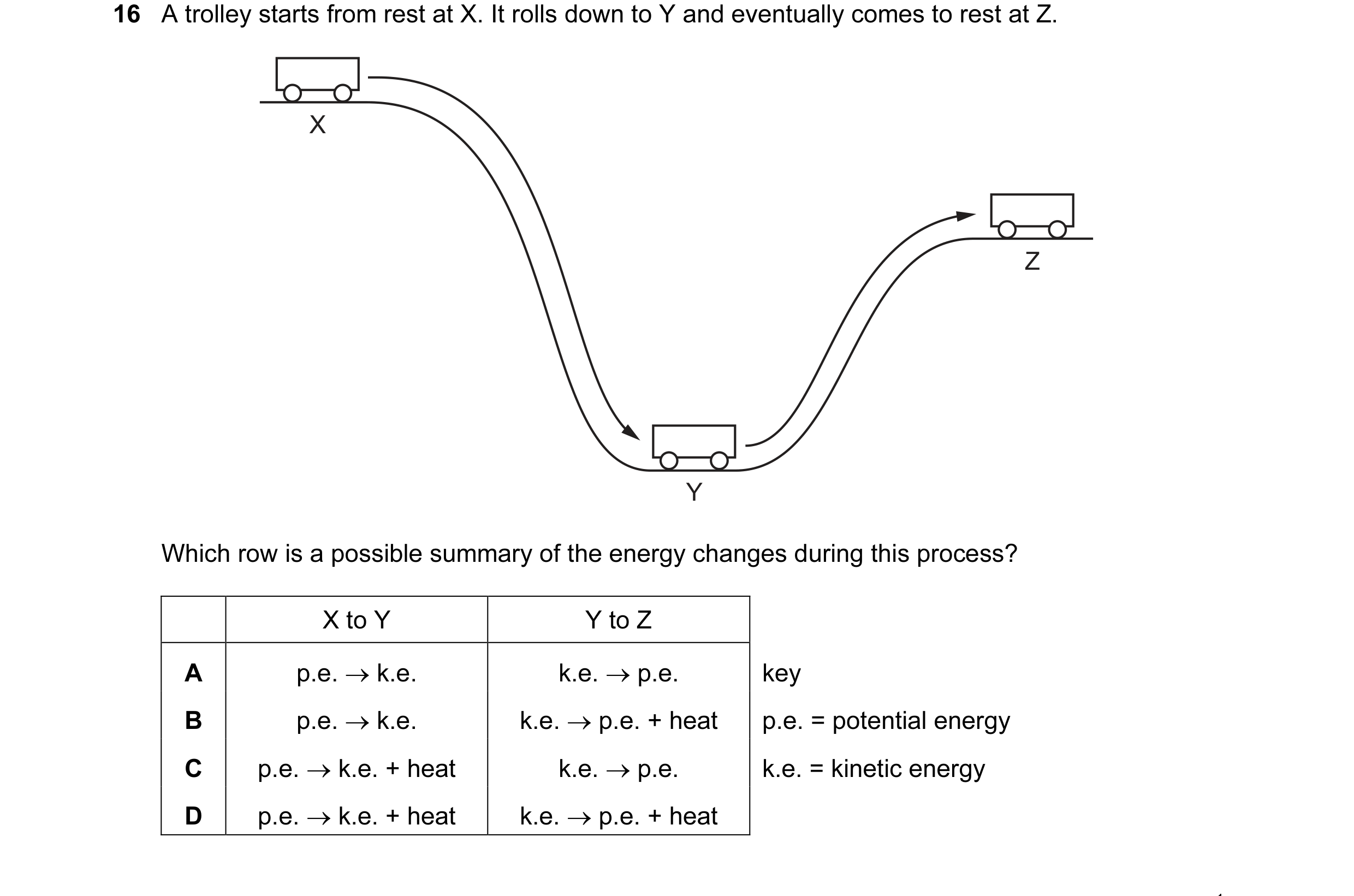
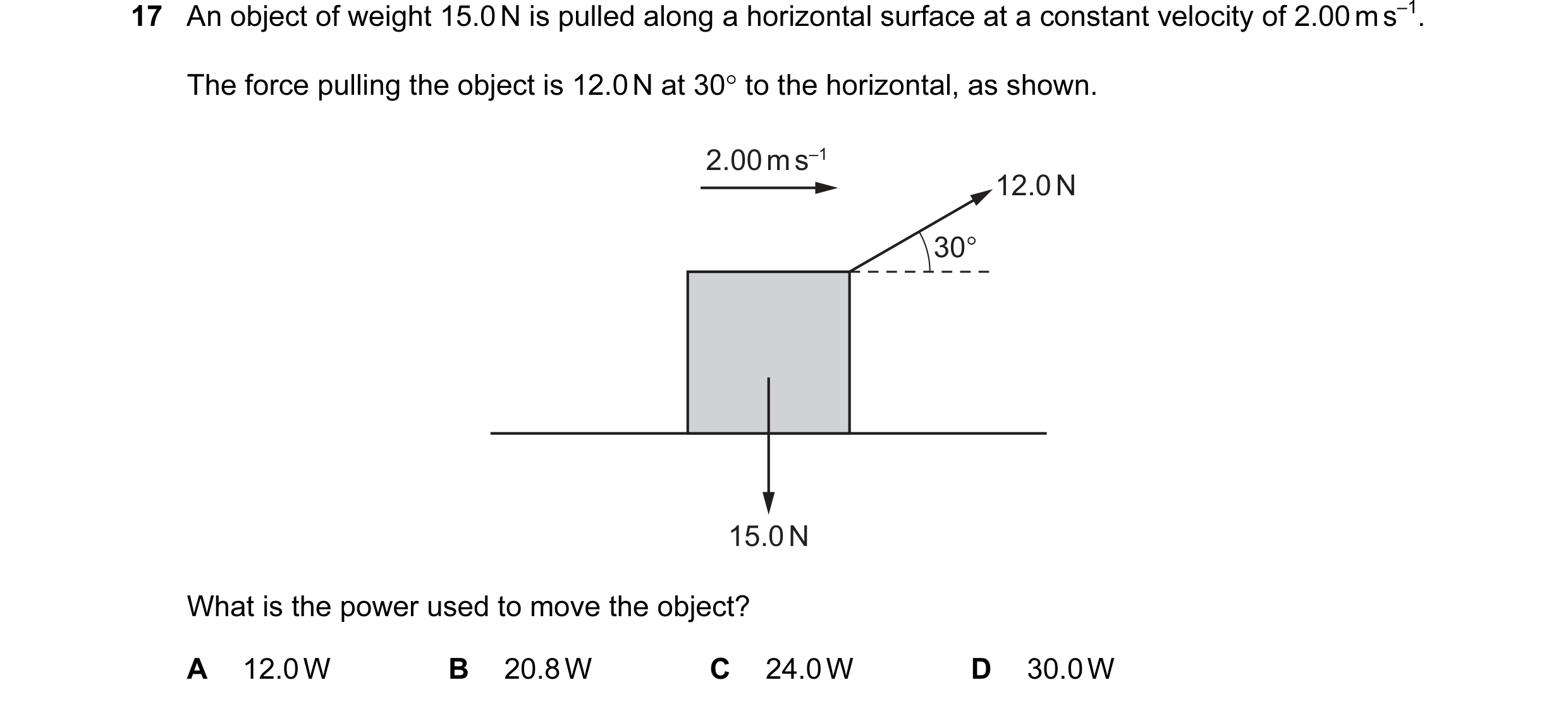 29 / 77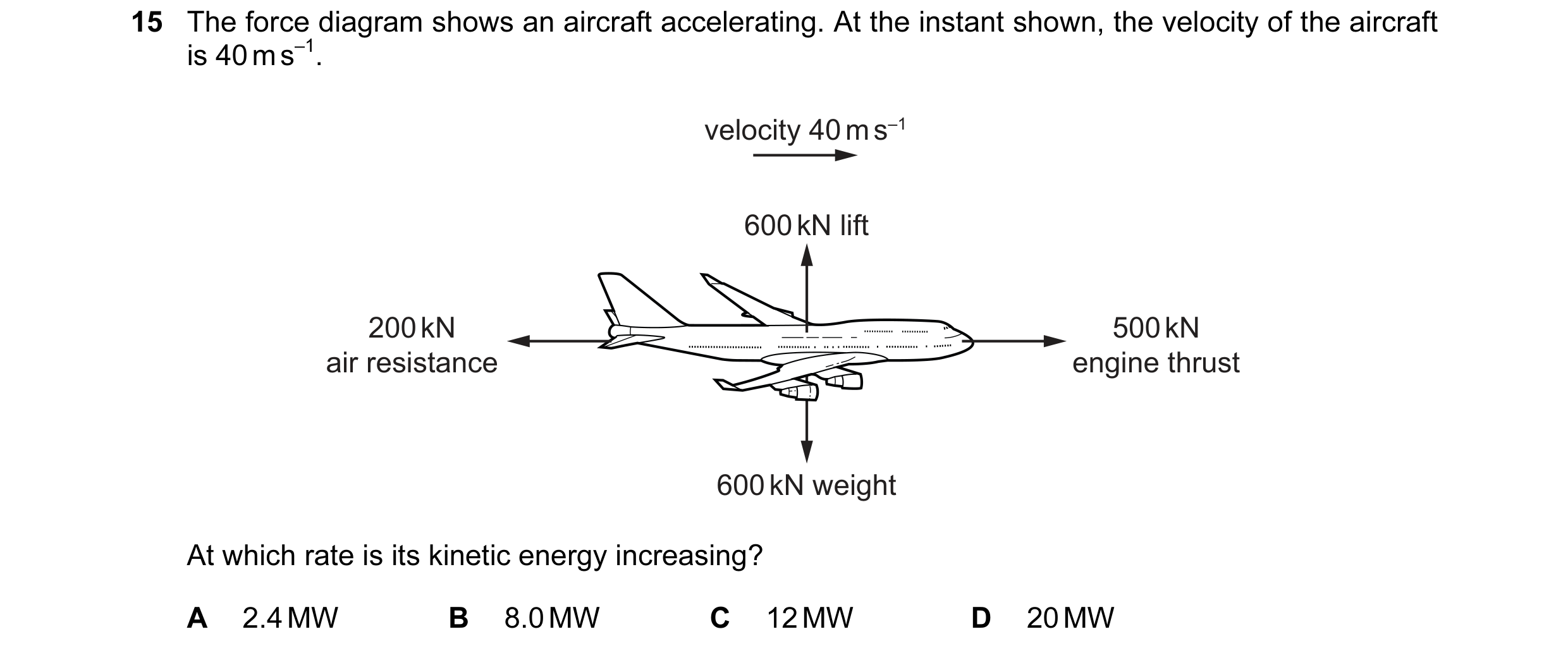

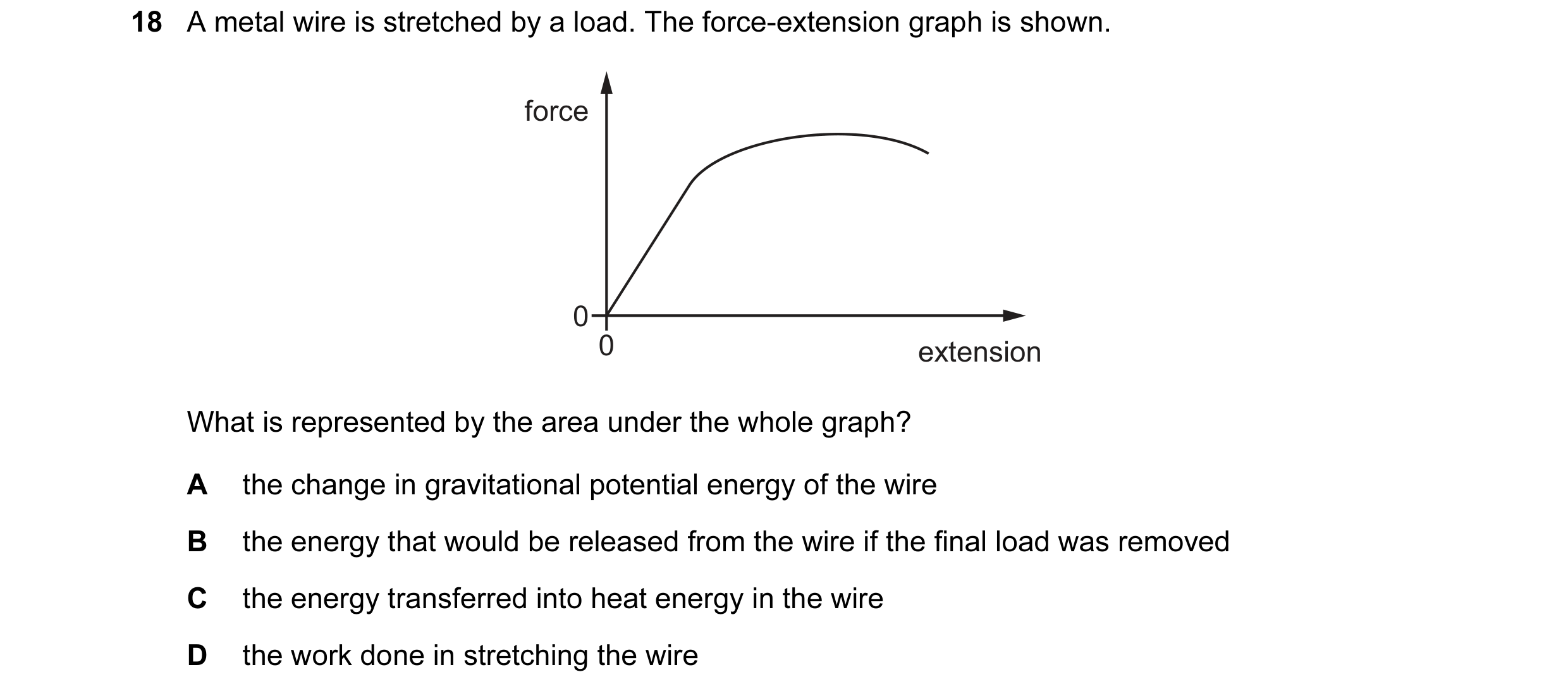
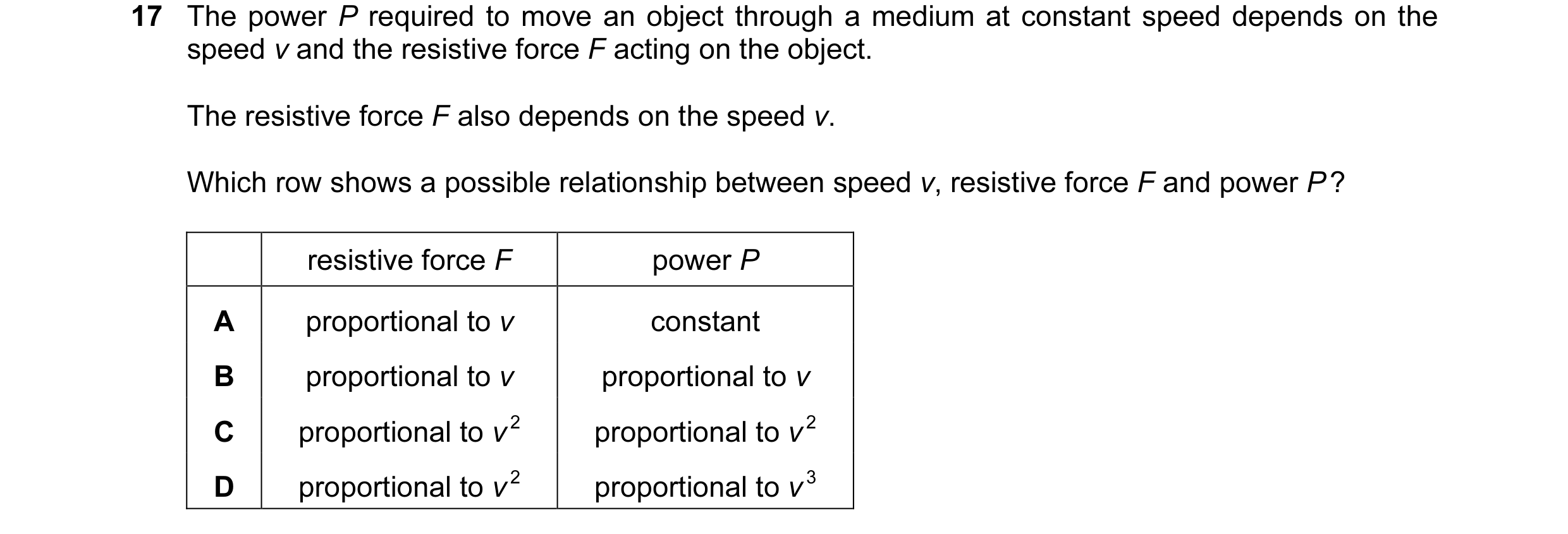 30 / 77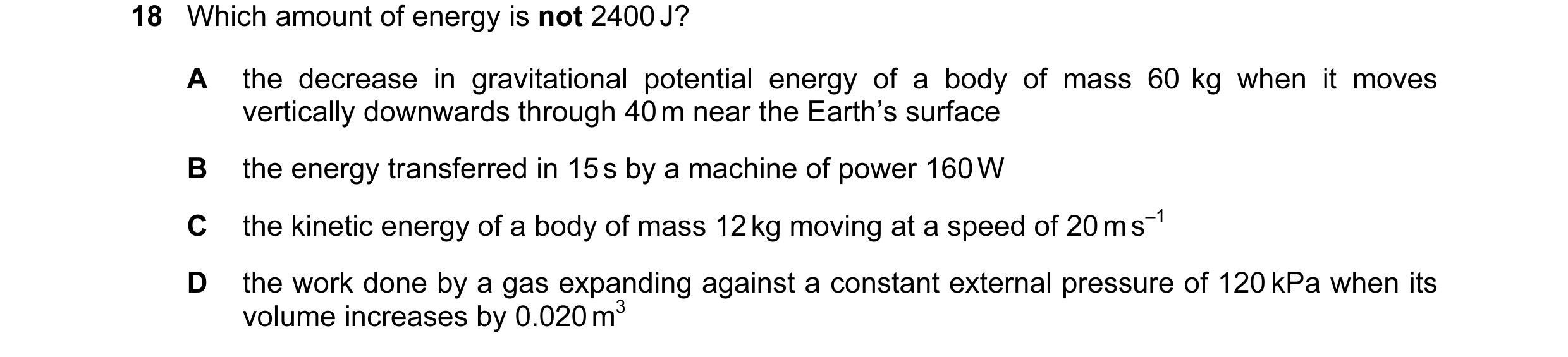

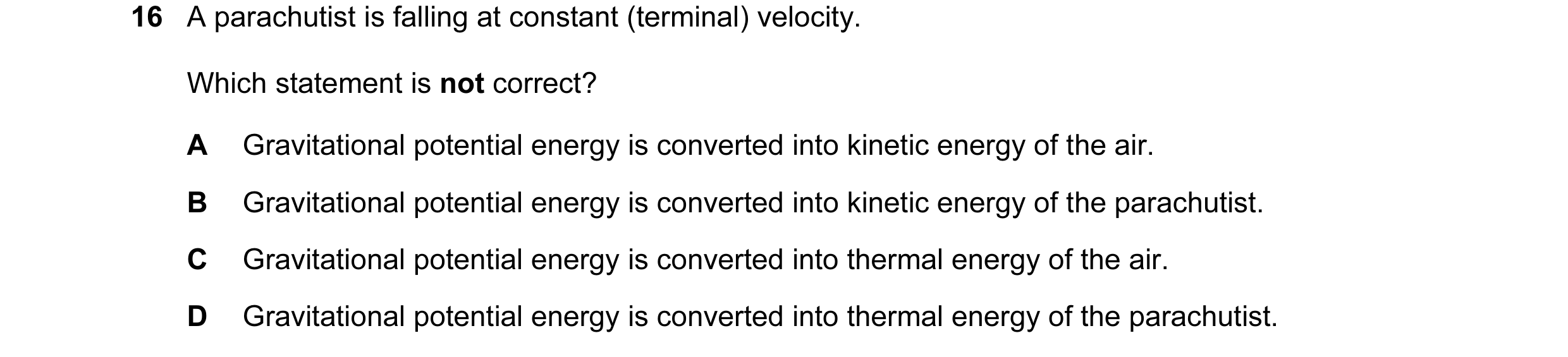

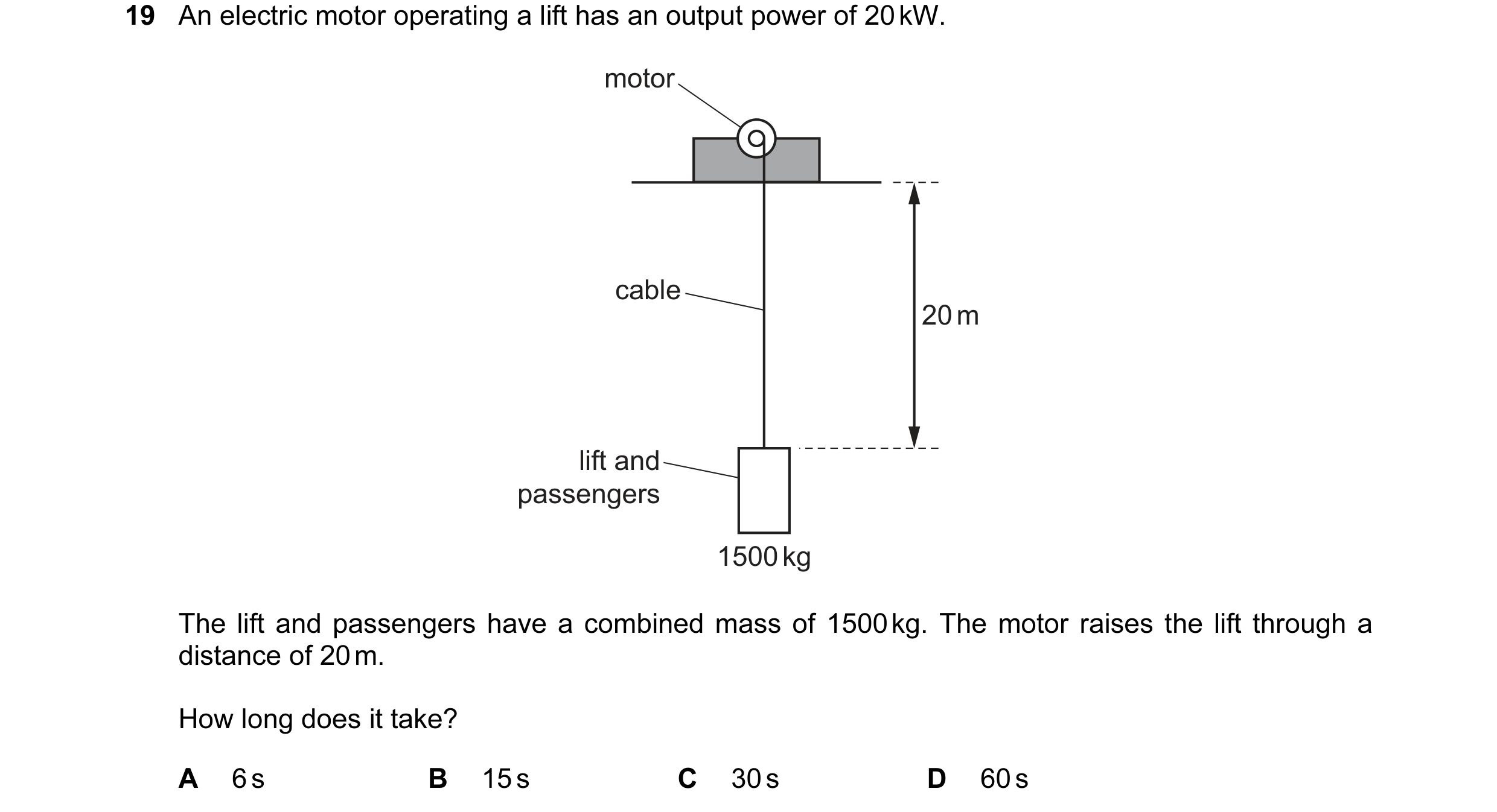 31 / 77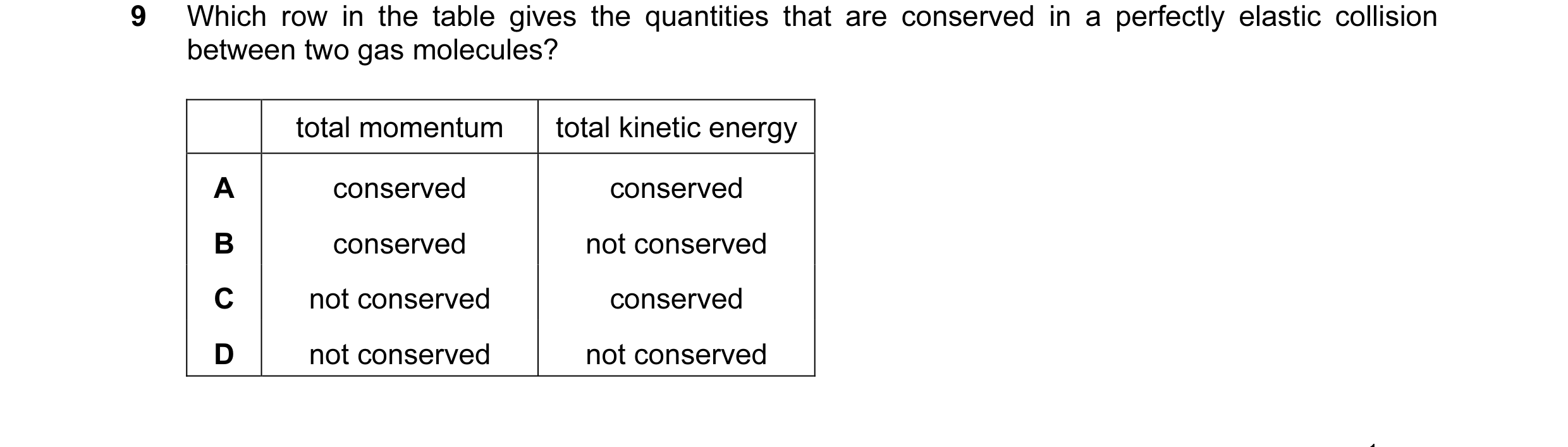
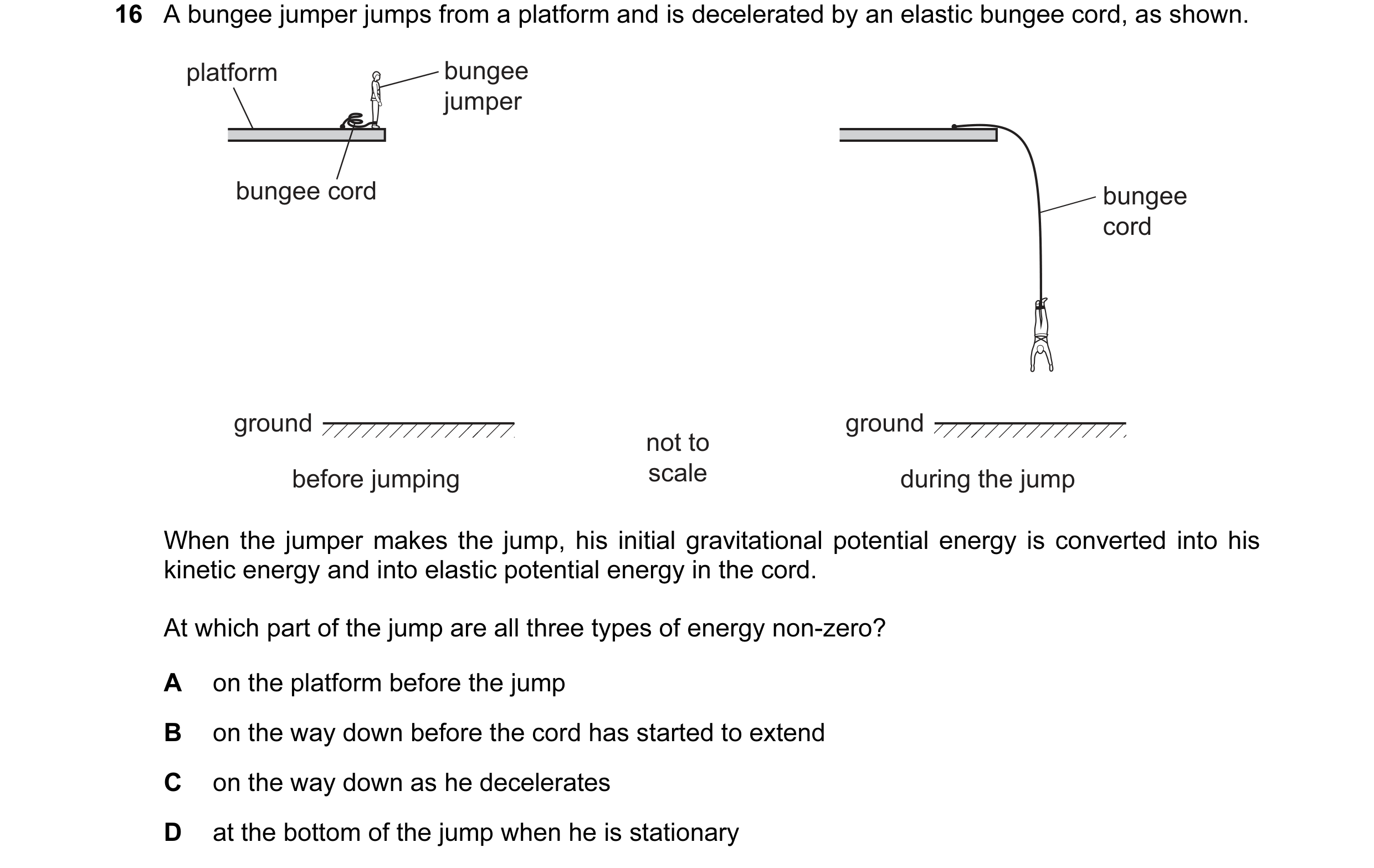

 32 / 77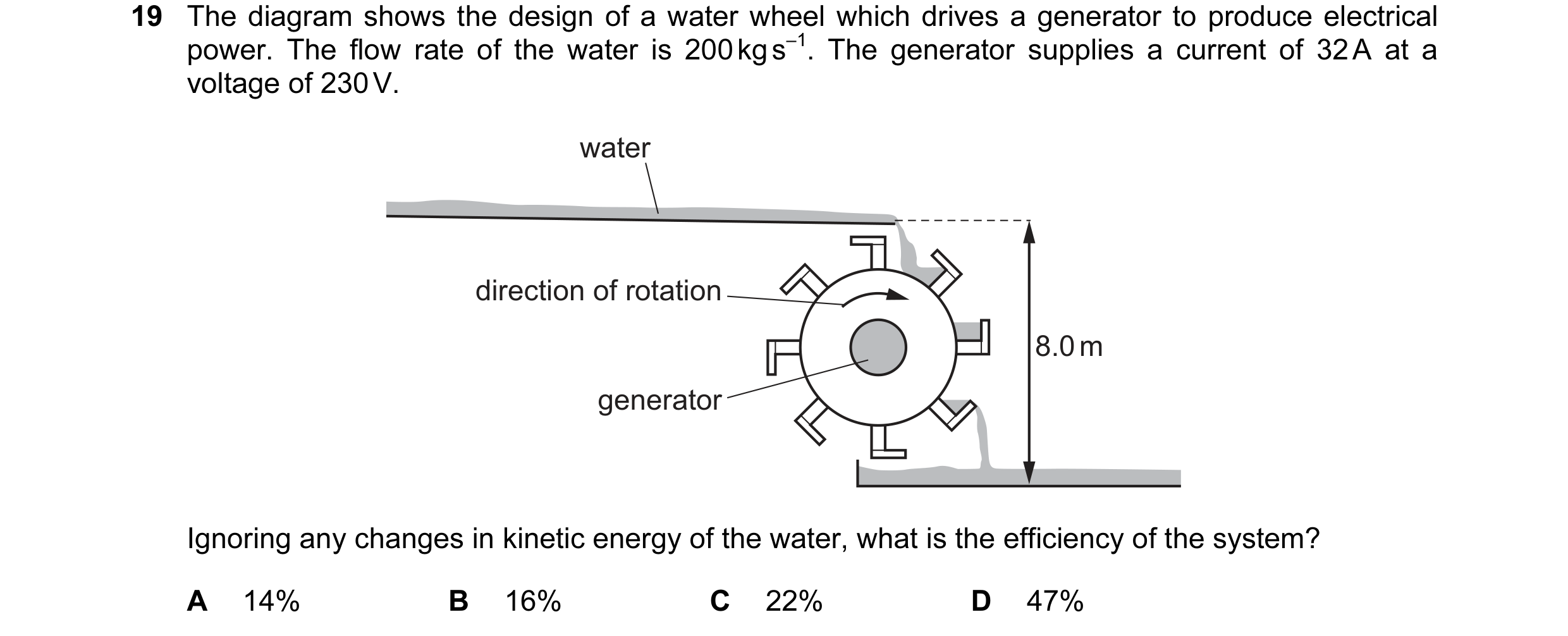
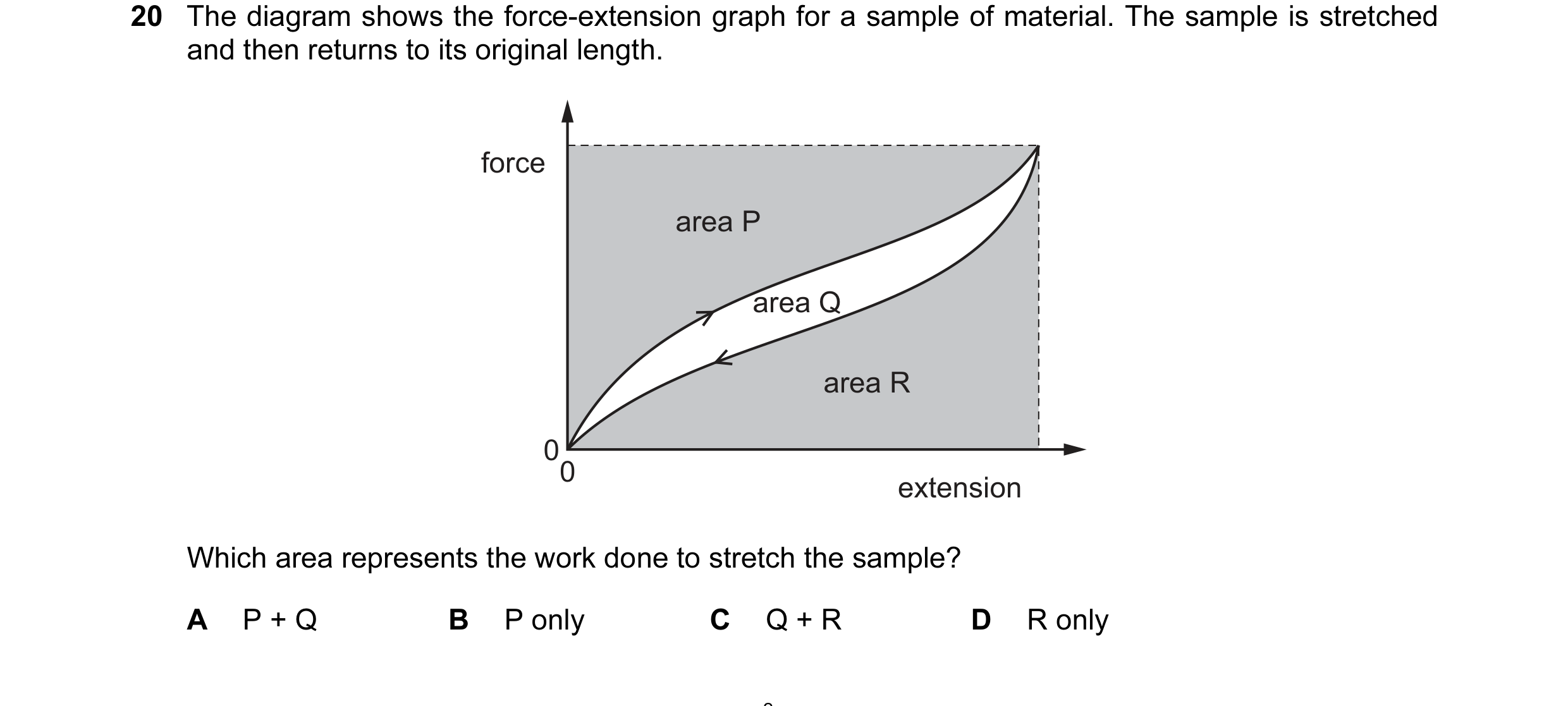
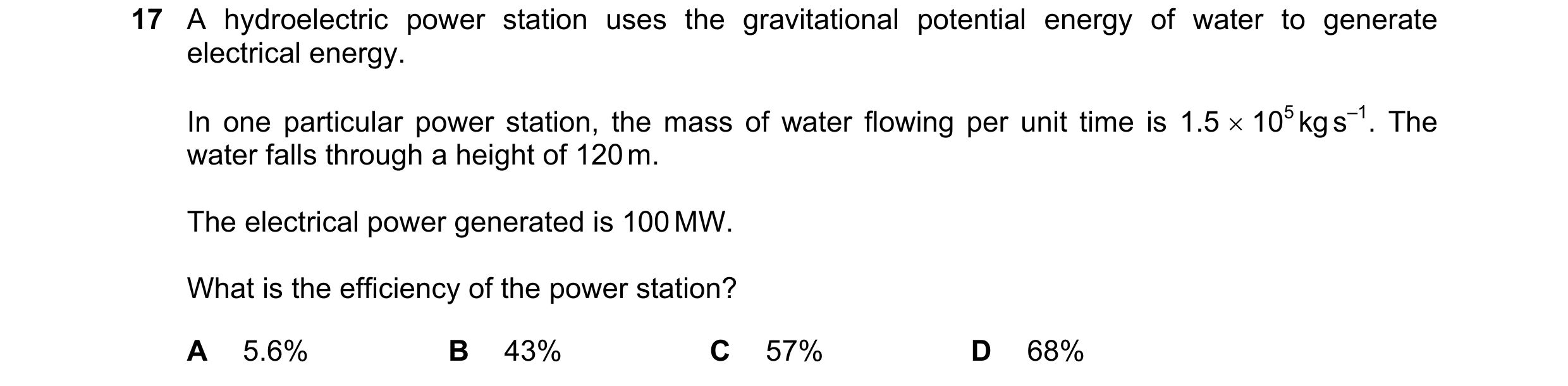 33 / 77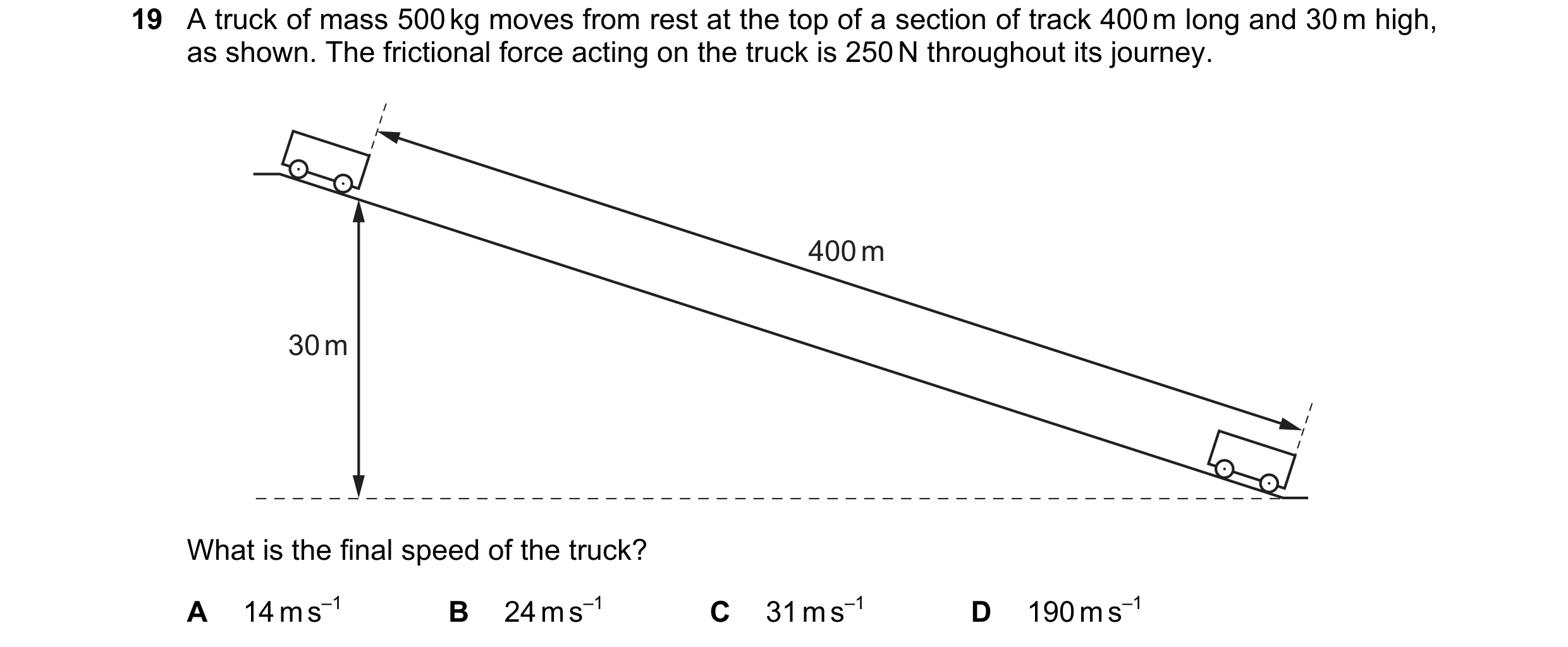
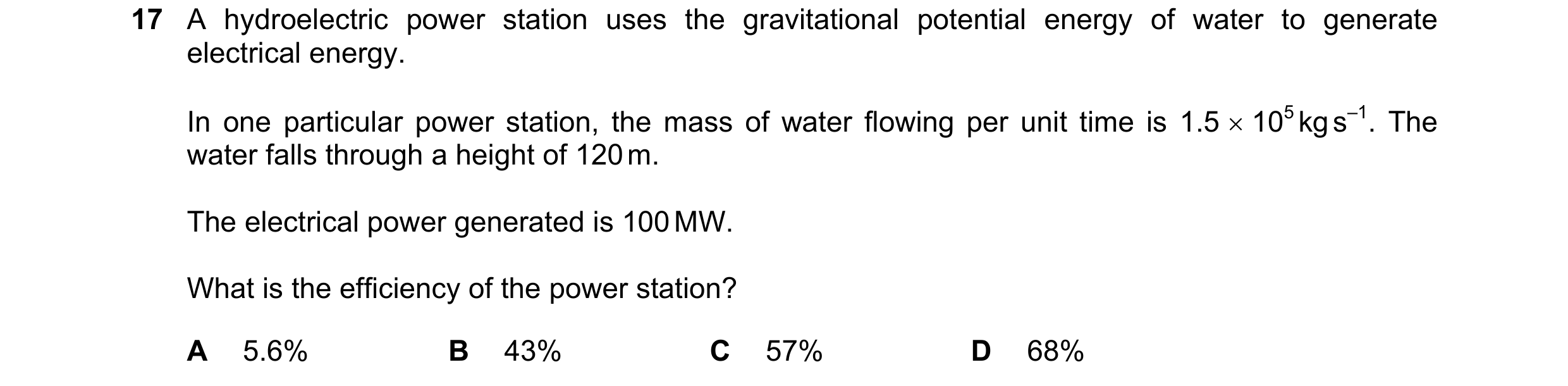
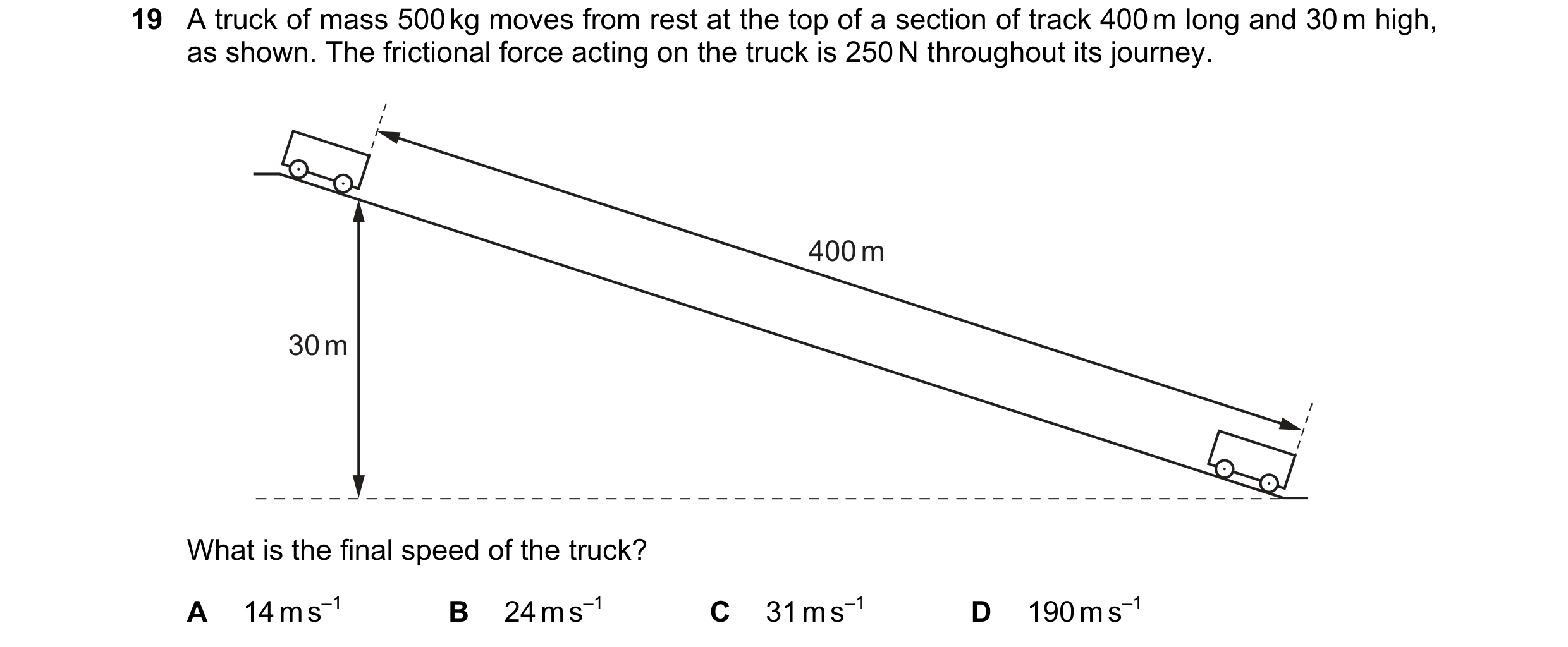 34 / 77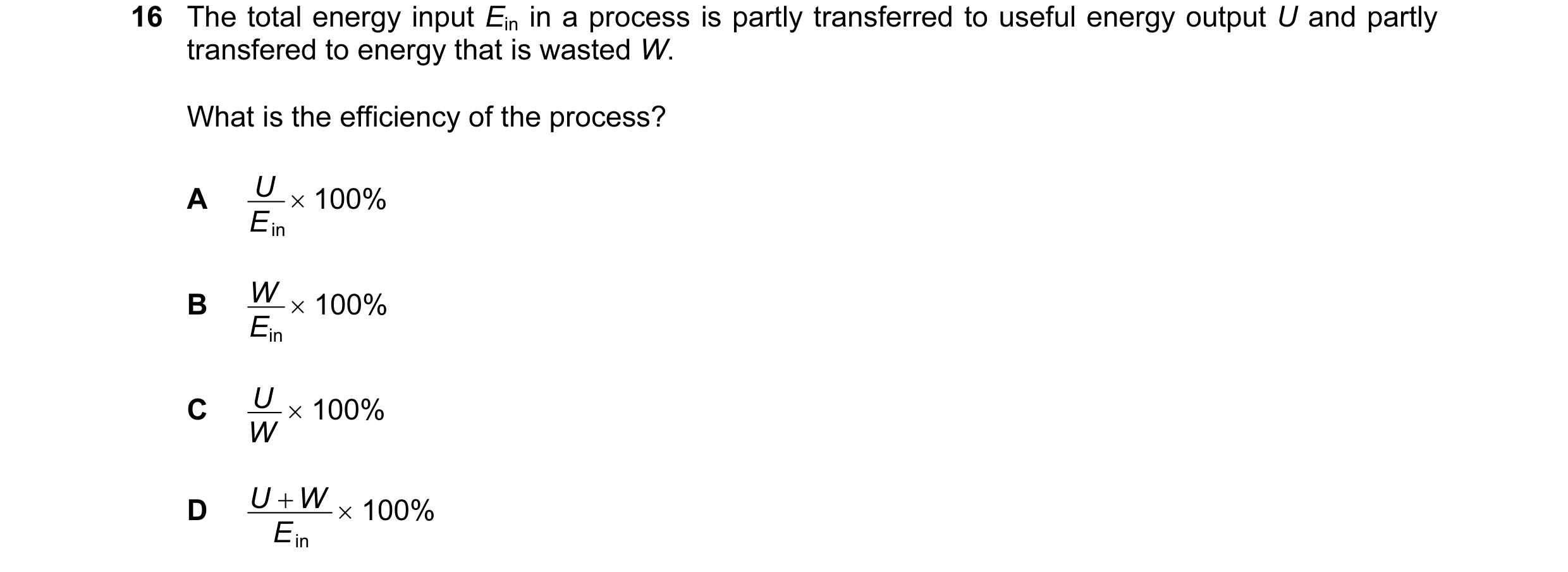
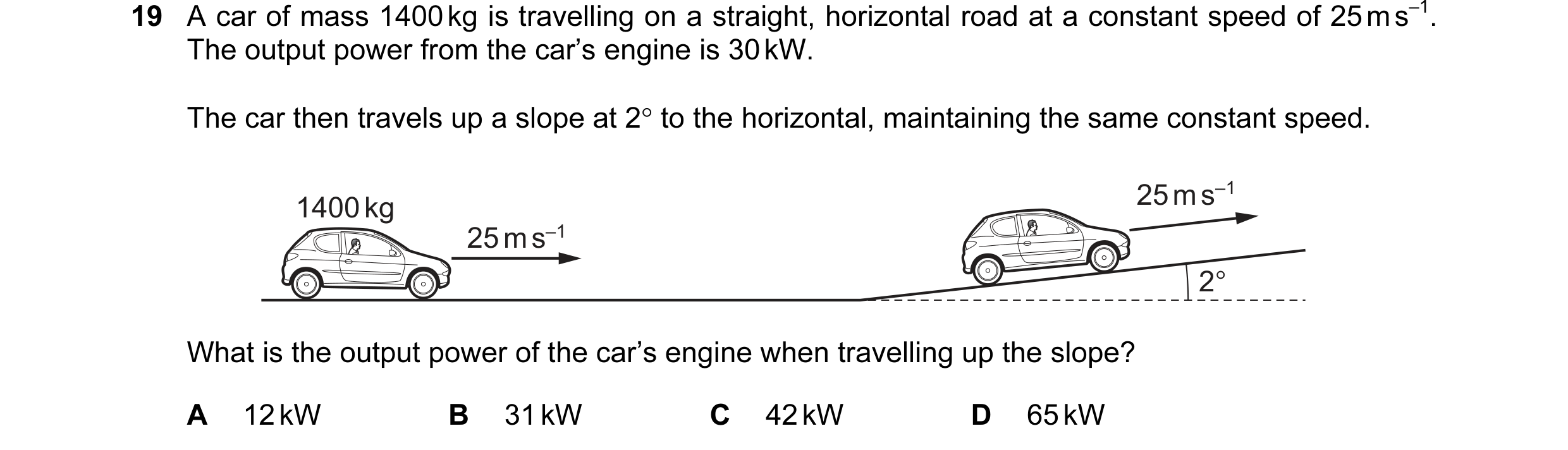
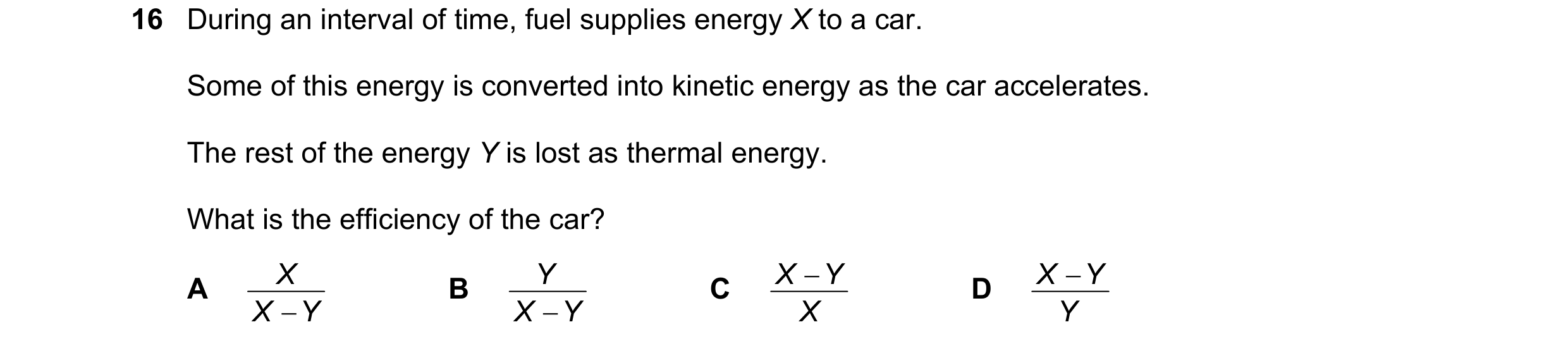
 35 / 77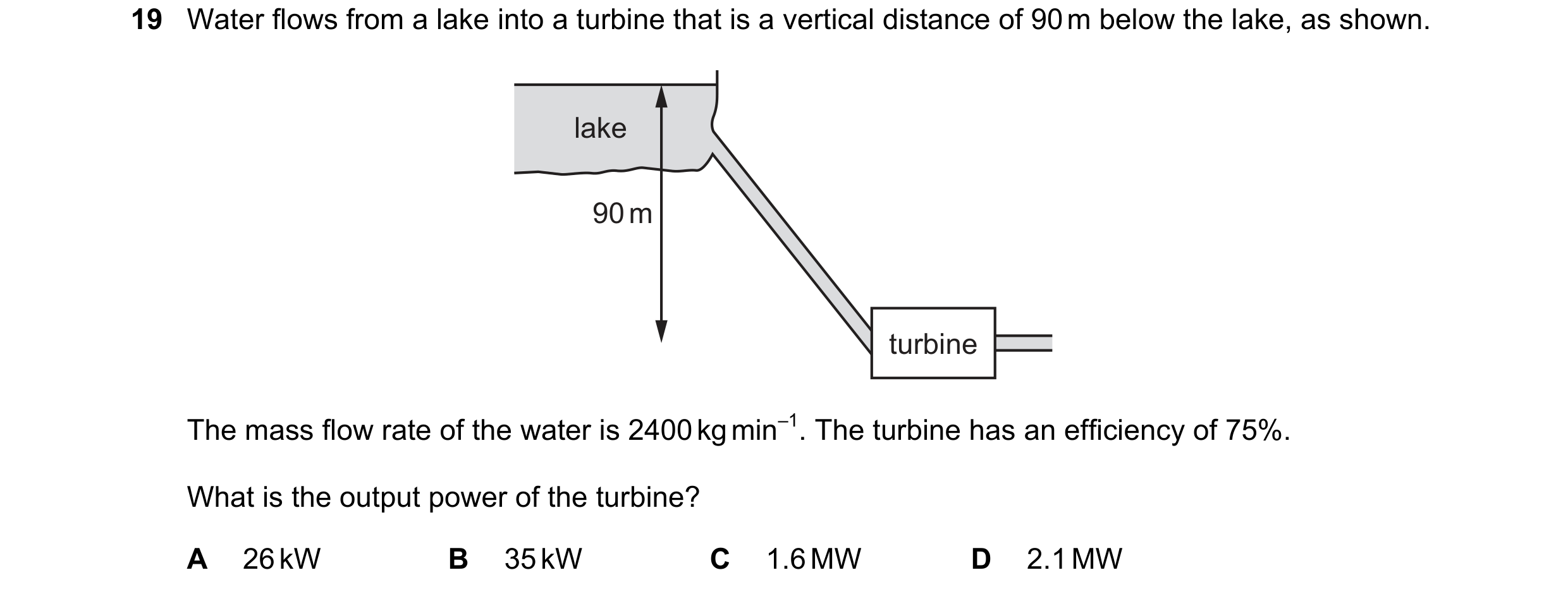
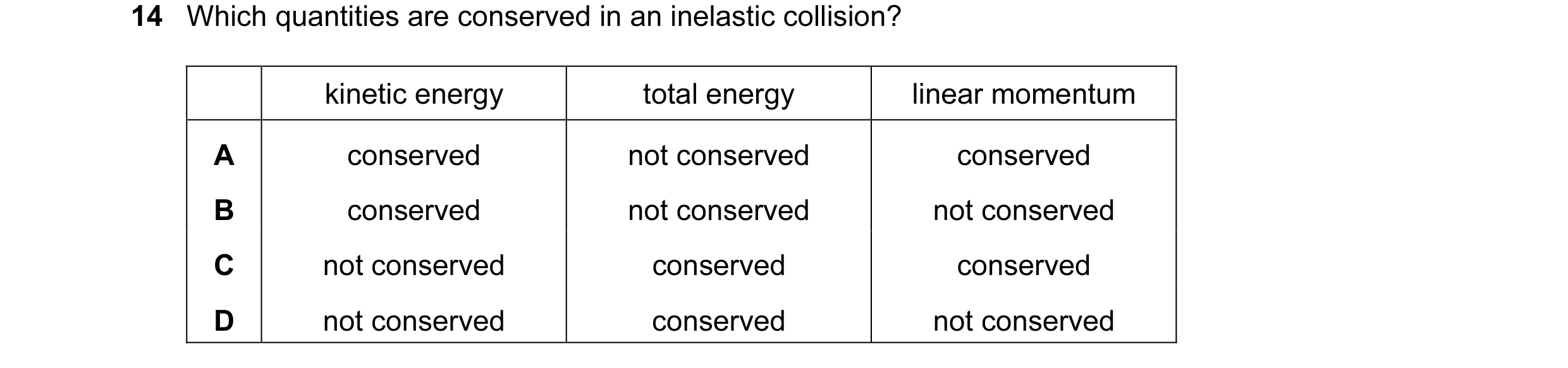

 36 / 77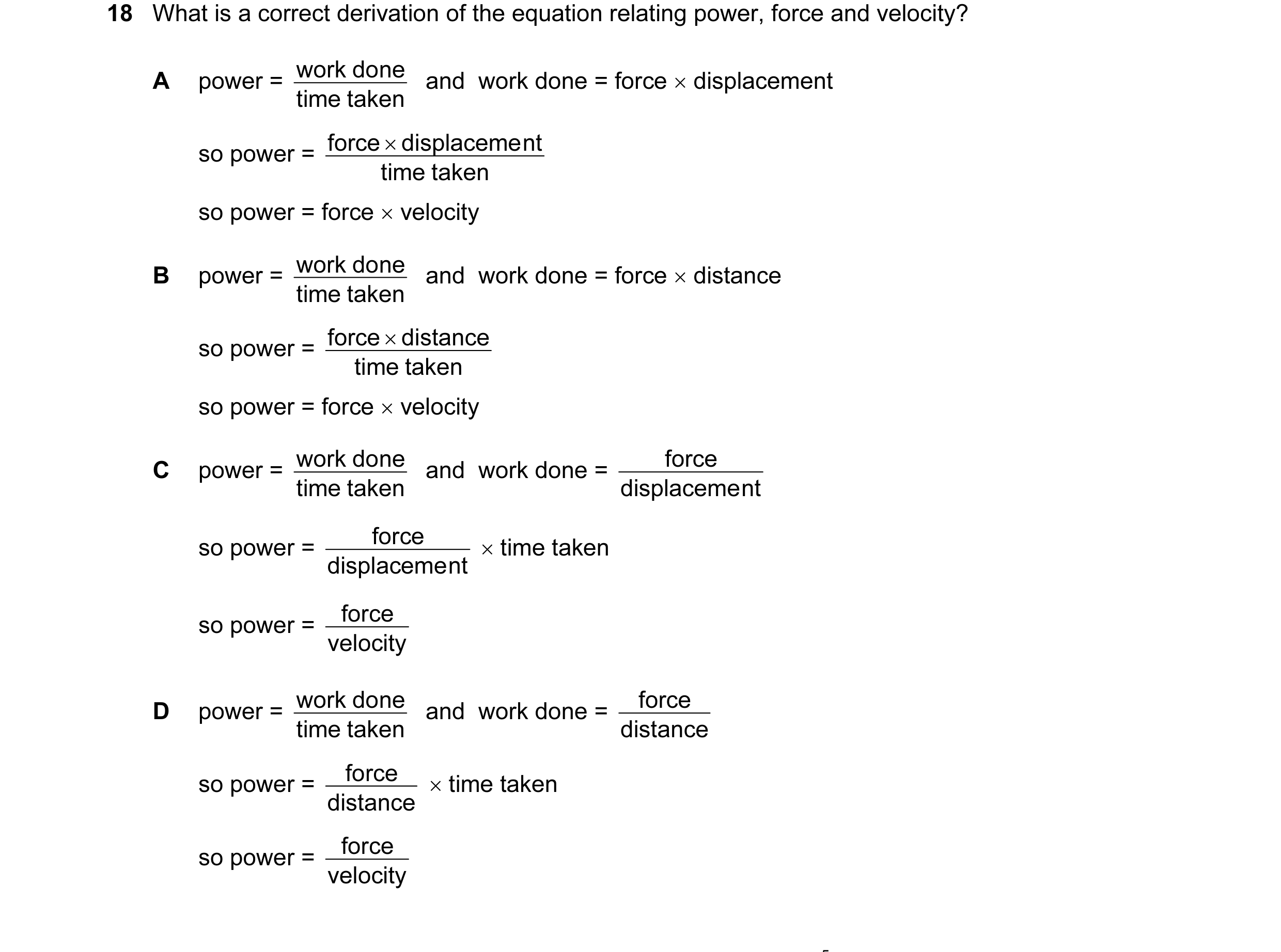
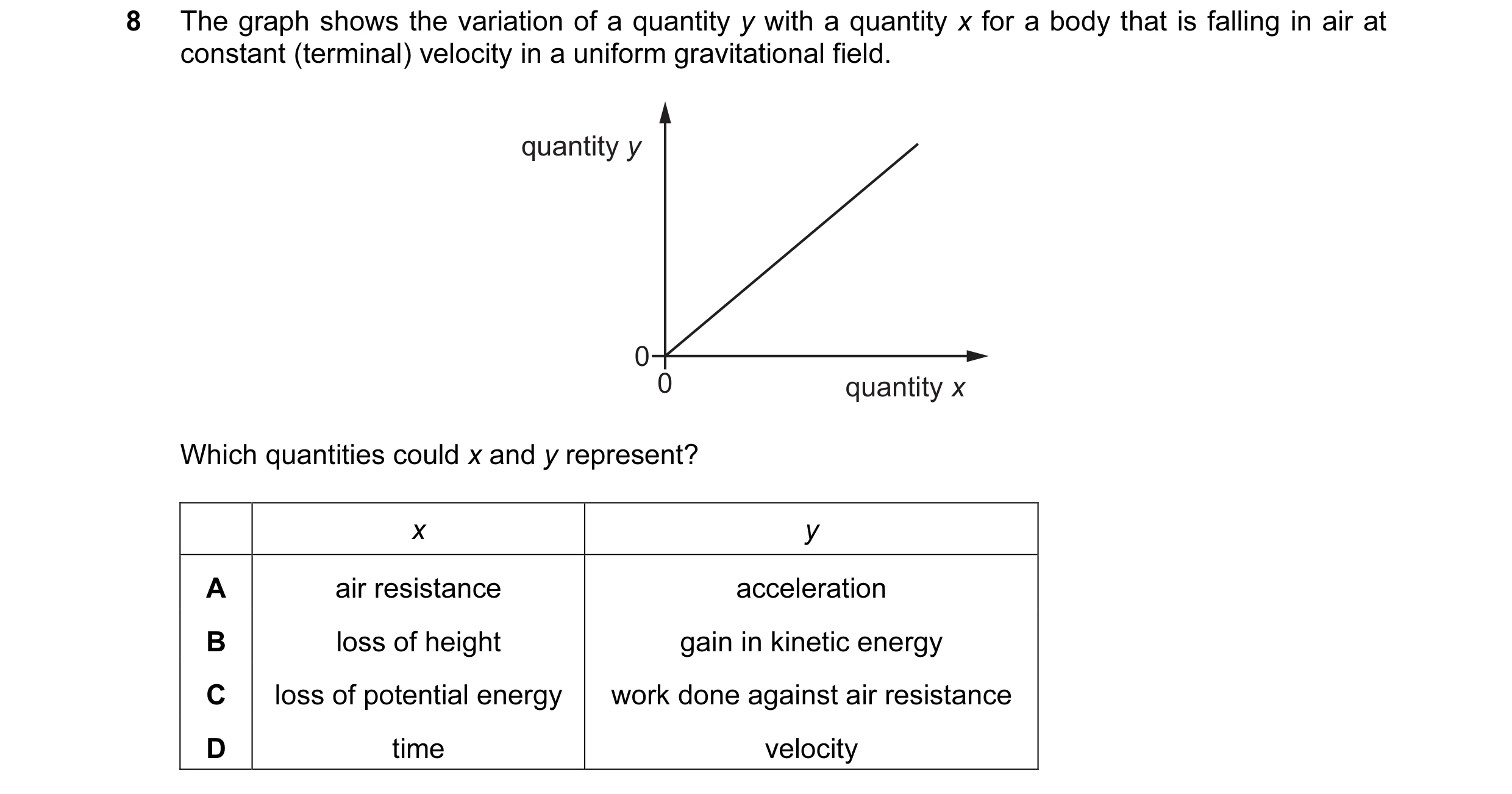 37 / 77
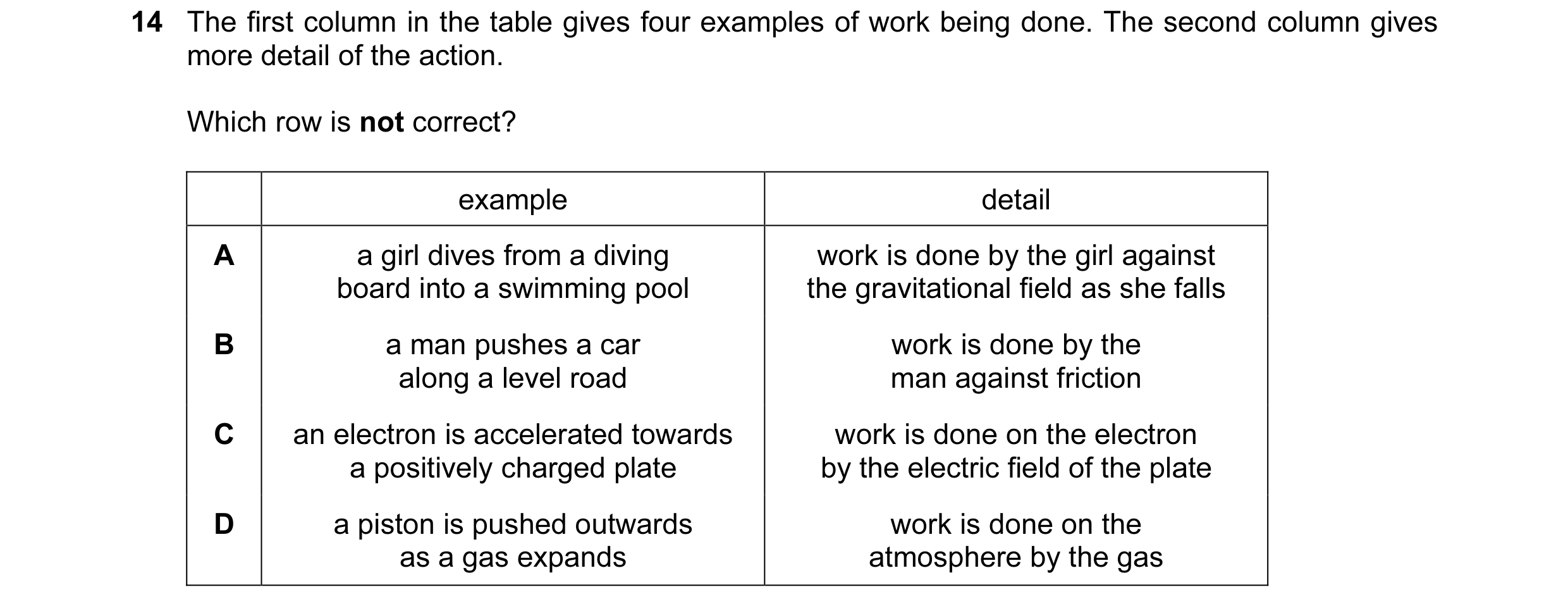
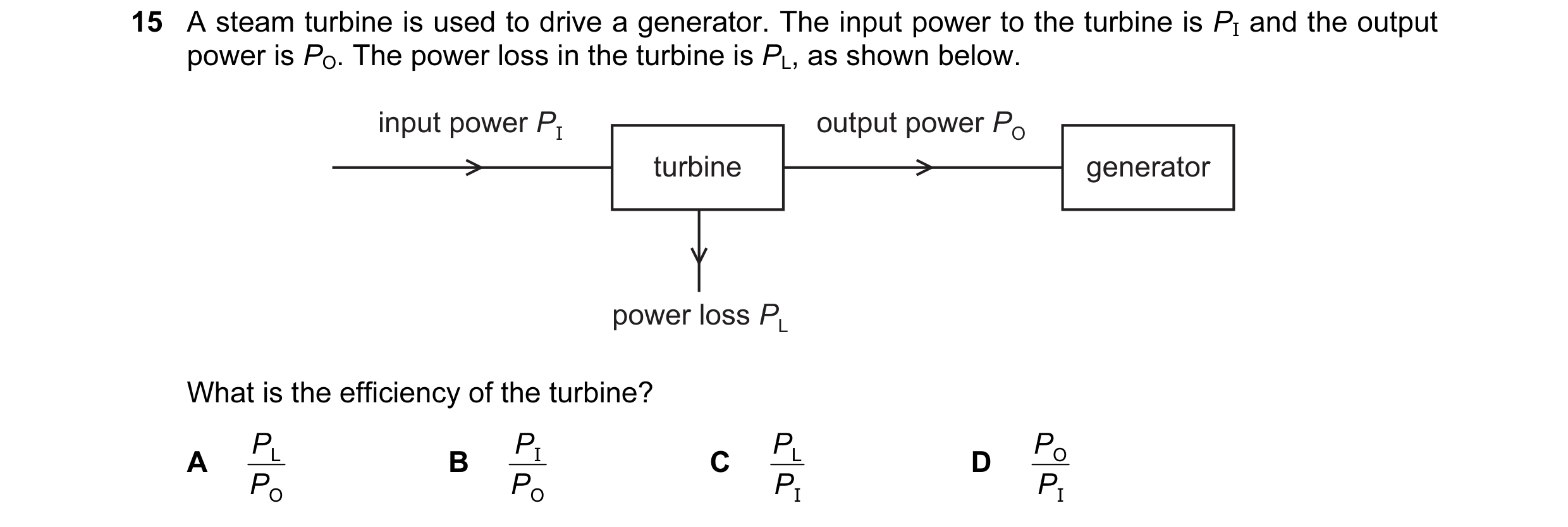

 38 / 77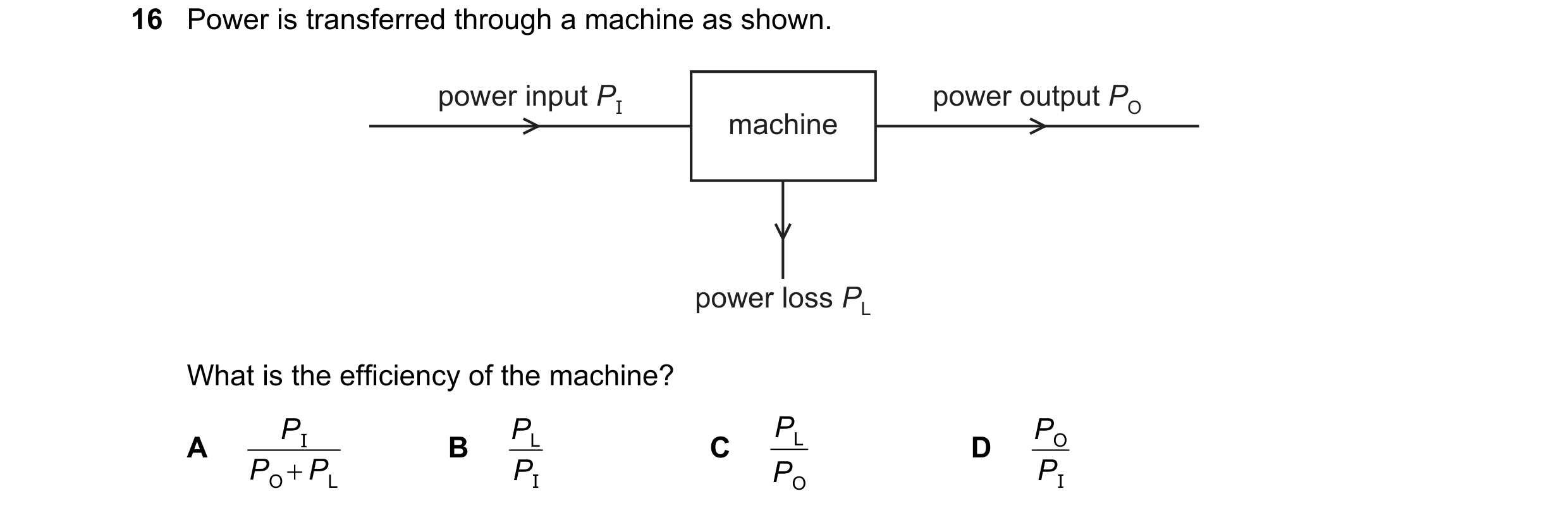


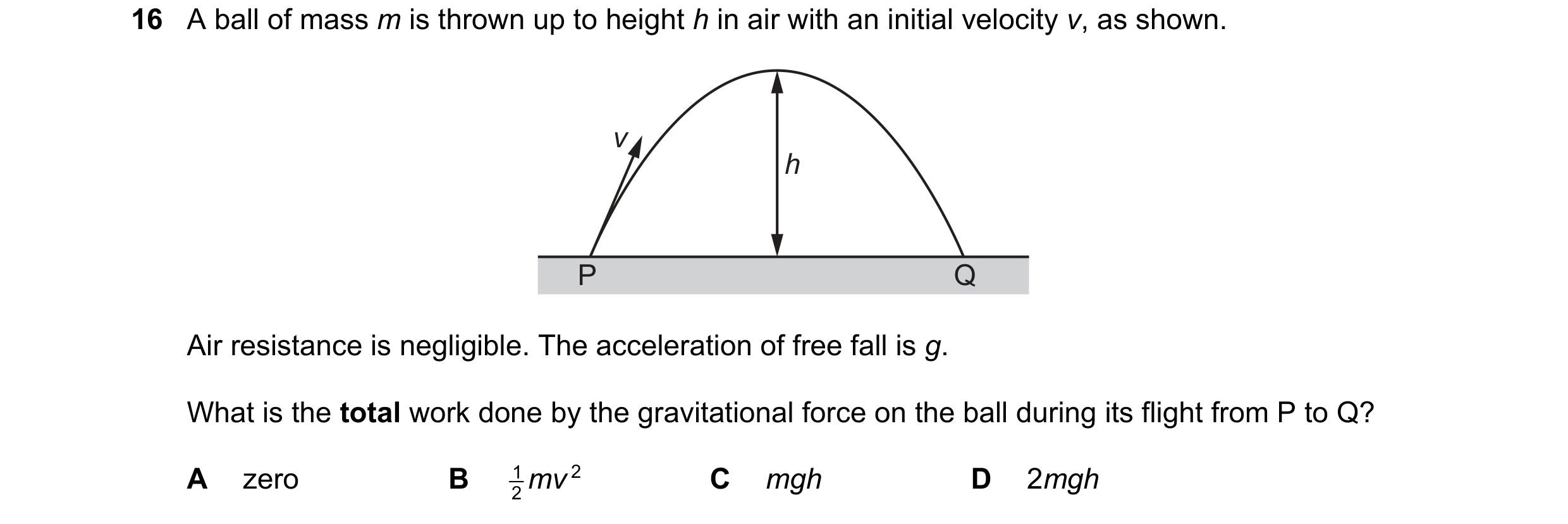 39 / 77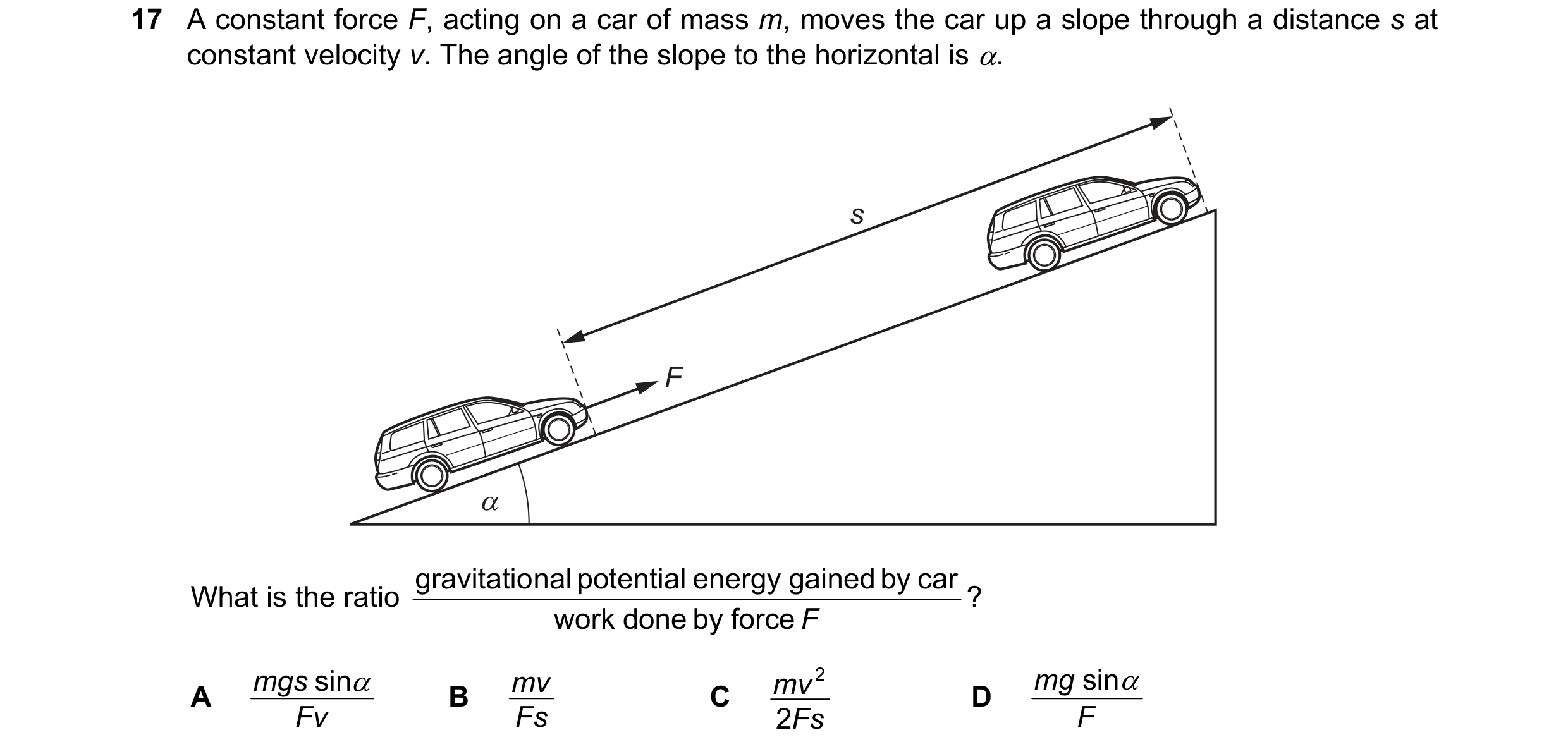
 40 / 77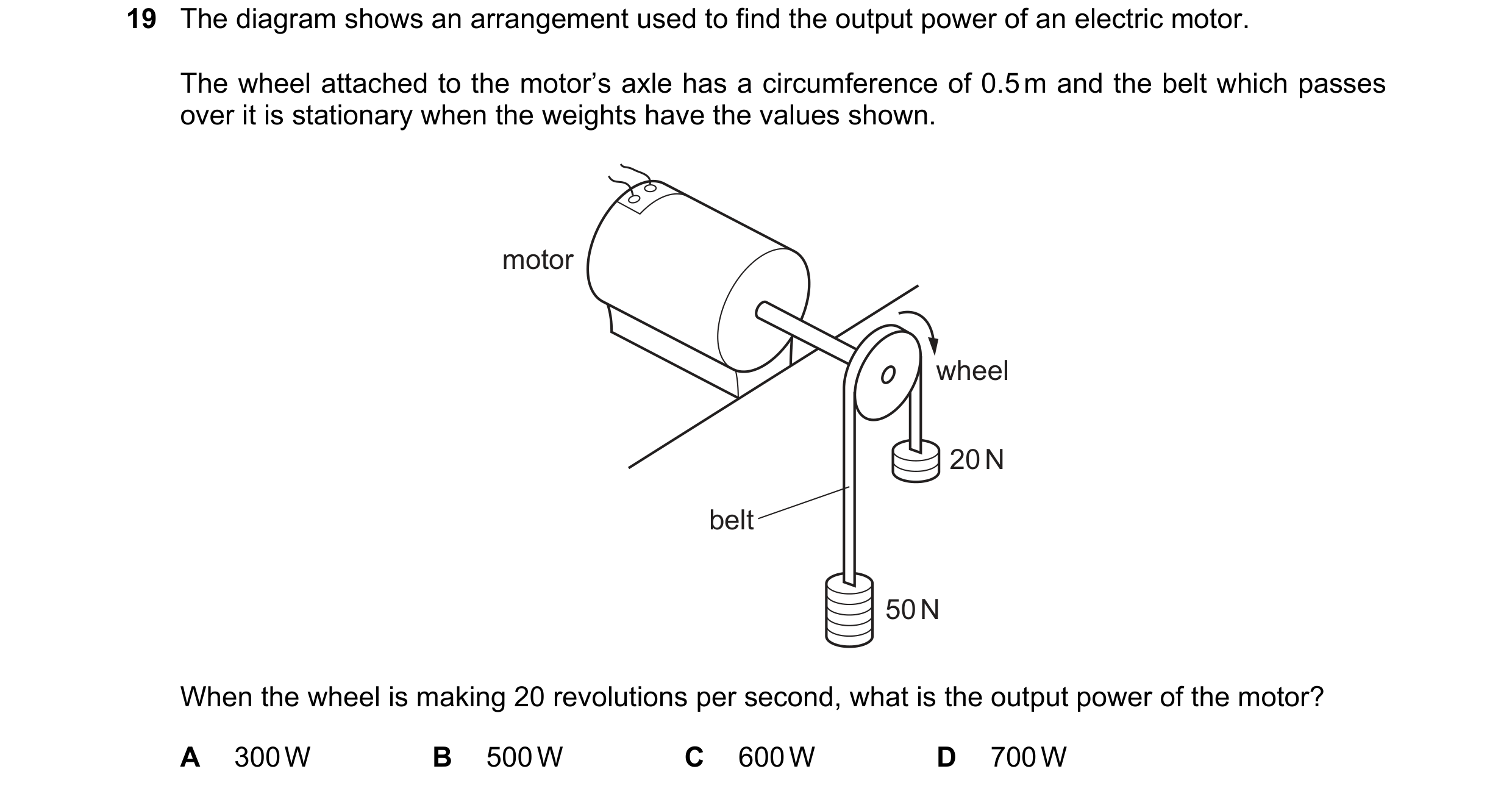
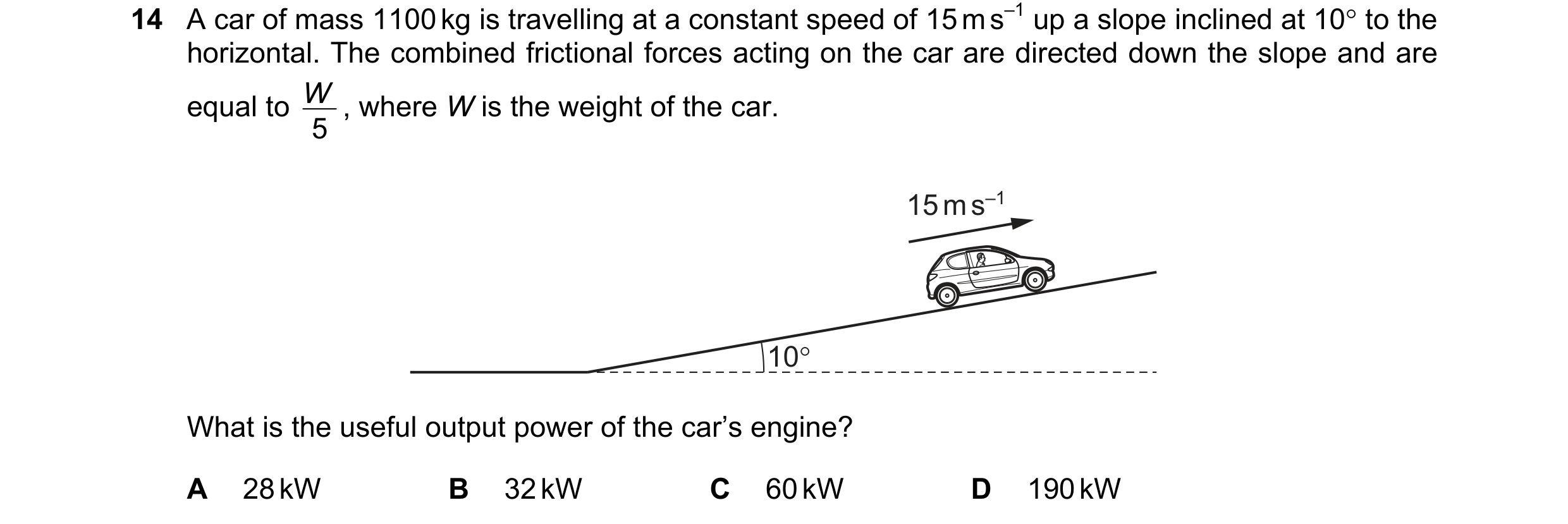

 41 / 77
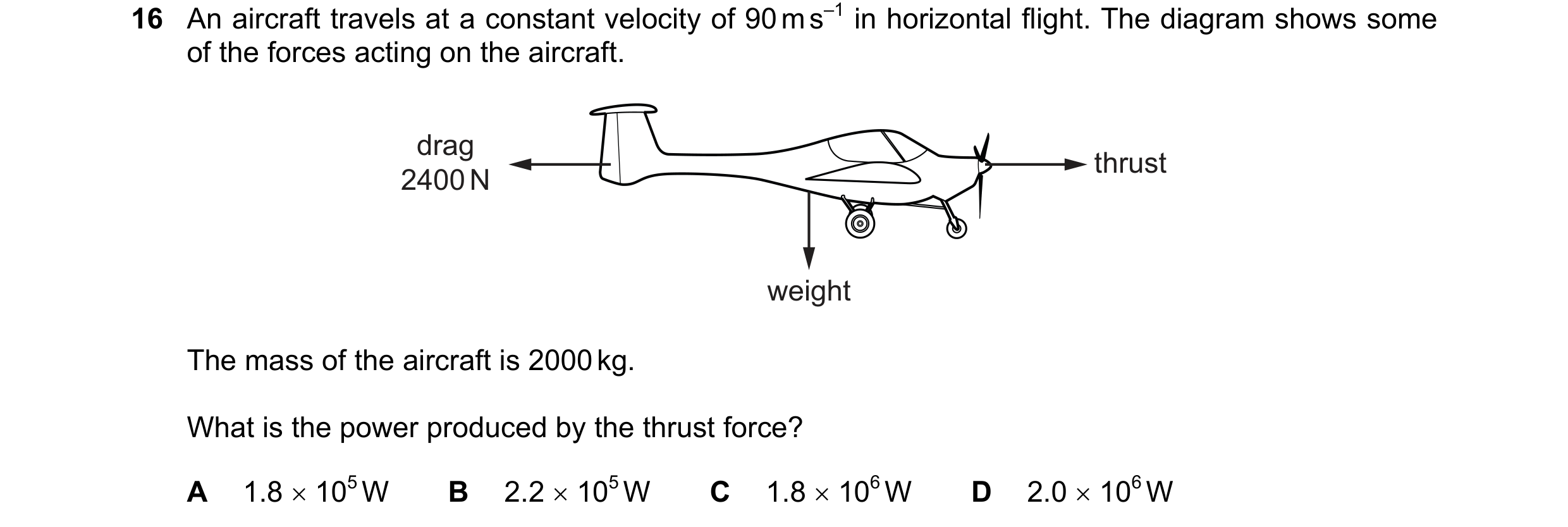
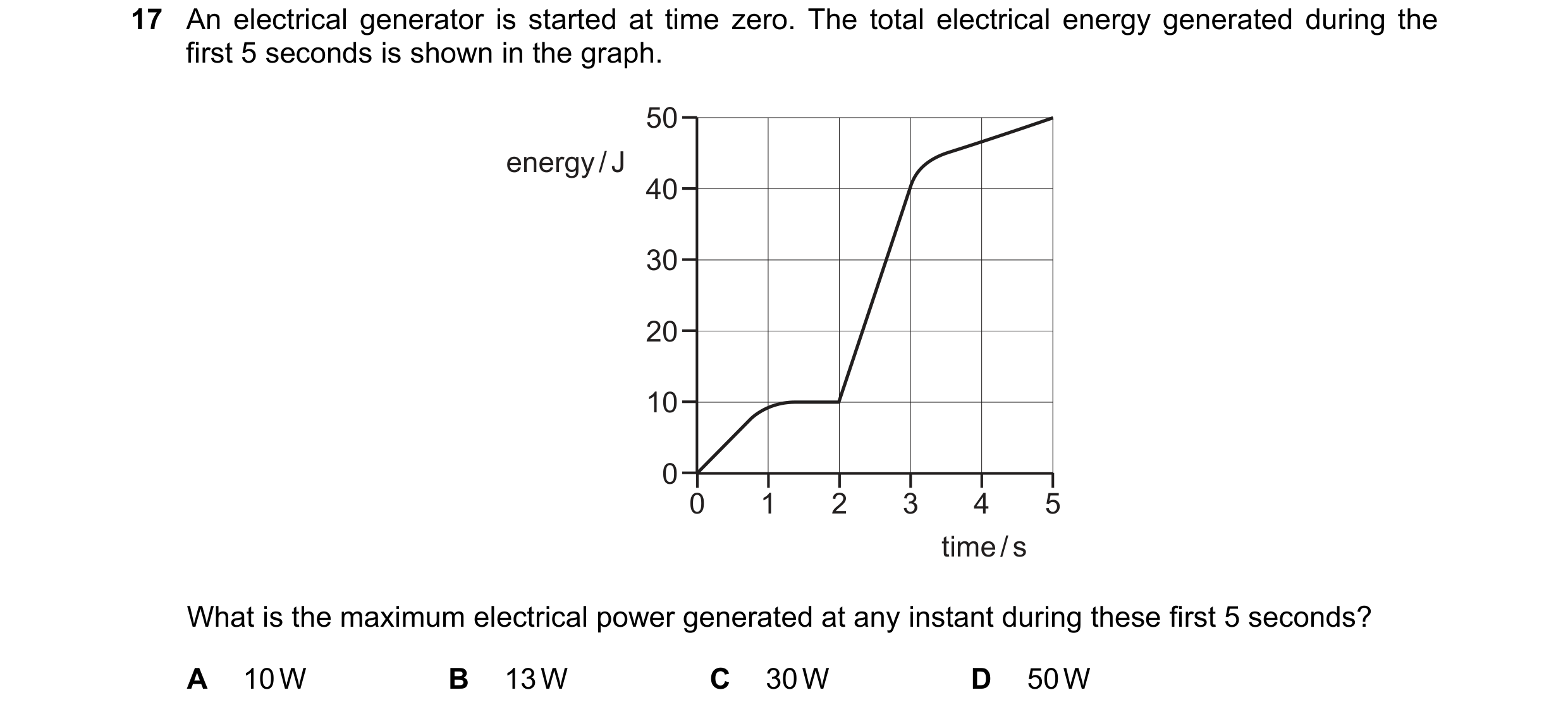 42 / 77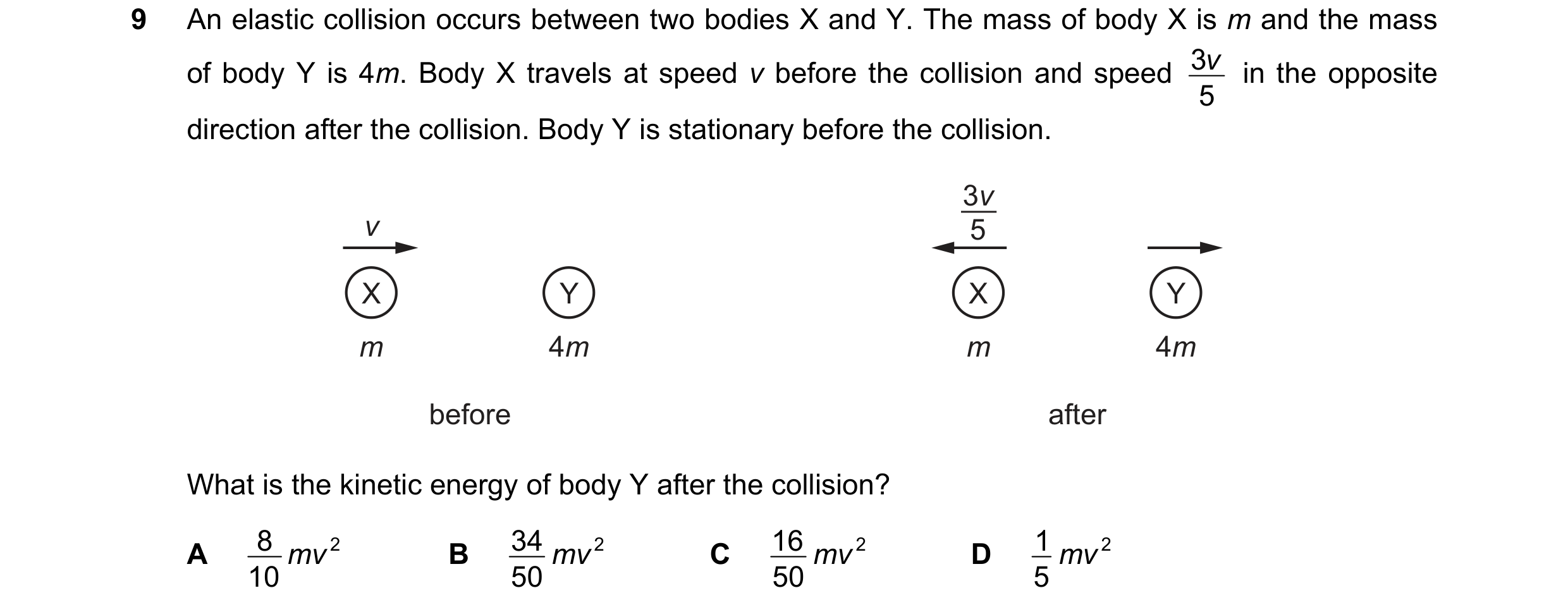
 43 / 77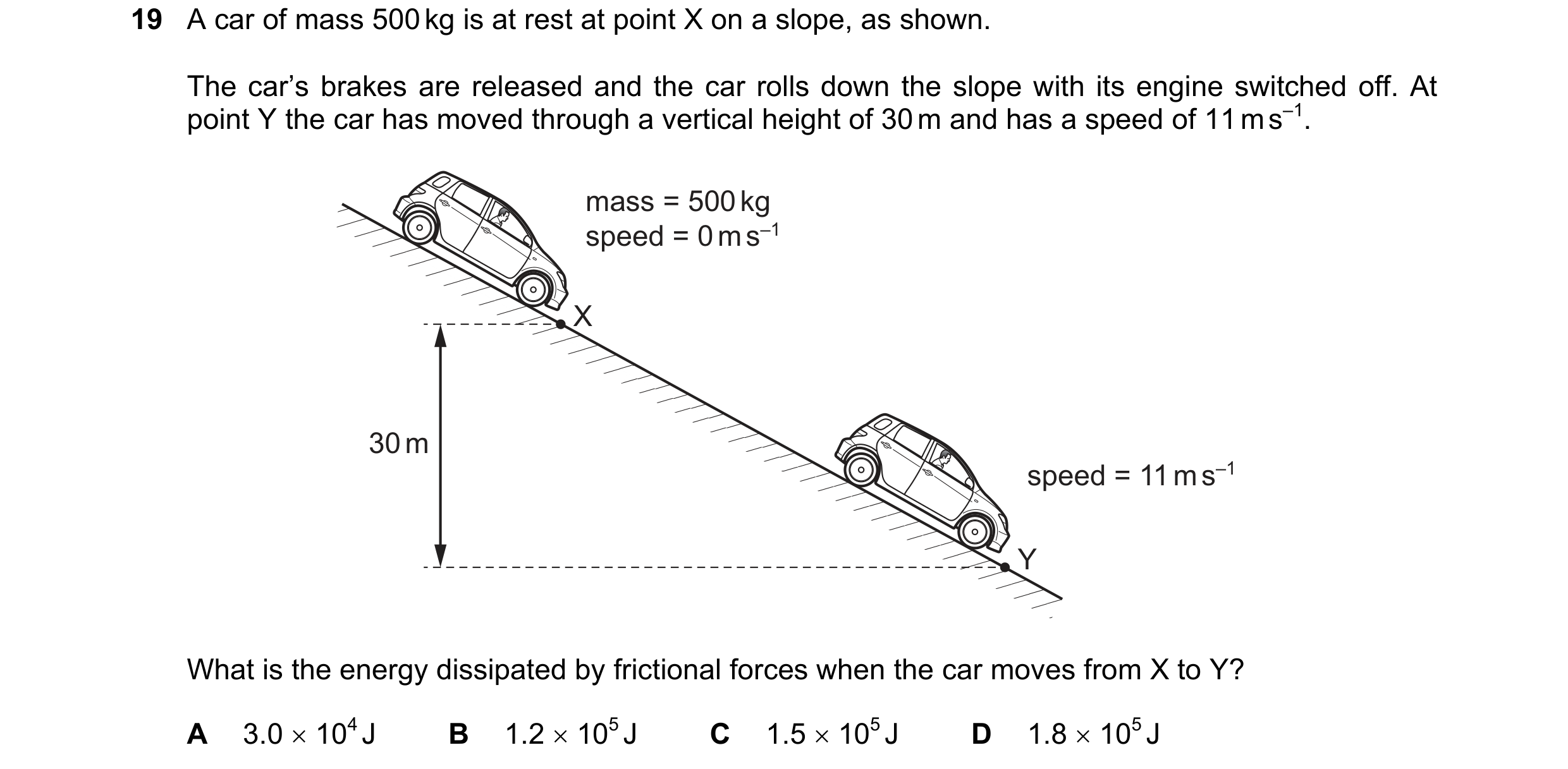
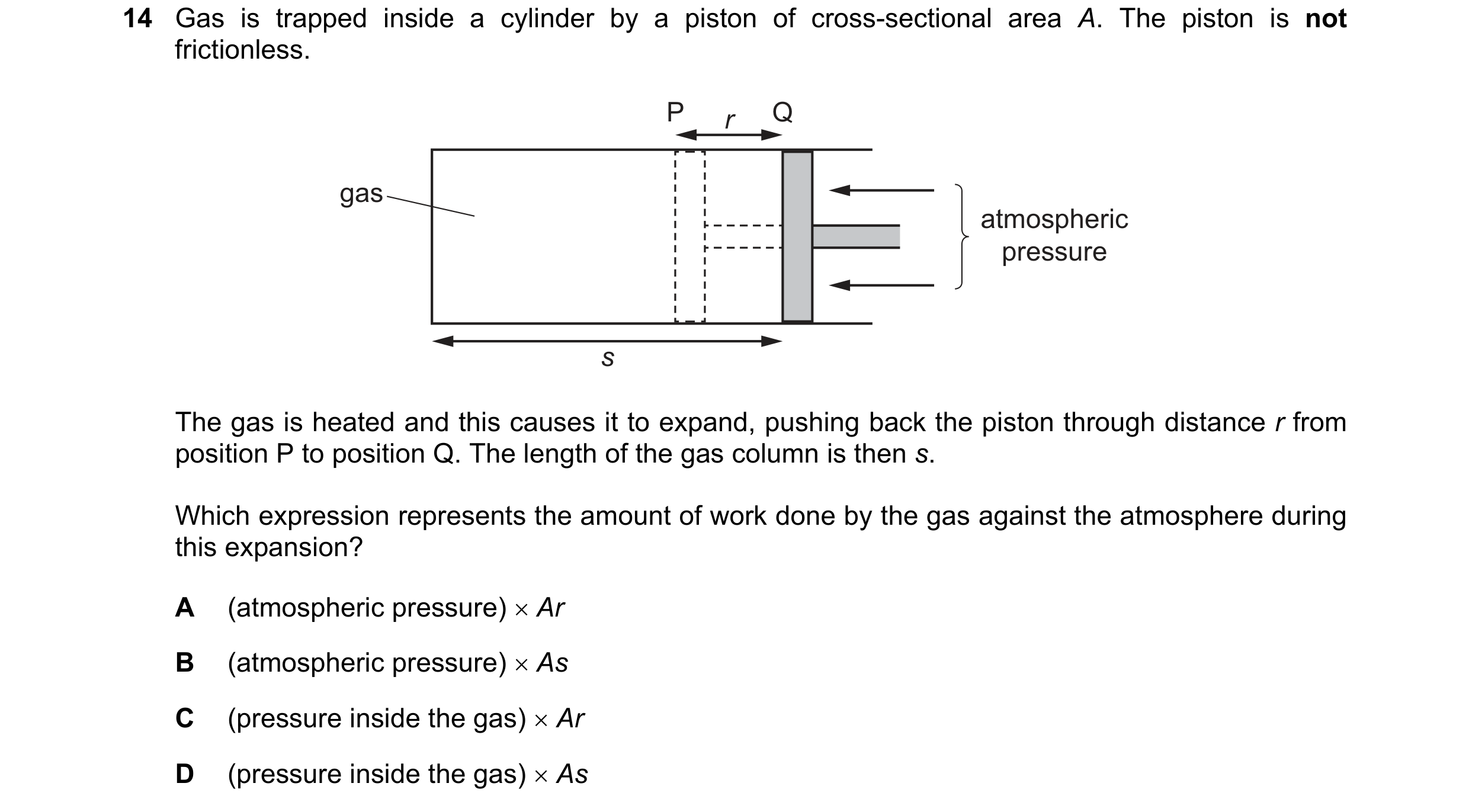
 44 / 77
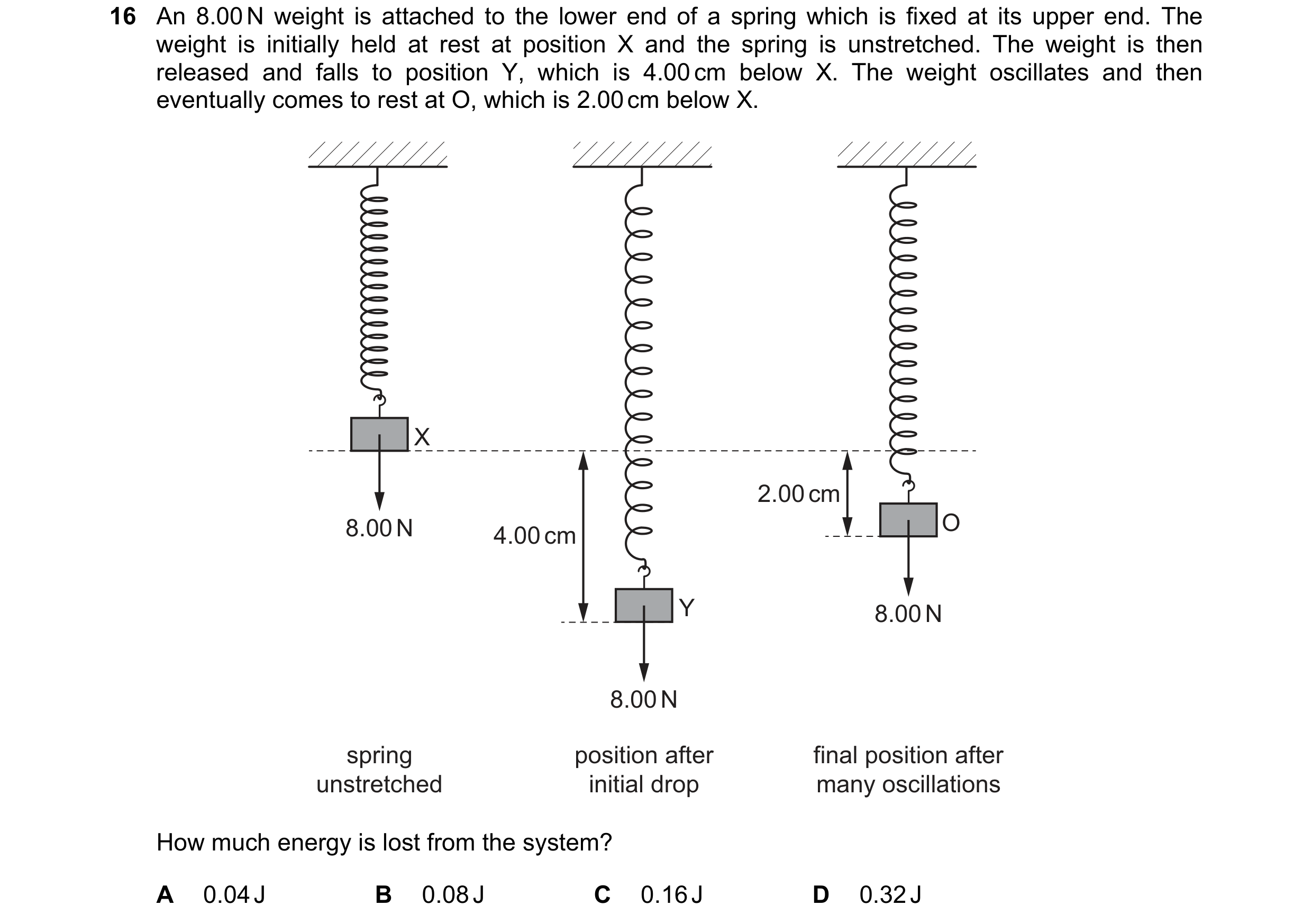
 45 / 77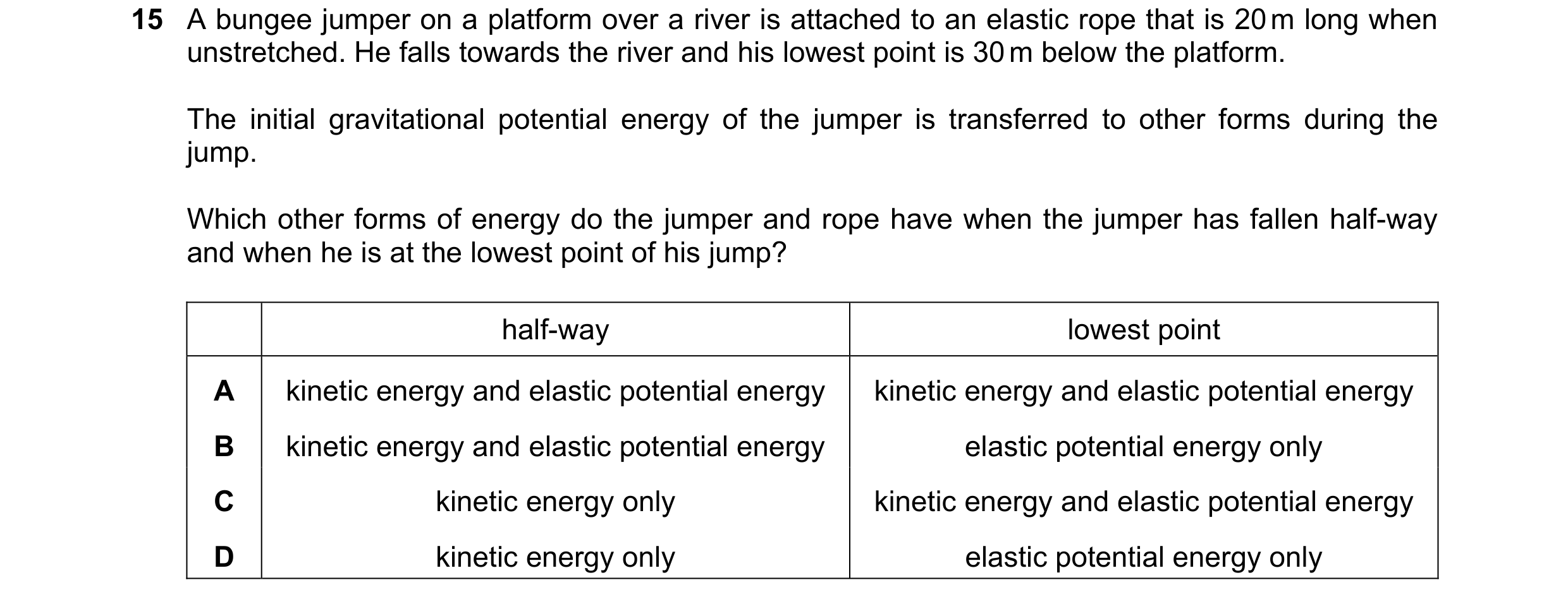

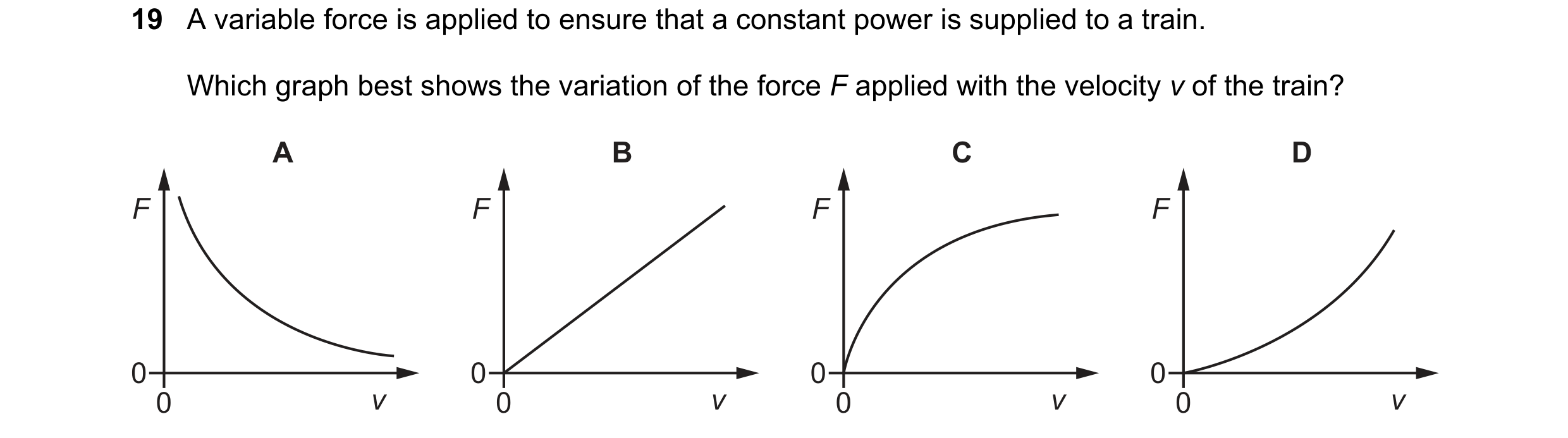


 46 / 77
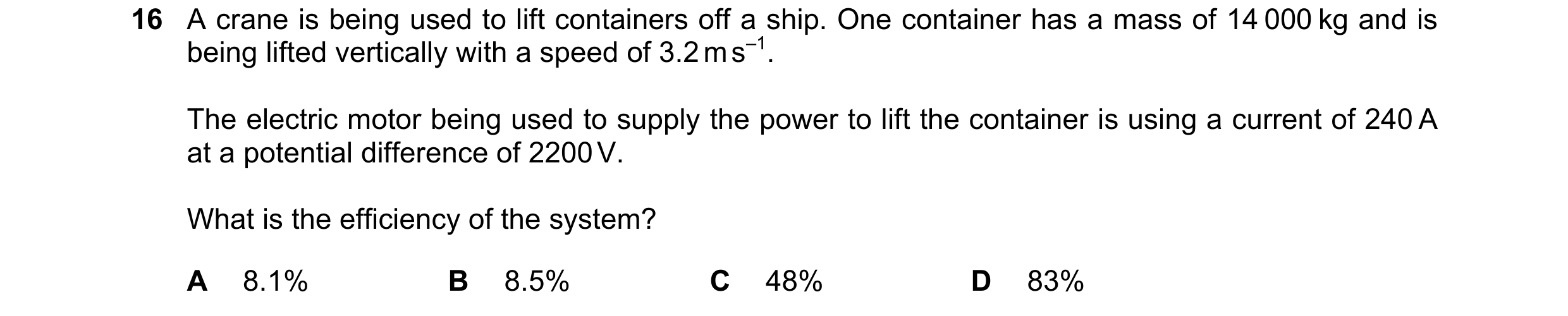
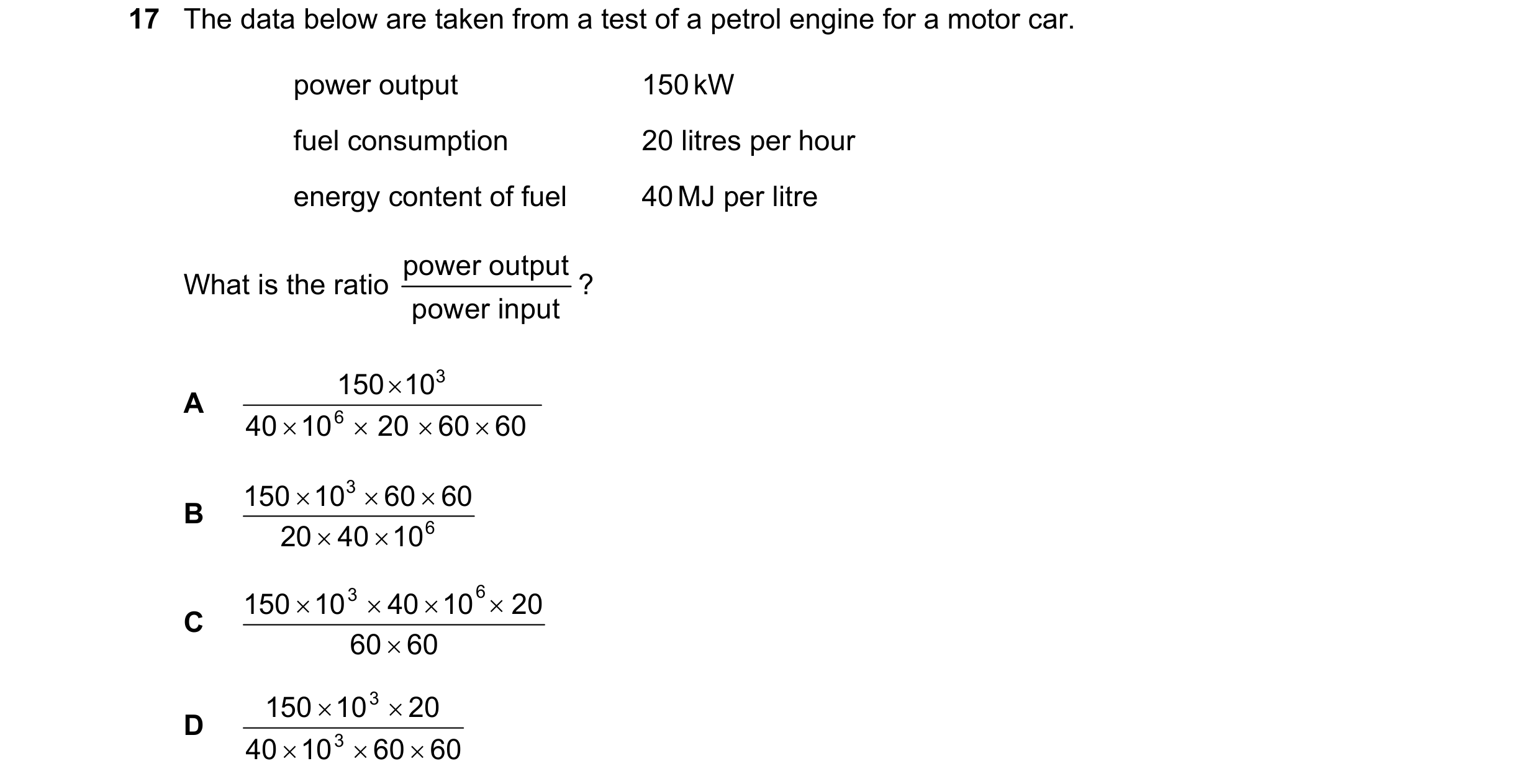
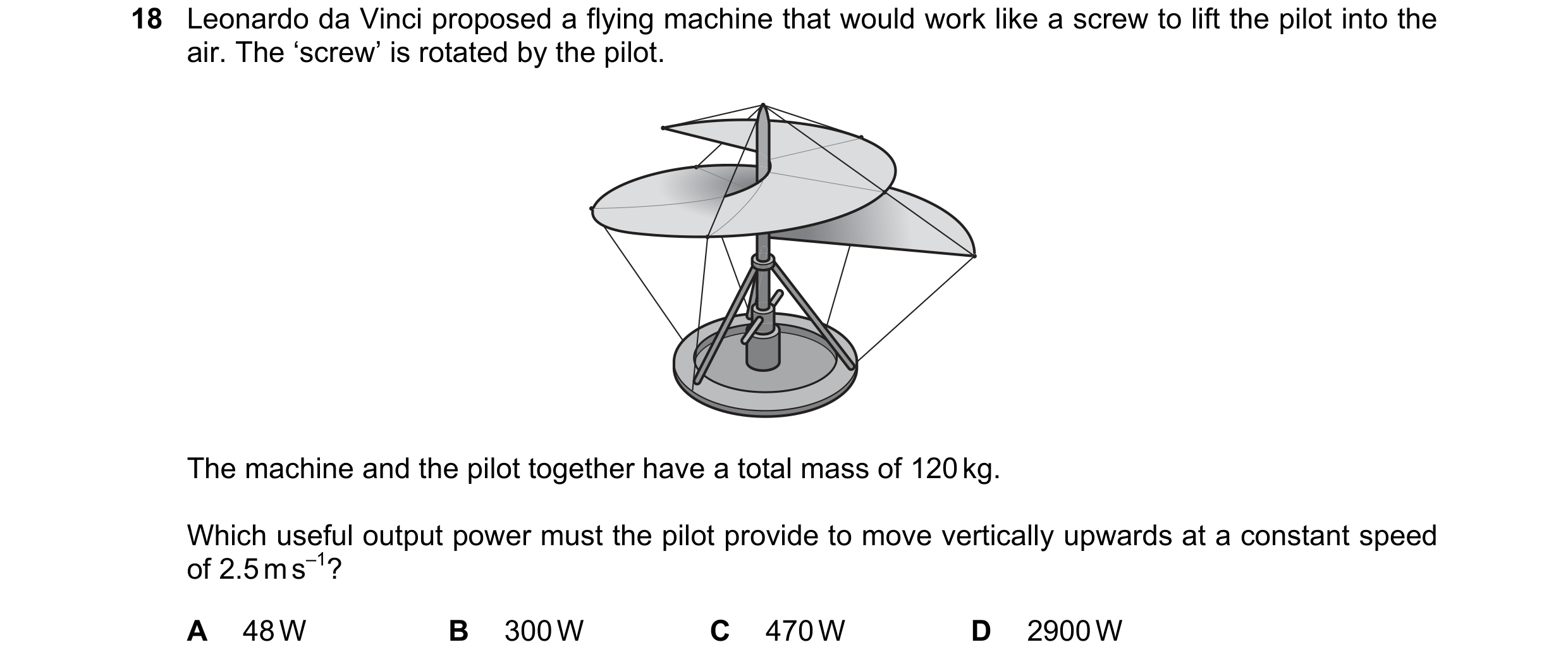 47 / 77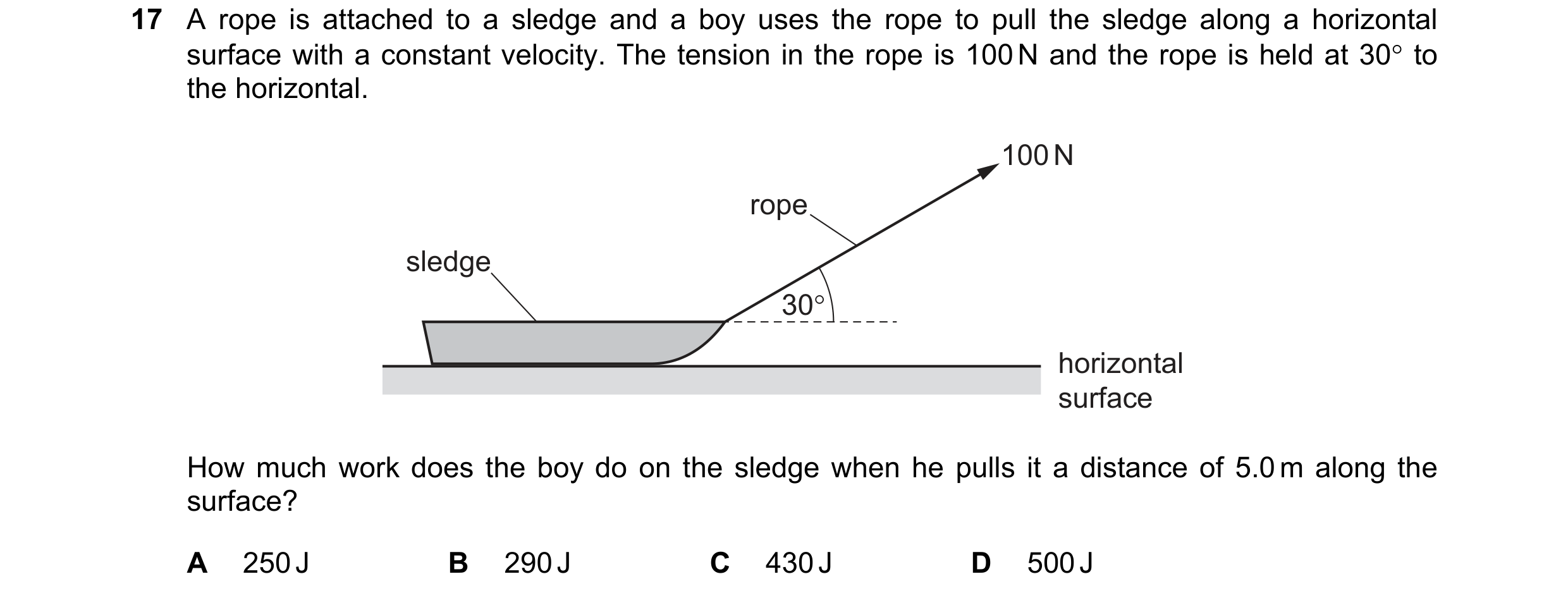

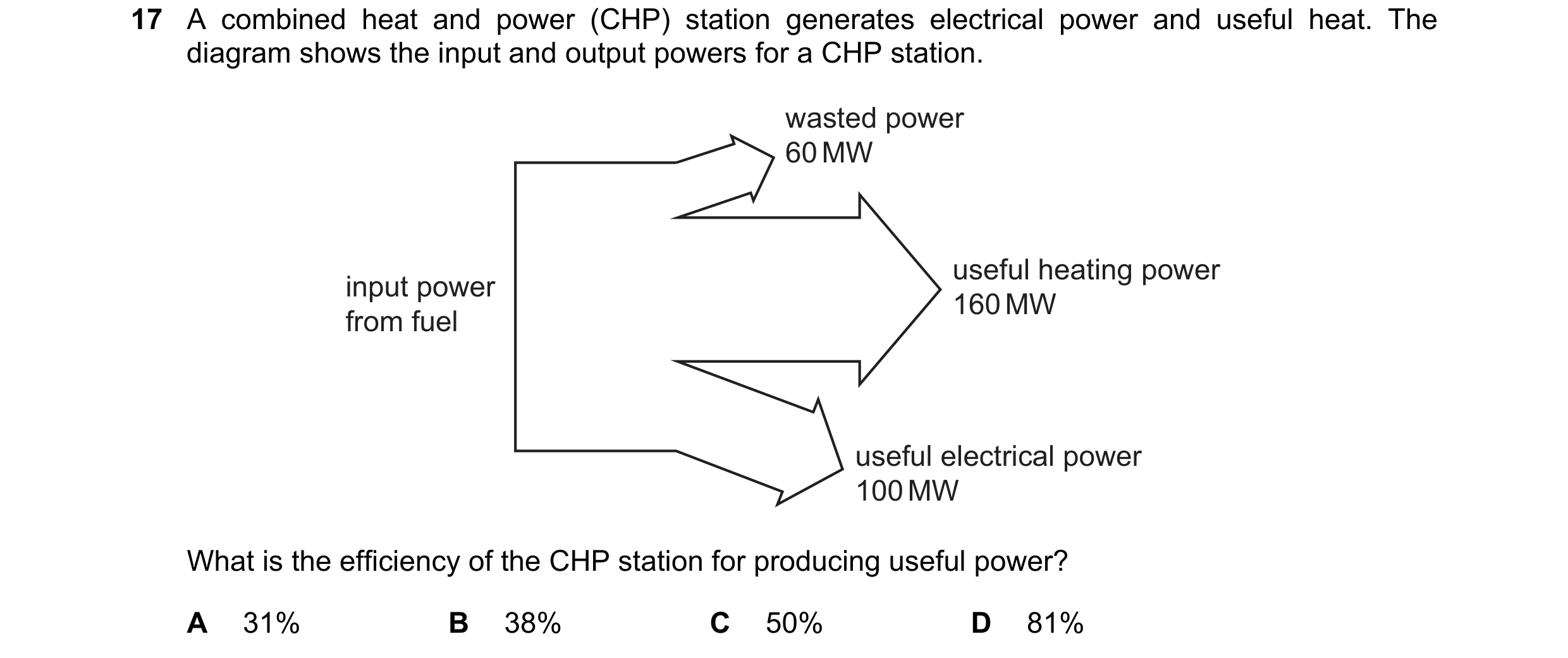 48 / 77

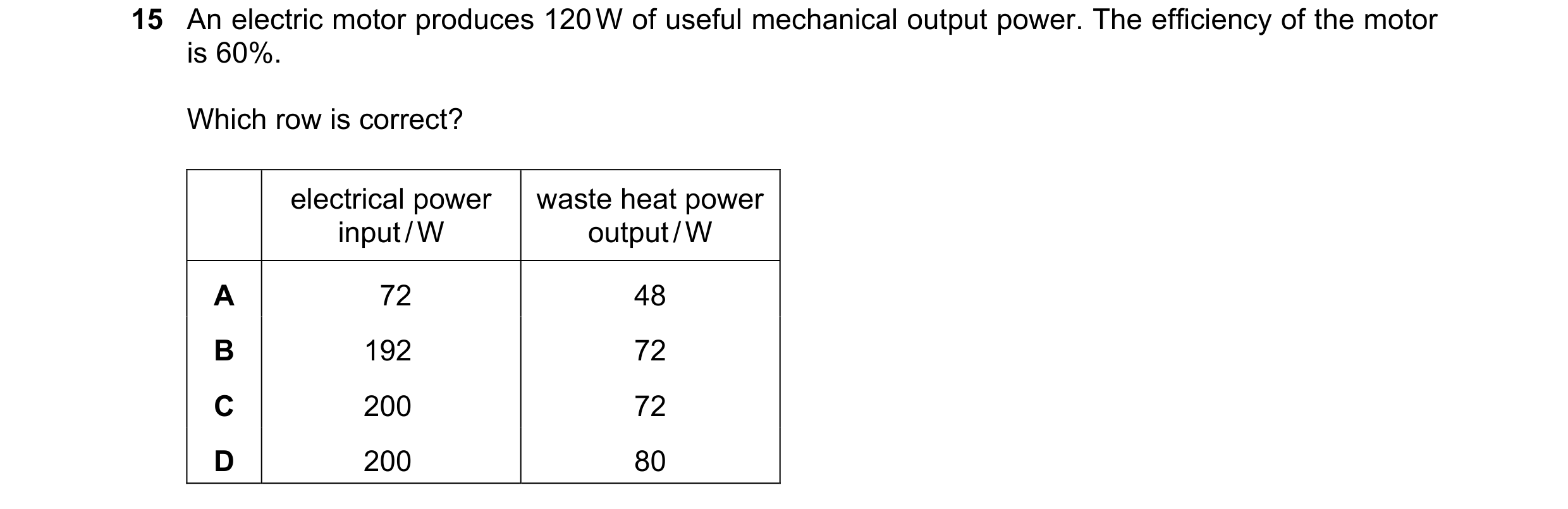

 49 / 77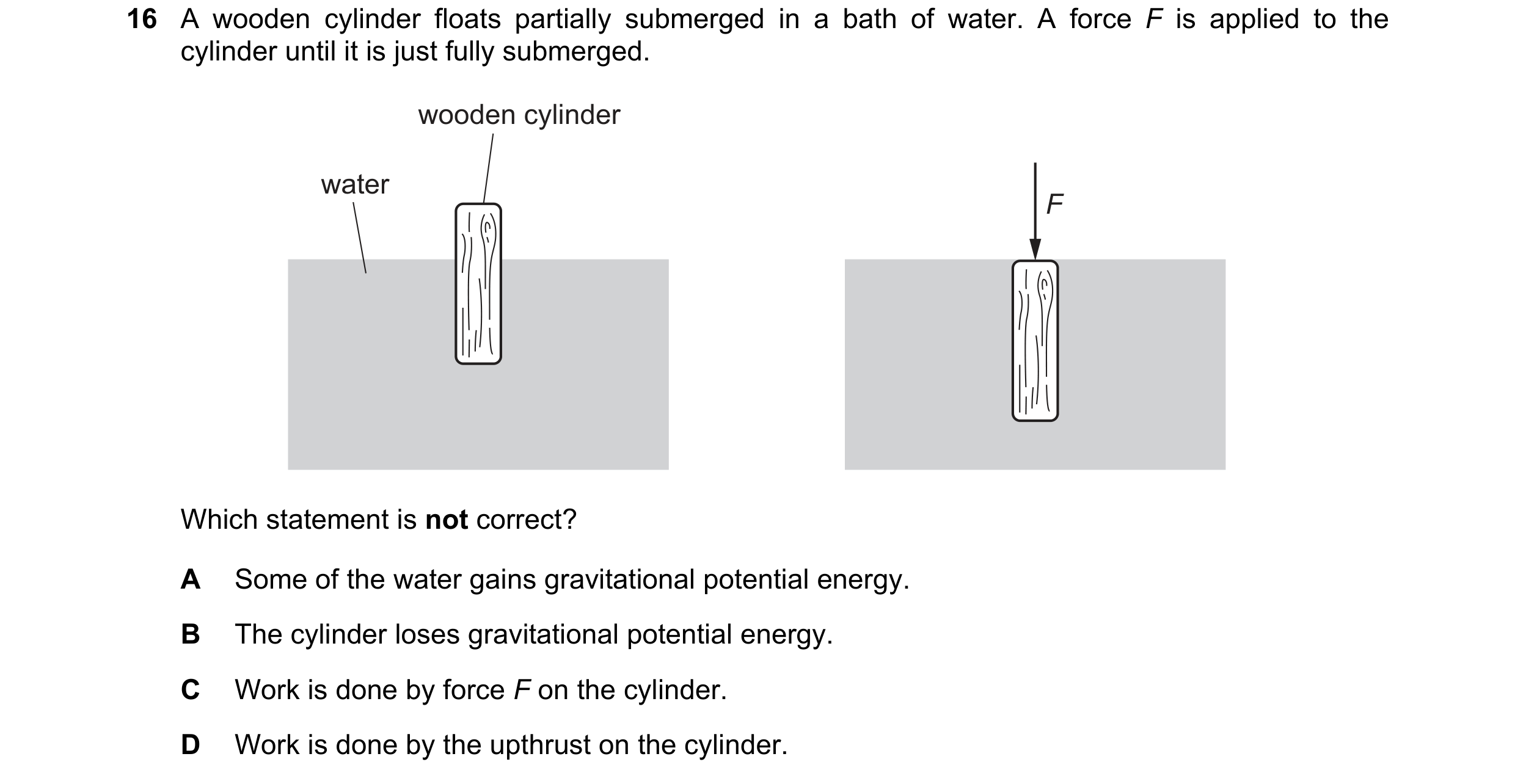
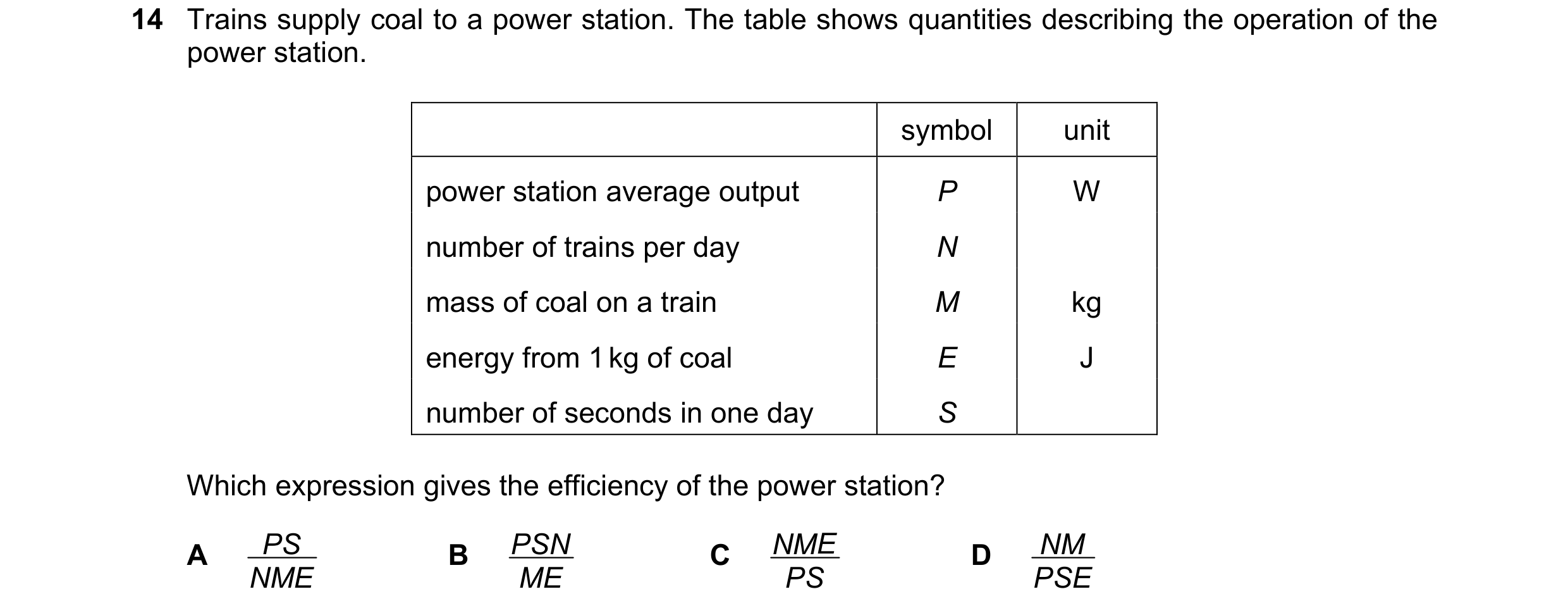

 50 / 77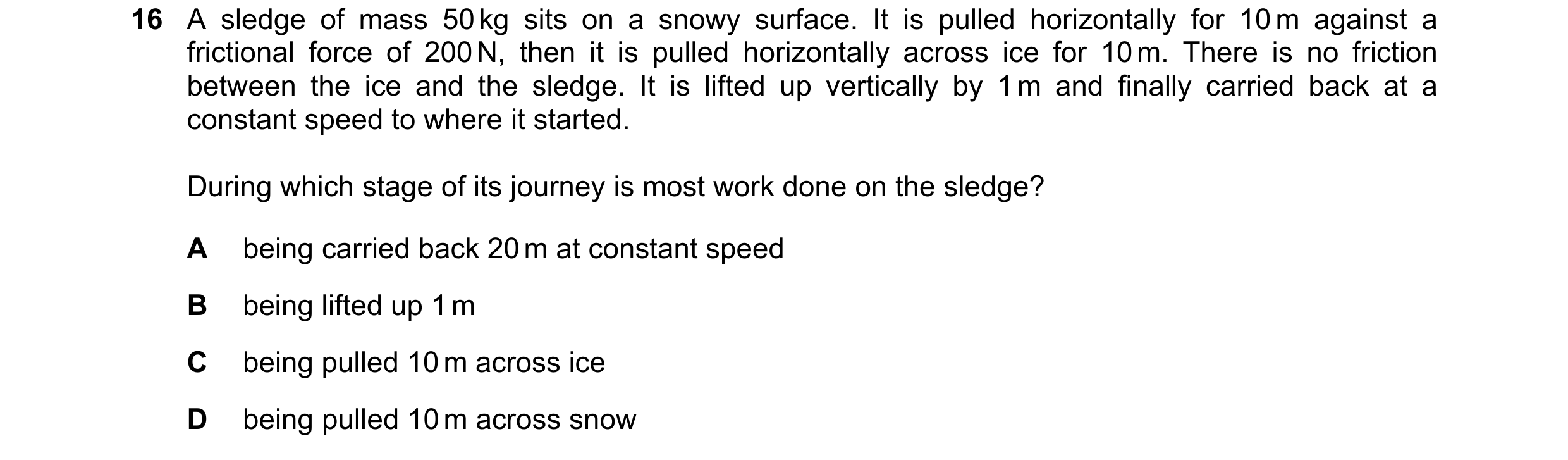

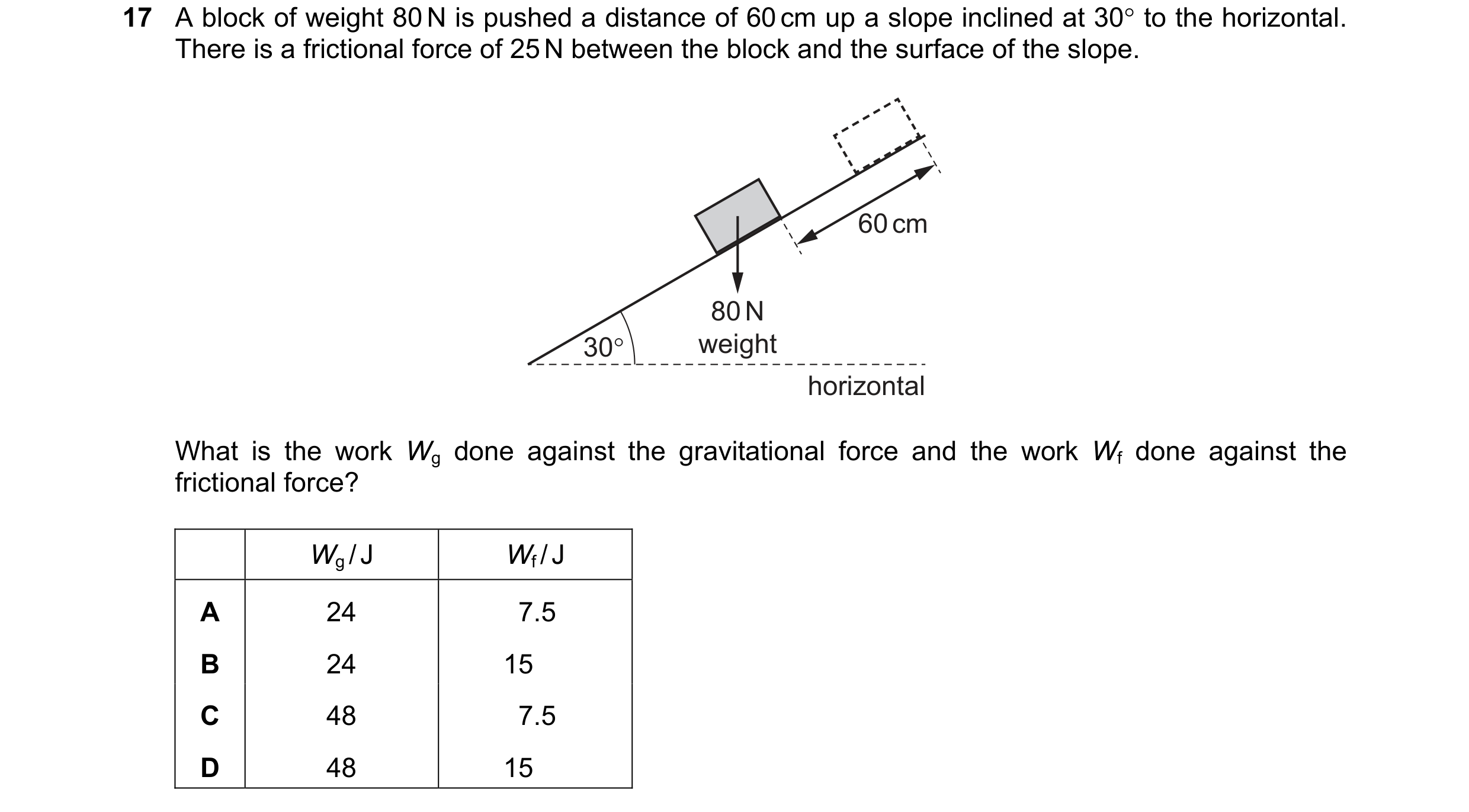
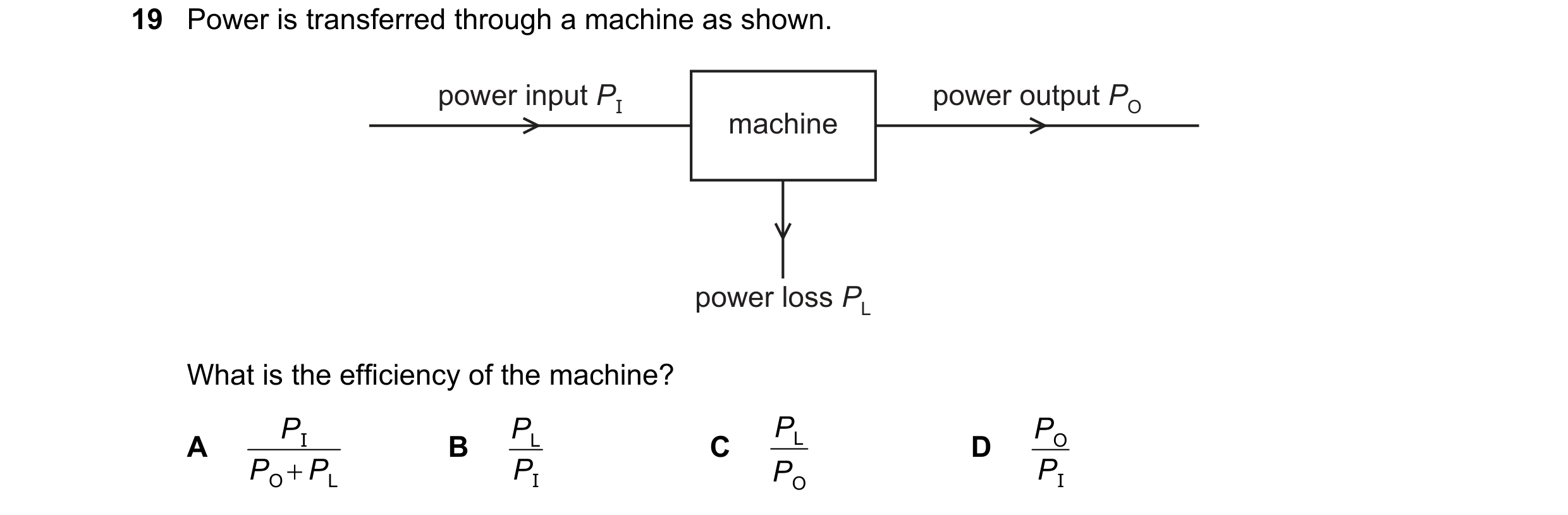 51 / 77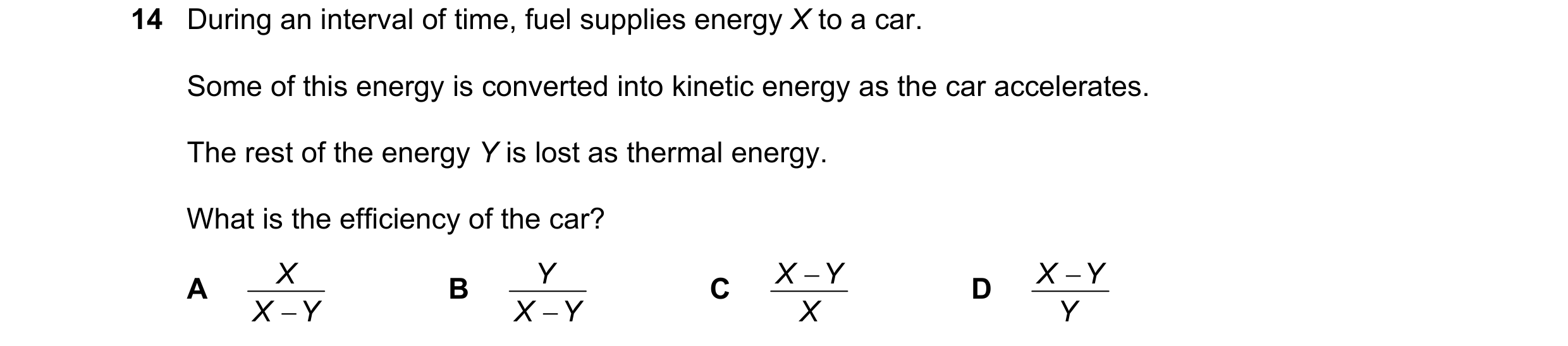


 52 / 77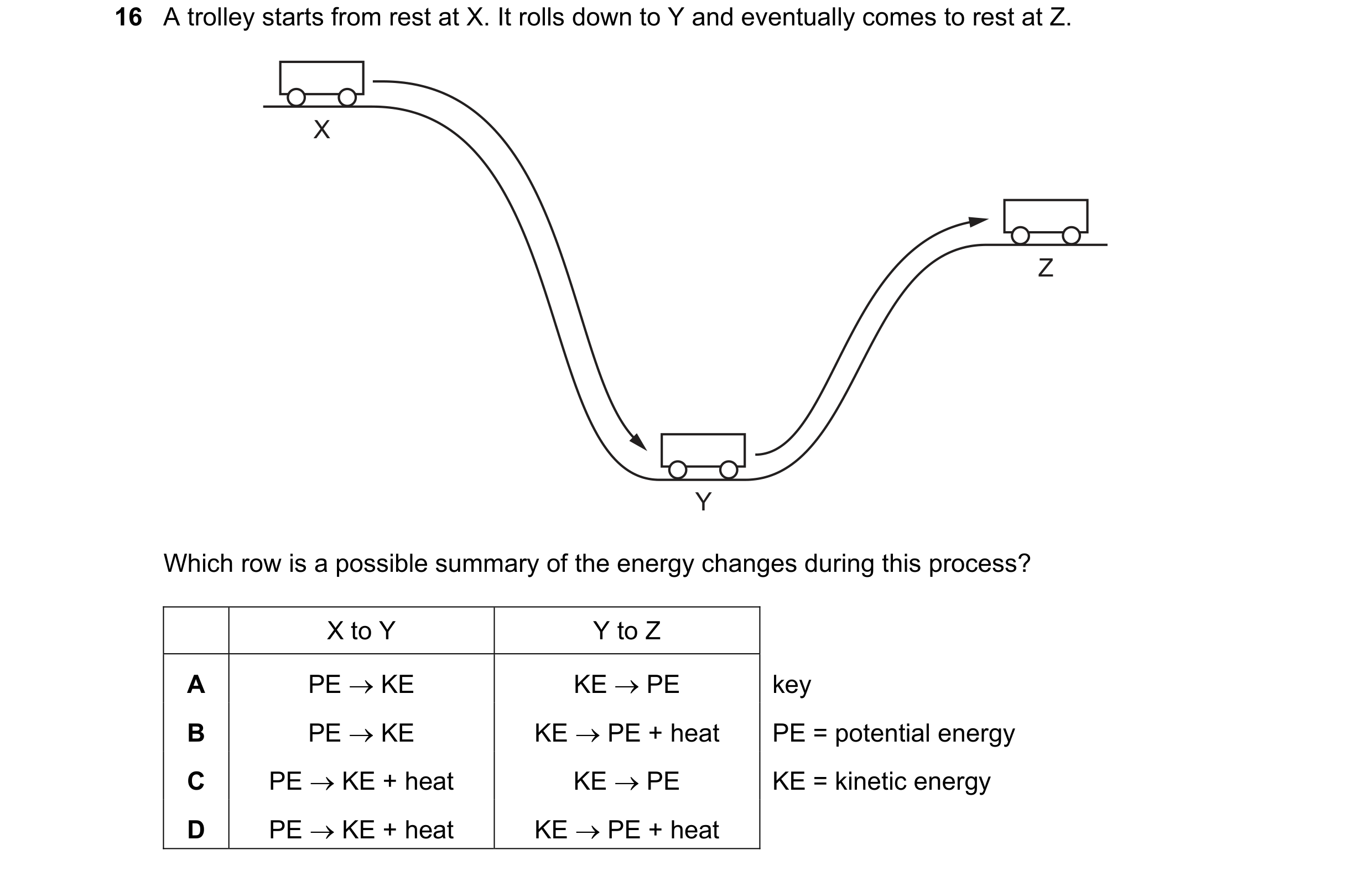
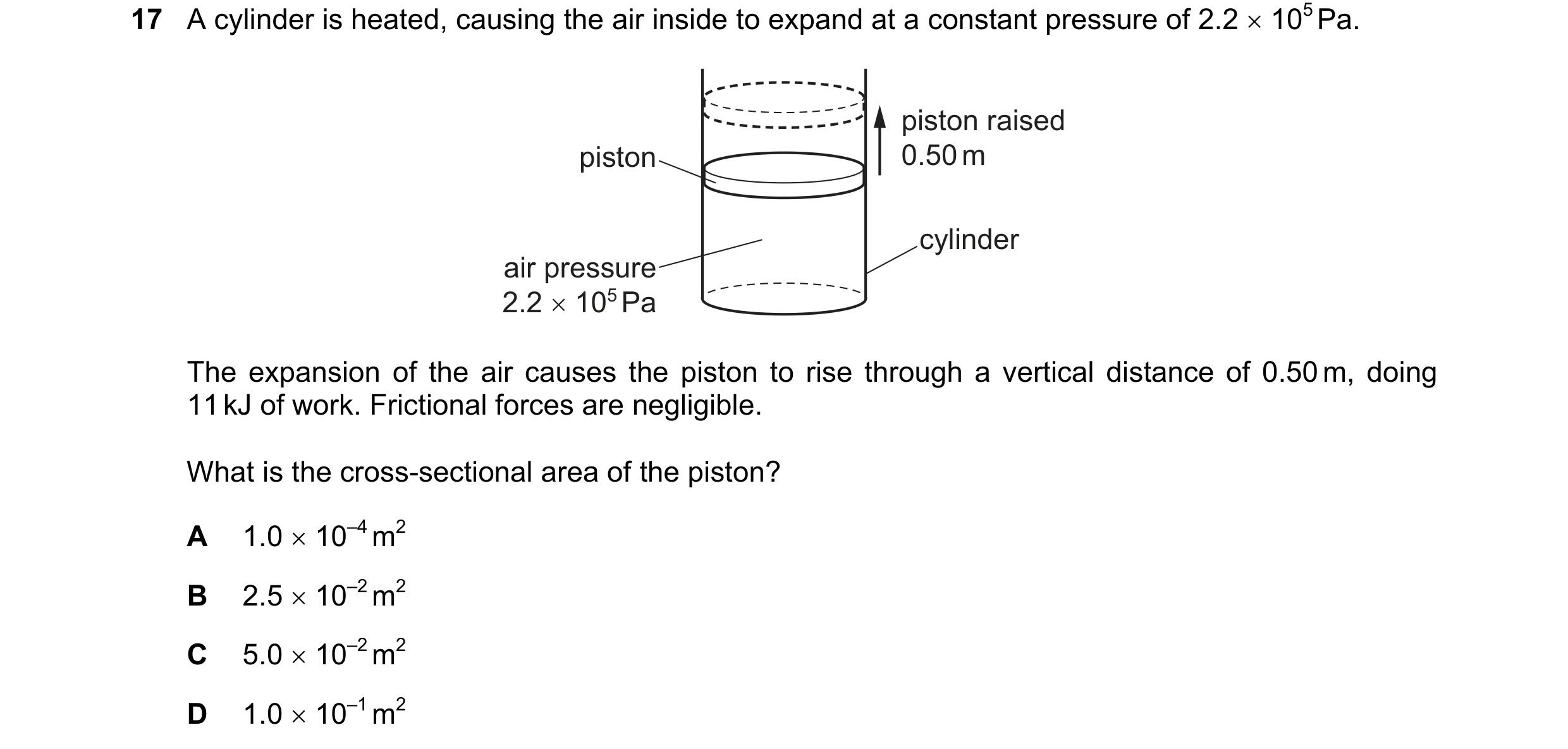 53 / 77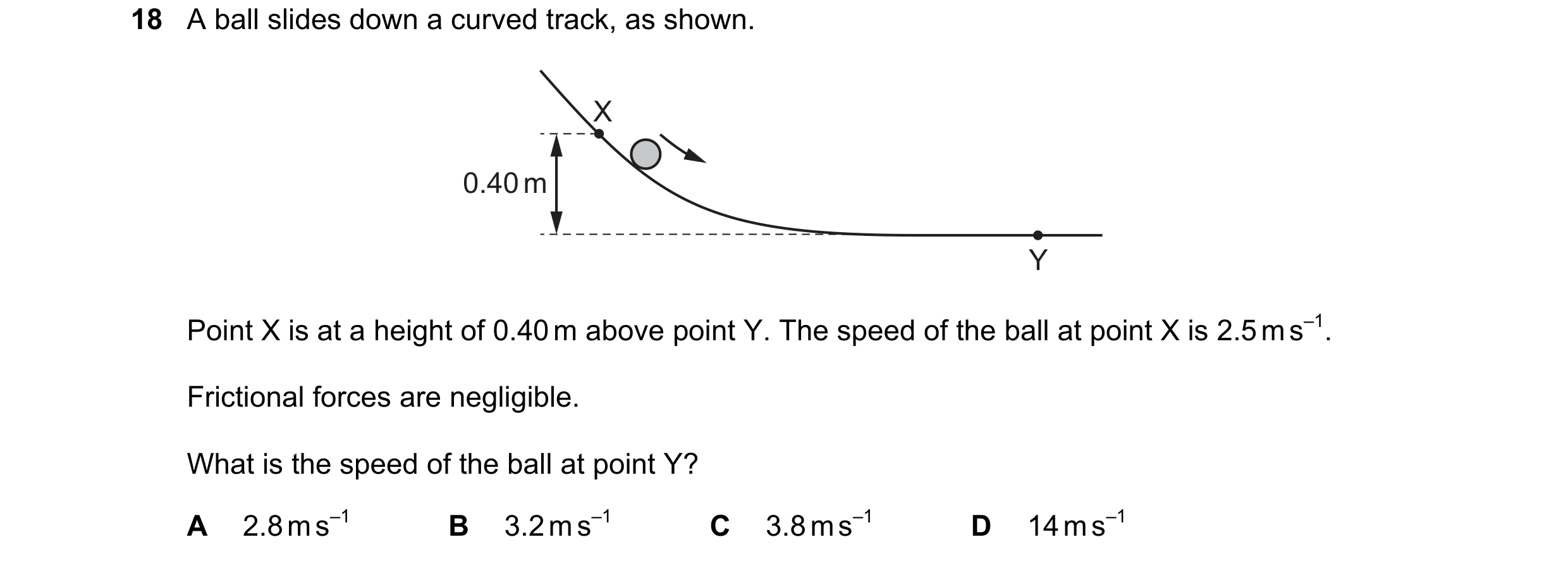
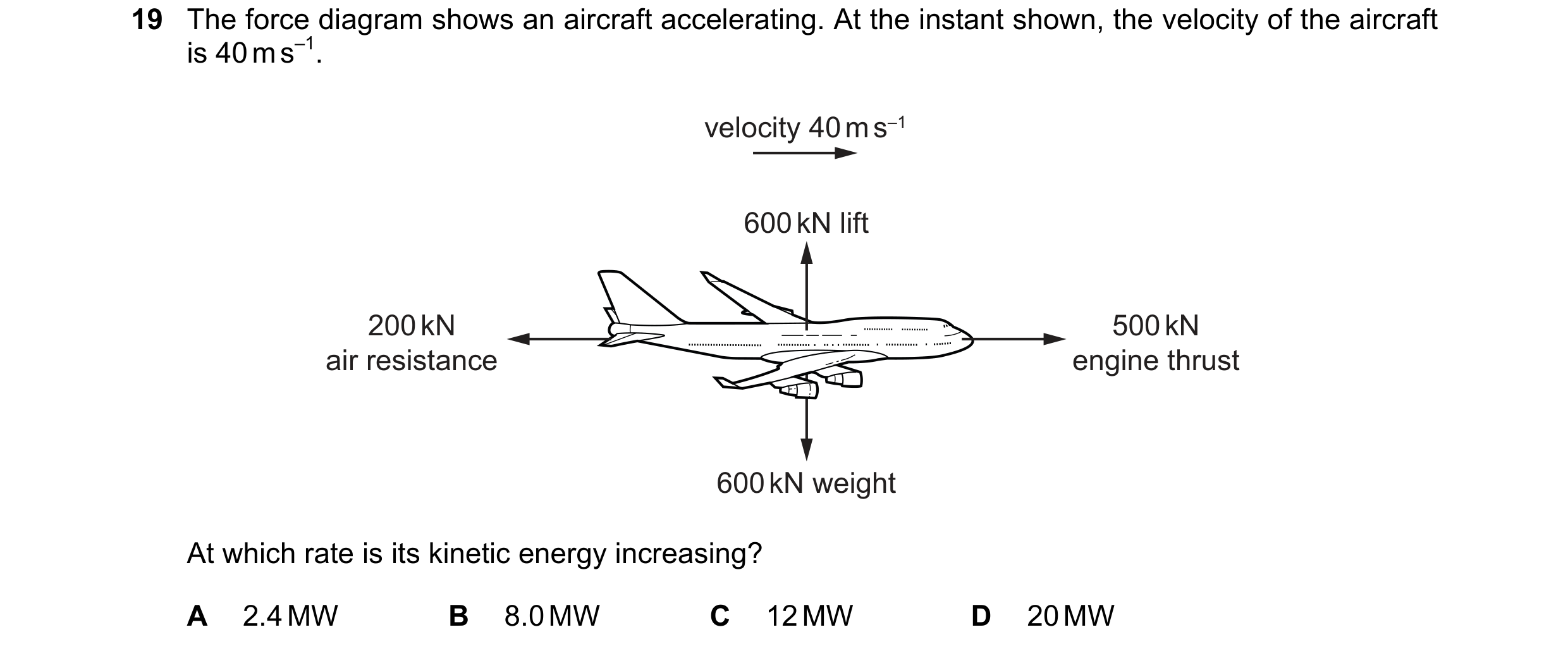
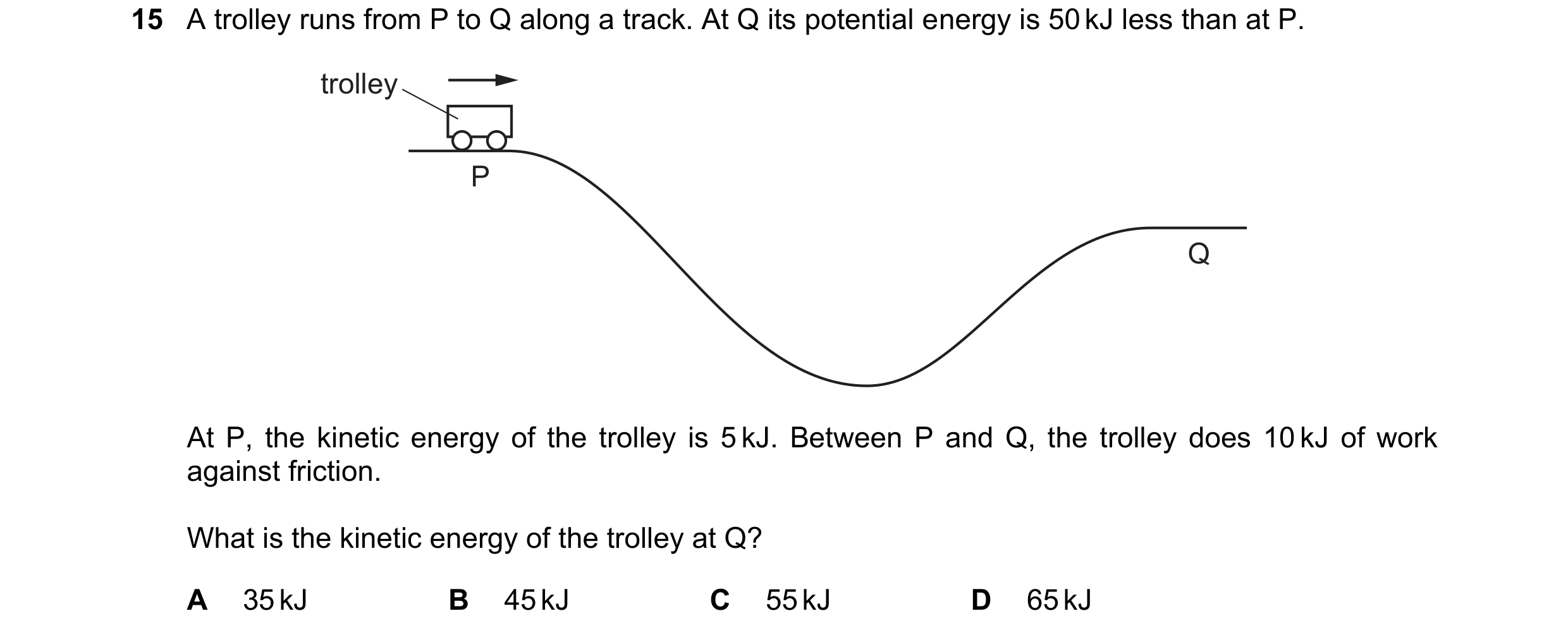 54 / 77


 55 / 77
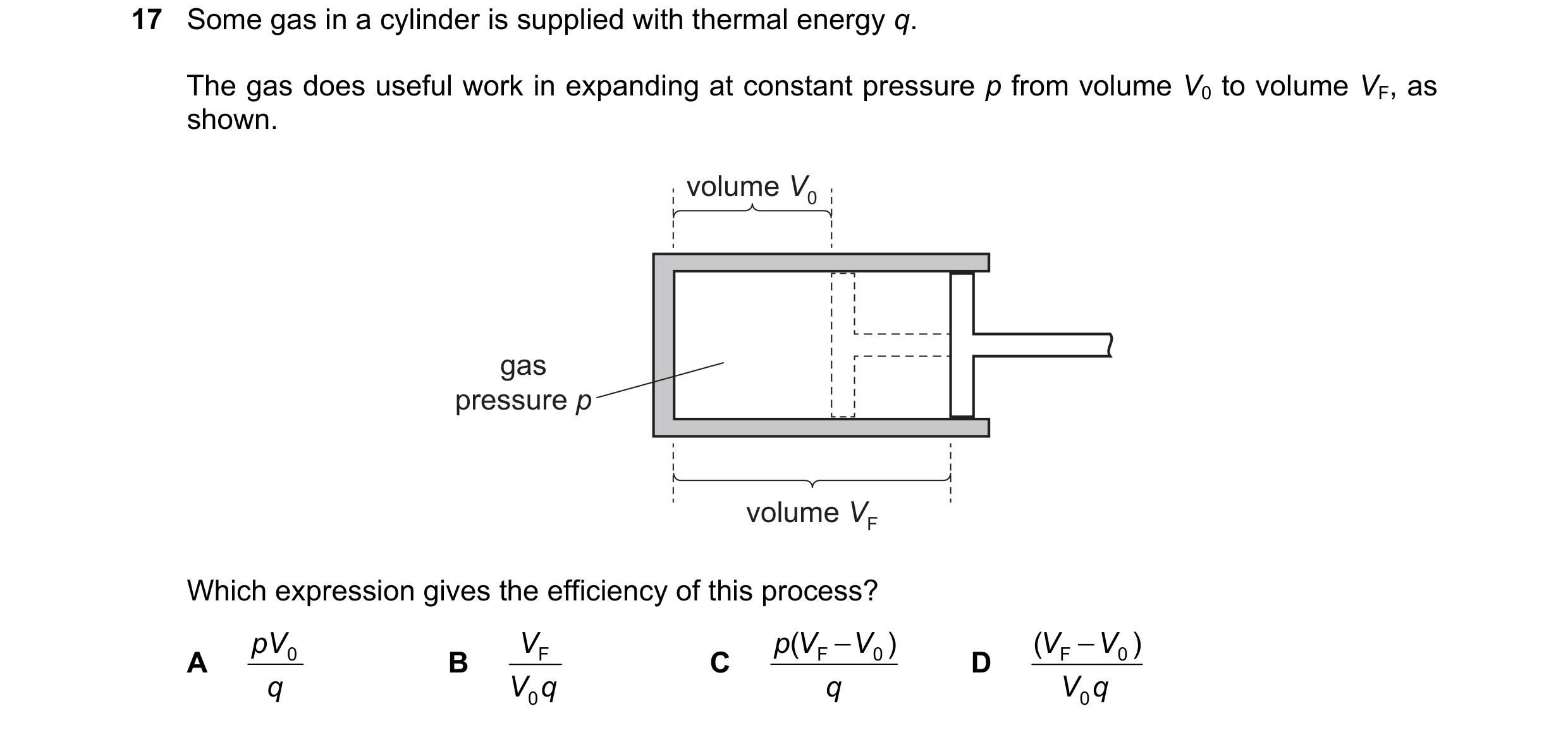

 56 / 77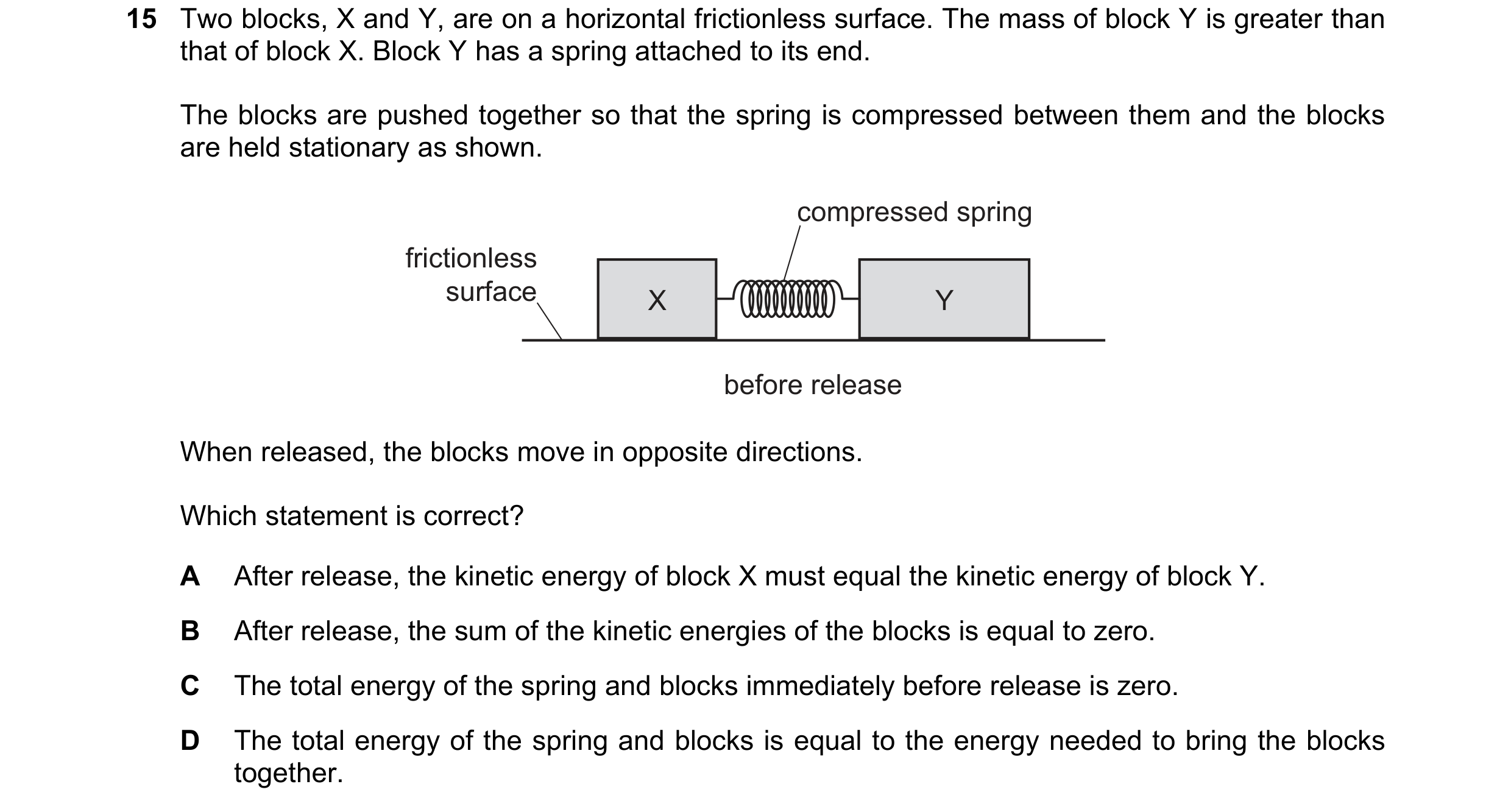
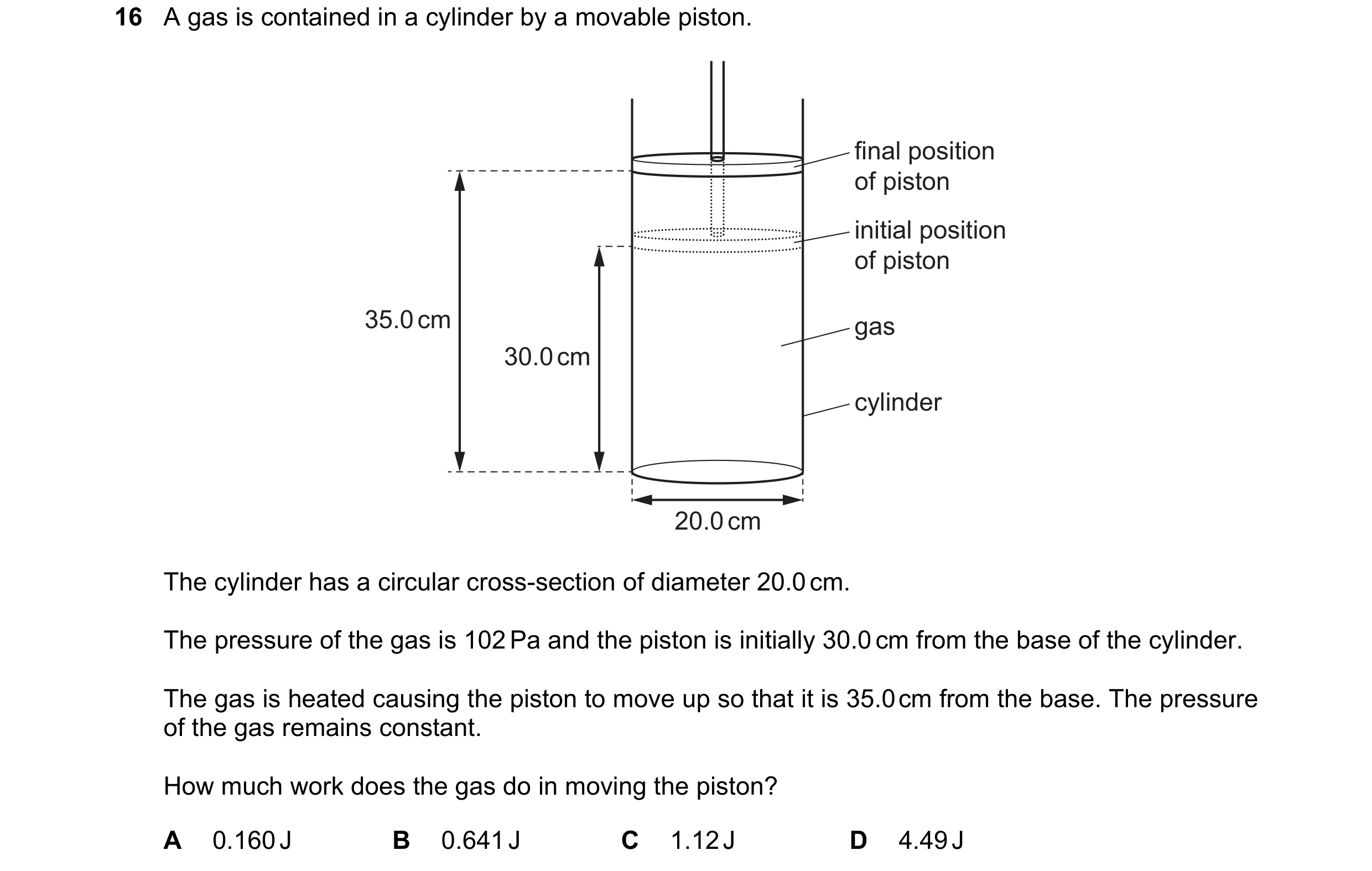 57 / 77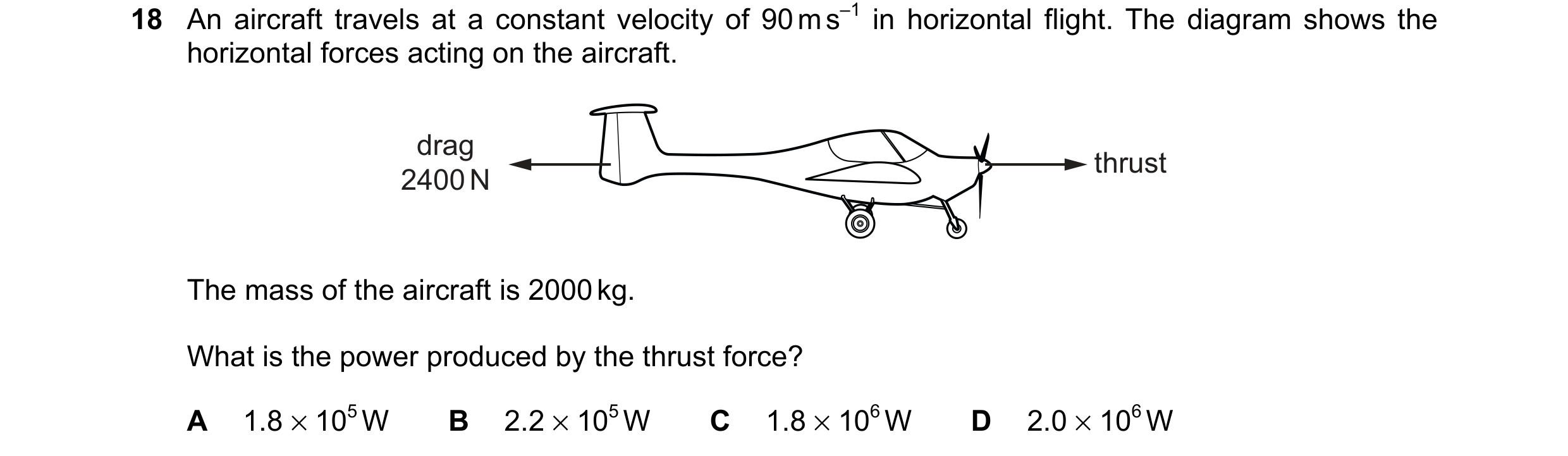
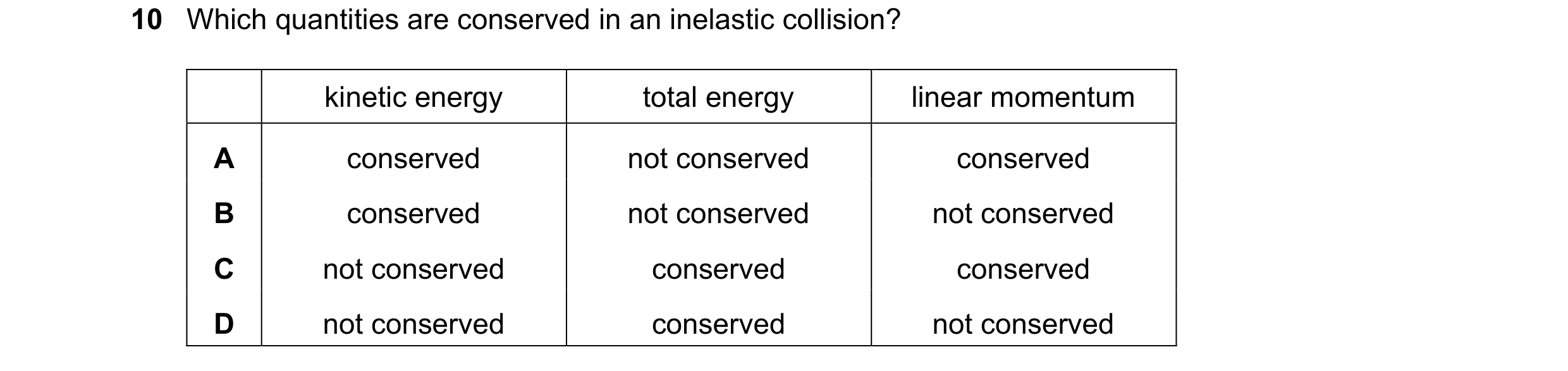
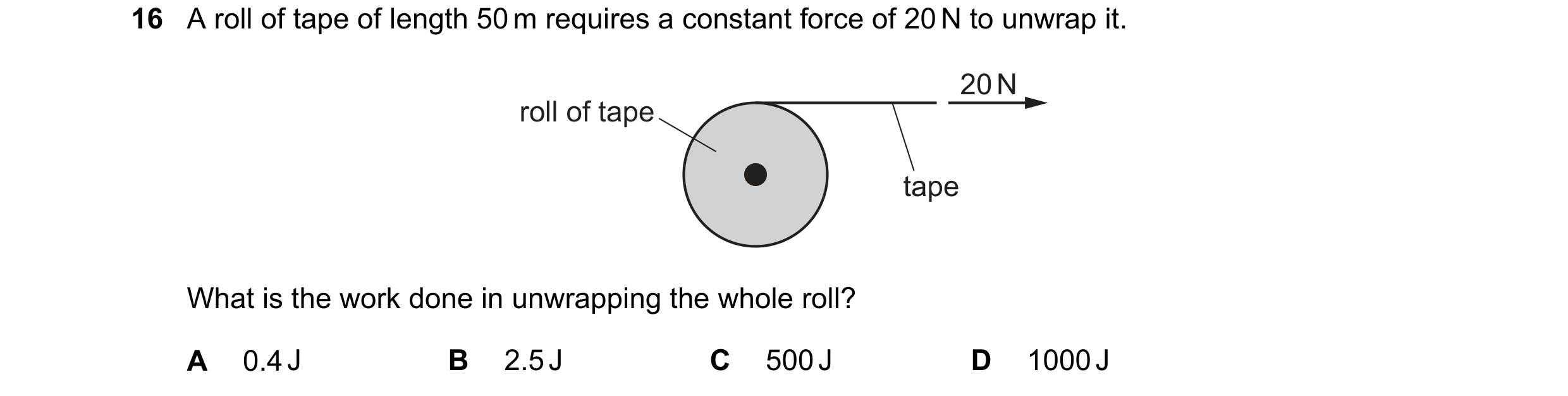 58 / 77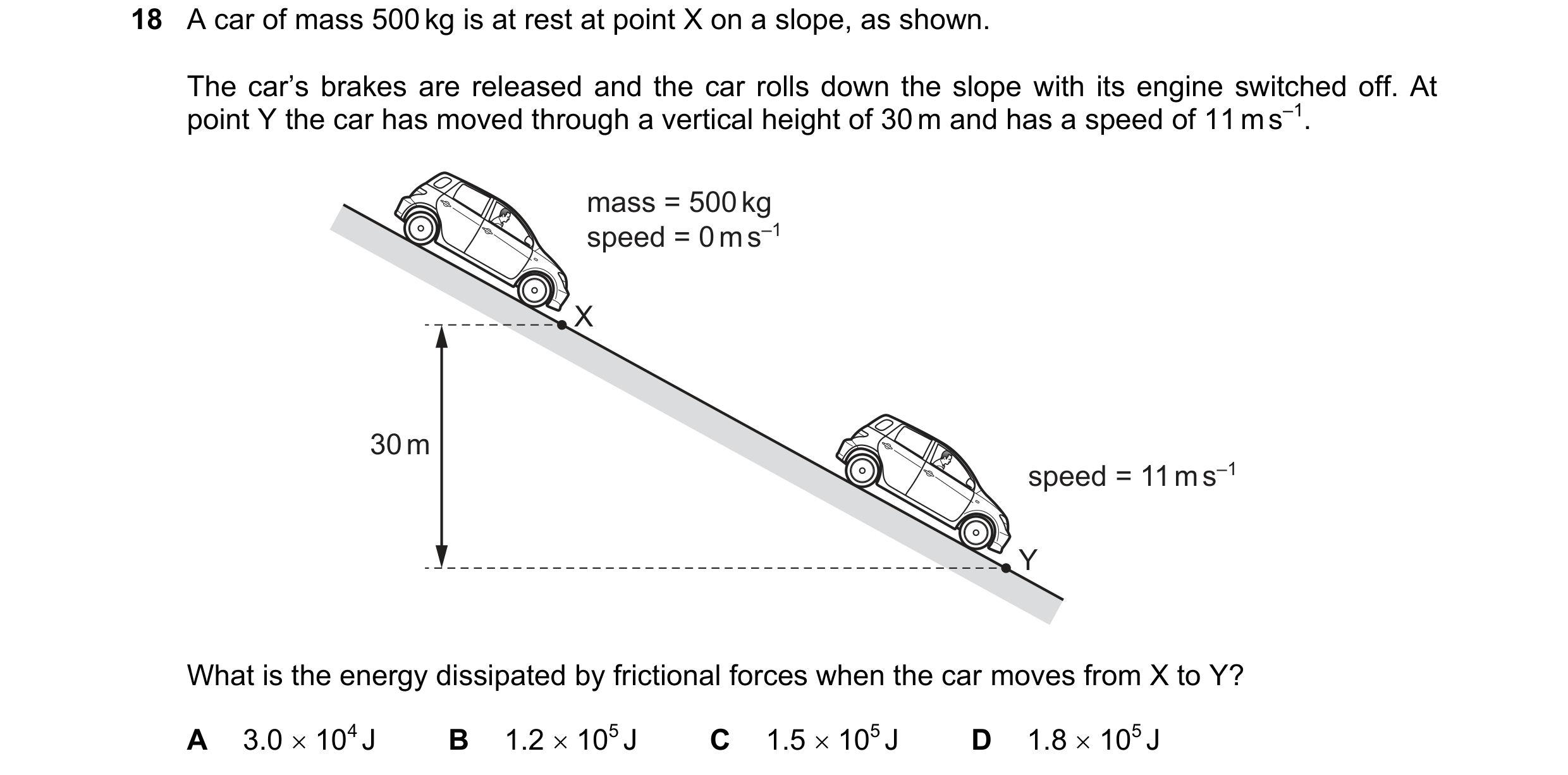

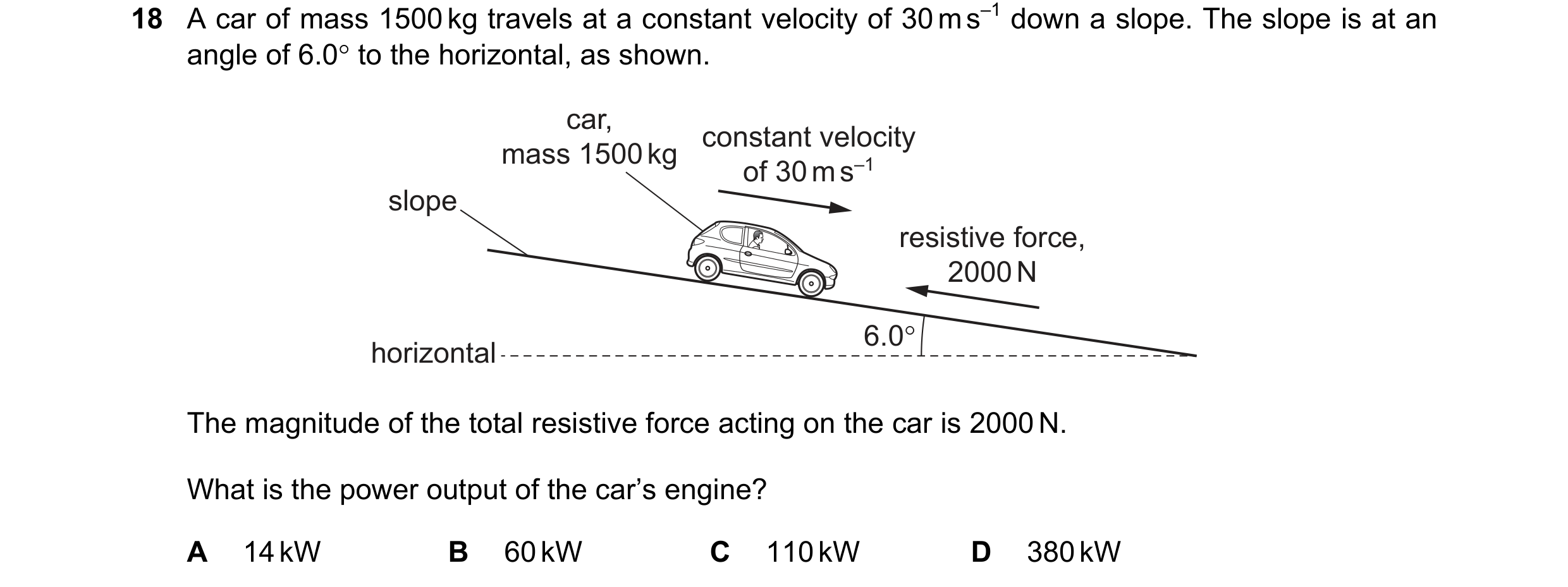 59 / 77

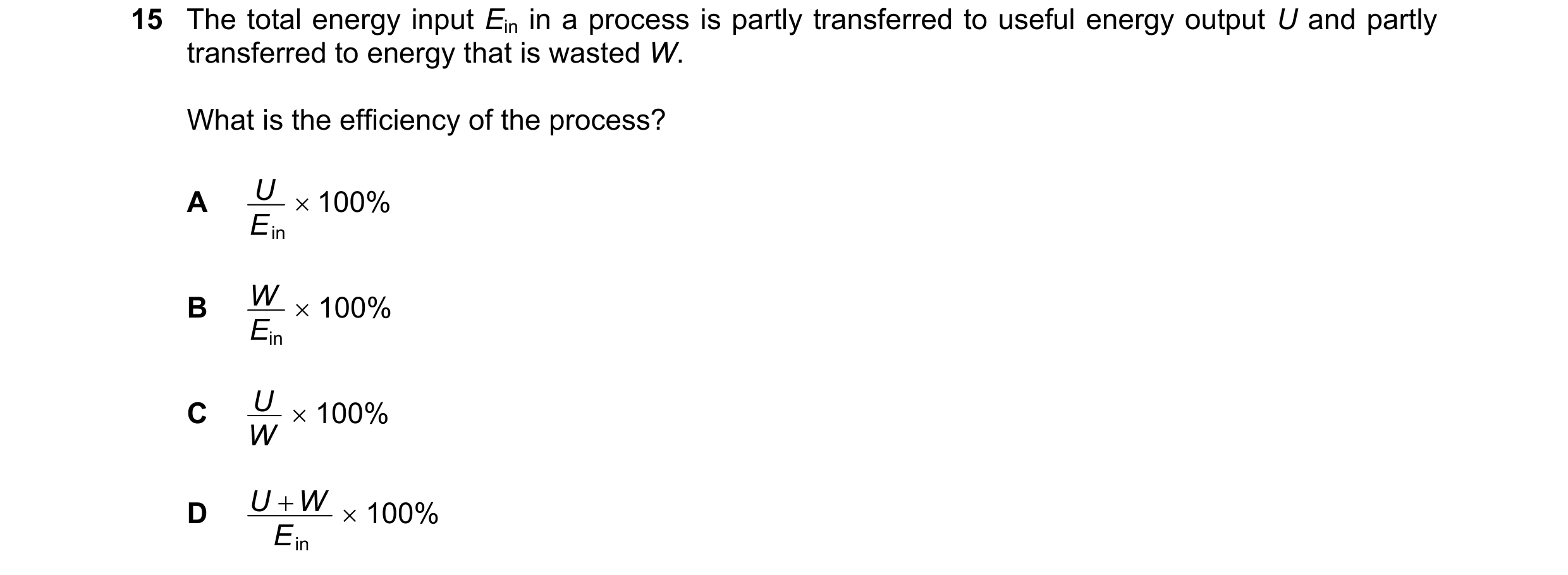
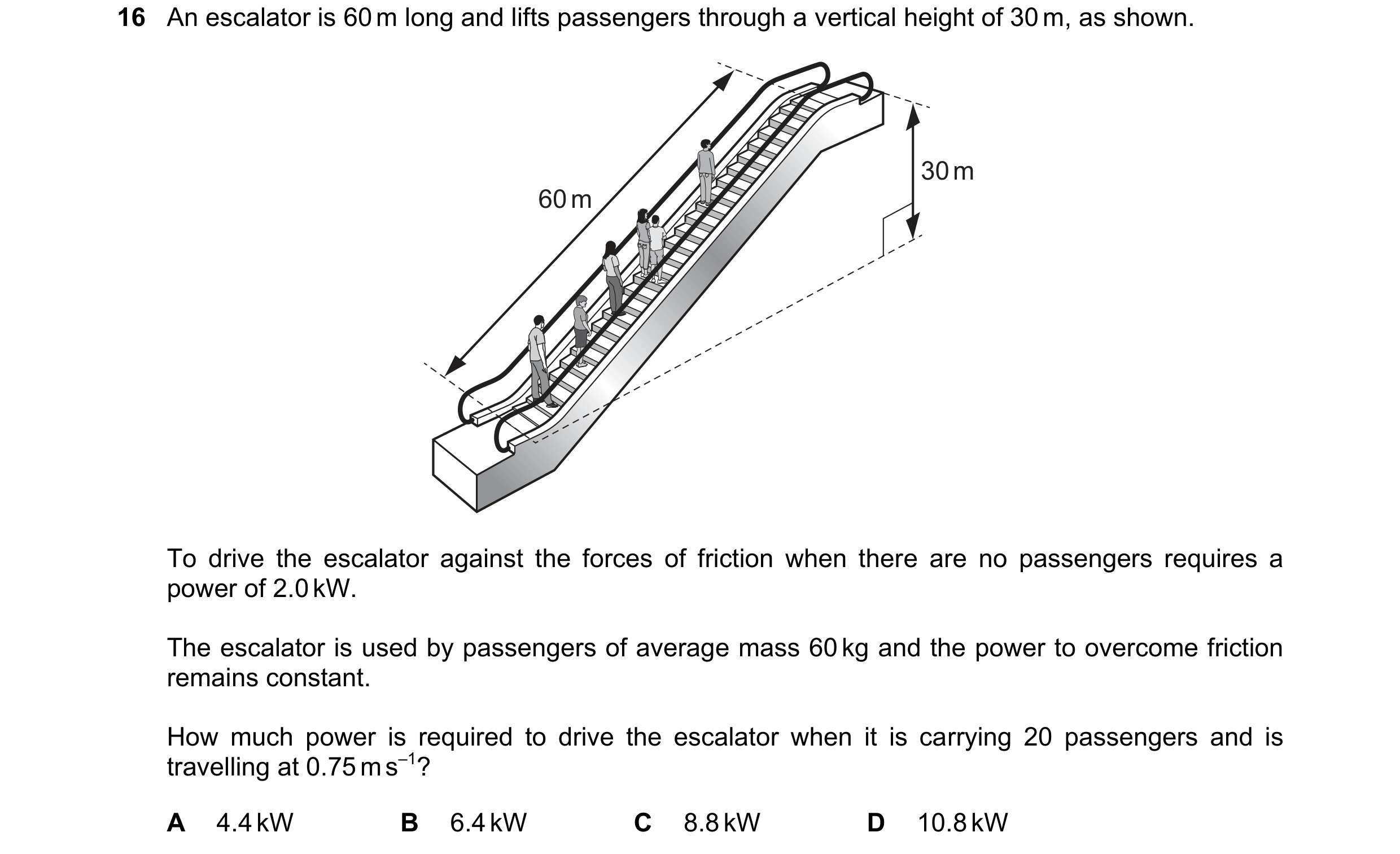 60 / 77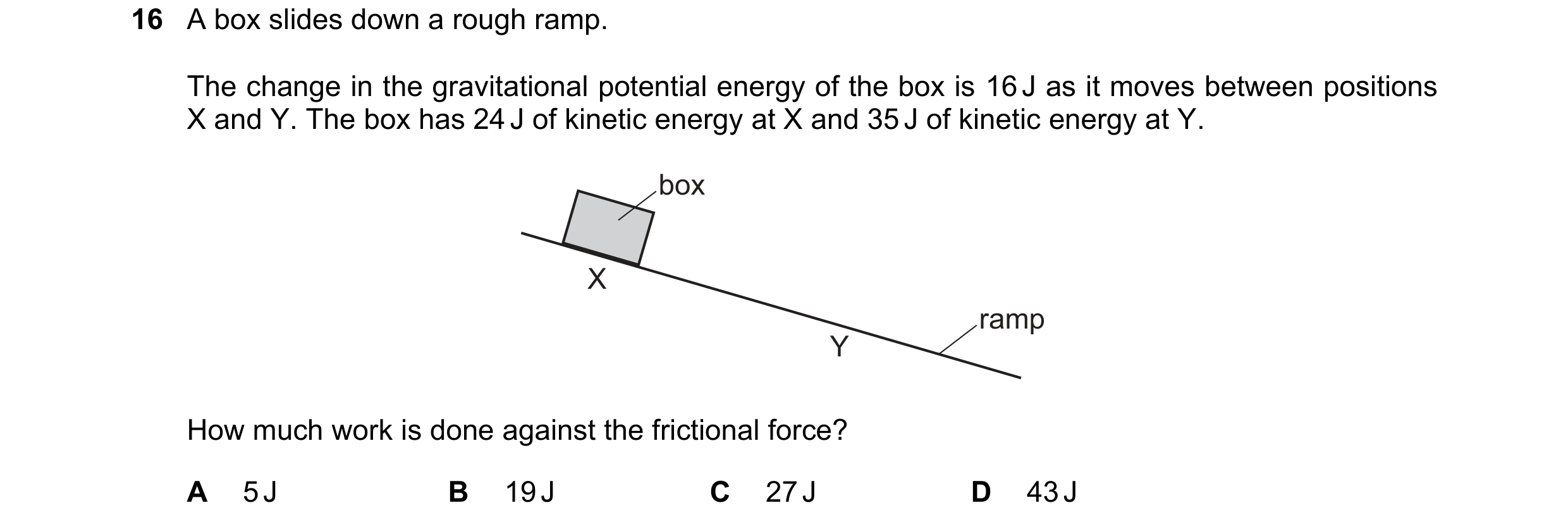



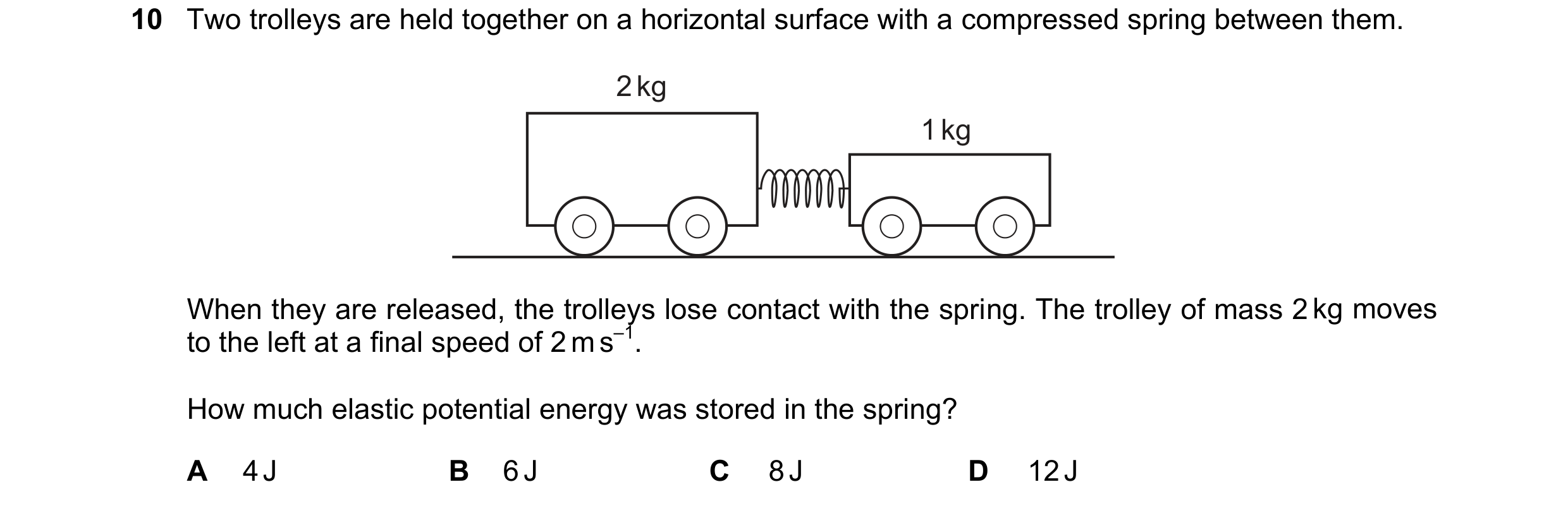 61 / 77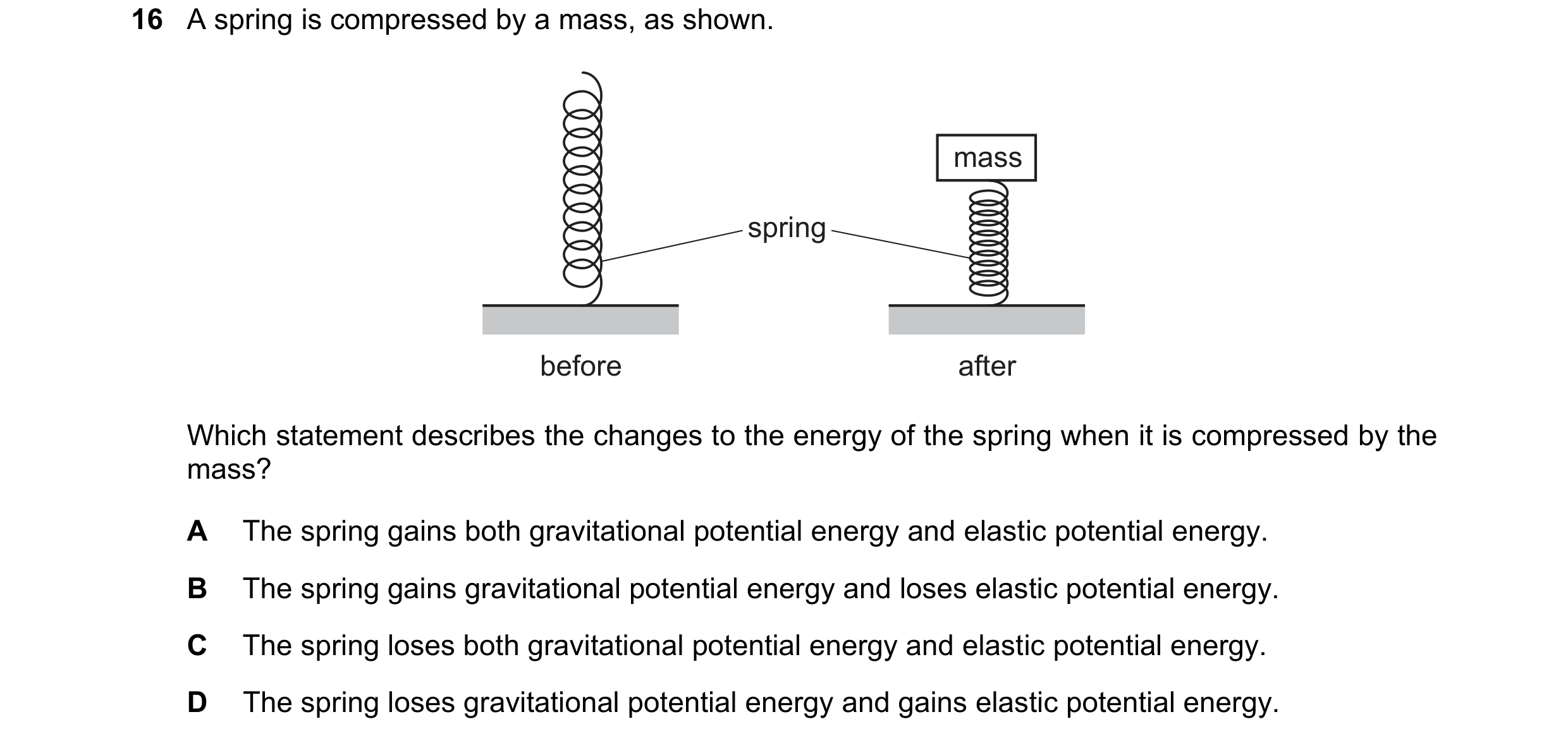

 62 / 77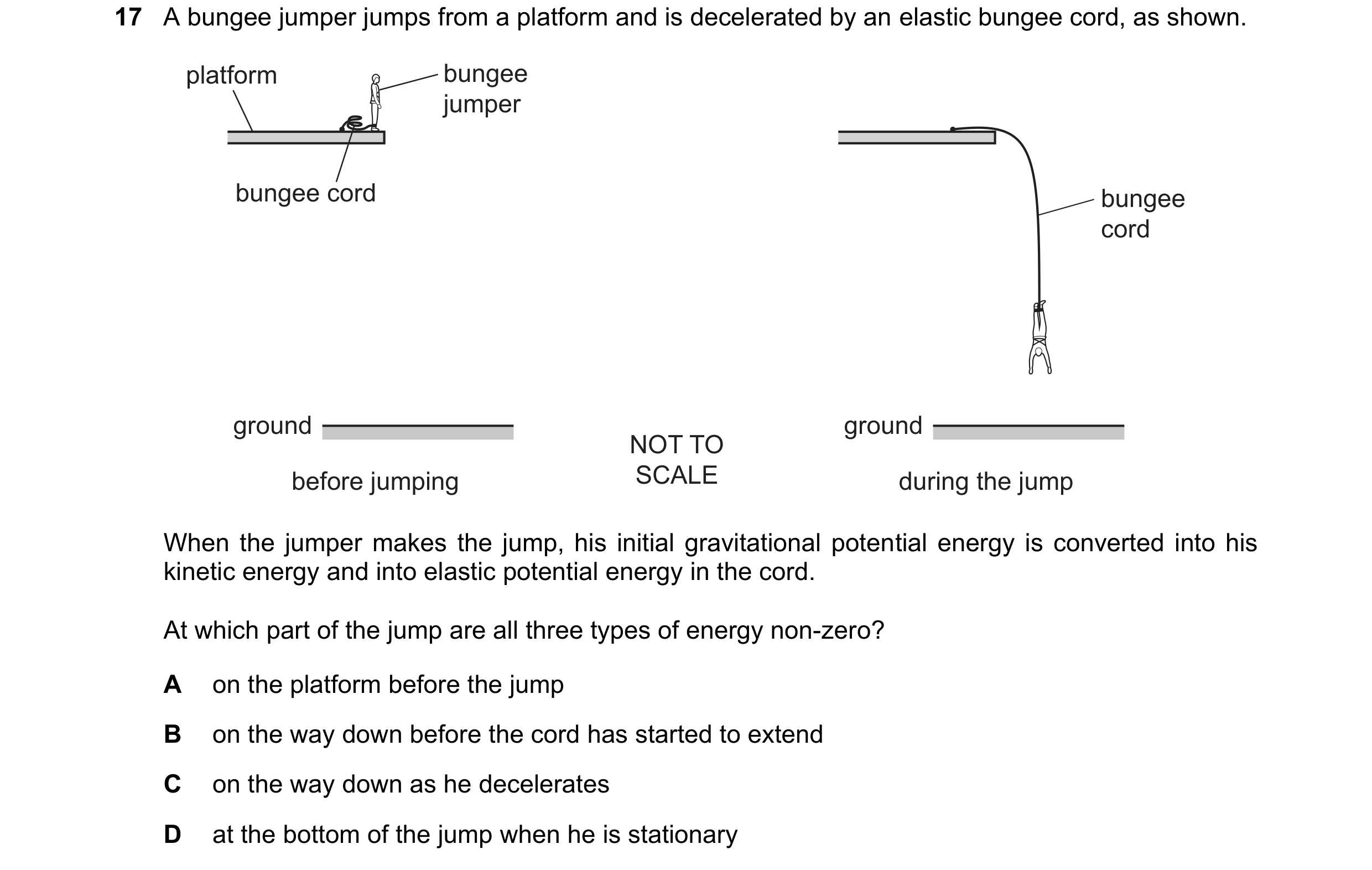

 63 / 77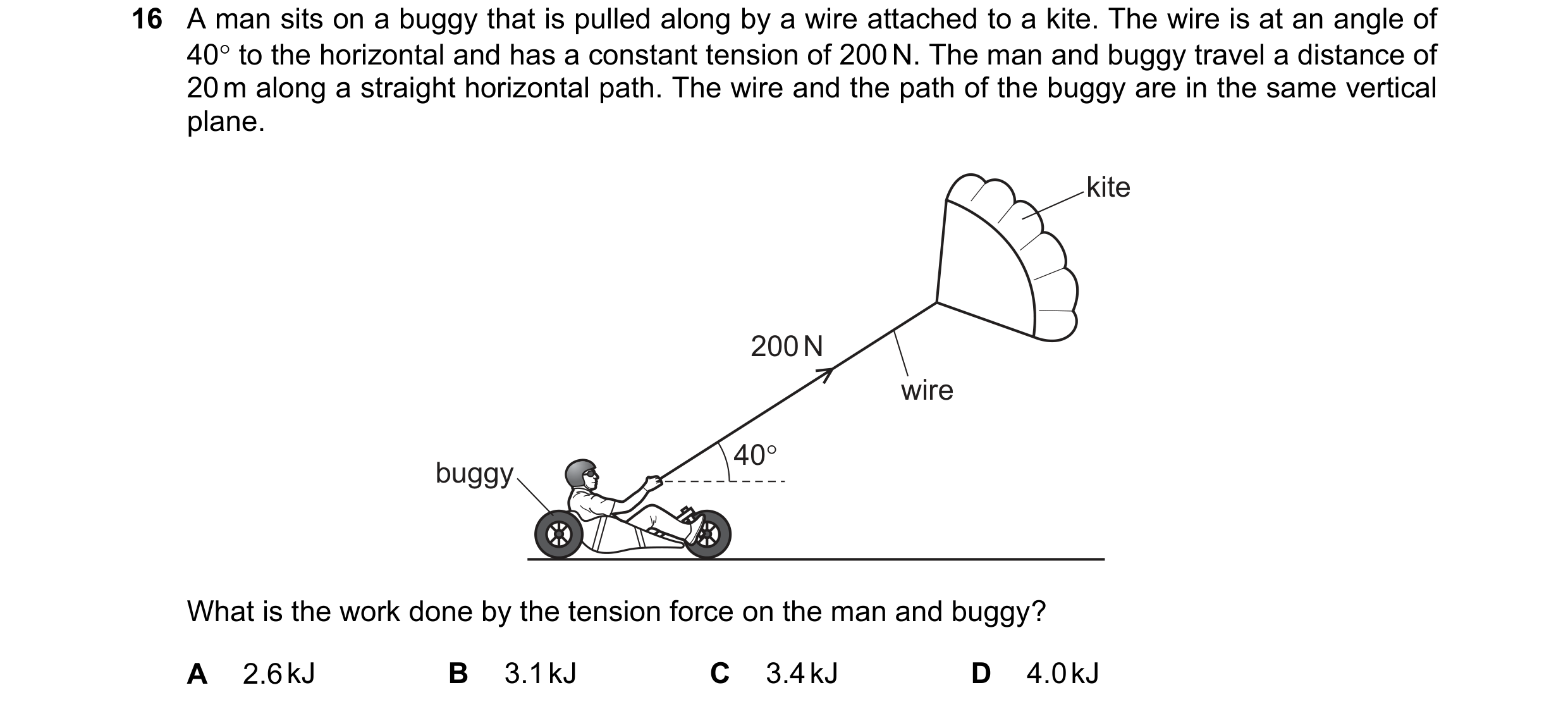
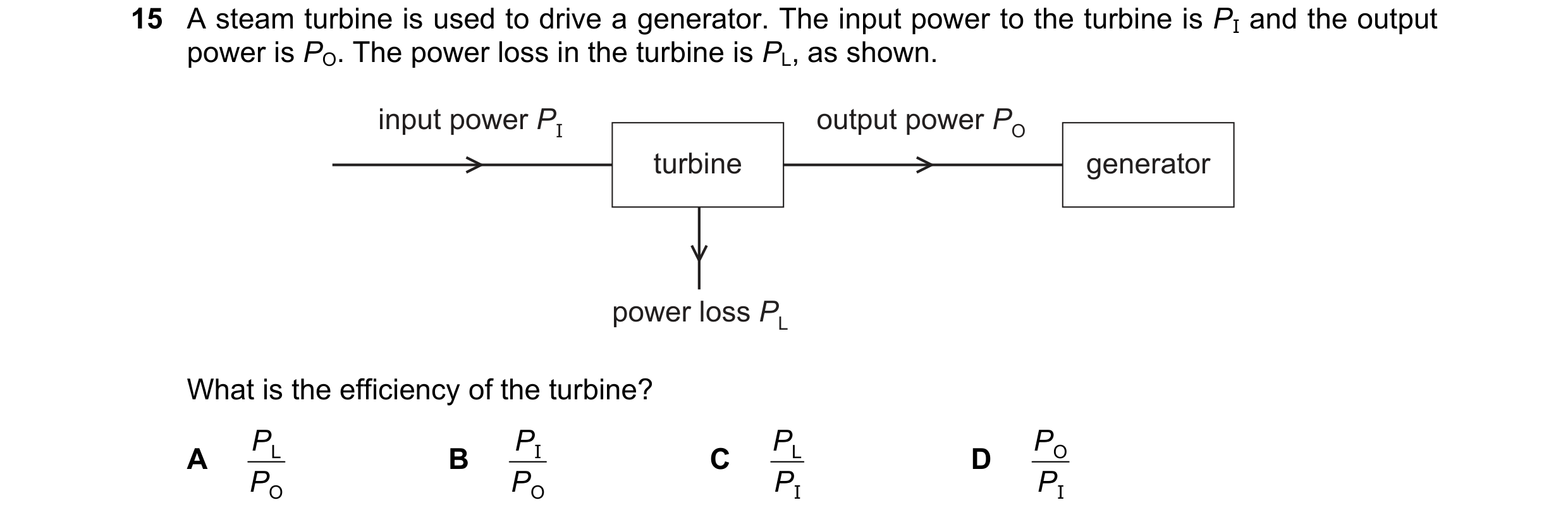
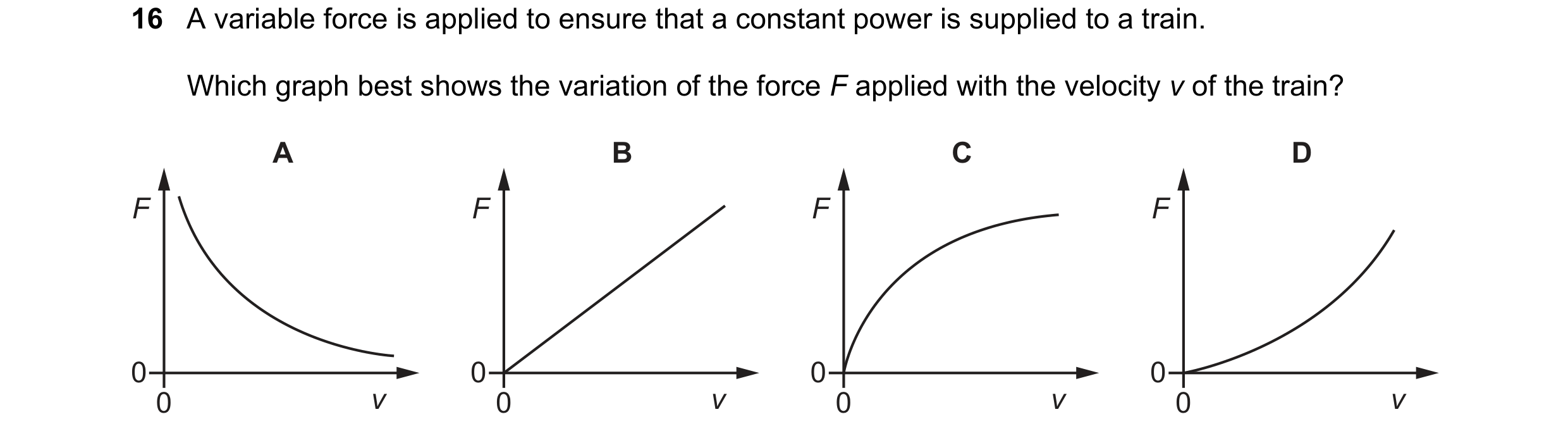 64 / 77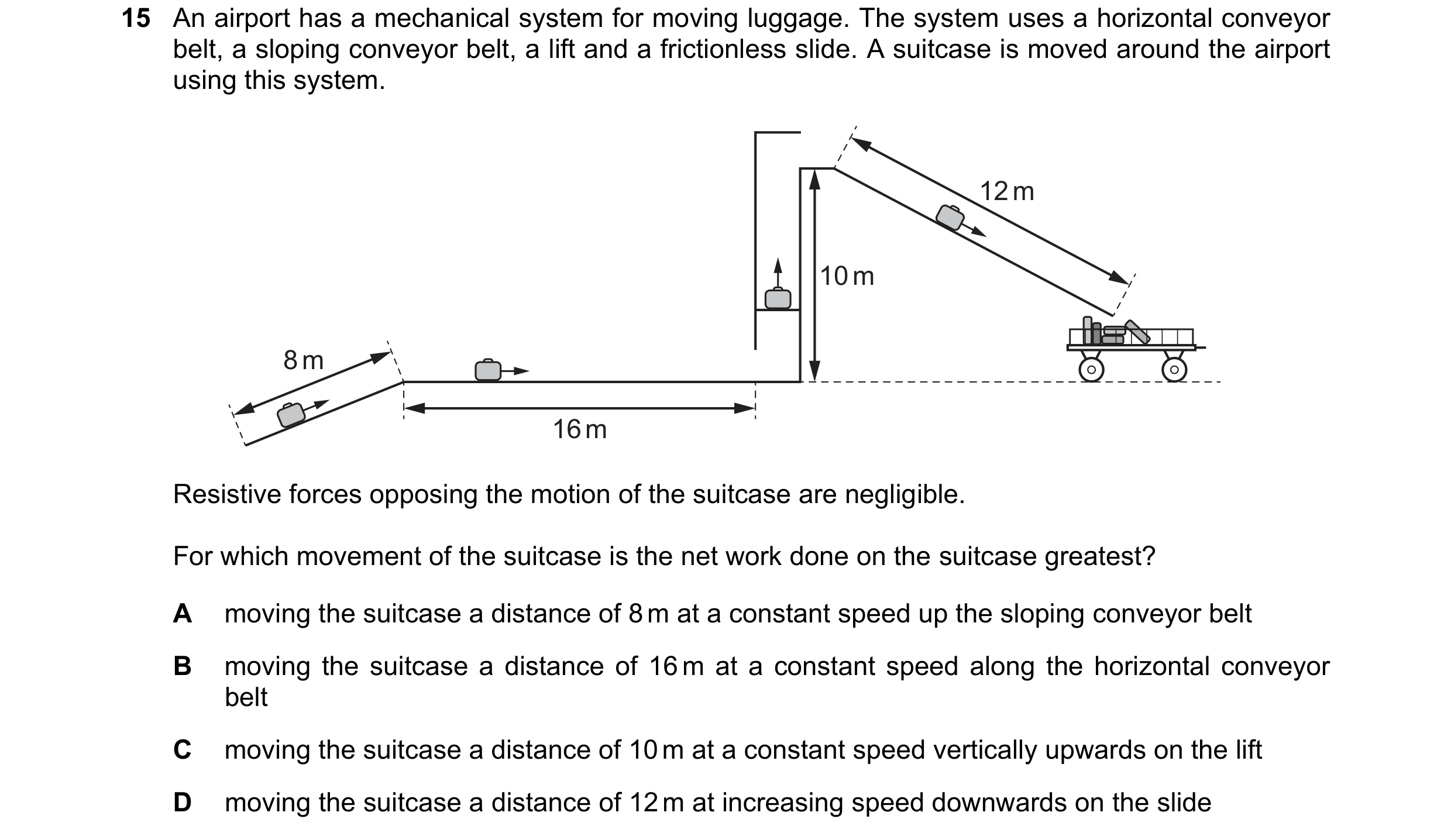

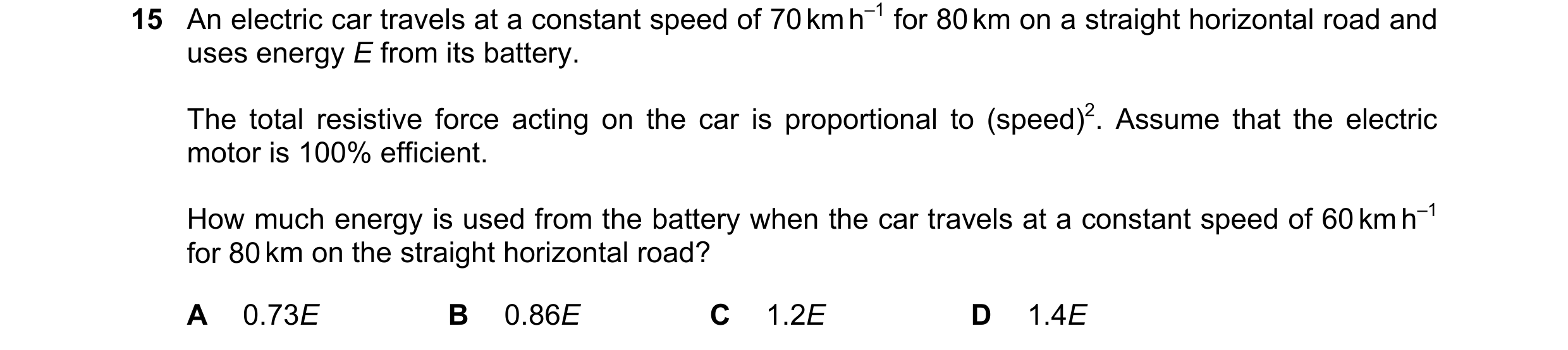
 65 / 77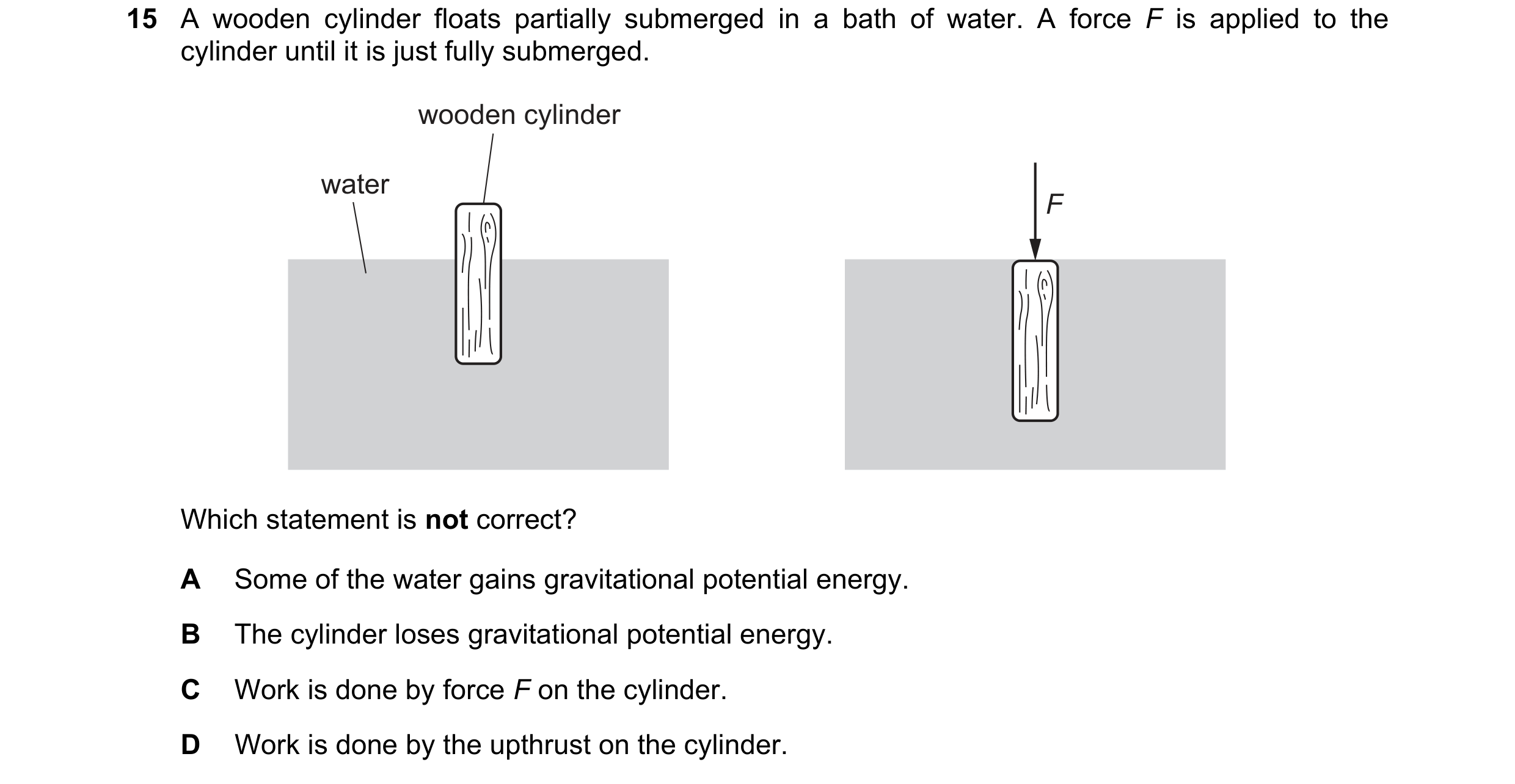



 66 / 77


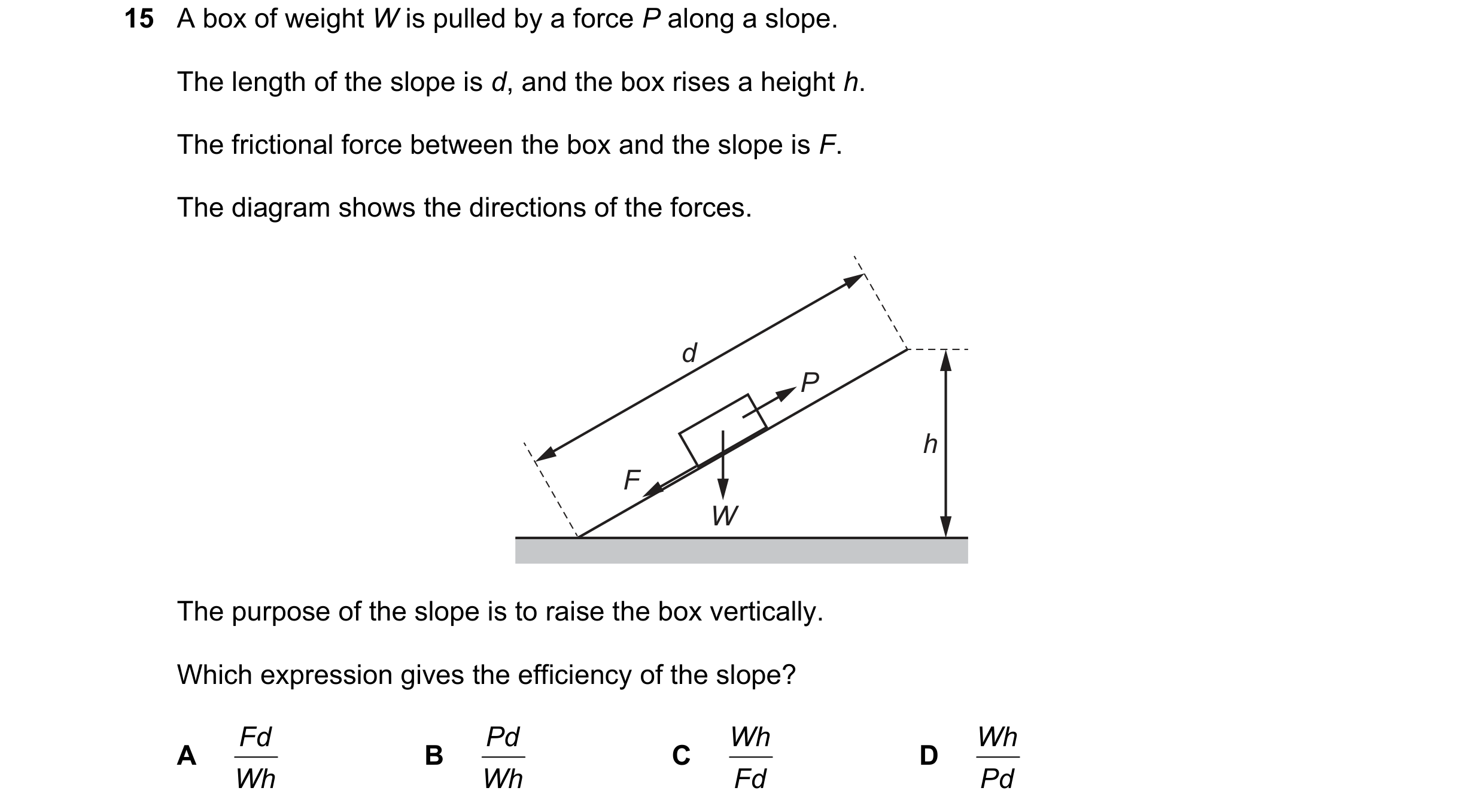
 67 / 77
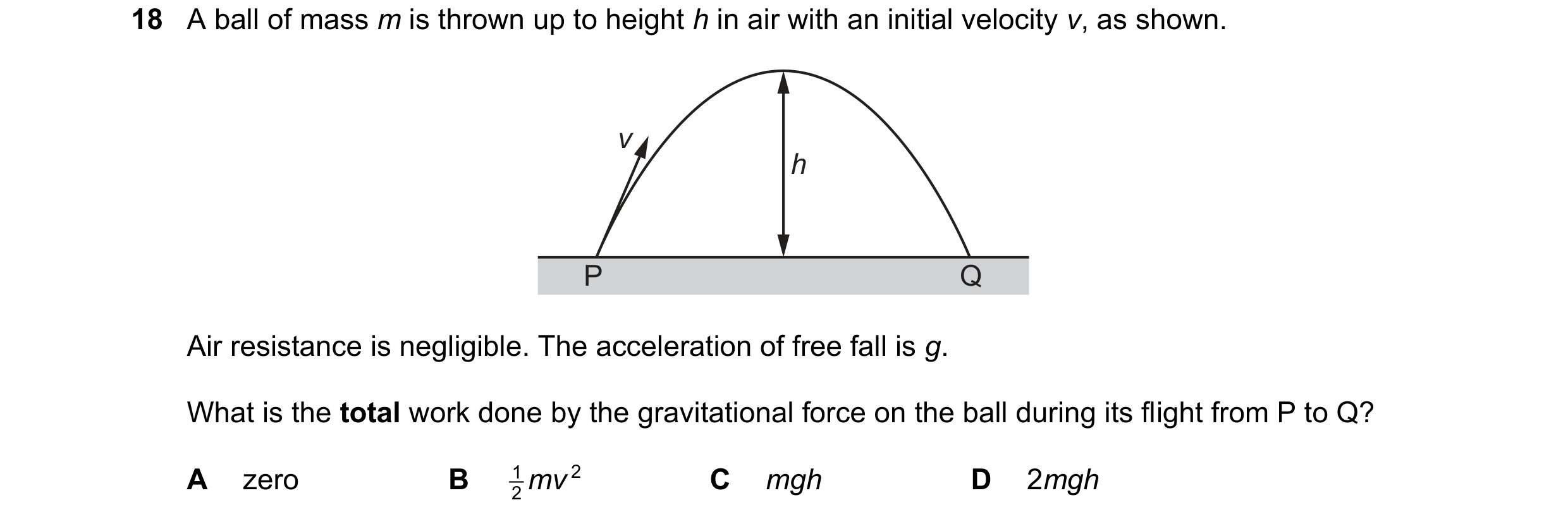
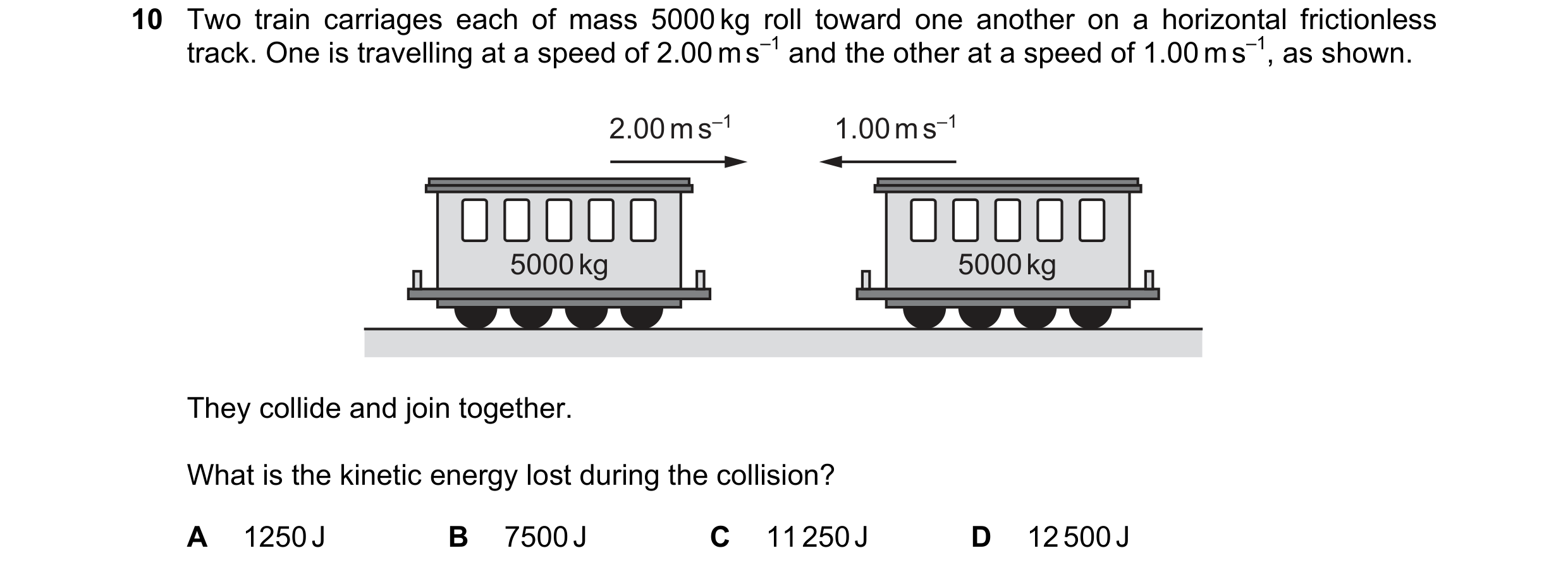


 68 / 77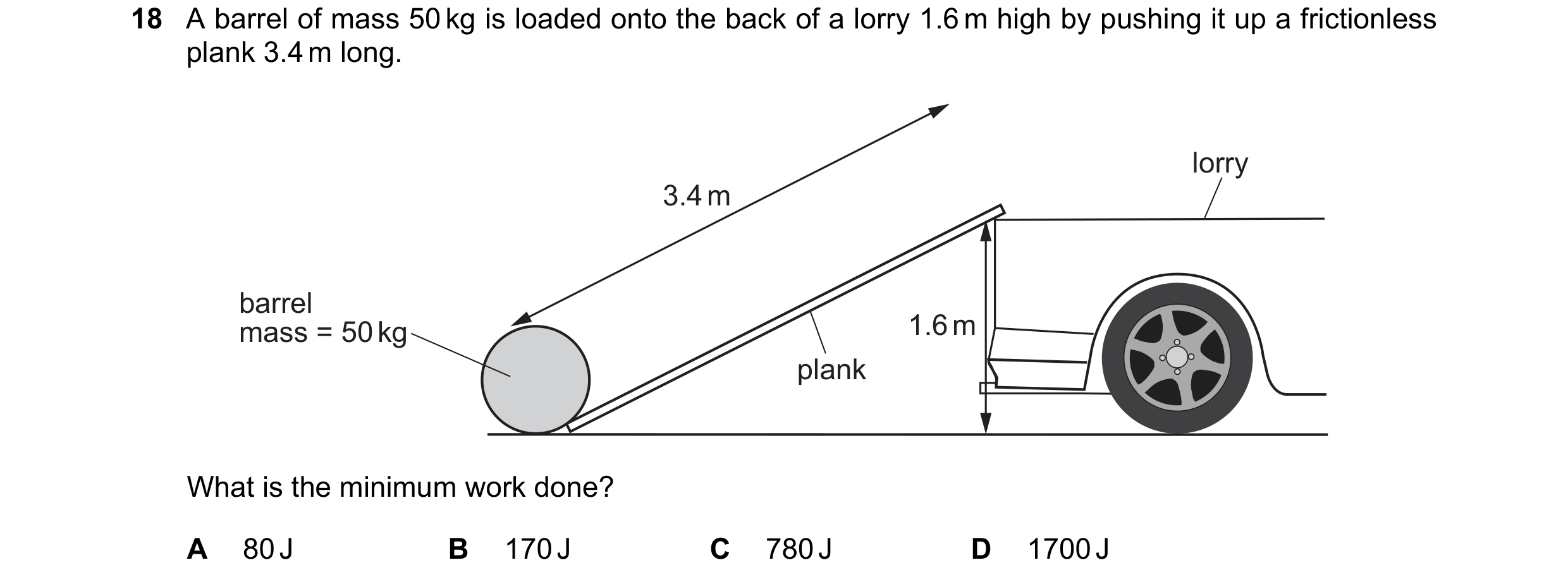
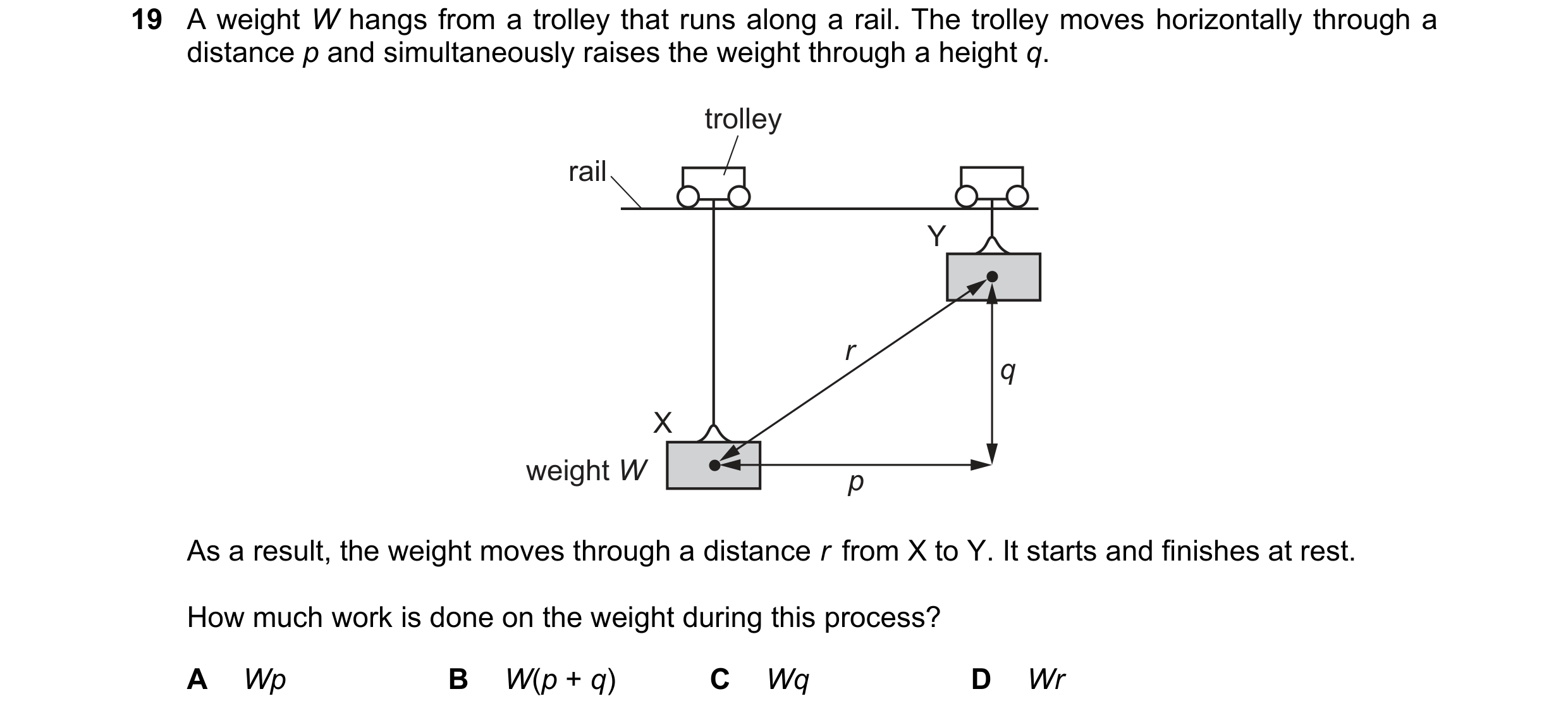
 69 / 77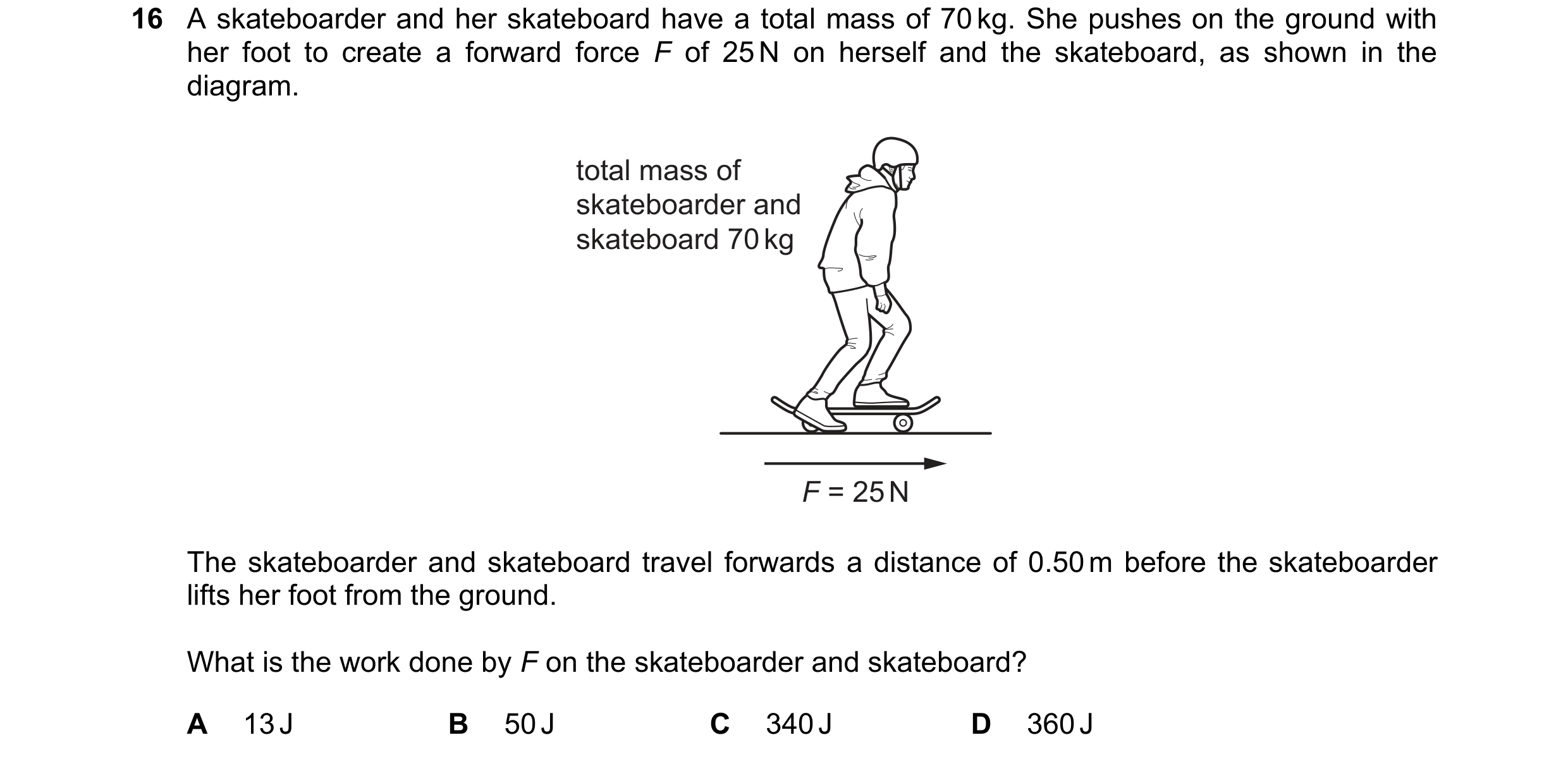
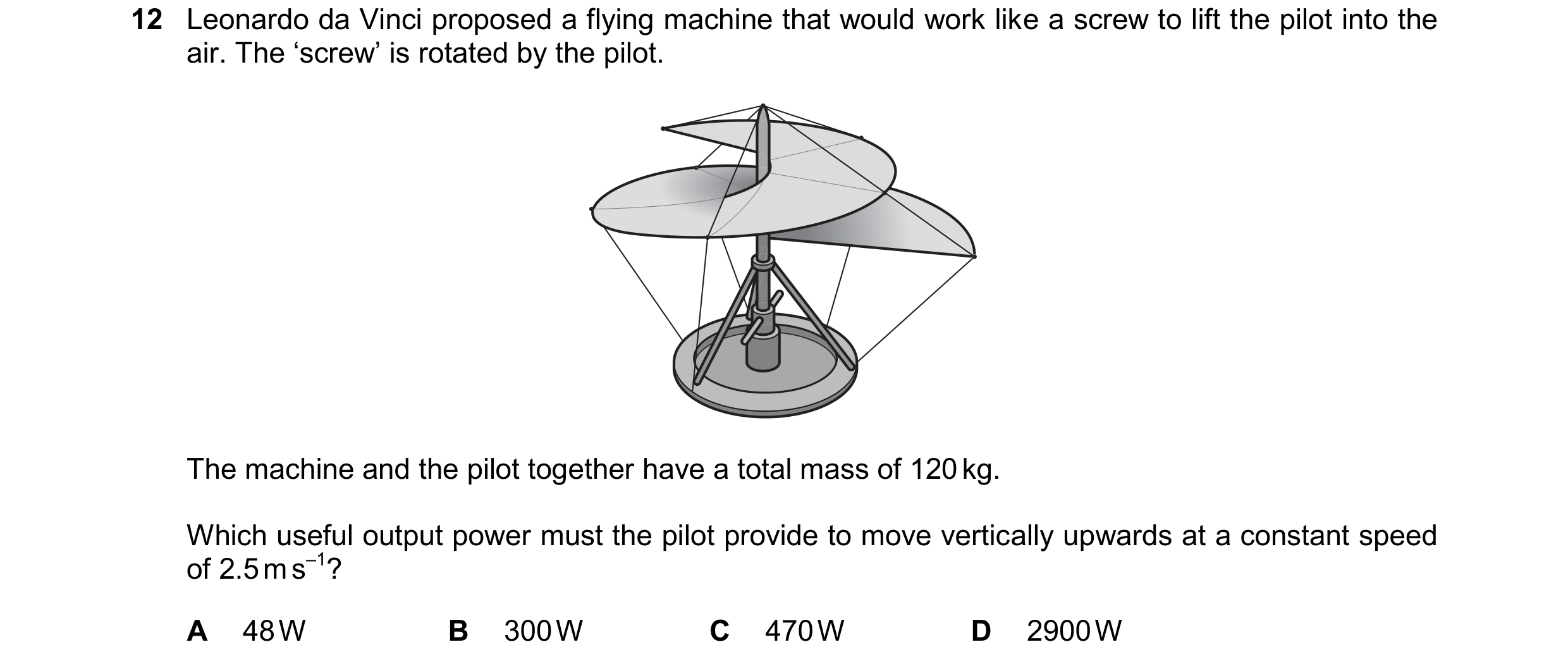 70 / 77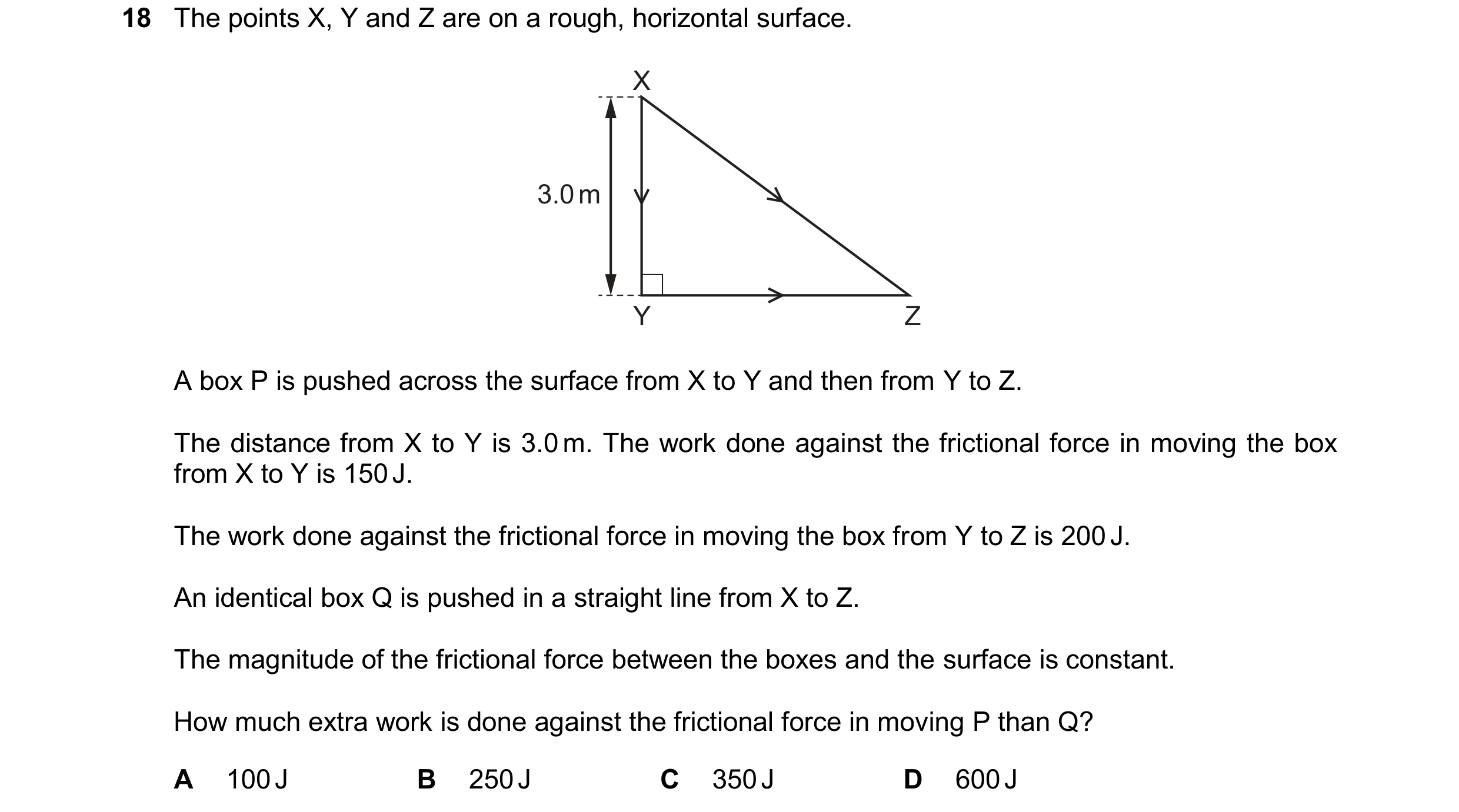
 71 / 77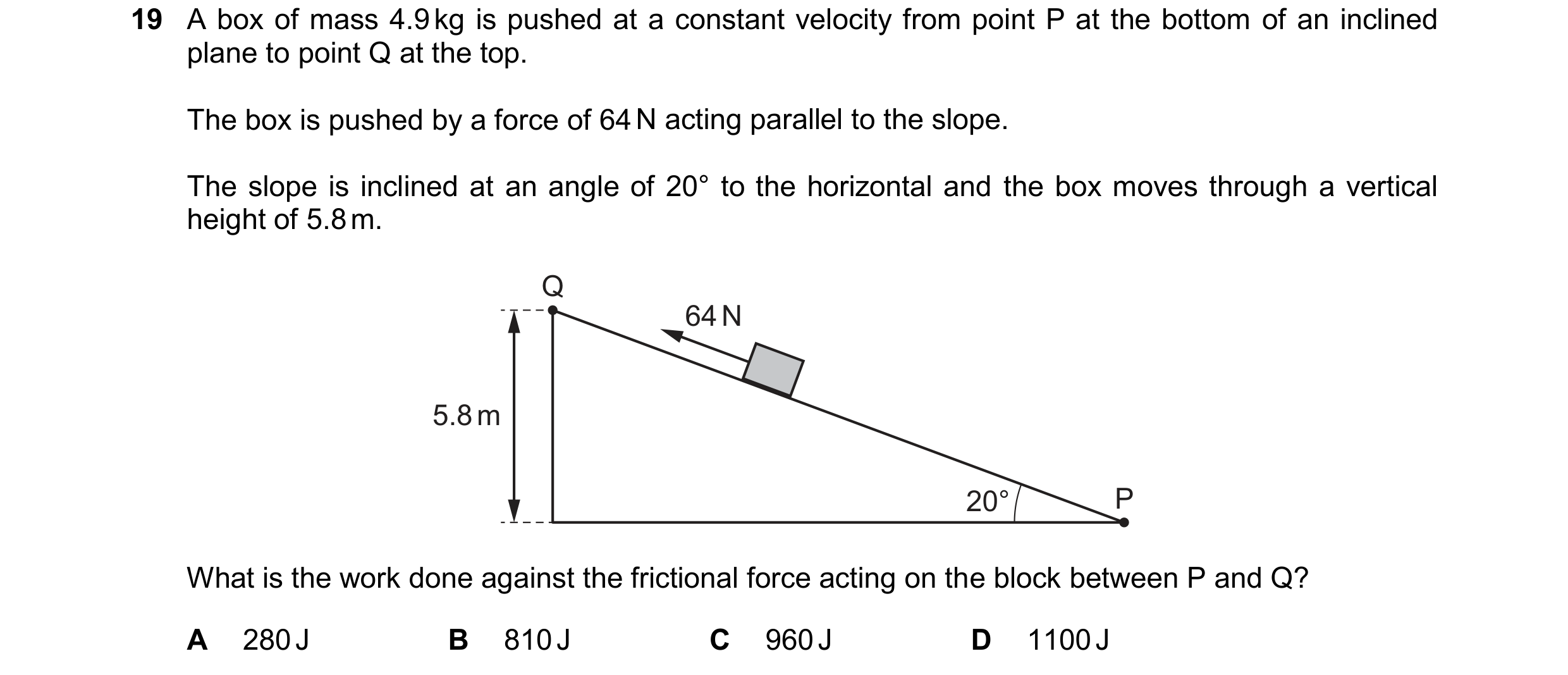
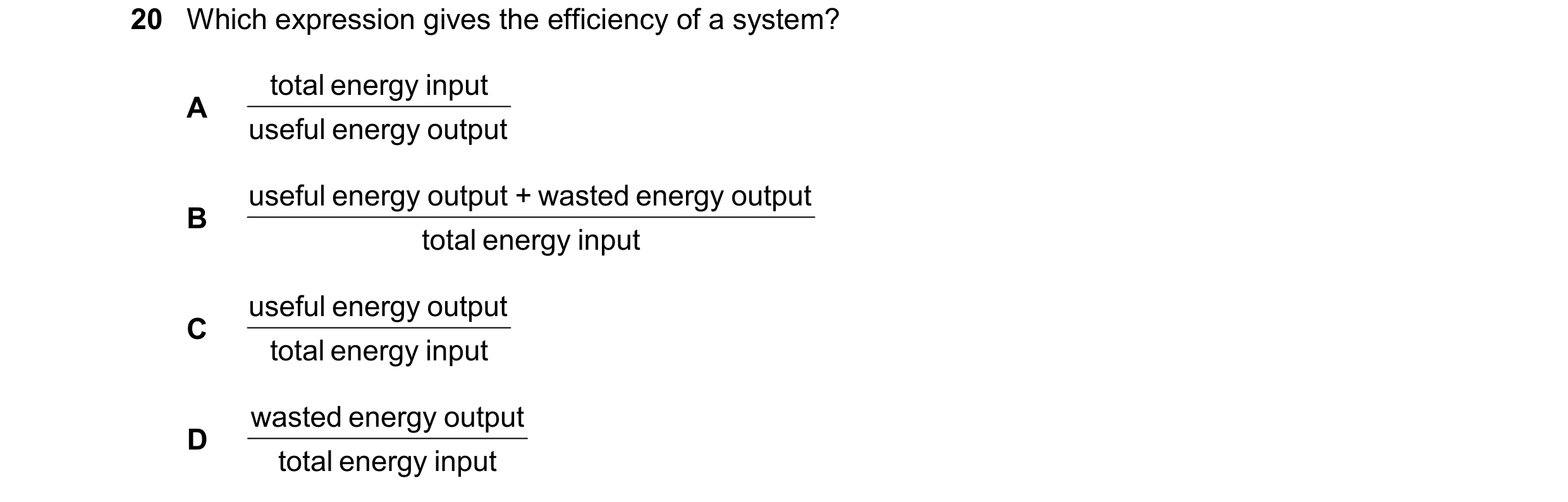
 72 / 77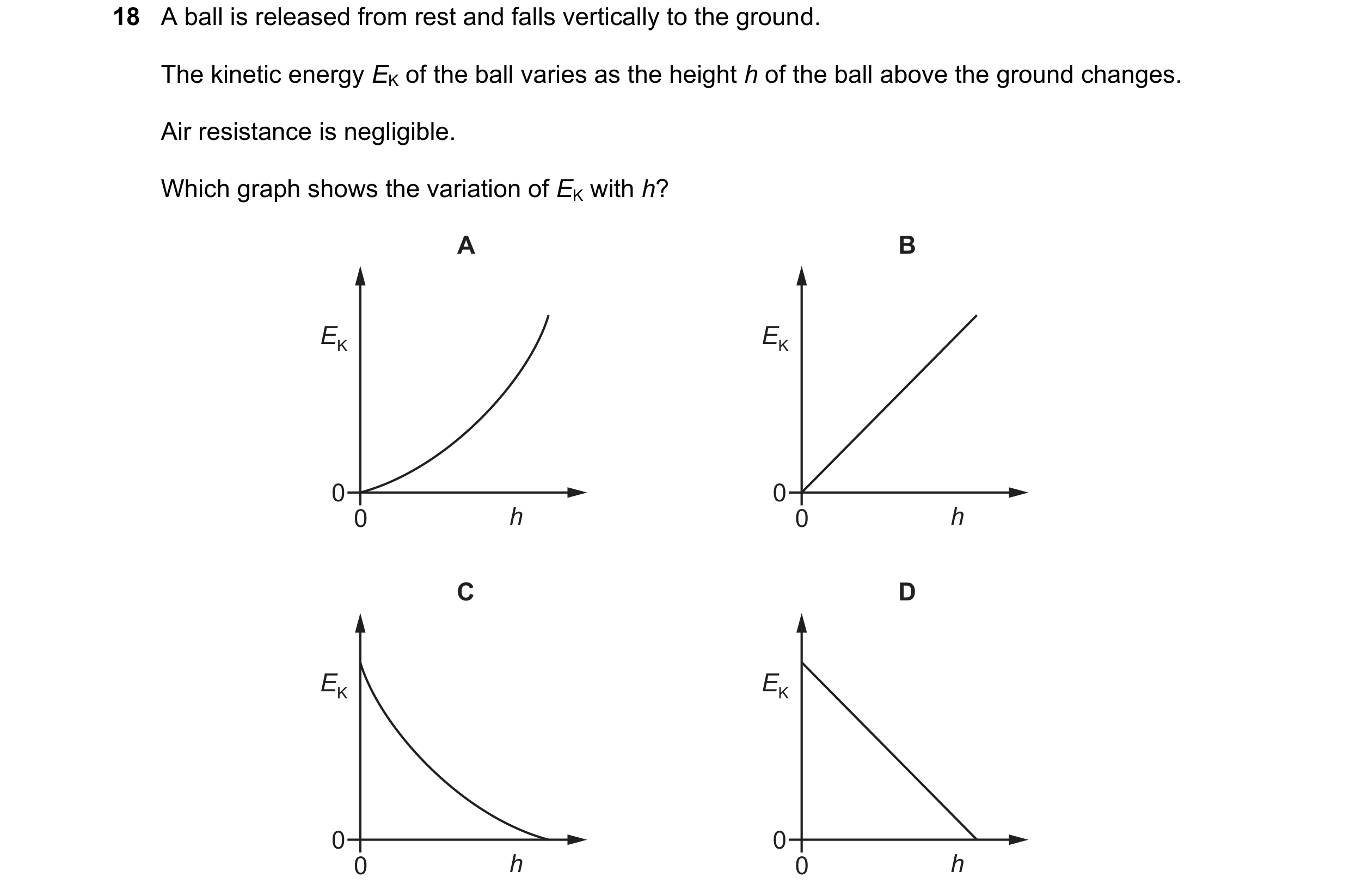
 73 / 77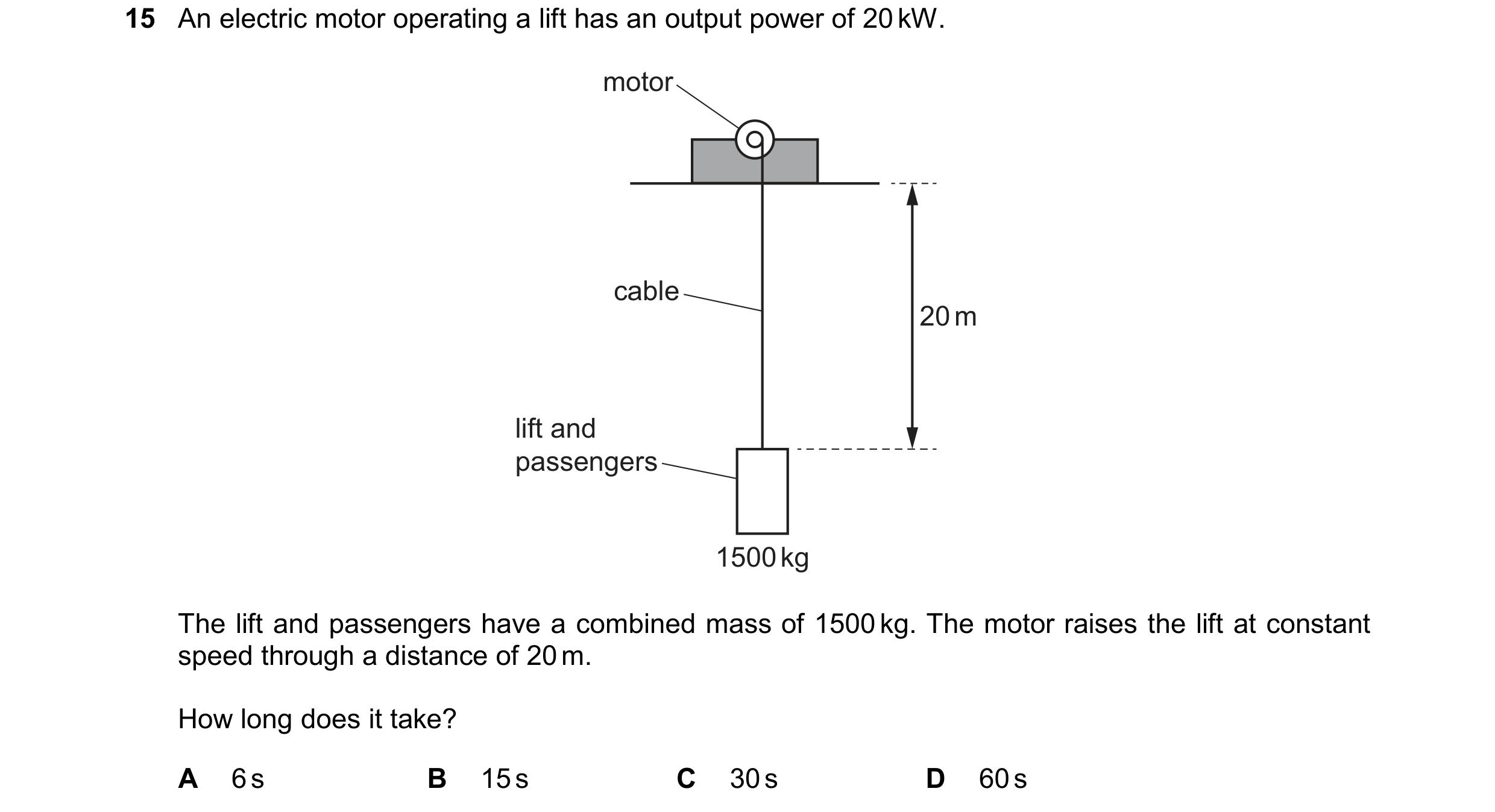
 74 / 77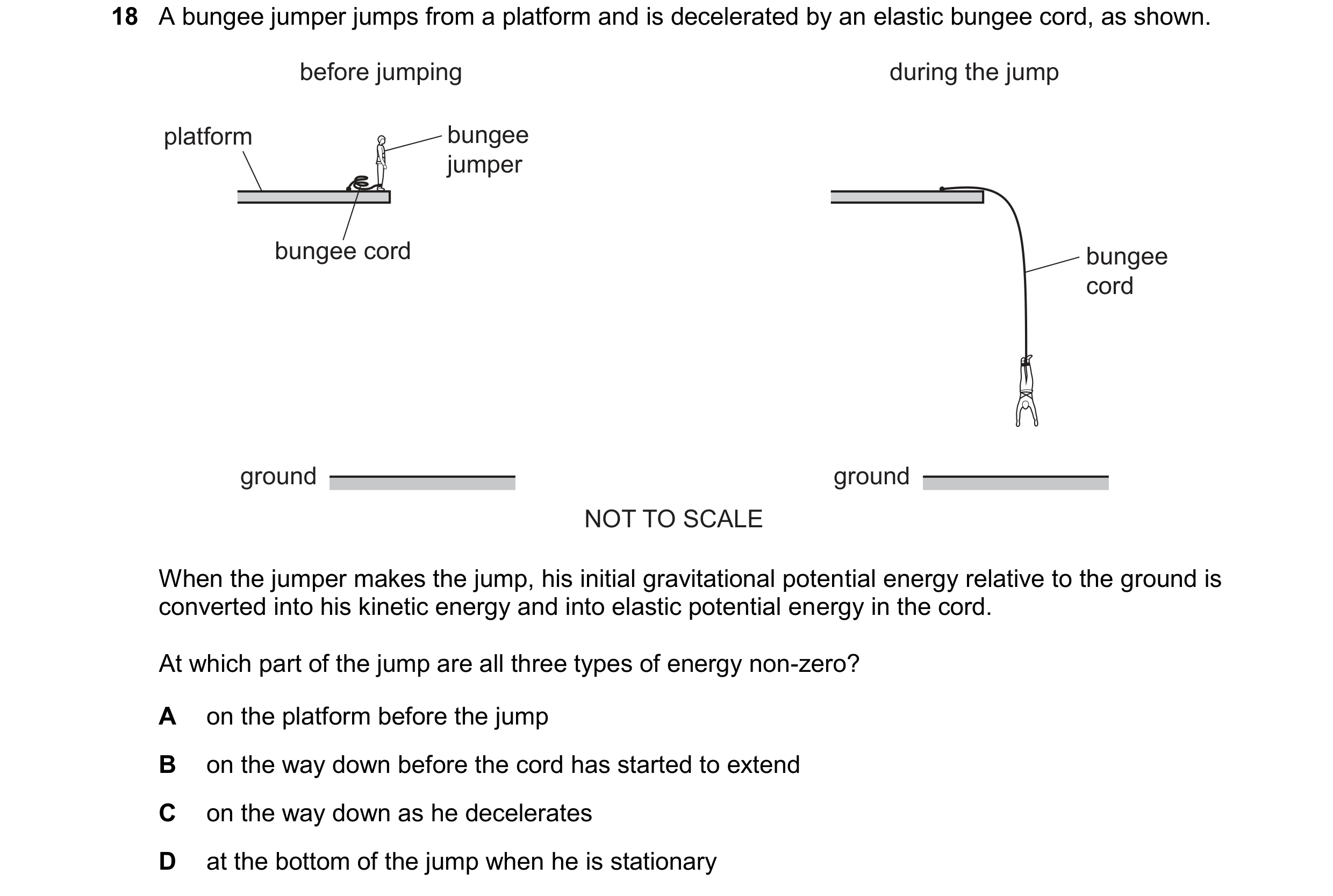
 75 / 77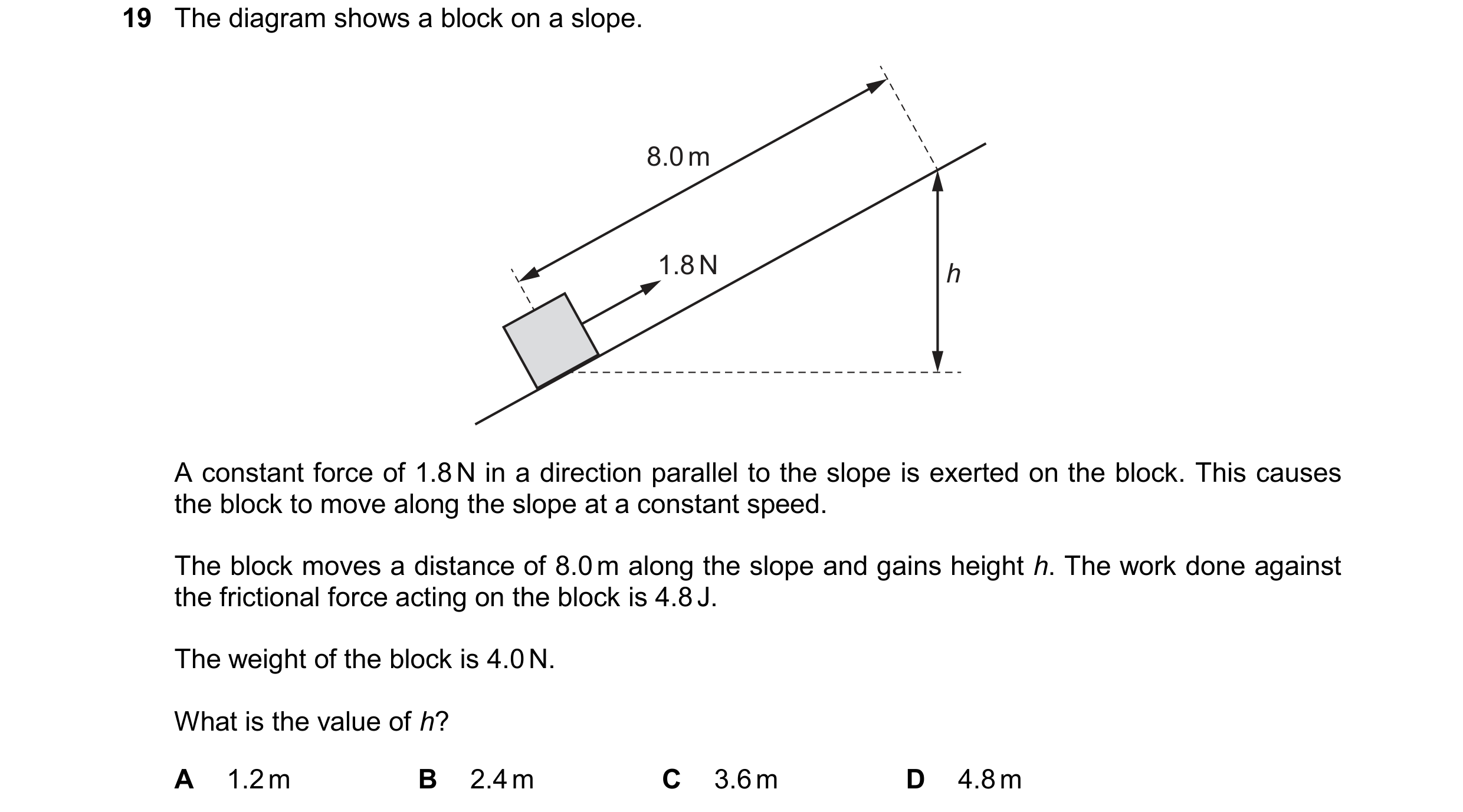

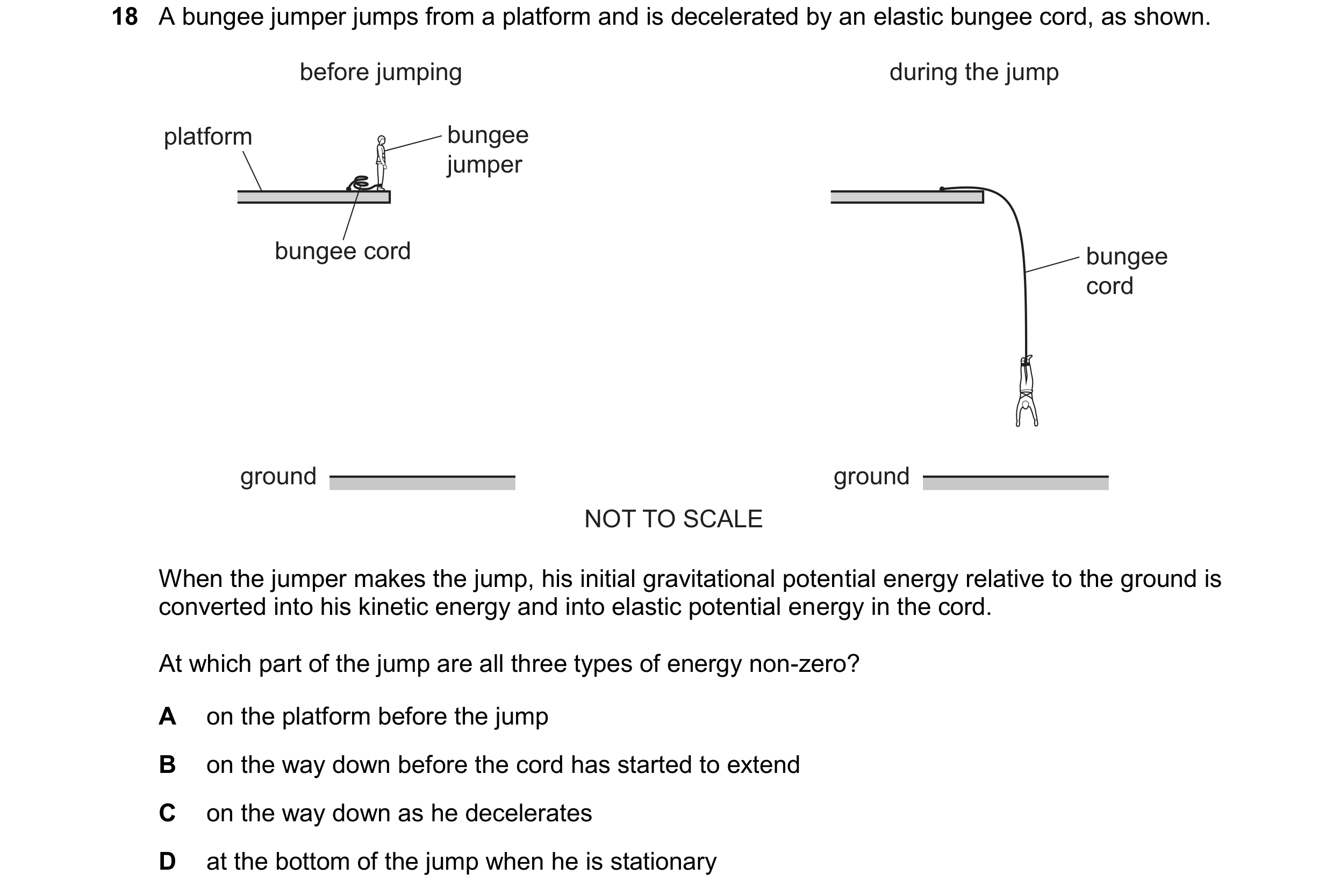 76 / 77
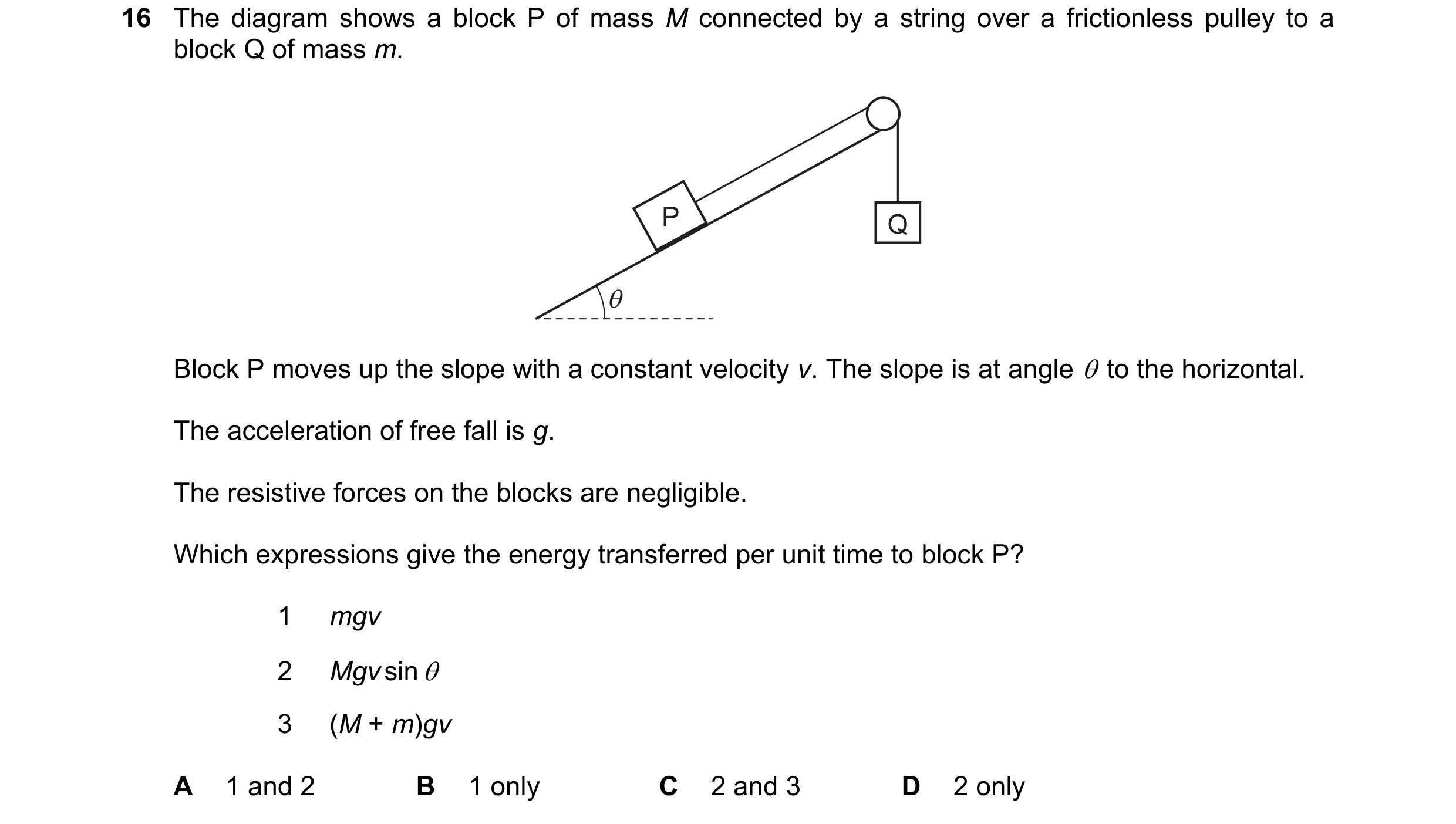
 77 / 77