Questions as text
Q1 · For A Examiner's Use NOT TO SCALE D 140o 80o B yo C In the diagram above AB=BC and AD=DC 0580/31 Oct/Nov 2004
5 (a) For A Examiner's Use NOT TO SCALE D 140o 80o B yo C In the diagram above AB=BC and AD=DC. (i) What is the special name of the quadrilateral ABCD? Answer(a)(i) [1] (ii) On the diagram draw the line of symmetry. [1] (iii) Calculate the value of y. Answer(a)(iii) y = [2] (b) N po 40o M ro qo O NOT TO SCALE K L In the diagram above, the points K,L,M and N lie on the circle centre O. KN is parallel to LM. Find the values of p,q and r. Answer(b) p = , q = , r = [3] (c) For xo Examiner's Use NOT TO SCALE The diagram above shows a regular seven-sided polygon. Each of the interior angles measures x°. One of the angles is marked in the diagram. Calculate the value of x, giving your answer correct to 1 decimal place. Show all your working. Answer(c) x = [4]
11 marks
Mark scheme: 5 a) i) kite 1 ii) correct line BD drawn 1 Allow broken line, one line only iii) 70 2 360 − 140 − 80 M1 for o.e. 2 b) (p =) 90 1 (q =) 50 1 (r =) 50 1√ f.t. from their q, not strict f.t. c) 128.6 c.a.o. 4 360 M2 for 180 - or 7 5× 180 o.e. 7 (may be implied by art 129) +A1 for 128.57 11
This question in 0580/31 Oct/Nov 2004
Q2 · For C Examiner's Use R Sea North North Land 14 km A B At midday, a ship is somewhere… 0580/31 May/June 2005
7 For C Examiner's Use R Sea North North Land 14 km A B At midday, a ship is somewhere along the line from A to C. (a) By measuring an angle, write down the three figure bearing of the ship from A. Answer(a) [2] (b) The coastguard at B sees the ship on a bearing of 350o. (i) On the diagram draw accurately the line showing a bearing of 350o from B. [1] (ii) On the diagram mark the position of the ship, S. [1] (c) (i) Measure the length, in centimetres, of the line AB on the diagram. Answer(c)(i) cm [1] (ii) The distance from A to B is 14 kilometres. Calculate the scale of the drawing. Give your answer in the form 1:n. Answer(c)(ii) 1: [2] (d) The ship is sailing straight for the rocks, R. For There is a lighthouse at A. Examiner's The range of the light from the lighthouse is 10 kilometres. Use (i) Using your scale, draw the locus of points that are 10 kilometres from A. [2] (ii) Draw the line SR on the diagram. How far is the ship from the rocks when the light from the lighthouse is first seen on the ship? Answer(d)(ii) km [2] (e) If the ship does not alter course it will hit the rocks at 12 40. A lifeboat sets off from the coastguard station, B, at 12 00 and sails straight towards the rocks. (i) Measure and calculate the distance, in kilometres, from the coastguard station, B, to the rocks, R. Answer(e)(i) km [2] (ii) Calculate the speed, in kilometres per hour, at which the lifeboat must sail to reach the rocks by 12 40. Answer(e)(ii) km/h [3] (iii) A knot is 1 nautical mile per hour. One nautical mile is equal to 1.85 kilometres. Calculate the speed found in part (e)(ii) in knots. Answer(e)(iii) knots [2]
18 marks
Mark scheme: 7 (a) 050 ( ± 2) 2 M1 for correct angle but not 3 figures i.e. 50 ( ± 2 ) (b) (i) correct line drawn 1 length at least 3 cms long ( ± 2) (ii) correct position 1 f.t. f.t is from line drawn in (b)(i) marked ( ± 2 mm) but must be on the line AC (c) (i) 7 ( ± 2 mm) 1 (ii) 200000 2 c.a.o. 1 for figs 2 or SC1 for figs 1.94 to 2.06 IGCSE – JUNE 2005 0580/0581 3 (d) (i) correct locus drawn 2 f.t. f.t. is for their scale (normally 5 cm) at least over sea allow dotted/dashed locus SC1 for any other circle with centre A drawn SC1 for ¼ correct circle over sea (ii) correct line SR 1 f.t. f.t. is for their S allow dotted/dashed line drawn 5 to 6 incl. 1 no f.t. on this part (e) (i) 18.6 to 19.4 incl. 2 SC1 for 9.3 to 9.7 incl. seen (ii) 27.9 to 29.1 incl. 3 M1 for conversion of minutes to hours (min of 0.66, 0.67 if dec.) M1 (indep) f.t. for their distance (e)(i)/their time taken (iii) 15.4 2 f.t. f.t. is (e)(ii)/1.85 M1 for (e)(ii)/1.85 seen 18
This question in 0580/31 May/June 2005
Q3 · In the diagram below ABD is a straight line 0580/31 Oct/Nov 2005
2 In the diagram below ABD is a straight line. For AB = 4 m and AC = 6 m. Angle BAC = 90°. Examiner's Use A 4 m B D NOT TO 6 m SCALE C (a) (i) Use trigonometry to calculate angle ABC. Answer(a)(i) Angle ABC= [2] (ii) Find angle CBD. Answer(a)(ii) Angle CBD= [1] (b) Calculate the length of BC. Answer(b) BC = m [2] (c) Work out the perimeter and area of triangle ABC. Give the correct units for each. Answer (c) Perimeter = Area = [3]
8 marks
Mark scheme: 2 (a) (i) 56.3 2 M1 for tan ABC = 6/4 oe (ii) 123.7 1√ (b) 7.21 2 M1 for 62 + 42 oe (c) 17.2 m 3√ M1 for area method 12 m2 A1 for both numerically correct B1 for both units correct [8]
This question in 0580/31 Oct/Nov 2005
Q4 · For North Examiner's Use A 110o 6 km 5 km NOT TO C SCALE B In triangle ABC, AB = 5 km, AC… 0580/31 Oct/Nov 2005
5 For North Examiner's Use A 110o 6 km 5 km NOT TO C SCALE B In triangle ABC, AB = 5 km, AC = 6 km and angle BAC = 110º. The bearing of C from A is 100°. (a) Make a scale drawing of the triangle ABC. Use a scale of 1 centimetre to represent 1 kilometre. Start at the point A marked below, where a North line has been drawn. North A [4] (b) Measure and write down For Examiner's (i) angle ABC, Use Answer(b)(i) Angle ABC = [1] (ii) the bearing of B from C. Answer(b)(ii) [1] (c) Find the distance in kilometres between B and C. Answer(c) km [1] (d) A well is 4 kilometres from A and 5 kilometres from C. (i) Use your compasses to find two possible positions for the well. Label the two positions P and Q. [3] (ii) The well is less than 6 kilometres from B. Use a measurement from your drawing to complete the following statement. Answer(d)(ii) The well is at position and is kilometres from B.[2]
12 marks
Mark scheme: 5 (a) bearing 99 to 101° B1 drawn angle BAC 109 to 111° B1 drawn AB 4.9 to 5.1 cm B1 AC 5.9 to 6.1 cm B1 (b) (i) 37 to 40 1√ (ii) 247 to 250 1√ ft from (b)(i) (c) 8.9 to 9.1 1√ (d) (i) Two positions found, 3 2 for two positions without arcs with appropriate arcs and labelled 1 for one position found and labelled (ii) P or Q 1 4.0 to 4.4 √1 ft for correct measurement of their closest position to B [12] IGCSE – NOVEMBER 2005 0580/0581 3
This question in 0580/31 Oct/Nov 2005
Q5 · Calculate the size of one exterior angle of a regular heptagon (seven-sided polygon) 0580/31 Oct/Nov 2005
9 (a) Calculate the size of one exterior angle of a regular heptagon (seven-sided polygon). For Give your answer correct to 1 decimal place. Examiner's Use Answer(a) [3] (b) D A E so to ro NOT TO SCALE 130o po qo F B C G In the diagram above, DAE and FBCG are parallel lines. AC = BC and angle FBA = 130°. (i) What is the special name given to triangle ABC? Answer(b)(i) [1] (ii) Work out the values of p, q, r, s and t. Answer (b)(ii) p = q = r = s = t = [5] (c) J J, K and L lie on a circle centre O. yo L KOL is a straight line and angle JKL = 65°. NOT TO Find the value of y. 65o O SCALE K Answer(c) y = [2]
11 marks
Mark scheme: 9 (a) 51.4 3 2 for 51 or M1 for any complete method (b) (i) Isosceles 1 (ii) p = 50 1 q = 80 1√ ft for 180 – 2p r = 50 1√ ft for = p s = 50 1√ ft for = p t = 80 1√` ft for = q or 180 – 2p (c) 25 2 M1 for 90 – 65 oe [11]
This question in 0580/31 Oct/Nov 2005
Q6 · For P Q Examiner's x° y° Use NOT TO SCALE T z° 100° 63° S R (a) In the diagram PQ is… 0580/31 May/June 2008
6 For P Q Examiner's x° y° Use NOT TO SCALE T z° 100° 63° S R (a) In the diagram PQ is parallel to SR, and QR is parallel to PT. PQ = QR, angle PRS = 63° and angle RST = 100°. Find the value of (i) x, Answer(a)(i) x = [1] (ii) y, Answer(a)(ii) y = [2] (iii) z. Answer(a)(iii) z = [2] (b) The shape of a flower bed is a regular octagon, ABCDEFGH, with sides of 4 metres. (i) Show that the interior angle of a regular octagon is 135°. Answer(b)(i) [2] (ii) Use a ruler and protractor to complete an accurate scale drawing of the flower bed. For Use a scale of 1 centimetre to represent 1 metre. Examiner's The line AB and the centre O are already shown. Use O A 4 m B [2] (iii) Measure and write down the distance from the centre, O, to the mid-point of AB. Answer(b)(iii) cm [1] (iv) Calculate the area of triangle OAB in the scale drawing. Answer(b)(iv) cm2 [2] (v) Calculate the actual area of the flower bed. Answer(b)(v) m2 [1]
13 marks
Mark scheme: 6 (a) (i) 63 B1 B2 cao M1 for 180 - 2 x their (a)(i) soi (may be implied by (ii) 54 answer) (iii) 134 B2 cao M1 for 360 - (100 + 63 + their (a)(i)) or 197 - their (a)(i) soi (may be implied by answer) (b) (i) 360 ÷ 8 or 6 x 180 MA1 180 - 45 or 1080 ÷ 8 MA1 dependent SC2 for convincing argument IGCSE – May/June 2008 0580/0581 03 (ii) octagon drawn M1 closed and not re-entrant accurate A1 angles at A and B equal to 135 +/- 2 degrees and lines BC and AH equal to 4 +/- 0.1 cms (iii) 4.7 to 5.0 B1 (iv) 9.6 B2ft ft is 2 x their (b)(iii) M1 for 0.5 x 4 x their (b)(iii) (v) 76.8 B1 ft ft is 8 x their (b)(iv) [13]
This question in 0580/31 May/June 2008
Q7 · For North Examiner's Use 98° NOT TO P 13.5 km SCALE S 7.2 km Q R 10.3 km P, Q, R and S… 0580/31 May/June 2008
7 For North Examiner's Use 98° NOT TO P 13.5 km SCALE S 7.2 km Q R 10.3 km P, Q, R and S are ferry ports on a wide river, as shown in the diagram above. A ferry sails from P, stopping at Q, R and S before returning to P. (a) Q is 7.2 kilometres due south of P and R is 10.3 kilometres due east of Q. (i) Show by calculation that angle QPR = 55°. Answer(a)(i) [2] (ii) Write down the bearing of R from P. Answer(a)(ii) [1] (b) The bearing of S from P is 098° and SP = 13.5 km. (i) Explain why angle RPS = 27°. Answer (b)(i) [1] (ii) Angle PRS = 90°. Calculate the distance RS. Answer(b)(ii)RS = km [2] (iii) Find the total distance the ferry sails. For Examiner's Use Answer(b)(iii) km [1] (c) The total sailing time for the ferry is 4 hours 30 minutes. Calculate the average sailing speed, in kilometres per hour, for the whole journey. Answer(c) km/h [2]
9 marks
Mark scheme: 7 (a) (i) tan (QPR) = 10.3 ÷ 7.2 M1 M1 for complete long method 55 (.0) E1 (ii) 125 B1 cao (b) (i) 125 - 98 accept 55 + 98 + 27 = 180 or 180 - ( 98 + 55 ) E1 do not accept 180 - 153 (ii) 6.13 art B2cao M1 for 13.5 x sin27 oe (allow full correct long methods) SCM1 for PR (pythag, sin or cos) RS (pythag) then A1 for 4.9 art or SCM1 for PR (pythag, sin or cos) RS(tan) then A1 for 6.4 art. (iii) 37.1 or 37.13 art B1 ft ft is 31 + their (b)(ii) (c) 8.24 to 8.25(1….) B2 ft M1 for their (b)(iii) ÷ 4.5 [9]
This question in 0580/31 May/June 2008
Q8 · G D C NOT TO SCALE B 68° E A EG is a diameter of the circle through E,C and G 0580/31 Oct/Nov 2008
4 G D C NOT TO SCALE B 68° E A EG is a diameter of the circle through E,C and G. The tangent AEB is parallel to CD and angle AEC = 68°. Calculate the size of the following angles and give a reason for each answer. (a) Angle CEG = because [2] (b) Angle ECG = because [2] (c) Angle CGE = because [2] (d) Angle ECD = because [2]
8 marks
Mark scheme: ( ) g 4 (a) 22° W1cao Degree symbol not essential throughout question. Tangent (and) radius/ W1 Allow perpendicular for 90° diameter (meet at) 90° (b) 90° W1cao (Angle in a) semi-circle W1 (c) 68° W1ft Ft is180 −( their (a) + their (b)) (Angles in a )triangle W1 or alternate segment (theorem) (=)180° (d) 68° W1cao Alternate or Z (angles) W1 Allow Z correctly placed on the diagram.
This question in 0580/31 Oct/Nov 2008
Q9 · The quadrilateral ABCD is a scale drawing of a park 0580/31 Oct/Nov 2008
9 The quadrilateral ABCD is a scale drawing of a park. For Angle ABC = 90° and 1 centimetre represents 10 metres. Examiner's Use D A B C (a) Write down (i) the actual length, in metres, of the side CD, Answer(a)(i) m [1] (ii) the size of angle BAD. Answer(a)(ii) [1] (b) Two straight paths cross the park. One path is the same distance from AB as from BC. The other path is the same distance from A as from D. (i) Using a straight edge and compasses only, construct the lines which show each path. [4] (ii) Tennis courts in the park are situated in a region closer to AB than to BC and closer to A than to D. Label this region T. [1] (c) Keith cycles past the park, so that he is always 30 metres outside the boundary ABC. Construct the locus of points which shows this part of his route. [2]
9 marks
Mark scheme: 9 (a) (i) 99 to 101 (metres) W1 (ii) 103° to 105° W1 (b) (i) Bisector of angle ABC W2 W1 correct bisector without arcs (45 ± 1 to BC) with arcs Bisector of AD with arcs W2 W1 correct bisector without arcs. Bisector about ±1mm from centre of AD 89° to 91° to AD by eye and centre within 2mm by and 89° to 91° to AD. eye. (ii) Closed region T indicated W1 Dependent on at least W1 for each bisector. Allow T omitted if region is clear. IGCSE – October/November 2008 0580 and 0581 03
This question in 0580/31 Oct/Nov 2008
Q10 · Write down the name of a polygon with 8 sides 0580/31 May/June 2009
6 (a) Write down the name of a polygon with 8 sides. For Examiner's Use Answer(a) [1] (b) Find the size of the interior angle of a regular polygon with 8 sides. Answer(b) [2] (c) A regular 8-sided polygon, centre O, and side 8 cm, is shown below. M is the mid-point of the side AB. F E NOT TO SCALE G D O H C A M B 8 cm (i) Show that OM = 9.66 cm correct to 3 significant figures. Answer (c)(i) [3] (ii) Calculate the area of the triangle AOB. For Examiner's Use Answer(c)(ii) cm2 [2] (iii) Calculate the area of the polygon. Answer(c)(iii) cm2 [1] (d) The polygon forms the cross-section of a box. The box is a prism of height 12 cm. Calculate the volume of the box. Answer(d) cm3 [1] (e) The box contains 200 toffees in the shape of cuboids, 3 cm by 2 cm by 2 cm. Calculate (i) the total volume of the 200 toffees, Answer(e)(i) cm3 [2] (ii) the percentage of the volume of the box not filled by the toffees. Answer(e)(ii) % [3]
15 marks
Mark scheme: 6 (a) Octagon 1 (b) 135 2 M1 for 180 − (360 ÷ 8) oe (c) (i) Angle OAB = their (b)/2 or W1ft 67.5 or 22.5 correct values, angle AOM = 90 − their (b)/2 4 × tan ‘67.5’ or 4 ÷ tan ‘22.5’ M1 9.656… or 9.66 A1cao Dep on W1 and M1 (ii) 38.6 to 38.64 2 M1 for 0.5 × 8 × 9.66 (iii) 308.8 to 309.12 1ft Their (c) (ii) × 8 (d) 3705.6 to 3709.44 or 3710 1ft Their (c) (iii) × 12 (e) (i) 2400 2cao M1 for 3 × 2 × 2 × 200 (ii) 35.2(3…) to 35.3(0…) 3cao M1 for their ((d) − (e) (i)) soi. (d)− (e)(i) M1 for (d) × 100 (e)(i) Or M2 for (1 (d) ) × 100 SC1 for Answer 64.7 to 64.77
This question in 0580/31 May/June 2009
Q11 · Examiner's Use C A B Triangle ABC is drawn accurately 0580/31 May/June 2010
9 Examiner's Use C A B Triangle ABC is drawn accurately. (a) Measure and write down (i) the length of AC, Answer(a)(i) AC = cm [1] (ii) the size of angle CAB. Answer(a)(ii) Angle CAB = [1] (b) Construct accurately the locus of all the points 7 cm from C. [2] (c) The point X lies outside the triangle ABC, with CX = 7 cm and angle BCX= 67°. Draw accurately the line CX. [2] (d) Draw the line BX. Measure and write down the length of this line. Answer(d) BX = cm [1] (e) Using a straight edge and compasses only, construct the locus of points equidistant from BC and from BX. [2] Question 10 is printed on the next page.
9 marks
Mark scheme: 9 (a) (i) 9 or 8.9 to 9.1 1 (ii) 53 – 55 1 (b) compass drawn circle centre C radius 2 SC1 incomplete accurate circle 7 cm SC1 any complete circle centre C (c) correct line drawn with angle BCX = 2ft SC1 for BCX = 113° or BCX = 67° inside 67° triangle or BCX = 67°, CX not = 7 (d) in range 9.3 – 9.9 1ft Strict ft from (c) (e) ruled accurate angle bisector of their 2ft SC1 if accurate but without arcs CBX with 2 pairs of arcs or M1 for 2 pairs of arcs IGCSE – May/June 2010 0580 31
This question in 0580/31 May/June 2010
Q12 · For D C Examiner's 7 cm NOT TO Use SCALE M X L A 7 cm B In the diagram, ABCD is a square… 0580/31 Oct/Nov 2010
4 For D C Examiner's 7 cm NOT TO Use SCALE M X L A 7 cm B In the diagram, ABCD is a square of side 7 cm. BLC and DMA are equilateral triangles. (a) Find the perimeter of the shape ABLCDM. Answer(a) cm [1] (b) (i) Write down the size of angle CBL. Answer(b)(i) Angle CBL = [1] (ii) Calculate the length of LX. Answer(b)(ii) LX = cm [2] (c) (i) Calculate the area of triangle BLC. Answer(c)(i) cm2 [2] (ii) Calculate the area of the shape ABLCDM. Answer(c)(ii) cm2 [2]
8 marks
Mark scheme: 4 (a) 42 1 (b) (i) 60° 1 x x (ii) 6.06(217…) 2 M1 ft for = cos 30 or = sin 60 or 7 7 x 5.3 = tan 60 or = tan 30 or better 5.3 x (c) (i) 21.2 to 21.4 ft 2ft M1 for 12 × 7 × their (b)(ii) oe (ii) 91.4 to 91.7 ft 2ft M1 ft 7 × 7 + 2 (their (c)(i)) or B1 for 49 5 1 3 75
This question in 0580/31 Oct/Nov 2010
Q13 · For Examiner's Use A B The line AB is drawn above 0580/31 Oct/Nov 2011
6 (a) For Examiner's Use A B The line AB is drawn above. Parts (i), (iii), and (v) must be completed using a ruler and compasses only. All construction arcs must be clearly shown. (i) Construct triangle ABC with AC = 7 cm and BC = 6 cm. [2] (ii) Measure angle BAC. Answer(a)(ii) Angle BAC = [1] (iii) Construct the bisector of angle ABC. [2] (iv) The bisector of angle ABC meets AC at T. Measure the length of AT. Answer(a)(iv) AT = cm [1] (v) Construct the perpendicular bisector of the line BC. [2] (vi) Shade the region that is • nearer to B than to C and • nearer to BC than to AB. [1] (b) A ship sails 40 km on a bearing of 040° from P to Q. For Examiner's (i) Using a scale of 1 centimetre to represent 5 kilometres, make a scale drawing of the path of Use the ship. Mark the point Q. North P Scale: 1 cm = 5 km [2] (ii) At Q the ship changes direction and sails 30 km on a bearing of 160° to the point R. Draw the path of the ship. [2] (iii) Find how far, in kilometres, the ship is from the starting position P. Answer(b)(iii) km [1] (iv) Measure the bearing of P from R. Answer(b)(iv) [1]
15 marks
Mark scheme: 6 (a) (i) Correct construction 2 B1 for two lines or B1 for accurate arcs seen or B1 for one correct line with two arcs SC1 for AC = 6 and BC = 7 with arcs (ii) 47° (45 – 49) 1ft Strict ft their (a)(i) (iii) Correct construction 2ft Their (a)(i) B1 for accurate arcs no line or B1 for accurate line drawn no arcs or B1 for accurate line with arcs bisecting another angle (iv) 4 (3.8 – 4.2) 1ft Strict ft their (iii) with intersection on opposite side of triangle (v) Correct construction 2ft B1 for accurate arcs no line or B1 for accurate line drawn no arcs or B1 for accurate line with arcs, bisecting AB or AC (vi) Correct region shaded 1ft ft is for boundaries of correct perpendicular bisector of their BC and correct angle bisector of their ABC, with or without arcs (b) (i) Correct scale drawing of PQ 2 B1 for accurate angle 40o, B1 for PQ 8cm (ii) Correct scale drawing of their QR 2 B1 for accurate angle 160o, B1 for QR 6cm (iii) 35 to 37 1ft Measure × 5 ± 1km (iv) 264 to 268 1ft IGCSE – October/November 2011 0580 31
This question in 0580/31 Oct/Nov 2011
Q14 · For C Examiner's D 92° NOT TO Use 140° SCALE 52° A B X In the quadrilateral ABCD, angle… 0580/33 Oct/Nov 2011
5 (a) For C Examiner's D 92° NOT TO Use 140° SCALE 52° A B X In the quadrilateral ABCD, angle BAD = 52°, angle ADC = 140° and angle DCB = 92°. AB is extended to X. (i) Calculate angle CBX. Answer(a)(i) Angle CBX = [2] (ii) The line BY bisects angle CBX. Complete the statement. The lines BY and AD are because [2] (b) T NOT TO O 4x° x° P SCALE U The diagram shows a circle, centre O. PT and PU are tangents to the circle at T and U. Angle TPU = x° and angle TOU = 4x°. Calculate the value of x. Answer(b) x = [3] (c) The exterior angle of a regular polygon is 20°. Calculate the number of sides of the polygon. Answer(c) [2]
9 marks
Mark scheme: 5 (a) (i) 104 2 M1 for 360 – (52 + 140 + 92) implied by 76 (ii) Parallel 1 Dependent on (i) correct Angle YBX = 52° oe 1 Dependent on word parallel already given (b) 36 3 M2 for 360 = 90 + 90 + x + 4x oe (B1 if angle T or U = 90° soi) (c) 18 2 M1 if angle sum = 360 soi or long method
This question in 0580/33 Oct/Nov 2011
Q15 · For y Examiner's Use B 6 4 2 A E C x –4 –2 0 2 4 6 8 10 12 –2 –4 –6 Triangle ABC is drawn… 0580/31 May/June 2012
6 For y Examiner's Use B 6 4 2 A E C x –4 –2 0 2 4 6 8 10 12 –2 –4 –6 Triangle ABC is drawn on a 1cm2 grid. E is the point (0, 0). (a) Write down the gradient of the line AB. Answer(a) [2] (b) The gradient of BC is – 0.5 . Write down the equation of the line BC in the form y = mx + c. Answer(b) y = [2] (c) Write down the ratio AE : EC. For Give your answer in its simplest form. Examiner's Use Answer(c) : [2] (d) Measure angle ABE. Answer(d) Angle ABE = [1] (e) Triangle ABE is similar to triangle BCE. Explain what the word similar tells you about the triangles ABE and BCE. Answer(e) [2] (f) Calculate the area of triangle ABC. Answer(f) cm2 [3] (g) ABCD is a rectangle. (i) Mark point D on the grid. [1] (ii) Write down the co-ordinates of D. Answer(g)(ii) ( , ) [1]
14 marks
Mark scheme: (e) 6 × 10⁻³ 4 M1 ‘50’ × ‘120’ figs seen in area calculation A1 for 6000 seen (implied by 0.006 later) M1 for dividing by 1000², 0.05 & 0.12 seen or ×10–6 oe somewhere B1 ft from ‘their 0.006’ provided SF power is –ve Or SC1 for 0.6 × 10⁻² oe 9 (a) (i) 226 to 226.224 cm³ 3 M1 π × 3² × 8 B1 for units : cm³ (ii) 8 cao www 4 B1 1500 used M1ft 3 × their (a)(i) 4 their 1500 M1ft 3 × their (a)(i) 4 16 (b) 5.09 (5.092 to 5.10) 2 M1 π (c) 148 cm² 3 M2 for 2 × 4 × 5 + 2 × 4 × 6 + 2 × 5 × 6 SC1 for 2 × 4 × 5 oe or 4 × 5 + 4 × 6 + 5 × 6 implied by 40, 48, 60 or 74, or list of 20, 20, 24, 24, 30, 30 (d) (i) mv oe 1 (ii) msv oe 1ft Ft (d)(i) × s (iii) 1000 msv oe 1ft Ft (d)(ii) × 1000
This question in 0580/31 May/June 2012
Q16 · Here is a scale drawing of a shop floor, EFGH 0580/33 May/June 2012
3 Here is a scale drawing of a shop floor, EFGH. For The scale is 1 centimetre represents 2 metres. Examiner's Use F G H Scale: 1 cm to 2 m E (a) What is the mathematical name of the shape EFGH? Answer(a) [1] (b) What type of angle is angle EFG? Answer(b) [1] (c) Find the actual length, in metres, of the side EH. Answer(c) m [2] (d) Measure angle FEH. Answer(d) Angle FEH = [1] (e) Complete this part using ruler and compasses only. All construction arcs must be clearly shown. A table is placed • nearer to E than to H and • less than 14 m from H. By constructing two loci on the scale drawing, find and label the region R, where the table is placed. [5] (f) The shop sells shoes which are packed in boxes. Each box is a cuboid 33.2 cm long, 16.8 cm wide and 11 cm high. Calculate the volume of one of these shoe boxes. Answer(f) cm3 [2]
12 marks
Mark scheme: 3 (a) quadrilateral 1 (b) obtuse 1 (c) 23.6–24.4 2 M1 for 11.8 – 12.2 (d) 31–35 1 (e) construction of perpendicular 5 B1 for two pairs of arcs, same radius, centres E bisector of EH and H part circle centre H radius 7 cm B1 for bisector within 2mm of correct one, ± 2° of indication of region correct angle B1 for part circle centre H B1 for radius 7 cm B1ft for an indication of the region, ft dependent on at least B2 from above (f) 6135.36 or 6135.4 or 6135 or 6140 2 M1 for 33.2 × 16.8 × 11
This question in 0580/33 May/June 2012
Q17 · For C Examiner's Use 70° NOT TO SCALE D 40° B E A In the diagram, ACE is a triangle 0580/31 Oct/Nov 2012
4 (a) For C Examiner's Use 70° NOT TO SCALE D 40° B E A In the diagram, ACE is a triangle. B is a point on AC and D is a point on CE. AE is parallel to BD, angle ACE = 70° and angle CBD = 40°. (i) Find angle BDC. Answer(a)(i) Angle BDC = [1] (ii) Write down the mathematical name of triangle BCD. Answer(a)(ii) [1] (iii) Find angle CAE. Give a reason for your answer. Answer(a)(iii) Angle CAE = because [2] (iv) Complete the following statement. Triangle ACE and triangle BCD are [1] (b) For Examiner's Use A NOT TO SCALE O C 55° B In the diagram, A and B lie on a circle, centre O. AC and BC are tangents to the circle and angle ACB = 55°. (i) Work out reflex angle ACB. Answer(b)(i) Reflex angle ACB = [1] (ii) Give a reason why angle OAC = angle OBC = 90°. Answer(b)(ii) [1] (iii) Work out angle AOB. Answer(b)(iii) Angle AOB = [1] (iv) Write down the mathematical name of quadrilateral OACB. Answer(b)(iv) [1]
9 marks
Mark scheme: 4 (a) (i) 70° 1 (ii) isosceles 1 (iii) 40° 1 Corresponding (to angle CBD) 1 dep on 40° (accept longer reasons) (iv) similar 1 (b) (i) 305° 1 (ii) (Angle between) tangent (and) 1 radius (iii) 125° or 235° 1 (iv) kite 1 IGCSE – October/November 2012 0580 31 2 2 2
This question in 0580/31 Oct/Nov 2012
Q18 · The diagram shows the plan of a field QRST 0580/32 Oct/Nov 2012
7 The diagram shows the plan of a field QRST. For The scale is 1 centimetre represents 10 metres. Examiner's Use S T Q R Scale: 1 cm = 10 m (a) Nothing is grown within 35 metres of T. Construct the boundary, inside QRST, of the region where nothing is grown. [2] (b) Use a straight edge and compasses only for the constructions in parts (b)(i) and (b)(ii). For Leave in all your construction arcs. Examiner's Use (i) Construct the bisector of angle RQT. Draw your line to meet the side ST. [2] (ii) Construct the locus of points equidistant from Q and from R. Draw your line to meet the side ST. [2] (c) Flowers are grown in the region • nearer to QR than to QT and • nearer to Q than to R. (i) Label this region F. [1] (ii) Calculate the actual area in which flowers are grown. Give your answer in square metres. Answer(c)(ii) m2 [4]
11 marks
Mark scheme: 7 (a) Arc of circle 3.5 cm from T. 2 M1 for any arc, centre T. (b) (i) Correct construction with 4 2 B1 for correct but without 4 arcs correct arcs (ii) Bisector of QR with 2 pairs of 2 B1 for correct but without 2 pairs of arcs arcs. (c) (i) F in correct region 1dep Dependent on at least B1 and B1 in (b) IGCSE – October/November 2012 0580 32 (ii) 1200 to 1700 (m2) 4dep Dependent on at least B1 and B1 in (b) If at least B1 and B1 in (b) then B1 for base 33 Y b Y 37(m) or 3.3 Y b Y 3.7(cm) B1 for height 70 Y h Y 96(m) or 7.0 Y h Y 9.6(cm) M1 for ½ × their base × their height If B0 in either (b)(i) or (b)(ii) but F marked in any triangle SC1 for their base ± 2(m) or ± 0.2(cm) SC1 for their perpendicular height ± 2(m) or ± 0.2(cm) SC1 for ½ × their base × their height
This question in 0580/32 Oct/Nov 2012
Q19 · For H Examiner's Use NOT TO SCALE F C K G A B 117° D E I J The points F, G, H and I lie… 0580/33 Oct/Nov 2012
7 For H Examiner's Use NOT TO SCALE F C K G A B 117° D E I J The points F, G, H and I lie on a circle, centre C. FG is a diameter and DE is a tangent to the circle at I. DE is parallel to AB and angle GKI = 117°. Complete the following statements. (a) Angle FKI = because [2] (b) Angle FHG = because [2] (c) Angle EIJ = because [2] (d) Angle CIE = because [2]
8 marks
Mark scheme: 7 (a) 63 1 (Angles on a straight) line (add to) 180 1 (b) 90 1 (Angle in a) semi circle 1 (c) 117 1 Corresponding (angles) 1 (d) 90 1 Tangent and radius 1
This question in 0580/33 Oct/Nov 2012
Q20 · For Examiner′s NOT TO Use SCALE 108° 43° p° A B AB is a straight line 0580/31 May/June 2013
2 (a) For Examiner′s NOT TO Use SCALE 108° 43° p° A B AB is a straight line. Find the value of p. Answer(a) p = … [1] (b) NOT TO 123° SCALE 88° 107° q° Find the value of q. Answer(b) q = … [1] (c) A 48° NOT TO SCALE s° r° D C B DCB is a straight line and AB = AC. Find the values of r and s. Answer(c) r = … s = … [2] (d) For Examiner′s B Use NOT TO 130° SCALE t° A The straight line AB crosses two parallel lines. Find the value of t. Answer(d) t = … [1] (e) B NOT TO SCALE O 124° u° C A A and B lie on a circle, centre O. AC and BC are tangents to the circle. Find the value of u. Answer(e) u = … [2] _____________________________________________________________________________________
7 marks
Mark scheme: 2 (a) 29 1 (b) 42 1 (c) [r =] 66 and [s =] 114 1,1ft Ft is s = 180 – their r (d) 50 1 (e) 56 2 M1 for either angle at A or B indicated as 90 soi IGCSE – May/June 2013 0580 31
This question in 0580/31 May/June 2013
Q21 · For Examiner′s North Use C B D North A Scale: 1 cm to 12 km The diagram shows four towns… 0580/33 May/June 2013
5 (a) For Examiner′s North Use C B D North A Scale: 1 cm to 12 km The diagram shows four towns, A, B, C and D, joined by straight roads AB, BC and BD. The scale is 1 centimetre represents 12 kilometres. (i) Measure the bearing of B from A. Answer(a)(i) … [1] (ii) Work out the distance in kilometres from A to B. Answer(a)(ii) … km [2] (iii) Saraswati takes 1 hour 30 minutes to drive from A to B. Calculate her average speed, in kilometres per hour, for this journey. Answer(a)(iii) … km/h [1] (b) At B, Saraswati follows another straight road which is equidistant from BC and BD. For Examiner′s Use Using a straight edge and compasses only and leaving in all your construction lines, construct the line of this road on the diagram. [2] (c) Another motorist, Leah, leaves C and drives on a bearing of 165° to meet Saraswati at town E. Town E is on the road in part (b). Show Leah’s journey on the diagram and mark the town E. [1] (d) Saraswati travelled from B to E at an average speed of 55 km/h. Calculate the time, in hours and minutes, that she took. Answer(d) … h … min [4] (e) There is a speed limit of 50 km/h on all roads within 30 km of town D. On the diagram, show the boundary of the region where this speed limit applies. [2] _____________________________________________________________________________________
13 marks
Mark scheme: 5 (a) (i) (0)35 to (0)39 1 (ii) 117.6 to 122.4 [km] 2 B1 for (10 ± 0.2) cm seen (iii) 80 or 78.4 to 81.6 1ft ft their (a)(ii) ÷ 1.5 (b) Bisector of angle CBD with 2 2 B1 correct line (±2°), some or all arcs absent correct pairs of arcs. (c) Ruled line from C to BD on a 1 bearing of 165° (d) 1 [h] 18 [min] to 1 [h] 26 [min] 4 B1ft measure BE www M1 change to kilometres. M1 for their distance ÷ 55 (e) Circle, centre D, with radius 2 M1 for 2.5 ± 0.2 soi. 2.5 ± 0.2 cm SC1 for circle, centre D, incorrect radius or freehand ‘correct’ circle IGCSE – May/June 2013 0580 33
This question in 0580/33 May/June 2013
Q22 · The diagram shows the position of town A and town B, on a map 0580/31 Oct/Nov 2013
3 (a) The diagram shows the position of town A and town B, on a map. For Examiner′s Use North A B (i) Measure the length, in millimetres, of the line AB. Answer(a)(i) … mm [1] (ii) Measure the bearing of town B from town A. Answer(a)(ii) … [1] (b) A triangular fi eld has sides of length 550 m, 300 m and 400 m. (i) Construct the triangle, using a ruler and compasses only. Use a scale of 1 cm to represent 50 m. The side of length 550 m has been drawn for you. 550 m [3] (ii) By making a suitable measurement on your diagram, calculate the area of the fi eld. Give your answer in square metres. Answer(b)(ii) … m2 [3] _____________________________________________________________________________________
8 marks
Mark scheme: 3 (a) (i) 44 – 46 1 (ii) 231 – 235 1 (b) (i) Fully correct drawing with arcs 3 B2 for correct triangle without arcs B1 for 1 correct length side Or arc of 6cm or 8cm 1 52250 to 60500 nfww 3FT M2 for × 550 × 2 (their correct height × 50) 1 Or × 11 × their correct height in cm 2 or B1 for their correct height in cm or their correct height × 50 seen 1 If 0 scored then SC1 for × 550 × 2 (50 × k)
This question in 0580/31 Oct/Nov 2013
Q23 · For Examiner′s Use North Sea B North A The scale drawing shows the position of two airfi… 0580/32 Oct/Nov 2013
4 (a) For Examiner′s Use North Sea B North A The scale drawing shows the position of two airfi elds, A and B. The scale is 1 cm represents 50 km. (i) Find the actual distance between A and B. Give your answer in kilometres. Answer(a)(i) … km [2] (ii) Measure the bearing of B from A. Answer(a)(ii) … [1] (iii) A third airfi eld, C, is 525 km from airfi eld A and 350 km from airfi eld B. On the scale drawing, construct the position of airfi eld C. [2] (iv) Measure the bearing of B from C. Answer(a)(iv) … [1] (b) A plane is at airfi eld C at 10 40. For Examiner′s It fl ies 525 km to airfi eld A at a speed of 700 km/h. Use Work out the time when the plane reaches airfi eld A. Answer(b) … [3] (c) This plane has a maximum take-off weight of 4173 kg. Write 4173 kg correct to the nearest hundred kilograms. Answer(c) … kg [1] (d) The plane can fl y at a maximum height of 13 107 m. Write 13 107 m in kilometres, correct to 3 signifi cant fi gures. Answer(d) … km [2] (e) In one week, the plane fl ies a total distance of 8520 km, correct to the nearest ten kilometres. Write down the lower bound of this distance. Answer(e) … km [1] _____________________________________________________________________________________
13 marks
Mark scheme: 4 (a) (i) 370 to 380 2 B1 for 7.4 to 7.6 seen (ii) [0]36 to [0]40 1 (iii) Intersecting arcs: 2 Arc centre A radius 10.5 cm B1 for one correct arc Arc centre B radius 7 cm or C correct with no arcs (iv) 300 to 310 1FT (b) 11 25 3 M2 for 525 ÷ 700 × 60 or better soi Or M1 for 525 ÷ 700 soi by 0.75 (c) 4200 1 (d) 13.1 2 B1 for 13 100 or 13.107 or 13.100 Or B1FT their conversion to 4 or more sig figs seen and then correctly rounded to 3 sig figs (e) 8515 1
This question in 0580/32 Oct/Nov 2013
Q24 · The angles in a triangle are in the ratio 3 : 4 : 8 0580/31 May/June 2014
1 (a) The angles in a triangle are in the ratio 3 : 4 : 8 . (i) Show that the smallest angle of the triangle is 36°. Answer(a)(i) [2] (ii) Work out the other two angles of the triangle. Answer(a)(ii) … and … [2] (b) Another triangle ABC has angle BAC = 35° and angle ABC = 65°. (i) Using a protractor and straight edge complete an accurate drawing of the triangle ABC. The side AB has been drawn for you. A B [2] (ii) Measure the length, in centimetres, of the shortest side of your triangle. Answer(b)(ii) … cm [1] (c) A different triangle has base 7.0 cm and height 5.6 cm. Calculate the area of this triangle, giving the units of your answer. Answer(c) … … [3] __________________________________________________________________________________________
10 marks
Mark scheme: Question Answers Mark Part Marks 1 (a) (i) 3 180 or M1 3 + 4 + 8 3 + 4 + 8 180 × 3 3 ÷ (15) × 180 or (= 36) M1 15 (ii) 48 [and] 96 1,1 One mark for each. If zero, SC1 for sum of both angles = 144. (b) (i) Angle BAC = 35 (±2º) B1 Angle ABC = 65 (±2º) and triangle completed B1 If zero SC1 for AC and BC reversed and triangle completed (ii) 4.45cm to 4.85cm 1 FT FT for their shortest side (c) 19.6 cao 2 M1 for 0.5 × 7 × 5.6 cm2 oe 1
This question in 0580/31 May/June 2014
Q25 · Draw the line of symmetry on the shape below 0580/32 May/June 2014
3 (a) Draw the line of symmetry on the shape below. [1] (b) Write down the order of rotational symmetry of the shape below. Answer(b) … [1] (c) (i) NOT TO 72° SCALE 157° x° Work out the value of x. Answer(c)(i) x = … [1] (ii) 49° NOT TO SCALE y° 54° Work out the value of y. Answer(c)(ii) y = … [2] (d) A NOT TO SCALE 34° O B C AC is a diameter of the circle, centre O. Calculate angle ACB. Answer(d) Angle ACB = … [2] (e) The diagram below shows parts of shape P and shape Q. Shape P is a regular hexagon and shape Q is another regular polygon. The two shapes have one side in common. 100° NOT TO SCALE P Q 100° Find the number of sides in shape Q. Show each step of your working. Answer(e) … [5] __________________________________________________________________________________________
12 marks
Mark scheme: 3 (a) correct mirror line 1 (b) 2 1 (c) (i) 131 1 (ii) 103 2 M1 for 180 – 49 – 54 or 49 + 54 or 77 seen or fully correct method (d) 56 2 M1 for 180 – 90 – 34 or better or indication of angle B = 90 (e) 9 with supporting working 5 M2 for internal angle of P =120 or M1 for 180 – (360 ÷ 6) or (6 – 2) × 180 ÷ 6 M1FT for 360 – their ‘120’ – 100 [= 140] M1FT for 360 ÷ (180 – their ‘140’) if M0 then answer of 9 scores SC2 IGCSE – May/June 2014 0580 32
This question in 0580/32 May/June 2014
Q26 · NOT TO SCALE h 10 cm The triangle has an area of 30 cm2 and a base of 10 cm 0580/33 May/June 2014
8 (a) NOT TO SCALE h 10 cm The triangle has an area of 30 cm2 and a base of 10 cm. Calculate the perpendicular height h of the triangle. Answer(a) h = … cm [2] (b) D 8 cm C NOT TO SCALE 7 cm A B 14 cm AB is parallel to CD. AB is 14 cm and CD is 8 cm. The perpendicular distance between AB and CD is 7 cm. (i) Write down the mathematical name for the quadrilateral ABCD. Answer(b)(i) … [1] (ii) Calculate the area of ABCD. Answer(b)(ii) … cm2 [2] (c) An isosceles triangle has an angle of 40°. Tikka draws the triangle with angles 40°, 70° and 70°. Kanwarpreet draws a different correct triangle. What angles did Kanwarpreet use? Answer(c) 40°, … , … [2] __________________________________________________________________________________________ Question 9 is printed on the next page.
7 marks
Mark scheme: 8 30× 2 (a) 6 2 M1 for oe or better 10 (b) (i) Trapezium 1 (14 + 8) (ii) 77 2 M1 for × 7 oe 2 (c) [40], 40, 100 1, 1
This question in 0580/33 May/June 2014
Q27 · Y 9 8 7 6 5 4 3 P 2 1 x –8 –7 –6 –5 –4 –3 –2 –1 0 1 2 3 4 5 6 –1 –2 –3 –4 –5 H –6 G –7 –8… 0580/31 Oct/Nov 2014
2 y 9 8 7 6 5 4 3 P 2 1 x –8 –7 –6 –5 –4 –3 –2 –1 0 1 2 3 4 5 6 –1 –2 –3 –4 –5 H –6 G –7 –8 –9 Two congruent quadrilaterals, G and H, and a point P are shown on this 1 cm2 grid. (a) (i) Write down the mathematical name of the shaded quadrilateral. Answer(a)(i) … [1] (ii) Calculate the area of the shaded quadrilateral. Give the units of your answer. Answer(a)(ii) … … [3] (b) Describe fully the single transformation that maps quadrilateral G onto quadrilateral H. Answer(b) … … [3] (c) On the grid, draw the images of quadrilateral G after the following transformations. (i) Refl ection in the line y = 0. [2] -5 (ii) Translation by the vector [2] e 7 o. (iii) Enlargement by scale factor 0.5 with centre P. [2] (d) On quadrilateral H mark, with an arc, an obtuse angle. [1] __________________________________________________________________________________________
14 marks
Mark scheme: 2 (a) (i) Trapezium 1 (ii) 16 2 M1 for ½(2 + 6) × 4 oe cm2 1 (b) Rotation B1 Independent marks 90°[anti-clockwise] oe B1 [centre] (–2, –8) B1 (c) (i) Correct reflection in y = 0 2 SC1 for correct reflection in x = 0 (ii) Translation 5 left and 7 up 2 SC1 for one of 5 left or 7 up (iii) Correct Enlargement 2 SC1 for enlargement, SF ½, but incorrectly placed. (d) Obtuse angle marked 1
This question in 0580/31 Oct/Nov 2014
Q28 · The scale drawing represents the positions of 3 towns, A, B and C 0580/31 Oct/Nov 2014
7 The scale drawing represents the positions of 3 towns, A, B and C. The scale is 1 centimetre represents 4 kilometres. North A B C Scale: 1 cm to 4 km (a) Measure the bearing of B from A. Answer(a) … [1] (b) A transmitter is placed near to the 3 towns. (i) The transmitter is equidistant from A and B. Using a straight edge and compasses only, construct the locus of points equidistant from A and B. [2] (ii) The transmitter is also on the bisector of angle ABC. Using a straight edge and compasses only, construct the bisector of angle ABC. [2] (iii) Mark the position, T, of the transmitter on the scale drawing. [1] (c) Work out the actual distance, in kilometres, of town A from T. Answer(c) … km [2] (d) The signal from the transmitter has a range of 30 kilometres in all directions. On the scale drawing, construct the locus of points 30 kilometres from T. [2] (e) Would the signal from the transmitter reach town C ? Give a reason for your answer. Answer(e) … because … … [1] __________________________________________________________________________________________
11 marks
Mark scheme: 7 (a) 106 to 110 1 (b) (i) Correct bisector of AB constructed with 2 2 B1 for correct bisector pairs of arcs. (ii) Correct bisector of angle ABC with arcs 2 B1 for correct bisector without arcs (iii) T marked at intersection of their bisectors 1FT (c) 24.4[km] to 26.0[km] 2FT FT their AT B1 for their AT correctly measured. (d) Circle, radius 7.5(±0.2)cm centre T. 2FT FT their intersection SC1 for circle centre T, incorrect radius. (e) No It is outside the circle. oe 1FT FT their circle.
This question in 0580/31 Oct/Nov 2014
Q29 · North Q North 48 km P (a) The scale drawing shows a ship’s voyage from port P to port Q 0580/32 Oct/Nov 2014
8 North Q North 48 km P (a) The scale drawing shows a ship’s voyage from port P to port Q. The straight line distance from P to Q is 48 km. (i) Measure the bearing of Q from P. Answer(a)(i) … [1] (ii) Complete the following statement. The scale of the drawing is 1 centimetre represents … kilometres. [2] (b) From port Q, the ship sails on a bearing of 125° for 76 km to port R. Show this part of the voyage on the scale drawing. [3] (c) L North NOT TO 8.5 km SCALE P W 297° Another ship leaves port P and sails on a bearing of 297° to a lighthouse, L. PL = 8.5 km. (i) Show that angle LPW = 27°. Answer(c)(i) [1] (ii) Using trigonometry, calculate PW. Give your answer correct to 2 signifi cant fi gures. Answer(c)(ii) PW = … km [3] (d) The diagram shows the positions of two beacons, A and B. A ship sails on a course that is the perpendicular bisector of the line AB. Using a straight edge and compasses only, construct the ship’s course. B A [2] __________________________________________________________________________________________
12 marks
Mark scheme: 8 (a) (i) [0]63 to [0]67 1 (ii) 8 2 B1 for 6 ± 0.2 [cm] seen in working (b) QR on bearing 123o to 127o 1 B1 for bearing of 123o to 127o 9.3 cm to 9.7 cm continuous ruled line 2FT M1FT for 76 ÷ their (a)(ii) soi by calculation or distance on diagram (c) (i) 297 – 270 1 or 90 – (360 – 297) PW PW (ii) 7.6 cao nfww 3 M1 for cos27° = or sin63° = or 5.8 5.8 better A1 for 7.57(...) B1ind for correctly rounding their 7.57(...) to 2 sig figs if their 7.57(…) is to 3 sig figs or more (d) Correct continuous perpendicular 2 B1 for correct continuous bisector without arc bisector of AB with two pairs of correct or with incorrect arcs arcs
This question in 0580/32 Oct/Nov 2014
Q30 · The diagram shows the positions of two villages Dormouth, D, and Greenton, G 0580/32 Feb/March 2015
4 The diagram shows the positions of two villages Dormouth, D, and Greenton, G. The scale is 1 centimetre represents 20 kilometres. North G North Scale: 1 cm to 20 km D (a) Find the distance, in kilometres, from Dormouth to Greenton. Answer(a) … km [1] (b) Measure the bearing of Dormouth from Greenton. Answer(b) … [1] (c) Foxhill is 84 km from Dormouth. The bearing of Foxhill from Dormouth is 105°. Mark the position of Foxhill on the diagram. Label it F. [2] (d) A straight road joins Dormouth to Foxhill. A car drives from Dormouth to Foxhill at a constant speed of 54 km/h. Calculate the time it takes to complete the 84 km journey. Give your answer to the nearest minute. Answer(d) … h … min [3] (e) Change 54 km/h to m/s . Answer(e) … m/s [2] __________________________________________________________________________________________
9 marks
Mark scheme: 4 (a) 126 1 Accept 122 to 130 (b) 240 1 (c) Correct position on diagram 2 B1 for angle 103° to 107° B1 for distance 4.0 cm to 4.4 cm (d) 1 hour and 33 min 3 84 M2 for × 60 oe 54 84 30 or M1 for or × 60 54 54 54 × 1000 (e) 15 2 M1 for or better 60 × 60
This question in 0580/32 Feb/March 2015
Q31 · The Patel family flies from their home town, H, to Kiruna, K, in Lapland 0580/31 May/June 2015
4 The Patel family flies from their home town, H, to Kiruna, K, in Lapland. (a) The scale drawing shows their journey. The scale is 1 centimetre represents 40 kilometres. North K North Scale: 1 cm to 40 km H (i) Measure the bearing of K from H. Answer(a)(i) … [1] (ii) Work out the distance in kilometres from H to K. Answer(a)(ii) … km [2] (iii) The average speed of the plane is 450 km/h. Find the average speed in m/s. Answer(a)(iii) … m/s [2] (b) The probability that the plane arrives on time is 0.15 . (i) Write down the probability that the plane does not arrive on time. Answer(b)(i) … [1] (ii) Every year there are 240 flights from H to K. Calculate the expected number of flights that arrive on time. Answer(b)(ii) … [1] (c) The Patel family has six suitcases. The number of items in each suitcase is shown below. 15 16 16 18 19 21 (i) Find the range. Answer(c)(i) … [1] (ii) Write down the mode. Answer(c)(ii) … [1] (iii) Work out the median. Answer(c)(iii) … [1] (iv) Calculate the mean. Answer(c)(iv) … [2] (v) Find the probability that a suitcase chosen at random has more than 18 items. Answer(c)(v) … [1] (d) Mr Patel buys a bag of sweets. The bag of sweets costs $3.25 . (i) Calculate the cost of the sweets in euros (€) when the exchange rate is €1 = $1.24 . Answer(d)(i) € … [2] (ii) The weight, w grams, of the bag of sweets is 250 g correct to the nearest 10 g. Complete this statement about the value of w. Answer(d)(ii) … w < … [2] __________________________________________________________________________________________
17 marks
Mark scheme: 4 (a) (i) 292 1 (ii) 380 2 B1 for ( 9.5 ± 0.2 ) If zero scored, SC1 for figs ‘372 to 388’ 450 × 1000 (iii) 125 2 M1 for or better 60 × 60 (b) (i) 0.85 1 (ii) 36 1 (c) (i) 6 1 (ii) 16 1 (iii) 17 1 (iv) 17.5 2 M1 for (15+16+16+18+19+21) ÷ 6
This question in 0580/31 May/June 2015
Q32 · In triangle ABC, AC = 10 cm and BC = 9 cm 0580/33 May/June 2015
4 In triangle ABC, AC = 10 cm and BC = 9 cm. (a) Using a ruler and compasses only, construct this triangle below. AB has been drawn for you. A B [2] (b) Using a straight edge and compasses only, construct the bisector of angle ABC. Continue the bisector until it meets the line AC at D. Mark the point D on your diagram. [2] (c) Measure BD. Answer(c) BD = … cm [1] (d) Your diagram shows the positions of three towns A, B and C on a map. A is due North of B. Measure the bearing of C from A. Answer(d) … [1]
6 marks
Mark scheme: 4 (a) lines AC and BC correct 2 B1 for one of their lines the correct length and with correct arcs or correct triangle no arcs (b) correct bisector with two pairs of 2FT M1FT for correct line without arcs or two pairs correct arcs of correct arcs (c) 5.9 to 6.3 1FT (d) 119 to 123 1FT 40 000 × 3 6 × 5
This question in 0580/33 May/June 2015
Q33 · The scale drawing shows two villages, A and B, joined by a straight road 0580/31 Oct/Nov 2015
5 The scale drawing shows two villages, A and B, joined by a straight road. The scale is 2 centimetres represents 1 kilometre. North A North B Scale: 2 cm to 1 km (a) (i) Work out the distance, in kilometres, from A to B. Answer(a)(i) … km [2] (ii) Measure the bearing of B from A. Answer(a)(ii) … [1] (b) Another village, C, is 3.2 km from A on a bearing of 310°. Mark and label the position of C on the diagram. [2] (c) In this part use a straight edge and compasses only and show your construction arcs clearly. Construct the perpendicular bisector of AB. [2] (d) A school is • closer to village A than to village B and • less than 3 kilometres from village B. On the diagram, shade the region in which the school must be. [3] (e) Nelson cycles from village B to the nearest town. He cycles a total distance of 12 km at an average speed of 15 km/h. He leaves village B at 10 15. Work out the time he arrives at the nearest town. Answer(e) … [3] __________________________________________________________________________________________
13 marks
Mark scheme: 5 (a) (i) 4.8 2 B1 for 9.6 seen (ii) 137 1 (b) Correct length and bearing 2 B1 for AC = 6.4 cm B1 for correct bearing 310° (c) Perpendicular bisector with 2 sets 2 B1 for correct line with some or no or incorrect of correct arcs arcs or B1 for 2 sets of correct arcs (d) Correct area shaded 3 B2 for arc centre B radius 6 cm touching their bisector twice or B1 for arc centre B, with radius 6 cm but incorrect length or for arc centre B, with incorrect radius (e) 11 03 3 M2 for 12 ÷ 15 × 60 or M1 for 12 ÷ 15 soi If zero scored, SC1 for their time added to 10 15 correctly
This question in 0580/31 Oct/Nov 2015
Q34 · U° NOT TO 132° SCALE Find the value of u 0580/32 Oct/Nov 2015
4 (a) u° NOT TO 132° SCALE Find the value of u. Answer(a) u = … [1] (b) 120° NOT TO v° SCALE 155° 91° Find the value of v. Answer(b) v = … [2] (c) 44° NOT TO SCALE w° 165° x° (i) Write down the mathematical name for this triangle. Answer(c)(i) … [1] (ii) Find the value of w. Answer(c)(ii) w = … [1] (iii) Find the value of x. Answer(c)(iii) x = … [1] (d) A NOT TO y° C SCALE 62° B A, B and C lie on a circle with diameter BC. (i) Find the value of y. Answer(d)(i) y = … [2] (ii) Write down the mathematical name for the straight line AB. Answer(d)(ii) … [1]
9 marks
Mark scheme: 4 (a) 132 1 (b) 124 2 M1 for 180 – 155 soi by 25 or for 360 – 120 – 91 – their angle marked on diagram provided their angle is less than 149 (c) (i) Isosceles 1 (ii) 68 1 (iii) 127 1FT FT is 360 – 165 – their (c)(ii) or 195 – their (c)(ii) (d) (i) 28 2 M1 for 90 marked at A or for 180 – (90 + 62) or 90 + 62 or 90 – 62 (ii) Chord 1
This question in 0580/32 Oct/Nov 2015
Q35 · NOT TO SCALE 36° The diagram shows 2 sides of a regular polygon with exterior angle 36° 0580/33 May/June 2016
2 (a) NOT TO SCALE 36° The diagram shows 2 sides of a regular polygon with exterior angle 36°. For this regular polygon, work out (i) the number of sides, … [2] (ii) the interior angle, … [1] (iii) the sum of the interior angles. … [1] (b) The diagram shows two shapes, A and B, on a 1 cm2 grid. y 9 8 7 6 5 A 4 3 2 1 x –8 –7 –6 –5 –4 –3 –2 –1 0 1 2 3 4 5 6 7 –1 –2 –3 B –4 –5 –6 (i) Find the area of shape A. … cm2 [1] (ii) Describe fully the single transformation that maps shape A onto shape B. … … [2] (iii) On the grid, (a) draw the reflection of shape A in the line x = 2, [2] (b) draw the enlargement of shape A with scale factor 2 and centre (1, 5). [2]
11 marks
Mark scheme: 2 (a) (i) 10 2 M1 for 360 ÷ 36 (ii) 144 1 (iii) 1440 1FT their (a)(i) × their (a)(ii)
This question in 0580/33 May/June 2016
Q36 · The scale drawing shows a park, ABCDE 0580/33 May/June 2016
7 The scale drawing shows a park, ABCDE. The scale is 1 centimetre represents 20 metres. B North A C D Scale: 1 cm to 20 m E (a) Measure the bearing of B from A. … [1] All constructions in the following parts must be completed using a straight edge and compasses only. All construction arcs must be clearly shown. (b) A straight cycle path crosses the park from E to BC. The path bisects angle AED. (i) Construct the cycle path. [2] (ii) Work out the actual length, in metres, of the cycle path. … m [2] (iii) Alice cycles from E to BC along the path at a constant speed of 9 km/h. (a) Show that 9 km/h is equivalent to 2.5 m/s. [1] (b) Find the time she takes to cycle from E to BC. Give your answer in seconds. … s [2] (c) A straight footpath, equidistant from D and E, crosses the park from DE to AB. Construct the footpath. [2] (d) (i) Construct the locus of points 150 metres from A and inside the park. [2] (ii) A region for sports activities is less than 150 metres from A and closer to E than to D. Shade this region. [1]
13 marks
Mark scheme: 7 (a) 48 to 52 1 (b) (i) Correct ruled angle bisector with 2 B1 for accurate with no / one pair of arcs 2 pairs of correct arcs or M1 for 2 pairs of correct arcs with no / wrong line (ii) 270 to 278 2FT B1 for 13.5 ± 0.2 [cm] seen in working or B1FT for their line from E ± 0.2cm to outside (iii)(a) 9 × 1000 ÷ ( 60 × 60 ) 1 (iii)(b) 108 to 111.2 2FT M1FT for their (b)(ii) ÷ 2.5 (c) Correct ruled perpendicular 2 B1 for accurate with no / one pair of arcs bisector of DE with 2 pairs of or arcs M1 for correct intersecting arcs with no / wrong line (d) (i) Arc centre A, radius 7.5 2 B1 for centre A, incorrect radius from AB to AE or correct arc too short (ii) Correct region shaded 1FT follow through provided an area is possible
This question in 0580/33 May/June 2016
Q37 · The scale drawing shows the positions of two towns, X and Y 0580/31 Oct/Nov 2016
10 The scale drawing shows the positions of two towns, X and Y. The scale is 1 centimetre represents 5 kilometres. North X North Y Scale: 1 cm to 5 km (a) Work out the actual distance from town X to town Y. … km [2] (b) Measure the bearing of town X from town Y. … [1] (c) An airport, A, is 22.5 km from town Y on a bearing of 050°. Mark and label the position of A on the scale drawing. [2]
5 marks
Mark scheme: 10 (a) 35 2 B1 for 7 (b) 305 1 (c) Point marked in correct 2 B1 for point at 4.5 cm or 050 ° from Y position
This question in 0580/31 Oct/Nov 2016
Q38 · X° NOT TO SCALE 74° 71° y° Work out the value of (i) x, x = … [1] (ii) y 0580/33 Oct/Nov 2016
3 (a) x° NOT TO SCALE 74° 71° y° Work out the value of (i) x, x = … [1] (ii) y. y = … [1] (b) 85° NOT TO SCALE w° 128° Work out the value of w. Give reasons for your answer. w = … because … … [3] (c) NOT TO SCALE 15 8 p° Use trigonometry to calculate the value of p. p = … [2] (d) B NOT TO SCALE 225 km A 300 km The diagram shows the path of a plane from airport A to airport B. (i) Show that the distance between A and B is 375 km. [2] (ii) The plane flies at an average speed of 450 km/h. It leaves A at 14 45 and flies directly to B. Work out the time it arrives at B. … [4]
13 marks
Mark scheme: 3 (a) (i) 35 1 (ii) 74 1 (b) 43 and valid reasons 3 reasons include exterior angle [of a triangle] equals the sum of the interior opposite angles or angles on a straight line [sum to 180] and angles in a triangle [sum to 180] B2 for 43 or M1 for 180 – 128 soi by 52 or 128 – 85 B1 for valid reasons (c) 32.2 or 32.23… 2 M1 for sin [… =] 8 ÷ 15 oe (d) (i) [AB] = 300 2 + 225 2 2 M1 for 3002 + 2252 (ii) 15 35 4 M1 for 375 ÷ 450 or [0].833[…] M1 for their [0].833 × 60 or soi by 50 M1 for 14 45 + their 50 soi
This question in 0580/33 Oct/Nov 2016
Question 39 0580/32 Feb/March 2017
4 (a) Complete this statement. To be obtuse, an angle must be between … degrees and … degrees. [1] (b) parallelogram square rectangle kite trapezium rhombus Choose one word from the box to complete each statement. A … has no lines of symmetry but has rotational symmetry of order 2. A … has two lines of symmetry but no right angles. A … has one line of symmetry but no rotational symmetry. [3] (c) a° NOT TO SCALE 56° 73° b° c° The diagram shows four straight lines. Write down the values of a, b and c. Give a geometrical reason for each answer. a = … because … b = … because … c = … because … [6] (d) The scale drawing shows the positions of two towns F and G. The scale is 1 cm represents 1.5 km. North North F G Scale: 1 cm to 1.5 km (i) Measure the bearing of G from F. … [1] (ii) Find the distance, in kilometres, between town F and town G. … km [1] (iii) Another town, H, is 10.5 km from town G. The bearing of H from G is 174°. On the scale drawing, mark the position of town H. [2]
14 marks
Mark scheme: 4 (a) 90, 180 1 (b) parallelogram 1 rhombus 1 kite 1 (c) 56 vertically opposite [to 56°] 1,1 56 corresponding [to 56°] 1,1 73 alternate [to 73°] 1,1 (d) (i) 113 1 (ii) 7.5 km 1 (iii) H correct 2 B1 for correct angle or correct distance
This question in 0580/32 Feb/March 2017
Q40 · The scale drawing shows the positions of Bogota (B) and Quito (Q) 0580/31 May/June 2017
8 The scale drawing shows the positions of Bogota (B) and Quito (Q). The scale is 1 centimetre represents 150 kilometres. North B North Scale: 1 cm to 150 km Q (a) (i) Measure the length of the line BQ. … cm [1] (ii) Work out the actual distance from Bogota to Quito. … km [1] (iii) Measure the bearing of Quito from Bogota. … [1] (b) A plane leaves Quito and flies straight to Manaus. Manaus is 2100 km on a bearing of 100° from Quito. On the scale drawing, mark the position of Manaus (M). [3] (c) The plane flies the 2100 km from Quito to Manaus at an average speed of 550 km/h. Calculate the time taken for this flight (i) in hours, correct to 3 significant figures, … h [2] (ii) in hours and minutes, correct to the nearest minute. … h … min [1] Question 9 is printed on the next page.
9 marks
Mark scheme: 8(a)(i) 4.4 1 8(a)(ii) 660 1FT their (a)(i) × 150 8(a)(iii) 220 1 8(b) 14 [cm] from Q 2 M1 for 2100 ÷ 150 soi 100° from Q 1 8(c)(i) 3.82 cao 2 M1 for 2100 ÷ 550 8(c)(ii) 3[h] 49[min] 1FT their time correctly converted
This question in 0580/31 May/June 2017
Q41 · Measure the reflex angle at A 0580/33 May/June 2017
4 (a) Measure the reflex angle at A. A … [1] (b) b° NOT TO SCALE 68° Find the value of b. Give a reason for your answer. b = … because … [2] (c) e° NOT TO 36° SCALE d° c° Find the values of c, d and e. c = … d = … e = … [3] (d) A regular polygon has 24 sides. Work out the size of one of the interior angles of the polygon. … [3] (e) Town Y is 6.7 km from town X. The bearing of town Y from town X is 113°. On the scale drawing, draw a line from X and mark the position of Y. The scale is 1 centimetre represents 1 kilometre. North Scale: 1 cm to 1 km X [2] (f) Give the correct mathematical name for each of the shapes described below. (i) I am a quadrilateral. I have two pairs of parallel sides but no right angles. I have two lines of symmetry. … [1] (ii) I am a quadrilateral. I have one pair of opposite angles that are equal. I have one line of symmetry. … [1]
13 marks
Mark scheme: 4(a) 328 1 4(b) 68 1 corresponding 1 4(c) 72 1 108 1FT FT is 180 – their c 72 1FT FT is their c 4(d) 165 3 360 M2 for 180 – or (180 × ( 24 − 2 ) ÷ 24 ) or better 24 360 or M1 for or 180 × (24 – 2) or better 24 4(e) Correct distance XY 1 Correct bearing 1 4(e)(ii) Rhombus 1 4(e)(ii) Kite 1
This question in 0580/33 May/June 2017
Q42 · The scale drawing shows the positions of three towns A, B and C 0580/31 Oct/Nov 2017
5 The scale drawing shows the positions of three towns A, B and C. The scale is 1 centimetre represents 12 kilometres. North North B North C A Scale: 1 cm to 12 km (a) Find the actual distance between town A and town B. … km [2] (b) Measure the bearing of town B from town A. … [1] (c) Measure the bearing of town B from town C. … [1] (d) Town D is 84 km from town A and 42 km from town C. (i) In this part, use a ruler and compasses only and show your construction arcs. On the diagram, construct a possible position for town D. [3] (ii) A plane takes 10 minutes to fly the 84 km from town A to town D. Work out the average speed of the plane in kilometres per hour. … km/h [2] (e) The bearing of town E from town A is 118°. Work out the bearing of town A from town E. … [2]
11 marks
Mark scheme: 5(a) 51.6 2 B1 for 4.3[cm] 5(b) [0]47 1 5(c) 292 1 5(d)(i) Arc centre A radius 7 cm 1 Arc centre C radius 3.5 cm 1 One point marked at intersection 1 If zero scored, SC1 for any arc centred on A or C, of correct arcs or correct point marked with no arcs 5(d)(ii) 504 2 M1 for 84 ÷ their time or 84 × 6 5(e) 298 2 M1 for 118 + 180 oe
This question in 0580/31 Oct/Nov 2017
Q43 · Write down the mathematical name for this polygon 0580/32 Oct/Nov 2017
7 (a) Write down the mathematical name for this polygon. (i) … [1] (ii) Write down the mathematical name for this quadrilateral. … [1] (iii) Write down the type of angle shown in this diagram. … [1] (b) A cuboid measures 25 cm by 12 cm by 8 cm. (i) Calculate the volume. … cm3 [2] (ii) Write this volume in cubic metres. … m3 [1] (c) D E C A 8 cm 14 cm O NOT TO SCALE B A, B and D lie on the circle, centre O. EC is a tangent to the circle at D. OD = 8 cm and OC = 14 cm. (i) Write down the mathematical name for the line OD. … [1] (ii) Explain why angle BAD is 90°. … [1] (iii) Calculate the circumference of the circle. … cm [2] (iv) Calculate CD. CD = … cm [3]
13 marks
Mark scheme: 7(a)(i) Pentagon 1 7(a)(ii) Parallelogram 1 7(a)(iii) Obtuse 1 7(b)(i) 2400 2 M1 for 25 × 12 × 8 7(b)(ii) [0] .0024 1FT 7(c)(i) Radius 1 7(c)(ii) Angle [in a] semicircle, [90°] 1 7(c)(iii) 50.3 or 50.26 to 50.27……. 2 M1 for 2 × 8 × π or 16 × π 7(c)(iv) 11.5 or 11.48 to 11.49 3 2 2 M2 for 14 − 8 soi or better or M1 for 142 = 82 + CD2 or better
This question in 0580/32 Oct/Nov 2017
Q44 · The diagram shows a trapezium ABCD 0580/33 Oct/Nov 2017
8 (a) The diagram shows a trapezium ABCD. D C NOT TO 6 cm SCALE 5 cm A B 8 cm (i) Draw accurately trapezium ABCD. Side AD has been drawn for you. D A [2] (ii) Measure the size of the obtuse angle. … [1] (iii) Measure the length of CD in centimetres. … cm [1] (iv) Calculate the area of trapezium ABCD. … cm2 [2] (b) NOT TO 25 cm SCALE 30 cm The diagram shows a cylinder with diameter 30 cm and height 25 cm. (i) Calculate the volume of the cylinder. … cm3 [3] (ii) The cylinder is placed inside a cuboid. The cylinder touches all the faces of the cuboid. NOT TO SCALE Calculate the surface area of the cuboid. … cm2 [3] Question 9 is printed on the next page.
12 marks
Mark scheme: 8(a)(i) Correct trapezium 2 M1 for AB = 8 cm and BC = 6 cm or AB and DC perpendicular to AD 8(a)(ii) 124 1FT FT their obtuse angle at C (or B) 8(a)(iii) 4.7 1FT FT their CD 8(a)(iv) 31.25 to 32.25 2 M1 for 0.5 × 5 × (8 + their (iii)) oe 8(b)(i) 17 700 or 17 671 to 17 674 3 M2 for π × 152 × 25 or B1 for 15 seen If zero scored, SC1 for answer 70 700 or 70 685 to 70 695 or 22 500π 8(b)(ii) 4800 3 M2 for 2 × 30 × 30 + 4 × 30 × 25 oe or better or M1 for 30 × 30 and 30 × 25 or B1 for cuboid 30 by 30 by 25 soi
This question in 0580/33 Oct/Nov 2017
Q45 · Y 5 4 3 Q 2 1 B A R P x –7 –6 –5 –4 –3 –2 –1 0 1 2 3 4 5 6 7 C D –1 –2 S –3 –4 –5 The… 0580/31 May/June 2018
4 y 5 4 3 Q 2 1 B A R P x –7 –6 –5 –4 –3 –2 –1 0 1 2 3 4 5 6 7 C D –1 –2 S –3 –4 –5 The diagram shows a quadrilateral PQRS which is made from four congruent triangles A, B, C and D. (a) Write down the mathematical name for the quadrilateral PQRS. … [1] (b) (i) Write down the co-ordinates of S. ( … , … ) [1] (ii) Measure the obtuse angle PSR. … [1] (c) (i) Measure the length of the line PQ. … cm [1] (ii) Work out the perimeter of the quadrilateral PQRS. … cm [1] (d) Describe fully the single transformation that maps (i) triangle A onto triangle B, … … [2] (ii) triangle A onto triangle C. … … [3] 1 (e) On the grid, draw the image of triangle D after a translation by the vector [2] c- 2m.
12 marks
Mark scheme: 4(a) Rhombus 1 4(b)(i) (0, –2) 1 4(b)(ii) 136 1 4(c)(i) 5.4 1 4(c)(ii) 21.5 or 21.6 1 FT their (c)(i) × 4 4(d)(i) Reflection 2 B1 for each y-axis oe 4(d)(ii) Rotation 3 B1 for each 180 oe (0, 0) oe 4(e) Triangle (1, –2) (1, –4) (6, –2) 2 1 k B1 for or k −2
This question in 0580/31 May/June 2018
Q46 · The scale drawing shows the positions of Annika’s house, A, and Bernhard’s house, B, on a… 0580/31 May/June 2018
7 The scale drawing shows the positions of Annika’s house, A, and Bernhard’s house, B, on a map. The scale is 1 centimetre represents 300 metres. North A North B Scale: 1 cm to 300 m (a) Work out the actual distance, in metres, between Annika’s house and Bernhard’s house. … m [2] (b) Measure the bearing of Bernhard’s house from Annika’s house. … [1] (c) (i) Using a straight edge and compasses only, construct the perpendicular bisector of AB. Show all your construction arcs. [2] (ii) Cordelia’s house is • the same distance from Annika’s house and Bernhard’s house and • due south of Annika’s house. Mark on the map the position of Cordelia’s house. Label this point C. [2] (d) Dougie’s house is • on a bearing of 320° from Bernhard’s house and • 1650 m from Annika’s house. Mark on the map the two possible positions of Dougie’s house. Label each of these points D. [4]
11 marks
Mark scheme: 7(a) 3300 2 B1 for 11 cm seen 7(b) 117 1 7(c)(i) Correct ruled perpendicular bisector 2 B1 for correct bisector drawn without arcs or with 2 pairs of arcs for two pairs of correct arcs 7(c)(ii) C marked correctly 2 M1 for clear attempt at a line south from A 7(d) D marked correctly twice with 4 B1 for line indicating correct bearing of 320 correct arc(s) and line seen measured B2 for an arc radius 5.5, centre A, [meeting their bearing line at least once], or B1 for an arc any radius, centre A, with D marked on it [meeting their bearing line at least once], or B1 for a complete circle centre A of any radius, or M1 for 1650 ÷ 300 If 0 scored SC2 for D marked correctly within tolerance at least once with incorrect/no arc(s) and incorrect/no line seen
This question in 0580/31 May/June 2018
Q47 · Draw all the lines of symmetry on each shape 0580/33 May/June 2018
2 (a) Draw all the lines of symmetry on each shape. [4] (b) The diagram shows an isosceles triangle and a straight line AB. NOT TO SCALE 48° x° y° A B Find the value of x and the value of y. x = … y = … [2] (c) Find the size of one interior angle of a regular decagon. … [3] (d) P C k° NOT TO B SCALE j° O 37° R A The points A, B and C lie on the circumference of a circle, centre O. PBR is a tangent to the circle and angle BAC = 37°. Find the value of j and the value of k. j = … k = … [3] (e) A NOT TO SCALE 18 cm B D E C ABC and ADE are isosceles triangles, each with perpendicular height 18 cm. BC = 35 cm and DE = 27 cm. Find the total area of the two shaded parts of the diagram. … cm2 [3]
15 marks
Mark scheme: 2(a) [star] 6 correct lines only 2 B1 for 3 correct lines [rectangle] 2 correct lines only 2 B1 for only 1 correct line or 2 correct lines and 1 wrong 2(b) [x = ] 66 2 B1 for one correct angle [y = ] 114 or for both angles adding to 180 2(c) 144 3 M1 for 360 ÷ 10 soi by 36 M1 for [y = ] 180 – their 36 If 0 scored SC2 for a correct interior angle of a regular polygon (greater than 90), providing not from wrong working 2(d) [j = ] 53 3 B2 for one correct angle [k = ] 37 or B1 for 90 seen, marked on drawing in the correct place or for both angles adding to 90 2(e) 72 3 M1 for (18 × 35) ÷ 2 implied by 315 M1 for (18 × 27) ÷ 2 implied by 243
This question in 0580/33 May/June 2018
Q48 · The scale drawing shows the positions of a lighthouse L and a ship S 0580/31 Oct/Nov 2018
5 (a) The scale drawing shows the positions of a lighthouse L and a ship S. The scale is 1 centimetre represents 5 kilometres. North L North S Scale: 1 cm to 5 km (i) Work out the actual distance, in kilometres, from S to L. … km [2] (ii) Measure the bearing of S from L. … [1] (iii) Another ship, T, is 22 km from L on a bearing of 210°. Mark and label the position of T on the scale drawing. [2] (b) In this part, use a ruler and compasses only and show your construction arcs clearly. The scale drawing shows the positions of two yachts, P and Q. The scale is 1 centimetre represents 100 metres. Q P Scale: 1 cm to 100 m (i) Construct the locus of points equidistant from P and Q. [2] (ii) Another yacht, Y, is • closer to P than to Q and • less than 700 m from Q. On the scale drawing, construct and shade the region where yacht Y is. [3]
10 marks
Mark scheme: 5(a)(i) 37 2 B1 for 7.4 5(a)(ii) 133 1 5(a)(iii) T plotted correctly 2 B1 for T 4.4 cm from L B1 for bearing 210° 5(b)(i) Correct perpendicular bisector of 2 B1 for correct bisector with wrong/no arcs PQ or for no line and two pairs of correct arcs or for short bisector with correct/incorrect/no arcs 5(b)(ii) Arc centre Q, radius 7 cm 2 B1 for short arc centre Q , radius 7 cm Correct region shaded 1
This question in 0580/31 Oct/Nov 2018
Question 49 0580/31 Oct/Nov 2018
8 (a) Simplify. 4c + 2d - c + 6 d … [2] (b) h = 5m - 2n Calculate h when m = 4 and n = -6. … [2] (c) Solve. 7(x - 3) = 56 x = … [2] (d) Make t the subject of the formula r = 6t + 7. t = … [2] (e) The diagram shows a triangle. x° NOT TO SCALE (x + 15)° 3x° Use the diagram to write down an equation and solve it to find the value of x. x = … [4] Question 9 is printed on the next page.
12 marks
Mark scheme: 8(a) 3c + 8d 2 B1 for 3c or 8d 8(b) 32 2 M1 for 5 × 4 – 2 × –6 or better 8(c) 11 2 M1 for x – 3 = 8 or 7x – 21 = 56 or better 8(d) r − 7 2 r 7 oe M1 for 6t = r – 7 or = t + 6 6 6 8(e) 3x + x + x + 15 = 180 or better 4 M1 for 3x + x + x + 15 or better leading to M1 for their expression = 180 [x = ] 33 M1 for rearranging their equation to ax = b If 0 scored, SC2 for 33 nfww
This question in 0580/31 Oct/Nov 2018
Q50 · Draw all the lines of symmetry on the rectangle below 0580/32 Oct/Nov 2018
5 (a) Draw all the lines of symmetry on the rectangle below. [2] (b) Work out the size of one interior angle of a regular hexagon. … [3] (c) The diagram shows a plan of a garden. 40 m NOT TO 10 m SCALE 24 m 24 m 12 m 12 m Work out the area of the garden. … m2 [3] (d) A NOT TO x° SCALE 132° B C D The diagram shows an isosceles triangle, ABC. BCD is a straight line. Find the value of x. x = … [2] (e) The diagram shows a hollow metal pipe in the shape of a cylinder. NOT TO SCALE 18 cm (i) This diagram shows the cross-section of the pipe. NOT TO 7.5 cm SCALE 6 cm Work out the shaded area. … cm2 [3] (ii) The cylinder is 18 cm long. Work out the volume of the metal. … cm3 [1] (iii) Work out the curved surface area of the outside of the pipe. … cm2 [3]
17 marks
Mark scheme: 5(a) Two correct lines 2 B1 for 1 correct line and no diagonals or 2 correct lines and one diagonal 5(b) 120 3 M2 for 180 − (360 ÷ 6) oe or (6 – 2) × 180 ÷ 6 oe or M1 for 360 ÷ 6 oe or (6 – 2) × 180 oe 5(c) 736 3 M2 for 40 × 24 − (24 − 10) × (40 − 2 × 12) oe or M1 for one of these two areas or B1 for one of 14 or 16 seen OR M2 for 2 × (24 × 12) + 10 × (40 − 2 × 12) or M1 for one of these three areas or B1 for one of 14 or 16 seen OR M2 for 40 × 10 + 2 × (24 – 10) × 12 or M1 for one of these three areas or B1 for one of 14 or 16 seen 5(d) 84 2 M1 for 180 − 2 × (180 − 132) or better or B1 for 48 seen 5(e)(i) 63.6 or 63.61 to 63.63 3 M2 for 7.52 × π − 62 × π or better or M1 for 7.52 × π or 62 × π or better 5(e)(ii) 1140 or 1150 or 1144 to 1146 1 FT their (e)(i) × 18 evaluated 5(e)(iii) 848 or 848.2 to 848.4 3 M2 for 2 × π × 7.5 × 18 or better or M1 for 2 × π × 7.5 or better If 0 scored SC1 for 679 or 678.5 to 678.7
This question in 0580/32 Oct/Nov 2018
Q51 · The diagram shows a right-angled triangle 0580/32 Oct/Nov 2018
9 (a) The diagram shows a right-angled triangle. x° NOT TO SCALE 37° Find the value of x. x = … [1] (b) The diagram shows another right-angled triangle. NOT TO 9 cm SCALE 6.8 cm (i) Work out the area of the triangle. Give the units of your answer. … … [3] (ii) Calculate the perimeter of the triangle. … cm [3]
7 marks
Mark scheme: 9(a) 53 1 9(b)(i) 30.6 2 M1 for 9 × 6.8 ÷ 2 cm2 1 9(b)(ii) 27.1 or 27.08 … 3 2 2 M2 for 6.8 + 9 or M1 for 6.82 + 92 or 127.24 or B1 for 6.8 + 9 + k, where 9 < k < 15.8
This question in 0580/32 Oct/Nov 2018
Q52 · The scale drawing shows the positions of three towns A, B and C on a map 0580/33 Oct/Nov 2018
3 The scale drawing shows the positions of three towns A, B and C on a map. The scale is 1 centimetre represents 10 kilometres. North A C North B Scale : 1 cm to 10 km (a) Work out the actual distance between town A and town B. … km [2] (b) (i) Measure the bearing of town C from town A. … [1] (ii) Show how to use your answer to part (b)(i) to find the bearing of town A from town C. … [1] (c) Town D is 96 km from town C on a bearing of 100°. (i) Mark the position of town D on the map. [2] 1 (ii) Jez drives from town C to town D in 1 hours. 2 Work out his average speed. … km/h [2] (iii) Change 96 km into miles. Assume that 8 km equals 5 miles. … miles [2]
10 marks
Mark scheme: 3(a) 60 2 B1 for 6 [cm] 3(b)(i) 255 1 3(b)(ii) Subtract 180 from their (b)(i) 1 FT their (b)(i) if greater than 180 3(c)(i) D in correct position 2 B1 for D 9.6 cm from C B1 for D 100° from C 3(c)(ii) 64 2 M1 for 96 ÷ 1.5 oe 3(c)(iii) 60 2 M1 for 96 ÷ 8 × 5 oe
This question in 0580/33 Oct/Nov 2018
Q53 · The scale drawing shows the positions of an airport (A) and a train station (T) on a map 0580/32 Feb/March 2019
7 The scale drawing shows the positions of an airport (A) and a train station (T) on a map. The scale is 1 centimetre represents 2 kilometres. North A North T Scale: 1 cm to 2 km (a) Work out the actual distance, in kilometres, of the train station from the airport. … km [2] (b) Measure the bearing of the airport from the train station. … [1] (c) There is a straight road that is equidistant from T and A. Using a straight edge and compasses only, construct the position of the road on the map. Show all your construction arcs. [2] (d) Krishna’s house is • on a bearing of 203° from the airport and • 8.8 km from the train station. On the map, mark the two possible positions of Krishna’s house. Label each of these points K. [4] (e) The bus station is not shown on the map. The bearing of the bus station from the train station is 318°. Work out the bearing of the train station from the bus station. … [2]
11 marks
Mark scheme: 7(a) 19.2 2 B1 for 9.6 cm seen 7(b) [0]45 1 7(c) Correct ruled perpendicular bisector 2 B1 for correct bisector drawn without arcs with 2 pairs of arcs or for two pairs of correct arcs 7(d) K marked correctly twice 4 B1 for line indicating correct bearing of 203° measured B2 for an arc radius 4.4 cm, centre T, the arc length being fit for purpose or B1 for an arc of any radius, centre T or M1 for 8.8 ÷ 2 soi by 4.4 K marked correctly once implies 3 marks 7(e) 138 2 M1 for 318 − 180 or a correct diagram seen
This question in 0580/32 Feb/March 2019
Q54 · A NOT TO a° SCALE 118° B C D ABC is an isosceles triangle 0580/31 May/June 2019
4 (a) A NOT TO a° SCALE 118° B C D ABC is an isosceles triangle. BCD is a straight line. Find the value of a. a = … [2] (b) Find the size of one interior angle of a regular 10-sided polygon. … [3] (c) E NOT TO y° SCALE F O x° 58° J G H The points E, F and G lie on the circumference of a circle, centre O. JGH is a tangent to the circle. Find the value of x and the value of y. x = … y = … [2] (d) G E 28° C A NOT TO B 67° SCALE D F In the diagram AG and AF are straight lines. Lines BC and DE are parallel. Find angle CED and give a reason for your answer. Angle CED = … because … [2] (e) R NOT TO SCALE 28 cm P Q 21 cm Calculate PR. PR = … cm [2]
11 marks
Mark scheme: 4(a) 56 2 M1 for 180 – 118 soi by 62 4(b) 144 3 M2 for 180 – (360 ÷ 10) oe M1 for 360 ÷ 10 soi by 36 4(c) 32 2 B1 for each 58 or for their x + their y = 90 or angle F marked as 90 4(d) 28 alternate 2 B1 for each 4(e) 35 2 M1 for 212 + 282 or better
This question in 0580/31 May/June 2019
Q55 · The scale drawing shows town A, town B and town C on a map 0580/32 May/June 2019
4 The scale drawing shows town A, town B and town C on a map. There is a straight road between town A and town B. The scale of the map is 1 centimetre represents 8 kilometres. North A North C North B Scale: 1 cm to 8 km (a) Measure the bearing of town A from town B. … [1] (b) Work out the actual distance, in kilometres, between town A and town B. … km [2] (c) Write the scale of the map in the form 1 : n. 1 : … [1] (d) A straight road from town C is on a bearing of 246°. It meets the road from town A to town B at point X. On the map, draw the road from town C to point X. Label the position of X. [1] (e) (i) Josie is at point X at 10 50. She arrives at town B 37 minutes later. Work out the time that she arrives at town B. … [1] (ii) Sammy leaves town A and travels to town B at a constant speed of 75 km/h. (a) Work out the time for this journey. Give your answer in hours and minutes, correct to the nearest minute. … h … min [3] (b) Sammy wants to arrive at town B at the same time as Josie. Work out the time that Sammy must leave town A. … [1]
10 marks
Mark scheme: 4(a) 322 1 4(b) 96 2 B1 for [AB =] 12 cm 4(c) 800 000 1 4(d) Ruled line CX drawn on map 1 4(e)(i) 11 27 1 4(e)(ii)(a) 1[h] 17 [min] 3 FT their(b) their (b) M2 for × 60 oe 75 their(b) or M1 for 75 4(e)(ii)(b) 10 10 1 FT their (e)(i) and their (e)(ii)(a)
This question in 0580/32 May/June 2019
Q56 · A triangle is isosceles 0580/32 May/June 2019
7 (a) A triangle is isosceles. One of its angles is 96°. Find the other two angles. … and … [1] (b) NOT TO SCALE 45° 6x° 5x° 3x° Find the value of x. x = … [4] (c) Work out the size of one interior angle of a regular polygon with 20 sides. … [3] (d) C 7.4 m 2.3 m NOT TO SCALE A B The diagram shows a right-angled triangle ABC. Calculate the length of AB. AB = … m [2] (e) The diagram shows the vertices of a triangle lying on the circumference of a circle with centre O. 61° NOT TO SCALE O b° Find the value of b. Give a reason for your answer. b = … because … [2]
12 marks
Mark scheme: 7(a) 42, 42 1 7(b) 22.5 4 B3 for 14 x = 315 or M2 for 45 + 3 x + 5 x + 6 x = 360 oe or M1 for 45 + 3 x + 5 x + 6 x oe or 14x If 0 scored and 45 + bx = 360 or better seen then 360 − 45 SC1 for x = oe b OR 360 − 45 B3 for 14 or B1 for 14 and B1 for 360 − 45 oe 7(c) 162 3 360 ( 20 − 2 )180 M2 for 180 − oe or oe 20 20 360 or M1 for or ( 20 − 2 ) 180 20 7(d) 7.75 or 7.74[9…] 2 M1 for x 2 = 7.4 2 + 2.3 2 or better 7(e) 29 2 B1 for each angle [in a] semicircle [is] 90°
This question in 0580/32 May/June 2019
Q57 · D p° s° E NOT TO SCALE q° 34° r° t° A B C In the diagram, ABC is a straight line 0580/33 May/June 2019
6 (a) D p° s° E NOT TO SCALE q° 34° r° t° A B C In the diagram, ABC is a straight line. AD is parallel to BE, angle BAD = 34° and AB = BD . (i) Complete the statements. (a) p = … because … [2] (b) q = … because … [2] (ii) Work out the value of r and the value of s. r = … s = … [2] (iii) Find the value of t and give a reason for your answer. t = … because … [2] (b) A B NOT TO SCALE O C D In the diagram, B and D are points on the circumference of a circle, centre O. AC is a straight line touching the circle at B only and BD is a straight line through O. Complete the statement. Angle ABD = … because … … [2]
10 marks
Mark scheme: 6(a)(i)(a) 34 2 B1 for each Isosceles [triangle] 6(a)(i)(b) Their p 2 B1 for each Alternate [angles] 6(a)(ii) [r =] 112 2 B1 for 180 − 34 − their (a)(i)(a) [s =] 56 B1 for 90 − their (a)(i)(b) 6(a)(iii) 34 2 B1 for each Corresponding [angles] or angles [on a straight] line [add up to] 180 6(b) 90 2 B1 for each Angle [between] tangent [and] radius (or diameter)
This question in 0580/33 May/June 2019
Q58 · X (i) Measure the size of angle x 0580/31 Oct/Nov 2019
3 (a) x (i) Measure the size of angle x. … [1] (ii) Write down the mathematical name of this type of angle. … [1] (b) ABC is a straight line. NOT TO SCALE 85° 56° y° A B C Find the value of y. y = … [1] (c) QRS is an isosceles triangle and PQR is a straight line. S 18° NOT TO SCALE z° P Q R Find the value of z. z = … [2] (d) Find the size of one interior angle of a regular octagon. … [3]
8 marks
Mark scheme: 3(a)(i) 97 1 3(a)(ii) Obtuse 1 3(b) 39 1 3(c) 99 2 M1 for (180 – 18) ÷ 2 soi by 81 3(d) 135 3 M2 for 180 – (360 ÷ 8) oe 180 × ( 8 − 2 ) or oe 8 M1 for 360 ÷ 8 soi by 45 or 180 × (8 – 2) oe soi by 1080
This question in 0580/31 Oct/Nov 2019
Q59 · The scale drawing shows the positions of two buoys, A and B, in the sea 0580/31 Oct/Nov 2019
8 (a) The scale drawing shows the positions of two buoys, A and B, in the sea. The scale is 1 centimetre represents 20 kilometres. North North B Land A Sea Scale : 1 cm to 20 km Land (i) Work out the actual distance between buoy A and buoy B. … km [2] (ii) Measure the bearing of buoy B from buoy A. … [1] (iii) Buoy C is 120 km from buoy B on a bearing of 300°. On the scale drawing, mark the position of buoy C. [2] (iv) Marco sails his boat so that he is always equidistant from buoy A and buoy B. On the scale drawing, use a straight edge and compasses only to construct the path of the boat. Show all your construction arcs. [2] (b) The amount of fuel, t litres, in the boat’s fuel tank is 135 litres, correct to the nearest litre. Complete the statement about the value of t. … G t 1 … [2] (c) Marco has ropes of four different colours. He takes a rope at random. Colour Brown White Red Green Probability 0.35 0.04 0.2 Complete the table. [2] (d) When Marco arrives at a port the temperature is 5 °C. At midnight the temperature has fallen by 7 °C. Find the temperature at midnight. … °C [1] (e) Last year the cost to keep a boat at the port was $14 per night. This year the cost has increased by 12%. Calculate the cost this year. $ … [2] (f) Marco watched 25 boats enter the port, of which 9 had a mast. There are a total of 200 boats in the port. Calculate an estimate of the number of boats in the port that have a mast. … [2] Question 9 is printed on the next page.
16 marks
Mark scheme: 8(a)(i) 220 2 M1 for 11 8(a)(ii) [0]80° 1 8(a)(iii) C in correct position 2 B1 for correct distance of 6 cm or bearing of 300° from B 8(a)(iv) Correct line drawn with 2 pairs of 2 B1 for correct line with no or incorrect arcs correct arcs or correct arcs but no line 8(b) 134.5, 135.5 2 B1 for one correct or both correct but reversed 8(c) 0.41 2 M1 for 1 – (0.35 + 0.04 + 0.2) 8(d) –2 1 8(e) 15.68 cao 2 12 M1 for (1+ ) ×14 oe 100 8(f) 72 2 9 M1 for × 200 oe 25
This question in 0580/31 Oct/Nov 2019
Q60 · In triangle ABC, AC = 7 cm and BC = 5 cm 0580/32 Oct/Nov 2019
5 (a) In triangle ABC, AC = 7 cm and BC = 5 cm. (i) Using a ruler and compasses only, construct triangle ABC. AB has been drawn for you. A B [2] (ii) Measure angle ABC. … [1] (b) S 32° NOT TO SCALE 25° P Q R The diagram shows triangle PRS and a straight line QS. Q is a point on PR. Angle QRS = 25°, angle RSQ = 32° and PS = QS. (i) Find angle PQS. Angle PQS = … [2] (ii) Find angle PSR. Angle PSR = … [2] (c) F 63° NOT TO SCALE O D E The diagram shows a circle, centre O, with diameter EF. Angle DFE = 63°. (i) Find angle DEF. Angle DEF = … [2] (ii) EF = 12 cm Calculate DF. DF = … cm [2]
11 marks
Mark scheme: 5(a)(i) Correct triangle with correct arcs 2 B1 for correct triangle with incorrect/no arcs or for two correct arcs seen If 0 scored, SC1 for triangle with arcs but with AC = 5 cm and BC = 7 cm 5(a)(ii) Angle ABC measured correctly 1 STRICT FT their angle ABC 5(b)(i) 57 2 M1 for 180 – 32 – 25 oe or 123 5(b)(ii) 98 2 M1 for 180 – 25 – their (b)(i) oe or 180 – 2 × their (b)(i) + 32 or B1 for angle PSQ = 66 5(c)(i) 27 2 M1 for 180 − 90 − 63 oe or B1 for angle FDE = 90 soi 5(c)(ii) 5.45 or 5.447 to 5.448 2 DF DF M1 for cos 63 = or sin 27 = oe 12 12
This question in 0580/32 Oct/Nov 2019
Q61 · The scale drawing shows the positions of town A and town B 0580/33 Oct/Nov 2019
6 (a) The scale drawing shows the positions of town A and town B. The scale is 1 centimetre represents 12 kilometres. North A North B Scale : 1 cm to 12 km (i) Measure the bearing of town B from town A. … [1] (ii) Find the actual distance from town A to town B. … km [2] (iii) Town C is on a bearing of 064° from town A and 028° from town B. On the scale drawing, mark the position of town C. [2] (b) The bearing of town D from town E is 245°. Work out the bearing of town E from town D. … [2] (c) The diagram shows three towns, P, Q and R. North Q P NOT TO SCALE R The bearing of town Q from town P is 090°. (i) Complete the statement. Town … is due west of town … . [1] (ii) PQ and QR are two sides of a regular decagon. Work out angle PQR. Angle PQR = … [3]
11 marks
Mark scheme: 6(a)(i) 115 1 6(a)(ii) 63.6 2 B1 for 5.3 [cm] 6(a)(iii) Correct position of town C 2 B1 for indication on diagram of either a bearing of 064° from A or a bearing of 028° from B 6(b) [0]65 2 M1 for 245 – 180 oe or for a complete diagram with North lines at D and E and 245° marked correctly at E and 65° marked correctly at D 6(c)(i) P Q 1 6(c)(ii) 144 3 M2 for 180 – (360 ÷ 10) oe 180 × (10 − 2 ) or 10 M1 for 360 ÷ 10 or 180 × (10 – 2) oe
This question in 0580/33 Oct/Nov 2019
Q62 · The diagram shows a shape made from two rectangles 0580/33 Oct/Nov 2019
7 (a) The diagram shows a shape made from two rectangles. 32 cm 9 cm 24 cm NOT TO SCALE 18 cm (i) Work out the perimeter. … cm [2] (ii) Work out the area. … cm2 [2] (b) The diagram shows a triangle between two parallel lines, AB and CD. A B v° y° 128° NOT TO SCALE 63° w° C D Find the value of (i) v, v = … [1] (ii) w, w = … [1] (iii) y. y = … [1] (c) These two cuboids have the same volume. NOT TO SCALE h cm 18.6 cm 8.2 cm 30.6 cm 10.2 cm 16.4 cm Find the value of h. h = … [3] (d) The diagram shows two similar triangles, ABC and DEF. NOT TO SCALE E B 6 cm C 48 cm F A 8.5 cm D Calculate DF. DF = … cm [2]
12 marks
Mark scheme: 7(a)(i) 112 2 B1 for 14 or 15 or M1 for 9 + 32 + 24 + 18 + their 14 + their 15 or 2(24 + 32) 7(a)(ii) 558 2 M1 for 24 × 18 + 9 × their 14 oe or 32 × 9 + 18 × their 15 oe or 32 × 24 − their 14 × their 15 oe 7(b)(i) 52 1 7(b)(ii) 52 1 FT their (b)(i) 7(b)(iii) 65 1 FT 180 – 63 − their (b)(i) or 180 – 63 − their (b)(ii) 7(c) 12.4 3 M2 for (18.6 × 16.4 × 10.2) ÷ (30.6 × 8.2) oe or M1 for 18.6 × 16.4 × 10.2 or 3111.408 or 30.6 × 8.2 × h or 250.92h 7(d) 68 nfww 2 48 6 8.5 6 M1 for or or or oe 6 48 6 8.5
This question in 0580/33 Oct/Nov 2019
Q63 · Write down the mathematical name for this type of angle 0580/32 Feb/March 2020
3 (a) (i) Write down the mathematical name for this type of angle. … [1] (ii) Measure this angle. … [1] (b) (i) Write down the mathematical name for an 8-sided polygon. … [1] (ii) Work out the size of an interior angle of a regular 24-sided polygon. … [2] (c) E A y° NOT TO 24° SCALE x° O D 73° B C The diagram shows a circle, centre O, with diameter CE. A, B, C, D and E lie on the circumference of the circle. (i) Find the value of x. Give a reason for your answer. x = … because … [3] (ii) Find the value of y. Give a reason for your answer. y = … because … [2] (iii) Draw a tangent to the circle at A. [1]
11 marks
Mark scheme: 3(a)(i) Obtuse 1 3(a)(ii) 134 1 3(b)(i) Octagon 1 3(b)(ii) 165 2 360 M1 for or (24 – 2) × 180 24 3(c)(i) 132 B2 B1 for angle OBA = 24 soi [Triangle AOB is] isosceles oe B1 3(c)(ii) 17 2 B1 for each Angle [in a] semicircle is [90°] 3(c)(iii) Ruled tangent drawn at A 1
This question in 0580/32 Feb/March 2020
Q64 · NOT TO SCALE G O F 11 cm E D H C 140° B A The diagram shows a circle, centre O, radius 11… 0580/31 May/June 2020
6 NOT TO SCALE G O F 11 cm E D H C 140° B A The diagram shows a circle, centre O, radius 11 cm. C, F, G and H are points on the circumference of the circle. The line AD touches the circle at C and is parallel to the line EG. B is a point on AD and angle ABO = 140°. (a) Write down the mathematical name of the straight line AD. … [1] (b) (i) Find, in terms of r, the circumference of the circle. … cm [2] (ii) Work out angle FOH. Angle FOH = … [2] (iii) Calculate the length of the minor arc FH. … cm [2] (c) (i) Give a reason why angle BCO is 90°. … [1] (ii) Show that BC = 13.11 cm, correct to 2 decimal places. [3] (iii) Calculate BH. BH = … cm [3]
14 marks
Mark scheme: 6(a) Tangent 1 6(b)(i) 22π final answer 2 M1 for 2 × 11 × π 6(b)(ii) 40 2 B1 for angle OBC = 40˚ or angle BOG = 140˚ 6(b)(iii) 7.68 or 7.679 to 7.680 … 2 FT their (b)(ii) and (b)(i) their (b)(ii) M1 for × their (b)(i) 360 6(c)(i) Angle [between] tangent [and] radius 1 6(c)(ii) 180 – 140 or 90 – their (b)(ii) B1 11 M1 tan (180 – 140) = oe BC [BC =] 13.109[...] A1 6(c)(iii) 6.11 or 6.112 to 6.114 3 M1 for [OB2 =] 13.112 + 112 A1 for 17.1 or 17.11 or 17.112 to 17.114 OR 11 M1 for oe sin40 A1 for 17.1 or 17.11... or 17.112 to 17.113
This question in 0580/31 May/June 2020
Q65 · NOT TO 70° SCALE x° The diagram shows an isosceles triangle 0580/32 May/June 2020
7 (a) NOT TO 70° SCALE x° The diagram shows an isosceles triangle. Find the value of x. x = … [2] (b) b° 32° NOT TO 50° SCALE a° c° The diagram shows two pairs of parallel lines. Find the value of a, the value of b and the value of c. a = … b = … c = … [3] (c) 23 cm NOT TO w cm SCALE 14 cm The diagram shows a rectangle 14 cm by w cm. The diagonal is 23 cm. Calculate the value of w. w = … [3] (d) NOT TO SCALE O The diagram shows a square with vertices on the circumference of a circle, centre O. The radius of the circle is 6 cm. Work out the shaded area. … cm2 [5]
13 marks
Mark scheme: 7(a) 55 2 M1 for 180 − 70 7(b) [a =] 32 3 B1 for each [b =] 98 [c =] 82 7(c) 18.2 or 18.24 to 18.25 3 M2 for 232 − 14 2 or better or M1 for 142 + […]2 = 232 7(d) 41.1 or 41.09 to 41.112 5 M1 for π × 62 M2 for 21 × 6 × 6 × 4 or M1 for 21 × 6 × 6 M1 for π × 62 − 21 × 6 × 6 × 4
This question in 0580/32 May/June 2020
Q66 · NOT TO w° SCALE 118° The diagram shows an isosceles triangle and a straight line 0580/31 Oct/Nov 2020
7 (a) NOT TO w° SCALE 118° The diagram shows an isosceles triangle and a straight line. Work out the value of w. w = … [2] (b) E F NOT TO SCALE A 31° x° B y° D C ABCD is a rectangle. AE is parallel to DBF. Find the value of x and the value of y. x = … y = … [2] (c) B NOT TO SCALE a° 53° A C A, B and C are points on a circle. AC is a diameter of the circle. Find the value of a. a = … [2] (d) NOT TO SCALE P Two regular octagons and a square meet at point P. Show, by calculation, that the three interior angles at P add up to 360°. [3]
9 marks
Mark scheme: 7(a) 56 2 M1 for 180 – 118 oe or 180 – 2 × their 62 oe 7(b) [x =] 31 2 B1 for each [y =] 121 or M1 for their y = 90 + their x 7(c) 37 2 B1 for the angle ABC marked as 90 or M1 for 180 – (90 + 53) oe 7(d) 360 M2 360 180 – or (8 – 2) × 180 ÷ 8 M1 for or (8 – 2) × 180 8 8 135 + 135 + 90 [= 360] A1
This question in 0580/31 Oct/Nov 2020
Q67 · Measure the length of this line in millimetres 0580/32 Oct/Nov 2020
2 (a) Measure the length of this line in millimetres. … mm [1] (b) x (i) Measure the size of angle x. … [1] (ii) Write down the mathematical name of this type of angle. … [1] (c) A B C x° NOT TO SCALE 26° D ABC is a straight line and BCD is an isosceles triangle. Find the value of x. x = … [2] (d) Work out the size of one interior angle of a regular 16-sided polygon. … [2] (e) X NOT TO SCALE O Y Z (i) Complete this statement. X, Y and Z are points on the … of the circle, centre O. [1] (ii) Give a reason why angle XYZ is 90°. … [1] (f) A circle has diameter 6 cm. Calculate the area of the circle. Give the units of your answer. … … [3]
12 marks
Mark scheme: 2(a) 46 to 50 1 2(b)(i) 221 to 225 1 2(b)(ii) Reflex 1 2(c) 103 2 M1 for (180 – 26) ÷ 2 oe 2(d) 157.5 2 M1 for 180 – 360 ÷ 16 oe or (16 – 2) × 180 ÷ 16 oe 2(e)(i) Circumference 1 2(e)(ii) Angle [in a] semicircle [is] 90° 1 2(f) 28.3 or 28.27 to 28.28 2 M1 for 32 × π oe cm2 1 indep
This question in 0580/32 Oct/Nov 2020
Q68 · The diagram shows three triangles A, B and C on a grid 0580/32 Feb/March 2021
3 The diagram shows three triangles A, B and C on a grid. Triangle A is shaded. y 11 10 9 8 7 w 6 5 4 A 3 B 2 1 x – 7 – 6 – 5 – 4 – 3 – 2 – 1 0 1 2 3 4 5 6 7 – 1 – 2 – 3 C – 4 – 5 – 6 – 7 – 8 – 9 (a) Measure angle w. Angle w = … [1] (b) Explain why triangle B is congruent to triangle C. … [1] (c) Describe fully the single transformation that maps (i) triangle A onto triangle B, … … [3] (ii) triangle B onto triangle C. … … [3] (d) On the grid, draw the image of 7 (i) shape A after a translation by the vector [2] e- 1o, (ii) shape A after a reflection in the line y =- 1. [2]
12 marks
Mark scheme: 3(a) 72 1 3(b) Correct reason 1 3(c)(i) Enlargement 3 B1 for each [centre] ( −3, 4) [scale factor] 3 3(c)(ii) Rotation 3 B1 for each [centre] (0,0) oe 180° oe 3(d)(i) Correct translation 2 7 k B1 for translation or ( 3,2 ) , ( 4,4 ) , ( 6,2 ) k −1 3(d)(ii) Correct reflection 2 B1 for reflection in y = k , k ≠− 1 ( − 1, −),5 ( − 3, −),7 ( −4,–5) or in x = −1
This question in 0580/32 Feb/March 2021
Q69 · On the 1cm2 grid, draw one rectangle that has • a perimeter of 22 cm and • an area of… 0580/32 Feb/March 2021
9 (a) On the 1cm2 grid, draw one rectangle that has • a perimeter of 22 cm and • an area of 24cm2. [2] (b) 94° 127° NOT TO SCALE x° 298° Work out the value of x. Write down the two geometrical properties needed to find x. 1 … 2 … x = … [4] (c) P Draw a tangent to the circle at point P. [1] (d) The exterior angle of a regular polygon is 24°. Work out the number of sides of this polygon. … [1] (e) D 13.6 cm x cm NOT TO SCALE 41° A B C 7.4 cm Calculate the value of x. x = … [5]
13 marks
Mark scheme: 9(a) 8 cm by 3 cm rectangle drawn 2 B1 for rectangle with perimeter 22 or for rectangle with area 24 If no rectangle drawn, SC1 for showing calculations that go together and satisfy either area=24 or perimeter=22 9(b) 77 with two correct properties 4 B2 for 77 or M1 for 360 − 298 B1 for angles [at a] point [add to] 360 B1 for angles [in a] quadrilateral [add to] 360 9(c) Ruled tangent drawn 1 9(d) 15 1 9(e) 17.4 or 17.39… 5 M2 for 13.6 2 − 7.4 2 oe or better 2 2 2 or M1 for 7.4 + ( BD ) = 13.6 oe and theirBD M2FT for x = sin 41 theirBD or M1FT for sin41 = oe or better x BD or B1 for stating sin41 = or better x
This question in 0580/32 Feb/March 2021
Q70 · The scale drawing shows the position of town R on a map 0580/31 May/June 2021
3 The scale drawing shows the position of town R on a map. The scale is 1 centimetre represents 5 kilometres. North R Scale : 1 cm to 5 km (a) Town M is 36 km from R on a bearing of 163°. Mark the position of M on the map. [2] (b) A railway track, 36 km long, is to be built in a straight line from R to M. (i) The track costs $1070 per metre to build. Work out the cost of building the track. $ … [2] (ii) 15 people can build 60 metres of track per day. Work out how many days it will take 45 people to build the whole track. … days [3] (c) Trains will travel the 36 km at an average speed of 75 km/h. Work out the journey time. Give your answer in minutes. … min [2] (d) Town K is on a bearing of 312° from R. Work out the bearing of R from K. … [2]
11 marks
Mark scheme: 3(a) M marked correctly 2 B1 for correct bearing B1 for correct distance 3(b)(i) 38 520 000 2 M1 for [1070 ×] 36 × 1000 or 1070 × 36 or figs 3852 oe 3(b)(ii) 200 3 36 × 1000 × 15 M2 for oe 60 × 45 or figs 2 nfww 36 × 1000 60 × 45 M1 for oe or oe 60 15 3(c) 28.8 2 36 M1 for [× 60 ] 75 3(d) 132 2 M1 for 312 −180 or 180 − 48
This question in 0580/31 May/June 2021
Q71 · C NOT TO SCALE 36° D x° A B The diagram shows a triangle ABC and a line BD 0580/32 May/June 2021
8 (a) C NOT TO SCALE 36° D x° A B The diagram shows a triangle ABC and a line BD. AB = BC and AC is parallel to BD. (i) Angle ACB = 36°. Write down the mathematical name for this type of angle. … [1] (ii) Write down the mathematical name for triangle ABC. … [1] (iii) Work out the value of x. x = … [2] (iv) Find angle CBD. Give a geometrical reason for your answer. Angle CBD = … because … … [2] (b) P Q NOT TO SCALE 6.5 cm h 120° T R 6.5 cm 8 cm S The diagram shows a quadrilateral, PQRS. PQ is parallel to SR and SP is parallel to RQ. TSR is a straight line. SR = 8 cm, PS = ST = 6.5 cm and angle PST = 120°. (i) Write down the mathematical name of quadrilateral PQRS. … [1] (ii) Work out the perimeter of quadrilateral PQRS. … cm [1] (iii) Find angle PSR. Give a reason for your answer. Angle PSR = … because … … [2] (iv) PS and ST are two sides of a regular polygon. Work out the number of sides of this regular polygon. … [1] (v) Show that the height, h, of the quadrilateral PQRS is 5.63 cm, correct to 2 decimal places. [2] (vi) Work out the area of quadrilateral PQRS. … cm2 [2]
15 marks
Mark scheme: 8(a)(i) Acute 1 8(a)(ii) Isosceles 1 8(a)(iii) 108 2 B1 for angle CAB = 36° or M1 for 180 – 2 × 36 or 180 – 72 oe 8(a)(iv) 36 2 B1 for each Alternate [angles] 8(b)(i) Parallelogram 1 8(b)(ii) 29 1 8(b)(iii) 60 2 B1 for each Angles [on a straight] line [add up to] 180 8(b)(iv) 6 1 8(b)(v) h M1 sin60 = or better 6.5 5.629 ... A1 8(b)(vi) 45.[0] or 45.03 to 45.04 2 M1 for 5.63 × 8 or 5.629…. × 8 oe
This question in 0580/32 May/June 2021
Q72 · NOT TO SCALE B O A 52° C AB is the diameter of a circle, centre O 0580/33 May/June 2021
6 (a) NOT TO SCALE B O A 52° C AB is the diameter of a circle, centre O. C is a point on the circle and angle BAC = 52°. Find angle ABC. Angle ABC = … [2] (b) The diagram shows the positions of town A, town B and town C. North B NOT TO SCALE North A C The bearing of town B from town A is 042°. The bearing of town C from town A is 146°. (i) Find angle BAC. Angle BAC = … [2] (ii) Find the bearing of town A from town B. … [2] (c) A NOT TO x° SCALE 117° B C D Triangle ABC is isosceles with AB = AC. BCD is a straight line and angle ACD = 117°. Find the value of x. x = … [3]
9 marks
Mark scheme: 6(a) 38 2 B1 for angle ACB marked as 90° or M1 for 90 – 52 oe 6(b)(i) 104 2 M1 for 146 – 42 oe or B1 for 42 or 146 correctly marked on diagram 6(b)(ii) 222 2 M1 for 180 + 42 oe 6(c) 54 3 M1 for 180 – 117 or 63 M1 for 180 – 2 × their 63 or 117 – 63
This question in 0580/33 May/June 2021
Q73 · A° 48° NOT TO SCALE b° The diagram shows two pairs of parallel lines 0580/31 Oct/Nov 2021
4 (a) a° 48° NOT TO SCALE b° The diagram shows two pairs of parallel lines. (i) Find the value of a. a = … [1] (ii) Find the value of b. b = … [1] (b) C B 63° 119° NOT TO SCALE 72° A x° D E The diagram shows a quadrilateral ABCD and a straight line ADE. Work out the value of x. x = … [2] (c) E NOT TO SCALE C D y° x° O B 46° A A, B and C are points on the circle, centre O. AC is a diameter of the circle and ABD is a straight line. DCE is a tangent to the circle at C. (i) Write down the mathematical name for the line BC. … [1] (ii) Explain why angle ABC is 90°. … [1] (iii) Find the value of x. x = … [2] (iv) Find the value of y. y = … [2]
10 marks
Mark scheme: 4(a)(i) 48 1 4(a)(ii) 132 1 4(b) 74 2 M1 for 360 – 119 – 63 – 72 oe 4(c)(i) Chord 1 4(c)(ii) Angle in a semicircle = 90 1 4(c)(iii) 92 2 B1 for OBA = 46 or BOA = 88 or BCO = 44 or M1 for 180 – [180 – (46 + 46)] oe or 180 – [90 – 46] × 2 oe or 46 + 46 oe 4(c)(iv) 44 2 B1 for angle ACD = 90 soi or M1 for 180 – 90 – 46 oe
This question in 0580/31 Oct/Nov 2021
Q74 · A D E 73° z° NOT TO SCALE x° 58° y° F G B C In the diagram, ABC is a triangle 0580/32 Oct/Nov 2021
4 (a) A D E 73° z° NOT TO SCALE x° 58° y° F G B C In the diagram, ABC is a triangle. Line DAE is parallel to line FBCG. Find the value of x, the value of y and the value of z. x = … y = … z = … [3] (b) NOT TO SCALE Q R 32° O u° P Points P, Q and R lie on a circle, centre O. Find the value of u. u = … [2] (c) 6.42 cm NOT TO SCALE 72° The diagram shows a sector of a circle with radius 6.42 cm and sector angle 72°. Calculate the perimeter of this sector. … cm [3]
8 marks
Mark scheme: 4(a) 122 3 B1 for each 73 49 FT 122 – their 73 or their 122 – their 73 or (their 122) – 73 4(b) 58 2 M1 for 180 – 90 – 32 or 90 – 32 or angle PQR identified as 90 4(c) 20.9 or 20.90 to 20.91 3 72 M2 for × 2 × π × 6.42 + 2 × 6.42 oe 360 72 or M1 for × 2 × π × 6.42 oe 360
This question in 0580/32 Oct/Nov 2021
Q75 · D NOT TO SCALE A 74.9 cm 21.4 cm B 14.8 cm C E F Right-angled triangles ABC and DEF are… 0580/32 Oct/Nov 2021
8 (a) D NOT TO SCALE A 74.9 cm 21.4 cm B 14.8 cm C E F Right-angled triangles ABC and DEF are similar. (i) Calculate EF. EF = … cm [2] (ii) Calculate angle BCA. Angle BCA = … [2] (b) The diagram shows two congruent rectangular tiles placed together. H NOT TO 32.5 cm SCALE G The width of each tile is 32.5 cm and GH = 84.5 cm . Find the length of each tile. … cm [4] (c) Town B is 72 km from town A on a bearing of 058°. Town C is 60 km due east of town B. (i) Using a scale of 1 cm to represent 12 km, complete the scale drawing to show the positions of town B and town C. North A Scale: 1 cm to 12 km [3] (ii) Measure the bearing of town C from town A. … [1]
12 marks
Mark scheme: 8(a)(i) 51.8 2 EF 14.8 M1 for = oe or better 74.9 21.4 8(a)(ii) 46.2 or 46.24… 2 14.8 M1 for cos [ =] oe 21.4 8(b) 39 4 B3 for 78 1 2 2 or M3 for × 84.5 − 32.5 or better 2 or M2 for 84.5 2 − 32.5 2 or better or M1 for [ ]2 + 32.52 = 84.52 or better 8(c)(i) Accurate scale drawing 3 B1 for accurate bearing at A of 058° B1 for AB of length of 6 cm B1 for BC of length of 5 cm in direction east 8(c)(ii) Correct bearing 1 Strict FT on bearing of C from A
This question in 0580/32 Oct/Nov 2021
Q76 · X (i) Measure the size of angle x 0580/33 Oct/Nov 2021
4 (a) x (i) Measure the size of angle x. Angle x = … [1] (ii) Write down the mathematical name of this type of angle. … [1] (b) D NOT TO 74° SCALE y° A B C ABC is a straight line and ABD is an isosceles triangle. Find the value of y. y = … [3] (c) G F NOT TO SCALE O E E, F and G are points on the circle, centre O. EG = 12 cm. (i) Write down the mathematical name for the line FG. … [1] (ii) Explain why angle EFG is 90°. … [1] (iii) Calculate the area of the circle. … cm2 [2]
9 marks
Mark scheme: 4(a)(i) 42 1 4(a)(ii) Acute 1 4(b) 127 3 B2 for 53 or M2 for 180 −[(180 – 74) ÷ 2] or M1 for (180 – 74) ÷ 2 or better 4(c)(i) Chord 1 4(c)(ii) Angle in a semicircle = 90 1 4(c)(iii) 113 or 113.0 to 113.1[...] 2 M1 for 62 × π oe
This question in 0580/33 Oct/Nov 2021
Q77 · Calculate the interior angle of a regular pentagon 0580/32 Feb/March 2022
2 (a) Calculate the interior angle of a regular pentagon. … [2] (b) The diagram shows three congruent regular pentagons and a triangle. y° NOT TO SCALE x° (i) Work out the value of x. Give a geometrical reason for your answer. x = … because … … [2] (ii) Work out the value of y. Give a geometrical reason for your answer. y = … because … … [3] (iii) Find the ratio x : y. Give your answer in its simplest form. … : … [1]
8 marks
Mark scheme: 2(a) 108 2 360 ( 5 − 2 ) × 180 M1 for 180 − or oe 5 5 2(b)(i) 36 2 B1 for each Angles [at a] point [add to] 360 2(b)(ii) 72 2 FT their (b)(i) 180 −their ( b )( i ) M1 for 2 Angles [in a] triangle add to 180 1 or Base angles [of an] isosceles triangle are equal 2(b)(iii) 1:2 1 FT their (b)(i): their (b)(ii) provided there has been some simplification
This question in 0580/32 Feb/March 2022
Q78 · 1 mile = 1.609344 kilometres Change 6 miles into metres 0580/32 Feb/March 2022
7 (a) 1 mile = 1.609344 kilometres Change 6 miles into metres. Give your answer correct to the nearest metre. … m [3] (b) (i) The bearing of a boat from a harbour is 322°. Work out the bearing of the harbour from the boat. … [2] (ii) The boat is 12 km from the harbour. At 2.30 pm the boat starts to sail to the harbour. The speed of the boat is 5 km/h. Work out the time the boat arrives at the harbour. … [3] (c) The scale drawing shows the positions of Shakti’s house, S, and Mairi’s house, M, on a map. The scale is 1 cm represents 4 km. North S North M Scale: 1 cm to 4 km (i) Measure the bearing of M from S. … [1] (ii) North S Scale: 1 cm to 5 km This scale drawing shows another map with Shakti’s house, S, marked on it. The scale of this map is 1 cm represents 5 km. Mark the position of Mairi’s house, M, on this map. [4]
13 marks
Mark scheme: 7(a) 9656 cao 3 M2 for 6 × 1.609344 × 1000 or M1 for 6 × 1.609344 or B1 for final answer figs 9654 to 9660 If 0 scored, SC1 for their decimal answer correctly rounded to nearest integer 7(b)(i) 142 2 M1 for 322 −180 oe or a clear diagram with both 322 or 38 marked and the reverse bearing to be found 7(b)(ii) 4.54 pm or 16 54 3 12 M1 for soi 5 A1 for 2 h 24 [mins] 7(c)(i) 107 1 7(c)(ii) The position of M correctly marked 4 B1 for SM = 9[cm] soi on the diagram 1 M1 for their SM × 4 × 5 B1 for 7.2[cm] soi or for bearing of M drawn at 107°
This question in 0580/32 Feb/March 2022
Q79 · Write down the number of sides of a hexagon 0580/31 May/June 2022
2 (a) Write down the number of sides of a hexagon. … [1] (b) B A C In triangle ABC, AB = AC. (i) Write down the mathematical name for this type of triangle. … [1] (ii) Measure angle CAB. Angle CAB = … [1] (iii) Write down the mathematical name for angle CAB. … [1] (c) Show that the interior angle of a regular pentagon is 108°. [2] (d) B C NOT TO SCALE D A 248° ABCD is a parallelogram. The reflex angle at D is 248°. Find angle DCB. Angle DCB = … [2] (e) The angles of a triangle are in the ratio 3 : 5 : 7. Find the size of the largest angle in this triangle. … [3]
11 marks
Mark scheme: 2(a) 6 1 2(b)(i) Isosceles 1 2(b)(ii) 124 1 2(b)(iii) Obtuse 1 2(c) 360 M2 360 180 − [= 108] M1 for or (5 – 2) 180 5 5 (5 2) 180 or [= 108 ] 5 2(d) 68 2 360 2 (360 248) M1 for 248 – 180 or 2 or 180 – (360 – 248) or B1 for ADC = 112 2(e) 84 3 180 M2 for j or better 3 5 7 where j = 1, 3, 5 or 7 7 or B1 for 180 or k 15
This question in 0580/31 May/June 2022
Q80 · A (i) Write down the mathematical name for the type of angle a 0580/32 May/June 2022
3 (a) a (i) Write down the mathematical name for the type of angle a. … [1] (ii) Measure angle a. … [1] (b) Kate describes a quadrilateral. • All the sides are the same length. • It has only two lines of symmetry. (i) Draw a sketch of this quadrilateral. [1] (ii) Write down the mathematical name for this quadrilateral. … [1] (iii) One of the interior angles of this quadrilateral is 70°. Work out the other three interior angles. … , … , … [2] (c) The diagrams show the angles in a triangle and two angles on a straight line. 2y° NOT TO SCALE 6y° x° x° x° (i) The triangle is used to write down an equation in terms of x and y. 2x + 2y = 180 Give the geometrical reason why this equation is correct. Reason … [1] (ii) Use the diagram with two angles on a straight line to write down another equation in terms of x and y. … [1] (iii) Solve these simultaneous equations. You must show all your working. x = … y = … [3]
11 marks
Mark scheme: 3(a)(i) Obtuse 1 3(a)(ii) 113 1 3(b)(i) Sketch of a rhombus 1 3(b)(ii) Rhombus cao 1 3(b)(iii) 70, 110, 110 2 B1 for 110 or M1 for (360 – 70 – 70 ) ÷ 2 oe or M1 for 70 70 x x 360 oe soi 3(c)(i) Angles [in a] triangle add to 1 180 3(c)(ii) x 6 y 180 oe 1 3(c)(iii) Correctly eliminating one M1 FT their (c)(ii), if linear in x and y variable [ x ] 72 A1 [ y ]1 8 A1 If M0 scored, SC1 for 2 values satisfying one of the original equations or their equations in (c)(ii) SC1 if no working shown but 2 correct answers given
This question in 0580/32 May/June 2022
Q81 · Show that the exterior angle of a regular octagon is 45° 0580/32 May/June 2022
8 (a) (i) Show that the exterior angle of a regular octagon is 45°. [1] (ii) Find the interior angle of a regular octagon. … [1] (b) North H A NOT TO G B SCALE F C E D The diagram shows the route of a boat race. The route is in the shape of a regular octagon, ABCDEFGH. H is due west of A. (i) Find the bearing of B from A. … [1] (ii) Complete this statement. The bearing of C from D is the same as the bearing of … from … [1] (iii) (a) Write down the mathematical name of triangle ABH. … [1] (b) Calculate angle ABH. Angle ABH = … [2] (c) Work out the bearing of H from B. … [2] (c) Each side of the octagon is 1.35 km. The average speed of a boat is 45 km/h. Work out the time it will take this boat to complete the race. Give your answer in minutes. … min [3] (d) Hetty wants to draw a scale drawing of the route. She chooses a scale of 1:500 000. Has Hetty chosen a suitable scale? Show all your working and explain your decision. … because … [2]
14 marks
Mark scheme: 8(a)(i) 360 1 45 8 8 2 180 or 180 [= 45] 8 8(a)(ii) 135 1 8(b)(i) 135 1 8(b)(ii) H, G or B, E or A, F 1 8(b)(iii)(a) Isosceles 1 8(b)(iii)(b) 22.5 2 180 their (a)(ii) M1 for oe 2 8(b)(iii)(c) 292.5 2 M1 for 360 (45 their (b)(iii)(b) ) oe or 270 their (b)(iii)(b) oe 8(c) 14.4 3 1.35 1.35 M2 for 60 8 or 8 60 45 45 1.35 or M1 for oe 45 If M0 scored, SC1 for (figs)144 as final answer 8(d) Correct calculation 2 e.g. 1 cm is 5 km B1 for 1 cm : 5 km or 0.27 cm is 1.35 km or 0.27 cm : 1.35 km or 2.16 cm is 10.8 km or 2.16 cm : 10.8 km leading to no [because] the scale drawing is too small
This question in 0580/32 May/June 2022
Q82 · The diagram shows a regular polygon 0580/33 May/June 2022
4 The diagram shows a regular polygon. (a) (i) Write down the mathematical name of this polygon. … [1] (ii) Show that the interior angle of this polygon is 135°. [2] (b) A sequence of diagrams is made by joining these polygons. Diagram 1 Diagram 2 Diagram 3 (i) Complete the table. Diagram number 1 2 3 4 5 Number of lines 8 15 [3] (ii) Write down the term to term rule for the number of lines in the sequence. … [1] (iii) Work out the number of lines in Diagram 9. … [1] (iv) Find an expression, in terms of n, for the number of lines in Diagram n. … [2] (v) Diagram k has 113 lines. Find the value of k. k = … [2]
12 marks
Mark scheme: 4(a)(i) Octagon 1 4(a)(ii) (8 2) 180 M2 M1 for 360 ÷ 8 or (8 – 2) × 180 180 – (360 ÷ 8) or 8 4(b)(i) 22 29 36 3 B1 for each or B2FT for adding 7 twice or B1FT for adding 7 between terms once 4(b)(ii) Add 7 oe 1 4(b)(iii) 64 1 4(b)(iv) 7n + 1 oe final answer 2 M1 for jn + 1, j ≠ 0 or 7n + k, k ≠ 1 or for 7n + 1 oe seen but not as final answer 4(b)(v) 16 nfww 2 M1 for their (b)(iv) = 113
This question in 0580/33 May/June 2022
Q83 · P NOT TO SCALE 114° Q R S In the diagram, PQ = PR and QRS is a straight line 0580/33 May/June 2022
8 (a) P NOT TO SCALE 114° Q R S In the diagram, PQ = PR and QRS is a straight line. (i) Write down the mathematical name of triangle PQR. … [1] (ii) Work out angle QPR. Angle QPR = … [3] (b) C F NOT TO SCALE D O A 68° E B In the diagram, D, E and F are points on a circle, centre O. AB is a tangent to the circle at E. Lines AB and CD are parallel and angle BED = 68° . (i) Find angle CDE and give a reason for your answer. Angle CDE = … because … … [2] (ii) Find angle DEF and give a reason for your answer. Angle DEF = … because … … [2] (iii) Work out angle EFD. Write down the two further geometrical properties needed to find angle EFD. Angle EFD = … 1. … 2. … [3] (c) O NOT TO 60° SCALE 7.5 cm 7.5 cm Q P POQ is a sector of a circle, centre O and radius 7.5 cm. The sector angle is 60°. Calculate the length of the arc PQ. PQ = … cm [2]
13 marks
Mark scheme: 8(a)(i) Isosceles 1 8(a)(ii) 48 3 M2 for 180 – 2 × (180 – 114) oe or M1 for 180 – 114 or B1 for PQR = 66 or PRQ = 66 8(b)(i) 68 2 B1 for each Alternate [angles] 8(b)(ii) 22 2 B1 for each Angle [between] tangent [and] radius [=] 90° 8(b)(iii) 68 with two correct reasons 3 B1 for each Angle [in a] semicircle [=] 90° Angles [in a] triangle add to 180° 8(c) 7.85 or 7.86 or 7.853 to 7.855 2 60 M1 for × 2π × 7.5 oe 360
This question in 0580/33 May/June 2022
Q84 · Write down the mathematical name of this solid 0580/31 Oct/Nov 2022
6 (a) Write down the mathematical name of this solid. … [1] (b) B C A D 104° NOT TO SCALE x° E The diagram shows triangle BCE and a straight line ABCD. BE = CE and angle ABE = 104°. Find the value of x. x = … [2] (c) Work out the size of one interior angle of a regular polygon with 15 sides. … [2] (d) B y° O NOT TO A 38° SCALE C A, B and C are points on a circle, centre O. (i) Write down the mathematical name of the line BC. … [1] (ii) Draw a tangent to the circle at point B. [1] (iii) The area of the circle is 245.5 cm 2. Calculate AB. AB = … cm [3] (iv) Find the value of y. y = … [2]
12 marks
Mark scheme: 6(a) Cylinder 1 6(b) 28 2 M1 for 180 – 104 oe 6(c) 156 2 360 (15 − 2 )180 M1 for 180 – oe or oe 15 15 6(d)(i) Chord 1 6(d)(ii) Tangent drawn at point B 1 6(d)(iii) 17.7 or 17.67 to 17.68 3 M2 for [2] 245.5 π oe or M1 for 245.5 ÷ π oe 6(d)(iv) 52 2 M1 for 180 – 90 – 38 oe or B1 for [angle ACB =] 90 correctly identified
This question in 0580/31 Oct/Nov 2022
Q85 · A (i) Measure the size of angle a 0580/32 Oct/Nov 2022
2 (a) a (i) Measure the size of angle a. … [1] (ii) Write down the mathematical name of this type of angle. … [1] (b) The scale drawing shows the positions of town B and town C. The scale is 1 cm represents 8 km. North B Scale: 1 cm to 8 km C (i) Work out the actual distance between town B and town C. … km [2] (ii) Measure the bearing of town C from town B. … [1] (c) 47° x° NOT TO SCALE y° The diagram shows two parallel lines and a straight line crossing them. Find the value of x and the value of y. x = … y = … [2] (d) A triangle has angles 119°, 31° and d °. Explain why this triangle is scalene. You must show your working. … … [2] (e) Find the size of one interior angle of a regular 15-sided polygon. … [2] (f) One of the angles in a parallelogram is 64°. Find the other three angles in this parallelogram. … , … , … [3]
14 marks
Mark scheme: 2(a)(i) 76 1 2(a)(ii) Acute 1 2(b)(i) 45.6 2 B1 for 5.7 cm or M1 for their 5.7 8 2(b)(ii) 124 1 2(c) 133 2 B1 for each 47 2(d) 30 and 2 M1 for 180 – 119 – 31 oe all three angles different oe 2(e) 156 2 360 (15 −2 ) 180 M1 for 180 − oe or oe 15 15 2(f) 64, 116, 116 3 B1 for 64 as an answer B1 for 116 seen or M1 for (360 – 2 × 64) ÷ 2 oe
This question in 0580/32 Oct/Nov 2022
Q86 · A B C p° q° NOT TO SCALE 48° 57° E D In the diagram, ABC is parallel to ED 0580/33 Oct/Nov 2022
6 (a) A B C p° q° NOT TO SCALE 48° 57° E D In the diagram, ABC is parallel to ED. (i) Find the value of p. Give a geometrical reason for your answer. p = … because … … [2] (ii) Find the value of q. Give a geometrical reason for your answer. q = … because … … [2] (b) NOT TO SCALE J x° O 28° y° H G F G is a point on the circle, centre O. FHJ is a tangent to the circle at G and OH = HJ. (i) Write down the mathematical name for triangle OHJ. … [1] (ii) Find the value of x. x = … [1] (iii) Find the value of y. y = … [3]
9 marks
Mark scheme: 6(a)(i) 48 2 B1 for each Alternate [angles] 6(a)(ii) 123 2 B1 for each Interior [angles] oe 6(b)(i) Isosceles 1 6(b)(ii) 28 1 6(b)(iii) 34 3 FT M2 for 180 – 90 – 28 – their (b)(ii) oe or B1 for 90
This question in 0580/33 Oct/Nov 2022
Q87 · The diagram shows three triangles, A, B and C, on a 1 cm 2 grid 0580/32 Feb/March 2023
5 The diagram shows three triangles, A, B and C, on a 1 cm 2 grid. y 10 9 8 7 6 5 A 4 3 2 B 1 – 5 – 4 – 3 – 2 – 1 0 1 2 3 4 5 6 7 8 9 x – 1 c – 2 – 3 – 4 C – 5 – 6 – 7 – 8 – 9 – 10 – 11 (a) Measure angle c. Angle c = … [1] (b) hypotenuse equilateral isosceles acute congruent obtuse trigonometry cosine reflex Complete these statements using two different words from the box. (i) Angle c is … [1] (ii) Triangles A and C are … [1] (c) Work out the area of triangle A. Give the units of your answer. … … [3] (d) Describe fully the single transformation that maps (i) triangle A onto triangle B … … [3] (ii) triangle A onto triangle C. … … [3] (e) On the grid, draw the image of 3 (i) triangle A after a translation by the vector [2] e- 10o (ii) triangle A after a reflection in the line x = 4 . [2]
16 marks
Mark scheme: 5(a) 18 1 5(b)(i) Acute 1 5(b)(ii) Congruent 1 5(c) 9 2 6 3 M1 for oe 2 cm2 1 5(d)(i) Enlargement 3 B1 for each [centre] ( −4, 0 ) 1 [scale factor] 3 5(d)(ii) Rotation 3 B1 for each [centre] (2,0) 180° 5(e)(i) Correct translation vertices at 2 3 ( 8, −1) , ( 5, −4 ) , ( 5, −10 ) B1 for a translation of or k k −10 5(e)(ii) Correct reflection vertices at 2 B1 for a reflection in x = k or ( 3, 9 ) , ( 6, 6 ) , ( 6, 0 ) y = 4
This question in 0580/32 Feb/March 2023
Q88 · The diagram shows a shape on a 1 cm 2 grid 0580/33 May/June 2023
3 (a) The diagram shows a shape on a 1 cm 2 grid. Work out the area of the shape. … cm2 [1] (b) 7 cm NOT TO SCALE 12 cm Work out the perimeter of the rectangle. … cm [1] (c) A square has an area of 841 cm 2. Work out the length of one side of the square. … cm [1] (d) The diagram shows a cuboid made from 1 cm 3 cubes. NOT TO SCALE (i) Work out the volume of the cuboid. … cm3 [1] (ii) Write down the dimensions of a different cuboid that can be made using all of the cubes. … cm by … cm by … cm [1] (e) NOT TO SCALE The diagram shows three small circles and one large circle. The large circle has radius 20 cm. The small circles each have radius 4 cm. Work out the shaded area. Give your answer in terms of r. … cm2 [3] (f) The exterior angle of a 9-sided regular polygon is 40°. (i) Work out the size of the interior angle of this polygon. … [1] (ii) NOT TO SCALE x° x° The diagram shows a regular pentagon inside part of a regular 9-sided polygon. Work out the value of x. x = … [4]
13 marks
Mark scheme: 3(a) 9.5 1 3(b) 38 1 3(c) 29 1 3(d)(i) 48 1 3(d)(ii) Correct dimensions 1 3(e) 352π cao nfww 3 M2 for π20 2 3 π4 2 oe or M1 for π20 2 or π4 2 oe 3(f)(i) 140 1 3(f)(ii) 16 4 B2 for 108 360 or M1 for 180 oe or 5 5 2 180 oe 5 AND 140 108 M1 for or 2 their (f)(i) their108 2
This question in 0580/33 May/June 2023
Q89 · D NOT TO SCALE C x° 108° y° 46° B A The diagram shows a triangle ABC and a straight line… 0580/33 May/June 2023
7 (a) D NOT TO SCALE C x° 108° y° 46° B A The diagram shows a triangle ABC and a straight line BCD. (i) Angle ACB = 108° . Write down the mathematical name for this type of angle. … [1] (ii) Work out the value of x. x = … [1] (iii) Work out the value of y. y = … [1] (b) Show that the mean of the angles in any triangle is 60°. [1] (c) NOT TO h cm SCALE 35° 8 cm The diagram shows a right-angled triangle. Calculate the value of h. h = … [3] (d) R C NOT TO SCALE 2.4 cm 7.92 cm A 1.36 cm B P 6.12 cm Q Triangle ABC is similar to triangle PQR. (i) Calculate PR. PR = … cm [2] (ii) Calculate BC. BC = … cm [2] (e) 24 cm NOT TO SCALE 26 cm The diagram shows a right-angled triangle. Calculate the perimeter of this triangle. … cm [4] Question 8 is printed on the next page.
15 marks
Mark scheme: 7(a)(i) Obtuse 1 7(a)(ii) 72 1 7(a)(iii) 26 1 7(b) 180 1 3 7(c) 9.77 or 9.766… 3 8 8 M2 for h oe or oe cos35 sin55 8 or M1 for cos35 oe or h 8 sin55 oe h 7(d)(i) 10.8 2 1.36 2.4 M1 for oe or better 6.12 PR 7(d)(ii) 1.76 2 6.12 7.92 M1 for oe or better 1.36 BC 7(e) 60 4 M2 for 26 2 24 2 oe or better or M1 for 26 2 x 2 24 2 AND M1 for their10 24 26
This question in 0580/33 May/June 2023
Q90 · Write down the mathematical name for this polygon 0580/32 Oct/Nov 2023
2 (a) (i) Write down the mathematical name for this polygon. … [1] (ii) Write down the mathematical name for this quadrilateral. … [1] (iii) (a) Write down the mathematical name for this type of angle. … [1] (b) Measure the size of this angle. … [1] (b) Draw the lines of symmetry on this rectangle. [2] (c) A cuboid measures 6 cm by 3 cm by 2 cm. (i) Work out the volume of the cuboid. … cm3 [1] (ii) Draw a net of the cuboid on the 1 cm 2 grid. One face has been drawn for you. [3]
10 marks
Mark scheme: 2(a)(i) Pentagon 1 2(a)(ii) Trapezium 1 2(a)(iii)(a) Obtuse 1 2(a)(iii)(b) 123 1 2(b) 2 correct lines 2 B1 for 1 correct and 0 extra or 2 correct and 1 extra 2(c)(i) 36 nfww 1 2(c)(ii) Fully correct net 3 B2 for 3 or 4 correct extra faces in correct place or B1 for 1 or 2 correct extra faces in correct place
This question in 0580/32 Oct/Nov 2023
Q91 · In triangle RST, RT = 7 cm and ST = 4 cm 0580/32 Oct/Nov 2023
8 (a) In triangle RST, RT = 7 cm and ST = 4 cm. (i) Using a ruler and compasses only, construct triangle RST. Leave in your construction arcs. The line RS has been drawn for you. R S [2] (ii) Measure the distance from S to the midpoint of RT. Give your answer in millimetres. … mm [1] (b) Town A is 8.5 cm from town B on a map. The scale of the map is 1 : 50 000. Calculate the actual distance from town A to town B. Give your answer in kilometres. … km [2] (c) E x° NOT TO SCALE 118° A B C D The diagram shows triangle BCE and a straight line ABCD. BE = CE and angle DCE = 118°. Find the value of x. x = … [2] (d) A NOT TO 8.9 cm SCALE 4.8 cm C B The diagram shows a right-angled triangle ABC. Show that BC is 7.5 cm, correct to 2 significant figures. [3] Question 9 is printed on the next page.
10 marks
Mark scheme: 8(a)(i) Correct triangle with correct arcs 2 B1 for correct triangle with incorrect or no arcs or for two correct arcs If 0 scored, SC1 for triangle with arcs but lines interchanged 8(a)(ii) 52 1 FT their complete triangle 8(b) 4.25 2 B1 for figs 425 as answer or 1 cm = 0.5 km seen or M1 for 8.5 50 000 oe 8(c) 56 2 M1 for 180 – 2 (180 – 118) oe or B1 for [angle] ECB or EBC = 62 8(d) 8.92 – 4.82 M2 M1 for 4.82 + BC2 = 8.92 2 2 A1 8.9 − 4.8 = 7.49… or 56.17 = 7.49…
This question in 0580/32 Oct/Nov 2023
Q92 · P Q 114° 3y° NOT TO SCALE y° S R 114° T In the diagram, PST is a straight line 0580/33 Oct/Nov 2023
6 (a) P Q 114° 3y° NOT TO SCALE y° S R 114° T In the diagram, PST is a straight line. (i) Give the geometrical reason why the lines PQ and SR are parallel. … [1] (ii) Write down the mathematical name for the shape PQRS. … [1] (iii) Find the value of y. y = … [2] (b) y 7 6 C 5 4 3 2 1 - 5 - 4 - 3 - 2 - 1 0 1 2 3 4 5 6 7 8 9 x - 1 - 2 B A - 3 - 4 - 5 - 6 (i) Describe fully the single transformation that maps triangle A onto triangle B. … … [3] (ii) Describe fully the single transformation that maps triangle A onto triangle C. … … [2] (iii) On the grid, enlarge triangle A by scale factor 3, centre (4, - 5 ). [2]
11 marks
Mark scheme: 6(a)(i) TSR and SPQ (or TPQ) are 1 corresponding angles oe 6(a)(ii) Trapezium 1 6(a)(iii) 45 2 B1 for [angle PSR=] 66 or M1 for y + 3y = 180 or 114 + 66 + 3y + y = 360 6(b)(i) Rotation 3 B1 for each 90 clockwise oe (centre) (0, 0) oe 6(b)(ii) Translation 2 B1 for each 3 8 6(b)(iii) Triangle at (–2, 1), (7, 1), (–2, 4) 2 B1 for enlargement SF 3 in wrong position
This question in 0580/33 Oct/Nov 2023
Q93 · L P Draw a line through point P that is perpendicular to line l 0580/32 Feb/March 2024
1 (a) l P Draw a line through point P that is perpendicular to line l. [1] (b) Write down the mathematical names for two different quadrilaterals with • two lines of symmetry and • rotational symmetry of order two. … and … [2] (c) The diagram shows a quadrilateral on a 1 cm2 grid. Find the area of this quadrilateral. … cm2 [1] (d) H G x° F 143° 103° NOT TO SCALE 82° E y° D The diagram shows a quadrilateral DEFG and a straight line FGH. (i) Angle DEF = 82° . Write down the mathematical name for this type of angle. … [1] (ii) Work out the value of x. Give a geometrical reason for your answer. x = … because … … [2] (iii) Work out the value of y. Give a geometrical reason for your answer. y = … because … … [2]
9 marks
Mark scheme: Question Answer Marks Partial Marks 1(a) Ruled line drawn through P, 1 perpendicular to l. 1(b) rectangle rhombus 2 B1 for each 1(c) 11 1 1(d)(i) acute 1 1(d)(ii) 37 1 Angles on a straight line add to 180 1 1(d)(iii) 32 1 Angles in a quadrilateral add to 360 1
This question in 0580/32 Feb/March 2024
Q94 · H F I NOT TO f ° 105° SCALE e° 52° E G The diagram shows a triangle EFG and a straight… 0580/31 May/June 2024
5 (a) H F I NOT TO f ° 105° SCALE e° 52° E G The diagram shows a triangle EFG and a straight line HFI. HFI is parallel to EG. (i) Angle EFG = 105° . Write down the mathematical name for this type of angle. … [1] (ii) Work out the value of e. Give a geometrical reason for your answer. e = … because … … [2] (iii) Find the value of f. Give a geometrical reason for your answer. f = … because … … [2] (b) Calculate the interior angle of a regular 7-sided polygon. Give your answer correct to 2 decimal places. … [3] (c) The diagram shows a regular pentagon with sides 15 cm. (2w) cm 5(x + 7) cm NOT TO SCALE 15 cm (w + x + y) cm 15 cm Work out the values of w, x and y. w = … x = … y = … [5]
13 marks
Mark scheme: 5(a)(i) obtuse 1 5(a)(ii) 23 2 B1 for each angles in a triangle add to 180 5(a)(iii) 52 2 B1 for each alternate 5(b) 128.57 cao 3 B2 for 129 or 128.5 to 128.6 OR 360 7 2 180 M1 for 180 oe or oe 7 7 B1 for their value seen, to at least 3dp, rounded correctly to 2dp as final answer 5(c) 7.5 5 B1 for w 7.5 –4 11.5 B2 for x 4 or M1 for x 7 3 or better or 5 x 15 5 7 or better B2 for [ y ]11.5 or M2 for 15 their w their x correctly evaluated or M1 for their w their x y 15
This question in 0580/31 May/June 2024
Q95 · The scale drawing shows the position of a castle, C 0580/31 May/June 2024
7 (a) The scale drawing shows the position of a castle, C. The scale is 1 centimetre represents 2 kilometres. North C Scale: 1 cm to 2 km Micah walks at 4.8 km/h for 3 hours on a bearing of 236° from C, to his house, H. Mark the position of H on the scale drawing. [3] (b) A restaurant, R, is on a bearing of 083° from C. (i) Work out the bearing of C from R. … [2] (ii) The distance, d km, from R to C is 5 km, correct to the nearest kilometre. Complete this statement about the value of d. … G d 1 … [2] (c) A model of the castle is made. On the model, the length of one of the castle walls is 5 centimetres. The actual length of the wall is 90 metres. Find the scale of the model in the form 1| n . 1| … [2] (d) The castle has two kitchens with rectangular floors. F G B C NOT TO SCALE 5.6 m 9.2 m A 8.4 m D E x m H Rectangle ABCD is mathematically similar to rectangle EFGH. Calculate the value of x. x = … [2] (e) The castle has a cylindrical tower. The tower has a radius of 2.4 m and a height of 25 m. Calculate the curved surface area of the tower. Give the units of your answer. … … [3] Question 8 is printed on the next page.
14 marks
Mark scheme: 7(a) H correctly marked 3 B2 for H 7.2 cm from C 7.2 cm from C on bearing 236° or M1 for 4.8×3 B1 for H on bearing 236 from C 7(b)(i) 263 2 M1 for 83 180 oe or indicates correct angle on diagram 7(b)(ii) 4.5 5.5 2 B1 for each If 0 scored SC1 for both correct but reversed 7(c) [1 : ] 1800 2 M1 for 5 : 9000 or 0.05:90 9000 90 or or 5 0.05 or B1 for answer figs 18 7(d) 13.8 2 9.2 5.6 M1 for oe or better x 8.4 7(e) 377 or 376.9 to 377.04 2 M1 for 2 2.4 25 m2 1
This question in 0580/31 May/June 2024
Q96 · NOT TO SCALE x° 125° The diagram shows a pair of parallel lines and a straight line 0580/32 May/June 2024
5 (a) NOT TO SCALE x° 125° The diagram shows a pair of parallel lines and a straight line. (i) Write down the mathematical name for the type of angle marked 125°. … [1] (ii) Give the geometrical reason why the value of x is 125. … [1] (b) y° NOT TO SCALE 70° 58° The diagram shows three straight lines. Find the value of y. Write down the geometrical properties needed to find the value of y. … … y = … [3] (c) NOT TO C SCALE D E 74° A B O The diagram shows a circle, centre O, with diameter AOB. The line CDE touches the circle at D and angle DOB = 74° . (i) Write down the mathematical name of the line CDE. … [1] (ii) Work out angle ODB. Angle ODB = … [2] (iii) Work out angle BDE. Give a geometrical reason for your answer. Angle BDE = … because … … [2] (d) Find the interior angle of a regular 15-sided polygon. … [2]
12 marks
Mark scheme: 5(a)(i) Obtuse 1 5(a)(ii) Alternate angles 1 5(b) Opposite angles 2 B1 for each angles in a triangle add to180 52 1 5(c)(i) Tangent 1 5(c)(ii) 53 2 M1 for (180 – 74) ÷ 2 5(c)(iii) 37 1 FT for 90 –their (c)(ii) Angle between tangent and 1 radius = 90° 5(d) 156 2 360 (15 2) 180 M1 for 180 − or oe 15 15
This question in 0580/32 May/June 2024
Q97 · K (i) Measure angle k 0580/33 May/June 2024
5 (a) k (i) Measure angle k. … [1] (ii) Write down the mathematical name for this type of angle. … [1] (b) The diagram shows a pair of parallel lines and a straight line. Angles a, b, c, d and x are labelled. a NOT TO x SCALE b c d Complete the statements. Angle … is alternate to angle x. Angle … is corresponding to angle x. [2] (c) The diagram shows a parallelogram. y° NOT TO SCALE 42° Find the value of y. y = … [1] (d) B C NOT TO 17° SCALE O A A, B and C lie on a circle, centre O. Find angle ACB. Angle ACB = … [2] (e) The interior angle of a regular polygon is 171°. Work out the number of sides of this polygon. … [2] (f) NOT TO 18.5 cm SCALE 7.4 cm x° Calculate the value of x. x = … [2]
11 marks
Mark scheme: 5(a)(i) 326 1 5(a)(ii) reflex 1 5(b) c 2 B1 for each d 5(c) 138 1 5(d) 73° 2 M1 for 180 – 90 – 17 oe or 90 – 17 or angle B marked as 90° 5(e) 40 2 M1 for 360 ÷ (180 – 171) oe 180 n 2 or 171 oe n 5(f) 23.6 or 23.57 to 23.58 2 7.4 M1 for sin […. = ] oe 18.5
This question in 0580/33 May/June 2024
Q98 · In the diagram, BCG is a triangle 0580/31 Oct/Nov 2024
2 (a) In the diagram, BCG is a triangle. ABCD and EF are parallel lines. NOT TO G SCALE z° y° F E 38° x° 69° A B C D (i) Find the value of x. Give a geometrical reason for your answer. x = … because … [2] (ii) Find the value of y. Give a geometrical reason for your answer. y = … because … … [2] (iii) Find the value of z. z = … [2] (b) X NOT TO SCALE T O S Y R R, S and T are points on a circle, centre O. Line XY touches the circle at T. (i) Write down the mathematical name for the line XY. … [1] (ii) Write down the mathematical name for the line SR. … [1] (iii) Toby thinks shape RST is a right-angled triangle. Give a geometrical reason why Toby is incorrect. … … [1]
9 marks
Mark scheme: 2(a)(i) 38 2 B1 for each Alternate [angles] 2(a)(ii) 69 2 B1 for each Corresponding [angles] 2(a)(iii) 31 2 FT for their (a)(ii) – their (a)(i) or their (a)(ii) – 38 or 69 – their (a)(i) B1 for BCG = 111 or M1 for 180 – 69 oe or for 180 – their (a)(ii) oe or for 38 + 111 oe 2(b)(i) Tangent 1 2(b)(ii) Chord 1 2(b)(iii) None of the sides of the triangle is a 1 diameter of the circle oe
This question in 0580/31 Oct/Nov 2024
Q99 · The diagram shows a cuboid 0580/32 Oct/Nov 2024
6 (a) The diagram shows a cuboid. NOT TO 2 cm SCALE 4 cm 4 cm On the 1 cm2 grid, complete a net of this cuboid. One face has been drawn for you. [3] (b) Three regular pentagons meet at point A. NOT TO SCALE A x° Work out the value of x. x = … [3] (c) The diagram shows two parallel lines and two straight lines. 23° 35° NOT TO SCALE y° x° (i) Find the value of x. Give a geometrical reason for your answer. x = … because … [2] (ii) Find the value of y. y = … [2]
10 marks
Mark scheme: 6(a) Fully correct net 3 B2 for 3 or 4 extra faces in the correct places B1 for 1 or 2 extra faces in the correct places 6(b) 36 3 360 180 ( 5 − 2 ) M1 for 180 − ( ) or oe 5 5 M1dep for 360 − 3 × their 108 oe 6(c)(i) 58 2 B1 for 58 Corresponding 6(c)(ii) 145 2 M1 for 180 − 35 oe or B1 for any relevant angle marked on the diagram
This question in 0580/32 Oct/Nov 2024
Q100 · Write down the mathematical name for this solid 0580/33 Oct/Nov 2024
7 (a) Write down the mathematical name for this solid. … [1] (b) x (i) Measure the size of angle x. … [1] (ii) Write down the mathematical name for this type of angle. … [1] (c) A NOT TO SCALE O C B Points A, B and C lie on the circle, centre O. AB = 11 cm and BC = 5 cm . (i) Give a geometrical reason why angle ACB is 90°. … [1] (ii) Calculate the circumference of the circle. … cm [2] (iii) Show that AC is 9.8 cm, correct to 2 significant figures. [3] (d) The surface area of a sphere is 250 cm2. Calculate the radius of the sphere. [The surface area, A, of a sphere with radius r is A = 4 r r 2 .] … cm [3]
12 marks
Mark scheme: 7(a) Cylinder 1 7(b)(i) 137 1 7(b)(ii) Obtuse 1 7(c)(i) Angle in a semicircle is 90º 1 7(c)(ii) 34. 6 or 34.55 to 34.562 2 M1 for 11 × π 7(c)(iii) 112 – 52 = AC2 M2 M1 for 52 +(…)2 = 112 96 = 9.79…or 9.80 A1 7(d) 4.46 or 4.460 … 3 250 M2 for 4 250 or M1 for 4
This question in 0580/33 Oct/Nov 2024
Q101 · A (a) Measure angle A 0580/32 Feb/March 2025
3 A (a) Measure angle A. … [1] (b) Write down the mathematical name of this type of angle. … [1]
2 marks
Mark scheme: 3(a) 33 1 3(b) acute 1
This question in 0580/32 Feb/March 2025
Q102 · The diagram shows a straight line crossing a pair of parallel lines 0580/32 Feb/March 2025
7 The diagram shows a straight line crossing a pair of parallel lines. c b d A e h f g Complete these statements. (a) Angle A and angle … are corresponding angles. [1] (b) Angle A and angle e are … angles. [1]
2 marks
Mark scheme: 7(a) g 1 7(b) alternate 1
This question in 0580/32 Feb/March 2025
Q103 · The scale drawing shows the positions of two lighthouses, P and Q 0580/32 Feb/March 2025
11 The scale drawing shows the positions of two lighthouses, P and Q. The scale is 1 centimetre represents 0.8 kilometres. North North P Q Scale: 1 cm to 0.8 km (a) (i) Find the actual distance between P and Q. … km [2] (ii) Measure the bearing of Q from P. … [1] (b) A boat, B, is on a bearing of 127° from P. Calculate the bearing of P from B. … [2]
5 marks
Mark scheme: 11(a)(i) 7.6 2 B1 for 9.5 [cm] or M1 for 0.8×k , 9 k 10 11(a)(ii) 102 1 11(b) 307 2 M1 for 180 + 127 or 360 − (180 − 127 ) or the correct angle is indicated on a sketch
This question in 0580/32 Feb/March 2025
Q104 · Show that the sum of the interior angles of a pentagon is 540° 0580/32 Feb/March 2025
21 (a) Show that the sum of the interior angles of a pentagon is 540° . [1] (b) In this part, all angles are in degrees. 3x - 25 3x - 5 x + 35 NOT TO SCALE x + 40 2x The diagram shows the five interior angles of a pentagon, written in terms of x. (i) Write down an expression, in terms of x, for the sum of the interior angles of the pentagon. Give your answer in its simplest form. … [2] (ii) Work out the value of x. x = … [2]
5 marks
Mark scheme: 21(a) 360 1 180 − 5 ( 5 − 2 ) 180 or 5 21(b)(i) 10 x + 45 or 5 ( 2 x + 9 ) final answer 2 B1 for 10 x + c or kx + 45 or correct answer seen then spoilt 21(b)(ii) 49.5 nfww 2 M1 for their (b)(i) = 540 and a first correct step to solve their equation provided in the form ax + b = 540 or c ( dx + e ) = 540
This question in 0580/32 Feb/March 2025
Q105 · An angle measures 157° 0580/31 May/June 2025
2 An angle measures 157°. Write down the mathematical name for this type of angle. … [1]
1 marks
Mark scheme: 2 Obtuse 1
This question in 0580/31 May/June 2025
Q106 · C NOT TO SCALE 53° B D 32° y° x° A E ABC is a straight line 0580/33 May/June 2025
9 C NOT TO SCALE 53° B D 32° y° x° A E ABC is a straight line. BD is parallel to AE. (a) Find the value of x. Give a geometrical reason for your answer. x = … because … [2] (b) Find the value of y. Give a geometrical reason for your answer. y = … because … [2]
4 marks
Mark scheme: 9(a) 32 2 B1 for 32 alternate angles 9(b) 53 2 B1 for 53 corresponding angles
This question in 0580/33 May/June 2025
Q107 · The scale drawing shows a path from S to P 0580/33 May/June 2025
16 The scale drawing shows a path from S to P. The scale is 1 cm represents 2.5 km. North P North S Scale: 1 cm to 2.5 km (a) Work out the actual distance between S and P. … km [2] (b) Measure the bearing of S from P. … [1] (c) E is 20 km from P on a bearing of 070°. On the scale drawing, mark the position of E. [2]
5 marks
Mark scheme: 16(a) 16.25 2 B1 for 6.5 or M1 for their 6.5 × 2.5 16(b) 142 1 16(c) E correctly placed 2 B1 for E on a bearing of 070 from P or for E 8 cm from P If 0 scored, SC1 for fully correct but from S not P
This question in 0580/33 May/June 2025
Q108 · Write down the mathematical name for this type of angle 0580/31 Oct/Nov 2025
9 (a) Write down the mathematical name for this type of angle. … [1] (b) ABC is a triangle. C 102° NOT TO SCALE 54° x° A B Lily says x is 34. Give a geometrical reason why Lily is not correct. … … [1] (c) D 126° C A 48° x° NOT TO E SCALE 75° B ABCD is a quadrilateral. DCE is a straight line. Calculate the value of x. x = … [2]
4 marks
Mark scheme: 9(a) reflex 1 9(b) Angles in a triangle add to 180, 1 accept angles in a triangle should add up to 180 angles in the/this/Lily’s triangle do not add up to 180 9(c) 69 2 M1 for 360 – (126 + 48 + 75) oe
This question in 0580/31 Oct/Nov 2025
Q109 · NOT TO SCALE x° 68° 43° 135° Find the value of x 0580/33 Oct/Nov 2025
15 NOT TO SCALE x° 68° 43° 135° Find the value of x. x = … [1]
1 marks
Mark scheme: 15 114 1
This question in 0580/33 Oct/Nov 2025
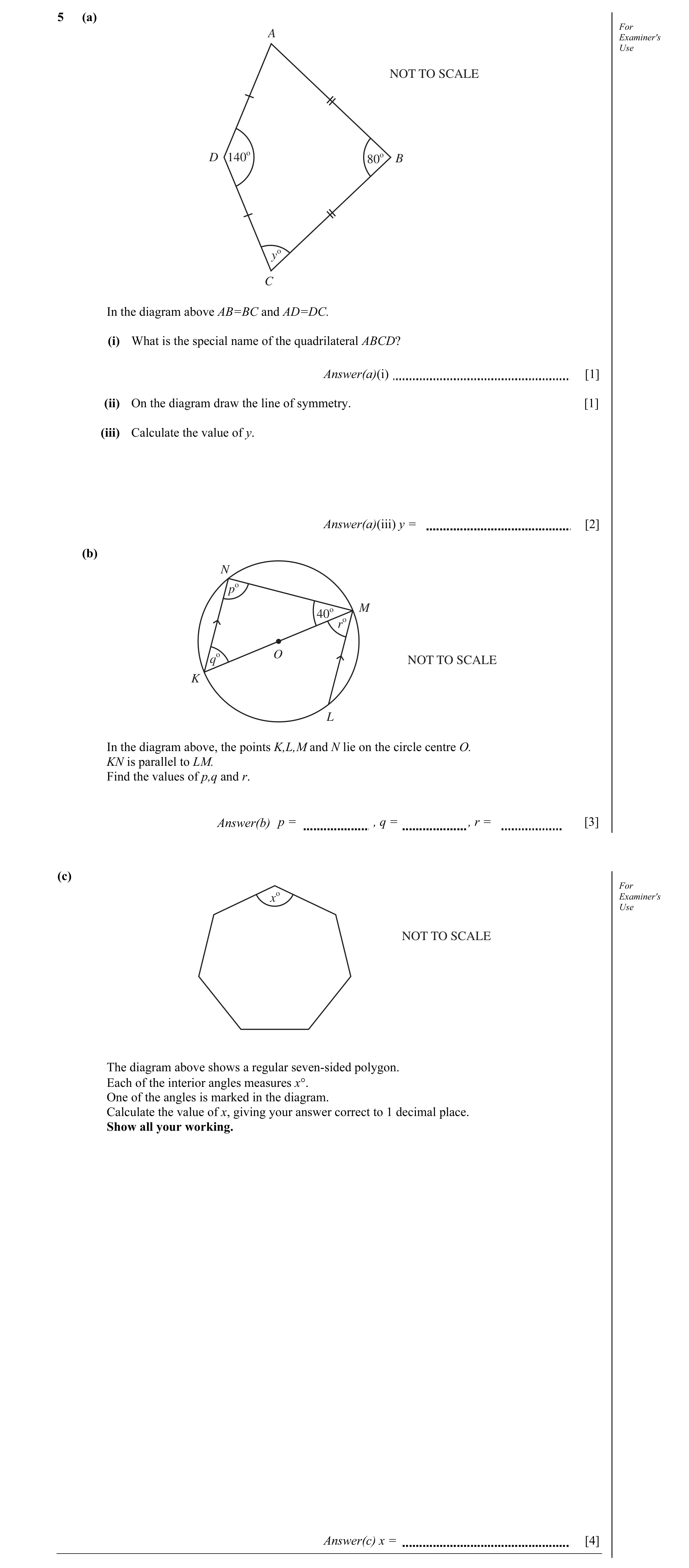
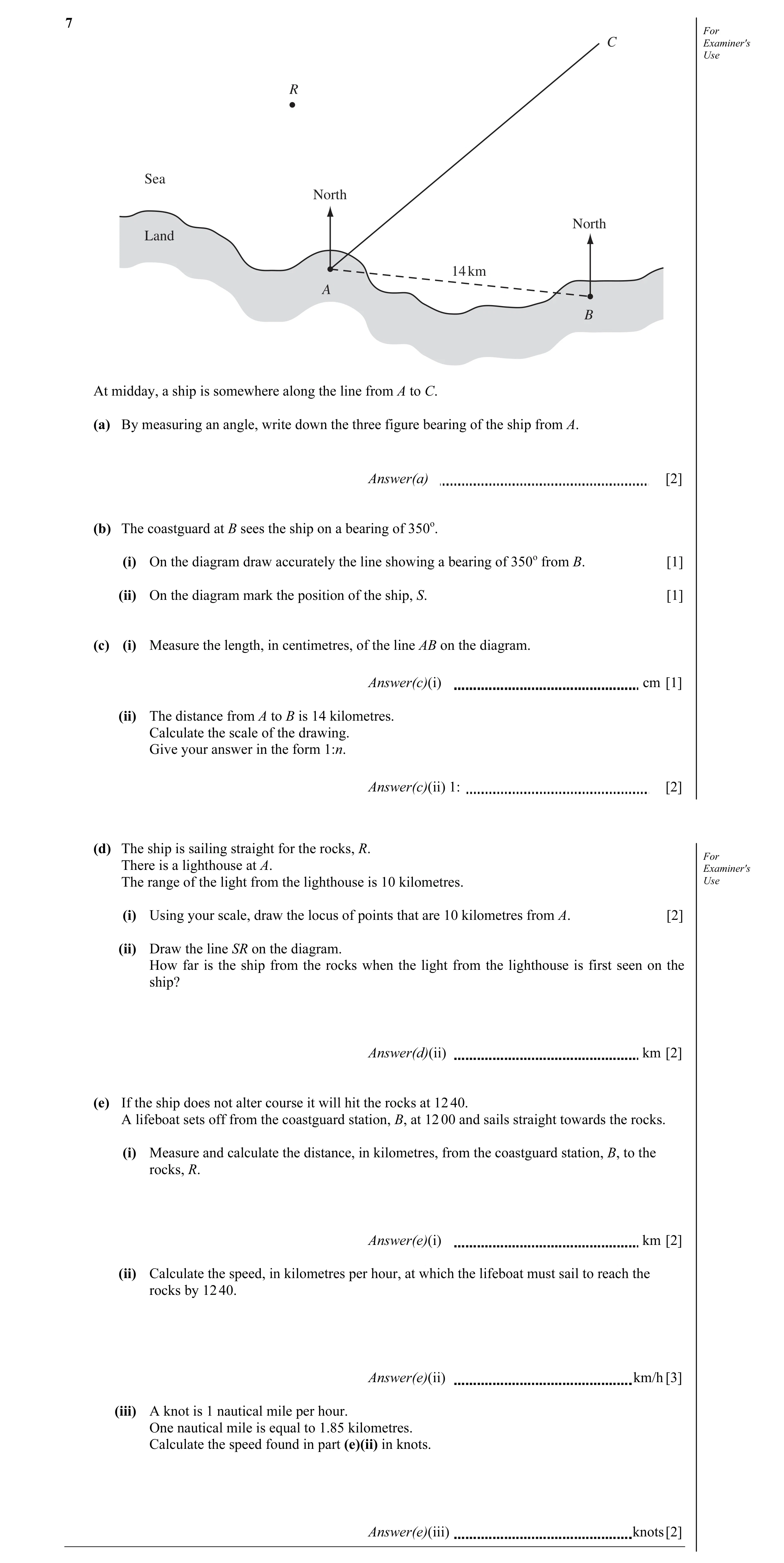
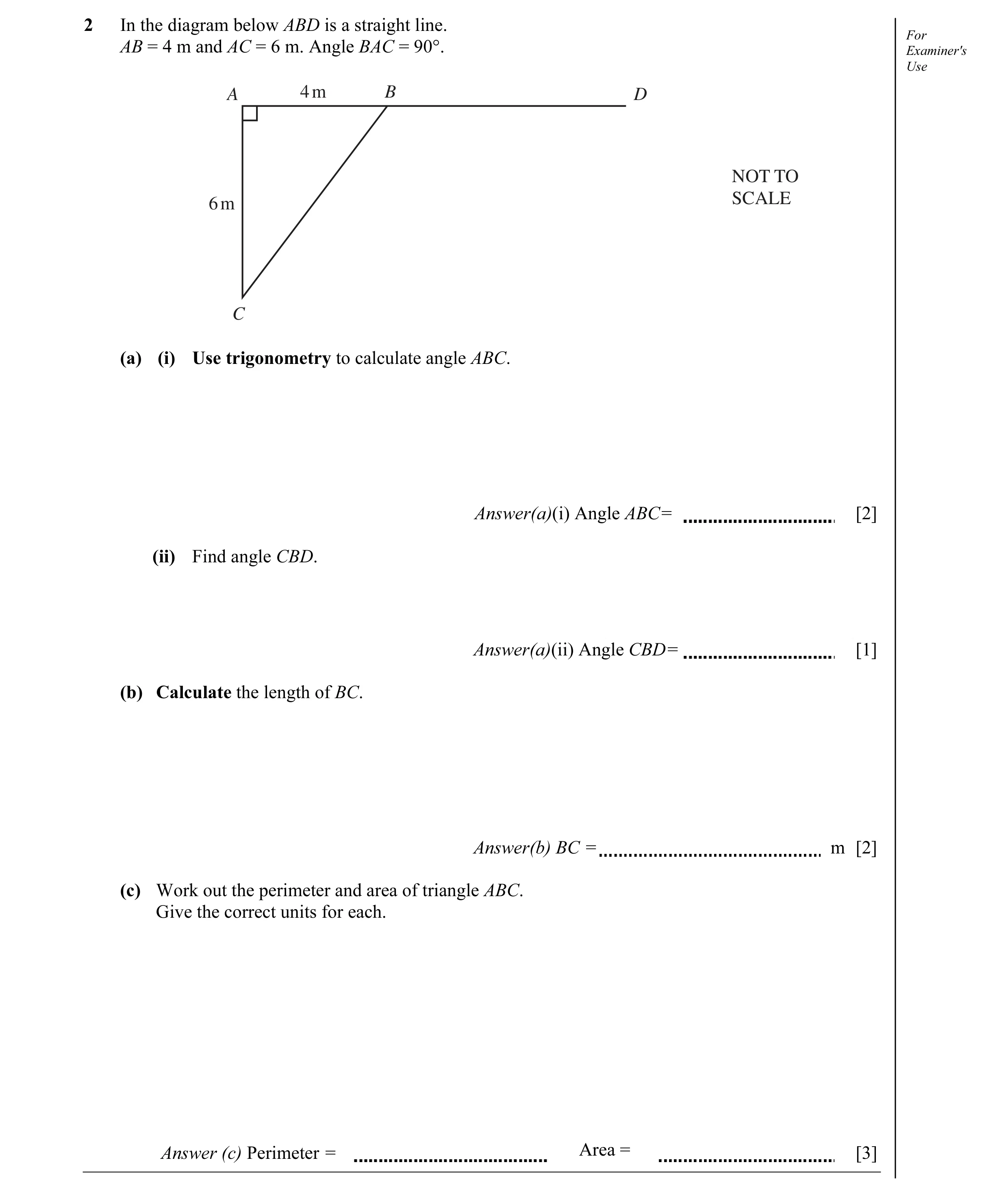 5 / 168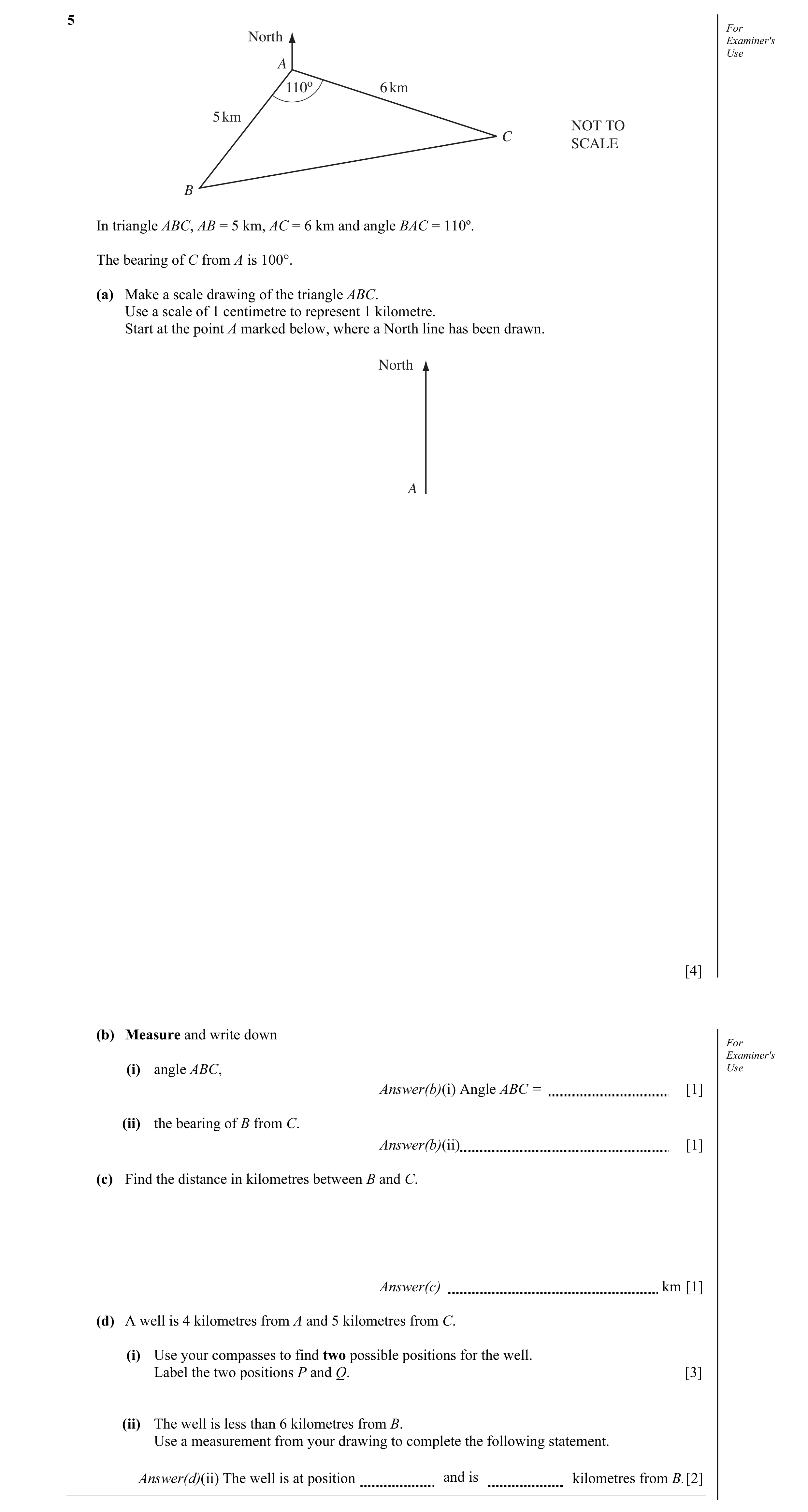
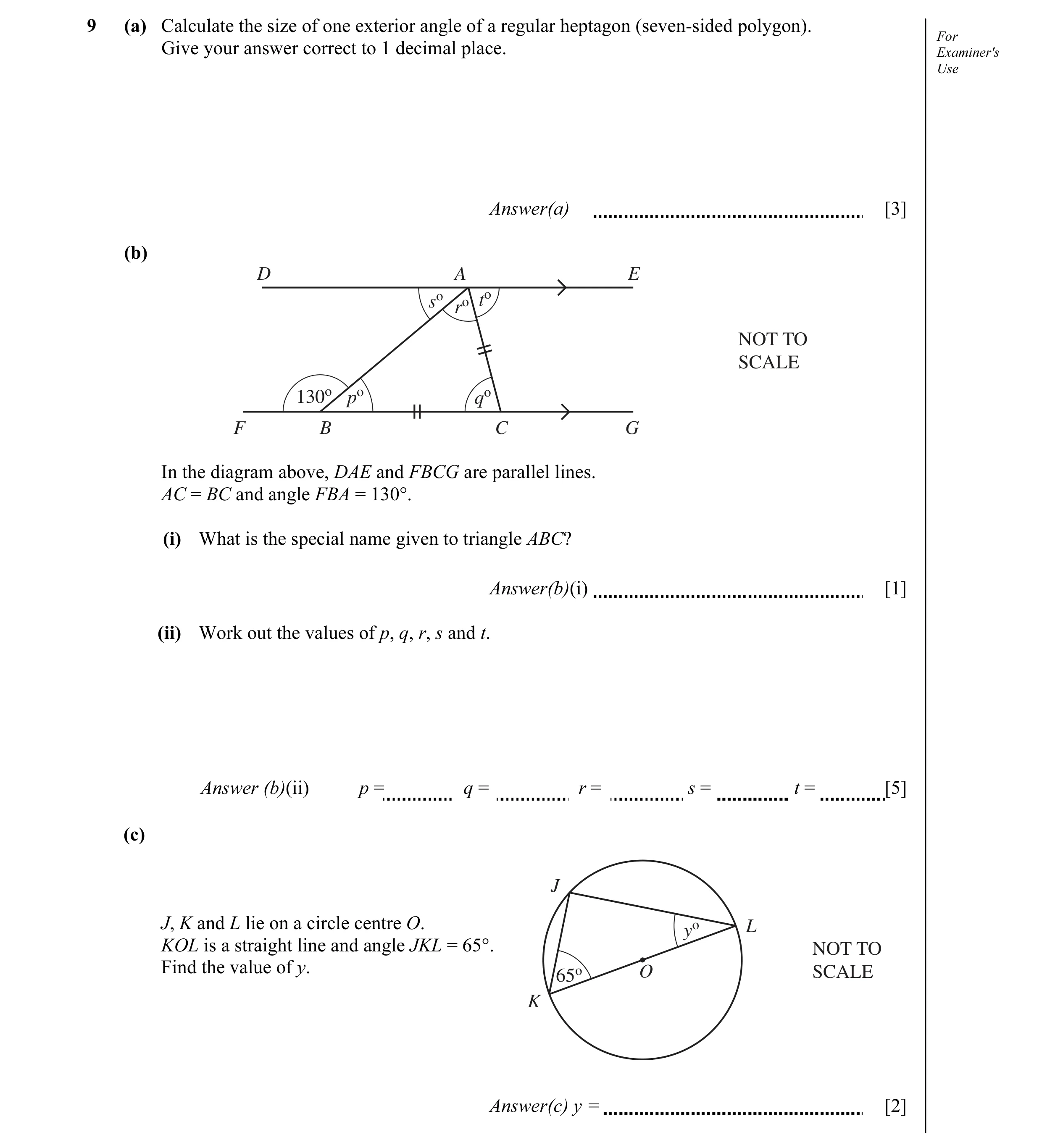 8 / 168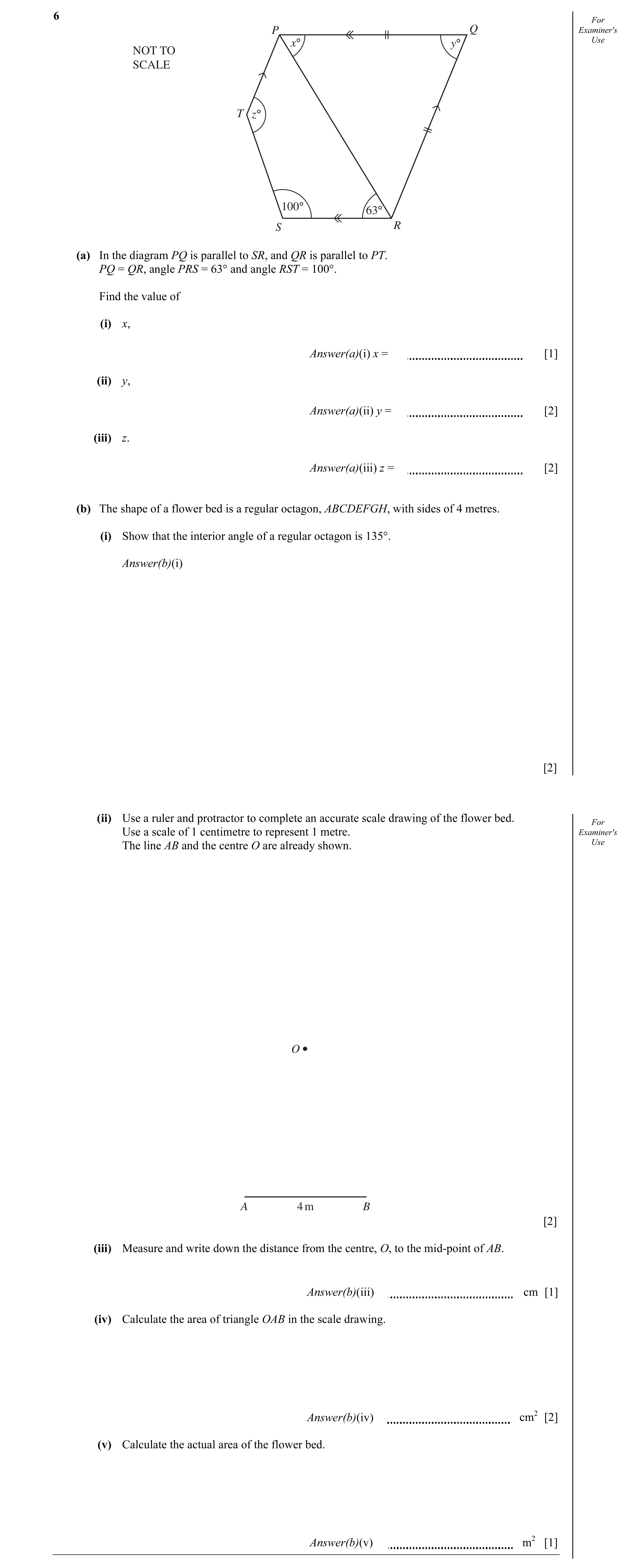
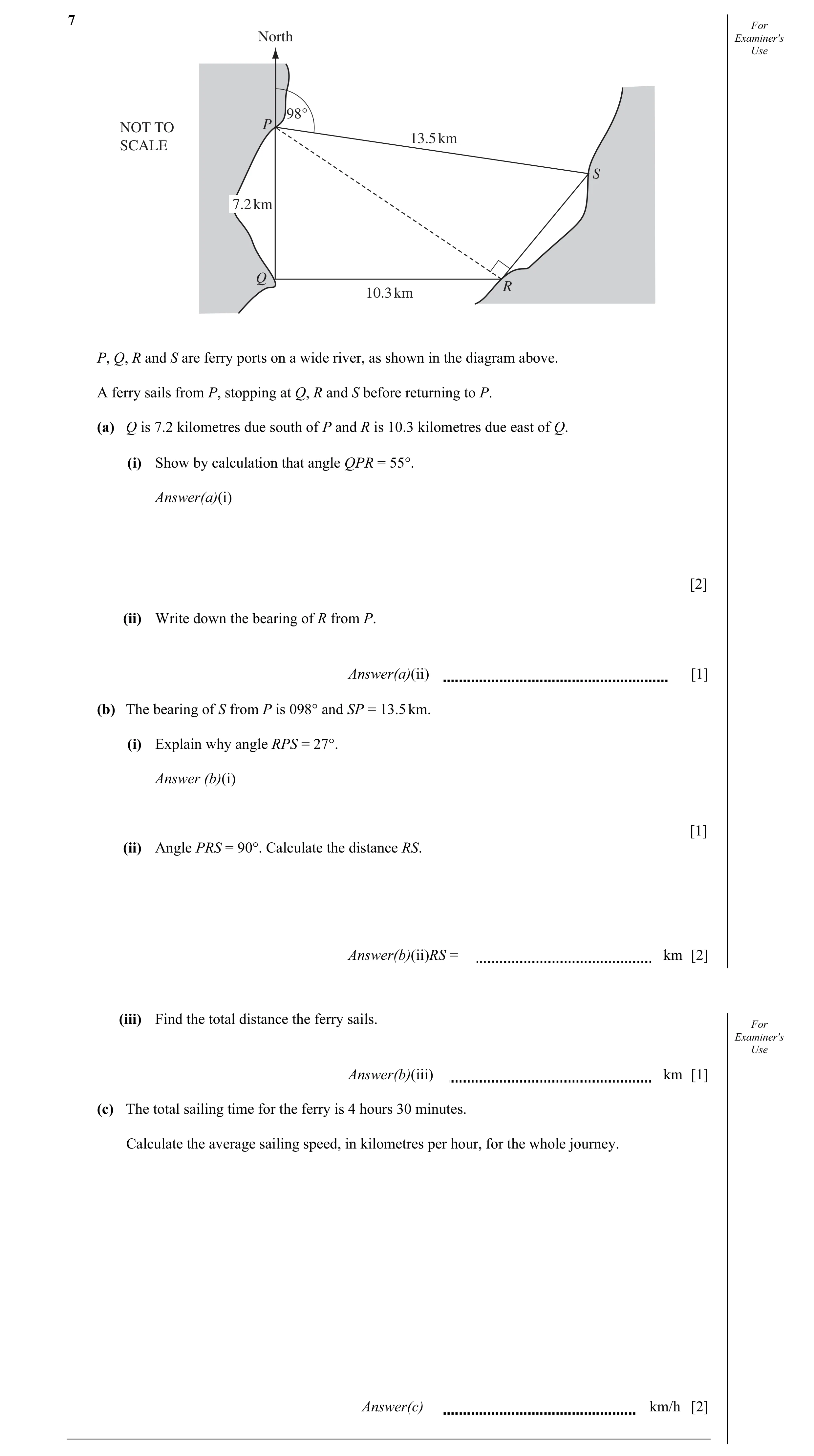
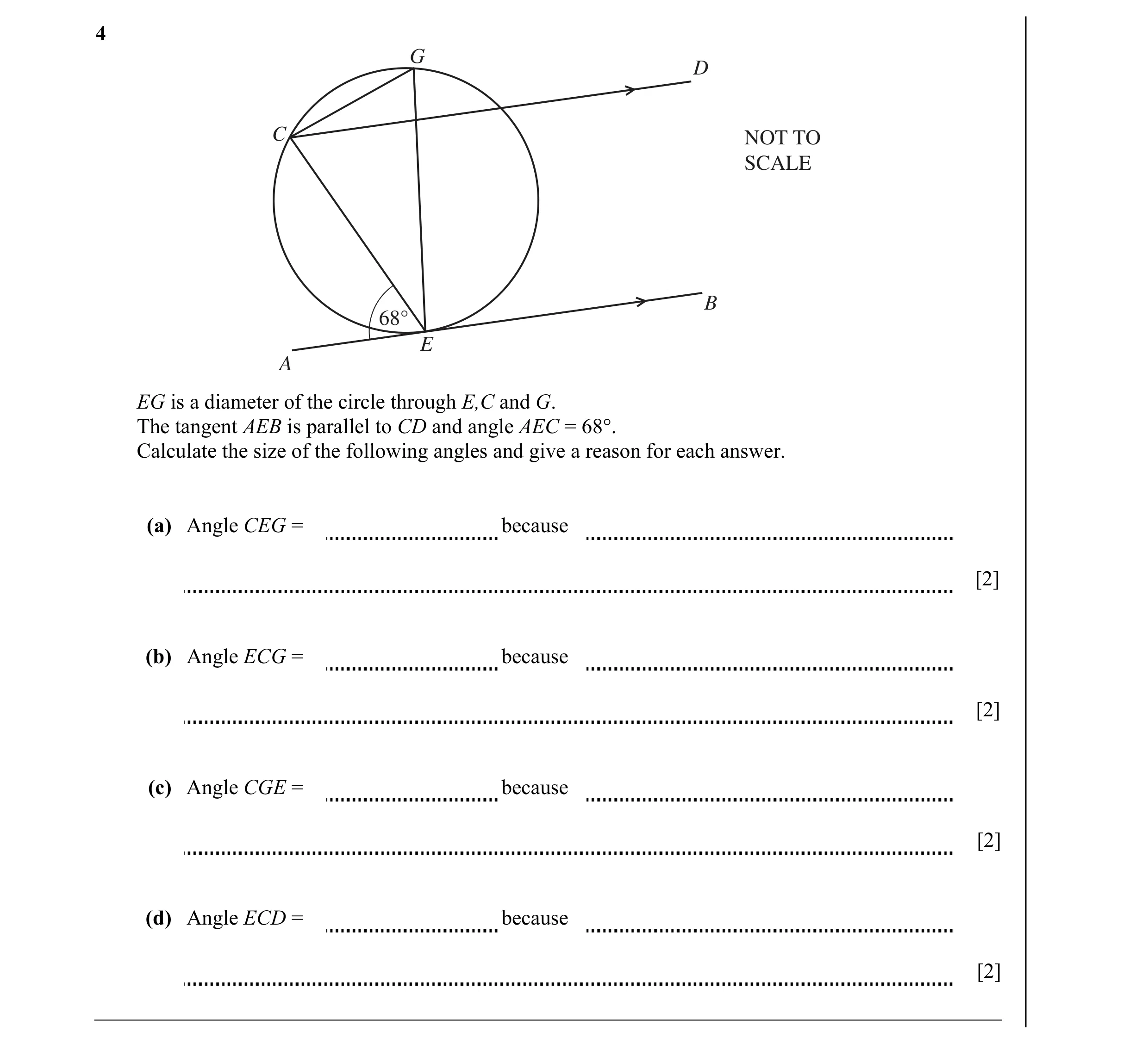 13 / 168
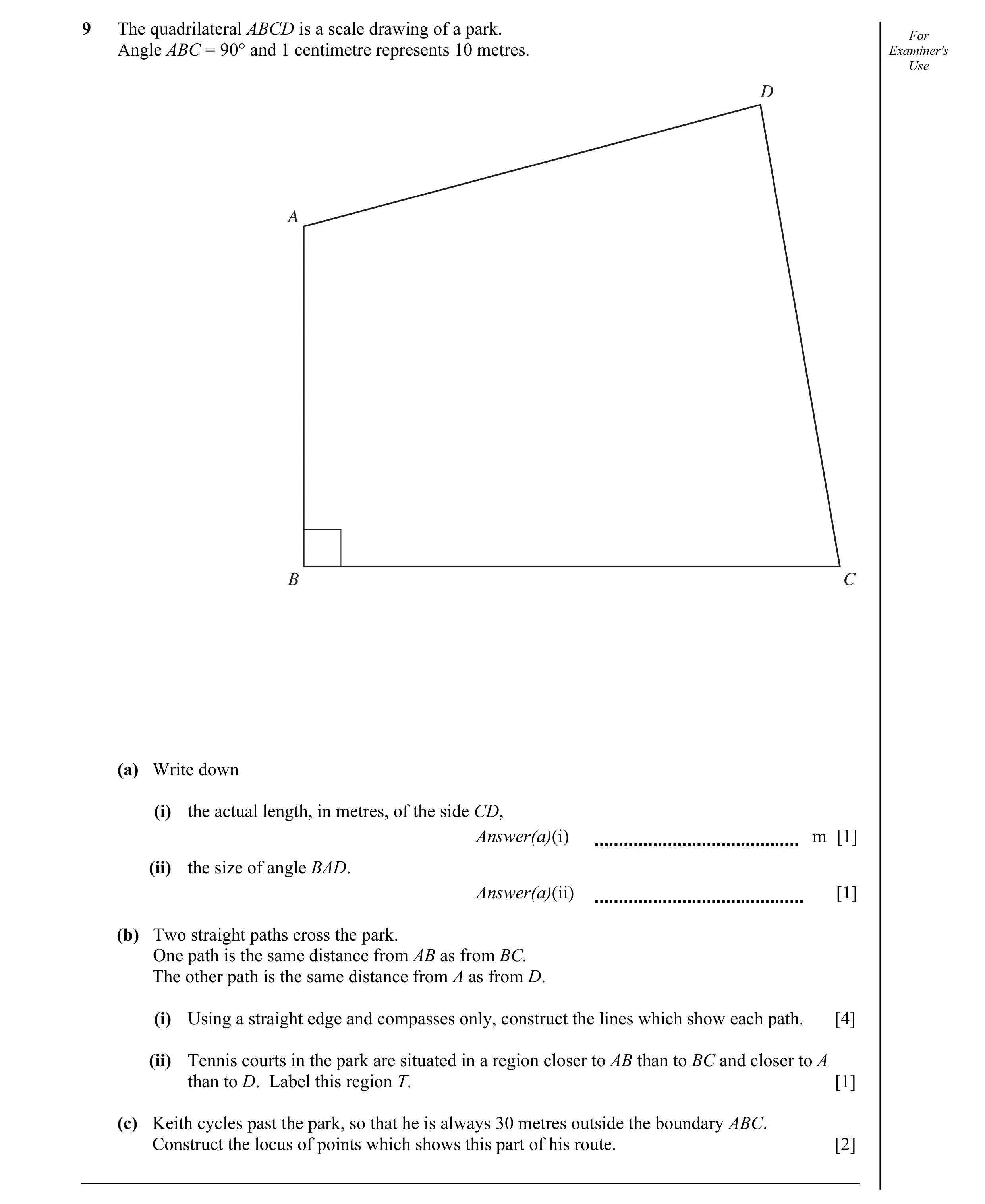 14 / 168
![Question 10: (a) Write down the name of a polygon with 8 sides. For Examiner's Use Answer(a) [1] (b) Find the size of the interior angle of a regular po…](https://img.pastlit.com/crops/348dae6f-a731-4dc3-97a1-00657539a354/q6.webp)
![Question 11: Examiner's Use C A B Triangle ABC is drawn accurately. (a) Measure and write down (i) the length of AC, Answer(a)(i) AC = cm [1] (ii) the s…](https://img.pastlit.com/crops/aae614f4-2852-481f-9715-1c0dc4297315/q9.webp) 17 / 168
17 / 168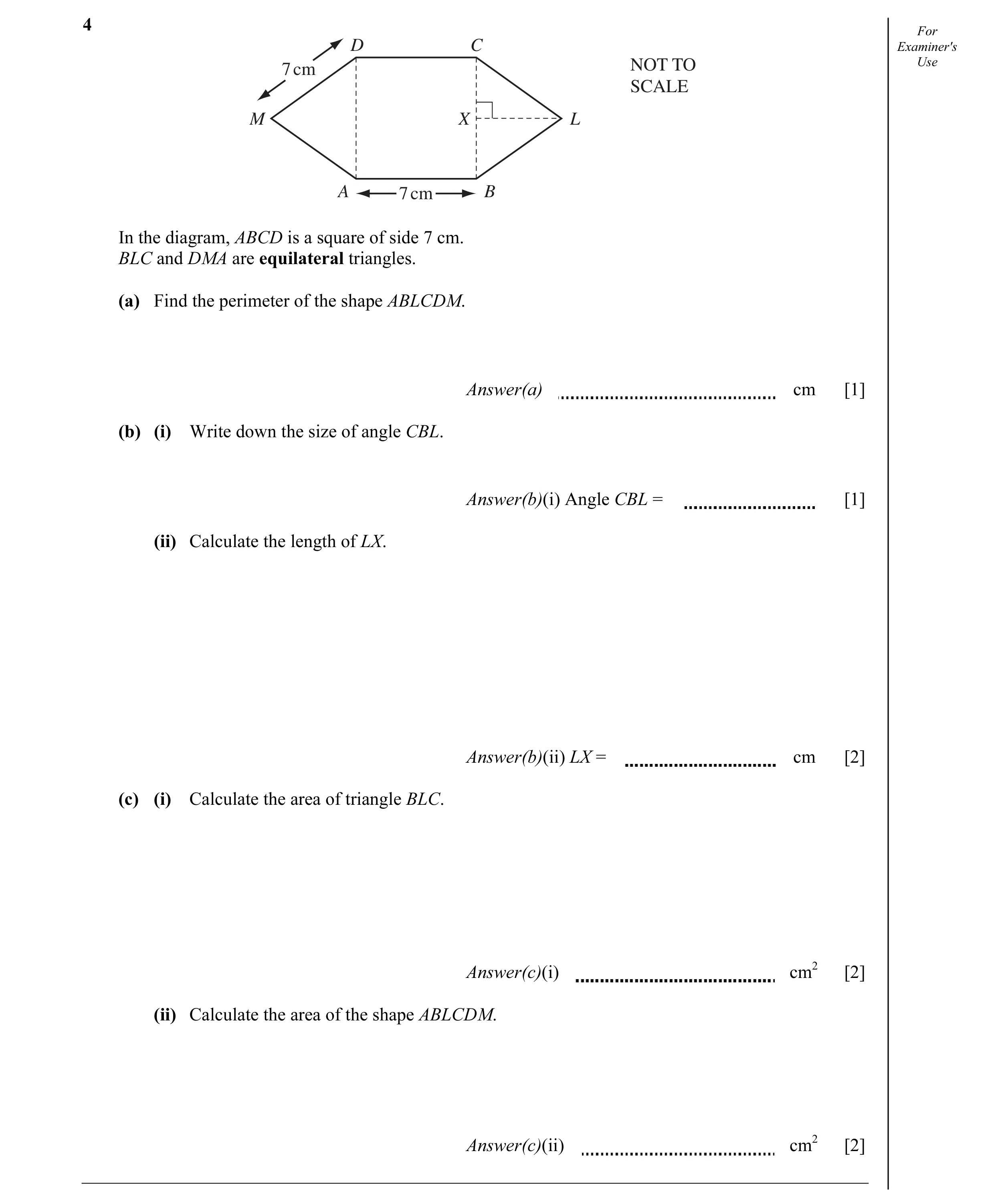 18 / 168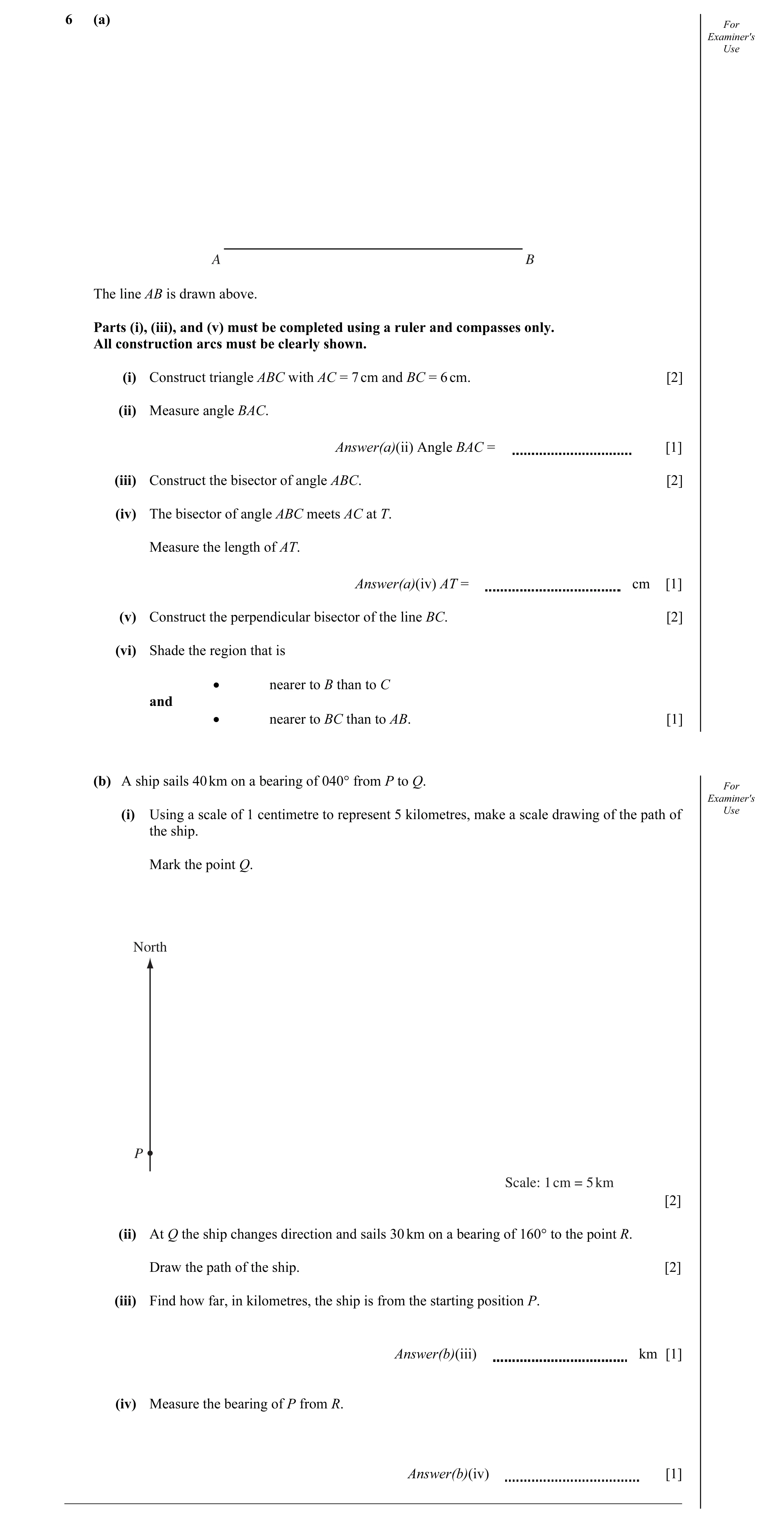
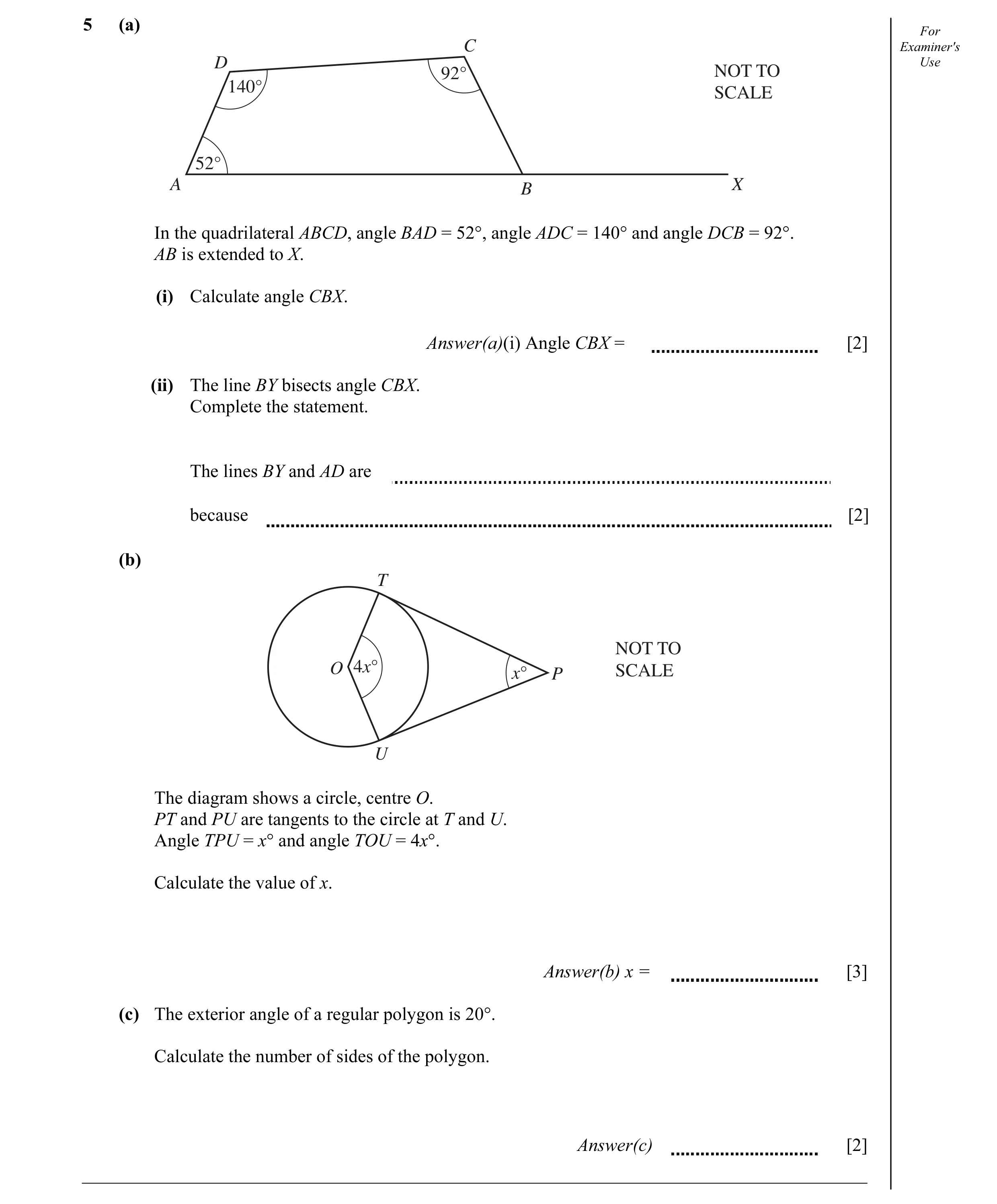 21 / 168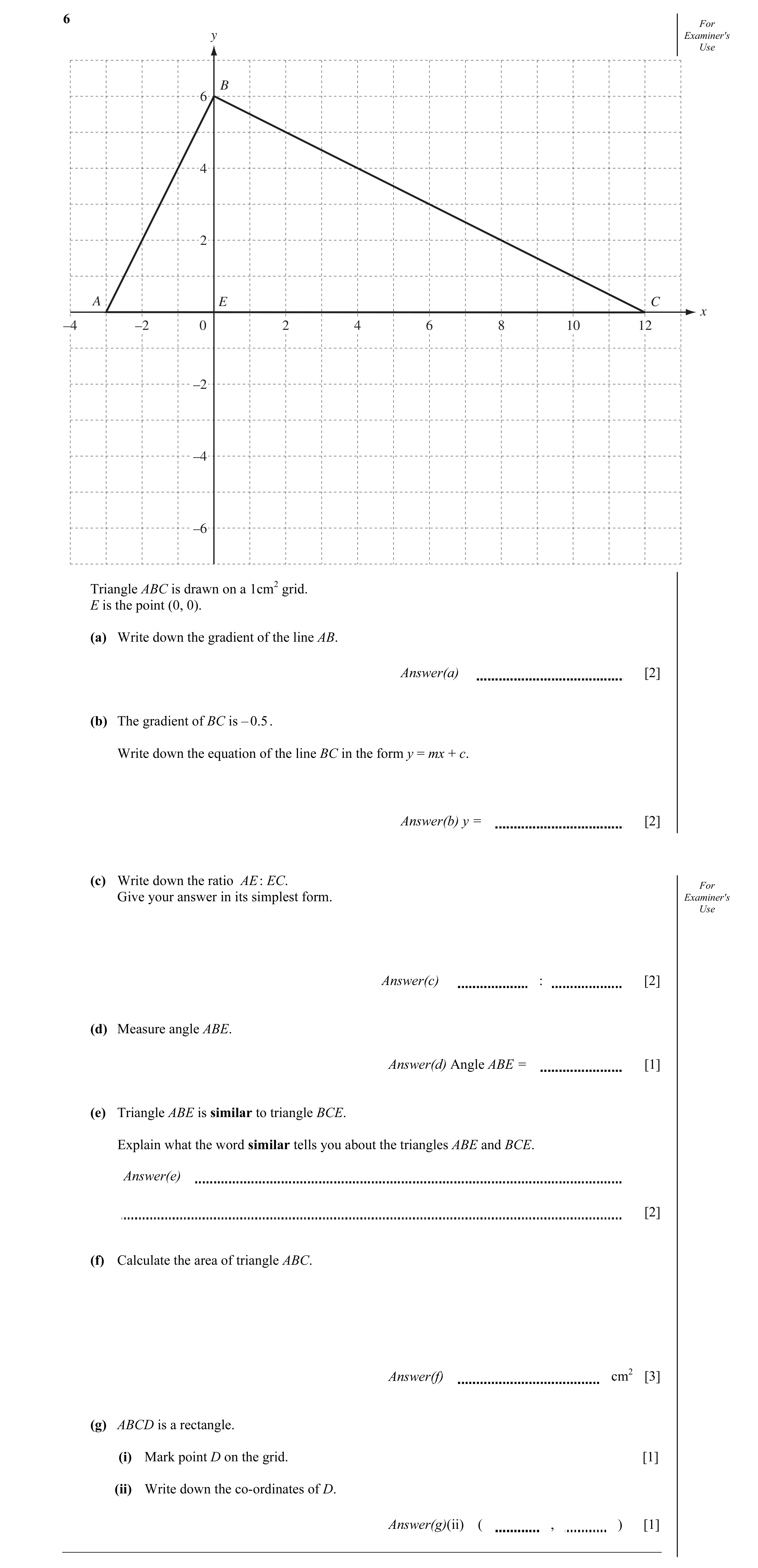
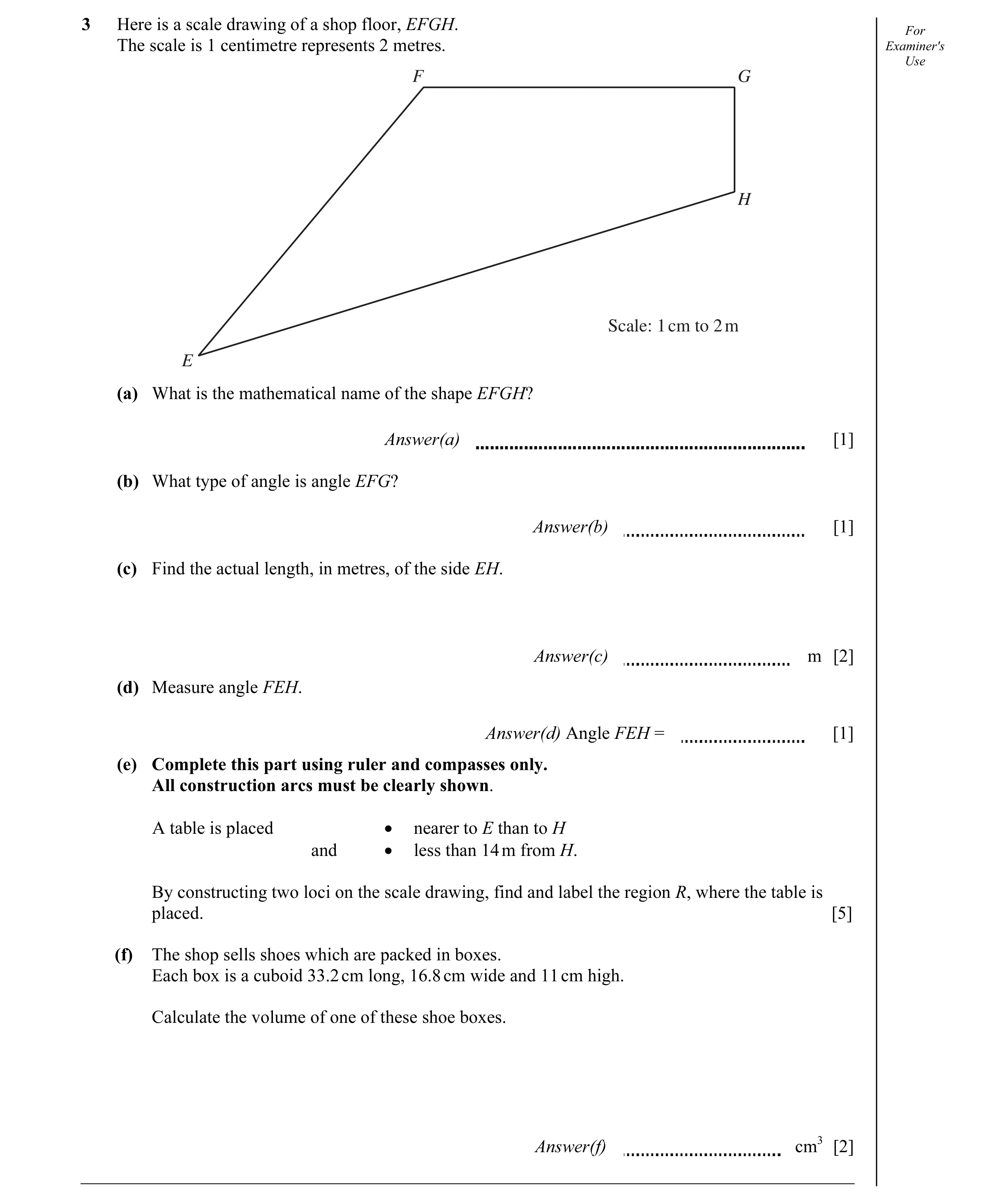 24 / 168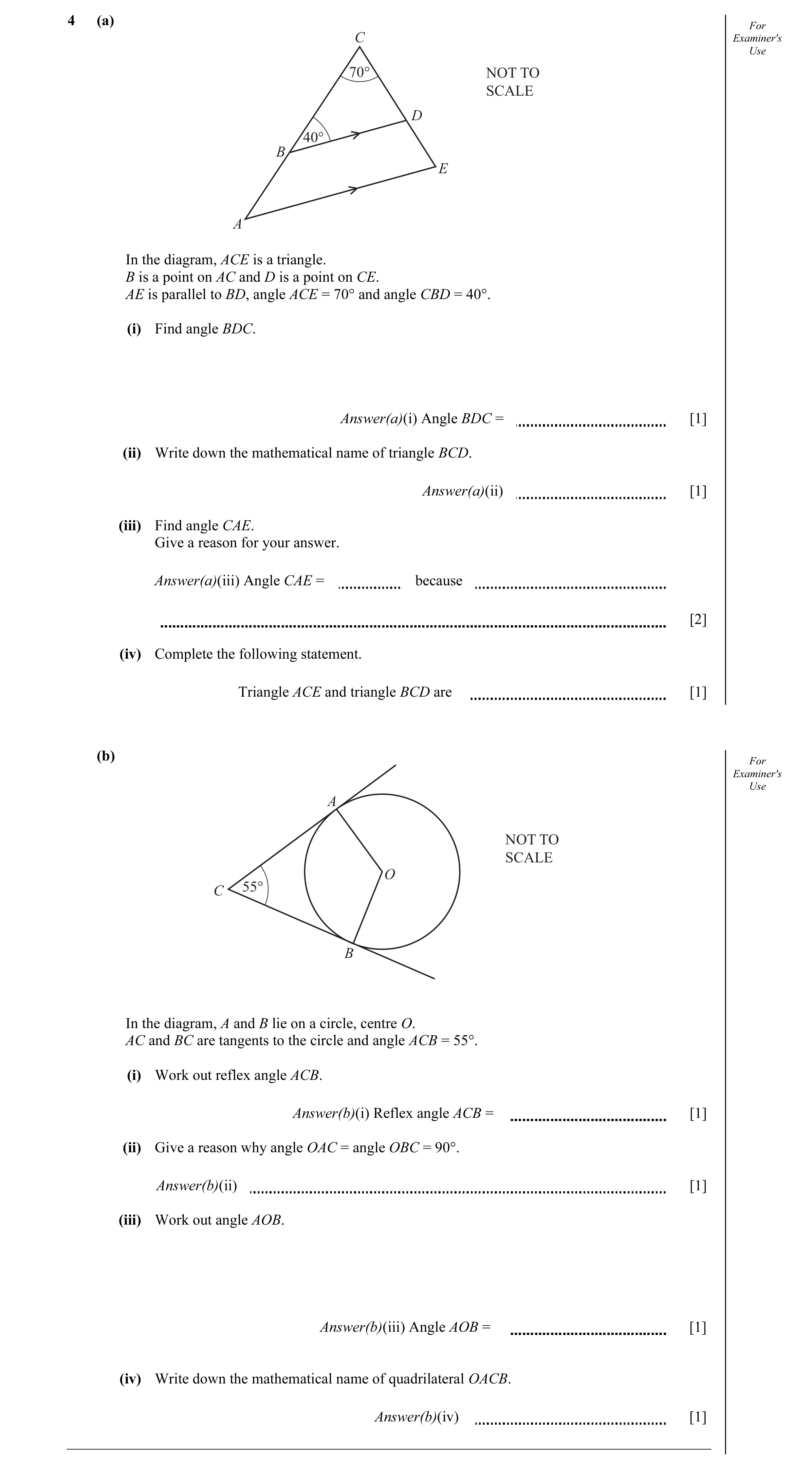
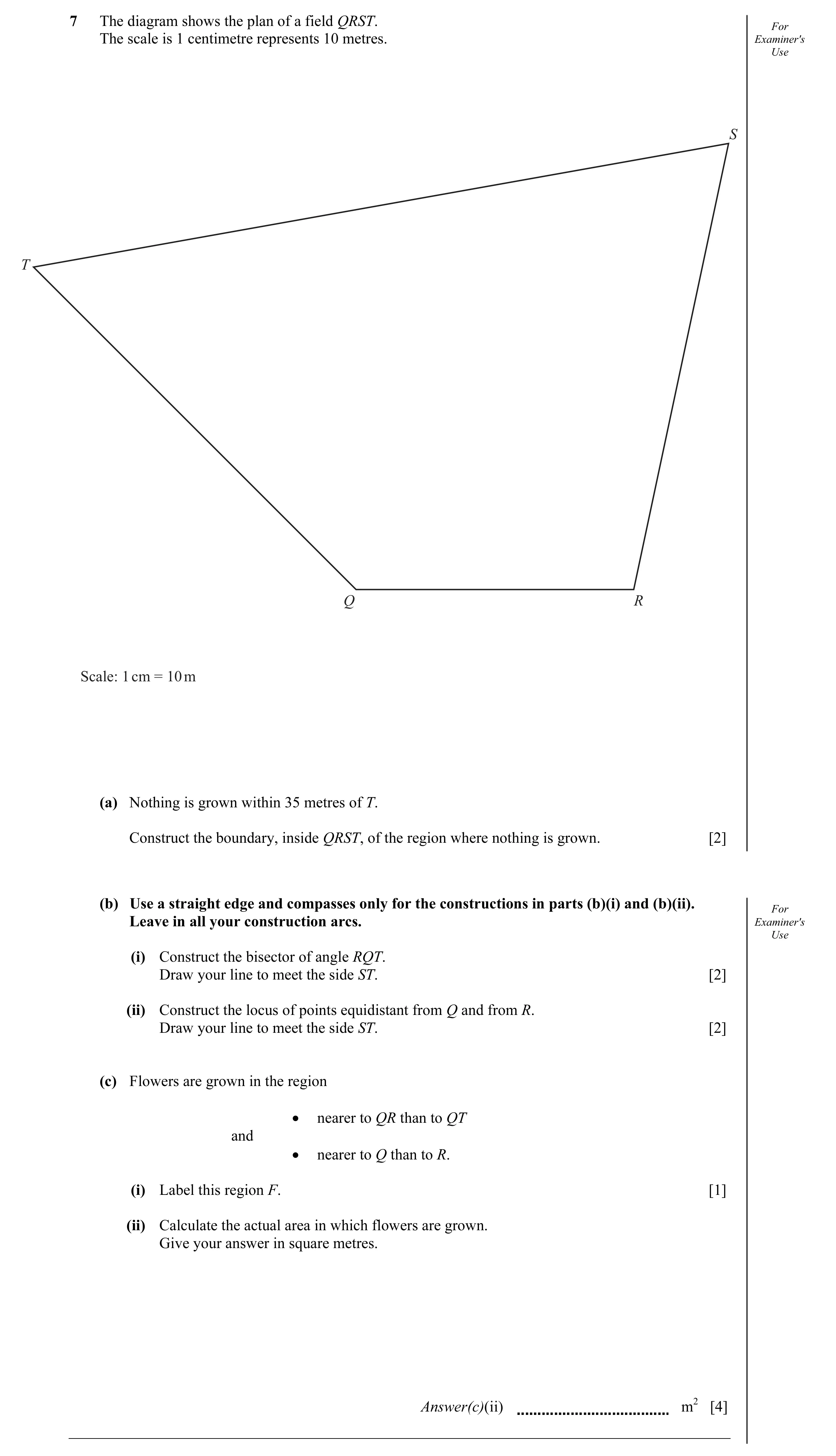
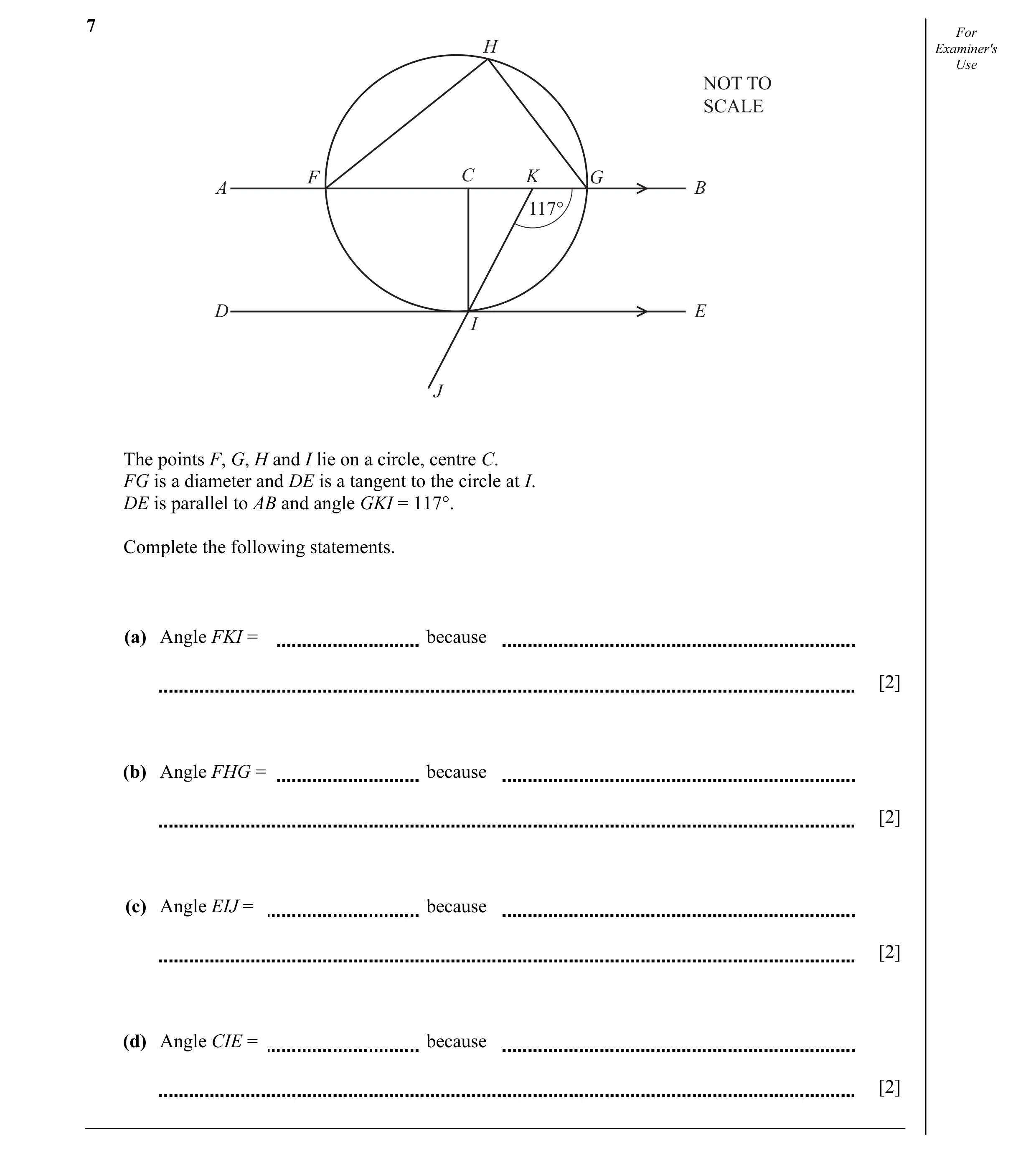 29 / 168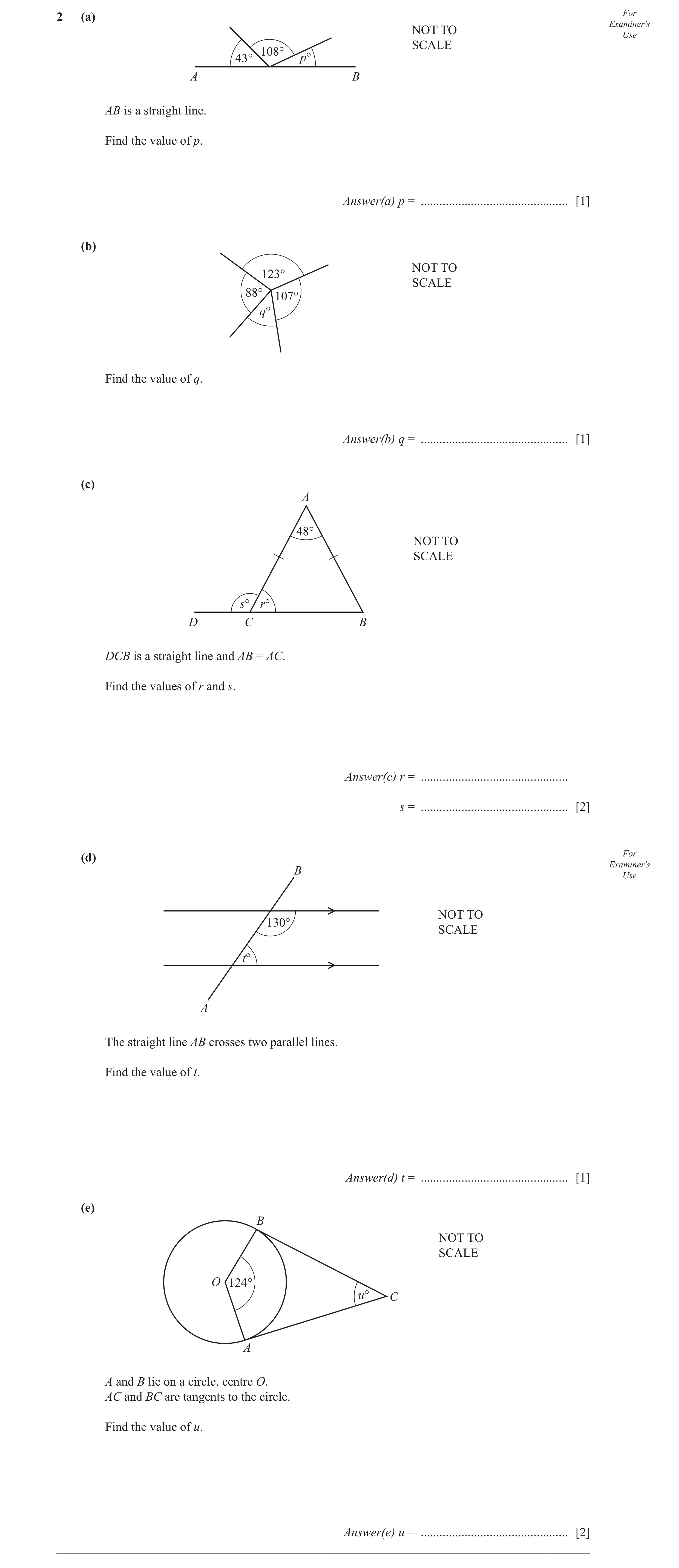
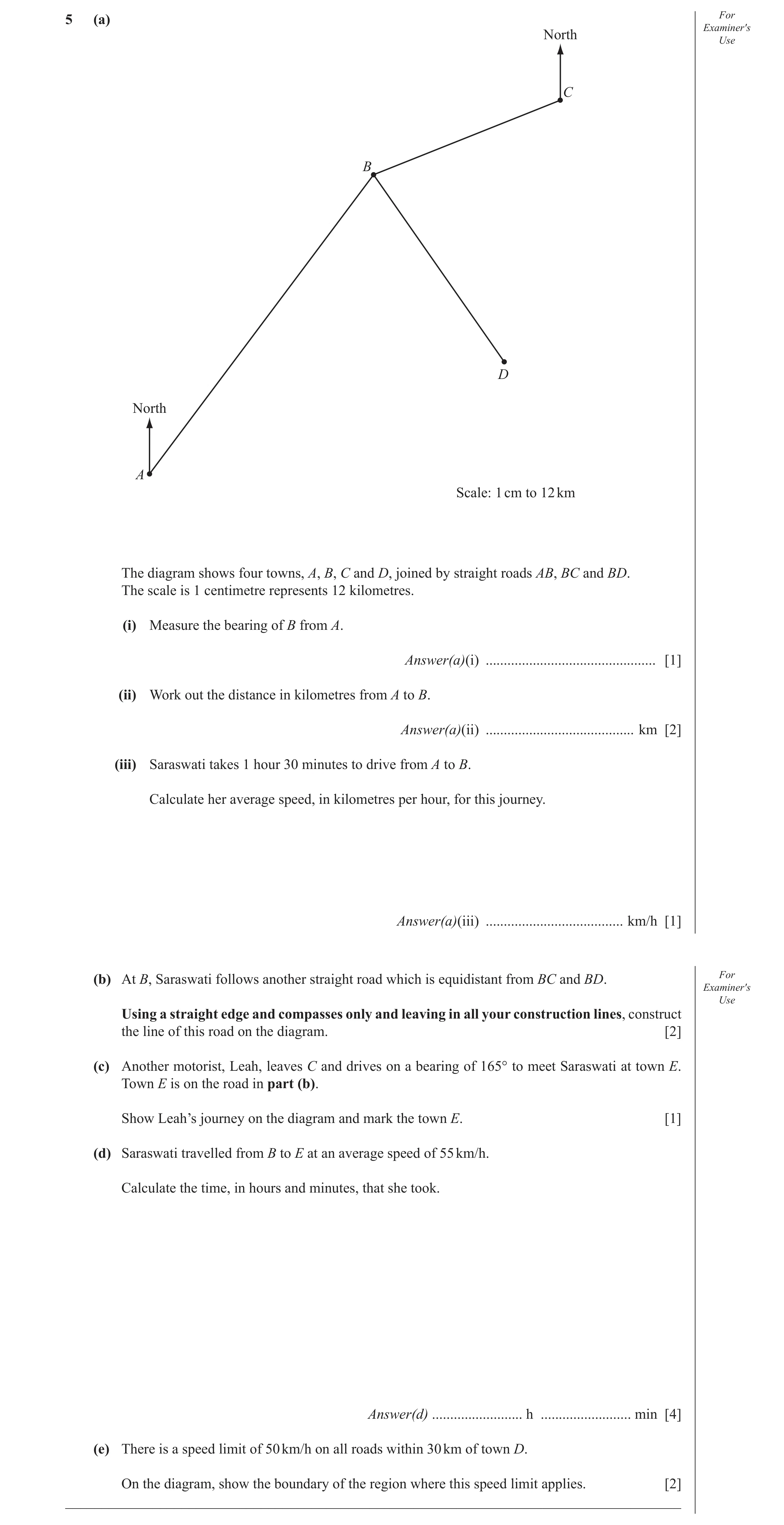
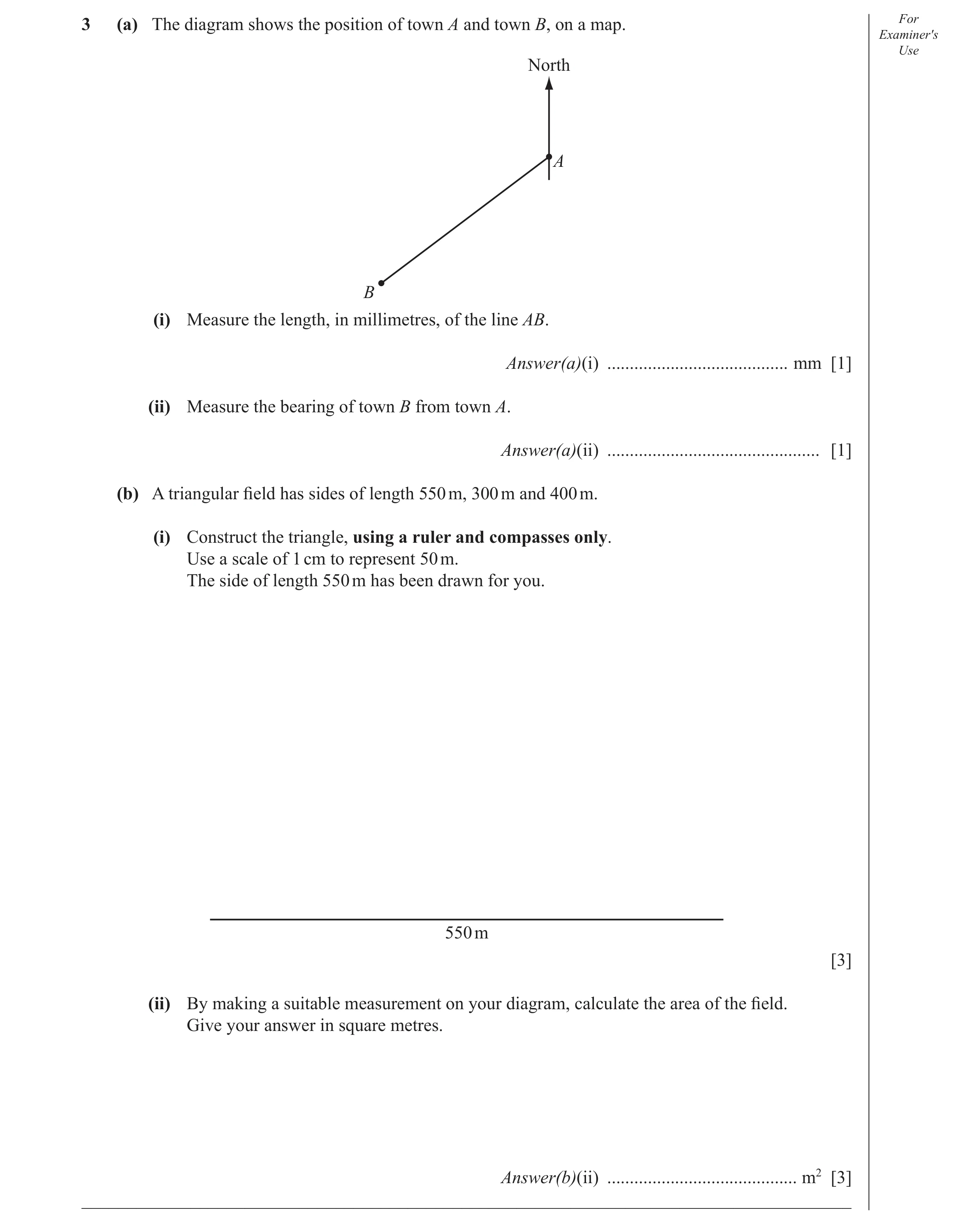 34 / 168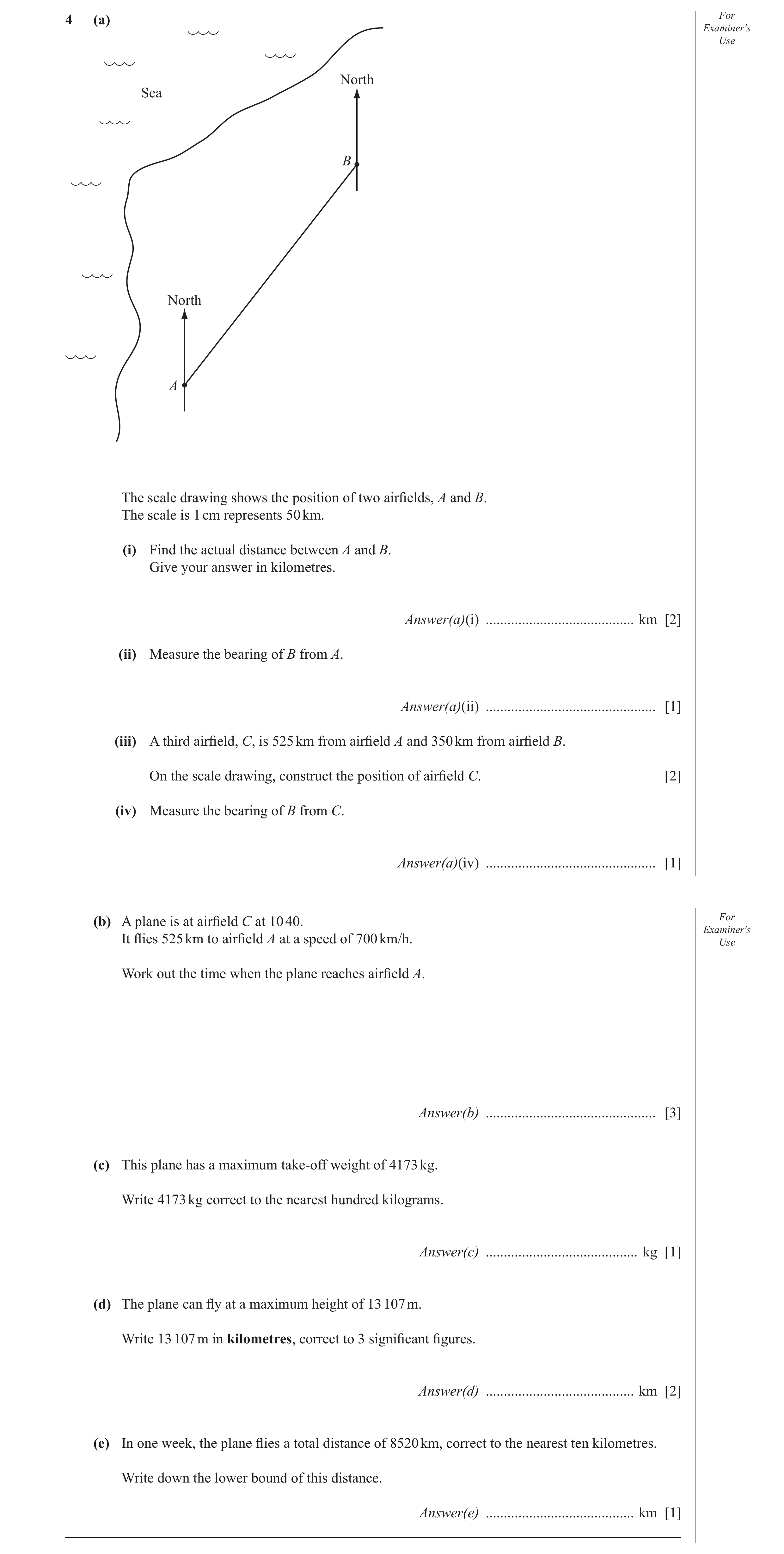
![Question 24: (a) The angles in a triangle are in the ratio 3 : 4 : 8 . (i) Show that the smallest angle of the triangle is 36°. Answer(a)(i) [2] (ii) Wo…](https://img.pastlit.com/crops/0cabe16c-b9c2-49b5-bbdf-a881450b77d6/q1.webp) 37 / 168
37 / 168![Question 25: (a) Draw the line of symmetry on the shape below. [1] (b) Write down the order of rotational symmetry of the shape below. Answer(b) .......…](https://img.pastlit.com/crops/1bd31a2d-80fe-4c91-becf-ba6ffd38a7a5/q3.webp)
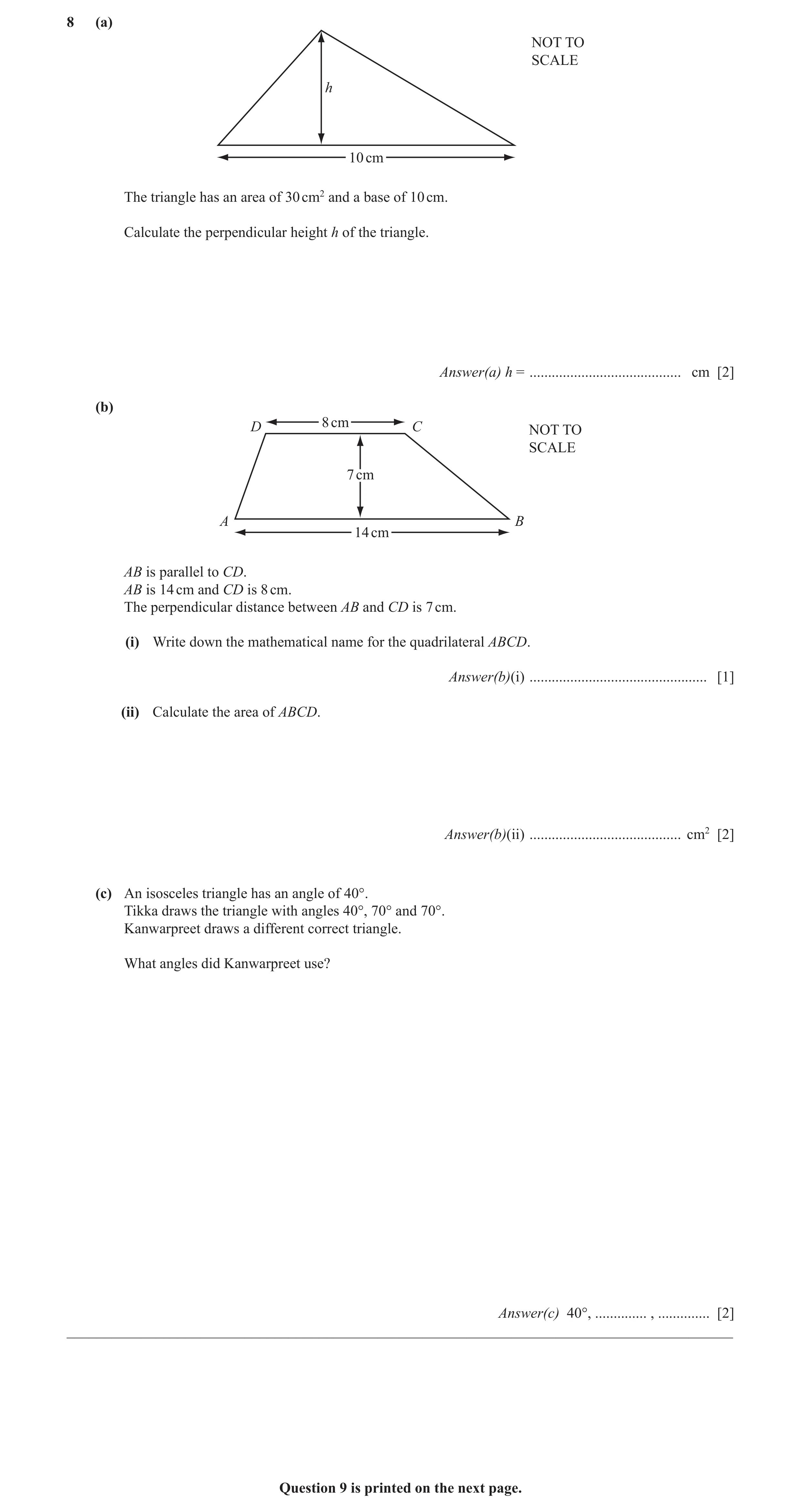
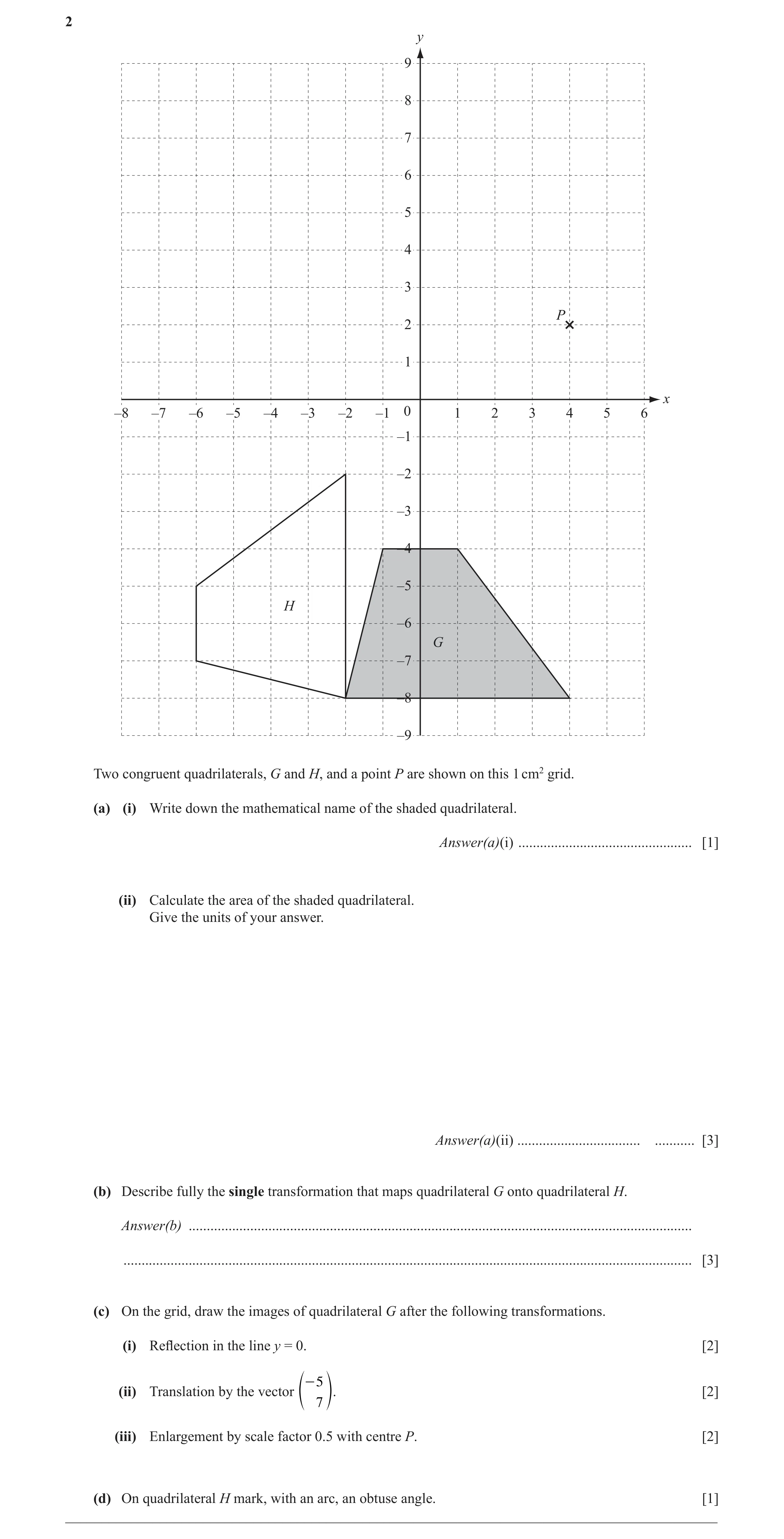
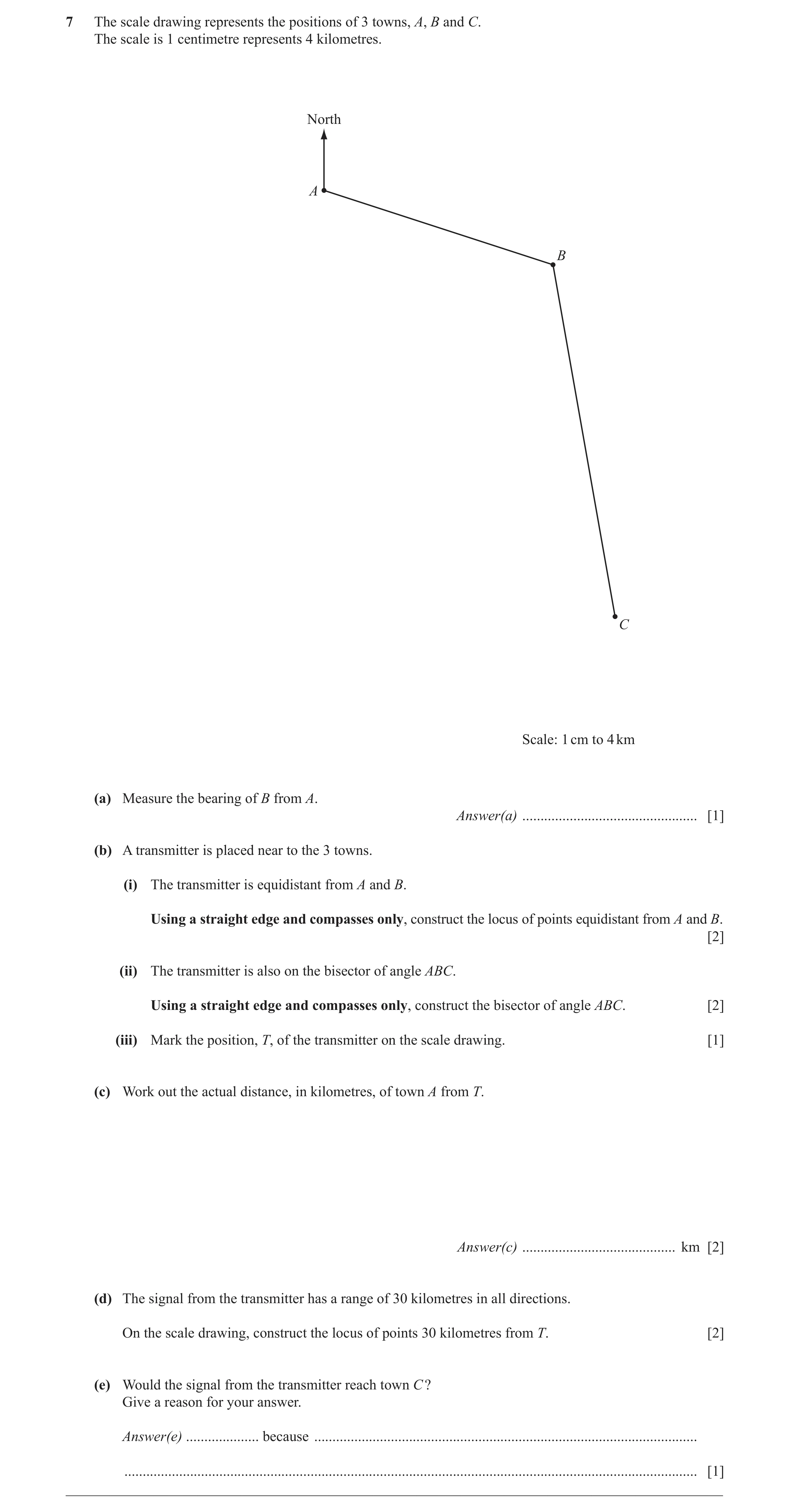
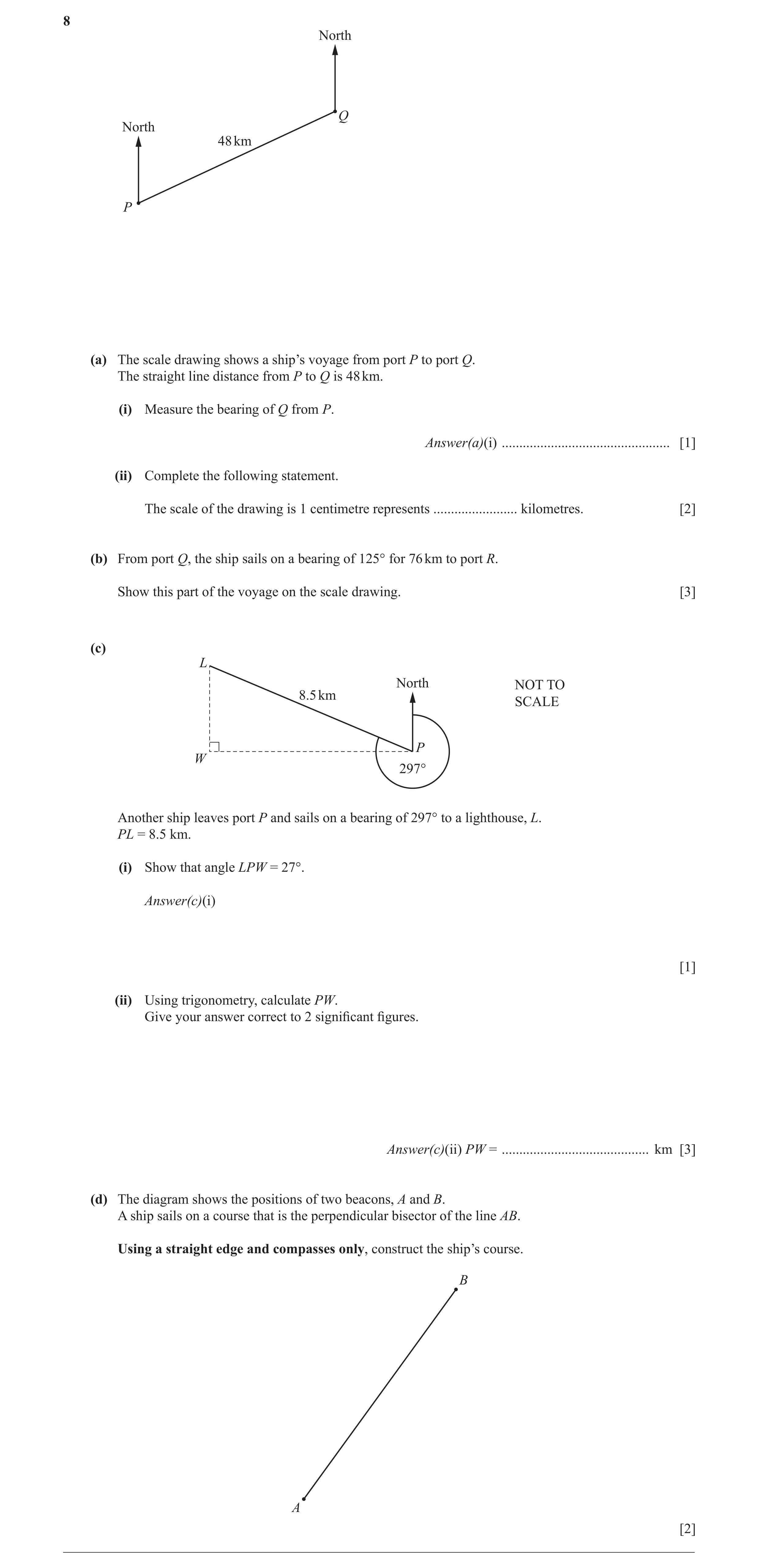
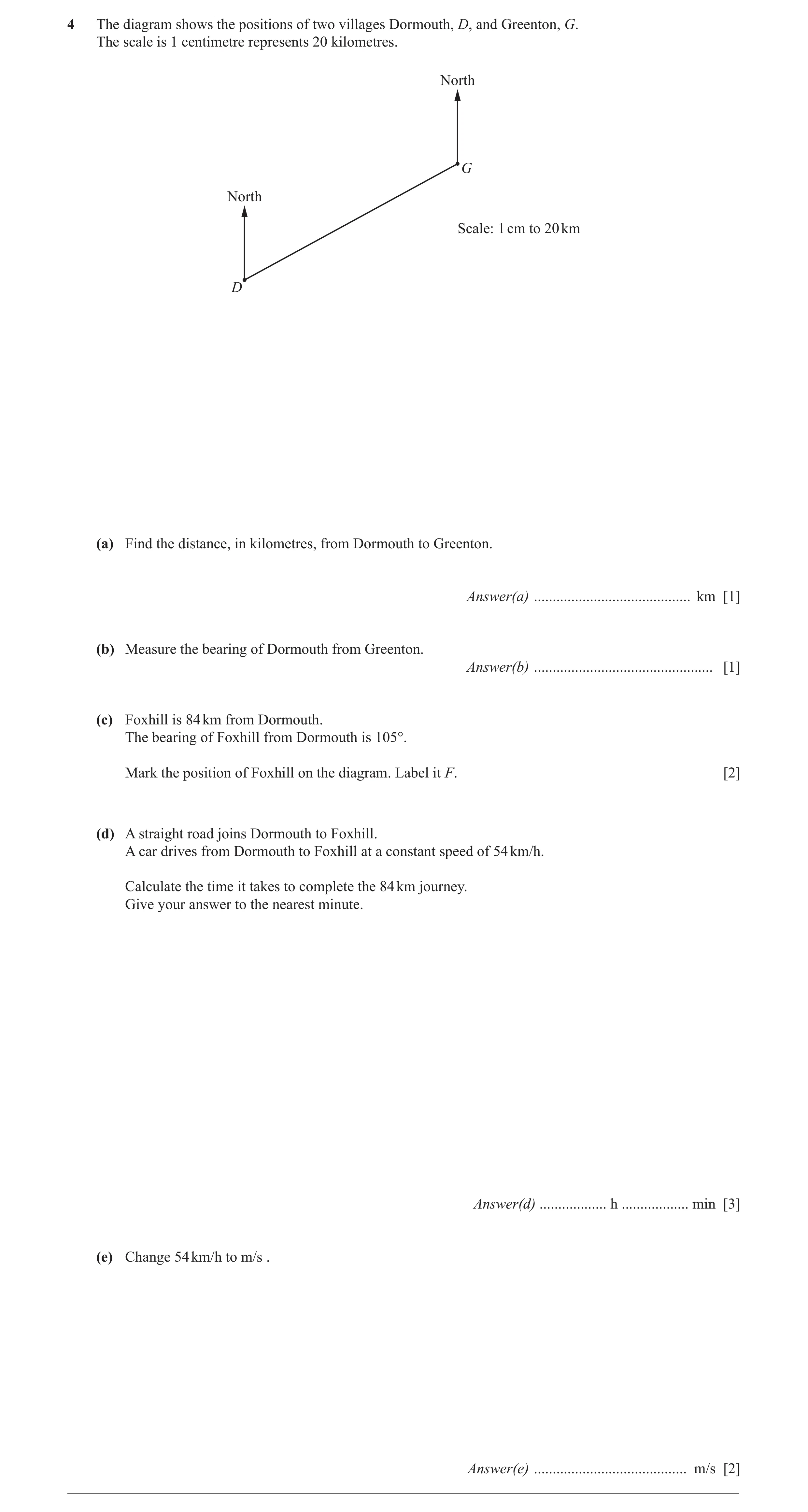
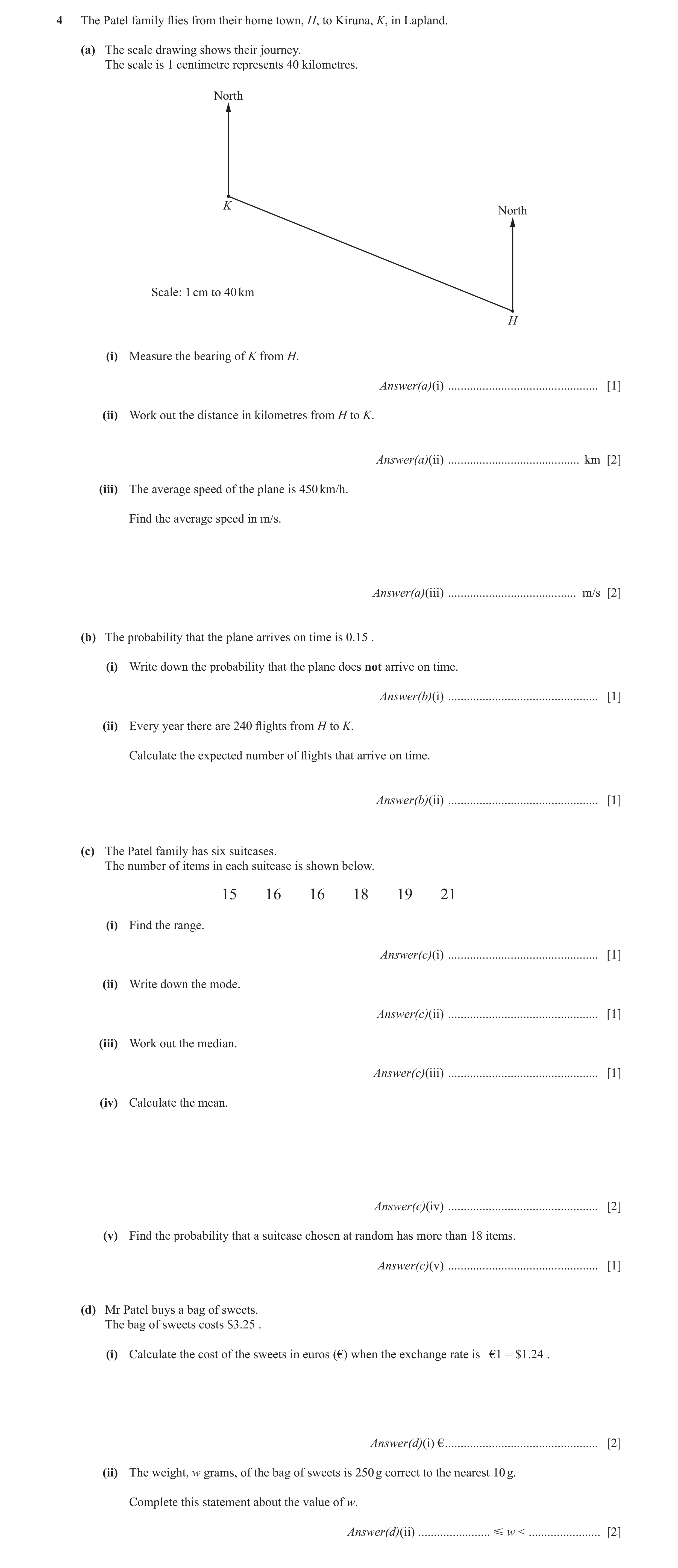
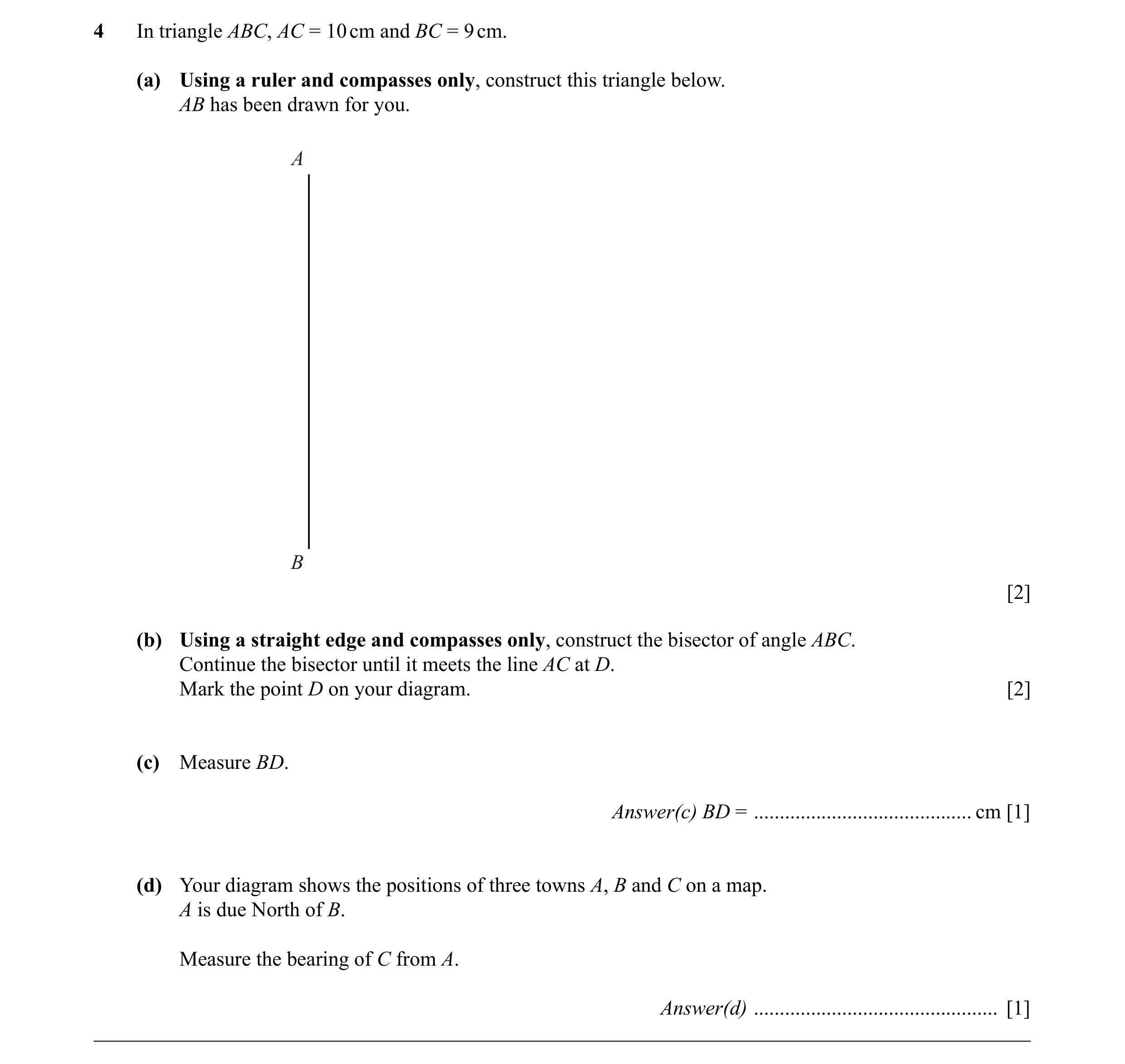 50 / 168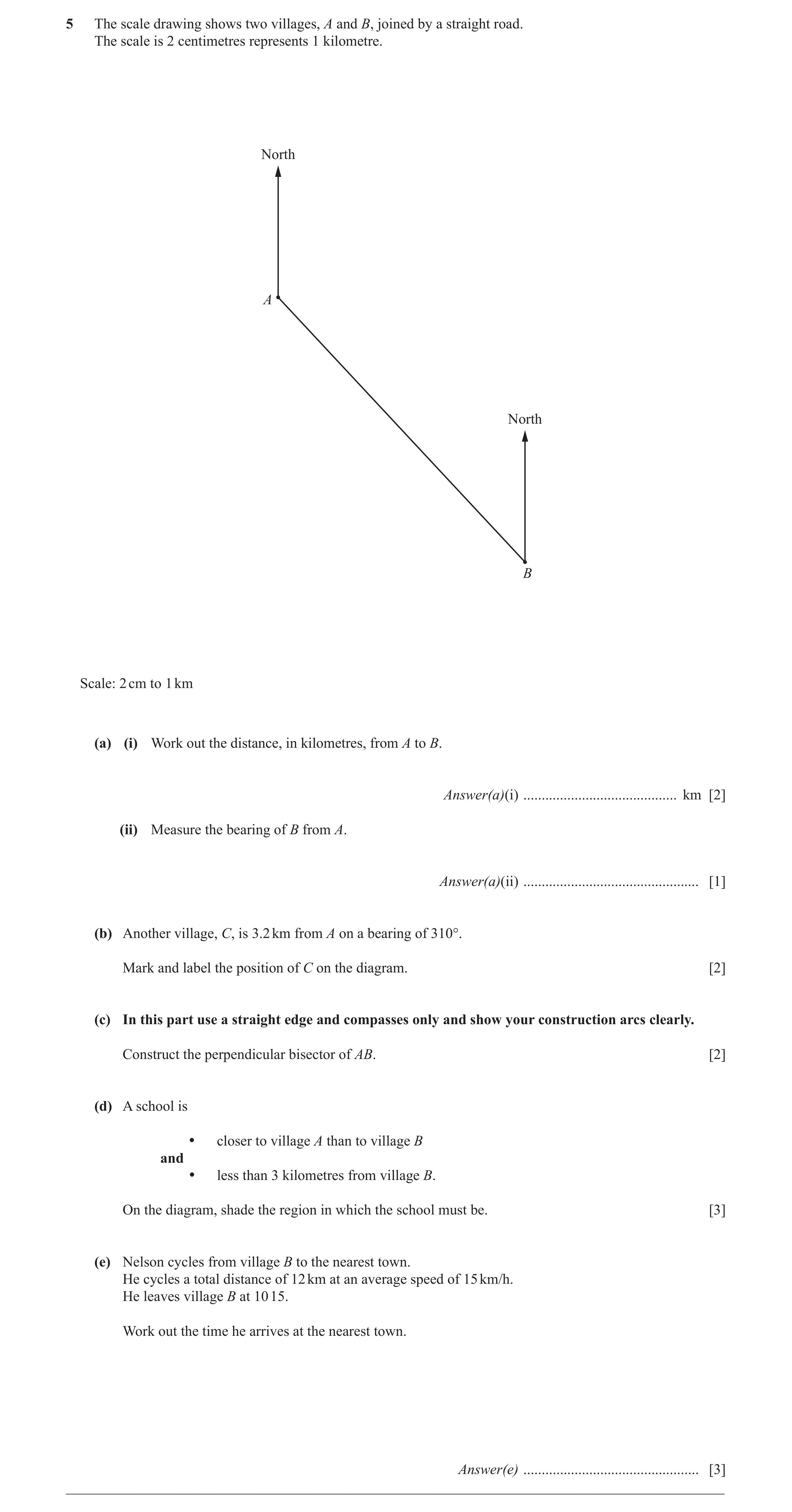
![Question 34: (a) u° NOT TO 132° SCALE Find the value of u. Answer(a) u = .................................................. [1] (b) 120° NOT TO v° SCALE…](https://img.pastlit.com/crops/7ab7d6f5-6845-40a0-8e69-0026b3364f47/q4.webp)
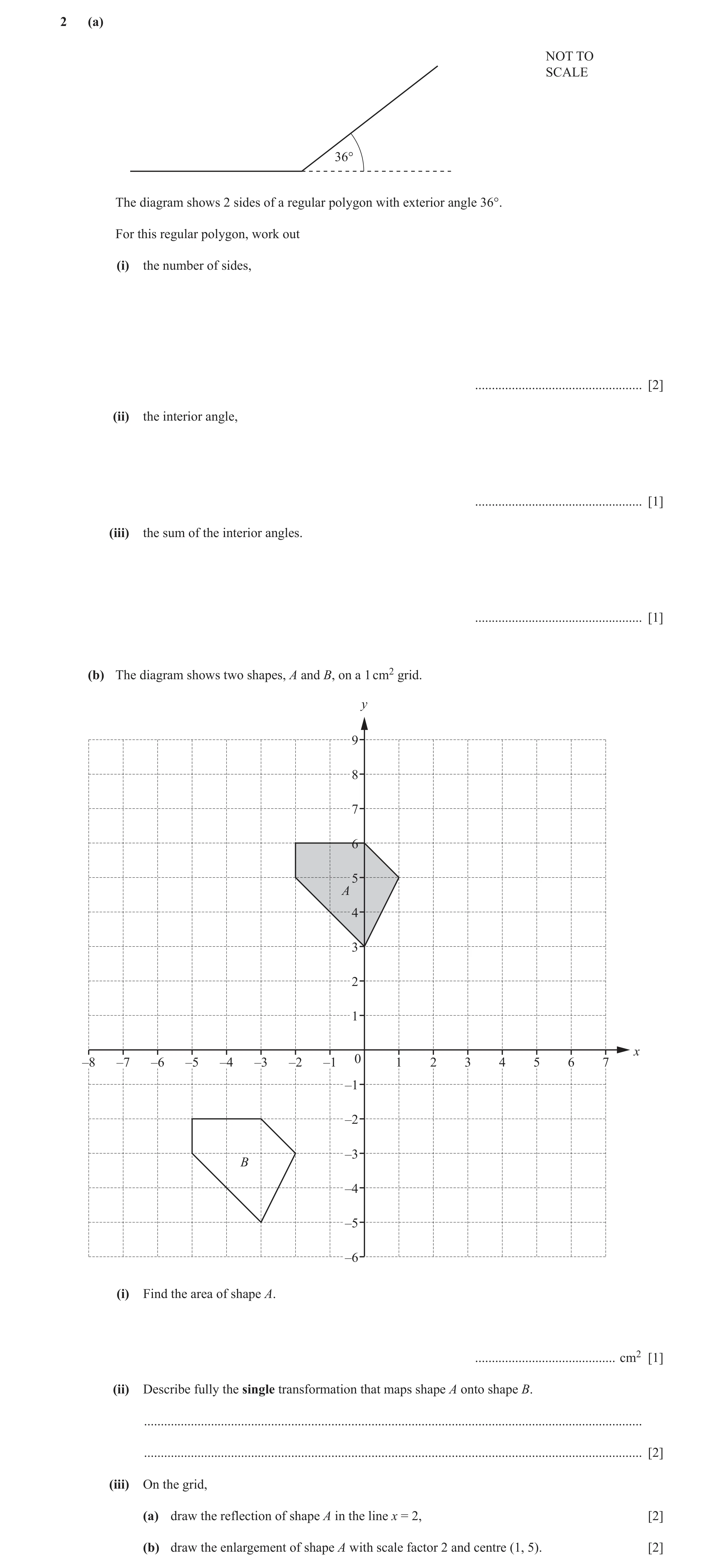
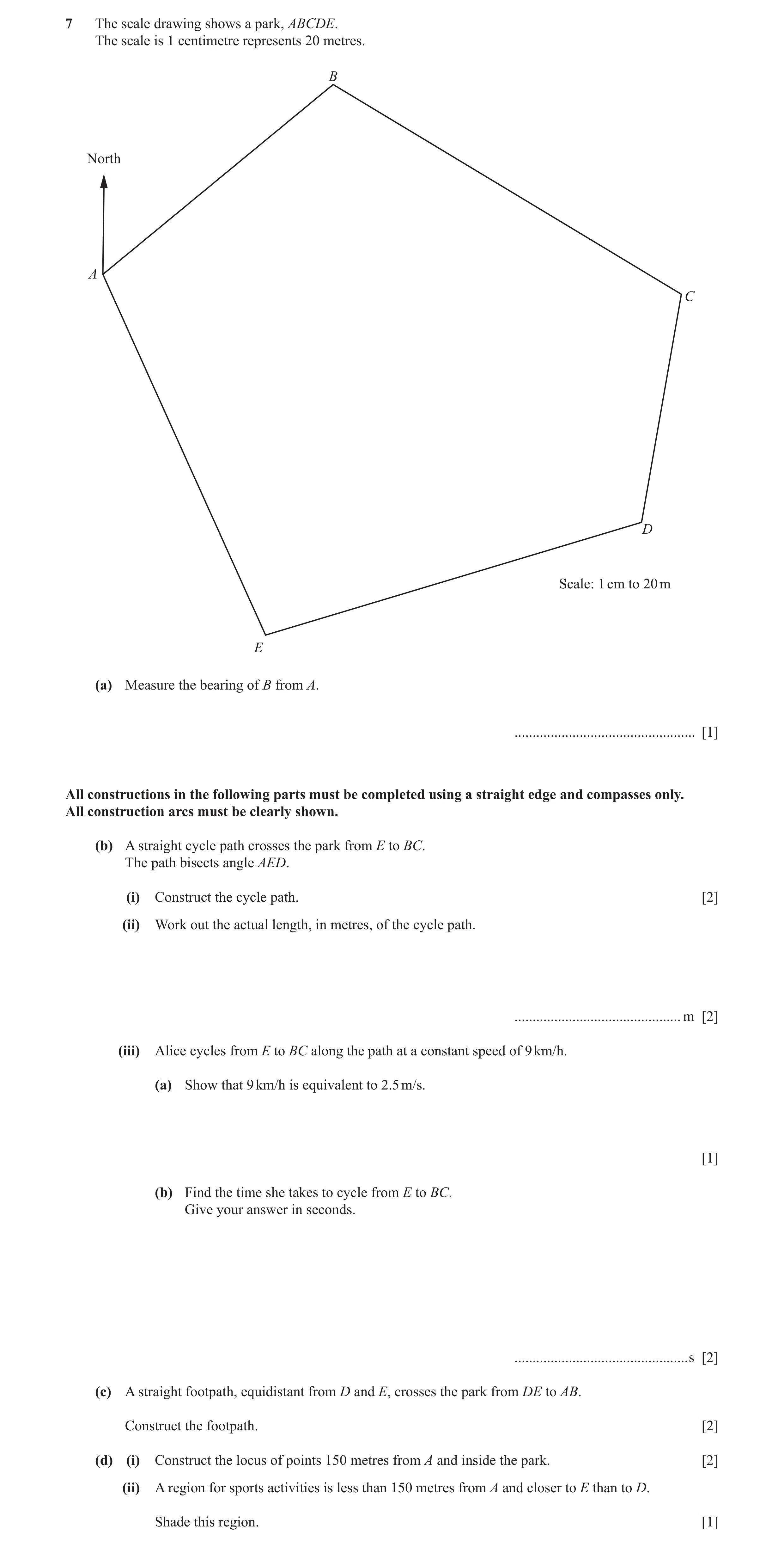
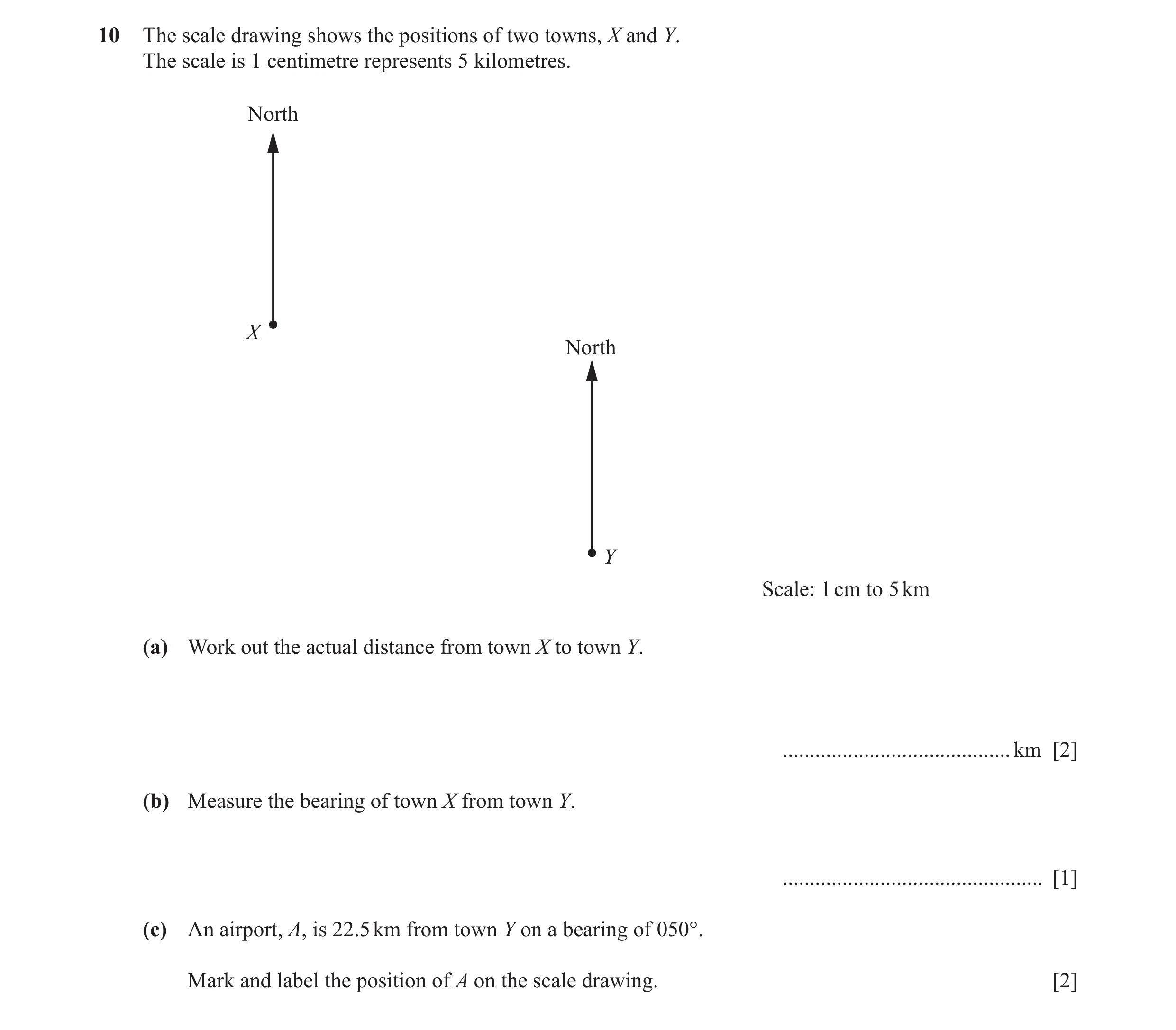 58 / 168
![Question 38: (a) x° NOT TO SCALE 74° 71° y° Work out the value of (i) x, x = ................................................ [1] (ii) y. y = ..........…](https://img.pastlit.com/crops/fbff0075-c89e-4a95-abc2-32df09bbcfba/q3.webp)
![Question 39: (a) Complete this statement. To be obtuse, an angle must be between ............... degrees and ............... degrees. [1] (b) parallelog…](https://img.pastlit.com/crops/02f75533-14f1-4840-a433-be63793ab2e4/q4.webp)
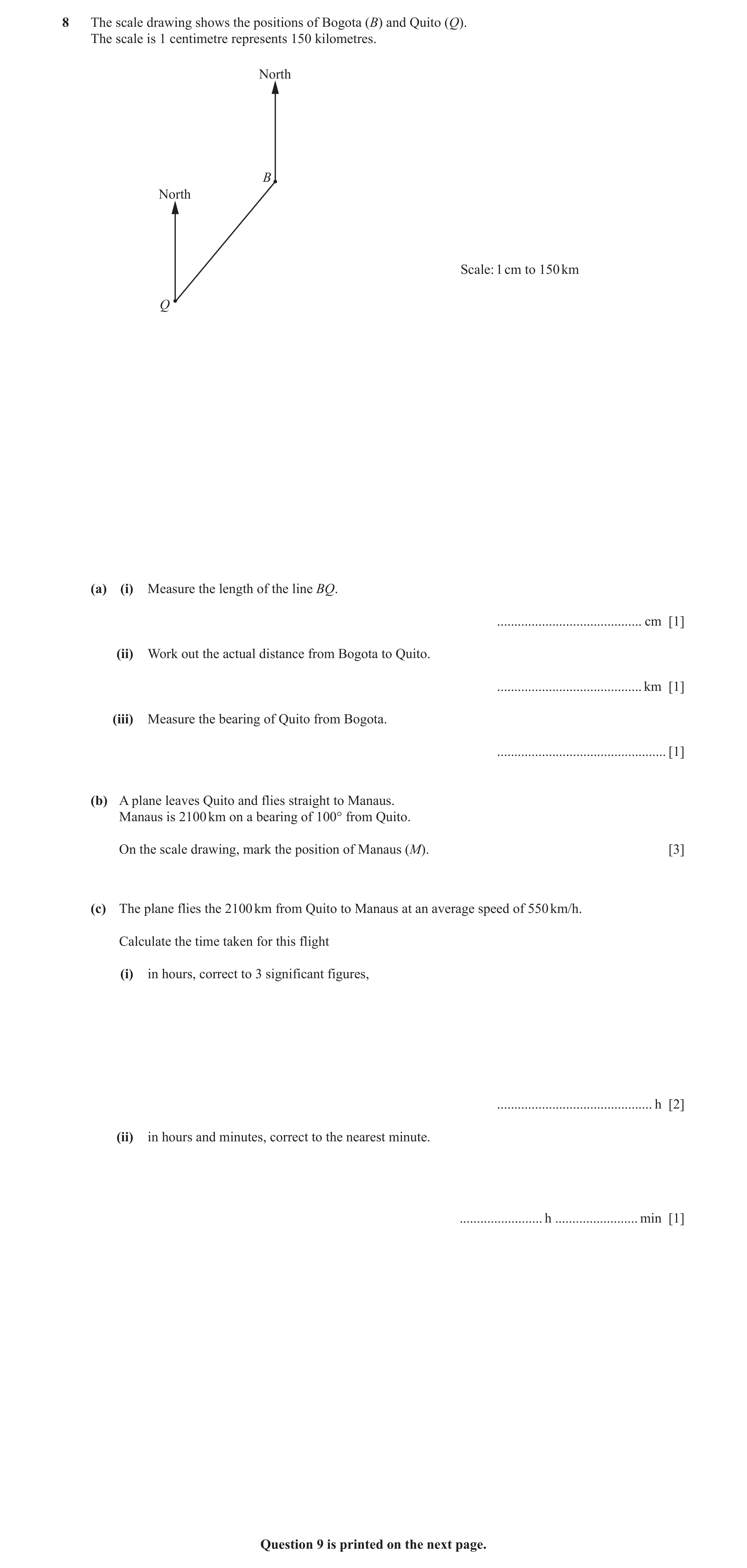
![Question 41: (a) Measure the reflex angle at A. A .................................................. [1] (b) b° NOT TO SCALE 68° Find the value of b. Gi…](https://img.pastlit.com/crops/09acb117-9e4d-43a9-8268-6d1408ce72cd/q4.webp)
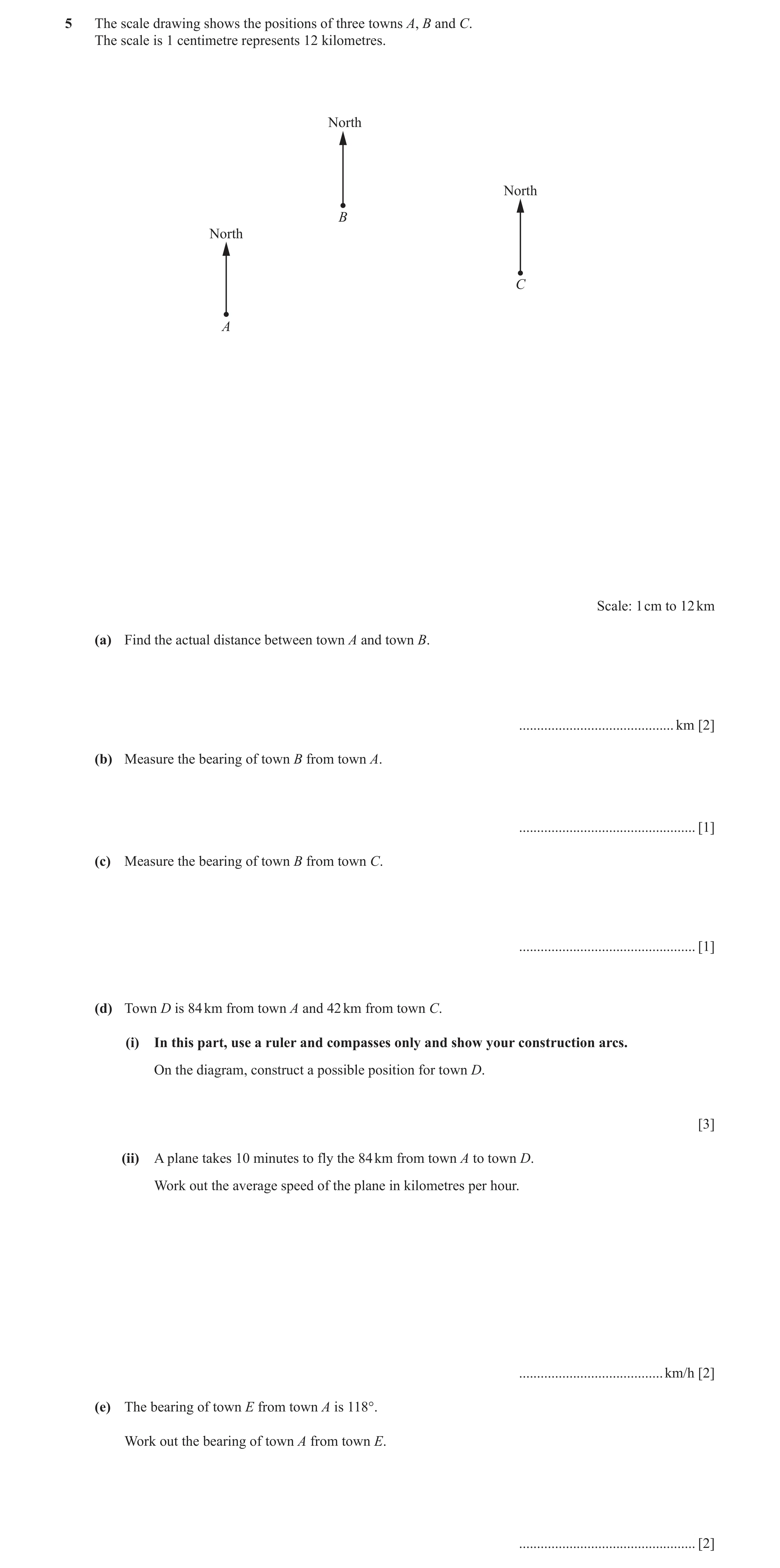
![Question 43: (a) Write down the mathematical name for this polygon. (i) .................................................. [1] (ii) Write down the mathe…](https://img.pastlit.com/crops/af508e64-f88e-4bd2-ad49-d439108a3563/q7.webp)
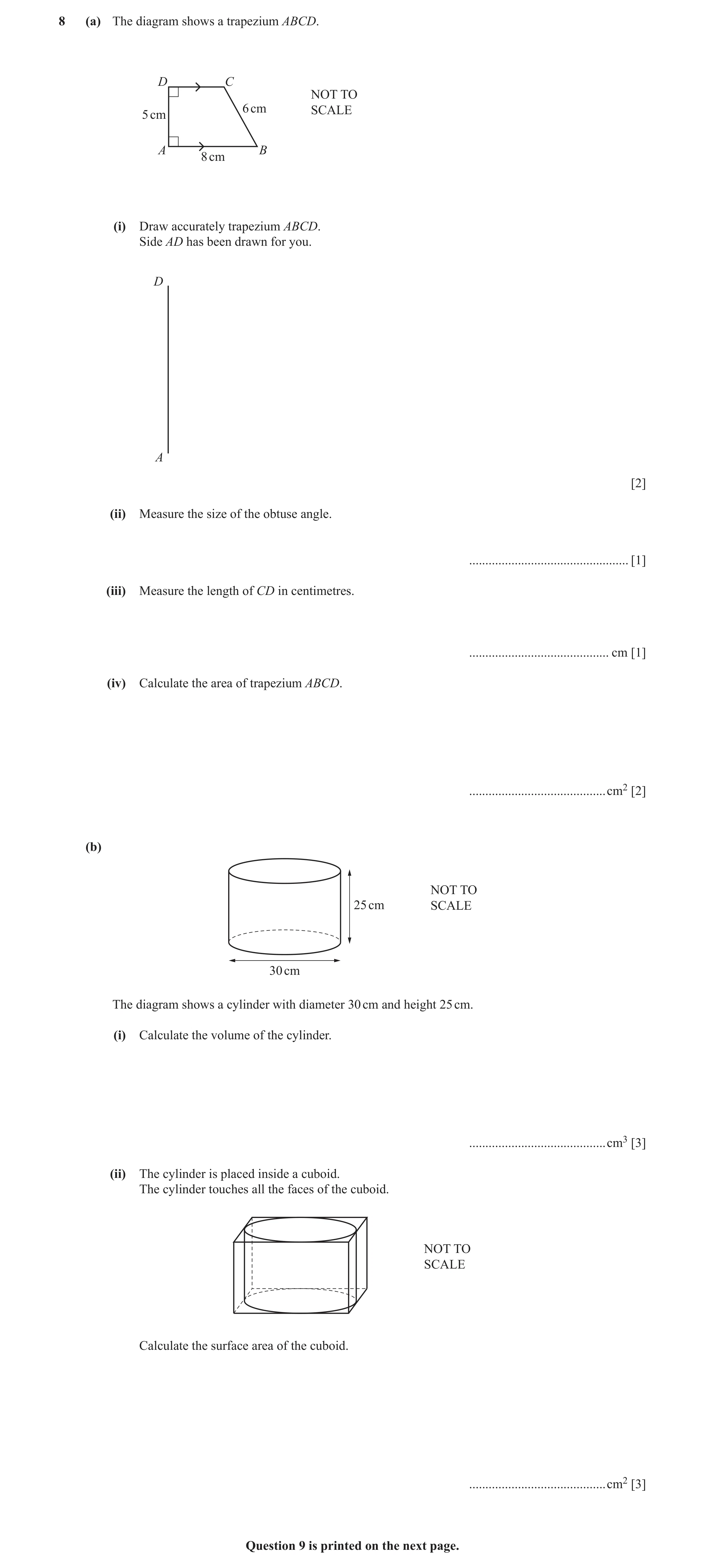
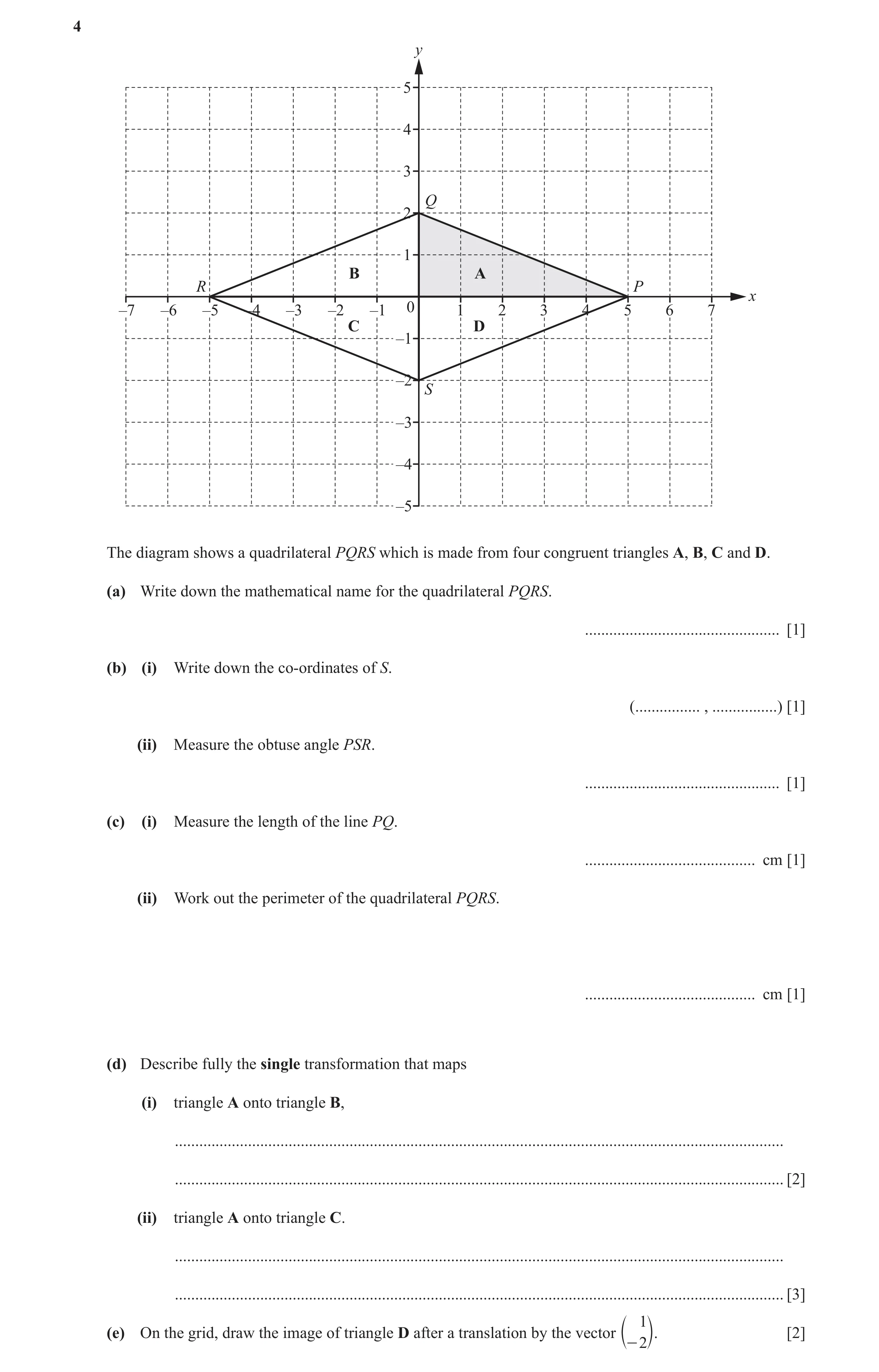
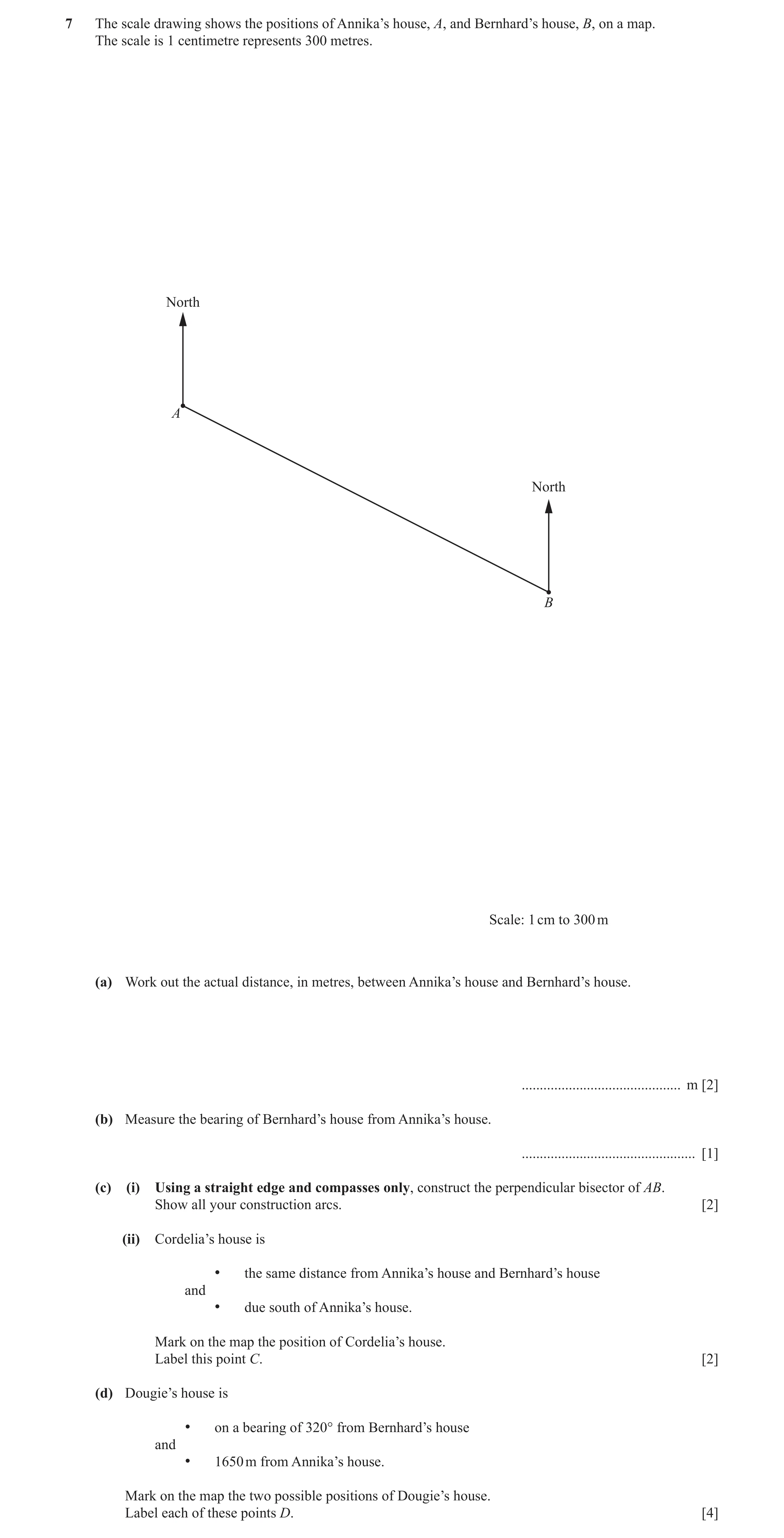
![Question 47: (a) Draw all the lines of symmetry on each shape. [4] (b) The diagram shows an isosceles triangle and a straight line AB. NOT TO SCALE 48° …](https://img.pastlit.com/crops/271dbb44-fdf6-4470-8e73-cf0feb44b84d/q2.webp)
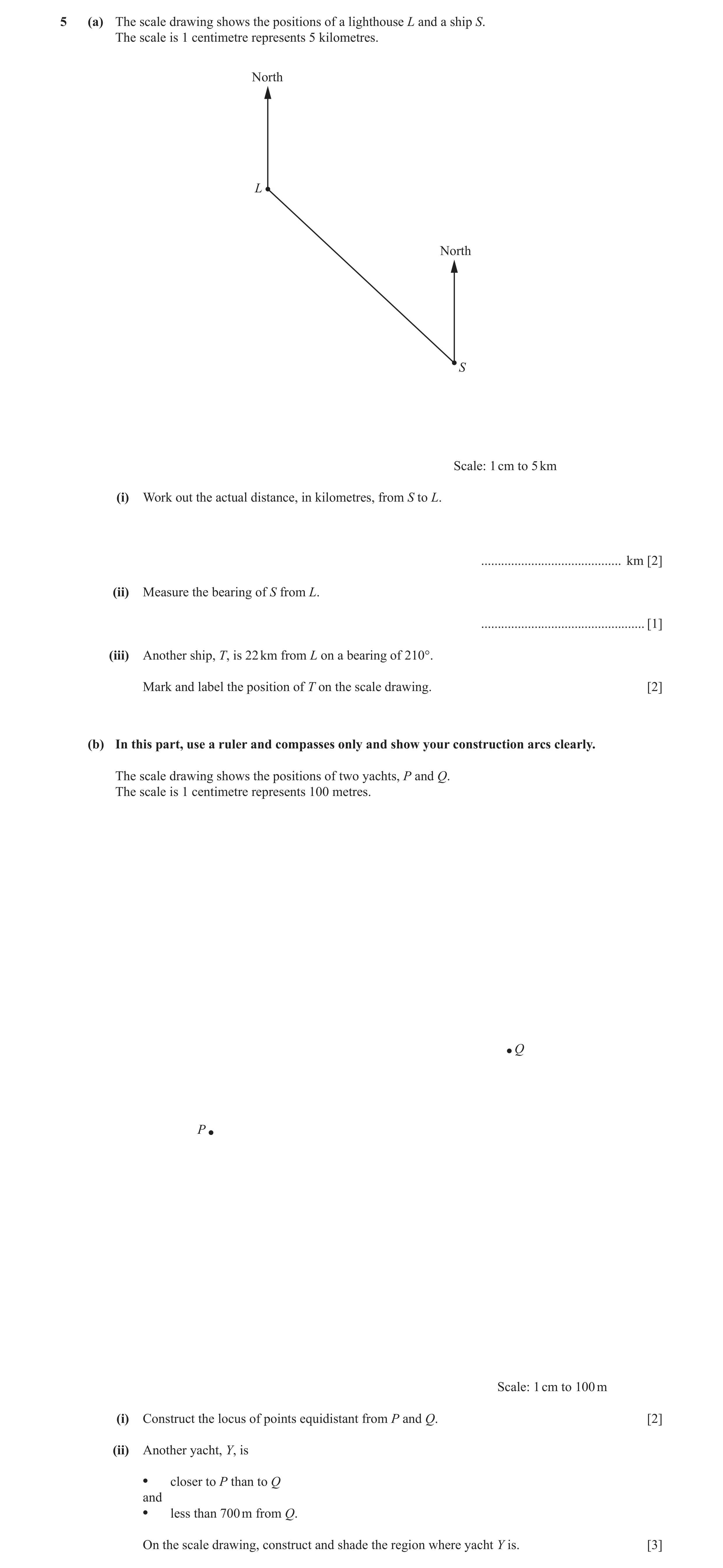
![Question 49: (a) Simplify. 4c + 2d - c + 6 d ................................................. [2] (b) h = 5m - 2n Calculate h when m = 4 and n = -6. ..…](https://img.pastlit.com/crops/5ccf91ef-55cf-4d53-bcca-a5f977b93f37/q8.webp) 77 / 168
77 / 168![Question 50: (a) Draw all the lines of symmetry on the rectangle below. [2] (b) Work out the size of one interior angle of a regular hexagon. ..........…](https://img.pastlit.com/crops/fd7080ae-7d67-43c8-a1a5-c05881c1ff49/q5.webp)
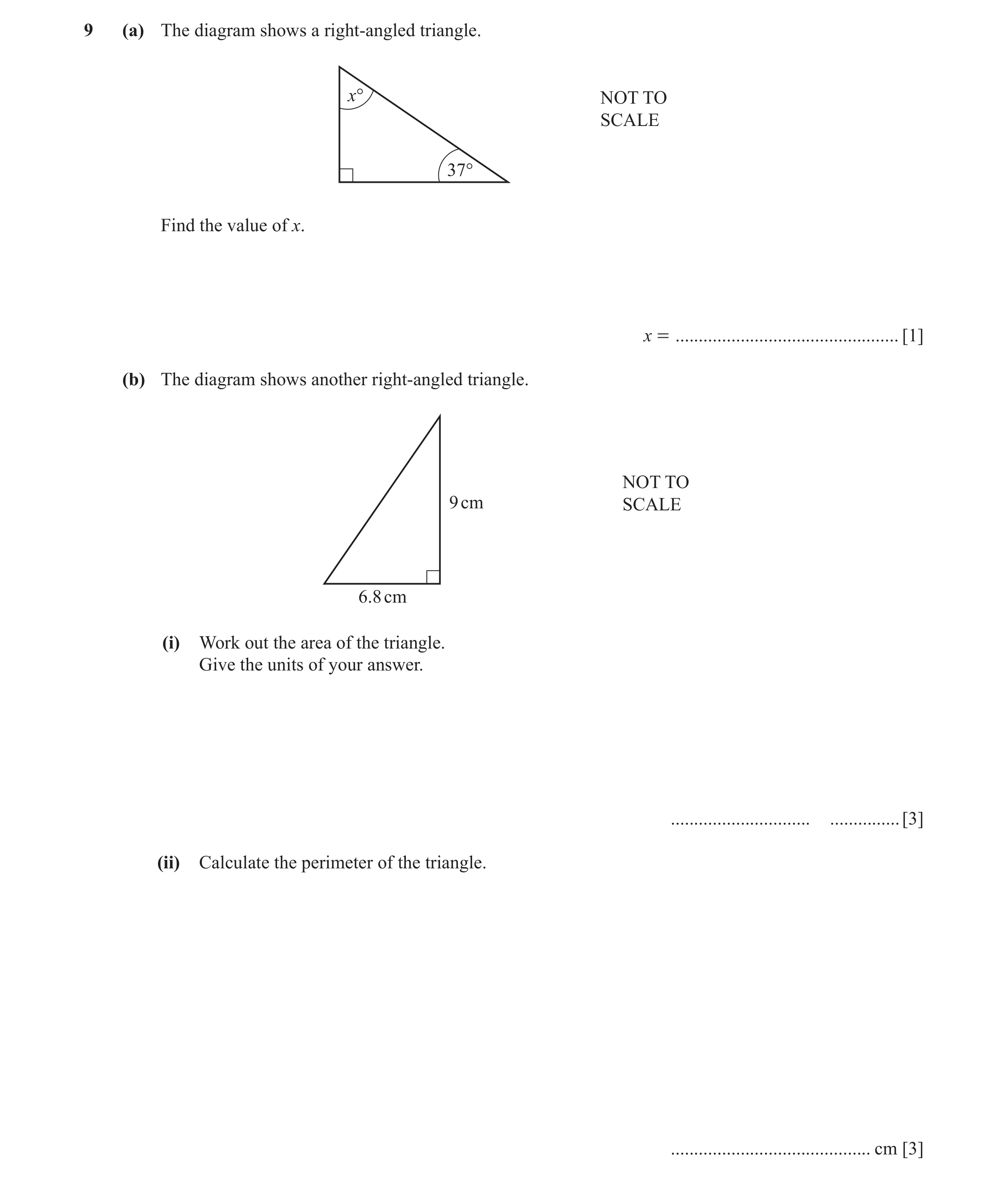 80 / 168
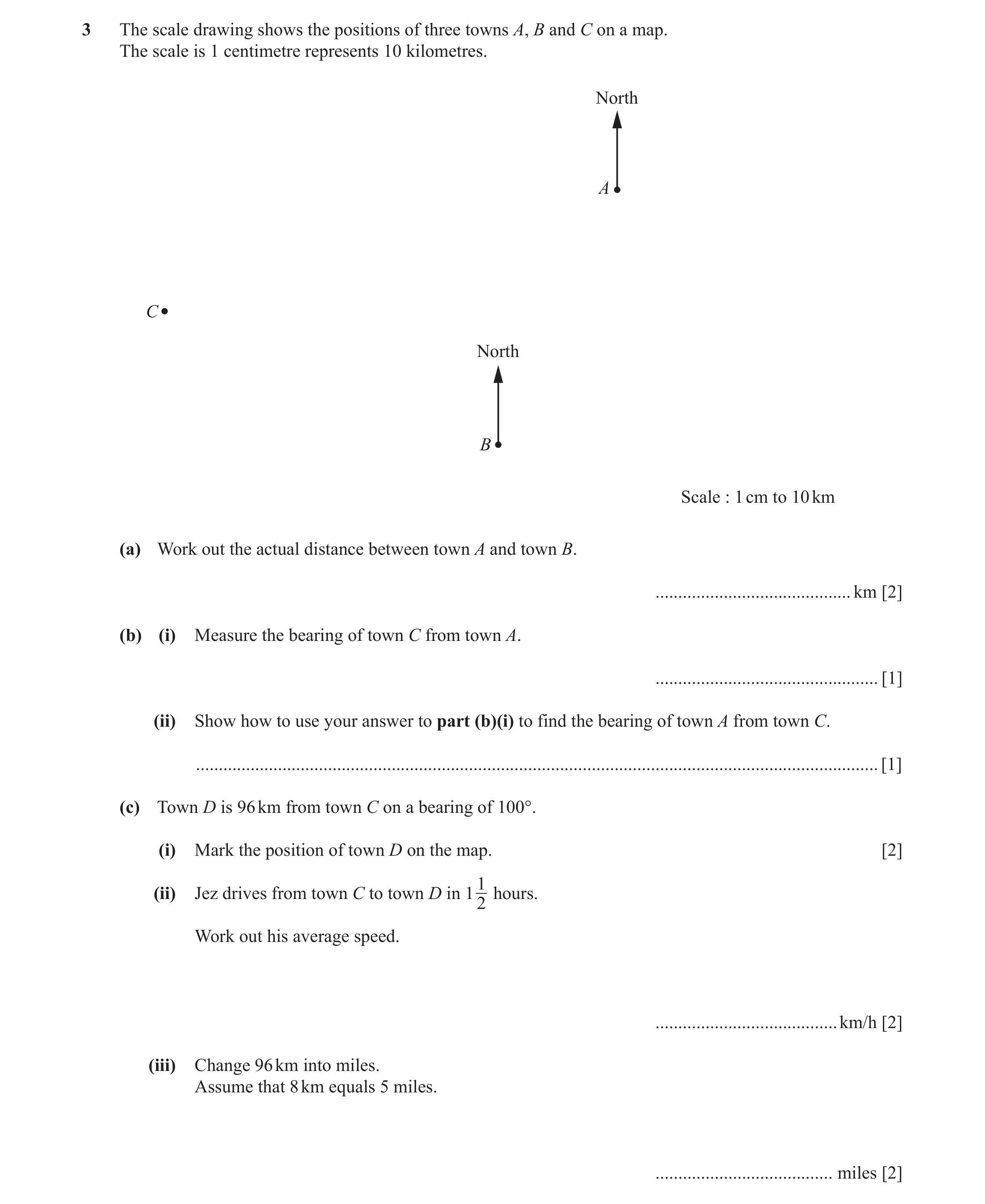 81 / 168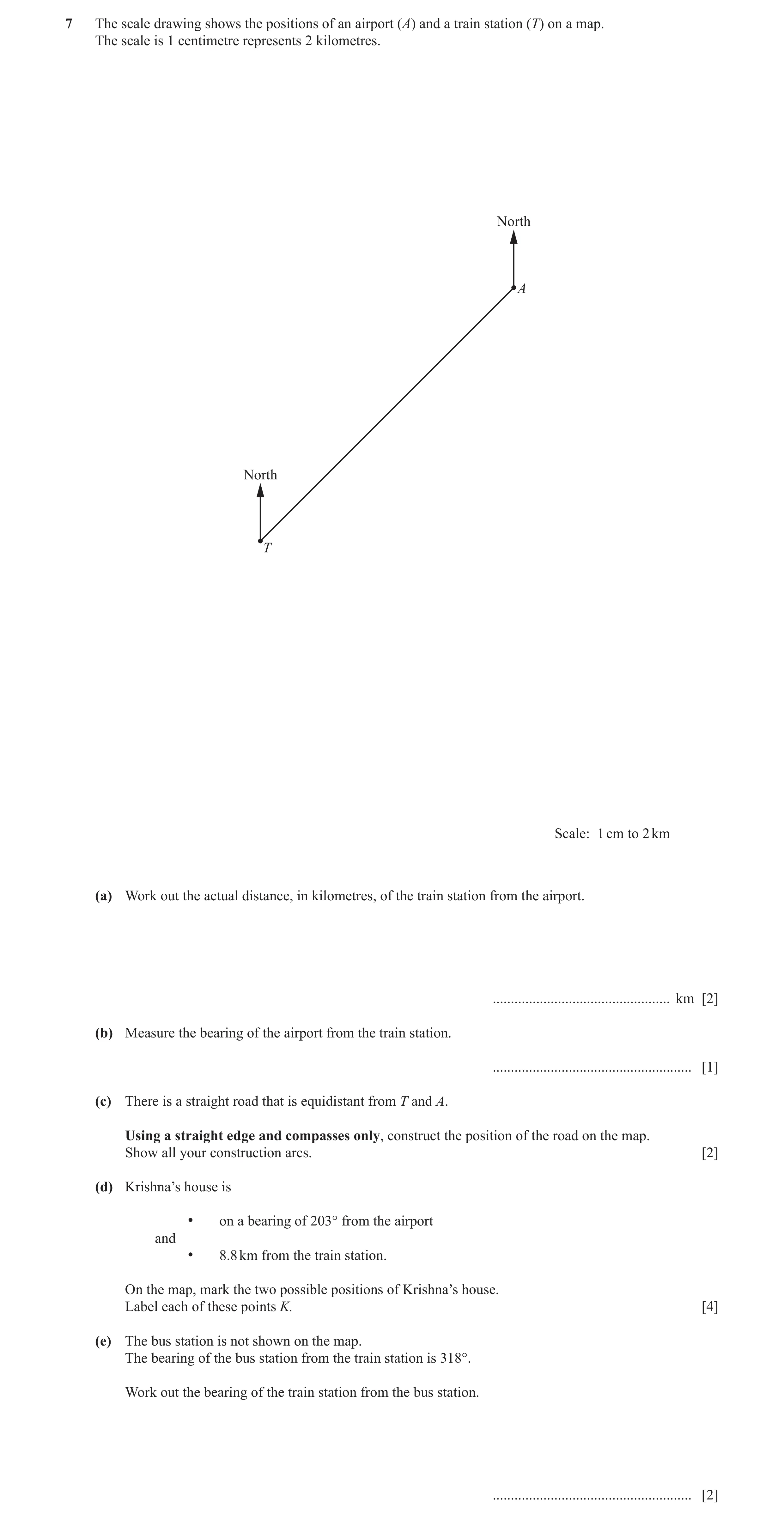
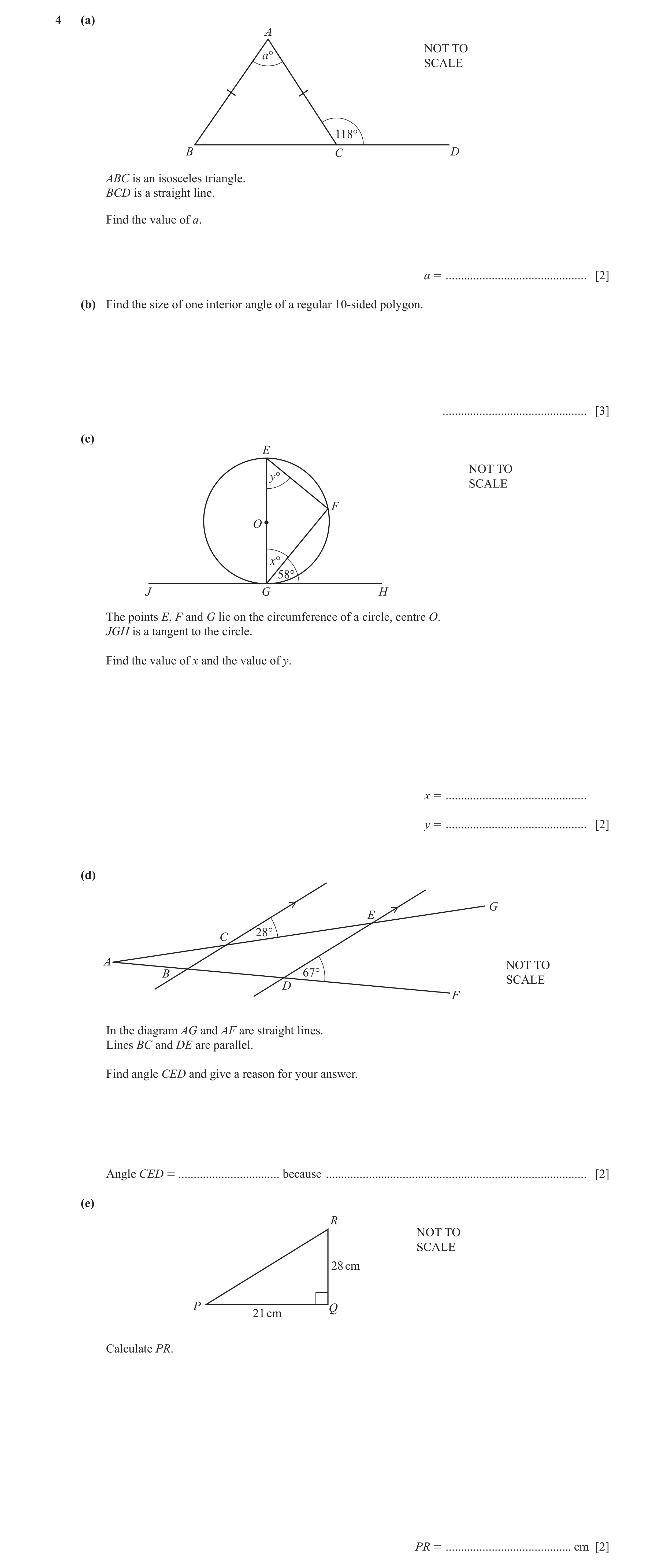
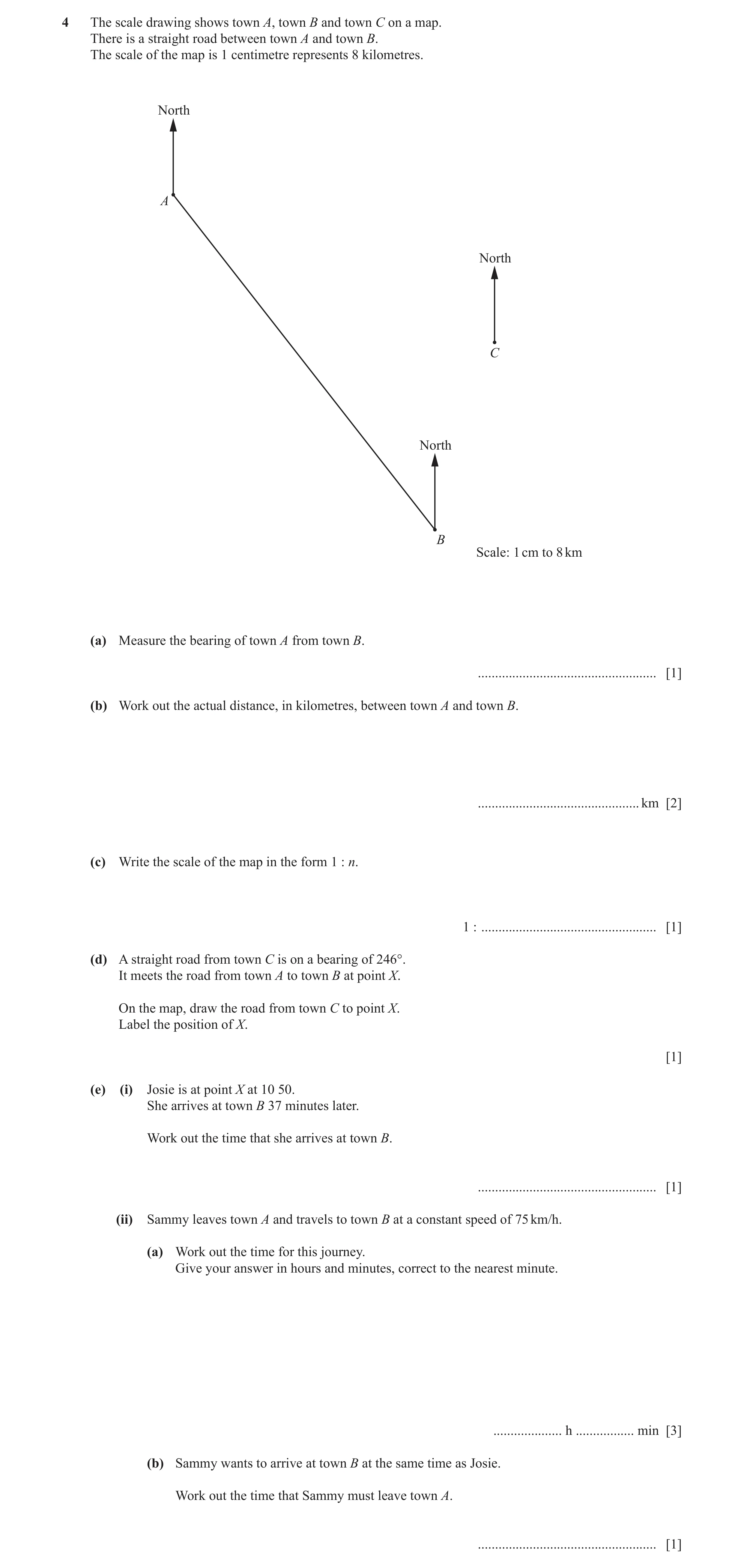
![Question 56: (a) A triangle is isosceles. One of its angles is 96°. Find the other two angles. ........................ and ........................ [1]…](https://img.pastlit.com/crops/5f8d81f0-1b66-4e47-b812-6c607e4942a9/q7.webp)
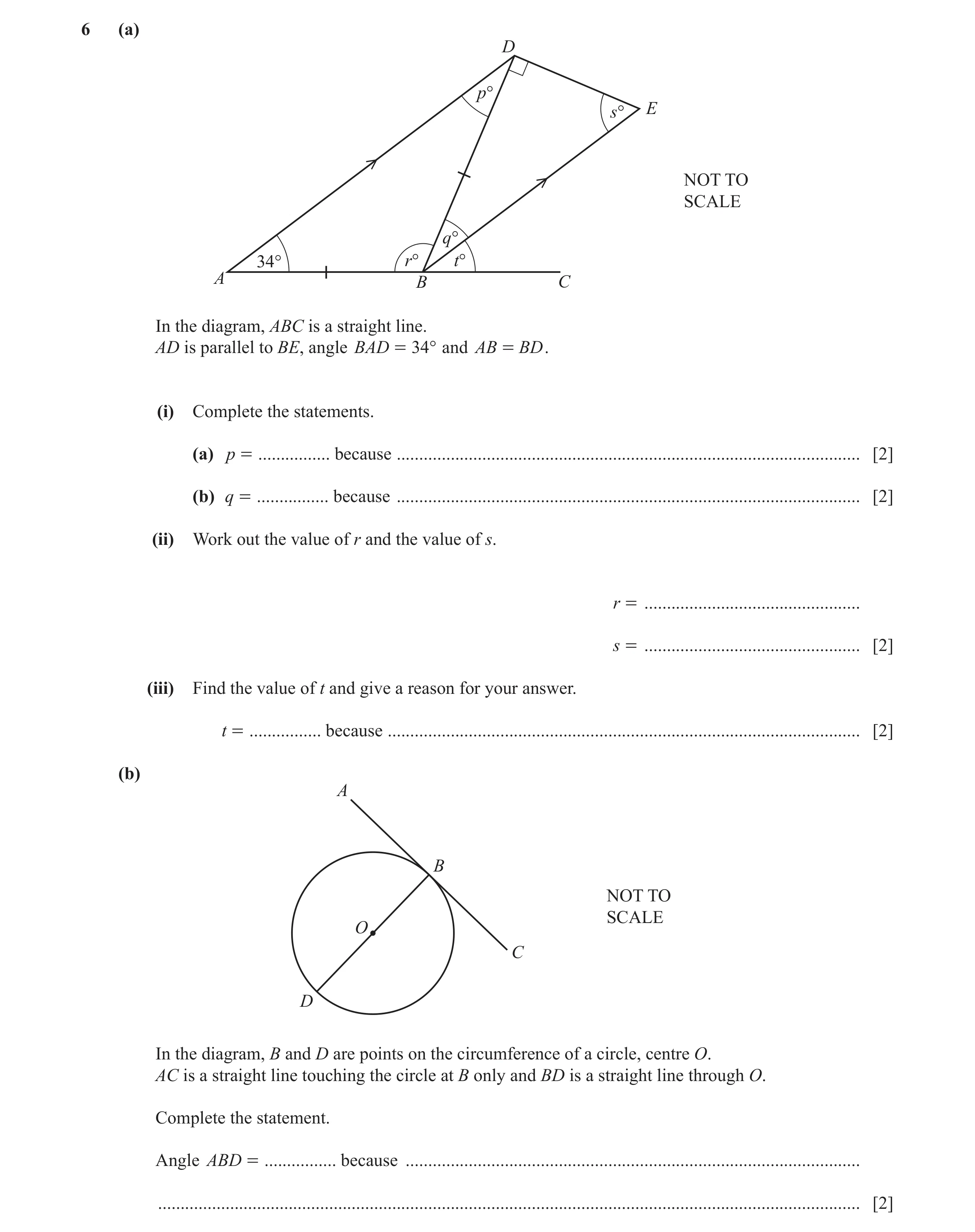 89 / 168
![Question 58: (a) x (i) Measure the size of angle x. .................................................... [1] (ii) Write down the mathematical name of th…](https://img.pastlit.com/crops/2bc5a897-a38d-4956-9610-c7c5234b5dec/q3.webp)
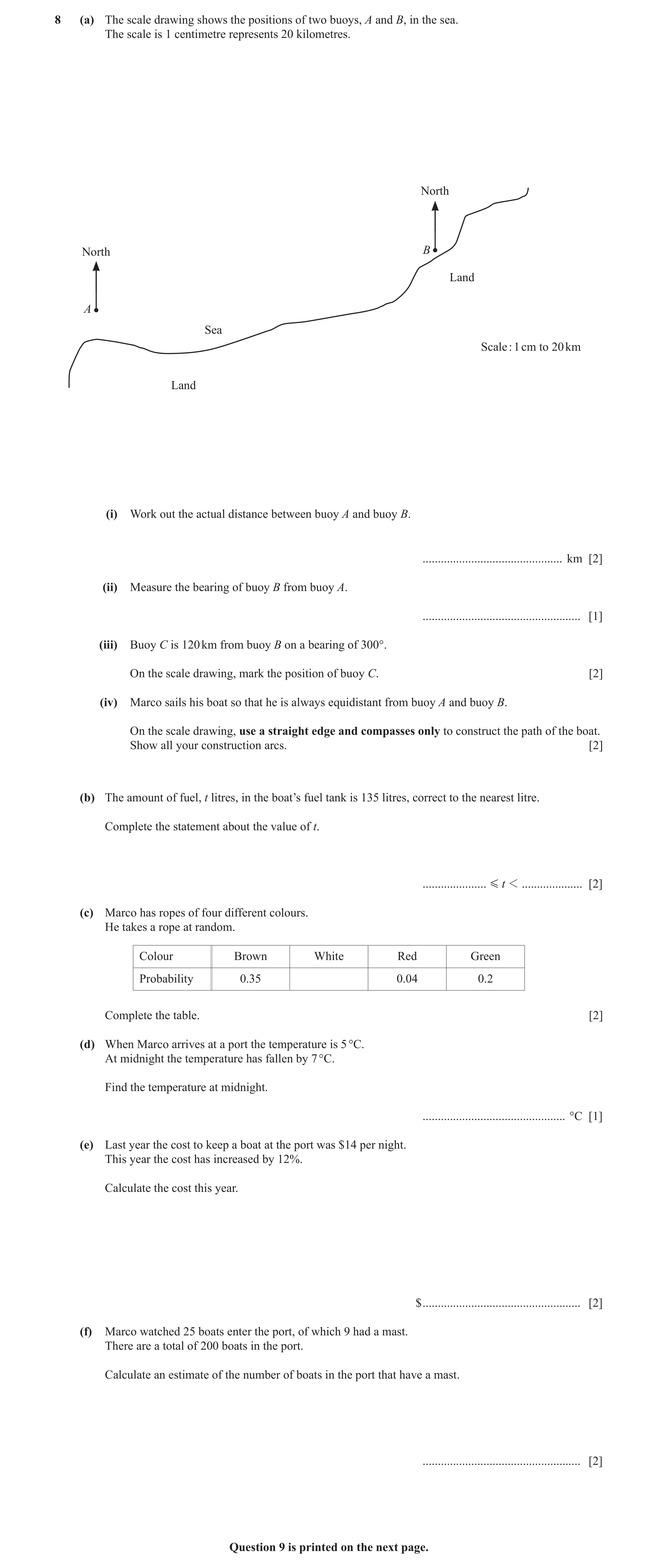
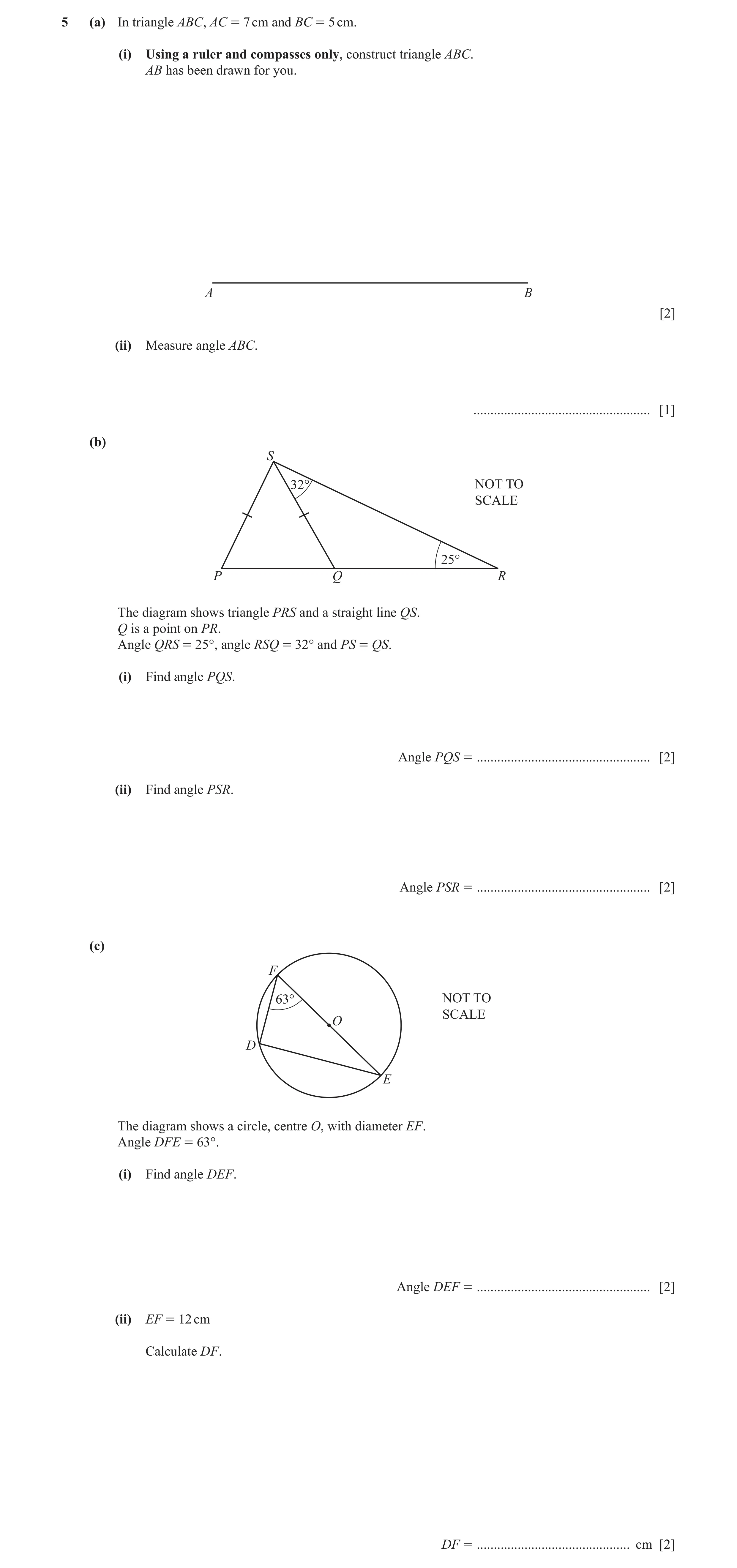
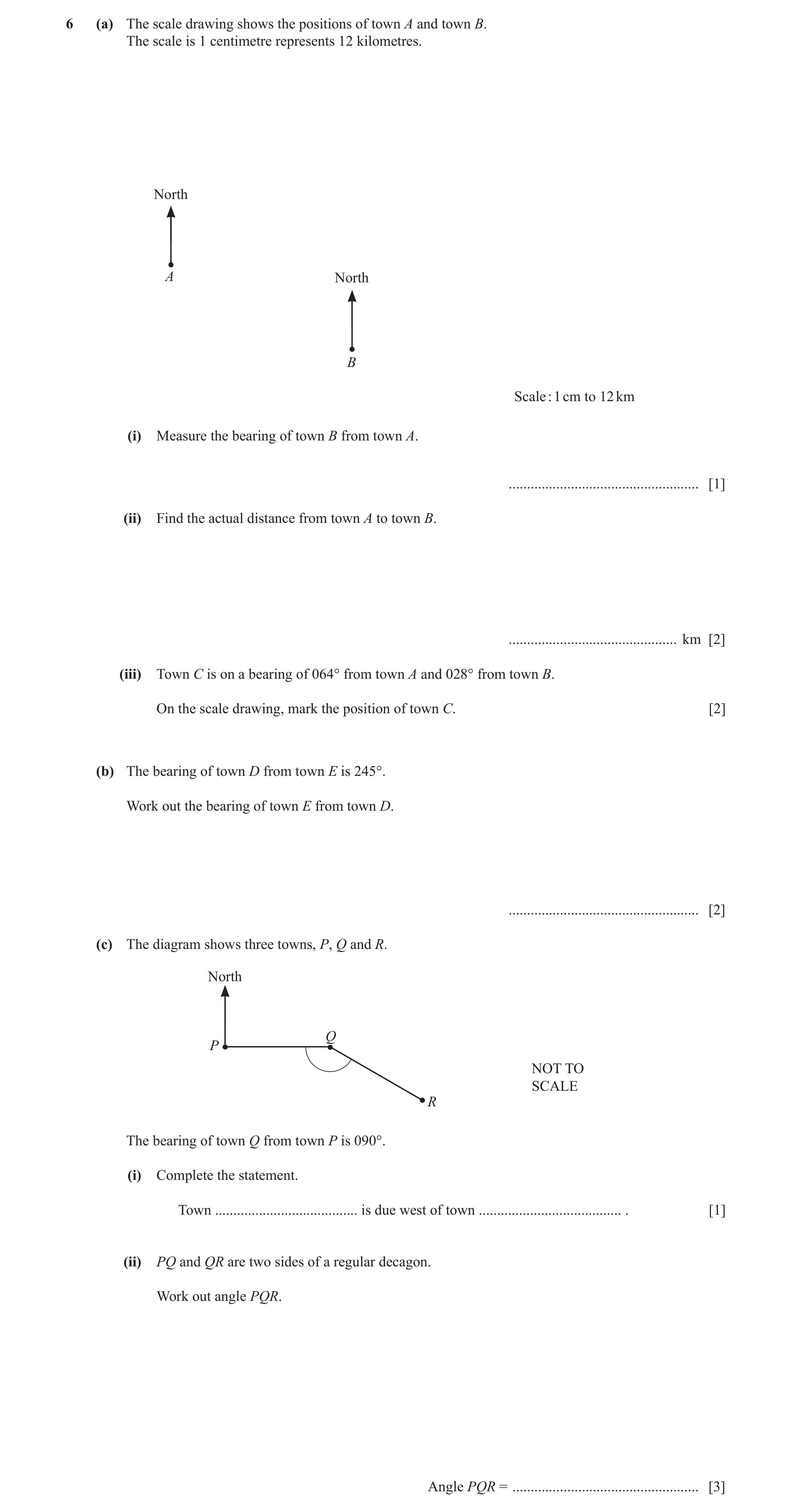
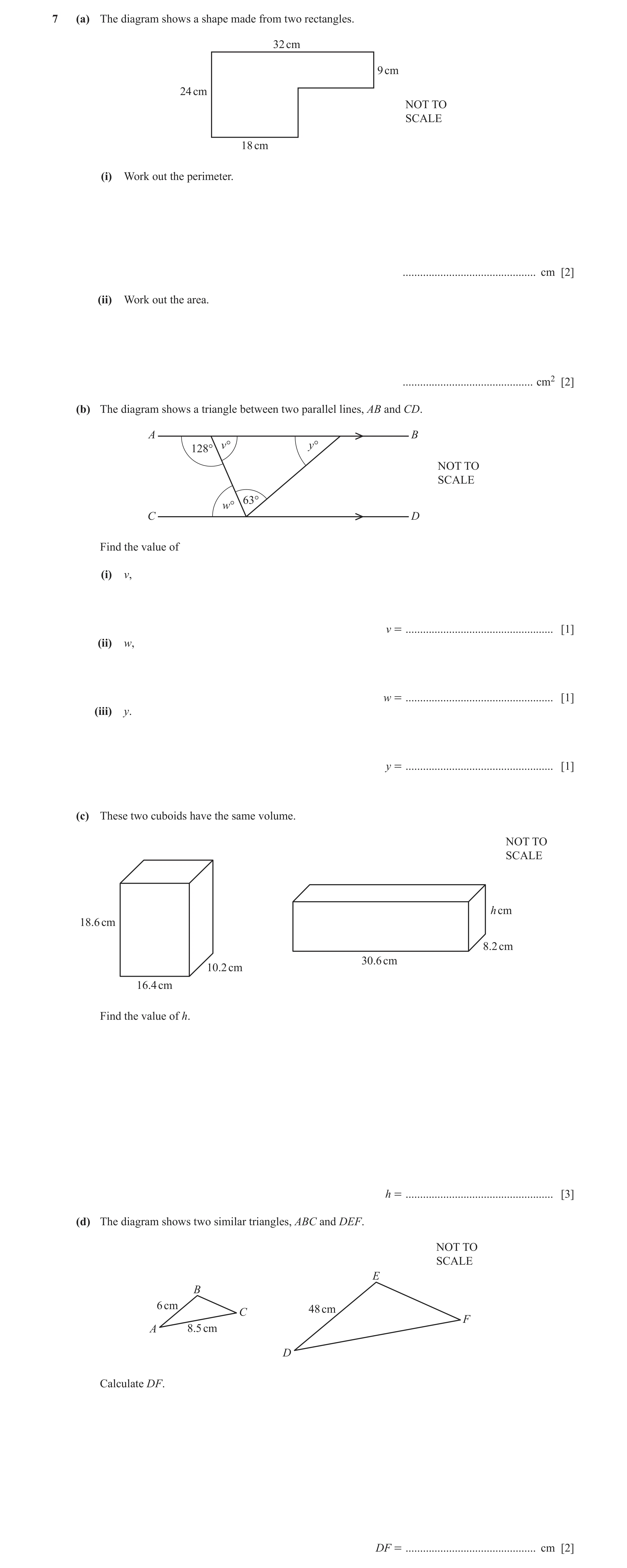
![Question 63: (a) (i) Write down the mathematical name for this type of angle. ................................................. [1] (ii) Measure this an…](https://img.pastlit.com/crops/7fa0bb4d-65a3-46d8-b8d9-7702ec6a3dbe/q3.webp)
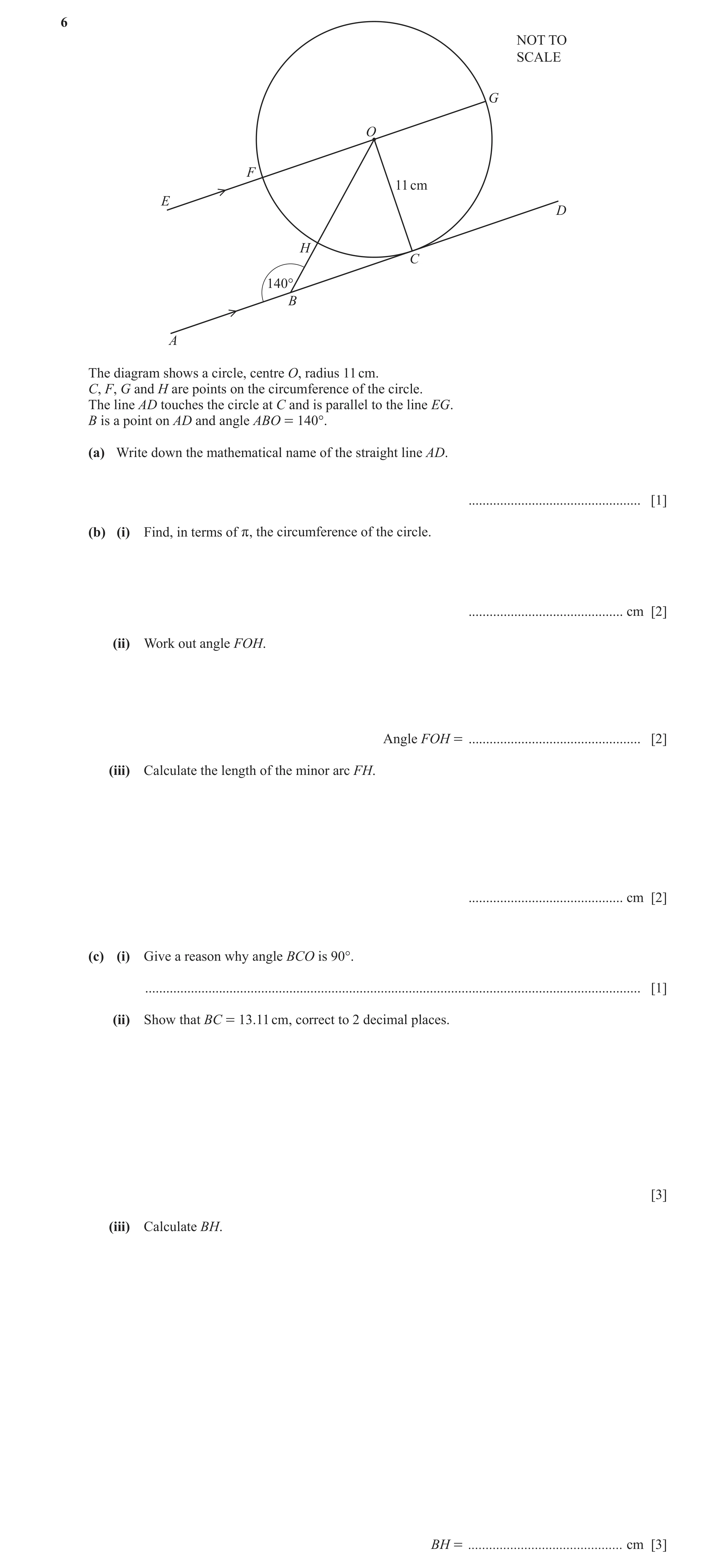
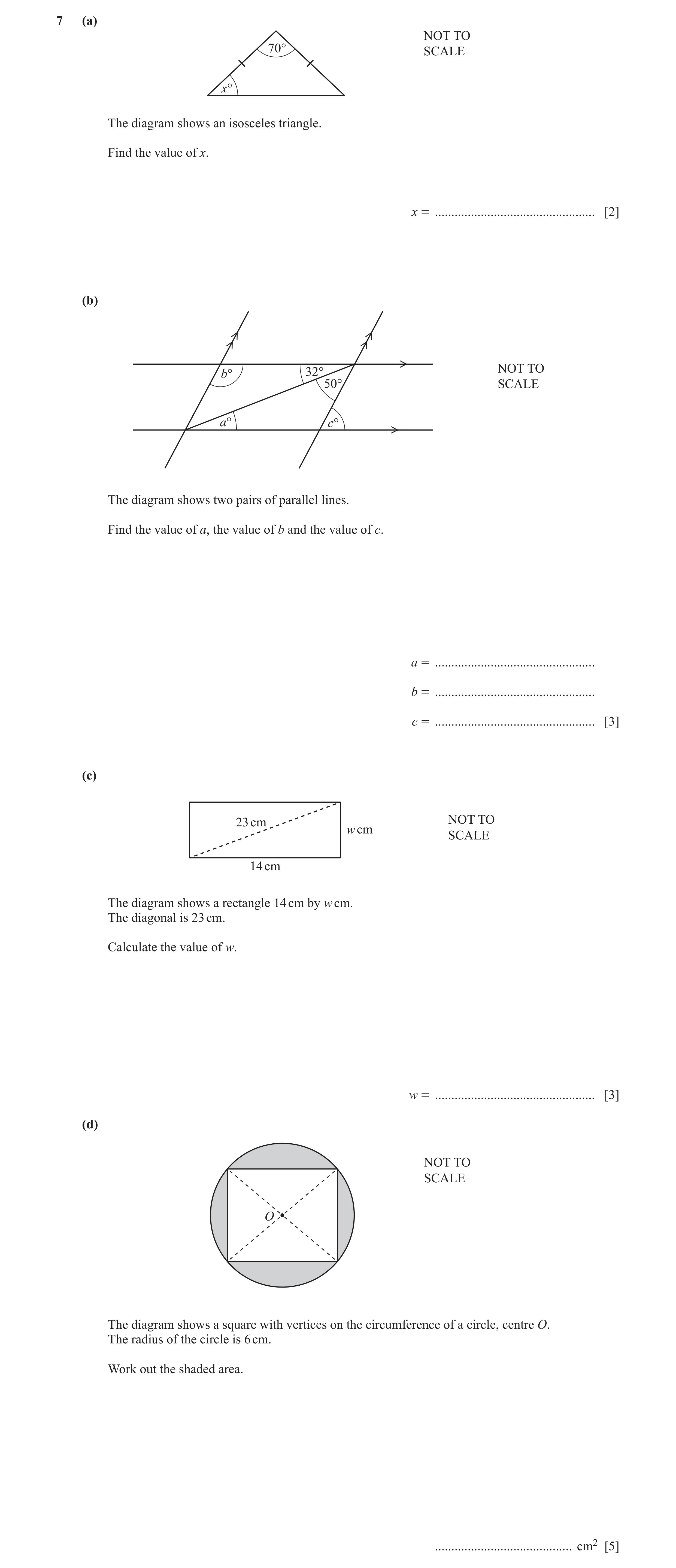
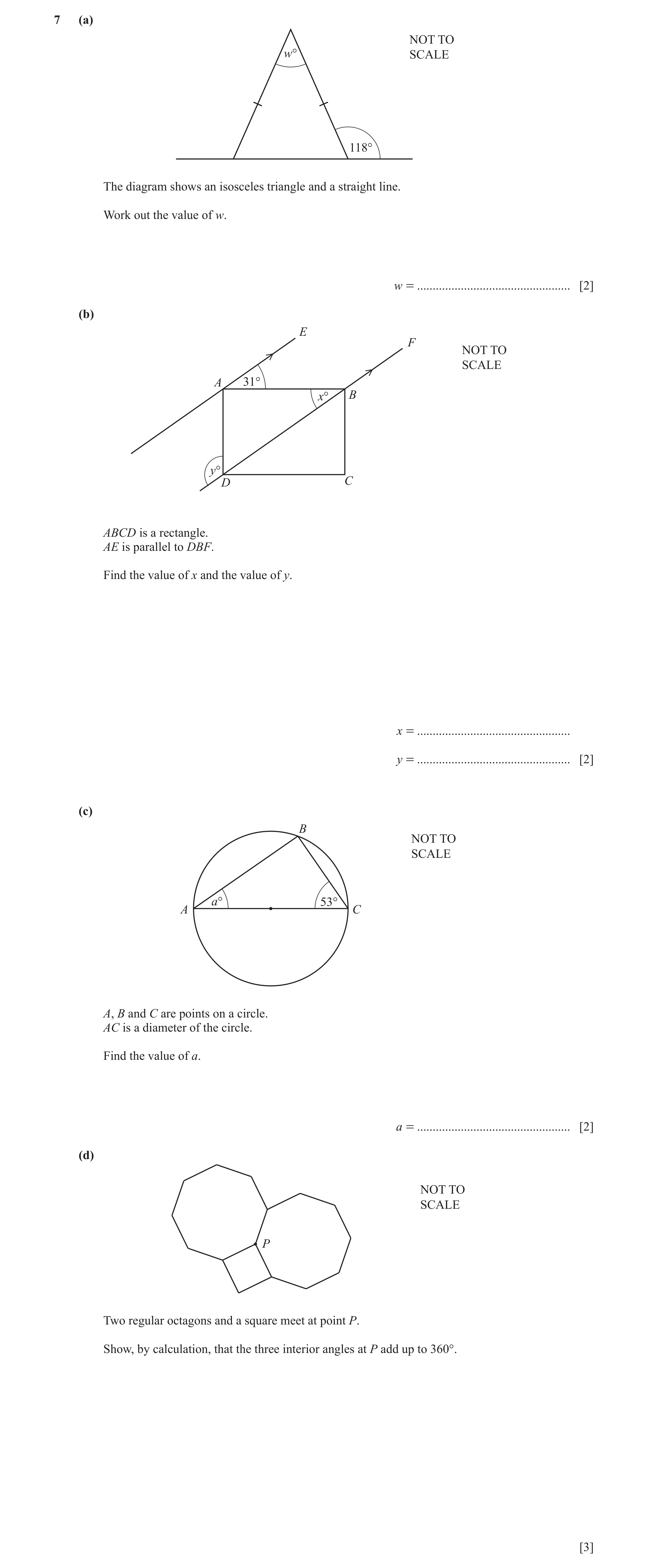
![Question 67: (a) Measure the length of this line in millimetres. ........................................... mm [1] (b) x (i) Measure the size of angle …](https://img.pastlit.com/crops/4c3ceda7-6366-46e2-8f79-99af726499d4/q2.webp)
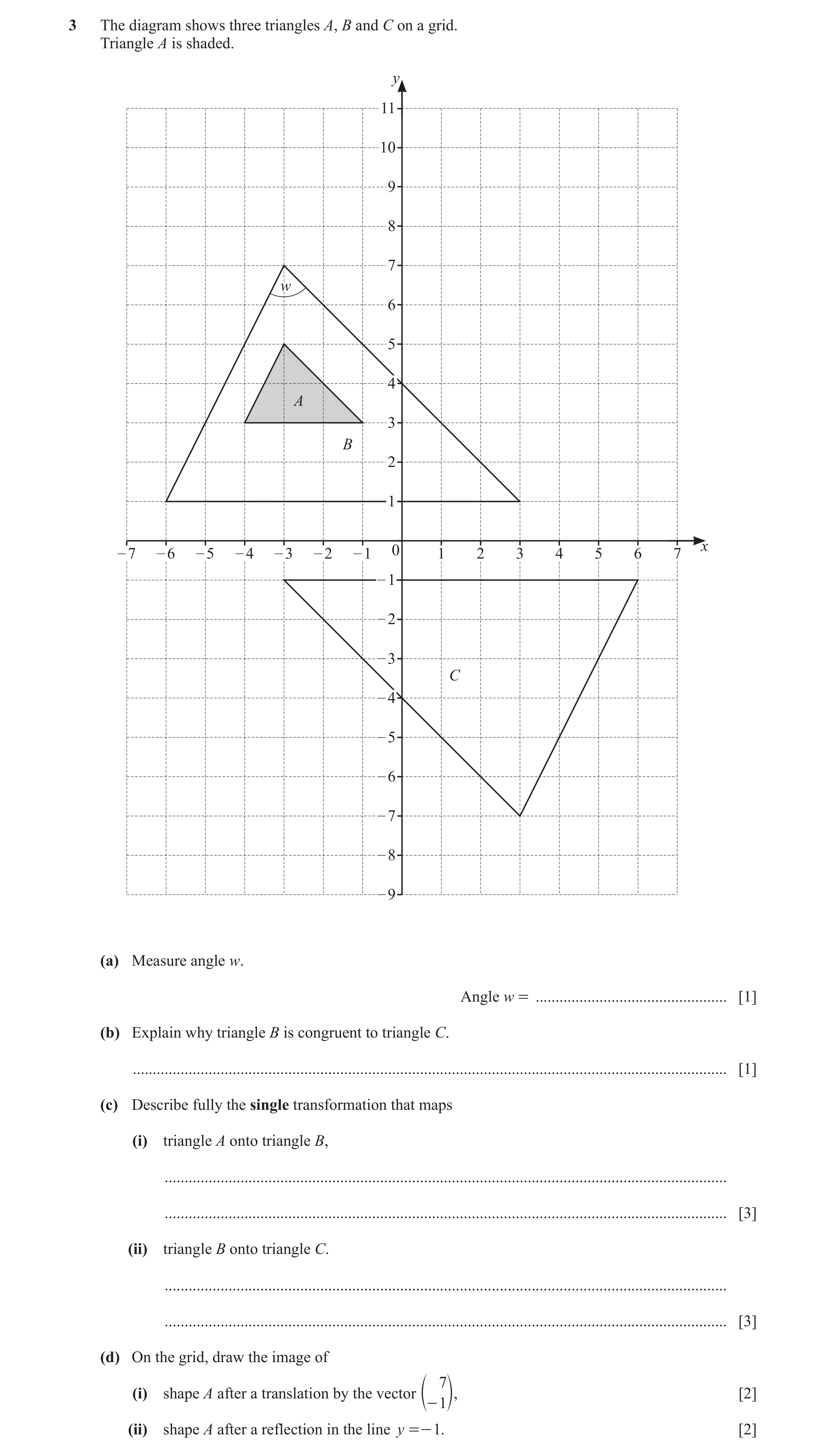
![Question 69: (a) On the 1cm2 grid, draw one rectangle that has • a perimeter of 22 cm and • an area of 24cm2. [2] (b) 94° 127° NOT TO SCALE x° 298° Work…](https://img.pastlit.com/crops/1fcbe8a1-d11f-4e6f-833a-064983c160bf/q9.webp)
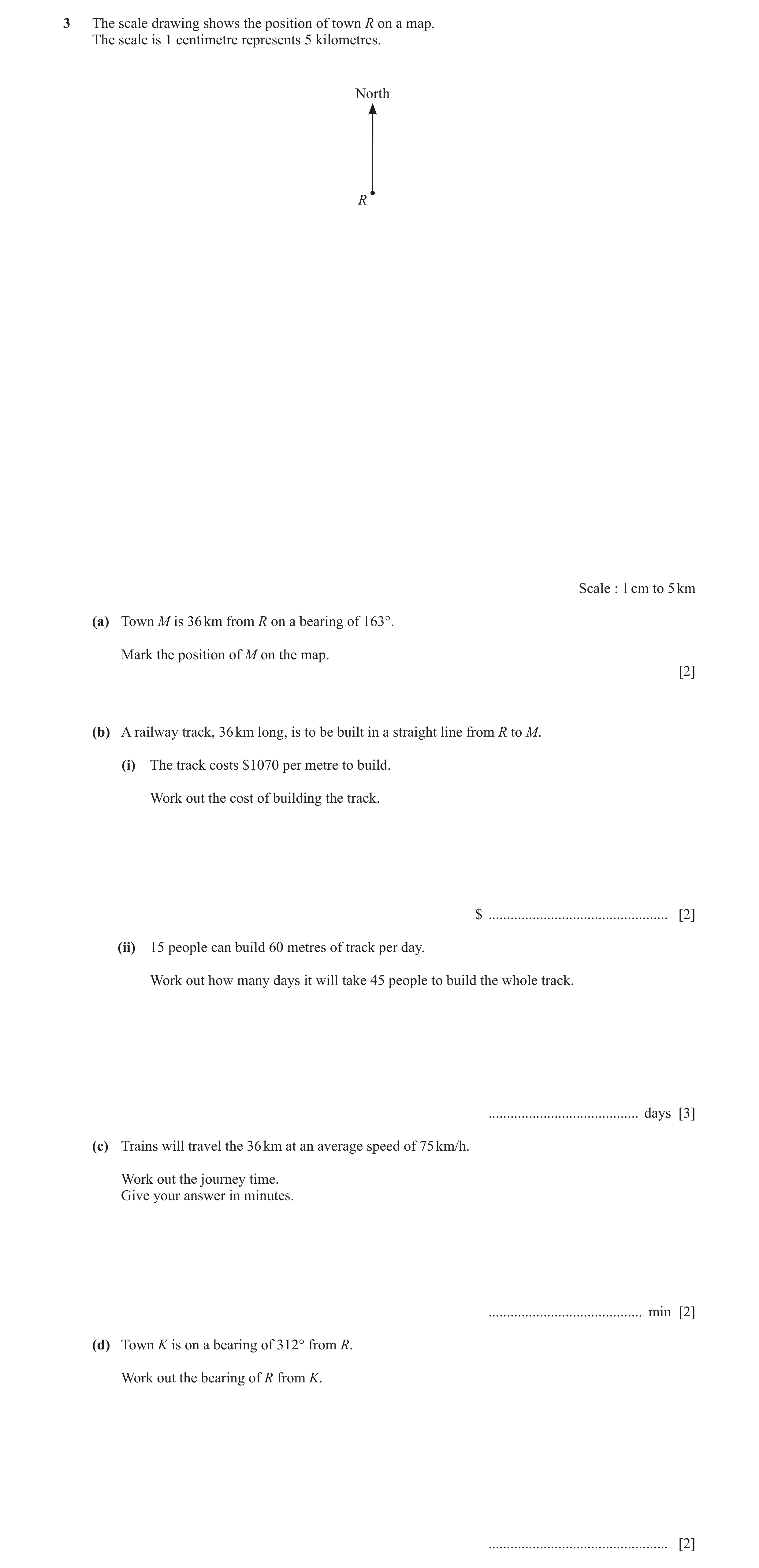
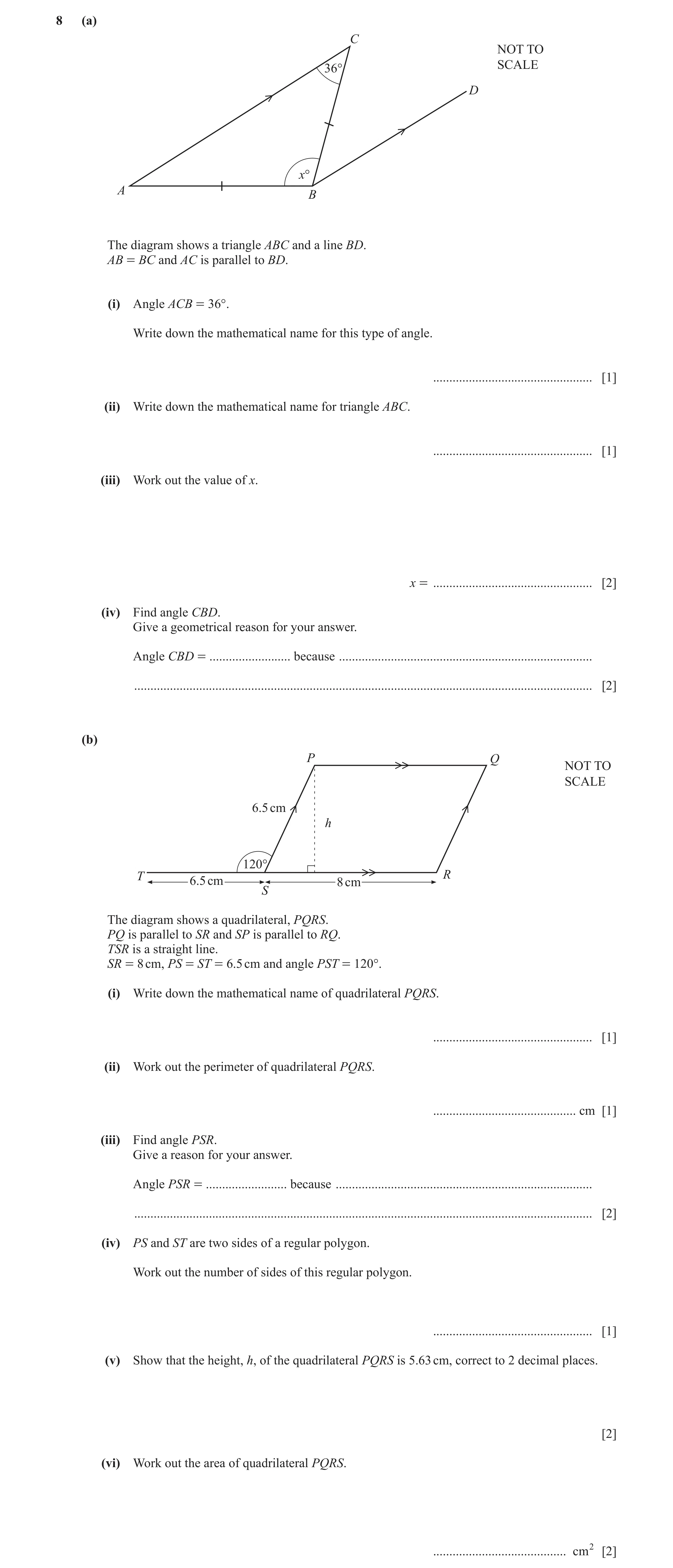
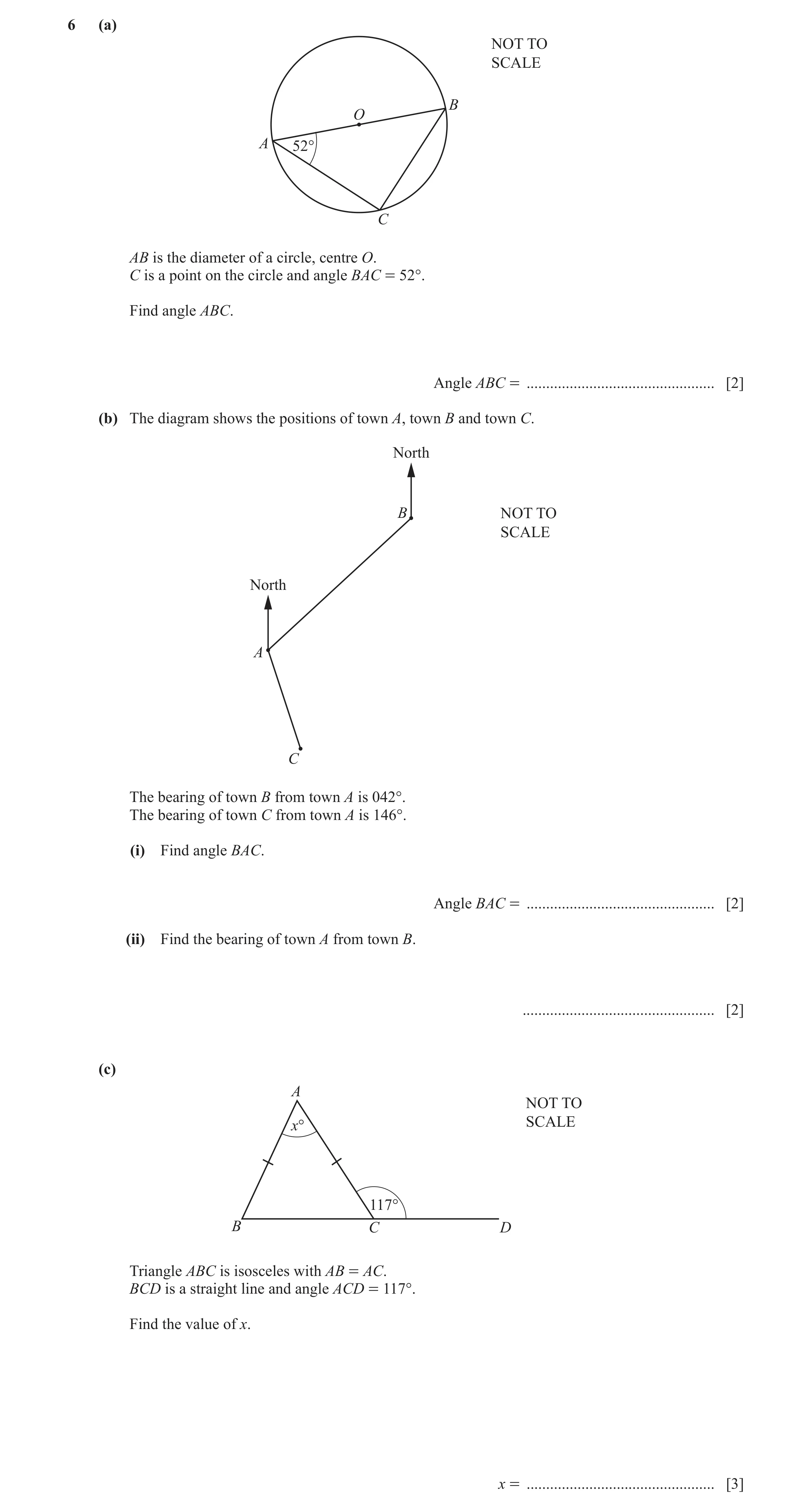
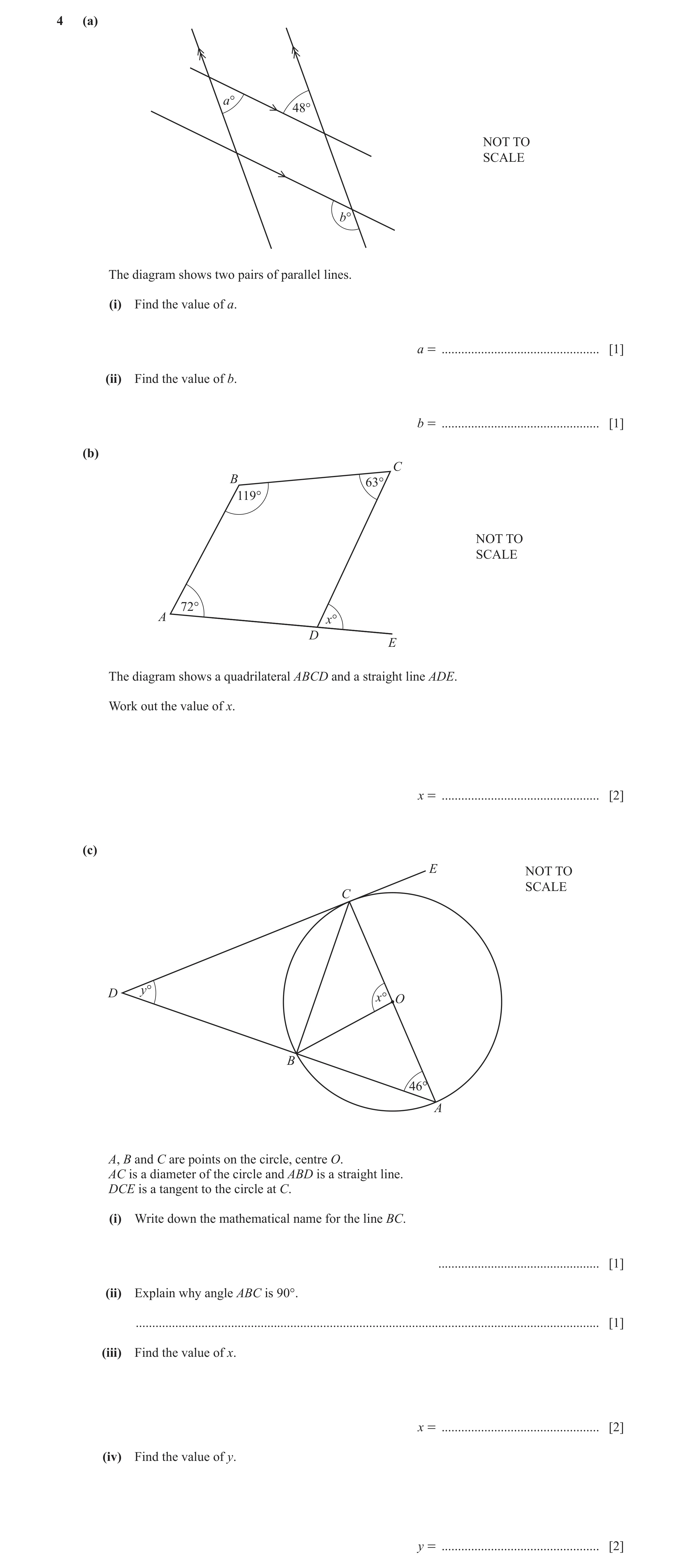
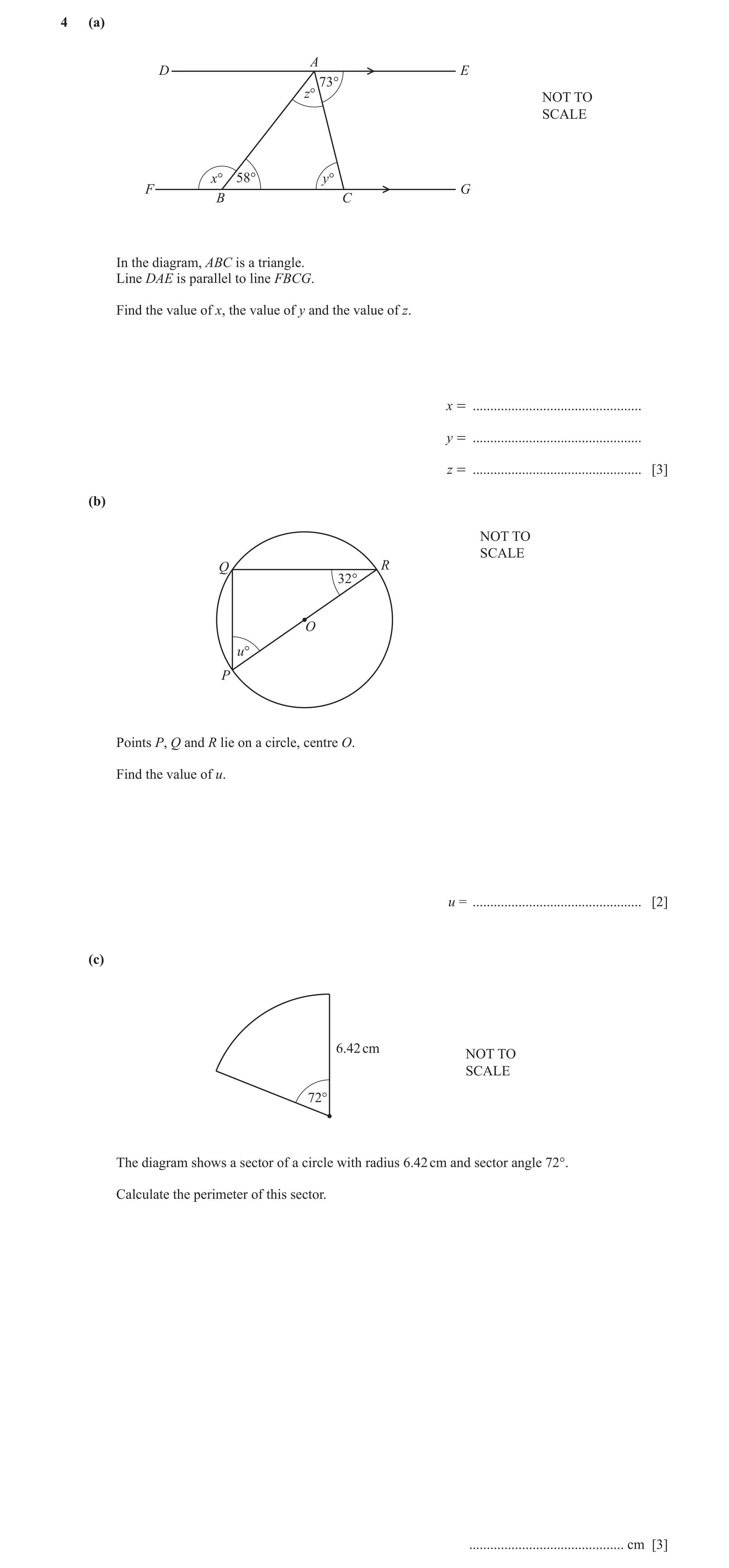
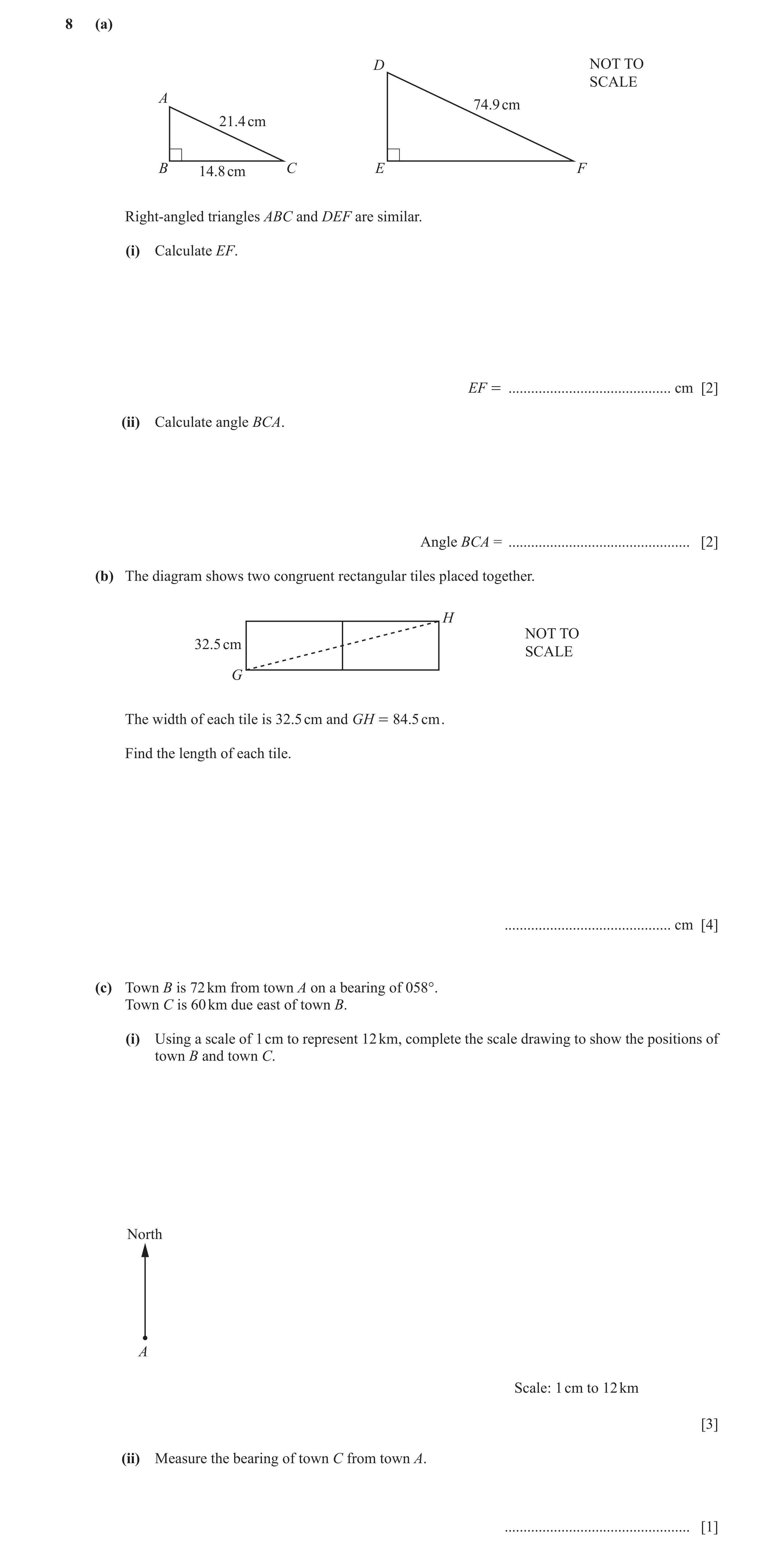
![Question 76: (a) x (i) Measure the size of angle x. Angle x = ................................................ [1] (ii) Write down the mathematical name…](https://img.pastlit.com/crops/61379cd6-b627-47dc-935f-94e6ad969515/q4.webp)
![Question 77: (a) Calculate the interior angle of a regular pentagon. ................................................. [2] (b) The diagram shows three c…](https://img.pastlit.com/crops/a2aea6fa-c317-4433-a782-4a14feea01bd/q2.webp) 122 / 168
122 / 168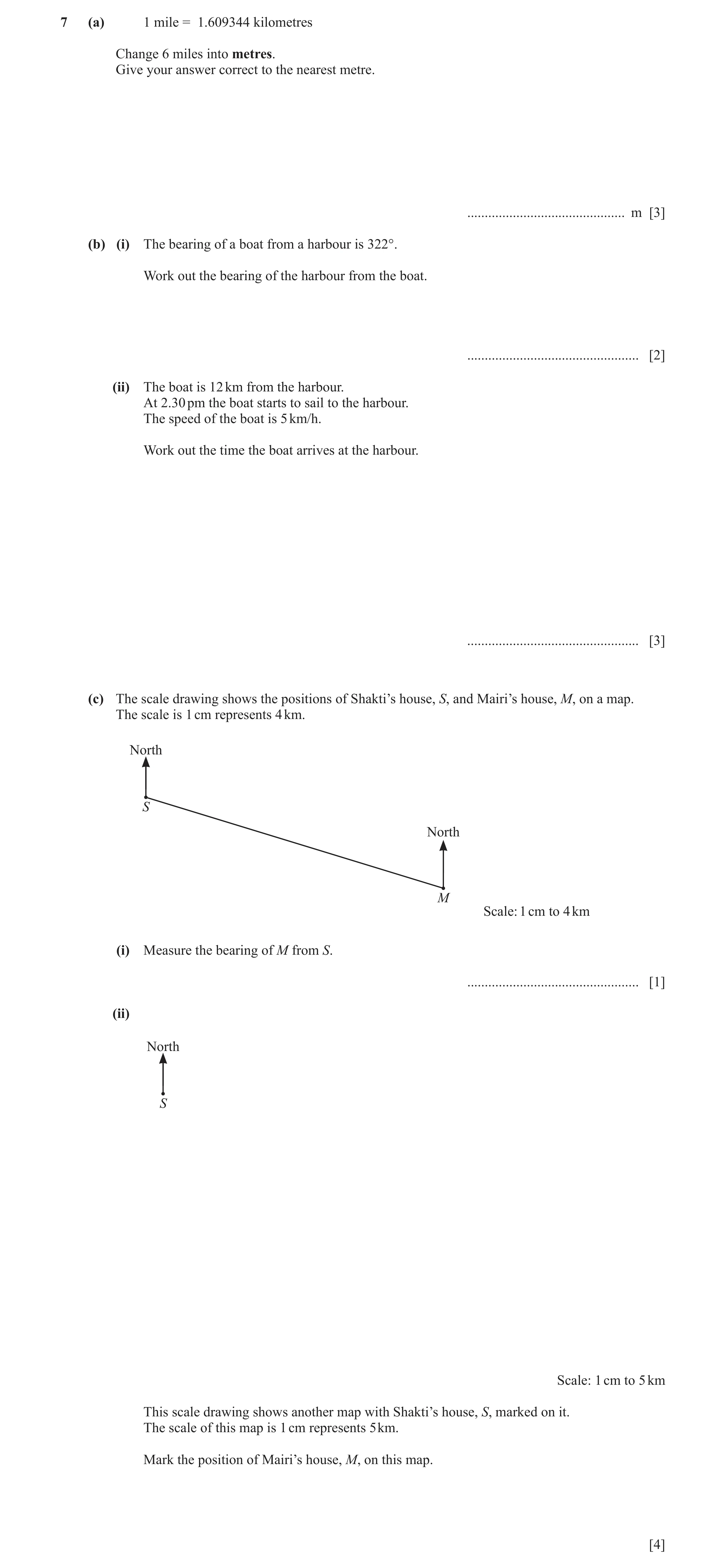
![Question 79: (a) Write down the number of sides of a hexagon. ................................................. [1] (b) B A C In triangle ABC, AB = AC. …](https://img.pastlit.com/crops/687830e1-184a-433b-8370-66ee3b3a9dab/q2.webp)
![Question 80: (a) a (i) Write down the mathematical name for the type of angle a. ................................................. [1] (ii) Measure angl…](https://img.pastlit.com/crops/f002e79f-33b8-4c75-b1ce-a8c38bfa6051/q3.webp)
![Question 81: (a) (i) Show that the exterior angle of a regular octagon is 45°. [1] (ii) Find the interior angle of a regular octagon. ..................…](https://img.pastlit.com/crops/f002e79f-33b8-4c75-b1ce-a8c38bfa6051/q8.webp)
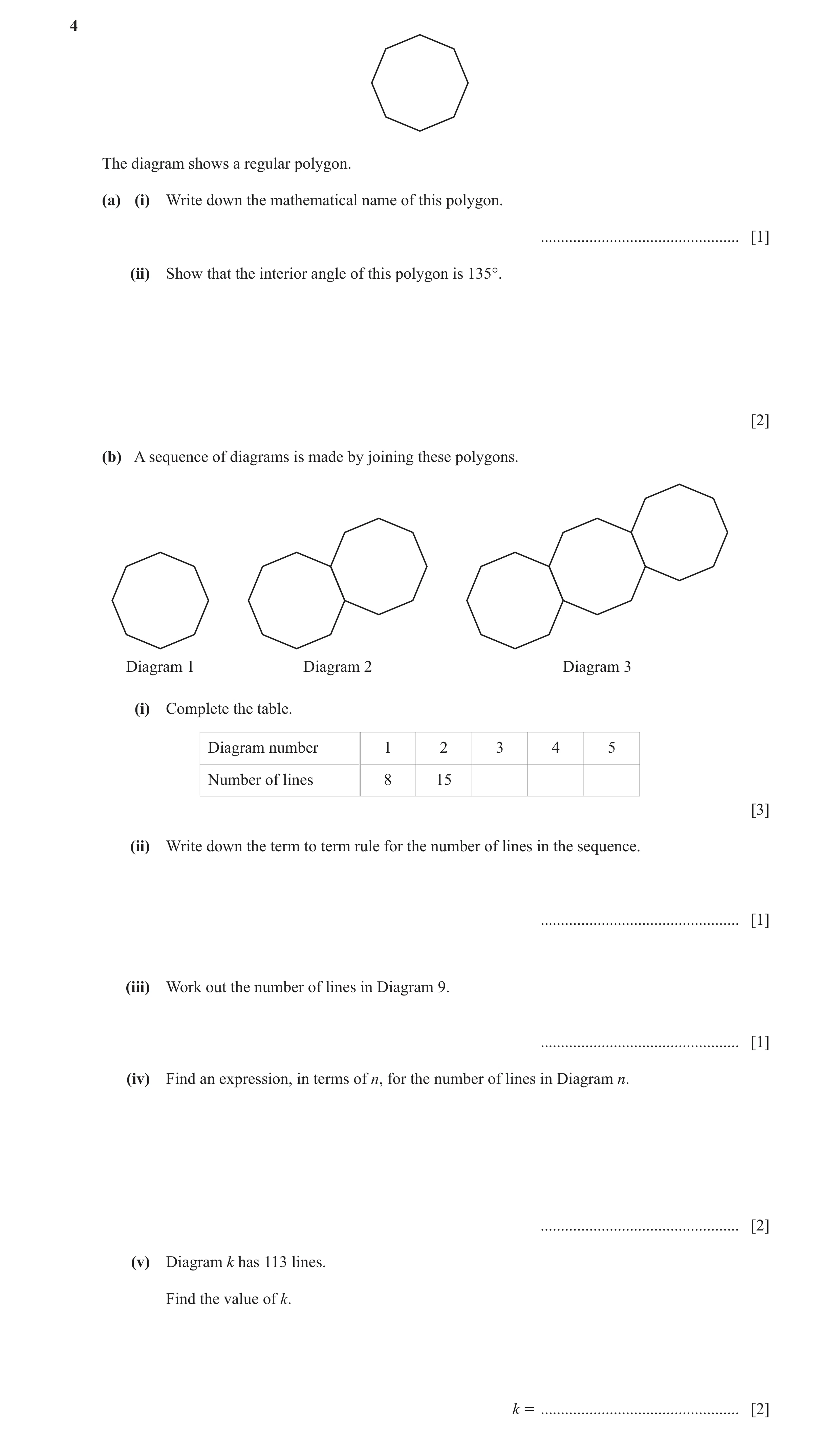
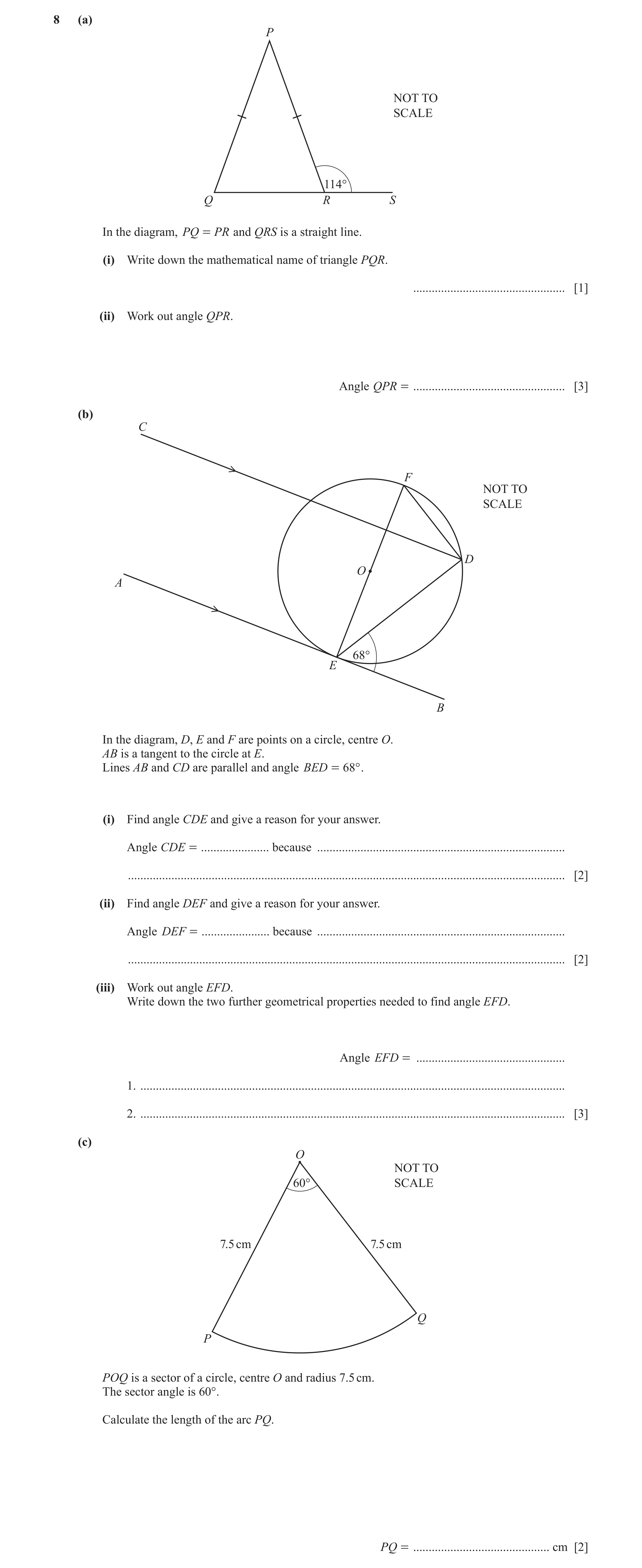
![Question 84: (a) Write down the mathematical name of this solid. ................................................. [1] (b) B C A D 104° NOT TO SCALE x° …](https://img.pastlit.com/crops/c8e6e169-266e-4899-ac71-feaa008981a3/q6.webp)
![Question 85: (a) a (i) Measure the size of angle a. ................................................. [1] (ii) Write down the mathematical name of this …](https://img.pastlit.com/crops/4abee54d-aeaf-43ee-816c-08f3f8aa37b1/q2.webp)
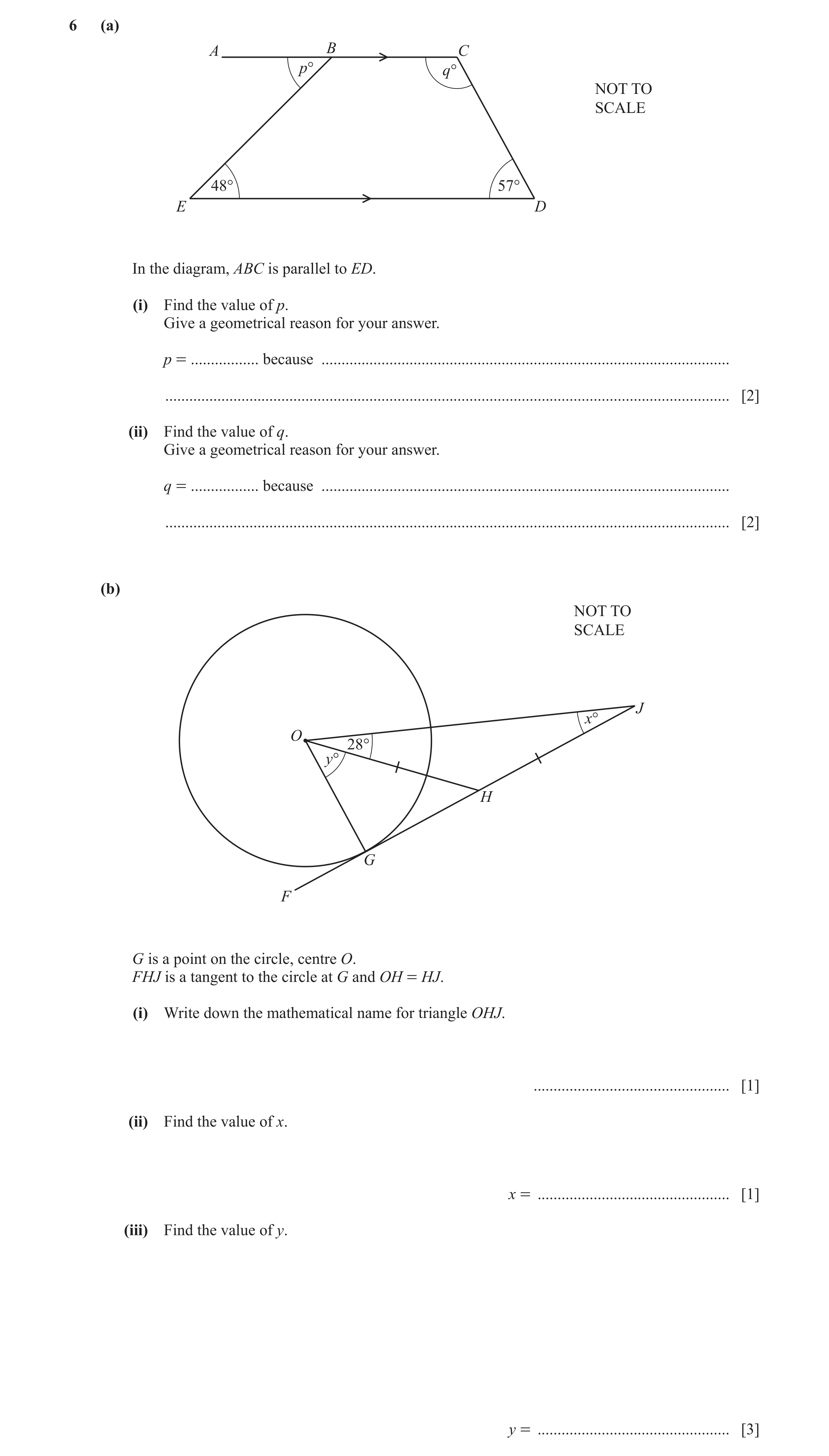
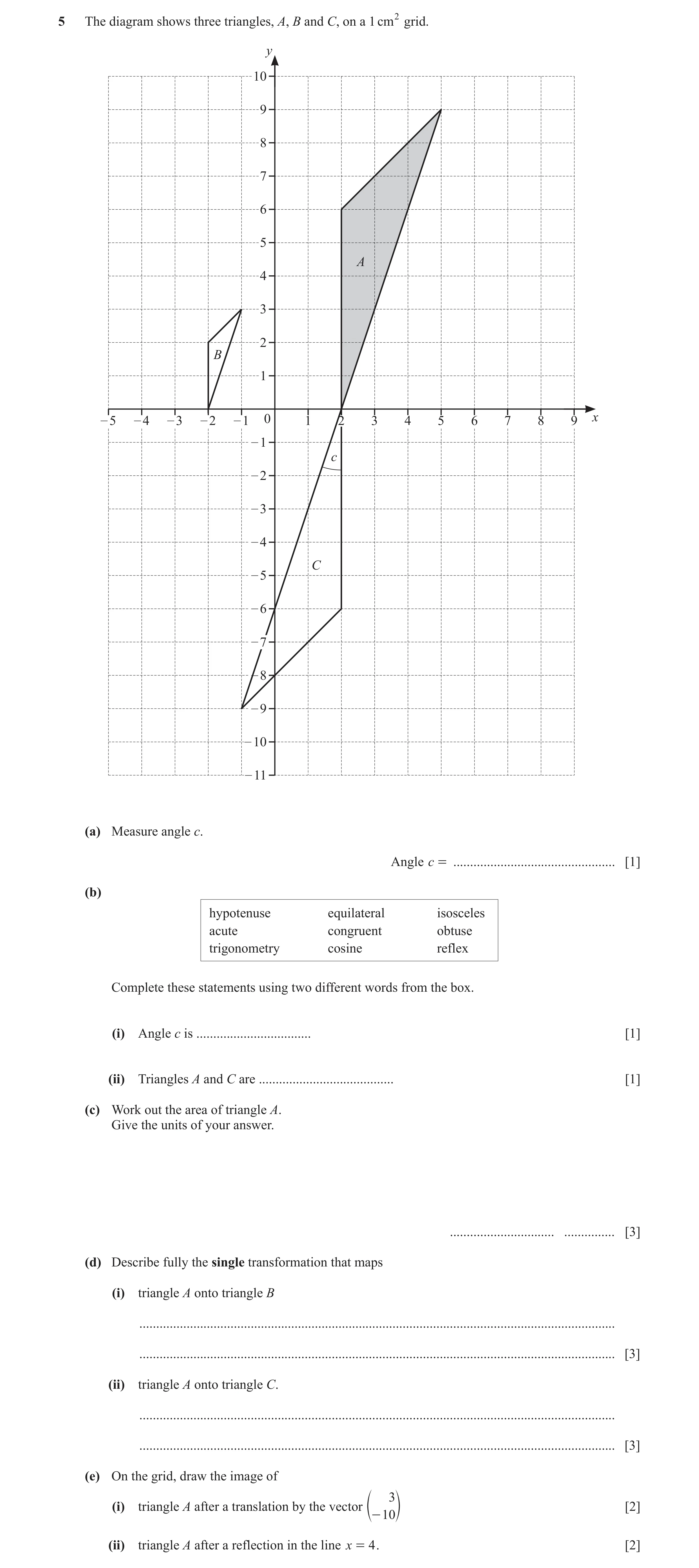
![Question 88: (a) The diagram shows a shape on a 1 cm 2 grid. Work out the area of the shape. .......................................... cm2 [1] (b) 7 cm…](https://img.pastlit.com/crops/1f360c8d-b38d-4eef-81db-0dbf6bf7a463/q3.webp)
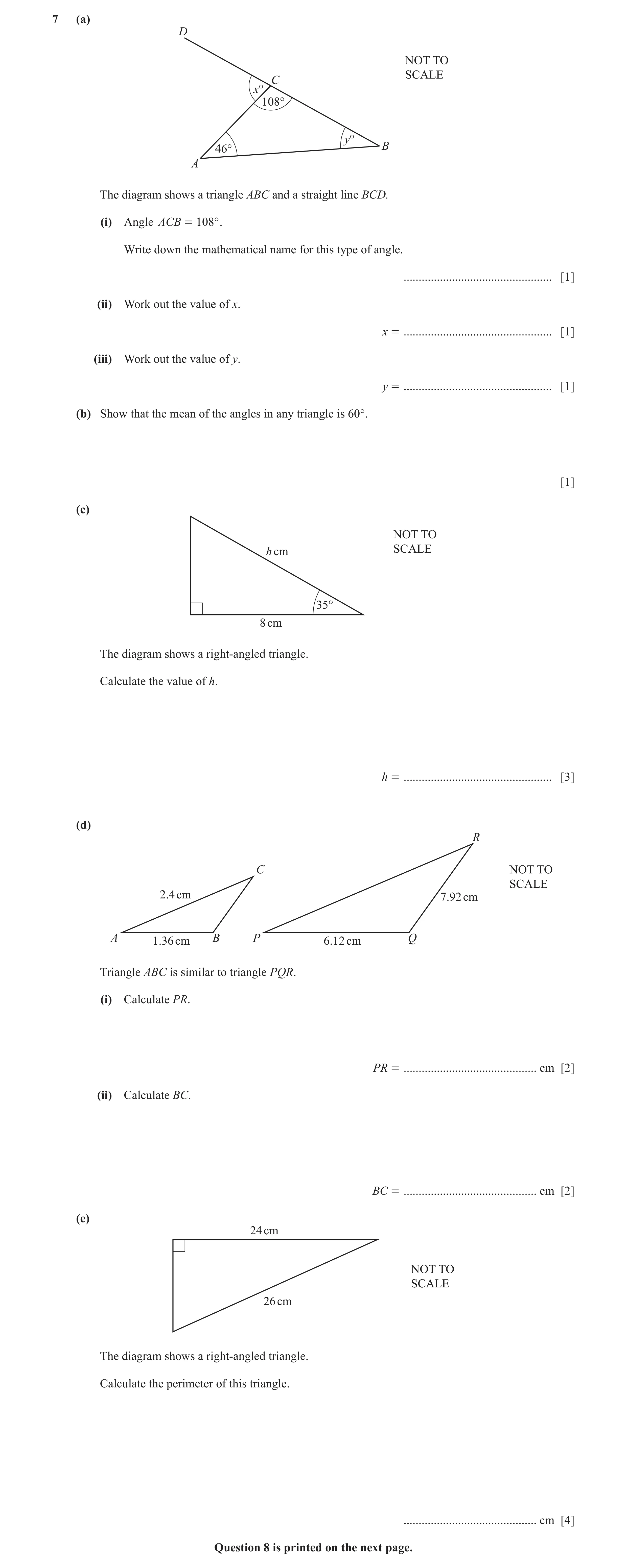
![Question 90: (a) (i) Write down the mathematical name for this polygon. ................................................. [1] (ii) Write down the mathem…](https://img.pastlit.com/crops/e94073ea-fcf5-4cdf-afe9-b2ae391a4209/q2.webp)
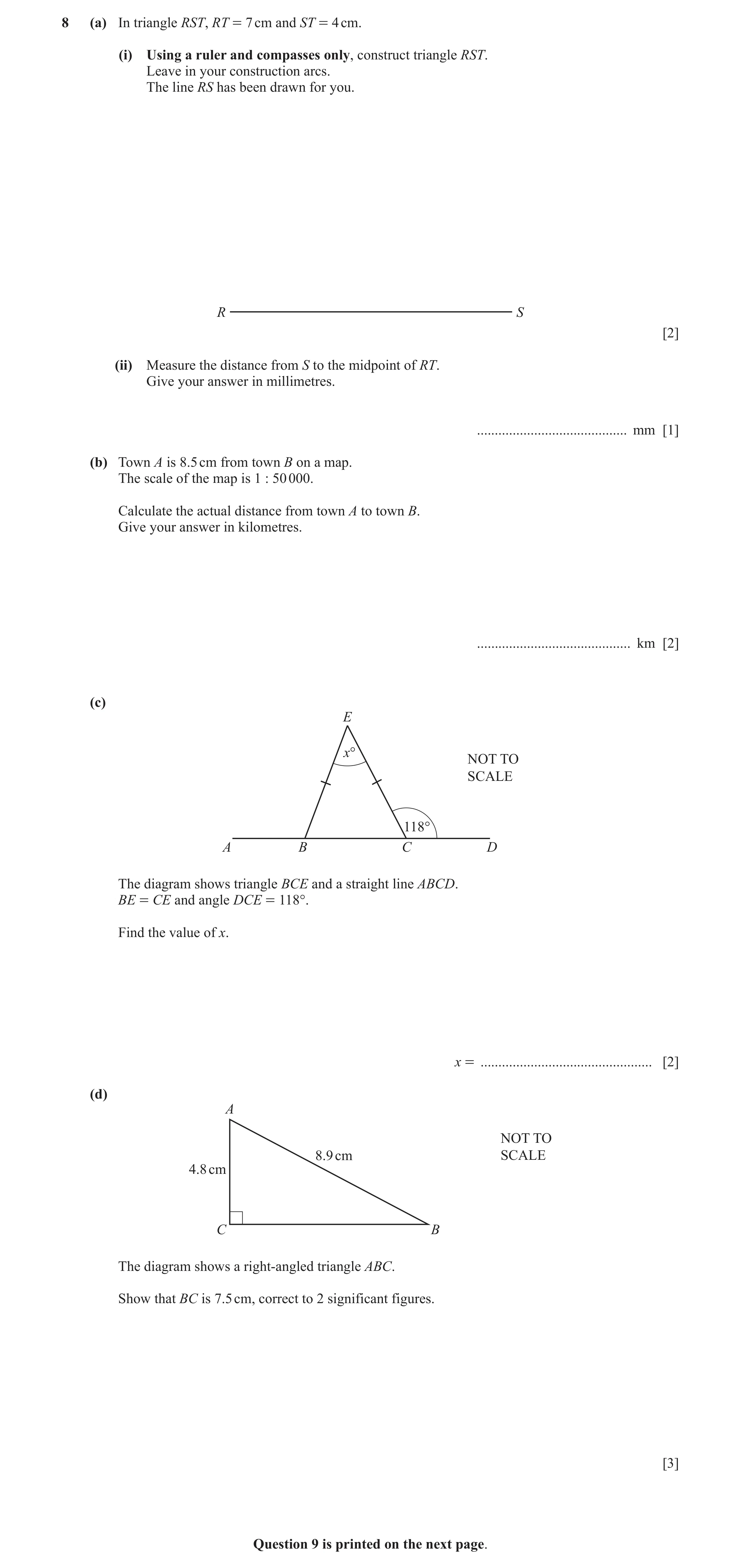
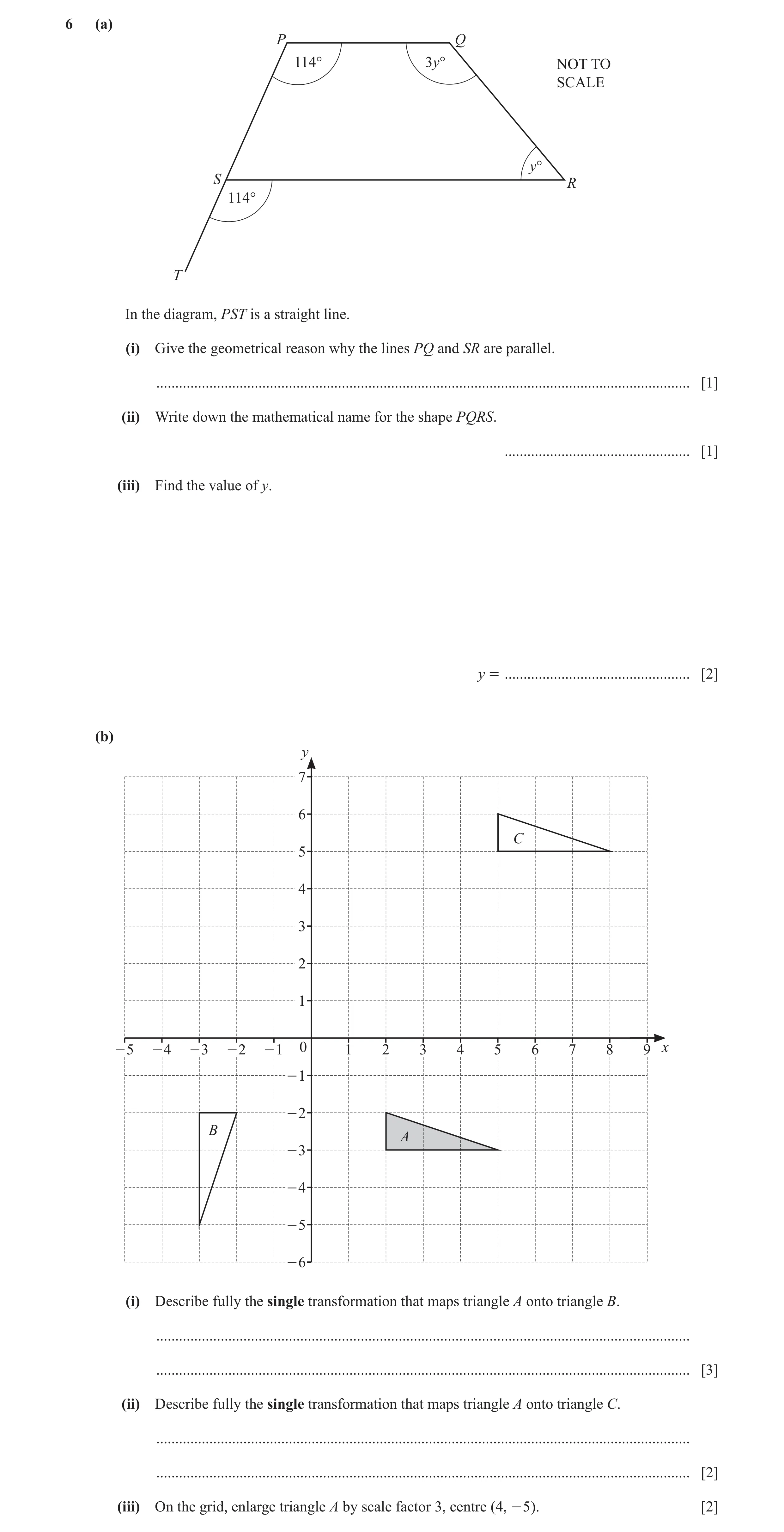
![Question 93: (a) l P Draw a line through point P that is perpendicular to line l. [1] (b) Write down the mathematical names for two different quadrilate…](https://img.pastlit.com/crops/a0b6e752-92f3-4adb-be25-0e4cc9591f81/q1.webp)
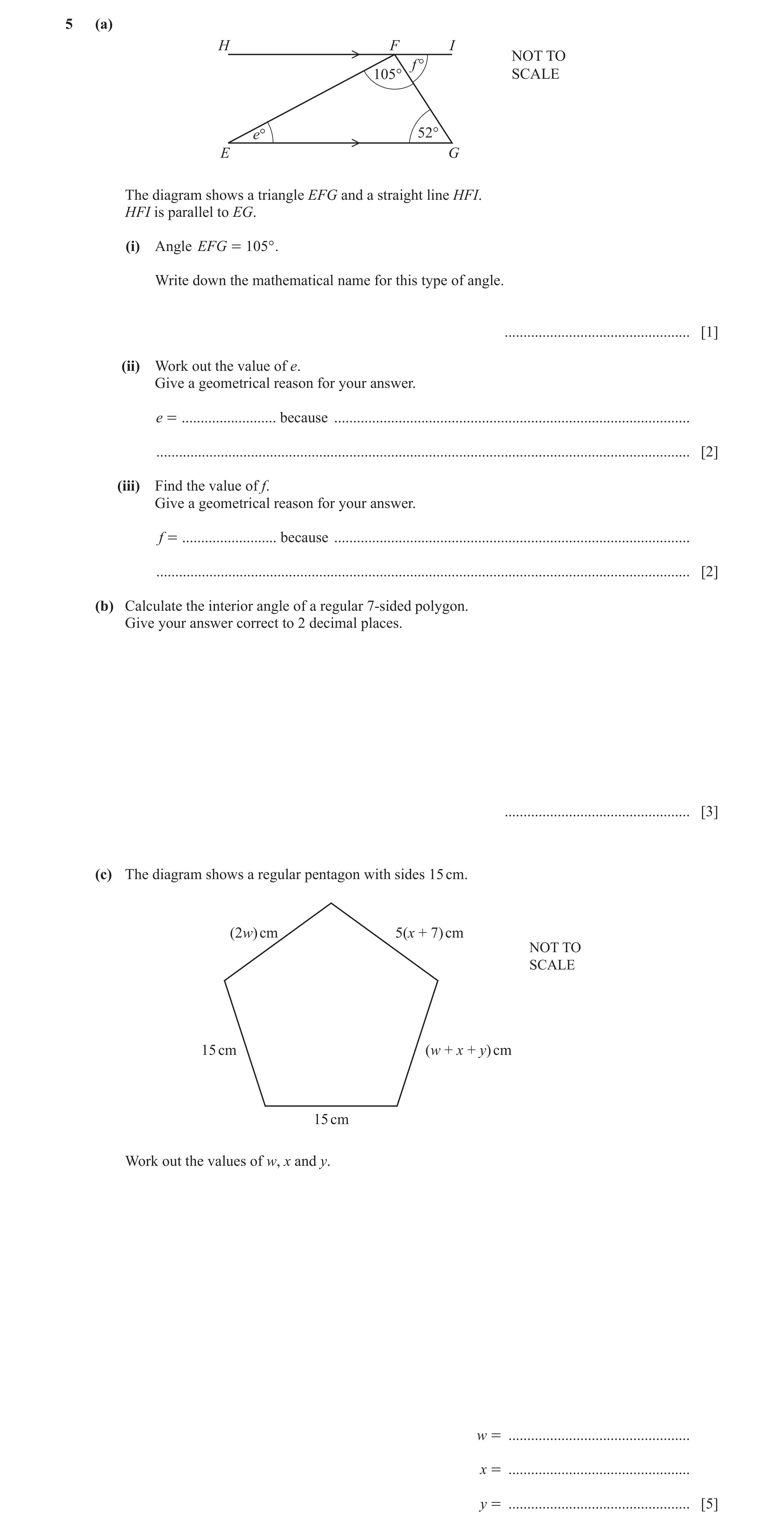
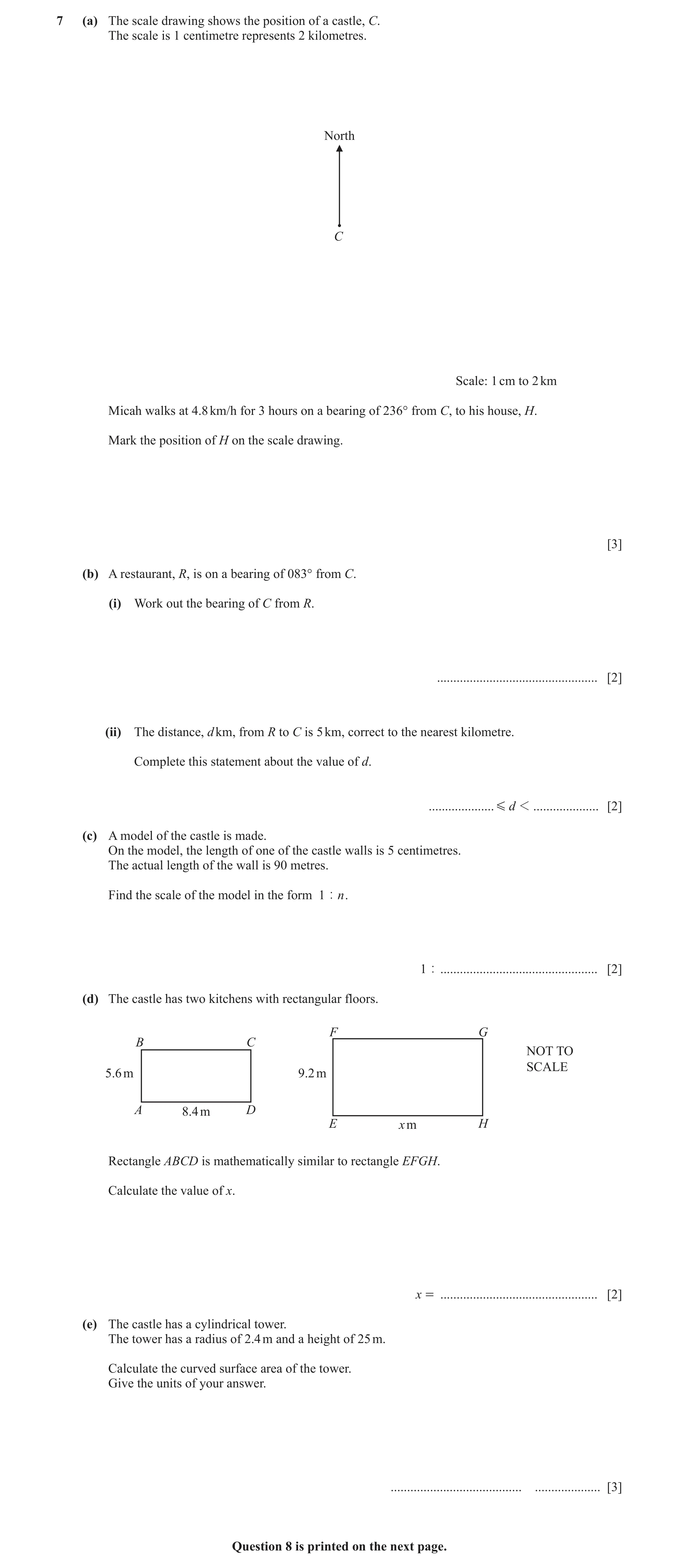
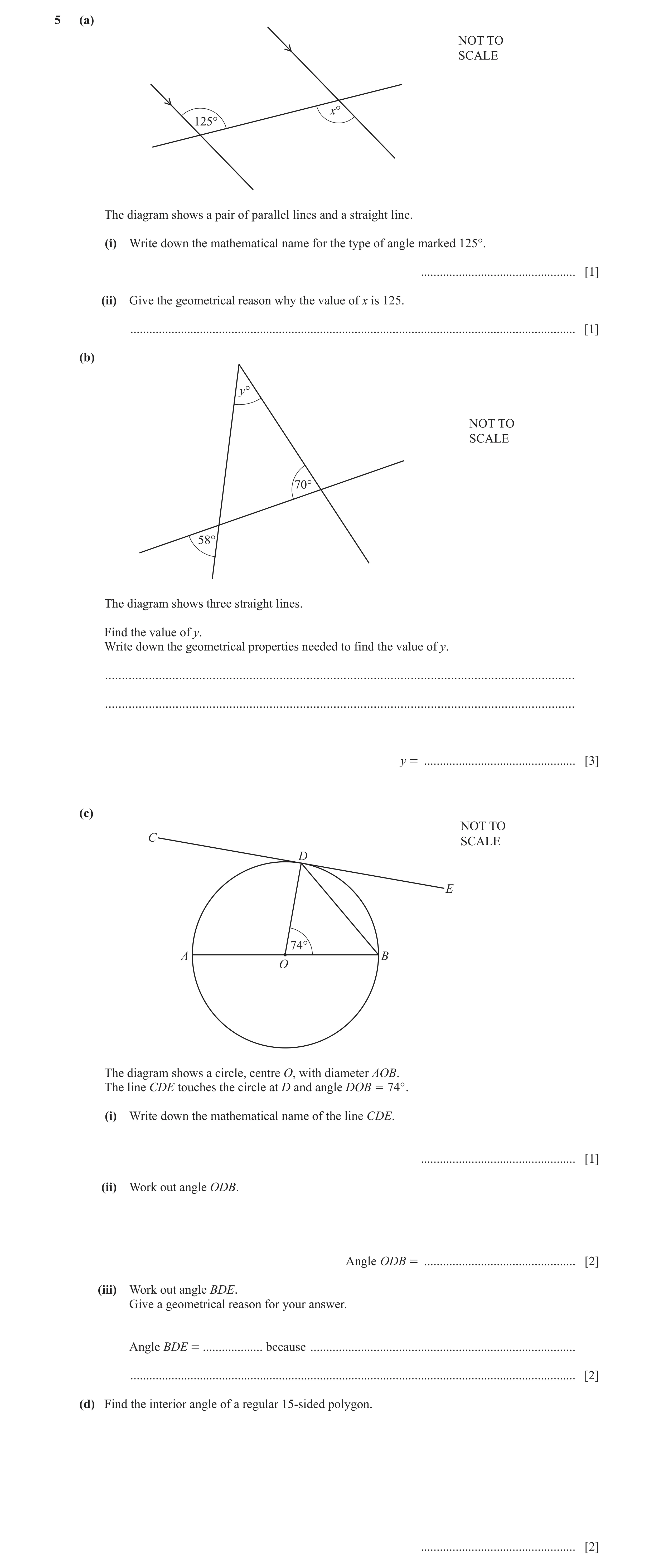
![Question 97: (a) k (i) Measure angle k. ................................................. [1] (ii) Write down the mathematical name for this type of ang…](https://img.pastlit.com/crops/1bd61d0c-6088-4f43-8d54-52471b277ec4/q5.webp)
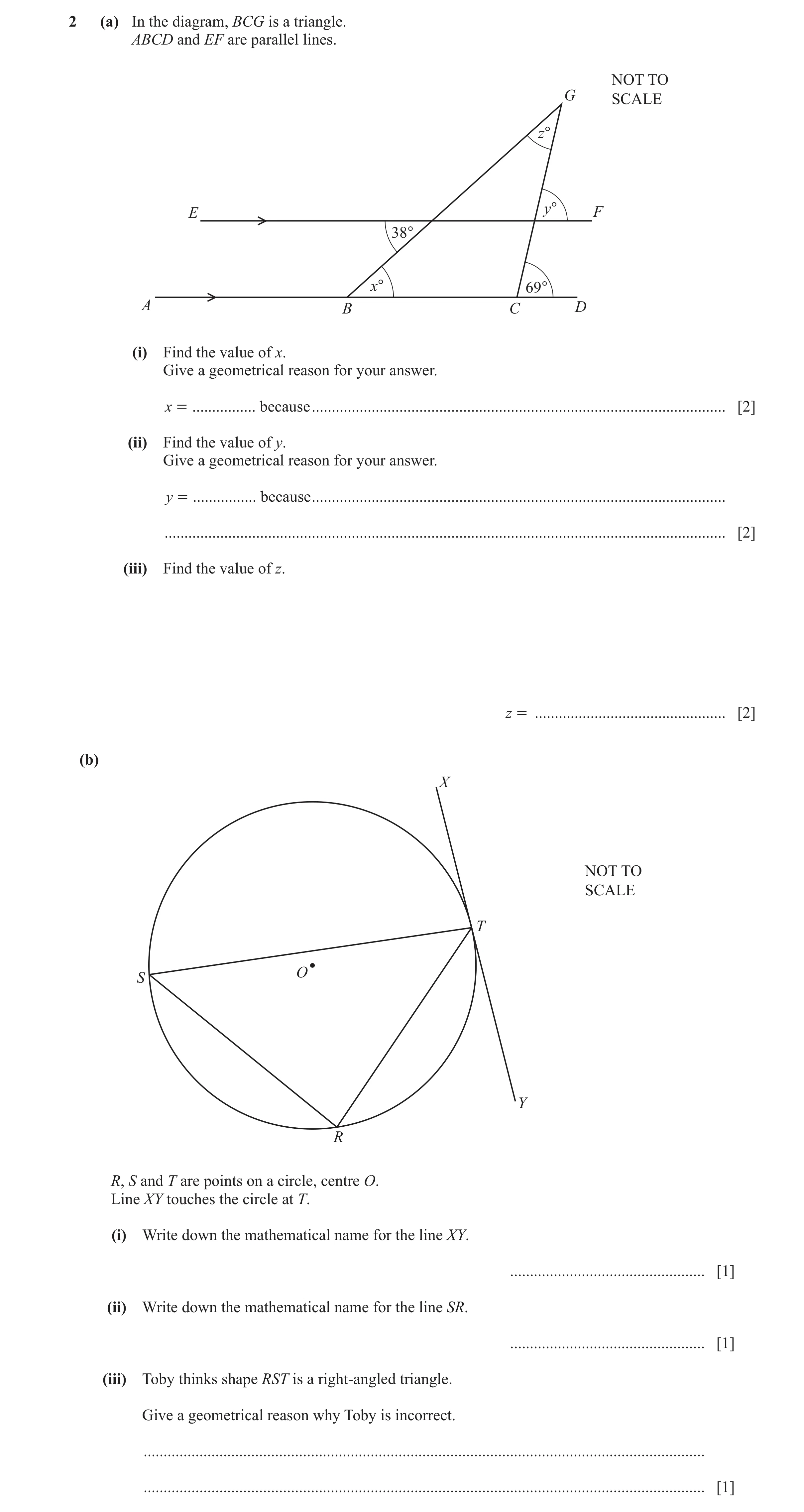
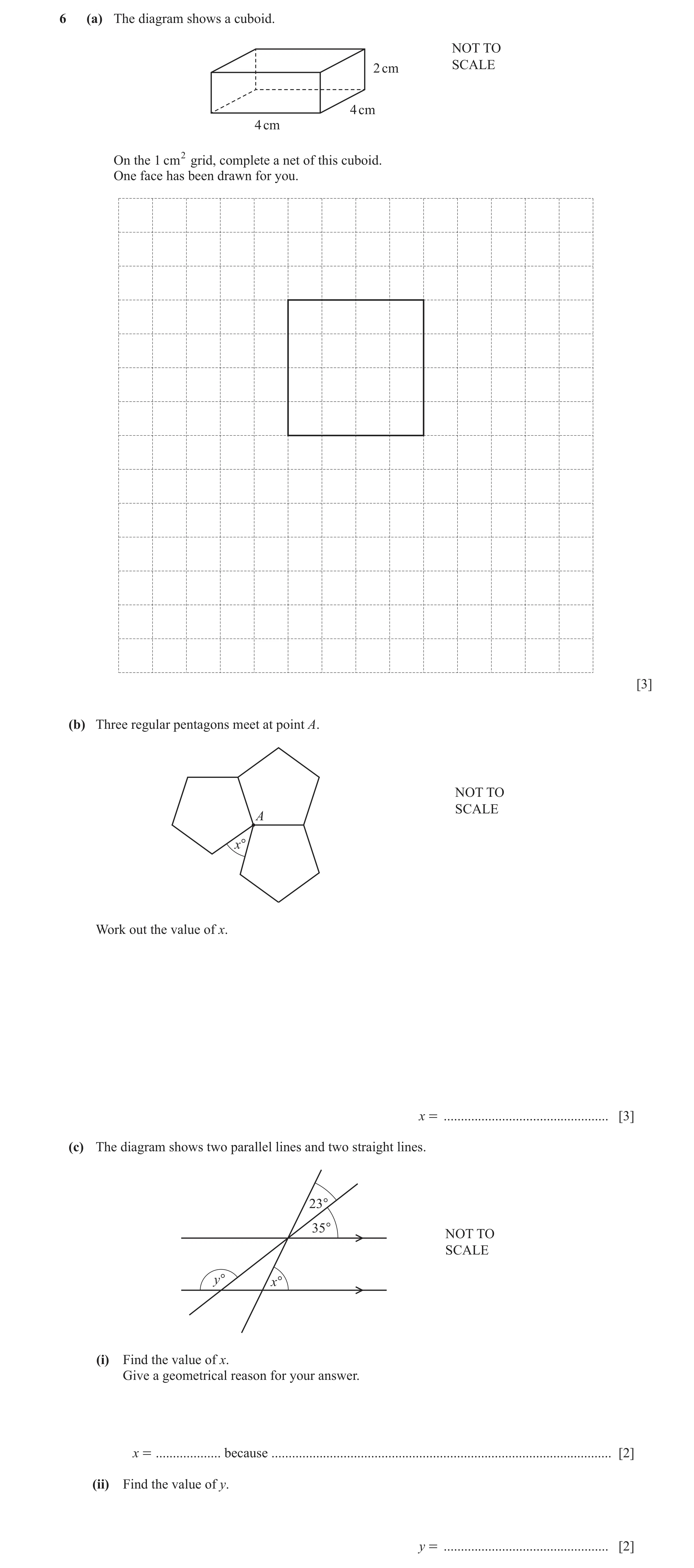
![Question 100: (a) Write down the mathematical name for this solid. ................................................. [1] (b) x (i) Measure the size of an…](https://img.pastlit.com/crops/03a0551c-488d-4968-a0a8-acea063e832e/q7.webp)
![Question 101: A (a) Measure angle A. ................................................. [1] (b) Write down the mathematical name of this type of angle. ..…](https://img.pastlit.com/crops/bdf0340f-caf1-43ca-904c-55decc63e3bd/q3.webp) 161 / 168
161 / 168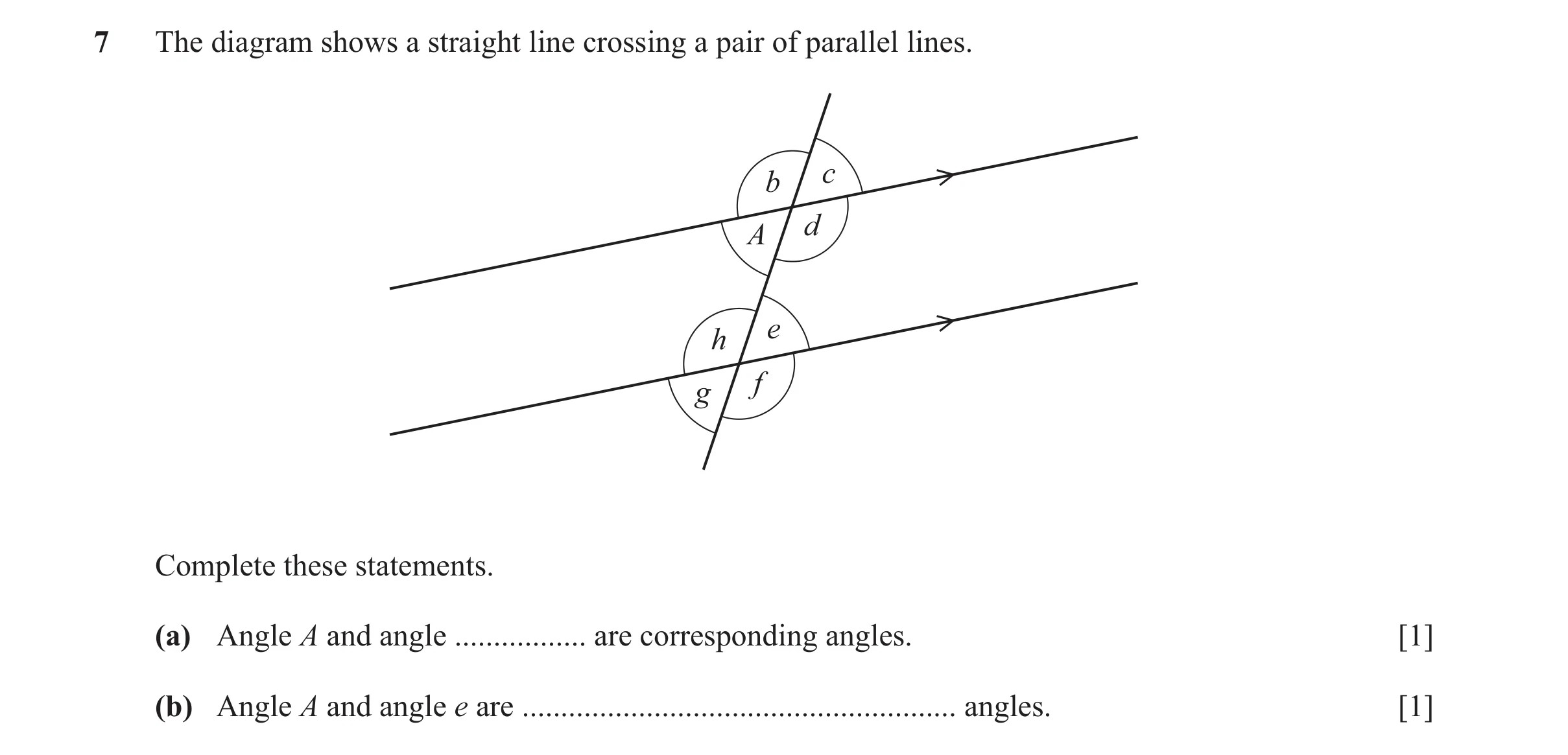 162 / 168
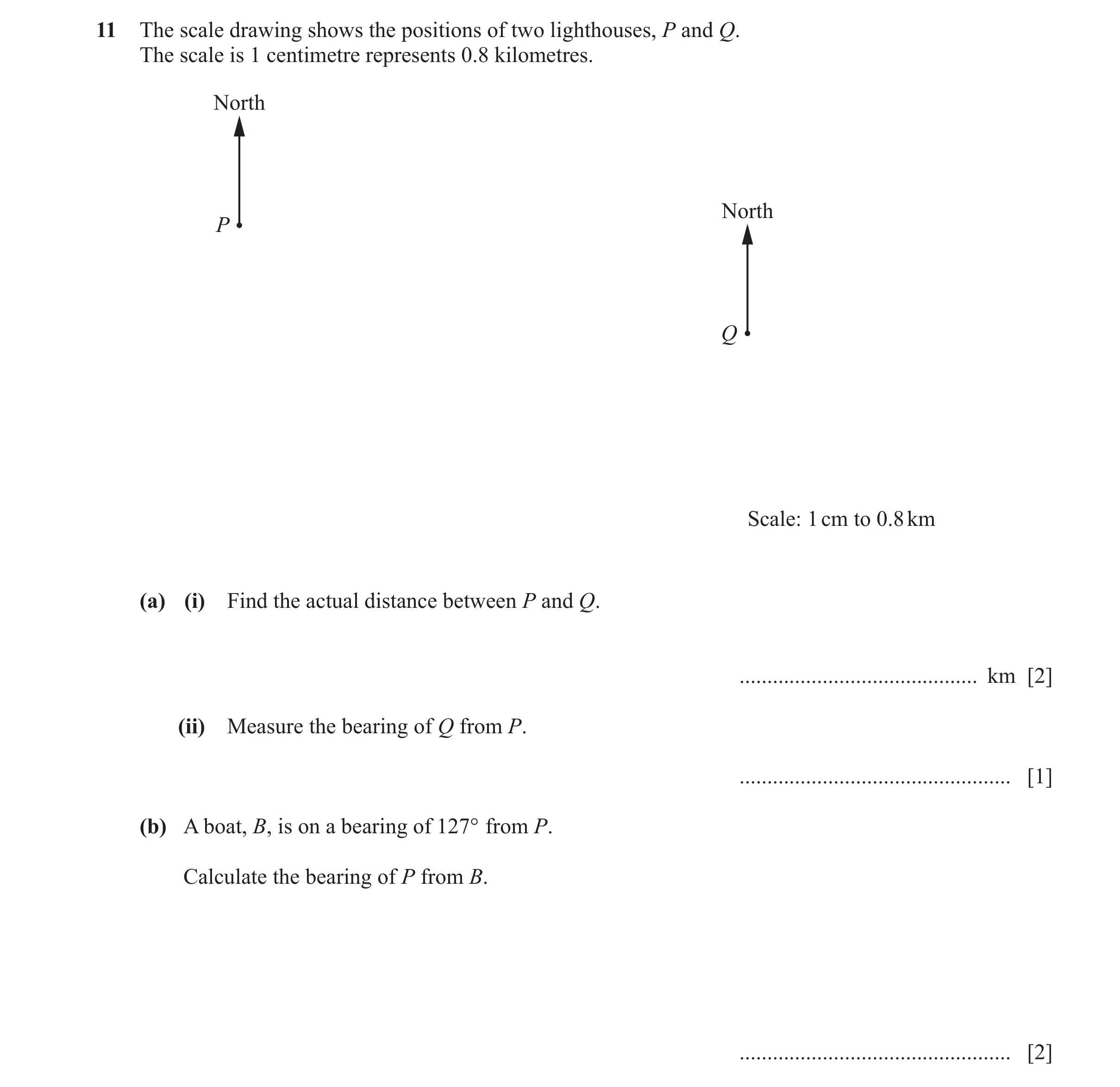 163 / 168
![Question 104: (a) Show that the sum of the interior angles of a pentagon is 540° . [1] (b) In this part, all angles are in degrees. 3x - 25 3x - 5 x + 35…](https://img.pastlit.com/crops/bdf0340f-caf1-43ca-904c-55decc63e3bd/q21.webp)
![Question 105: An angle measures 157°. Write down the mathematical name for this type of angle. ................................................. [1]](https://img.pastlit.com/crops/48a7a278-61b2-4acd-bc9b-8fa74dc576f6/q2.webp) 164 / 168
164 / 168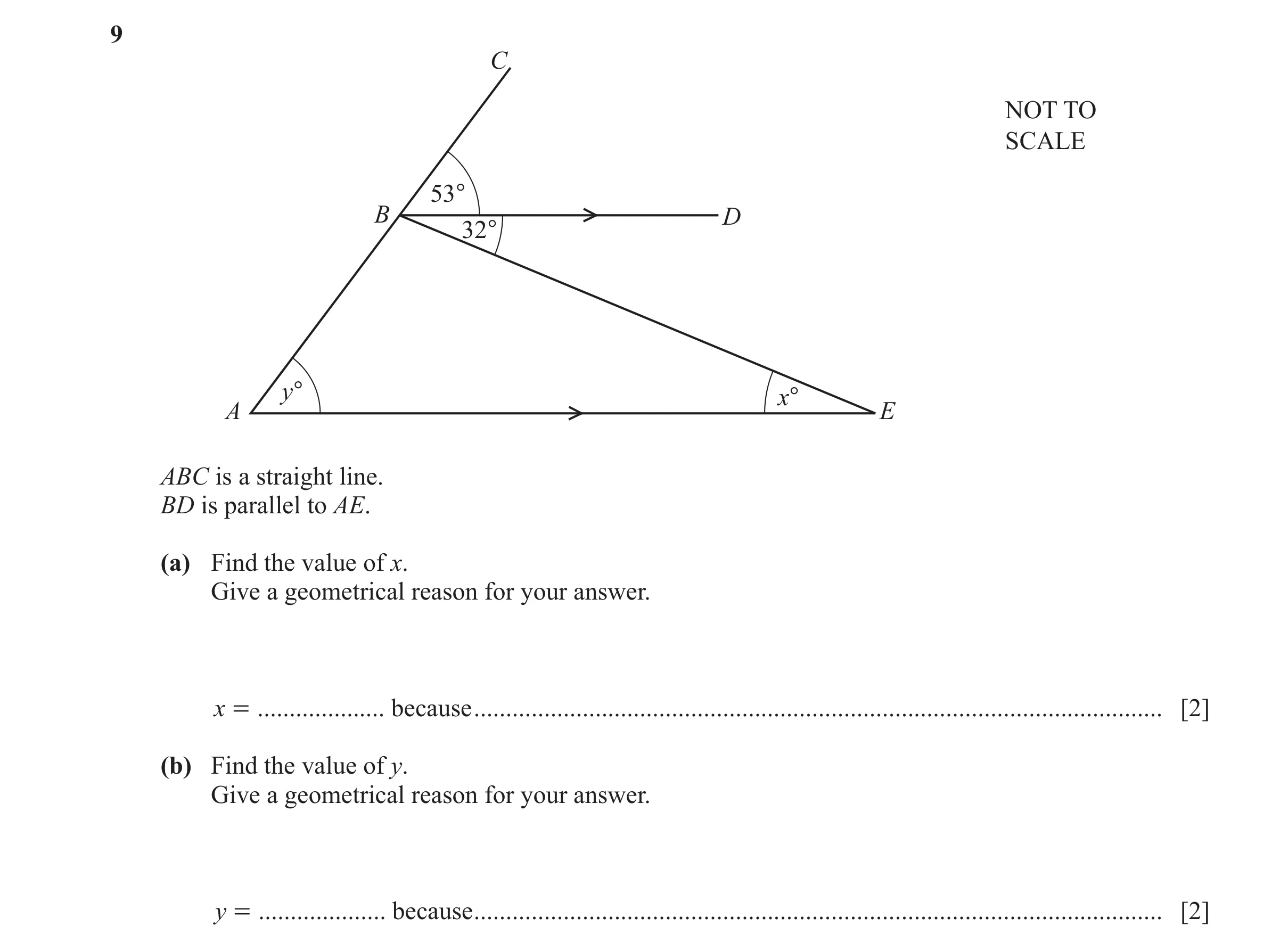 165 / 168
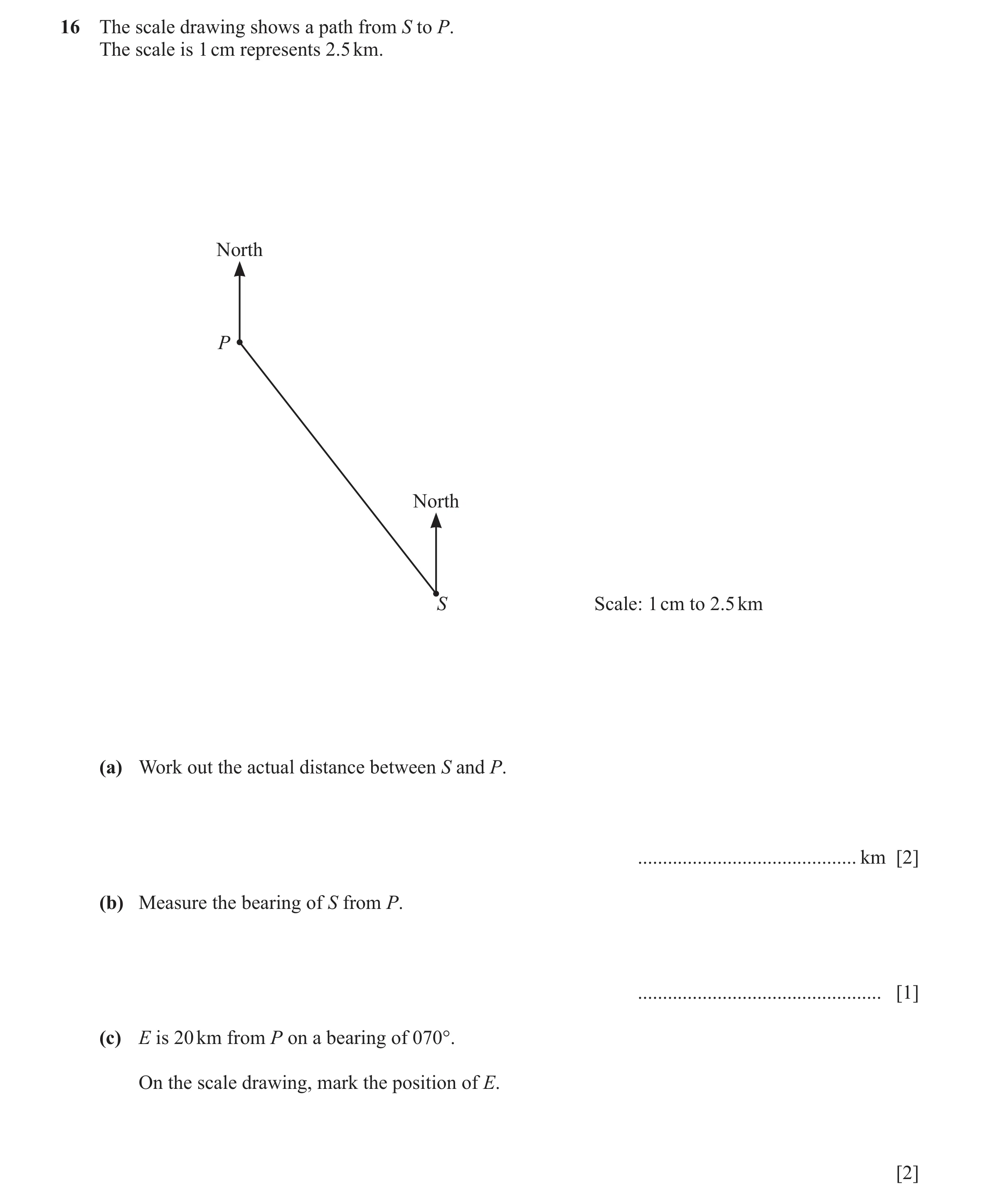 166 / 168
![Question 108: (a) Write down the mathematical name for this type of angle. ................................................. [1] (b) ABC is a triangle. C…](https://img.pastlit.com/crops/780b211c-ee73-4bc3-9f20-8ac8060777bf/q9.webp) 167 / 168
167 / 168![Question 109: NOT TO SCALE x° 68° 43° 135° Find the value of x. x = ................................................ [1]](https://img.pastlit.com/crops/280e54c7-cf6f-40af-acc2-c4ebd16f4a46/q15.webp) 168 / 168
168 / 168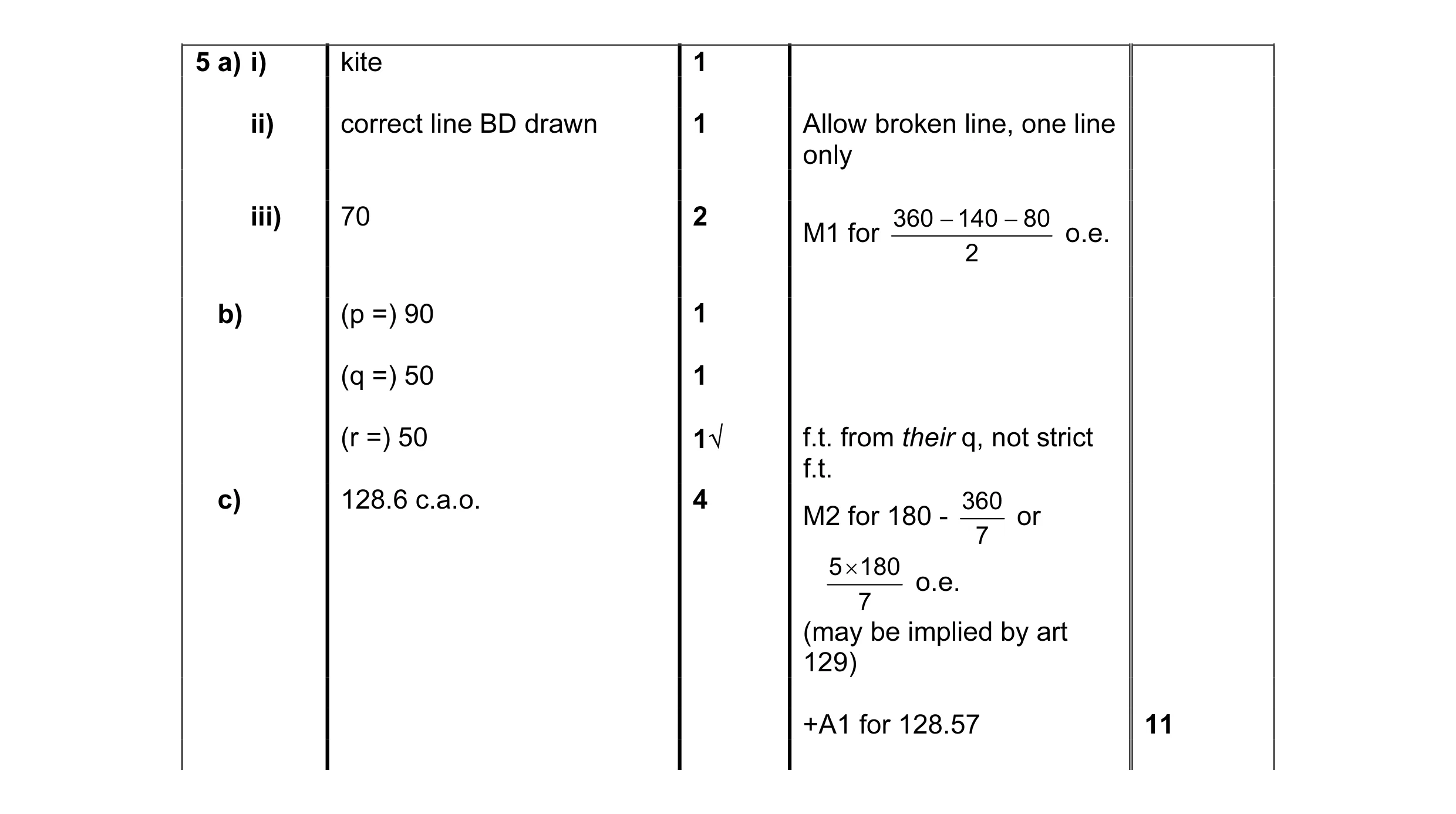 11
11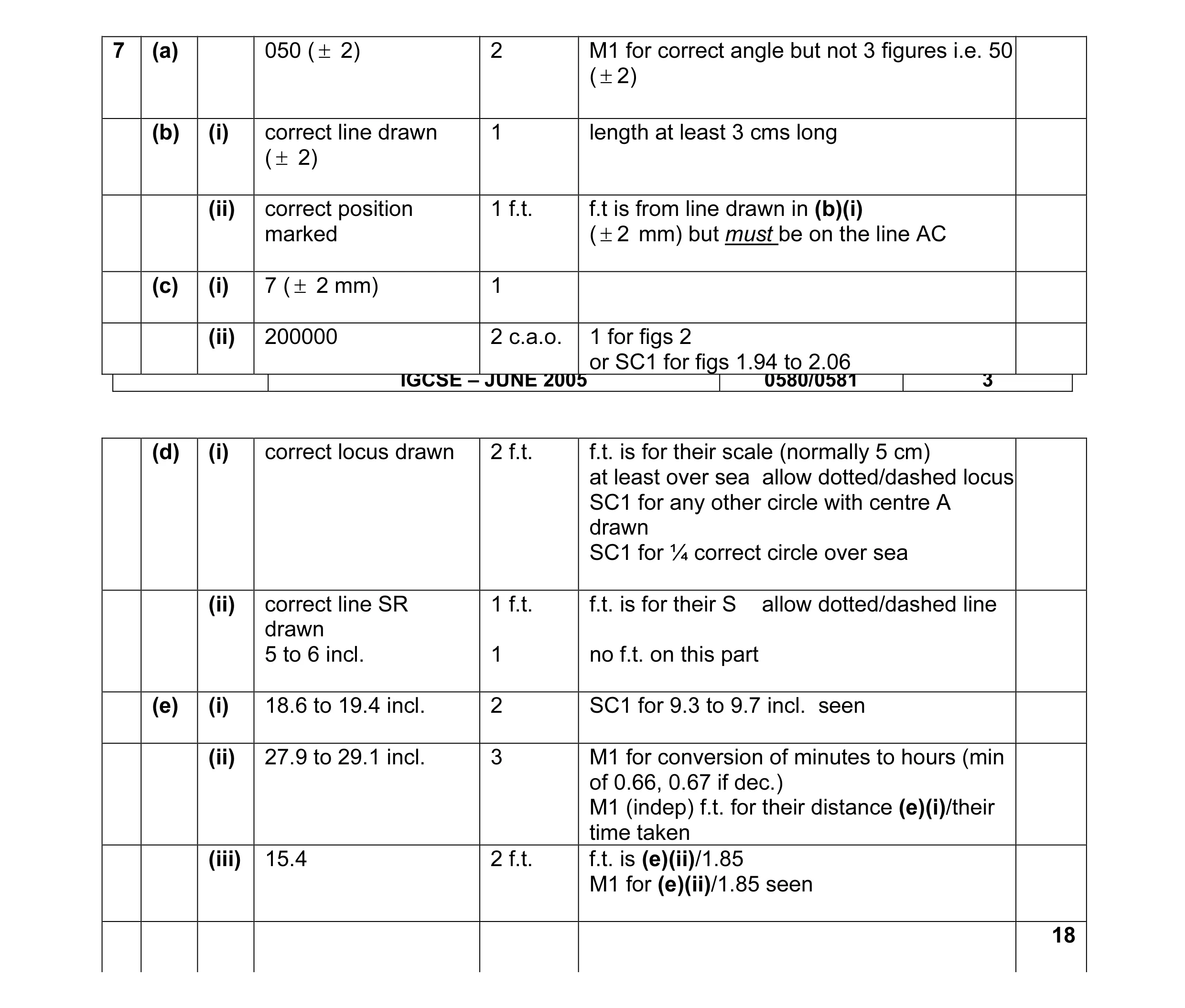 18
18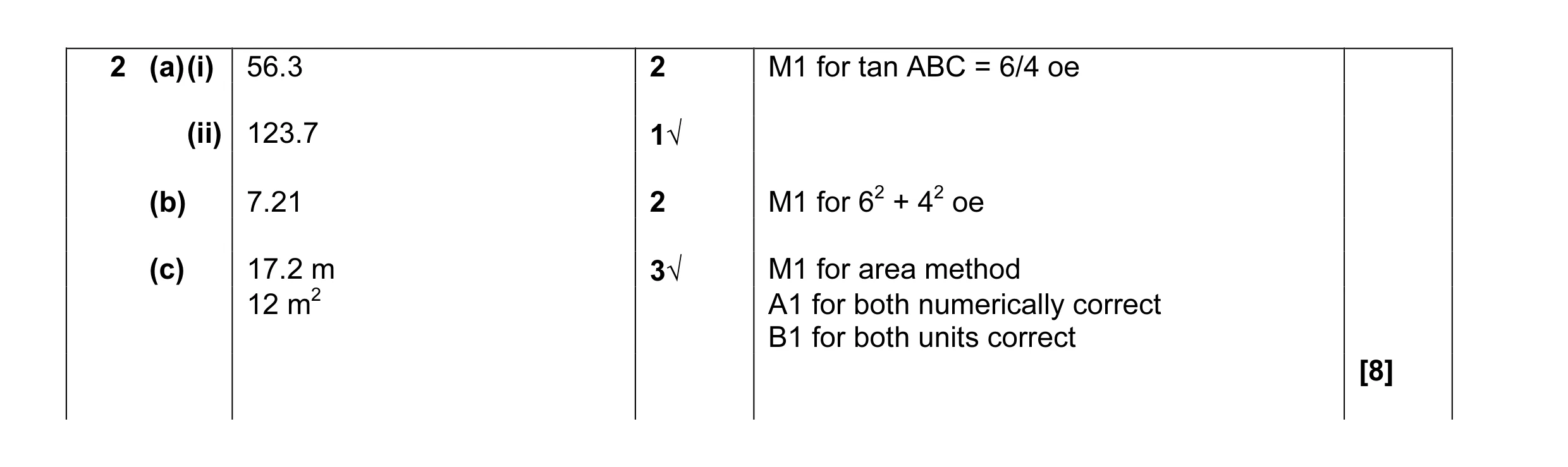 8
8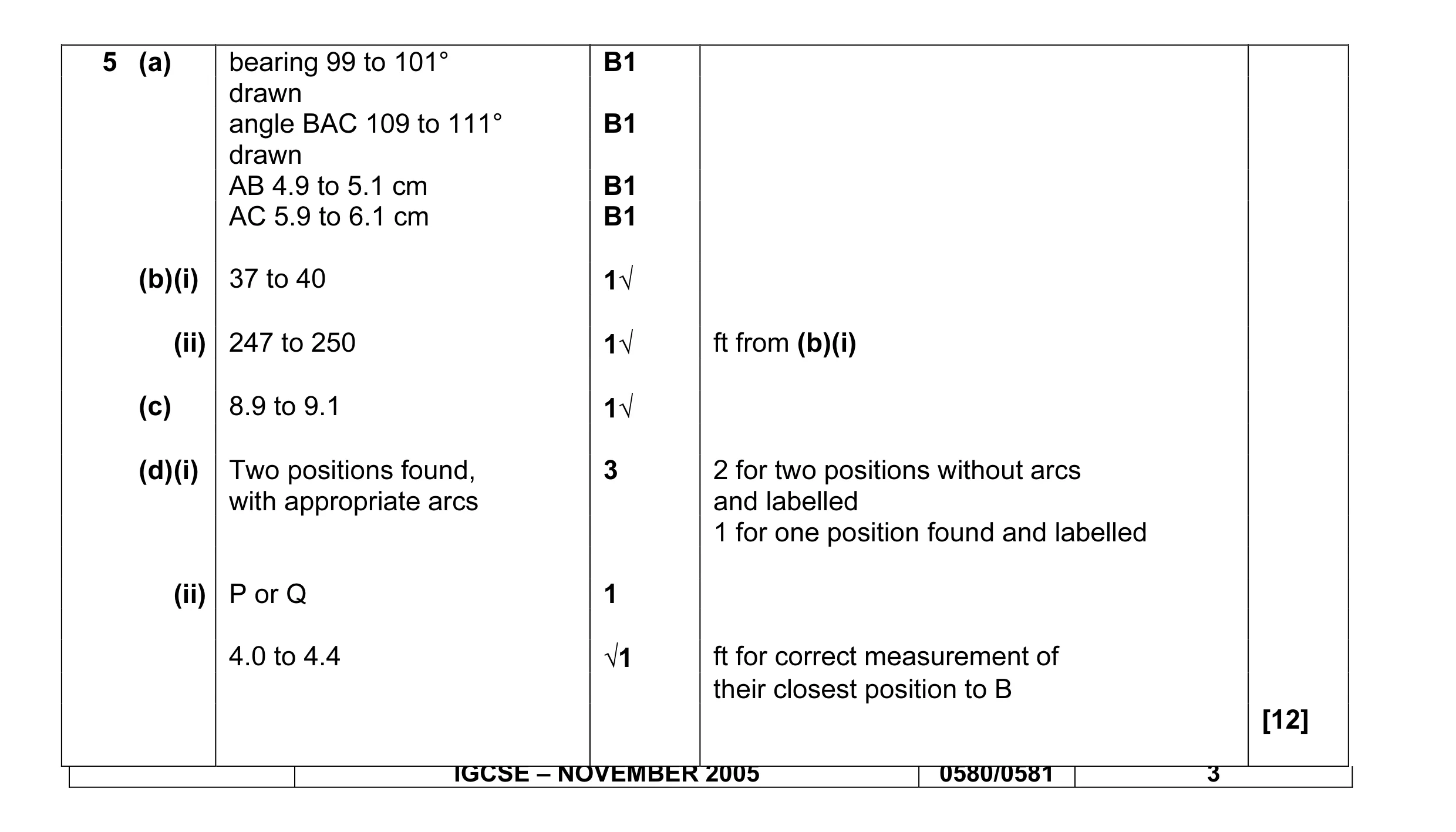 12
12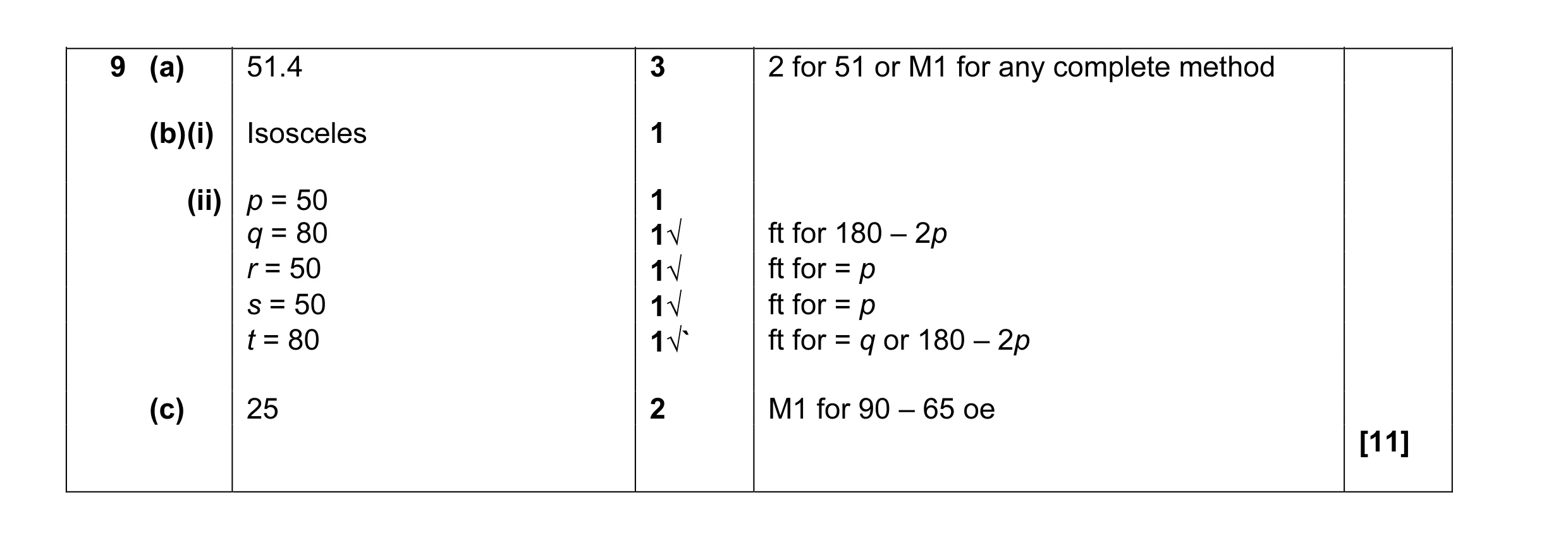 11
11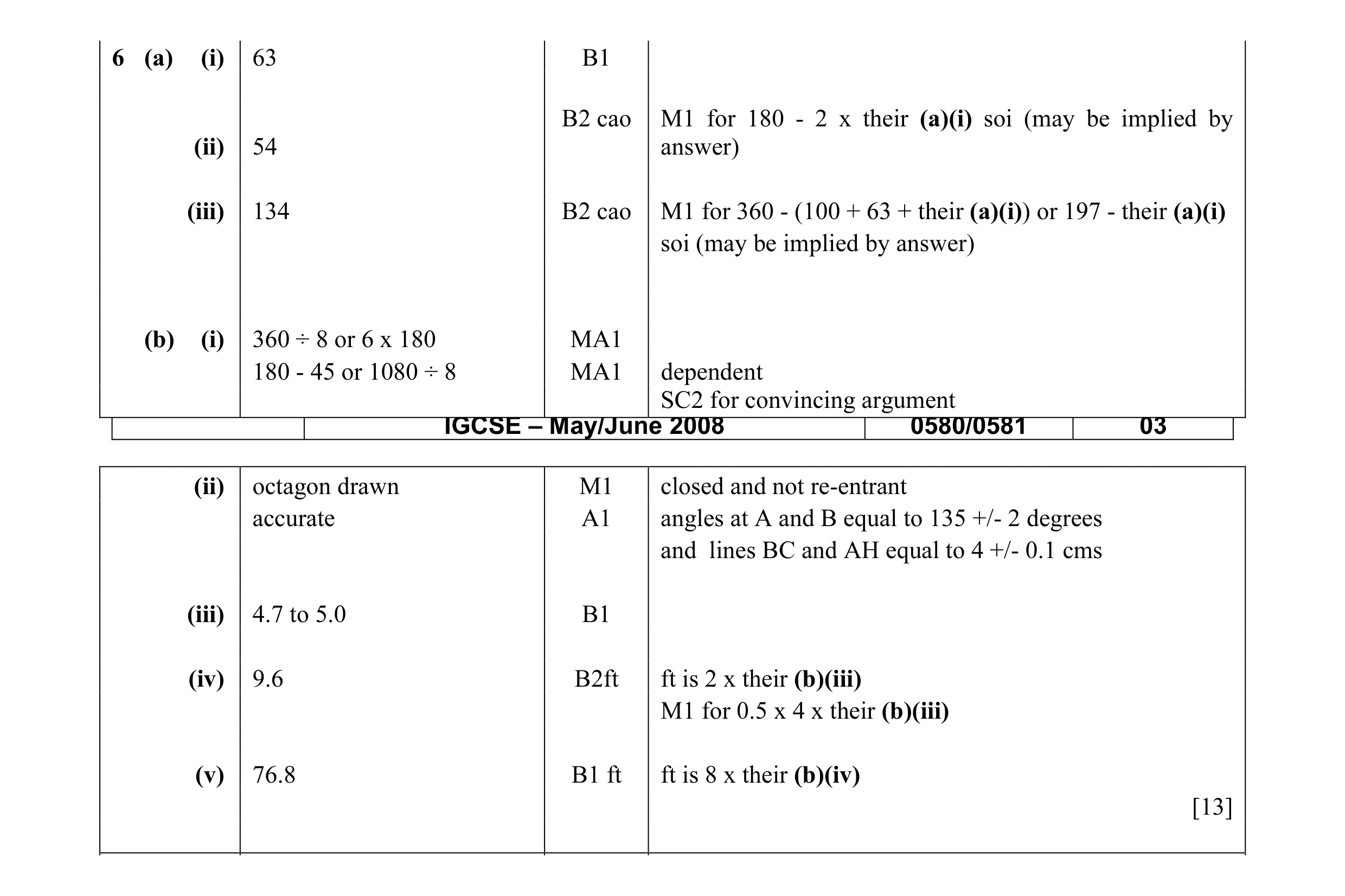 13
13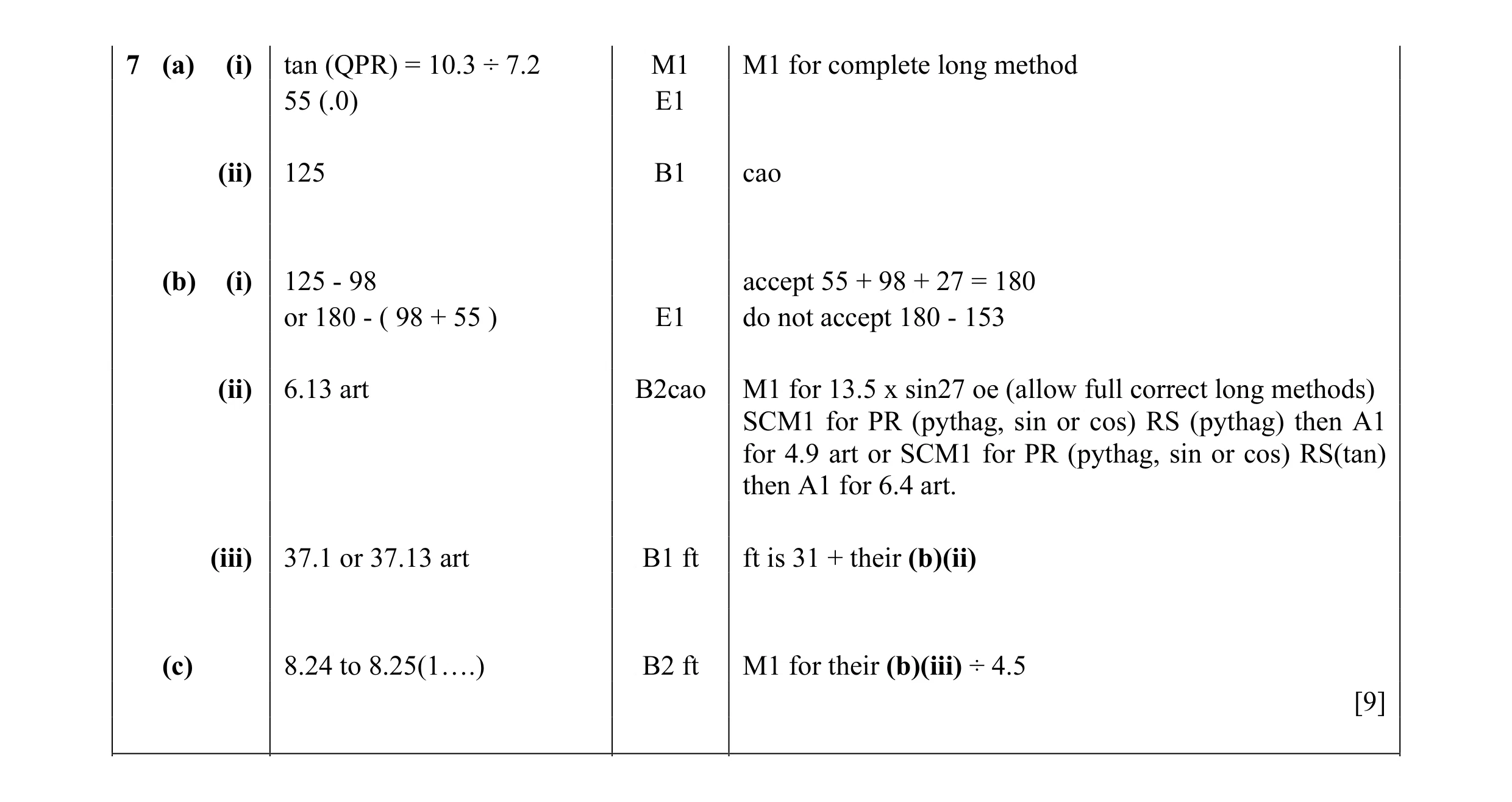 9
9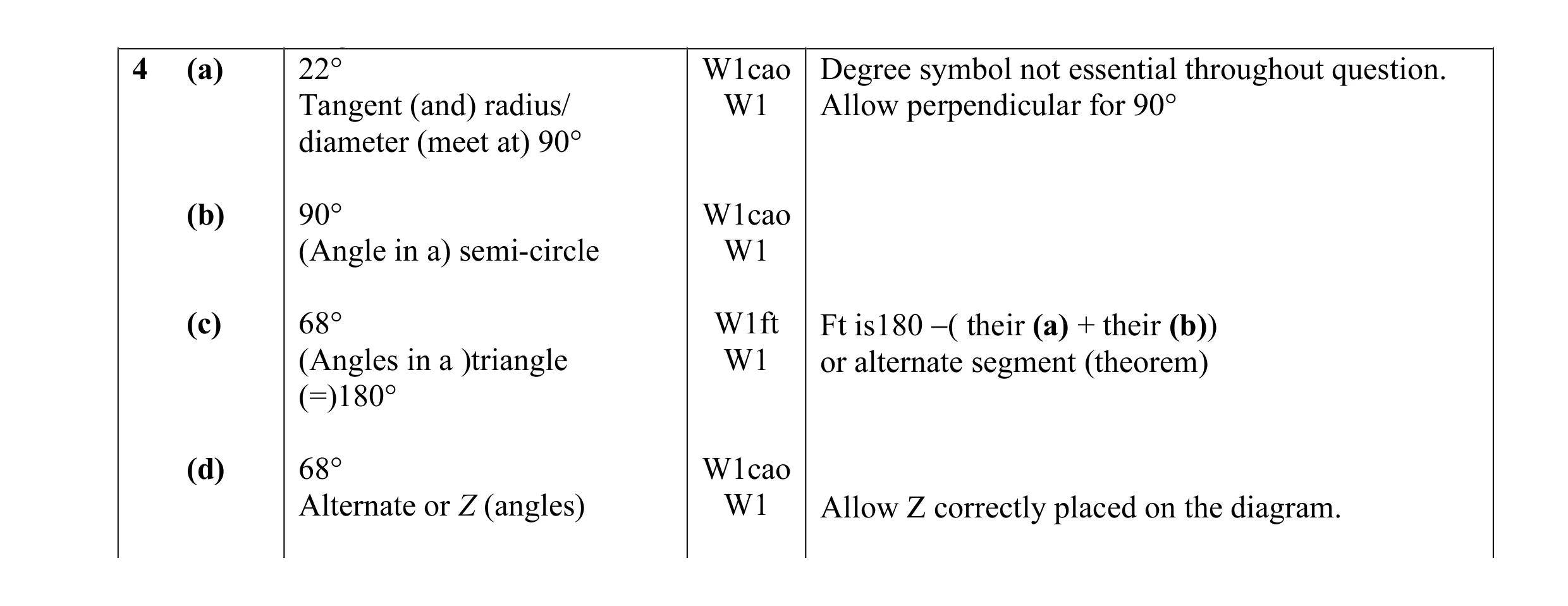 8
8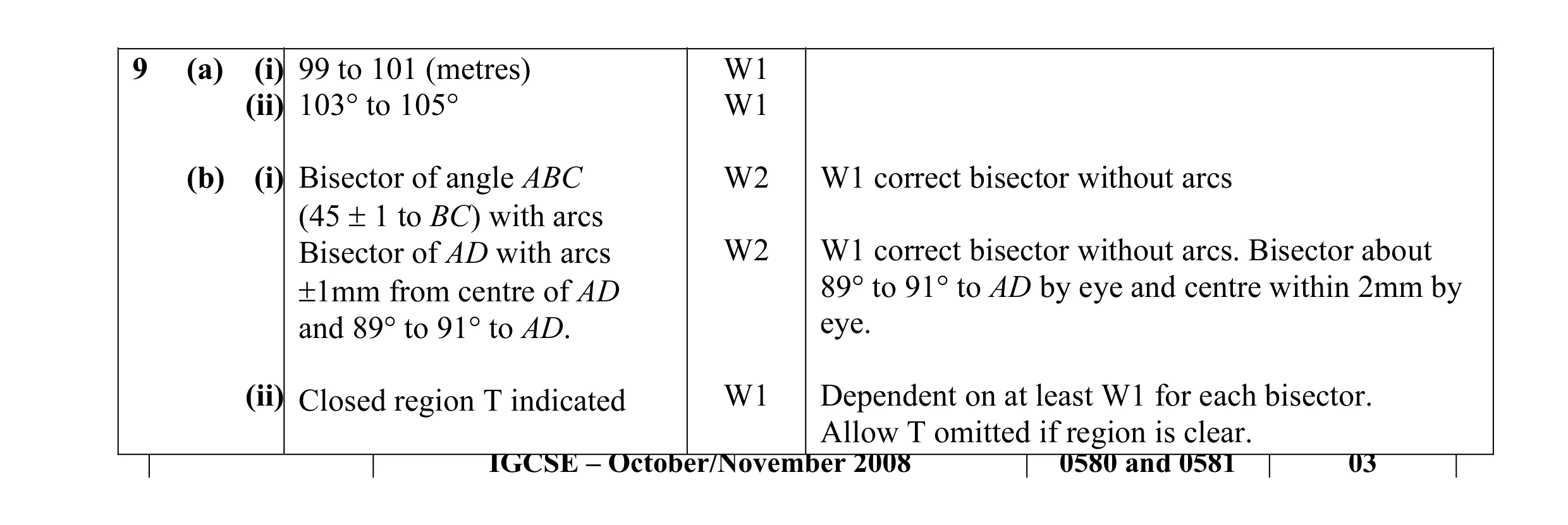 9
9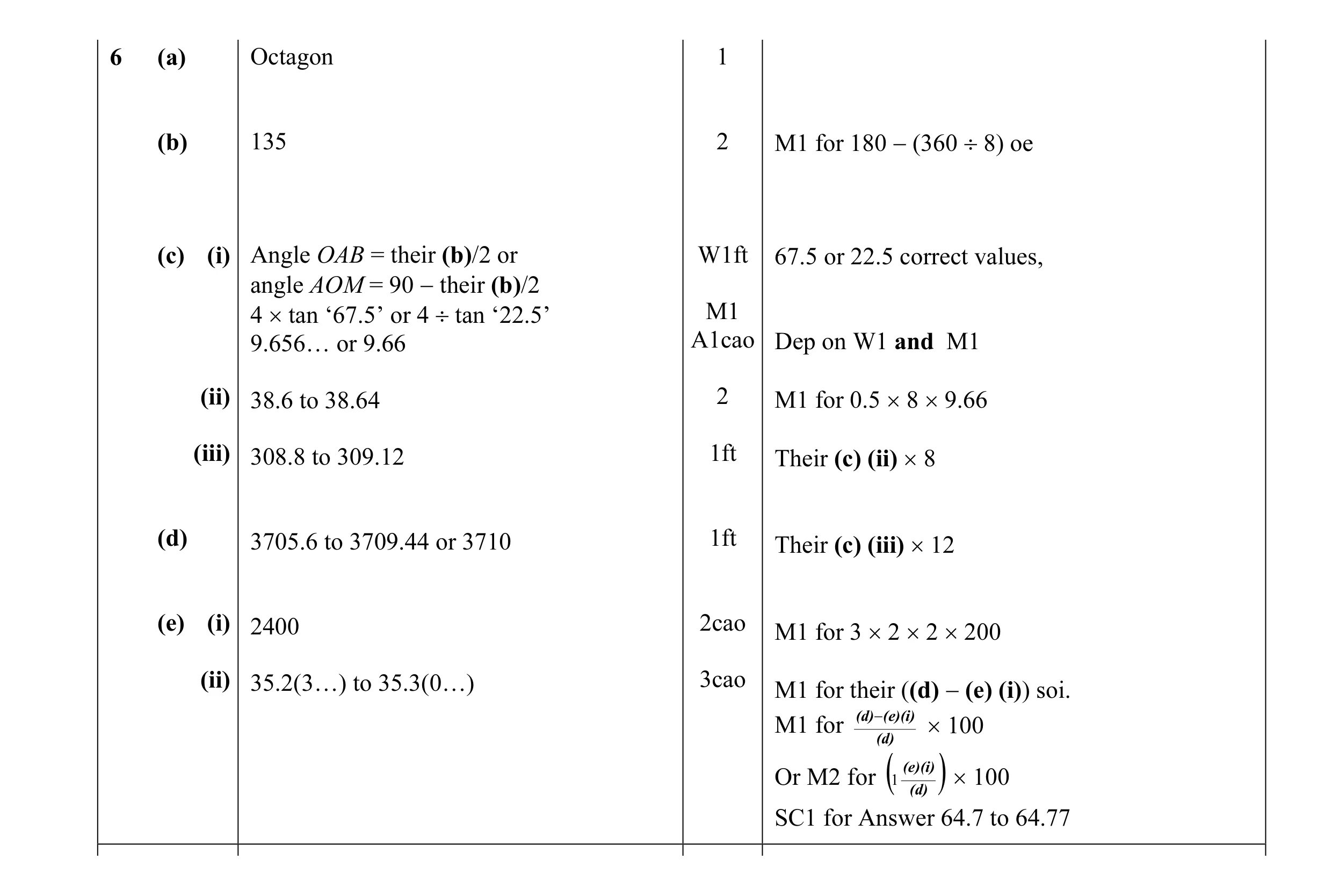 15
15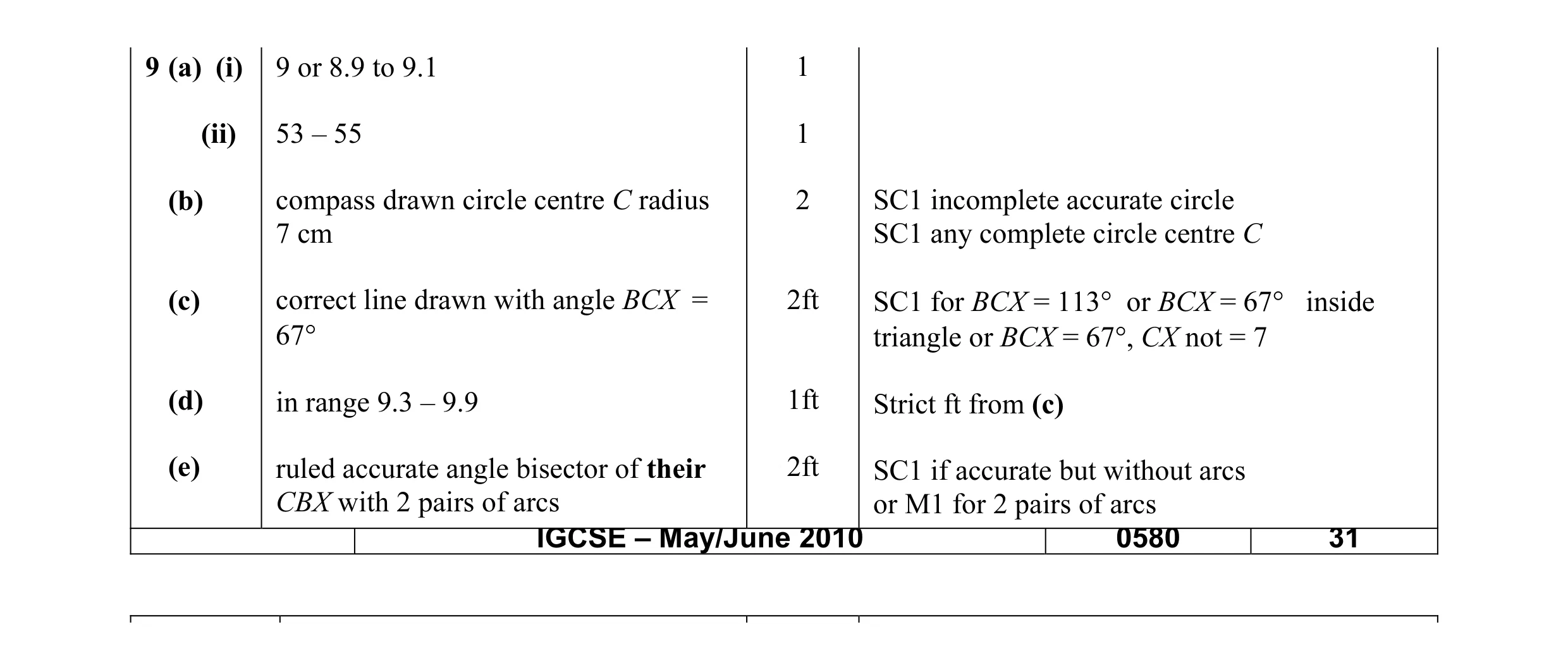 9
9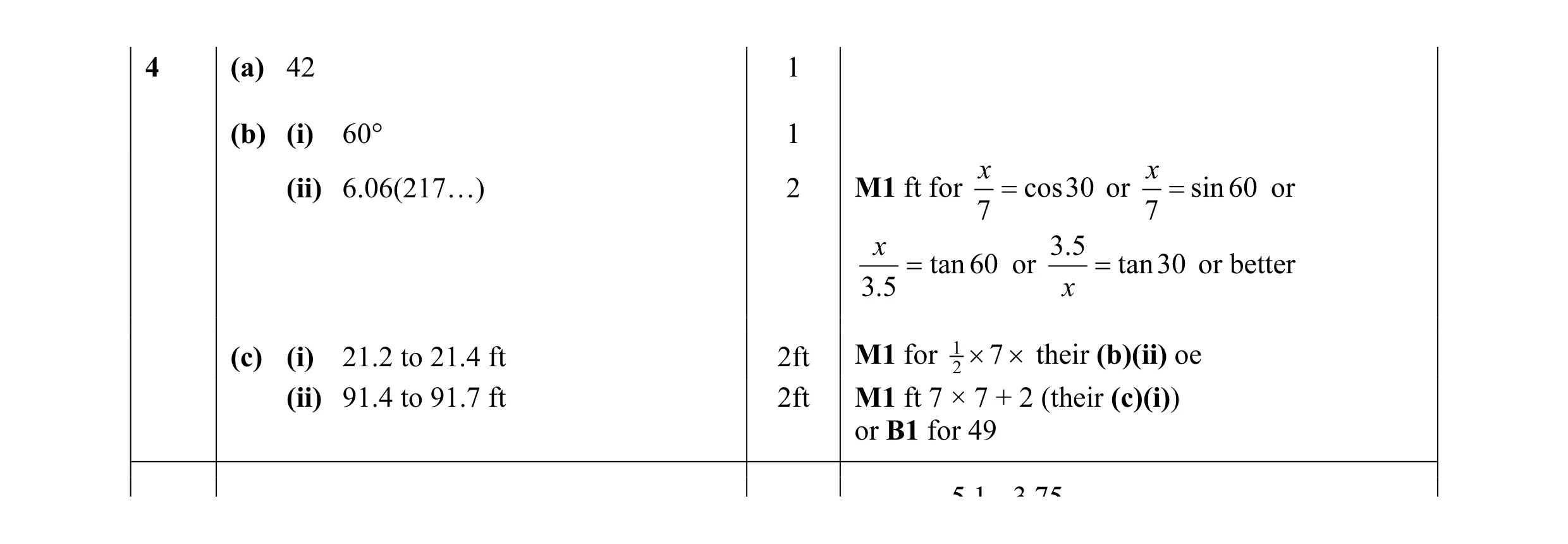 8
8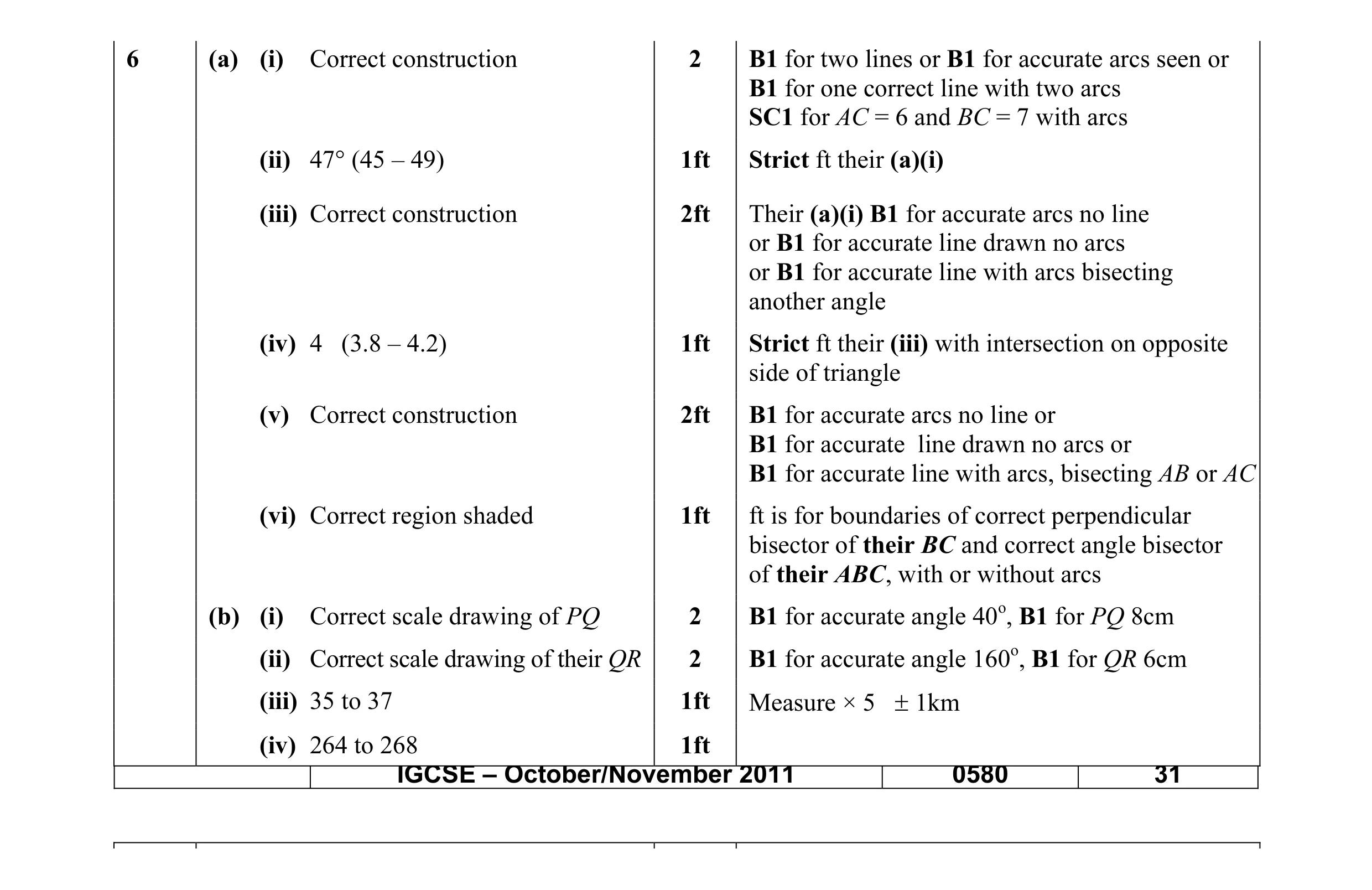 15
15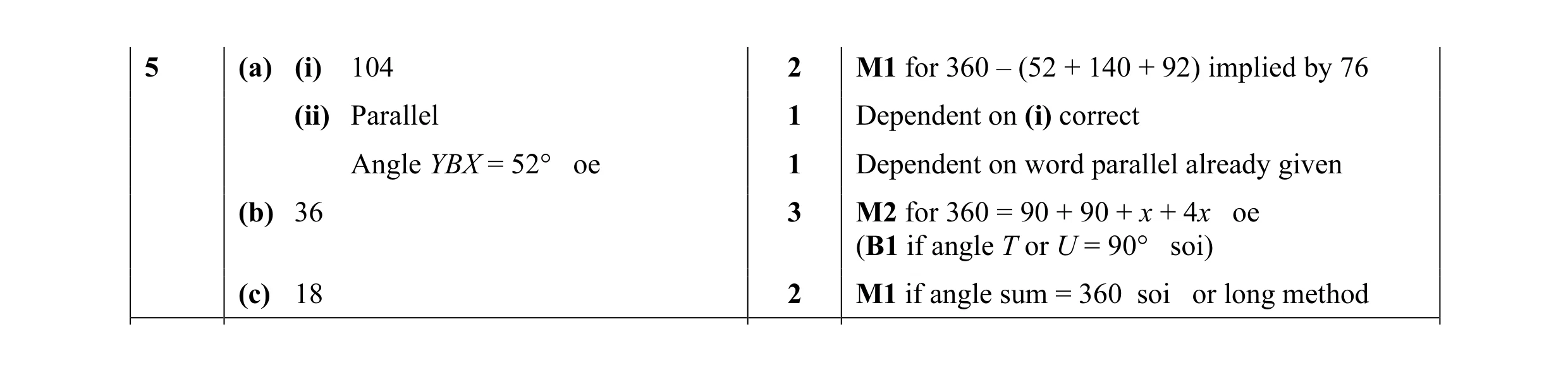 9
9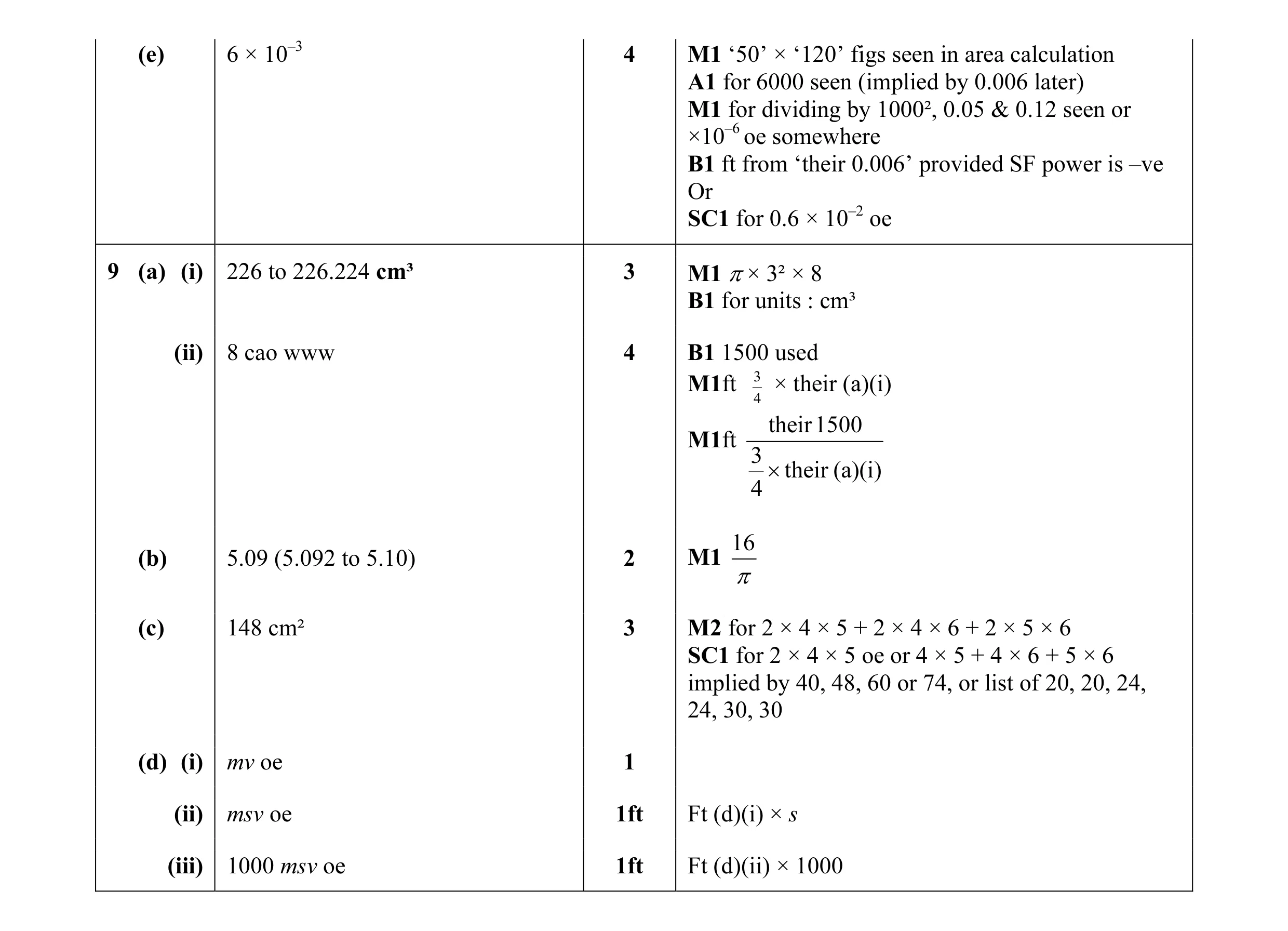 14
14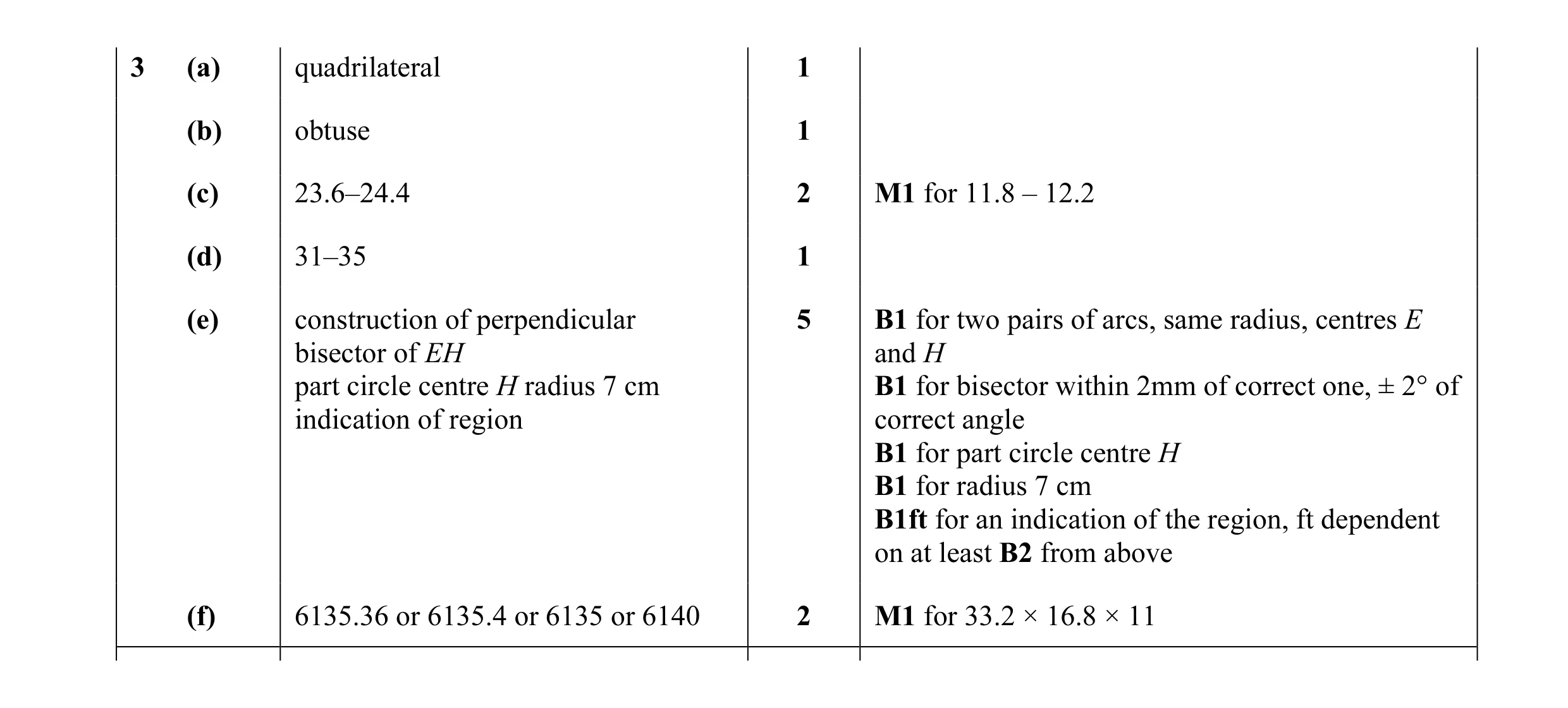 12
12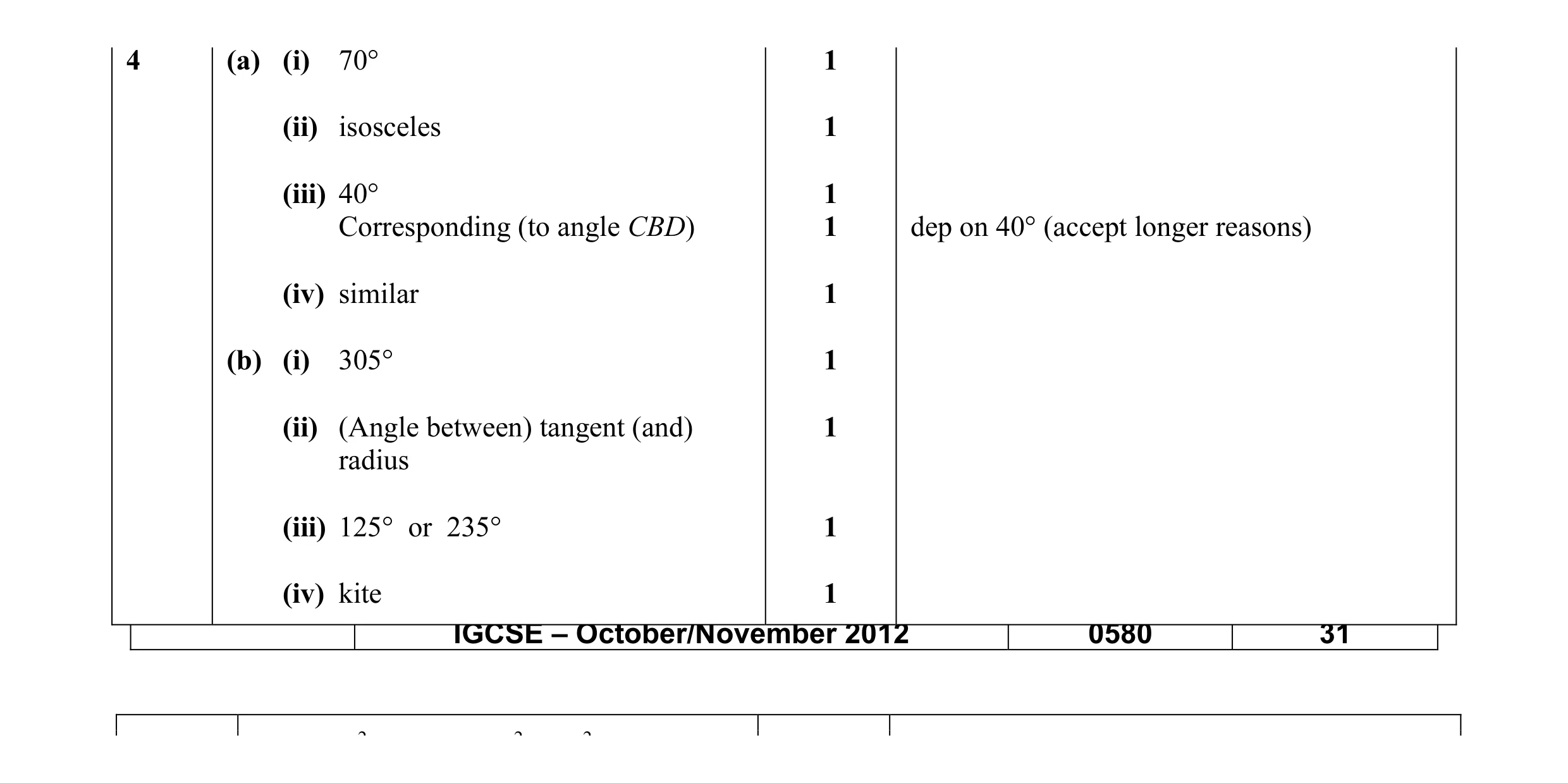 9
9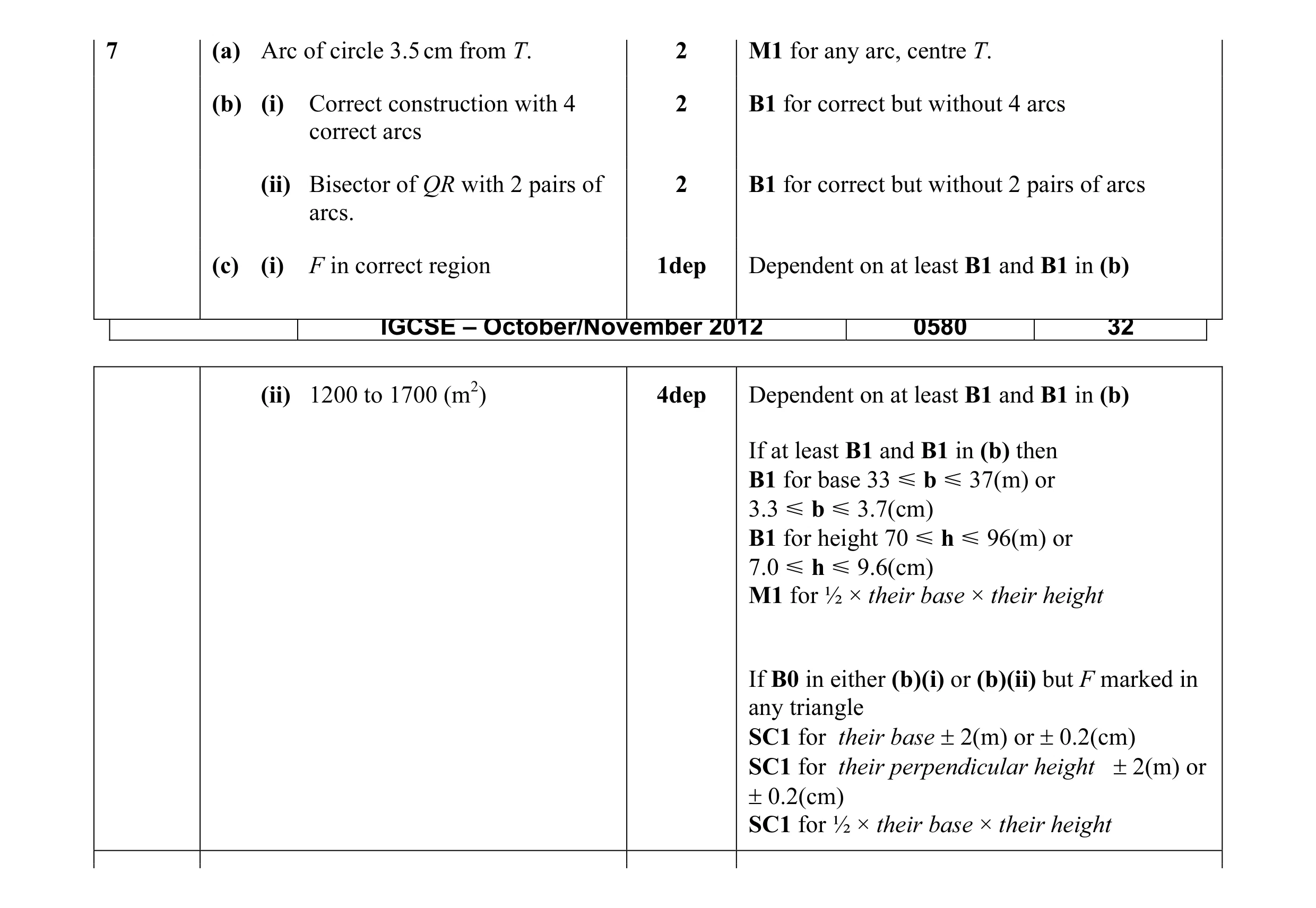 11
11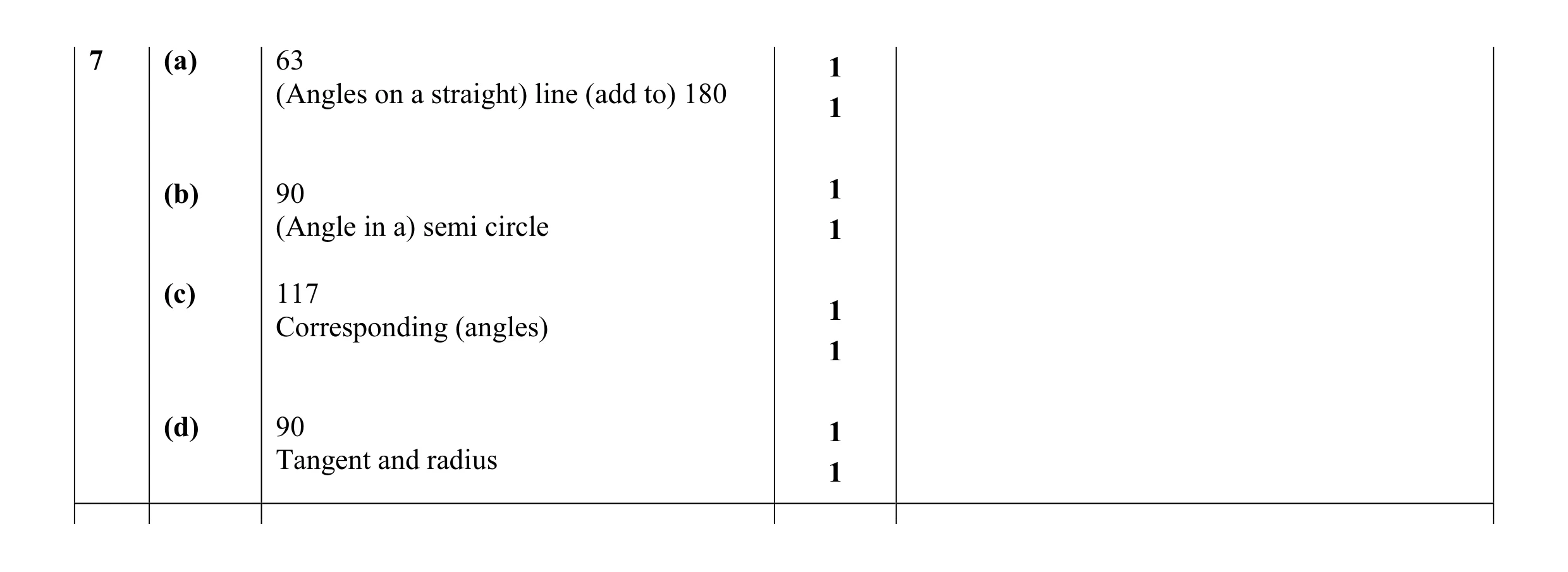 8
8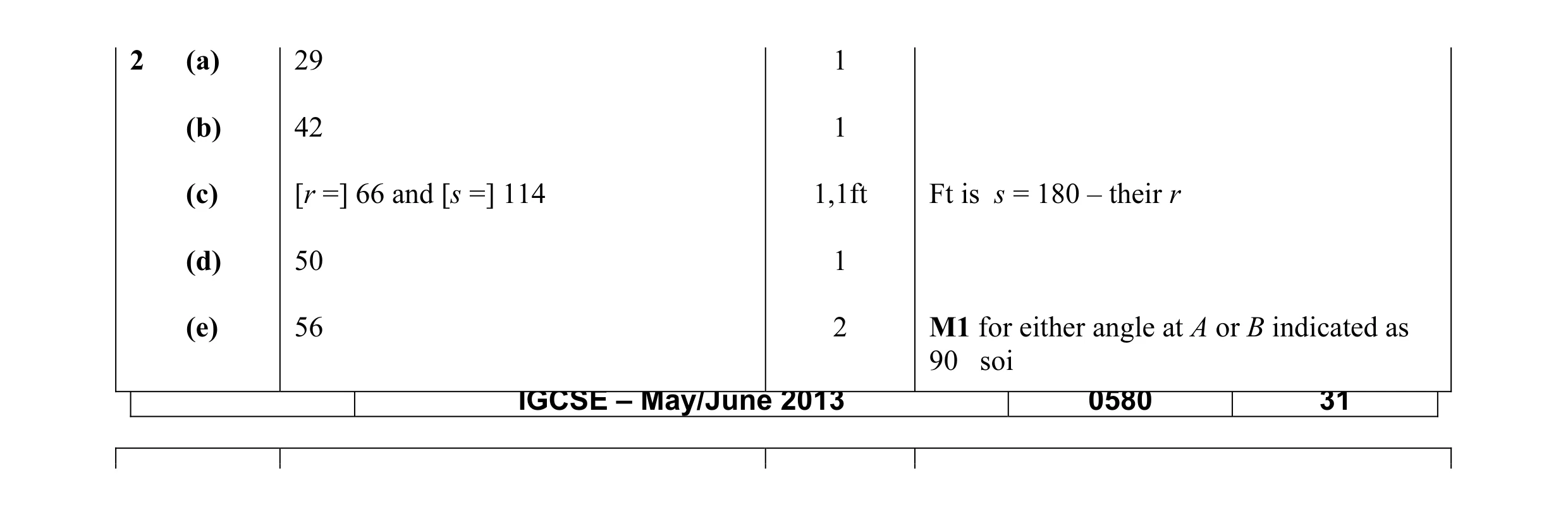 7
7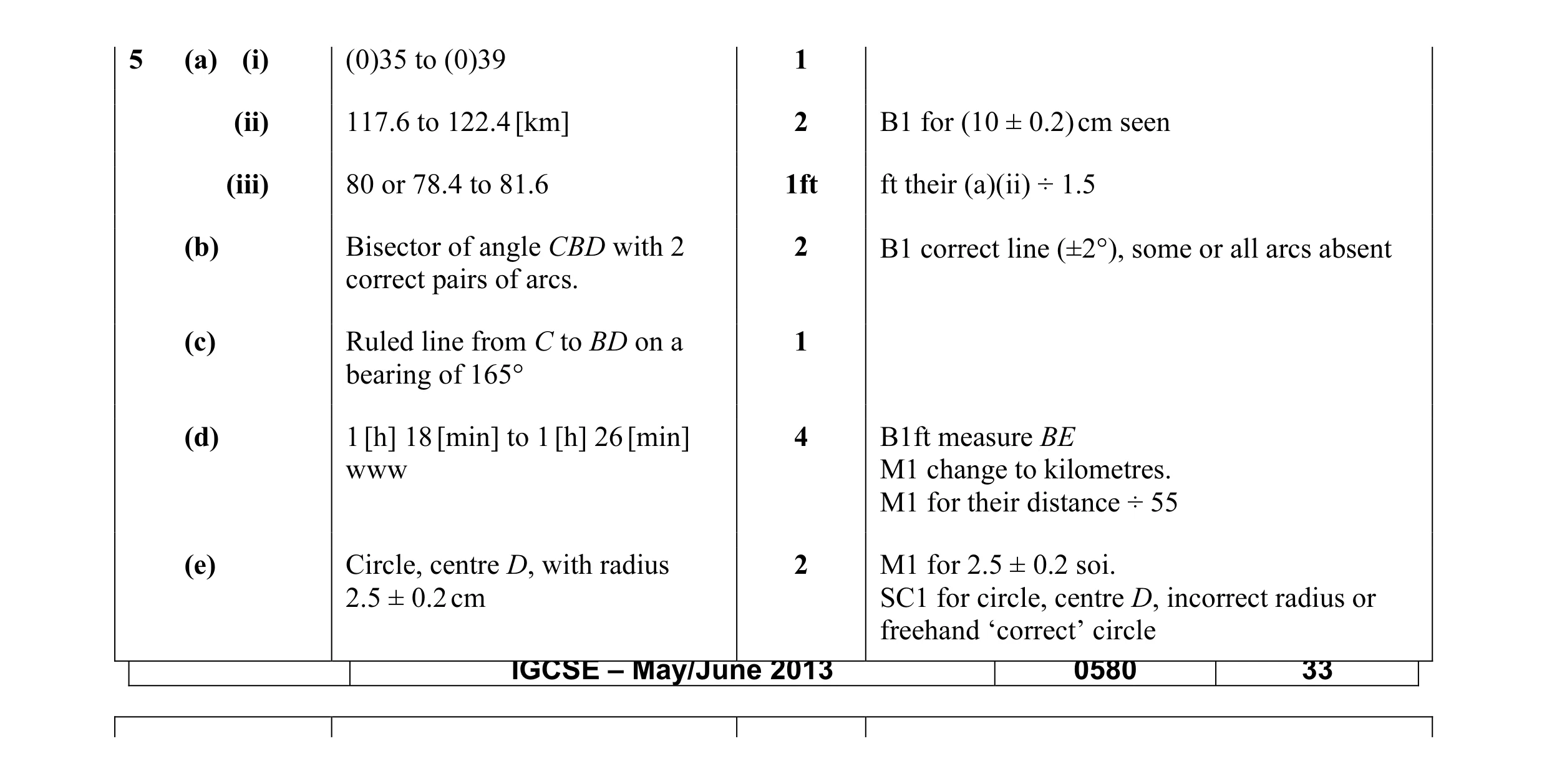 13
13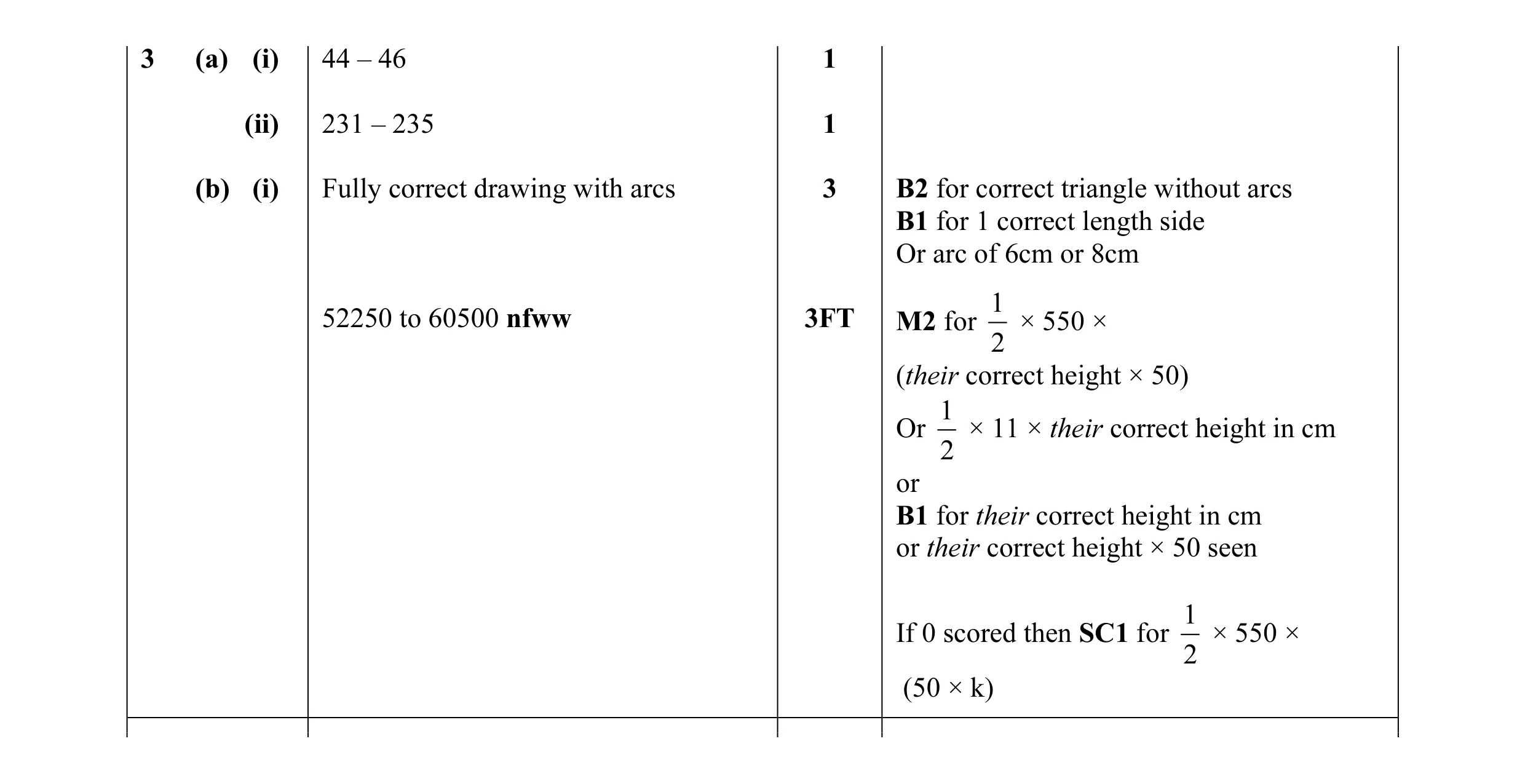 8
8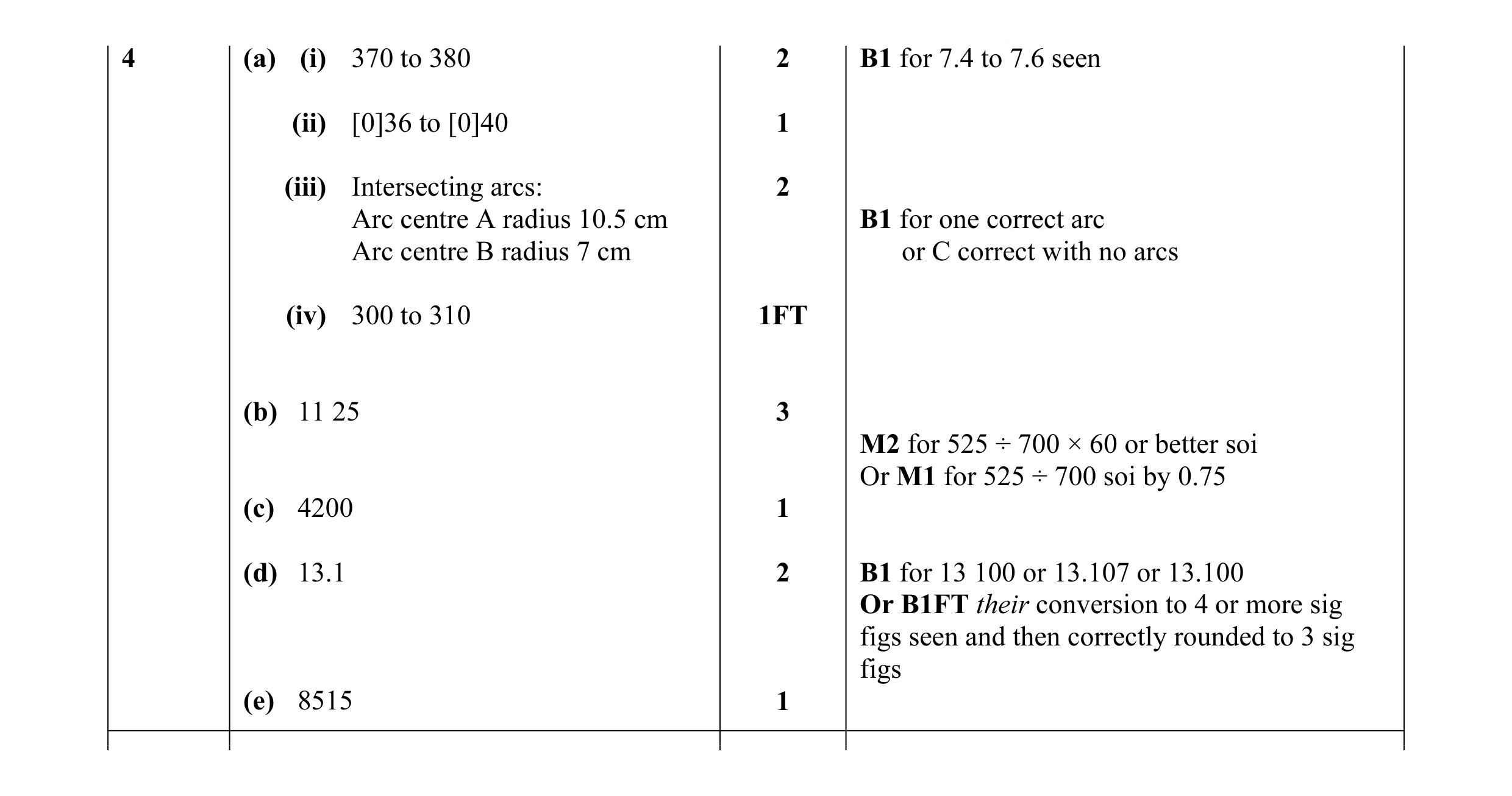 13
13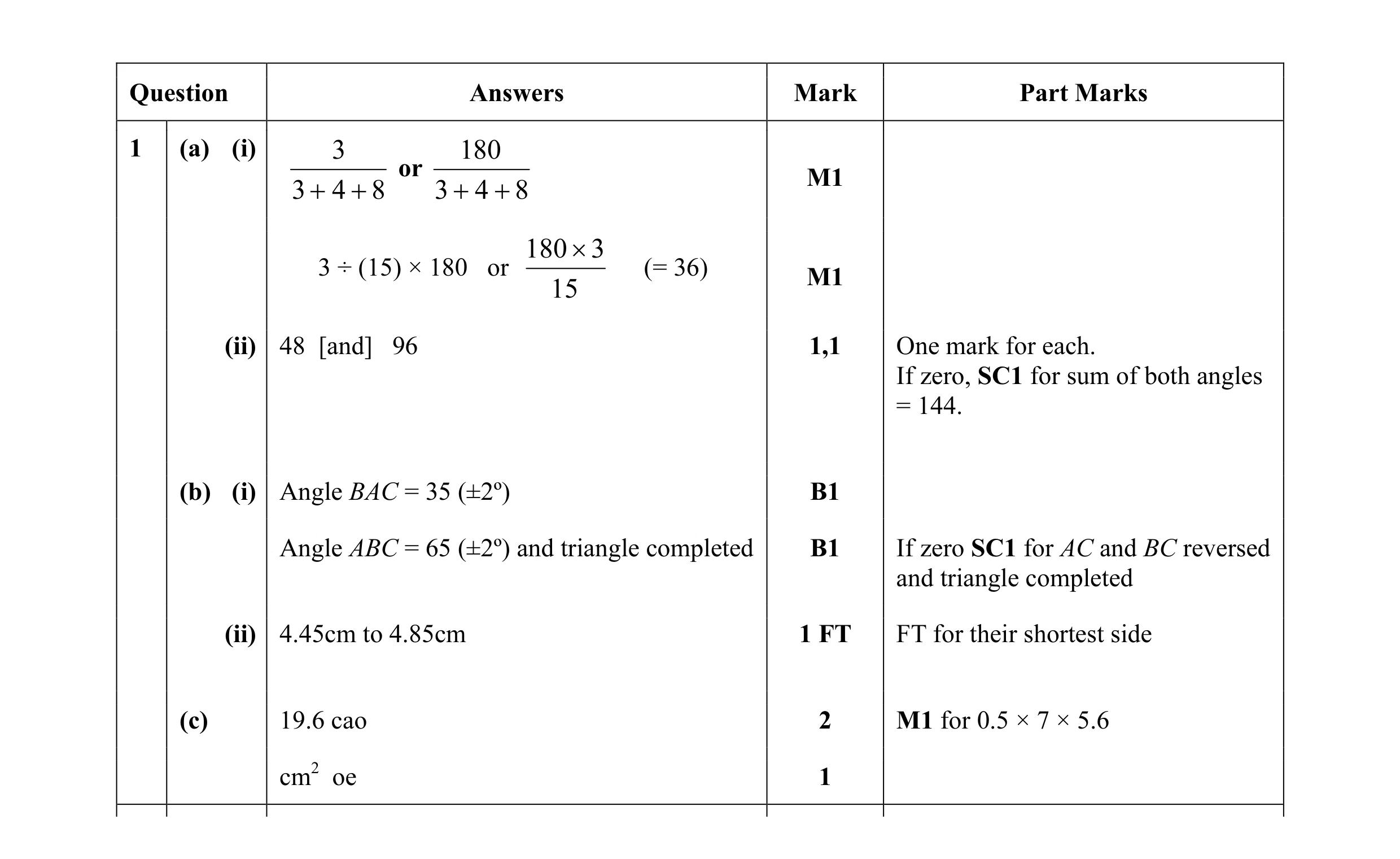 10
10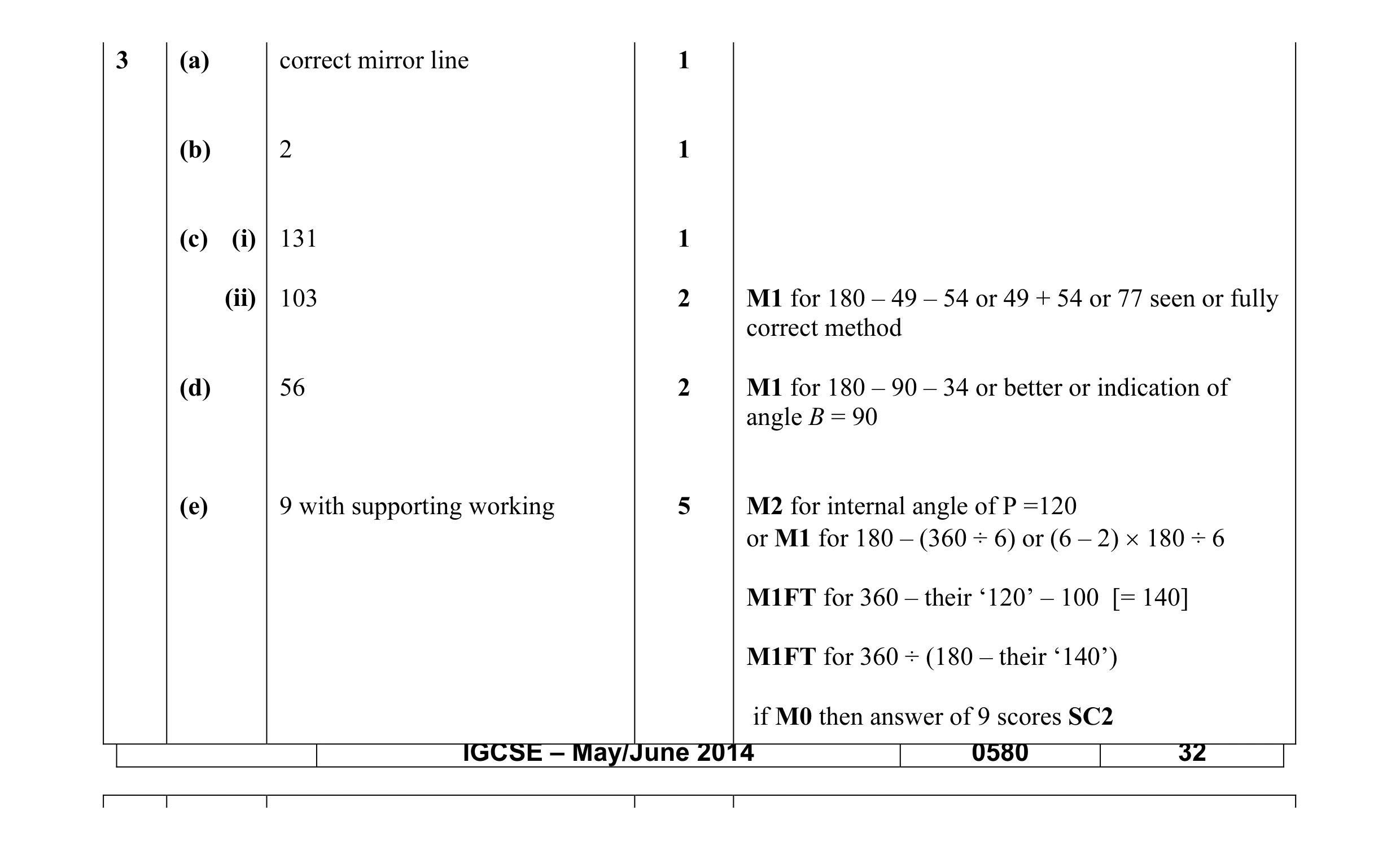 12
12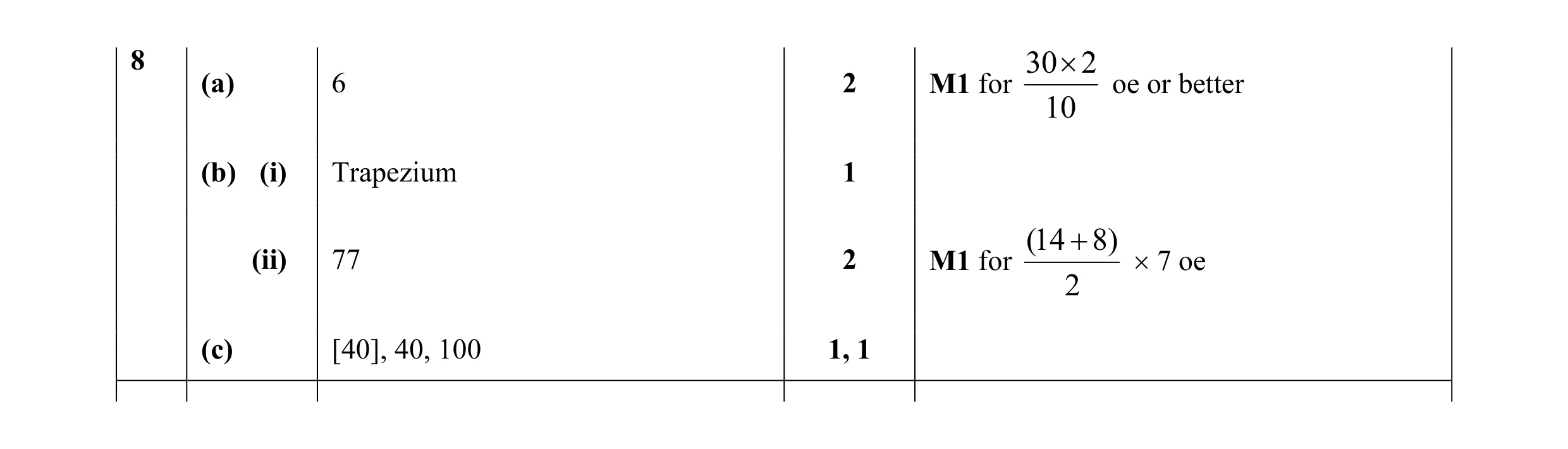 7
7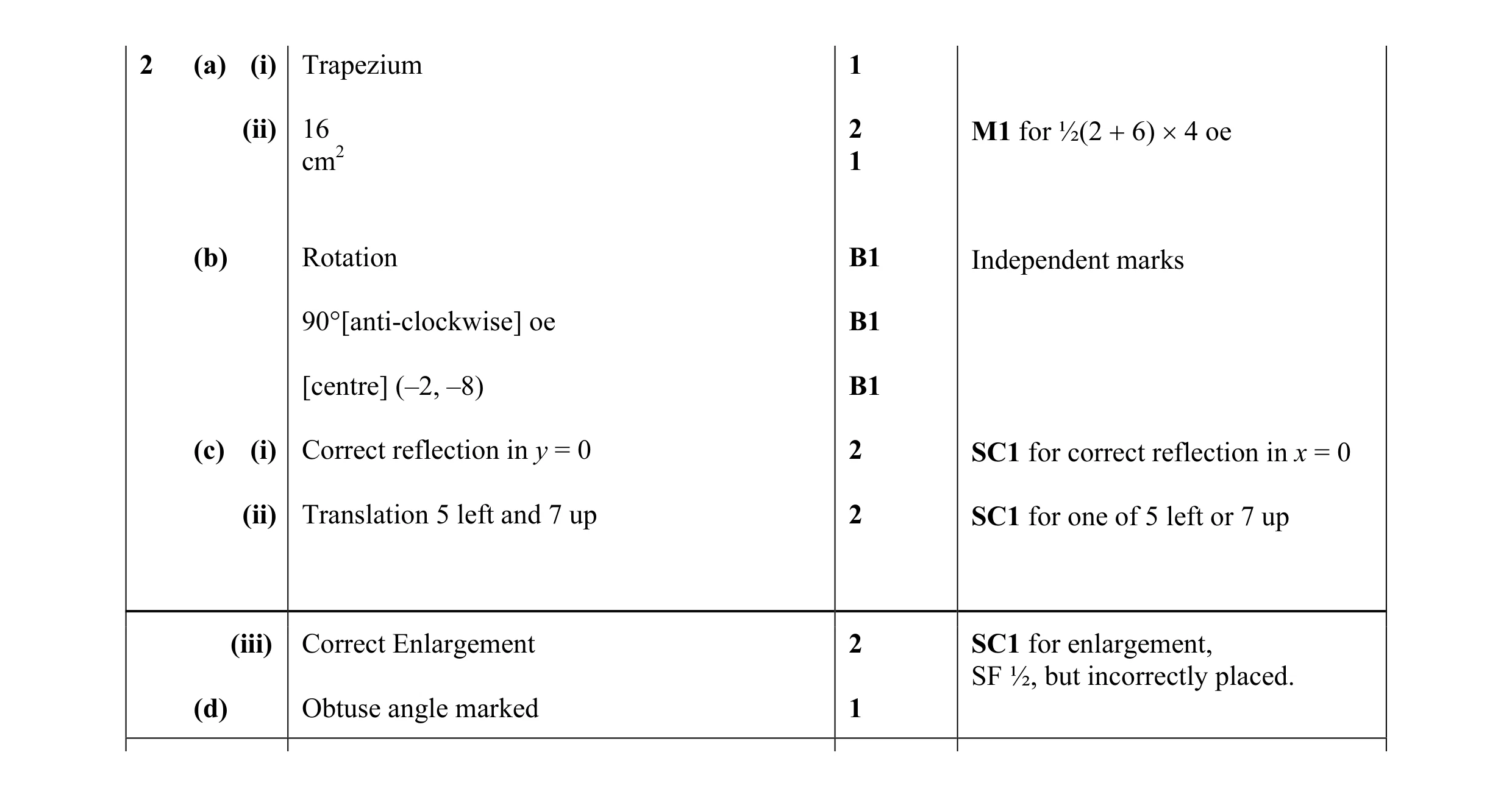 14
14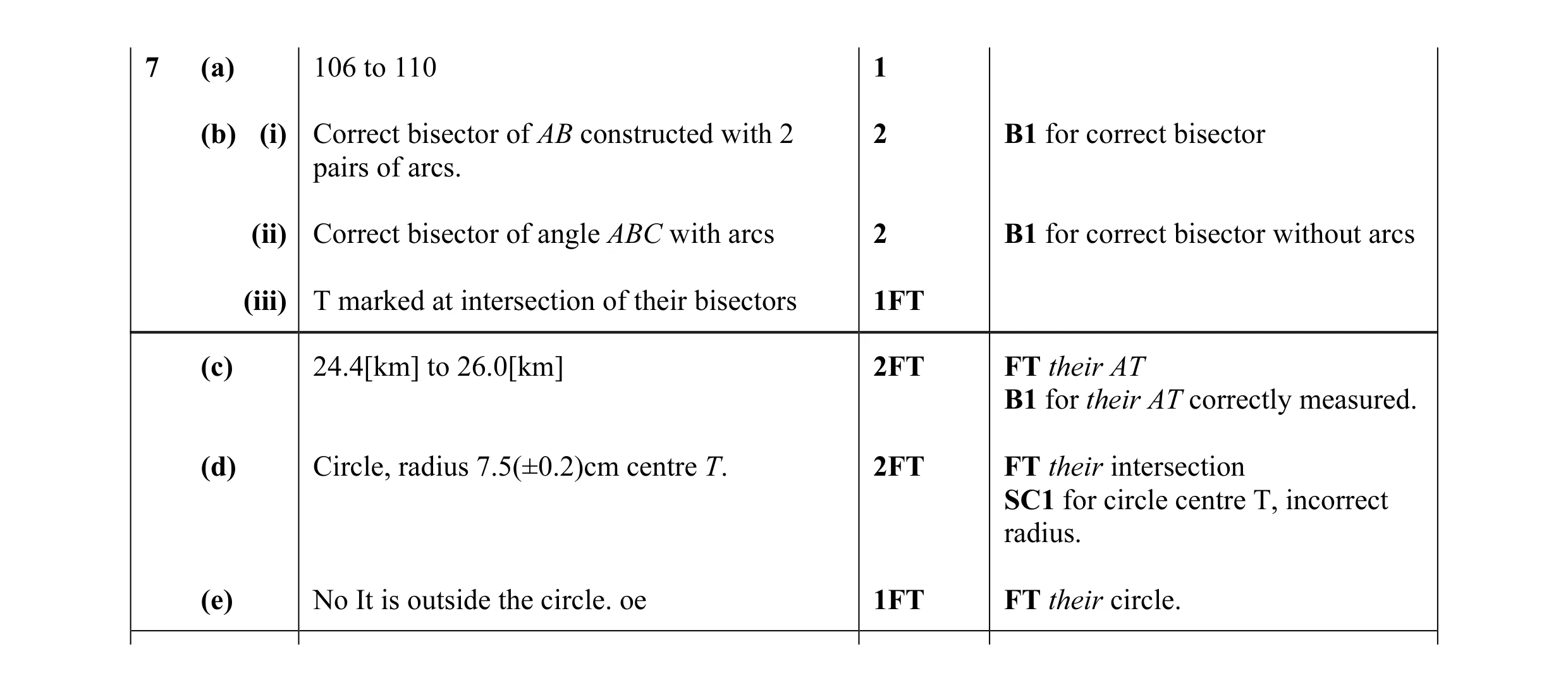 11
11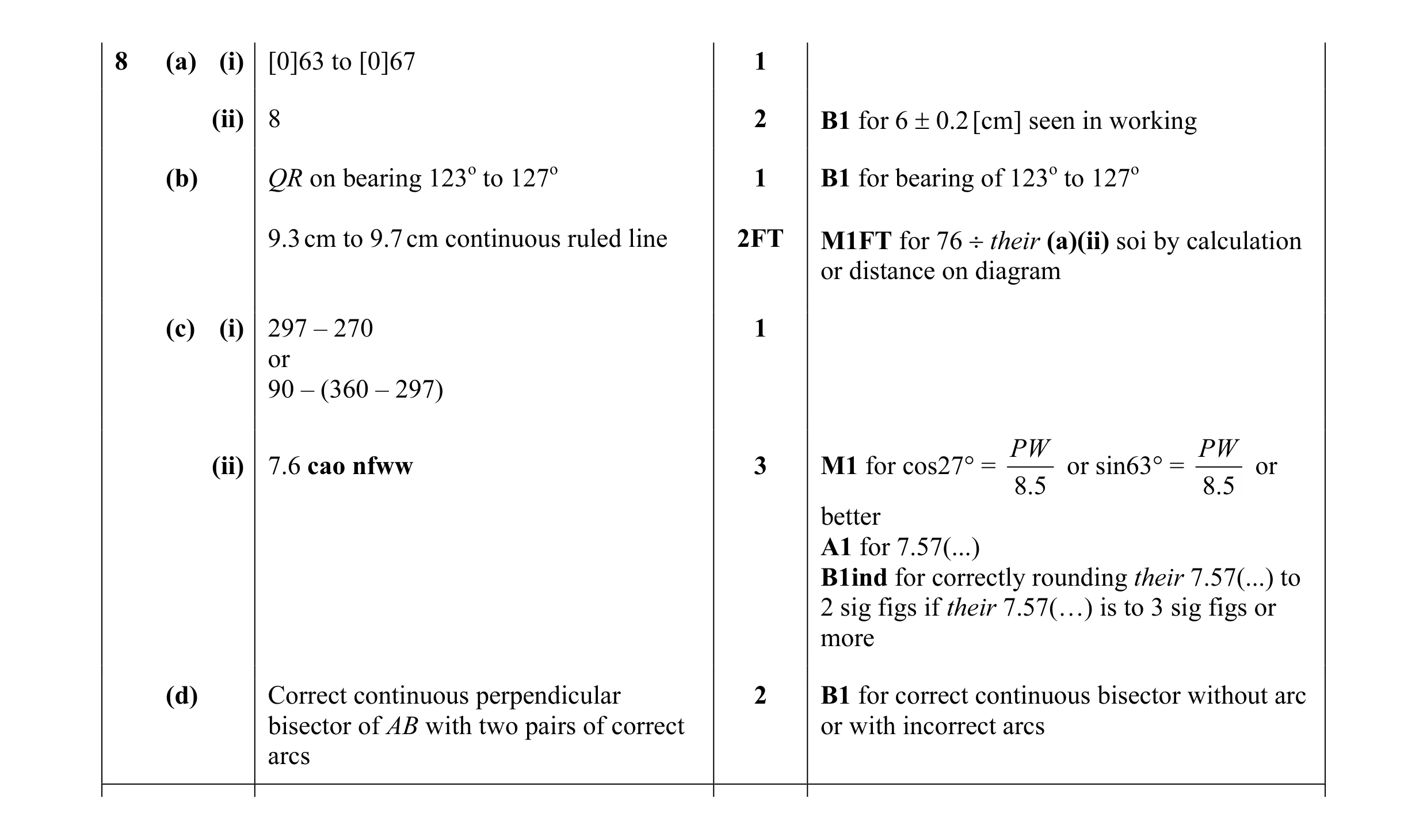 12
12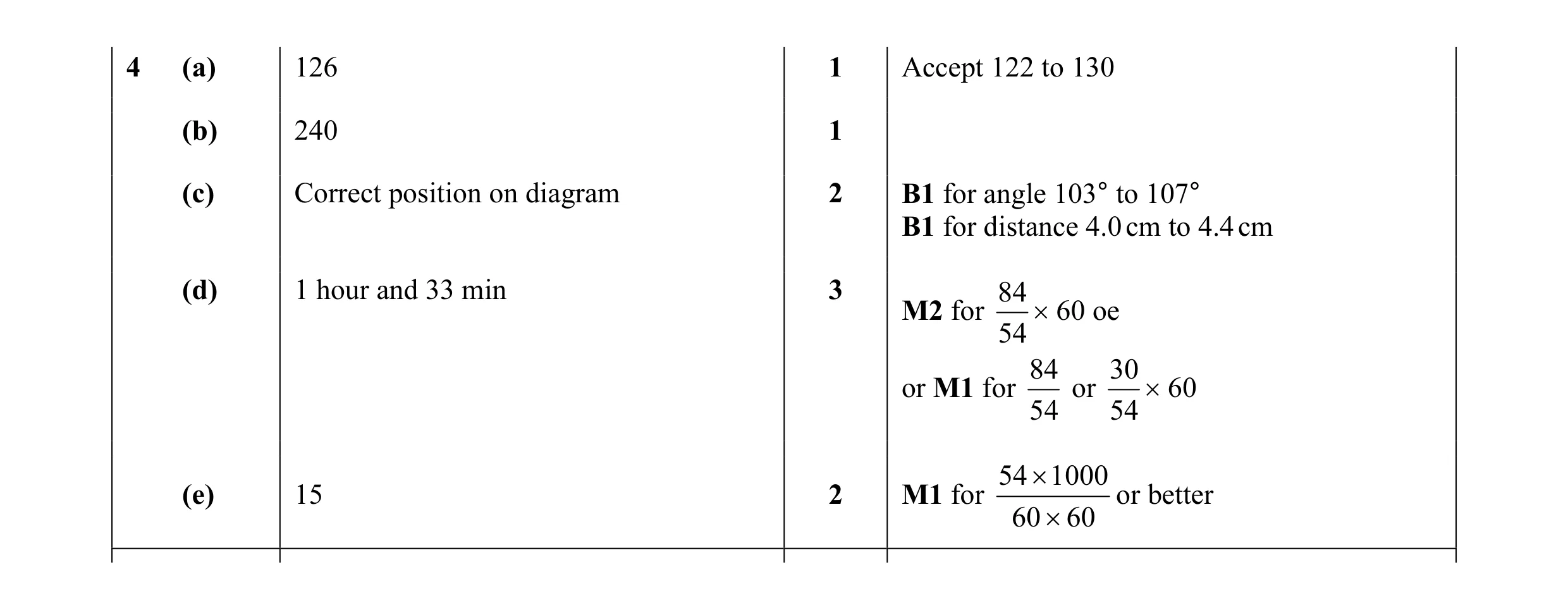 9
9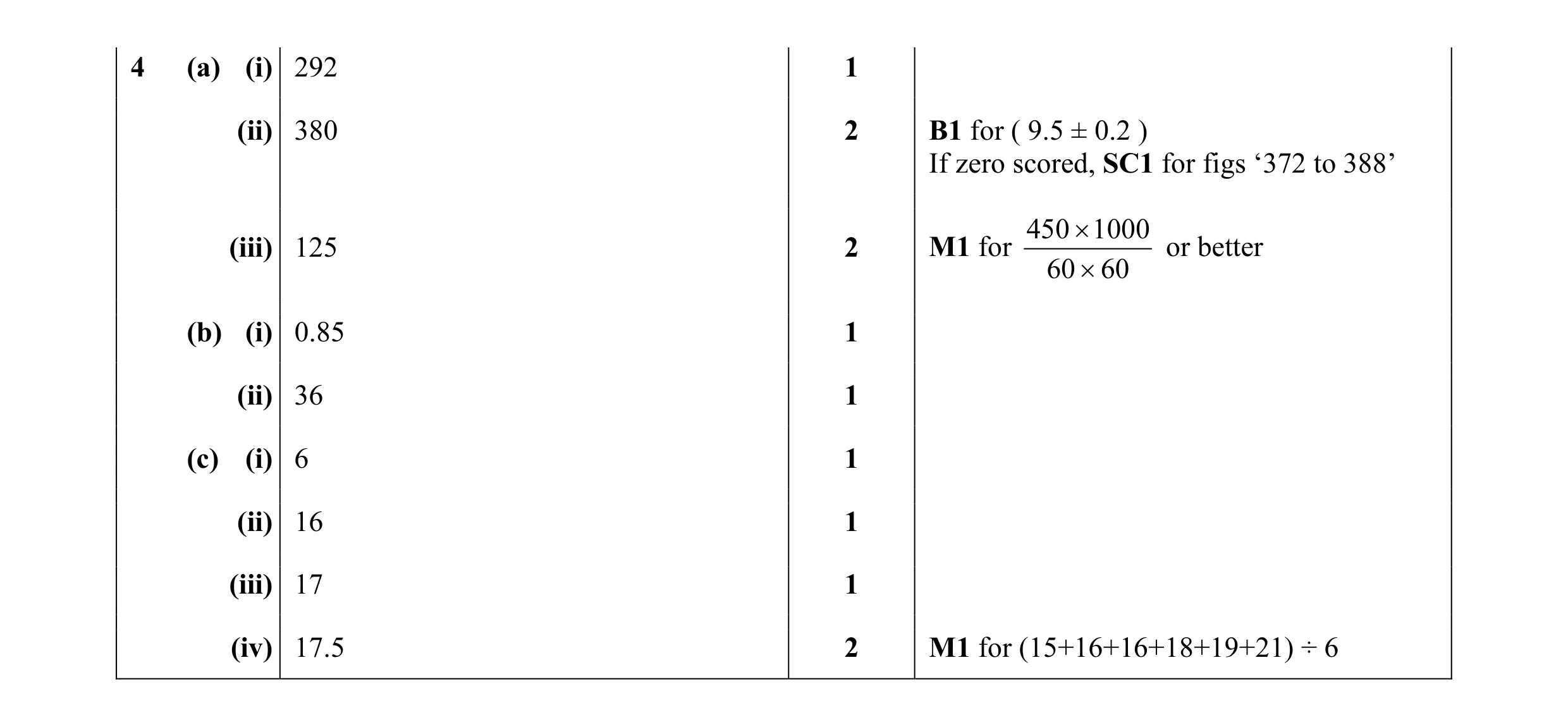 17
17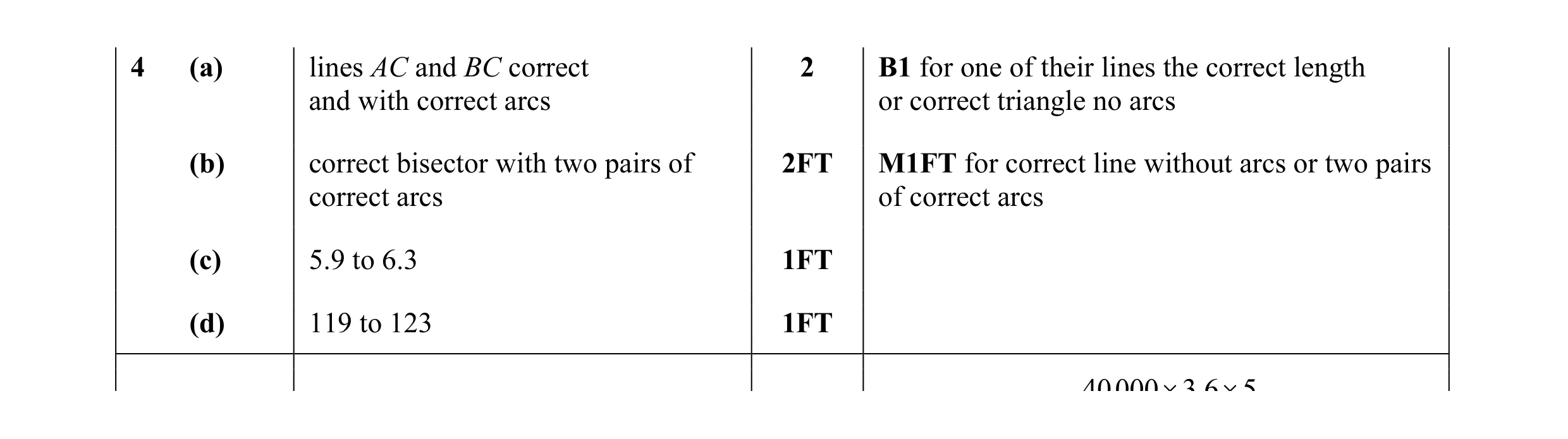 6
6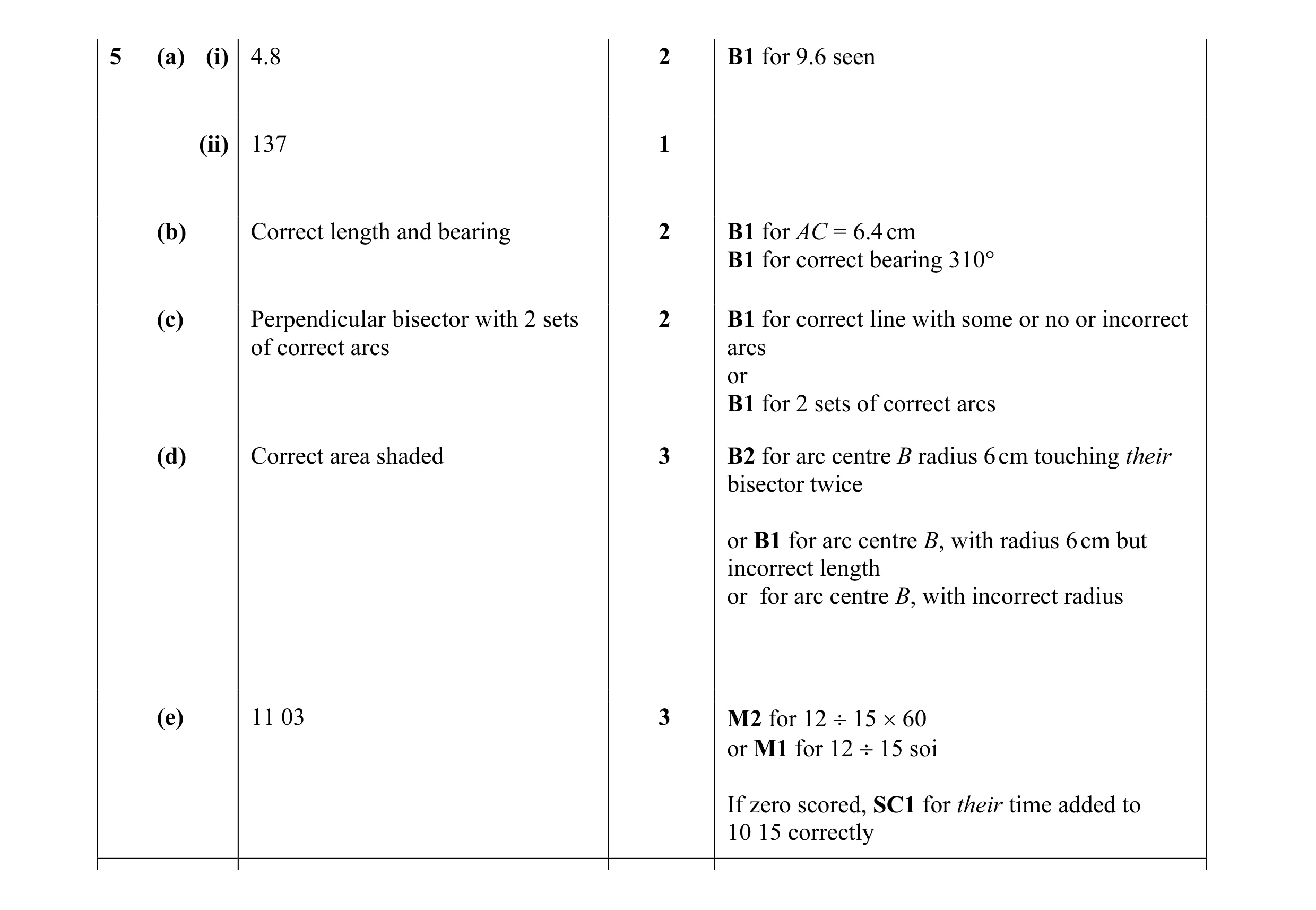 13
13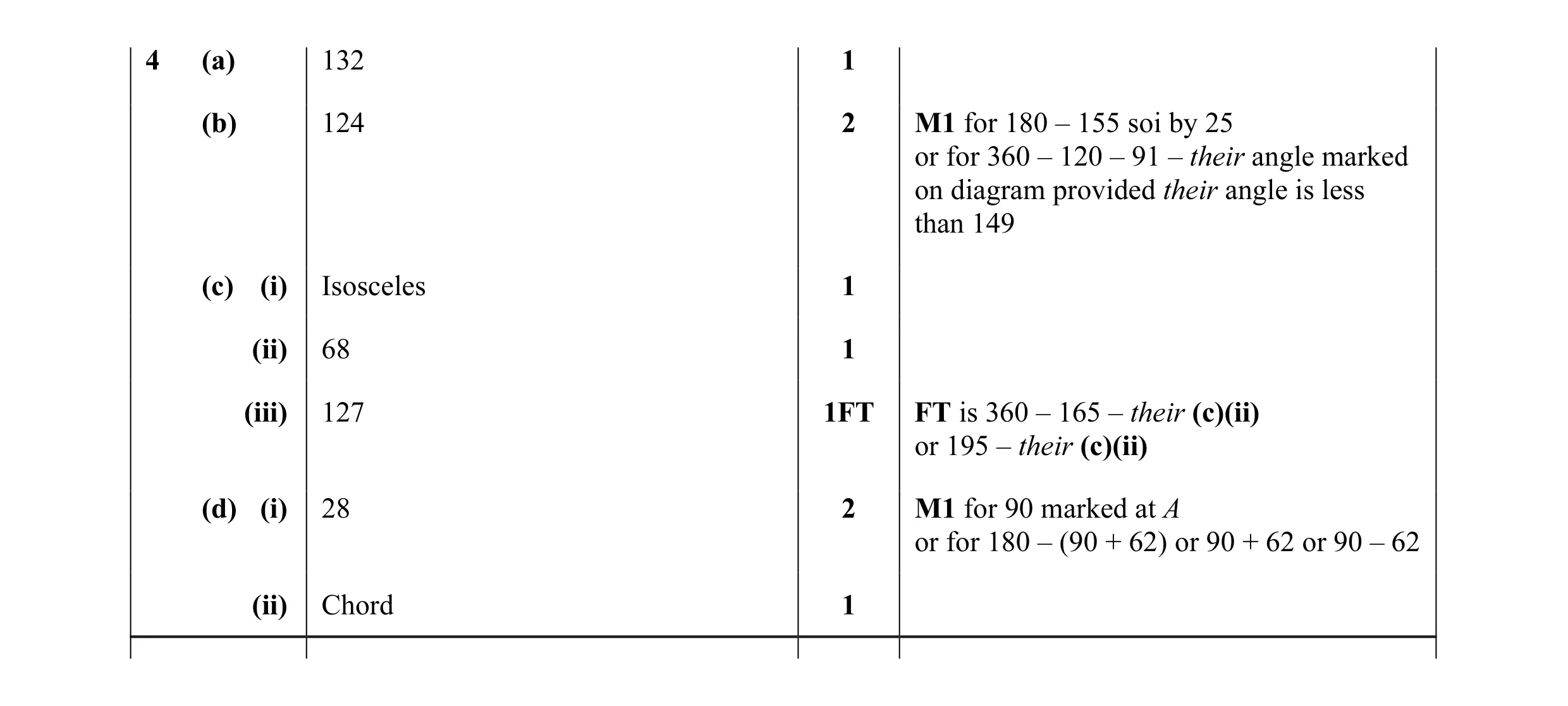 9
9 11
11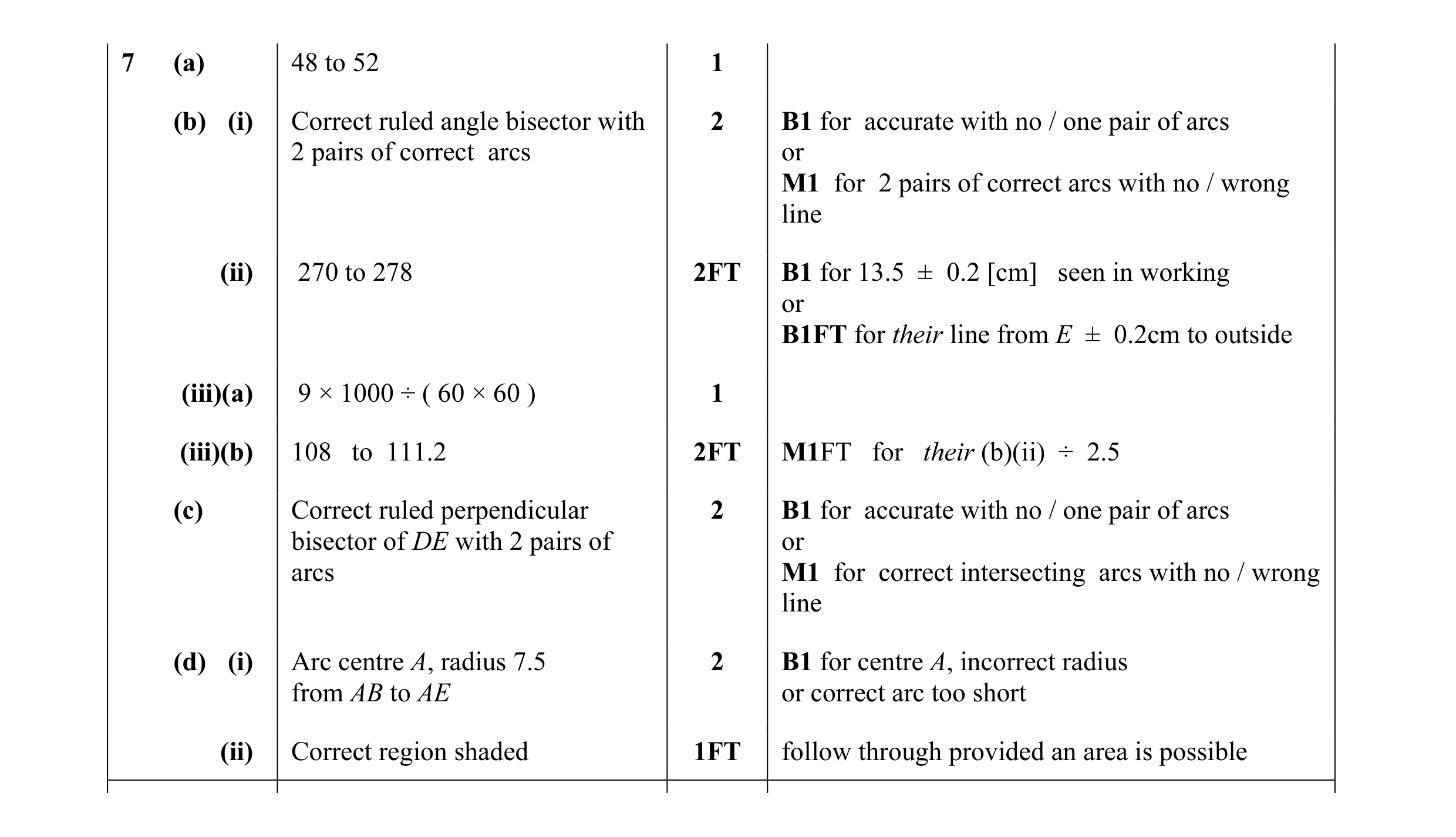 13
13 5
5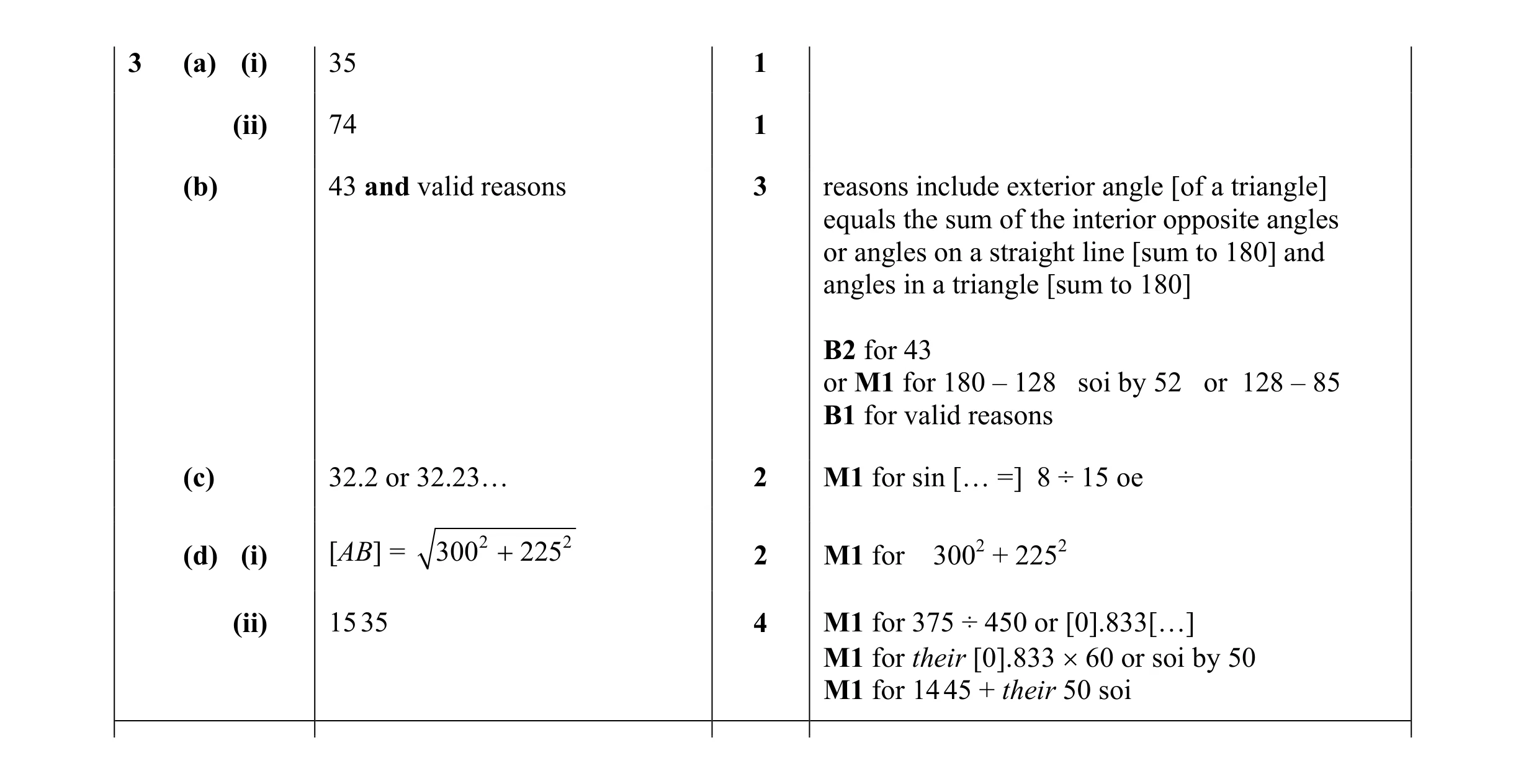 13
13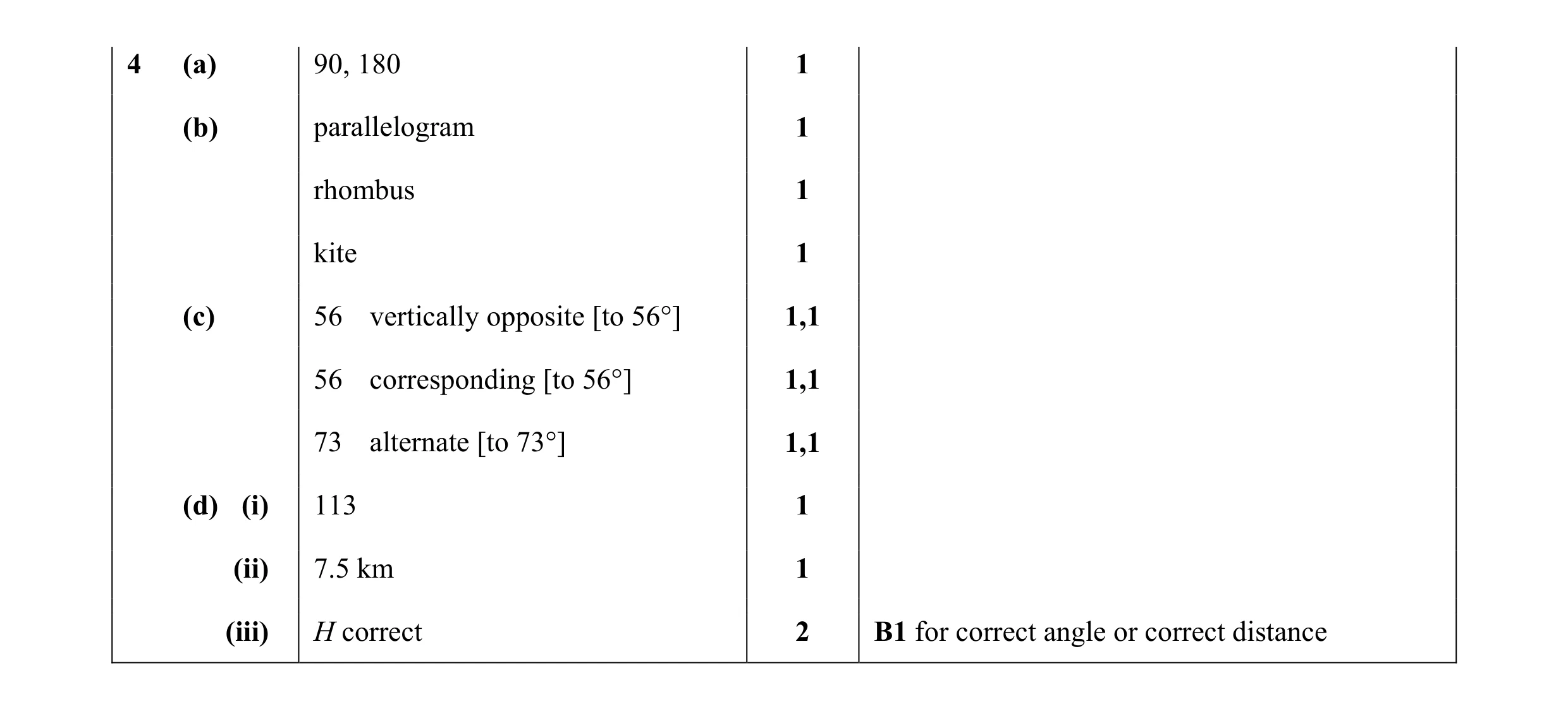 14
14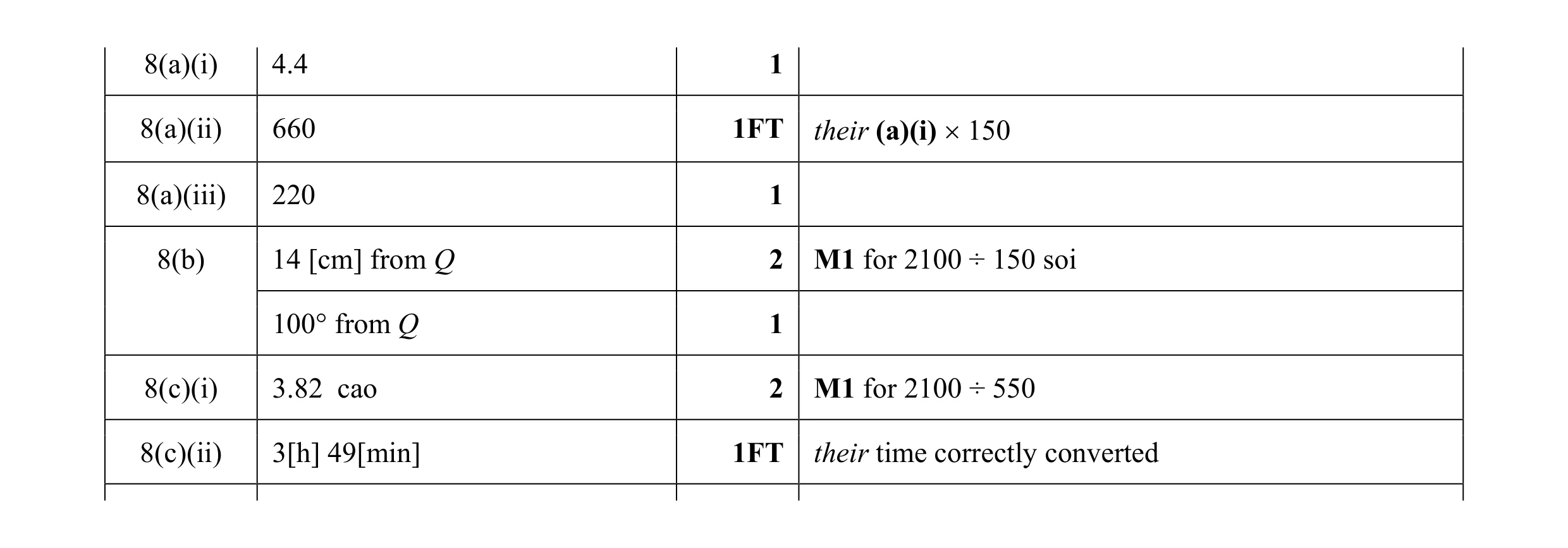 9
9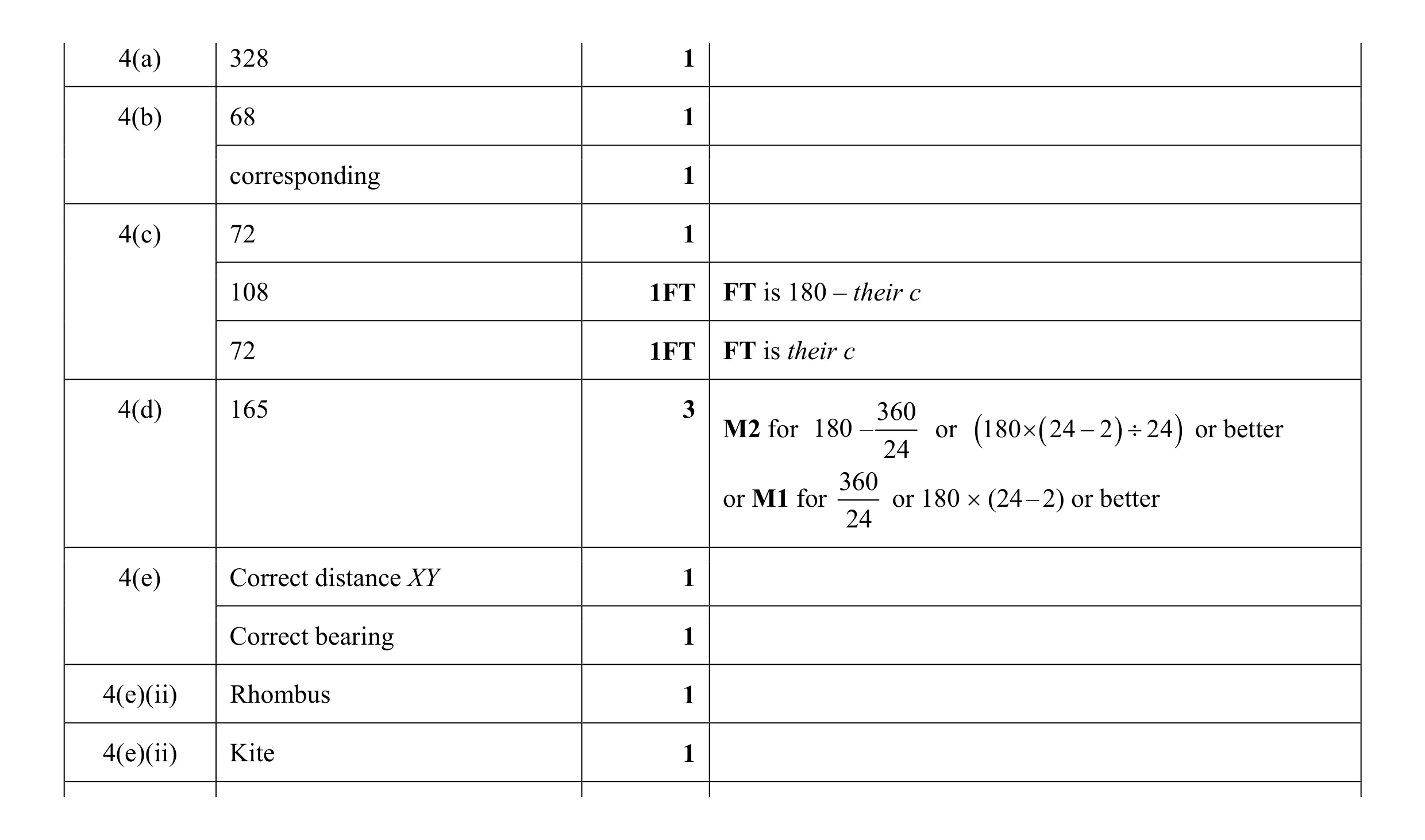 13
13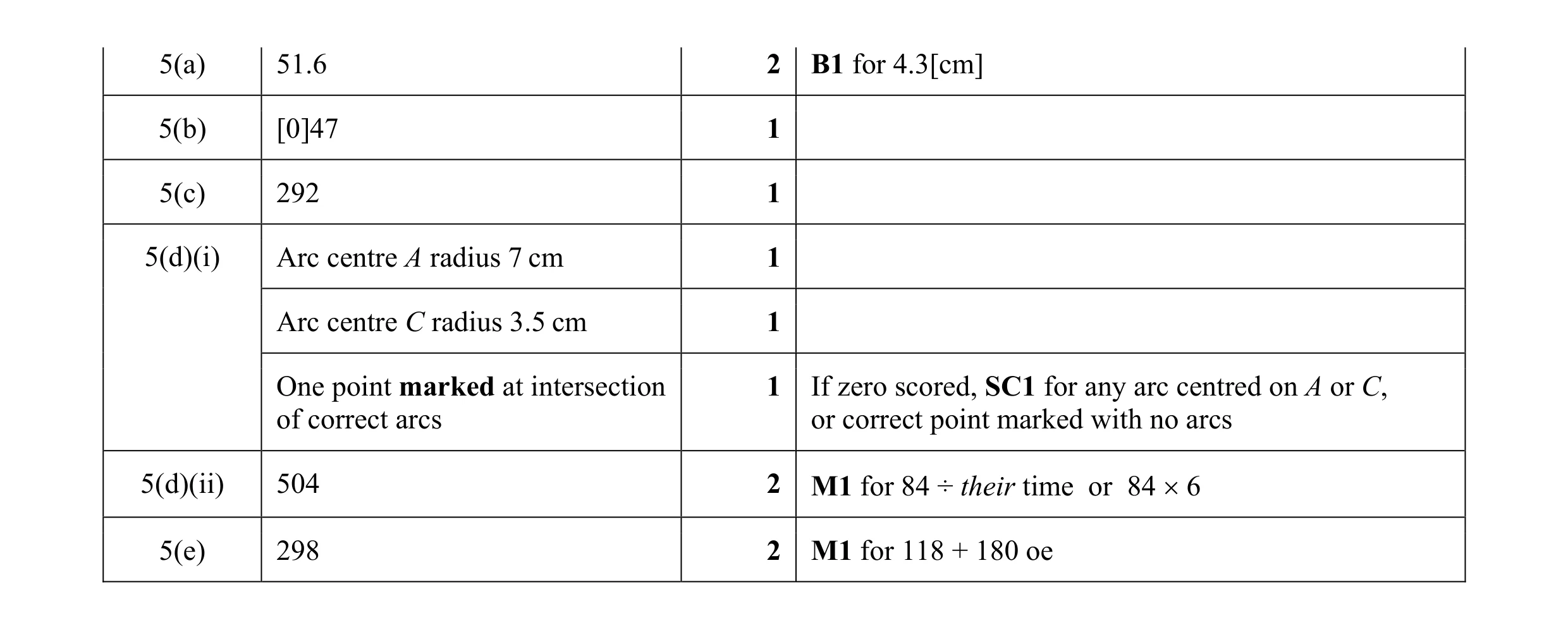 11
11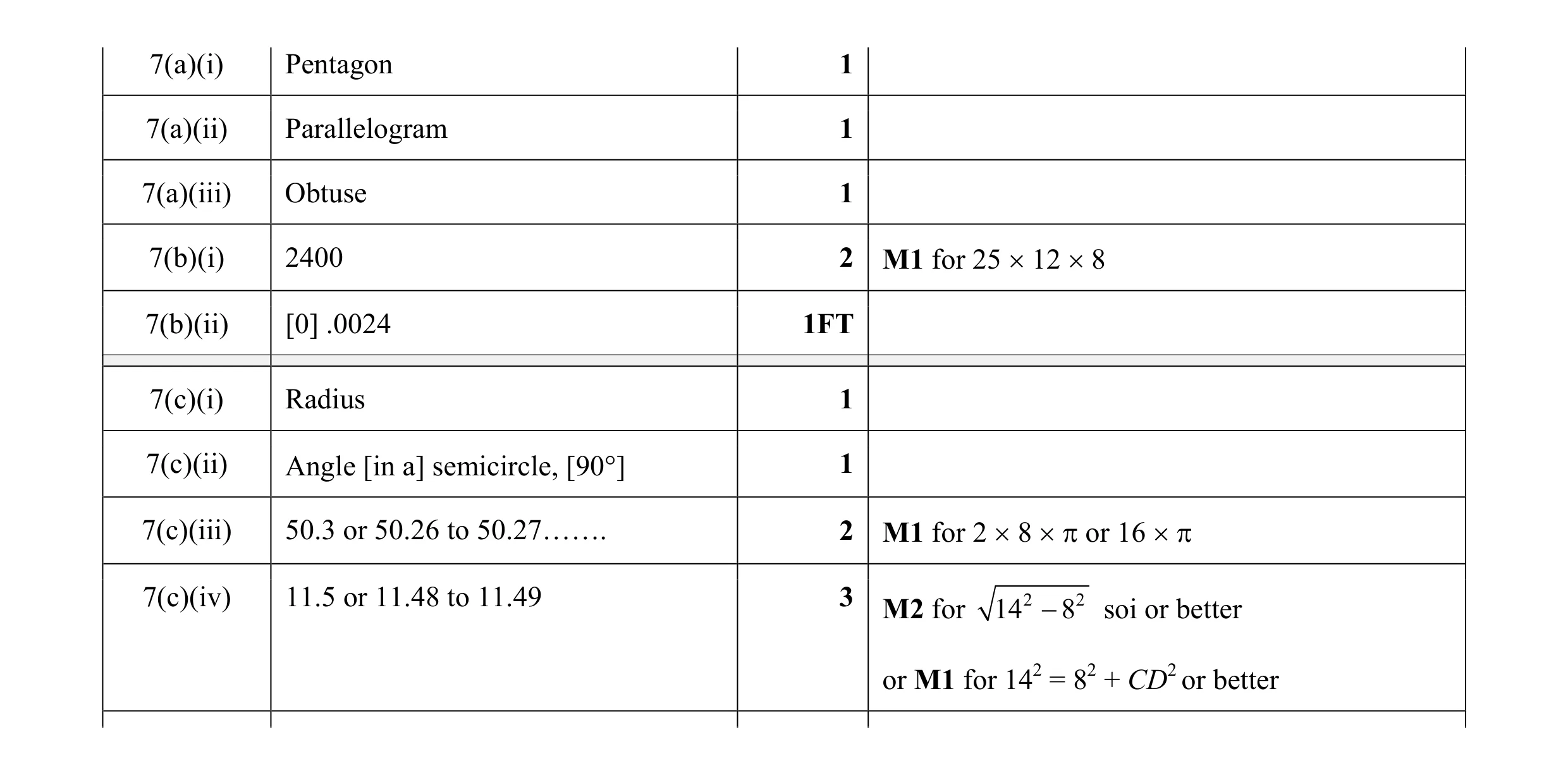 13
13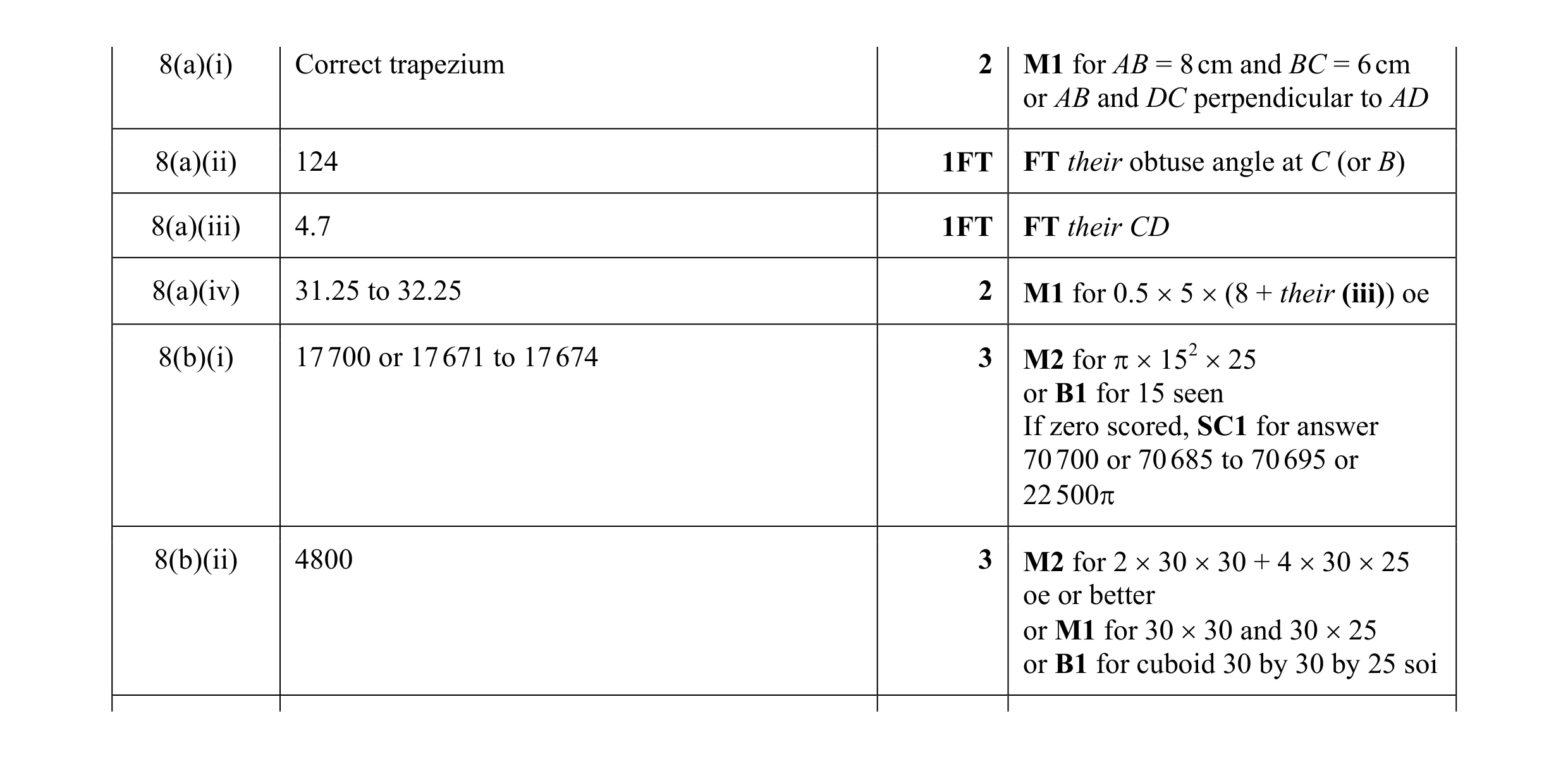 12
12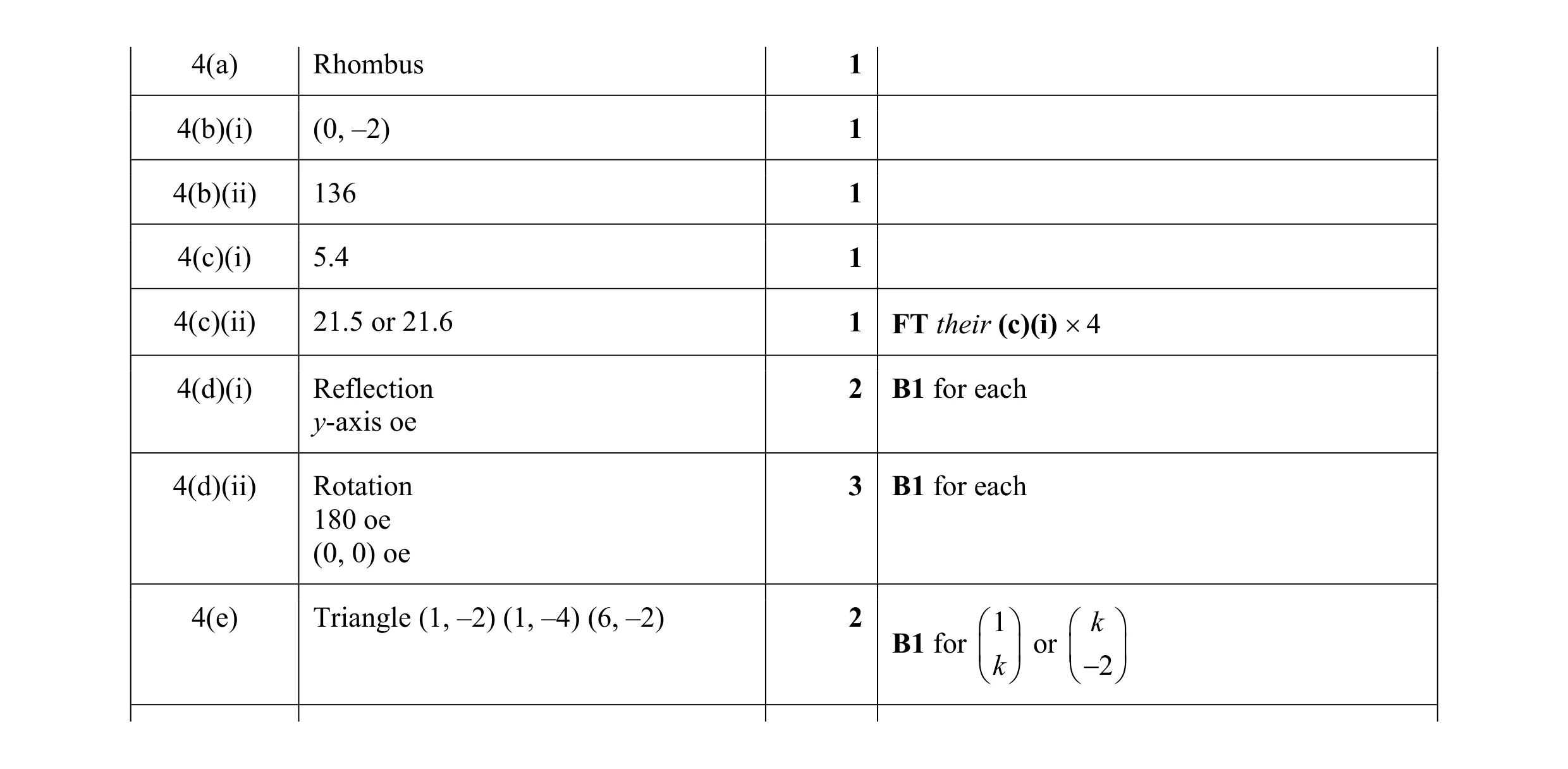 12
12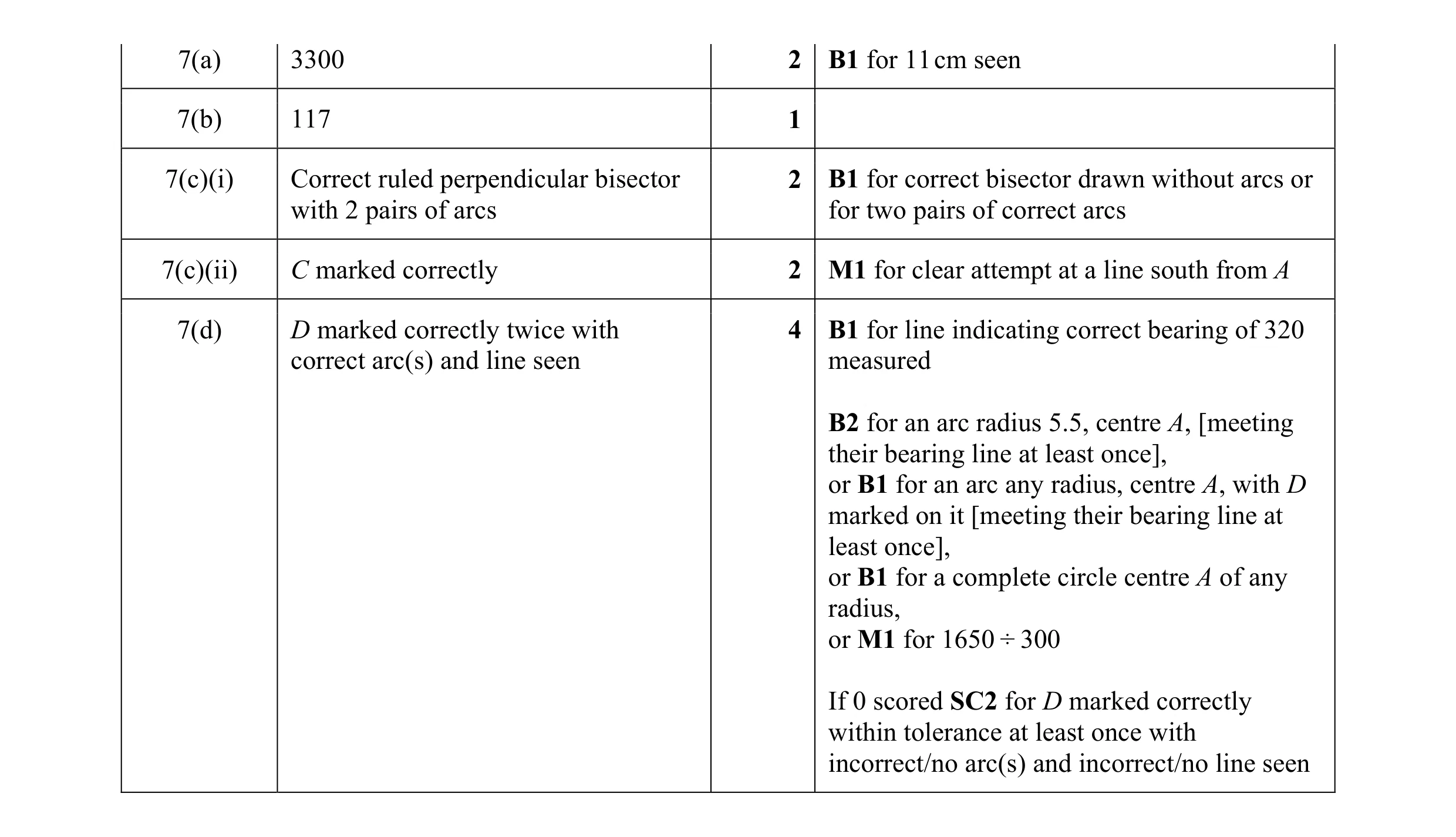 11
11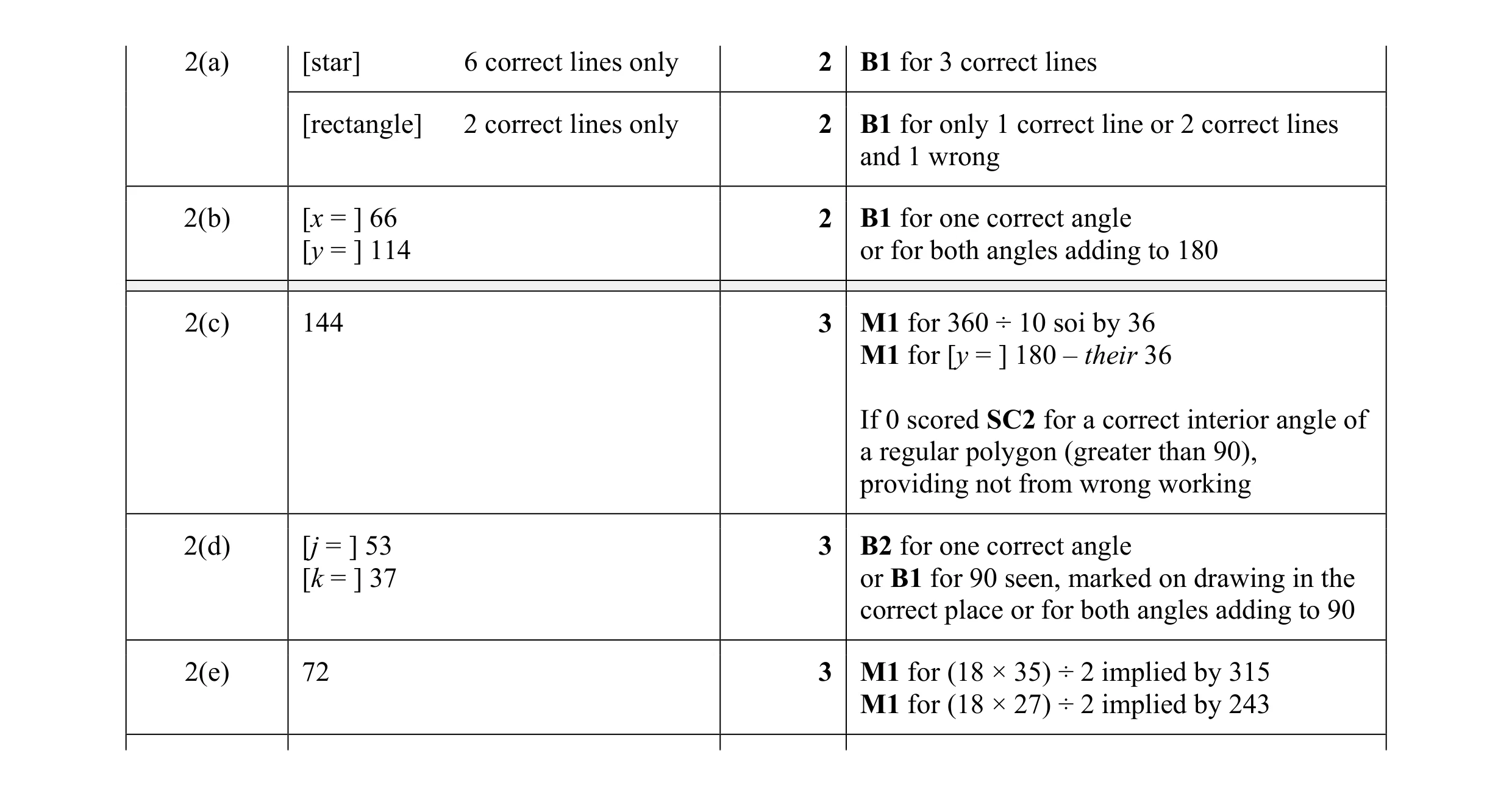 15
15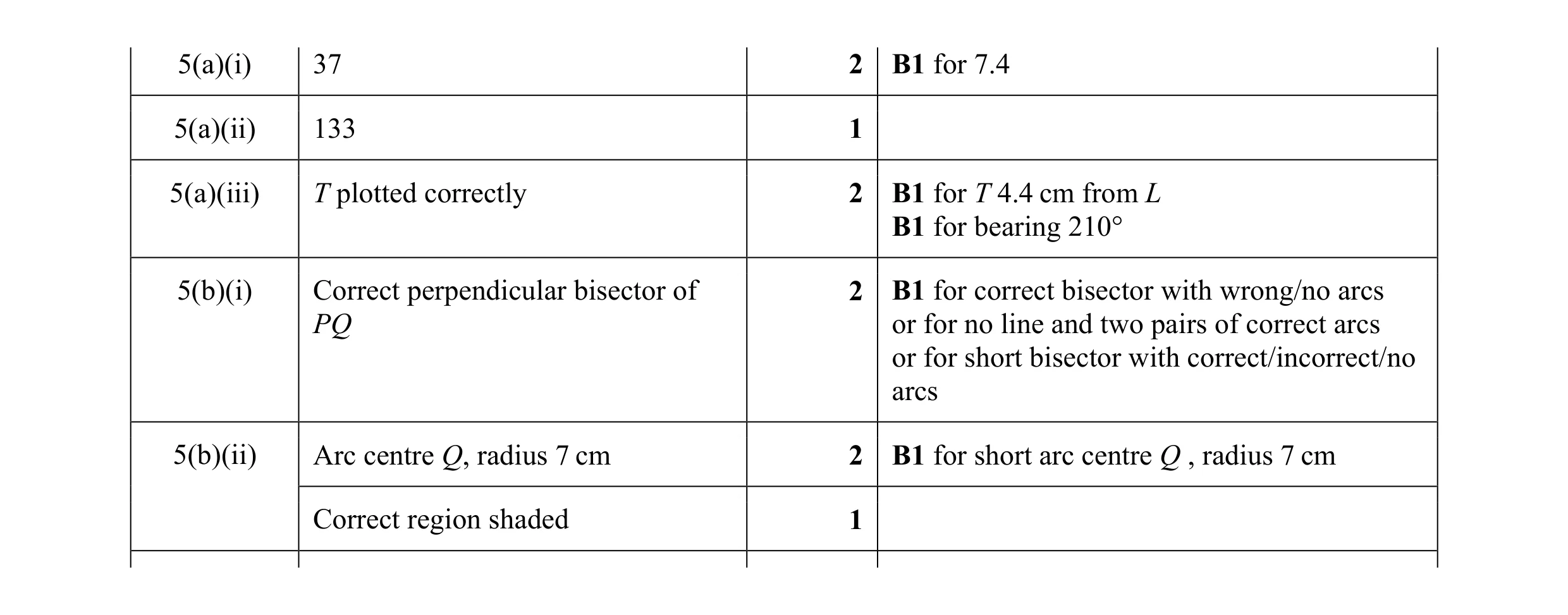 10
10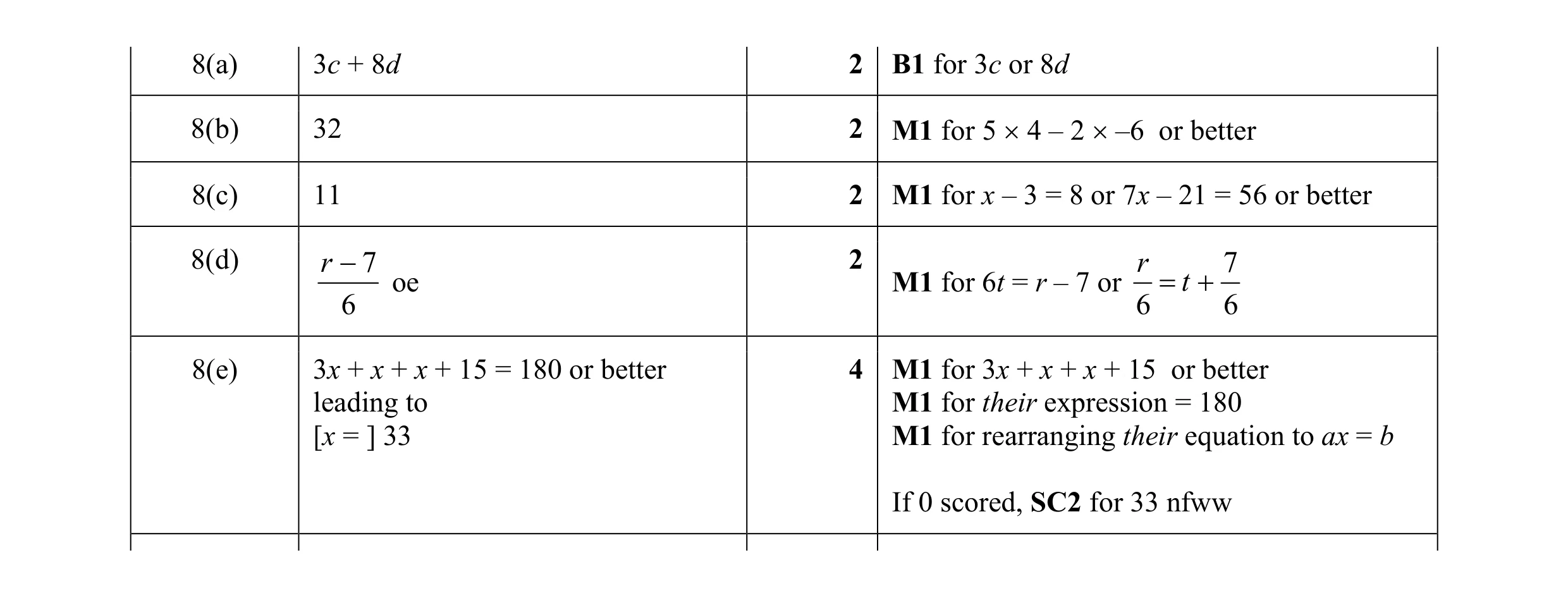 12
12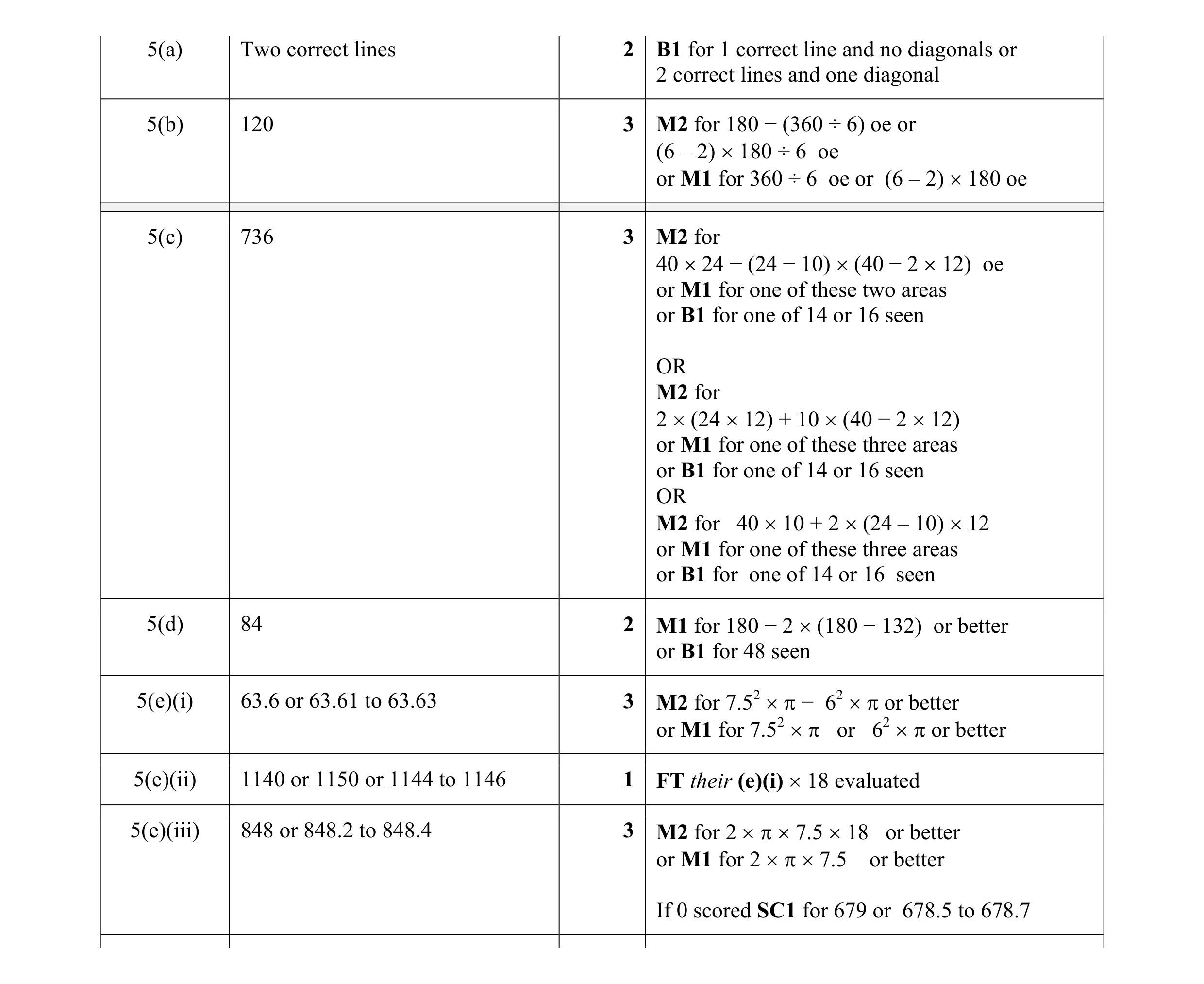 17
17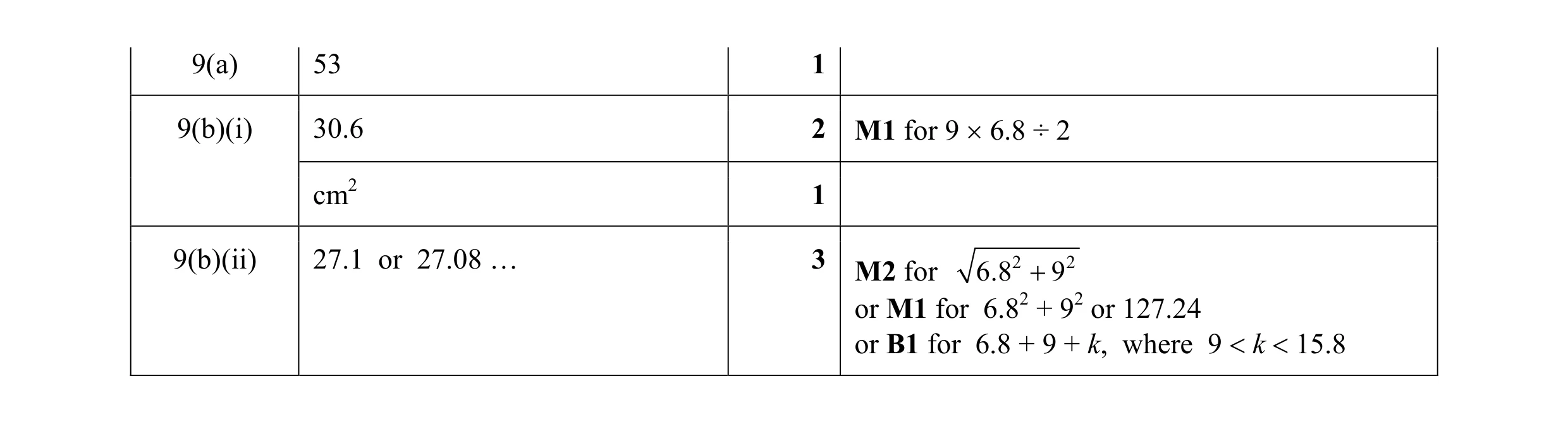 7
7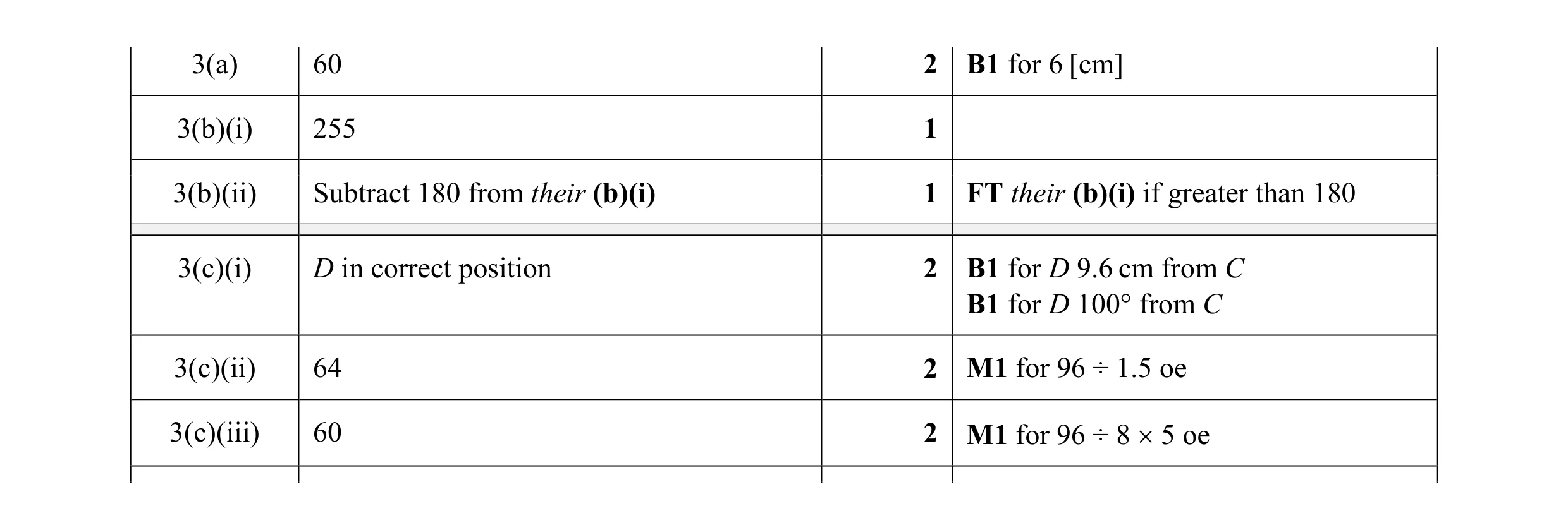 10
10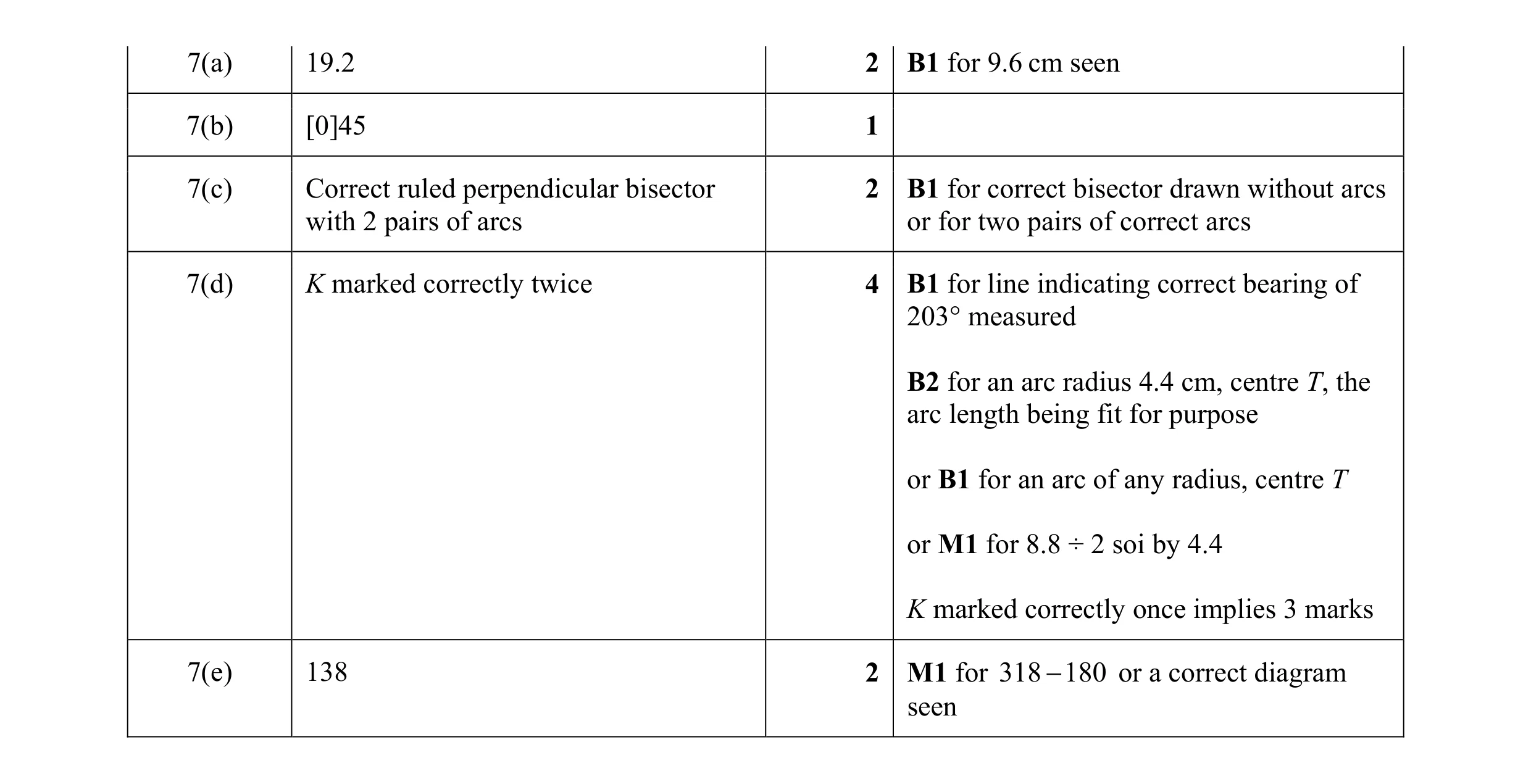 11
11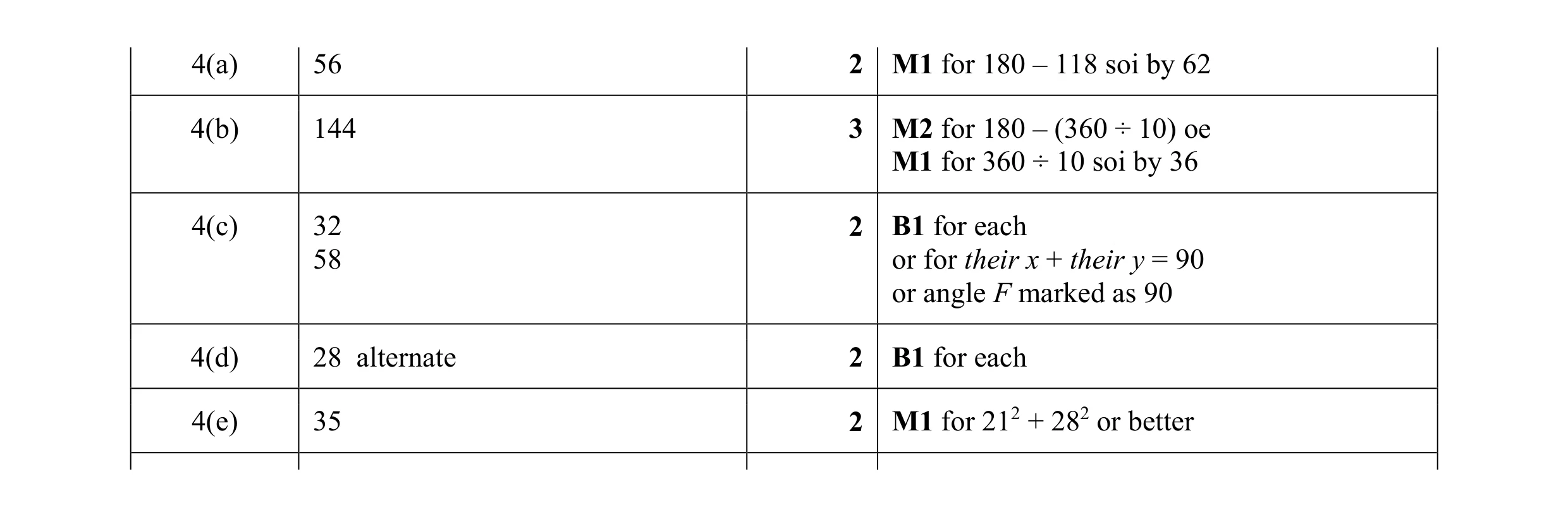 11
11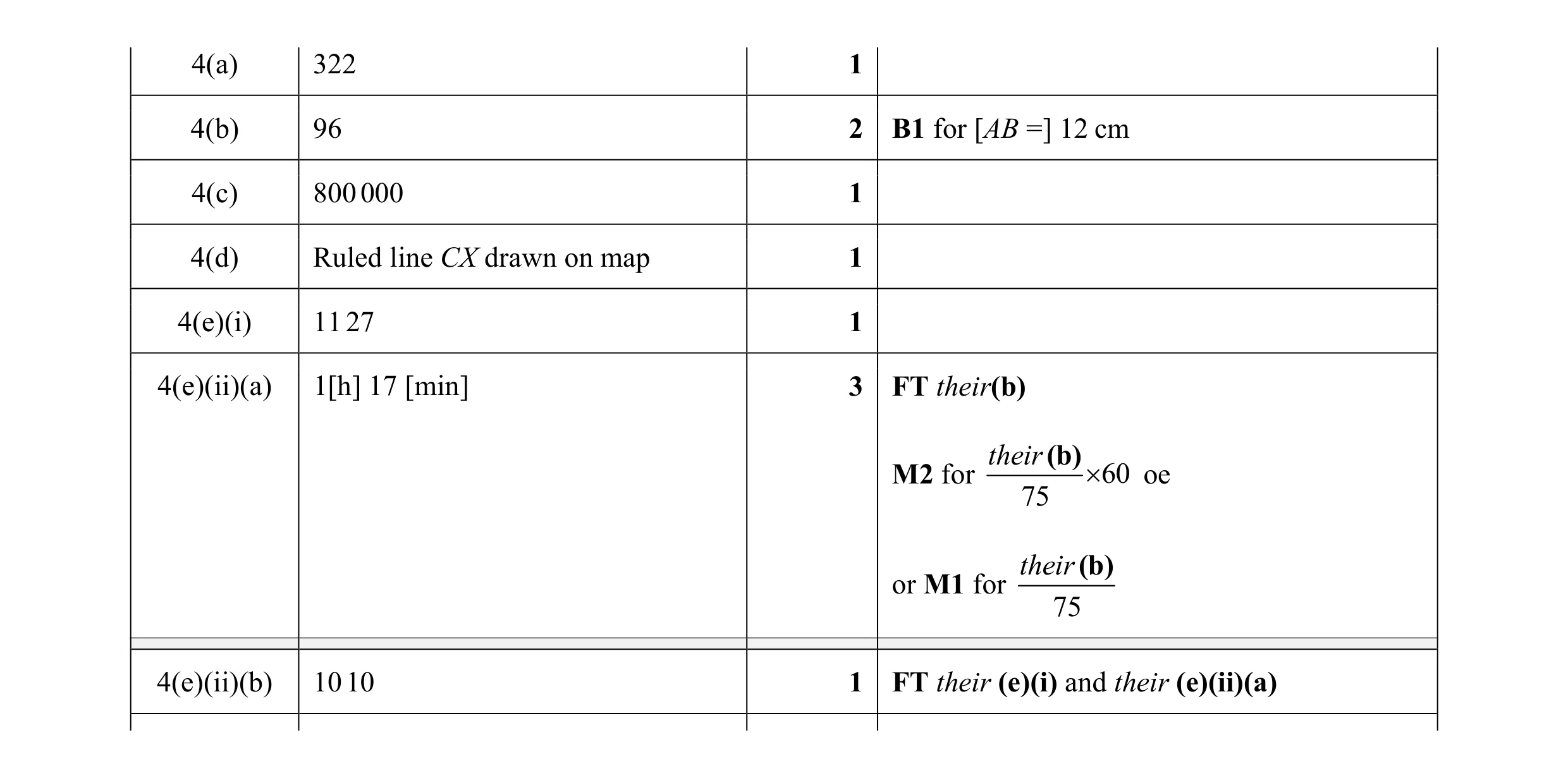 10
10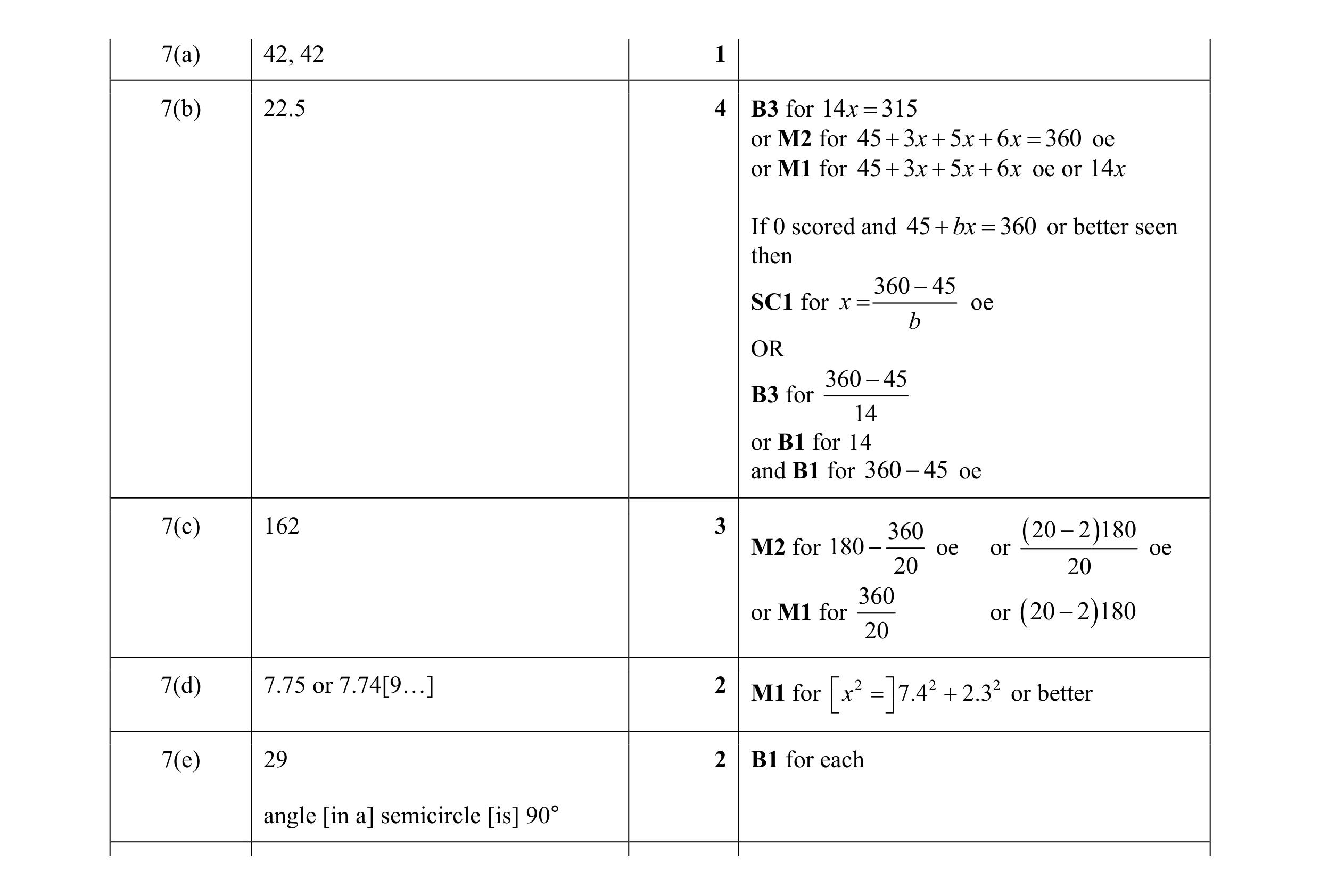 12
12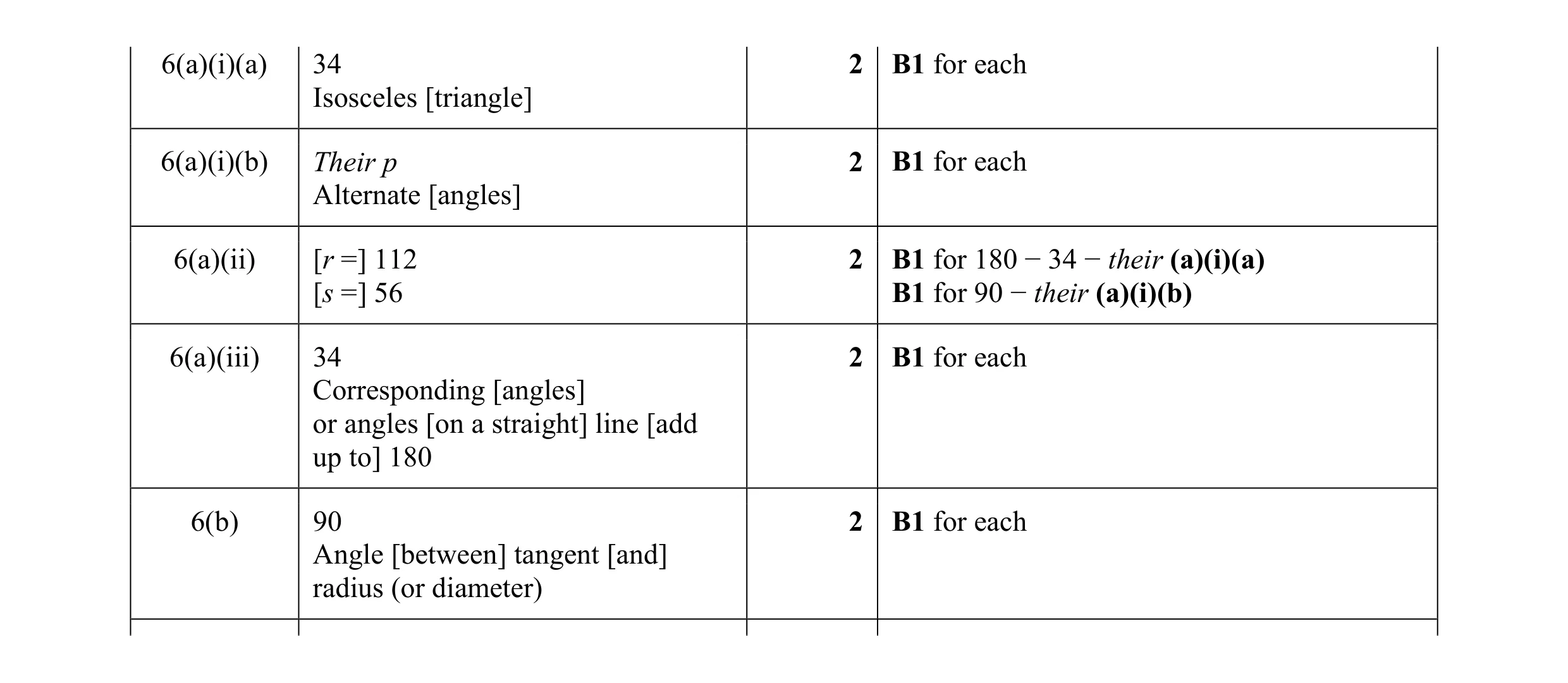 10
10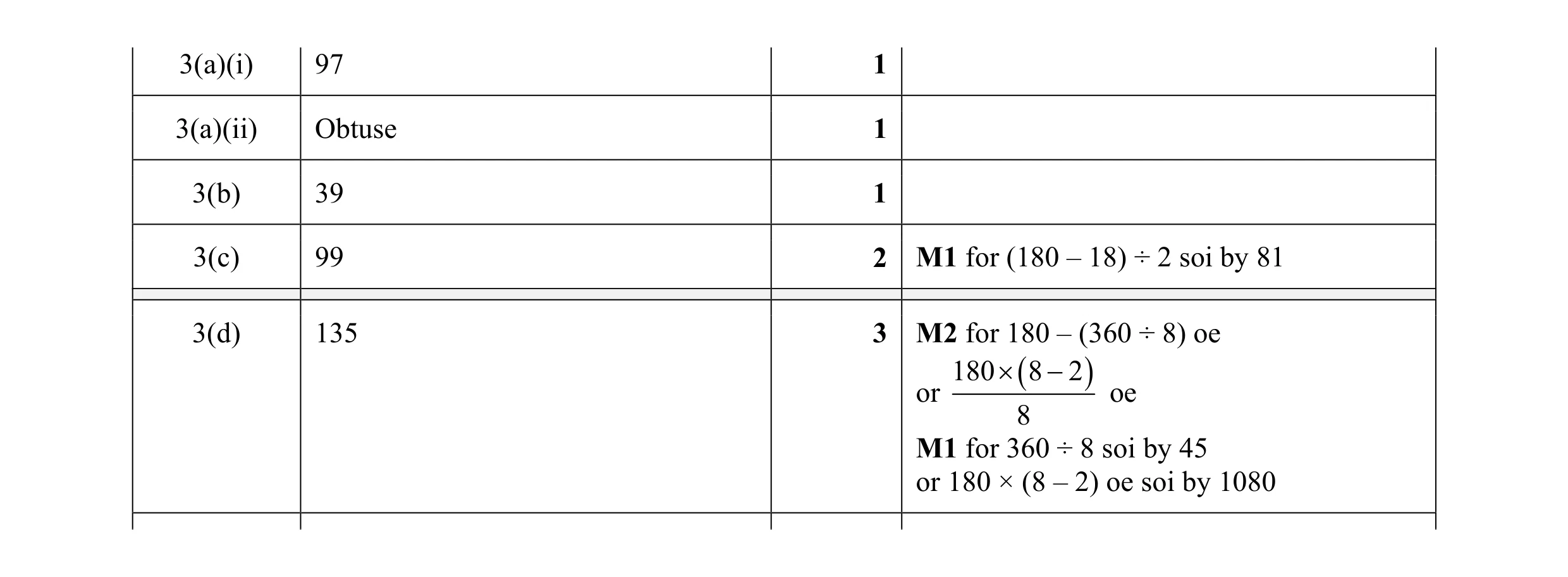 8
8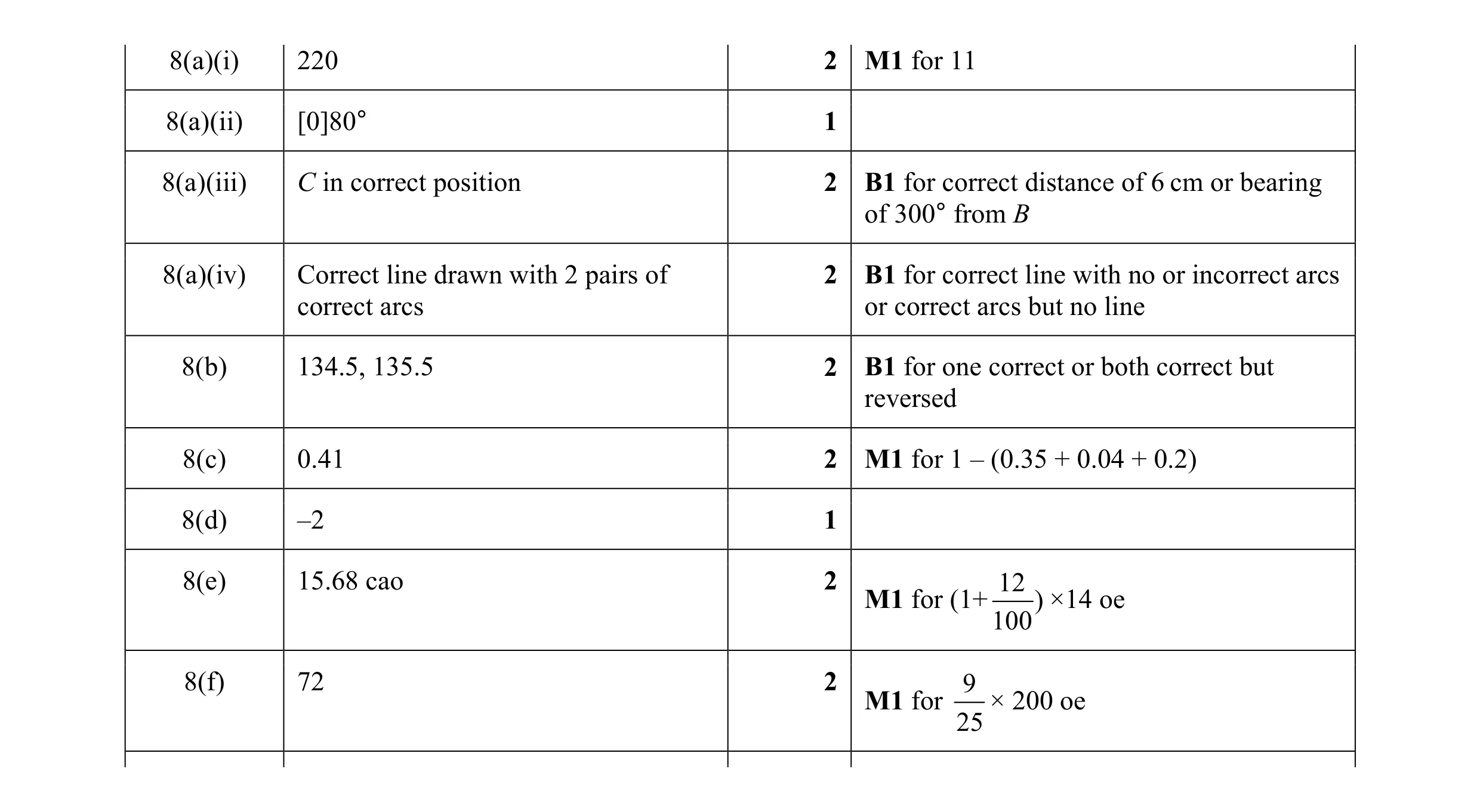 16
16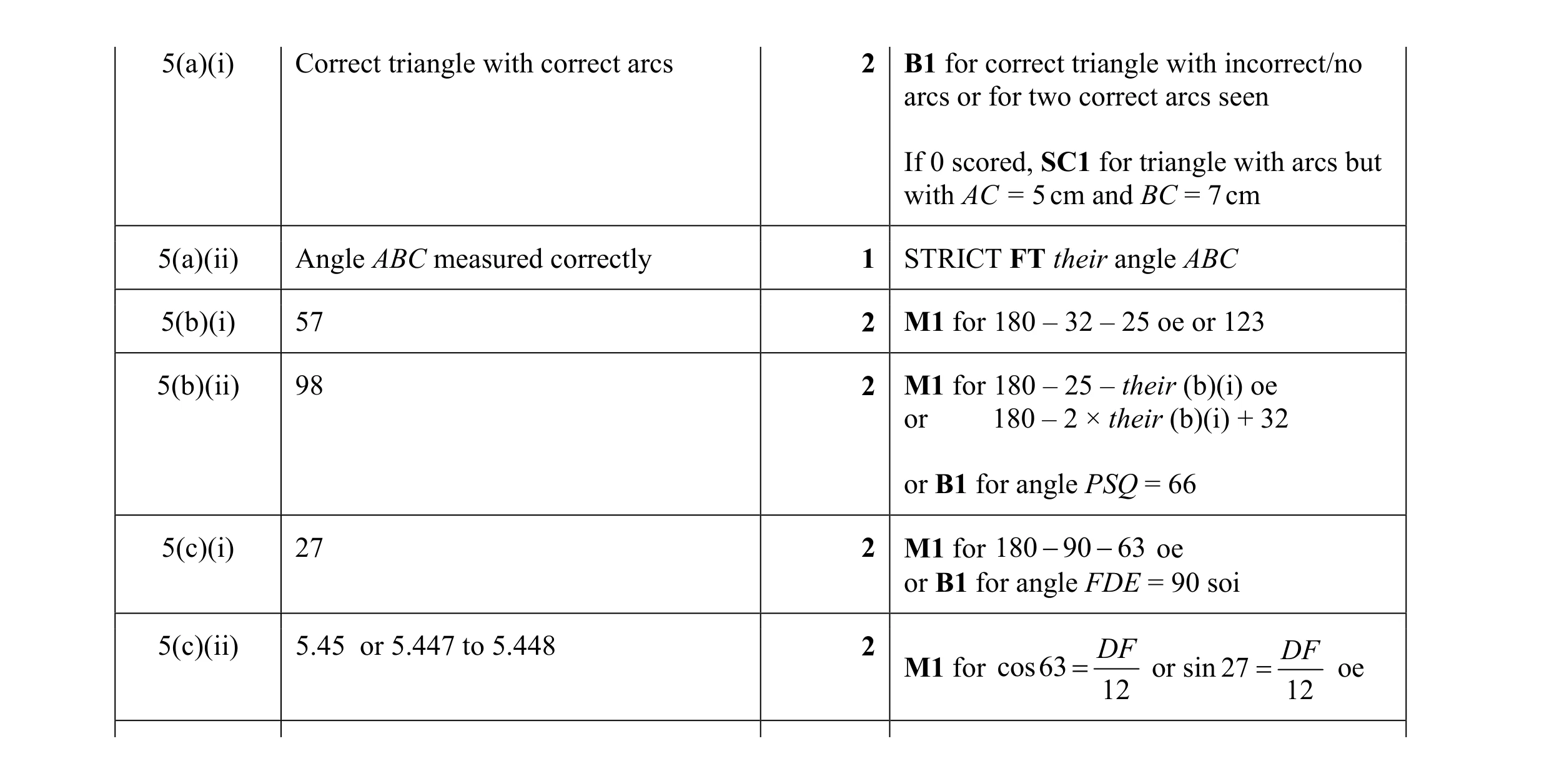 11
11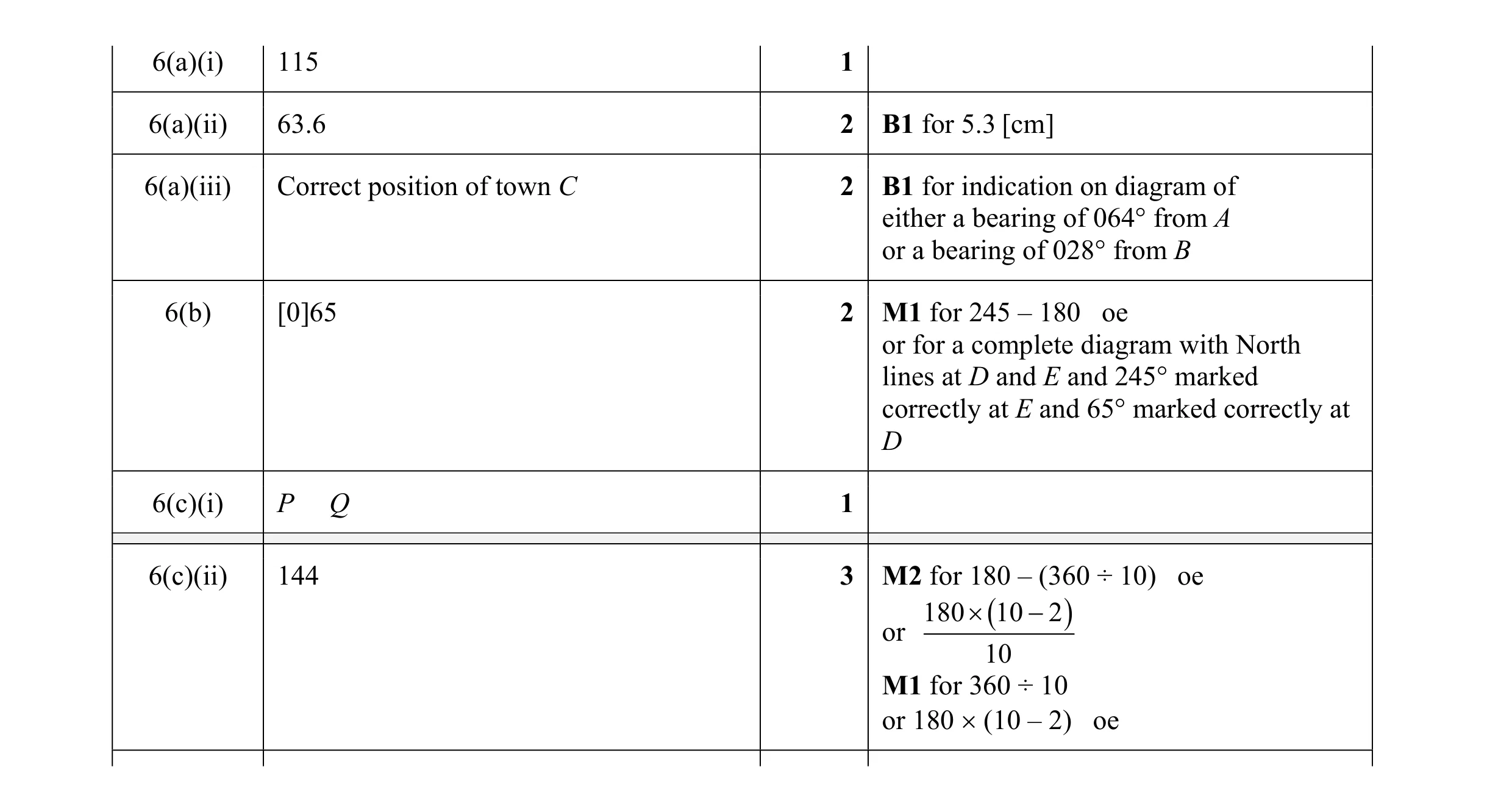 11
11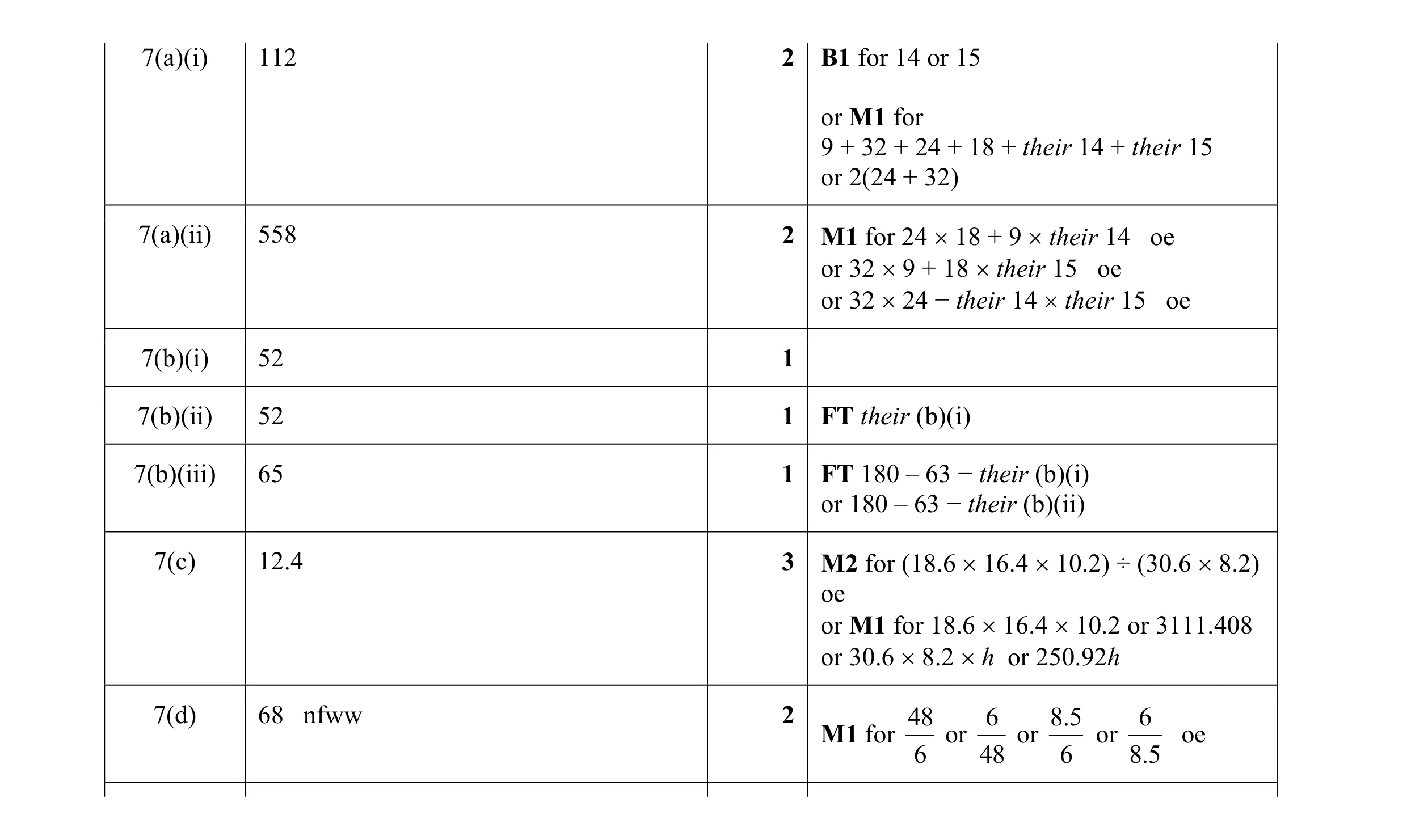 12
12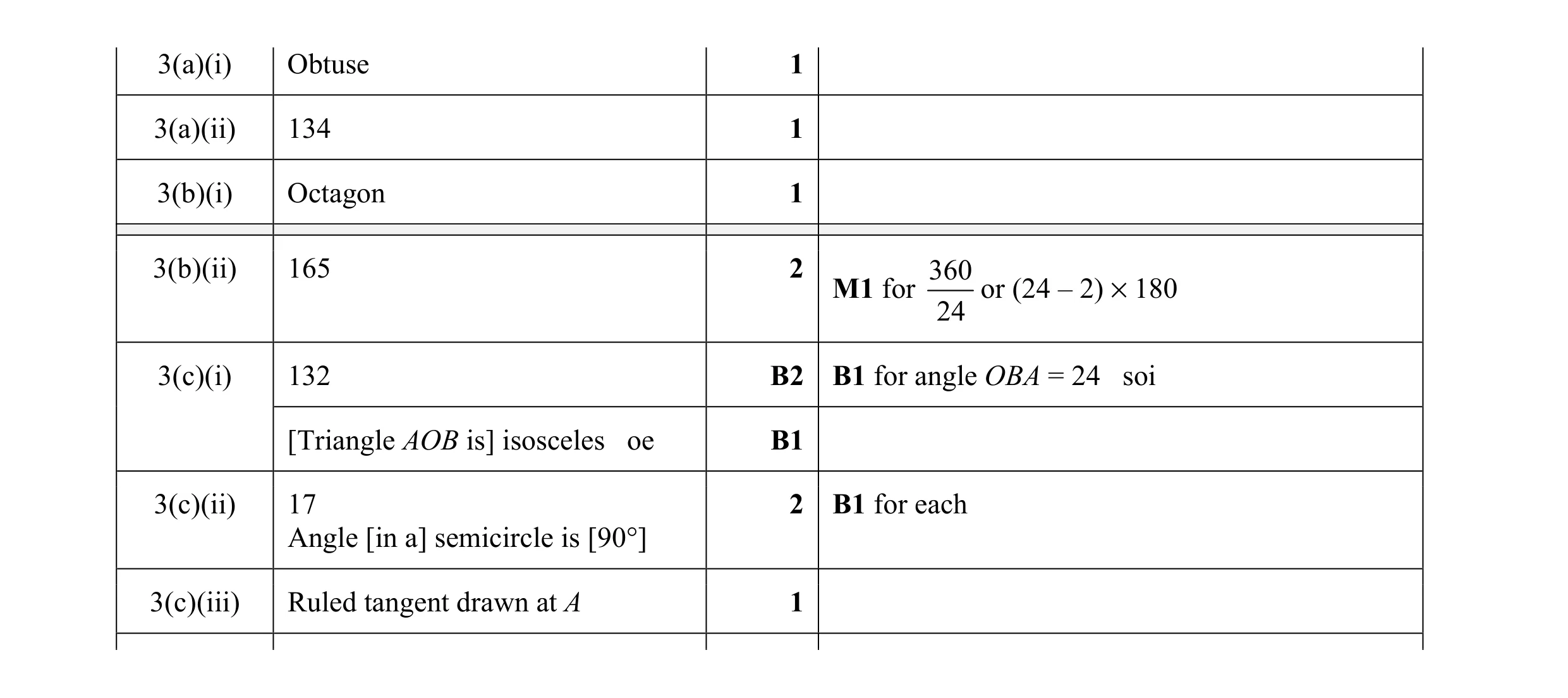 11
11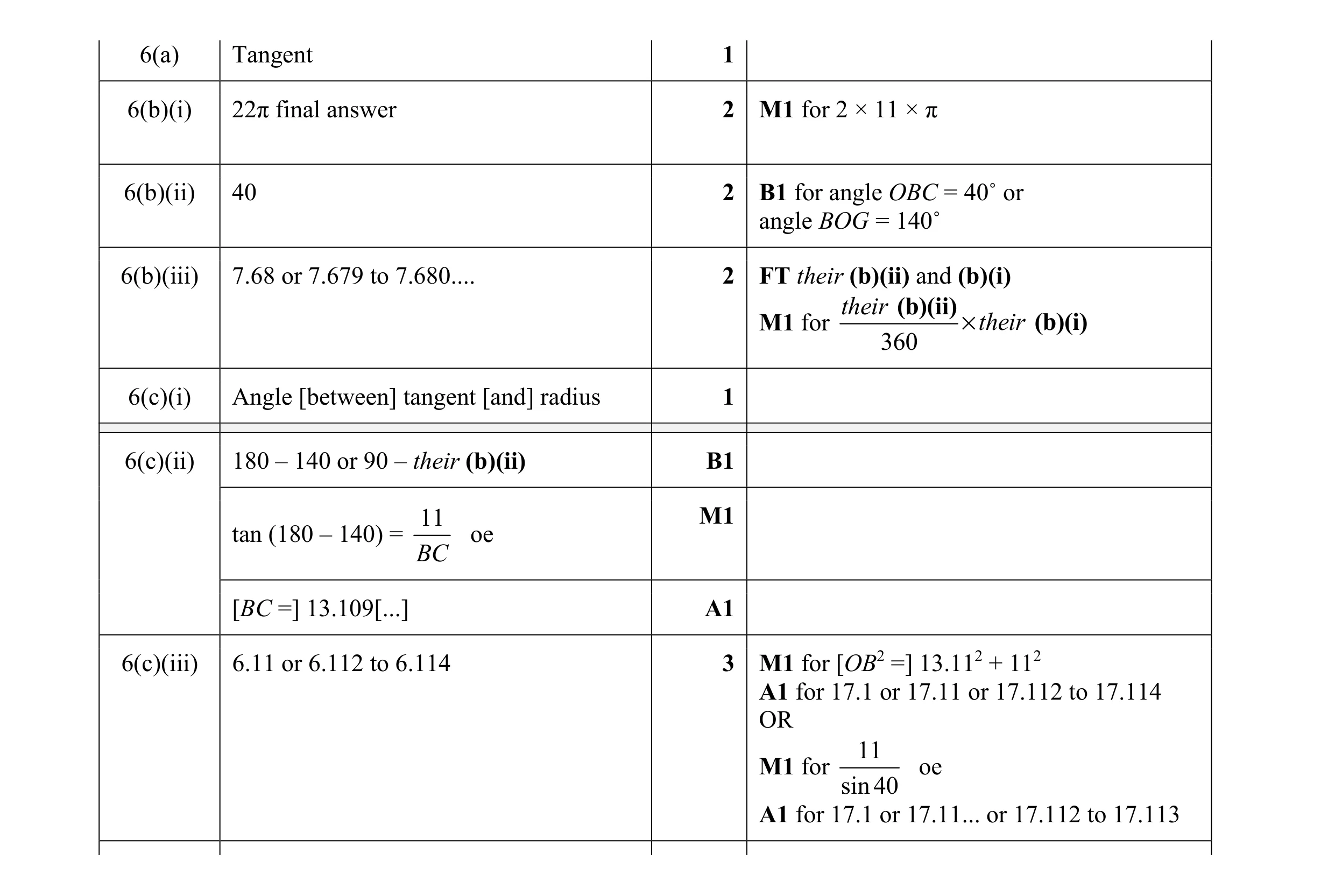 14
14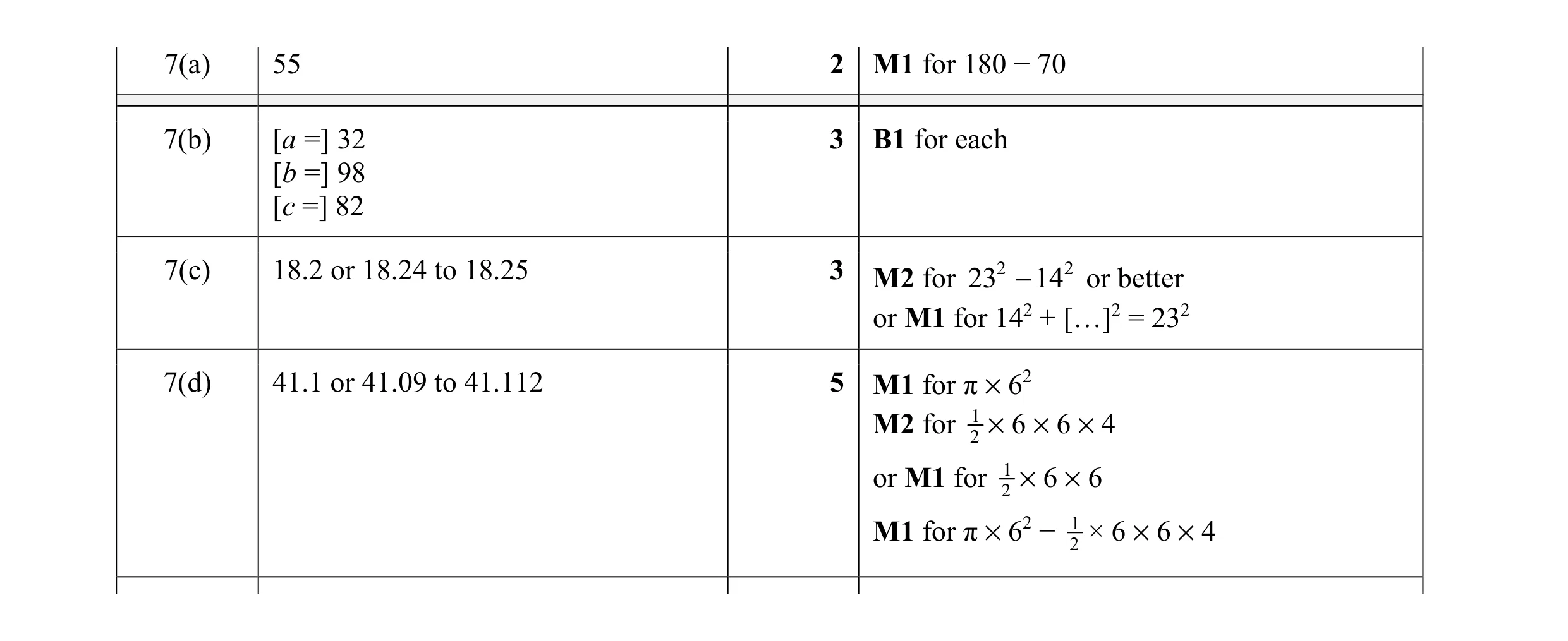 13
13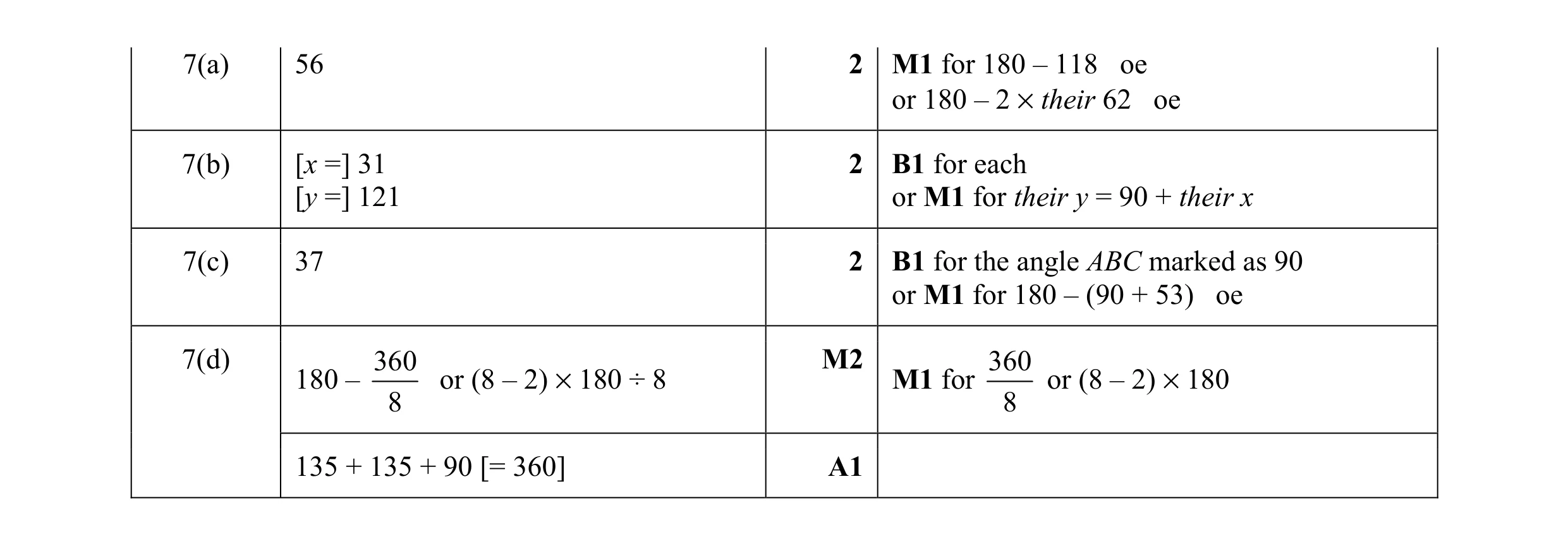 9
9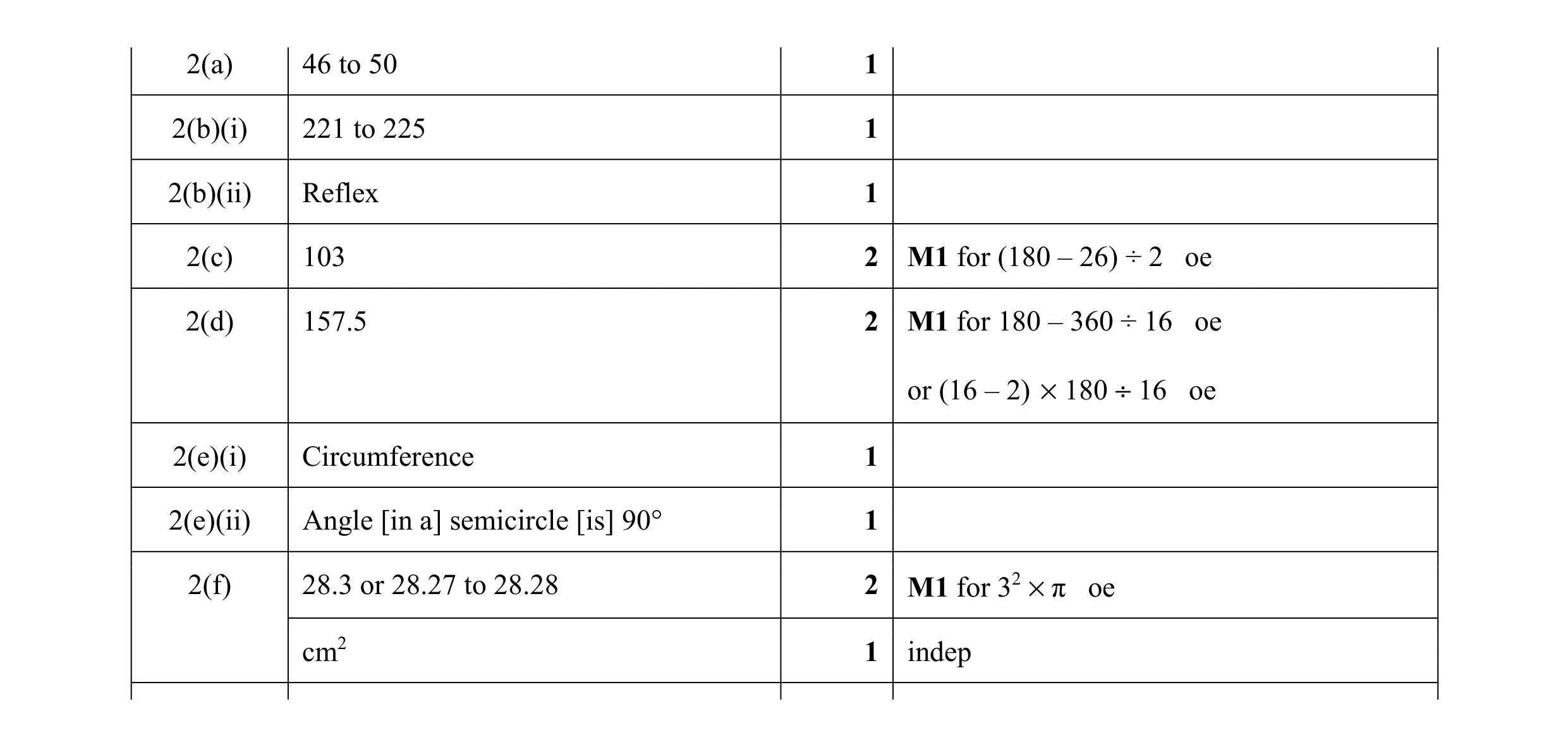 12
12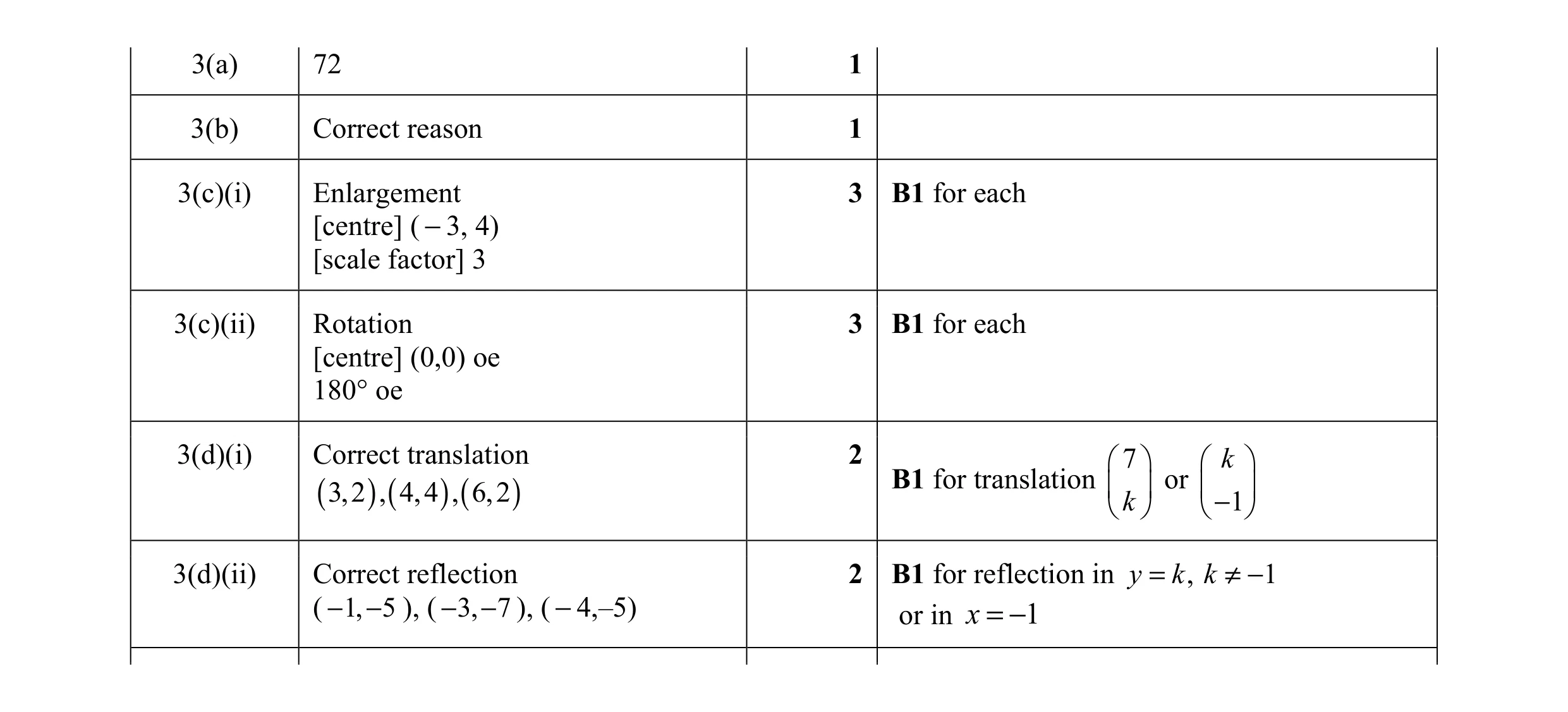 12
12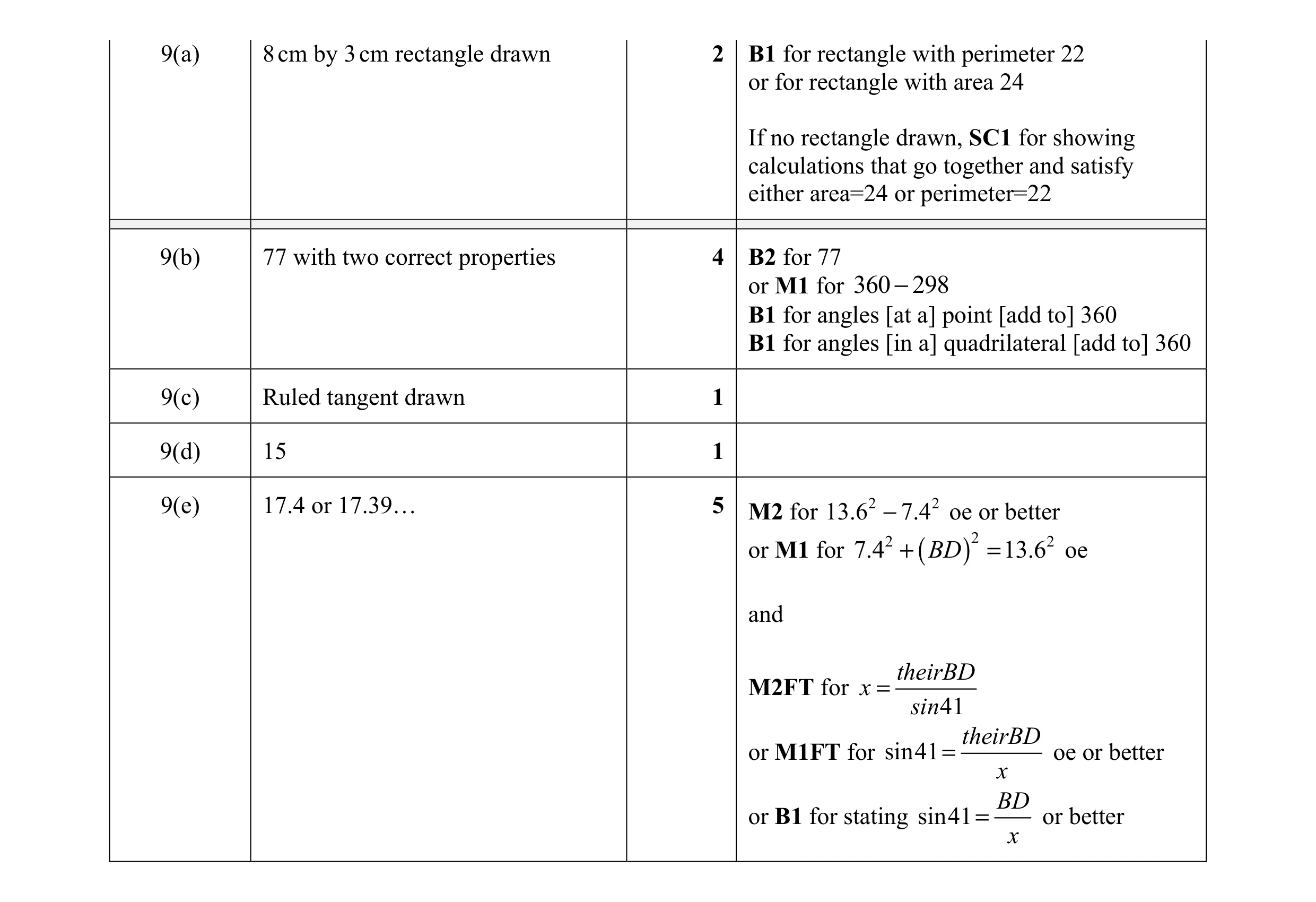 13
13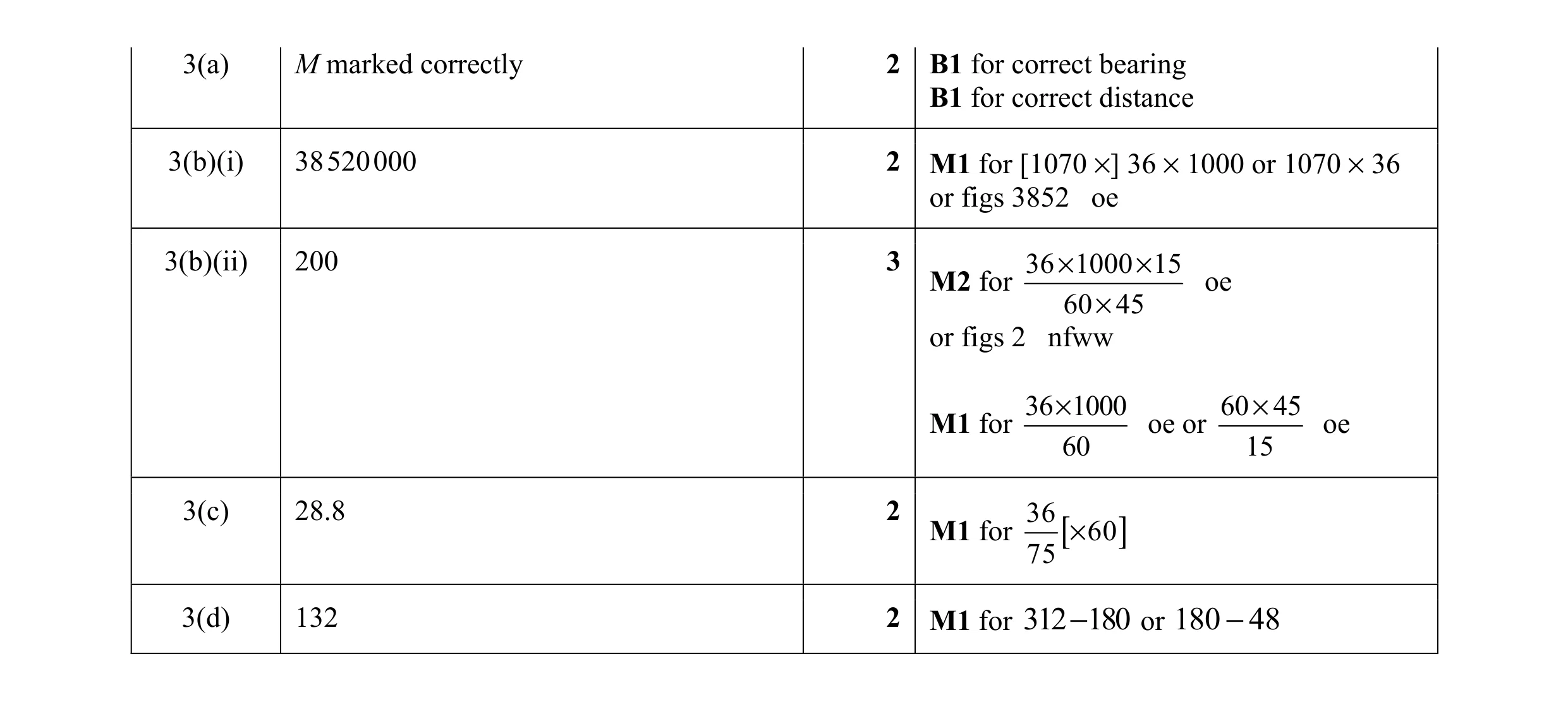 11
11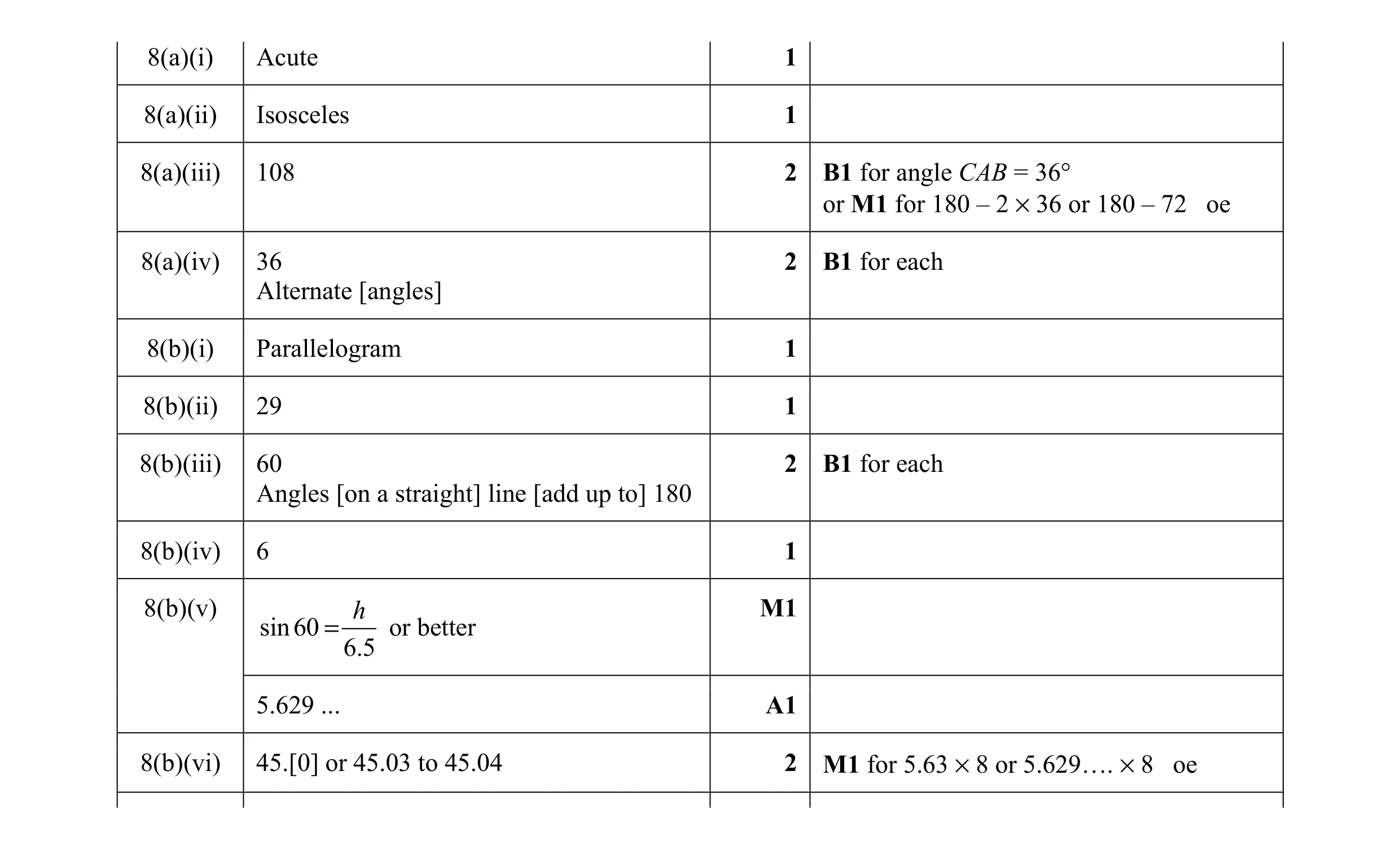 15
15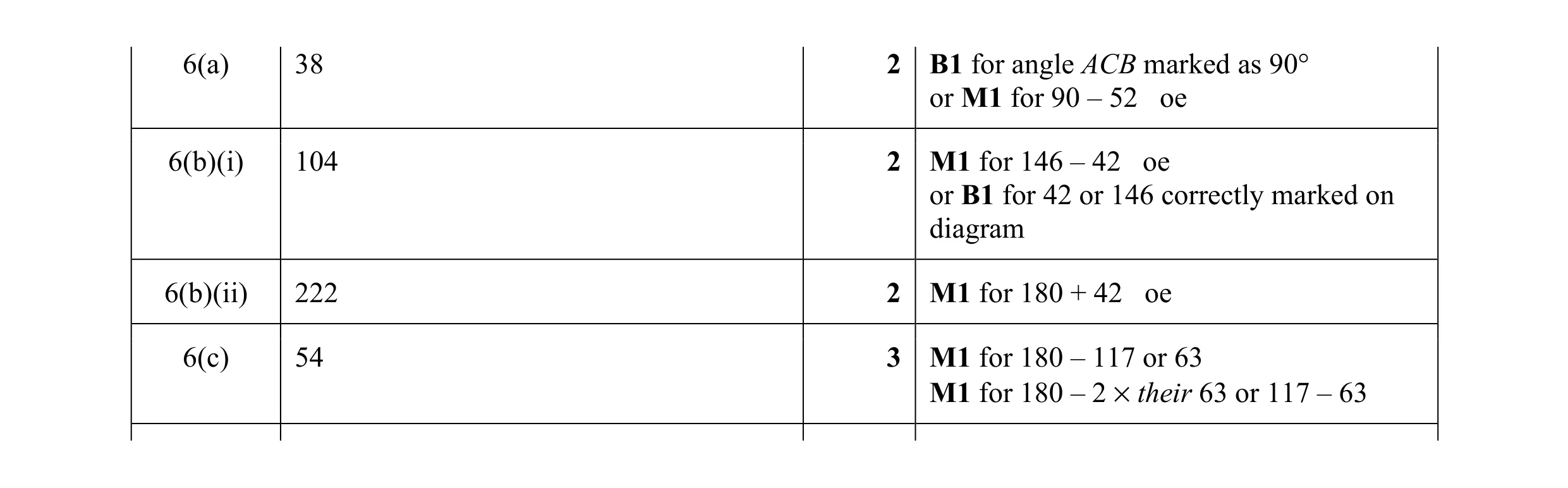 9
9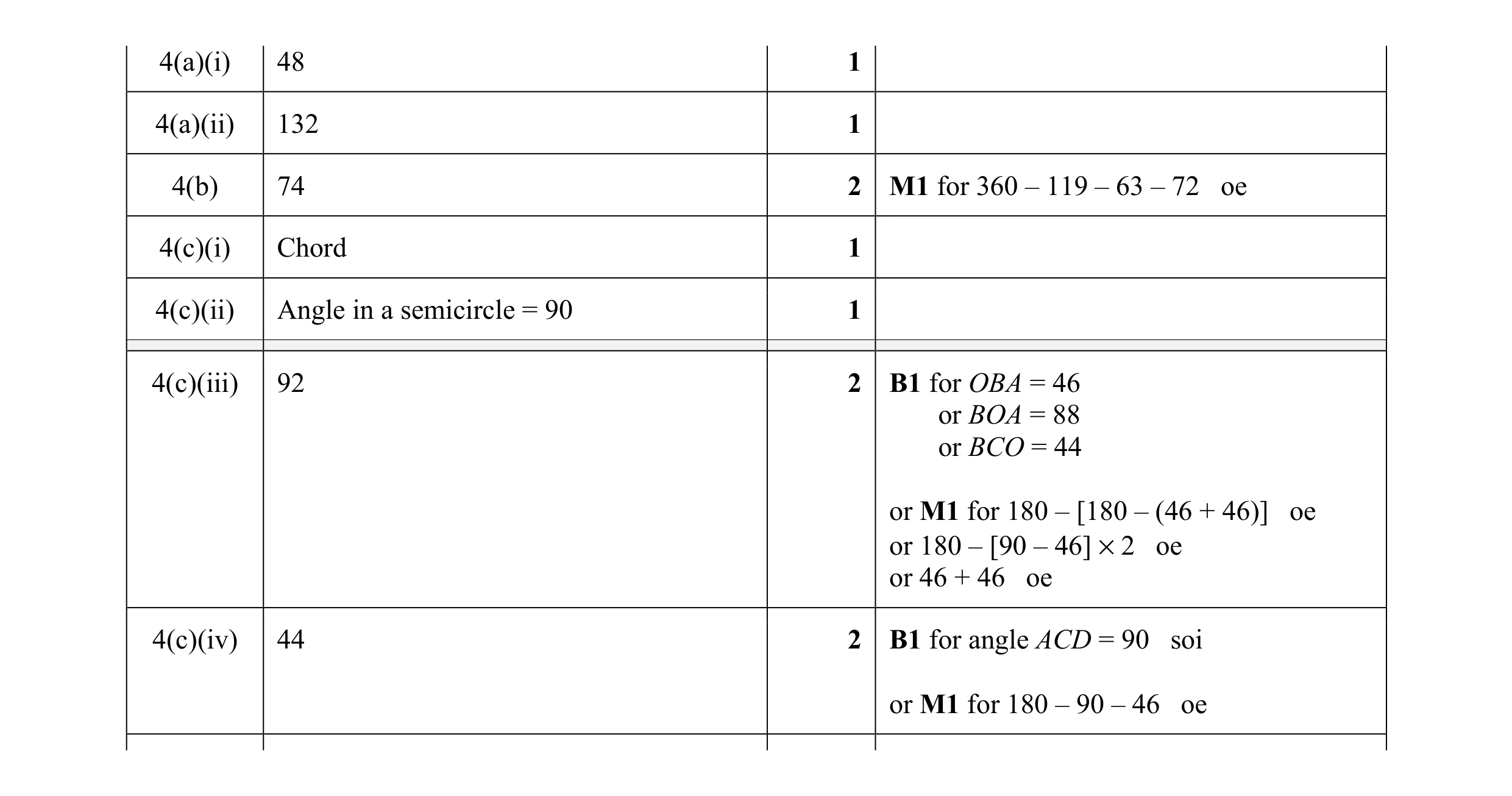 10
10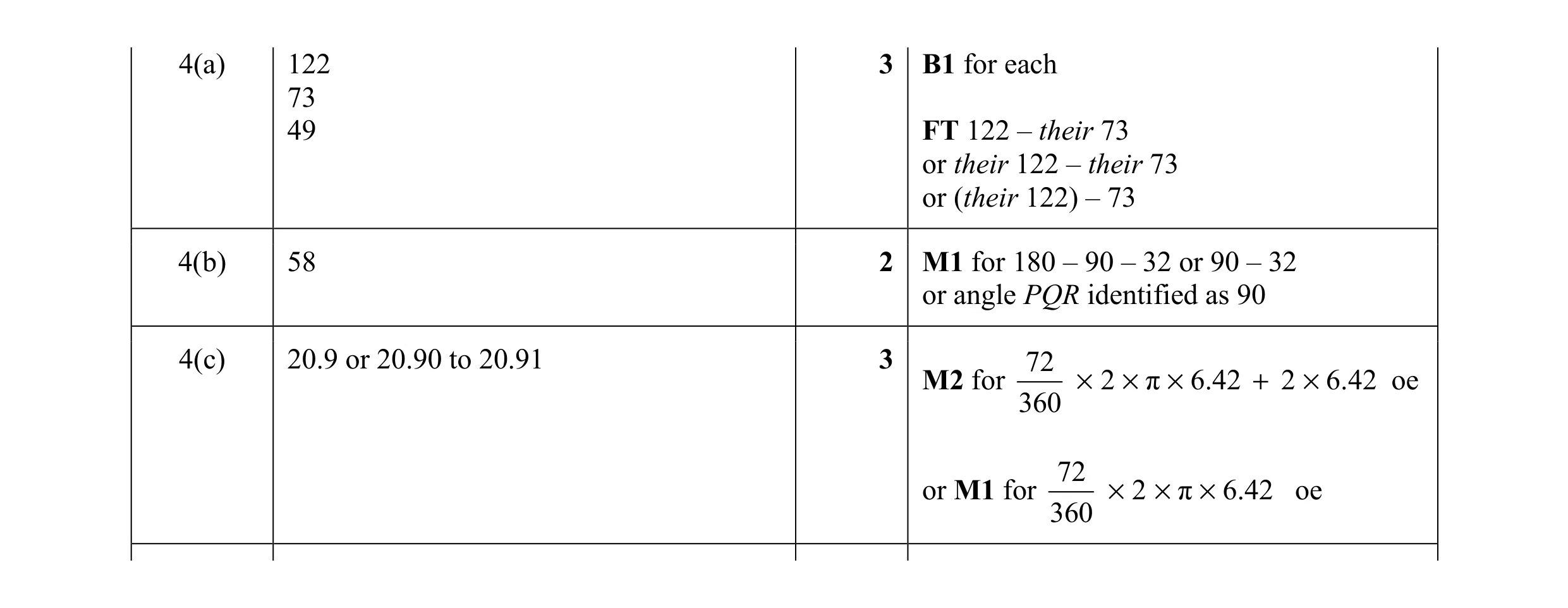 8
8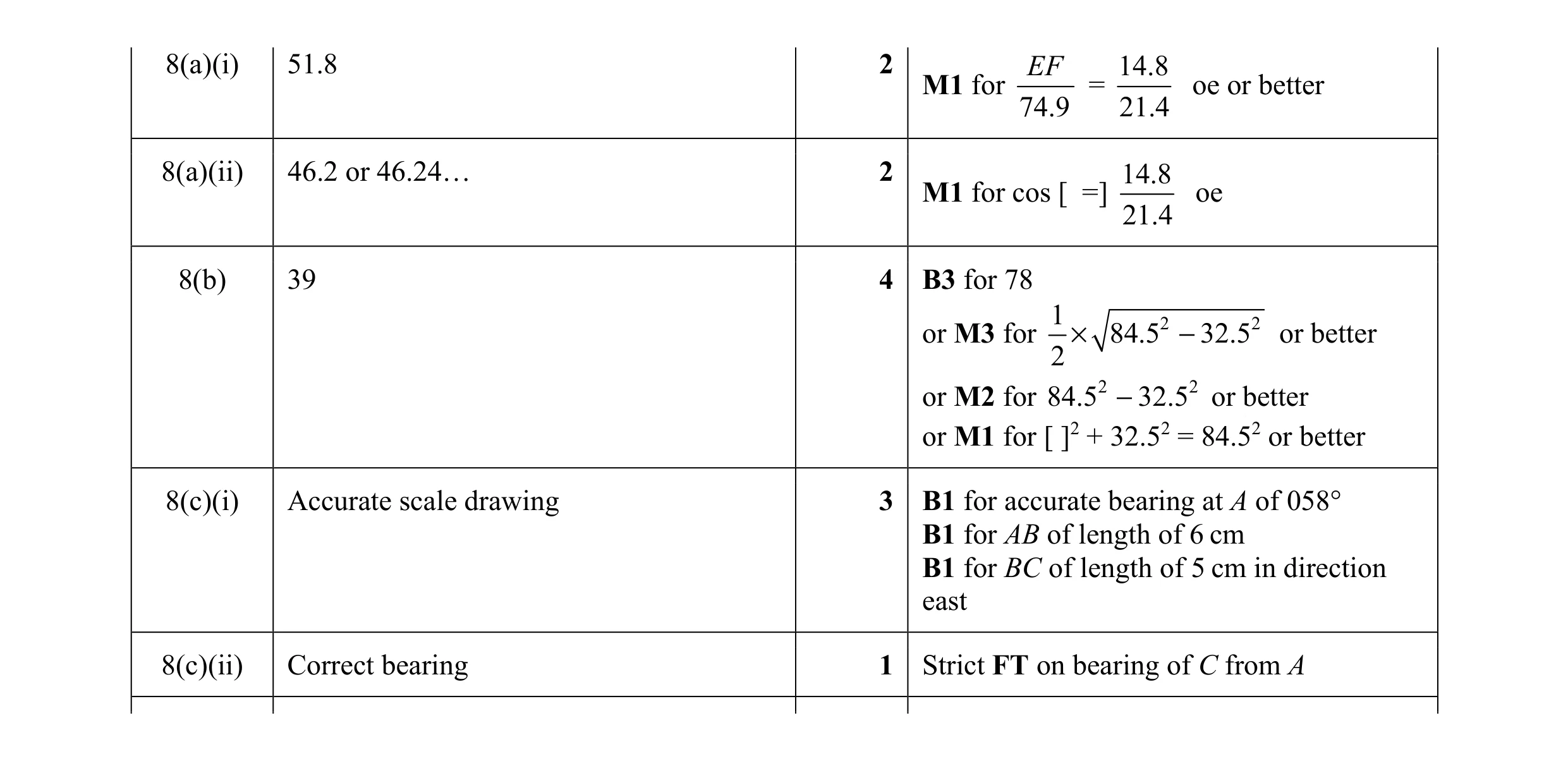 12
12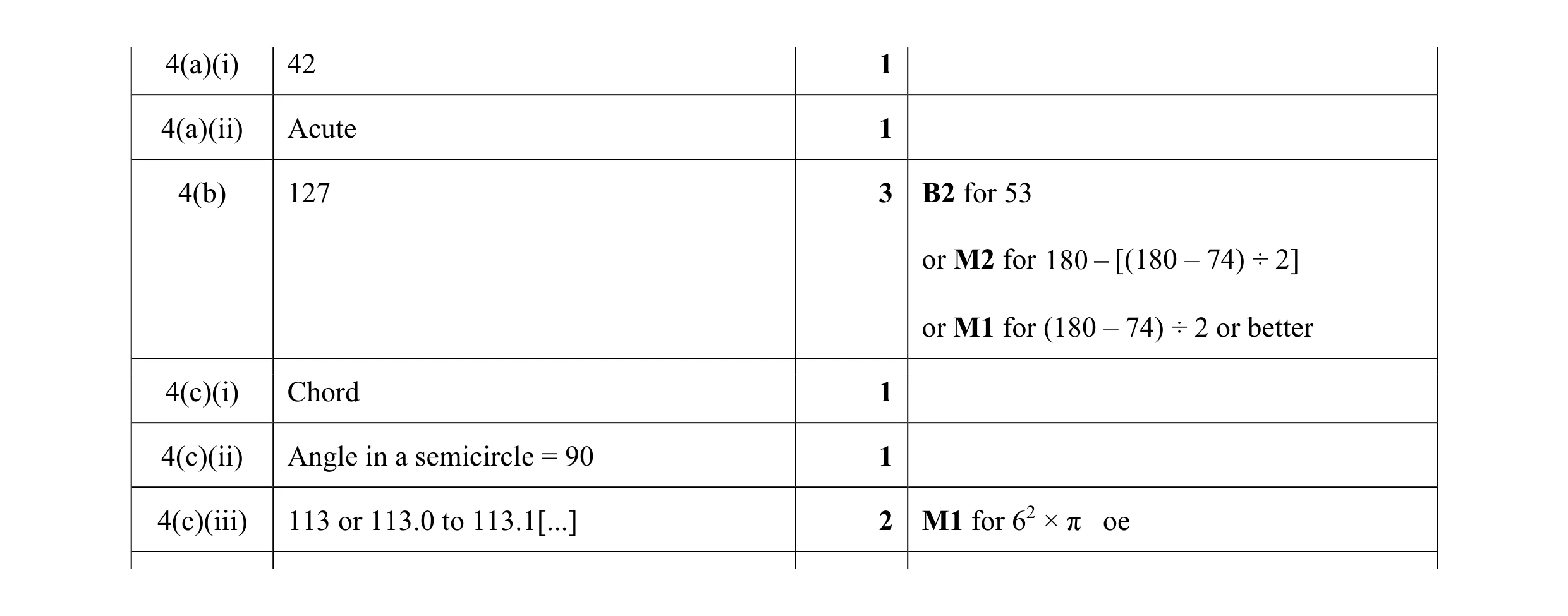 9
9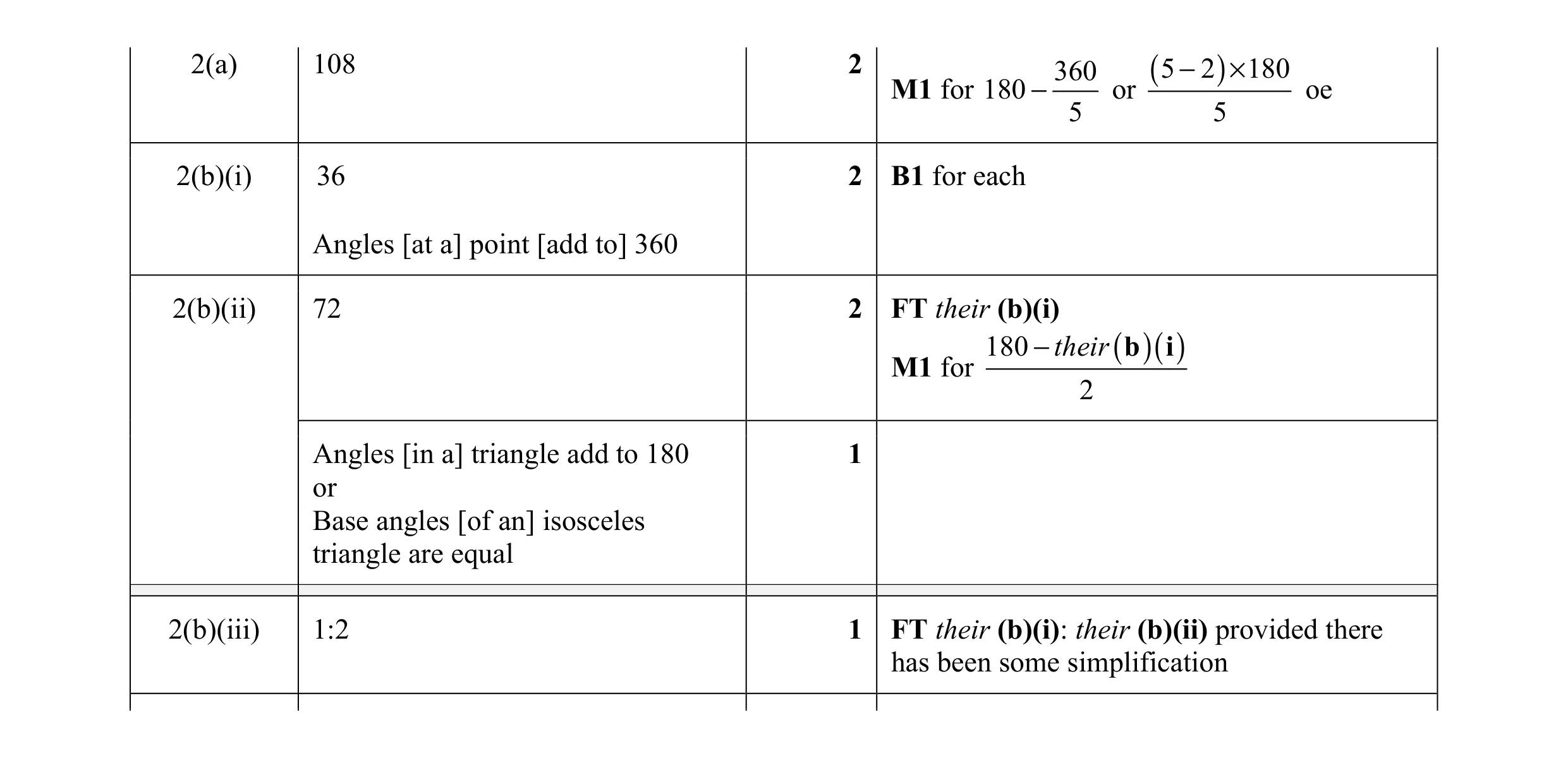 8
8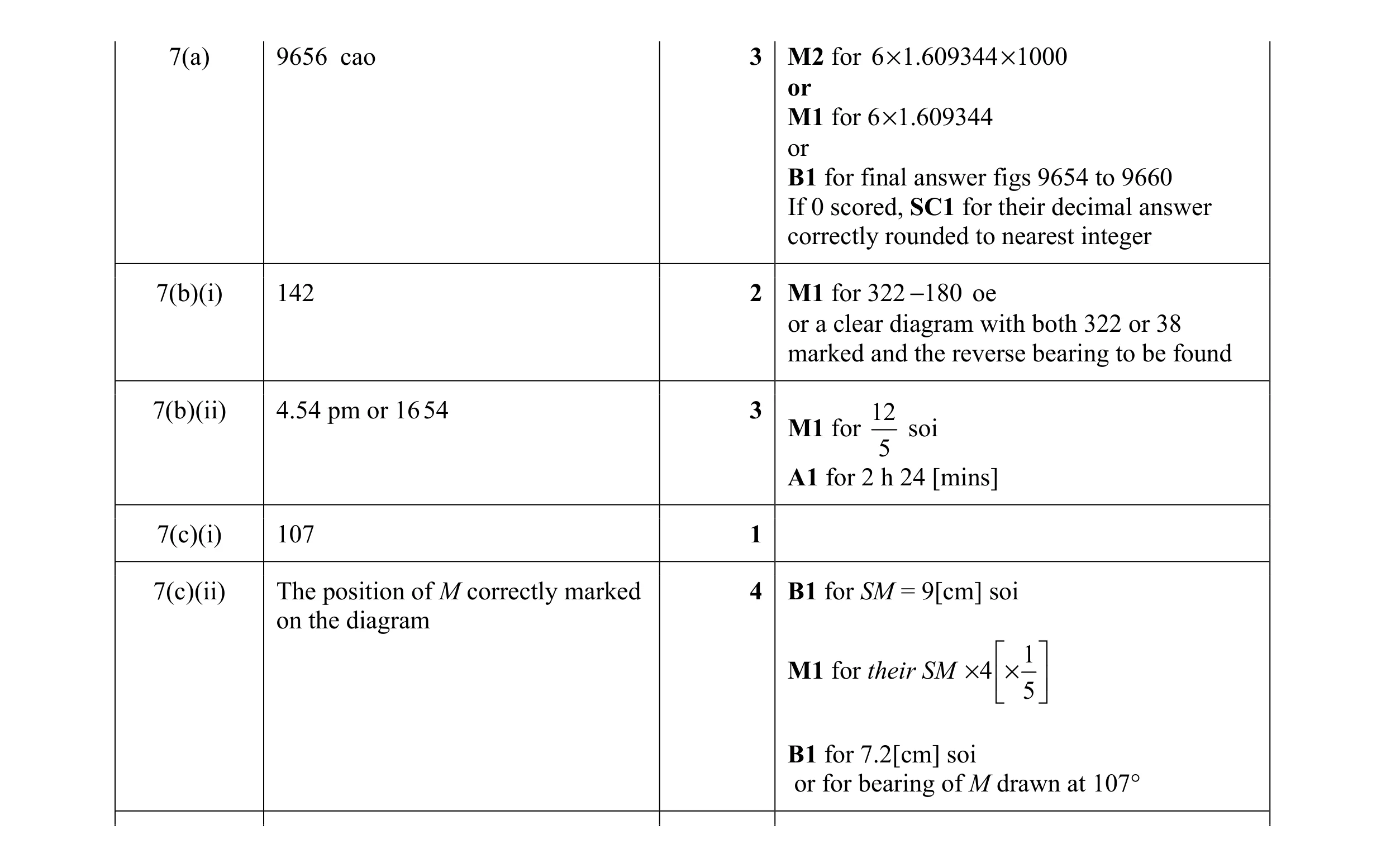 13
13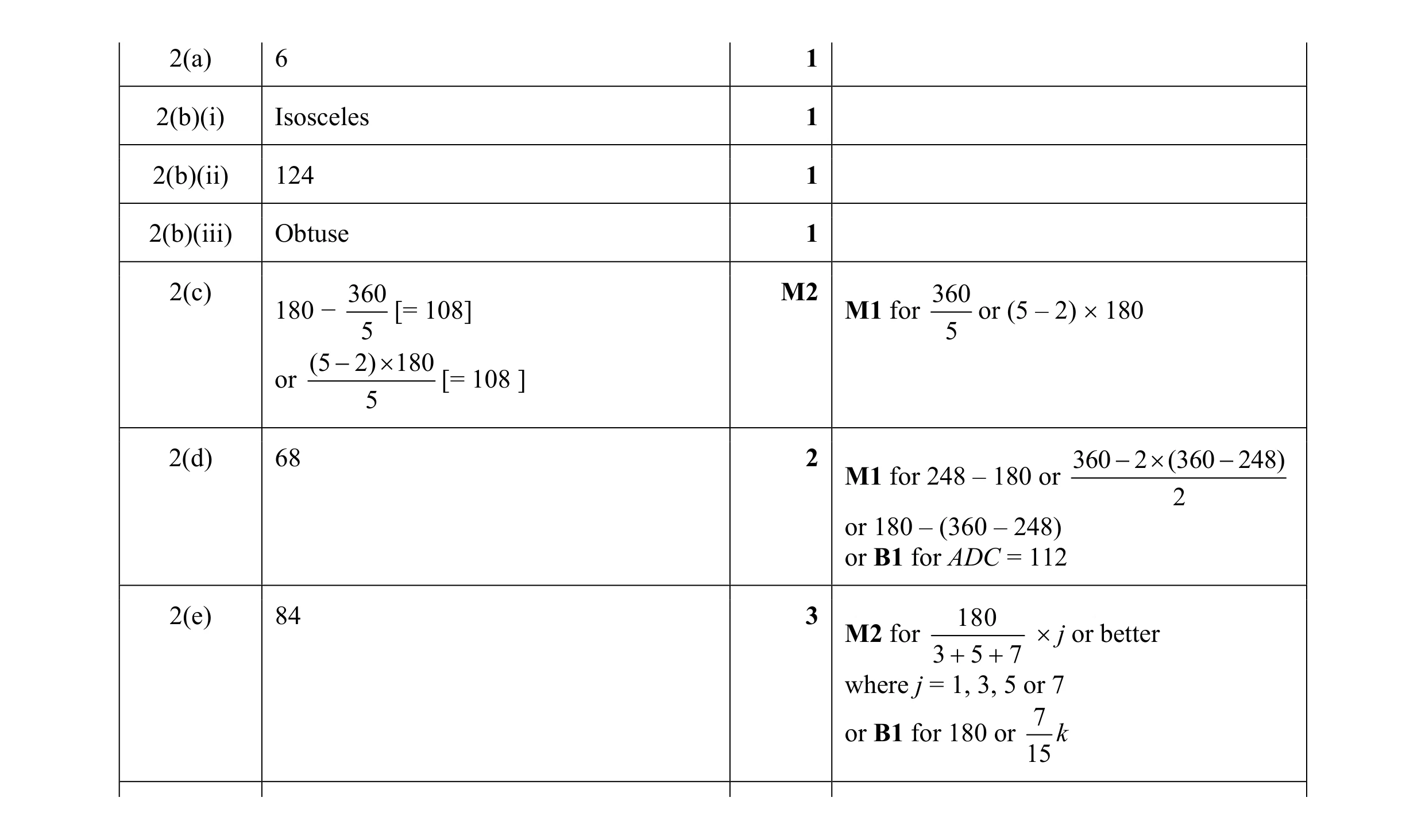 11
11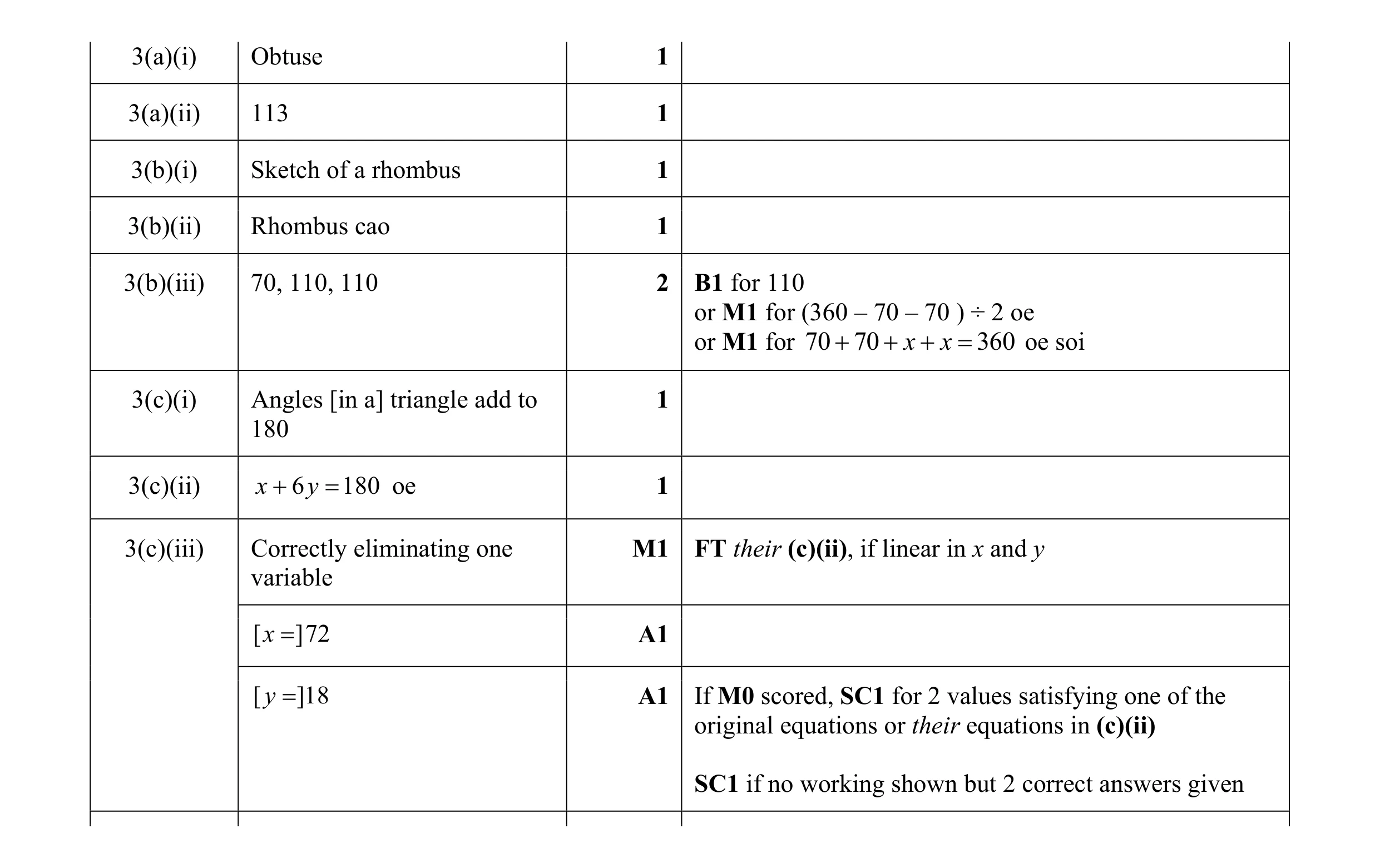 11
11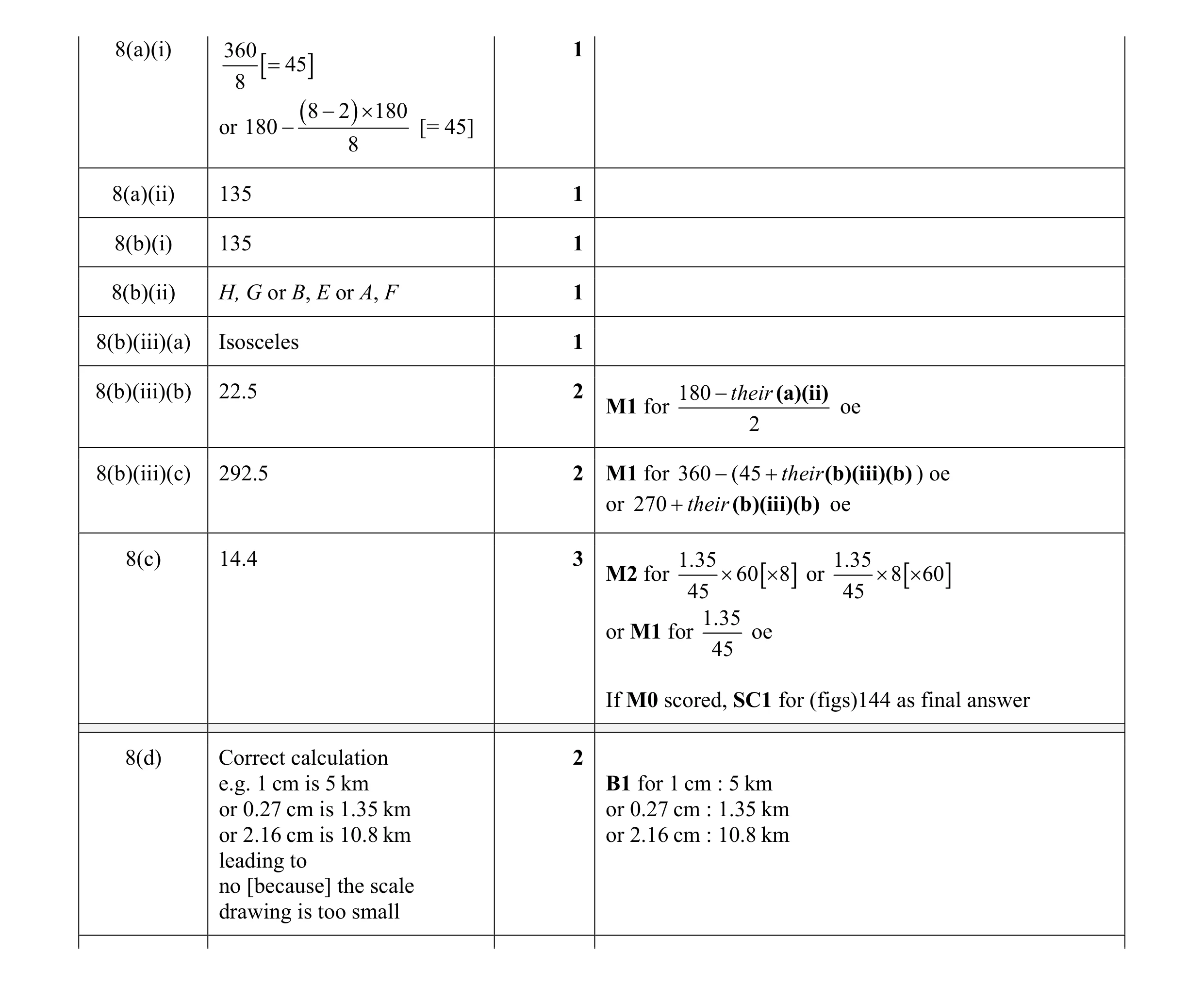 14
14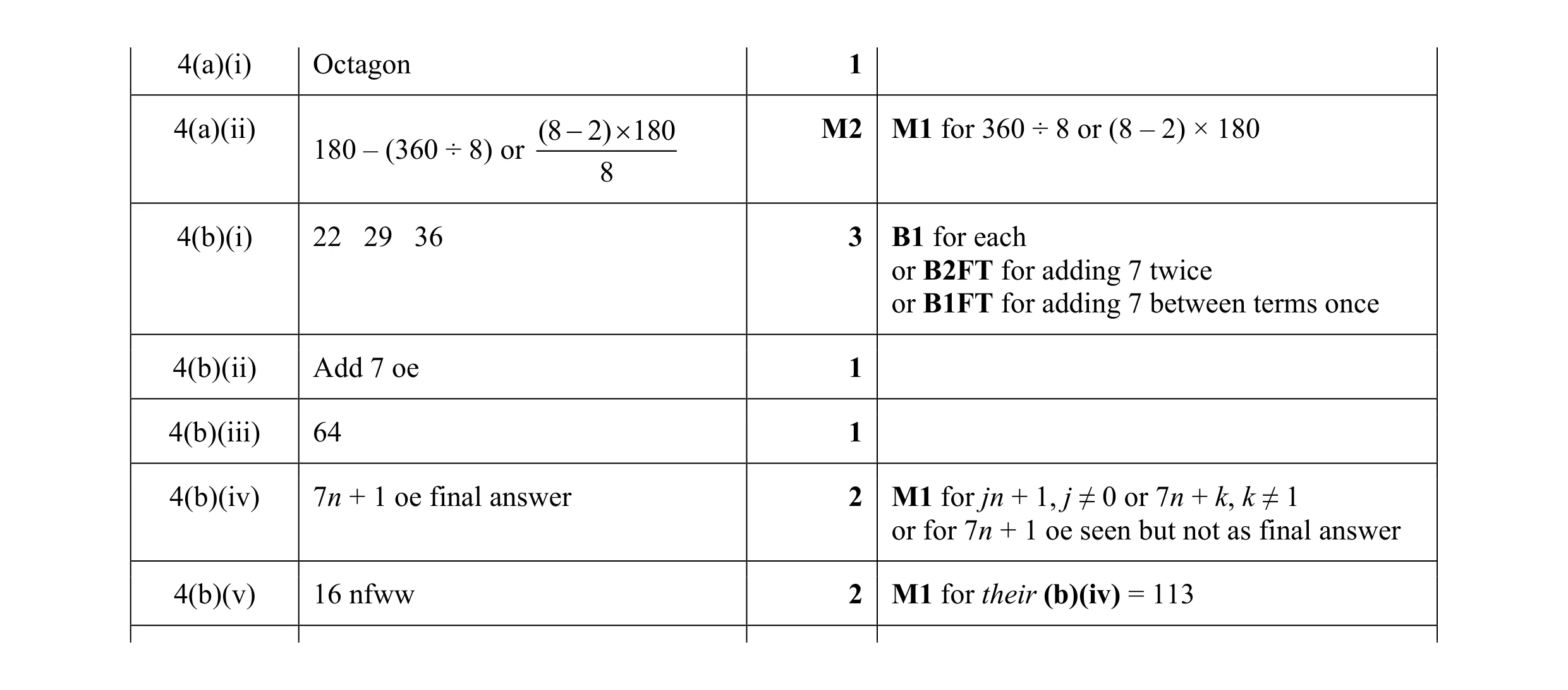 12
12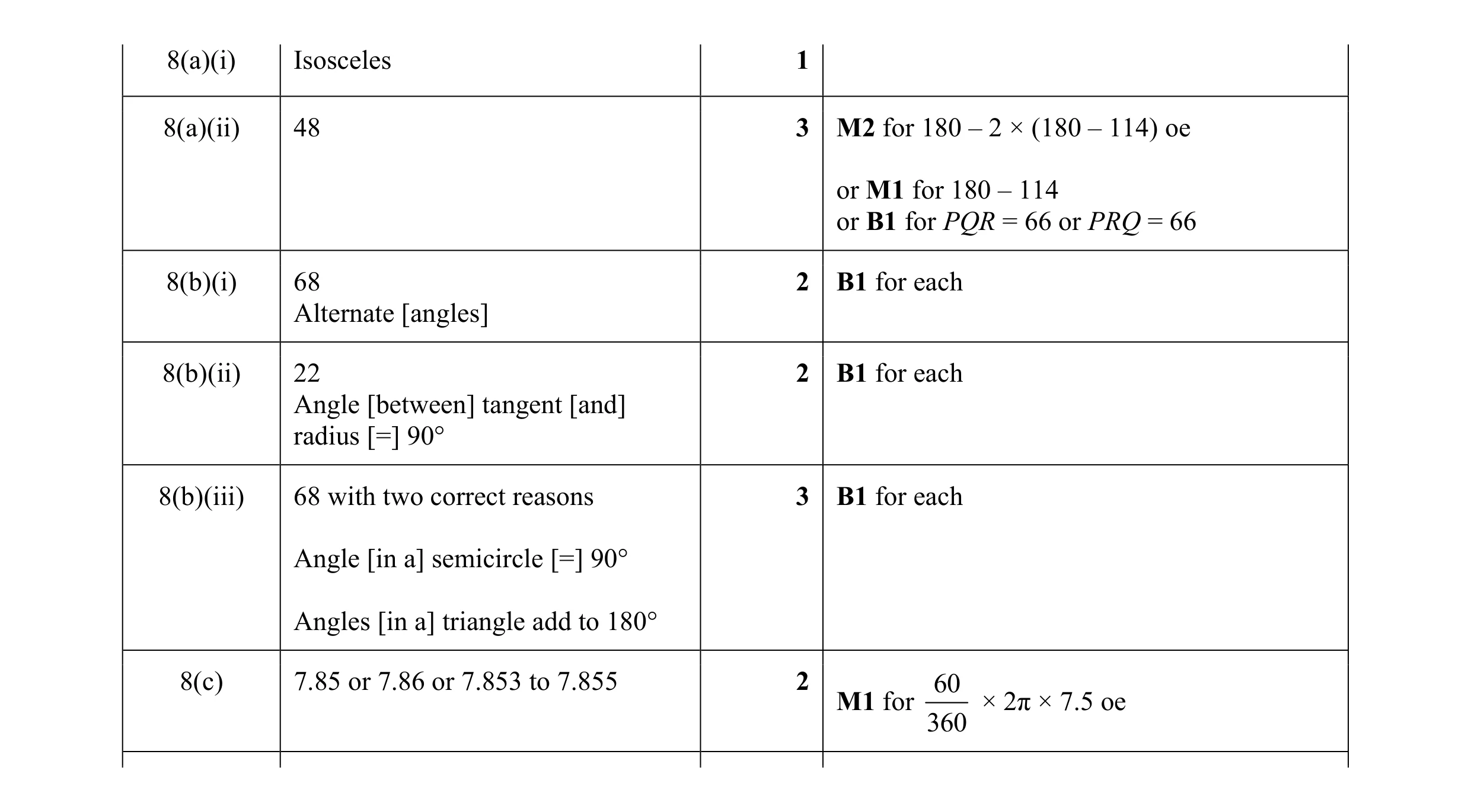 13
13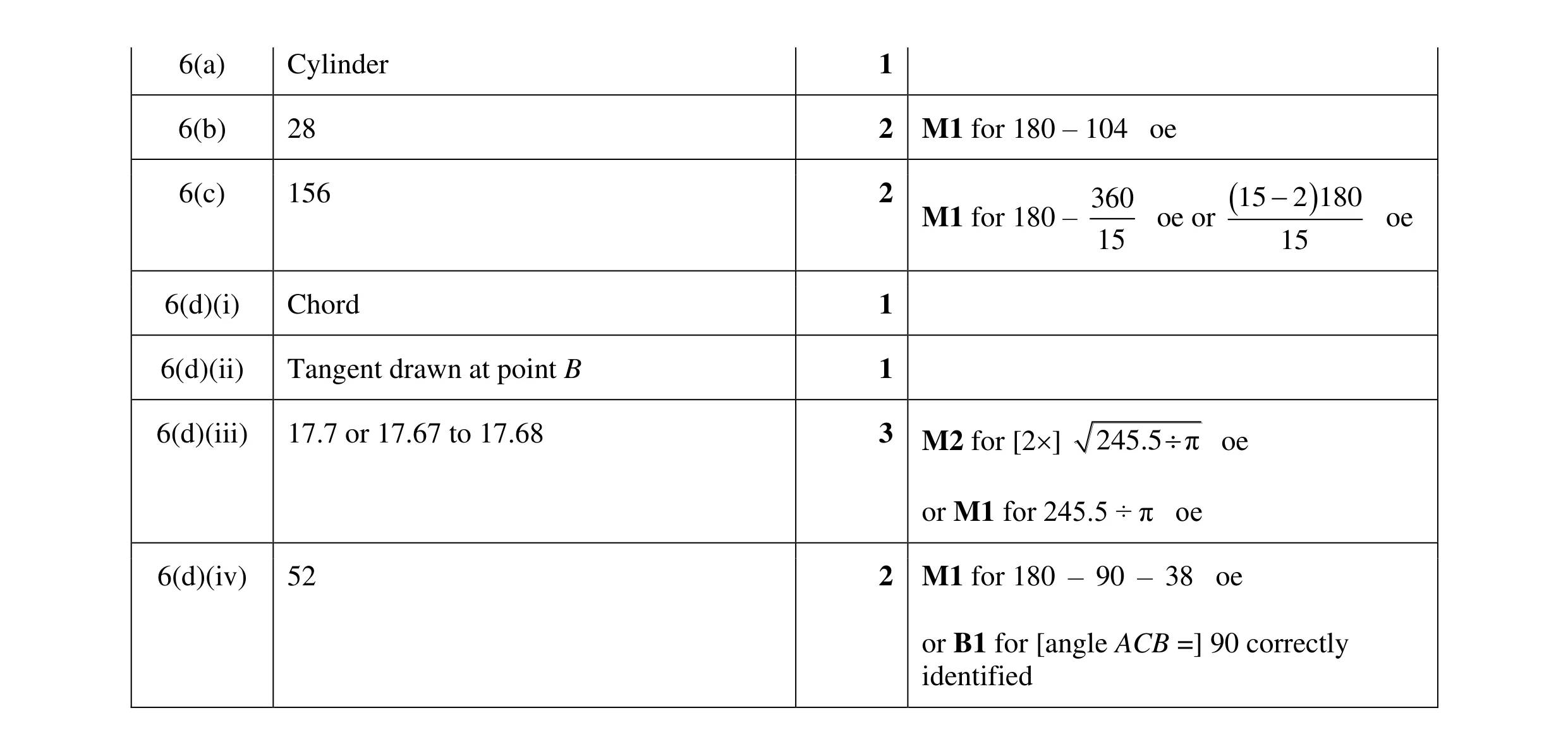 12
12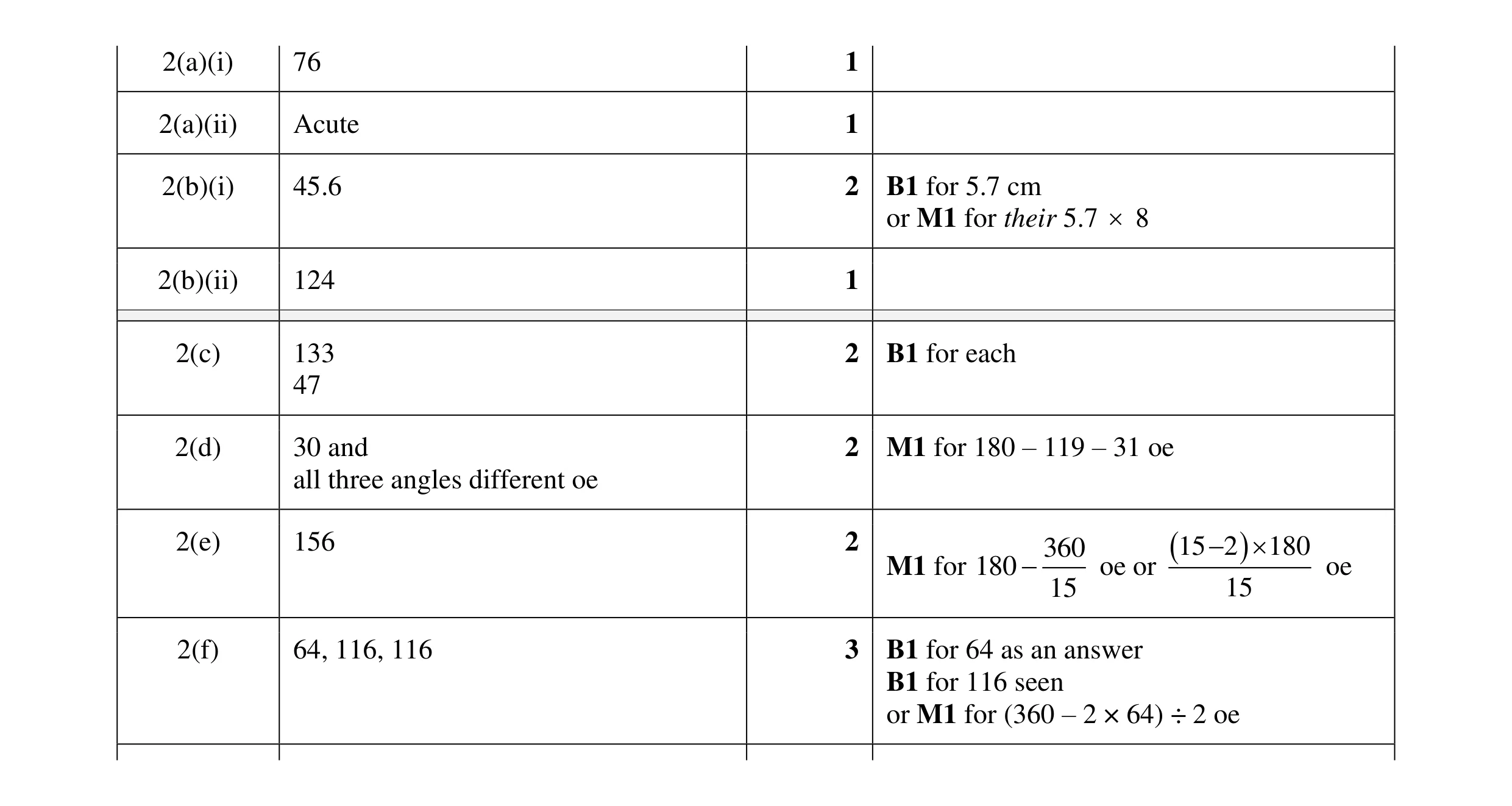 14
14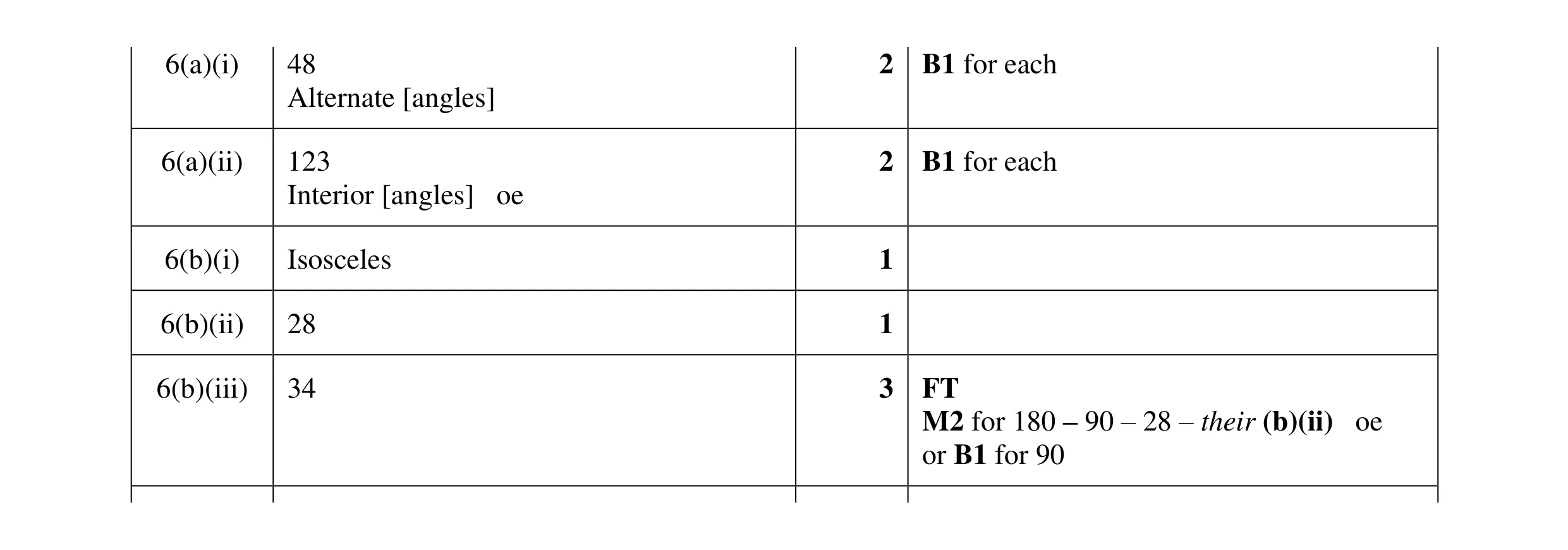 9
9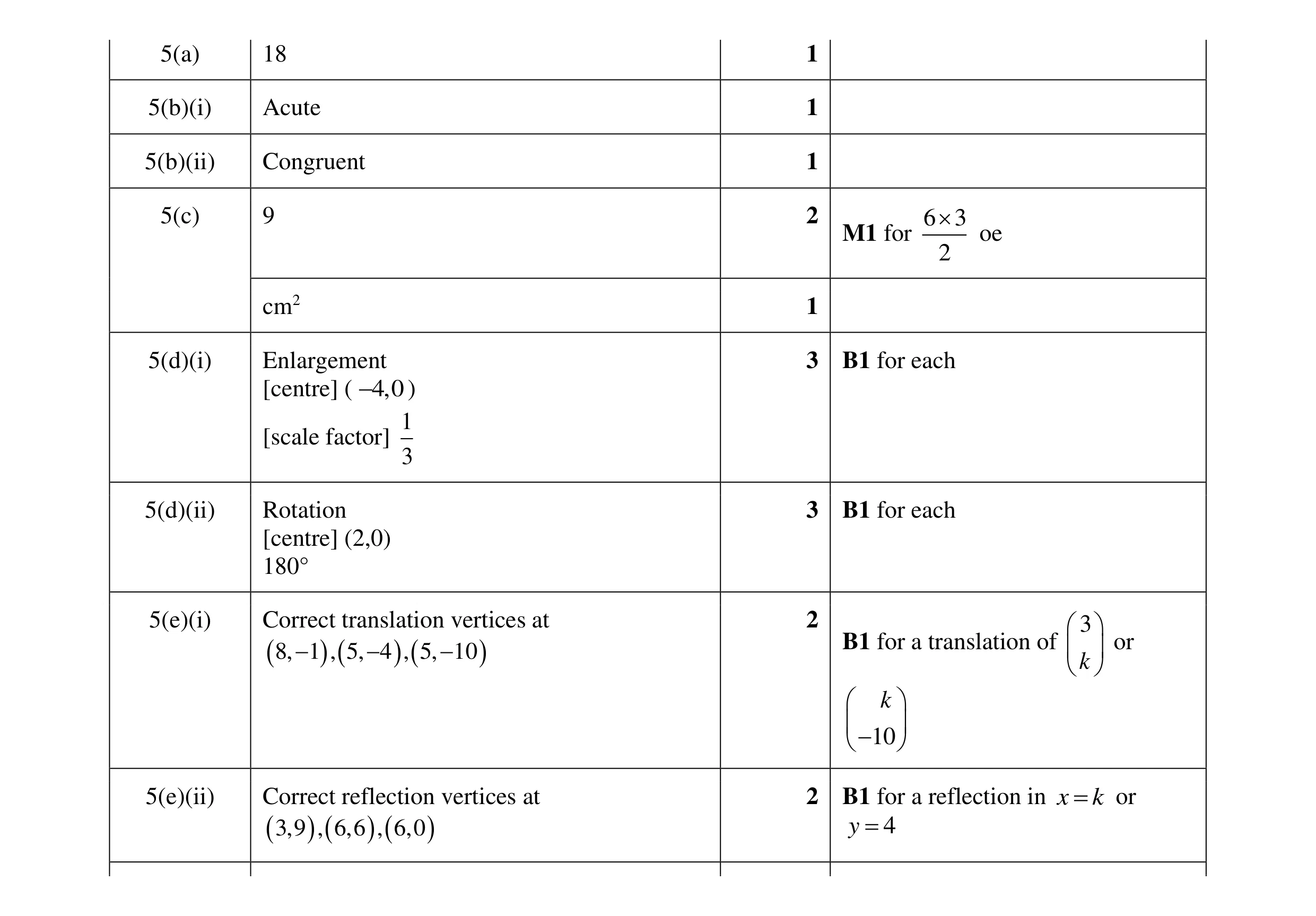 16
16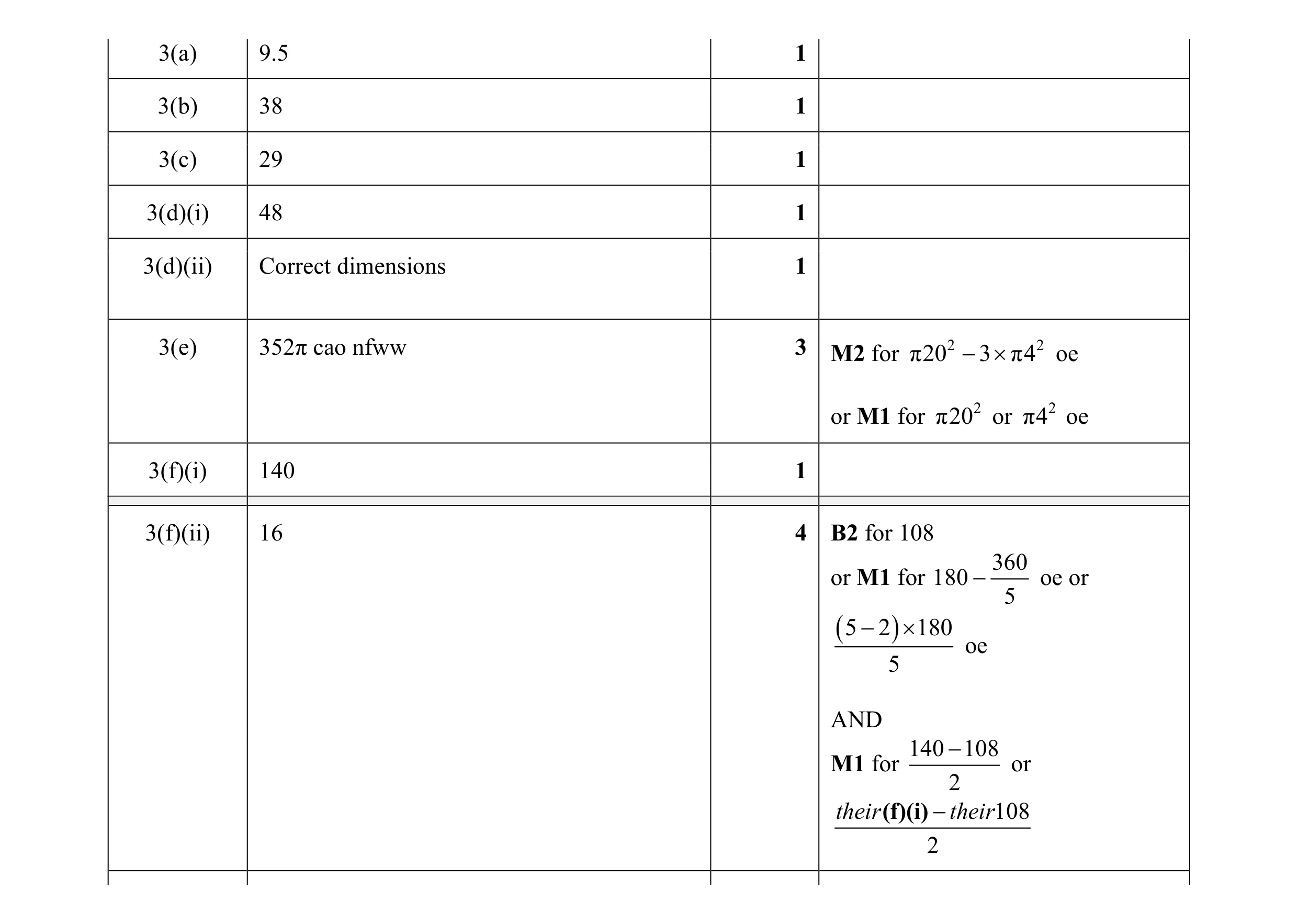 13
13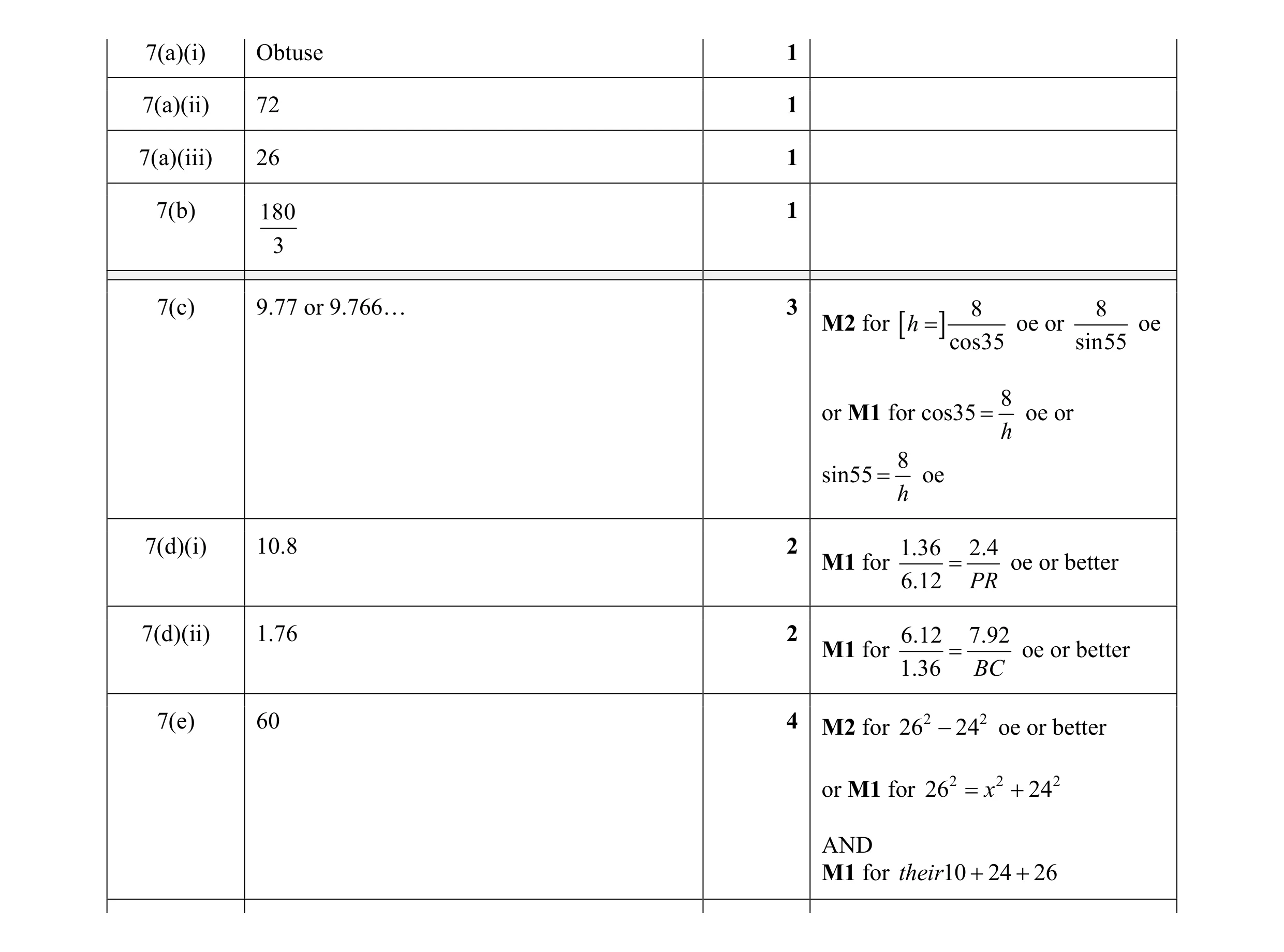 15
15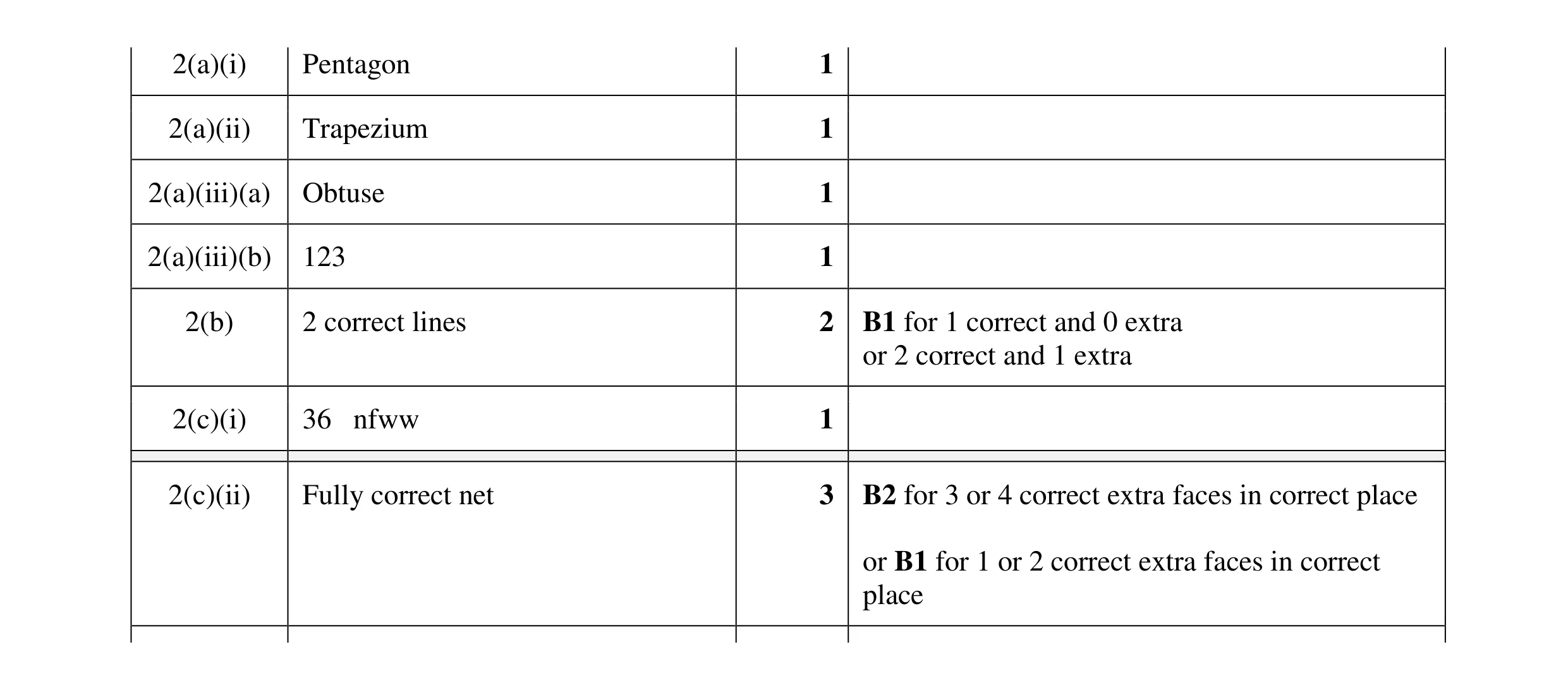 10
10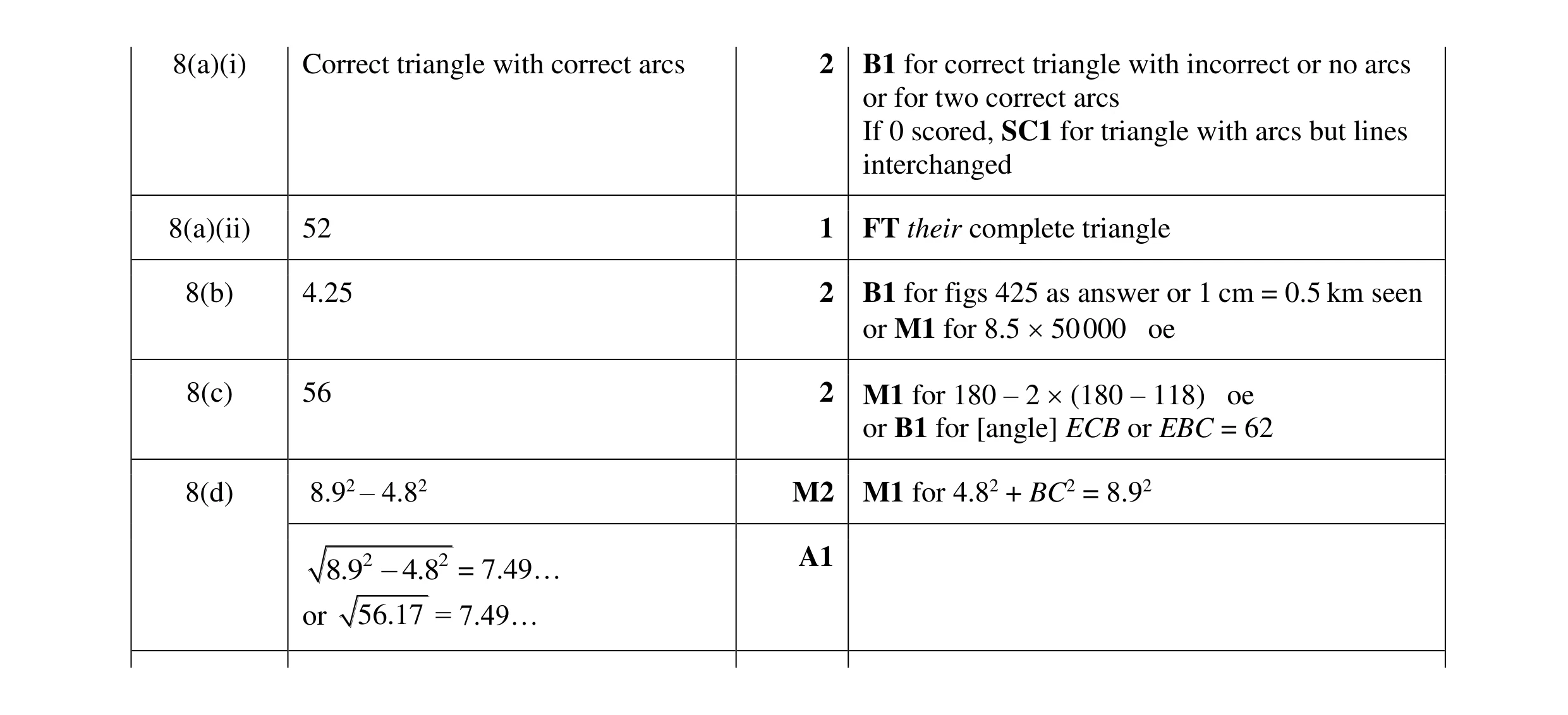 10
10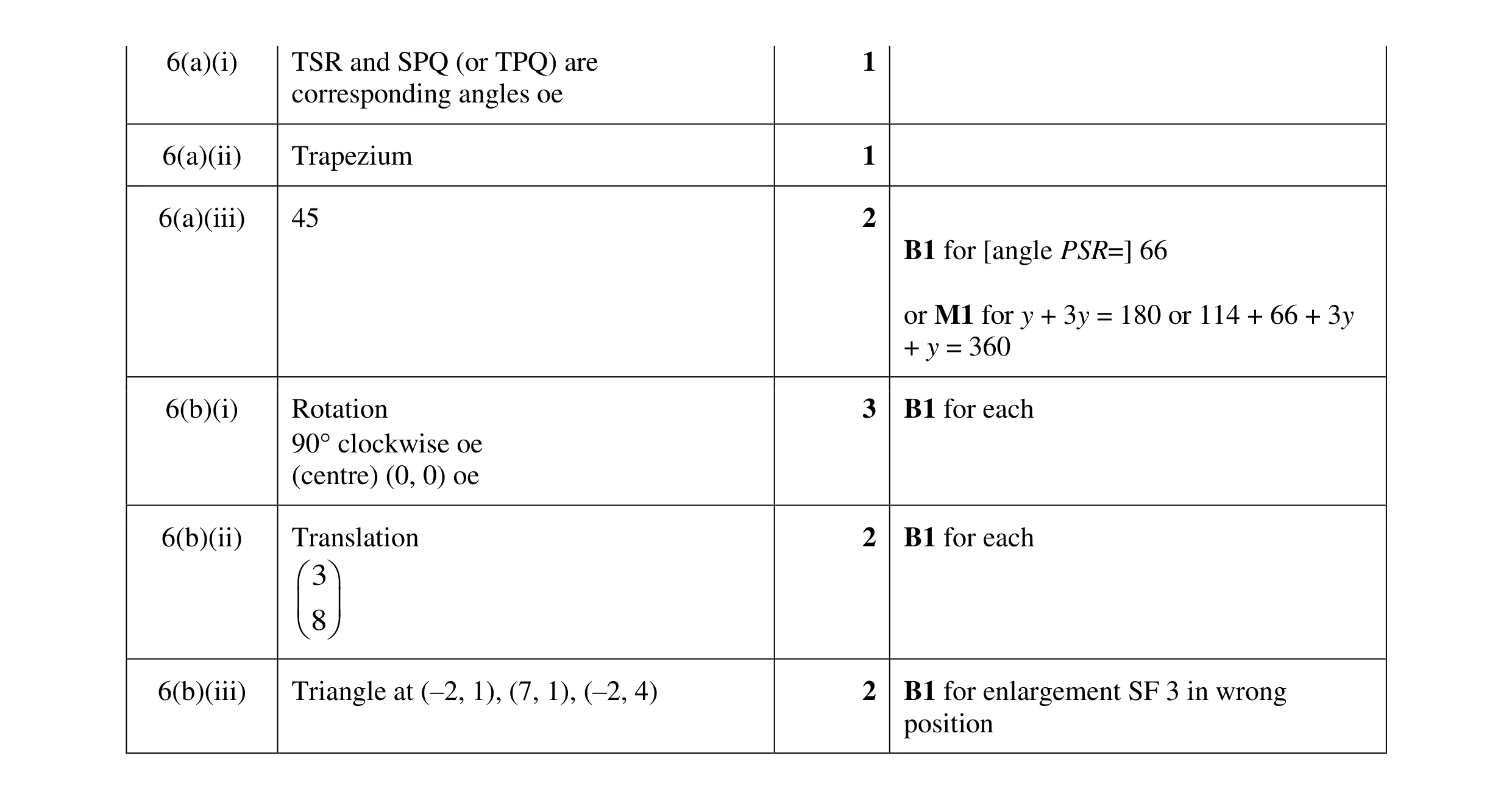 11
11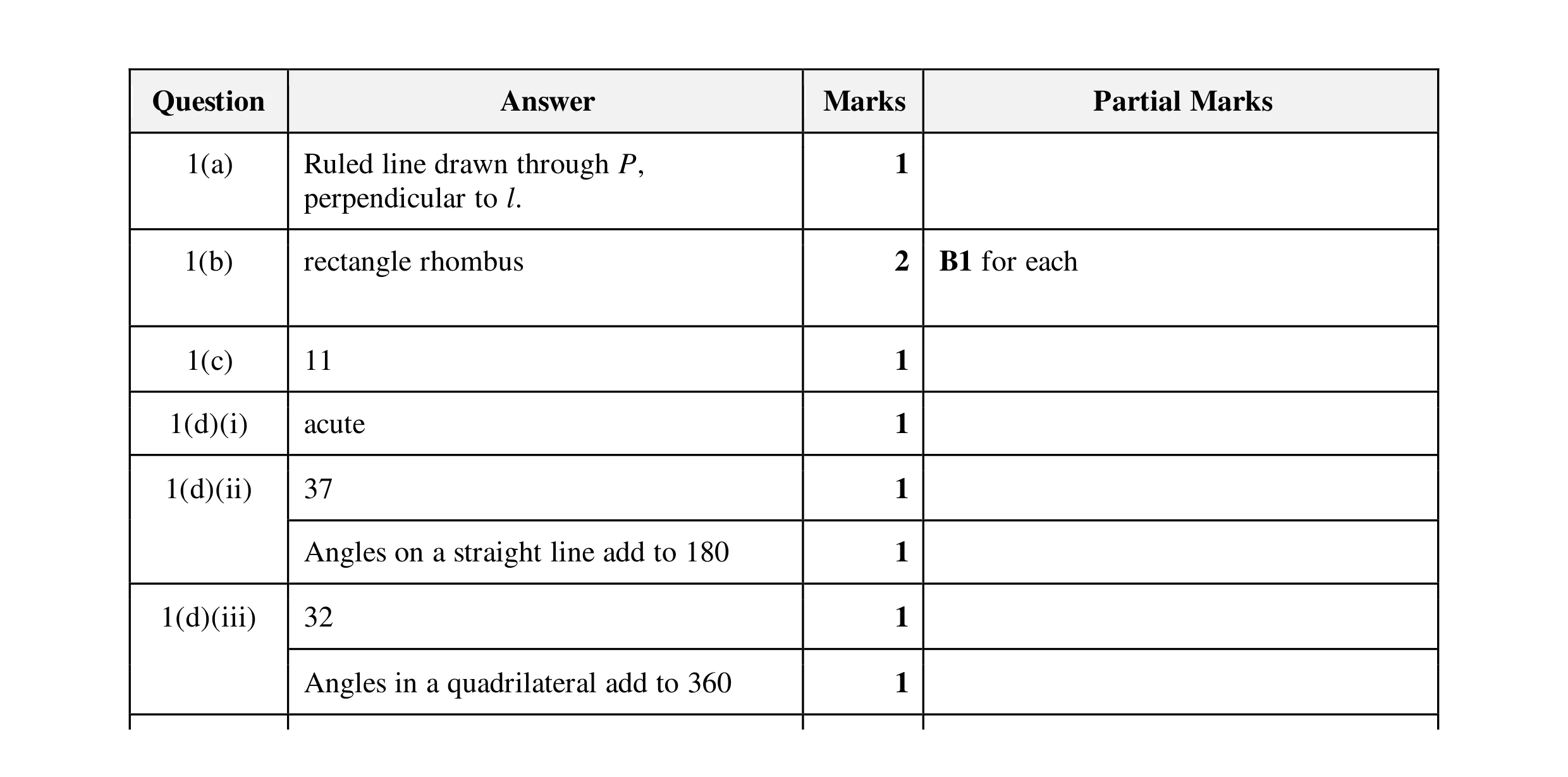 9
9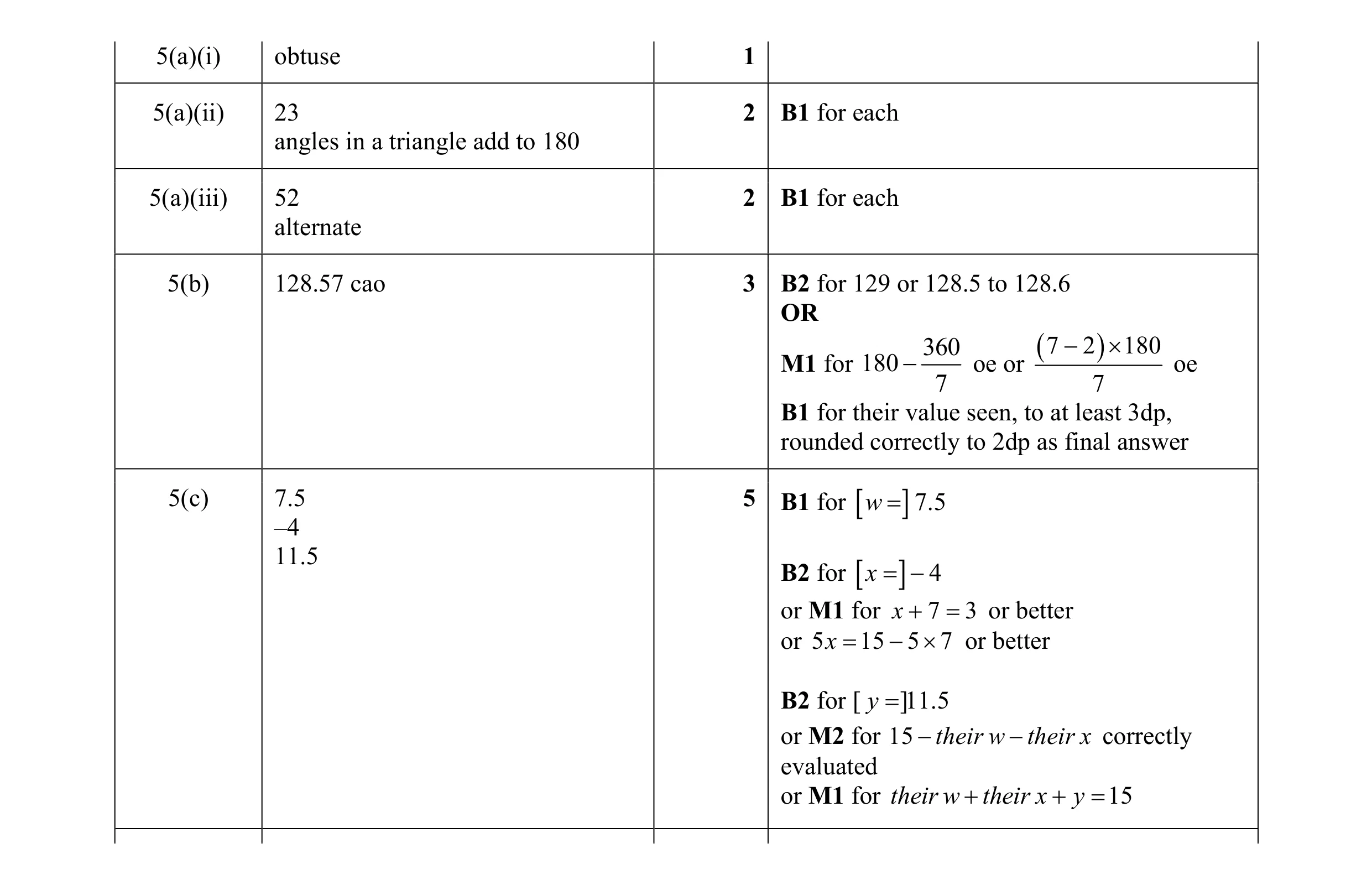 13
13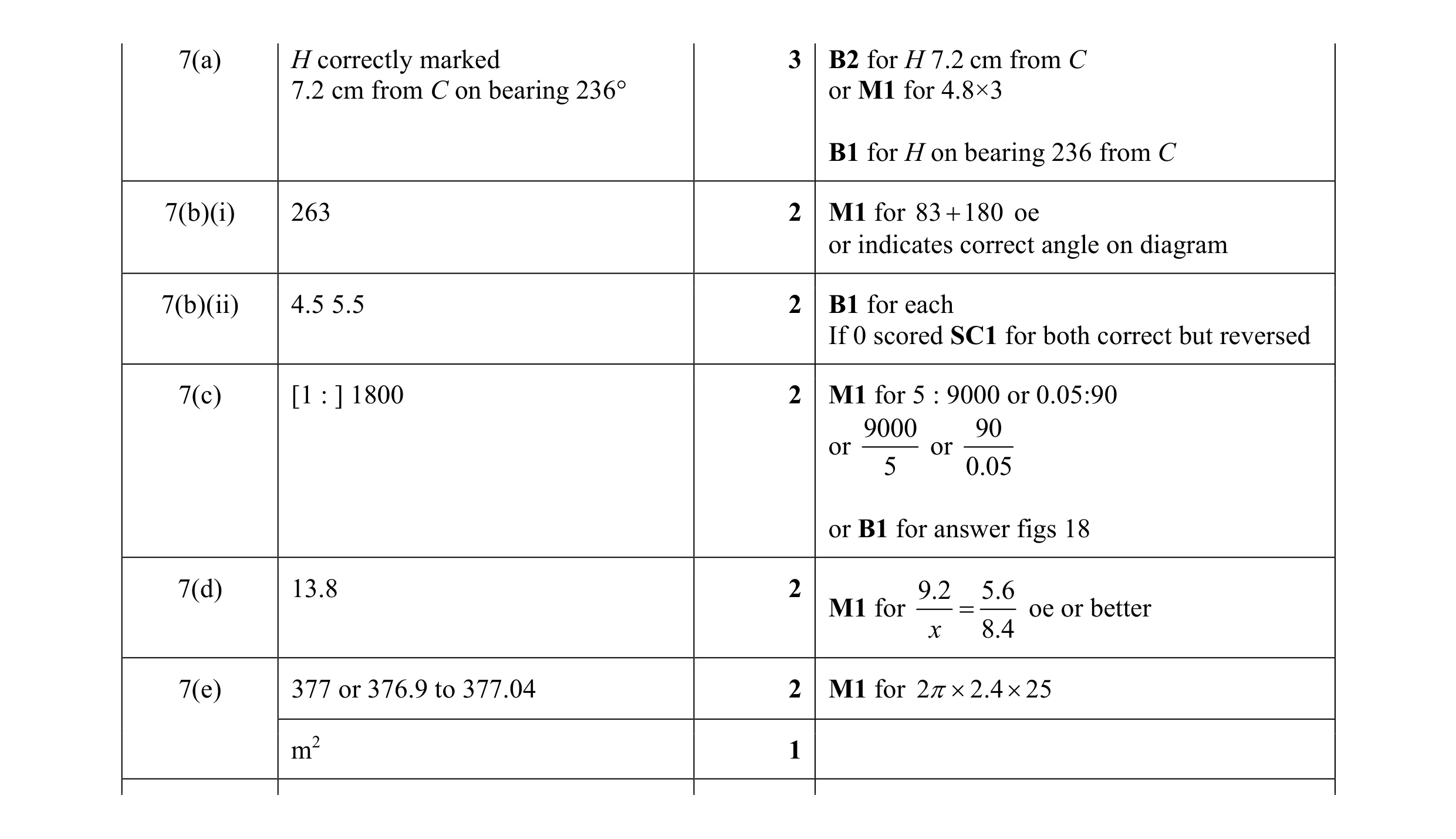 14
14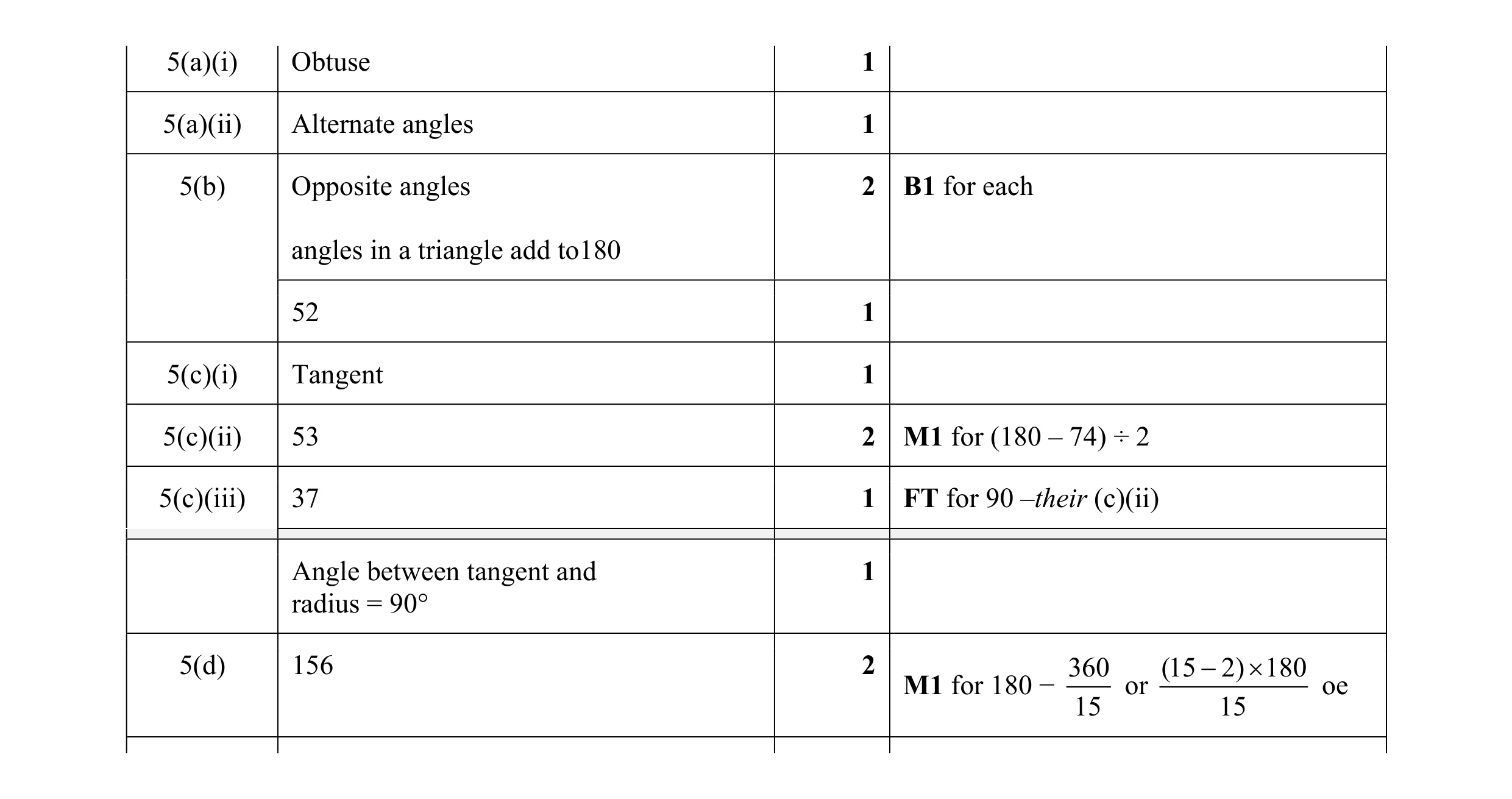 12
12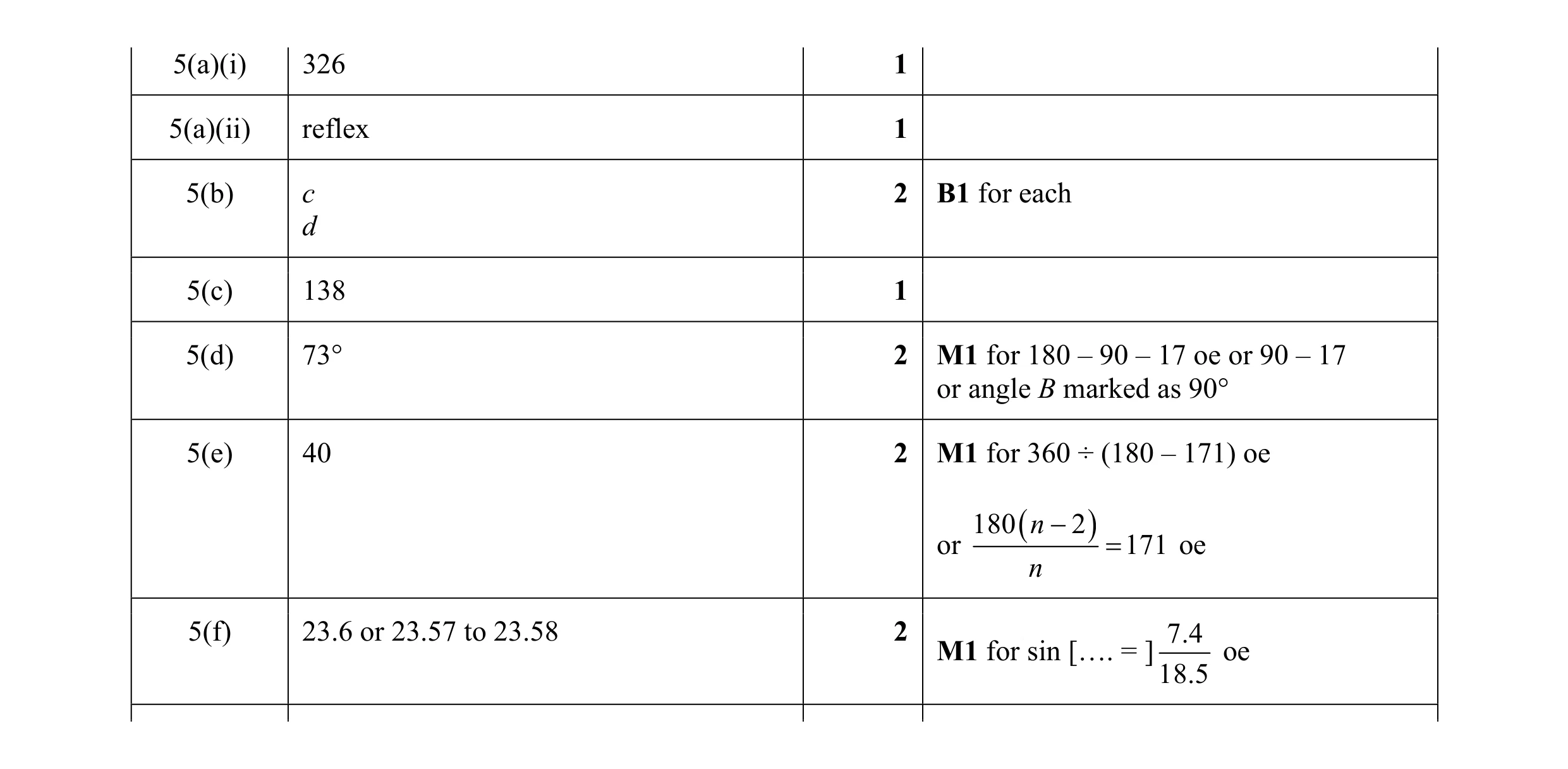 11
11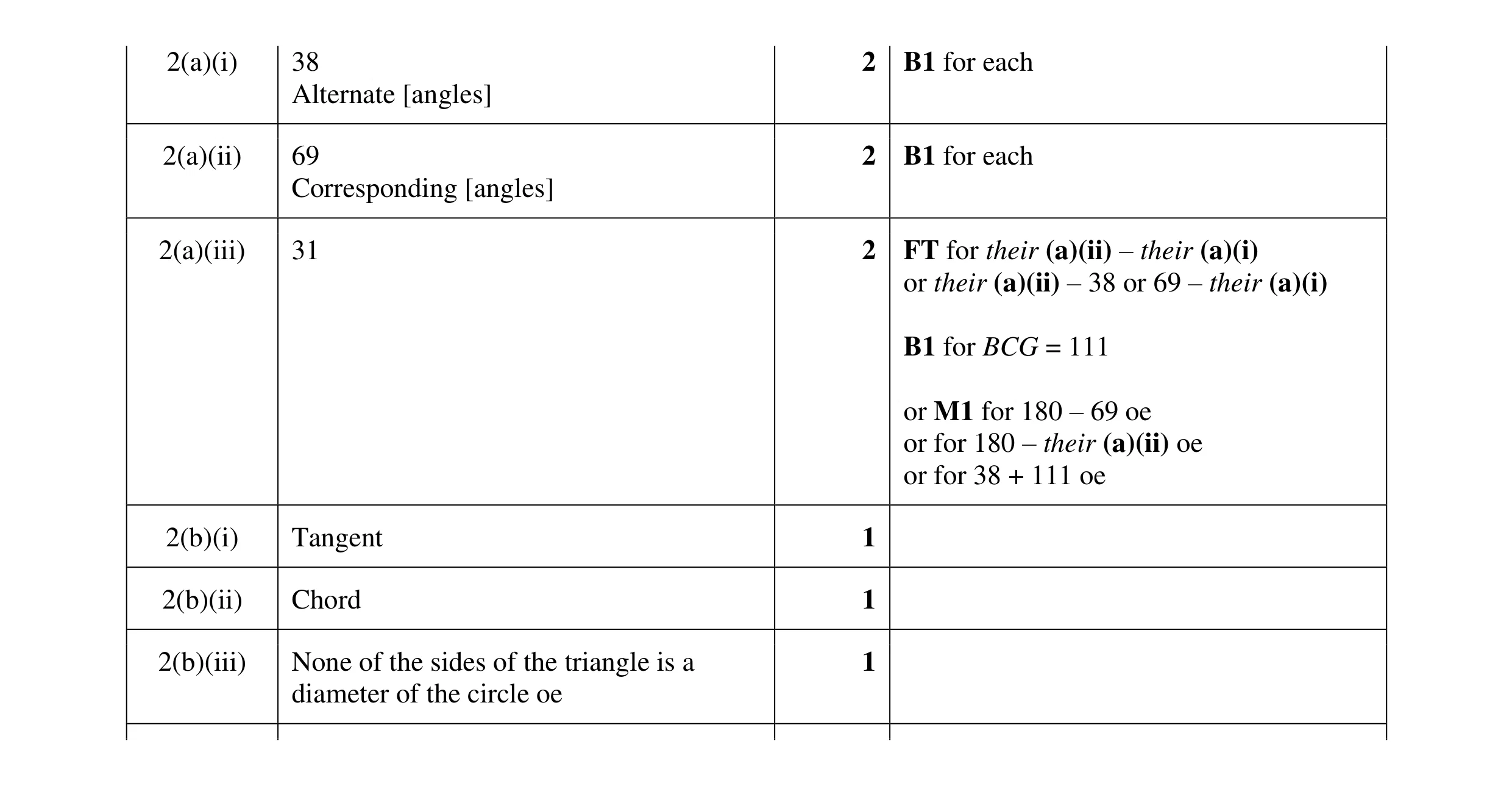 9
9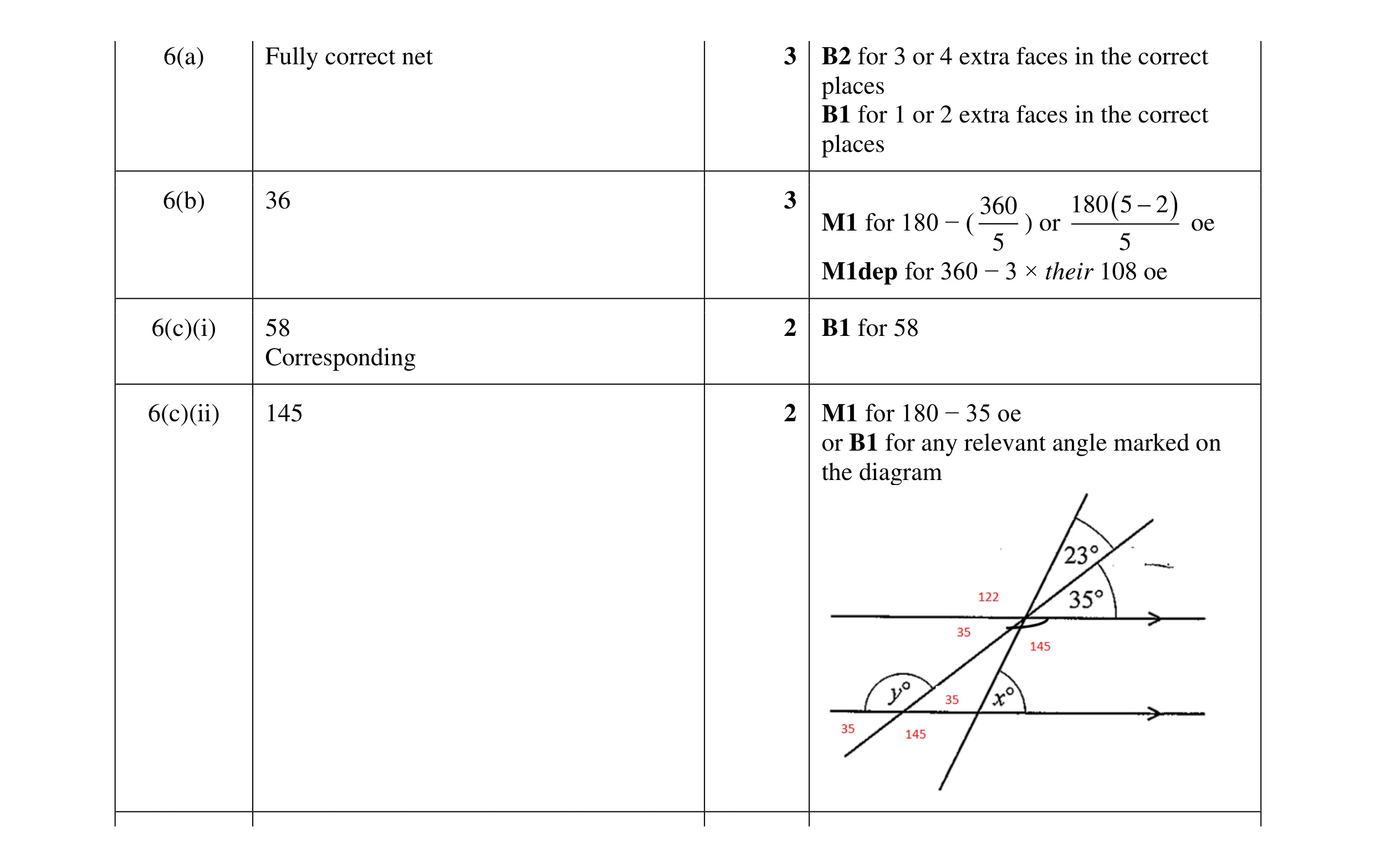 10
10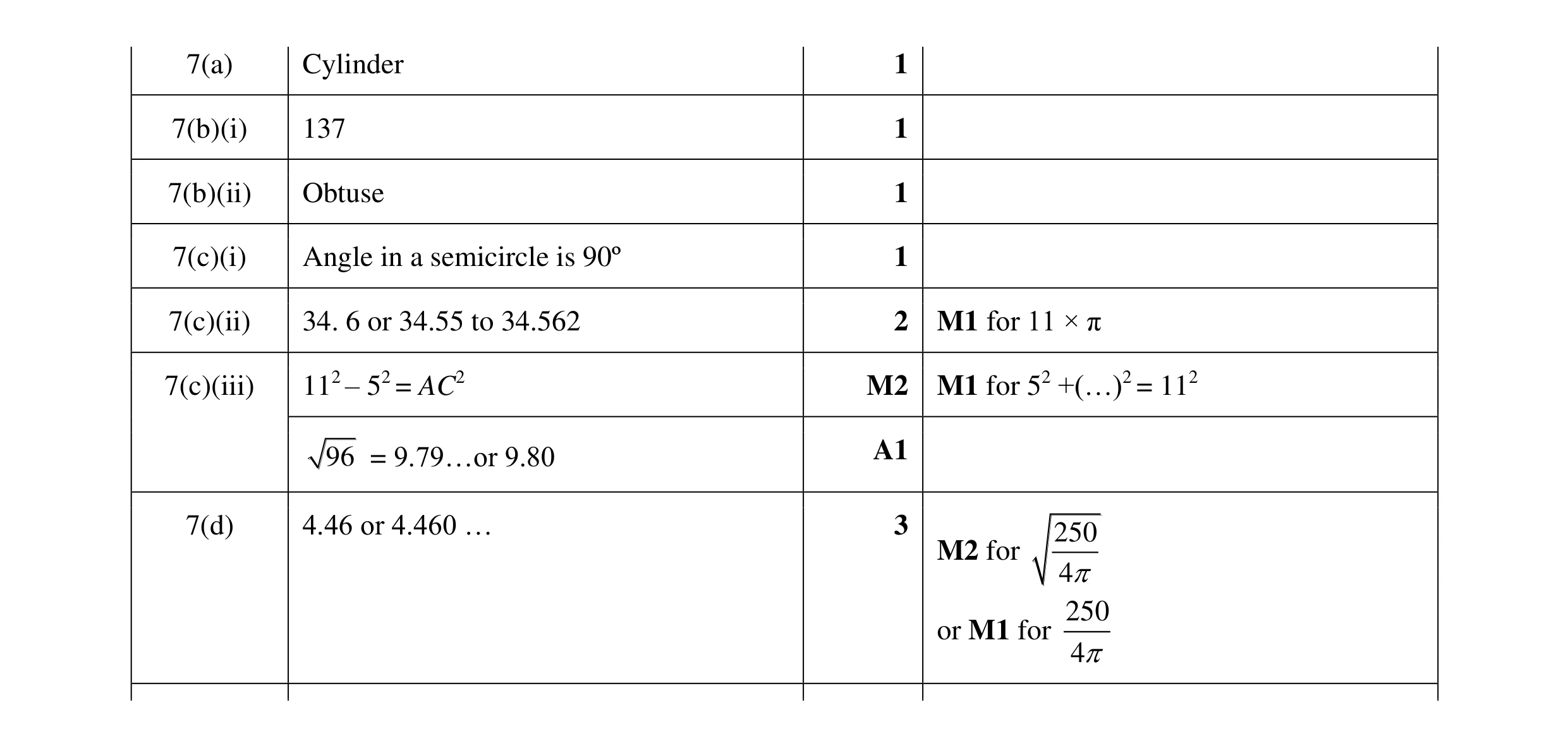 12
12 2
2 2
2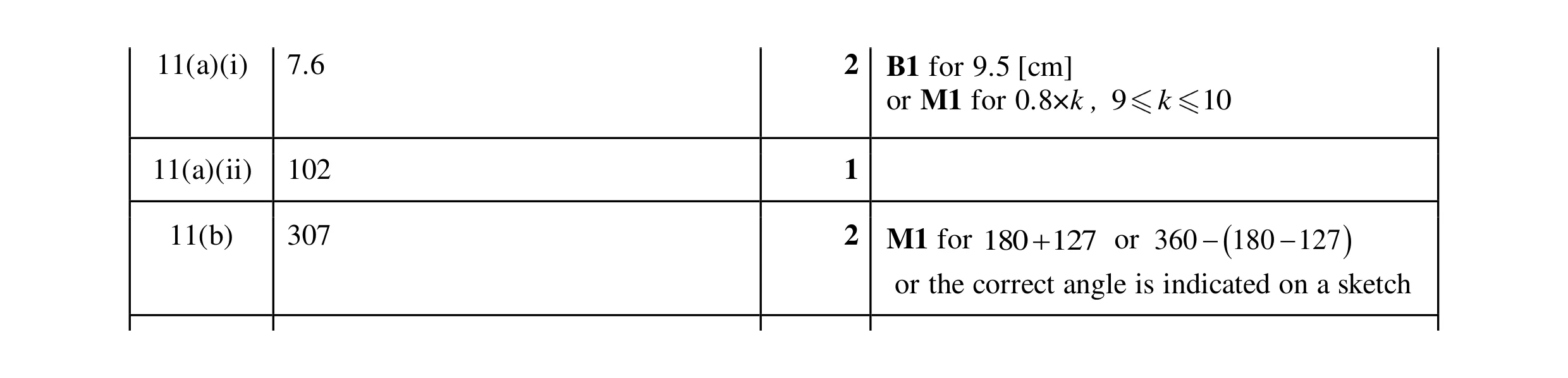 5
5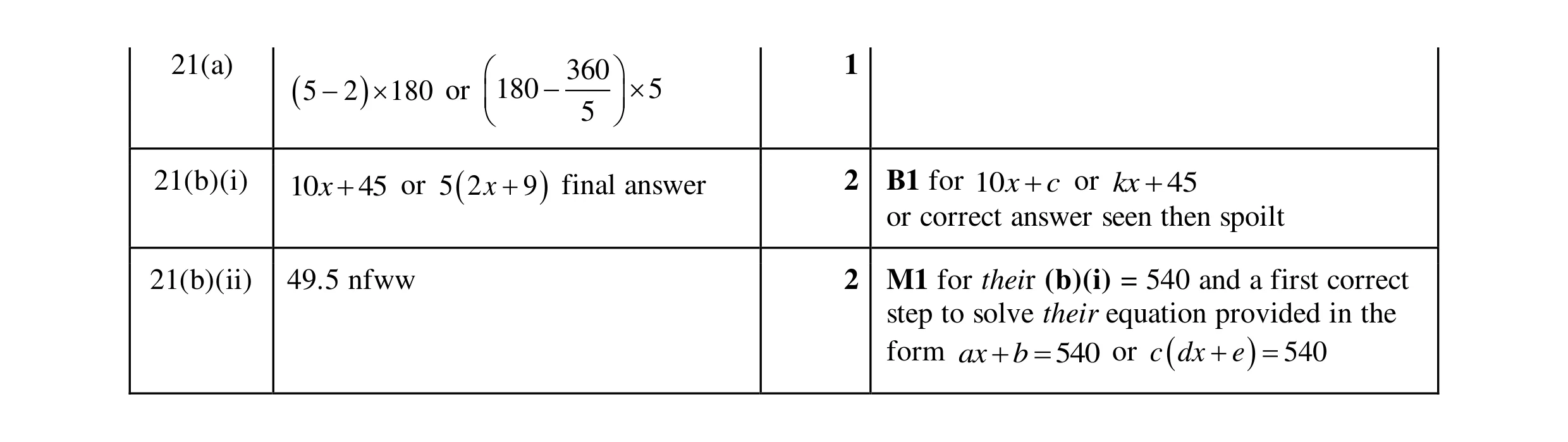 5
5 1
1 4
4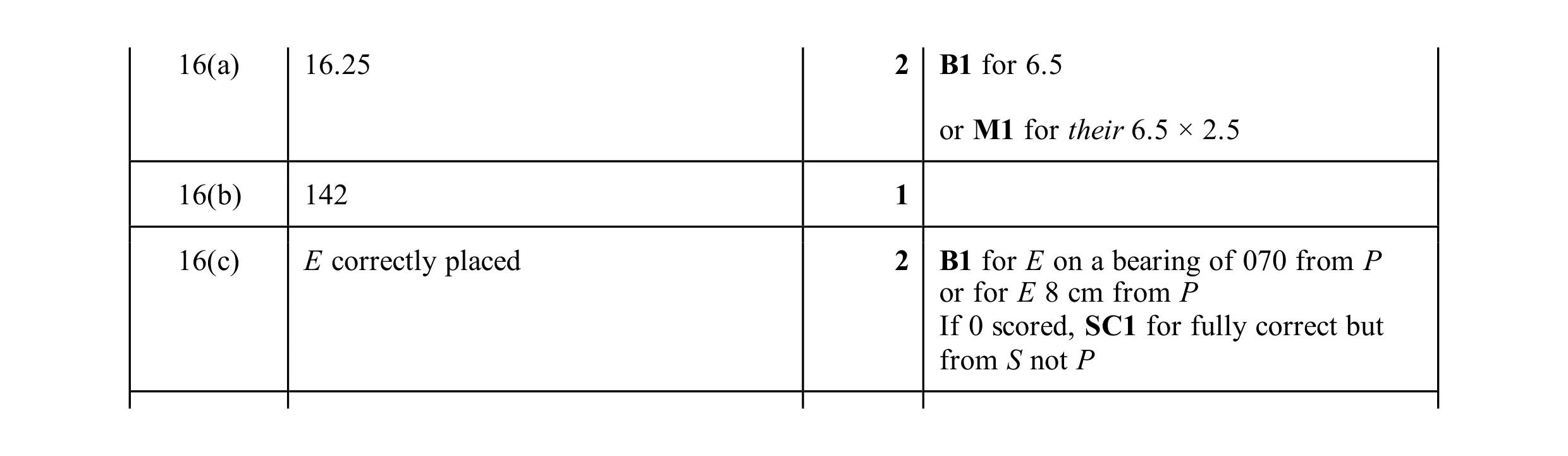 5
5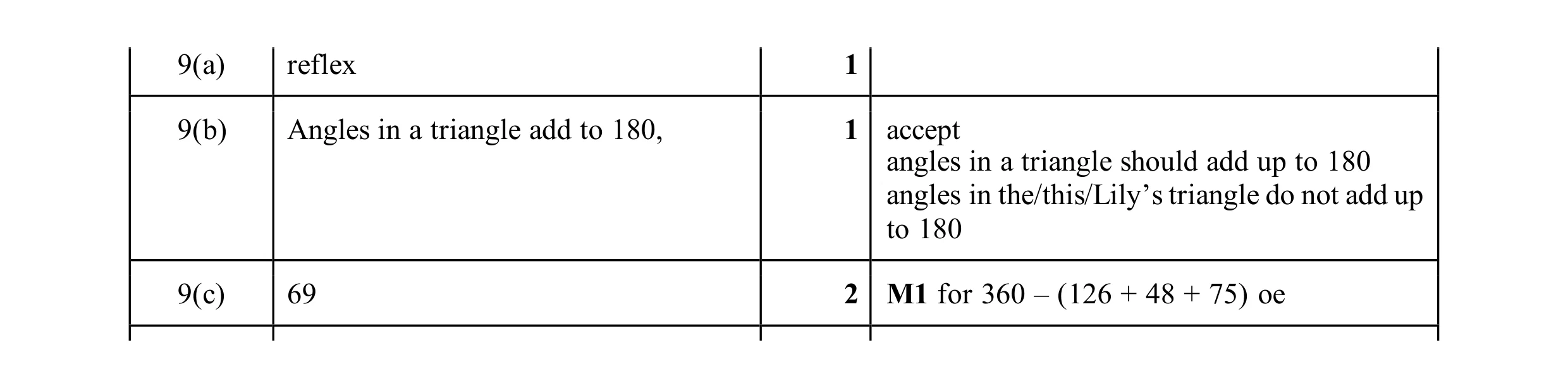 4
4 1
1