Questions as text
Q1 · Answer the whole of this question on one sheet of graph paper 0580/41 Oct/Nov 2005
5 Answer the whole of this question on one sheet of graph paper. 1 f(x) = 1 − , x ≠ 0 . x 2 (a) x −3 −2 −1 −0.5 −0.4 −0.3 0.3 0.4 0.5 1 2 3 f(x) p 0.75 0 −3 −5.25 q q −5.25 −3 0 0.75 p Find the values of p and q. [2] (b) (i) Draw an x-axis for −3 x 3 using 2 cm to represent 1 unit and a y-axis for −11 y 2 using 1 cm to represent 1 unit. [1] (ii) Draw the graph of y = f(x) for −3 x −0.3 and for 0.3 x 3. [5] (c) Write down an integer k such that f(x) = k has no solutions. [1] (d) On the same grid, draw the graph of y = 2x – 5 for –3 x 3. [2] 1 (e) (i) Use your graphs to find solutions of the equation 1 − 2 = 2 x − 5 . [3] x 1 3 2 (ii) Rearrange 1 − 2 = 2 x − 5 into the form ax + bx + c = 0 , where a, b and c are integers. [2] x (f) (i) Draw a tangent to the graph of y = f(x) which is parallel to the line y = 2 x − 5 . [1] (ii) Write down the equation of this tangent. [2]
19 marks
Mark scheme: 5 (a) 0.9 or better B1 (0.8888..) –10.1 or better B1 –10.1111..) (b) (i) Correct scales S1 –3 to 3 for x, and –11 to 2 for y possible (ii) 12 points correctly plotted P3ft P2ft for 10 or 11 correct (acc. is 1 mm) P1ft for 8 or 9 correct 1 small square, correct shape, not ruled both branches with correct shape C1ft Acc. 2 Graph does not cross the y-axis B1 (c) Any integer [ 1 B1 (d) Correct ruled line from –3 to +3 B2 SC1 for line with gradient of 2 or passing through (0, –5) but not y = –5. (e) (i) –0.45 to –0.3 B1 0.4 to 0.49 B1 2.9 to 2.99 B1 (ii) x2 – 1 = 2x3 – 5x2 M1 i.e. correct multiplication to remove fraction 2x3 – 6x2 + 1 = 0 A1 www2 (f) (i) Tangent drawn with gradient ≈ 2 B1 Parallel by eye to y = 2x – 5 (ii) Linear eqn. in x and y with gradient 2 B1 c = their intercept B1 within 1 mm, dep on linear eqn in x and y [19]
This question in 0580/41 Oct/Nov 2005
Q2 · A packet of sweets contains chocolates and toffees 0580/41 May/June 2007
8 A packet of sweets contains chocolates and toffees. (a) There are x chocolates which have a total mass of 105 grams. Write down, in terms of x, the mean mass of a chocolate. [1] (b) There are x + 4 toffees which have a total mass of 105 grams. Write down, in terms of x, the mean mass of a toffee. [1] (c) The difference between the two mean masses in parts (a) and (b) is 0.8 grams. Write down an equation in x and show that it simplifies to x2 + 4x – 525 = 0. [4] (d) (i) Factorise x2 + 4x – 525. [2] (ii) Write down the solutions of x2 + 4x – 525 = 0. [1] (e) Write down the total number of sweets in the packet. [1] (f) Find the mean mass of a sweet in the packet. [2]
12 marks
Mark scheme: 8 (a) 105 B1 Do not allow x = , but allow other letter and condone presence of units x (b) 105 B1 Do not allow x = , but allow other letter and condone presence of units x + 4 (c) 105 105 M2 SC1 if ± signs between terms incorrect = 8.0 oe or SC1 for their (a) – their (b) = 0.8 oe x −x + 4 if (a) and (b) are fractions with linear denominators 105(x + 4) – 105x = 0.8x(x + 4) oe M1 Dep on M2 or SC1 and allow all over x(x + 4) at this stage Condone any sign error in any 0.8x2 + 3.2x – 420 = 0 oe expanding done first (this is taken into account in the E mark) Completed without any errors x2 + 4x – 525 = 0 E1 dep on M3 (d) (i) (x + 25)(x – 21) B2 B1 for (x – 25)(x + 21) (ii) -25, 21 B1 ft - allow 25 and -21 from above only (e) 46 B1 ft ft 2 × a positive root + 4 (f) 210 ÷ ( their (e)) M1 4.57 or better (4.565…) ft A1 ft www 2, but 4.6 ww scores zero [12] IGCSE – May/June 2007 0580 and 0581 04
This question in 0580/41 May/June 2007
Q3 · Factorise x2 − x − 20 0580/41 May/June 2008
2 (a) (i) Factorise x2 − x − 20. [2] (ii) Solve the equation x2 − x − 20 = 0. [1] (b) Solve the equation 3x2 − 2x − 2 = 0. Show all your working and give your answers correct to 2 decimal places. [4] (c) y = m2 − 4n2. (i) Factorise m2 − 4n2. [1] (ii) Find the value of y when m = 4.4 and n = 2.8. [1] (iii) m = 2x + 3 and n = x − 1. Find y in terms of x, in its simplest form. [2] (iv) Make n the subject of the formula y = m2 − 4n2. [3] (d) (i) m4 − 16n4 can be written as (m2 − kn2)(m2 + kn2). Write down the value of k. [1] (ii) Factorise completely m4n − 16n5. [2]
17 marks
Mark scheme: 2 (a) (i) (x + 4)(x – 5) B2 If B0, SC1 if of form (x ± 4)(x ± 5), (ii) –4, 5 ft B1 ft Only ft the SC –4, and 5 not from (x – 4)(x + 5). (b) 2 B1 for (–2)2–4(3)(–2) (or better) seen − ( −2) ± ( −2) − 4.3 − 2 B1,B1 inside a square root. 2.3 The expression must be in the form p + (or− ) q then B1 for p = –(–2) and r r = 2.3 or better Allow recoveries from incomplete lines –0.55, 1.22 cao B1,B1 If B0, SC1 for –0.5 and 1.2 or both answers correct to 2 or more decimal places (rounded or truncated). –0.54858, 1.21525… (c) (i) (m – 2n)(m + 2n) B1 (ii) –12 B1 (iii) B1 for (4x2 + 6x + 6x + 9) or 20x + 5 o.e. cao final ans B2 (x2 – x – x + 1) or (2x + 3 – 2(x – 1))(2x + 3 + 2(x – 1)) (iv) 4n2 = m2 – y o.e. M1 M1 for correct re-arrangement for n2 term –n2) 2 m 2 − y (may be n = o.e. M1 M1 for correct division by 4 or – 4 4 M1 for correctly taking square root of n² m 2 − y M1 term ( n ) = o.e. www3 4 2 2 y ± m m − y Mark final answer SC2 for or o.e. ww 4 4 (d) (i) 4 or –4 or ±4 B1 (ii) n(m4 – 16n4) or M1 Correctly taking out n or a correct factor (m2n – 4n3)(m2 + 4n2) or with n still in one bracket (m2n + 4n3)(m2 – 4n2) or n(m – 2n)(m + 2n)(m2 + 4n2) A1 Must be final answer [17] IGCSE – May/June 2008 0580, 0581 04
This question in 0580/41 May/June 2008
Q4 · 1 2 3 4 5 6 7 8 9 10 11 12 13 14 15 16 17 18 19 20 21 22 23 24 25 26 27 28 29 30 31 32 33… 0580/41 May/June 2008
10 1 2 3 4 5 6 7 8 9 10 11 12 13 14 15 16 17 18 19 20 21 22 23 24 25 26 27 28 29 30 31 32 33 34 35 36 x b c A 3 by 3 square can be chosen from the 6 by 6 grid above. d e f g h i 8 9 10 (a) One of these squares is . 14 15 16 20 21 22 In this square, x = 8, c = 10, g = 20 and i = 22. For this square, calculate the value of (i) (i − x) − (g − c), [1] (ii) cg − xi. [1] (b) x b c d e f g h i (i) c = x + 2. Write down g and i in terms of x. [2] (ii) Use your answers to part(b)(i) to show that (i − x) − (g − c) is constant. [1] (iii) Use your answers to part(b)(i) to show that cg − xi is constant. [2] (c) The 6 by 6 grid is replaced by a 5 by 5 grid as shown. 1 2 3 4 5 6 7 8 9 10 11 12 13 14 15 16 17 18 19 20 21 22 23 24 25 x b c A 3 by 3 square can be chosen from the 5 by 5 grid. d e f g h i For any 3 by 3 square chosen from this 5 by 5 grid, calculate the value of (i) (i − x) − (g − c), [1] (ii) cg − xi. [1] (d) A 3 by 3 square is chosen from an n by n grid. (i) Write down the value of (i − x) − (g − c). [1] (ii) Find g and i in terms of x and n. [2] (iii) Find cg − xi in its simplest form. [1]
13 marks
Mark scheme: 10(a) (i) 4 B1 (ii) 24 B1 (b) (i) x + 12, x + 14 o.e. B1,B1 Any order ignore ref to g and i (ii) (x + 14 – x) and (x + 12 – (x + 2)) x + 12 and x + 14 must be seen to be used 14 – 10 or 14 – 12 + 2 or 4 E1 No errors seen (iii) (x + 2)(x + 12) – x(x + 14) B1 Subtraction can be implied later 24 E1 Dep on B1 and no errors anywhere for the E mark (c) (i) 4 B1 (ii) 20 B1 (d) (i) 4 B1 (ii) x + 2n o.e., x + 2+ 2n o.e. B1,B1 (iii) 4n B1 Allow 4×n, n×4, n4 [13]
This question in 0580/41 May/June 2008
Q5 · For NOT TO Examiner's D C SCALE Use S R (x + 3) cm x cm A B P Q (2x + 5) cm (x + 4) cm… 0580/41 Oct/Nov 2009
5 For NOT TO Examiner's D C SCALE Use S R (x + 3) cm x cm A B P Q (2x + 5) cm (x + 4) cm The diagram shows two rectangles ABCD and PQRS. AB = (2x + 5) cm, AD = (x + 3) cm, PQ = (x + 4) cm and PS = x cm. (a) For one value of x, the area of rectangle ABCD is 59 cm2 more than the area of rectangle PQRS. (i) Show that x2 + 7x − 44 = 0. Answer(a)(i) [3] (ii) Factorise x2 + 7x − 44. Answer(a)(ii) [2] (iii) Solve the equation x2 + 7x − 44 = 0. Answer(a)(iii) x = or x = [1] (iv) Calculate the size of angle DBA. Answer(a)(iv) Angle DBA = [2] (b) For a different value of x, the rectangles ABCD and PQRS are similar. For Examiner's (i) Show that this value of x satisfies the equation x2 − 2x − 12 = 0. Use Answer(b)(i) [3] (ii) Solve the equation x2 − 2x − 12 = 0, giving your answers correct to 2 decimal places. Answer(b)(ii) x = or x = [4] (iii) Calculate the perimeter of the rectangle PQRS. Answer(b)(iii) cm [1]
16 marks
Mark scheme: 5 (a) (i) (x + 3)(2x + 5) – x(x + 4) = 59 oe M1 2x2 + 6x + 5x + 15 –x2 – 4x = 59 oe A1 Implies M1 (allow 11x for 6x + 5x) x2 + 7x – 44 = 0 E1 Correct conclusion – no errors or omissions (ii) (x + 11)(x – 4) B2 SC1 any other (x + a)(x + b) where a × b = – 44 or a + b = 7 (iii) –11, 4 www ft B1ft Strict ft dep on at least SC1 in (ii) allow recovery if new working seen (iv) (their + ve root ) + 3 Could be alt trig method tan = oe M1 oe M1 where trig function is explicit 2(their + ve root ) + 5 28.3 (00…) ft www2 A1ft ft one of their positive roots (27.4° (27.40 – 27.41) from x = 11) IGCSE – October/November 2009 0580 04 (b) (i) 2 x + 5 x + 3 = oe M1 Must be seen. Allow ratio or correct products x + 4 x x2 + 4x + 3x + 12 = 2x2 + 5x A1 Correct expansion of brackets seen (allow 7x for 4x + 3x) x2 – 2x – 12 = 0 E1 Correct conclusion – no errors or omissions M1 must be seen (ii) 2 In square root B1 for (–2)2 – 4(1)(–12) or better − ( −2 ) ± ( −2) − 41()( −12) B1,B1 p + q p − q 2 )1( If in form or , r r or (x – 1)² –12 – 1 (B1) B1 for – (–2) and 2(1) or better and x – 1 = ± 13 (B1) – 2.61, 4.61 final answers www4 B1,B1 If B0, SC1 for –2.6 and 4.6 or both answers correct to 2 or more dps rot – 2.6055…, 4.6055…. (iii) 26.4 (26.42…. to 26.44….) ft B1ft ft 4 × a positive root + 8 [16]
This question in 0580/41 Oct/Nov 2009
Q6 · _ m 3 m + 4 _ For 9 (a) Solve the equation + = 7 0580/41 Oct/Nov 2009
_ m 3 m + 4 _ For 9 (a) Solve the equation + = 7 . Examiner's 4 3 Use Answer(a) m = [4] 3 _ 2 (b) (i) y = _ x 1 x + 3 Find the value of y when x = 5. Answer(b)(i) [1] 3 _ 2 (ii) Write as a single fraction. _ x 1 x + 3 Answer(b)(ii) [2] 3 _ 2 1 For (iii) Solve the equation = . Examiner's _ x 1 x + 3 x Use Answer(b)(iii) x = [3] t (c) p = q _1 Find q in terms of p and t. Answer(c) q = [3]
13 marks
Mark scheme: 9 (a) 3(m – 3) + 4(m + 4) = –7 × 12 M2 Allow all over 12 at this stage M1 for 3(m – 3) + 4(m + 4) seen 3m – 9 + 4m + 16 = –84 A1 Allow all over 12 at this stage May be seen in stages –13 www4 A1 (b) (i) 0.5 oe B1 (ii) 3( x + 3) − 2( x − )1 If brackets not seen allow M1 3x + 9 – 2x ± 2 as numerator with a correct ( x − 1)( x + 3) denominator x + 11 final answer A1 isw incorrect expansion of denominator if ( x − 1)( x + 3) correct brackets seen (iii) x ( x + 11) = 1 ft or ( x − 1)( x + 3) 1 x + 11 = (x – 1)(x + 3) or better ft M1 Must clear one denominator correctly x Ft their (b)(ii) dep on fraction in (ii) with (x –1)(x +3) oe as denominator x2 + 11x = x2 + 3x – x – 3 M1 Depend on previous M1 − 1 oe cso www3 A1 – 0.33(33…) 3 (c) p(q – 1) = t oe M1 Multiplying by (q – 1) pq = t + p M1 Ft their first step t + p e.g. pq only term on one side oe final answer www3 M1 Ft their 2nd step p e.g. dividing by p t t Note: q – 1 = is M2 and then q = + 1 is p p M1 [13]
This question in 0580/41 Oct/Nov 2009
Q7 · F(x) = 2x Examiner's Use Complete the table 0580/41 May/June 2010
8 (a) f(x) = 2x Examiner's Use Complete the table. x –2 –1 0 1 2 3 4 y = f(x) 0.5 1 2 4 [3] (b) g(x) = x(4 – x) Complete the table. x –1 0 1 2 3 4 y = g(x) 0 3 3 0 [2] For (c) On the grid, draw the graphs of Examiner's Use (i) y = f(x) for −2 Y x Y 4, [3] (ii) y = g(x) for −1 Y x Y 4. [3] y 16 14 12 10 8 6 4 2 x –2 –1 0 1 2 3 4 –2 –4 –6 (d) Use your graphs to solve the following equations. (i) f(x) = 10 Answer(d)(i) x = [1] (ii) f(x) = g(x) Answer(d)(ii) x = or x = [2] (iii) f -1(x) = 1.7 Answer(d)(iii) x = [1]
15 marks
Mark scheme: 8 (a) 0.25, 8, 16 3 B1 B1 B1 (b) – 5, 4 2 B1 B1 (c) (i) 7 points plotted ft P2ft P1 for 5 or 6 points ft Curve through all 7 points exponential C1ft ft only if exponential shape shape (ii) 6 points plotted ft P2ft P1 for 5 points ft Curve through all 6 points parabola C1ft ft only if parabola shape shape (d) (i) 3.2 to 3.4 1 (ii) 0.3 to 0.4 and 2 2 B1 B1 (iii) 3.1 to 3.4 1
This question in 0580/41 May/June 2010
Q8 · Solve 9 I 3n + 6 Y 21 for integer values of n 0580/42 May/June 2011
5 (a) Solve 9 I 3n + 6 Y 21 for integer values of n. For Examiner's Use Answer(a) [3] (b) Factorise completely. (i) 2x2 + 10xy Answer(b)(i) [2] (ii) 3a2 O 12b2 Answer(b)(ii) [3] (c) NOT TO SCALE x cm (x + 17) cm The area of this triangle is 84 cm2. (i) Show that x2 + 17x O 168 = 0. Answer (c)(i) [2] (ii) Factorise x2 + 17x O 168. Answer(c)(ii) [2] (iii) Solve x2 + 17x O 168 = 0. Answer(c)(iii) x = or x = [1] (d) Solve For 15 − x Examiner's = 3 − 2 x. Use 2 Answer(d) x = [3] (e) Solve 2x2 O 5x O 6 = 0. Show all your working and give your answers correct to 2 decimal places. Answer(e) x = or x = [4]
20 marks
Mark scheme: 5 (a) 2, 3, 4, 5 3 M2 for 1 < n ≤ 5 seen (M1 for 1 < n or n ≤ 5 ) Allow 2 ≤n < 6 in M2 or M1 case If 0, B2 for 3 correct with no extras or 4 correct with 1 extra. (b) (i) 2x(x + 5y) 2 B1 for x(2x +10y) or 2(x2 + 5xy) (ii) 3(a – 2b)(a + 2b) 3 B2 for (3a – 6b)(a + 2b) or (a – 2b)(3a + 6b) or correct answer seen in working or B1 for 3(a2 – 4b2) If B0, SC1 for a 2 − b 2 = ( a − 2b )( a + 2b ) (c) (i) ½ x(x + 17) = 84 or M1 Condone ½ x × x + 17 = 84 but only for M mark x ( x + 17 ) = 2 × 84 No errors or omission of brackets anywhere Correct proof of x2 + 17x – 168 = 0 E1 (ii) (x – 7)(x + 24) 2 SC1 for (x + a)(x + b) where a and b are integers and a + b = 17 or ab = – 168 (iii) 7 and –24 ft 1ft Correct or ft from their factors if quadratic (d) – 3 www 3 3 B2 for 15 – 6 = x – 4x oe or better M1 for 15 – x = 2(3 – 2x) or better or 7½ – x/2 = 3 – 2x (e) ( −5) 2 − 4 × 2 × −6 B1 ( 73 ) p + q p − q p = – –5 and r = 2 × 2 B1 Dependent on or r r 5 or ( x − 4 )2 B1 3 + 1625 B1 3.39, –0.89 final answers B1B1 SC1 for 3.4 or 3.386… or 3.39 seen and – 0.9 or – 0.886… or – 0.89 seen IGCSE – May/June 2011 0580 42
This question in 0580/42 May/June 2011
Q9 · Find the integer values for x which satisfy the inequality –3 I 2x –1 Y 6 0580/41 Oct/Nov 2011
2 (a) Find the integer values for x which satisfy the inequality –3 I 2x –1 Y 6 . For Examiner's Use Answer(a) [3] x 2 + 3 x − 10 (b) Simplify 2 . x − 25 Answer(b) [4] 5 2 (c) (i) Show that + = 3 can be simplified to 3x2 – 13x – 8 = 0. x − 3 x + 1 Answer(c)(i) [3] (ii) Solve the equation 3x2 – 13x – 8 = 0. Show all your working and give your answers correct to two decimal places. Answer(c)(ii) x = or x = [4]
14 marks
Mark scheme: 2 (a) 0, 1, 2, 3 3 Additional values count as errors B2 for one error/omission or B1 for two errors/ omissions After B0, M2 for –1 < x ≤ 3.5 seen, allow 7/2 for 3.5 or M1 for –1 < x or x ≤ 3.5 or x = –1 and x = 3.5 Allow M2 for 0 ≤ x < 4 or M1 for x ≥ 0 or x < 4 x − 2 ( x + 5)( x − 2) (b) www final answer 4 M3 for x − 5 ( x + 5)( x − 5) or M2 for (x + 5)(x – 2) seen or M1 for (x + a)(x + b) where ab = –10 or a + b = 3 and M1 for (x + 5)(x – 5) seen (c) (i) 5(x + 1) + 2(x – 3) = 3(x + 1)(x – 3) M1 Allow if still over common denominator oe x² – 3x + x – 3 or better seen B1 Allow x² – 2x – 3 seen or 3x² – 9x + 3x – 9 or better seen 3x² – 13x – 8 = 0 E1 With no errors seen and brackets correctly expanded on both sides − ( −13) ± ( −13) 2 − 4(3)( −8) (ii) B1 In square root B1 for (–13)2 – 4(3)(–8) or better 2(3) B1 (265) p + q p − q If in form or , r r B1 for – (–13) and 2(3) or better 4.88 and –0.55 cao B1B1 SC1 for 4.88 and – 0.55 seen or – 0.5 and 4.9 or – 0.546… and 4.879 to 4.880 IGCSE – October/November 2011 0580 41
This question in 0580/41 Oct/Nov 2011
Q10 · = {1, 2, 3, 4, 5, 6, 7, 8, 9} For Examiner's E = {x : x is an even number} Use F = {2, 5… 0580/41 May/June 2012
8 = {1, 2, 3, 4, 5, 6, 7, 8, 9} For Examiner's E = {x : x is an even number} Use F = {2, 5, 7} G = {x : x2 O 13x + 36 = 0} (a) List the elements of set E. Answer(a) E = { } [1] (b) Write down n(F ). Answer(b) n(F ) = [1] (c) (i) Factorise x2 O 13x + 36. Answer(c)(i) [2] (ii) Using your answer to part (c)(i), solve x2 O 13x + 36 = 0 to find the two elements of G. Answer(c)(ii) x = or x = [1] (d) Write all the elements of in their correct place in the Venn diagram. E F G [2] (e) Use set notation to complete the following statements. (i) F ∩ G = [1] (ii) 7 E [1] (iii) n(E F ) = 6 [1]
10 marks
Mark scheme: 8 (a) 2 4 6 8 1 (b) 3 1 (c) (i) ( x − 4 )( x − 9 ) 2 SC1 any other ( x + a )( x + b ) where a × b = 36 or a + b = − 13 (ii) 4 9 B1 ft ft or can recover (d) E E 2 Must have all 9 numbers on diagram and no extras 8 5 F 6 2 7 1 SC1 for 5 or more correct elements 4 3 9 G (e) (i) ∅ or { } cao 1 (ii) ∉ cao 1 (iii) ∪ cao 1 IGCSE – May/June 2012 0580 41
This question in 0580/41 May/June 2012
Q11 · F(x) = 3x + 5 g(x) = 7 O 2x h(x) = x2 O 8 For Examiner's (a) Find Use (i) f(3)… 0580/41 May/June 2012
9 f(x) = 3x + 5 g(x) = 7 O 2x h(x) = x2 O 8 For Examiner's (a) Find Use (i) f(3), Answer(a)(i) [1] (ii) g(x O 3) in terms of x in its simplest form, Answer(a)(ii) [2] (iii) h(5x) in terms of x in its simplest form. Answer(a)(iii) [1] (b) Find the inverse function g –1(x). Answer(b) g –1(x) = [2] (c) Find hf(x) in the form ax2 + bx + c . Answer(c) hf(x) = [3] (d) Solve the equation ff(x) = 83. Answer(d) x = [3] (e) Solve the inequality 2f(x) I g(x). Answer(e) [3] Question 10 is printed on the next page.
15 marks
Mark scheme: 9 (a) (i) 14 1 (ii) 13 − 2 x 2 M1 for 7 − 2( x − 3) (iii) 25 x 2 − 8 final answer 1 7 − y (b) 7 − x 2 M1 for 2 x = 7 − y , x = oe oe 2 2 or x = 7 − 2 y , 2 y = 7 − x oe i.e one step from answer 2 (c) 9 x 2 + 30 x + 17 3 M1 for (3 x + 5 ) − 8 seen B1 for 9 x 2 + 30 x + 25 (d) 7 cao 3 M2 for 3(3 x + 5) + 5 = 83 or better or B1 for 3(3 x + 5) + 5 oe (e) 3 3 M1 for 2 (3 x + 5) < 7 − 2 x oe x < − oe cao 8 B1 for 8x * – 3 or – 8x * 3 3 Do not accept − 8
This question in 0580/41 May/June 2012
Q12 · For Examiner's 114° Use 2x° NOT TO SCALE x° (x – 10)° Find the value of x 0580/42 May/June 2012
6 (a) For Examiner's 114° Use 2x° NOT TO SCALE x° (x – 10)° Find the value of x. Answer(a) x = [3] (b) (i) Write the four missing terms in the table for sequences A, B, C and D. Term 1 2 3 4 5 n Sequence A – 4 2 5 8 3n – 7 Sequence B 1 4 9 16 25 Sequence C 5 10 15 20 25 Sequence D 6 14 24 36 50 [4] (ii) Which term in sequence D is equal to 500? Answer(b)(ii) [2] x 2 − 16 (c) Simplify . 2 x 2 + 7 x − 4 Answer(c) [4]
13 marks
Mark scheme: 6 (a) (x =) 64 www 3 3 B2 for x + 2 x + x = 360 − 114 + 10 or better or M1 for x + 2 x + 114 + x − 10 = 360 (b) (i) –1 1 n 2 oe 1 5n oe 1 2 1 n + 5n oe (ii) 20 2 M1 for their n 2 + 5n = 500 or 20 and 25 seen x − 4 (c) Final answer cao www 4 4 B1 for (x – 4)(x + 4) 2 x − 1 B2 for (2x – 1)(x + 4) or SC1 for (2x + a)(x + b) where either a + 2b = 7 or ab = – 4
This question in 0580/42 May/June 2012
Q13 · Simplify For Examiner's (i) (2x2y3)3, Use Answer(a)(i) [2] _ 1 27 3 (ii) 6 0580/42 May/June 2012
10 (a) Simplify For Examiner's (i) (2x2y3)3, Use Answer(a)(i) [2] _ 1 27 3 (ii) 6 . x Answer(a)(ii) [3] (b) Multiply out and simplify. (3x – 2y)(2x + 5y) Answer(b) [3] (c) Make h the subject of (i) V = πr3 + 2πr2h, Answer(c)(i) h = [2] (ii) V = 3h . Answer(c)(ii) h = [2] (d) Write as a single fraction in its simplest form. x 5x 7x + – 2 3 4 Answer(d) [2]
14 marks
Mark scheme: 10 (a) (i) 8x 6 y 9 final answer 2 B1 for any two of 8, x 6, y 9 in a single term in answer x 2 1 3 −2 1 (ii) oe but not oe final answer 3 B2 for 2 or 3 x or − 2 as answer − 2 3 3 x x 3 x x 6 1 or B1 for oe as answer or seen 27 27 3 x 6 or SC1 for 3 or x 2 or x – 2 seen in answer (b) 6x 2 + 11xy – 10y 2 final answer 3 B2 for 3 of 6x 2 – 4xy + 15xy – 10y 2 (11xy implies 2 terms) or B1 for 2 of 6x 2 – 4xy + 15xy – 10y 2 V − πr 3 V r (c) (i) or − oe but not triple 2 M1 for correct subtraction or correct division by 2πr 2 2 πr 2 2 2 2 πr seen fractions final answer 2 V 2 2 V V (ii) final answer 2 B1 for V = 3h or = h or h = 3 3 3 5x 6x 20x − 21x 10x (d) final answer 2 B1 for 2 of , , oe implied by 12 12 12 12 24 ie 2 with common denominator = at least 6 2
This question in 0580/42 May/June 2012
Q14 · Consecutive integers are set out in rows in a grid 0580/42 Oct/Nov 2012
10 Consecutive integers are set out in rows in a grid. For Examiner's Use (a) This grid has 5 columns. 1 2 3 4 5 6 7 8 9 10 a b 11 12 13 14 15 n 16 17 18 19 20 c d 21 22 23 24 25 26 27 28 29 30 31 32 33 34 35 The shape drawn encloses five numbers 7, 9, 13, 17 and 19. This is the n = 13 shape. In this shape, a = 7, b = 9, c = 17 and d = 19. (i) Calculate bc O ad for the n = 13 shape. Answer(a)(i) [1] (ii) For the 5 column grid, a = n O 6. Write down b, c and d in terms of n for this grid. Answer(a)(ii) b = c = d = [2] (iii) Write down bc O ad in terms of n. Show clearly that it simplifies to 20. Answer(a)(iii) [2] (b) This grid has 6 columns. The shape is drawn for n = 10. For Examiner's Use 1 2 3 4 5 6 a b 7 8 9 10 11 12 n 13 14 15 16 17 18 c d 19 20 21 22 23 24 25 26 27 28 29 30 31 32 33 34 35 36 (i) Calculate the value of bc O ad for n = 10. Answer(b)(i) [1] (ii) Without simplifying, write down bc O ad in terms of n for this grid. Answer(b)(ii) [2] (c) This grid has 7 columns. 1 2 3 4 5 6 7 a b 8 9 10 11 12 13 14 n 15 16 17 18 19 20 21 c d 22 23 24 25 26 27 28 29 30 31 32 33 34 35 Show clearly that bc O ad = 28 for n = 17. Answer(c) [1] Question 10 continues on the next page. (d) Write down the value of bc O ad when there are t columns in the grid. For Examiner's Use Answer(d) [1] (e) Find the values of c, d and bc O ad for this shape. 2 3 4 16 c d Answer (e) c = d = bc O ad = [2]
12 marks
Mark scheme: 10 (a) (i) 20 1 (ii) n – 4 oe Accept unsimplified n + 4 oe n + 6 oe 2 B1 for two correct (iii) (n – 4)(n + 4) – (n – 6)(n + 6) M1 ft from their algebraic expressions can be implied by n2 – 4n + 4n – 16 – (n2 – 6n + 6n – 36) or n2 – 16 – (n2 – 36) n2 – 4n + 4n – 16 – (n2 – 6n + 6n Must have a line of algebra – 36) or better 20 E1 With no errors or omission of brackets (b) (i) 24 1 IGCSE – October/November 2012 0580 42 (ii) (n – 5)(n + 5) – (n – 7)(n + 7) 2 M1 for n – 5, n + 5, n – 7, n + 7 seen isw or n2 – 25 – (n2 – 49) isw or n2 – 25 – n2 + 49 isw (c) (11 × 23) – (9 × 25) Allow algebraic solution from 253 – 225 (n – 6)(n + 6) – (n – 8)(n + 8) [= 28] E1 (d) 4t oe 1 Accept unsimplified e.g. n2 – (t – 1)2 – [n2 – (t + 1)2] (e) c = 28 and d = 30 1 52 1
This question in 0580/42 Oct/Nov 2012
Q15 · Write as a single fraction For Examiner′s Use 5 2x (i) – , 4 5 Answer(a)(i) … [2] 4 2x… 0580/42 May/June 2013
10 (a) Write as a single fraction For Examiner′s Use 5 2x (i) – , 4 5 Answer(a)(i) … [2] 4 2x - 1 (ii) + . x + 3 3 Answer(a)(ii) … [3] (b) Solve the simultaneous equations. 9x – 2y = 12 3x + 4y = –10 Answer(b) x = … y = … [3] 7 x + 21 For (c) Simplify 2 . Examiner′s 2 x + 9 x + 9 Use Answer(c) … [4] _____________________________________________________________________________________
12 marks
Mark scheme: 25 8 x 5 × 5 4 × 2 x 10 (a) (i) final answer 2 M1 for or better seen 20 5 × 4 (ii) 2 x 2 + 5 x + 9 3 B1 for 2 x 2 + 6 x − x − 3 soi final answer 3( x + 3 ) and B1 for denom 3( x + 3 ) or 3 x + 9 seen (b) x = 2 3 oe or 0.667 or 0.6666 to 3 M1 for correct method to eliminate one variable A1 for x = 2 3 oe or 0.667 or 0.6666 to 0.6667 0.6667 y = −3 or y = −3 IGCSE – May/June 2013 0580 42 7 (c) final answer www 4 B1 for 7 ( x + 3 ) in numerator 2 x + 3 and B2 for(2 x + 3 )( x + 3 ) in denominator or SC1 for (2 x + a )( x + b ) where a and b are integers and a + 2b= 9 or ab = 9 After B1 scored, SC1 for final answer 7 5.3 or 2( x + 5.1 ) x + 5.1 2 2
This question in 0580/42 May/June 2013
Q16 · Write as a single fraction in its simplest form 0580/42 Oct/Nov 2013
3 (a) Write as a single fraction in its simplest form. For Examiner′s Use - 2 x 1 3 x + 1 - 2 5 Answer(a) … [3] (b) Expand and simplify. (2x – 3)2 – 3x(x – 4) Answer(b) … [4] (c) (i) Factorise. 2x2 + 5x – 3 Answer(c)(i) … [2] (ii) Simplify. 2 + - 2x 5 x 3 2 - 2x 18 Answer(c)(ii) … [3] _____________________________________________________________________________________
12 marks
Mark scheme: 4x 7 5( 2 x )1 2(3 x + )1 3 (a) final answer nfww 3 M2 for 10 2 × 5 5( 2 x − )1 2(3 x + )1 or – 5 × 2 5 × 2 or M1 for attempt to convert to common denominator of 10 or multiple of 10 with one error in numerator (b) x² + 9 final answer nfww 4 B3 for 4x² – 6x – 6x + 9 – 3x² +12x or correct answer given and then spoilt or B1 for 4x² – 6x – 6x + 9 seen and B1 for – 3x² +12x or – (3x² – 12x) seen (c) (i) (2x – 1)(x + 3) isw solving 2 M1 for (2x + a)(x + b) where ab = –3 or 2b + a = 5 with integers a and b 2 x − 1 2 x − 1 (ii) or 3 M2 for 2(x + 3)(x – 3) or (2x – 6)(x + 3) or 2( x − )3 2 x − 6 (2x + 6)(x – 3) seen final answer nfww or M1 for 2(x² – 9) seen 2 2
This question in 0580/42 Oct/Nov 2013
Q17 · For 8 (a) Rearrange s = ut + 2 at2 to make a the subject 0580/43 Oct/Nov 2013
1 For 8 (a) Rearrange s = ut + 2 at2 to make a the subject. Examiner′s Use Answer(a) a = … [3] (b) The formula v = u + at can be used to calculate the speed, v, of a car. u = 15, a = 2 and t = 8, each correct to the nearest integer. Calculate the upper bound of the speed v. Answer(b) … [3] (c) The diagram shows the speed-time graph for a car travelling between two sets of traffi c lights. For Examiner′s Use 16 Speed (m/s) 0 10 20 25 Time (seconds) (i) Calculate the deceleration of the car for the last 5 seconds of the journey. Answer(c)(i) … m/s2 [1] (ii) Calculate the average speed of the car between the two sets of traffi c lights. Answer(c)(ii) … m/s [4] _____________________________________________________________________________________
11 marks
Mark scheme: 2 (s ut ) 8 (a) 2 oe nfww 3 M1 for a correct rearrangement to isolate the a term t and M1 for a correct multiplication by 2 and M1 for a correct division by t2 (b) 36.75 cao 3 M2 for 15.5 + 2.5 × 8.5 B1 for two of 15.5, 2.5, 8.5 seen 16 (c) (i) or better [3.2] 1 5 (ii) 11.2 4 M2 for ½(25 + 10)16 (= 280) or M1 for appreciation of distance from area and M1 for their 280 ÷ 25 (dep on M1)
This question in 0580/43 Oct/Nov 2013
Q18 · 2 - 2 2 0 1 A = B = (–2 5) C = D = 0 2 1 1 f- p e 5 o f p (a) Work out, when possible… 0580/41 May/June 2014
3 2 - 2 2 0 1 A = B = (–2 5) C = D = 0 2 1 1 f- p e 5 o f p (a) Work out, when possible, each of the following. If it is not possible, write ‘not possible’ in the answer space. (i) 2A Answer(a)(i) [1] (ii) B + C Answer(a)(ii) [1] (iii) AD Answer(a)(iii) [2] (iv) A–1, the inverse of A. Answer(a)(iv) [2] (b) Explain why it is not possible to work out CD. Answer(b) … [1] (c) Describe fully the single transformation represented by the matrix D. Answer(c) … … [3] __________________________________________________________________________________________
10 marks
Mark scheme: 6 4 1 (a) (i) 1 − 2 2 (ii) Not possible 1 6 4 (iii) 2 B1 for one row or column correct − 2 2 1 1 − 2 1 a c 1 − 2 (iv) seen oe isw 2 B1 for seen or k b d 5 5 1 3 1 3 (b) 1 column in C and 2 rows in D 1 Any clear indication (c) Enlargement 1 [Factor] 2 1 [Centre] (0, 0) oe 1
This question in 0580/41 May/June 2014
Q19 · 210 f(x) = , x ≠ 0 g(x) = 1 – x h(x) = x + 1 x 1 (a) Find fg 2 ` j 0580/42 May/June 2014
1 210 f(x) = , x ≠ 0 g(x) = 1 – x h(x) = x + 1 x 1 (a) Find fg 2 ` j. Answer(a) … [2] (b) Find g–1(x), the inverse of g(x). Answer(b) g–1(x) = … [1] (c) Find hg(x), giving your answer in its simplest form. Answer(c) hg(x) = … [3] (d) Find the value of x when g(x) = 7 . Answer(d) x = … [1] (e) Solve the equation h(x) = 3x. Show your working and give your answers correct to 2 decimal places. Answer(e) x = … or x = … [4] (f) A function k(x) is its own inverse when k –1(x) = k(x). For which of the functions f(x) , g(x) and h(x) is this true? Answer(f) … [1] __________________________________________________________________________________________ Question 11 is printed on the next page.
12 marks
Mark scheme: 1 1 110 (a) 2 2 B1 for g = soi or [fg=] 2 2 1 − x (b) 1 – x 1 Accept equivalents e.g. –(x – 1) (c) x 2 −x2 + 2 3 M1 for 1( −x ) 2 + 1 2 or better B1 for [(1 − x ) 2 = ] 1 − x − x + x (d) – 6 1 2 2 3 (e) ( −3) − 41()()1 or better B1 or for x − 2 p + q p − q p = − (−3) and r = 2× 1 oe B1 Must see or or both r r 2 3 3 or for + or − − 1 2 2 0.38, 2.62 B1B1 SC1 for answers 0.4 and 2.6 or 0.3819 to 0.3820 and 2.618… or 0.38 and 2.62 seen in working or for –0.38 and –2.62 as final ans (f) f(x) and g(x) 1 Accept f and g or 1/x and 1 – x IGCSE – May/June 2014 0580 42 Qu Answers Mark Part Marks 1
This question in 0580/42 May/June 2014
Question 20 0580/41 Oct/Nov 2014
4 (a) Expand and simplify. (i) 4(2x – 1) – 3(3x – 5) Answer(a)(i) … [2] (ii) (2x – 3y)(3x + 4y) Answer(a)(ii) … [3] (b) Factorise. x3 – 5x Answer(b) … [1] (c) Solve the inequality. 2x + 1 5x - 8 Y= 3 4 Answer(c) … [3] (d) (i) x2 – 9x + 12 = (x – p)2 – q Find the value of p and the value of q. Answer(d)(i) p = … q = … [3] (ii) Write down the minimum value of x2 – 9x + 12. Answer(d)(ii) … [1] (iii) Write down the equation of the line of symmetry of the graph of y = x2 – 9x + 12. Answer(d)(iii) … [1] __________________________________________________________________________________________
14 marks
Mark scheme: 4 (a) (i) 11 – x final answer 2 M1 for 8x – 4 – 9x + 15 or B1 for final answer 11 – kx or k – x (ii) 6x2 – xy – 12y2 final answer 3 M2 for 6x2 + 8xy – 9xy – 12y2 [= 0] or for final answer with one error in a coefficient (includes sign) but otherwise correct or M1 for any two of 6x2, 8xy, –9xy, –12y2 (b) x(x2 – 5) final answer 1 Condone x(x – 5 ) (x + 5 ) as final answer (c) x [ 4 or 4 Y x final answer 3 B2 for 4 with no/incorrect inequality or equals sign as nfww answer or M2 for 8x + 4 Y 15x – 24 or better or M1 for 4(2x + 1) Y 3(5x – 8) (d) (i) p = 4.5 oe 3 B2 for one correct answer q = 8.25 oe or for (x – 4.5)2 – 8.25 oe seen or M1 for (x – 4.5)2 oe seen or x2 – px – px + p2 seen and M1 for p2 – q = 12 or 2p = 9 (ii) –8.25 oe 1FT FT – their q (iii) x = 4.5 oe 1FT FT x = their p
This question in 0580/41 Oct/Nov 2014
Q21 · -1 1 -2 - 3 5 P = Q = R = f 1 0 p f0 1 p e 5 o (a) Work out (i) 4P, Answer(a)(i) [1] (ii)… 0580/43 Oct/Nov 2014
0 -1 1 -2 - 3 5 P = Q = R = f 1 0 p f0 1 p e 5 o (a) Work out (i) 4P, Answer(a)(i) [1] (ii) P – Q, Answer(a)(ii) [1] (iii) P2, Answer(a)(iii) [2] (iv) QR. Answer(a)(iv) [2] 1 0 (b) Find the matrix S, so that QS = 0 1 f p. Answer(b) [3] __________________________________________________________________________________________
9 marks
Mark scheme: 5 (a) (i) 0 − 4 1 4 0 (ii) − 1 1 1 1 − 1 (iii) − 1 0 2 B1 for three correct elements 0 − 1 (iv) − 13 2 B1 for either correct in this form 5 (b) 1 2 3 M1 for understanding to find the inverse of Q 1 2 0 1 and M1 for det = 1 or for k k≠0 0 1 Alternative 1 − 2 a b 1 0 = c d 0 1 0 1 Leading to a – 2c = 1 and c = 0 then a = 1 and b – 2d = 1 and d = 1 then b = 2 M2 all four equations, M1 for a pair of correct equations 8x
This question in 0580/43 Oct/Nov 2014
Question 22 0580/43 Oct/Nov 2014
6 (a) Simplify. (i) x3 ÷ 53 x Answer(a)(i) … [1] (ii) 5xy8 × 3x6y–5 Answer(a)(ii) … [2] 2 (iii) (64x12) 3 Answer(a)(iii) … [2] (b) Solve 3x2 – 7x – 12 = 0. Show your working and give your answers correct to 2 decimal places. Answer(b) x = … or x = … [4] x2 - 25 . (c) Simplify 3 2 x - 5 x Answer(c) … [3] __________________________________________________________________________________________
12 marks
Mark scheme: x 6 (a) (i) final answer 1 3 (ii) 15x7y3 final answer 2 M1 for 2 elements correct (iii) 16x8 final answer 2 M1 for 16xk or kx8 2 7 (b) 2 B1 or for x − [ − ]7 − 3.4 − 12 or better 6 and p + q p − q B1 Must see or or both p = [– –]7 and r = 2(3) oe r r 2 7 7 or for ± 4 + 6 6 B1B1 After B0, 3.48, –1.15 cao SC1 for answer 3.5 and –1.1 or 3.482… and –1.149 to –1.148 seen or for 3.48, –1.15 seen or for answer –3.48 and 1.15 x + 5 1 5 (c) 2 or + 2 final answer 3 B1 for (x + 5)(x – 5) x x x and nfww B1 for x2(x – 5) 1 [½ 2] 8 i 28 8 28 [½ 2] 7 06
This question in 0580/43 Oct/Nov 2014
Q23 · A straight line joins the points (–1, –4) and (3, 8) 0580/43 Oct/Nov 2014
8 (a) A straight line joins the points (–1, –4) and (3, 8). (i) Find the midpoint of this line. Answer(a)(i) ( … , … ) [2] (ii) Find the equation of this line. Give your answer in the form y = mx + c. Answer(a)(ii) y = … [3] (b) (i) Factorise x2 + 3x – 10. Answer(b)(i) … [2] (ii) The graph of y = x2 + 3x – 10 is sketched below. y NOT TO SCALE x (a, 0) 0 (b, 0) (0, c) Write down the values of a, b and c. Answer(b)(ii) a = … b = … c = … [3] (iii) Write down the equation of the line of symmetry of the graph of y = x2 + 3x – 10. Answer(b)(iii) … [1] (c) Sketch the graph of y = 18 + 7x – x2 on the axes below. Indicate clearly the values where the graph crosses the x and y axes. y NOT TO SCALE x 0 [4] (d) (i) x2 + 12x – 7 = (x + p)2 – q Find the value of p and the value of q. Answer(d)(i) p = … q = … [3] (ii) Write down the minimum value of y for the graph of y = x2 + 12x – 7. Answer(d)(ii) … [1] __________________________________________________________________________________________
19 marks
Mark scheme: 8 (a) (i) (1, 2) 1+1 8 − −4 (ii) y = 3x – 1 cao final answer 3 M1 for gradient = oe 3 − −1 and M1 for substituting (3, 8) or (–1, –4) into their y = 3x + c or for finding y-intercept is –1 (b) (i) (x + 5)(x – 2) isw solutions 2 SC1 for (x + a)(x + b) where ab = –10 or a + b = 3 (ii) [a =] –5 3FT B1FT for each of their 5 and their –2 from (b)(i) [b =] 2 and B1 for c = –10 [c =] –10 (iii) x = –1.5 1FT FT x = (their (a + b))/2 (c) Inverted parabola B1 x-axis intercepts at –2 and 9 B2 B1 for each After B0 allow SC1 for (9 – x)(2 + x) oe y-axis intercept at 18 B1 (d) (i) p = 6 3 B2 for (x + 6)2 – 43 or p = 6 or q = 43 q = 43 or M1 for (x + 6)2 or x2 + px + px + p2 and M1 for –7 – (their 6)2 or p2 – q = –7 or 2p = 12 (ii) –43 1FT FT – their q 16 × 11 + 17 × 10 + 18 p + 19 × 4 + 20 × 8
This question in 0580/43 Oct/Nov 2014
Q24 · Make x the subject of the formula 0580/41 May/June 2015
11 (a) Make x the subject of the formula. xr A - x = t Answer(a) x = … [4] (b) Find the value of a and the value of b when x2 – 16x + a = (x + b)2. Answer(b) a = … b = … [3] (c) Write as a single fraction in its simplest form. 6 5 - x - 4 3x - 2 Answer(c) … [3]
10 marks
Mark scheme: At 11 (a) final answer oe nfww 4 B1 for t (A – x) = xr t + r or tA – tx = xr xr or A = + x t M1 for correctly completing multiplication by t (eliminating any bracket) and x terms isolated M1 for correct factorisation M1 dep for correct division (b) [a = ] 64 3 B1 for 2b = –16 or (x – 8)2 [b = ] −8 B1 for a = (their b)2 If 0 scored, SC1 for x2 +2bx + b2 soi 13 x + 8 (c) final answer nfww 3 B1 for 6(3x – 2) – 5(x – 4) or better seen ( x − 4 )(3 x − 2 ) B1 for (x – 4)(3x – 2) oe seen as denom 13 x − 32 or SC2 for final answer ( x − 4 )(3 x − 2 )
This question in 0580/41 May/June 2015
Question 25 0580/42 May/June 2015
9 (a) Expand and simplify. 3x(x – 2) – 2x(3x – 5) Answer(a) … [3] (b) Factorise the following completely. (i) 6w + 3wy – 4x – 2xy Answer(b)(i) … [2] (ii) 4x2 – 25y2 Answer(b)(ii) … [2] (c) Simplify. 16 - 32 4 c 9 m x Answer(c) … [2] (d) n is an integer. (i) Explain why 2n – 1 is an odd number. Answer(d)(i) … … [1] (ii) Write down, in terms of n, the next odd number after 2n – 1. Answer(d)(ii) … [1] (iii) Show that the difference between the squares of two consecutive odd numbers is a multiple of 8. Answer(d)(iii) [3] __________________________________________________________________________________________
14 marks
Mark scheme: 9 (a) 4x – 3x2 or x(4 – 3x) nfww 3 B2 for 3x2 – 6x – 6x2 + 10x final answer or M1 for 3x2 – 6x or – 6x2 + 10x (b) (i) (2 + y)(3w – 2x) oe final answer 2 M1 for 3w(2 + y) – 2x(2 + y) or 2(3w – 2x) + y(3w – 2x) (ii) (2x + 5y)(2x – 5y) final answer 2 M1 for (2x ± 5y)(2x ± 5y) or (2x + ky)(2x – ky) or (kx + 5y)(kx – 5y), k ≠ 0 or (2x + 5)(2x – 5) or (2 + 5y)(2 – 5y) 27 6x (c) final answer 2 B1 for 2 [out of 3] elements correct in the right 64 form in final answer or final answer contains 27 and 64 and x[–]6 3 2x 729 x 12 or seen or seen 4 4096 (d) (i) 2n is even and subtracting 1 gives 1 Must interpret the 2n as even or not odd and an odd number then the –1 oe (ii) 2n + 1 oe final answer 1 (iii) their(2n + 1)2 – (2n – 1)2 M1 Could use alternate correct expressions for consecutive odd numbers. Allow method and accuracy marks if correct. Could reverse the algebraic terms their(2n – 1)2 – (2n + 1)2 leading to –8n. Allow method and accuracy marks if correct. 4n2 + 4n + 1 – 4n2 + 4n – 1 M1 Dep on M1 for expanding brackets in their expressions. If seen alone and completely correct then implies previous M1 Allow 4n2 + 4n + 1 – (4n2 – 4n + 1) 8n A1 With no errors seen. After 0 scored, allow SC1 for two correctly evaluated numeric examples of subtracting consecutive odd squares isw 2 2
This question in 0580/42 May/June 2015
Q26 · The total surface area of a cone is given by the formula A = πrl + πr2 0580/43 May/June 2015
7 (a) The total surface area of a cone is given by the formula A = πrl + πr2. (i) Find A when r = 6.2 cm and l = 10.8 cm. Answer(a)(i) … cm2 [2] (ii) Rearrange the formula to make l the subject. Answer(a)(ii) l = … [2] (b) (i) Irina walks 10 km at 4 km/h and then a further 8 km at 5 km/h. Calculate Irina’s average speed for the whole journey. Answer(b)(i) … km/h [3] (ii) Dariella walks x km at 5 km/h and then runs (x + 4) km at 10 km/h. The average speed of this journey is 7 km/h. Find the value of x. Show all your working. Answer(b)(ii) x = … [5] (c) (i) Priyantha sells her model car for $19.80 at a profit of 20%. Calculate the original price of the model car. Answer(c)(i) $ … [3] (ii) Dev sells his model car for $x at a profit of y %. Find an expression, in terms of x and y, for the original price of this model car. Write your answer as a single fraction. Answer(c)(ii) $ … [3]
18 marks
Mark scheme: 27 (a) (i) 331 or 331.1 to 331.2 2 M1 for π × 2.6 × 10⁸. + π × 2.6 A − π r 2 (ii) oe final answer 2 M1 for correct re-arrangement isolating term π r in l M1 for correct division by π r 10 8 (b) (i) 4.39 or 4.390… 3 M2 for 18 ÷ + 4 5 10 8 or M1 for or 4 5 (ii) x + x + 4 oe B1 Must be seen x x + 4 or B1 Must be seen 5 10 x + x + 4 = 7 oe M2 or M1 for evidence of total distance ÷ their x x + 4 + total time 5 10 12 B1 20 (c) (i) 16.5[0] final answer 3 M2 for 19.8 ÷ + 1 oe 100 or M1 for evidence of (100 + 20)% associated with 19.8 100 x x x (ii) final answer 3 B2 for or oe 100 + y y 1+ .001 y 1 + 100 y or B1 for 1 + or 100 + y or 1 + 0.01y 100 seen Qu Answers Mark Part Marks ( )
This question in 0580/43 May/June 2015
Q27 · 3 1 2 0 u w 3 9 P = Q = R = S = c 1 4 m c 0 3 m c 1 m c 8 2 m v (a) Work out PQ 0580/43 May/June 2015
2 3 1 2 0 u w 3 9 P = Q = R = S = c 1 4 m c 0 3 m c 1 m c 8 2 m v (a) Work out PQ. Answer(a) [2] f p (b) Find Q –1. Answer(b) [2] f p (c) PR = RP Find the value of u and the value of v. Answer(c) u = … v = … [3] (d) The determinant of S is 0. Find the value of w. Answer(d) w = … [2]
9 marks
Mark scheme: 2 13 9 (a) 2 SC1 for one correct column or row 1 14 1 3 − 2 3 − 2 1 a c (b) oe for k ≠ 0 or oe isw 2 B1 for k b d 3 3 0 1 0 1 (c) [u =] 3 3 B2 for two of [v = ] 2 3 = u, 2u + 3v = 4u, 4 = 2 + v, u + 4v = 3 + 4v or B1 for one 2 3 0 u 0 u 2 3 or M1 for = 1 4 1 v 1 v 1 4 3 2u + 3v u 4u B1 for or 4 u + 4v 2 + v 3 + 4 v (d) 12 nfww 2 M1 for w × 2 – 8 × 3 [= 0] oe
This question in 0580/43 May/June 2015
Q28 · Factorise x2 – 3x – 10 0580/41 Oct/Nov 2015
8 (a) Factorise x2 – 3x – 10. Answer(a) … [2] x + 2 3 (b) (i) Show that + = 3 simplifies to 2x2 – 2x – 3 = 0. x + 1 x Answer(b)(i) [3] (ii) Solve 2x2 – 2x – 3 = 0. Give your answers correct to 3 decimal places. Show all your working. Answer(b)(ii) x = … or x = … [4] 2x + 3 x (c) Simplify – . x + 2 x + 1 Answer(c) … [4] __________________________________________________________________________________________
13 marks
Mark scheme: 8 (a) (x – 5)(x + 2) final answer 2 B1 for (x – 5)(x + 2) seen and then spoiled or M1 for (x + a)(x + b) where a + b = – 3 or ab = –10 [a, b integers] (b) (i) x(x + 2) + 3(x + 1) = 3x(x + 1) or M2 M1 for x(x + 2) + 3(x + 1) or better seen x2 + 2x + 3x + 3 = 3x2 + 3x Allow recovery of omitted brackets for M marks but not A mark 0 = 2x2 – 2x – 3 A1 Brackets expanded correctly and/or no errors or omission of brackets seen (ii) [ −− ]2 ± ([ − ] 2) 2 − 4( 2)( −3) B2 B1 for ([ − ]2 ) 2 − 4 ( 2 )( −3) or 28 2( 2) or .175 oe in completion of square p + q p − q or 0.5 ± .175 and B1 for in form or , r r p = – –2 and r = 2(2) or better or (x – 0.5)2 oe in completion of square – 0.823 and 1.823 final answer B1 B1 If B0B0 for answers, SC1 for – 0.82 or – 0.822… and 1.82 or 1.822.. as final answers or – 0.823 and 1.823 seen or –1.823 and 0.823 as final answers
This question in 0580/41 Oct/Nov 2015
Q29 · Y is directly proportional to the positive square root of ^ x + 2h 0580/42 Feb/March 2016
8 (a) y is directly proportional to the positive square root of ^ x + 2h. When x = 7, y = 9. Find y when x = 23. y = … [3] (b) Simplify. x 2 + 12x + 36 x 2 + 4x - 12 … [5] X - a(c) W = a Make a the subject of the formula. a = … [5] (d) Write as a single fraction in its simplest form. x - 2 x + 3 - x + 1 x - 1 … [5]
18 marks
Mark scheme: 8 (a) 15 nfww 3 M1 for y = k ( x + 2 ) oe A1 for k = 3 x + 6 2 (b) nfww final answer 5 B2 for ( x + 6 ) oe x − 2 or SC1 for ( x + a )( x + b ) where ab = 36 or a + b = 12 or x(x + 6) + 6( x + 6) B2 for ( x − 2 )( x + 6 ) or SC1 for ( x + a )( x + b ) where ab = − 12 or a + b = 4 or x(x + 6) – 2( x + 6) or x(x – 2) + 6(x – 2) X 2 X − a (c) 2 nfww final answer 5 M1 for W = or W a = X − a W + 1 a M1 for next productive step M1 for 2nd productive step M1 for 3rd productive step M1 for final step leading to a = −7 x − 1 −7 x − 1 (d) 2 or 5 M1 for common denominator ( x − 1)( x + 1) isw x − 1 ( x − 1)( x + 1) final answer M1 for ( x − 2 )( x − 1) − ( x + 3 )( x + 1) B2 for x 2 − 2 x − x + 2 − ( x 2 + 3 x + x + 3) oe or B1 for either expansion Qu. Answers Mark Part Marks
This question in 0580/42 Feb/March 2016
Q30 · F(x) = 2 − 3x g(x) = 7x + 3 (a) Find (i) f(−3), … [1] (ii) g(2x) 0580/42 Feb/March 2016
11 f(x) = 2 − 3x g(x) = 7x + 3 (a) Find (i) f(−3), … [1] (ii) g(2x). … [1] (b) Find gf(x) in its simplest form. … [2] (c) Find x when 3f(x) = 7. x = … [3] (d) Solve the equation. f(x + 4) − g(x) = 0 x = … [3]
10 marks
Mark scheme: 11 (a) (i) 11 1 (ii) 14 x + 3 final answer 1 (b) 17 − 21x final answer 2 M1 for 7 ( 2 − 3 x ) + 3 oe 1 (c) − 3 M1 for 3 ( 2 − 3 x ) = 7 oe 9 M1 for correct first step (d) −1.3 3 M1 for 2 − 3 ( x + 4 ) − (7 x + 3) = 0 M1 for − 10 x − 13 = 0 oe If 0 scored, SC1 for answer − 0.7 oe after 2 − 3 ( x + 4 ) − 7 x + 3 = 0 shown previously
This question in 0580/42 Feb/March 2016
Question 31 0580/43 May/June 2016
2 (a) Solve the inequality. 5x – 3 > 9 … [2] (b) Factorise completely. (i) xy – 18 + 3y – 6x … [2] (ii) 8x 2 - 72y 2 … [3] (c) Make r the subject of the formula. 1 - 2r p + 5 = r r = … [4]
11 marks
Mark scheme: 2 (a) 12 2 12 x > oe final answer B1 for oe in answer with incorrect or no 5 5 sign or M1 for one correct step e.g. 5x > 9 + 3 (b) (i) (y – 6) (x + 3) final answer 2 M1 for y (x + 3) – 6 (3 + x) or x ( y – 6) + 3 (y – 6) (ii) 8(x + 3y)(x – 3y) final answer 3 M2 for 2(2x + 6y)(2x – 6y) or (8x + 24y)( x – 3y) or (8x – 24y)( x + 3y) or 4(2x – 6y)(x + 3y) or 4(2x + 6y)(x – 3y) or (4x – 12y)(2x + 6y) or (4x + 12y)(2x – 6y) or M1 for 8(x2 – 9y2) or (x + 3y)(x – 3y)
This question in 0580/43 May/June 2016
Q32 · 0 1 3 7 8 A = - 1 5 B = C = D = ^2 5h c- 1 5m c- 4m f 3 - 4p (a) Work out each of the… 0580/43 May/June 2016
2 0 1 3 7 8 A = - 1 5 B = C = D = ^2 5h c- 1 5m c- 4m f 3 - 4p (a) Work out each of the following if the answer is possible. If a calculation is not possible, write “not possible” in the answer space. (i) BA [1] (ii) 2A [1] (iii) CD [2] (iv) DC [2] (v) B2 [2] (b) Find B–1, the inverse of B. [2] f p
10 marks
Mark scheme: 8 (a) (i) Not possible 1 4 0 (ii) 1 − 2 10 final answer 6 − 8 14 35 (iii) final answer 2 M1 for one correct column or row − 8 − 20 (iv) (–6) final answer 2 M1 for 14 – 20 −2 18 (v) final answer 2 M1 for one correct column or row −6 22
This question in 0580/43 May/June 2016
Q33 · F(x) = 2x + 1 g(x) = 3x - 2 h(x) = 3 x (a) Find hf(2) – f h(1) 0580/41 Oct/Nov 2016
9 f(x) = 2x + 1 g(x) = 3x - 2 h(x) = 3 x (a) Find hf(2) – f h(1). … [3] (b) Find gf(x), giving your answer in its simplest form. … [2] (c) Solve the inequality f(x) 2 g (x) . … [2] 1 (d) Solve the equation h(x) = . 9 x = … [1] (e) Find g -1 ()x . g -1 ()x = … [2] 5(f) Find + g(x) . f(x) Give your answer as a single fraction. … [3] (g) Solve the equation f -1 (x) = 4 . x = … [1]
14 marks
Mark scheme: 9 (a) 236 3 B2 for 243 and 7 or M2 for 32(2) +1 − (2(3[1] ) + 1) oe B1 for h(5) or f(3) soi or M1 for 32 x +1 − (2(3 x ) + 1) or better (b) 6x + 1 final answer 2 M1 for 3(2x + 1) – 2 (c) x < 3 oe final answer 2 M1 for 1 + 2 > 3x – 2x or 2x – 3x > –2 –1 oe (d) –2 1 x + 2 y 2 (e) oe final answer 2 M1 for x = 3y – 2 or y + 2 = 3x or = x − 3 3 3 (f) 6 x 2 − x + 3 3 M1 for 5 + (2x + 1)(3x – 2) or better isw final answer B1 for common denominator 2x + 1 isw 2 x + 1 (g) 9 1 2r
This question in 0580/41 Oct/Nov 2016
Q34 · $1= 3.67 dirhams Calculate the value, in dollars, of 200 dirhams 0580/42 Oct/Nov 2016
7 (a) $1= 3.67 dirhams Calculate the value, in dollars, of 200 dirhams. Give your answer correct to 2 decimal places. $ … [2] (b) (i) Write as a single fraction, in its simplest form. 1000 1000 - x x + 1 … [3] (ii) One day in 2014, 1 euro was worth x rand. One year later, 1 euro was worth (x + 1) rand. Winston changed 1000 rand into euros in both years. In 2014 he received 4.50 euros more than in 2015. Write an equation in terms of x and show that it simplifies to 9x 2 + 9x - 2000 = 0 . [3] (iii) Use the quadratic formula to solve the equation 9x 2 + 9x - 2000 = 0 . Show all your working and give your answers correct to 2 decimal places. x = … or x = … [4] (iv) Calculate the number of euros Winston received in 2014. Give your answer correct to 2 decimal places. … euros [2]
14 marks
Mark scheme: 7 (a) 54.50 final answer 2 B1 for 54.495 to 54.496 or 54.5 or M1 for 200 ÷ 3.67 1000 (b) (i) final answer 3 M1 for 1000 (x + 1) – 1000x x ( x + 1) M1 for denominator x(x + 1) 1000 1000 (ii) − = 4.5[0] oe M1 Allow their (b)(i) for first M1 only for a single x x + 1 fraction 1000 or = 4.5 x ( x + 1) Correctly multiplying by algebraic 1000 = 4.5x (x + 1) M1dep denominator 4.5x2 + 4.5x – 1000 = 0 9x2 + 9x – 2000 = 0 A1 Equation reached without any errors or omissions and at least one step after clearing the denominators of the fractions still with brackets included −±9 9 2 − 4(9)( − 2000) 2 (iii) 2 B1 for 9 − 4(9)( − 2000) 2(9) p + q p − q If in form or then r r B1 for p = – 9 and r = 2(9) – 15.42 B1 SC1 for answers 14.42 B1 – 15.4 or – 15.42 to – 15.41 and 14.4 or 14.41 to 14.42 or for – 14.42 and 15.42 or – 15.42 and 14.42 seen but not final answer Answers without working only score B1, B1 or SC1 (iv) 69.34 to 69.37 final answer 2FT FT 1000 ÷ their positive x with final answer must be 2 dp rounded up or down to 2 dp or M1 for 1000 ÷ their positive x
This question in 0580/42 Oct/Nov 2016
Question 35 0580/43 Oct/Nov 2016
3 (a) Solve. 8x – 5 = 22 – 4x x = … [2] (b) Solve. 6x H 2x + 14 … [2] (c) Factorise. x2 – 4x – 21 … [2] (d) Expand the brackets and simplify. (3x – 2y)(4x + 3y) … [3]
9 marks
Mark scheme: 3 (a) 2.25 oe 2 M1 for 8x + 4x = 22 + 5 or better (b) x ⩾ 3.5 final answer 2 M1 for 6x – 2x ⩾ 14 or better (c) (x – 7)(x + 3) final answer 2 M1 for x(x + 3) – 7 (x + 3) or x(x – 7) + 3 (x – 7) or for (x + a)(x + b) where ab = –21 or a + b = –4 (d) 12x2 + xy – 6y2 final answer 3 M2 for 12x2 + 9xy – 8xy – 6y2 or M1 for any two of the four terms correct
This question in 0580/43 Oct/Nov 2016
Q36 · Factorise 3x 2 + 11x - 4 0580/42 Feb/March 2017
5 (a) (i) Factorise 3x 2 + 11x - 4 . … [2] (ii) Solve the equation 3x 2 + 11x - 4 = 0 . x = … or x = … [1] 2 1 1 2 (b) (i) Show that - = simplifies to 2x + 3x - 6 = 0 . 2x + 11 x - 4 2 [4] (ii) Solve the equation 2x 2 + 3x - 6 = 0 . You must show all your working and give your answers correct to 2 decimal places. x = … or x = … [4]
11 marks
Mark scheme: 5 (a) (i) ( 3 x − 1)( x + 4 ) 2 M1 for ( 3 x + b )( x + c ) with bc = − 4 or 3c + b = 11 or for 3x(x + 4) – 1(x + 4) or for x(3x – 1) + 4(3x – 1) 1 (ii) oe and −4 1 3 (b) (i) 2 × 2 ( x − 4 ) − 2 ( 2 x + 11) = ( 2 x + 11)( x − 4 ) M2 M1 for common denom or better 2( 2 x + 11)( x − 4 ) seen or attempt to multiply through by denoms 2( x − 4) − (2 x + 11) 1 or for = (2 x + 11)( x − 4) 2 2 x 2 + 11x − 8 x − 44 or better B1 or for other correct relevant 2 bracket expansion if alt method used 4 x − 16 − 4 x − 22 = 2 x 2 − 8 x + 11x − 44 2 A1 correct solution reached with all brackets 2 x + 3 x − 6 = 0 expanded and no errors or omissions seen −±3 ( 3 ) 2 − 4 ( 2 )( − 6 ) 2 (ii) 2 B1 for ( 3 ) − 4 ( 2) ( −6 ) ) or better 2 × 2 3 2 or x + oe 4 −+3 q −−3 q and B1 for or or better 2(2) 2(2) 3 57 3 57 or − + oe or − − oe 4 16 4 16 −2.64 and 1.14 final ans cao B1B1 SC1 for −2.6 or –2.637... and 1.1 or 1.137... or −2.64 and 1.14 seen in working or 2.64 and −1.14 as final answers
This question in 0580/42 Feb/March 2017
Q37 · Expand the brackets and simplify 0580/41 May/June 2017
6 (a) Expand the brackets and simplify. (i) 4 (2x + 5) - 5 (3x - 7) … [2] (ii) ( x - 7 ) 2 … [2] (b) Solve. 2x (i) + 5 =- 7 3 x = … [3] (ii) 4x + 9 = 3 (2x - 7) x = … [3] (iii) 3x 2 - 1 = 74 x = … or x = … [3]
13 marks
Mark scheme: 6(a)(i) –7x + 55 final answer 2 M1 for 8x + 20 or –15x + 35 or answer –7x + k or kx + 55 6(a)(ii) x2 – 14x + 49 final answer 2 M1 for 3 of x2 – 7x – 7x + 49 6(b)(i) –18 3 M1 for a correct first step ie correctly multiplying by 3 or correctly dividing by 2 or for correctly subtracting 5 M1 for correctly reaching ax = b from their first step 6(b)(ii) 15 3 M2 for 6x – 4x = 21 + 9 oe or M1 for 6x – 21 or correct division by 3 or for correctly reaching ax = b from their first step 6(b)(iii) 5 and –5 3 B2 for 5 or –5 or M1 for [x2 =] (74 + 1) ÷ 3 or better
This question in 0580/41 May/June 2017
Q38 · Solve the simultaneous equations 0580/43 May/June 2017
7 (a) Solve the simultaneous equations. You must show all your working. 2x + 3y = 11 3x - 5y = -50 x = … y = … [4] (b) x 2 - 12x + a = x + b 2 ^ h Find the value of a and the value of b. a = … b = … [3] (c) Write as a single fraction in its simplest form. x 3x + 2 + 2x - 5 x - 1 … [4]
11 marks
Mark scheme: 7(a) [x =] −5 4 M1 for correctly equating one set of coefficients [y =] 7 M1 for correct method to eliminate one with correct working variable OR M1 for correctly rearranging one equation M1 for correct method to eliminate one variable A1 x = −5 A1 y = 7 both dep on M2 If zero scored, SC1 for 2 values satisfying one of the original equations SC1 if no correct working shown, but 2 correct answers given 7(b) [a =] 36 3 B2 for either correct [b =] −6 or M1 for a = b 2 or for x 2 + bx + bx + b 2 or better or for (x – 6)2 seen and M1 for 2b = − 12 soi 7(c) 7 x 2 − 12 x − 10 4 B1 for common denom ( 2 x − 5 )( x − 1) oe final answer nfww ( 2 x − 5 )( x − 1) seen oe isw M1 for x ( x − 1) + ( 3 x + 2 )( 2 x − 5 ) soi isw B1 for 6 x 2 − 15 x + 4 x − 10 soi
This question in 0580/43 May/June 2017
Question 39 0580/41 Oct/Nov 2017
3 (a) Solve. 11x + 15 = 3x – 7 x = … [2] (b) (i) Factorise. x2 + 9x – 22 … [2] (ii) Solve. x2 + 9x – 22 = 0 x = … or x = … [1] 2 x - a (c) Rearrange y = ^ h to make x the subject. x x = … [4] (d) Simplify. 2 x - 6x x 2 - 36 … [3]
12 marks
Mark scheme: 3(a) 3 2 M1 for 11x – 3x = –7 – 15 or better –2.75 or – 2 4 3(b)(i) (x + 11)(x – 2) final answer 2 M1 for (x + a)(x + b) where ab = –22 or a + b = 9 3(b)(ii) –11 and 2 final answer 1 3(c) 2 a − 2 a 4 M1 for clearing the x term in the denominator [x] = or nfww M1 for correctly removing the bracket (expand 2 − y y − 2 or divide by 2) final answer M1 for factorising to obtain single x term M1 for their factor and division Incorrect answer scores 3 out of 4 maximum 3(d) x 3 M1 for x(x – 6) nfww final answer M1 for (x + 6)(x – 6) x + 6
This question in 0580/41 Oct/Nov 2017
Q40 · The table shows some values of y = 2x 2 + 5x - 3 for -4 G x G 1.5 0580/43 Oct/Nov 2017
7 The table shows some values of y = 2x 2 + 5x - 3 for -4 G x G 1.5 . x -4 -3 -2 -1 0 1 1.5 y 0 -5 -3 4 (a) Complete the table. [3] (b) On the grid, draw the graph of y = 2x 2 + 5x - 3 for -4 G x G 1.5 . y 10 9 8 7 6 5 4 3 2 1 x –4 –3 –2 –1 0 1 –1 –2 –3 –4 –5 –6 –7 [4] (c) Use your graph to solve the equation 2x2 + 5x – 3 = 3. x = … or x = … [2] (d) y = 2x 2 + 5x - 3 can be written in the form y = 2 x + a 2 + b . ^ h Find the value of a and the value of b. a = … b = … [3]
12 marks
Mark scheme: 7(a) 9, – 6, 9 3 B1 for each 7(b) Correct graph 4 B3FT for 6 or 7 correct points or B2FT for 4 or 5 correct points or B1FT for 2 or 3 correct points 7(c) –3.5 to –3.35 and 0.8 to 0.9.. 2FT FT their graph B1FT for either 7(d) 5 1 3 B2 for either correct a = or 1 or 1.25 2 4 4 5 or M1 for [2] x + seen isw 49 1 4 b = − 8 or − 68 or –6.125 or for 2x2 + 4ax + 2a2 + b
This question in 0580/43 Oct/Nov 2017
Question 41 0580/41 May/June 2018
5 (a) Factorise. (i) 2 mn + m 2 - 6 n - 3m … [2] (ii) 4y 2 - 81 … [1] (iii) t 2 - t6 + 8 … [2] (b) Rearrange the formula to make x the subject. 2m - x k = x x = … [4] (c) Solve the simultaneous equations. You must show all your working. 1 2 x - 3y = 9 5x + y = 28 x = … y = … [3] 3 4(d) - = 6 m + 4 m (i) Show that this equation can be written as 6m 2 + 25m + 16 = 0 . [3] (ii) Solve the equation 6m 2 + 25m + 16 = 0 . Show all your working and give your answers correct to 2 decimal places. m = … or m = … [4]
19 marks
Mark scheme: 5(a)(i) ( 2 n + m )( m − 3 ) final answer 2 M1 for m ( 2 n + m ) − 3 ( 2 n + m ) or 2 n ( m − 3 ) + m ( m − 3 ) 5(a)(ii) ( 2 y − 9 )( 2 y + 9 ) final answer 1 5(a)(iii) ( t − 4 )( t − 2 ) final answer 2 B1 for ( t − 4 )( t − 2 ) seen and spoiled or M1 for t(t – 2) – 4(t – 2) or t(t – 4) – 2(t – 4) or (t + a)(t + b) where a + b = – 6 or ab = +8 5(b) 2 m 4 2 m [ x = ] M1 for xk = 2 m − x or k = − 1 k + 1 x 2 m M1 for xk + x = 2 m or k + 1 = x M1 for x ( k + )1 = 2 m 5(c) correctly eliminating one variable M1 [x = ] 6 A1 [y = ] −2 A1 If 0 scored SC1 for 2 values satisfying one of the original equations or SC1 if no working shown, but 2 correct answers given 5(d)(i) 3m − 4 ( m + 4 ) = 6 m ( m + 4 ) M1 3m − 4( m + or 4)[ = 6] oe m ( m + 4) 3m − 4 m − 16 = 6 m 2 + 24 m M1 removes brackets correctly 6 m 2 + 25 m + 16 = 0 A1 with no errors or omissions 5(d)(ii) 2 2 2 −25 ± ( 25 ) − 4 ( 6 )(16 ) B1 for ( 25 ) − 4 ( 6) (16 ) ) or better 2 × 6 2 25 or or B1 for m + 2 12 −25 25 16 ± − p + q p − q 12 12 6 and if in form or r r B1 for p = −25 and r = 2(6) −0.79 and −3.38 2 B1 for each final ans cao SC1 for −0.8 and −3.4 or for − 0.78 and − 3.37 or −0.789... and −3.377... or 0.79 and 3.38 or −0.79 and −3.38 seen in working
This question in 0580/41 May/June 2018
Question 42 0580/42 May/June 2018
4 (a) Simplify. (i) (3p2)5 … [2] (ii) 18x2y6 ' 2xy2 … [2] 5 -2 (iii) c m m … [1] (b) In this part, all measurements are in metres. 5x – 9 NOT TO w SCALE 3x + 7 The diagram shows a rectangle. The area of the rectangle is 310 m2. Work out the value of w. w = … [4]
9 marks
Mark scheme: 4(a)(i) 243p10 final answer 2 B1 for answer 243pk or kp10 (k ≠ 0) 4(a)(ii) 9xy4 final answer 2 B1 for answer with two correct elements in correct form of expression 4(a)(iii) m 2 1 final answer 25 4(b) 10 4 B2 for x = 8 or for [length of rectangle =] 31 or M1 for 5x – 9 = 3x + 7 oe or better 310 M1 for (3 × theirx + 7) 310 or (5 × theirx − 9) Alt method using simultaneous eqns M1 for 5xw – 9w = 310 and 3xw + 7w = 310 M1 for equating coefficients of xw M1 for subtraction to eliminate term in xw
This question in 0580/42 May/June 2018
Q43 · X 3 16 (a) Complete the table of values for y = - 2 , x ! 0580/42 May/June 2018
x 3 16 (a) Complete the table of values for y = - 2 , x ! 0. 3 2x x - 3 - 2 - 1 - 0.5 - 0.3 0.3 0.5 1 2 3 y - 9.1 - 2.8 - 0.8 - 5.6 - 5.5 - 2.0 8.9 [3] x 3 1 (b) On the grid, draw the graph of y = - 2 for - 3 G x G - 0.3 and 0.3 G x G 3. 3 2x y 10 9 8 7 6 5 4 3 2 1 x –3 –2 –1 0 1 2 3 –1 –2 –3 –4 –5 –6 –7 –8 –9 –10 [5] (c) (i) By drawing a suitable tangent, find an estimate of the gradient of the curve at x = - 2. … [3] (ii) Write down the equation of the tangent to the curve at x = - 2. Give your answer in the form y = mx + c. y = … [2] (d) Use your graph to solve the equations. x 3 1 (i) - 2 = 0 3 2x x = … [1] x 3 1 (ii) - 2 + 4 = 0 3 2x x = … or x = … or x = … [3] x 3 1 -3 + bxn - 3 = 0.(e) The equation - 2 + 4 = 0 can be written in the form axn 3 2x Find the value of a, the value of b and the value of n. a = … b = … n = … [3]
20 marks
Mark scheme: 6(a) – 2[.0], – 0.2, 2.5 3 B1 for each 6(b) Fully correct curve 5 B4 for correct curve, but branches joined or B3FT for 9 or 10 correct plots or B2FT for 7 or 8 correct plots or B1FT for 5 or 6 correct plots and B1 indep two separate branches not touching or cutting y-axis 6(c)(i) Correct tangent and 3 B2 for close attempt at tangent to curve 3 ⩽ grad ⩽ 5 at x = – 2 and answer in range OR B1 for ruled tangent at x = – 2, no daylight at x = –2 and M1dep (dep on B1 or close attempt rise at tangent) [at x = –2] for run 6(c)(ii) [y =] their(c)(i) x + their y-intercept final 2 Strict FT their y-intercept for their line answer M1 for y = their(c)(i) x + any value or ‘c’ oe seen or for y = any value(non-zero) x or ‘mx’ + their y-intercept seen oe 6(d)(i) 1.05 to 1.25 1 6(d)(ii) – 2.3 to – 2.2 3 B1 for each – 0.4 to – 0.3 After 0 scored B1 for y = –4 ruled 0.3 to 0.4 6(e) [a =] 2 3 B2 for 2 correct or for [b =] 24 2x5 + 24x2 [–3 = 0] [n =] 5 or B1 for 1 correct or for 2 x 5 − 3 + 4(6 x 2 ) [ = 0] oe 6 x 2 If 0 scored SC1 for 2x5 seen in final line of algebra
This question in 0580/42 May/June 2018
Q44 · At a football match, the price of an adult ticket is $x and the price of a child ticket… 0580/43 May/June 2018
5 (a) At a football match, the price of an adult ticket is $x and the price of a child ticket is $ x - 2.50 ^ h. There are 18 500 adults and 2400 children attending the football match. The total amount paid for the tickets is $320 040. Find the price of an adult ticket. $ … [4] (b) (i) Factorise y 2 + 5y - 84 . … [2] (ii) NOT TO y cm SCALE (y + 5) cm The area of the rectangle is 84 cm2. Find the perimeter. … cm [3] (c) In a shop, the price of a monthly magazine is $m and the price of a weekly magazine is $ m - 0.75 ^ h. One day, the shop receives • $168 from selling monthly magazines • $207 from selling weekly magazines. The total number of these magazines sold during this day is 100. (i) Show that 50m 2 - 225m + 63 = 0 . [3] (ii) Find the price of a monthly magazine. Show all your working. $ … [3]
15 marks
Mark scheme: 5(a) 15.6[0] 4 B3 for 20 900x = 326 040 or better or M2 for 18 500x + 2400(x – 2.5[0]) = 320 040 or M1 for 18 500x or 2400(x – 2.5[0]) 5(b)(i) ( y + 12)( y − 7) final answer 2 B1 for ( y + a )( y + b ) where ab = – 84 or a + b = 5 or y ( y + 12 ) − 7 ( y + 12 ) or y(y – 7) + 12(y – 7) 5(b)(ii) 38 cao 3 B2 for y = 7 or M1 for y(y + 5) = 84 oe 5(c)(i) 168(m – 0.75) + 207m =100m(m – 0.75) M2 May be all over common denominator oe 168 207 M1 for or used m m − 0.75 OR 126 207 = 100m – 168 – 75 + m at least one interim line A1 No errors or omissions leading to 50m2 – 225m + 63 = 0 5(c)(ii) (10 m − 3)(5 m − 21) B2 M1 for (10m + a)(5m + b) where ab = 63 or 5a + 10b = –225 or 10m(5m – 21) – 3(5m – 21) or 5m(10m – 3) – 21(10m – 3) OR OR −−( 225) ± ( −225) 2 − 4(50)(63) M1 for ( −225) 2 − 4(50)(63) or for p = –(–225), m = oe 2(50) p + q p − q r = 2(50) if in form or r r OR OR 225 225 2 63 225 2 m = ± − oe M1 for m − oe 100 100 50 100 4.2[0] cao B1
This question in 0580/43 May/June 2018
Q45 · Factorise 5m 2 - 20p 4 0580/41 Oct/Nov 2018
11 (a) Factorise 5m 2 - 20p 4 . … [3] PRT (b) Make P the subject of the formula A = P + . 100 P = … [3]
6 marks
Mark scheme: 2 211(a) 3 M2 for (5 m + k )(m + )j where kj = −20 p 4 5(m − 2 p )(m + 2 p ) final answer or 5 j + k = 0 or M1 for 5(m 2 − 4 p 4 ) seen 11(b) 100 A 3 M1 for 100A = 100P + PRT [P = ] final answer RT 100 + TR or for A = P(1+ ) 100 M1 for 100A = P(100 + RT) or for A = P RT 1 + 100 or for 100A = P(1 + RT) after 100A = P + PRT as first step
This question in 0580/41 Oct/Nov 2018
Q46 · Solve 30 + 2x = 3(3 – 4x) 0580/42 Oct/Nov 2018
2 (a) Solve 30 + 2x = 3(3 – 4x). x = … [3] (b) Factorise 12ab3 + 18a3b2. … [2] (c) Simplify. (i) 5a3c2 × 2a2c7 … [2] 3 16a 8 4 (ii) 12 e c o … [2] (d) y is inversely proportional to the square of (x + 2). When x = 3, y = 2. Find y when x = 8. y = … [3] (e) Write as a single fraction in its simplest form. 5 x - 5 - x - 2 2 … [3]
15 marks
Mark scheme: 2(a) –1.5 3 M1 for 30 + 2x = 9 – 12x or 2 10 + x = 3 – 4x 3 M1 for collecting their terms correctly to reach ax = b 2(b) 6ab2(2b + 3a2) final answer 2 M1 for any correct partial factorisation seen or for correct answer seen 2(c)(i) 10a5c9 final answer 2 B1 for final answer with 10akc9 or 10a5ck or ka5c9 2(c)(ii) 6 2 6 k 8a 8a 8a 9 or 8a6 c–9 final answer B1 for final answer with k or 9 or c c c ka 6 9 [k ≠ 0] c or for correct answer seen 2(d) 1 3 k 0.5 or M1 for y = 2 oe 2 ( x + 2 ) B1 for k = 50 or M2 for 2(3 + 2)2 = y(8 + 2)2 oe 2(e) 7 x − x 2 7 x − x 2 3 M1 for 5 × 2 – (x – 5)(x – 2) oe seen or oe final answer 2 ( x − 2 ) 2 x − 4 M1 for common denominator 2(x – 2) oe isw
This question in 0580/42 Oct/Nov 2018
Q47 · 27 (a) s = ut + at 2 (i) Find s when t = 26.5, u = 104.3 and a = -2.2 0580/41 May/June 2019
1 27 (a) s = ut + at 2 (i) Find s when t = 26.5, u = 104.3 and a = -2.2 . Give your answer in standard form, correct to 4 significant figures. s = … [4] (ii) Rearrange the formula to write a in terms of u, t and s. a = … [3] (b) NOT TO SCALE (x – 1) cm (x – 2) cm (2x + 3) cm (x + 1) cm The difference between the areas of the two rectangles is 62 cm2. (i) Show that x 2 + 2x - 63 = 0 . [3] (ii) Factorise x 2 + 2x - 63 . … [2] (iii) Solve the equation x 2 + 2x - 63 = 0 to find the difference between the perimeters of the two rectangles. … cm [2]
14 marks
Mark scheme: 7(a)(i) 1.991 × 10³ 4 B3 for 1991 or 1.99 × 10³ or 1.991… × 103 or B2 for 1990 or 1991. … OR 1 2 M1 for 104.3 × 26.5 + × ( −2.2) × 26.5 2 oe B1 for their seen value correctly rounded to 4 sf B1 for their seen value correctly converted into standard form 7(a)(ii) 2( s − ut ) 3 M1 for correct multiplication by 2 oe oe final answer 2 M1 for correct rearrangement to isolate t term with a M1 for correct division by t2 for 3 marks e.g. cannot have a fraction in denominator nor ÷t 2 in numerator 7(b)(i) (2 x + 3)( x − 1) − ( x + 1)( x − 2) = 62 M1 2 x 2 + 3 x − 2 x − 3 oe B1 or x 2 + x − 2 x − 2 oe x 2 + 2 x − 63 = 0 A1 Established with no errors or omissions 7(b)(ii) ( x + 9)( x − 7) 2 B1 for ( x + a )( x + b ) where ab = – 63 or a + b = 2 or for x ( x − 7) + 9( x − 7) or for x ( x + 9) − 7( x + 9) 7(b)(iii) 20 2 FT 2 × their positive root + 6 M1 for substituting their positive root into four lengths or for stating 2 x + 6
This question in 0580/41 May/June 2019
Question 48 0580/42 May/June 2019
6 (a) Expand and simplify. (x + 7)(x - 3) … [2] (b) Factorise completely. (i) 15p 2 q 2 - 25q 3 … [2] (ii) 4fg + 6gh + 10fk + 15hk … [2] (iii) 81k 2 - m 2 … [2] (c) Solve the equation. x + 2 3 (x - 4) + = 6 5 x = … [4]
12 marks
Mark scheme: 6(a) 2 2 2 x + 4 x − 21 final answer B1 for three of x , + 7 x , − 3 x , − 21 2 6(b)(i) 5 q 2 (3 p 2 − 5 q ) final answer 2 B1 for 5(3 p 2 q 2 − 5 q 3 ) or q (15 p 2 − 25 q ) or q 15 p 2 q − 25 q 2 or 5 q (3 p 2 q − 5 q 2 ) ( ) or for correct answer seen 6(b)(ii) (2 g + 5k )(2 f + 3h ) final answer 2 B1 for 2 g (2 f + 3h ) + 5k (2 f + 3h ) or 2 f (2 g + 5 k ) + 3h (2 g + 5 k ) or for correct answer seen 6(b)(iii) (9 k + m )(9 k − m ) final answer 2 M1 for (9 + m)(9 – m) or for correct answer seen 6(c) 5.5 4 M1 for 5 × 3( x − 4 ) + x + 2 = 5 × 6 M1 for 15 x − 60 + x + 2 = 30 FT their first step x + 2 or 3 x − 12 + = 6 5 If M0M0, SC1 for 3x – 12 + x + 2 = 30 oe M1dep for 16 x = 88 FT their previous steps
This question in 0580/42 May/June 2019
Q49 · X 2 1 25 The table shows some values of y = + 2 - , x ! 0580/42 Oct/Nov 2019
x 2 1 25 The table shows some values of y = + 2 - , x ! 0 . 2 x x x -3 -2 -1 -0.5 -0.3 0.2 0.3 0.5 1 2 3 y 5.3 3.3 8.1 17.8 4.5 0.1 -0.5 1.3 (a) Complete the table. [3] x 2 1 2 (b) On the grid, draw the graph of y = + 2 - for - 3 G x G - 0 .3 and 0.2 G x G 3 . 2 x x y 18 17 16 15 14 13 12 11 10 9 8 7 6 5 4 3 2 1 x -3 - 2 - 1 0 1 2 3 - 1 - 2 [5] x 2 1 2(c) Use your graph to solve + 2 - G 0 . 2 x x … G x G … [2] x 2 1 2(d) Find the smallest positive integer value of k for which + 2 - = k has two solutions 2 x x for - 3 G x G - 0.3 and 0.2 G x G 3 . … [1] x 2 1 2(e) (i) By drawing a suitable straight line, solve + 2 - = 3x + 1 for - 3 G x G - 0.3 and 2 x x 0.2 G x G 3 . x = … [3] x 2 1 2 4 3 2 (ii) The equation + 2 - = 3x + 1 can be written as x + ax + bx + cx + 2 = 0 . 2 x x Find the values of a, b and c. a = … b = … c = … [3]
17 marks
Mark scheme: 5(a) 3.5, 15, 3.9 3 B1 for each 5(b) Correct graph 5 B4 for correct curves but branches joined or touching y-axis or B3FT 10 or 11 points or B2FT for 8 or 9 points or B1FT for 6 or 7 points B1indep two separate branches not touching or crossing y-axis 5(c) 0.5 to 0.6 and 1.3 to 1.6 2 B1 for each or both correct but in reverse order 5(d) 1 1 5(e)(i) y = 3x + 1 ruled 3 B2 for correct ruled line that crosses their and 0.3 to 0.49 curve or B1 for y = 3x + 1 soi or freehand line or ruled line with gradient 3 or with y – intercept at 1 (but not y = 1) 5(e)(ii) [a = ] –6 3 M2 for x4 + 2 – 4x = 6x3 + 2x2 or better seen [b = ] –2 [c = ] –4 or B1 for each correct value to a maximum of 2 marks If 0 scored, SC1 for answer [a = ] 6,[b = ] 2 and [c = ] 4 or for x5 + 2x – 4x2 = 6x4 + 2x3 or better
This question in 0580/42 Oct/Nov 2019
Q50 · Make p the subject of (i) 5p + 7 = m , p = … [2] (ii) y 2 - 2p 2 = h 0580/42 Oct/Nov 2019
8 (a) Make p the subject of (i) 5p + 7 = m , p = … [2] (ii) y 2 - 2p 2 = h . p = … [3] (b) y A (0, 5) NOT TO SCALE B (-3, 4) x O (i) Write OA as a column vector. OA = [1] f p (ii) Write AB as a column vector. AB = [1] f p (iii) A and B lie on a circle, centre O. Calculate the length of the arc AB. … [6]
13 marks
Mark scheme: 8(a)(i) m − 7 2 7 m oe final answer M1 for 5p = m – 7 or p + = 5 5 5 8(a)(ii) 2 2 3 M1 for first correct step isolate term in p or [± ] y − h or [ ± ] h − y oe divide by ±2 2 −2 M1 for second correct step FT their first step final answer 8(b)(i) 0 1 5 8(b)(ii) − 3 1 − 1 8(b)(iii) 3.22 or 3.216... to 3.220... 6 B3 for [angle AOB =] 36.8 or 36.9 or 36.84 to 36.87 or M2 for tan[AOB] = 34 oe or for [AOB = ]2 × sin-1 2 2 (5 − 4) + (0 −−3) oe 10 or for cos [AOB =] 2 5 2 + 5 2 − (5 − 4) 2 + (0 −−3) 2 ( ) oe 2 × 5 × 5 or M1 for recognition of right-angle with perpendicular from B to OA or x-axis or for [AB2 = ] (5 − 4) 2 + (0 −− 3) 2 or better oe or (their AB)2 = 52 + 52 – 2 × 5 × 5 × cosOAB oe their angle AOB M2 for × 2 × π × 5 oe 360 or M1 for radius = 5 soi
This question in 0580/42 Oct/Nov 2019
Q51 · Write as a single fraction in its simplest form 0580/42 Feb/March 2020
5 (a) Write as a single fraction in its simplest form. x + 3 x - 2 - x - 3 x + 2 … [4] 12 2k (b) 2 ' 2 = 32 Find the value of k. k = … [2] (c) Expand and simplify. ( y + 3 )( y - 4 )( 2y - 1) … [3] (d) Make x the subject of the formula. 3 + x x = y x = … [3]
12 marks
Mark scheme: 5(a) 10 x 10 x 4 M1 for common denominator( x − 3 )( x + 2 ) or ( x − 3 )( x + 2 ) x 2 − x − 6 isw final answer M1 for ( x + 3 )( x + 2 ) − ( x − 2 )( x − 3 ) isw B1 for correct numerator in terms of x only 5(b) 14 2 k 12 k 2 2 M1 for 12 = 5 or 2 = oe 5 −2 2 4096 142 or or 12 – 5 or 212 ÷ 2 [= 32] seen 32 5(c) 2 y 3 − 3 y 2 − 23 y + 12 final answer 3 B2 for correct unsimplified expanded expression or for simplified four-term expression of correct form with 3 terms correct or B1 for correct expansion of 2 of the brackets with at least 3 terms correct 5(d) 3 3 M1 for xy = 3 + x [ x = ] final answer y − 1 x 3 M1 for xy – x = 3 or x – = y y M1 for factorising and dividing
This question in 0580/42 Feb/March 2020
Q52 · S = ut + 12 at 2 Find the value of s when u = 5.2 , t = 7 and a = 1.6 0580/41 May/June 2020
3 (a) s = ut + 12 at 2 Find the value of s when u = 5.2 , t = 7 and a = 1.6 . s = … [2] (b) Simplify. (i) 3a - 5b - a + 2b … [2] 5 9x (ii) # 3x 20 … [2] (c) Solve. 15 (i) =- 3 x x = … [1] (ii) 4 ( 5 - 3)x = 23 x = … [3] (d) Simplify. 2 ( 27x 9) 3 … [2] (e) Expand and simplify. (3x - 5y)(2x + y) … [2]
14 marks
Mark scheme: 3(a) 75.6 2 1 M1 for 5.2 × 7 + × 1.6 × 72 2 3(b)(i) 2a – 3b final answer 2 B1 for answer 2a + kb or ka – 3b or for 2a – 3b seen in working 3(b)(ii) 3 2 45 x B1 for oe single fraction 4 60 x 3(c)(i) −5 1 3(c)(ii) 1 3 23 −0.25 or – M1 for 20 – 12x = 23 or for 5 – 3x = 4 4 M1 for correct completion to ax = b FT their first step 3(d) 9x6 2 B1 for 9xk or kx6 3(e) 6x2 – 7xy – 5y2 2 M1 for 3 terms out of 4 from 6x2 – 10xy + 3xy – 5y2
This question in 0580/41 May/June 2020
Question 53 0580/41 Oct/Nov 2020
8 (a) Factorise completely. 3a 2 b - ab 2 … [2] (b) Solve the inequality. 3x + 12 1 5x - 3 … [2] (c) Simplify. 3 3x 2 y 4 ` j … [2] (d) Solve. 2 6 = x 2 - x x = … [3] (e) Expand and simplify. ( x - 2)( x + 5)( 2x - 1) … [3] (f) Alan invests $200 at a rate of r% per year compound interest. After 2 years the value of his investment is $206.46 . (i) Show that r 2 + 200r - 323 = 0 . [3] (ii) Solve the equation r 2 + 200r - 323 = 0 to find the rate of interest. Show all your working and give your answer correct to 2 decimal places. r = … [3]
18 marks
Mark scheme: 8(a) ab(3a – b) final answer 2 B1 for a(3ab – b2) or b(3a2 – ab) or ab(3a – b) seen 8(b) x > 7.5 final answer 2 B1 for 12+3 < 5x – 3x oe 8(c) 27x6y12 2 B1 for two of 27, x6 and y12 correct 8(d) 1 3 M2 for 4 = 6x + 2x or better 0.5 or 2 or M1 for 2(2 – x) = 6x oe 8(e) 2x3 + 5x2 – 23x + 10 final answer 3 B2 for correct expansion of three brackets unsimplified B1 for correct expansion of two brackets with at least 3 terms correct 8(f)(i) 2 M1 r 200 1 + = 206.46 oe 100 2r r 2 M1 1 + + oe 100 100 2 r2 + 200r – 323 = 0 A1 Correct solution reached with no errors or omissions seen If 0 scored, SC1 for 200( n ) 2 = 206.46 8(f)(ii) 2 B2 2 −200 + 200 − 4(1)( −323) B1 for 200 − 4(1)( − 323) or (r + 100)2 2 × 1 −200 + q 2 B1 for or r = 323 + 100 – 100 2 × 1 OR 206.46 B2 for 100 − 1 200 206.46 or B1 for 200 1.60 cao final answer B1
This question in 0580/41 Oct/Nov 2020
Q54 · Factorise 24 + 5x - x 2 0580/43 Oct/Nov 2020
7 (a) (i) Factorise 24 + 5x - x 2 . … [2] (ii) The diagram shows a sketch of y = 24 + 5 x - x 2 . y NOT TO c SCALE a O b x Work out the values of a, b and c. a = … b = … c = … [3] (iii) Calculate the gradient of y = 24 + 5x - x 2 at x =- 1.5 . … [3] (b) (i) On the diagram, sketch the graph of y = ( x + 1)( x - 3) 2 . Label the values where the graph meets the x-axis and the y-axis. y O x [4] (ii) Write ( x + 1)( x - 3) 2 in the form ax 3 + bx 2 + cx + d . … [3]
15 marks
Mark scheme: 7(a)(i) (8 – x)(3 + x) 2 M1 for 8(3 + x) – x(3 + x) or 3(8 – x) + x(8 – x) or (a – x) (b + x) where ab = 24 or a – b = 5 7(a)(ii) [a = ] –3 3 FT their (a)(i) for a and b [b = ] 8 B1FT for each of a and b or both correct [c = ] 24 but reversed B1 for [c =] 24 7(a)(iii) 8 3 M2 for 5 – 2x or M1 for –2x or 5 – kx, k ≠ 0 7(b)(i) Correct sketch: 4 B1 for positive cubic shape with max on positive cubic shape and max on the the y-axis or to the right of y-axis y-axis or to the right of y-axis B1 for root at (–1, 0) with one root at (–1, 0) B1 for turning point at (3, 0) and B1 for y-intercept (0, 9) turning point at (3, 0) and If 0 score SC1 for all three intercepts on y-intercept at (0, 9) all labelled axes identified 7(b)(ii) x3 – 5x2 + 3x + 9 final answer 3 B2 for correct expansion of three brackets unsimplified B1 for correct expansion of two brackets with at least 3 terms correct
This question in 0580/43 Oct/Nov 2020
Question 55 0580/42 Feb/March 2021
9 (a) Factorise. (i) 5am + 10ap - bm - 2bp … [2] (ii) 15 ( k + g) 2 - 20 ( k + g) … [2] (iii) 4x 2 - y 4 … [2] (b) Expand and simplify. ( x - 3)( x + 1)( 3x - 4) … [3] (c) ( x + a) 2 = x 2 + 22x + b Find the value of a and the value of b. a = … b = … [2]
11 marks
Mark scheme: 9(a)(i) ( 5a − b )( m + 2 p ) final answer 2 M1 for 5 a ( m + 2 p ) − b ( m + 2 p ) or m ( 5 a − b ) + 2 p ( 5 a − b ) or B1 for correct answer seen 9(a)(ii) 5 ( k + g )( 3k + 3 g − 4 ) final answer 2 M1 for correct partial factorisation by 5 or (k + g) isw eg 5 ( 3k 2 + 6 kg + 3 g 2 − 4 k − 4 g ) or 5(3(k + g)2 – 4(k+ g)) or ( k + g ) (15 ( k + g ) − 20 ) or (5k + 5g) (3k + 3g – 4) or B1 for correct answer seen 9(a)(iii) 2 2 2 M1 for answer in form (a + b) (a – b) 2 x − y 2 x + y final answer ( )( ) or B1 for correct answer seen 9(b) 3 x 3 − 10 x 2 − x + 12 final answer 3 B2 for correct unsimplified expansion or simplified expression with 3 terms correct in a 4-term expression of required form or B1 for correct expansion of two of the brackets with at least 3 terms correct 9(c) [a =] 11 2 B1 for each [b =] 121
This question in 0580/42 Feb/March 2021
Q56 · Simplify, giving your answer as a single power of 7 0580/42 May/June 2021
3 (a) Simplify, giving your answer as a single power of 7. (i) 7 5 # 7 6 … [1] (ii) 7 15 ' 7 5 … [1] (iii) 42 + 7 … [1] (b) Simplify. ( 5x 2 # 2xy 4 ) 3 … [3] (c) P = 2 5 # 3 3 # 7 Q = 540 (i) Find the highest common factor (HCF) of P and Q. … [2] (ii) Find the lowest common multiple (LCM) of P and Q. … [2] (iii) P # R is a cube number, where R is an integer. Find the smallest possible value of R. … [2] (d) Factorise the following completely. (i) x 2 - 3x - 28 … [2] (ii) 7 ( a + 2b) 2 + 4a ( a + 2b) … [2] 2 x - 1 1 2 y - x # 3(e) 3 = x 9 Find an expression for y in terms of x. y = … [4]
20 marks
Mark scheme: 3(a)(i) 711 cao 1 3(a)(ii) 710 cao 1 3(a)(iii) 72 cao 1 If answers 11, 10 and 2 in (a) then allow SC1 in this part 3(b) 1000x9y12 final answer 3 B2 for correct answer seen or answer of the form 1000x9yk or 1000xky12 or kx9y12 or B1 for answer with one correct element in product or (10x3y4)[3] seen 3(c)(i) 108 2 M1 for [540 =] 22 [×] 33 [×] 5 or B1 for 108 oe not in prime factor form e.g. 22 × 3 × 9 3(c)(ii) 30 240 2 M1 for (540 × 25 × 33 × 7) ÷ their (c)(i) oe or B1 for answer 30 240 oe not in prime factor form e.g. 25 × 33 × 35 3(c)(iii) 98 2 B1 for 592 704 seen or 26 × 33 × 73 seen or 2 × 72 oe seen 3(d)(i) (x – 7) (x + 4) final answer 2 M1 for x(x – 7) + 4(x – 7) or x(x + 4) – 7 (x + 4) or better or for (x + a)(x + b) where ab = – 28 or a + b = – 3 3(d)(ii) (a + 2b)(11a + 14b) final answer 2 M1 for (a + 2b) (7(a + 2b) + 4a) or (a + pb)(11a + qb) where pq = 28 or 11p + q = 36 If 0 scored, SC1 for a + 2b (11a + 14b) 3(e) 5 x − 1 4 B2 for 2x – 1 = –2x + 2y – x oe [ y = ] oe final answer or B1 for 9x = 32x or better 2 M1dep for correct rearrangement of their 5 term ‘linear’ equation in y and x to make y the subject
This question in 0580/42 May/June 2021
Q57 · The equation y = x 3 - 4x 2 + 4x can be written as y = x ( x - a) 2 0580/42 May/June 2021
9 (a) (i) The equation y = x 3 - 4x 2 + 4x can be written as y = x ( x - a) 2 . Find the value of a. a = … [2] (ii) On the axes, sketch the graph of y = x 3 - 4x 2 + 4x , indicating the values where the graph meets the axes. y O x [4] (b) Find the equation of the tangent to the graph of y = x 3 - 4x 2 + 4x at x = 4. Give your answer in the form y = mx + c . y = … [7] Question 10 is printed on the next page.
13 marks
Mark scheme: 9(a)(i) 2 2 M1 for x(x2 – 4x + 4) or x (x – 2)2 or (x2 – 2x) (x – 2) or x3 – 2ax2 + a2x 9(a)(ii) Correct sketch with curve passing through 4 B1 for any positive cubic O and touching (2, 0) B1 for sketch through or touching O B1 for sketch with min or max touching x-axis once only but not at (0, 0) B1FT their (a)(i) for sketch with min or max touching x-axis at (their 2, 0) and their 2 is labelled or clearly indicated 9(b) y = 20x – 64 final answer nfww 7 B6 for equivalent correct equation OR B2 for 3x2 – 8x + 4 isw or B1 for 3x2 or –8x seen M2dep for [grad =] 20 soi nfww or M1dep for substituting 4 into their derivative isw B1 for (4, 16) soi M1dep for 16 = their 20 × 4 + c oe
This question in 0580/42 May/June 2021
Q58 · Y = px 2 + t (i) Find the value of y when p = 3, x = 2 and t = -13 0580/43 May/June 2021
2 (a) y = px 2 + t (i) Find the value of y when p = 3, x = 2 and t = -13. y = … [2] (ii) Rearrange the formula to write x in terms of p, t and y. x = … [3] (b) (i) Factorise. 15x 2 - 2x - 8 … [2] (ii) Solve the equation. 15x 2 - 2x - 8 = 0 x = … or x = … [1] (c) Factorise completely. x 3 - 16xy 2 … [3] (d) Simplify. 2x - 1 - 4ax + 2a 2x 2 - x … [4]
15 marks
Mark scheme: 2(a)(i) –1 2 M1 for 3 × 22 – 13 oe 2(a)(ii) y − t 3 M1 for correct rearrangement to isolate x2 [±] oe final answer term p M1 for correct division by p M1 for correct square root Incorrect answer scores a maximum of M2 If 0 scored, SC1 for a correctly rearranged formula with p = 3 and t = – 13 substituted 2(b)(i) (5 x − 4)(3 x + 2) oe final answer 2 B1 for ( ax + b )( cx + d ) where either ac = 15 and bd = –8 or ad + bc = –2 or 5x(3x + 2) – 4(3x + 2) or 3x(5x – 4) + 2(5x – 4) or correct factors seen and spoiled 2(b)(ii) 4 2 1 FT a factorised quadratic oe and − oe 5 3 2(c) x ( x + 4 y )( x − 4 y ) final answer 3 B2 for ( x 2 + 4 xy )( x − 4 y ) or ( x + 4 y )( x 2 − 4 xy ) or answer in the form x(a + b)(a – b) or correct answer seen and spoiled or B1 for x ( x 2 − 16 y 2 ) oe or ( x + 4 y )( x − 4 y ) 2(d) 1 −a2 4 B2 for (2x – 1)(1 – 2a) oe oe final answer or B1 for 2x – 1 – 2a(2x – 1) x or 2x(1 – 2a) – (1 – 2a) B1 for x(2x – 1)
This question in 0580/43 May/June 2021
Q59 · X –2 1 Write down the inequality in x shown by the number line 0580/43 May/June 2021
7 (a) x –2 1 Write down the inequality in x shown by the number line. … [2] (b) (i) Write x 2 + 4x + 1 in the form ( x + p) 2 + q . … [2] (ii) Use your answer to part (b)(i) to solve the equation x 2 + 4x + 1 = 0 . x = … or x = … [2] (iii) Use your answer to part (b)(i) to write down the coordinates of the minimum point on the graph of y = x 2 + 4x + 1. ( … , … ) [2] (iv) On the diagram, sketch the graph of y = x 2 + 4x + 1. y O x [2]
10 marks
Mark scheme: 7(a) –2 < x ⩽ 1 2 B1 for –2 < x or x ⩽ 1 7(b)(i) ( x + 2 ) 2 − 3 2 M1 for ( x + 2 ) 2 + k 7(b)(ii) ( x + 2 ) 2 = 3 M1 FTdep their (b)(i) for k < 0 –3.73 or –3.732... and B1 –0.268 or –0.2679... 7(b)(iii) (–2, –3) 2 2 FT their ( x + 2 ) − 3 B1 for each coordinate 7(b)(iv) Correct sketch 2 Parabola with minimum point in correct 2222 quadrant and both x-intercepts negative and positive y-intercept 1111 4444 -2-2-2-2 0000 0000 2222 4444 B1 for parabola with minimum point. -1-1-1-1 -2-2-2-2 -3-3-3-3 -4-4-4-4
This question in 0580/43 May/June 2021
Question 60 0580/41 Oct/Nov 2021
4 (a) Solve. (i) 6 ( 7 - 2)x = 3x - 8 x = … [3] 2x 2 (ii) = x - 5 3 x = … [3] (b) Factorise completely. (i) 2x 2 - 288y 2 … [3] (ii) 5x 2 + 17x - 40 … [2] (c) Solve x 3 + 4x 2 - 17x = x 3 - 9 . You must show all your working and give your answers correct to 2 decimal places. x = … or x = … [5]
16 marks
Mark scheme: 4(a)(i) 10 1 3 M1 for 42 – 12x = 3x – 8 oe or or 3.33[3…] 3 x 8 3 33 or for 7 – 2x = − oe 6 6 M1 for reaching ax = b correctly FT their first step 4(a)(ii) 1 5 3 M1 for 3 × 2x = 2(x – 5) oe –2.5 or −2 or − 2 2 M1 for reaching ax = b correctly FT their first step 4(b)(i) 2(x + 12y)(x – 12y) final answer 3 B2 for (2x + 24y)(x – 12y) or (2x – 24y)(x + 12y) or for 2(x + 12y)(x – 12y) seen OR M2 for k(x + 12y)(x – 12y) or M1 for 2(x2 – 144y2) 4(b)(ii) (5x – 8) (x + 5) final answer 2 M1 for 5x(x + 5) – 8(x + 5) or x (5x – 8)+ 5(5x – 8) or for (5x + a)(x + b) where ab = – 40 or a + 5b = 17 4(c) 4x2 – 17x + 9 [= 0] oe B1 2 B2 FT their 3 term quadratic [ −− ]17 ± ( [ − ]17 ) − 4 ( 4 )( 9 ) 2 B1FT for ( [ − ]17 ) − 4 ( 4) ( 9 ) ) or better 2 × 4 2 − ]17 ) − 4 ( 4 )( 9 ) 17 2 ( [ or x − oe or 8 4 or better [ −− ]17 + q and B1FT for or 2(4) [ −− ]17 − q or better 2(4) 17 145 17 145 or + oe or − oe or 8 64 8 64 [ −− ]17 [ −− ]17 + q − q 2 2 or 4 4 0.62 and 3.63 cao B2 B1 for each SC1 for 0.6[0] or 0.619 to 0.620 and 3.6[0] or 3.6301 to 3.6302 or 0.62 and 3.63 seen in working or –0.62 and–3.63 as final answers
This question in 0580/41 Oct/Nov 2021
Q61 · 36 The table shows some values for y = x - , x ! 0580/41 Oct/Nov 2021
2 36 The table shows some values for y = x - , x ! 0 , given correct to 1 decimal place. 2x x -3 -2 -1 -0.5 -0.2 0.2 0.5 1 2 3 y 2.5 3.3 7.5 -7.5 -2.8 -0.5 3.3 (a) (i) Complete the table. [3] 2 3 (ii) On the grid, draw the graph of y = x - for - 3 G x G - 0 .2 and 0.2 G x G 3 . 2x y 10 9 8 7 6 5 4 3 2 1 x – 3 – 2.5 – 2 – 1.5 – 1 – 0.5 0 0.5 1 1.5 2 2.5 3 – 1 – 2 – 3 – 4 – 5 – 6 – 7 – 8 [5] 2 3 24(b) By drawing a suitable straight line on the grid, solve the equation x - = - 2x 2x 5 for - 3 G x G - 0.2 and 0.2 G x G 3 . x = … or x = … [4] 2 3 24(c) The solutions to the equation x - = - 2x are also the solutions to an equation of the 2x 5 form ax 3 + bx 2 + cx - 15 = 0 where a, b and c are integers. Find the values of a, b and c. a = … b = … c = … [4]
16 marks
Mark scheme: 6(a)(i) 9.5, 4.8 and 8.5 3 B1 for each 6(a)(ii) correct curve 5 B4 for correct curve, but branches joined or touching y axis or B3FT for 9 or 10 correct plots or B2FT for 7 or 8 correct plots or B1FT for 5 or 6 correct plots AND B1 indep two separate branches not touching or cutting y-axis 6(b) 24 4 B2 for correct ruled line crossing curve y = − 2 x ruled twice 5 and or B1 for correct freehand or for short – 0.4 to – 0.2 and 1.45 to 1.7 ruled line or for line with negative gradient through (0, 4.8) or for line with gradient – 2 B1 for each value 6(c) [a =] 10 4 B3 for 10x3 – 15 = 48x – 20x2 oe or better [b =] 20 or B2 for 2 correct values [c =] – 48 or B1 for 1 correct value 2 15 or for 5 x − = 24 − 10 x or better 2 x 3 48 2 or for 2 x − 3 = x − 4 x or better 5 3 3 24 2 or for x − = x − 2 x 2 5 After 0 scored SC1 for correct elimination of a denominator of 5, x or 2x from a four term expression.
This question in 0580/41 Oct/Nov 2021
Question 62 0580/42 Oct/Nov 2021
6 (a) Solve. (i) 4 ( 2x - 3) = 24 x = … [3] (ii) 6x + 14 2 6 … [2] (b) Rearrange the formula V = 2x 3 - 3y 3 to make y the subject. y = … [3] 2 (c) Show that 2n - 5 - 13 is a multiple of 4 for all integer values of n. ` j [3] 2 2(d) The expression 5 + 12x - 2x can be written in the form q - 2 x + p . ` j (i) Find the value of p and the value of q. p = … , q = … [3] (ii) Write down the coordinates of the maximum point of the curve y = 5 + 12x - 2x 2 . ( … , … ) [1] (e) The energy of a moving object is directly proportional to the square of its speed. The speed of the object is increased by 30%. Calculate the percentage increase in the energy of the object. … % [2]
17 marks
Mark scheme: 6(a)(i) 1 9 3 M1 for 8x – 12 = 24 or 2x – 3 = 6 4.5, 4 or M1 for reaching ax = b correctly FT their 2 2 first step 6(a)(ii) 4 2 14 x > − or x > –11 final answer M1 for 6x > 6 – 14 or x + > 1 3 3 6 6(b) 3 3 M1 for isolating term in y 2 x − V [y =] 3 oe final answer M1 for division by 3 or FT their first step 3 M1 for cube root or FT their previous step to the final answer 6(c) 4n2 – 20n + 12 M2 B1 for 4n2 – 10n – 10n + 25 4(n2 – 5n + 3) A1 with no errors seen or e.g. 4, [–]20 and 12 are all multiples of 4 or correct explanation linked to divides each term or each coefficient by 4 expression 6(d)(i) p = –3 and q = 23 3 B2 for 23 – 2(x –3)2 OR M1 for [q] – 2x2 – 4px – 2p2 or –2(x – 3)2 seen B1 for either p = –3 or q = 23 or FT q = 5 + 2(their p)2 6(d)(ii) (3, 23) 1 FT their (d)(i) 6(e) 69 2 M1 for figs 132 oe
This question in 0580/42 Oct/Nov 2021
Q63 · Solve the simultaneous equations 0580/43 Oct/Nov 2021
4 (a) Solve the simultaneous equations. You must show all your working. 2p - q = 7 3p + 2q = 7 p = … q = … [3] (b) Solve the equation. x 2x + = 1 4 3 x = … [2] (c) - 8 1 3x - 2 G 7 (i) Solve the inequality. … [3] (ii) Find the integer values of x that satisfy the inequality. … [1] (d) Factorise completely. 16a - 4 a 2 … [2] (e) Write each of the following as a single fraction, in its simplest form. 1 3 (i) ' 2a 4b … [2] x (ii) 2 - x - 1 … [2]
15 marks
Mark scheme: 4(a) Correctly eliminate one variable M1 p = 3 A2 A1 for each q = –1 If M0, SC1 for 2 values satisfying one of original equations If 0 scored SC1 for correct answers with no working 4(b) 1 12 2 3 x 8 x 111 or 11 1.09 or 1.090 to 1.091 M1 for 12 + 12 = 1 or better 4(c)(i) –2 < x ⩽ 3 3 B2 for –2 < x or x ⩽ 3 or M1 for –8 + 2 < 3x or 3x ⩽ 7 + 2 4(c)(ii) –1, 0, 1, 2, 3 1 FT dep on –ve and +ve values in their (c)(i) 4(d) 4 a (4 − a ) final answer 2 B1 for any correct partial factorisation 4(e)(i) 2b 2 1 4b final answer M1 for × or better 3a 2 a 3 4(e)(ii) x − 2 2 B1 for 2(x – 1) – x oe seen. final answer nfww x − 1
This question in 0580/43 Oct/Nov 2021
Q64 · F ( x) = x ( x - 1)( x - 2) (a) Find the coordinates of the points where the graph of y =… 0580/43 Oct/Nov 2021
9 f ( x) = x ( x - 1)( x - 2) (a) Find the coordinates of the points where the graph of y = f ( x) crosses the x-axis. ( … , … ) ( … , … ) ( … , … ) [2] (b) Show that (f x) = x 3 - 3x 2 + 2x . [2] (c) Find the coordinates of the turning points of the graph of y = f ( x) . Show all your working and give your answers correct to 1 decimal place. ( … , … ) ( … , … ) [8] (d) Sketch the graph of y = f ( x) . y O x [2]
14 marks
Mark scheme: 9(a) (0, 0), (1, 0), (2, 0) 2 B1 for any two correct If 0 scored, SC1 for all three x values clearly identified 9(b) 2 2 2 2 x x − x − 2 x + 2 or x − x x − x − 2 x + 2 ( ) ( )( x − 2 ) B1 for x ( ) or x − 2 ) or ( x − 1)( x 2 − 2 x ) ( x 2 − x )( leading to x 3 − 3 x 2 + 2 x with no errors or or ( x − 1)( x 2 − 2 x ) omissions 9(c) 3 x 2 − 6 x + 2 B2 B1 for 2 correct terms dy M1 their = 0 dx 2 M2 2 −−( 6) ± ( −6 ) − 4(3)(2) M1 for ( −6) − 4(3)(2) or for their 2(3) p ± q p = –(–6) and r = 2(3) if in form r (0.4, 0.4) B3 B2 for 0.4 or 0.42... and 1.6 or 1.57 to (1.6, –0.4) 1.58 or for one correct pair of coordinates or B1 for 0.4 or 0.42... or 1.6 or 1.57 to 1.58 1 1 If 0 scored SC1 for 1 + and 1 – 3 3 or better or for one correct pair of coordinates in any form 9(d) Correct2222 sketch 2 FT their (c) but must be cubic i.e. correct shape cubic through origin and 1111 max and min in correct quadrants .5.5.5.5 0000 0000 0.50.50.50.5 1111 1.51.51.51.5 2222 2.52.52.52.5 -1-1-1-1 B1 for cubic shape sketch -2-2-2-2
This question in 0580/43 Oct/Nov 2021
Question 65 0580/42 Feb/March 2022
10 (a) Expand and simplify. ( x + 1)( x - 2)( x + 3) … [3] (b) Make g the subject of the formula. 2fg M = g - c g = … [4] (c) Simplify. 4x 2 - 16 x x 2 - 16 … [3]
10 marks
Mark scheme: 10(a) x 3 + 2 x 2 − 5 x − 6 final answer 3 B2 for correct expansion of three brackets unsimplified or for simplified expression of correct form with 3 out of 4 terms correct or B1 for correct expansion of 2 of the 3 given brackets with at least 3 terms out of four correct 10(b) Mc − Mc 4 M1 for clearing g – c from denominator or final answer e.g. M(g – c) = 2fg M − 2 f 2 f − M M1 for correctly isolating terms in g in numerator on one side M1 for correctly factorising or simplifying, to single term in g in an equation M1 for correctly dividing by bracket to final answer 10(c) 4 x 3 B1 for 4x(x – 4) final answer B1 for (x + 4) (x – 4) x + 4
This question in 0580/42 Feb/March 2022
Question 66 0580/42 May/June 2022
8 (a) Solve. 10 - 3p = 3 + 11p p = … [2] (b) Make m the subject of the formula. mc 2 - 2k = mg m = … [3] (c) Solve. 1 4 + = 1 x - 3 2x + 3 x = … or x = … [5] (d) Solve the simultaneous equations. You must show all your working. x + 2y = 12 5 x + y 2 = 39 x = …………….. y = ……………… x = …………….. y = ……………… [5] (e) Expand and simplify. ( 2x - 3)( x + 6)( x - 4) … [3]
18 marks
Mark scheme: 8(a) 1 2 M1 for 10 3 11 p 3 p oe or better or 0.5 oe 2 8(b) 2 k 3 M1 for correctly isolating m terms [ m ] oe final answer 2 M1 for correctly factorising c g M1 for dividing by a bracket with two terms to the final answer Maximum mark M2 if final answer incorrect 8(c) 0 4.5 oe 5 B4 for 2 x 2 9 x [ 0] or 9x – 2x2 [= 0] or better OR M2 for 2 x 3 4 x 3 x 3 2 x 3 or better or M1 for 2 x 3 4 x 3 seen oe or common denominator x 3 2 x 3 oe B1 for 2 x 2 6 x 3 x 9 or better seen 8(d) y 2 10 y 21[ 0] or M2 M1 for y 2 5 12 2 y 39 oe x 2 4 x 12[ 0] 12 x 2 or 5 x 39 seen oe 2 2 (y – 3)(y – 7) [= 0] M1 or for correct factors for their 3– term quadratic or (x + 2)(x – 6) [= 0] equation or for correct substitution into quadratic formula or correctly completing the square for their 3– term quadratic equation x = − 2 y = 7 B2 B1 for x = − 2, x = 6 or for y = 7, y = 3 x = 6 y = 3 or for one correct pair of x and y values 8(e) 2 x 3 x 2 54 x 72 final answer 3 B2 correct expansion of three brackets unsimplified or for final answer of correct form with 3 out of 4 terms correct or B1 correct expansion of two brackets with at least three terms out of four correct
This question in 0580/42 May/June 2022
Question 67 0580/43 May/June 2022
6 (a) Simplify. a - 2b - 3a + 7b … [2] (b) Expand and simplify. 4 ( x - 5) - ( 3 - 2x) … [2] (c) Write as a single fraction in its simplest form. 3 7 - x - 5 2x … [3] (d) Solve. 13 - 4x = 6 - x 3 x = … [3] (e) Make x the subject of the formula. 5 ( p - 2x) y = x x = … [4]
14 marks
Mark scheme: 6(a) 5b – 2a final answer 2 B1 for 5b or – 2a in final answer or for 5b – 2a seen 6(b) 6x – 23 final answer nfww 2 M1 for 4x – 20 or –3 + 2x 6(c) 35 x 35 x 3 B1 for 3(2x) – 7(x – 5) or better isw or oe final answer 2 B1 for 2x(x – 5) as common denominator 2 x ( x 5) 2 x 10 x isw, allow expanded nfww 6(d) –5 3 M1 for 13 – 4x = 18 – 3x oe 4 x 13 or x 6 oe 3 3 M1FT for 4x +3x = 18 – 13 oe x 5 or for 3 3 6(e) 5 p 4 M1 for correctly clearing the x from the [x =] oe final answer denominator y 10 M1 for correctly expanding the brackets or (dealing with the 5 correctly throughout) M1 for correctly isolating terms in x M1 for correctly factorising and dividing by the bracket Max 3 marks if answer is incorrect
This question in 0580/43 May/June 2022
Q68 · Sketch the graph of y = ( x + 1)( 3 - x)(3 + x) , indicating the coordinates of the… 0580/43 May/June 2022
9 (a) Sketch the graph of y = ( x + 1)( 3 - x)(3 + x) , indicating the coordinates of the points where the graph crosses the x-axis and the y-axis. y O x [4] (b) (i) Show that y = ( x + 1)( 3 - x)(3 + x) can be written as y = 9 + 9 x - x 2 - x 3 . [2] (ii) Calculate the x–values of the turning points of y = 9 + 9x - x 2 - x 3 . Show all your working and give your answers correct to 2 decimal places. x = … , x = … [7] (iii) The equation 9 + 9x - x 2 - x 3 = k has one solution only when k 1 a and when k 2 b , where a and b are integers. Find the maximum value of a and the minimum value of b. a = … b = … [3]
16 marks
Mark scheme: 9(a) Correct sketch of negative cubic 4 B1 for any negative cubic shape with two crossing the x-axis at –3, –1 and 3 turning points and crossing the y-axis at 9 B2 for three intercepts only with x-axis labelled at – 3, –1 and 3 or B1 for one or two correctly labelled x-intercepts B1 for intercept with y-axis labelled at 9 If no graph drawn, SC1 for all four intercepts labelled on axes. 9(b)(i) 3 – x + 3x – x2 or better M1 At least 3 of the four terms correct or 3 + x + 3x + x2 or better or for the correct expansion of all three or brackets with all 8 terms correct 9 [– 3x + 3x] – x2 Correct completion to A1 with no errors or omissions seen [y =] 9 + 9x – x2 – x3 9(b)(ii) 9 – 2x – 3x2 = 0 oe B3 B2 for 9 – 2x – 3x2 or B1 for two correct terms M1 for their derivative = 0 or stating dy = 0 dx 2 B2 FT their derivative 2 ( 2) 4 3 9 oe 2 B1FT for ( 2) 4( 3)(9) or better 2 3 ( 2) q ( 2) q OR or for or 2 3 2 3 OR 1 9 1 2 1 2 – oe B1 for x 3 3 3 3 –2.10 and 1.43 final answer B2 B1 for each or for answers –2.1 or –2.097 … and 1.4 or 1.430 to 1.431 or SC1 for –2.097... and 1.43[0] to 1.431 seen in working or for –1.43 and 2.10 as final answer 9(b)(iii) [a =] – 6 3 B2 for either a correct or b correct [b =] 17 or for [a =] –5.04 or –5.049 to –5.05 and [b =] 16.9… seen or M1 for substitution of one of their solutions into 9 + 9x – x2 – x3 oe or SC1 for reversed answers, a = 17, b = –6
This question in 0580/43 May/June 2022
Q69 · F ( x) = 10 - x g ( x) = , x ! 0580/41 Oct/Nov 2022
27 f ( x) = 10 - x g ( x) = , x ! 0 h ( x) = 2x j ( x) = 5 - 2 x x 1 (a) (i) Find g b 2 l. … [1] 1 (ii) Find hg b 2 l. … [1] (b) Find x when f ( x) = 7 . x = … [1] (c) Find x when g ( x) = h ( 3) . x = … [2] (d) Find j -1 ( x) . j -1 ( x) = … [2] (e) Write f ( x) + g ( x) + 1 as a single fraction in its simplest form. … [3] 2 2(f) f ( x) - ff ( x) = ax + bx + c ` j Find the values of a, b and c. a = … b = … c = … [4] (g) Find x when h -1 ( x) = 10 . x = … [2]
16 marks
Mark scheme: 7(a)(i) 4 1 7(a)(ii) 16 1 FT 2their 4 7(b) 3 1 7(c) 1 2 2 3 oe M1 for = 2 or better 4 x 7(d) 5 −x 2 M1 for oe final answer x = 5 – 2y or y + 2x = 5 oe 2 y 5 or = − x oe 2 2 7(e) 11x − x 2 + 2 3 x (10 − x ) + 2 + x final answer B2 for oe single fraction x x or B1 for x(10 – x) + 2 + x oe 2 or M1 for 10 − x + + 1 x 7(f) [a =] 1 4 B3 for x 2 − 21x + 100 [b =] –21 OR [c =] 100 2 M1 for (10 − x ) − (10 − (10 − x ) ) oe or better 2 2 B2 for [(10 − x ) ] = 100 − 10 x − 10 x + x or B1 for three out of four terms of [(10 − x ) 2 ] = 100 − 10 x − 10 x + x 2 correct 7(g) 1024 2 M1 for [x =] h(10) oe or better
This question in 0580/41 Oct/Nov 2022
Q70 · At a football club, season tickets are sold for seated areas and for standing areas 0580/42 Oct/Nov 2022
1 (a) (i) At a football club, season tickets are sold for seated areas and for standing areas. The cost of season tickets are in the ratio seated : standing = 5 : 3. The cost of a season ticket for the standing area is $45. Find the cost of a season ticket for the seated area. $ … [2] (ii) In 2021, the value of the team’s players was $2.65 million. In 2022 this value has decreased by 12%. Find the value in 2022. $ … million [2] (iii) The number of people at a football match is 1455. This is 6.25% of the total number of people allowed in the stadium. Find the total number of people allowed in the stadium. … [2] (iv) The average attendance increased exponentially by 4% each year for the three years from 2016 to 2019. In 2019 the average attendance was 1631. Find the average attendance for 2016. … [3] (b) Another club sells season tickets for individuals and for families. In 2018, the number of season tickets sold is in the ratio family : individual = 2 : 7. (i) The number of family season tickets sold is x. Write an expression, in terms of x, for the number of individual season tickets sold. … [1] (ii) In 2019, the number of family season tickets sold increases by 12 and the number of individual season tickets sold decreases by 26. Complete the table by writing expressions, in terms of x, for the number of tickets sold each year. Year Family tickets Individual tickets 2018 x 2019 [2] (iii) In 2019, the number of individual season tickets sold is 3 times the number of family season tickets sold. Write an equation in x and solve it to find the number of family tickets sold in 2018. x = … [4]
16 marks
Mark scheme: Question Answer Marks Partial Marks 1(a)(i) 75 2 45 M1 for [× k] where k is 1, 5 or 8 3 1(a)(ii) 2.332 oe 2 12 M1 for 2.65 [million] 1 − oe 100 or B1 for 0.318[million] seen 1(a)(iii) 23 280 cao 2 6.25 M1 for x = 1455 or better 100 1(a)(iv) 1450 or 1449 to 1450 3 3 4 M2 for 1631 = k 1 + oe or better 100 4 3 or B1 for 1 + oe seen 100 4 n or M1 for 1631 = k 1 + , n > 0 oe 100 1(b)(i) 7 x 1 oe 2 1(b)(ii) 7 x 2 FT their (b)(i) x + 12 – 26 oe B1 for x + 12 2 final answer 7 x B1 for their – 26 2 1(b)(iii) 7 x 4 7 x − 26 = 3(x + 12) oe M1dep for their − 26 = 3 their (x + 12) oe 2 2 leading to 124 M2dep for isolating x terms, dep on eqn with term in x and constant on each side and with a bracket or fraction. or M1dep for correctly removing brackets or dealing with fractions, dep on eqn with term in x and constant on each side and with a bracket or fraction.
This question in 0580/42 Oct/Nov 2022
Q71 · All the lengths in this question are measured in centimetres 0580/42 Oct/Nov 2022
2 All the lengths in this question are measured in centimetres. NOT TO 9 – x SCALE x x The diagram shows a solid cuboid with a square base. (a) The volume, V cm 3, of the cuboid is V = x 2 ( 9 - x) . The table shows some values of V for 0 G x G 9 . x 0 1 2 3 4 5 6 7 8 9 V 0 8 54 80 100 108 98 64 0 (i) Complete the table. [1] (ii) On the grid on the opposite page, draw the graph of V = x 2 ( 9 - x) for 0 G x G 9 . [4] (iii) Find the values of x when the volume of the cuboid is 44 cm 3. x = … or x = … [2] V 110 100 90 80 70 60 50 40 30 20 10 0 x 0 1 2 3 4 5 6 7 8 9 (b) (i) Show that the total surface area of the cuboid is ( 36x - 2x 2 )cm 2 . [2] (ii) Find the surface area when the volume of the cuboid is a maximum. … cm2 [3]
12 marks
Mark scheme: 2(a)(i) 28 1 2(a)(ii) Correct curve 4 B3FT for 9 or 10 correct points or B2FT for 7 or 8 correct points or B1FT for 5 or 6 correct points 2(a)(iii) 2.5 to 2.8 8.2 to 8.5 2 B1 for each value 2(b)(i) 2x2 + 4x(9 – x) oe M1 Accept the sum of individual areas if done in smaller parts 2x2 + 36x – 4x2 oe A1 With intermediate step shown and brackets removed with no Leading to 36x – 2x2 errors or omissions 2(b)(ii) 144 3 B1 for x = 6 identified from graph or using calculus M1 for 36 their6 – 2 (their 6)2
This question in 0580/42 Oct/Nov 2022
Question 72 0580/42 Oct/Nov 2022
6 (a) Solve. 4x + 15 = 9 x = … [2] (b) Factorise. a 2 - 9 … [1] (c) Write as a single fraction in its simplest form. 4a 3ad ' 5 10c … [3] (d) 5 n + 5 n + 5 n + 5 n + 5 n = 5 m Find an expression for m in terms of n. m = … [2] (e) Solve by factorisation. 4x 2 + 8x - 5 = 0 x = … or x = … [3] (f) (i) y is directly proportional to ( x + 3) 3 . When x = 2 , y = 13.5 . Find x when y = 108 . x = … [3] (ii) g is inversely proportional to the square of d. When d is halved, the value of g is multiplied by a factor n. Find n. n = … [2] (g) Expand and simplify. ( 2x + 3)( x - 1)( x + 3) … [3] dy 2(h) Find the derivative, , of y = 3x + 4x - 1. dx … [2]
21 marks
Mark scheme: 6(a) 1 3 2 15 9 –1.5 or –1 or – M1 for 4x = 9 – 15 or x + = 2 2 4 4 6(b) (a – 3)(a + 3) final answer 1 6(c) 8c 3 8 ac 40 c final answer B2 for or 3d 3ad 15 d 4 2 or c seen 1 3d or for correct answer seen then spoiled 4 a 10c 8 ac 3ad or M1 for or oe 5 3ad 10c 10c 6(d) n + 1 final answer 2 M1 for 5 5 n or 5n+1 seen 6(e) (2x – 1)(2x + 5) [= 0] oe B2 M1 for 2x(2x + 5) – [1](2x + 5) [ = 0] or 2x(2x – 1) + 5(2x – 1) [ = 0] or for (2x + m)(2x + n) [ = 0] with and mn = –5 or n + m = 4 1 1 5 B1 or 0.5 and –2.5 or –2 or – 2 2 2 6(f)(i) 7 3 M1 for y = k(x + 3)3 or better M1 for 108 = their k(x + 3)3 6(f)(ii) 4 2 2 1 M1 for oe 2 k or oe seen or better 1 2 d 4 6(g) 2x3 + 7x2 – 9 final answer 3 B2 for correct expansion unsimplified or for simplified 4 term expression of correct form with 3 terms correct or B1 for one pair of brackets expanded with at least 3 terms out of 4 correct 6(h) 6x + 4 2 B1 for 6x or 4 or 6x + 4 with one extra term seen
This question in 0580/42 Oct/Nov 2022
Question 73 0580/42 Feb/March 2023
5 (a) Expand and simplify. ( 2p 2 - 3 )( 3p 2 - 2) … [2] 1 (b) s = ( u + v) t 2 (i) Find the value of s when u = 20, v = 30 and t = 7 . s = … [2] (ii) Rearrange the formula to write v in terms of s, u and t. v = … [3] (c) Factorise completely. (i) 2qt - 3t - 6 + 4q … [2] (ii) x 3 - 25x … [3]
12 marks
Mark scheme: 5(a) 6 p 4 − 13 p 2 + 6 final answer 2 B1 for three of 6 p 4 − 9 p 2 − 4 p 2 + 6 seen 5(b)(i) 175 2 1 M1 for (20 + 30) 7 oe 2 5(b)(ii) 2s − ut 2s 3 or − u final answer t t B2 for correct answer but unsimplified e.g. s −t u , s − u , s − u 0.5 1 0.5t t 2 OR M1 for correct multiplication by 2 or division by 0.5 M1 for correctly rearranging terms to isolate term in v M1 for correct division by t Max 2 marks if final answer incorrect 5(c)(i) (2 q − 3)(t + 2) final answer 2 B1 for t (2q − 3) + 2(2q − 3) or 2q (t + 2) − 3(t + 2) 2 − 5 x )( x + 5) or ( x 2 + 5 x )( x − 5)5(c)(ii) x ( x + 5 )( x − 5) final answer 3 B2 for ( x or for correct answer seen then spoiled or B1 for x ( x 2 − 25)
This question in 0580/42 Feb/March 2023
Question 74 0580/41 May/June 2023
7 (a) Factorise fully. (i) 27y 2 - 3 … [3] (ii) 2m - pk + 2 k - pm … [2] x - 1 6 (b) Solve - = 1. x + 1 x - 1 x = … [5] (c) Solve 4x 2 - 3x - 2 = 0 . You must show all your working and give your answers correct to 2 decimal places. x = … or x = … [4] (d) Make k the subject of the formula. k = 4 + kp m k = … [4]
18 marks
Mark scheme: 7(a)(i) 3 3 y 1 3 y 1 final answer 3 B2 for 9 y 3 3 y 1 or 3 y 1 9 y 3 or or M1 for 3 9 y 2 1 or [...] 3 y 1 3 y 1 if 0 scored SC1 for an otherwise correctly completely factorised expression but with fractions within the brackets 7(a)(ii) 2 p m k final answer 2 M1 for 2 m k p m k or m 2 p k 2 p 7(b) 1 5 B4 8 x 4 oe nfww oe nfww 2 x 2 8 x 5 or B3 for 1 or better x 1 x 1 OR B2 x 2 8 x 5 or M1 for x 1 x 1 6 x 1 or better B1 x 1 x 1 as full denominator or on the right hand side 7(c) 2 M2 2 3 3 4 4 2 M1 for 3 4 4 2 oe 2 4 3 q 3 q 2 or for or 3 3 2 2 4 2 4 or oe 8 8 4 3 2 or for [4] x 8 −0.43 and 1.18 final ans cao B1 for each A2 SC1 for −0.4 ,–0.42 or −0.425 … and 1.2 or 1.17 or 1.175 … or answers 0.43 and 1.18 or −0.43 and 1.18 seen in working 7(d) 4 m 4 m 4 k 1 pm or k pm 1 final answer M1 for clearing fractions M1 for collecting terms in k M1 for factorising M1 for dividing by bracket Maximum 3 marks if answer incorrect
This question in 0580/41 May/June 2023
Q75 · Show that the equation y = ( x - 4)( x + 1)( x - 2) can be written as y = x 3 - 5x 2 + 2x… 0580/42 May/June 2023
8 (a) (i) Show that the equation y = ( x - 4)( x + 1)( x - 2) can be written as y = x 3 - 5x 2 + 2x + 8 . [2] (ii) On the diagram, sketch the graph of y = x 3 - 5x 2 + 2x + 8 , indicating the values where the graph crosses the axes. y O x [4] (b) The graph of y = x 3 - 5x 2 + 2x + 8 has two tangents with a gradient of 10. Find the equations of these two tangents. You must show all your working and give your answers in the form y = mx + c . y = … y = … [7]
13 marks
Mark scheme: 8(a)(i) Correct expansion of a pair of brackets M1 accept x2 – 4x + [1]x – 4 x2 – 3x – 4 or x2 – 4x – 2x + 8 or x2 – 6x + 8 or x2 + [1]x – 2x – 2 or x2 – [1]x – 2 x3 – 4x2 + x2 – 4x – 2x2 + 8x – 2x + 8 A1 Accept leading to and stating x3 – 3x2 – 4x – 2x2 + 6x + 8 [y = ] x3 – 5x2 + 2x + 8 or x3 – 6x2 +[1] x2 + 8x – 6x + 8 or x3 –[1] x2 – 2x – 4x2 + 4x + 8 leading to and stating [y = ] x3 – 5x2 + 2x + 8 8(a)(ii) Correct labelled sketch 4 positive cubic Crossing x-axis at –1, 2 and 4 only Crossing y – axis at 8 only B1 for positive cubic B2 for three intercepts only with x -axis labelled at – 1, 2 and 4 or B1 for 1 or 2 correctly labelled x – intercepts B1 for a single intercept on y-axis labelled at 8 but not if line y = 8 8(b) 3x2 – 10x – 8 [= 0] M3 B2 for derivative = 3x2 – 10x + 2 isw OR B1 for derivative with 3x2 or –10x given in expression isw M1dep on B1 for their first derivative = 10 2 B1 x = 4 and x = 3 2 112 B1 (4, 0) and , oe 3 27 [y =] 10x – 40 B2 B1 for each and or for two different equations of the form 292 [y = ] 10x + c (c must be numeric) [y =] 10 x 27 292 or for c = –40 and 27
This question in 0580/42 May/June 2023
Q76 · 22 (a) s = at 2 Find the value of s when a = 9.8 and t = 20 0580/41 Oct/Nov 2023
1 22 (a) s = at 2 Find the value of s when a = 9.8 and t = 20 . s = … [2] (b) Solve. 5 ( 4y - 3) = 15 y = … [3] (c) Expand and simplify. 3 ( 5x - 8) - 2 ( 3x - 7) … [2] (d) Rearrange A = 2 b 2 - 3c 3 to make c the subject. c = … [3] (e) Factorise completely. 6pq - 4q - 3p + 2 … [2]
12 marks
Mark scheme: 2(a) 1960 2 1 M1 for 9.8 202 oe 2 2(b) 3 3 M1 for a first correct step, e.g. 1.5 or 1½ or 20y – 15 = 15 or 4y – 3 = 3 2 M1FTdep for a second correct step, e.g. 20y = 30 or 4y = 6 15 15 or y – = oe 20 20 2(c) 9x – 10 final answer 2 B1 for kx – 10 or 9x + c or M1 for 15x – 24 or –6x + 14 or B1 for correct answer seen and then spoiled 2(d) 2 3 2b − A 3 oe final answer 3 M1 for isolating 3c3, 3c3 = 2b2 – A oe or for A 2b 2 3 A 2b 2 3 = − c or = + c 3 3 −3 −3 M1FT for isolating c3, follow through their first step dep on a 3-term expression with a kc3 term M1FT taking the cube root to the final answer, follow through their previous step Maximum of two marks if answer incorrect 2(e) (2q – 1)(3p – 2) or (1 – 2q)(2 – 2 M1 for 2q(3p – 2) – [1](3p – 2) 3p) final answer or 3p(2q – 1) – 2(2q – 1) or for correct answer seen then spoiled
This question in 0580/41 Oct/Nov 2023
Q77 · F ( x) = ( 3 x + 1)( x + 5)( x - 4) g ( x) = 2x - 3 h ( x) = 4 2 x - 1 (a) Find (i) f (… 0580/41 Oct/Nov 2023
9 f ( x) = ( 3 x + 1)( x + 5)( x - 4) g ( x) = 2x - 3 h ( x) = 4 2 x - 1 (a) Find (i) f ( 0) … [1] (ii) g -1 ( )x g -1 ( )x = … [2] (iii) gh(2). … [2] (b) g( 2)x = 7 Find the value of x. x = … [2] (c) Simplify g ( x 2 ) + gg ( x) + 1. … [3] (d) Find h -1 ( 16) . … [2] (e) f ( x) = ( 3 x + 1)( x + 5)( x - 4) This can be written in the form f ( x) = ax 3 + bx 2 + cx + d . Find the value of each of a, b, c and d. a = … b = … c = … d = … [3]
15 marks
Mark scheme: 9(a)(i) –20 1 9(a)(ii) x + 3 2 M1 for x = 2y – 3 or better or y + 3 = 2x or better oe final answer y 3 2 or = x – or better 2 2 9(a)(iii) 125 2 M1 for g(64) or 2(42x – 1) – 3 9(b) 2.5 oe 2 M1 for 2(2x) – 3 = 7 or better 9(c) 2x2 +4x – 11 final answer 3 B2 for 2x2 and either +4x or – 11 in final 3 term answer or for correct answer seen then spoiled or M1 for 2x2 – 3 + 2(2x – 3) – 3 [+ 1] 9(d) 1.5 oe 2 M1 for 42x – 1 = 42 or better 9(e) a = 3 3 B2 for 3 correct values b = 4 or for correct unsimplified expanded expression or c = –59 for simplified four-term expression of correct d = –20 form with 3 terms correct or B1 for 2 correct values or for correct expansion of one pair of brackets with at least 3 out of 4 terms correct.
This question in 0580/41 Oct/Nov 2023
Question 78 0580/43 Oct/Nov 2023
10 (a) Expand and simplify. 4 ( 2x - 1) - 6 ( 3 - x) … [2] (b) Factorise completely. (i) 6x 2 y + 9xy … [2] (ii) 4x 2 - y 2 + 8x + 4y … [3] (c) Antonio travels 100 km at an average speed of x km/h. He then travels a further 150 km at an average speed of ( x + 10) km/h. The time taken for the whole journey is 4 hours 20 minutes. (i) Show that 13x 2 - 620x - 3000 = 0 . [4] (ii) Solve 13x 2 - 620x - 3000 = 0 to find the speed Antonio travels for the first 100 km of the journey. You must show all your working and give your answer correct to 1 decimal place. … km/h [3]
14 marks
Mark scheme: 10(a) 14x – 22 or 2(7x – 11) final answer 2 B1 for answer kx – 22 or 14x + c or for 8x – 4 or – 18 + 6x or for correct answer seen in working 10(b)(i) 3xy(2x + 3) final answer 2 M1 for answer 3(2x2y + 3xy) or 3x(2xy + 3y) or 3y(2x2 + 3x) or xy(6x + 9) B1 for correct answer seen and spoilt 10(b)(ii) (2x + y) (2x – y + 4) final answer 3 M1 for (2x + y) (2x – y) M1 for 4(2x + y) If 0 scored, SC1 for answer 4x(x + 2) + y(4 – y) oe 10(c)(i) 100 150 1 M1 + = 4 oe x x + 10 3 13 100 or 150 = − ( x + 10 ) 3 x 100( x + 10) + 150 x 1 M1 [= their 4 ] or x ( x + 10) 3 better 300x + 3000 + 450x = 13x2 + 130x B1 Allow correct multiples oe or better 13x2 – 620x – 3000 = 0 A1 With no errors or omissions 10(c)(ii) 2 M2 2 [ −− ]620 ( −620 ) − 4(13)( −3000) M1 for ( −620) −4 13 −3000 oe 2(13) −− 620 + p −− 620 − p or for or oe or 2(13) 2(13) 2 ( −620 ) 620 ( −3000 ) − − 2 13 4 132 13 both oe or better 52.1 final answer B1
This question in 0580/43 Oct/Nov 2023
Question 79 0580/42 Feb/March 2024
5 (a) (i) Factorise. x 2 - x - 12 … [2] (ii) Simplify. x 2 - 16 x 2 - x - 12 … [2] (b) Simplify. 2 2 2x - 3 - x + 1 ` j ` j … [3] (c) Write as a single fraction in its simplest form. 2x + 4 x - x + 1 x - 3 … [4] (d) Expand and simplify. ( x - 3)( x - 5)( 2x + 1) … [3] (e) Solve the simultaneous equations. You must show all your working. x - 3y = 13 2x 2 - 9y = 116 x = … y = … x = … y = … [6]
20 marks
Mark scheme: 5(a)(i) ( x − 4 )( x + 3 ) final answer 2 M1 for ( x + a )( x + b ) where ab = −12 or a + b = −1 or for x ( x + 3 ) − 4 ( x + 3 ) or x ( x − 4 ) + 3 ( x − 4 ) 5(a)(ii) x + 4 2 M1 for( x − 4 )( x + 4 ) seen final answer x + 3 5(b) 3 x 2 − 14 x + 8 or ( x − 4 )( 3 x − 2 ) final 3 M2 for ( ( 2 x − 3) − ( x + 1) ) ( ( 2 x − 3) + ( x + 1) ) answer 2 2 or 4 x − 6 x − 6 x + 9 − x + x + x + 1 or ( ) ( ) better or correct answer seen or M1 for ( x − 4 ) ( ax + b ) or ( 3 x − 2 ) ( x + c ) 4 x 2 − 6 x − 6 x + 9 or x 2 + x + x + 1 oe or( ) ±( ) 5(c) x 2 − 3 x − 12 x 2 − 3 x − 12 4 or final B1 for common denominator ( x + 1)( x − 3 ) x 2 − 2 x − 3 ( x + 1)( x − 3 ) oe isw answer B1 for ( 2 x + 4 )( x − 3 ) − x ( x + 1) or better seen B1 for 2 x 2 − 6 x + 4 x − 12 or − x 2 − x seen 5(d) 2 x 3 − 15 x 2 + 22 x + 15 final answer 3 B2 for correct expansion of three brackets unsimplified or for simplified four-term expression of correct form with 3 terms correct in final answer or B1 for correct expansion of two brackets with at least 3 terms out of 4 correct 5(e) 2 x 2 − 3 x − 77[ = 0] oe M2 6 x 2 − 9 x − 231[ = 0] ( ) M1 for correct method to eliminate one or variable e.g. 2 (13 + 3 y ) 2 − 9 y = 116 18 y 2 + 147 y + 222[ = 0] oe 2 or 2 x − 3 ( x − 13) = 116 oe 6 y 2 + 49 y + 74[ = 0] ( ) ( 2 x + 11)( x − 7 ) [ = 0] M2 FT their 3-term quadratic in x or y , correct oe factors, correct substitution into formula or [ −−]3 ([ −]3) 2 −−4 2 77 for correctly completing square or oe 2 2 or ( 6 y + 37 )( 3 y + 6 ) [ = 0] −147 147 2 − 4 18 222 M1 for a pair of factors giving 2 correct or oe 2 18 terms when expanded their quadratic or for e.g. ([ −]3) 2 −−4 2 77 oe [ −− ]3 p or oe 2 2 x =7 and y = − 2 B2 B1 for both x-values or both y-values or for 1 correct pair 1 1 x = − 5 oe and y = − 6 oe 2 6
This question in 0580/42 Feb/March 2024
Q80 · 23 (a) C = xy 4 (i) Find C when x = 5 and y = 8 0580/41 May/June 2024
1 23 (a) C = xy 4 (i) Find C when x = 5 and y = 8 . C = … [2] (ii) Find the positive value of y when C = 15 and x = 2.4 . y = … [2] (b) Write as a single fraction in its simplest form. 4 3 - x - 1 2x + 5 … [3] (c) Expand and simplify. 2 2x + 3 4 - x ` `j j … [3] (d) Simplify. 8 - 43 y 16 f 16x p … [3]
13 marks
Mark scheme: 3(a)(i) 80 2 1 2 M1 for 5 8 4 3(a)(ii) 5 2 2 15 4 M1 for [ y ] oe 2.4 3(b) 5 x 23 5 x 23 3 or final ( x 1)(2 x 5) 2 x 2 3 x 5 B1 for 4(2x + 5) –3(x – 1) oe isw answer B1 for common denominator = (x – 1) (2x + 5) oe isw 3(c) 2x3 –13x2 + 8x + 48 final answer 3 B2 for correct expansion of 3 brackets but unsimplified or for simplified four-term expression of correct form with 3 terms correct or B1 for correct expansion of two brackets with at least 3 terms out of 4 correct 3(d) 8x12 12 6 3 B2 for two elements correct in final or 8 x y final answer 6 answer y or for correct answer seen then spoiled or for correct expression where all parts of the power have been dealt with 3 1 2 x 4 or for or 2 y or B1 for 8 or y6 or y 6 or x12 correct in final answer 3 3 4 y 2 16 x16 or for 8 or 4 y 2 x
This question in 0580/41 May/June 2024
Q81 · 5 (a) Simplify 25x 6 2 0580/42 May/June 2024
3 5 (a) Simplify 25x 6 2 . ` j … [2] (b) These are the first five terms of a sequence. 1 1 6 36 216 6 Find the nth term of the sequence. … [2] (c) Expand and simplify. ( x + 4)( x - 3)( 3x - 1) … [3] 7 2(d) (i) Show that ( 3x + 5) + = x simplifies to 2x + x - 3 = 0 . x - 2 [4] (ii) Solve by factorisation 2x 2 + x - 3 = 0 . x = … or x = … [3] (e) A solid cylinder has base radius x and height 3x. The total surface area of the cylinder is the same as the total surface area of a solid hemisphere of radius 5y. 2 75y 2 Show that x = . 8 [The surface area, A, of a sphere with radius r is A = 4rr 2 .] [4]
18 marks
Mark scheme: 5(a) 125x 9 final answer 2 B1 for answer 125 kx or m x 9 or for correct answer seen then spoilt 5(b) 6 n 2 oe final answer 2 B1 for answer of form 6k oe k 1 or answer of the form oe 6 or for correct answer seen 5(c) 3x3 + 2x2 –37x + 12 final answer 3 B2 for correct expansion of three brackets unsimplified or for simplified four-term expression of correct form with 3 terms correct or B1 for correct expansion of two brackets with at least 3 terms out of 4 correct 5(d)(i) eliminates the fraction correctly M1 eg (3x + 5) (x – 2) + 7 = x (x – 2) 3x2 + 5x –6x – 10 + 7 = x2 – 2x oe B2 B1 for 3x2 + 5x –6x –10 [ + 7] oe seen with at least 3 terms correct leading to 2x2 + x – 3 = 0 A1 dep on M1 B2 with no errors or omissions 5(d)(ii) 2 x 3 x 1 M2 or M1 for (2x + a)(x + b) where ab = −3 or 2b + a = [+]1 or for partial factors 2x(x – 1) + 3(x – 1) or x(2x + 3) –[1](2x + 3) −1.5 oe and +1 B1 5(e) 2 M1 [TSA cylinder =] 2x 2x 3 x 2 4(5 y ) 2 M1 [TSA hemisphere=] (5 y ) 2 Leading to M1 dep M1M1 2x 2 6x 2 50y 2 25y 2 oe 2 75 y 2 A1 dep on M1M1M1 x 8
This question in 0580/42 May/June 2024
Q82 · Solve 3x - 8 = 6 - 4x 0580/42 May/June 2024
7 (a) Solve 3x - 8 = 6 - 4x . x = … [2] (b) Factorise fully 10a 2 + 5a . … [2] (c) Factorise fully ( 2x - 3) 2 - 9 . … [2] 1 1 x (d) f ( )x = , x ! g ( )x = 3 4x - 1 4 (i) Find f ( 4) . … [1] (ii) Find gg ( 2) . … [2] (iii) Find k when g ( k) = f ( 7) . … [2]
11 marks
Mark scheme: 7(a) 2 2 M1 for 3 x 4 x 6 8 or better 7(b) 5a 2 a 1 final answer 2 B1 for a 10 a 5 or 5(2a2 +a) or 5a 2 a 1 then spoilt 7(c) 4 x x 3 final answer 2 M1 for (2 x 3) 3 (2 x 3) 3 or better or for 4 x 2 6 x 6 x 9 [ 9] oe or better 7(d)(i) 1 1 oe 15 7(d)(ii) 19 683 2 3 x B1 for g(9), 39 or 3 seen 7(d)(iii) −3 2 k 1 k 3 M1 for 3 or 3 3 27 or answer g(–3)
This question in 0580/42 May/June 2024
Q83 · Y 10 9 8 7 6 5 4 3 2 1 – 3 – 2 – 1 0 1 2 3 x – 1 – 2 – 3 – 4 – 5 – 6 – 7 – 8 The diagram… 0580/43 May/June 2024
5 y 10 9 8 7 6 5 4 3 2 1 – 3 – 2 – 1 0 1 2 3 x – 1 – 2 – 3 – 4 – 5 – 6 – 7 – 8 The diagram shows the graph of y = f ( x) for values of x from -3 to 3. (a) (i) Use the graph to find f ( 2) . … [1] (ii) Use the graph to solve the equation f ( x) = 5 . x = … or x = … or x = … [3] (iii) The equation f ( x) = k has exactly two solutions. Write down the value of k. k = … [1] (iv) tangent asymptote root perpendicular Choose the correct word from the box to complete the statement. The line x = 0 is the … to the graph of y = f ( x) . [1] (b) (i) On the grid, draw the graph of y = x - 2 for values of x from -3 to 3. [2] (ii) Find x when f ( x) = x - 2 . x = … [1] 2 c (c) f ( x) = x - , x ! 0 x Use the graph to show that c = 2 . [2] (d) The equation f ( x) = x - 2 can be written as x 3 + px 2 + qx = 2 . Find the value of p and the value of q. p = … q = … [2]
13 marks
Mark scheme: 5(a)(i) 3 cao 1 5(a)(ii) –2, –0.45 to –0.4, 2.40 to 2.45 3 B1 each 5(a)(iii) 3 cao 1 5(a)(iv) Asymptote 1 5(b)(i) Correct ruled line 2 B1 for ruled line through (0, –2) but not y = –2 or for ruled line with gradient 1 5(b)(ii) 1 cao 1 5(c) Substituting values of x and y into M1 2 c y = x for an exact point on graph x of y = f(x) or substituting their value of x from 5b(ii) 2 c into x = x – 2 x leading to c = 2 with no errors A1 5(d) [p = ] –1 and [q = ] 2 nfww 2 M1 for x3 – x2 + 2x = 2 seen or B1 for each nfww
This question in 0580/43 May/June 2024
Question 84 0580/42 Oct/Nov 2024
3 (a) Simplify. (i) 3m - 5n - 4 m + 8 n … [2] (ii) ( 3a 2 c 3 ) 4 … [2] 4 x 3 x 2x (iii) - + 5 10 15 … [2] (b) This isosceles triangle has a perimeter of 35.5 cm. NOT TO a cm SCALE ( 3a + 2) cm Find the value of a. a = … [3] (c) Using the quadratic formula, solve 5x 2 - 4 x - 3 = 0 . You must show all your working. x = … or x = … [3] (d) Solve these simultaneous equations. y = x 2 - 4x + 5 y = 2x - 3 You must show all your working. x = … y = … x = … y = … [5]
17 marks
Mark scheme: 3(a)(i) –m + 3n final answer 2 B1 for –m or [+] 3n in final answer or for –m + 3n seen and then spoiled 3(a)(ii) 81a 8 c12 final answer 2 B1 for final answer in correct form with any two of 81, a8, c12 correct or for 81a 8 c12 seen and then spoiled 3(a)(iii) 19 x 2 6 4 x −3 3 x + 2 2 x final answer M1 for oe 30 30 3(b) 4.5 oe 3 M1 for a + 2(3a + 2) = 35.5 oe M1 for correct ka = b for their linear equation 3(c) 2 M2 2 −−( 4) ( −4) −−4 5 ( 3) M1 for ( −4) −−4 5 ( 3) or better oe 2 5 −−( 4) + q −−( 4) − q or for or or better 2 5 2 5 –0.472 or –0.4718 to –0.4717 B1 and 1.27 or 1.271 to 1.272 3(d) x2 – 6x + 8 [= 0] M2 M1 for x2 – 4x + 5 = 2x – 3 or or y2 – 6y + 5 [= 0] y + 3 2 y + 3 y = − 4 + 5 2 2 (x – 4)(x – 2) [= 0] M1 FT their 3-term quadratic but not if x2 – 4x + 5[= or 0] (y – 1)(y – 5) [=0] OR −−( 6) ( −6) 2 − 4[1] 8 [x = ] 2[ 1] or −−( 6) ( −6) 2 − 4[1] 5 [y = ] 2[ 1] OR [x = ] 3 −+8 9 or [y = ] 3 −+5 9
This question in 0580/42 Oct/Nov 2024
Q85 · U 10 6 (a) Simplify # 0580/43 Oct/Nov 2024
24u 10 6 (a) Simplify # . 5y 3u … [2] (b) Expand and simplify ( x - 1)( x + 2)( x + 3) . … [3] (c) Solve the equation 2x 2 + x - 5 = 0 . You must show all your working and give your answers correct to 2 decimal places. x = … or x = … [4]
9 marks
Mark scheme: 6(a) 16 2 240 u final answer M1 for or better y 15uy 6(b) x 3 + 4 x 2 + x − 6 final answer 3 B2 for correct unsimplified expansion of three brackets or for simplified four-term expression of correct form with 3 terms correct in final answer or B1 for correct expansion of two given brackets with at least 3 terms out of 4 correct 6(c) 2 M2 −1 1 − 4(2)( −5) M1 for 21 − 4(2)( −5) or better 2(2) −+1 p −−1 p or for or 2(2) 2(2) –1.85, 1.35 A2 A1 for each or –1.851 to –1.850 and 1.350 to 1.351 or –1.9 and 1.4 or –1.35 and 1.85
This question in 0580/43 Oct/Nov 2024
Question 86 0580/42 Feb/March 2025
18 (a) Factorise. 18a 2 - 98 … [2] (b) Expand and simplify. `x + 4j`2x - 1j`x - 2j … [3]
5 marks
Mark scheme: 18(a) 2(3a – 7)(3a + 7) final answer 2 M1 for 2(9a2– 49) or (6a – 14)(3a + 7) or (6a + 14)(3a – 7) isw or for correct answer seen and spoilt 18(b) 2x3 + 3x2 –18x + 8 final answer 3 B2 for correct expansion unsimplified or for answer simplified 4 term expression of correct form with 3 terms correct or B1 for one pair of brackets expanded with at least 3 terms out of 4 correct
This question in 0580/42 Feb/March 2025
Q87 · Write down all the factors of 18 0580/41 May/June 2025
10 (a) Write down all the factors of 18. … [2] (b) Factorise. 3y - xy + 15 - 5x … [2] (c) 3y - xy + 15 - 5x = 18 where x and y are positive integers. Using your answers to part (a) and part (b), find one possible value of x and the corresponding value of y. x = … , y = … [2]
6 marks
Mark scheme: 10(a) 1, 2, 3, 6, 9, 18 2 B1 for a list with one error or one omission 10(b) (y + 5)(3 – x) final answer 2 M1 for y(3 – x) + 5(3 – x) or for 3(y + 5) – x(y + 5) or for correct answer seen and spoilt 10(c) x = 2, y = 13 2 FT their (b) for M1 or x = 1, y = 4 M1 for their 3− x = a and their y + 5 = b where ab = 18 and a, b integers
This question in 0580/41 May/June 2025
Q88 · 2x 2 + 12 x - 2 can be written in the form a ( x + b ) 2 - c 0580/41 May/June 2025
18 2x 2 + 12 x - 2 can be written in the form a ( x + b ) 2 - c . Find the values of a, b and c. a = … , b = … , c = … [3]
3 marks
Mark scheme: 18 a = 2 3 B2 for any two correct b = 3 For c, FT 2 + their a their (b)2 c = 20 or B1 for b = 3 nfww OR B2 for 2 ( x + 3) 2 − 20 or M1 for (x + 3)2 seen or for ax 2 + 2abx + ab 2 − c or for a = 2 and one of 2ab = 12 and ab 2 − c = −2
This question in 0580/41 May/June 2025
Question 89 0580/42 May/June 2025
14 Factorise. 5x - 10 - ax + 2a … [2]
2 marks
Mark scheme: 14 (x – 2)(5 – a) final answer 2 M1 for 5(x – 2) – a (x – 2) or for x(5 – a) – 2 (5 – a) or –5(2 – x) + a (2 – x) or 2(a – 5) – x(a – 5) or for correct answer seen then spoilt
This question in 0580/42 May/June 2025
Question 90 0580/43 May/June 2025
8 Factorise. (a) 28xy - 12x … [2] (b) y - 6x + 2xy - 3 … [2]
4 marks
Mark scheme: 8(a) 4x(7y – 3) final answer 2 B1 for 4x(7y – 3) seen then spoilt or final answers 4(7xy – 3x) or x(28y – 12) or 2x(14y – 6) 8(b) (2x + 1)(y – 3) final answer 2 B1 for 2x(y – 3) + y – 3 or 2x(y – 3) + 1(y – 3) or y(2x + 1) – 3(2x + 1) or correct answer seen then spoilt
This question in 0580/43 May/June 2025
Question 91 0580/43 May/June 2025
9 (a) Simplify. 5x 5 y # 7x 3 y 2 … [2] (b) 7 n = 5 7 Find the value of n. n = … [1]
3 marks
Mark scheme: 9(a) 35x8y3 final answer 2 B1 for two correct parts from: 35, x8 and y3 or for correct answer seen then spoilt 9(b) 1 1 oe 5
This question in 0580/43 May/June 2025
Question 92 0580/43 May/June 2025
10 Expand and simplify. (a) 2 x - x ( 5 - x 2 ) … [2] (b) ( x + 4)( x - 5)( x + 3) … [3]
5 marks
Mark scheme: 10(a) x3 – 3x final answer 2 B1 for x3 or – 3x in the final answer or for 2x – 5x + x3 or for x3 – 3x seen then spoilt 10(b) x3 + 2x2 – 23x – 60 final answer 3 B2 for correct expansion of three brackets unsimplified or for simplified four-term expression of correct form with three terms correct or B1 for correct expansion of two brackets with at least three terms out of four correct
This question in 0580/43 May/June 2025
Question 93 0580/42 Oct/Nov 2025
17 Expand and simplify. ( x - 2)( 2x + 3)( x + 4) … [3]
3 marks
Mark scheme: 17 2x3 + 7x2 –10x –24 final 3 B2 for correct expansion unsimplified answer or for simplified four-term expression of correct form with three terms correct or B1 for one pair of brackets expanded with at least three terms out of four correct
This question in 0580/42 Oct/Nov 2025
Question 94 0580/43 Oct/Nov 2025
16 Expand and simplify. (a) 7( x + 2 ) + 4 ( 3x - 5 ) … [2] (b) ( 3x - y)( 5 x + 2y) … [2]
4 marks
Mark scheme: 16(a) 19x – 6 final answer 2 B1 for 7x + 14 or 12x – 20 or for 19x – 6 seen then spoilt 16(b) 15x2 + xy – 2y2 final answer 2 B1 for 15x2 + 6xy – 5xy – 2y2 with at least three terms correct
This question in 0580/43 Oct/Nov 2025
Q95 · Make t the subject of the formula 0580/43 Oct/Nov 2025
17 Make t the subject of the formula. 7t x = 5 - t t = … [3]
3 marks
Mark scheme: 17 5 x 3 M1 for correctly clearing the oe final answer denominator and expanding bracket x + 7 M1FT for correctly collecting terms in t on one side and terms not in t on the other M1FT for correct factorising and for correct division Maximum 2 marks for an incorrect answer
This question in 0580/43 Oct/Nov 2025
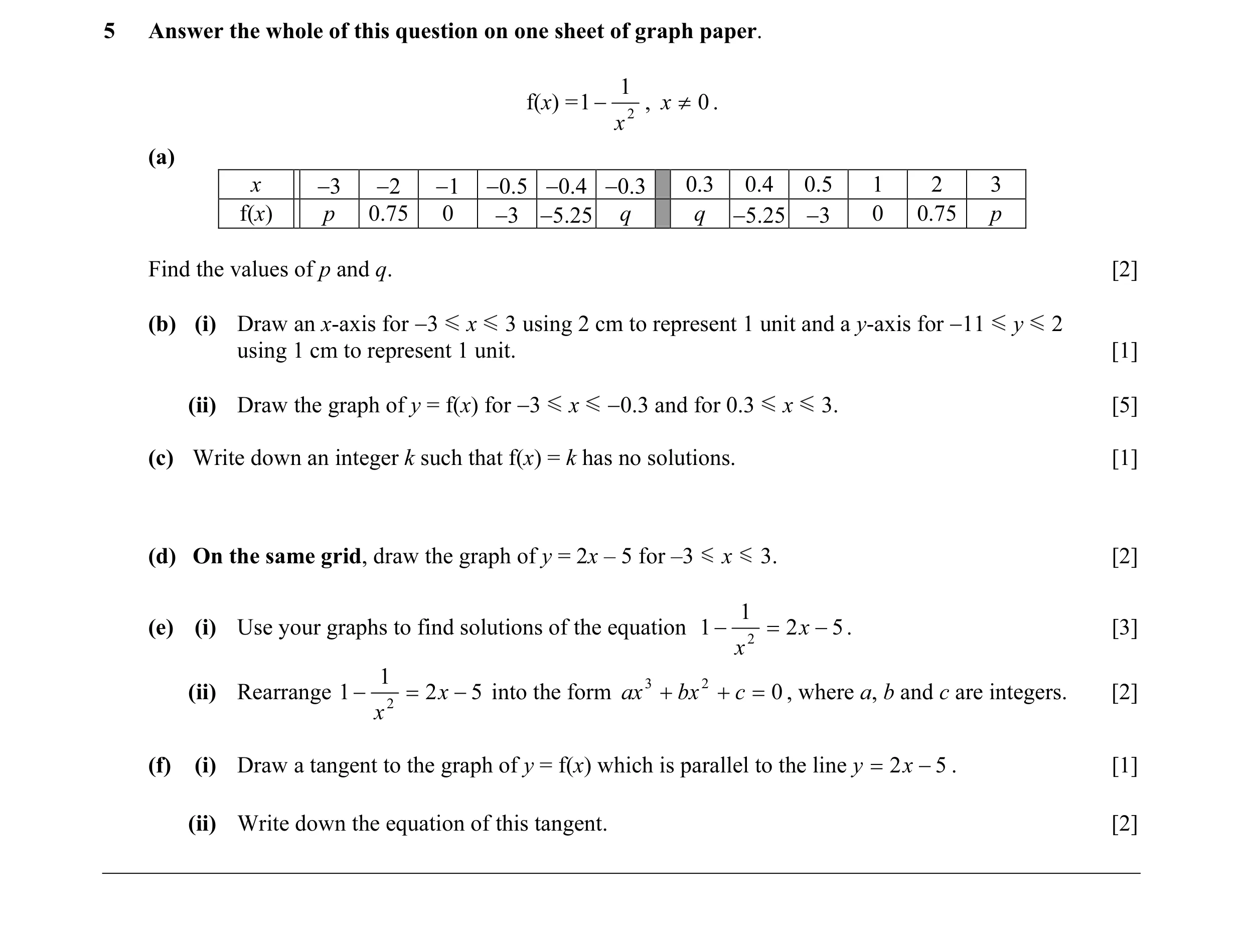 1 / 124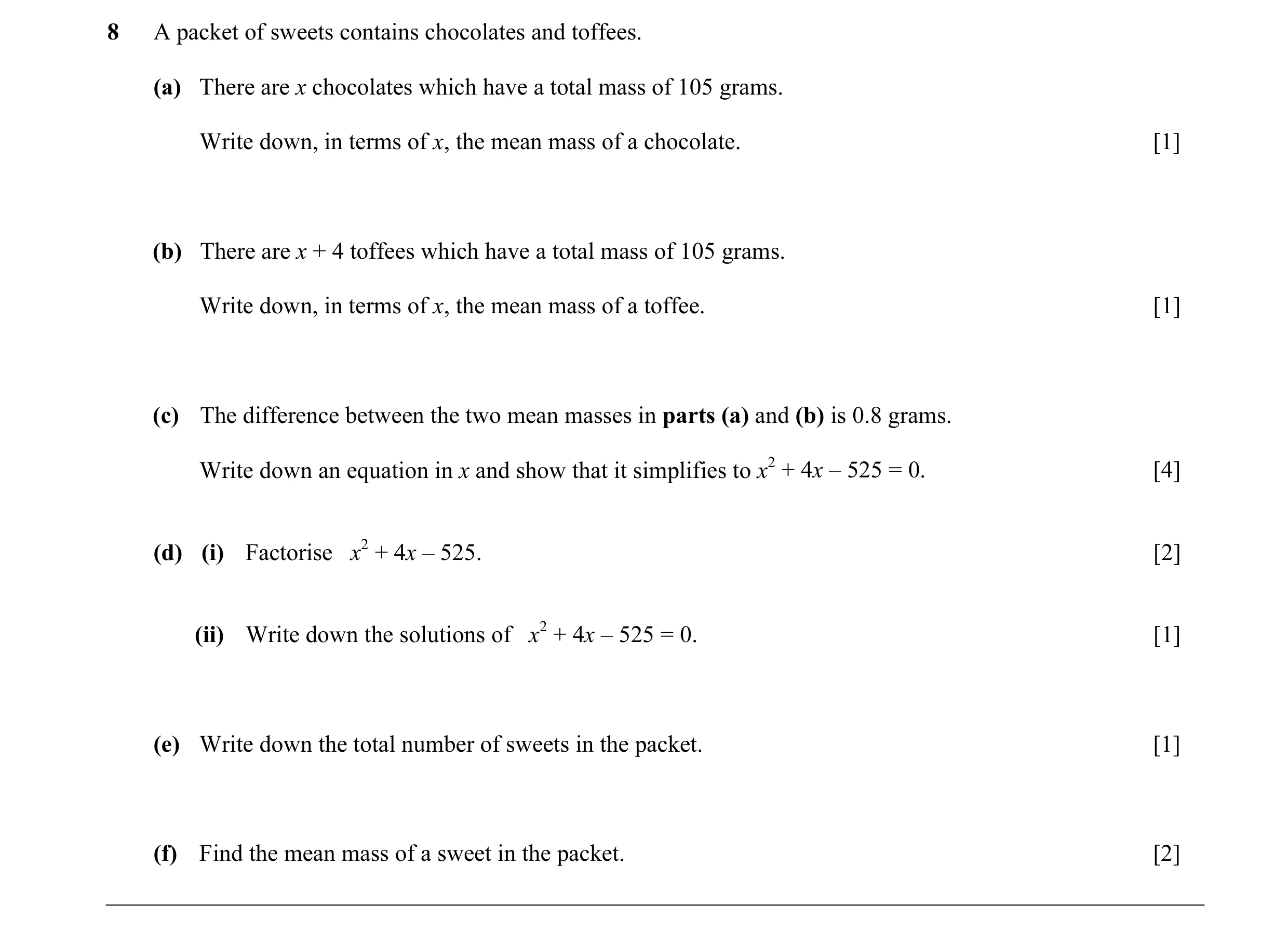
![Question 3: (a) (i) Factorise x2 − x − 20. [2] (ii) Solve the equation x2 − x − 20 = 0. [1] (b) Solve the equation 3x2 − 2x − 2 = 0. Show all your work…](https://img.pastlit.com/crops/8f864f26-a345-4525-88eb-53e1a582dfcb/q2.webp) 2 / 124
2 / 124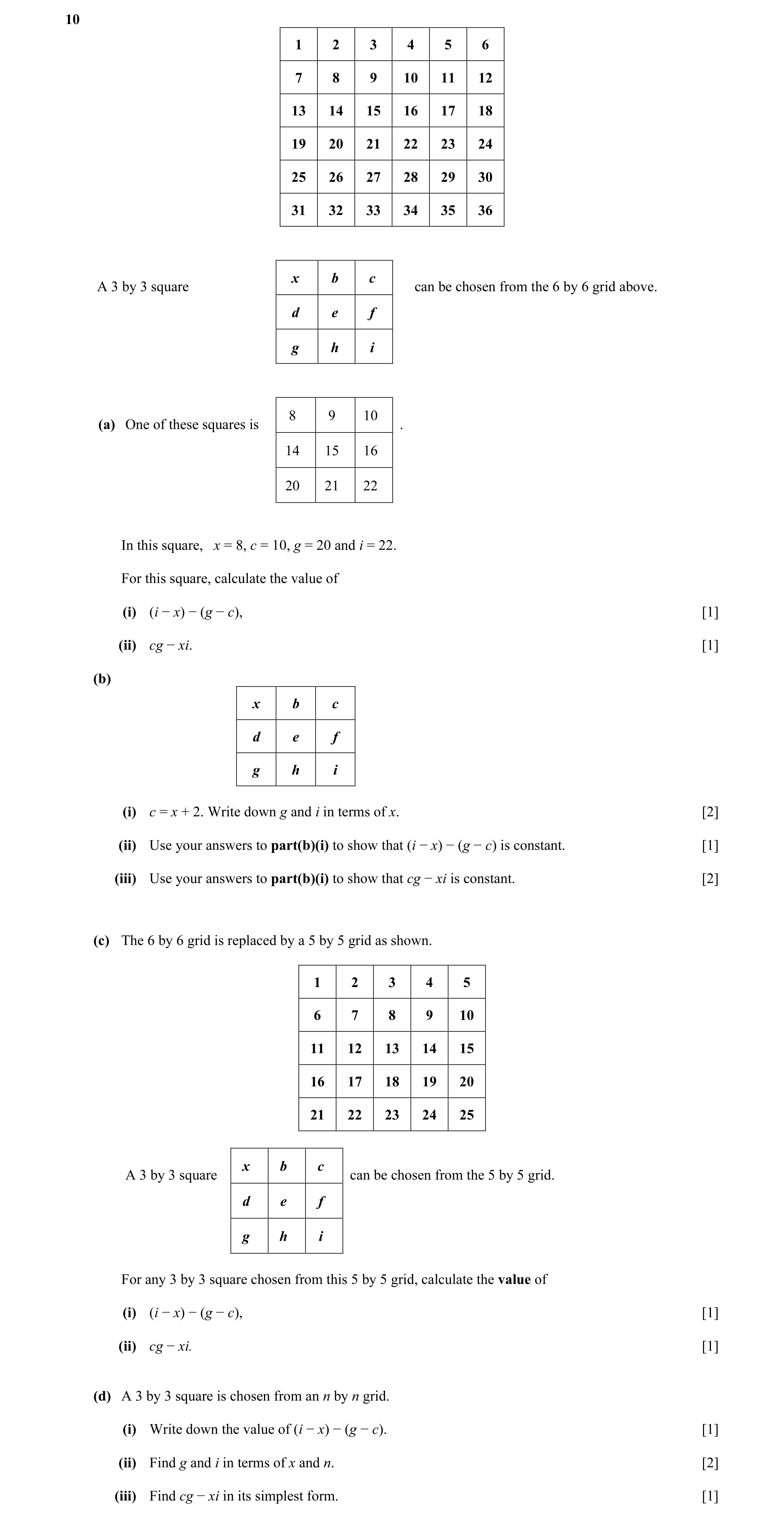
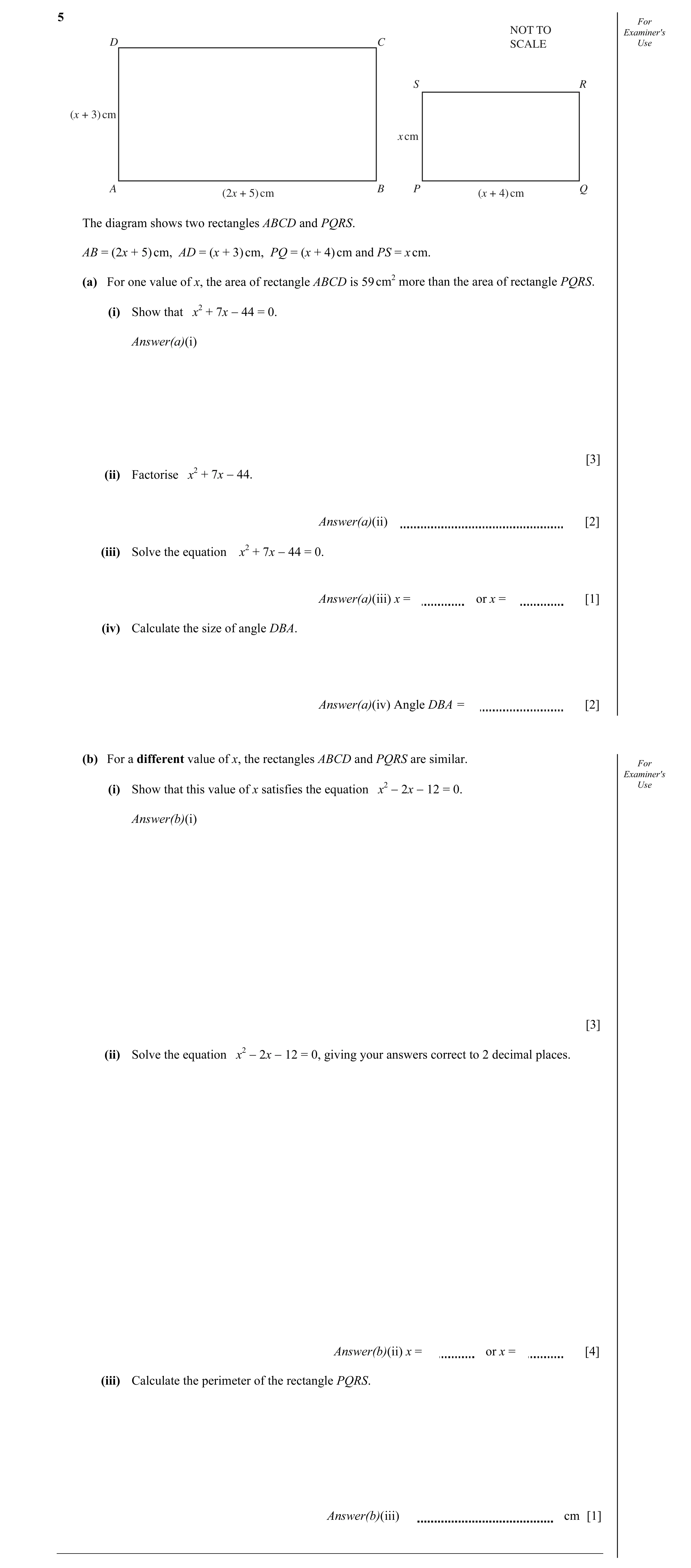
![Question 6: _ m 3 m + 4 _ For 9 (a) Solve the equation + = 7 . Examiner's 4 3 Use Answer(a) m = [4] 3 _ 2 (b) (i) y = _ x 1 x + 3 Find the value of y w…](https://img.pastlit.com/crops/9d226c06-2d7f-4f73-aca4-11b1226a0f24/q9.webp)
![Question 7: (a) f(x) = 2x Examiner's Use Complete the table. x –2 –1 0 1 2 3 4 y = f(x) 0.5 1 2 4 [3] (b) g(x) = x(4 – x) Complete the table. x –1 0 1 …](https://img.pastlit.com/crops/af18e727-1bb6-4d48-900e-a0840e7b995b/q8.webp)
![Question 8: (a) Solve 9 I 3n + 6 Y 21 for integer values of n. For Examiner's Use Answer(a) [3] (b) Factorise completely. (i) 2x2 + 10xy Answer(b)(i) […](https://img.pastlit.com/crops/3a923785-0d64-4881-aea6-23006d8195ff/q5.webp)
![Question 9: (a) Find the integer values for x which satisfy the inequality –3 I 2x –1 Y 6 . For Examiner's Use Answer(a) [3] x 2 + 3 x − 10 (b) Simplif…](https://img.pastlit.com/crops/e6962902-7edc-478f-9724-c3f5c4d23cfb/q2.webp) 13 / 124
13 / 124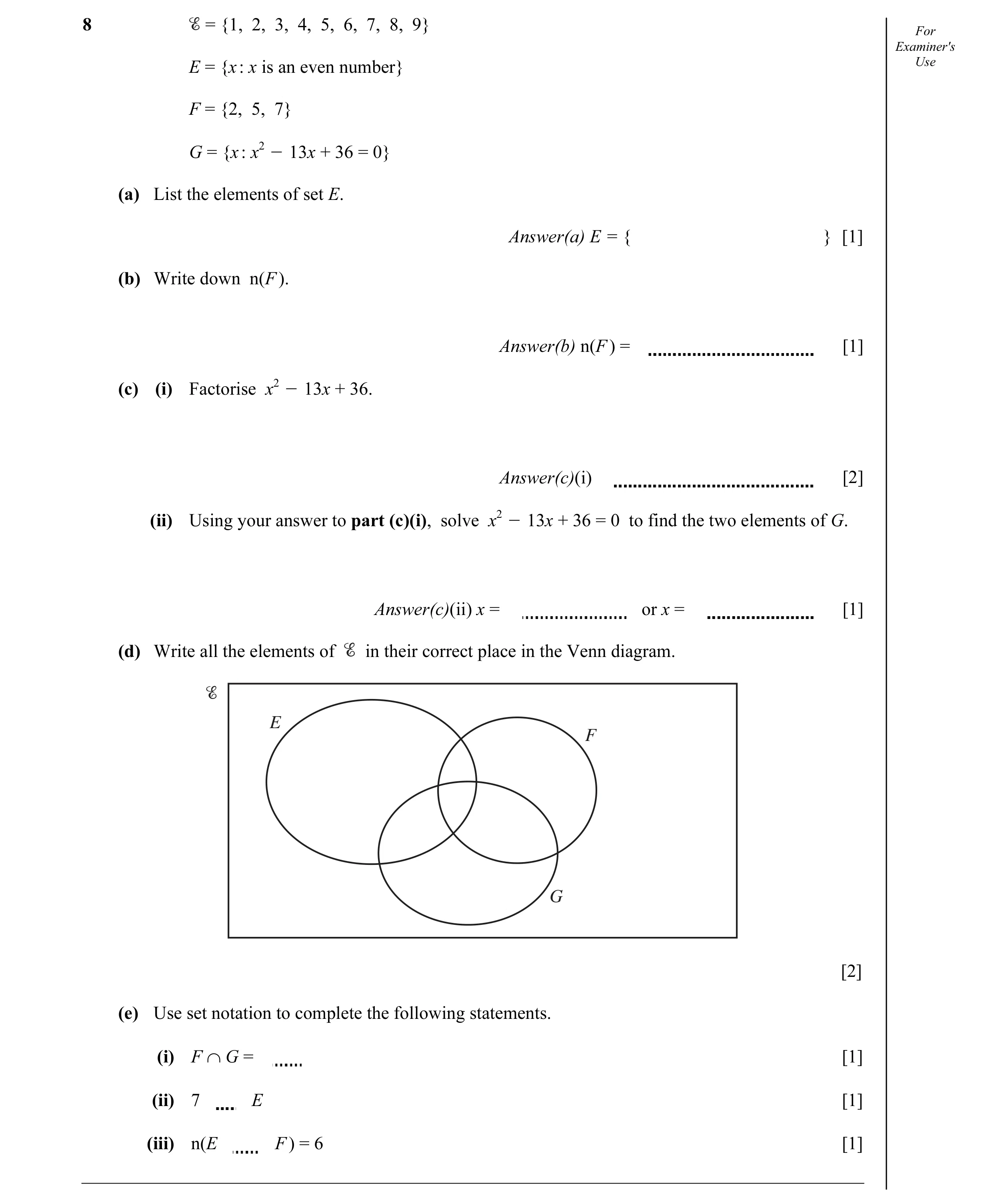 14 / 124
![Question 11: f(x) = 3x + 5 g(x) = 7 O 2x h(x) = x2 O 8 For Examiner's (a) Find Use (i) f(3), Answer(a)(i) [1] (ii) g(x O 3) in terms of x in its simples…](https://img.pastlit.com/crops/ccb08dcf-464f-4e6c-a054-b7aca52ba7fb/q9.webp) 15 / 124
15 / 124![Question 12: (a) For Examiner's 114° Use 2x° NOT TO SCALE x° (x – 10)° Find the value of x. Answer(a) x = [3] (b) (i) Write the four missing terms in th…](https://img.pastlit.com/crops/68f856b8-673d-4d24-aa23-d049e30fc65a/q6.webp) 16 / 124
16 / 124![Question 13: (a) Simplify For Examiner's (i) (2x2y3)3, Use Answer(a)(i) [2] _ 1 27 3 (ii) 6 . x Answer(a)(ii) [3] (b) Multiply out and sim…](https://img.pastlit.com/crops/68f856b8-673d-4d24-aa23-d049e30fc65a/q10.webp) 17 / 124
17 / 124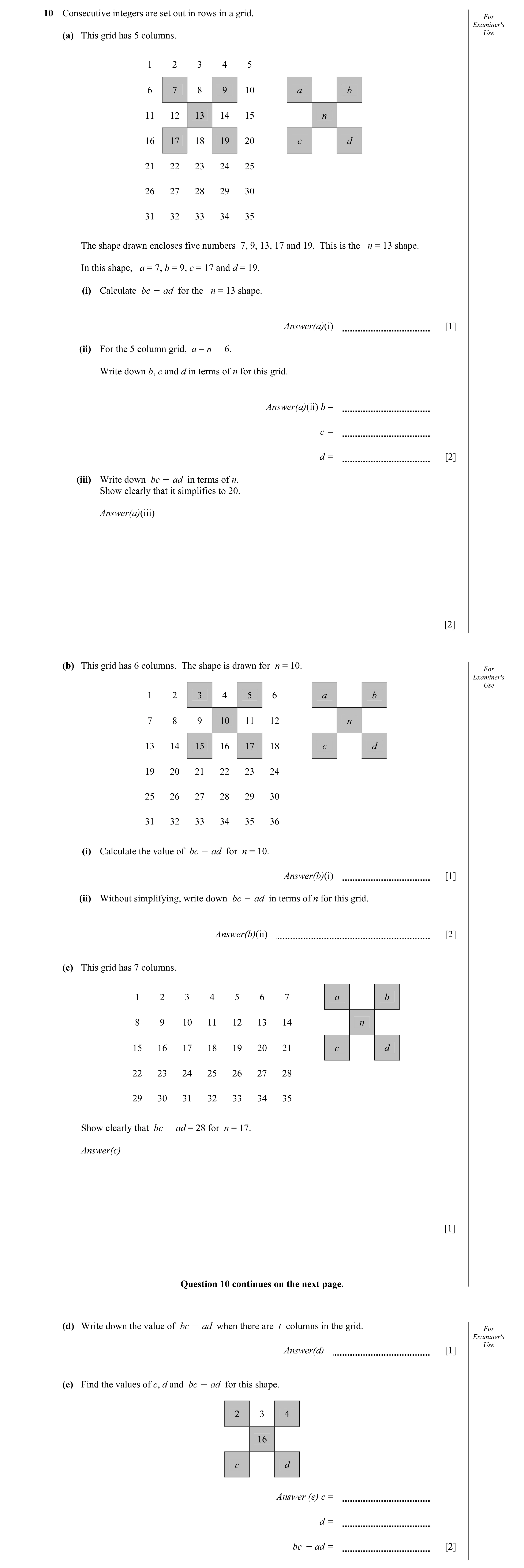
![Question 15: (a) Write as a single fraction For Examiner′s Use 5 2x (i) – , 4 5 Answer(a)(i) ............................................... [2] 4 2x - …](https://img.pastlit.com/crops/b8c23ea7-184a-4bff-a2ba-a4fca064ab1a/q10.webp)
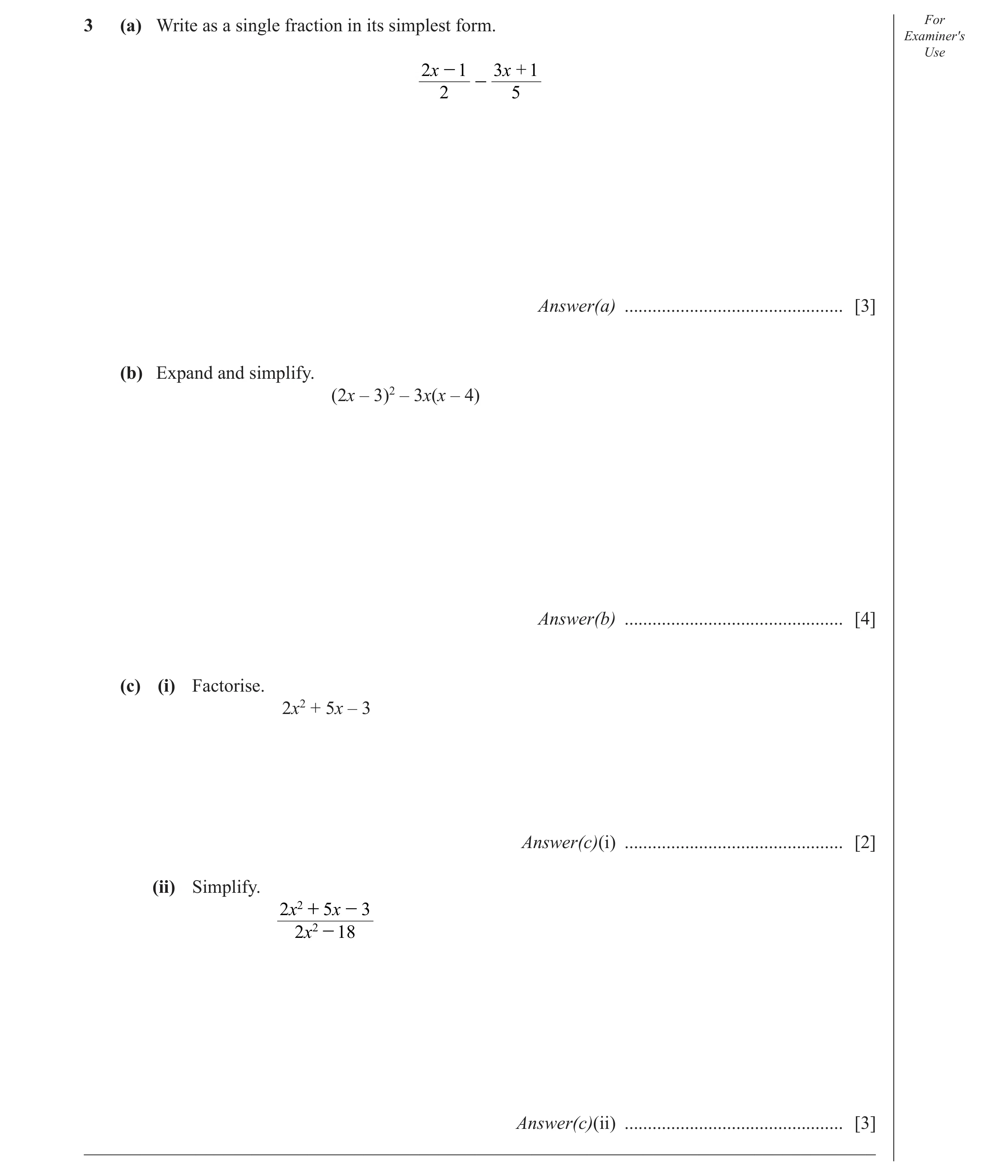 23 / 124
![Question 17: For 8 (a) Rearrange s = ut + 2 at2 to make a the subject. Examiner′s Use Answer(a) a = ............................................... [3] …](https://img.pastlit.com/crops/bd997108-0e3c-4d81-a84d-1c972f2b2afe/q8.webp)
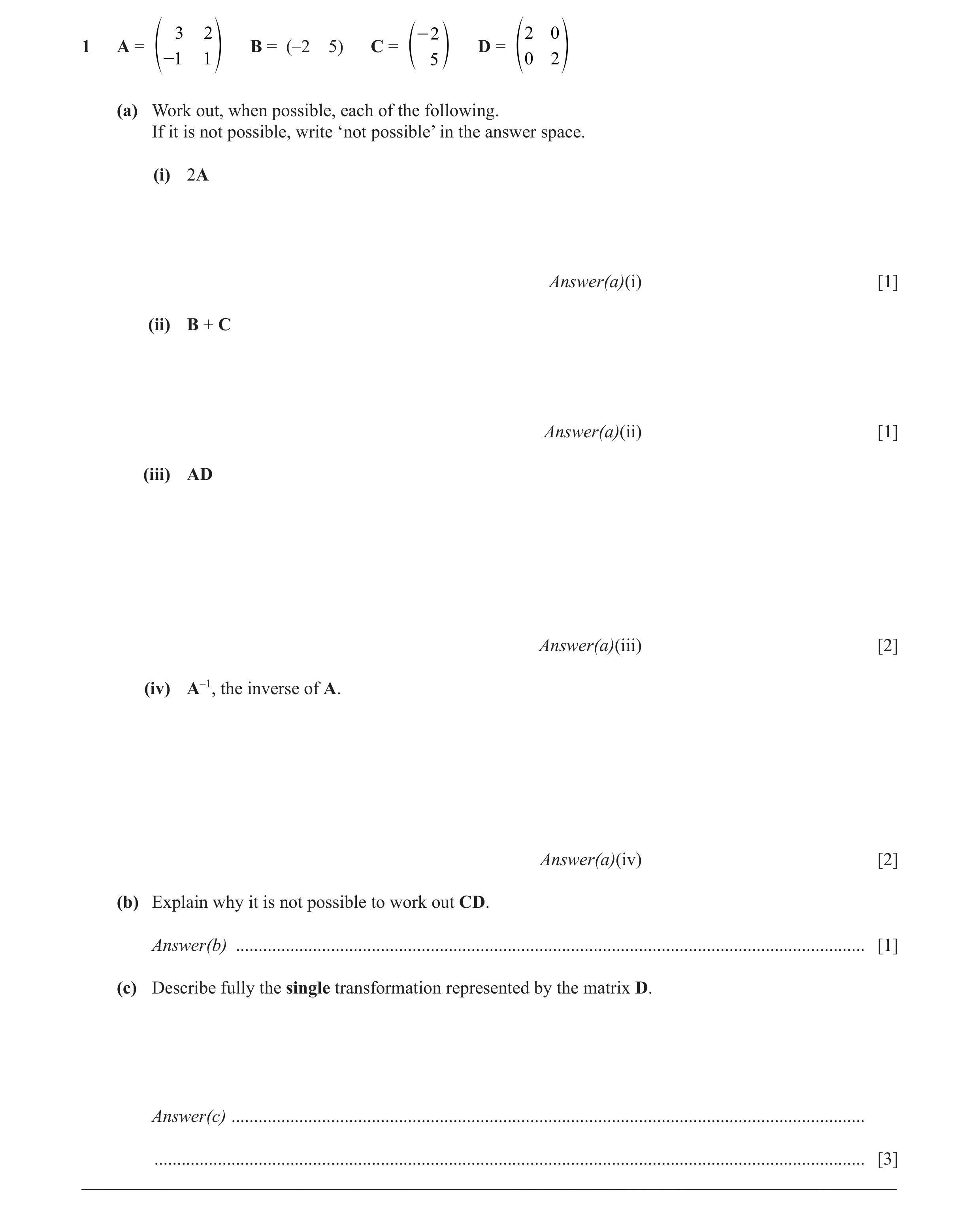 26 / 124
![Question 19: 210 f(x) = , x ≠ 0 g(x) = 1 – x h(x) = x + 1 x 1 (a) Find fg 2 ` j. Answer(a) ................................................ [2] (b) Find…](https://img.pastlit.com/crops/1da4eebe-629e-4247-b219-f8902c9d6ba4/q10.webp) 27 / 124
27 / 124![Question 20: (a) Expand and simplify. (i) 4(2x – 1) – 3(3x – 5) Answer(a)(i) ................................................ [2] (ii) (2x – 3y)(3x + 4y…](https://img.pastlit.com/crops/ec92df10-6424-44d9-8448-d4b1d5fa7d57/q4.webp)
![Question 21: -1 1 -2 - 3 5 P = Q = R = f 1 0 p f0 1 p e 5 o (a) Work out (i) 4P, Answer(a)(i) [1] (ii) P – Q, Answer(a)(ii) [1] (iii) P2, Answer(a)(iii)…](https://img.pastlit.com/crops/2811b34f-9498-45ce-9854-52969cac6399/q5.webp) 30 / 124
30 / 124![Question 22: (a) Simplify. (i) x3 ÷ 53 x Answer(a)(i) ................................................ [1] (ii) 5xy8 × 3x6y–5 Answer(a)(ii) ............…](https://img.pastlit.com/crops/2811b34f-9498-45ce-9854-52969cac6399/q6.webp) 31 / 124
31 / 124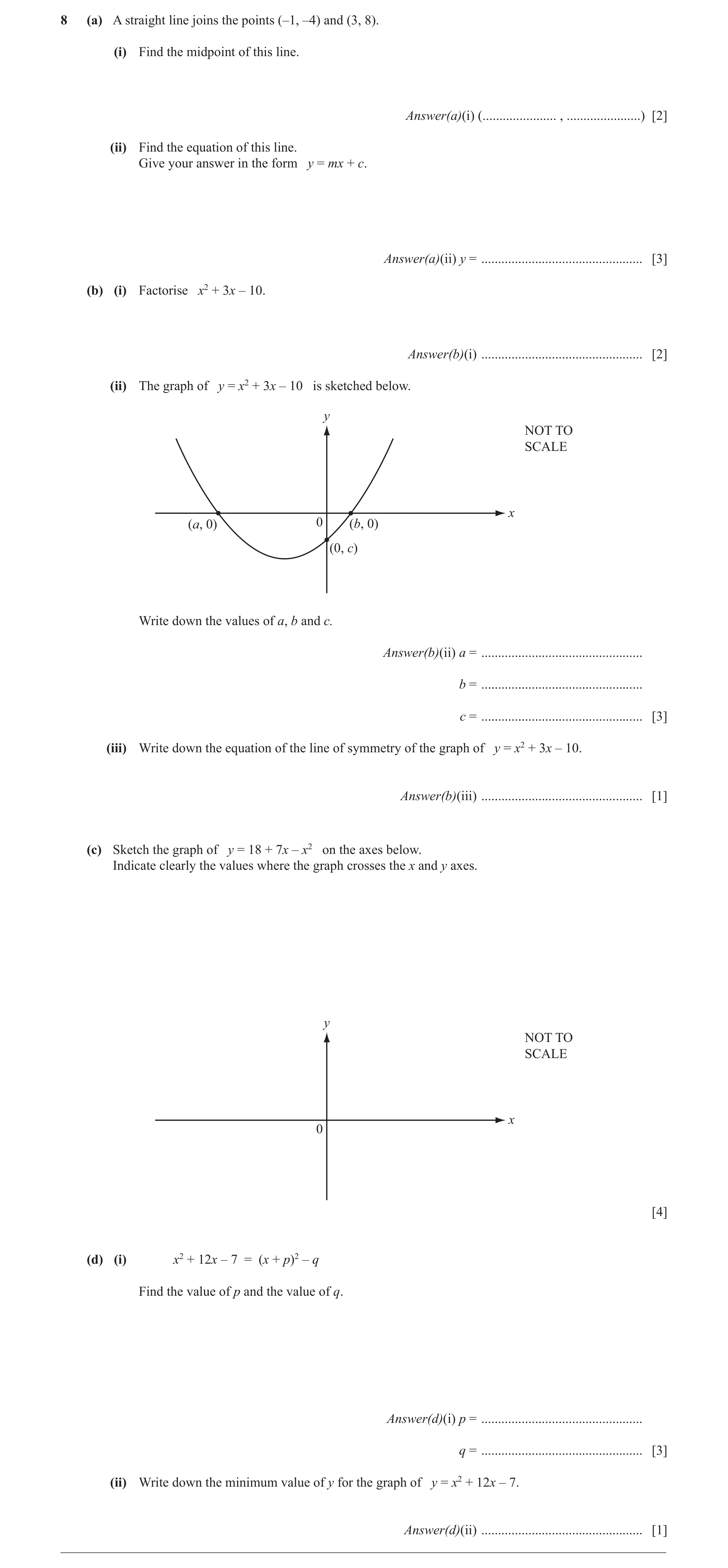
![Question 24: (a) Make x the subject of the formula. xr A - x = t Answer(a) x = ................................................. [4] (b) Find the value …](https://img.pastlit.com/crops/8d98d941-7098-4ca2-950b-5344a149adae/q11.webp) 34 / 124
34 / 124![Question 25: (a) Expand and simplify. 3x(x – 2) – 2x(3x – 5) Answer(a) ................................................ [3] (b) Factorise the following …](https://img.pastlit.com/crops/d67c2d7b-362c-456d-8c2b-63f45c442870/q9.webp)
![Question 27: 3 1 2 0 u w 3 9 P = Q = R = S = c 1 4 m c 0 3 m c 1 m c 8 2 m v (a) Work out PQ. Answer(a) [2] f p (b) Find Q –1. Answer(b) [2] f p (c) PR …](https://img.pastlit.com/crops/3a8df877-c5a5-421a-893b-61a30aa25f22/q9.webp) 38 / 124
38 / 124![Question 28: (a) Factorise x2 – 3x – 10. Answer(a) ................................................ [2] x + 2 3 (b) (i) Show that + = 3 simplifies to 2x…](https://img.pastlit.com/crops/68ca3ad9-f6ae-4837-bcf9-7a3533d7b776/q8.webp) 39 / 124
39 / 124
![Question 30: f(x) = 2 − 3x g(x) = 7x + 3 (a) Find (i) f(−3), ........................................ [1] (ii) g(2x). ..................................…](https://img.pastlit.com/crops/fcf7a9c2-0fd7-45d7-bc04-a6609aa885ff/q11.webp) 42 / 124
42 / 124![Question 31: (a) Solve the inequality. 5x – 3 > 9 ................................................... [2] (b) Factorise completely. (i) xy – 18 + 3y – 6…](https://img.pastlit.com/crops/43738981-b3f4-4a42-91b3-f87151fea968/q2.webp) 43 / 124
43 / 124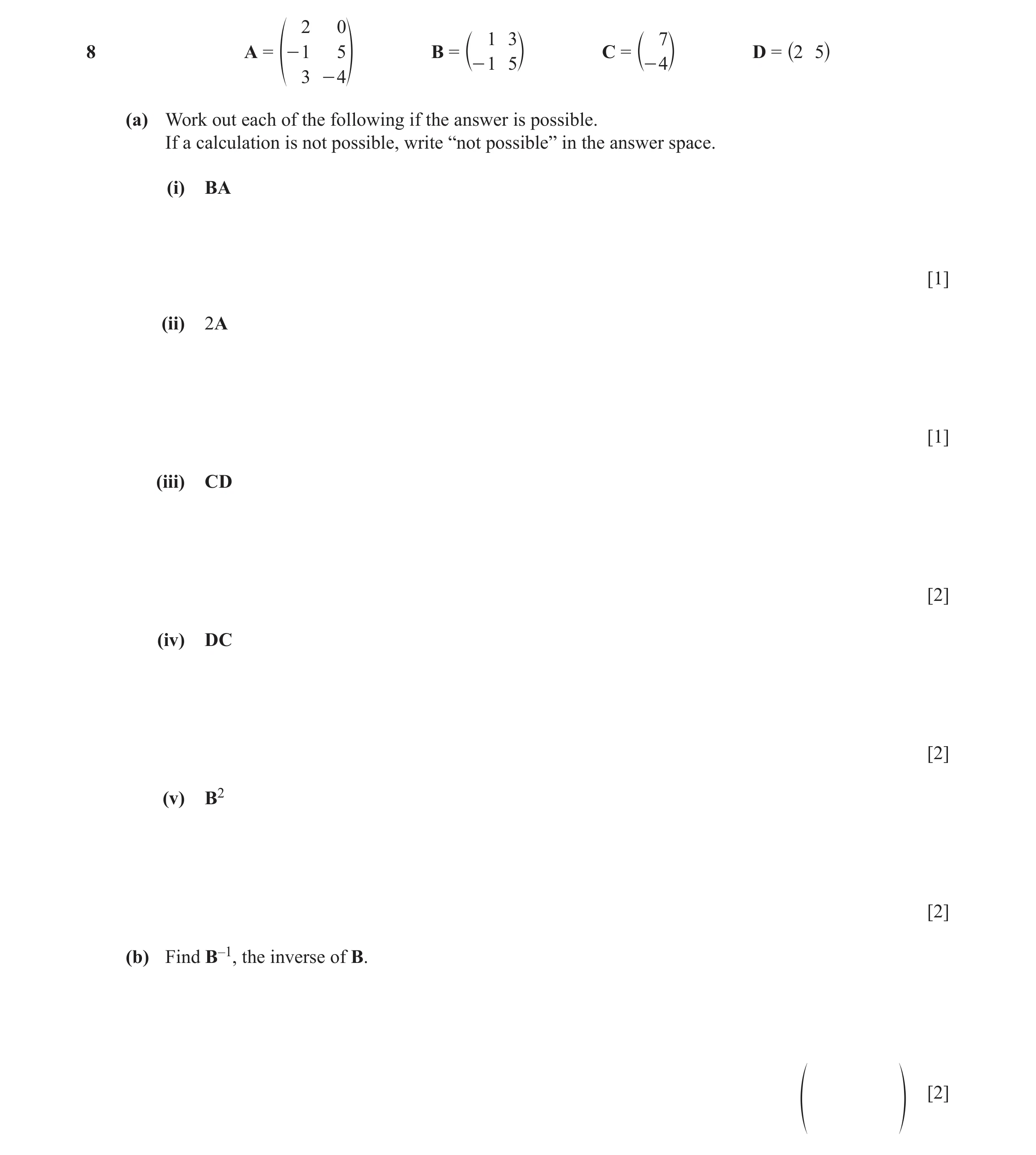 44 / 124
![Question 33: f(x) = 2x + 1 g(x) = 3x - 2 h(x) = 3 x (a) Find hf(2) – f h(1). ................................................. [3] (b) Find gf(x), givin…](https://img.pastlit.com/crops/956e0141-7e9d-4b98-b8dd-49ce7e6a3766/q9.webp)
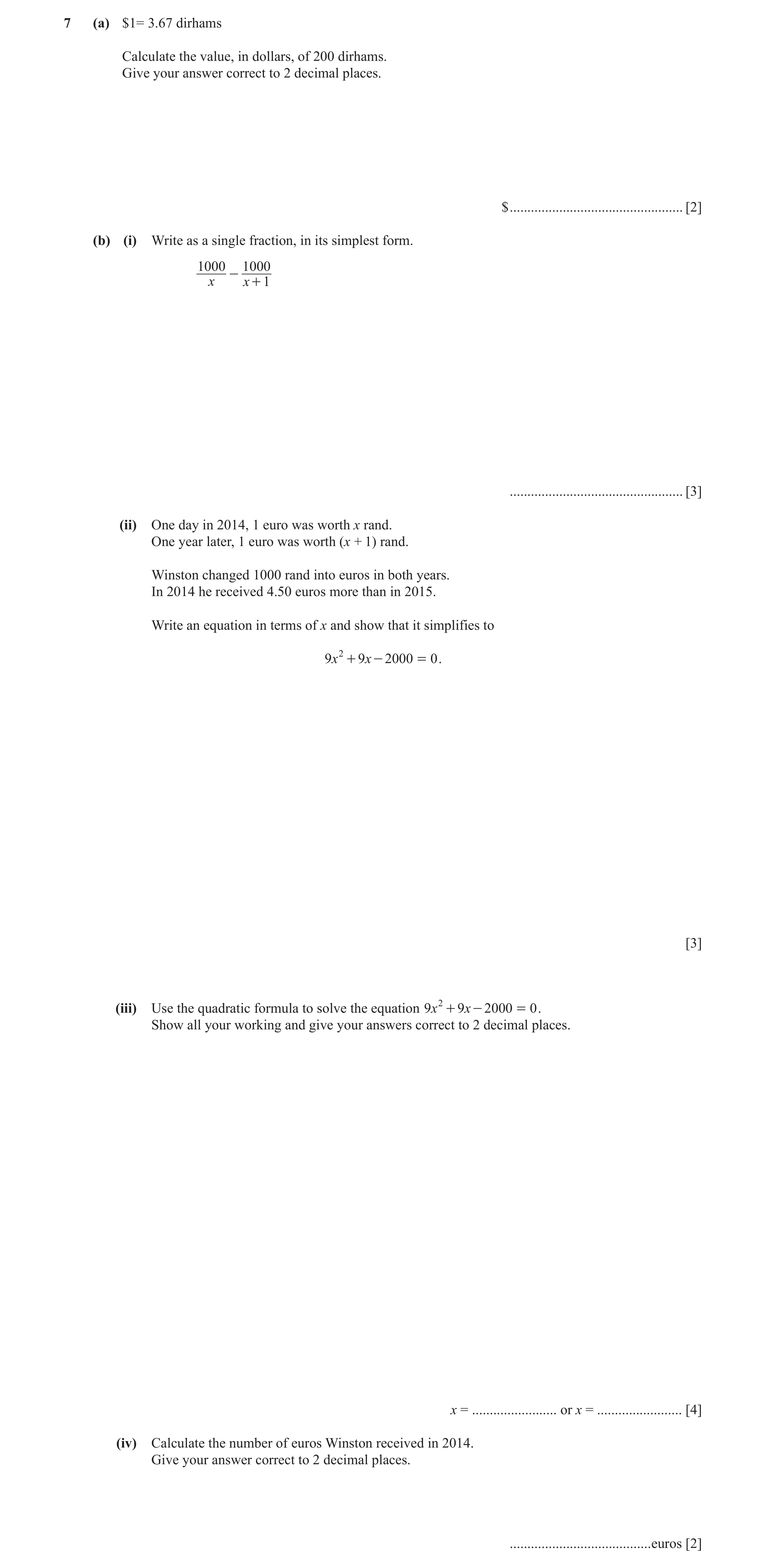
![Question 35: (a) Solve. 8x – 5 = 22 – 4x x = .................................................. [2] (b) Solve. 6x H 2x + 14 ............................…](https://img.pastlit.com/crops/49a97ea4-6968-4402-8883-cdd1c9afca05/q3.webp) 48 / 124
48 / 124![Question 36: (a) (i) Factorise 3x 2 + 11x - 4 . .............................................. [2] (ii) Solve the equation 3x 2 + 11x - 4 = 0 . x = ....…](https://img.pastlit.com/crops/cf3038eb-e768-4405-8b63-a3f74936f178/q5.webp) 49 / 124
49 / 124![Question 37: (a) Expand the brackets and simplify. (i) 4 (2x + 5) - 5 (3x - 7) ................................................. [2] (ii) ( x - 7 ) 2 ..…](https://img.pastlit.com/crops/41eeae6f-a8f3-4935-b504-a5c0cda9a435/q6.webp) 50 / 124
50 / 124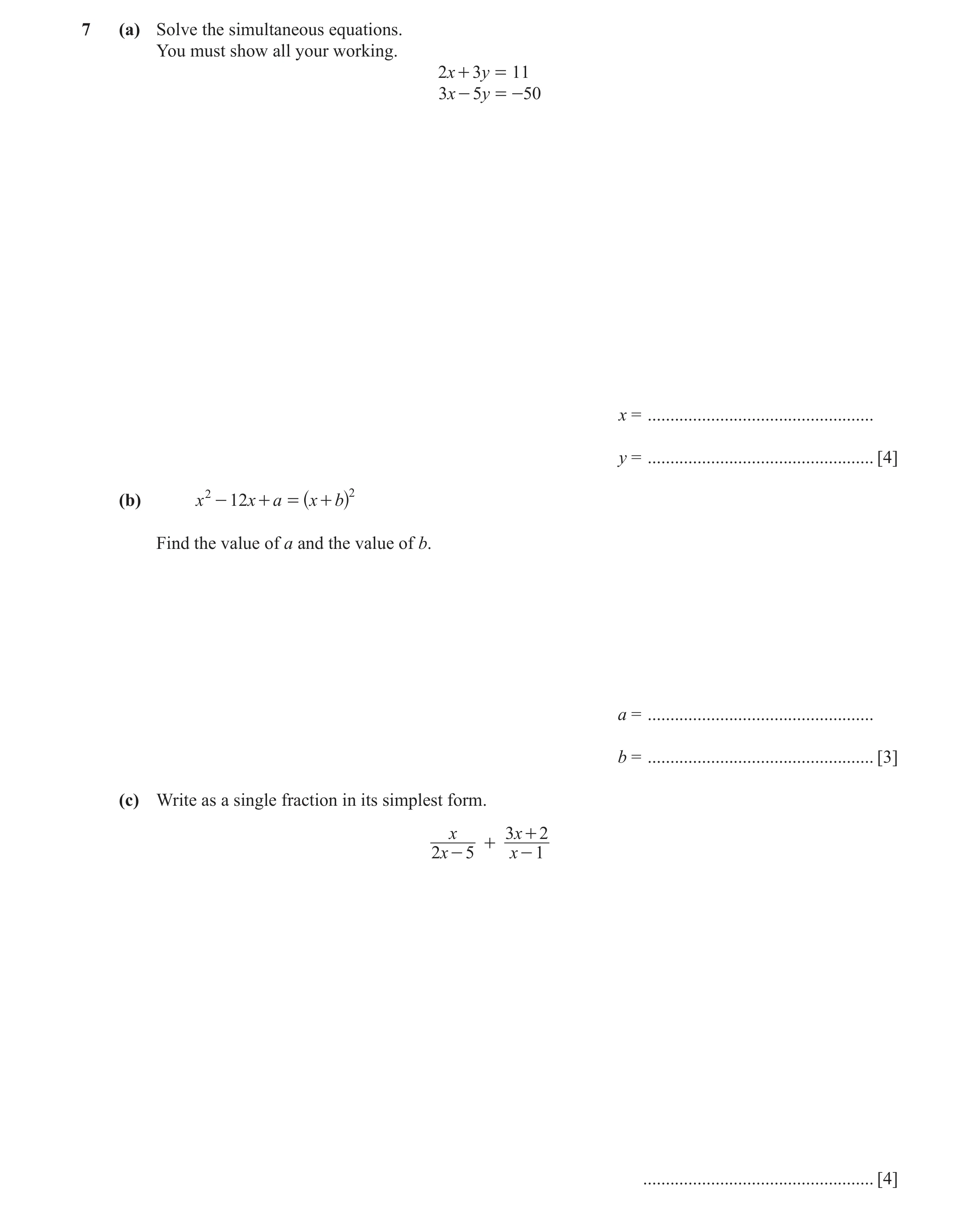 51 / 124
![Question 39: (a) Solve. 11x + 15 = 3x – 7 x = ................................................ [2] (b) (i) Factorise. x2 + 9x – 22 .....................…](https://img.pastlit.com/crops/c82e024e-4f88-4bfc-9d37-d77907d26617/q3.webp) 52 / 124
52 / 124![Question 40: The table shows some values of y = 2x 2 + 5x - 3 for -4 G x G 1.5 . x -4 -3 -2 -1 0 1 1.5 y 0 -5 -3 4 (a) Complete the table. [3] (b) On th…](https://img.pastlit.com/crops/67ff3c06-0a27-4d25-bb3e-a94567b2523e/q7.webp)
![Question 41: (a) Factorise. (i) 2 mn + m 2 - 6 n - 3m ................................................ [2] (ii) 4y 2 - 81 ..............................…](https://img.pastlit.com/crops/23aec1f2-14cb-4886-8915-911fc6e70031/q5.webp)
![Question 42: (a) Simplify. (i) (3p2)5 ................................................. [2] (ii) 18x2y6 ' 2xy2 .........................................…](https://img.pastlit.com/crops/a3c19b84-80b7-4258-aef7-193ed7c320fd/q4.webp) 56 / 124
56 / 124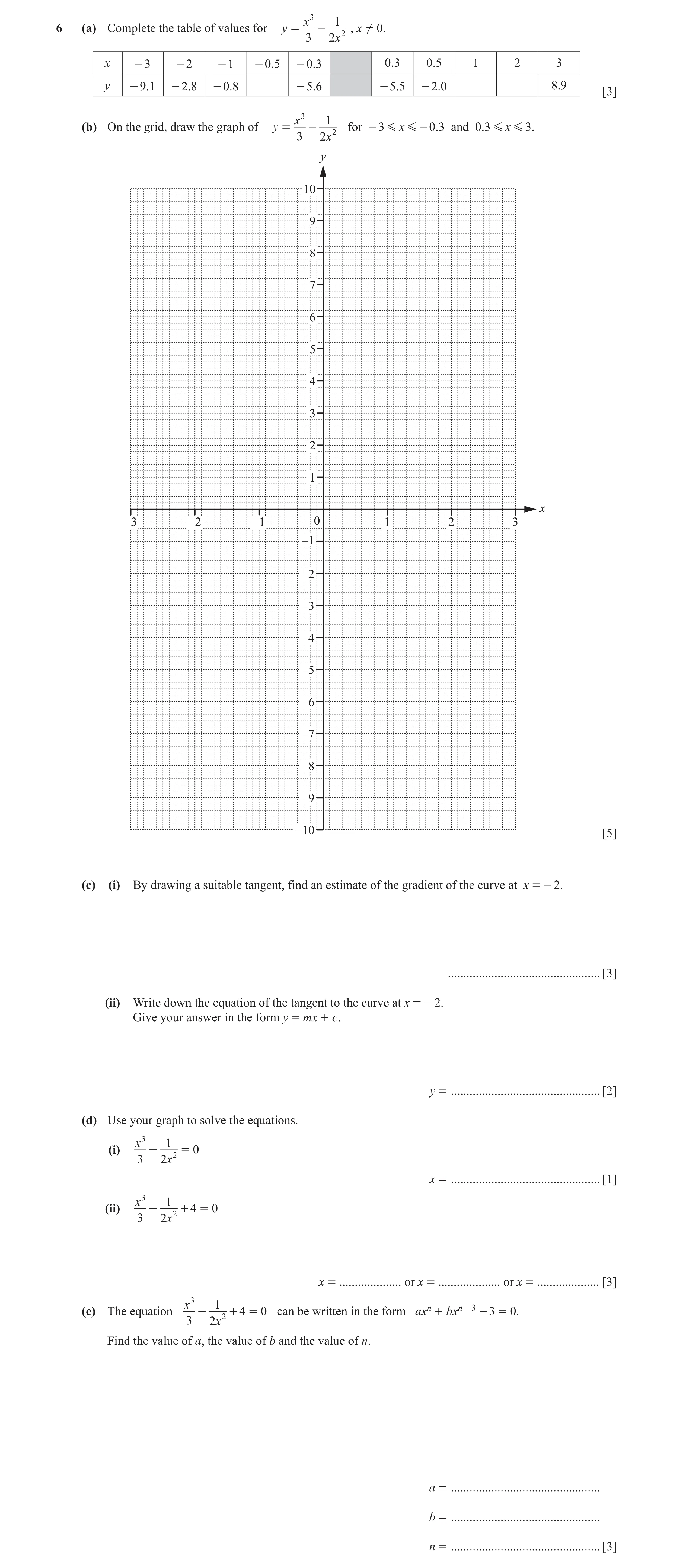
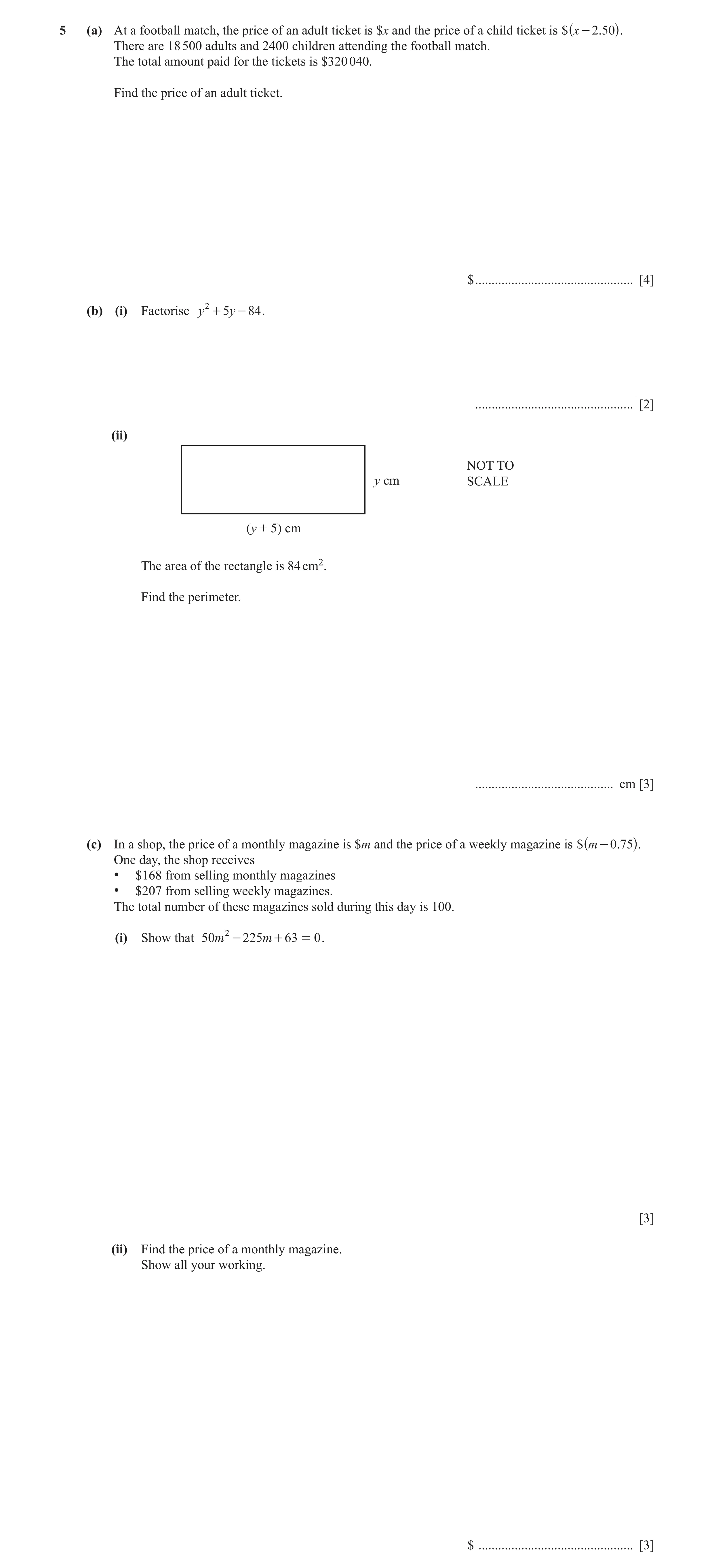
![Question 45: (a) Factorise 5m 2 - 20p 4 . ................................................ [3] PRT (b) Make P the subject of the formula A = P + . 100 P…](https://img.pastlit.com/crops/bc38e253-36c4-4ac5-97f5-cd53a0b976f5/q11.webp) 60 / 124
60 / 124![Question 46: (a) Solve 30 + 2x = 3(3 – 4x). x = ................................................ [3] (b) Factorise 12ab3 + 18a3b2. .....................…](https://img.pastlit.com/crops/47934fa5-a68d-419a-88c2-85efc762fdb9/q2.webp)
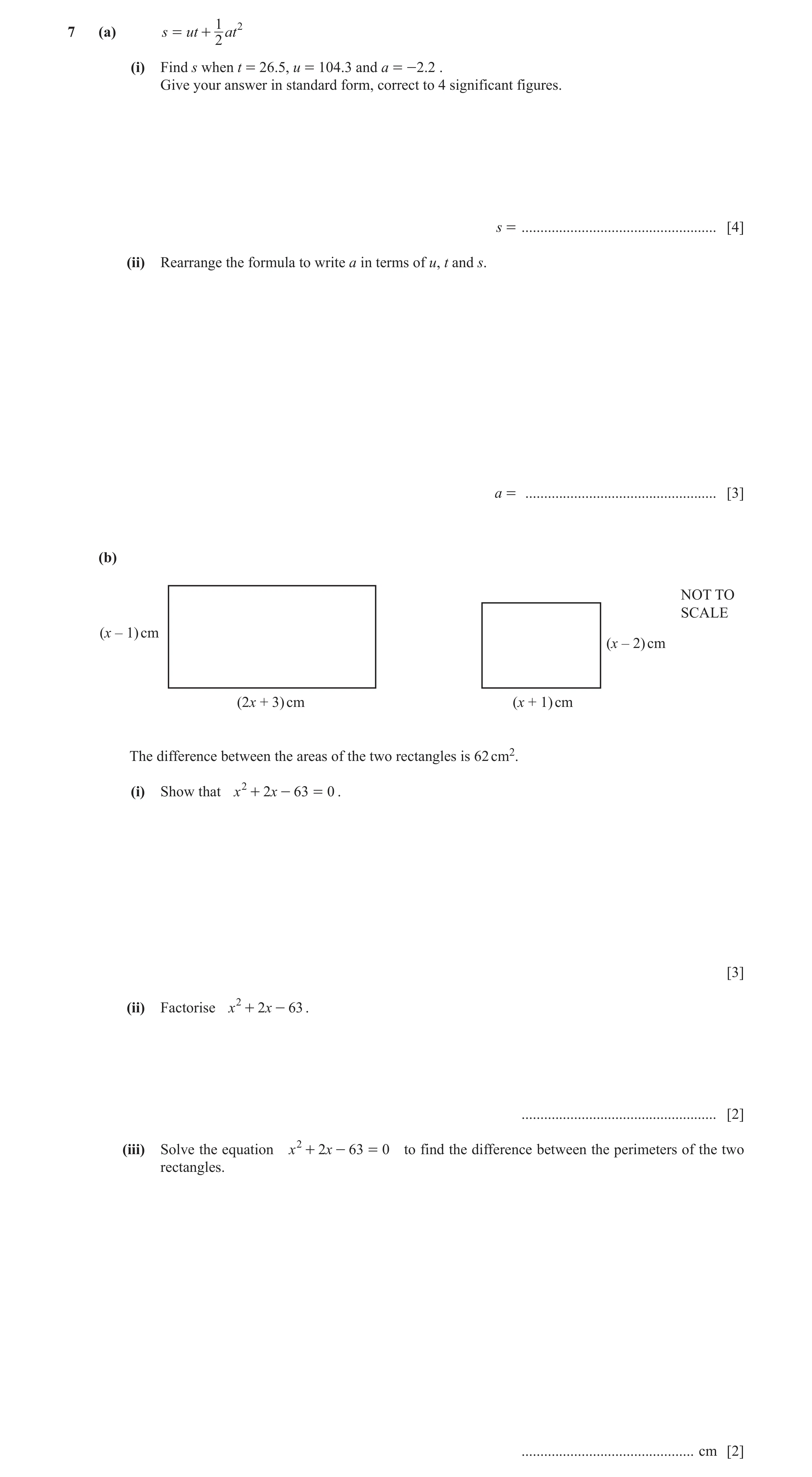
![Question 48: (a) Expand and simplify. (x + 7)(x - 3) ............................................... [2] (b) Factorise completely. (i) 15p 2 q 2 - 25q 3…](https://img.pastlit.com/crops/2e500d7b-80cd-4070-a92a-671983a6ab28/q6.webp) 64 / 124
64 / 124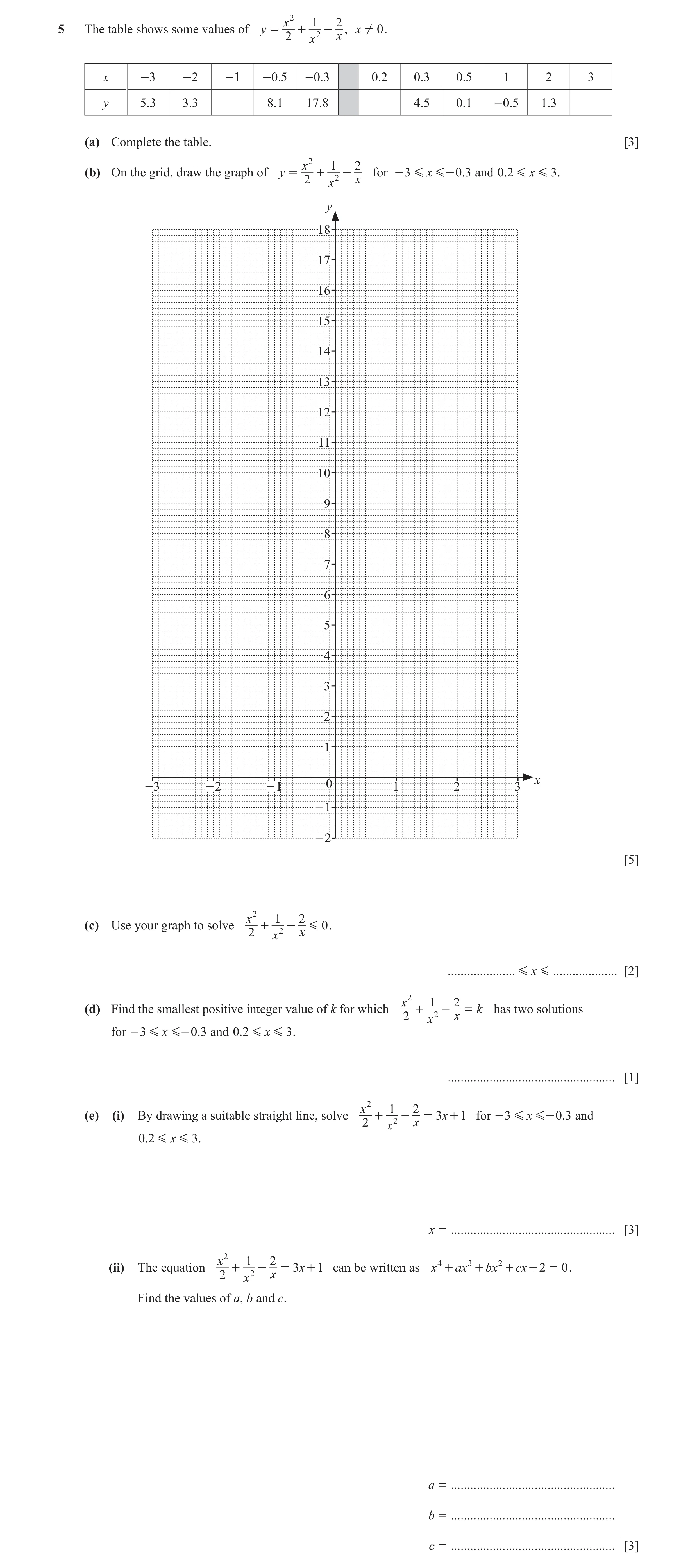
![Question 50: (a) Make p the subject of (i) 5p + 7 = m , p = ................................................... [2] (ii) y 2 - 2p 2 = h . p = ..........…](https://img.pastlit.com/crops/81aa6d77-6dc1-4c2d-8c9f-d820bd22f28e/q8.webp)
![Question 51: (a) Write as a single fraction in its simplest form. x + 3 x - 2 - x - 3 x + 2 ................................................. [4] 12 2k …](https://img.pastlit.com/crops/0f055941-6f15-434a-a7cc-3e44efb09154/q5.webp)
![Question 52: (a) s = ut + 12 at 2 Find the value of s when u = 5.2 , t = 7 and a = 1.6 . s = ................................................ [2] (b) Si…](https://img.pastlit.com/crops/45dd33a1-2153-428c-916c-1413986ef325/q3.webp)
![Question 53: (a) Factorise completely. 3a 2 b - ab 2 ................................................. [2] (b) Solve the inequality. 3x + 12 1 5x - 3 ..…](https://img.pastlit.com/crops/84072e49-d888-47f7-943f-887dcbdd47d7/q8.webp)
![Question 54: (a) (i) Factorise 24 + 5x - x 2 . ................................................. [2] (ii) The diagram shows a sketch of y = 24 + 5 x - x…](https://img.pastlit.com/crops/305951db-c546-453b-89ff-7dd6567c6363/q7.webp)
![Question 55: (a) Factorise. (i) 5am + 10ap - bm - 2bp ................................................. [2] (ii) 15 ( k + g) 2 - 20 ( k + g) ...........…](https://img.pastlit.com/crops/470482a8-9315-41a2-b1f1-ab7236402332/q9.webp)
![Question 56: (a) Simplify, giving your answer as a single power of 7. (i) 7 5 # 7 6 ................................................. [1] (ii) 7 15 ' 7 …](https://img.pastlit.com/crops/a0b8f6e8-1247-43f9-ac8b-bffadb7aef51/q3.webp)
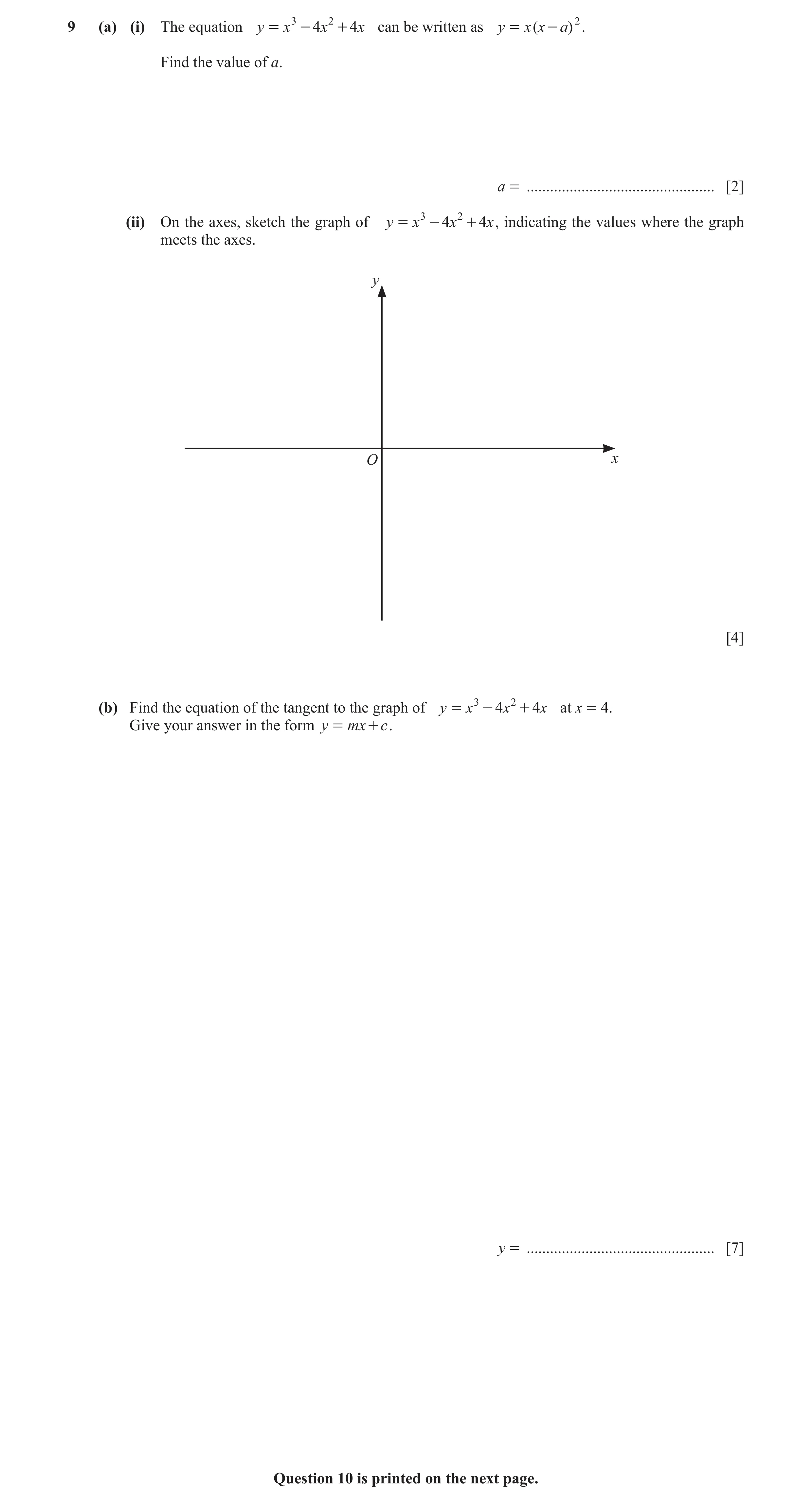
![Question 58: (a) y = px 2 + t (i) Find the value of y when p = 3, x = 2 and t = -13. y = ................................................. [2] (ii) Rear…](https://img.pastlit.com/crops/3ef72f55-5a57-44e6-9d01-91338575f77e/q2.webp)
![Question 59: (a) x –2 1 Write down the inequality in x shown by the number line. ................................................. [2] (b) (i) Write x 2…](https://img.pastlit.com/crops/3ef72f55-5a57-44e6-9d01-91338575f77e/q7.webp)
![Question 60: (a) Solve. (i) 6 ( 7 - 2)x = 3x - 8 x = ................................................ [3] 2x 2 (ii) = x - 5 3 x = ......................…](https://img.pastlit.com/crops/9580b6f9-984a-4a4a-ab91-d0f2f6c38e3d/q4.webp)
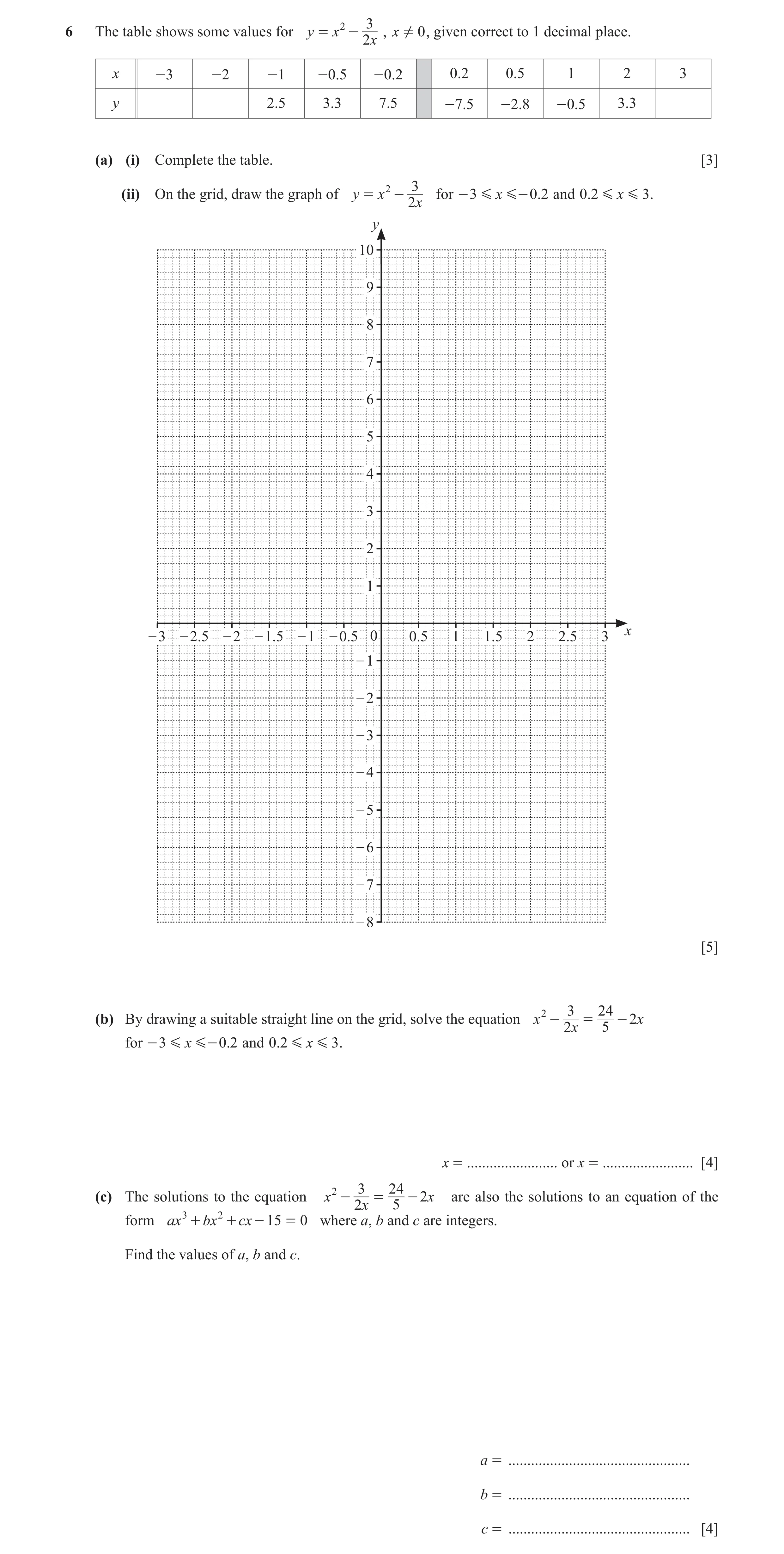
![Question 62: (a) Solve. (i) 4 ( 2x - 3) = 24 x = ................................................ [3] (ii) 6x + 14 2 6 .................................…](https://img.pastlit.com/crops/9d898687-f275-4f62-9d49-6fc71bdb9633/q6.webp)
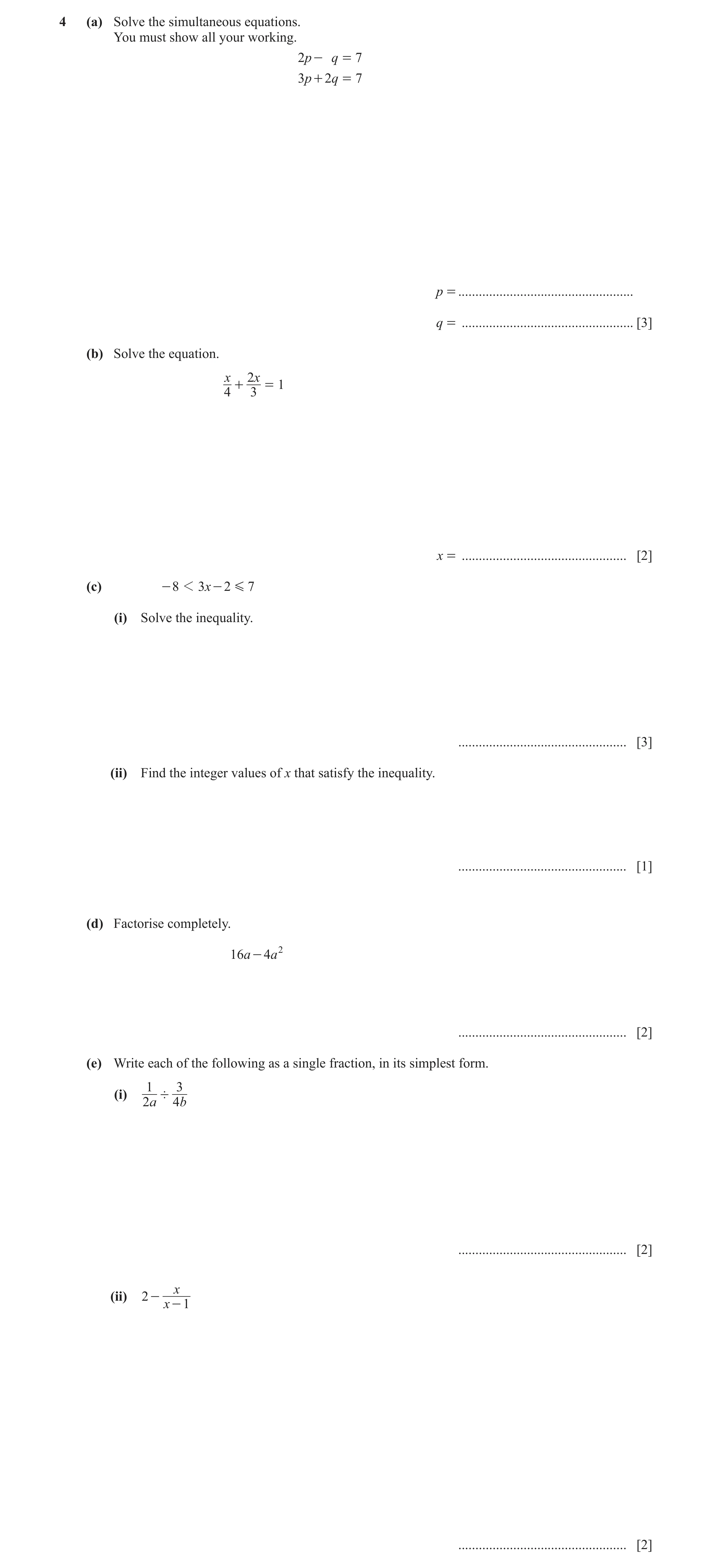
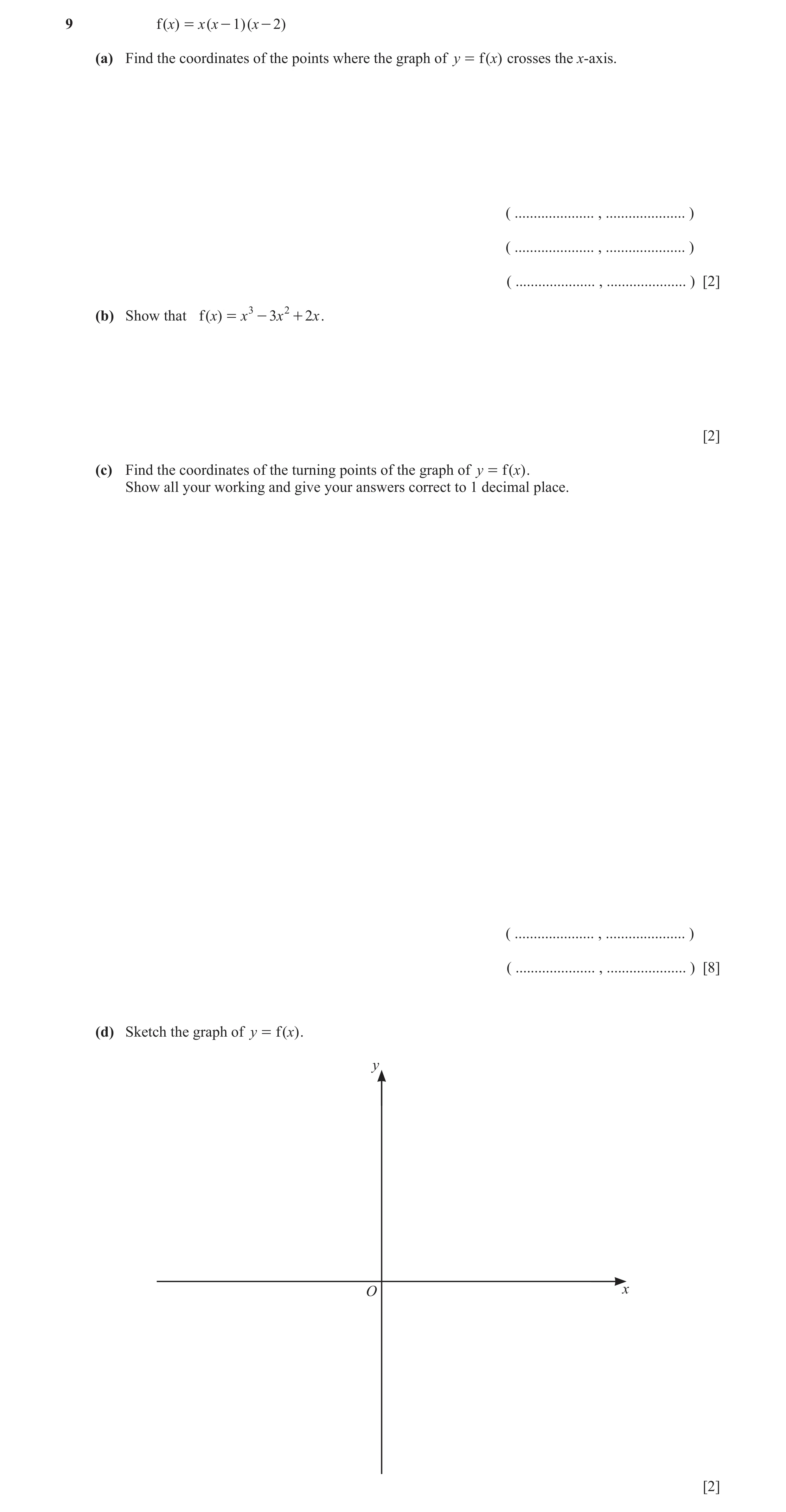
![Question 65: (a) Expand and simplify. ( x + 1)( x - 2)( x + 3) ................................................. [3] (b) Make g the subject of the formu…](https://img.pastlit.com/crops/5326e4d7-61a6-4578-b233-f7b12ea9a152/q10.webp) 89 / 124
89 / 124![Question 66: (a) Solve. 10 - 3p = 3 + 11p p = ................................................ [2] (b) Make m the subject of the formula. mc 2 - 2k = mg…](https://img.pastlit.com/crops/29ef37e9-dd2c-4fce-91ee-a10d2f60d3a3/q8.webp)
![Question 67: (a) Simplify. a - 2b - 3a + 7b ................................................. [2] (b) Expand and simplify. 4 ( x - 5) - ( 3 - 2x) ......…](https://img.pastlit.com/crops/51c9f36d-0ba1-44ca-b5e3-5952d1fb07d6/q6.webp)
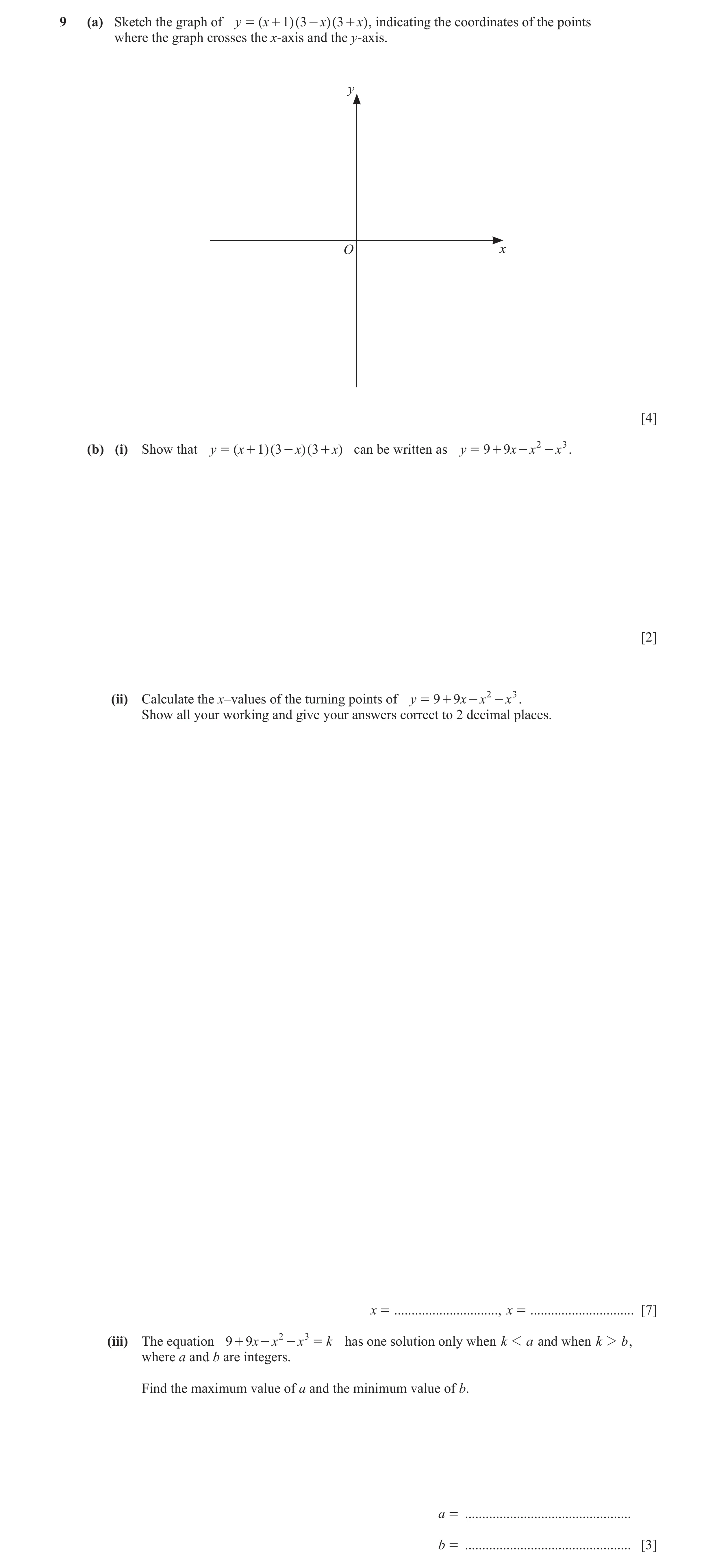
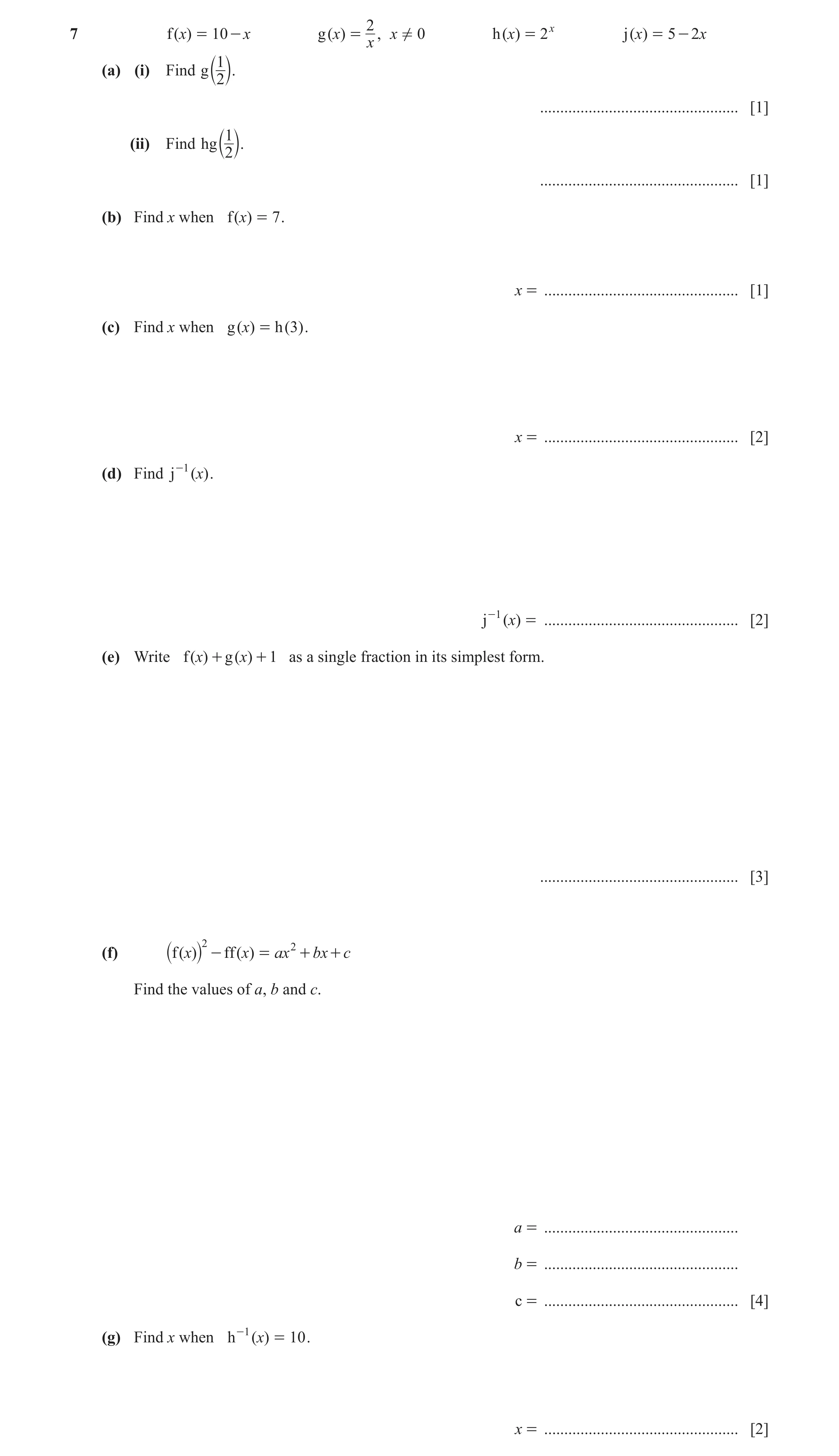
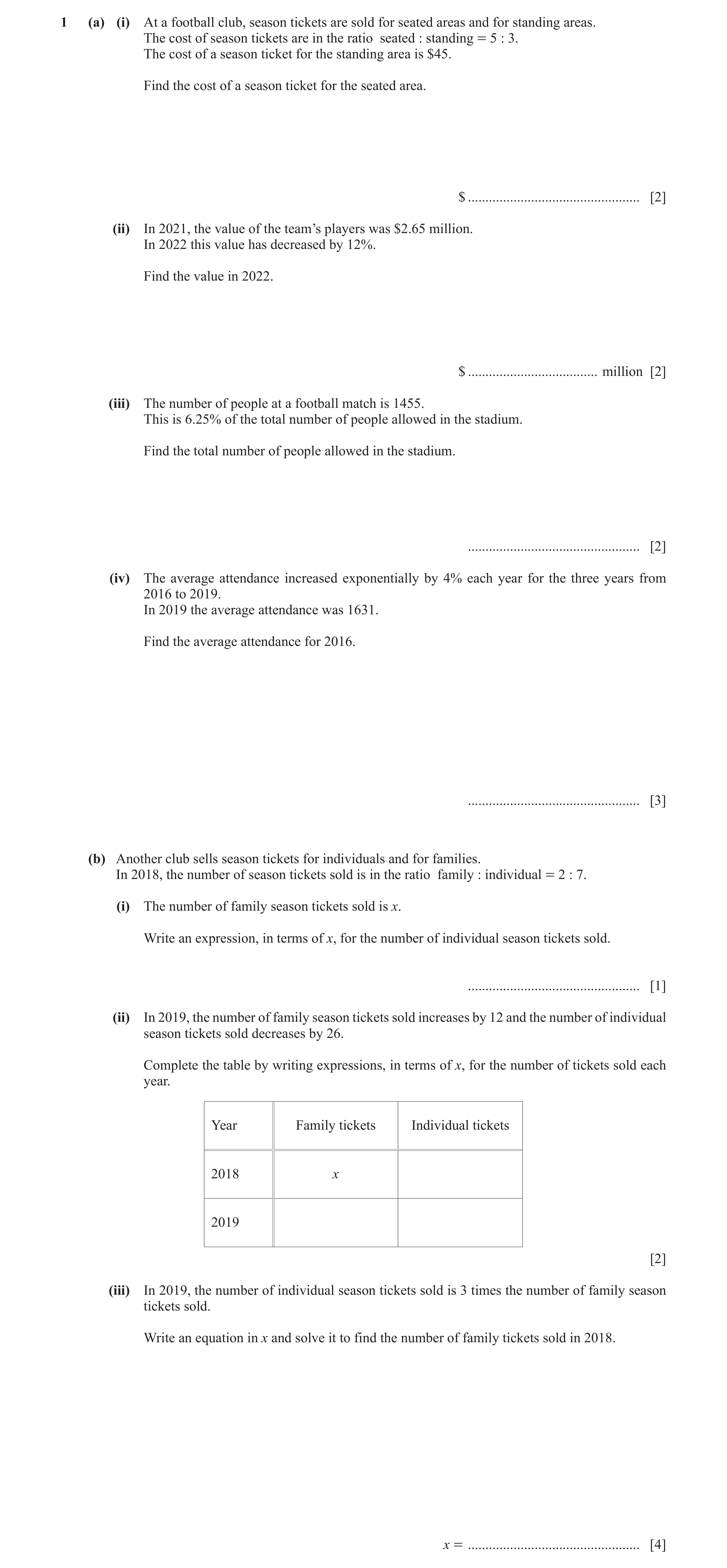
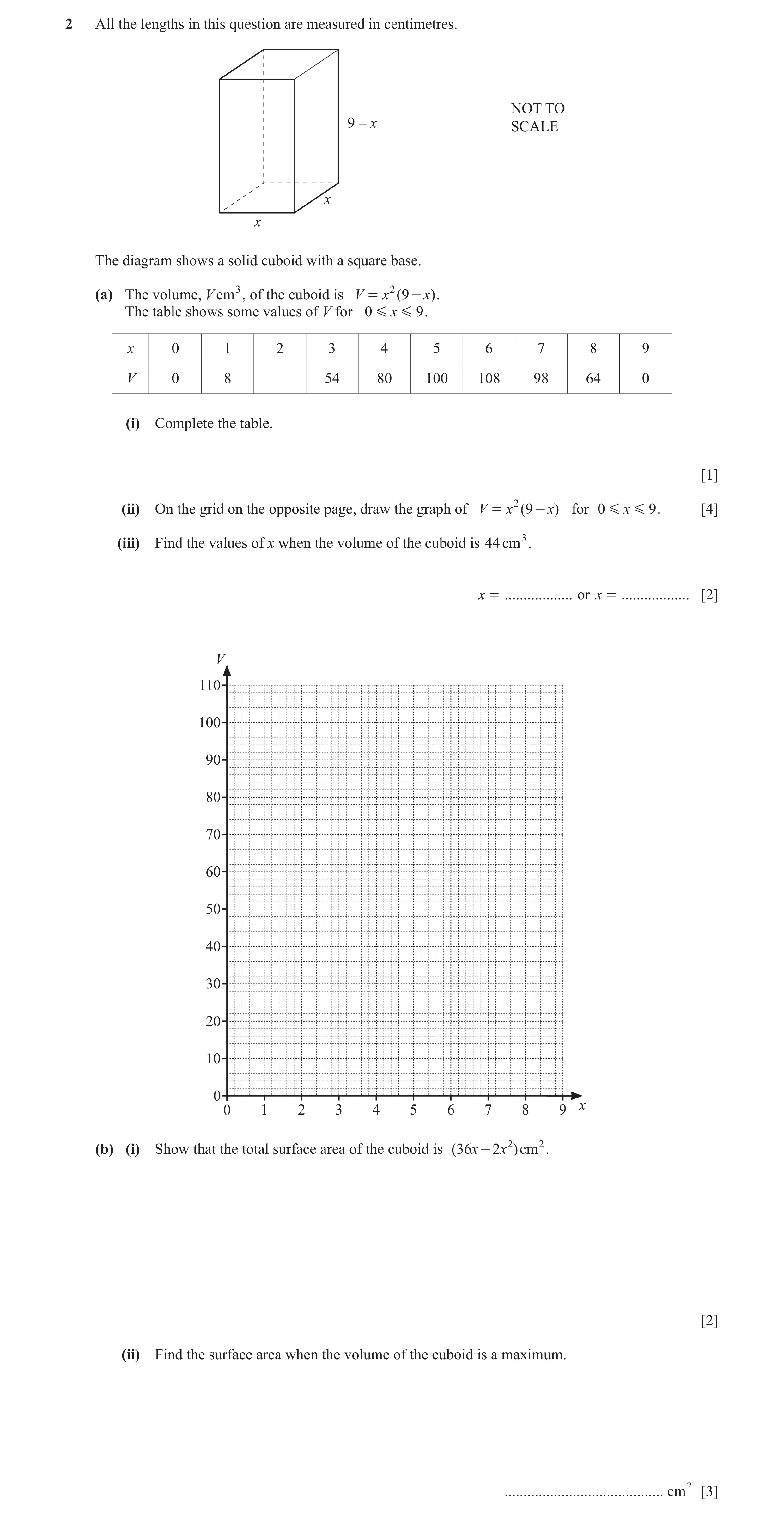
![Question 72: (a) Solve. 4x + 15 = 9 x = ................................................. [2] (b) Factorise. a 2 - 9 ...................................…](https://img.pastlit.com/crops/0a42b427-c50f-4170-b6b1-e9ad231147e3/q6.webp)
![Question 73: (a) Expand and simplify. ( 2p 2 - 3 )( 3p 2 - 2) ................................................. [2] 1 (b) s = ( u + v) t 2 (i) Find the …](https://img.pastlit.com/crops/9d161d62-f49c-47ff-8188-f324767206b1/q5.webp) 101 / 124
101 / 124![Question 74: (a) Factorise fully. (i) 27y 2 - 3 ................................................. [3] (ii) 2m - pk + 2 k - pm ..........................…](https://img.pastlit.com/crops/41774461-4eaf-4710-bae0-d49864f3c5ea/q7.webp)
![Question 75: (a) (i) Show that the equation y = ( x - 4)( x + 1)( x - 2) can be written as y = x 3 - 5x 2 + 2x + 8 . [2] (ii) On the diagram, sketch the…](https://img.pastlit.com/crops/72415a6a-4580-45c7-8cc9-9a2b5f55f83c/q8.webp)
![Question 76: 22 (a) s = at 2 Find the value of s when a = 9.8 and t = 20 . s = ................................................ [2] (b) Solve. 5 ( 4y - …](https://img.pastlit.com/crops/76af3b34-d759-43c3-b2e6-f4d4d8738582/q2.webp) 105 / 124
105 / 124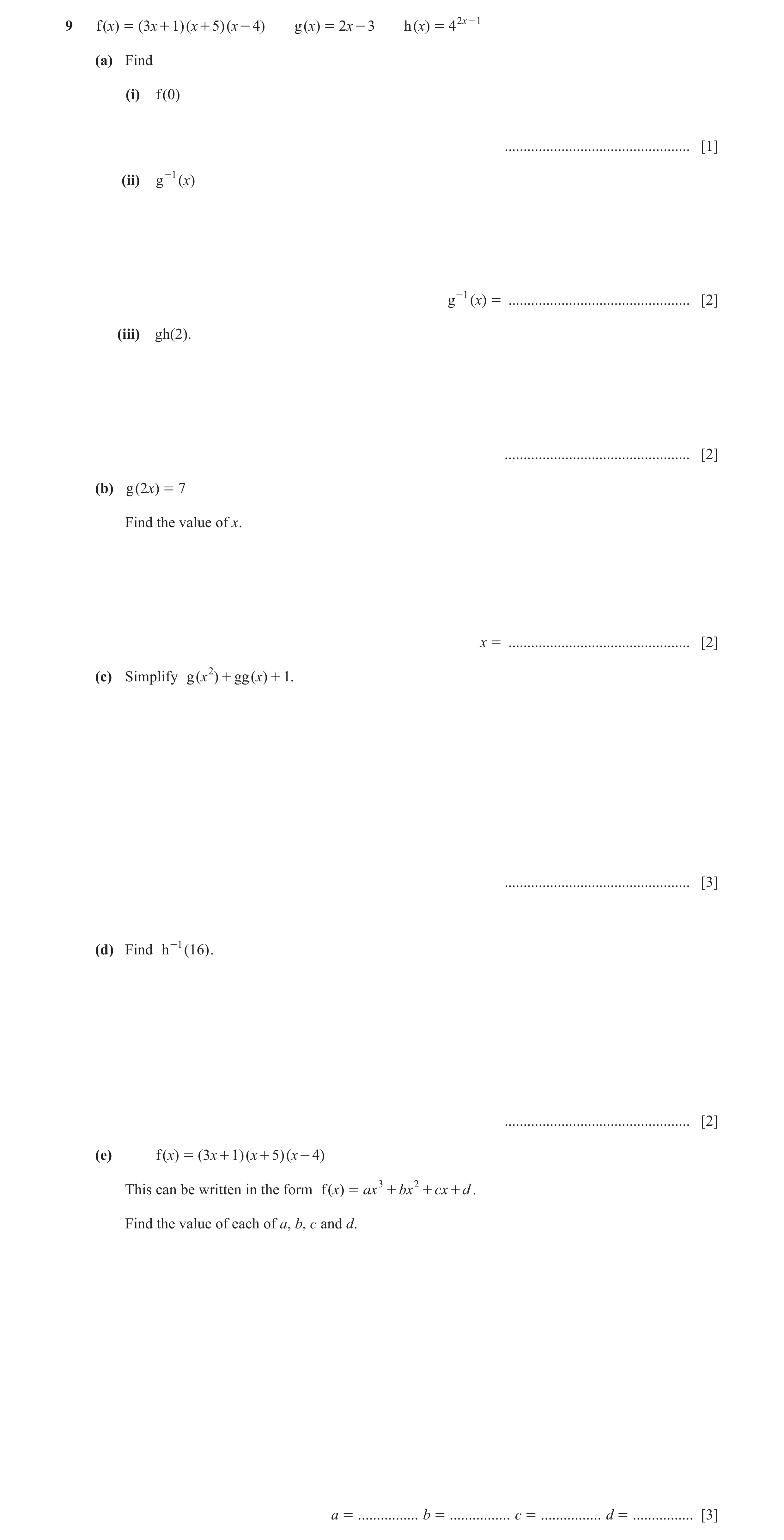
![Question 78: (a) Expand and simplify. 4 ( 2x - 1) - 6 ( 3 - x) ................................................. [2] (b) Factorise completely. (i) 6x 2 …](https://img.pastlit.com/crops/dca4ee8c-3807-4254-b80c-98079cac874b/q10.webp)
![Question 79: (a) (i) Factorise. x 2 - x - 12 ................................................. [2] (ii) Simplify. x 2 - 16 x 2 - x - 12 ................…](https://img.pastlit.com/crops/2d32dc4a-fea3-4971-ba15-0adf44bcb83e/q5.webp)
![Question 80: 23 (a) C = xy 4 (i) Find C when x = 5 and y = 8 . C = ................................................ [2] (ii) Find the positive value of …](https://img.pastlit.com/crops/e5ff309b-ed41-4d46-8528-b18db26bf32a/q3.webp)
![Question 81: 5 (a) Simplify 25x 6 2 . ` j ................................................. [2] (b) These are the first five terms of a sequence. 1 1 6 …](https://img.pastlit.com/crops/a1e889c4-03dd-4991-9c74-9db58add0406/q5.webp)
![Question 82: (a) Solve 3x - 8 = 6 - 4x . x = ................................................ [2] (b) Factorise fully 10a 2 + 5a . .....................…](https://img.pastlit.com/crops/a1e889c4-03dd-4991-9c74-9db58add0406/q7.webp) 114 / 124
114 / 124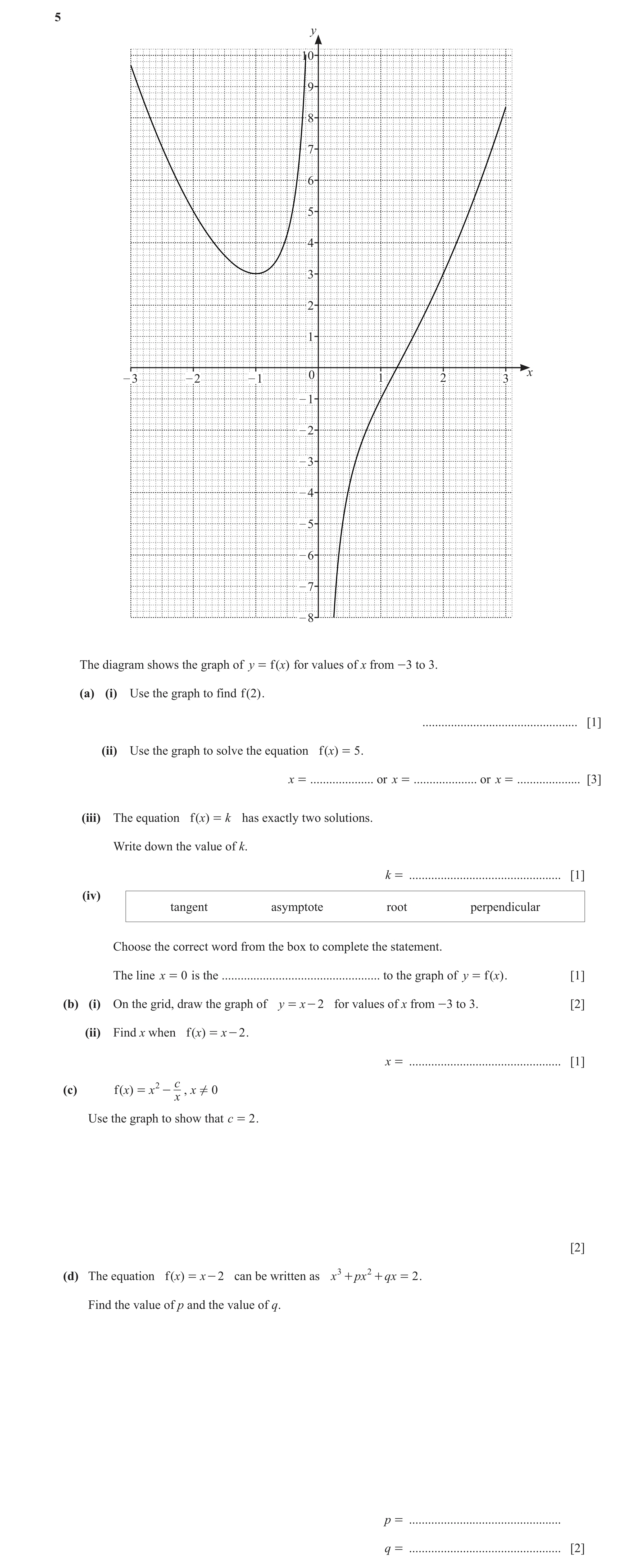
![Question 84: (a) Simplify. (i) 3m - 5n - 4 m + 8 n ................................................. [2] (ii) ( 3a 2 c 3 ) 4 ...........................…](https://img.pastlit.com/crops/4ca84b30-42af-4f86-acac-788e8f6684cd/q3.webp)
![Question 85: u 10 6 (a) Simplify # . 5y 3u ................................................. [2] (b) Expand and simplify ( x - 1)( x + 2)( x + 3) . ....…](https://img.pastlit.com/crops/49d64b49-6296-4e3d-a27c-8771a568587e/q6.webp) 119 / 124
119 / 124![Question 86: (a) Factorise. 18a 2 - 98 ................................................. [2] (b) Expand and simplify. `x + 4j`2x - 1j`x - 2j ...........…](https://img.pastlit.com/crops/6d916813-0df1-4db9-8de7-bd60804a07a9/q18.webp) 120 / 124
120 / 124![Question 87: (a) Write down all the factors of 18. ..................................................................... [2] (b) Factorise. 3y - xy + 15…](https://img.pastlit.com/crops/de4b468b-4d1b-4117-b2d8-bbf753ec3837/q10.webp) 121 / 124
121 / 124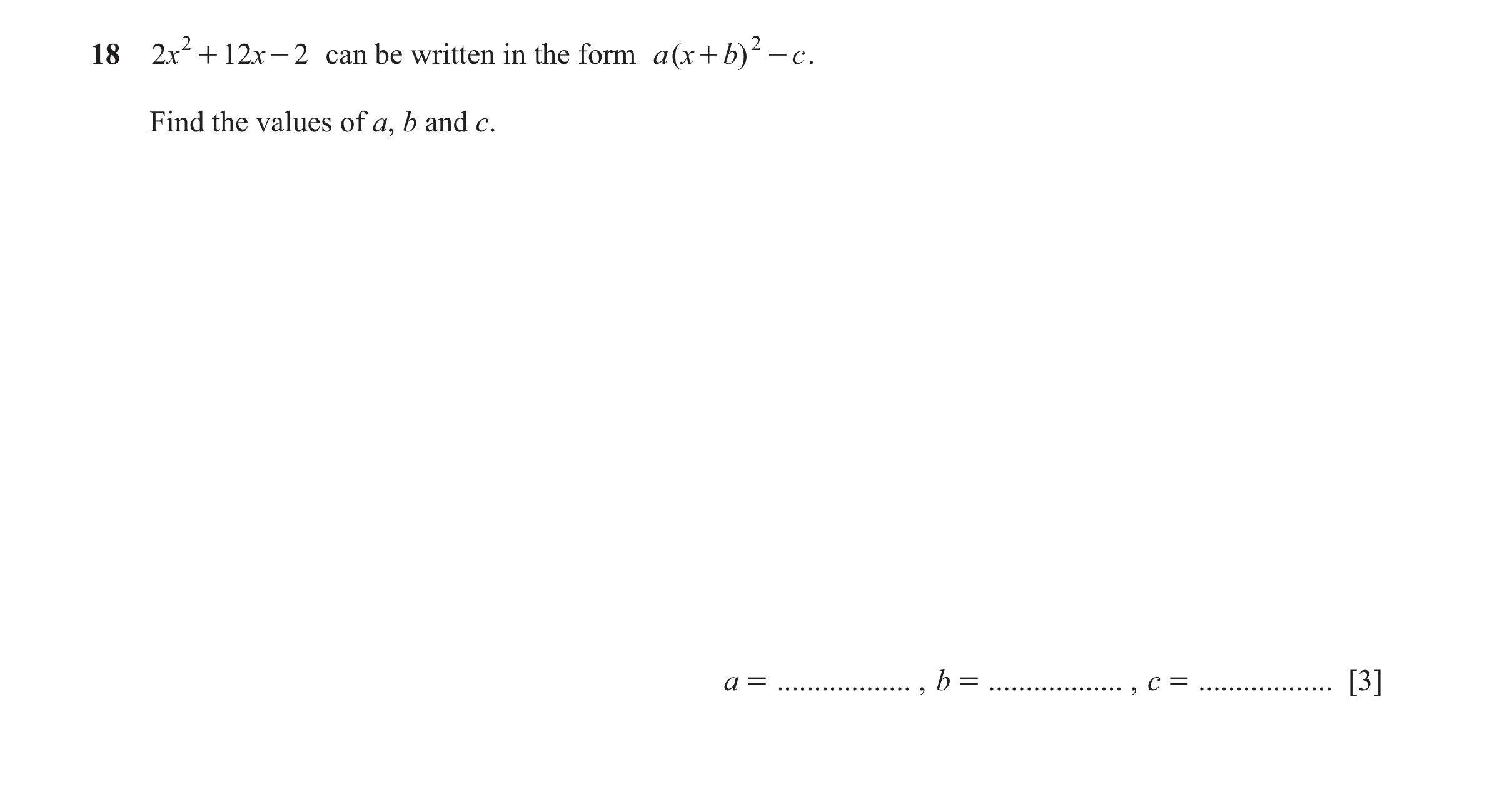
![Question 89: Factorise. 5x - 10 - ax + 2a ................................................. [2]](https://img.pastlit.com/crops/5ba88bd0-1003-49a6-8379-9d3d3d5ccc69/q14.webp)
![Question 90: Factorise. (a) 28xy - 12x ................................................. [2] (b) y - 6x + 2xy - 3 ......................................…](https://img.pastlit.com/crops/f1a3657f-3c14-488d-9db1-eaf815aec653/q8.webp) 122 / 124
122 / 124![Question 91: (a) Simplify. 5x 5 y # 7x 3 y 2 ................................................. [2] (b) 7 n = 5 7 Find the value of n. n = ..............…](https://img.pastlit.com/crops/f1a3657f-3c14-488d-9db1-eaf815aec653/q9.webp)
![Question 92: Expand and simplify. (a) 2 x - x ( 5 - x 2 ) ................................................. [2] (b) ( x + 4)( x - 5)( x + 3) ...........…](https://img.pastlit.com/crops/f1a3657f-3c14-488d-9db1-eaf815aec653/q10.webp)
![Question 93: Expand and simplify. ( x - 2)( 2x + 3)( x + 4) ................................................. [3]](https://img.pastlit.com/crops/7e2d32df-12a3-4b69-be05-03abec30f0ae/q17.webp) 123 / 124
123 / 124![Question 94: Expand and simplify. (a) 7( x + 2 ) + 4 ( 3x - 5 ) ................................................. [2] (b) ( 3x - y)( 5 x + 2y) .........…](https://img.pastlit.com/crops/eb903d49-b3b1-4934-a8bf-b65777d96bc2/q16.webp)
![Question 95: Make t the subject of the formula. 7t x = 5 - t t = ................................................ [3]](https://img.pastlit.com/crops/eb903d49-b3b1-4934-a8bf-b65777d96bc2/q17.webp) 124 / 124
124 / 124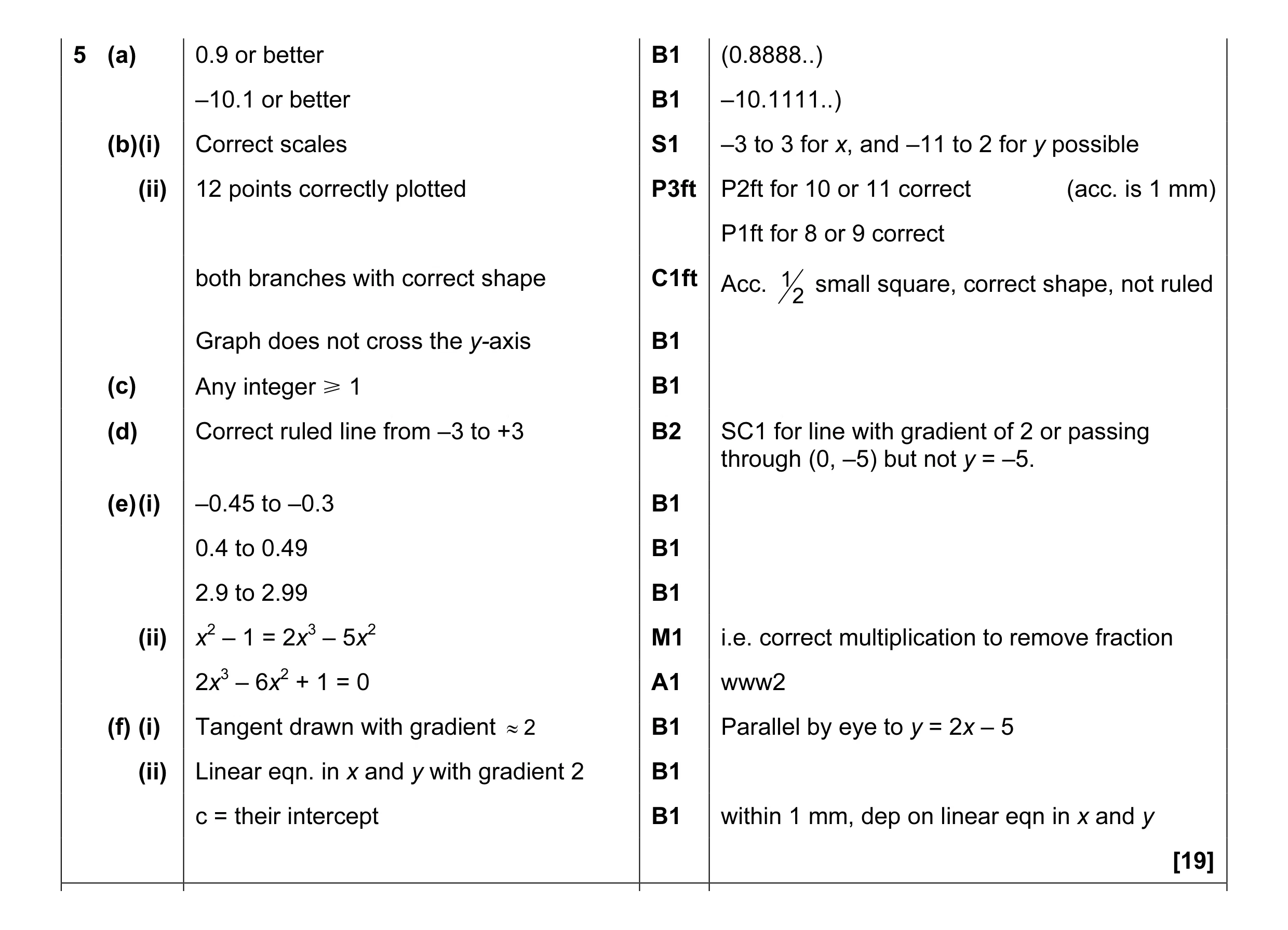 19
19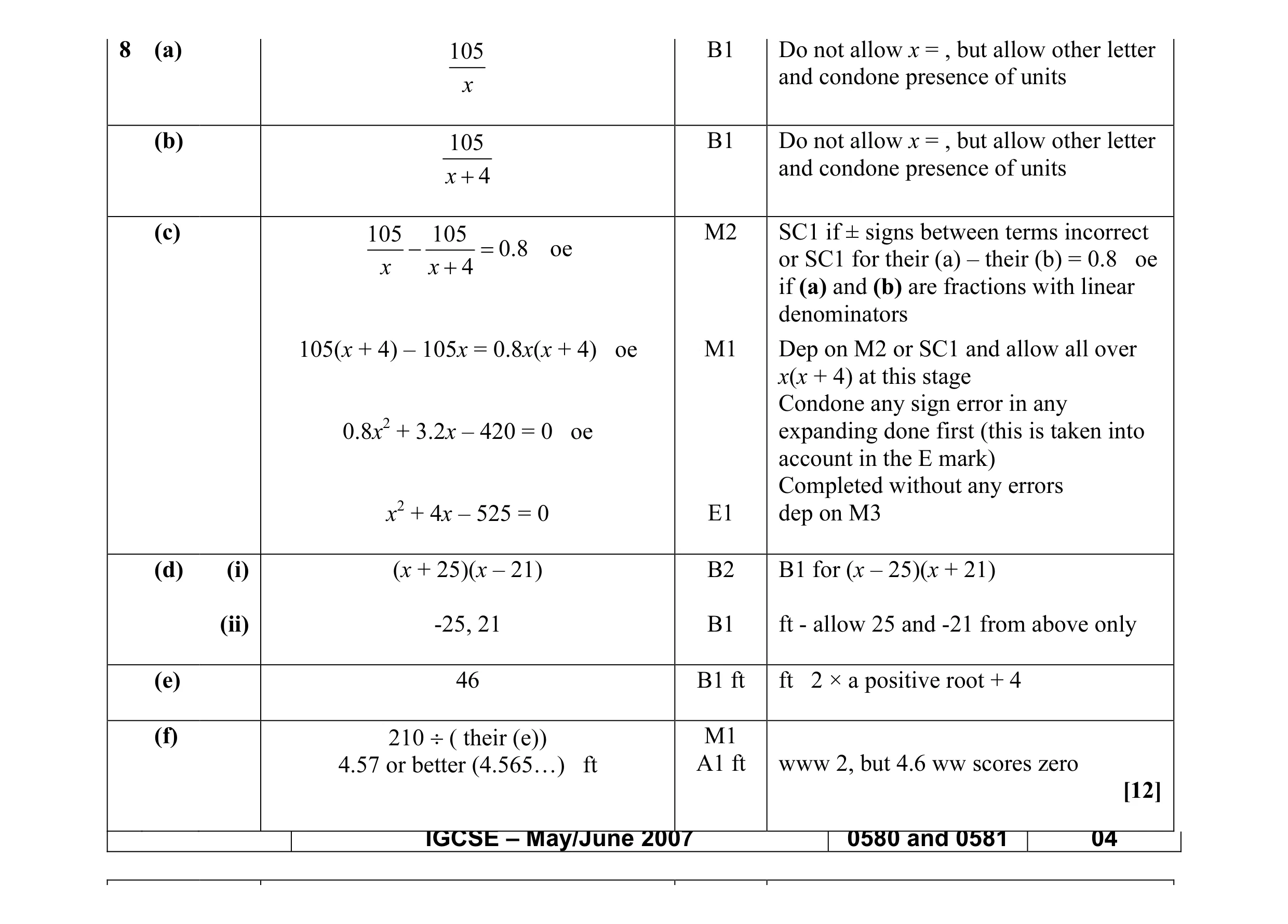 12
12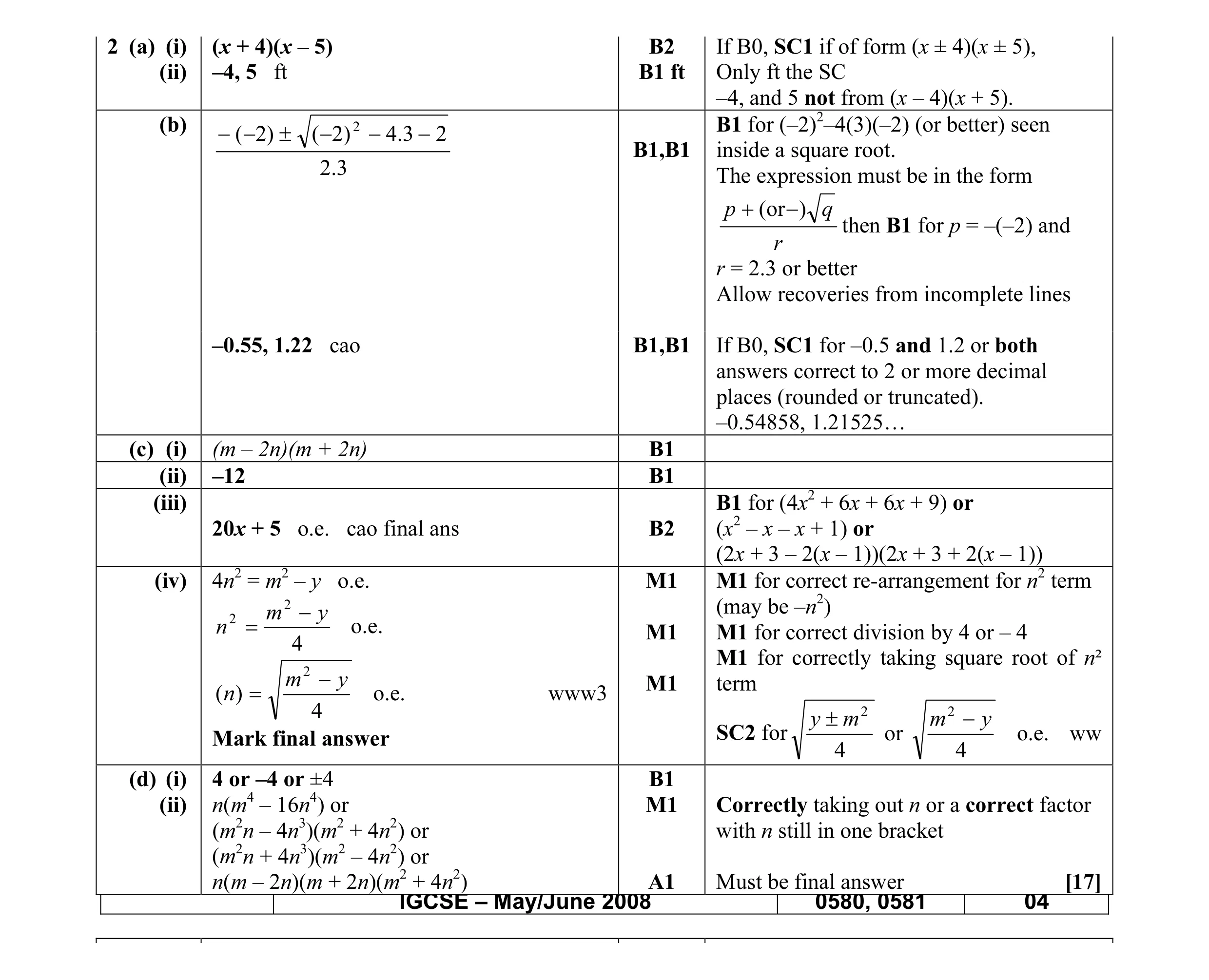 17
17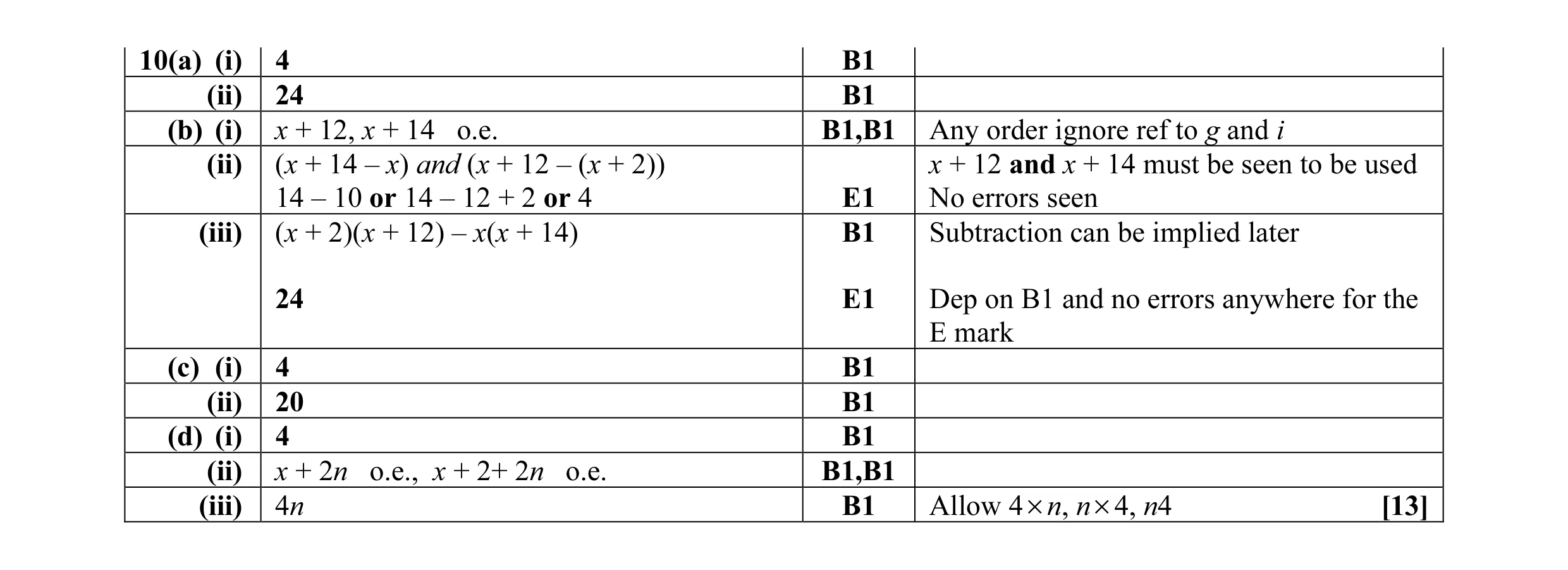 13
13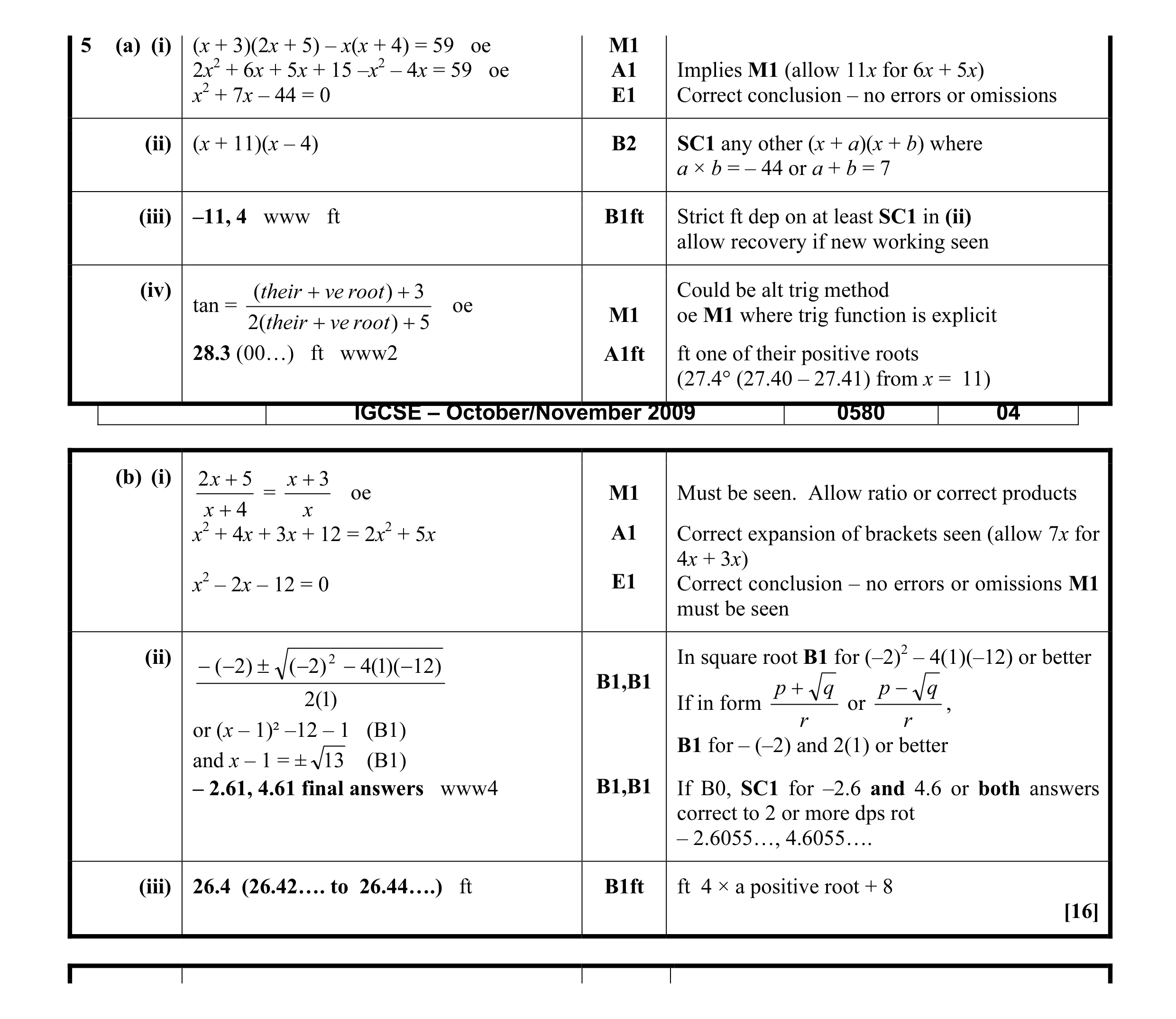 16
16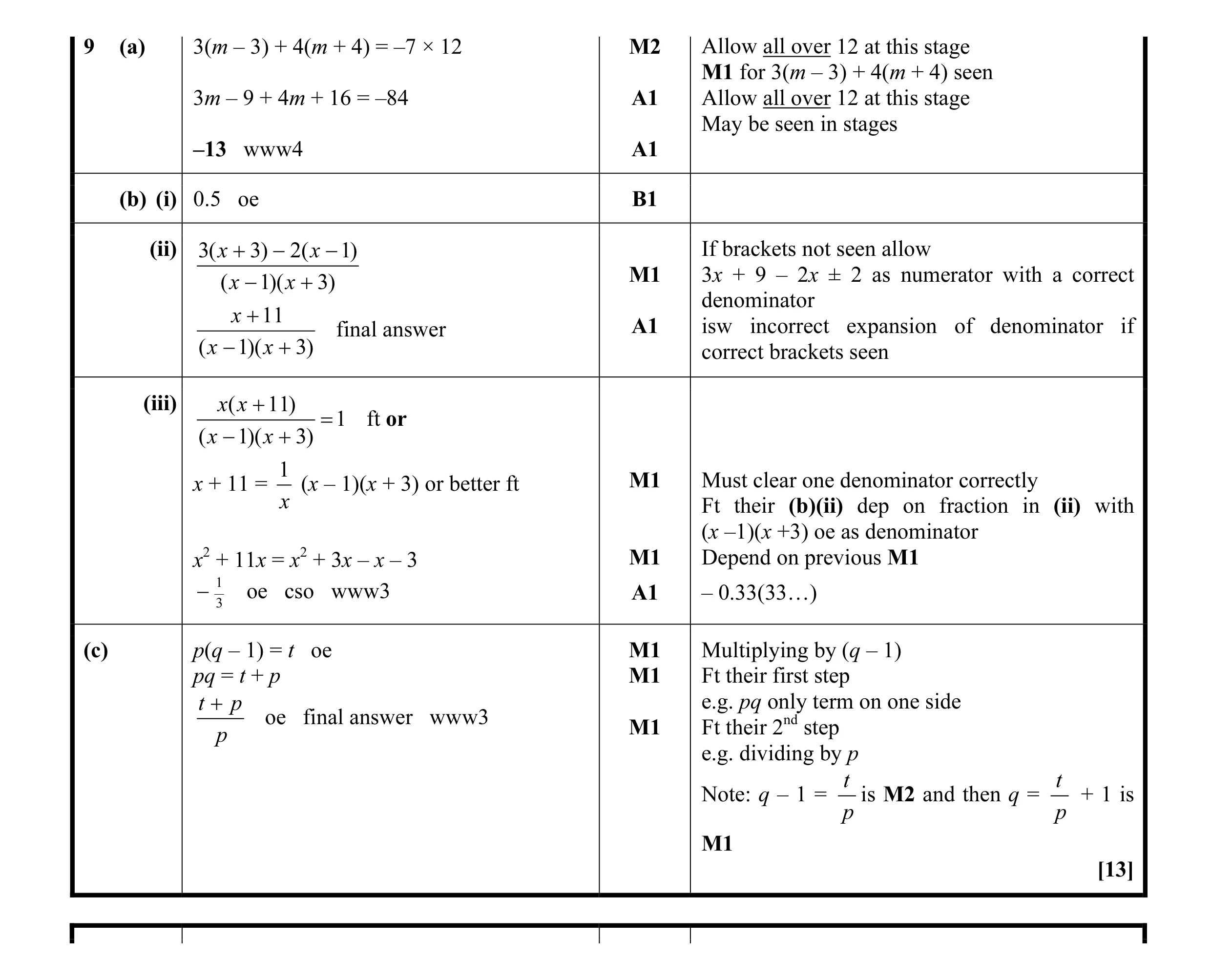 13
13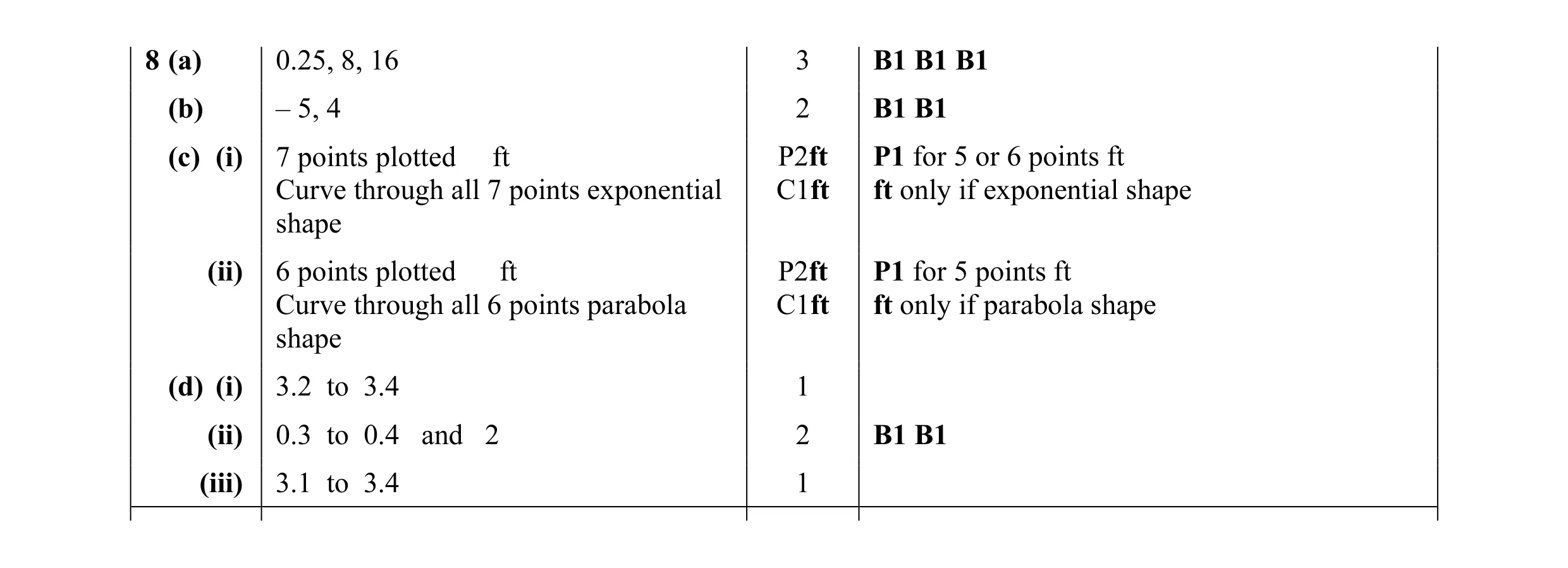 15
15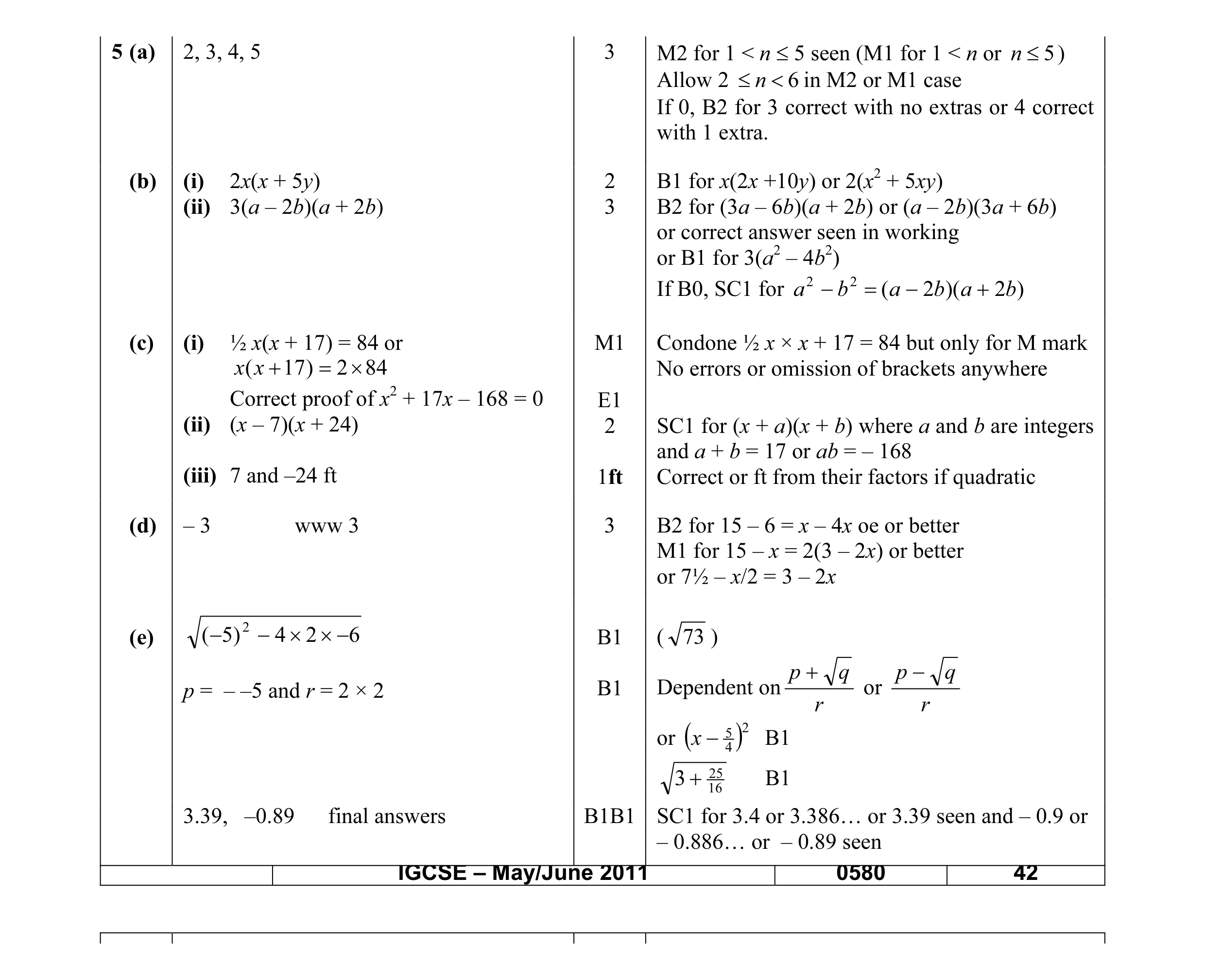 20
20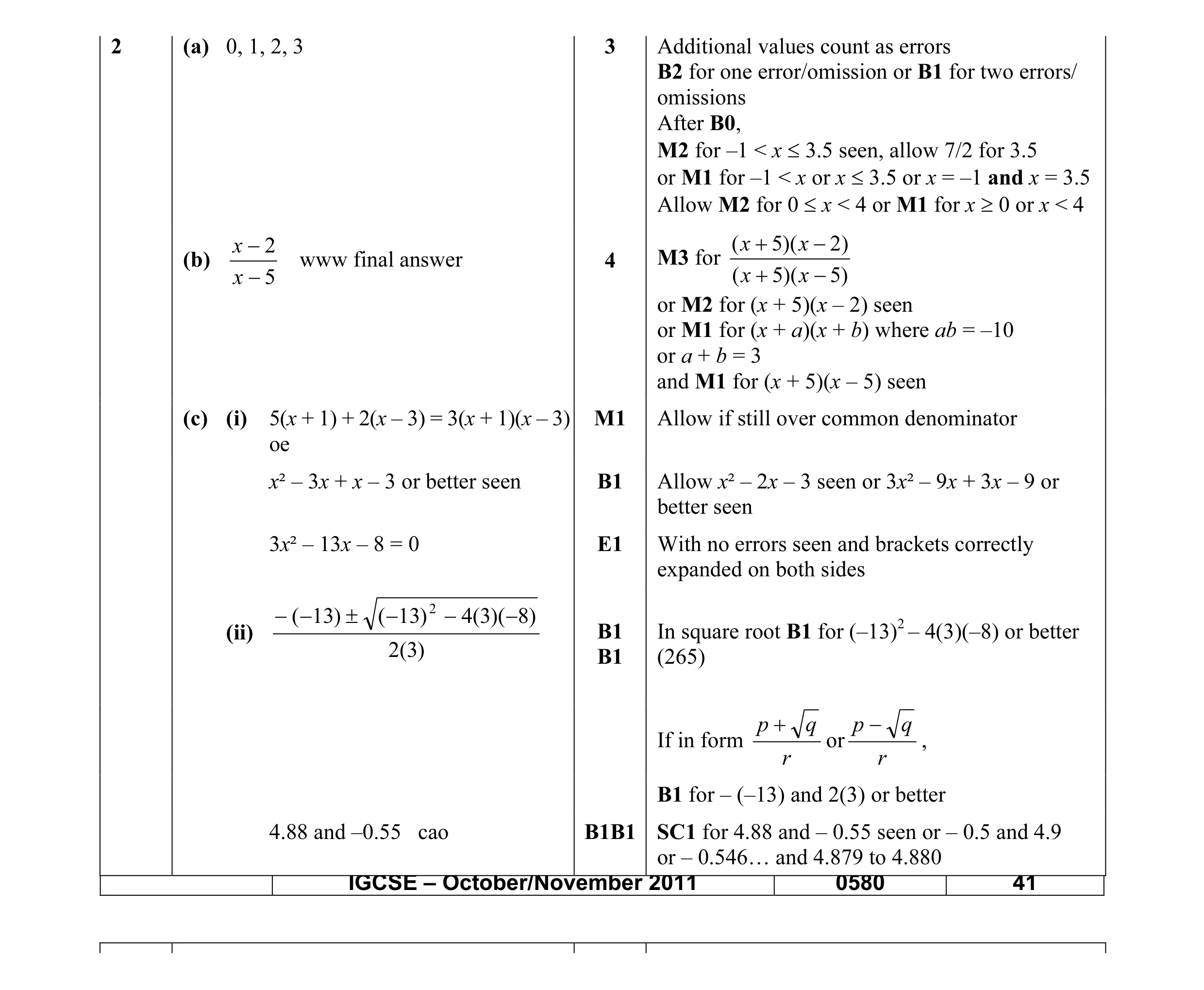 14
14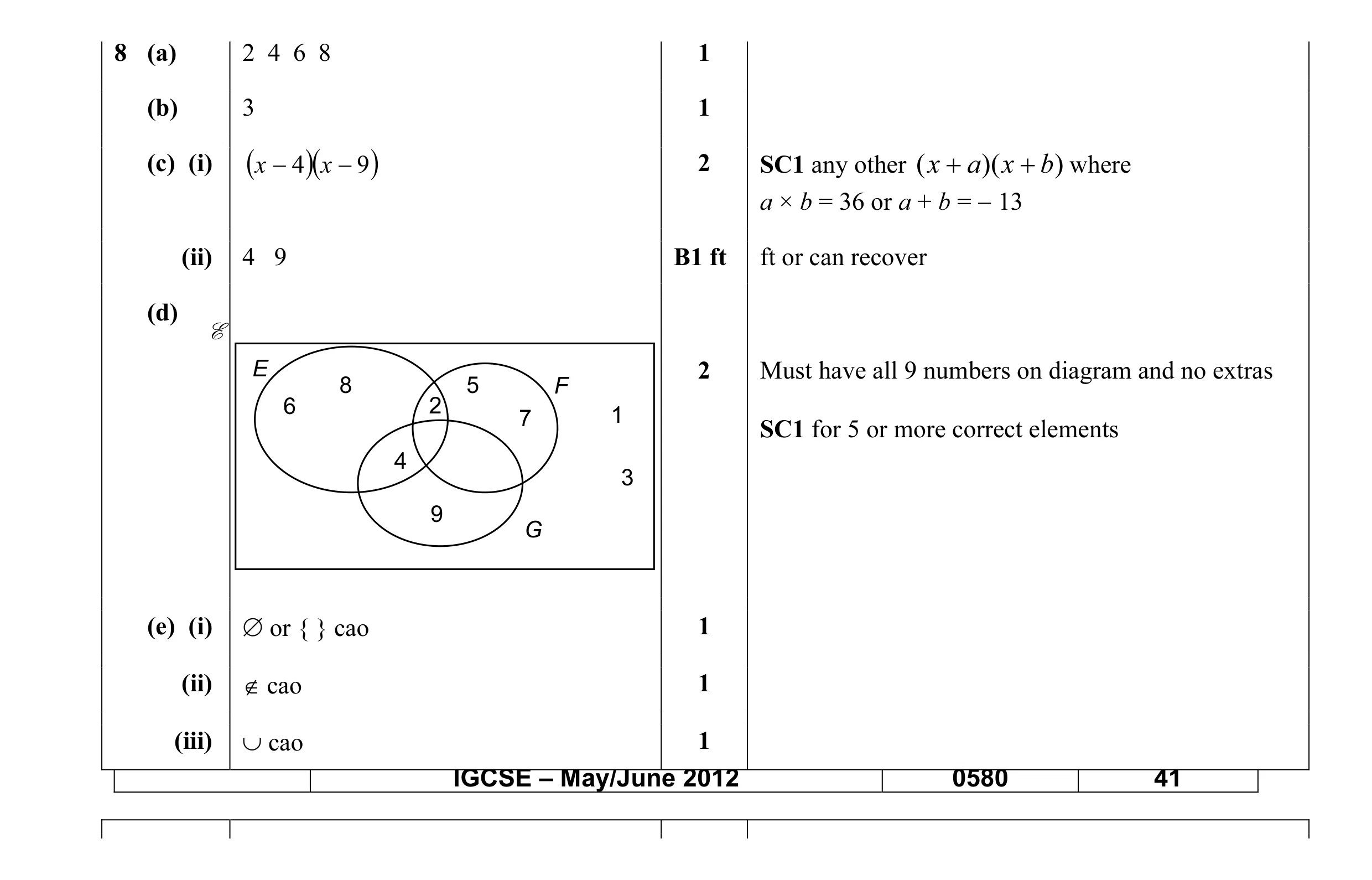 10
10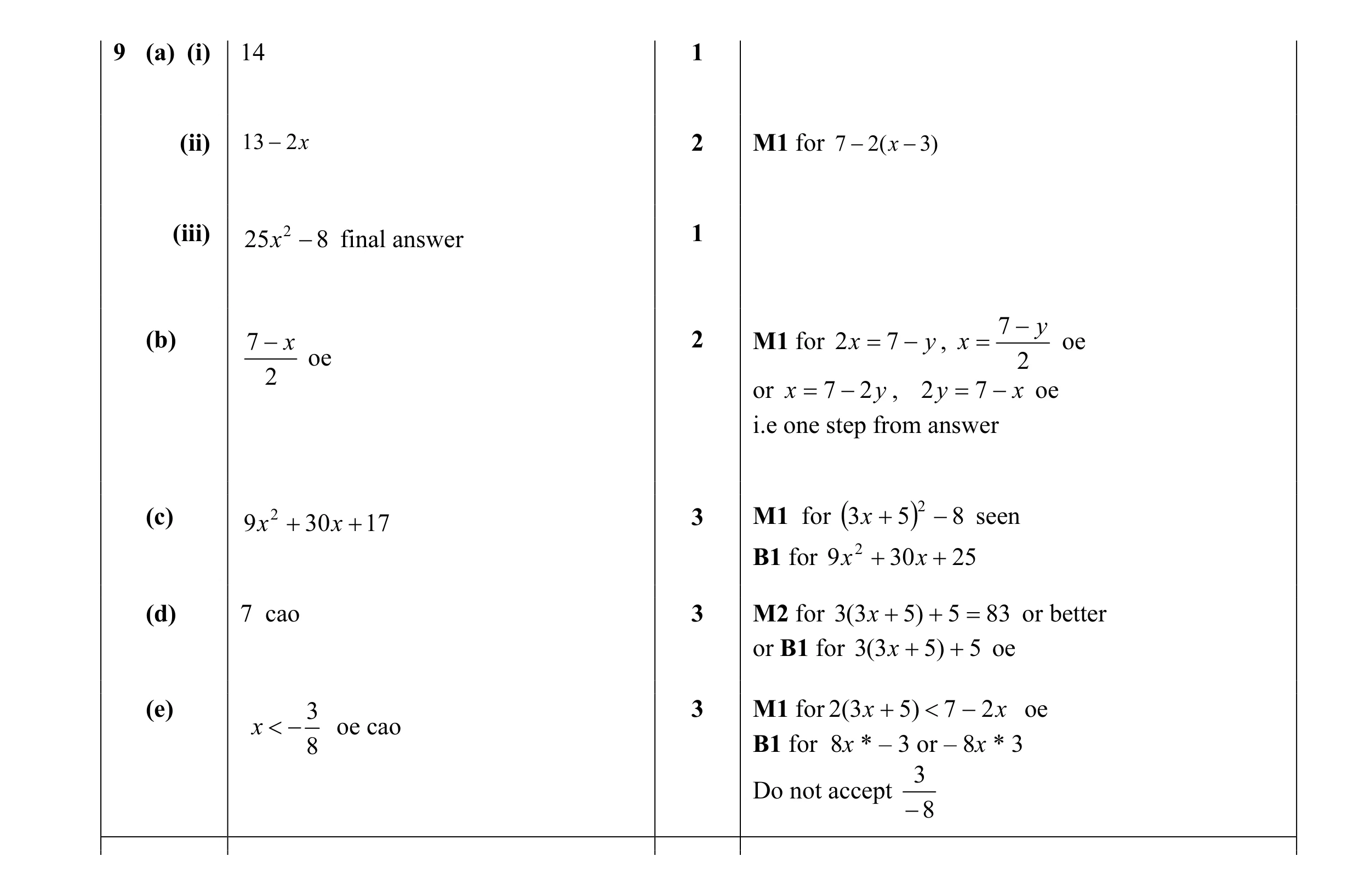 15
15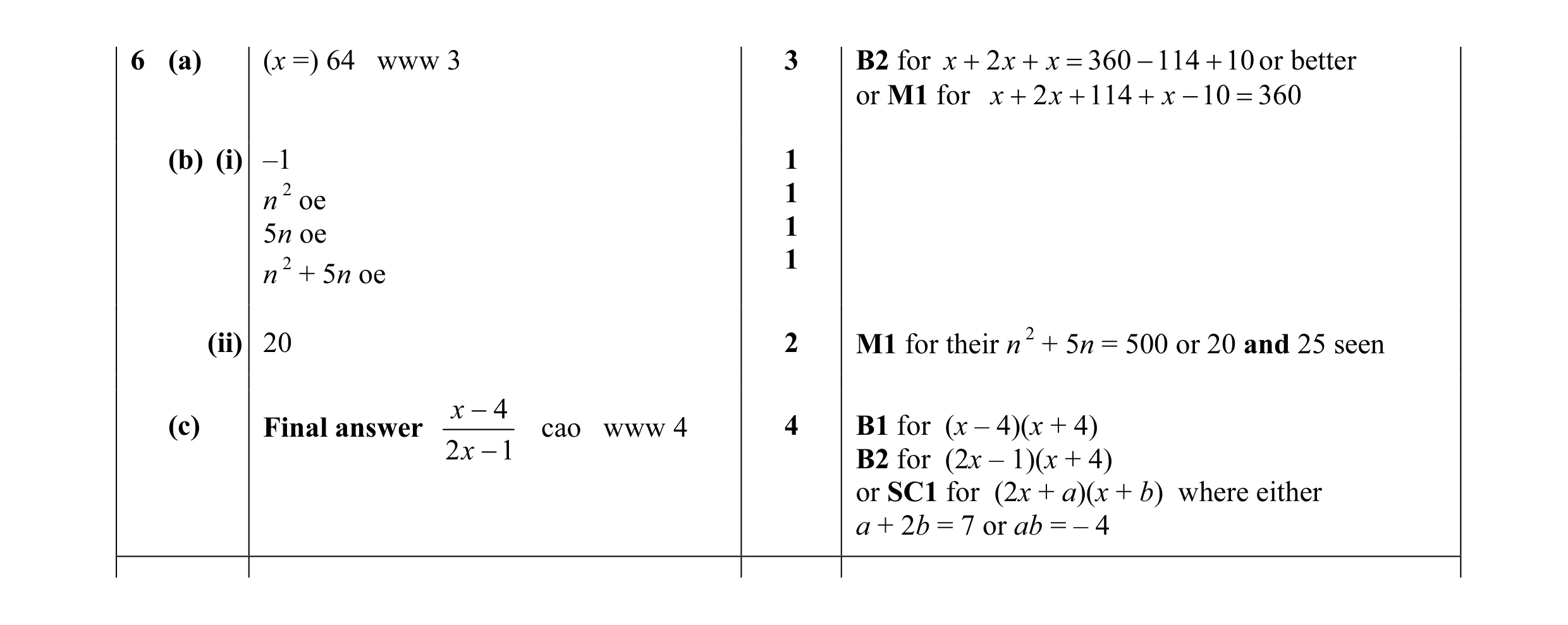 13
13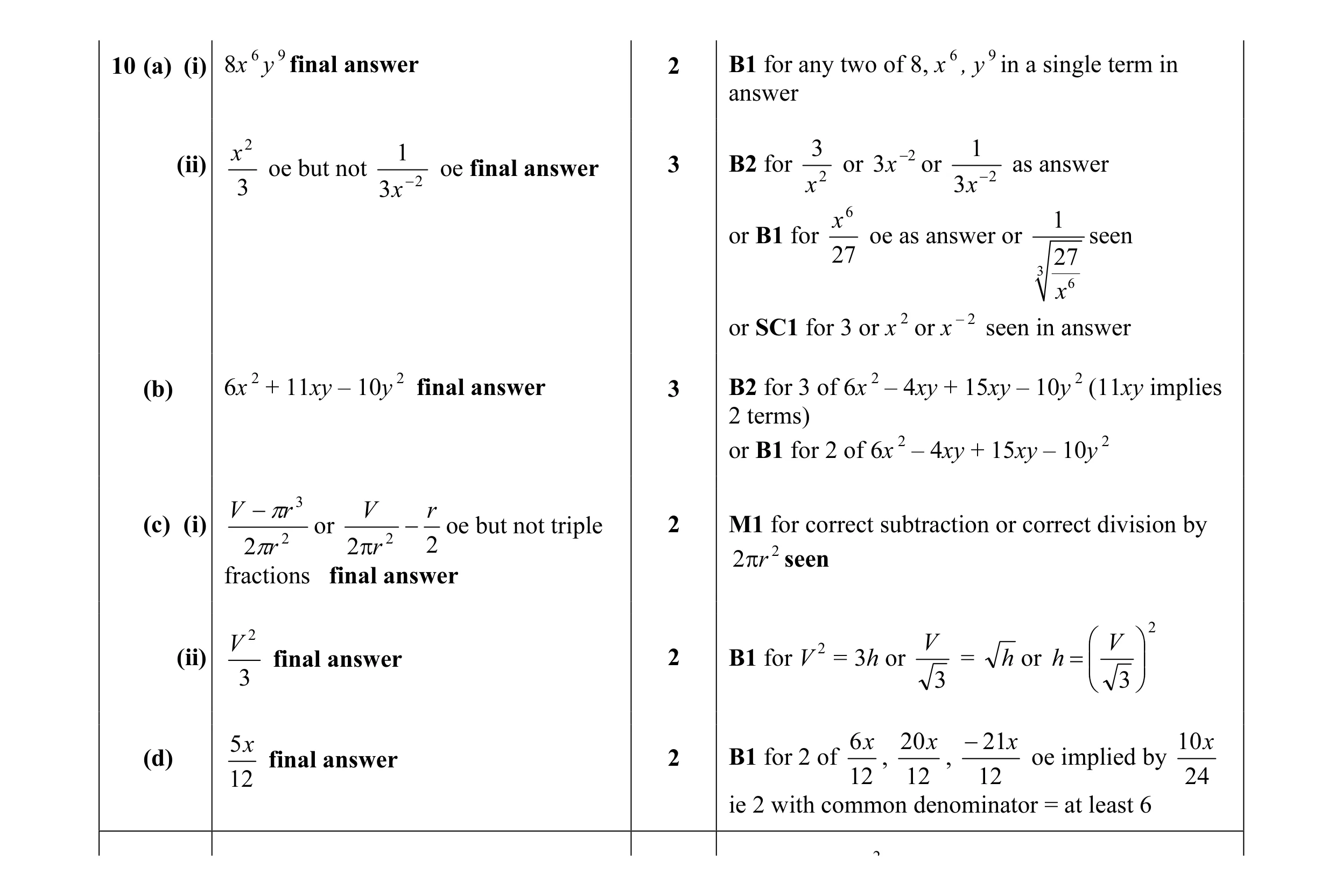 14
14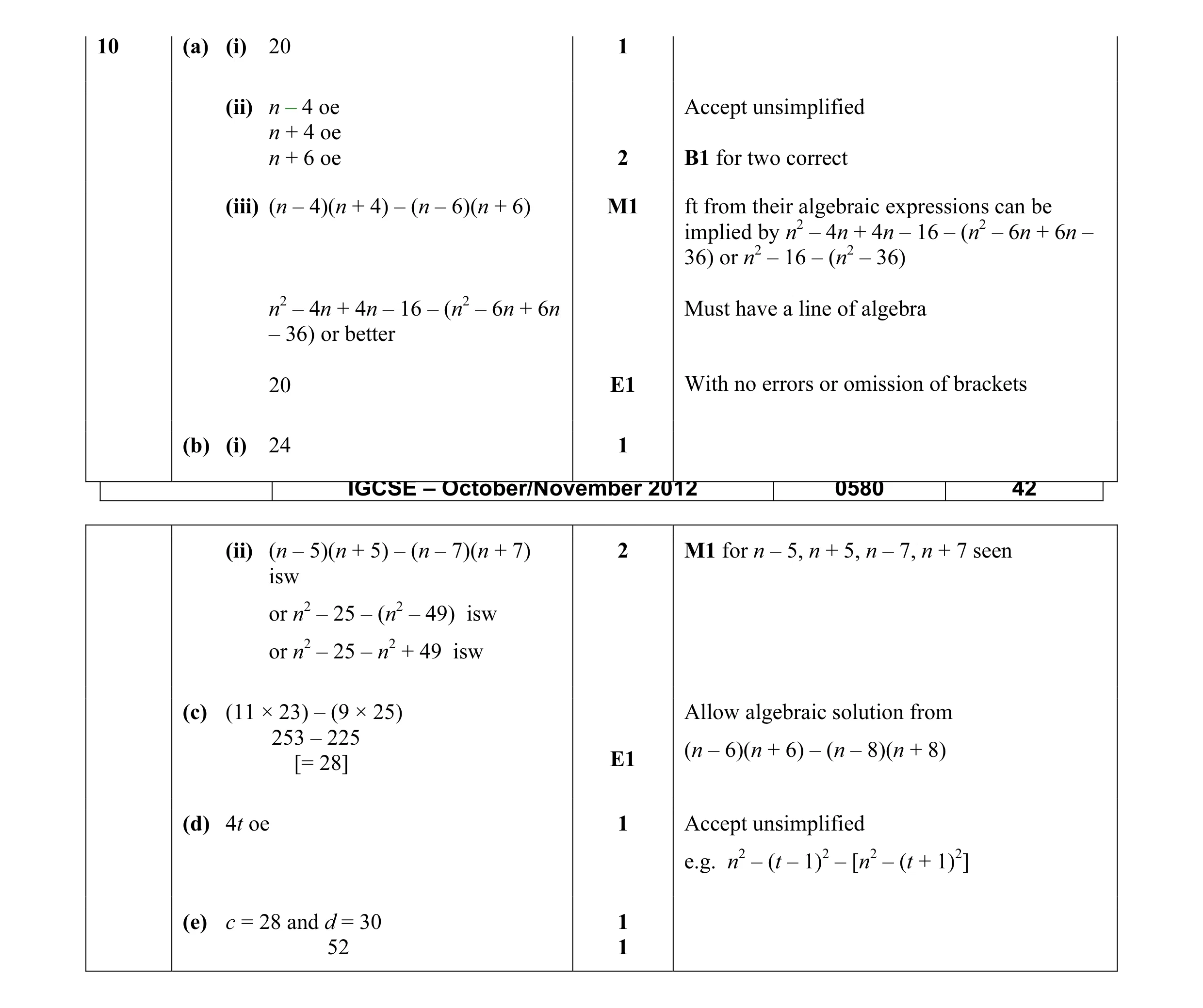 12
12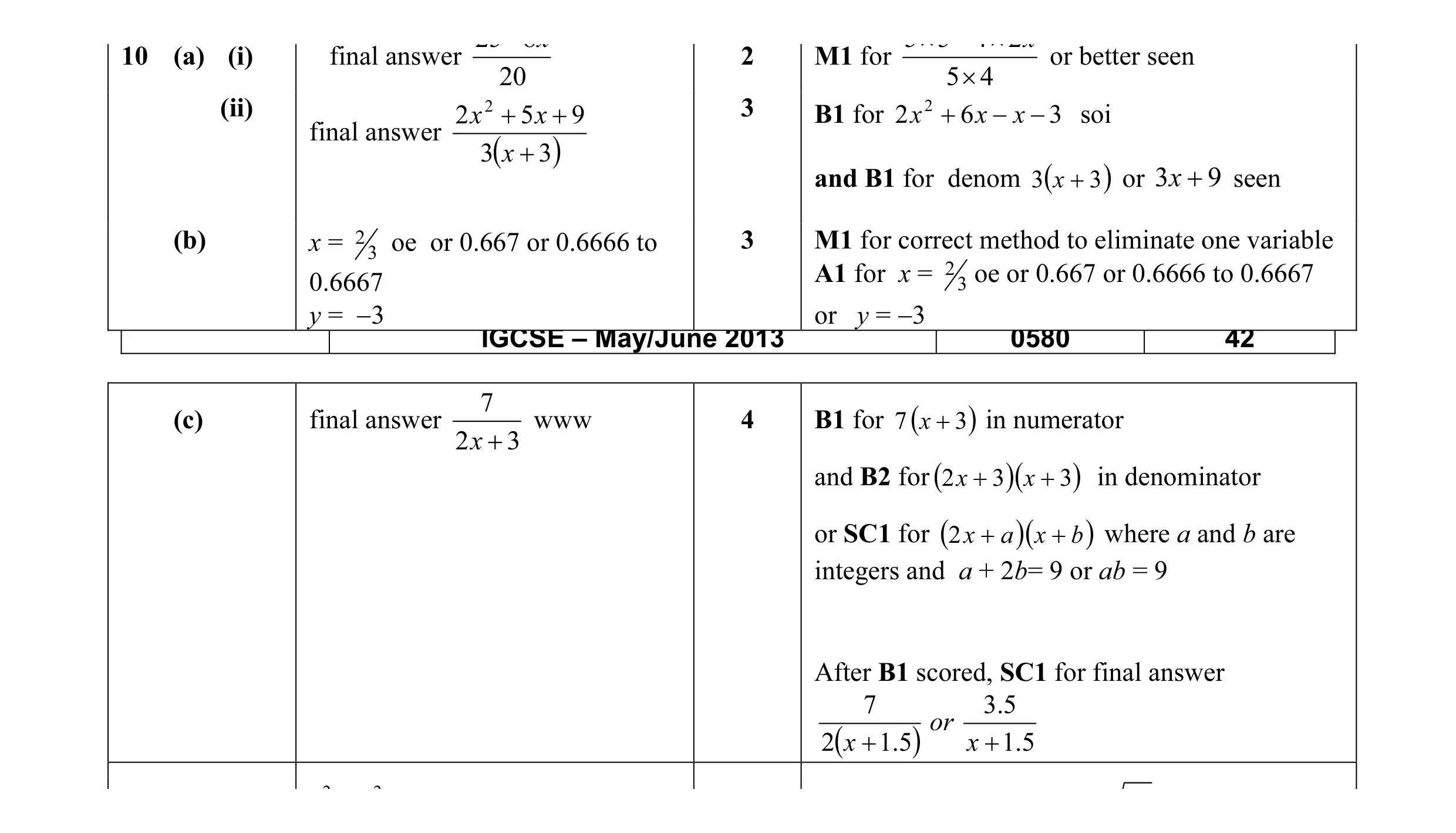 12
12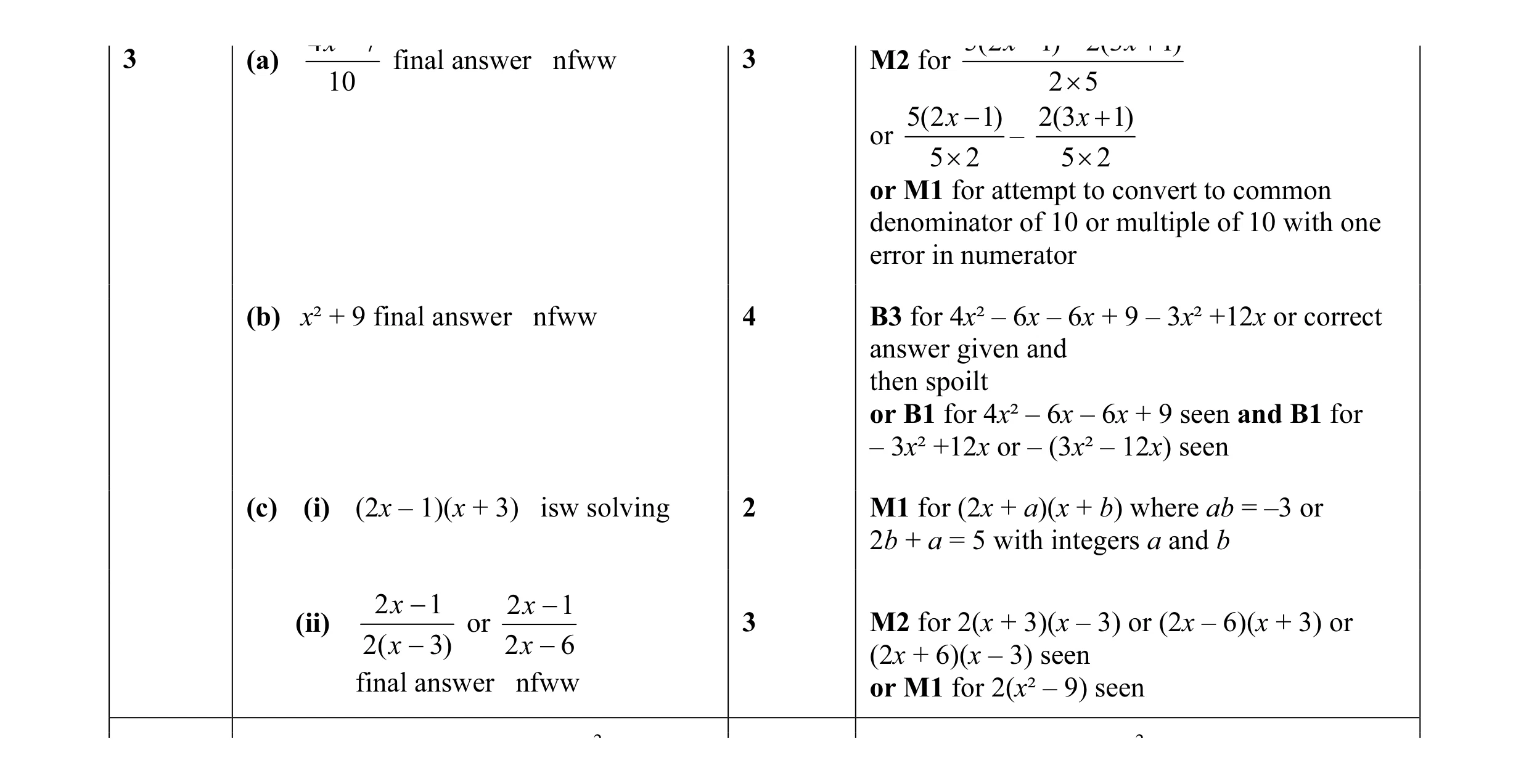 12
12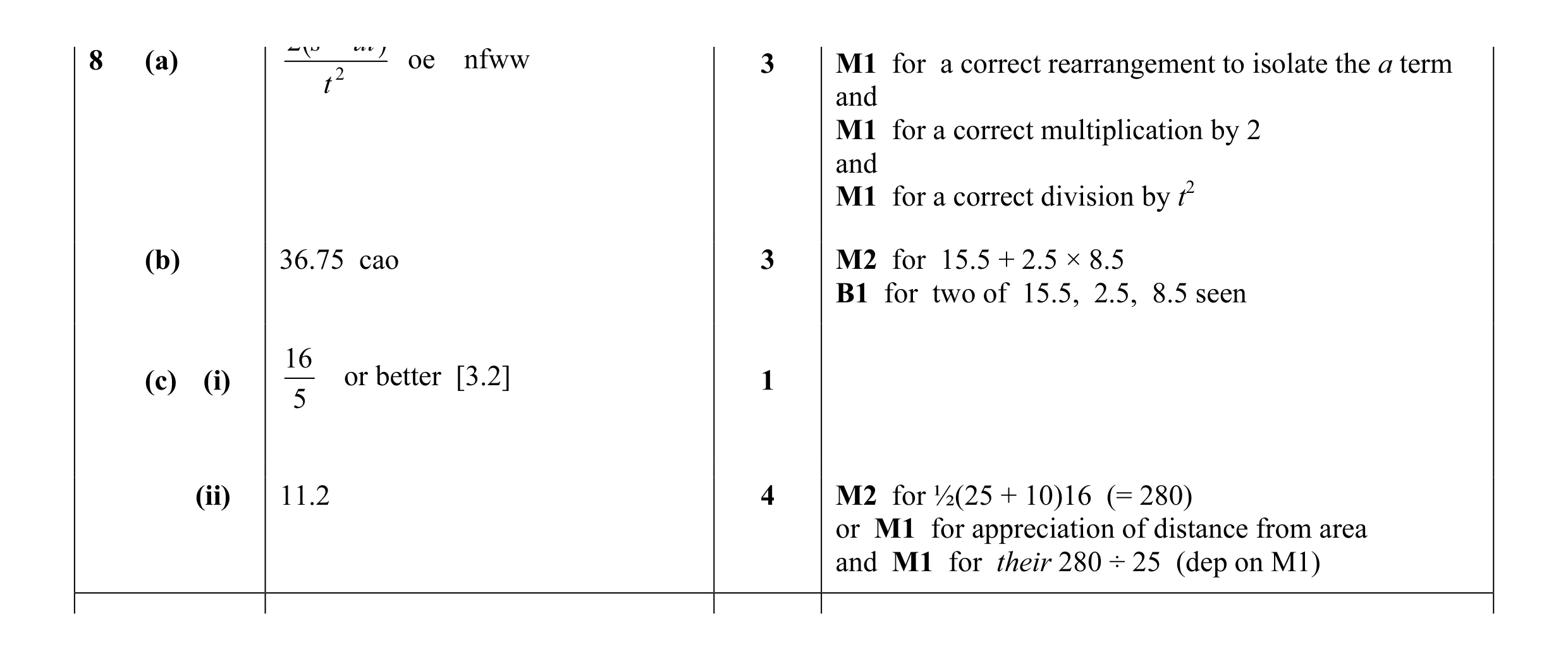 11
11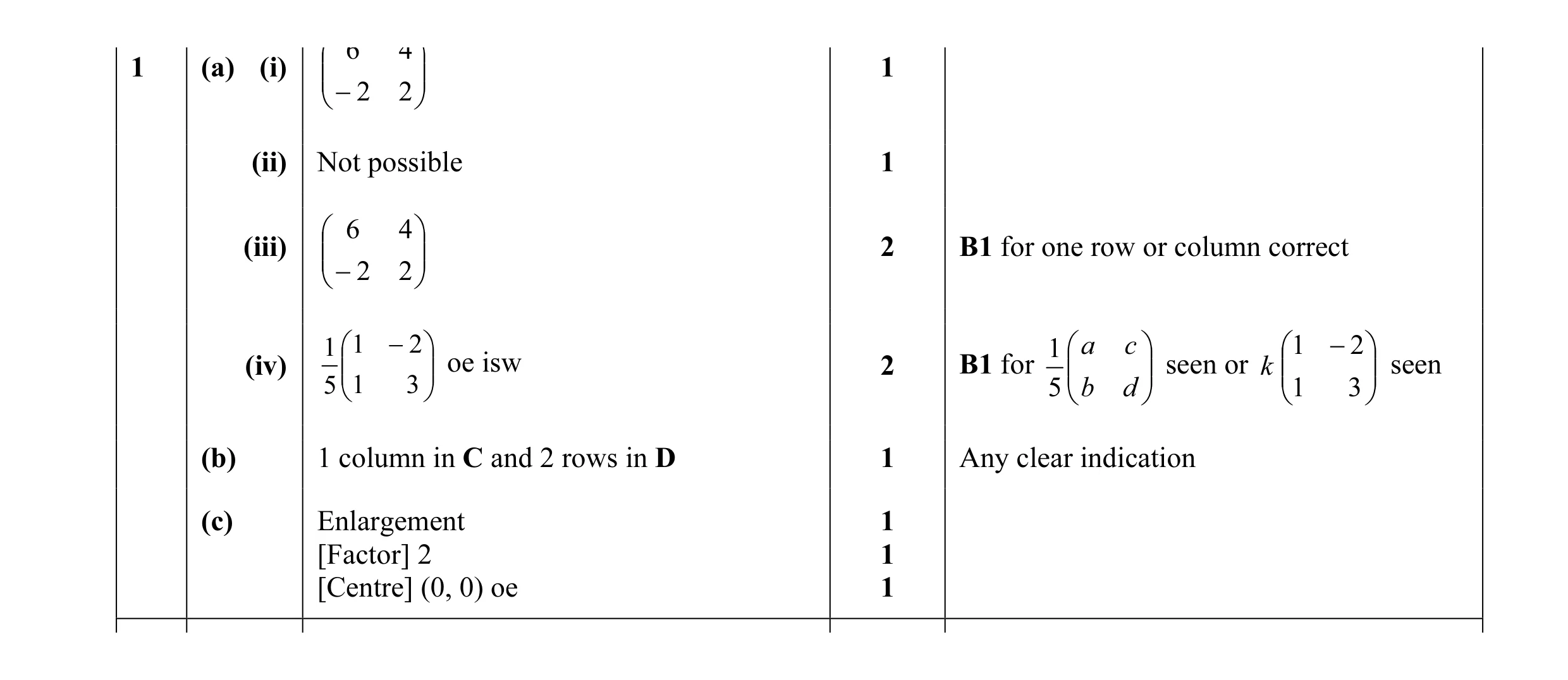 10
10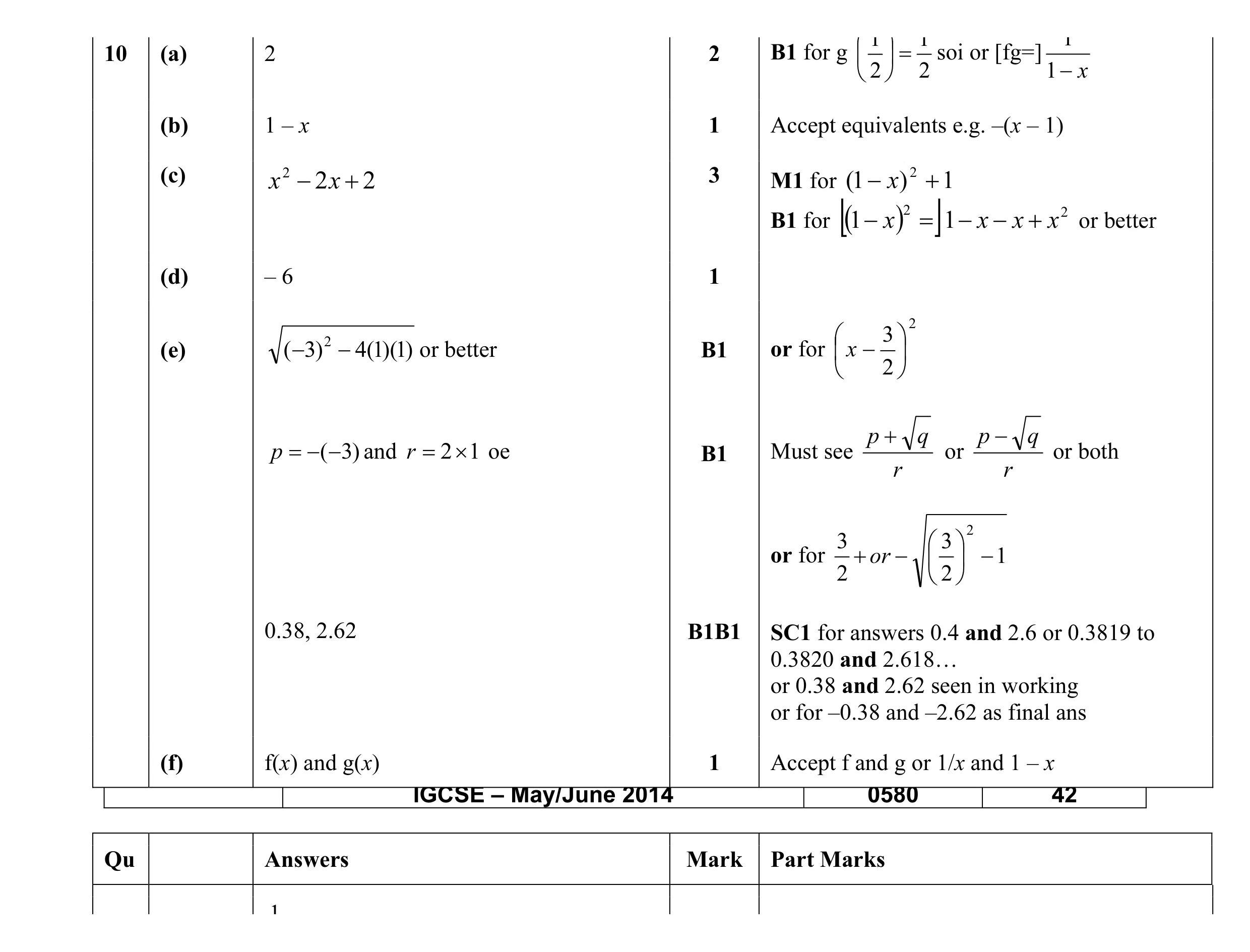 12
12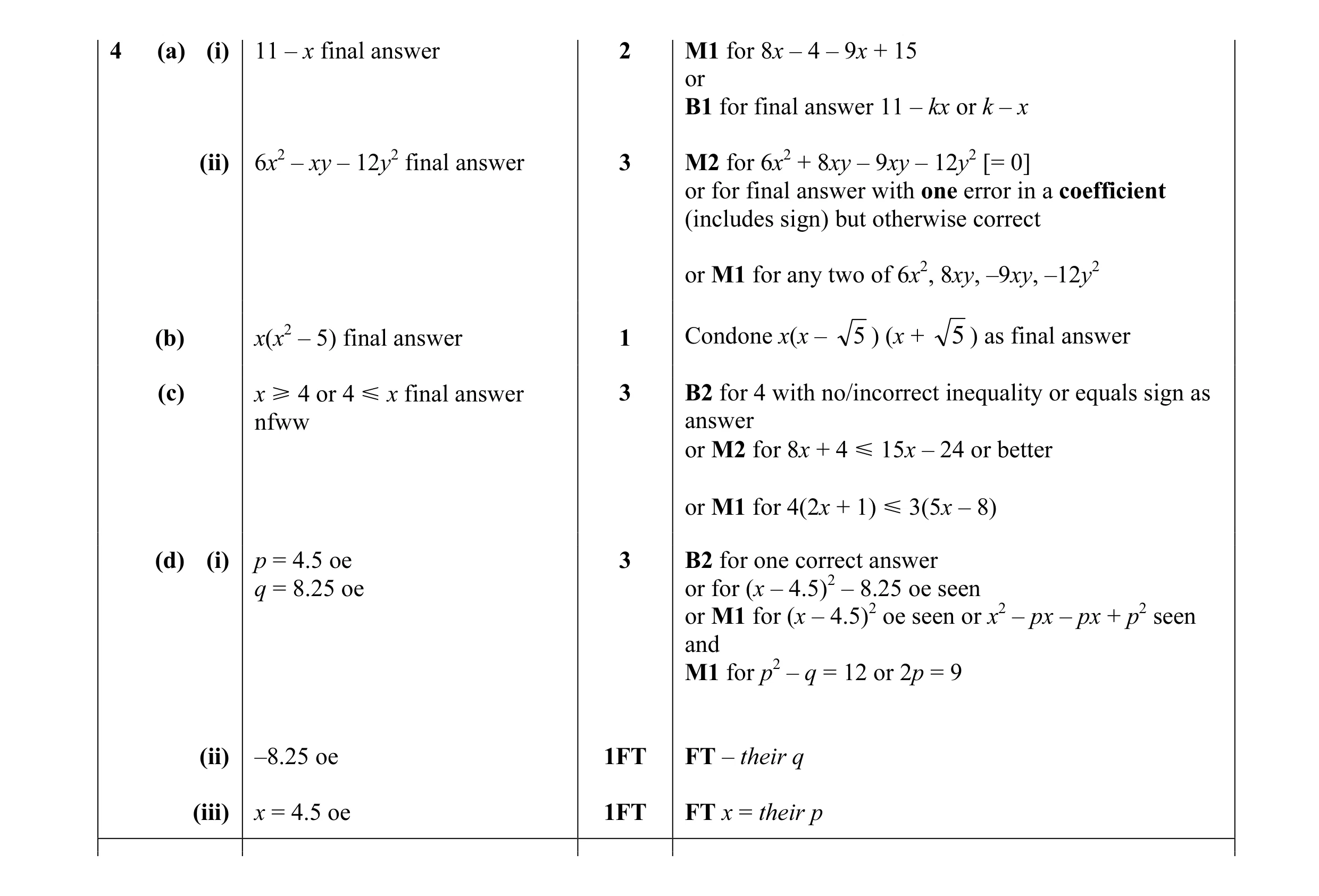 14
14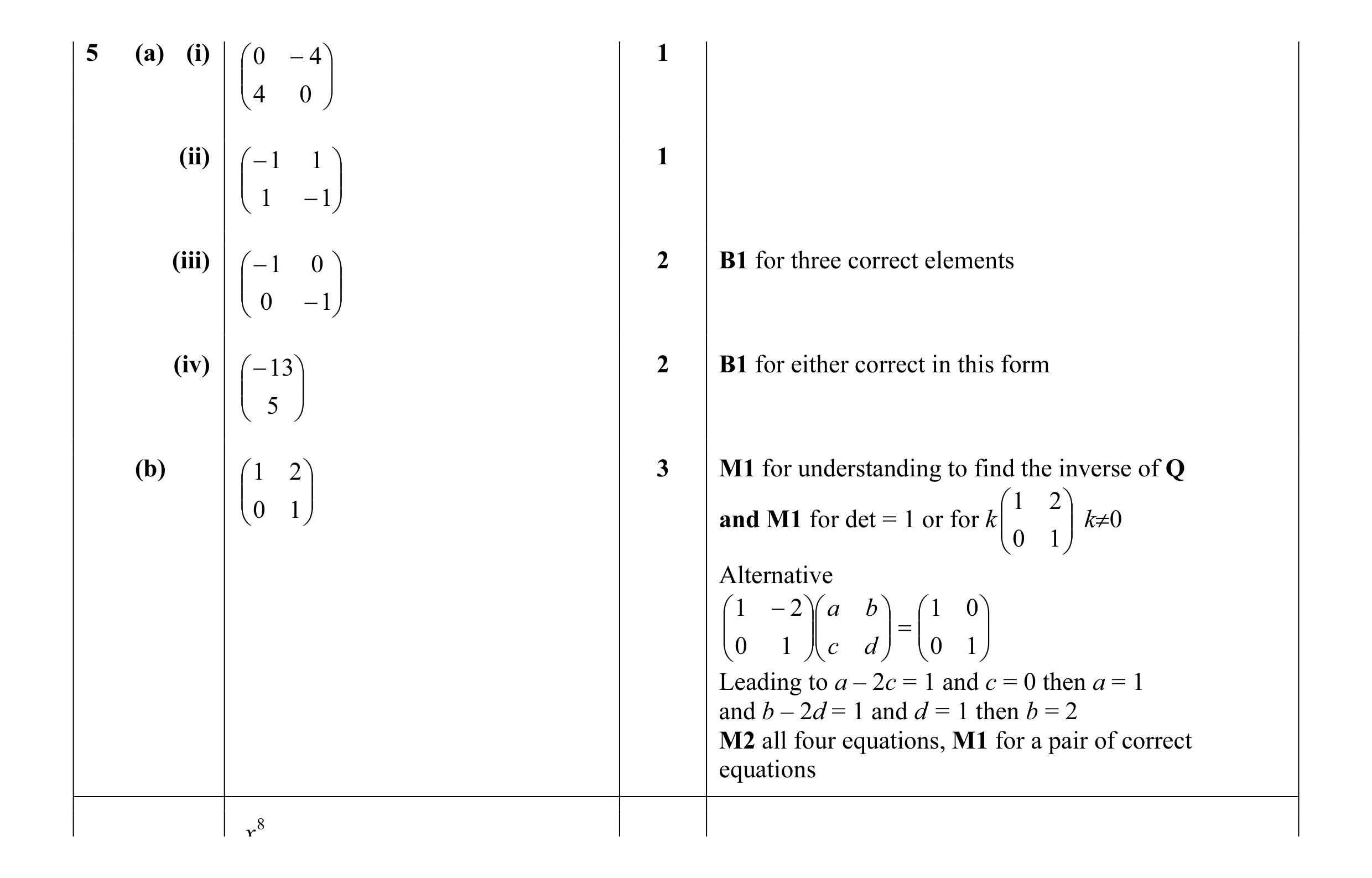 9
9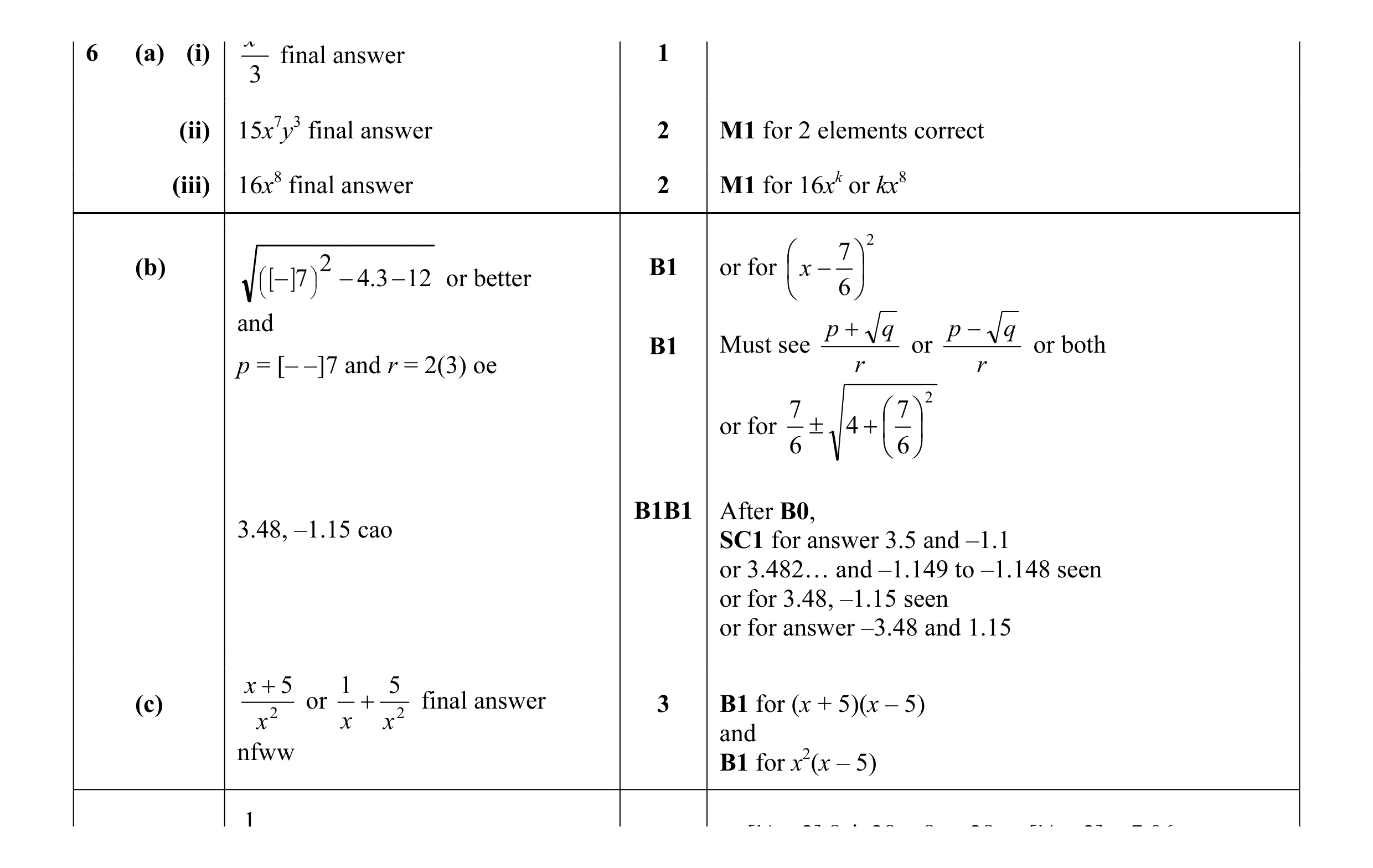 12
12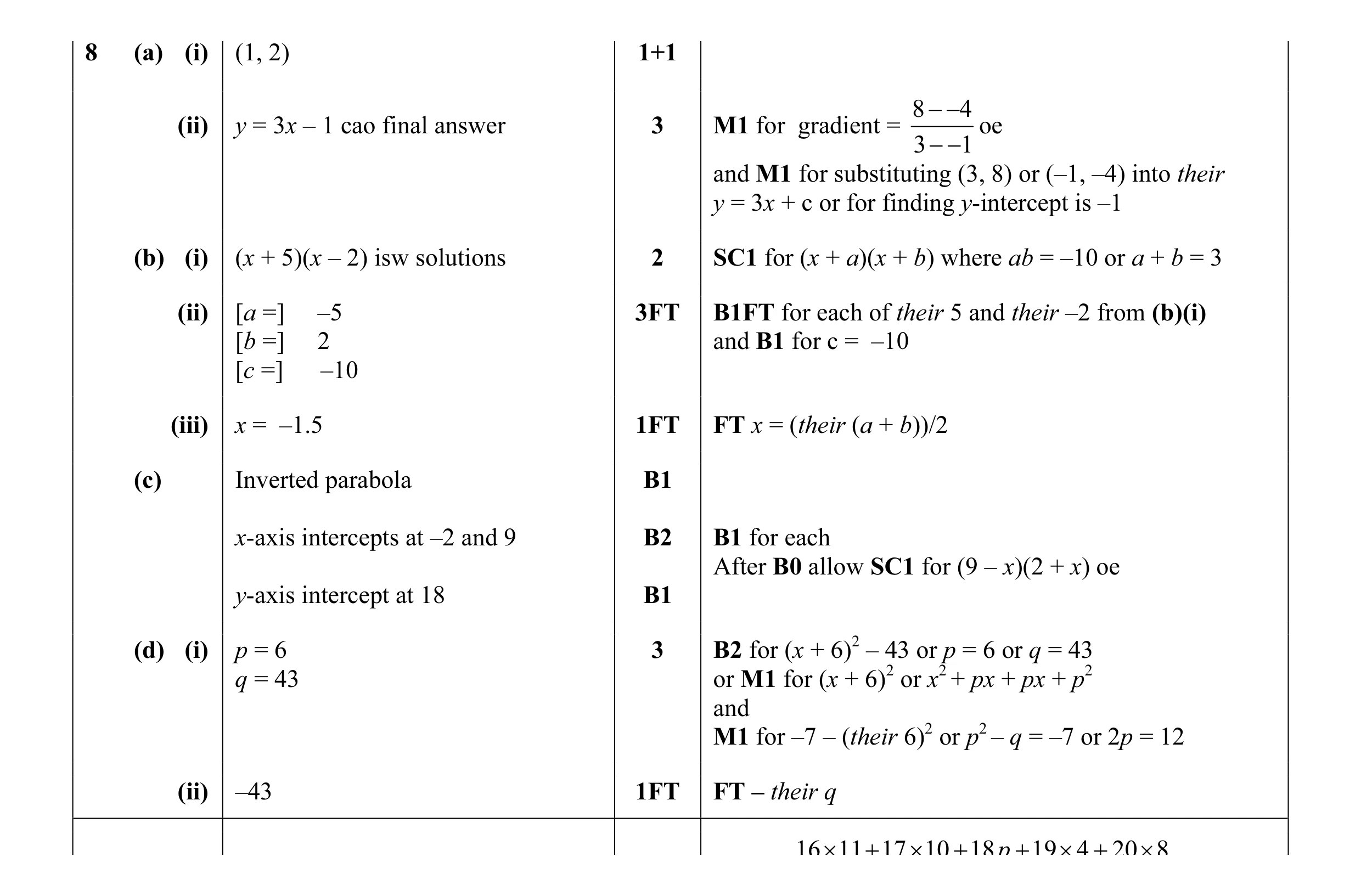 19
19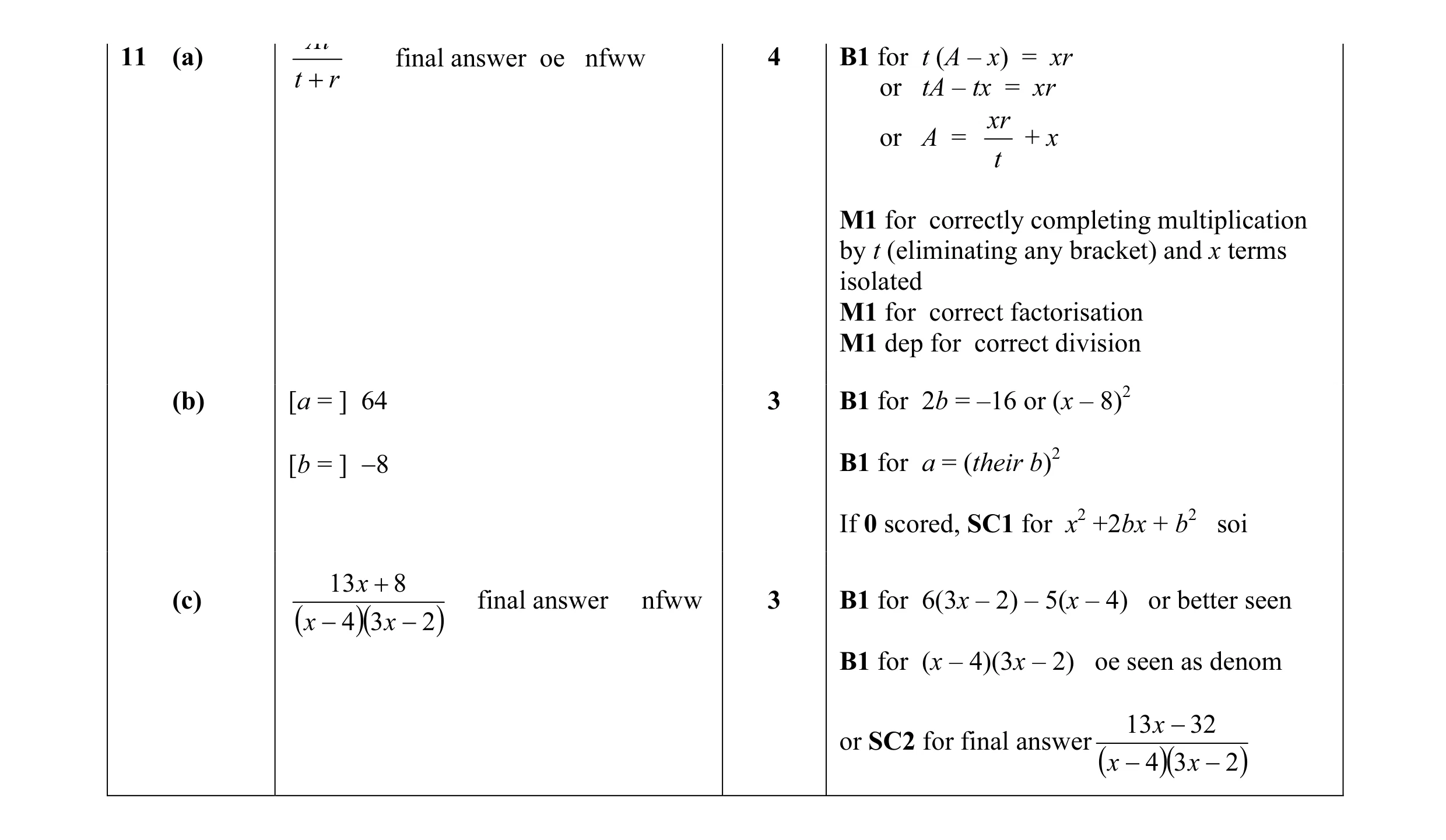 10
10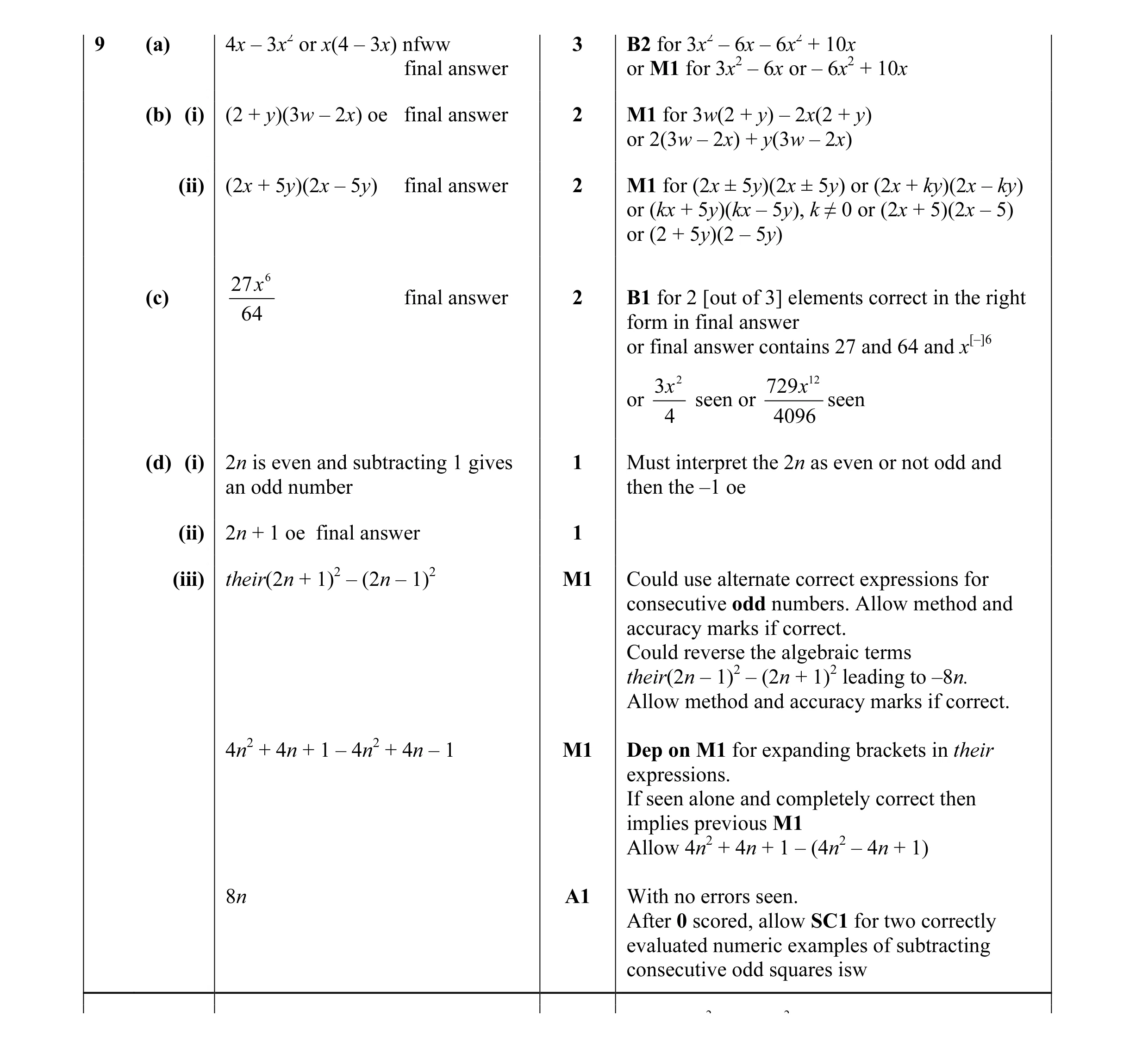 14
14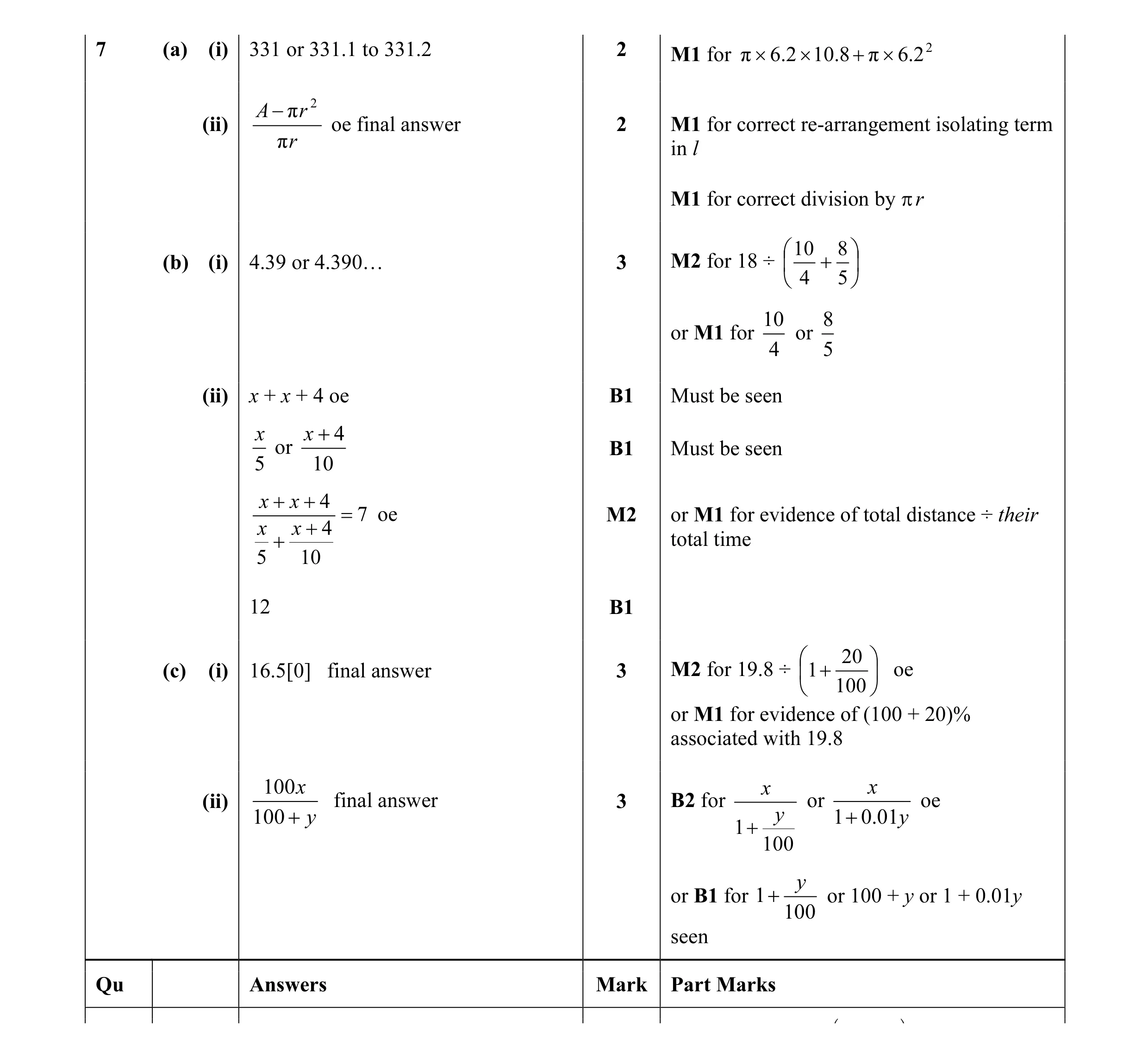 18
18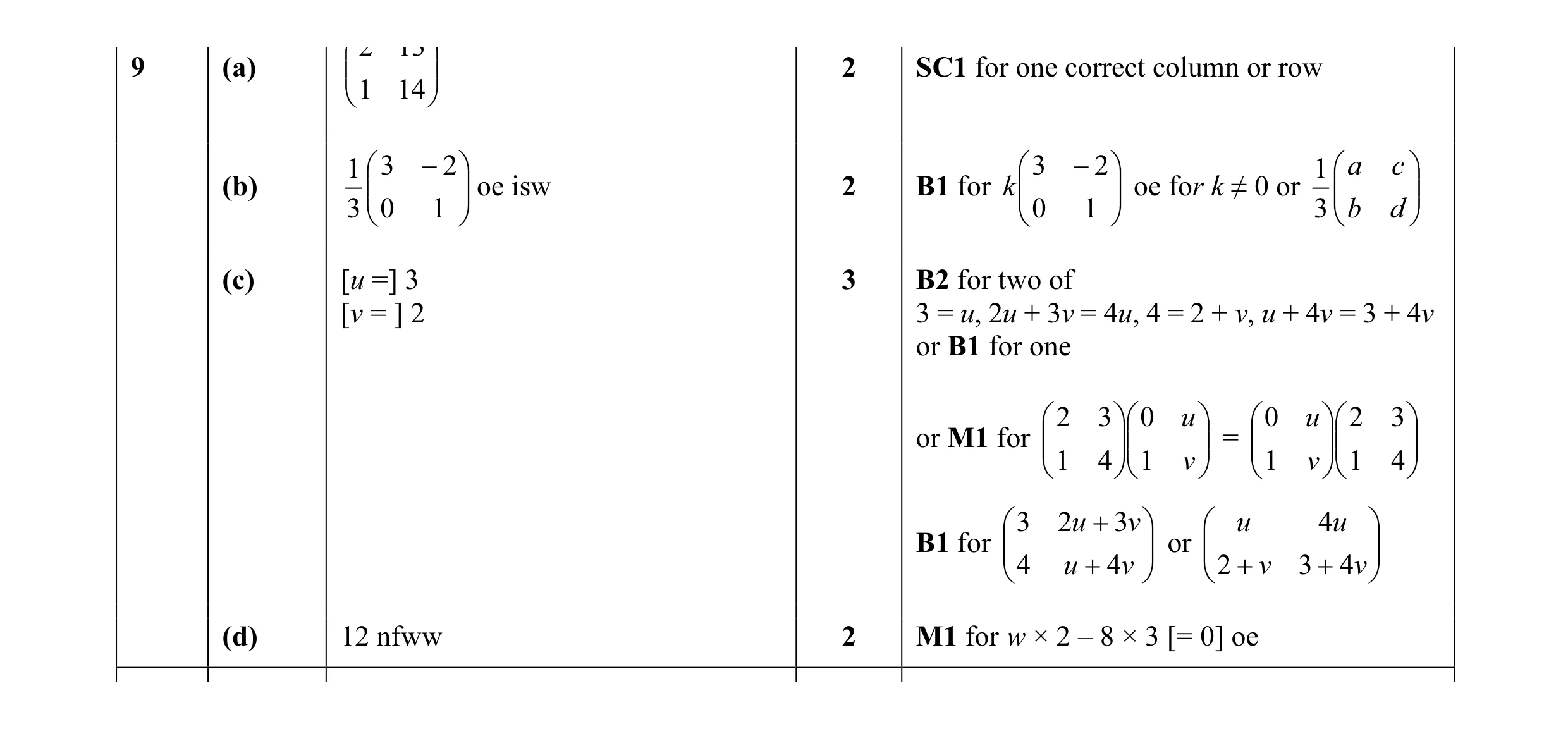 9
9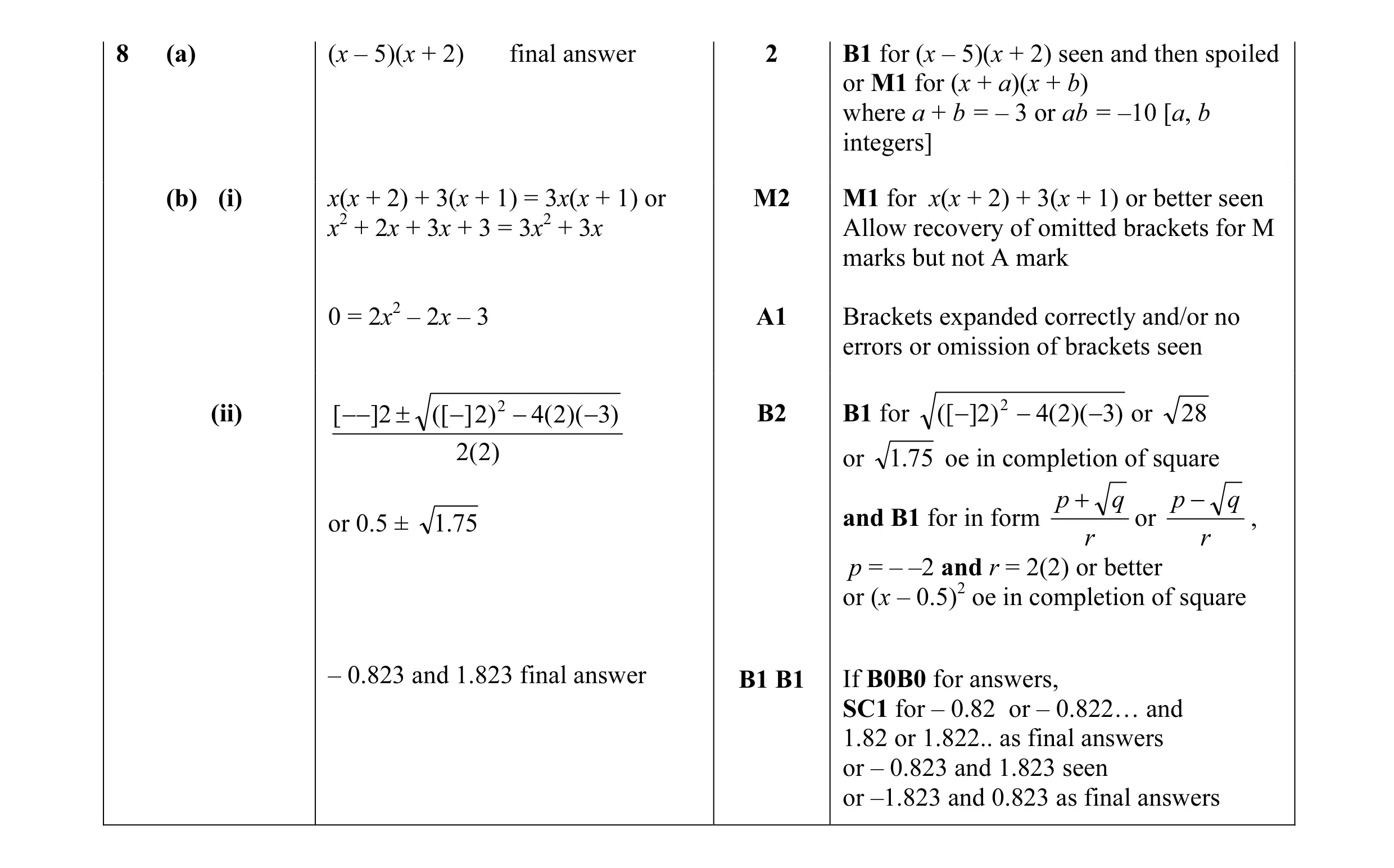 13
13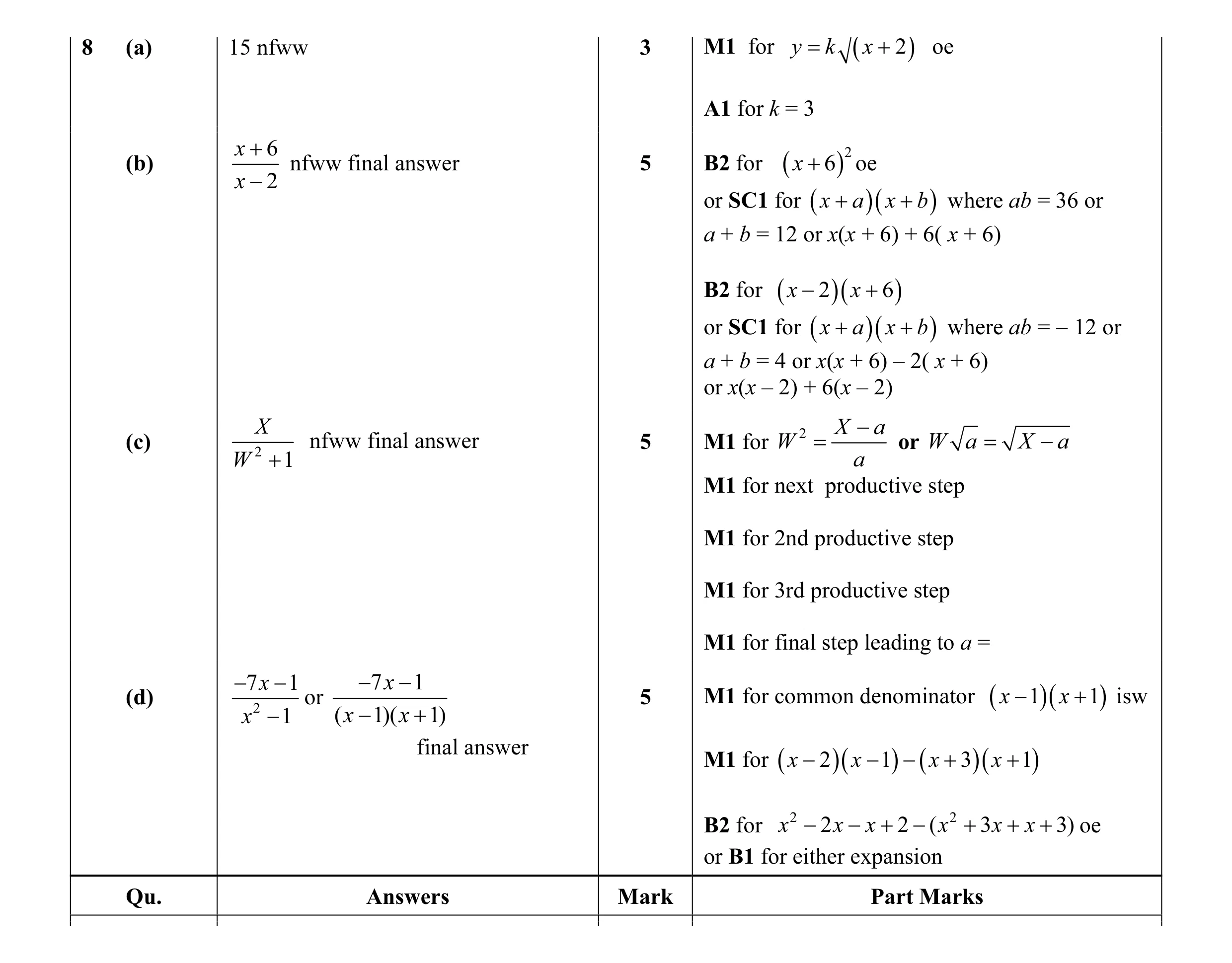 18
18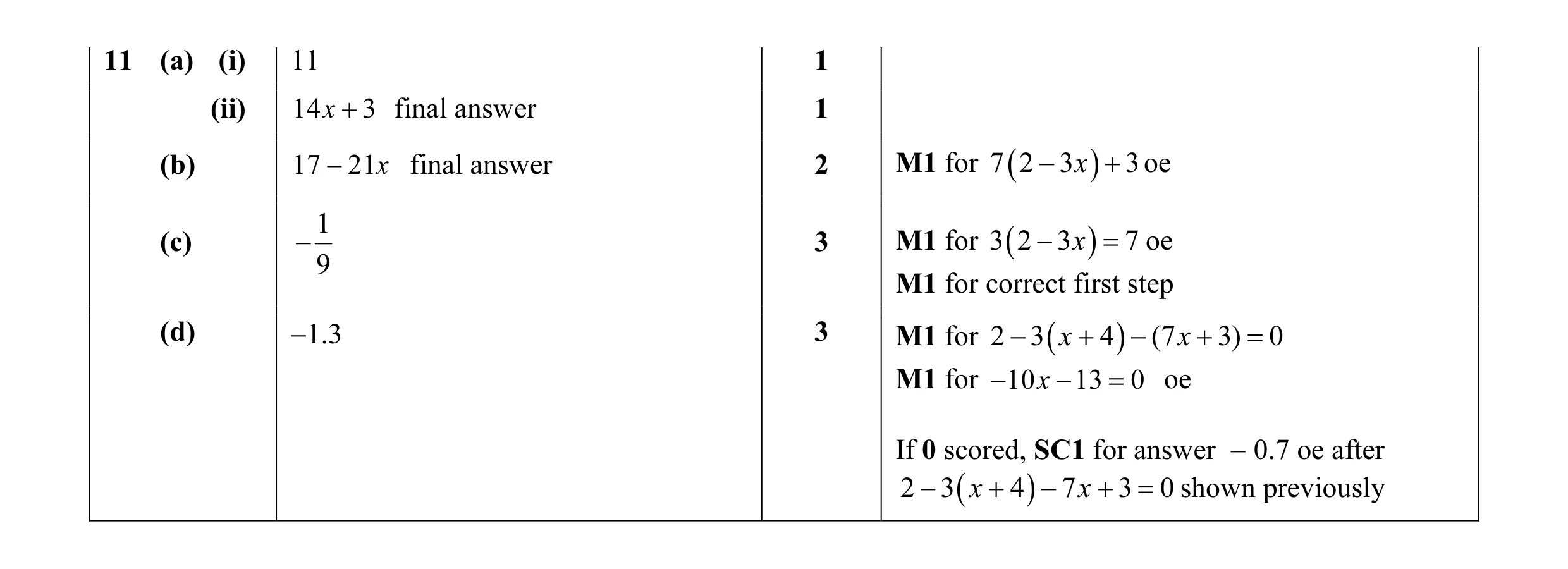 10
10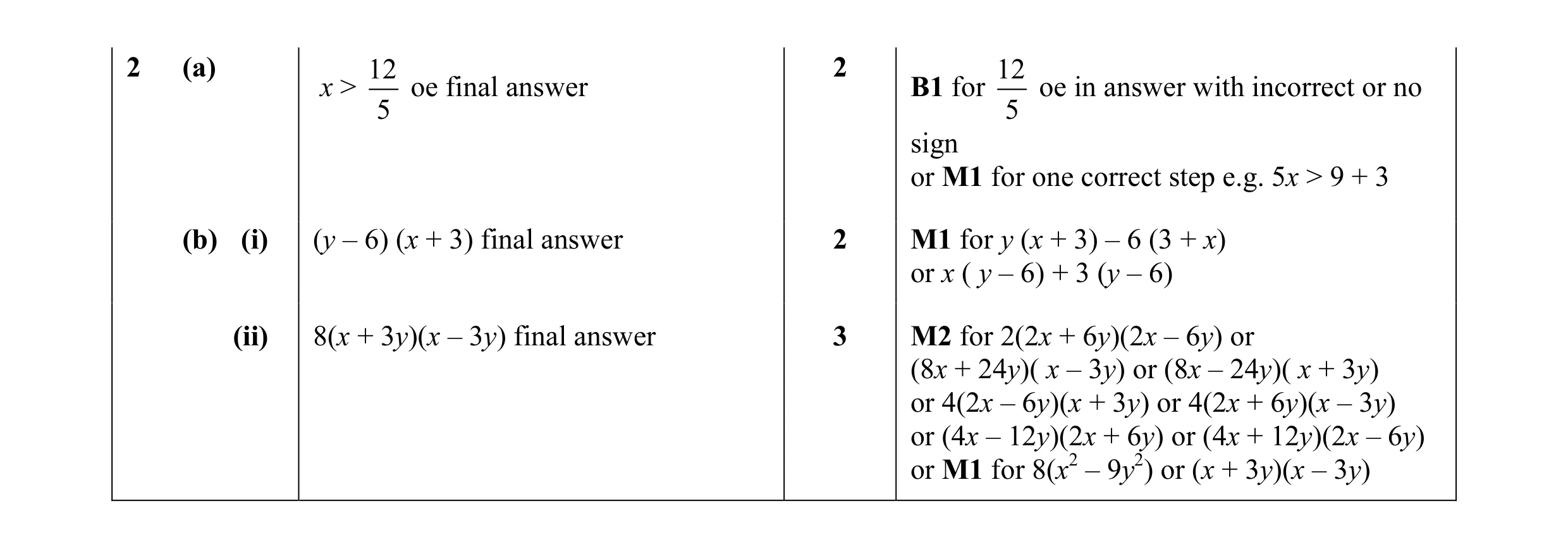 11
11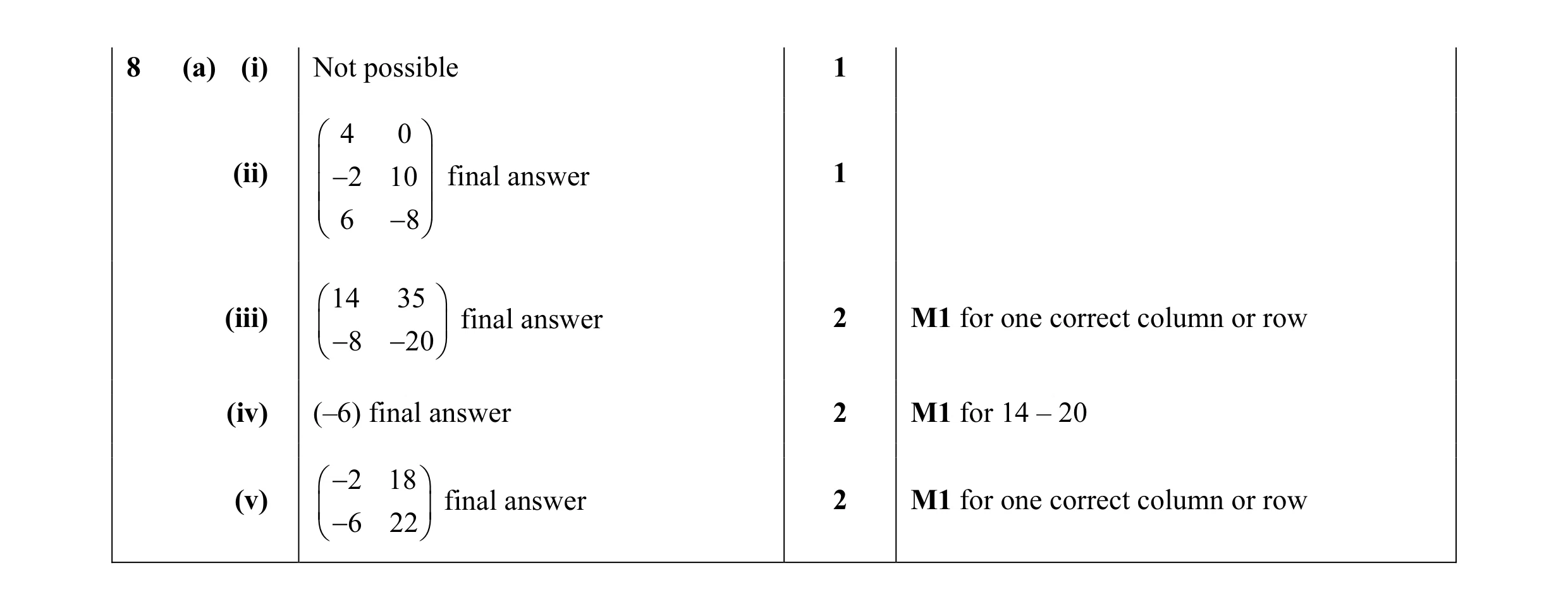 10
10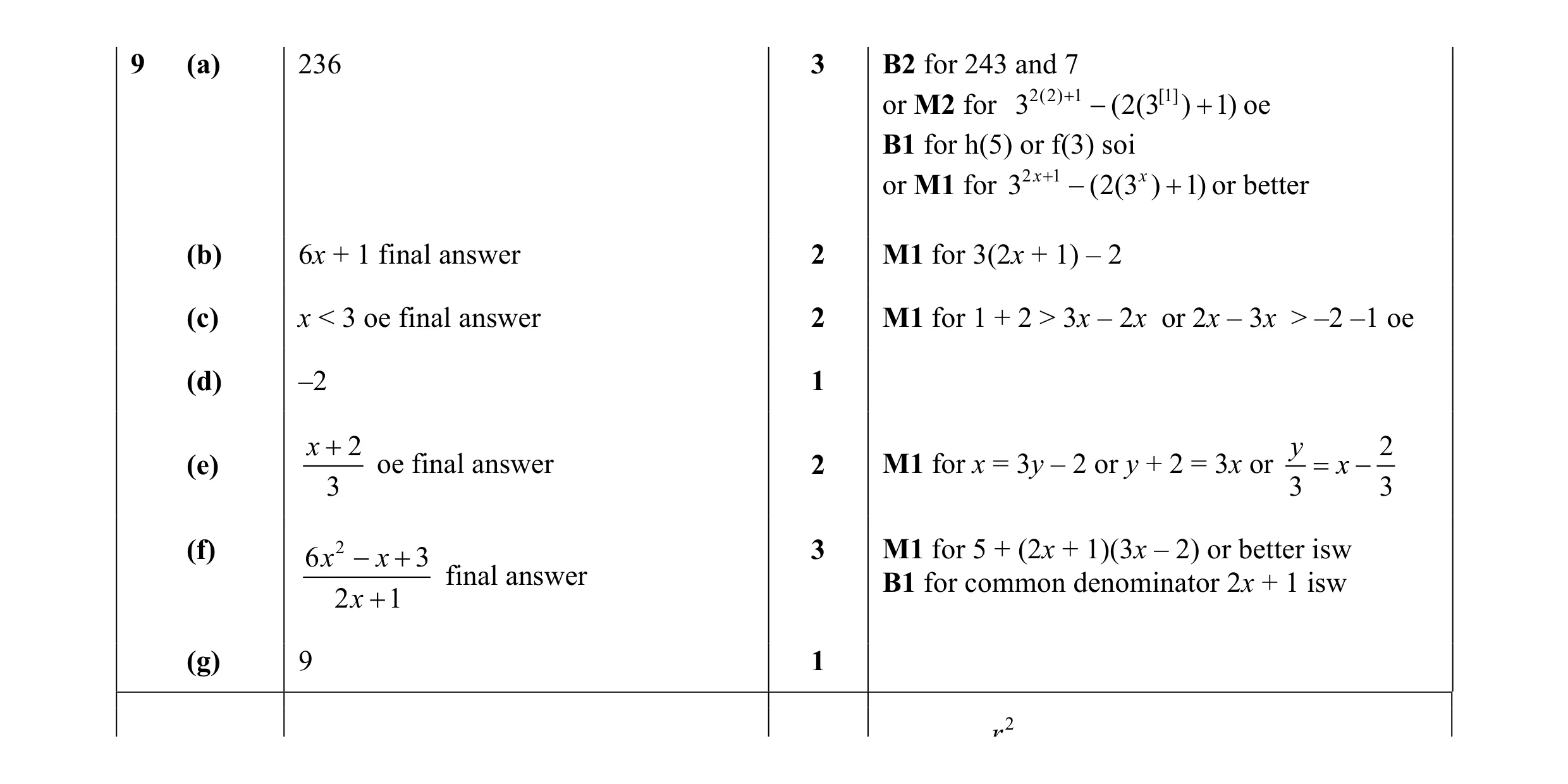 14
14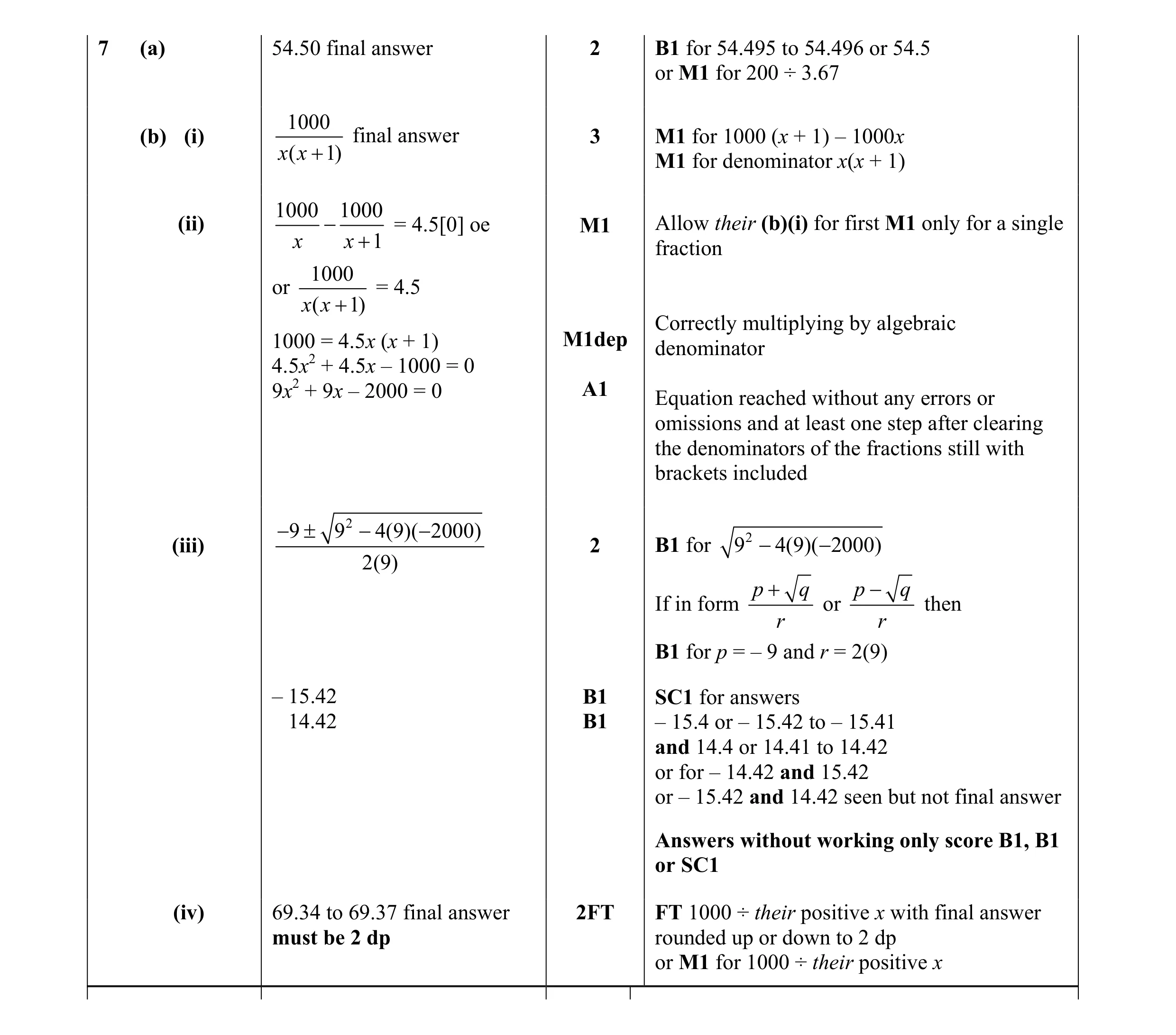 14
14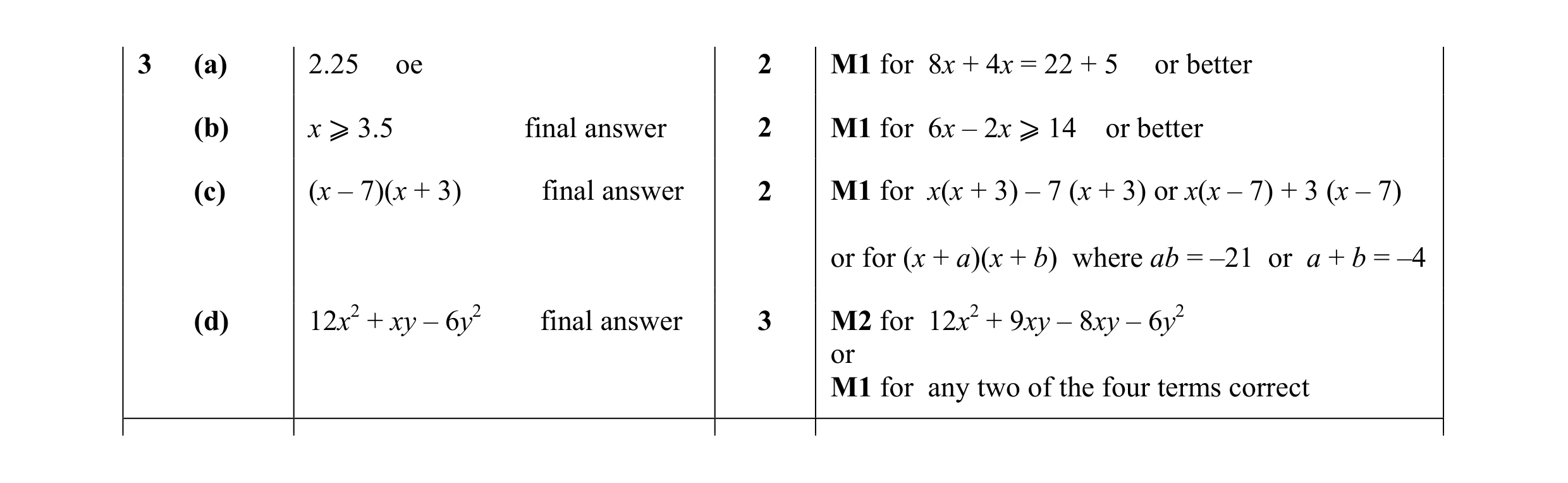 9
9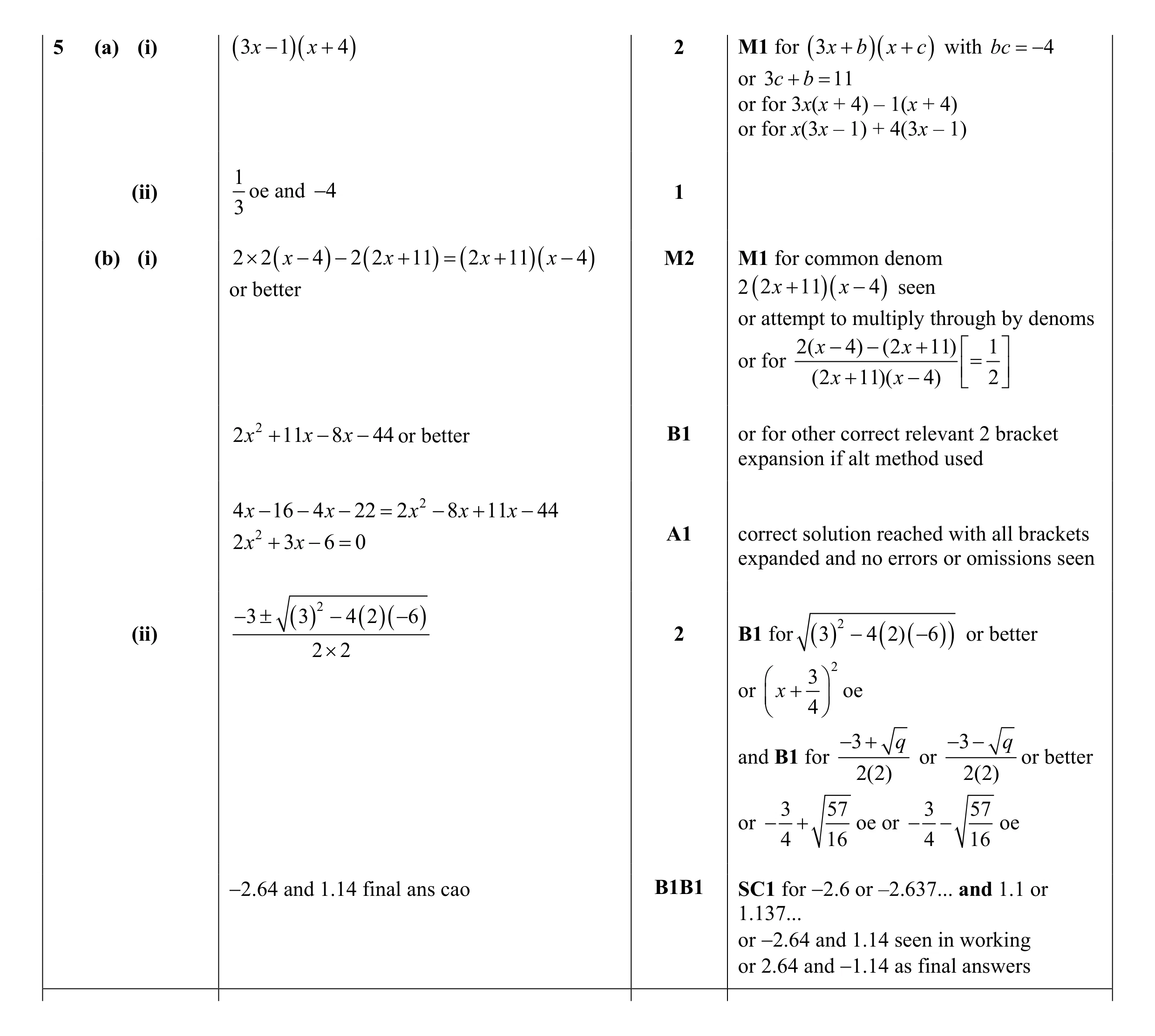 11
11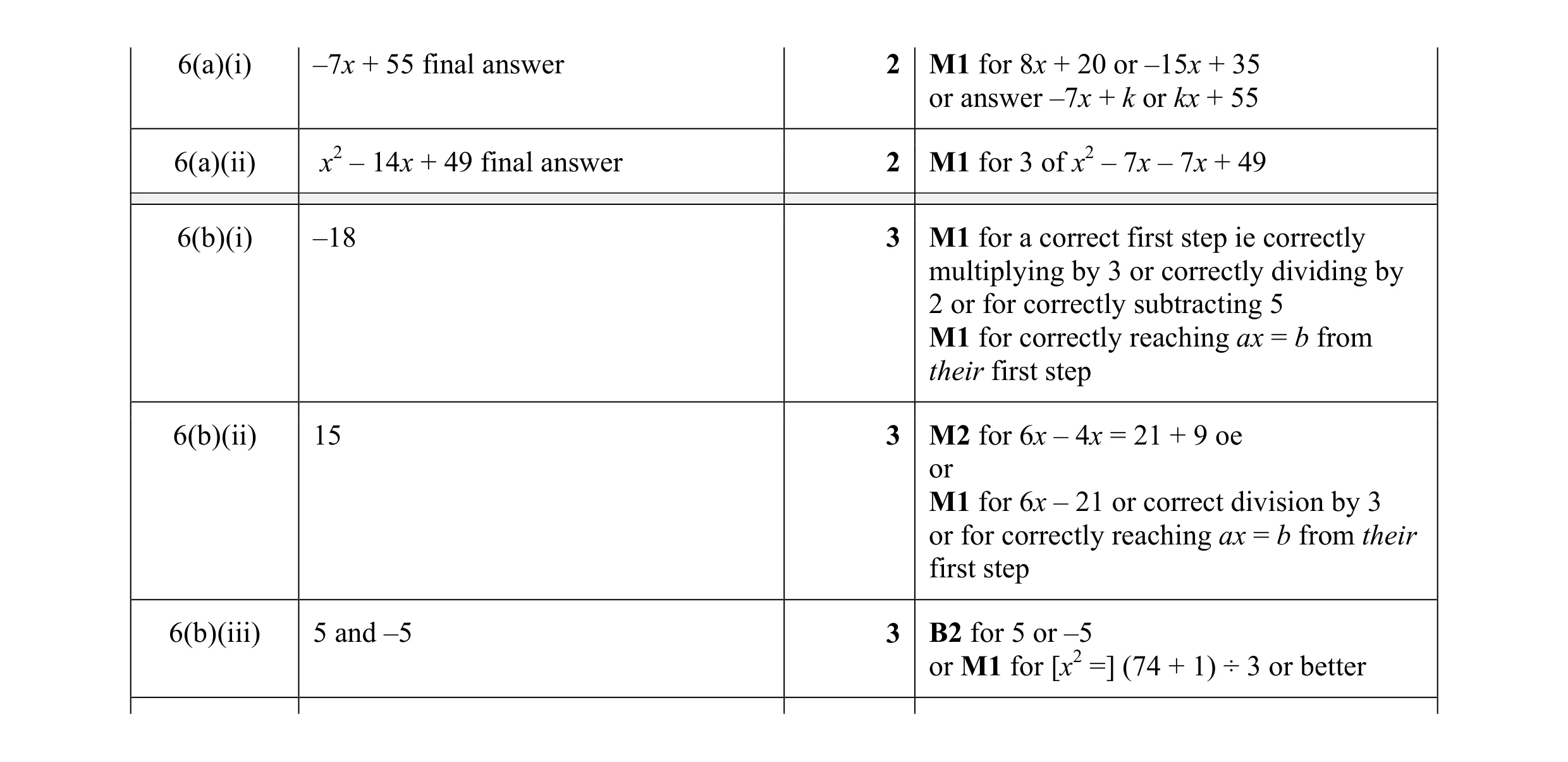 13
13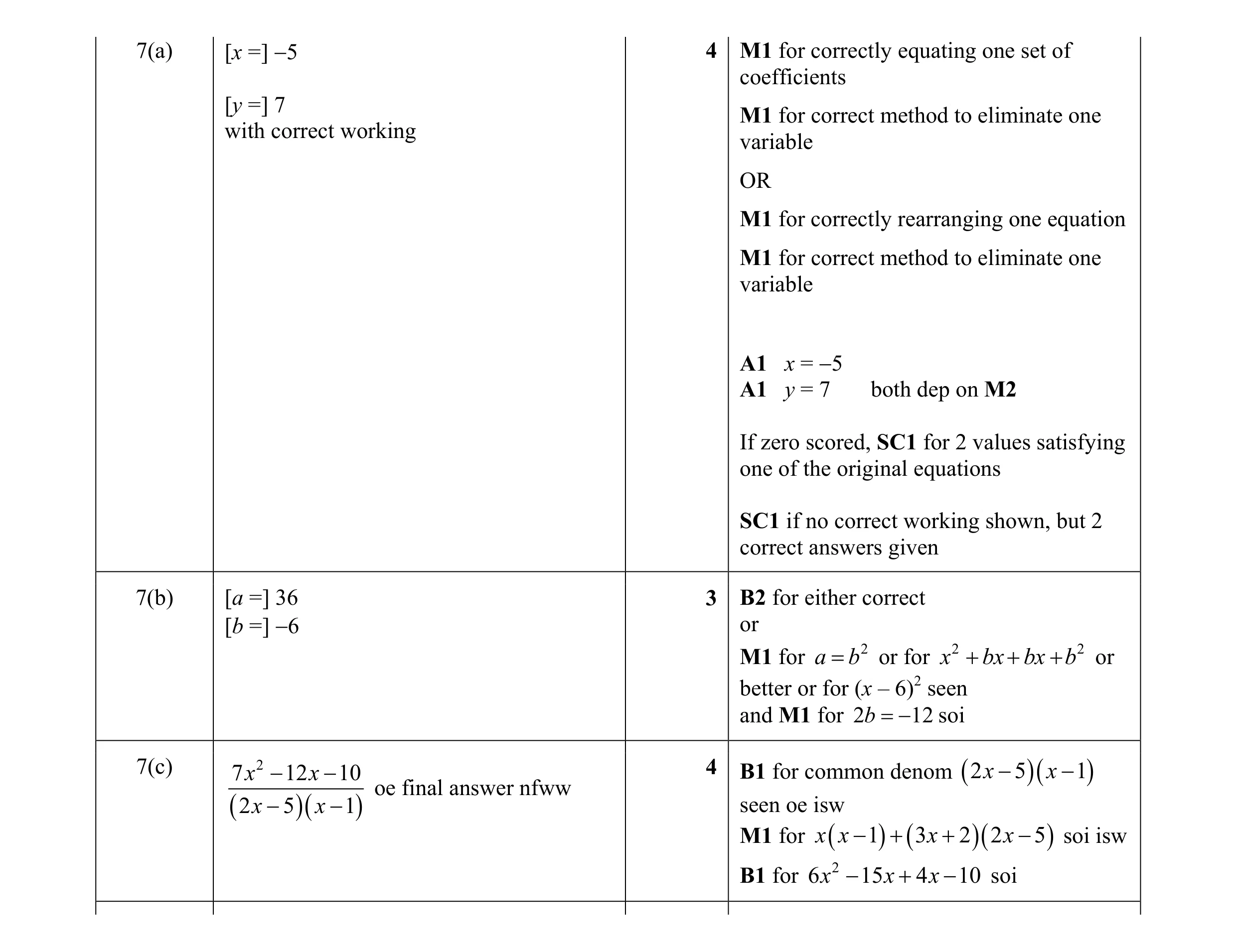 11
11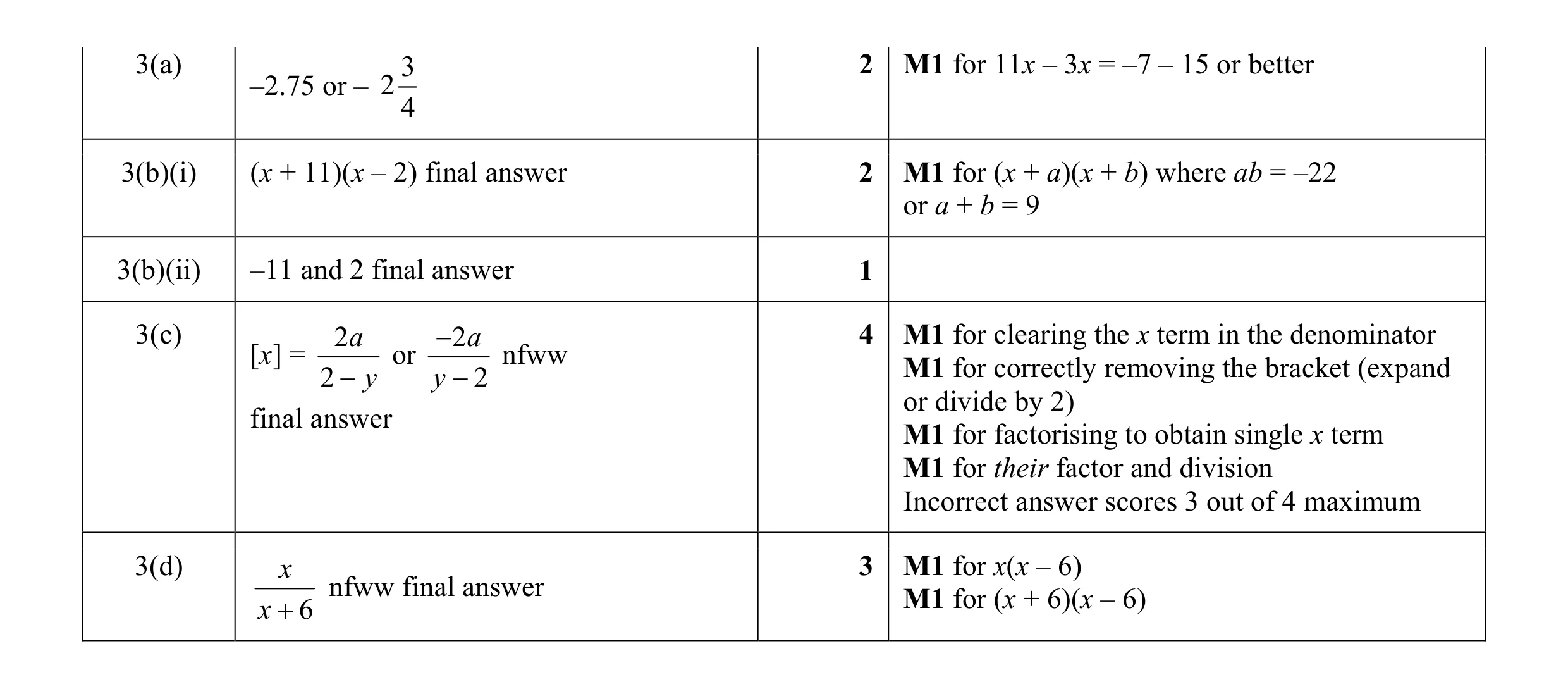 12
12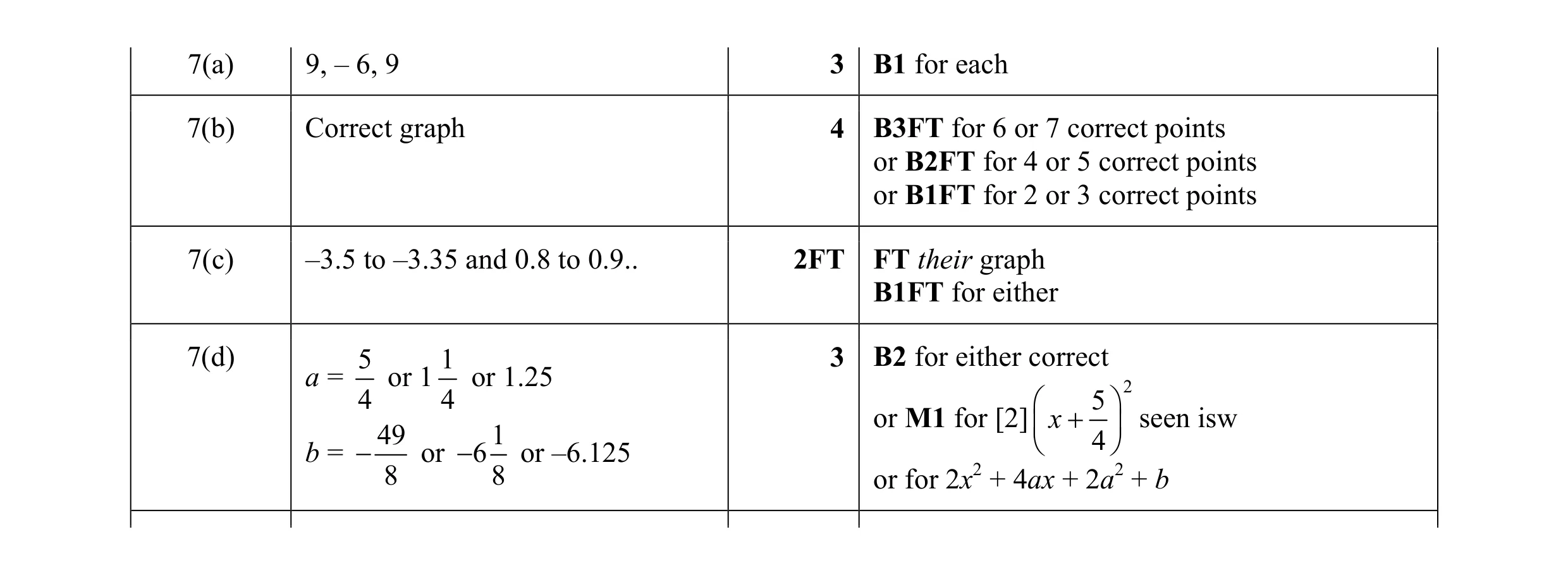 12
12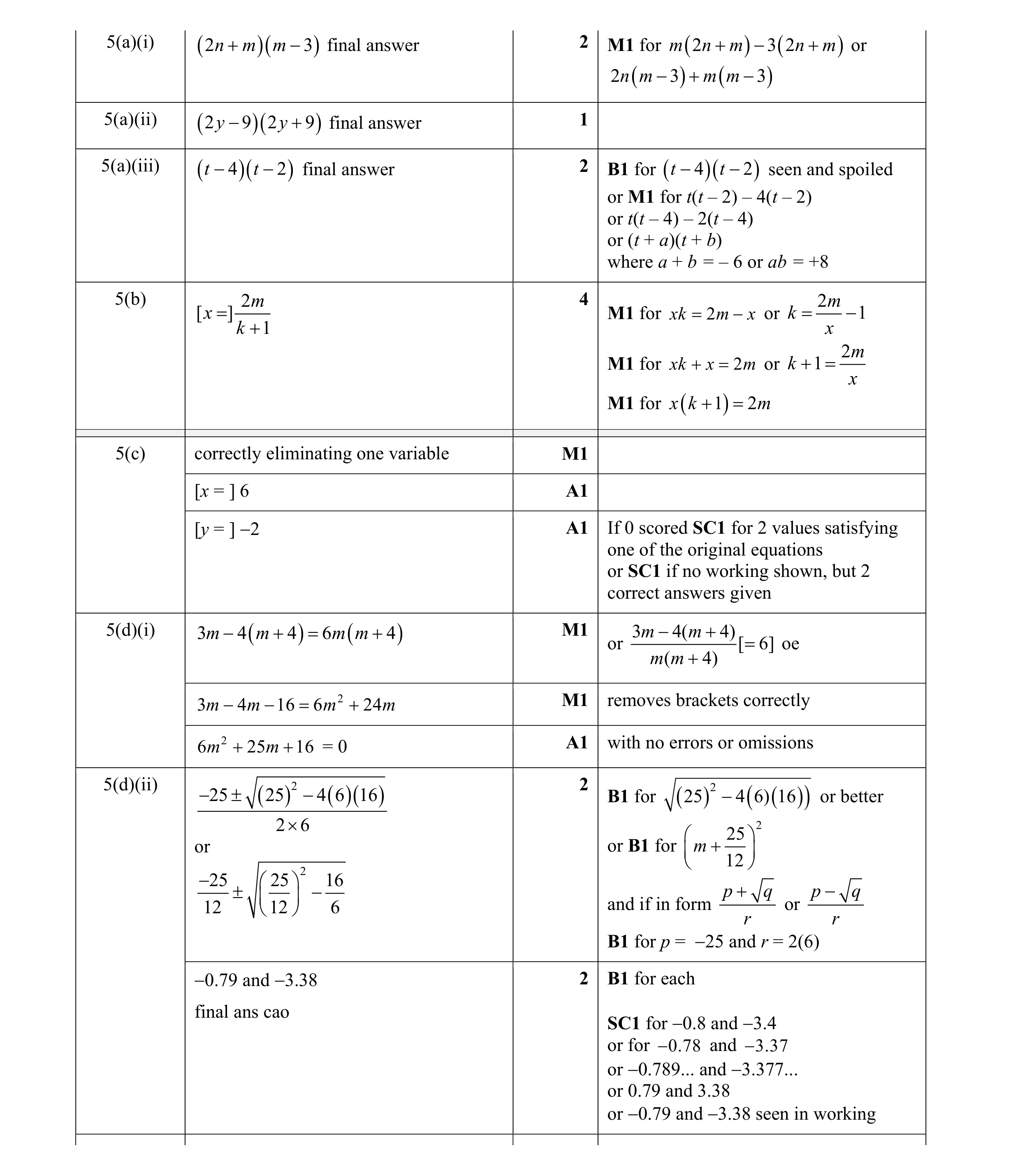 19
19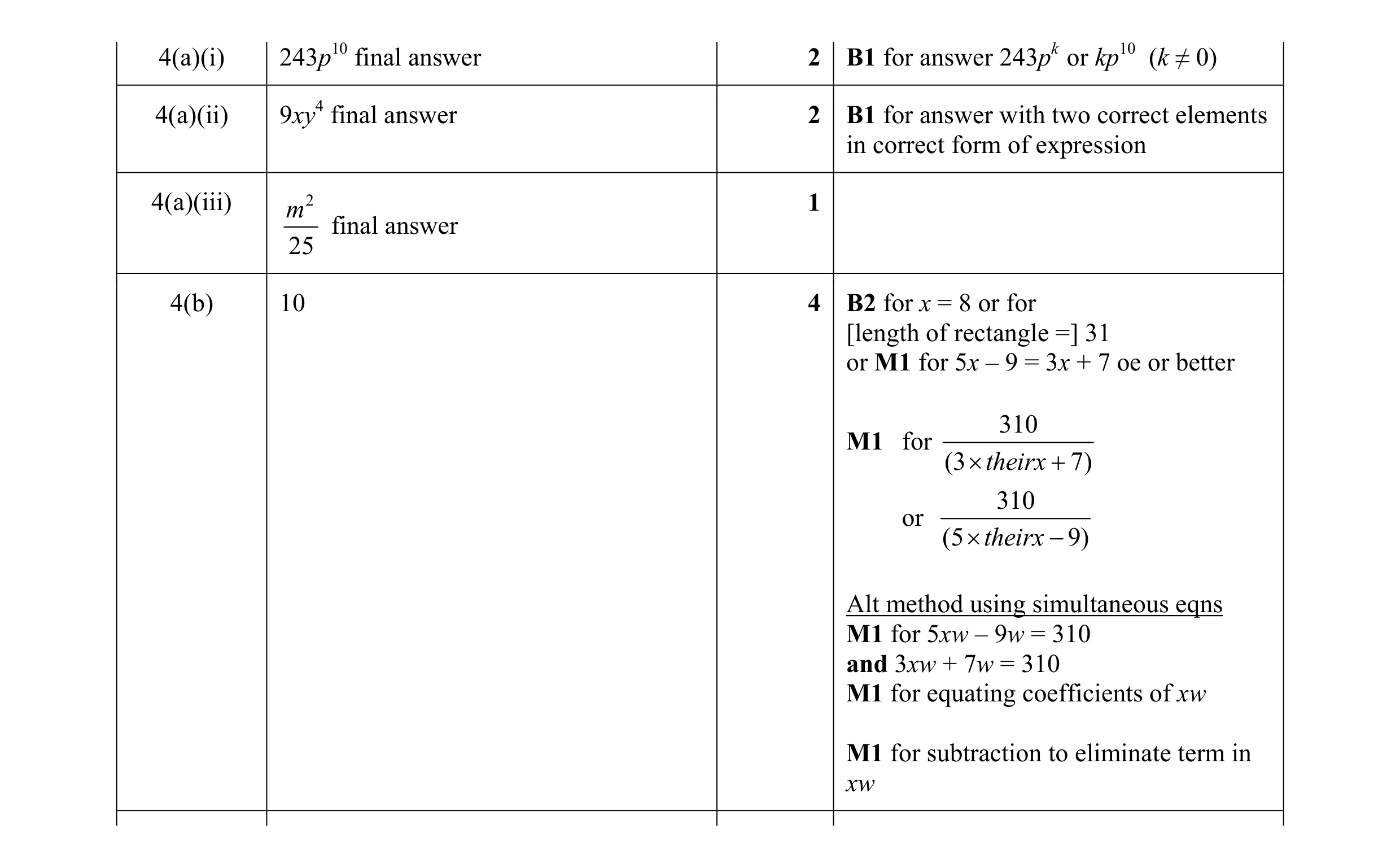 9
9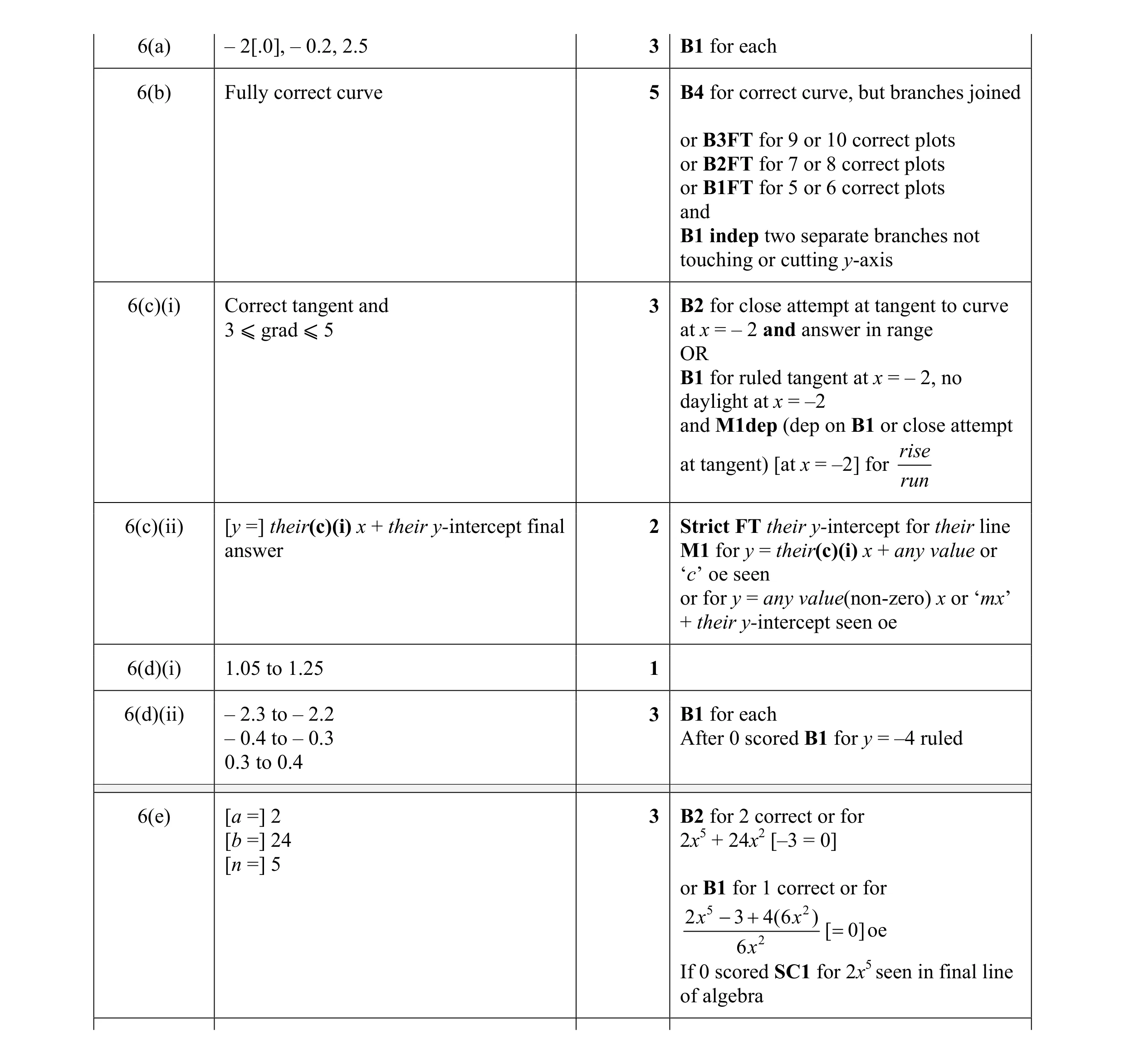 20
20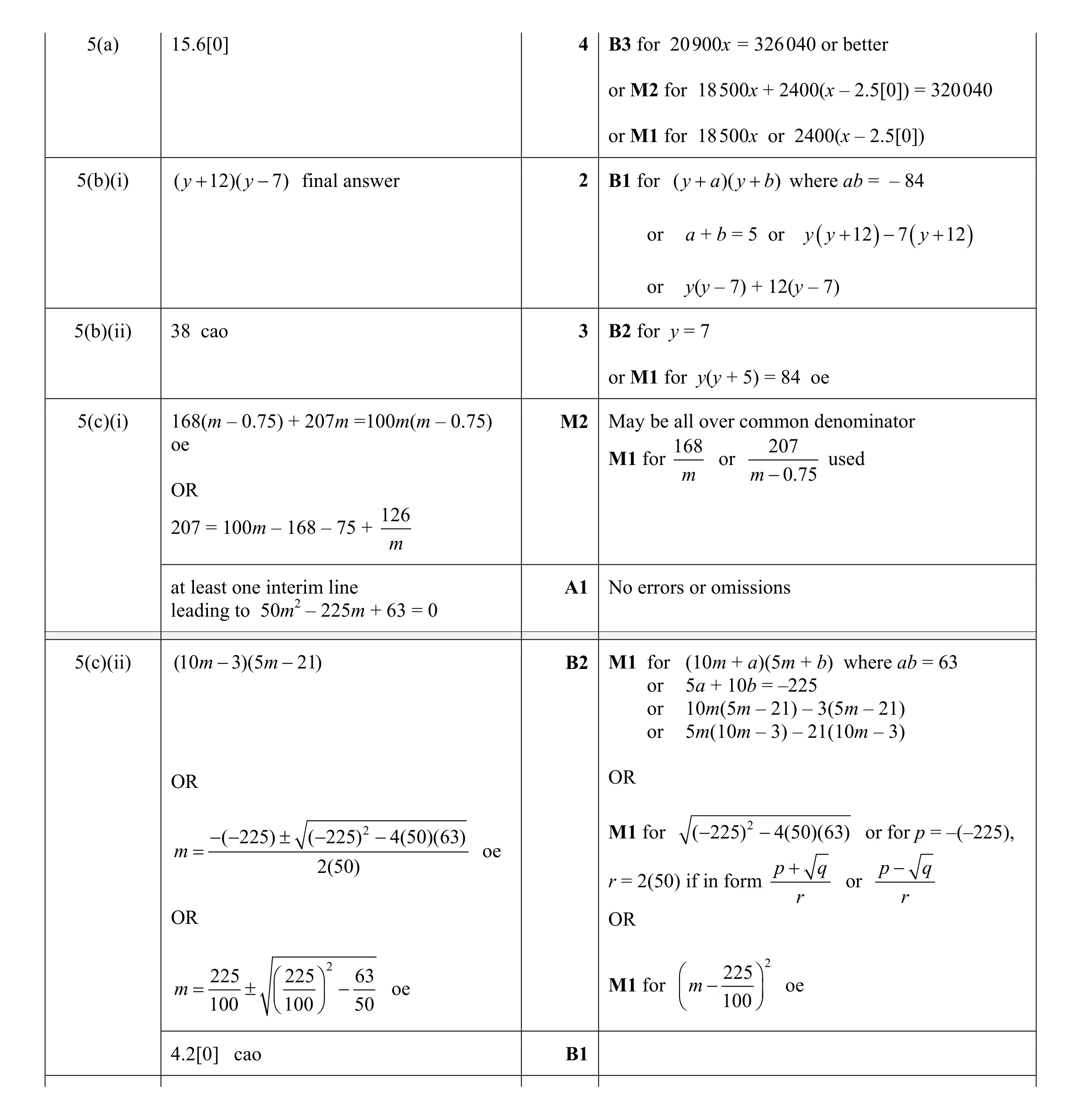 15
15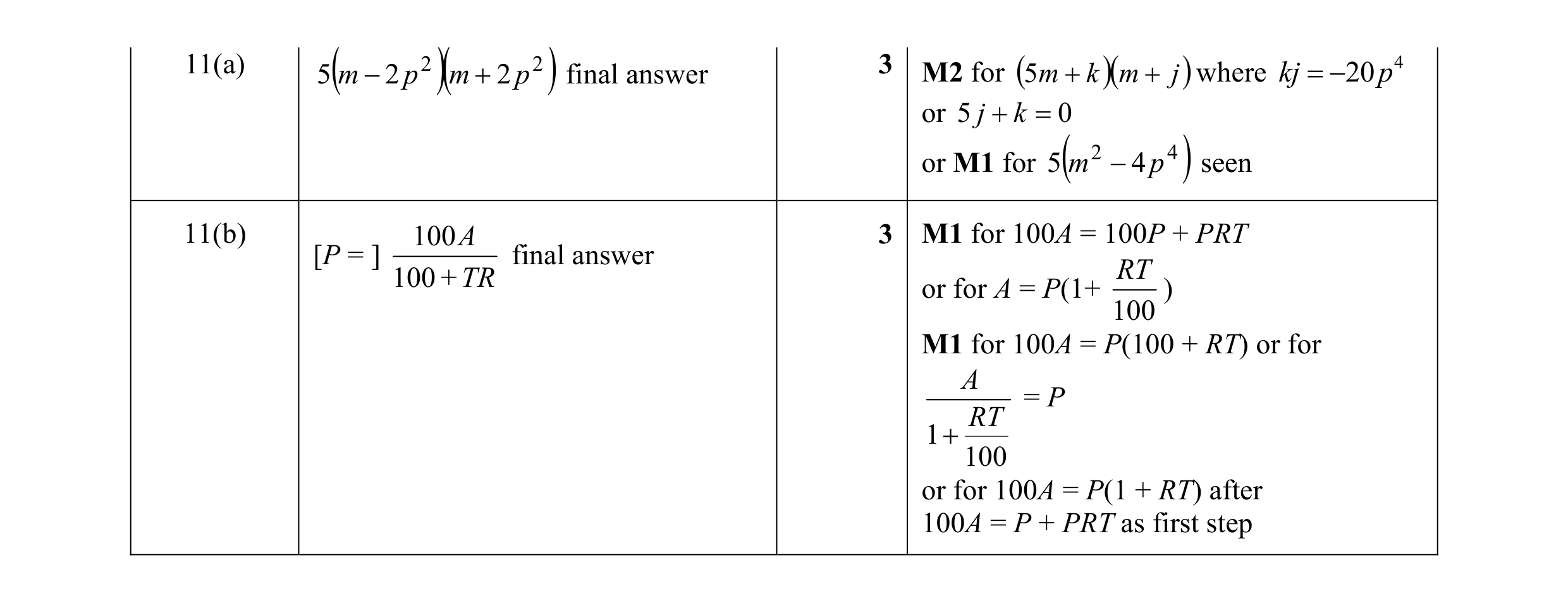 6
6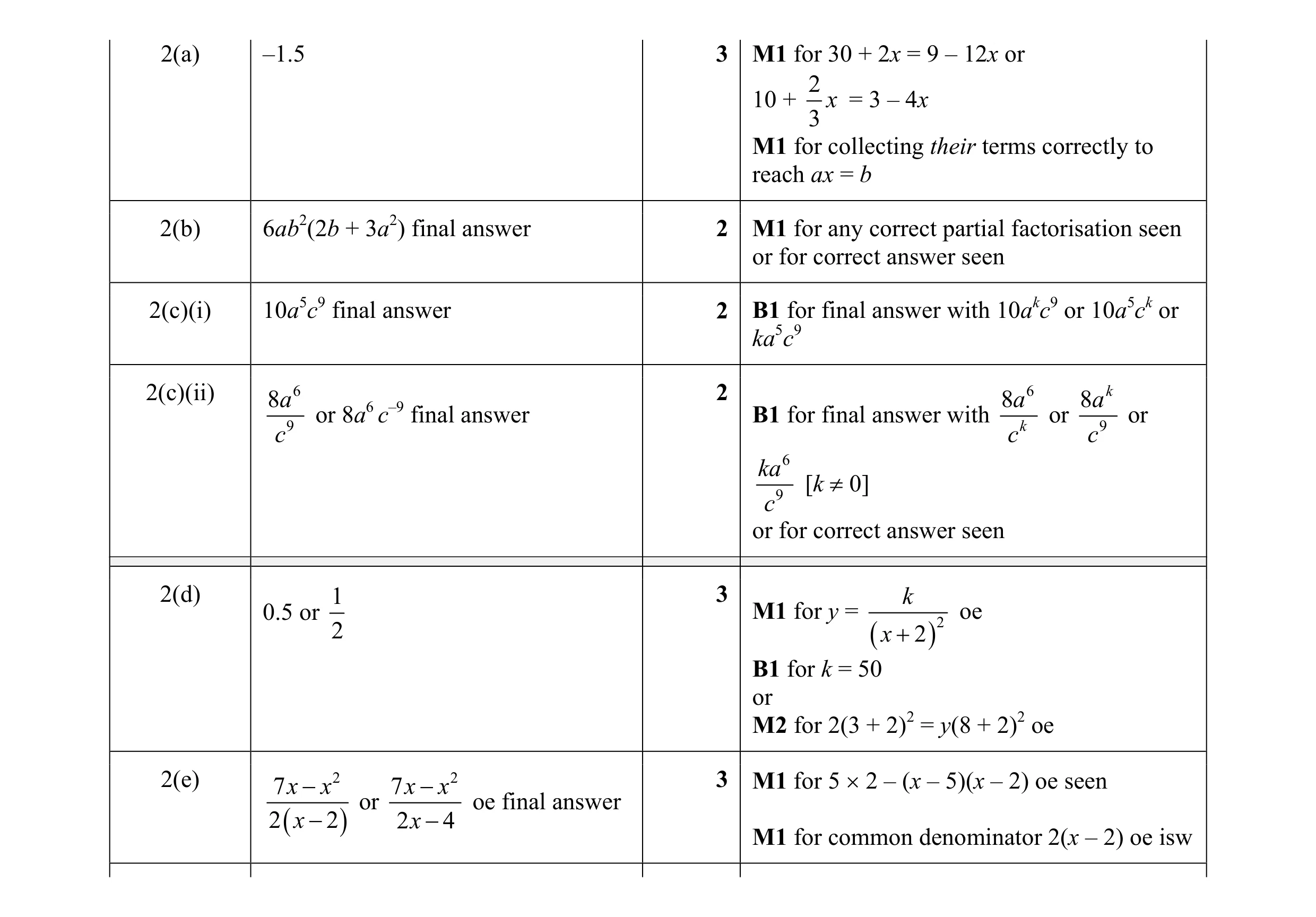 15
15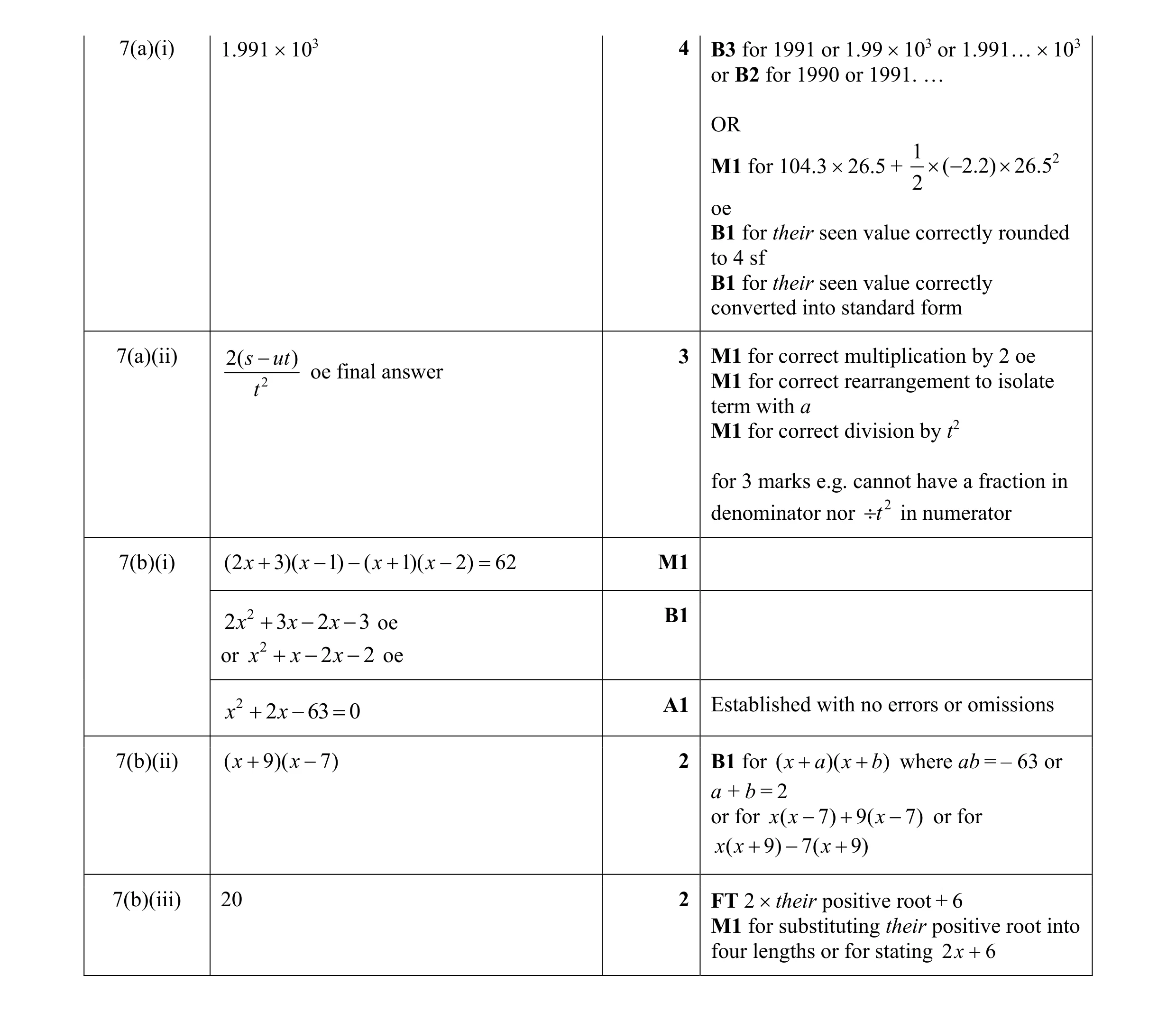 14
14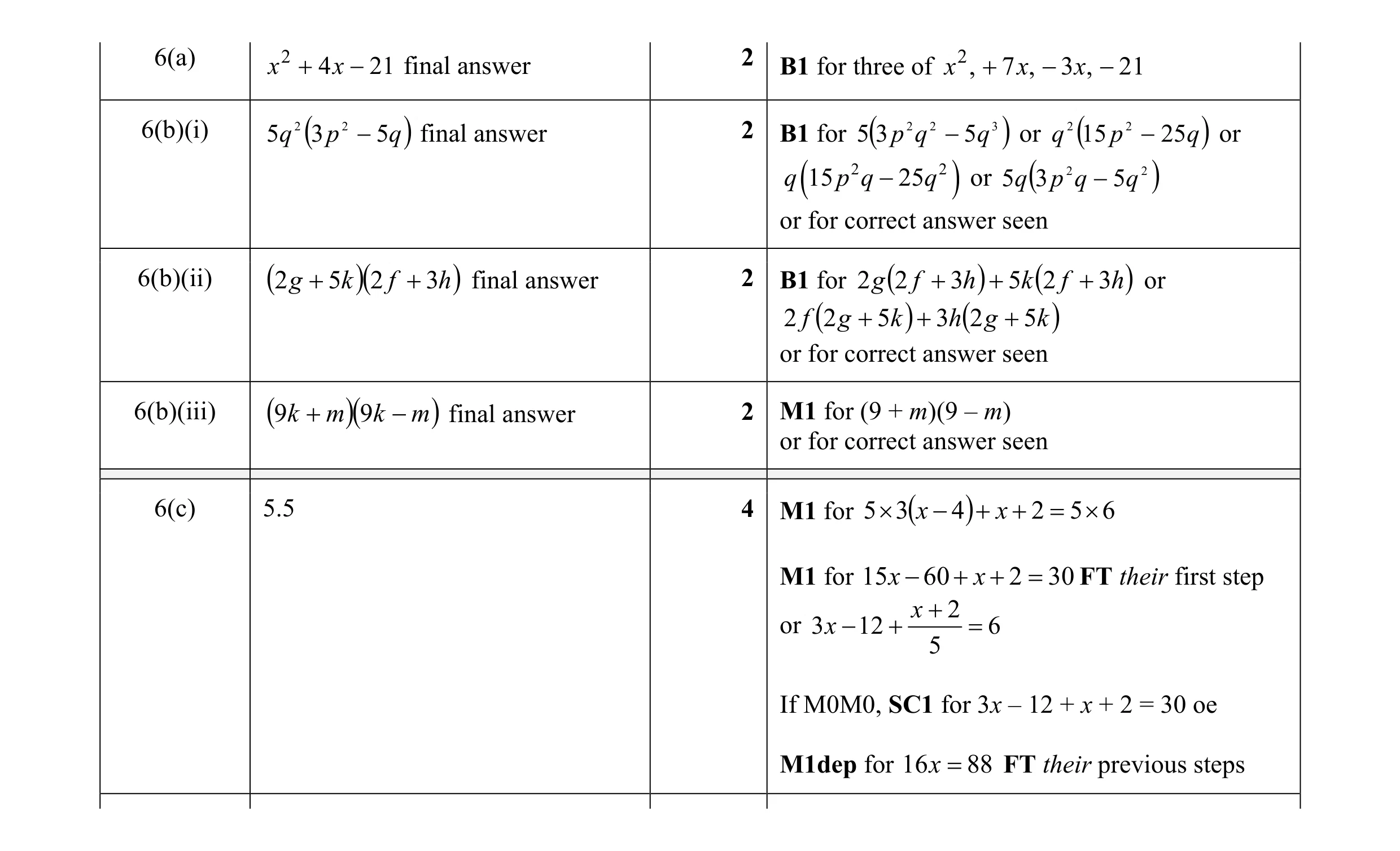 12
12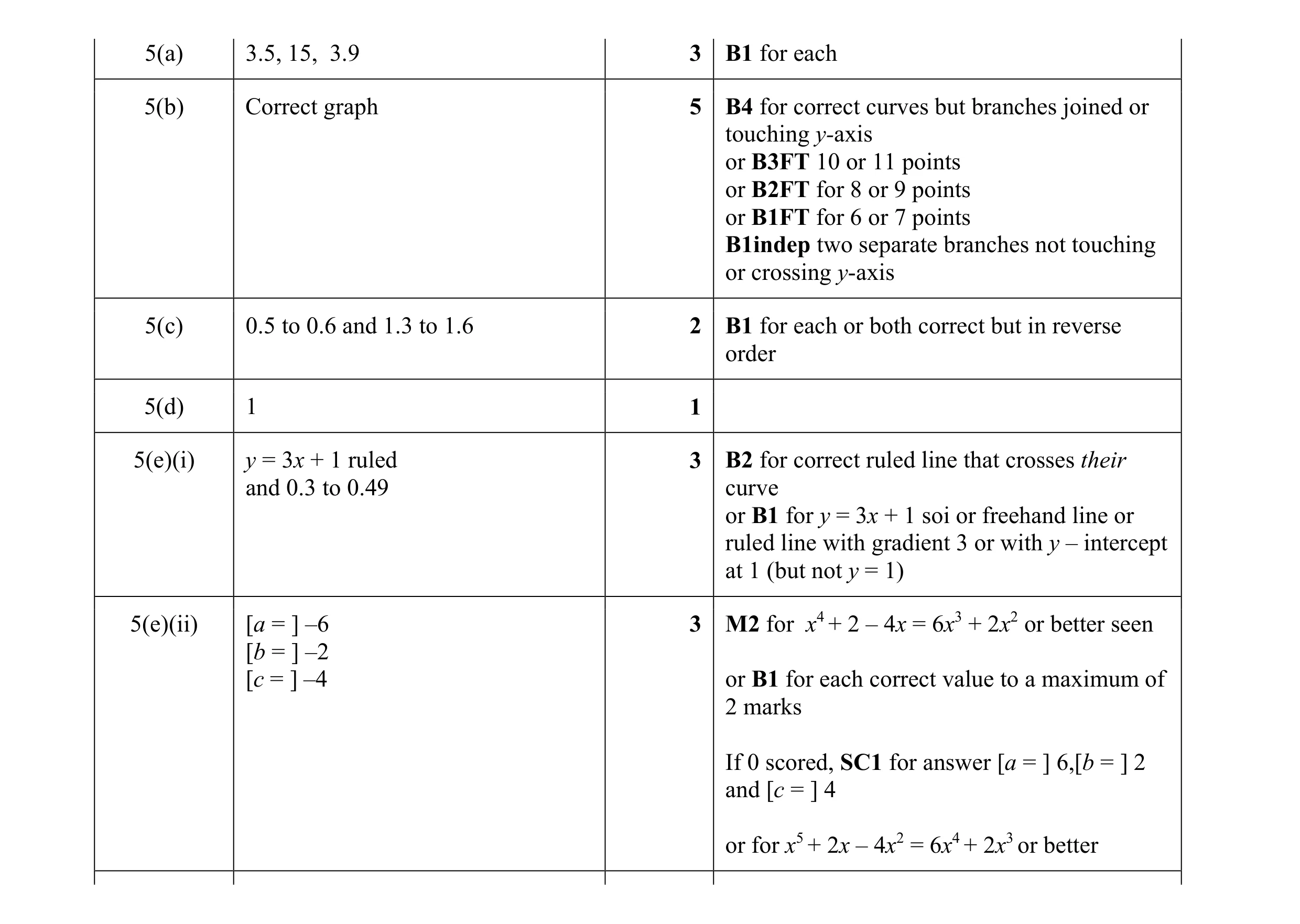 17
17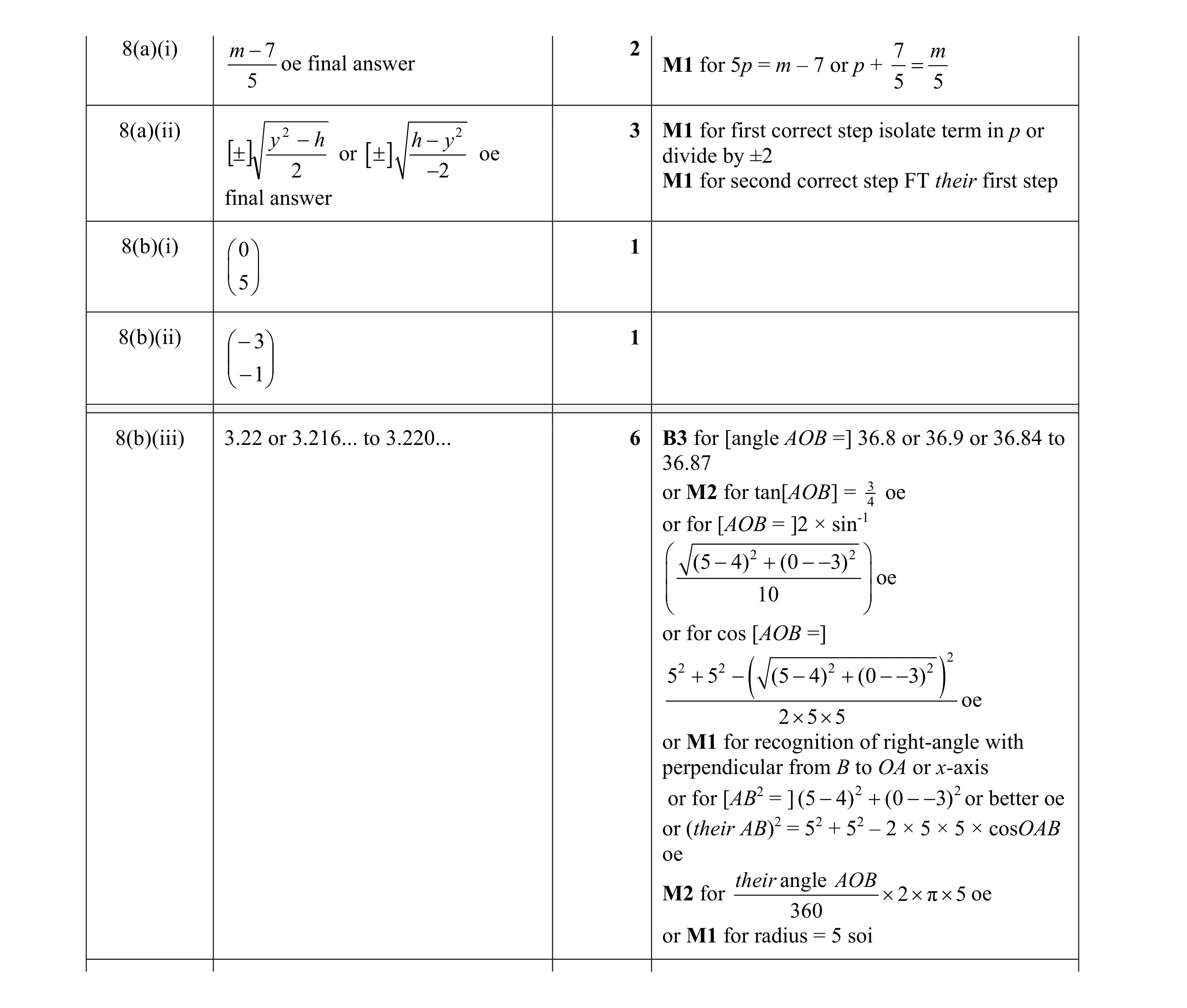 13
13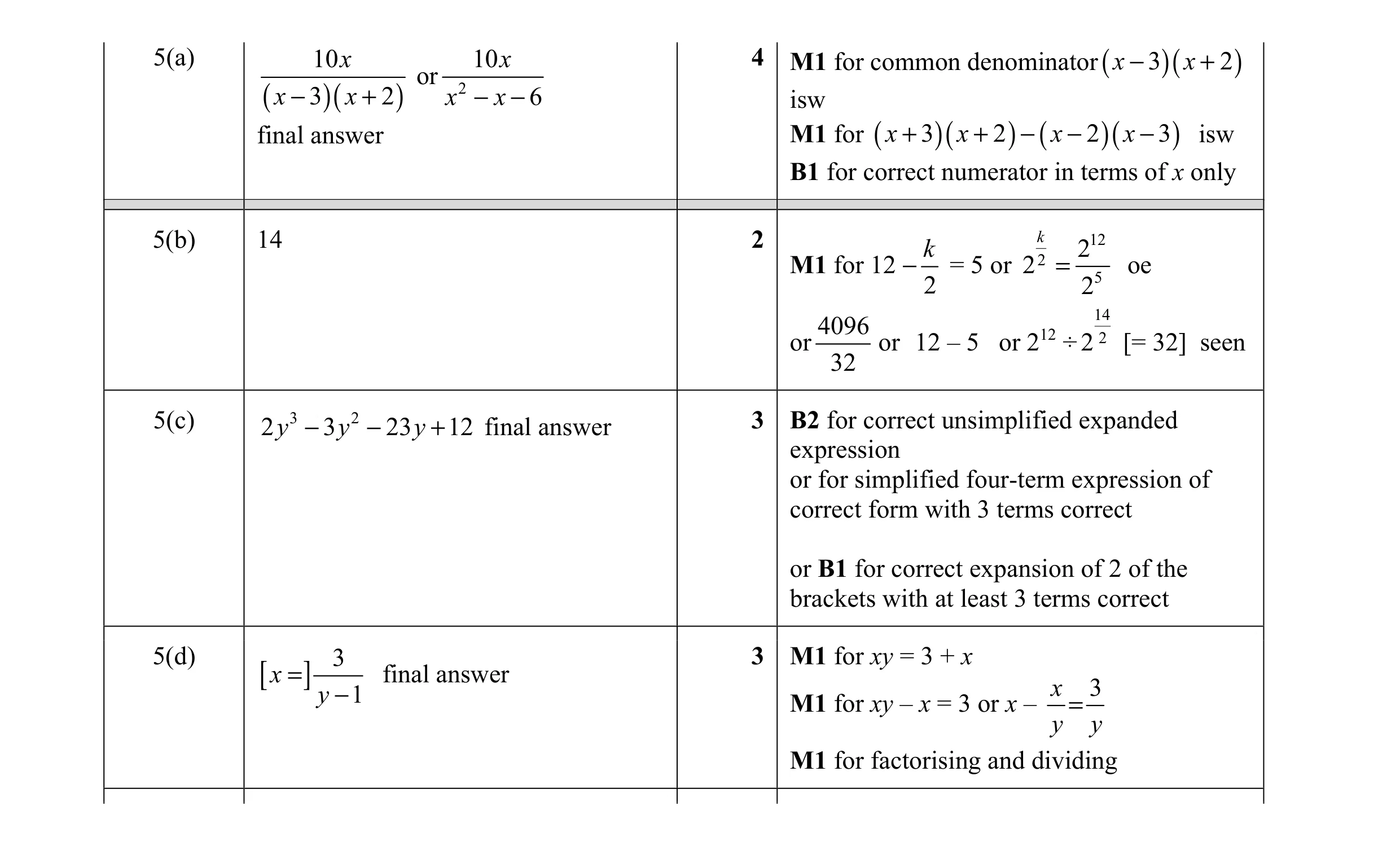 12
12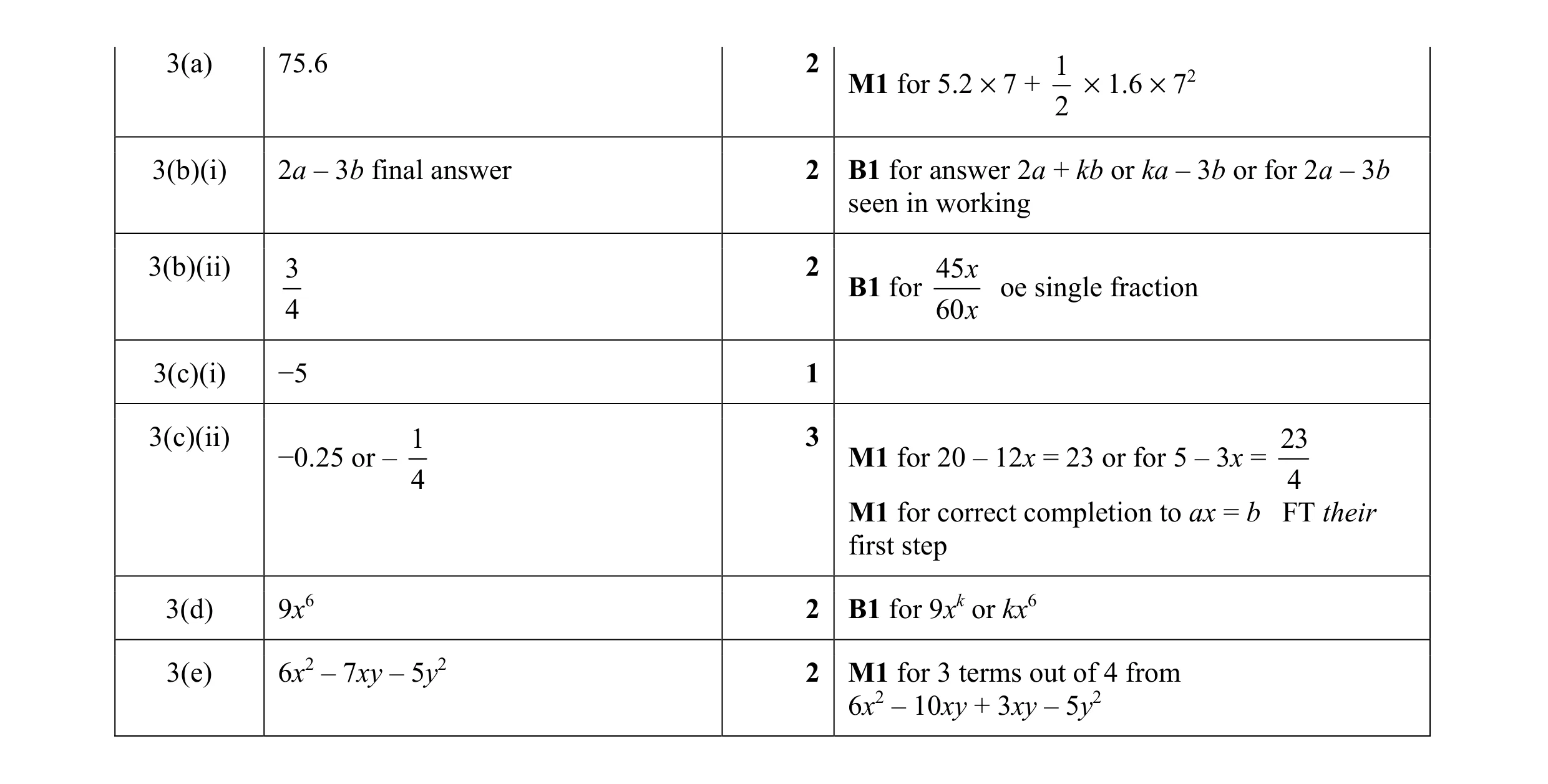 14
14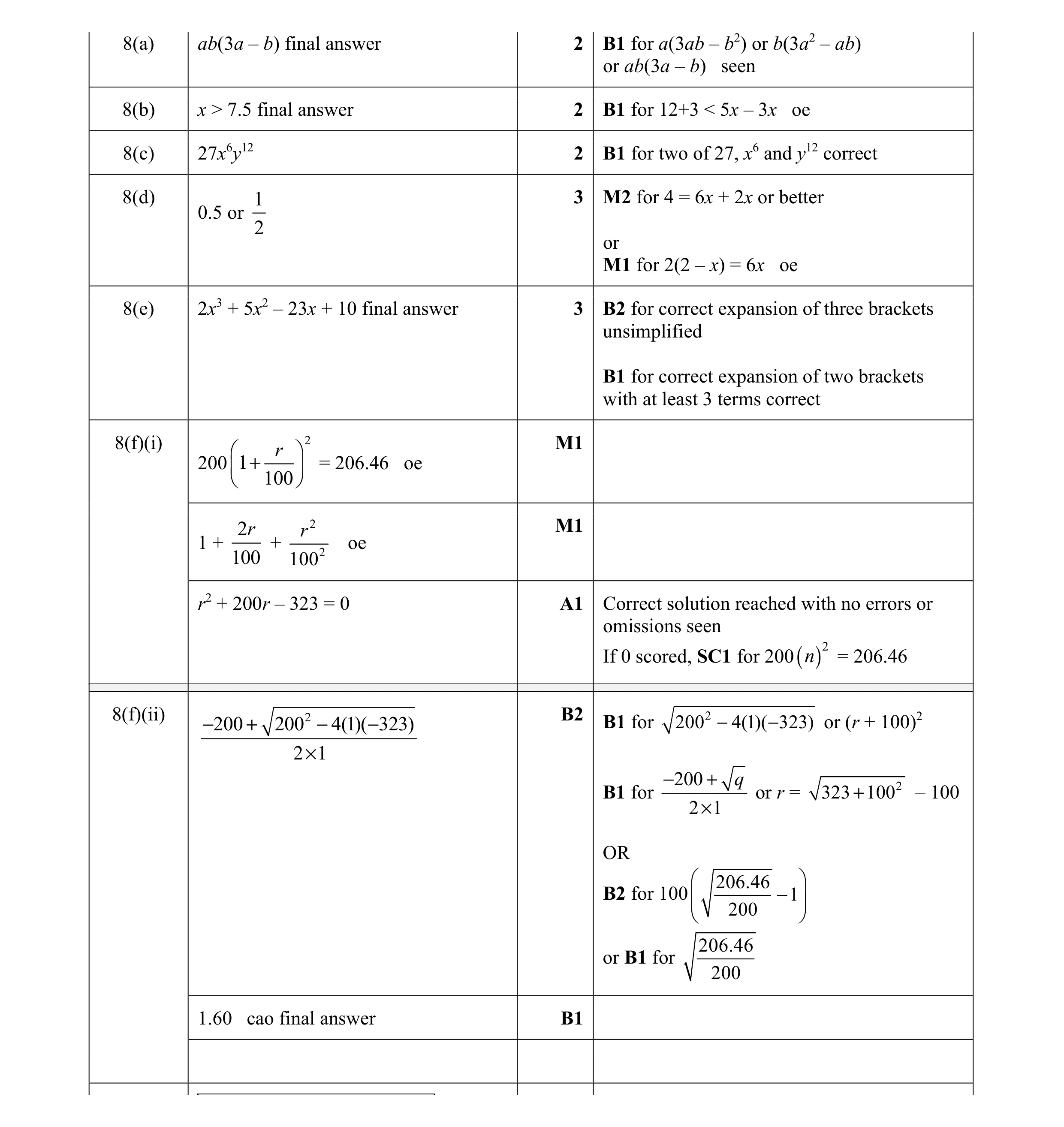 18
18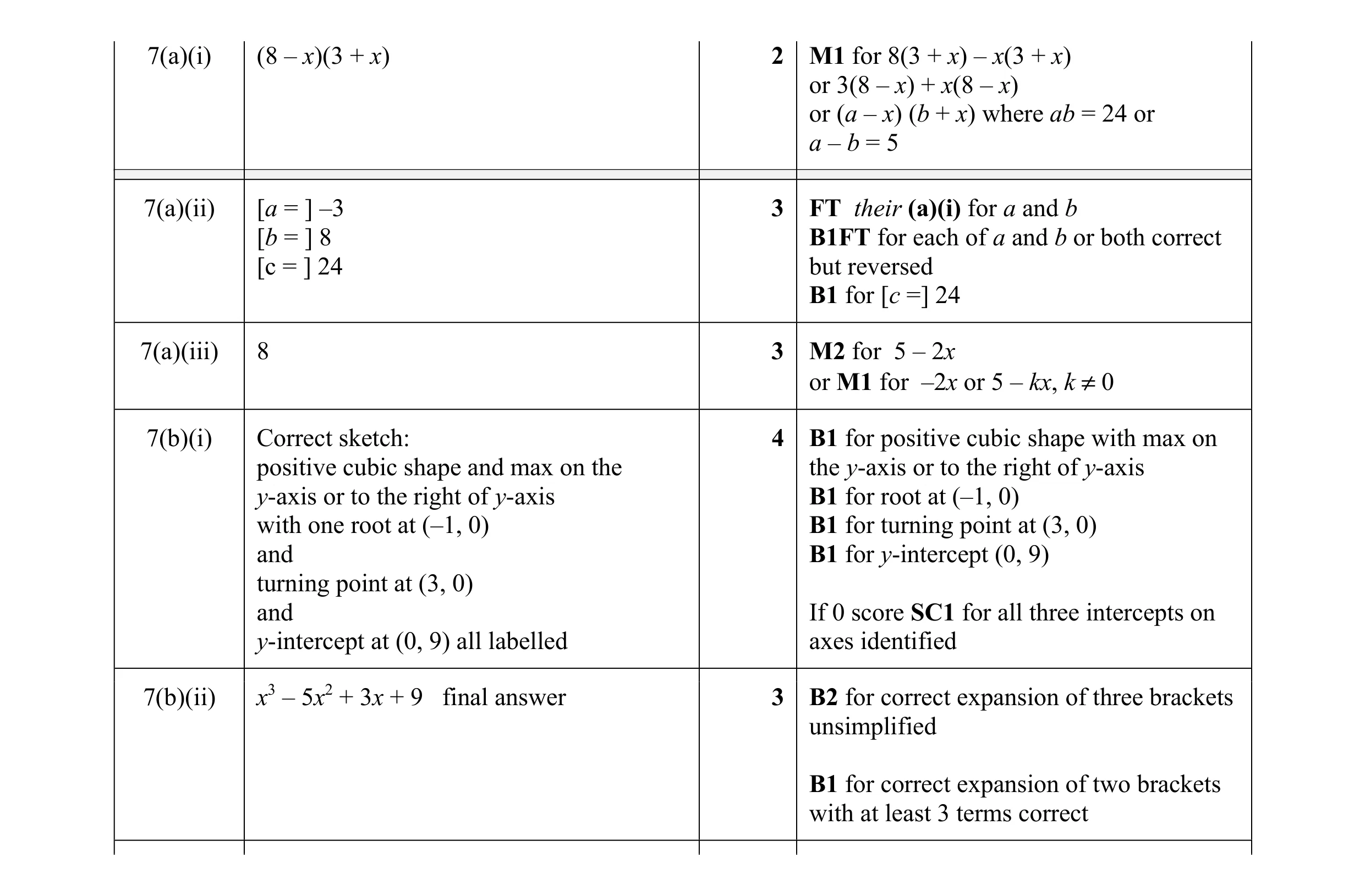 15
15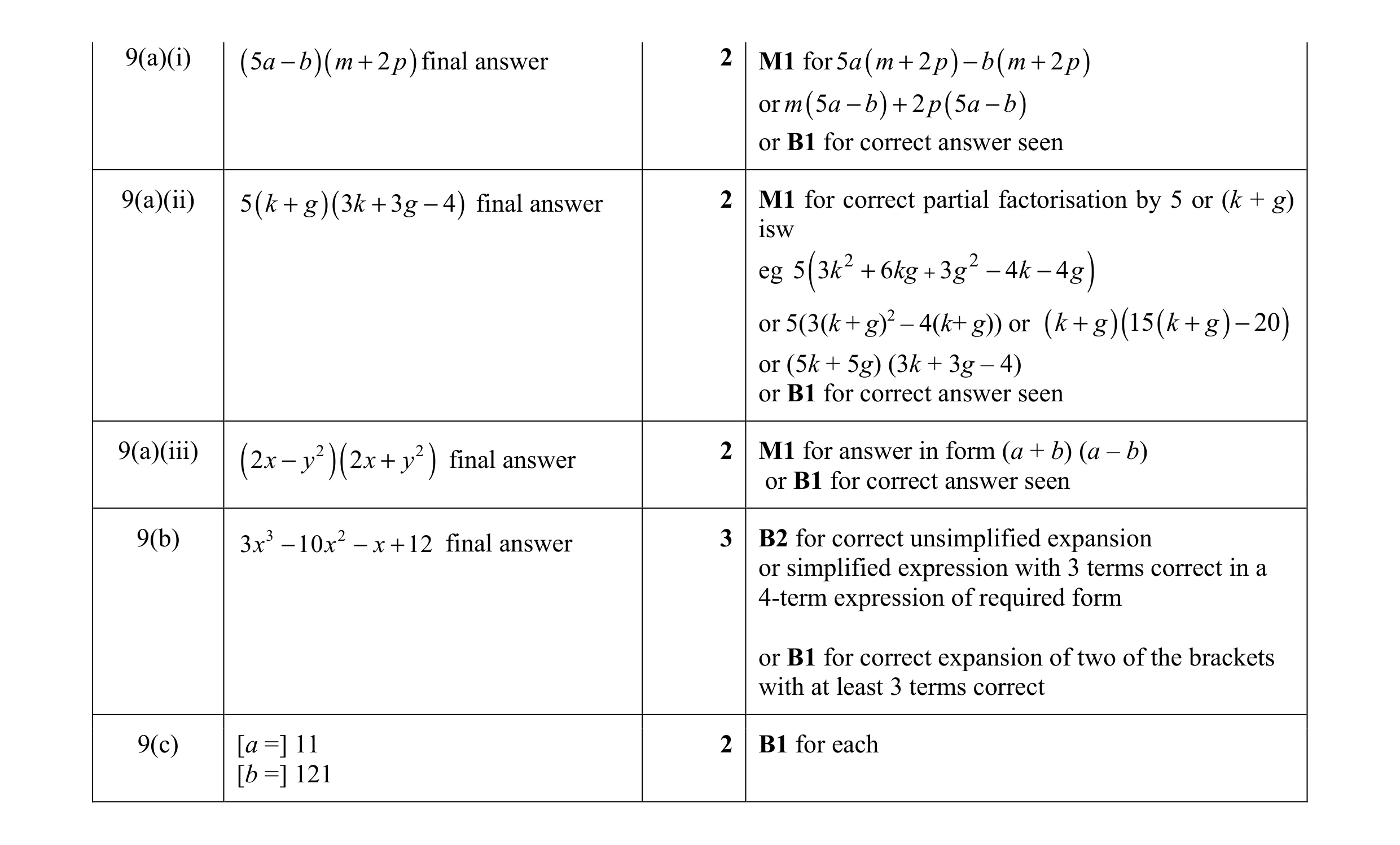 11
11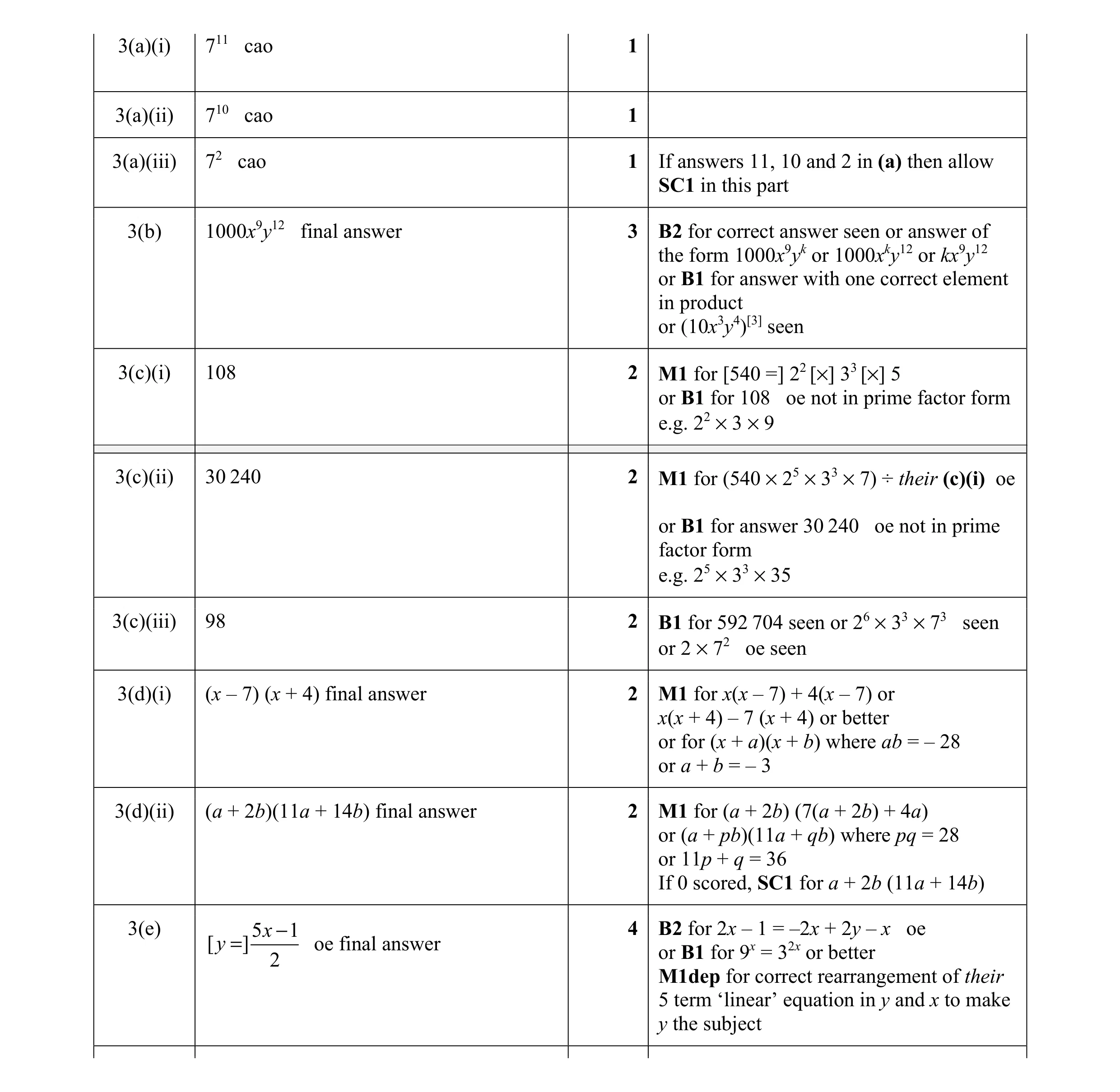 20
20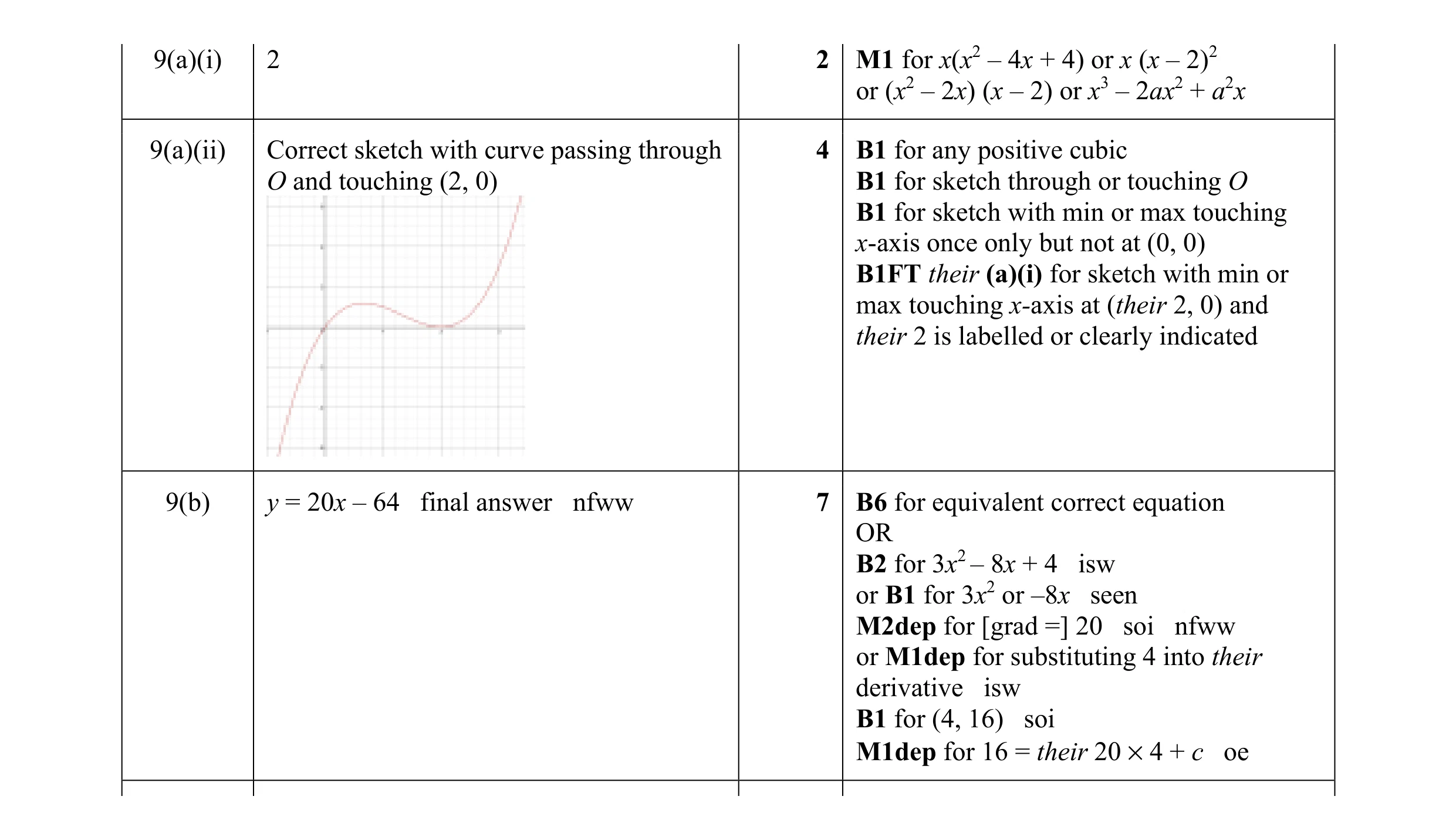 13
13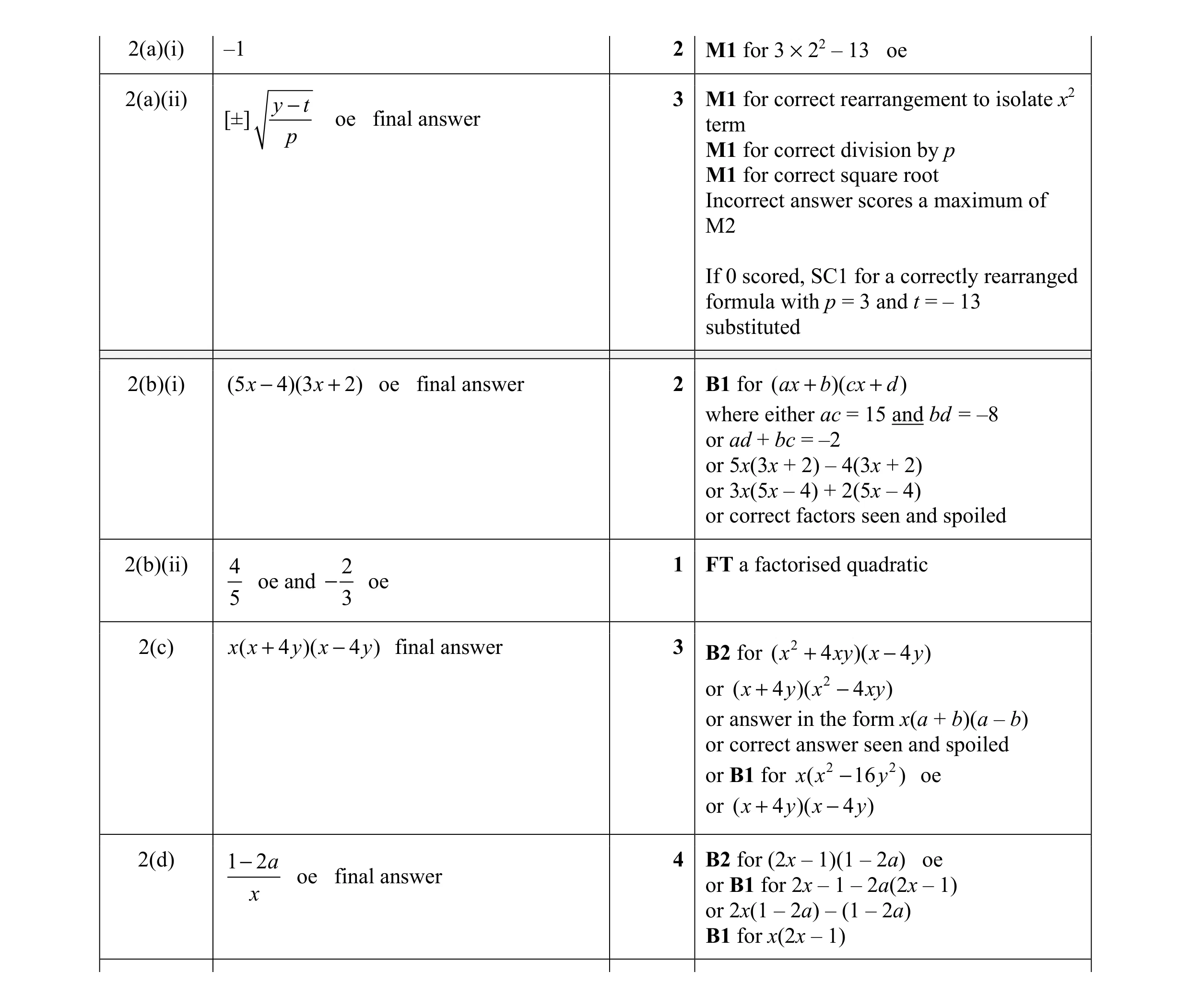 15
15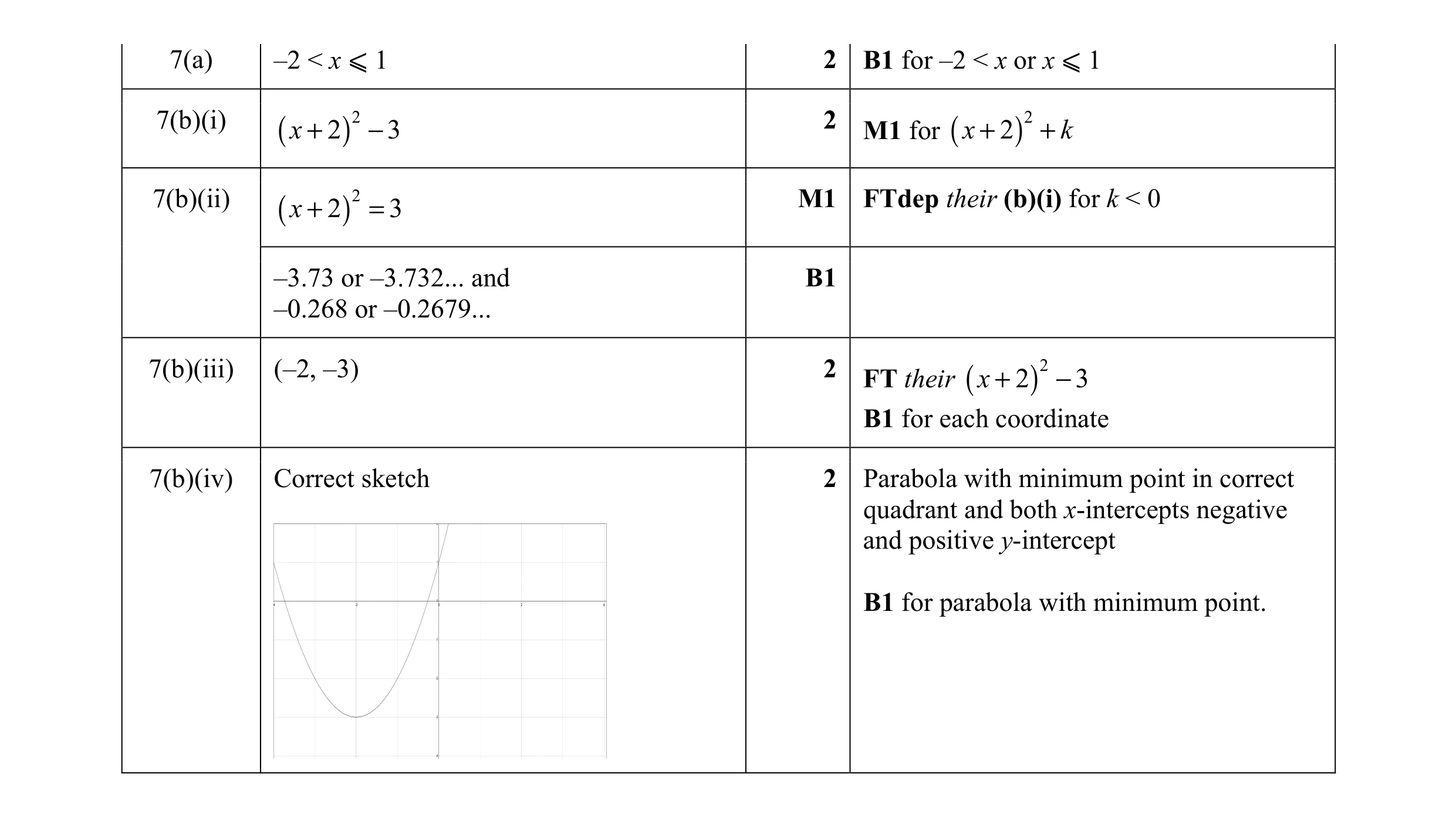 10
10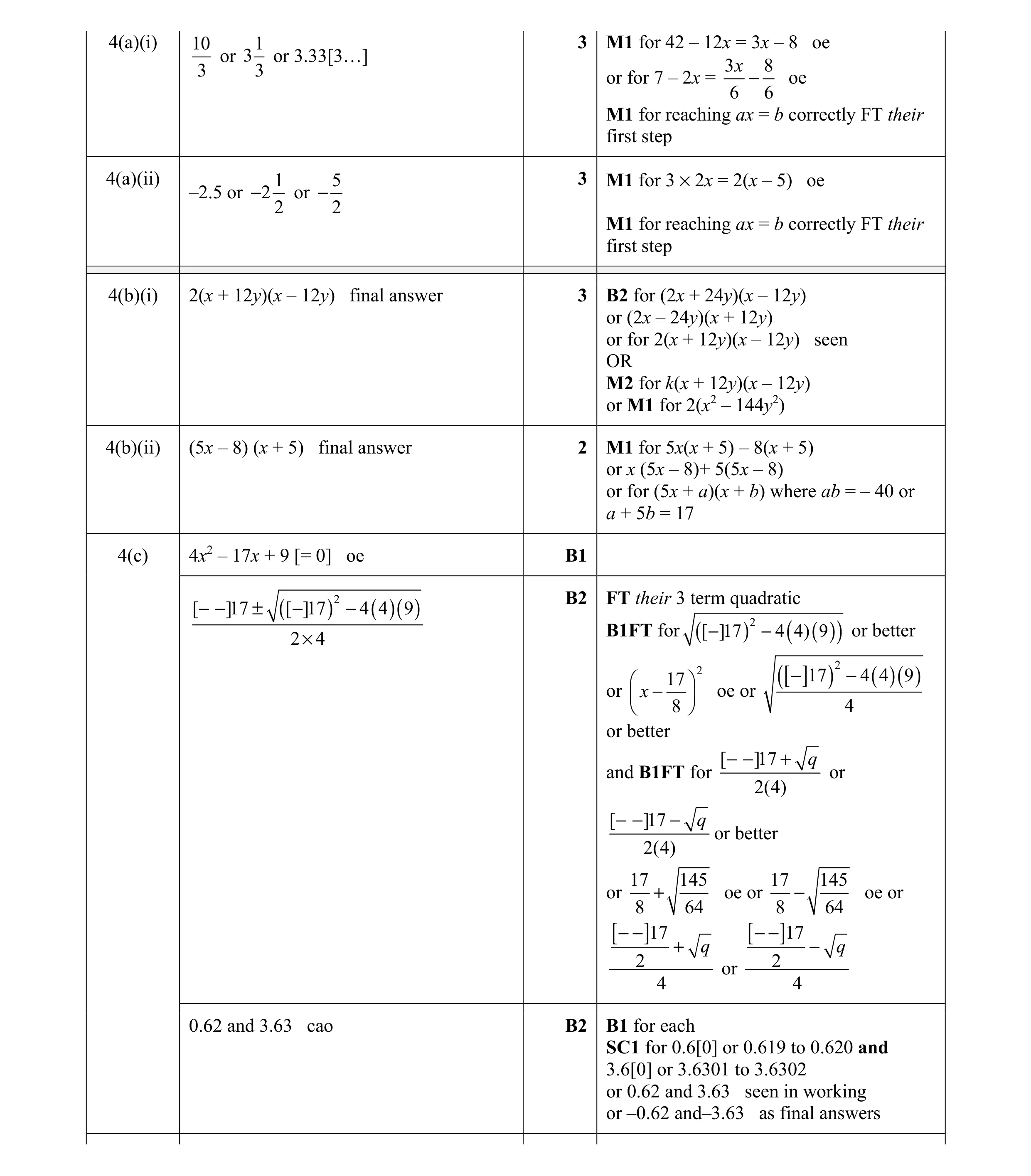 16
16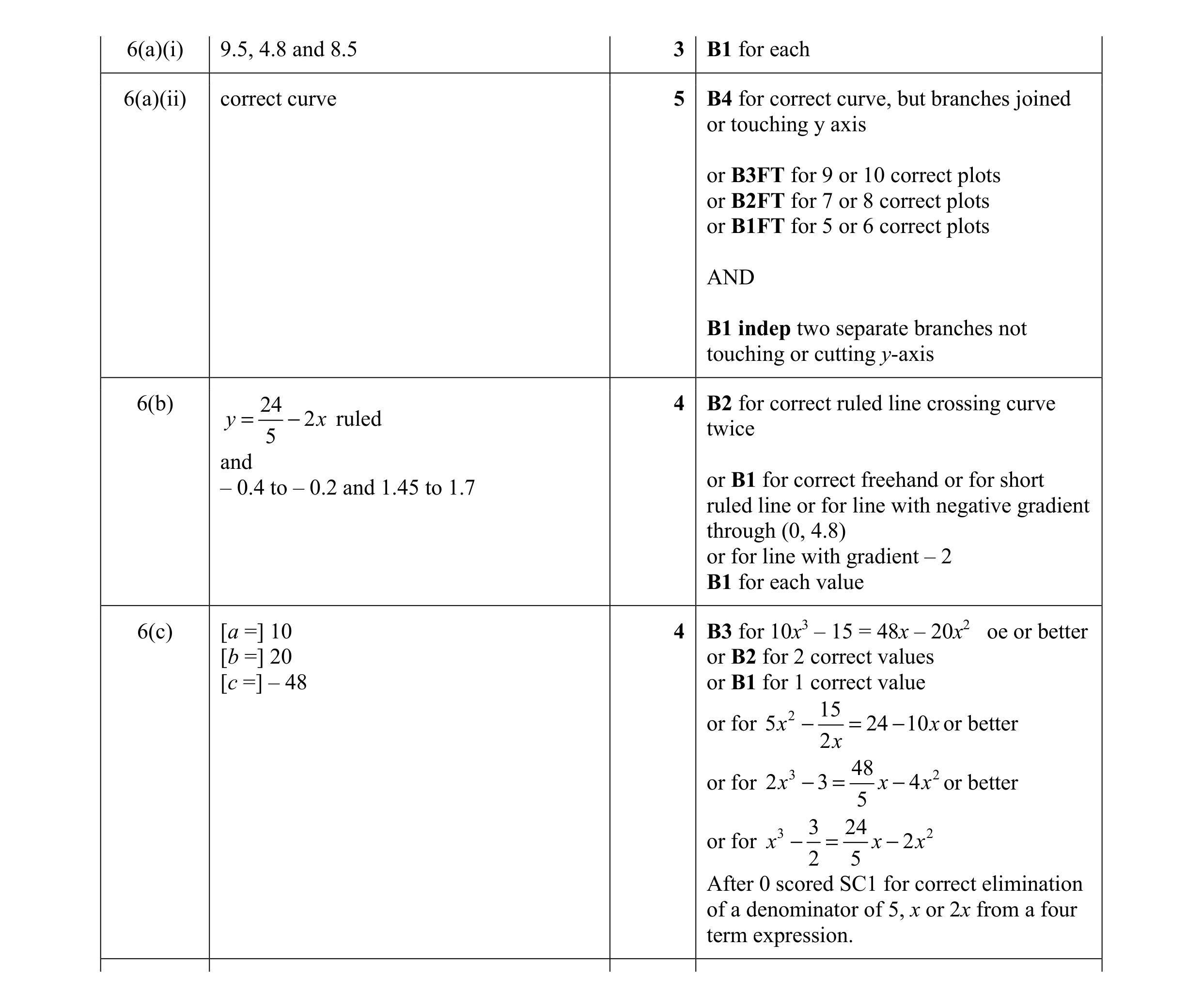 16
16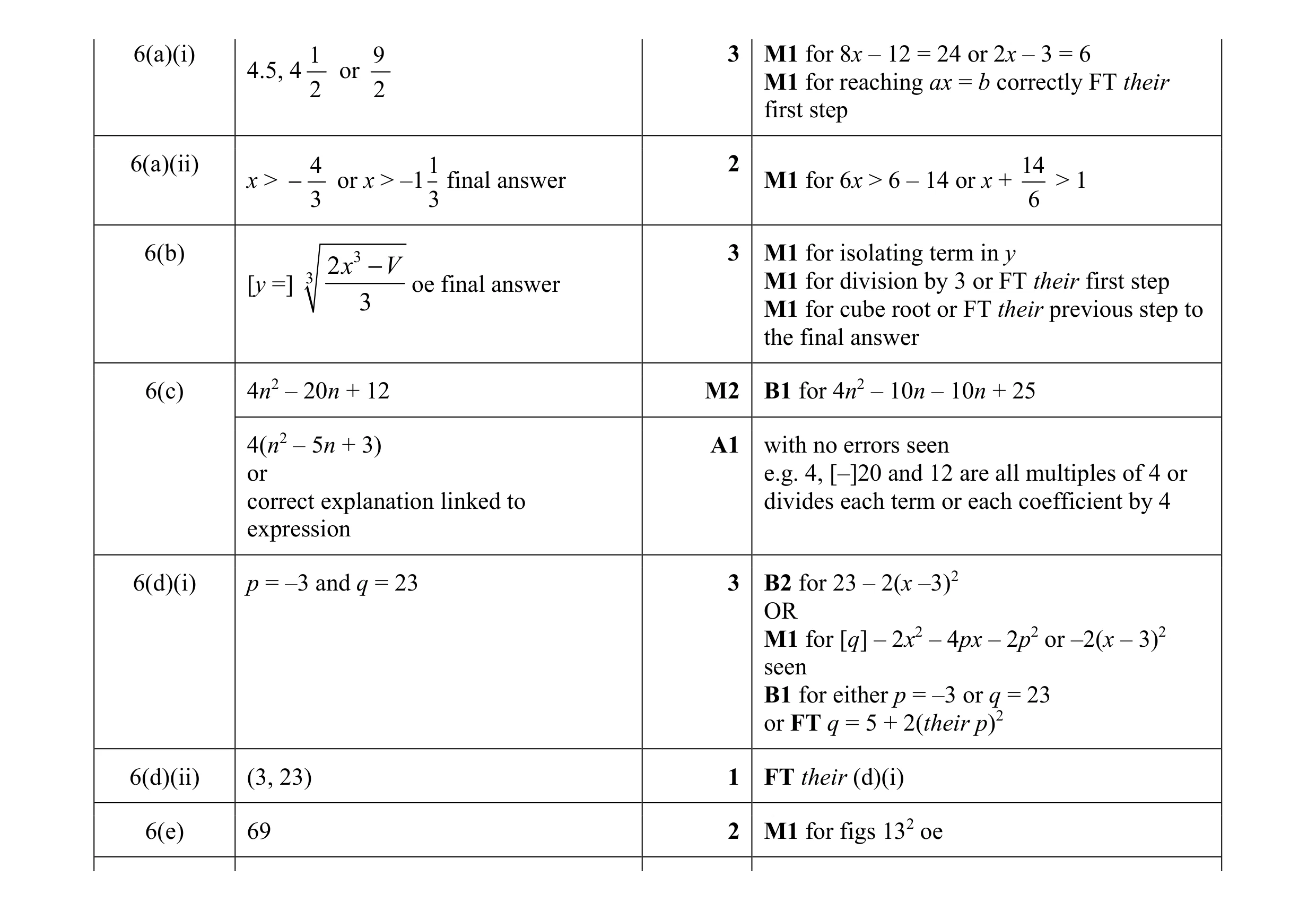 17
17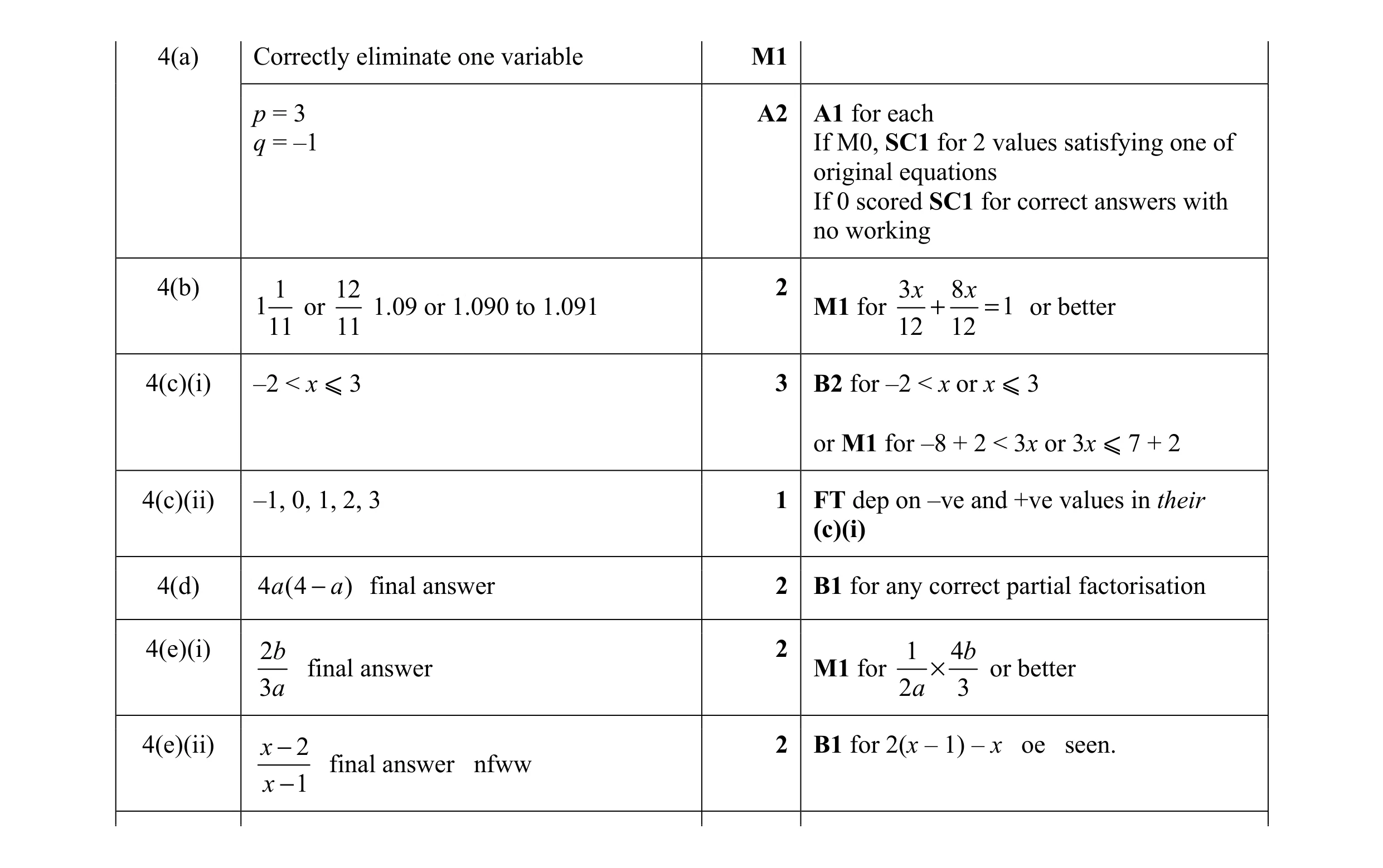 15
15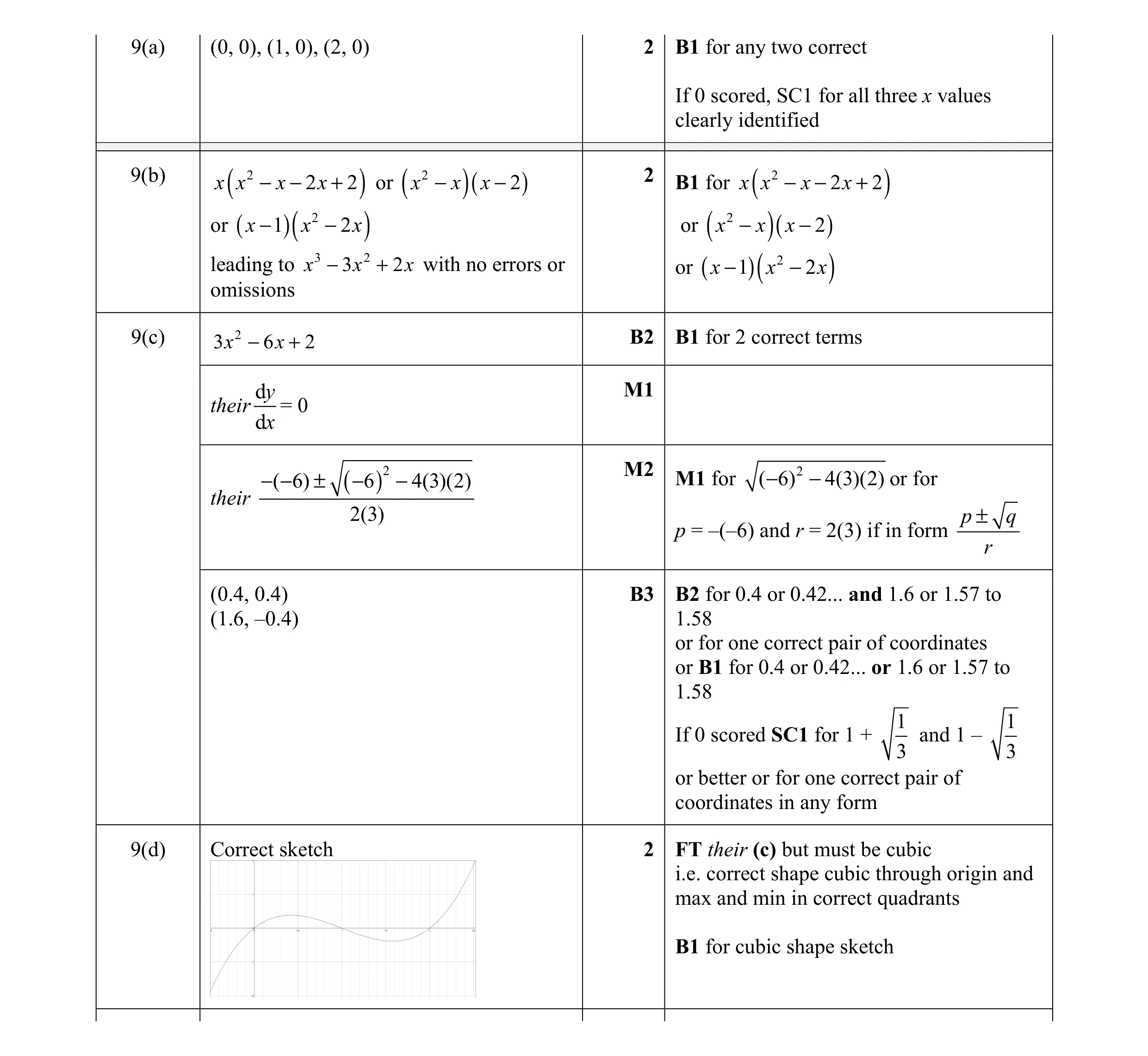 14
14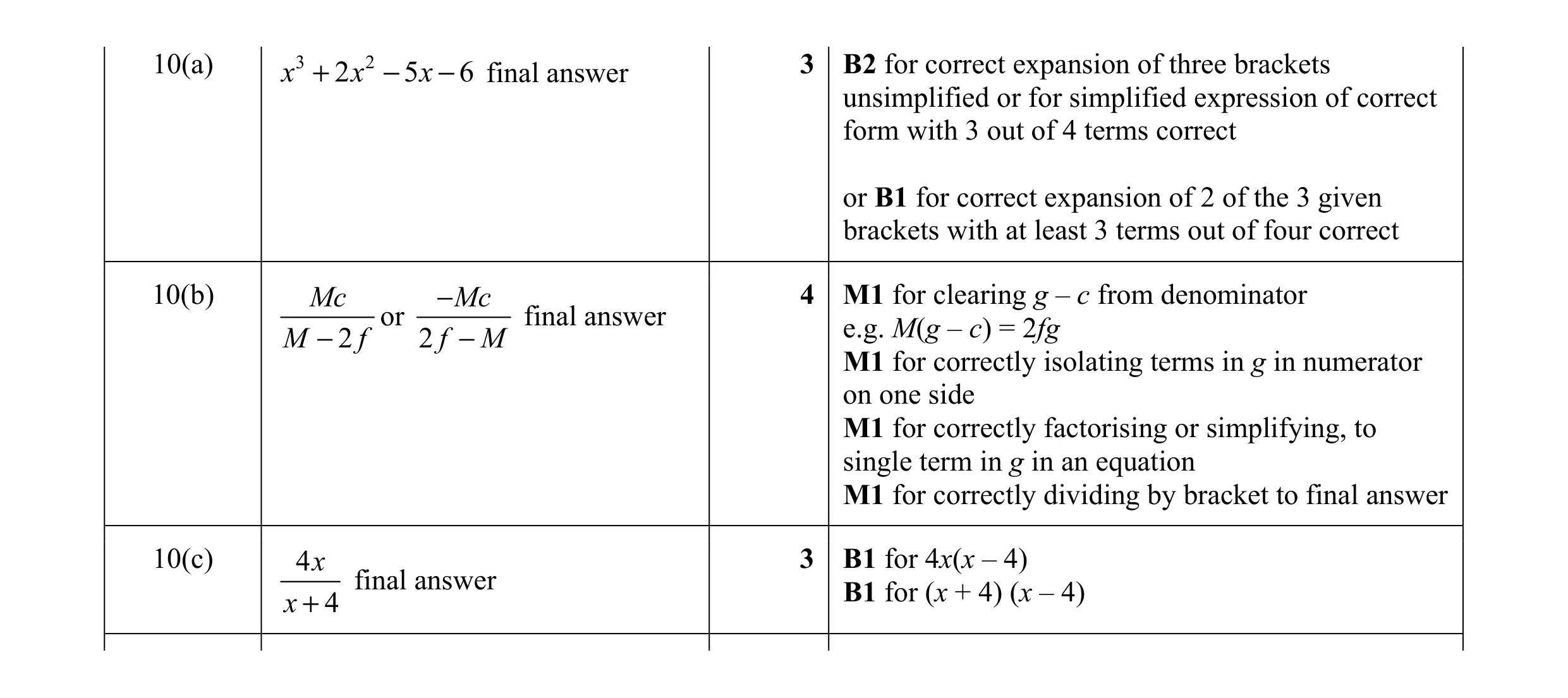 10
10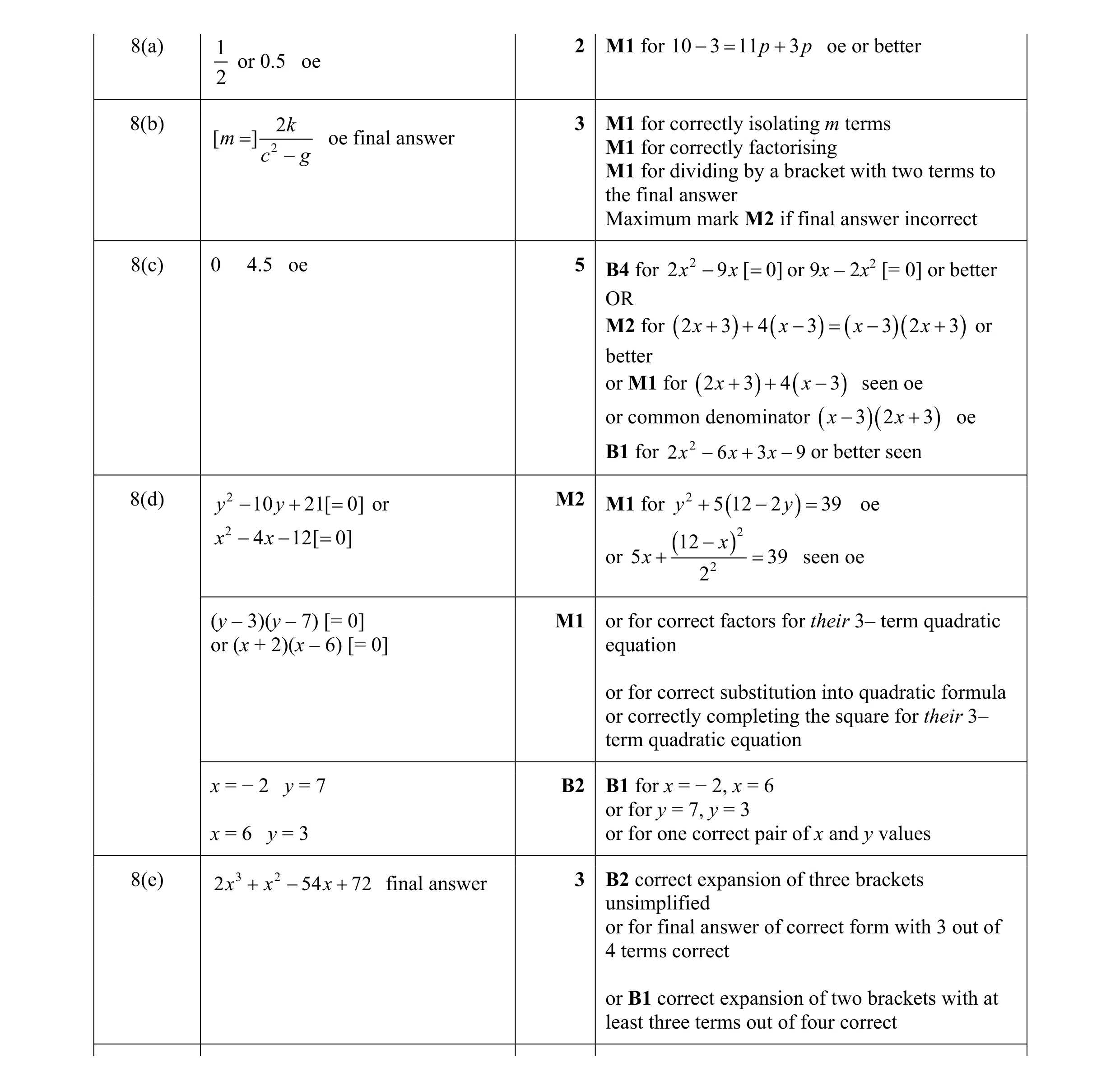 18
18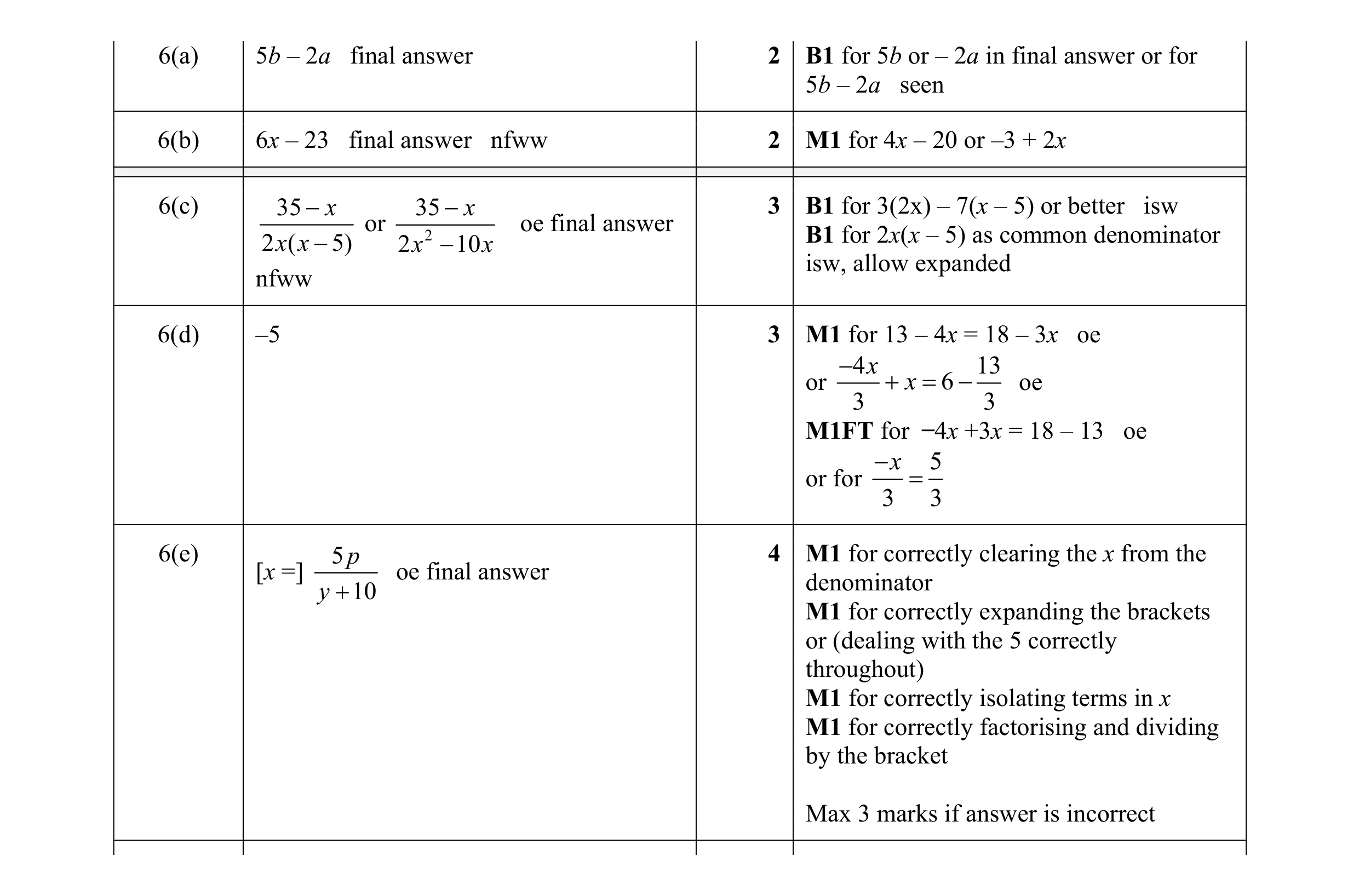 14
14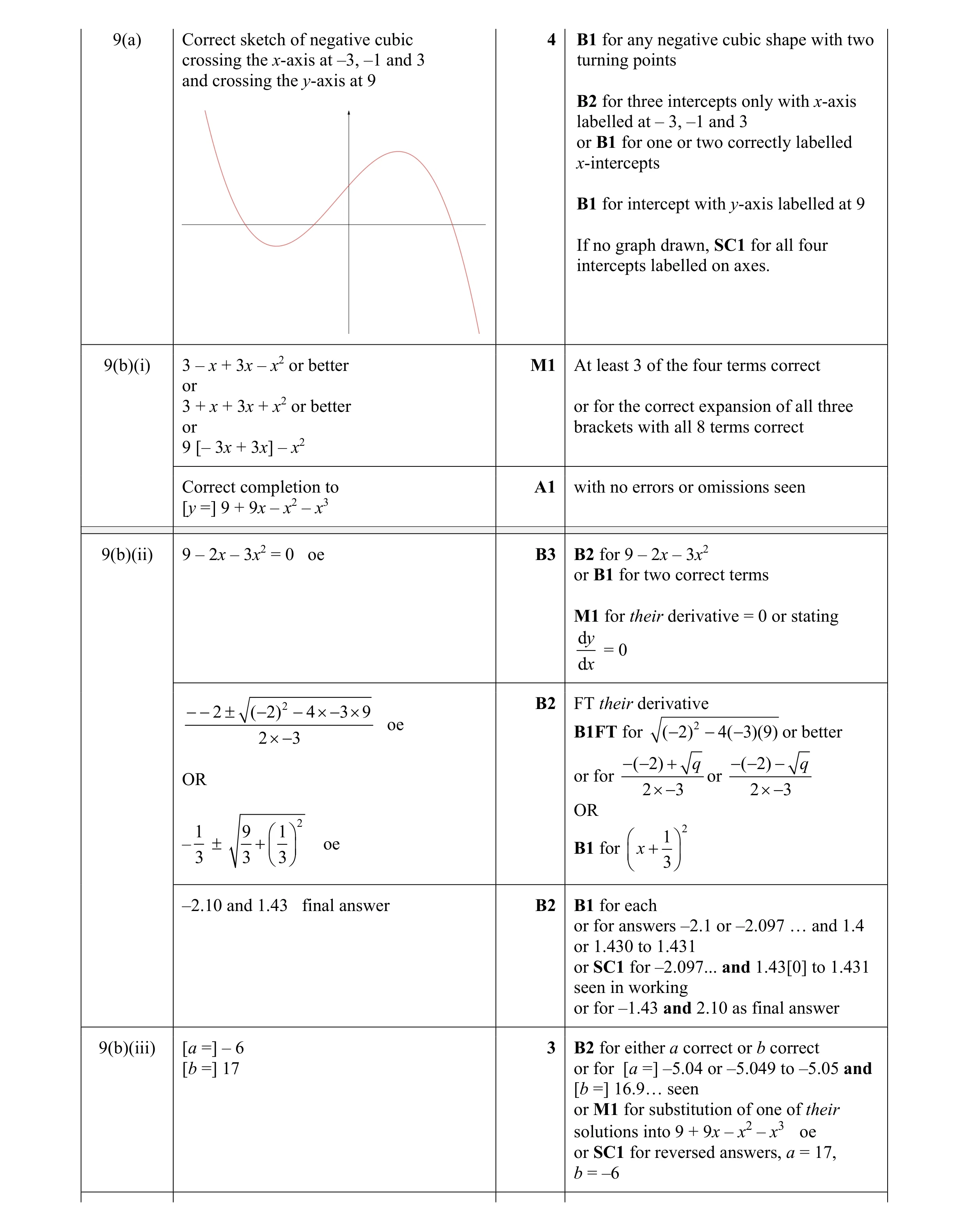 16
16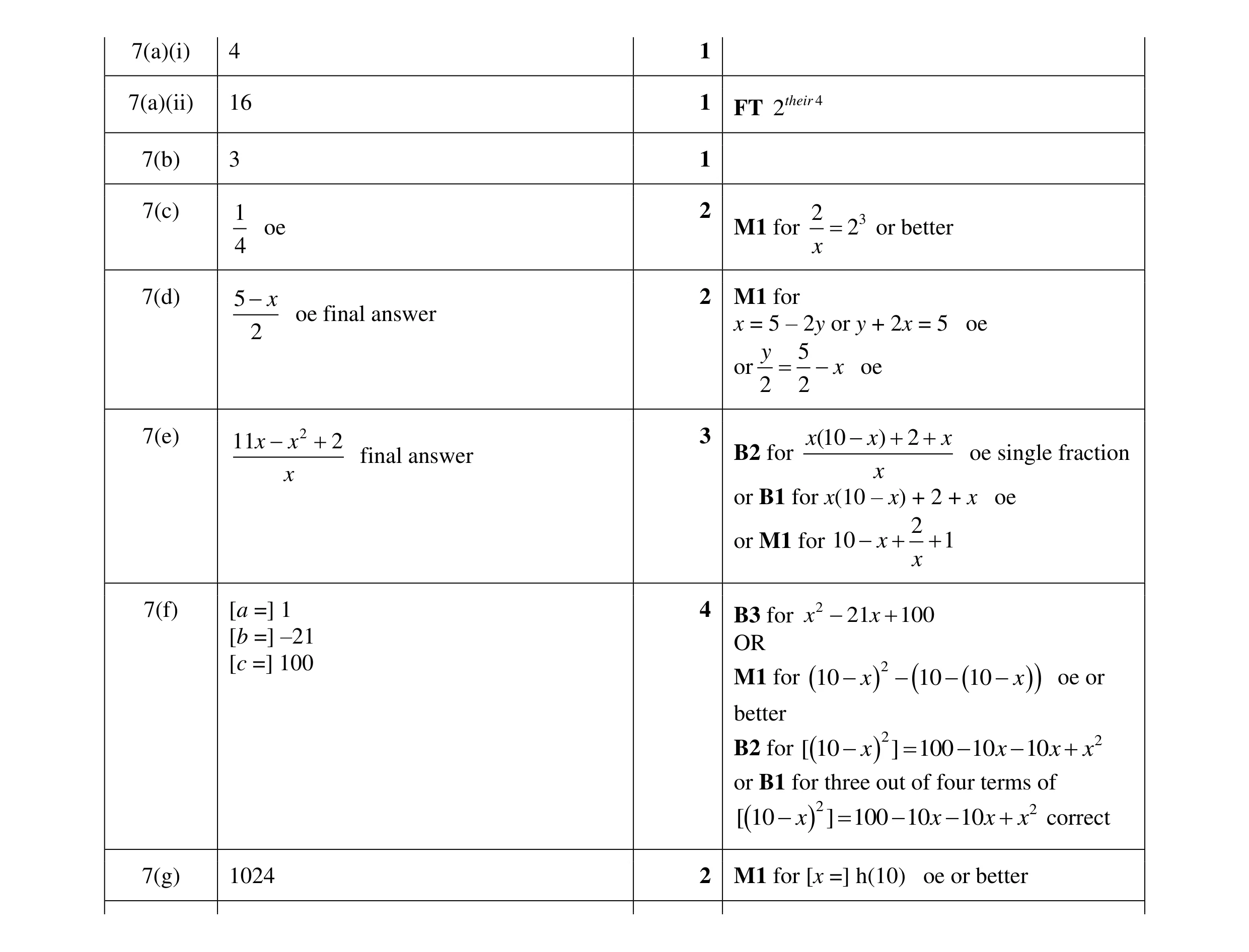 16
16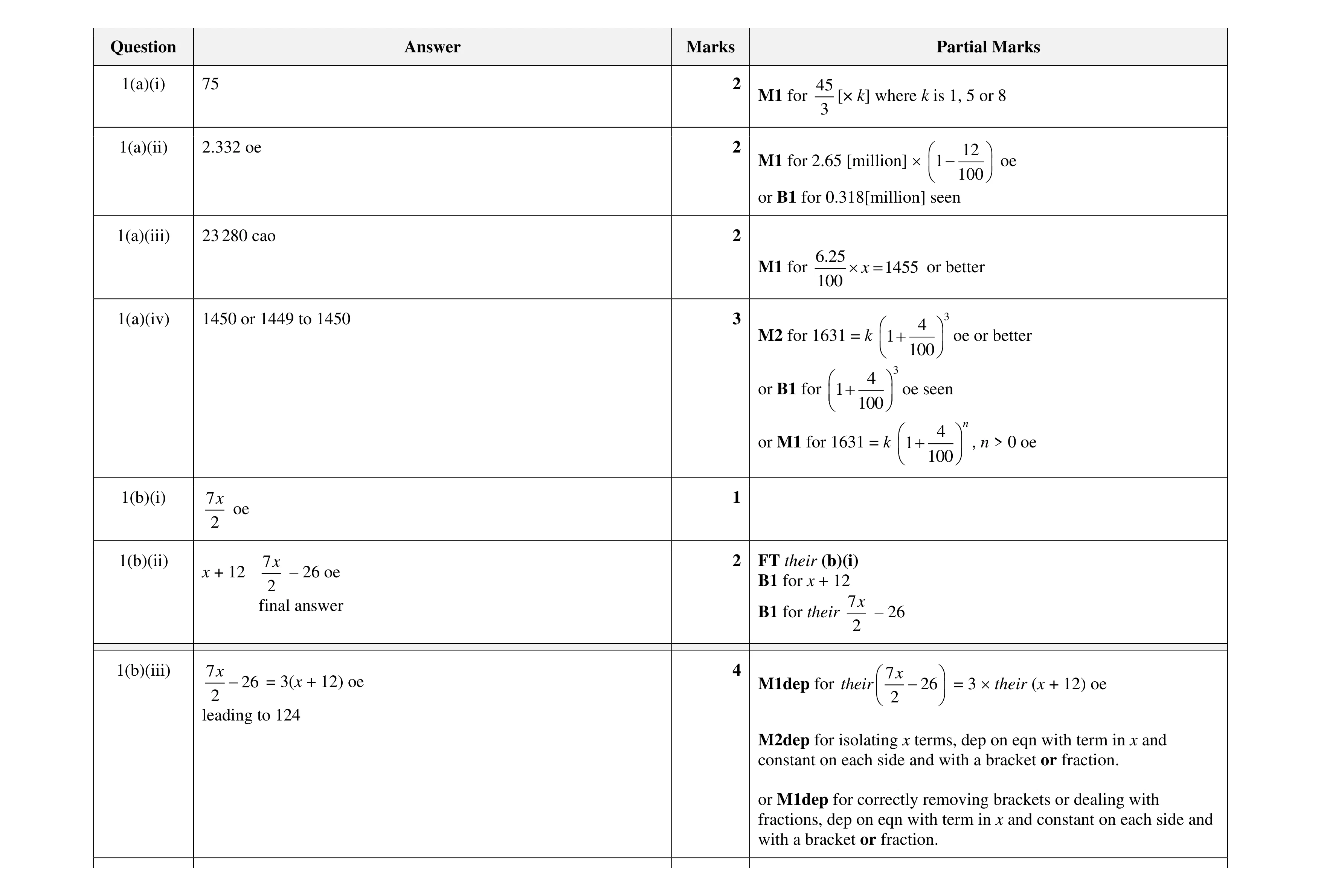 16
16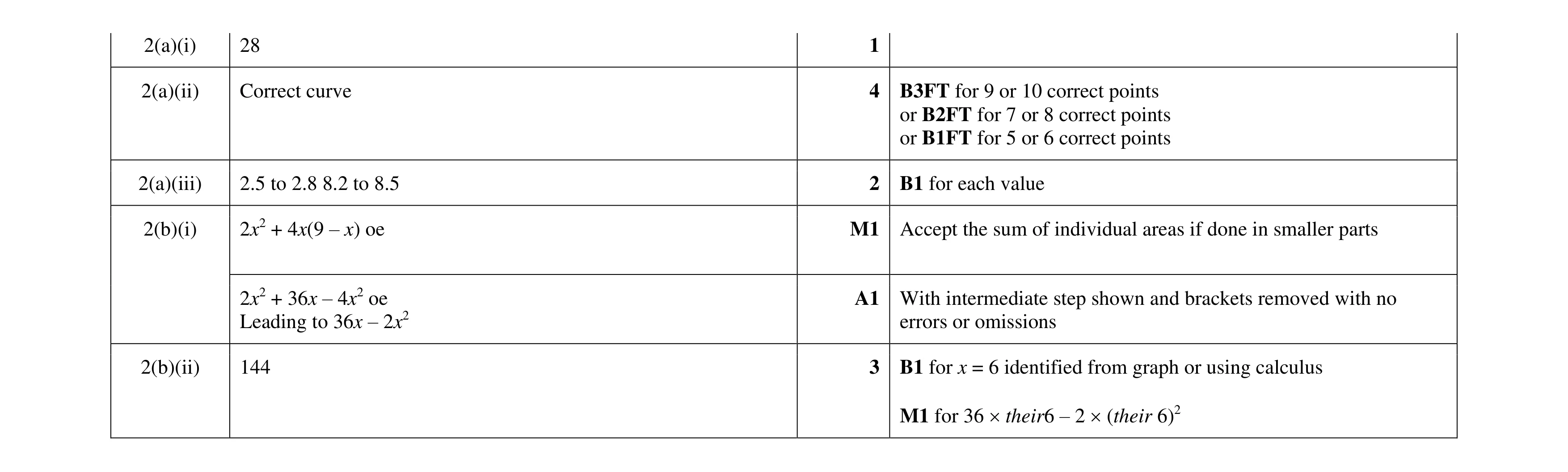 12
12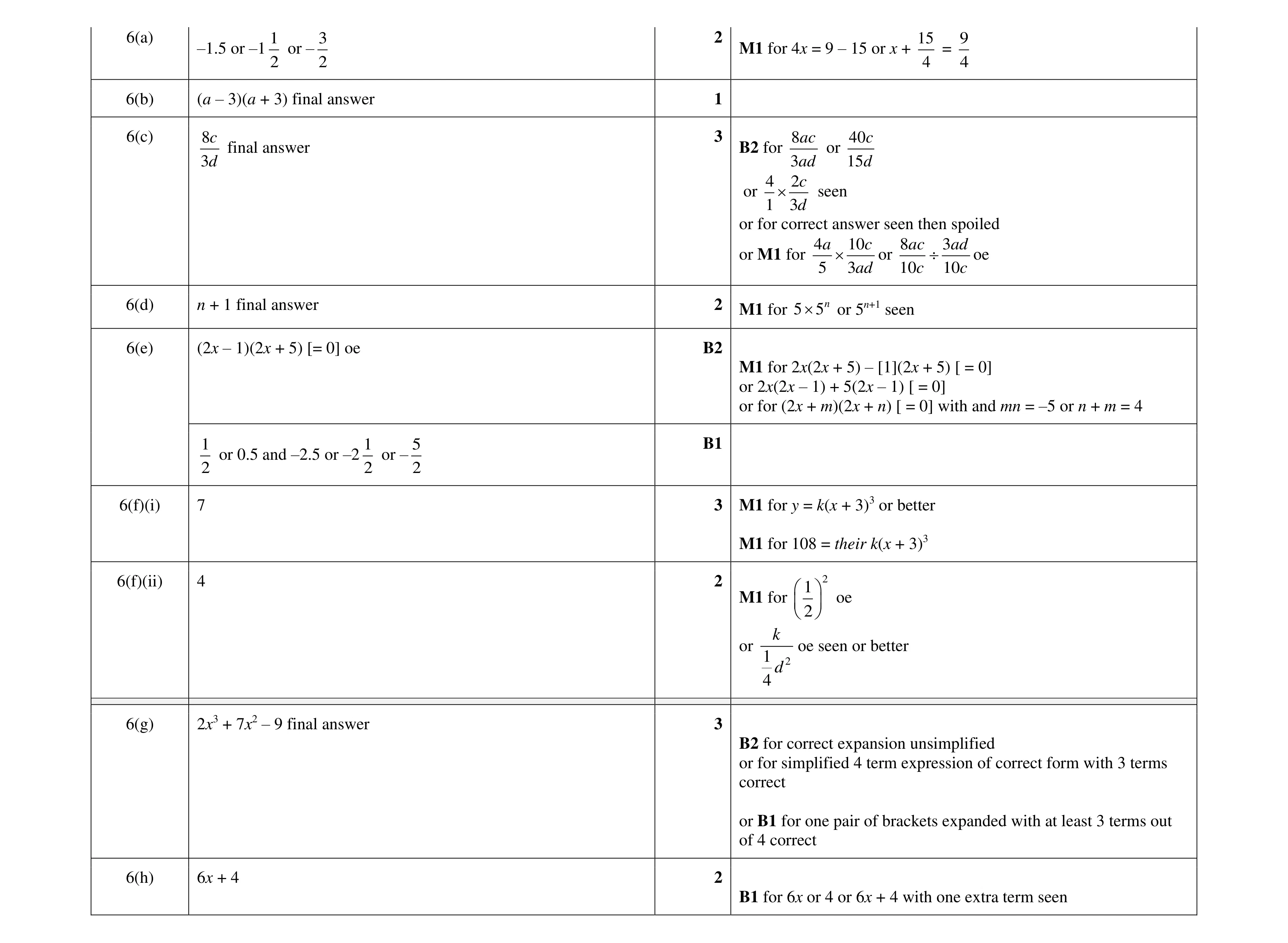 21
21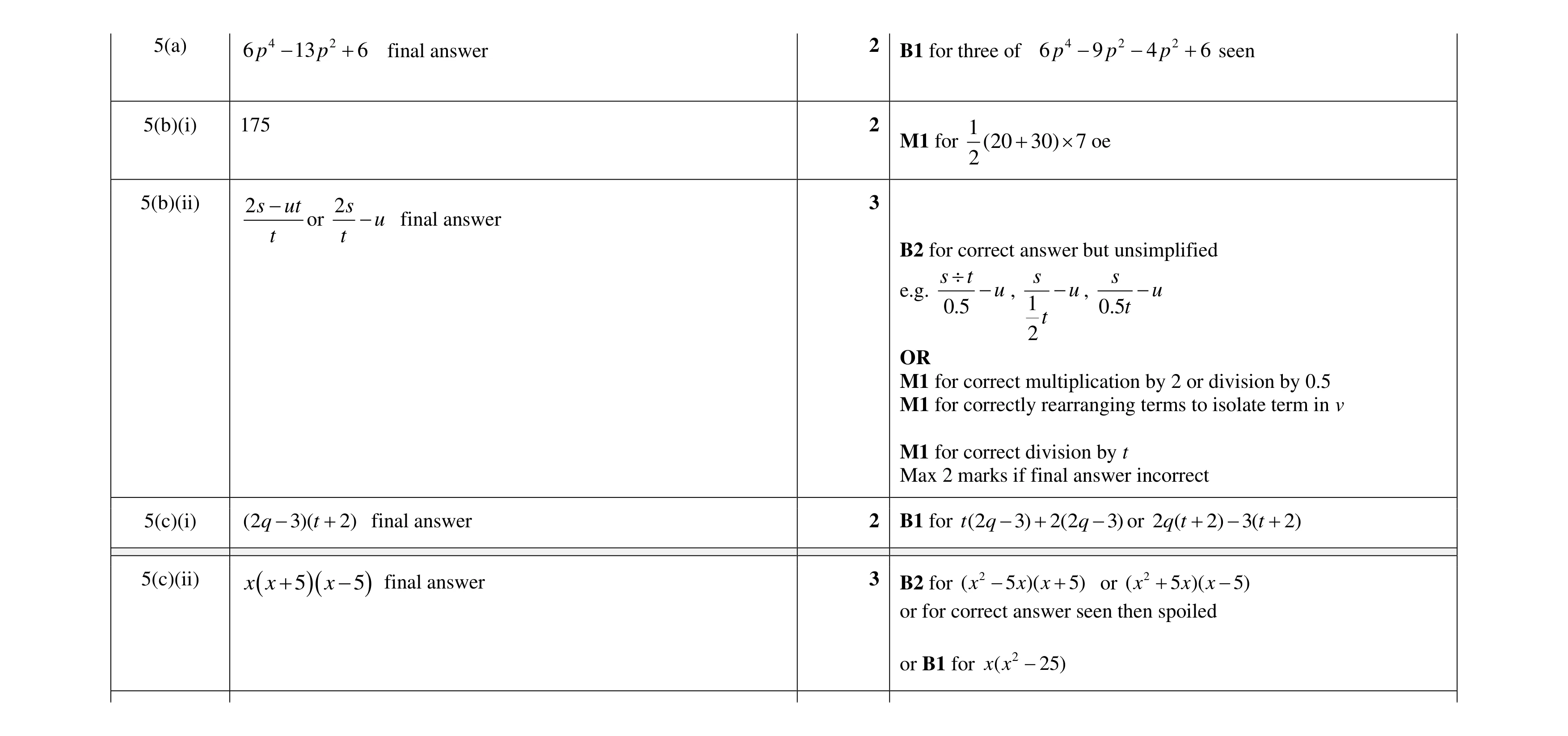 12
12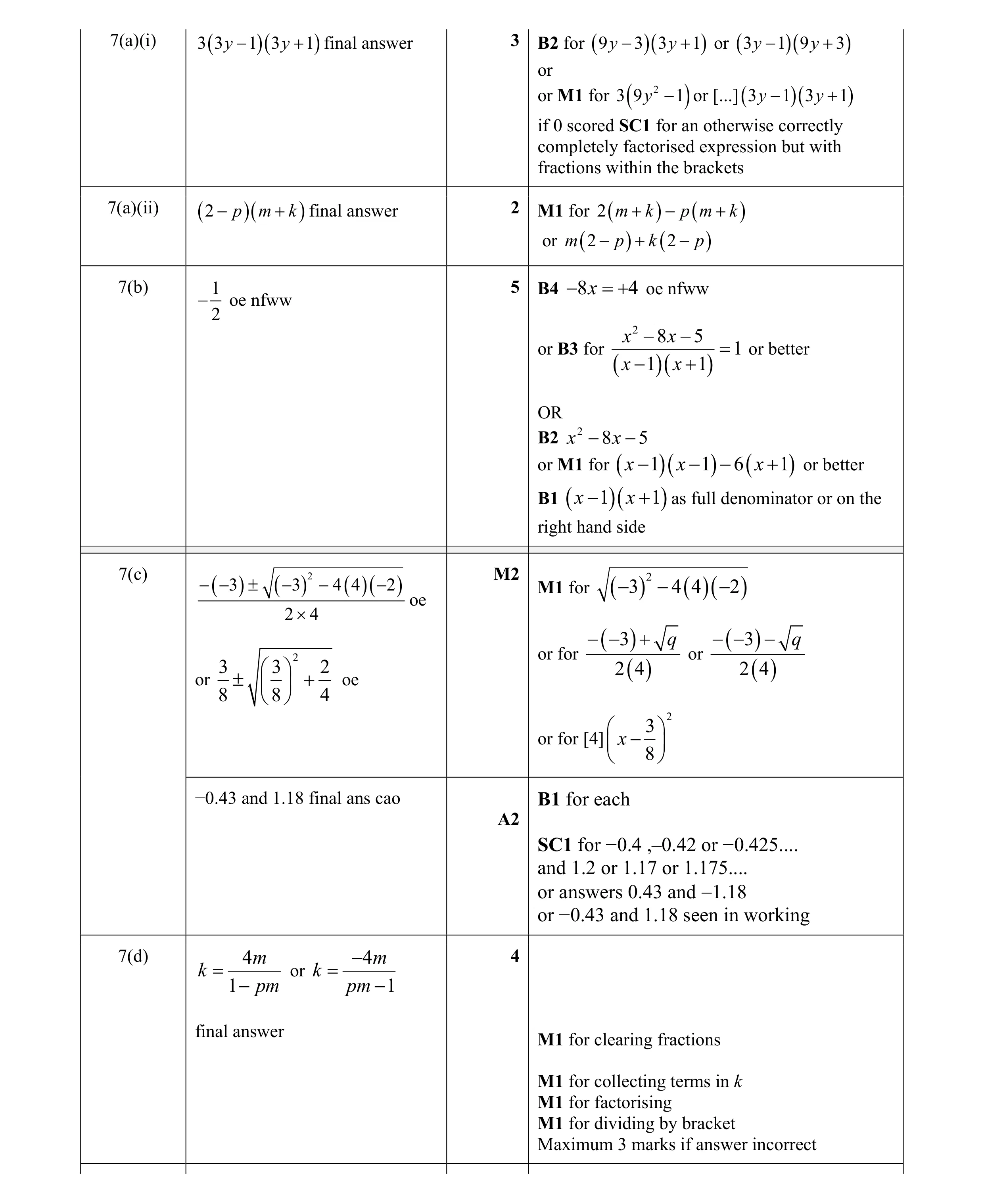 18
18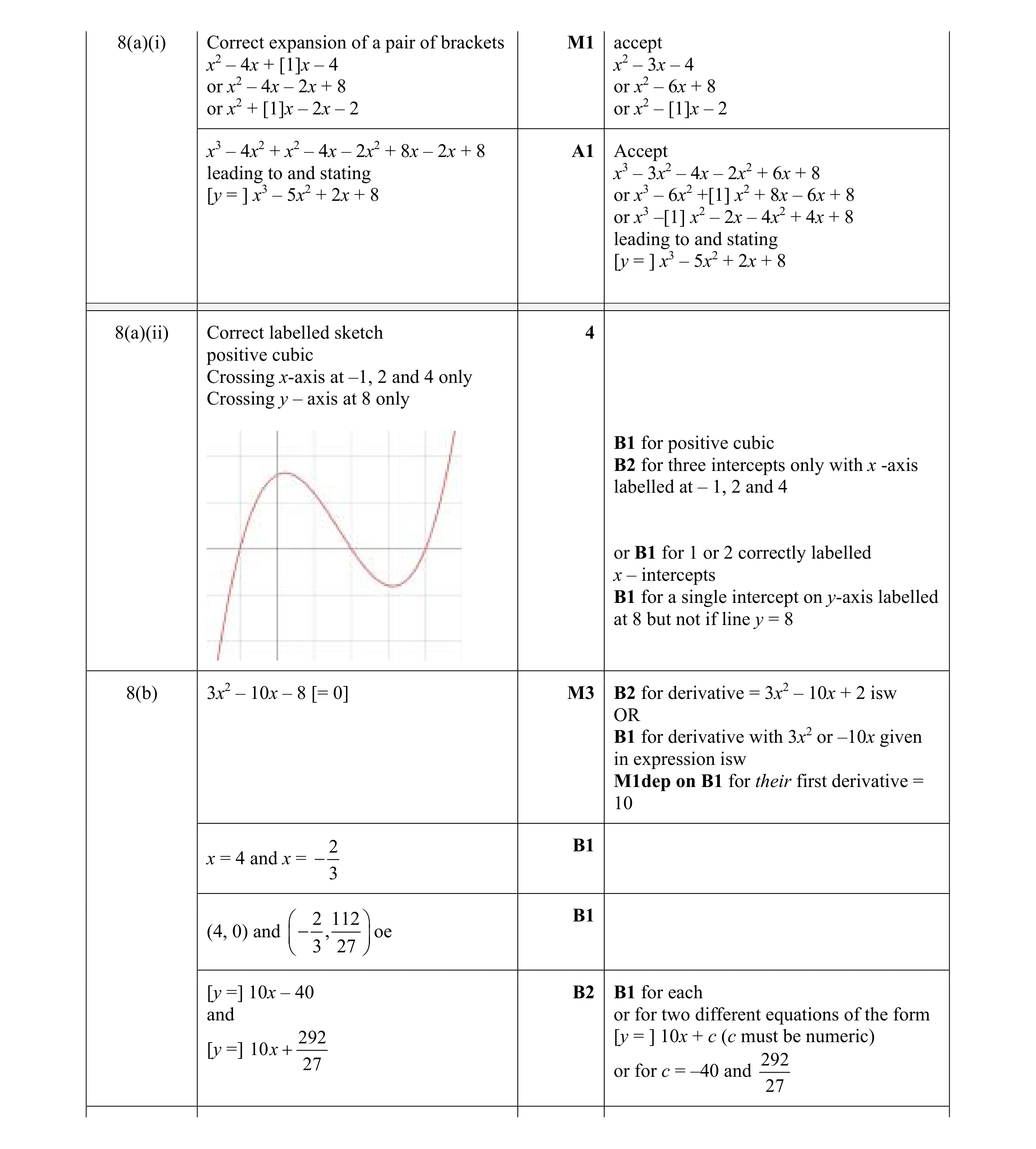 13
13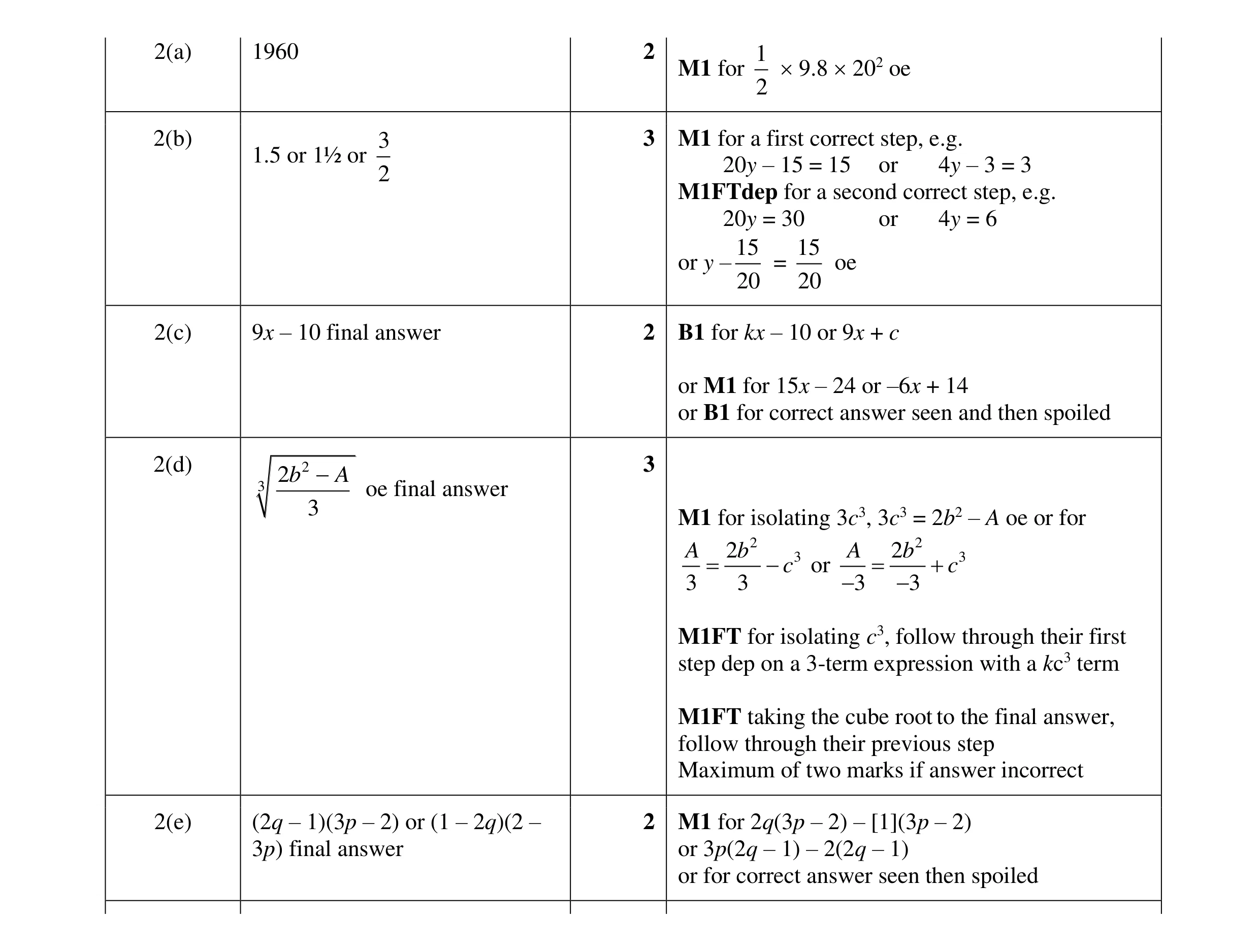 12
12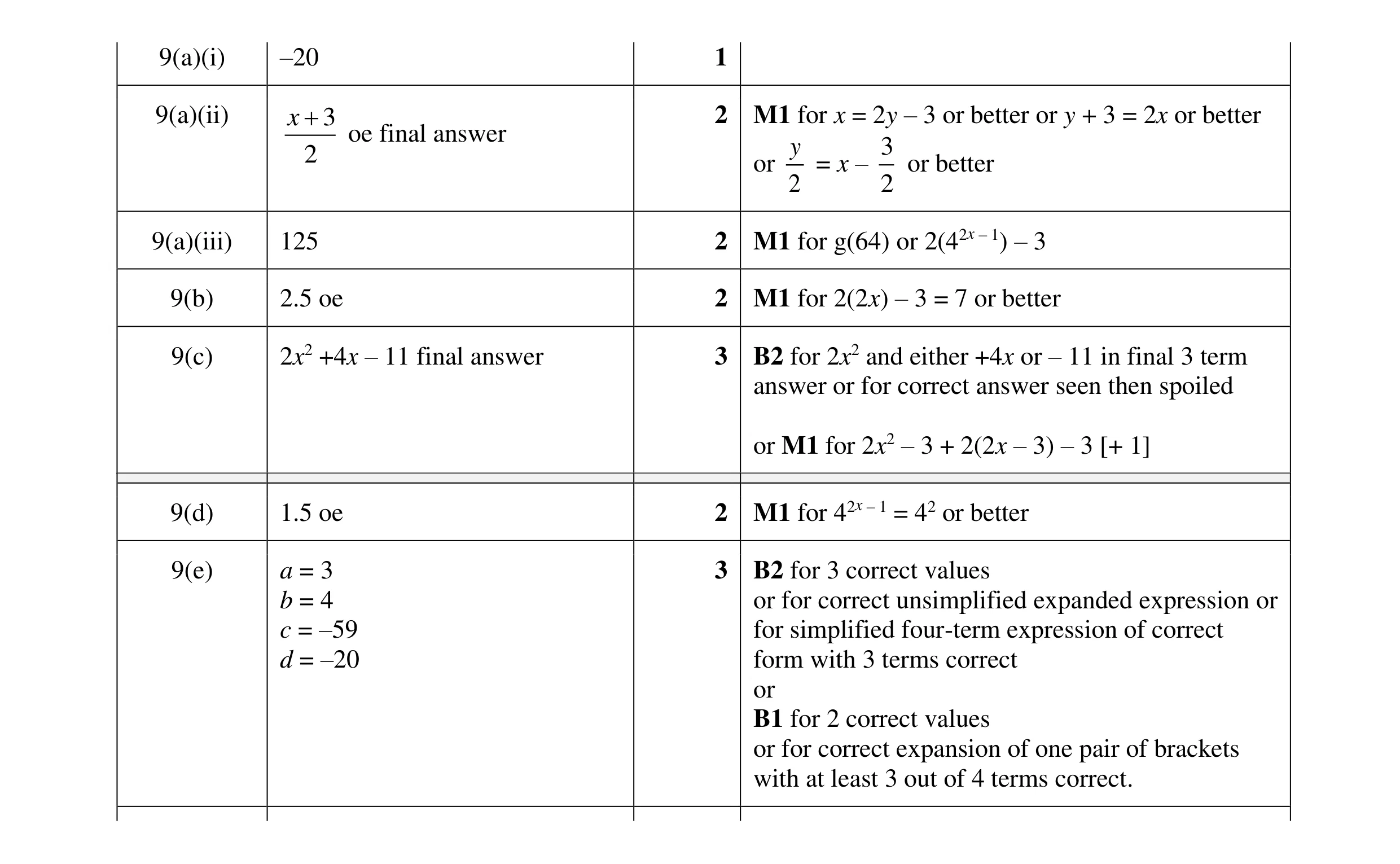 15
15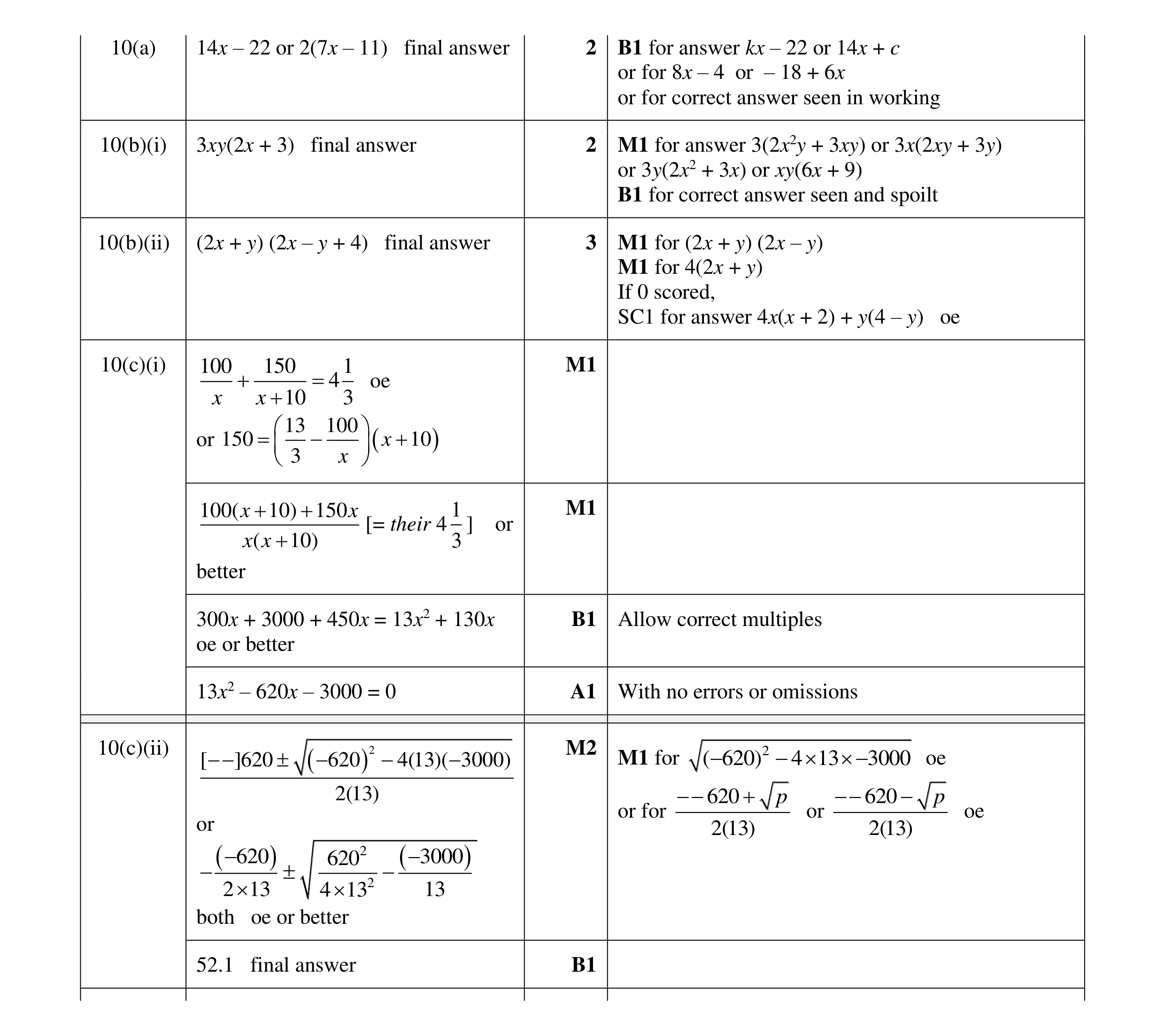 14
14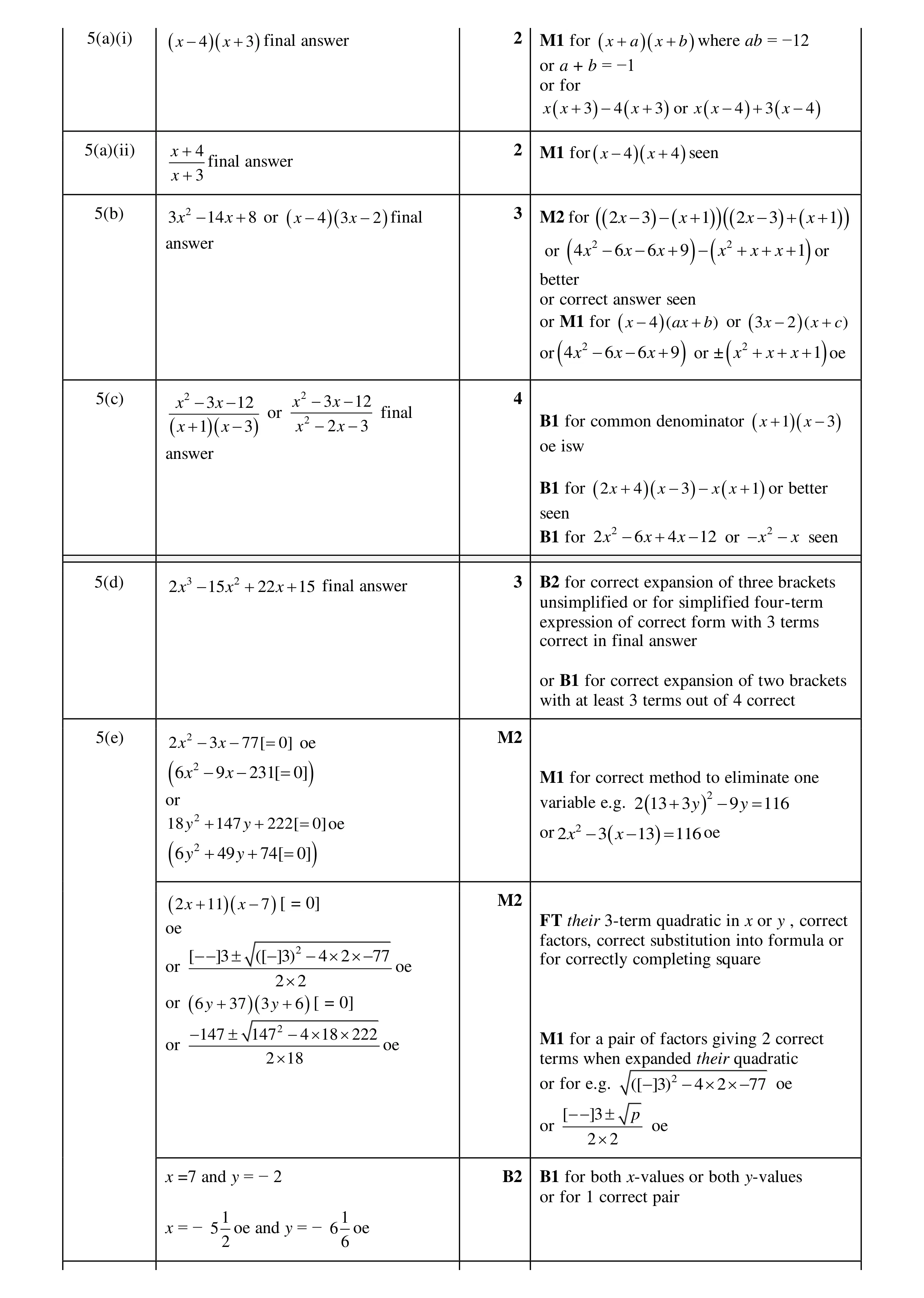 20
20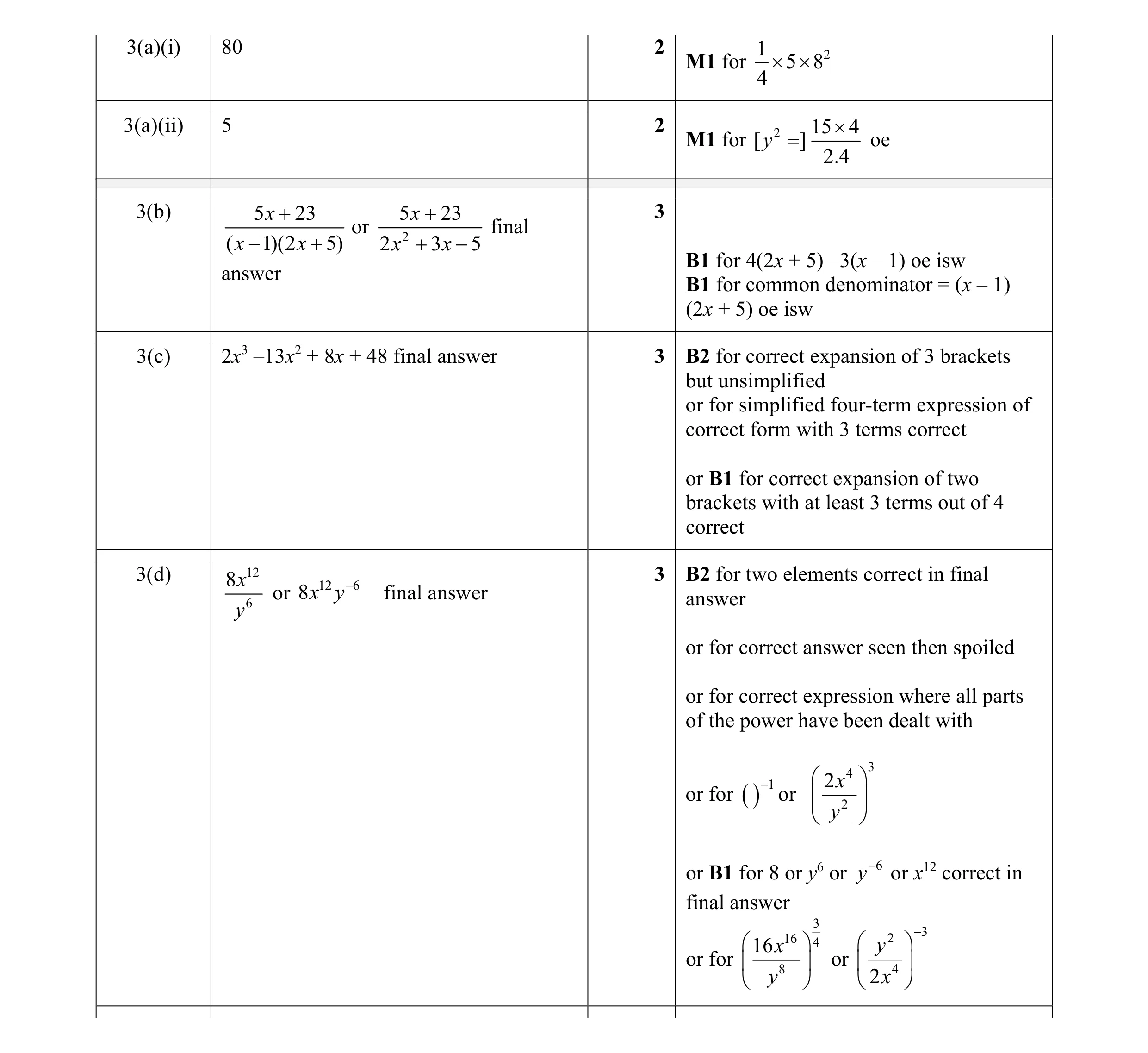 13
13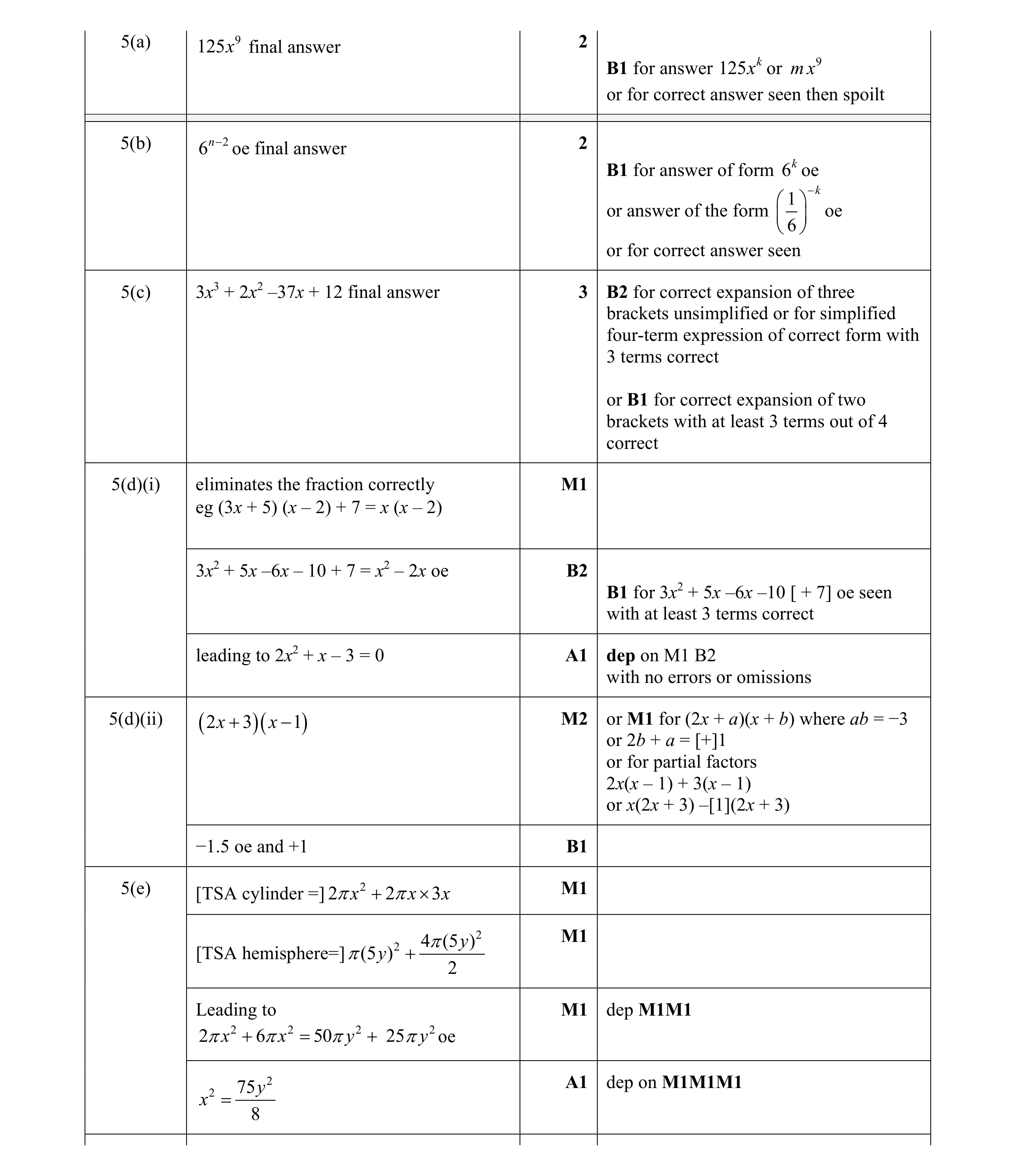 18
18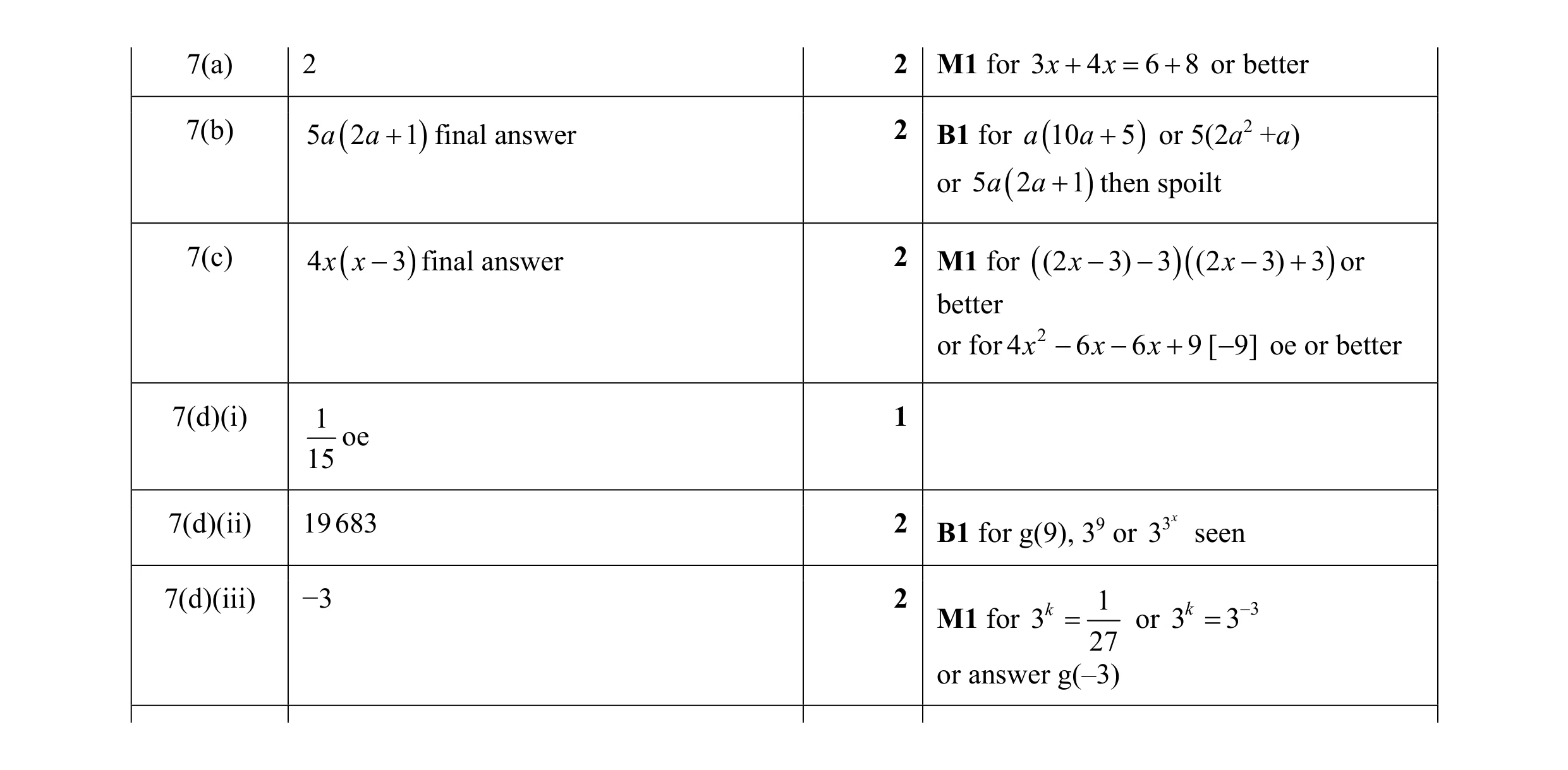 11
11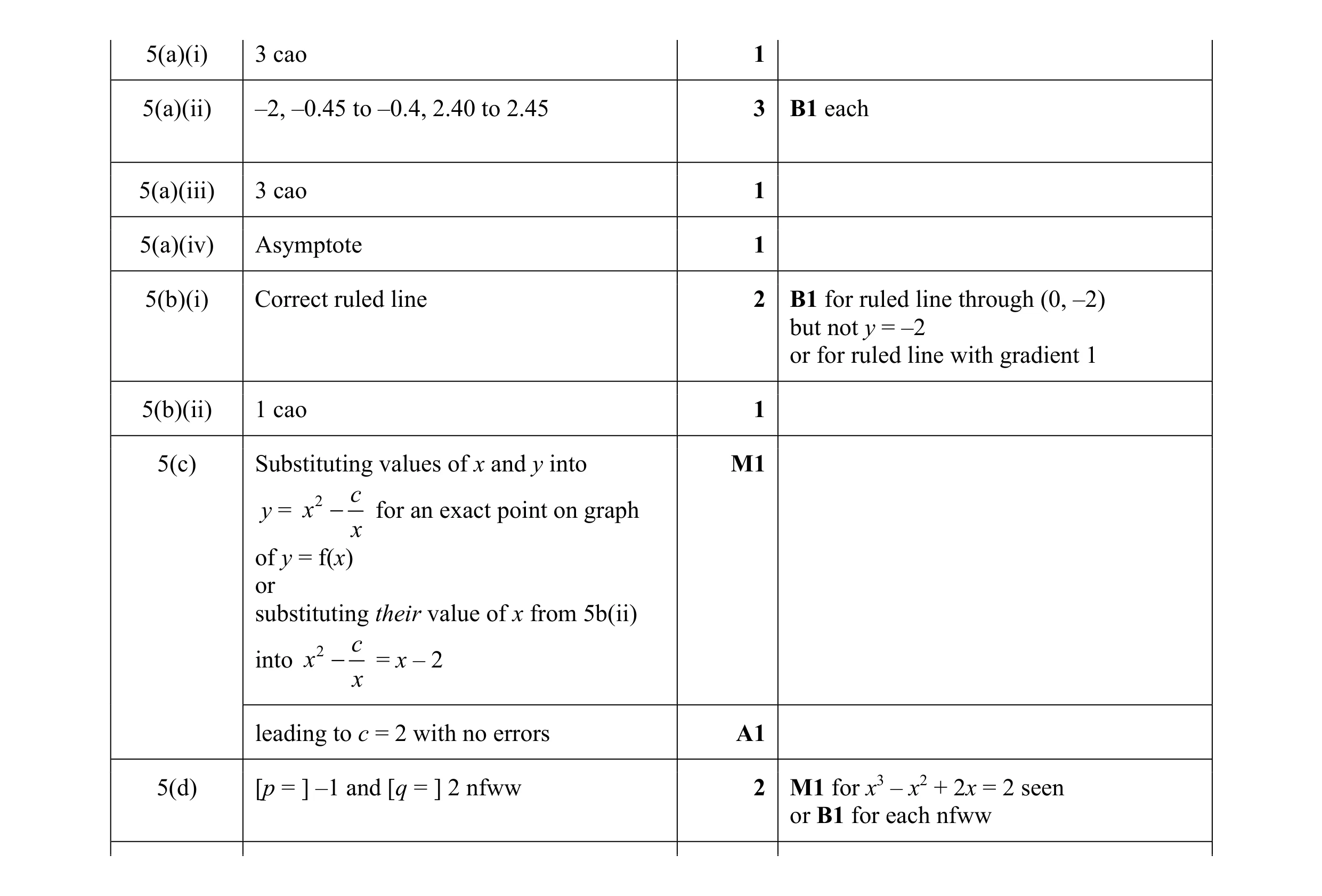 13
13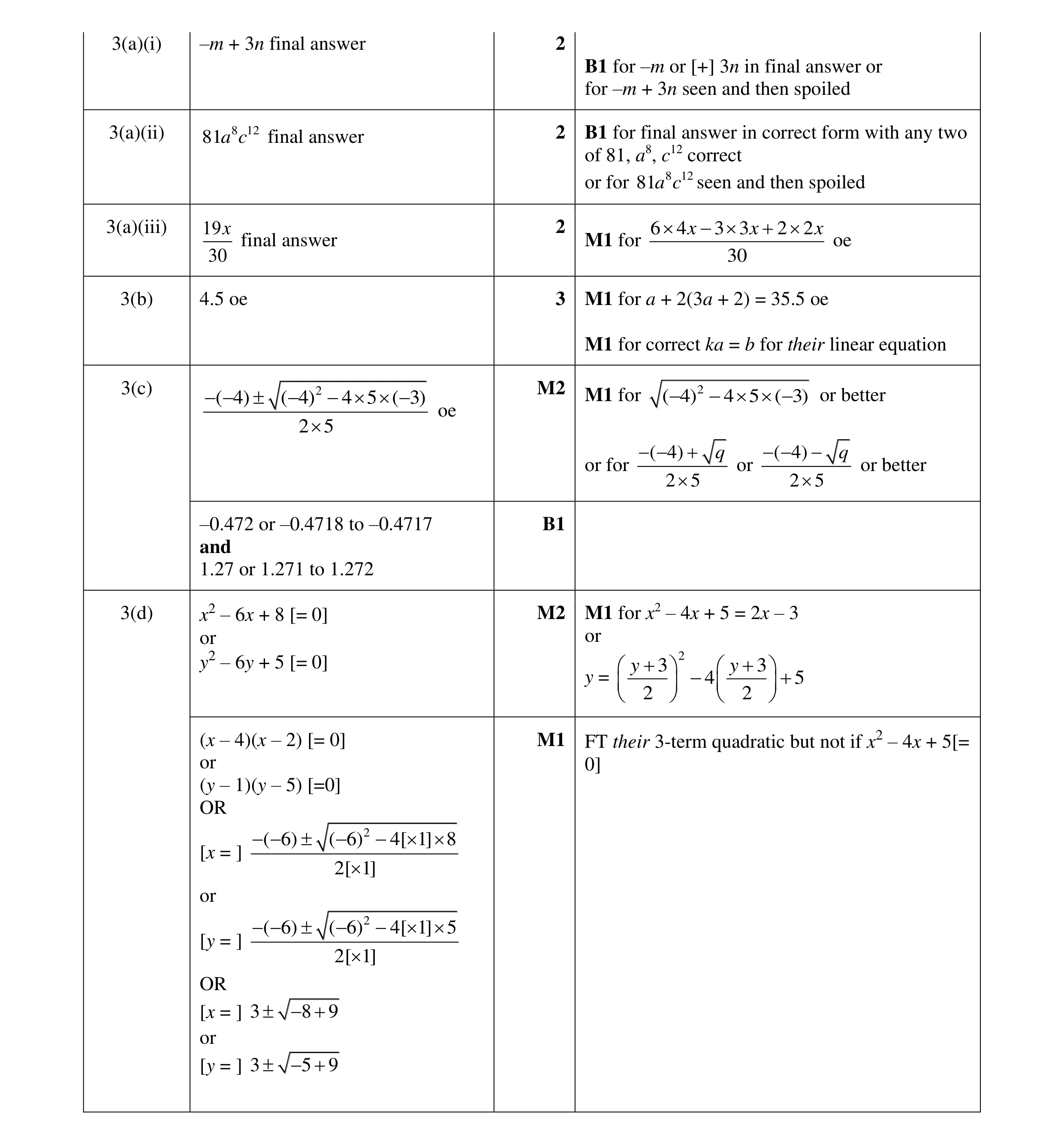 17
17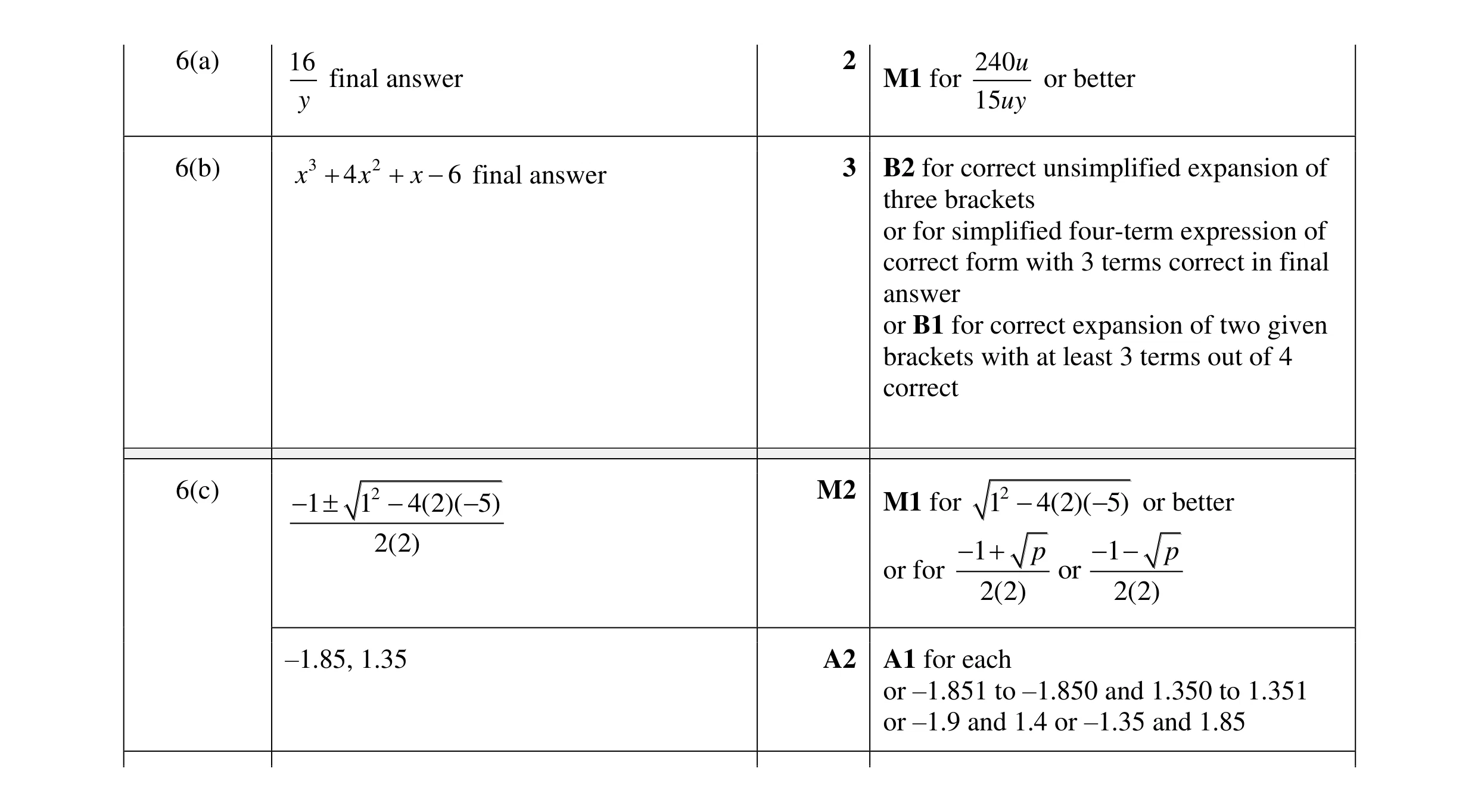 9
9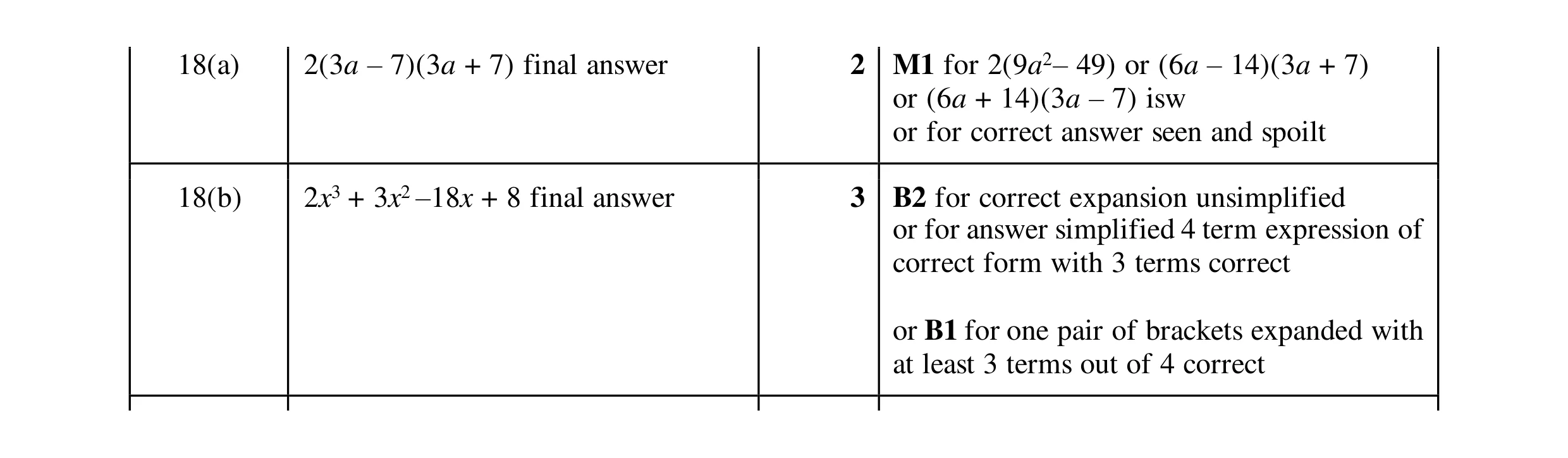 5
5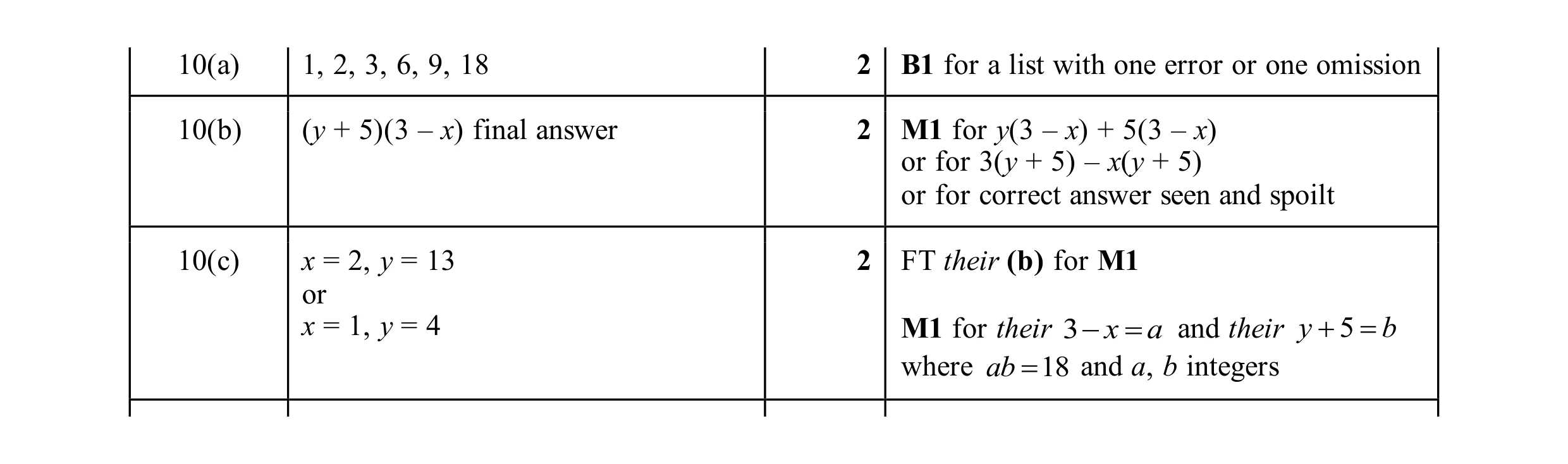 6
6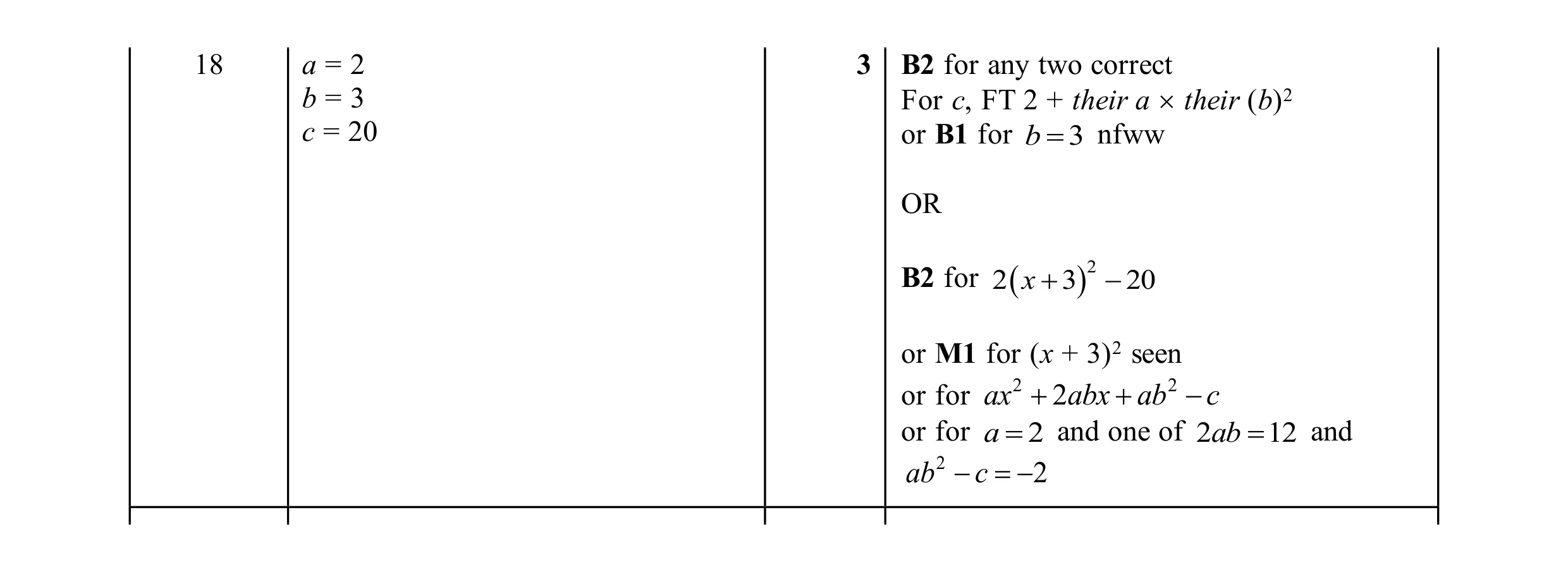 3
3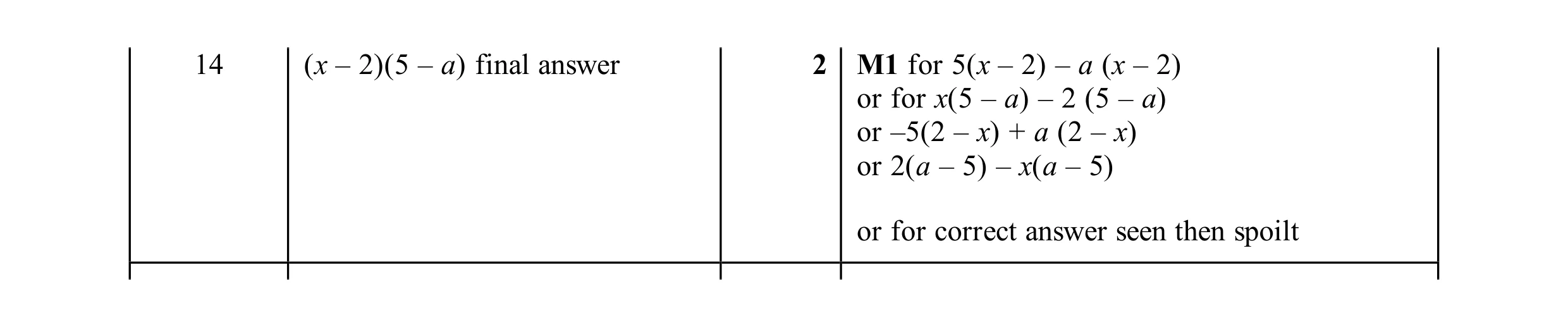 2
2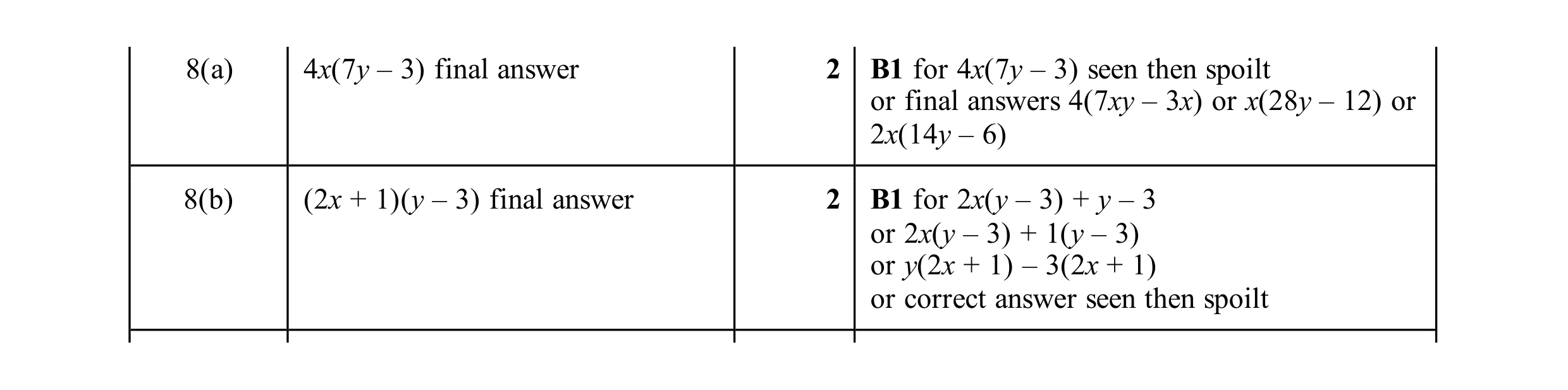 4
4 3
3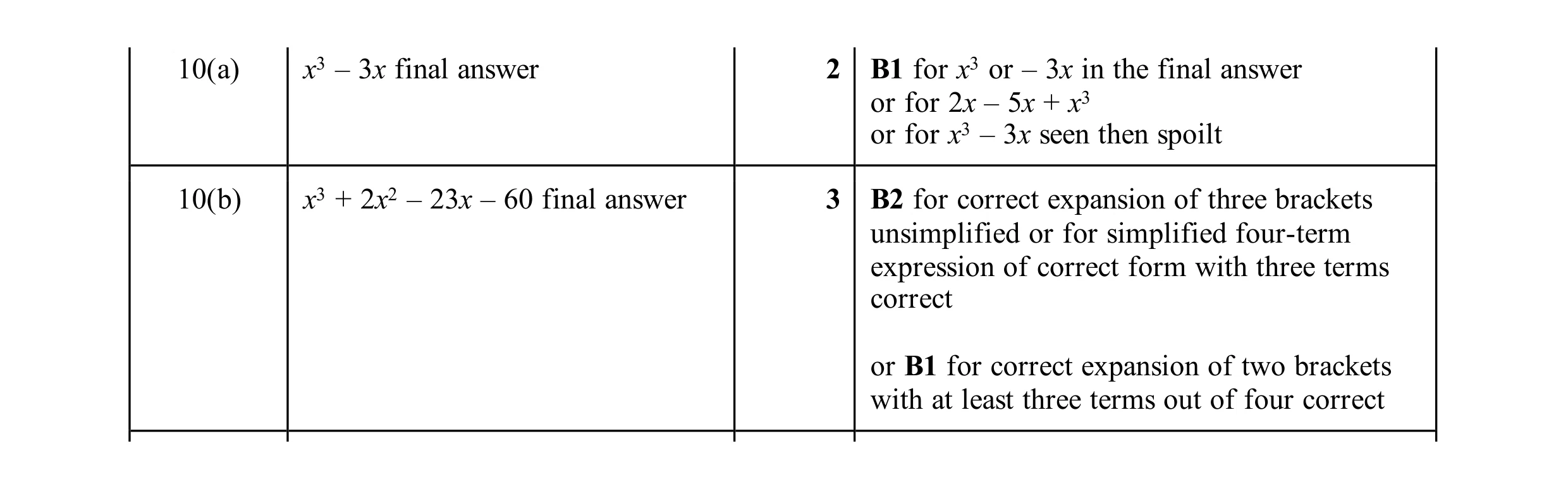 5
5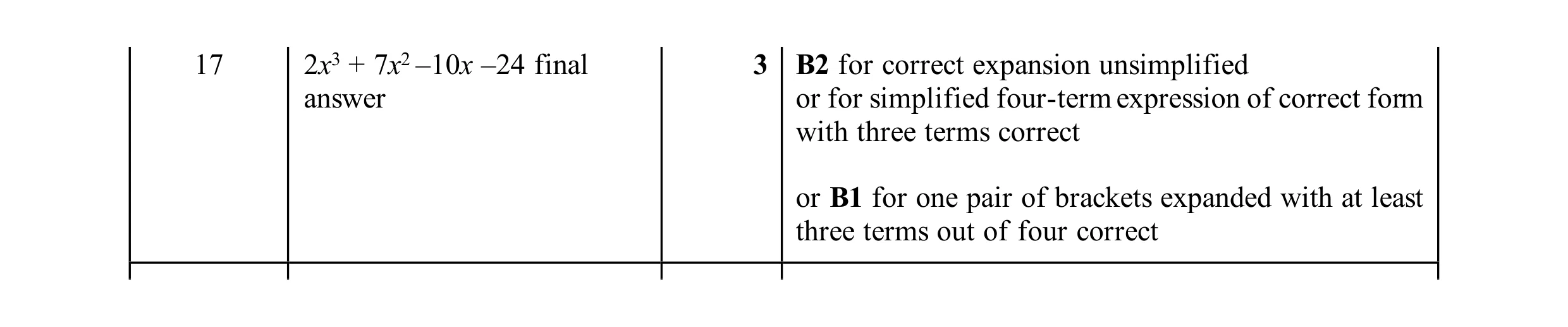 3
3 4
4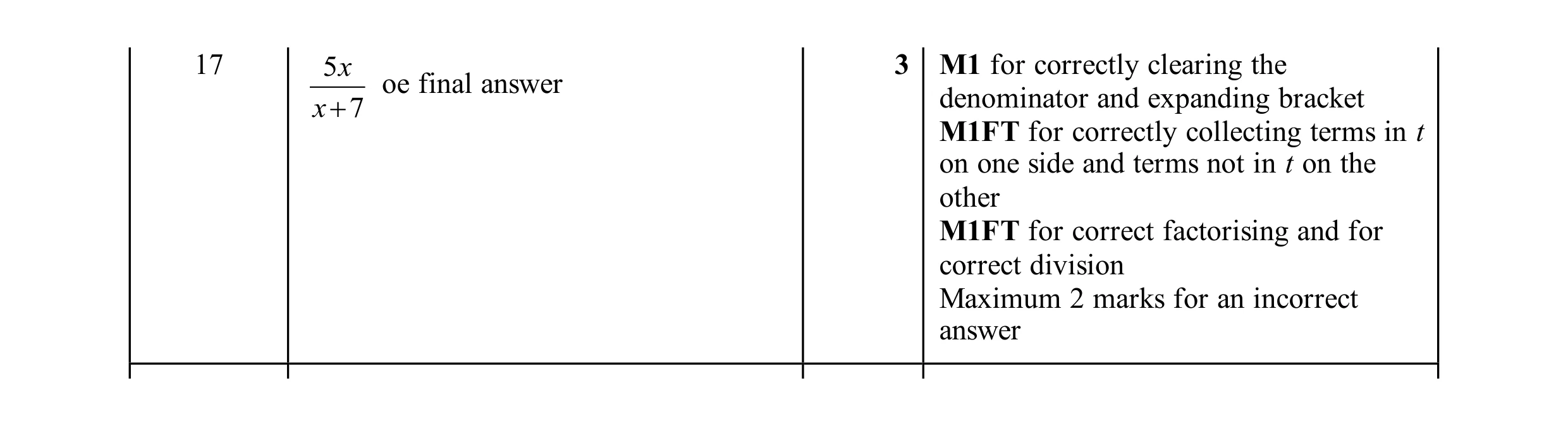 3
3