Questions as text
Q1 · A particle of mass 0.15 kg is attached to one end of a light inextensible string of… 9709/51 May/June 2005
2 A particle of mass 0.15 kg is attached to one end of a light inextensible string of length 2 m. The other end of the string is attached to a fixed point. The particle moves with constant speed in a horizontal circle. The magnitude of the acceleration of the particle is 7 m s−2. The string makes an angle of θ◦ with the downward vertical, as shown in the diagram. Find (i) the value of θ to the nearest whole number, [3] (ii) the tension in the string, [1] (iii) the speed of the particle. [2]
6 marks
Mark scheme: 2 (i) 0.15 g = T cos θ B1 (T sin θ = 0.15 x 7) M1 For using Newton’s second law horizontally θ = 35 A1 3 (ii) The tension is 1.83 N B1 ft 1 (iii) M1 For using a = v 2 ÷ r and r = 2 sin θ Speed is 2.83 ms-1 A1 ft 2 ft v = 14 sin θ
This question in 9709/51 May/June 2005
Q2 · The acceleration of a particle moving in a straight line is (x −2.4) m s−2 when its… 9709/51 May/June 2005
5 The acceleration of a particle moving in a straight line is (x −2.4) m s−2 when its displacement from a fixed point O of the line is x m. The velocity of the particle is v m s−1, and it is given that v = 2.5 when x = 0. Find (i) an expression for v in terms of x, [5] (ii) the minimum value of v. [2]
7 marks
Mark scheme: 5 (i) d v M1 For using α = v and attempting d x to separate the variables ∫ vd v = ∫ ( x − 2 . 4 )d x A1 ½ v2 = ½ x2 – 2.4 x (+ C) A1 Only allow second M1 if v = (f x ) GCE AS/A LEVEL – JUNE 2005 9709/8719 5 ½ 2.52 = 0 – 0 + C M1 For using v = 2.5 when x = 0 to find C (or equivalent using limits) v = x 2 − 4 . 8 x + 6 . 25 A1 5 Allow v2 = x2 – 4.8x + 6.25 (ii) d v = 0 → x = 2 . 4 → v min = v ( 2 . 4 ) M1 For any complete method for d x finding v min ( = 2 . 4 2 − 4 . 8( 2 . 4 ) + 6 . 25 ) or v = ( x − 2 . 4 ) 2 + 0 . 7 2 → v min = v ( 2 . 4 ) Minimum value of v is 0.7 A1 2
This question in 9709/51 May/June 2005
Q3 · A particle A is released from rest at time t = 0, at a point P which is 7 m above… 9709/51 May/June 2005
7 A particle A is released from rest at time t = 0, at a point P which is 7 m above horizontal ground. At the same instant as A is released, a particle B is projected from a point O on the ground. The horizontal distance of O from P is 24 m. Particle B moves in the vertical plane containing O and P, with initial speed V m s−1 and initial direction making an angle of θ above the horizontal (see diagram). Write down (i) an expression for the height of A above the ground at time t s, [1] (ii) an expression in terms of V, θ and t for (a) the horizontal distance of B from O, [1] (b) the height of B above the ground. [1] At time t = T the particles A and B collide at a point above the ground. (iii) Show that tan θ = 7 and that VT = 25. [6] 24 (iv) Deduce that 7V2 > 3125. [3]
12 marks
Mark scheme: 7 (i) Height of A is 7 – ½ gr2 B1 1 (ii) (a) Horizontal distance is Vt cos θ B1 1 (b) Height is Vt sin θ − ½gr2 B1 1 (iii) For using t = T and equating 7 – ½ gT2 = VT sin θ − ½gT2 M1 heights VT cos θ = 24 B1 VT sin θ ÷ VT cos θ = 7 ÷ 24 or M1 For eliminating VT or θ (VT sin θ ) 2 + (VT cos θ ) 2 = 7 2 + 24 2 tan θ = 7 / 24 or VT = 25 A1 M1 For substituting for θ or VT (VT cos[tan −1 ( 7 / 24 ]) = 24 or 25 cos θ = 24 ) VT = 25 or tan θ = 7 / 24 A1 6 SR If first result never (or wrongly) obtained then for a correct substitution into a correct equation to get the second result can get B1/2 max (e.g. use tan θ = 7 / 24 in 24 = VTcosθ → VT = 25) GCE AS/A LEVEL – JUNE 2005 9709/8719 5 (iv) [H = 7 – ½g(252/V2)] M1* For obtaining H in terms of V 7 – 5 × 625 ÷ V2 > 0 M1 For using H(V) > 0 (or H(V) = 0 (dep) Alternatively: For using H(T) ≥0 (T2 < 7/5) M1* For obtaining an inequality in V2 only (625/V2 < 7/5) M1 (dep) Alternatively: For expressing the range in terms of V2 only M1* [2V2/10 x (7/25) x 24/25)] For using ‘range ≥24’ to obtain an inequality in V2 only M1(dep) [2V2/10) x (7/25) x (24/25) > 24] 7V2 > 3125 A1 3
This question in 9709/51 May/June 2005
Q4 · An aircraft flies horizontally at a constant speed of 220 m s−1 9709/51 Oct/Nov 2005
2 An aircraft flies horizontally at a constant speed of 220 m s−1. Initially it is flying due east. On reaching a point A it flies in a circular arc from A to B, taking 50 s. At B the aircraft is flying due south (see diagram). (i) Show that the radius of the arc is approximately 7000 m. [3] (ii) Find the magnitude of the acceleration of the aircraft while it is flying between A and B. [2]
5 marks
Mark scheme: 2 (i) (½ π = ω 50 or L = 220×50) M1 For using θ = ω t or L = vt [220 = ( π / 100 )r or M1 For using v = ω r or L = rθ 11000 = r( ½π )] Radius is approx. 7000 m A1 3 (ii) M1 For using a = v2/r or a = ω 2r Acceleration is 6.91ms-2 A1 2
This question in 9709/51 Oct/Nov 2005
Q5 · A particle is projected from horizontal ground with speed u m s−1 at an angle of θ◦above… 9709/51 Oct/Nov 2005
4 A particle is projected from horizontal ground with speed u m s−1 at an angle of θ◦above the horizontal. The greatest height reached by the particle is 10 m and the particle hits the ground at a distance of 40 m from the point of projection. In either order, (i) find the values of u and θ, (ii) find the equation of the trajectory, in the form y = ax −bx2, where x m and y m are the horizontal and vertical displacements of the particle from the point of projection. [7]
7 marks
Mark scheme: 4 (i) u2sin2 θ ÷ 2g = 10 or B1 Using maximum height ½ (usinθ + 0)T = 10 2u2sinθ cosθ ÷ g = 40 or B1 Using range (or half range) u(2T)cosθ = 40 or uTcosθ = 20 2 M1 For eliminating u2 or uT sin θ 2 g (10) [ = sin θ cos θ [ g ( 40) ÷ 2] sin θ 2 × 10 or = ] cos θ 40 ÷ 2 θ = 45 A1 u2 = 20×10÷ ½ u = 20 or A1 5 u ÷ 2 = gT and uT ÷ 2 2 = 10 u = 20 (ii) y = xtan45o – gx2÷ (2×202cos245o) M1 For substituting for u and θ in the general equation y = x – x2/40 A1 2 OR 4 (ii) y = kx(40 – x) M1 For quadratic equation with roots x = 0 and x = 40 10 = 400k M1 For using y = 10 when x = 20 y = x – x2/40 A1 3 (i) 1 = tanθ M1 For equating coefficients of x with that of general form θ =45o A1 1 10 M1 For equating coefficients of x2 with − = − 2 40 2 u × 1 / 2 that of general form with θ =45o substituted u = 20 A1 4
This question in 9709/51 Oct/Nov 2005
Q6 · A particle of mass 0.25 kg moves in a straight line on a smooth horizontal surface 9709/51 Oct/Nov 2005
7 A particle of mass 0.25 kg moves in a straight line on a smooth horizontal surface. A variable resisting force acts on the particle. At time t s the displacement of the particle from a point on the line is x m, and its velocity is (8 −2x) m s−1. It is given that x = 0 when t = 0. (i) Find the acceleration of the particle in terms of x, and hence find the magnitude of the resisting force when x = 1. [3] (ii) Find an expression for x in terms of t. [6] (iii) Show that the particle is always less than 4 m from its initial position. [2]
11 marks
Mark scheme: 7 (i) a = (8 – 2x)(-2) = -16 +4x B1 Any correct form -R = 0.25(-16 + 4×1) M1 For using Newton’s second law and substituting for x Magnitude of the force is 3 N A1 3 (ii) dx B1 ∫ dt = ∫ 8 − 2 x M1* For attempting to integrate t = -1/2 ln(8 – 2x) (+C) A1 (C = 1/2 ln8) M1*dep For using x = 0 when t = 0 to find C 8 2 t 8 2 t = ln ⇒ e = 8 − 2 x 8 − 2 x M1*dep For converting to exponential form x = 4(1 – e-2t) A1 6 (iii) t ≥ 0 M1 0 < e −t2 ≤ 1 0 ≤ 1 − e −t2 < 1 0 ≤x < 4 A1 2
This question in 9709/51 Oct/Nov 2005
Q7 · A particle starts from rest at O and travels in a straight line 9709/51 May/June 2007
2 A particle starts from rest at O and travels in a straight line. Its acceleration is (3 −2x) m s−2, where x m is the displacement of the particle from O. (i) Find the value of x for which the velocity of the particle reaches its maximum value. [1] (ii) Find this maximum velocity. [4]
5 marks
Mark scheme: 2 (i) 3 – 2x = 0 → x = 1.5 B1 1 (ii) v(dv/dx) = 3 – 2x M1 For using a = v(dv/dx), and attempting to solve using separation of variables. v²/ 2 = 3x – x² (+C) A1 v²/2 = 3 x 1.5 –1.5² M1 For C = 0 (may be implied) and substituting ans (i) Maximum value is 2.12 ms −1 A1 4 5
This question in 9709/51 May/June 2007
Q8 · A and B are fixed points on a smooth horizontal table 9709/51 May/June 2007
6 A and B are fixed points on a smooth horizontal table. The distance AB is 2.5 m. An elastic string of natural length 0.6 m and modulus of elasticity 24 N has one end attached to the table at A, and the other end attached to a particle P of mass 0.95 kg. Another elastic string of natural length 0.9 m and modulus of elasticity 18 N has one end attached to the table at B, and the other end attached to P. The particle P is held at rest at the mid-point of AB (see diagram). (i) Find the tensions in the strings. [3] The particle is released from rest. (ii) Find the acceleration of P immediately after its release. [2] (iii) P reaches its maximum speed at the point C. Find the distance AC. [4]
9 marks
Mark scheme: 6 (i) 24 x 0.65/0.6 or 18 x 0.35/0.9 M1 For using T = λ x/L Tension in AP is 26N A1 Tension in BP is 7N A1 3 (ii) 26 – 7 = 0.95a M1 For using Newton’s second law (3 terms) Acceleration is 20 ms −2 A1 2 ft T AP − T BP = 0.95a (iii) M1 For using T AP = T BP 24x/0.6 = 18(1 – x)/0.9 A1 x = 1/3 DM1 For attempting to solve for x Distance is 0.933 m A1 4 9
This question in 9709/51 May/June 2007
Q9 · A particle is projected with speed 65 m s−1 from a point on horizontal ground, in a… 9709/51 May/June 2007
7 A particle is projected with speed 65 m s−1 from a point on horizontal ground, in a direction making an angle of α◦above the horizontal. The particle reaches the ground again after 12 s. Find (i) the value of α, [3] (ii) the greatest height reached by the particle, [2] (iii) the length of time for which the direction of motion of the particle is between 20◦above the horizontal and 20◦below the horizontal, [5] (iv) the horizontal distance travelled by the particle in the time found in part (iii). [1]
11 marks
Mark scheme: 7 (i) y = 65sinα t – ½gt² B1 May be implied 0 = 65 x 12sinα – 5 x 12² M1 For using y(12) = 0 and solving for α α = 67.4 A1 3 OR . B1 y = 65sinα – gt 0 = 65sinα – 10 x 6 M1 . y (6) = 0 and solving for α α = 67.4 A1 (3) (ii) y = 65 x 6 x (60/65) – 5 x 6² M1 For using the value of α and finding y(6) Greatest height is 180 m A1 2 OR 0 = 65²x(60/65)² – 2x10y M1 For solving 0=(65sinα )² – 2gy for y Greatest height is 180 m A1 (2) (iii) . x = 65cosα B1 . y =65sinα – 10t B1 (60 – 10t)/25 = tan20° M1 . . For using y / x = tan20° and [T = 5.09s] attempting to solve M1 For using time interval = 12-2T Length of time is 1.82 s A1 5 (iv) Distance is 45.5 m A1ft 1 ft 25 x candidate’s ans (iii) 11
This question in 9709/51 May/June 2007
Q10 · Each of two identical light elastic strings has natural length 0.25 m and modulus of… 9709/51 Oct/Nov 2007
1 Each of two identical light elastic strings has natural length 0.25 m and modulus of elasticity 4 N. A particle P of mass 0.6 kg is attached to one end of each of the strings. The other ends of the strings are attached to fixed points A and B which are 0.8 m apart on a smooth horizontal table. The particle is held at rest on the table, at a point 0.3 m from AB for which AP = BP (see diagram). (i) Find the tension in the strings. [2] (ii) The particle is released. Find its initial acceleration. [3]
5 marks
Mark scheme: 1 (i) T = 4x0.25/0.25 or 4x0.5/0.5 M1 For using T = λ x/L Tension is 4N A1 2 (ii) M1 For using Newton’s second law 2 x 4 x 0.6 = 0.6a A1ft Acceleration is 8ms −2 A1 3 5
This question in 9709/51 Oct/Nov 2007
Q11 · A particle of mass 0.4 kg is released from rest and falls vertically 9709/51 Oct/Nov 2007
4 A particle of mass 0.4 kg is released from rest and falls vertically. A resisting force of magnitude 0.08v N acts upwards on the particle during its descent, where v m s−1 is the velocity of the particle at time t s after its release. (i) Show that the acceleration of the particle is (10 −0.2v) m s−2. [2] (ii) Find the velocity of the particle when t = 15. [5]
7 marks
Mark scheme: 4 (i) 0.4g – 0.08v = 0.4a M1 For using Newton’s second law Acceleration is 10 – 0.2v A1 2 (ii) dv For using a=dv/dt, separating the ∫ = ∫ 2.0 dt M1 variables and attempting to 50 −v integrate - ln(50-v) = 0.2t (+ C) A1 -ln(50-v) = 0.2t – ln50 M1 For using v(0) = 0 to find C 50 – v = 50e −3 M1 For substituting t = 15 and solving for v Speed is 47.5ms −1 A1 5 7 GCE A/AS LEVEL – October/November 2007 9709 05
This question in 9709/51 Oct/Nov 2007
Q12 · A particle is projected from a point O at an angle of 35◦above the horizontal 9709/51 Oct/Nov 2007
6 A particle is projected from a point O at an angle of 35◦above the horizontal. At time T s later the particle passes through a point A whose horizontal and vertically upward displacements from O are 8 m and 3 m respectively. (i) By using the equation of the particle’s trajectory, or otherwise, find (in either order) the speed of projection of the particle from O and the value of T. [5] (ii) Find the angle between the direction of motion of the particle at A and the horizontal. [4]
9 marks
Mark scheme: 6 (i) 3=8tan35 ° -g8²/(2V²cos²35 ° ) M1 For substituting θ =35 ° , x=8 and y=3 into the trajectory formula or eliminating T from 8=Vtcos35 ° , 3=Vtsin35 ° -½gT 2 M1 For solving for V Speed is 13.5ms −1 A1 OR For eliminating VT from 8=Vtcos35 ° , 3=Vtsin35 ° -½gT 2 to find T (=0.721) (M1) For back substituting to find V (M1) Speed is 13.5ms −1 (A1) M1 For substituting θ =35 ° , x=8 and value of V into x=VTcosθ or stating value of T found in (i) (alternate method) T = 0.721 A1 5 (ii) M1 For using v x =Vcos35 ° and v y =Vsin35 ° -gT M1 For using tanα =v y /v x tanα =0.55(22) ÷11(.09) A1 May be implied by final answer Direction 2.85 ° to the horizontal A1 4 Accept 2.8 or 2.9 OR (M1) For differentiating the trajectory equation w.r.t.x y’ = tan35º - gx/(V²cos²35º) (A1) (M1) For using tanα = y’(8) (0.0498) Direction 2.85º to the horizontal (A1) 9 GCE A/AS LEVEL – October/November 2007 9709 05
This question in 9709/51 Oct/Nov 2007
Q13 · C 1.1 m D 0.5 m O R 1.2 m One end of a light inextensible string is attached to a point C 9709/51 May/June 2008
3 C 1.1 m D 0.5 m O R 1.2 m One end of a light inextensible string is attached to a point C. The other end is attached to a point D, which is 1.1 m vertically below C. A small smooth ring R, of mass 0.2 kg, is threaded on the string and moves with constant speed v m s−1 in a horizontal circle, with centre at O and radius 1.2 m, where O is 0.5 m vertically below D (see diagram). (i) Show that the tension in the string is 1.69 N, correct to 3 significant figures. [3] (ii) Find the value of v. [3]
6 marks
Mark scheme: 3 (i) [TsinORC + TsinORD = mg] M1 For resolving forces on R vertically Tx1.6/2 + Tx0.5/1.3 = 0.2x10 A1 Tension is 1.69N A1 3 For using Newton’s second law (ii) [TcosORC + TcosORD = mv2/r] M1 horizontally Tx1.2/2 + Tx1.2/1.3 = 0.2v2/1.2 A1 v = 3.93 A1 3 6
This question in 9709/51 May/June 2008
Q14 · 5 m s–1 60° T 8 m s–1 B 7.2 m A Particles A and B are projected simultaneously from the… 9709/51 May/June 2008
5 5 m s–1 60° T 8 m s–1 B 7.2 m A Particles A and B are projected simultaneously from the top T of a vertical tower, and move in the same vertical plane. T is 7.2 m above horizontal ground. A is projected horizontally with speed 8 m s−1 and B is projected at an angle of 60◦above the horizontal with speed 5 m s−1. A and B move away from each other (see diagram). (i) Find the time taken for A to reach the ground. [2] At the instant when A hits the ground, (ii) show that B is approximately 5.2 m above the ground, [2] (iii) find the distance AB. [3]
7 marks
Mark scheme: 5 (i) 21 gt 2 = 7.2 B1 Time taken is 1.2s B1 2 1 o x1.2 − 1 gt 2 (ii) [y B = 7.2 + 5sin60 g1.2 2 ] M1 For using yB = 7.2 + 5tsin60° – 2 2 B is approximately 5.2m above the A1 2 AG ground Horizontal distance (iii) = (8 + 5cos60 o )x1.2 B1ft (= 12.6) [AB2 = 12.62 + (3 3 )2] M1 For using AB2 = (HorD) 2 + (VerD) 2 Distance is 13.6m A1 3 7 GCE A/AS LEVEL – May/June 2008 9709 05 2
This question in 9709/51 May/June 2008
Q15 · A particle P of mass 0.5 kg moves on a horizontal surface along the straight line OA, in… 9709/51 May/June 2008
7 A particle P of mass 0.5 kg moves on a horizontal surface along the straight line OA, in the direction from O to A. The coefficient of friction between P and the surface is 0.08. Air resistance of magnitude 0.2v N opposes the motion, where v m s−1 is the speed of P at time t s. The particle passes through O with speed 4 m s−1 when t = 0. (i) Show that 2.5dv = −(v + 2) and hence find the value of t when v = 0. [7] dt dx (ii) Show that = 6e−0.4t −2, where x m is the displacement of P from O at time t s, and hence find dt the distance OP when v = 0. [5]
12 marks
Mark scheme: For using Newton s second law and 7 (i) 0.5a = -(0.2v + 0.08x0.5g) M1 F = µ R 2.5dv/dt = -(v + 2) A1 AG M1 For separating variables and integrating 2.5ln(v + 2) = -t (+c) A1 M1 For using v(0) = 4 t = 2.5ln[6/(v + 2)] A1 t = 2.75 A1 7 (ii) e0.4t = 6/(v + 2) ⇒ dx/dt = 6e–0.4t - 2 B1 M1 For integrating x = -15e–0.4t - 2t (+k) A1 x = 15(1 − e −0.4 t ) − 2t M1 For using x(0) = 0 i.e. x = 0, t = 0 Distance is 4.51m A1 5 12
This question in 9709/51 May/June 2008
Q16 · A particle P of mass 0.5 kg moves along the x-axis on a horizontal surface 9709/51 Oct/Nov 2008
3 A particle P of mass 0.5 kg moves along the x-axis on a horizontal surface. When the displacement of P from the origin O is x m the velocity of P is v m s−1 in the positive x-direction. Two horizontal forces act on P; one force has magnitude (1 + 0.3x2) N and acts in the positive x-direction, and the other force has magnitude 8e−x N and acts in the negative x-direction. dv (i) Show that v = 2 + 0.6x2 −16e−x. [2] dx (ii) The velocity of P as it passes through O is 6 m s−1. Find the velocity of P when x = 3. [5]
7 marks
Mark scheme: 3 (i) [0.5a = 1 + 0.3x 2 – 8e −]x M1 For using Newton’s second law v(dv/dx) = 2 + 0.6x 2 – 16e − x A1 2 (ii) M1 For separating variables and integrating v 2 /2 = 2x + 0.2x 3 + 16e − x (+c) A1 M1 For using v(0) = 6 v 2 /2 = 2x + 0.2x 3 + 16e − x + 2 A1 Velocity is 5.33 ms −1 A1 5 [7]
This question in 9709/51 Oct/Nov 2008
Q17 · A 0.35 m Fig 9709/51 Oct/Nov 2008
4 (i) A 0.35 m Fig. 1 A small sphere A of mass 0.15 kg is moving inside a fixed smooth hollow cylinder whose axis is vertical. A moves with constant speed 1.2 m s−1 in a horizontal circle of radius 0.35 m, and is continuously in contact with both the plane base and the curved surface of the cylinder. Fig. 1 shows a vertical cross-section of the cylinder through its axis. Find the magnitude of the force exerted on A by (a) the base of the cylinder, (b) the curved surface of the cylinder. [3] (ii) 0.2 m A B Fig. 2 Sphere A is now attached to one end of a light inextensible string. The string passes through a small smooth hole in the middle of the base of the cylinder. Another small sphere B, of mass 0.25 kg, is attached to the other end of the string. B hangs in equilibrium below the hole while A is moving in a horizontal circle of radius 0.2 m (see Fig. 2). Find the angular speed of A. [4] [Questions 5, 6 and 7 are printed on the next page.]
7 marks
Mark scheme: 4 (i) (a) Magnitude is 1.5 N B1 From R = mg (b) [S = mv 2 /r] M1 For using Newton’s second law Magnitude is 0.617 N A1 3 (ii) Tension is 2.5 N B1 [T = mrω 2 ] M1 For using Newton’s second law 2.5 = 0.15x0.2 ω 2 A1ft Angular speed is 9.13 rads −1 A1 4 [7]
This question in 9709/51 Oct/Nov 2008
Q18 · A particle P is projected from a point O on horizontal ground with speed V m s−1 and… 9709/51 Oct/Nov 2008
7 A particle P is projected from a point O on horizontal ground with speed V m s−1 and direction 60◦ upwards from the horizontal. At time t s later the horizontal and vertical displacements of P from O are x m and y m respectively. (i) Write down expressions for x and y in terms of V and t and hence show that the equation of the trajectory of P is y = (√3)x −20x2 . [5] V2 P passes through the point A at which x = 70 and y = 10. Find (ii) the value of V, [2] (iii) the direction of motion of P at the instant it passes through A. [3]
10 marks
Mark scheme: 7 (i) x = Vtcos60 o B1 y = Vtsin60 o – 12 gt 2 B1 M1 For eliminating t y = xsin60 o /cos60 – 12 gx 2 /(V 2 cos 2 60 o ) A1 For any correct form 2 2 A1 5 AG y = 3 x – 20x /V (ii) 10 = 3 x70 – 20x70 2 /V 2 M1 For substituting x = 70, y = 10 and attempting to solve for V V = 29.7 A1 2 (iii) [dy/dx = 3 – 40x/V 2 ] M1 For differentiating y(x) Gradient is –1.44… at A A1ft Direction is 55.3 o downwards from the horizontal A1 3 [10] ALTERNATIVE FOR (iii) (iii) . . M1 For attempting to find either x or y at A . . [ x = 148 … , y = −21.42... ] A1ft Direction is 55.3 o downwards from the horizontal A1 3
This question in 9709/51 Oct/Nov 2008
Q19 · A uniform lamina is in the form of a sector of a circle with centre O, radius 0.2 m and… 9709/51 May/June 2009
1 A uniform lamina is in the form of a sector of a circle with centre O, radius 0.2 m and angle 1.5 radians. The lamina rotates in a horizontal plane about a fixed vertical axis through O. The centre of mass of the lamina moves with speed 0.4 m s−1. Show that the angular speed of the lamina is 3.30 rad s−1, correct to 3 significant figures. [4]
4 marks
Mark scheme: 1 M1 For using R = 2rsinα /3α R = 2x0.2sin0.75/(3x0.75) A1 [0.4 = 0.12118….ω M1 For using v = rω Angular speed is 3.30 rads–1 A1 4 [4]
This question in 9709/51 May/June 2009
Q20 · 0.5 m 0.3 m A particle of mass 0.12 kg is moving on the smooth inside surface of a fixed… 9709/51 May/June 2009
4 0.5 m 0.3 m A particle of mass 0.12 kg is moving on the smooth inside surface of a fixed hollow sphere of radius 0.5 m. The particle moves in a horizontal circle whose centre is 0.3 m below the centre of the sphere (see diagram). (i) Show that the force exerted by the sphere on the particle has magnitude 2 N. [2] (ii) Find the speed of the particle. [3] (iii) Find the time taken for the particle to complete one revolution. [2]
7 marks
Mark scheme: 4 (i) [Rx(0.3/0.5) = 0.12 g] M1 For resolving forces vertically Force exerted is 2 N A1 2 AG (ii) [Rcosα = mv2/r] M1 For using Newton’s second law with a = v2/r 2(0.4/0.5) = 0.12v2/(0.5x0.4/0.5)) A1 Speed is 2.31 ms–1 A1 3 (iii) M1 For using T = 2π r/v Ft T = 0.8π /v or correct value Time taken is 1.09s A1√ 2 From incorrect r in (ii) and (iii) [7]
This question in 9709/51 May/June 2009
Q21 · P A M B 2 m A particle P of mass 1.6 kg is attached to one end of each of two light… 9709/51 May/June 2009
6 P A M B 2 m A particle P of mass 1.6 kg is attached to one end of each of two light elastic strings. The other ends of the strings are attached to fixed points A and B which are 2 m apart on a smooth horizontal table. The string attached to A has natural length 0.25 m and modulus of elasticity 4 N, and the string attached to B has natural length 0.25 m and modulus of elasticity 8 N. The particle is held at the mid-point M of AB (see diagram). (i) Find the tensions in the strings. [2] (ii) Show that the total elastic potential energy in the two strings is 13.5 J. [2] P is released from rest and in the subsequent motion both strings remain taut. The displacement of P from M is denoted by x m. Find (iii) the initial acceleration of P, [2] (iv) the non-zero value of x at which the speed of P is zero. [4]
10 marks
Mark scheme: 6 (i) [TA = 4x0.75/0.25 and TB = 8x0.75/0.25] M1 For using T = λ x/L Tensions are 12 N and 24 N A1 2 (ii) [Total EE = 4x0.752/(2x0.25) + 8x0.752/(2x0.25)] M1 For using T = λ x2/2L Total EE = 13.5J A1 2 AG (iii) [TB – TA = ma] M1 For using Newton’s second law Acceleration is 7.5 ms–2 A1√ 2 Ft 0.625(TB – TA) (iv) M1 For attempting to set up an equation using EE 4(0.75 + x) 2/(2x0.25) + 8(0.75 – x) 2/(2x0.25) = 13.5 A1 [–12x(1–2x) = 0 ⇒ x = 0, ½ ] M1 For attempting to solve the correct quadratic equation Value of x is 0.5 A1 4 [10]
This question in 9709/51 May/June 2009
Q22 · A particle is projected from a point O with speed V m s−1 at an angle θ above the… 9709/51 Oct/Nov 2009
4 A particle is projected from a point O with speed V m s−1 at an angle θ above the horizontal. After 0.3 s the particle is moving with speed 25 m s−1 at an angle tan−1 7 above the horizontal. 24 (i) Show that V cos θ = 24. [2] (ii) Find the value of V sin θ, and hence find V and θ. [5]
7 marks
Mark scheme: 4 (i) [25 × (24/25) = Vcos θ] M1 For using x& = Vcos θ Vcos θ = 24 A1 2 (ii) [25 × (7/25) = Vsin θ – 0.3 g] M1 For using y& = Vsin θ – gt Vsin θ = 10 A1 [tan θ = 10/24, V2 = 242 + 102] M1 For using tan θ = Vsin θ/(Vcos θ) or V2 = (Vcos θ)2 + (Vsin θ)2 θ = 22.6º A1√ ft dependent on both M marks V = 26 A1√ 5 ft dependent on both M marks [7]
This question in 9709/51 Oct/Nov 2009
Q23 · A P 50 m s–1 Q 7 m O q 24 m A particle P is released from rest at a point A which is 7 m… 9709/52 Oct/Nov 2009
3 A P 50 m s–1 Q 7 m O q 24 m A particle P is released from rest at a point A which is 7 m above horizontal ground. At the same instant that P is released a particle Q is projected from a point O on the ground. The horizontal distance of O from A is 24 m. Particle Q moves in the vertical plane containing O and A, with initial speed 50 m s−1 and initial direction making an angle θ above the horizontal, where tan θ = 7 (see 24 diagram). Show that the particles collide. [6]
6 marks
Mark scheme: 3 24 = 50 × 0.96t M1 For using x = (Vcosθ)t to find t t = 0.5 A1 [y = 50 × 0.5 × (7/25) – 1 10 × 0.52 or M1 For substituting t = 0.5 into 2 Y = Vtsinθ – 1 gt2 or x = 24 into the y = (7/24)24 – 10 × 242/(2×502×0.962)] 2 equation of the trajectory. yQ = 5.75 A1 yP = 7 – 1 g × 0.52 M1 For evaluating yP when t = 0.5 2 yP = yQ at time t = 0.5 → particles collide A1 6 6 GCE A/AS LEVEL – October/November 2009 9709 52
This question in 9709/52 Oct/Nov 2009
Q24 · One end of a light elastic string of natural length 3 m and modulus of elasticity 15m N… 9709/52 Oct/Nov 2009
4 One end of a light elastic string of natural length 3 m and modulus of elasticity 15m N is attached to a fixed point O. A particle P of mass m kg is attached to the other end of the string. P is released from rest at O and moves vertically downwards. When the extension of the string is x m the velocity of P is v m s−1. (i) Show that v2 = 5(12 + 4x −x2). [4] (ii) Find the magnitude of the acceleration of P when it is at its lowest point, and state the direction of this acceleration. [3]
7 marks
Mark scheme: 4 (i) EE = 1 (15 m)x2/3 B1 2 M1 For using Loss of PE = Gain in KE + EE 1 mv2 + 1 (15 m)x2/3 = mg(3 + x2) A1ft Ft error in EE 2 2 v2 = 5(12 + 4x – x) A1 4 AG (ii) [a = –2.5(2x – 4) or a = g – 15x/3] M1 For using a = v(dv/dx) or a = (mg – λx/L)/m [v = 0 → x = 6 → a = –20] M1 For finding x at the lowest point and substituting Magnitude is 20 ms–2; direction is A1 upwards 3 7
This question in 9709/52 Oct/Nov 2009
Q25 · 0.5 m O A q w rad s–1 0.8 m P A horizontal disc of radius 0.5 m is rotating with constant… 9709/52 Oct/Nov 2009
5 0.5 m O A q w rad s–1 0.8 m P A horizontal disc of radius 0.5 m is rotating with constant angular speed ω rad s−1 about a fixed vertical axis through its centre O. One end of a light inextensible string of length 0.8 m is attached to a point A of the circumference of the disc. A particle P of mass 0.4 kg is attached to the other end of the string. The string is taut and the system rotates so that the string is always in the same vertical plane as the radius OA of the disc. The string makes a constant angle θ with the vertical (see diagram). The speed of P is 1.6 times the speed of A. (i) Show that sin θ = 38. [3] (ii) Find the tension in the string. [2] (iii) Find the value of ω. [3]
8 marks
Mark scheme: 5 (i) [r = 0.8] M1 For using vP/vA = r/0.5 M1 For using sinθ = (r – 0.5)/0.8 sinθ = 3 A1 3 AG 8 (ii) [Tcosθ = mg] M1 For resolving forces vertically Tension is 4.31 N A1 2 (iii) [Tsinθ = mω2r] M1 For using Newton’s second law and a = ω2r 0.375T = 0.4 × 0.8ω2 A1 ω = 2.25 A1 3 8 GCE A/AS LEVEL – October/November 2009 9709 52
This question in 9709/52 Oct/Nov 2009
Q26 · A particle P of mass 0.3 kg is projected vertically upwards from the ground with an… 9709/52 Oct/Nov 2009
7 A particle P of mass 0.3 kg is projected vertically upwards from the ground with an initial speed of 20 m s−1. When P is at height x m above the ground, its upward speed is v m s−1. It is given that 3v −90 ln(v + 30) + x = A, where A is a constant. (i) Differentiate this equation with respect to x and hence show that the acceleration of the particle is −13(v + 30) m s−2. [3] (ii) Find, in terms of v, the resisting force acting on the particle. [2] (iii) Find the time taken for P to reach its maximum height. [5]
10 marks
Mark scheme: 7(i) [3 – 90/(v + 30)](dv/dx) + 1 = 0 or 3 – 90/(v + 30) + (dx/dv) = 0 B1 M1 For using a = v(dv/dx) Acceleration is – 1 (v + 30) ms–2 A1 3 AG 3 (ii) [0.3g + R = 0.3(v + 30)/3] M1 For using Newton’s second law Resisting force is 0.1v N A1 2 (iii) d v 1 M1 For using a = dv/dt, separating variables and integrating ∫ v + 30 = − 3 ∫ dt ln(v + 30) = –t/3 (+ A) A1 ln50 = 0 + A B1 [ln30 = –t/3 + ln50] M1 For finding t when v = 0 Time taken is 1.53 s A1 5 10
This question in 9709/52 Oct/Nov 2009
Q27 · Q 2 m A particle of mass 0.24 kg is attached to one end of a light inextensible string of… 9709/51 May/June 2010
3 q 2 m A particle of mass 0.24 kg is attached to one end of a light inextensible string of length 2 m. The other end of the string is attached to a fixed point. The particle moves with constant speed in a horizontal circle. The string makes an angle θ with the vertical (see diagram), and the tension in the string is T N. The acceleration of the particle has magnitude 7.5 m s−2. (i) Show that tan θ = 0.75 and find the value of T. [4] (ii) Find the speed of the particle. [2]
6 marks
Mark scheme: 3 (i) mg = Tcosθ B1 SR B1 not B2 for tanθ = v2/gr or a/g used ma = Tsinθ B1 tanθ = a/g = 0.75 B1 AG T = 0.24 × 10/cosθ = 3 B1 For using Tcosθ = mg to find T [4] (ii) [v2 = 7.5 × 2sinθ] M1 For using v2 = ar to find v Speed is 3ms–1 A1 [2]
This question in 9709/51 May/June 2010
Q28 · A particle P of mass 0.25 kg moves in a straight line on a smooth horizontal surface 9709/51 May/June 2010
7 A particle P of mass 0.25 kg moves in a straight line on a smooth horizontal surface. P starts at the point O with speed 10 m s−1 and moves towards a fixed point A on the line. At time t s the displacement of P from O is x m and the velocity of P is v m s−1. A resistive force of magnitude (5 −x) N acts on P in the direction towards O. (i) Form a differential equation in v and x. By solving this differential equation, show that v = 10 −2x. [6] (ii) Find x in terms of t, and hence show that the particle is always less than 5 m from O. [5]
11 marks
Mark scheme: 7 (i) [0.25v(dv/dx) = –(5 – x)] B1 For using Newton’s second law and a = v(dv/dx) M1 For separating variables and attempting [∫ vdv = 4 ∫ (x − 5)dx ] to integrate v2/2 = 4(x – 5)2/2 (+ A) A1 M1 For using v(0) = 10 v2 = 4(x – 5) 2 A1 Any correct expression in x Selects correct square root to obtain v = 10 – 2x A1 AG [6] dx For using v = dx/dt and separating (ii) [∫ 10 −x2 = ∫dt ] M1 variables – 12 ln(10 – 2x) = t(– 12 lnB) A1 B = 10 (or equivalent) A1 x = 5(1 – e–2t) B1ft ft x = (B/2)(1 – e–2t) 0 < e–2t < 1 for all t → x < 5 for all t B1 AG [5]
This question in 9709/51 May/June 2010
Q29 · Q 2 m A particle of mass 0.24 kg is attached to one end of a light inextensible string of… 9709/52 May/June 2010
3 q 2 m A particle of mass 0.24 kg is attached to one end of a light inextensible string of length 2 m. The other end of the string is attached to a fixed point. The particle moves with constant speed in a horizontal circle. The string makes an angle θ with the vertical (see diagram), and the tension in the string is T N. The acceleration of the particle has magnitude 7.5 m s−2. (i) Show that tan θ = 0.75 and find the value of T. [4] (ii) Find the speed of the particle. [2]
6 marks
Mark scheme: 3 (i) mg = Tcosθ B1 SR B1 not B2 for tanθ = v2/gr or a/g used ma = Tsinθ B1 tanθ = a/g = 0.75 B1 AG T = 0.24 × 10/cosθ = 3 B1 For using Tcosθ = mg to find T [4] (ii) [v2 = 7.5 × 2sinθ] M1 For using v2 = ar to find v Speed is 3ms–1 A1 [2]
This question in 9709/52 May/June 2010
Q30 · A particle is projected from a point O on horizontal ground 9709/52 May/June 2010
5 A particle is projected from a point O on horizontal ground. The velocity of projection has magnitude 20 m s−1 and direction upwards at an angle θ to the horizontal. The particle passes through the point which is 7 m above the ground and 16 m horizontally from O, and hits the ground at the point A. (i) Using the equation of the particle’s trajectory and the identity sec2θ = 1 + tan2θ, show that the possible values of tan θ are 34 and 174 . [4] (ii) Find the distance OA for each of the two possible values of tan θ. [3] (iii) Sketch in the same diagram the two possible trajectories. [2]
9 marks
Mark scheme: 5 (i) 7 = 16tanθ – 10×162/(2×202)cos2θ B1 [7 = 16T – 3.2(1 + T2)] M1 For using cosθ = 1/secθ and the given identity to obtain a quadratic in T(tanθ) 3.2T2 – 16T + 10.2 = 0 A1 AEF T = ¾, 17/4 A1 AG [4] (ii) [x = tanθ cos2θ/0.0125 or x = 202sin2θ/g] M1 For solving y = 0 for x or for using R = V2sin2θ/g For tanθ = 0.75, distance is 38.4 m A1 For tanθ = 4.25, distance is 17.8 m A1 [3] (iii) For sketching two parabolic arcs which intersect B1 once, both starting at the origin, each with y [ 0 throughout, and each returning to the x-axis, the arc for which the angle of projection is smaller having the greater range. The ranges appear significantly greater than x at the B1 intersection, and slightly greater, respectively. [2] 2 2 1/2
This question in 9709/52 May/June 2010
Q31 · A particle P of mass 0.25 kg moves in a straight line on a smooth horizontal surface 9709/52 May/June 2010
7 A particle P of mass 0.25 kg moves in a straight line on a smooth horizontal surface. P starts at the point O with speed 10 m s−1 and moves towards a fixed point A on the line. At time t s the displacement of P from O is x m and the velocity of P is v m s−1. A resistive force of magnitude (5 −x) N acts on P in the direction towards O. (i) Form a differential equation in v and x. By solving this differential equation, show that v = 10 −2x. [6] (ii) Find x in terms of t, and hence show that the particle is always less than 5 m from O. [5]
11 marks
Mark scheme: 7 (i) [0.25v(dv/dx) = –(5 – x)] B1 For using Newton’s second law and a = v(dv/dx) M1 For separating variables and attempting [∫ vdv = 4 ∫ (x − 5)dx ] to integrate v2/2 = 4(x – 5)2/2 (+ A) A1 M1 For using v(0) = 10 v2 = 4(x – 5) 2 A1 Any correct expression in x Selects correct square root to obtain v = 10 – 2x A1 AG [6] dx For using v = dx/dt and separating (ii) [∫ 10 −x2 = ∫dt ] M1 variables – 12 ln(10 – 2x) = t(– 12 lnB) A1 B = 10 (or equivalent) A1 x = 5(1 – e–2t) B1ft ft x = (B/2)(1 – e–2t) 0 < e–2t < 1 for all t → x < 5 for all t B1 AG [5]
This question in 9709/52 May/June 2010
Q32 · A particle is projected horizontally with speed 12 m s−1 from the top of a high cliff 9709/53 May/June 2010
1 A particle is projected horizontally with speed 12 m s−1 from the top of a high cliff. Find the direction of motion of the particle after 2 s. [3]
3 marks
Mark scheme: 1 vdown = 2g B1 tanθ = 2g/12 M1 tanα =12/2g θ = 59.0° A1 [3]
This question in 9709/53 May/June 2010
Q33 · Q 30° B 30° P A small ball B of mass 0.4 kg is attached to fixed points P and Q on a… 9709/53 May/June 2010
5 Q 30° B 30° P A small ball B of mass 0.4 kg is attached to fixed points P and Q on a vertical axis by two light inextensible strings of equal length. Both strings are taut and each is inclined at 30◦to the vertical. The ball moves in a horizontal circle (see diagram). (i) It is given that when the ball moves with speed 6 m s−1 the tension in the string QB is three times the tension in the string PB. Calculate the radius of the circle. [4] The ball now moves along this circular path with the minimum possible speed. (ii) State the tension in the string PB in this case, and find the speed of the ball. [4]
8 marks
Mark scheme: 5 (i) 3Tcos30° – Tcos30° = 0.4g M1 Resolves vertically, 3 terms T = 2.31 A1 0.4×62/r = 4Tsin30° M1 Newton’s 2nd Law horizontally r = 3.12 A1 [4] (ii) TPB = 0 B1 Resolves vertically, 2 terms Tcos30° = 0.4g (T = 4.62) M1 0.4v2/3.12 = Tsin30° M1 Newton’s 2nd Law horizontally v = 4.24 ms–1 A1 [4] GCE AS/A LEVEL – May/June 2010 9709 53 1/2 d
This question in 9709/53 May/June 2010
Q34 · A horizontal circular disc rotates with constant angular speed 9 rad s−1 about its centre… 9709/51 Oct/Nov 2010
1 A horizontal circular disc rotates with constant angular speed 9 rad s−1 about its centre O. A particle of mass 0.05 kg is placed on the disc at a distance 0.4 m from O. The particle moves with the disc and no sliding takes place. Calculate the magnitude of the resultant force exerted on the particle by the disc. [3]
3 marks
Mark scheme: 1 0.05 x 92 x 0.4 = H M1 H = 1.62 N A1 .1 62 2 + 5.0 2 R = 1.70 N A1 [3]
This question in 9709/51 Oct/Nov 2010
Q35 · 10 m s–1 A 45° 30° O A particle P is projected from a point O with initial speed 10 m s−1… 9709/51 Oct/Nov 2010
7 10 m s–1 A 45° 30° O A particle P is projected from a point O with initial speed 10 m s−1 at an angle of 45◦above the horizontal. P subsequently passes through the point A which is at an angle of elevation of 30◦from O (see diagram). At time t s after projection the horizontal and vertically upward displacements of P from O are x m and y m respectively. (i) Write down expressions for x and y in terms of t, and hence obtain the equation of the trajectory of P. [3] (ii) Calculate the value of x when P is at A. [3] (iii) Find the angle the trajectory makes with the horizontal when P is at A. [4]
10 marks
Mark scheme: 7 (i) x = (10cos45°)t and y = (10sin45°)t – gt2 /2 B1 y = (10sin45° / 10cos45°)x – 10(x/10cos45°)2/2 M1 y = x – x2/10 A1 [3] (ii) y/x = tan30° M1 1 – x/10 = tan30° A1 x = 4.23 A1 4.2264… [3] (iii) dy/dx = 1 – 2x/10 M1 4.2264 = (10cos45°)t tanθ = dy/dx B1 t = 0.5977 10 sin 45° − 10 x .05977 tanθ =1 – 2x4.23/10(= 0.15472..) M1 tanθ = 10 cos 45° θ = 8.79° A1 [4]
This question in 9709/51 Oct/Nov 2010
Q36 · A horizontal circular disc rotates with constant angular speed 9 rad s−1 about its centre… 9709/52 Oct/Nov 2010
1 A horizontal circular disc rotates with constant angular speed 9 rad s−1 about its centre O. A particle of mass 0.05 kg is placed on the disc at a distance 0.4 m from O. The particle moves with the disc and no sliding takes place. Calculate the magnitude of the resultant force exerted on the particle by the disc. [3]
3 marks
Mark scheme: 1 0.05 x 92 x 0.4 = H M1 H = 1.62 N A1 .1 62 2 + 5.0 2 R = 1.70 N A1 [3]
This question in 9709/52 Oct/Nov 2010
Q37 · 10 m s–1 A 45° 30° O A particle P is projected from a point O with initial speed 10 m s−1… 9709/52 Oct/Nov 2010
7 10 m s–1 A 45° 30° O A particle P is projected from a point O with initial speed 10 m s−1 at an angle of 45◦above the horizontal. P subsequently passes through the point A which is at an angle of elevation of 30◦from O (see diagram). At time t s after projection the horizontal and vertically upward displacements of P from O are x m and y m respectively. (i) Write down expressions for x and y in terms of t, and hence obtain the equation of the trajectory of P. [3] (ii) Calculate the value of x when P is at A. [3] (iii) Find the angle the trajectory makes with the horizontal when P is at A. [4]
10 marks
Mark scheme: 7 (i) x = (10cos45°)t and y = (10sin45°)t – gt2 /2 B1 y = (10sin45° / 10cos45°)x – 10(x/10cos45°)2/2 M1 y = x – x2/10 A1 [3] (ii) y/x = tan30° M1 1 – x/10 = tan30° A1 x = 4.23 A1 4.2264… [3] (iii) dy/dx = 1 – 2x/10 M1 4.2264 = (10cos45°)t tanθ = dy/dx B1 t = 0.5977 10 sin 45° − 10 x .05977 tanθ =1 – 2x4.23/10(= 0.15472..) M1 tanθ = 10 cos 45° θ = 8.79° A1 [4]
This question in 9709/52 Oct/Nov 2010
Q38 · A particle P is projected with speed 26 m s−1 at an angle of 30◦above the horizontal from… 9709/53 Oct/Nov 2010
2 A particle P is projected with speed 26 m s−1 at an angle of 30◦above the horizontal from a point O on a horizontal plane. (i) For the instant when the vertical component of the velocity of P is 5 m s−1 downwards, find the direction of motion of P and the height of P above the plane. [4] (ii) P strikes the plane at the point A. Calculate the time taken by P to travel from O to A and the distance OA. [3]
7 marks
Mark scheme: 2 (i) tanα = 5/(26cos30°) M1 α = 12.5° (0.219rad) below the horizontal A1 Accept 77.5°/1.35rad with downward vertical 52 = (26sin30°)2 – 2gs M1 s = 7.2m A1 [4] (ii) –(26sin30°) = (26sin30°) – gT M1 Or time to greatest height if later doubled T = 2.6s A1 OA = (26cos30°) × 2.6 = 58.5m A1 Or B1 for OA = 262sin(2 × 30°)/10 = [3] 58.5
This question in 9709/53 Oct/Nov 2010
Q39 · 2 m s–1 P 30° A particle P of mass 0.2 kg is projected with velocity 2 m s−1 upwards… 9709/53 Oct/Nov 2010
6 2 m s–1 P 30° A particle P of mass 0.2 kg is projected with velocity 2 m s−1 upwards along a line of greatest slope on a plane inclined at 30◦to the horizontal (see diagram). Air resistance of magnitude 0.5v N opposes the motion of P, where v m s−1 is the velocity of P at time t s after projection. The coefficient of friction 1 between P and the plane is 2 √3. The particle P reaches a position of instantaneous rest when t = T. dv (i) Show that, while P is moving up the plane, dt = −2.5(3 + v). [3] (ii) Calculate T. [4] (iii) Calculate the speed of P when t = 2T. [5]
12 marks
Mark scheme: 6 (i) M1 N2L with 3 force terms 0.2dv/dt = –0.5v – 0.2gsin30° – dv/dt = –2.5v – 5 – (5 3 )/(2 3 ) A1 0.2gcos30°/(2 3 ) dv/dt = –2.5(3 + v) AG A1 [3] M1 Separates variables and integrates (ii) ∫ dv /(3 + v ) = −5.2 ∫dt ln(3 + v) = –2.5t (+ c) A1 t = 0, v = 2, hence c = ln5 Or equivalent use of limits ln3 = 2.5T + ln5 M1 [ln(3 + v)] 02 = [–2.5] T0 T = 0.204 A1 T = 0.4ln(5/3) [4] (iii) 0.2dv/dt = 0.2gsin30° – 0.2gcos30°/(2 3 ) – dv/dt = 5 – 2.5v – (5 3 )/(2 3 ) M1 0.5v A1 ∫ dv/(1 - v) = 2.5 ∫dt –ln(1 – v) = 2.5t (+ c) t = 0, v = 0, hence c = 0 B1 Or equivalent –ln(1 – v) = 2.5x0.4ln(5/3) M1 Uses t = T v = 0.4ms–1 A1 [5]
This question in 9709/53 Oct/Nov 2010
Q40 · A particle is projected with speed 15 m s−1 at an angle of 40◦above the horizontal from a… 9709/51 May/June 2011
1 A particle is projected with speed 15 m s−1 at an angle of 40◦above the horizontal from a point on horizontal ground. Calculate the time taken for the particle to hit the ground. [2]
2 marks
Mark scheme: 1 0 = (15sin40°)t – gt 2 /2 M1 Accept quoting the formula T = 2Vsinθ /g for the time of flight t = 1.93 A1 [2]
This question in 9709/51 May/June 2011
Q41 · A particle P is projected from a point O on horizontal ground 9709/51 May/June 2011
6 A particle P is projected from a point O on horizontal ground. 0.4 s after the instant of projection, P is 5 m above the ground and a horizontal distance of 12 m from O. (i) Calculate the initial speed and the angle of projection of P. [6] (ii) Find the direction of motion of the particle 0.4 s after the instant of projection. [3] [Question 7 is printed on the next page.]
9 marks
Mark scheme: 6 (i) 5 = 0.4(Vsinα ) – g × 0.4 2 /2 M1 α is the angle of projection Vsinα = 14.5 A1 0.4(Vcosα ) = 12 hence Vcosα = 30 B1 V = √ (302 + 14.52) M1 Or tanα = 14.5/30 V = 33.3 A1 α = 25.8 o α = 25.8 o B1 V = 33.3 [6] (ii) v = 14.5 – 0.4g B1 v = √ (14.52 – 2g × 5) tanθ = (14.5 – 0.4g)/30 M1 tanθ = √ (14.52 – 2g × 5) / 30 θ = tan–10.35 = 19.3° with the horizontal A1 OR [3] dy/dx = xtanα – gx2sec2α /(2V2) M1 For differentiating the trajectory equation tanθ = tan25.8° – 10 × 12sec225.8°/33.32 M1 For attempting to substitute x, α and v θ = 19.3° with the horizontal A1 2
This question in 9709/51 May/June 2011
Q42 · V 60° P 0.1 m A particle P of mass 0.5 kg is attached to the vertex V of a fixed solid… 9709/52 May/June 2011
3 V 60° P 0.1 m A particle P of mass 0.5 kg is attached to the vertex V of a fixed solid cone by a light inextensible string. P lies on the smooth curved surface of the cone and moves in a horizontal circle of radius 0.1 m with centre on the axis of the cone. The cone has semi-vertical angle 60◦(see diagram). (i) Calculate the speed of P, given that the tension in the string and the contact force between the cone and P have the same magnitude. [4] (ii) Calculate the greatest angular speed at which P can move on the surface of the cone. [4]
8 marks
Mark scheme: 3 (i) Rcos30 o + Tcos60 o = 0.5g M1 or with R = T = F F = 0.5g/(cos30 o + cos60 o ) A1 F = 3.660… = R = T Tsin60 o – R sin30 o = 0.5v 2 /0.1 M1 Newton’s Second Law with radial acceleration v = 0.518 ms −1 A1 [4] (ii) R = 0 B1 Could be implied Tcos60 o = 0.5g M1 T = 10 N Tsin60 o = 0.5 × ω 2 × 0.1 M1 Newton’s Second Law with radial acceleration ω = 13.2 rads −1 A1 OR R = 0 B1 Could be implied mv 2 sin30 o /r or mrω 2 sin30 o M1 = mgcos30 o M1 ω = 13.2 rad s −1 A1 [4] GCE AS/A LEVEL – May/June 2011 9709 52
This question in 9709/52 May/June 2011
Q43 · One end of a light elastic string of natural length 0.5 m and modulus of elasticity 12 N… 9709/52 May/June 2011
4 One end of a light elastic string of natural length 0.5 m and modulus of elasticity 12 N is attached to a fixed point O. The other end of the string is attached to a particle P of mass 0.24 kg. P is projected vertically upwards with speed 3 m s−1 from a position 0.8 m vertically below O. (i) Calculate the speed of the particle when it is moving upwards with zero acceleration. [5] (ii) Show that the particle moves 0.6 m while it is moving upwards with constant acceleration. [4]
9 marks
Mark scheme: 4 (i) 0.24g = 12(x)/0.5 M1 Finds position for equilibrium x = 0.1 A1 EITHER 1 2 × 0.24 × 32 + 12 × (0.8 – 0.5) 2 /(2 × 0.5) = M1 Energy balance, initial to equilibrium 2 2 positions 0.24v /2 + 12 × 0.1 /(2 × 0.5) + 0.24g(0.8 – 0.5 – 0.1) A1 v = 3.61 ms −1 A1 OR 0.24vdv/dx = mg – 12x/0.5 M1 Using Newton’s Second Law 0.24v 2 /2 = 2.4x – 12x 2 ( + c) A1 v = 3, x = 0.3, c = 1.44 x = 0.1, v = 3.61 ms −1 A1 Or uses limits [5] (ii) 0.24 × 3 2 /2 + 12 × (0.8 – 0.5) 2 /(2 × 0.5) = M1 Initial KE + initial EE = Final PE 0.24g(0.8 + x) A1 x = 0.1m A1 s = (0.5 + 0.1) = 0.6 m A1 OR 1 2 × 12 × 0.3 2 /0.5 + 12 × 0.24 × 3 2 M1 Initial EE + Initial KE = (KE + PE) at 1 2 equilibrium position = 2 × 0.24v + 0.24 × 10 × 0.3 v = 12 A1 Either 0 = 12 – 2 × 10s M1 Using v 2 = u 2 + 2as s = 0.6 A1 Or 12 × 0.24 × 12 = 0.24 × 10s M1 Using KE at equilibrium position = Final PE A1 s = 0.6 OR 1 2 × 12 × 0.3 2 /0.5 + 12 × 0.24 × 3 2 M1 Initial EE + Initial KE = Final PE where y is the distance above the start = 0.24 × 10y A1 y = 0.9 A1 s = 0.9 – 0.3 = 0.6 A1 [4] GCE AS/A LEVEL – May/June 2011 9709 52
This question in 9709/52 May/June 2011
Q44 · A particle P of mass 0.4 kg moves in a straight line on a horizontal surface and has… 9709/52 May/June 2011
5 A particle P of mass 0.4 kg moves in a straight line on a horizontal surface and has velocity v m s−1 at time t s. A horizontal force of magnitude k√v N opposes the motion of P. When t 0, v 9 and = = when t 2, v 4. = = dv (i) Express in terms of k and v, and hence show that v 1 [5] dt = 4(t −6)2. (ii) Find the distance travelled by P in the first 3 seconds of its motion. [4]
9 marks
Mark scheme: 5 (i) dv/dt = –2.5k v B1 0.4dv/dt = –k v ∫ v −5.0 dv = –2.5k∫ dt M1 v 5.0 /0.5 = –2.5kt (+ c) A1 LHS = 0.8 v t = 0, v = 9 hence c = 6 and M1 v = (6 – t)/2 t = 2, v = 4 hence k = 0.4 Uses correct limits v = (6 – t) 2 /4 = (t – 6) 2 /4 AG A1 [5] (ii) x = ∫ (t – 6) 2 /4dt M1 ∫(6 – t) 2 /4dt x = (t – 6) 3 /(3 × 4) (+ c) A1 –(6 – t) 3 /(3 × 4) (+ c) t = 0, x = 0 hence c = 18 M1 Or uses limits 0, 3 x(3) = 18 – (3 – 6) 3 /12 x(3) = 15.75 A1 Accept 15.7 or 15.8 OR 1 ∫ v 2 dv = ∫ –dx M1 From mvdv/dx = –k v 3 2 3 v 2 = – x ( + c) A1 3 x = 18 – 23 v 2 M1 Using v = 9, x = 0 so c = 18 x = 15.75 A1 Put t = 3 to find v = 2.25 [4]
This question in 9709/52 May/June 2011
Q45 · A particle P is projected with speed 26 m s−1 at an angle of 30◦below the horizontal… 9709/52 May/June 2011
6 A particle P is projected with speed 26 m s−1 at an angle of 30◦below the horizontal, from a point O which is 80 m above horizontal ground. (i) Calculate the distance from O of the particle 2.3 s after projection. [4] (ii) Find the horizontal distance travelled by P before it reaches the ground. [3] (iii) Calculate the speed and direction of motion of P immediately before it reaches the ground. [4]
11 marks
Mark scheme: 6 (i) x = (26cos30 o ) × 2.3 B1 = 51.788.. y = (26sin30 o ) × 2.3 + g × 2.3 2 /2 B1 = 56.35 d 2 = 51.8 2 + 56.35 2 M1 d = 76.5 m A1 [4] (ii) 80 = (26sin30 o )t + 10t 2 /2 M1 or v 2 =(26sin30 o ) 2 +2 × 10 × 80 with v = 42.06 t = 2.91s [or (42.06–13)/10] A1 = 26sin30 o + 10t solved for t x = (2.906 × 26cos30 o ) = 65.4 m A1 OR 80 = xtan30 o + 10x 2 /(2 × 26 2 × cos 2 30 o ) M1 Uses trajectory equation M1 Attempts to solve the quadratic equation x = 65.4 A1 [3] (iii) v 2 = (26sin30 o ) 2 + 2g × 80 B1 v = 42.06. Accept v = 26sin30 o + 10 × 2.91 or award correct method to find α 2 o 2 o 2 V = (26sin30 ) + 2g × 80 + (26cos30 ) M1 V = 47.7 ms −1 A1 α = tan −[(42.06)/(26cos301 o )] = 61.8 o A1 Below horizontal (1.08) [4]
This question in 9709/52 May/June 2011
Q46 · A 60° P 0.2 m A particle P of mass 0.4 kg is attached to a fixed point A by a light… 9709/53 May/June 2011
1 A 60° P 0.2 m A particle P of mass 0.4 kg is attached to a fixed point A by a light inextensible string. The string is inclined at 60◦to the vertical. P moves with constant speed in a horizontal circle of radius 0.2 m. The centre of the circle is vertically below A (see diagram). (i) Show that the tension in the string is 8 N. [2] (ii) Calculate the speed of the particle. [2]
4 marks
Mark scheme: 1 (i) Tsin30° = 0.4g M1 Resolves vertically T = 8N A1 [2] (ii) Tcos30° = 0.4v 2 / 0.2 ( = 0.4ω 2 × 0.2) M1 Newton’s Second Law radially v = 1.86 ms −1 A1ft ft only on T from part (i) [2] 2 2 2
This question in 9709/53 May/June 2011
Q47 · A stone is thrown with speed 15 m s−1 horizontally from the top of a vertical cliff 20 m… 9709/53 May/June 2011
2 A stone is thrown with speed 15 m s−1 horizontally from the top of a vertical cliff 20 m above the sea. Calculate (i) the distance from the foot of the cliff to the point where the stone enters the sea, [3] (ii) the speed of the stone when it enters the sea. [3]
6 marks
Mark scheme: 2 (i) 20 = gt 2 / 2 (t = 2) M1 y = –gx 2 /(2 × 15 2 ) use of trajectory equation x = 15 × 2 DM1 –20 = –10x 2 / (2 × 15 2 ) x = 30 A1 [3] (ii) v = (g × 2) = 20 B1 v = √(152 + 202) M1 v = 25 A1 [3]
This question in 9709/53 May/June 2011
Q48 · 3 m s–1 P O 0.5 m A O and A are fixed points on a horizontal surface, with OA 0.5 m 9709/53 May/June 2011
6 3 m s–1 P O 0.5 m A O and A are fixed points on a horizontal surface, with OA 0.5 m. A particle P of mass 0.2 kg is = projected horizontally with speed 3 m s−1 from A in the direction OA and moves in a straight line (see diagram). At time t s after projection, the velocity of P is v m s−1 and its displacement from O is x m. 0.4 The coefficient of friction between the surface and P is 0.5, and a force of magnitude N acts on x2 P in the direction PO. (i) Show that, while the particle is in motion, vdv 5 2 . [2] dx = − + x2 (ii) Calculate the distance travelled by P before it comes to rest, and show that P does not subsequently move. [7] [Question 7 is printed on the next page.]
9 marks
Mark scheme: 6 (i) 0.2a = –0.2g0.5 – 0.4/x 2 M1 Uses Newton’s Second law vdv/dx = –(5 + 2x −)2 AG A1 [2] M1 Separates variables and integrates (ii) ∫vdv = –∫ (5 + 2 x −2 ) d x v 2 /2 = –5x + 2/x ( + c) A1 3 2 /2 = –5 × 0.5 +2/0.5 + c M1 Hence c = 3, or [v 2 / 2] 30 = [–5x + 2/x] 5.0x x = 1 A1 From 0 = –5x + 2/x = 3 Travels ( = 1 – 0.5) = 0.5m A1 F towards O ( 0.4) less than maximum M1, A1 Compares 0.5 × 0.2g and 0.4/1 2 friction ( = 1) [7] 2
This question in 9709/53 May/June 2011
Q49 · P 45° 60° O A particle P is projected from a point O at an angle of 60◦above horizontal… 9709/51 Oct/Nov 2011
2 P 45° 60° O A particle P is projected from a point O at an angle of 60◦above horizontal ground. At an instant 0.6 s after projection, the angle of elevation of P from O is 45◦(see diagram). (i) Show that the speed of projection of P is 8.20 m s−1, correct to 3 significant figures. [4] (ii) Calculate the time after projection when the direction of motion of P is 45◦above the horizontal. [3]
7 marks
Mark scheme: 2 (i) x = (vcos60)0.6 and M1 Finds both coordinates in terms of y = (vsin60)0.6 – g0.62/2 t = 0.6 DM1 Relates coordinates and 45º angle tan45 = [(vsin60)0.6 – g0.62/2]/[(vcos60)0.6] A1 (vsin60)0.6 – g0.62/2 = (vcos60)0.6 v = 8.2(0) ms–1 AG A1 [4] (ii) M1 Relates velocity components and 45º 8.2sin60 – gt = 8.2cos60 A1 tan45 = (8.2sin60 – gt)/(8.2cos60) T = 0.3(00) s A1 [3]
This question in 9709/51 Oct/Nov 2011
Q50 · One end of a light elastic string of natural length 0.4 m and modulus of elasticity 20 N… 9709/51 Oct/Nov 2011
3 One end of a light elastic string of natural length 0.4 m and modulus of elasticity 20 N is attached to a fixed point O. The other end of the string is attached to a particle P of mass 0.25 kg. P hangs in equilibrium below O. (i) Calculate the distance OP. [2] The particle P is raised, and is released from rest at O. (ii) Calculate the speed of P when it passes through the equilibrium position. [3] (iii) Calculate the greatest value of the distance OP in the subsequent motion. [3]
8 marks
Mark scheme: 3 (i) 0.25g = 20e/0.4 M1 Uses T = λx/L OP ( = 0.05 + 0.4) = 0.45 m A1 [2] (ii) 20 × 0.052/(2 × 0.4) + 0.25v2/2 M1 = 0.25g × 0.45 A1 v = 2.92 ms–1 A1 [3] (iii) 20(d – 0.4)2 /(2 × 0.4) = 0.25gd M1 Hence d2 – (0.8 + 0.1)d + 0.16 = 0 d = [0.9 ± √(0.92 – 4 × 0.16)]/2 M1 Solves a 3 term quadratic equation d = 0.656 A1 [3] Ignore d = 0.244 if seen
This question in 9709/51 Oct/Nov 2011
Q51 · A ball of mass 0.05 kg is released from rest at a height h m above the ground 9709/51 Oct/Nov 2011
5 A ball of mass 0.05 kg is released from rest at a height h m above the ground. At time t s after its release, the downward velocity of the ball is v m s−1. Air resistance opposes the motion of the ball with a force of magnitude 0.01v N. dv (i) Show that = 10 −0.2v. Hence find v in terms of t. [6] dt (ii) Given that the ball reaches the ground when t = 2, calculate h. [4]
10 marks
Mark scheme: 5 (i) 0.05dv/dt = 0.05g – 0.01v M1 Uses Newton’s Second Law dv/dt = 10 – 0.2v AG A1 ∫ dv/(10 – 0.2v) = ∫ dt M1 –ln(10 – 0.2v)/0.2 = t (+ c) A1 t = 0, v = 0, hence c = –5ln10 M1 –4.60517… ln(10 – 0.2v)/10 = 0.2t, 1 – 0.02v = e–0.2t v = 50 – 50e–0.2t A1 [6] (ii) dx/dt = 50 – 50e–0.2t M1 x = ∫ (50 – 50e–0.2t)dt x = 50t + 50e–0.2t/0.2 (+c) A1 h = [50t + 50e–0.2t/0.2] 02 M1 Or uses h = 0, t = 0 to evaluate c = (–250) and then finds h(2) h = 17.6 A1 [4] 1 B1 73 4º ith th h i t l
This question in 9709/51 Oct/Nov 2011
Q52 · P 45° 60° O A particle P is projected from a point O at an angle of 60◦above horizontal… 9709/52 Oct/Nov 2011
2 P 45° 60° O A particle P is projected from a point O at an angle of 60◦above horizontal ground. At an instant 0.6 s after projection, the angle of elevation of P from O is 45◦(see diagram). (i) Show that the speed of projection of P is 8.20 m s−1, correct to 3 significant figures. [4] (ii) Calculate the time after projection when the direction of motion of P is 45◦above the horizontal. [3]
7 marks
Mark scheme: 2 (i) x = (vcos60)0.6 and M1 Finds both coordinates in terms of y = (vsin60)0.6 – g0.62/2 t = 0.6 DM1 Relates coordinates and 45º angle tan45 = [(vsin60)0.6 – g0.62/2]/[(vcos60)0.6] A1 (vsin60)0.6 – g0.62/2 = (vcos60)0.6 v = 8.2(0) ms–1 AG A1 [4] (ii) M1 Relates velocity components and 45º 8.2sin60 – gt = 8.2cos60 A1 tan45 = (8.2sin60 – gt)/(8.2cos60) T = 0.3(00) s A1 [3]
This question in 9709/52 Oct/Nov 2011
Q53 · A ball of mass 0.05 kg is released from rest at a height h m above the ground 9709/52 Oct/Nov 2011
5 A ball of mass 0.05 kg is released from rest at a height h m above the ground. At time t s after its release, the downward velocity of the ball is v m s−1. Air resistance opposes the motion of the ball with a force of magnitude 0.01v N. dv (i) Show that = 10 −0.2v. Hence find v in terms of t. [6] dt (ii) Given that the ball reaches the ground when t = 2, calculate h. [4]
10 marks
Mark scheme: 5 (i) 0.05dv/dt = 0.05g – 0.01v M1 Uses Newton’s Second Law dv/dt = 10 – 0.2v AG A1 ∫ dv/(10 – 0.2v) = ∫ dt M1 –ln(10 – 0.2v)/0.2 = t (+ c) A1 t = 0, v = 0, hence c = –5ln10 M1 –4.60517… ln(10 – 0.2v)/10 = 0.2t, 1 – 0.02v = e–0.2t v = 50 – 50e–0.2t A1 [6] (ii) dx/dt = 50 – 50e–0.2t M1 x = ∫ (50 – 50e–0.2t)dt x = 50t + 50e–0.2t/0.2 (+c) A1 h = [50t + 50e–0.2t/0.2] 02 M1 Or uses h = 0, t = 0 to evaluate c = (–250) and then finds h(2) h = 17.6 A1 [4] 1 B1 73 4º ith th h i t l
This question in 9709/52 Oct/Nov 2011
Q54 · A particle is projected with speed 17 m s−1 at an angle of 50◦above the horizontal from a… 9709/53 Oct/Nov 2011
1 A particle is projected with speed 17 m s−1 at an angle of 50◦above the horizontal from a point on horizontal ground. Calculate the speed of the particle 2 s after the instant of projection. [3]
3 marks
Mark scheme: 1 17sin50 – 2g B1 Vertical component of velocity v2 = (17sin50 – 2g)2 + (17cos50)2 M1 Pythagoras with 2 perpendicular components v = 13(.0) ms–1 A1 [3]
This question in 9709/53 Oct/Nov 2011
Q55 · A particle P is projected with speed 25 m s−1 at an angle of 45◦above the horizontal from… 9709/53 Oct/Nov 2011
3 A particle P is projected with speed 25 m s−1 at an angle of 45◦above the horizontal from a point O on horizontal ground. At time t s after projection the horizontal and vertically upward displacements of P from O are x m and y m respectively. (i) Express x and y in terms of t and hence show that the equation of the path of P is y = x −0.016x2. [4] (ii) Calculate the horizontal distance between the two positions at which P is 2.4 m above the ground. [2]
6 marks
Mark scheme: 3 (i) x = (25cos45)t B1 y = (25sin45)t – gt2/2 B1 y = x(25sin45)/(25cos45) – g[x/(25cos45)2]/2 M1 Eliminates t between 2 simultaneous equations y = x – 0.016x2 A1 [4] (ii) 2.4 = x – 0.016x2 M1 Creates and attempts to solve a quadratic equation (x = 2.5, 60) Distance = 57.5 m A1 [2] 2
This question in 9709/53 Oct/Nov 2011
Q56 · A particle P of mass 0.4 kg is projected horizontally with velocity 8 m s−1 from a point… 9709/53 Oct/Nov 2011
4 A particle P of mass 0.4 kg is projected horizontally with velocity 8 m s−1 from a point O on a smooth horizontal surface. The motion of P is opposed by a resisting force of magnitude 0.2v2 N, where v m s−1 is the velocity of P at time t s after projection. 8 (i) Show that v = . [4] 1 + 4t (ii) Calculate the distance OP when t = 1.5. [4]
8 marks
Mark scheme: 4 (i) 0.4δv/δt = 0.2v2 M1 Newton’s Second Law with a = δv/δt ∫ −2 A1 v δv = −5.0 ∫ δt –v–1 = –0.5t (+ c) t = 0, v = 8, hence c = –0.125 M1 v = 1/(0.125 + 0.5t) = 8/(1 + 4t) AG A1 [4] (ii) δx/δt = 8/(1 + 4t) M1* x = 8 ∫ δt / 1( + 4t ) x = 84 ln(1 + 4t) (+ c) A1 Accept c = 0 assumed t = 1.5, x = 84 *ln(1 + 4 × 1.5) D* Or limits used 84 [ln(1 + 4t] 5.10 M1 OP = 3.89 m A1 4 GCE AS/A LEVEL – October/November 2011 9709 53 2
This question in 9709/53 Oct/Nov 2011
Q57 · One end of a light elastic string of natural length 0.4 m and modulus of elasticity 20 N… 9709/53 Oct/Nov 2011
7 One end of a light elastic string of natural length 0.4 m and modulus of elasticity 20 N is attached to a particle P of mass 0.8 kg. The other end of the string is attached to a fixed point O at the top of a smooth plane inclined at 30◦to the horizontal. The particle rests in equilibrium on the plane. (i) Calculate the extension of the string. [2] P is projected from its equilibrium position up the plane along a line of greatest slope. In the subsequent motion P just reaches O, and later just reaches the foot of the plane. Calculate (ii) the speed of projection of P, [4] (iii) the length of the line of greatest slope of the plane. [4]
10 marks
Mark scheme: 7 (i) 0.8gsin30 = 20e/0.4 M1 e = 0.08 m A1 [2] (ii) M1 Conservation of KE, PE, EE 0.8v2/2 + 20 × 0.082/(2 × 0.4) A1 Correct start terms, signs accurate = 0.8g(0.4 + 0.08)sin30 A1 Correct final term, sign accurate v = 2.1(0) ms–1 A1 [4] (iii) M1* 0.8gdsin30 = 20(d – 0.4)2/(2 × 0.4) A1 4d = 25(d – 0.4)2 25d2 – 24d + 4 = 0 D* Obtains and solves a 3 term quadratic M1 equation. d = 0.745 m A1 [4]
This question in 9709/53 Oct/Nov 2011
Q58 · A particle P of mass 0.4 kg is released from rest at the top of a smooth plane inclined… 9709/51 May/June 2012
5 A particle P of mass 0.4 kg is released from rest at the top of a smooth plane inclined at 30◦to the horizontal. The motion of P down the slope is opposed by a force of magnitude 0.6x N, where x m is the distance P has travelled down the slope. P comes to rest before reaching the foot of the slope. Calculate (i) the greatest speed of P during its motion, [7] (ii) the distance travelled by P during its motion. [2]
9 marks
Mark scheme: 5 (i) 0.4vdv/dx = 0.4gsin30 – 0.6x B1 Newton’s Second Law, – sign essential ∫vdv = ∫(5 – 1.5x)dx M1 Accept uncancelled integration v2/2 = 5x – 1.5x2/2 (+ c) A1 Accept omission of c 0.4gsin30 – 0.6x = 0 M1 Maximum speed when acceleration = 0 x = 3 13 A1 Accept 10/3 v2/2 = 5 × 10/3 – 1.5 × (10/3)2/2 M1 v = 4.08 ms–1 A1 [7] (ii) 0 = 5x – 1.5x2/2 M1 Uses v = 0 appropriately x = 6 23 = 6.67 A1 [2] Not 20/3 [9]
This question in 9709/51 May/June 2012
Q59 · A small ball B is projected with speed 15 m s−1 at an angle of 41◦above the horizontal… 9709/51 May/June 2012
7 A small ball B is projected with speed 15 m s−1 at an angle of 41◦above the horizontal from a point O which is 1.6 m above horizontal ground. At time t s after projection the horizontal and vertically upward displacements of B from O are x m and y m respectively. (i) Express x and y in terms of t and hence show that the equation of the trajectory of B is y = 0.869x −0.0390x2, where the coefficients are correct to 3 significant figures. [4] A vertical fence is 1.5 m from O and perpendicular to the plane in which B moves. B just passes over the fence and subsequently strikes the ground at the point A. (ii) Calculate the height of the fence, and the distance from the fence to A. [5]
9 marks
Mark scheme: 7 (i) x = (15cos41)t B1 y = (15sin41)t – gt2/2 B1 y = (15sin41)x/(15cos41) – 5 [x/(15cos41)]2 M1 y = 0.869x – 0.0390x2 A1 [4] y = 0.86928..x – 0.03901..x2 (ii) H = 0.869 × 1.5 – 0.039 × 1.52 + 1.6 M1 Must add height of O H = 2.82 m A1 0.039x2 – 0.869x – 1.6 = 0 M1 Uses y = –1.6 and tries to solve D = 23.99 – 1.5 DM1 Solve a 3 term quadratic equation and minus 1.5 D = 22.5 m A1 [5] Accept 22.4 [9]
This question in 9709/51 May/June 2012
Q60 · A particle P of mass 0.6 kg is projected horizontally with velocity 2 m s−1 from a point… 9709/52 May/June 2012
1 A particle P of mass 0.6 kg is projected horizontally with velocity 2 m s−1 from a point O on a smooth horizontal surface. A horizontal force of magnitude 0.3x N acts on P in the direction OP, where x m is the distance of P from O. Calculate the velocity of P when x = 8. [4]
4 marks
Mark scheme: 1 0.6vdv/dx = 0.3x M1 Newton’s Second Law with a = vdv/dx 0.6v2/2 = 0.3x2/2(+ c) A1 From ∫0.6vdv = ∫0.3xdx [x2/2] 80 = [v2] v2 M1 Uses limits of finds constant v = 6 ms–1 A1 [4] [4]
This question in 9709/52 May/June 2012
Q61 · A particle P of mass 0.25 kg moves in a straight line on a smooth horizontal surface 9709/52 May/June 2012
4 A particle P of mass 0.25 kg moves in a straight line on a smooth horizontal surface. At time t s the velocity of P is v m s−1. A variable force of magnitude 3t N opposes the motion of P. (i) Given that P comes to rest when t = 3, find v when t = 0. [4] (ii) Calculate the distance travelled by P in the interval 0 ≤t ≤3. [3]
7 marks
Mark scheme: 4 (i) 0.25dv/dt = –3t M1 Newton’s Second Law, – sign essential v = –12t2/2 (+ c) A1 Accept uncancelled form 0 = 12 × 32/2 + c M1 Appropriate use of v = 0, t = 3 Initial speed = 54 ms–1 A1 [4] Goes beyond c = 54 (ii) ∫dx = ∫(54 – 6t2)dt M1 Separates variables, integrates v x = [54t – 6t3/3] 30 A1 candidates value [v in (i)] x = 108 m A1 [3] [7] 2 2
This question in 9709/52 May/June 2012
Q62 · A ball is projected with velocity 25 m s−1 at an angle of 70◦above the horizontal from a… 9709/52 May/June 2012
5 A ball is projected with velocity 25 m s−1 at an angle of 70◦above the horizontal from a point O on horizontal ground. The ball subsequently bounces once on the ground at a point P before landing at a point Q where it remains at rest. The distance PQ is 17.1 m. (i) Calculate the time taken by the ball to travel from O to P and the distance OP. [3] (ii) Given that the horizontal component of the velocity of the ball does not change at P, calculate the speed of the ball when it leaves P. [4]
7 marks
Mark scheme: 5 (i) 0 = (25sin70)t – gt2/2 M1 Uses 0 = ut – gt2/2 t = 4.7(0) s A1 OP = (25cos70 × 4.7) = 40.2 m A1 OR OP = 252sin(2 × 70)/g M1 Uses R = v2sin2α/g OP = 40.2 m A1 t[= 40.2/(25cos70)] = 4.7 s A1 OR 0 = 25sin70 – 10t M1 Find time to greatest height and double t = 2.349, 2t = 4.70 A1 it OP = (25cos70 × 4.7) = 40.2 m A1 OR 0 = xtan70 – gx2/(2 × 252cos270) M1 Use trajectory equation x = 40.2 m A1 t = 4.70 A1 [3] (ii) t[=17.1/(25cos70)] = 2 s B1 Finds time of flight –v = v – g × 2 B1ft Finds vertical component of speed V 2 = 102 + (25cos70)2 M1 For squaring components V = 13.2 ms–1 A1 [4] [7] GCE AS/A LEVEL – May/June 2012 9709 52
This question in 9709/52 May/June 2012
Q63 · A particle P is projected with speed 25 m s−1 at an angle of 30◦above the horizontal from… 9709/53 May/June 2012
1 A particle P is projected with speed 25 m s−1 at an angle of 30◦above the horizontal from a point O on horizontal ground. Calculate the distance OP at the instant 2 s after projection. [4]
4 marks
Mark scheme: 1 OX = (25cos30) × 2 B1 43.3 OY = (25sin30) × 2 – g × 22/2 B1 5 OP2 = 43.32 + 52 M1 OP = 43.6 m A1 [4] [4]
This question in 9709/53 May/June 2012
Q64 · A light elastic string has natural length 3 m and modulus of elasticity 45 N 9709/53 May/June 2012
5 A light elastic string has natural length 3 m and modulus of elasticity 45 N. A particle P of mass 0.6 kg is attached to the mid-point of the string. The ends of the string are attached to fixed points A and B which lie on a line of greatest slope of a smooth plane inclined at 30◦to the horizontal. The distance AB is 4 m, and A is higher than B. (i) Calculate the distance AP when P rests on the slope in equilibrium. [3] P is released from rest at the point between A and B where AP = 2.5 m. (ii) Find the maximum speed of P. [4] (iii) Show that P is at rest when AP = 1.6 m. [2]
9 marks
Mark scheme: 5 (i) M1 Uses T = 45ext/1.5 45e/1.5 = 45(1 – e)/1.5 ± 0.6gsin30 A1 Note either portion may be e AP (= 0.55 + 1.5) = 2.05 m A1 [3] (ii) M1 KE/EE/PE energy conservation 45 × 12/(2 × 1.5) = A1 3 correct EE terms 45 × 0.552/(2 × 1.5) + 45 × 0.452/(2 × 1.5) + 0.6g × 0.45sin30 + 0.6v2/2 A1 Correct equation v = 4.5 ms–1 A1 [4] (iii) M1 EE/PE conservation 45 × 12/(2 × 1.5) = 45(1.6 – 1.5)2/(2 × 1.5) + 45(4 – 1.6 – 1.5)2/(2 × 1.5) + 0.6 × 10(2.5 – 1.6)sin30 A1 [2] Total energy = 15 [9]
This question in 9709/53 May/June 2012
Q65 · ABC is a uniform semicircular arc with diameter AC = 0.5 m 9709/51 Oct/Nov 2012
1 ABC is a uniform semicircular arc with diameter AC = 0.5 m. The arc rotates about a fixed axis through A and C with angular speed 2.4 rad s−1. Calculate the speed of the centre of mass of the arc. [3]
3 marks
Mark scheme: 1 OG = 0.25 sin (π / 2)/(π / 2) B1 0.159 (15..) v = 0.159 × 2.4 M1 v = 0.382 ms–1 A1 [3] 2.4 × cv (OG)
This question in 9709/51 Oct/Nov 2012
Q66 · A particle P of mass 0.2 kg is released from rest and falls vertically 9709/51 Oct/Nov 2012
3 A particle P of mass 0.2 kg is released from rest and falls vertically. At time t s after release P has speed v m s−1. A resisting force of magnitude 0.8v N acts on P. (i) Show that the acceleration of P is (10 −4v) m s−2. [2] (ii) Find the value of v when t = 0.6. [5]
7 marks
Mark scheme: 3 (i) 0.2 dv / dt = 0.2g – 0.8v M1 Use Newton’s Second Law, – sign essential a = (dv / dt =)10 – 4v AG A1 [2] (ii) ∫ 1 / (10 – 4v) dv = ∫dt M1 Separates variables and attempts to integrate −ln1 (10 – 4v) = t (+ c) 4 A1 [c = −ln1 10] M1 Attempts to find the constant or uses the 4 correct limits −ln 1 (10 – 4v) = 0.6 – 1 ln4 A1 4 4 v = 2.27 A1 [5]
This question in 9709/51 Oct/Nov 2012
Q67 · 0.67 m P 45° A particle P is moving inside a smooth hollow cone which has its vertex… 9709/51 Oct/Nov 2012
4 0.67 m P 45° A particle P is moving inside a smooth hollow cone which has its vertex downwards and its axis vertical, and whose semi-vertical angle is 45◦. A light inextensible string parallel to the surface of the cone connects P to the vertex. P moves with constant angular speed in a horizontal circle of radius 0.67 m (see diagram). The tension in the string is equal to the weight of P. Calculate the angular speed of P. [6]
6 marks
Mark scheme: 4 Rcos45 – Tcos45 = mg M1 Resolves vertically for P Rcos45 = mg + mg cos45 A1 May be implied for later work Rsin45 + Tsin45 = mω2 × 0.67 M1 Uses Newton’s Second Law horizontally for P M1 Obtaining an equation in m (and g) mg + mg cos45 + mg sin45 = mω2 × 0.67 A1 ω = 6(.00) rads–1 A1 [6] GCE A LEVEL – October/November 2012 9709 51 OR 4 M1 Resolves radial acceleration parallel to the slope for P Acceleration = ω2 × 0.67cos45 A1 May be implied by later work mω2 × 0.67cos45 = T + mg cos45 M1 Uses Newton’s Second Law parallel to the slope for P M1 Obtaining an equation in m (and g) mω2 × 0.67cos45 = mg + mg cos45 A1 ω = 6(.00) rads–1 A1 2 2 2
This question in 9709/51 Oct/Nov 2012
Q68 · A particle P is projected with speed 30 m s−1 at an angle of 60◦above the horizontal from… 9709/51 Oct/Nov 2012
5 A particle P is projected with speed 30 m s−1 at an angle of 60◦above the horizontal from a point O on horizontal ground. For the instant when the speed of P is 17 m s−1 and increasing, (i) show that the vertical component of the velocity of P is 8 m s−1 downwards, [2] (ii) calculate the distance of P from O. [5]
7 marks
Mark scheme: 5 (i) v2 = 172 – (30 cos60)2 M1 Finds vertical speed v = –8 A1 [2] – may be implied by later work (ii) –8 = 30 sin60 – gt M1 Finds relevant time t = 3.4 A1 3.398 y = [(30 sin60)2 – 82] / (2g) (= 30.55) B1 Or y = (30 sin60) × 3.4 – g 3.42/2 (= 30.53) OP2 = (30 cos60 × 3.4)2 + 30.552 M1 Use of Pythagoras OP = 59.4 m A1 [5] Accept 59.5
This question in 9709/51 Oct/Nov 2012
Q69 · A light elastic string has natural length 3 m and modulus of elasticity 45 N 9709/51 Oct/Nov 2012
7 A light elastic string has natural length 3 m and modulus of elasticity 45 N. A particle P of weight 6 N is attached to the mid-point of the string. The ends of the string are attached to fixed points A and B which lie in the same vertical line with A above B and AB = 4 m. The particle P is released from rest at the point 1.5 m vertically below A. (i) Calculate the distance P moves after its release before first coming to instantaneous rest at a point vertically above B. (You may assume that at this point the part of the string joining P to B is slack.) [4] (ii) Show that the greatest speed of P occurs when it is 2.1 m below A, and calculate this greatest speed. [5] (iii) Calculate the greatest magnitude of the acceleration of P. [3]
12 marks
Mark scheme: 7 (i) M1 Energy conservation, no KE, 2 EE terms 45 × 12 / (2 × 1.5) + 0.6 gh = 45 h2 / (2 × 1.5) A1 5h2 – 2h – 5 = 0 M1 Simplifies, tries to solve a 3 term quadratic equation h = 1.22 m A1 [4] (ii) 45e / 1.5 = 45(1 – e) / 1.5 + 6 M1 Finds equilibrium position (e = 0.6) AP = (1.5 + 0.6) = 2.1 AG A1 0.6 v2 / 2 = 0.6 g × 0.6 + 45 (1)2 / (2 × 1.5) M1 Energy conservation with KE/PE/EE – 4.5(0.6)2 / (2 × 1.5) – 45(0.4)2 / (2 × 1.5) A1 terms v = 6 ms–1 A1 [5] (iii) 0.6 a = ± (0.6g + 45 × 1 / 1.5) M1* Top a = ± 60 ms–2 0.6 a = ± (0.6g – 45 × 1.22 / 1.5) M1* Bottom a = ± 51 ms–2 | a | = 60 ms–2 A**1 [3] Needs acceleration at both extreme positions considered.
This question in 9709/51 Oct/Nov 2012
Q70 · A particle P of mass 0.2 kg is released from rest and falls vertically 9709/52 Oct/Nov 2012
3 A particle P of mass 0.2 kg is released from rest and falls vertically. At time t s after release P has speed v m s−1. A resisting force of magnitude 0.8v N acts on P. (i) Show that the acceleration of P is (10 −4v) m s−2. [2] (ii) Find the value of v when t = 0.6. [5]
7 marks
Mark scheme: 3 (i) 0.2 dv / dt = 0.2g – 0.8v M1 Use Newton’s Second Law, – sign essential a = (dv / dt =)10 – 4v AG A1 [2] (ii) ∫ 1 / (10 – 4v) dv = ∫dt M1 Separates variables and attempts to integrate −ln1 (10 – 4v) = t (+ c) 4 A1 [c = −ln1 10] M1 Attempts to find the constant or uses the 4 correct limits −ln 1 (10 – 4v) = 0.6 – 1 ln4 A1 4 4 v = 2.27 A1 [5]
This question in 9709/52 Oct/Nov 2012
Q71 · 0.67 m P 45° A particle P is moving inside a smooth hollow cone which has its vertex… 9709/52 Oct/Nov 2012
4 0.67 m P 45° A particle P is moving inside a smooth hollow cone which has its vertex downwards and its axis vertical, and whose semi-vertical angle is 45◦. A light inextensible string parallel to the surface of the cone connects P to the vertex. P moves with constant angular speed in a horizontal circle of radius 0.67 m (see diagram). The tension in the string is equal to the weight of P. Calculate the angular speed of P. [6]
6 marks
Mark scheme: 4 Rcos45 – Tcos45 = mg M1 Resolves vertically for P Rcos45 = mg + mg cos45 A1 May be implied for later work Rsin45 + Tsin45 = mω2 × 0.67 M1 Uses Newton’s Second Law horizontally for P M1 Obtaining an equation in m (and g) mg + mg cos45 + mg sin45 = mω2 × 0.67 A1 ω = 6(.00) rads–1 A1 [6] GCE A LEVEL – October/November 2012 9709 52 OR 4 M1 Resolves radial acceleration parallel to the slope for P Acceleration = ω2 × 0.67cos45 A1 May be implied by later work mω2 × 0.67cos45 = T + mg cos45 M1 Uses Newton’s Second Law parallel to the slope for P M1 Obtaining an equation in m (and g) mω2 × 0.67cos45 = mg + mg cos45 A1 ω = 6(.00) rads–1 A1 2 2 2
This question in 9709/52 Oct/Nov 2012
Q72 · A particle P is projected with speed 30 m s−1 at an angle of 60◦above the horizontal from… 9709/52 Oct/Nov 2012
5 A particle P is projected with speed 30 m s−1 at an angle of 60◦above the horizontal from a point O on horizontal ground. For the instant when the speed of P is 17 m s−1 and increasing, (i) show that the vertical component of the velocity of P is 8 m s−1 downwards, [2] (ii) calculate the distance of P from O. [5]
7 marks
Mark scheme: 5 (i) v2 = 172 – (30 cos60)2 M1 Finds vertical speed v = –8 A1 [2] – may be implied by later work (ii) –8 = 30 sin60 – gt M1 Finds relevant time t = 3.4 A1 3.398 y = [(30 sin60)2 – 82] / (2g) (= 30.55) B1 Or y = (30 sin60) × 3.4 – g 3.42/2 (= 30.53) OP2 = (30 cos60 × 3.4)2 + 30.552 M1 Use of Pythagoras OP = 59.4 m A1 [5] Accept 59.5
This question in 9709/52 Oct/Nov 2012
Q73 · A small ball is projected with speed 20 m s−1 at an angle of 45Å above the horizontal… 9709/51 May/June 2013
1 A small ball is projected with speed 20 m s−1 at an angle of 45Å above the horizontal from a point O on horizontal ground. At time t s after projection, the horizontal and vertically upwards displacements of the ball from O are x m and y m respectively. (i) Express x and y in terms of t. [2] (ii) Show that the equation of the trajectory of the ball is y = x −140x2. [2] (iii) State the distance from O of the point at which the ball first strikes the ground. [1]
5 marks
Mark scheme: 1 (i) x = (20cos45)t B1 Or sin45, 1/ 2 , 0.707 y = (20sin45)t – gt 2 /2 B1 [2] Or cos45, 1/ 2 , 0.707. (ii) y = (20sin45)(x/(20cos45) M1 Substitutes t = x/(20cos45) at least –g[x/(20cos45)] 2 /2 once y = x – x 2 /40 AG A1 [2] Only from g = 10 (iii) x = 40 m B1 [1] [5]
This question in 9709/51 May/June 2013
Q74 · A particle P is projected with speed 50 m s−1 at an angle of 40Å above the horizontal… 9709/51 May/June 2013
5 A particle P is projected with speed 50 m s−1 at an angle of 40Å above the horizontal from a point O. For the instant 2.5 s after projection, calculate (i) the speed of P, [3] (ii) the angle between OP and the horizontal. [4]
7 marks
Mark scheme: 5 (i) v y = 50sin40 – 2.5g B1 Vertical component speed (=7.139…) v 2 =(50sin40 – 2.5g) 2 + (50cos40) 2 M1 Uses Pythagoras with correct horizontal component v = 39(.0) ms − 1 A1 [3] (ii) x = 50cos40 × 2.5 B1 Horizontal displacement at 2.5s (=95.75..) y = 50sin40 × 2.5 – 2.5 2 g/2 B1 (=49.09..) tanθ = 49.09/95.75 M1 Appropriate ratio to find angle θ = 27.1 A1 [4] [7]
This question in 9709/51 May/June 2013
Q75 · A small sphere of mass 0.4 kg moves with constant speed 1.5 m s−1 in a horizontal circle… 9709/52 May/June 2013
1 A small sphere of mass 0.4 kg moves with constant speed 1.5 m s−1 in a horizontal circle inside a smooth fixed hollow cylinder of diameter 0.6 m. The axis of the cylinder is vertical, and the sphere is in contact with both the horizontal base and the vertical curved surface of the cylinder. (i) Calculate the magnitude of the force exerted on the sphere by the vertical curved surface of the cylinder. [2] (ii) Hence show that the magnitude of the total force exerted on the sphere by the cylinder is 5 N. [2]
4 marks
Mark scheme: 1 (i) F = 0.4 × 1.5 2 /(0.6/2) M1 Acc n = v 2 /r (accept 0.6 as r) F = 3 N A1 [2] (ii) R 2 = 3 2 + (0.4g) 2 M1 Uses Pythagoras with normal force from base and answer (i) R = 5 AG A1 From g = 10 only [4]
This question in 9709/52 May/June 2013
Q76 · A ball B is projected from a point O on horizontal ground at an angle of 40Å above the… 9709/52 May/June 2013
4 A ball B is projected from a point O on horizontal ground at an angle of 40Å above the horizontal. B hits the ground 1.8 s after the instant of projection. Calculate (i) the speed of projection of B, [2] (ii) the greatest height of B, [2] (iii) the distance from O of the point at which B hits the ground. [2]
6 marks
Mark scheme: 4 (i) Vsin40 – (1.8/2)g = 0 M1 Or 0 = (Vsin40) × 1.8 – g × 1.8 2 /2 V = 14(.0) ms −1 A1 [2] (ii) (14sin40) 2 = 2gh M1 Or h = (Vsin40) × 0.9 – g × 0.9 2 /2 h = 4.05 m A1 [2] (iii) d = (14cos40) × 1.8 M1 Or d = V 2 sin80/g d = 19.3 m A1 [2] [6]
This question in 9709/52 May/June 2013
Q77 · V 0.4 m 60° P 0.6 m A uniform solid cone of height 0.6 m and mass 0.5 kg has its axis of… 9709/52 May/June 2013
6 V 0.4 m 60° P 0.6 m A uniform solid cone of height 0.6 m and mass 0.5 kg has its axis of symmetry vertical and its vertex V uppermost. The semi-vertical angle of the cone is 60Å and the surface is smooth. The cone is fixed to a horizontal surface. A particle P of mass 0.2 kg is connected to V by a light inextensible string of length 0.4 m (see diagram). (i) Calculate the height, above the horizontal surface, of the centre of mass of the cone with the particle. [3] P is set in motion, and moves with angular speed 4 rad s−1 in a circular path on the surface of the cone. (ii) Show that the tension in the string is 1.96 N, and calculate the magnitude of the force exerted on P by the cone. [5] (iii) Find the speed of P. [1]
9 marks
Mark scheme: 6 (i) M1 Taking moments with 3 terms OG(0.5 + 0.2) = A1 Correct equation 0.5 × 0.6/4 + 0.2 × (0.6 – 0.4cos60) OG = 0.221 m A1 [3] (ii) Tcos60 + Rsin60 = 0.2 g M1 Either for resolving horizontally or vertically Tsin60 – Rcos60 = 0.2 × 4 2 A1 Both equations correct ×(0.4sin60) Solves 2 simultaneous equations M1 2 equations, 2 unknowns T = 1.96 N AG A1 g = 10 only R = 1.18 N A1 [5] Allow values from g not 10 OR 0.2 × 4 2 × 0.4sin60cos30 = M1 Resolves acc n and weight parallel to T – 0.2gcos60 the slope T = 1.96 N AG A1 From g = 10 only 0.2 × 4 2 × 0.4sin60cos60 = M1 Resolves acc n and weight 0.2gsin60–R perpendicular to the slope A1 Both equations correct R = 1.18 N A1 Allow values from g not 10 (iii) v = 1.39 ms −1 B1 [1] rω = 1.3856.. [9]
This question in 9709/52 May/June 2013
Q78 · A particle P of mass 0.5 kg moves in a straight line on a smooth horizontal surface 9709/52 May/June 2013
7 A particle P of mass 0.5 kg moves in a straight line on a smooth horizontal surface. The velocity of P is v m s−1 when the displacement of P from O is x m. A single horizontal force of magnitude 0.16ex N acts on P in the direction OP. The velocity of P when it is at O is 0.8 m s−1. (i) Show that v = 0.8e 12x. [6] (ii) Find the time taken by P to travel 1.4 m from O. [4]
10 marks
Mark scheme: 7 (i) 0.5a = 0.16e x M1 N2L, single force a = 0.32e x A1 ∫vdv x M1 Forms integral from vdv/dx = a = ∫0.32e dx v 2 /2 = 0.32e x (+c) A1 Award if c omitted x = 0, v = 0.8 hence c = 0, M1 Trying to find the value of c so v 2 = 0.64e x GCE AS/A LEVEL – May/June 2013 9709 52 v = 0.8e x / 2 AG A1 [6] OR dv/dt = 0.8e x / 2 xdx/dt M1 Uses chain rule on given answer dv/dt = 0.4e x / 2 .v A1 Maybe implied by later work x = 0, v = 0.8e 0 M1 Finding speed where x = 0 x = 0, v = 0.8 A1 0.5dv/dt = (0.2e x / 2 )(0.8e x / 2 ) M1 Expresses “ma” in terms of x 0.5acc n = 0.16e x A1 (ii) ∫e − x / 2 dx = ∫0.8dt M1 Forms integral from dx/dt = 0.8e x / 2 e − x / 2 /(–1/2) = 0.8t (+c) A1 Award if c omitted x = 0, t = 0, hence c = –2 and M1 Finding c and using x = 1.4 or –2e −4.1 / 2 = 0.8t – 2 [e − x / 2 /(–1/2)] 4.10 = 0.8t t = 1.26 s A1 [4] 1.2585.. [10]
This question in 9709/52 May/June 2013
Q79 · A particle P is projected with speed 15 m s−1 at an angle of 60 above the horizontal 9709/53 May/June 2013
1 A particle P is projected with speed 15 m s−1 at an angle of 60 above the horizontal. Find the direction of motion of P at the instant 0.9 s after projection. [4]
4 marks
Mark scheme: 1 v v = 15sin60 – 0.9 g B1 3.99 M1 Ratio of vert and horiz speeds tanθ = (15sin60-0.9g)/(15cos60) A1 θ =28(.0) o above horizontal A1 [4] 4
This question in 9709/53 May/June 2013
Q80 · A particle P of mass 0.3 kg is attached to one end of a light elastic string of natural… 9709/53 May/June 2013
2 A particle P of mass 0.3 kg is attached to one end of a light elastic string of natural length 0.6 m and modulus of elasticity 45 N. The other end of the string is attached to a fixed point O. The particle P is released from rest at O and falls vertically. Find the extension of the string when P is at its lowest position. [4]
4 marks
Mark scheme: 2 M1 PE/EE equated 0.3g × (0.6+e) = 45e2/(2 × 0.6) A1 37.5e2 – 3e – 1.8 = 0 M1 Solves 3 term quadratic equation e = 0.263 m A1 [4] 4
This question in 9709/53 May/June 2013
Q81 · A ball is projected horizontally with speed 5 m s−1 from the top of a tower which is 30 m… 9709/53 May/June 2013
3 A ball is projected horizontally with speed 5 m s−1 from the top of a tower which is 30 m high. The tower stands on horizontal ground. (i) Find the speed and direction of motion of the ball when it reaches the ground. [3] (ii) Calculate the distance from the foot of the tower to the point where the ball reaches the ground. [3]
6 marks
Mark scheme: 3 (i) v = 25 ms −1 B1 (52 + 2 g × 30) cosθ = 5/25 M1 Forms a relevant trig ratio θ = 78.5 o (with horizontal) A1 [3] Ignore above/below (ii) 30 = gt2/2 M1 t = 2.45, award if found in (i) s = 5 × 2.45 M1 5 × time of flight s = 12.2 m A1 [3] 6
This question in 9709/53 May/June 2013
Q82 · A particle P of mass 0.3 kg is attached to one end of a light inextensible string of… 9709/51 Oct/Nov 2013
1 A particle P of mass 0.3 kg is attached to one end of a light inextensible string of length 0.6 m. The other end of the string is attached to a fixed point O of a smooth horizontal plane. P moves on the plane at constant speed 5 m s−1 in a circle with centre O. Calculate the tension in the string. [2]
2 marks
Mark scheme: 1 T = 0.3 × 5 2 / 0.6 M1 Uses acc n = v 2 /r T = 12.5 N A1 [2] [2]
This question in 9709/51 Oct/Nov 2013
Q83 · A small ball B is projected from a point O with speed 14 m s−1 at an angle of 60Å above… 9709/51 Oct/Nov 2013
4 A small ball B is projected from a point O with speed 14 m s−1 at an angle of 60Å above the horizontal. (i) Calculate the speed and direction of motion of B for the instant 1.8 s after projection. [5] The point O is 2 m above a horizontal plane. (ii) Calculate the time after projection when B reaches the plane. [3]
8 marks
Mark scheme: 4 (i) V(vert) = 14sin60 – 1.8g B1 –5.8756.. V 2 = (–)5.8756 2 + (14cos60) 2 M1 V = 9.14 ms − 1 A1 9.1391.. tanθ = (–)5.8756/(14cos60) M1 θ = 40(.0) o below horizontal A1 [5] (ii) –2 = (14sin60)t – gt 2 /2 M1 –2 = ut – gt 2 /2 used vertically 5t 2 – 12.124t – 2 = 0 M1 Solves correct 3 term quadratic t = 2.58 s A1 [3] [8] GCE A LEVEL – October/November 2013 9709 51
This question in 9709/51 Oct/Nov 2013
Q84 · A particle P of mass 0.3 kg is attached to one end of a light inextensible string of… 9709/52 Oct/Nov 2013
1 A particle P of mass 0.3 kg is attached to one end of a light inextensible string of length 0.6 m. The other end of the string is attached to a fixed point O of a smooth horizontal plane. P moves on the plane at constant speed 5 m s−1 in a circle with centre O. Calculate the tension in the string. [2]
2 marks
Mark scheme: 1 T = 0.3 × 5 2 / 0.6 M1 Uses acc n = v 2 /r T = 12.5 N A1 [2] [2]
This question in 9709/52 Oct/Nov 2013
Q85 · A small ball B is projected from a point O with speed 14 m s−1 at an angle of 60 above… 9709/52 Oct/Nov 2013
4 A small ball B is projected from a point O with speed 14 m s−1 at an angle of 60 above the horizontal. (i) Calculate the speed and direction of motion of B for the instant 1.8 s after projection. [5] The point O is 2 m above a horizontal plane. (ii) Calculate the time after projection when B reaches the plane. [3]
8 marks
Mark scheme: 4 (i) V(vert) = 14sin60 – 1.8g B1 –5.8756.. V 2 = (–)5.8756 2 + (14cos60) 2 M1 V = 9.14 ms − 1 A1 9.1391.. tanθ = (–)5.8756/(14cos60) M1 θ = 40(.0) o below horizontal A1 [5] (ii) –2 = (14sin60)t – gt 2 /2 M1 –2 = ut – gt 2 /2 used vertically 5t 2 – 12.124t – 2 = 0 M1 Solves correct 3 term quadratic t = 2.58 s A1 [3] [8] GCE A LEVEL – October/November 2013 9709 51
This question in 9709/52 Oct/Nov 2013
Q86 · A 0.4 m P 0.3 m B A particle P of mass 0.2 kg is attached to a fixed point A by a light… 9709/52 Oct/Nov 2013
5 A 0.4 m P 0.3 m B A particle P of mass 0.2 kg is attached to a fixed point A by a light inextensible string of length 0.4 m. A second light inextensible string of length 0.3 m connects P to a fixed point B which is vertically below A. The particle P moves in a horizontal circle, which has its centre on the line AB, with the angle APB = 90 (see diagram). (i) Given that the tensions in the two strings are equal, calculate the speed of P. [5] (ii) It is given instead that P moves with its least possible angular speed for motion in this circle. Find this angular speed. [3]
8 marks
Mark scheme: 5 (i) M1 Resolves vertically, 3 forces Tx(4/5) – Tx(3/5) = 0.2g A1 T = 10 A1 Maybe implied Tx(4/5) + Tx(3/5) = 0.2v 2 / (0.4 × 3 / 5) M1 Resolves horizontally. N2L v = 4.1(0) ms − 1 A1 [5] (ii) Tx(4 / 5) = 0.2g B1 T = 2.5 Tx(3 / 5) = 0.2ω 2 x(0.4 × 3 / 5) M1 N2L horizontally, single force ω =5.59 rads − 1 A1 [3] [8]
This question in 9709/52 Oct/Nov 2013
Q87 · A particle P of mass 0.5 kg is released from rest at a point O and falls vertically 9709/53 Oct/Nov 2013
2 A particle P of mass 0.5 kg is released from rest at a point O and falls vertically. When P has downward displacement x m from O, the velocity of P is v m s−1. A resisting force of magnitude 0.015x2 N acts on P. (i) Show that vdv = 10 −0.03x2. [2] dx (ii) Find the value of x when the velocity of P is greatest. [1] (iii) Calculate the greatest value of v. [4]
7 marks
Mark scheme: 2 (i) 0.5vdv/dx = 0.5g – 0.015x 2 M1 N2L 2 forces vdv/dx = 10 – 0.03x 2 AG A1 [2] (ii) 18.3 m B1 [1] (10 / .003) = 18.257.. M1 Attempts to integrate (iii) ∫vdv = ∫(10–0.03x 2 )dx v 2 /2 = 10x – 0.03x 3 /3 (+c) A1 Accept omission of c v 2 /2 = 10× 18.3 – 0.03×18.3 3 /3 M1 Uses ans (ii) in formula for v 2 v = 15.6 ms − 1 A1 [4] 7
This question in 9709/53 Oct/Nov 2013
Q88 · A particle P of mass 0.2 kg is projected horizontally with velocity 0.9 m s−1 from a… 9709/53 Oct/Nov 2013
4 A particle P of mass 0.2 kg is projected horizontally with velocity 0.9 m s−1 from a point O on a rough horizontal surface. P moves in a straight line, and at time t s after projection the velocity of P is v m s−1. A force of magnitude 0.024t N acts on P in the direction OP. The coefficient of friction between P and the surface is 0.3. (i) Express the acceleration of P in terms of t, and hence show that, before P comes to rest, v = 0.06 t2 −50t + 15 . (ii) Find the value of t when P comes to rest. [2] (iii) Find the value of t when P subsequently begins to move again. [2]
4 marks
Mark scheme: 4 (i) 0.2a = 0.024 t – 0.2 g × 0.3 M1 Uses N2L a = 0.12t – 3 A1 ∫dv M1 Integrates and finds c = ∫(0.12t – 3)dt, v = 0.12t 2 /2 – 3t + c, t = 0, v = 0.9 hence c = 0.9 v = 0.06(t 2 – 50t + 15) AG A1 [4] (ii) t 2 – 50t + 15 = 0 M1 Solves 3 term quadratic t = 0.302 A1 [2] Smaller +ve root only GCE A LEVEL – October/November 2013 9709 53 (iii) 0.024t = 0.3 × 0.2 g M1 Equates tractive force and friction force t = 25 A1 [2] 8
This question in 9709/53 Oct/Nov 2013
Q89 · The top of a vertical cliff is 20 m above sea level 9709/53 Oct/Nov 2013
5 The top of a vertical cliff is 20 m above sea level. A particle P is projected with speed 15 m s−1 at an angle of 30 above the horizontal from a point O at the top of the cliff. Calculate (i) the speed and direction of motion of P when it strikes the water, [4] (ii) the distance OP at the instant P strikes the water. [4]
8 marks
Mark scheme: 5 (i) vv2 = (15sin30) 2 + 2 g × 20 M1 v v = 21.3600.. V 2 = (15cos30) 2 + (15sin30) 2 + M1 V orθ from components, V by energy 2 g × 20 V = 25 ms − 1 A1 θ (= tan −21.36/(15cos30)1 = 58.7 o A1 [4] 58.69.. (ii) –20 = (15sin30)t – gt 2 /2 M1 M1 maybe gained in (i) 2t 2 – 3t – 8 = 0⇒t(= 2.866..) = 2.89 A1 A1 maybe gained in (i) OR t = (15sin30)/10 + (25sin58.7)/10 M1 Separating rise and fall times t = 2.89 A1 OP 2 =20 2 + (15cos30 × 2.886) 2 M1 42.491.. OP = 42.5 m A1 [4] 8
This question in 9709/53 Oct/Nov 2013
Q90 · A particle is projected with speed 12 m s−1 from a point on horizontal ground 9709/51 May/June 2014
1 A particle is projected with speed 12 m s−1 from a point on horizontal ground. The particle strikes the ground 1.6 s after the instant of projection. Calculate the angle of projection. [2]
2 marks
Mark scheme: 1 –12sinθ = 12sinθ – 1.6g M1 sin θ = (1.6g / 2)12 θ = 41.8° A1 2 OR 0 = 12sin θ × 1.6 – 12 × 10 × 1.62 M1 Uses s = ut + 12 at 2 θ = 41.8° A1 OR 0 = 12sinθ – 10 × 0.8 M1 Uses v = u + at at the highest point θ = 41.8° A1
This question in 9709/51 May/June 2014
Q91 · A particle P is projected with speed 20 m s−1 at an angle of 40 above the horizontal from… 9709/51 May/June 2014
4 A particle P is projected with speed 20 m s−1 at an angle of 40 above the horizontal from a point O on horizontal ground. (i) Find the height of P above the ground when P has speed 18 m s−1. [2] (ii) Calculate the length of time for which the speed of P is less than 18 m s−1, and find the horizontal distance travelled by P during this time. [6]
8 marks
Mark scheme: 4 (i) 18 2 − ( 20cos 40) 2 = 20 2 − ( 20cos 40) 2 M1 Uses vertical motion with –2gh v 2 = u 2 − 2 gs h = 3.8 m A1 2 OR 2 2 Uses energy equation m × 20 / 2 − m × 18 = mgh M1 h = 3.8 m A1 GCE A LEVEL – May/June 2014 9709 51 (ii) V 2 =18 2 − ( 20cos 40 ) 2 M1 V is the vertical component of the V = 9.4483 A1 velocity of P when P's speed is 18 9.4483 = –9.4483 + gt M1 M1 for using their V t = 1.89 s A1 x = 1.89 × 20cos40 M1 M1 scored if their time is used x = 29(.0) m A1 6 OR 2 1 2 8.3 = ( 20 sin 40 )T − gT / 2 M1 Uses s = ut + at 2 T = 2.23(0), 0.34(1) A1 t =2.23(0) – 0.34(1) M1 t = 1.89 A1
This question in 9709/51 May/June 2014
Q92 · A particle P of mass 0.6 kg is released from rest at a point above ground level and falls… 9709/51 May/June 2014
6 A particle P of mass 0.6 kg is released from rest at a point above ground level and falls vertically. The motion of P is opposed by a force of magnitude 3v N, where v m s−1 is the speed of P. Immediately before P reaches the ground, v = 1.95. (i) Calculate the time after its release when P reaches the ground. [5] P is now projected horizontally with speed 1.95 m s−1 across a smooth horizontal surface. The motion of P is again opposed by a force of magnitude 3v N, where v m s−1 is the speed of P. (ii) Calculate the distance P travels after projection before coming to rest. [3] [Question 7 is printed on the next page.]
8 marks
Mark scheme: 6 (i) 0.6dv / dt =0.6g – 3v B1 Newton's Second Law ∫ 1 / (10 − 5v )dv = ∫ dt M1 6.0 ∫ 1 / (6.0g − 3v )dv = ∫ dt − 15 ln (10 − 5v ) = t ( + c ) A1 6.0−3 ln (6.0 g − 3v ) = t ( + c ) Finds c or uses limits twice M1 t = 0.738 s A1 5 (ii) 0.6vdv / dx = –3v B1 Newton's Second Law ∫ 2.0dv = − ∫ dx M1 Integration with use of limits or finding c x = 0.39 m A1 3
This question in 9709/51 May/June 2014
Q93 · A particle is projected with speed 12 m s−1 from a point on horizontal ground 9709/52 May/June 2014
1 A particle is projected with speed 12 m s−1 from a point on horizontal ground. The particle strikes the ground 1.6 s after the instant of projection. Calculate the angle of projection. [2]
2 marks
Mark scheme: 1 –12sinθ = 12sinθ – 1.6g M1 sin θ = (1.6g / 2)12 θ = 41.8° A1 2 OR 0 = 12sin θ × 1.6 – 12 × 10 × 1.62 M1 Uses s = ut + 12 at 2 θ = 41.8° A1 OR 0 = 12sinθ – 10 × 0.8 M1 Uses v = u + at at the highest point θ = 41.8° A1
This question in 9709/52 May/June 2014
Q94 · A particle P is projected with speed 20 m s−1 at an angle of 40 above the horizontal from… 9709/52 May/June 2014
4 A particle P is projected with speed 20 m s−1 at an angle of 40 above the horizontal from a point O on horizontal ground. (i) Find the height of P above the ground when P has speed 18 m s−1. [2] (ii) Calculate the length of time for which the speed of P is less than 18 m s−1, and find the horizontal distance travelled by P during this time. [6]
8 marks
Mark scheme: 4 (i) 18 2 − ( 20 cos 40 ) 2 = 20 2 − ( 20 cos 40 ) 2 M1 Uses vertical motion with –2gh v 2 = u 2 − 2 gs h = 3.8 m A1 2 OR 2 2 Uses energy equation m × 20 / 2 − m × 18 = mgh M1 h = 3.8 m A1 GCE A LEVEL – May/June 2014 9709 52 (ii) V 2 = 18 2 − ( 20 cos 40 ) 2 M1 V is the vertical component of the V = 9.4483 A1 velocity of P when P's speed is 18 9.4483 = –9.4483 + gt M1 M1 for using their V t = 1.89 s A1 x = 1.89 × 20cos40 M1 M1 scored if their time is used x = 29(.0) m A1 6 OR 2 1 2 8.3 = ( 20 sin 40 )T − gT / 2 M1 Uses s = ut + at 2 T = 2.23(0), 0.34(1) A1 t =2.23(0) – 0.34(1) M1 t = 1.89 A1
This question in 9709/52 May/June 2014
Q95 · A particle P of mass 0.6 kg is released from rest at a point above ground level and falls… 9709/52 May/June 2014
6 A particle P of mass 0.6 kg is released from rest at a point above ground level and falls vertically. The motion of P is opposed by a force of magnitude 3v N, where v m s−1 is the speed of P. Immediately before P reaches the ground, v = 1.95. (i) Calculate the time after its release when P reaches the ground. [5] P is now projected horizontally with speed 1.95 m s−1 across a smooth horizontal surface. The motion of P is again opposed by a force of magnitude 3v N, where v m s−1 is the speed of P. (ii) Calculate the distance P travels after projection before coming to rest. [3] [Question 7 is printed on the next page.]
8 marks
Mark scheme: 6 (i) 0.6dv / dt =0.6g – 3v B1 Newton's Second Law ∫ 1 / (10 − 5v )d v = ∫ d t M1 6.0 ∫ 1 / (6.0g − 3v )dv = ∫ d t − 15 ln (10 − 5v ) = t ( + c ) A1 6.0−3 ln (6.0 g − 3v ) = t ( + c ) Finds c or uses limits twice M1 t = 0.738 s A1 5 (ii) 0.6vdv / dx = –3v B1 Newton's Second Law ∫ 2.0dv = − ∫ dx M1 Integration with use of limits or finding c x = 0.39 m A1 3
This question in 9709/52 May/June 2014
Q96 · A particle P is projected with speed V m s−1 at an angle of 30 above the horizontal from… 9709/51 Oct/Nov 2014
1 A particle P is projected with speed V m s−1 at an angle of 30 above the horizontal from a point O on horizontal ground. At the instant 2 s after projection, OP makes an angle of 15 above the horizontal. Calculate V. [4]
4 marks
Mark scheme: 1 X = 2Vcos30 B1 1.731V 22 Y = 2V sin 30 − g B1 V–20 2 22 2V sin 30 − g 2 tan15 = M1 2V cos30 V = 37.3 A1 [4] 3
This question in 9709/51 Oct/Nov 2014
Q97 · The equation of the trajectory of a small ball B projected from a fixed point O is y =… 9709/51 Oct/Nov 2014
5 The equation of the trajectory of a small ball B projected from a fixed point O is y = −0.05x2, where x and y are, respectively, the displacements in metres of B from O in the horizontal and vertically upwards directions. (i) Show that B is projected horizontally, and find its speed of projection. [3] (ii) Find the value of y when the direction of motion of B is 60 below the horizontal, and find the corresponding speed of B. [6]
9 marks
Mark scheme: 5 (i) xtanα = 0 so α = 0 B1 Justification needed gx 2 2 2 2 = 0.05 x M1 Comparison with standard eqn 2V cos 0 V = 10 m s–1 A1 [3] dy (ii) = –0.1x M1 dx –0.1x = –tan60 M1 y (= –0.05(10tan60)2) = –15 A1 v2 = M1 Uses Pythagoras 102 + 2g15 A1 ft candidate’s value (V(i), y) v = 20 m s–1 A1 OR [6] y' = 10tan 60 M1 y' = B’s downward velocity =10√3 (10√3)2 =2gh M1 y = –15 A1 Negative, y = –h v2 = M1 Uses Pythagoras 102 + (10√3)2 A1 ft candidate’s value (V(i)) v = 20 m s–1 A1 OR vcos60 = 10 M1 v = 20 m s–1 A1 10 3 = 10t M1 t = 3 A1 3 y = 10 3 × M1 2 y = 15 (below) or –15 A1 dv 1/2 dv
This question in 9709/51 Oct/Nov 2014
Q98 · O, A and B are three points in a straight line on a smooth horizontal surface 9709/51 Oct/Nov 2014
6 O, A and B are three points in a straight line on a smooth horizontal surface. A particle P of mass 0.6 kg moves along the line. At time t s the particle has displacement x m from O and speed v m s−1. 1 The only horizontal force acting on P has magnitude 0.4v 2 N and acts in the direction OA. Initially the particle is at A, where x = 1 and v = 1. 1 dv (i) Show that 3v 2 = 2. [2] dx (ii) Express v in terms of x. [4] (iii) Given that AB = 7 m, find the value of t when P passes through B. [3] [Question 7 is printed on the next page.]
9 marks
Mark scheme: dv dv 6 (i) 0.6v = 0.4v1/2 M1 Newton’s 2nd law, a = v dx dx dv 3v1/2 = 2 AG A1 dx [2] 1 (ii) 3 ∫ v 2 dv = 2 ∫ dx M1 Integrates 3 3v 2 = 2 x (+c) A1 Accept omission of +c 3 Evaluates c (=0) 2 3 2 3 × 21 × = 2 +c M1 3 2 v = x 3 A1 [4] − 2 d x (iii) ∫ x 3 dx = ∫ dt M1 Integrates using v = d t 8 1 x 3 = t A1 1 3 1 t = 3 A1 [3] 0.4 15 cosθ λ ext
This question in 9709/51 Oct/Nov 2014
Q99 · A particle P is projected with speed V m s−1 at an angle of 30Å above the horizontal from… 9709/52 Oct/Nov 2014
1 A particle P is projected with speed V m s−1 at an angle of 30Å above the horizontal from a point O on horizontal ground. At the instant 2 s after projection, OP makes an angle of 15Å above the horizontal. Calculate V. [4]
4 marks
Mark scheme: 1 X = 2Vcos30 B1 1.731V 22 Y = 2V sin 30 − g B1 V–20 2 22 2V sin 30 − g 2 tan15 = M1 2V cos30 V = 37.3 A1 [4] 3
This question in 9709/52 Oct/Nov 2014
Q100 · O, A and B are three points in a straight line on a smooth horizontal surface 9709/52 Oct/Nov 2014
6 O, A and B are three points in a straight line on a smooth horizontal surface. A particle P of mass 0.6 kg moves along the line. At time t s the particle has displacement x m from O and speed v m s−1. 1 The only horizontal force acting on P has magnitude 0.4v 2 N and acts in the direction OA. Initially the particle is at A, where x = 1 and v = 1. 1 dv (i) Show that 3v 2 = 2. [2] dx (ii) Express v in terms of x. [4] (iii) Given that AB = 7 m, find the value of t when P passes through B. [3] [Question 7 is printed on the next page.]
9 marks
Mark scheme: dv dv 6 (i) 0.6v = 0.4v1/2 M1 Newton’s 2nd law, a = v dx dx dv 3v1/2 = 2 AG A1 dx [2] 1 (ii) 3 ∫ v 2 dv = 2 ∫ dx M1 Integrates 3 3v 2 = 2 x (+c) A1 Accept omission of +c 3 Evaluates c (=0) 2 3 2 3 × 21 × = 2 +c M1 3 2 v = x 3 A1 [4] − 2 d x (iii) ∫ x 3 dx = ∫ dt M1 Integrates using v = d t 8 1 x 3 = t A1 1 3 1 t = 3 A1 [3] 0.4 15 cosθ λ ext
This question in 9709/52 Oct/Nov 2014
Q101 · A golf ball B is projected from a point O on horizontal ground 9709/53 Oct/Nov 2014
1 A golf ball B is projected from a point O on horizontal ground. B hits the ground for the first time at a point 48 m away from O at time 2.4 s after projection. Calculate the angle of projection. [3]
3 marks
Mark scheme: 2.4 g 1 V sin θ = or 48 = V cos θ × 2.4 B1 −V sin θ = V sin θ − 2.4 g 2 12 tan θ = M1 48 2.4 θ = 31(.0) o A1 [3]
This question in 9709/53 Oct/Nov 2014
Q102 · A particle P of mass 0.2 kg is attached to one end of a light elastic string of natural… 9709/53 Oct/Nov 2014
2 A particle P of mass 0.2 kg is attached to one end of a light elastic string of natural length 0.8 m and modulus of elasticity 64 N. The other end of the string is attached to a fixed point A on a smooth horizontal surface. P is placed on the surface at a point 0.8 m from A. The particle P is then projected with speed 10 m s−1 directly away from A. (i) Calculate the distance AP when P is at instantaneous rest. [3] (ii) Calculate the speed of P when it is 1.0 m from A. [3]
6 marks
Mark scheme: 2 (i) 0.2 × 10 2 64 e 2 M1 KE loss = EE gain = A1 e = 0.5 2 2 × 0.8 AP = 1.3 A1 [3] (ii) 0.2 × 10 2 64 × 0.2 2 0.2v 2 M1 KE / EEbalance = + A1 2 2 × 0.8 2 v = 9.17ms −1 A1 [3] dv d
This question in 9709/53 Oct/Nov 2014
Q103 · A small ball of mass m kg is projected vertically upwards with speed 14 m s−1 9709/53 Oct/Nov 2014
3 A small ball of mass m kg is projected vertically upwards with speed 14 m s−1. The ball has velocity v m s−1 upwards when it is x m above the point of projection. A resisting force of magnitude 0.02mv N acts on the ball during its upward motion. @ A 500 dv (i) Show that, while the ball is moving upwards, −1 = 0.02. [3] v + 500 dx (ii) Find the greatest height of the ball above its point of projection. [3]
6 marks
Mark scheme: dv 3 (i) mv = − mg − 0.02 mv M1 Newton’s 2nd law, 2 resistive forces. dx v + 50 g − 50 g d v = −0.02 DM1 − mg − 0.02 mv = −0.02 ( 50 g + v ) used 50 g + v d x 500 dv − 1 = 0.02 AG A1 [3] 500 + v dx 500 (ii) ∫ 500 + v − 1dv = ∫ 0.02d x M1 Attempts integration = 0.02 H DM1 Appropriate use of v = 14, 0 500ln ( 500 + v ) −v 140 H = 9.62m A1 [3]
This question in 9709/53 Oct/Nov 2014
Q104 · A particle P is projected with speed 50 m s−1 at an angle of 30Å above the horizontal… 9709/53 Oct/Nov 2014
4 A particle P is projected with speed 50 m s−1 at an angle of 30Å above the horizontal from a point O on a horizontal plane. (i) Calculate the speed of P when it has been in motion for 4 s, and calculate another time at which P has this speed. [5] (ii) Find the distance OP when P has been in motion for 4 s. [2]
7 marks
Mark scheme: 4 (i) V sin θ = 50sin30 − 4 g B1 –15 V 2 = ( 50cos30 ) 2 + ( −15 ) 2 M1 V = 45.8ms − 1 A1 15 = 50sin30 − gt M1 t = 1 A1 [5] 2 2 2 4 2 g (ii) OP = ( 4 × 50cos30 ) + 4 × 50sin30 − M1 2 OP = 174m A1 [2] ( )
This question in 9709/53 Oct/Nov 2014
Q105 · A 1 5 rad s−1 O P One end of a light inextensible string is attached to a fixed point A… 9709/51 May/June 2015
3 A 1 5 rad s−1 O P One end of a light inextensible string is attached to a fixed point A and the other end of the string is attached to a particle P. The particle P moves with constant angular speed 5 rad s−1 in a horizontal circle which has its centre O vertically below A. The string makes an angle 1 with the vertical (see diagram). The tension in the string is three times the weight of P. (i) Show that the length of the string is 1.2 m. [3] (ii) Find the speed of P. [4]
7 marks
Mark scheme: 3 (i) Tsinθ = m ω 2 r M1 Newton’s 2nd law, acceleration = 52r and component of T ω 2 3ωsinθ = 5 (Lsinθ) A1 3mgsinθ = m 52 (Lsinθ) g L = 1.2 m AG A1 [3] (ii) 3ω cosθ = ω M1 Resolves vertically for P –1 1 θ = 70.53° A1 OR θ = cos , 3 8 θ = sin–1 9 etc. v = 5×1.2sinθ M1 v = ωr v = 5.66 ms –1 A1 [4]
This question in 9709/51 May/June 2015
Q106 · 15 m s−1 O 30Å B A small ball B is projected from a point O above horizontal ground, with… 9709/51 May/June 2015
4 15 m s−1 O 30Å B A small ball B is projected from a point O above horizontal ground, with initial speed 15 m s−1 at an angle of projection of 30Å above the horizontal (see diagram). The ball strikes the ground 3 s after projection. (i) Calculate the speed and direction of motion of the ball immediately before it strikes the ground. [5] (ii) Find the height of O above the ground. [2]
7 marks
Mark scheme: 4 (i) x' = 15cos30 ( = 12.990..) B1 y' = 15sin30 – 3g ( = – 22.5 ) B1 Or with signs reversed v2 = (15cos30)2 + (15sin30 – 3g)2 or M1 3 g – 15sin30 tanθ = 15cos30 v = 26(.0) ms –1 A1 θ = 60° to the horizontal A1 [5] Or 30° to the vertical (ii) 23 g y = 3(15sin30) – M1 Uses s = ut + 1at2 2 2 Height = 22.5 m A1 [2] N.B. this is also y' OR ( – 22.5)2 = (15sin30)2 – 2 × 10y M1 Uses v2 = u2 + 2as Height = 22.5 m A1
This question in 9709/51 May/June 2015
Q107 · A particle P of mass 0.1 kg moves with decreasing speed in a straight line on a smooth… 9709/51 May/June 2015
6 A particle P of mass 0.1 kg moves with decreasing speed in a straight line on a smooth horizontal surface. A horizontal resisting force of magnitude 0.2e−x N acts on P, where x m is the displacement of P from a fixed point O on the line. The velocity of P is v m s−1 when its displacement from O is x m. (i) Show that vdv = ke−x, dx where k is a constant to be found. [2] P passes through O with velocity 2.2 m s−1. (ii) Calculate the value of x at the instant when the velocity of P is 2 m s−1. [4] (iii) Show that the speed of P does not fall below 0.917 m s−1, correct to 3 significant figures. [2] [Question 7 is printed on the next page.]
8 marks
Mark scheme: 6 (i) d v 0.1v = – 0.2 e–x M1 Newton’s 2nd law, 1 force d x Must have negative coefficient d v v = – 2e–x d x k = –2 A1* [2] (ii) ∫ vd v = ∫ − 2 e− x dx M1 Integrates v 2 = 2e–x ( + c ) D*A1 Needs first A1 in (i) 2 2.2 2 0 c = − 2 e = .0 42 M1 Or uses limits of 2 and 2.2 for v and x 2 and 0 for x 2 2 − x = 2 e + 0.42 A1 [4] 2 x = 0.236 (iii) v 2 − ∞ = 2 e + 0.42 M1 OR finds x when v = 0.9165 2 v = 0.917 ms–1 AG A1 [2] No solution when v = 0.917 2
This question in 9709/51 May/June 2015
Q108 · One end of a light inextensible string of length 0.5 m is attached to a fixed point A 9709/52 May/June 2015
4 One end of a light inextensible string of length 0.5 m is attached to a fixed point A. The other end of the string is attached to a particle P of weight 6 N. Another light inextensible string of length 0.5 m connects P to a fixed point B which is 0.8 m vertically below A. The particle P moves with constant speed in a horizontal circle with centre at the mid-point of AB. Both strings are taut. (i) Calculate the speed of P when the tension in the string BP is 2 N. [5] (ii) Show that the angular speed of P must exceed 5 rad s−1. [3]
8 marks
Mark scheme: 4 (i) r = 0.3 m B1 Can be implied 0.4T/0.5 – 2(0.4/0.5) = 6 M1 Resolving vertically for the particle T = 9.5 N A1 9.5(0.3/0.5)+2(0.3/0.5)=6v2/(0.3g) M1 Newton's Second Law radially for P v = 1.86 ms–1 A1 5 (ii) [0.4T/0.5 = 6], T = 7.5 B1 Uses tension in BP = 0 and resolves vertically 7.5(0.3/0.5) = (6/g) ω 2 (0.3) M1 Newton's Second Law radially for P ω = 5 rad s–1 AG A1 3
This question in 9709/52 May/June 2015
Q109 · 18 m s−1 U m s−1 V m s−1 B B 1Å O A 60Å 60Å Fig 9709/52 May/June 2015
6 18 m s−1 U m s−1 V m s−1 B B 1Å O A 60Å 60Å Fig. 1 Fig. 2 A small ball B is projected with speed U m s−1 at an angle of 1Å above the horizontal from a point O. At time 2 s after the instant of projection, B strikes a smooth wall which slopes at 60Å to the horizontal. The speed of B is 18 m s−1 and its direction of motion is perpendicular to the wall at the instant of impact (see Fig. 1). B bounces off the wall with speed V m s−1 in a direction perpendicular to the wall. At time 0.8 s after B bounces off the wall, B strikes the wall again at a lower point A (see Fig. 2). (i) Find U and 1. [5] (ii) By considering the motion of B after it bounces off the wall, calculate V. [4]
9 marks
Mark scheme: 6 (i) Ucosθ = 18cos30 (=9 3 = 15.588..) B1 Usinθ – 2g = –18sin30 B1 Usinθ = 11 U 2 = 15 . 588 2 + 112 M1 Pythagoras or tanθ = 11/15.588 U = 19.1 A1 θ = 35.2 A1 5 (ii) X = 0.8Vcos30 B1 Horizontal displacement Y = –0.8Vsin30+g0.82/2 B1 Vertical displacement (3.2–0.4V)/(0.8Vcos30)=tan60 M1 Or 0.8Vcos30/(3.2–0.4V)=tan30 V = 2 A1 4 OR working perpendicular to the wall B1* a = gcos60 DB1* 0 = 0.8V – gcos60(0.8)2/2 M1 Uses s = 0 V = 2 A1
This question in 9709/52 May/June 2015
Q110 · A force of magnitude 0.4t N, applied at an angle of 30Å above the horizontal, acts on a… 9709/52 May/June 2015
7 A force of magnitude 0.4t N, applied at an angle of 30Å above the horizontal, acts on a particle P, where t s is the time since the force starts to act. P is at rest on rough horizontal ground when t = 0. The mass of P is 0.2 kg and the coefficient of friction between P and the ground is -. (i) Given that P is about to slip when t = 2, find - and the value of t for the instant when P loses contact with the ground. [5] (ii) While P is moving on the ground, it has velocity v m s−1 at time t s. Show that dv = 2.165t −4.330, dt where the coefficients are correct to 4 significant figures. [3] (iii) Calculate the speed of P when it loses contact with the ground. [4]
12 marks
Mark scheme: 7 (i) R = 0.2g – 0.4 × 2sin30 M1 Resolving vertically, 3 terms FR = 0.4 × 2cos30 M1 Use F = µR µ = 0.433 A1 0.2g = 0.4 tsin30 M1 Solves for t when R = 0 t = 10 A1 5 (ii) 0.2dv/dt = M1 Newton’s Second Law 0.4tcos30 – 0.433(0.2g – 0.4 tsin30) A1 with both forces f(t) dv/dt = 2.165t – 4.33(0) AG A1 3 (iii) ∫ dv = ∫ ( .2165t − .433) dt M1 Attempts to integrate v = 2.165t2/2 – 4.33t ( + c) A1 v = 0, t = 2 [ c = 4.33] M1 Must use t = 2 v = 2.165 ×10²/2 – 4.33 × 10 + 4.33 A1 4 Puts t (i) in integrand v= 69.3
This question in 9709/52 May/June 2015
Q111 · A particle P of mass 0.7 kg is attached to one end of a light inextensible string of… 9709/53 May/June 2015
7 A particle P of mass 0.7 kg is attached to one end of a light inextensible string of length 0.5 m. The other end of the string is attached to a fixed point A which is h m above a smooth horizontal surface. P moves in contact with the surface with uniform circular motion about the point on the surface which is vertically below A. (i) Given that h = 0.14, find an inequality for the angular speed of P. [4] (ii) Given instead that the magnitude of the force exerted by the surface on P is 1.4 N and that the speed of P is 2.5 m s−1, calculate the tension in the string and the value of h. [7]
11 marks
Mark scheme: 7 (i) Tcosθ = 0.7g M1 cosθ = 0.14/0.5 T = 25 N A1 25 × 0.48/0.5 [ 0.7 ω 2 × 0.48 M1 Uses accn. = ω 2 r ω Y 8.45 rad s–1 A1 4 Accept ˂ (ii) Tcosθ = 0.7g – 1.4 B1 Tcosθ = 5.6 Tsinθ = 0.7 × 2.52/(0.5sinθ) M1 Tsin2θ = 8.75 A1 Tsin2θ/Tcosθ =8.75/5.6 M1 Tsin2θ+Tcos2 θ = 8.75+5.62/T 1 – cos2θ = 1.5625cosθ A1 T2 = 8.75T + 5.62 cosθ = 0.487(746..) θ = 60.8° T = 11.5 N A1 T = 11.5 N h = 0.244 A1 7
This question in 9709/53 May/June 2015
Q112 · A 30Å 0.6 m B 45Å C One end of a light inextensible string is attached to a fixed point A 9709/51 Oct/Nov 2015
4 A 30Å 0.6 m B 45Å C One end of a light inextensible string is attached to a fixed point A. The string passes through a smooth bead B of mass 0.3 kg and the other end of the string is attached to a fixed point C vertically below A. The bead B moves with constant speed in a horizontal circle of radius 0.6 m which has its centre between A and C. The string makes an angle of 30Å with the vertical at A and an angle of 45Å with the vertical at C (see diagram). (i) Calculate the speed of B. [5] The lower end of the string is detached from C, and B is now attached to this end of the string. The other end of the string remains attached to A. The bead is set in motion so that it moves with angular speed 3 rad s−1 in a horizontal circle which has its centre vertically below A. (ii) Calculate the tension in the string. [3]
8 marks
Mark scheme: 4 (i) Tcos30 – Tcos45 = 0.3g M1 Resolves vertically T = 18.9 A1 T = 6 3 + 6 2 0.3v 2 18.9sin30 + 18.9sin45 = M1 Resolves horizontally, 0.6 A1 Acceleration = v2/r v = 6.75 ms–1 A1 5 0.6 0.6 (ii) L = + B1 2.0485… sin30 sin45 0.3×32 (2.05sinθ) = Tsinθ M1 T = 5.53 N A1 3 0 05
This question in 9709/51 Oct/Nov 2015
Q113 · A particle P of mass 0.2 kg is attached to one end of a light elastic string of natural… 9709/51 Oct/Nov 2015
5 A particle P of mass 0.2 kg is attached to one end of a light elastic string of natural length 0.75 m and modulus of elasticity 21 N. The other end of the string is attached to a fixed point A which is 0.8 m vertically above a smooth horizontal surface. P rests in equilibrium on the surface. (i) Find the magnitude of the force exerted on P by the surface. [2] P is now projected horizontally along the surface with speed 3 m s−1. (ii) Calculate the extension of the string at the instant when P leaves the surface. [3] (iii) Hence find the speed of P at the instant when it leaves the surface. [3] [Questions 6 and 7 are printed on the next page.]
8 marks
Mark scheme: 0.05 5 (i) 0.2g = R + 21 × M1 0.75 R = 0.6 N A1 2 0.8 (ii) 21 / (0.75cos θ ) = 0.2 g M1 θ = angle of string with vertical cos θ − 0.75 A1 Comp of tension = weight θ = 13.7(291…) e = 0.0735 A1 3 e = 0.8/cosθ – 0.75 = 0.073529… OR 21e 0.8 × = 0.2 g M1 e = extension 0.75 ( e + 0.75) A1 Comp of tension = weight e = 0.073529… A1 0.2 ( 3 ) 2 21 ( 0.05 ) 2 0.2 v 2 21 × 0.0735 2 (iii) + = + M1 Uses EE/KE balance 2 ( 2 × 0.75 ) 2 1.5 A1 v = 2.93 ms–1 A1 3 2 2 2
This question in 9709/51 Oct/Nov 2015
Q114 · A particle P is projected with speed V m s−1 at an angle of 60Å above the horizontal from… 9709/51 Oct/Nov 2015
7 A particle P is projected with speed V m s−1 at an angle of 60Å above the horizontal from a point O. At the instant 1 s later a particle Q is projected from O with the same initial speed at an angle of 45Å above the horizontal. The two particles collide when Q has been in motion for t s. (i) Show that t = 2.414, correct to 3 decimal places. [3] (ii) Find the value of V. [4] The collision occurs after P has passed through the highest point of its trajectory. (iii) Calculate the vertical distance of P below its greatest height when P and Q collide. [4]
11 marks
Mark scheme: 7 (i) (x = ) Vcos45t = Vcos60(t+1) M1 Equates horizontal distances A1 Terms correct t = 2.414 AG A1 3 gt 2 (ii) (y = ) Vsin45t – = M1 Equates vertical distances 2 A1 Terms correct g ( t + 1) 2 Vsin60(t + 1) – 2 V{sin60(3.414) – sin45(2.414)} = M1 Gathers terms correctly 5{(3.414)2 – (2.414)2} V = 23.3 A1 4 23.32... 23.32 2 sin 2 60 (iii) Greatest H = B1 20.39, ft cv(23.3)2×3/80 ( 2 g ) g ( 3.414 ) 2 h = 23.3sin60(3.414) – M1 2 h = 10.67 A1 Falls 9.72 m A1 4
This question in 9709/51 Oct/Nov 2015
Q115 · A particle P moves in a straight line and passes through a point O of the line with… 9709/52 Oct/Nov 2015
1 A particle P moves in a straight line and passes through a point O of the line with velocity 2 m s−1. At time t s after passing through O, the velocity of P is v m s−1 and the acceleration of P is given by e−0.5v m s−2. Calculate the velocity of P when t = 1.2. [4]
4 marks
Mark scheme: dv −0.5 v1 = e M1 Separates the variables and attempts dt to integrate 1 −0.5 v dv = ∫ dt ∫ e e –0.5 v = t ( + c ) A1 0.5 t = 0, v = 2 so c = 2e M1 c = 5.4365… or use of limits v = 2.4(0) when t = 1.2 A1 4 20 ( 0.8sinθ )
This question in 9709/52 Oct/Nov 2015
Q116 · A 30Å 0.6 m B 45Å C One end of a light inextensible string is attached to a fixed point A 9709/52 Oct/Nov 2015
4 A 30Å 0.6 m B 45Å C One end of a light inextensible string is attached to a fixed point A. The string passes through a smooth bead B of mass 0.3 kg and the other end of the string is attached to a fixed point C vertically below A. The bead B moves with constant speed in a horizontal circle of radius 0.6 m which has its centre between A and C. The string makes an angle of 30Å with the vertical at A and an angle of 45Å with the vertical at C (see diagram). (i) Calculate the speed of B. [5] The lower end of the string is detached from C, and B is now attached to this end of the string. The other end of the string remains attached to A. The bead is set in motion so that it moves with angular speed 3 rad s−1 in a horizontal circle which has its centre vertically below A. (ii) Calculate the tension in the string. [3]
8 marks
Mark scheme: 4 (i) Tcos30 – Tcos45 = 0.3g M1 Resolves vertically T = 18.9 A1 T = 6 3 + 6 2 0.3v 2 18.9sin30 + 18.9sin45 = M1 Resolves horizontally, 0.6 A1 Acceleration = v2/r v = 6.75 ms–1 A1 5 0.6 0.6 (ii) L = + B1 2.0485… sin30 sin45 0.3×32 (2.05sinθ) = Tsinθ M1 T = 5.53 N A1 3 0 05
This question in 9709/52 Oct/Nov 2015
Q117 · A particle P of mass 0.2 kg is attached to one end of a light elastic string of natural… 9709/52 Oct/Nov 2015
5 A particle P of mass 0.2 kg is attached to one end of a light elastic string of natural length 0.75 m and modulus of elasticity 21 N. The other end of the string is attached to a fixed point A which is 0.8 m vertically above a smooth horizontal surface. P rests in equilibrium on the surface. (i) Find the magnitude of the force exerted on P by the surface. [2] P is now projected horizontally along the surface with speed 3 m s−1. (ii) Calculate the extension of the string at the instant when P leaves the surface. [3] (iii) Hence find the speed of P at the instant when it leaves the surface. [3] [Questions 6 and 7 are printed on the next page.]
8 marks
Mark scheme: 0.05 5 (i) 0.2g = R + 21 × M1 0.75 R = 0.6 N A1 2 0.8 (ii) 21 / (0.75cos θ ) = 0.2 g M1 θ = angle of string with vertical cos θ − 0.75 A1 Comp of tension = weight θ = 13.7(291…) e = 0.0735 A1 3 e = 0.8/cosθ – 0.75 = 0.073529… OR 21e 0.8 × = 0.2 g M1 e = extension 0.75 ( e + 0.75) A1 Comp of tension = weight e = 0.073529… A1 0.2 ( 3 ) 2 21 ( 0.05 ) 2 0.2 v 2 21 × 0.0735 2 (iii) + = + M1 Uses EE/KE balance 2 ( 2 × 0.75 ) 2 1.5 A1 v = 2.93 ms–1 A1 3 2 2 2
This question in 9709/52 Oct/Nov 2015
Q118 · A particle P is projected with speed V m s−1 at an angle of 60Å above the horizontal from… 9709/52 Oct/Nov 2015
7 A particle P is projected with speed V m s−1 at an angle of 60Å above the horizontal from a point O. At the instant 1 s later a particle Q is projected from O with the same initial speed at an angle of 45Å above the horizontal. The two particles collide when Q has been in motion for t s. (i) Show that t = 2.414, correct to 3 decimal places. [3] (ii) Find the value of V. [4] The collision occurs after P has passed through the highest point of its trajectory. (iii) Calculate the vertical distance of P below its greatest height when P and Q collide. [4]
11 marks
Mark scheme: 7 (i) (x = ) Vcos45t = Vcos60(t+1) M1 Equates horizontal distances A1 Terms correct t = 2.414 AG A1 3 gt 2 (ii) (y = ) Vsin45t – = M1 Equates vertical distances 2 A1 Terms correct g ( t + 1) 2 Vsin60(t + 1) – 2 V{sin60(3.414) – sin45(2.414)} = M1 Gathers terms correctly 5{(3.414)2 – (2.414)2} V = 23.3 A1 4 23.32... 23.32 2 sin 2 60 (iii) Greatest H = B1 20.39, ft cv(23.3)2×3/80 ( 2 g ) g ( 3.414 ) 2 h = 23.3sin60(3.414) – M1 2 h = 10.67 A1 Falls 9.72 m A1 4
This question in 9709/52 Oct/Nov 2015
Q119 · A particle is projected with speed 25 m s−1 at an angle of 50Å above the horizontal 9709/53 Oct/Nov 2015
1 A particle is projected with speed 25 m s−1 at an angle of 50Å above the horizontal. Calculate the time after projection when the particle has speed 18 m s−1 and is rising. [4]
4 marks
Mark scheme: 1 Vv 2 = 18 2 – (25cos50)2 M1 Finds vertical comp of velocity Vv = 8.1095656.. A1 8.1095656... = 25sin50 – gt M1 v = u – gt vertically t = 1.1(0) s A1 4
This question in 9709/53 Oct/Nov 2015
Q120 · One end of a light inextensible string of length 0.5 m is attached to a fixed point A 9709/53 Oct/Nov 2015
2 One end of a light inextensible string of length 0.5 m is attached to a fixed point A. A particle P of mass 0.2 kg is attached to the other end of the string. P moves with constant speed in a horizontal circle with centre O which is 0.4 m vertically below A. (i) Show that the tension in the string is 2.5 N. [2] (ii) Find the speed of P. [3]
5 marks
Mark scheme: 2 (i) Tcosθ = 0.2 g M1 Weight = vertical comp of tension 4.0 T × = 2 5.0 T = 2.5 N AG A1 2 2.0 v2 (ii) 2.5sinθ = M1 Horiz comp of tension and r accn = v2/r 3.0 2.0 v 2 2.5 × = A1 5.0 3.0 v = 1.5 ms–1 A1 3
This question in 9709/53 Oct/Nov 2015
Q121 · A particle P is projected with speed V m s−1 at an angle of 1Å above the horizontal from… 9709/53 Oct/Nov 2015
3 A particle P is projected with speed V m s−1 at an angle of 1Å above the horizontal from a point O on horizontal ground. At the instant 4 s after projection the particle passes through the point A, where OA = 40 m and the line OA makes an angle of 30Å with the horizontal. Calculate V and 1. [5]
5 marks
Mark scheme: 3 4Vcosθ = 40cos30 B1 42 g 4Vsinθ – = 40sin30 B1 2 V 2 = (10cos30)2 + 252 or M1 25 tanθ = 10 cos 30 V = 26.5 A1 θ = 70.9 A1 5
This question in 9709/53 Oct/Nov 2015
Q122 · 0.5 m O P A particle P of mass 0.4 kg moves with constant speed in a horizontal circle on… 9709/53 Oct/Nov 2015
4 0.5 m O P A particle P of mass 0.4 kg moves with constant speed in a horizontal circle on the smooth inner surface of a fixed hollow hemisphere with centre O and radius 0.5 m (see diagram). (i) Given that the speed of the particle is 4 m s−1 and its angular speed is 10 rad s−1, calculate the angle between OP and the vertical. [2] (ii) Given instead that the magnitude of the force exerted on P by the hemisphere is 6 N, calculate (a) the angle between OP and the vertical, [2] (b) the angular speed of P. [3]
7 marks
Mark scheme: 4 (i) 4 = 10r B1 v = ωr, r ˂ 0.5 θ = 53.1° B1 2 From sinθ = 0.4/0.5 (ii) (a) 0.4g = 6cosθ M1 θ = 48.2° A1 2 (b) 6sinθ = 0.4ω2 × 0.5sinθ M1 Accn = ω2 × 0.5sinθ A1 Using cv(48.2), allow any acute θ ω = 5.48 rad s–1 A1 3
This question in 9709/53 Oct/Nov 2015
Q123 · A particle is projected from a point on horizontal ground 9709/52 Feb/March 2016
1 A particle is projected from a point on horizontal ground. At the instant 2 s after projection, the particle has travelled a horizontal distance of 30 m and is at its greatest height above the ground. Find the initial speed and the angle of projection of the particle. [5]
5 marks
Mark scheme: 1 Vsinθ = 2g ( = 20) B1 Using vertical motion to greatest height Vcosθ = 30/2 ( = 15) B1 Using horizontal motion V 2 = 152 + 20 2 or tanθ = 20/15 M1 Using Pythagoras or trigonometry V = 25 ms–1 A1 θ = 53.1° A1 5
This question in 9709/52 Feb/March 2016
Q124 · A stone is thrown with speed 9 m s−1 at an angle of 60Å above the horizontal from a point… 9709/52 Feb/March 2016
3 A stone is thrown with speed 9 m s−1 at an angle of 60Å above the horizontal from a point on horizontal ground. Find the distance between the two points at which the path of the stone makes an angle of 45Å with the horizontal. [5]
5 marks
Mark scheme: 3 Vh = 9cos60 B1 Vv = (±)4.5 B1 Or 9cos60 − 4.5 = 4.5 – gt M1 t = 0.9 A1 Distance = 4.05 A1 5 From 0.9 × 9cos60
This question in 9709/52 Feb/March 2016
Q125 · A small ball is projected with speed 16 m s−1 at an angle of 45Å above the horizontal… 9709/51 May/June 2016
1 A small ball is projected with speed 16 m s−1 at an angle of 45Å above the horizontal from a point on horizontal ground. Calculate the period of time, before the ball lands, for which the speed of the ball is less than 12 m s−1. [4]
4 marks
Mark scheme: Part Qu Answer Marks Notes Marks 1 v 2 = 12 2 – (16cos45 2) M1 v = 4 A1 –4 = 4 – gt M1 t = 0.8 s A1 4
This question in 9709/51 May/June 2016
Q126 · A particle is projected at an angle of 1Å below the horizontal from a point at the top of… 9709/51 May/June 2016
5 A particle is projected at an angle of 1Å below the horizontal from a point at the top of a vertical cliff 26 m high. The particle strikes horizontal ground at a distance 8 m from the foot of the cliff2 s after the instant of projection. Find (i) the speed of projection of the particle and the value of 1, [6] (ii) the direction of motion of the particle immediately before it strikes the ground. [3] [Questions 6 and 7 are printed on the next page.]
9 marks
Mark scheme: 5 (i) vcosθ = 8/2 B1 –26 = –2vsinθ – g 2 2 /2 M1 Accept with sign errors vsinθ = 3 A1 v 2 = (+/–3 2) + 4 2 or tanθ = 3/4 M1 v = 5 m s−1 A1
This question in 9709/51 May/June 2016
Q127 · A small ball is projected with speed 16 m s−1 at an angle of 45Å above the horizontal… 9709/53 May/June 2016
1 A small ball is projected with speed 16 m s−1 at an angle of 45Å above the horizontal from a point on horizontal ground. Calculate the period of time, before the ball lands, for which the speed of the ball is less than 12 m s−1. [4]
4 marks
Mark scheme: Part Qu Answer Marks Notes Marks 1 v 2 = 12 2 – (16cos45 2) M1 v = 4 A1 –4 = 4 – gt M1 t = 0.8 s A1 4
This question in 9709/53 May/June 2016
Q128 · A particle is projected at an angle of 1Å below the horizontal from a point at the top of… 9709/53 May/June 2016
5 A particle is projected at an angle of 1Å below the horizontal from a point at the top of a vertical cliff 26 m high. The particle strikes horizontal ground at a distance 8 m from the foot of the cliff2 s after the instant of projection. Find (i) the speed of projection of the particle and the value of 1, [6] (ii) the direction of motion of the particle immediately before it strikes the ground. [3] [Questions 6 and 7 are printed on the next page.]
9 marks
Mark scheme: 5 (i) vcosθ = 8/2 B1 –26 = –2vsinθ – g 2 2 /2 M1 Accept with sign errors vsinθ = 3 A1 v 2 = (+/–3 2) + 4 2 or tanθ = 3/4 M1 v = 5 m s−1 A1
This question in 9709/53 May/June 2016
Q129 · A small block B of mass 0.25 kg is released from rest at a point O on a smooth horizontal… 9709/51 Oct/Nov 2016
3 A small block B of mass 0.25 kg is released from rest at a point O on a smooth horizontal surface. After its release the velocity of B is v m s−1 when its displacement is x m from O. The force acting on B has magnitude 2 + 0.3x2 N and is directed horizontally away from O. (i) Show that vdv = 1.2x2 + 8. [2] dx (ii) Find the velocity of B when x = 1.5. [3] An extra force acts on B after x = 1.5. It is given that, when x > 1.5, vdv = 1.2x2 + 6 −3x. dx (iii) Find the magnitude of this extra force and state the direction in which it acts. [2]
7 marks
Mark scheme: 3 (i) 0.25vdv/dx = 2 + 0.3x2 M1 vdv/dx = 1.2 x2 + 8 AG A1 2 (ii) ∫v d v = ∫ (1.2 x 2 + 8) dx M1 v2/2 = 0.4x3 + 8x ( + c) A1 Allow c = 0 without working v = 5.17 A1 3 (iii) 0.25vdv/dx = 0.3x2 + 1.5 – 0.75x M1 Force is 0.5 + 0.75x N towards O A1 2
This question in 9709/51 Oct/Nov 2016
Q130 · A small ball B of mass 0.4 kg moves in a horizontal circle with centre O and radius 0.6 m… 9709/51 Oct/Nov 2016
5 A small ball B of mass 0.4 kg moves in a horizontal circle with centre O and radius 0.6 m on a smooth horizontal surface. One end of a light inextensible string is attached to B; the other end of the string is attached to a fixed point 0.45 m vertically above O. (i) Given that the tension in the string is 5 N, calculate the speed of B. [3] (ii) Find the greatest possible tension in the string for the motion, and the corresponding angular speed of B. [4]
7 marks
Mark scheme: 5 (i) θ(= tan–10.45/0.6 = 36.87..) = 36.9° B1 Or tanθ = 3/4 0.4v2/0.6 = 5cosθ M1 v = 2.45 ms–1 A1 3 Or 6 (ii) Tsinθ = 0.4g M1 2 T = 6.67 N A1 Accept 0.66, 6 , 20/3 3 0.4ω2 x 0.6 = 6.67cosθ M1 ω = 4.71 rad s–1 A1 4 Accept 4.72 rad s–1 2
This question in 9709/51 Oct/Nov 2016
Q131 · A particle P is projected with speed 35 m s−1 from a point O on a horizontal plane 9709/51 Oct/Nov 2016
7 A particle P is projected with speed 35 m s−1 from a point O on a horizontal plane. In the subsequent motion, the horizontal and vertically upwards displacements of P from O are x m and y m respectively. The equation of the trajectory of P is 1 + k2 x2 y = kx − , 245 where k is a constant. P passes through the points A 14, a and B 42, 2a , where a is a constant. (i) Calculate the two possible values of k and hence show that the larger of the two possible angles of projection is 63.435Å, correct to 3 decimal places. [5] For the larger angle of projection, calculate (ii) the time after projection when P passes through A, [2] (iii) the speed and direction of motion of P when it passes through B. [4]
11 marks
Mark scheme: 7 (i) a = 14k – 0.8(1 + k2) and M1 Creates 2 simultaneous equations 2a = 42k – 7.2(1 + k2) 42k – 7.2(1 + k2) = 2[14k – 0.8(1 + k2)] M1 Creates a single equation in k k = 1/2 and 2 B1 Both values θ = tan–1k M1 With 1 of the candidates value of k θ= 63.435 AG A1 5 (ii) t = 14/(35cos63.435) M1 t (= 0.89442..) = 0.894 s A1 2 (iii) Vv = 35sin63.4 – g[42/(35cos63.4)] M1 Vv = 4.495 tanα = 4.495/(35cos63.4) α = 15.9° above the horizontal A1 Accept 16(.0)° V 2 = 4.4952 + (35cos63.4)2 M1 V = 16.3 m s–1 A1 4 OR 2a = 48 M1 42 x 2 – 7.2(1 + 22) V 2 = 352 – 2g x 48 V = 16.3 m s–1 A1 cosα= 35cos63.435/16.3 M1 α = 15.9° A1 4
This question in 9709/51 Oct/Nov 2016
Q132 · A stone S is thrown horizontally from the top T of a high tower 9709/52 Oct/Nov 2016
1 A stone S is thrown horizontally from the top T of a high tower. At the instant 1.6 s after S is thrown, the line ST makes an angle of 30Å below the horizontal. Find the speed with which S is thrown. [3]
3 marks
Mark scheme: 1 Y = g1.62 /2 B1 12.8 m 12.8/ (1.6V) = tan30 M1 1.6V = X = 22.17 m V = 13.9 m s–1 A1 [3]
This question in 9709/52 Oct/Nov 2016
Q133 · A particle P is projected with speed 20 m s−1 at an angle of 30Å above the horizontal… 9709/52 Oct/Nov 2016
4 A particle P is projected with speed 20 m s−1 at an angle of 30Å above the horizontal from a point O on horizontal ground. P subsequently bounces when it first strikes the ground at the point A. (i) Find the time after projection when P first strikes the ground, and the distance OA. [3] When P bounces at A the horizontal component of the velocity of P is unchanged. The vertical component of velocity is 8 m s−1 immediately after bouncing. P strikes the ground for the second time at B where it remains at rest. (ii) Calculate the first and last times after projection at which the speed of P is 18 m s−1. [5]
8 marks
Mark scheme: 4 (i) –20sin30 = 20sin30 – gT M1 T = 2 s A1 OA = 34.6 m B1 [3] (ii) Vv 2 = 182 – (20cos30)2 M1 VV = (±) 4.899 A1 4.899 = 20sin30 – gt M1 t = 0.51(0) s A1 –4.899 = 8 – gt t = 1.29 T = 3.29 s A1 [5]
This question in 9709/52 Oct/Nov 2016
Q134 · A particle P of mass 0.4 kg is released from rest at a point O on a smooth plane inclined… 9709/52 Oct/Nov 2016
5 A particle P of mass 0.4 kg is released from rest at a point O on a smooth plane inclined at 30Å to the horizontal. A force of magnitude 3e−t N directed up a line of greatest slope acts on P, where t s is the time after release. dv (i) Show that = 7.5e−t −5, where v m s−1 is the velocity of P up the plane at time t s. [2] dt (ii) Express v in terms of t. [3] (iii) Find the distance of P from O when v has its maximum value. [3]
8 marks
Mark scheme: 5 (i) 0.4dv/dt = 3e–t – 0.4gsin30 M1 dv/dt = 7.5e–t – 5 AG A1 [2] (ii) M1 Integrates accn v t – t M1 Limits or finds integration constant 7.5e – 5 ) dt ∫0 d v = ∫0 ( v = 7.5 –7.5e–t – 5t A1 [3] (iii) Solves dv/dt = 0 M1 t = 0.405(46…) x 0.405 7.5 – 7.5e – 5t ) d t ∫0 – t M1 Integrates expression for v and uses d x = ∫0 ( A1 t = 0.405 x = 0.13(0) m [3]
This question in 9709/52 Oct/Nov 2016
Q135 · A particle P of mass 0.3 kg moves in a circle with centre O on a smooth horizontal surface 9709/53 Oct/Nov 2016
1 A particle P of mass 0.3 kg moves in a circle with centre O on a smooth horizontal surface. P is attached to O by a light elastic string of modulus of elasticity 12 N and natural length l m. The speed of P is 4 m s−1, and the radius of the circle in which it moves is 2l m. Calculate l. [4]
4 marks
Mark scheme: 1 T = 12 N B1 T = 12(2L–L)/L T = 0.3 x 42/r M1 Accn = v2/r 12 = 4.8/(2L) A1 ft candidates expression for T L = 0.2 A1 4
This question in 9709/53 Oct/Nov 2016
Q136 · A particle P is projected with speed 35 m s−1 from a point O on a horizontal plane 9709/53 Oct/Nov 2016
7 A particle P is projected with speed 35 m s−1 from a point O on a horizontal plane. In the subsequent motion, the horizontal and vertically upwards displacements of P from O are x m and y m respectively. The equation of the trajectory of P is 1 + k2 x2 y = kx − , 245 where k is a constant. P passes through the points A 14, a and B 42, 2a , where a is a constant. (i) Calculate the two possible values of k and hence show that the larger of the two possible angles of projection is 63.435Å, correct to 3 decimal places. [5] For the larger angle of projection, calculate (ii) the time after projection when P passes through A, [2] (iii) the speed and direction of motion of P when it passes through B. [4]
11 marks
Mark scheme: 7 (i) a = 14k – 0.8(1 + k2) and M1 Creates 2 simultaneous equations 2a = 42k – 7.2(1 + k2) 42k – 7.2(1 + k2) = 2[14k – 0.8(1 + k2)] M1 Creates a single equation in k k = 1/2 and 2 B1 Both values θ = tan–1k M1 With 1 of the candidates value of k θ= 63.435 AG A1 5 (ii) t = 14/(35cos63.435) M1 t (= 0.89442..) = 0.894 s A1 2 (iii) Vv = 35sin63.4 – g[42/(35cos63.4)] M1 Vv = 4.495 tanα = 4.495/(35cos63.4) α = 15.9° above the horizontal A1 Accept 16(.0)° V 2 = 4.4952 + (35cos63.4)2 M1 V = 16.3 m s–1 A1 4 OR 2a = 48 M1 42 x 2 – 7.2(1 + 22) V 2 = 352 – 2g x 48 V = 16.3 m s–1 A1 cosα= 35cos63.435/16.3 M1 α = 15.9° A1 4
This question in 9709/53 Oct/Nov 2016
Q137 · A small ball is projected with speed 15 m s−1 at an angle of 60Å above the horizontal 9709/52 Feb/March 2017
1 A small ball is projected with speed 15 m s−1 at an angle of 60Å above the horizontal. Find the distance from the point of projection of the ball at the instant when it is travelling horizontally. [5] … … … … … … … … … … … … … … … … … … … … … … … … …
5 marks
Mark scheme: Question Answer Marks Guidance 1 0 = 15sin60 – gt (t = 3 3 /4 = 1.30) M1 Uses v = u + at vertically x = 15cos60 x 1.3 (= 9.7428..) A1 y = (15sin60)2/(2g) (= 8.4375..) B1 Uses v2 = u2 + 2as vertically 2 M1 Applies Pythagoras's theorem D = (9.74 + 8.442) D = 12.9 m A1 Total: 5
This question in 9709/52 Feb/March 2017
Q138 · A particle P is projected with speed 20 m s−1 at an angle of 60Å below the horizontal… 9709/52 Feb/March 2017
3 A particle P is projected with speed 20 m s−1 at an angle of 60Å below the horizontal, from a point O which is 30 m above horizontal ground. (i) Calculate the time taken by P to reach the ground. [3] … … … … … … … … … … … … … … … … … … … … … … … … (ii) Calculate the speed and direction of motion of P immediately before it reaches the ground. [4] … … … … … … … … … … … … … … … … … … … … … … … … …
7 marks
Mark scheme: 3(i) 1 M1 1 30 = (20sin60)t + gt2 Uses s = ut + at2 vertically 2 2 5t2 + 10 3 t – 30 = 0 M1 Sets up a quadratic equation and attempts to solve it t = 1.27 A1 Total: 3 3(ii) v2 = (20sin60)2 + 2g x 30 (hence v = 30) B1 Uses v2 = u2 + 2as vertically V = 30 2 + (20cos60)2 or M1 tanθ= 30/(20cos60) V = 31.6 ms –1 A1 θ= 71.6° with the horizontal A1 Or 18.4° with the downward vertical Total: 4
This question in 9709/52 Feb/March 2017
Q139 · A particle is projected with speed 20 m s−1 at an angle of 60Å above the horizontal 9709/51 May/June 2017
1 A particle is projected with speed 20 m s−1 at an angle of 60Å above the horizontal. Calculate the time after projection when the particle is descending at an angle of 40Å below the horizontal. [4] … … … … … … … … … … … … … … … … … … … … … … … … …
4 marks
Mark scheme: 1 tan40 = v / 20cos60 M1 v = 10tan40 ( = 8.3909...) A1 –10tan40 = 20sin60 – gt M1 Uses v = u + at vertically t = 1.27 s A1 Total: 4 7 = 0.35λ / 0.25 M1 Uses T = λx / L
This question in 9709/51 May/June 2017
Q140 · A particle is projected from a point O on horizontal ground 9709/51 May/June 2017
4 A particle is projected from a point O on horizontal ground. The initial components of the velocity of the particle are 10 m s−1 horizontally and 15 m s−1 vertically. At time t s after projection, the horizontal and vertically upwards displacements of the particle from O are x m and y m respectively. (i) Express x and y in terms of t, and hence find the equation of the trajectory of the particle. [4] … … … … … … … … … … … … … … … … … … … … … … … The horizontal ground is at the top of a vertical cliff. The point O is at a distance d m from the edge of the cliff. The particle is projected towards the edge of the cliffand does not strike the ground before it passes over the edge of the cliff. (ii) Show that d is less than 30. [2] … … … … … … … … … … (iii) Find the value of x when the particle is 14 m below the level of O. [2] … … … … … … … … … … … …
8 marks
Mark scheme: 4(i) x = 10t or y = 2 gt / 2 y = 15x / 10 – g(x / 10 2) / 2 M1A1 Attempts to eliminate t y = 1.5x – 0.05 2x A1 Total: 4 Question Answer Marks Guidance 4(ii) 0 = 1.5x – 0.05 2x M1 Substitute y = 0 into the trajectory equation x = 30 A1 Total: 2 4(iii) –14 = 1.5x – 2 0.05x M1 Sets up a quadratic equation and attempts to solve it x = 37.5 A1 Total: 2 OG = 2 × 0.7sin(π / 2) / (3π / 2) (= 0.297)
This question in 9709/51 May/June 2017
Q141 · A particle P of mass 0.5 kg is at rest at a point O on a rough horizontal surface 9709/51 May/June 2017
7 A particle P of mass 0.5 kg is at rest at a point O on a rough horizontal surface. At time t = 0, where t is in seconds, a horizontal force acting in a fixed direction is applied to P. At time t s the magnitude of the force is 0.6t2 N and the velocity of P away from O is v m s−1. It is given that P remains at rest at O until t = 0.5. (i) Calculate the coefficient of friction between P and the surface, and show that dv = 1.2t2 −0.3 for t > 0.5. [3] dt … … … … … … … … … … … (ii) Express v in terms of t for t > 0.5. [3] … … … … … … … … … … … … … … … … … (iii) Find the displacement of P from O when t = 1.2. [3] … … … … … … … … … … … … … … … …
9 marks
Mark scheme: 7(i) µ = 0.6 × 0. 2 5 / (0.5 g) ( = 0.03) 0.5dv / dt = 0.6 2t – 0.03 × 0.5g M1 Uses Newton's Second Law horizontally dv / dt = 1.2 2t – 0.3 A1 Total: 3 Question Answer Marks Guidance 7(ii) dv ∫ = (∫1.2 2t – 0.3) dt v = 0.4 3t – 0.3t ( + c) M1 Separates the variables and attempts to integrate t = 0.5, v = 0 hence c = 0.1 M1 Attempts to find c v = 0.4 3t – 0.3t + 0.1 A1 Total: 3 7(iii) dx ∫ = (∫0.4 3t – 0.3t + 0.1) dt x = 0.1 4t – 0.15 2t + 0.1t ( + c) M1 Attempts to integrate t = 0.5, x = 0 hence c = –0.01875 M1 Finds c or substitutes the limits x(1.2) = 0.0926(1) A1 Total: 3
This question in 9709/51 May/June 2017
Q142 · A 0.7 m 60Å 6 N P 4 N 60Å 0.7 m B The ends of two light inextensible strings of length… 9709/52 May/June 2017
2 A 0.7 m 60Å 6 N P 4 N 60Å 0.7 m B The ends of two light inextensible strings of length 0.7 m are attached to a particle P. The other ends of the strings are attached to two fixed points A and B which lie in the same vertical line with A above B. The particle P moves in a horizontal circle which has its centre at the mid-point of AB. Both strings are inclined at 60Å to the vertical. The tension in the string attached to A is 6 N and the tension in the string attached to B is 4 N (see diagram). (i) Find the mass of P. [2] … … … … … … … … … … … … … … … … … (ii) Calculate the speed of P. [3] … … … … … … … … … … … … … … … … … … … … … … … … …
5 marks
Mark scheme: 2(i) 6cos60 = 4cos60 + mg M1 Resolve vertically m = 0.1 kg A1 Total: 2 2(ii) radius = 0.7sin60 B1 6sin60 + 4sin60 = 0.1 2v / (0.7sin60) M1 Uses Newton's Second Law horizontally with 3 terms v = 7.25 m 1 s− A1 Total: 3 Height of C of M of each vertical face above the base = 0.1 m
This question in 9709/52 May/June 2017
Q143 · A small object of mass 0.4 kg is released from rest at a point 8 m above the ground 9709/52 May/June 2017
4 A small object of mass 0.4 kg is released from rest at a point 8 m above the ground. The object descends vertically and when its downwards displacement from its initial position is x m the object has velocity v m s−1. While the object is moving, a force of magnitude 0.2v2 N opposes the motion. (i) Show that vdv = 10 −0.5v2. [2] dx … … … … … … … … … … (ii) Express v in terms of x. [4] … … … … … … … … … … … … … … … … … … … … … (iii) Find the increase in the value of v during the final 4 m of the descent of the object. [2] … … … … … … … … … … … … … …
8 marks
Mark scheme: 4(i) 0.4a = 0.4g – 0.2 2v vdv / dx = 10 – 0.5 2v A1 AG Total: 2 4(ii) 2 d / (10 0. ) 5 v v v ∫ − = dx ∫ M1 Separates the variables and attempts to integrate – ln(10 – 0.5 2v ) = x ( + c ) A1 x = 0, v = 0 hence c = –ln10 M1 Attempts to find c using x = 0, v = 0 v = (20 20 ) e x − − A1 10–0.5 2v = 10 e x ln −+ = 10 e x − Total: 4 4(iii) Increase= 8 (20 20e− − − 4 (20 20e− − M1 M1 if x values are substituted into their value for part (ii) Increase = 0.0404 m 1 s− A1 Allow 0.04 Total: 2
This question in 9709/52 May/June 2017
Q144 · A particle of mass 0.3 kg is attached to one end of a light elastic string of natural… 9709/52 May/June 2017
5 A particle of mass 0.3 kg is attached to one end of a light elastic string of natural length 0.8 m and modulus of elasticity 6 N. The other end of the string is attached to a fixed point O. The particle is projected vertically downwards from O with initial speed 2 m s−1. (i) Calculate the greatest speed of the particle during its descent. [5] … … … … … … … … … … … … … … … … … … … … … … … (ii) Find the greatest distance of the particle below O. [3] … … … … … … … … … … … … … … … … … … … … … … … … …
8 marks
Mark scheme: 5(i) e = 0.4 m A1 EE = 6 × 2 0.4 /(2 × 0.8) B1 FT FT for their e 0.3 2v / 2 – 0.3 × 2 2 / 2 = 0.3 g(0.8 + 0.4) – 6 × 2 0.4 / (2 × 0.8) M1 Sets up a 4 term energy equation involving EE, KE and PE v = 4.9(0) m 1 s− or 2 6 A1 Total: 5 5(ii) 0.3 × 2 2 /2 + 0.3 gL = 6(L− 0.8 2) / (2 × 0.8) M1 Sets up a 3 term energy equation involving EE, KE and PE A1 L = 2.18 m A1 Ignore answers less than 0.8 Total: 3 M1 Takes moments about A
This question in 9709/52 May/June 2017
Q145 · A particle is projected with speed 20 m s−1 at an angle of 60Å above the horizontal 9709/53 May/June 2017
1 A particle is projected with speed 20 m s−1 at an angle of 60Å above the horizontal. Calculate the time after projection when the particle is descending at an angle of 40Å below the horizontal. [4] … … … … … … … … … … … … … … … … … … … … … … … … …
4 marks
Mark scheme: 1 tan40 = v / 20cos60 M1 v = 10tan40 ( = 8.3909...) A1 –10tan40 = 20sin60 – gt M1 Uses v = u + at vertically t = 1.27 s A1 Total: 4 7 = 0.35λ / 0.25 M1 Uses T = λx / L
This question in 9709/53 May/June 2017
Q146 · A particle is projected from a point O on horizontal ground 9709/53 May/June 2017
4 A particle is projected from a point O on horizontal ground. The initial components of the velocity of the particle are 10 m s−1 horizontally and 15 m s−1 vertically. At time t s after projection, the horizontal and vertically upwards displacements of the particle from O are x m and y m respectively. (i) Express x and y in terms of t, and hence find the equation of the trajectory of the particle. [4] … … … … … … … … … … … … … … … … … … … … … … … The horizontal ground is at the top of a vertical cliff. The point O is at a distance d m from the edge of the cliff. The particle is projected towards the edge of the cliffand does not strike the ground before it passes over the edge of the cliff. (ii) Show that d is less than 30. [2] … … … … … … … … … … (iii) Find the value of x when the particle is 14 m below the level of O. [2] … … … … … … … … … … … …
8 marks
Mark scheme: 4(i) x = 10t or y = 2 gt / 2 y = 15x / 10 – g(x / 10 2) / 2 M1A1 Attempts to eliminate t y = 1.5x – 0.05 2x A1 Total: 4 Question Answer Marks Guidance 4(ii) 0 = 1.5x – 0.05 2x M1 Substitute y = 0 into the trajectory equation x = 30 A1 Total: 2 4(iii) –14 = 1.5x – 2 0.05x M1 Sets up a quadratic equation and attempts to solve it x = 37.5 A1 Total: 2 OG = 2 × 0.7sin(π / 2) / (3π / 2) (= 0.297)
This question in 9709/53 May/June 2017
Q147 · A particle P of mass 0.5 kg is at rest at a point O on a rough horizontal surface 9709/53 May/June 2017
7 A particle P of mass 0.5 kg is at rest at a point O on a rough horizontal surface. At time t = 0, where t is in seconds, a horizontal force acting in a fixed direction is applied to P. At time t s the magnitude of the force is 0.6t2 N and the velocity of P away from O is v m s−1. It is given that P remains at rest at O until t = 0.5. (i) Calculate the coefficient of friction between P and the surface, and show that dv = 1.2t2 −0.3 for t > 0.5. [3] dt … … … … … … … … … … … (ii) Express v in terms of t for t > 0.5. [3] … … … … … … … … … … … … … … … … … (iii) Find the displacement of P from O when t = 1.2. [3] … … … … … … … … … … … … … … … …
9 marks
Mark scheme: 7(i) µ = 0.6 × 0. 2 5 / (0.5 g) ( = 0.03) 0.5dv / dt = 0.6 2t – 0.03 × 0.5g M1 Uses Newton's Second Law horizontally dv / dt = 1.2 2t – 0.3 A1 Total: 3 Question Answer Marks Guidance 7(ii) dv ∫ = (∫1.2 2t – 0.3) dt v = 0.4 3t – 0.3t ( + c) M1 Separates the variables and attempts to integrate t = 0.5, v = 0 hence c = 0.1 M1 Attempts to find c v = 0.4 3t – 0.3t + 0.1 A1 Total: 3 7(iii) dx ∫ = (∫0.4 3t – 0.3t + 0.1) dt x = 0.1 4t – 0.15 2t + 0.1t ( + c) M1 Attempts to integrate t = 0.5, x = 0 hence c = –0.01875 M1 Finds c or substitutes the limits x(1.2) = 0.0926(1) A1 Total: 3
This question in 9709/53 May/June 2017
Q148 · A small ball is projected from a point 1.5 m above horizontal ground 9709/51 Oct/Nov 2017
2 A small ball is projected from a point 1.5 m above horizontal ground. At a point 9 m above the ground the ball is travelling at 45Å above the horizontal and its velocity is 4 m s−1. Find the angle of projection of the ball. [4] … … … … … … … … … … … … … … … … … … … … … … … …
4 marks
Mark scheme: 2 Vcosθ = 4cos45 B1 Using horizontal motion with V = velocity of projection and θ = angle of projection. (4sin45)2 = (Vsinθ)2 – 2g(9–1.5) M1 2 2 Uses v = u +2as vertically. (leads to Vsinθ = 158 ) tanθ = 158 /(4cos45) M1 Uses trigonometry. θ = 77.3° A1 4
This question in 9709/51 Oct/Nov 2017
Q149 · A particle P is projected with speed 25 m s−1 at an angle of 30Å above the horizontal… 9709/51 Oct/Nov 2017
4 A particle P is projected with speed 25 m s−1 at an angle of 30Å above the horizontal from a point O on horizontal ground. At time t s after projection the horizontal and vertically upwards displacements of P from O are x m and y m respectively. (i) Express x and y in terms of t and hence show that the equation of the trajectory of P is x y = −4x2 [4] ï3 375. … … … … … … … … … … … … … … … … … … … … … … (ii) Find the horizontal distance between the two points at which P is 5 m above the ground. [3] … … … … … … … … … … … … … … … … … … … … … … … … …
7 marks
Mark scheme: 4(i) x = (25cos30)t B1 Horizontal motion. y = (25sin30)t –gt 2/2 B1 Vertical motion. y = (25sin30)x / (25cos30) –5[x/(25cos30)]2 M1 Attempts to eliminate t. x 4 x 2 A1 AG y = – 3 375 4 4(ii) 5 = x/ 3 – 4 x 2 /375 (leads to 4 x 2 – 216.5x + 1875 = M1 Substitutes y = 5 into the trajectory equation. 0) x = 43.3,10.8 A1 Solves the quadratic equation. Distance = 43.3 – 10.8 = 32.5 m A1 3
This question in 9709/51 Oct/Nov 2017
Q150 · One end of a light elastic string of natural length 0.8 m and modulus of elasticity 24 N… 9709/51 Oct/Nov 2017
5 One end of a light elastic string of natural length 0.8 m and modulus of elasticity 24 N is attached to a fixed point O. The other end of the string is attached to a particle P of mass 0.3 kg. P is projected vertically upwards with speed 4 m s−1 from a position 1.2 m vertically below O. (i) Calculate the speed of the particle at the position where it is moving with zero acceleration. [5] … … … … … … … … … … … … … … … … … … … … … … … (ii) Show that the particle moves 1.2 m while moving upwards with constant deceleration. [3] … … … … … … … … … … … … … … … … … … … … … … … … …
8 marks
Mark scheme: 5(i) 0.3g = 24e M1 Use T = λx/L e = 0.1 A1 EE =24 × (1.2–0.8)2/(2 × 0.8) or 24 × 0.12 /(2 × 0.8) B1 Use EE = λ x 2 /(2L). 0.3 2v /2 = 0.3 × 4 2 /2 + 24 × (1.2 – 0.8)2/(2 × 0.8) M1 Sets up a 5 term energy equation 2 involving EE, KE and PE. –24 × 0.1 /(2 × 0.8) – 0.3g(1.2 – 0.8) v = 5 m −s1 A1 5 5(ii) 0.5 × 5 2 /2 + 24 × 0.12 /(2 × 0.8) = 0.3(x + 0.9) ×10 M1 Sets up a 3 term energy equation where x is the distance above 0 when v = 0. x = 0.4 A1 Distance moved = 0.8 + 0.4 = 1.2 m A1 AG 3
This question in 9709/51 Oct/Nov 2017
Q151 · A particle P of mass 0.2 kg is released from rest at a point O on a rough plane inclined… 9709/51 Oct/Nov 2017
7 A particle P of mass 0.2 kg is released from rest at a point O on a rough plane inclined at 60Å to the horizontal, and travels down a line of greatest slope. The coefficient of friction between P and the plane is 0.3. A force of magnitude 0.6x N acts on P in the direction PO, where x m is the displacement of P from O. (i) Show that vdv = 5ï3 −1.5 −3x, where v m s−1 is the velocity of P at a displacement x m from dx O. [3] … … … … … … … … … (ii) Find the value of x for which P reaches its maximum velocity, and calculate this maximum velocity. [4] … … … … … … … … … … … … … … … … … … … (iii) Calculate the magnitude of the acceleration of P immediately after it has first come to instantaneous rest. [4] … … … … … … … … … … … … … … … …
11 marks
Mark scheme: 7(i) 0.2vdv/dx=0.2gsin60 – 0.3 × 0.2gcos60 – 0.6x M1A1 Uses Newton's Second Law parallel to the plane. Correct equation. vdv/dx = 5 3 – 1.5 – 3x A1 AG 3 7(ii) x = (5 3 – 1.5)/3 (= 2.39) B1 Uses a = 0. ∫v dv = ∫ (5 3 – 1.5 – 3x) dx M1 Separates the variables and attempts to integrate. v 2 /2 = 5 3 x –1.5x – 3 x 2 /2 ( + c) A1 Allow c = 0 without calculation seen. v = 4.13 A1 Substitutes x = 2.39. 4 7(iii) 0 = 5 3 x – 1.5x – 3 x 2 /2 M1 Puts v = 0 and attempts to solve a quadratic equation. x = 4.77(35...) A1 a = 5 3 – 1.5 – 3 × 4.77(35…) M1 Magnitude of a = 7.16 m s–2 A1 4
This question in 9709/51 Oct/Nov 2017
Q152 · A particle P of mass 0.2 kg is released from rest at a point O on a smooth horizontal… 9709/52 Oct/Nov 2017
1 A particle P of mass 0.2 kg is released from rest at a point O on a smooth horizontal surface. A horizontal force of magnitude te−v N directed away from O acts on P, where v m s−1 is the velocity of P at time t s after release. Find the velocity of P when t = 2. [4] … … … … … … … … … … … … … … … … … … … … … … … …
4 marks
Mark scheme: Question Answer Marks Guidance 1 M1 Uses Newton's Second Law to set 0.2dv/dt = te−v up a differential equation. Allow a for dv/dt. ∫ e v dv = 5 ∫t dt leading to ev = 5 2t /2 ( + c) M1 Separates the variables and integrates. ev – 1 = 2.5 2t A1 Substitutes t = 0, v = 0. v(2) = ln11 = 2.4 A1 4
This question in 9709/52 Oct/Nov 2017
Q153 · A particle P of mass 0.4 kg is released from rest at a point O on a smooth plane inclined… 9709/52 Oct/Nov 2017
3 A particle P of mass 0.4 kg is released from rest at a point O on a smooth plane inclined at 30Å to the horizontal. P moves down the line of greatest slope through O. The velocity of P is v m s−1 when its displacement from O is x m. A retarding force of magnitude 0.2v2 N acts on P in the direction PO. (i) Show that vdv = 5 −0.5v2. [2] dx … … … … … … … … … … (ii) Express v in terms of x. [4] … … … … … … … … … … … … … … … … … … … … … … … … … … … … … … … … … … … …
6 marks
Mark scheme: 3(i) 0.4vdv/dx = 0.4gsin30 – 0.2 v 2 M1 Uses Newton's Second Law down the plane. Allow a for vdv/dx. vdv/dx = 5 – 0.5 2v A1 AG 2 3(ii) ∫ v / (5 − 0.5v 2 )dv = ∫x dx M1 Separates the variables and attempts to integrate. –ln(5 – 0.5 v 2 ) = x ( + c ) A1 c = –ln5 [5 – 0.5 v 2 = 5 e−x ] M1 Puts x = 0, v =0 to find c and attempts to solve for v. − x A1 v = (10 − 10e ) 4
This question in 9709/52 Oct/Nov 2017
Q154 · A small ball B is projected from a point O which is h m above a horizontal plane 9709/52 Oct/Nov 2017
7 A small ball B is projected from a point O which is h m above a horizontal plane. At time 2 s after projection B has speed 18 m s−1 and is moving in the direction 30Å above the horizontal. (i) Find the initial speed and the angle of projection of B. [4] … … … … … … … … … … … … … B has speed 38 m s−1 immediately before it strikes the plane. (ii) Calculate h. [2] … … … … … … … … B bounces when it strikes the plane, and leaves the plane with speed 20 m s−1 but with its horizontal component of velocity unchanged. (iii) Find the total time which elapses between the initial projection of B and the instant when it strikes the plane for the second time. [5] … … … … … … … … … … … … … … … … … … … … … … …
11 marks
Mark scheme: 7(i) U H =18cos30 and U V =18sin30 + 2g(=29) B1 U= [(18cos30) 2 + 29 2 ] or tanθ=29/(18cos30) M1 Uses Pythagoras's Theorem and trigonometry. U = 32.9(24..) m −s1 A1 θ = 61.7° A1 4 7(ii) v 2 = 38 2 – (18cos30)2= (+/–29)2 + 2gh M1 Uses 2 ways to find v, the vertical velocity at the ground and equates. h = 18 A1 OR mgh + m × 32.924 2 /2 = m × 38 2 /2 M1 h = 18 A1 2 7(iii) – [( 38 2 − (18cos3 0) 2 ] = 29–gt M1 Uses v = u + at for first part of flight. t = 6.36(6) A1 v = [ 2 0 2 − (18cos3 0) 2 ] = 12.5(3) M1 Uses v = u + at for second part of flight. –12.5(3)= 12.5(3) – g ′t ′t = 2.50(6) A1 T ( = 6.366 + 2.506) = 8.87 A1 5
This question in 9709/52 Oct/Nov 2017
Q155 · A small ball is projected from a point 1.5 m above horizontal ground 9709/53 Oct/Nov 2017
2 A small ball is projected from a point 1.5 m above horizontal ground. At a point 9 m above the ground the ball is travelling at 45Å above the horizontal and its velocity is 4 m s−1. Find the angle of projection of the ball. [4] … … … … … … … … … … … … … … … … … … … … … … … …
4 marks
Mark scheme: 2 Vcosθ = 4cos45 B1 Using horizontal motion with V = velocity of projection and θ = angle of projection. (4sin45)2 = (Vsinθ)2 – 2g(9–1.5) M1 2 2 Uses v = u +2as vertically. (leads to Vsinθ = 158 ) tanθ = 158 /(4cos45) M1 Uses trigonometry. θ = 77.3° A1 4
This question in 9709/53 Oct/Nov 2017
Q156 · A particle P is projected with speed 25 m s−1 at an angle of 30Å above the horizontal… 9709/53 Oct/Nov 2017
4 A particle P is projected with speed 25 m s−1 at an angle of 30Å above the horizontal from a point O on horizontal ground. At time t s after projection the horizontal and vertically upwards displacements of P from O are x m and y m respectively. (i) Express x and y in terms of t and hence show that the equation of the trajectory of P is x y = −4x2 [4] ï3 375. … … … … … … … … … … … … … … … … … … … … … … (ii) Find the horizontal distance between the two points at which P is 5 m above the ground. [3] … … … … … … … … … … … … … … … … … … … … … … … … …
7 marks
Mark scheme: 4(i) x = (25cos30)t B1 Horizontal motion. y = (25sin30)t –gt 2/2 B1 Vertical motion. y = (25sin30)x / (25cos30) –5[x/(25cos30)]2 M1 Attempts to eliminate t. x 4 x 2 A1 AG y = – 3 375 4 4(ii) 5 = x/ 3 – 4 x 2 /375 (leads to 4 x 2 – 216.5x + 1875 = M1 Substitutes y = 5 into the trajectory equation. 0) x = 43.3,10.8 A1 Solves the quadratic equation. Distance = 43.3 – 10.8 = 32.5 m A1 3
This question in 9709/53 Oct/Nov 2017
Q157 · One end of a light elastic string of natural length 0.8 m and modulus of elasticity 24 N… 9709/53 Oct/Nov 2017
5 One end of a light elastic string of natural length 0.8 m and modulus of elasticity 24 N is attached to a fixed point O. The other end of the string is attached to a particle P of mass 0.3 kg. P is projected vertically upwards with speed 4 m s−1 from a position 1.2 m vertically below O. (i) Calculate the speed of the particle at the position where it is moving with zero acceleration. [5] … … … … … … … … … … … … … … … … … … … … … … … (ii) Show that the particle moves 1.2 m while moving upwards with constant deceleration. [3] … … … … … … … … … … … … … … … … … … … … … … … … …
8 marks
Mark scheme: 5(i) 0.3g = 24e M1 Use T = λx/L e = 0.1 A1 EE =24 × (1.2–0.8)2/(2 × 0.8) or 24 × 0.12 /(2 × 0.8) B1 Use EE = λ x 2 /(2L). 0.3 2v /2 = 0.3 × 4 2 /2 + 24 × (1.2 – 0.8)2/(2 × 0.8) M1 Sets up a 5 term energy equation 2 involving EE, KE and PE. –24 × 0.1 /(2 × 0.8) – 0.3g(1.2 – 0.8) v = 5 m −s1 A1 5 5(ii) 0.5 × 5 2 /2 + 24 × 0.12 /(2 × 0.8) = 0.3(x + 0.9) ×10 M1 Sets up a 3 term energy equation where x is the distance above 0 when v = 0. x = 0.4 A1 Distance moved = 0.8 + 0.4 = 1.2 m A1 AG 3
This question in 9709/53 Oct/Nov 2017
Q158 · A particle P of mass 0.2 kg is released from rest at a point O on a rough plane inclined… 9709/53 Oct/Nov 2017
7 A particle P of mass 0.2 kg is released from rest at a point O on a rough plane inclined at 60Å to the horizontal, and travels down a line of greatest slope. The coefficient of friction between P and the plane is 0.3. A force of magnitude 0.6x N acts on P in the direction PO, where x m is the displacement of P from O. (i) Show that vdv = 5ï3 −1.5 −3x, where v m s−1 is the velocity of P at a displacement x m from dx O. [3] … … … … … … … … … (ii) Find the value of x for which P reaches its maximum velocity, and calculate this maximum velocity. [4] … … … … … … … … … … … … … … … … … … … (iii) Calculate the magnitude of the acceleration of P immediately after it has first come to instantaneous rest. [4] … … … … … … … … … … … … … … … …
11 marks
Mark scheme: 7(i) 0.2vdv/dx=0.2gsin60 – 0.3 × 0.2gcos60 – 0.6x M1A1 Uses Newton's Second Law parallel to the plane. Correct equation. vdv/dx = 5 3 – 1.5 – 3x A1 AG 3 7(ii) x = (5 3 – 1.5)/3 (= 2.39) B1 Uses a = 0. ∫v dv = ∫ (5 3 – 1.5 – 3x) dx M1 Separates the variables and attempts to integrate. v 2 /2 = 5 3 x –1.5x – 3 x 2 /2 ( + c) A1 Allow c = 0 without calculation seen. v = 4.13 A1 Substitutes x = 2.39. 4 7(iii) 0 = 5 3 x – 1.5x – 3 x 2 /2 M1 Puts v = 0 and attempts to solve a quadratic equation. x = 4.77(35...) A1 a = 5 3 – 1.5 – 3 × 4.77(35…) M1 Magnitude of a = 7.16 m s–2 A1 4
This question in 9709/53 Oct/Nov 2017
Q159 · An object is projected with speed 15 m s−1 at an angle of 35° above the horizontal from a… 9709/52 Feb/March 2018
2 An object is projected with speed 15 m s−1 at an angle of 35° above the horizontal from a point on horizontal ground. Find the speed and direction of motion of the object at time 2 s after the instant of projection. [5] … … … … … … … … … … … … … … … … … … … … … … … …
5 marks
Mark scheme: 2 u = 15cos35 ( = 12.287) B1 Use horizontal motion v = 15sin35 – 2g ( = –11.396) B1 Use vertical motion V = 2 (12.287 + 11.3962) OR tanθ = ±11.396 / 12.287 M1 V = 16.8 m s–1 A1 θ = 42.8° below the horizontal A1 5
This question in 9709/52 Feb/March 2018
Q160 · 1 v m s−1 P N O A small object of mass 0.2 kg rests at a point O on a rough horizontal… 9709/52 Feb/March 2018
6 1 v m s−1 P N O A small object of mass 0.2 kg rests at a point O on a rough horizontal surface. The coefficient of friction between the object and the surface is 0.5. A force of magnitude P N acting at an angle 1 below the horizontal is applied to the object. The velocity of the object is v m s−1 away from O at time t s after the force begins to act (see diagram). It is given that tan 1 = 3 and that P = 0.4t for 0 ≤t ≤8. 4 (i) Find the value of t when the object starts to move. [3] … … … … … … … … … dv (ii) Show that, when the force is acting and the object is in motion, = t −5. [2] dt … … … … … … … … … When t = 8 the force of magnitude P N ceases to act. (iii) Find the distance travelled by the object after t = 8 before it comes to rest. [5] … … … … … … … … … … … … … … … … … … … … … … … …
10 marks
Mark scheme: 6(i) R = 0.2g + 0.4tsinθ ( = 2 + 0.24t) F = 0.5(2 + 0.24t) = 1 + 0.12t M1 Resolve vertically and use F = µR 0.4tcosθ = 1 + 0.12t M1 Resolve horizontally t = 5 A1 3 6(ii) 0.2dv/dt = 0.4t × 0.8 – (1 + 0.12t) M1 Use Newton's Second Law horizontally dv / dt = t – 5 AG A1 2 Question Answer Marks Guidance 6(iii) d ∫v = ( ) 5 d ∫ − t t v = t2 / 2 – 5t + c M1 Attempt to integrate the equation from part(ii) v = 0 when t = 5 hence c = 12.5 A1 Finds the constant of integration, c v = 82 / 2 – 5 × 8 + 12.5 = 4.5 A1 Find v when t = 8 a = −0.5 × 0.2g / 0.2 = –5 m s–1 and s = 4.52 / (2 × 5) M1 Finds a and uses 2 v = 2 u + 2as s = 2.025 m A1 5
This question in 9709/52 Feb/March 2018
Q161 · A small ball B is projected from a point O on horizontal ground 9709/51 May/June 2018
1 A small ball B is projected from a point O on horizontal ground. The initial velocity of B has horizontal and vertically upwards components of 18 m s−1 and 25 m s−1 respectively. For the instant 4 s after projection, find the speed and direction of motion of B. [4] … … … … … … … … … … … … … … … … … … … … … … … …
4 marks
Mark scheme: Question Answer Marks Guidance 1 Vertical component of velocity = 25 – 4g M1 Use v = u + at 2 2 2 ( 25 − 4 g ) M1 v = 18 + (25 − 4 g ) or tanθ = 18 v = 23.4 ms − 1 A1 θ = 39.8 ° below the horizontal A1 4
This question in 9709/51 May/June 2018
Q162 · A B 12 m O 20 m A small ball B is projected from a point O on horizontal ground towards a… 9709/52 May/June 2018
1 A B 12 m O 20 m A small ball B is projected from a point O on horizontal ground towards a point A 12 m above the ground. 0.9 s after projection B has travelled a horizontal distance of 20 m and is vertically below A (see diagram). (i) Find the angle and the speed of projection of B. [4] … … … … … … … … … … (ii) Calculate the distance AB when B is vertically below A. [2] … … … … … … …
6 marks
Mark scheme: 1(i) θ ( = 30.96) = 31(.0)° A1 Vcos30.96 = 20 0.9 M1 Use horizontal motion. Allow their θ for the M mark. V = 25.9 m 1 −s A1 Total: 4 1(ii) H = 25.9sin31 × 0.9 – g × 2 0.9 2 ( = 7.948) M1 Use s = ut + 1 2 a 2t vertically. H is the height above the ground. Allow their V and θ for the M mark. AB ( = 12 – 7.95) = 4.05 m A1 Allow AB = 4.06 Total: 2 EPE = 24( ) B1 Correct EPE term. Note x = OP
This question in 9709/52 May/June 2018
Q163 · A 0.6 m 0.3 m P 0.6 m B A particle P of mass 0.2 kg is attached to one end of a light… 9709/52 May/June 2018
6 A 0.6 m 0.3 m P 0.6 m B A particle P of mass 0.2 kg is attached to one end of a light inextensible string of length 0.6 m. The other end of the string is attached to a fixed point A. The particle P is also attached to one end of a second light inextensible string of length 0.6 m, the other end of which is attached to a fixed point B vertically below A. The particle moves in a horizontal circle of radius 0.3 m, which has its centre at the mid-point of AB, with both strings straight (see diagram). (i) Calculate the least possible angular speed of P. [4] … … … … … … … … … … … … … The string AP will break if its tension exceeds 8 N. The string BP will break if its tension exceeds 5 N. (ii) Find the greatest possible speed of P. [5] … … … … … … … … … … … … … … … … … … … … … … … …
9 marks
Mark scheme: 6(i) cosθ = 0.5 and sinθ = 3 /2 B1 θ is the angle that AP makes with the horizontal. Note tanθ = 3 Tsinθ = 0.2 g M1 Resolve vertically for P. Note tension in BP is zero Tcosθ = 0.2 2 ω × 0.3 M1 Use Newton's Second Law horizontally ω = 4.39 rad 1 −s A1 Total: 4 Question Answer Marks Guidance 6(ii) A T sinθ = 0.2 g + B T sinθ M1 Resolve vertically for P A T sinθ = 0.2 g + 5sinθ M1 Use B T = 5 A T = 7.309 A1 5cosθ + 7.309cosθ = 0.2 2 v /0.3 M1 Use Newton's Second Law horizontally v = 3.04 m 1 −s A1 Total: 5
This question in 9709/52 May/June 2018
Q164 · A particle P of mass 0.2 kg is released from rest at a point O above horizontal ground 9709/52 May/June 2018
7 A particle P of mass 0.2 kg is released from rest at a point O above horizontal ground. At time t s after its release the velocity of P is v m s−1 downwards. A vertically downwards force of magnitude 0.6t N acts on P. A vertically upwards force of magnitude ke−t N, where k is a constant, also acts on P. dv (i) Show that = 10 −5ke−t + 3t. [2] dt … … … … … … … (ii) Find the greatest value of k for which P does not initially move upwards. [3] … … … … … … … … … … … … … … (iii) Given that k = 1, and that P strikes the ground when t = 2, find the height of O above the ground. [5] … … … … … … … … … … … … … … … … … … … … … … … … … Additional Page If you use the following lined page to complete the answer(s) to any question(s), the question number(s) must be clearly shown. … … … … … … … … … … … … … … … … … … … … … … … …
10 marks
Mark scheme: 7(i) 0.2dv/dt = 0.2 g + 0.6t – k −t e dv/dt = 10 + 3t – 5 −t ke AG A1 Total: 2 7(ii) dv/dt = 10 – 5k 0e = 0 M1 Recognise that dv/dt = 0 when t = 0 M1 Attempts to solve the equation 7(ii) k = 2 A1 Total: 3 Question Answer Marks Guidance 7(iii) ∫dv = (∫10 + 3t – 5k −t e )dt M1 Attempts to integrate the equation from part i with k not replaced [v = 10t + 3 2t /2 + 5 −t e + c, v = 0, t = 0 so c = – 5] v = 10t + 3 2t /2 + 5 −t e – 5 A1 ∫dx = (∫10t + 3 2t /2 + 5 −t e – 5)dt x = 5 2t + 3t /2 – 5 −t e – 5t + c M1 Attempts to integrate again. Allow their k or just k not replaced x = 0, t = 0, so c = 5 and substitutes t = 2 x = 5 × 2 2 + 3 2 /2 – 5 2 − e – 5 × 2 + 5 M1 Height = 18.3 m A1 Total: 5
This question in 9709/52 May/June 2018
Q165 · A small ball B is projected from a point O on horizontal ground 9709/53 May/June 2018
1 A small ball B is projected from a point O on horizontal ground. The initial velocity of B has horizontal and vertically upwards components of 18 m s−1 and 25 m s−1 respectively. For the instant 4 s after projection, find the speed and direction of motion of B. [4] … … … … … … … … … … … … … … … … … … … … … … … …
4 marks
Mark scheme: Question Answer Marks Guidance 1 Vertical component of velocity = 25 – 4g M1 Use v = u + at 2 2 2 ( 25 − 4 g ) M1 v = 18 + (25 − 4 g ) or tanθ = 18 v = 23.4 ms − 1 A1 θ = 39.8 ° below the horizontal A1 4
This question in 9709/53 May/June 2018
Q166 · A small ball B is projected with speed 30 m s−1 at an angle of 60° to the horizontal from… 9709/51 Oct/Nov 2018
1 A small ball B is projected with speed 30 m s−1 at an angle of 60° to the horizontal from a point on horizontal ground. Find the time after projection when the speed of B is 25 m s−1 for the second time. [4] … … … … … … … … … … … … … … … … … … … … … … … …
4 marks
Mark scheme: 1 M1 v = vertical velocity at the required point v = (±) 20 A1 –20 = 30sin60 – gt M1 Use v = u + at vertically t = 4.6(0) s A1 4
This question in 9709/51 Oct/Nov 2018
Q167 · X m v m s−1 P O A 1.6 m A particle P of mass 0.5 kg is projected along a smooth… 9709/51 Oct/Nov 2018
4 x m v m s−1 P O A 1.6 m A particle P of mass 0.5 kg is projected along a smooth horizontal surface towards a fixed point A. Initially P is at a point O on the surface, and after projection, P has a displacement from O of x m and velocity v m s−1. The particle P is connected to A by a light elastic string of natural length 0.8 m and modulus of elasticity 16 N. The distance OA is 1.6 m (see diagram). The motion of P is resisted by a force of magnitude 24x2 N. (i) Show that vdv = 32 −40x −48x2 while P is in motion and the string is stretched. [3] dx … … … … … … … The maximum value of v is 4.5. (ii) Find the initial value of v. [5] … … … … … … … … … … … … … … … … … … … … … … … … … … … … … … … … … … …
8 marks
Mark scheme: 4(i) T = 16(1.6 – 0.8 – x)/0.8 ( = 16 – 20x) B1 Use T = λx/L 0.5vdv/dx = 16(1.6 – 0.8 – x)/0.8 – 48x2 M1 Use Newton's Second Law horizontally vdv/dx = 32 – 40x – 48x2 AG A1 3 Question Answer Marks Guidance 4(ii) 48x2 + 40x – 32 = 0 M1 Put acceleration = 0 for maximum velocity x = 0.5 A1 vdv ∫ = ∫(32 – 40x – 48x2)dx (v2/2 = 32x – 40x2/2 – 48x3/3 + c) M1 Attempt to integrate the equation from part (i) 4.52/2 = 32×0.5 – 20 ×0.52 – 16×0.53 + c, c = 1.125 M1 Substitute x = 0.5 , v = 4.5 to find c v = 1.5 A1 Use x = 0 5
This question in 9709/51 Oct/Nov 2018
Q168 · A small ball B is projected with speed 38 m s−1 at an angle of 30° to the horizontal from… 9709/52 Oct/Nov 2018
1 A small ball B is projected with speed 38 m s−1 at an angle of 30° to the horizontal from a point on horizontal ground. Find the speed of B when the path of B makes an angle of 20° above the horizontal. [3] … … … … … … … … … … … … … …
3 marks
Mark scheme: 1 M1 Equate initial horizontal velocity to final horizontal velocity vcos20 = 38cos30 A1 v = 35(.0) m s–1 A1 3
This question in 9709/52 Oct/Nov 2018
Q169 · A particle P of mass 0.7 kg is attached to a fixed point O by a light elastic string of… 9709/52 Oct/Nov 2018
5 A particle P of mass 0.7 kg is attached to a fixed point O by a light elastic string of natural length 0.6 m and modulus of elasticity 15 N. The particle P is projected vertically downwards from the point A, 0.8 m vertically below O. The initial speed of P is 2 m s−1. (i) Find the distance below A of the point at which P comes to instantaneous rest. [4] … … … … … … … … … … … … … … … … … … … … … … … (ii) Find the greatest speed of P in the motion. [4] … … … … … … … … … … … … … … … … … … … … … … … … …
8 marks
Mark scheme: 5(i) B1 M1 Set up a 4 term energy equation 15(0.2 + x)2/(2 × 0.6) = 15 × 0.22/(2 × 0.6) + 0.7gx + (0.7 × 22)/2 A1 0.5 + 5x + 12.5x2 = 0.5 + 7x + 1.4 x = 0.424 m A1 4 Question Answer Marks Guidance 5(ii) 0.7g = 15e/0.6 M1 Use T = λx/L e = 0.28 m A1 (0.7 × 22)/2 + 0.7g(0.28 – 0.2) + (15 × 0.22)/(2 × 0.6) = (0.7 × v2)/2 + (15 × 0.282)/ (2 × 0.6) M1 Set up a 5 term energy equation v = 2.06 m s–1 A1 4
This question in 9709/52 Oct/Nov 2018
Q170 · A small ball B is projected with speed 30 m s−1 at an angle of 60° to the horizontal from… 9709/53 Oct/Nov 2018
1 A small ball B is projected with speed 30 m s−1 at an angle of 60° to the horizontal from a point on horizontal ground. Find the time after projection when the speed of B is 25 m s−1 for the second time. [4] … … … … … … … … … … … … … … … … … … … … … … … …
4 marks
Mark scheme: 1 M1 v = vertical velocity at the required point v = (±) 20 A1 –20 = 30sin60 – gt M1 Use v = u + at vertically t = 4.6(0) s A1 4
This question in 9709/53 Oct/Nov 2018
Q171 · X m v m s−1 P O A 1.6 m A particle P of mass 0.5 kg is projected along a smooth… 9709/53 Oct/Nov 2018
4 x m v m s−1 P O A 1.6 m A particle P of mass 0.5 kg is projected along a smooth horizontal surface towards a fixed point A. Initially P is at a point O on the surface, and after projection, P has a displacement from O of x m and velocity v m s−1. The particle P is connected to A by a light elastic string of natural length 0.8 m and modulus of elasticity 16 N. The distance OA is 1.6 m (see diagram). The motion of P is resisted by a force of magnitude 24x2 N. (i) Show that vdv = 32 −40x −48x2 while P is in motion and the string is stretched. [3] dx … … … … … … … The maximum value of v is 4.5. (ii) Find the initial value of v. [5] … … … … … … … … … … … … … … … … … … … … … … … … … … … … … … … … … … …
8 marks
Mark scheme: 4(i) T = 16(1.6 – 0.8 – x)/0.8 ( = 16 – 20x) B1 Use T = λx/L 0.5vdv/dx = 16(1.6 – 0.8 – x)/0.8 – 48x2 M1 Use Newton's Second Law horizontally vdv/dx = 32 – 40x – 48x2 AG A1 3 Question Answer Marks Guidance 4(ii) 48x2 + 40x – 32 = 0 M1 Put acceleration = 0 for maximum velocity x = 0.5 A1 vdv ∫ = ∫(32 – 40x – 48x2)dx (v2/2 = 32x – 40x2/2 – 48x3/3 + c) M1 Attempt to integrate the equation from part (i) 4.52/2 = 32×0.5 – 20 ×0.52 – 16×0.53 + c, c = 1.125 M1 Substitute x = 0.5 , v = 4.5 to find c v = 1.5 A1 Use x = 0 5
This question in 9709/53 Oct/Nov 2018
Q172 · 24 m s−1 15Å 45Å O A small object is projected with speed 24 m s−1 from a point O at the… 9709/53 Oct/Nov 2018
7 24 m s−1 15Å 45Å O A small object is projected with speed 24 m s−1 from a point O at the foot of a plane inclined at 45° to the horizontal. The angle of projection of the object is 15° above a line of greatest slope of the plane (see diagram). At time t s after projection, the horizontal and vertically upwards displacements of the object from O are x m and y m respectively. (i) Express x and y in terms of t, and hence find the value of t for the instant when the object strikes the plane. [4] … … … … … … … … … … … … … … … … (ii) Express the vertical height of the object above the plane in terms of t and hence find the greatest vertical height of the object above the plane. [5] … … … … … … … … … … … … … … … … … … … … … … … … … Additional Page If you use the following lined page to complete the answer(s) to any question(s), the question number(s) must be clearly shown. … … … … … … … … … … … … … … … … … … … … …
9 marks
Mark scheme: 7(i) x = (24cos60)t B1 Use horizontal motion y = (24sin60)t – gt 2/2 B1 Use vertical motion (24cos60)t = (24sin60)t –gt 2/2 M1 Recognise that x = y t = 1.76 A1 4 7(ii) h = (24sin60)t – gt 2/2 – (24cos60)t B1 M1 Attempt to differentiate dh/dt = 24(sin60 – cos60) – gt A1 24(sin60 – cos60) – gt = 0, t = 0.878(46..) M1 Equate dh/dt = 0 to find t h = 3.86 m A1 5
This question in 9709/53 Oct/Nov 2018
Q173 · A particle is projected with speed 24 m s−1 at an angle of 30Å above the horizontal 9709/52 Feb/March 2019
1 A particle is projected with speed 24 m s−1 at an angle of 30Å above the horizontal. Find the speed and direction of motion of the particle at the instant 4 s after projection. [5] … … … … … … … … … … … … … … … … … … … … … … … … …
5 marks
Mark scheme: 1 ′x = 24cos30 ( = 12 3 ) B1 Use horizontal motion ′y = 24sin30 – 4g ( = –28) B1 Use vertical motion 2 V = ( ) 2 24 30 cos + ( ) 2 24 30 4 − sin g = (12 3 )2 + (–28)2 OR tanα = (24sin30 – 4g)/(24cos30) = –28/(12 3 )2 M1 Where V is the required speed and α is the angle below the horizontal V = 34.9 m s–1 A1 α = 53.4° below the horizontal A1 5
This question in 9709/52 Feb/March 2019
Q174 · A 60Å O P A particle P of mass 0.3 kg is attached to a fixed point A by a light elastic… 9709/52 Feb/March 2019
4 A 60Å O P A particle P of mass 0.3 kg is attached to a fixed point A by a light elastic string of natural length 0.8 m and modulus of elasticity 16 N. The particle P moves in a horizontal circle which has centre O. It is given that AO is vertical and that angle OAP is 60Å (see diagram). Calculate the speed of P. [6] … … … … … … … … … … … … … … … … … … … …
6 marks
Mark scheme: 4 Tcos60 = 0.3g M1 Resolve vertically T = 6 N A1 T = 16e/0.8 ( = 6 ) leads to e = 0.3 M1 Use T =λx/L r = (0.8 + 0.3)sin60 ( = 1.1sin60) A1 Tsin60 = 0.3 2 v /(1.1sin60) M1 Use N2L horizontally v = 4.06 m s–1 A1 6
This question in 9709/52 Feb/March 2019
Q175 · A particle P of mass 0.3 kg is attached to one end of a light elastic string of natural… 9709/52 Feb/March 2019
5 A particle P of mass 0.3 kg is attached to one end of a light elastic string of natural length 0.6 m and modulus of elasticity 24 N. The other end of the string is attached to a fixed point O. The particle P is released from rest at the point 0.4 m vertically below O. (i) Find the greatest speed of P. [5] … … … … … … … … … … … … … … … … … … … … … … … (ii) Calculate the greatest distance of P below O. [3] … … … … … … … … … … … … … … … … … … … … … … … … …
8 marks
Mark scheme: 5(i) 0.3g = 24e/0.6 M1 Note greatest speed occurs at the equilibrium position. Use T=λx/L e = 0.075 m A1 Fall = 0.275 m PE Change = 0.3g × 0.275 B1 0.3 2 v /2 = 0.3g × 0.275 – 24 × 2 0.075 /(2 × 0.6) M1 Set up a 3 term energy equation v = 2.18 m s–1 A1 5 Question Answer Marks Guidance 5(ii) 0.3g(0.2 + E) = 24 2 E /(2 × 0.6) M1 Set up an energy equation. Note v = 0 at the greatest distance 20 2 E – 3E – 0.6 = 0 M1 Attempt to solve a 3 term quadratic equation E = 0.264 and so greatest distance is 0.864 m A1 3
This question in 9709/52 Feb/March 2019
Q176 · A particle P is projected horizontally from a point O on a rough horizontal surface 9709/52 Feb/March 2019
7 A particle P is projected horizontally from a point O on a rough horizontal surface. The coefficient of friction between the particle and the surface is 0.2. A horizontal force of magnitude 0.06t N directed away from O acts on P, where t s is the time after projection. P comes to rest when t = 4. (i) The particle begins to move again when t = 8. Show that the mass of P is 0.24 kg. [2] … … … … … … dv (ii) Show that, for 0 ≤t ≤4, = 0.25t −2, and find the speed of projection of P. [5] dt … … … … … … … … … … … … … … … … … … … … … (iii) Find the distance from O at which P comes to rest. [4] … … … … … … … … … … … … … … … … … … Additional Page If you use the following lined page to complete the answer(s) to any question(s), the question number(s) must be clearly shown. … … … … … … … … … … … … … … … … … … … … … … … …
11 marks
Mark scheme: 7(i) 0.2mg = 0.06 × 8 M1 Resolve along the plane m = 0.24 kg AG A1 2 7(ii) m ୢ௩ ୢ௧ = 0.06t – 0.2mg or 0.24 ୢ௩ ୢ௧ = 0.06t – 0.2 × 0.24g M1 Use N2L along the plane ୢ௩ ୢ௧ = 0.25t – 2 AG A1 dv ∫ = ( ) 0.25 2 d t t ∫ − M1 Attempt to integrate v = 0.25 2 / 2 t – 2t + c , Put v = 0 and t = 4 ( leads to c = 6 ) M1 Attempt to find c Initial velocity = 6 m s–1 A1 5 7(iii) x = (∫0.25 2t /2 – 2t + 6)dt M1 Attempt to integrate x = 0.25 3t /6 – 2t + 6t ( + k ) A1ft ft candidates c from part (ii) Finds or assumes k = 0 and substitutes t = 4 OR uses limits of 0 and 4 M1 OP = 32/3 = 10 2 3 = 10.7 m A1 4
This question in 9709/52 Feb/March 2019
Q177 · A particle is projected with speed V m s−1 at an angle of 1Å above the horizontal 9709/51 May/June 2019
2 A particle is projected with speed V m s−1 at an angle of 1Å above the horizontal. At the instant 4 s after projection the speed of the particle is 16 m s−1 and its direction of motion is 30Å above the horizontal. Find V and 1. [5] … … … … … … … … … … … … … … … … … … … … … … … …
5 marks
Mark scheme: 2 cos 16cos30 8 3 13.856... V θ = = = B1 ( ) sin 16sin30 4 48 V g θ = + = B1 Use vertical motion ( ) ( ) 2 2 2 16cos30 16sin30 4 V g = + + OR ( ) 16sin30 4 tan 16cos30 g θ + = M1 Use Pythagoras’s theorem or trigonometry of a right angled triangle V = 50(.0) A1 θ = 73.9° A1 5
This question in 9709/51 May/June 2019
Q178 · A particle P of mass 0.5 kg is attached to a fixed point O by a light elastic string of… 9709/51 May/June 2019
7 A particle P of mass 0.5 kg is attached to a fixed point O by a light elastic string of natural length 1 m and modulus of elasticity 16 N. The particle P is projected vertically upwards from O with speed 6 m s−1. A resisting force of magnitude 0.1x2 N acts on P when P has displacement x m above O. After projection the upwards velocity of P is v m s−1. (i) Show that, before the string becomes taut, vdv = −10 −0.2x2. [2] dx … … … … … (ii) Find the velocity of P at the instant the string becomes taut. [4] … … … … … … … … … … … … … … … … (iii) Find an expression for the acceleration of P while it is moving upwards after the string becomes taut. [2] … … … … … … (iv) Verify that P comes to instantaneous rest before the extension of the string is 0.5 m. [4] … … … … … … … … … … … … … … … … … Additional Page If you use the following lined page to complete the answer(s) to any question(s), the question number(s) must be clearly shown. … … … … … … … … … … … … … … … … … … … … … … … …
12 marks
Mark scheme: 7(i) 2 d 0.5 0.5 0.1 d v v g x x = − − M1 2 d 10 0.2 d v v x x = − − AG A1 2 Question Answer Marks Guidance 7(ii) ( ) 2 d 10 0.2 d v v x x = − − ∫ ∫ M1 Attempt to integrate the expression in part (i) 2 3 0.2 10 2 3 v x c − − × + A1 2 0.2 10 18 2 3 v = − − + M1 Either use limits or find c and put x = 1 v = 3.98 (329…) ms–1 7(iii) ( ) 2 16 1 d 0.5 0.5 0.1 d 1 x v v g x x − = − − − M1 Use Newton’s Second Law vertically when string becomes taut 2 2 d 10 0.2 32 32 22 32 0.2 d v v x x x x x = − − − + = − − A1 2 7(iv) ( ) 2 d 22 32 0.2 d v v x x x = − − ∫ ∫ M1 Attempt to integrate after the string becomes taut 2 2 3 32 0.2 22 2 2 3 v x x x k = − − + A1 x = 1, v= 3.98 (329…) hence k = 2. Now put x = 1.5 2 3 1.5 1.5 22 1.5 32 0.2 2 1.225 2 3 × − × − × + = − M1 Either use limits or find k and put x = 1.5 As 2 2 v cannot be negative, P comes to rest before the extension of the string is 0.5. A1 4
This question in 9709/51 May/June 2019
Q179 · A small ball is projected from a point O on horizontal ground at an angle of 30Å above… 9709/52 May/June 2019
1 A small ball is projected from a point O on horizontal ground at an angle of 30Å above the horizontal. At time t s after projection the vertically upwards displacement of the ball from O is 14t −kt2 m, where k is a constant. (i) State the value of k. [1] … … … (ii) Show that the initial speed of the ball is 28 m s−1. [2] … … … … … … … … (iii) Find the horizontal displacement of the ball from O when t = 3. [2] … … … … … … … … …
5 marks
Mark scheme: 1(i) 5 2 = = g k B1 Use the trajectory equation from the formula sheet 1 1(ii) Vsin30 = 14 M1 Use the trajectory equation from the formula sheet V = 28 ms–1 AG A1 2 1(iii) x = 28cos30 × 3 M1 Use horizontal motion. Allow their V for M1 x = 72.7 m A1 2
This question in 9709/52 May/June 2019
Q180 · A particle P of mass 0.4 kg is attached to a fixed point A by a light inextensible string… 9709/52 May/June 2019
3 A particle P of mass 0.4 kg is attached to a fixed point A by a light inextensible string of length 0.5 m. The point A is 0.3 m above a smooth horizontal surface. The particle P moves in a horizontal circle on the surface with constant angular speed 5 rad s−1. (i) Calculate the tension in the string. [3] … … … … … … … … … … … … … (ii) Find the magnitude of the force exerted by the surface on P. [2] … … … … … … … … …
5 marks
Mark scheme: 3(i) B1 Use Pythagoras’s theorem 2 cos 0.4 5 0.4 θ = × × T M1 Use Newton’s Second Law 0.4 4, 5 0.5 × = = T T N A1 3 3(ii) 0.4 sinθ = − R g T M1 Resolve vertically. Allow for their T for M1 R = 1N A1 2
This question in 9709/52 May/June 2019
Q181 · A light elastic string has natural length a m and modulus of elasticity , N 9709/52 May/June 2019
5 A light elastic string has natural length a m and modulus of elasticity , N. When the length of the string is 1.6 m the tension is 4 N. When the length of the string is 2 m the tension is 6 N. (i) Find the values of a and ,. [5] … … … … … … … … … … … … … … … … … … … … … … … … One end of the string is attached to a fixed point O on a smooth horizontal surface. The other end of the string is attached to a particle P of mass 0.2 kg. The particle P moves with constant speed on the surface in a circle with centre O and radius 1.9 m. (ii) Find the speed of P. [3] … … … … … … … … … … … … … … … … … … … … … … …
8 marks
Mark scheme: 5(i) 1.6 4 λ − = a a B1 Use λ = x T l twice ( ) 2 6 a a λ − = B1 ( ) ( ) 2 1.5 1.6 − = − a a M1 Attempt to solve the simultaneous equations Question Answer Marks Guidance 5(i) 0.4 = 0.5(a), a = 0.8 A1 λ = 4 A1 5 5(ii) ( ) 1.1 4 5.5 0.8 = × = T B1 FT Use λ = x T L , ft candidates λ and a 2 0.2 5.5 1.9 = v M1 Use Newton’s Second Law horizontally v = 7.23 ms–1 A1 3
This question in 9709/52 May/June 2019
Q182 · A particle is projected with speed 15 m s−1 at an angle of 1Å above the horizontal 9709/52 May/June 2019
6 A particle is projected with speed 15 m s−1 at an angle of 1Å above the horizontal. At the instant 4 s after projection the speed of the particle is 30 m s−1. (i) Find 1. [4] … … … … … … … … … … … … … … … … … … … … … … … … (ii) Show that at the instant 4 s after projection the particle is 33.75 m below the level of the point of projection and find the direction of motion at this instant. [4] … … … … … … … … … … … … … … … … … … … … … … … … …
8 marks
Mark scheme: 6(i) B1 Use horizontal and vertical motion (15cosθ)2 + (15sinθ – 4g)2 = 302 M1 Use Pythagoras’s theorem [225 – 1200sinθ + 1600 = 900] M1 Attempt to solve for θ θ = 50.4° A1 4 Question Answer Marks Guidance 6(i) Alternative Method ( ) ( ) 2 4 15sin 4 2 g h θ = × − B1 ( ) ( ) 2 2 15 30 2 2 = + m m mgh M1 Allow h not replaced M1 Attempt to eliminate h and attempt to solve for θ θ = 50.4° A1 4 6(ii) 2 1 15sin50.4 4 4 2 s g = × − × × M1 Use vertical motion. Allow their θ for first M1 s = 33.75 m AG A1 15cos50.4 cos 30 α = M1 Use trigonometry of a right angled triangle α = 71.4° below the horizontal A1 4 If g = 9.8 or 9.81 used then M1A0M1A0
This question in 9709/52 May/June 2019
Q183 · A particle is projected with speed V m s−1 at an angle of 1Å above the horizontal 9709/53 May/June 2019
2 A particle is projected with speed V m s−1 at an angle of 1Å above the horizontal. At the instant 4 s after projection the speed of the particle is 16 m s−1 and its direction of motion is 30Å above the horizontal. Find V and 1. [5] … … … … … … … … … … … … … … … … … … … … … … … …
5 marks
Mark scheme: 2 cos 16cos30 8 3 13.856... V θ = = = B1 ( ) sin 16sin30 4 48 V g θ = + = B1 Use vertical motion ( ) ( ) 2 2 2 16cos30 16sin30 4 V g = + + OR ( ) 16sin30 4 tan 16cos30 g θ + = M1 Use Pythagoras’s theorem or trigonometry of a right angled triangle V = 50(.0) A1 θ = 73.9° A1 5
This question in 9709/53 May/June 2019
Q184 · A small ball is projected with speed 25 m s−1 at an angle of 30Å above the horizontal… 9709/53 May/June 2019
4 A small ball is projected with speed 25 m s−1 at an angle of 30Å above the horizontal from a point O on horizontal ground. At time t s after projection the horizontal and vertically upwards displacements of the ball from O are x m and y m respectively. (i) Express x and y in terms of t and hence find the equation of the trajectory of the ball. [4] … … … … … … … … … … … … … … … … … … … … … … … (ii) Find x for the position of the ball when its path makes an angle of 15Å below the horizontal. [4] … … … … … … … … … … … … … … … … … … … … … … … … …
8 marks
Mark scheme: 4(i) B1 2 25sin30 2 gt y t = − B1 Use vertical motion 2 25cos30 25sin30 25cos30 2 x g x y = − M1 Eliminate t 2 4 375 3 x x y = − or 2 0.577 0.0107 y x x = − A1 4 Question Answer Marks Guidance 4(ii) d 1 8 d 375 3 y x x = − or d 0.577 0.0214 d y x x = − M1A1 Differentiate the equation from part (i) to find the gradient 1 8 tan15 375 3 x − = − or tan15 0.577 0.0214x − = − M1 Attempt to solve x = 39.6 or x = 39.5 A1 4 Alternative method for question 4(ii) tan15 12.5 3 y y x v v v = = M1 ( ) 12.5 3tan15 5.8 yv = = downwards A1 –5.8 = 12.5 – 10t leading to t = 1.83 M1 Vertical motion using v = u + at 25 3 1.83 39.6 2 X = × = A1 4
This question in 9709/53 May/June 2019
Q185 · A particle P of mass 0.5 kg is attached to a fixed point O by a light elastic string of… 9709/53 May/June 2019
7 A particle P of mass 0.5 kg is attached to a fixed point O by a light elastic string of natural length 1 m and modulus of elasticity 16 N. The particle P is projected vertically upwards from O with speed 6 m s−1. A resisting force of magnitude 0.1x2 N acts on P when P has displacement x m above O. After projection the upwards velocity of P is v m s−1. (i) Show that, before the string becomes taut, vdv = −10 −0.2x2. [2] dx … … … … … (ii) Find the velocity of P at the instant the string becomes taut. [4] … … … … … … … … … … … … … … … … (iii) Find an expression for the acceleration of P while it is moving upwards after the string becomes taut. [2] … … … … … … (iv) Verify that P comes to instantaneous rest before the extension of the string is 0.5 m. [4] … … … … … … … … … … … … … … … … … Additional Page If you use the following lined page to complete the answer(s) to any question(s), the question number(s) must be clearly shown. … … … … … … … … … … … … … … … … … … … … … … … …
12 marks
Mark scheme: 7(i) 2 d 0.5 0.5 0.1 d v v g x x = − − M1 2 d 10 0.2 d v v x x = − − AG A1 2 Question Answer Marks Guidance 7(ii) ( ) 2 d 10 0.2 d v v x x = − − ∫ ∫ M1 Attempt to integrate the expression in part (i) 2 3 0.2 10 2 3 v x c − − × + A1 2 0.2 10 18 2 3 v = − − + M1 Either use limits or find c and put x = 1 v = 3.98 (329…) ms–1 7(iii) ( ) 2 16 1 d 0.5 0.5 0.1 d 1 x v v g x x − = − − − M1 Use Newton’s Second Law vertically when string becomes taut 2 2 d 10 0.2 32 32 22 32 0.2 d v v x x x x x = − − − + = − − A1 2 7(iv) ( ) 2 d 22 32 0.2 d v v x x x = − − ∫ ∫ M1 Attempt to integrate after the string becomes taut 2 2 3 32 0.2 22 2 2 3 v x x x k = − − + A1 x = 1, v= 3.98 (329…) hence k = 2. Now put x = 1.5 2 3 1.5 1.5 22 1.5 32 0.2 2 1.225 2 3 × − × − × + = − M1 Either use limits or find k and put x = 1.5 As 2 2 v cannot be negative, P comes to rest before the extension of the string is 0.5. A1 4
This question in 9709/53 May/June 2019
Q186 · A particle is projected from a point on horizontal ground with speed 15 m s−1 at an angle… 9709/51 Oct/Nov 2019
2 A particle is projected from a point on horizontal ground with speed 15 m s−1 at an angle of 1Å above the horizontal. The particle strikes the ground 2 s after projection. (i) Find 1. [2] … … … … … … … … (ii) Calculate the time after projection at which the direction of motion of the particle is 20Å below the horizontal. [4] … … … … … … … … … … … … … …
6 marks
Mark scheme: 2(i) (θ =) 41.8 A1 2 2(ii) Vertically: tan 20 15cosθ = ± v M1 v = vertical velocity ( )4.07 v = ± A1 –4.07 = 15sin41.8 – gt M1 Use v = u + at vertically (t =) 1.41 s A1 4
This question in 9709/51 Oct/Nov 2019
Q187 · A and B are two fixed points on a vertical axis with A 0.6 m above B 9709/51 Oct/Nov 2019
6 A and B are two fixed points on a vertical axis with A 0.6 m above B. A particle P of mass 0.3 kg is attached to A by a light inextensible string of length 0.5 m. The particle P is attached to B by a light elastic string with modulus of elasticity 46 N. The particle P moves with constant angular speed 8 rad s−1 in a horizontal circle with centre at the mid-point of AB. (i) Find the speed of P. [2] … … … … … … … … … … … (ii) Calculate the tension in the string BP and hence find the natural length of this string. [7] … … … … … … … … … … … … … … … … … … … … … … … … … … … … … … … … … … …
9 marks
Mark scheme: 6(i) 2 0.3 + 2r = 2 0.5 hence r = 0.4 8 × 0.4 = 3.2 m 1 s− B1 Use v = rω 2 6(ii) 3 3 0.3 5 5 A B g × − × = B1 Resolve vertically 2 2 4 4 0.3 + 0.3 8 0.4 or 5 5 0.4 ×3.2 × × = × × A B M1A1 Use Newton’s Second Law horizontally M1 Attempt to solve for B B = 2.3 N A1 46(0.5 ) 2.3 − = L L M1 Use T λ = x l and attempt to solve L = 0.476 m or 10 21 A1 7
This question in 9709/51 Oct/Nov 2019
Q188 · A small ball is projected from a point O on horizontal ground at an angle of 30Å above… 9709/52 Oct/Nov 2019
2 A small ball is projected from a point O on horizontal ground at an angle of 30Å above the horizontal. At time t s after projection the horizontal and vertically upwards displacements of the ball from O are x m and y m respectively. It is given that x = 40t. (i) Calculate the initial speed of the ball, and express y in terms of t. [3] … … … … … … … … … … … … … (ii) Hence find the equation of the trajectory of the ball. [2] … … … … … … … … …
5 marks
Mark scheme: 2(i) M1 Note V is the velocity of projection V = 46.2 m 1 −s A1 Allow 80 80 3 or 3 3 y = 23.1t – 5 2t B1FT Use 2 2 = + at s ut vertically. FT candidates half V but not V = 40 used 3 2(ii) 2 23.1 5 40 1600 = − x x y M1 Attempt to eliminate t by substituting 40 = x t into answer to part (i) 2 2 0.577 or 0.577 0.003125 320 = − = − x y x y x x A1 2
This question in 9709/52 Oct/Nov 2019
Q189 · A particle P of mass 0.5 kg is attached to one end of a light elastic string of natural… 9709/52 Oct/Nov 2019
3 A particle P of mass 0.5 kg is attached to one end of a light elastic string of natural length 0.6 m and modulus of elasticity 12 N. The other end of the string is attached to a fixed point O. The particle P is projected vertically downwards with speed 2 m s−1 from the point 0.5 m vertically below O. For an instant when the acceleration of P is 4 m s−2 downwards, find the extension of the string and the speed of P. [6] … … … … … … … … … … … … … … … … … … … … … … …
6 marks
Mark scheme: 3 M1 Use Newton’s Second Law vertically 12 0.6 = e T M1 Use λ = x T l 3 0.6 0.15 12 × = = e A1 2 12 EPE 2 0.6 × 0.15 = × and distance fallen = 0.6 – 0.5 + 0.15 B1ft 2 2 2 0.5 0.5 2 12 0.15 0.5 (0.6 0.5 0.15) 2 2 2 0.6 × × = + − + − × v g M1 Set up a 4 term energy equation v = 2.85 m 1 s− A1 6
This question in 9709/52 Oct/Nov 2019
Q190 · A particle is projected from a point O on horizontal ground with speed V m s−1 at an… 9709/52 Oct/Nov 2019
4 A particle is projected from a point O on horizontal ground with speed V m s−1 at an angle of 60Å above the horizontal. At the instant 3 s after projection the direction of motion of the particle is 30Å below the horizontal. (i) Find V. [3] … … … … … … … … … … … (ii) Calculate the distance of the particle from O at the instant 3 s after projection. [3] … … … … … … … … … … …
6 marks
Mark scheme: 4(i) 30 sin60 tan30 cos60 − = V V M1 Use trigonometry of a right angled triangle V = 15 3 = 26(.0) m 1 s− A1 3 Question Answer Marks Guidance 4(ii) 2 3 26sin60 3 2 × = × −g y B1FT Use 2 2 = + at s ut vertically. Their V from part (i) 2 D = (26sin60 × 3 – g × 2 2 3 ) + ( ) 2 26cos60 3 × M1 Use Pythagoras’s Theorem D = 45(.0) m A1 3
This question in 9709/52 Oct/Nov 2019
Q191 · A particle is projected from a point on horizontal ground with speed 15 m s−1 at an angle… 9709/53 Oct/Nov 2019
2 A particle is projected from a point on horizontal ground with speed 15 m s−1 at an angle of 1Å above the horizontal. The particle strikes the ground 2 s after projection. (i) Find 1. [2] … … … … … … … … (ii) Calculate the time after projection at which the direction of motion of the particle is 20Å below the horizontal. [4] … … … … … … … … … … … … … …
6 marks
Mark scheme: 2(i) (θ =) 41.8 A1 2 2(ii) Vertically: tan 20 15cosθ = ± v M1 v = vertical velocity ( )4.07 v = ± A1 –4.07 = 15sin41.8 – gt M1 Use v = u + at vertically (t =) 1.41 s A1 4
This question in 9709/53 Oct/Nov 2019
Q192 · A and B are two fixed points on a vertical axis with A 0.6 m above B 9709/53 Oct/Nov 2019
6 A and B are two fixed points on a vertical axis with A 0.6 m above B. A particle P of mass 0.3 kg is attached to A by a light inextensible string of length 0.5 m. The particle P is attached to B by a light elastic string with modulus of elasticity 46 N. The particle P moves with constant angular speed 8 rad s−1 in a horizontal circle with centre at the mid-point of AB. (i) Find the speed of P. [2] … … … … … … … … … … … (ii) Calculate the tension in the string BP and hence find the natural length of this string. [7] … … … … … … … … … … … … … … … … … … … … … … … … … … … … … … … … … … …
9 marks
Mark scheme: 6(i) 2 0.3 + 2r = 2 0.5 hence r = 0.4 8 × 0.4 = 3.2 m 1 s− B1 Use v = rω 2 6(ii) 3 3 0.3 5 5 A B g × − × = B1 Resolve vertically 2 2 4 4 0.3 + 0.3 8 0.4 or 5 5 0.4 ×3.2 × × = × × A B M1A1 Use Newton’s Second Law horizontally M1 Attempt to solve for B B = 2.3 N A1 46(0.5 ) 2.3 − = L L M1 Use T λ = x l and attempt to solve L = 0.476 m or 10 21 A1 7
This question in 9709/53 Oct/Nov 2019
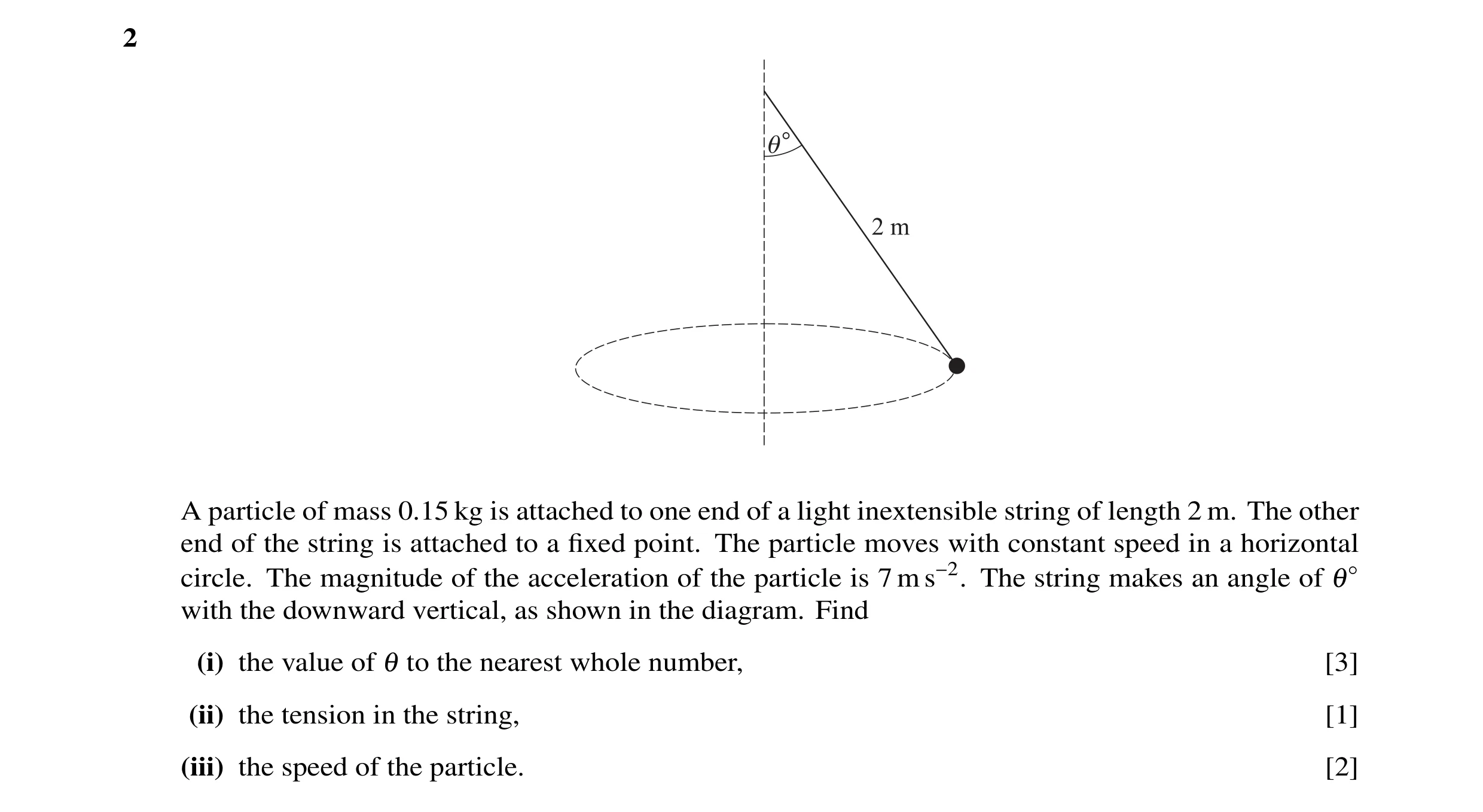
 1 / 126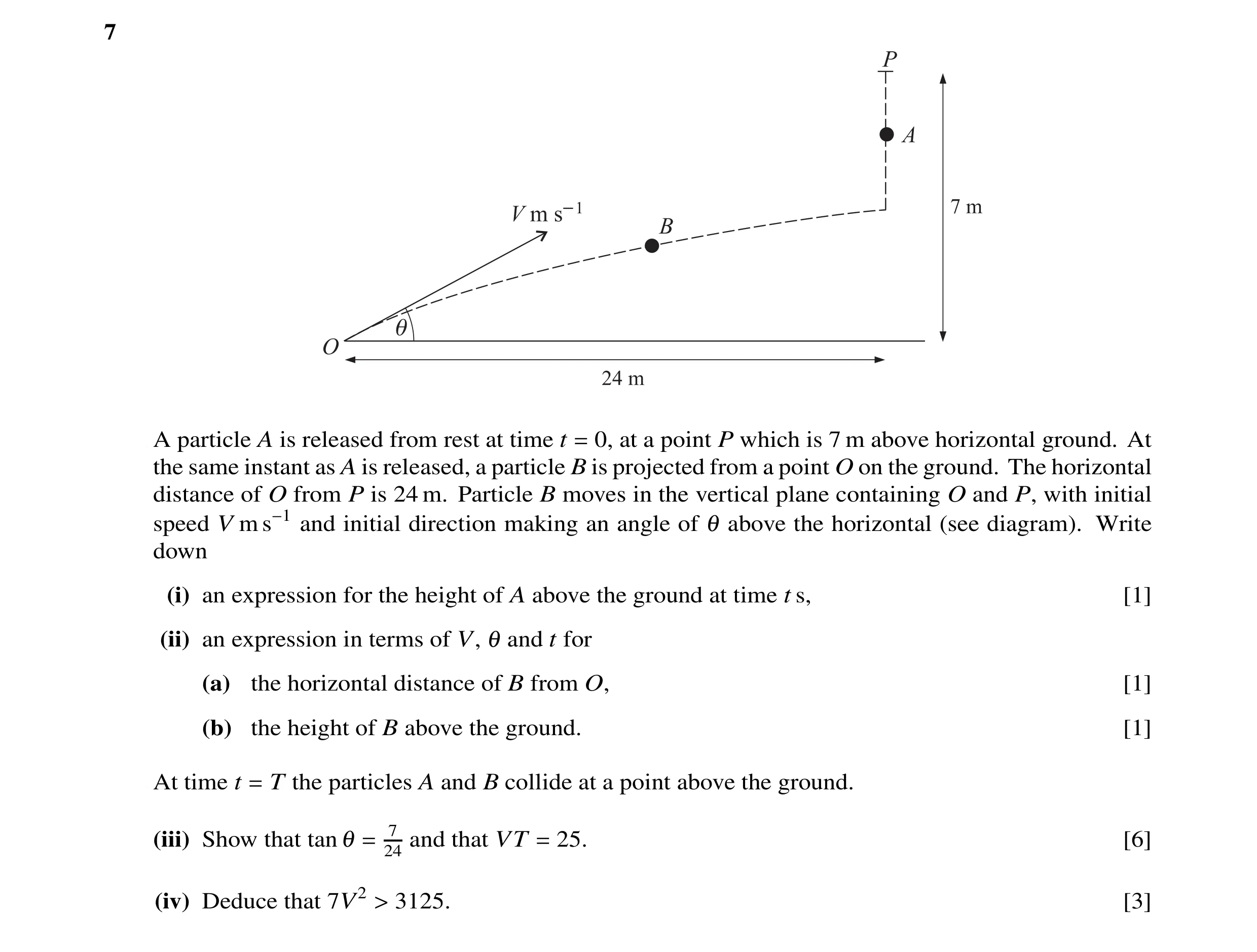
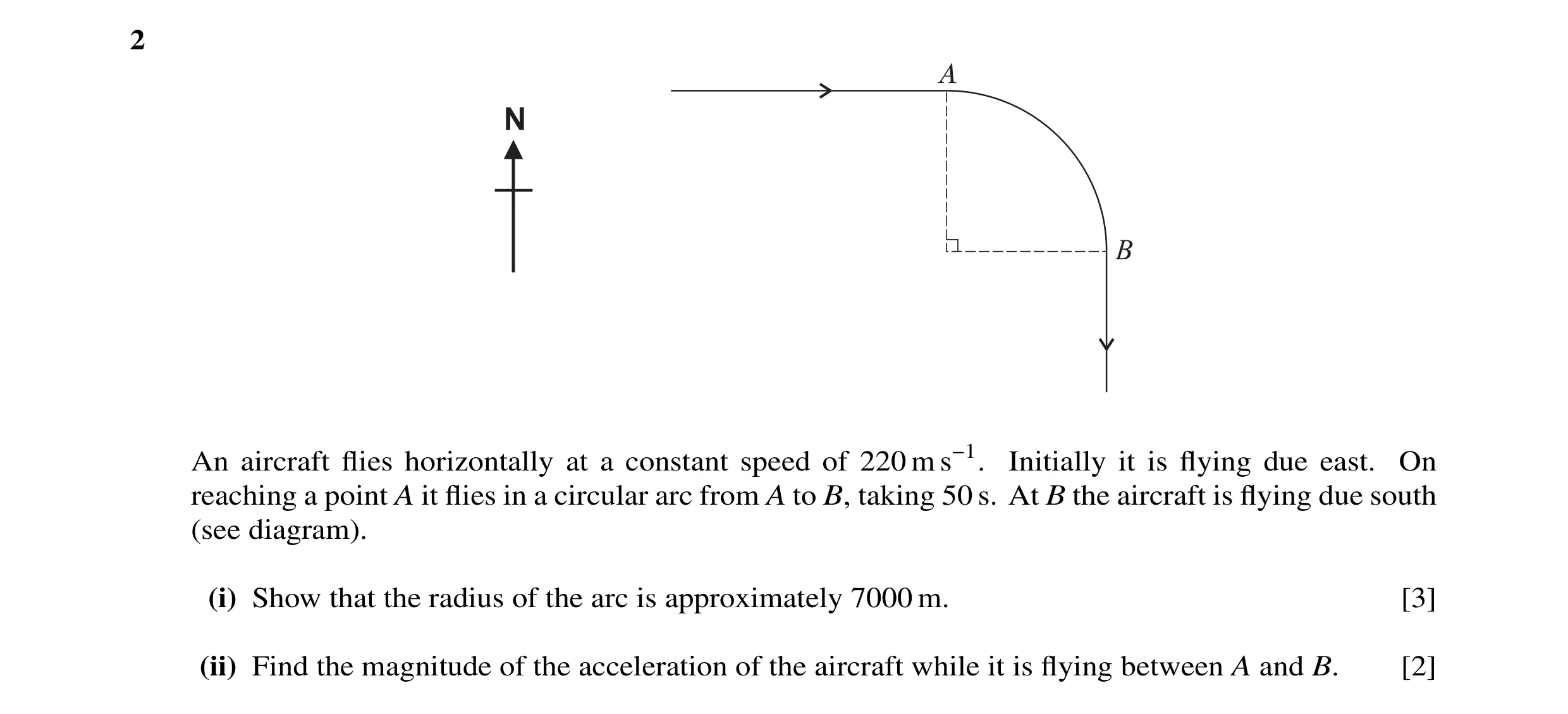 2 / 126
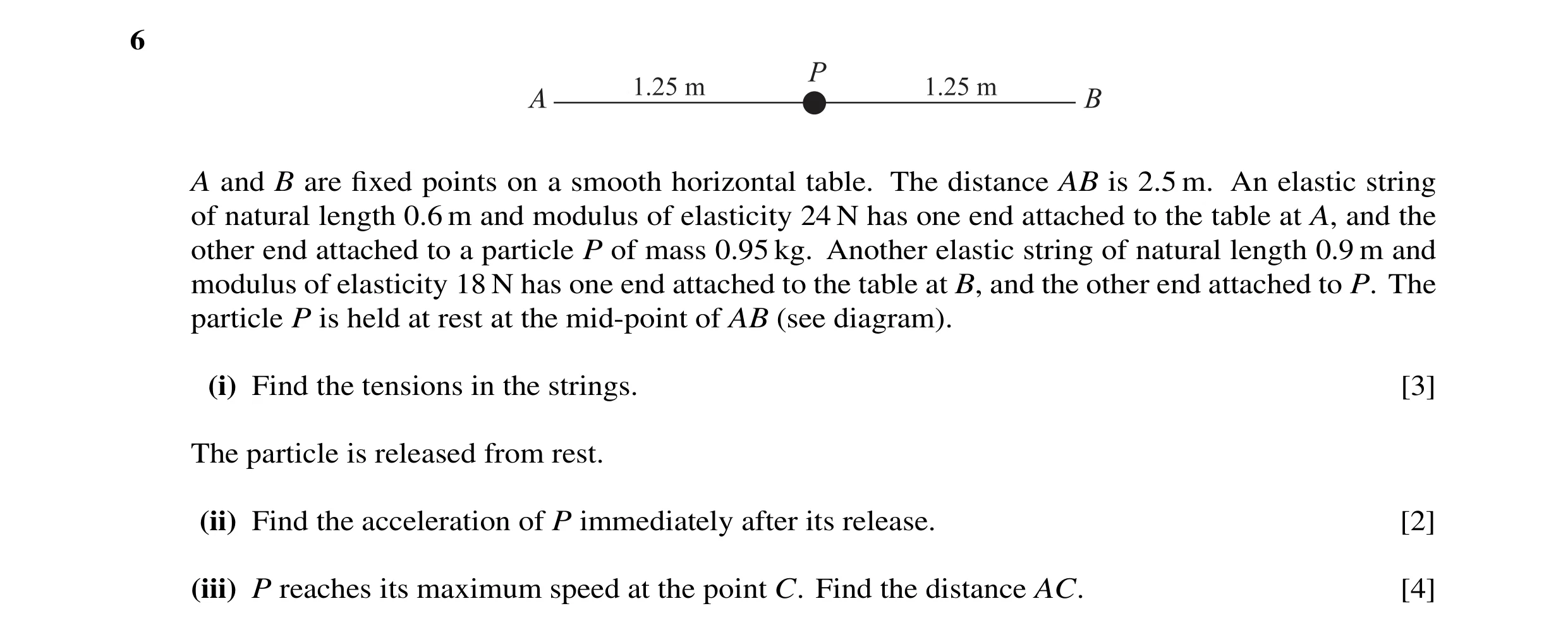 3 / 126
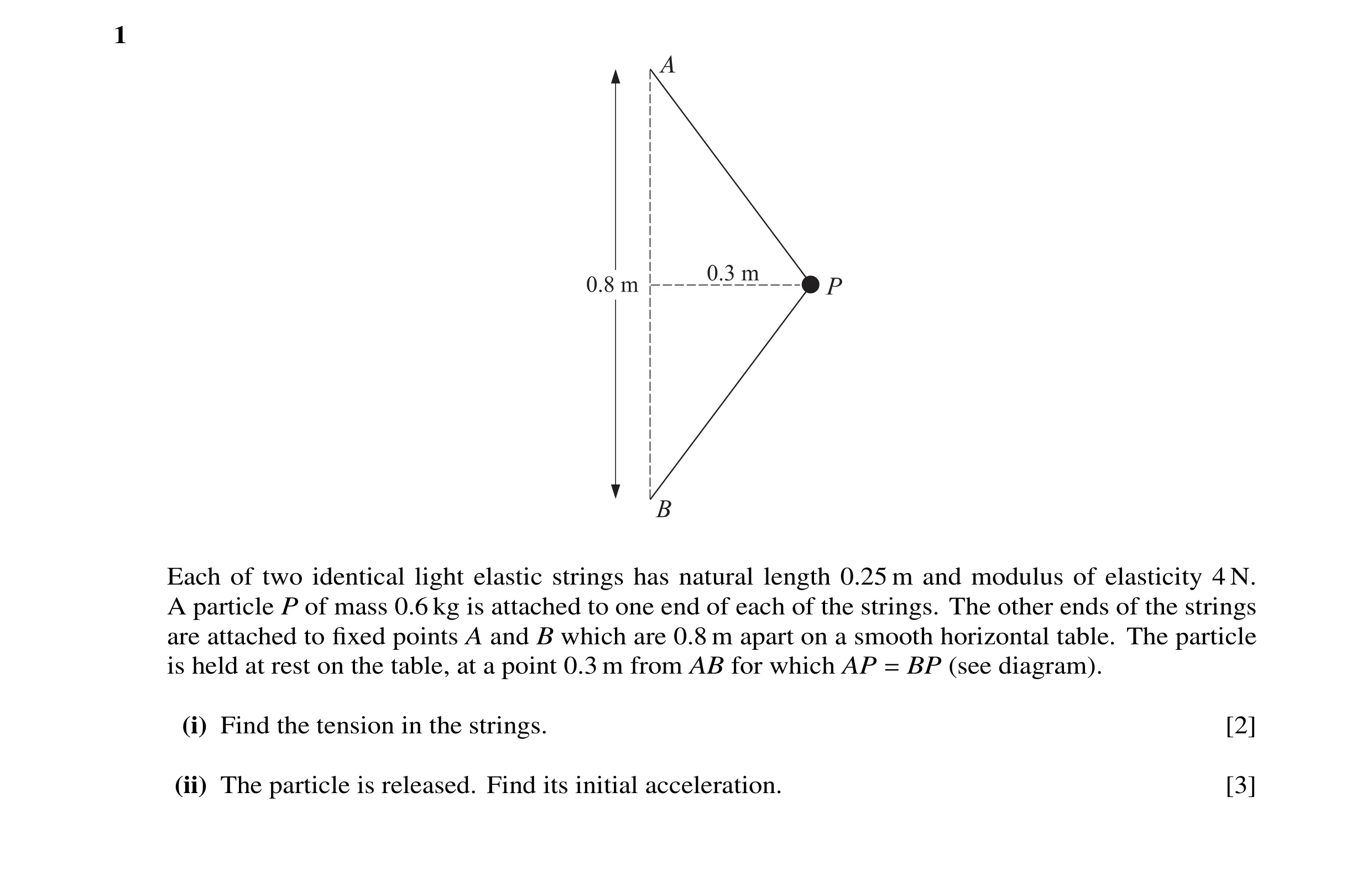

 4 / 126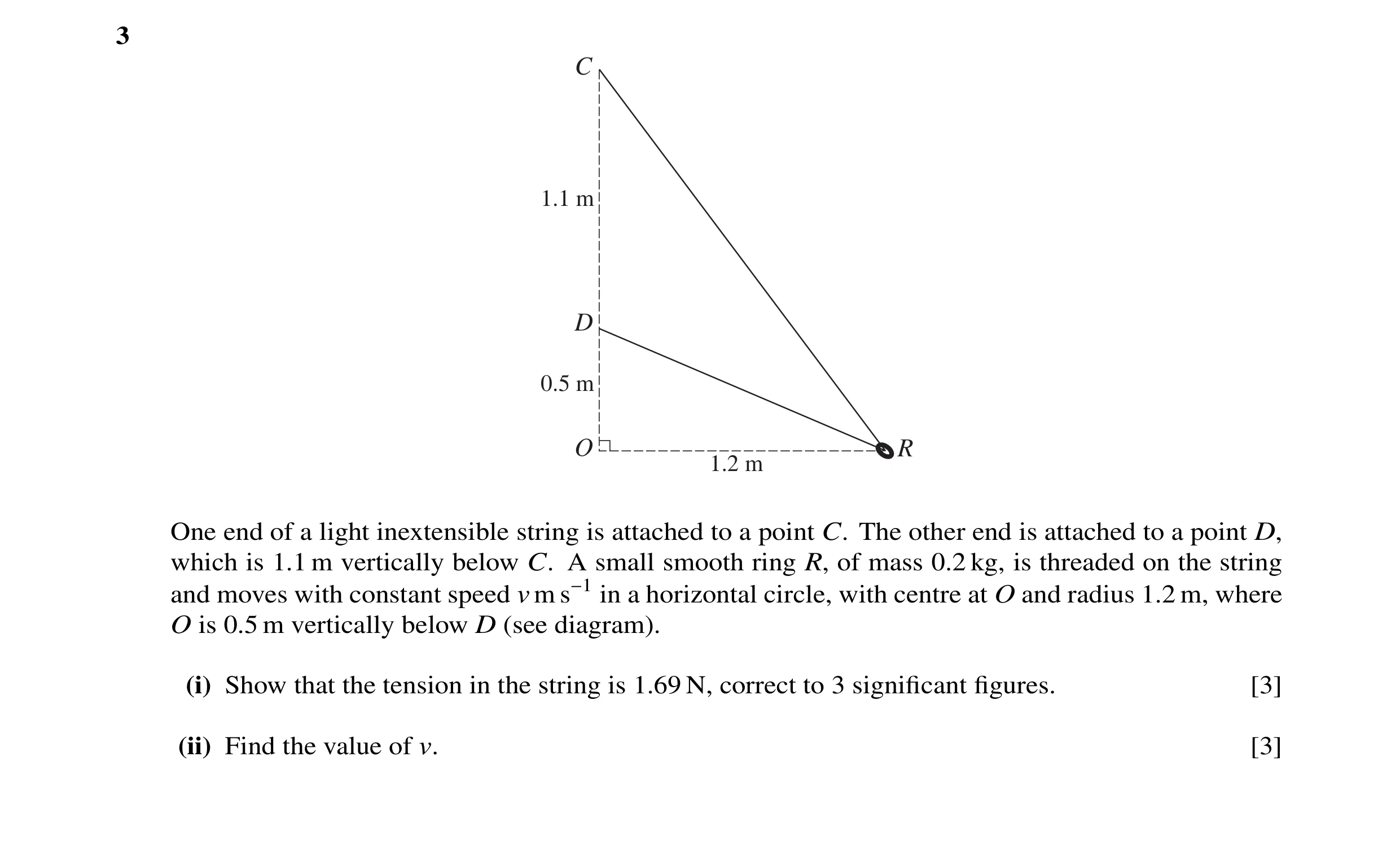
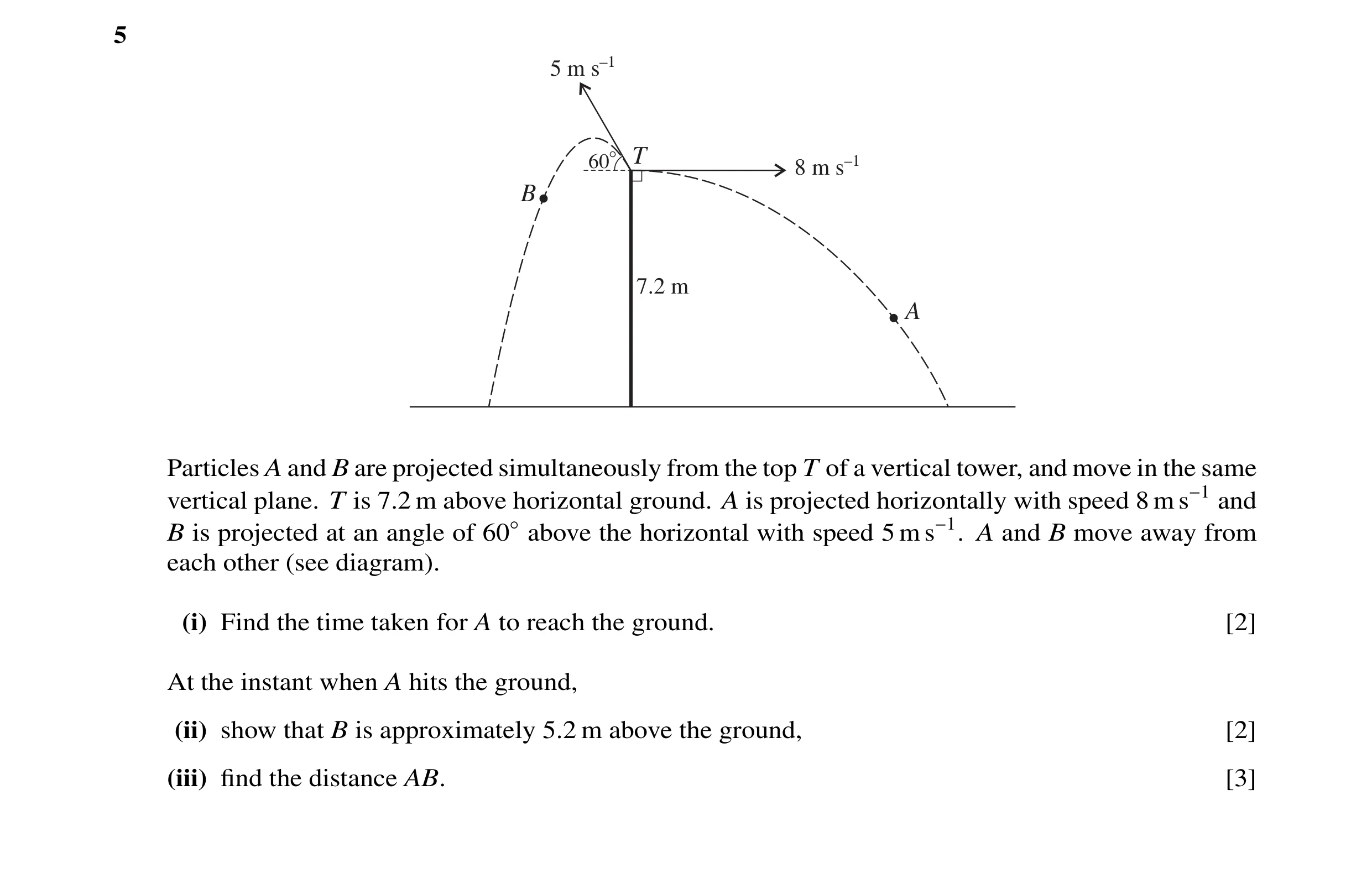 5 / 126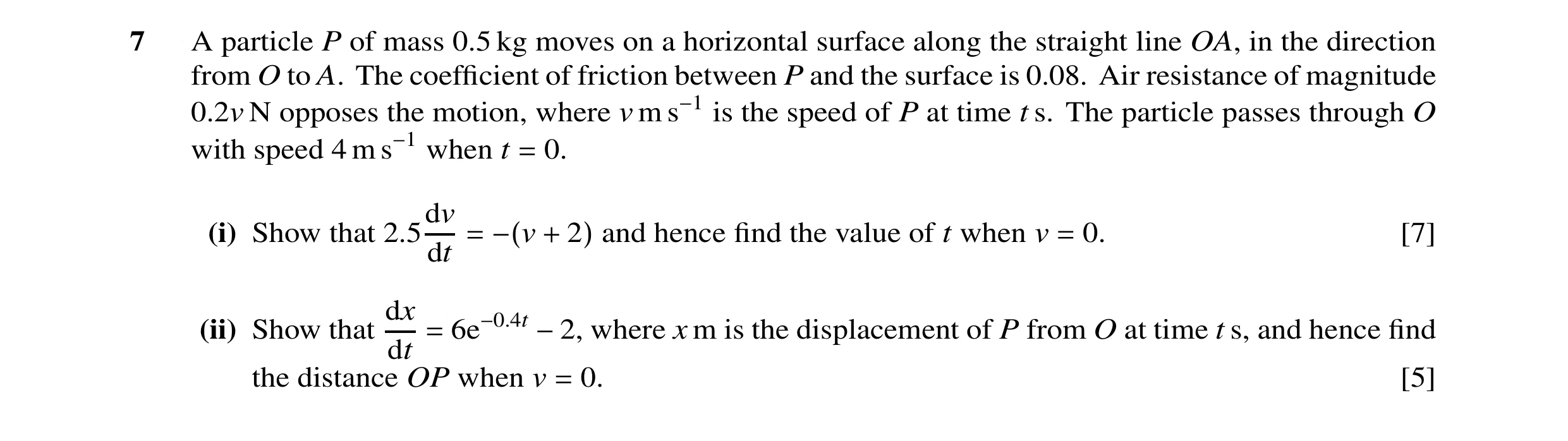
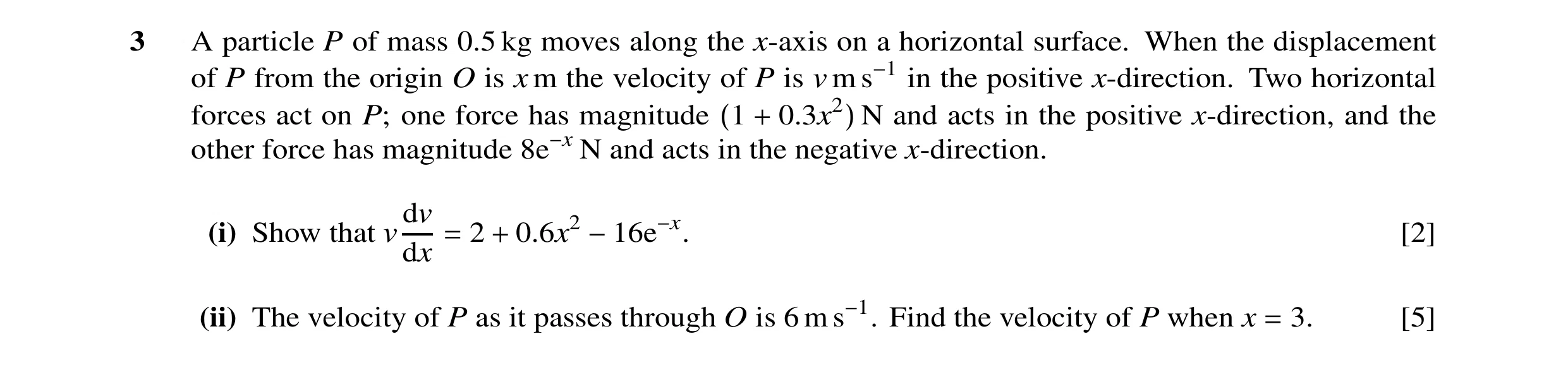 6 / 126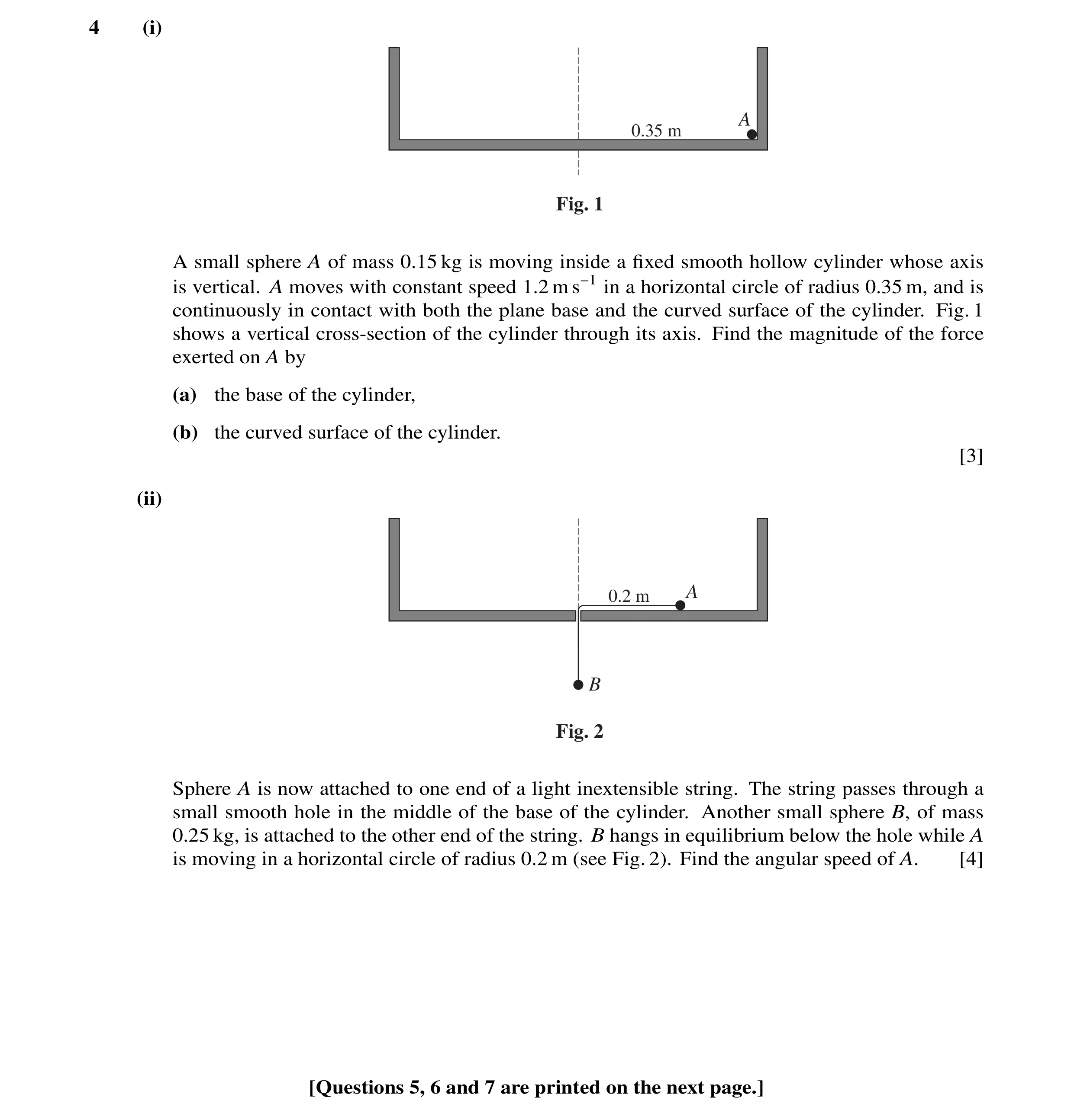
 7 / 126
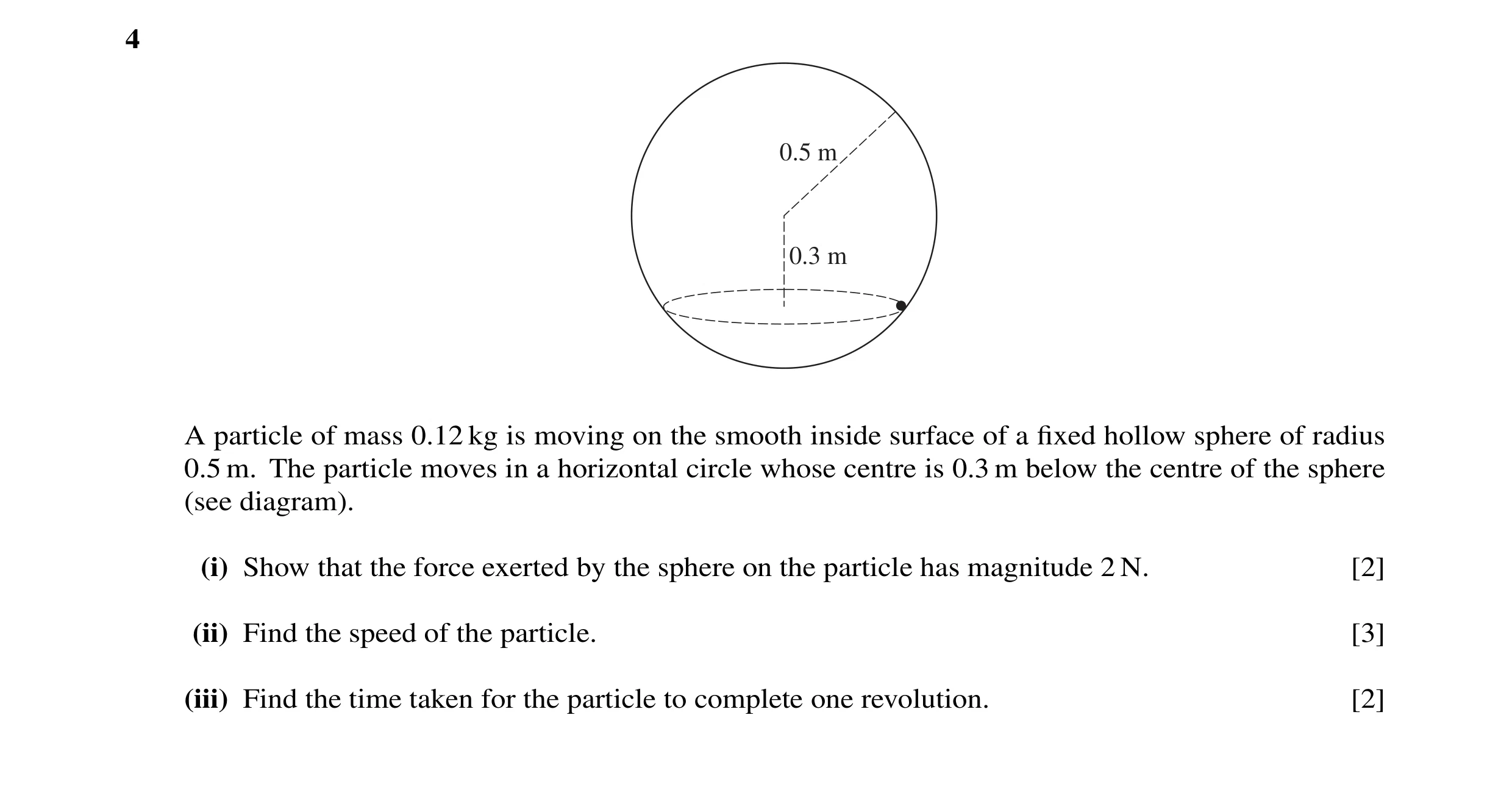
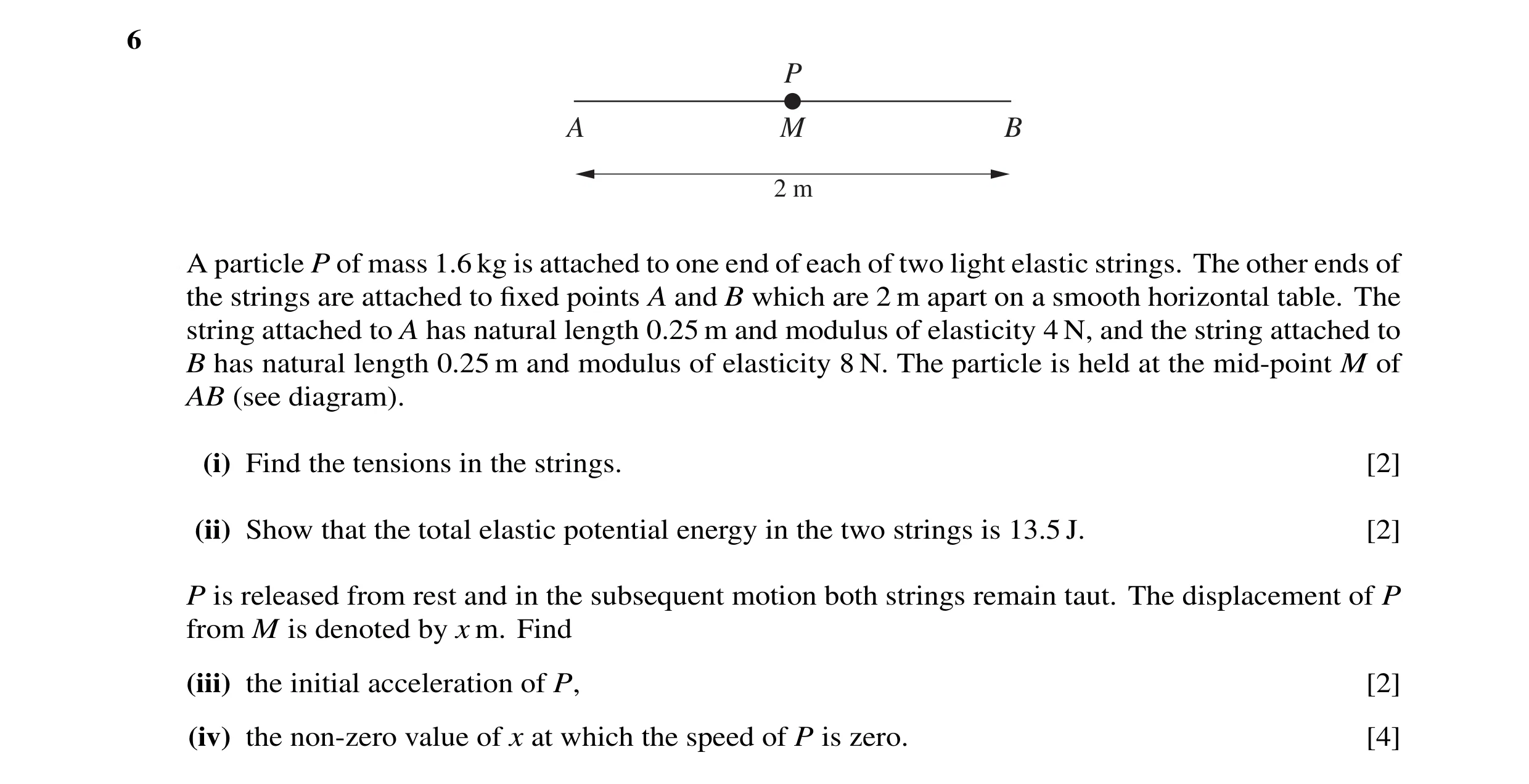 8 / 126
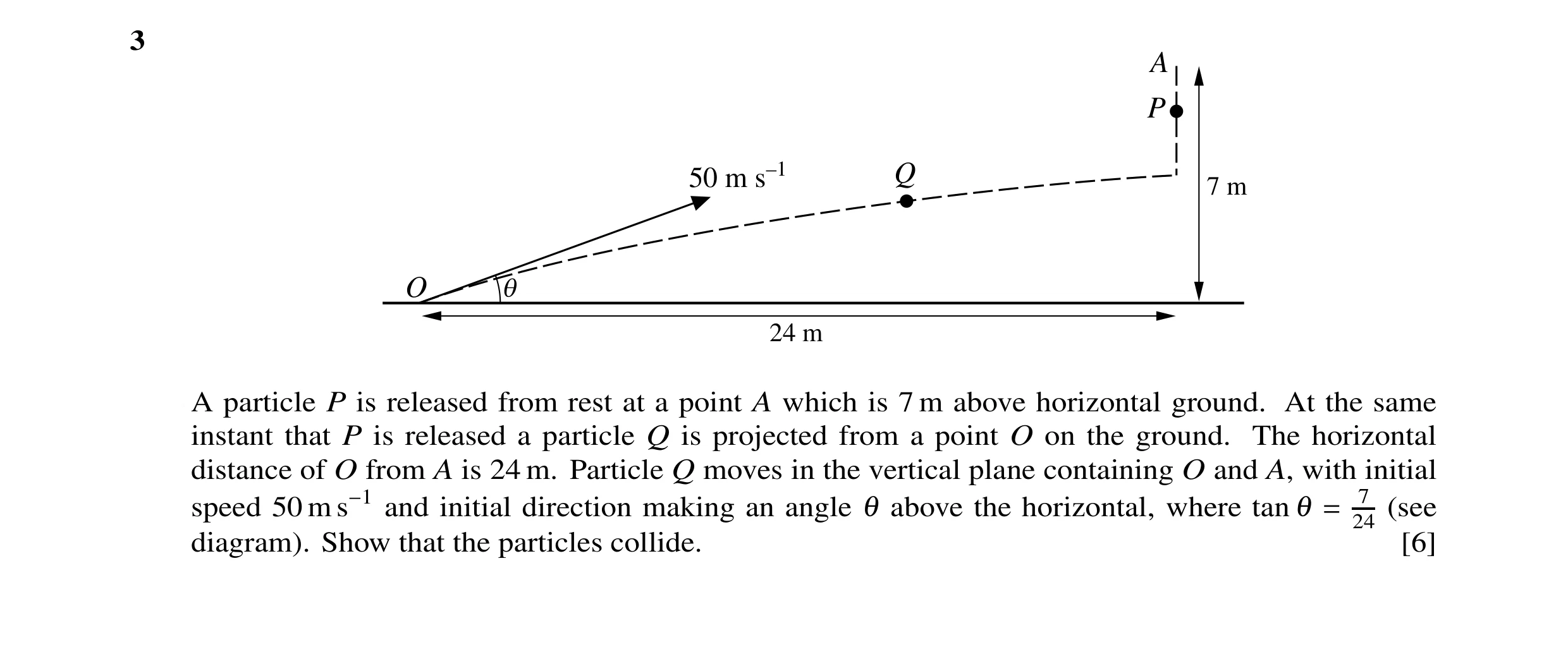
 9 / 126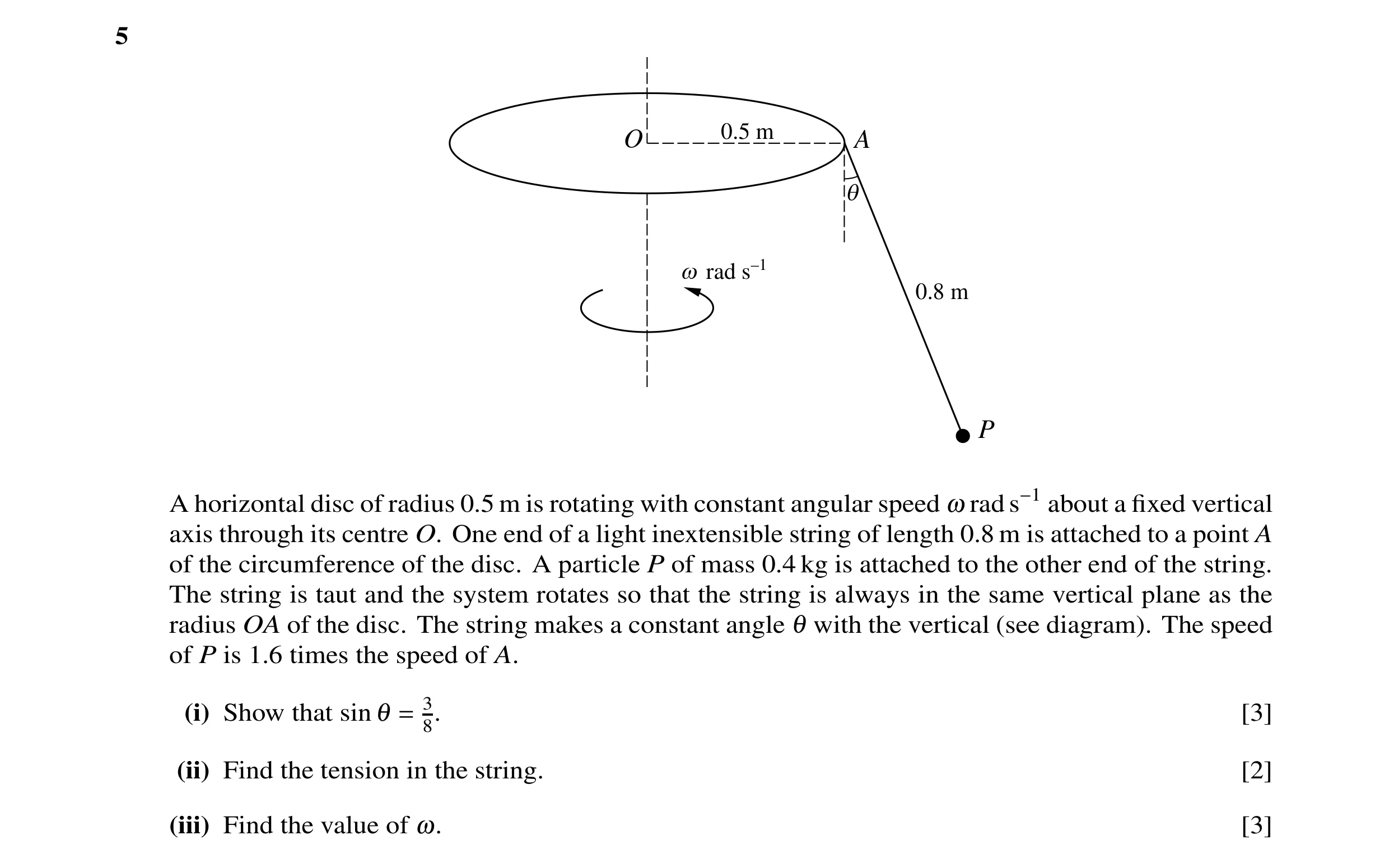
 10 / 126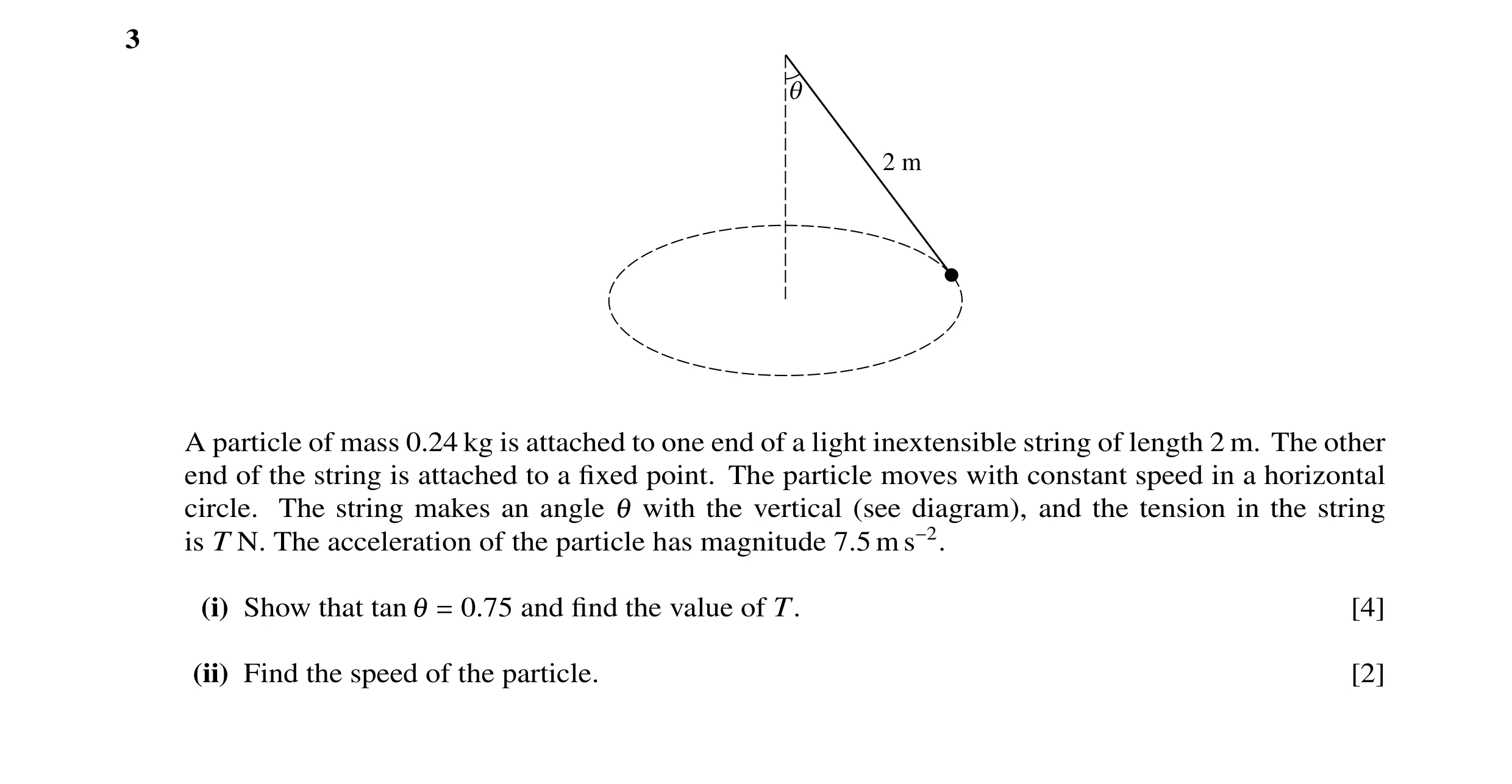
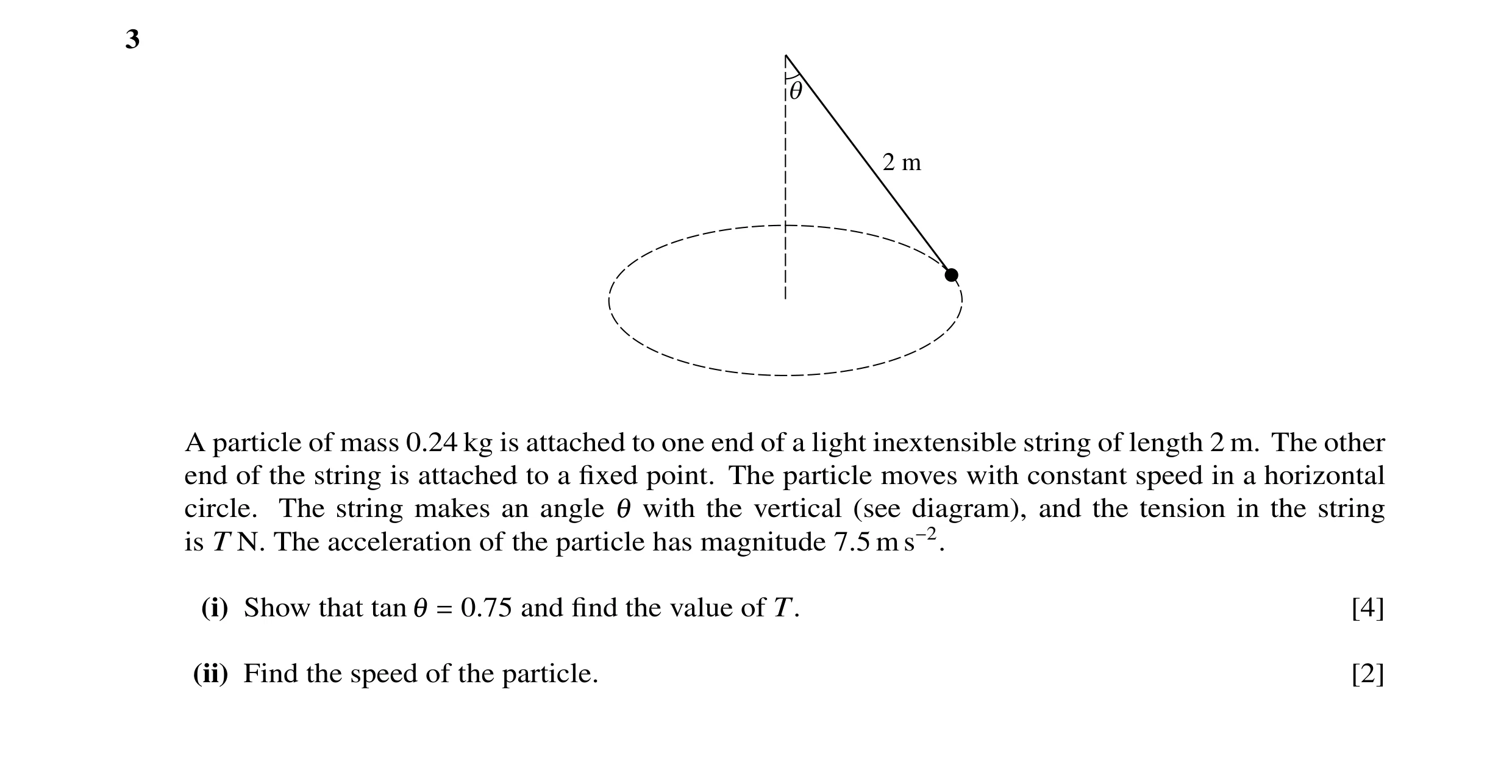 11 / 126
 12 / 126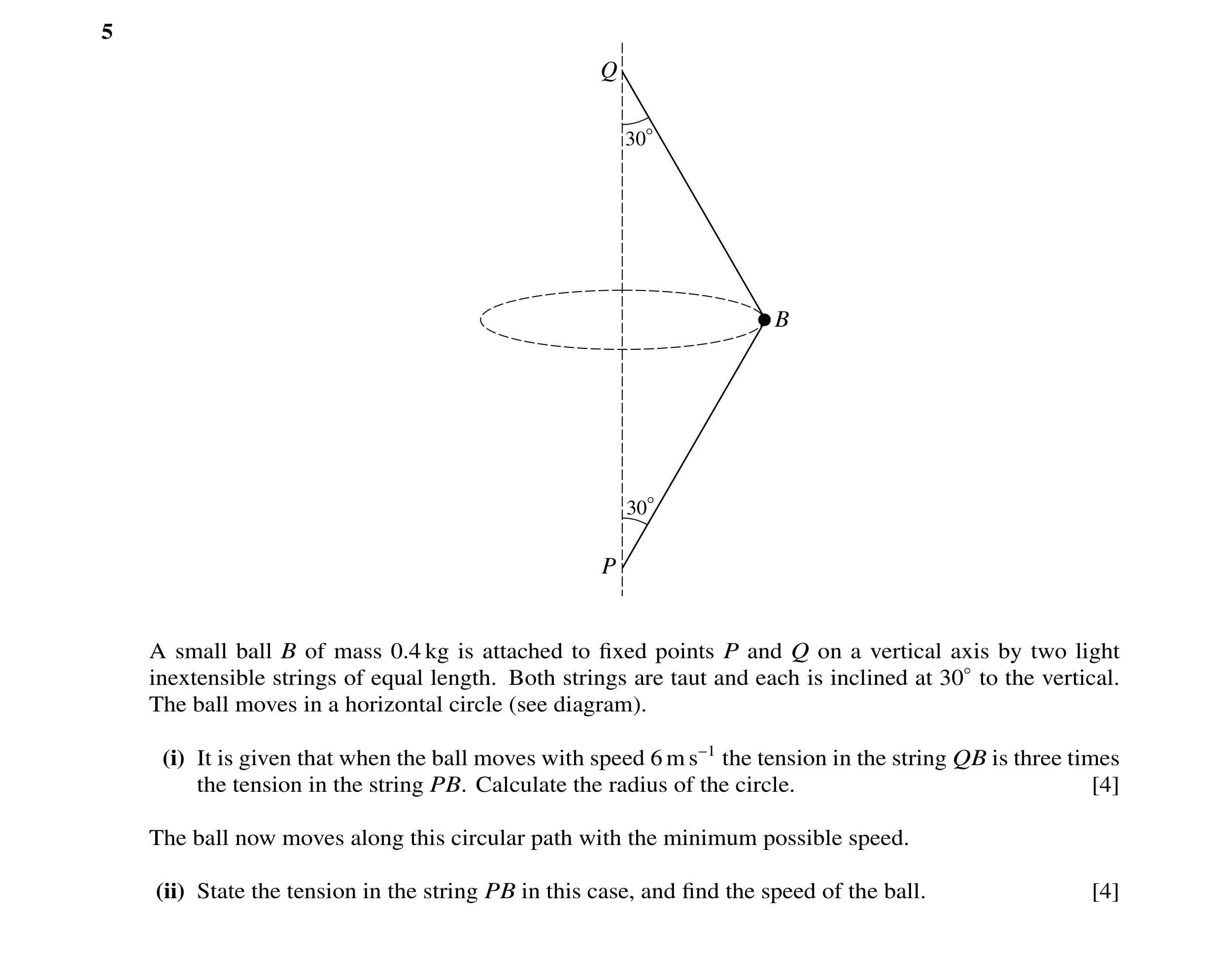
 13 / 126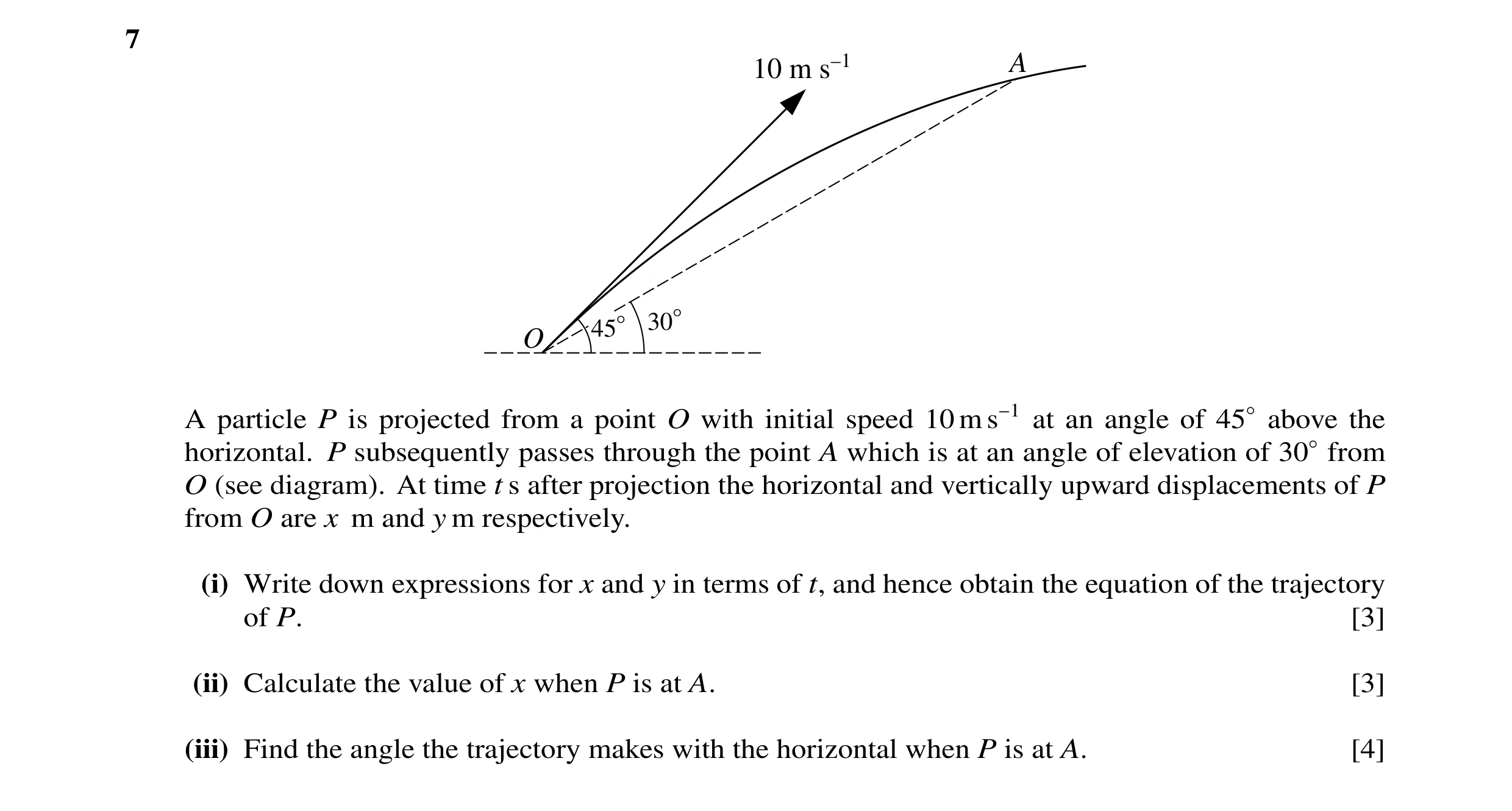

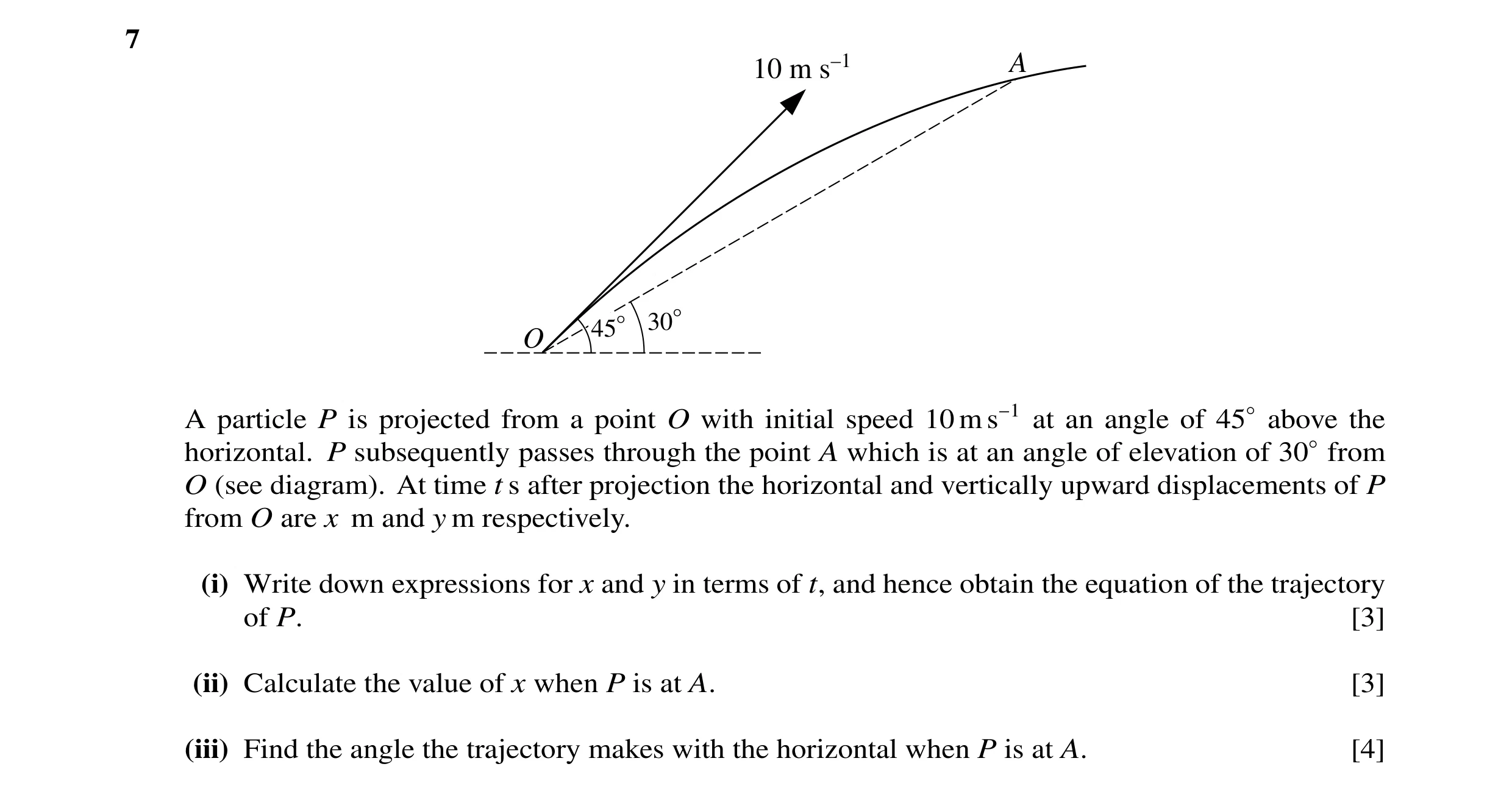 14 / 126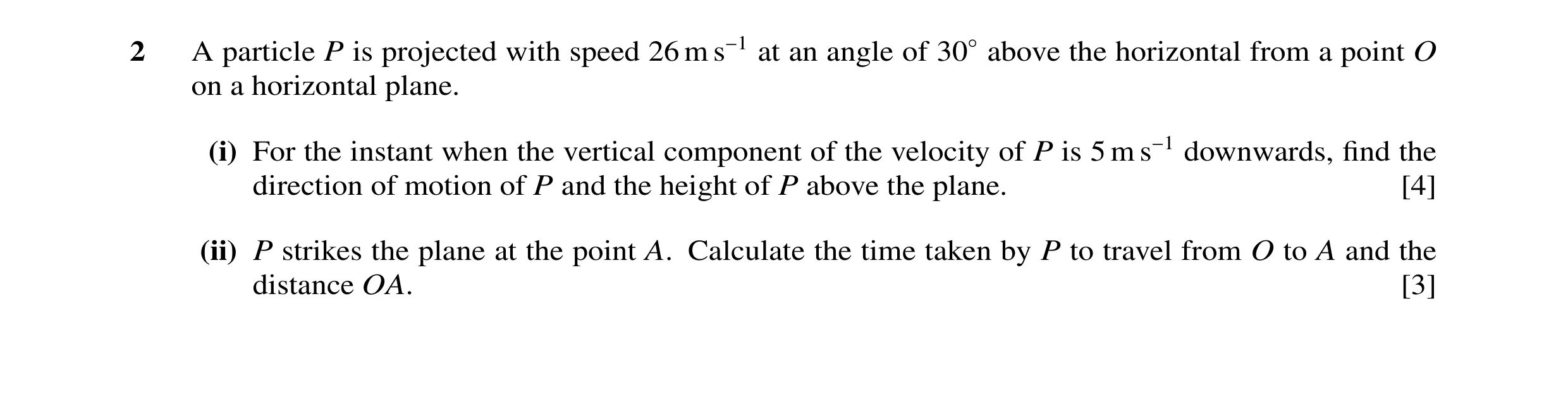
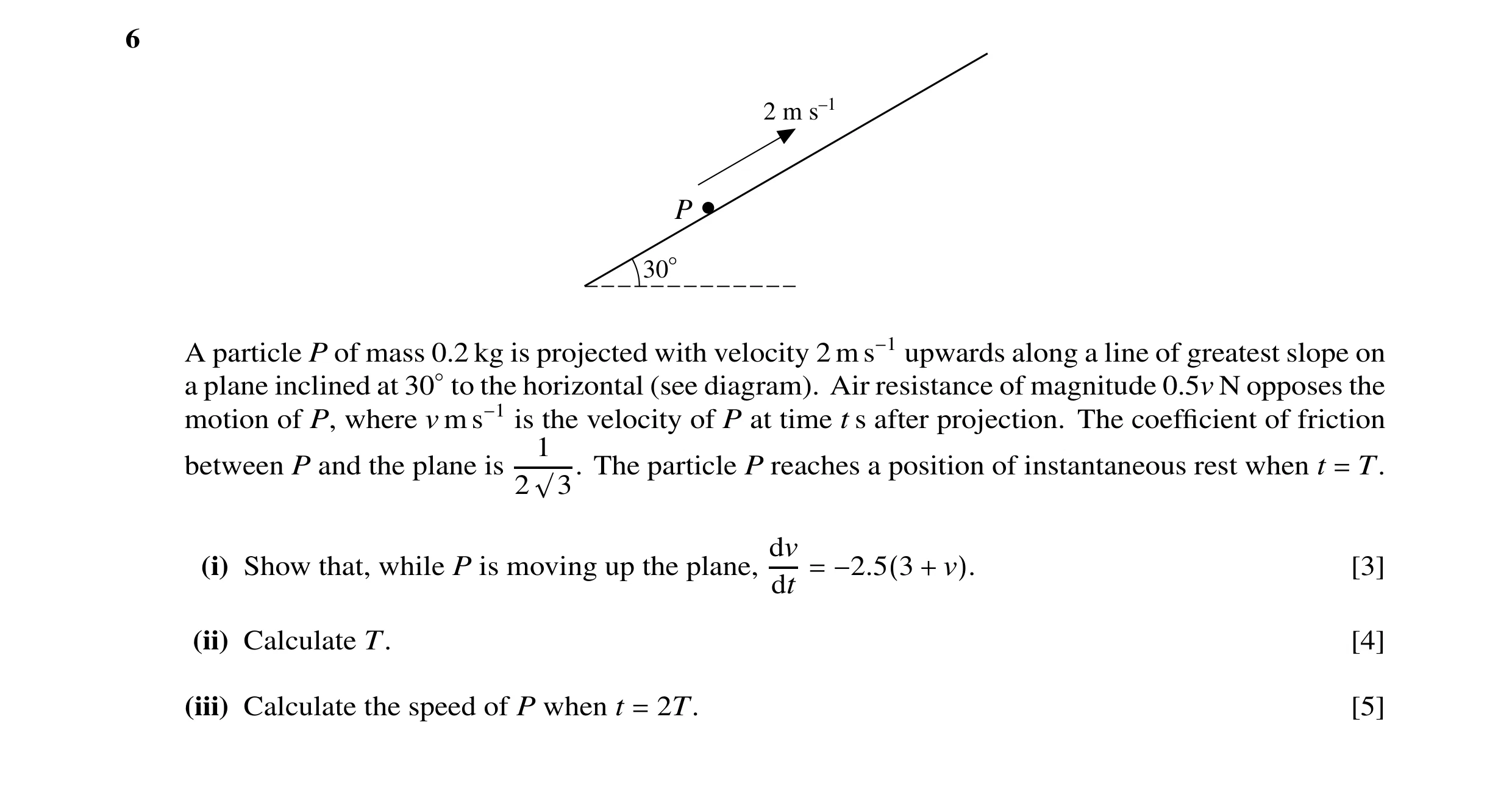
 15 / 126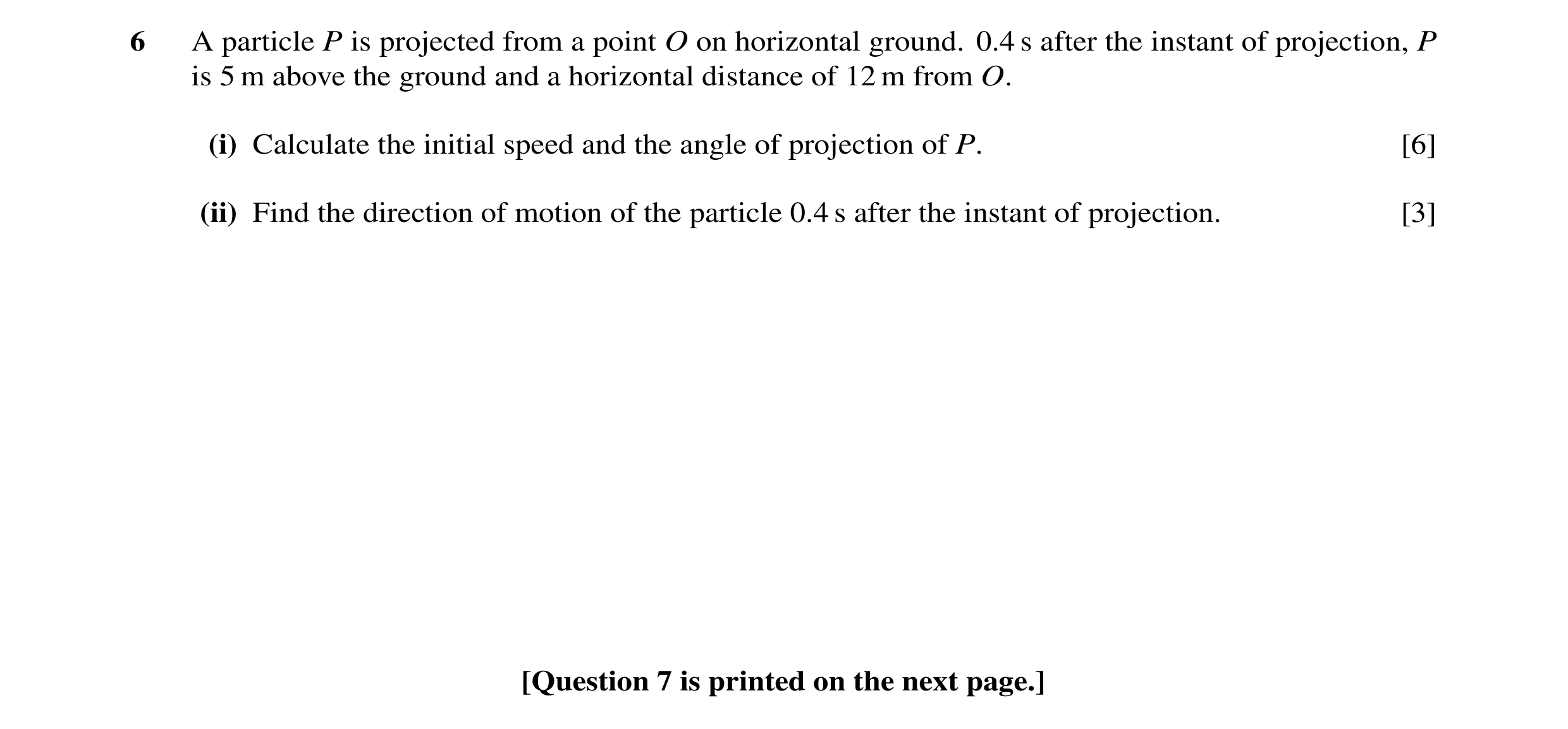
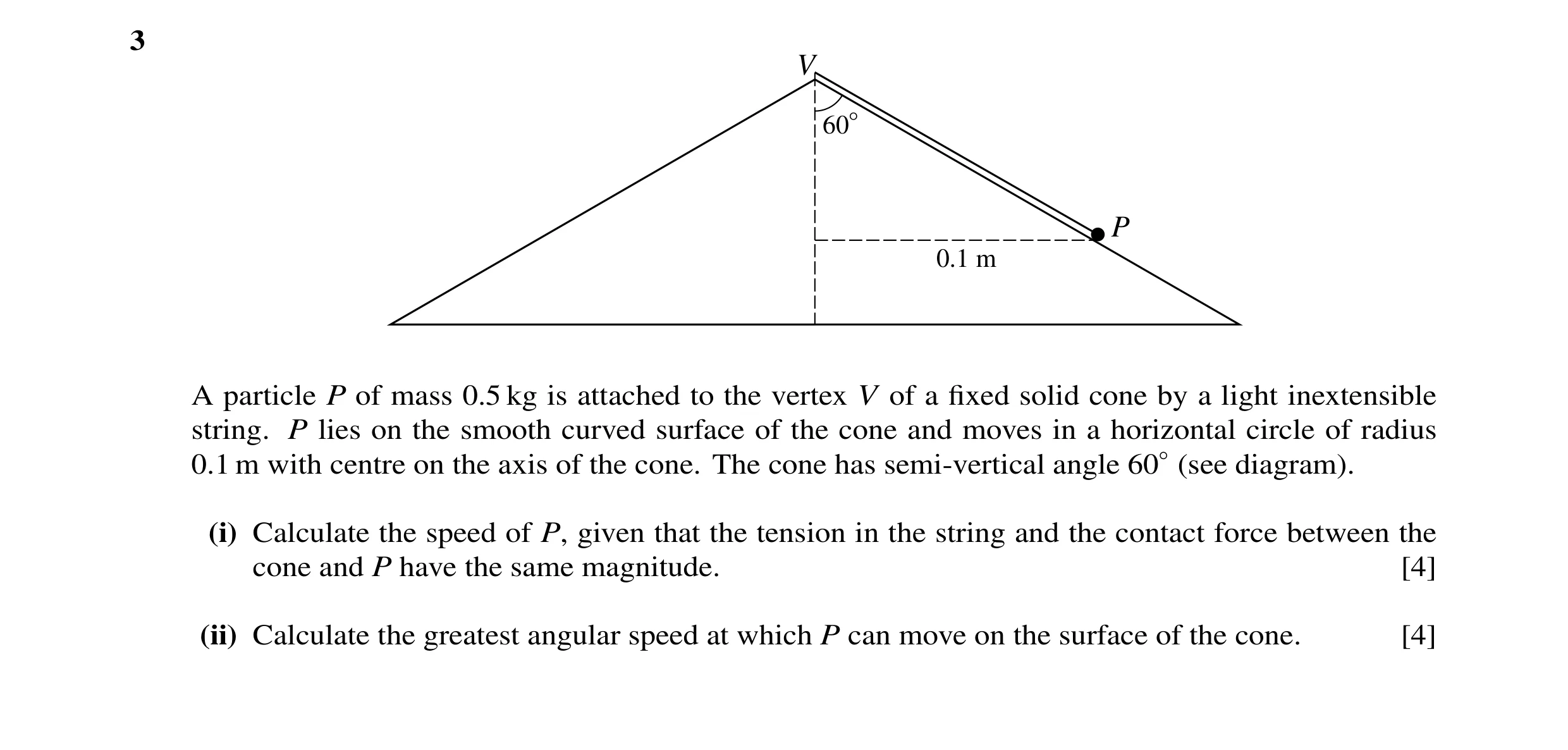
 16 / 126
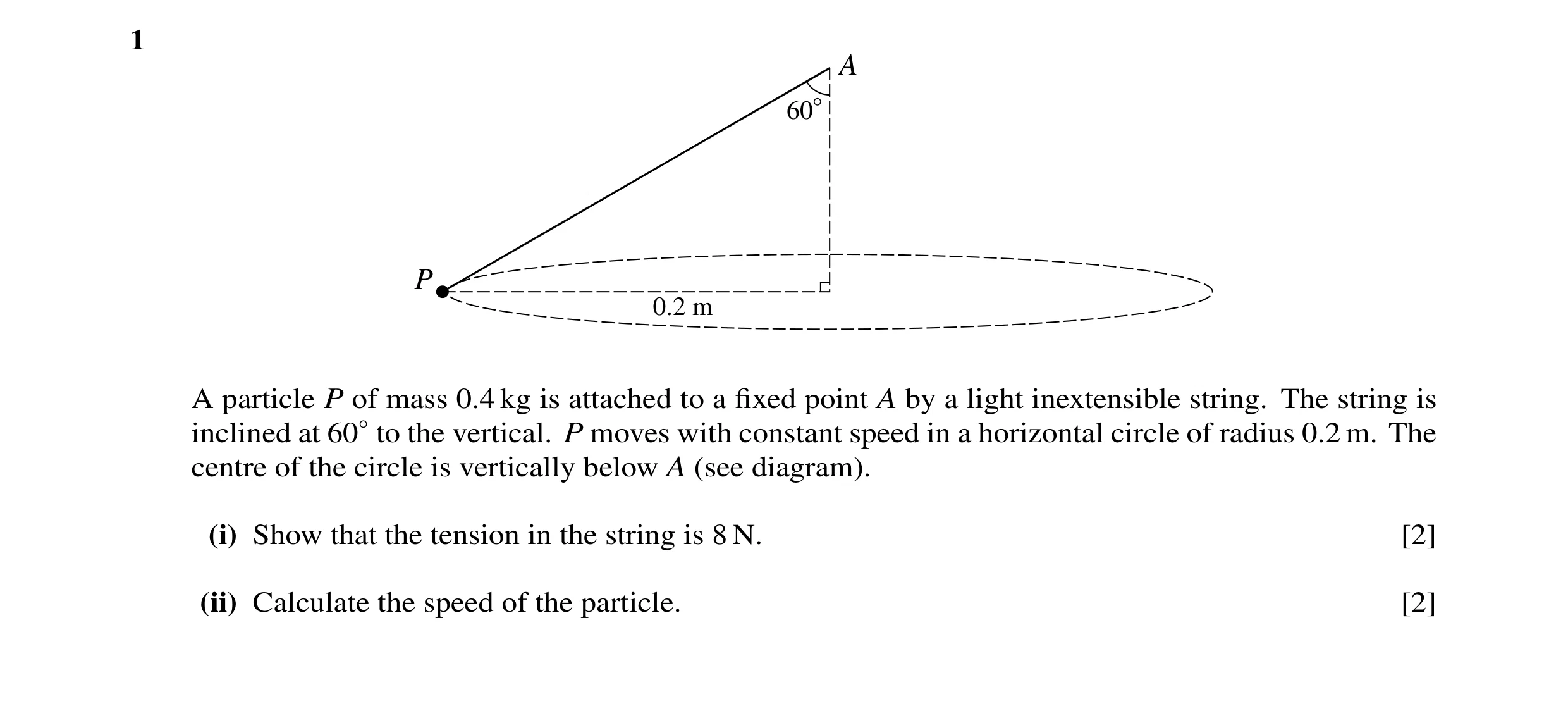
 17 / 126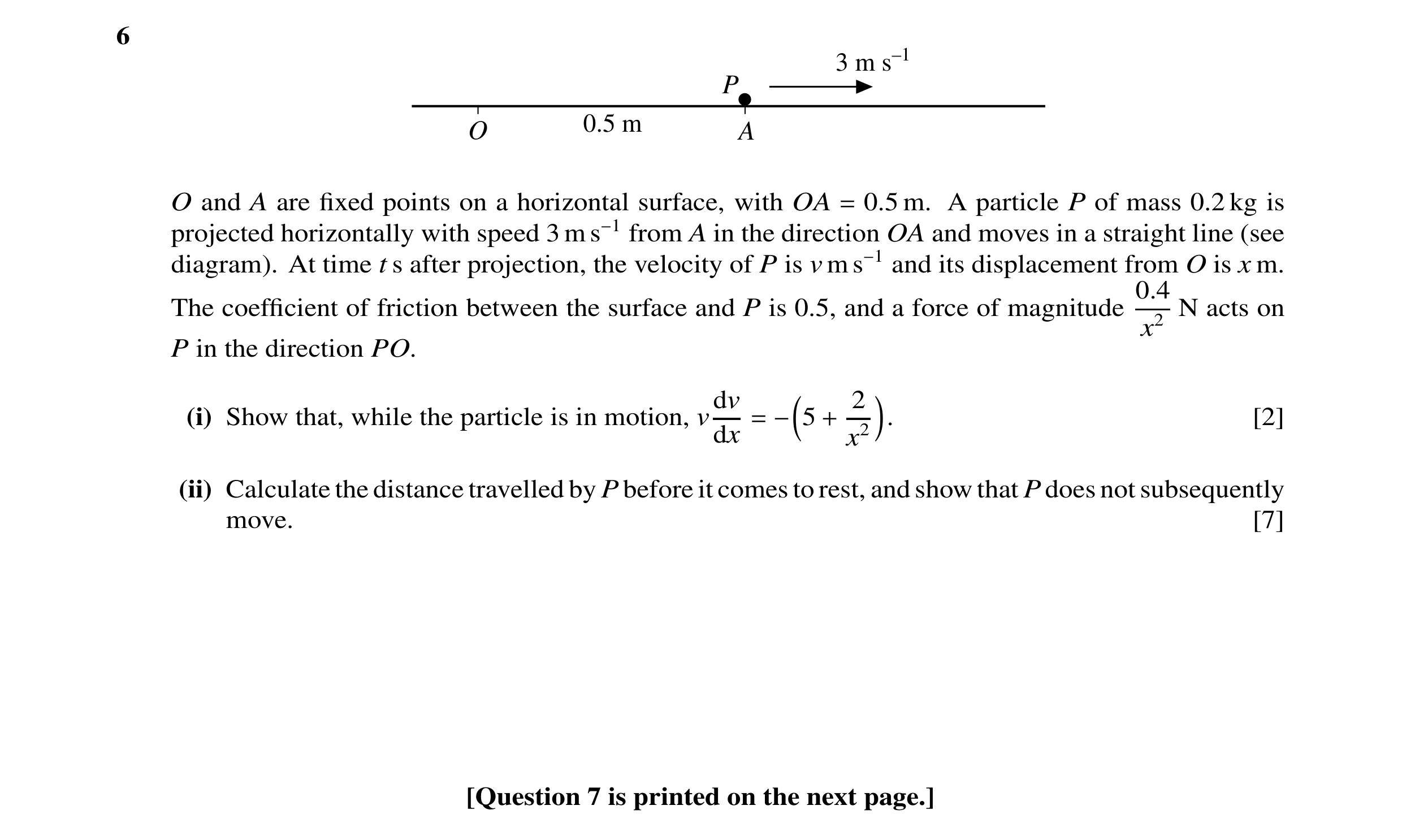
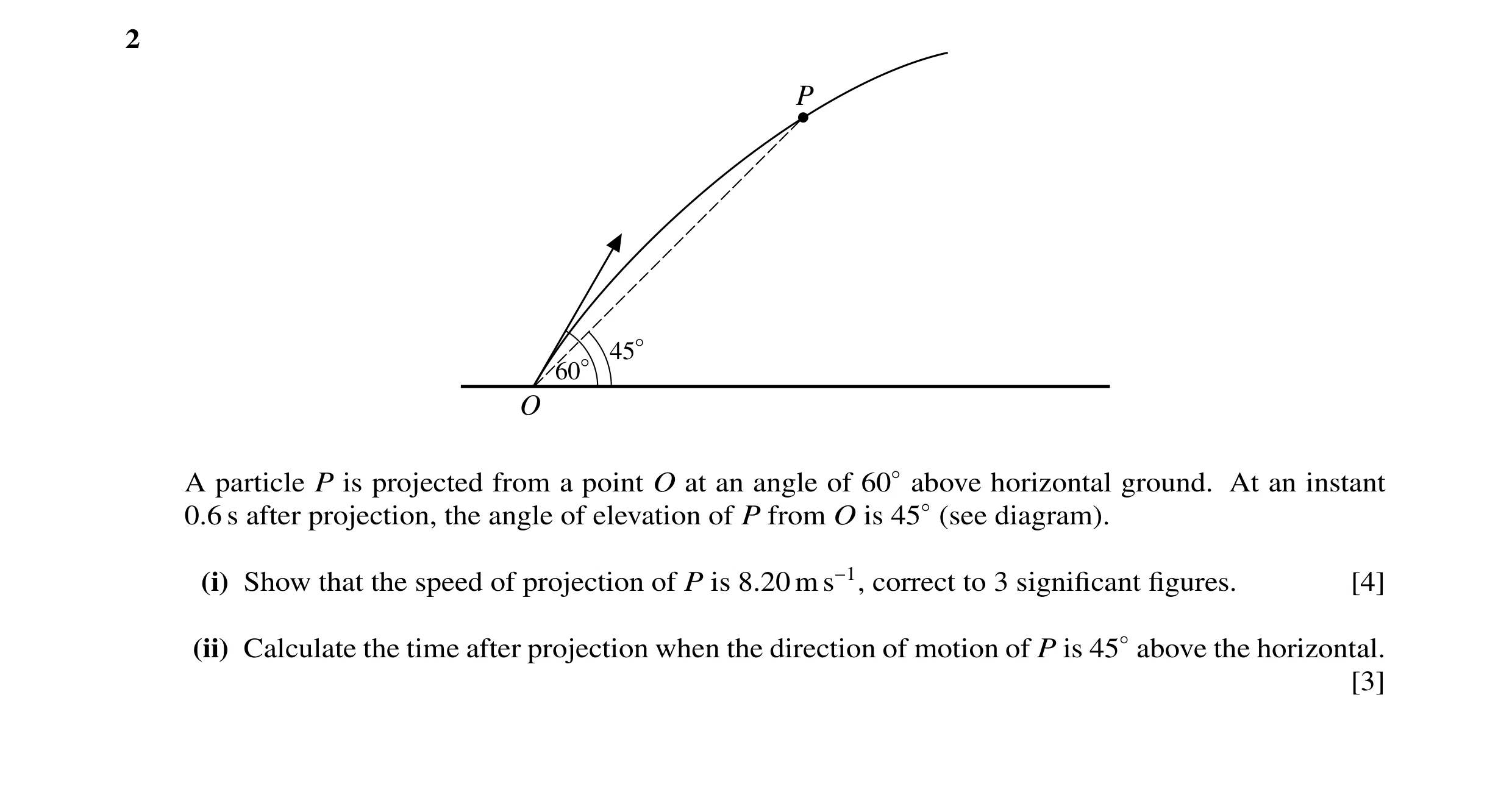 18 / 126
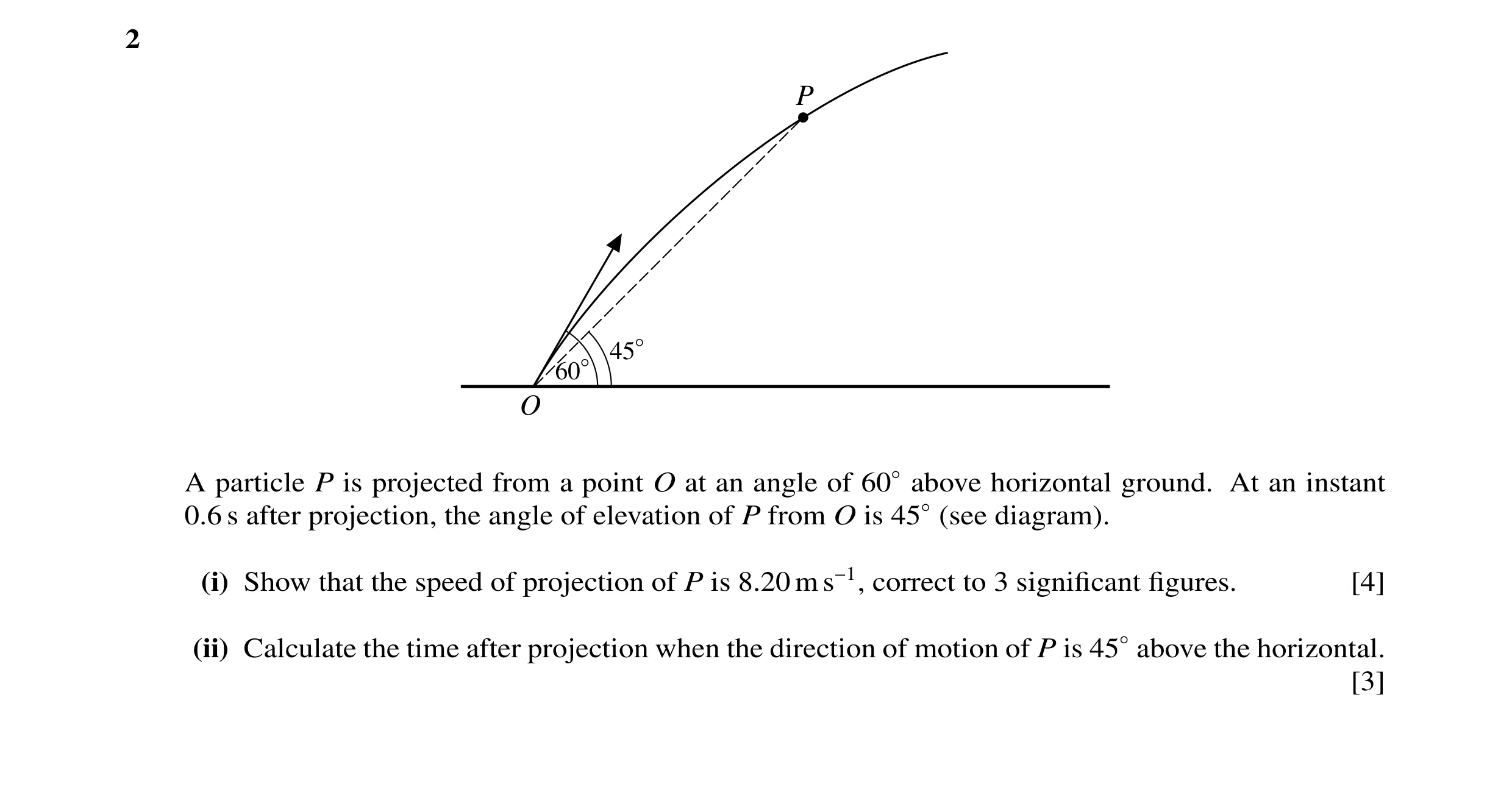
 19 / 126
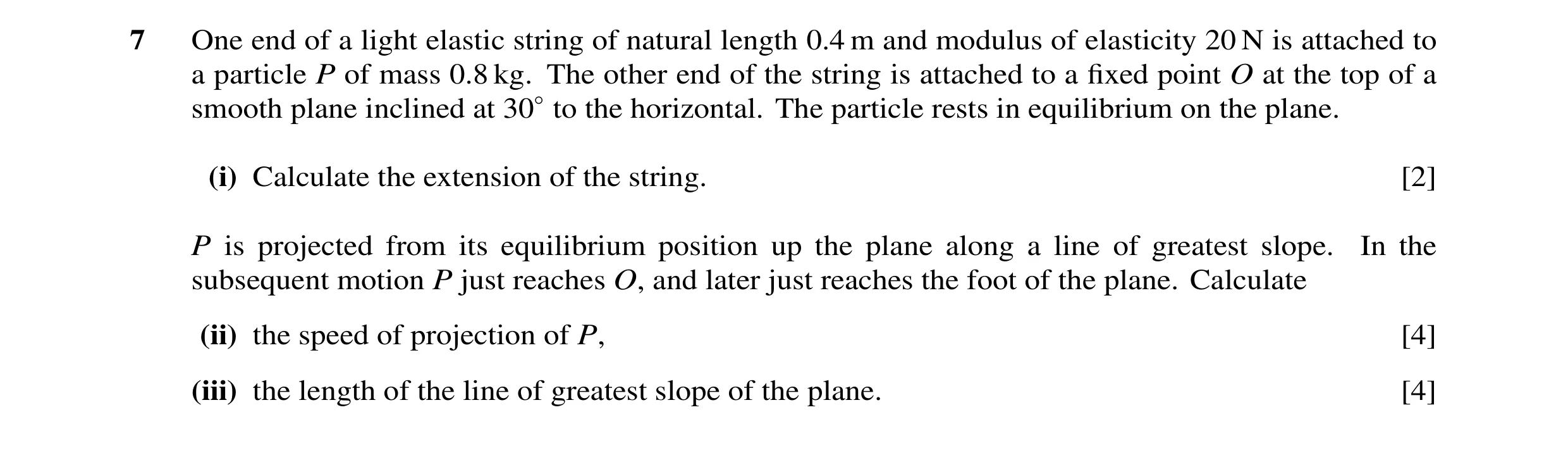
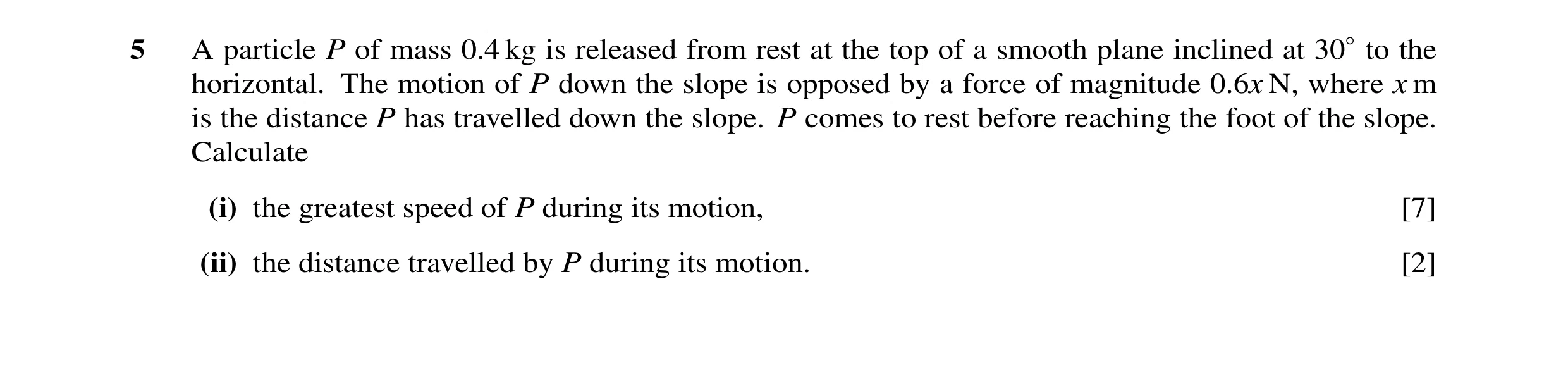 20 / 126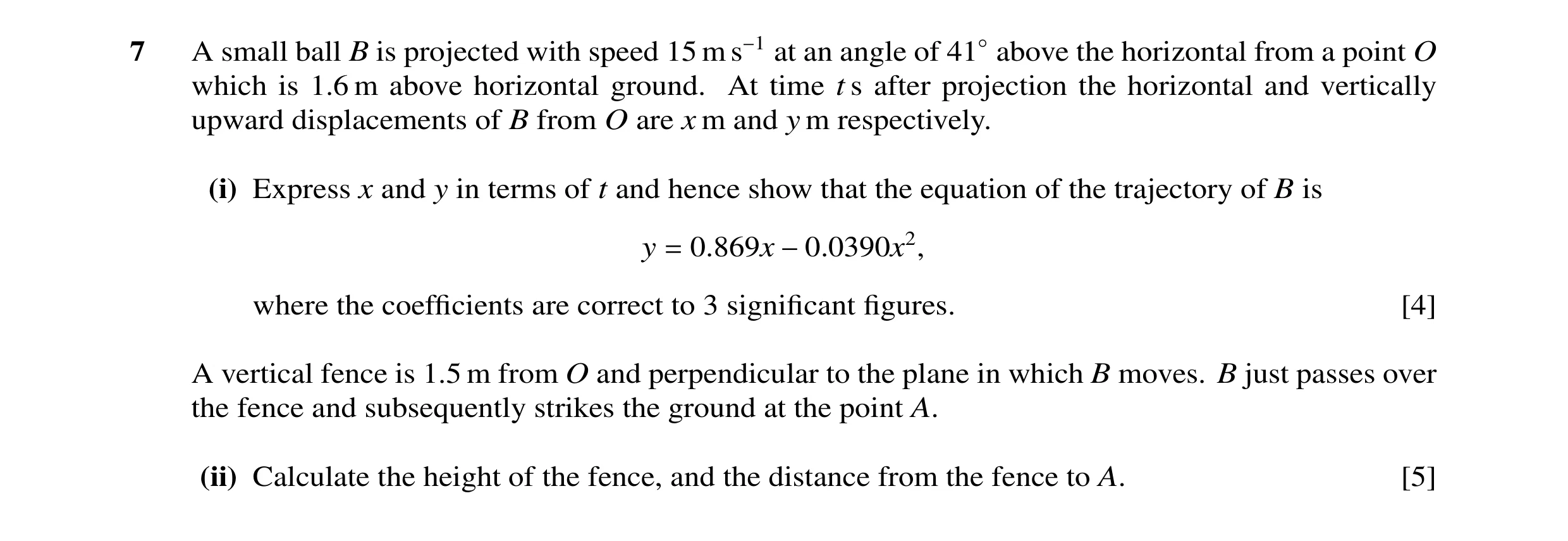

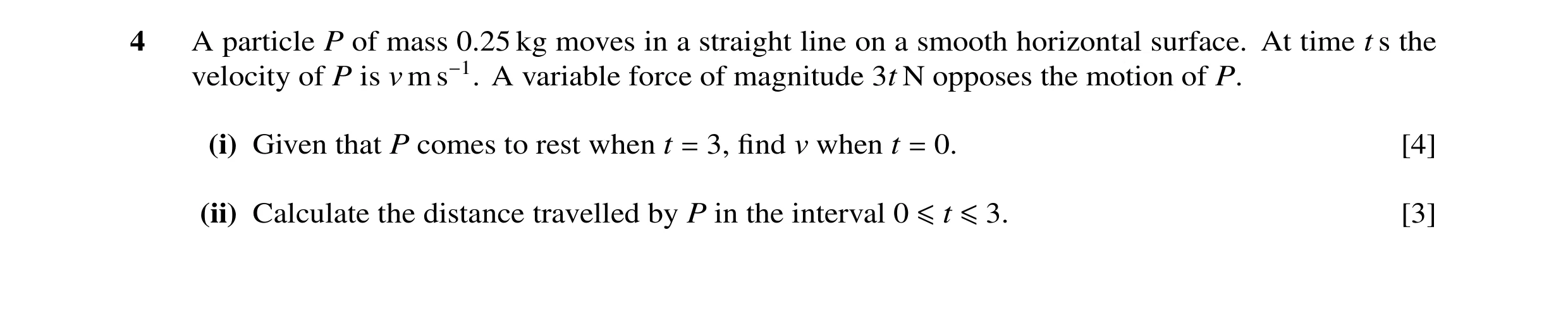
 21 / 126

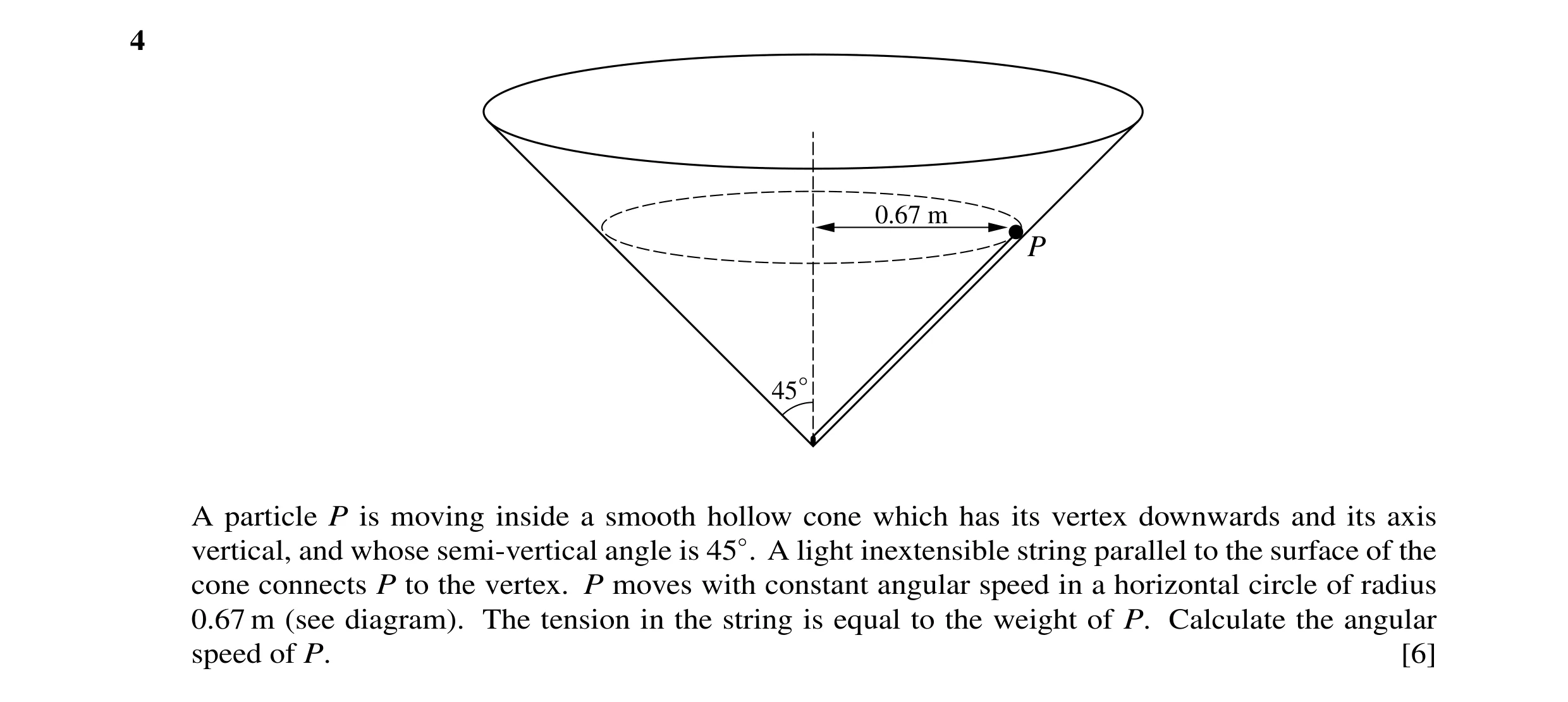 22 / 126
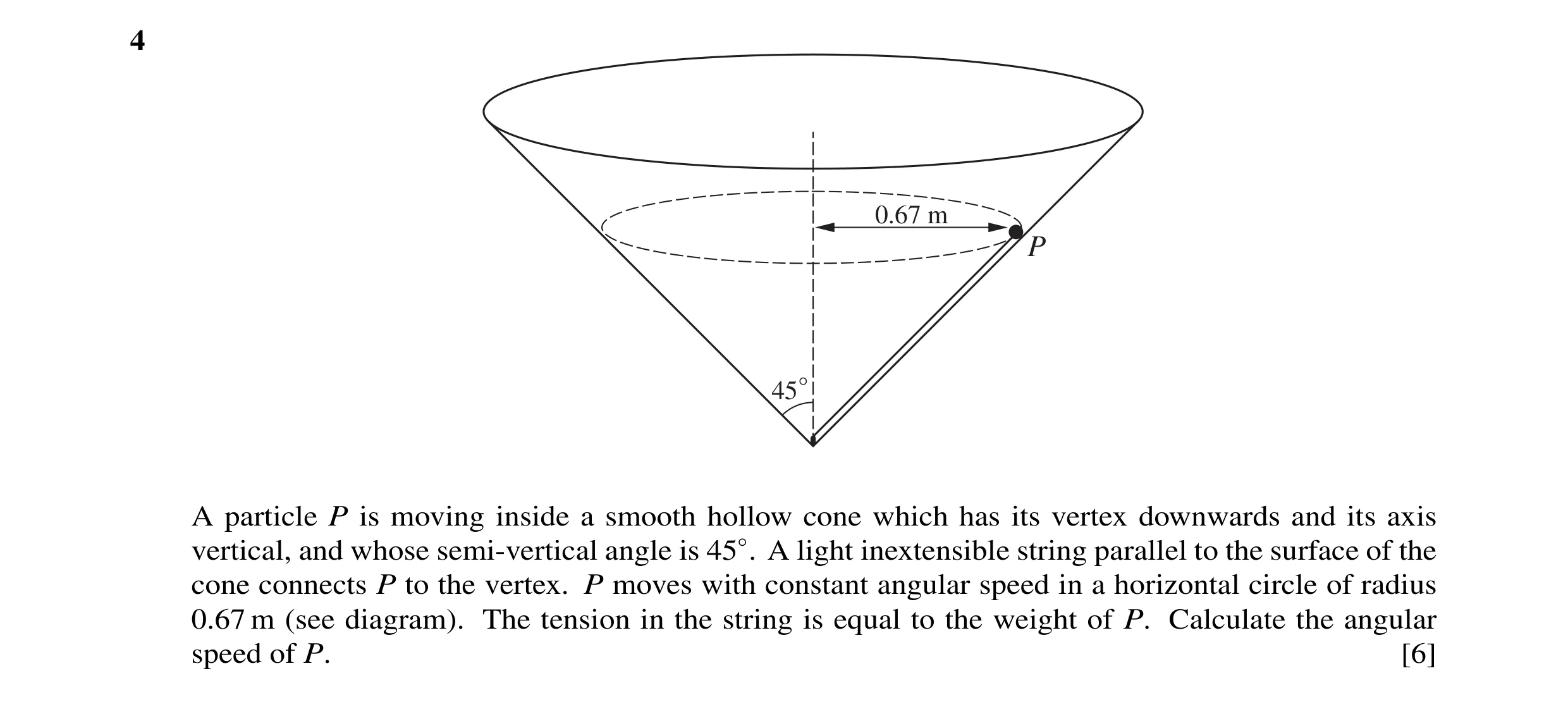 23 / 126

 24 / 126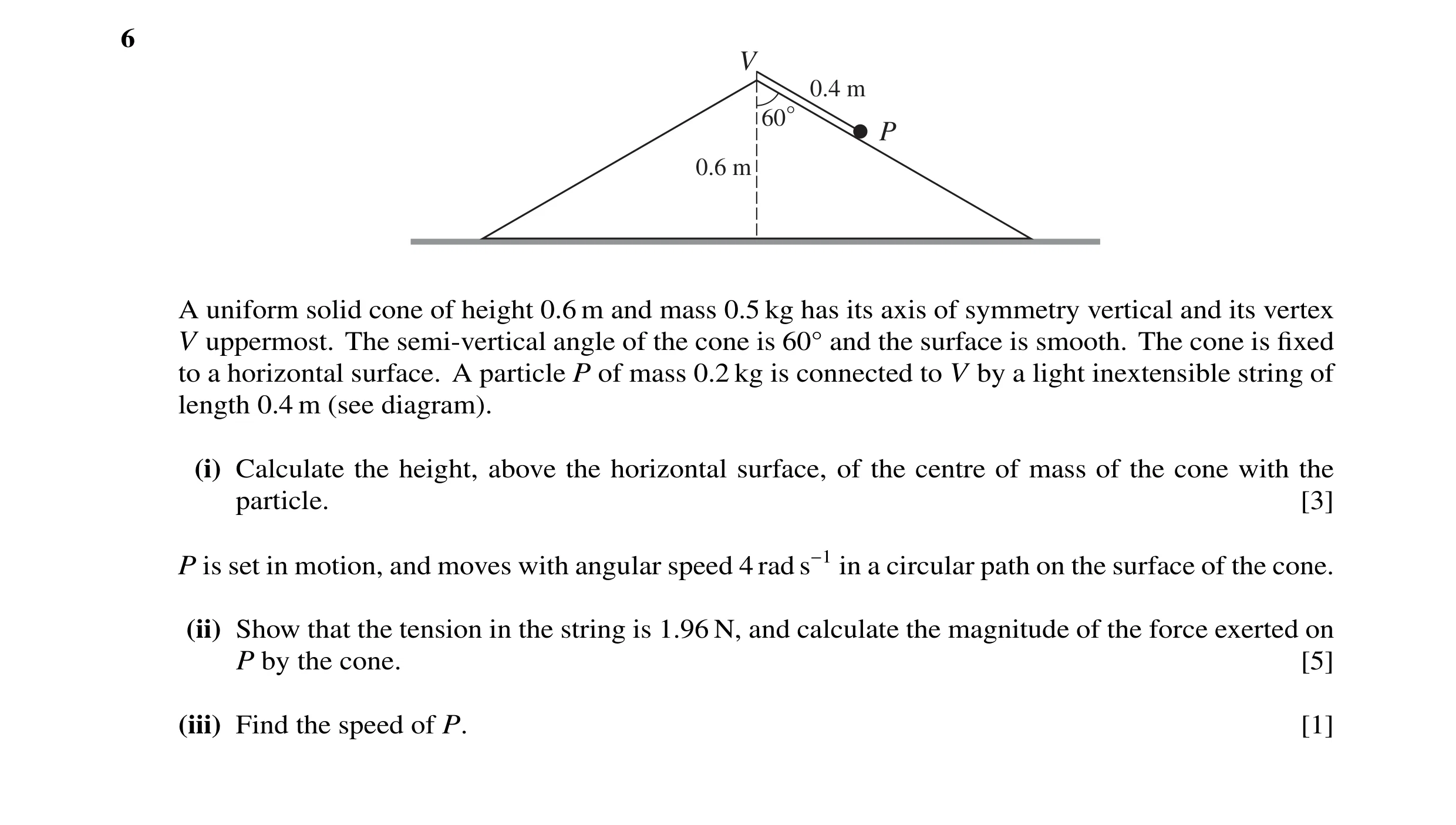


 25 / 126



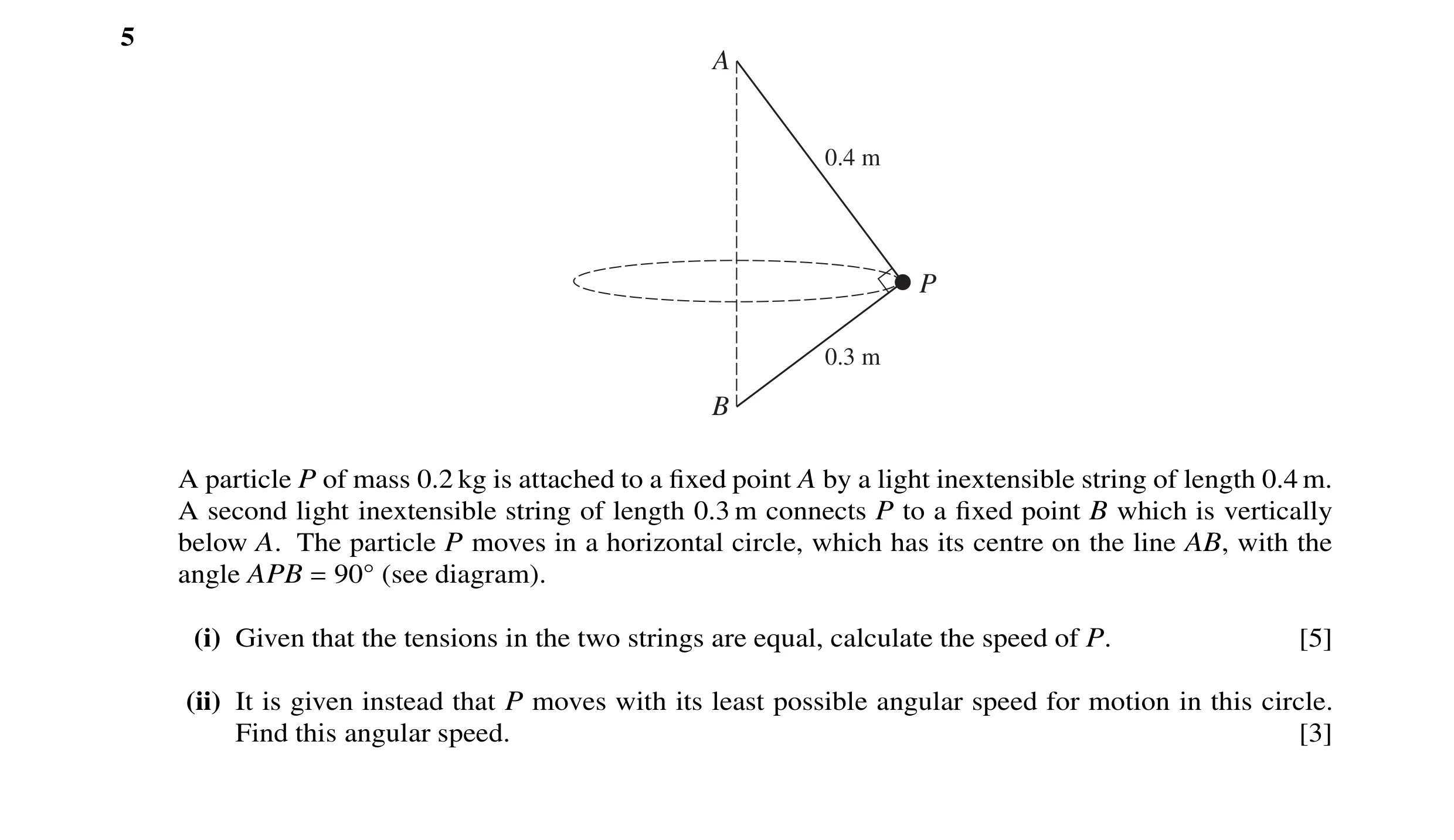 26 / 126


 27 / 126


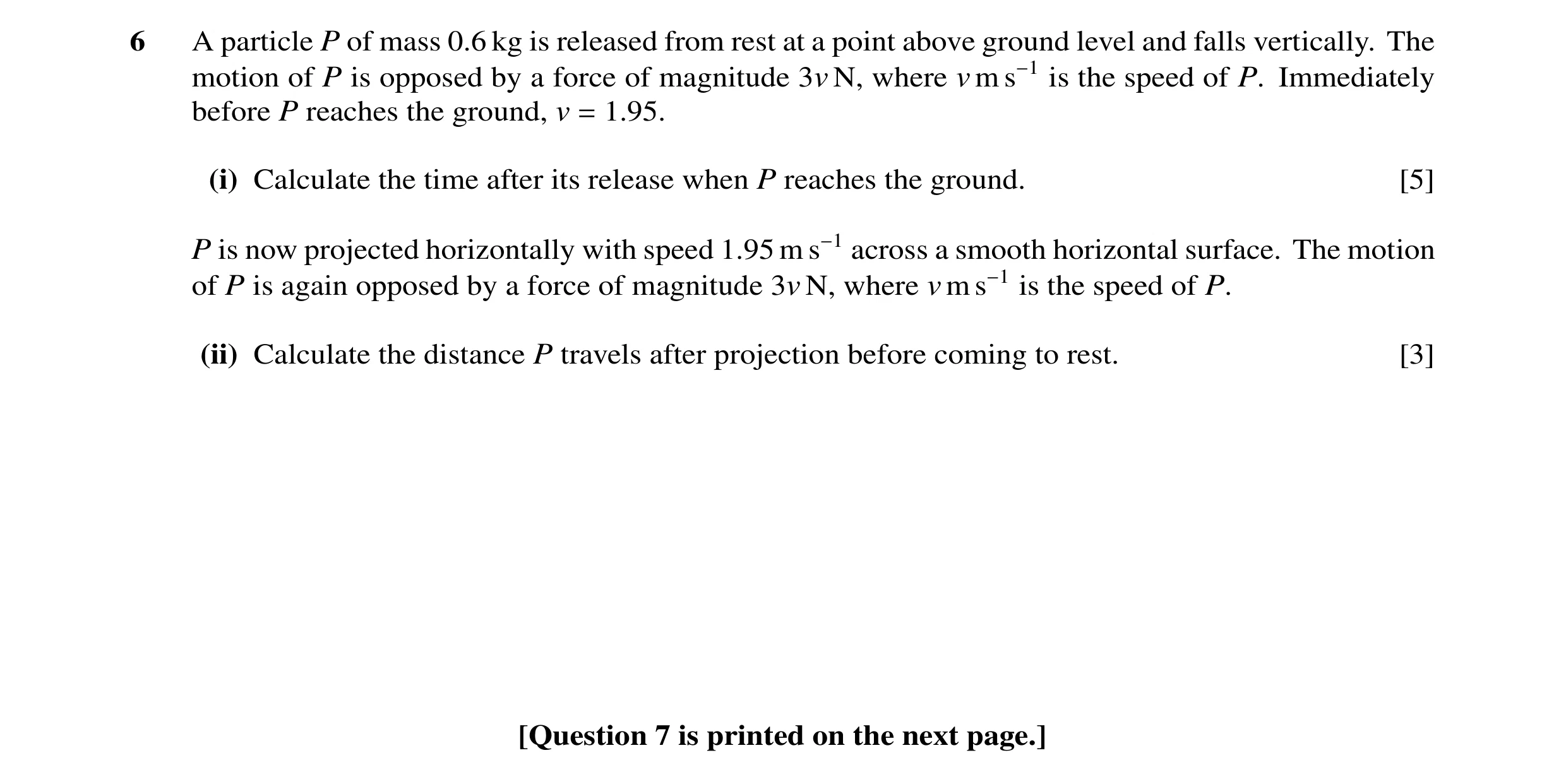 28 / 126
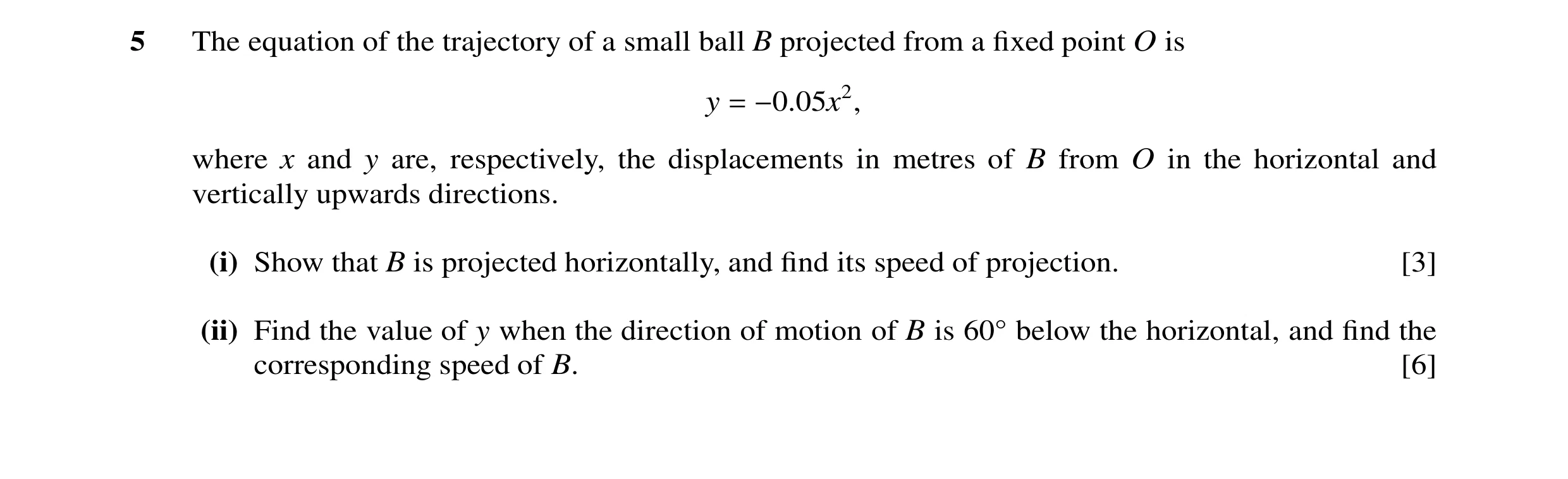
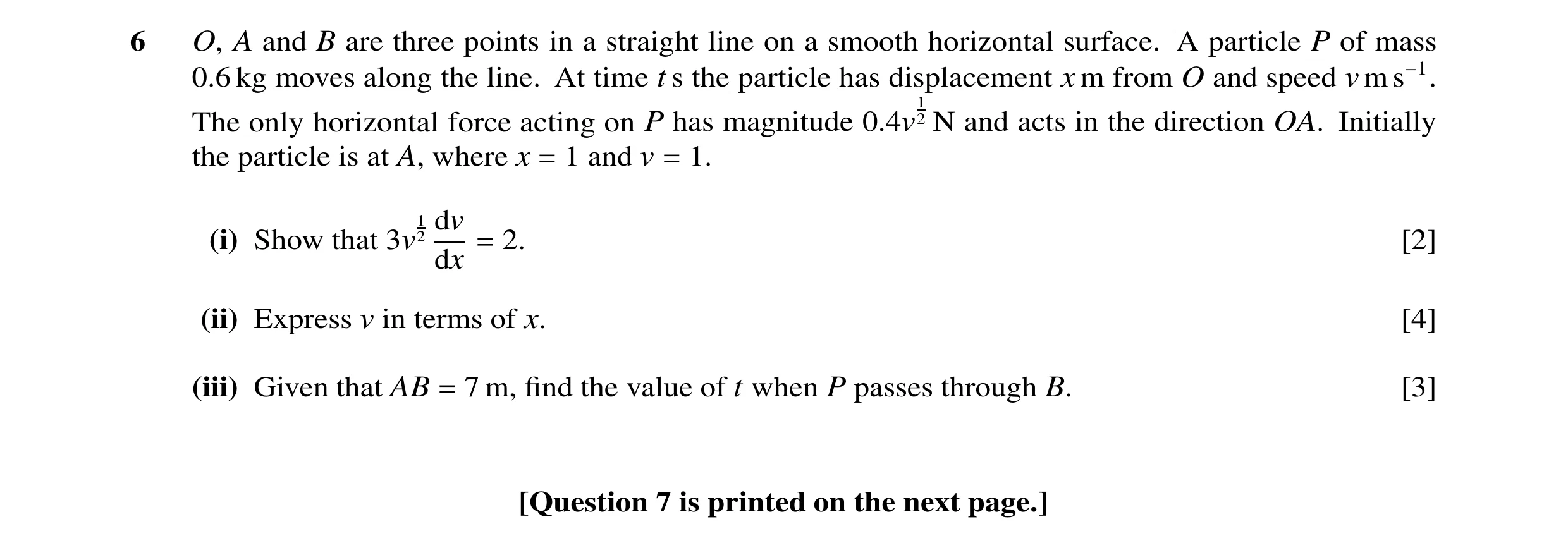

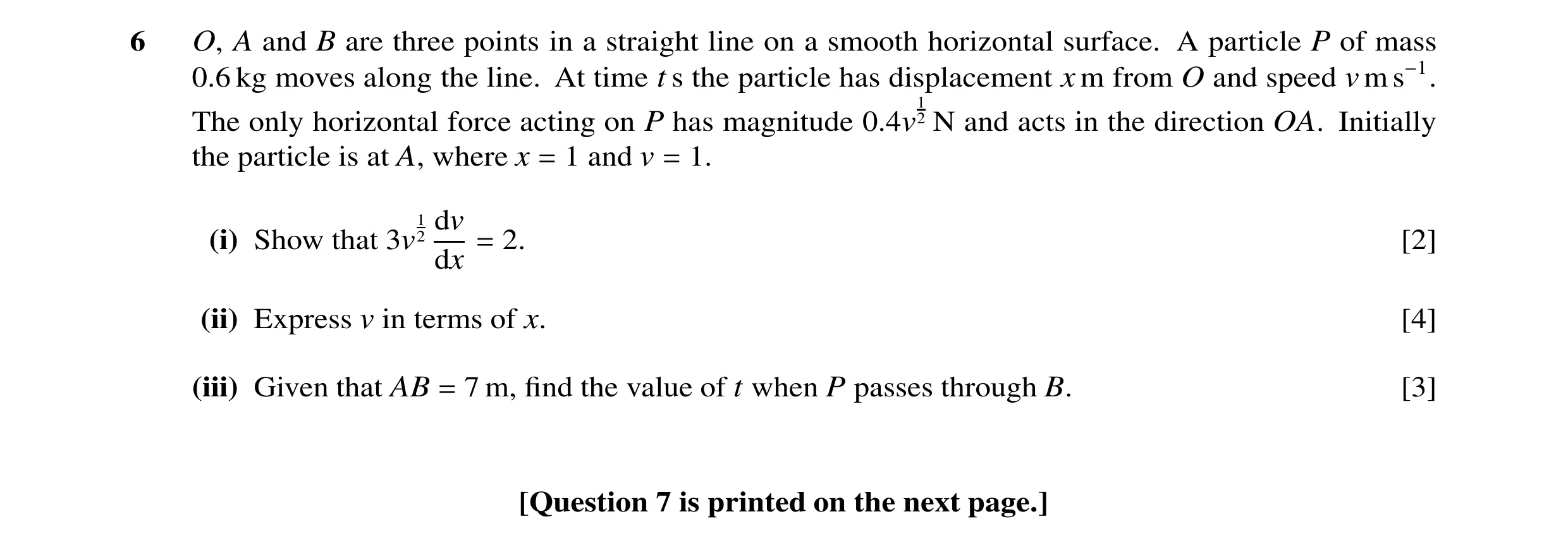 29 / 126
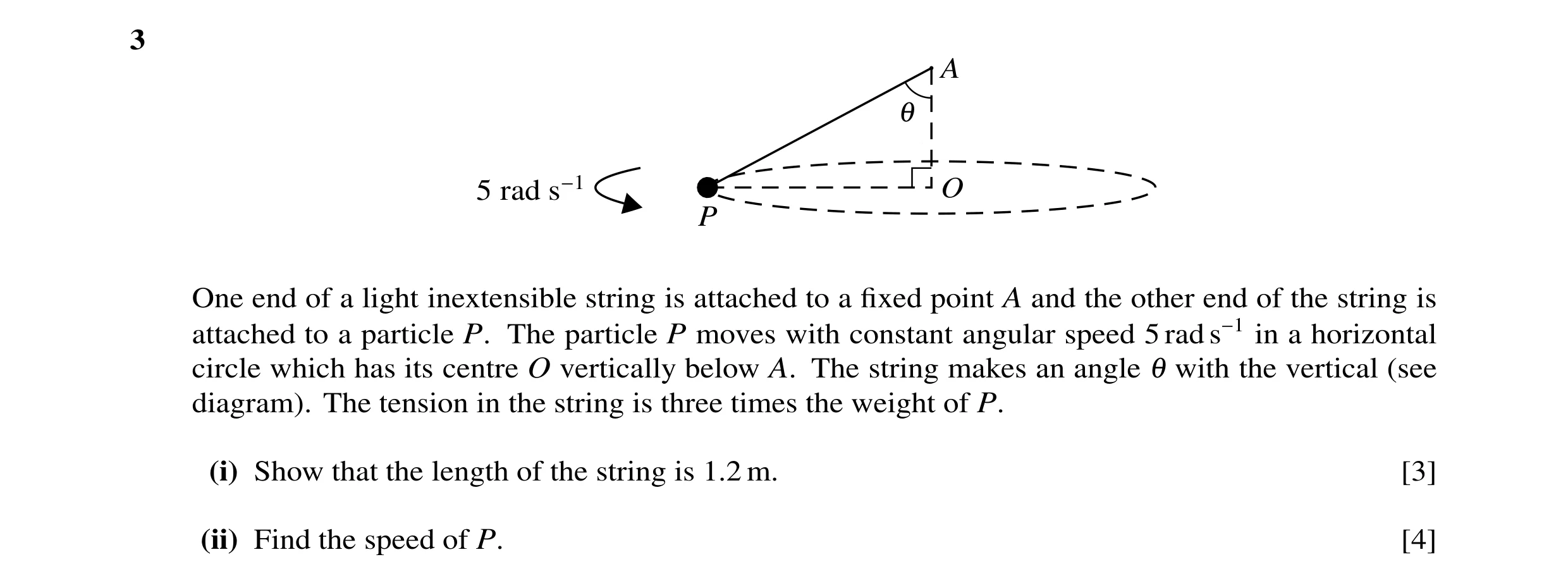 30 / 126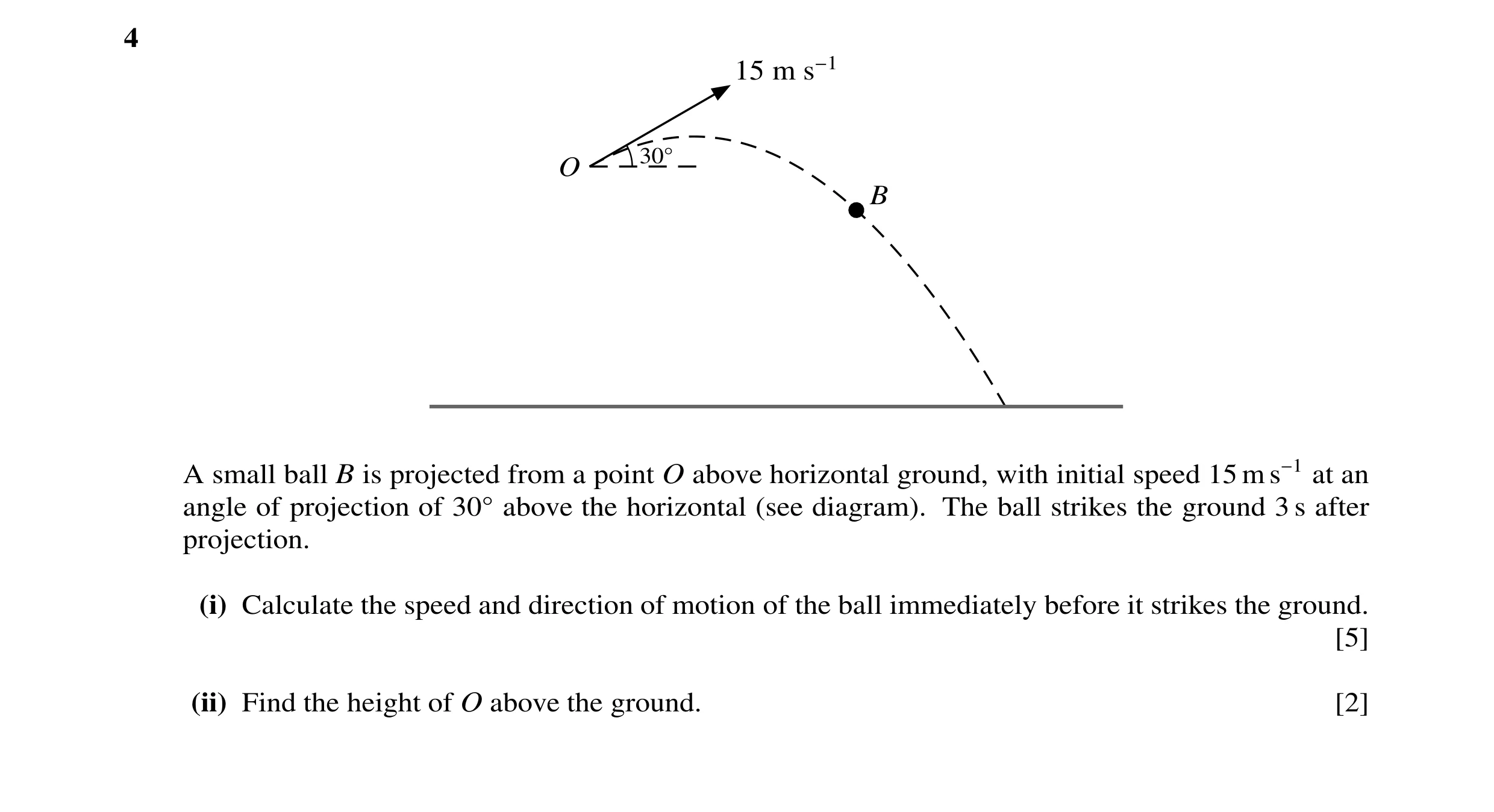
 31 / 126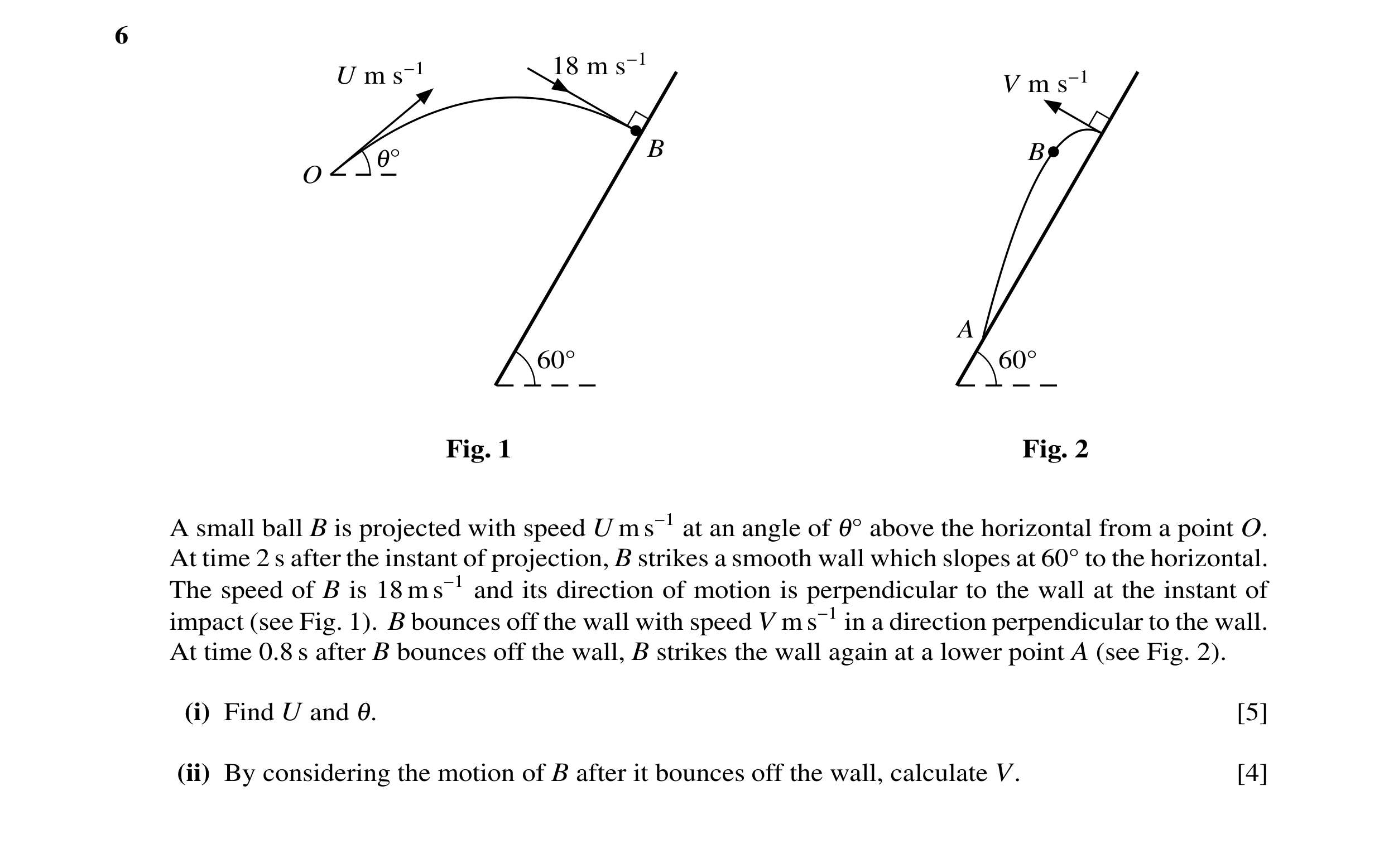
 32 / 126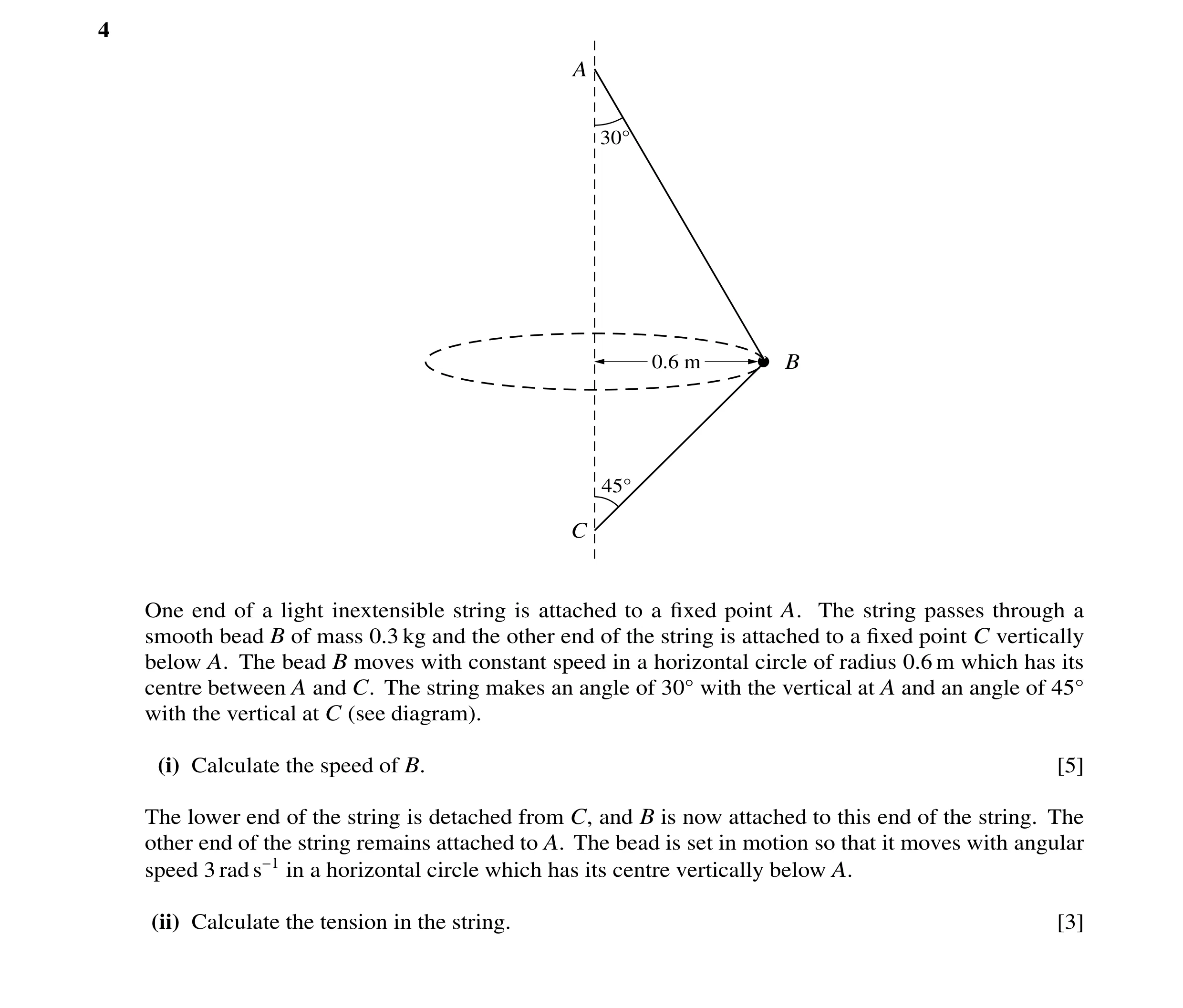
 33 / 126

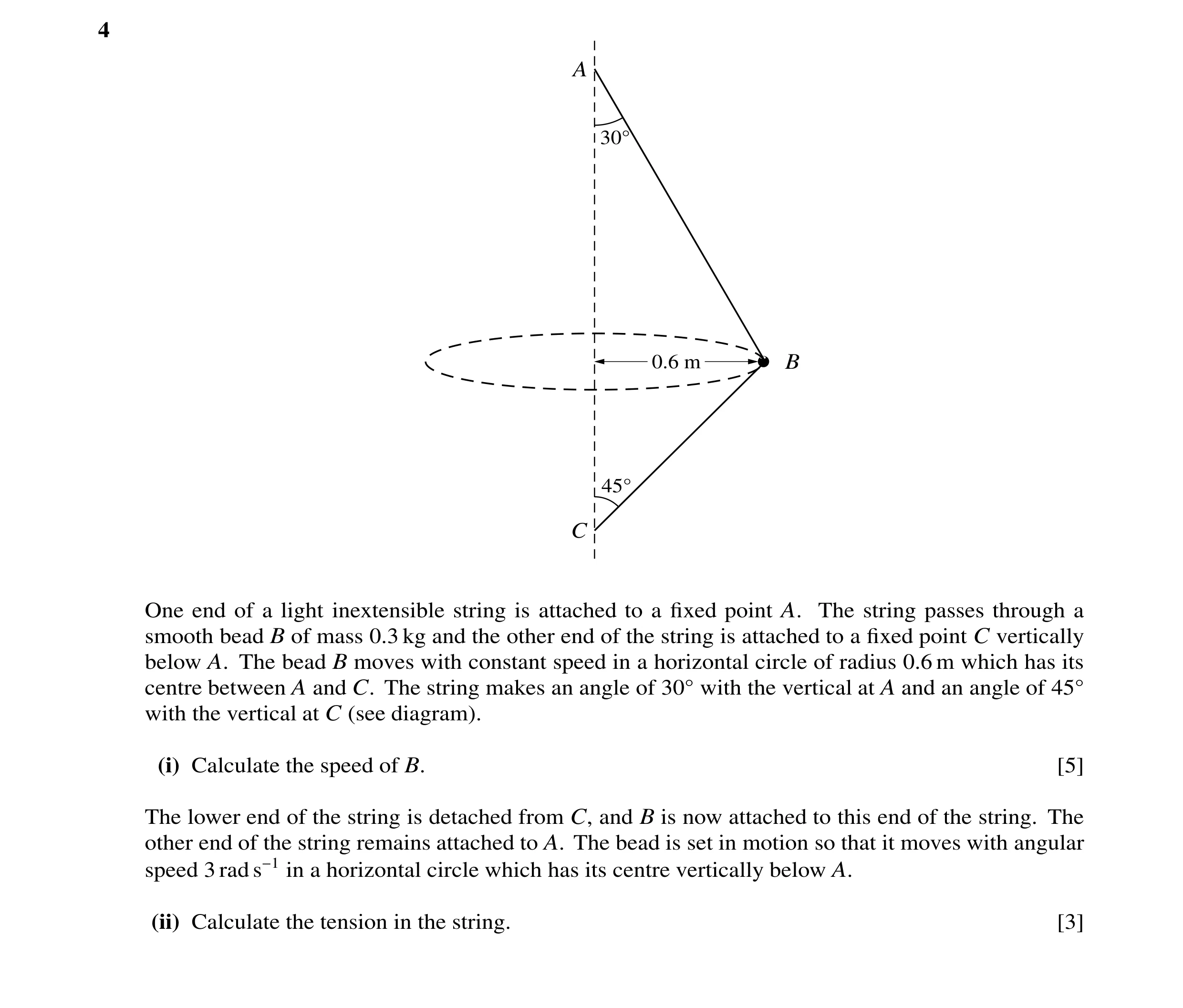 34 / 126

 35 / 126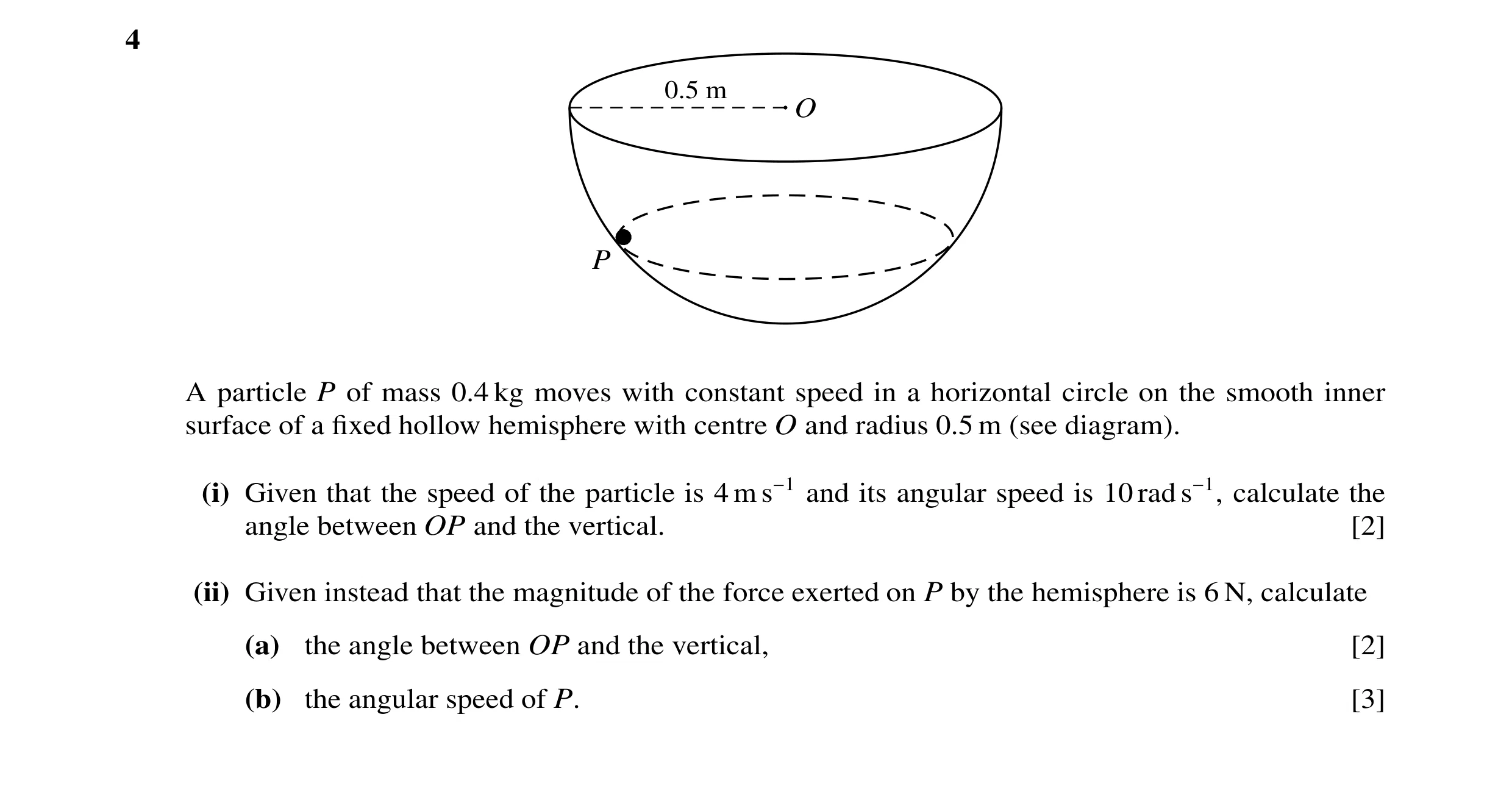



 36 / 126
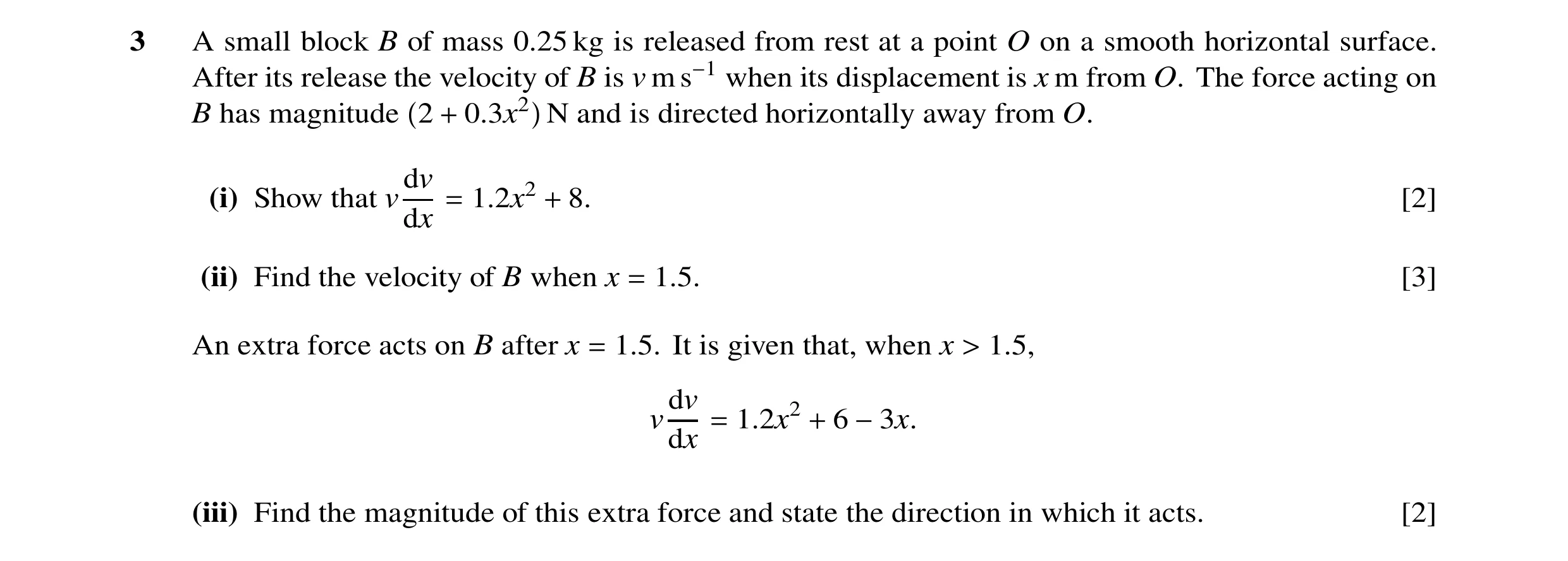
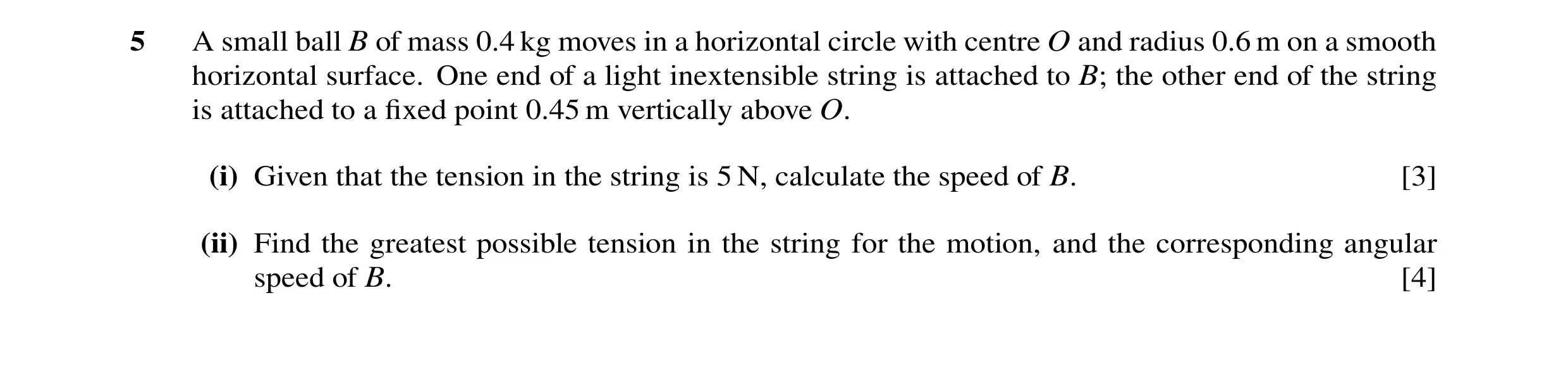 37 / 126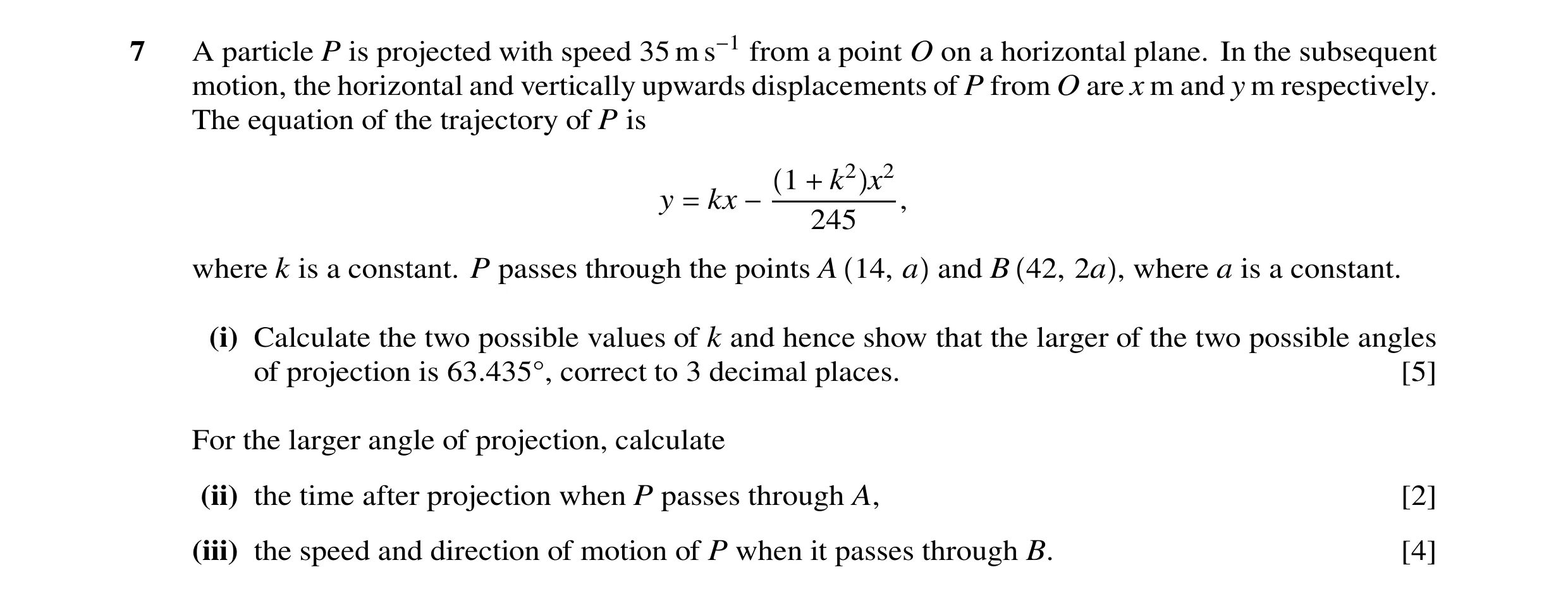

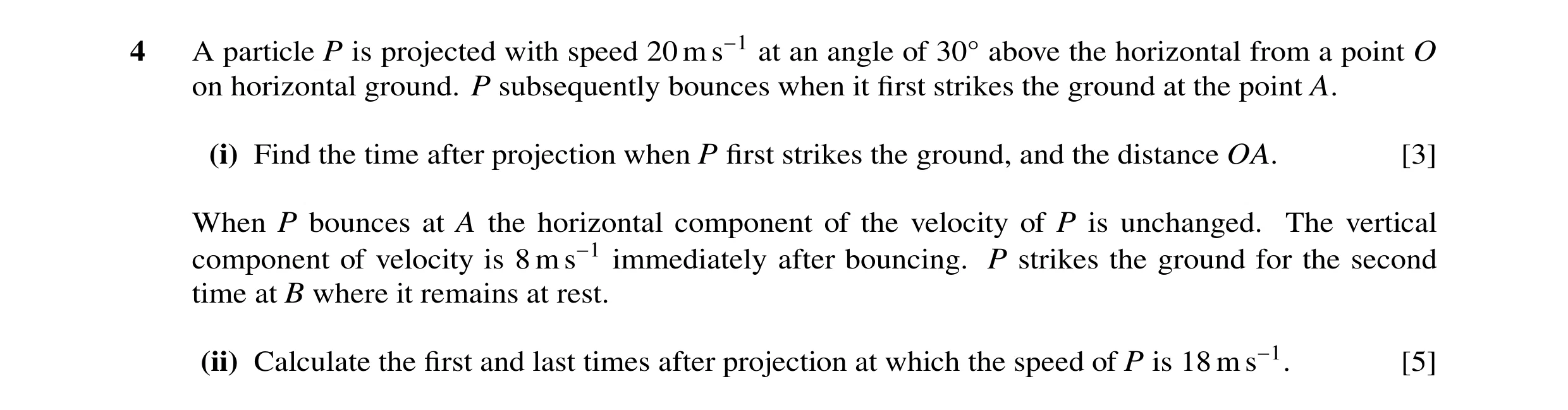
 38 / 126
 39 / 126
 40 / 126
 43 / 126
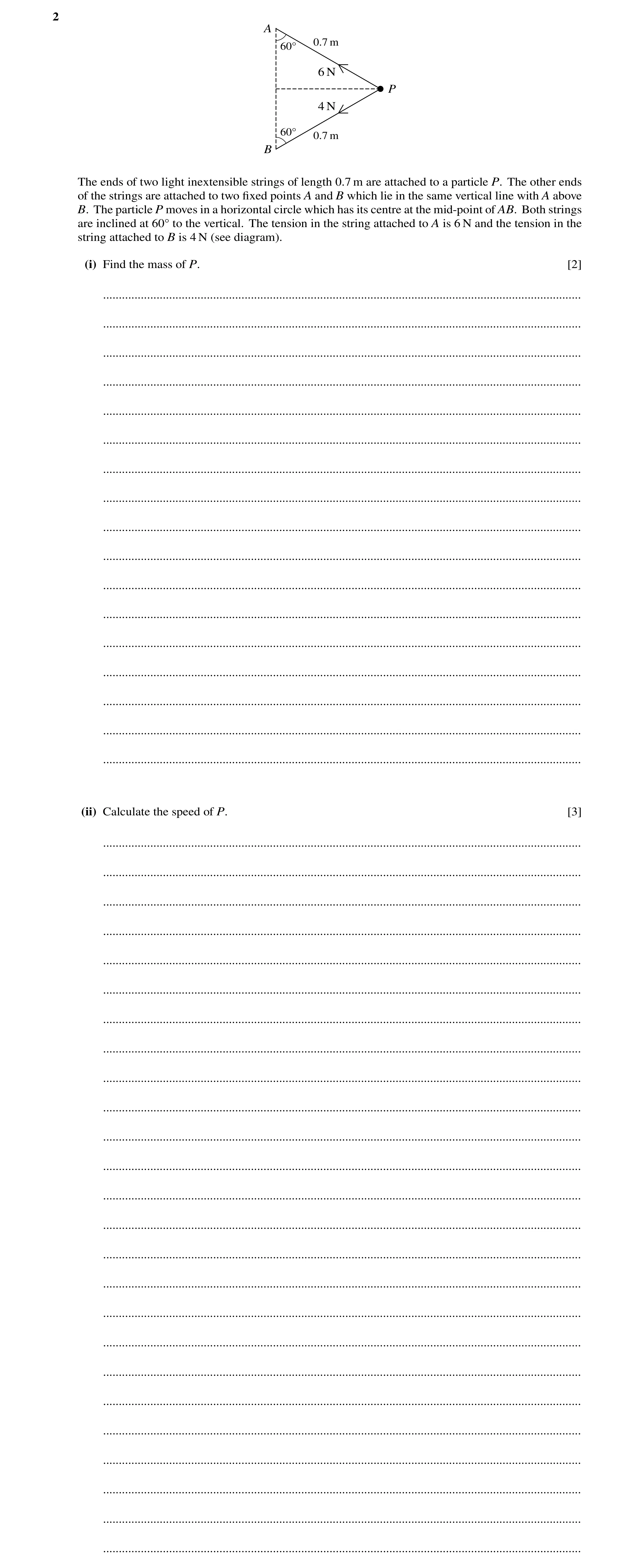

 53 / 126
 58 / 126

 65 / 126

 70 / 126

 77 / 126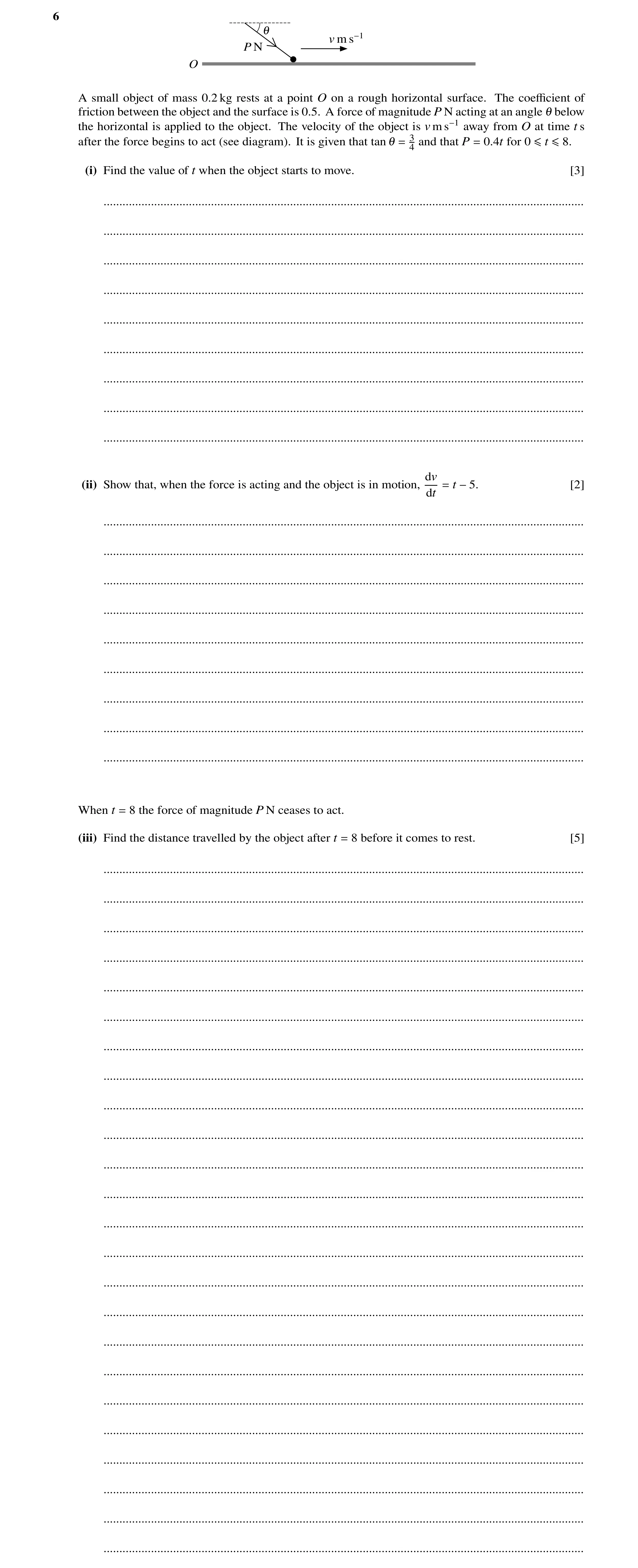
 80 / 126
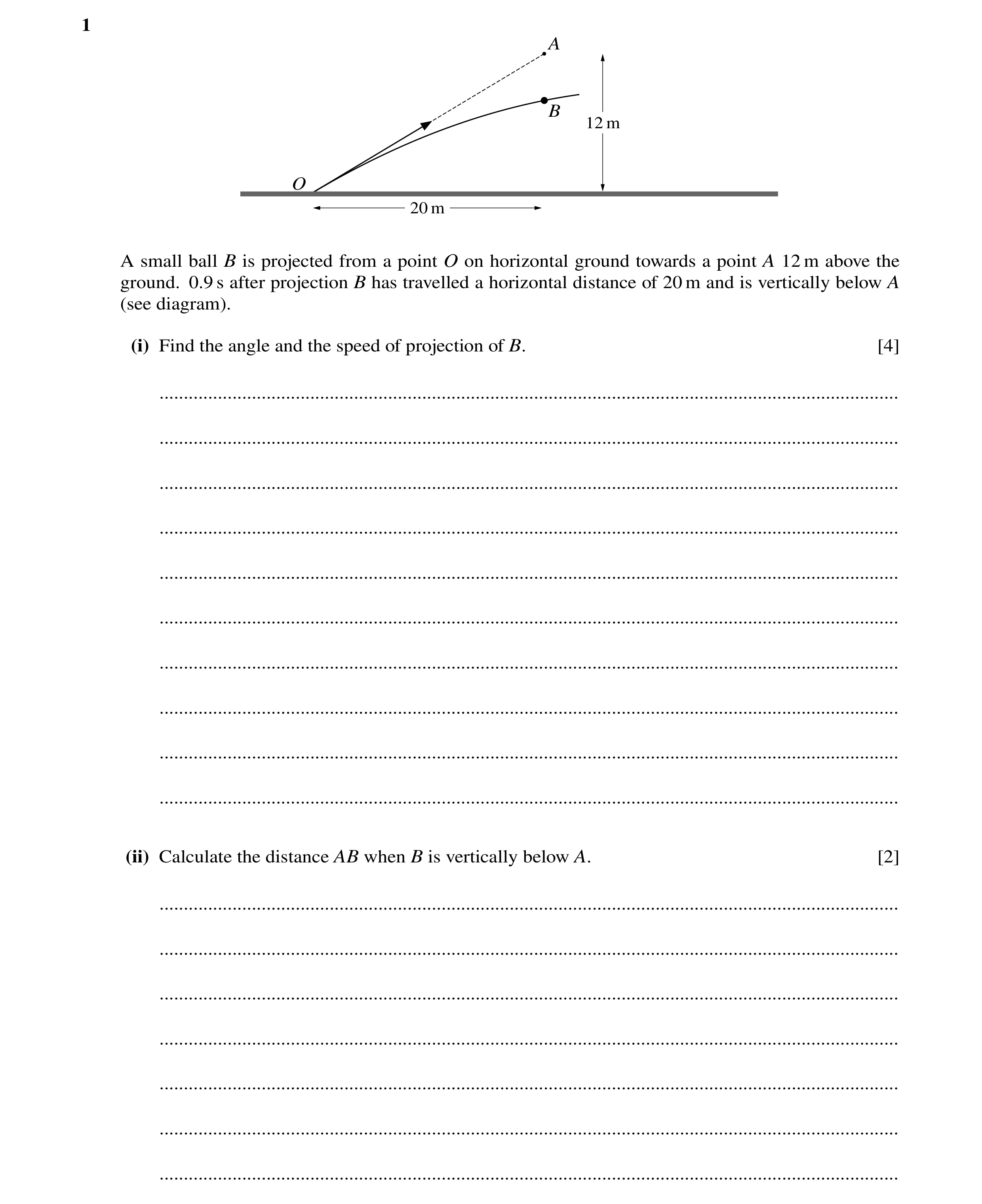 81 / 126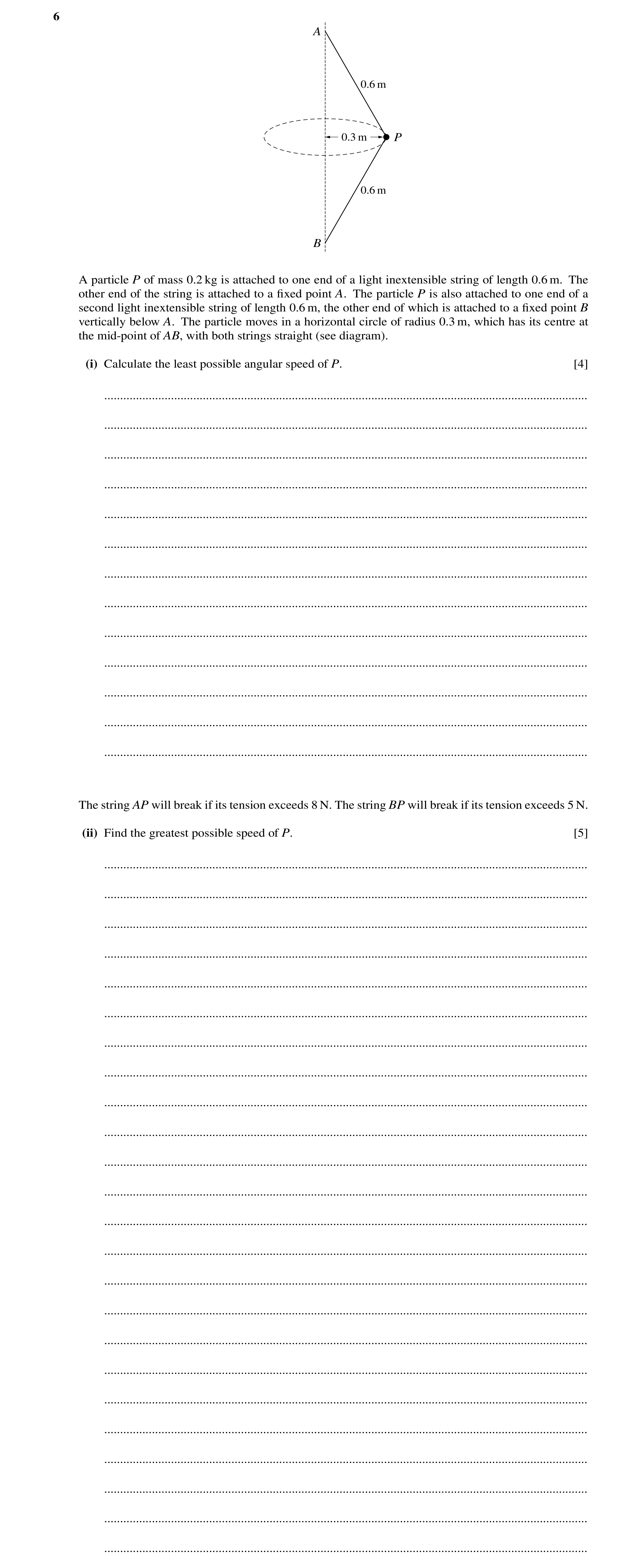

 86 / 126
 87 / 126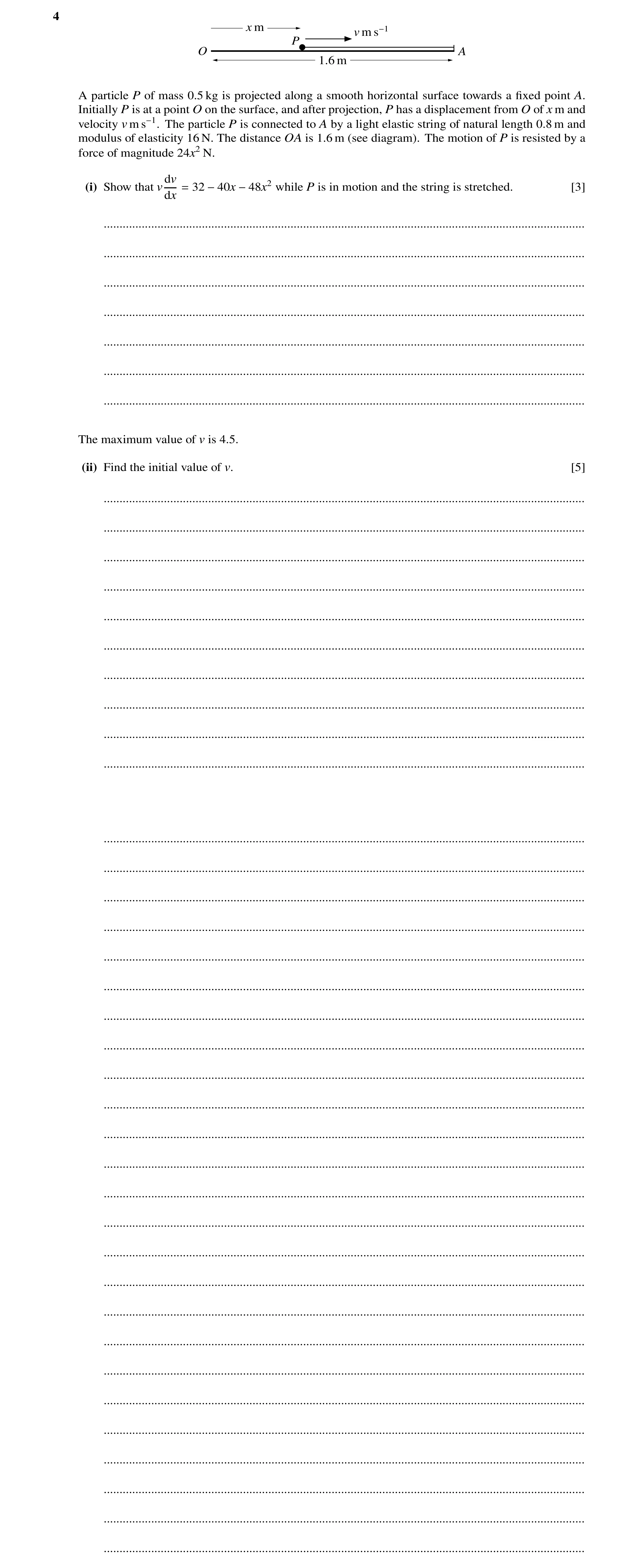
 90 / 126
 93 / 126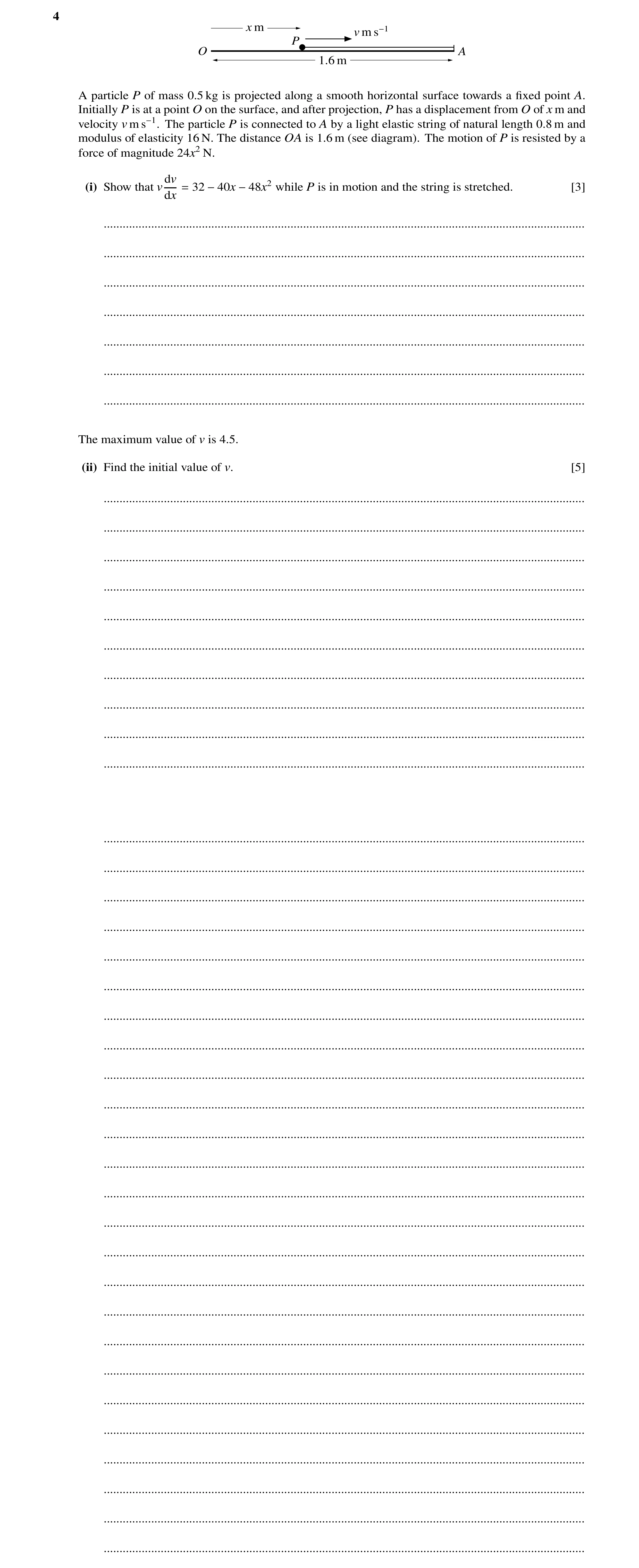
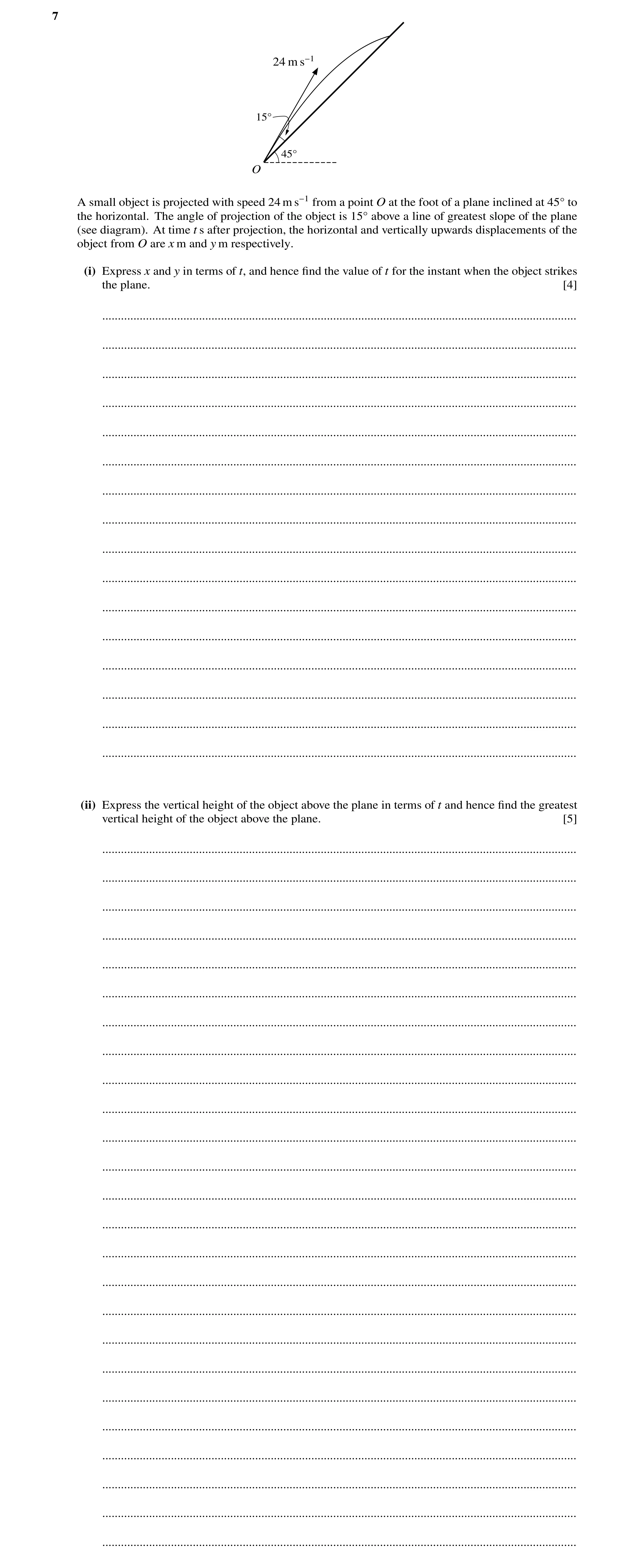
 98 / 126
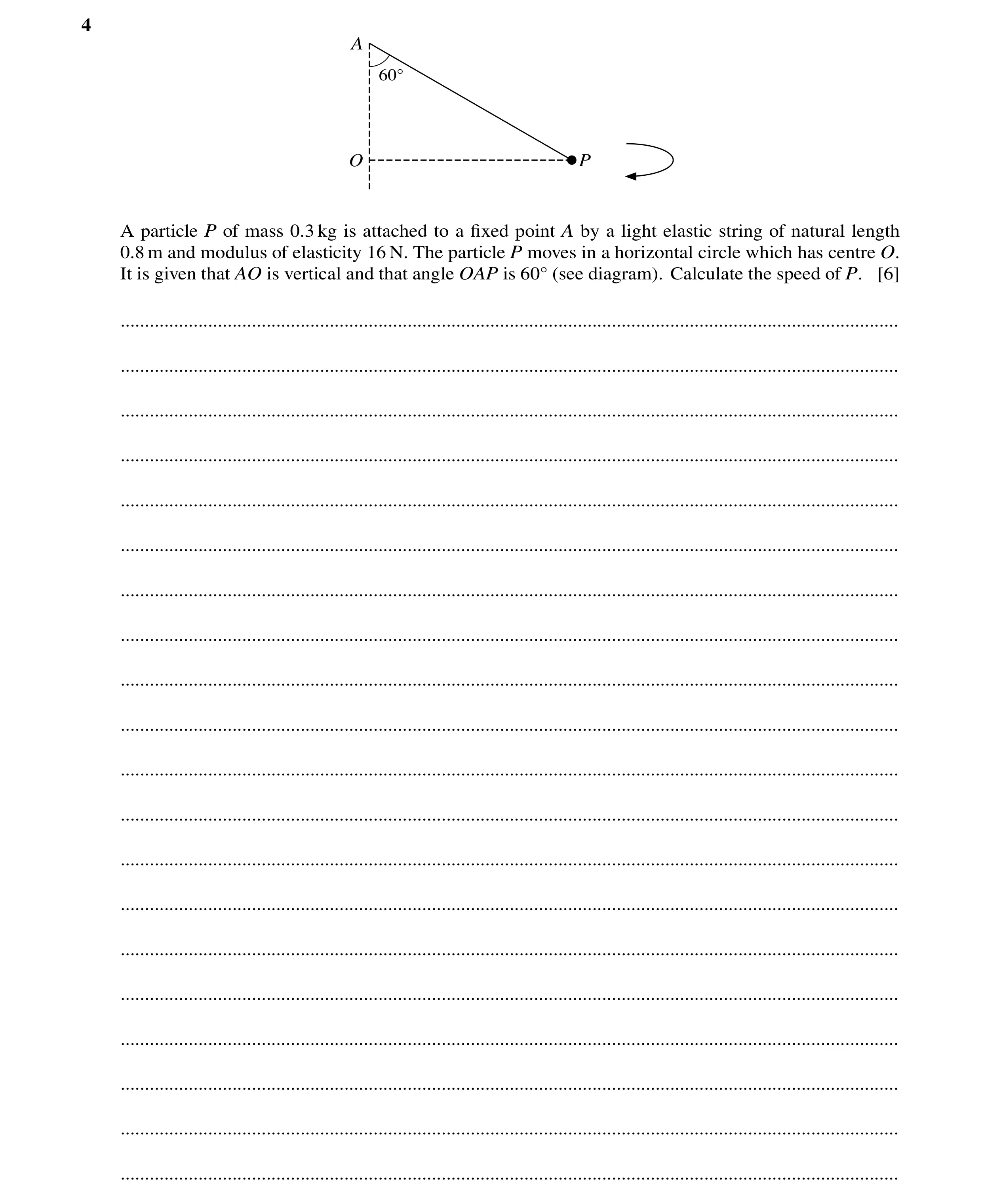 99 / 126
 104 / 126
 107 / 126
 108 / 126

 113 / 126
 118 / 126
 121 / 126
 122 / 126
 123 / 126
 124 / 126
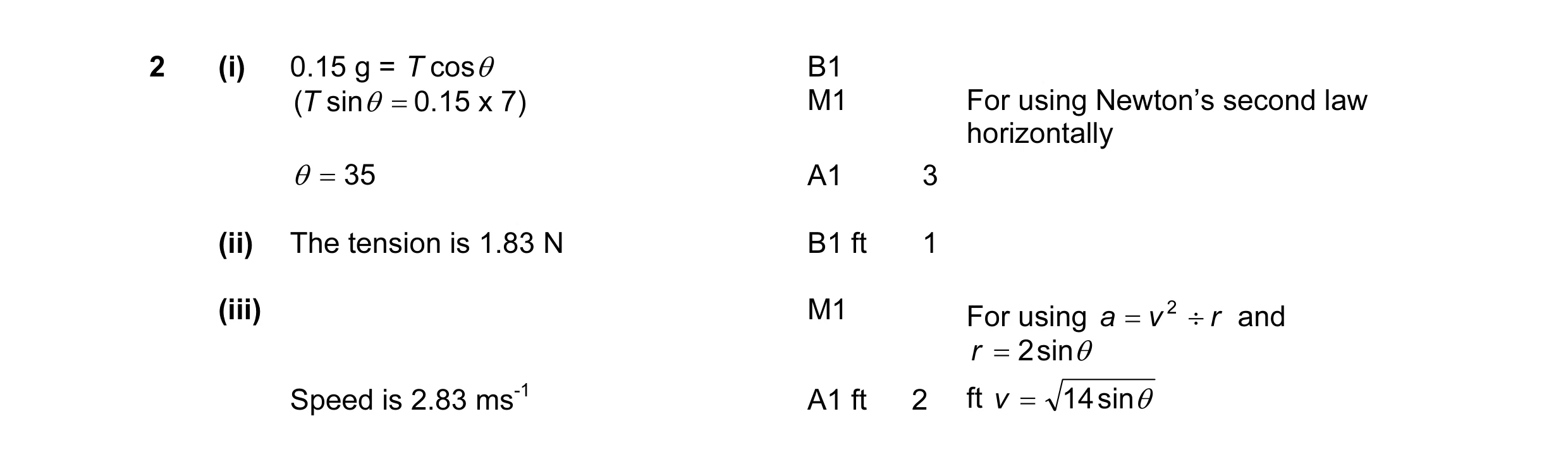 6
6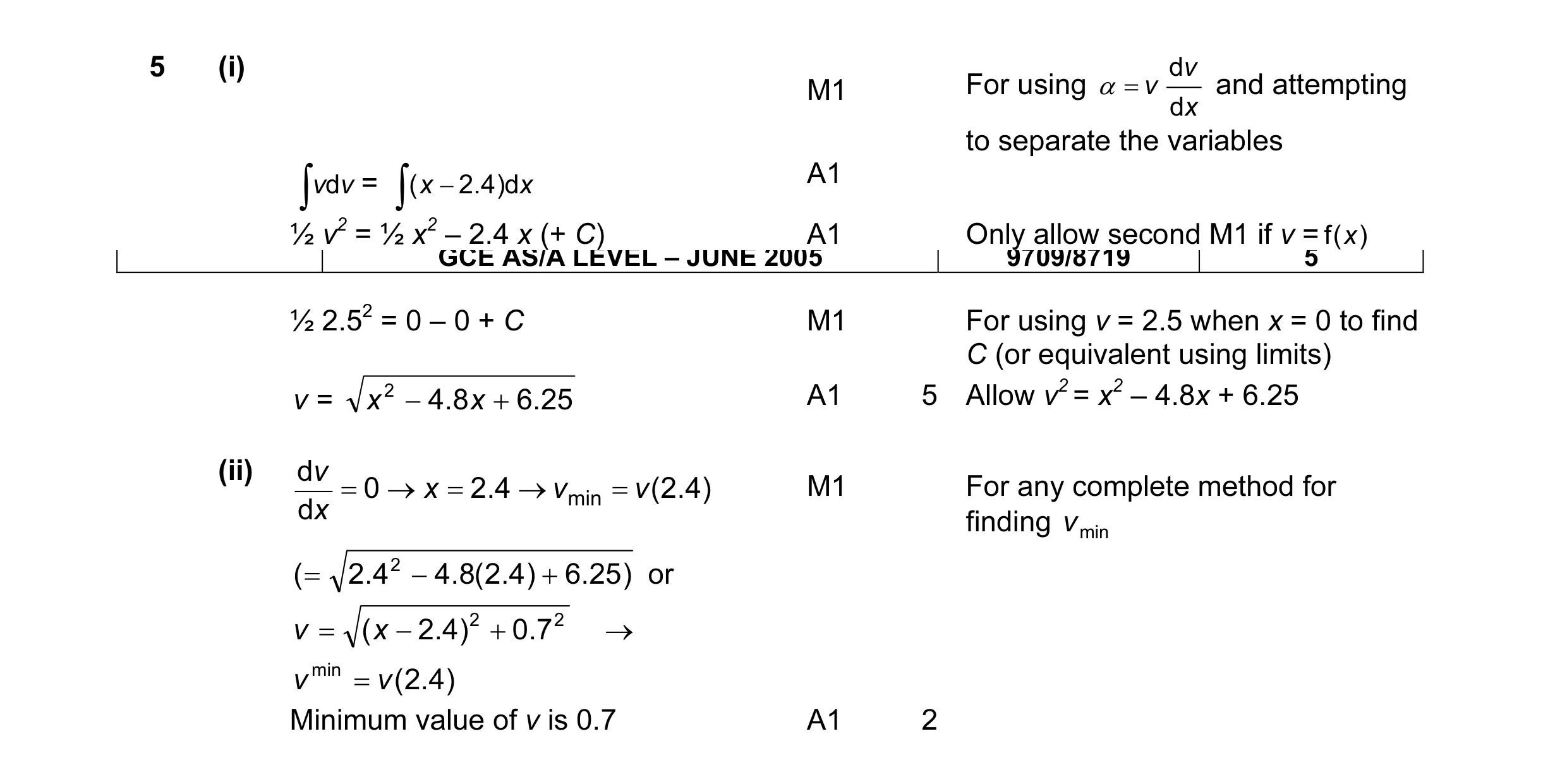 7
7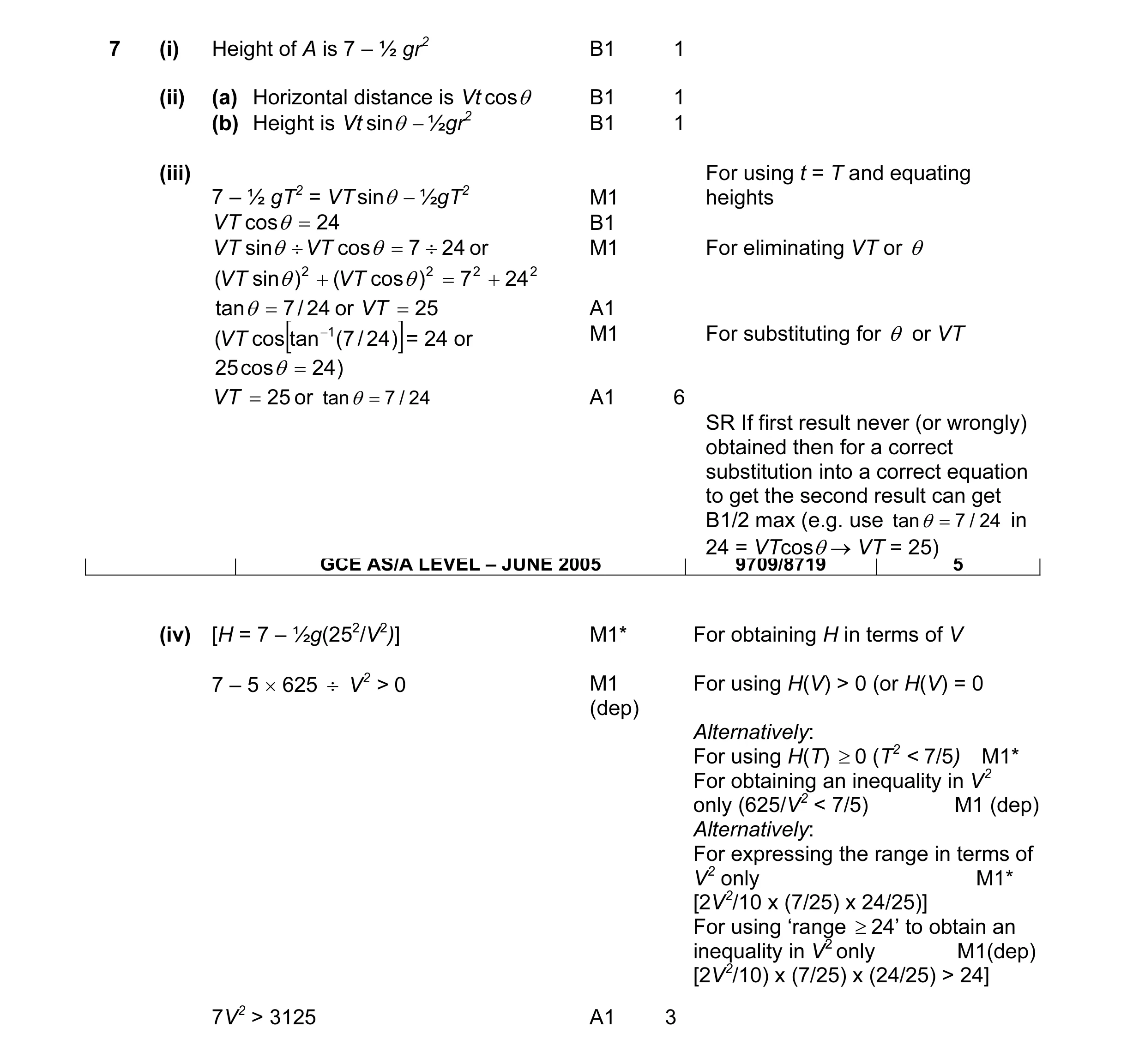 12
12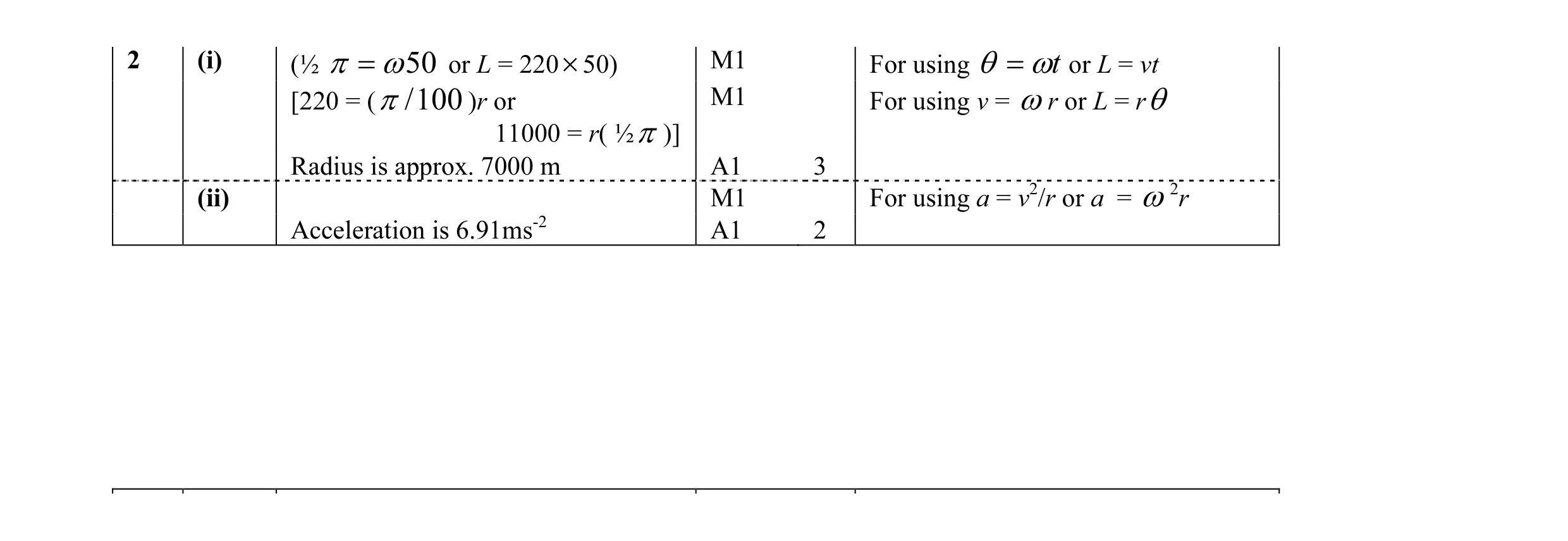 5
5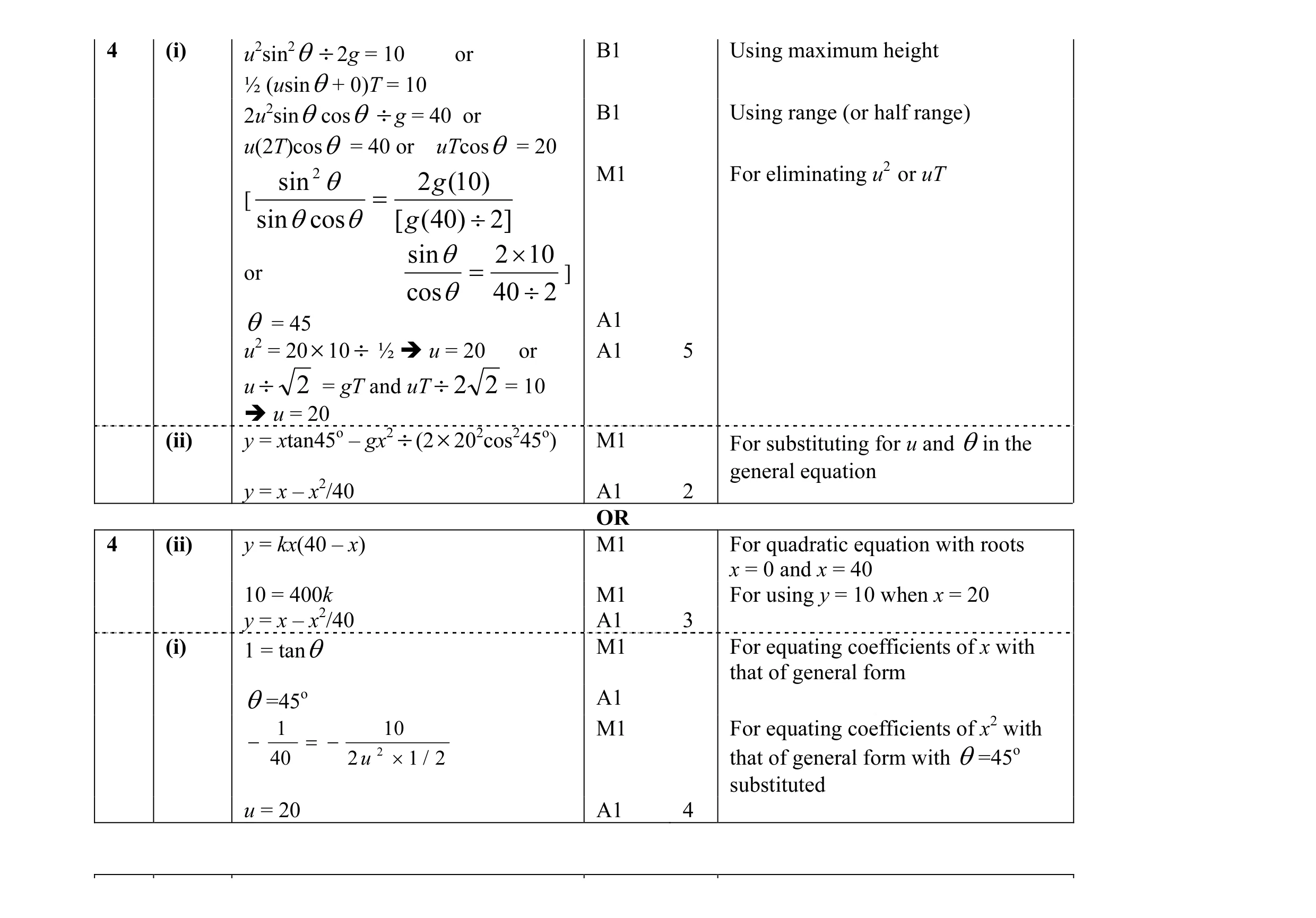 7
7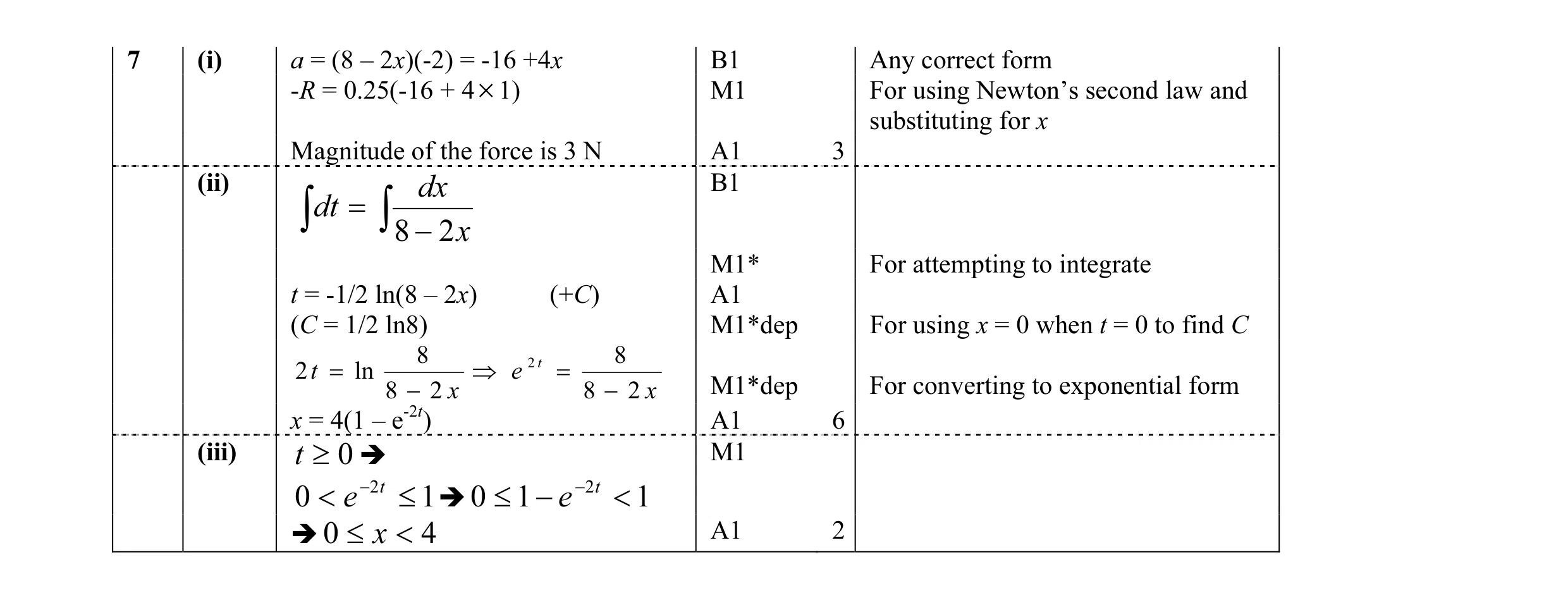 11
11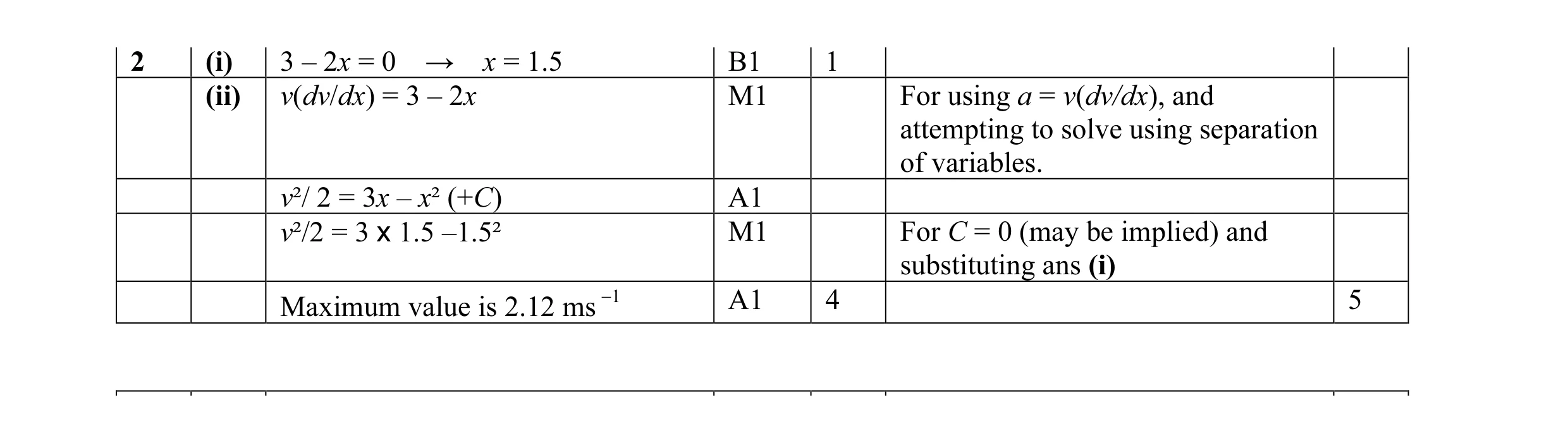 5
5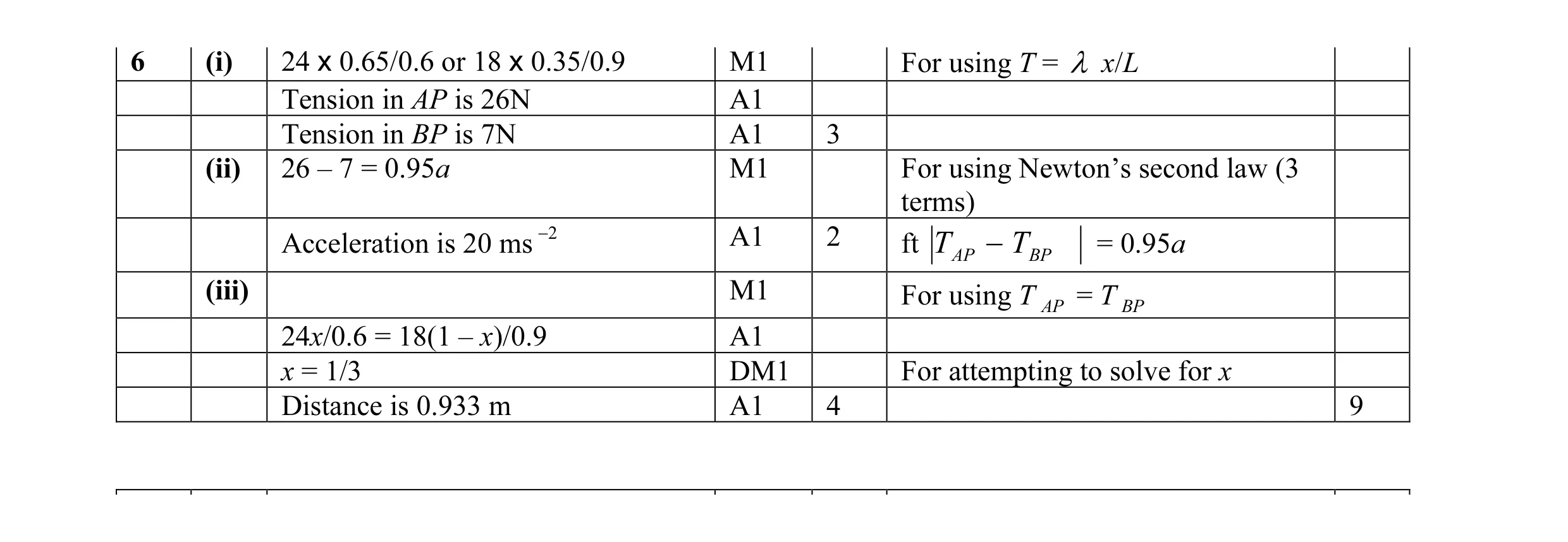 9
9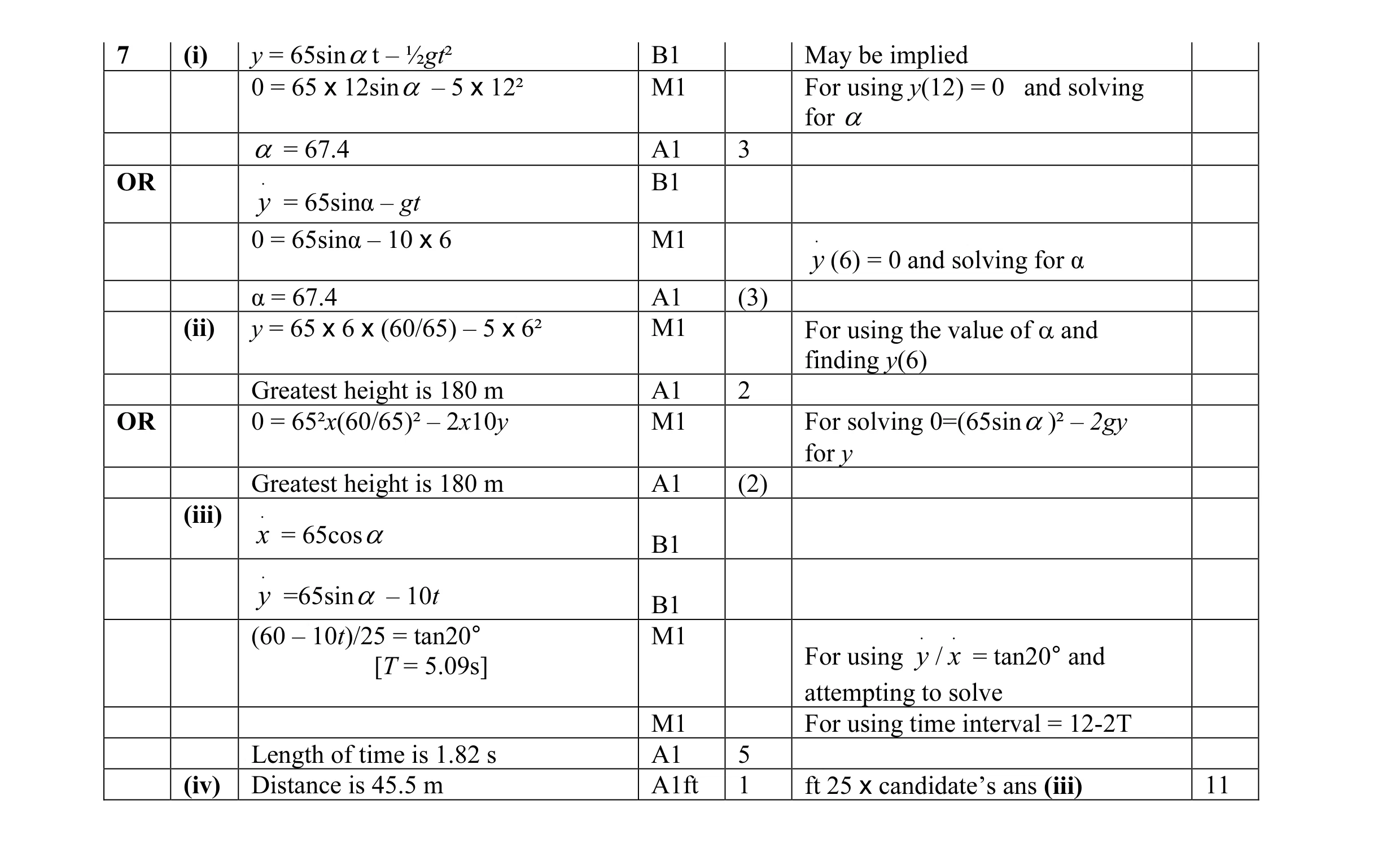 11
11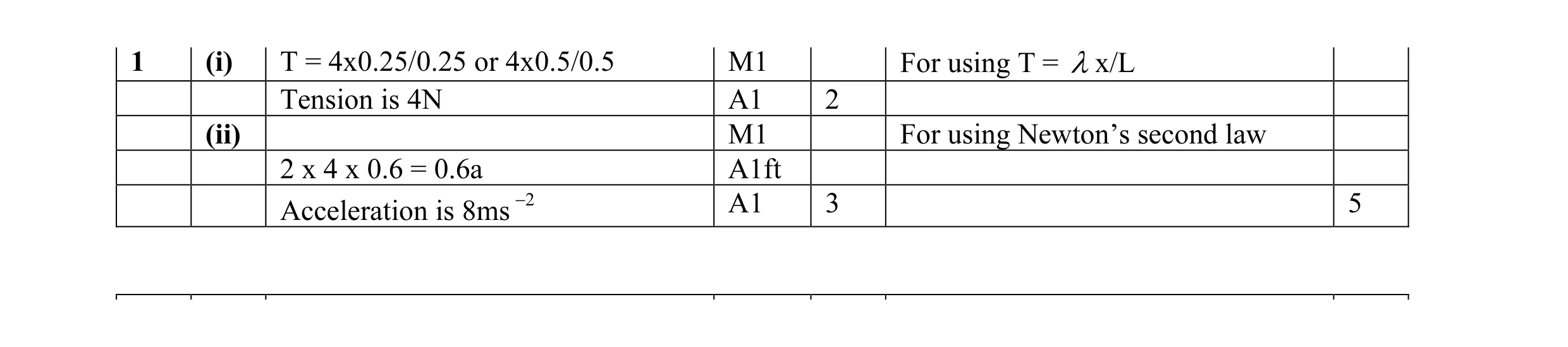 5
5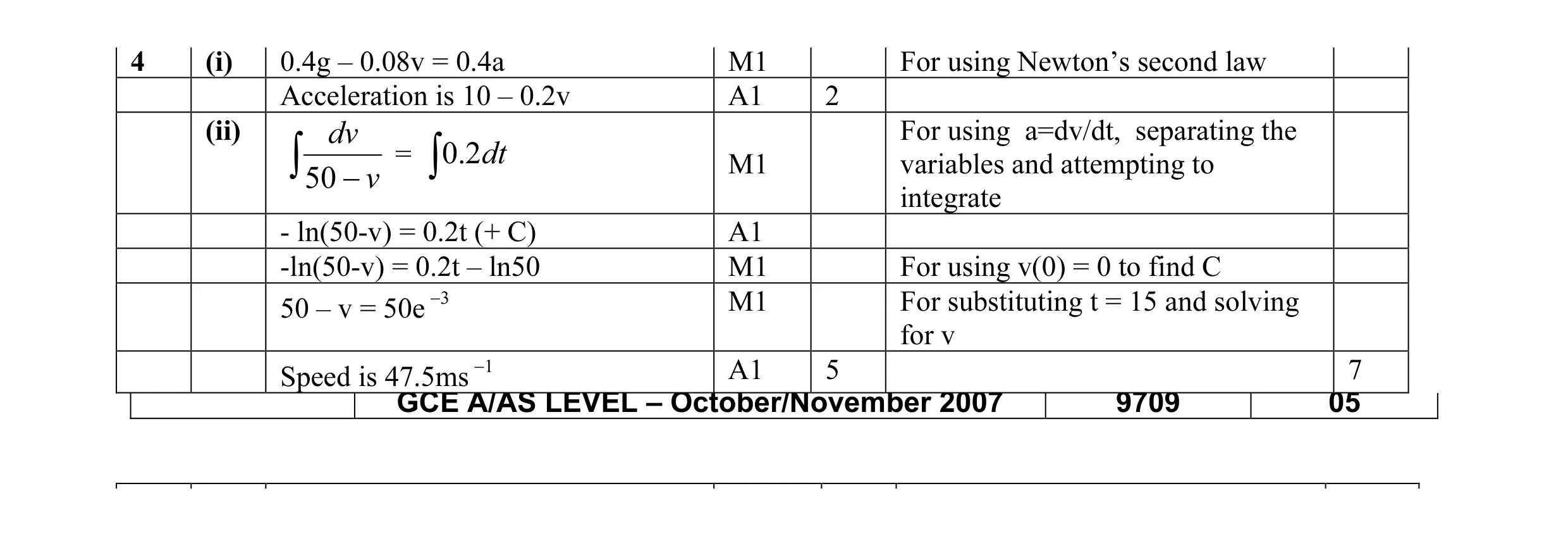 7
7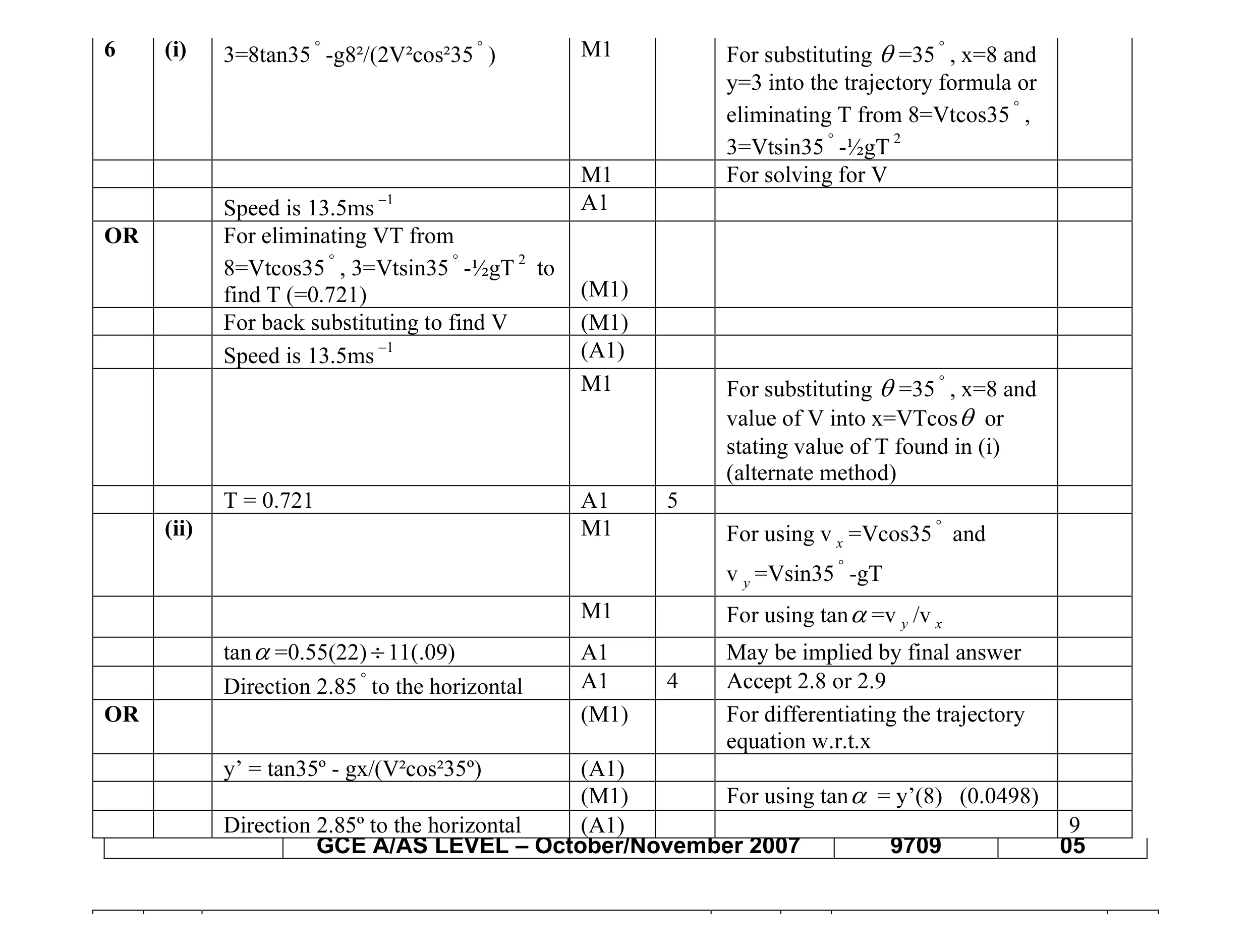 9
9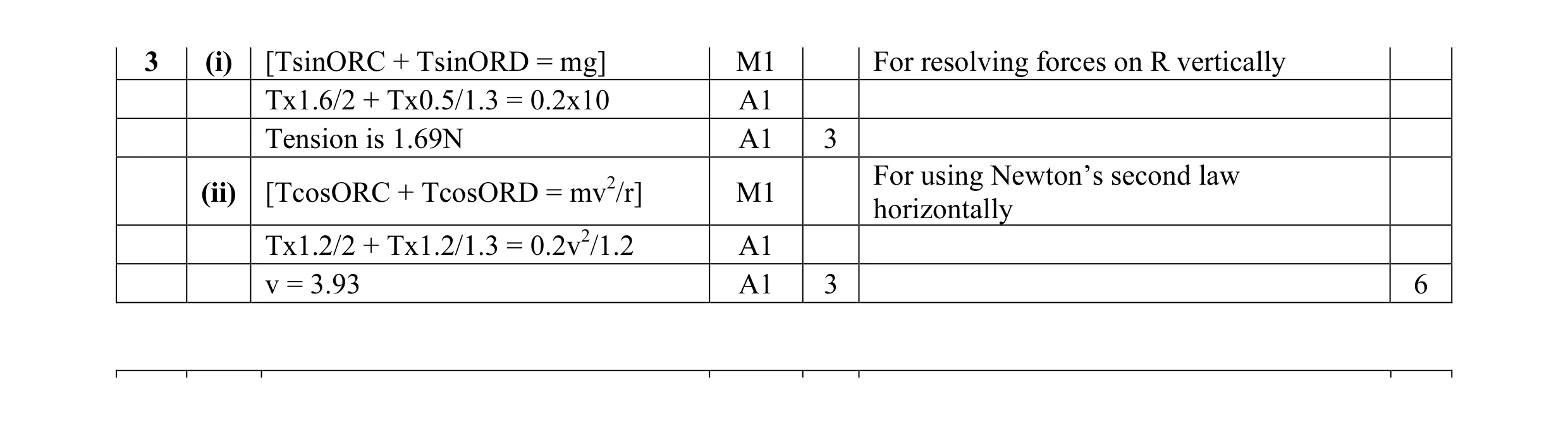 6
6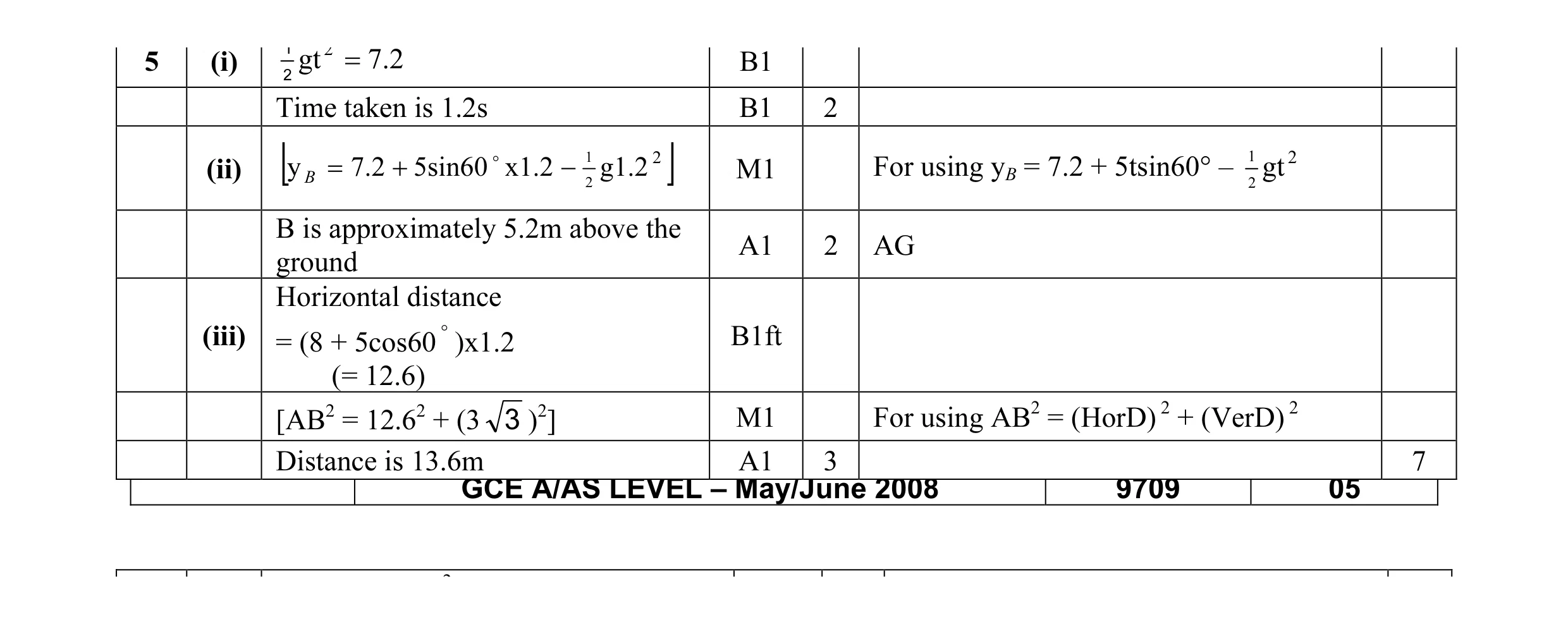 7
7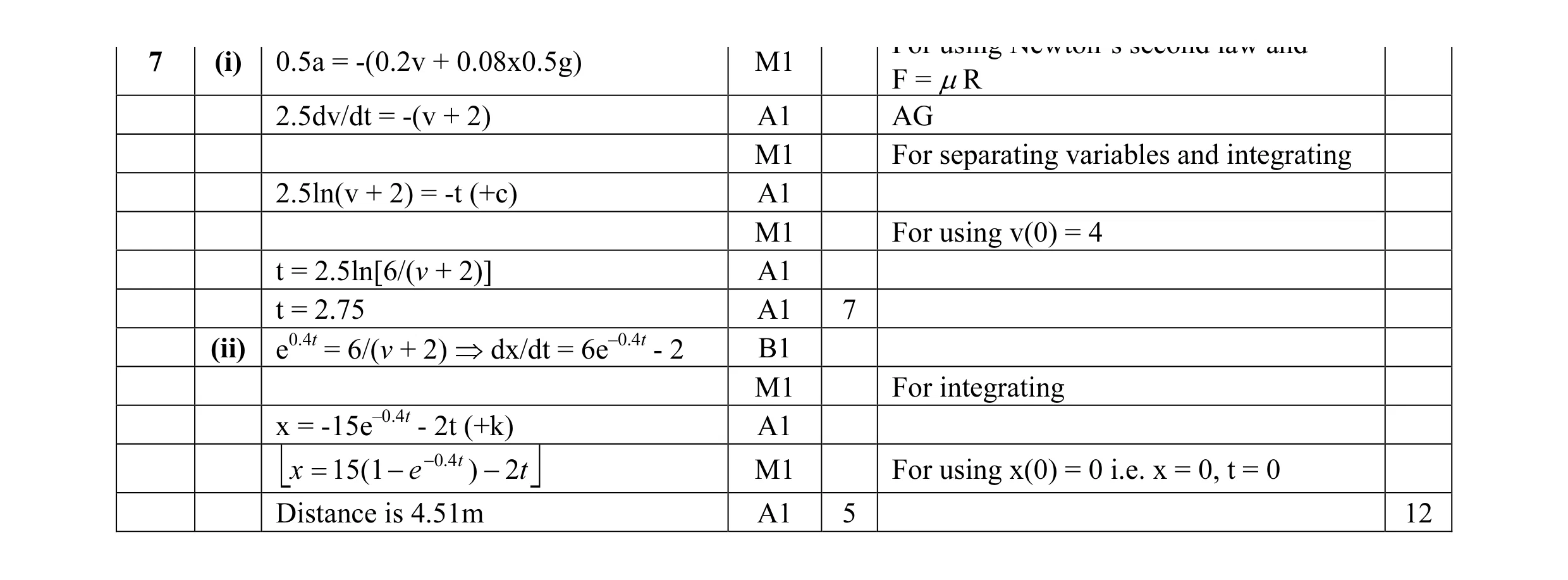 12
12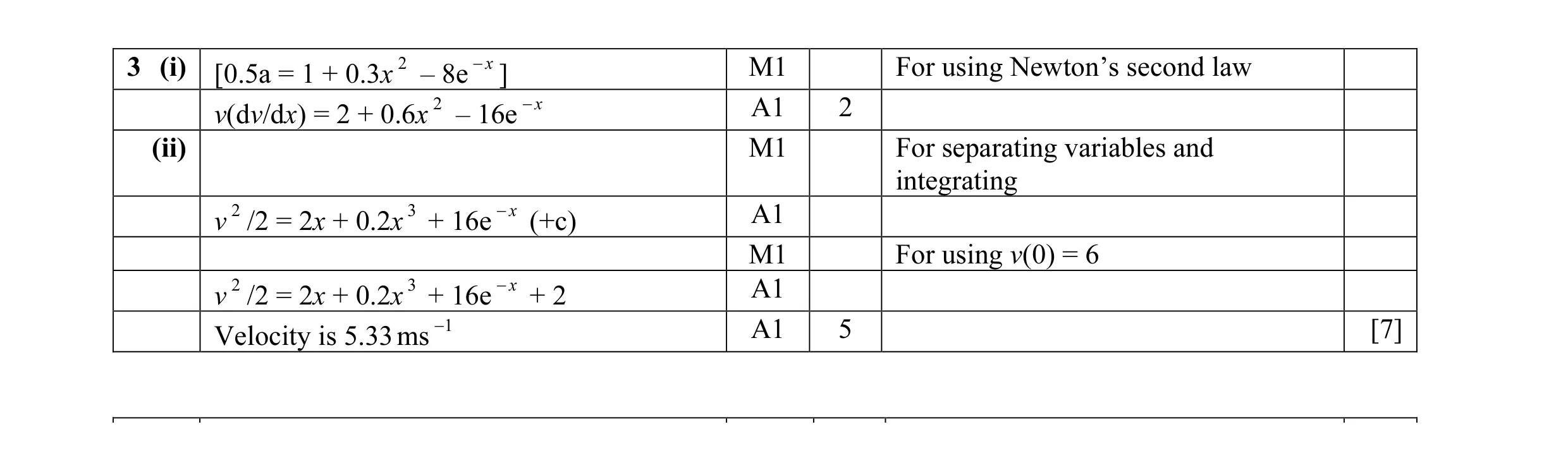 7
7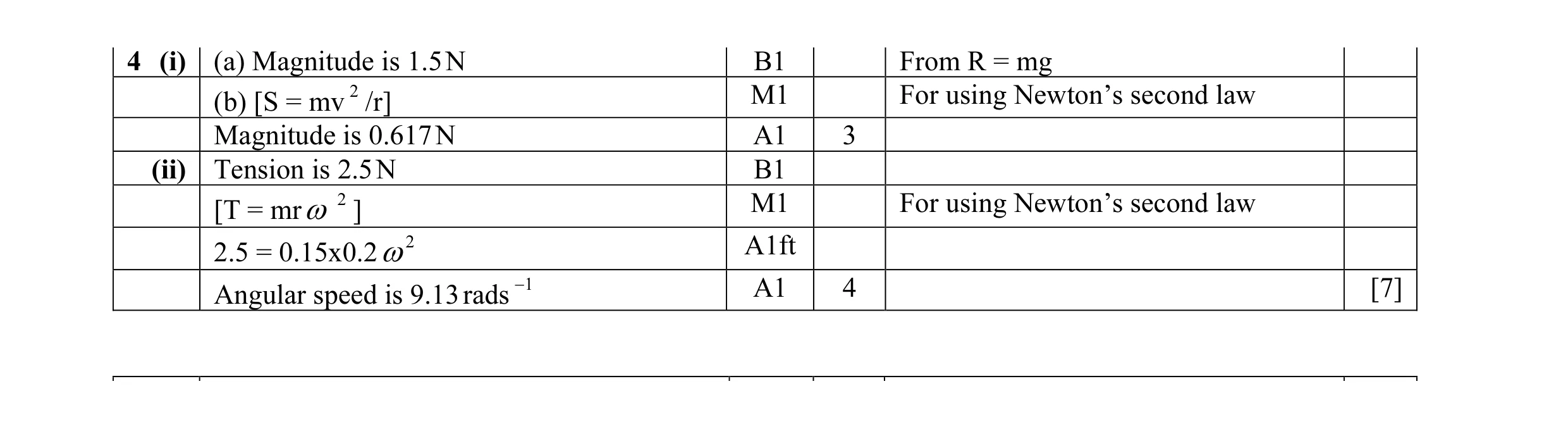 7
7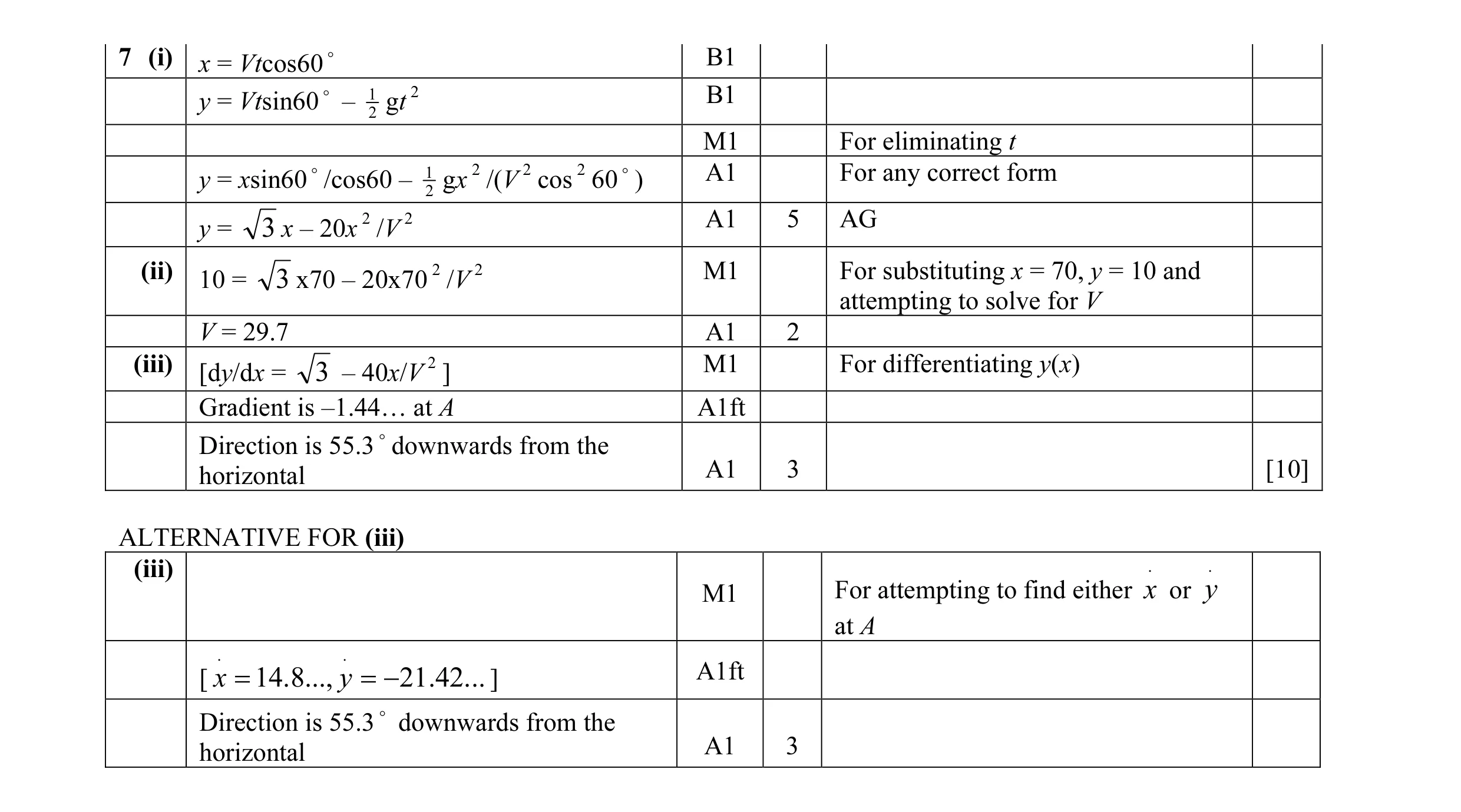 10
10 4
4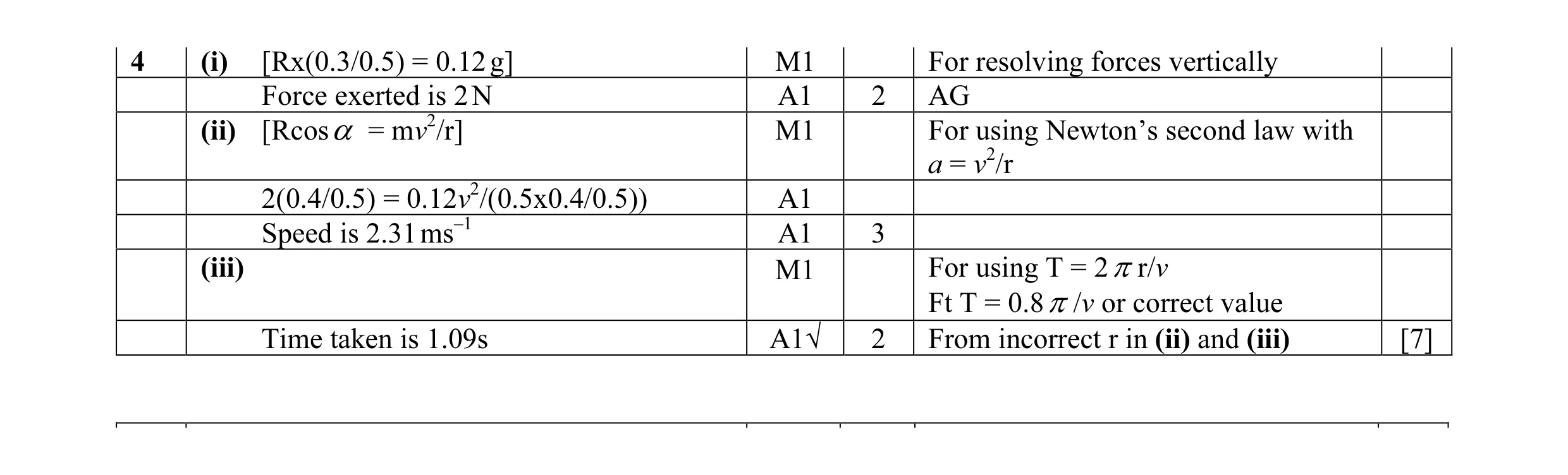 7
7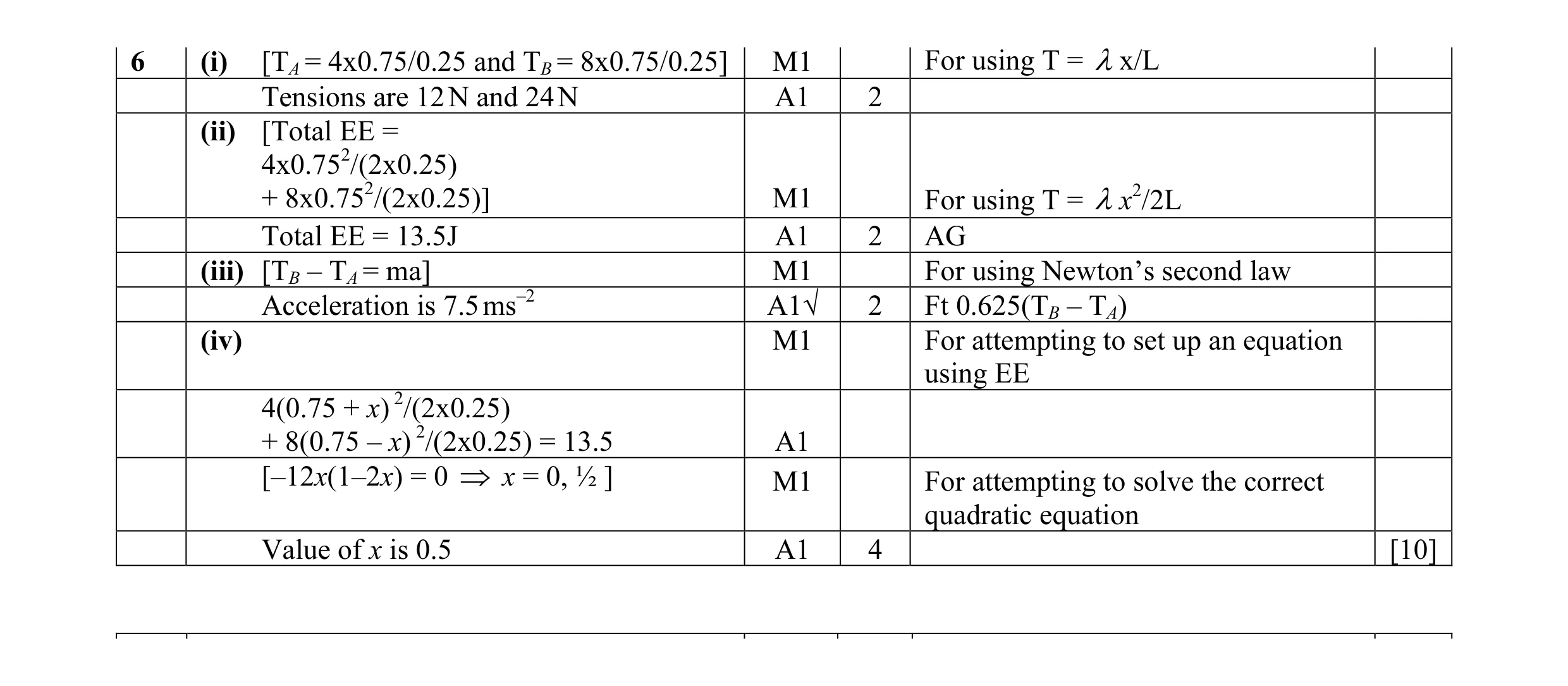 10
10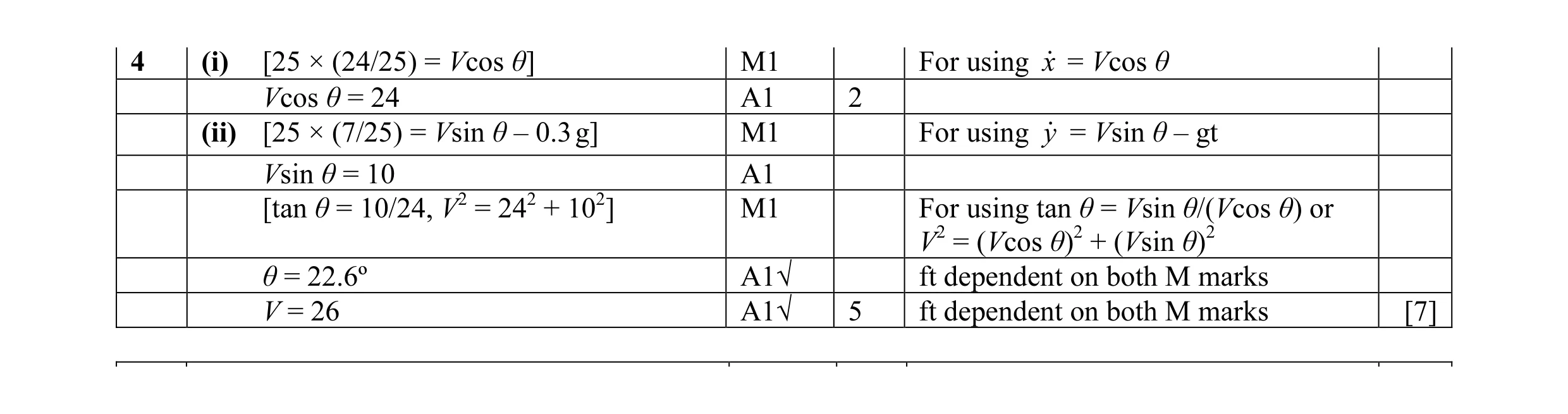 7
7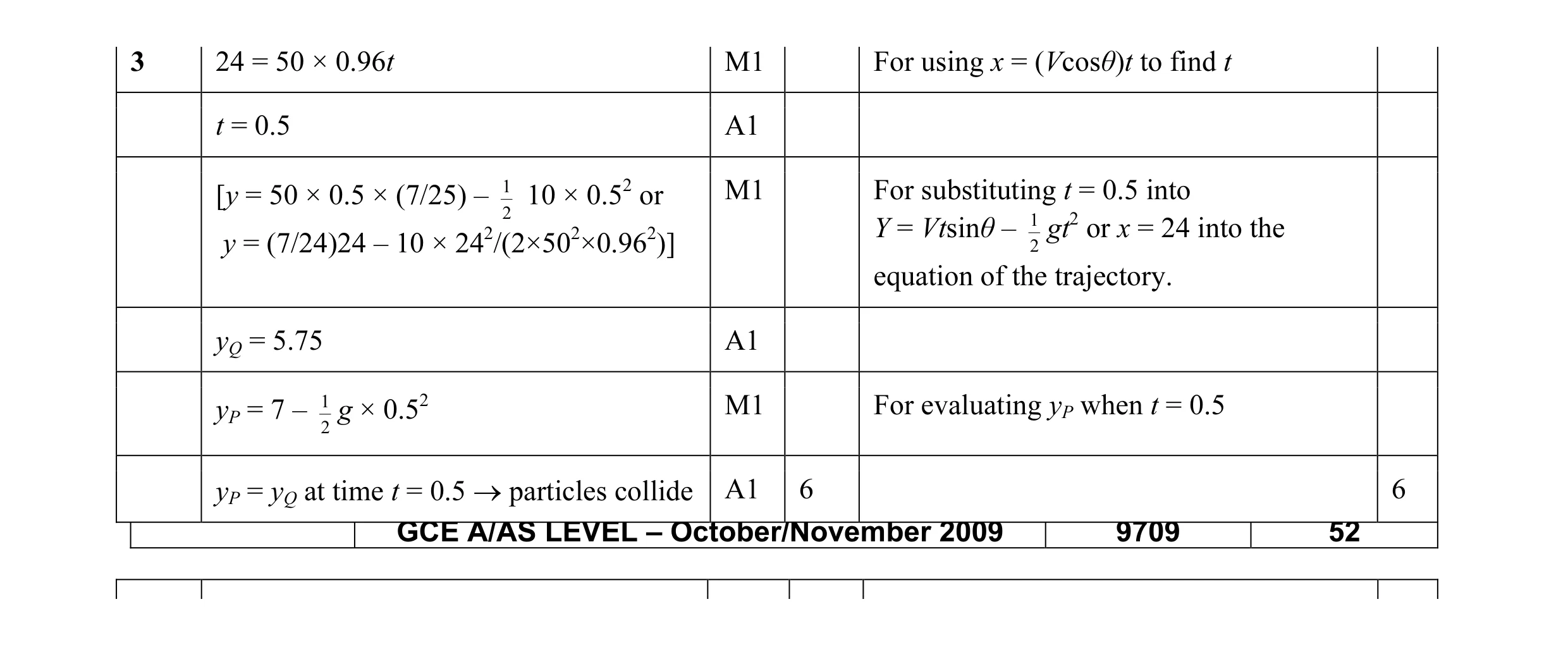 6
6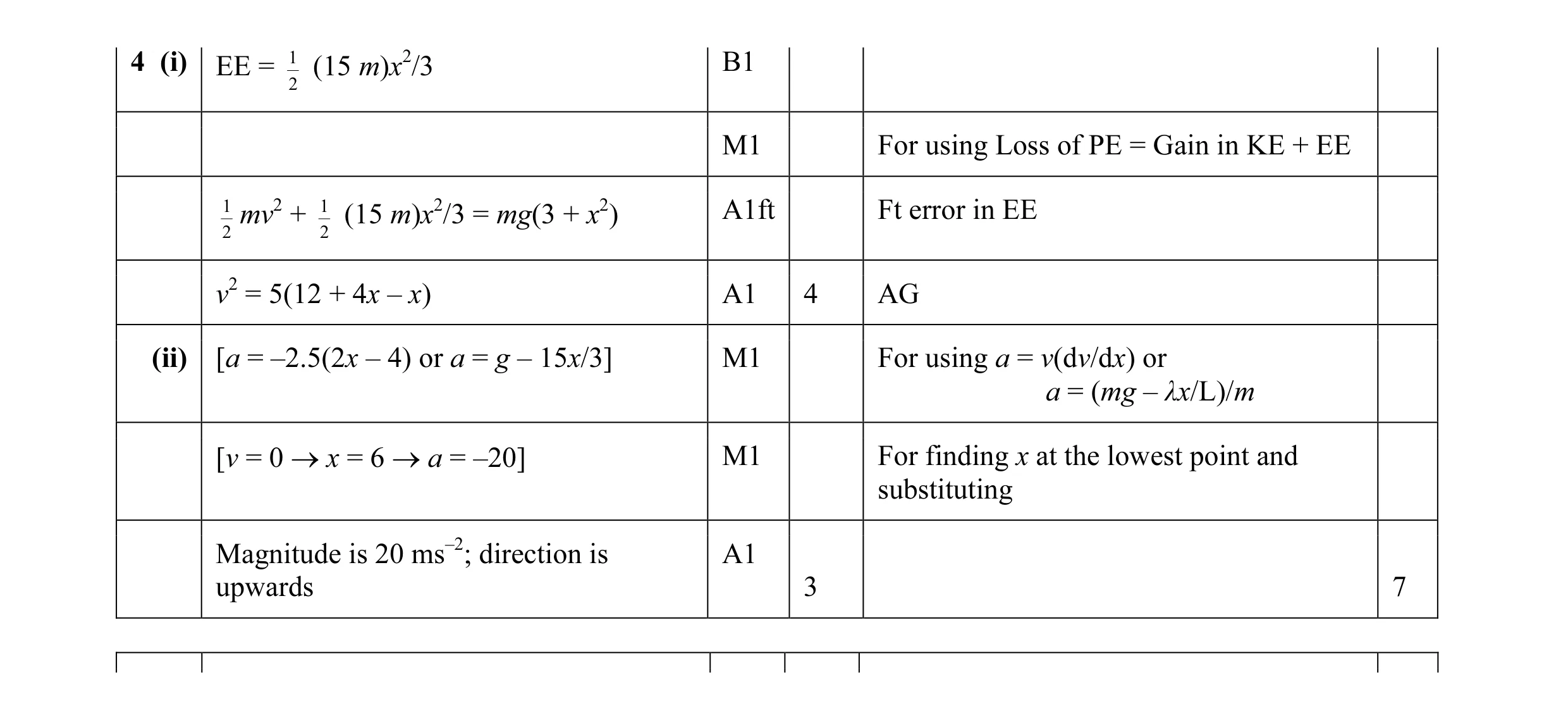 7
7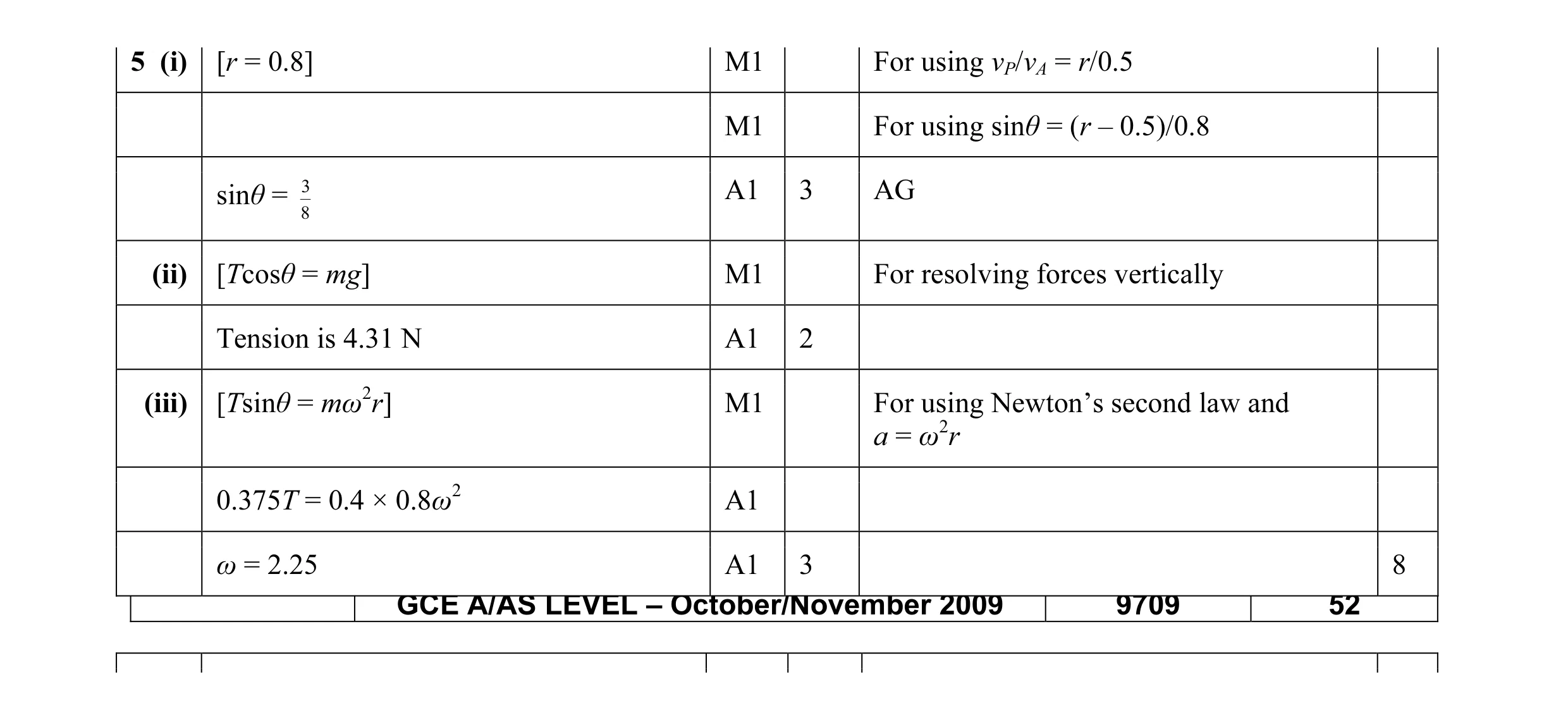 8
8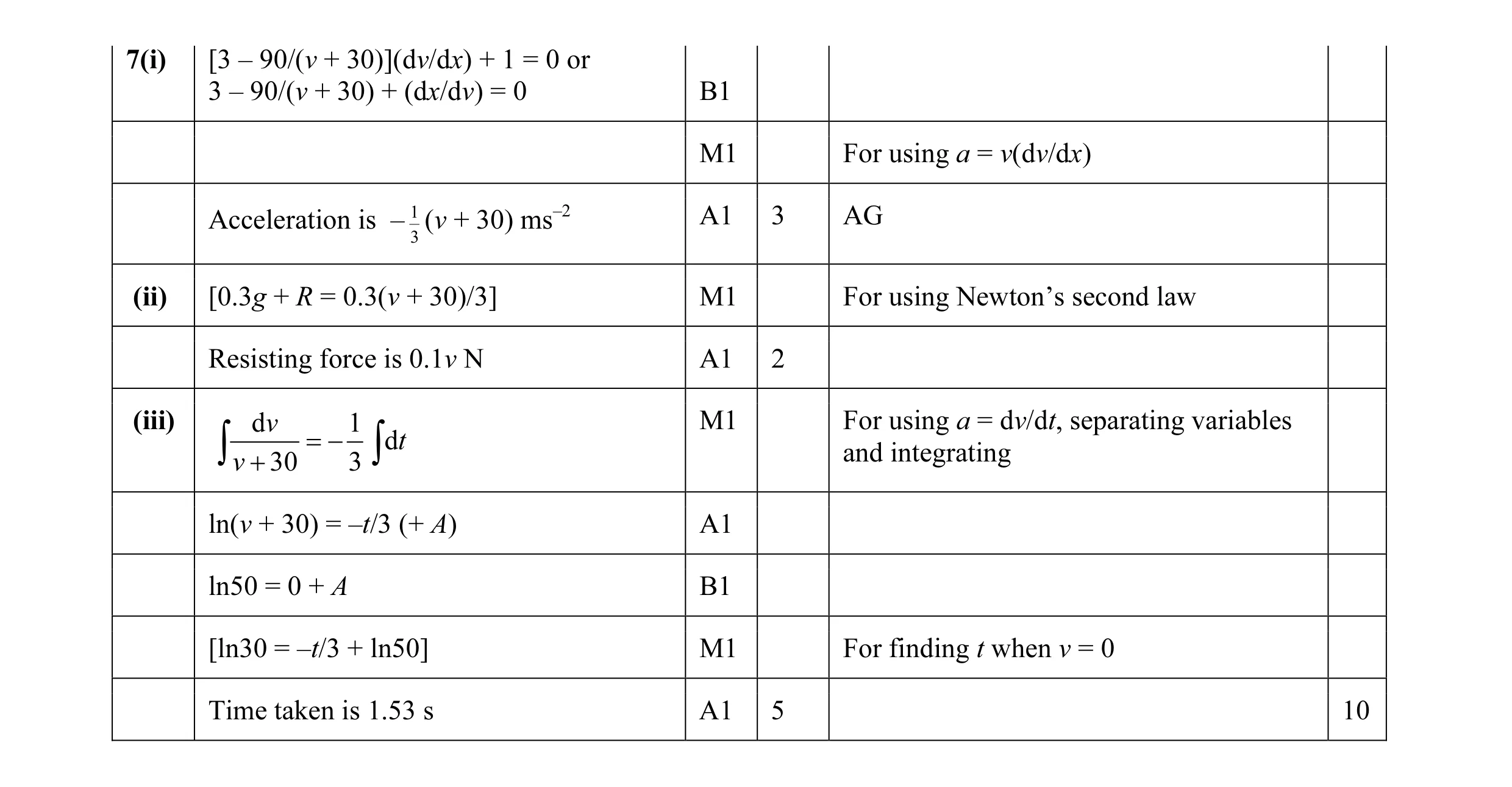 10
10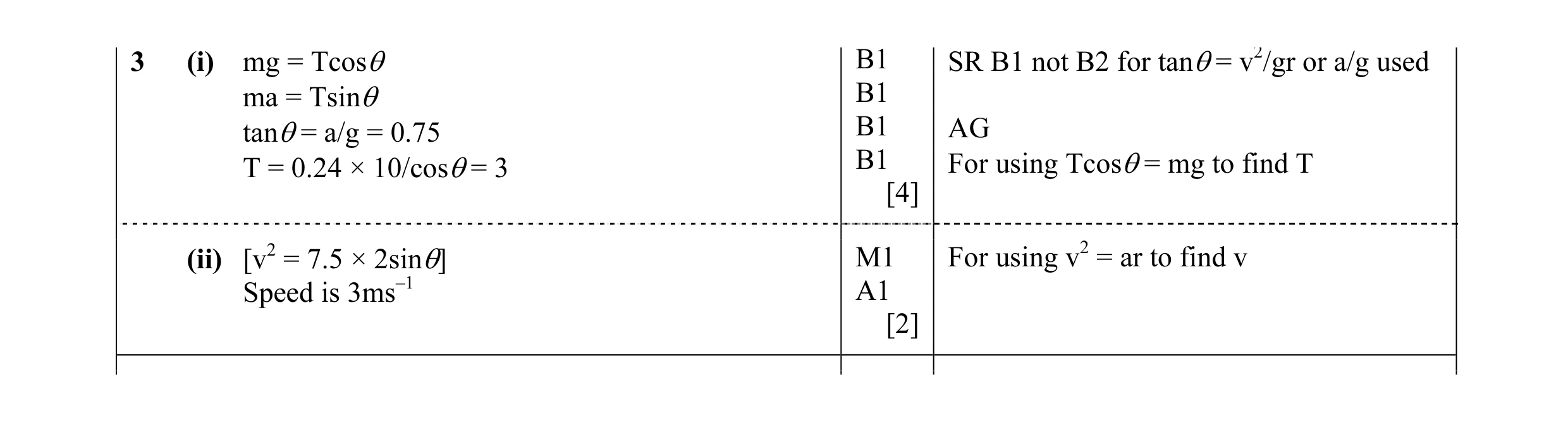 6
6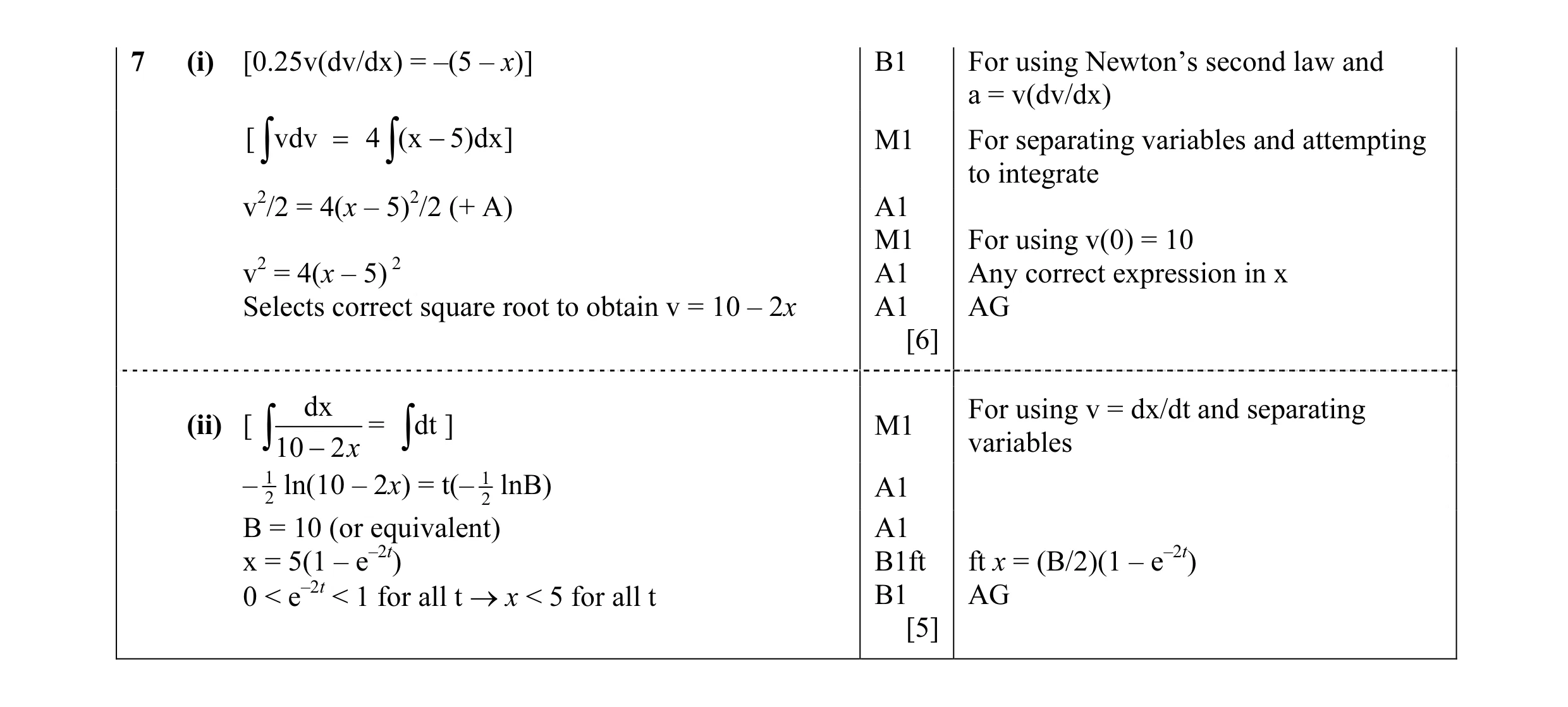 11
11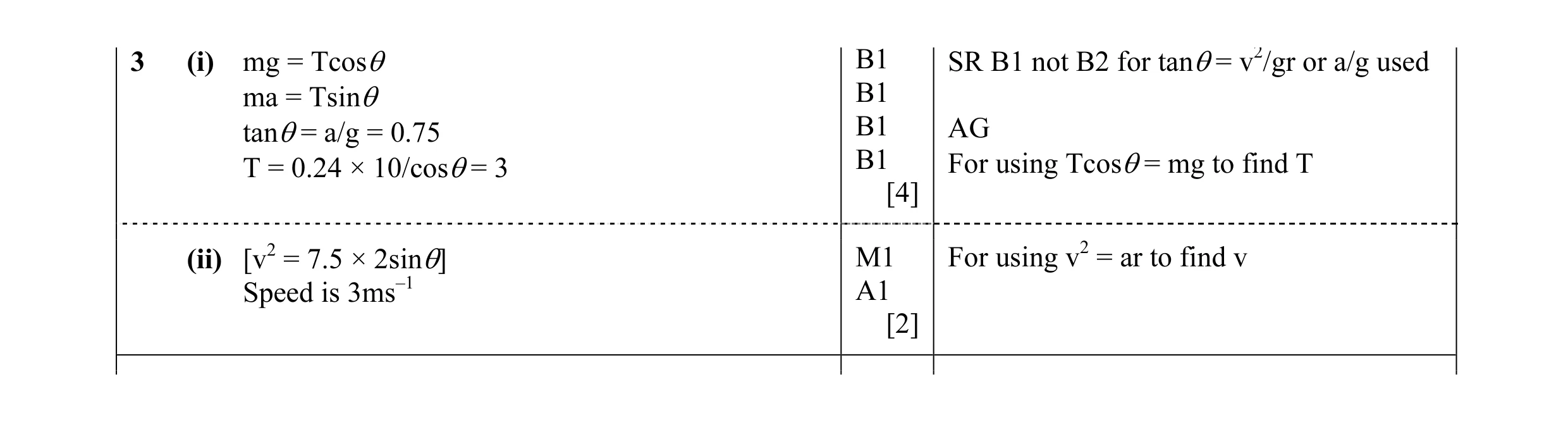 6
6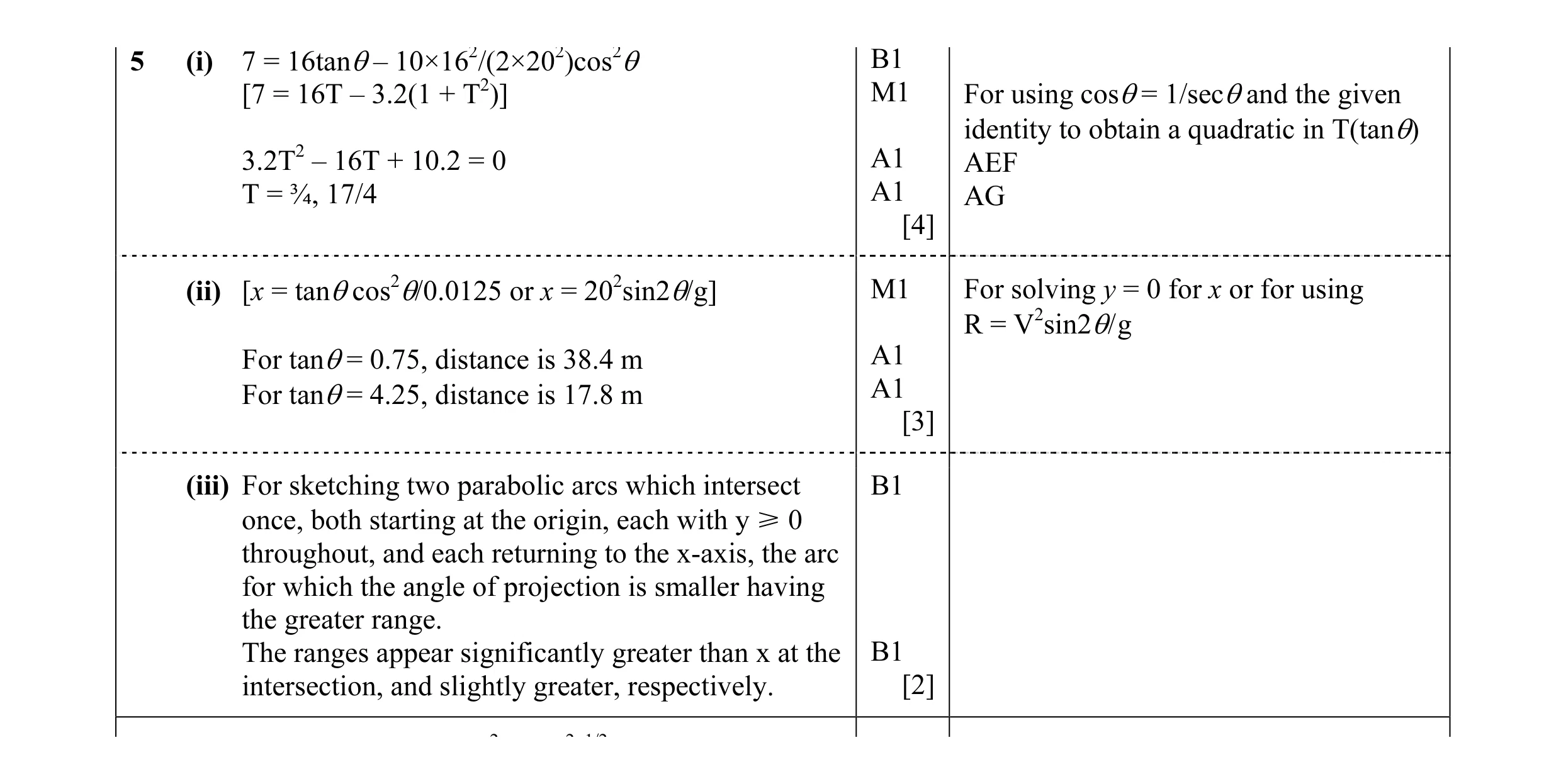 9
9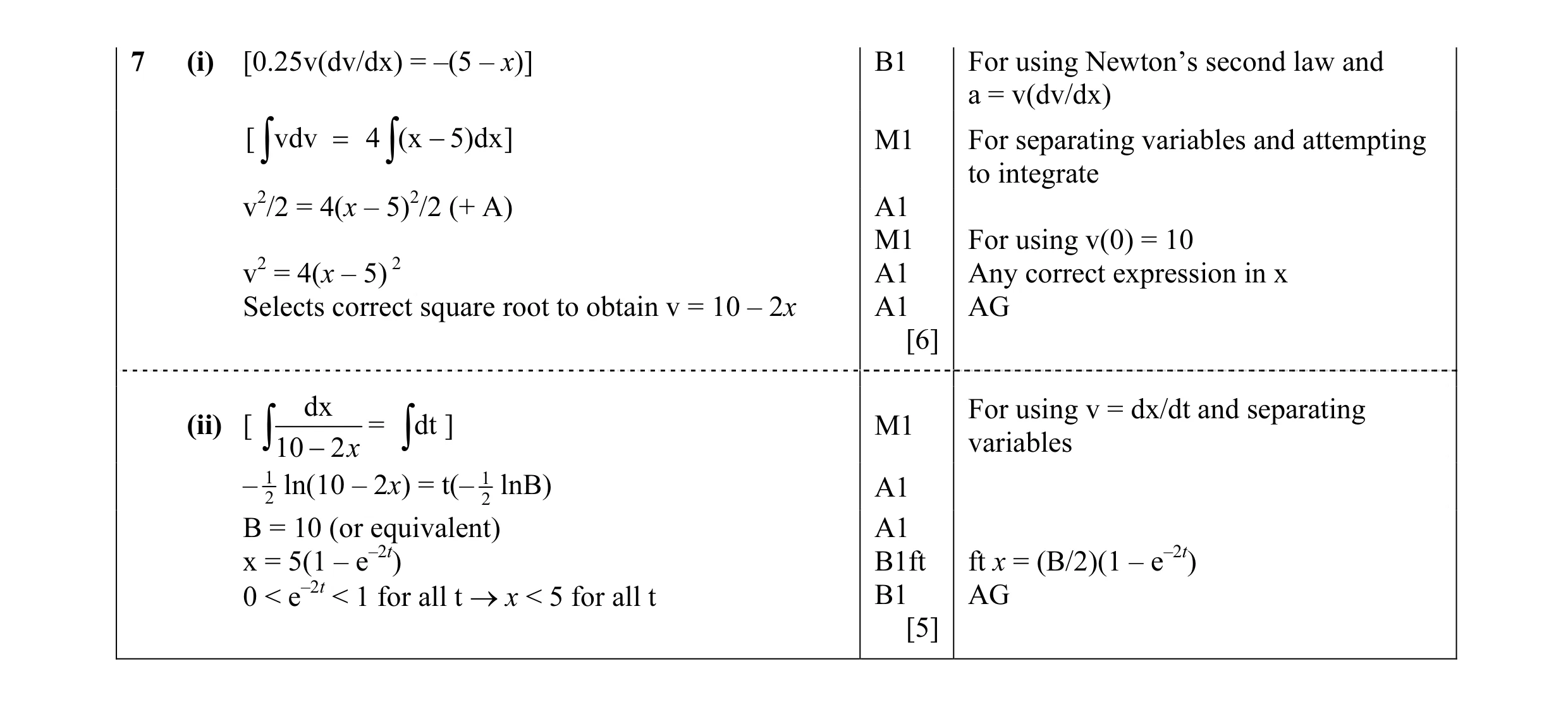 11
11 3
3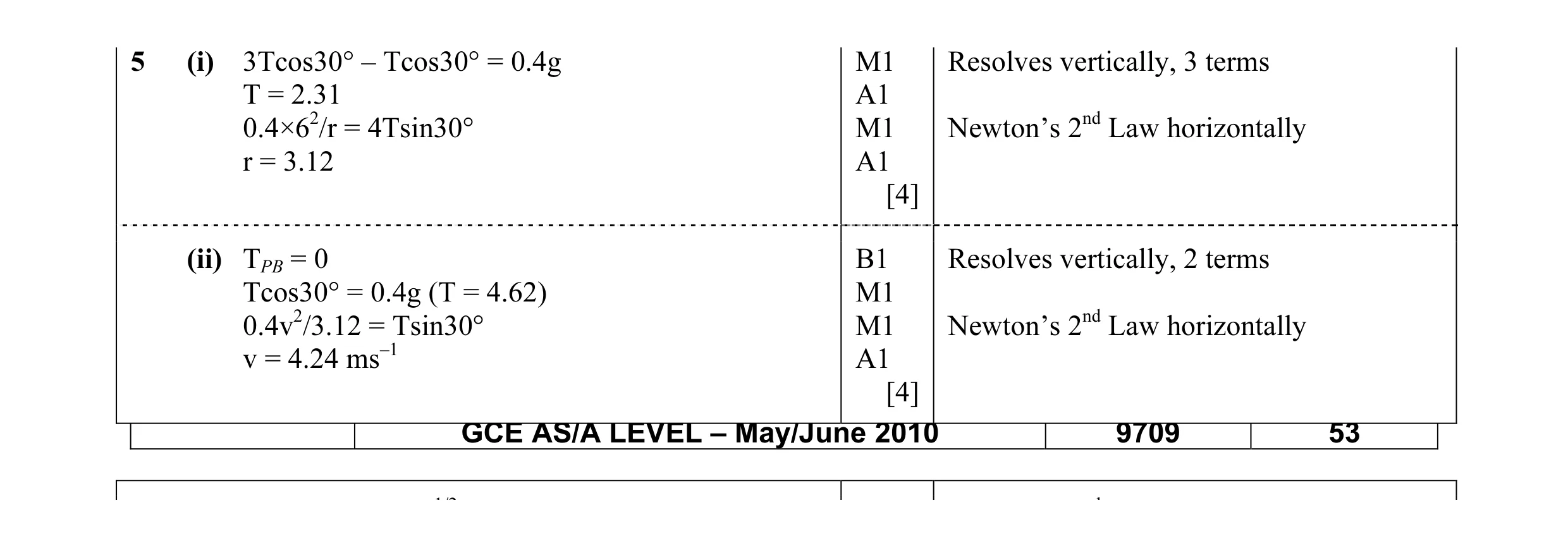 8
8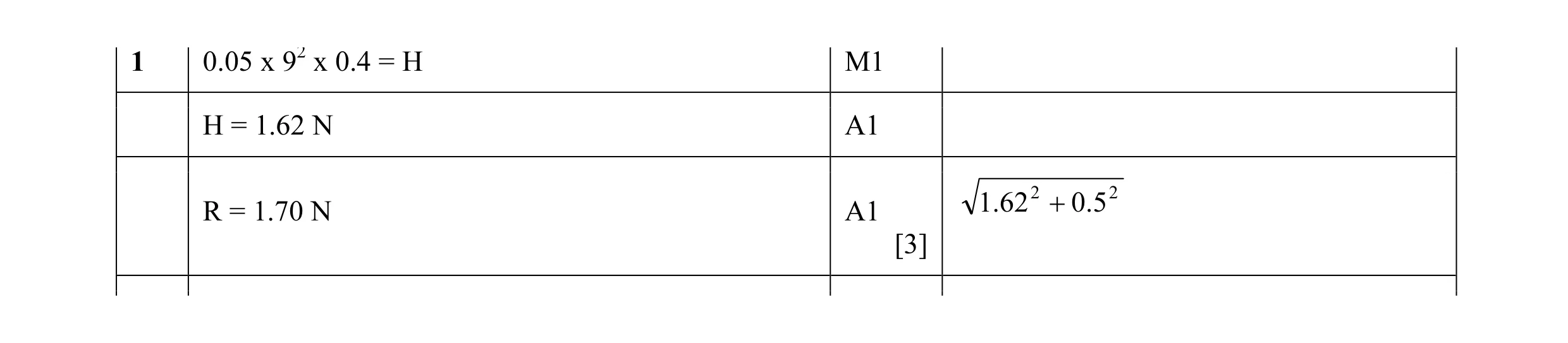 3
3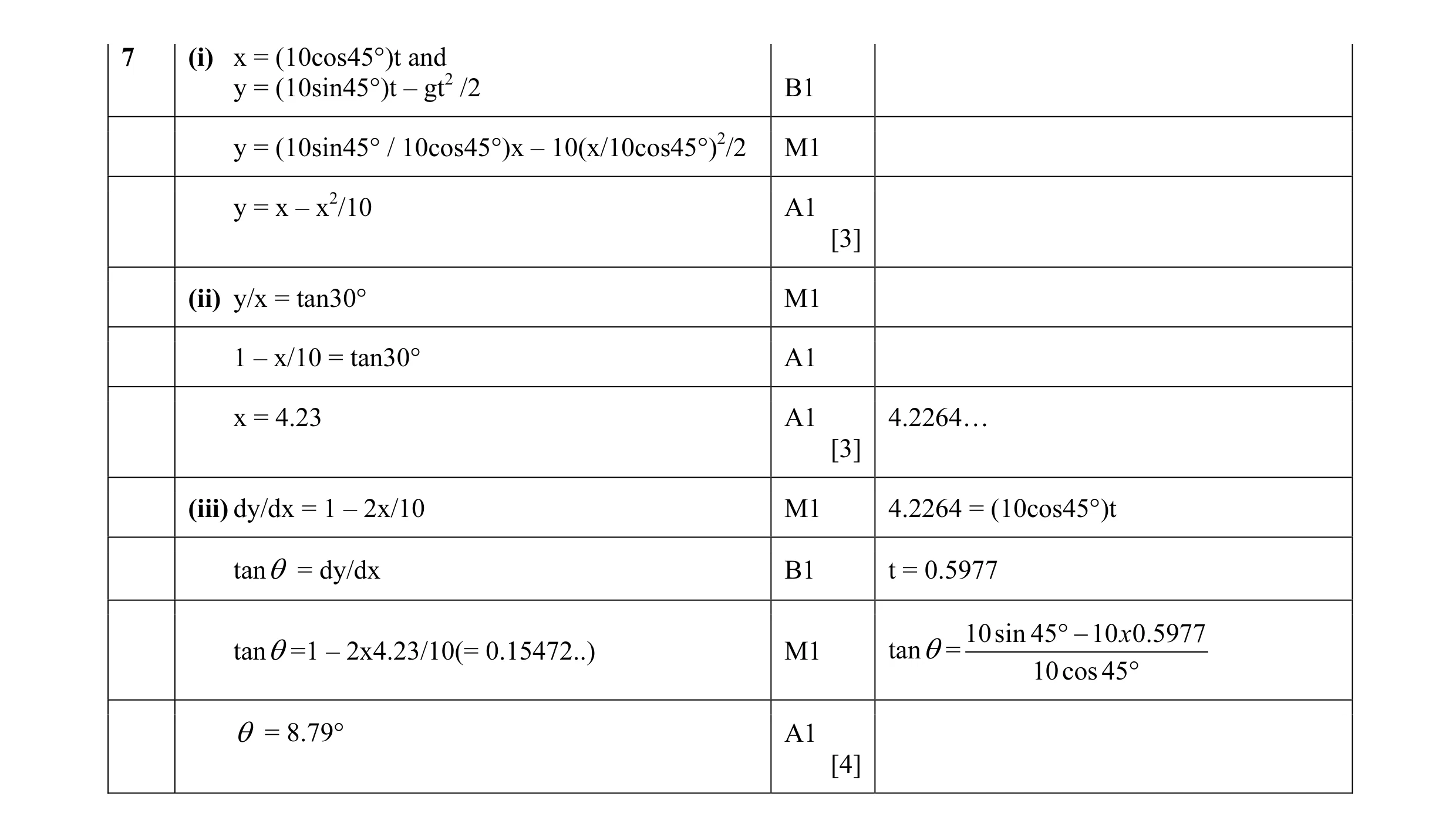 10
10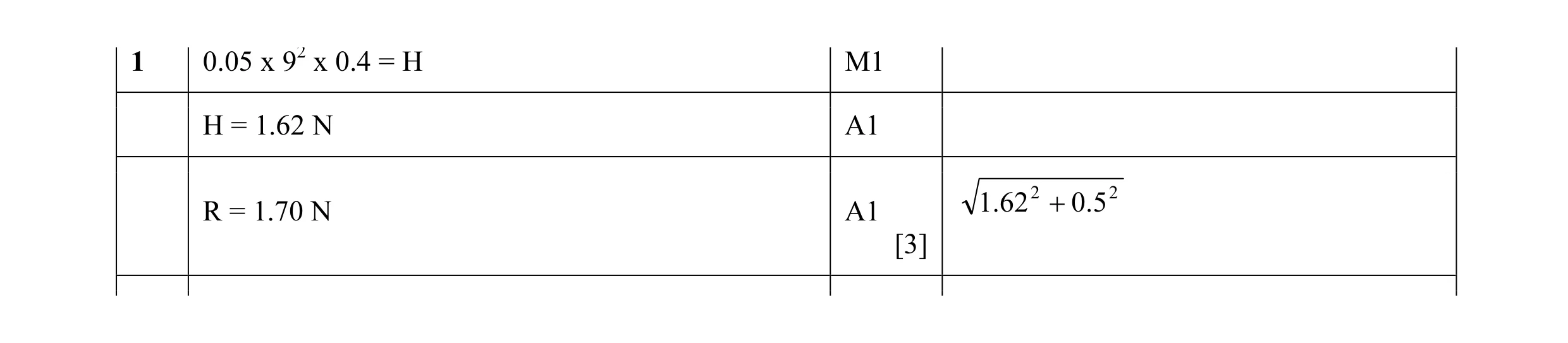 3
3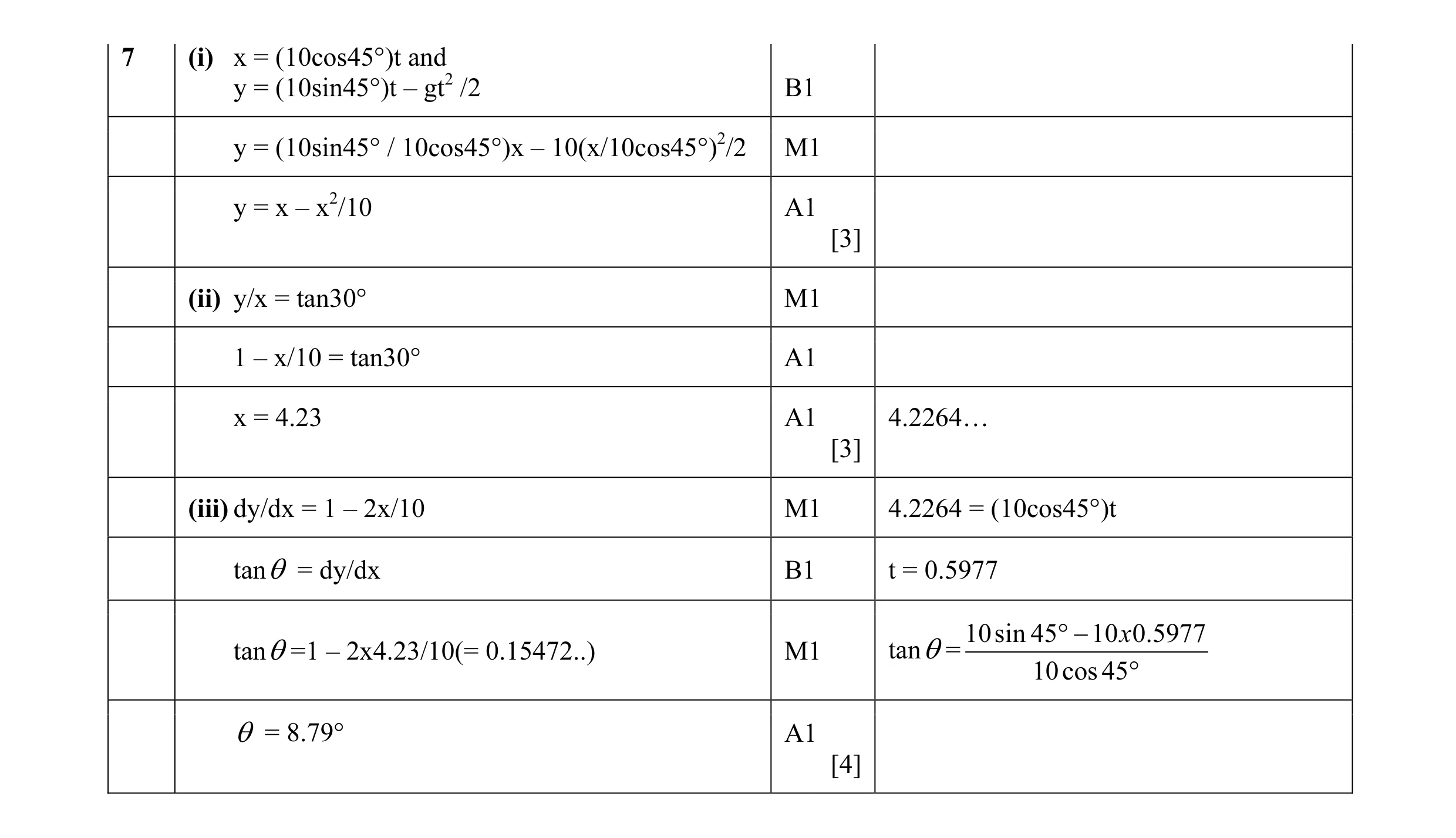 10
10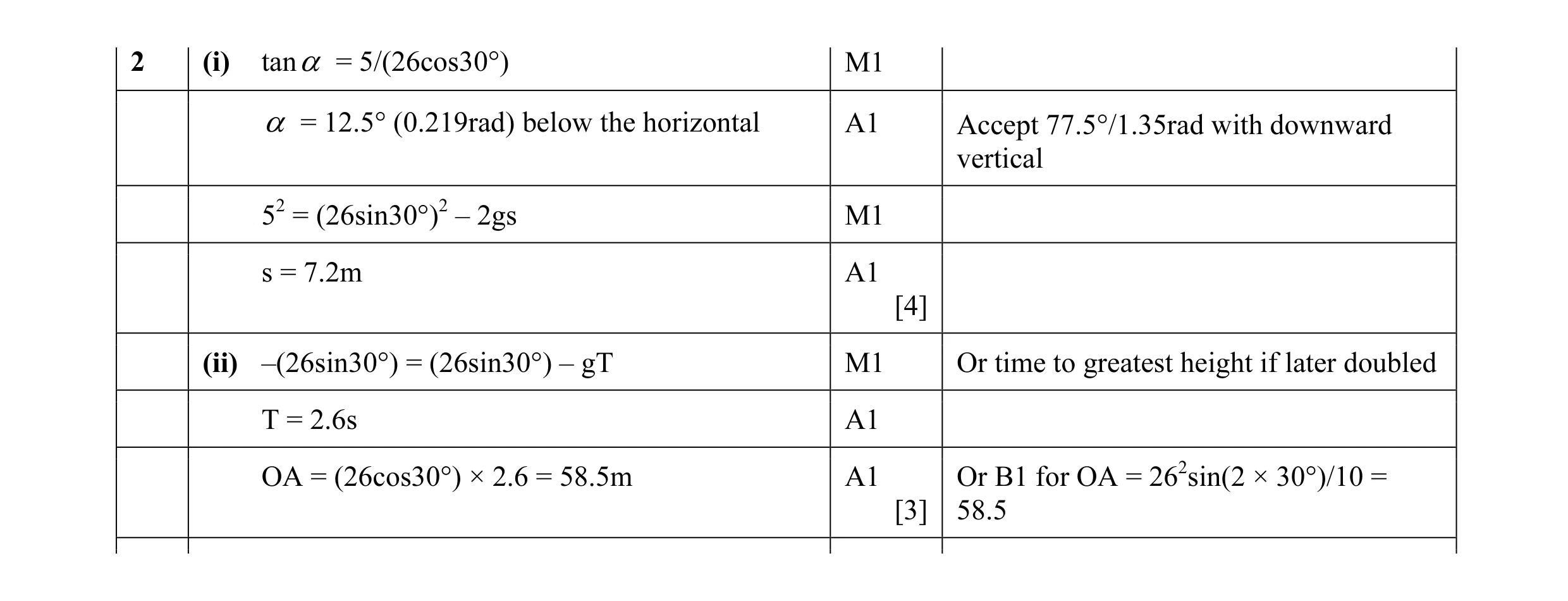 7
7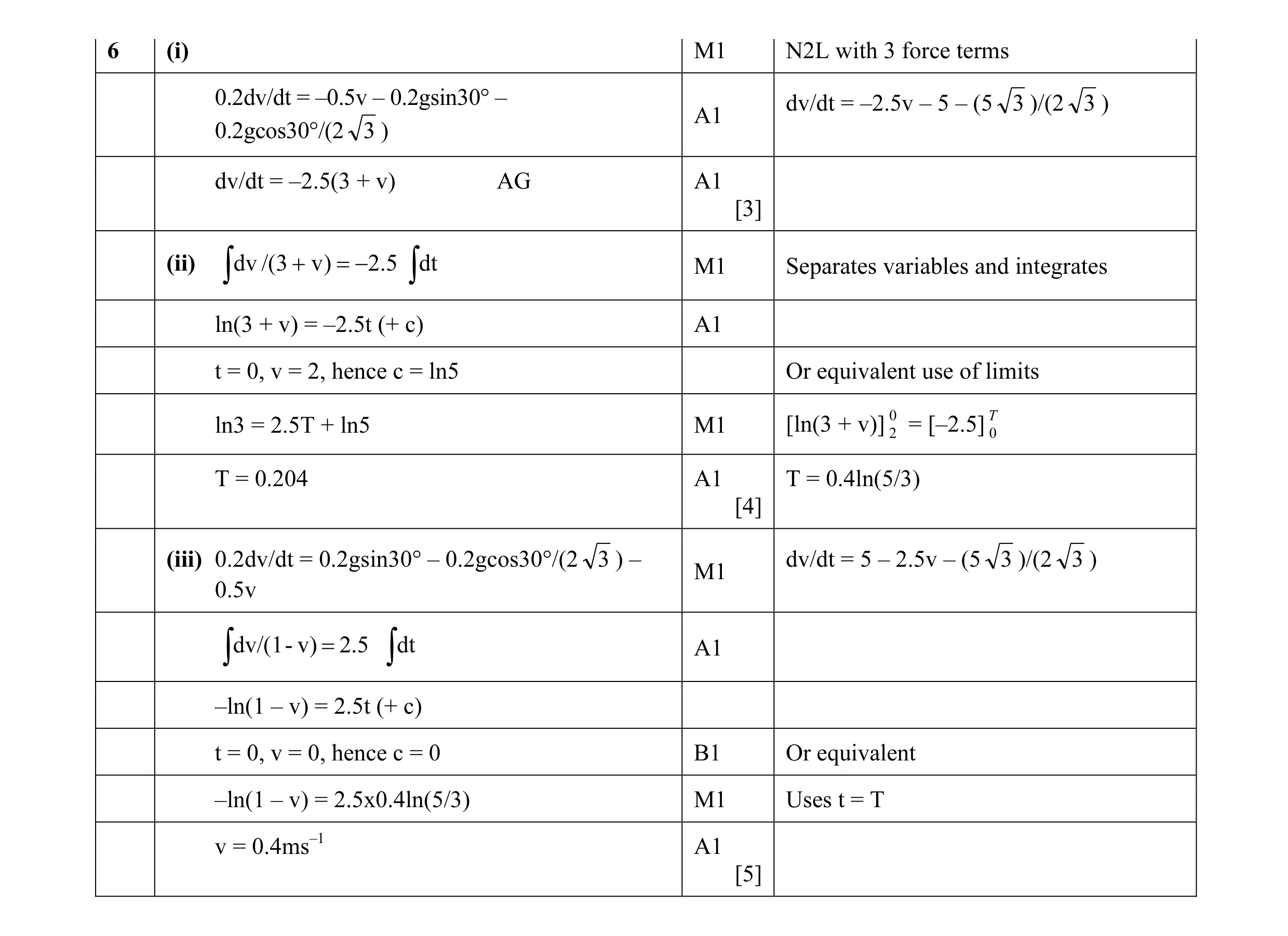 12
12 2
2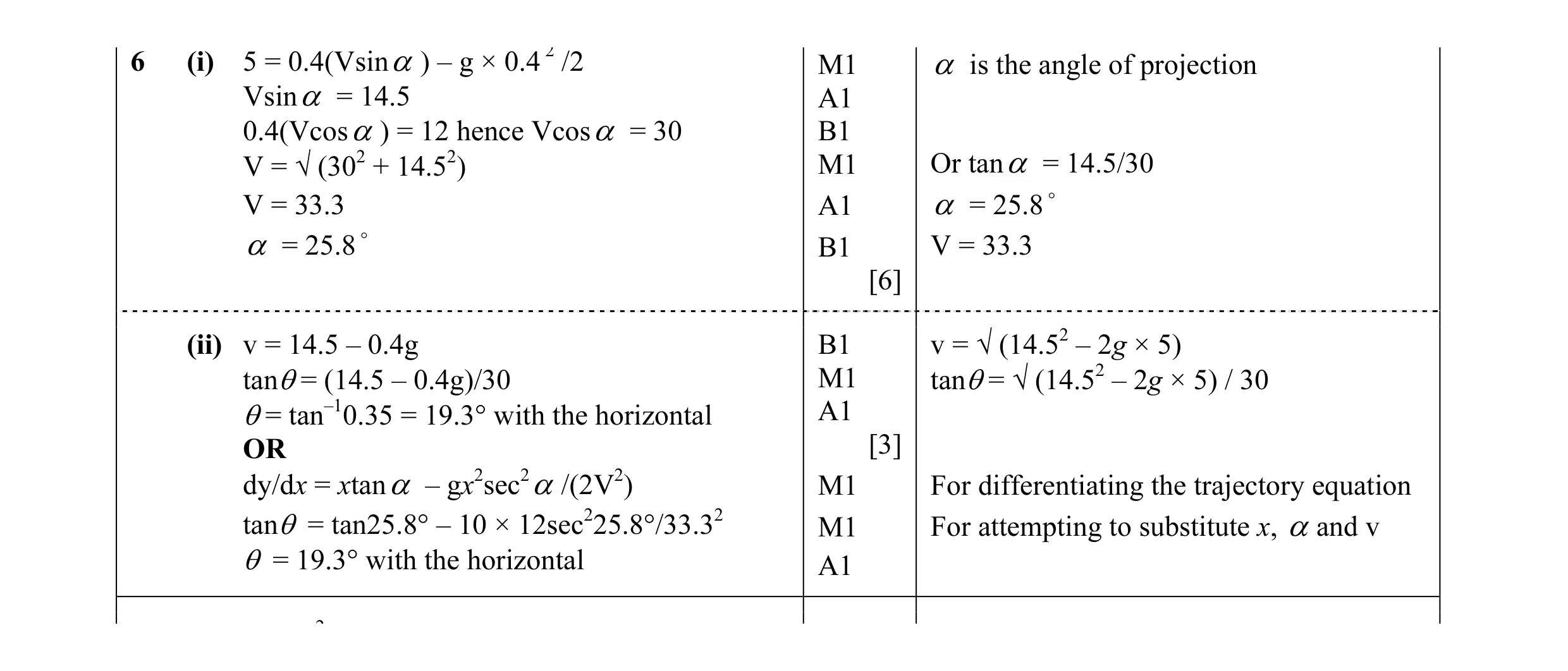 9
9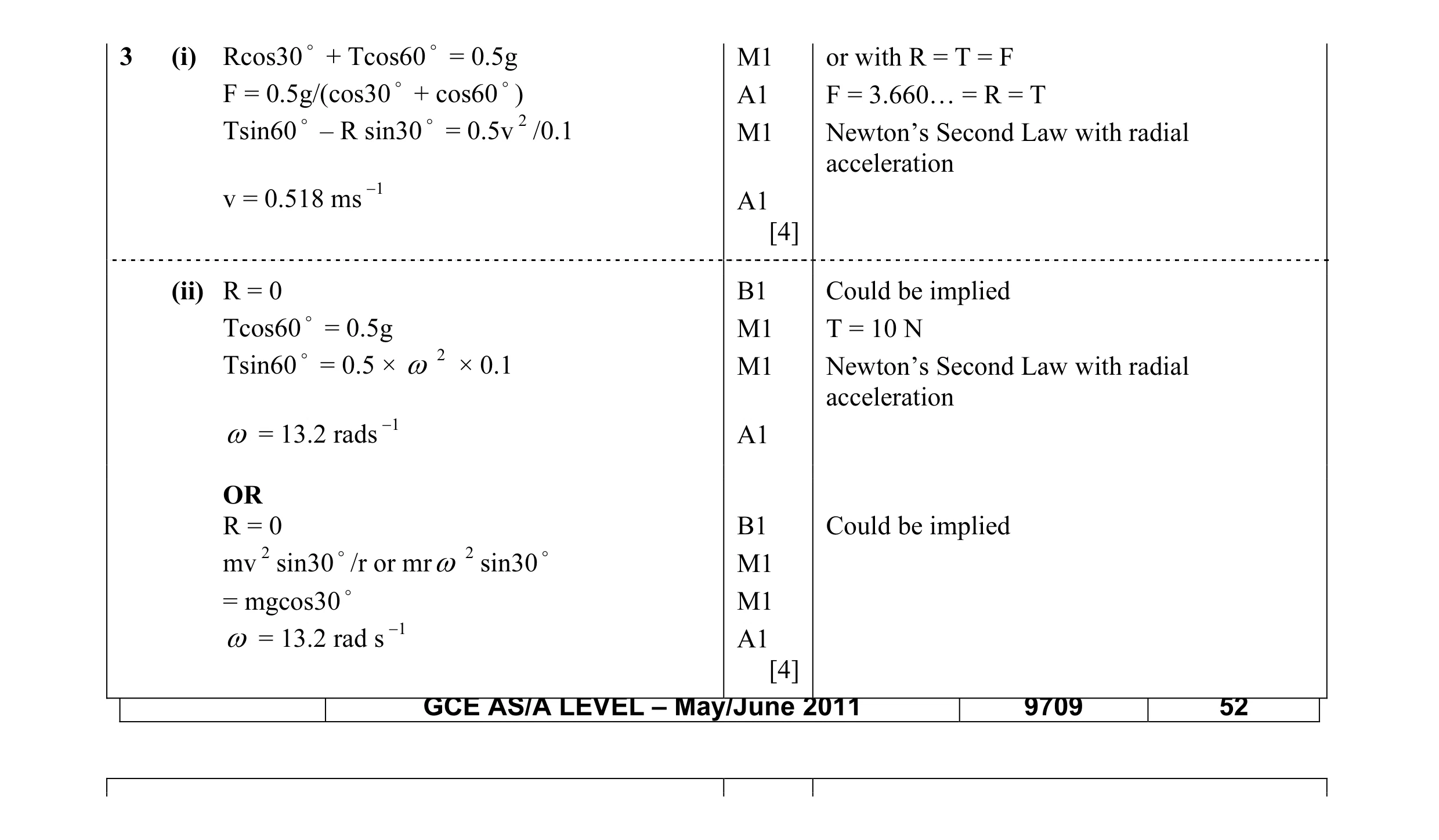 8
8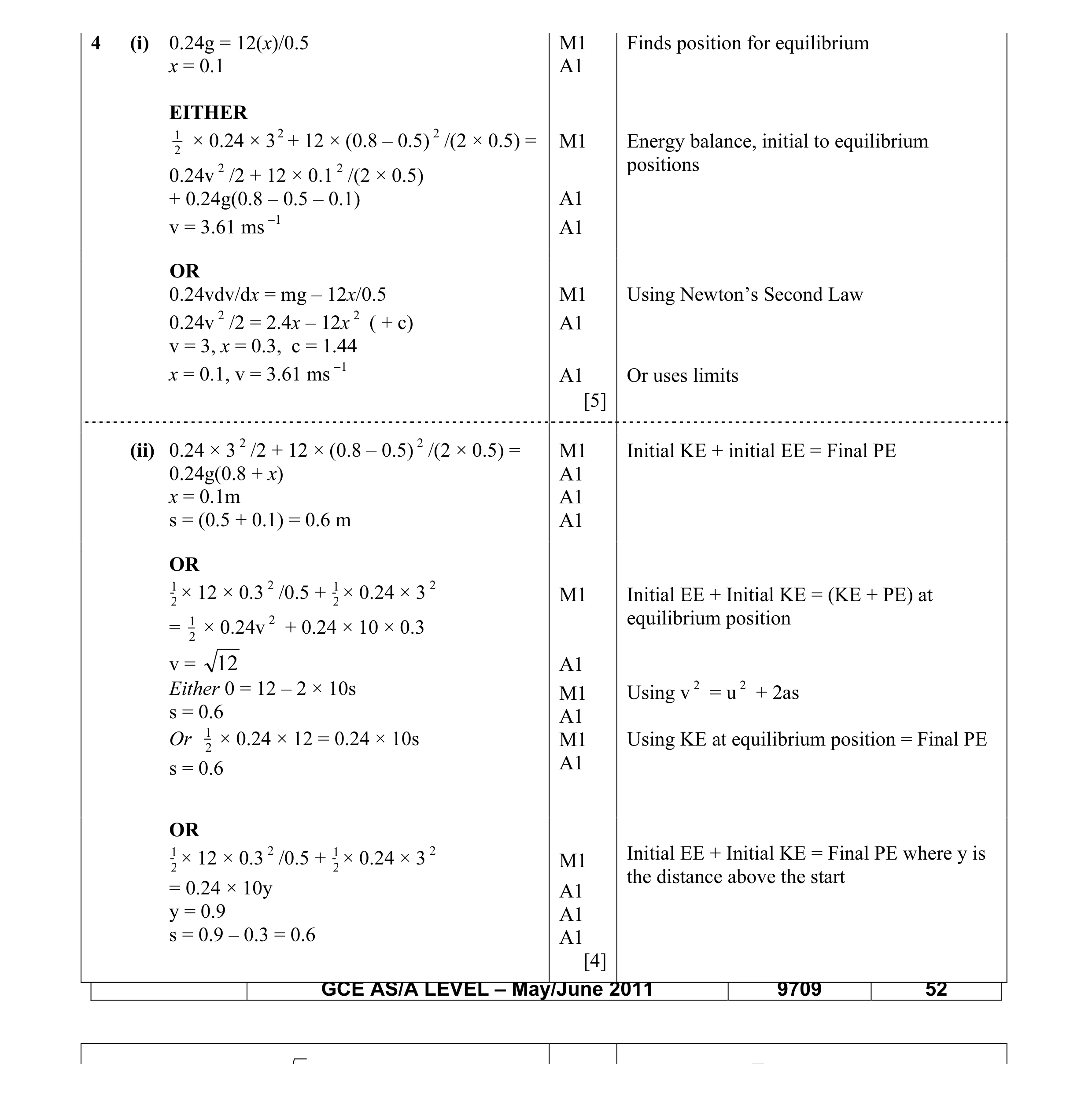 9
9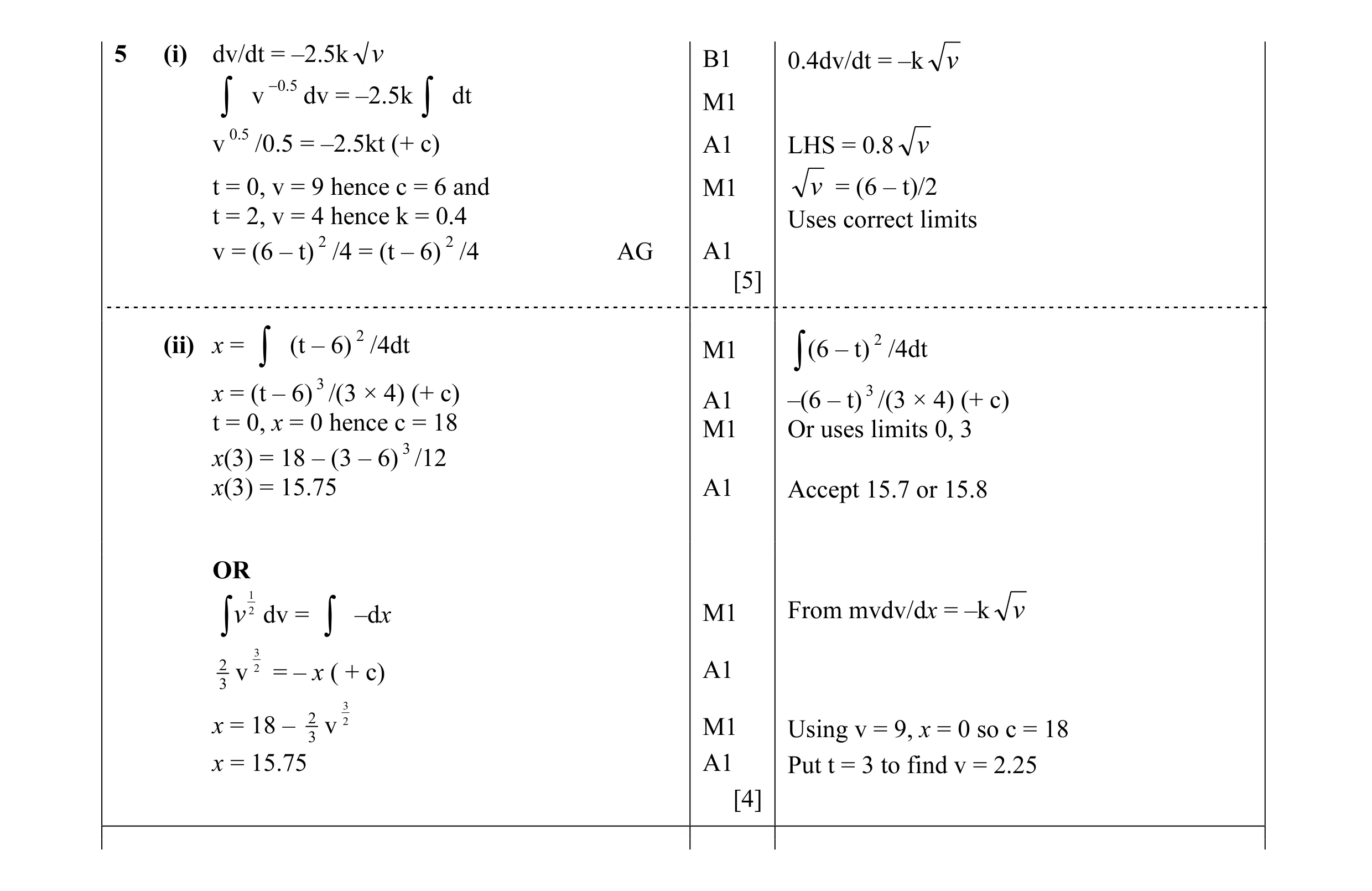 9
9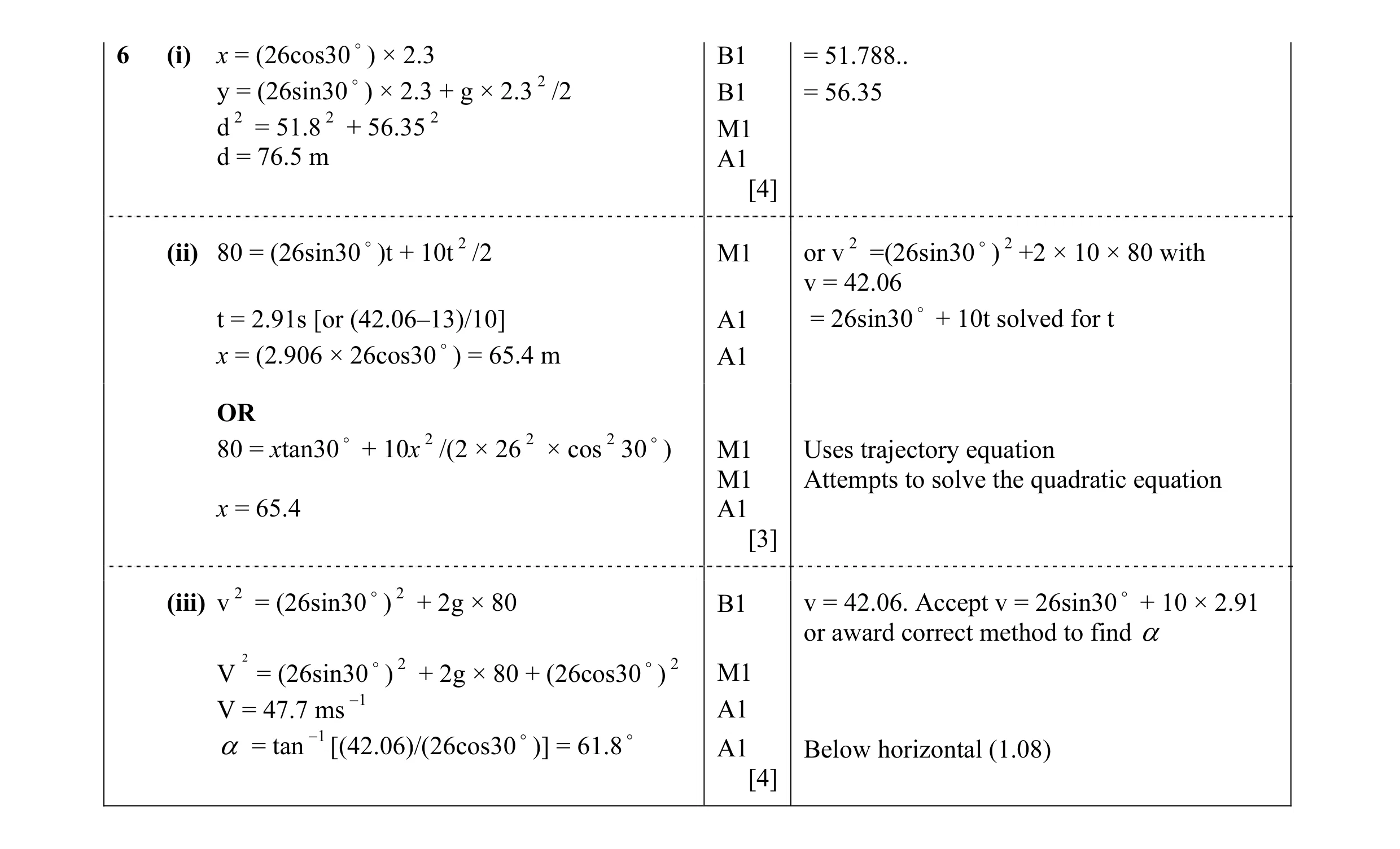 11
11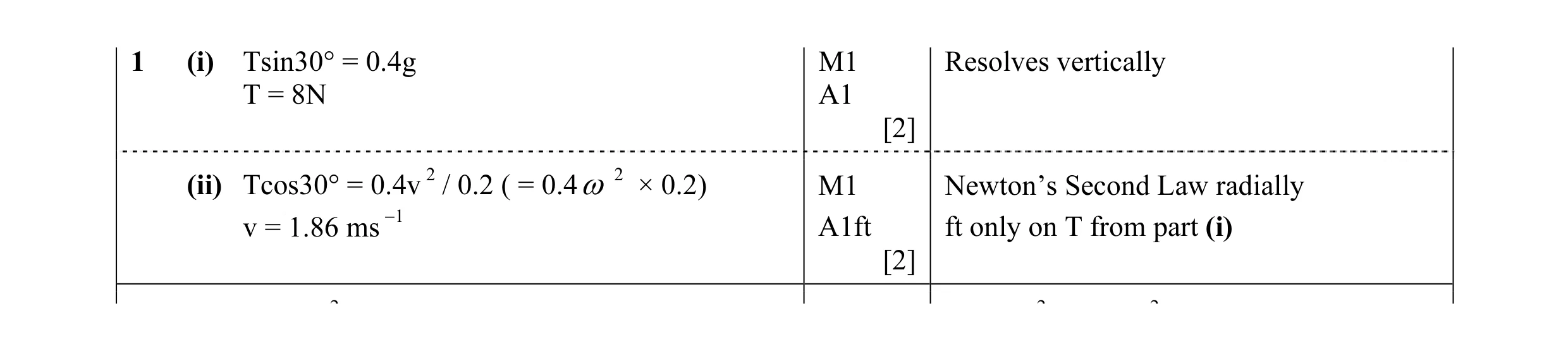 4
4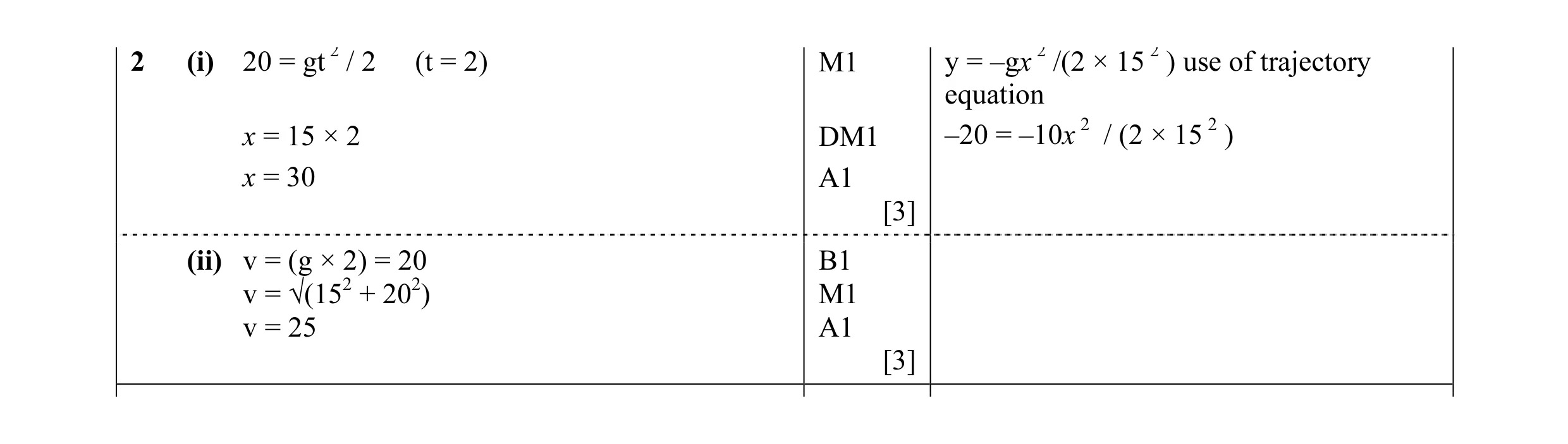 6
6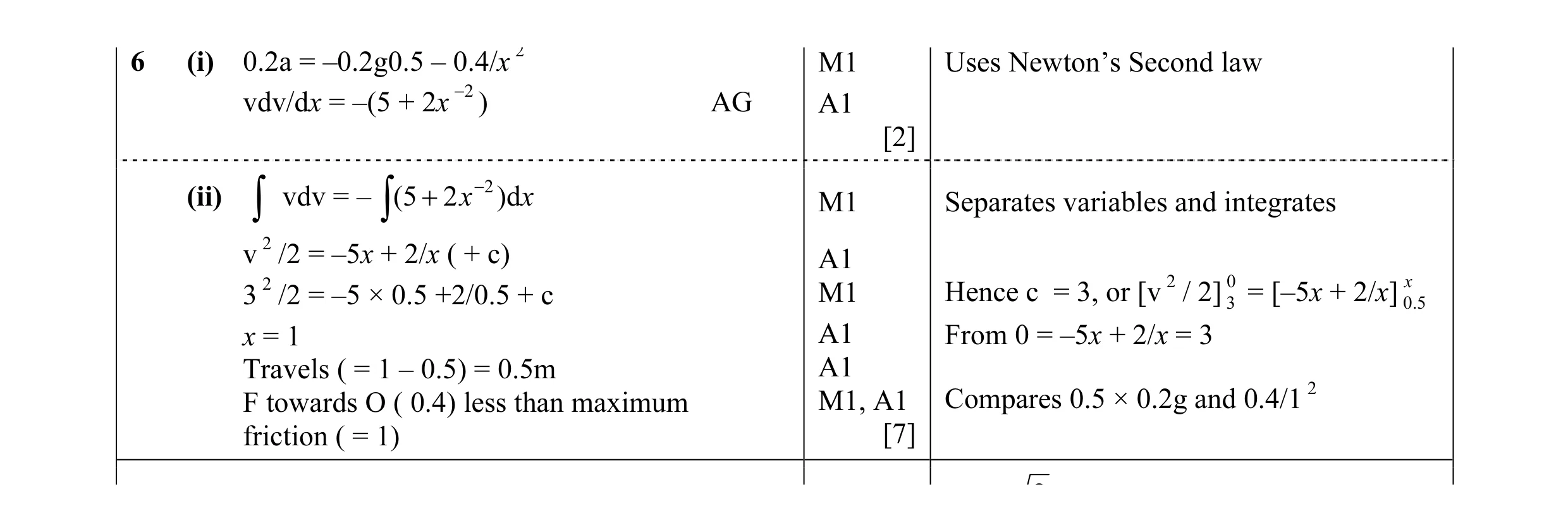 9
9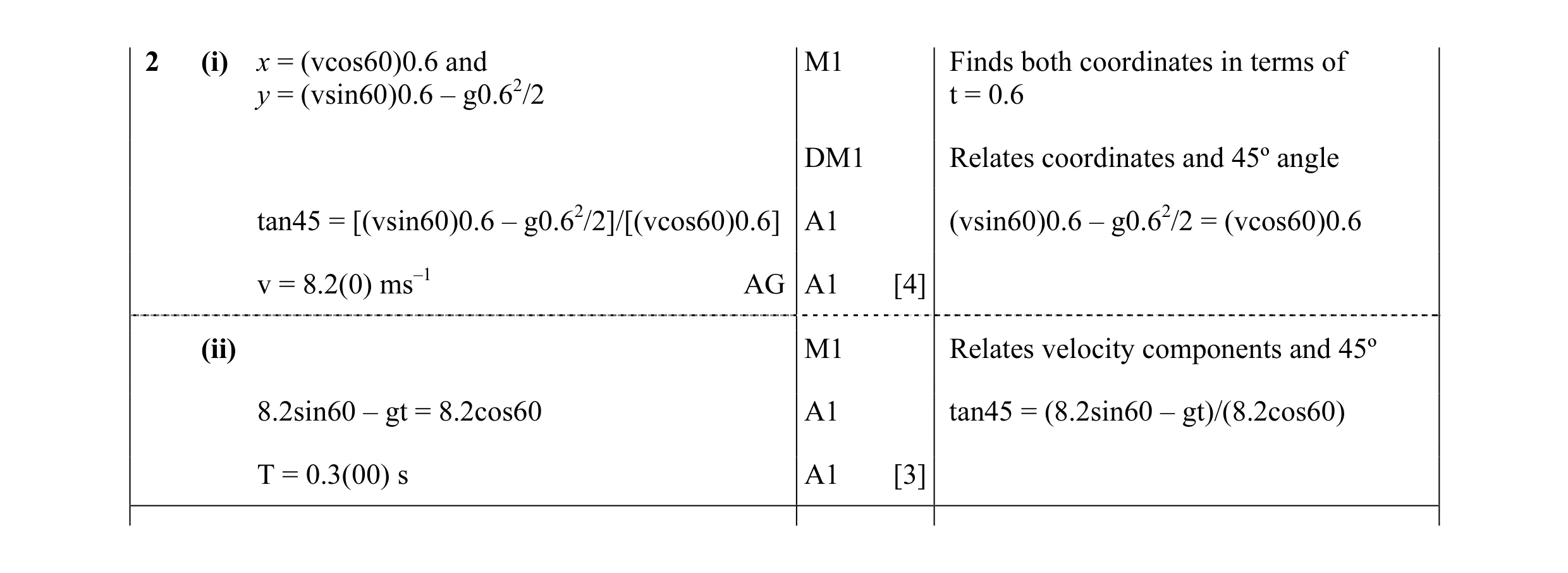 7
7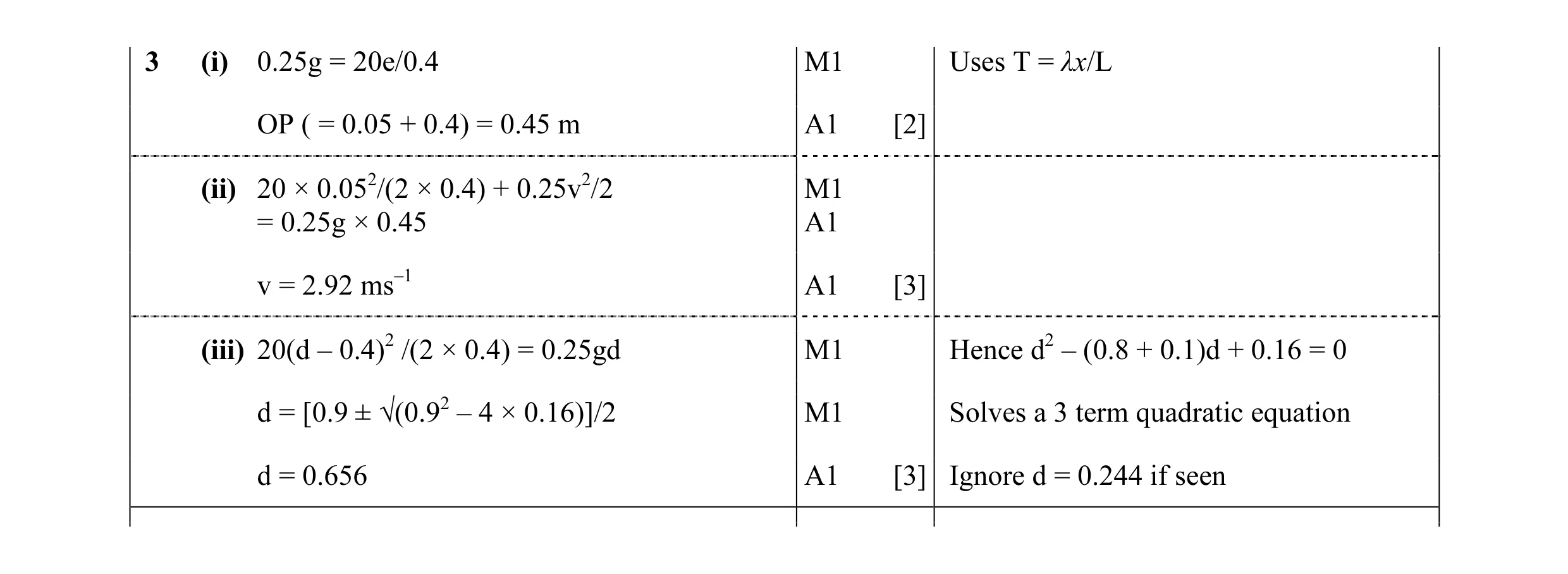 8
8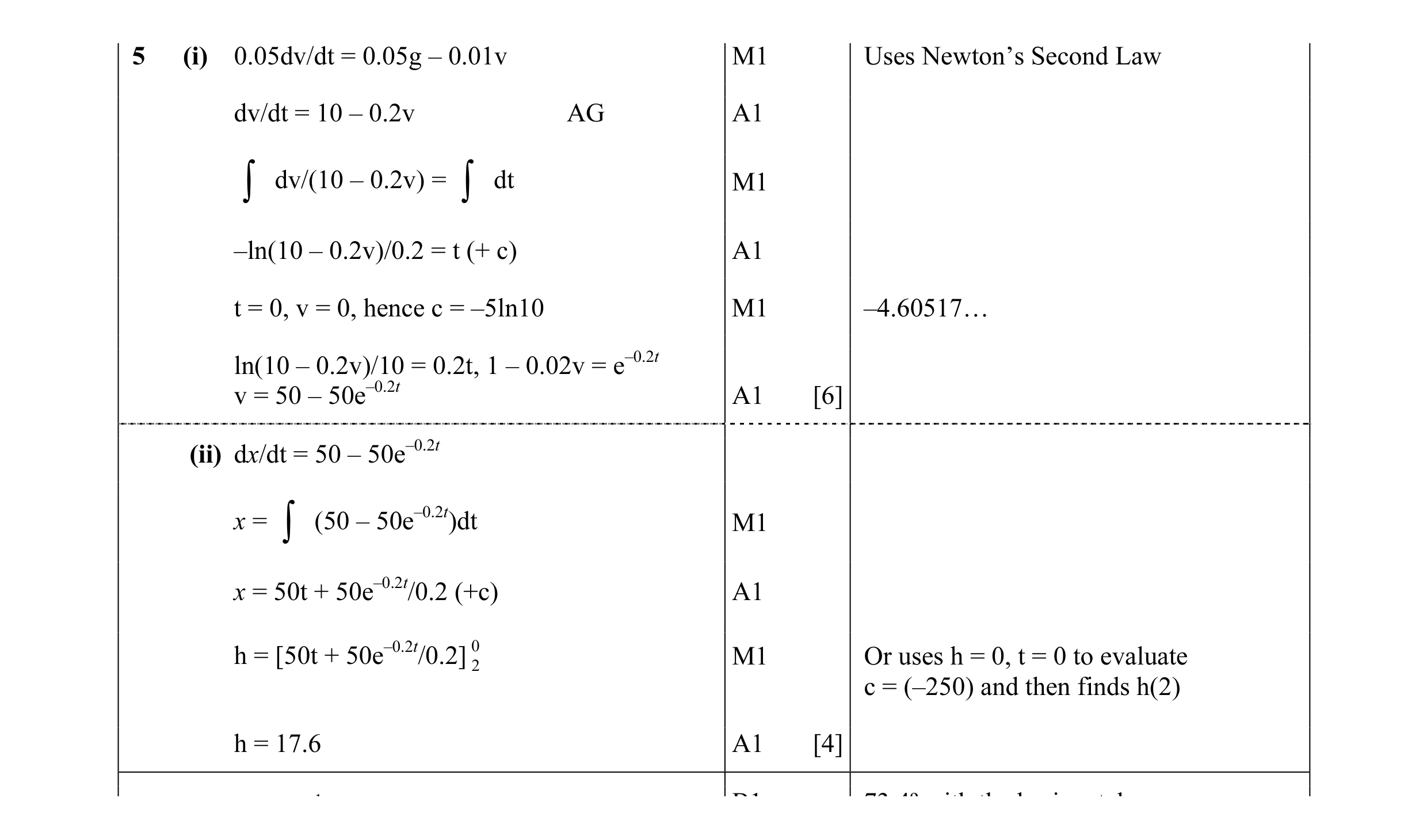 10
10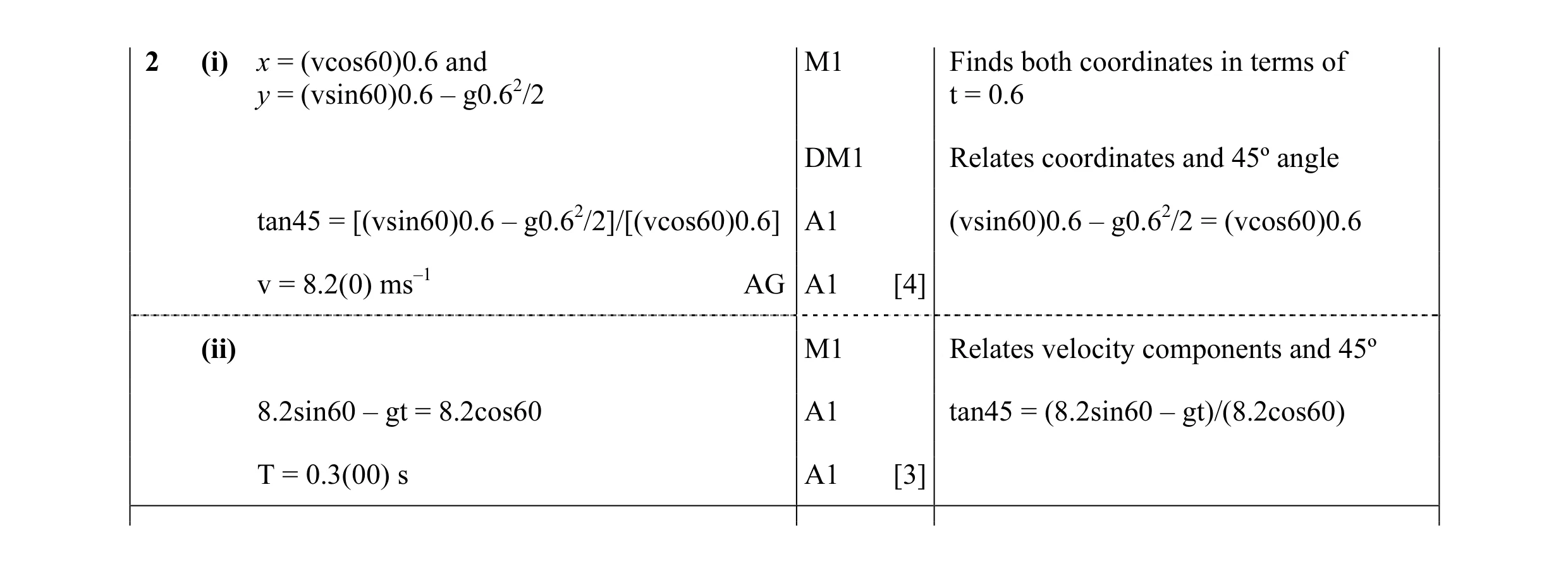 7
7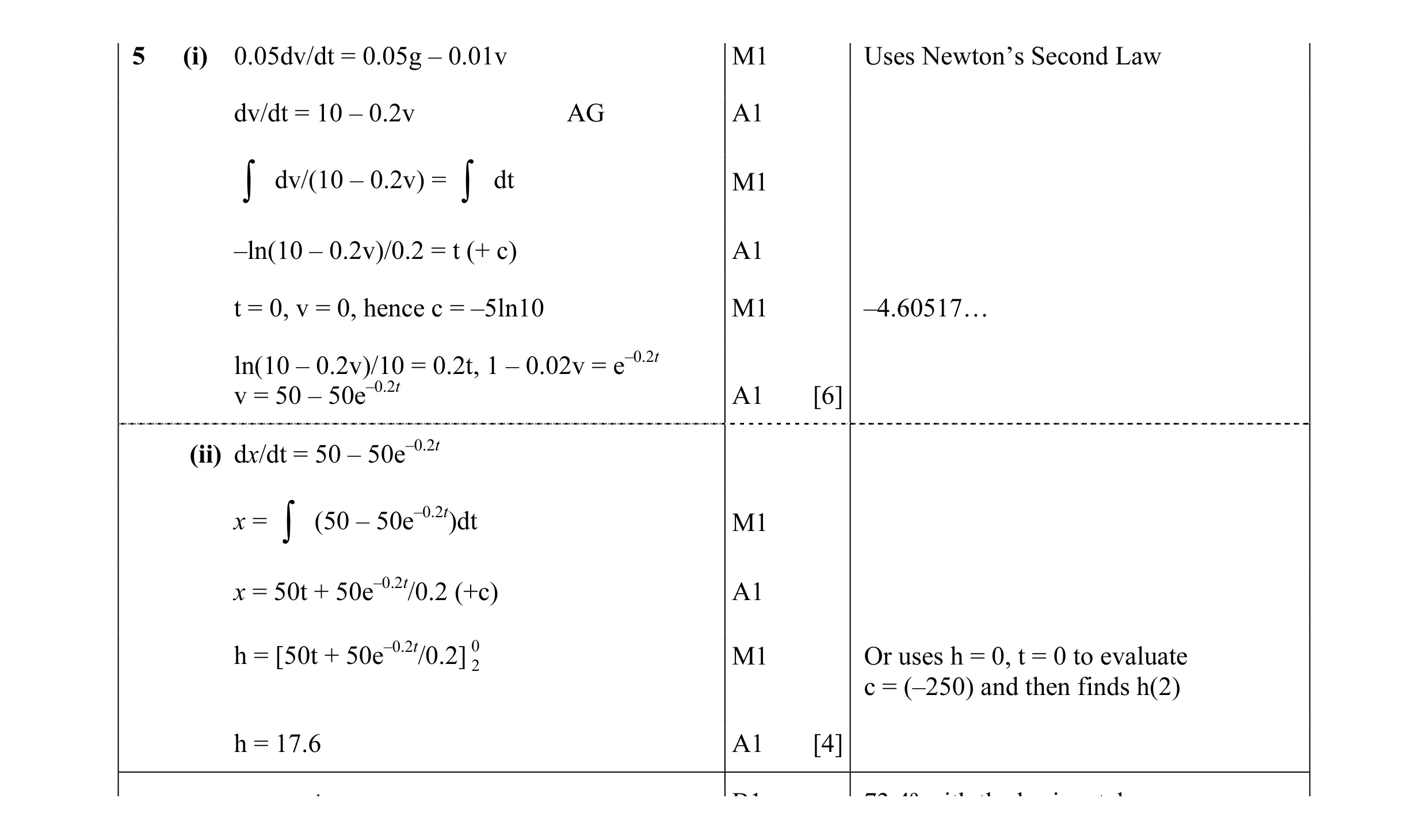 10
10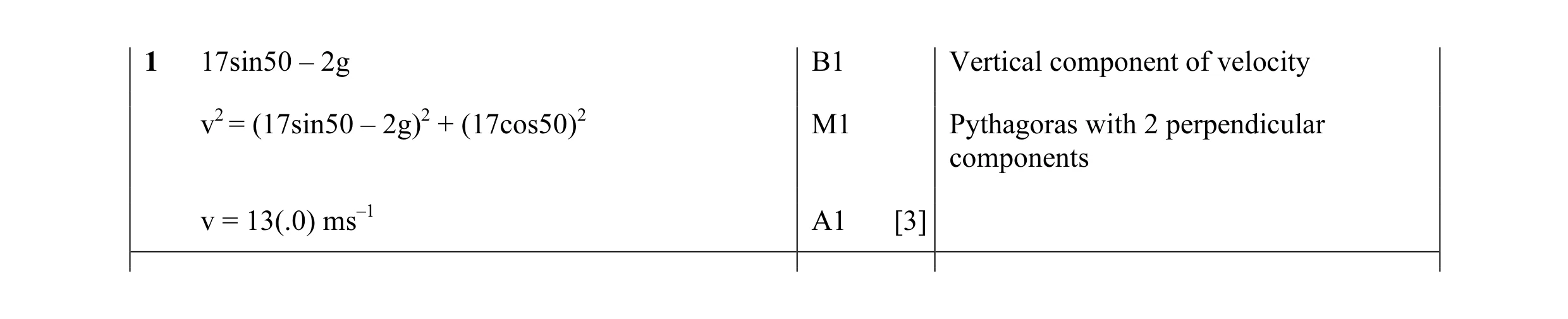 3
3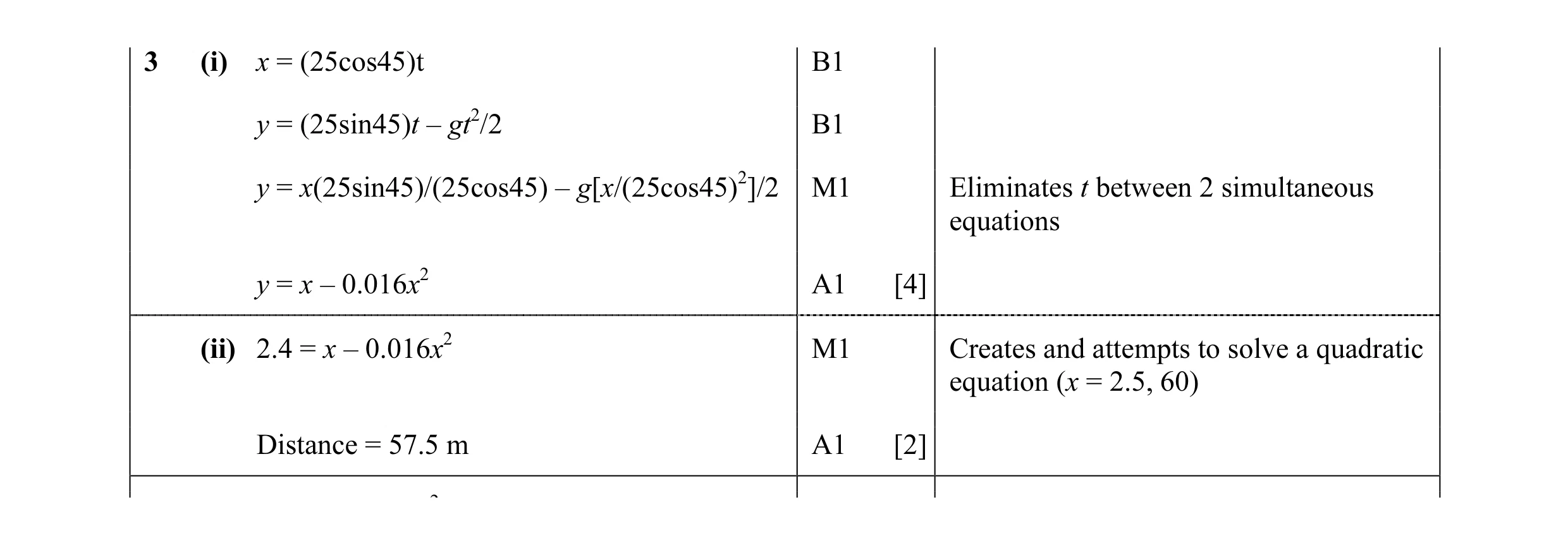 6
6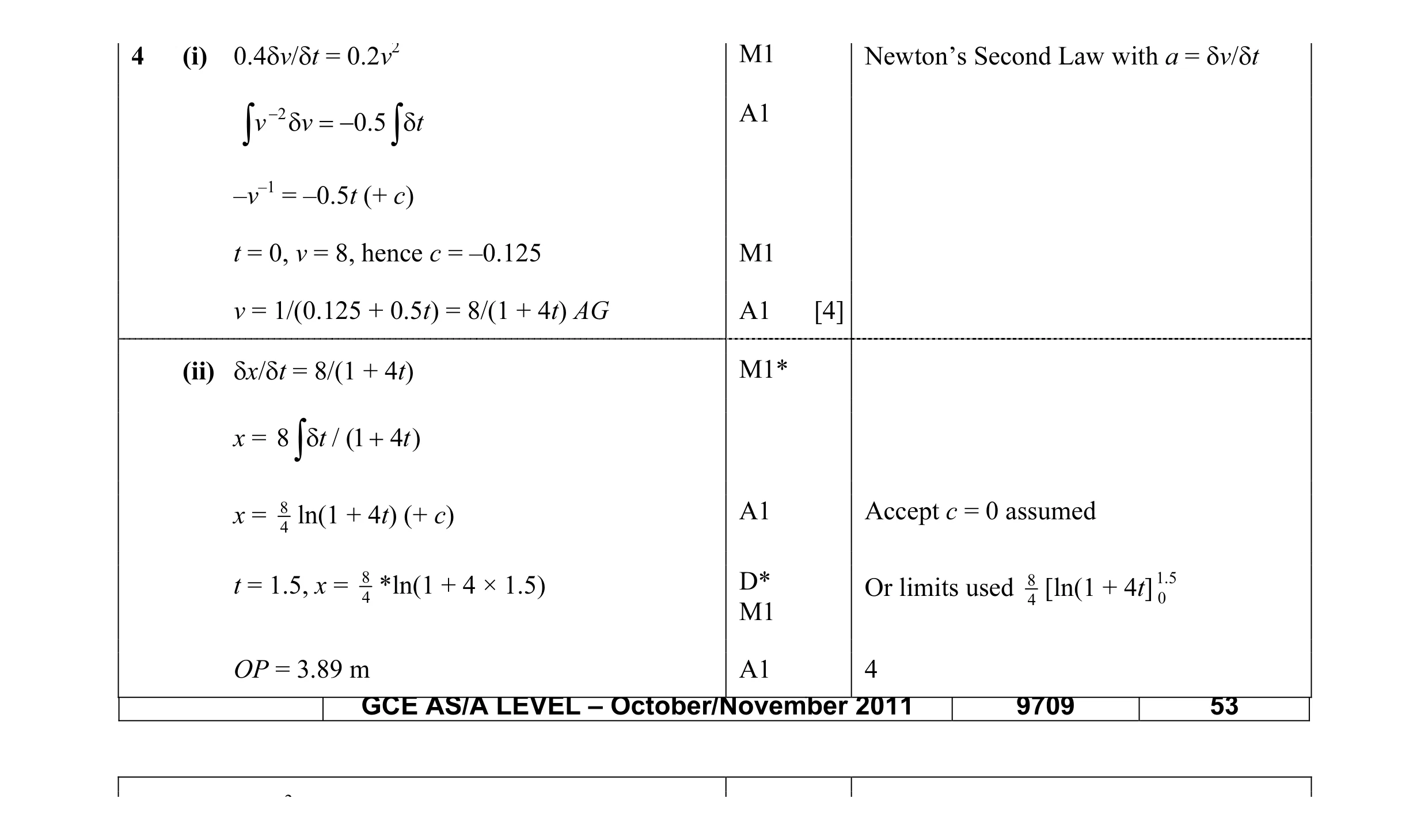 8
8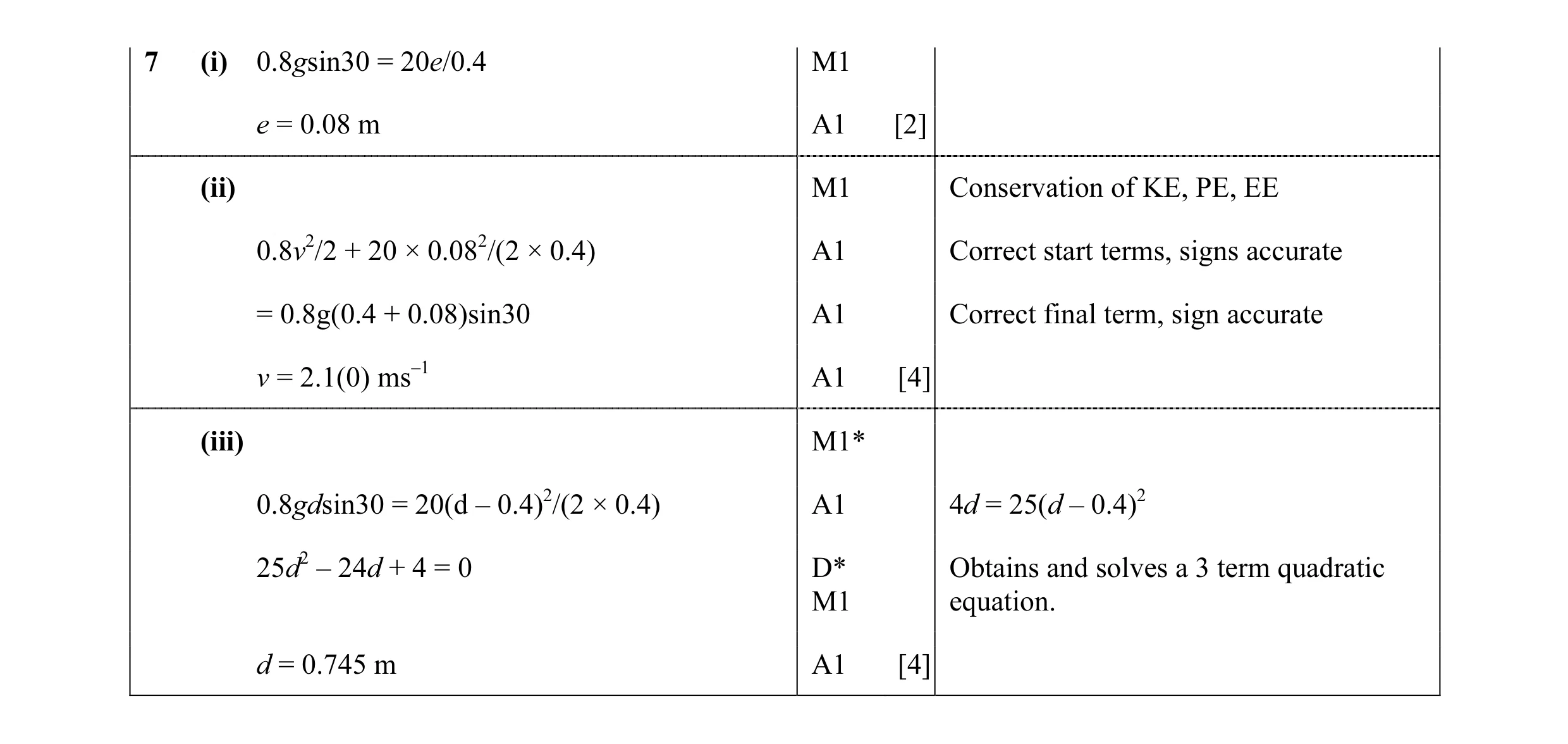 10
10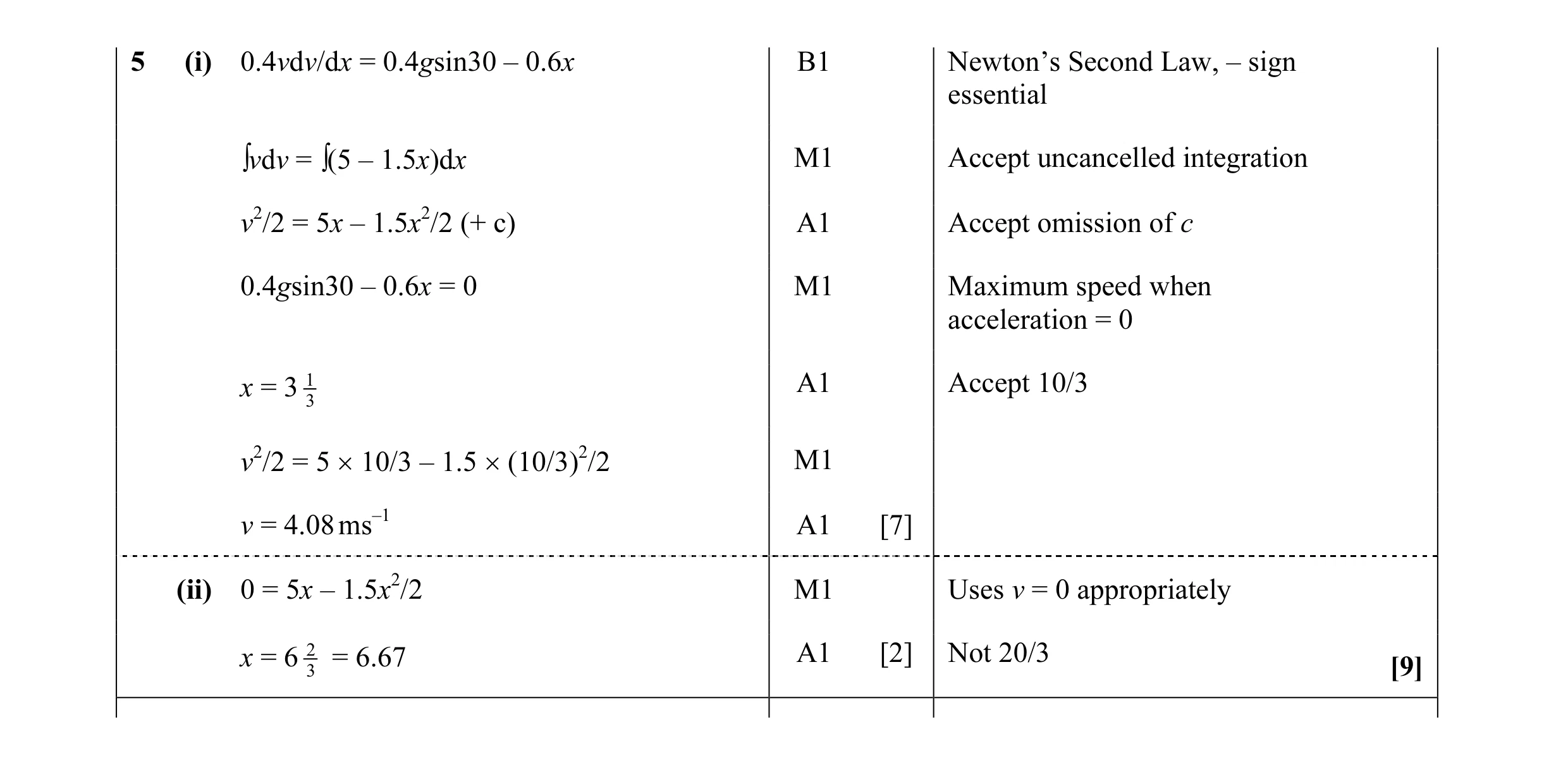 9
9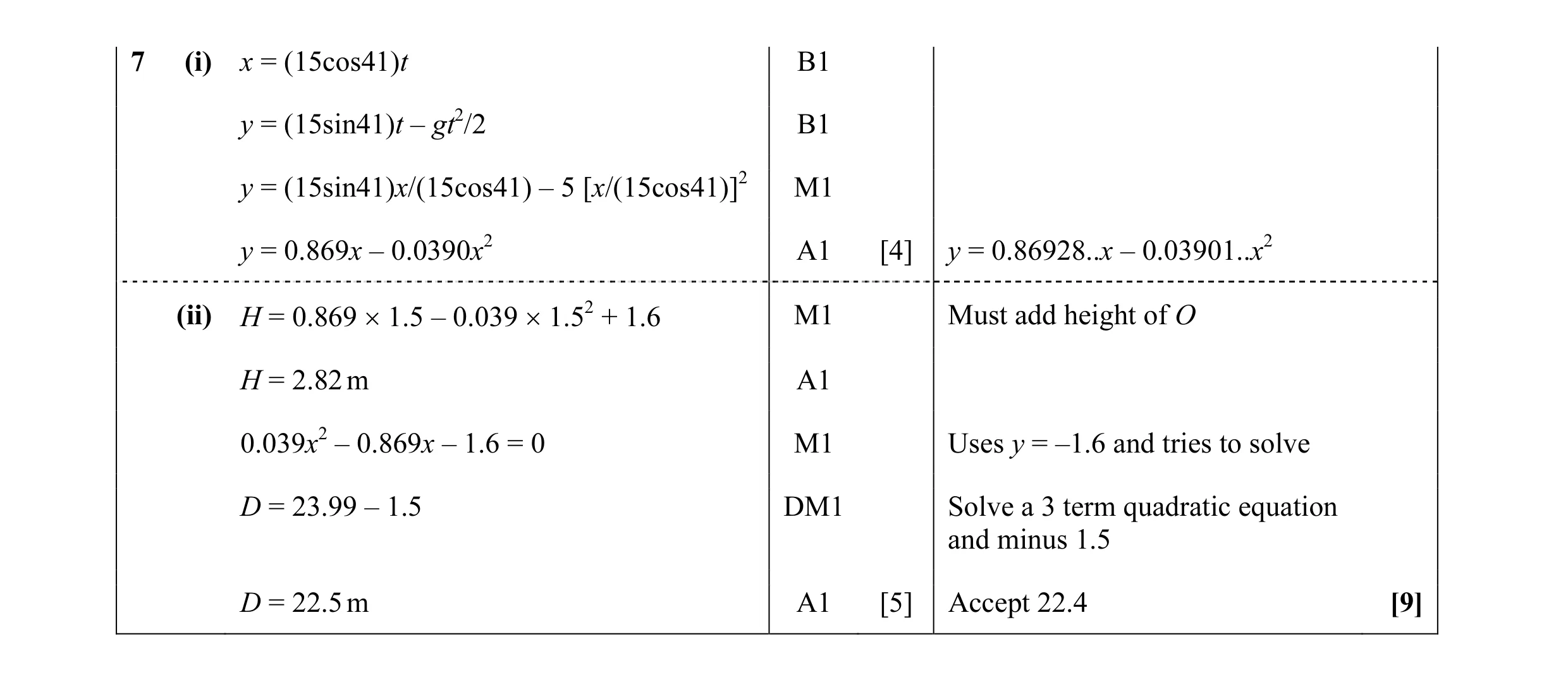 9
9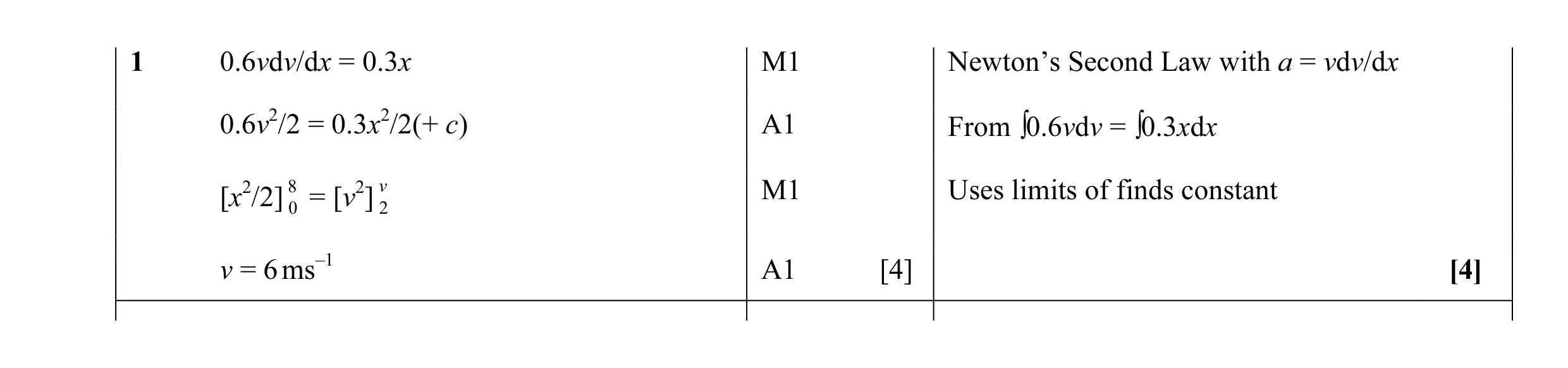 4
4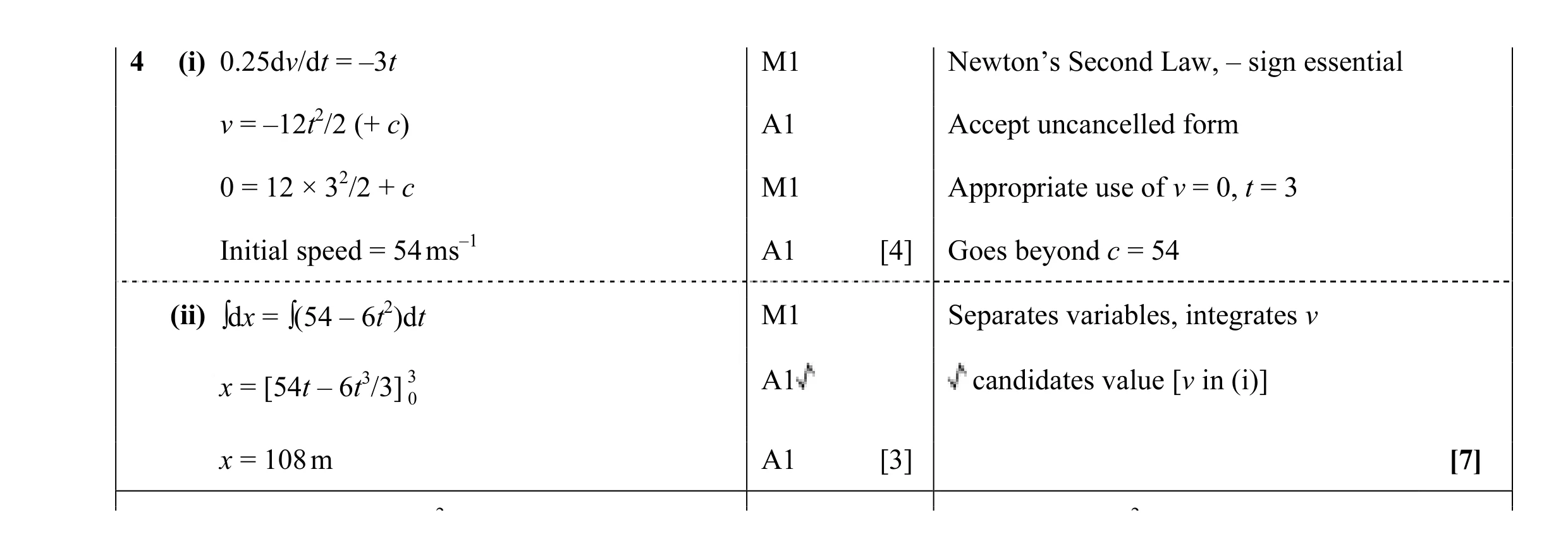 7
7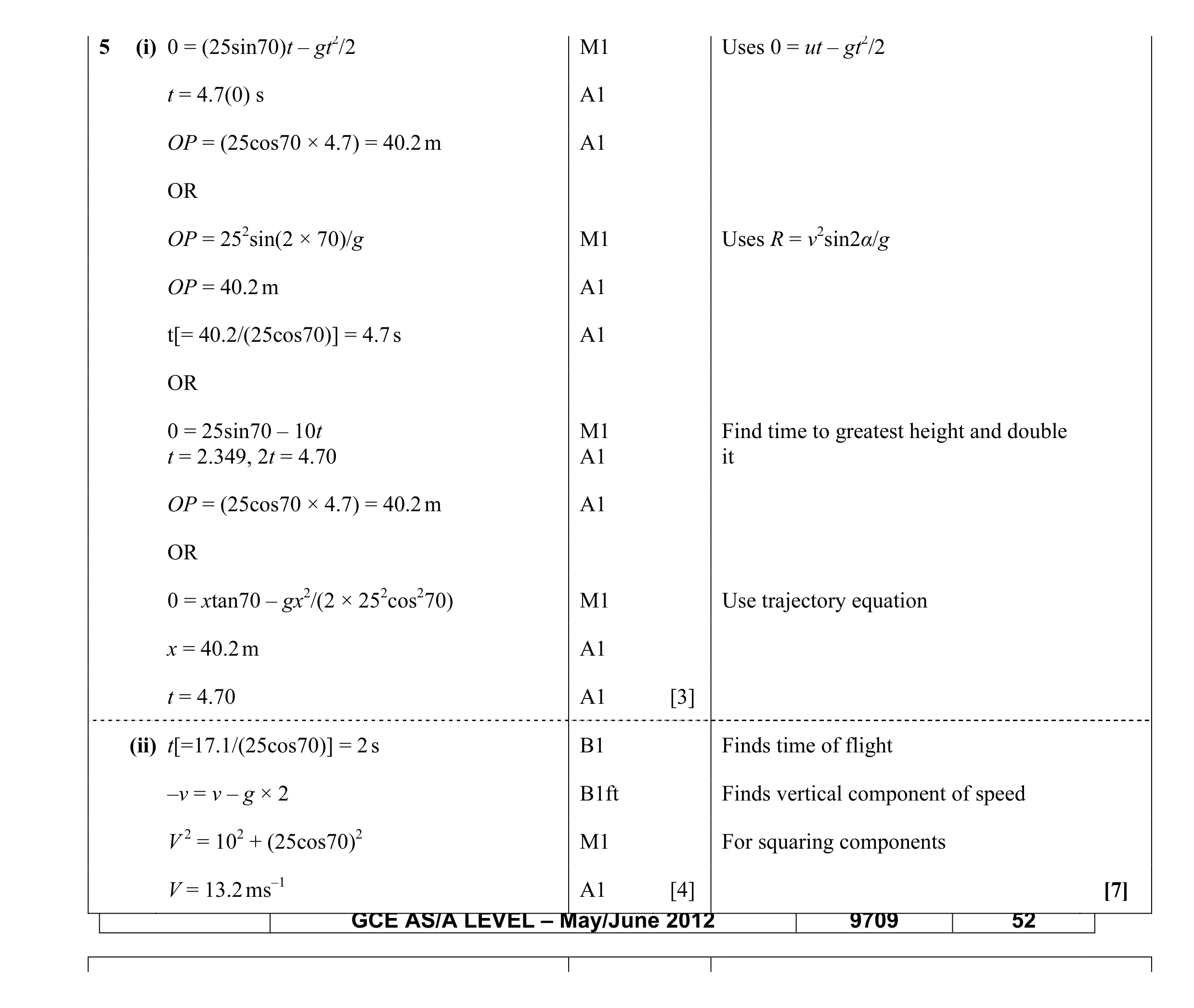 7
7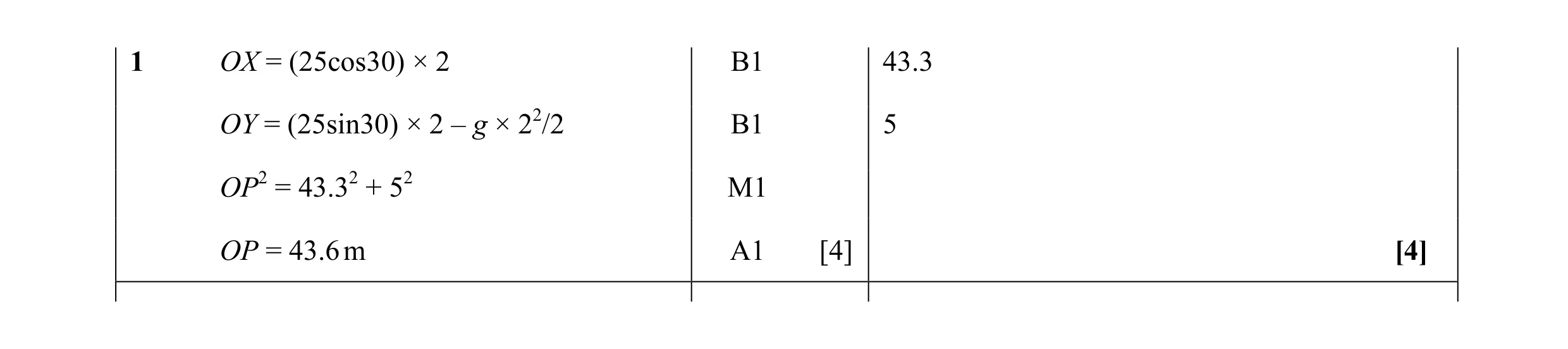 4
4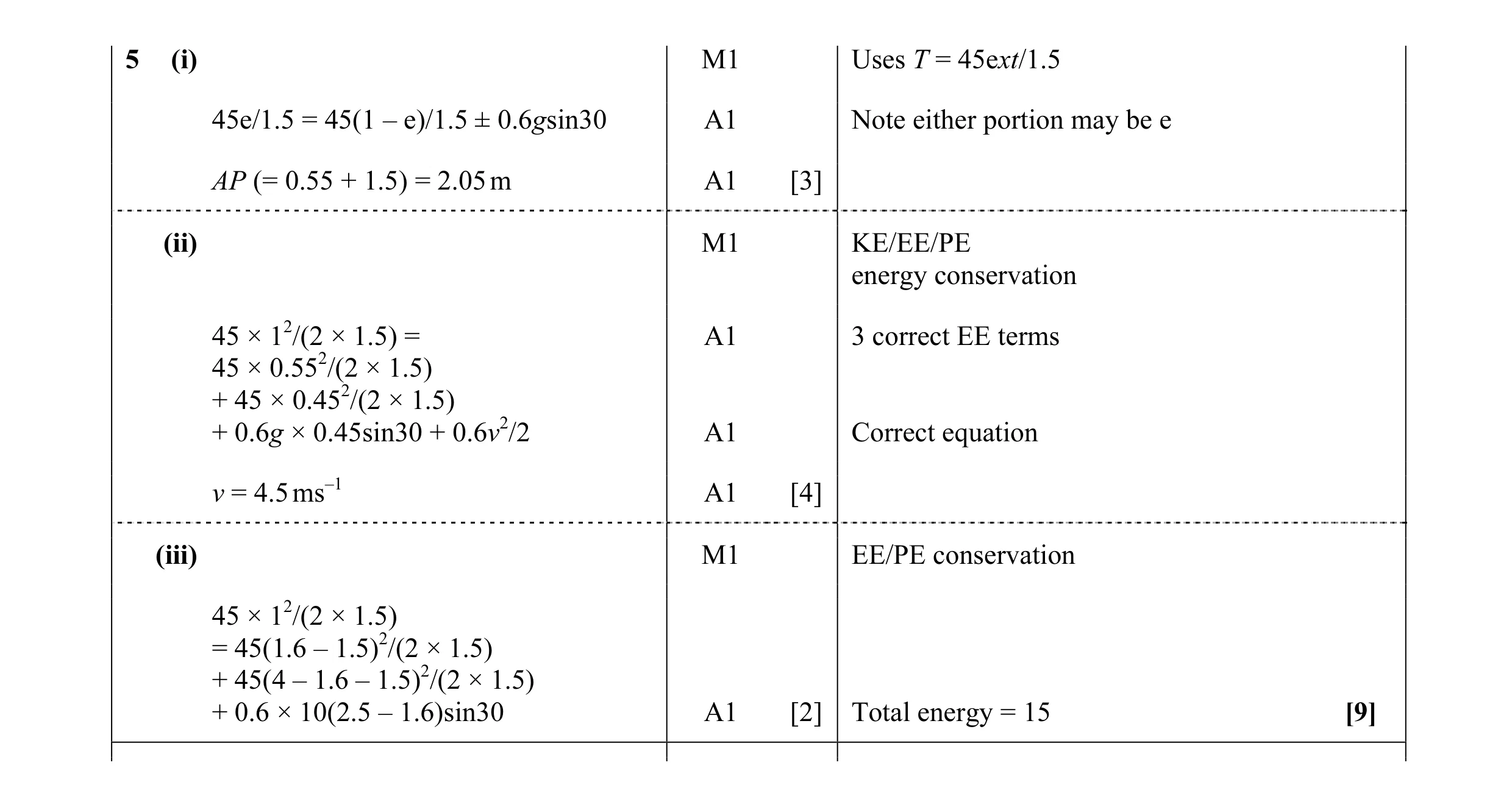 9
9 3
3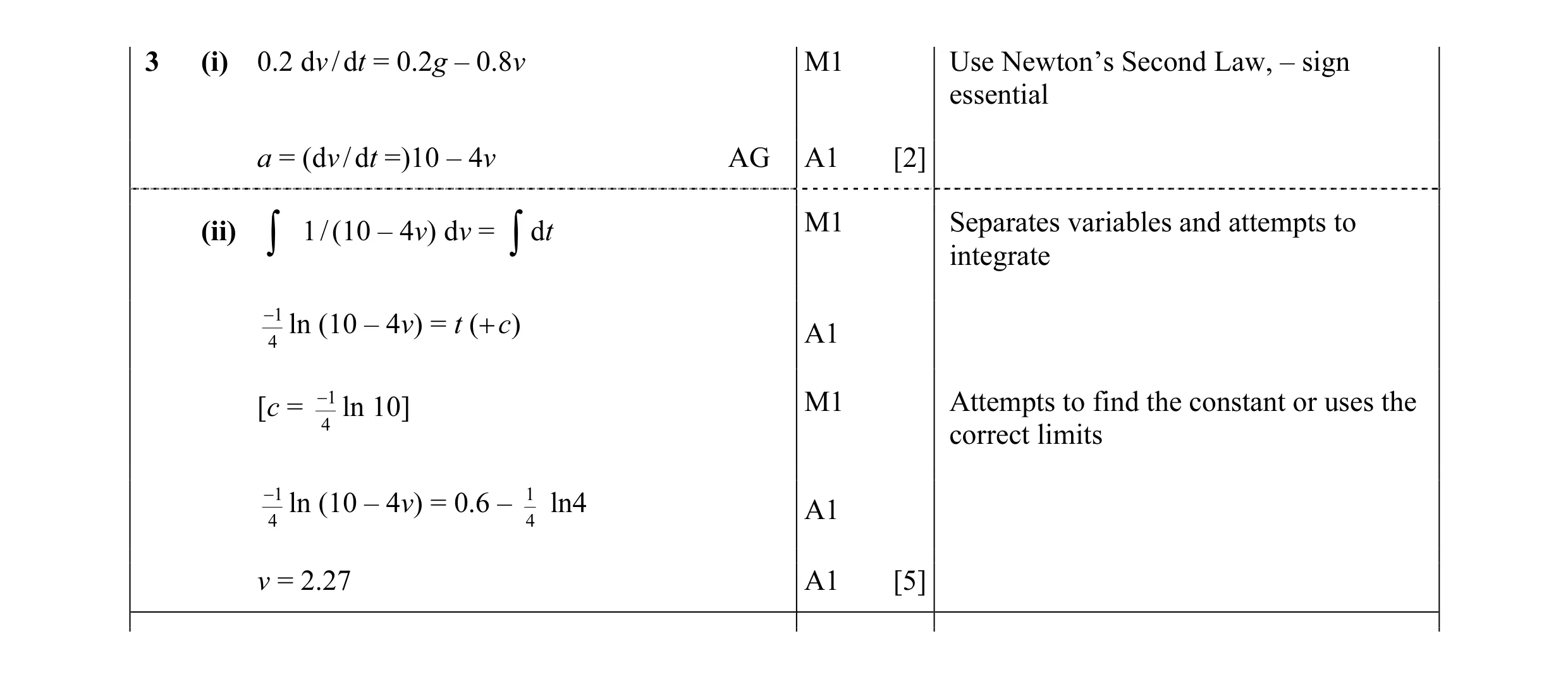 7
7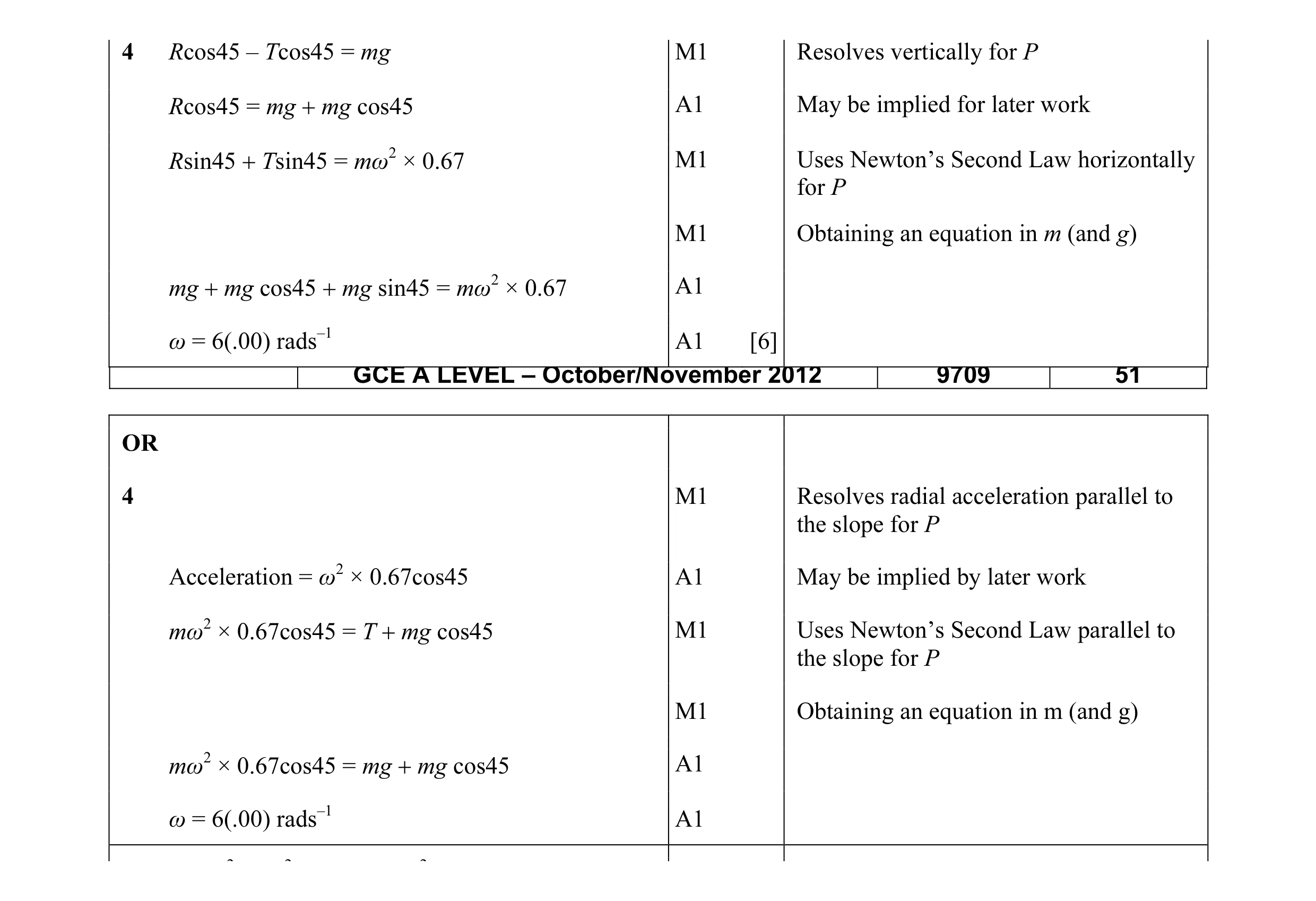 6
6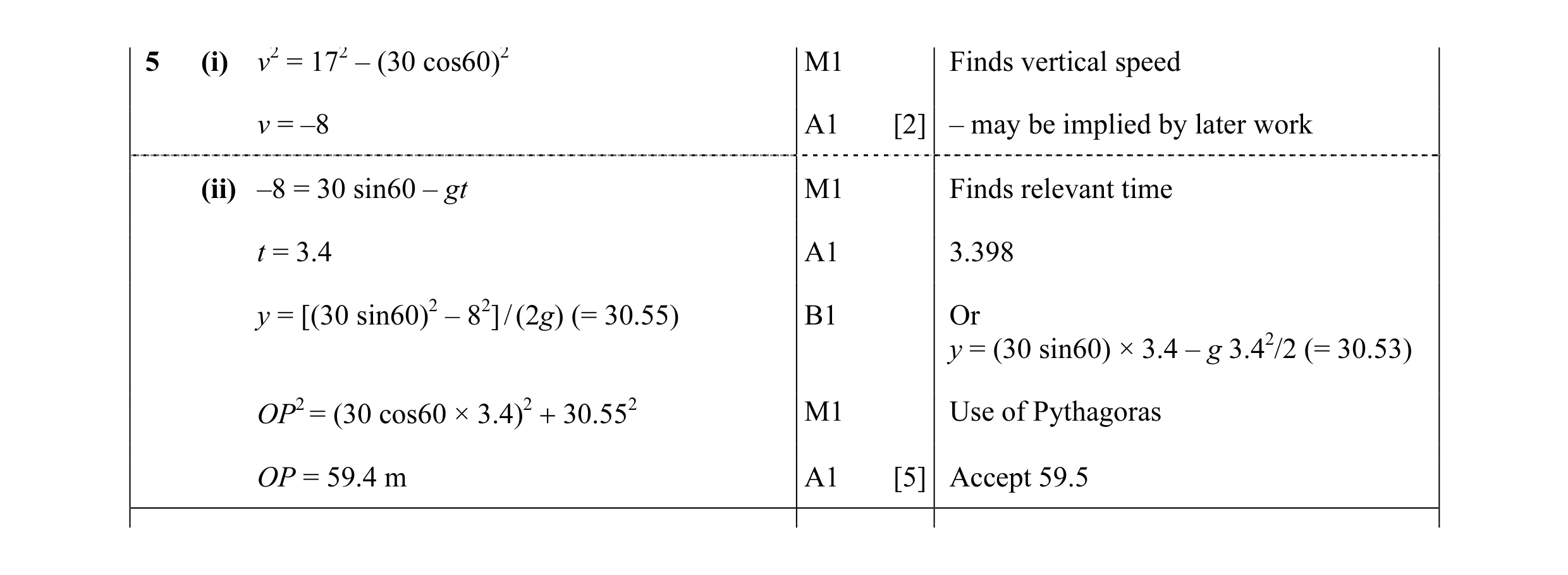 7
7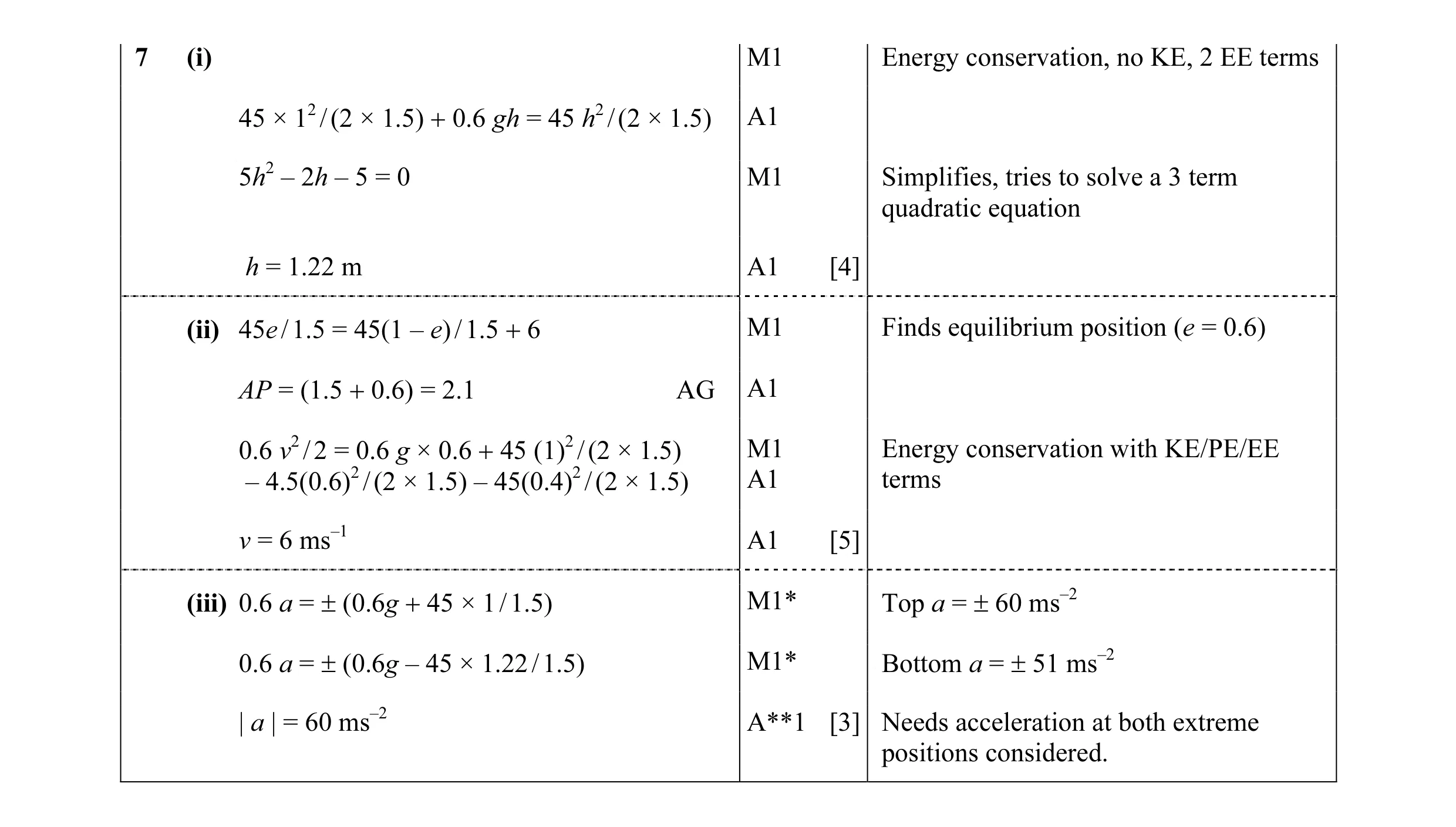 12
12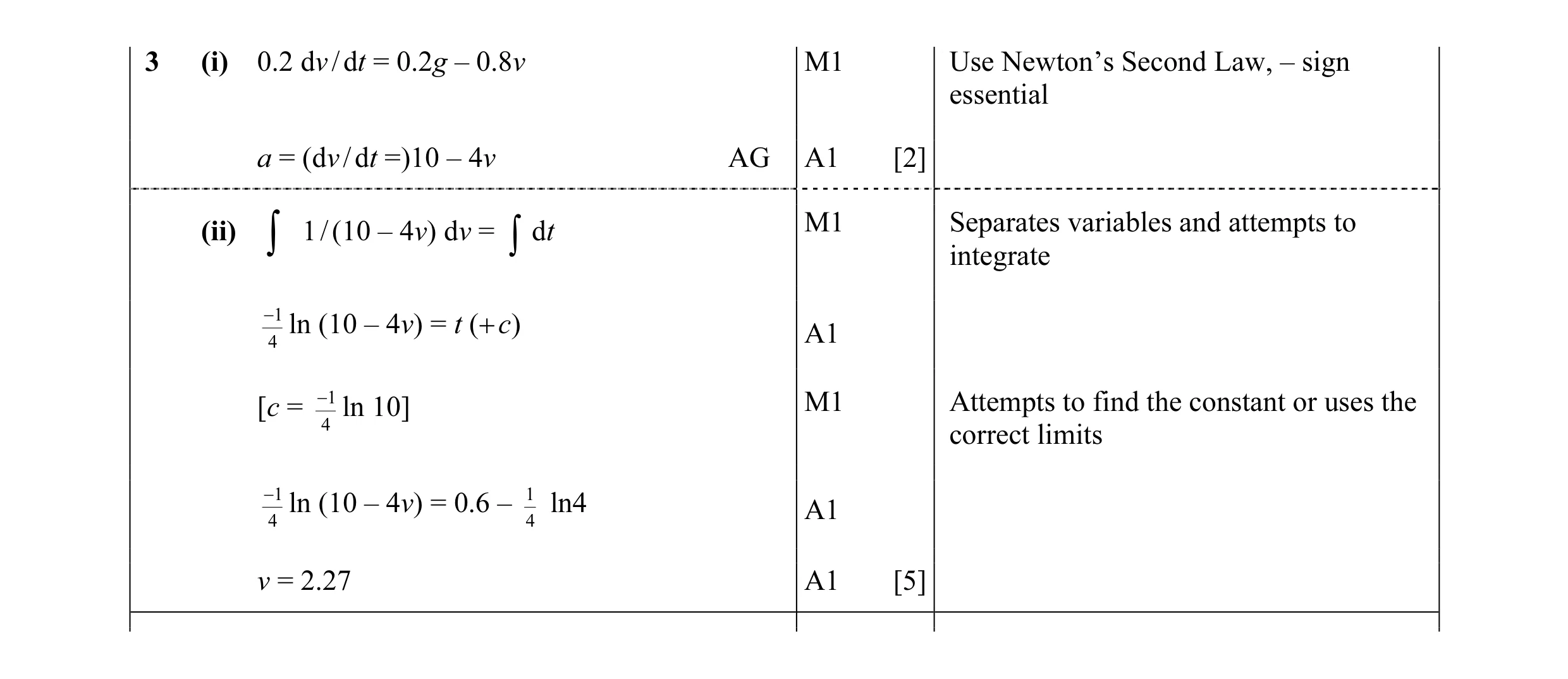 7
7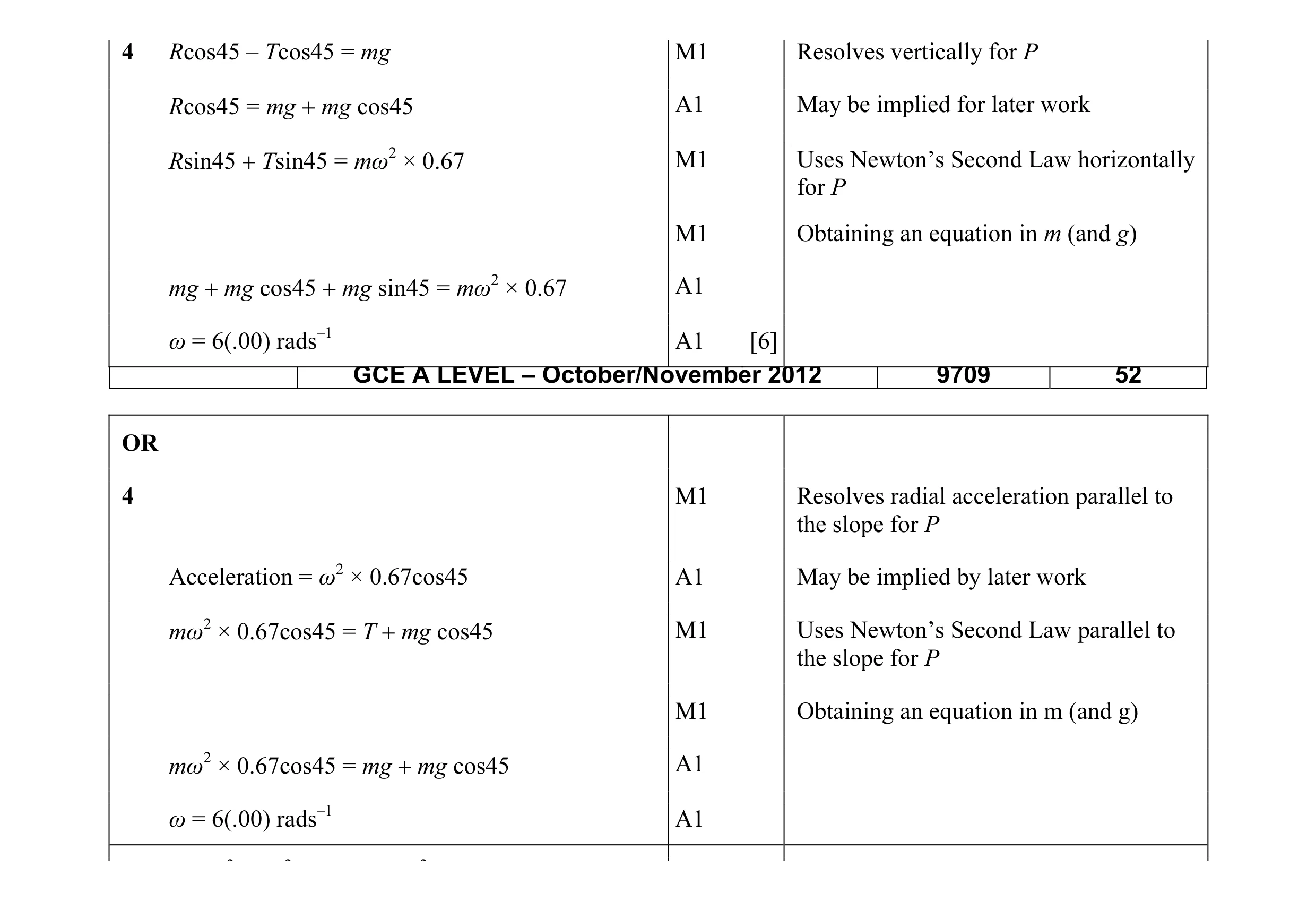 6
6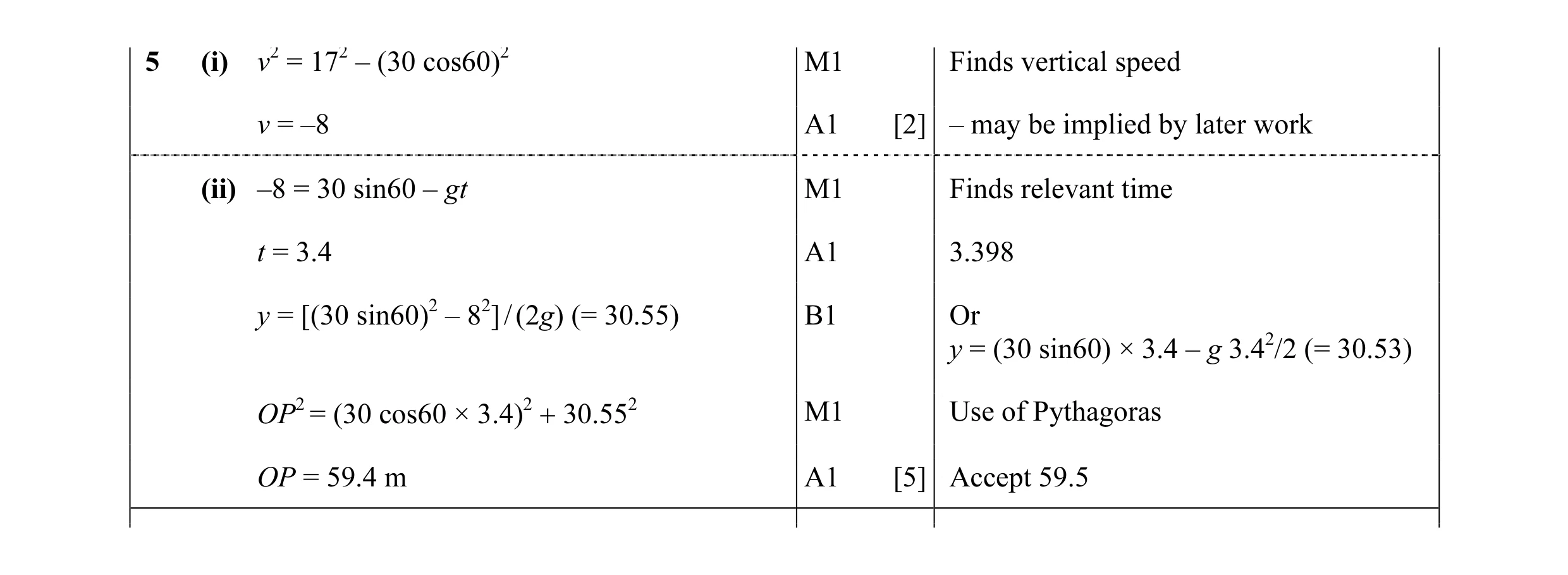 7
7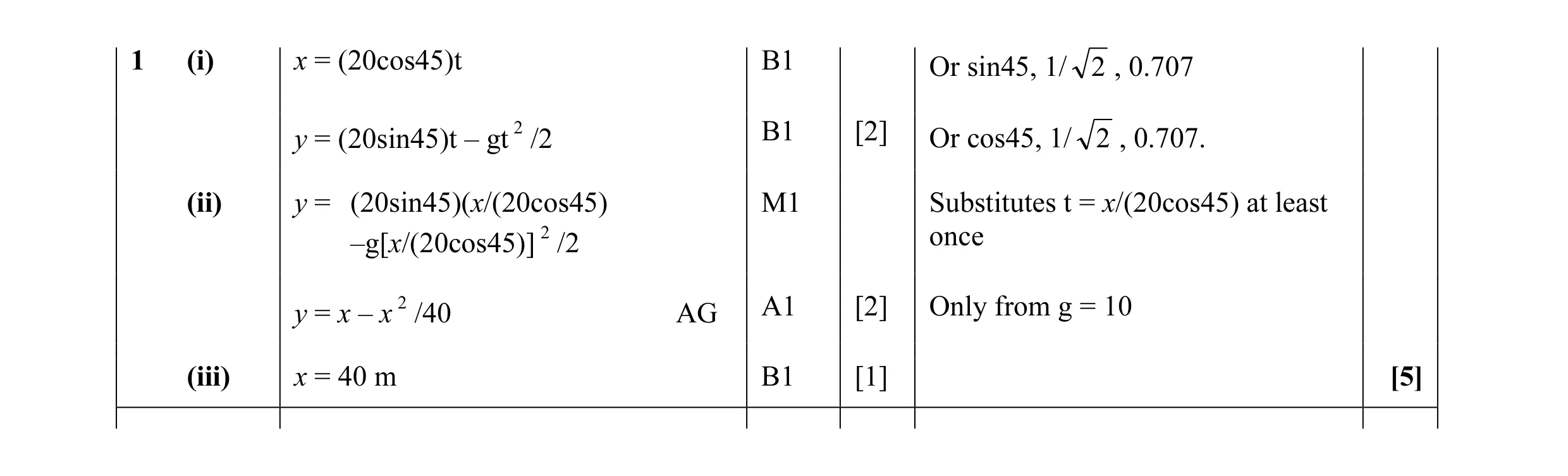 5
5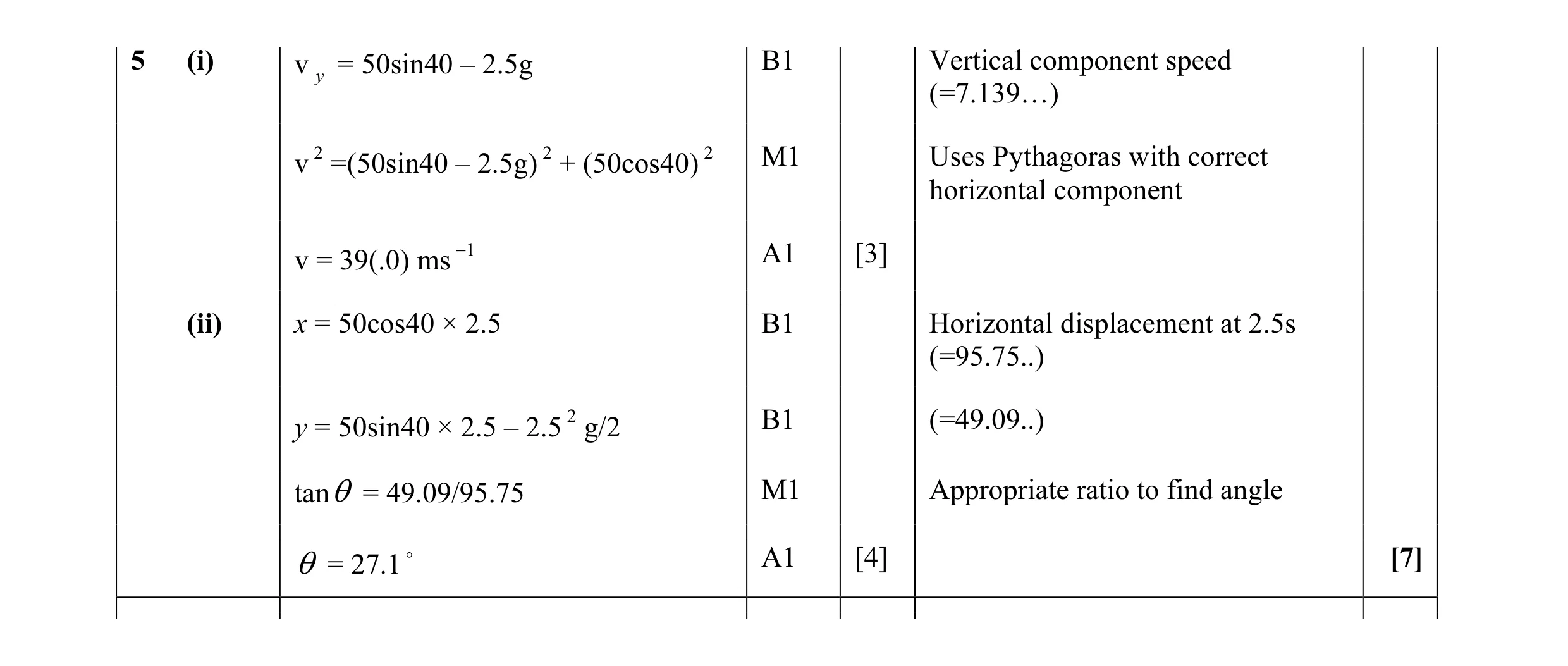 7
7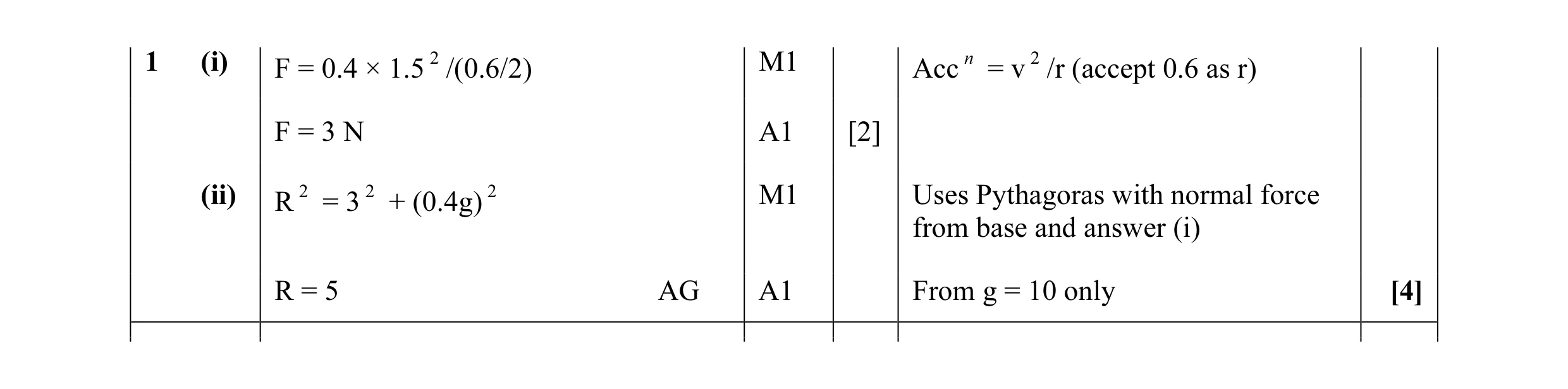 4
4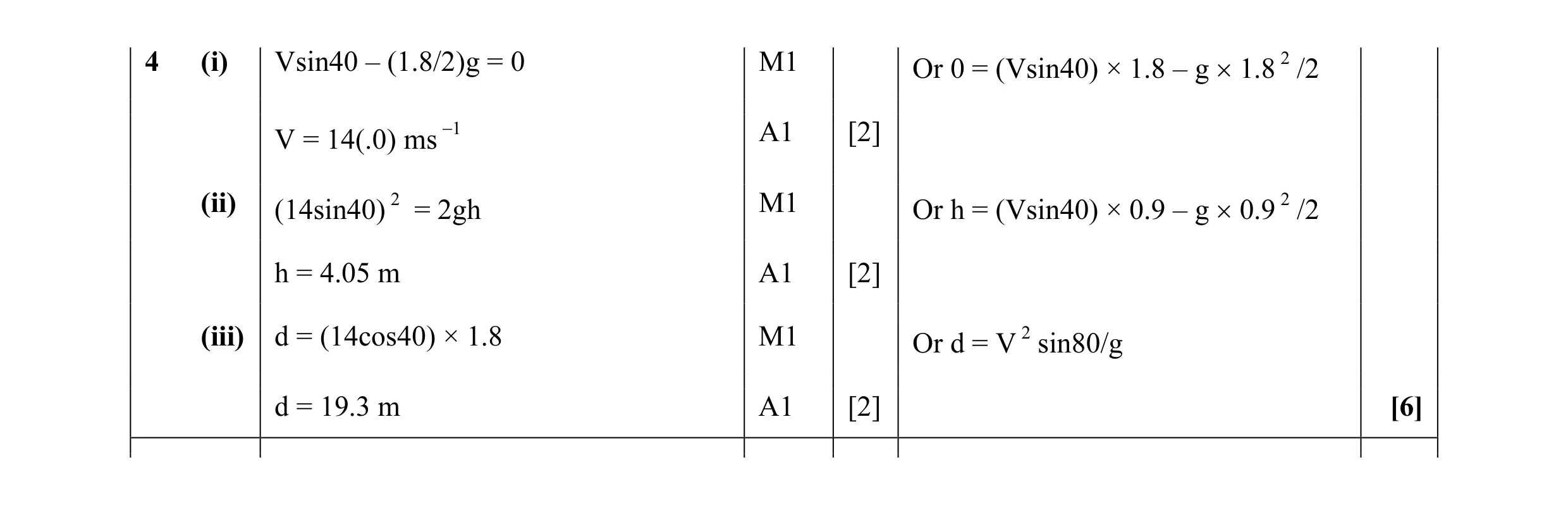 6
6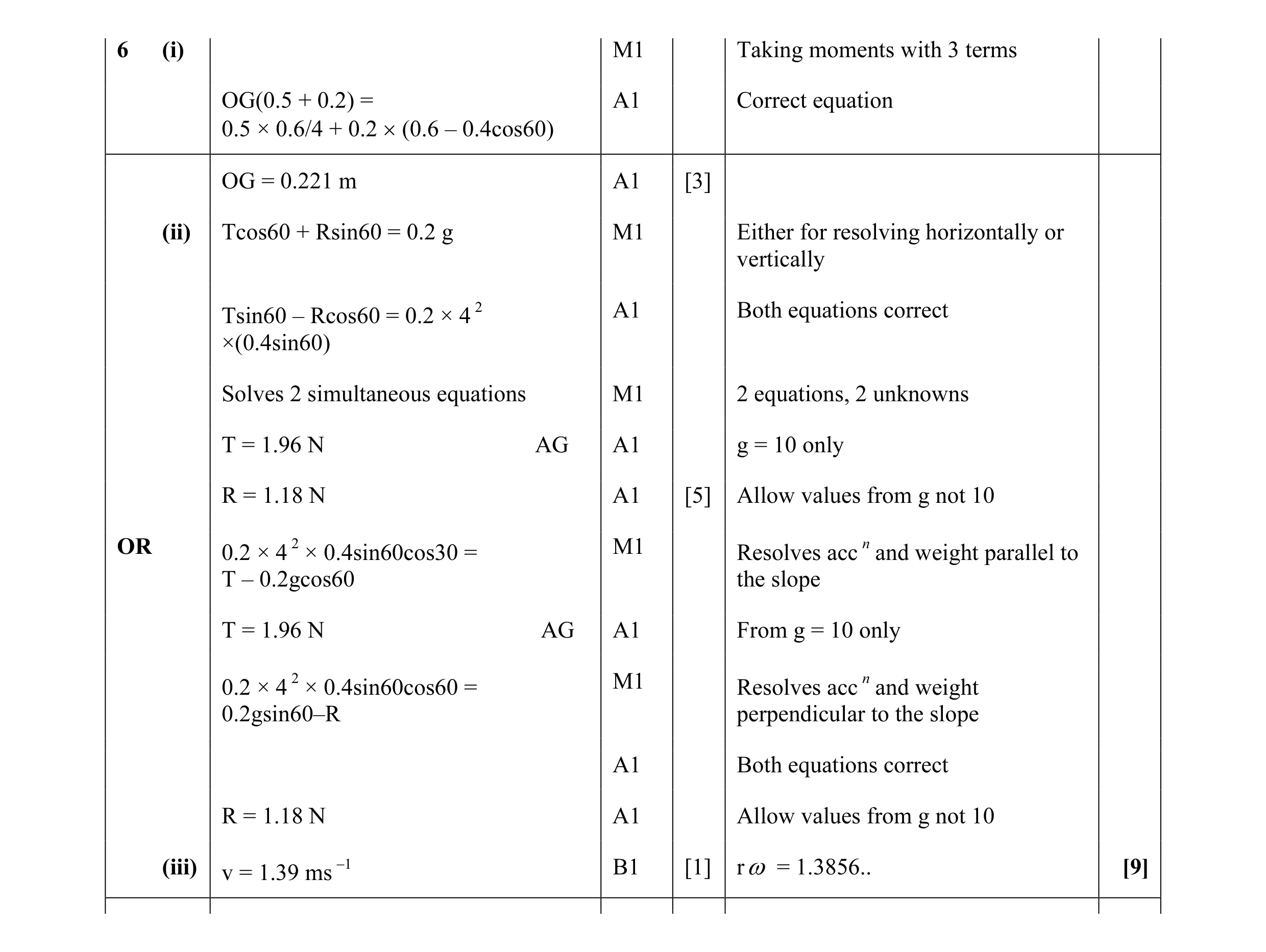 9
9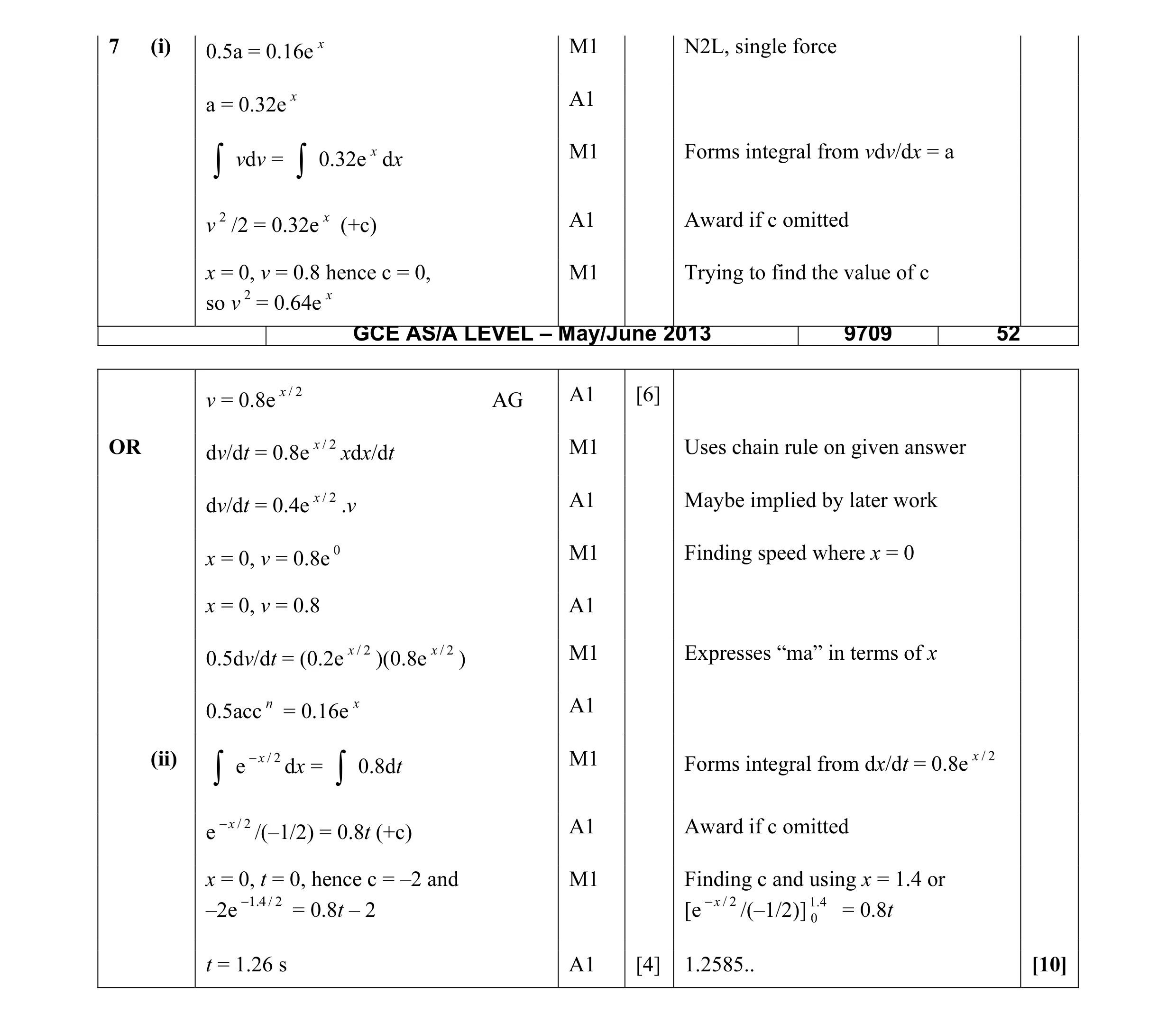 10
10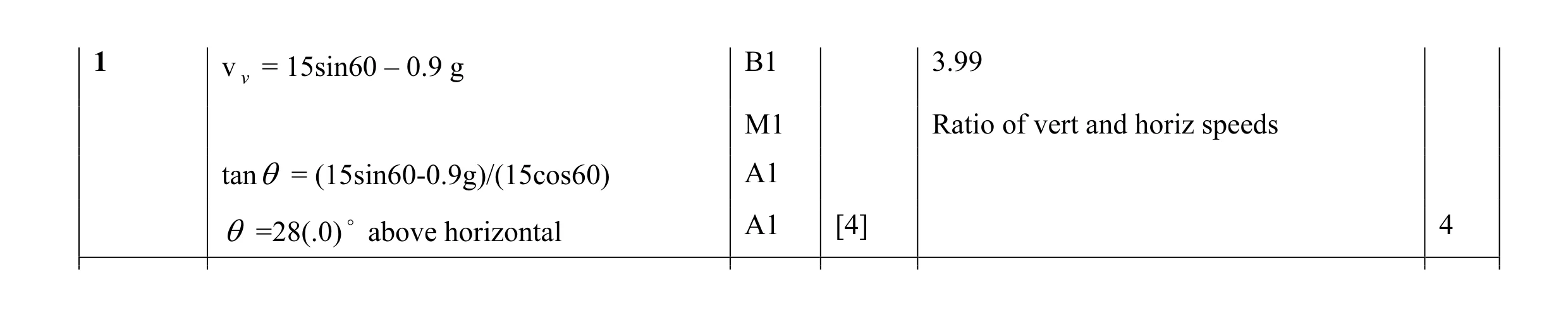 4
4 4
4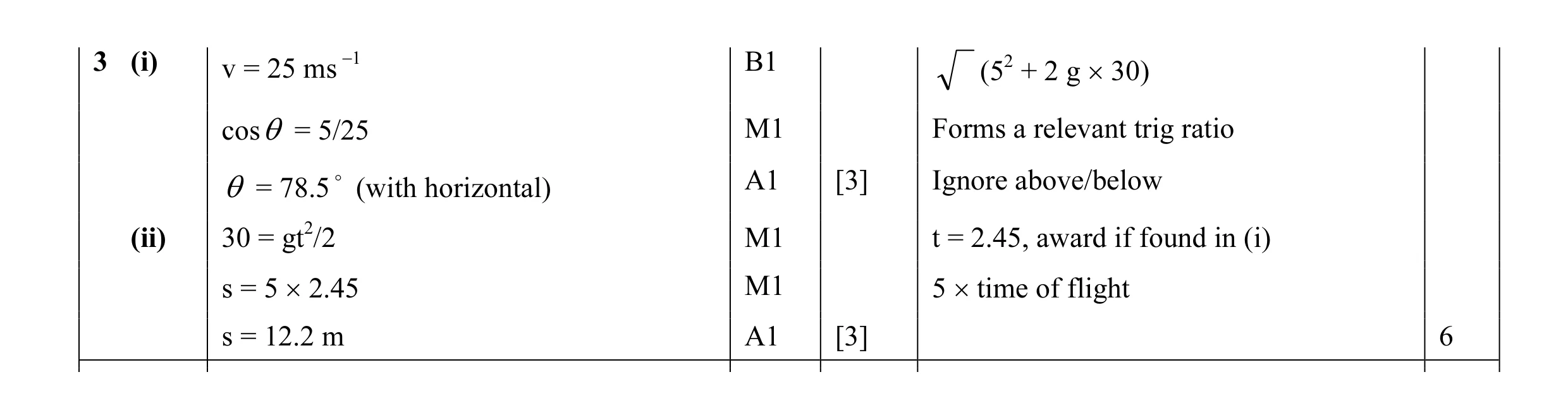 6
6 2
2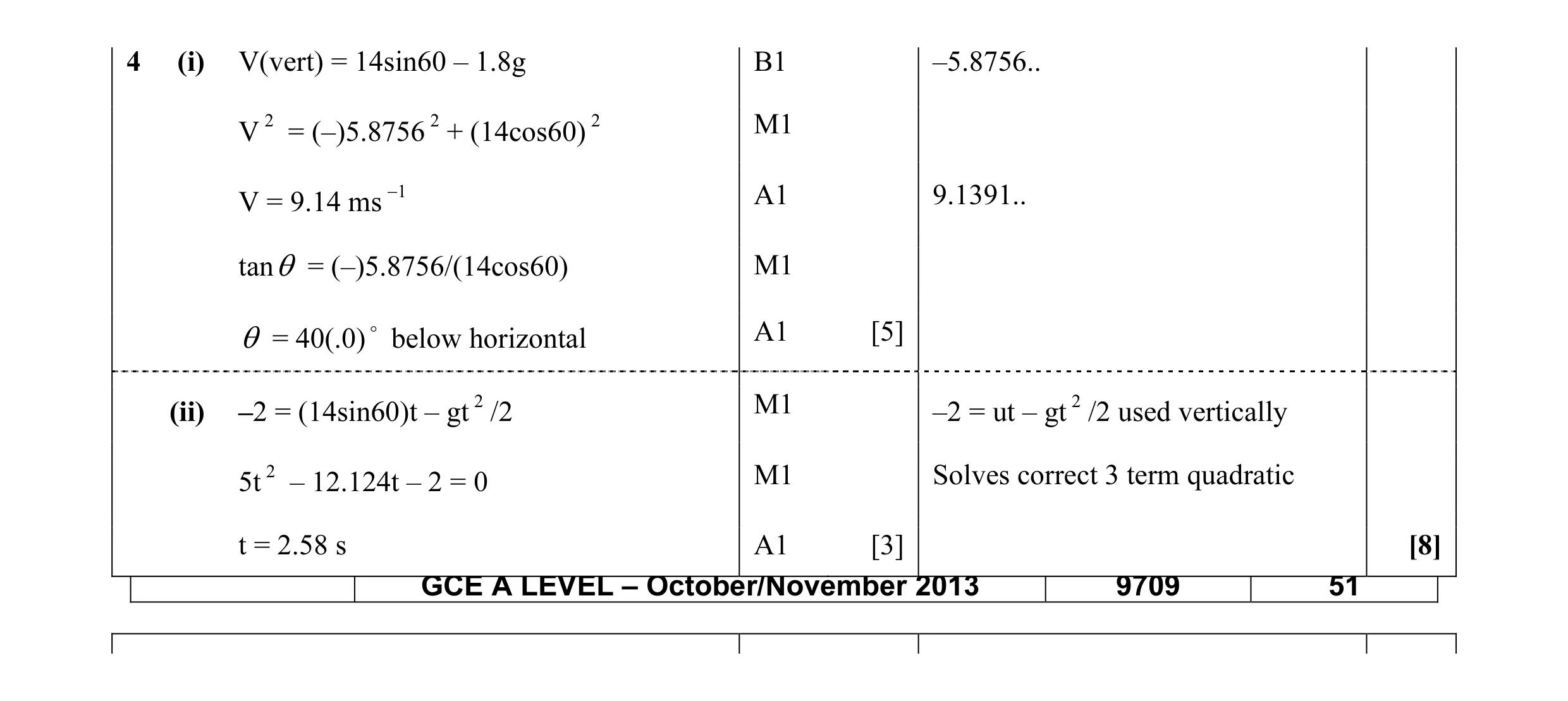 8
8 2
2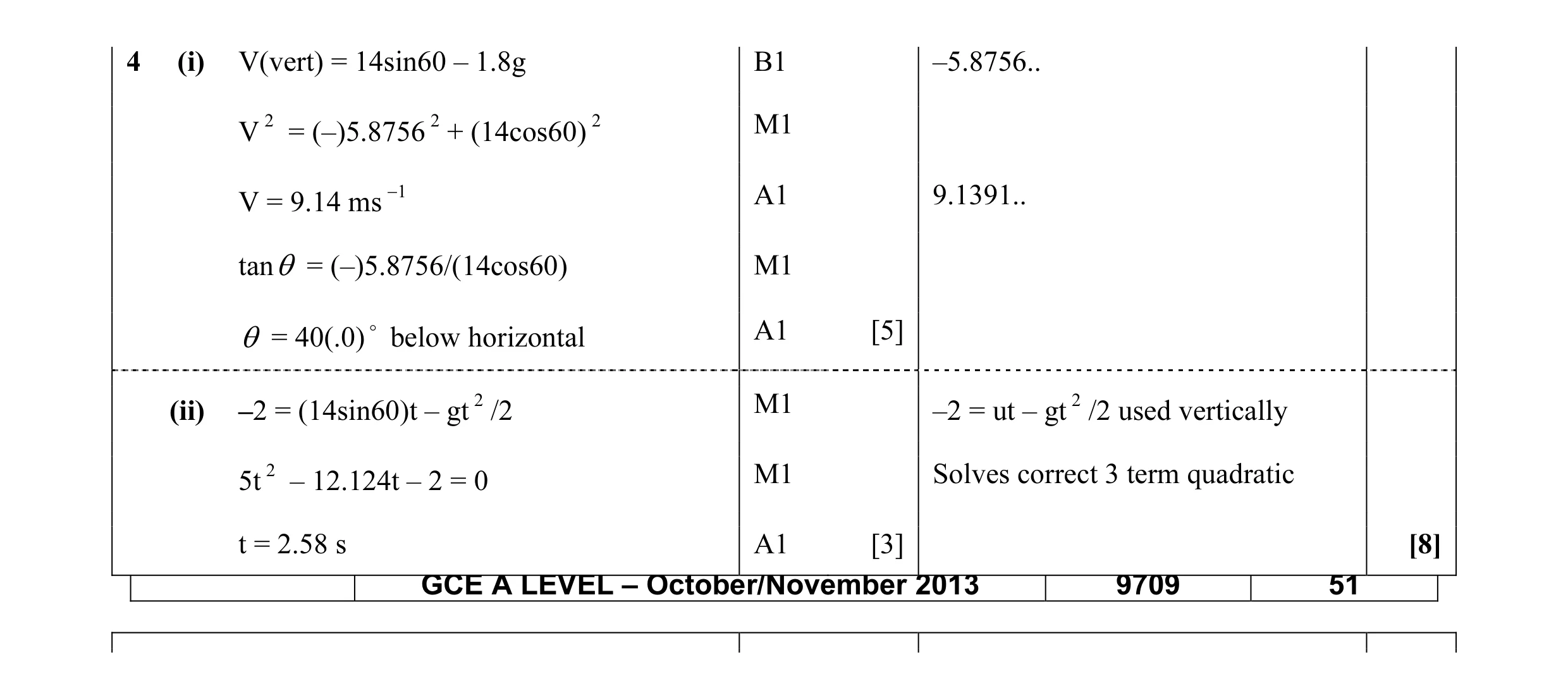 8
8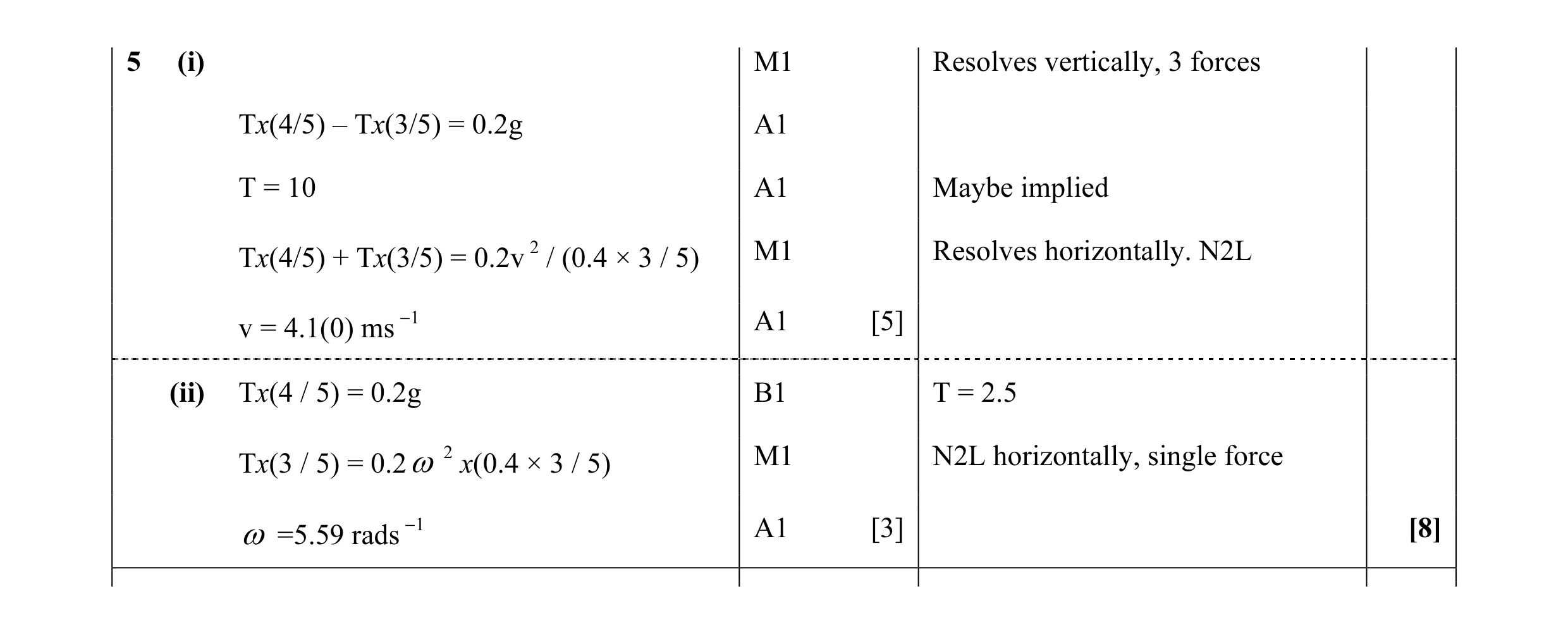 8
8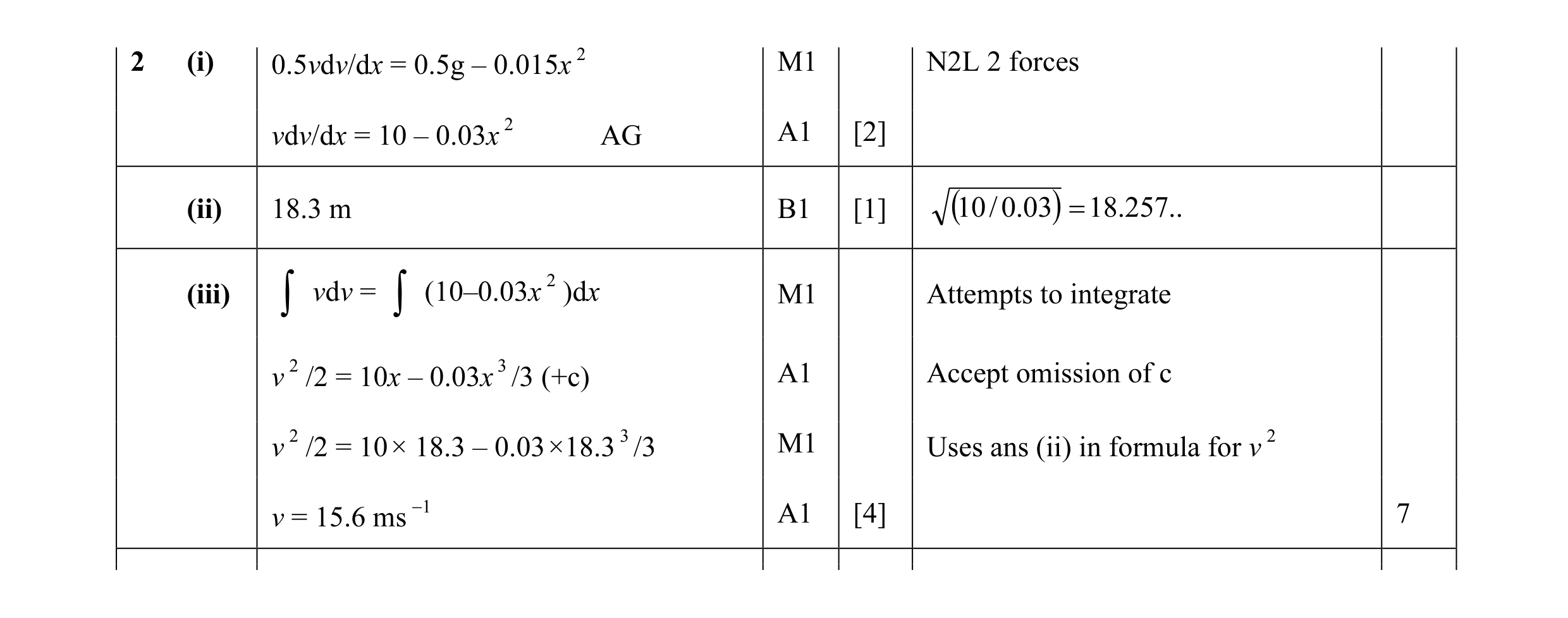 7
7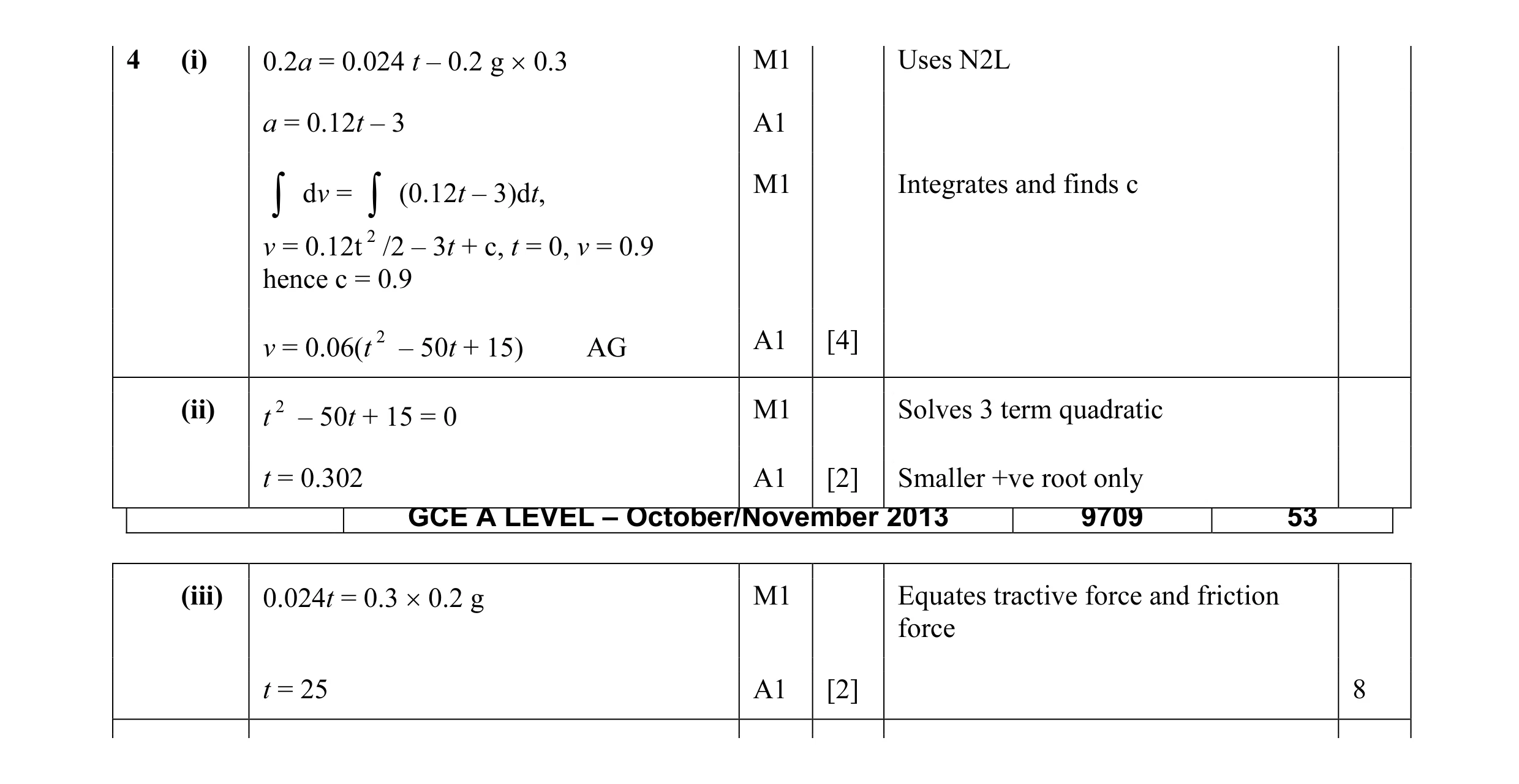 4
4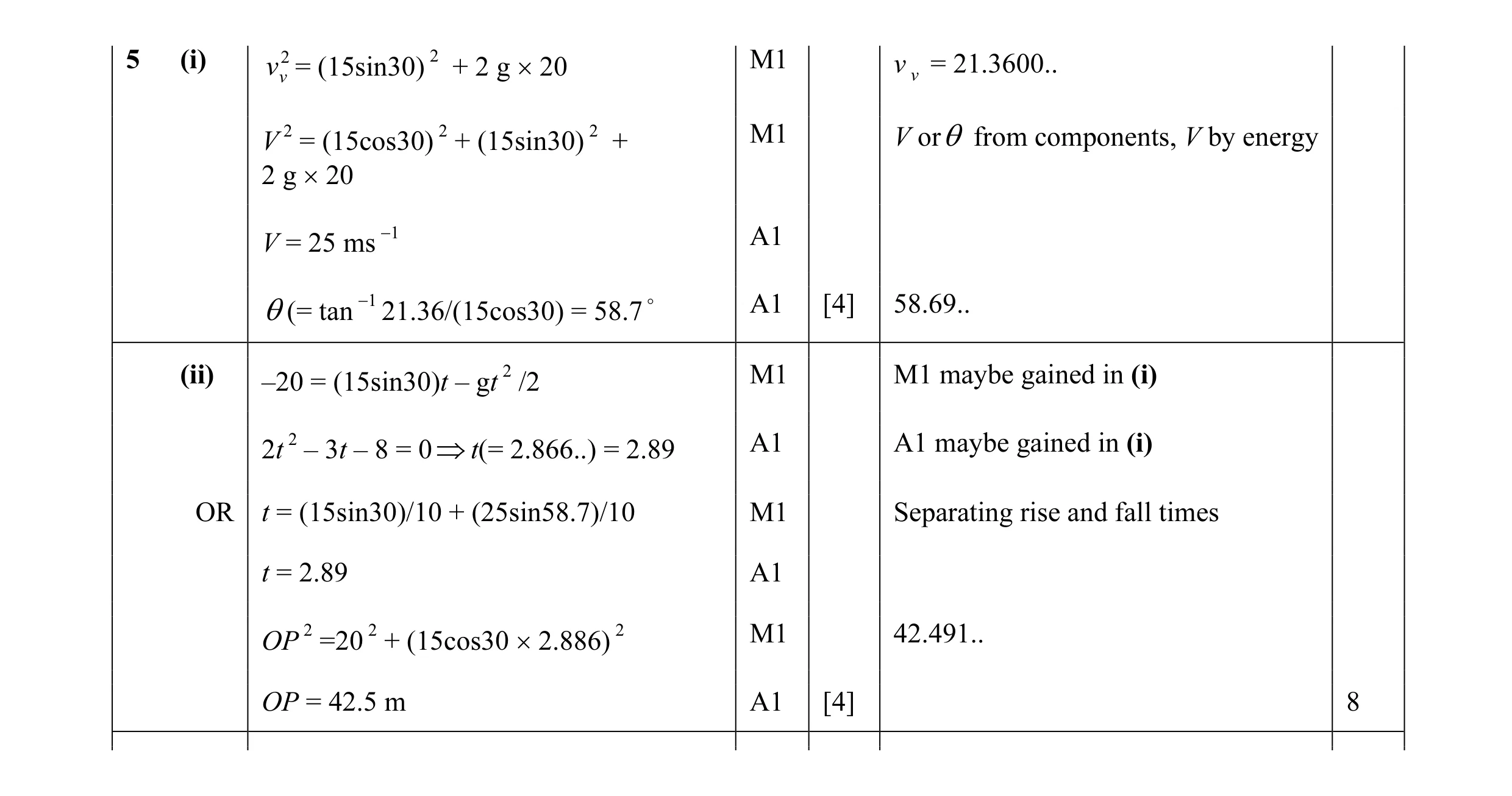 8
8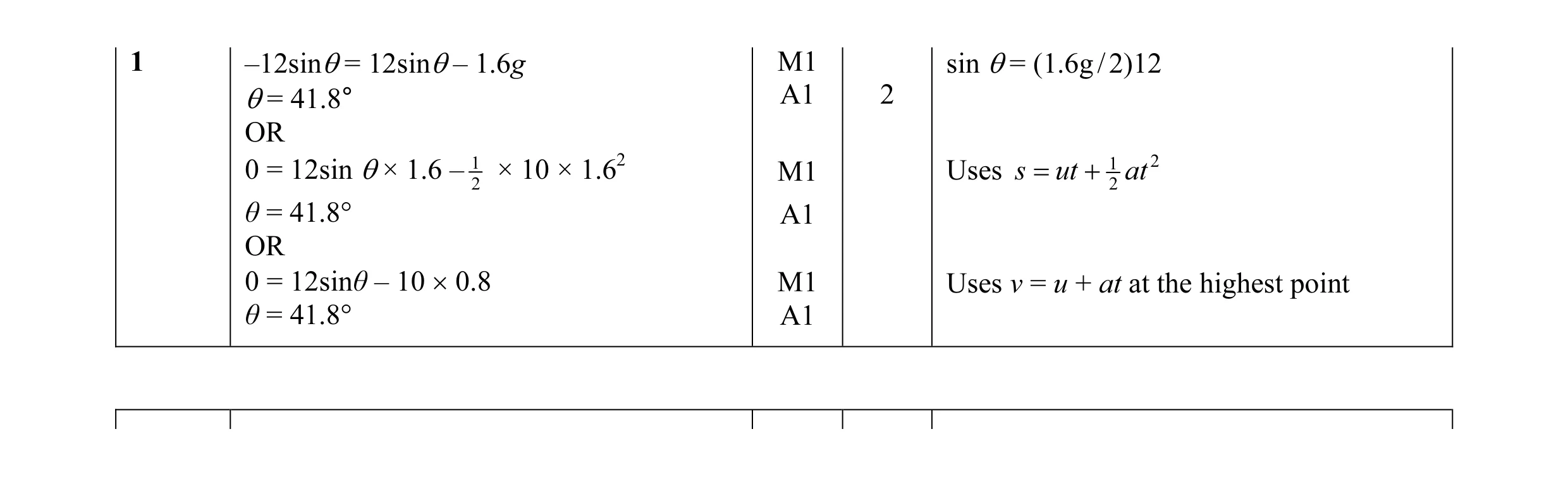 2
2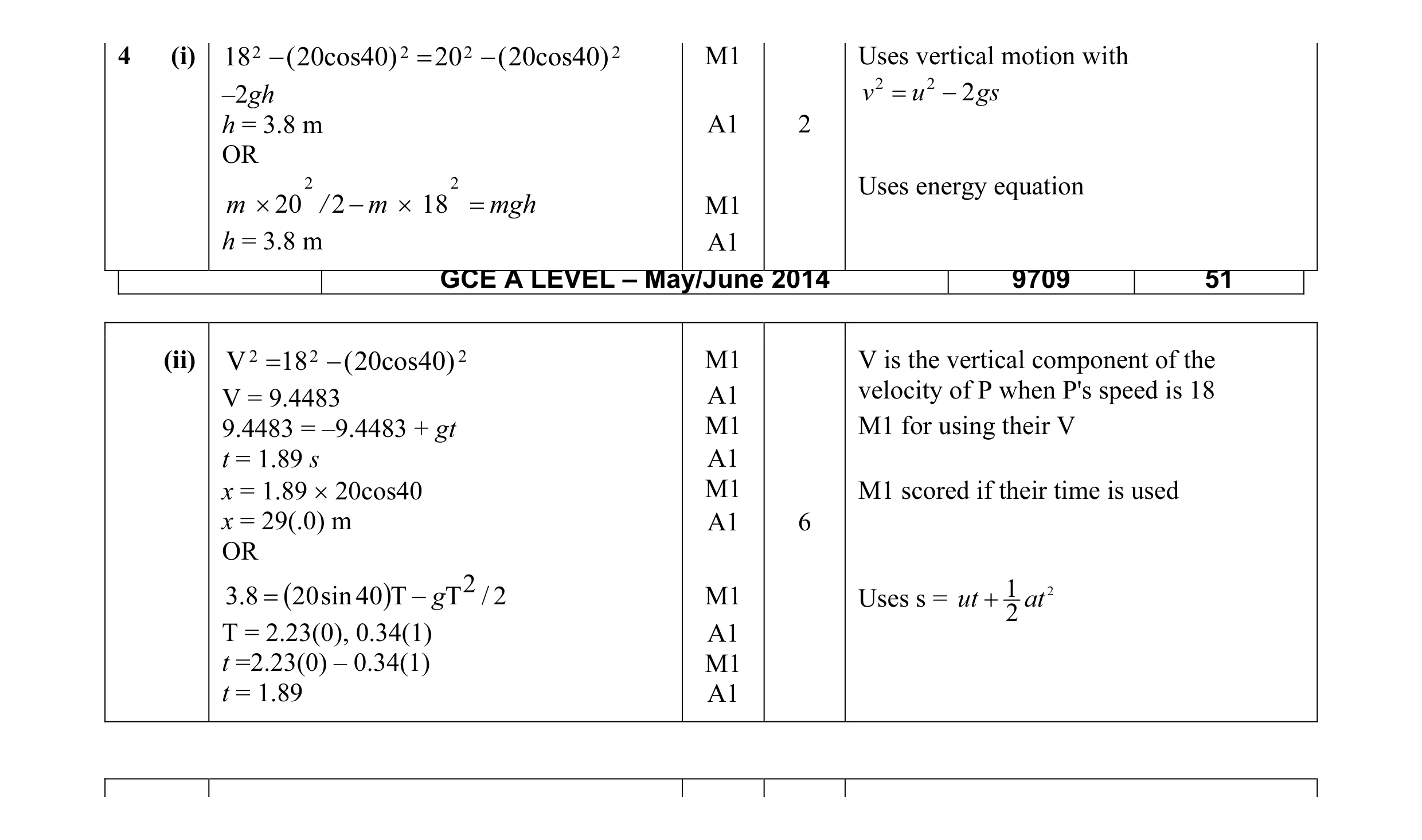 8
8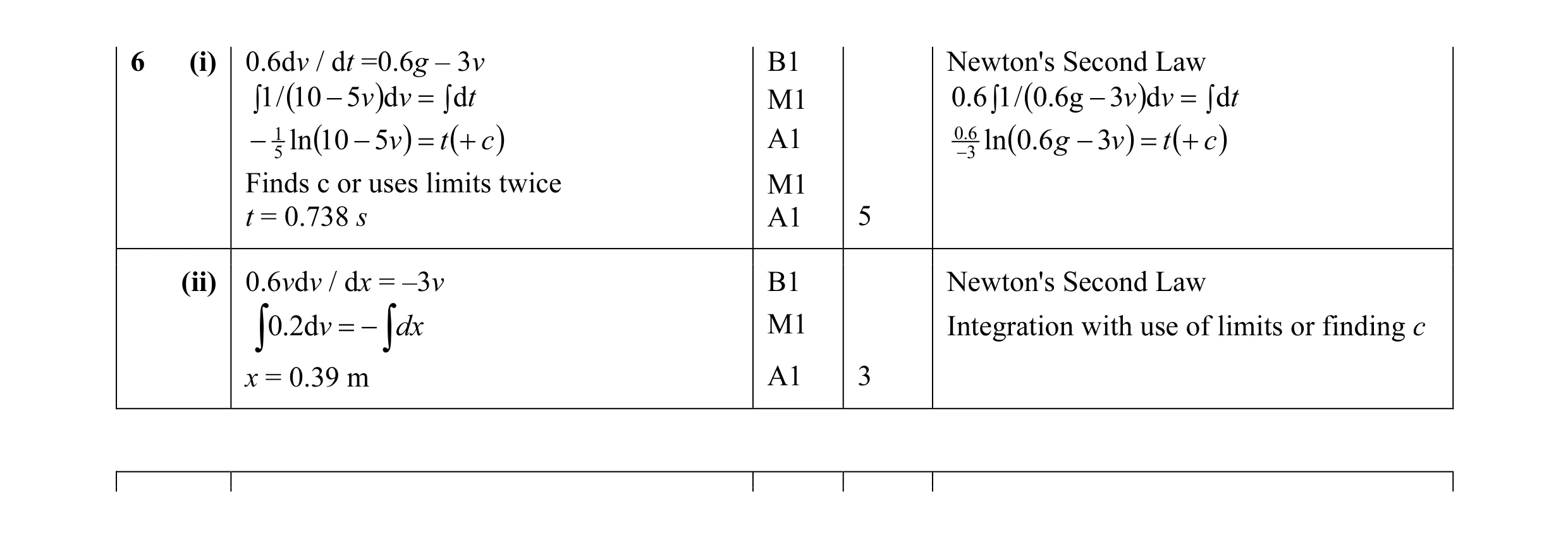 8
8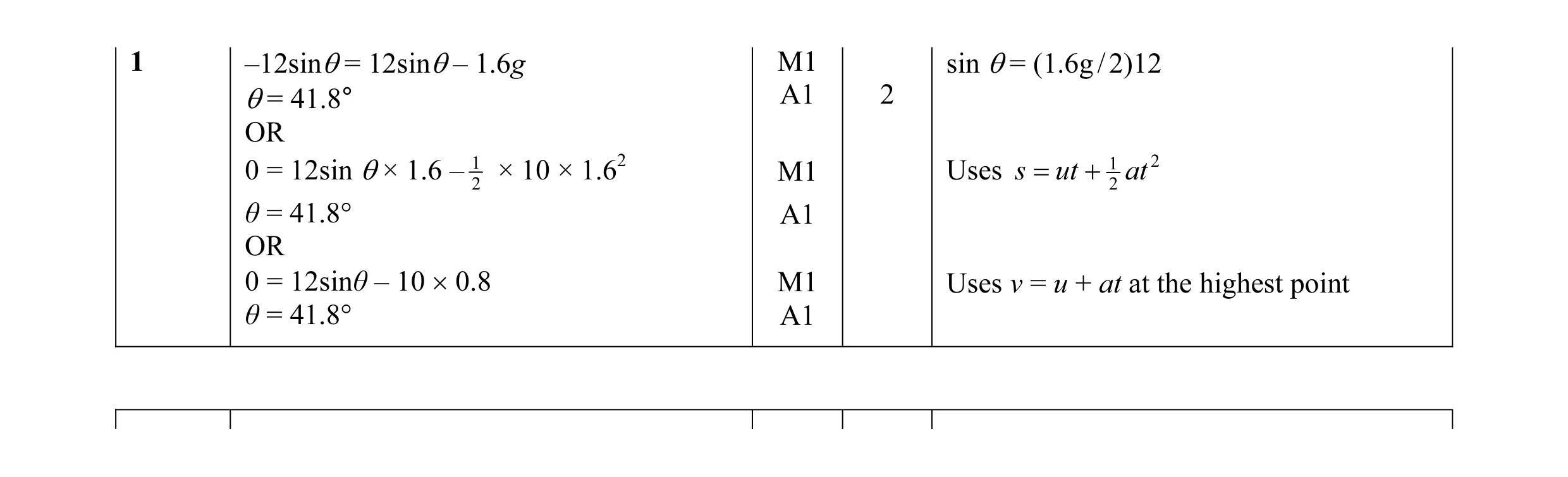 2
2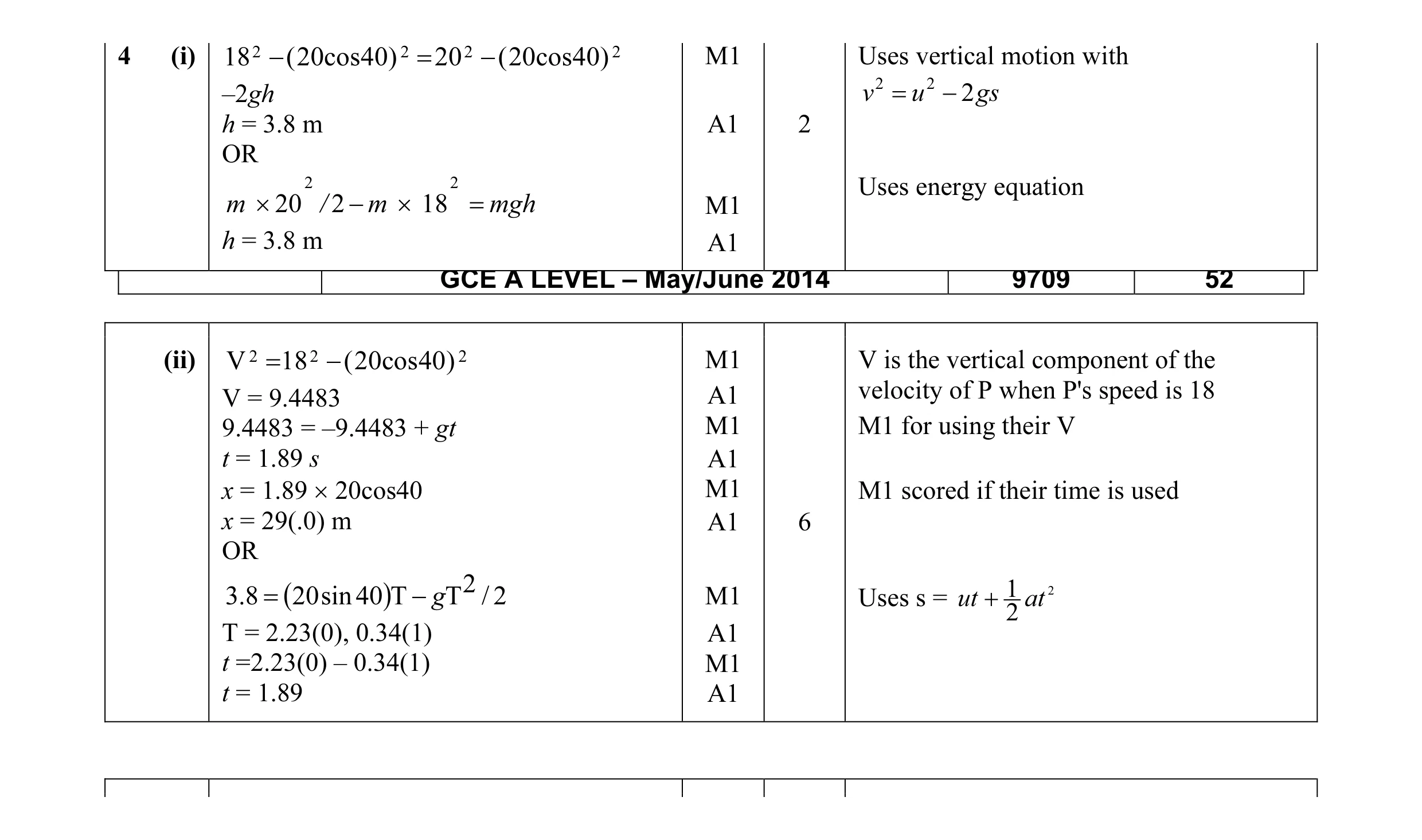 8
8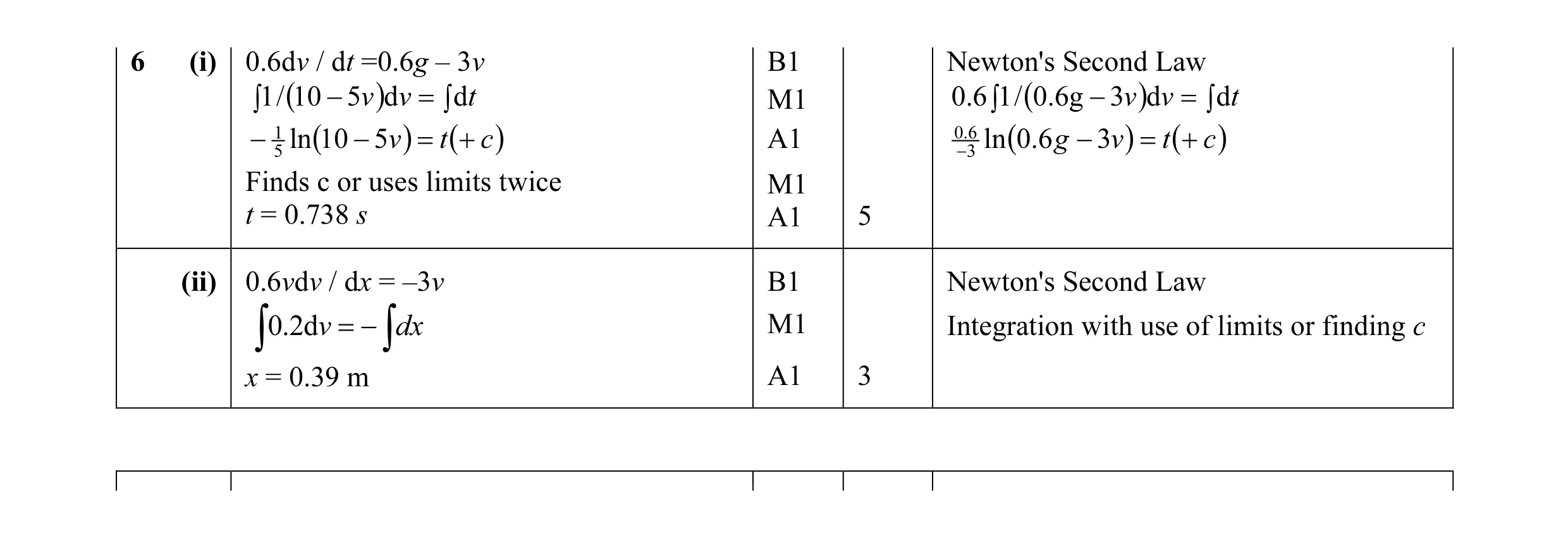 8
8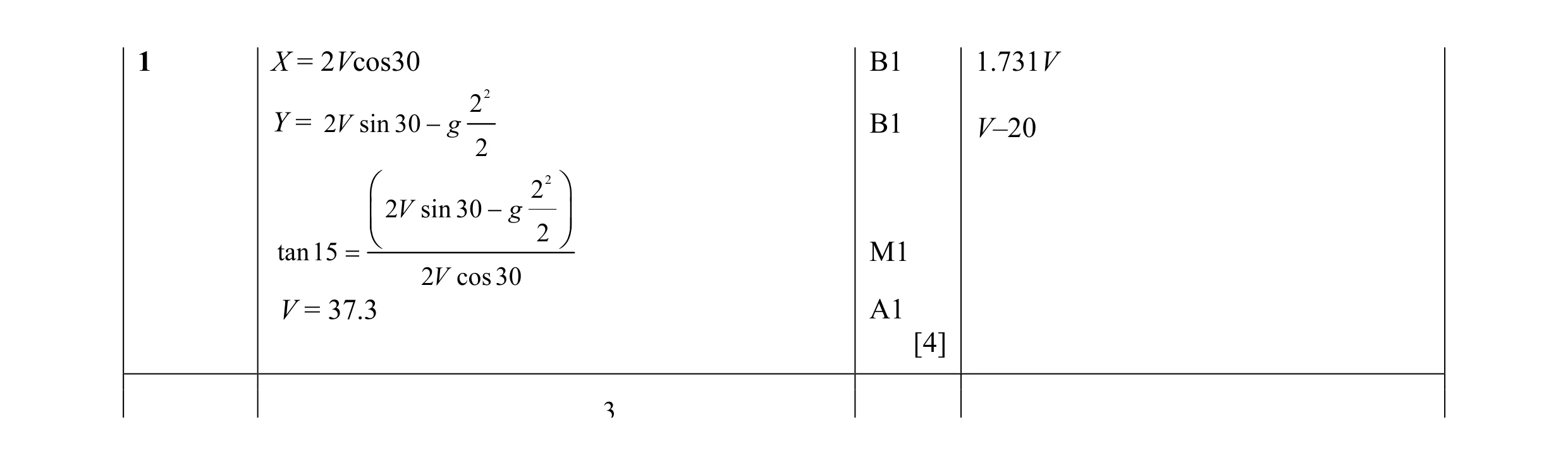 4
4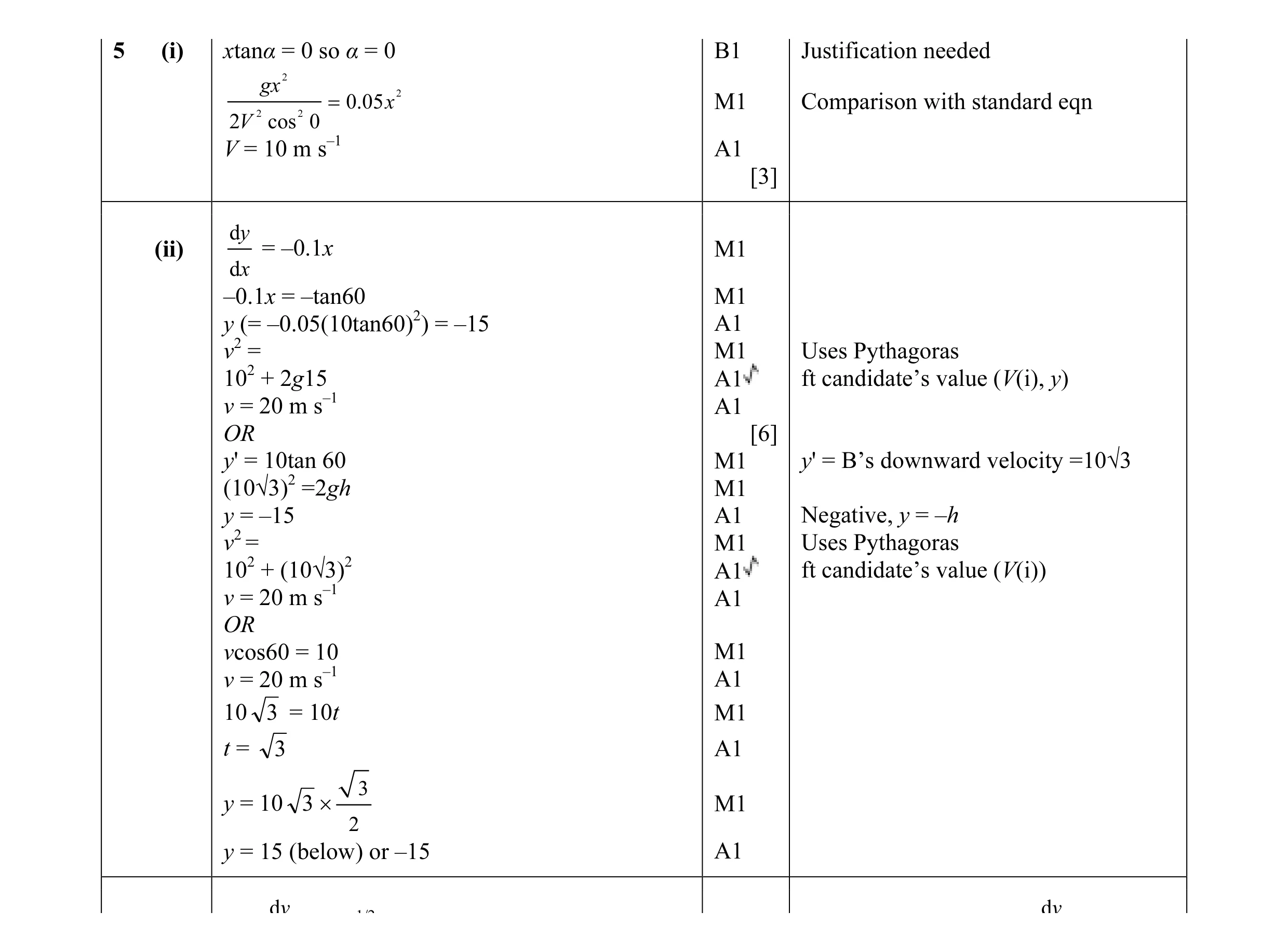 9
9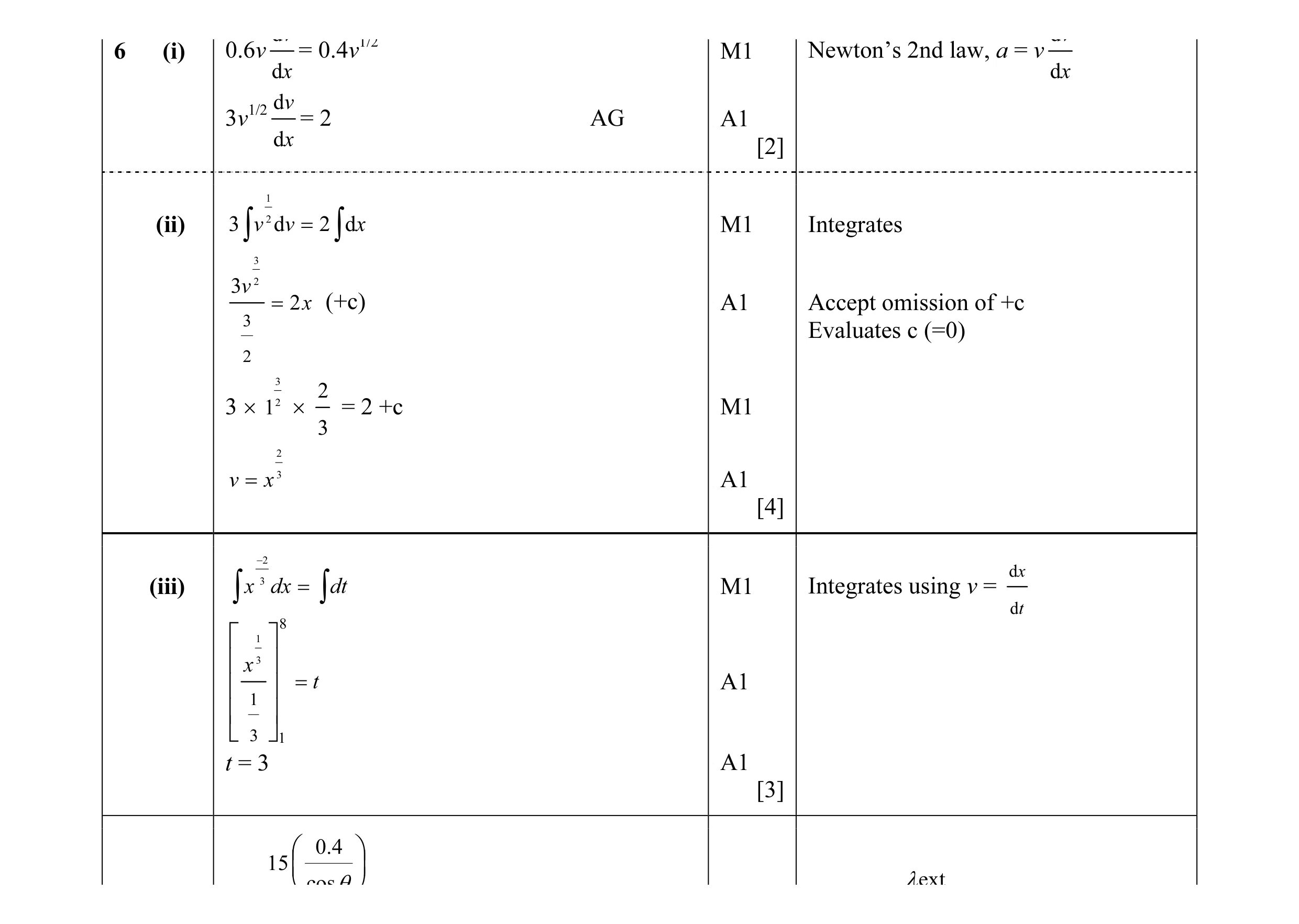 9
9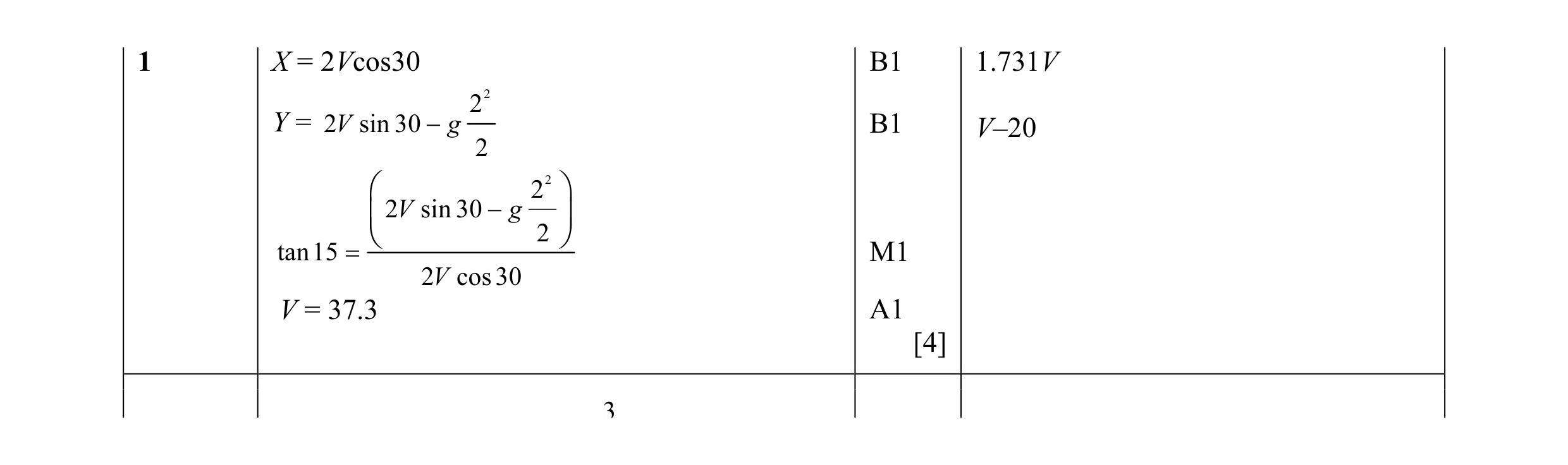 4
4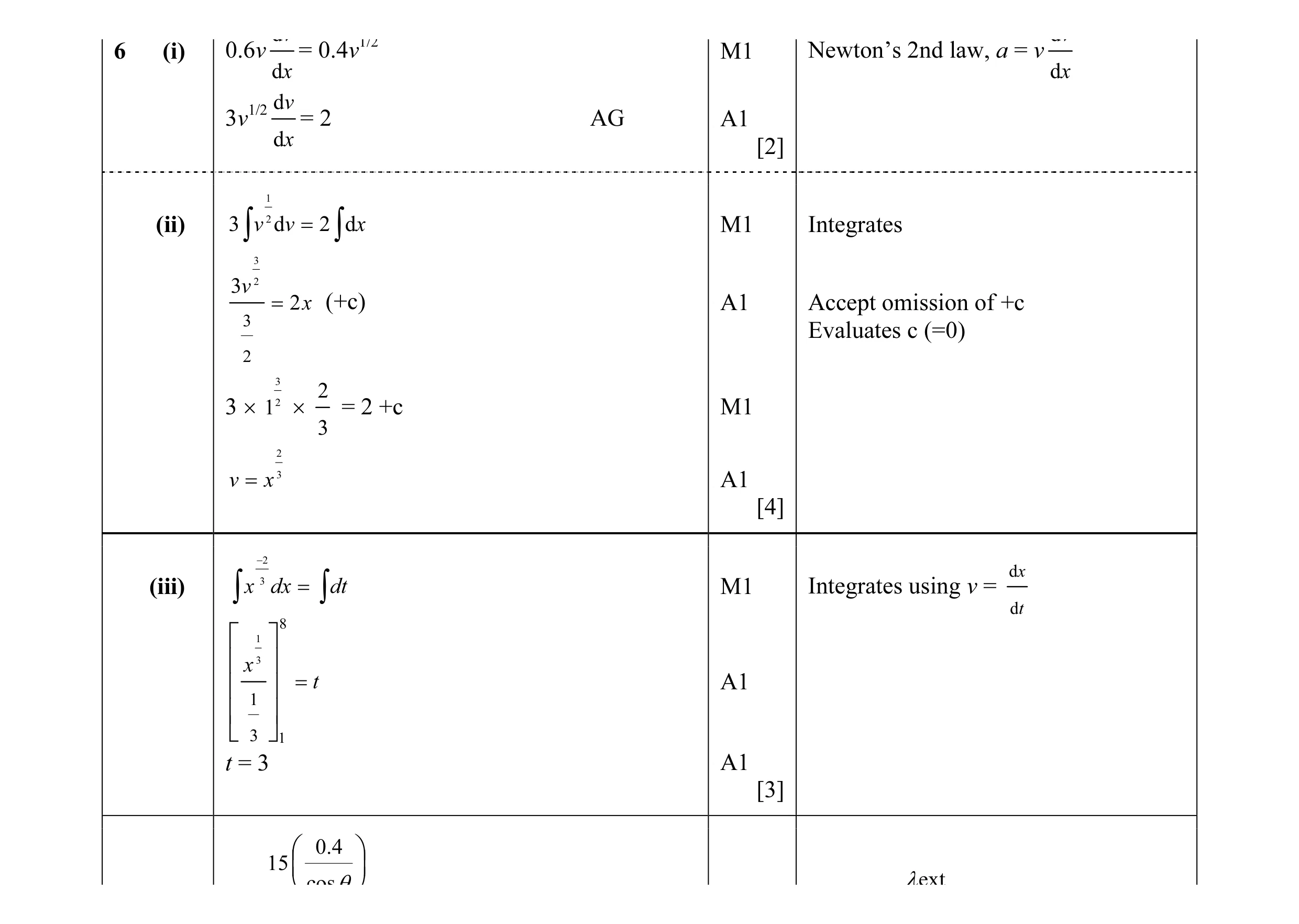 9
9 3
3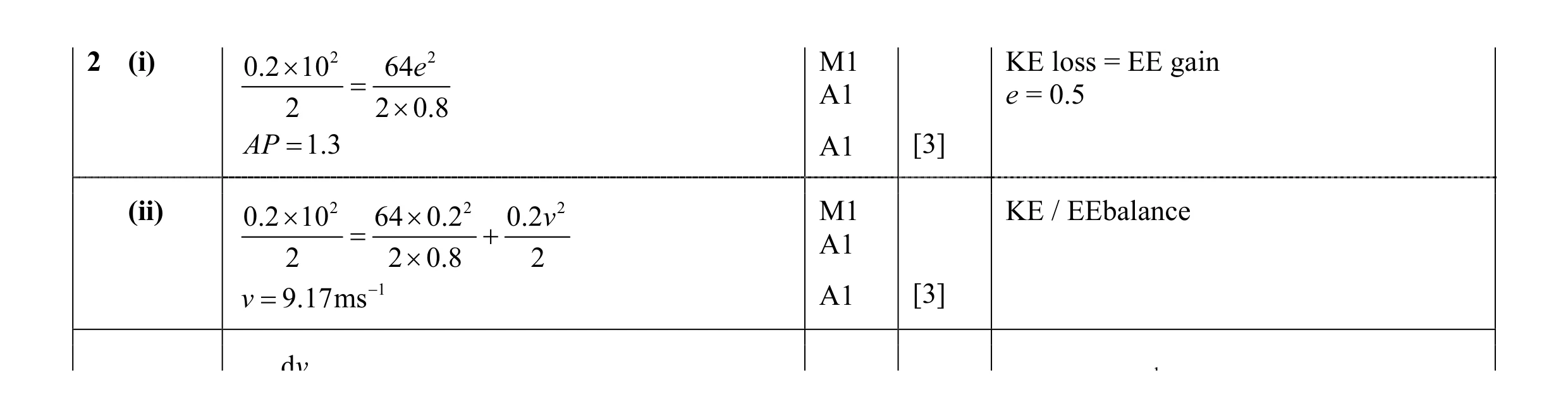 6
6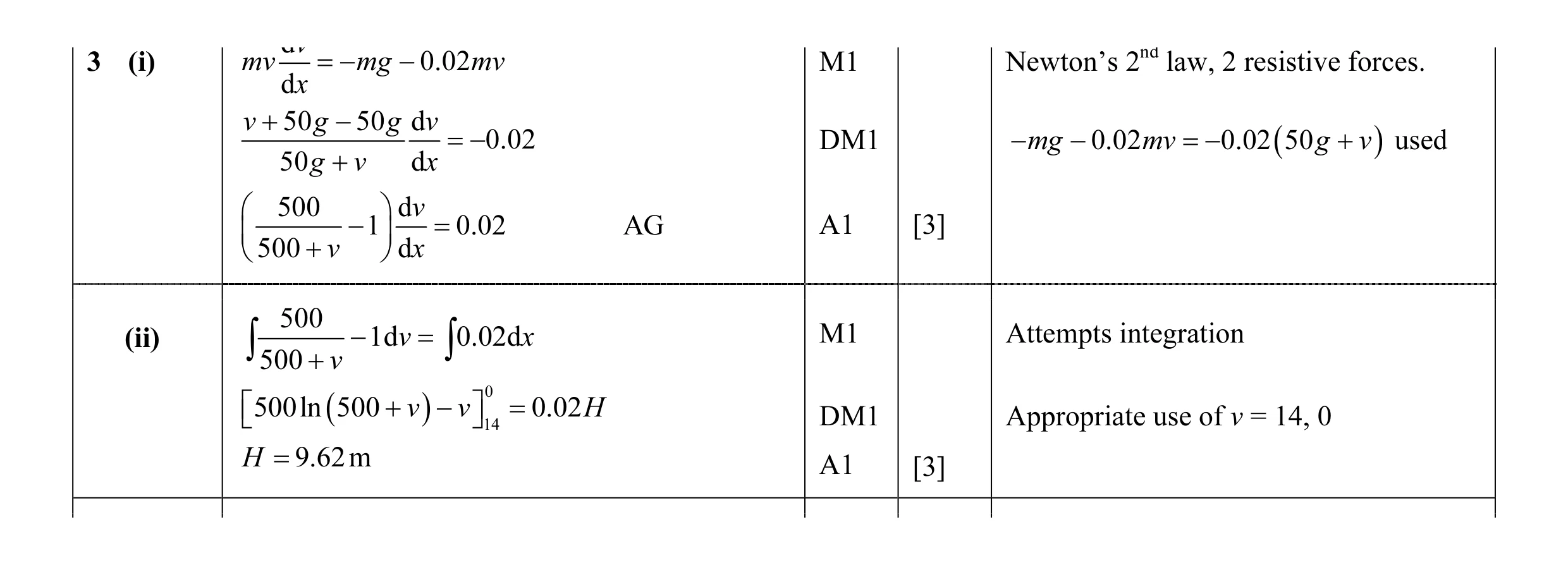 6
6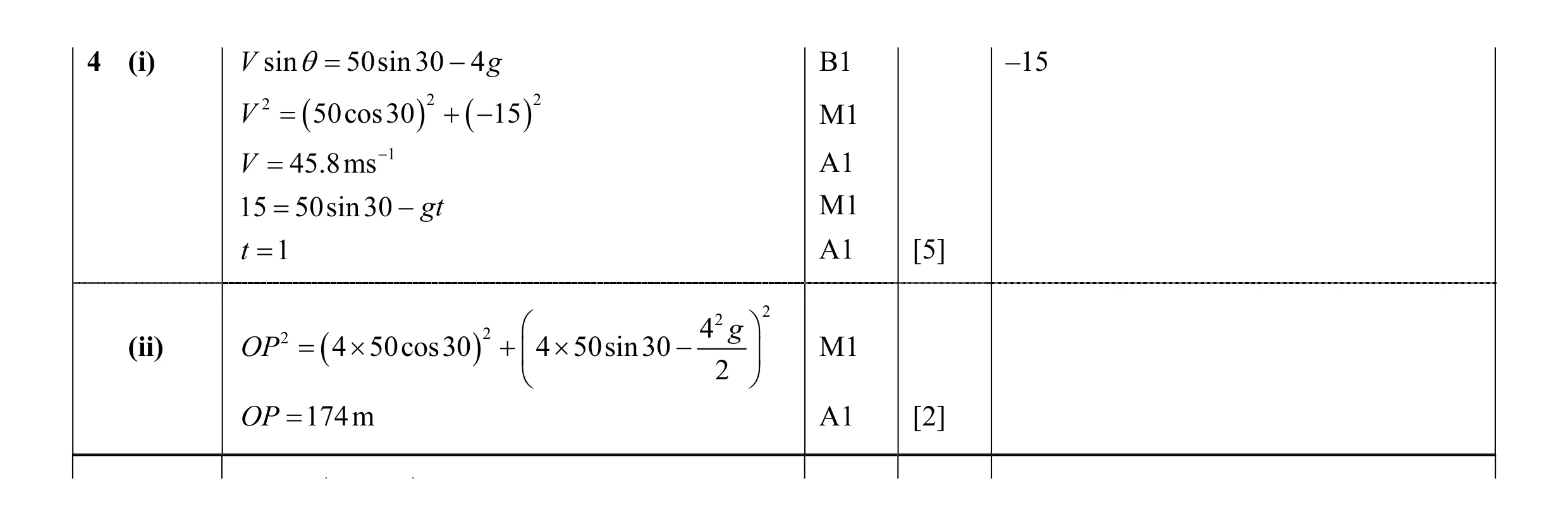 7
7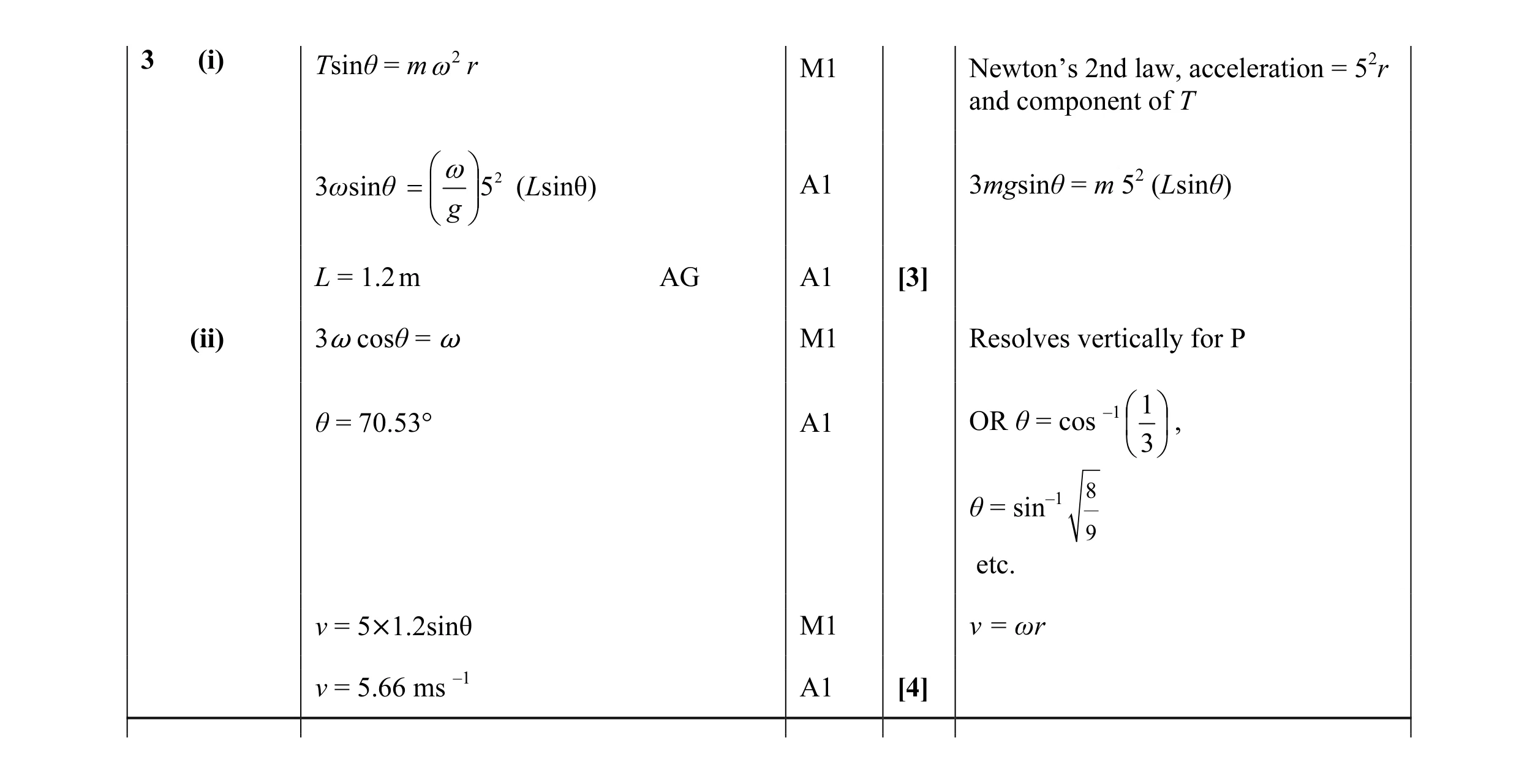 7
7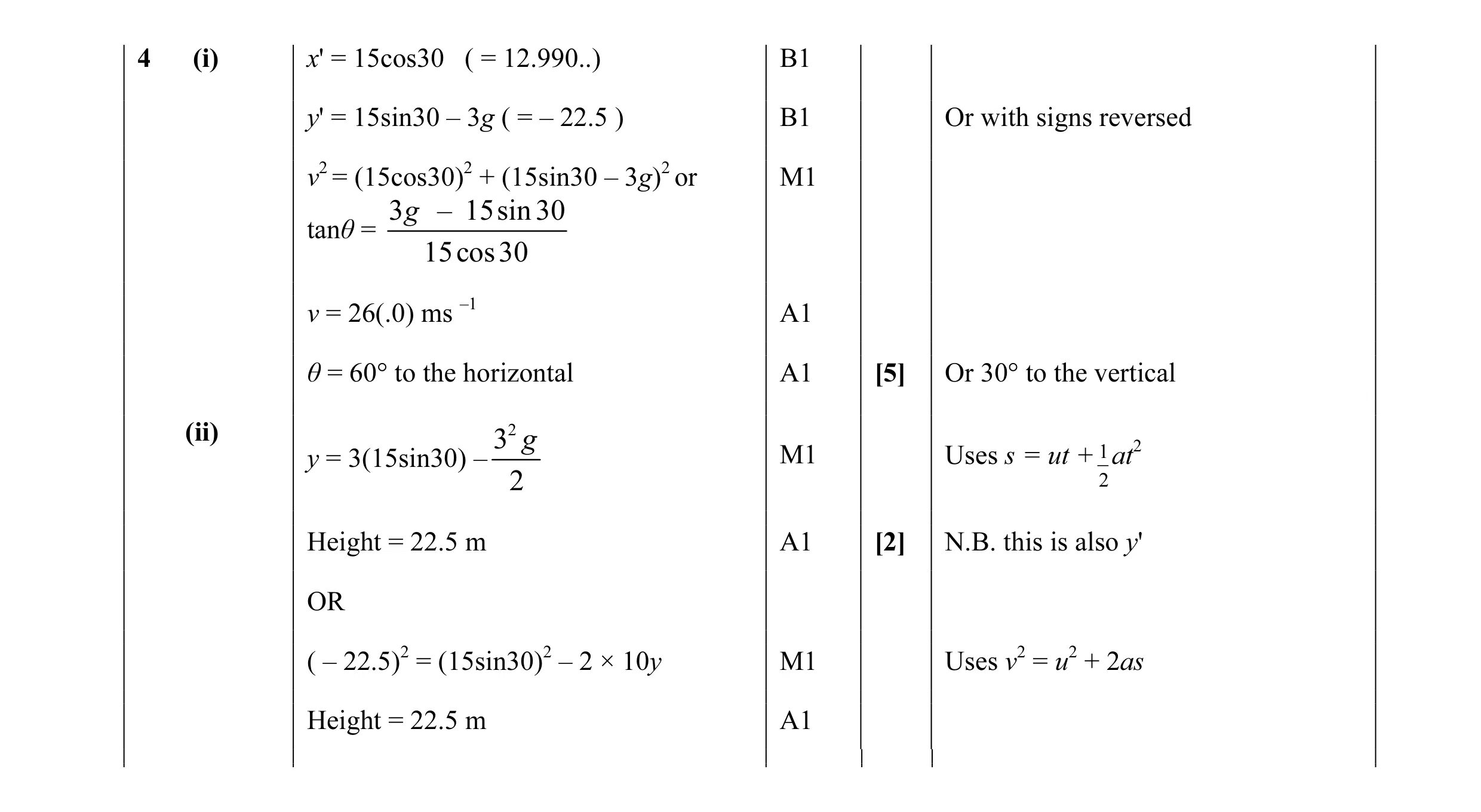 7
7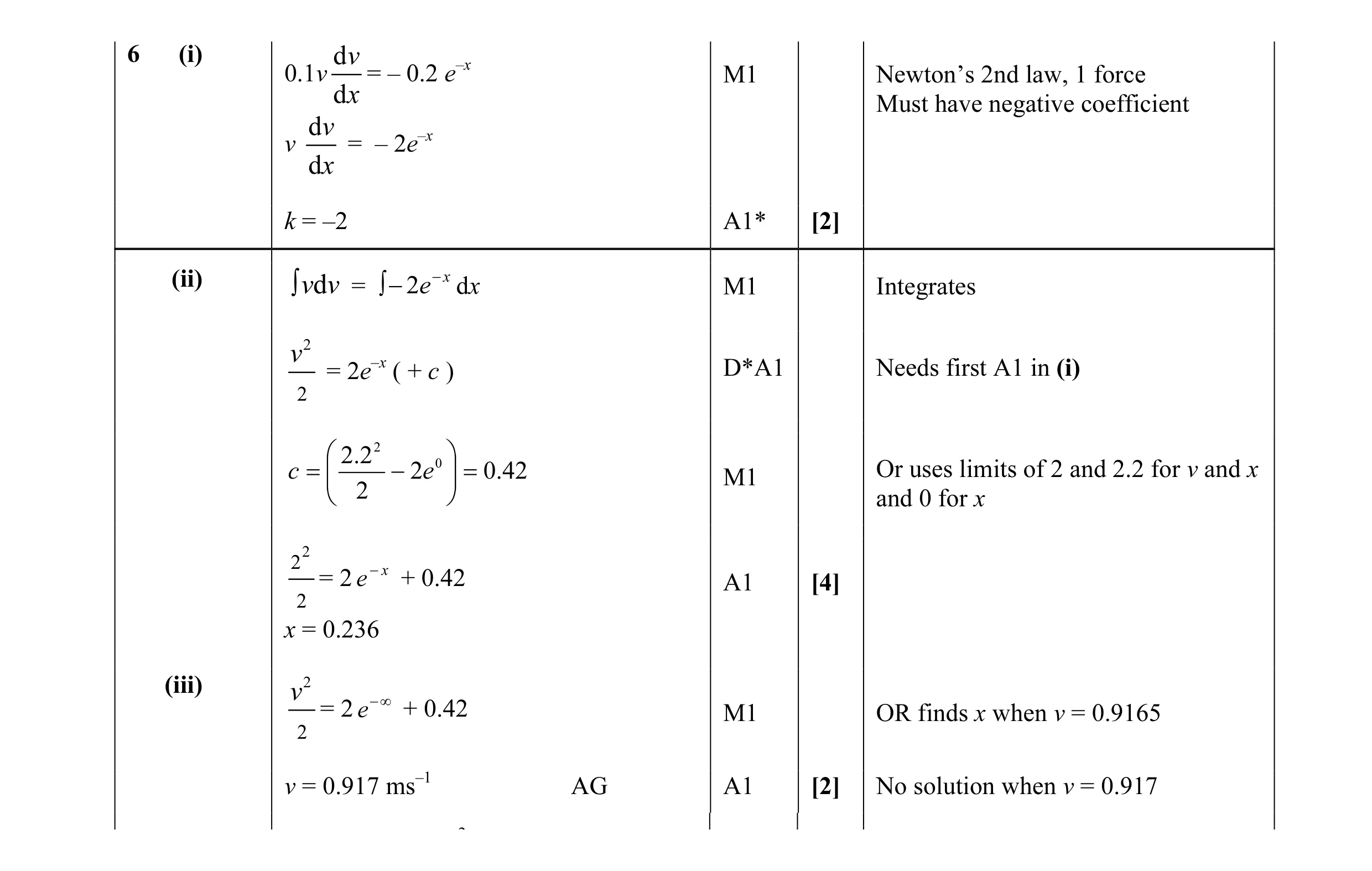 8
8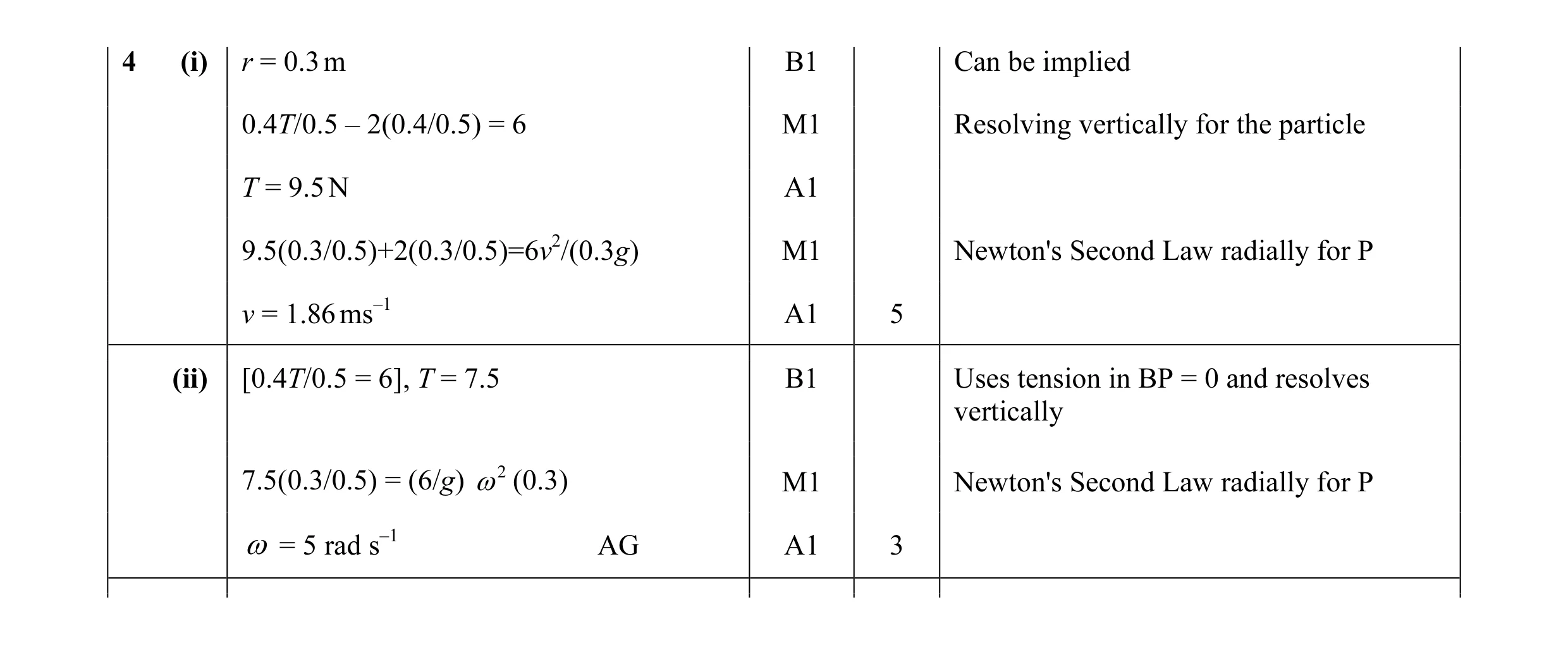 8
8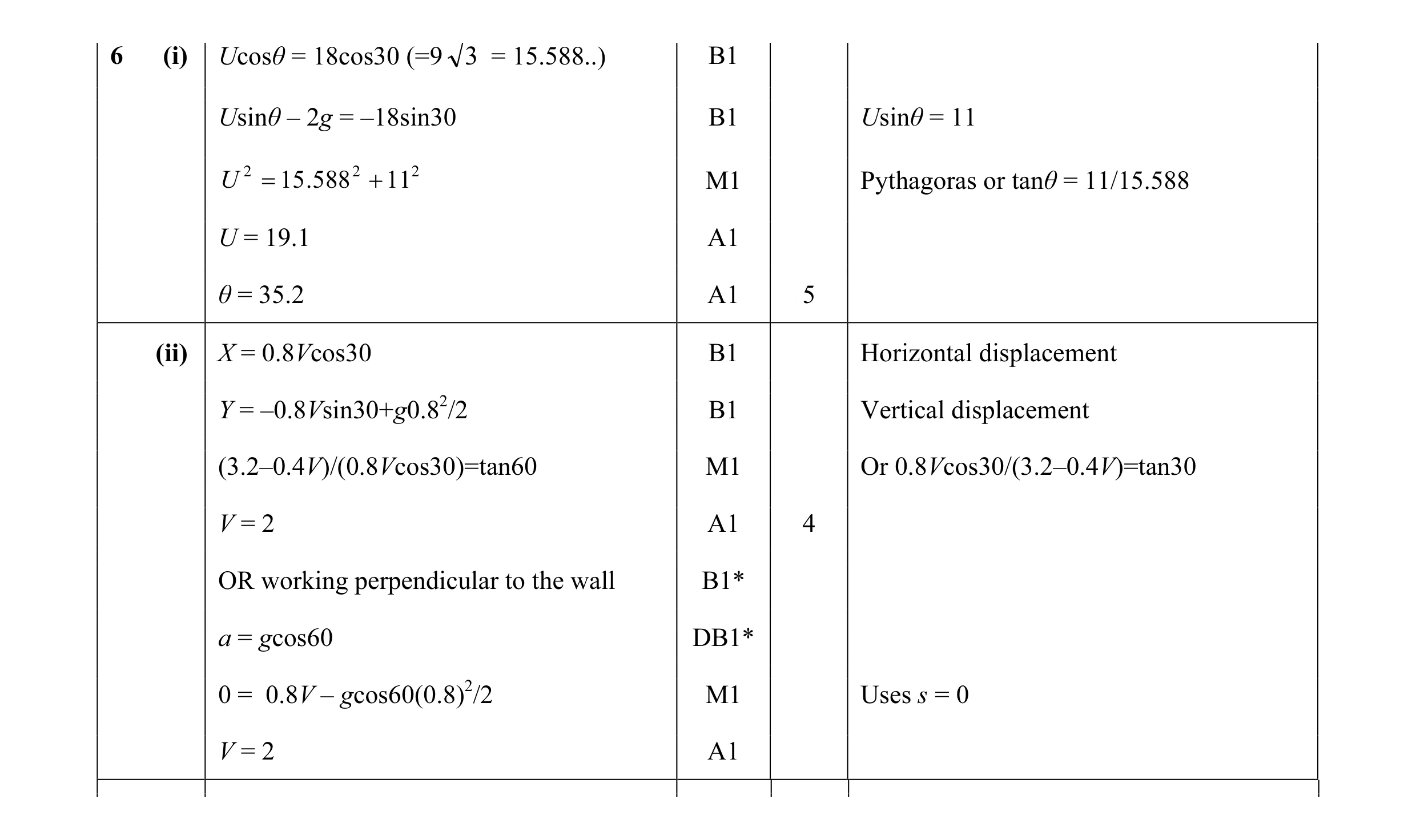 9
9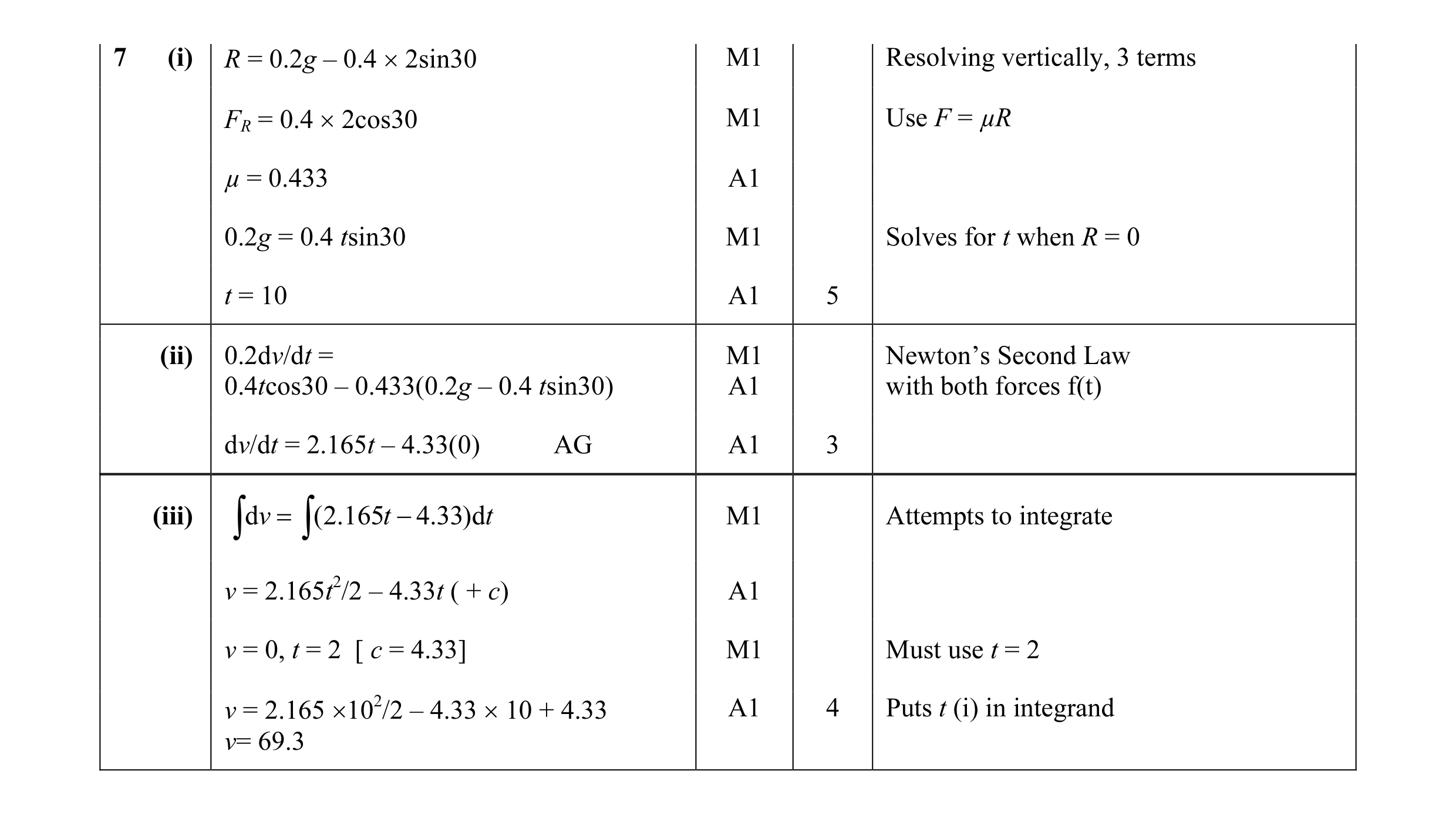 12
12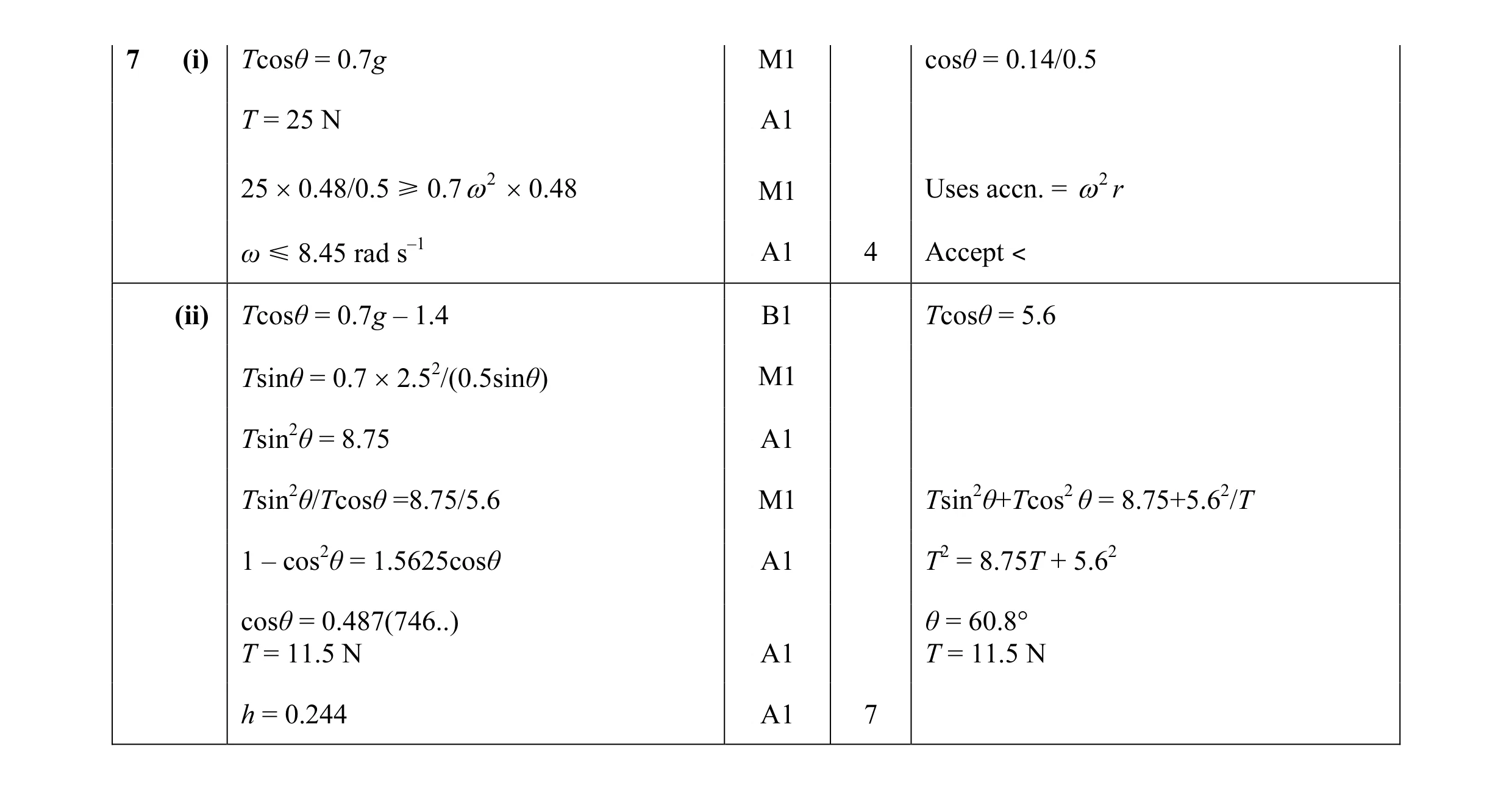 11
11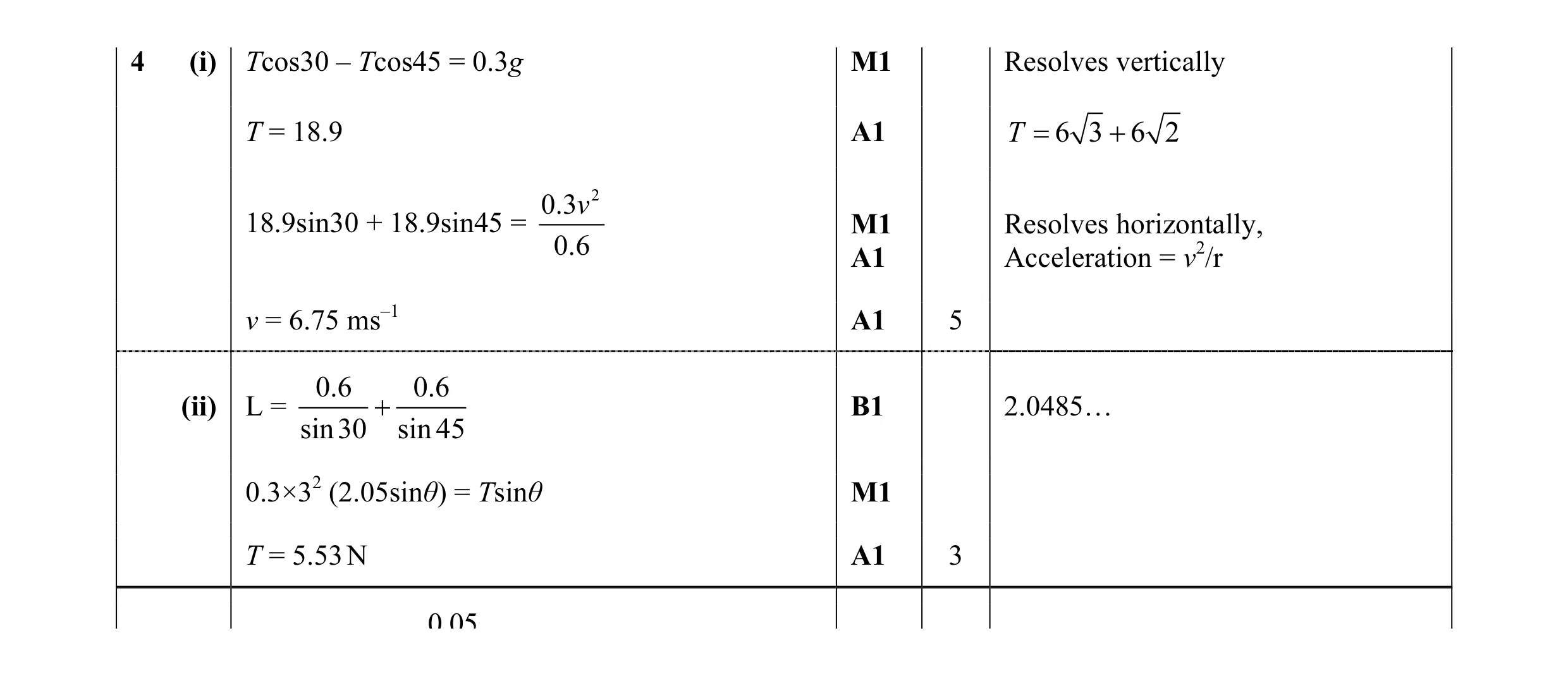 8
8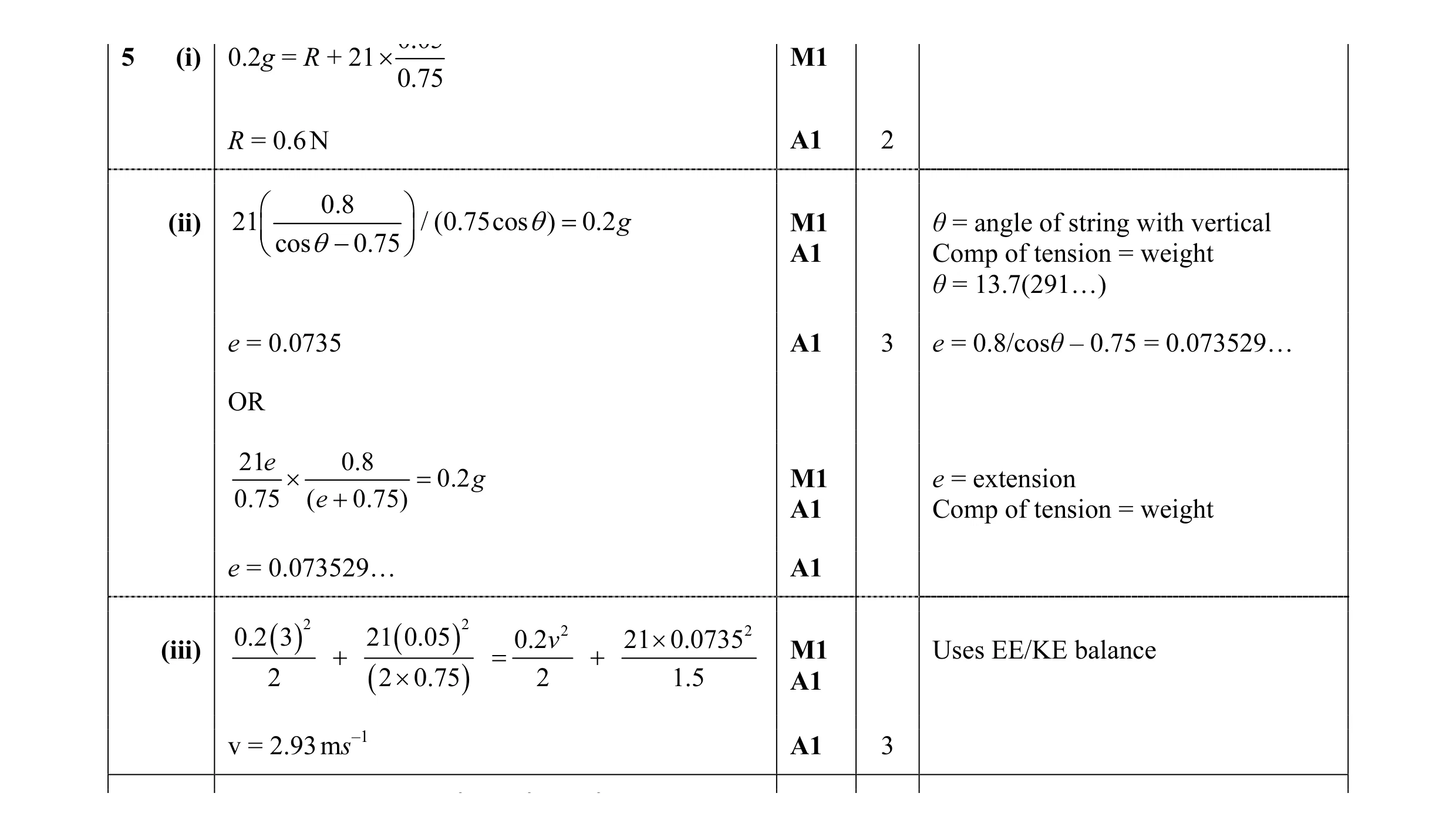 8
8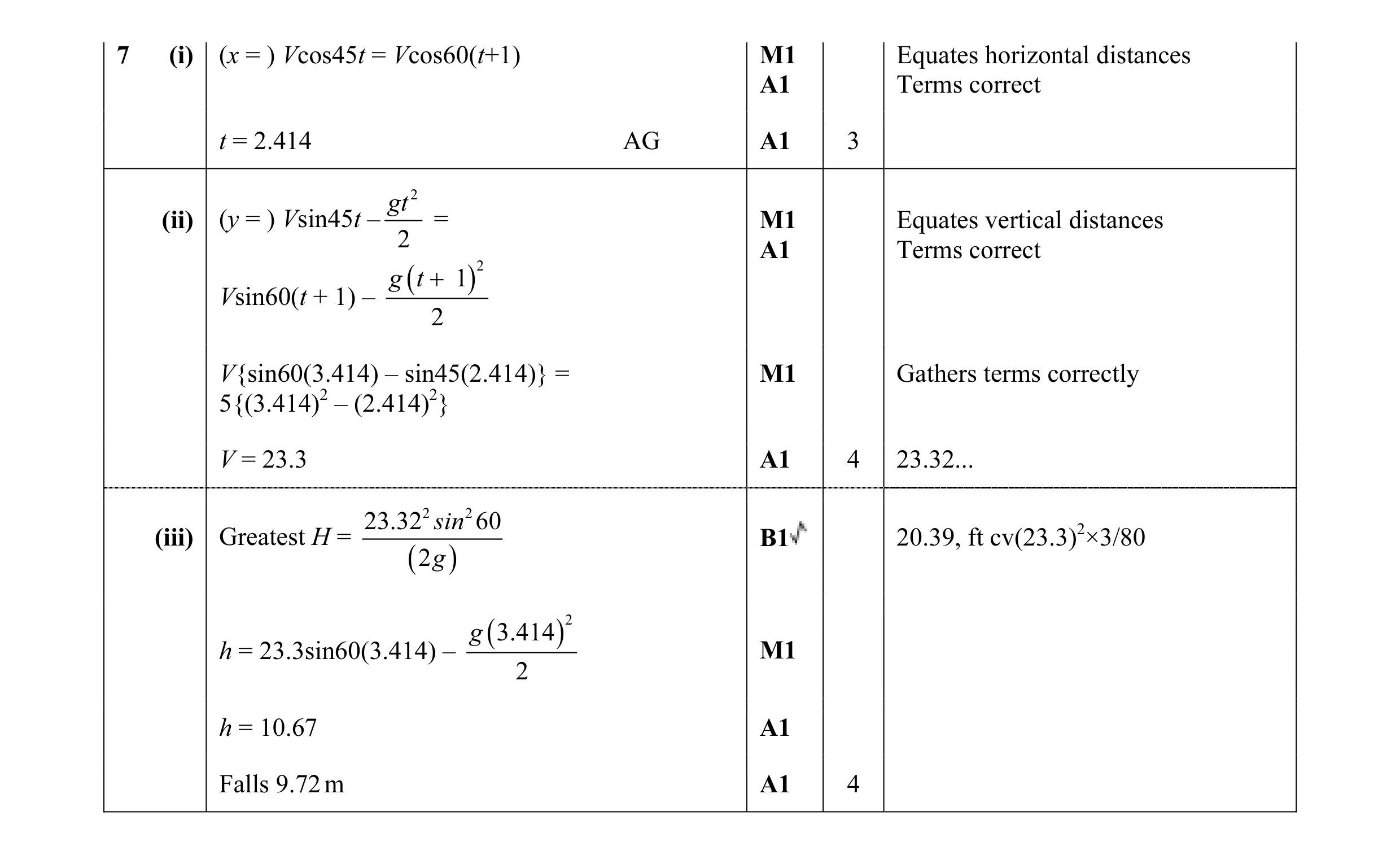 11
11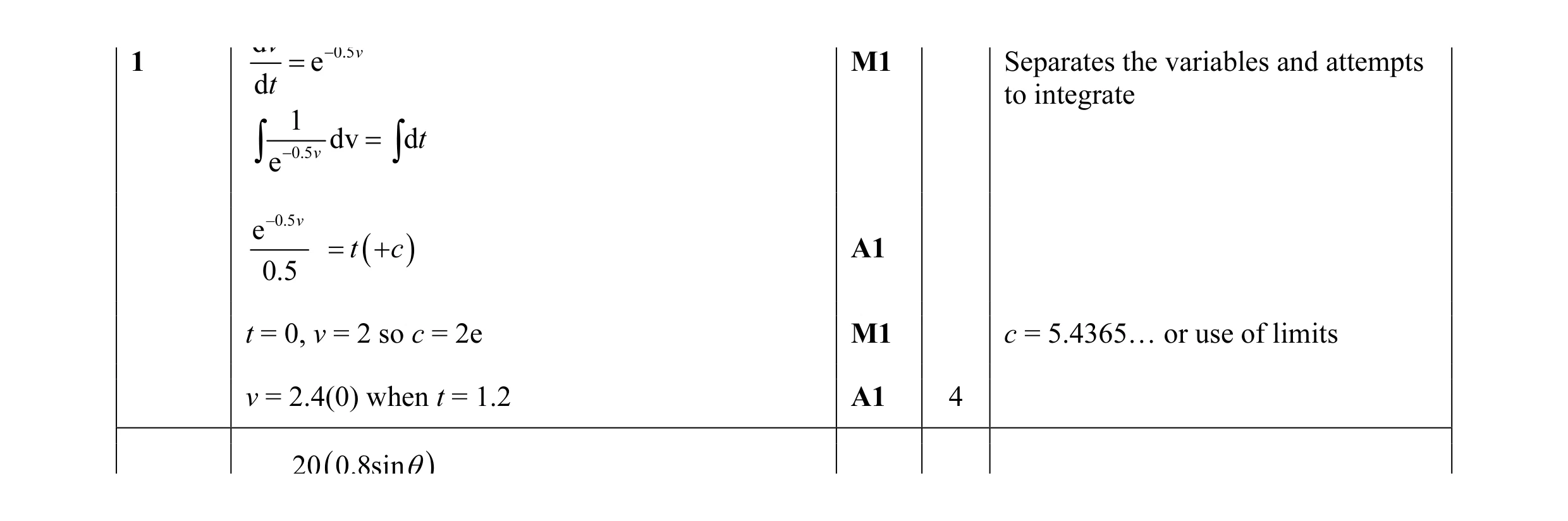 4
4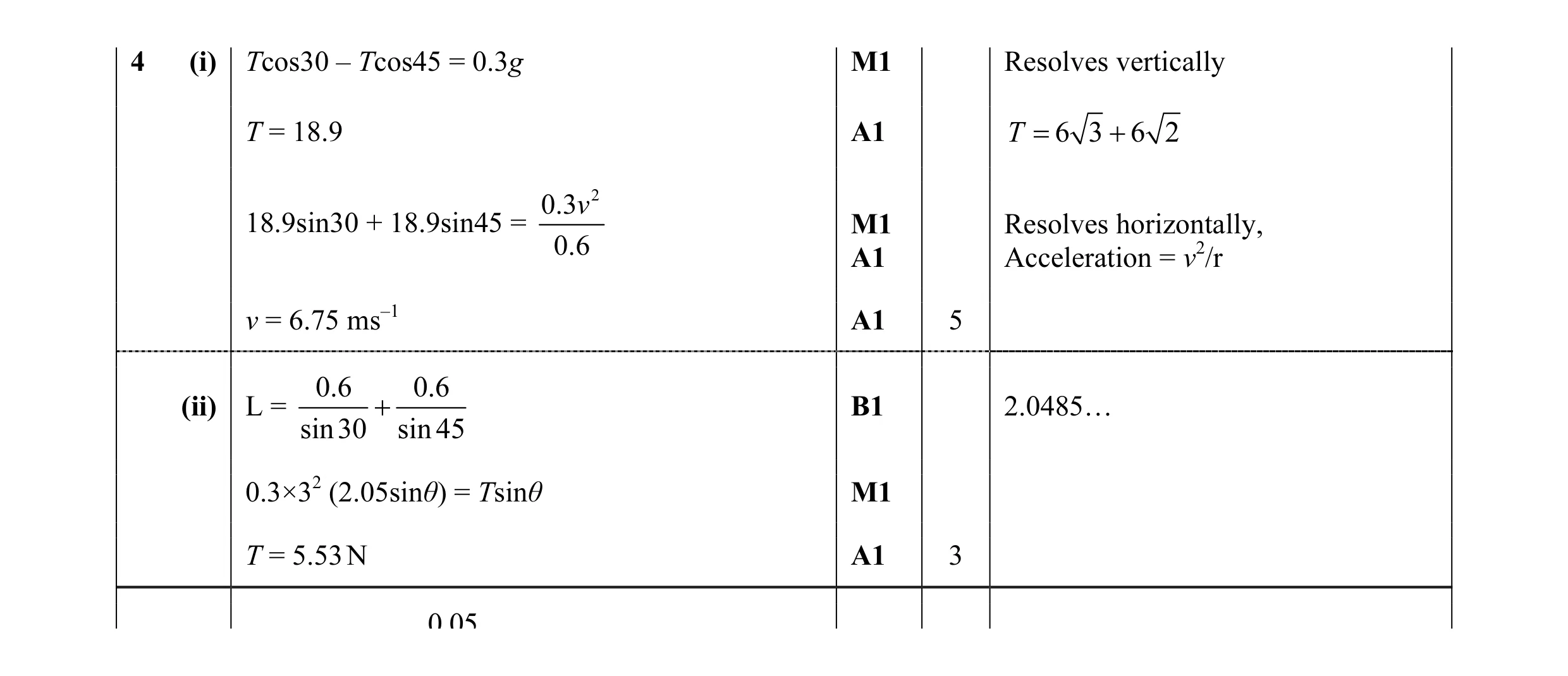 8
8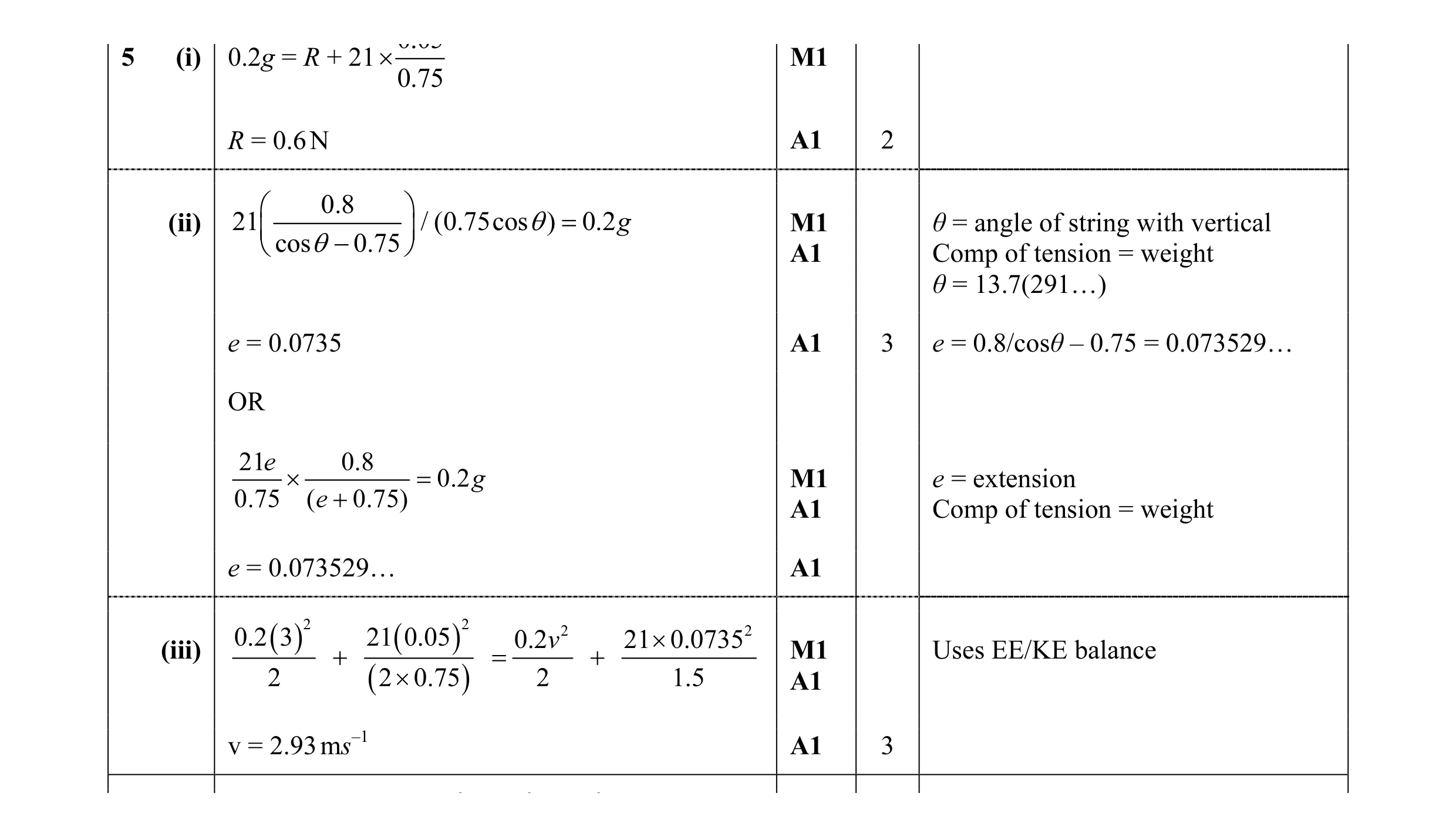 8
8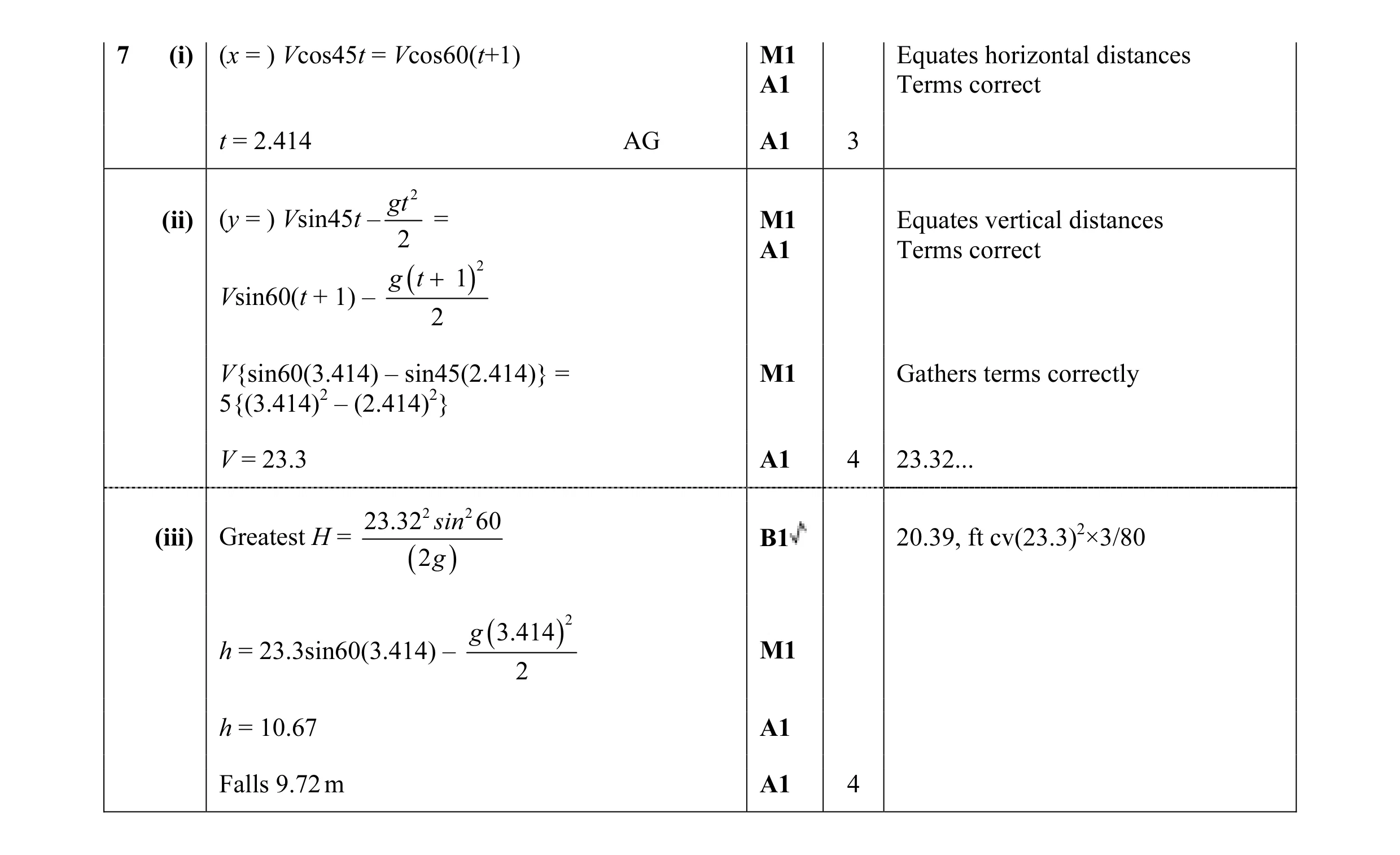 11
11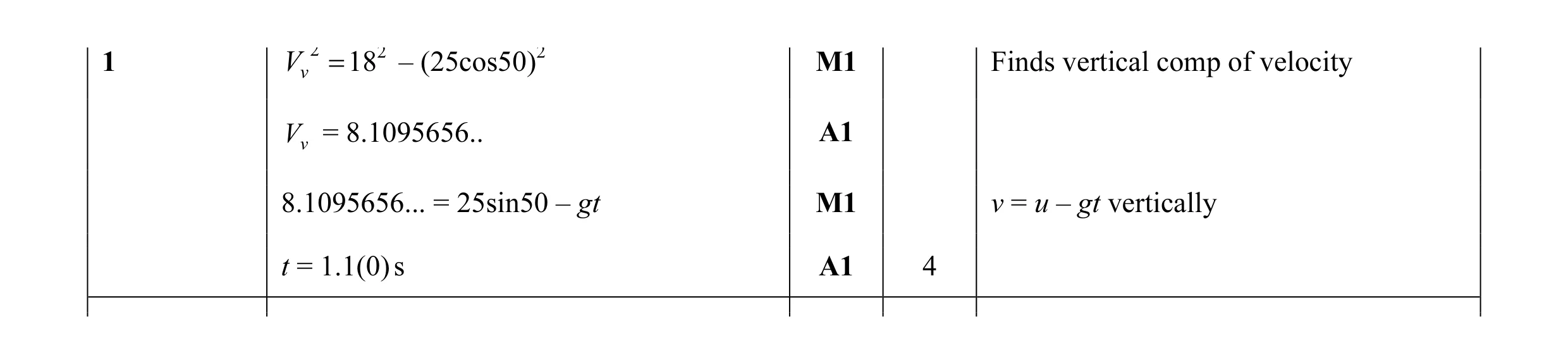 4
4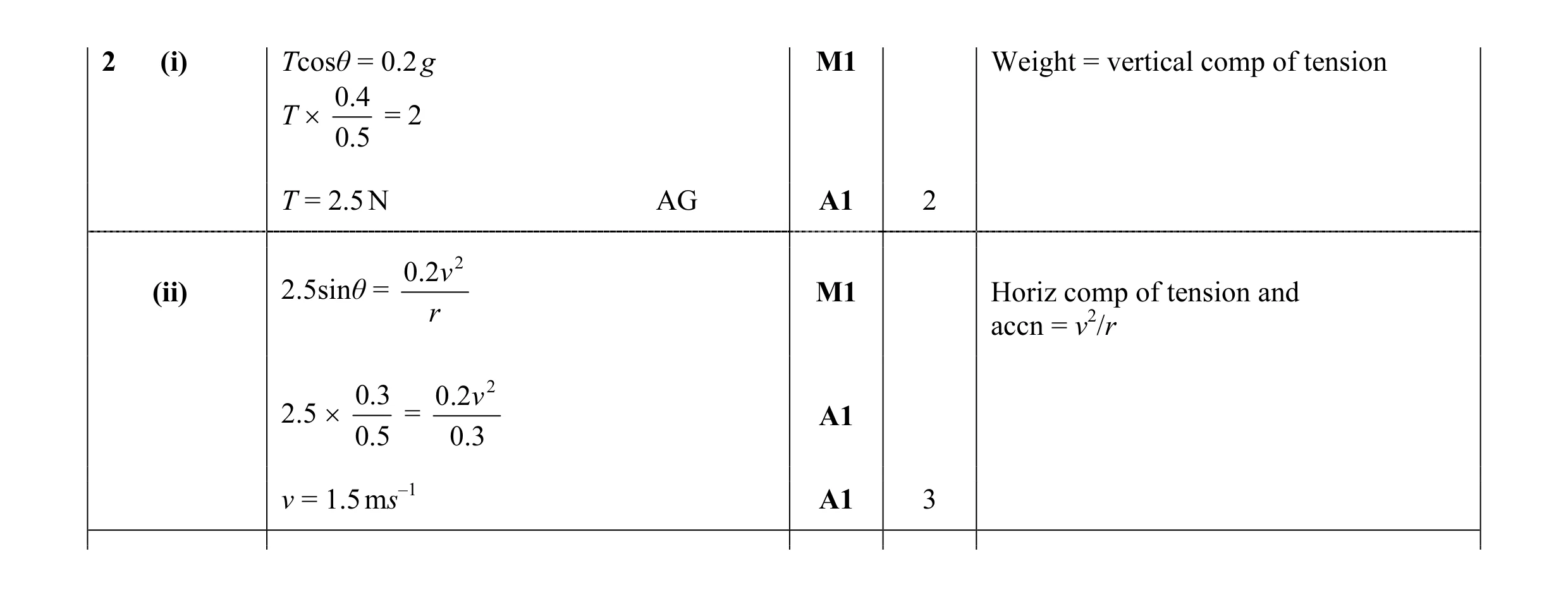 5
5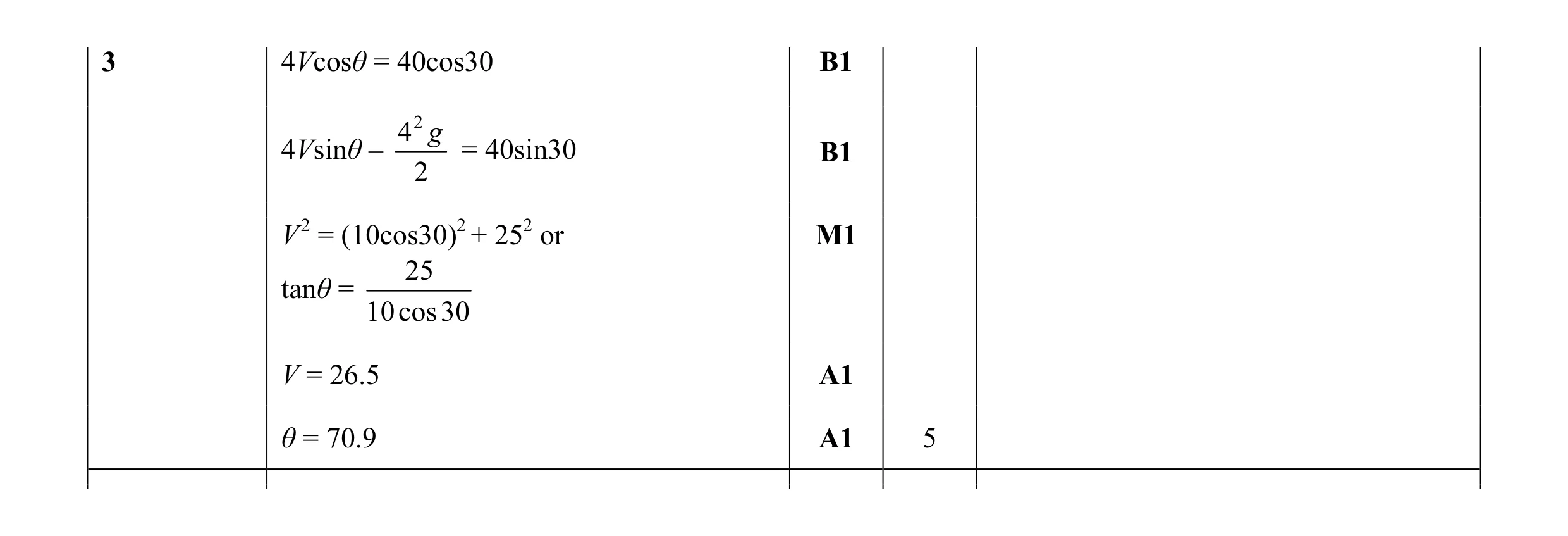 5
5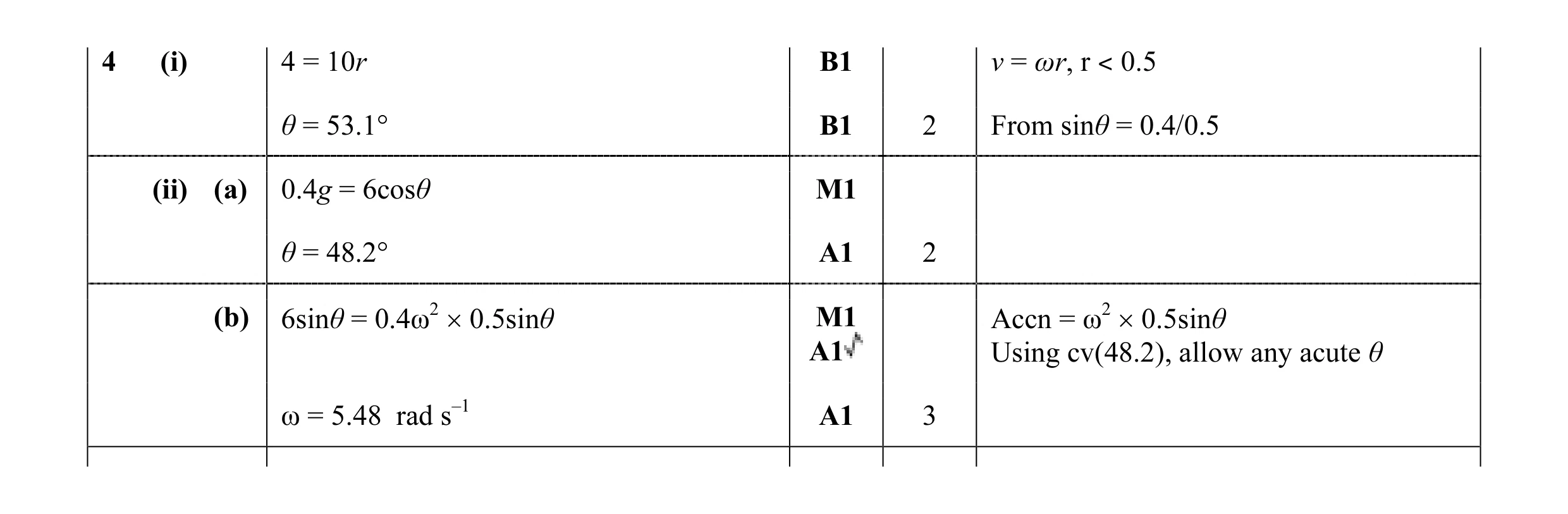 7
7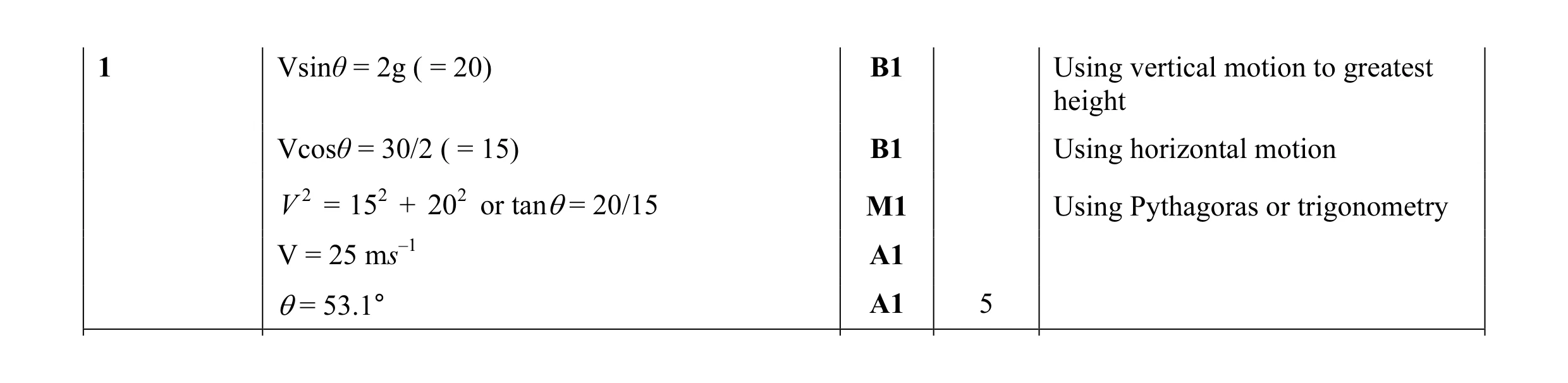 5
5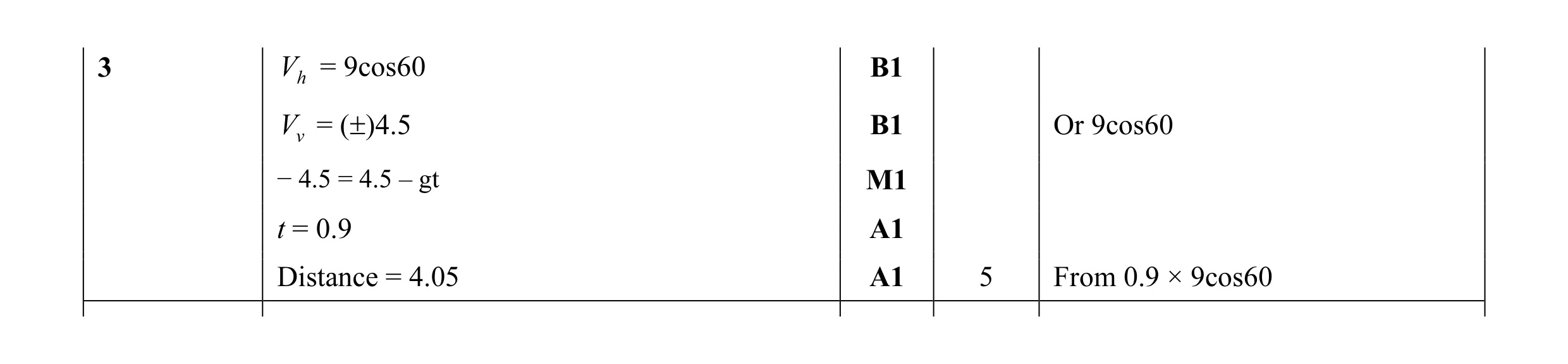 5
5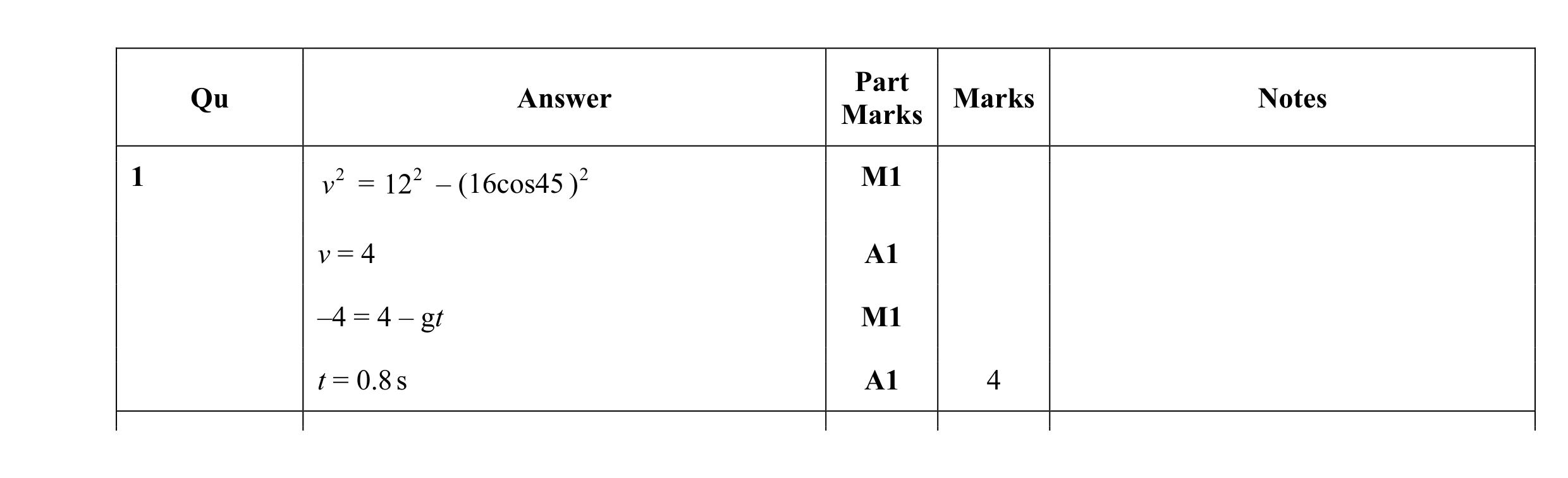 4
4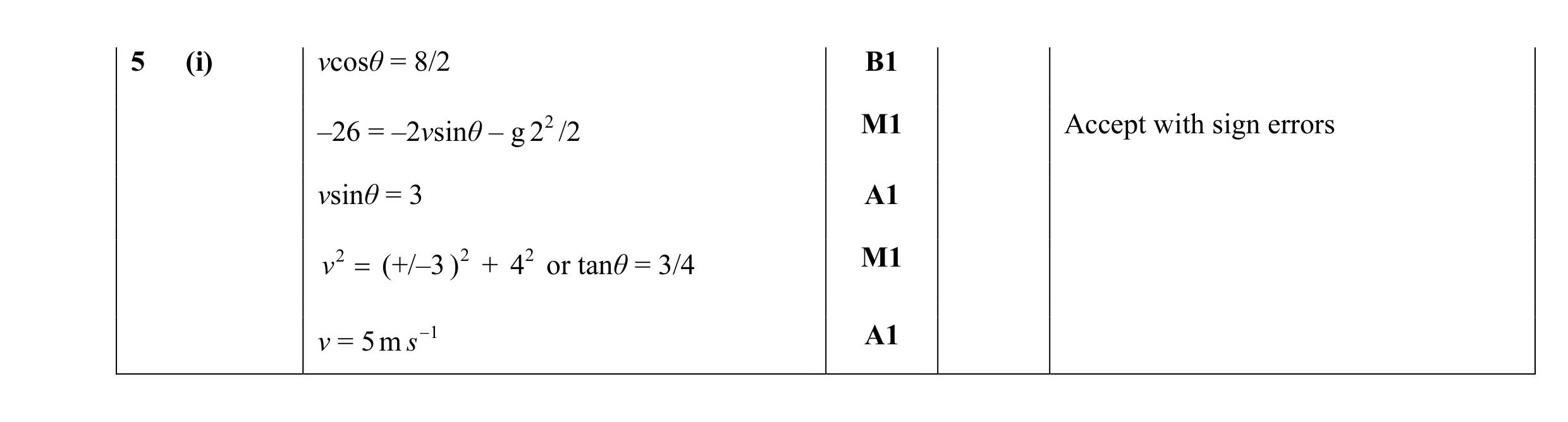 9
9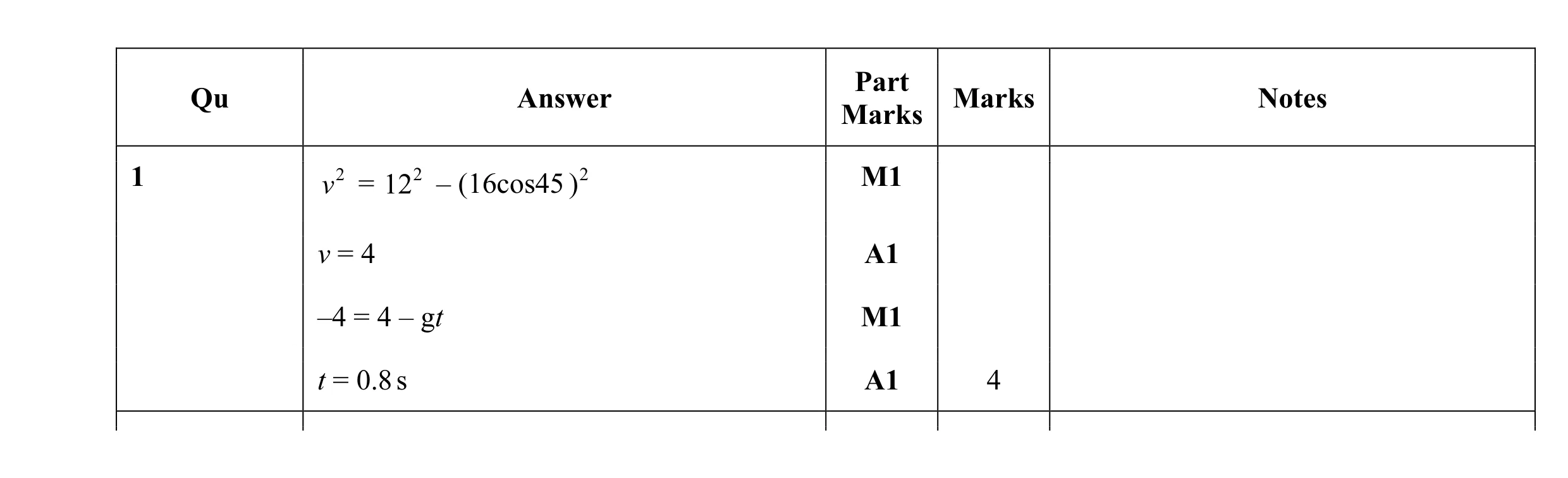 4
4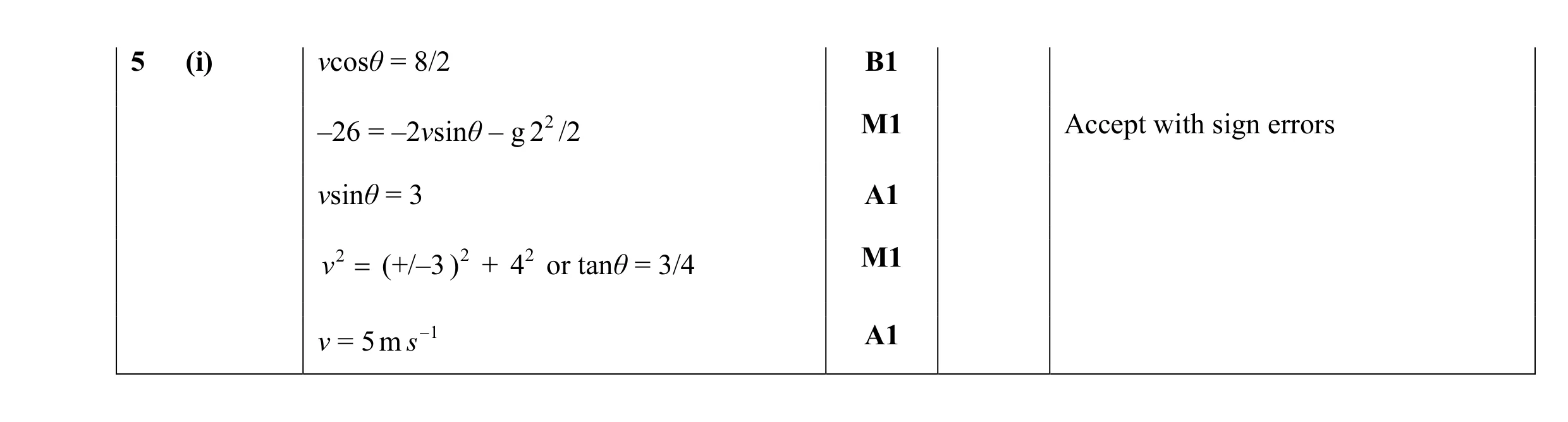 9
9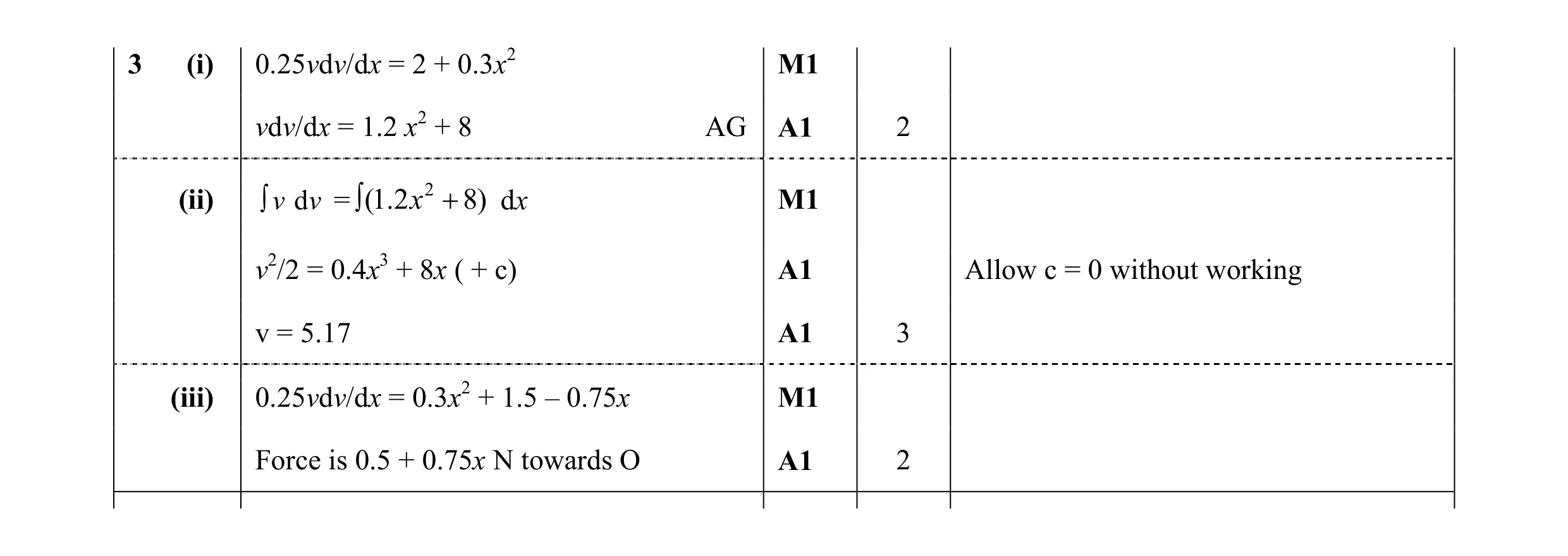 7
7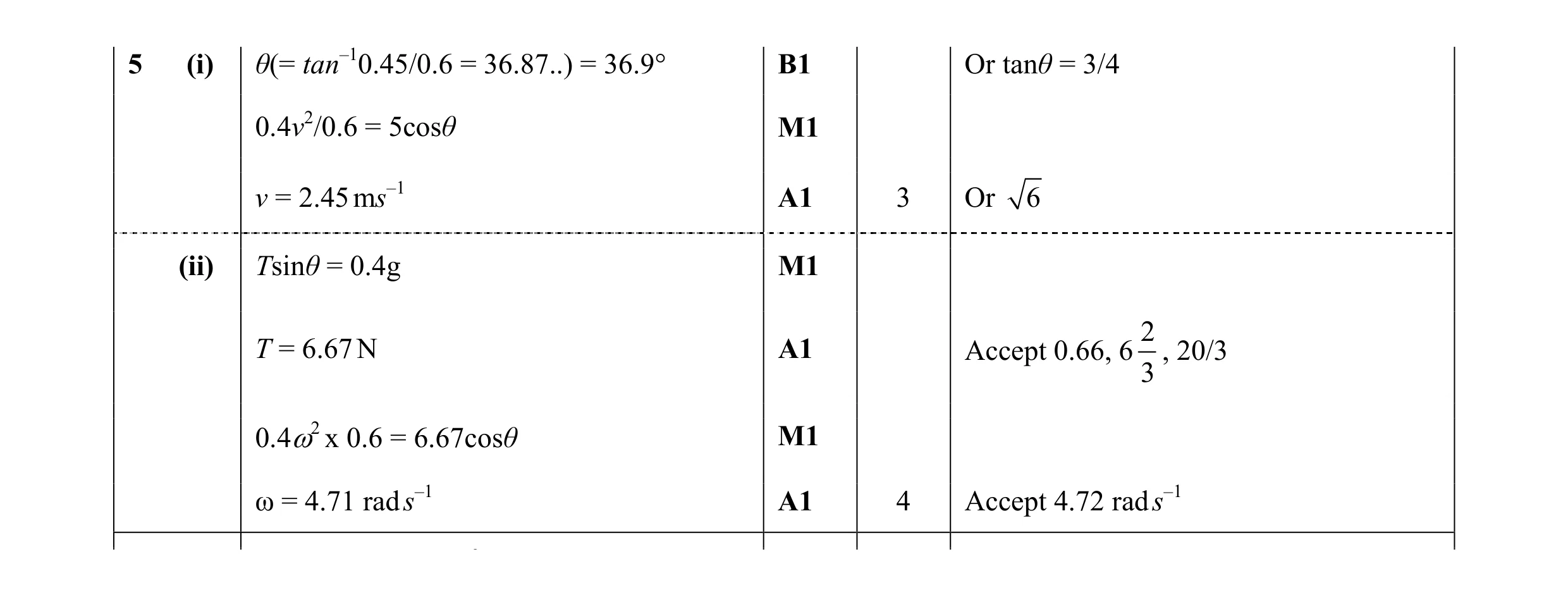 7
7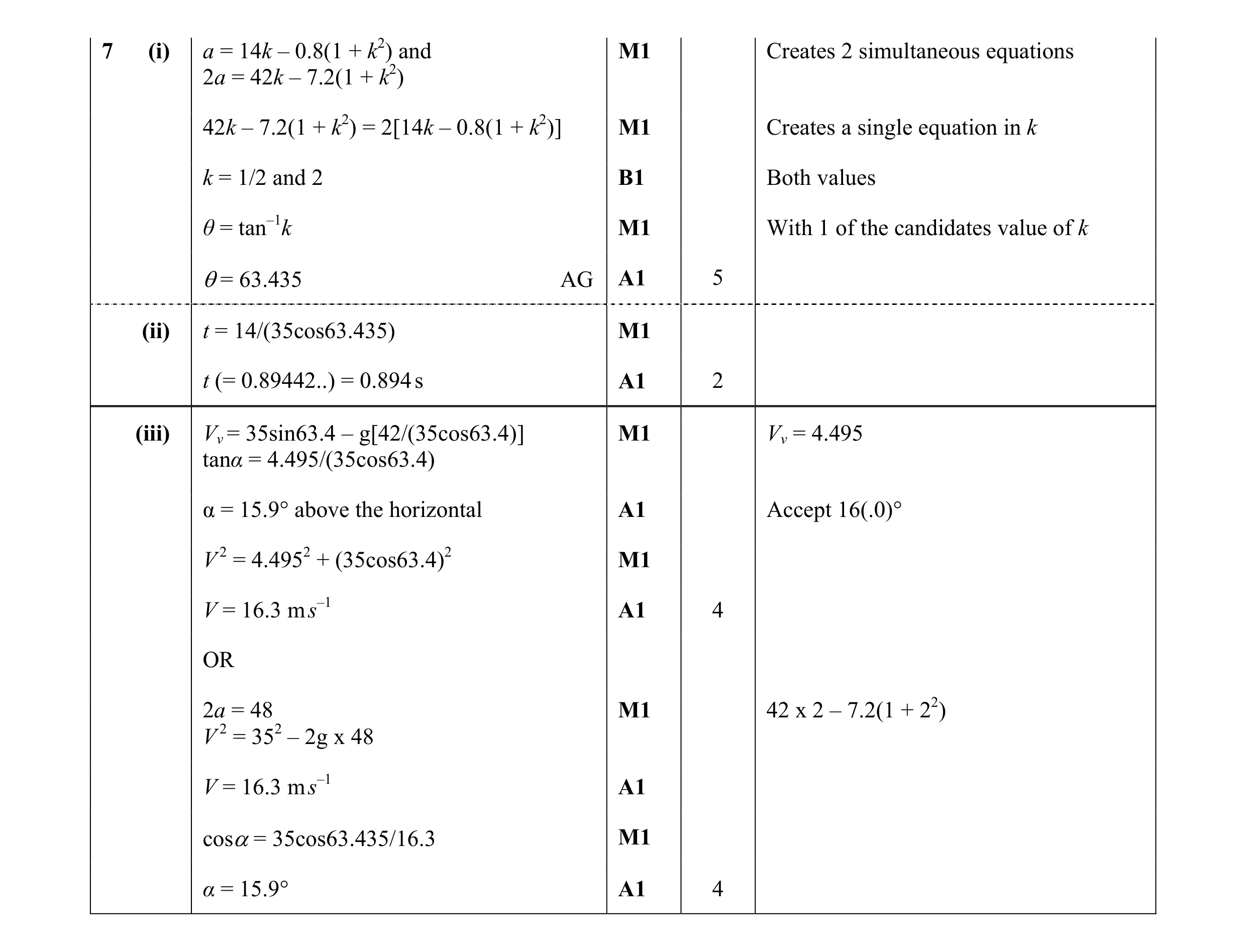 11
11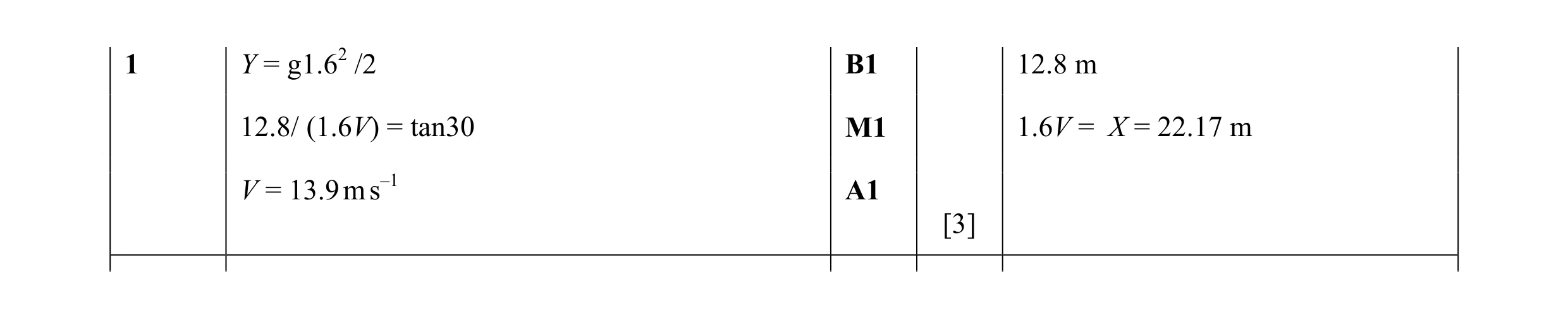 3
3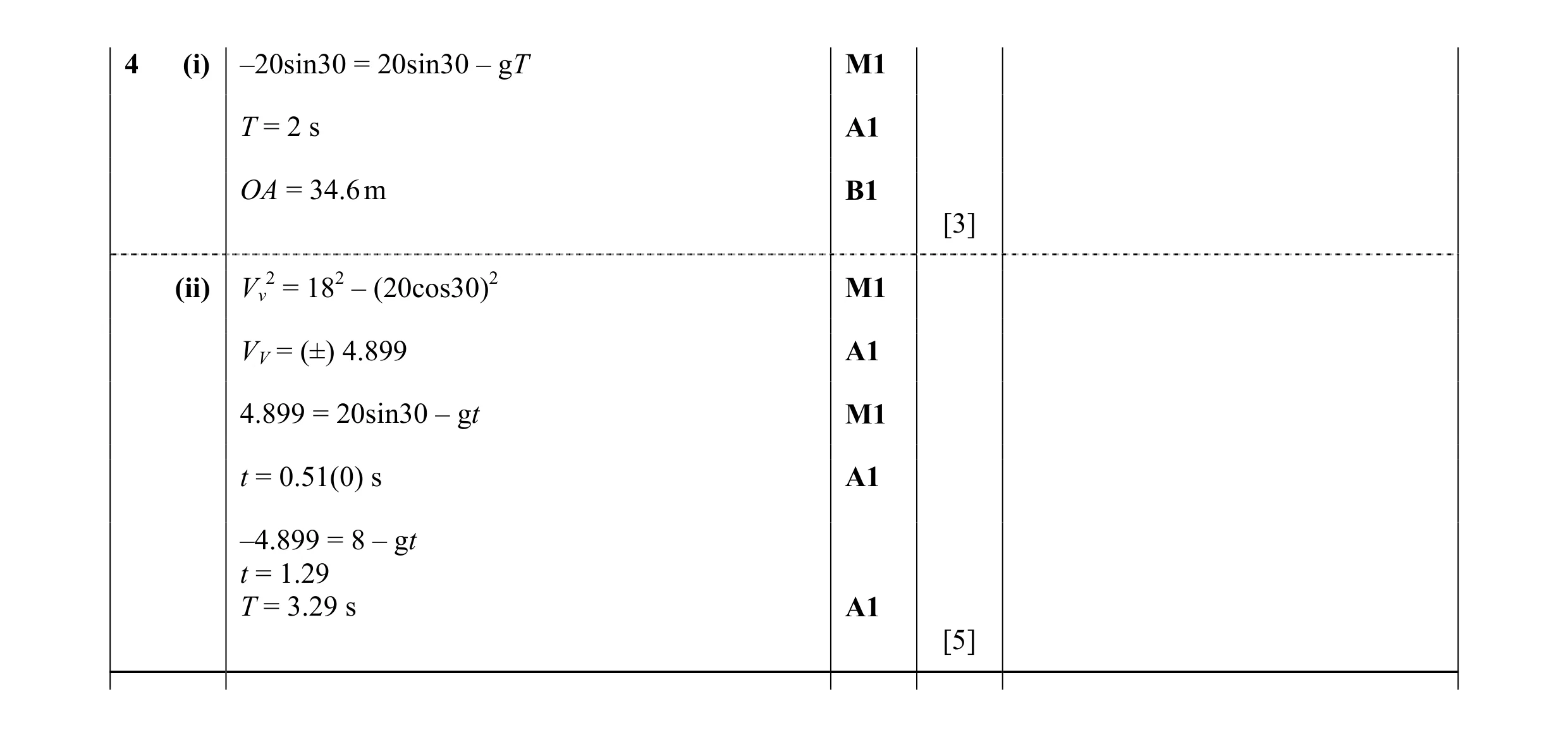 8
8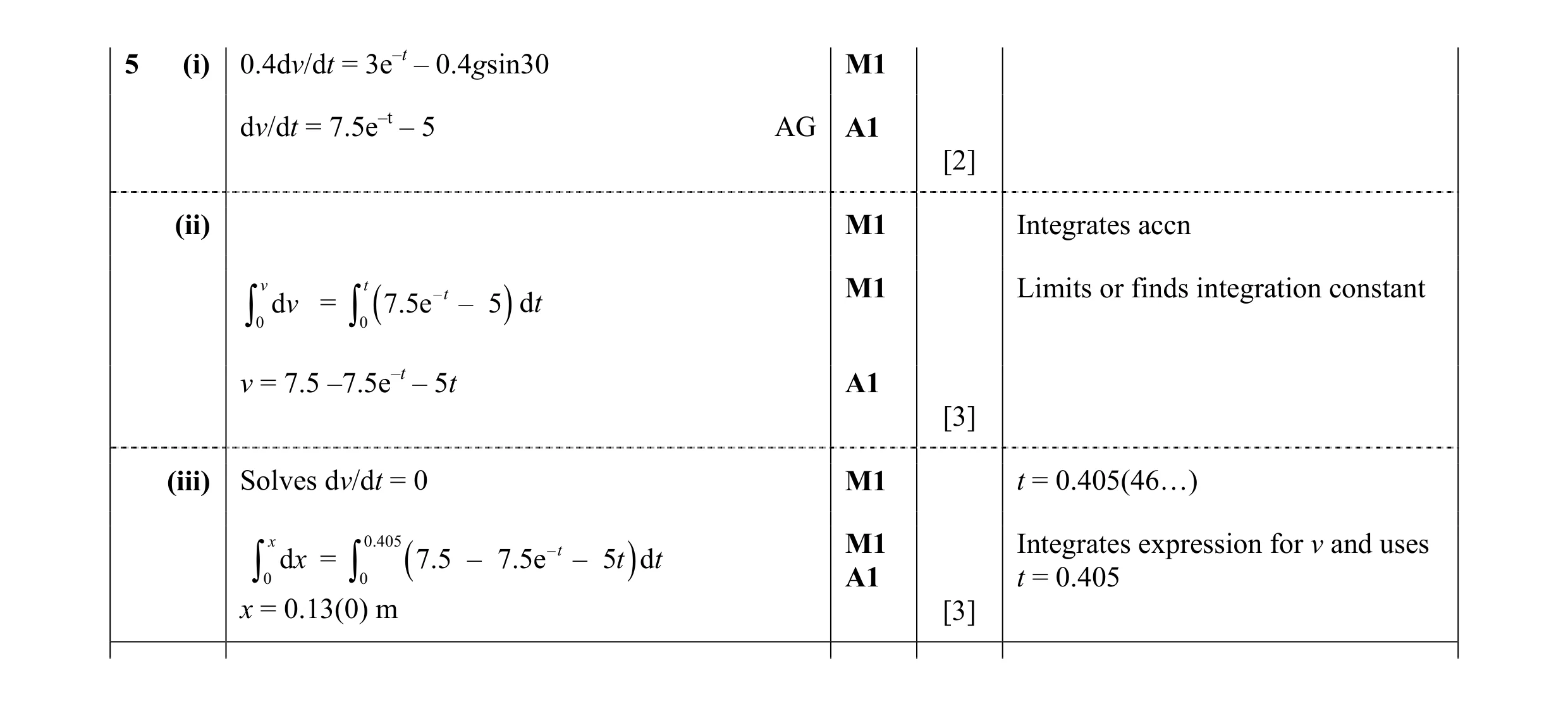 8
8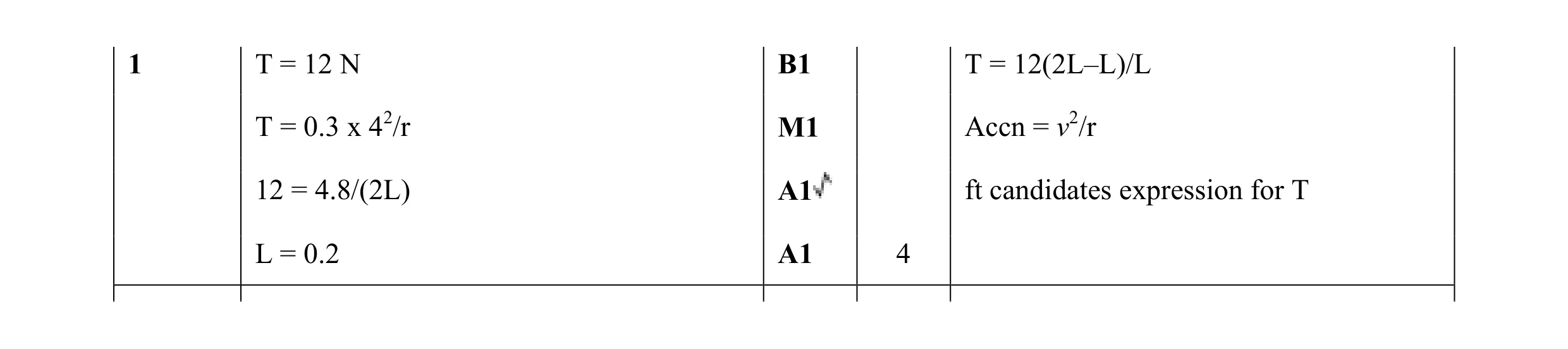 4
4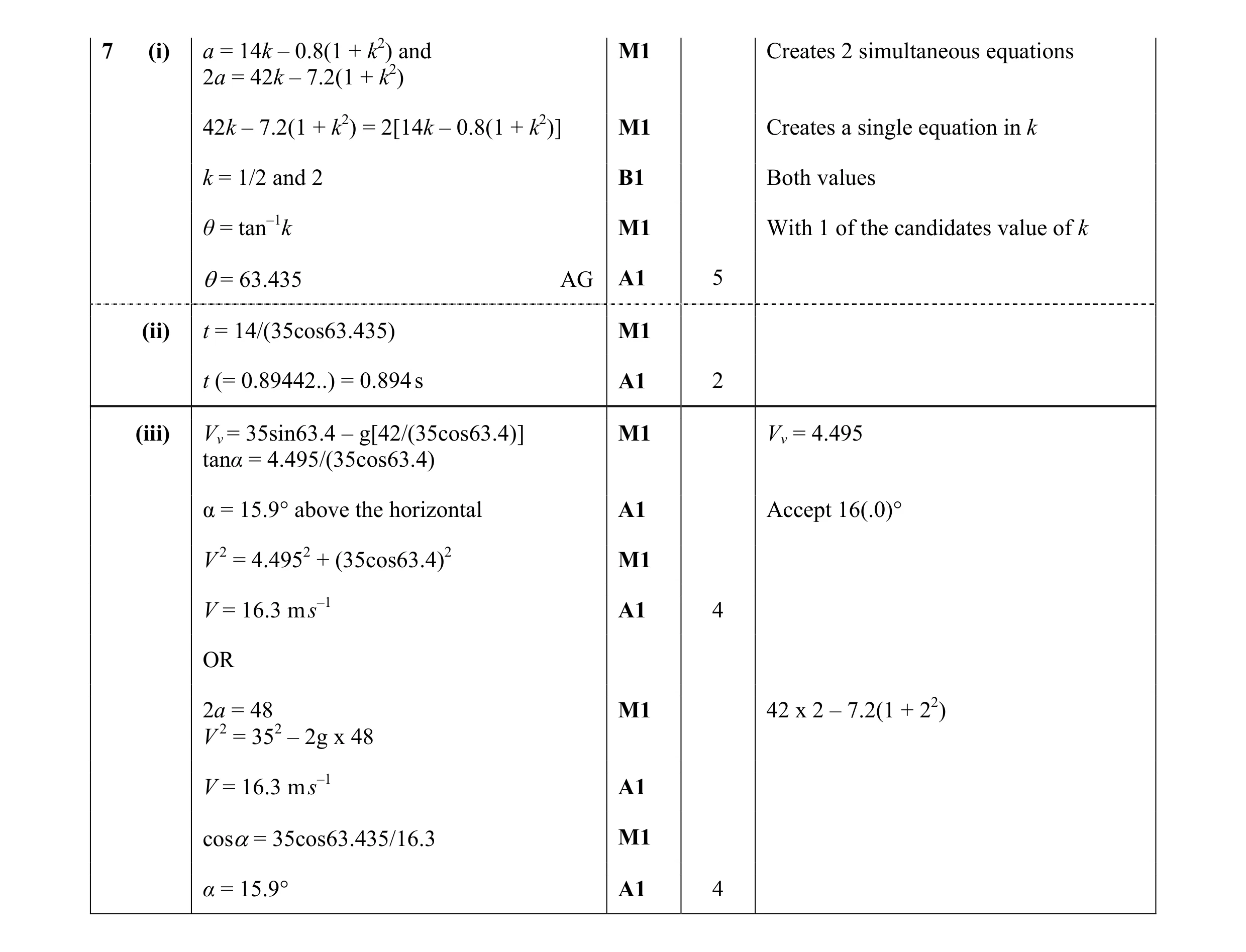 11
11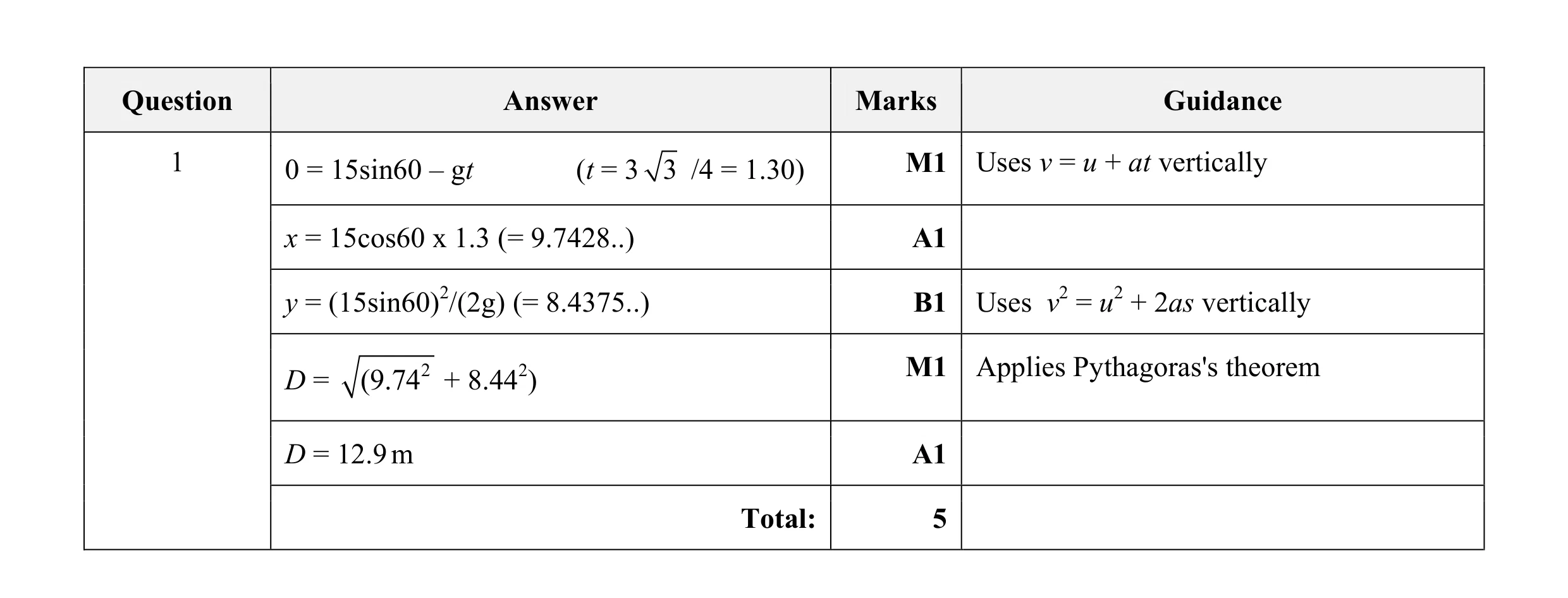 5
5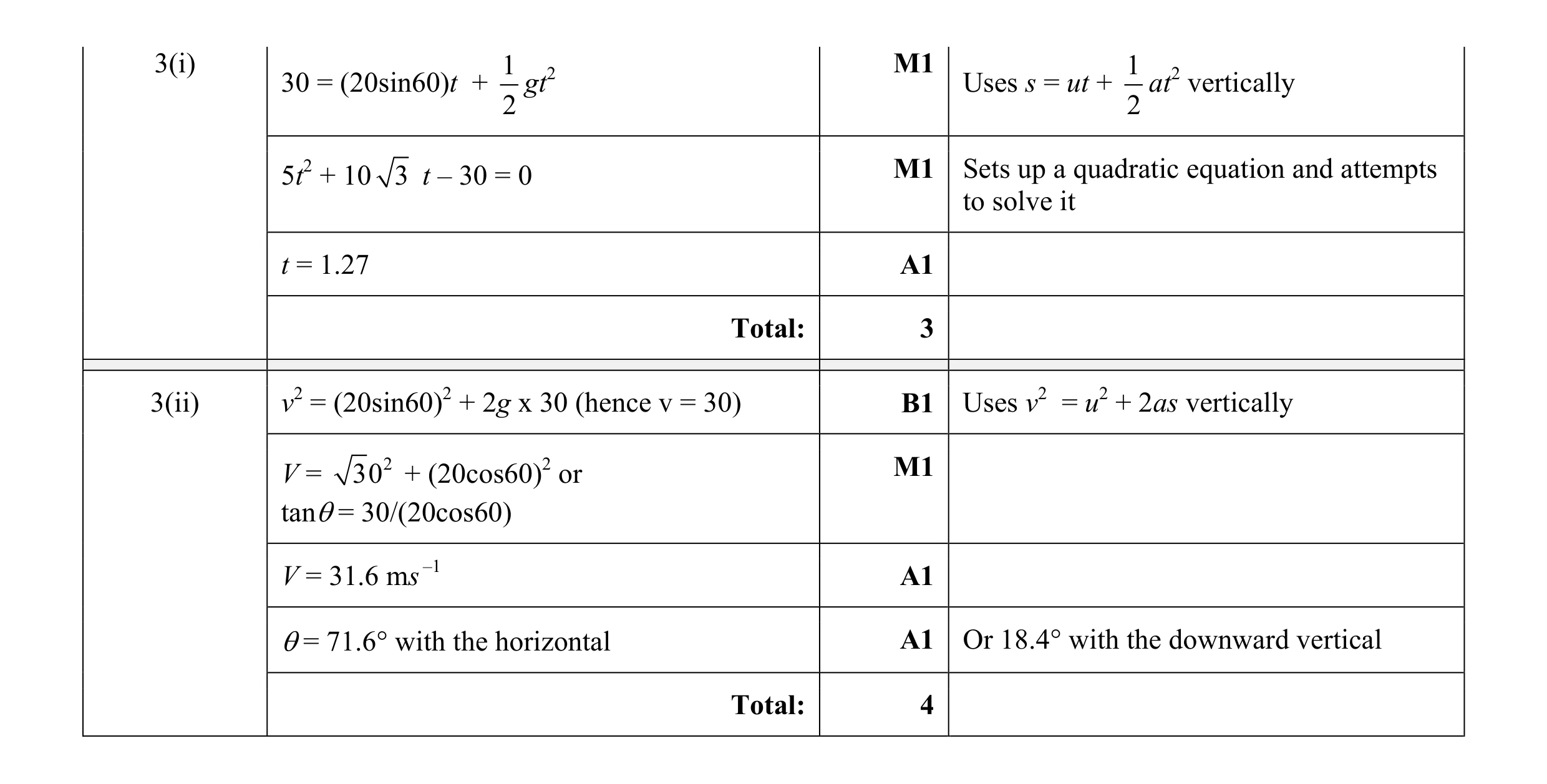 7
7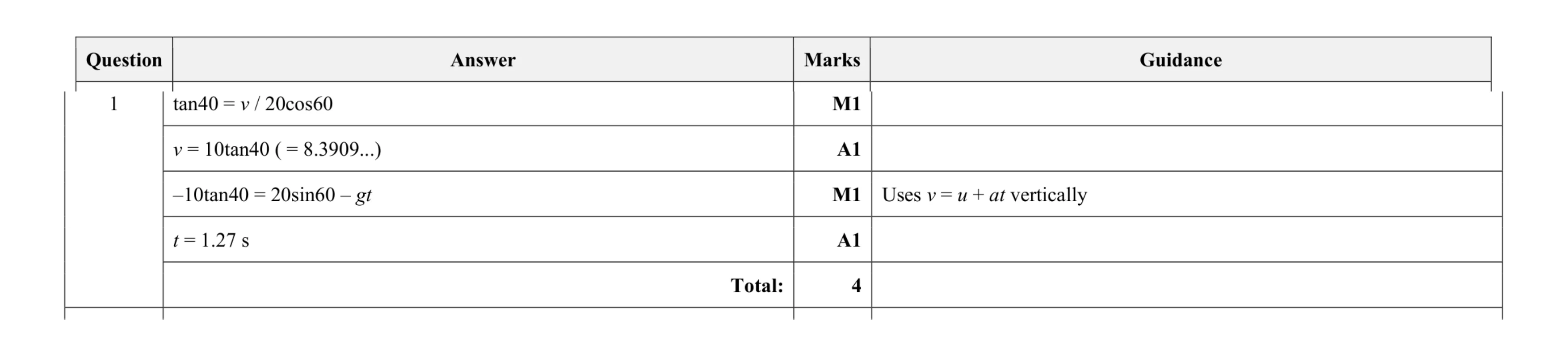 4
4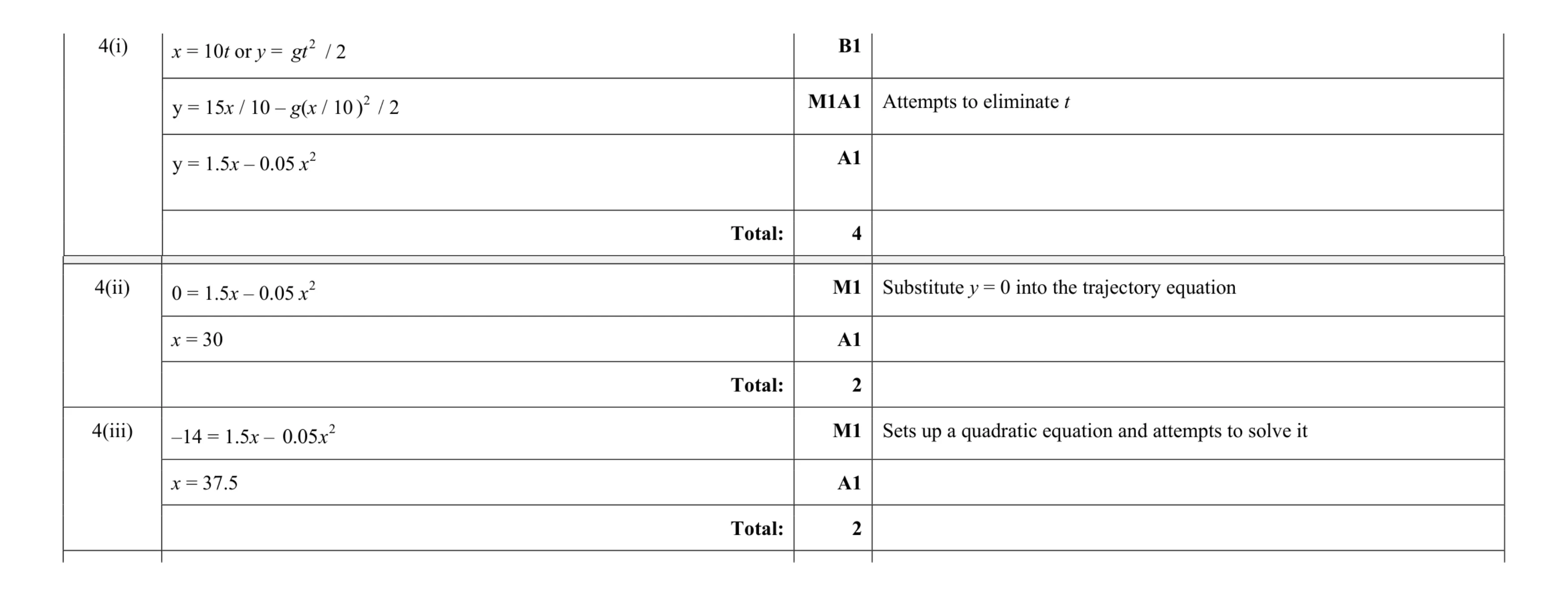 8
8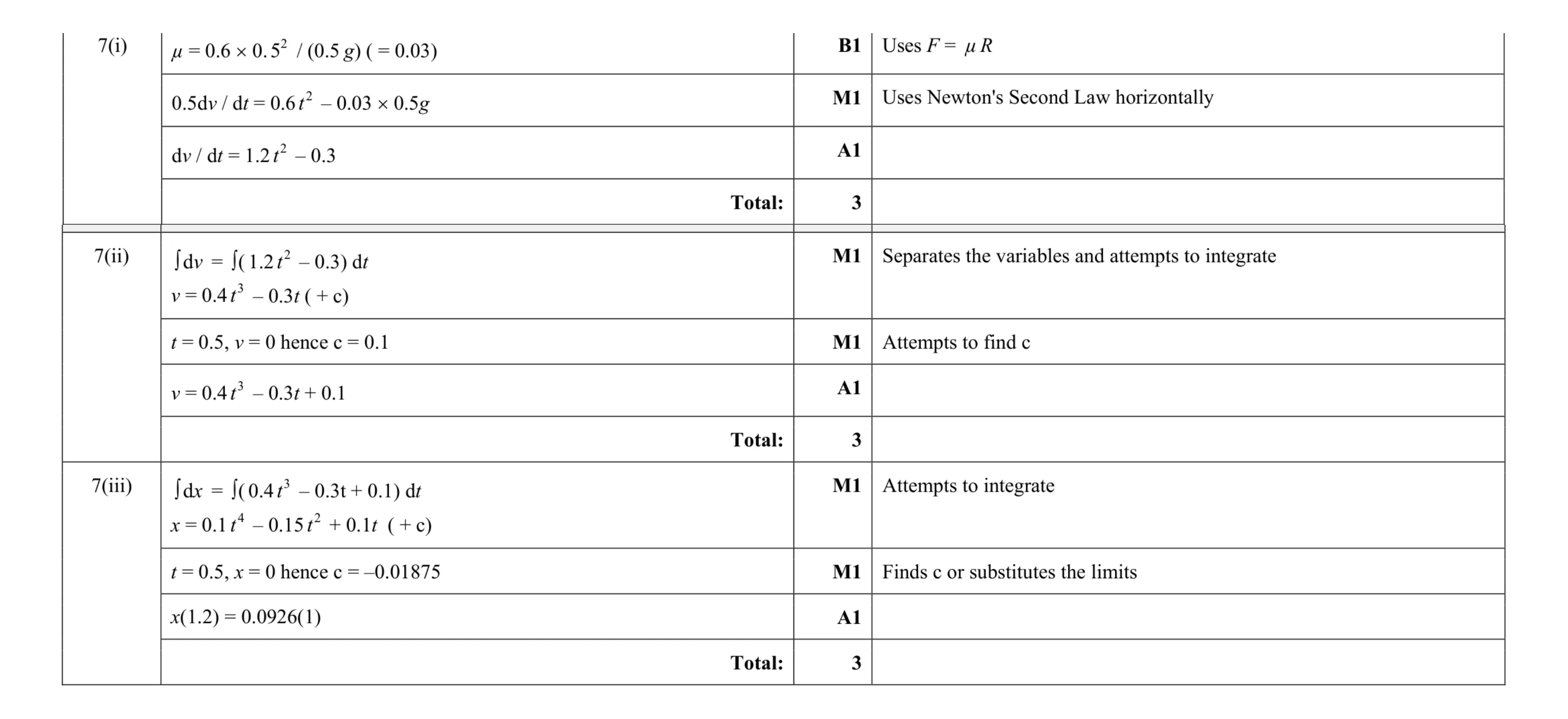 9
9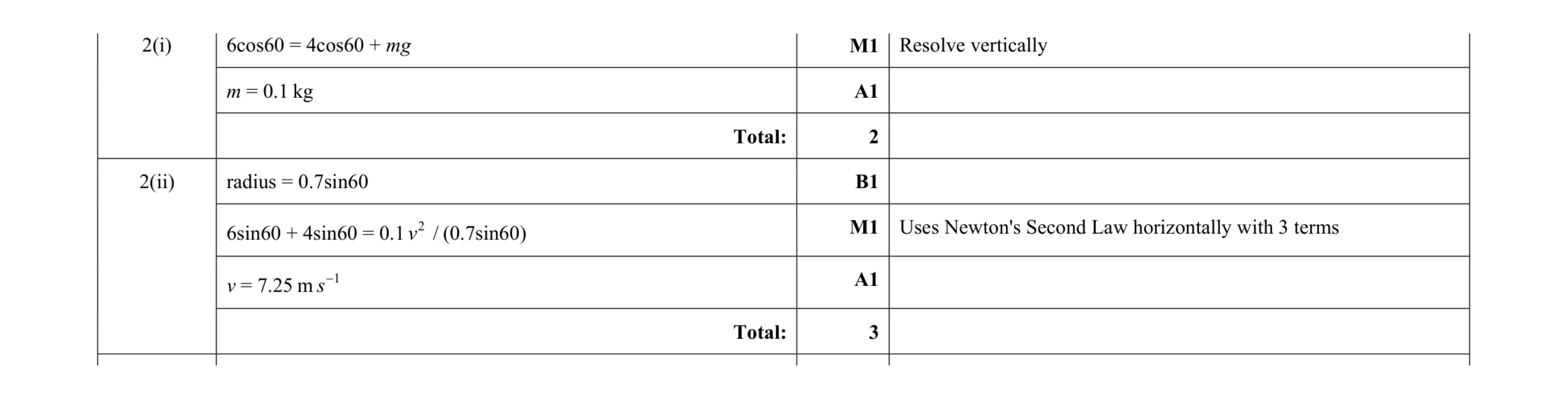 5
5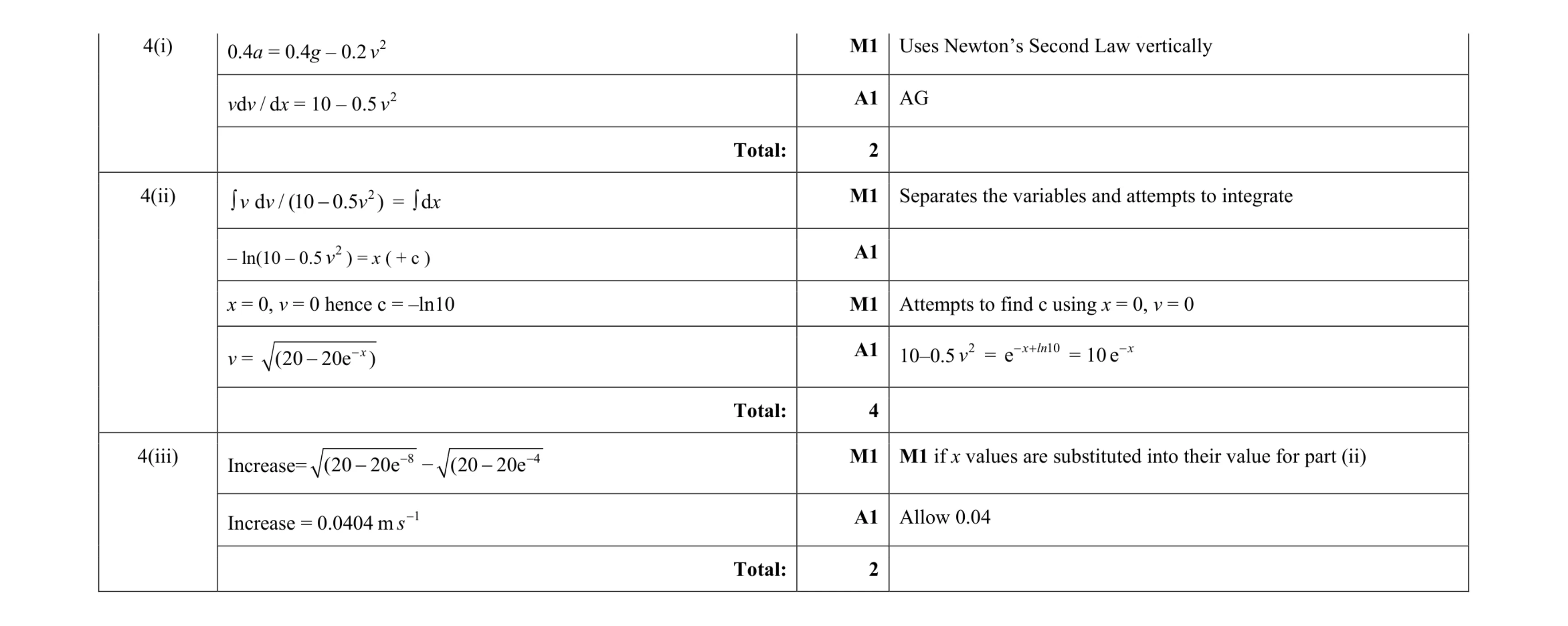 8
8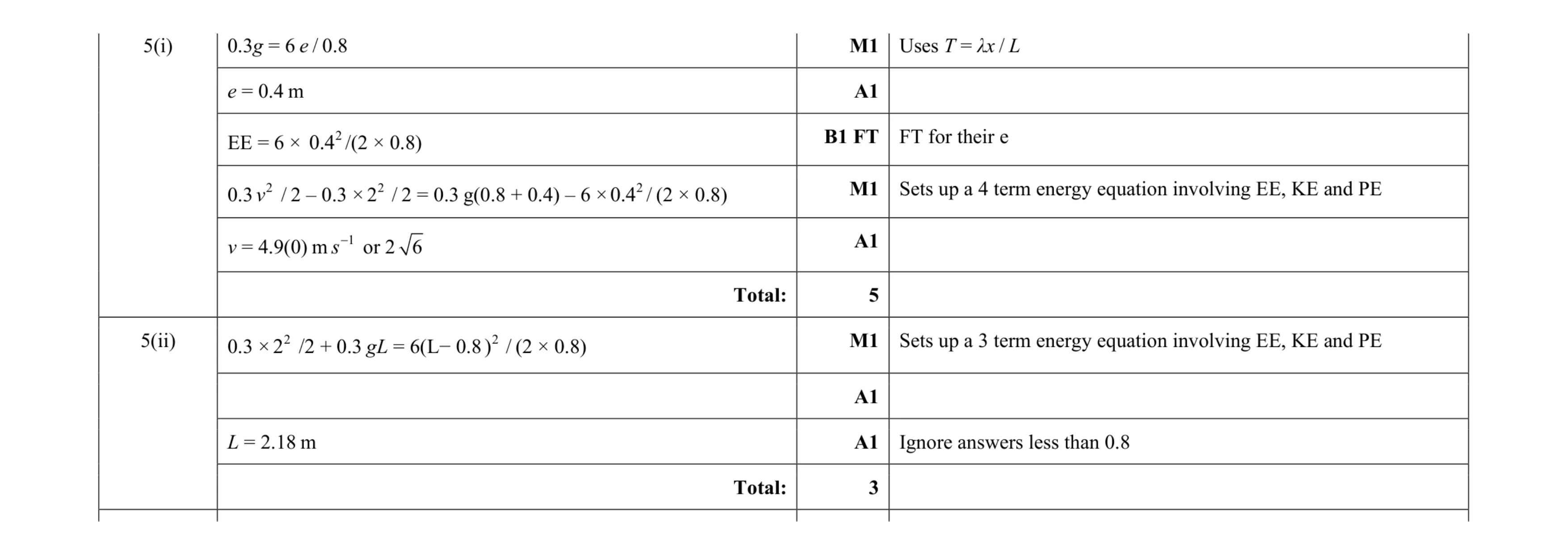 8
8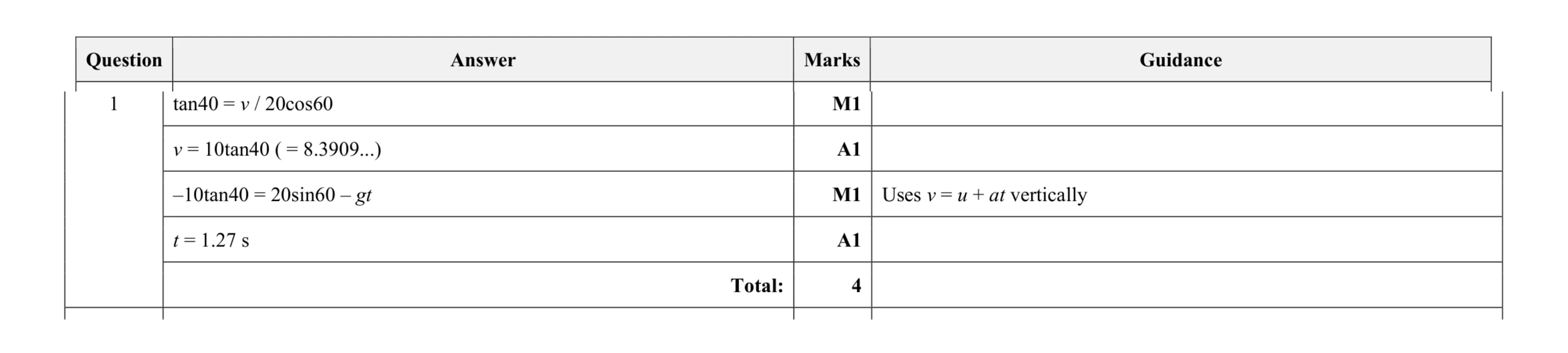 4
4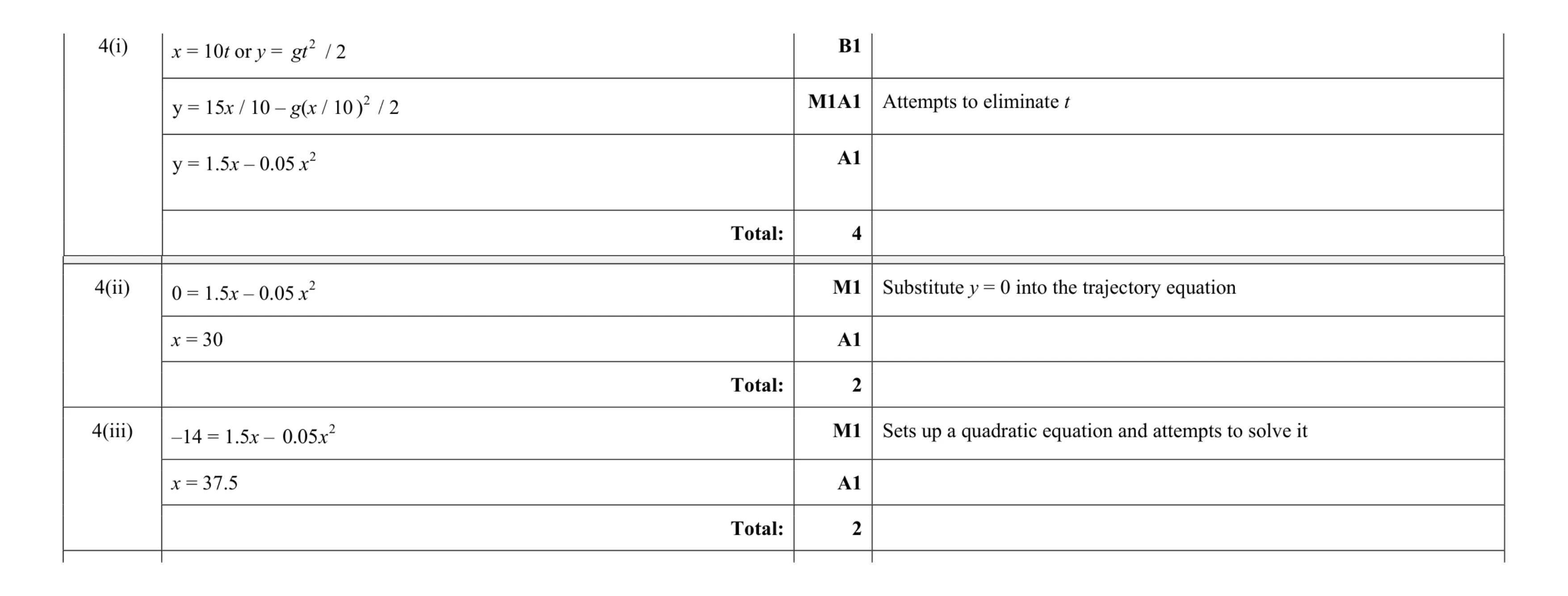 8
8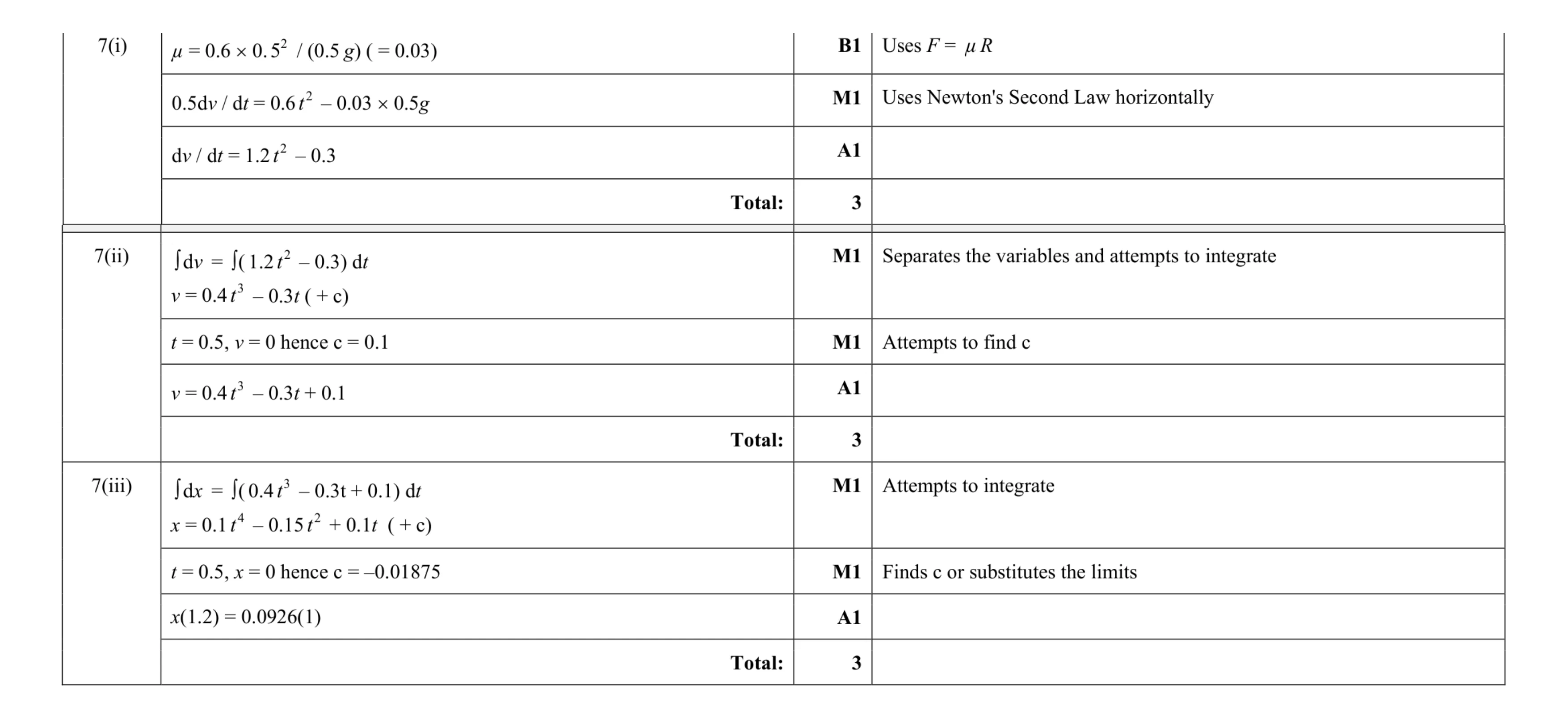 9
9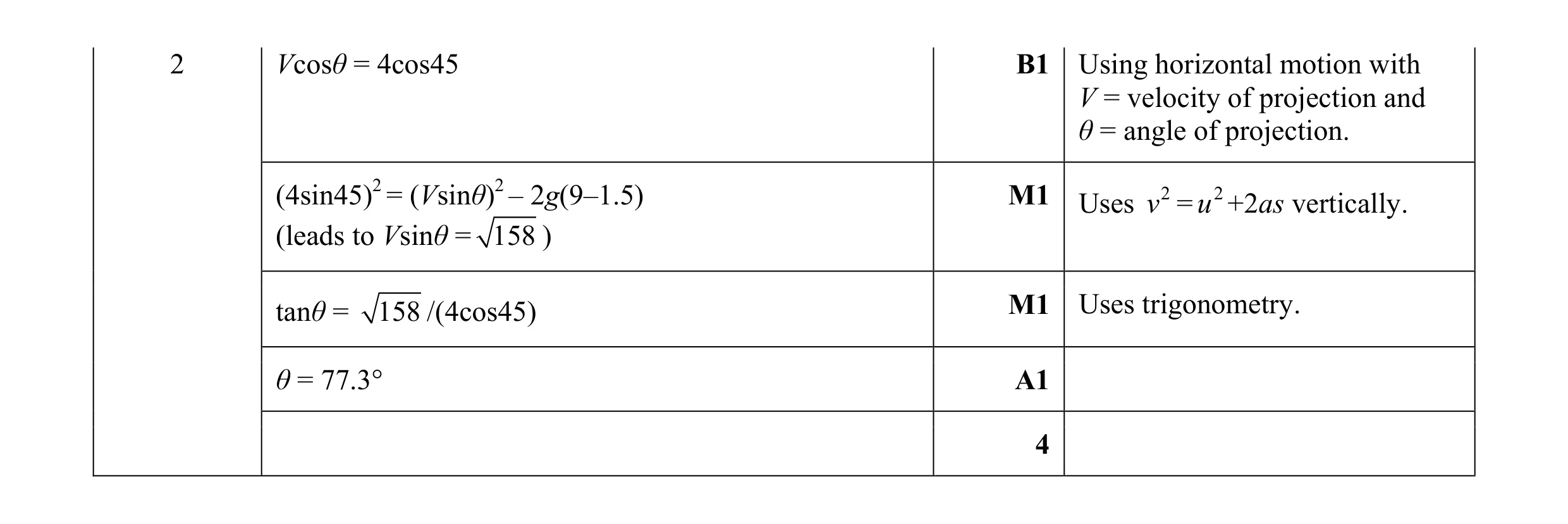 4
4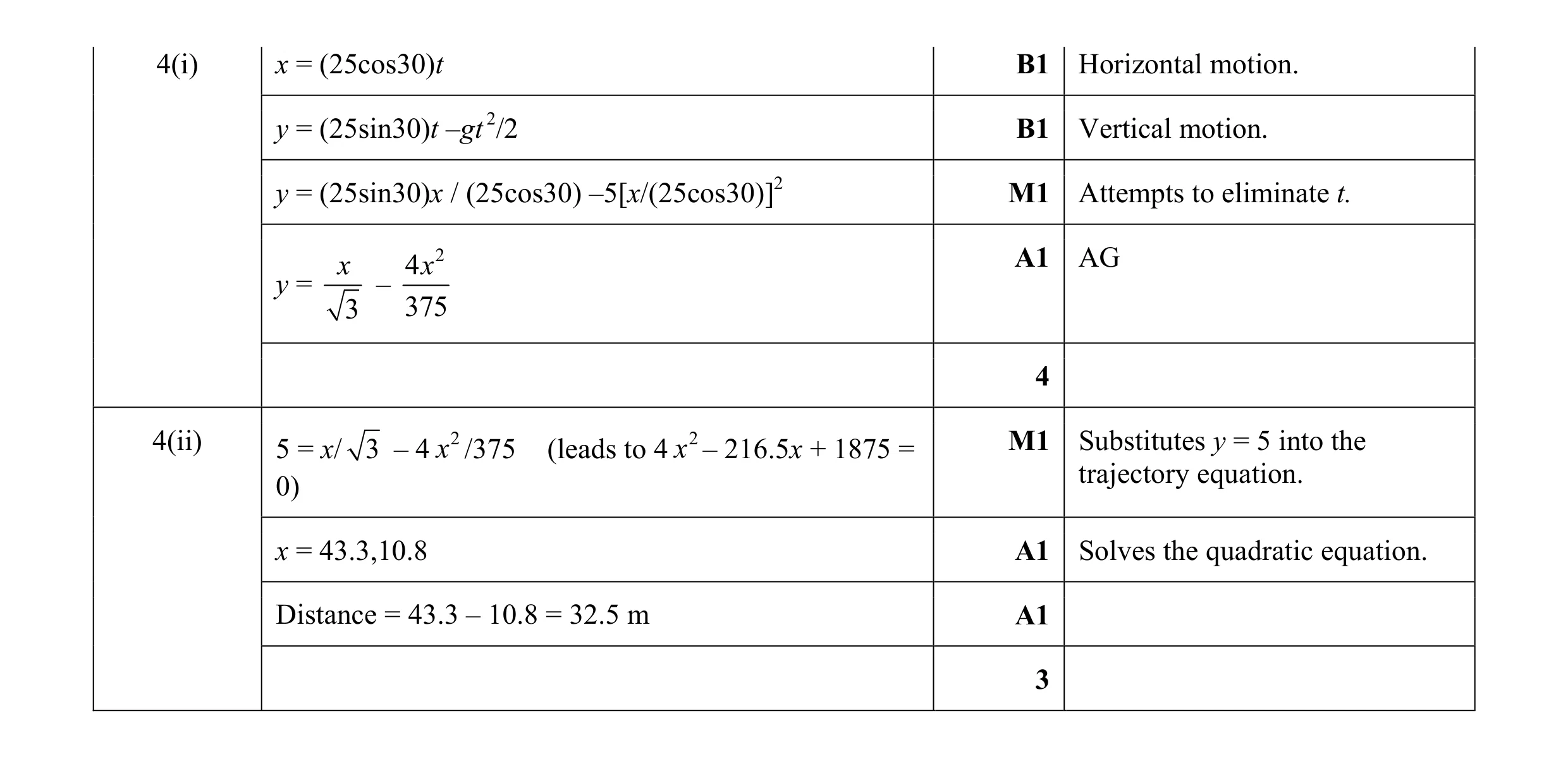 7
7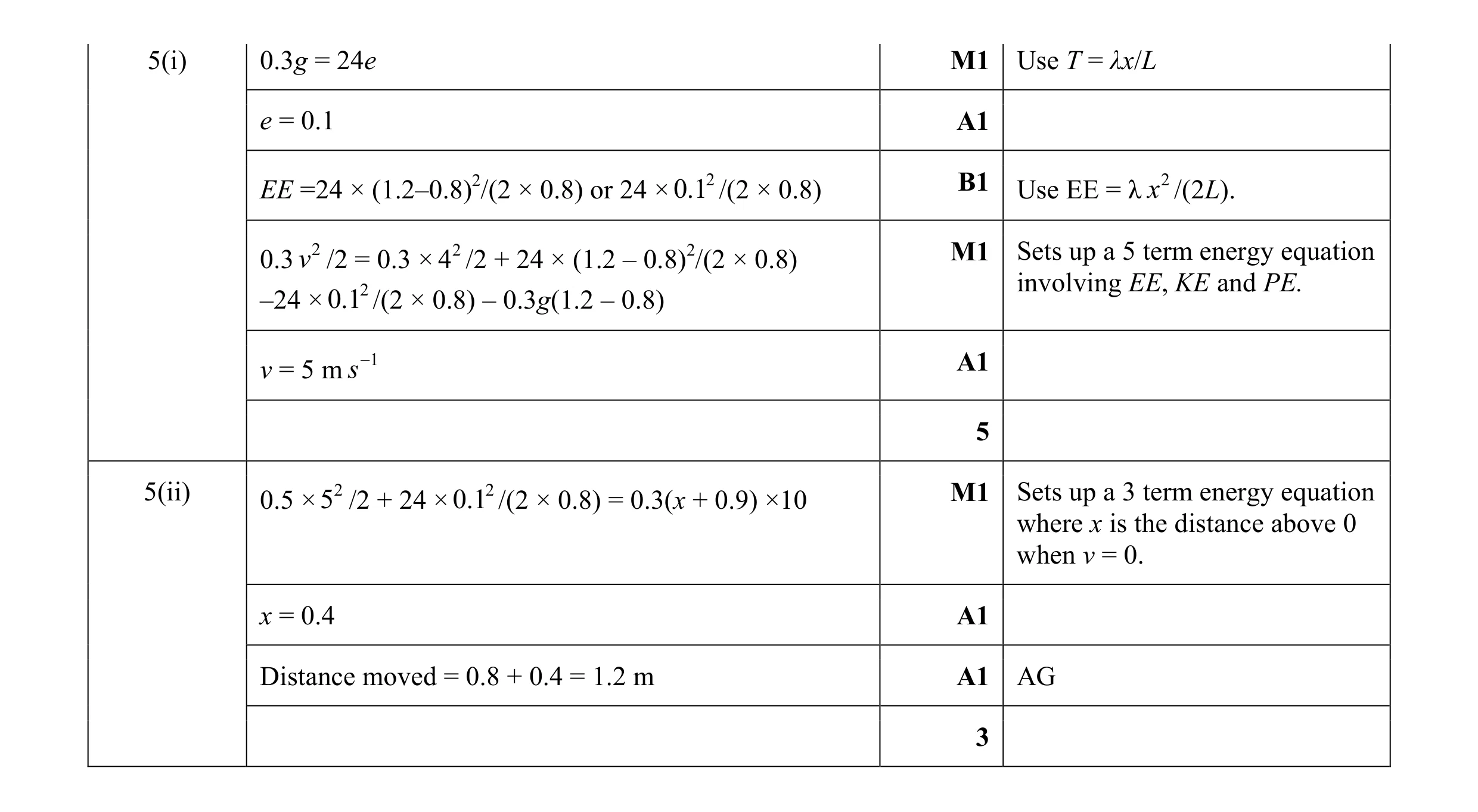 8
8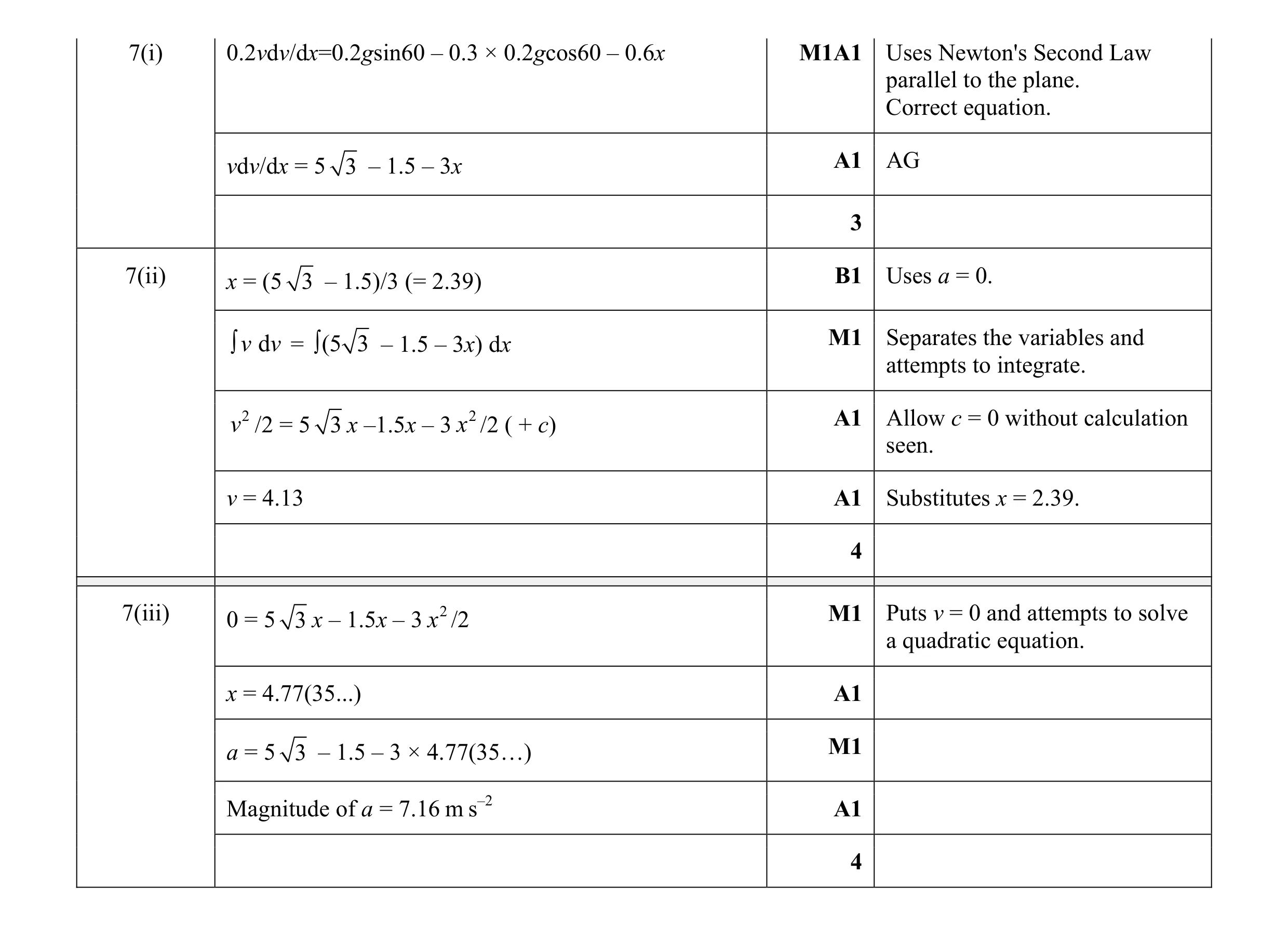 11
11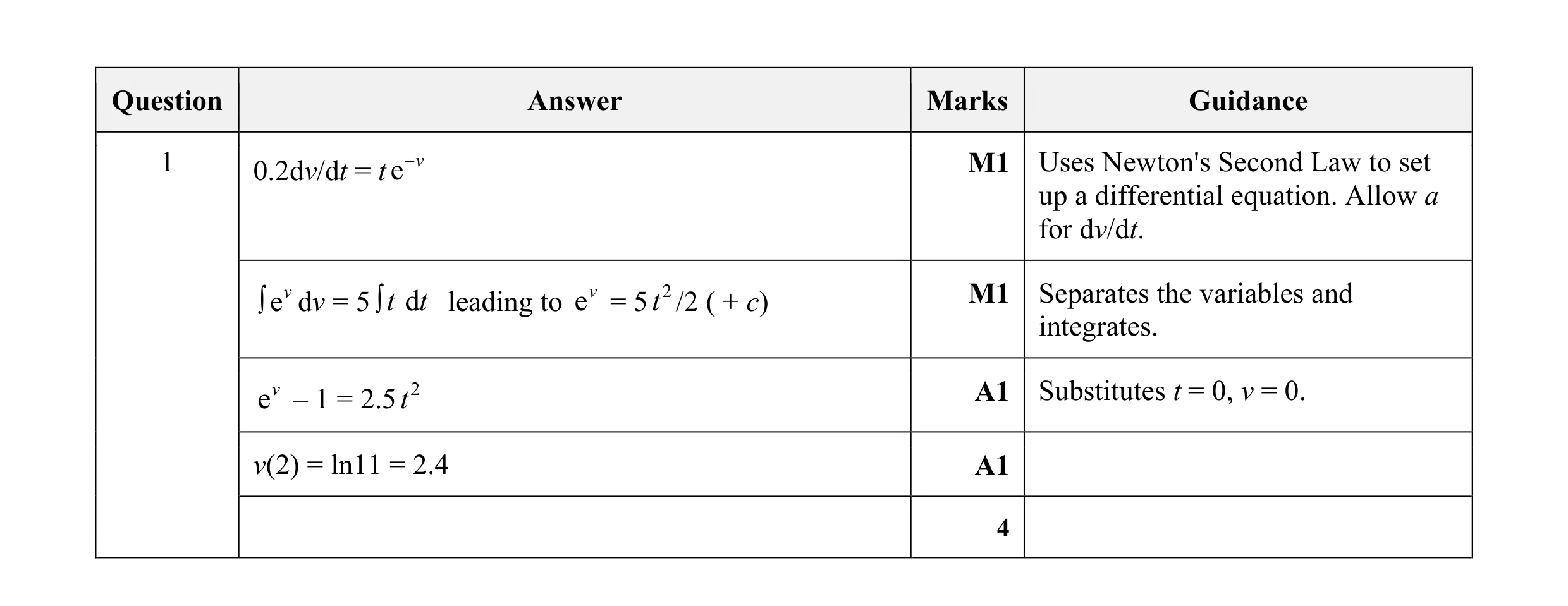 4
4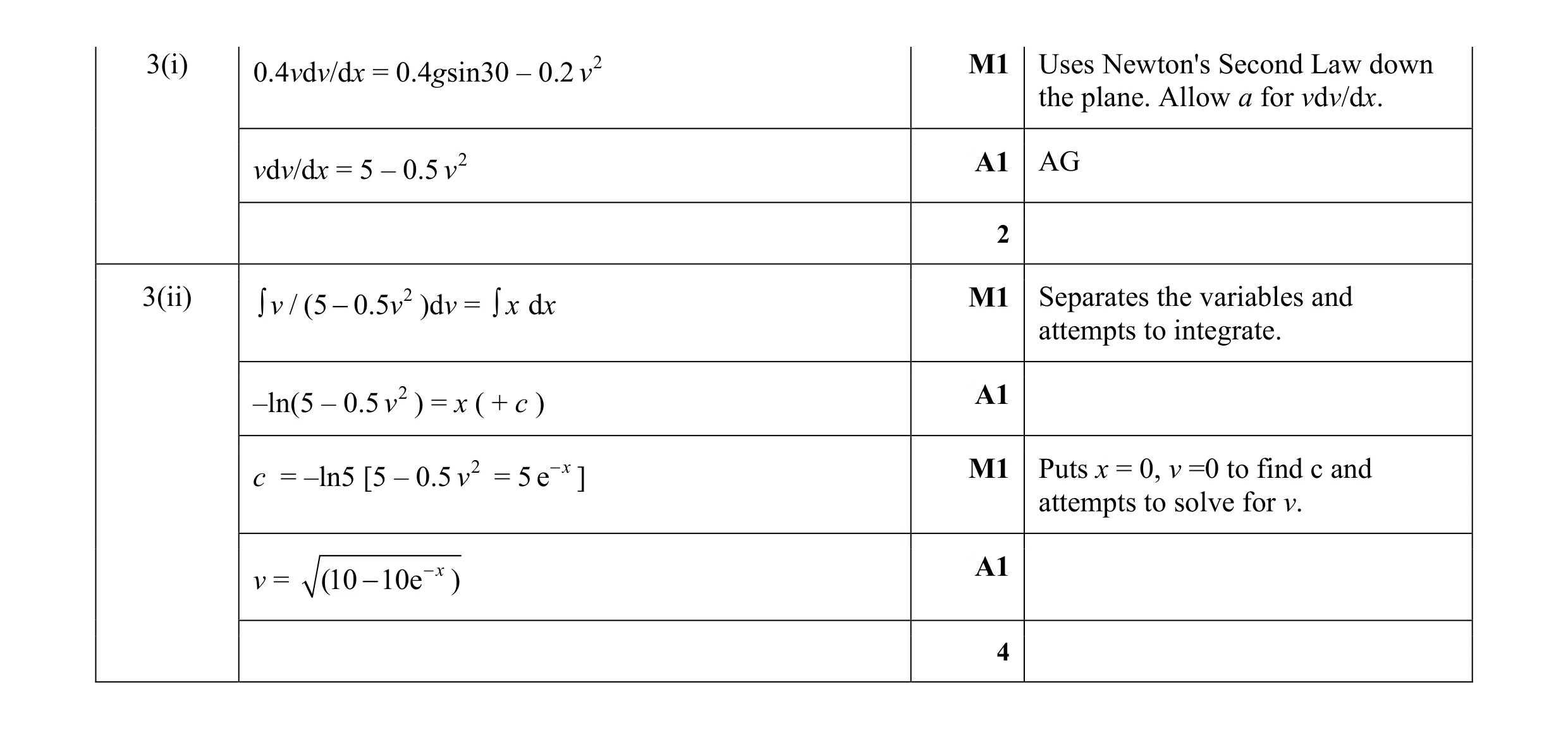 6
6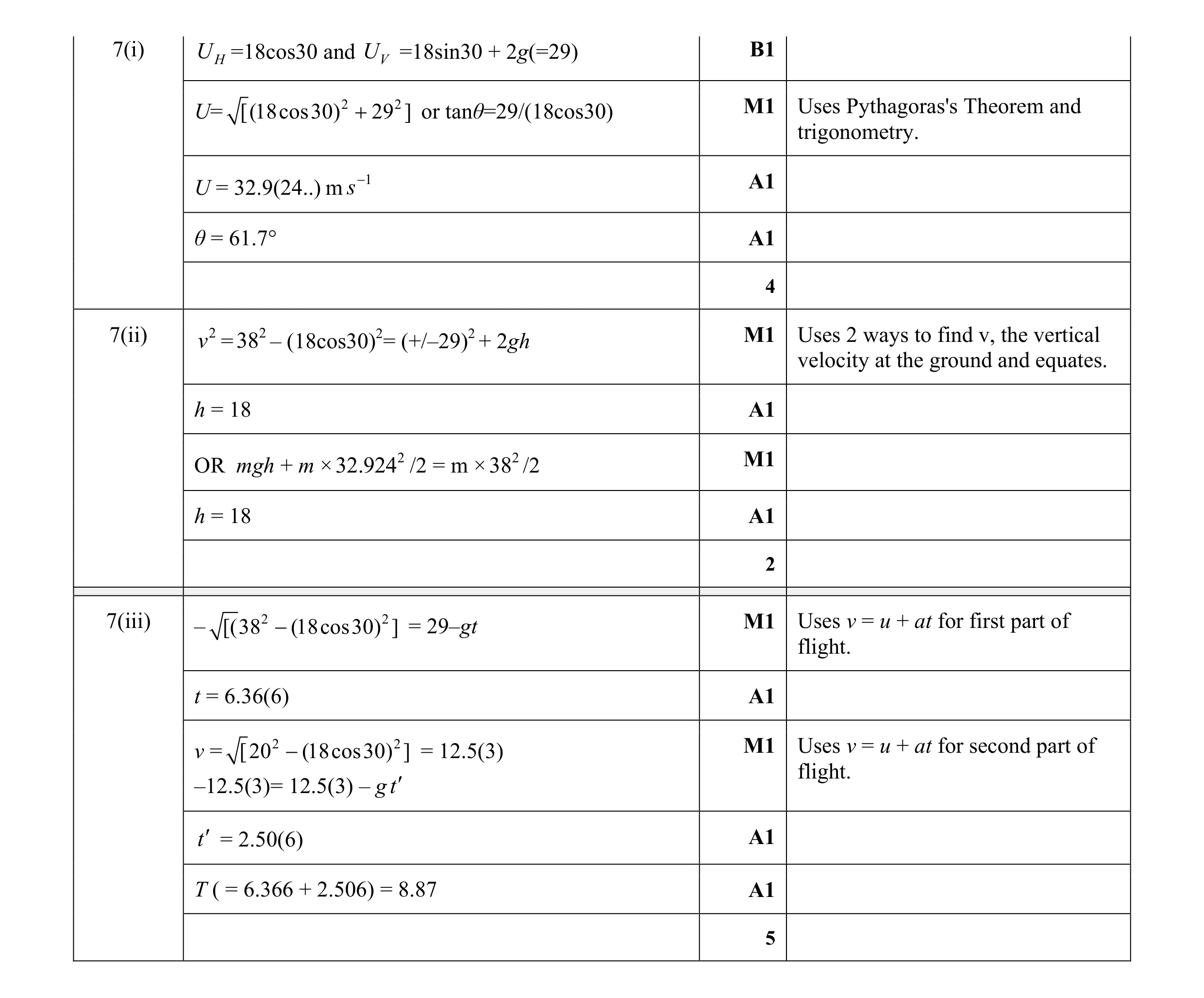 11
11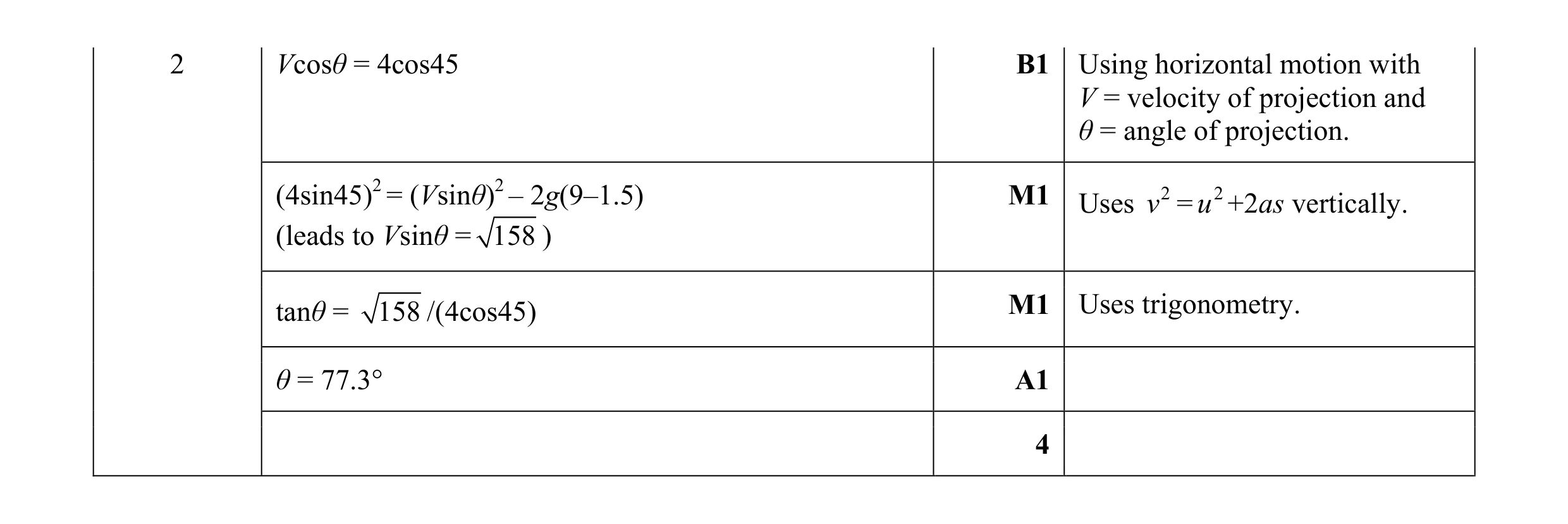 4
4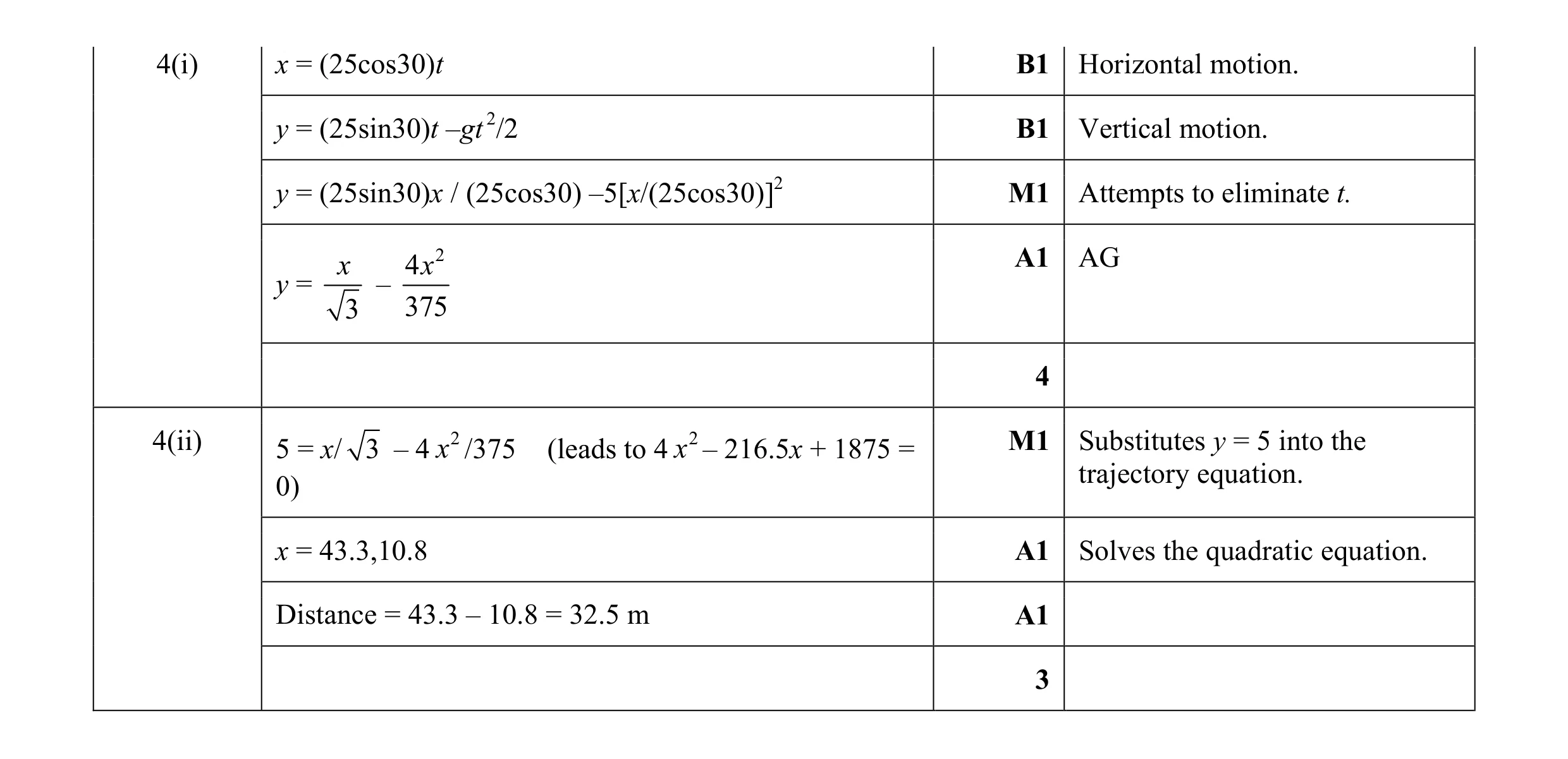 7
7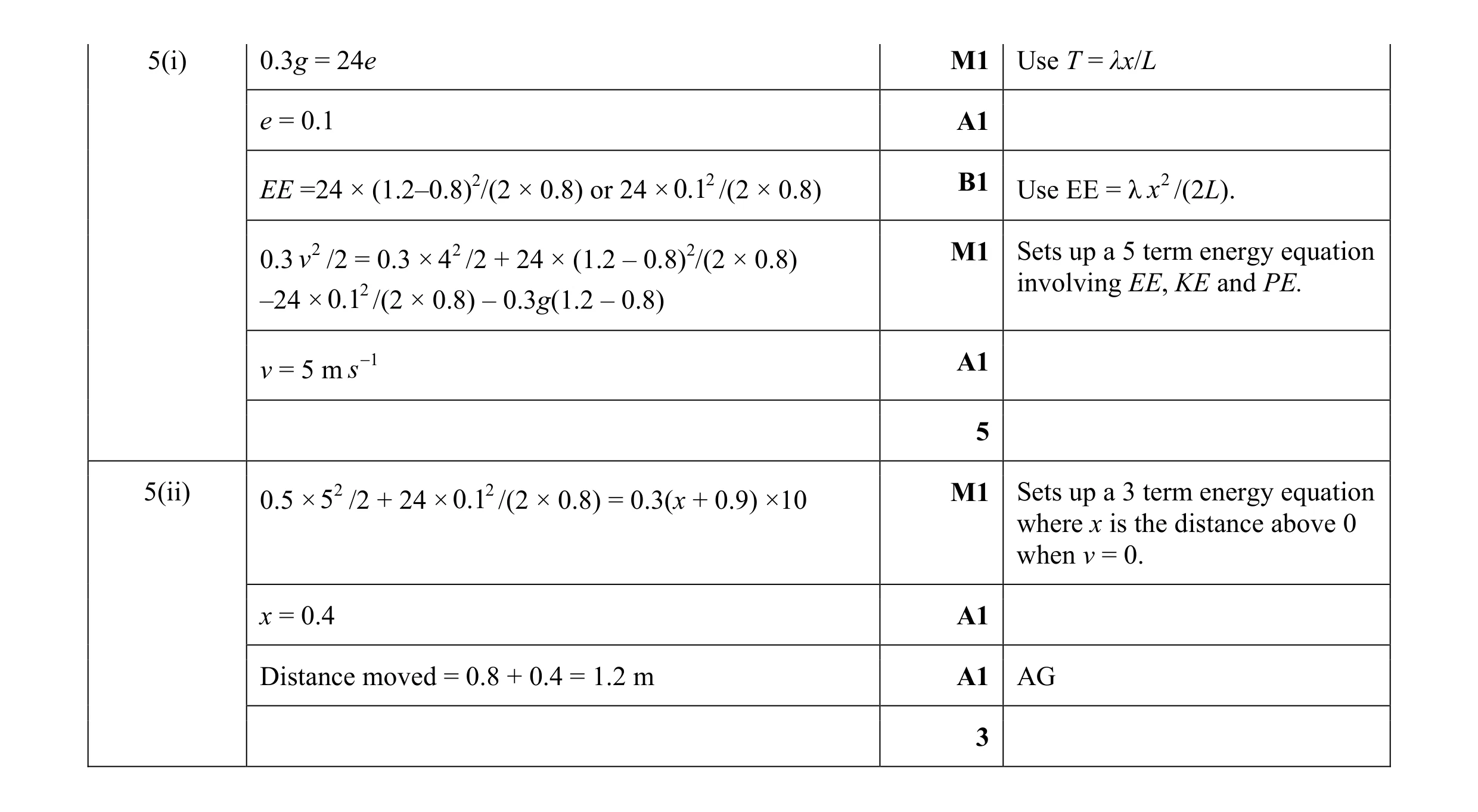 8
8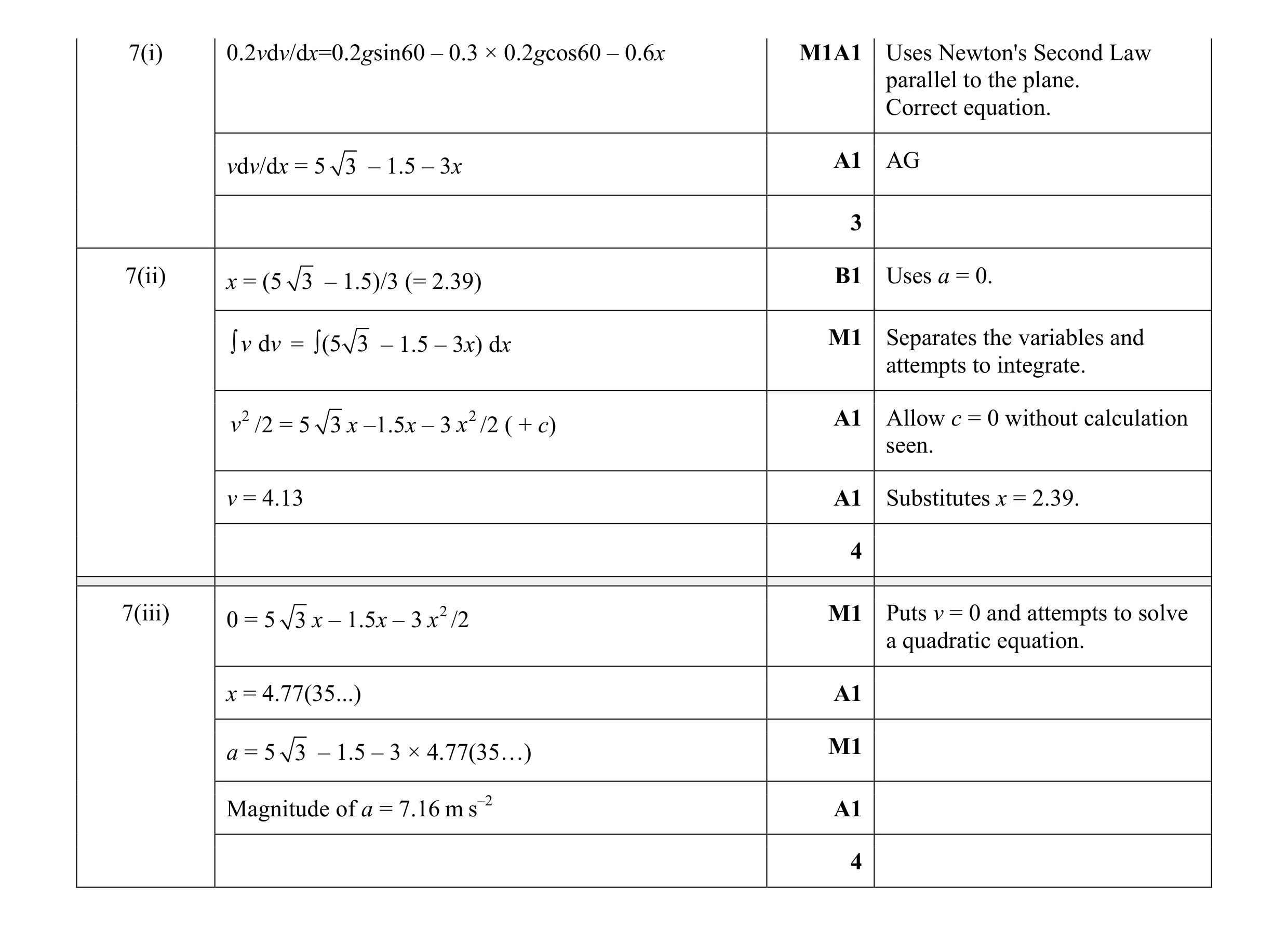 11
11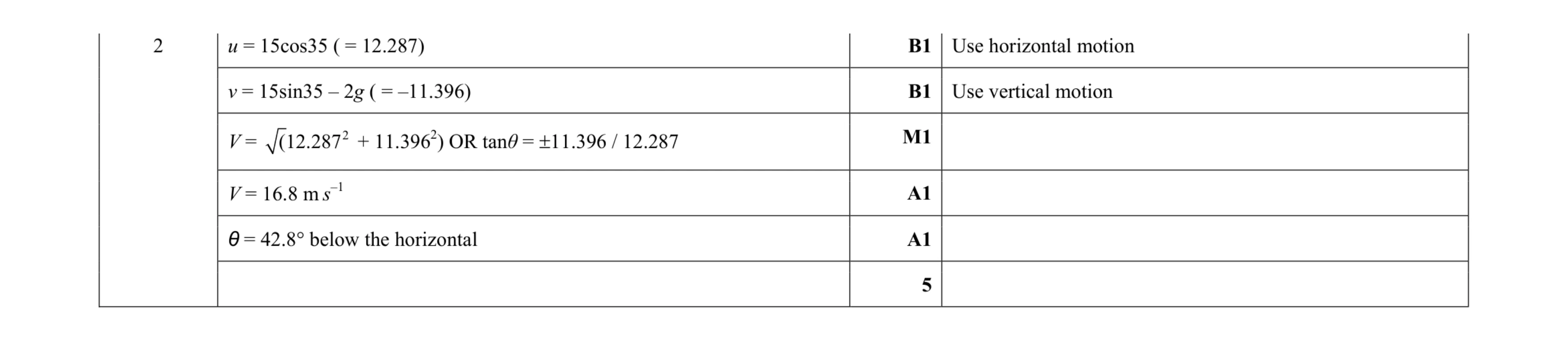 5
5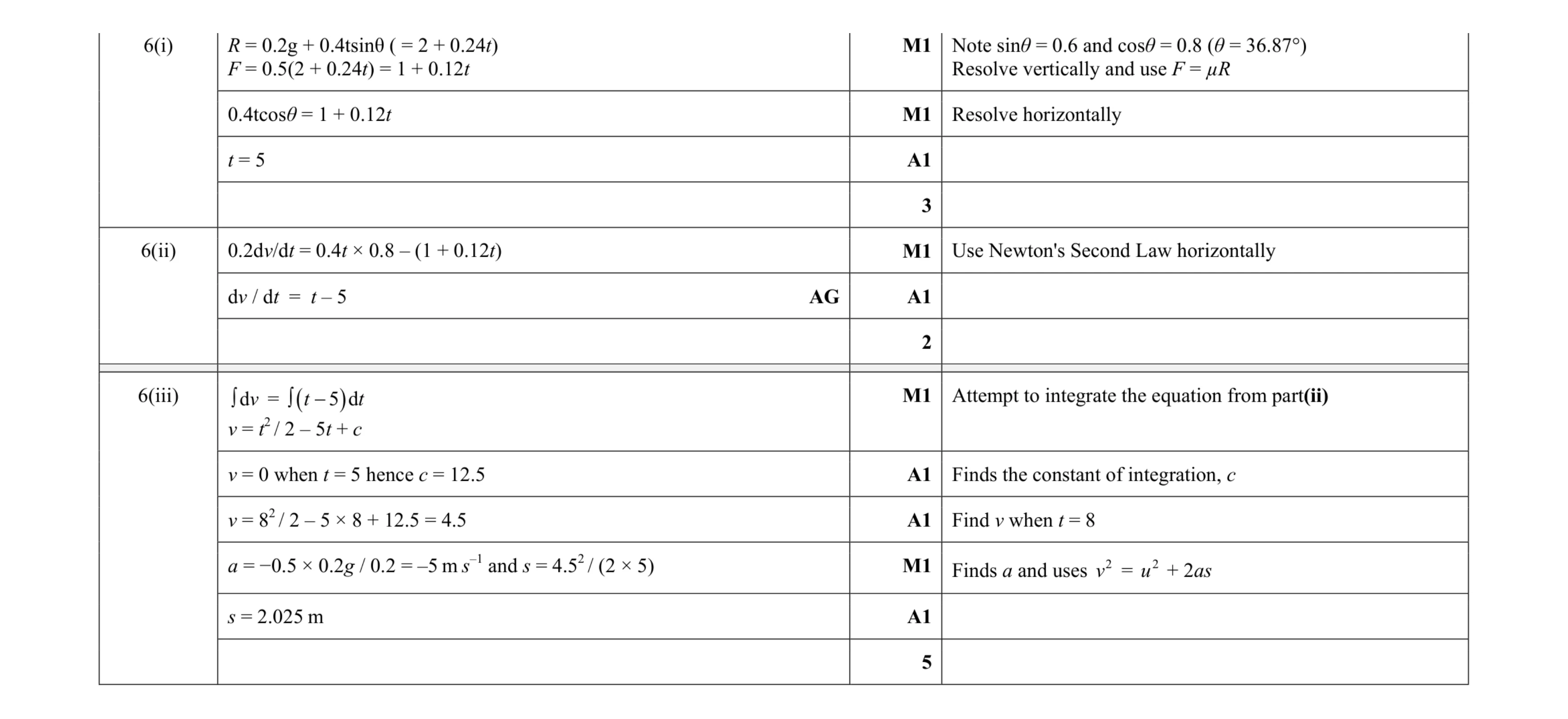 10
10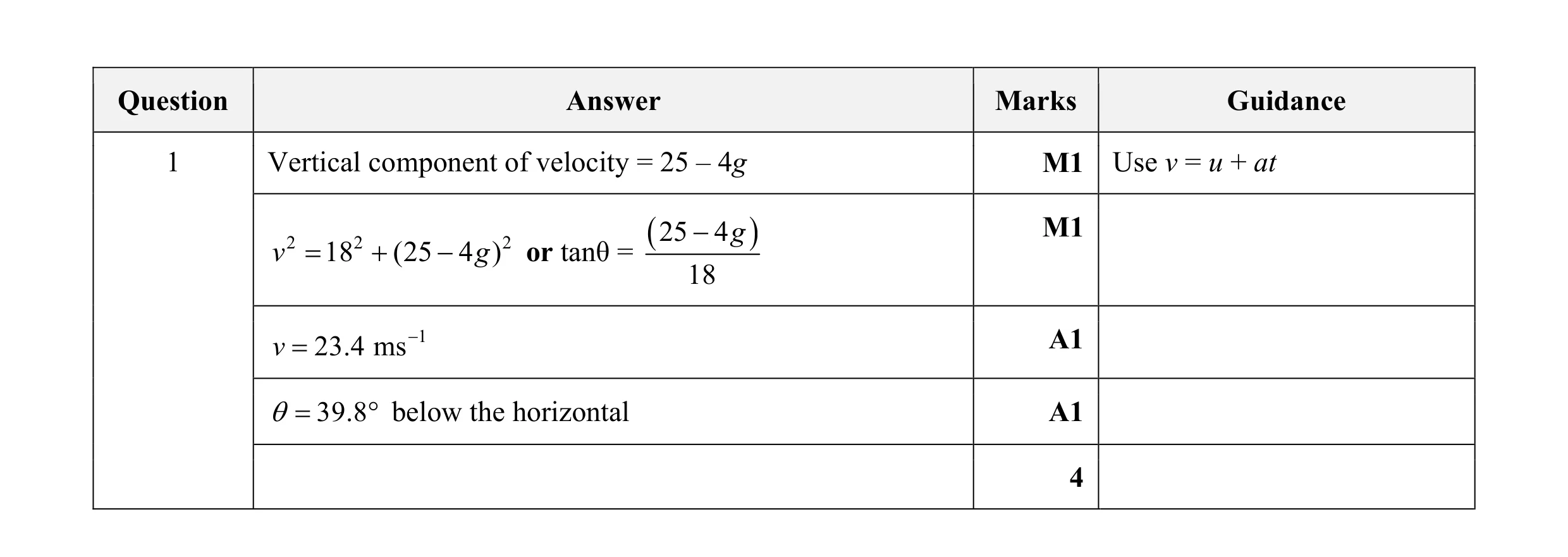 4
4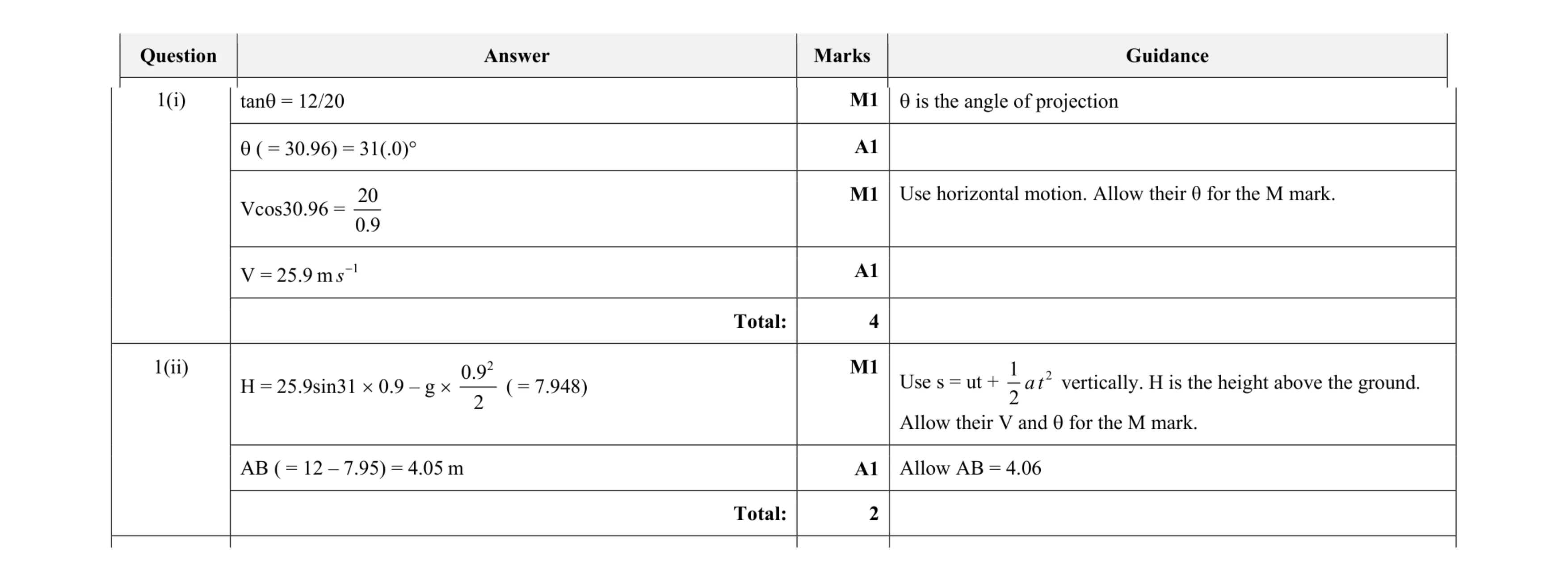 6
6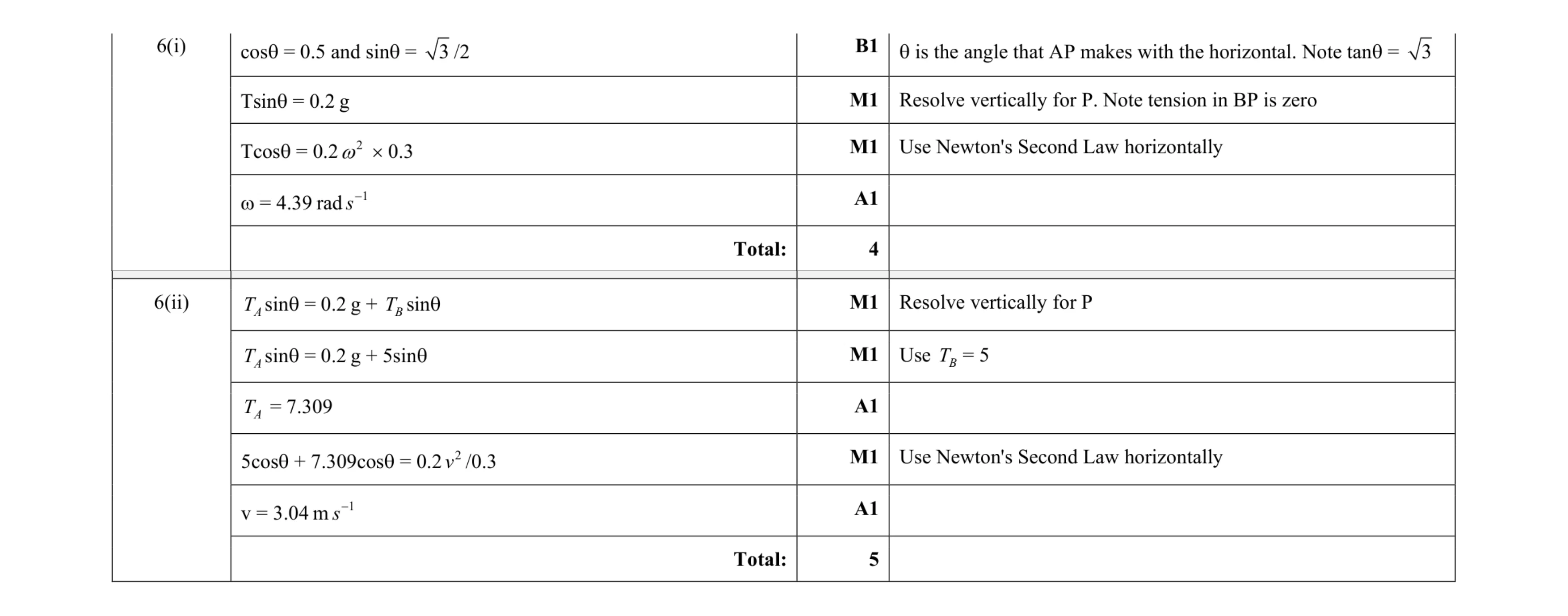 9
9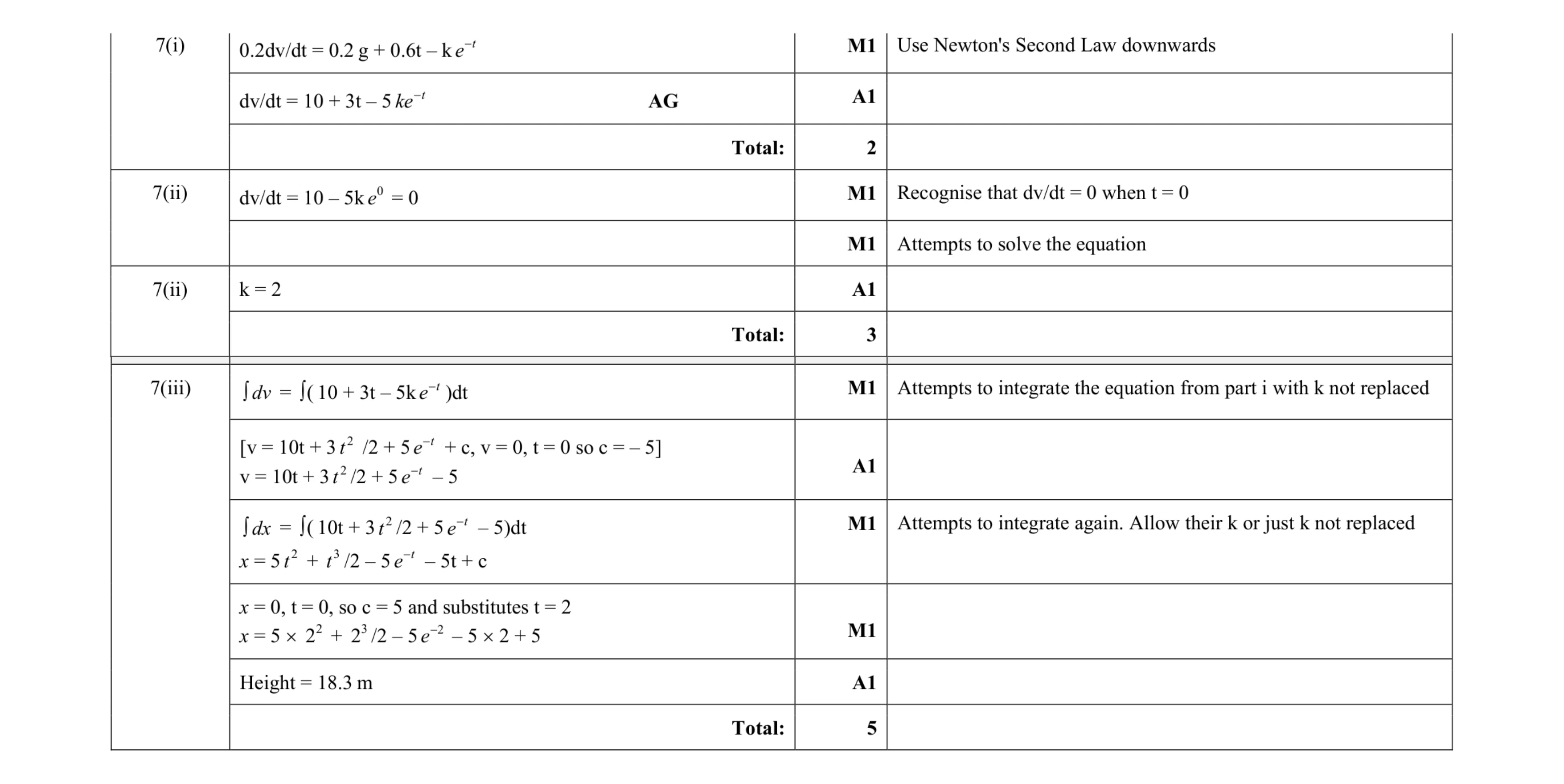 10
10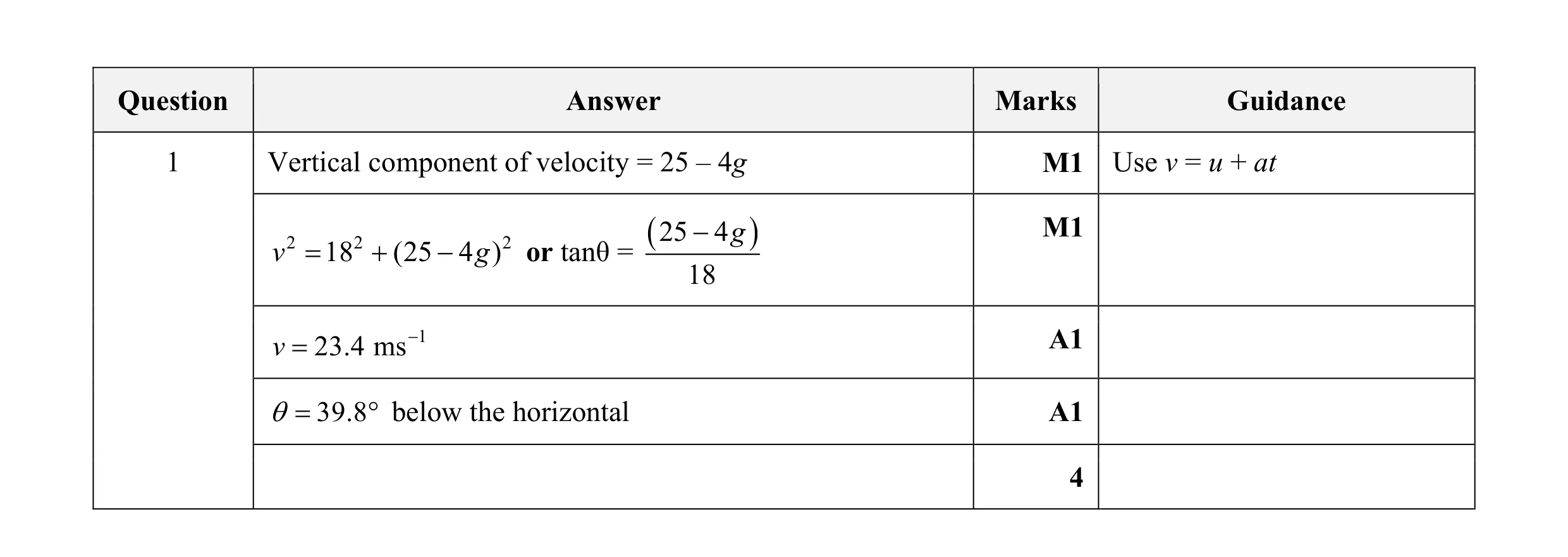 4
4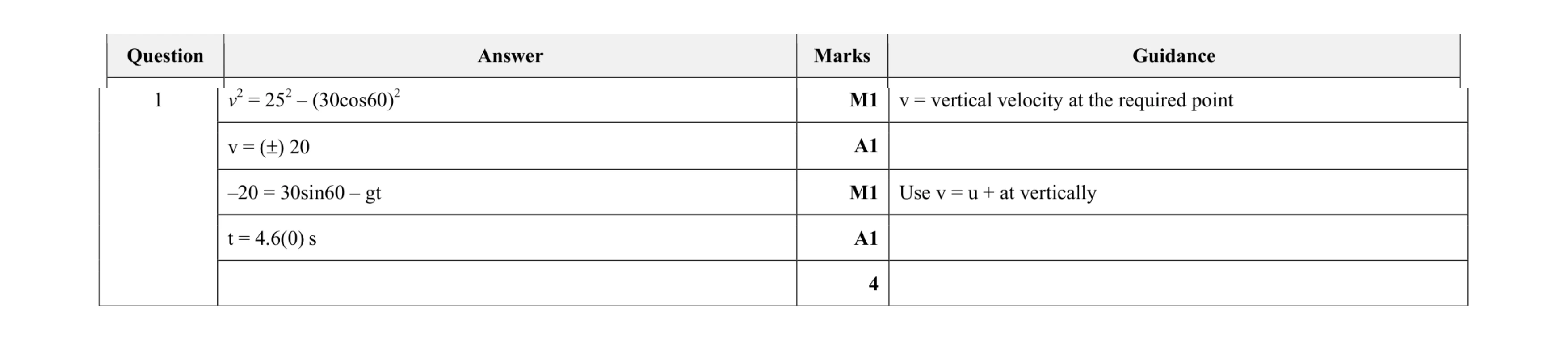 4
4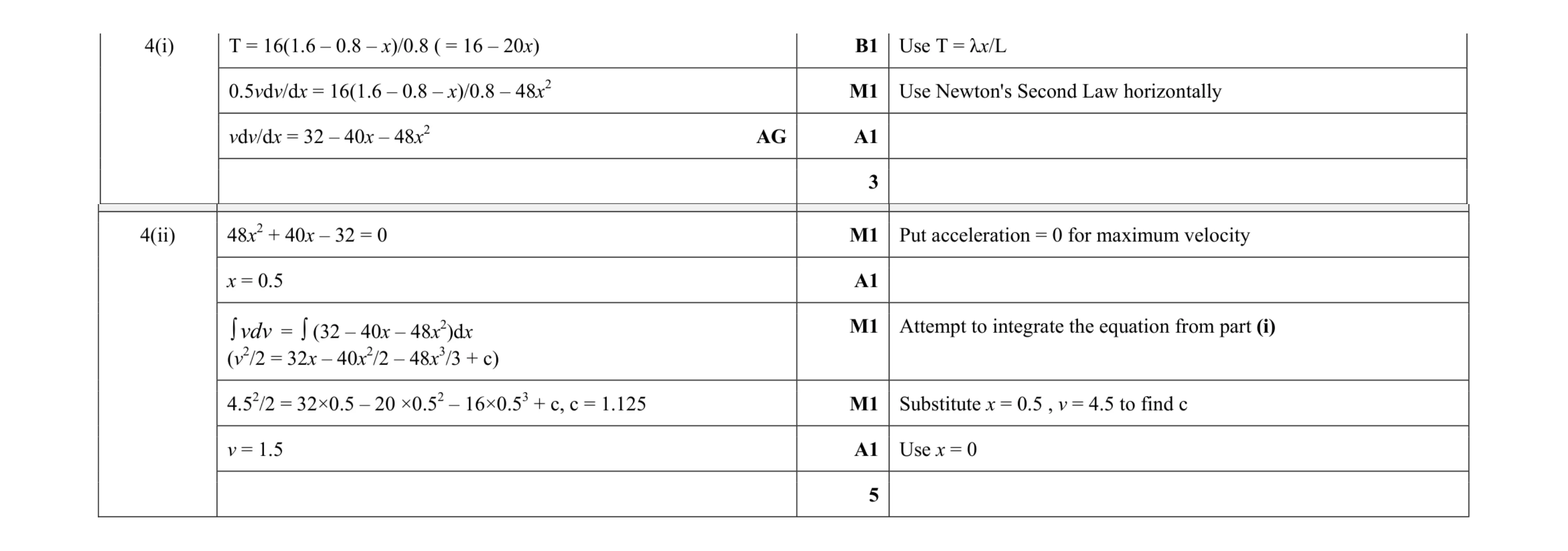 8
8 3
3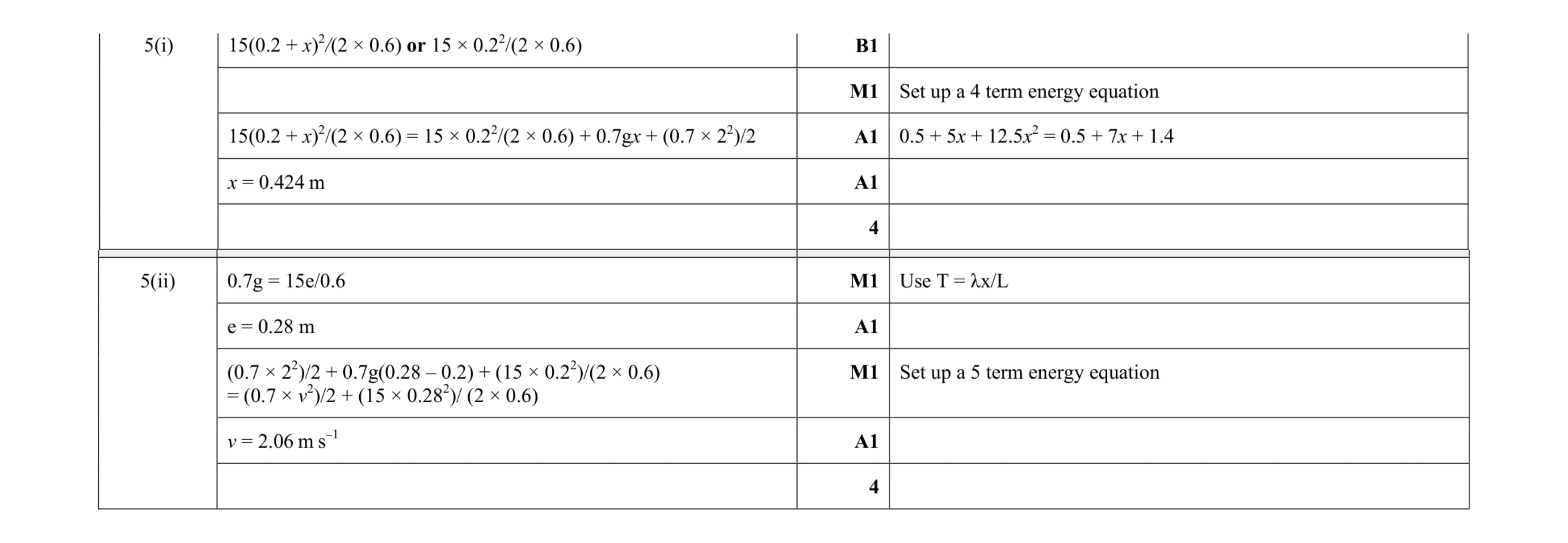 8
8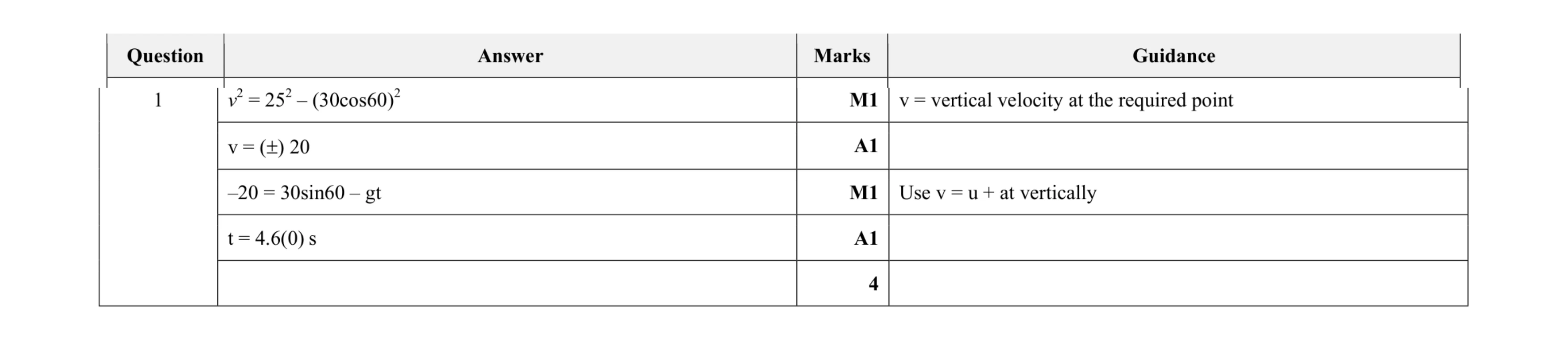 4
4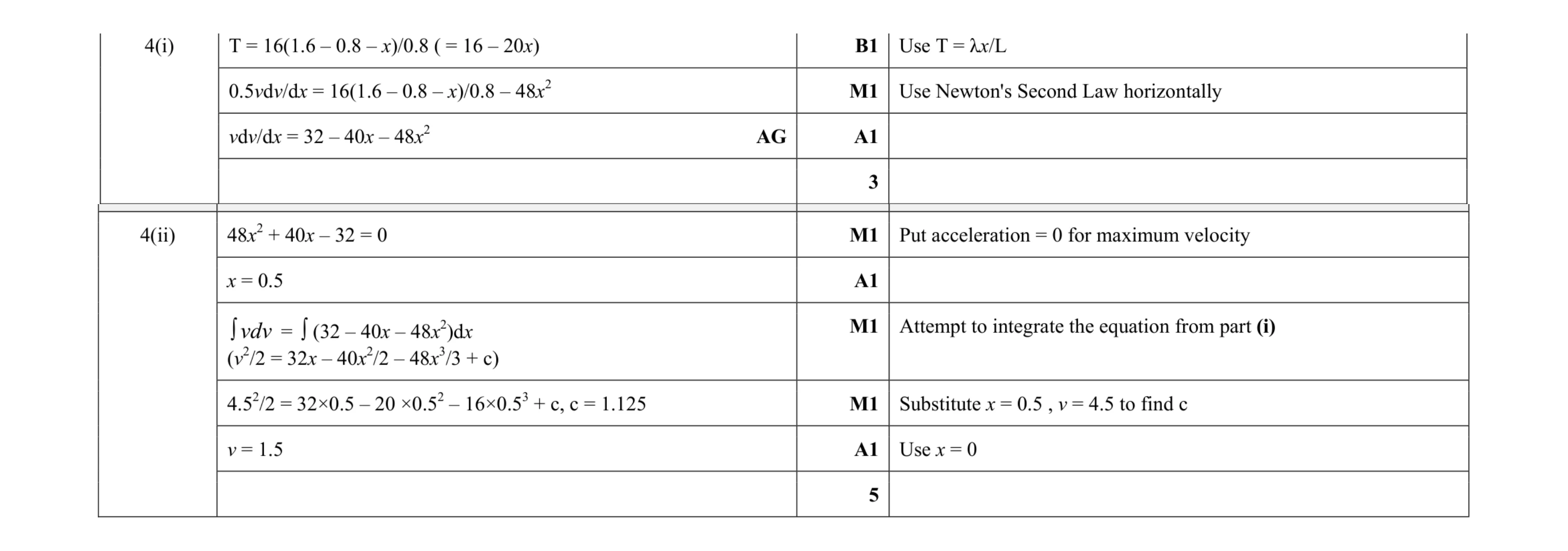 8
8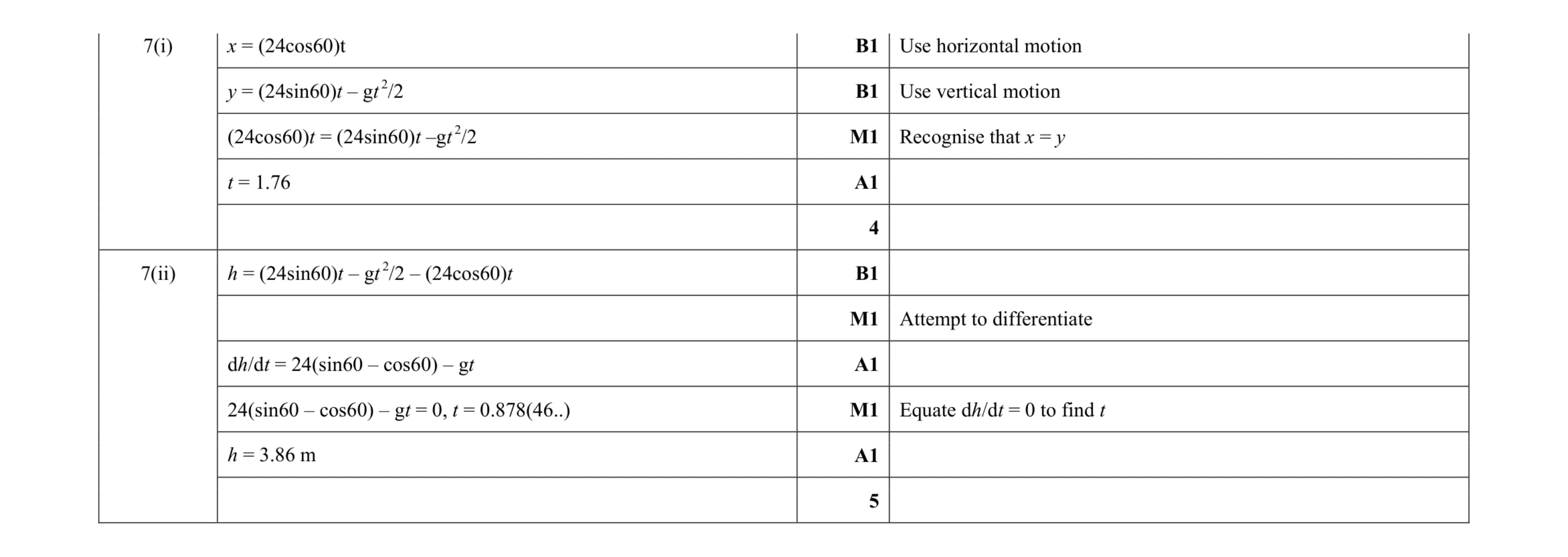 9
9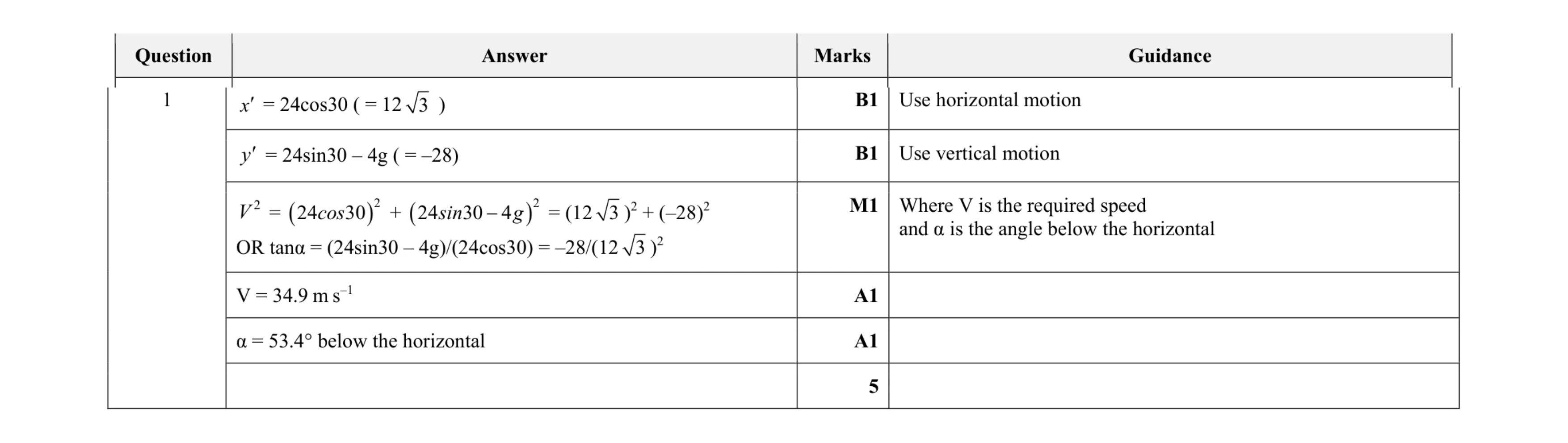 5
5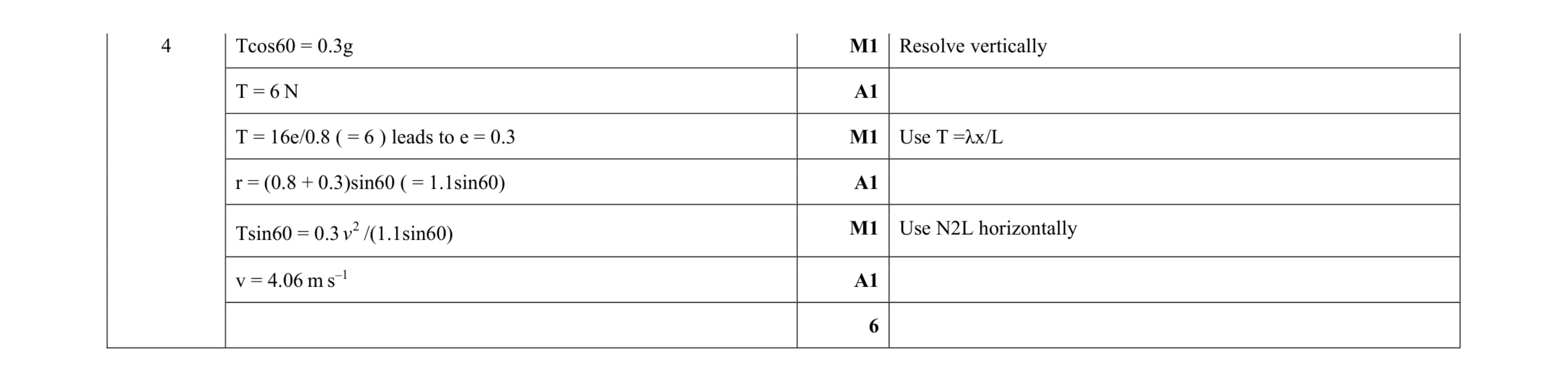 6
6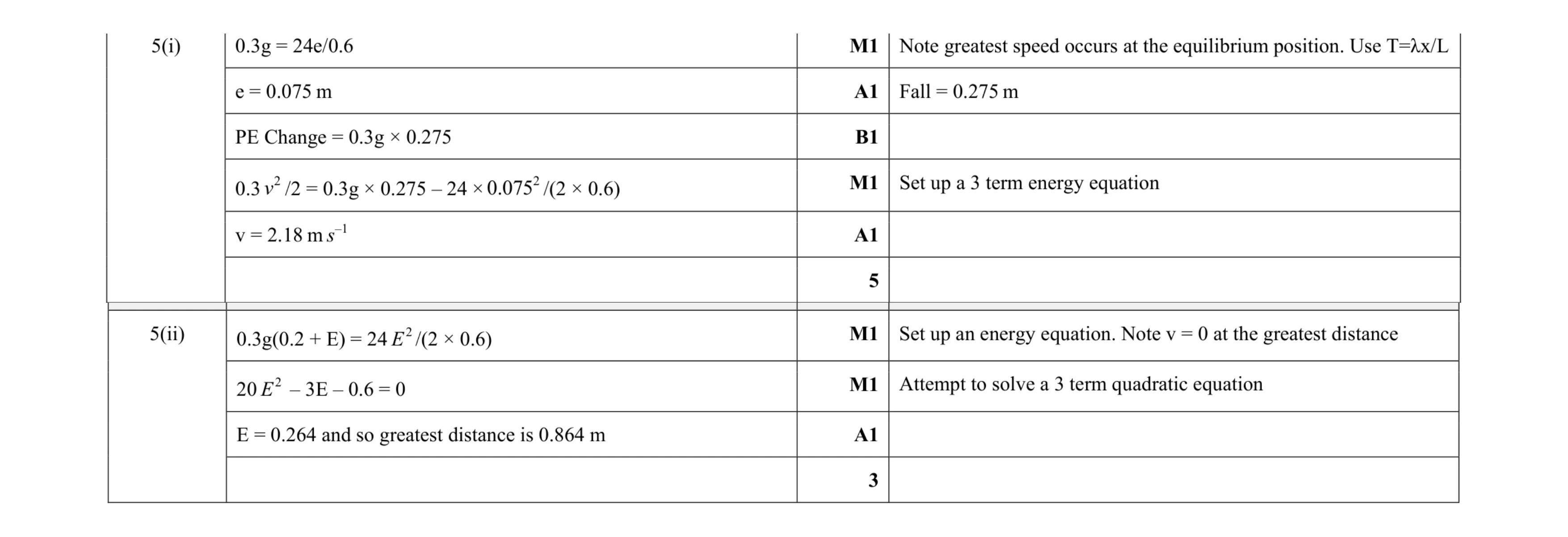 8
8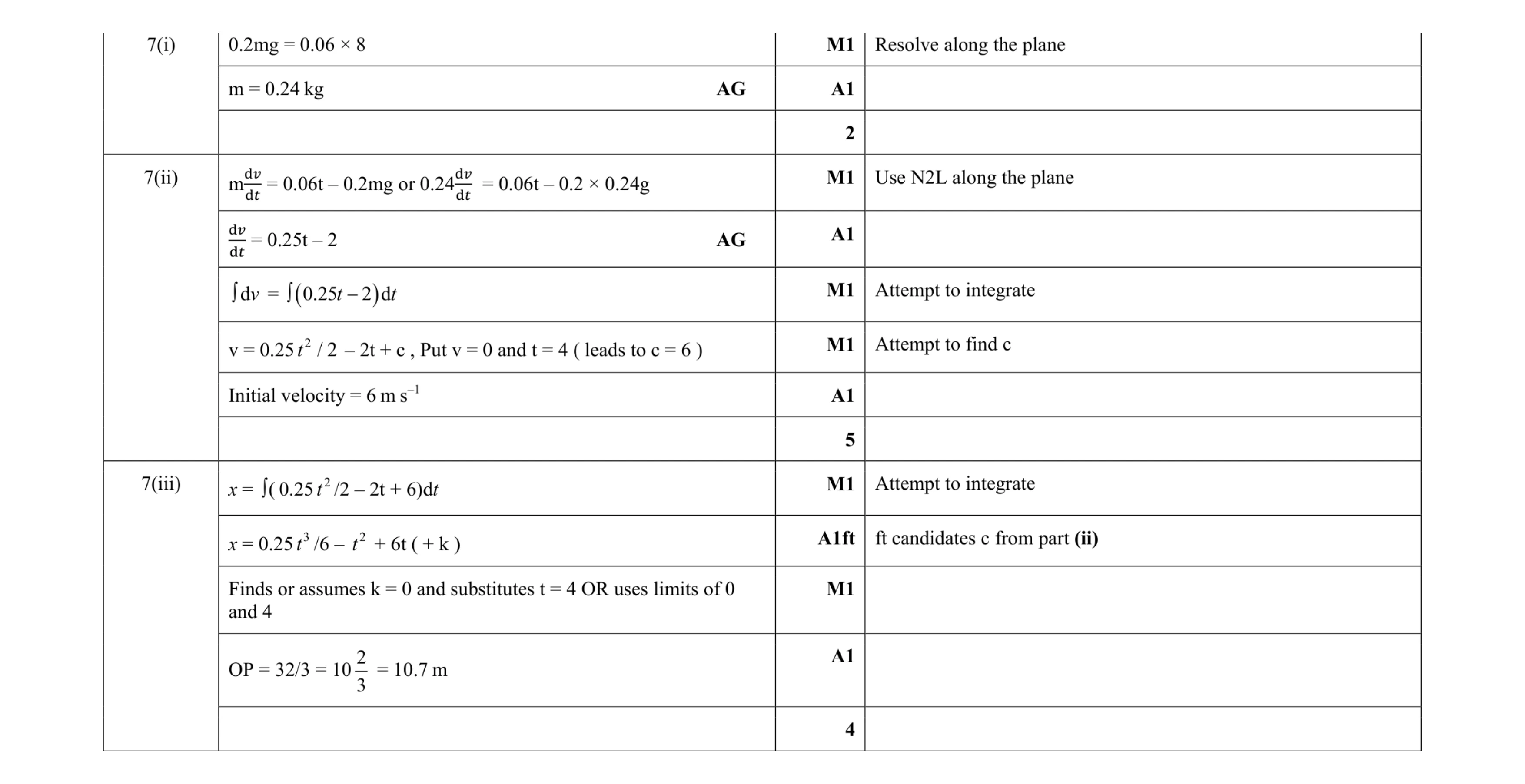 11
11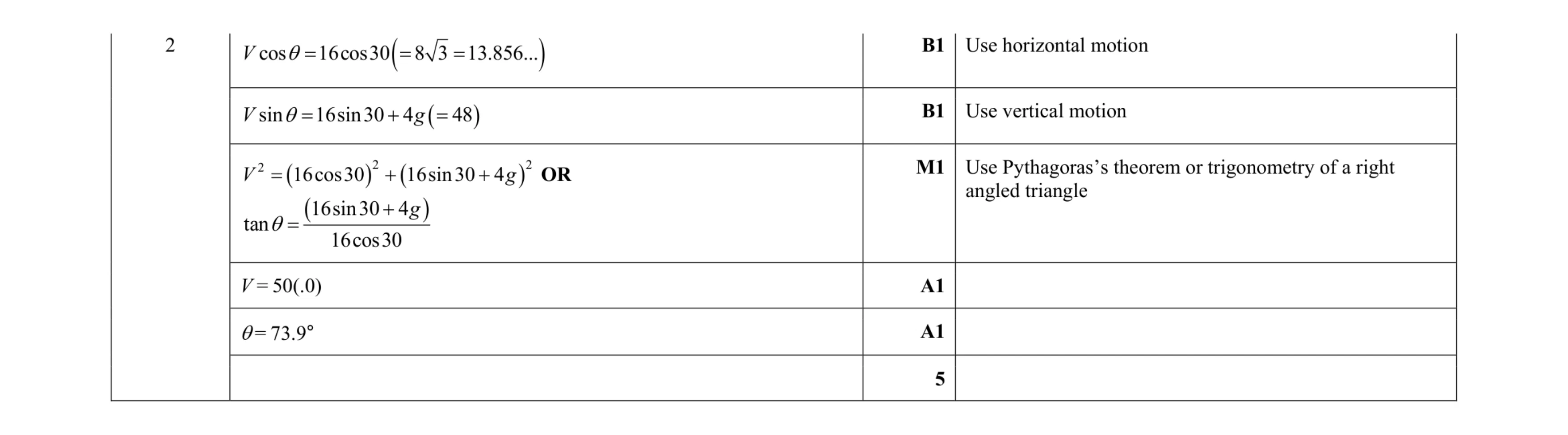 5
5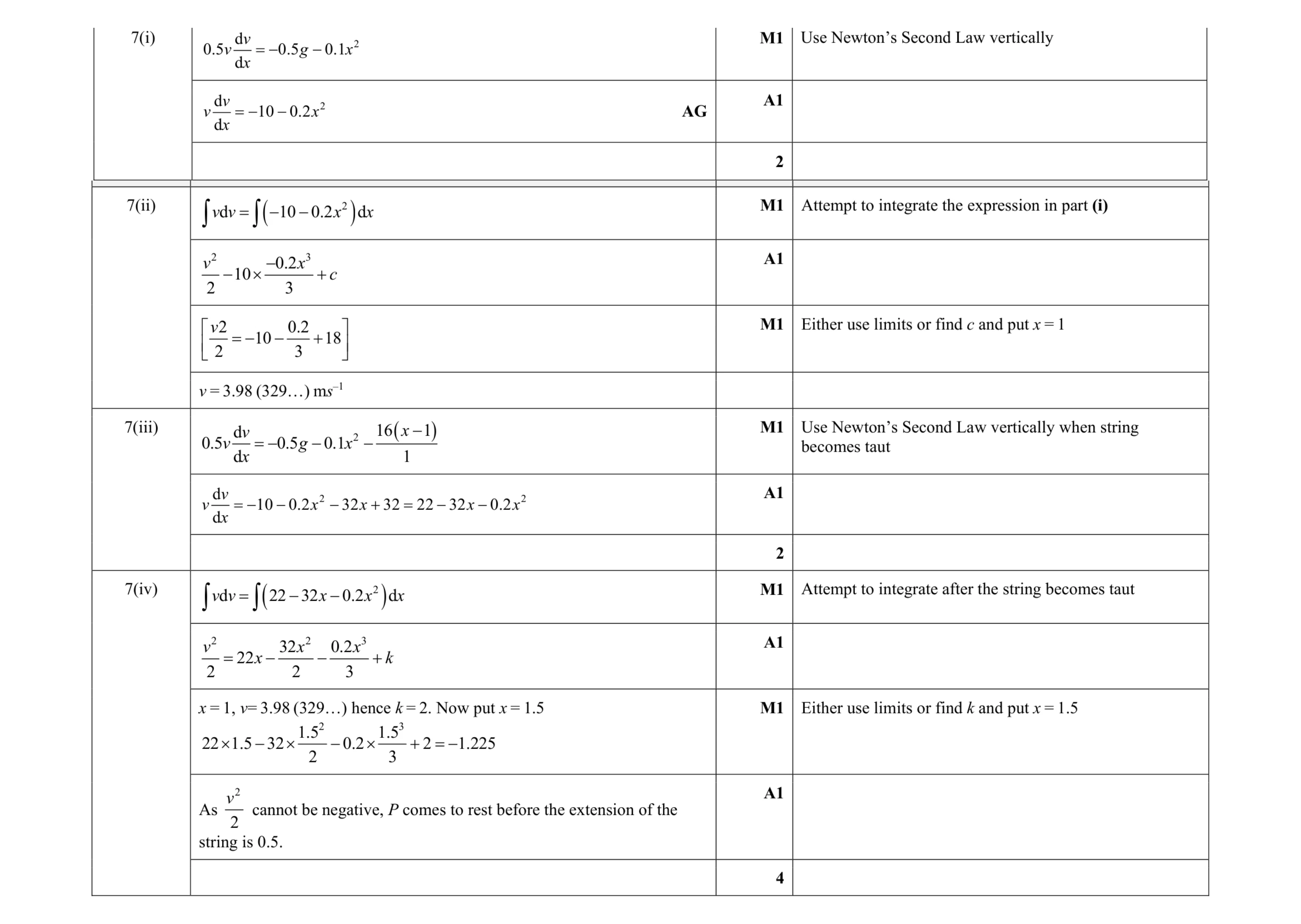 12
12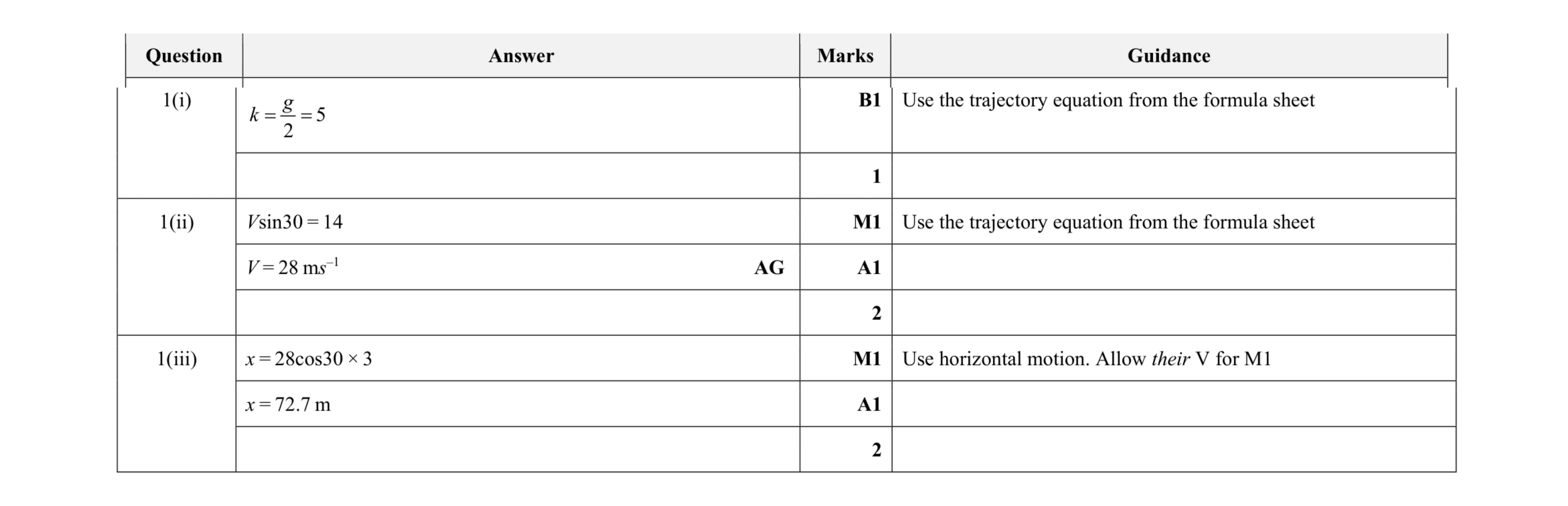 5
5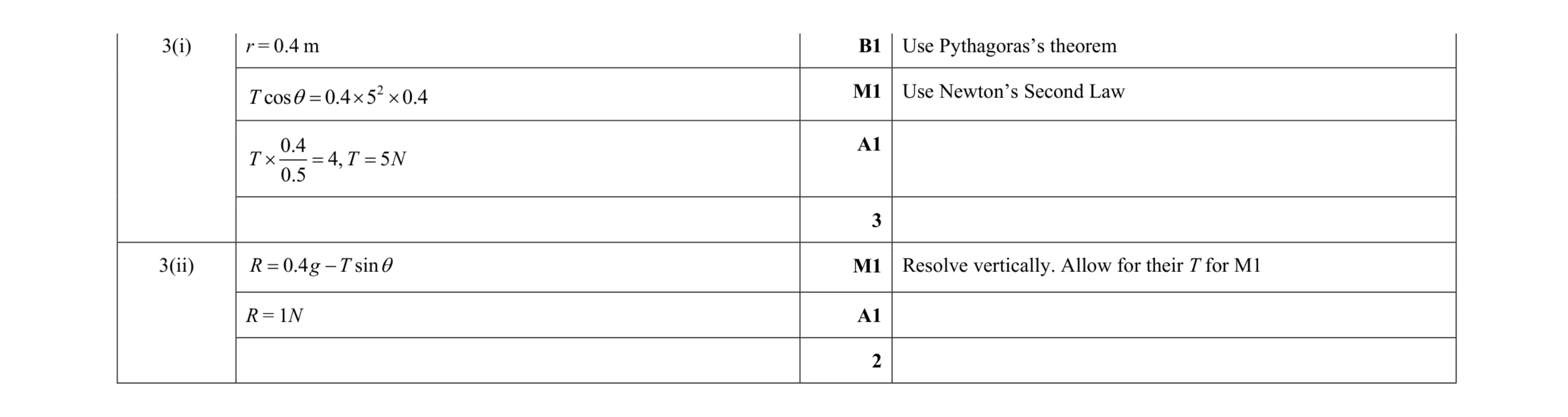 5
5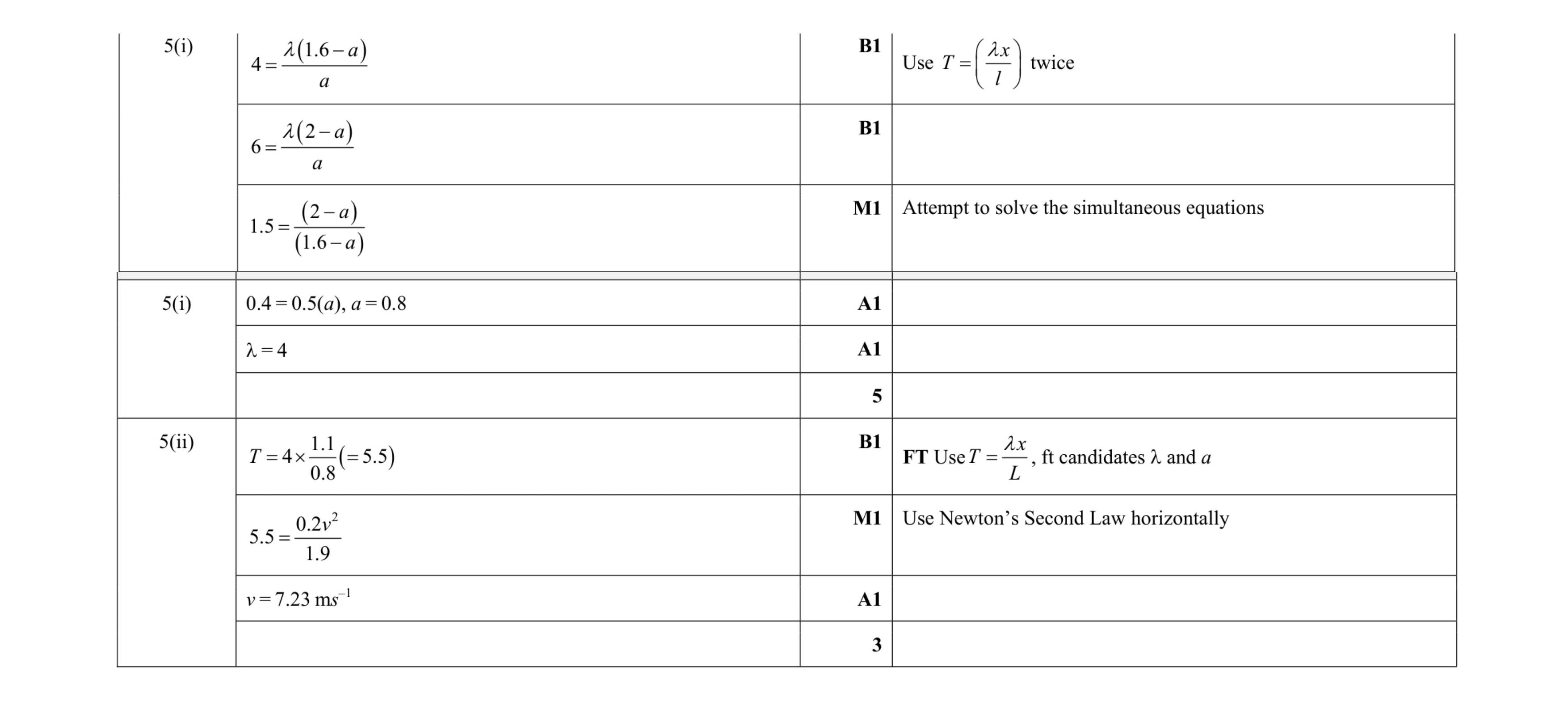 8
8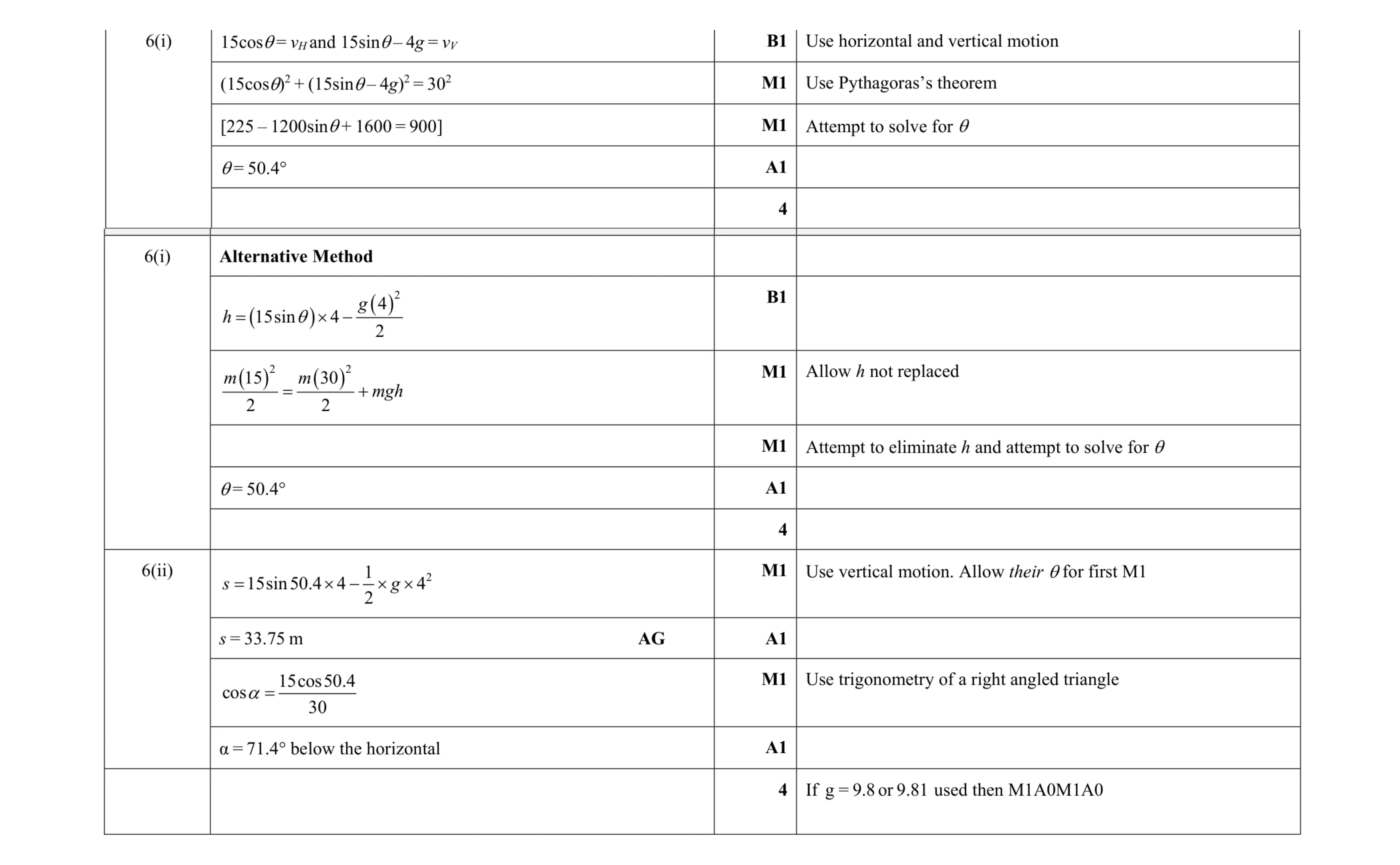 8
8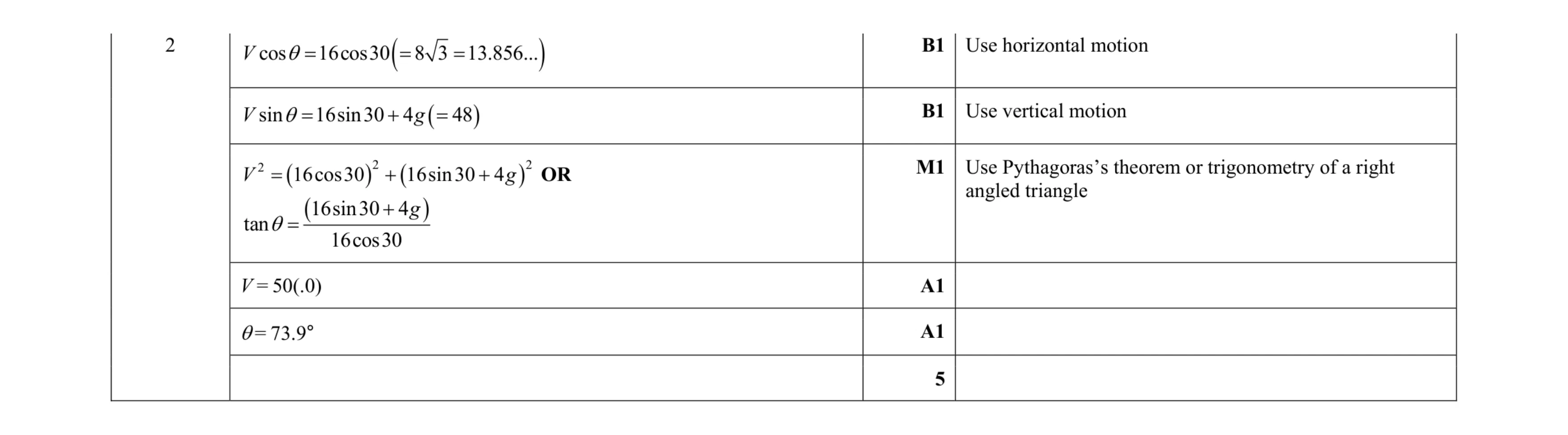 5
5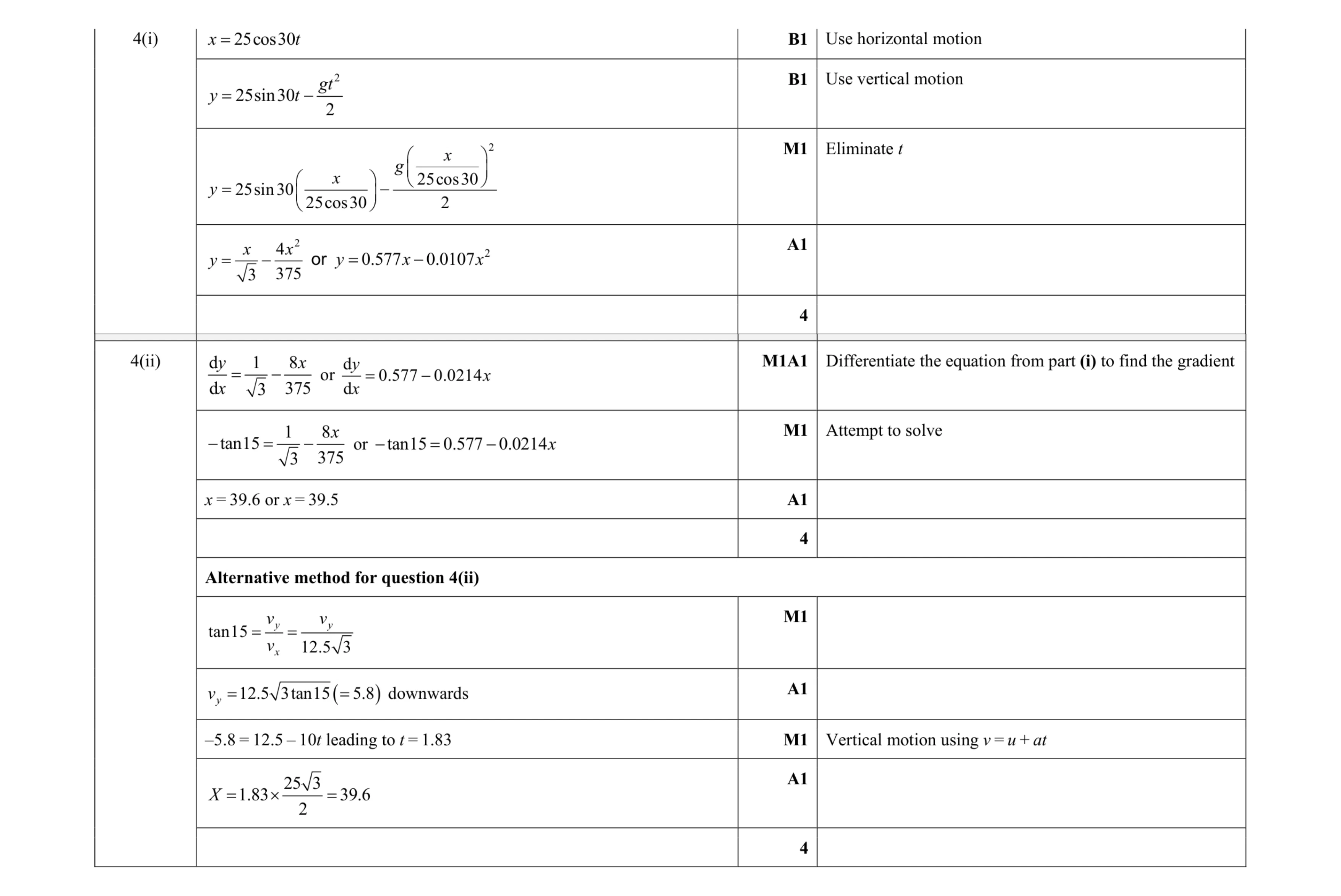 8
8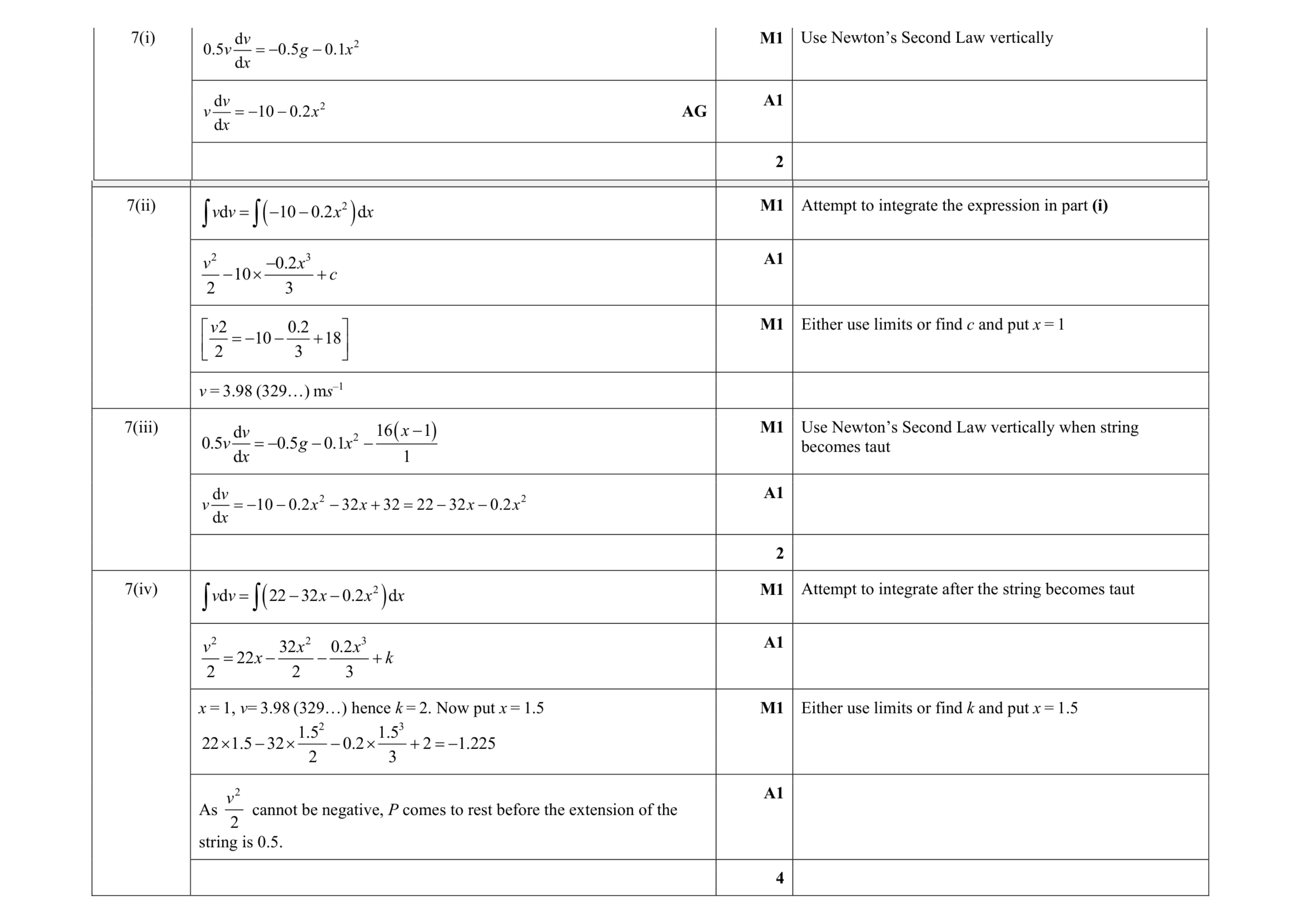 12
12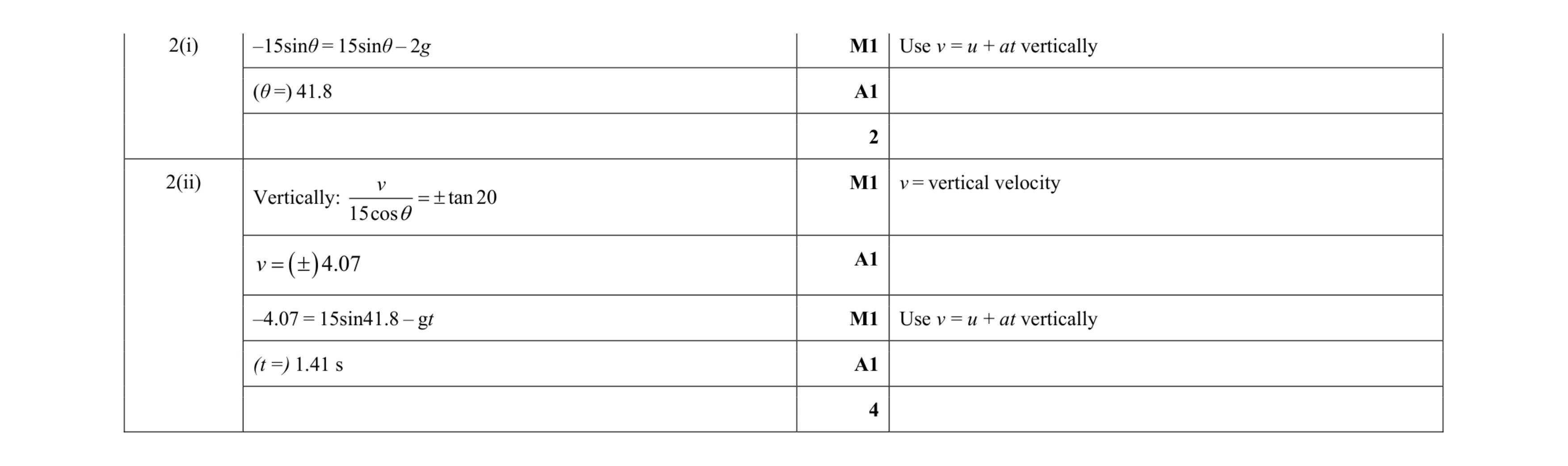 6
6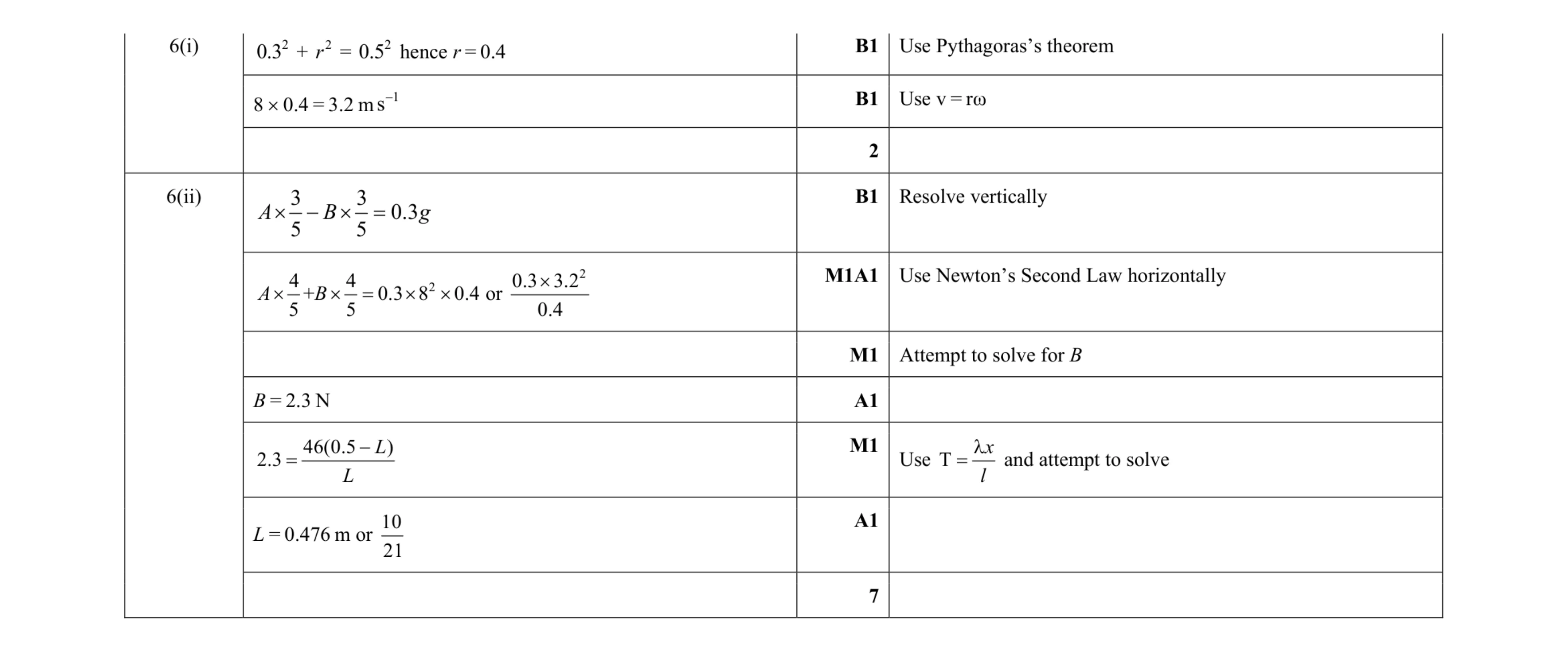 9
9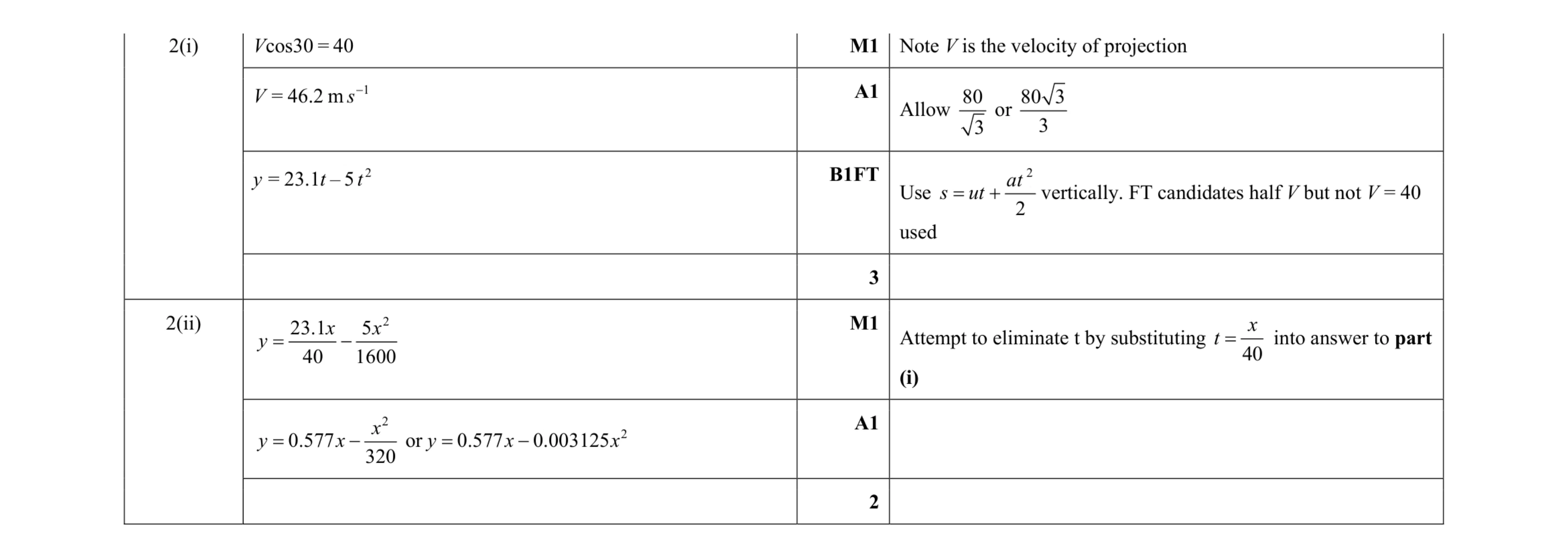 5
5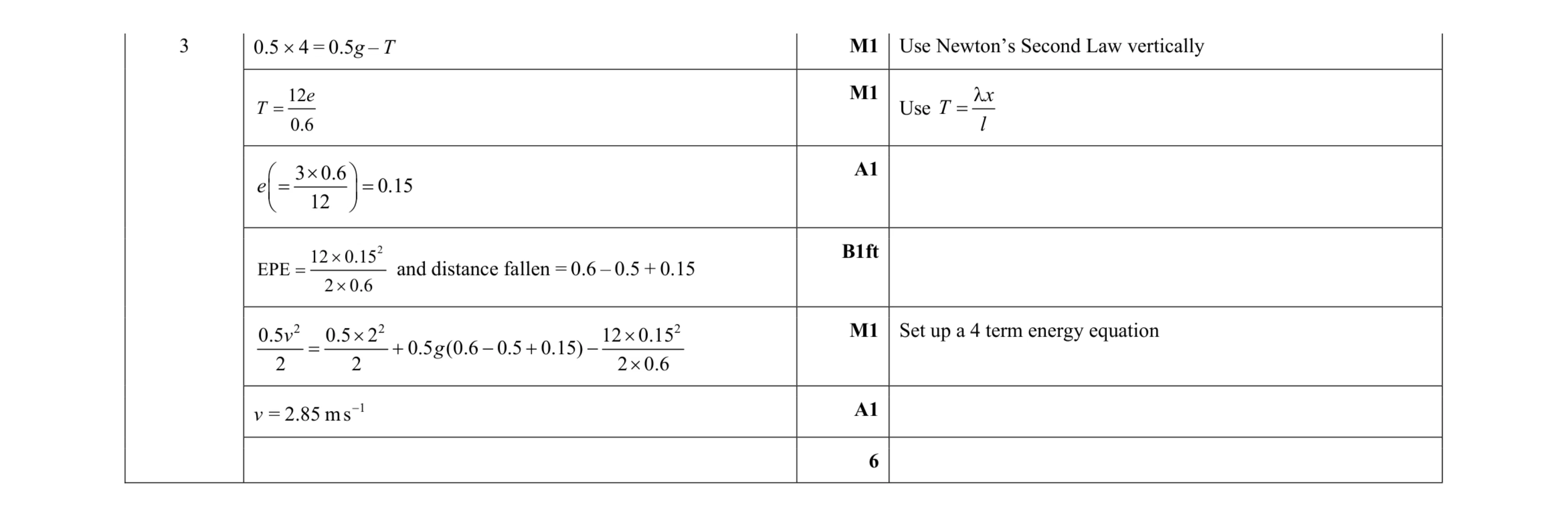 6
6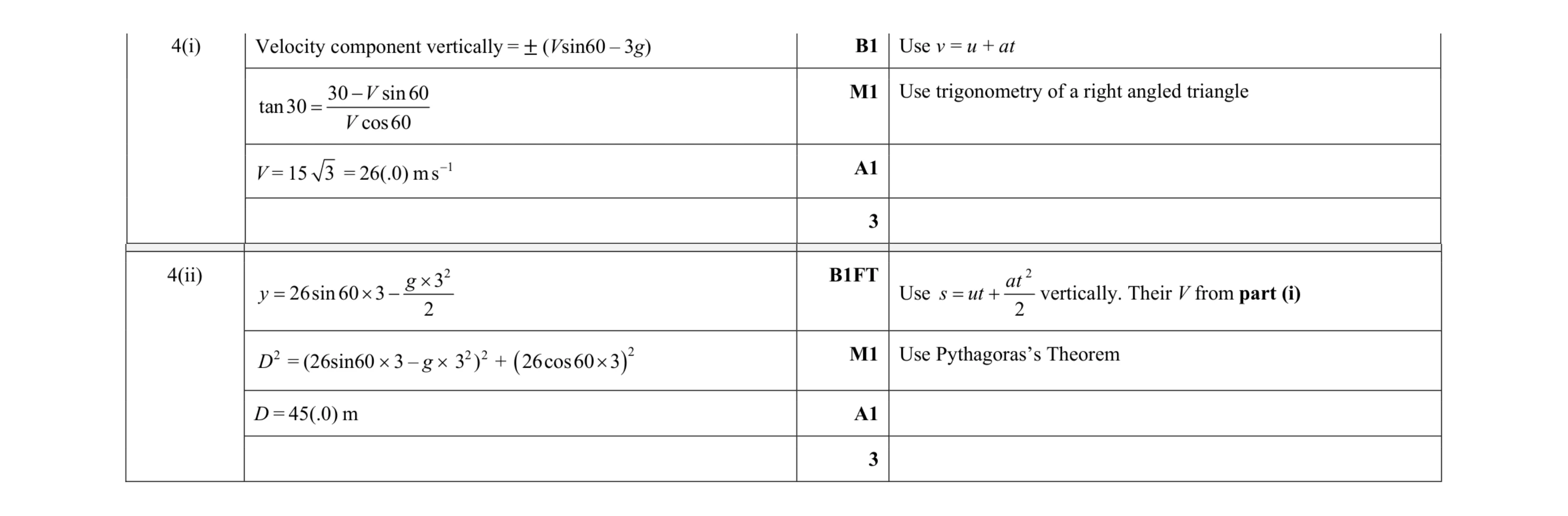 6
6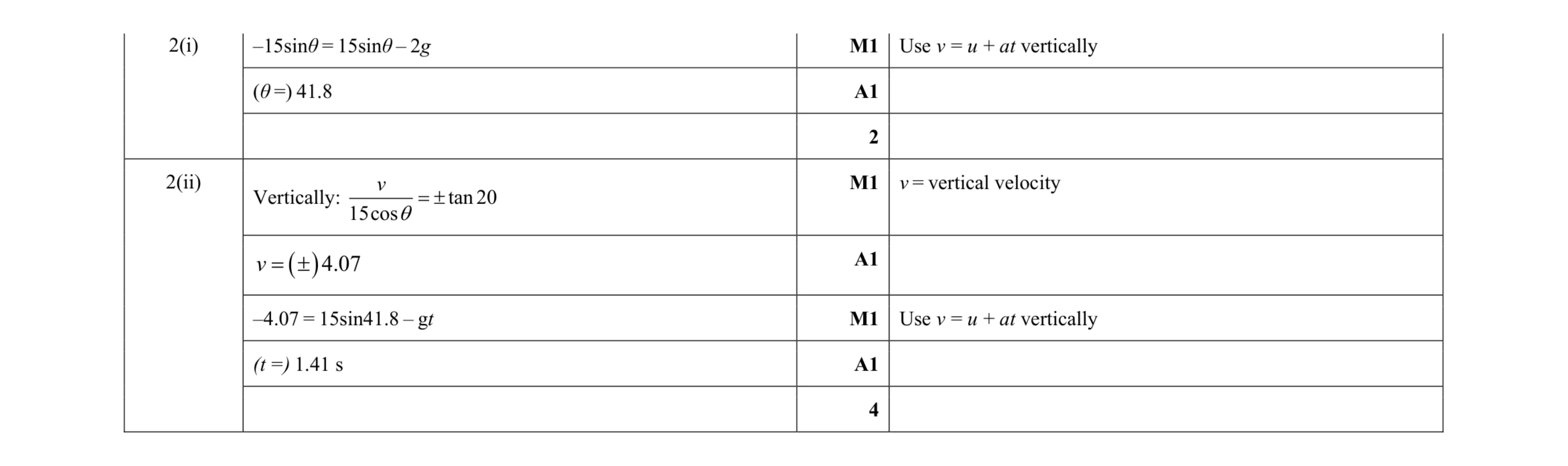 6
6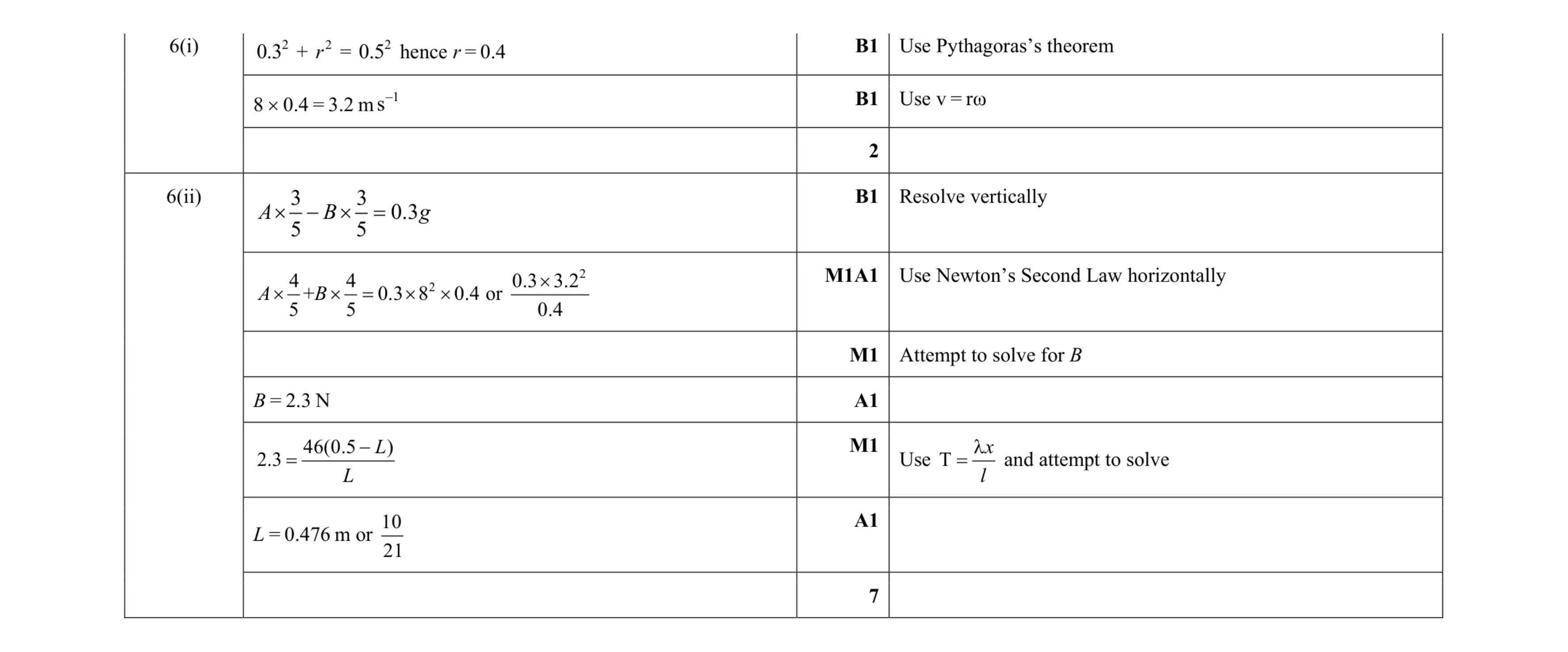 9
9