Cambridge A Level Mathematics 9709 — 2017 Oct/Nov Paper 5 · Variant 3
9709/53/O/N/17 · 7 questions · 50 marks · ≈56 min
The question paper and its mark scheme, free to read here and free to download. This is Cambridge’s own paper, exactly as it was sat.
Question paper16 pages
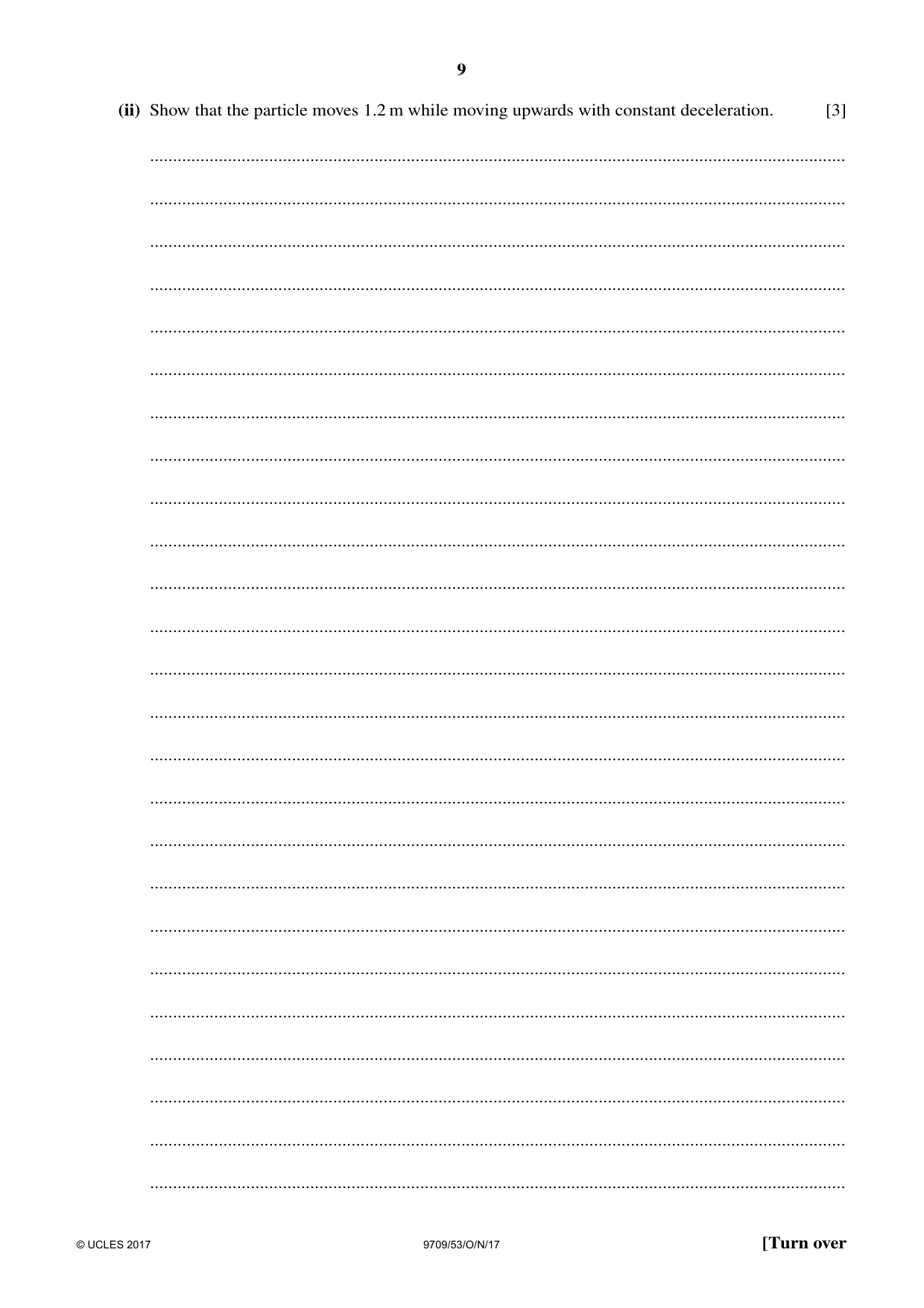
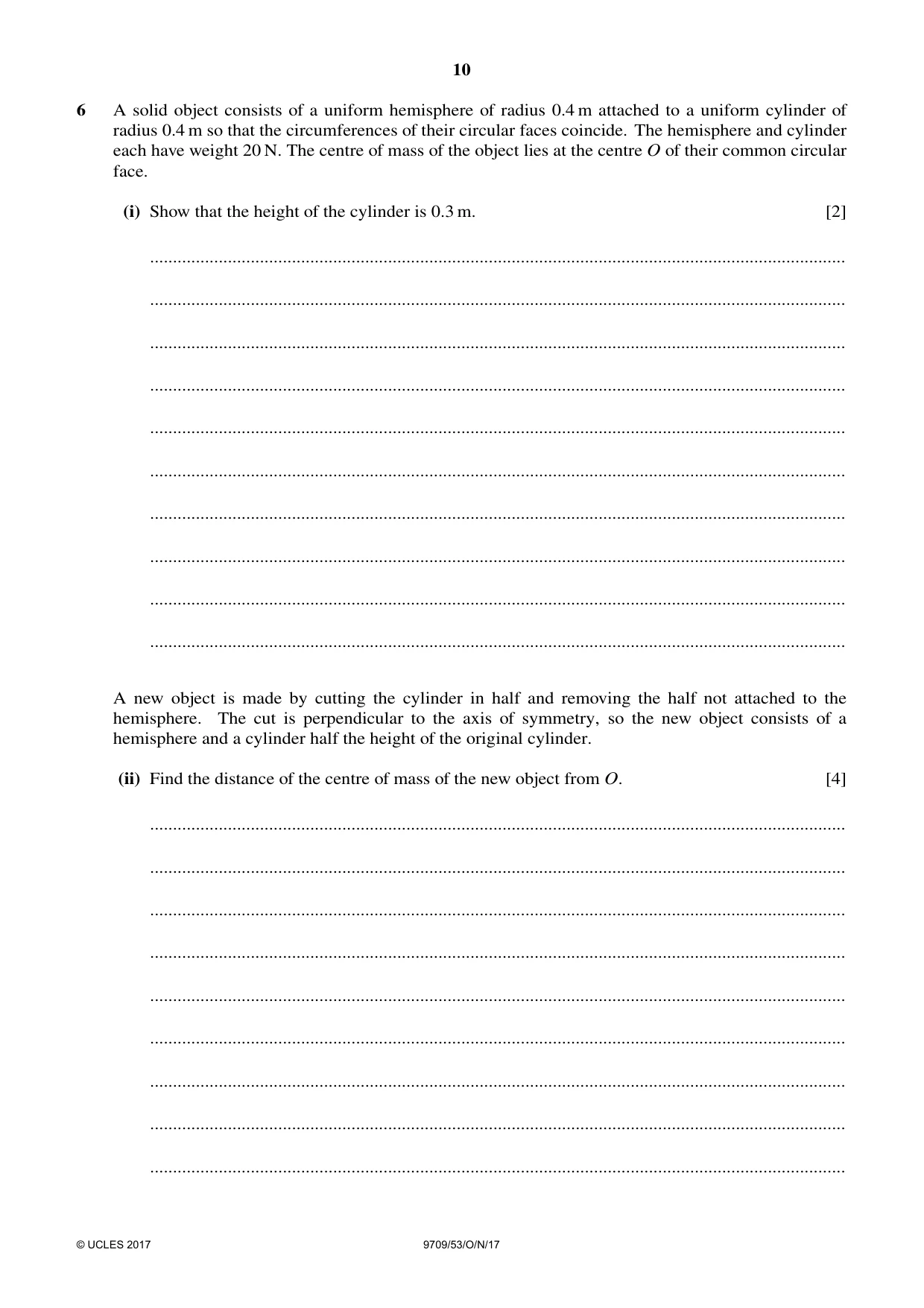
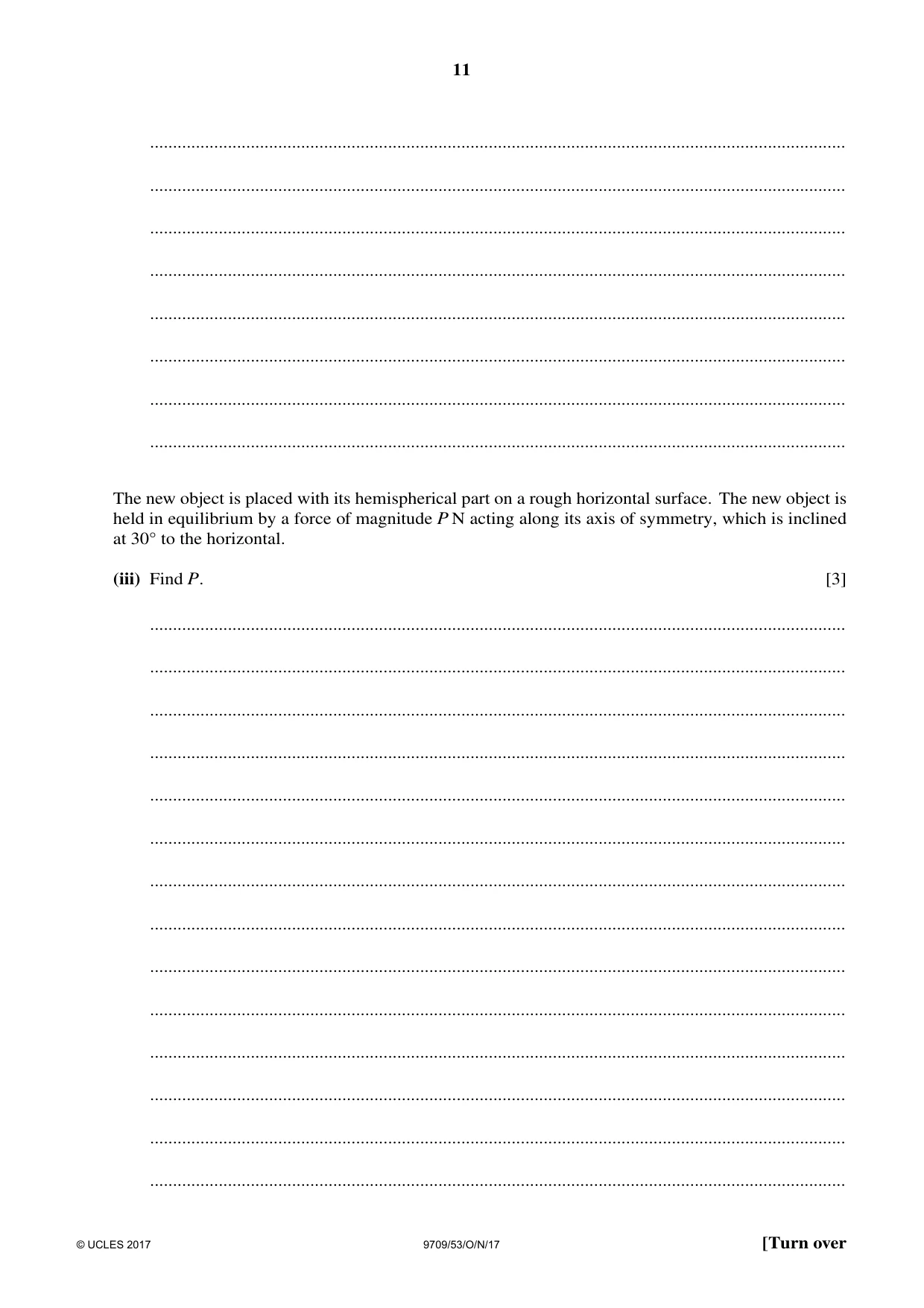
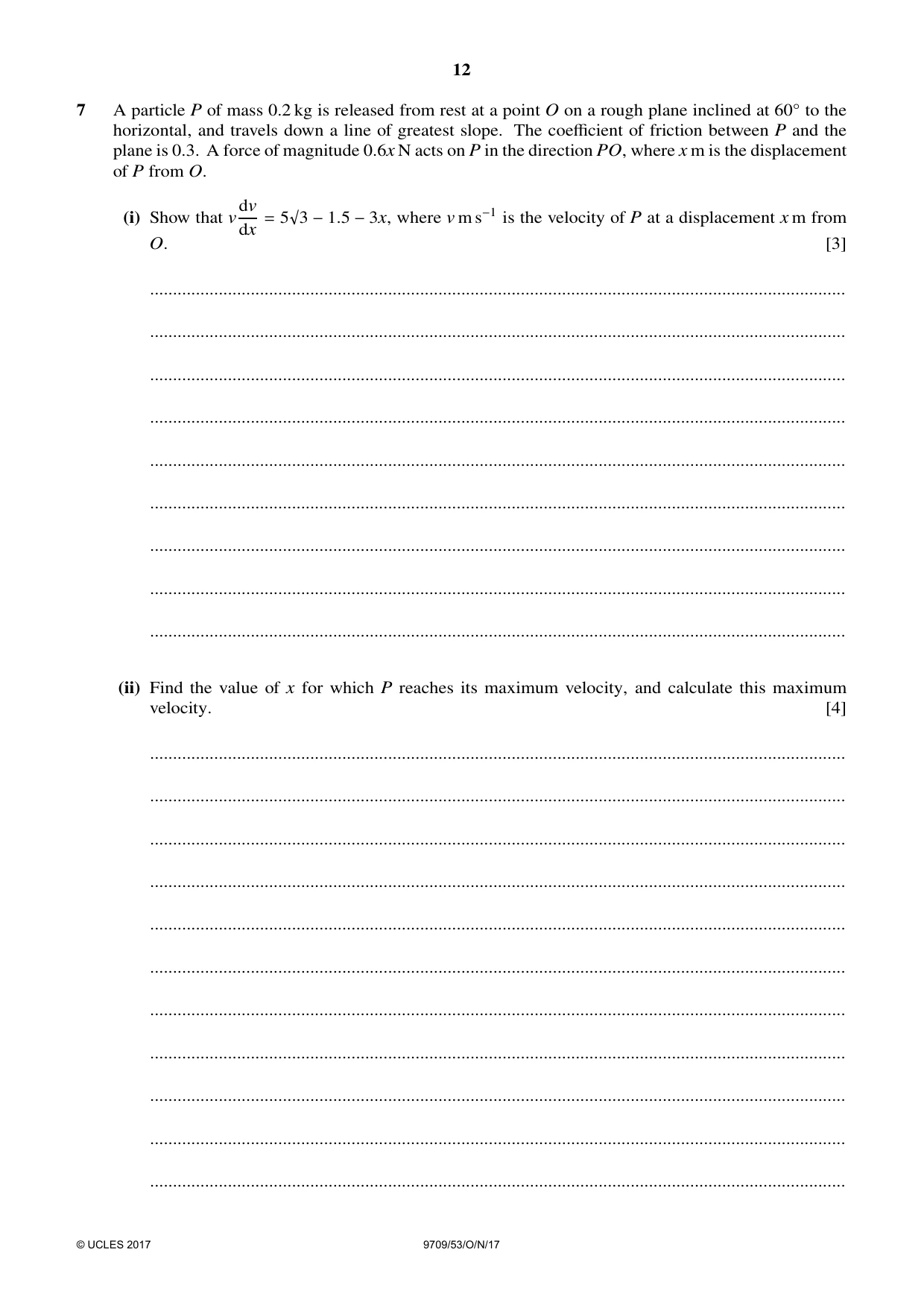

Mark scheme7 pages
Answers below. Sit the paper first if you are practising.
Questions as text
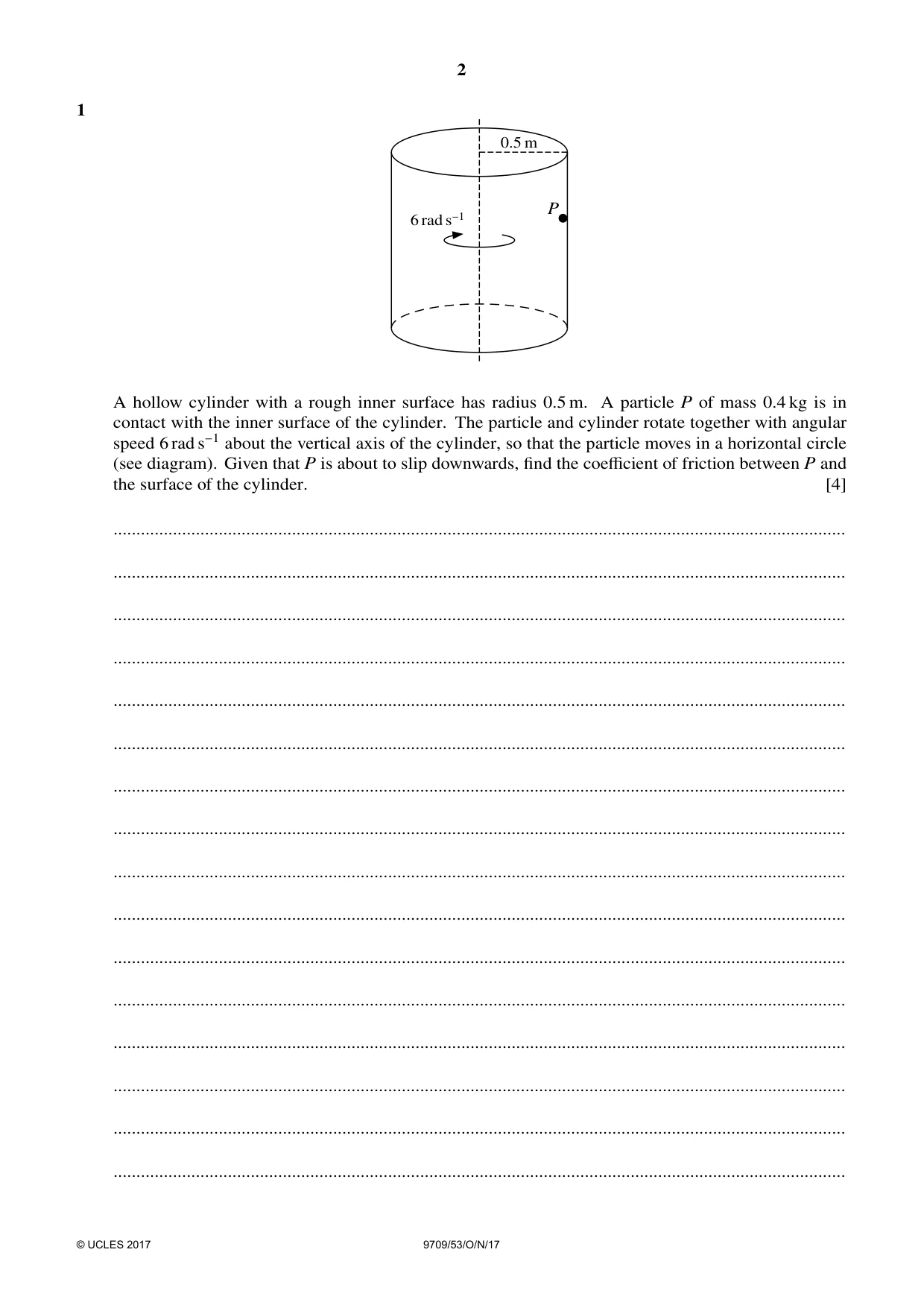
Q1 · 0.5 m P 6 rad s−1 A hollow cylinder with a rough inner surface has radius 0.5 m
1 0.5 m P 6 rad s−1 A hollow cylinder with a rough inner surface has radius 0.5 m. A particle P of mass 0.4 kg is in contact with the inner surface of the cylinder. The particle and cylinder rotate together with angular speed 6 rad s−1 about the vertical axis of the cylinder, so that the particle moves in a horizontal circle (see diagram). Given that P is about to slip downwards, find the coefficient of friction between P and the surface of the cylinder. [4] ................................................................................................................................................................ ................................................................................................................................................................ ................................................................................................................................................................ ................................................................................................................................................................ ................................................................................................................................................................ ................................................................................................................................................................ ................................................................................................................................................................ ................................................................................................................................................................ ................................................................................................................................................................ ................................................................................................................................................................ ................................................................................................................................................................ ................................................................................................................................................................ ................................................................................................................................................................ ................................................................................................................................................................ ................................................................................................................................................................ ................................................................................................................................................................
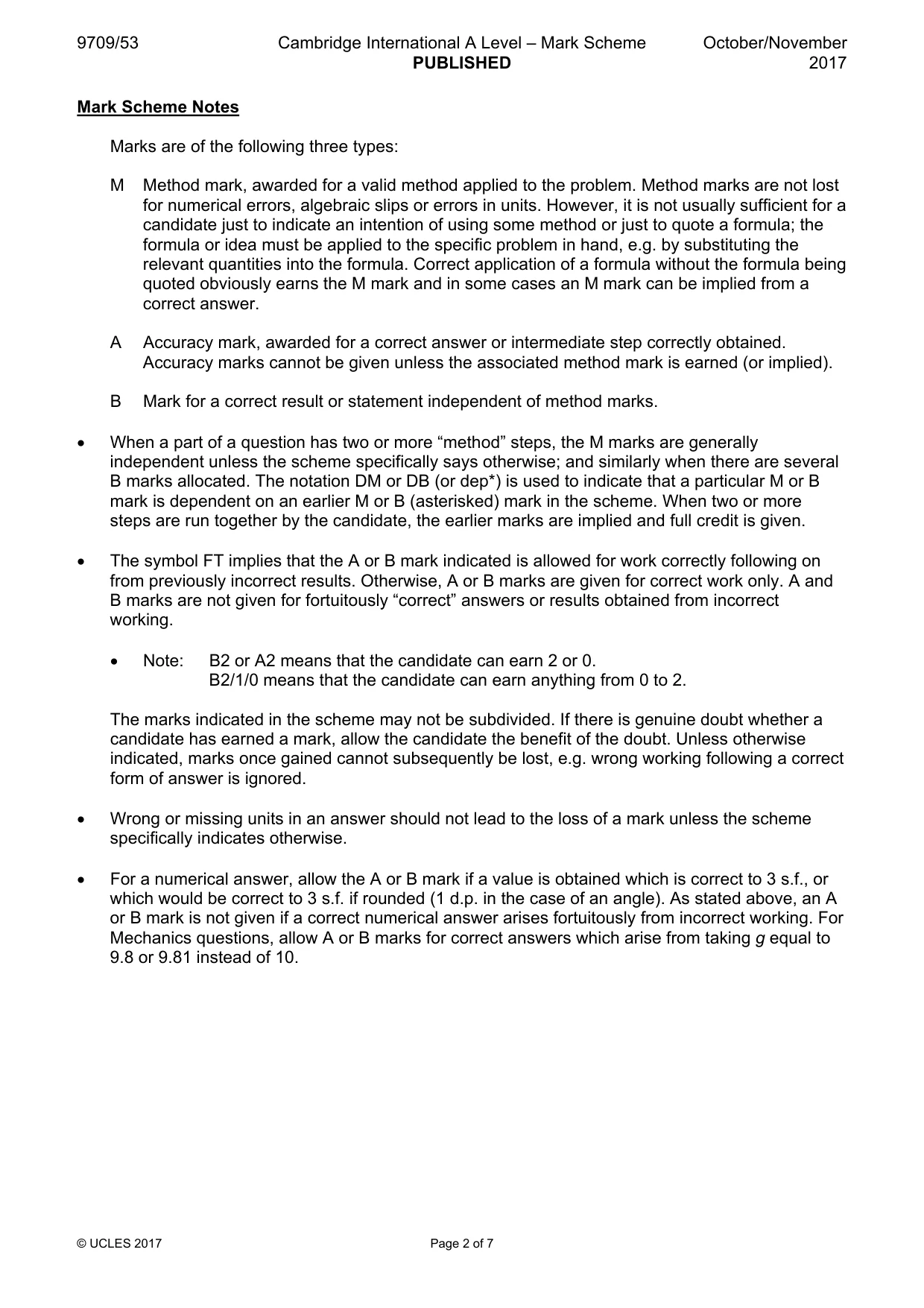
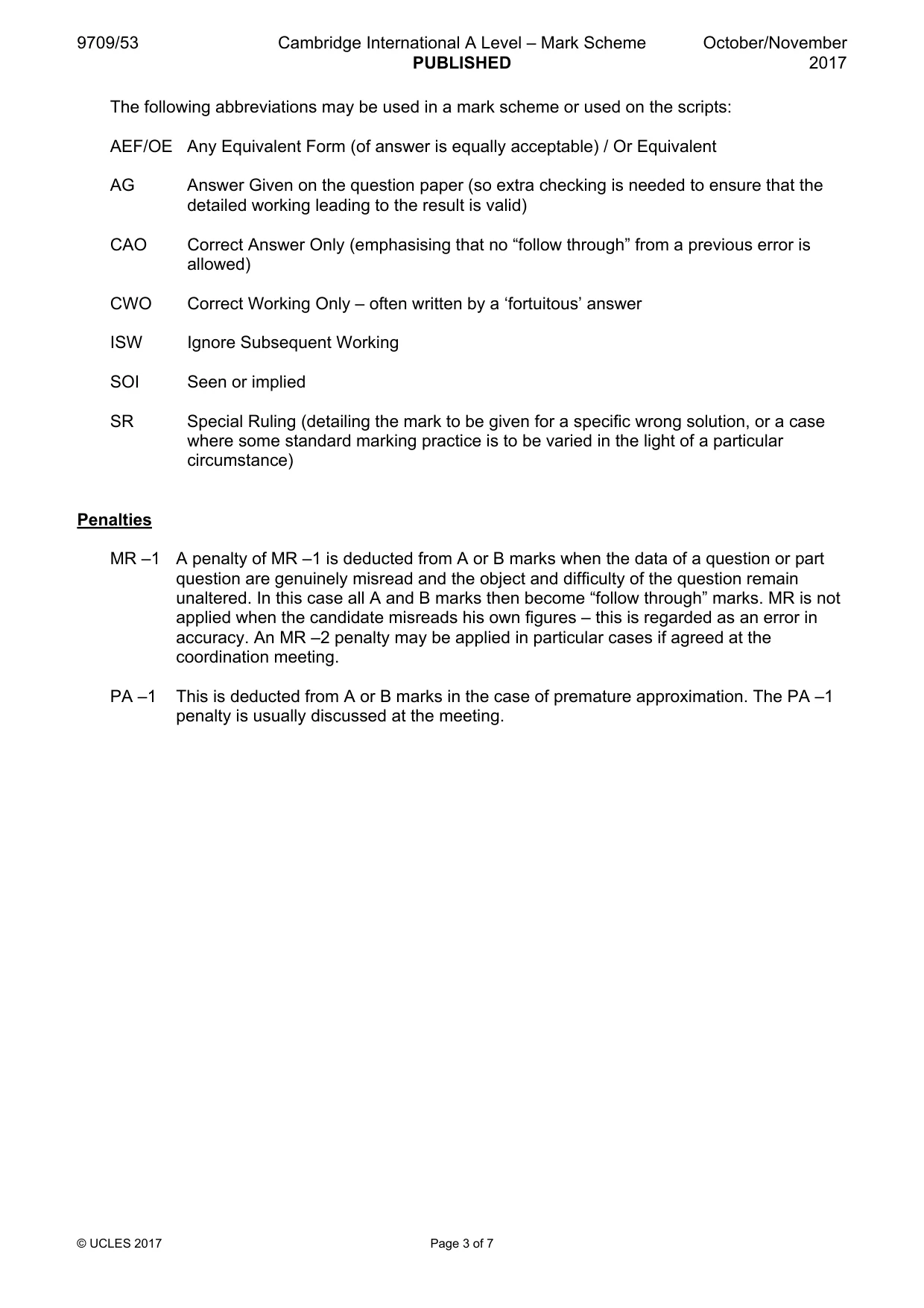
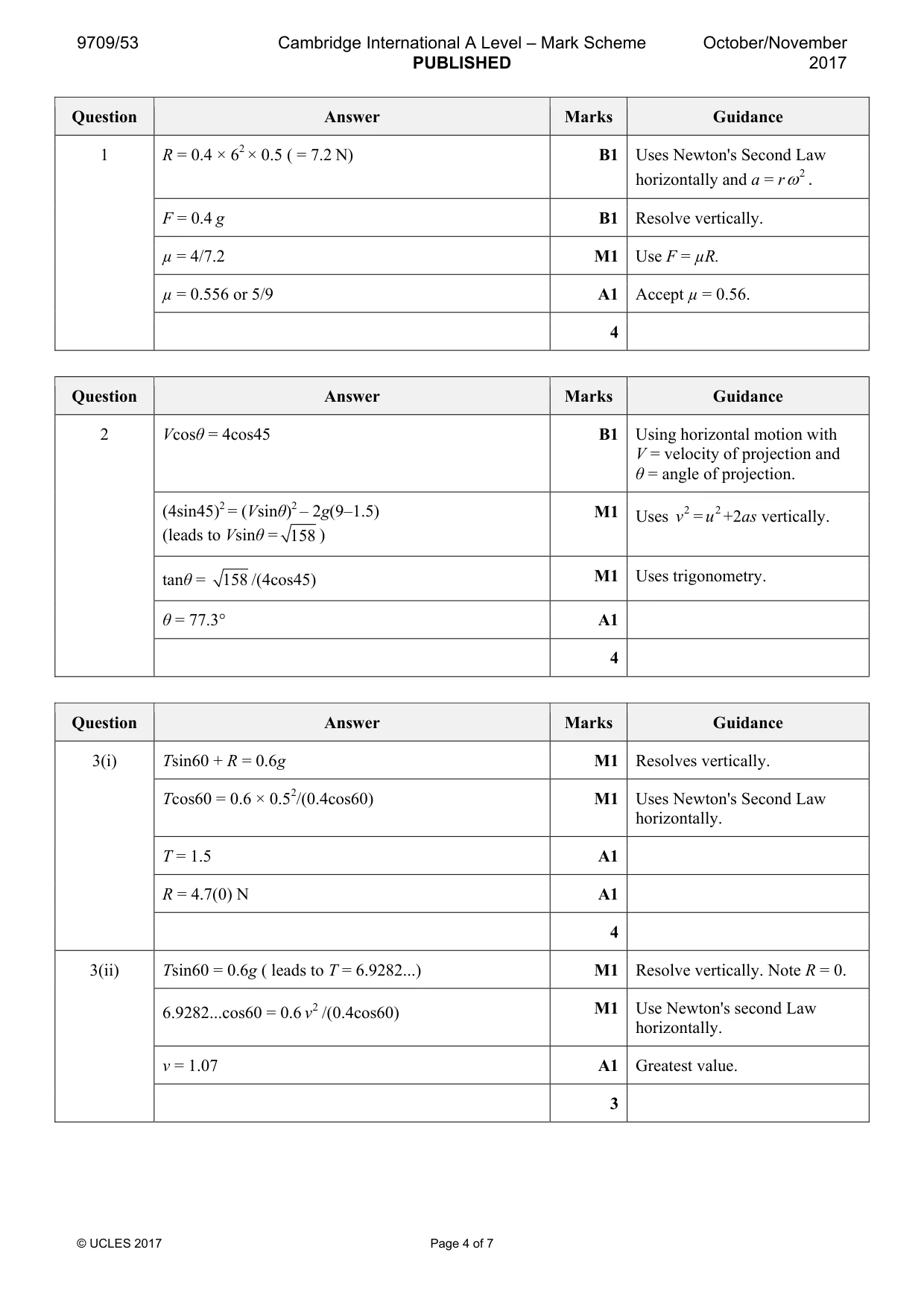
Mark scheme: Question Answer Marks Guidance 1 R = 0.4 × 62 × 0.5 ( = 7.2 N) B1 Uses Newton's Second Law horizontally and a = r ω2 . F = 0.4 g B1 Resolve vertically. µ = 4/7.2 M1 Use F = µR. µ = 0.556 or 5/9 A1 Accept µ = 0.56. 4
Q2 · A small ball is projected from a point 1.5 m above horizontal ground
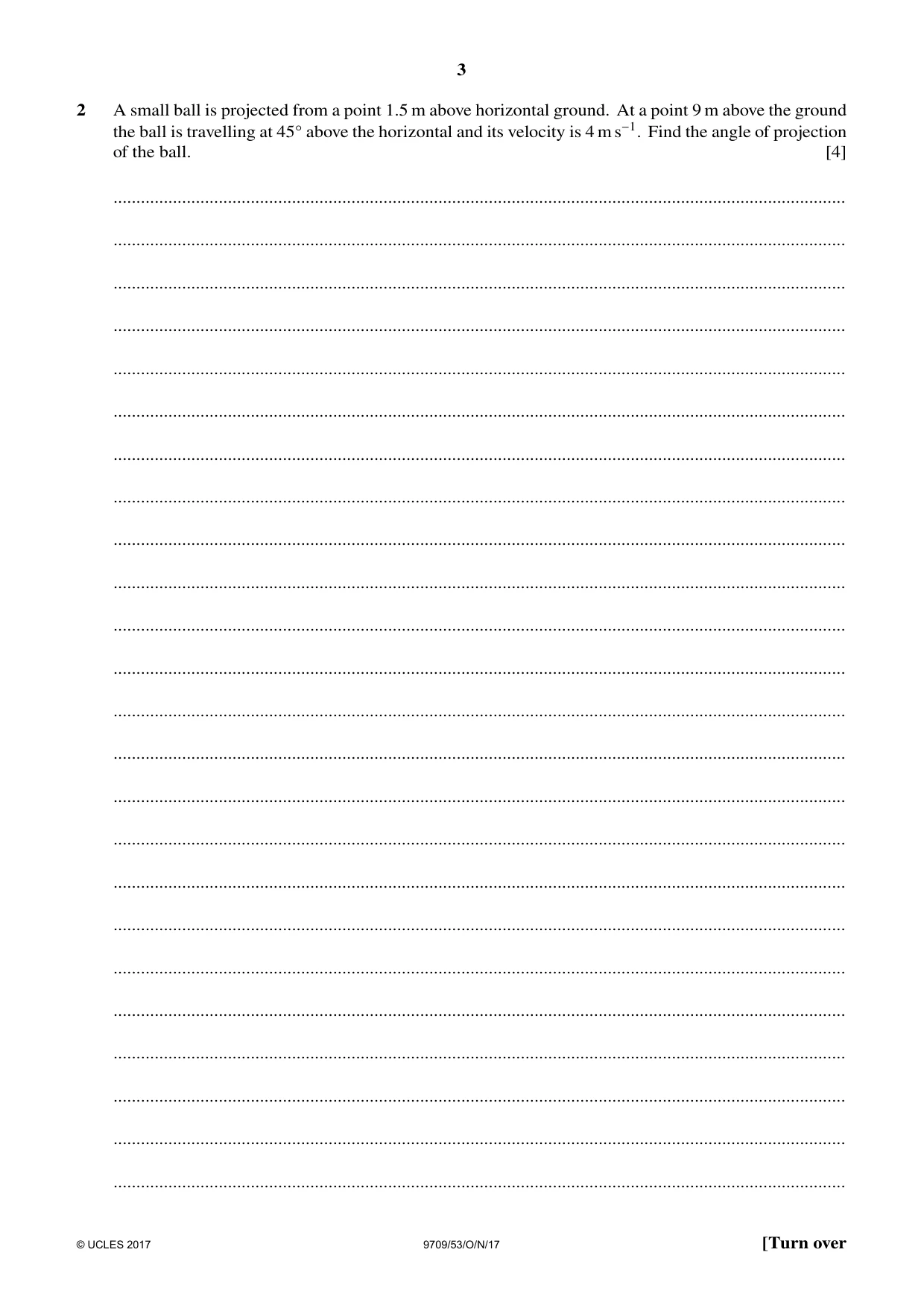
2 A small ball is projected from a point 1.5 m above horizontal ground. At a point 9 m above the ground the ball is travelling at 45Å above the horizontal and its velocity is 4 m s−1. Find the angle of projection of the ball. [4] ................................................................................................................................................................ ................................................................................................................................................................ ................................................................................................................................................................ ................................................................................................................................................................ ................................................................................................................................................................ ................................................................................................................................................................ ................................................................................................................................................................ ................................................................................................................................................................ ................................................................................................................................................................ ................................................................................................................................................................ ................................................................................................................................................................ ................................................................................................................................................................ ................................................................................................................................................................ ................................................................................................................................................................ ................................................................................................................................................................ ................................................................................................................................................................ ................................................................................................................................................................ ................................................................................................................................................................ ................................................................................................................................................................ ................................................................................................................................................................ ................................................................................................................................................................ ................................................................................................................................................................ ................................................................................................................................................................ ................................................................................................................................................................
Mark scheme: 2 Vcosθ = 4cos45 B1 Using horizontal motion with V = velocity of projection and θ = angle of projection. (4sin45)2 = (Vsinθ)2 – 2g(9–1.5) M1 2 2 Uses v = u +2as vertically. (leads to Vsinθ = 158 ) tanθ = 158 /(4cos45) M1 Uses trigonometry. θ = 77.3° A1 4
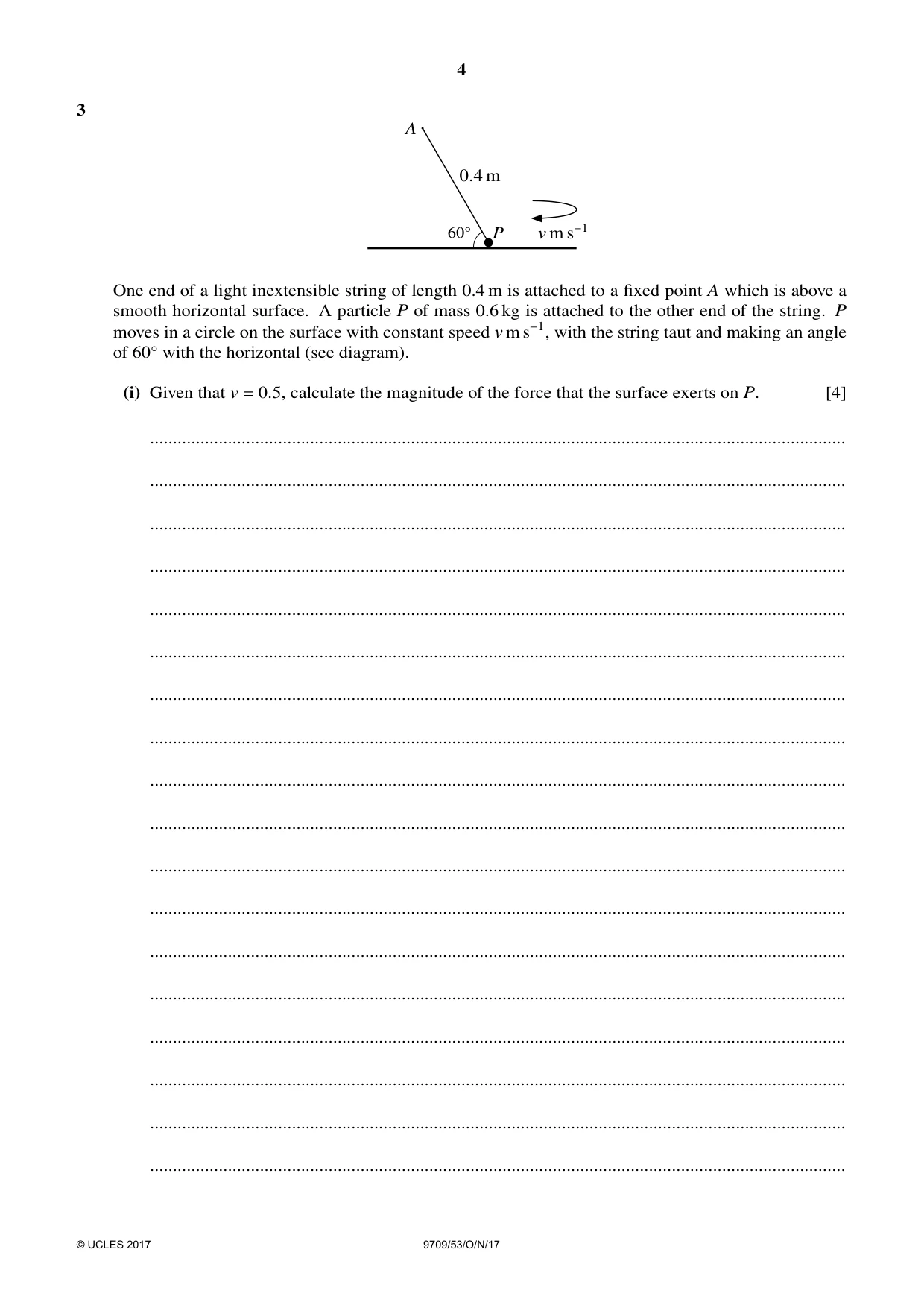
Q3 · A 0.4 m 60Å P v m s−1 One end of a light inextensible string of length 0.4 m is attached…
3 A 0.4 m 60Å P v m s−1 One end of a light inextensible string of length 0.4 m is attached to a fixed point A which is above a smooth horizontal surface. A particle P of mass 0.6 kg is attached to the other end of the string. P moves in a circle on the surface with constant speed v m s−1, with the string taut and making an angle of 60Å with the horizontal (see diagram). (i) Given that v = 0.5, calculate the magnitude of the force that the surface exerts on P. [4] ........................................................................................................................................................ ........................................................................................................................................................ ........................................................................................................................................................ ........................................................................................................................................................ ........................................................................................................................................................ ........................................................................................................................................................ ........................................................................................................................................................ ........................................................................................................................................................ ........................................................................................................................................................ ........................................................................................................................................................ ........................................................................................................................................................ ........................................................................................................................................................ ........................................................................................................................................................ ........................................................................................................................................................ ........................................................................................................................................................ ........................................................................................................................................................ ........................................................................................................................................................ ........................................................................................................................................................ (ii) Find the greatest possible value of v for which P remains in contact with the surface. [3] ........................................................................................................................................................ ........................................................................................................................................................ ........................................................................................................................................................ ........................................................................................................................................................ ........................................................................................................................................................ ........................................................................................................................................................ ........................................................................................................................................................ ........................................................................................................................................................ ........................................................................................................................................................ ........................................................................................................................................................ ........................................................................................................................................................ ........................................................................................................................................................ ........................................................................................................................................................ ........................................................................................................................................................ ........................................................................................................................................................ ........................................................................................................................................................ ........................................................................................................................................................ ........................................................................................................................................................ ........................................................................................................................................................ ........................................................................................................................................................ ........................................................................................................................................................ ........................................................................................................................................................ ........................................................................................................................................................ ........................................................................................................................................................ ........................................................................................................................................................
Mark scheme: 3(i) Tsin60 + R = 0.6g M1 Resolves vertically. Tcos60 = 0.6 × 0.52/(0.4cos60) M1 Uses Newton's Second Law horizontally. T = 1.5 A1 R = 4.7(0) N A1 4 3(ii) Tsin60 = 0.6g ( leads to T = 6.9282...) M1 Resolve vertically. Note R = 0. 6.9282...cos60 = 0.6 2v /(0.4cos60) M1 Use Newton's second Law horizontally. v = 1.07 A1 Greatest value. 3
Q4 · A particle P is projected with speed 25 m s−1 at an angle of 30Å above the horizontal…
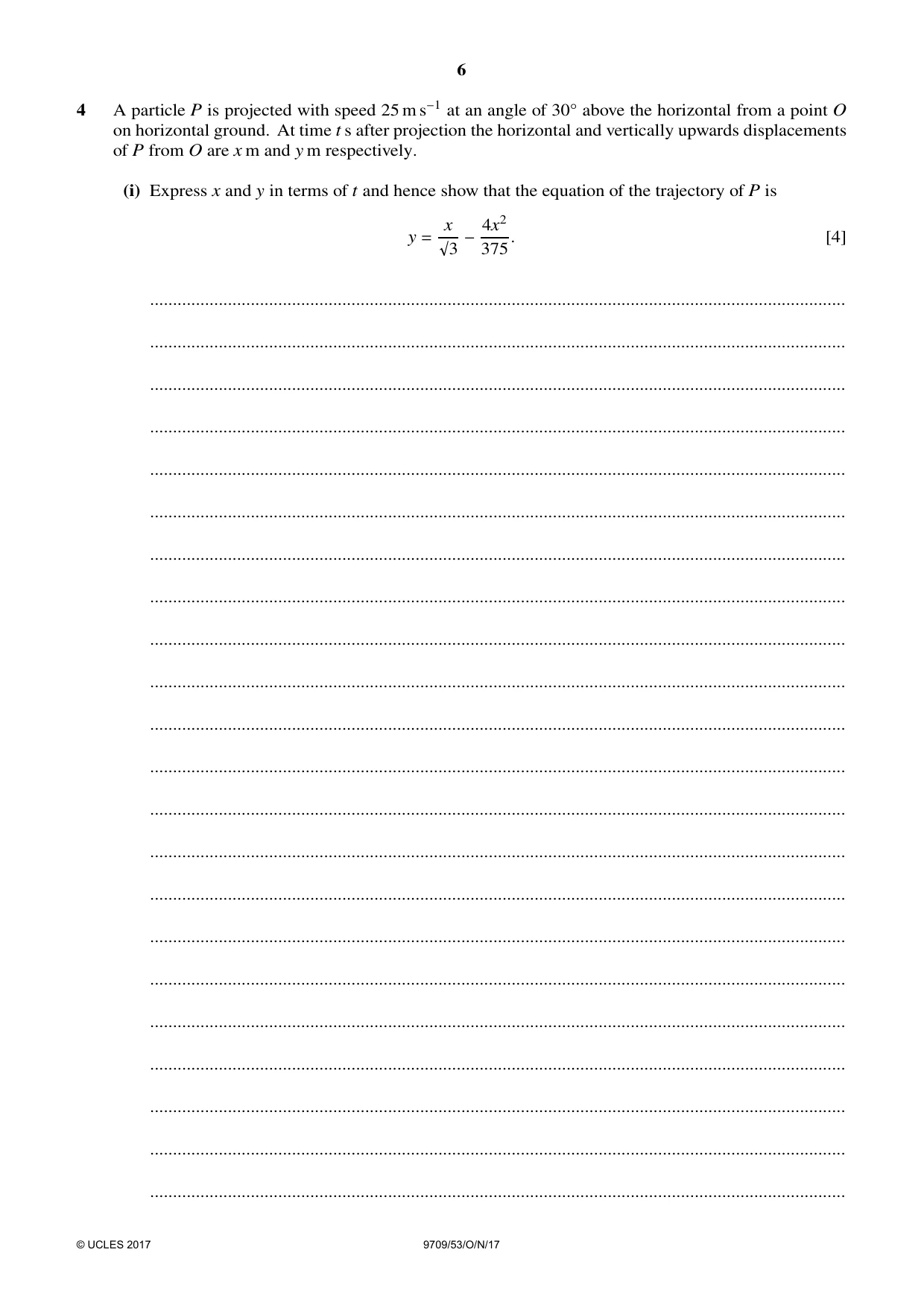
4 A particle P is projected with speed 25 m s−1 at an angle of 30Å above the horizontal from a point O on horizontal ground. At time t s after projection the horizontal and vertically upwards displacements of P from O are x m and y m respectively. (i) Express x and y in terms of t and hence show that the equation of the trajectory of P is x y = −4x2 [4] ï3 375. ........................................................................................................................................................ ........................................................................................................................................................ ........................................................................................................................................................ ........................................................................................................................................................ ........................................................................................................................................................ ........................................................................................................................................................ ........................................................................................................................................................ ........................................................................................................................................................ ........................................................................................................................................................ ........................................................................................................................................................ ........................................................................................................................................................ ........................................................................................................................................................ ........................................................................................................................................................ ........................................................................................................................................................ ........................................................................................................................................................ ........................................................................................................................................................ ........................................................................................................................................................ ........................................................................................................................................................ ........................................................................................................................................................ ........................................................................................................................................................ ........................................................................................................................................................ ........................................................................................................................................................ (ii) Find the horizontal distance between the two points at which P is 5 m above the ground. [3] ........................................................................................................................................................ ........................................................................................................................................................ ........................................................................................................................................................ ........................................................................................................................................................ ........................................................................................................................................................ ........................................................................................................................................................ ........................................................................................................................................................ ........................................................................................................................................................ ........................................................................................................................................................ ........................................................................................................................................................ ........................................................................................................................................................ ........................................................................................................................................................ ........................................................................................................................................................ ........................................................................................................................................................ ........................................................................................................................................................ ........................................................................................................................................................ ........................................................................................................................................................ ........................................................................................................................................................ ........................................................................................................................................................ ........................................................................................................................................................ ........................................................................................................................................................ ........................................................................................................................................................ ........................................................................................................................................................ ........................................................................................................................................................ ........................................................................................................................................................
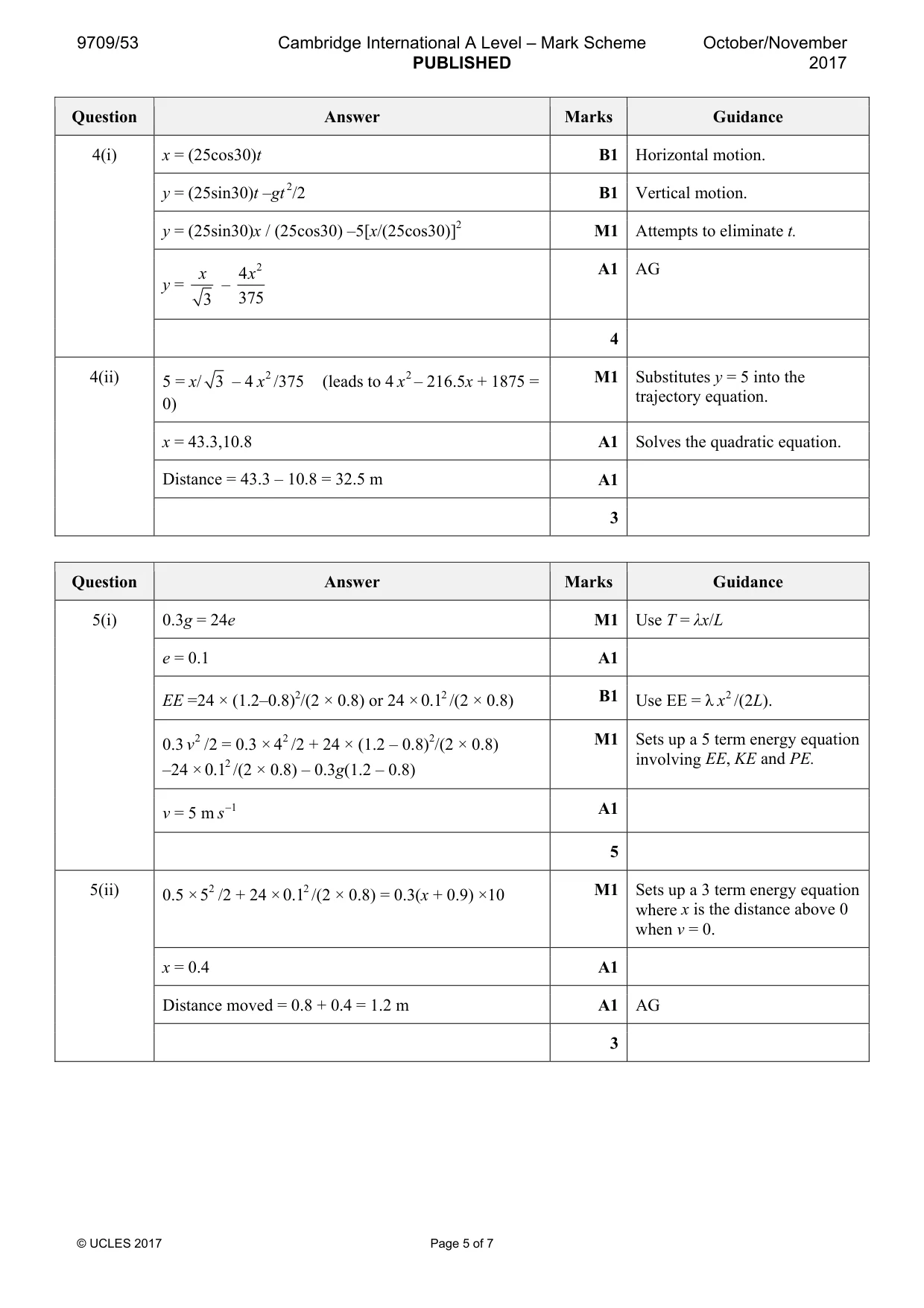
Mark scheme: 4(i) x = (25cos30)t B1 Horizontal motion. y = (25sin30)t –gt 2/2 B1 Vertical motion. y = (25sin30)x / (25cos30) –5[x/(25cos30)]2 M1 Attempts to eliminate t. x 4 x 2 A1 AG y = – 3 375 4 4(ii) 5 = x/ 3 – 4 x 2 /375 (leads to 4 x 2 – 216.5x + 1875 = M1 Substitutes y = 5 into the trajectory equation. 0) x = 43.3,10.8 A1 Solves the quadratic equation. Distance = 43.3 – 10.8 = 32.5 m A1 3
Q5 · One end of a light elastic string of natural length 0.8 m and modulus of elasticity 24 N…
5 One end of a light elastic string of natural length 0.8 m and modulus of elasticity 24 N is attached to a fixed point O. The other end of the string is attached to a particle P of mass 0.3 kg. P is projected vertically upwards with speed 4 m s−1 from a position 1.2 m vertically below O. (i) Calculate the speed of the particle at the position where it is moving with zero acceleration. [5] ........................................................................................................................................................ ........................................................................................................................................................ ........................................................................................................................................................ ........................................................................................................................................................ ........................................................................................................................................................ ........................................................................................................................................................ ........................................................................................................................................................ ........................................................................................................................................................ ........................................................................................................................................................ ........................................................................................................................................................ ........................................................................................................................................................ ........................................................................................................................................................ ........................................................................................................................................................ ........................................................................................................................................................ ........................................................................................................................................................ ........................................................................................................................................................ ........................................................................................................................................................ ........................................................................................................................................................ ........................................................................................................................................................ ........................................................................................................................................................ ........................................................................................................................................................ ........................................................................................................................................................ ........................................................................................................................................................ (ii) Show that the particle moves 1.2 m while moving upwards with constant deceleration. [3] ........................................................................................................................................................ ........................................................................................................................................................ ........................................................................................................................................................ ........................................................................................................................................................ ........................................................................................................................................................ ........................................................................................................................................................ ........................................................................................................................................................ ........................................................................................................................................................ ........................................................................................................................................................ ........................................................................................................................................................ ........................................................................................................................................................ ........................................................................................................................................................ ........................................................................................................................................................ ........................................................................................................................................................ ........................................................................................................................................................ ........................................................................................................................................................ ........................................................................................................................................................ ........................................................................................................................................................ ........................................................................................................................................................ ........................................................................................................................................................ ........................................................................................................................................................ ........................................................................................................................................................ ........................................................................................................................................................ ........................................................................................................................................................ ........................................................................................................................................................
Mark scheme: 5(i) 0.3g = 24e M1 Use T = λx/L e = 0.1 A1 EE =24 × (1.2–0.8)2/(2 × 0.8) or 24 × 0.12 /(2 × 0.8) B1 Use EE = λ x 2 /(2L). 0.3 2v /2 = 0.3 × 4 2 /2 + 24 × (1.2 – 0.8)2/(2 × 0.8) M1 Sets up a 5 term energy equation 2 involving EE, KE and PE. –24 × 0.1 /(2 × 0.8) – 0.3g(1.2 – 0.8) v = 5 m −s1 A1 5 5(ii) 0.5 × 5 2 /2 + 24 × 0.12 /(2 × 0.8) = 0.3(x + 0.9) ×10 M1 Sets up a 3 term energy equation where x is the distance above 0 when v = 0. x = 0.4 A1 Distance moved = 0.8 + 0.4 = 1.2 m A1 AG 3
Q6 · A solid object consists of a uniform hemisphere of radius 0.4 m attached to a uniform…
6 A solid object consists of a uniform hemisphere of radius 0.4 m attached to a uniform cylinder of radius 0.4 m so that the circumferences of their circular faces coincide. The hemisphere and cylinder each have weight 20 N. The centre of mass of the object lies at the centre O of their common circular face. (i) Show that the height of the cylinder is 0.3 m. [2] ........................................................................................................................................................ ........................................................................................................................................................ ........................................................................................................................................................ ........................................................................................................................................................ ........................................................................................................................................................ ........................................................................................................................................................ ........................................................................................................................................................ ........................................................................................................................................................ ........................................................................................................................................................ ........................................................................................................................................................ A new object is made by cutting the cylinder in half and removing the half not attached to the hemisphere. The cut is perpendicular to the axis of symmetry, so the new object consists of a hemisphere and a cylinder half the height of the original cylinder. (ii) Find the distance of the centre of mass of the new object from O. [4] ........................................................................................................................................................ ........................................................................................................................................................ ........................................................................................................................................................ ........................................................................................................................................................ ........................................................................................................................................................ ........................................................................................................................................................ ........................................................................................................................................................ ........................................................................................................................................................ ........................................................................................................................................................ ........................................................................................................................................................ ........................................................................................................................................................ ........................................................................................................................................................ ........................................................................................................................................................ ........................................................................................................................................................ ........................................................................................................................................................ ........................................................................................................................................................ ........................................................................................................................................................ The new object is placed with its hemispherical part on a rough horizontal surface. The new object is held in equilibrium by a force of magnitude P N acting along its axis of symmetry, which is inclined at 30Å to the horizontal. (iii) Find P. [3] ........................................................................................................................................................ ........................................................................................................................................................ ........................................................................................................................................................ ........................................................................................................................................................ ........................................................................................................................................................ ........................................................................................................................................................ ........................................................................................................................................................ ........................................................................................................................................................ ........................................................................................................................................................ ........................................................................................................................................................ ........................................................................................................................................................ ........................................................................................................................................................ ........................................................................................................................................................ ........................................................................................................................................................
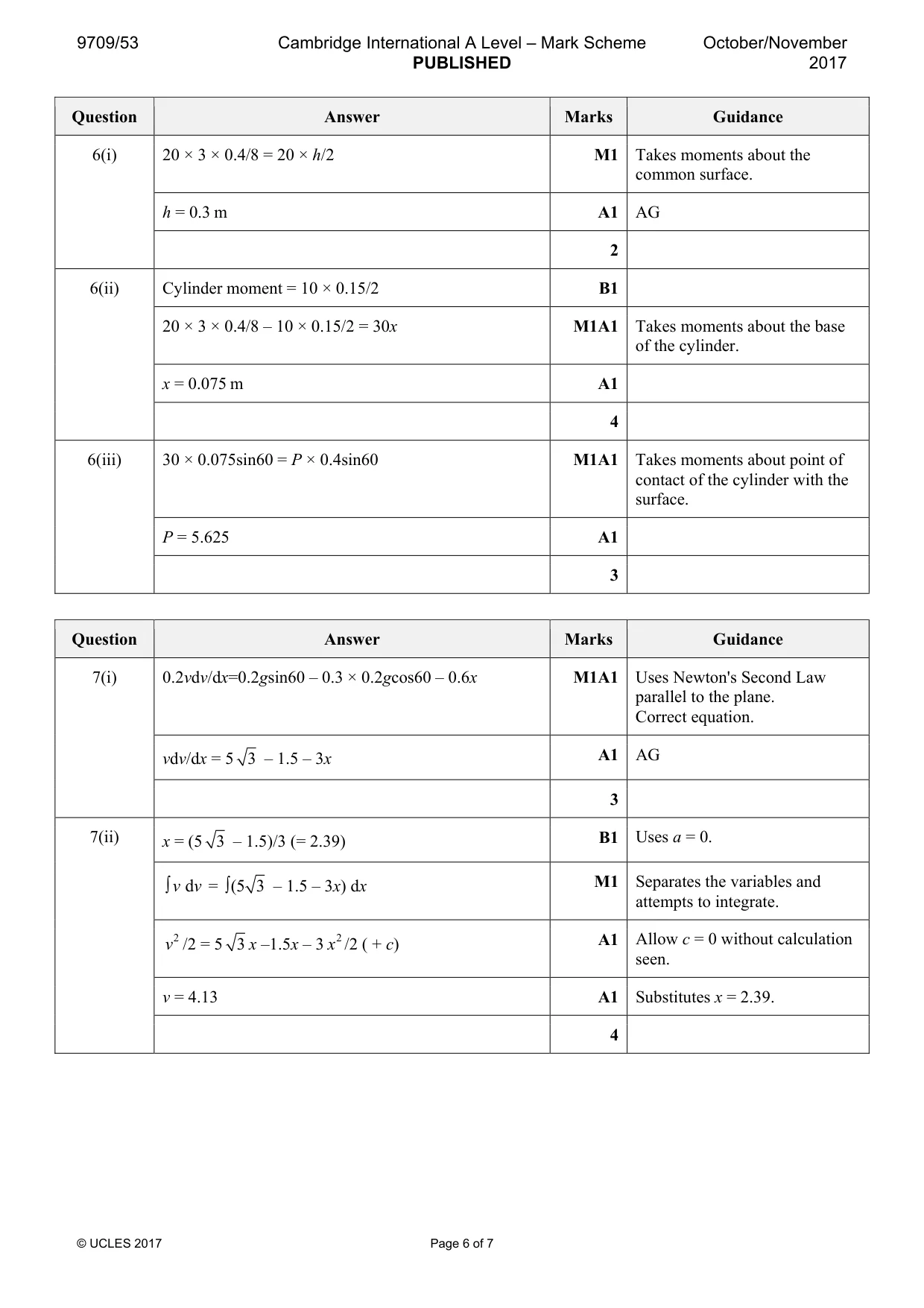
Mark scheme: 6(i) 20 × 3 × 0.4/8 = 20 × h/2 M1 Takes moments about the common surface. h = 0.3 m A1 AG 2 6(ii) Cylinder moment = 10 × 0.15/2 B1 20 × 3 × 0.4/8 – 10 × 0.15/2 = 30x M1A1 Takes moments about the base of the cylinder. x = 0.075 m A1 4 6(iii) 30 × 0.075sin60 = P × 0.4sin60 M1A1 Takes moments about point of contact of the cylinder with the surface. P = 5.625 A1 3
Q7 · A particle P of mass 0.2 kg is released from rest at a point O on a rough plane inclined…
7 A particle P of mass 0.2 kg is released from rest at a point O on a rough plane inclined at 60Å to the horizontal, and travels down a line of greatest slope. The coefficient of friction between P and the plane is 0.3. A force of magnitude 0.6x N acts on P in the direction PO, where x m is the displacement of P from O. (i) Show that vdv = 5ï3 −1.5 −3x, where v m s−1 is the velocity of P at a displacement x m from dx O. [3] ........................................................................................................................................................ ........................................................................................................................................................ ........................................................................................................................................................ ........................................................................................................................................................ ........................................................................................................................................................ ........................................................................................................................................................ ........................................................................................................................................................ ........................................................................................................................................................ ........................................................................................................................................................ (ii) Find the value of x for which P reaches its maximum velocity, and calculate this maximum velocity. [4] ........................................................................................................................................................ ........................................................................................................................................................ ........................................................................................................................................................ ........................................................................................................................................................ ........................................................................................................................................................ ........................................................................................................................................................ ........................................................................................................................................................ ........................................................................................................................................................ ........................................................................................................................................................ ........................................................................................................................................................ ........................................................................................................................................................ ........................................................................................................................................................ ........................................................................................................................................................ ........................................................................................................................................................ ........................................................................................................................................................ ........................................................................................................................................................ ........................................................................................................................................................ ........................................................................................................................................................ ........................................................................................................................................................ (iii) Calculate the magnitude of the acceleration of P immediately after it has first come to instantaneous rest. [4] ........................................................................................................................................................ ........................................................................................................................................................ ........................................................................................................................................................ ........................................................................................................................................................ ........................................................................................................................................................ ........................................................................................................................................................ ........................................................................................................................................................ ........................................................................................................................................................ ........................................................................................................................................................ ........................................................................................................................................................ ........................................................................................................................................................ ........................................................................................................................................................ ........................................................................................................................................................ ........................................................................................................................................................ ........................................................................................................................................................ ........................................................................................................................................................
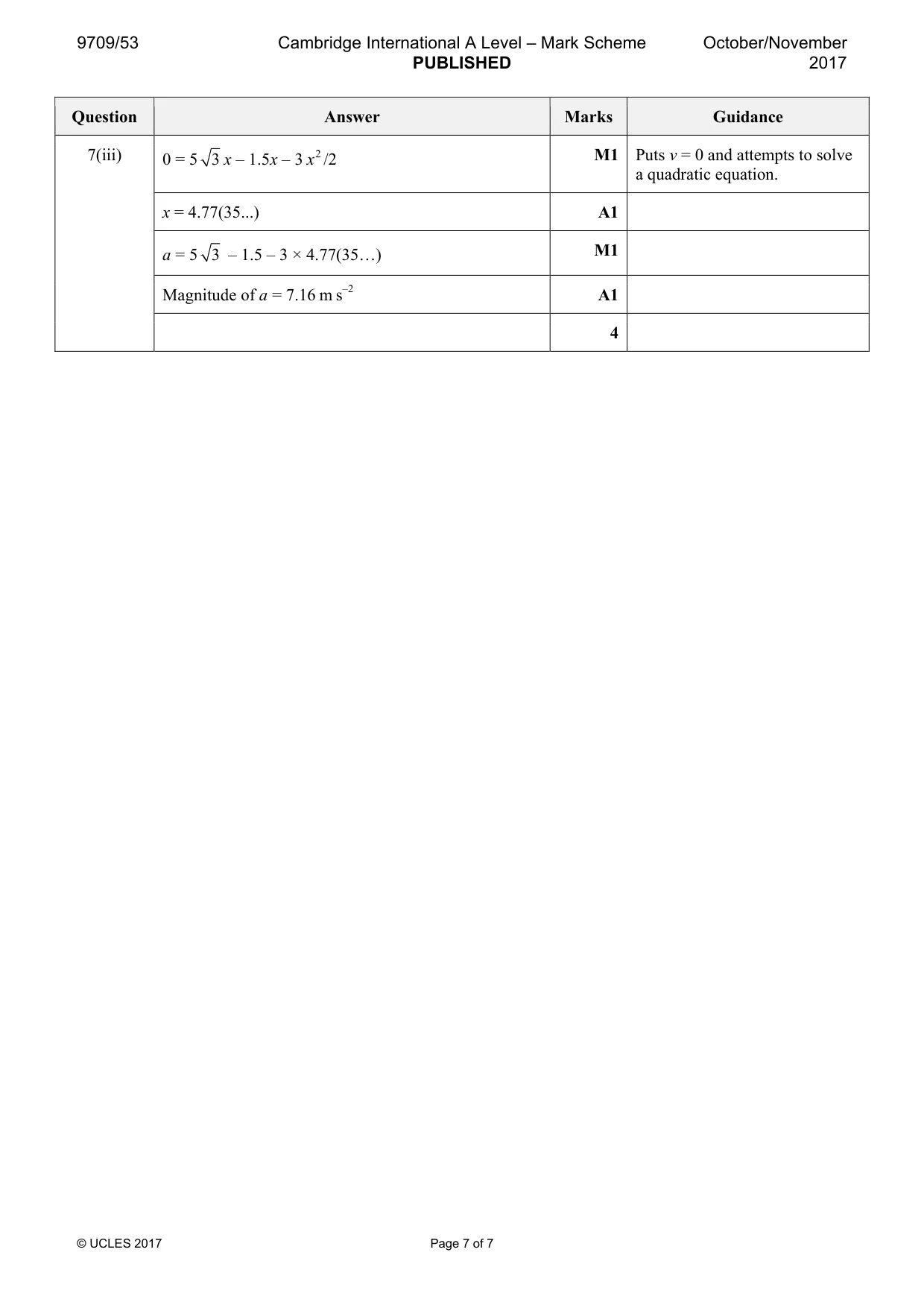
Mark scheme: 7(i) 0.2vdv/dx=0.2gsin60 – 0.3 × 0.2gcos60 – 0.6x M1A1 Uses Newton's Second Law parallel to the plane. Correct equation. vdv/dx = 5 3 – 1.5 – 3x A1 AG 3 7(ii) x = (5 3 – 1.5)/3 (= 2.39) B1 Uses a = 0. ∫v dv = ∫ (5 3 – 1.5 – 3x) dx M1 Separates the variables and attempts to integrate. v 2 /2 = 5 3 x –1.5x – 3 x 2 /2 ( + c) A1 Allow c = 0 without calculation seen. v = 4.13 A1 Substitutes x = 2.39. 4 7(iii) 0 = 5 3 x – 1.5x – 3 x 2 /2 M1 Puts v = 0 and attempts to solve a quadratic equation. x = 4.77(35...) A1 a = 5 3 – 1.5 – 3 × 4.77(35…) M1 Magnitude of a = 7.16 m s–2 A1 4
What was in this paper
The subtopics covered by these 7 questions, and how many questions each got. Open one in a new tab to see every Cambridge question on it.
What you needed in this session
Cambridge’s own grade thresholds for 2017 Oct/Nov, Paper 5 · Variant 3. A higher threshold means an easier paper — the bar moves with how the cohort did.