Questions as text
Q1 · In country A 30% of people who drink tea have sugar in it 9709/61 May/June 2008
2 In country A 30% of people who drink tea have sugar in it. In country B 65% of people who drink tea have sugar in it. There are 3 million people in country A who drink tea and 12 million people in country B who drink tea. A person is chosen at random from these 15 million people. (i) Find the probability that the person chosen is from country A. [1] (ii) Find the probability that the person chosen does not have sugar in their tea. [2] (iii) Given that the person chosen does not have sugar in their tea, find the probability that the person is from country B. [2]
5 marks
Mark scheme: 2 (i) P(A) = 0.2 B1 1 o.e. Must be single fraction or 20% (ii) P(not S) = 0.2× 0.7 + 0.8× 0.35 M1 Summing two 2-factor probabilities or subtracting P(S) from 1 = 0.42 A1 2 o.e. Correct answer no decimals in fractions 8.0 × .035 1( − their (i )) × .0 35 (iii) P(B S′ ) = M1 if marks lost in (i) or (ii) .042 their (ii ) = 0.667 A1 2 Correct answer c.w.o
This question in 9709/61 May/June 2008
Q2 · Every day Eduardo tries to phone his friend 9709/61 May/June 2008
6 Every day Eduardo tries to phone his friend. Every time he phones there is a 50% chance that his friend will answer. If his friend answers, Eduardo does not phone again on that day. If his friend does not answer, Eduardo tries again in a few minutes’ time. If his friend has not answered after 4 attempts, Eduardo does not try again on that day. (i) Draw a tree diagram to illustrate this situation. [3] (ii) Let X be the number of unanswered phone calls made by Eduardo on a day. Copy and complete the table showing the probability distribution of X. [4] x 0 1 2 3 4 P(X = x) 1 4 (iii) Calculate the expected number of unanswered phone calls on a day. [2]
9 marks
Mark scheme: 6 (i) A M1 4 or 5 pairs A and U seen no extra bits 0.5 but condone (0, 1) branches after any or A all As. 0.5 0.5 A A1 Exactly 4 pairs of A and U, must be U 0.5 labelled 0.5 A U 0.5 A1 3 Correct diagram with all probs correct, 0.5 allow A1ft for 4 correct pairs and (0,1) U branch(es) or A1ft for 5 correct pairs and 0.5 no (0, 1) branch(es) U (ii) x 0 1 2 3 4 B1 P(0) correct P(X=x) ½ ¼ 1/8 1/16 1/16 B1 P(2) correct B1 P(3) correct B1 4 P(4) correct (iii) E(X) = 15/16 (0.938 or 0.9375) M1 attempt at Σ(xp) only with no other numbers A1 2 correct answer GCE A/AS LEVEL – May/June 2008 9709 06
This question in 9709/61 May/June 2008
Q3 · A die is biased so that the probability of throwing a 5 is 0.75 and the probabilities of… 9709/61 May/June 2008
7 A die is biased so that the probability of throwing a 5 is 0.75 and the probabilities of throwing a 1, 2, 3, 4 or 6 are all equal. (i) The die is thrown three times. Find the probability that the result is a 1 followed by a 5 followed by any even number. [3] (ii) Find the probability that, out of 10 throws of this die, at least 8 throws result in a 5. [3] (iii) The die is thrown 90 times. Using an appropriate approximation, find the probability that a 5 is thrown more than 60 times. [5]
11 marks
Mark scheme: 7 (i) (0.05)(0.75)(0.15) M1 Multiplying 3 probs only, no Cs = 0.00563 (9 / 1600) B1 0.05 or 0.15 or 1/5 × ¼ seen A1 3 Correct answer (ii) P(at least 8) = P(8, 9, 10) B1 Binomial expression involving (0.75)r(0.25)10 - r and a C , r ≠ 0 or 10 =10C8(0.75)8(0.25)2+10C9(0.75)9(0.25)+(0.75)10 M1 Correct unsimplified expression can be implied = 0.526 A1 3 Correct answer (iii) µ = 90 × .075 = 67 5. B1 90× .075 (67.5) and 2 90 × .075 × .025 (16.875 or 16.9) seen σ = 90 × .0 75 × .0 25 = 16 . 875 P(X > 60) M1 For standardising , with or without cc, 605. − 67 5. = 1 − Φ = Φ .1(704) must have on denom 16.875 M1 For use of continuity correction 60.5 or 59.5 M1 For finding an area > 0.5 from their z = 0.956 A1 5 For answer rounding to 0.956
This question in 9709/61 May/June 2008
Q4 · On a production line making toys, the probability of any toy being faulty is 0.08 9709/61 Oct/Nov 2008
2 On a production line making toys, the probability of any toy being faulty is 0.08. A random sample of 200 toys is checked. Use a suitable approximation to find the probability that there are at least 15 faulty toys. [5]
5 marks
Mark scheme: 2 mean = 200× .0 08 = 16 B1 For both 16 and 14.7 seen var = 14.72 145. − 16 P( X ≥ 15 ) = 1 – Φ M1 For standardising, with or without cc, must have 14 .72 in denom = Φ (0.391) M1 For use of continuity correction 14.5 or 15.5 = 0.652 M1 For finding a prob > 0.5 from their z, legit A1 [5] For answer rounding to 0.652 c.w.o 0 − −15 1
This question in 9709/61 Oct/Nov 2008
Q5 · There are three sets of traffic lights on Karinne’s journey to work 9709/61 Oct/Nov 2008
6 There are three sets of traffic lights on Karinne’s journey to work. The independent probabilities that Karinne has to stop at the first, second and third set of lights are 0.4, 0.8 and 0.3 respectively. (i) Draw a tree diagram to show this information. [2] (ii) Find the probability that Karinne has to stop at each of the first two sets of lights but does not have to stop at the third set. [2] (iii) Find the probability that Karinne has to stop at exactly two of the three sets of lights. [3] (iv) Find the probability that Karinne has to stop at the first set of lights, given that she has to stop at exactly two sets of lights. [3]
10 marks
Mark scheme: 6 (i) S 0.3 S 0.8 0.7 NS S 0.3 S B1 Correct shape and labels 0.4 0.2 NS 0.7 NS 0.6 0.8 S 0.3 S NS 0.7 B1 [2] Correct probabilities NS 0.3 S 0.2 NS 0.7 NS (ii) P(S, S, NS) = 4.0 × 8.0 × 7.0 M1 Multiplying 3 probs once and 0.7 seen = 0.224 (28/125) A1 [2] Correct answer (iii) P(S, NS, S) + P(NS, S, S) + 0.224 M1 Summing three different 3-factor terms B1 Correct expression for P(S, NS, S) or P(NS, S, S) = 0.392 (49/125) A1 [3] Correct answer (iv) P(stops at first light) stops at exactly 2 lights) ( S , NS , S ) or ( S , S , NS ) M1 Summing two 3-factor terms in numerator (need = P .0 392 not be different) (must be a division) 4.0 × 2.0 × 3.0 + 4.0 × 8.0 × 7.0 = M1* dep Dividing by their (iii) if their (iii) < 1, dep on .0392 previous M = 0.633 (31/49) A1ft [3] ft their E(X) provided 2 < E(X) < 12 GCE A/AS LEVEL – October/November 2008 9709 06
This question in 9709/61 Oct/Nov 2008
Q6 · A fair die has one face numbered 1, one face numbered 3, two faces numbered 5 and two… 9709/61 Oct/Nov 2008
7 A fair die has one face numbered 1, one face numbered 3, two faces numbered 5 and two faces numbered 6. (i) Find the probability of obtaining at least 7 odd numbers in 8 throws of the die. [4] The die is thrown twice. Let X be the sum of the two scores. The following table shows the possible values of X. Second throw 1 3 5 5 6 6 1 2 4 6 6 7 7 3 4 6 8 8 9 9 First 5 6 8 10 10 11 11 throw 5 6 8 10 10 11 11 6 7 9 11 11 12 12 6 7 9 11 11 12 12 (ii) Draw up a table showing the probability distribution of X. [3] (iii) Calculate E(X). [2] (iv) Find the probability that X is greater than E(X). [2]
11 marks
Mark scheme: 7 (i) P(odd) = 2/3 or 0.667 B1 Can be implied if normal approx used with P(7) = 8C7 × ( 2 / 3) 7 1( / 3) µ = 5.333(= 8× 2/3) M1 Binomial expression with C in and 2/3 and 1/3 in = 0.156 powers summing to 8 P(8) = (2/3)8 = 0.0390 M1 Summing P(7) + P(8) binomial expressions P(7 or 8) = 0.195 (1280/6561) A1 [4] Correct answer (ii) x 2 4 6 7 8 B1 Values of x all correct in table of probabilities P(X=x) 1/36 2/36 5/36 4/36 4/36 x 9 10 11 12 B2 [3] All probs correct and not duplicated, –1 ee P(X=x) 4/36 4/36 8/36 4/36 (iii) E(X) = ∑ p ix i , all p < 1 and no further = 2×1/36 + 4×2/36 + … M1 attempt to find ∑ p ix i division of any sort = 312/36 (26/3) (8.67) A1 [2] correct answer (iv) P(X > E(X)) = P(X = 9, 10, 11, 12) M1 attempt to add their relevant probs = 20/36 (5/9) (0.556) A1 [2] correct answer
This question in 9709/61 Oct/Nov 2008
Q7 · The volume of milk in millilitres in cartons is normally distributed with mean µ and… 9709/61 May/June 2009
1 The volume of milk in millilitres in cartons is normally distributed with mean µ and standard deviation 8. Measurements were taken of the volume in 900 of these cartons and it was found that 225 of them contained more than 1002 millilitres. (i) Calculate the value of µ. [3] (ii) Three of these 900 cartons are chosen at random. Calculate the probability that exactly 2 of them contain more than 1002 millilitres. [2]
5 marks
Mark scheme: 1 (i) z = 0.674 B1 ± 0.674 or rounding to, seen, e.g. 0.6743 1002 − µ = 0.674 M1 Standardising and attempting to solve for µ, must 8 use recognisable z-value, no cc, no sq rt, no sq µ = 997 A1 [3] Correct answer rounding to 997 225 224 675 (ii) P(2) = 3 × × × M1 900 × 899 × 898 or 900C3 seen in denom 900 899 898 = 0.140 A1 [2] Correct answer not 0.141 or 0.14 225 C 2 × 675 C1 OR 900 C 3
This question in 9709/61 May/June 2009
Q8 · Gohan throws a fair tetrahedral die with faces numbered 1, 2, 3, 4 9709/61 May/June 2009
2 Gohan throws a fair tetrahedral die with faces numbered 1, 2, 3, 4. If she throws an even number then her score is the number thrown. If she throws an odd number then she throws again and her score is the sum of both numbers thrown. Let the random variable X denote Gohan’s score. (i) Show that P(X = 2) = 16.5 [2] (ii) The table below shows the probability distribution of X. x 2 3 4 5 6 7 P(X = x) 5 1 3 1 1 1 16 16 8 8 16 16 Calculate E(X) and Var(X). [4]
6 marks
Mark scheme: 2 (i) P(X = 2) = 1/4 × 1/4 + 1/4 = 5/16 AG M1 Considering cases (1, 1) and (2) 1 2 3 4 OR can use a table 1 2 2 4 4 2 3 2 5 4 3 4 2 6 4 A1 [2] Correct given answer legitimately obtained 4 5 2 7 4 (1/16 + 4/16 needs some justification but 1/16 + 1/4 is acceptable) (ii) E(X) = Σxp M1 Using correct formula for E(X), no extra division = 15/4 (3.75) A1 Correct answer Var(X) = 22 × 5/16 + 32 × 1/16 + M1 Using a variance formula correctly with mean2 42 × 3/8 +... – (15/4)2 subtracted numerically, no extra division = 260/16 – 225/16 = 35/16 (2.19) A1 [4] Correct final answer 11 11
This question in 9709/61 May/June 2009
Q9 · On a certain road 20% of the vehicles are trucks, 16% are buses and the remainder are cars 9709/61 May/June 2009
3 On a certain road 20% of the vehicles are trucks, 16% are buses and the remainder are cars. (i) A random sample of 11 vehicles is taken. Find the probability that fewer than 3 are buses. [3] (ii) A random sample of 125 vehicles is now taken. Using a suitable approximation, find the probability that more than 73 are cars. [5]
8 marks
Mark scheme: 3 (i) P(X < 3) = P(0) + P(1) + P(2) M1 Binomial term with 11Cr pr (1–p)11–r seen = (0.84)11 + (0.16)(0.84)10 × 11C1 + M1 Correct expression for P(0, 1, 2) or P(0, 1, 2, 3) (0.16)2(0.84)9 × 11C2 Can have wrong p = 0.1469 + 0.30782 + 0.2931 = 0.748 A1 [3] Correct final answer. Normal approx M0 M0 A0 (ii) µ = 125 × 0.64 = 80 B1 80 and 28.8 or 5.37 seen σ2 = 125 × 0.64 × 0.36 = 28.8 735. − 80 P (X > 73) = 1 – Φ M1 standardising, with or without cc, must have sq rt in 288. denom M1 continuity correction 73.5 or 72.5 only = Φ (1.211) M1 correct region (> 0.5 if mean > 73.5, vv if mean < 73.5 = 0.887 A1 [5] correct answer GCE A/AS LEVEL – May/June 2009 9709 06 13 12 6 7
This question in 9709/61 May/June 2009
Q10 · At a zoo, rides are offered on elephants, camels and jungle tractors 9709/61 May/June 2009
5 At a zoo, rides are offered on elephants, camels and jungle tractors. Ravi has money for only one ride. To decide which ride to choose, he tosses a fair coin twice. If he gets 2 heads he will go on the elephant ride, if he gets 2 tails he will go on the camel ride and if he gets 1 of each he will go on the jungle tractor ride. (i) Find the probabilities that he goes on each of the three rides. [2] The probabilities that Ravi is frightened on each of the rides are as follows: elephant ride 10,6 camel ride 10,7 jungle tractor ride 10.8 (ii) Draw a fully labelled tree diagram showing the rides that Ravi could take and whether or not he is frightened. [2] Ravi goes on a ride. (iii) Find the probability that he is frightened. [2] (iv) Given that Ravi is not frightened, find the probability that he went on the camel ride. [3]
9 marks
Mark scheme: 5 (i) P(E) = ¼, P(C) = ¼, P(JT) = ½ B1 ¼, ¼, and ½ seen oe B1 [2] 3 evaluated probs correctly associated (ii) F E 6/10 ¼ 4/10 NF M1 E, C, JT then F on appropriate shape 7/10 F ¼ C A1ft [2] All probs and labels showing and correct, ft their (i) 3/10 NF if Σp = 1. ½ 8/10 F If nothing seen in part (i) then give M1 A1ft bod provided their Σp = 1 JT 2/10 NF No retrospective marking (iii) P(F) = (1/4 × 6/10) + (1/4 × 7/10) + M1 Summing 3 appropriate two-factor products (1/2 × 8/10) provided Σp = 1 = 29/40 (0.725) B1 [2] Correct answer P (C ∩ NF ) (iv) P( C NF ) = B1ft 1 – 29/40 seen in denom, ft 1 – their (iii) P ( NF ) 3 / 40 = M1 attempt at cond prob with their C ∩F or C ∩NF in 1( − 29 / 40 ) numerator = 3/11 (0.273) A1 [3] correct answer OR using ratios 3/(4+3+4) GCE A/AS LEVEL – May/June 2009 9709 06
This question in 9709/61 May/June 2009
Q11 · A box contains 4 pears and 7 oranges 9709/61 Oct/Nov 2009
6 A box contains 4 pears and 7 oranges. Three fruits are taken out at random and eaten. Find the probability that (i) 2 pears and 1 orange are eaten, in any order, [3] (ii) the third fruit eaten is an orange, [3] (iii) the first fruit eaten was a pear, given that the third fruit eaten is an orange. [3] There are 121 similar boxes in a warehouse. One fruit is taken at random from each box. (iv) Using a suitable approximation, find the probability that fewer than 39 are pears. [5]
14 marks
Mark scheme: C 2 × C16 (i) = 0.255 M1 Using 2 combs mult for numerator and 1 comb for 11C 3 denom M1 Correct denom or num unsimplified A1 Correct answer 4 3 7 M1 Multiplying 3 correct probs OR × × × 3 11 10 9 M1 Mult by 3 or Σ their 3 options A1 [3] Correct answer = 0.255 (14/55) (42/165) (ii) P(3rd is orange) = P(P, P, O) + P(P, O, O) + P(O, P, O) + P(O, O, O) M1 Summing four 3-factor options with or without 4 3 7 4 7 6 replacement = × × + × × 11 10 9 11 10 9 7 4 6 7 6 5 + × × + × × A1 At least 3 correct unsimplified options 11 10 9 11 10 9 14 28 28 7 = + + + 165 165 165 33 = 7/11 (0.636 A1 Correct answer. Award B3 if the correct answer is stated with no working. OR using a tree diagram [3] P ( P ∩ O ) (iii) P(P O ) = M1 Substituting in cond prob formula with at least one P (O ) 3-factor product in num, and denom their (ii) or 7/11 P ( P , P , O ) + P ( P , O , O ) = M1 Summing exactly 2 three-factor products in num P (O ) 28 / 110 28 4 = = = 0.4 A1 [3] Correct answer 7 / 11 70 =10 4 (iv) µ = 121 × = 44 B1 44 and 28 or 5.29 seen 11 4 7 σ2 = 121 × × = 28 M1 Standardising, with or without cc, must have sq rt 11 11 on denom 385. − 44 P(X < 39) = Φ M1 cc either 39.5 or 38.5 28 = Φ(–1.039) M1 Correct area “1 – Φ” seen = 1 – 0.8506 = 0.149 A1 [5] Correct answer
This question in 9709/61 Oct/Nov 2009
Q12 · Two unbiased tetrahedral dice each have four faces numbered 1, 2, 3 and 4 9709/62 Oct/Nov 2009
2 Two unbiased tetrahedral dice each have four faces numbered 1, 2, 3 and 4. The two dice are thrown together and the sum of the numbers on the faces on which they land is noted. Find the expected number of occasions on which this sum is 7 or more when the dice are thrown together 200 times. [4]
4 marks
Mark scheme: 2 P(total 7) = P(3,4 or 4,3) = 2/16 M1 Attempt to find P(7) + P(8) P(total 8) = P(4,4) = 1/16 P(7 or more) = 3/16 A1 3/16 seen 3 M1 Multiplying their prob by 200 Expected 200 × = 37.5 A1ft [4] Correct final answer ft their prob 16
This question in 9709/62 Oct/Nov 2009
Q13 · Maria chooses toast for her breakfast with probability 0.85 9709/62 Oct/Nov 2009
3 Maria chooses toast for her breakfast with probability 0.85. If she does not choose toast then she has a bread roll. If she chooses toast then the probability that she will have jam on it is 0.8. If she has a bread roll then the probability that she will have jam on it is 0.4. (i) Draw a fully labelled tree diagram to show this information. [2] (ii) Given that Maria did not have jam for breakfast, find the probability that she had toast. [4]
6 marks
Mark scheme: 3 (i) 0.8 J T M1 Correct shape with T and B first 0.85 0.2 NJ 0.15 0.4 J B 0.6 NJ A1 [2] All probs and labels correct P(T and NJ) (ii) P(TNJ) = P(NJ) P(T and NJ) = 0.85 × 0.2 = 0.17 B1 Correct numerator of a fraction with 0 < any denominator < 1 P(NJ) = 0.85 × 0.2 + 0.15 × 0.6 = 0.26 M1 Summing 2 two-factor products P(TNJ) = 0.17 / 0.26 A1 Correct denom = 17/26 oe (= 0.654) A1 [4] Correct answer
This question in 9709/62 Oct/Nov 2009
Q14 · 0 5 In a particular discrete probability distribution the random variable X takes the… 9709/62 Oct/Nov 2009
120 5 In a particular discrete probability distribution the random variable X takes the value with r r probability where r takes all integer values from 1 to 9 inclusive. 45, (i) Show that P(X = 40) = 1 [2] 15. (ii) Construct the probability distribution table for X. [3] (iii) Which is the modal value of X? [1] (iv) Find the probability that X lies between 18 and 100. [2]
8 marks
Mark scheme: 5 (i) 40 = 120 / 3 so r = 3 M1 r = 3 seen or obtained from table P(40) = 3/45 = 1/15 AG A1 [2] Given answer legit obtained (ii) x 120 60 40 30 B1 8 or 9 values for x, correct to nearest integer P(X = x) 1/45 2/45 3/45 4/45 B1 One correct probability apart from 1/15 B1 [3] Correct table
This question in 9709/62 Oct/Nov 2009
Q15 · The weights, X grams, of bars of soap are normally distributed with mean 125 grams and… 9709/62 Oct/Nov 2009
7 The weights, X grams, of bars of soap are normally distributed with mean 125 grams and standard deviation 4.2 grams. (i) Find the probability that a randomly chosen bar of soap weighs more than 128 grams. [3] (ii) Find the value of k such that P(k < X < 128) = 0.7465. [4] (iii) Five bars of soap are chosen at random. Find the probability that more than two of the bars each weigh more than 128 grams. [4]
11 marks
Mark scheme: 128 125 7 (i) P(X > 128) = P z > M1 Standardising, no cc, no sq rt 2.4 = P(z > 0.7143) = 1 – 0.7623 M1 Correct area of graph i.e. prob < 0.5 = 0.238 A1 [3] Correct answer, rounding to 0.238 (ii) P(X > k) = 0.7465 + 0.2377 = 0.9842 M1 Valid method to obtain P(X > k), no cc z = –2.15 A1 Answer rounding to ± 2.15 seen k − 125 –2.15 = M1 Solving equation with their z-value, k, 125 and 2.4 4.2 or 2.4 , no cc k = 116 A1 [4] Correct answer, rounding to 116 (iii) P(X > 2) = P(3, 4, 5) or 1 – P(0, 1, 2) M1 = 5C3(0.2377)3(0.7623)2 + 5C4(0.2377)4(0.7623)1 + 5C5(0.2377)5 M1 Binomial term of form 5Cx px (1 − p)5−x, x ≠ 0 = 0.07804 + 0.01216 + 0.0007588 A1 Sum of exactly 3 bin probs, any p = 0.0910 A1 [4] Correct unsimplified answer Correct answer accept 0.0909 and 0.091 from 0.0910
This question in 9709/62 Oct/Nov 2009
Q16 · In the holidays Martin spends 25% of the day playing computer games 9709/61 May/June 2010
5 In the holidays Martin spends 25% of the day playing computer games. Martin’s friend phones him once a day at a randomly chosen time. (i) Find the probability that, in one holiday period of 8 days, there are exactly 2 days on which Martin is playing computer games when his friend phones. [2] (ii) Another holiday period lasts for 12 days. State with a reason whether it is appropriate to use a normal approximation to find the probability that there are fewer than 7 days on which Martin is playing computer games when his friend phones. [1] (iii) Find the probability that there are at least 13 days of a 40-day holiday period on which Martin is playing computer games when his friend phones. [5]
8 marks
Mark scheme: 5 (i) P(X = 2)) = (0.25)2 × (0.75)6 × 8C2 M1 3 term binomial expression involving 8C something, powers summing to 8 = 0.311 A1 correct answer [2] (ii) 12 × 0.25 = 3, < 5 so not possible B1 [1] (iii) mean = 40 × 0.25 (= 10) variance = 40 × 0.25 × 0.75 ( = 7.5) B1 40 × 0.25 and 40 × 0.25 × 0.75 seen, o.e. 125. − 10 standardising, ±, with or without cc, must P(X at least 13) = P z > M1 5.7 have sq rt = P(z > 0.913) M1 continuity correction 12.5 or 13.5 = 1 – Φ(0.913) M1 correct area, i.e. < 0.5 legit = 1 – 0.8194 = 0.181 A1 correct answer [5] 10 10 10 10 10 10
This question in 9709/61 May/June 2010
Q17 · In a television quiz show Peter answers questions one after another, stopping as soon as… 9709/61 May/June 2010
7 In a television quiz show Peter answers questions one after another, stopping as soon as a question is answered wrongly. • The probability that Peter gives the correct answer himself to any question is 0.7. • The probability that Peter gives a wrong answer himself to any question is 0.1. • The probability that Peter decides to ask for help for any question is 0.2. On the first occasion that Peter decides to ask for help he asks the audience. The probability that the audience gives the correct answer to any question is 0.95. This information is shown in the tree diagram below. Peter answers correctly 0.7 0.1 Peter answers wrongly Audience answers correctly 0.95 0.2 Peter asks for help 0.05 Audience answers wrongly (i) Show that the probability that the first question is answered correctly is 0.89. [1] On the second occasion that Peter decides to ask for help he phones a friend. The probability that his friend gives the correct answer to any question is 0.65. (ii) Find the probability that the first two questions are both answered correctly. [6] (iii) Given that the first two questions were both answered correctly, find the probability that Peter asked the audience. [3]
10 marks
Mark scheme: 7 (i) P(1st correct) = 0.7 + 0.2 × 0.95 = 0.89 AG B1 (ii) M1 Considering any 2 of CC, CHA, HAC or C HAHP [where C = Peter correct, H = ask 0.7 for help, A = audience correct, P = phone correct] or tree diagram with ‘top half’ 0.7 C 0.1 C A labels and probs shown 0.2 0.95 0.1 C H 0.7 C M1 Considering other 2 A 0.2 H 0.95 0.1 C M1 Summing 4 probabilities 0.2 0.65 P H P(CC) = 0.7 × 0.7 (= 0.49) B1 Two correct probabilities P(CHA) = 0.7 × 0.2 × 0.95 (= 0.133) P(HAC) = 0.2 × 0.95 × 0.7 (= 0.133) B1 Three correct probabilities P(HAHP) = 0.2 × 0.95 × 0.2 × 0.65 (= 0.0247) P(both correctly answered) = 0.781 A1 Correct [6] (iii) P(audience | both correct) P (CHA) + P ( HAC ) + P ( HAHP ) Summing two or three 3-factor terms in = M1* ans (ii) numerator of a fraction = 7.0 × 2.0 × .095 + 2.0 × .095 × 7.0 + 2.0 × .095 × 2.0 × .065 M1dep Dividing by their (ii) .07807 = 0.2907/0.7807 = 0.372 A1 Correct answer [3]
This question in 9709/61 May/June 2010
Q18 · A bottle of sweets contains 13 red sweets, 13 blue sweets, 13 green sweets and 13 yellow… 9709/63 May/June 2010
1 A bottle of sweets contains 13 red sweets, 13 blue sweets, 13 green sweets and 13 yellow sweets. 7 sweets are selected at random. Find the probability that exactly 3 of them are red. [3]
3 marks
Mark scheme: C 3 × C 41 M1 Using combinations with attempt to evaluate 52 C 7 product of 2 in num and only 1 in denom M1 Correct numerator or denominator = 0.176 A1 Correct answer OR P(RRR) = M1 OR Multiplying 3 unequal red probs with 4 13 12 11 39 38 37 36 7 unequal non-red probs × × × × × × × C 3 M1 Multiplying a probability by 7C3 52 51 50 49 48 47 46 A1 Correct answer = 0.176 [3]
This question in 9709/63 May/June 2010
Q19 · Christa takes her dog for a walk every day 9709/63 May/June 2010
3 Christa takes her dog for a walk every day. The probability that they go to the park on any day is 0.6. If they go to the park there is a probability of 0.35 that the dog will bark. If they do not go to the park there is a probability of 0.75 that the dog will bark. (i) Find the probability that they go to the park on more than 5 of the next 7 days. [2] (ii) Find the probability that the dog barks on any particular day. [2] (iii) Find the variance of the number of times they go to the park in 30 days. [1]
5 marks
Mark scheme: 3 (i) P(> 5) = 7C6(0.6)6(0.4) + (0.6)7 M1 Summing 2 or 3 binomial probs of the form = 0.1306 + 0.02799 7Cr(0.6)r(0.4)7–r = 0.159 A1 Correct answer [2] (ii) P(bark) = P(park, bark) + P(not park, bark) M1 Summing two appropriate 2-factor = 0.6 × 0.35 + 0.4 × 0.75 probabilities = 0.51 A1 Correct answer [2] (iii) Variance (number of times) = 7.2 B1 Correct final answer [1] GCE AS/A LEVEL – May/June 2010 9709 63
This question in 9709/63 May/June 2010
Q20 · Set A consists of the ten digits 0, 0, 0, 0, 0, 0, 2, 2, 2, 4 9709/63 May/June 2010
5 Set A consists of the ten digits 0, 0, 0, 0, 0, 0, 2, 2, 2, 4. Set B consists of the seven digits 0, 0, 0, 0, 2, 2, 2. One digit is chosen at random from each set. The random variable X is defined as the sum of these two digits. (i) Show that P(X = 2) = 37. [2] (ii) Tabulate the probability distribution of X. [2] (iii) Find E(X) and Var(X). [3] (iv) Given that X = 2, find the probability that the digit chosen from set A was 2. [2]
9 marks
Mark scheme: 5 (i) P(2) = P(0,2) + P(2,0) M1 Summing two 2-factor probabilities = 6/10 × 3/7 + 3/10 × 4/7 = 30/70 = 3/7 AG A1 Correct answer legit obtained [2] (ii) x 0 2 4 6 B1 Correct values for rv X P(X = x) 24/70 30/70 13/70 3/70 B1 Correct probs [2] (iii) E(X) = 13/7 B1ft Var(X) = 120/70 + 208/70 + 108/70 – (13/7)2 M1 Using variance formula correctly with mean2 subtracted numerically, no extra division = 2.78 A1 Correct final answer [3] 3 / 10 × 4 / 7 (iv) P(A2│Sum 2) = M1 Correct numerator with a 0 < denom < 1 30 / 70 = 0.4 A1 Correct answer [2] GCE AS/A LEVEL – May/June 2010 9709 63
This question in 9709/63 May/June 2010
Q21 · The heights that children of a particular age can jump have a normal distribution 9709/63 May/June 2010
7 The heights that children of a particular age can jump have a normal distribution. On average, 8 children out of 10 can jump a height of more than 127 cm, and 1 child out of 3 can jump a height of more than 135 cm. (i) Find the mean and standard deviation of the heights the children can jump. [5] (ii) Find the probability that a randomly chosen child will not be able to jump a height of 145 cm. [3] (iii) Find the probability that, of 8 randomly chosen children, at least 2 will be able to jump a height of more than 135 cm. [3]
11 marks
Mark scheme: 135 µ 7 (i) 0.431 = B1 One ±z-value correct, accept 0.430 σ B1 A second ±z-value correct 127 − µ –0.842 = M1 Solving two equations relating µ, σ, 135, σ 127 and their z-values (must be z-values) σ = 6.29 A1 Correct answer accept 6.28 µ = 132 A1 Correct answer [5] 145 − 1323. (ii) P(X < 145) = P z < M1 Standardising no sq rt no cc .6 284 =P(z < 2.023) M1 Correct use of normal tables = 0.978 A1 Answer rounding to 0.978 or 0.979 [3] (iii) p = 1/3 P(at least 2) = 1 – P(0, 1) M1 Binomial expression with powers summing to 8 and 8Csomething. (any p) = 1 – [ ( 2 / 3) 8 + 8 C1 × 1( / 3)1 ( 2 / 3) 7 ] A1 Correct unsimplified expression = 0.805 A1 Answer rounding to 0.805 [3]
This question in 9709/63 May/June 2010
Q22 · The times taken by students to get up in the morning can be modelled by a normal… 9709/61 Oct/Nov 2010
3 The times taken by students to get up in the morning can be modelled by a normal distribution with mean 26.4 minutes and standard deviation 3.7 minutes. (i) For a random sample of 350 students, find the number who would be expected to take longer than 20 minutes to get up in the morning. [3] (ii) ‘Very slow’ students are students whose time to get up is more than 1.645 standard deviations above the mean. Find the probability that fewer than 3 students from a random sample of 8 students are ‘very slow’. [4]
7 marks
Mark scheme: 3 (i) P(X > 20) = P(z > –6.4/3.7) M1 Standardising no cc no sq rt = P(z > –1.730) = 0.9582 A1 Prob rounding to 0.958 Number of students = 335 or 336 A1ft Correct answer ft their prob, must be integer [3] (ii) P(very slow) = 0.05 B1 0.05 or 0.95 seen P(0, 1, 2) = M1 Binomial term with 8Cr pr (1 – p) 8 – r seen (0.95)8 + 8C1(0.05)1(0.95)7 + 8C2(0.05)2(0.95)6 any p M1 Correct expression for P(0, 1, 2), p close = 0.6634 + 0.2793 + 0.0515 to 0.05 = 0.994 A1 Answer rounding to 0.994 [4]
This question in 9709/61 Oct/Nov 2010
Q23 · Three friends, Rick, Brenda and Ali, go to a football match but forget to say which… 9709/61 Oct/Nov 2010
5 Three friends, Rick, Brenda and Ali, go to a football match but forget to say which entrance to the ground they will meet at. There are four entrances, A, B, C and D. Each friend chooses an entrance independently. • The probability that Rick chooses entrance A is 3.1 The probabilities that he chooses entrances B, C or D are all equal. • Brenda is equally likely to choose any of the four entrances. • The probability that Ali chooses entrance C is 72 and the probability that he chooses entrance D is 35. The probabilities that he chooses the other two entrances are equal. (i) Find the probability that at least 2 friends will choose entrance B. [4] (ii) Find the probability that the three friends will all choose the same entrance. [4]
8 marks
Mark scheme: 5 (i) A B C D M1 Obtaining probs of each person for each Rick 1/3 2/9 2/9 2/9 entrance (can be implied or awarded in Brenda 1/4 1/4 1/4 1/4 part (i) or part (ii)) Ali 2/35 2/35 2/7 3/5 P(Rick B, Brenda B, Ali not B) M1 Considering options 2 meet 1 doesn’t, + P(Rick B, Brenda not B, Ali B) must have at least two 3-factor terms + P(Rick not B, Brenda B, Ali B) = 11/210 + 2/210 + 1/90 = 23/315 P(Rick B, Brenda B, Ali B) = 1/315 M1 Adding option all three meet, must be added to a prob Prob(at least 2 at entrance B) = 24/315 (8/105) (0.0762) A1 Correct answer [4] (ii) P(entrance A) = 1/210 (0.00476) M1 Obtaining a three-factor prob for any P(entrance B) = 1/315 (0.00317) entrance P(entrance C) = 1/63 (0.0159) M1 Adding four three-factor probabilities for P(entrance D) = 1/30 (0.0333) the 4 entrances A1 Two or more correct entrance probabilities P(same entrance) = 2/35 (0.0571) A1 Correct answer [4] 6
This question in 9709/61 Oct/Nov 2010
Q24 · Sanket plays a game using a biased die which is twice as likely to land on an even number… 9709/61 Oct/Nov 2010
7 Sanket plays a game using a biased die which is twice as likely to land on an even number as on an odd number. The probabilities for the three even numbers are all equal and the probabilities for the three odd numbers are all equal. (i) Find the probability of throwing an odd number with this die. [2] Sanket throws the die once and calculates his score by the following method. • If the number thrown is 3 or less he multiplies the number thrown by 3 and adds 1. • If the number thrown is more than 3 he multiplies the number thrown by 2 and subtracts 4. The random variable X is Sanket’s score. (ii) Show that P(X = 8) = 29. [2] The table shows the probability distribution of X. x 4 6 7 8 10 P(X = x) 39 19 29 29 19 (iii) Given that E(X) = 589 , find Var(X). [2] Sanket throws the die twice. (iv) Find the probability that the total of the scores on the two throws is 16. [2] (v) Given that the total of the scores on the two throws is 16, find the probability that the score on the first throw was 6. [3]
11 marks
Mark scheme: 7 (i) If y = P(odd number) then P(even number) = 2y M1 2P(Odd) shown = P(Even) and summed to 1 3y + 6y = 1 so y = 1/9 oe. OR prob = 1/3 A1 correct answer accept either [2] (ii) Score of 8 means throwing a 6 B1 6 is even so P(8) = 2/9 (AG) B1 legit justification of use of 2/9 [2] (iii) Var(X) = (48 + 36 + 98 + 128 + 100)/9 – (58/9)2 M1 Correct method no dividings, 6.44 squared subt numerically = 4.02 accept 4.025 (326/81) A1 Correct answer [2] (iv) P(score 6,10) + P(score 10,6) + P(score 8,8) M1 Summing two different 2-factor = 1/81 + 1/81 + 4/81 probabilities = 6/81 (2/27) (0.0741) A1 Correct answer [2] (v) P(score 6, 10) = 1/81 B1 1/81 seen in numerator P(1st score 6 given total 16) = (1/81) ÷ (6/81) M1 Dividing by their (iv) = 1/6 A1 Correct answer [3]
This question in 9709/61 Oct/Nov 2010
Q25 · It was found that 68% of the passengers on a train used a cell phone during their train… 9709/63 Oct/Nov 2010
3 It was found that 68% of the passengers on a train used a cell phone during their train journey. Of those using a cell phone, 70% were under 30 years old, 25% were between 30 and 65 years old and the rest were over 65 years old. Of those not using a cell phone, 26% were under 30 years old and 64% were over 65 years old. (i) Draw a tree diagram to represent this information, giving all probabilities as decimals. [2] (ii) Given that one of the passengers is 45 years old, find the probability of this passenger using a cell phone during the journey. [3]
5 marks
Mark scheme: 3 (i) Y Y = young, M = middle-aged, O = old 0.7 Ph 0.25 M M1 Correct shape with Ph, NPh first 0.68 0.05 O Y 0.32 0.26 NPh 0.10 M 0.64 O A1 All probabilities and correct [2] .068 × .025 (ii) P(Ph│M) = B1 For correct numerator using cond prob .068 × .025 + .032 × 1.0 formula with numerator < denominator M1 For attempt at P(35 – 60 years old), involving the sum of two 2-factor probs, seen anywhere = 0.842 (170/202) A1 Correct answer [3]
This question in 9709/63 Oct/Nov 2010
Q26 · The following histogram illustrates the distribution of times, in minutes, that some… 9709/63 Oct/Nov 2010
5 The following histogram illustrates the distribution of times, in minutes, that some students spent taking a shower. Frequency density 40 35 30 25 20 15 10 5 Time in 0 0 2 4 6 8 10 12 14 16 18 20 minutes (i) Copy and complete the following frequency table for the data. [3] Time (t minutes) 2 < t ≤4 4 < t ≤6 6 < t ≤7 7 < t ≤8 8 < t ≤10 10 < t ≤16 Frequency (ii) Calculate an estimate of the mean time to take a shower. [2] (iii) Two of these students are chosen at random. Find the probability that exactly one takes between 7 and 10 minutes to take a shower. [3] [Questions 6 and 7 are printed on the next page.]
8 marks
Mark scheme: 5 (i) 2 to 4 4 to 6 6 to 7 7 to 8 8 to 10 10 to 16 M1 Using fd to evaluate freqs 20 44 34 30 30 36 A1 Any four correct A1 All correct [3] (ii) mid-points 3, 5, 6.5, 7.5, 9, 13 M1 5 or 6 correct mid-points E(X) = (3 × 20 + 5 × 44 + 6.5 × 34 + 7.5 × 30 + 9 × 30 + 13 × 36) / 194 = 1464/194 = 7.55 A1ft Correct answer, ft on 6 correct mid- points and the frequencies in their table [2] (iii) p = 60/194 (0.309) B1ft 60/194 seen, ft on (their 30 + their 30) / their total P(1) = 2 × (60/194)(134/193) M1 multiplying a probability by 2 = 8040/18721 (0.429) A1 Correct answer [3] 14 14
This question in 9709/63 Oct/Nov 2010
Q27 · Windows Back Front Aisle Windows A small aeroplane has 14 seats for passengers 9709/63 Oct/Nov 2010
6 Windows Back Front Aisle Windows A small aeroplane has 14 seats for passengers. The seats are arranged in 4 rows of 3 seats and a back row of 2 seats (see diagram). 12 passengers board the aeroplane. (i) How many possible seating arrangements are there for the 12 passengers? Give your answer correct to 3 significant figures. [2] These 12 passengers consist of 2 married couples (Mr and Mrs Lin and Mr and Mrs Brown), 5 students and 3 business people. (ii) The 3 business people sit in the front row. The 5 students each sit at a window seat. Mr and Mrs Lin sit in the same row on the same side of the aisle. Mr and Mrs Brown sit in another row on the same side of the aisle. How many possible seating arrangements are there? [4] (iii) If, instead, the 12 passengers are seated randomly, find the probability that Mrs Lin sits directly behind a student and Mrs Brown sits in the front row. [4]
10 marks
Mark scheme: 6 (i) 14P12 M1 14P12 seen oe = 4.36 × 10¹⁰ A1 Correct answer [2] (ii) business people 3! = 6 B1 3! oe seen, not in denominator students 5! = 120 B1 5! oe seen, not in denominator married couples 3P2 × 2 × 2 = 24 B1 24 oe seen, not in denominator total ways = 17280 B1 correct final answer [4] (iii) Mrs Brown 3 B1 any 2 of 3, 10, 5 oe seen, not in Mrs Lin 10 denominator Student 5 Prob = 3 × 10 × 5 × 11P9 / (i) B1 11P9 seen multiplied M1 dividing by their (i) = 0.0687 A1 correct answer [4] OR1 3/14 × 10/13 × 5/12 = 150/2184 (0.0687) B1 any 2 of numerators 3, 10, 5 oe seen B1 denominators 14, 13, 12 of 3 fractions M1 multiplying 3 separate fractions A1 correct answer OR2 1 − 3/14 = 11/14 B1 1 − 3/14 seen 1 − 11/14 × 5/13 = 127/182 B1 1 − 11/14 × 5/13 seen 8/14(4/13 × 12/12 + 9/13 × 7/12) + M1 attempt to find P(Mrs Lin not behind a 3/14(3/13 × 12/12 + 10/13 × 7/12) student and Mrs Brown not in front row), = 1206/2184 involving 8/14 × prob + 3/14 × prob 1 − (1524 + 1716 − 1206)/2184 = 150/2184 A1 correct answer GCE A LEVEL – October/November 2010 9709 63
This question in 9709/63 Oct/Nov 2010
Q28 · The times spent by people visiting a certain dentist are independent and normally… 9709/63 Oct/Nov 2010
7 The times spent by people visiting a certain dentist are independent and normally distributed with a mean of 8.2 minutes. 79% of people who visit this dentist have visits lasting less than 10 minutes. (i) Find the standard deviation of the times spent by people visiting this dentist. [3] (ii) Find the probability that the time spent visiting this dentist by a randomly chosen person deviates from the mean by more than 1 minute. [3] (iii) Find the probability that, of 6 randomly chosen people, more than 2 have visits lasting longer than 10 minutes. [3] (iv) Find the probability that, of 35 randomly chosen people, fewer than 16 have visits lasting less than 8.2 minutes. [5]
14 marks
Mark scheme: 7 (i) z = 0.807 B1 0.807 seen 10 − 2.8 0.807 = M1 standardising, must have σ, no sq rt, no σ cc and a z-value s = 2.23 A1 correct answer [3] 1 (ii) P(> 1 min from mean) = P(mod z > ) M1 standardising, their sd, no cc and adding .223 two areas = P( z > .04484 ) M1 using 1 – Φ(z) = (1 – 0.6729) × 2 = 0.654 A1 correct answer [3] (iii) P(> 2 longer) = 1 – P(0, 1, 2 longer) M1 binomial term 6Cxpx(1 − p)6 − x = 1 – {(0.79)6 + 6C1(0.21)(0.79)5 + A1 correct unsimplified answer 6C2(0.21)2(0.79)4} = 0.112 A1 correct answer [3] (iv) µ = 35 × 0.5 = 17.5 B1 17.5 and 8.75 or .8 75 seen σ2 = 35 × 0.5 × 0.5 = 8.75 15 5. − 175. P(X < 16) = Φ M1 standardising, with or without cc, must .875 have sd in denom M1 continuity correction 15.5 or 16.5 only, seen = 1 – Φ(0.676) M1 using 1 – Φ(z) = 1 – 0.7505 = 0.2495 (0.249 or 0.250) A1 correct answer [5] OR 35C00.500.535 + 35C10.510.534 + 35C20.520.533 +... M1 binomial term 35Cx0.5x0.535 − x = 8582372584/235 = 0.250 A1 at least 2 correct terms (x Þ 0) seen M1 summing 16 or 17 terms A1 correct expression A1 correct answer
This question in 9709/63 Oct/Nov 2010
Q29 · The weights of letters posted by a certain business are normally distributed with mean 20… 9709/61 Oct/Nov 2011
5 The weights of letters posted by a certain business are normally distributed with mean 20 g. It is found that the weights of 94% of the letters are within 12 g of the mean. (i) Find the standard deviation of the weights of the letters. [3] (ii) Find the probability that a randomly chosen letter weighs more than 13 g. [3] (iii) Find the probability that at least 2 of a random sample of 7 letters have weights which are more than 12 g above the mean. [3]
9 marks
Mark scheme: 5 (i) z = 1.882 or 1.881 B1 ±1.882 or ±1.881 seen 1.882 = (32 – 20) / σ M1 Equation using their z (must be a z-value) 32, 20 and s σ = 6.38 A1 [3] Correct answer 13 − 20 M1 Standardising (ii) P(x > 13) = P z > .6 376 = P(z > –1.0978) M1 Correct area > 0.5 = 0.864 A1 [3] Correct answer (iii) P(at least 2) = 1 – P(0, 1) M1 Using 0.03 and 0.97 or 0.06 and 0.94 in a binomial expression powers summing to 7 = 1 – (0.97)7 – (0.03)(0.97)67C1 M1 Correct unsimplified binomial expansion = 0.0171 A1 [3] Correct answer 12! M1 Dividing by 2! 3! 2!
This question in 9709/61 Oct/Nov 2011
Q30 · Bag A contains 4 balls numbered 2, 4, 5, 8 9709/61 Oct/Nov 2011
7 Bag A contains 4 balls numbered 2, 4, 5, 8. Bag B contains 5 balls numbered 1, 3, 6, 8, 8. Bag C contains 7 balls numbered 2, 7, 8, 8, 8, 8, 9. One ball is selected at random from each bag. (i) Find the probability that exactly two of the selected balls have the same number. [5] (ii) Given that exactly two of the selected balls have the same number, find the probability that they are both numbered 2. [2] (iii) Event X is ‘exactly two of the selected balls have the same number’. Event Y is ‘the ball selected from bag A has number 2’. Showing your working, determine whether events X and Y are independent or not. [2]
9 marks
Mark scheme: 7 (i) P(2, N2, 2) = 1/4 × 1 × 1/7 = 1/28 M1 Considering at least two options of 2s and 8s P(8, 8, N8) = 1/4 × 2/5 × 3/7 = 3/70 M1 Considering three options for the 8s P(8, N8, 8) = 1/4 × 3/5 × 4/7 = 3/35 M1 Summing their options if more than 3 in total P(N8, 8, 8) = 3/4 × 2/5 × 4/7 = 6/35 B1 One option correct ∑ = 47/140 (0.336) A1 [5] Correct answer 1 / 28 (ii) P(2, 2 given same) = M1 1/28 in numerator of a fraction 47 / 140 = 5/47 (0.106) A1 [2] Correct answer (iii) P(X) = 47/140 M1 Attempt to compare P(A and B) with P(A) × P(B) or using conditional probabilities P(Y) = 1/4 P(X and Y) = 1/28 ≠ 47/140 × 1/4 A1 Legitimate correct answer Not independent [2]
This question in 9709/61 Oct/Nov 2011
Q31 · A triangular spinner has one red side, one blue side and one green side 9709/62 Oct/Nov 2011
5 A triangular spinner has one red side, one blue side and one green side. The red side is weighted so that the spinner is four times more likely to land on the red side than on the blue side. The green side is weighted so that the spinner is three times more likely to land on the green side than on the blue side. (i) Show that the probability that the spinner lands on the blue side is 8.1 [1] (ii) The spinner is spun 3 times. Find the probability that it lands on a different coloured side each time. [3] (iii) The spinner is spun 136 times. Use a suitable approximation to find the probability that it lands on the blue side fewer than 20 times. [5]
9 marks
Mark scheme: 5 (i) 4p + p + 3p = 1 so P(blue) = 1/8 AG B1 [1] Must show something (ii) P(R) = ½, P(B) = 1/8, P(G) = 3/8 M1 [3] Multiplying P (R, B, G) together P(all different) = ½ × 1/8 × 3/8 × 3! M1 Mult by 3! =9/64 (0.141) A1 Correct answer GCE AS/A LEVEL – October/November 2011 9709 62 (iii) mean = 136 × 1/8 = 17, var = 14.875 B1 Unsimplified mean and variance 19.5 − 17 correct P(<20) = P z < M1 Standardising, need sq rt 14.875 M1 Cont correction 19.5 or 20.5 = Ф(0.648) M1 Correct area, > 0.5 legit = 0.742 A1 [5] Correct answer
This question in 9709/62 Oct/Nov 2011
Q32 · There are a large number of students in Luttley College 9709/62 Oct/Nov 2011
6 There are a large number of students in Luttley College. 60% of the students are boys. Students can choose exactly one of Games, Drama or Music on Friday afternoons. It is found that 75% of the boys choose Games, 10% of the boys choose Drama and the remainder of the boys choose Music. Of the girls, 30% choose Games, 55% choose Drama and the remainder choose Music. (i) 6 boys are chosen at random. Find the probability that fewer than 3 of them choose Music. [3] (ii) 5 Drama students are chosen at random. Find the probability that at least 1 of them is a boy. [6]
9 marks
Mark scheme: 6 (i) P(0, 1, 2) B1 0.15 and 0.85 seen =(0.85)6 + (0.15)(0.85)56C1 + M1 Any binomial expression Σpowers = 6, (0.15)2(0.85)46C2 Σ p = 1 = 0.953 A1 [3] Correct answer (ii) P(D) = 0.6 × 0.1 + 0.4 × 0.55 = 0.28 M1 Attempt to find P(D) P ( B ∩ D ) A1 0.28 seen P(B|D) = M1 Using cond prob formula to find P ( D ) P(B|D) 0.06/0.28 = 0.2143 √A1 Correct unsimplified answer P(> 1) = 1 – P(0) M1 Binomial expression 1 –P(0) or 1 –P(0, = 1 – (0.7857)5 1) Σ p = 1 = 1 – 0.7078 A1 [6] Correct answer accept 0.700 = 0.701 12 − 8 M1 Standardising any one sq rt no cc
This question in 9709/62 Oct/Nov 2011
Q33 · The random variable X is normally distributed and is such that the mean µ is three times… 9709/63 Oct/Nov 2011
1 The random variable X is normally distributed and is such that the mean µ is three times the standard deviation σ. It is given that P(X < 25) = 0.648. (i) Find the values of µ and σ. [4] (ii) Find the probability that, from 6 random values of X, exactly 4 are greater than 25. [2]
6 marks
Mark scheme: 1 (i) z = 0.38 B1 ± .0 38 (0) seen or implied 25 − µ M1 Standardising attempt resulting in z = ± = .038 µ / 3 some µ/σ/both, no continuity correction M1 Substituting to eliminate µ or σ and attempt to solve linear equation µ = 22.2, σ = 7.40 A1 [4] Both correct (ii) P(4) = 6C4(0.352)4(0.648)2 M1 6Cr × (p)r × (1 − p)6−r, r = 2 or 4 = 0.0967 A1 [2] Correct answer 12 12 16 5
This question in 9709/63 Oct/Nov 2011
Q34 · In a group of 30 teenagers, 13 of the 18 males watch ‘Kops are Kids’ on television and 3… 9709/63 Oct/Nov 2011
2 In a group of 30 teenagers, 13 of the 18 males watch ‘Kops are Kids’ on television and 3 of the 12 females watch ‘Kops are Kids’. (i) Find the probability that a person chosen at random from the group is either female or watches ‘Kops are Kids’ or both. [4] (ii) Showing your working, determine whether the events ‘the person chosen is male’ and ‘the person chosen watches Kops are Kids’ are independent or not. [2]
6 marks
Mark scheme: 12 12 16 5 2 (i) P(F) = (0.4) B1 or or seen 30 30 30 30 16 or P(W) = (0.533) M1 Valid attempt to find P(F or W) 30 5 or P(M∩W ′) = (0.167) 30 13 3 9 (F or W) = + + A1 Correct unsimplified expression 30 30 30 5 12 16 3 or 1 – or + – 30 30 30 30 5 = (0.833) A1 [4] Correct answer 6 (ii) P(M) = 18/30 (0.6), M1 Valid attempt to find P(M), P(W) and P(W) = 16/30 (0.533), P(M) × P(W) P(M) × P(W) = 8/25 (0.32) P(M and W) = 13/30 (0.433) A1 P(M and W) = 13/30 ≠ 8/25 and correct ≠ 8/25 (0.32) conclusion not independent OR 13 M1 Valid attempt to find P(M and W), P (M and W ) 30 13 P(M¦W) = = (0.813) P(W) and P(M and W) ÷ P(W) P (W ) 16 =16 30 13 18 18 ≠ = P(M) = P(M), A1 16 30 ≠30 not independent OR 13 M1 Valid attempt to find P(M and W), P (M and W ) 30 13 P(W¦M) = = P(M) and P(M and W) ÷ P(M) P (W ) 18 =18 30 13 18 16 ≠ = P(M) = P(W), A1 16 30 ≠30 not independent [2] GCE AS/A LEVEL – October/November 2011 9709 63
This question in 9709/63 Oct/Nov 2011
Q35 · A factory makes a large number of ropes with lengths either 3 m or 5 m 9709/63 Oct/Nov 2011
3 A factory makes a large number of ropes with lengths either 3 m or 5 m. There are four times as many ropes of length 3 m as there are ropes of length 5 m. (i) One rope is chosen at random. Find the expectation and variance of its length. [4] (ii) Two ropes are chosen at random. Find the probability that they have different lengths. [2] (iii) Three ropes are chosen at random. Find the probability that their total length is 11 m. [3]
9 marks
Mark scheme: 3 (i) P(3m) = 4/5 (0.8) P(5m) = 1/5 (0.2) B1 P(3m) = 4/5 or P(5m) = 1/5 seen or implied E(X) = 17/5 (3.4) B1 Correct E(X) M1 Subtract their mean2 numerically from ∑x2p, no extra dividing Var(X) = 16/25 (0.64) A1 [4] Correct answer (ii) P(3, 5) + P(5, 3) = 0.8 × 0.2 +0.2 × 0.8 M1 Summing two 2-factor terms = 8/25 (0.32) A1√ Correct answer, ft on 2 × p × (1 − p), [2] their p (iii) P(11) = P(3, 3, 5) + P(3, 5, 3) + P(5, 3, 3) M1 Mult 2 probs for 3 with 1 prob for 5 = ( 4/5 × 4/5 × 1/5 ) × 3 M1 Multiplying probs for 11 by 3 or summing 3 options = 48/125 (0.384) A1 [3] Correct final answer
This question in 9709/63 Oct/Nov 2011
Q36 · In Restaurant Bijoux 13% of customers rated the food as ‘poor’, 22% of customers rated… 9709/62 May/June 2012
3 In Restaurant Bijoux 13% of customers rated the food as ‘poor’, 22% of customers rated the food as ‘satisfactory’ and 65% rated it as ‘good’. A random sample of 12 customers who went for a meal at Restaurant Bijoux was taken. (i) Find the probability that more than 2 and fewer than 12 of them rated the food as ‘good’. [3] On a separate occasion, a random sample of n customers who went for a meal at the restaurant was taken. (ii) Find the smallest value of n for which the probability that at least 1 person will rate the food as ‘poor’ is greater than 0.95. [3]
6 marks
Mark scheme: 3 (i) P(2 < X < 12) = 1 – P(0, 1, 2, 12) M1 Using binomial with 12Csomething and powers summing to 12, Σp = 1 = 1 – (0.35)12 – (0.65)(0.35)1112C1 – A1 Correct unsimplified answer (0.65)2(0.35)1012C2 – (0.65)12 = 1 – 0.0065359 = 0.993 A1 [3] Accept 0.994 from correct working only (ii) 1 – (0.87)n > 0.95 M1 Equality or inequality in (0.87 or 0.78 or 0.35), power n or n – 1, 0.95 or 0.05 0.05 > (0.87)n M1 Attempt to solve an equation with a power in (can be implied) n = 22 A1 [3] Correct answer
This question in 9709/62 May/June 2012
Q37 · A box of biscuits contains 30 biscuits, some of which are wrapped in gold foil and some… 9709/62 May/June 2012
6 A box of biscuits contains 30 biscuits, some of which are wrapped in gold foil and some of which are unwrapped. Some of the biscuits are chocolate-covered. 12 biscuits are wrapped in gold foil, and of these biscuits, 7 are chocolate-covered. There are 17 chocolate-covered biscuits in total. (i) Copy and complete the table below to show the number of biscuits in each category. [2] Wrapped in gold foil Unwrapped Total Chocolate-covered Not chocolate-covered Total 30 A biscuit is selected at random from the box. (ii) Find the probability that the biscuit is wrapped in gold foil. [1] The biscuit is returned to the box. An unwrapped biscuit is then selected at random from the box. (iii) Find the probability that the biscuit is chocolate-covered. [1] The biscuit is returned to the box. A biscuit is then selected at random from the box. (iv) Find the probability that the biscuit is unwrapped, given that it is chocolate-covered. [1] The biscuit is returned to the box. Nasir then takes 4 biscuits without replacement from the box. (v) Find the probability that he takes exactly 2 wrapped biscuits. [4]
9 marks
Mark scheme: 6 (i) wrapped unwrapped total choc 7 10 17 B1 One correct row or column numbers not choc 5 8 13 total 12 18 30 B1 [2] All correct including labels (ii) 12/30 (0.4) B1ft [1] Ft their table (iii) 10/18 (5/9) (0.556) B1ft [1] Ft their table (iv) 10/17 (0.588) B1ft [1] Ft their table (v) P(2 wrapped) = 12/30 × 11/29 × 18/28 × 17/27 × 4C2 M1 Mult by 4C2 M1 12 × 11 × 18 × 17 seen in num M1 30 × 29 × 28 × 27 seen in denom = 0.368 (374/1015) A1 Correct answer OR (12C2 × 18C2)/30C4 M1 12C2 seen mult or alone in num (not added) M1 18C2 seen mult or alone in num (not added) M1 30C4 seen in denom = 0.368 A1 [4] Correct answer GCE AS/A LEVEL – May/June 2012 9709 62 42 − 411. M1 Standardising no cc no sq rt no sq 7 (i) P(> 42) = P z > 4.3 = P(z > 0.2647) = 1 – 0.6045 = 0.3955 A1 Correct prob rounding to 0.395 or 0.396 Prob = (0.3955)(0.6045)23C1 M1 Binomial 3Cx powers summing to 3, any p, Σp = 1 = 0.433 or 0.434 A1 [4] Rounding to correct answer
This question in 9709/62 May/June 2012
Q38 · Ashok has 3 green pens and 7 red pens 9709/61 Oct/Nov 2012
1 Ashok has 3 green pens and 7 red pens. His friend Rod takes 3 of these pens at random, without replacement. Draw up a probability distribution table for the number of green pens Rod takes. [4]
4 marks
Mark scheme: 1 P(0) = 7/10× 6/9× 5/8 = 210/720 B1 Finding P(0, 1, 2, 3) P(1) = 3/10× 7/9× 6/8 × 3C1 = 378/720 B1 1 or 2 correct P(2) = 3/10× 2/9× 7/8 × 3C2 = 126/720 B1 3 correct P(3) = 3/10× 2/9× 1/8 = 6/720 (1/120) B1 [4] All correct
This question in 9709/61 Oct/Nov 2012
Q39 · Lengths of rolls of parcel tape have a normal distribution with mean 75 m, and 15% of the… 9709/61 Oct/Nov 2012
3 Lengths of rolls of parcel tape have a normal distribution with mean 75 m, and 15% of the rolls have lengths less than 73 m. (i) Find the standard deviation of the lengths. [3] Alison buys 8 rolls of parcel tape. (ii) Find the probability that fewer than 3 of these rolls have lengths more than 77 m. [3]
6 marks
Mark scheme: 73 − 75 B1 ± correct z value accept ± .10373 (i) z = –1.036 = σ M1 Equation with 73, 75, σ and a z value σ = 1.93 A1 [3] Rounding to correct answer (ii) P(> 77) = 0.15 M1 Prob rounding to 0.15 and 0.85 P(< 3) = P(0, 1, 2) M1 8Cxpx(1–p)8–x seen any p, 0<p<1 = (0.85)8 + 8C1(0.15)(0.85)7 + 8C2(0.15)2(0.85)6 = 0.895 A1 [3] Correct answer
This question in 9709/61 Oct/Nov 2012
Q40 · Prices in dollars of 11 caravans in a showroom are as follows 9709/61 Oct/Nov 2012
4 Prices in dollars of 11 caravans in a showroom are as follows. 16 800 18 500 17 700 14 300 15 500 15 300 16 100 16 800 17 300 15 400 16 400 (i) Represent these prices by a stem-and-leaf diagram. [3] (ii) Write down the lower quartile of the prices of the caravans in the showroom. [1] (iii) 3 different caravans in the showroom are chosen at random and their prices are noted. Find the probability that 2 of these prices are more than the median and 1 is less than the lower quartile. [3]
7 marks
Mark scheme: 4 (i) 14 3 B1 Correct stem 15 3 4 5 16 1 4 8 8 17 3 7 B1 Correct leaves 18 5 Key: 143 represents 14300 dollars B1 [3] Key need dollars (ii) LQ = 15400 B1 [1] Correct answer (iii) 5/11× 4/10× 2/9 × 3C2 = 4/33 (0.121) B1 Mult 3 diff fractions or (5C2 or 2C1) 5C 2 × 2 C1 B1 seen in num OR 11C3 B1 [3] Mult by 3C2 o.e. or correct denom Correct answer 20 19 1 20
This question in 9709/61 Oct/Nov 2012
Q41 · A company set up a display consisting of 20 fireworks 9709/61 Oct/Nov 2012
5 A company set up a display consisting of 20 fireworks. For each firework, the probability that it fails to work is 0.05, independently of other fireworks. (i) Find the probability that more than 1 firework fails to work. [3] The 20 fireworks cost the company $24 each. 450 people pay the company $10 each to watch the display. If more than 1 firework fails to work they get their money back. (ii) Calculate the expected profit for the company. [4]
7 marks
Mark scheme: 5 (i) P(> 1) = 1 – (0.95)20 – (0.95)19(0.05)120C1 M1 Binomial term 20Cx(0.05)x(0.95)20–x M1 Correct unsimplified expression = 0.264 A1 [3] Correct answer GCE AS/A LEVEL – October/November 2012 9709 61 (ii) Profit 19 or 20 work = 450×10 – 480 B1 4020 seen = 4020 Profit < 19 work = – 480 M1 Multiplying 4020 by their (i) or their 4020 × 1( − .0264) − M1 (1 – (i)) Expected profit = 480 × .0264 Multiplying 480 by [1 – their (i)] and subtracting A1 [4] Rounding to correct answer = $2830 ($2832) Or –480 + 4500 (1 – 0.264) = 2830 6 (i) p = 0.2 µ= 96× 0.2 = 19.2 σ2 = 96× 0.2× 0.8 =15.36 B1 96× 0.2 and 96× 0.2× 0.8 seen M1 d di i h
This question in 9709/61 Oct/Nov 2012
Q42 · Fabio drinks coffee each morning 9709/62 Oct/Nov 2012
1 Fabio drinks coffee each morning. He chooses Americano, Cappucino or Latte with probabilities 0.5, 0.3 and 0.2 respectively. If he chooses Americano he either drinks it immediately with probability 0.8, or leaves it to drink later. If he chooses Cappucino he either drinks it immediately with probability 0.6, or leaves it to drink later. If he chooses Latte he either drinks it immediately with probability 0.1, or leaves it to drink later. (i) Find the probability that Fabio chooses Americano and leaves it to drink later. [1] (ii) Fabio drinks his coffee immediately. Find the probability that he chose Latte. [4]
5 marks
Mark scheme: 1 (i) P (A Later) = 0.5 × 0.2 = 0.1 B1 [1] (ii) P(L given I) = (0.2 × 0.1) / (0.5 × 0.8 + 0.3 × B1 0.2 × 0.1 seen on its own as num or 0.6 + 0.2 × 0.1) denom of a fraction M1 Attempt at P(I) summing 2 or 3 2- factor prods, seen anywhere = 0.02 / 0.6 A1 Correct unsimplified P(I) as num or denom of a fraction = 0.0333 (1 / 30) A1 [4] Correct answer accept 0.033 12 6 4
This question in 9709/62 Oct/Nov 2012
Q43 · The random variable X is the daily profit, in thousands of dollars, made by a company 9709/62 Oct/Nov 2012
2 The random variable X is the daily profit, in thousands of dollars, made by a company. X is normally distributed with mean 6.4 and standard deviation 5.2. (i) Find the probability that, on a randomly chosen day, the company makes a profit between $10 000 and $12 000. [3] (ii) Find the probability that the company makes a loss on exactly 1 of the next 4 consecutive days. [4]
7 marks
Mark scheme: − 4.62 (i) z1 = 12 = .1 077 M1 Standardising, can be all in thousands, 2.5 no mix, no cc no sq rt no sq 10 − 4.6 z 2 = = .0 692 M1 Φ 2 – Φ 1, Φ 2 must be > Φ 1 2.5 Φ(z1) – Φ (z2) = 0.8593 – 0.7556 A1 [3] Correct answer = 0.104 (ii) P(loss) = P( z < 0 − 4.6 ) = P(z < –1.231) M1 2.5 Standardising using x = 0, accept = 1 – 0.8909 5.0 − 4.6 2.5 = 0.109 A1 Correct prob P(1) = (0.1091)1(0.8909)3 × 4C1 M1 Binomial term 4Cxpx(1–p)4-x any p x ≠ 0 = 0.309 or 0.308 A1 [4] Correct answer
This question in 9709/62 Oct/Nov 2012
Q44 · A fair tetrahedral die has four triangular faces, numbered 1, 2, 3 and 4 9709/62 Oct/Nov 2012
6 A fair tetrahedral die has four triangular faces, numbered 1, 2, 3 and 4. The score when this die is thrown is the number on the face that the die lands on. This die is thrown three times. The random variable X is the sum of the three scores. (i) Show that P(X = 9) = 1064. [3] (ii) Copy and complete the probability distribution table for X. [3] x 3 4 5 6 7 8 9 10 11 12 P(X = x) 1 3 12 64 64 64 (iii) Event R is ‘the sum of the three scores is 9’. Event S is ‘the product of the three scores is 16’. Determine whether events R and S are independent, showing your working. [5]
11 marks
Mark scheme: 6 (i) P(9) = P(1,4,4) × 3 + P(2,3,4) × 6 + P(3,3,3) M1 Listing at least 2 different options M1 Multiplying P(4,3,2) by 6 or P(1,4,4) by 3 = 10 / 64 (5/32) (0.156) AG A1 [3] Correct answer must see numerical justification (ii) probs 1 / 64, 3 / 64, 6 / 64, 10 / 64, 12/64, B1 3 or more additional correct probs 12 / 64, 10 / 64, 6 / 64, 3 / 64, 1 / 64. B1 5 or more correct B1 [3] All correct (iii) P(S) = 6 / 64(3 / 32) M1 An attempt at P(S) 4,4,1 or 4,2,2 A1 Correct P(S) P( R ∩ S ) = 3 / 64, ≠ 15 / 1024 ie P(R) ×P(S) B1 Correct P( R ∩ S ) in either intersection 3 / 64 or cond prob cases OR P ( R S ) = = 1/2, ≠ 10 / 64 ie P(R) 6 / 64 M1 comparing their P( R ∩ S ) with their P(R) × P(S) or their P ( R S ) with their P(R) need numerical vals Not independent A1ft [5] correct conclusion ft wrong P(S) or P(R∩S) only
This question in 9709/62 Oct/Nov 2012
Q45 · Assume that, for a randomly chosen person, their next birthday is equally likely to occur… 9709/61 May/June 2013
2 Assume that, for a randomly chosen person, their next birthday is equally likely to occur on any day of the week, independently of any other person’s birthday. Find the probability that, out of 350 randomly chosen people, at least 47 will have their next birthday on a Monday. [5]
5 marks
Mark scheme: 2 np = 350 × 1/7 (= 50) B1 Correct unsimplified np and npq npq = 350 × 1/7 × 6/7 (= 42.857) M1 standardising, with or without cc, must have sq rt 46 5. − 50 P(x 47) = P z > = M1 continuity correction 46.5 or 47.5 42 . 857 M1 correct area ie > 0.5 must be a Φ P(z > – 0.5346) = 0.704 A1 [5] correct answer
This question in 9709/61 May/June 2013
Q46 · Box A contains 8 white balls and 2 yellow balls 9709/61 May/June 2013
7 Box A contains 8 white balls and 2 yellow balls. Box B contains 5 white balls and x yellow balls. A ball is chosen at random from box A and placed in box B. A ball is then chosen at random from box B. The tree diagram below shows the possibilities for the colours of the balls chosen. Box A Box B White White x Yellow x + 6 White Yellow Yellow x (i) Justify the probability on the tree diagram. [1] x + 6 (ii) Copy and complete the tree diagram. [4] (iii) If the ball chosen from box A is white then the probability that the ball chosen from box B is also white is 13. Show that the value of x is 12. [2] (iv) Given that the ball chosen from box B is yellow, find the conditional probability that the ball chosen from box A was yellow. [4]
11 marks
Mark scheme: 7 (i) number of balls in B is 5+ x + 1 = x + 6 B1 [1] Sensible reason P(Y) = x/(x + 6) AG (ii) box A box B B1 both correct for box A 6 W x + 6 W 8/10 Y B1 1 correct 5 Y W B1 1 correct 2/10 x + 6 x + 1 Y B1 [4] 1 correct x + 6 6 1 6 (iii) P(WB) = = M1 their = 1/3 or x/x+6 = 2/3 x + 6 3 x + 6 x = 12 AG A1 [2] Verification or solving legit GCE AS/A LEVEL – May/June 2013 9709 61 8 12 2 13 (iv) P(Y) = × + × M1 Attempt at P(,Y) involving 2 two-factor 10 18 10 18 fractions, seen anywhere. 61 = A1 Correct P(Y) seen as num or denom of a 90 fraction P ( AY ∩ BY ) P( = (AY | BY) = B1 (2/10) × (13/18) seen as num or denom P (Y ) of a fraction 2 13 61 = × / 10 18 90 13 = (0.213) A1 [4] Correct answer 61
This question in 9709/61 May/June 2013
Q47 · Robert uses his calculator to generate 5 random integers between 1 and 9 inclusive 9709/62 May/June 2013
4 Robert uses his calculator to generate 5 random integers between 1 and 9 inclusive. (i) Find the probability that at least 2 of the 5 integers are less than or equal to 4. [3] Robert now generates n random integers between 1 and 9 inclusive. The random variable X is the number of these n integers which are less than or equal to a certain integer k between 1 and 9 inclusive. It is given that the mean of X is 96 and the variance of X is 32. (ii) Find the values of n and k. [4]
7 marks
Mark scheme: 4 (i) p = 4/9 or 5/9 B1 Binomial term 5Cxpx(1 – p)5 – x seen P(at least 2) = 1 – P(0, 1) M1 = 1 – (5/9)5 – (4/9)(5/9)4 5C1 = 0.735 A1 [3] Correct answer (ii) np = 96 npq = 32 p = P ( ≤ k) M1 Using np = 96 npq = 32 to obtain eqn in 1 variable p = 2/3 q = 1/3 n = 144 A1 1/3 or 2/3 seen or implied k = 6 A1ft Correct k ft k = 9p n = 144 A1 [4] correct n GCE AS/A LEVEL – May/June 2013 9709 62 5 (i) Stem leaf B1 Correct stem condone a space under the 1
This question in 9709/62 May/June 2013
Q48 · Susan has a bag of sweets containing 7 chocolates and 5 toffees 9709/62 May/June 2013
7 Susan has a bag of sweets containing 7 chocolates and 5 toffees. Ahmad has a bag of sweets containing 3 chocolates, 4 toffees and 2 boiled sweets. A sweet is taken at random from Susan’s bag and put in Ahmad’s bag. A sweet is then taken at random from Ahmad’s bag. (i) Find the probability that the two sweets taken are a toffee from Susan’s bag and a boiled sweet from Ahmad’s bag. [2] (ii) Given that the sweet taken from Ahmad’s bag is a chocolate, find the probability that the sweet taken from Susan’s bag was also a chocolate. [4] (iii) The random variable X is the number of times a chocolate is taken. State the possible values of X and draw up a table to show the probability distribution of X. [5]
11 marks
Mark scheme: 7 (i) 5 2 1 M1 Mult their P(T) by 2/9 or 2/10 only P(T,B) = × = (0.0833) A1 Correct answer 12 10 12 [2] (ii) 7 4 28 P (C S ∩ C A ) = × = (0.2333) M1 Mult their P(CS) by 3/9 or 4/10 seen as 12 10 120 num or denom of a fraction 7 4 5 3 43 P(CA) = × + × = (0.3583) M1 Summing 2 two-factor products to find 12 10 12 10 120 P(CA) seen anywhere P (C ∩ C ) 28 / 120 P(CS CA) = = A1 Correct unsimplified P(CA) seen as num P (C A ) 43 / 120 or denom of a fraction 28 = (0.651) 43 A1 [4] Correct answer (iii) x 0 1 2 B1 x = 0, 1, 2, can be implied from table or Prob 7/24 19/40 7/30 working P(X = 0) = P(T, B) + P(T, T) M1 1 or 2 two-factor products, denoms 12 and 10 or 12 and 9, implied if ans is correct 5 2 5 5 7 = × + × = (0.292) A1 One correct unsimplified 12 10 12 10 24 7 4 28 P(X = 2) = P(C, C) = × = (0.233) B1 One other correct unsimplified 12 10 120 19 P(X = 1) = 1 – 7/24 – 28/120 = (0.475) B1ft [5] Third correct ft 1 – P(2 of their probs)) 40
This question in 9709/62 May/June 2013
Q49 · Q is the event ‘Nicola throws two fair dice and gets a total of 5’ 9709/63 May/June 2013
1 Q is the event ‘Nicola throws two fair dice and gets a total of 5’. S is the event ‘Nicola throws two fair dice and gets one low score (1, 2 or 3) and one high score (4, 5 or 6)’. Are events Q and S independent? Justify your answer. [4]
4 marks
Mark scheme: 4 1 1 P(Q) = or P(S) = B1 oe 36 2 2 1 P(Q∩S) = or P(S|Q) = or B1 oe 36 2 2 P(Q|S) = 18 P(Q∩S) = P(Q) × P(S) or M1 Comparing correct pair of terms P(S|Q) = P(S) or P(Q|S) = P(Q) 0 ≤ all probabilities < 1 Independent A1 [4] Correct conclusion must have all probs correct
This question in 9709/63 May/June 2013
Q50 · The 12 houses on one side of a street are numbered with even numbers starting at 2 and… 9709/63 May/June 2013
2 The 12 houses on one side of a street are numbered with even numbers starting at 2 and going up to 24. A free newspaper is delivered on Monday to 3 different houses chosen at random from these 12. Find the probability that at least 2 of these newspapers are delivered to houses with numbers greater than 14. [4]
4 marks
Mark scheme: 2 P(at least 2) = P(2, 3) or 1 – P(0, 1) M1 Summing, or 1– , two different three-factor prob expressions, 3C 2 not needed 5 4 7 5 4 3 = × × × 3 C 2 + × × M1 12, 11, 10 seen or implied in denominator 12 11 10 12 11 10 M1 Mult a prob by 3C 2 or 3C 1 oe 4 = (0.364) A1 [4] Correct answer 11 ( 5 C 3 ) + ( 5 C 2 × 7 C1 ) M1 5C 3 seen added in numerator OR 12 C 3 M1 5C 2 seen mult alone or in numerator M1 12C 3 seen in denom A1 Correct answer 70 −50
This question in 9709/63 May/June 2013
Q51 · In a certain country, on average one student in five has blue eyes 9709/63 May/June 2013
4 In a certain country, on average one student in five has blue eyes. (i) For a random selection of n students, the probability that none of the students has blue eyes is less than 0.001. Find the least possible value of n. [3] (ii) For a random selection of 120 students, find the probability that fewer than 33 have blue eyes. [4]
7 marks
Mark scheme: M1 Mult two probabilities, one containing x and 15 x + 4 18 7 equating to 18 A1 Correct unsimplified equation x = 8 A1 [4] Correct answer 6 (i) (40, 0), (50, 12) etc. up to (90, 144) B1 Axes, (cf) and labels (kg), uniform scales from at least 0–140 and 40.5–69.5 either way round B1 [2] All points correct, sensible scale (not 12), polygon or smooth curve (ii) 80 weigh less than 67.2 kg M1 Subt 64 from 144 c = 67.2 A1 ft [2] Accept anything between 67 and 68 ft from incorrect graph GCE AS/A LEVEL – May/June 2013 9709 63 (iii) freqs 12, 22, 30, 28, 52 M1 frequencies attempt not cf A1 Correct freqs mean wt = (45 × 12 + 55 × 22 + 62.5 M1 Using mid points attempt, i.e. 44.5, 45, 45.5, in correct mean formula, unsimplified, no cfs, × 30 + 67.5 × 28 + 80 × 52) condone 1 error. / 144 = 9675 / 144 A1 Correct mean = 67.2 kg Var (452 × 12 + 552 × 22 + M1 Substituting their mid-pts squared (may be class 62.52 × 30 + 67.52 × 28 + 802 × widths, lower or upper bound) in correct var 52) / 144 formula even with cfs with their mean2 – (9675/144)2 = 127.59 sd = 11.3, allow 11.2 A1 [6] Correct answer 7 (i) S(10) R(14) P(6) M1 Summing 2 or more 3-factor options perms or 1 2 4 = 10C1×14C2×6C4= 13650 combs 1 3 3 = 10C1×14C3×6C3= 72800 M1 Mult 3 combs or 4 combs with Σr=7 2 2 3 = 10C2×14C2×6C3= 81900 B1 2 options correct, unsimplified Total = 168350 or 168000 A1 [4] Correct answer (ii) 2! × 2! × 5! M1 2! × 2! oe, seen mult by an integer ≥1, no division M1 Mult by 5!, or 5! alone, seen mult by an integer ≥ 1 no division = 480 A1 [3] Correct answer !2× !2 !5 If M0 earned or or both, SCM1 !2× !2 !3 seen mult by an integer ≥1 Or 2!×2!×5! divided by a value (iii) spaniels and retrievers in 4! ways M1 4! seen multiplied by an integer >1 M1 Mult by 5P3 oe gaps in 5P3 or 5 × 4 × 3 ways A1 [3] Correct answer = 1440 If M0 earned SCM1 5C3 oe
This question in 9709/63 May/June 2013
Q52 · John plays two games of squash 9709/63 May/June 2013
5 (a) John plays two games of squash. The probability that he wins his first game is 0.3. If he wins his first game, the probability that he wins his second game is 0.6. If he loses his first game, the probability that he wins his second game is 0.15. Given that he wins his second game, find the probability that he won his first game. [4] (b) Jack has a pack of 15 cards. 10 cards have a picture of a robot on them and 5 cards have a picture of an aeroplane on them. Emma has a pack of cards. 7 cards have a picture of a robot on them and x −3 cards have a picture of an aeroplane on them. One card is taken at random from Jack’s pack and one card is taken at random from Emma’s pack. The probability that both cards have pictures of robots on them is 18.7 Write down an equation in terms of x and hence find the value of x. [4]
8 marks
Mark scheme: !4 5 P3 or or both, seen multiplied !2× !2 !3 by an integer > 1 or 7! – 5! × 3! M1 oe – {(4! × 2 × 4 × 3!) + M1 oe, e.g. 6 × 5 × 4 × 4! (4! × 3 × 4 × 3!)} A1 = 1440 If M0 earned 3! × 2! × 2! used as a denominator in all 4 terms SCM1 Marks cannot be earned from both methods.
This question in 9709/63 May/June 2013
Q53 · The people living in two towns, Mumbok and Bagville, are classified by age 9709/61 Oct/Nov 2013
2 The people living in two towns, Mumbok and Bagville, are classified by age. The numbers in thousands living in each town are shown in the table below. Mumbok Bagville Under 18 years 15 35 18 to 60 years 55 95 Over 60 years 20 30 One of the towns is chosen. The probability of choosing Mumbok is 0.6 and the probability of choosing Bagville is 0.4. Then a person is chosen at random from that town. Given that the person chosen is between 18 and 60 years old, find the probability that the town chosen was Mumbok. [5]
5 marks
Mark scheme: 2 either 55/90 (11/18) B1 oe or 95/160 (19/32) seen P(M and 18 – 60) = 0.6 × 55/90 M1 0.6 mult by 55/90 seen as num / denom = 0.367 (11 / 30) of a fraction P(18 – 60) = 0.6 × 55/90 + 0.4 × 95/160 M1 Summing 2 two-factor products seen (= 29/48 or 0.604) anywhere P ( M ∩ 18 − 60 ) P(M │ 18 – 60) = A1 Correct unsimplified answer seen as P (18 − 60 ) num/denom of a fraction = 88/145 (0.607) A1 5 Correct answer
This question in 9709/61 Oct/Nov 2013
Q54 · Lengths of a certain type of carrot have a normal distribution with mean 14.2 cm and… 9709/61 Oct/Nov 2013
5 Lengths of a certain type of carrot have a normal distribution with mean 14.2 cm and standard deviation 3.6 cm. (i) 8% of carrots are shorter than c cm. Find the value of c. [3] (ii) Rebekah picks 7 carrots at random. Find the probability that at least 2 of them have lengths between 15 and 16 cm. [6]
9 marks
Mark scheme: 5 (i) z = –1.406 B1 Rounding to ± .1 41 seen c − 142. = −.1406 M1 Standardising allow sq rt no cc 6.3 c = 9.14 A1 3 Correct answer 15 − 142. 16 − 142. (ii) P < z < M1 2 attempts at standardising no cc no sq rt 6.3 6.3 = Φ(0.5) – Φ(0.222) M1 Subt two Φs (indep mark) = 0.6915 – 0.5879 = 0.1036 A1 Needn’t be entirely accurate, rounding to 0.10 P(at least 2) = 1 – P(0, 1) M1 Binomial term with 7Crpr(1–p)7–r seen r ≠ 0 = 1 – (0.8964)7 – (0.8964)6(0.1036)7C1 any p < 1 = 1 – 0.8413 M1 1 – P(0), 1 – P(1), 1 – P(0, 1) seen their p = 0.159 A1 6 Correct answer accept 3sf rounding to 0.16
This question in 9709/61 Oct/Nov 2013
Q55 · On Saturday afternoons Mohit goes shopping with probability 0.25, or goes to the cinema… 9709/62 Oct/Nov 2013
2 On Saturday afternoons Mohit goes shopping with probability 0.25, or goes to the cinema with probability 0.35 or stays at home. If he goes shopping the probability that he spends more than $50 is 0.7. If he goes to the cinema the probability that he spends more than $50 is 0.8. If he stays at home he spends $10 on a pizza. (i) Find the probability that Mohit will go to the cinema and spend less than $50. [1] (ii) Given that he spends less than $50, find the probability that he went to the cinema. [4]
5 marks
Mark scheme: 2 (i) P(C ∩ < 50) = 0.35 × 0.2 = 0.07 B1 [1] P (C ∩ < 50) (ii) P(C │ < 50) = M1 [4] Summing three 2-factor products seen P ( < 50) anywhere (can omit the 1) .0 35 × 2.0 = A1 0.545 (unsimplified) seen as num or .025 × 3.0 + .035 × 2.0 + 4.0(× )1 denom of a fraction .007 = M1 Attempt at P(C ∩ < 50) as 2-factor prod .0545 only seen as num or denom of a fraction = 0.128 (14/109) A1 Correct answer
This question in 9709/62 Oct/Nov 2013
Q56 · The amount of fibre in a packet of a certain brand of cereal is normally distributed with… 9709/62 Oct/Nov 2013
3 The amount of fibre in a packet of a certain brand of cereal is normally distributed with mean 160 grams. 19% of packets of cereal contain more than 190 grams of fibre. (i) Find the standard deviation of the amount of fibre in a packet. [3] (ii) Kate buys 12 packets of cereal. Find the probability that at least 1 of the packets contains more than 190 grams of fibre. [2]
5 marks
Mark scheme: 3 (i) z = 0.878 B1 ± 0.878, 0.88, rounding to 0.88 seen 190 − 160 (190 – 160)/σ = something = .0878 M1 σ σ = 34.2 A1 [3] Correct answer (ii) P(at least 1) = 1 – P(0) M1 Using 1 – P(0), 1 – P(0, 1), P(1,2 … 12) or P(2, … 12) with p = 0.19 or 0.81, terms must be evaluated to get the M1 = 1 – (0.81)12 = 0.920 A1 [2] Correct answer accept 0.92
This question in 9709/62 Oct/Nov 2013
Q57 · On trains in the morning rush hour, each person is either a student with probability… 9709/62 Oct/Nov 2013
5 On trains in the morning rush hour, each person is either a student with probability 0.36, or an office worker with probability 0.22, or a shop assistant with probability 0.29 or none of these. (i) 8 people on a morning rush hour train are chosen at random. Find the probability that between 4 and 6 inclusive are office workers. [3] (ii) 300 people on a morning rush hour train are chosen at random. Find the probability that between 31 and 49 inclusive are neither students nor office workers nor shop assistants. [6]
9 marks
Mark scheme: 5 (i) P(4, 5, 6) = (0.22)4(0.78)48C4 + M1 Bin term with 8Cr pr (1 – p)8-r (0.22)5(0.78)38C5 + (0.22)6(0.78)28C6 M1 seen r ≠ 0 any p < 1 Summing 2 or 3 bin probs p = 0.22, n = 8 = 0.0763 A1 [3] Correct answer (ii) prob = 0.13 B1 Correct prob can be implied mean = 300 × 0.13 = 39 B1ft Correct unsimplified np and npq ft wrong var = 300 × 0.13 × 0.87 = 33.93 0.13 P(30 < x < 50 )= P M1 Standardising a value need sq rt 305. − 39 495. − 39 < z < 33.93 33.93 M1 Cont correction 30.5 / 31.5 or 48.5/49.5 only = P(-1.4592< z < 1.8026) M1 Correct area Φ1 + Φ2 – 1 oe = Φ(1.8026) + Φ(1.4592) – 1 Rounding to correct answer = 0.9643 + 0.9278 – 1 = 0.892 A1 [6] SC P(31,..49)=300C31(0.13)31(0.87)269 + … +300C49 etc.) B1B1
This question in 9709/62 Oct/Nov 2013
Q58 · In a large consignment of mangoes, 15% of mangoes are classified as small, 70% as medium… 9709/63 Oct/Nov 2013
3 In a large consignment of mangoes, 15% of mangoes are classified as small, 70% as medium and 15% as large. (i) Yue-chen picks 14 mangoes at random. Find the probability that fewer than 12 of them are medium or large. [3] (ii) Yue-chen picks n mangoes at random. The probability that none of these n mangoes is small is at least 0.1. Find the largest possible value of n. [3]
6 marks
Mark scheme: 3 (i) (p = )0.85 B1 (p = )0.85 oe seen anywhere P(< 12) = 1 – P(12, 13, 14) = 1 –[(0.85)12(0.15)214C12 + M1 Summing 2 or 3 consistent bin probs, any (0.85)13(0.15)14C13 + (0.85)14] p < 1, n = 14 (or summing 12 or 13 consistent = 1 – 0.6479 bin probs) = 0.352 A1 3 Correct answer (ii) (0.85)n [ 0.1 M1 Eqn or inequality in 0.85(or 0.15), n, 0.1, n as a power n Y=14.2 M1 Attempt to solve (can be implied) if n a power n = 14 A1 3 Correct answer – must be equals, not approx. MR allowed for 0.01, M1M1A0 max.
This question in 9709/63 Oct/Nov 2013
Q59 · Dayo chooses two digits at random, without replacement, from the 9-digit number 113 333… 9709/63 Oct/Nov 2013
7 Dayo chooses two digits at random, without replacement, from the 9-digit number 113 333 555. (i) Find the probability that the two digits chosen are equal. [3] (ii) Find the probability that one digit is a 5 and one digit is not a 5. [3] (iii) Find the probability that the first digit Dayo chose was a 5, given that the second digit he chose is not a 5. [4] (iv) The random variable X is the number of 5s that Dayo chooses. Draw up a table to show the probability distribution of X. [3]
13 marks
Mark scheme: 7 (i) P(same) = P(1, 1)+ P(3, 3) + P(5, 5) M1 Summing 3 two-factor options 2 1 4 3 3 2 = × + × + × M1 Multiplying terms by one less in the numerator 9 8 9 8 9 8 or denominator = 5/18 (0.278) A1 3 Correct answer Alt. method: 2C 2 + 4C2 + 3C2 M1 for numerator, M1 for denominator, A1 correct answer 9C2 2 × 1 + 3 × 4 + 2 × 3 or oe 9C2 × 2 (ii) P( ,5 5 ) + P( ,5 5 ) M1 Mult 2 probs whose numerators sum to 9 o.e. M1 Summing 2 options or mult by 2 (may be 4 options) 3 6 6 3 36 = × + × = = ½ or 0.5 A1 3 Correct answer 9 8 9 8 72 Alt. method: 6C1 × 3C1 (× 2) oe M1 for numerator, M1 for denominator, 9C2 (× 2) A1 correct answer 3 6 1 (iii) P( 5∩ 5 ) = × = M1 Attempt at P(5 and not 5) seen as numerator or 9 8 4 denominator of a fraction 1 6 5 P( 5 ) = + × = 48/72 = 0.6666 M1 Attempt at P(not 5) sum of 2 two-factor terms 4 9 8 seen anywhere A1 Correct P( 5 ) as numerator or denominator 1 / 4 P( 51 52 ) = = 3/8 in fraction 48 / 72 = 0.375 A1 4 Correct answer (iv) x 0 1 2 B1 Values 0, 1, 2 seen in table with at least 1 prob P(X = x) 5/12 1/2 1/12 6 5 P(0) = P( ,5 5 ) = × = 30/72 (5/12) B1 Correct P(0) unsimplified 9 8 (0.4166) P(1) = 0.5 from part (ii) P(2) = 6/72 (1/12) (0.0833) from part (i) B1ft 3 If x=0,1,2(,3) ft Σp = 1, no –ve values, all probabilities <1
This question in 9709/63 Oct/Nov 2013
Q60 · State three conditions which must be satisfied for a situation to be modelled by a… 9709/61 May/June 2014
3 (i) State three conditions which must be satisfied for a situation to be modelled by a binomial distribution. [2] George wants to invest some of his monthly salary. He invests a certain amount of this every month for 18 months. For each month there is a probability of 0.25 that he will buy shares in a large company, there is a probability of 0.15 that he will buy shares in a small company and there is a probability of 0.6 that he will invest in a savings account. (ii) Find the probability that George will buy shares in a small company in at least 3 of these 18 months. [3]
5 marks
Mark scheme: 3 (i) constant / given p, independent trials, B1 Any one correct fixed / given no. of trials, only two outcomes B1 2 Any 3 correct (ii) P (x [ 3) = 1 – P (0, 1, 2) M1 Any binomial expression pr (1 – p) 18–r 18Cr seen = 1 – [(0.85)18 + (0.85)17(0.15) × 18 + (0.85)16(0.15)2 × 18C2] M1 1 – P (0, 1, 2 ), any n,p,q = 0.520 A1 3 Correct answer 6C 2 15 3 M1 6C / 8C 4C lt b 4 f ti
This question in 9709/61 May/June 2014
Q61 · Playground equipment consists of swings (S), roundabouts (R), climbing frames (C) and… 9709/61 May/June 2014
5 Playground equipment consists of swings (S), roundabouts (R), climbing frames (C) and play-houses (P). The numbers of pieces of equipment in each of 3 playgrounds are as follows. Playground X Playground Y Playground Z 3S, 2R, 4P 6S, 3R, 1C, 2P 8S, 3R, 4C, 1P Each day Nur takes her child to one of the playgrounds. The probability that she chooses playground X is 14. The probability that she chooses playground Y is 4.1 The probability that she chooses playground Z is 2.1 When she arrives at the playground, she chooses one piece of equipment at random. (i) Find the probability that Nur chooses a play-house. [4] (ii) Given that Nur chooses a climbing frame, find the probability that she chose playground Y. [4]
8 marks
Mark scheme: 1 4 15 (i) P(X and P) = × = M1 Mult a playground prob with a P prob 4 9 9 1 2 1 P(Y and P) = × = A1 One correct prob 4 12 24 1 1 1 × = P(Z and P) = M1 Summing at least two 2-factor probs 2 16 32 53 P(P) = = 0.184 A1 4 Correct answer 288 P (Y ∩ C ) (ii) P(Y | C) = M1 Attempt at P (Y ∩ C ) as numerator of a P (C ) fraction 1 1 × M1 Attempt at P(C) in form of summing two 2- 4 12 factor products, seen anywhere 1 1 1 4 × + × A1 Correct unsimplified P(C) seen anywhere 4 12 2 16 1 48 1 = = 7 7 A1 4 Correct answer 48 !6 B1 6! Seen alone
This question in 9709/61 May/June 2014
Q62 · In a certain country 12% of houses have solar heating 9709/62 May/June 2014
1 In a certain country 12% of houses have solar heating. 19 houses are chosen at random. Find the probability that fewer than 4 houses have solar heating. [4]
4 marks
Mark scheme: 1 X ~ B(19, 0.12) M1 Any binomial term 19Cx px(1 – p)19 – x, 0<p<1 P(X < 4) = P(0, 1, 2, 3) = (0.88)19 + 19C1(0.12)1(0.88)18 + M1 Any binomial term nCx(0.12 or 0.88)x(0.88 or 19C2(0.12)2(0.88)17 + 19C3(0.12)3(0.88)16 0.12)n – x M1 P(0, 1, 2, 3) binomial expr with at least 2 consistent terms = 0.813 A1 4 Correct answer
This question in 9709/62 May/June 2014
Q63 · Roger and Andy play a tennis match in which the first person to win two sets wins the match 9709/62 May/June 2014
3 Roger and Andy play a tennis match in which the first person to win two sets wins the match. The probability that Roger wins the first set is 0.6. For sets after the first, the probability that Roger wins the set is 0.7 if he won the previous set, and is 0.25 if he lost the previous set. No set is drawn. (i) Find the probability that there is a winner of the match after exactly two sets. [3] (ii) Find the probability that Andy wins the match given that there is a winner of the match after exactly two sets. [2]
5 marks
Mark scheme: 3 1 1 = 7C3 × 2C1 × 2C1 = 140 M1 Summing 3 or 4 options allow perms, wrong combs but second numbers must sum to 5 etc. Total = 231 A1 4 Correct answer 3 (i) P(RR) = 0.6 × 0.7 = 0.42 B1 Only 2 factors P(AA) = 0.4 × 0.75 = 0.3 B1 Only 2 factors P(2 sets in match) = 0.72 B1 3 ft previous answers P ( A wins and 2 sets ) P ( AA) (ii) = B1 Correct num or correct denom of a fraction ft P ( 2 sets ) P ( 2 sets) their (i) 3.0 5 = = (0.417) B1 2 Correct answer ft their or recovered AA/their or .072 12 recovered (i)
This question in 9709/62 May/June 2014
Q64 · Coin A is weighted so that the probability of throwing a head is 2 Coin B is weighted so… 9709/62 May/June 2014
4 Coin A is weighted so that the probability of throwing a head is 2 Coin B is weighted so that the 3. probability of throwing a head is 1 Coin A is thrown twice and coin B is thrown once. 4. (i) Show that the probability of obtaining exactly 1 head and 2 tails is 36.13 [3] (ii) Draw up the probability distribution table for the number of heads obtained. [4] (iii) Find the expectation of the number of heads obtained. [2]
9 marks
Mark scheme: 4 (i) A:P(H) = 2/3, P(T) = 1/3 M1 Using some of 2/3, 1/3, ¼ or 3/4 in a calculation B: P(H) = ¼, P(T) = 3/4 involving prod of 3 probs P(1H) = P(HTT) + P(THT) + P(TTH) M1 Summing 3 options not all the same = (2/3 × 1/3 × 3/4) + (1/3 × 2/3 × 3/4) + (1/3 × 1/3 × 1/4) = 13/36 AG A1 3 Correct answer x 0 1 2 3 (ii) B1 0, 1, 2, 3 seen for table no probs needed, table P 3/36 13/36 16/36 4/36 not absolutely necessary if calcs shown P(0H) = P(TTT) = 1/3 × 1/3 × 3/4 = 1/12 B1 One prob correct other than (i) condone 0.083 for 0.0833 P(2H) = P(HHT) + P(HTH) + P(THH) B1 A second prob correct need 3 factors can be = (2/3 × 2/3 × 3/4) + (2/3 × 1/3 × 1/4) implied + (1/3 × 2/3 × 1/4) = 4/9 not 2/3 × 2/3 P(3H) = P(HHH) = 2/3 × 2/3 × 1/4 = 1/9 B1 4 A third prob correct ft 23/36 – Σ their 2 probs (iii) E(X) = 13/36 + 32/36 + 12/36 M1 Attempt to evaluate Σxp at least 3 vals of x in table = 57/36 (19/12) (1.58) A1 2 Correct answer GCE AS/A LEVEL – May/June 2014 9709 62
This question in 9709/62 May/June 2014
Q65 · When Moses makes a phone call, the amount of time that the call takes has a normal… 9709/63 May/June 2014
5 When Moses makes a phone call, the amount of time that the call takes has a normal distribution with mean 6.5 minutes and standard deviation 1.76 minutes. (i) 90% of Moses’s phone calls take longer than t minutes. Find the value of t. [3] (ii) Find the probability that, in a random sample of 9 phone calls made by Moses, more than 7 take a time which is within 1 standard deviation of the mean. [5]
8 marks
Mark scheme: 5 (i) z = –1.282 B1 Rounding to ± 1.28 seen t − 5.6 –1.282 = M1 Standardising, no cc, no sq or sq rt, z≠ ±0.9,±0.1 .176 t = 4.24 A1 3 Correct answer, accept 4.25 (ii) P(z < 1) = 0.8413 M1 z = 1 used to find a probability P(within 1sd of mean) = 2Φ – 1 B1 correct prob, accept answer rounding to 0.66, = 0.6826 0.67, 0.68, not from wrong working. If quoted, then implies first M1. P(8, 9) – r = 9C8(0.6826)8(0.3174)+ (0.6826)9 M1 Binomial term pr(1 – p)9 9Cr , 9Cr must be seen M1 Binomial expression for P(8)+P(9), any p = 0.167 A1 5 Correct ans
This question in 9709/63 May/June 2014
Q66 · Tom and Ben play a game repeatedly 9709/63 May/June 2014
6 Tom and Ben play a game repeatedly. The probability that Tom wins any game is 0.3. Each game is won by either Tom or Ben. Tom and Ben stop playing when one of them (to be called the champion) has won two games. (i) Find the probability that Ben becomes the champion after playing exactly 2 games. [1] (ii) Find the probability that Ben becomes the champion. [3] (iii) Given that Tom becomes the champion, find the probability that he won the 2nd game. [4]
8 marks
Mark scheme: 6 (i) P(B champ) = 0.7× 0.7 = 0.49 B1 1 (ii) P (B champ) = P(WW) + P(WLW) + P(LWW) M1 Summing at least 2 options, at least one of = (0.7×0.7) + (0.7×0.3×0.7) + which is 3-factor (0.3×0.7×0.7) = 0.49 + 0.147 + 0.147 B1 0.147 seen, unsimplified = 0.784 A1 3 Correct answer P (T 2 ∩ T ) (iii) P( T2 T ) = M1 Attempt P(T2∩T) seen anywhere sum of 2 P (T ) terms 3.0 × 3.0 + 7.0 × 3.0 × 3.0 = A1 Correct unsimplified num of a fraction .0 216 M1 Dividing by their (1 – (ii) ) oe = 0.708 A1 4 Correct answer GCE AS/A LEVEL – May/June 2014 9709 63
This question in 9709/63 May/June 2014
Q67 · Jodie tosses a biased coin and throws two fair tetrahedral dice 9709/61 Oct/Nov 2014
3 Jodie tosses a biased coin and throws two fair tetrahedral dice. The probability that the coin shows a head is 13. Each of the dice has four faces, numbered 1, 2, 3 and 4. Jodie’s score is calculated from the numbers on the faces that the dice land on, as follows: • if the coin shows a head, the two numbers from the dice are added together; • if the coin shows a tail, the two numbers from the dice are multiplied together. Find the probability that the coin shows a head given that Jodie’s score is 8. [5]
5 marks
Mark scheme: 1 2 3 P(8) = P(H 4 4) + P(T 2 4) + P(T 4 2) M1 or mult by dice related prob, seen 3 3 anywhere 1 1 2 1 2 1 = × + × + × M1 Summing two or three 2-factor probs 3 16 3 16 3 16 1 2 involving and 3 3 5 5 = A1 oe seen as num or denom of a fraction 48 48 P ( H ∩ 8 ) 1 P(H | 8) = B1 oe seen as num or denom of a fraction P (8 ) 48 1 48 1 = = A1 5 Correct ans 5 5 48
This question in 9709/61 Oct/Nov 2014
Q68 · Screws are sold in packets of 15 9709/61 Oct/Nov 2014
5 Screws are sold in packets of 15. Faulty screws occur randomly. A large number of packets are tested for faulty screws and the mean number of faulty screws per packet is found to be 1.2. (i) Show that the variance of the number of faulty screws in a packet is 1.104. [2] (ii) Find the probability that a packet contains at most 2 faulty screws. [3] Damien buys 8 packets of screws at random. (iii) Find the probability that there are exactly 7 packets in which there is at least 1 faulty screw. [4]
9 marks
Mark scheme: 5 (i) 1.2 = 15p p = 0.08 M1 Attempt to find p using 1.2 = 15p Var = npq = 15 × 0.08 × 0.92 = 1.104 AG A1 2 Correct answer (ii) P(0, 1, 2) = (0.92)15 + 15C1(0.08)(0.92)14 M1 Binomial expression 15Cxpx(1–p)15–x 0 < p < 1 + 15C2(0.08)2(0.92)13 M1 Correct unsimplified expression for P(0, 1, 2) = 0.887 A1 3 Correct answer (iii) P(at least 1 faulty screw) = 1 – P(0) = 1 M1 Attempt at P(0) or 1 – P(0) – (0.92)15 = 0.7137… A1 Rounding to 0.71 P(at least 1 faulty screw in 7 packets) = M1 Binomial expression 8C7p7(1–p) 0 < p < 1 8C7(0.713…)7(0.2863…) = 0.216 A1 4 Correct answer 70 − 66 4
This question in 9709/61 Oct/Nov 2014
Q69 · Jason throws two fair dice, each with faces numbered 1 to 6 9709/61 May/June 2015
3 Jason throws two fair dice, each with faces numbered 1 to 6. Event A is ‘one of the numbers obtained is divisible by 3 and the other number is not divisible by 3’. Event B is ‘the product of the two numbers obtained is even’. (i) Determine whether events A and B are independent, showing your working. [5] (ii) Are events A and B mutually exclusive? Justify your answer. [1]
6 marks
Mark scheme: 3 (i) 1 2 2 1 4 M1 Sensible attempt at P(A) P(A) = × + × = M1 Sensible attempt at P(B) 3 3 3 3 9 27 3 P(B) = = B1 correct P(A∩B) 36 4 M1 Cf P(A∩B) with P(A)×P(B) need at least 1 correct 12 1 A1 [5] Correct conclusion following all P(A∩B) = = correct working 36 3 4 3 1 P(A)×P(B) = × = 9 4 3 Independent as P(A∩B) = P(A)×P(B) (ii) Not mutually exclusive because P(A∩B) B1 [1] ft their P(A∩B) ≠0 Or give counter example e.g. 1 and 6
This question in 9709/61 May/June 2015
Q70 · View fewer than 3 times Take fewer than 100 photos x 0.76 View at least 3 times View… 9709/61 May/June 2015
4 View fewer than 3 times Take fewer than 100 photos x 0.76 View at least 3 times View fewer than 3 times 0.90 Take at least 100 photos View at least 3 times A survey is undertaken to investigate how many photos people take on a one-week holiday and also how many times they view past photos. For a randomly chosen person, the probability of taking fewer than 100 photos is x. The probability that these people view past photos at least 3 times is 0.76. For those who take at least 100 photos, the probability that they view past photos fewer than 3 times is 0.90. This information is shown in the tree diagram. The probability that a randomly chosen person views past photos fewer than 3 times is 0.801. (i) Find x. [3] (ii) Given that a person views past photos at least 3 times, find the probability that this person takes at least 100 photos. [4]
7 marks
Mark scheme: 4 (i) (1 – x)0.9 + x × 0.24 = 0.801 M1 Eqn with sum of two 2-factor probs = 0.801 A1 Correct equation x = 0.15 A1 [3] Correct answer (ii) P([100 times given =Y=3 views) B1 0.85×0.1 seen on its own as num or denom of a fraction P ([ 100 times ∩ [ 3 views) = M1 Attempt at P([ 3 views) either P ([ 3 views) (0.85×p1 + 0.15×p2) or 1 – 0.801 seen anywhere .0 85 × 1.0 A1 Correct unsimplified P([ 3 views) .0 85 × 1.0 + .0 15 × .0 76 or 1 − .0 801 as num or denom of a fraction = 0.427 A1 [4] Correct answer 9 × 7 1 + 18 × 5 2
This question in 9709/61 May/June 2015
Q71 · In a certain country, 68% of households have a printer 9709/61 May/June 2015
6 (i) In a certain country, 68% of households have a printer. Find the probability that, in a random sample of 8 households, 5, 6 or 7 households have a printer. [4] (ii) Use an approximation to find the probability that, in a random sample of 500 households, more than 337 households have a printer. [5] (iii) Justify your use of the approximation in part (ii). [1]
10 marks
Mark scheme: 6 (i) P(5, 6, 7) = 8C5(0.68)5(0.32)3 + M1 Binomial term 8Cx px(1–p)8-x seen 8C6(0.68)6(0.32)2 + 8C7(0.68)7(0.32) 0 < p < 1 M1 Summing 3 binomial terms A1 Correct unsimplified answer = 0.722 A1 [4] Correct answer (ii) np = 340, npq = 108.8 B1 Correct (unsimplified) mean and var 337 5. − 340 P(x > 337) = P z > M1 standardising with sq rt must have 108 8. used 500 M1 cc either 337.5 or 336.5 = P(z > – 0.2396) M1 correct area (> 0.5) must have used = 0.595 500 A1 [5] correct answer (iii) np (340) > 5 and nq(160) > 5 B1 [1] must have both or at least the smaller, need numerical justification !9
This question in 9709/61 May/June 2015
Q72 · When Joanna cooks, the probability that the meal is served on time is 15 9709/63 May/June 2015
2 When Joanna cooks, the probability that the meal is served on time is 15. The probability that the kitchen is left in a mess is 35. The probability that the meal is not served on time and the kitchen is not left in a mess is 10.3 Some of this information is shown in the following table. Kitchen left Kitchen not Total in a mess left in a mess Meal served on time 1 5 Meal not served on time 3 10 Total 1 (i) Copy and complete the table. [3] (ii) Given that the kitchen is left in a mess, find the probability that the meal is not served on time. [2]
5 marks
Mark scheme: 2 (i) All values may be decimals or % Kitchen Kitchen Total B1 2 probabilities correct mess not mess On time 1/10 1/10 B1 2 further probabilities correct Not on 1/2 4/5 time Total 3/5 4/10 B1 [3] 2 further probabilities correct
This question in 9709/63 May/June 2015
Q73 · A committee of 6 people is to be chosen at random from 7 men and 9 women 9709/62 Oct/Nov 2015
2 A committee of 6 people is to be chosen at random from 7 men and 9 women. Find the probability that there are no men on the committee. [3]
3 marks
Mark scheme: C 6 84 21 3 2 P(no men) 16 = = = B1 9C 6 seen anywhere C 6 8008 2002 286 = 0.0105 B1 16C6 seen as denom of fraction oe B1 3 Correct final answer 9 8 7 6 5 4 OR × × × × × = .00105 B1 16 15 14 13 12 11 B1 (9 × 8 × 7 × 6 × 5 × 4) seen anywhere B1 Correct unsimplified denom Correct final answer 1
This question in 9709/62 Oct/Nov 2015
Q74 · One plastic robot is given away free inside each packet of a certain brand of biscuits 9709/62 Oct/Nov 2015
3 One plastic robot is given away free inside each packet of a certain brand of biscuits. There are four colours of plastic robot (red, yellow, blue and green) and each colour is equally likely to occur. Nick buys some packets of these biscuits. Find the probability that (i) he gets a green robot on opening his first packet, [1] (ii) he gets his first green robot on opening his fifth packet. [2] Nick’s friend Amos is also collecting robots. (iii) Find the probability that the first four packets Amos opens all contain different coloured robots. [3]
6 marks
Mark scheme: 1 3 (i) B1 1 4 4 3 1 81 (ii) = = .0 0791 M1 Expression of form p4(1 – p) only, 4 4 1024 p = 1/4 or 3/4 A1 2 Correct answer 1 1 1 1 (iii) P(all diff) = × × × × !4 M1 4! on numerator seen mult by k ⩾ 1 or 4 4 4 4 3×2×1 on num oe, must be in a fraction. 3 M1 44 on denom or 43 on denom with the = (0.0938) 32 3× 2× 1 A1 3 Correct answer 3 2 1 3 OR 1 × × × = 4 4 4 32 6 6
This question in 9709/62 Oct/Nov 2015
Q75 · In country X, 25% of people have fair hair 9709/63 Oct/Nov 2015
2 In country X, 25% of people have fair hair. In country Y, 60% of people have fair hair. There are 20 million people in country X and 8 million people in country Y. A person is chosen at random from these 28 million people. (i) Find the probability that the person chosen is from country X. [1] (ii) Find the probability that the person chosen has fair hair. [2] (iii) Find the probability that the person chosen is from country X, given that the person has fair hair. [2]
5 marks
Mark scheme: 20 5 2 (i) P(X) = (0.714),71.4% B1 1 oe 28 7 20 1 8 6 7 (ii) P(F) = × × × = M1 Summing two 2-factor probs created by 28 4 28 10 20 One of ¼ or ¾ multiplied by 20/28 or 8/28 Added to 4/10 or 6/10 × altn population prob A1 2 Correct answer 5 / 28 25 (iii) P ( X | F ) = = ( .0 510) M1 Their unsimplified country X probability 7 / 20 49 (5/28) as num or denom of a fraction Or (their fair hair population) ÷ (total fair hair pop) A1 2 Correct answer 3
This question in 9709/63 Oct/Nov 2015
Q76 · Ellie throws two fair tetrahedral dice, each with faces numbered 1, 2, 3 and 4 9709/63 Oct/Nov 2015
3 Ellie throws two fair tetrahedral dice, each with faces numbered 1, 2, 3 and 4. She notes the numbers on the faces that the dice land on. Event S is ‘the sum of the two numbers is 4’. Event T is ‘the product of the two numbers is an odd number’. (i) Determine whether events S and T are independent, showing your working. [5] (ii) Are events S and T exclusive? Justify your answer. [1]
6 marks
Mark scheme: 3 3 (i) P(S) = M1 Sensible attempt at P(S) 16 4 P(T) = M1 Sensible attempt at P(T) 16 2 P(S∩T) = B1 Correct P(S∩T) 16 3 2 P(S) × P(T) = ≠ M1 comp P(S) × P(T) with P(S∩T) (their 64 16 values), evaluated Not independent A1 5 Correct conclusion following all correct working (ii) not exclusive since P(S∩T) ≠ 0 FT their P(S∩T), not obtained from P(S) × Or counter example e.g. 1 and 3 P(T), with value and statement. Or P(SUT) ≠ P(S)+P(T) with values B1 1
This question in 9709/63 Oct/Nov 2015
Q77 · A factory makes water pistols, 8% of which do not work properly 9709/63 Oct/Nov 2015
7 A factory makes water pistols, 8% of which do not work properly. (i) A random sample of 19 water pistols is taken. Find the probability that at most 2 do not work properly. [3] (ii) In a random sample of n water pistols, the probability that at least one does not work properly is greater than 0.9. Find the smallest possible value of n. [3] (iii) A random sample of 1800 water pistols is taken. Use an approximation to find the probability that there are at least 152 that do not work properly. [5] (iv) Justify the use of your approximation in part (iii). [1]
12 marks
Mark scheme: 7 (i) P(0, 1, 2) = M1 Binomial term 19Cxpx(1 – p)19-x seen 0<p<1 (0.92)19+19C1(0.08)(0.92)18+ 19C2(0.08)2(0.92)17 M1 Correct unsimplified expression = 0.809 A1 3 Correct answer (no working SC B2) (ii) P(at least 1) = 1 – P(0) = 1 – P(0.92)n > 0.90 M1 Eqn with their 0.92n, 0.9 or 0.1, 1 not nec 0.1 > (0.92)n M1 Solving attempt by logs or trial and error, n > 27.6 power eqn with one unknown power Ans 28 A1 3 Correct answer, not approx., ≈, ⩾, >, ⩽, < (iii) np = 1800 × 0.08 = 144 B1 correct unsimplified np and npq seen npq = 132.48 accept 132.5, 132, 11.5, awrt 11.51 1515. − 144 M1 standardising, with √ P( at least 152) = P z > 132.48 M1 cont correction 151.5 or 152.5 seen = P(z > 0.6516) M1 correct area 1 – Φ (probability) = 1 – 0.7429 = 0.257 A1 5 correct answer (iv) Use because 1800 ×0.08 (and 1800 × 0.92 are B1 1 1800 ×0.08 > 5 is sufficient both) > 5 np>5 is sufficient if clearly evaluated in (iii) If npq>5 stated then award B0
This question in 9709/63 Oct/Nov 2015
Q78 · A flower shop has 5 yellow roses, 3 red roses and 2 white roses 9709/62 Feb/March 2016
2 A flower shop has 5 yellow roses, 3 red roses and 2 white roses. Martin chooses 3 roses at random. Draw up the probability distribution table for the number of white roses Martin chooses. [4]
4 marks
Mark scheme: 2 No of W 0 1 2 B1 0, 1, 2, seen in table with attempt at prob. Prob 42/90 42/90 6/90 P(0) = 8/10 × 7/9 × 6/8 = 42/90 M1 3-factor prob seen with different denoms. P(1W) = P(W,NW, NW) × 3 = 2/10 × 8/9 × 7/8 × 3 M1 Mult by 3 = 42/90 P(2W) = P(W, W, NW) × 3 = 2/10 × 1/9 × 8/8 A1 4 All correct × 3 = 6/90
This question in 9709/62 Feb/March 2016
Q79 · A fair eight-sided die has faces marked 1, 2, 3, 4, 5, 6, 7, 8 9709/62 Feb/March 2016
3 A fair eight-sided die has faces marked 1, 2, 3, 4, 5, 6, 7, 8. The score when the die is thrown is the number on the face the die lands on. The die is thrown twice. ³ Event R is ‘one of the scores is exactly 3 greater than the other score’. ³ Event S is ‘the product of the scores is more than 19’. (i) Find the probability of R. [2] (ii) Find the probability of S. [2] (iii) Determine whether events R and S are independent. Justify your answer. [3]
7 marks
Mark scheme: 3 (i) P(R) [ (1, 4),(2,5), (3,6),( 4,7),(5,8)] × 2/64 M1 List of at least 4 different options or possibility space diagram = 10/64 A1 2 Correct answer (ii) P(S) = [(3,8)(3,7)(4,8)(4,7)(4,6)(4,5)(5,8) M1 List of at least 14 different options or ticks (5,7)(5,6)(6,8)(6,7)(7,8)] × 2 + oe from possibility space (5,5)(6,6)(7,7)(8,8) = 28/64 A1 2 Correct answer (iii) P( R ∩ S ) = 4/64 B1 M1 Comparing their P(R∩S) with (i) ×(ii) with 4/64 ≠ 10/64 × 28/64 values Events are not independent A1 3 Correct answer
This question in 9709/62 Feb/March 2016
Q80 · In a certain town, 35% of the people take a holiday abroad and 65% take a holiday in… 9709/62 Feb/March 2016
5 In a certain town, 35% of the people take a holiday abroad and 65% take a holiday in their own country. Of those going abroad 80% go to the seaside, 15% go camping and 5% take a city break. Of those taking a holiday in their own country, 20% go to the seaside and the rest are divided equally between camping and a city break. (i) A person is chosen at random. Given that the person chosen goes camping, find the probability that the person goes abroad. [5] (ii) A group of n people is chosen randomly. The probability of all the people in the group taking a holiday in their own country is less than 0.002. Find the smallest possible value of n. [3]
8 marks
Mark scheme: 5 (i) P(Abroad given camping) M1 Attempt at P(A∩C) seen alone anywhere P ( A ∩ C ) = A1 Correct answer seen as num or denom of a P ( A ∩ C ) + P ( H ∩ C ) fraction 0.35 × 0.15 M1 Attempt at P(C) seen anywhere = 0.35 × 0.15 + 0.65 × 0.4 A1 Correct unsimplified answer seen as num 0.0525 or denom of a fraction = 0.3125 = 0.168 A1 5 Correct answer (ii) (0.65)n < 0.002 M1 Eqn with 0.65 or 0.35, power n, 0.002 or 0.998 n > lg (0.002)/lg(0.65) M1 Attempt to solve their eqn by logs or trial and error need a power n = 15 A1 3 Correct answer 15 15
This question in 9709/62 Feb/March 2016
Q81 · The probability that the school bus is on time on any particular day is 0.6 9709/61 May/June 2016
3 The probability that the school bus is on time on any particular day is 0.6. If the bus is on time the probability that Sam the driver gets a cup of coffee is 0.9. If the bus is not on time the probability that Sam gets a cup of coffee is 0.3. (i) Find the probability that Sam gets a cup of coffee. [2] (ii) Given that Sam does not get a cup of coffee, find the probability that the bus is not on time. [3]
5 marks
Mark scheme: 3 (i) P (cup of coffee) = 0.6×0.9 + 0.4× 0.3 M1 Summing two 2-factor probabilities = 0.66 A1 [2] Correct answer accept 0.660 (ii) P(Not on time no cup of coffee) M1 0.4×0.7 seen as num or denom of a fraction P (noton time ∩ nocup) 0.4 × 0.7 = = M1 Attempt at P(no cup) as 0.1×p1 + 0.7×p2 P (nocup) 1 − 0.66 or as 1 – (i) seen anywhere 0.28 = = 0.824 A1 [3] 0.34
This question in 9709/61 May/June 2016
Q82 · In a group of 30 adults, 25 are right-handed and 8 wear spectacles 9709/63 May/June 2016
1 In a group of 30 adults, 25 are right-handed and 8 wear spectacles. The number who are right-handed and do not wear spectacles is 19. (i) Copy and complete the following table to show the number of adults in each category. [2] Wears spectacles Does not wear spectacles Total Right-handed Not right-handed Total 30 An adult is chosen at random from the group. Event X is ‘the adult chosen is right-handed’; event Y is ‘the adult chosen wears spectacles’. (ii) Determine whether X and Y are independent events, justifying your answer. [3]
5 marks
Mark scheme: Qu Answer Marks Guidance 1 (i) Wears Not Total specs wears specs RH 6 19 25 B1 One correct row or col including total Not other than the Total row/column 2 3 5 RH B1 [2] All correct Total 8 22 (ii) P(X) = 25/30, P(Y) = 8/30 M1 P(X) or P(Y) from their table or correct from question (denom 30) oe P(X) × P(Y) = 25/30 × 8/30 = 200/900 = 2/9 M1 Comparing their P(X) × P(Y) (values P(X∩Y) = 6/30 = 1/5 ≠ P(X) × P(Y) substituted) with their evaluated P(X∩Y) – not P(X)×P(Y) Not independent A1 [3]
This question in 9709/63 May/June 2016
Q83 · Two ordinary fair dice are thrown 9709/63 May/June 2016
3 Two ordinary fair dice are thrown. The resulting score is found as follows. • If the two dice show different numbers, the score is the smaller of the two numbers. • If the two dice show equal numbers, the score is 0. (i) Draw up the probability distribution table for the score. [4] (ii) Calculate the expected score. [2]
6 marks
Mark scheme: 3 (i) P(0) = 6/36, P(1) = 10/36, P(2) = 8/36 B1 Table oe seen with 0, 1, 2, 3, 4, 5 (6 if P(6) = 0) B1 Any three probs correct M1 Σ p = 1 and at least 3 outcomes P(3) = 6/36, P(4) = 4/36, P(5) = 2/36 A1 [4] All probs correct (ii) mean score = (0×6+1×10 +16 +18 +16+10)/36 M1 Using Σxp (unsimplified) on its own – condone Σ p not =1 = 70/36 (35/18, 1.94) A1 [2]
This question in 9709/63 May/June 2016
Q84 · Passengers are travelling to Picton by minibus 9709/63 May/June 2016
7 Passengers are travelling to Picton by minibus. The probability that each passenger carries a backpack is 0.65, independently of other passengers. Each minibus has seats for 12 passengers. (i) Find the probability that, in a full minibus travelling to Picton, between 8 passengers and 10 passengers inclusive carry a backpack. [3] (ii) Passengers get on to an empty minibus. Find the probability that the fourth passenger who gets on to the minibus will be the first to be carrying a backpack. [2] (iii) Find the probability that, of a random sample of 250 full minibuses travelling to Picton, more than 54 will contain exactly 7 passengers carrying backpacks. [6]
11 marks
Mark scheme: 7 (i) 12C8 ( 0.65)8(0.35)4 + 12C9 (0.65)9(0.35)3 + 12C10 M1 Bin term with 12Cr pr (1 – p)12-r seen r≠0 (0.65)10(0.35)2 any p<1 M1 Summing 2 or 3 bin probs p = 0.65 or 0.35, n = 12 = 0.541 A1 [3] (ii) P( RRRR ) = 0.35× 0.35 × 0.35 × 0.65 M1 Mult 4 probs either (0.35)3(0.65) or (0.65)3(0.35) A1 [2] = 0.0279 (iii) P(7) = 0.2039 (unsimplified) B1 12C7 (0.65)7(0.35)5 Mean = 250×’0.2039’ (= 50.9798) Correct unsimplified np and npq using Var = 250×’0.2039’ × ‘(1 – 0.2039)’ B1 ‘their 0.2039’ but not 0.65 or 0.35 ( = 40.5851) 54.5 − 50.9798 M1 Standardising need sq rt – must be from P(> 54) = P 40.5851 working with 54 M1 cc either 53.5 or 54.5 = P(z > 0.5526) = 1 – Φ(0.5526) = 1 – 0.7098 M1 correct area < 0.5 i.e. 1 – Φ - must be from working with 54 A1 [6] = 0.290
This question in 9709/63 May/June 2016
Q85 · Two fair six-sided dice with faces numbered 1, 2, 3, 4, 5, 6 are thrown and the two… 9709/61 Oct/Nov 2016
2 Two fair six-sided dice with faces numbered 1, 2, 3, 4, 5, 6 are thrown and the two scores are noted. The difference between the two scores is defined as follows. • If the scores are equal the difference is zero. • If the scores are not equal the difference is the larger score minus the smaller score. Find the expectation of the difference between the two scores. [5]
5 marks
Mark scheme: 2 diff 0 1 2 3 4 5 B1 0, 1, 2, 3, 4, 5 seen in table heading or considering all prob 6/36 10/36 8/36 6/36 4/36 2/36 different differences M1 Attempt at finding prob of any difference A1 1 correct prob Expectation = (0+10+16+18+16+10)/36 M1 Probs summing to 1 = 70/36 = 1.94 A1 [5]
This question in 9709/61 Oct/Nov 2016
Q86 · Visitors to a Wildlife Park in Africa have independent probabilities of 0.9 of seeing… 9709/61 Oct/Nov 2016
3 Visitors to a Wildlife Park in Africa have independent probabilities of 0.9 of seeing giraffes, 0.95 of seeing elephants, 0.85 of seeing zebras and 0.1 of seeing lions. (i) Find the probability that a visitor to the Wildlife Park sees all these animals. [1] (ii) Find the probability that, out of 12 randomly chosen visitors, fewer than 3 see lions. [3] (iii) 50 people independently visit the Wildlife Park. Find the mean and variance of the number of these people who see zebras. [2]
6 marks
Mark scheme: 3 (i) 0.9 × 0.95 × 0.85 × 0.1= 0.0727 B1 [1] (ii) P(0, 1, 2) M1 Bin term 12Cx (p)x(1 – p)12 – x p < 1, x ≠ 0 = (0.9)12 + 12C1 (0.1)(0.9)11 + 12C2 (0.1)2(0.9)10 M1 Bin expression p = 0.1 or 0.9, n = 12, 2 or 3 terms = 0.889 A1 [3] (iii) X ~ B(50, 0.85) M1 50 × 0.85 seen oe can be implied Expectation = 50 × 0.85 (= 42.5) Correct unsimplified mean and Var = 50 × 0.85 × 0.15 (= 6.375) A1 [2] var 1 − 1 04 √
This question in 9709/61 Oct/Nov 2016
Q87 · When Anya goes to school, the probability that she walks is 0.3 and the probability that… 9709/62 Oct/Nov 2016
1 When Anya goes to school, the probability that she walks is 0.3 and the probability that she cycles is 0.65; if she does not walk or cycle she takes the bus. When Anya walks the probability that she is late is 0.15. When she cycles the probability that she is late is 0.1 and when she takes the bus the probability that she is late is 0.6. Given that Anya is late, find the probability that she cycles. [5]
5 marks
Mark scheme: P ( C ∩ L ) 1 P(C given L) = M1 P(C∩L) seen as num or denom of a fraction P ( L ) 0.65 × 0.1 = 0.65 × 0.1 + 0.3 × 0.15 + 0.05 × 0.6 A1 Correct unsimplified P(C∩L) as numerator M1 Summing three 2-factor products seen anywhere 0.065 = 0.14 A1 0.14 (unsimplified) seen as num or denom of a fraction 13 = 0.464, A1 [5] oe 28 3C × 9C B1 Correct num unsimplified
This question in 9709/62 Oct/Nov 2016
Q88 · Noor has 3 T-shirts, 4 blouses and 5 jumpers 9709/62 Oct/Nov 2016
2 Noor has 3 T-shirts, 4 blouses and 5 jumpers. She chooses 3 items at random. The random variable X is the number of T-shirts chosen. (i) Show that the probability that Noor chooses exactly one T-shirt is 55.27 [3] (ii) Draw up the probability distribution table for X. [4]
7 marks
Mark scheme: C1 × C 2 B1 Correct num unsimplified2 (i) P(1 T-shirt) = 12C3 B1 Correct denom unsimplified = 27/55 AG B1 [3] Answer given, so process needs to be convincing OR 3/12×9/11×8/10×3C1oe M1 Mult 3 probs diff denoms (not a/3 x b/4 x c/5) M1 Mult by 3C1 oe = 27/55 AG A1 Answer given, so process needs to be convincing (ii) B1 0, 1, 2, 3 only seen in top line (condone X 0 1 2 3 additional values if Prob stated as 0) Prob 84/220 27/55 27/220 1/220 B1 One correct prob, correctly placed in table B1 One other correct prob, correctly placed in table B1 [4] One other correct prob ft Σp = 1, 4 values in table
This question in 9709/62 Oct/Nov 2016
Q89 · On any day at noon, the probabilities that Kersley is asleep or studying are 0.2 and 0.6… 9709/62 Oct/Nov 2016
3 On any day at noon, the probabilities that Kersley is asleep or studying are 0.2 and 0.6 respectively. (i) Find the probability that, in any 7-day period, Kersley is either asleep or studying at noon on at least 6 days. [3] (ii) Use an approximation to find the probability that, in any period of 100 days, Kersley is asleep at noon on at most 30 days. [5]
8 marks
Mark scheme: 3 (i) Bin (7, 0.8) M1 7Cn pn(1–p)7–n seen P(6, 7) = 7C6 (0.8)6(0.2)1+ (0.8)7 M1 Correct unsimplified expression for P(6,7) = 0.577 A1 [3] (ii) mean = 100×0.2 = 20 B1 Correct unsimplified mean and var Var = 100×0.2×0.8 = 16 30.5 − 20 M1 Standardising must have sq rt, their µ, variance P(at most 30) = P z < M1 cc either 29.5 or 30.5 16 M1 Correct area Φ , from final process = P(z < 2.625) = 0.996 A1 [5]
This question in 9709/62 Oct/Nov 2016
Q90 · The time taken to cook an egg by people living in a certain town has a normal… 9709/62 Oct/Nov 2016
4 The time taken to cook an egg by people living in a certain town has a normal distribution with mean 4.2 minutes and standard deviation 0.6 minutes. (i) Find the probability that a person chosen at random takes between 3.5 and 4.5 minutes to cook an egg. [3] 12% of people take more than t minutes to cook an egg. (ii) Find the value of t. [3] (iii) A random sample of n people is taken. Find the smallest possible value of n if the probability that none of these people takes more than t minutes to cook an egg is less than 0.003. [3]
9 marks
Mark scheme: 4 (i) 4.5 − 4.2 P(< 4.5) = P z < = P(z < 0.5) M1 Standardising once no cc no sq no sq rt 0.6 = 0.6915 3.5 − 4.2 P(< 3.5) = P z < = P(z< -1.167) 0.6 M1 Φ1 – (1 – Φ2) [P1 – P2, 1>P1>0.5, 0.5>P2>0] oe = 1 – 0.8784 = 0.1216 A1 [3] 0.6915 – 0.1216 = 0.570 (ii) z = 1.175 B1 ±1.17 to 1.18 seen t − 4.2 1.175 = M1 Standardising no cc, allow sq, sq rt with z – value 0.6 (not ±0.8106, 0.5478, 0.4522, 0.1894, 0.175 etc.) t = 4.91 A1 [3] Correct answer from z = 1.175 seen (4sf) (iii) (0.88)n < 0.003 M1 Inequality or eqn in 0.88, power correctly placed using n or (n±1), 0.003 or (1 – 0.003) oe n > lg (0.003)/lg (0.88) M1 Attempt to solve by logs or trial and error n > 45.4 (may be implied by answer) A1 Correct integer answer n = 46 [3]
This question in 9709/62 Oct/Nov 2016
Q91 · A fair triangular spinner has three sides numbered 1, 2, 3 9709/63 Oct/Nov 2016
2 A fair triangular spinner has three sides numbered 1, 2, 3. When the spinner is spun, the score is the number of the side on which it lands. The spinner is spun four times. (i) Find the probability that at least two of the scores are 3. [3] (ii) Find the probability that the sum of the four scores is 5. [3]
6 marks
Mark scheme: 2 (i) p = 1/3 P(⩾2) = 1 – P(0, 1) = 1 – (2/3)4 – 4C1(1/3)(2/3)3 M1 Bin term 4Cxpx(1 – p)4 – x 0 < p < 1 or P(2,3,4) =4C2(1/3)2(2/3)2 +4C3(1/3)3(2/3)+(1/3)4 M1 Correct unsimplified answer 11 = , 0.407 A1 [3] 27 (ii) P(sum is 5) = P(1, 1, 1, 2) ×4 = (1/3)4 × 4 M1 1, 1, 1, 2 seen or 4 options M1 Mult by (1/3)4 4 = , 0.0494 A1 [3] 81 3
This question in 9709/63 Oct/Nov 2016
Q92 · For a group of 250 cars the numbers, classified by colour and country of manufacture, are… 9709/63 Oct/Nov 2016
4 For a group of 250 cars the numbers, classified by colour and country of manufacture, are shown in the table. Germany Japan Korea Silver 40 26 34 White 32 22 26 Red 28 12 30 One car is selected at random from this group. Find the probability that the selected car is (i) a red or silver car manufactured in Korea, [1] (ii) not manufactured in Japan. [1] X is the event that the selected car is white. Y is the event that the selected car is manufactured in Germany. (iii) By using appropriate probabilities, determine whether events X and Y are independent. [5]
7 marks
Mark scheme: 4 (i) 64/250, 0.256 B1 [1] oe (ii) 190/250, 0.76(0) B1 [1] oe (iii) P(X) = 80/250 = 8/25 M1 attempt at P(X) P(Y) = 100/250 = 2/5 M1 attempt at P(Y) P (X ∩ Y) = 32/250 = 16/125 B1 oe 8 2 16 P(X) × P(Y) = × = M1 comparing P(X) × P(Y) and P(X ∩ Y) so long 25 5 125 as independence has not been assumed Since P(X) × P(Y) = P (X ∩Y ) therefore A1 [5] correct answer with all working correct independent
This question in 9709/63 Oct/Nov 2016
Q93 · The weights of bananas in a fruit shop have a normal distribution with mean 150 grams and… 9709/63 Oct/Nov 2016
6 The weights of bananas in a fruit shop have a normal distribution with mean 150 grams and standard deviation 50 grams. Three sizes of banana are sold. Small: under 95 grams Medium: between 95 grams and 205 grams Large: over 205 grams (i) Find the proportion of bananas that are small. [3] (ii) Find the weight exceeded by 10% of bananas. [3] The prices of bananas are 10 cents for a small banana, 20 cents for a medium banana and 25 cents for a large banana. (iii) (a) Show that the probability that a randomly chosen banana costs 20 cents is 0.7286. [1] (b) Calculate the expected total cost of 100 randomly chosen bananas. [3]
10 marks
Mark scheme: 95 150 6 (i) P(small) = P < z M1 ± standardising using 95, no cc, no sq, no sq rt 50 = P(z < –1.1) = 1 – 0.8643 M1 1 – Φ ( in final answer) = 0.136 A1 [3] (ii) z = 1.282 B1 ± rounding to 1.28 x − 150 1.282 = M1 Standardised eqn in their z allow cc 50 x = 214 g A1 [3] (iii) P(small) = 0.1357, P(large) = 0.1357 symmetry P(medium) = 1 – 0.1357×2 = 0.7286 AG B1 [1] Correct answer legit obtained (b) Expected cost per banana = 0.1357×10 + *M1 Attempt at multiplying each ‘prob’ by a price 0.1357×25 + 0.7286×20 = 19.3215 cents and summing Total cost of 100 bananas DM1 Mult by 100 = 1930 (cents) ($19.30) A1 [3] 2 2
This question in 9709/63 Oct/Nov 2016
Q94 · Each day Annabel eats rice, potato or pasta 9709/63 Oct/Nov 2016
7 Each day Annabel eats rice, potato or pasta. Independently of each other, the probability that she eats rice is 0.75, the probability that she eats potato is 0.15 and the probability that she eats pasta is 0.1. (i) Find the probability that, in any week of 7 days, Annabel eats pasta on exactly 2 days. [2] (ii) Find the probability that, in a period of 5 days, Annabel eats rice on 2 days, potato on 1 day and pasta on 2 days. [3] (iii) Find the probability that Annabel eats potato on more than 44 days in a year of 365 days. [5]
10 marks
Mark scheme: 7 (i) P(2) = 7C2(0.1)2(0.9)5 M1 Bin term 7C2p2(1 – p)5 0 < p < 1 = 0.124 A1 [2] (ii) (0.15)1(0.1)2(0.75)2 × 5!/2!2! M1 Mult probs for options, (0.15)a(0.1)b(0.75)c where a + b + c sum to 5 M1 Mult by 5!/2!2! oe = 0.0253 or 81/3200 A1 [3] (iii) mean = 365×0.15 (= 54.75 or 219/4) B1 Correct unsimplified mean and var, oe Var = 365× 0.15×0.85 (= 46.5375 or 3723/80) 445. − 54.75 P(x > 44) = P z > M1 ± Standardising need sq rt 46.5375 M1 cc either 44.5 (or 43.5) = P(z > –1.5025) M1 Φ = 0.933 A1 [5] Correct answer accept 0.934
This question in 9709/63 Oct/Nov 2016
Q95 · A bag contains 10 pink balloons, 9 yellow balloons, 12 green balloons and 9 white balloons 9709/62 Feb/March 2017
2 A bag contains 10 pink balloons, 9 yellow balloons, 12 green balloons and 9 white balloons. 7 balloons are selected at random without replacement. Find the probability that exactly 3 of them are green. [3] … … … … … … … … … … … … … … … … … … … … … … … …
3 marks
Mark scheme: 2 12 28 3 4 40 7 × C C C M1 denom. M1 Correct numerator or denominator unsimplified = 0.242 A1 OR P(GGG) = 7 3 12 11 10 28 27 26 25 40 39 38 37 36 35 34 × × × × × × × C M1 Multiplying 3 green probs with 4 non-green probs, without replacement M1 Multiplying by 7C3 = 0.242 A1 Total: 3
This question in 9709/62 Feb/March 2017
Q96 · It is found that 10% of the population enjoy watching Historical Drama on television 9709/62 Feb/March 2017
3 It is found that 10% of the population enjoy watching Historical Drama on television. Use an appropriate approximation to find the probability that, out of 160 people chosen randomly, more than 17 people enjoy watching Historical Drama on television. [5] … … … … … … … … … … … … … … … … … … … … … … … …
5 marks
Mark scheme: 3 np = 160×0.1 (16) npq = 160×0.1×0.9 (14.4) B1 Correct unsimplified np and npq P(> 17) = P 17.5 16 14.4 − > z = P(z > 0.3953) M1 Standardising need √ M1 16.5 or 17.5 seen in standardised eqn for continuity correction = 1 – 0.6536 M1 Correct area from their mean (1 – Φ), final solution = 0.346 A1 Total: 5
This question in 9709/62 Feb/March 2017
Q97 · The lengths, in centimetres, of middle fingers of women in Raneland have a normal… 9709/62 Feb/March 2017
7 (a) The lengths, in centimetres, of middle fingers of women in Raneland have a normal distribution with mean - and standard deviation 3. It is found that 25% of these women have fingers longer than 8.8 cm and 17.5% have fingers shorter than 7.7 cm. (i) Find the values of - and 3. [5] … … … … … … … … … … … … … The lengths, in centimetres, of middle fingers of women in Snoland have a normal distribution with mean 7.9 and standard deviation 0.44. A random sample of 5 women from Snoland is chosen. (ii) Find the probability that exactly 3 of these women have middle fingers shorter than 8.2 cm. [5] … … … … … … … … … … … … … … … … … … (b) The random variable X has a normal distribution with mean equal to the standard deviation. Find the probability that a particular value of X is less than 1.5 times the mean. [3] … … … … … … … … … … … … …
13 marks
Mark scheme: 7(a)(i) 8.8 0.674 σ = ⇒ 0.674σ = 8.8 – µ B1 ±0.674 seen 7.7 0.935 µ σ − − = ⇒-0.935σ = 7.7 – µ B1 ±0.935 seen (condone ±0.934) M1 An eqn with a z-value, µ and σ allow sq rt, sq cc M1 sensible attempt to eliminate µ or σ by substitution or subtraction σ = 0.684 µ = 8.34 A1 correct answers (from –0.935) Total: 5 7(a)(ii) P(< 8.2) = P 8.2 7.9 0.44 − < z M1 Standardising no cc no sq rt no sq M1 Correct area ie Φ, final solution = P(z < 0.6818) = 0.7524 A1 Correct prob rounding to 0.752 P(3) = 5C3 (0.7524)3(0.2476)2 M1 Binomial 5Cx powers summing to 5, any p, Σp = 1 = 0.261 A1 Total: 5 Question Answer Marks Guidance 7(b) P(< 1.5µ) = P 1.5µ µ µ − < z = P (z < 0.5) *M1 standardising with µ and σ (σ may be replaced by µ) DM1 just one variable = 0.692 A1 Total: 3
This question in 9709/62 Feb/March 2017
Q98 · Ashfaq throws two fair dice and notes the numbers obtained 9709/61 May/June 2017
2 Ashfaq throws two fair dice and notes the numbers obtained. R is the event ‘The product of the two numbers is 12’. T is the event ‘One of the numbers is odd and one of the numbers is even’. By finding appropriate probabilities, determine whether events R and T are independent. [5] … … … … … … … … … … … … … … … … … … … … … … … …
5 marks
Mark scheme: 2 P(R) = 4/36 = 1/9 M1 Attempt at P(R) by probability space diag or listing more than half the options, must see a prob, just a list is not enough ( ) ( ) ( ) P P O, E P E, O 1/ 4 1/ 4 1/ 2 T = + = + = OR ( ) P | 1/ 9 R T = M1 Attempt at P(T) or P(R|T) involving more than half the options ( ) ( ) ( ) P P 3, 4 P 4, 3 2 / 36 1/18 = + = = I R T OR ( ) P | 1/ 9 R T = B1 Value stated, not from P(R) × P(T) e.g. from probability space diagram ( ) ( ) ( ) As P P P × = I R T R T OR ( ) ( ) as P | P R T R = M1 Comparing product values with ( ) P I R T , or comparing P (R|T) with P(R) The events are independent. A1 Correct conclusion must have all probs correct Total: 5
This question in 9709/61 May/June 2017
Q99 · Redbury United soccer team play a match every week 9709/61 May/June 2017
3 Redbury United soccer team play a match every week. Each match can be won, drawn or lost. At the beginning of the soccer season the probability that Redbury United win their first match is 5,3 with equal probabilities of losing or drawing. If they win the first match, the probability that they win the second match is 7 and the probability that they lose the second match is 1 If they draw the first 10 10. match they are equally likely to win, draw or lose the second match. If they lose the first match, the probability that they win the second match is 3 and the probability that they draw the second match 10 is 20.1 (i) Draw a fully labelled tree diagram to represent the first two matches played by Redbury United in the soccer season. [2] (ii) Given that Redbury United win the second match, find the probability that they lose the first match. [4] … … … … … … … … …
6 marks
Mark scheme: 3(i) M1 Correct shape i.e. 3 branches then 3 by 3 branches, labelled and clear annotation Condone omission of lines for first match result providing the probabilities are there. A1 All correct probs with fully correct shape and probs either fractions or decimals not 1.5/5 etc. Total: 2 7/10 W 2/10 D 3/5 1/10 L 1/3 W 1/5 D 1/3 D 1/3 L 1/5 3/10 W L 1/20 D 13/20 L Question Answer Marks Guidance 3(ii) ( ) ( ) ( ) 1 2 1 2 2 P P given P ∩ = L W L W W M1 Attempt at P(L1∩W2) as a two-factor prod only as num or denom of a fraction 1/ 5 3 /10 3 / 5 7 /10 1/ 5 1/ 3 1/ 5 3 /10 × = × + × + × M1 Attempt at P(W2) as sum of appropriate 3 two-factor probs OE seen anywhere A1 Unsimplified correct P(W2) num or denom of a fraction ( ) 3 / 50 9 / 82 0.110 41/ 75 = = A1 Total: 4
This question in 9709/61 May/June 2017
Q100 · During the school holidays, each day Khalid either rides on his bicycle with probability… 9709/62 May/June 2017
7 During the school holidays, each day Khalid either rides on his bicycle with probability 0.6, or on his skateboard with probability 0.4. Khalid does not ride on both on the same day. If he rides on his bicycle then the probability that he hurts himself is 0.05. If he rides on his skateboard the probability that he hurts himself is 0.75. (i) Find the probability that Khalid hurts himself on any particular day. [2] … … … … … … … … … … (ii) Given that Khalid hurts himself on a particular day, find the probability that he is riding on his skateboard. [2] … … … … … … … … … … … (iii) There are 45 days of school holidays. Show that the variance of the number of days Khalid rides on his skateboard is the same as the variance of the number of days that Khalid rides on his bicycle. [2] … … … … … … … … … … … (iv) Find the probability that Khalid rides on his skateboard on at least 2 of 10 randomly chosen days in the school holidays. [3] … … … … … … … … … … …
9 marks
Mark scheme: 7(i) M1 Summing two 2-factor probs using 0.6 with 0.05 or 0.95, and 0.4 with 0.75 or 0.25 = 0.330 or 33 100 A1 Correct final answer accept 0.33 Total: 2 7(ii) P( ) S H = ( ) ( ) P S H P H ∩ = 0.4 0.75 0.33 × = 0.3 0.33 M1 FT Their ( ) ( ) P S H P H ∩ unsimplified, FT from (i) = 10 11 or 0.909 A1 Total: 2 7(iii) Var (B) = 45×0.6×0.4 Var (S)= 45×0.4×0.6 B1 One variance stated unsimplified Variances same B1 Second variance stated unsimplified and at least one variance clearly identified, and both evaluated or showing equal or conclusion made SR B1 – Standard Deviation calculated Fulfil all the criteria for the variance method but calculated to Standard Deviation Total: 2 Question Answer Marks Guidance 7(iv) 1 – P(0, 1) = 1 – [(0.6)10 + 10C1(0.4)(0.6)9] = 1 – 0.0464 OR P(2,3,4,5,6,7,8,9,10) = 10C2(0.4)2(0.6)8 + … + 10C9(0.4)9(0.6) + (0.4)10 M1 M1 Bin term 10Cx px(1 – p)10 – x 0 < p < 1 Correct unsimplified answer = 0.954 A1 Total: 3
This question in 9709/62 May/June 2017
Q101 · A biased die has faces numbered 1 to 6 9709/63 May/June 2017
1 A biased die has faces numbered 1 to 6. The probabilities of the die landing on 1, 3 or 5 are each equal to 0.1. The probabilities of the die landing on 2 or 4 are each equal to 0.2. The die is thrown twice. Find the probability that the sum of the numbers it lands on is 9. [4] … … … … … … … … … … … … … … … … … … … … … … … …
4 marks
Mark scheme: 1 P(6) = 0.3 B1 SOI P(sum is 9) = P(3, 6) + P(4, 5) + P(5, 4) + P(6, 3) M1 Identifying the four ways of summing to 9 (3,6), (6,3) (4,5) and (5,4) = (0.03 + 0.02) × 2 M1 Mult 2 probs together to find one correct prob of (3,6), (6,3) (4,5) or (5,4) unsimplified = 0.1 A1 OE Total: 4 np = 270 × 1/3 = 90, npq = 270 × 1/3 × 2/3 = 60
This question in 9709/63 May/June 2017
Q102 · A shop sells two makes of coffee, Caf´e Premium and Caf´e Standard 9709/63 May/June 2017
3 A shop sells two makes of coffee, Caf´e Premium and Caf´e Standard. Both coffees come in two sizes, large jars and small jars. Of the jars on sale, 65% are Caf´e Premium and 35% are Caf´e Standard. Of the Caf´e Premium, 40% of the jars are large and of the Caf´e Standard, 25% of the jars are large. A jar is chosen at random. (i) Find the probability that the jar is small. [2] … … … … … … … … … … (ii) Find the probability that the jar is Caf´e Standard given that it is large. [3] … … … … … … … … … … …
5 marks
Mark scheme: 3(i) = 0.653 (261/400) A1 Total: 2 Question Answer Marks Guidance 3(ii) P( ) Std L = ( ) ( ) ∩ P Std L P L = 0.35 0.25 1 0.6525 × − = 0.0875/0.3475 M1 M1 ‘P(Std)’ × ‘P(L/Std)’as num of a fraction. Could be from tree diagram in 3(i). Denominator (1 - their (i)) or their (i) or 0.65 × 0.4(or 0.6) + 0.35 × 0.25(or 0.75) = 0.26+0.0875 or P(L) from their tree diagram = 0.252 (35/139) A1 Total: 3 ±Standardising, in terms of µ and/or σ with 0 - …. in numerator,
This question in 9709/63 May/June 2017
Q103 · Hebe attempts a crossword puzzle every day 9709/63 May/June 2017
5 Hebe attempts a crossword puzzle every day. The number of puzzles she completes in a week (7 days) is denoted by X. (i) State two conditions that are required for X to have a binomial distribution. [2] … … … … … … On average, Hebe completes 7 out of 10 of these puzzles. (ii) Use a binomial distribution to find the probability that Hebe completes at least 5 puzzles in a week. [3] … … … … … … … … … … … … … … … (iii) Use a binomial distribution to find the probability that, over the next 10 weeks, Hebe completes 4 or fewer puzzles in exactly 3 of the 10 weeks. [3] … … … … … … … … … … … … … … … … … … … … … … … … …
8 marks
Mark scheme: 5(i) constant probability (of completing) B1 Any one condition of these two independent trials/events B1 The other condition Totals: 2 5(ii) P(5, 6, 7) = 7C5(0.7)5(0.3)2 + 7C6(0.7)6(0.3)1 + (0.7)7 M1 A1 Bin term 7Cx(0.7)x(0.3)7-x , x ≠ 0, 7 Correct unsimplified answer (sum) OE = 0.647 A1 Total: 3 5(iii) P(0, 1, 2, 3, 4) = 1 – their ‘0.6471’ = 0.3529 M1 Find P( 4 - ) either by subtracting their (ii) from 1 or from adding Probs of 0,1,2,3,4 with n=7 (or 10) and p = 0.7 P(3) = 10C3(0.3529)3(0.6471)7 M1 10C3 (their 0.353)3(1 – their 0.353)7 on its own = 0.251 A1 First digit in 2 ways. 2 × 4 × 3 × 2 or 2 × 4P3 1, 2 or 3 × 4P3 OE as final answer
This question in 9709/63 May/June 2017
Q104 · An experiment consists of throwing a biased die 30 times and noting the number of 4s… 9709/61 Oct/Nov 2017
3 An experiment consists of throwing a biased die 30 times and noting the number of 4s obtained. This experiment was repeated many times and the average number of 4s obtained in 30 throws was found to be 6.21. (i) Estimate the probability of throwing a 4. [1] … … … Hence (ii) find the variance of the number of 4s obtained in 30 throws, [1] … … … (iii) find the probability that in 15 throws the number of 4s obtained is 2 or more. [3] … … … … … … … … … … … … …
5 marks
Mark scheme: 3(i) p = 0.207 B1 1 3(ii) Var = 30 × 0.207 × 0.793 = 4.92 B1 1 3(iii) P(⩾ 2) = 1 – P(0, 1) M1 = 1 – (0.793)15 – 15 1 (0.207)(0.793)14 M1 1 – P(0, 1) seen n =15 p = any prob = 0.848 A1 3
This question in 9709/61 Oct/Nov 2017
Q105 · Over a period of time Julian finds that on long-distance flights he flies economy class on… 9709/61 Oct/Nov 2017
5 Over a period of time Julian finds that on long-distance flights he flies economy class on 82% of flights. On the rest of the flights he flies first class. When he flies economy class, the probability that he gets a good night’s sleep is x. When he flies first class, the probability that he gets a good night’s sleep is 0.9. (i) Draw a fully labelled tree diagram to illustrate this situation. [2] The probability that Julian gets a good night’s sleep on a randomly chosen flight is 0.285. (ii) Find the value of x. [2] … … … … … … … … … (iii) Given that on a particular flight Julian does not get a good night’s sleep, find the probability that he is flying economy class. [3] … … … … … … … … … … … … … … … … … … … … … … … … …
7 marks
Mark scheme: 5(i) GNS x E 0.82 1 – x Not GNS GNS 0.9 0.18 F 0.1 Not GNS B1 B1 Shape, clear labels/annotation and all probs correct 2 5(ii) 0.82x + 0.18 × 0.9 = 0.285 M1 Eqn with x in , two 2-factors on one side x = 0.15 A1 2 5(iii) ( ) ( ) P E notGNS ( | ) P notGNS ∩ = P E notGNS M1 Attempt at P(E∩not GNS) seen as num or denom of fraction M1 Attempt at P(not GNS) seen anywhere = 0.82 0.85 1 0.285 × − = 0.975 A1 Correct answer 3
This question in 9709/61 Oct/Nov 2017
Q106 · A fair tetrahedral die has faces numbered 1, 2, 3, 4 9709/62 Oct/Nov 2017
4 A fair tetrahedral die has faces numbered 1, 2, 3, 4. A coin is biased so that the probability of showing a head when thrown is 1 The die is thrown once and the number n that it lands on is noted. The 3. biased coin is then thrown n times. So, for example, if the die lands on 3, the coin is thrown 3 times. (i) Find the probability that the die lands on 4 and the number of times the coin shows heads is 2. [3] … … … … (ii) Find the probability that the die lands on 3 and the number of times the coin shows heads is 3. [1] … … … … (iii) Find the probability that the number the die lands on is the same as the number of times the coin shows heads. [3] … … … … … … … … … … …
7 marks
Mark scheme: 4(i) P(4, 2H) = 1 4 ×4C2×( 1 3 )2( 2 3 )2 M1 M1 Remaining factor is ( 1 3 )2( 2 3 )2 [or 4 81 ] multiplied by integer value k ⩾ 1 OE = 2 27 (0.0741) A1 3 4(ii) P(3, 3H) = 1 4 × ( 1 3 )3 = 1 108 (0.00926) B1 1 4(iii) P(1, 1H) = 1 4 × 1 3 = 1 12 (0.08333) P(2, 2H) = 1 4 × ( 1 3 )2 = 1 36 (0.02778) P(3, 3H) = 1 4 × ( 1 3 )3 = 1 108 (0.009259) P(4, 4H) = 1 4 × ( 1 3 )4 = 1 324 (0.003086) M1 Correct expression for 1 of P(1, 1H), P(2, 2H), P(4, 4H) Unsimplified (or better) M1 Summing their values for 3 or 4 appropriate outcomes for the ‘game’ with no additional outcomes. Prob = 10 81 (0.123) A1 3
This question in 9709/62 Oct/Nov 2017
Q107 · Blank CDs are packed in boxes of 30 9709/62 Oct/Nov 2017
5 Blank CDs are packed in boxes of 30. The probability that a blank CD is faulty is 0.04. A box is rejected if more than 2 of the blank CDs are faulty. (i) Find the probability that a box is rejected. [3] … … … … … … … … … … … … … … … … … … … … … … … … (ii) 280 boxes are chosen randomly. Use an approximation to find the probability that at least 30 of these boxes are rejected. [5] … … … … … … … … … … … … … … … … … … … … … … … … …
8 marks
Mark scheme: 5(i) EITHER: P(> 2) = 1 – P(0, 1, 2) (M1 = 1 – (0.96)30 – 30C1(0.04)(0.96)29 – 30C2(0.04)2(0.96)28 ( = 1 – 0.2938… – 0.3673… – 0.2219… ) A1 Correct unsimplified answer = 1-0.883103 = 0.117 (0.116896) A1) OR: P(> 2) = P(3,4,5,6,….30) (M1 Binomial term of form 30Cxpx(1 – p)30 – x , 0 < p < 1 any p = 30C3(0.04)3(0.96)27+ 30C4(0.04)4(0.96)26 + … +(0.04)30 A1 Correct unsimplified answer = 0.117 A1) 3 Question Answer Marks Guidance 5(ii) np = 280 × 0.1169 = 32.73, npq = 280 × 0.1169 × 0.8831 = 28.9 M1 FT Correct unsimplified np and npq, FT their p from (i), P(⩾ 30) = P 29.5 32.73 28.9 − > z = P(z > – 0.6008) M1 Substituting their µ and σ (√npq only) into the Standardisation Formula M1 Using continuity correction of 29.5 or 30.5 M1 Appropriate area Φ from standardisation formula P(z >….) in final solution = 0.726 A1 5 Question Answer Marks Guidance 6(a)(i) EITHER: 3**, 4**, 6**, 8** (M1 5P2 or 5C2 × 2! or 5 × 4 OE (considering final 2 digits) options 4 × 5 × 4 = 80 M1 Mult by 4 or summing 4 options (considering first digit) A1) Correct final answer OR: Total number of values: 6 × 5 × 4 = 120 (M1 Calculating total number of values (with subtraction seen) Number of values less than 300: 2 × 5 × 4 = 40 M1 Calculating number of unwanted values Number of evens = 120 – 40 = 80 A1) Correct final answer 3 Question Answer Marks Guidance 6(a)(ii) 3**, 4**, 6**, 8** EITHER: options 4 × 6 × 4 (last) (M1 6 linked to considering middle digit e.g. multiplied or in list M1 Multiply an integer by 4 × 4 (condone × 16) (No additional figures present for both M’s to be awarded) = 96 A1) OR: Total number of values 4 × 6 × 6 = 144 (M1 Calculating total number of values (with subtraction seen) Number of odd values 4 × 6 × 2 = 48 M1 Calculating number of unwanted values Number of evens = 144 – 48 = 96 A1) 3 6(b)(i) 252 B1 1
This question in 9709/62 Oct/Nov 2017
Q108 · A statistics student asks people to complete a survey 9709/63 Oct/Nov 2017
1 A statistics student asks people to complete a survey. The probability that a randomly chosen person agrees to complete the survey is 0.2. Find the probability that at least one of the first three people asked agrees to complete the survey. [2] … … … … … … … … … … … … … … … … … … … … … … … …
2 marks
Mark scheme: 1 EITHER: P(at least 1 completes) = 1 – P(0 people complete) = 1 – (0.8)3 (M1 = 0.488 61 125 A1) OR1: P(1, 2, 3) = 3C1(0.2)(0.8)2 + 3C2(0.2)2(0.8) + (0.2)3 (M1 Unsimplified correct 3 term expression = 0.488 61 125 A1) OR2: 0.2 0.8 0.2 0.8 0.8 0.2 + × + × × (M1 Unsimplified sum of 3 correct terms = 0.488 61 125 A1) 2
This question in 9709/63 Oct/Nov 2017
Q109 · At the end of a revision course in mathematics, students have to pass a test to gain a… 9709/63 Oct/Nov 2017
3 At the end of a revision course in mathematics, students have to pass a test to gain a certificate. The probability of any student passing the test at the first attempt is 0.85. Those students who fail are allowed to retake the test once, and the probability of any student passing the retake test is 0.65. (i) Draw a fully labelled tree diagram to show all the outcomes. [2] (ii) Given that a student gains the certificate, find the probability that this student fails the test on the first attempt. [4] … … … … … … … … … … …
6 marks
Mark scheme: 3(i) Pass 0.85 Pass 0.65 0.15 Fail 0.35 Fail M1 A1 All correct labels and probabilities 2 Question Answer Marks Guidance 3(ii) P(F│P) = ( ) ( ) P P ∩ F P P M1 P(P) consistent with their tree diagram seen anywhere = 0.15 0.65 0.85 0.15 0.65 × + × or 0.15 0.65 1 0.15 0.35 × − × A1 Correct unsimplified P(P) seen as num or denom of a fraction = M1 P(F ∩P) found as correct product or consistent with their tree diagram seen as num or denom of a fraction = 39 379 = 0.103 A1 4 9475 .0 0975 .0
This question in 9709/63 Oct/Nov 2017
Q110 · A car park has spaces for 18 cars, arranged in a line 9709/63 Oct/Nov 2017
6 A car park has spaces for 18 cars, arranged in a line. On one day there are 5 cars, of different makes, parked in randomly chosen positions and 13 empty spaces. (i) Find the number of possible arrangements of the 5 cars in the car park. [2] … … … … … (ii) Find the probability that the 5 cars are not all next to each other. [5] … … … … … … … … … … … … … … … … … On another day, 12 cars of different makes are parked in the car park. 5 of these cars are red, 4 are white and 3 are black. Elizabeth selects 3 of these cars. (iii) Find the number of selections Elizabeth can make that include cars of at least 2 different colours. [5] … … … … … … … … … … … … … … … … … … … … … … …
12 marks
Mark scheme: 6(i) M1 = 1 028 160 A1 2 Question Answer Marks Guidance 6(ii) EITHER: e.g. ***(CCCCC)********** in 5!×14 ways (B1 5! OE mult by k ⩾ 1, considering the arrangements of cars next to each other = 1680 B1 Mult by 14 OE, (or 14 on its own) considering positions within the line P (next to each other) = 1680/1 028 160 M1 Dividing by (i) for probability P(not next to each other) = 1 – 1680/1 028 160 M1 Subtracting prob from 1 (or their ‘5! 14 × ’ from (i) ) = 0.998 611 612 OE A1) OR1: 5! 14! 18! × = 0.001634 (B1 5! OE mult by k ⩾ 1 (on its own or in numerator of fraction) considering the arrangements of cars next to each other B1 Multiply by 14!, (or 14! on its own) considering all ways of arranging spaces with 5 cars together M1 Dividing by 18!, total number of ways of arranging spaces 1 – 0.001634 M1 Subtracting prob from 1 (or ‘5! × 14!’ from 18!) = 0.998(366) A1) OR2: 4 together – 2 5! 14 12 21 840 × × = C 3, 1, 1 – 3 5! 14 11 131040 × × = C 3, 2 – 2 5! 14 12 21840 × × = C 2,2,1 – 3 5! 14 11 131040 × × = C 2,1,1,1 – 4 5! 14 10 480 480 × × = C 1,1,1,1,1 – 5! 14 9 1 4 5 240 240 × = C or P (M1 Listing the six correct scenarios (only): 4 together; 3 together and 2 separate; 3 together and 2 together; two sets of 2 together and 1 separate; 2 together and 3 separate; 5 separate. M1 Summing total of the six scenarios, at least 2 correct unsimplified Question Answer Marks Guidance Total = 1 026 480 A1 Total of 1 026 480 M1 Dividing their 1 026 480 by their 6(i) 1 026 480 ( ) 1028160 0.998 366 ÷ = A1) 5 Question Answer Marks Guidance 6(iii) R(5) W(4) B(3) Scenarios No. of ways 1 1 1 = 5 × 4 × 3 = 60 0 1 2 = 4 × 3C2 = 12 0 2 1 = 4C2 × 3 = 18 1 0 2 = 5 × 3C2 = 15 2 0 1 = 5C2 × 3 = 30 1 2 0 = 5 × 4C2 = 30 2 1 0 = 5C2 × 4 = 40 B1 5 1 4 1 3 1 × × C C C or better seen i.e. no. of ways with 3 different colours M1 Any of 5C2 or 4C2 or 3C2 seen multiplied by k > 1 (can be implied) A1 2 correct unsimplified ‘no. of ways’ other than 5C1 × 4C1 × 3C1 M1 Summing no more than 7 scenario totals containing at least 6 correct scenarios Total = 205 A1 OR 12C3 – M1 Seeing ‘12C3 –’, considering all selections of 3 cars – 5C3 M1 Subt 5C3 OE, removing only red selections – 4C3 M1 Subt 4C3 OE, removing only white selections – 3C3 M1 Subt 3C3 OE, removing only black selections = 205 A1 Correct answer 5
This question in 9709/63 Oct/Nov 2017
Q111 · Josie aims to catch a bus which departs at a fixed time every day 9709/63 Oct/Nov 2017
7 Josie aims to catch a bus which departs at a fixed time every day. Josie arrives at the bus stop T minutes before the bus departs, where T ∼N 5.3, 2.12 . (i) Find the probability that Josie has to wait longer than 6 minutes at the bus stop. [3] … … … … … … … … … … On 5% of days Josie has to wait longer than x minutes at the bus stop. (ii) Find the value of x. [3] … … … … … … … … … … … (iii) Find the probability that Josie waits longer than x minutes on fewer than 3 days in 10 days. [3] … … … … … … … … … … … … (iv) Find the probability that Josie misses the bus. [3] … … … … … … … … … … … …
12 marks
Mark scheme: 7(i) P(t > 6) = P 6 5.3 2.1 − > z = P(z > 0.333) M1 = 1 – 0.6304 M1 Correct area 1 – Φ (< 0.5), final solution = 0.370 or 0.369 A1 3 7(ii) z = 1.645 B1 ± 1.645 1.645 = 5.3 2.1 x − M1 Standardising, no continuity correction, allow sq, sq rt. Must be equated to a z-value x = 8.75 or 8.755 or 8.7545 A1 3 7(iii) n = 10, p = 0.05 M1 Bin term 10Cx p x(1–p)10–x P(0, 1, 2) = (0.95)10 + 10C1(0.05)(0.95)9 + 10C2(0.05)2(0.95)8 M1 Correct unsimplified answer = 0.988 (0.9885 to 4 sf) A1 3 7(iv) P(misses bus) = P(t < 0) *M1 Seeing t linked to zero = P 0 5.3 2.1 − < z = P(z < –2.524) = 1 – Φ(2.524) = 1 – 0.9942 DM1 Standardising with t = 0, no continuity correction, no sq, no sq rt = 0.0058 A1 3
This question in 9709/63 Oct/Nov 2017
Q112 · Last Saturday, Sarah recorded the colour and type of 160 cars in a car park 9709/62 Feb/March 2018
3 Last Saturday, Sarah recorded the colour and type of 160 cars in a car park. All the cars that were not red or silver in colour were grouped together as ‘other’. Her results are shown in the following table. Type of car Saloon Hatchback Estate Red 20 40 12 Colour of car Silver 14 26 10 Other 6 24 8 (i) Find the probability that a randomly chosen car in the car park is a silver estate car. [1] … … (ii) Find the probability that a randomly chosen car in the car park is a hatchback car. [1] … … (iii) Find the probability that a randomly chosen car in the car park is red, given that it is a hatchback car. [2] … … … … (iv) One of the cars in the car park is chosen at random. Determine whether the events ‘the car is a hatchback car’ and ‘the car is red’ are independent, justifying your answer. [2] … … … … … … …
6 marks
Mark scheme: 3(i) (10/160 =) 1/16, 0.0625 B1 OE 1 3(ii) (90/160) = 9/16, 0.5625 B1 OE 1 3(iii) P(red/hatchback) = P(red hatchback) / P(hatchback) = 40/160 / 90/160 M1 Appropriate probabilities in a fraction = 4/9 A1 OE Altn method: Direct from table M1 for 40/a or b/90, a ≠ 160 A1 for 40/90 oe 2 Question Answer Marks Guidance 3(iv) EITHER: P(red) × P(hatchback) = 72 90 160 160 × ≠ 40 160 (M1 Use correct approach with appropriate probabilities substituted Not independent A1) Numerical comparison and conclusion stated OR: P(red/hatchback) = 40/90 and 40 72 90 160 ≠ (M1 Use correct approach with appropriate probabilities substituted Not independent A1) Numerical comparison and conclusion stated 2
This question in 9709/62 Feb/March 2018
Q113 · The results of a survey at a certain large college show that the proportion of students… 9709/62 Feb/March 2018
8 The results of a survey at a certain large college show that the proportion of students who own a car is 14. (i) Five students at the college are chosen at random. Find the probability that at least four of these students own a car. [3] … … … … … … … … … … … … … … (ii) For a random sample of n students at the college, the probability that at least one of the students owns a car is greater than 0.995. Find the least possible value of n. [3] … … … … … … … … … … … … … (iii) For a random sample of 160 students at the college, use a suitable approximate distribution to find the probability that fewer than 50 own a car. [4] … … … … … … … … … … … … … … … … … …
10 marks
Mark scheme: 8(i) P(4) + P(5) = 4 1 5 0 5 5 4 5 1 3 1 3 C C 4 4 4 4 + = 0.014648.. + 0.00097656.. M1 Add 2 correct unsimplified binomial terms = 0.0156 or 1 64 A1 3 8(ii) 1 −P(0) > 0.995: 0.75 0.005 n < M1 Equation or inequality involving 0.75n and 0.005 or 0.25n and 0.995 log0.75 log0.005 n < n > 18.4: M1 Attempt to solve their exponential equation using logs, or trial and error May be implied by their answer n = 19 A1 3 8(iii) p = 0.25, n = 160: mean = 160 x 0.25 (= 40) variance = 160 x 0.25 x 0.75 (=30) B1 Correct unsimplified mean and variance P(X < 50) = P 49.5 40 30 − < Z M1 Use standardisation formulae must include square root. M1 Use continuity correction ±0.5 (49.5 or 50.5) = P(Z < 1.734) = 0.959 A1 Correct final answer 4
This question in 9709/62 Feb/March 2018
Q114 · In Pelmerdon 22% of families own a dishwasher 9709/61 May/June 2018
5 In Pelmerdon 22% of families own a dishwasher. (i) Find the probability that, of 15 families chosen at random from Pelmerdon, between 4 and 6 inclusive own a dishwasher. [3] … … … … … … … … … … … … … … … … … … … … … … … … (ii) A random sample of 145 families from Pelmerdon is chosen. Use a suitable approximation to find the probability that more than 26 families own a dishwasher. [5] … … … … … … … … … … … … … … … … … … … … … … … … …
8 marks
Mark scheme: 5(i) M1 15C6(0.22)6(0.78)9 A1 Correct unsimplified expression = 0.398 A1 Correct answer 3 5(ii) µ = 145 × 0.22 = 31.9 σ2 = 145 × 0.22 × 0.78 = 24.882 B1 Correct unsimplified mean and variance P(x > 26) = P 26.5 31.9 24.882 z − > = P(z > –1.08255) M1 Standardising must have sq rt M1 25.5 or 26.5 seen as a cc = Φ(1.08255) M1 Correct area Φ, must agree with their µ = 0.861 A1 Correct final answer accept 0.861, or 0.860 from 0.8604 not from 0.8599 5
This question in 9709/61 May/June 2018
Q115 · Vehicles approaching a certain road junction from town A can either turn left, turn right… 9709/61 May/June 2018
6 Vehicles approaching a certain road junction from town A can either turn left, turn right or go straight on. Over time it has been noted that of the vehicles approaching this particular junction from town A, 55% turn left, 15% turn right and 30% go straight on. The direction a vehicle takes at the junction is independent of the direction any other vehicle takes at the junction. (i) Find the probability that, of the next three vehicles approaching the junction from town A, one goes straight on and the other two either both turn left or both turn right. [4] … … … … … … … … … … … … … … … … … … … … … … (ii) Three vehicles approach the junction from town A. Given that all three drivers choose the same direction at the junction, find the probability that they all go straight on. [4] … … … … … … … … … … … … … … … … … … … … … … … … …
8 marks
Mark scheme: 6(i) P(SLL) = (0.3)(0.55)(0.55) = 0.09075 ( 363 4000 ) M1 P(SRR) = (0.3)(0.15)(0.15) = 0.00675 ( 27 4000 ) A1 Two correct options 0.09075 or 0.00675 can be unsimplified Total = 3C1 × P(SLL) + 3C1 × P(SRR) = 0.27225 + 0.02025 M1 Summing 6 prob options not all identical Prob = 0.293 accept 0.2925 ( 117 400 ) A1 Correct answer 4 6(ii) n P(SSS all samedir ) = ( ) ( ) n P SSS and same dir P same direction B1 (0.3)3 oe seen on its own as num or denom of a fraction M1 Attempt at P(SSS+LLL+RRR) seen anywhere = 3 3 3 0.3 0.3 0.3 (0.15) (0.55) (0.3) × × + + A1 (0.15)3 + (0.55)3 + (0.3)3 oe seen as denom of a fraction = 0.137 ( 108 787 ) A1 Correct answer 4
This question in 9709/61 May/June 2018
Q116 · In a group of students, 3 are male 9709/62 May/June 2018
2 In a group of students, 3 are male. The proportion of male students who like their curry hot is 3 and 4 5 the proportion of female students who like their curry hot is 45. One student is chosen at random. (i) Find the probability that the student chosen is either female, or likes their curry hot, or is both female and likes their curry hot. [4] … … … … … … … … … … … … … … (ii) Showing your working, determine whether the events ‘the student chosen is male’ and ‘the student chosen likes their curry hot’ are independent. [2] … … … … … … …
6 marks
Mark scheme: 2(i) Method 1 P(M ∩ H) = 3 4 × 3 5 = 9 20 (0.45) B1 Seen, accept unsimplified P(F or M ∩ H) = 1 4 + 9 20 = 14 20 M1 Numerical attempt at P(F) + P(M ∩ H) A1 Correct unsimplified expression = 7 10 (0.7) OE A1 Correct final answer Method 2 P(M ∩ H′) = 3 4 × 2 5 = 6 20 (0.3) B1 Seen, accept unsimplified P(F or M ∩ H) = 1 ‒ P(M ∩ H′) M1 Numerical attempt at 1 ‒ P(M ∩ H′) = 1 ‒ 3 4 × 2 5 A1 Correct unsimplified expression = 7 10 (0.7) OE A1 Correct final answer Question Answer Marks Guidance 2(i) Method 3 P(F ∩ H′ or H) = 1 4 × 1 5 + 1 4 × 4 5 + 3 4 × 3 5 B1 3 4 × 3 5 ( 9 20 ) or 1 4 × 4 5 ( 4 20 ) or 3 4 × 3 5 + 1 4 × 4 5 ( 13 20 ) seen = 1 20 + 4 20 + 9 20 M1 Numerical attempt at P(F ∩ H′) + P(F ∩ H) + P(M ∩ H) A1 Correct unsimplified expression = 7 10 (0.7) oe A1 Correct final answer Method 4 – Venn diagram style approach P(F U H) = P(F) + P(H) – P(F ∩ H) B1 3 4 × 3 5 ( 9 20 ) or 1 4 × 4 5 ( 4 20 ) or 3 4 × 3 5 + 1 4 × 4 5 ( 13 20 ) seen = 1 4 + 1 4 × 4 5 + 3 4 × 3 5 – 1 4 × 4 5 M1 Numerical attempt at P(F) + P(H) – P(F ∩ H) = 1 4 + 4 20 + 9 20 – 4 20 A1 Correct unsimplified expression = 7 10 (0.7) oe A1 Correct final answer 4 Question Answer Marks Guidance 2(ii) Method 1 (P(M) × P(H) =) 3 4 × their 13 20 = 39 80 (P(M ∩ H) =) 3 4 × 3 5 = 0.45 M1 Unsimplified, or better, legitimate numerical attempt at P(M) × P(H) and P(M ∩ H) Descriptors P(M ∩ H) and P(M) × P(H) seen, correct numerical evaluation and comparison, conclusion stated 39 80 (0.4875) ≠ 0.45, not independent A1 Method 2 P( M H ) = 9 P( ) 20 = 13 P( ) their 20 ∩ M H H = 9 13 P(M) = 3 4 M1 Unsimplified, or better, numerical attempt at P(H) and P(M ∩ H), P(M) 9 13 ≠ 3 4 , not independent A1 Descriptors P(M ∩ H), P(H) and P(M) OR P(M|H) and P(M) seen, numerical evaluation and comparison, conclusion stated Any appropriate relationship can be used, the M is awarded for an unsimplified, or better, numerical attempt at the terms required, the A mark requires the correct descriptors, numerical evaluation and comparison and the conclusion 2
This question in 9709/62 May/June 2018
Q117 · In a certain country, 60% of mobile phones sold are made by Company A, 35% are made by… 9709/62 May/June 2018
7 In a certain country, 60% of mobile phones sold are made by Company A, 35% are made by Company B and 5% are made by other companies. (i) Find the probability that, out of a random sample of 13 people who buy a mobile phone, fewer than 11 choose a mobile phone made by Company A. [3] … … … … … … … … … … … (ii) Use a suitable approximation to find the probability that, out of a random sample of 130 people who buy a mobile phone, at least 50 choose a mobile phone made by Company B. [5] … … … … … … … … … … … … … … … … … … … … … (iii) A random sample of n mobile phones sold is chosen. The probability that at least one of these phones is made by Company B is more than 0.98. Find the least possible value of n. [3] … … … … … … … … … … … … …
11 marks
Mark scheme: 7(i) Method 1 P(< 11) = 1 – P(11, 12, 13) M1 = 1 – 13C11(0.6)11(0.4)2 – 13C12(0.6)12(0.4) – (0.6)13 M1 Correct unsimplified answer = 0.942 A1 CAO Method 2 P(< 11) = P(0, 1, 2, 3, 4, 5, 6, 7, 8, 9, 10) M1 Binomial expression of form 13Cx (p)x(1–p)13–x 0 < x < 13, 0 < p < 1 = (0.4)13 + 13C1(0.4)12(0.6) + … + 13C10(0.4)3(0.6)10 M1 Correct unsimplified answer = 0.942 A1 CAO 3 7(ii) µ = 130 × 0.35 = 45.5 var = 130 × 0.35 × 0.65 = 29.575 B1 Correct unsimplified mean and var (condone 2 σ = 29.6, σ = 5.438) P( ⩾ 50) = P 49.5 45.5 29.575 − > z = P (z > 0.7355) M1 Standardising, using mean σ − ± x their their , x = value to standardise 49.5 or 50.5 seen in ± standardisation equation = 1 – Φ(0.7355) M1 Correct final area = 1 – 0.7691 M1 = 0.231 A1 Correct final answer 5 Question Answer Marks Guidance 7(iii) 1 – (0.65)n > 0.98 or 0.02 > (0.65)n M1 Eqn or inequality involving, 0.65n and 0.02 or 0.35n and 0.98 n > 9.08 M1 Attempt to solve their eqn or inequality by logs or trial and error n = 10 A1 CAO 3
This question in 9709/62 May/June 2018
Q118 · The random variable X has the distribution N −3, 32 9709/63 May/June 2018
2 The random variable X has the distribution N −3, 32 . The probability that a randomly chosen value of X is positive is 0.25. (i) Find the value of 3. [3] … … … … … … … … … … … (ii) Find the probability that, of 8 random values of X, fewer than 2 will be positive. [3] … … … … … … … … … … …
6 marks
Mark scheme: 2(i) z = 0.674 B1 z value ±0.674 0.674 = σ 3 0 − − M1 ±Standardising with 0 and equating to a z-value σ = 4.45 A1 Correct answer www ie not ignoring a minus sign Total: 3 2(ii) P(0, 1) = (0.75)8 + 8C1(0.25)(0.75)7 M1 Any bin of form 8Cx(0.75)x (0.25)8–xany x M1 Correct unsimplified answer, may be implied by numerical values 0.1001+ 0.2670 = 0.367 A1 Correct answer Method 2 1 – P(8,7,6,5,4,3,2) = 1 – (0.25)8 – 8C1(0.75)(0.25)7 – … – 8C2(0.75)6 (0.25)2 = 0.367 M1 Any bin of form 8Cx(0.75)x (0.25)8–xany x M1 Correct unsimplified answer A1 Correct answer Total: 3
This question in 9709/63 May/June 2018
Q119 · The members of a swimming club are classified either as ‘Advanced swimmers’ or ‘Beginners’ 9709/63 May/June 2018
3 The members of a swimming club are classified either as ‘Advanced swimmers’ or ‘Beginners’. The proportion of members who are male is x, and the proportion of males who are Beginners is 0.7. The proportion of females who are Advanced swimmers is 0.55. This information is shown in the tree diagram. Advanced 0.55 swimmers Females Beginners Advanced x swimmers Males 0.70 Beginners For a randomly chosen member, the probability of being an Advanced swimmer is the same as the probability of being a Beginner. (i) Find x. [3] … … … … … … … (ii) Given that a randomly chosen member is an Advanced swimmer, find the probability that the member is male. [3] … … … … … … …
6 marks
Mark scheme: 3(i) (1– x) and 0.45 (or 0.3 ) B1 Seen, either on tree diagram or elsewhere Beginners: 0.7 × x + ‘0.45’ × ‘(1 – x)’ = 0.5 Or Advanced: ‘0.3’ × x + 0.55 × ‘(1 – x)’ = 0.5 Or 0.7 × x + ‘0.45’× ‘(1 – x)’ = ‘0.3’ × x + 0.55× ‘(1 – x)’ M1 One of the three correct probability equations x = 0.2 oe A1 Correct answer Total: 3 3(ii) P(M A) = ) ( ) ( A P A M P ∩ = 5.0 3.0 2.0 × M1 ‘i’ × 0.3 as num or denom of a fraction M1 0.5 (or (1 – ‘i’) × 0.55 + ‘i’ × 0.3 unsimplified) seen as denom of a fraction = 0.12 3 25 A1 Correct answer Total: 3
This question in 9709/63 May/June 2018
Q120 · A game is played with 3 coins, A, B and C 9709/63 May/June 2018
5 A game is played with 3 coins, A, B and C. Coins A and B are biased so that the probability of obtaining a head is 0.4 for coin A and 0.75 for coin B. Coin C is not biased. The 3 coins are thrown once. (i) Draw up the probability distribution table for the number of heads obtained. [5] … … … … … … … … … … … … … … … … … … … … … … … (ii) Hence calculate the mean and variance of the number of heads obtained. [3] … … … … … … … … … … … … … … … … … … … … … … … … …
8 marks
Mark scheme: 5(i) P(1) = 0.4 × 0.25 × 0.5 + 0.6 × 0.75 × 0.5 + 0.6 × 0.25 × 0.5 = 0.35 P(2) = 0.4 × 0.75 × 0.5 + 0.4 × 0.25 × 0.5 + 0.6 × 0.75 × 0.5 = 0.425 P(3) = 0.4 × 0.75 × 0.5 = 0.15 B1 P(1), P(2) and P(3) M1 Multiply 3 probabilities together from 0.4 or 0.6, 0.25 or 0.75, 0.5 with or without a table No of heads 0 1 2 3 Prob 0.075 3 40 0.35 7 20 0.425 17 40 0.15 3 20 M1 Summing 3 probabilities for P(1) or P(2) with or without a table B1 One correct probability seen. A1 All correct in a table Total: 5 5(ii) E(X) = 0.35 + 2 × 0.425 + 3 × 0.15 = 1.65 33 oe 20 M1 Correct unsimplified expression for the mean using their table, ∑p = 1; can be implied by correct answer 5(ii) Var(X) = 0.35 + 4 × 0.425 + 9 × 0.15 – 1.652 M1 Correct unsimplified expression for the variance using their table and their mean2 subtracted, ∑p = 1 = 0.678 (0.6775) 271 oe 400 A1 Correct answer Total: 3
This question in 9709/63 May/June 2018
Q121 · At the Nonland Business College, all students sit an accountancy examination at the end… 9709/61 Oct/Nov 2018
5 At the Nonland Business College, all students sit an accountancy examination at the end of their first year of study. On average, 80% of the students pass this examination. (i) A random sample of 9 students who will take this examination is chosen. Find the probability that at most 6 of these students will pass the examination. [3] … … … … … … … … … … … … … … … (ii) A random sample of 200 students who will take this examination is chosen. Use a suitable approximate distribution to find the probability that more than 166 of them will pass the examination. [5] … … … … … … … … … … … … … … … … … … … … … … … … … (iii) Justify the use of your approximate distribution in part (ii). [1] … … … … …
9 marks
Mark scheme: 5(i) 1 – (P(7) + P(8) + P(9)) = 1 – ( 9C7 7 2 0.8 0.2 × + 9C8 8 1 0.8 0.2 × + 9C9 9 0 0.8 0.2 ) × M1 Any binomial term of form 9Cxpx(1 – p)9 – x, x ≠ 0 M1 Correct unsimplified expression = 1 – (0.3019899 + 0.3019899 + 0.1342177) = 0.262 A1 Correct answer 3 Question Answer Marks Guidance 5(ii) Mean = 200 × 0.8 = 160: var = 200 × 0.8 × 0.2 = 32 B1 Both unsimplified P(X > 166) = P( 166.5 160 32 Z − > ) M1 Standardise, 1 60 32 x their z their − = ± with square root M1 166.5 or 165.5 seen in attempted standardisation expression = P(Z > 1.149) = 1 – 0.8747 M1 1 – a Φ -value, correct area expression, linked to final answer = 0.125 A1 Correct final answer 5 5(iii) np = 160, nq = 40: both > 5 (so normal approx. holds) B1 Both parts required 1
This question in 9709/61 Oct/Nov 2018
Q122 · In a group of students, the numbers of boys and girls studying Art, Music and Drama are… 9709/61 Oct/Nov 2018
7 In a group of students, the numbers of boys and girls studying Art, Music and Drama are given in the following table. Each of these 160 students is studying exactly one of these subjects. Art Music Drama Boys 24 40 32 Girls 15 12 37 (i) Find the probability that a randomly chosen student is studying Music. [1] … … … (ii) Determine whether the events ‘a randomly chosen student is a boy’ and ‘a randomly chosen student is studying Music’ are independent, justifying your answer. [2] … … … … … … … (iii) Find the probability that a randomly chosen student is not studying Drama, given that the student is a girl. [2] … … … … … … … (iv) Three students are chosen at random. Find the probability that exactly 1 is studying Music and exactly 2 are boys. [5] … … … … … … … … … … … … … … … … … … … … … … … … …
10 marks
Mark scheme: 7(i) 52/160 = 13/40, 0.325 B1 oe 1 7(ii) P(boy) = 96/160: P(Music) = 52/160 P(boy and Music) = 40/160 M1 Use of P(B) × P(M) = P(B∩M), appropriate probabilities used 96/160 × 52/160 ≠ 40/160: Not independent A1 Numerical comparison and conclusion stated 2 Question Answer Marks Guidance 7(iii) Method 1 P(not Music/girl) = P(not Music and girl)/P(girl) (27/160) / (64/160) M1 Appropriate probabilities in a fraction = 27 64 A1 Correct answer www implies method Method 2 Direct from table M1 27/a or b/64, a ≠ 160 27 64 A1 Correct answer www implies method 2 7(iv) P(B M) × P(B NM) × P(G NM) or P(G M) × P(B NM) ×P(B NM) M1 One scenario identified with 3 probs multiplied 40/160 × 56/159 × 52/158 or 12/160 × 56/159 × 55/158 A1 One scenario correct (ignore multiplying factor) × 3! × 3!/2! B1 Both multiplying factors correct 0.17387 0.02759 P = 0.17387 + 0.02759 M1 Both cases attempted and added (multiplying factor not required), accept unsimplified = 0.201 Note: If score in this part is 0, award SCB1 for 1 1 1 160 159 158 k × × × , for positive integer k, seen A1 Correct answer, oe Question Answer Marks Guidance 7(iv) Method 2 40 56 52 12 56 1 1 1 1 2 160 3 × × + × M1 One scenario identified with 2 or 3 combination multiplied A1 One scenario correct B1 Denominator correct 116480 18480 669920 + M1 Both scenarios attempted, and added, seen as a numerator of a fraction 1687 8374 A1 Correct answer, oe 5
This question in 9709/61 Oct/Nov 2018
Q123 · How many different arrangements are there of the 11 letters in the word MISSISSIPPI? 9709/62 Oct/Nov 2018
1 (i) How many different arrangements are there of the 11 letters in the word MISSISSIPPI? [2] … … … … … … … … … (ii) Two letters are chosen at random from the 11 letters in the word MISSISSIPPI. Find the probability that these two letters are the same. [3] … … … … … … … … … … … … … …
5 marks
Mark scheme: 1(i) 11! 4!4!2! M1 11! 11! 4! 2! or k k × × , k a positive integer = 34650 A1 Correct final answer 2 1(ii) Method 1 P(SS) = 4 3 12 11 10 110 × = (= 0.10911) B1 One of P(SS), P(PP) or P(II) correct, allow unsimplified P(PP) = 2 1 2 11 10 110 × = (= 0.01818) P(II) = 4 3 12 11 10 110 × = (= 0.10911) 4 3 11 10 × M1 Sum of probabilities from 3 appropriate identifiable scenarios (either by labelling or of form 4 2 4 11 11 11 a c a b b b × + × + × where a = 4 or 3, b = 11 or 10, c = 2 or 1) Total = 26 13 110 55 = oe (0.236) A1 Correct final answer Method 2 Total number of selections = 11C2 = 55 Selections with 2 Ps = 1 B1 Seen as the denominator of fraction (no extra terms) allow unsimplified Selections with 2 Ss = 4C2 = 6 Selections with 2 Is = 4C2 = 6, M1 Sum of 3 appropriate identifiable scenarios (either by labelling or values, condone use of permutations. May be implied by 2,12,12) Total selections with 2 letters the same = 13 Probability of 2 letters the same = 13 55 oe (0.236) A1 Correct final answer, without use of permutations 3
This question in 9709/62 Oct/Nov 2018
Q124 · Jake attempts the crossword puzzle in his daily newspaper every day 9709/62 Oct/Nov 2018
3 Jake attempts the crossword puzzle in his daily newspaper every day. The probability that he will complete the puzzle on any given day is 0.75, independently of all other days. (i) Find the probability that he will complete the puzzle at least three times over a period of five days. [3] … … … … … … … … … … … … … … … … … … … … … … … Kenny also attempts the puzzle every day. The probability that he will complete the puzzle on a Monday is 0.8. The probability that he will complete it on a Tuesday is 0.9 if he completed it on the previous day and 0.6 if he did not complete it on the previous day. (ii) Find the probability that Kenny will complete the puzzle on at least one of the two days Monday and Tuesday in a randomly chosen week. [3] … … … … … … … … … … … … … … … … … … … … … … …
6 marks
Mark scheme: 3(i) Method 1 P(3) + P(4) + P(5) = 5C3 3 2 0.75 0.25 × + M1 One binomial term 5Cxpx(1 – p)5-x , x ≠ 0 or 5, any p 5C4 4 1 0.75 0.25 × + 5C5 5 0 0.75 0.25 × M1 Correct unsimplified expression = 0.26367 + 0.39551 + 0.23730 = 0.896 (459/512) A1 Correct final answer, allow 0.8965 (isw) but not 0.897 alone Method 2 1 – P(0) − P(1) – P(2) = 1−5C0 0 5 0.75 0.25 × M1 One binomial term 5Cxpx(1 – p)5-x , x ≠ 0 or 5, any p − 5C1 1 4 0.75 0.25 × − 5C2 2 3 0.75 0.25 × M1 Correct simplified expression = 1 – 0.00097656 – 0.014648 – 0.087891 = 0.896 (459/512) A1 Correct final answer, allow 0.8965 (isw) but not 0.897 alone 3 Question Answer Marks Guidance 3(ii) Method 1 P(C,C) + P(C,C′) + P(C′,C) 0.8 × 0.9 B1 Unsimplified prob completed on both days 0.8 × 0.1 + 0.2 × 0.6 M1 Unsimplified prob 0.8 × a + 0.2 × b, a = 0.1or 0.4, b = 0.6 or 0.9 = 0.92 oe A1 Correct final answer Method 2 1 – P(C′,C′) = 1 – 0.2 × 0.4 B1 Unsimplified prob completed on no days M1 1 – 0.2 × a, a=0.1or 0.4 allow unsimplified = 0.92 A1 Correct final answer 3
This question in 9709/62 Oct/Nov 2018
Q125 · A box contains 3 red balls and 5 blue balls 9709/63 Oct/Nov 2018
3 A box contains 3 red balls and 5 blue balls. One ball is taken at random from the box and not replaced. A yellow ball is then put into the box. A second ball is now taken at random from the box. (i) Complete the tree diagram to show all the outcomes and the probability for each branch. [2] First ball Second ball (ii) Find the probability that the two balls taken are the same colour. [2] … … … … … … … … … … (iii) Find the probability that the first ball taken is red, given that the second ball taken is blue. [3] … … … … … … … … … … … … … … … … … … … … … … … … …
7 marks
Mark scheme: 3(i) B1 Fully correct labelled tree and correct probabilities for ‘First Ball’ B1 Correct probabilities (with corresponding labels) for ‘Second Ball’ 2 3(ii) P(RR) + P(BB) = 3/8 × 2/8 + 5/8 × 4/8 = 3/32 + 5/16 M1 Correct unsimplified expression from their tree diagram, Σp = 1 on each branch = 13/32 (0.406) A1 Correct answer 2 Question Answer Marks Guidance 3(iii) P(RB) = 3 / 8 5 / 8 × = 15/64 M1 ( ) ( ) 1st ball red 2nd ball blue P P × from their tree diagram seen unsimplified as numerator or denominator of a fraction Allow Σp ≠ 1 on each branch P(B) = 3/8 × 5/8 + 5/8 × 4/8 = 35/64 M1 Correct unsimplified expression for P(B) from their tree diagram seen as denominator of a fraction. Allow Σp ≠ 1 on each branch P(R|B) = P(RB) / P(B) = (15/64) ÷ (35/64) = 3/7 (0.429) A1 Correct answer 3
This question in 9709/63 Oct/Nov 2018
Q126 · The weights of apples sold by a store can be modelled by a normal distribution with mean… 9709/63 Oct/Nov 2018
5 The weights of apples sold by a store can be modelled by a normal distribution with mean 120 grams and standard deviation 24 grams. Apples weighing less than 90 grams are graded as ‘small’; apples weighing more than 140 grams are graded as ‘large’; the remainder are graded as ‘medium’. (i) Show that the probability that an apple chosen at random is graded as medium is 0.692, correct to 3 significant figures. [4] … … … … … … … … … … … … … … … … … … … … … … … (ii) Four apples are chosen at random. Find the probability that at least two are graded as medium. [4] … … … … … … … … … … … … … … … … … … … … … … … … …
8 marks
Mark scheme: 5(i) 1 90 120 24 z = ± = – 5 4 , 2 140 120 24 z = ± = 5 6 and either 90 or 140 = 20 30 Φ Φ 24 24 − − A1 –5/4 and 5/6 unsimplified = ( ) ( ) Φ 0.8333 (1 Φ 1.25 ) − − = 0.7975 – (1 – 0.8944) or 0.8944 – 0.2025 = 0.6919 M1 Correct area Φ – Φ legitimately obtained and evaluated from phi(their z2) – phi (their z1) = 0.692 AG A1 Correct answer obtained from 0.7975 and 0.1056 oe to 4sf or 0.6919 seen www 4 Question Answer Marks Guidance 5(ii) Method 1 Probability = P(2, 3, 4) = 0.6922(1 – 0.692)2 × 4C2 + 0.6923(1 – 0.692) × 4C3 + 0.6924 M1 Any binomial term of form ( ) 4 4 1 x x x C p p − − , x ≠ 0 or 4 B1 One correct bin term with 4 n = and 0.692 p = , = 0.27256 + 0.40825 + 0.22931 M1 Correct unsimplified expression using 0.692 or better = 0.910 A1 Correct answer Method 2: 1 – P(0, 1) = M1 Any binomial term of form ( ) 4 4 1 x x x C p p − − , x≠0 or 4 1 − 0.6920(1 – 0.692)4 × 4C0 − 0.6921(1 – 0.692)3 × 4C1 B1 One correct bin term with 4 n = and 0.692 p = = 1 – 0.00899 – 0.0808757 M1 Correct unsimplified expression using 0.692 or better = 0.910 A1 Correct answer 4
This question in 9709/63 Oct/Nov 2018
Q127 · On each day that Tamar goes to work, he wears either a blue suit with probability 0.6 or… 9709/62 Feb/March 2019
1 On each day that Tamar goes to work, he wears either a blue suit with probability 0.6 or a grey suit with probability 0.4. If he wears a blue suit then the probability that he wears red socks is 0.2. If he wears a grey suit then the probability that he wears red socks is 0.32. (i) Find the probability that Tamar wears red socks on any particular day that he is at work. [2] … … … … … … … … … … (ii) Given that Tamar is not wearing red socks at work, find the probability that he is wearing a grey suit. [3] … … … … … … … … … … …
5 marks
Mark scheme: 1(i) = 0.248, 31 125 A1 CAO 2 1(ii) Method 1 P(GS|Not Red socks) = 0.4 0.68 1 × −(i) B1 Correct [unsimplified] numerator seen in fraction M1 1 – their (i) as denominator in fraction = 0.362, 17 47 A1 Method 2 P(GS|Not Red socks) = 0.4 0.68 0.6 0.8 0.4 0.68 × × + × B1 Correct [unsimplified] numerator seen in fraction M1 Correct or (their (i))’ as denominator in fraction = 0.362, 17 47 A1 3
This question in 9709/62 Feb/March 2019
Q128 · The results of a survey by a large supermarket show that 35% of its customers shop online 9709/62 Feb/March 2019
6 The results of a survey by a large supermarket show that 35% of its customers shop online. (i) Six customers are chosen at random. Find the probability that more than three of them shop online. [3] … … … … … … … … … … … (ii) For a random sample of n customers, the probability that at least one of them shops online is greater than 0.95. Find the least possible value of n. [3] … … … … … … … … … … … (iii) For a random sample of 100 customers, use a suitable approximating distribution to find the probability that more than 39 shop online. [5] … … … … … … … … … … … … … … … … … … … … … … … … …
11 marks
Mark scheme: 6(i) A1 Correct unsimplified answer = 0.117 A1 3 6(ii) 1 0.65 0.95 − > n 0.65 0.05 < n M1 Equation or inequality involving ‘0.65n or 0.35n’ and ‘0.95 or 0.05’ log0.05 6.95 log0.65 > = n M1 Attempt to solve their exponential equation using logs or Trial and Error. n = 7 A1 CAO 3 6(iii) Mean = 0.35 100 35 × = Variance = 0.35 0.65 100 22.75 × × = B1 Correct unsimplified np and npq, P ( ) 39.5 35 0.943 22.75 − > = > z P z M1 Substituting their µ and σ (condone σ2) into the ±Standardisation Formula with a numerical value for ‘39.5’. M1 Using continuity correction 39.5 or 40.5 = 1 0.8272 − M1 Appropriate area Φ from standardisation formula P(z>….) in final solution, (>0.5 if z is -ve, <0.5 if z is +ve) = 0.173 A1 Final answer 5
This question in 9709/62 Feb/March 2019
Q129 · Jameel has 5 plums and 3 apricots in a box 9709/61 May/June 2019
2 Jameel has 5 plums and 3 apricots in a box. Rosa has x plums and 6 apricots in a box. One fruit is chosen at random from Jameel’s box and one fruit is chosen at random from Rosa’s box. The probability that both fruits chosen are plums is 4.1 Write down an equation in x and hence find x. [3] … … … … … … … … … … … … … … … … … … … … … … … …
3 marks
Mark scheme: 2 Jameel: P(plum) = 5 8 , Rosa: P(plum) = 6 + x x 5 1 8 6 4 × = + x x A1 Correct equation oe (x =) 4 A1 SC correct answer with no appropriate equations i.e. common sense B1 3
This question in 9709/61 May/June 2019
Q130 · A fair six-sided die is thrown twice and the scores are noted 9709/61 May/June 2019
3 A fair six-sided die is thrown twice and the scores are noted. Event X is defined as ‘The total of the two scores is 4’. Event Y is defined as ‘The first score is 2 or 5’. Are events X and Y independent? Justify your answer. [4] … … … … … … … … … … … … … … … … … … … … … … … …
4 marks
Mark scheme: 3 P(X) = 3 36 1 12 oe P(Y) = 12 36 1 3 oe B1 P(X∩Y) = 1 36 M1 Independent method to find P(X∩Y) without multiplication, either stated or by listing or circling numbers on a probability space diagram. OR condititional prob with a single fraction numerator P(X) × P(Y) = P(X∩Y), independent A1 Numerical comparison and conclusion, www 4
This question in 9709/61 May/June 2019
Q131 · In a certain country the probability that a child owns a bicycle is 0.65 9709/61 May/June 2019
5 In a certain country the probability that a child owns a bicycle is 0.65. (i) A random sample of 15 children from this country is chosen. Find the probability that more than 12 own a bicycle. [3] … … … … … … … … … … … … … … … … … … … … … … … … (ii) A random sample of 250 children from this country is chosen. Use a suitable approximation to find the probability that fewer than 179 own a bicycle. [4] … … … … … … … … … … … … … … … … … … … … … … … … …
7 marks
Mark scheme: 5(i) (P > 12) = P(13, 14, 15) = 15C13(0.65)13(0.35)2 + 15C14(0.65)14(0.35)1 + (0.65)15 A1 Correct unsimplified answer = 0.0617 A1 SC if use np and npq with justification give (12.5 – 9.75)/√3.41 M1 1–F(1.489) A1 0.0681 A0 3 5(ii) mean = 250 × 0.65 = 162.5 variance = 250 × 0.65 × 0.35 = 56.875 B1 Correct unsimplified np and npq P(< 179) = P(z <178.5 162.5 56.875 − ) = P(z < 2.122) M1 Substituting their µ and σ (condone σ2) into the Standardisation Formula with a numerical value for ‘178.5’. Continuity correct not required for this M1. Condone ± standardisation formula Using continuity correction 178.5 or 179.5 M1 = 0.983 A1 Correct final answer 4
This question in 9709/61 May/June 2019
Q132 · At a funfair, Amy pays $1 for two attempts to make a bell ring by shooting at it with a… 9709/61 May/June 2019
6 At a funfair, Amy pays $1 for two attempts to make a bell ring by shooting at it with a water pistol. ³ If she makes the bell ring on her first attempt, she receives $3 and stops playing. This means that overall she has gained $2. ³ If she makes the bell ring on her second attempt, she receives $1.50 and stops playing. This means that overall she has gained $0.50. ³ If she does not make the bell ring in the two attempts, she has lost her original $1. The probability that Amy makes the bell ring on any attempt is 0.2, independently of other attempts. (i) Show that the probability that Amy loses her original $1 is 0.64. [2] … … … … … … … … … … … … … … … … … … … … (ii) Complete the probability distribution table for the amount that Amy gains. [4] Amy’s gain ($) Probability 0.64 … … … … … … … … … … … … … … … (iii) Calculate Amy’s expected gain. [1] … … … … … … …
7 marks
Mark scheme: 6(i) P(loses $1) = P( F and F) = 0.8 × 0.8 M1 0.8 x 0.8 or (1 – 0.2)(1-0.2) or P(F) × P(F) or P(F)+P(F) seen or implied = 0.64 AG A1 Must see probabilities multiplied together with final answer and a clear probability statement or implied by labelled tree diagram 2 Question Answer Marks Guidance 6(ii) Amount gained ($) –1 0.50 2 Prob 0.16 0.2 B1 –1 linked with 0.64 in table B1 0.5 seen in table B1 0.16 seen in table linked to their 0.5 B1 FT P(2.00 gained) = 0.36 – P(0.50 gained) or correct, and all amount gained linked correctly in table 4 6(iii) E(winnings) = –1 × 0.64 + 0.5 × 0.16 + 2 × 0.2 = –($)0.16, –16 cents B1 FT Accept ($)0.16 or 16 cents loss. FT unsimplified E(winnings) from their table provided Σp = 1 1
This question in 9709/61 May/June 2019
Q133 · Two ordinary fair dice are thrown and the numbers obtained are noted 9709/62 May/June 2019
1 Two ordinary fair dice are thrown and the numbers obtained are noted. Event S is ‘The sum of the numbers is even’. Event T is ‘The sum of the numbers is either less than 6 or a multiple of 4 or both’. Showing your working, determine whether the events S and T are independent. [4] … … … … … … … … … … … … … … … … … … … … … … … …
4 marks
Mark scheme: 1 P(S) = 1 2 B1 P(T) = 16 36 4 9 B1 P(S ∩ T) = 10 36 5 18 M1 P(S ∩ T) found by multiplication scores M0 M1 awarded if their value is identifiable in their sample space diagram or Venn diagram or list of terms or probability distribution table (oe) P(S) P(T) ≠ P(S ∩ T) so not independent A1 8/36, 10/36 P(S) × P(T) and P(S ∩ T) seen in workings and correct conclusion stated, www Alternative method for question 1 P(S) = 1 2 B1 P(T) = 16 36 4 9 B1 P(S ∩ T) = 10 36 5 18 M1 P(S ∩ T) found by multiplication scores M0 M1 awarded if their value is identifiable in their sample space diagram or Venn diagram or list of terms or probability distribution table (oe) P(S | T) = 10 16 or P(T | S) = 10 18 P(S|T) ≠ P(S) or P(T | S) ≠ P(T) so not independent A1 Either 18/36, 10/16,P(S) and P(S |T) seen in workings and correct conclusion stated, www Or 16/36, 10/18, P(T) and P(T | S) seen in workings and correct conclusion stated, www 4
This question in 9709/62 May/June 2019
Q134 · Maryam has 7 sweets in a tin; 6 are toffees and 1 is a chocolate 9709/62 May/June 2019
5 Maryam has 7 sweets in a tin; 6 are toffees and 1 is a chocolate. She chooses one sweet at random and takes it out. Her friend adds 3 chocolates to the tin. Then Maryam takes another sweet at random out of the tin. (i) Draw a fully labelled tree diagram to illustrate this situation. [3] (ii) Draw up the probability distribution table for the number of toffees taken. [3] … … … … … … … … … … … … (iii) Find the mean number of toffees taken. [1] … … … … … (iv) Find the probability that the first sweet taken is a chocolate, given that the second sweet taken is a toffee. [4] … … … … … … … … … … … … … … … … … …
11 marks
Mark scheme: 5(i) T 5/9 T 6/7 4/9 C T 1/7 6/9 C 3/9 C B1 0.857 and 0.143) (Labelling must be logically…e.g. (T and T) or (T and Not T) would be acceptable) B1 Either of second top pair or bottom of branches labels and probs correct B1 Both second pairs of branches labels and probs correct. No additional / further branches. 3 5(ii) No of toffees taken (T) 0 1 2 prob 3 63 , 0.0476(2) 30 63 , 0.476(2) 30 63 , 0.476(2) B1 P(1) correct B1 P(0) or P(2) correct B1 FT Correct values in table, any additional values of T have stated probability of zero. For FT Σp = 1, 3 5(iii) E(X) = 90 63 (10 7 ) (1.43) B1 Not FT 1 Question Answer Marks Guidance 5(iv) P(1st C | 2nd T) = ( ) ( ) ∩ P C T P T = 1 6 6 7 9 63 1 6 6 5 36 7 9 7 9 63 × = × + × B1 P(C ∩ T) attempt seen as numerator of a fraction, consistent with their tree diagram or correct M1 Summing 2 appropriate two-factor probabilities, consistent with their tree diagram or correct seen anywhere A1 36 63 oe or correct unsimplifed expression seen as numerator or denominator of a fraction 1 6 oe A1 Final answer 4
This question in 9709/62 May/June 2019
Q135 · Megan sends messages to her friends in one of 3 different ways: text, email or social media 9709/63 May/June 2019
2 Megan sends messages to her friends in one of 3 different ways: text, email or social media. For each message, the probability that she uses text is 0.3 and the probability that she uses email is 0.2. She receives an immediate reply from a text message with probability 0.4, from an email with probability 0.15 and from social media with probability 0.6. (i) Draw a fully labelled tree diagram to represent this information. [2] (ii) Given that Megan does not receive an immediate reply to a message, find the probability that the message was an email. [4] … … … … … … … … … …
6 marks
Mark scheme: 2(i) B1 Fully correct labelled tree with correct probabilities for ‘Send’ B1 Fully correct labelled branches with correct probabilities for the ‘reply’ 2 Question Answer Marks Guidance 2(ii) P ( ) email NR = ( ) ( ) P email NR 0.2 0.85 P NR 0.3 0.6 0.2 0.85 0.5 0.4 ∩ × = × + × + × M1 P(email) × P(NR) seen as numerator of a fraction, consistent with their tree diagram = 0.17 0.18 0.17 0.2 + + = 0.17 0.55 M1 Summing three appropriate 2-factor probabilities, consistent with their tree diagram, seen anywhere 0.55 oe (can be unsimplified) seen as denom of a fraction = 0.309, 17 55 A1 A1 Correct answer 4
This question in 9709/63 May/June 2019
Q136 · On average, 34% of the people who go to a particular theatre are men 9709/63 May/June 2019
5 On average, 34% of the people who go to a particular theatre are men. (i) A random sample of 14 people who go to the theatre is chosen. Find the probability that at most 2 people are men. [3] … … … … … … … … … … … … … … … … … … … … … … … … (ii) Use an approximation to find the probability that, in a random sample of 600 people who go to the theatre, fewer than 190 are men. [5] … … … … … … … … … … … … … … … … … … … … … … … … …
8 marks
Mark scheme: 5(i) = 0.0029758 + 0.02146239 + 0.071866 A1 Correct unsimplified answer = 0.0963 A1 Correct answer 3 5(ii) Mean =600 × 0.34 = 204, Var = 600 × 0.34 × 0.66 = 134.64 B1 Correct unsimplified np and npq (or sd = 11.603 or Variance = 3366/25) P(< 190) = P 189.5 204 134.64 − < z = P(z < –1.2496) M1 Substituting their µ and σ, (no σ2 or √σ) into the Standardisation Formula with a numerical value for ‘189.5’. Condone ± standardisation formula M1 Using continuity correction 189.5 or 190.5 within a Standardisation formula = 1 – Φ (1.2496) M1 Appropriate area Φ from standardisation formula P(z<….) in final solution, (<0.5 if z is –ve, >0.5 if z is +ve) = 1 – 0.8944 = 0.106 A1 Correct final answer 5
This question in 9709/63 May/June 2019
Q137 · A fair five-sided spinner has sides numbered 1, 1, 1, 2, 3 9709/63 May/June 2019
6 A fair five-sided spinner has sides numbered 1, 1, 1, 2, 3. A fair three-sided spinner has sides numbered 1, 2, 3. Both spinners are spun once and the score is the product of the numbers on the sides the spinners land on. (i) Draw up the probability distribution table for the score. [4] … … … … … … … … … … … … … … … … … … … … … … … (ii) Find the mean and the variance of the score. [3] … … … … … … … … … … … … … … … (iii) Find the probability that the score is greater than the mean score. [2] … … … … … … … … …
9 marks
Mark scheme: 6(i) score 1 2 3 4 6 9 prob 3 15 4 15 4 15 1 15 2 15 1 15 values if probability of zero stated B1 2 probabilities (with correct score) correct B1 3 or more correct probabilities with correct scores B1 FT Σp = 1, at least 4 probabilities 4 6(ii) mean = (3 8 12 4 12 9) 15 + + + + + = 48 15 (3.2) B1 Var = ( ) 2 (3 16 36 16 72 81) 3.2 15 their + + + + + − M1 FT Substitute their attempts at scores in correct var formula, must have “– mean2 ” (condone probabilities not summing to 1) = 224 15 – 3.22 = 4.69 352 75 A1 3 6(iii) Score of 4, 6, 9 M1 Identifying relevant scores from their mean and their table Prob 4 15 (0.267) A1 Correct answer SC B1 for 4/15 with no working 2
This question in 9709/63 May/June 2019
Q138 · When Shona goes to college she either catches the bus with probability 0.8 or she cycles… 9709/61 Oct/Nov 2019
1 When Shona goes to college she either catches the bus with probability 0.8 or she cycles with probability 0.2. If she catches the bus, the probability that she is late is 0.4. If she cycles, the probability that she is late is x. The probability that Shona is not late for college on a randomly chosen day is 0.63. Find the value of x. [3] … … … … … … … … … … … … … … … … … … … … … … … …
3 marks
Mark scheme: 1 0.8 0.6 0.2 1 0.63 x × + − = 0.6 or 0.4 and C = 0.63 or 0.37 0.2 0.05 x = M1 Correct unsimplified equation 0.25 x = A1 Alternative method for question 1 0.8 0.4 0.2 1 0.63 x × + = − M1 Equation of form 0.8 × A + 0.2 × B = C, A,B involving x and 0.6 or 0.4 and C = 0.63 or 0.37 0.2 0.05 x = M1 Correct unsimplified equation 0.25 x = A1 3
This question in 9709/61 Oct/Nov 2019
Q139 · Annan has designed a new logo for a sportswear company 9709/61 Oct/Nov 2019
2 Annan has designed a new logo for a sportswear company. A survey of a large number of customers found that 42% of customers rated the logo as good. (i) A random sample of 10 customers is chosen. Find the probability that fewer than 8 of them rate the logo as good. [3] … … … … … … … … … … … (ii) On another occasion, a random sample of n customers of the company is chosen. Find the smallest value of n for which the probability that at least one person rates the logo as good is greater than 0.995. [3] … … … … … … … … … …
6 marks
Mark scheme: 2(i) 10Capa(1 – p)b 0 < p < 1 any p, 0 ⩽ a,b ⩽ 10 A1 Correct unsimplified expression 0.983 A1 3 2(ii) 1 – P(0) > 0.995 0.58n < 0.005 M1 Equation or inequality involving 0.58n or 0.42n and 0.995 or 0.005 log0.005 log0.58 n > n > 9.727 M1 Attempt to solve using logs or Trial and Error. May be implied by their answer (rounded or truncated) n = 10 A1 CAO 3
This question in 9709/61 Oct/Nov 2019
Q140 · The shortest time recorded by an athlete in a 400 m race is called their personal best… 9709/61 Oct/Nov 2019
7 The shortest time recorded by an athlete in a 400 m race is called their personal best (PB). The PBs of the athletes in a large athletics club are normally distributed with mean 49.2 seconds and standard deviation 2.8 seconds. (i) Find the probability that a randomly chosen athlete from this club has a PB between 46 and 53 seconds. [4] … … … … … … … … … … … … … … (ii) It is found that 92% of athletes from this club have PBs of more than t seconds. Find the value of t. [3] … … … … … … … … … … … … … … Three athletes from the club are chosen at random. (iii) Find the probability that exactly 2 have PBs of less than 46 seconds. [3] … … … … … … … … … … … … … … … …
10 marks
Mark scheme: 7(i) P(46 < X < 53) = P 46 49.2 53 49.2 2.8 2.8 Z − − < < continuity correction, σ2 or √σ P( 1.143 1.357) Z − < < A1 Both standardisations correct unsimplified ( ) ( ) Φ 1.357 Φ 1.143 1 + − = 0.9126 + 0.8735 – 1 M1 Correct final area 0.786 A1 Final answer 4 Question Answer Marks Guidance 7(ii) 49.2 1.406 2.8 t − = − B1 ±1.406 seen M1 An equation using ± standardisation formula with a z-value, condone σ2 or √σ 45.3 A1 3 7(iii) P(X < 46) = 0.1265 M1 Calculated or ft from (i) P(2PB < 46) = ( ) 2 3 1 0.1265 0.1265 − M1 3(1-p)p2, 0<p<1 0.0419 A1 3
This question in 9709/61 Oct/Nov 2019
Q141 · Benju cycles to work each morning and he has two possible routes 9709/62 Oct/Nov 2019
2 Benju cycles to work each morning and he has two possible routes. He chooses the hilly route with probability 0.4 and the busy route with probability 0.6. If he chooses the hilly route, the probability that he will be late for work is x and if he chooses the busy route the probability that he will be late for work is 2x. The probability that Benju is late for work on any day is 0.36. (i) Show that x = 0.225. [2] … … … … … … … … (ii) Given that Benju is not late for work, find the probability that he chooses the hilly route. [3] … … … … … … … … … … … … …
5 marks
Mark scheme: 2(i) 1.6x = 0.36 x = 0.225 A1 Fully justified by algebra AG 2 Question Answer Marks Guidance 2(ii) P( H L') = ( ) ( ) 0.4 1 0.4 1 0.225 0.4 0.775 1 0.36 0.64 0.4 0.775 0.6 0.55 x − × − × = = − × + × M1 Correct numerical numerator of a fraction. Allow unsimplified. M1 Denominator 0.36 or 0.64. Allow unsimplified. 31 or 0.484 64 A1 3
This question in 9709/62 Oct/Nov 2019
Q142 · In Quarendon, 66% of households are satisfied with the speed of their wificonnection 9709/62 Oct/Nov 2019
4 In Quarendon, 66% of households are satisfied with the speed of their wificonnection. (i) Find the probability that, out of 10 households chosen at random in Quarendon, at least 8 are satisfied with the speed of their wificonnection. [3] … … … … … … … … … … … … … … … … … … … … … … … … (ii) A random sample of 150 households in Quarendon is chosen. Use a suitable approximation to find the probability that more than 84 are satisfied with the speed of their wificonnection. [5] … … … … … … … … … … … … … … … … … … … … … … … … …
8 marks
Mark scheme: 4(i) a+b = 10, 0 < a,b < 10 A1 Correct unsimplified expression 0.284 B1 CAO 3 Question Answer Marks Guidance 4(ii) 0.66 150 99 np = × = ( ) 0.66 1 0.66 150 33.66 npq = × − × = B1 Accept evaluated or unsimplified µ, σ2 numerical expressions, condone 33.66 5.8017 or 5.802 σ = = CAO P(X > 84) = P 84.5 99 33.66 Z − > M1 ± Standardise, 99 33.66 x their their − , condone σ2, x a value M1 84.5 or 83.5 used in their standardisation formula (= P( ) 2.499 Z > − ) M1 Correct final area 0.994 A1 Final answer (accept 0.9938) SC if no standardisation formula seen, B2 P(Z > -2.499) = 0.994 5
This question in 9709/62 Oct/Nov 2019
Q143 · Find the number of different ways in which the 9 letters of the word TOADSTOOL can be… 9709/62 Oct/Nov 2019
7 (i) Find the number of different ways in which the 9 letters of the word TOADSTOOL can be arranged so that all three Os are together and both Ts are together. [1] … … … … … … (ii) Find the number of different ways in which the 9 letters of the word TOADSTOOL can be arranged so that the Ts are not together. [4] … … … … … … … … … … … … … … … … … (iii) Find the probability that a randomly chosen arrangement of the 9 letters of the word TOADSTOOL has a T at the beginning and a T at the end. [2] … … … … … … … … (iv) Five letters are selected from the 9 letters of the word TOADSTOOL. Find the number of different selections if the five letters include at least 2 Os and at least 1 T. [4] … … … … … … … … … … … … … … …
11 marks
Mark scheme: 7(i) B1 Evaluated 1 7(ii) Total no of arrangements: 9! 2!3! 30240 = B1 Accept unevaluated No with Ts together = 8! 3! 6720 = B1 Accept unevaluated With Ts not together: 30 240 – 6720 M1 correct or 9! 8!, , integers 1 m n m n − > or their identified total – their identified Ts together 23 520 A1 CAO Alternative method for question 7(ii) 7! 8 7 3! 2 × × B1 7! × (k > 0) in numerator, cannot be implied by 7P2, etc. B1 3! × (k > 0) in denominator M1 7! 3! their their × 8C2 or 8P2 23 520 A1 CAO 4 Question Answer Marks Guidance 7(iii) Number of arrangements = 7! 3! Probability = 7! 840 3! 9! 30240 3!2! their their = M1 identified number of arrangements with T at ends identified total number of arrangements their their 7! , integers 1 9! m or m n n > 1 36 or 0.0278 A1 Final answer 2 7(iv) OOT_ _ 4C2 = 6 OOTT_ 4C1 = 4 OOOT_ 4C1 = 4 OOOTT = 1 M1 4Cx seen alone or 4Cx x k ≥1, k an integer, 0< x <4 A1 4C2 x k, k = 1 oe or 4C1 x m, m = 1 oe alone M1 Add 3 or 4 identified correct scenarios only, accept unsimplified (Total) = 15 A1 CAO, WWW Only dependent on 2nd M mark 4
This question in 9709/62 Oct/Nov 2019
Q144 · There are 300 students at a music college 9709/63 Oct/Nov 2019
1 There are 300 students at a music college. All students play exactly one of the guitar, the piano or the flute. The numbers of male and female students that play each of the instruments are given in the following table. Guitar Piano Flute Female students 62 35 43 Male students 78 40 42 (i) Find the probability that a randomly chosen student at the college is a male who does not play the piano. [1] … … … … … (ii) Determine whether the events ‘a randomly chosen student is male’ and ‘a randomly chosen student does not play the piano’ are independent, justifying your answer. [2] … … … … … … … … … … … … …
3 marks
Mark scheme: 1(i) 120 300 = 0.4 B1 1 1(ii) P(male) × P(not piano) = 160 225 300 300 × 8 3 2 15 4 5 × = M1 P(M) × P(P ') seen Can be unsimplified but the events must be named in a product As P(male ∩ not piano) also = 120 300 2 5 = The events are Independent A1 Numerical comparison and correct conclusion Alternative method for question 1(ii) P(male ∩ not piano) = 120 300 ; P(not piano) = 225 300 M1 P(M|P ') or P(P '|M) unsimplified seen with their probs with correctly named events P(M | not piano) = 120 300 225 300 = 120 225 = 8 15 = P(male) or P(not piano | M) = 120 300 160 300 =120 160 = 3 4 = P(not piano) Therefore the events are Independent A1 Numerical comparison with P(M) or P(P ') and correct conclusion 2
This question in 9709/63 Oct/Nov 2019
Q145 · A competition is taking place between two choirs, the Notes and the Classics 9709/63 Oct/Nov 2019
7 A competition is taking place between two choirs, the Notes and the Classics. There is a large audience for the competition. ³ 30% of the audience are Notes supporters. ³ 45% of the audience are Classics supporters. ³ The rest of the audience are not supporters of either of these choirs. ³ No one in the audience supports both of these choirs. (i) A random sample of 6 people is chosen from the audience. (a) Find the probability that no more than 2 of the 6 people are Notes supporters. [3] … … … … … … … … … … (b) Find the probability that none of the 6 people support either of these choirs. [2] … … … … … … … … … (ii) A random sample of 240 people is chosen from the audience. Use a suitable approximation to find the probability that fewer than 50 do not support either of the choirs. [5] … … … … … … … … … … … … … … … … … … … … … … … … …
10 marks
Mark scheme: 7(i)(a) M1 any p, x ≠ 6,0 0.1176 ... + 0.3025 ... + 0.3241 ... A1 Correct unsimplified answer 0.744 A1 Correct final answer 3 Question Answer Marks Guidance 7(i)(b) P(support neither choir) = 1 – (0.3 + 0.45) = 0.25 M1 0.25n seen alone, 1 < n ⩽ 6 P(6 support neither choir) = 0.256 = 0.000244 or 1 4096 A1 Correct final answer 2 7(ii) Mean = 240 × 0.25 = 60 Variance = 240 × 0.25 × 0.75 = 45 B1FT Correct unsimplified 240p and 240pq where p =their P(support neither choir) or 0.25 P(X < 50) = P 49.5 60 45 − < Z = P(Z < –1.565) M1 Substituting their µ and σ (condone σ2) into the ±Standardisation Formula with a numerical value for ‘49.5’. M1 Using continuity correction 49.5 or 50.5 within a standardisation expression 1 – 0.9412 M1 Appropriate area Φ from standardisation formula P(z< …) in final solution, (< 0.5 if z is –ve, > 0.5 if z is +ve) 0.0588 A1 Correct final answer 5
This question in 9709/63 Oct/Nov 2019
Q146 · A shop obtains apples from a certain farm 9709/62 May/June 2020
2 A shop obtains apples from a certain farm. It has been found that 5% of apples from this farm are Grade A. Following a change in growing conditions at the farm, the shop management plan to carry out a hypothesis test to find out whether the proportion of Grade A apples has increased. They select 25 apples at random. If the number of Grade A apples is more than 3 they will conclude that the proportion has increased. (a) State suitable null and alternative hypotheses for the test. [1] … … … … (b) Find the probability of a Type I error. [3] … … … … … … … … … In fact 2 of the 25 apples were Grade A. (c) Which of the errors, Type I or Type II, is possible? Justify your answer. [2] … … … … … …
6 marks
Mark scheme: 2(a) H1: Proportion > 0.05 1 2(b) 1 – (0.9525 + 25 × 0.9524 × 0.05 + 25C2 × 0.9523 × 0.052 + 25C3 × 0.9522 × 0.053) M1 Completely correct expression A1 0.0341 A1 3 2(c) Type II B1 Will conclude proportion not increased B1 2
This question in 9709/62 May/June 2020
Q147 · It is known that, on average, 1 in 300 flowers of a certain kind are white 9709/61 Oct/Nov 2020
1 It is known that, on average, 1 in 300 flowers of a certain kind are white. A random sample of 200 flowers of this kind is selected. (a) Use an appropriate approximating distribution to find the probability that more than 1 flower in the sample is white. [3] … … … … … … … … (b) Justify the approximating distribution used in part (a). [1] … … … The probability that a randomly chosen flower of another kind is white is 0.02. A random sample of 150 of these flowers is selected. (c) Use an appropriate approximating distribution to find the probability that the total number of white flowers in the two samples is less than 4. [3] … … … … … … … …
7 marks
Mark scheme: 1(a) Po 2 3 B1 Poisson with correct mean stated (to at least 3 sf) or implied in working. 2 3 2 1 e 1 3 − − + M1 1 – P(X = 0 or 1); allow incorrect λ; allow one end error = 0.144 (3 sf) A1 SC B1 for use of binomial or no working shown leading to correct final answer. 3 1(b) n > 50 and np = 2 3 < 5 or n > 50 and p = 1 300 < 0.1 B1 Accept p or np clearly stated in part (a). Do not accept n is large and p is small. 3 1(c) 11 Po 3 B1 Poisson with correct mean stated (to at least 3sf) or implied in working. 2 3 11 3 11 11 11 3 3 e 1 3 2! 3! − + + + M1 P(X = 0, 1, 2, 3); allow incorrect λ; allow one end error. Must not be multiplied by any additional values. = 0.501 (3 sf) A1 As final answer. 3
This question in 9709/61 Oct/Nov 2020
Q148 · A six-sided die has faces marked 1, 2, 3, 4, 5, 6 9709/62 Oct/Nov 2020
2 A six-sided die has faces marked 1, 2, 3, 4, 5, 6. When the die is thrown 300 times it shows a six on 56 throws. (a) Calculate an approximate 96% confidence interval for the probability that the die shows a six on one throw. [3] … … … … … … … … … … … … … … (b) Maroulla claims that the die is biased. Use your answer to part (a) to comment on this claim. [1] … … … … … … …
4 marks
Mark scheme: 2(a) 56 244 56 300 300 300 300 × ± × z z = 2.054 or 2.055 B1 0.14(0) to 0.233 (3sf) or 0.141 to 0.233 (3sf) A1 Must be an interval 3 2(b) 1 6 (= 0.167) This is within confidence interval, so no reason to believe die is biased. B1 FT Note if confidence interval set up with 1 56 , 6 300 it should be the value used here. FT their confidence interval. Not definite, e.g. not ‘Die not biased’. 1
This question in 9709/62 Oct/Nov 2020
Q149 · It is known that, on average, 1 in 300 flowers of a certain kind are white 9709/63 Oct/Nov 2020
1 It is known that, on average, 1 in 300 flowers of a certain kind are white. A random sample of 200 flowers of this kind is selected. (a) Use an appropriate approximating distribution to find the probability that more than 1 flower in the sample is white. [3] … … … … … … … … (b) Justify the approximating distribution used in part (a). [1] … … … The probability that a randomly chosen flower of another kind is white is 0.02. A random sample of 150 of these flowers is selected. (c) Use an appropriate approximating distribution to find the probability that the total number of white flowers in the two samples is less than 4. [3] … … … … … … … …
7 marks
Mark scheme: 1(a) Po 2 3 B1 Poisson with correct mean stated (to at least 3 sf) or implied in working. 2 3 2 1 e 1 3 − − + M1 1 – P(X = 0 or 1); allow incorrect λ; allow one end error = 0.144 (3 sf) A1 SC B1 for use of binomial or no working shown leading to correct final answer. 3 1(b) n > 50 and np = 2 3 < 5 or n > 50 and p = 1 300 < 0.1 B1 Accept p or np clearly stated in part (a). Do not accept n is large and p is small. 3 1(c) 11 Po 3 B1 Poisson with correct mean stated (to at least 3sf) or implied in working. 2 3 11 3 11 11 11 3 3 e 1 3 2! 3! − + + + M1 P(X = 0, 1, 2, 3); allow incorrect λ; allow one end error. Must not be multiplied by any additional values. = 0.501 (3 sf) A1 As final answer. 3
This question in 9709/63 Oct/Nov 2020
Q150 · On average, 1 in 75 000 adults has a certain genetic disorder 9709/61 May/June 2021
5 On average, 1 in 75 000 adults has a certain genetic disorder. (a) Use a suitable approximating distribution to find the probability that, in a random sample of 10 000 people, at least 1 has the genetic disorder. [3] … … … … … … … … … … … … … … … … … … … … … … … … (b) In a random sample of n people, where n is large, the probability that no-one has the genetic disorder is more than 0.9. Find the largest possible value of n. [4] … … … … … … … … … … … … … … … … … … … … … … … …
7 marks
Mark scheme: 5(a) Po 2 15 P(X ⩾ 1) = 1 – 2 15 e − M1 Allow incorrect λ allow one end error = 0.125 (3 sf) A1 SC Partially unsupported final answer: Po 2 15 stated B1 then unsupported 0.125 B1 SC Use of Binomial (0.1248) B1 only Use of Normal scores M0 3 Question Answer Marks Guidance 5(b) λ = 75000 n B1 75000 e n − > 0.9 M1 Allow ‘=’ Allow incorrect λ – 75000 n > ln 0.9 [n < 7902.04] M1 Attempt ln both sides Largest value of n is 7902 A1 CWO. Must be an integer. Alternative method for Question 5(b) -e μ > 0.9 M1 Allow ‘=’ –μ > ln 0.9 [μ < 0.10536] M1 Attempt ln both sides n = μ × 75000 B1 Largest value of n is 7902 A1 CWO. Must be an integer. Alternative method for Question 5(b) 74999 75000 B1 74999 75000 n > 0.9 M1 nln 74999 75000 > ln 0.9 M1 Attempt ln or log both sides Largest value of n is 7901 A1 CWO Must be an integer 4
This question in 9709/61 May/June 2021
Q151 · In a game, a ball is thrown and lands in one of 4 slots, labelled A, B, C and D 9709/62 May/June 2021
1 In a game, a ball is thrown and lands in one of 4 slots, labelled A, B, C and D. Raju wishes to test whether the probability that the ball will land in slot A is 4.1 (a) State suitable null and alternative hypotheses for Raju’s test. [1] … … … … The ball is thrown 100 times and it lands in slot A 15 times. (b) Use a suitable approximating distribution to carry out the test at the 2% significance level. [5] … … … … … … … … … … … … … … … … …
6 marks
Mark scheme: 1(a) H0: p = 1 4 H1: p ≠ 1 4 B1 or H0: μ = 25 or H1: μ ≠ 25 1 1(b) 75 N 25, 4 B1 SOI. Allow B1 for 75 N 25, 4 or N(0.25,0.001875) SOI. ± 15.5 25 75 4 − or 15.5 0.25 100 0.25 0.75 100 − × M1 Standardise with their N(25,…) Allow with no or wrong continuity correction. ± –2.194 (2.19) A1 –2.326 < –2.194 or 0.0141 > 0.01 or 0.9859 < 0.99 M1 For valid comparison (accept 2.326 to 2.329) No evidence to reject that the probability is 1 4 A1 FT OE must be in context and not definite, e.g. not ‘Claim untrue’. No contradictions. FT their z ; dependent on two–tailed test (one-tailed test can score B1 M1 A1 M1 A0) SC for use of Binomial B(100,0.25) P = 0.0111 for B1 and then comparison with 0.01 and correct conclusion for B1, maximum 2 out of 5 marks. 5
This question in 9709/62 May/June 2021
Q152 · Wendy’s journey to work consists of three parts: walking to the train station, riding on… 9709/62 May/June 2021
4 Wendy’s journey to work consists of three parts: walking to the train station, riding on the train and then walking to the office. The times, in minutes, for the three parts of her journey are independent and have the distributions N 15.0, 1.12 , N 32.0, 3.52 and N 8.6, 1.22 respectively. (a) Find the mean and variance of the total time for Wendy’s journey. [2] … … … If Wendy’s journey takes more than 60 minutes, she is late for work. (b) Find the probability that, on a randomly chosen day, Wendy will be late for work. [3] … … … … … … … (c) Find the probability that the mean of Wendy’s journey times over 15 randomly chosen days will be less than 54.5 minutes. [3] … … … … … … … … …
8 marks
Mark scheme: 4(a) Mean = 15.0+32.0+8.6 [= 55.6] B1 Allow unsimplified Var = 1.12+3.52+1.22 [= 14.9] B1 Allow unsimplified 2 4(b) 60 "55.6" "14.9" − [= 1.140] M1 FT their 55.6 and 14.9 Ignore continuity correction 1 – ɸ("1.140") M1 For correct probability area consistent with their working 0.127 (3 sf) A1 CWO 3 4(c) 54.5 "55.6" "14.9" 15 − or 817.5 834 223.5 − [= –1.104] M1 FT their 55.6 and 14.9 No mixed methods 1 – ɸ("1.104") M1 For correct probability area consistent with their working 0.135 (3 sf) A1 As final answer 3
This question in 9709/62 May/June 2021
Q153 · The heights, h centimetres, of a random sample of 100 fully grown animals of a certain… 9709/62 May/June 2021
6 The heights, h centimetres, of a random sample of 100 fully grown animals of a certain species were measured. The results are summarised below. n = 100 Σh = 7570 Σh2 = 588 050 (a) Find unbiased estimates of the population mean and variance. [3] … … … … … … … … … … … … … … … … … … … … … … … (b) Calculate a 99% confidence interval for the mean height of animals of this species. [3] … … … … … … … … … … … … … Four random samples were taken and a 99% confidence interval for the population mean, -, was found from each sample. (c) Find the probability that all four of these confidence intervals contain the true value of -. [2] … … … … … … … … …
8 marks
Mark scheme: 6(a) est (μ) = 7570 100 (= 75.7) B1 est(σ2) = 2 2 100 '75.7' 99 100 h − or 2 1 7570 588050 99 100 − = 2 100 588050 '75.7' 99 100 − [= 151.525] M1 Attempted (Note: Biased variance (150.01) scores M0 ) = 152 (3 sf) A1 Or 15001 99 3 6(b) ‘75.7’ ± z '151.525' 100 M1 For expression of correct form. Must be a z value. Condone just + or just -. z = 2.576 B1 Accept 2.574 to 2.579 72.5 to 78.9 A1 FT FT biased variance only Must be an interval 3 6(c) 0.994 B1 0.961 (3 sf) B1 2
This question in 9709/62 May/June 2021
Q154 · The probability that a certain spinner lands on red on any spin is p 9709/62 Oct/Nov 2021
3 The probability that a certain spinner lands on red on any spin is p. The spinner is spun 140 times and it lands on red 35 times. (a) Find an approximate 96% confidence interval for p. [3] … … … … … … … … … … … … From three further experiments, Jack finds a 90% confidence interval, a 95% confidence interval and a 99% confidence interval for p. (b) Find the probability that exactly two of these confidence intervals contain the true value of p. [3] … … … … … … … …
6 marks
Mark scheme: 3(a) 0.25 ± z 0.25 0.75 140 × M1 Expression of correct form (allow M1 for just one side stated). Must be a z-value. z = 2.054 or 2.055 B1 0.175 to 0.325 (3sf) A1 Must be an interval. 3 3(b) 0.90 × 0.95 × 0.01 + 0.90 × 0.05 × 0.99 + 0.10 × 0.95 × 0.99 M1 M1 M1 for one correct triple product. M1 for all correct and added. 0.147 A1 SC If zero scored award B1 for a 2 or 3 term expression of the form 0.90 × 0.95 [×c] OE. (0 < c ⩽ 1) 3
This question in 9709/62 Oct/Nov 2021
Q155 · A certain kind of firework is supposed to last for 30 seconds, on average, after it is lit 9709/62 Oct/Nov 2021
4 A certain kind of firework is supposed to last for 30 seconds, on average, after it is lit. An inspector suspects that the fireworks actually last a shorter time than this, on average. He takes a random sample of 100 fireworks of this kind. Each firework in the sample is lit and the time it lasts is noted. (a) Give a reason why it is necessary to take a sample rather than testing all the fireworks of this kind. [1] … … … … It is given that the population standard deviation of the times that fireworks of this kind last is 5 seconds. (b) The mean time lasted by the 100 fireworks in the sample is found to be 29 seconds. Test the inspector’s suspicion at the 1% significance level. [5] … … … … … … … … … … (c) State with a reason whether the Central Limit theorem was needed in the solution to part (b). [1] … … … …
7 marks
Mark scheme: 4(a) Fireworks are destroyed when tested. B1 1 4(b) H0: Pop mean time lasted (or μ) = 30 H1: Pop mean time lasted (or μ) < 30 B1 Not just ‘mean’. ± 29 30 5 100 − M1 For standardising. Must have 100 . Use of totals N(3000,2500) giving ( ) 2900 3000 2500 − scores M1. No mixed methods. ± –2 A1 –2 > –2.326 [Do not reject H0] M1 Accept –2.326 to –2.329. Valid comparison or area comparison 0.0228>0.01 or 0.9772<0.99. Accept CR method 28.837<29 or 30.163>30. There is not enough evidence that mean time lasted is less than 30 seconds OR Not enough evidence to support the inspector’s suspicion A1 FT In context (if used need mean or time / condone average instead of mean), not definite, e.g. not ‘mean time lasted is not less than 30 seconds’. No contradictions. Note 2 tailed test can score B0 M1 A1 M1 (comparison with 2.574–2.579) A0 (no FT). 5 4(c) Yes. Because population distribution is unknown [condone not Normal]. B1 Both needed. Condone X for parent population. 1
This question in 9709/62 Oct/Nov 2021
Q156 · The lengths, in millimetres, of a random sample of 12 rods made by a certain machine are… 9709/62 Feb/March 2022
1 The lengths, in millimetres, of a random sample of 12 rods made by a certain machine are as follows. 200 201 198 202 200 199 199 201 197 202 200 199 (a) Find unbiased estimates of the population mean and variance. [3] … … … … … … … … … … … … … … … (b) Give a statistical reason why these estimates may not be reliable. [1] … … … … … … …
4 marks
Mark scheme: 1(a) Est (μ) = 1199 6 or 199.833 or 200 or 2398 12 [mm] B1 Accept in any form Est (σ2) = 2 12 479226 '1199' 11 12 6 − or 2 1 '2398' '479226' 11 6 − M1 Use of their values in correct formula (may be implied) = 2.33 (3 sf) [mm2] A1 Accept 7 3 3 1(b) Small sample B1 Accept not ‘not representative’ unless qualified. 1
This question in 9709/62 Feb/March 2022
Q157 · The diameters, x millimetres, of a random sample of 200 discs made by a certain machine… 9709/61 May/June 2022
1 The diameters, x millimetres, of a random sample of 200 discs made by a certain machine were recorded. The results are summarised below. n = 200 Σx = 2520 Σx2 = 31852 (a) Calculate a 95% confidence interval for the population mean diameter. [6] … … … … … … … … … … … … … … … (b) Jean chose 40 random samples and used each sample to calculate a 95% confidence interval for the population mean diameter. How many of these 40 confidence intervals would be expected to include the true value of the population mean diameter? [1] … … … …
7 marks
Mark scheme: 1(a) Est(μ) = 2520 200 [= 12.6] B1 OE Est(σ2) = 2 200 31582 ‘12.6’ 199 200 or 2 2520 1 31852 199 200 M1 Allow M1 if 200 199 omitted = 0.5025 or 0.503 or 100 199 A1 CWO or σ = 0.7088 or 0.709 z = 1.96 B1 ‘12.6’ ± z ‘0.5025’ 200 M1 For expression of correct form Any z but must be z CI = 12.5 to 12.7 (3 sf) A1 CWO Must be an interval Note: Use of biased can score maximum B1 M1 A0 B1 M1 A0 6 1(b) 0.95 40 [= 38] B1 Give at early stage 1
This question in 9709/61 May/June 2022
Q158 · Arvind uses an ordinary fair 6-sided die to play a game 9709/61 May/June 2022
2 Arvind uses an ordinary fair 6-sided die to play a game. He believes he has a system to predict the score when the die is thrown. Before each throw of the die, he writes down what he thinks the score will be. He claims that he can write the correct score more often than he would if he were just guessing. His friend Laxmi tests his claim by asking him to write down the score before each of 15 throws of the die. Arvind writes the correct score on exactly 5 out of 15 throws. Test Arvind’s claim at the 10% significance level. [5] … … … … … … … … … … … … … … … … … … … … … …
5 marks
Mark scheme: 2 H0: P(correct) = 1 6 H1: P(correct) > 1 6 B1 Allow p = 1 6 Allow p > 1 6 1 – (15C4 ( 5 6 )11 ( 1 6 )4 + 15C3 ( 5 6 )12 ( 1 6 )3 + 15C2 ( 5 6 )13 ( 1 6 )2 + 15 ( 5 6 )14 1 6 + ( 5 6 )15) M1 Expression must be seen Allow one end error 0.0898 or 0.0897 (3 sf) A1 SC if M0 scored allow SCB1 for 0.0898 or 0.0897 0.0898 < 0.1 M1 Valid comparison For valid comparison with 0.9 (0.9102 > 0.9 seen the previous M1and A1 can be recovered [Reject H0] There is evidence (at the 10% level) that Arvind can predict scores FTA1 Not definite, e.g. not ‘He can predict’ or ‘Claim true’ In context and no contradictions 5
This question in 9709/61 May/June 2022
Q159 · Cars arrive at a fuel station at random and at a constant average rate of 13.5 per hour 9709/61 May/June 2022
5 Cars arrive at a fuel station at random and at a constant average rate of 13.5 per hour. (a) Find the probability that more than 4 cars arrive during a 20-minute period. [3] … … … … … … … … … (b) Use an approximating distribution to find the probability that the number of cars that arrive during a 12-hour period is between 150 and 160 inclusive. [4] … … … … … … … … … … … … … Independently of cars, trucks arrive at the fuel station at random and at a constant average rate of 3.6 per 15-minute period. (c) Find the probability that the total number of cars and trucks arriving at the fuel station during a 10-minute period is more than 3 and less than 7. [3] … … … … … … … … … … … … … … … … … … … … … … …
10 marks
Mark scheme: 5(a) λ = 4.5 B1 1 – e–4.5 (1 + 4.5 + 2 4.5 2! + 3 4.5 3! + 4 4.5 4! ) M1 Allow one end error Allow any λ. Poisson expressions must be seen = 0.468 (3 sf) A1 If M0 awarded allow SC B1 for 0.468 3 5(b) λ = 162 (X ~ Po(162) X ~ N(162, 162)) B1 149.5 ‘162’ ‘162’ and 160.5 ‘162’ ‘162’ (= –0.982 and –0.118) M1 One of these; allow with incorrect or no continuity correction Φ(‘0.982’) – ɸ(‘0.118’) oe M1 Area consistent with their values (both standardisations must be seen) = 0.290 (3 sf) A1 Allow 0.29 4 Question Answer Marks Guidance 5(c) λ = 13.5 2 3.6 6 3 OE or 4.65 M1 Attempt to find λ e–4.65( 4 5 6 4.65 4.65 4.65 4! 5! 6! ) M1 Allow any λ Allow one end error Poisson terms not be seen 0.494 (3 sf) A1 If M0 allow SC B1 for 0.494 3
This question in 9709/61 May/June 2022
Q160 · A spinner has five sectors, each printed with a different colour 9709/61 Oct/Nov 2022
2 A spinner has five sectors, each printed with a different colour. Susma and Sanjay both wish to test whether the spinner is biased so that it lands on red on fewer spins than it would if it were fair. Susma spins the spinner 40 times. She finds that it lands on red exactly 4 times. (a) Use a binomial distribution to carry out the test at the 5% significance level. [5] … … … … … … … … … … … Sanjay also spins the spinner 40 times. He finds that it lands on red r times. (b) Use a binomial distribution to find the largest value of r that lies in the rejection region for the test at the 5% significance level. [3] … … … … … … … … …
8 marks
Mark scheme: 2(a) H0: P(red) = 0.2 H1: P(red) < 0.2 B1 Allow H0: p = 0.2 H1: p < 0.2 . P(X < 4) = 0.840 + 40×0.839×0.2 + 40C2×0.838×0.22 M1 For full expression seen. + 40C3×0.837×0.23 + 40C4×0.836×0.24 Allow one term omitted, incorrect or extra. 0.0759 A1 SC 0.0759 without working B1. their ‘0.0759’ > 0.05 M1 Valid comparison (from binomial probs) of their P(X ⩽ 4) with 0.05. [Do not reject H0 ]. Not enough evidence that it lands on red fewer times A1 FT FT their 0.0759. than if it were fair or not enough evidence to suggest that the spinner is In context, not definite, no contradictions. biased 5 2(b) P(X ⩽ 3) = ` 0.0759 ` – 40C4×0.836×0.24 M1 OE Attempted. Must be using B(40, 0.2). Method could be implied by correct answer here. = 0.0285 or 0.0284 *A1 Largest value of r is 3 DA1 3
This question in 9709/61 Oct/Nov 2022
Q161 · 1.6% of adults in a certain town ride a bicycle 9709/62 Oct/Nov 2022
3 1.6% of adults in a certain town ride a bicycle. A random sample of 200 adults from this town is selected. (a) Use a suitable approximating distribution to find the probability that more than 3 of these adults ride a bicycle. [4] … … … … … … … … … … … … … … … … … (b) Justify your approximating distribution. [2] … … … … …
6 marks
Mark scheme: 3(a) Use of Poisson. mean = 3.2 B1 B1 −3.2 3.2 2 3.23 M1 Allow any λ . 1 − e 1 + 3.2 + + or 1 – e–3.2 (1 + 3.2 + 5.12 + 5.46133) Allow one end error. 2 3! or 1 – (0.04076 + 0.1304 + 0.2087 + 0.2226) = 0.397 or 0.398 A1 SC Use of binomial: B1 for answer 0.398 (3 sf). 0.397 or 0.398 with no working scores SC B1. 4 3(b) [Binomial with] [n =] 200 > 50 B1 [np =][200 × 0.016 =] 3.2 < 5 or [p =]0.016 < 0.1 B1 If B0 B0 SC n large (or n > 50), and p small or p < 0.1 or np <5 : B1. 2
This question in 9709/62 Oct/Nov 2022
Q162 · A spinner has five sectors, each printed with a different colour 9709/63 Oct/Nov 2022
2 A spinner has five sectors, each printed with a different colour. Susma and Sanjay both wish to test whether the spinner is biased so that it lands on red on fewer spins than it would if it were fair. Susma spins the spinner 40 times. She finds that it lands on red exactly 4 times. (a) Use a binomial distribution to carry out the test at the 5% significance level. [5] … … … … … … … … … … … Sanjay also spins the spinner 40 times. He finds that it lands on red r times. (b) Use a binomial distribution to find the largest value of r that lies in the rejection region for the test at the 5% significance level. [3] … … … … … … … … …
8 marks
Mark scheme: 2(a) H0: P(red) = 0.2 H1: P(red) < 0.2 B1 Allow H0: p = 0.2 H1: p < 0.2 . P(X < 4) = 0.840 + 40×0.839×0.2 + 40C2×0.838×0.22 M1 For full expression seen. + 40C3×0.837×0.23 + 40C4×0.836×0.24 Allow one term omitted, incorrect or extra. 0.0759 A1 SC 0.0759 without working B1. their ‘0.0759’ > 0.05 M1 Valid comparison (from binomial probs) of their P(X ⩽ 4) with 0.05. [Do not reject H0 ]. Not enough evidence that it lands on red fewer times A1 FT FT their 0.0759. than if it were fair or not enough evidence to suggest that the spinner is In context, not definite, no contradictions. biased 5 2(b) P(X ⩽ 3) = ` 0.0759 ` – 40C4×0.836×0.24 M1 OE Attempted. Must be using B(40, 0.2). Method could be implied by correct answer here. = 0.0285 or 0.0284 *A1 Largest value of r is 3 DA1 3
This question in 9709/63 Oct/Nov 2022
Q163 · The masses, in grams, of large andsmall packets of Maxwheat cereal have the independent… 9709/62 Feb/March 2023
5 The masses, in grams, of large andsmall packets of Maxwheat cereal have the independent distributions N 410.0, 3.62 and N 206.0, 3.72 respectively. (a) Find the probability that a randomly chosen large packet has a mass that is more than double the mass of a randomly chosen small packet. [5] … … … … … … … … … … … … … … … … … … … … … … … The packets are placed in boxes. The boxes are identical in appearance. 60% of the boxes contain exactly 10 randomly chosen large packets. 40% of the boxes contain exactly 20 randomly chosen small packets. (b) Find the probability that a randomly chosen box contains packets with a total mass of more than 4080 grams. [6] … … … … … … … … … … … … … … … … … … … … … … …
11 marks
Mark scheme: 5(a) D = L – 2S E(D) = 410 – 2(206) = –2 B1 SOI. OE using 2S–L. Var(D) = 3.62 + 4 × 3.72 [= 67.72] B1 SOI 0 −−( 2) [= 0.243] M1 For standardising using their values. '67.72' 1 – ɸ(their ‘0.243’) M1 For probability area consistent with their values. = 0.404 (3 sf) A1 As final answer. 5 5(b) B1 One of N(4100, 129.6) or N(4120, 273.8) USED TL ~ N(4100, 10×3.62) TS ~ N(4120, 20×3.72) (unchanged) in a standardising equation. M1 Standardising with either their N(4100, 129.6) or 4080 − 4100 (= –1.757) 4080 − 4120 (= –2.417) '129.6' '273.8' N(4120, 273.8) or their N(…,…) (could be from a combination). M1 One area consistent with their working (could be from a 1 – ɸ(‘–1.757’) = ɸ(1.757) 1 – ɸ(‘–2.417’) = ɸ(2.417) combination). Do not ISW. A1 Both of these correct. Do not ISW. = 0.9605 or 0.961 = 0.9921 or 0.9922 or 0.992 0.6 × ‘their 0.9605’ + 0.4 × ‘their 0.9921’ M1 Must be using probabilities. = 0.973 (3 sf) A1 6
This question in 9709/62 Feb/March 2023
Q164 · In a certain country, 20540 adults out of a population of 6012300 have a degree in… 9709/61 May/June 2023
1 In a certain country, 20540 adults out of a population of 6012300 have a degree in medicine. (a) Use an approximating distribution to calculate the probability that, in a random sample of 1000 adults in this country, there will be fewer than 4 adults who have a degree in medicine. [4] … … … … … … … … … … … … … … … … … (b) Justify the approximating distribution used in part (a). [2] … … … … …
6 marks
Mark scheme: 1(a) 20540/6012300 = 0.0034163 B1 [1000 × 0.0034163 = 3.4163] Po(3.4163) B1 Could be implied by expression seen. e–their '3.4163'(1 + 3.4163 + 2 3 3.4163 3.4163 2! 3! ) OR e–their '3.4163'(1 + 3.4163 + 5.8356+6.6453) or 0.03283 + 0.1122 +0.1916 + 0.21819) M1 Allow any λ. Allow with one end error. Must see expression. = 0.555 (3sf) A1 CAO SC No working: B1 B1 (Po must be stated) B1 correct answer (max 3/4). SC Binomial: B1 B0 B1 correct answer (max 2/4). 4 1(b) n = 1000 > 50 B1 Must show comparison with 50. np = 3.4163 < 5 B1 Must show comparison with 5. 2 SC B1: n > 50 (or n large), np < 5. SC B1: n large, p small.
This question in 9709/61 May/June 2023
Q165 · A certain train journey takes place every day throughout the year 9709/61 May/June 2023
4 A certain train journey takes place every day throughout the year. The time taken, in minutes, for the journey is normally distributed with variance 11.2. (a) The mean time for a random sample of n of these journeys was found. A 94% confidence interval for the population mean time was calculated and was found to have a width of 1.4076 minutes, correct to 4 decimal places. Find the value of n. [3] … … … … … … … … … (b) A passenger noted the times for 50 randomly chosen journeys in January, February and March. Give a reason why this sample is unsuitable for use in finding a confidence interval for the population mean time. [1] … … … (c) A researcher took 4 random samples and a 94% confidence interval for the population mean was found from each sample. Find the probability that exactly 3 of these confidence intervals contain the true value of the population mean. [2] … … … …
6 marks
Mark scheme: 4(a) z × 11.2 n = 1.4076 ÷ 2 z = 1.881 or 1.882 B1 [n = 2 1.881 0.7038 11.2 ] n = 80 A1 Must be a whole number. 3 Question Answer Marks Guidance 4(b) Jan, Feb and March not typical of whole year. B1 Or, e.g., weather is different at different times of year. 1 4(c) 0.943 × 0.06 × 4 M1 = 0.199 (3 sf) A1 2
This question in 9709/61 May/June 2023
Q166 · Large packets of rice are packed in cartons, each containing 20 randomly chosen packets 9709/61 May/June 2023
5 Large packets of rice are packed in cartons, each containing 20 randomly chosen packets. The masses of these packets are normally distributed with mean 1010g and standard deviation 3.4g. The masses of the cartons, when empty, are independently normally distributed with mean 50g and standard deviation 2.0g. (a) Find the variance of the masses of full cartons. [2] … … … … … Small packets of rice are packed in boxes. The total masses of full boxes are normally distributed with mean 6730g and standard deviation 15.0g. The masses of the boxes and cartons are distributed independently of each other. (b) Find the probability that the mass of a randomly chosen full carton is more than three times the mass of a randomly chosen full box. [5] … … … … … … … … … … … … … …
7 marks
Mark scheme: 5(a) M1 = 235.2 A1 2 5(b) E(C – 3B) = 50 + 20×1010 – 3×6730 or 60 B1 Var(C – 3B) = ‘235.2’ + 9×152 or 2260.2 M1 FT their values from (a). [C – 3B ~ N(‘60’, ‘2260.2’)] = 0 60 2260.2 [= –1.262] M1 Standardising with their values (could be implied). 1 – Φ(‘–1.262’) = Φ(‘1.262’) M1 Probability area consistent with their values. = 0.897 (3 sf) A1 5
This question in 9709/61 May/June 2023
Q167 · When a child completes an online exercise called a Mathlit, they might be awarded a medal 9709/62 May/June 2023
6 When a child completes an online exercise called a Mathlit, they might be awarded a medal. The publishers claim that the probability that a randomly chosen child who completes a Mathlit will be awarded a medal is 13. Asha wishes to test this claim. She decides that if she is awarded no medals while completing 10 Mathlits, she will conclude that the true probability is less than 13. (a) Use a binomial distribution to find the probability of a Type I error. [2] … … … … … … … … The true probability of being awarded a medal is denoted by p. (b) Given that the probability of a Type II error is 0.8926, find the value of p. [3] … … … … … … … … … … … …
5 marks
Mark scheme: 6(a) (1 – 1 3 )10 M1 = 0.0173 (3 sf) A1 No working scores SC B1. 2 6(b) 1 – (1 – p)10 = 0.8926 M1 Accept 1 – q10 = 0.8926 . Equation must be in p or in q but not both. 1 – p = 0.10740.1 [= 0.800] M1 For valid attempt to solve their (binomial) equation in p10 or q10. p = 0.200 (3 sf) or 0.2 A1 3
This question in 9709/62 May/June 2023
Q168 · A club has 264 members, numbered from 1 to 264 9709/63 May/June 2023
2 A club has 264 members, numbered from 1 to 264. Donash wants to choose a random sample of members for a survey. In order to choose the members for the sample he uses his calculator to generate random digits. His first 20 random digits are as follows. 10612 11801 21473 22759 (a) The numbers of the first two members in the sample are 106 and 121. Write down the numbers of the next two members in the sample. [2] … … … … … … … … … … (b) To obtain the numbers for members after the 4th member, Donash starts with the second random digit, 0, and obtains the numbers 061 and 211. Explain why this method will not produce a random sample. [1] … … … … … … … …
3 marks
Mark scheme: 2(a) 180, 227 B1 One correct. Ignore incorrect numbers. B1 Both correct and no extra numbers seen. (Allow other correct use of list of digits). 2 2(b) These numbers are not independent of the previous numbers OR Only a finite number of digits used B1 Already used these numbers, so therefore not random. Does not include numbers not in the list, therefore not random (not random or biased needs a reason). 1
This question in 9709/63 May/June 2023
Q169 · In a random sample of 100 students at Luciana’s college, x students said that they liked… 9709/63 May/June 2023
3 In a random sample of 100 students at Luciana’s college, x students said that they liked exams. Luciana used this result to find an approximate 90% confidence interval for the proportion, p, of all students at her college who liked exams. Her confidence interval had width 0.157 92. (a) Find the two possible values of x. [4] … … … … … … … … … … … … … … … Suzma independently took another random sample and found another approximate 90% confidence interval for p. (b) Find the probability that neither of the two confidence intervals contains the true value of p. [1] … … … … …
5 marks
Mark scheme: 3(a) z = 1.645 B1 100 100 (1 ) 100 x x z = 0.07896 M1 OE. Equation of correct form. Accept p = x/100. Any z. Allow missing factor of 2. [x(100– x) = 1003 0.078962 1.6452] x2 – 100x 2304 = 0 A1 Any correct (likely scalar multiple) three-term quadratic equation in x or p with simplified coefficients. Accept p2 – p 0.2304 = 0 or p(1–p) = 0.2304 . x = 36 or 64 A1 4 3(b) 0.12 = 0.01 B1 Accept either. 1 Question Answer Marks Guidance 4 Method 1: Based on mass Mean = 7 65.2 = 456.4 B1 Var = 7 3.62 [= 90.72] M1 22 000/50 = 440 used in standardising equation M1 '440' – '456.4' '90.72' [= –1.722] no mixed methods M1 For standardising with their values. No mixed methods. ɸ(–‘1.722’) = 1 – ɸ(‘1.722’) M1 For correct probability area consistent with their values. = 0.0425 or 0.0426 A1 Note: accept alt method using per day. N(65.2, 2 3.6 7 ). No mixed methods. Method 2: Based on profit Mean = 7 65.2 50 = 22 820 B1 Var = 7 3.62 M1 Var = 502 ‘90.72’ [= 226 800] M1 22000 – '22820' '226800' [= –1.722] no mixed methods M1 For standardising with their values. No mixed methods. ɸ(–‘1.722’) = 1 – ɸ(‘1.722’) M1 For correct probability area consistent with their values. = 0.0425 or 0.0426 A1 6
This question in 9709/63 May/June 2023
Q170 · F x B A x _ _ O 1 2 π π A random variable X has probability density function f, where the… 9709/63 May/June 2023
7 f x B A x _ _ O 1 2 π π A random variable X has probability density function f, where the graph of y = f x is a semicircle _ 2 with centre 0, 0 and radius , entirely above the x-axis. Elsewhere f x = 0 (see diagram). π (a) Verify that f can be a probability density function. [2] … … … … … … … _ 1 A and B are the points where the line x = meets the x-axis and the semicircle respectively. π P _ Q 1 1 (b) Show that angle AOB is 4π radians and hence find P X > π . [6] … … … … … … … … … … … … … … … … … … … … … … … … … … … … … … …
8 marks
Mark scheme: 7(a) 2 1 2 π 2 π = 1, which is the area under a PDF [and f(x) ≥ 0] A1 Result and statement are both needed. 2 7(b) 1 1 π π cos 4 2 π B1 AG. Accept alternative approaches, e.g. using Pythagoras, tangent, or isosceles right-angle triangles. Answer should be convincingly obtained and all correct. Area of sector = 1 4 B1 Area of triangle AOB = 1 2OA OB = 1 1 2 1 2 π π π or Area of triangle AOB = 1 sin( ) 2OA OB AOB = 1 1 2 π sin 2 π π 4 M1 Accept alternative approaches. Note: AB = 2 2 0.7979 0.5642 [= 0.5642] Allow values to 3sf. 1 2π or 0.1592 A1 ‘ 1 4 ’ – ‘ 1 2π ’ or ‘0.25’ – ‘0.1592’ M1 Attempt area of sector – area of triangle AOB. = 1 4 – 1 2π or 0.0908 (3sf) A1 Question Answer Marks Guidance 7(b) Alternative Method for Question Q7(b): Using integration Find equation of curve 2 2 2 π x y M1 2 2 π y x A1 Attempt to integrate (any limits) M1 Use of correct limits 1 π to 2 π B1 Correct integration with correct limits A1 = 1 4 – 1 2π or 0.0908 (3sf) A1 Correct final answer. 6
This question in 9709/63 May/June 2023
Q171 · A continuous random variable X takes values from 0 to 6 only and has a probability… 9709/61 Oct/Nov 2023
6 A continuous random variable X takes values from 0 to 6 only and has a probability distribution that is symmetrical. Two values, a and b, of X are such that P a < X < b = p and P b < X < 3 = 1310p, where p is a positive constant. (a) Show that p ≤523. [1] … … … … … … … … … … (b) Find P b < X < 6 −a in terms of p. [2] … … … … … … … … … … … It is now given that the probability density function of X is f, where 1 6x −x2 0 ≤x ≤6, f x = 36 0 otherwise. (c) Given that b = 2 and p = 27,5 find the value of a. [5] … … … … … … … … … … … … … … … … … … … … … …
8 marks
Mark scheme: 6(a) 13 1 5 B1 Allow ‘=’ in working but need an inequality in the p + p ⩽ p ⩽ AG 10 2 23 answer. 5 Allow 0 < p ⩽ . 23 1 6(b) e.g. 0.5 − 2.3p, p + 1.3p, 2 × 1.3p, 2.3p + 1.3p, M1 Any correct expression for the probability of a relevant 0 to a a to 3 2 × (b to 3) a to 3 + b to 3 region. 2p + 2.6p, 0.5 − 1.3p, 0.5 + 1.3p, 2 × (a to 3) 0 to b b to 6 18 A1 p or 3.6p 5 2 6(c) 2 M1 Attempt to integrate with correct limits and equate to 1 2 5 (6 x − x )dx = 5 27 36 , oe. a 27 18 2 Integrate from 2 to 6 – a and equate p = . 5 3 Integrate from a to 3 and equate to 23. 54 2 Integrate from 0 to a and equate to . 27 M1 For integrating and substitution of limits to form cubic 2 3 5 8 1 5 1 3 12 − − 3a 2 + a = = 3 x 2 − x in a. 27 36 3 3 3 36 27 a a3 – 9a2 + 8 = 0 A1 Any correct three term cubic equation in a. (a – 1)(a2 – 8a – 8) = 0 M1 Attempt to factorise their cubic equation. 8 96 a = = 4 ± 24 or –0.899 or 8.90, [not between 0 and 6] 2 a = 1 only [other two values rejected] A1 SC B1 for a = 1 only, if no method seen for solving the cubic. 5
This question in 9709/61 Oct/Nov 2023
Q172 · The height H, in metres, of mature trees of a certain variety is normally distributed… 9709/62 Oct/Nov 2023
4 The height H, in metres, of mature trees of a certain variety is normally distributed with standard deviation 0.67. In order to test whether the population mean of H is greater than 4.23, the heights of a random sample of 200 trees are measured. (a) Write down suitable null and alternative hypotheses for the test. [1] … … … The sample mean height, h metres, of the 200 trees is found and the test is carried out. The result of the test is to reject the null hypothesis at the 5% significance level. (b) Find the set of possible values of h. [3] … … … … … … … … … … (c) Ajit said, ‘In (b) we had to assume that H is normally distributed, so it was necessary to use the Central Limit Theorem.’ Explain whether you agree with Ajit. [1] … … … …
5 marks
Mark scheme: 4(a) H0: population mean [of H ] = 4.23 B1 Allow μ = 4.23 or population mean of h = 4.23 H1: population mean [of H ] > 4.23 but NOT h = 4.23 or H = 4.23 or h = 4.23 or H = 4.23. 1 4(b) h − 4.23 M1 For standardising and forming an equation. Must have = 1.645 0.67 200 . Allow ± 1.645 or ± 1.96. 200 Accept ‘>’ and ‘<’. Allow H or any letter instead of h . h = 4.31 (3 sf) A1 May be implied by h > 4.31. Allow h < 4.31 for this A1 only, condone 4.15 also seen. h > 4.31 or h ⩾ 4.31 (3 sf) A1 Condone any letter instead of h . 3 4(c) Incorrect, because the population of H is given as normally distributed B1 Allow h instead of H or just ‘The population is normal.’ [with known variance]. Must use ‘population’ or ‘underlying distribution’. 1 Question Answer Marks Guidance
This question in 9709/62 Oct/Nov 2023
Q173 · In a certain lottery, on average 1 in every 10 000 tickets is a prize-winning ticket 9709/62 Feb/March 2024
3 In a certain lottery, on average 1 in every 10 000 tickets is a prize-winning ticket. An agent sells 6000 tickets. (a) Use a suitable approximating distribution to find the probability that at least 3 of the tickets sold by the agent are prize-winning tickets. [3] … … … … … … … … … … … … … … … … … (b) Justify the use of your approximating distribution in this context. [1] … … … … … … …
4 marks
Mark scheme: 3(a) [λ =] 0.6 B1 Mean = 0.6 seen. 0.6 2 M1 Any λ Allow one end error. 1 – e─0.6 1 + 0.6 + Must see expression. 2 Accept correct Σ notation. or 1 – e-0.6 (1 + 0.6 + 0.18) or 1 – (0.5488 + 0.3293 + 0.09879) = 0.0231 A1 SC 0.0231 and no working scores B1 (could be implied). SC use of binomial scores M1A1 for 0.0231. 3 3(b) 1 B1 Must state values of n and either np or p. 6000 > 50 and either np = 0.6 < 5 or < 0.1 10000 Note: ‘n large, p small’ is insufficient. 1
This question in 9709/62 Feb/March 2024
Q174 · The graph of the probability density function f of a random variable X is symmetrical… 9709/62 Feb/March 2024
6 The graph of the probability density function f of a random variable X is symmetrical about the line x = 2 . It is given that P ( 2 1 X 1 5 ) = 117256 . (a) Using only this information show that P ( X 2- 1) = 245256 . [2] … … … … … … It is now given that, for x in a suitable domain, f ( x) = k ( 12 + 4x - x 2 ) , where k is a constant. (b) Find the value of k. [3] … … … … … … … … … … … … … … … … + x - x The domain of(c) A different random variable X has probability density function g ( x) = 29 2 2 ` j. X is all values of x for which g ( x) H 0 . Find Var(X ). [5] … … … … … … … … … … … … … … … … … … … … … … … … …
10 marks
Mark scheme: 6(a) 1 117 11 M1 For use of symmetry about x = 2, oe. − = 2 256 256 E.g. (1 – 2 × 117 ) ÷ 2 or 1 + 117 256 2 256. 11 117 11 A1 Any correct numerical expression seen leading to 1 − or 2 × + AG. 256 256 256 245 = AG 256 2 6(b) 5 M1 Attempt to integrate f(x) with any limits. k (12 + 4 x − x 2 )d x 2 3 5 2 x = k 12 x + 2 x − 3 2 117 M1 Use of limits 2 and 5 and equating their integration 39k = 256 117 attempt to . 256 Or limits –2 and 6 equated to 1. 245 Or limits –1 and 6 equated to . 256 234 Or limits –1 to 5 equated to . 256 Oe. No mixed methods. 3 A1 k = or 0.0117 256 3 6(c) [2 + x − x2 = 0] B1 x = −1 and x = 2 seen or implied [Domain is −1 ⩽ x ⩽ 2] Mean = 0.5 B1 2 *M1 Attempt to integrate x2 g(x) with any limits. 2 2 3 4 (2 x + x − x )d x 9 − 1 4 5 2 2 2 3 x x = x + − 9 3 4 5 −1 [= 0.7] their ‘0.7’ – their ‘0.5’2 DM1 Subtract their mean2 from their ∫ x2 g(x)dx (both must be numerical). 9 A1 = 0.45 or 20 5
This question in 9709/62 Feb/March 2024
Q175 · The time taken in minutes for a certain daily train journey has a normal distribution… 9709/61 May/June 2024
3 The time taken in minutes for a certain daily train journey has a normal distribution with standard deviation 5.8 . For a random sample of 20 days the journey times were noted and the mean journey time was found to be 81.5 minutes. (a) Calculate a 98% confidence interval for the population mean journey time. [3] … … … … … … … … … A student was asked for the meaning of this confidence interval. The student replied as follows. ‘The times for 98% of these journeys are likely to be within the confidence interval.’ (b) Explain briefly whether this statement is true or not. [1] … … … Two independent 98% confidence intervals are found. (c) Given that at least one of these intervals contains the population mean, find the probability that both intervals contain the population mean. [2] … … … … … … … …
6 marks
Mark scheme: 3(a) 81.5 ± z × 5.8 20 calculated). Any z (must be a z). z = 2.326 B1 78.5 to 84.5 (3sf) A1 Must be an interval. 3 3(b) Not true. C. I. is for mean time, not individual times. B1 OE Both comments needed. 1 3(c) 2 2 0.98 1 0.02 M1 Attempt P(both contain ) P(at least one contains ) with numerator attempt 0.982 and denominator attempt involving 0.02. Must see their quotient. = 0.961 (3sf) A1 NB: [0.982 = ] 0.9604 scores M0 A0. 2
This question in 9709/61 May/June 2024
Q176 · F(x) a O a x The diagram shows the graph of the probability density function, f , of a… 9709/61 May/June 2024
6 f(x) a O a x The diagram shows the graph of the probability density function, f , of a random variable X . The graph is a quarter circle entirely in the first quadrant with centre (0, 0) and radius a, where a is a positive constant. Elsewhere f ( )x = 0 . 2 (a) Show that a = . [2] r … … … … … … … … … 4 2 (b) Show that f ( )x = - x . [2] r … … … … … … … … … 8(c) Show that E ( X ) = . [4] 3 r 3 … … … … … … … … … … … … … … … … … … … … … … … … … … …
8 marks
Mark scheme: 6(a) 2 1 4 a = 1 M1 OE Attempt to set area = 1. a = 2 A1 AG Correct equation and correctly rearranged to a = … No errors seen. 2 6(b) x2 + y2 = 2 2 M1 Or x2 + y2 = a2. [y2 = 4 − x2 ] Must see at least one intermediate step f(x) = 2 4 x A1 AG Convincingly rearranged to reach given answer. No errors seen. 2 6(c) 2 2 4 0 d x x x B1 Correct expression for E(X)= ∫xf(x) dx with correct limits (accept limits 0 and a). −1 3 3 2 2 2 4 0 x M1 Integrate xf(x) with any limits or none. Must reach expression of form: any constant × 3 2 2 4 . x A1 Wholly correct integration and limits. 3 8 3 A1 AG Correctly obtained with no errors seen. 4
This question in 9709/61 May/June 2024
Q177 · Every July, as part of a research project, Rita collects data about sightings of a… 9709/61 May/June 2024
7 Every July, as part of a research project, Rita collects data about sightings of a particular kind of bird. Each day in July she notes whether she sees this kind of bird or not, and she records the number X of days on which she sees it. She models the distribution of X by B (31, p), where p is the probability of seeing this kind of bird on a randomly chosen day in July. Data from previous years suggests that p = 0.3, but in 2022 Rita suspected that the value of p had been reduced. She decided to carry out a hypothesis test. In July 2022, she saw this kind of bird on 4 days. (a) Use the binomial distribution to test at the 5% significance level whether Rita’s suspicion is justified. [5] … … … … … … … … … … … … … In July 2023, she noted the value of X and carried out another test at the 5% significance level using the same hypotheses. (b) Calculate the probability of a Type I error. [2] … … … … … … Rita models the number of sightings, Y , per year of a different, very rare, kind of bird by the distribution B (365, 0.01). (c) (i) Use a suitable approximating distribution to find P (Y = 4). [3] … … … … … … … … … … … … … … … … … … … … … … (ii) Justify your approximating distribution in this context. [1] … …
11 marks
Mark scheme: 7(a) H1: p < 0.3 B(31, 0.3), P(X ⩽ 4) = 0.731 + 31×0.730×0.3 + 31C2×0.729×0.32 + 31C3×0.728×0.33 + 31C4×0.727×0.34 = 0.00001577 + 0.0002096 + 0.0013475 + 0.0055826 + 0.016748 M1 No end errors. = 0.0239 (3sf) A1 SC 0.0239 with no working scores B1. ‘0.0239’ < 0.05 M1 Valid comparison. [reject H0] ‘There is sufficient evidence (at 5% level) to support Rita’s suspicion’, or ‘There is sufficient evidence to suggest the probability of seeing this type of bird has decreased’ A1FT In context. Not definite. No contradictions. FT their 0.0239. 5 7(b) P(X < 5) = [‘0.0239’ + 31C5×0.726×0.35] = 0.0627 [which is > 0.05] B1FT Attempt P(X ⩽ 5). Only FT if > 0.05. Only FT their 0.0239 if P(X ⩽ 4) attempted in (a); arithmetic error only. P(Type I error) = ‘0.0239’ B1FT Only FT their 0.0239 if P(X ⩽ 4) attempted in (a); arithmetic error only and their 0.0239 < 0.05. 2 Question Answer Marks Guidance 7(c)(i) [λ=] 3.65 B1 Stated or implied. e−3.65 × 4 3.65 4! M1 Must see expression. Any λ. = 0.192 (3sf) A1 SC: Use of Binomial. 0.193 scores B1. SC: 0.192 with no working scores B1 B1. 3 7(c)(ii) n = 365 > 50 np = 3.65 < 5 or p = 0.01 < 0.1 B1 Explicit. Both needed. Note: and ‘n large, p small’ is insufficient. 1
This question in 9709/61 May/June 2024
Q178 · A random variable X has the distribution N(10, 12) 9709/62 May/June 2024
4 A random variable X has the distribution N(10, 12). Two independent values of X, denoted by X1 and X2, are chosen at random. (a) Write down the value of P ( X 1 2 X 2 ) . [1] … … (b) Find P ( X 1 2 2X 2 - 3) . [5] … … … … … … … … … … … … … … … … … … … … … … …
6 marks
Mark scheme: 4(a) 0.5 B1 1 4(b) E(X1 − 2X2 + 3) =10-20+3 [= −7] or E(2X2 − X1 − 3) = 20 − 10 – 3 [= 7] B1 Or equivalent using X1 − 2X2 =10 – 20 [= –10] or 2X2 − X1 = 20 – 10 [= +10]. Var(X1 − 2X2 + 3) = 12 + 22×12 + 0 [= 60] B1 0 (' 7') '60' [= 0.904] M1 Or numerator 3–‘10’ or –3–(‘–10’), but not ‘–3 –10’ (i.e. numerator must be ‘7’ or ‘–7’). 1 − Φ(‘0.904’) M1 For area consistent with their working. = 0.183 A1 5
This question in 9709/62 May/June 2024
Q179 · In this question you should not use an approximating distribution 9709/63 May/June 2024
4 In this question you should not use an approximating distribution. At an election in Menham last year, 24% of voters supported the Today Party. A student wishes to test whether support for the Today Party has decreased since last year. He chooses a random sample of 25 voters in Menham and finds that exactly 2 of them say that they support the Today Party. Test at the 5% significance level whether support for the Today Party has decreased. [5] … … … … … … … … … … … … … … … … … … … … … … … …
5 marks
Mark scheme: 4 H0: p = 0.24 H1: p < 0.24 B1 P(X < 2) = 0.7625 + 25×0.7624×0.24 + 25C2×0.7623×0.242 or 0.0010479 + 0.0082732 + 0.0313513 M1 Expression must be seen. No end errors. = 0.0407 A1 SC B1 for unsupported 0.0407. 0.0407 < 0.05 M1 For valid comparison. [Evidence to reject H0.] There is sufficient evidence to suggest that the support for the Today Party has decreased. A1FT FT their probability. In context, not definite, no contradictions. SC: if H1: p ≠ 0.24 and compare with 0.025; max B0 M1 A1 M1 A0. 5
This question in 9709/63 May/June 2024
Q180 · A random variable X has probability density function f given by ax - x 3 0 G x G 2, f (… 9709/63 May/June 2024
5 A random variable X has probability density function f given by ax - x 3 0 G x G 2, f ( )x = ) 0 otherwise, where a is a constant. (a) Show that a = 2 . [3] … … … … … … … … … … … … … … … (b) Find the median of X. [4] … … … … … … … … … … … … … … … … (c) Find the exact value of E(X ). [3] … … … … … … … … … … … … … … … … … …
10 marks
Mark scheme: 5(a) 2 3 0 ( )d ax x x = 1 2 4 2 2 4 0 x x a = 1 4 4 a = 1 A1 Correct integration and substitute correct limits. a = 2 A1 AG Convincingly obtained and no errors seen. 3 5(b) 3 0 2 m x x dx = 1 2 M1 Attempt integrate f(x) with limits 0 to m (or m to 2) and equate to 1 2. 4 2 4 m m = 1 2 A1 For correct quartic in any form. m4 − 4m2 + 2 = 0 m2 = 4 16 8 2 [= 2 ± 2 ] M1 For solving their three term quartic to find m2. m = 2 2 or 0.765 (3sf) A1 4 Question Answer Marks Guidance 5(c) 2 2 4 0 (2 )d x x x M1 Attempt to integrate xf(x). Ignore limits. 3 5 2 3 5 2 0 x x A1 Correct integration and correct limits. [= 4 2 4 2 3 5 ] = 8 15 2 A1 OE For single exact term. 3
This question in 9709/63 May/June 2024
Q181 · The number of accidents per year on a certain road has the distribution Po(m) 9709/61 Oct/Nov 2024
7 The number of accidents per year on a certain road has the distribution Po(m). In the past the value of m was 3.3 . Recently, a new speed limit was imposed and the council wishes to test whether the value of m has decreased. The council notes the total number, X, of accidents during two randomly chosen years after the speed limit was introduced and it carries out a test at the 5% significance level. (a) Calculate the probability of a Type I error. [4] … … … … … … … … … … … … (b) Given that X = 2, carry out the test. [3] … … … … … … … … … … … … (c) The council decides to carry out another similar test at the 5% significance level using the same hypotheses and two different randomly chosen years. Given that the true value of m is 0.6, calculate the probability of a Type II error. [3] … … … … … … … … … … … … (d) Using m = 0.6 and a suitable approximating distribution, find the probability that there will be more than 10 accidents in 30 years. [4] … … … … … … … … … … … …
14 marks
Mark scheme: 7(a) λ = 6.6 B1 P(X < 2) = e−6.6(1 + 6.6 + 6.62 ) [= 0.0400] [ < 0.05 ] M1 Expression must be seen. No end errors. 2 Allow use of 3.3 here. or e−6.6(1 + 6.6 + 21.78 ) or 0.001360 + 0.008978 + 0.02963 P(X < 3) = e−6.6(1 + 6.6 + 6.62 + 6.63 ) or 0.0400 + e−6.6× 6.63 = B1 Condone unsupported 0.105. 2 3! 3! 0.105 [ > 0.05 ] P(Type I error) = 0.0400 (3 sf) A1 Allow 0.040 or 0.04 AWRT SC unsupported ans of 0.0400 can score max B1B1B1. 4 7(b) H0: λ = 6.6, H1: λ < 6.6 B1 May be seen in part (a) and award B1 mark here. Accept µ or λ. Accept 3.3 or 6.6. [P(X < 2) = 0.0400] ` 0.04 ` < 0.05 M1 For comparing their P(X < 2) any λ with 0.05. [Reject H0] There is evidence to suggest that mean number of A1 accidents has decreased In context, not definite. No contradictions. CWO. 3 7(c) P(X > 2) attempted, with any λ M1 P(X > 2) = 1 − e−1.2(1 + 1.2 + 1.22 ) M1 Expression must be seen. 2 Correct λ. or = 1 − e−1.2(1 + 1.2 +0.72) No end errors. or = 1 – ( 0.3012 + 0.3614 + 0.2169 ) 0.121 (3 sf) or 0.120 A1 SC unsupported answer scores B2. 3 7(d) N(18, 18) seen or implied B1 10.5 −18 M1 Allow with no or incorrect continuity correction. [= −1.768] 18 Their 18. P(X > ‘−1.768’) = Φ(‘1.768’) M1 ft their standardised value. Area consistent with their values. = 0.961 or 0.962 (3 sf) A1 4
This question in 9709/61 Oct/Nov 2024
Q182 · A factory owner models the number of employees who use the factory canteen on any day by… 9709/62 Oct/Nov 2024
3 A factory owner models the number of employees who use the factory canteen on any day by the distribution B(25, p). In the past the value of p was 0.8 . A new menu is introduced in the canteen and the owner wants to test whether the value of p has increased. On a randomly chosen day he notes that the number of employees who use the canteen is 23. (a) Use the binomial distribution to carry out the test at the 10% significance level. [5] … … … … … … … … … … … … … … … (b) Given that there are 30 employees at the factory comment on the suitability of the owner’s model. [1] … … … … … … … …
6 marks
Mark scheme: 3(a) H0: p = 0.8 H1: p > 0.8 B1 [Assuming H0, P(X ⩾ 23) =] 25C23×0.22×0.823 + 25C24×0.2×0.824 + 0.825 M1 No end errors. Expression must be seen or supported by =0.070835 + 0.0236118 + 0.0037779 enough figures to be convinced B(25,0.8) used. Accept correct Σ notation. = 0.0982 A1 SC B1 for 0.0982 unsupported. 0.0982 < 0.1 M1 Valid comparison their 0.0982 must be a tail probability. [There is evidence to reject H0] ftA1 No contradictions. In context, non-definite. There is sufficient evidence to suggest that p has increased Condone ‘there is sufficient evidence that the ‘claim’ is correct’ and condone ‘there is sufficient evidence that the number of employees (using the canteen) has increased’ Note: CR method will include P(X ⩾ 23) so M1 A1 as above, and P(X ⩾22)=0.234>0.1 with at least one probability comparison with 0.1 needed to find CR of 23,24,25 (so 23 in CR) M1 A1ft as above. 5 3(b) Not suitable as model does not allow for more than 25 employees to use B1 Need both (i.e. suitable or not suitable plus reason). the canteen/Not suitable as uses a sample instead of all employees/Not suitable doesn’t include all employees /Not suitable as 30 is only just bigger than 25 should have used 30 OR Suitable as owner knows that not all employees use the canteen, or similar 1
This question in 9709/62 Oct/Nov 2024
Q183 · The numbers of customers arriving at service desks A and B during a 10-minute period have… 9709/63 Oct/Nov 2024
6 The numbers of customers arriving at service desks A and B during a 10-minute period have the independent distributions Po(1.8) and Po(2.1) respectively. (a) Find the probability that during a randomly chosen 15-minute period more than 2 customers will arrive at desk A. [2] … … … … … … … … … … … … (b) Find the probability that during a randomly chosen 5-minute period the total number of customers arriving at both desks is less than 4. [3] … … … … … … … … … … … … (c) An inspector waits at desk B. She wants to wait long enough to be 90% certain of seeing at least one customer arrive at the desk. Find the minimum time for which she should wait, giving your answer correct to the nearest minute. [4] … … … … … … … … … … … … … … … … … … … … … … … … …
9 marks
Mark scheme: 6(a) [λ = 2.7] 1 − e−2.7(1 + 2.7 + 2.72 ) or 1 − e−2.7(1 + 2.7 +3.645) M1 Any λ. Allow one end error. 2 Must see expression. or 1- ( 0.06721 + 0.1815 + 0.2450 ) = 0.506 (3 sf) A1 SC unsupported answer 0.506 scores B1. 2 6(b) λ = 1.95 B1 e−1.95(1 + 1.95 + 1.952 + 1.953 ) or e−1.95(1 + 1.95 + 1.90125 +1.2358) M1 Any λ. Allow one end error. 2 3! Must see expression. or 0.1423 + 0.2774+ 0.2705 + 0.1758 = 0.866 A1 SC unsupported answer 0.866 scores B1B1. 3 6(c) 1 – e-2.1x ⩾ 0.90 or 1 – e−λ ⩾ 0.90 M1 OE Condone use of ‘=’ throughout. [e−2.1x < 0.1] or e−λ < 0.1 M1 Rearrange and attempt take logs of relevant form. −2.1x < ln0.1 or −λ < ln0.1 [ λ > 2.3026, 2.3026/2.1 ] 1.096 or 10.96 accept 1.097 or 10.97 *A1 Seen. She must wait for at least 11 minutes A1 dep SC Use of trial and improvement. Use of 1–e-λ any numerical λ (not 2.1) ie one trial M1. Use of enough trials to give an answer of 0.90 (2sf) M1. λ=2.30 i.e. 3sf accuracy AND 1.09… or 10.9 … A1. Then 11 A1 dep. 4
This question in 9709/63 Oct/Nov 2024
Q184 · F(x) b a x 0 2 The diagram shows the graph of the probability density function, f, of a… 9709/62 Feb/March 2025
4 (a) f(x) b a x 0 2 The diagram shows the graph of the probability density function, f, of a random variable X. The graph is a straight line from (0, a) to (2, b), where a and b are positive constants. Elsewhere, f ( )x = 0 . (i) Show that b = 1 - a . [2] … … … … (ii) Given that E ( X ) = 1.2 , find the value of a. [5] … … … … … … … … … … … … … … (b) A random variable T has probability density function given by 1 cos t - 1 r G t G 1 r, g ( t) = * 2 2 2 0 otherwise. Find the value of c such that P ( - c 1 t 1 c) = 1 . [4] 2 … … … … … … … … … … … … … … … … … … … … … … … …
11 marks
Mark scheme: 4(a)(i) a + b 2 = 1 or ½(b - a) x 2 + 2a = 1 or 2b - 1/2 x 2(b - a) = 1 M1 2 or 2 ( a + b −2 a x )dx = 1 and attempt to integrate 0 eg a + b = 1 or 2a + b − a = 1 or 2b – b + a = 1 b = 1 − a A1 Must see correct intermediate step and answer correctly obtained no errors seen. 2 4(a)(ii) 1−a2 b − a B1 Could be seen in 4(a)(i). y = a + 2 x or y = a + 2 x 2 2 M1 Attempt to integrate xf(x) ignore limits, ft their line ( ax + b −2 a x 2 )dx equation (of form y = mx + c and in terms of a or a and ( ax + 1−22 a x 2 )dx or 0 0 b). 2 A1 Correct integration, ignore limits. 2 ax 2 ( b − a ) x 3 ax 2 (1− 2 a ) x 3 + + 6 [=1.2] 2 6 or 2 0 0 [2a + 43 (1 −a2 ) =1.2] M1 Substitute correct limits into their integral in terms of a, not a and b (their integral must come from xf(x)) and equated to 1.2. 4 −a2 A1 [ 3 = 1.2] a = 0.2 5 4(b) c c M1 OE. 1 cos t dt = 1 2 4 or 12 cos t dt = 12 Attempt integrate cos t with correct limits and RHS. 0 − c A1 OE. c c 1 1 1 1 sin t = 2 Correct integral with correct limits and RHS. 2 sin t = 4 or 2 0 − c sin c = 1 A1 2 π A1 Alone. Accept c = 0.5236. c = 6 4
This question in 9709/62 Feb/March 2025
Q185 · It is known that 1% of houses in a certain area have a wind turbine 9709/61 May/June 2025
1 It is known that 1% of houses in a certain area have a wind turbine. A random sample of 400 houses in this area is chosen for a survey on domestic heating. The number of houses in the sample that have a wind turbine is denoted by X. Use a suitable approximating distribution to find P ( X G 3) . [3] … … … … … … … … … … … … … … … … … … … … … … … … …
3 marks
Mark scheme: Question Answer Marks Guidance 1 (λ ) = 4 B1 SOI. −4 4 2 4 3 −4 M1 Allow any λ, allow one end error. e 1 + 4 + + = e (1 + 4 + 8 + 10.6666) 2! 3! = 0.018316 + 0.073263 + 0.146525 + 0.19537 = 0.433 A1 SC1 Unsupported answer of 0.433 scores B1B1. SC2 Use of Normal mean = 4 B1. SC3 Use Binomial 0.432 or 0.433 scores B1. 3
This question in 9709/61 May/June 2025
Q186 · X is a random variable with probability density function given by ( 1 + cos rx) 0 G x G 1… 9709/61 May/June 2025
7 X is a random variable with probability density function given by ( 1 + cos rx) 0 G x G 1 , f ( x) = ) 0 otherwise. 1 1 1 (a) Show that P b X 1 l = + . [3] 2 2 r … … … … … … … … … … … … … … … … … … … … … … … … … 1 2 (b) Show that E ( X ) = - . [5] 2 r 2 … … … … … … … … … … … … … … … … … … … … … … … … … … …
8 marks
Mark scheme: 7(a) 1 M1 Attempt to integrate f(x). Ignore limits. 2 0 ( 1 + cosx ) dx 1 A1 sin x 2 = x + Correct integration and limits. 0 π A1 AG. sin 1 2 1 1 Must see intermediate step. = + = + Convincingly obtained. No errors seen. 2 π 2 π 3 7(b) 1 ( x + x cos x ) dx M1* Attempt to integrate xf(x). Ignore limits. 0 1 M1* Attempt to integrate by parts to reach expression 2 x sin x sin x = + x - dx with at least two terms correct (must be more than 2 0 two terms). May be implied by next line. 1 2 A1 x sin x cosx = + x + 2 2 0 1 sinπ cosπ cos0 DM1 Substitute correct limits, dep M1M1. = + + - 2 π π 2 π 2 1 2 A1 AG. = − 2 Legitimately obtained. No errors seen 2 π 5
This question in 9709/61 May/June 2025
Q187 · One of a group of three students is to be chosen at random 9709/62 May/June 2025
1 (a) One of a group of three students is to be chosen at random. Explain how a single throw of a fair six-sided dice could be used to make the choice. [1] … … … The times, in minutes, taken by students to complete a test are normally distributed with mean 125 and variance 50. Two students are chosen at random. (b) Find the probability that the difference between the times taken by these two students to complete the test is more than 12 minutes. [5] … … … … … … … … … … … … … … … … … … … …
6 marks
Mark scheme: Question Answer Marks Guidance 1(a) E.g. 1–2: choose student 1; 3–4: choose student 2; 5–6: choose student 3. B1 Other correct methods may be seen. Must be un-ambiguous i.e. if no example, need to say 2 different numbers per Note: must be a single throw. person AND different to the other two people so that all 6 numbers on dice used. 1 1(b) E(D) = 0, Var(D) = 100 B1 Or E(D)= ±12. 12 − 0 M1 For standardising with their E(D) and Var(D) Must [= 1.2] '100' be from a combination attempt, ignore cc attempts. 1 −Φ(‘1.2’) M1 For finding area consistent with their values. = 0.115 (3sf) A1 SOI by correct final answer. P(Difference > 12 minutes) = 0.23[0] A1FT FT their 0.115 (as long as ‘0.115’ < 0.5 i.e. final prob not bigger than 1). 5
This question in 9709/62 May/June 2025
Q188 · Birgitte has a six-sided dice 9709/62 May/June 2025
8 Birgitte has a six-sided dice. She suspects that the dice is biased so that the probability, p, that it will show a six on one throw is less than 1. She throws the dice 30 times and finds that it shows a six on 6 exactly 2 throws. (a) Use a binomial distribution with a 5% significance level to test Birgitte’s suspicion. [5] … … … … … … … … … … … … … … … … … … … … … … … … … Later, Birgitte carries out a similar test at the 5% significance level, using another 30 throws of the dice. (b) Calculate the probability of a Type I error. [2] … … … … … … … … … … (c) Given that the value of p is actually 0.02, calculate the probability of a Type II error. [3] … … … … … … … … … … … … … … …
10 marks
Mark scheme: 8(a) 1 1 B1 H0: p = H1: p < 6 6 5 30 5 29 1 5 28 1 2 M1 Expression or terms must be seen. No end errors. ( ) + 30( ) ( ) + 30C2 ( ) ( ) = 0.00421272 + 0.0252763 + 0.07330 6 6 6 6 6 = 0.103 A1 SC Unsupported correct answer scores B1. ‘0.103’ > 0.05 M1 Valid comparison (must be a tail comparison and from a Bin but not necessarily correct Bin). 1 A1FT FT their 0.103. [Accept H0] Insufficient evidence to suggest that the probability is less than 6 No contradictions, in context and non-definite. Or Insufficient evidence to support Birgitte’s suspicion Note: Condone ‘Insufficient evidence to suggest that the dice is biased’ scores A1. 5 8(b) 5 30 5 29 1 M1 1 P(X ⩽ 1) = ( ) + 30( ) ( ) (= 0.029489...) P(X ⩽ 1) attempted using B(30, ). No end errors. 6 6 6 6 P(Type I error) = 0.0295 (3 sf) A1 P(0) and P(1) expression or terms may be seen in (a). If not in (a) unsupported answer of 0.0295 scores B1. 2 8(c) P(Type II error) = 1 − P(X ⩽ 1 | p = 0.02) M1 Use of B(30,0.02) to find 1– P(X ⩽ 1). May be implied. = 1− (0.9830 + 30 × 0.9829 × 0.02) = 1 – (0.54548 + 0.33397) M1 No end errors. Expression or terms must be seen. = 0.121 (3 sf) A1 SC Unsupported correct answer scores M1B1. 3
This question in 9709/62 May/June 2025
Q189 · At a certain shop, customers arrive independently and randomly at a constant average rate… 9709/63 May/June 2025
1 At a certain shop, customers arrive independently and randomly at a constant average rate of 23.4 per hour. (a) Find the probability that, in a randomly chosen 1-minute period, at least 2 customers arrive. [3] … … … … … … … (b) The random variable X denotes the number of customers who arrive in a randomly chosen 1-hour period. (i) State a suitable approximating distribution for X, giving the value(s) of any parameter(s). [2] … … … (ii) Use your approximating distribution to find P ( 20 1 X 1 30) . [3] … … … … … … … … … … … …
8 marks
Mark scheme: Question Answer Marks Guidance 1(a) 23.4 B1 First B1 only scored if see 0.39. λ = or 0.39 60 1 − e−0.39(1 + 0.39) = 1 – ( 0.67706 + 0.26405 ) M1 Any λ. Allow one end error. = 0.0589 (3 sf) A1 SC unsupported answer score B1 instead of M1A1. 3 1(b)(i) N(23.4, 23.4) B1B1 B1 for N(23.4, ….) B1 for Var(X) = 23.4. Note: marks for (i) cannot be recovered from (ii). 2 1(b)(ii) 20.5 − 23.4 29.5 − 23.4 M1 Attempt to standardise both with their values. [= –0.5995] [= 1.2610] Must have square roots. 23.4 23.4 Allow no (or incorrect) continuity correction(s). Φ(‘1.2610’) − Φ(‘−0.5995’) ( 0.8964 – 0.2743 ) M1 For attempt at area between 20 and 30 consistent with their working. = 0.622 (3 sf) A1 SC no working seen can score B2 for 0.622. 3
This question in 9709/63 May/June 2025
Q190 · The lengths of pencils made at a factory are normally distributed 9709/63 May/June 2025
2 The lengths of pencils made at a factory are normally distributed. The standard deviation of the lengths is v cm , and the mean is supposed to be 10 cm. An inspector thinks that the mean is actually greater than 10 cm. He takes a random sample of 50 pencils produced at the factory and finds that the mean of these 50 lengths is 10.03 cm. He then carries out a hypothesis test. (a) He finds that the value of the test statistic z is 1.995 correct to 3 decimal places. (i) Calculate the value of v. [3] … … … … … … … … … (ii) Carry out the hypothesis test at the 2.5% significance level. [3] … … … … … … … … … (b) Explain whether it was necessary to use the Central Limit Theorem in carrying out the test. [1] … … … …
7 marks
Mark scheme: 2(a)(i) 10.03 − 10 M1 For standardising. = 1.995 Must have square root 50. 50 M1 Equating to 1.995 (not phi 1.995). = 0.106 (3 sf) A1 3 2(a)(ii) H0: µ = 10 H1: µ > 10 B1 Accept if seen in part (i) but not in (ii). Accept population mean but not just mean. 1.995 > 1.96 M1 Valid comparison. 0.977 > 0.975 or 0.023 < 0.025. Accept 2.00 or 2.001 > 1.96. [Reject H0 ] There is sufficient evidence [at 2.5% level] to suggest that mean A1 No contradictions. In context. Not definite. length is greater than 10 cm. Accept ‘….. that mean length has increased’ Or There is sufft evidence to support the inspectors thought /claim. Note 2 tail test scores B0M1A0. 3 2(b) No, because population distribution [of lengths] is normal B1 1
This question in 9709/63 May/June 2025
Q191 · Emma needs to choose one person at random from three people, P, Q and R 9709/63 May/June 2025
4 Emma needs to choose one person at random from three people, P, Q and R. She plans to throw two fair coins and note the number, n, of heads. If n is 0, she will choose P. If n is 1, she will choose Q. If n is 2, she will choose R. (a) By considering probabilities, show that the choice made by this method is not random. [2] … … … … … … … … … … … Later, Emma has to choose two people at random from three people. (b) Describe how Emma could use a single throw of a fair six-sided dice to make this random choice. [2] … … … … … … … … … … …
4 marks
Mark scheme: 4(a) The probabilities are not equal B1 OE. SOI. 1 1 B1 Numerical justification or there is one way to get 0 e.g. P ( n = 0 ) = and P ( n = 1) = or P ( n = 1) = 2 P ( n = 0 ) or similar but two ways to get 1, or similar B1B1. 4 2 2 4(b) Choose PQ or QR or RP soi or reject R or P or Q soi B1 Identifying the three correct cases to choose or reject and correctly identifying choosing or rejecting. eg 1 or 2 [ choose ]PQ. 3 or 4 [choose] QR. 5 or 6 [choose ]RP OE. or 1 or 2 [reject] R. 3 or 4[ reject] P. 5 or 6 [reject] Q B1 OE. Using the score on the dice to give each of the three cases equal probability. More than one throw of the dice scores B0B0. 2
This question in 9709/63 May/June 2025
Q192 · In the past, one quarter of job applicants at a certain firm had first-class degrees 9709/63 May/June 2025
7 In the past, one quarter of job applicants at a certain firm had first-class degrees. A change is made in the job description and a director of the firm believes that, on average, the proportion of job applicants with first class degrees has decreased. In the month following the change, there were 35 job applicants, and r of these had first-class degrees. The firm carried out a hypothesis test at the 4% significance level to test the director’s belief. (a) Use a binomial distribution to find the largest value of r that would provide sufficient evidence that the director’s belief is correct. [6] … … … … … … … … … … … … … … … … … … … … … … … In another month, the director carries out a similar test at the 4% significance level using the 35 job applicants from that month. (b) Explain the meaning of a Type I error in this context, and state the probability of a Type I error. [2] … … … … … … … … (c) Given that the proportion of job applicants with first class degrees this year is actually 0.05, find the probability of a Type II error. [2] … … … … … … … … … … … … … … … …
10 marks
Mark scheme: 7(a) B(35, 0.25) M1 SOI. 0.7535 + 35×0.7534×0.25 + 35C2×0.7533×0.252 + 35C3×0.7532×0.253 M1 Attempt P(r ⩽ 3) = 0.000042378 + 0.0004944 + 0.00280168 + 0.01027283 Expressions or terms. = 0.0136 (3 sf) [ < 0.04 ] A1 SC unsupported answer 0.0136 B1. ‘0.0136’ + 35C4×0.7531×0.254 = 0.0136 + 0.0273942 M1 Attempt P(r ⩽ 4) Expressions or terms = 0.041[0] (2 sf) [ > 0.04 ] A1 SC unsupported answer 0.041 B1. Maximum value of r is 3 A1 Dep on above two correct probabilities seen and at least one comparison with 0.04. 6 7(b) Concluding proportion has decreased when in fact it hasn’t B1 Or concluding that the director’s belief is correct when in fact it isn’t. 0.0136 B1 FT their P(r ⩽ 3), dep < 0.04 OE. 2 7(c) 1 − (0.9535 + 35×0.9534×0.05 + 35C2×0.9533×0.052 + 35C3×0.9532×0.053) M1 Attempt 1 − P(r ⩽ 3) with B(35, 0.05). = 1 – ( 0.16608 + 0.305943 + 0.2737385 + 0.158480 ) Expressions or terms. = 0.0958 (3 sf) A1 SC unsupported answer 0.0958 B1. 2
This question in 9709/63 May/June 2025
Q193 · Maroulla’s calculator can generate random numbers between 0.000 and 0.999 inclusive… 9709/65 May/June 2025
3 Maroulla’s calculator can generate random numbers between 0.000 and 0.999 inclusive, correct to 3 significant figures. She plans to use her calculator to choose a sample of members from the 851 members in her health club. She numbers the members from 1 to 851. Then she uses her calculator to generate some random numbers. She multiplies each random number by 851 and rounds up to the next whole number to give the number of a member in the sample. This is called a ‘member number’. (a) Maroulla’s first random number is 0.401. Find the member number that is produced by this random number. [1] … … … … (b) Find all possible random numbers, correct to 3 decimal places, that would produce the following member numbers. (i) A member number of 680. [1] … … … … … (ii) A member number of 850. [1] … … … … … (c) Explain briefly how your answers to part (b) show that Maroulla’s method does not produce a random sample. [1] … … … … …
4 marks
Mark scheme: 3(a) 342 B1 Only. 1 3(b)(i) 0.798, 0.799 B1 Only. 1 3(b)(ii) 0.998 B1 Only. 1 3(c) 680 and 850 are not equally likely to be chosen for the sample. B1 Or a sample including 680 is more likely to be selected than a sample including 850. Must relate to part (b). Allow FT if number of solutions in (i) and (ii) are different. 1
This question in 9709/65 May/June 2025
Q194 · F ( )x x O a The diagram shows the graph of the probability density function f of a… 9709/65 May/June 2025
8 f ( )x x O a The diagram shows the graph of the probability density function f of a random variable X. Between x = 0 and x = a the graph consists of a straight line through O with gradient k, where k and a are positive constants. Elsewhere f ( )x = 0 . It is given that the median of X is 2. (a) Find the value of k. [2] … … … … … (b) Find the value of E(X ). [4] … … … … … … … … … … … … … … …
6 marks
Mark scheme: 8(a) 2 M1 Using the median =0.5. 1 kxd x = 12 Must attempt integration for ‘or’ method. 2 2 k 2 = 12 or 0 Correct limits and = 0.5 for ‘or’ method. For a method involving k and a , M0 until a is evaluated. k = 12 A1 2 8(b) a M1 FT their k. 1 ' 1 ' xdx = 1 2 2 a 2'1 ' a = 1 or 0 a = 2 A1FT FT their k. Can be seen in 8(a). '2' M1 Attempt to integrate x × (their k)x, limits 0 to their a. 1 2 x 3 ' ' x dx [= ] 2 6 '2' a Allow kx 2 dx with integration attempted. 0 0 0 = 43 or 1.33 (3 sf) A1 4
This question in 9709/65 May/June 2025
Q195 · It is known that 20% of households in a certain country contain more than 4 people 9709/61 Oct/Nov 2025
5 It is known that 20% of households in a certain country contain more than 4 people. Laxmi believes that, in her town, the percentage is lower than 20%. She chooses a random sample of 40 households in her town and notes the number which contain more than 4 people. She then carries out a test at the 2.5% significance level using a binomial distribution. (a) Find the probability of a Type I error. [4] … … … … … … … … … … … … … … … … … (b) State the rejection region for the test. [1] … … Laxmi finds that exactly 2 households in her sample contain more than 4 people. (c) Explain why it is impossible for Laxmi to make a Type II error. [1] … … …
6 marks
Mark scheme: 5(a) P(X < 2) = 0.840 + 40×0.839×0.2 + 40C2×0.838×0.22 M1 Attempt P(X ⩽ 2) or P(X ⩽ 3) using B(40, 0.2). = 0.0001329 + 0.0013292 + 0.0064799 Need to see expressions. = 0.00794 ( < 0.025 ) A1 SC unjustified X ⩽ 2 = 0.00794 scores M0B1. P(X < 3) = [0.00794 + 40C3×0.837×0.23] B1FT Correct term P(X = 3) added to P(X ⩽ 2) and one = 0.0079421 + 0.0205199 = 0.0285 > 0.025 relevant comparison seen. Need to see expressions. P(Type I) = 0.00794 (3 sf) with both relevant comparisons seen B1 Unjustified final answer 0.00794 scores SCB1B1. 4 5(b) Rejection region is X ⩽ 2 B1 OE. 1 5(c) H0 will be rejected B1 Or result lies in the rejection region 1
This question in 9709/61 Oct/Nov 2025
Q196 · The time, in minutes, taken by students to complete a test is modelled by the random… 9709/61 Oct/Nov 2025
7 The time, in minutes, taken by students to complete a test is modelled by the random variable X with probability density function - 3 ( x - 3 )( x - 5 ) 3 G x G 5 , f ( x) = * 4 0 otherwise. (a) Find the probability that a randomly chosen student takes longer than 4.5 minutes to complete the test. [4] … … … … … … … … … … … … … … … … … … … … … … … (b) Write down the median of X. [1] … … (c) Without performing an integration, use your answer to part (a) to find P( 3.5 1 X 1 4 .5 ). [2] … … … … … … … … … … … … … … … … … … … … … … … … Additional page If you use the following page to complete the answer to any question, the question number must be clearly shown. … … … … … … … … … … … … … … … … … … … … … …
7 marks
Mark scheme: 7(a) 3 [f(x) = − (x2 − 8x + 15)] 4 5 M1 Attempt to integrate their f(x). 3 2 − ( x − 8 x + 15)d x 4 4.5 Condone missing -3/4. 3 x3 2 5 A1 Correct integration and correct limits 4.5 and 5. = − − 4 x + 15 x OE e.g. 1– integration from 3 to 4.5 4 3 4.5 condone missing –3/4. 3 125 4.53 2 M1 Attempt substitute correct limits in correct integral − − 100 + 75 − ( −4 4.5 + 15 4.5) must have the –3/4. 4 3 3 OE. May be implied by correct answer. 5 A1 = or 0.15625 or 0.156 (3 sf) 32 4 7(b) Median = 4 B1 1 7(c) 5 5 M1 5 1 − 2 × ‘ ’ or 2(0.5 − ‘ ’) Must see working. FT their . 32 32 32 11 A1FT 5 or 0.6875 or 0.687 or 0.688 (3 sf) FT their . 16 32 SC not using 7(a) and integrating from 3.5 to 4.5 and getting 11/16 OE scores B1 only. 2
This question in 9709/61 Oct/Nov 2025
Q197 · It is known that 20% of households in a certain country contain more than 4 people 9709/63 Oct/Nov 2025
5 It is known that 20% of households in a certain country contain more than 4 people. Laxmi believes that, in her town, the percentage is lower than 20%. She chooses a random sample of 40 households in her town and notes the number which contain more than 4 people. She then carries out a test at the 2.5% significance level using a binomial distribution. (a) Find the probability of a Type I error. [4] … … … … … … … … … … … … … … … … … (b) State the rejection region for the test. [1] … … Laxmi finds that exactly 2 households in her sample contain more than 4 people. (c) Explain why it is impossible for Laxmi to make a Type II error. [1] … … …
6 marks
Mark scheme: 5(a) P(X < 2) = 0.840 + 40×0.839×0.2 + 40C2×0.838×0.22 M1 Attempt P(X ⩽ 2) or P(X ⩽ 3) using B(40, 0.2). = 0.0001329 + 0.0013292 + 0.0064799 Need to see expressions. = 0.00794 ( < 0.025 ) A1 SC unjustified X ⩽ 2 = 0.00794 scores M0B1. P(X < 3) = [0.00794 + 40C3×0.837×0.23] B1FT Correct term P(X = 3) added to P(X ⩽ 2) and one = 0.0079421 + 0.0205199 = 0.0285 > 0.025 relevant comparison seen. Need to see expressions. P(Type I) = 0.00794 (3 sf) with both relevant comparisons seen B1 Unjustified final answer 0.00794 scores SCB1B1. 4 5(b) Rejection region is X ⩽ 2 B1 OE. 1 5(c) H0 will be rejected B1 Or result lies in the rejection region 1
This question in 9709/63 Oct/Nov 2025
Q198 · A sports fan produces a magazine each month 9709/65 Oct/Nov 2025
4 A sports fan produces a magazine each month. (a) On average 1 in 540 characters in the magazine is incorrect. (i) Use an appropriate approximating distribution to find the probability that, in a magazine containing 2430 characters, there are at least 4 incorrect characters. [3] … … … … … … … … … … … … … … … … … … (ii) Justify your approximating distribution. [1] … … … … … (b) On average the number of copies, X, of the magazine sold per month is 123.4. (i) State one condition for X to have a Poisson distribution. [1] … … … You are now given that X has a Poisson distribution. (ii) Use an appropriate approximating distribution to find the probability that in a randomly chosen month, more than 130 copies of the magazine are sold. [5] … … … … … … … … … … … … … … … … … … … …
10 marks
Mark scheme: 4(a)(i) B1 SOI. = 2430 or = 4.5 540 −4.5 4.52 4.53 M1 Any . 1 − e 1 + 4.5 + + = Allow one end error. 2! 3! This expression must be seen, accept fully correct sigma 1 − e−4.5 (1 + 4.5 + 10.125 + 15.1875) = notation. 1 − ( 0.01111 + 0.04999 + 0.11248 + 0.16872 ) = 0.658 (3sf) A1 SC unjustified answer of 0.658 scores B1M0B1. 1 SC use of B 2430, and probability = 0.658 scores 540 B2. Note: use of normal could score B1 only. 3 4(a)(ii) n = 2430 50 B1 Explicit, both needed. Note: n large and p small is insufficient. and np = 4.5 5 or p = 0.00185 0.01 1 4b(i) Mean of X is constant B1 Any of these stated in context OE. Sales occur singly or randomly or independently of each other 1 4(b)(ii) N(123.4,123.4 ) B1 SOI. B1 for N(123.4,) B1 B1 for Var( X ) = 123.4 130.5 − '123.4' M1 For standardising with their values = 0.639 Condone with no cc or incorrect cc. '123.4' 1 − Φ ( '0.639' ) M1 Correct area consistent with their working. = 0.261 (3 sf) A1 5
This question in 9709/65 Oct/Nov 2025
Q199 · F ( )x a x O b The diagram shows the graph of the probability density function, f, of a… 9709/65 Oct/Nov 2025
6 f ( )x a x O b The diagram shows the graph of the probability density function, f, of a random variable X. The graph is a straight line from (0, a) to (b, 0) where a and b are constants. Elsewhere f ( )x = 0 . (a) Find an expression for b in terms of a. [2] … … … … … (b) Given that E ( X ) = 4 find the value of a. [5] 9 … … … … … … … … … … … … … (c) Using the value of a found in part (b) find the value of k such that P( X 1 k) = 3 . [4] 4 … … … … … … … … … … … … … … … … … … … … … … … … … …
11 marks
Mark scheme: 6(a) 1 M1 Attempt area of triangle = 1 . ab = 1 2 b a 0 − b x + adx = 1 and attempt to integrate with correct limits to reach an equation in a and b . 2 A1 b = a 2 6(b) 2 B1FT FT their b . f ( x ) = a −a x or f ( x ) = a −a x SOI. 2 b 2 M1 Attempt to integrate xf ( x ) , ignore limits. a 2 2 b a x 2 2 2 ax − dx or x − x dx FT their linear f ( x ) . 2 b b 2 0 0 2 A1FT FT their b . ax 2 a 2 x 3 a 2 x 2 2 x 3 b 1 − = or − 2 = b Correct integration and limits. 2 6 0 3 a b 3b 0 3 Could be in terms of a or a and b . 2 4 1 4 2 M1 4 = or b = and b = ' ' Equate their integral to to obtain an equation in a . 3a 9 3 9 a 9 3 A1 a = 2 5 6(c) k 3 9 k 3 9 M1 Attempt to integrate f ( x ) , with limits 0 to k . ' ' − 0.5 ' − xdx 'xdx = 2 4 2 8 FT their linear f ( x ) and their a . 0 0 3 9 2 k 3 x − x = 2 16 0 4 3 9 2 3 2 M1 Attempting to find a quadratic equation in k in any form. k − k = 3k − 8k + 4 = 0 2 16 4 2 A1 ( 3k − 2 )( k − 2 ) = 0 k = 2 , k = 3 2 A1 4 k = only with explanation k b = so reject k = 2 . 3 3 4
This question in 9709/65 Oct/Nov 2025
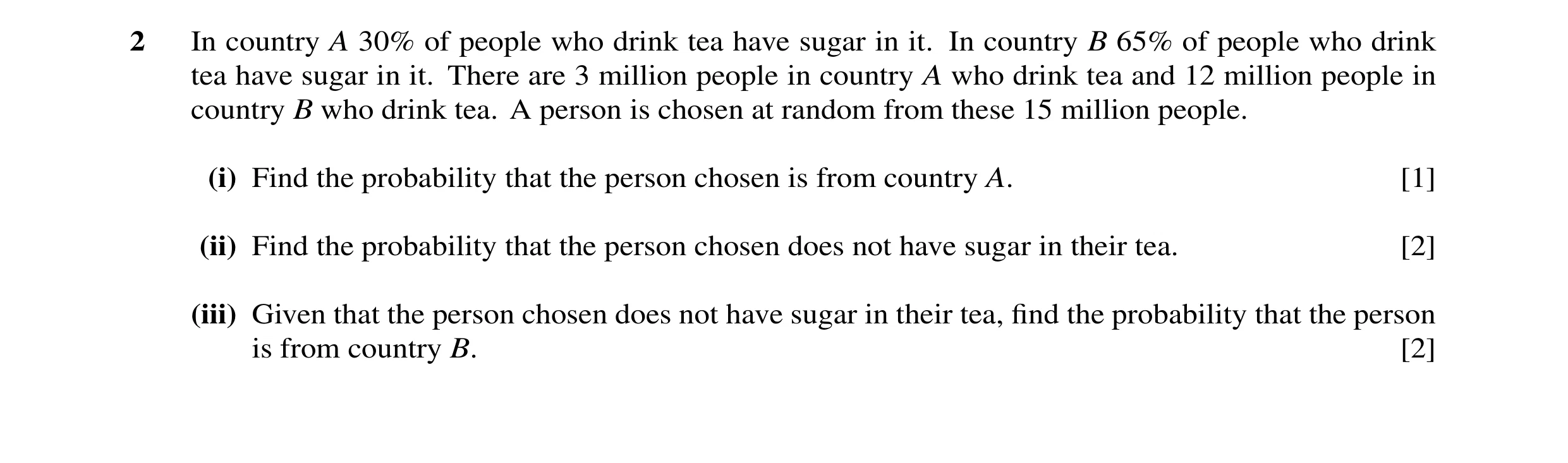
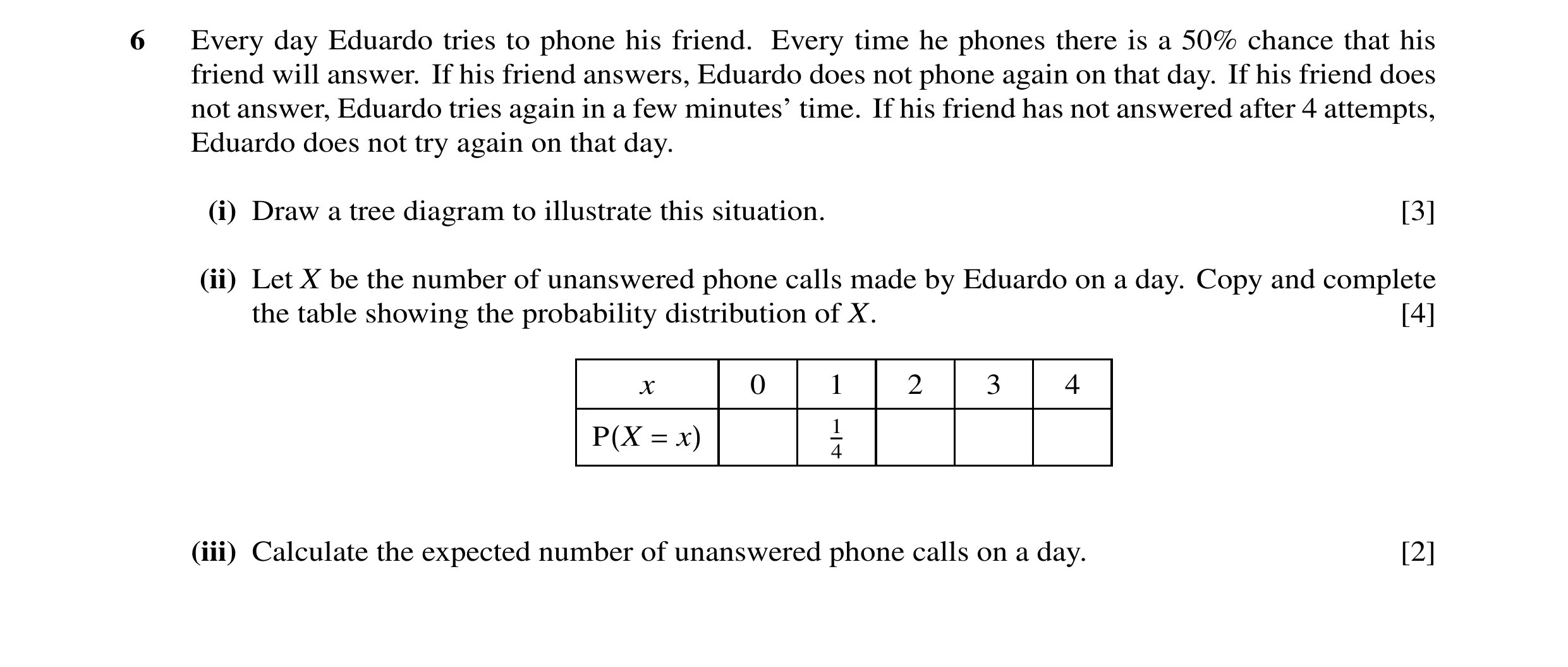
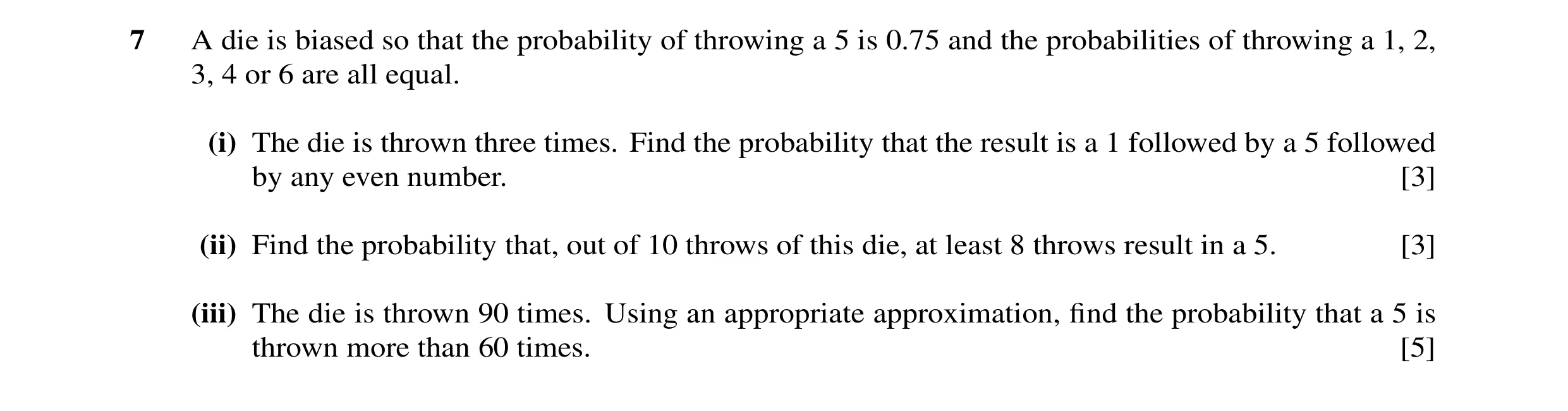
 1 / 176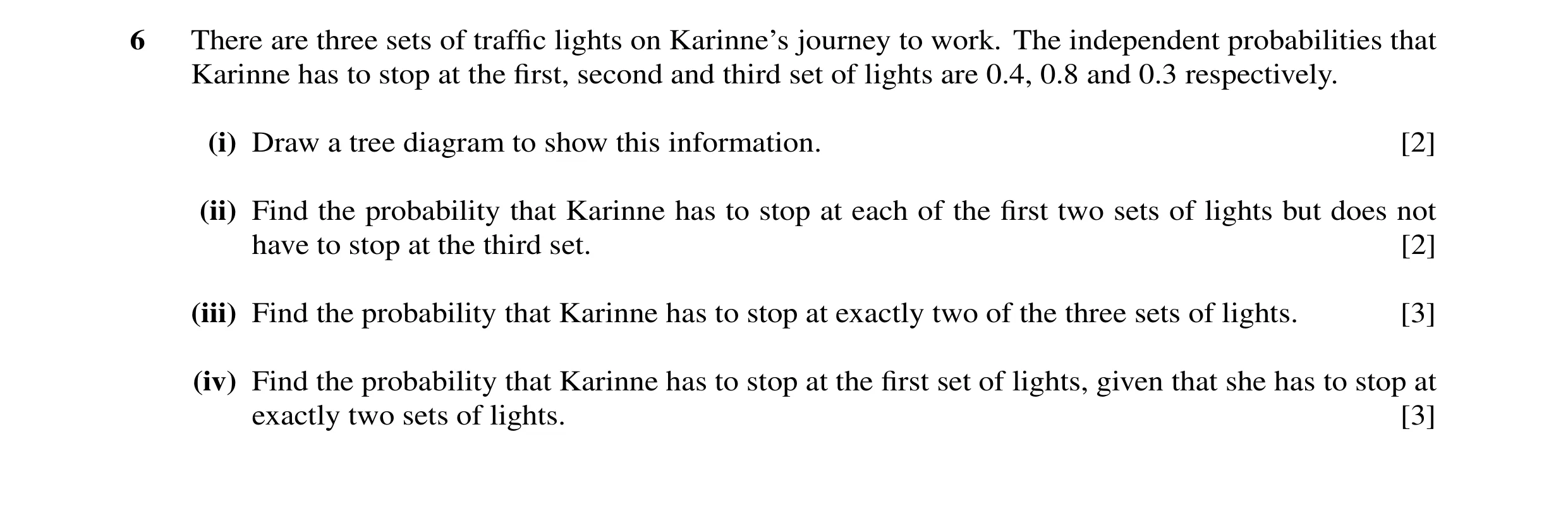
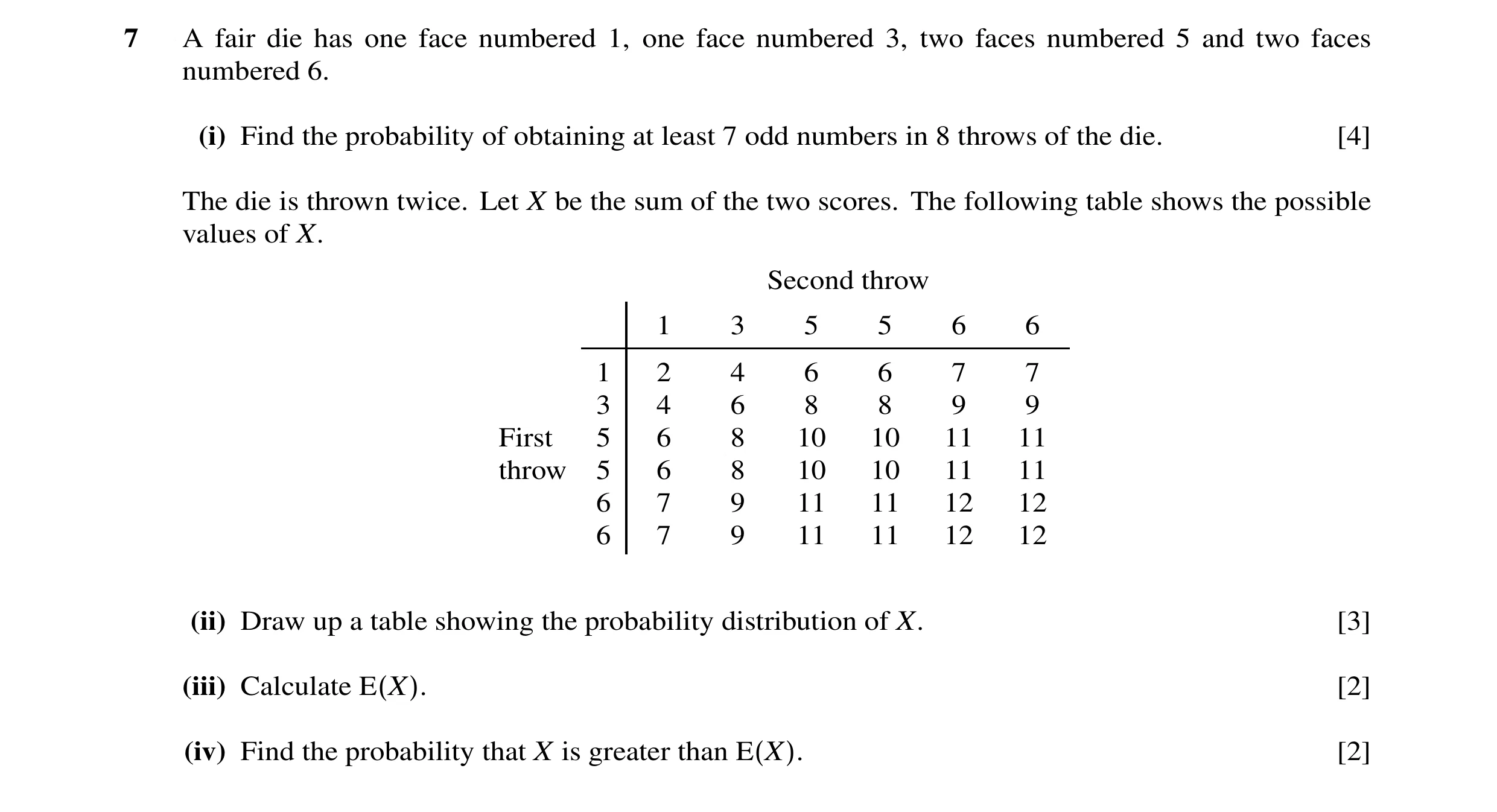
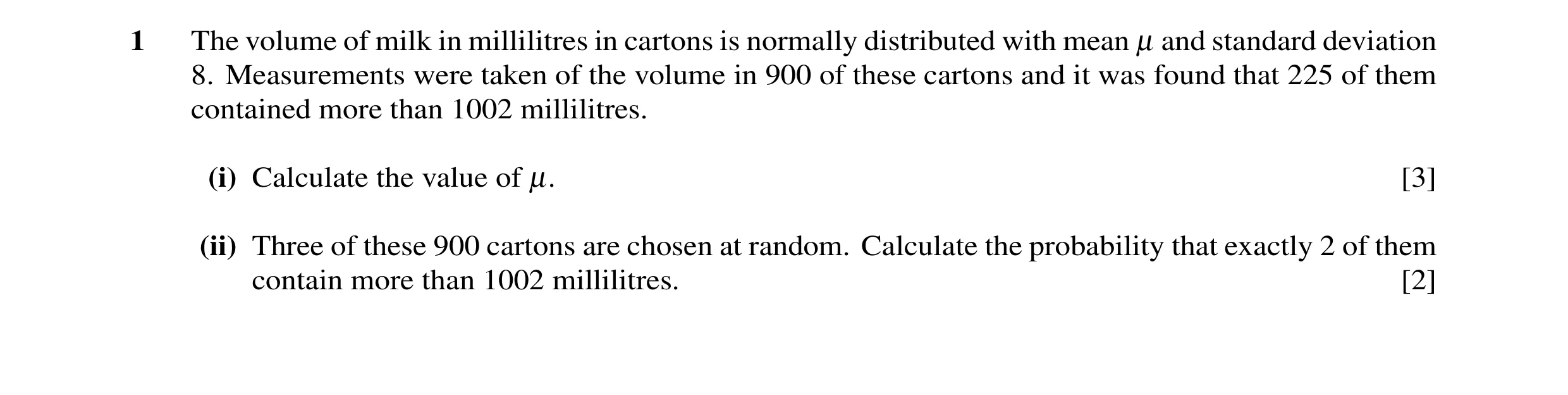 2 / 176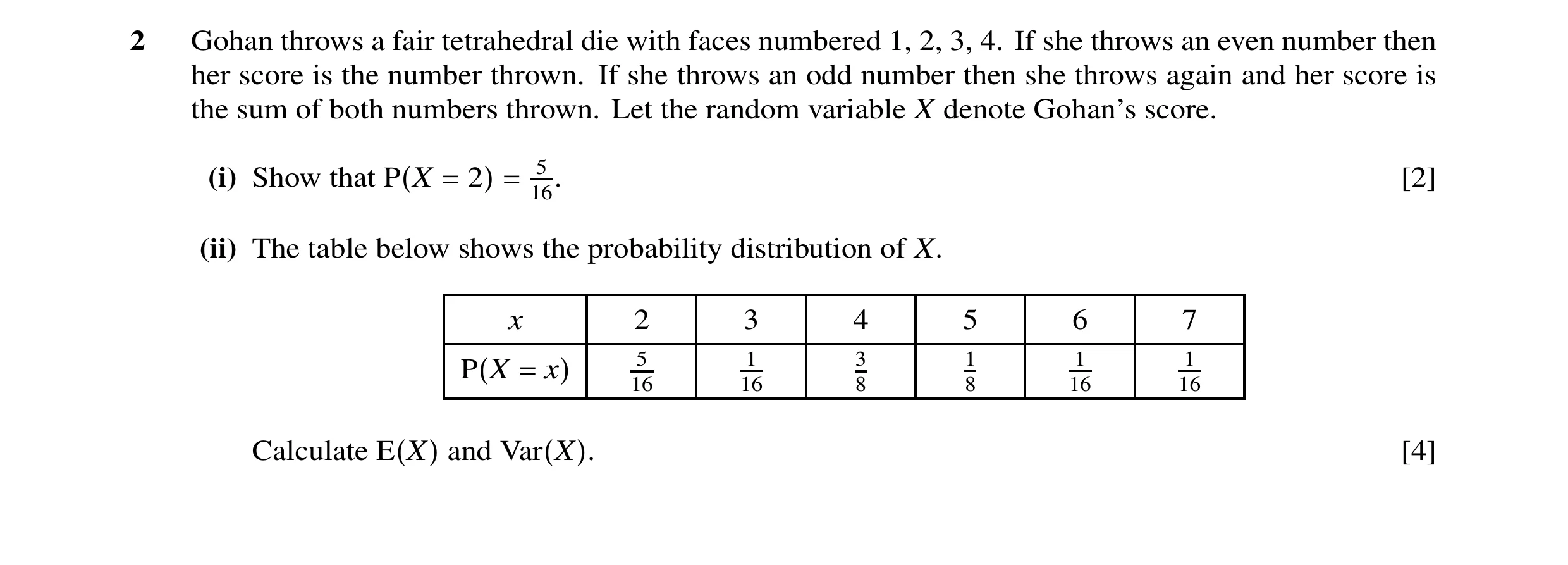
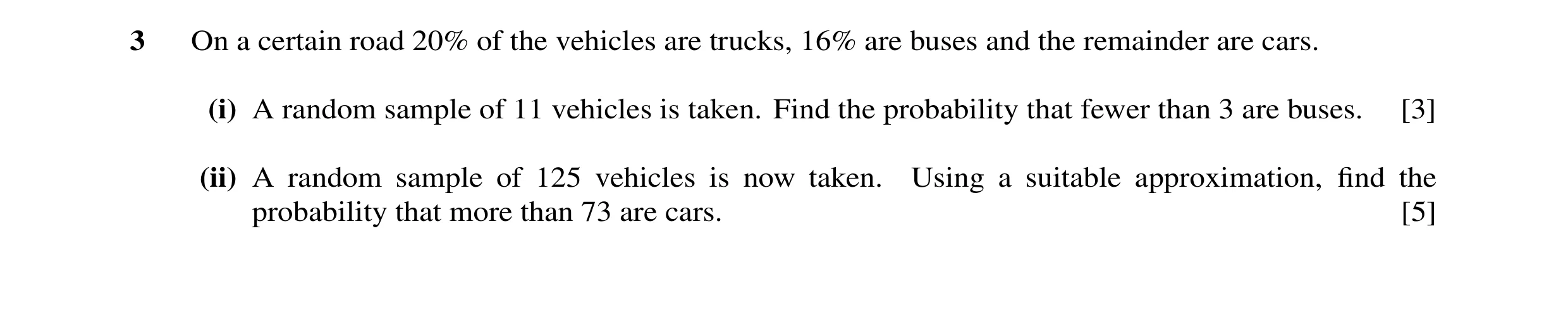
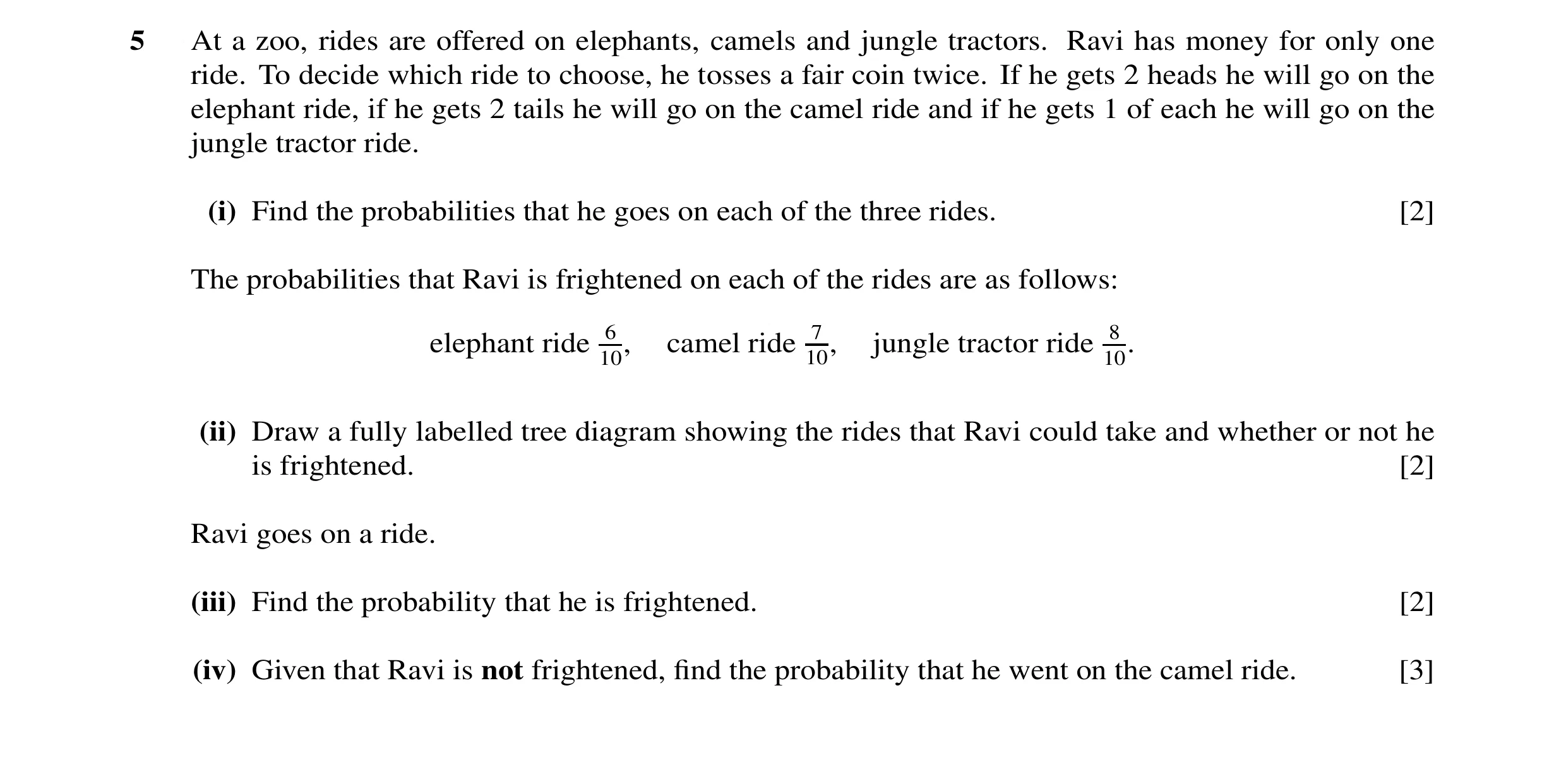
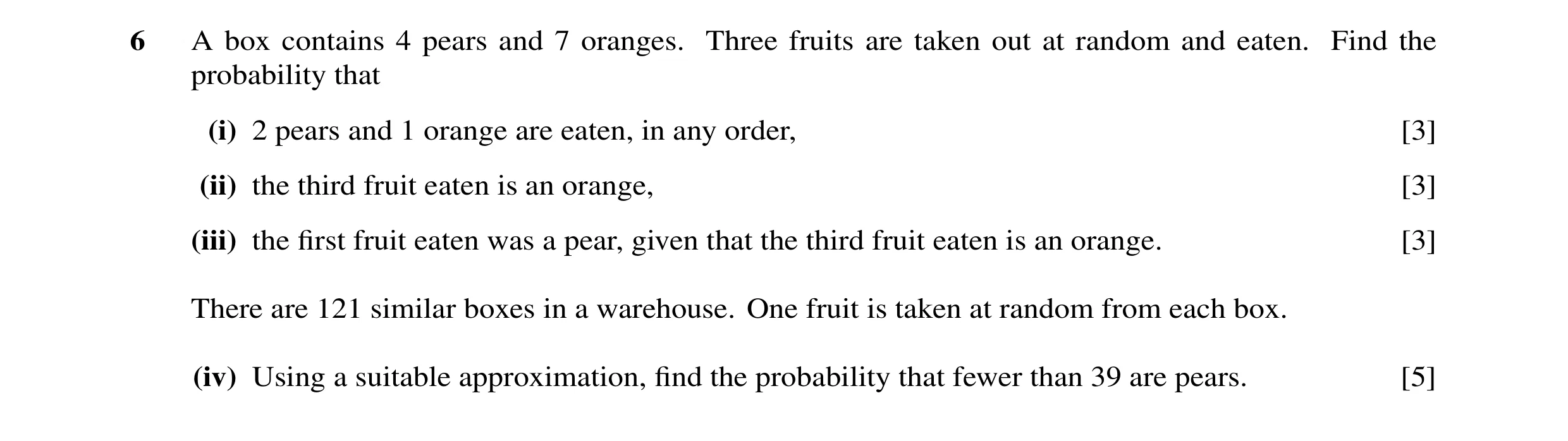 3 / 176
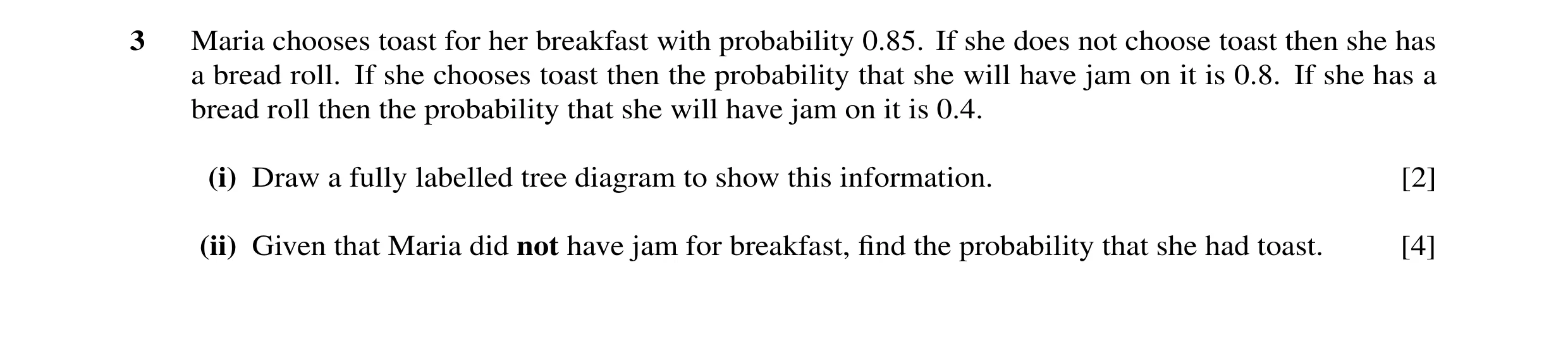
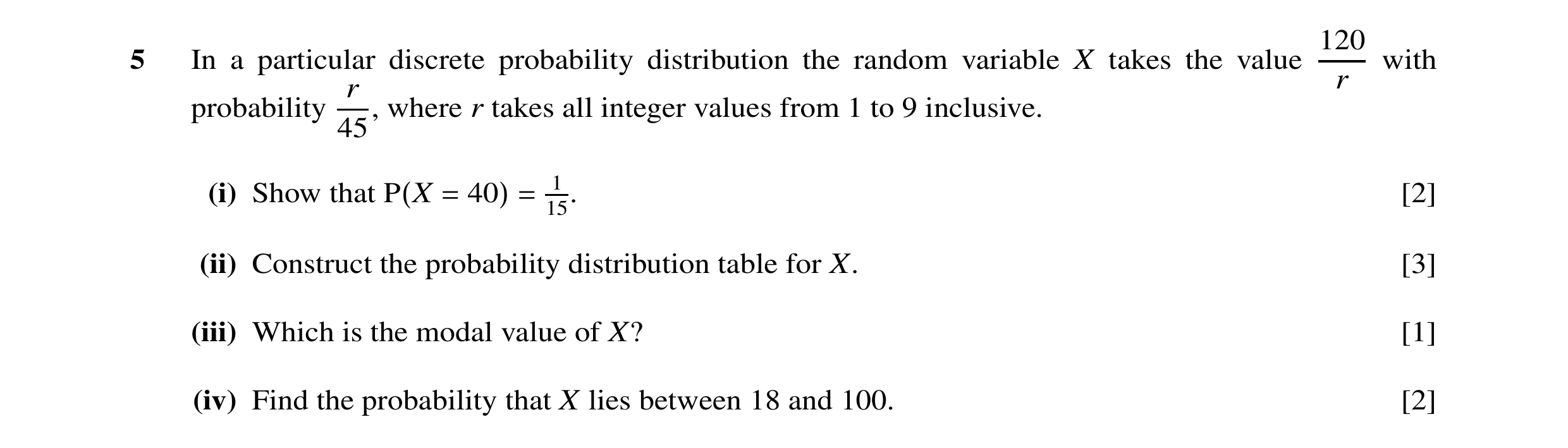
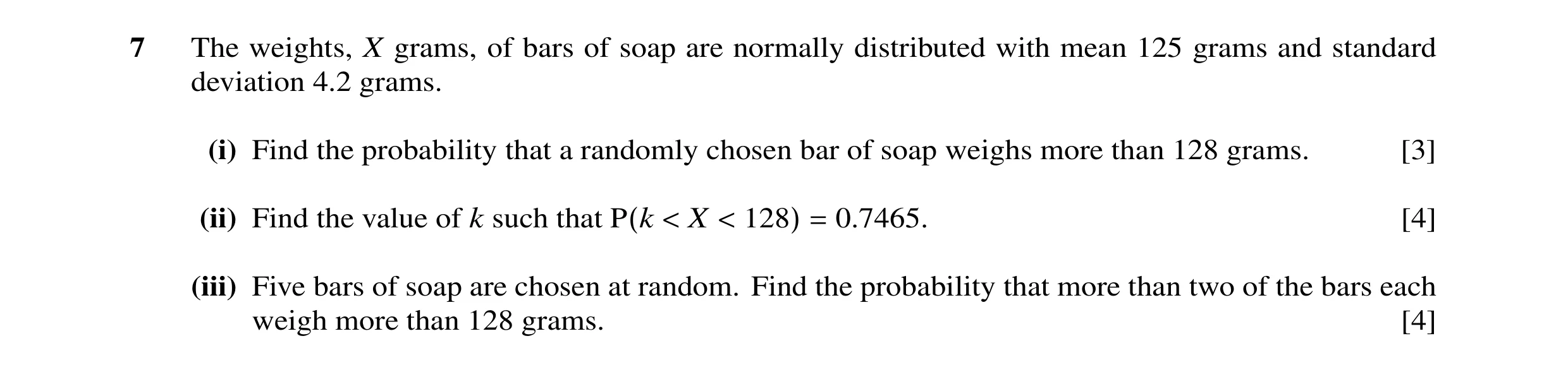
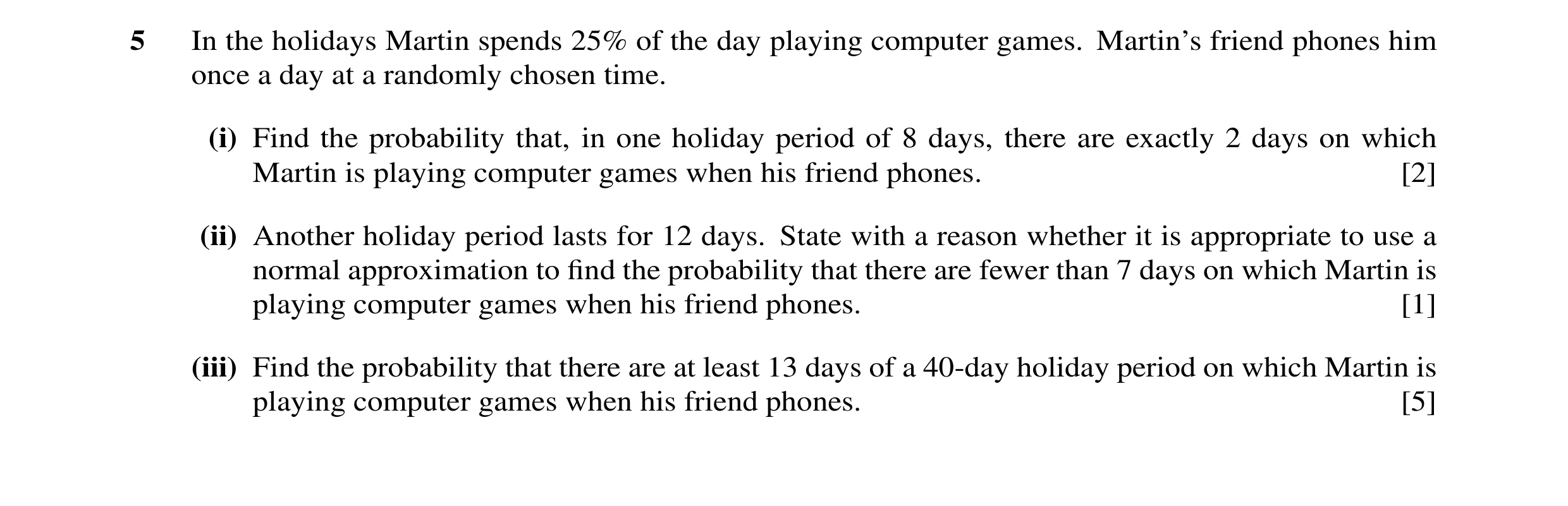 4 / 176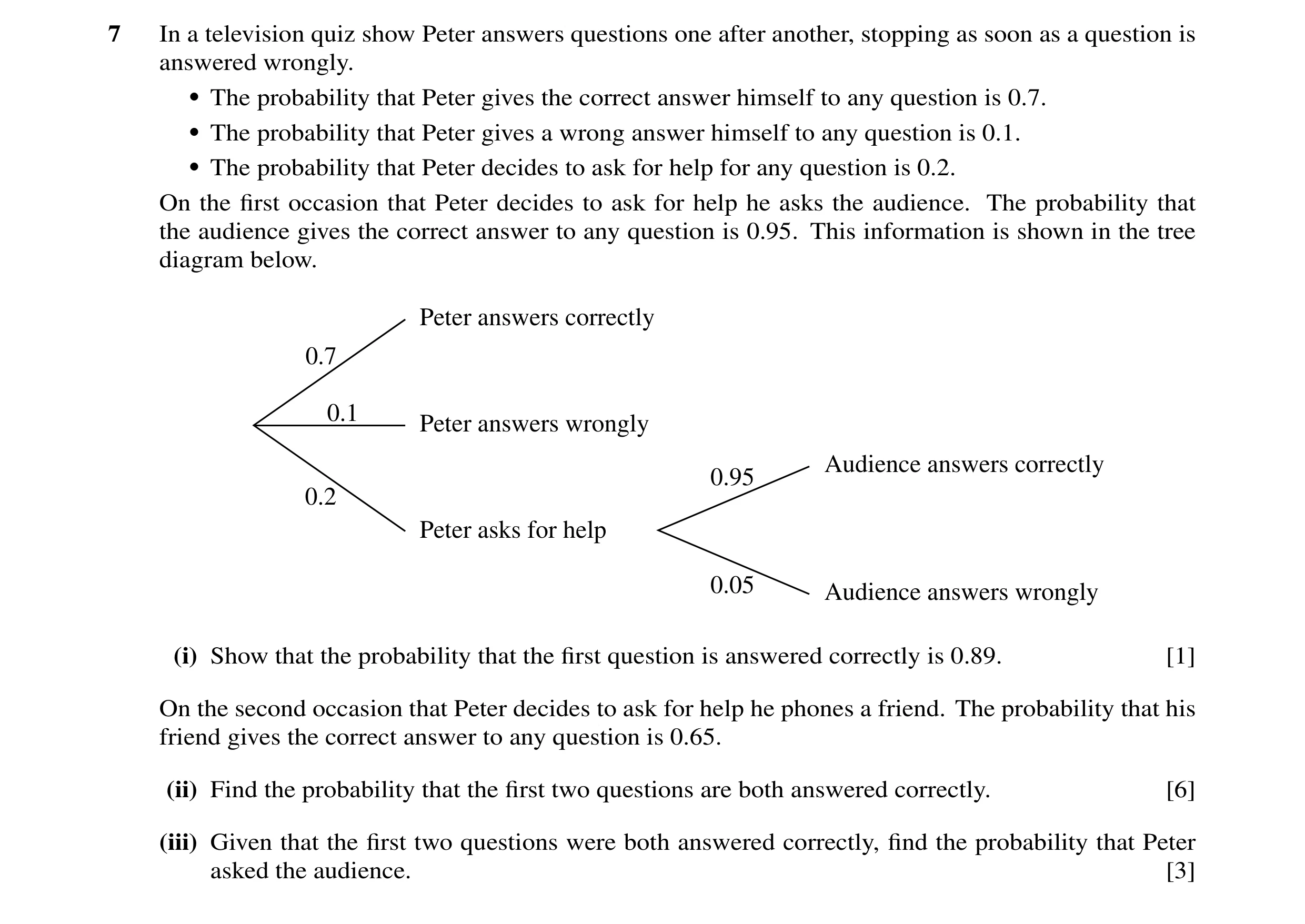

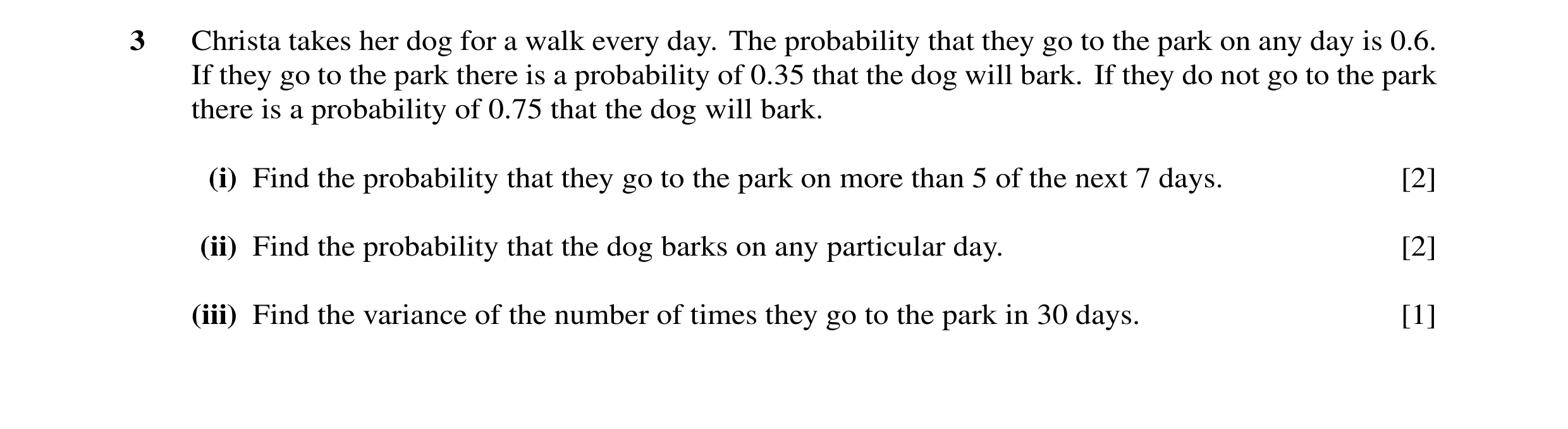 5 / 176
 6 / 176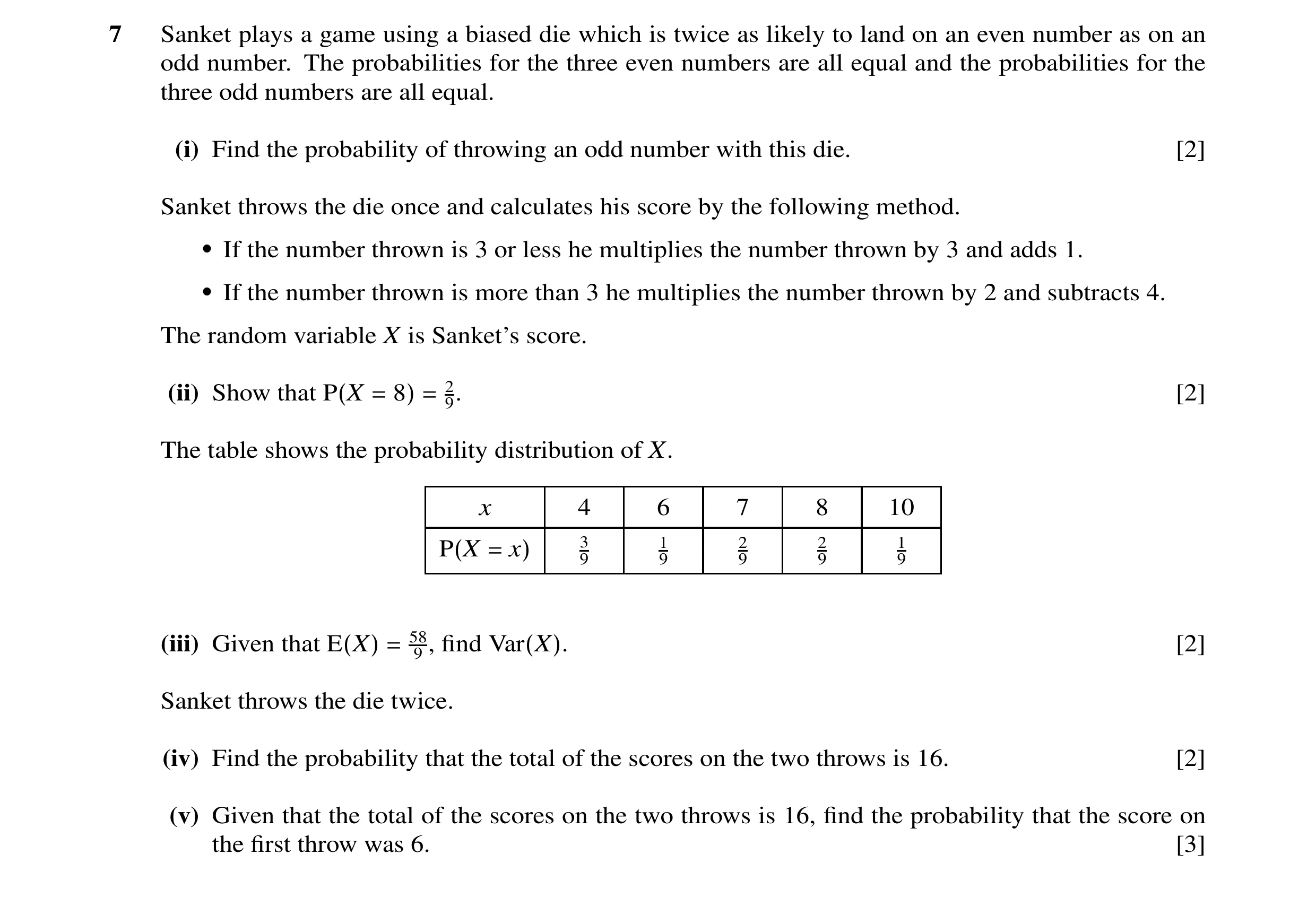
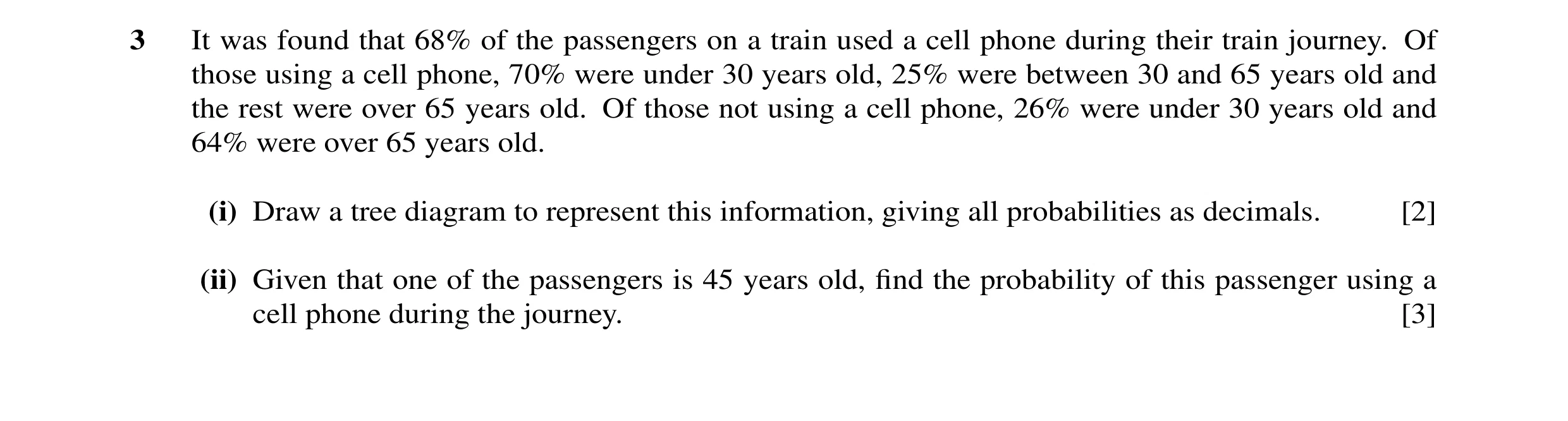 7 / 176
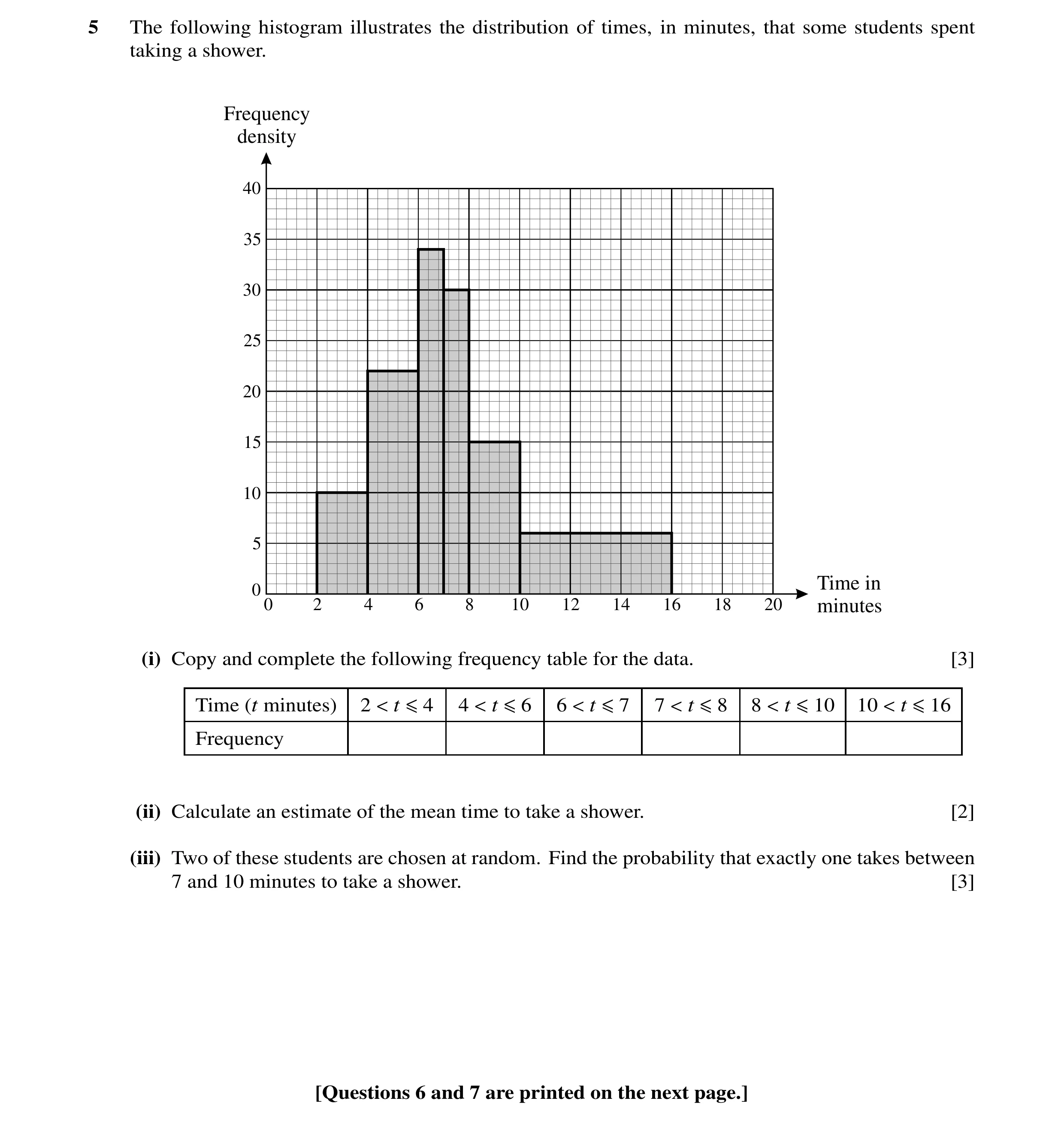 8 / 176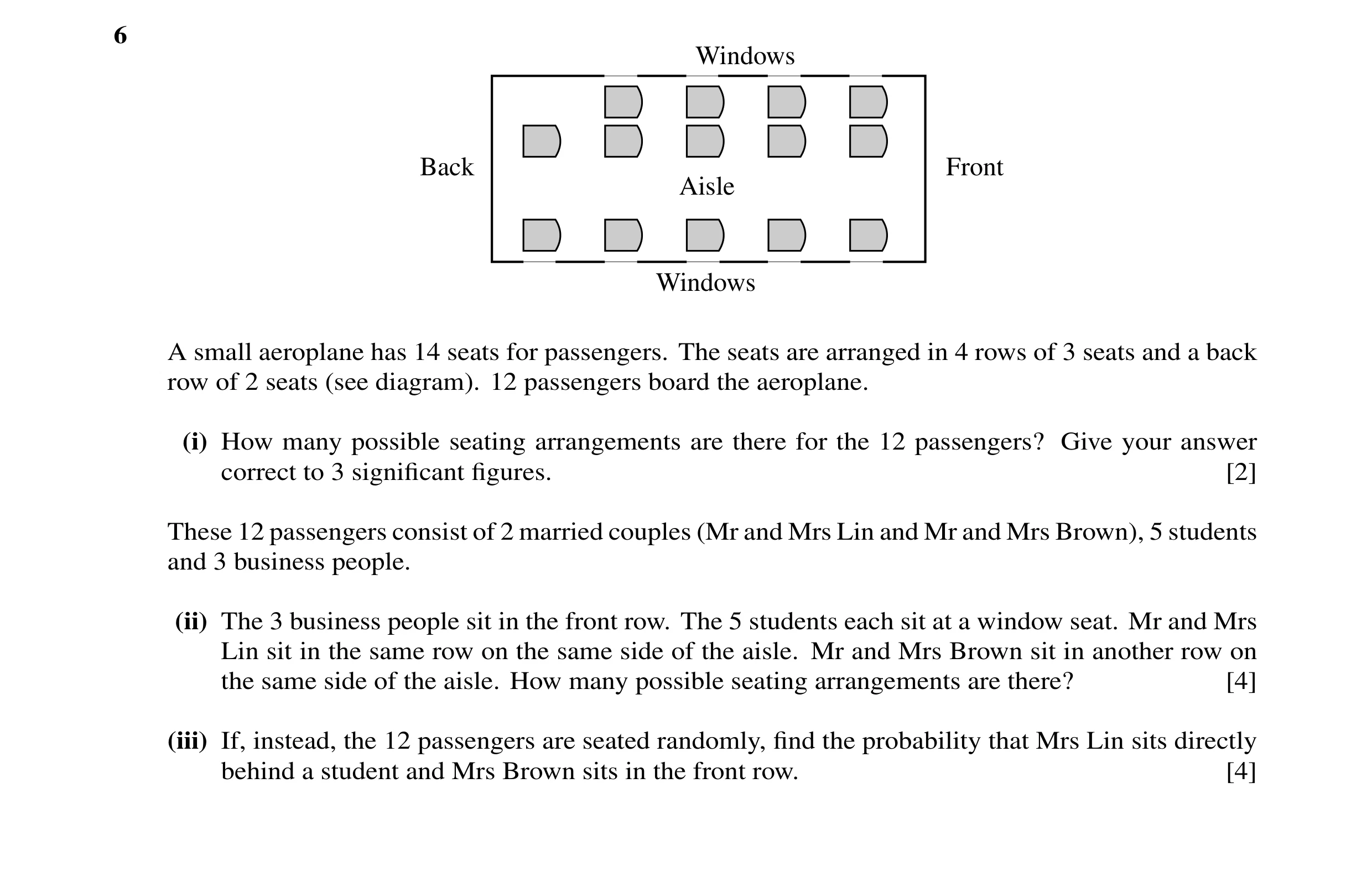
 9 / 176
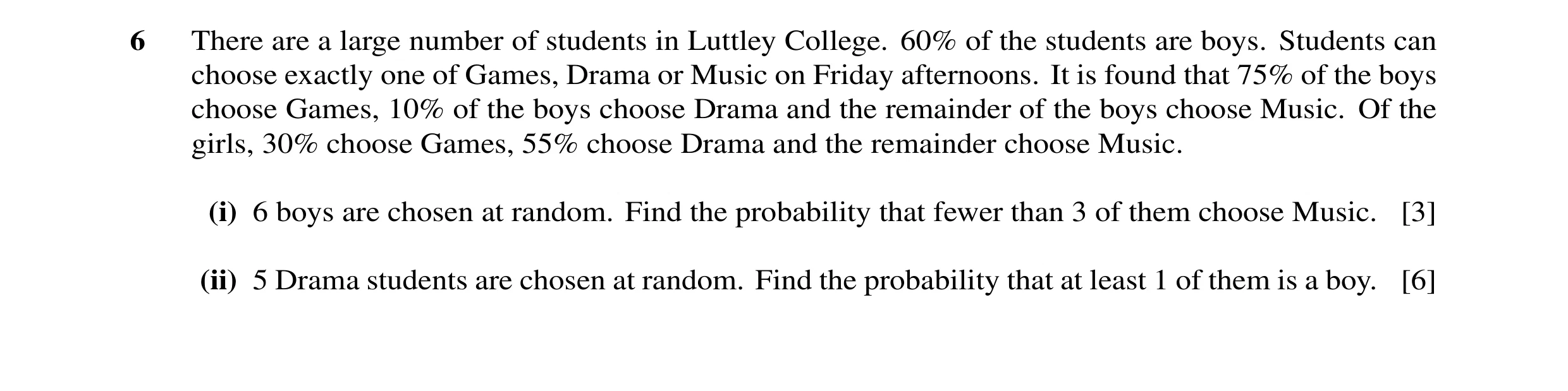
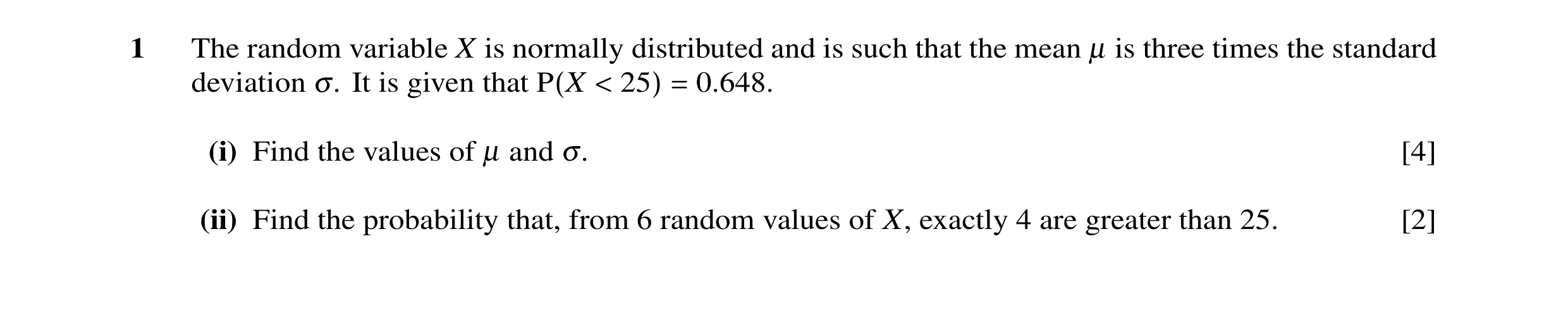
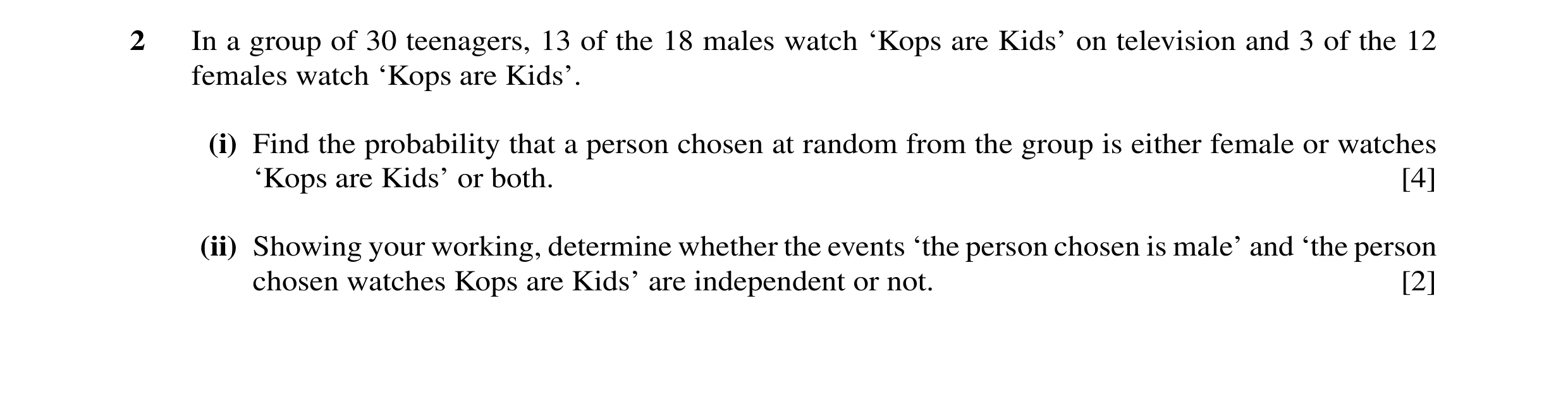 10 / 176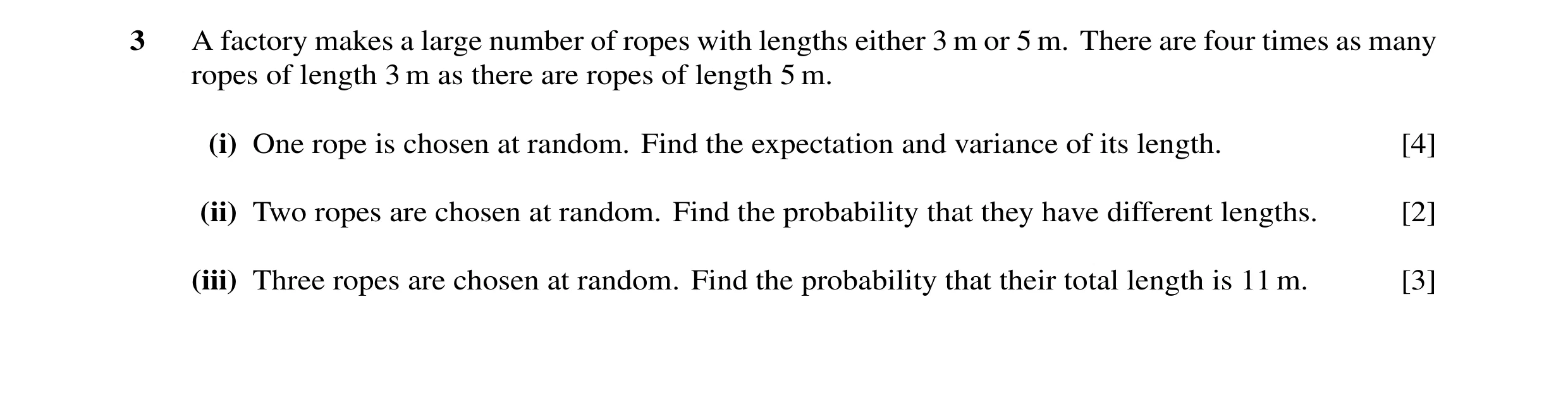
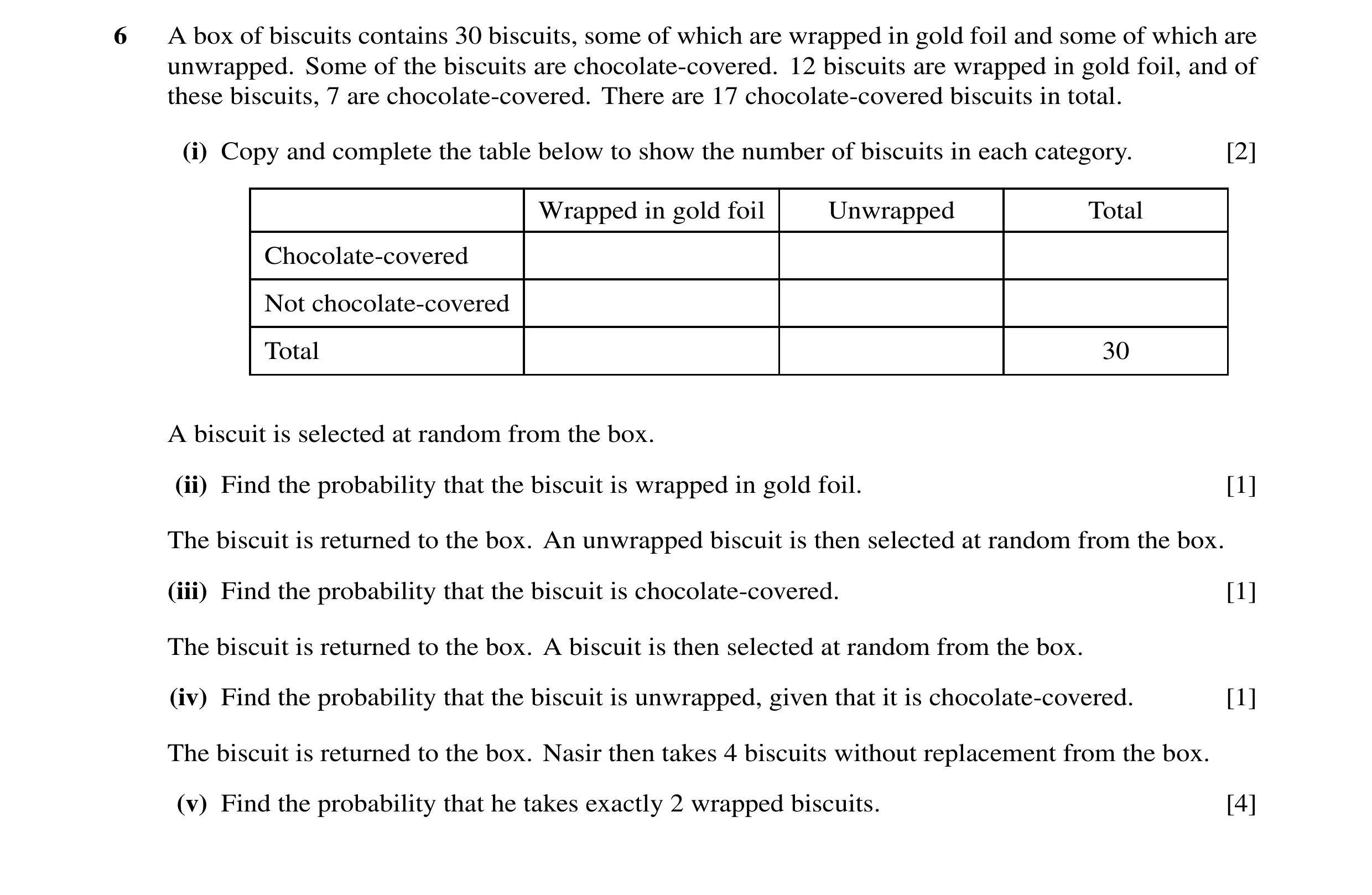
 11 / 176
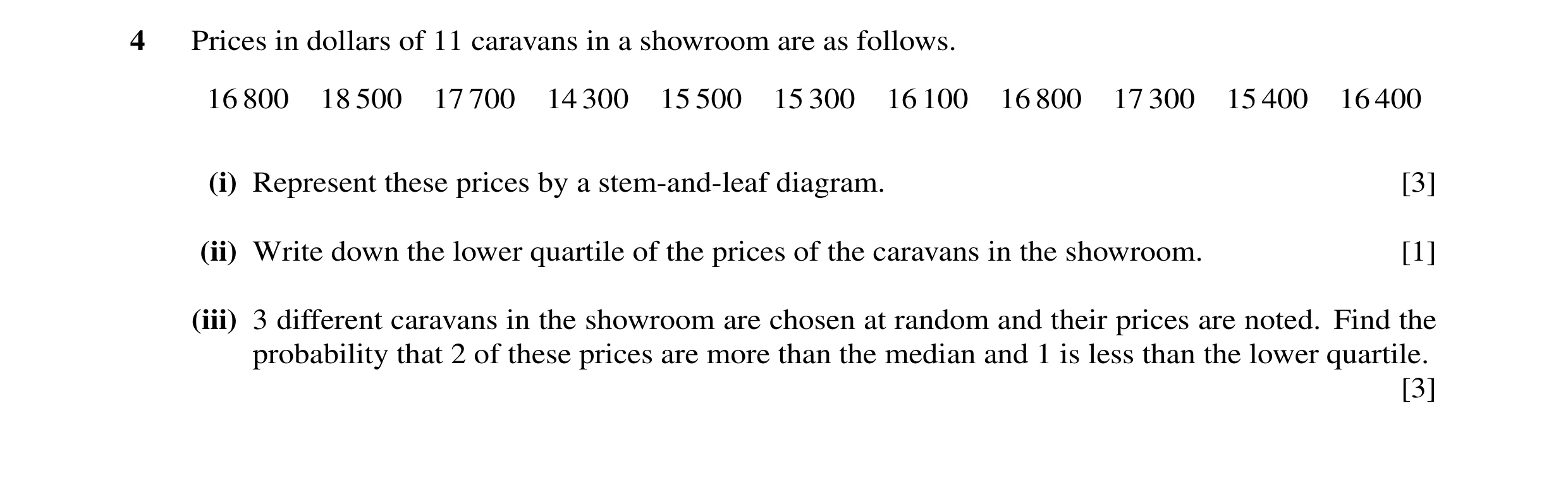
 12 / 176
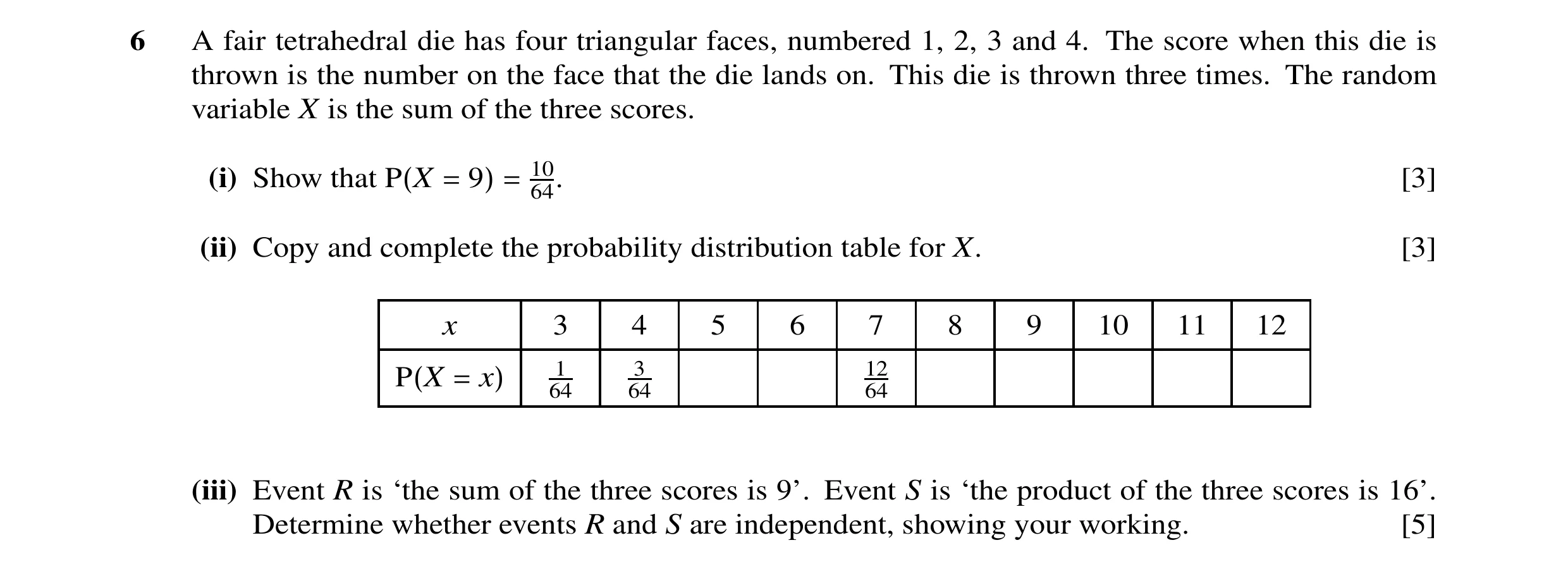
 13 / 176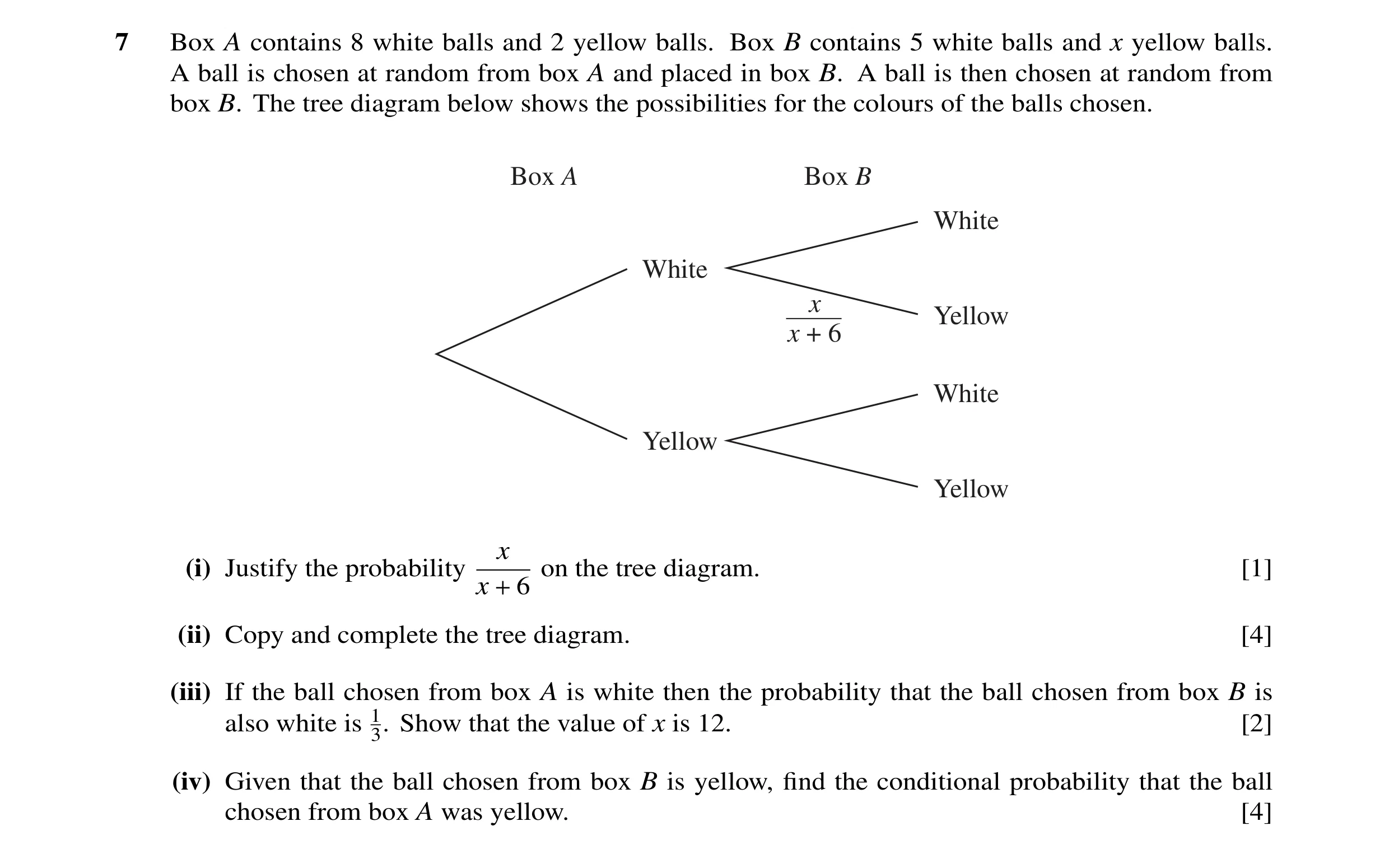
 14 / 176
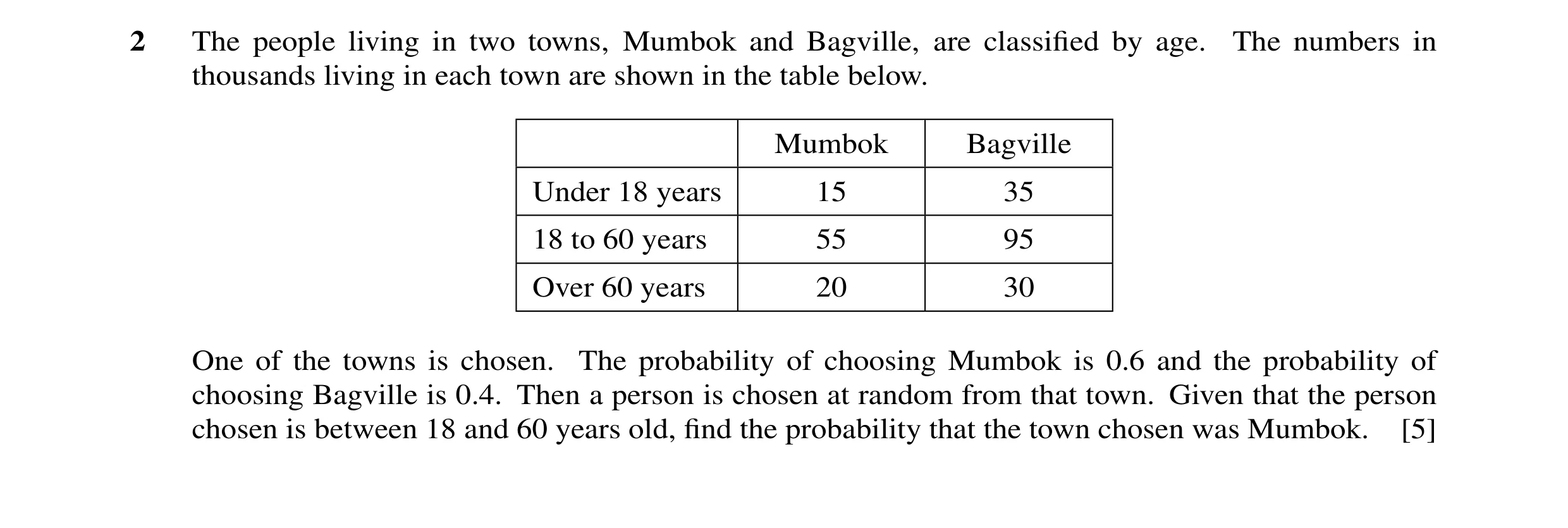
 15 / 176
 16 / 176
![Question 60: (i) State three conditions which must be satisfied for a situation to be modelled by a binomial distribution. [2] George wants to invest som…](https://img.pastlit.com/crops/c5e9aabf-e647-40a9-b653-0546cab48c2b/q3.webp)
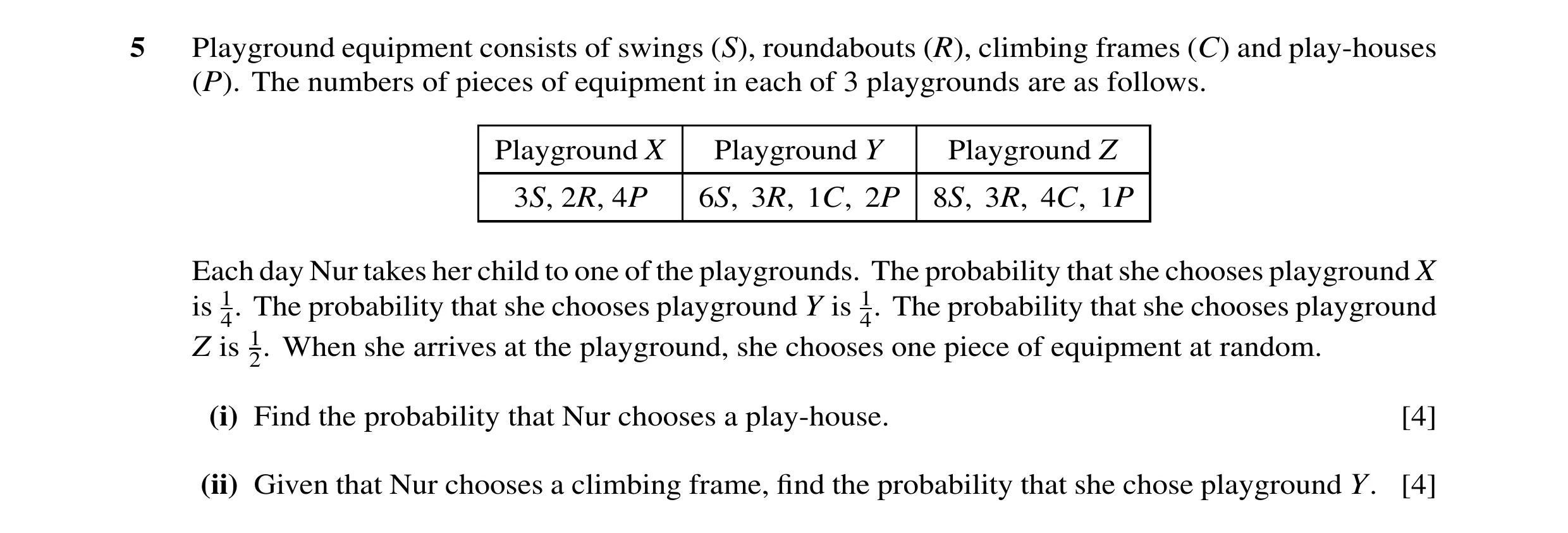

 17 / 176
 18 / 176
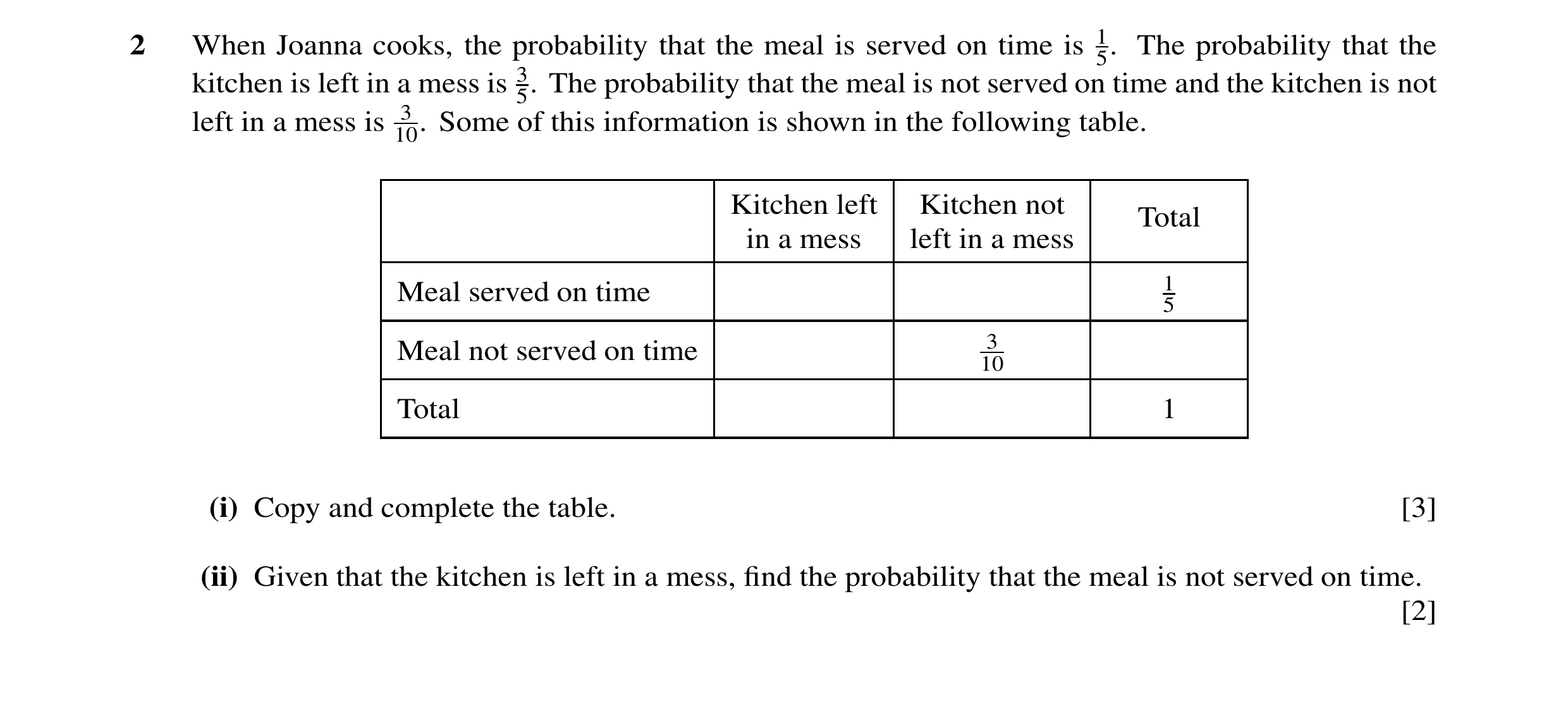
![Question 73: A committee of 6 people is to be chosen at random from 7 men and 9 women. Find the probability that there are no men on the committee. [3]](https://img.pastlit.com/crops/9b455198-bdf3-4cc9-bdef-863345ebd7db/q2.webp) 19 / 176
19 / 176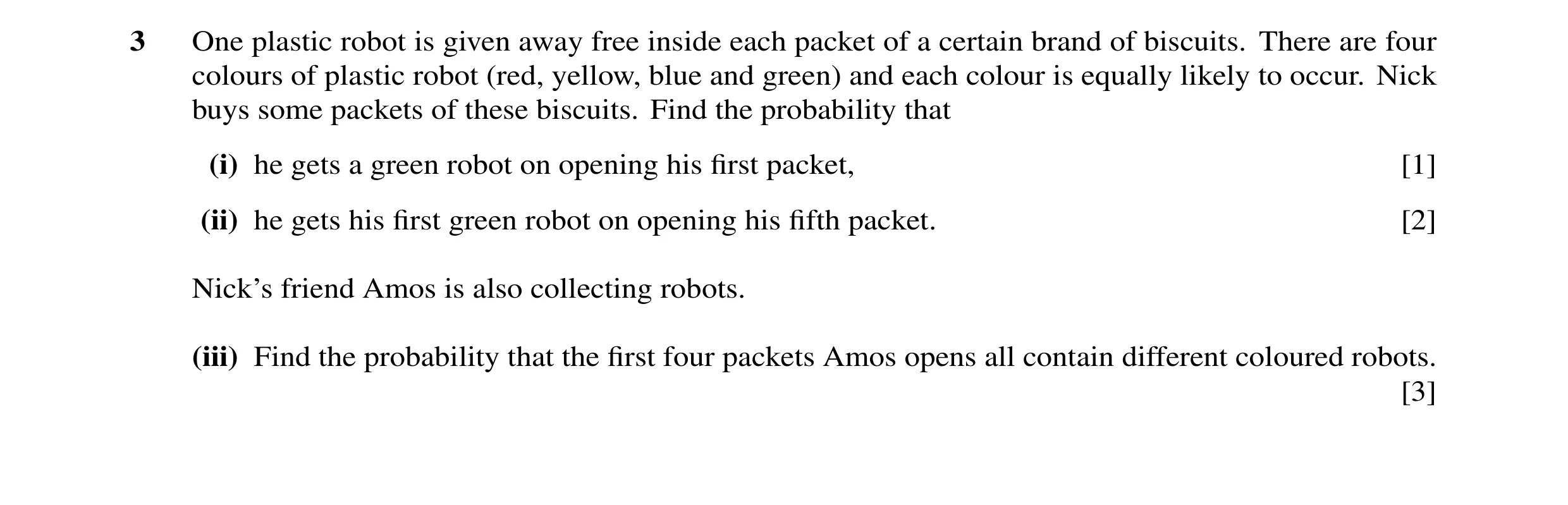
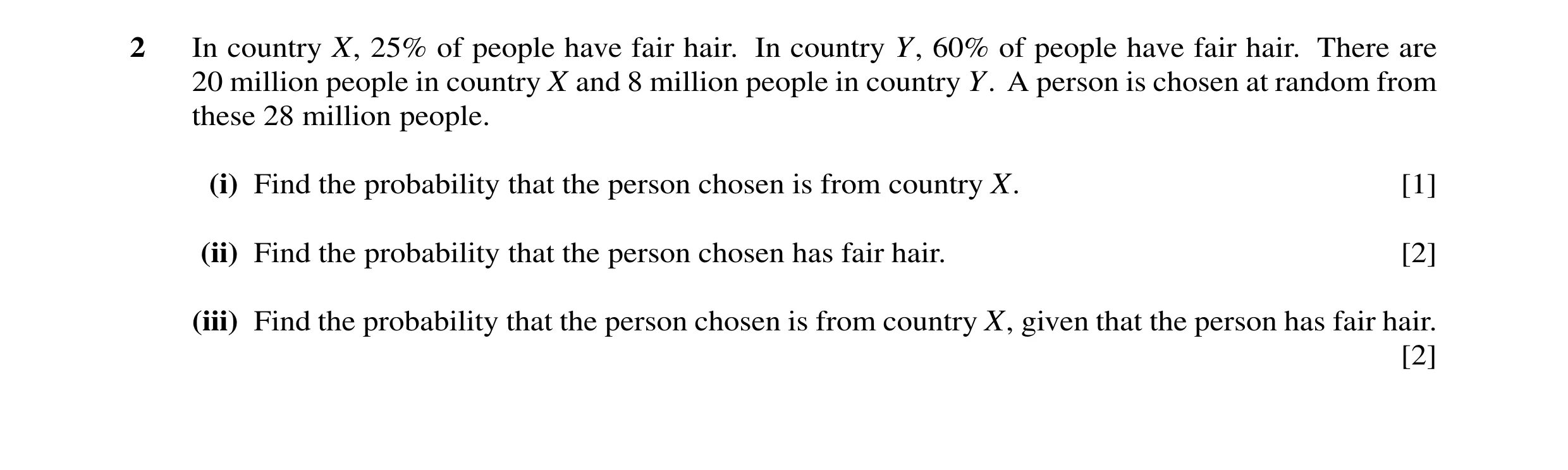
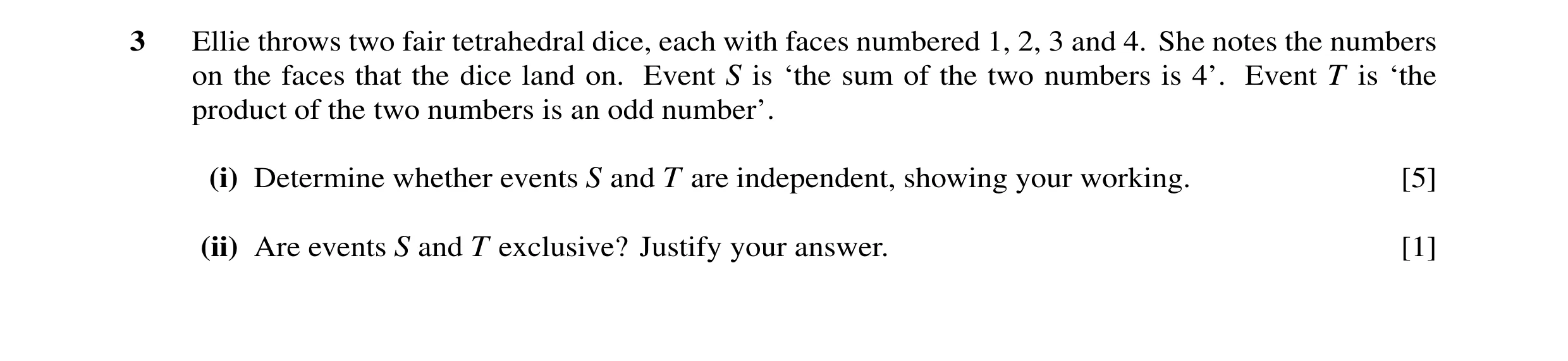
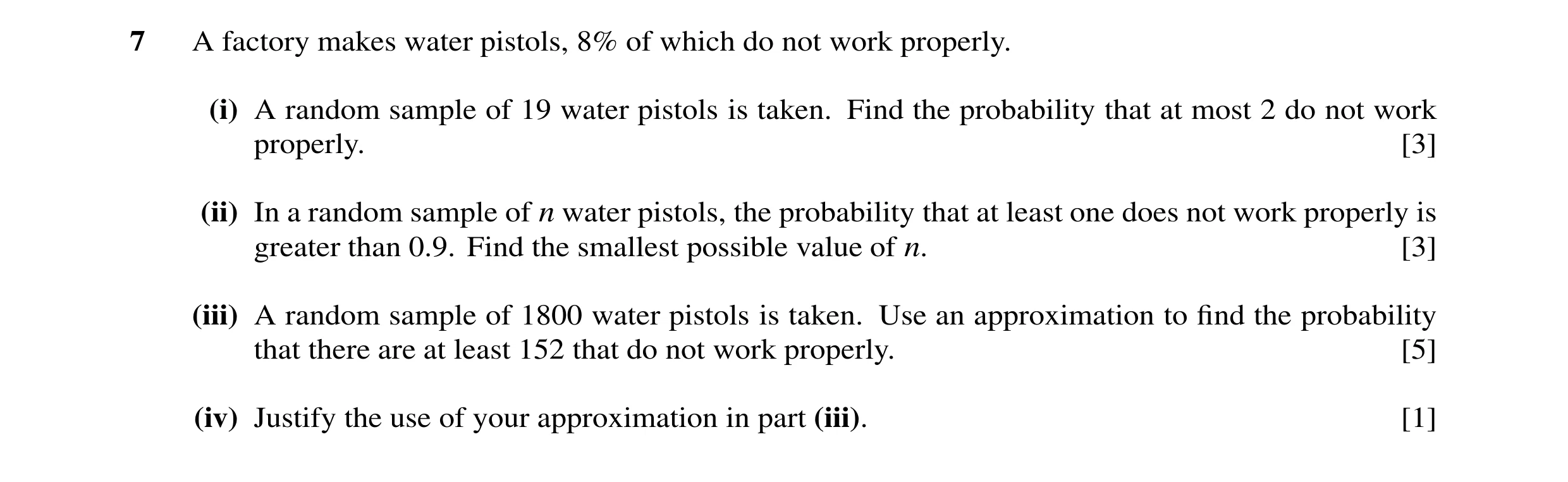
 20 / 176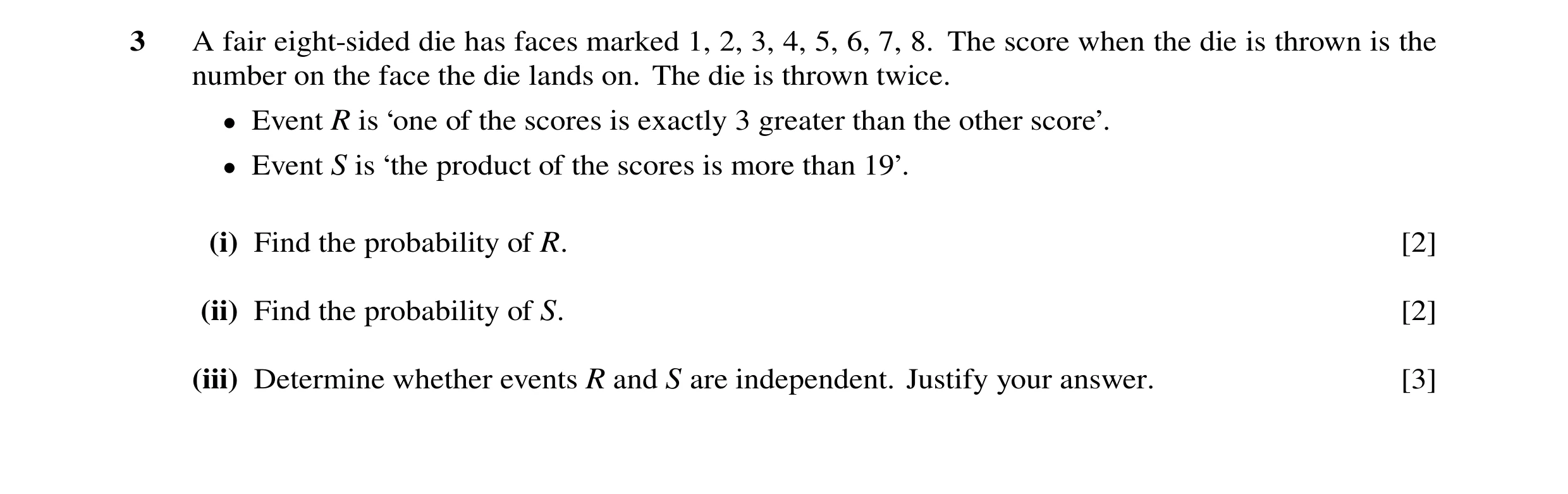
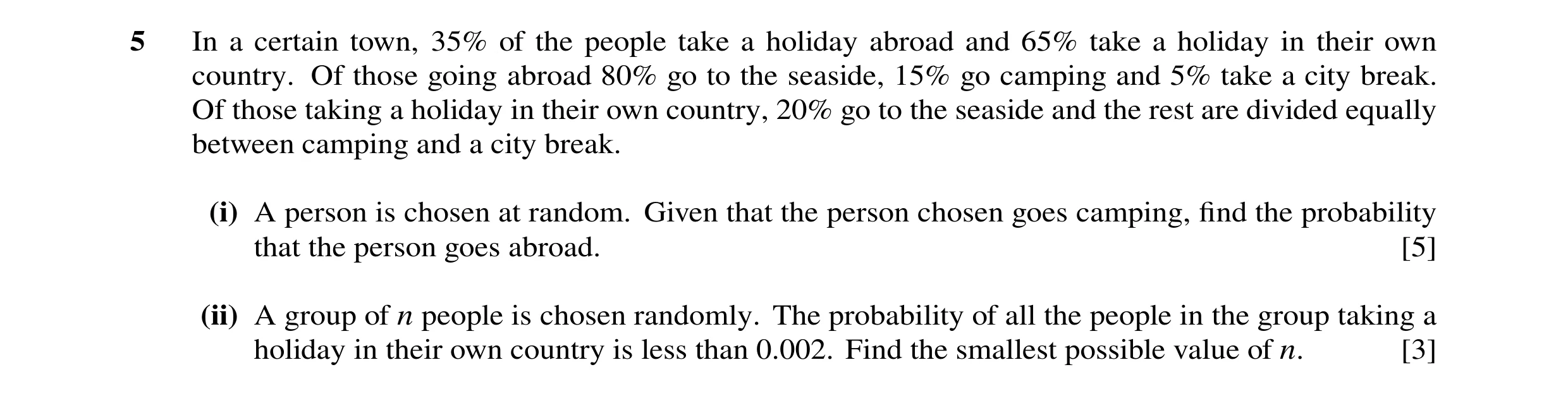
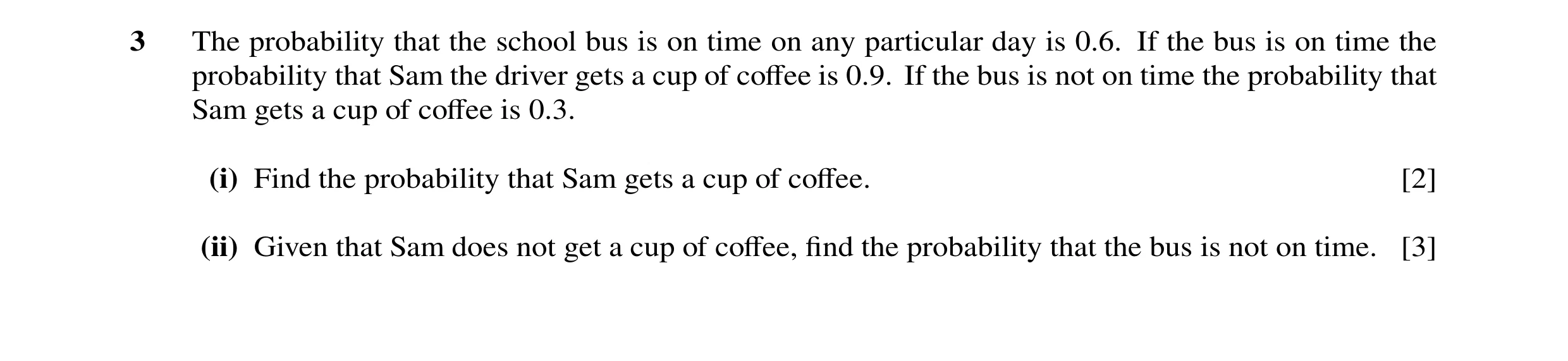
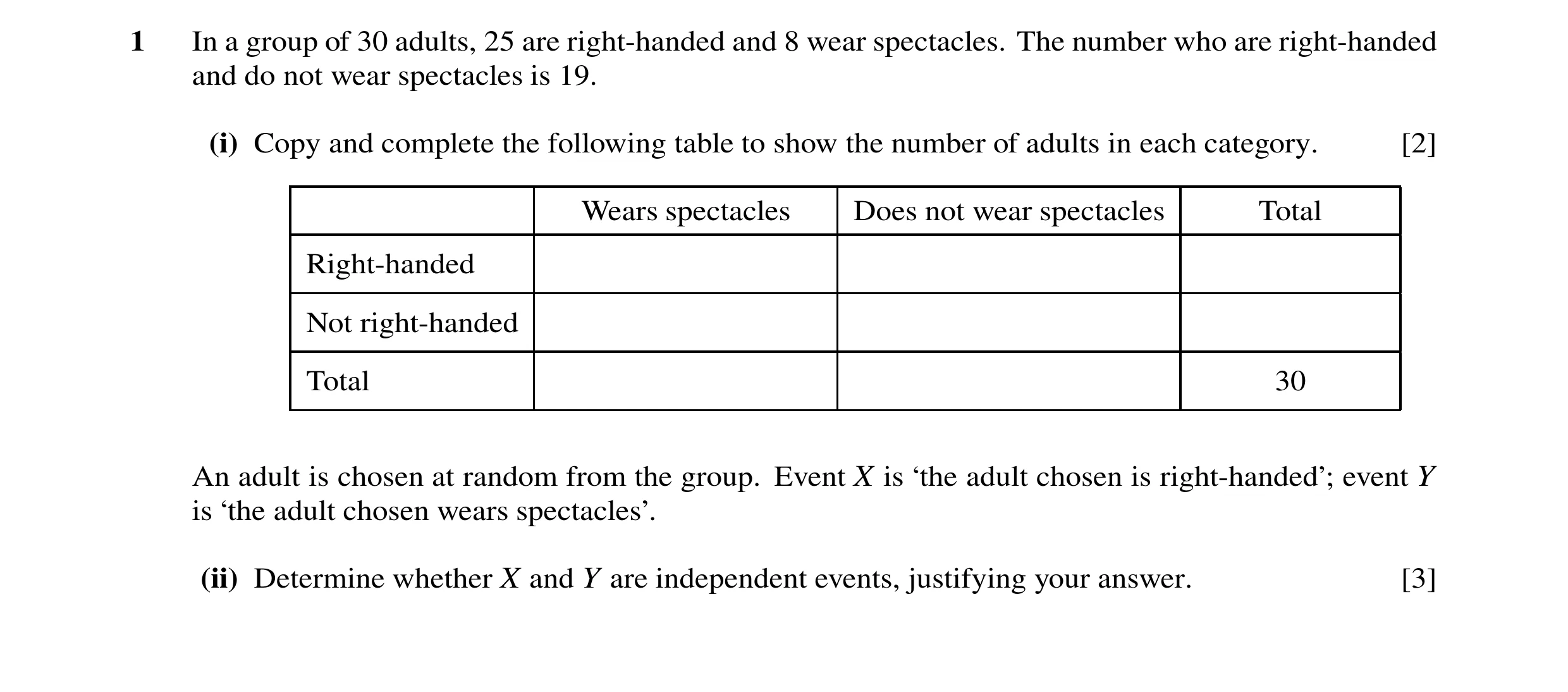 21 / 176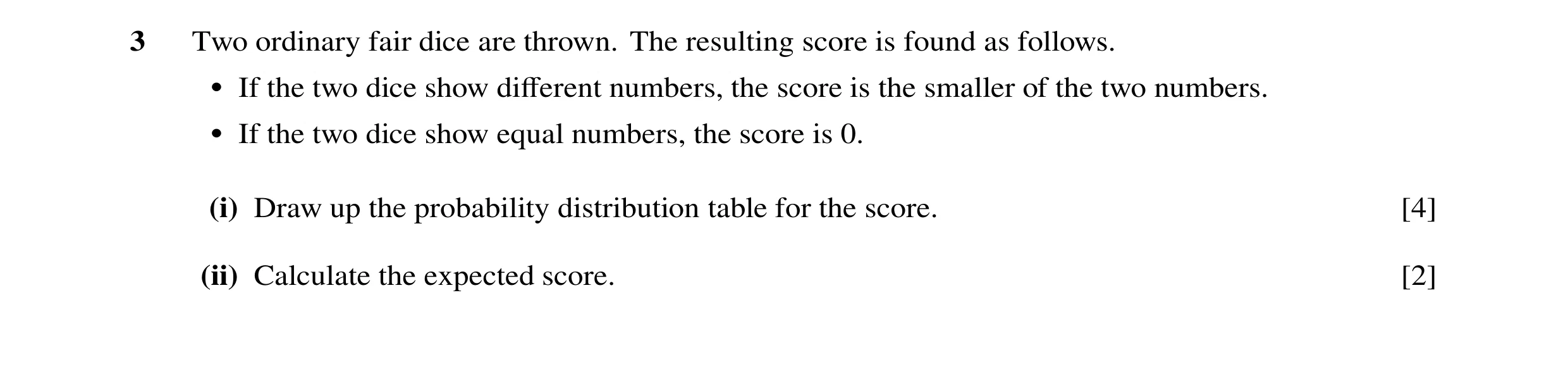
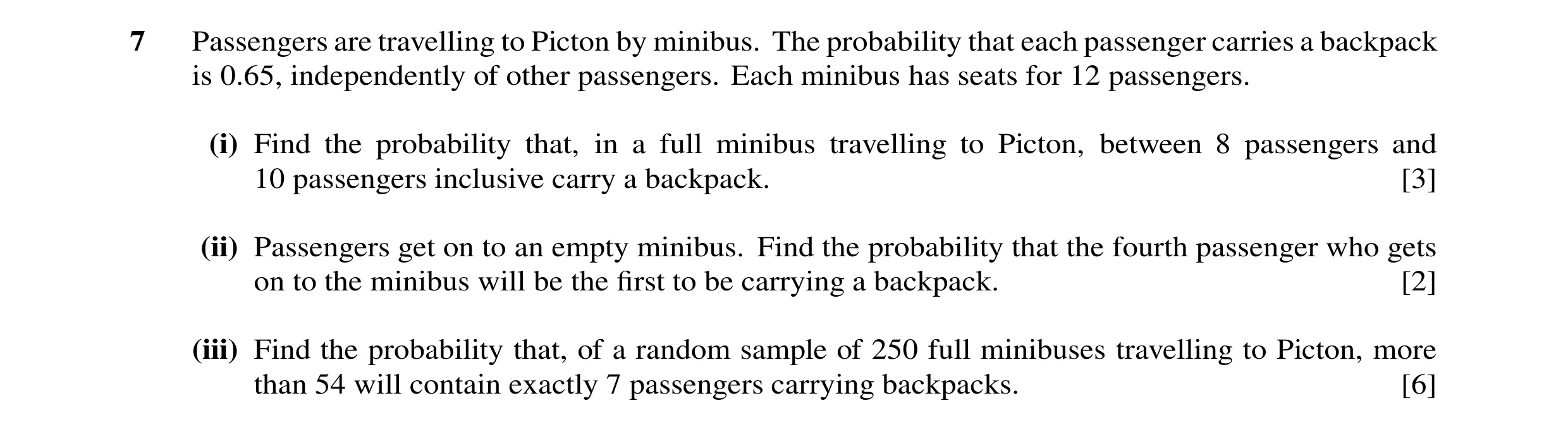
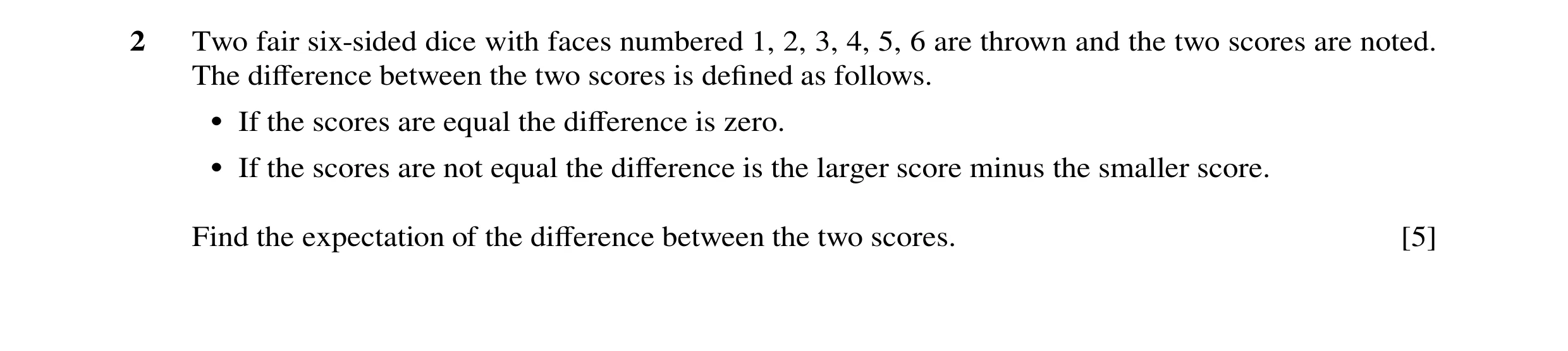
 22 / 176
 23 / 176
 24 / 176
 25 / 176
 26 / 176
 29 / 176
 30 / 176
 33 / 176
 34 / 176
 37 / 176
 40 / 176
 43 / 176
 44 / 176
 49 / 176
 56 / 176
 59 / 176
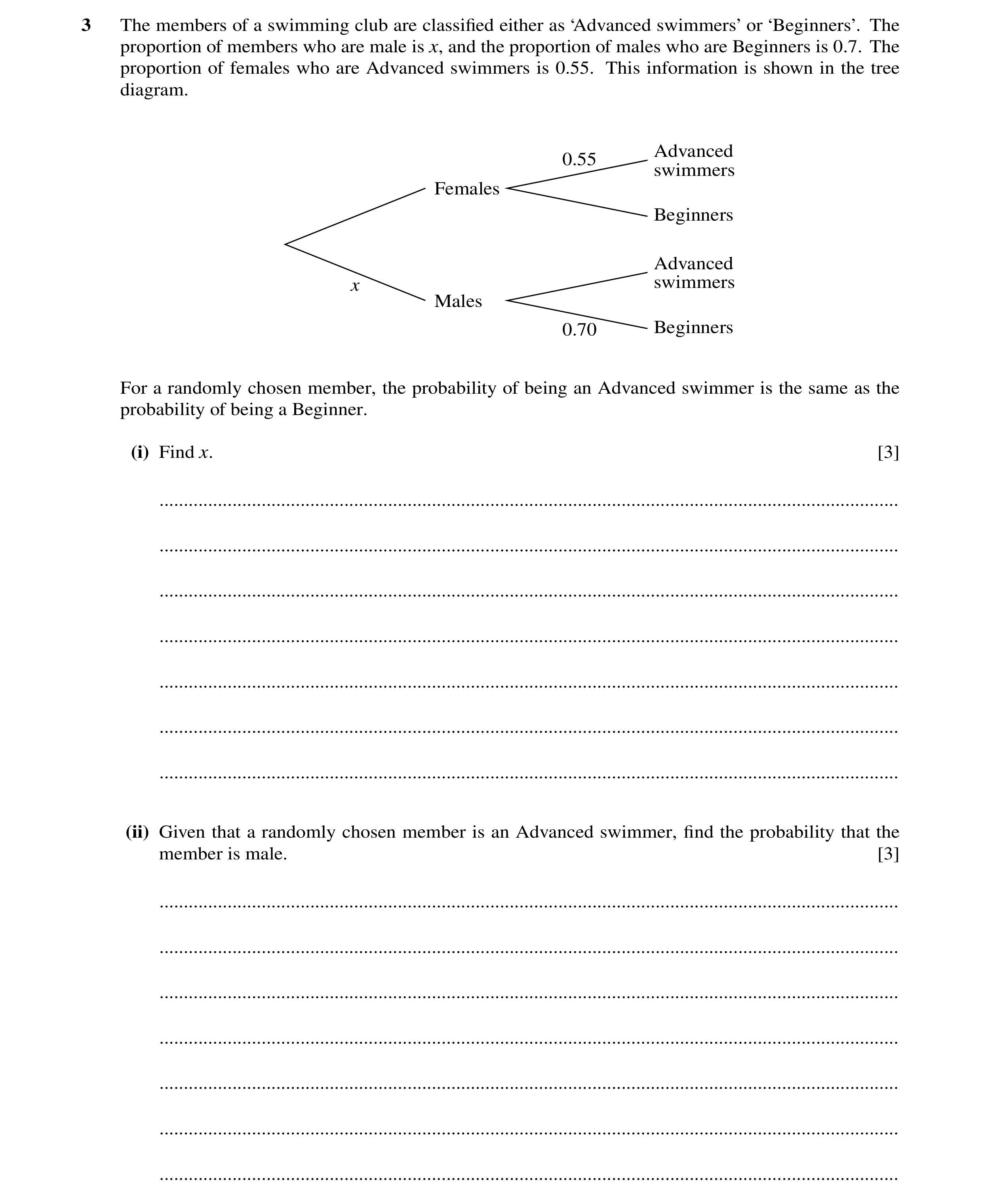 60 / 176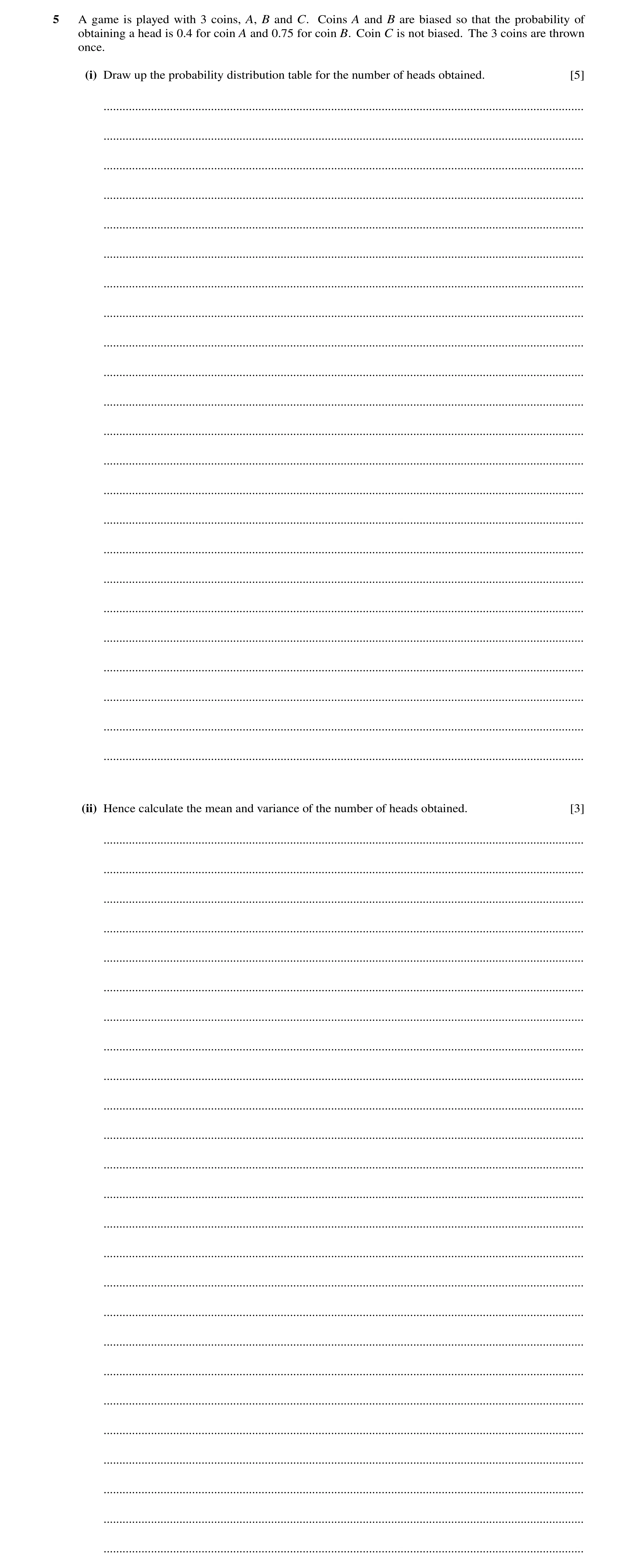
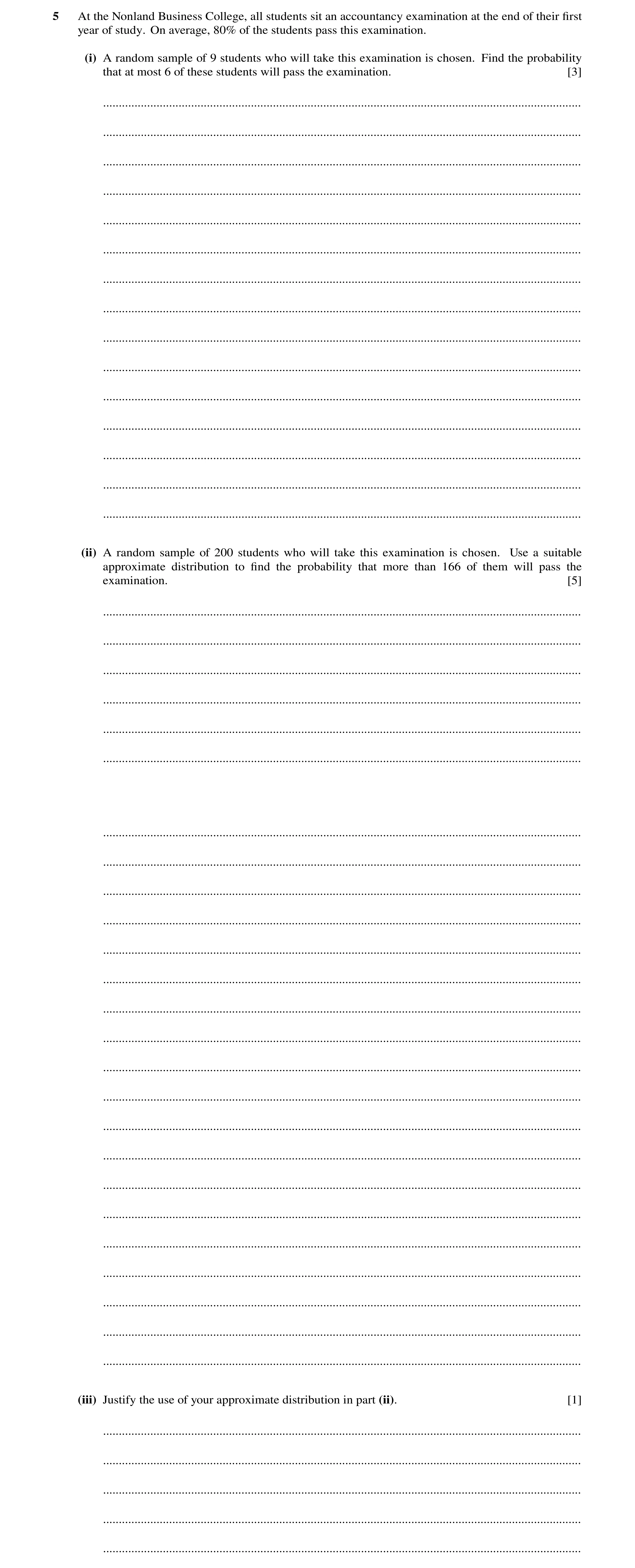
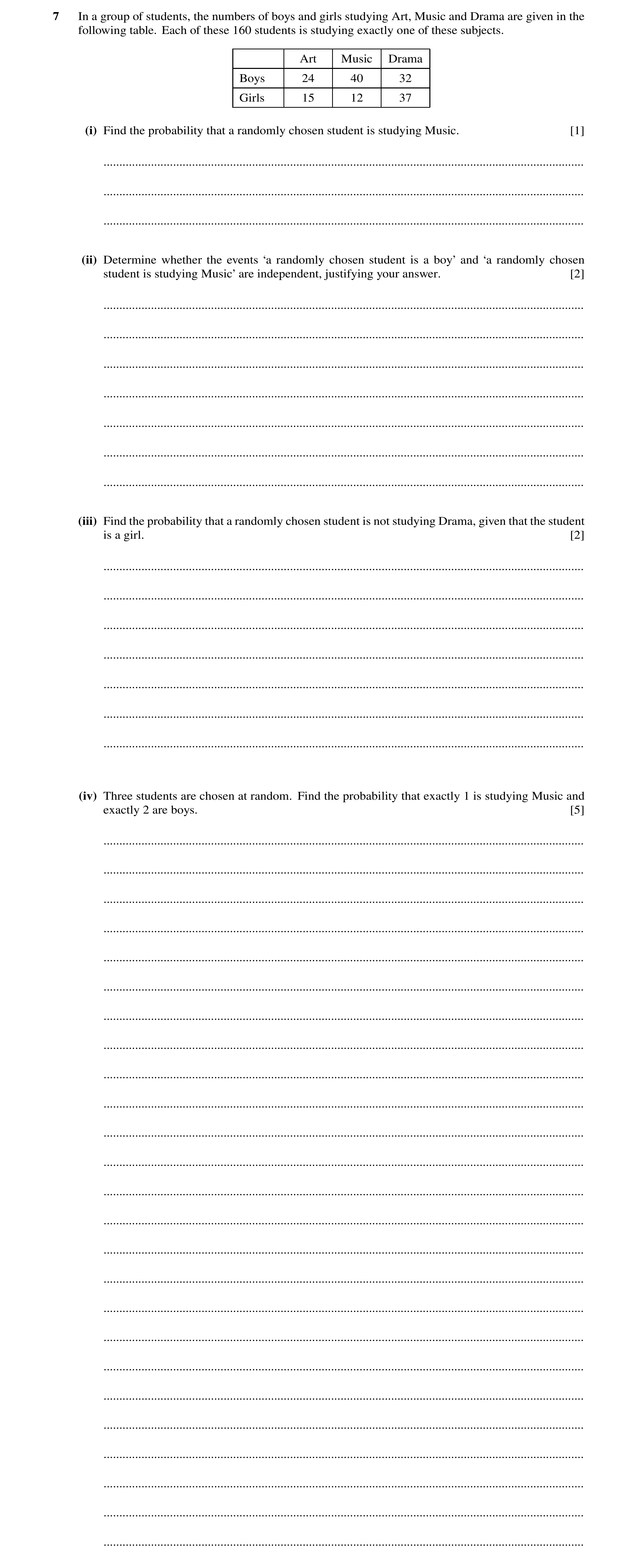
![Question 123: (i) How many different arrangements are there of the 11 letters in the word MISSISSIPPI? [2] ...............................................…](https://img.pastlit.com/crops/feb4081e-fea6-489a-b7f1-e7d105106884/q1.webp) 67 / 176
67 / 176
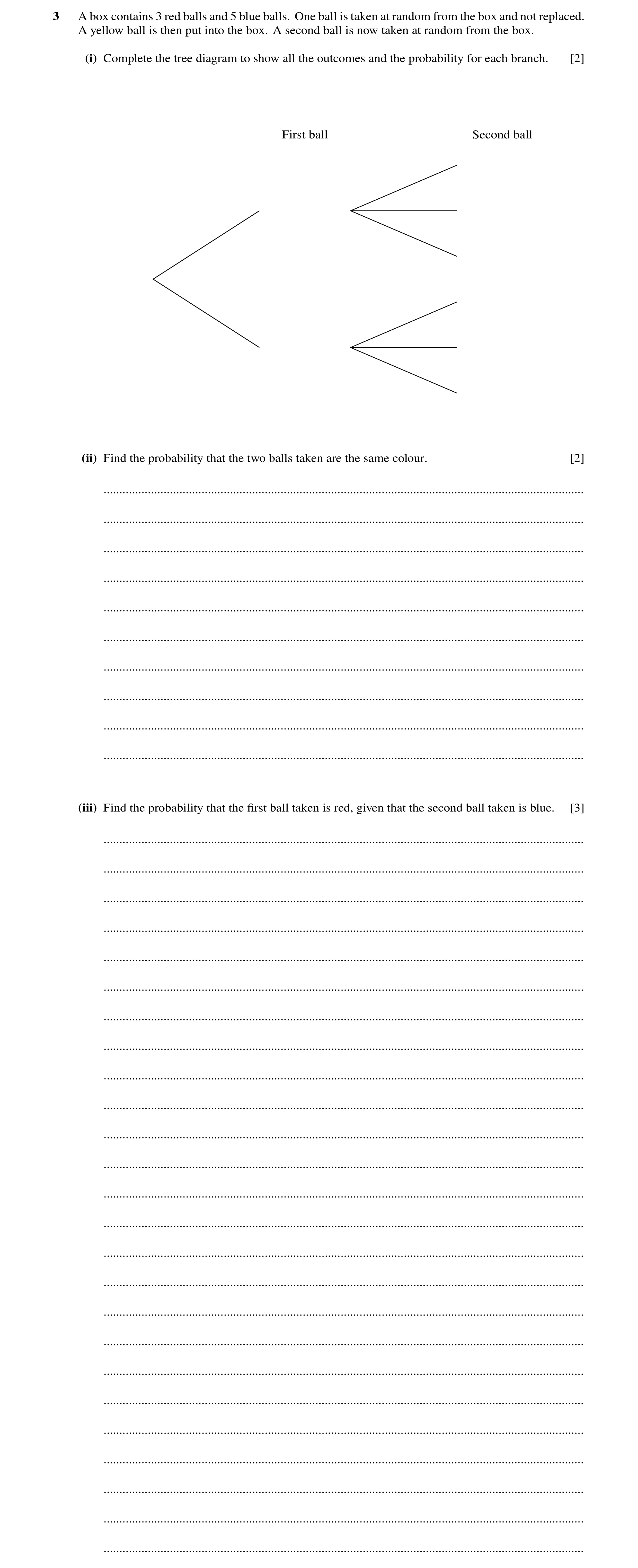
 74 / 176
 77 / 176
 78 / 176
 83 / 176
 86 / 176
 91 / 176
 92 / 176
 95 / 176
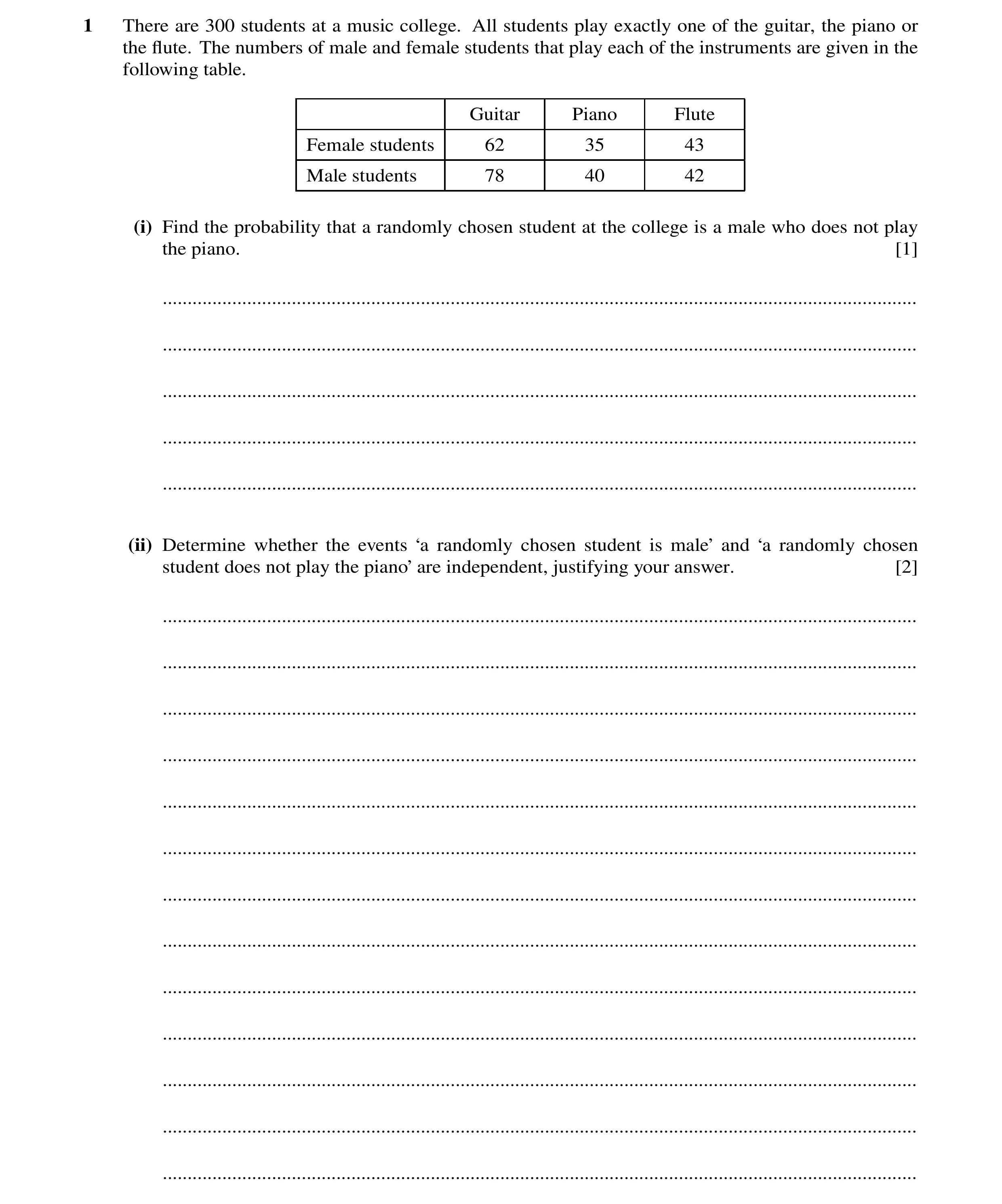 100 / 176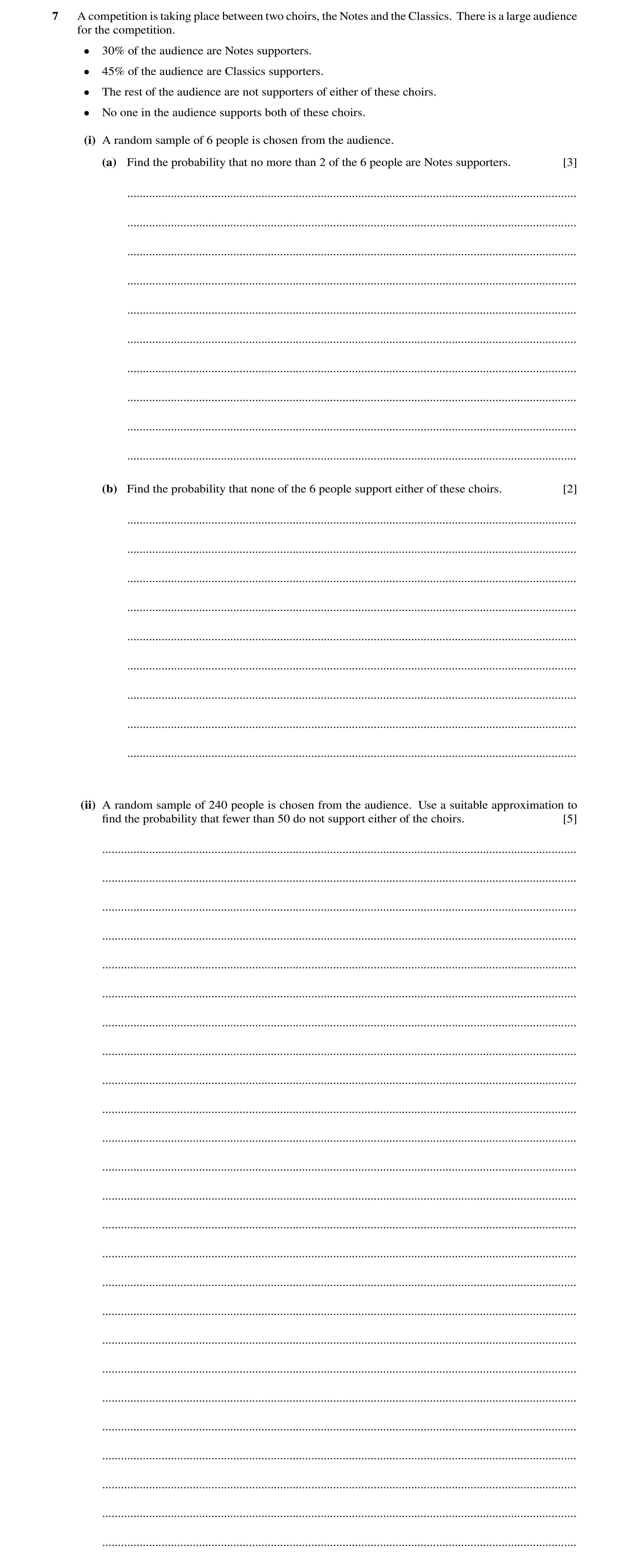
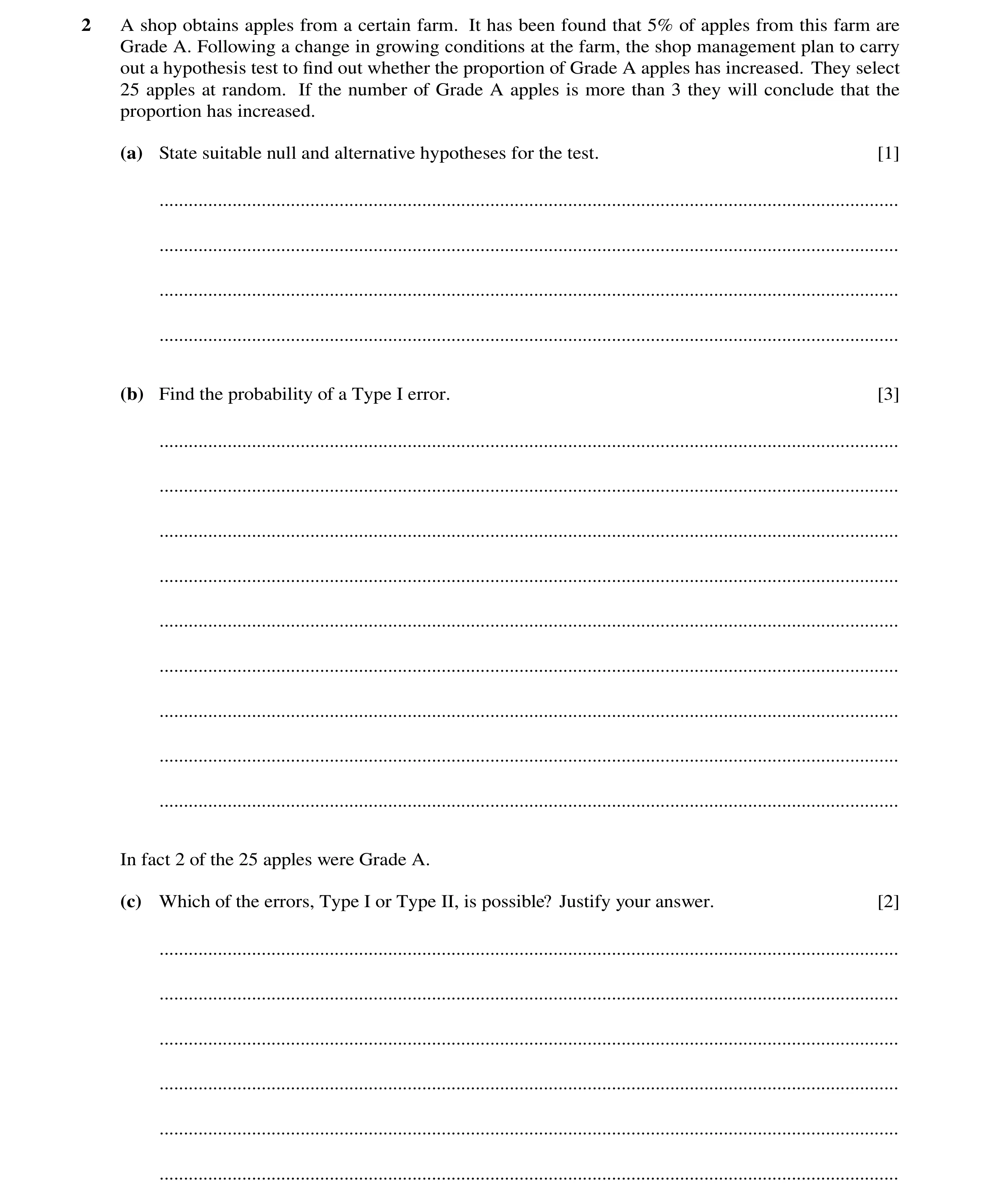 103 / 176
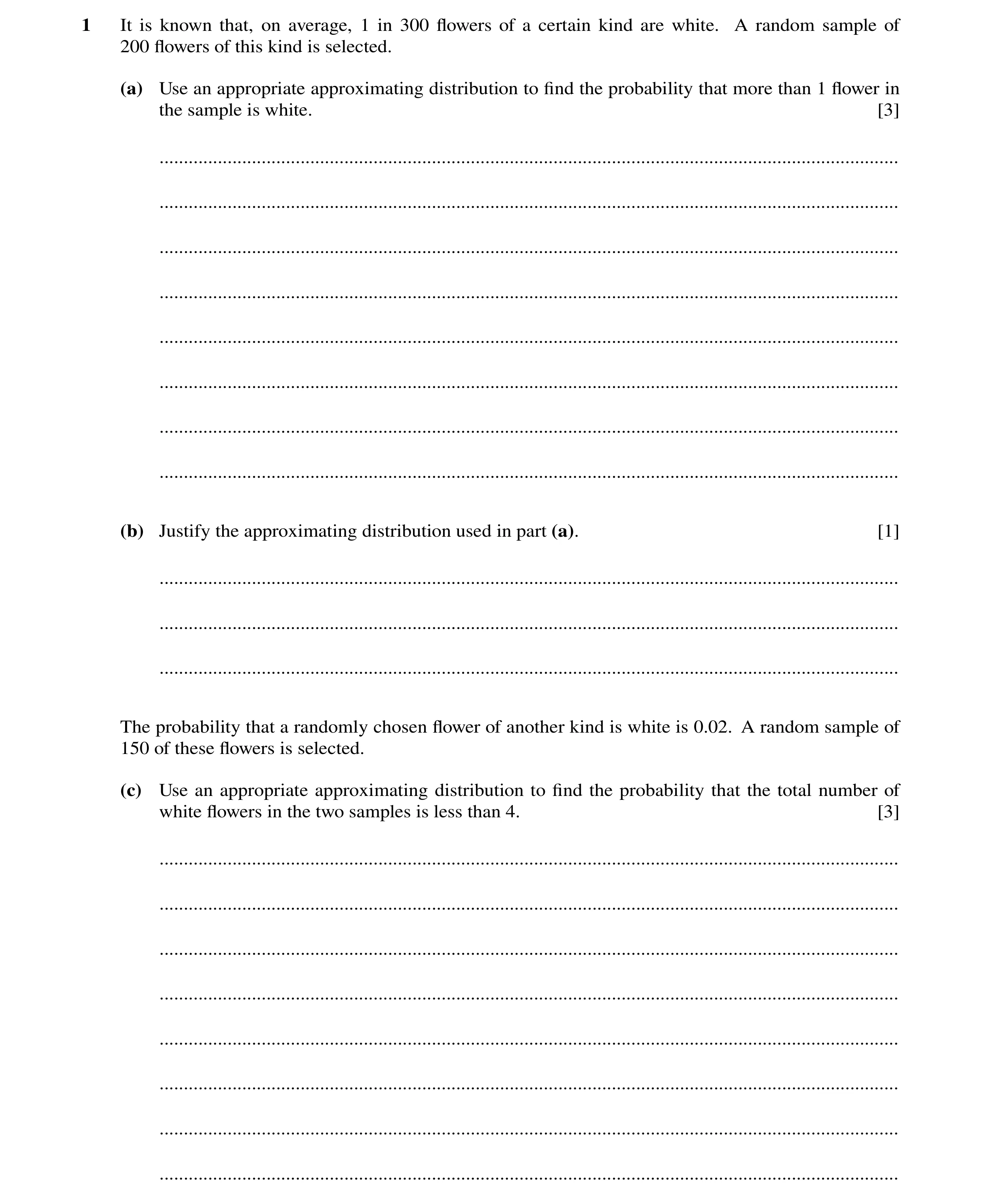 104 / 176
 105 / 176
 106 / 176
 109 / 176
 110 / 176
 113 / 176
 114 / 176
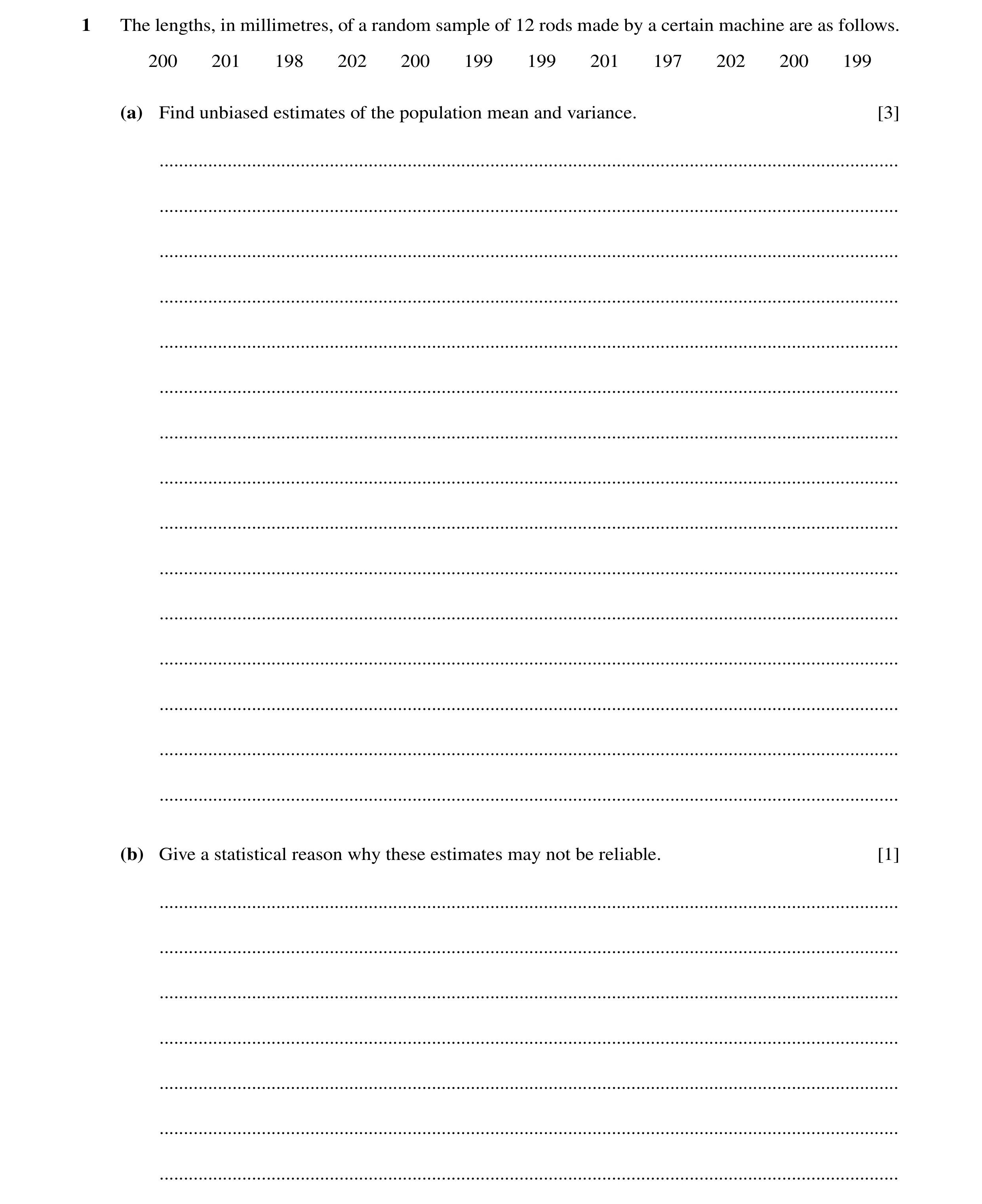 115 / 176
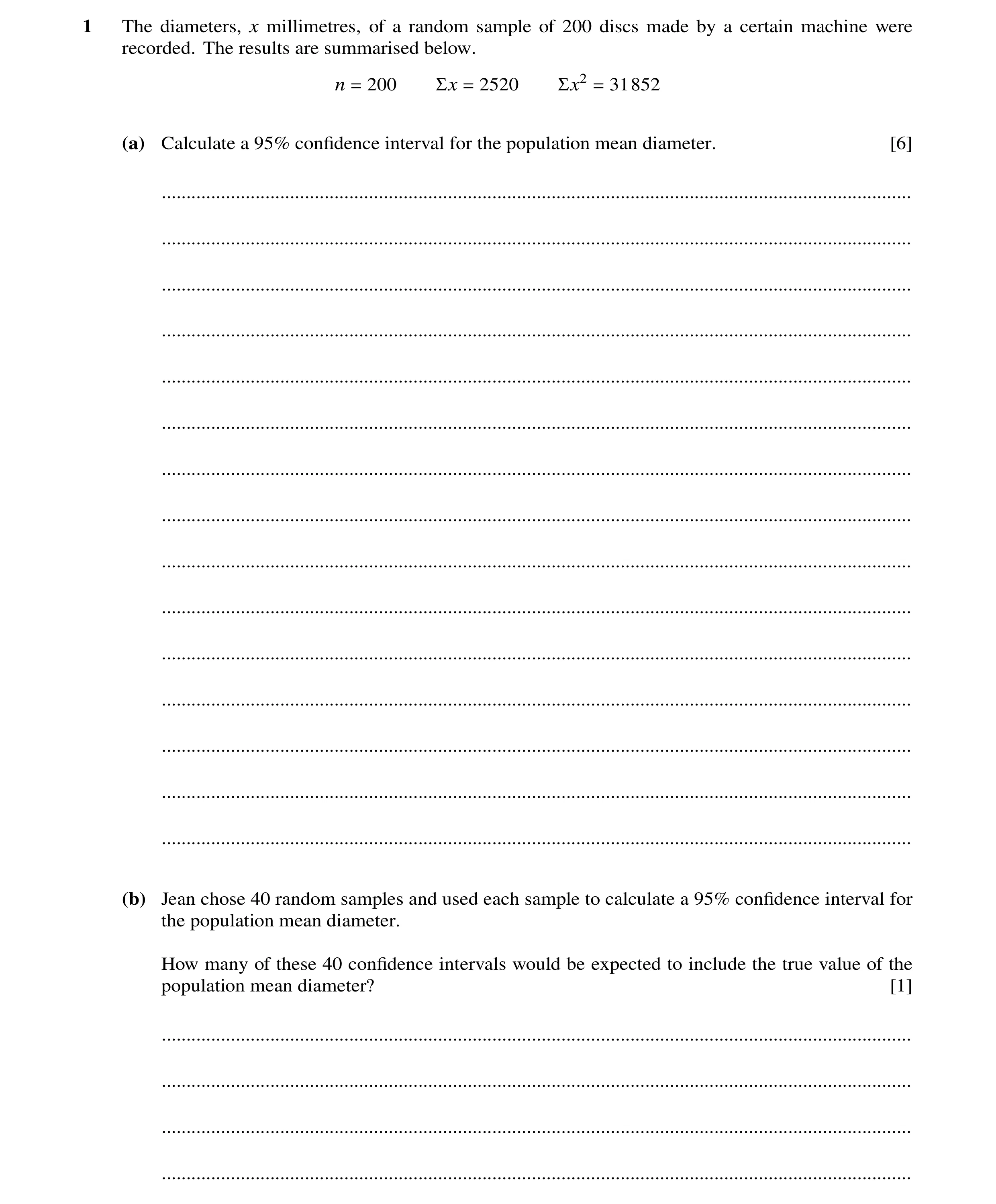 116 / 176
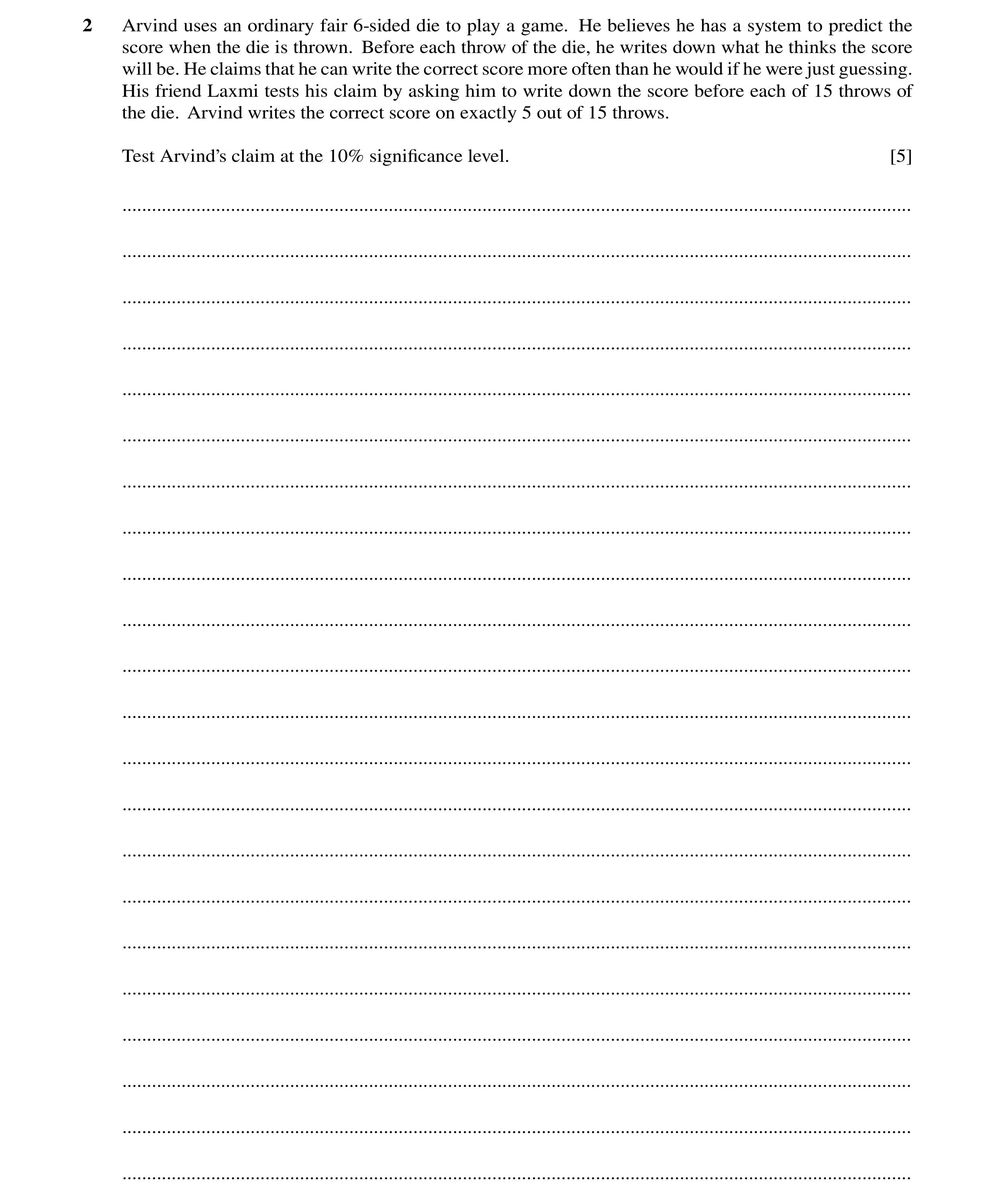 117 / 176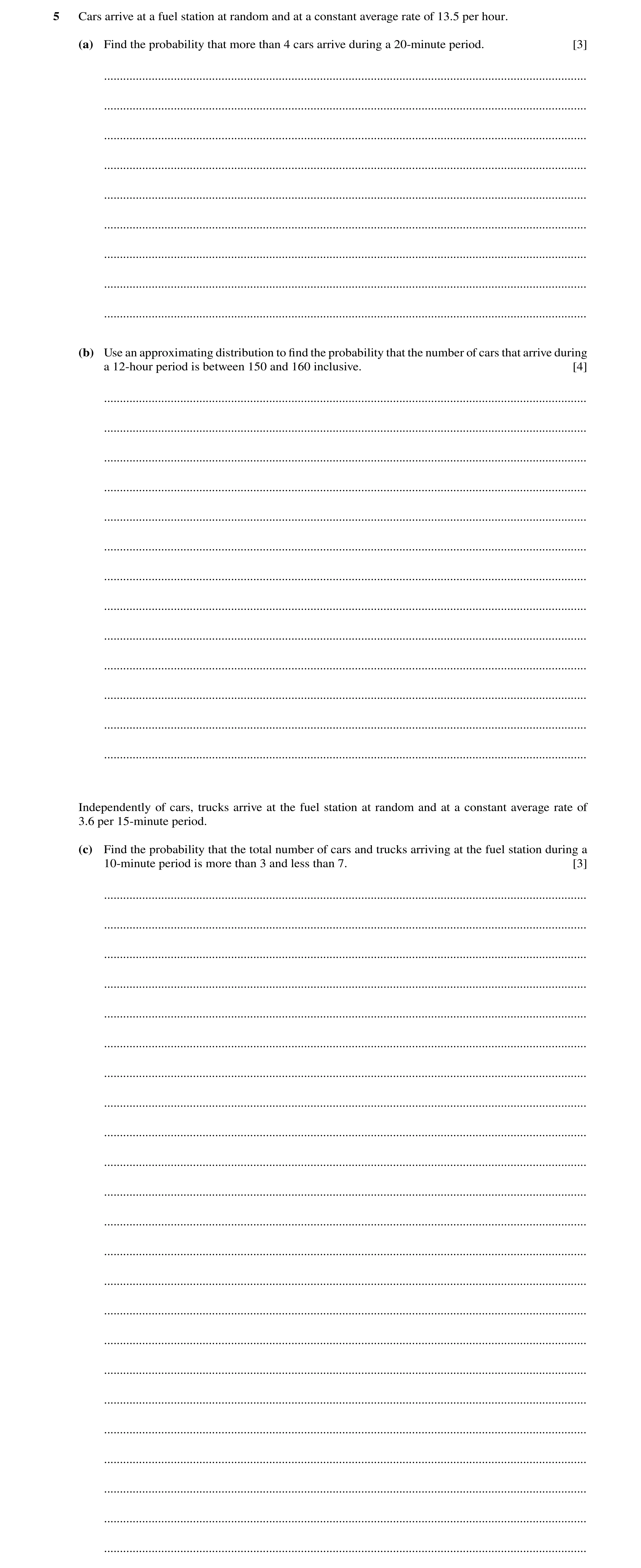
 120 / 176
 121 / 176
 122 / 176
 125 / 176
 126 / 176
 127 / 176
 128 / 176
 129 / 176
 130 / 176
 135 / 176
 136 / 176
 139 / 176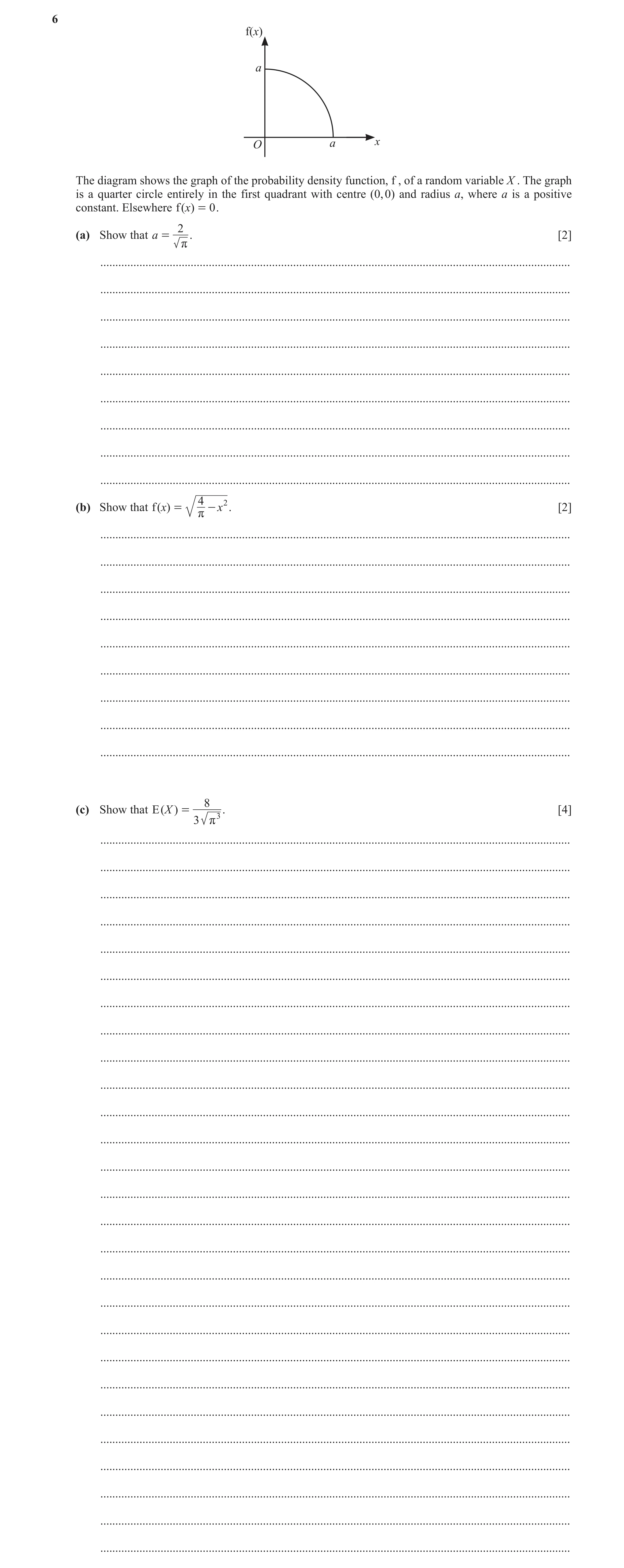
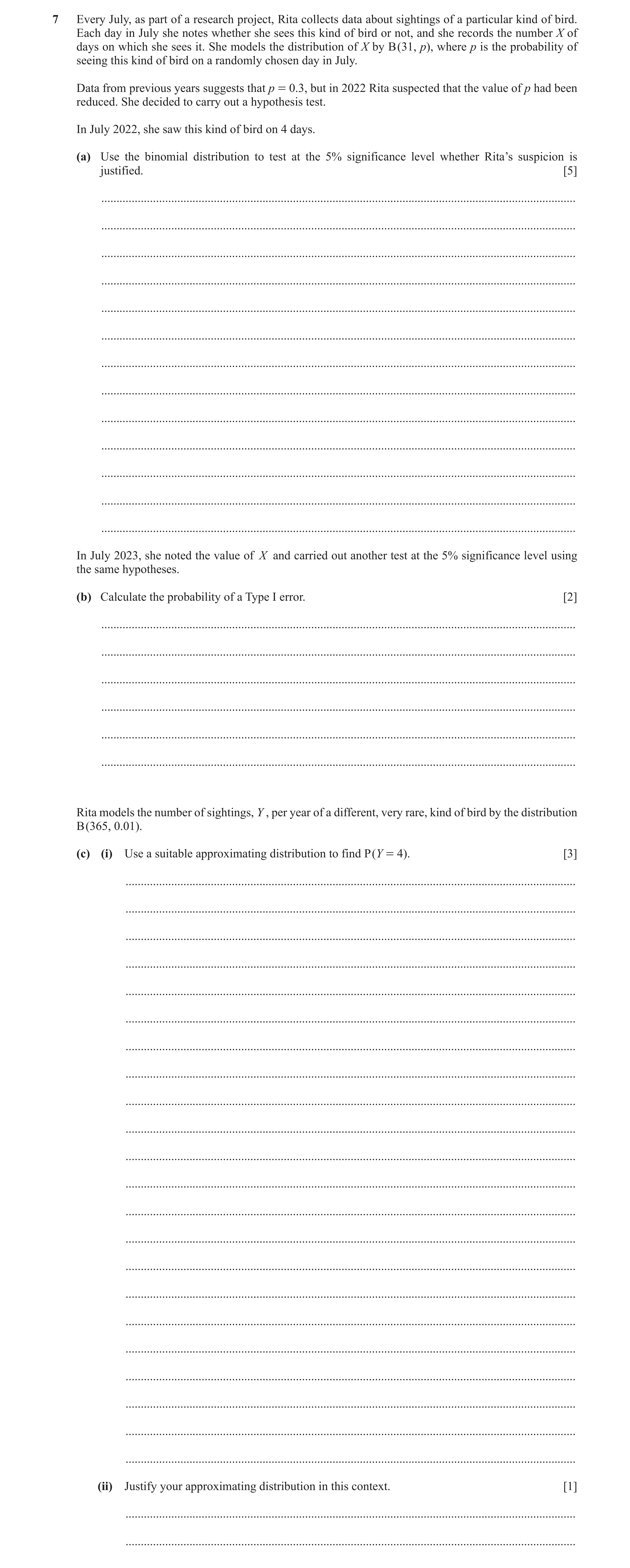
 144 / 176
 145 / 176
 150 / 176
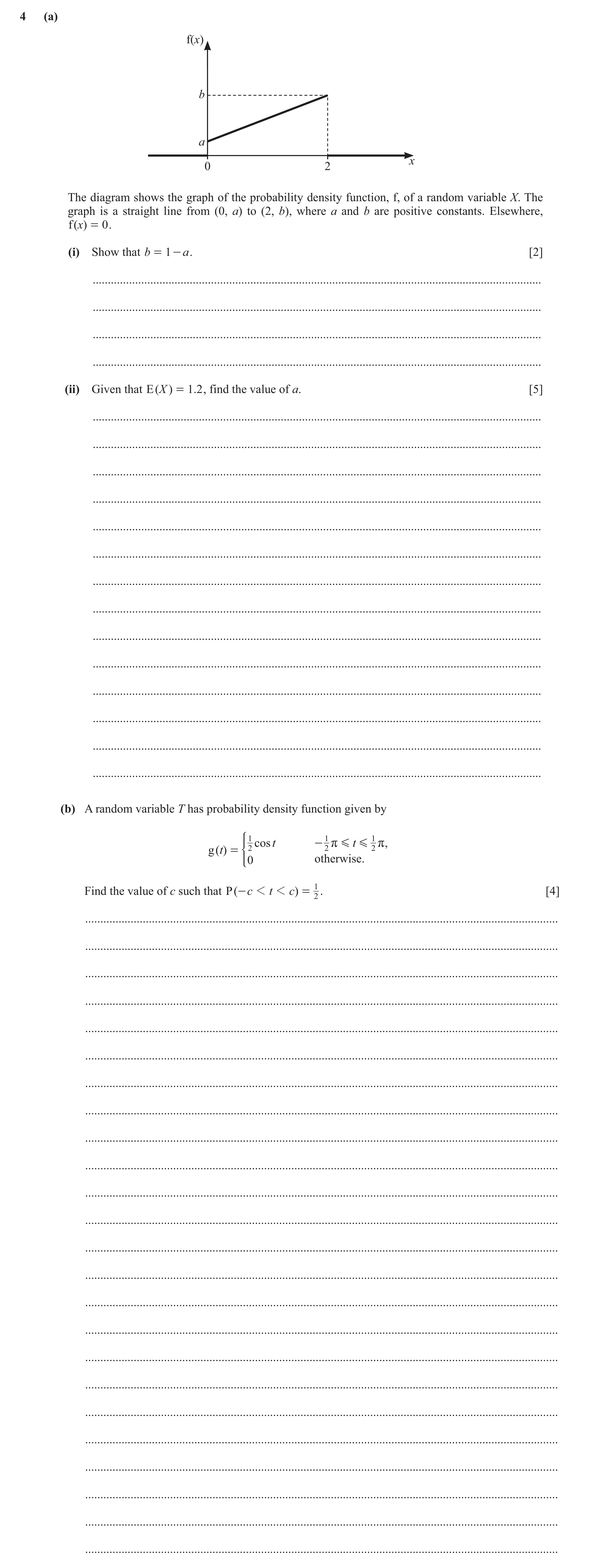
 155 / 176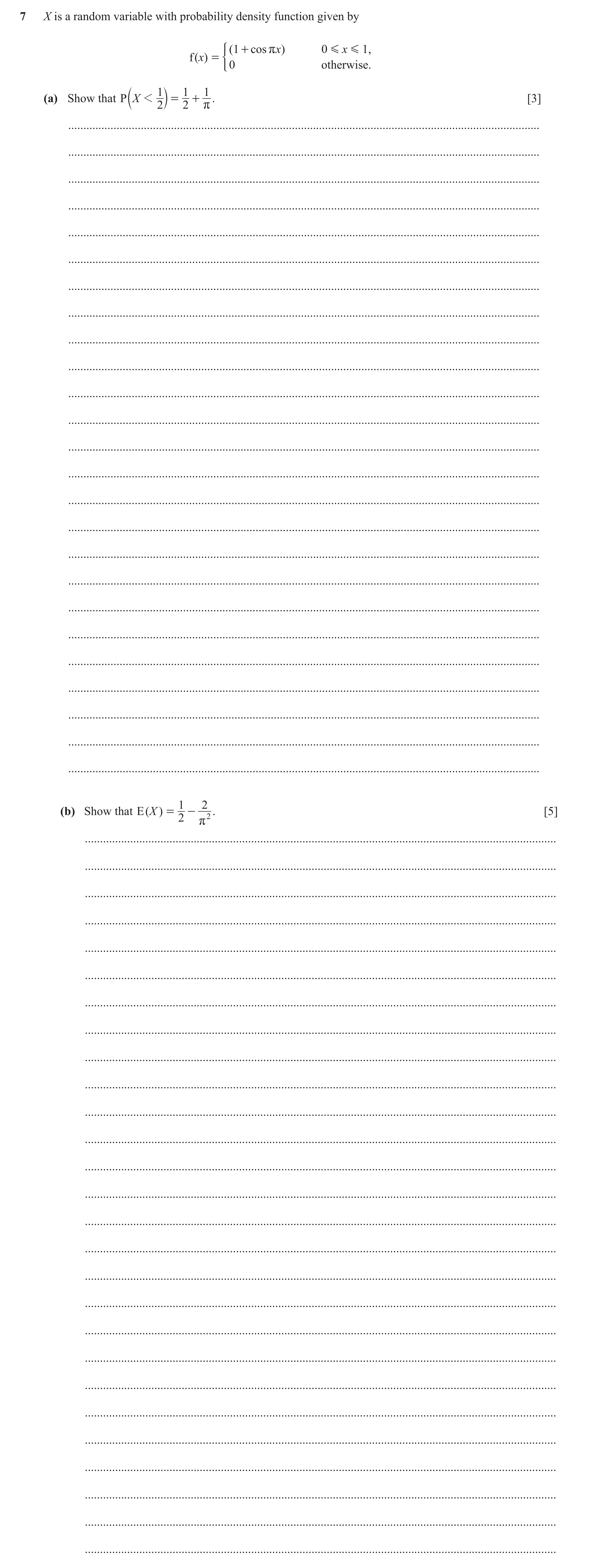
 158 / 176
 161 / 176
 162 / 176
 163 / 176
 166 / 176
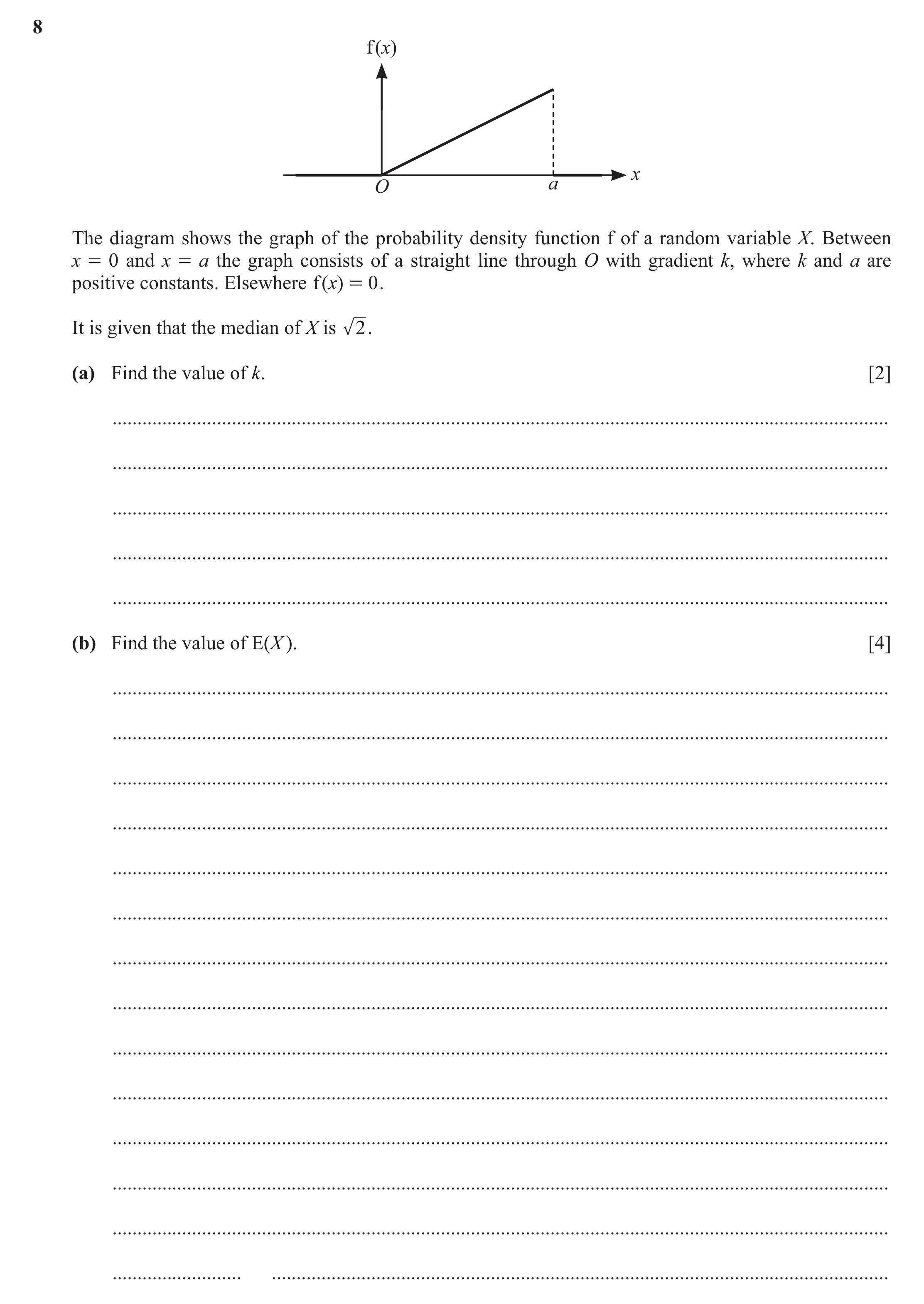 167 / 176
 168 / 176
 172 / 176
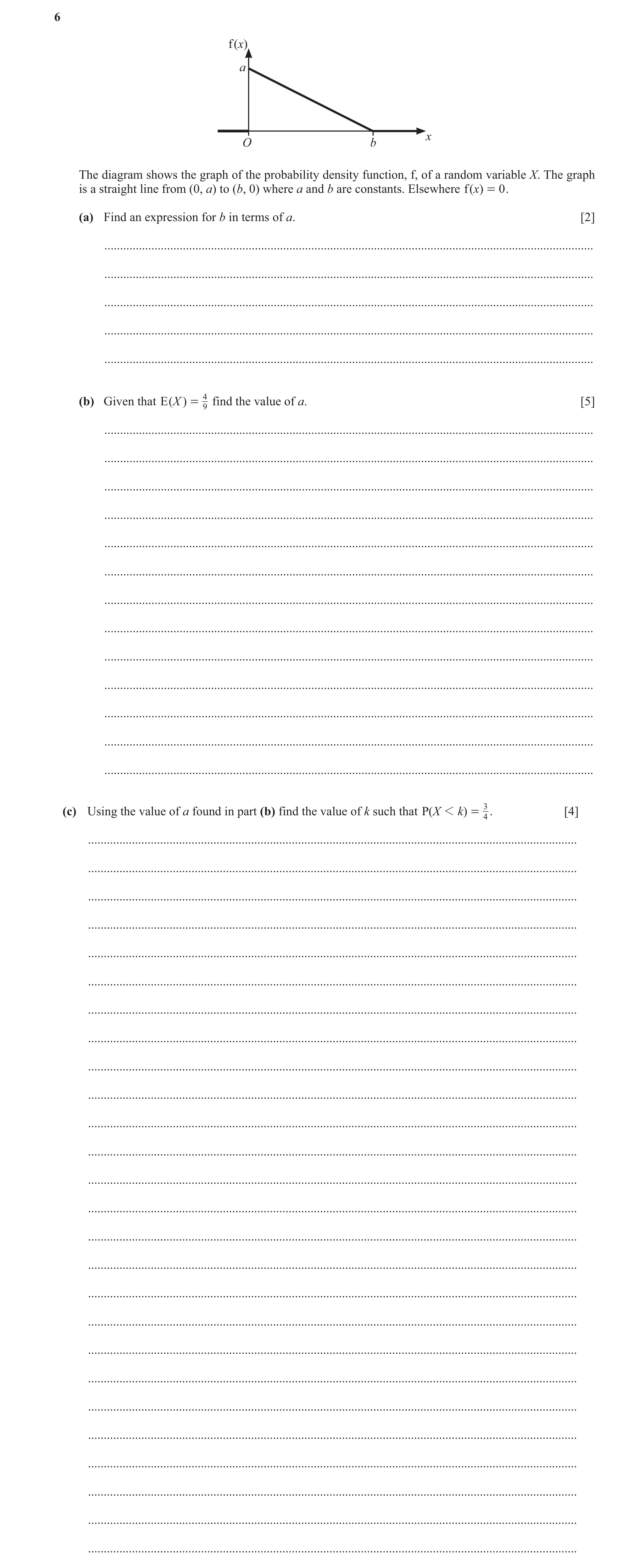
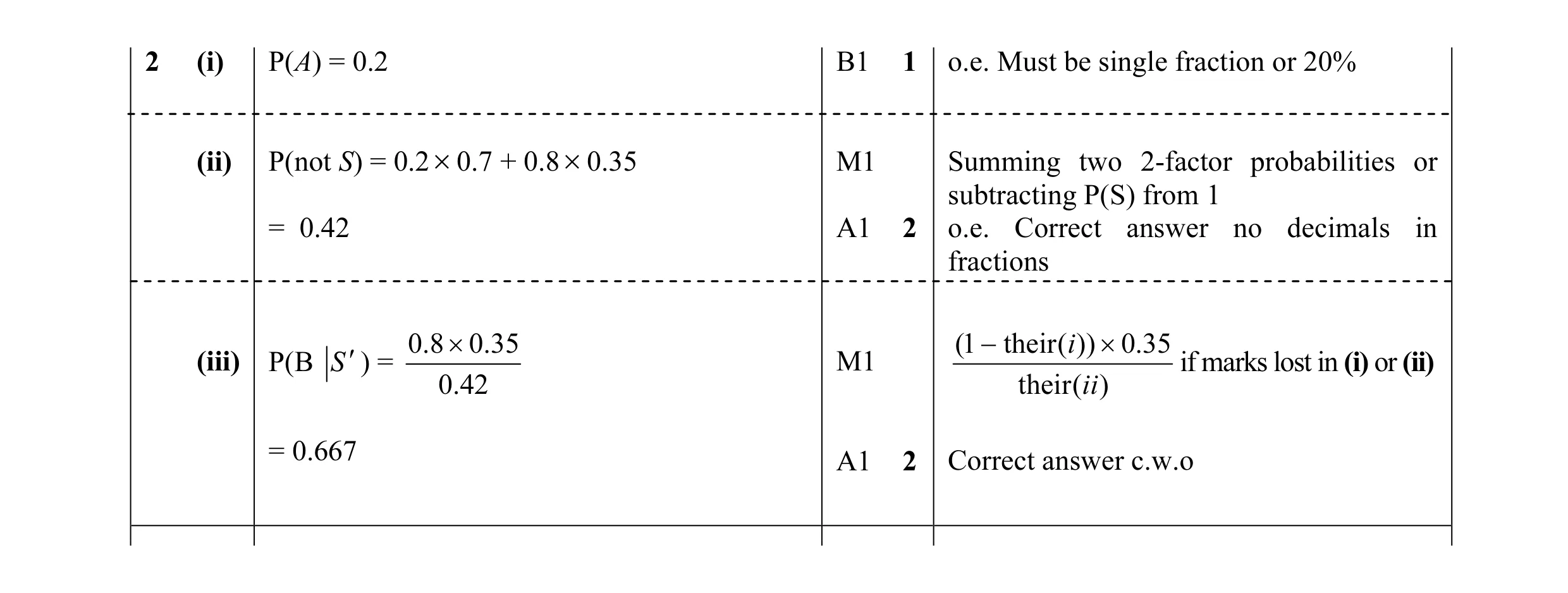 5
5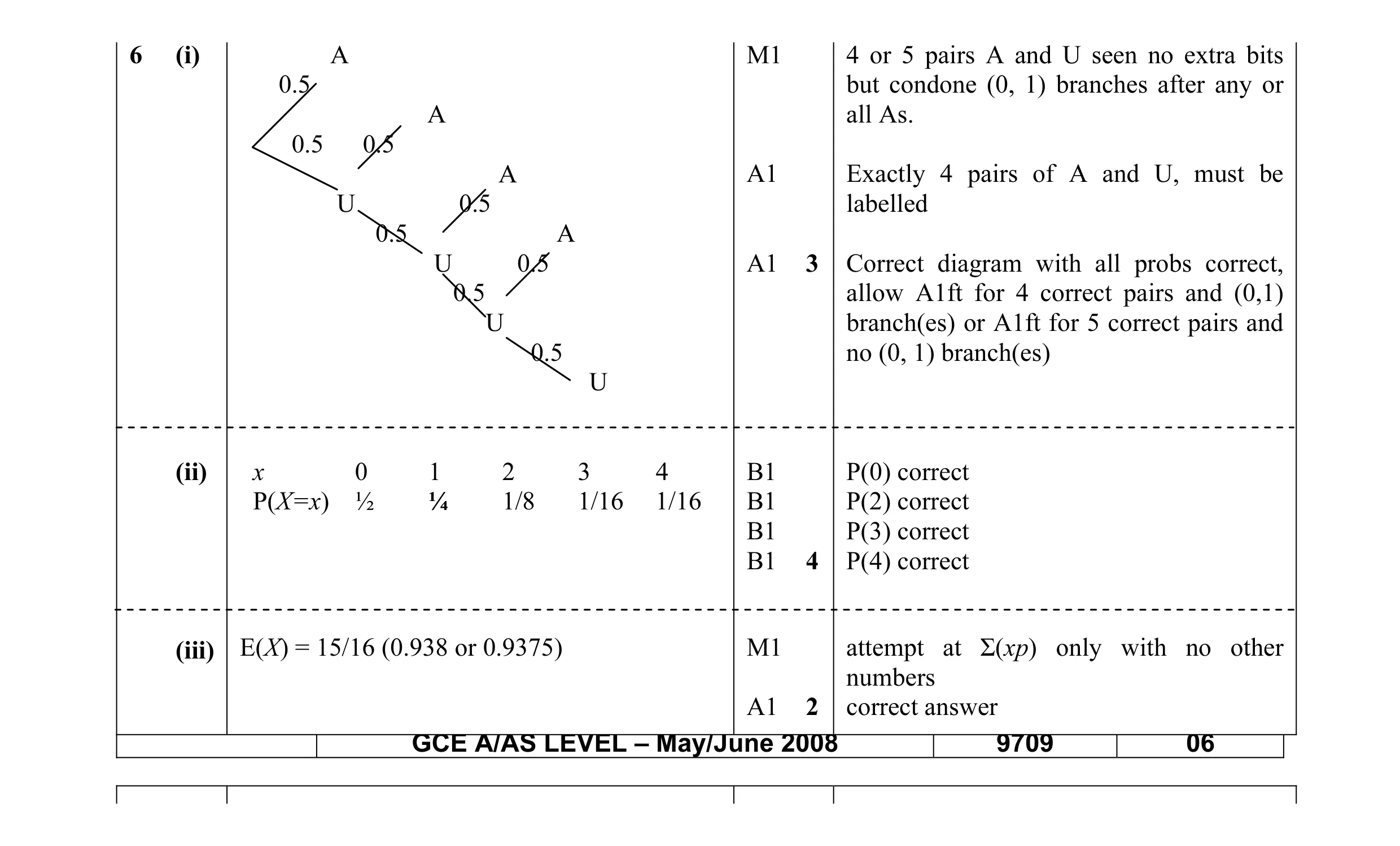 9
9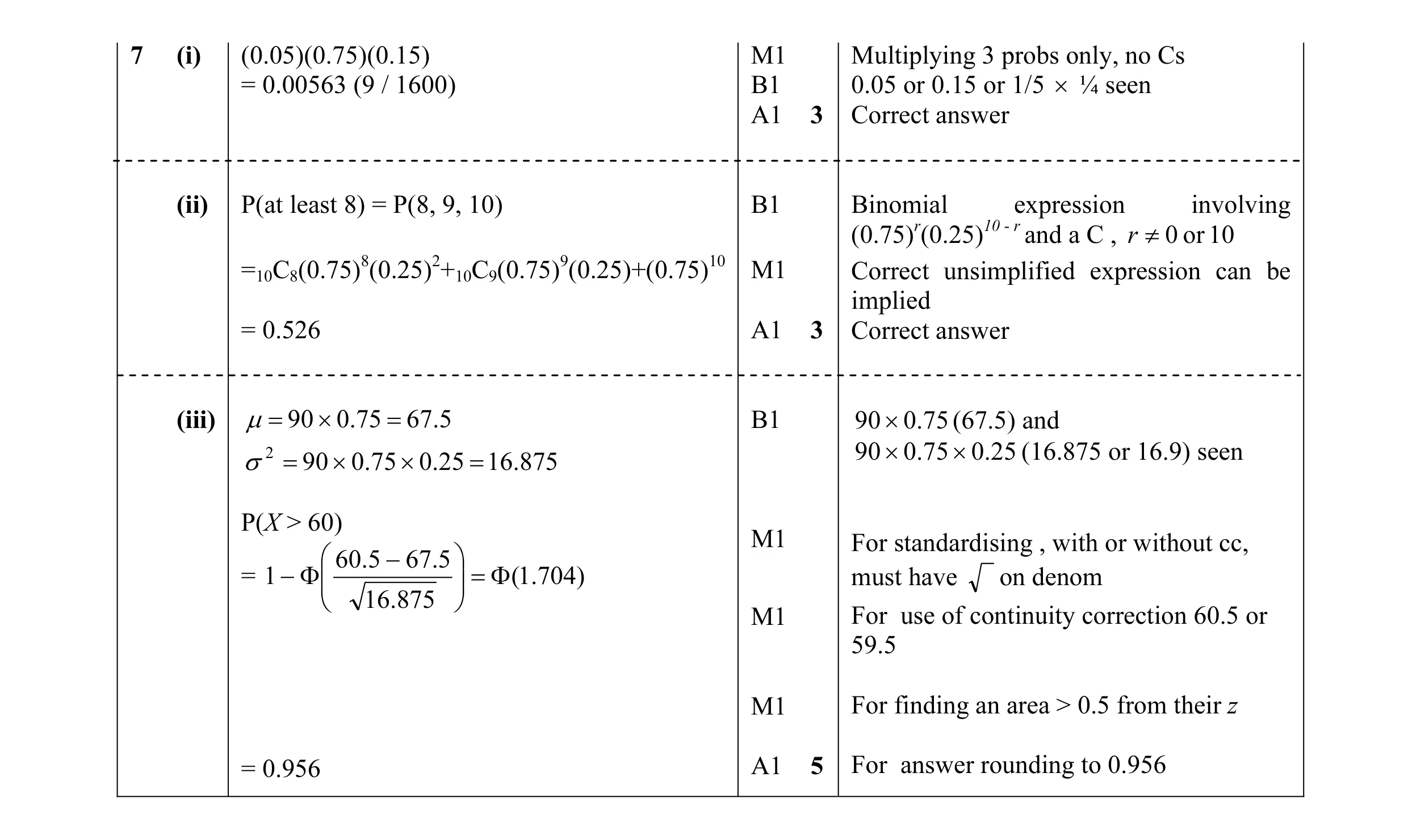 11
11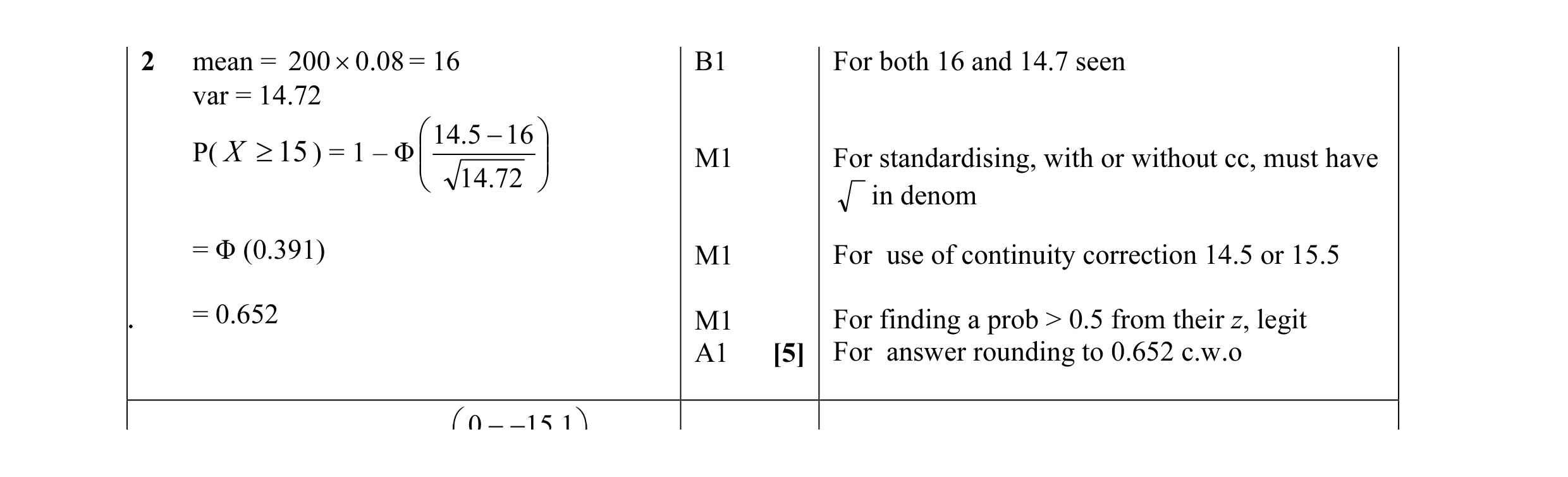 5
5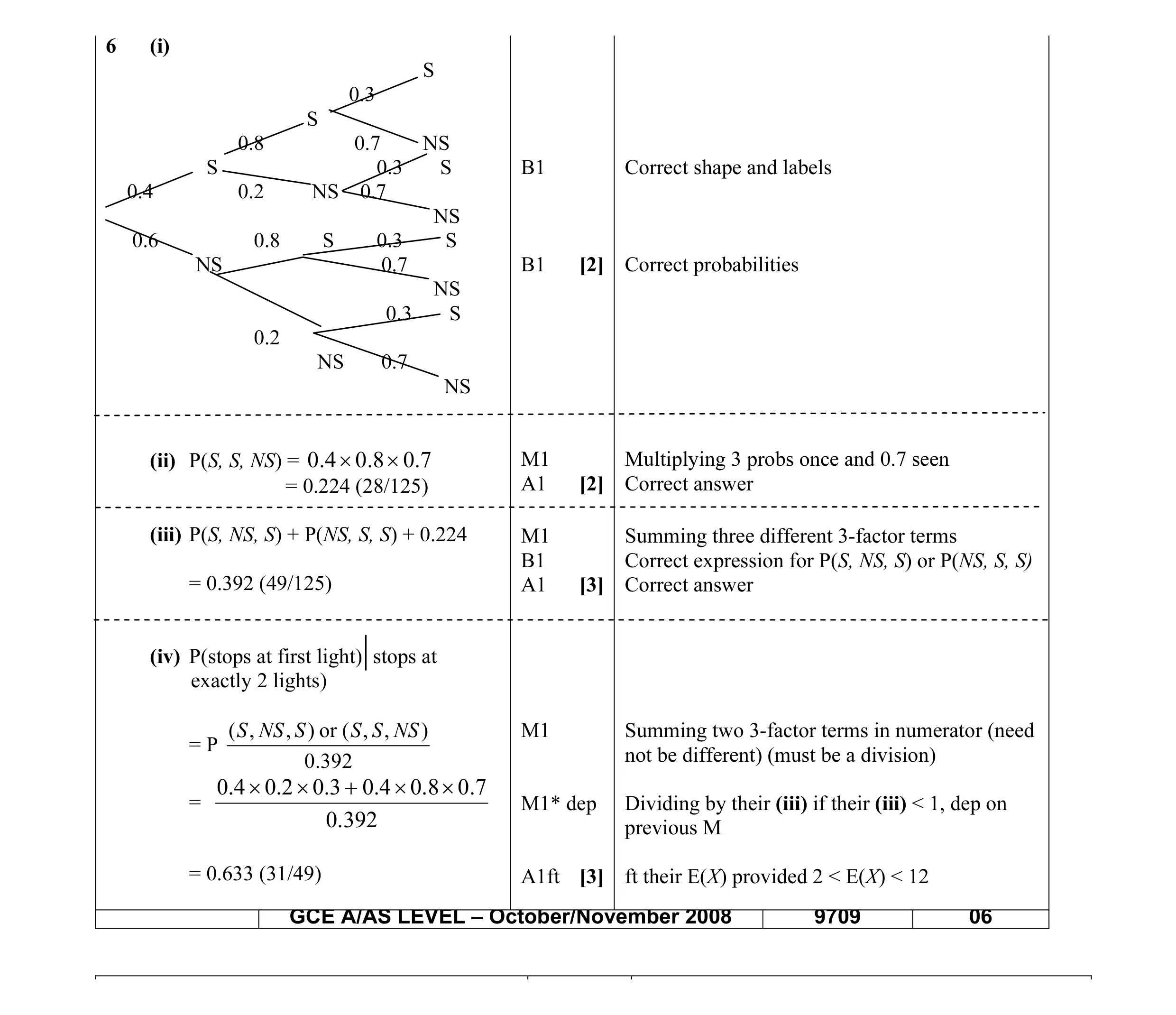 10
10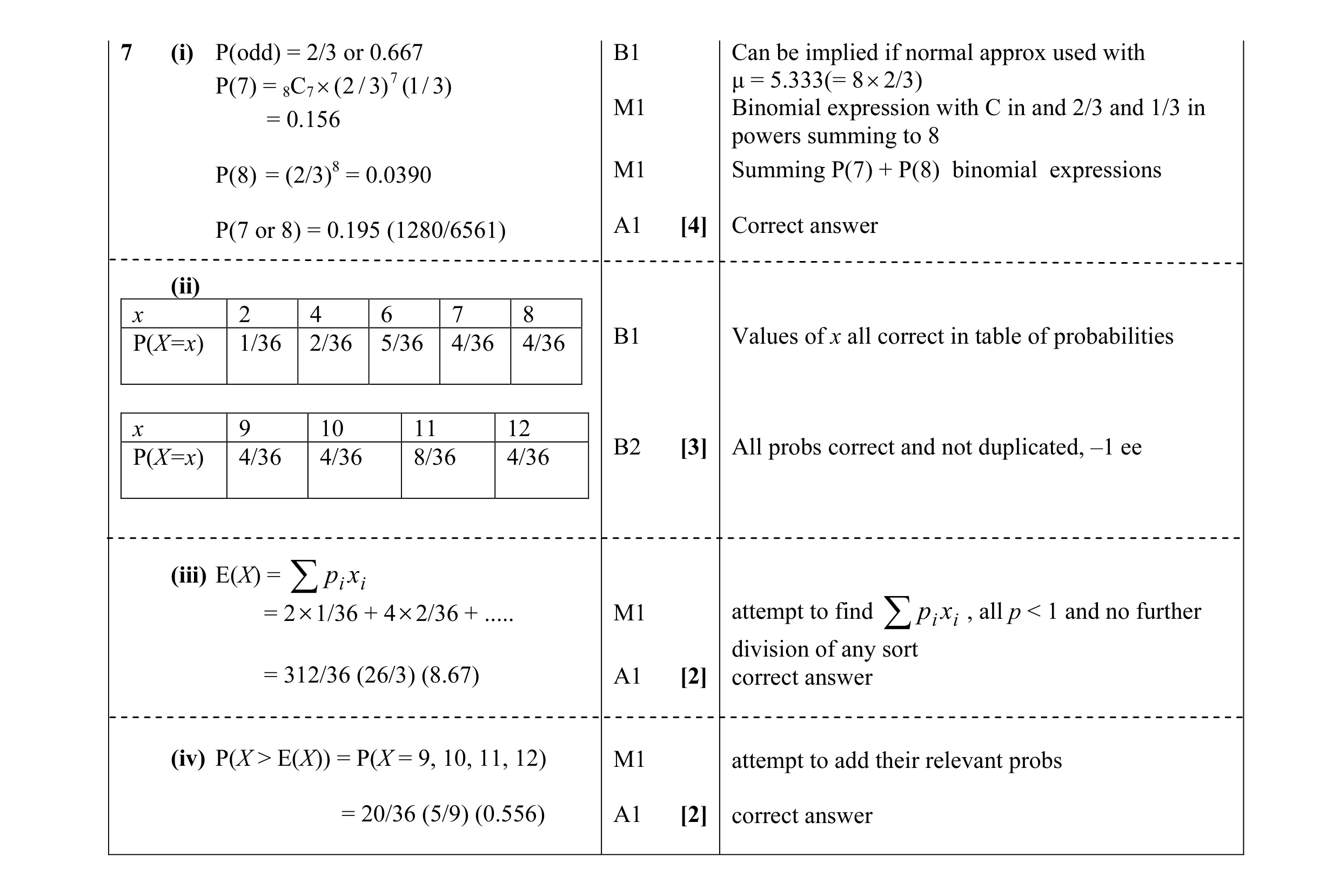 11
11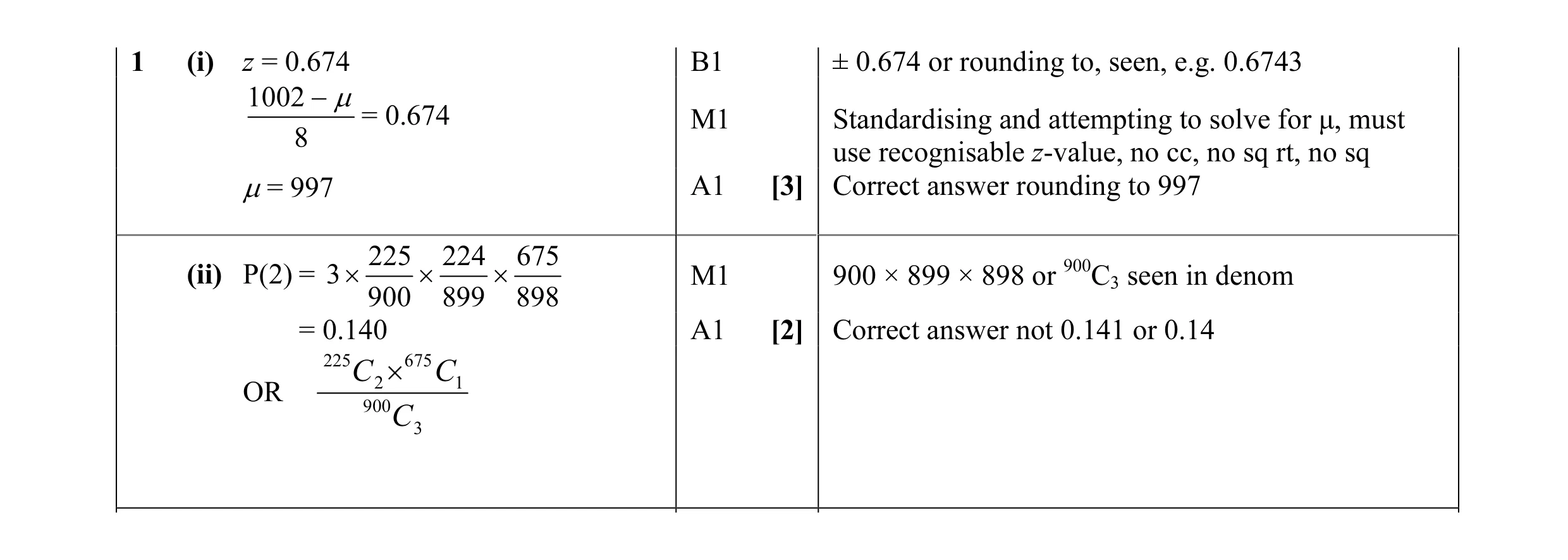 5
5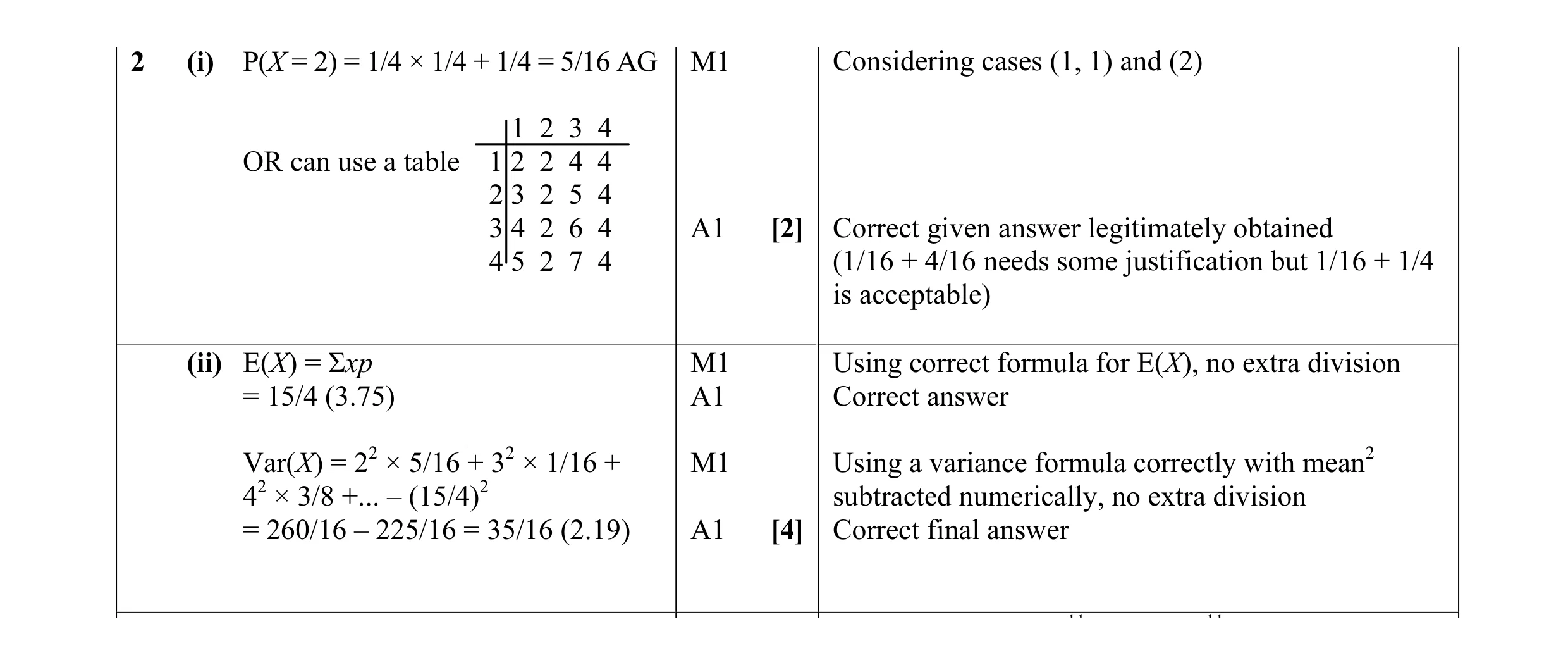 6
6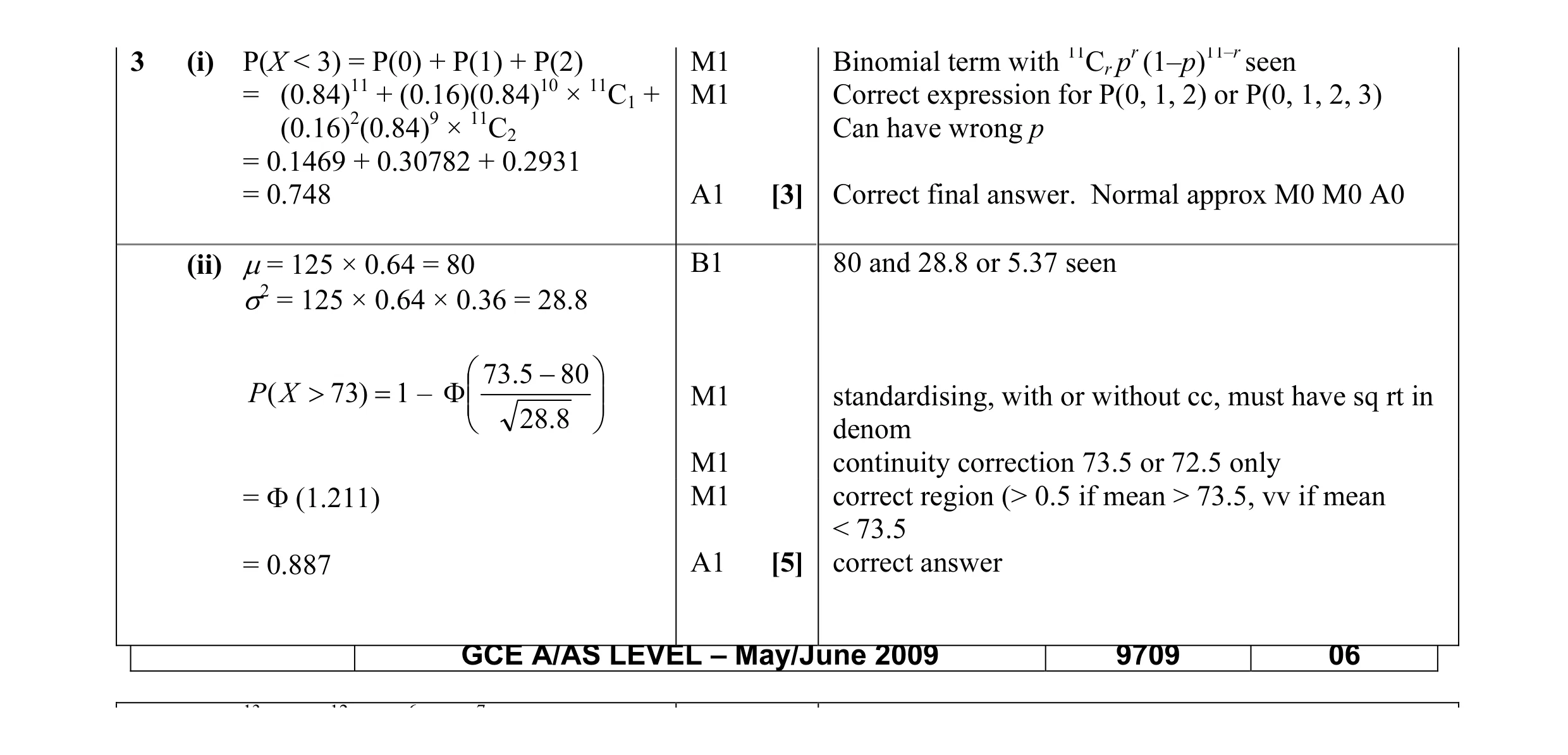 8
8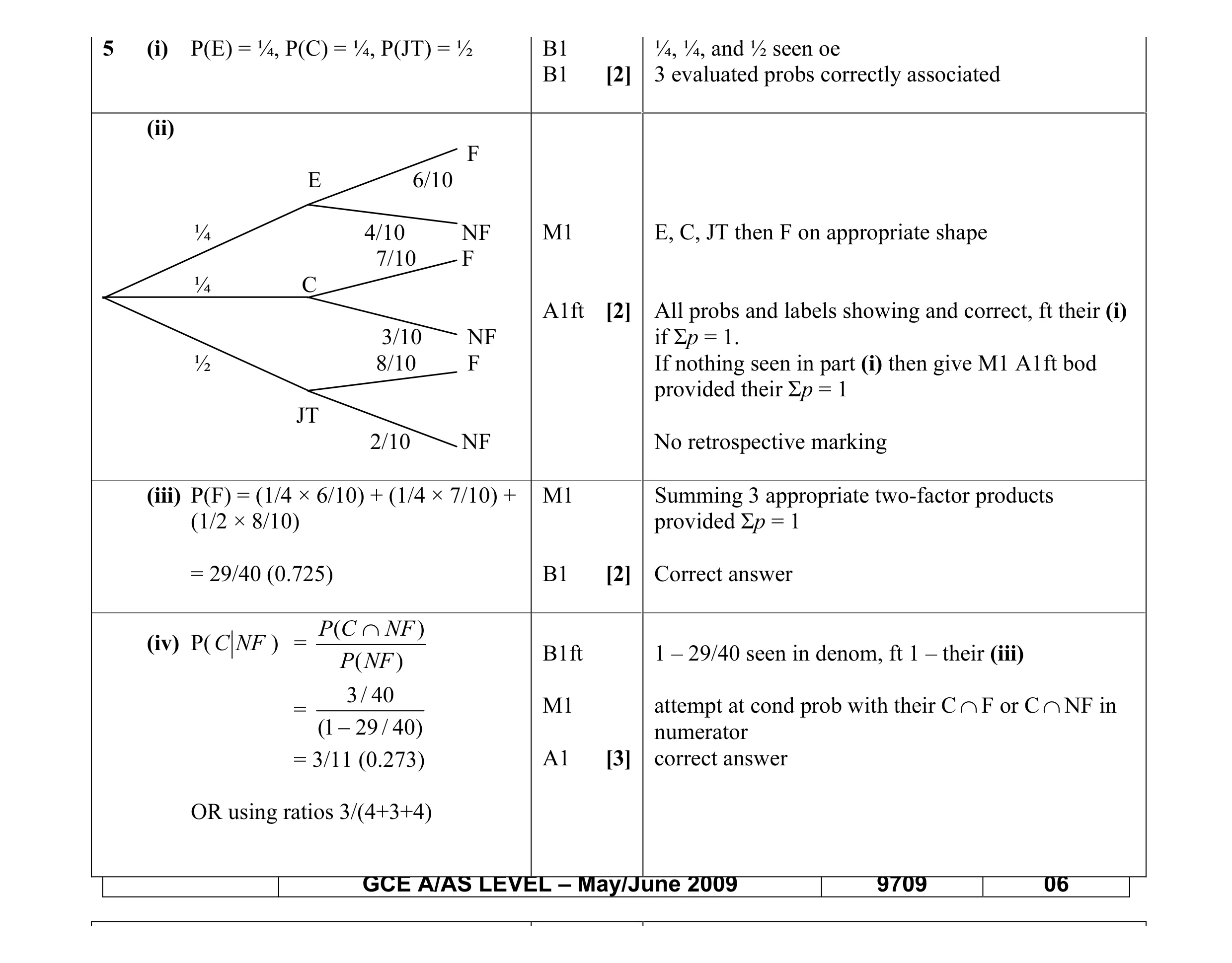 9
9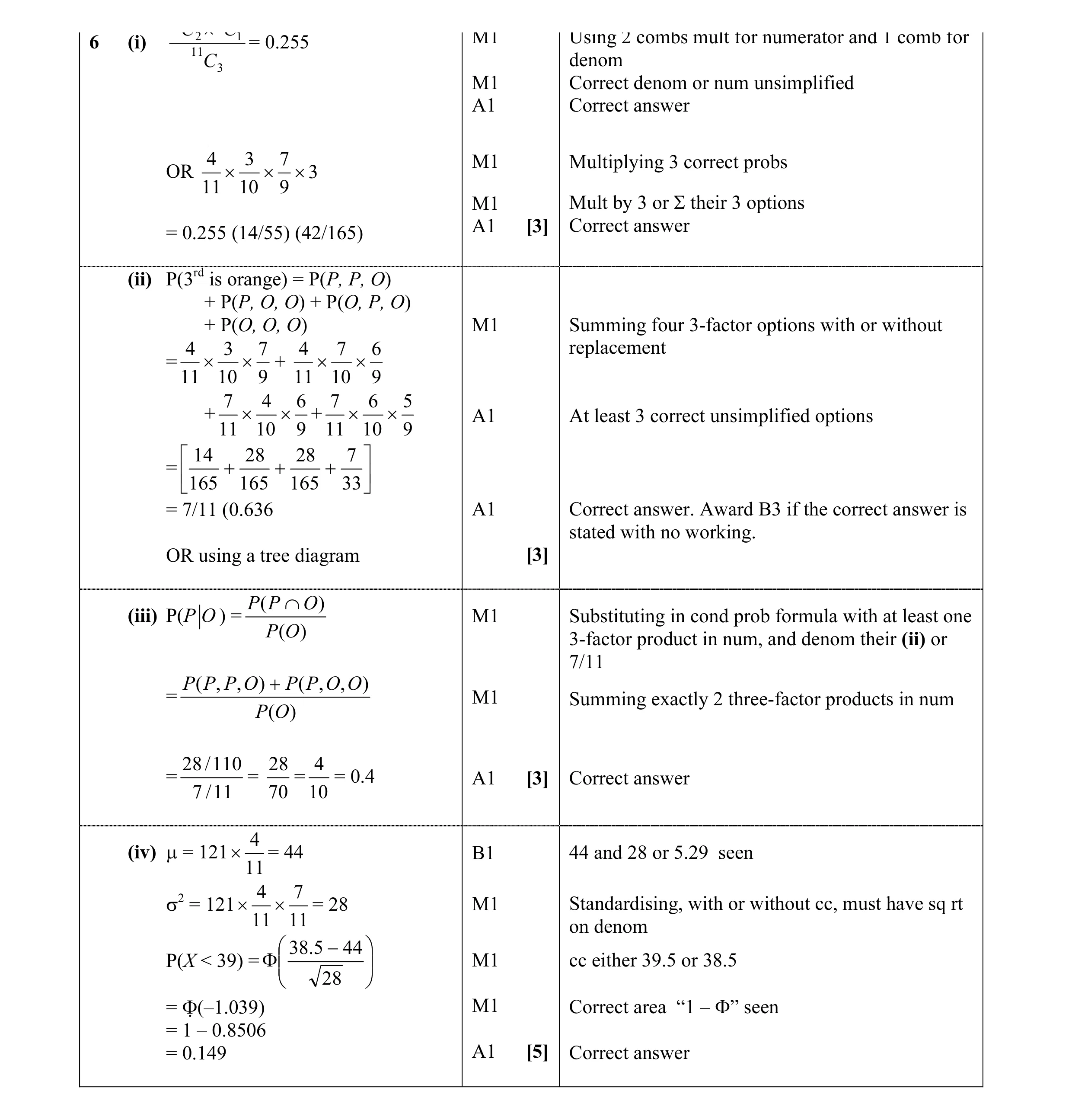 14
14 4
4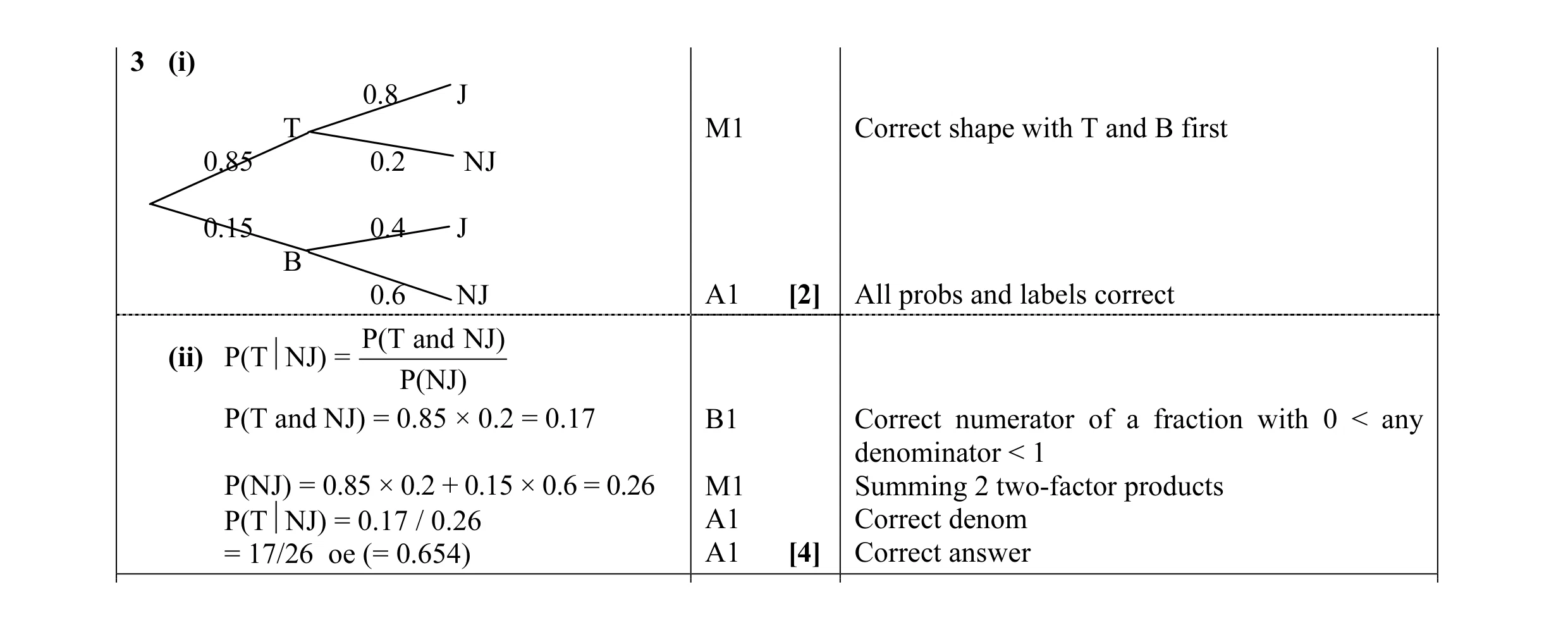 6
6 8
8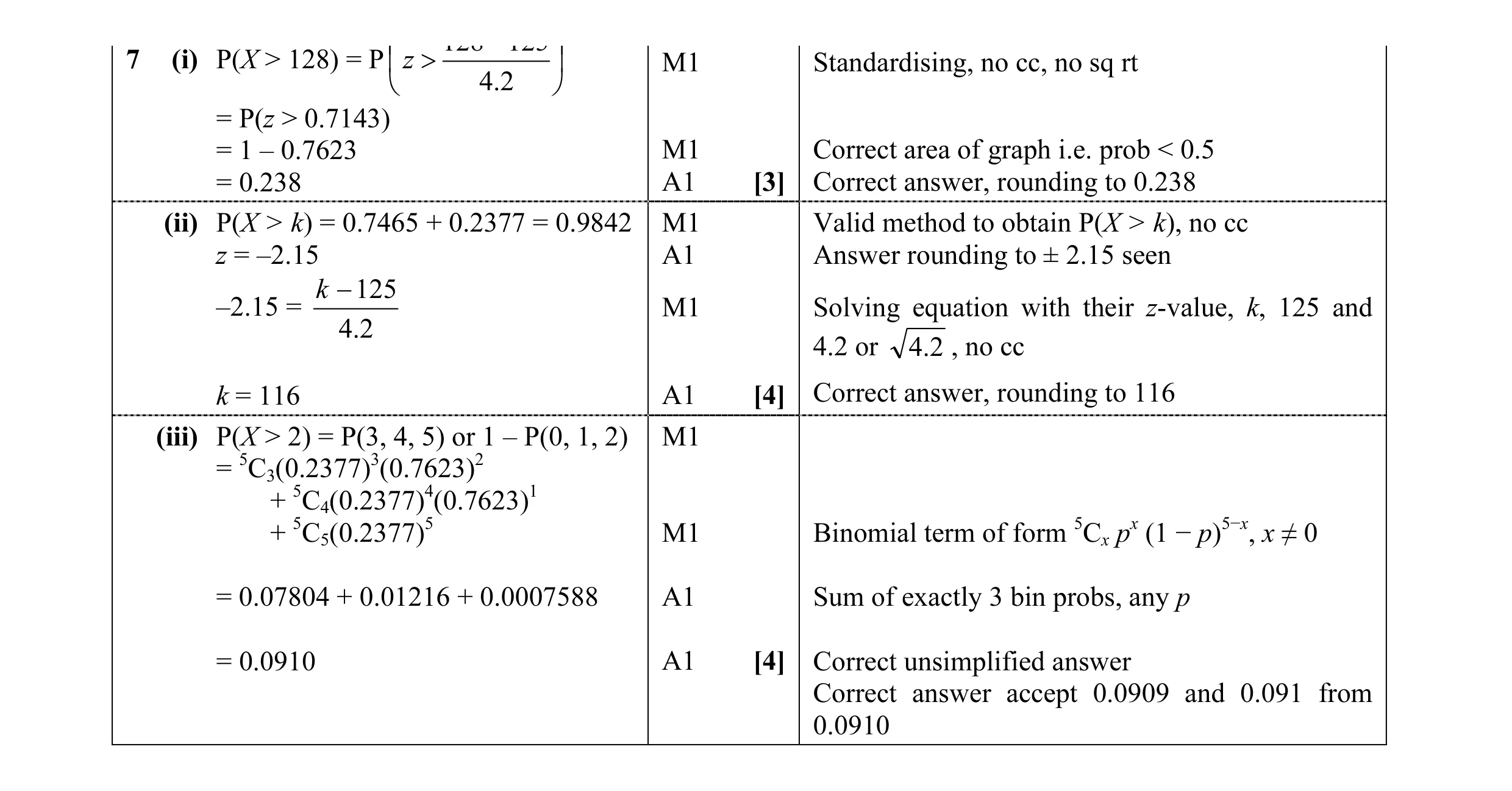 11
11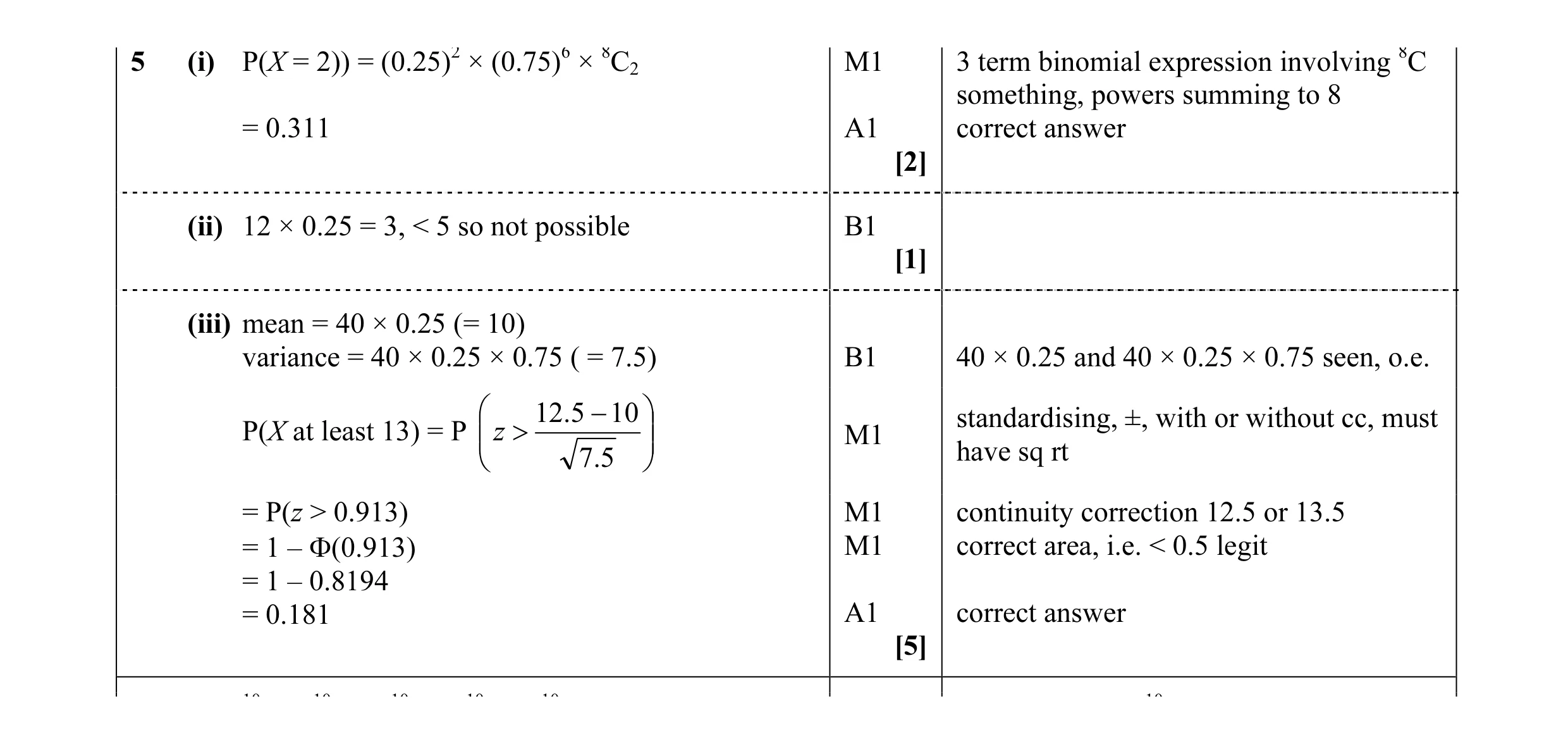 8
8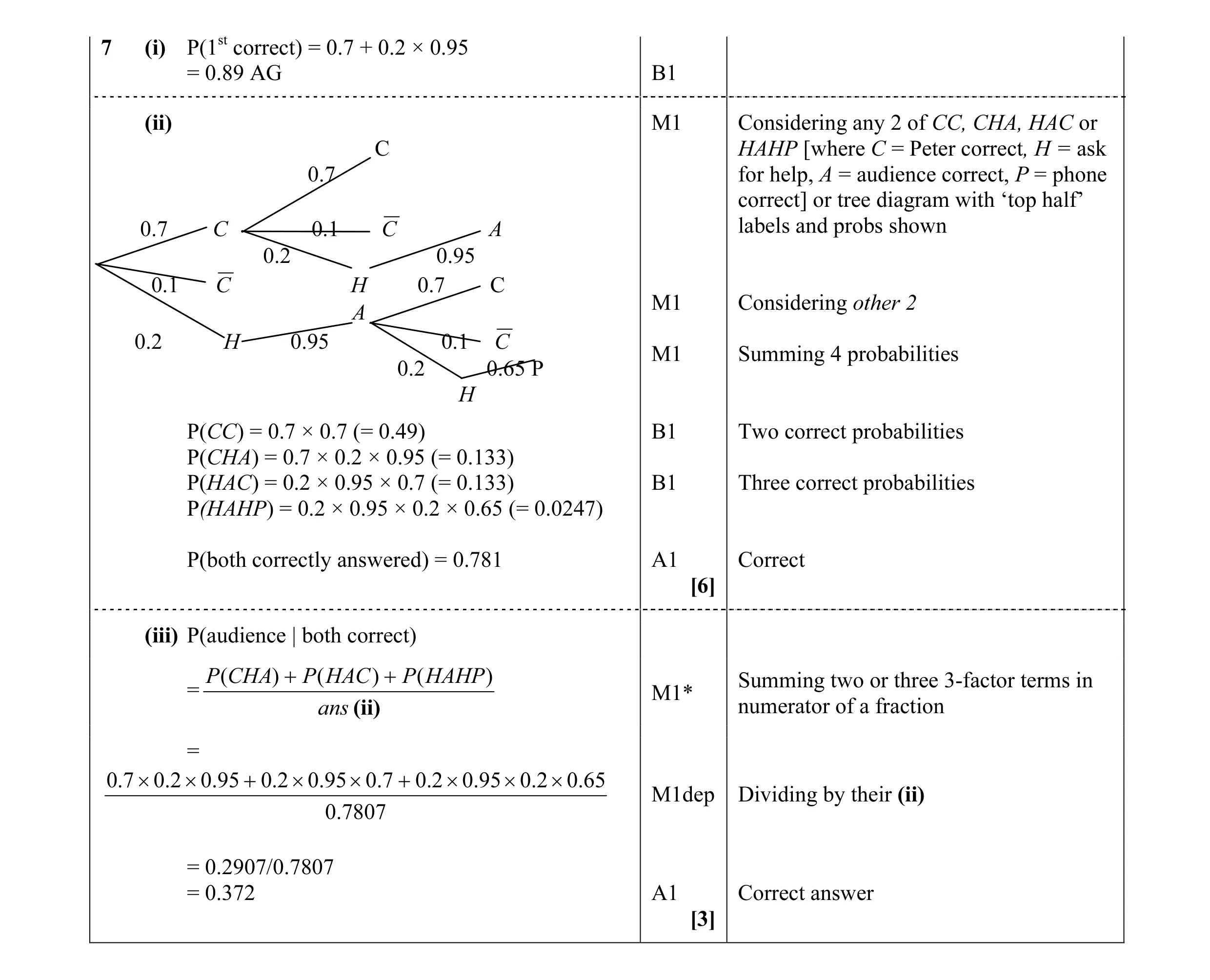 10
10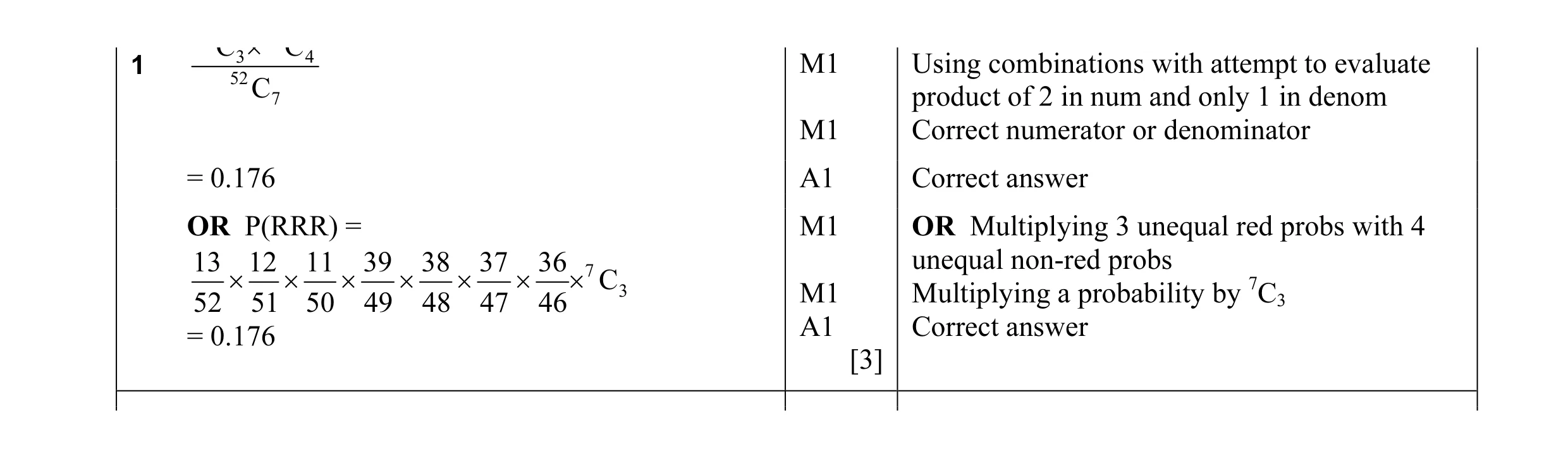 3
3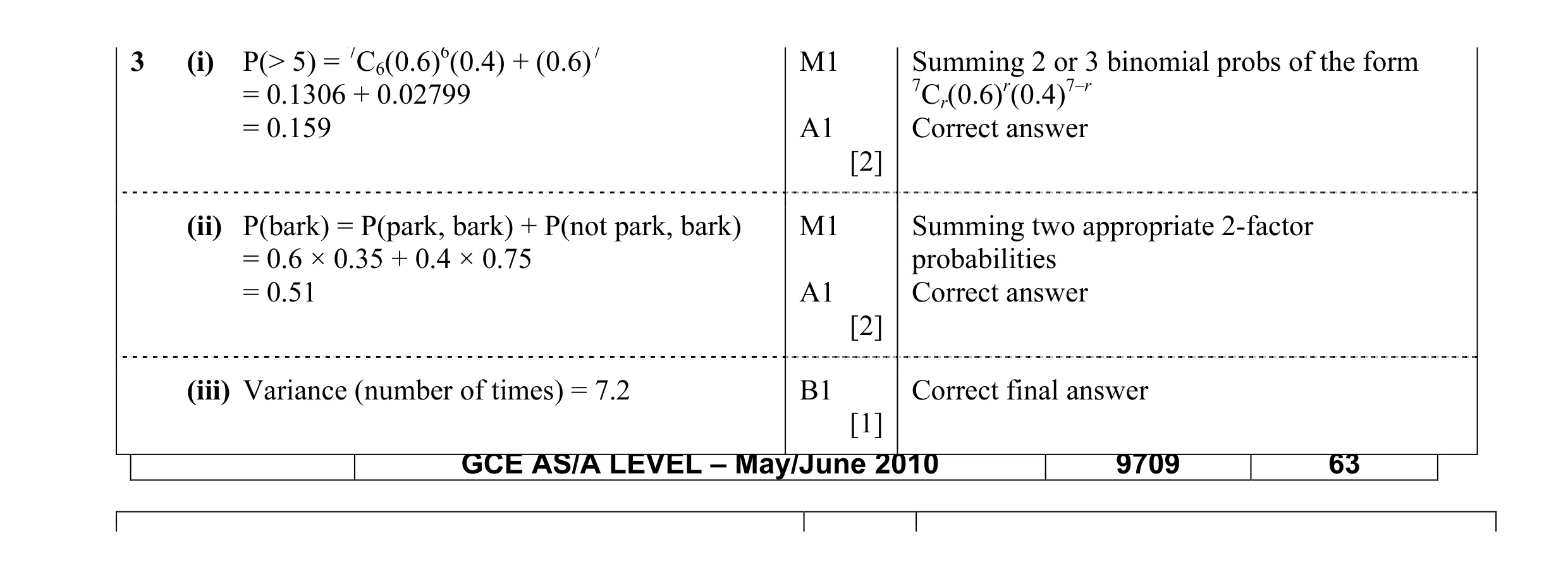 5
5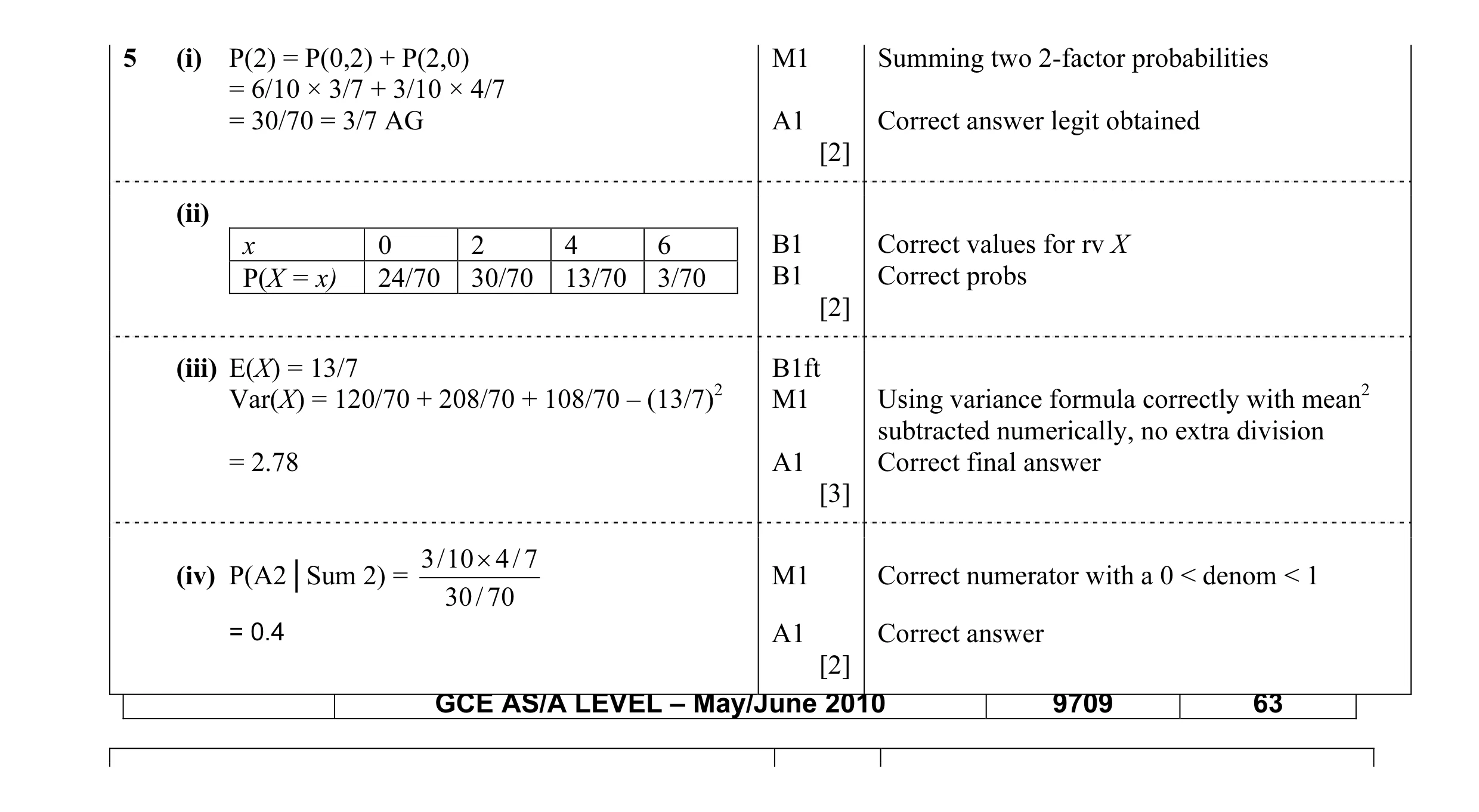 9
9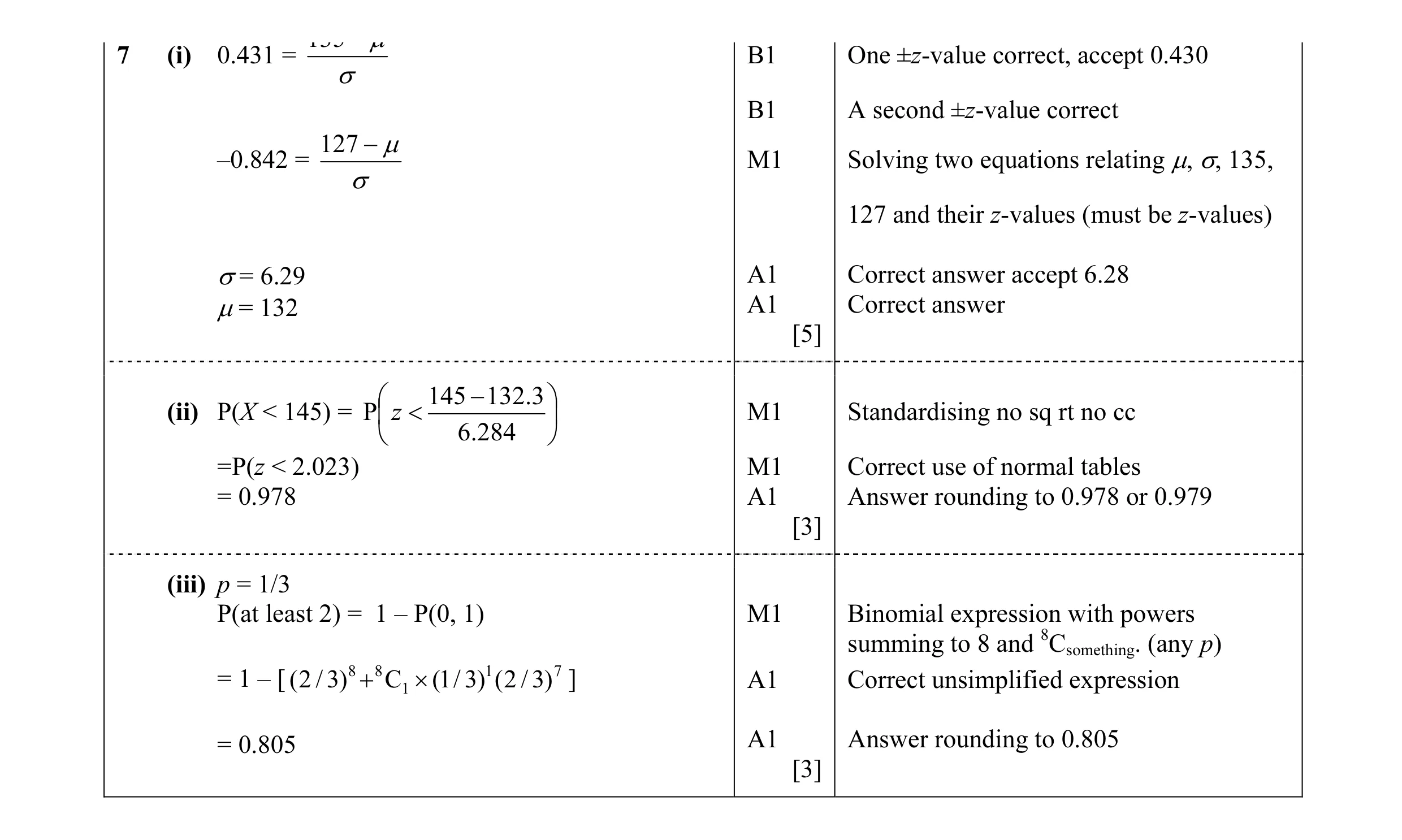 11
11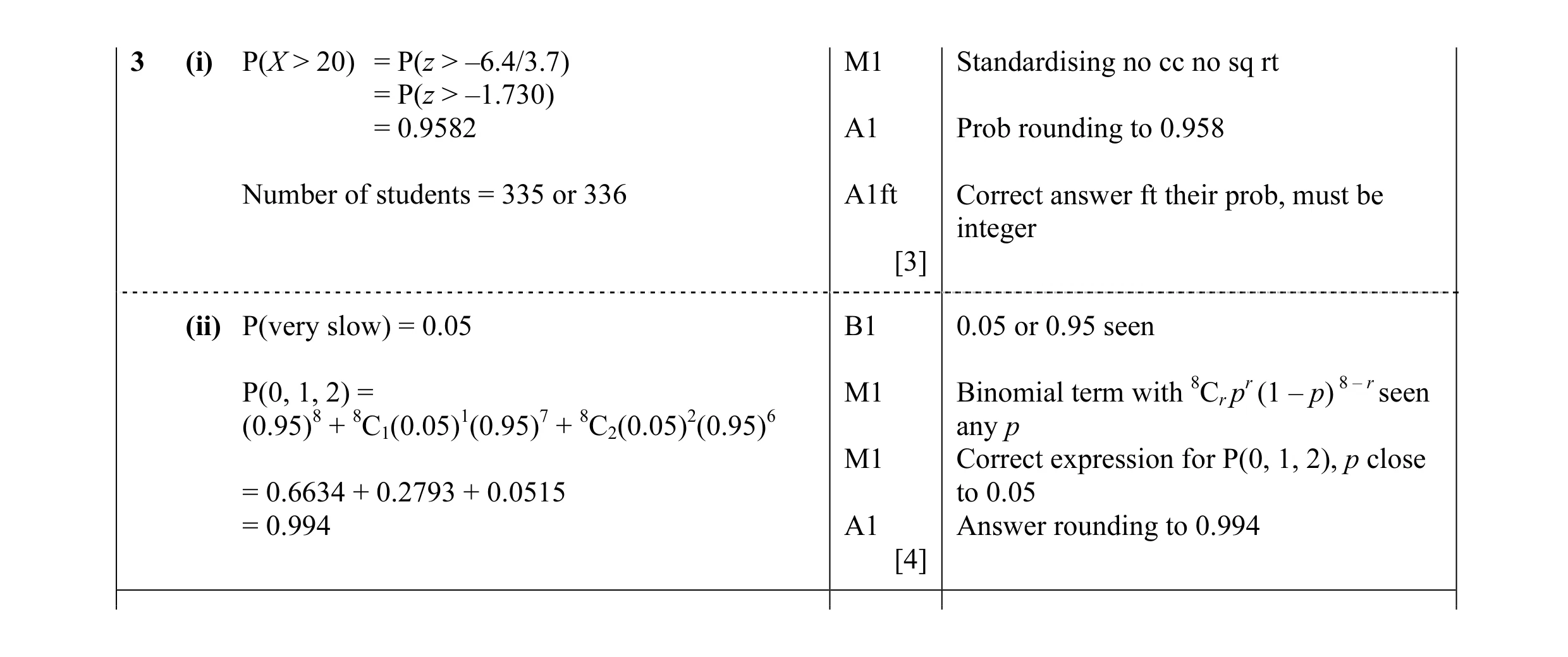 7
7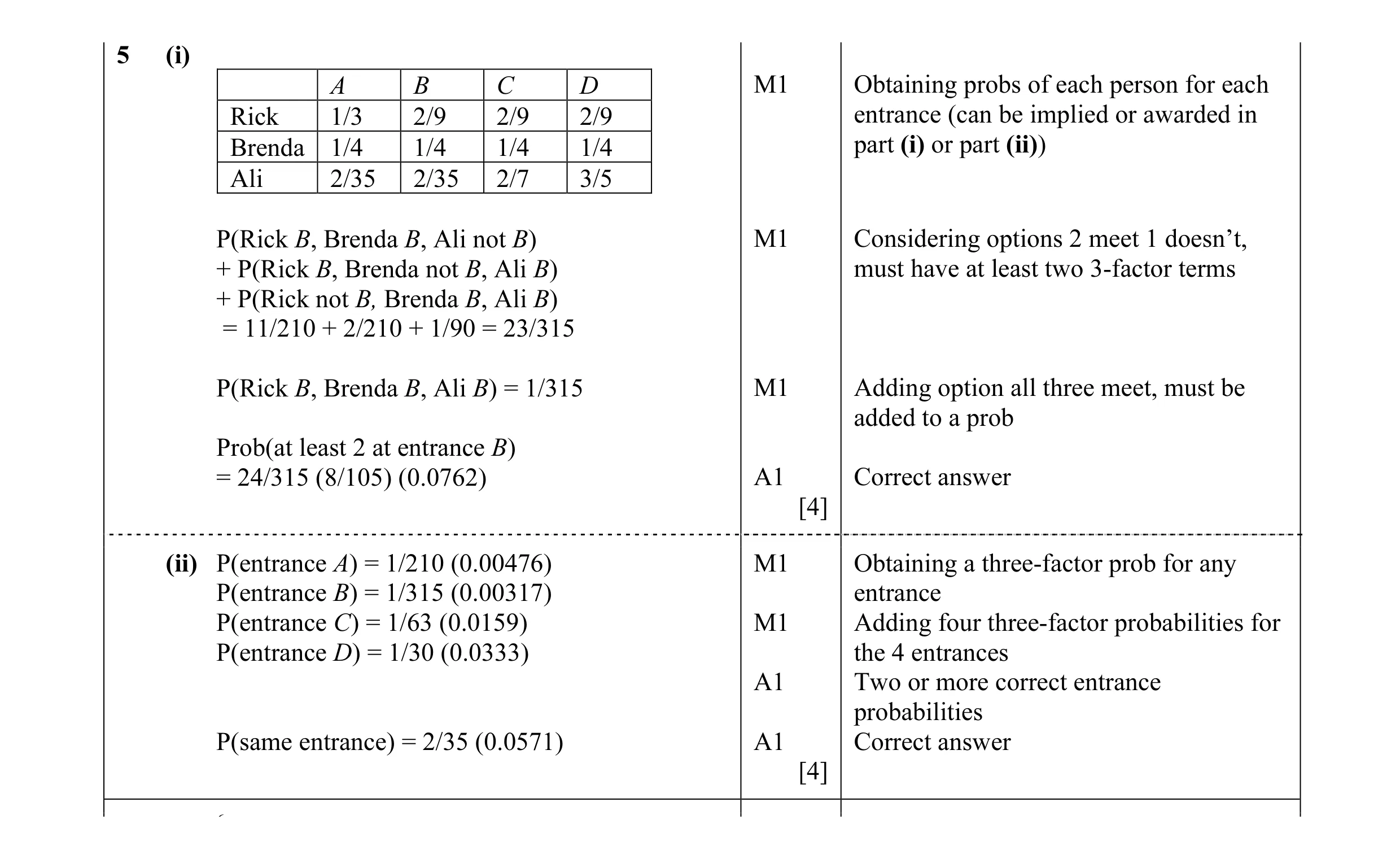 8
8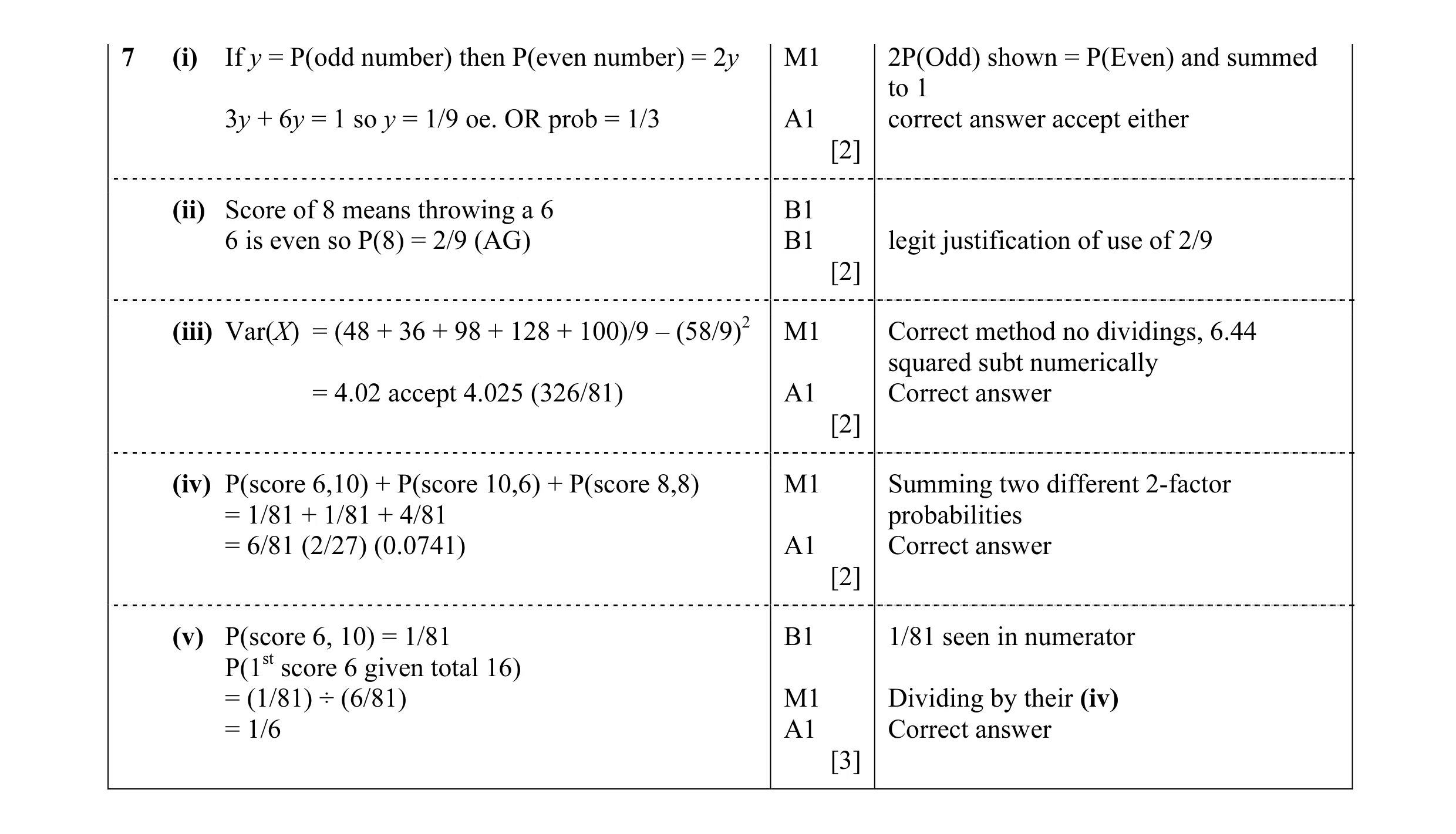 11
11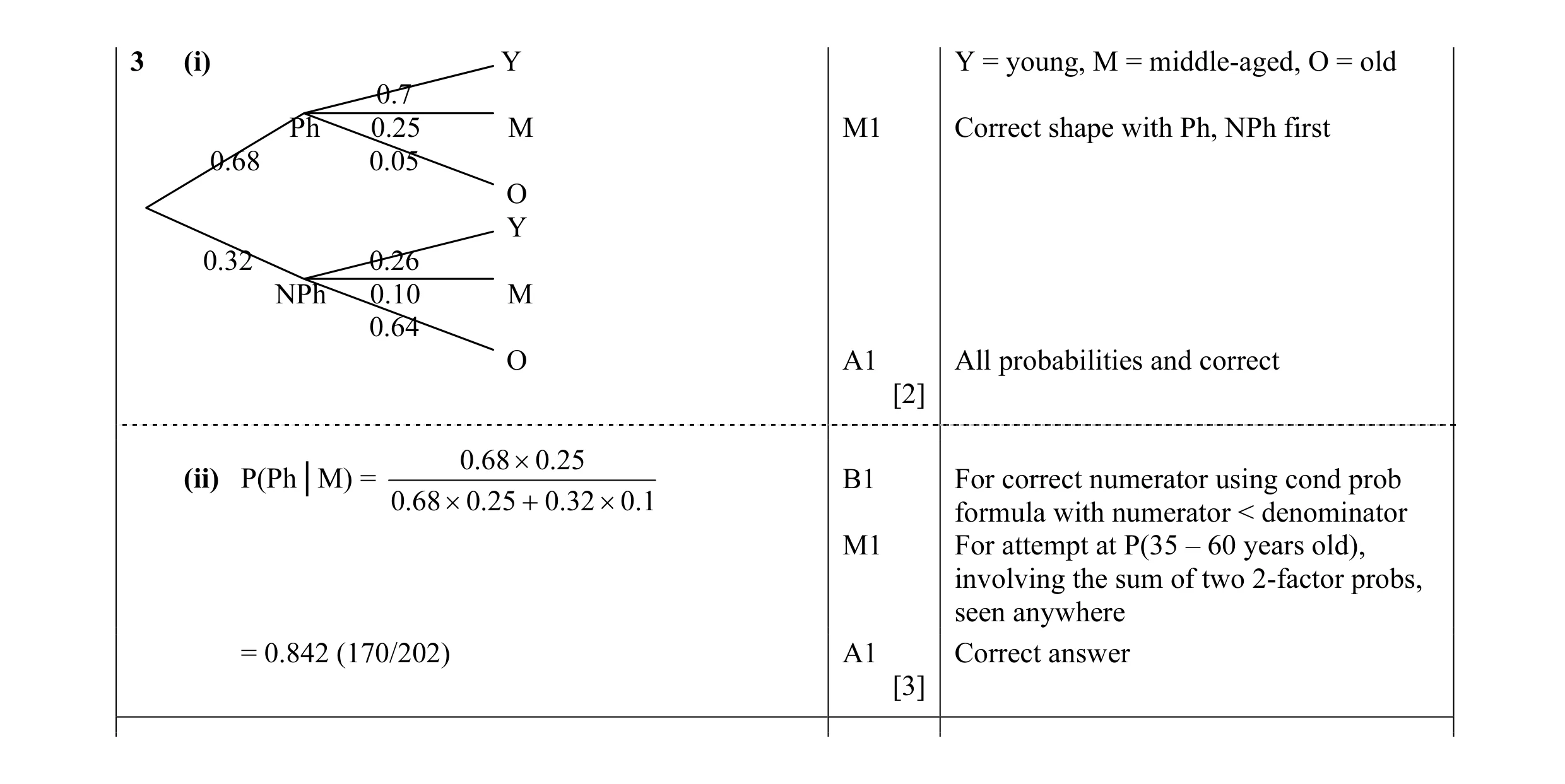 5
5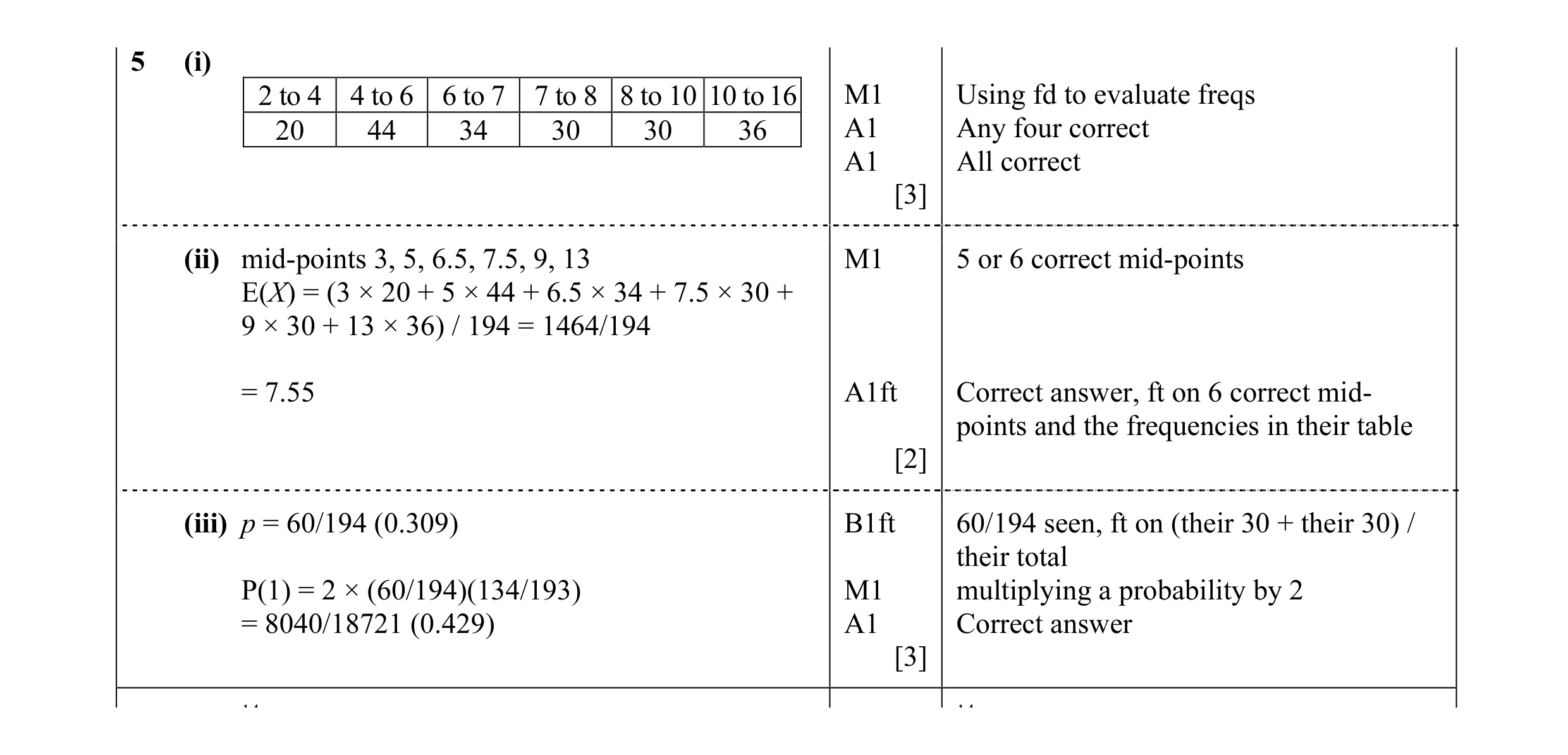 8
8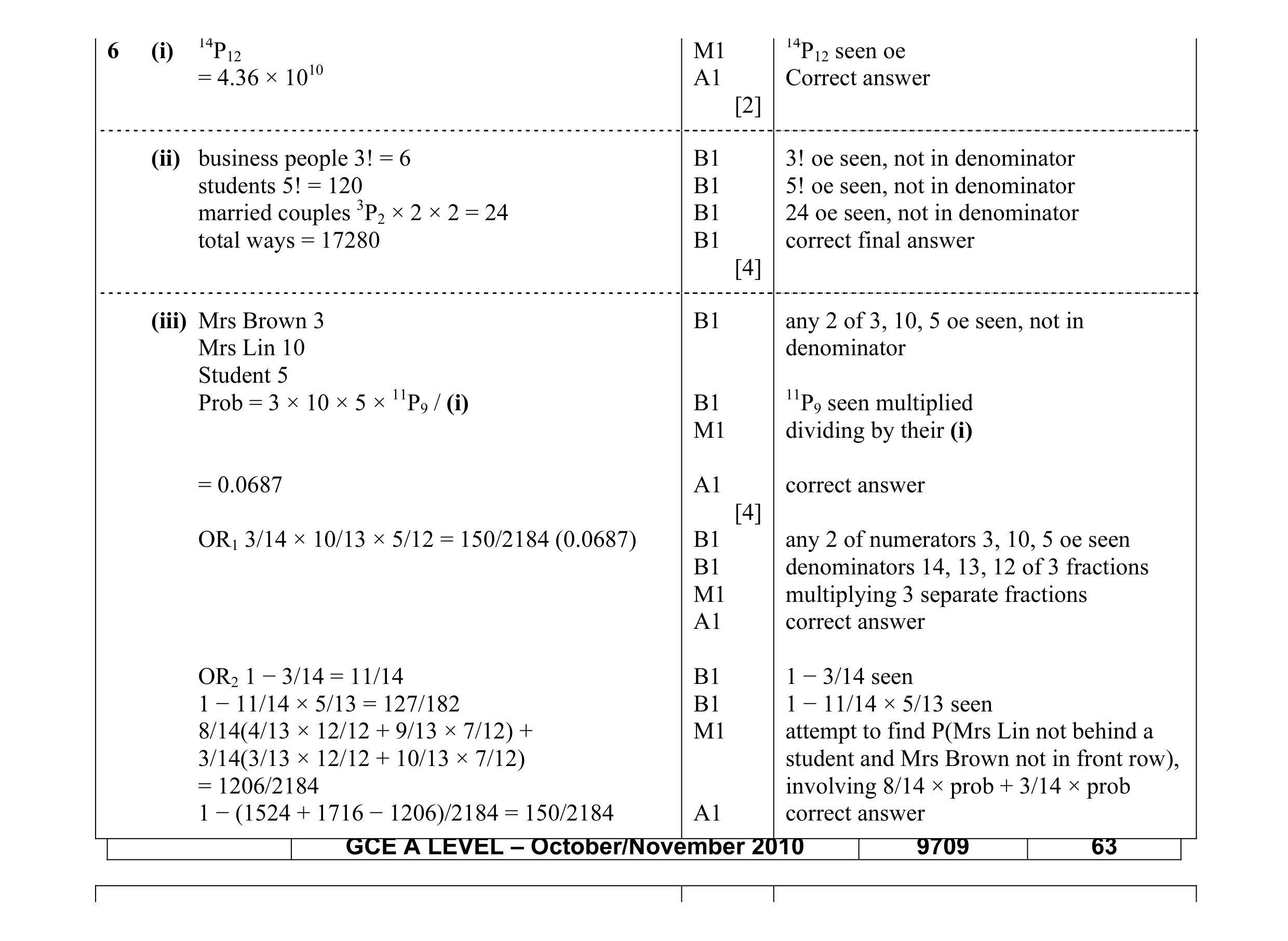 10
10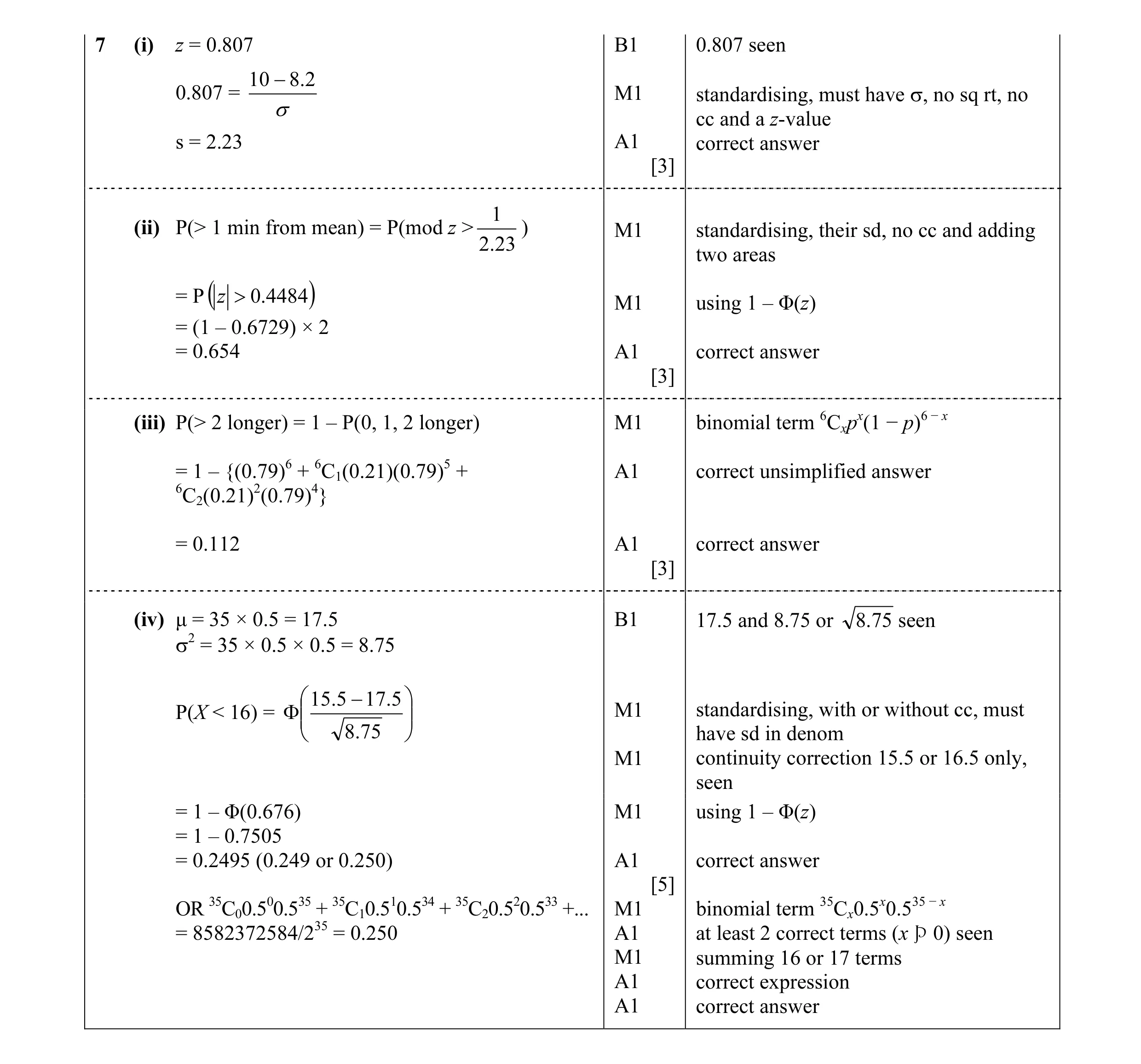 14
14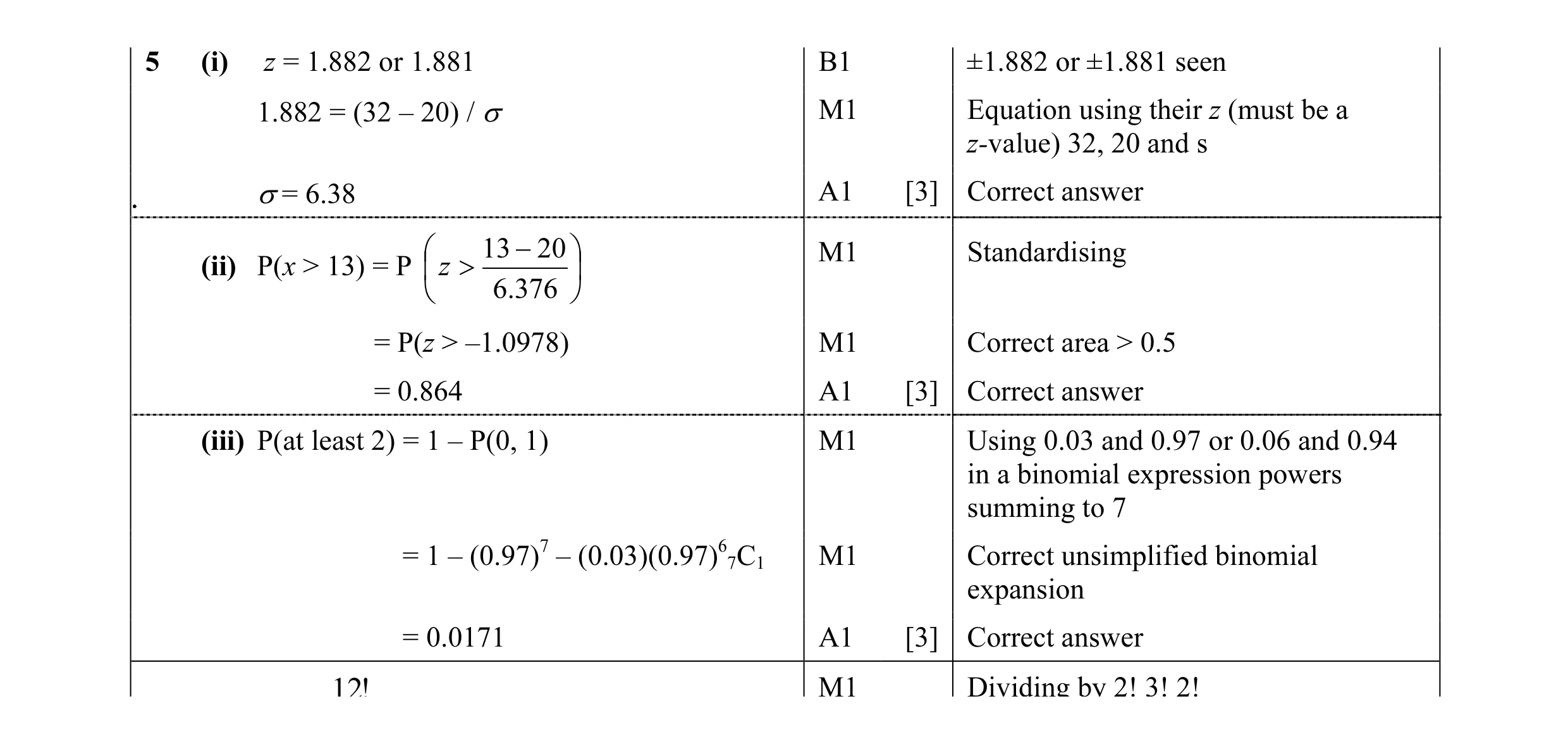 9
9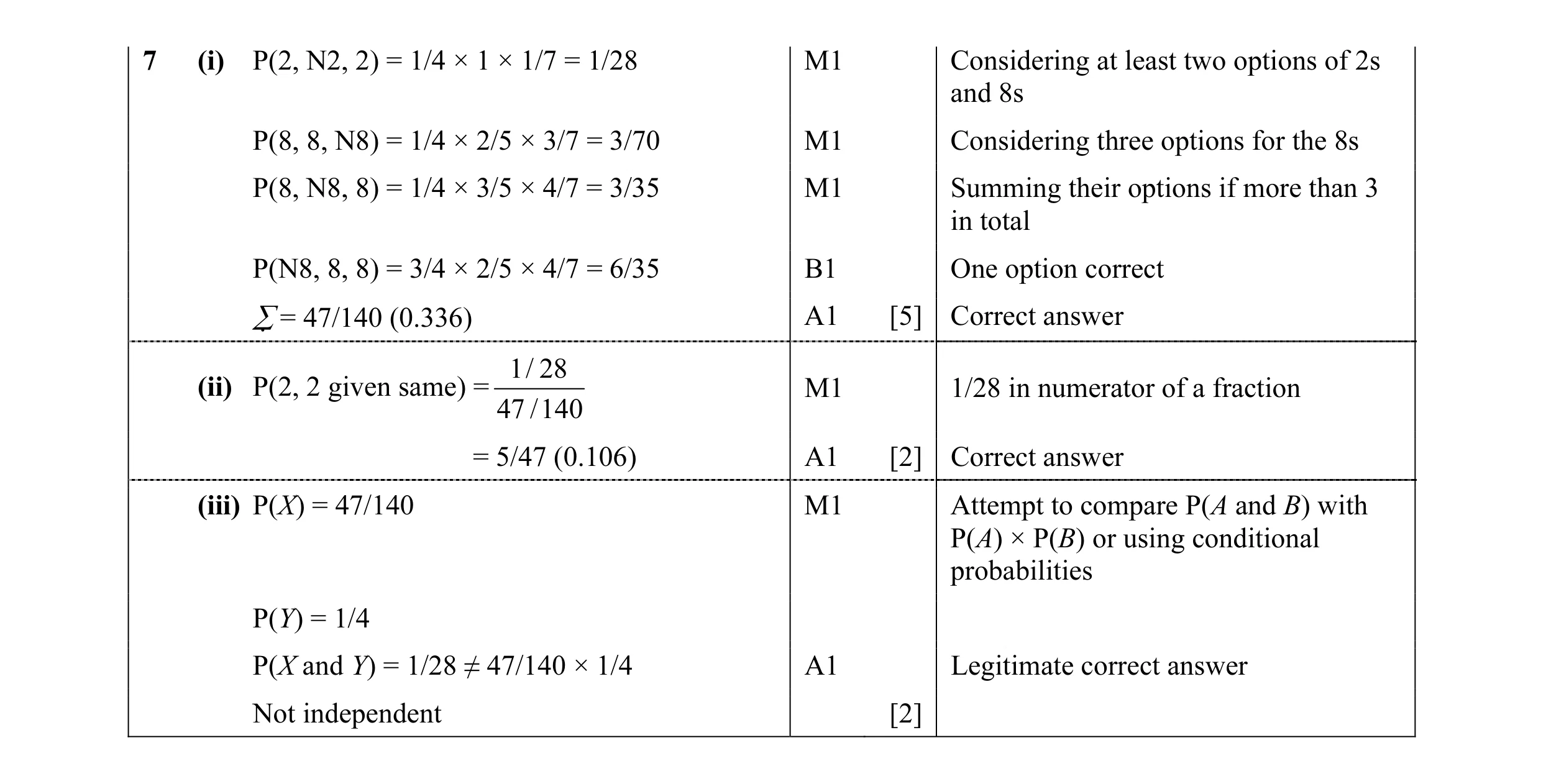 9
9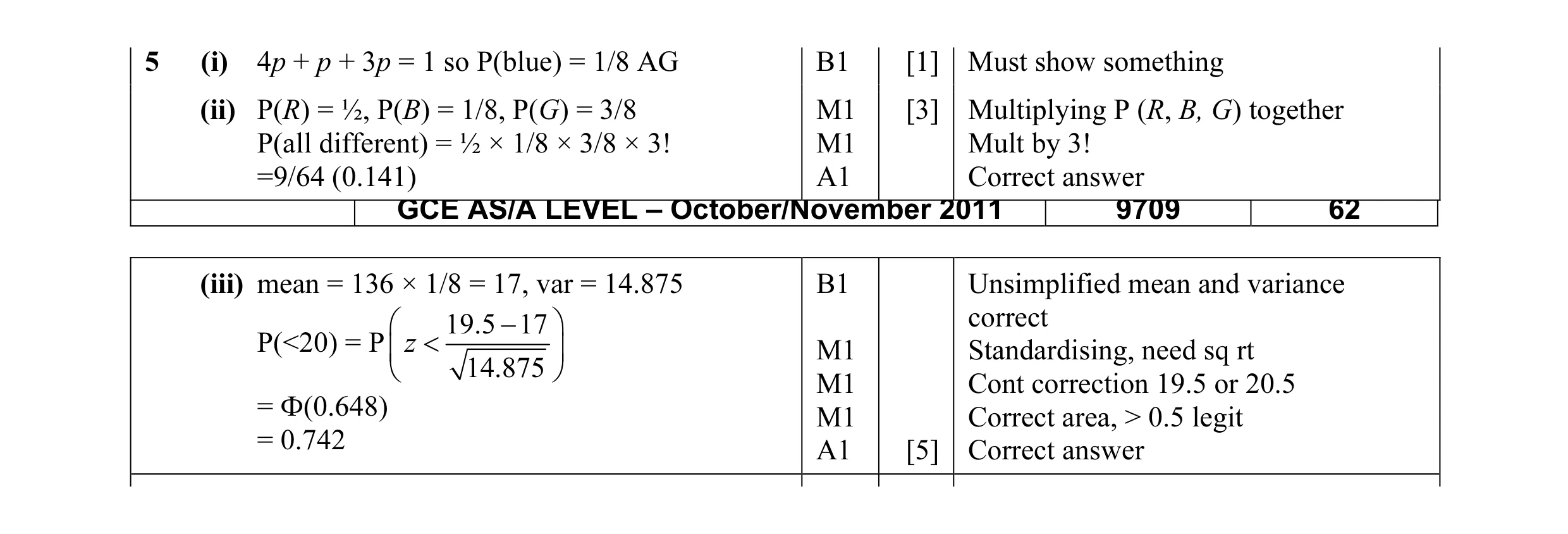 9
9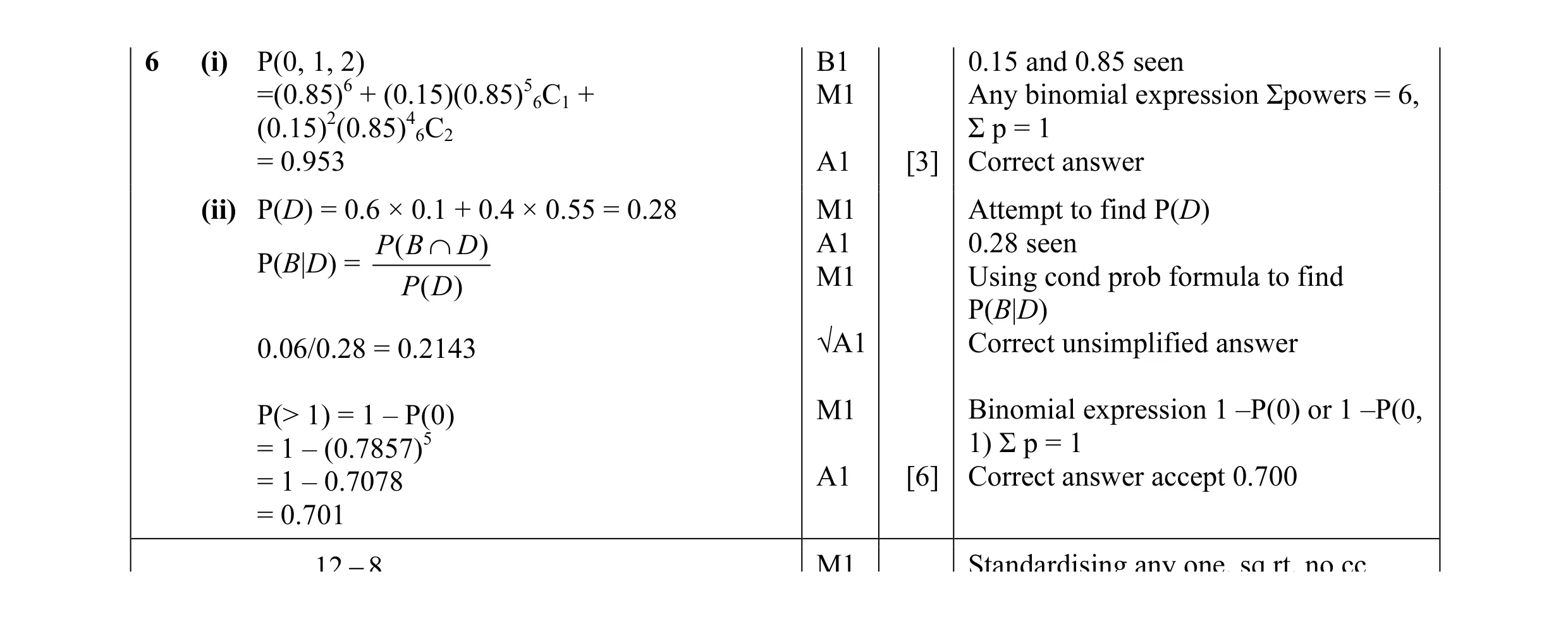 9
9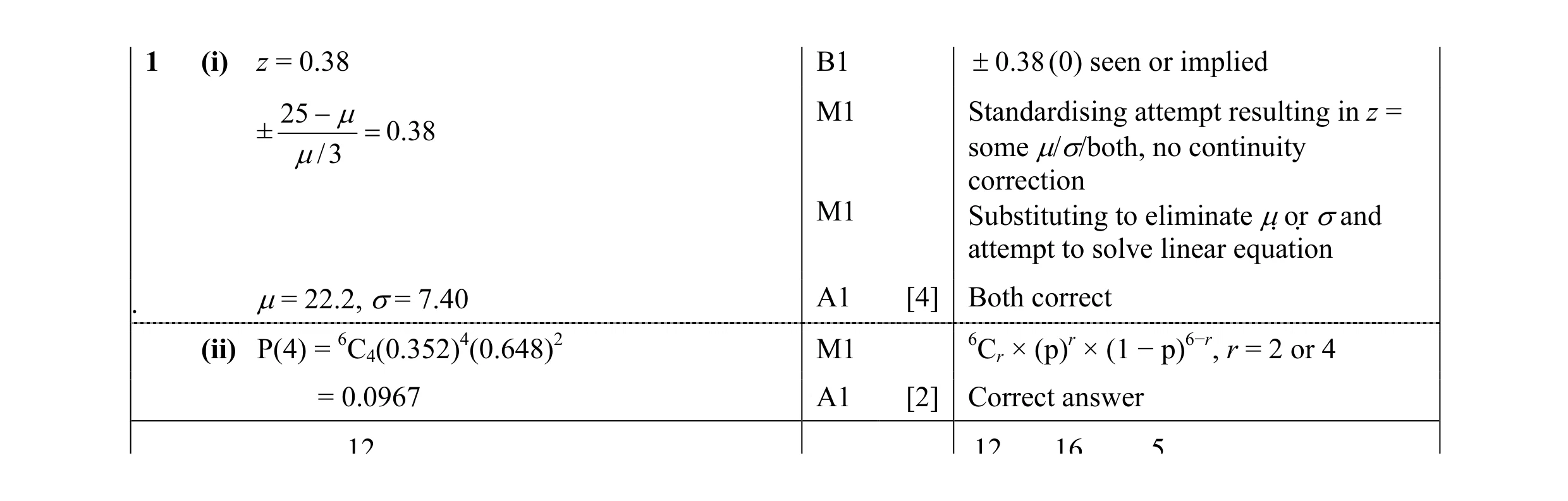 6
6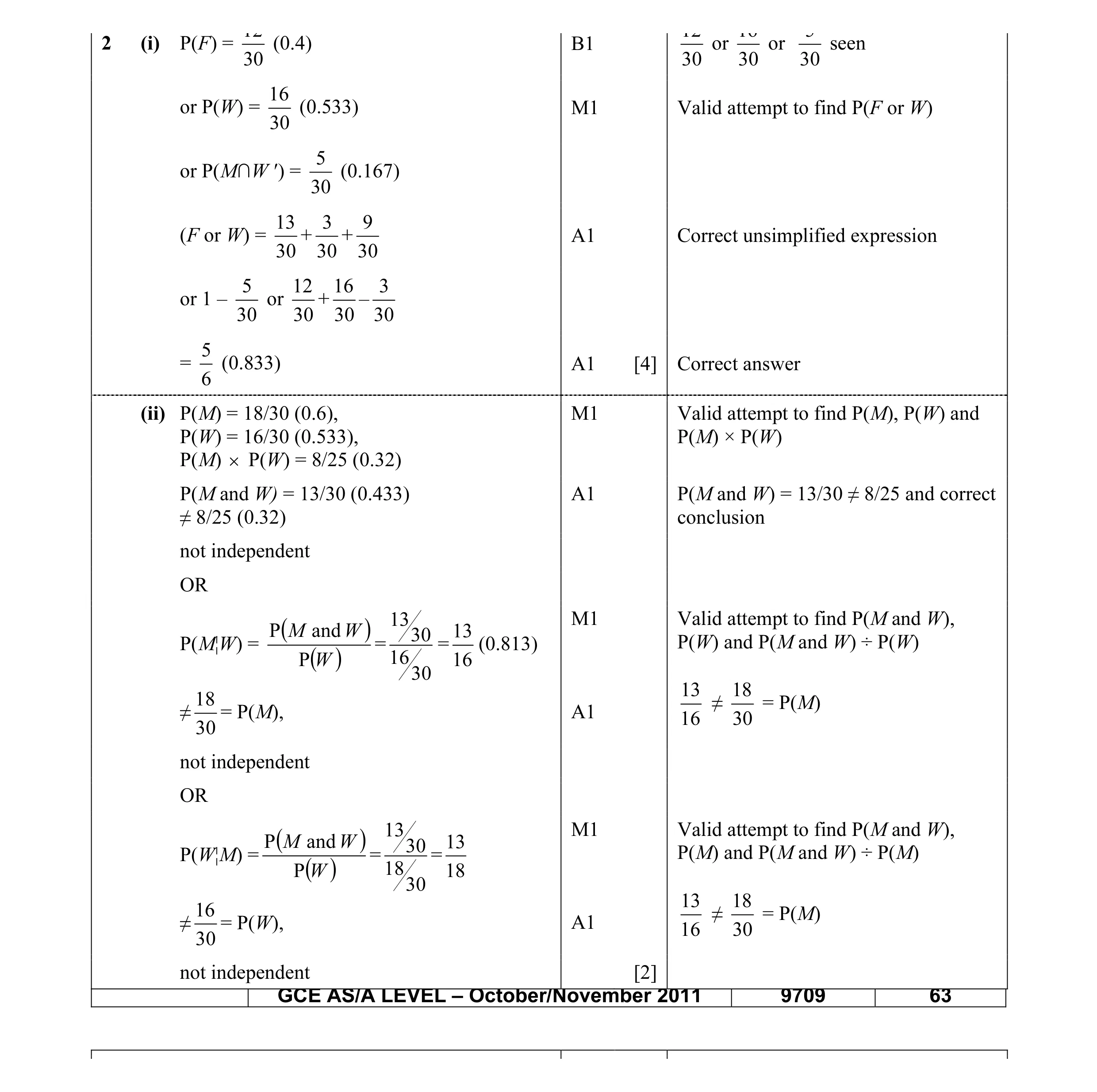 6
6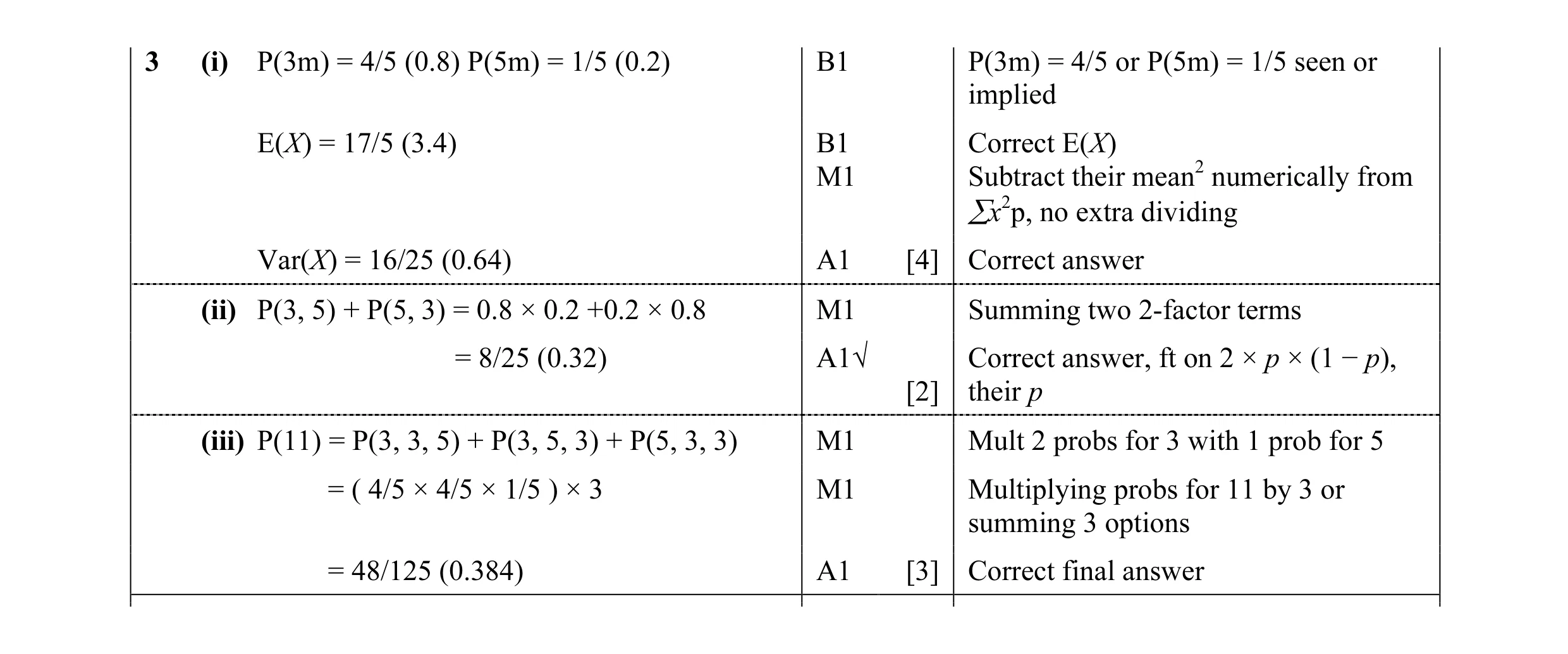 9
9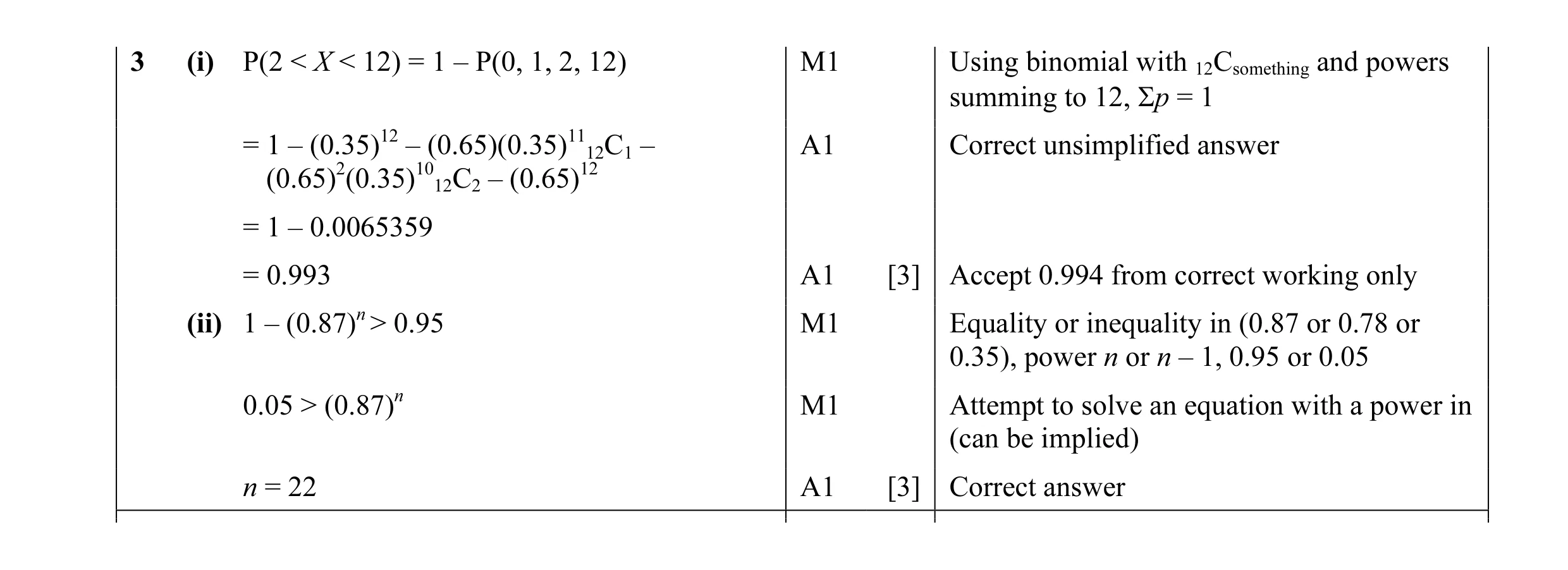 6
6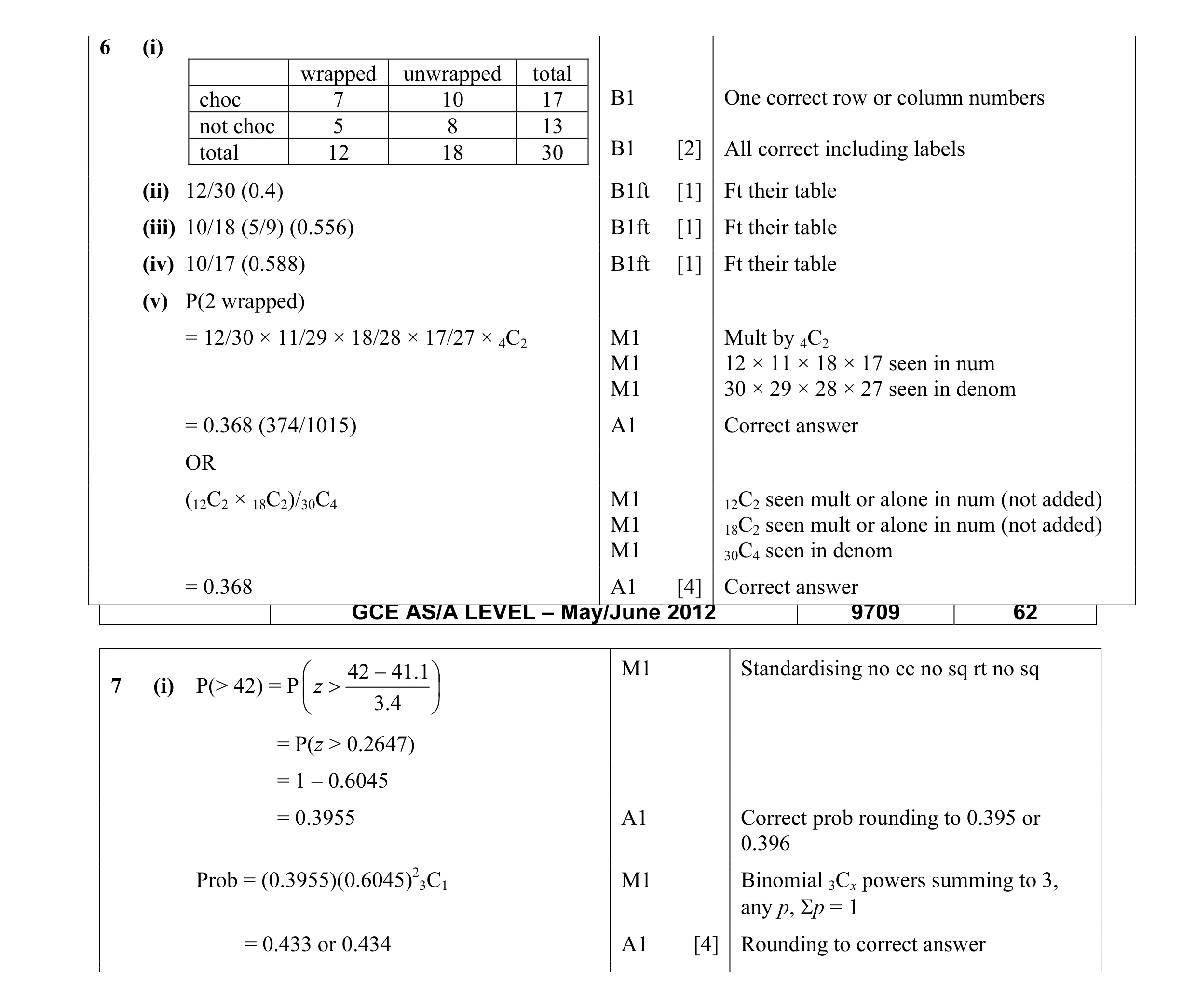 9
9 4
4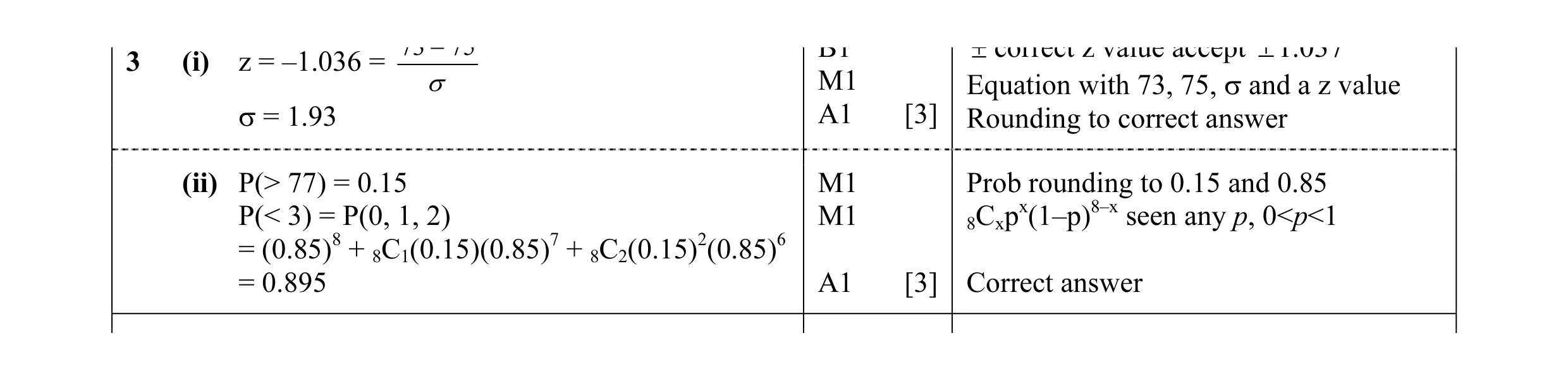 6
6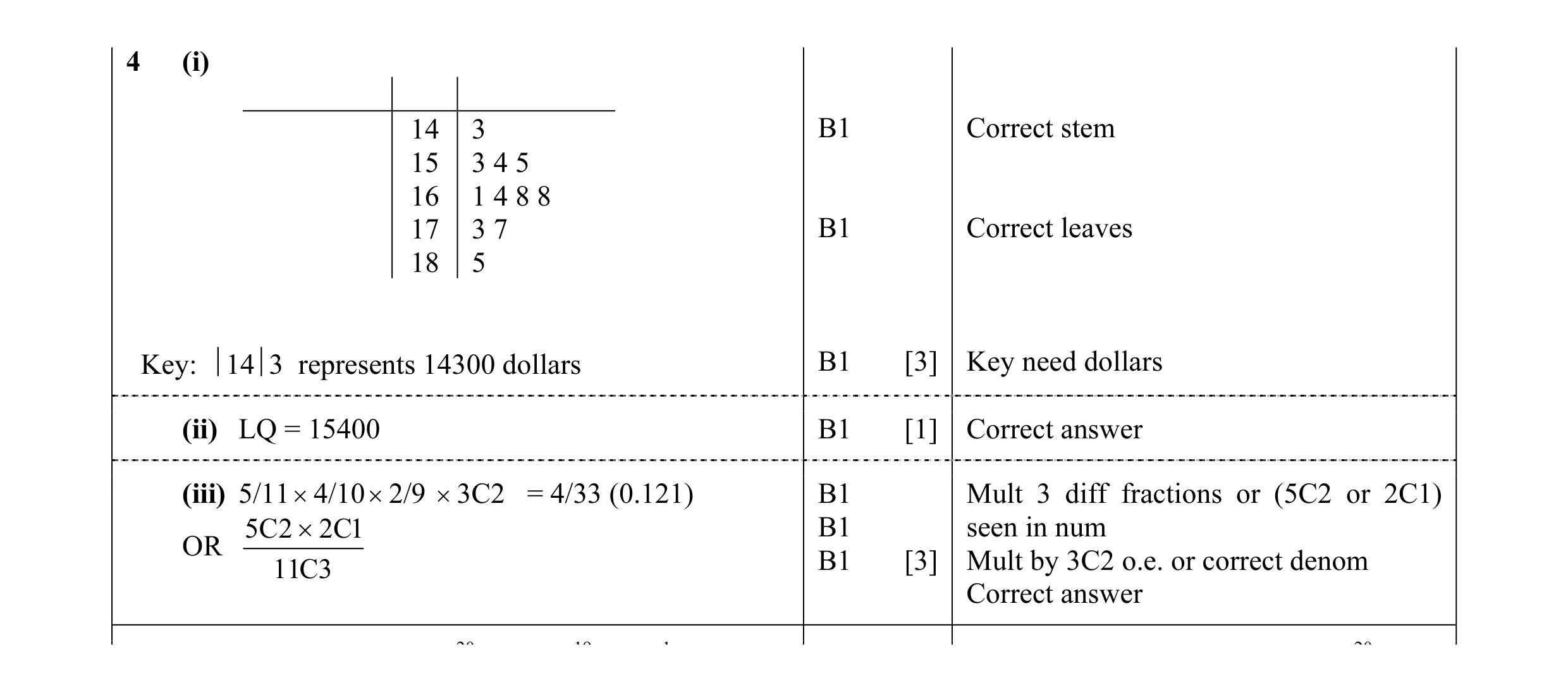 7
7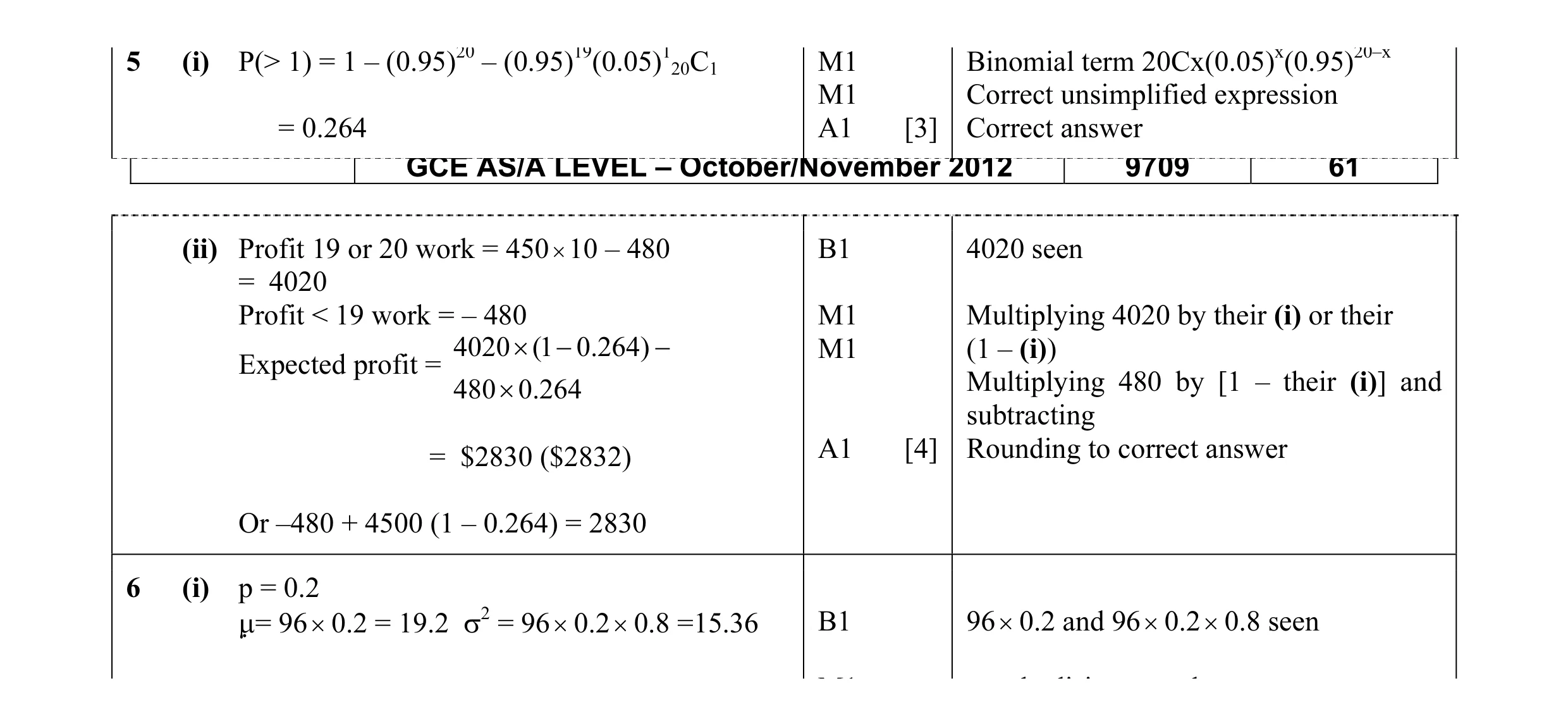 7
7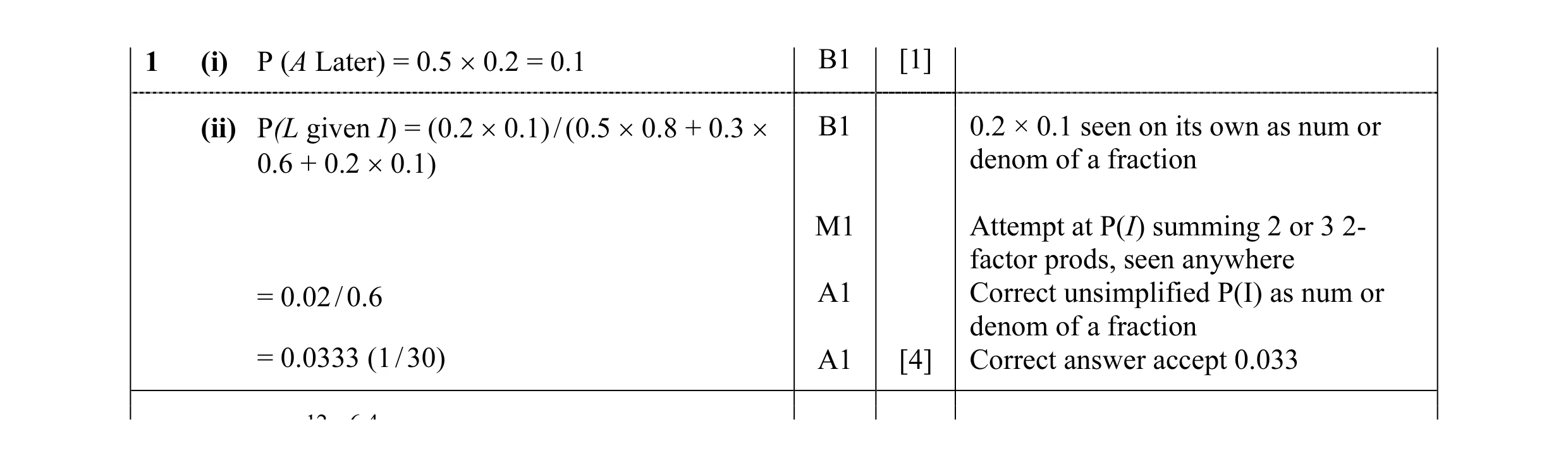 5
5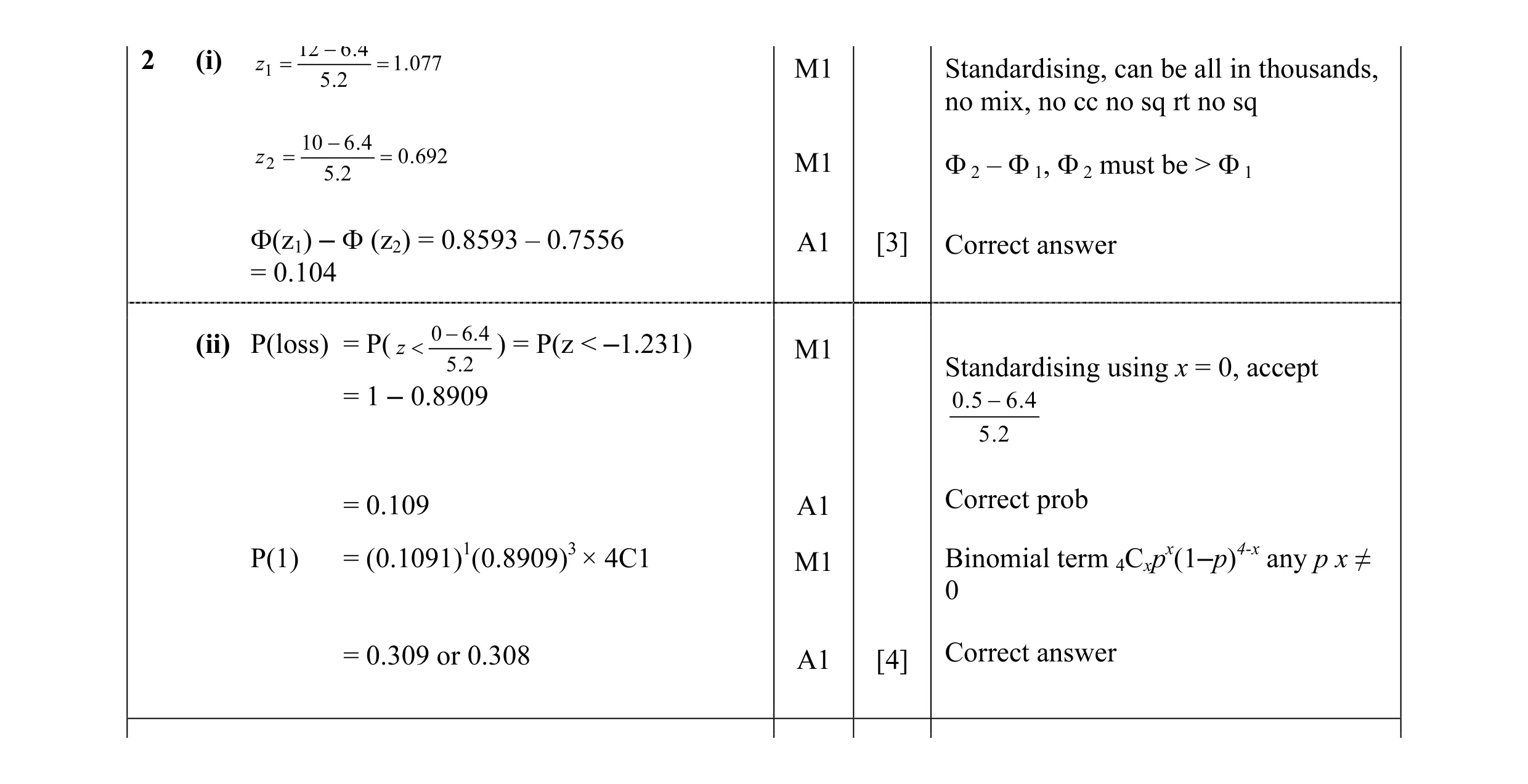 7
7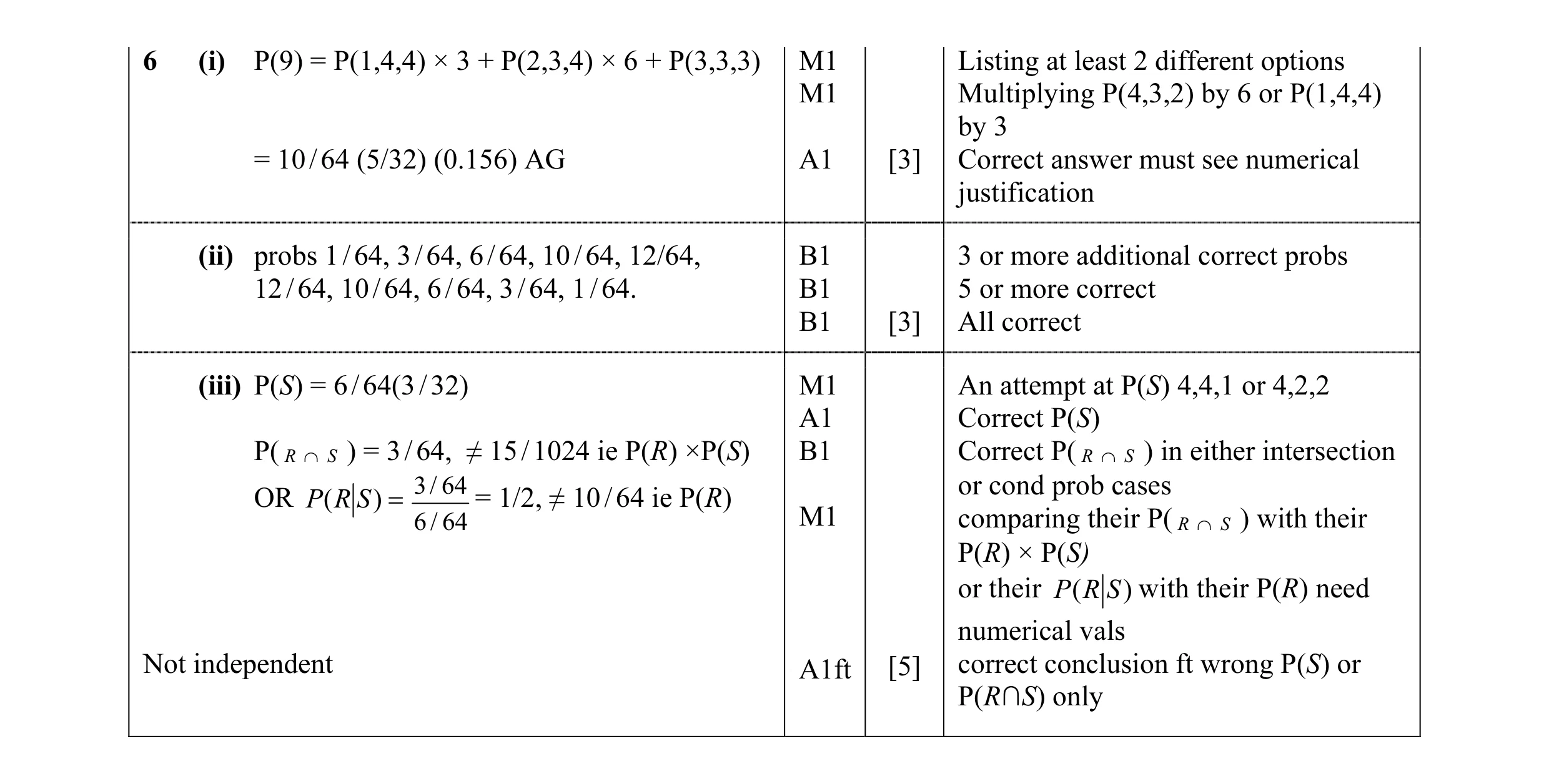 11
11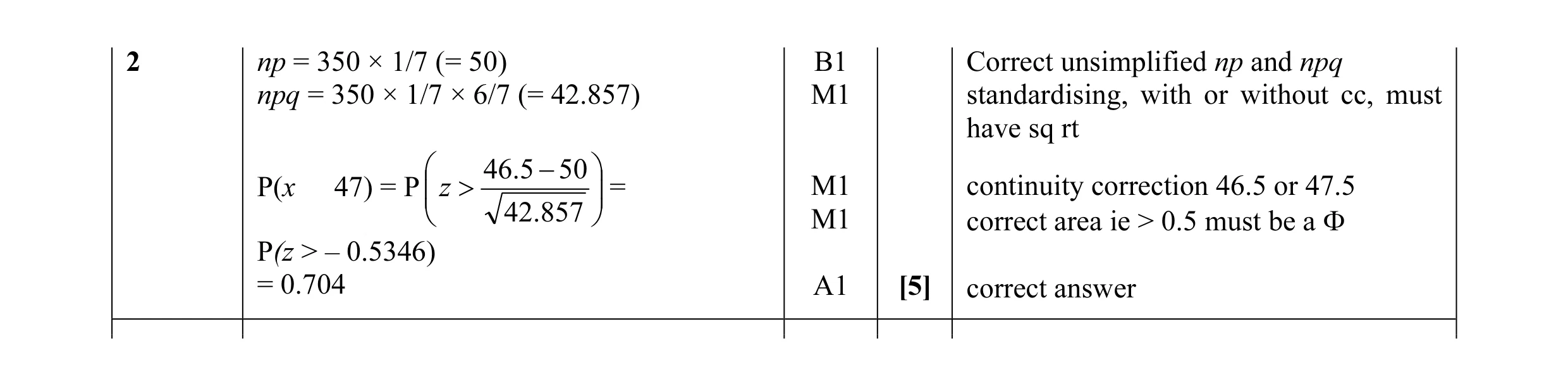 5
5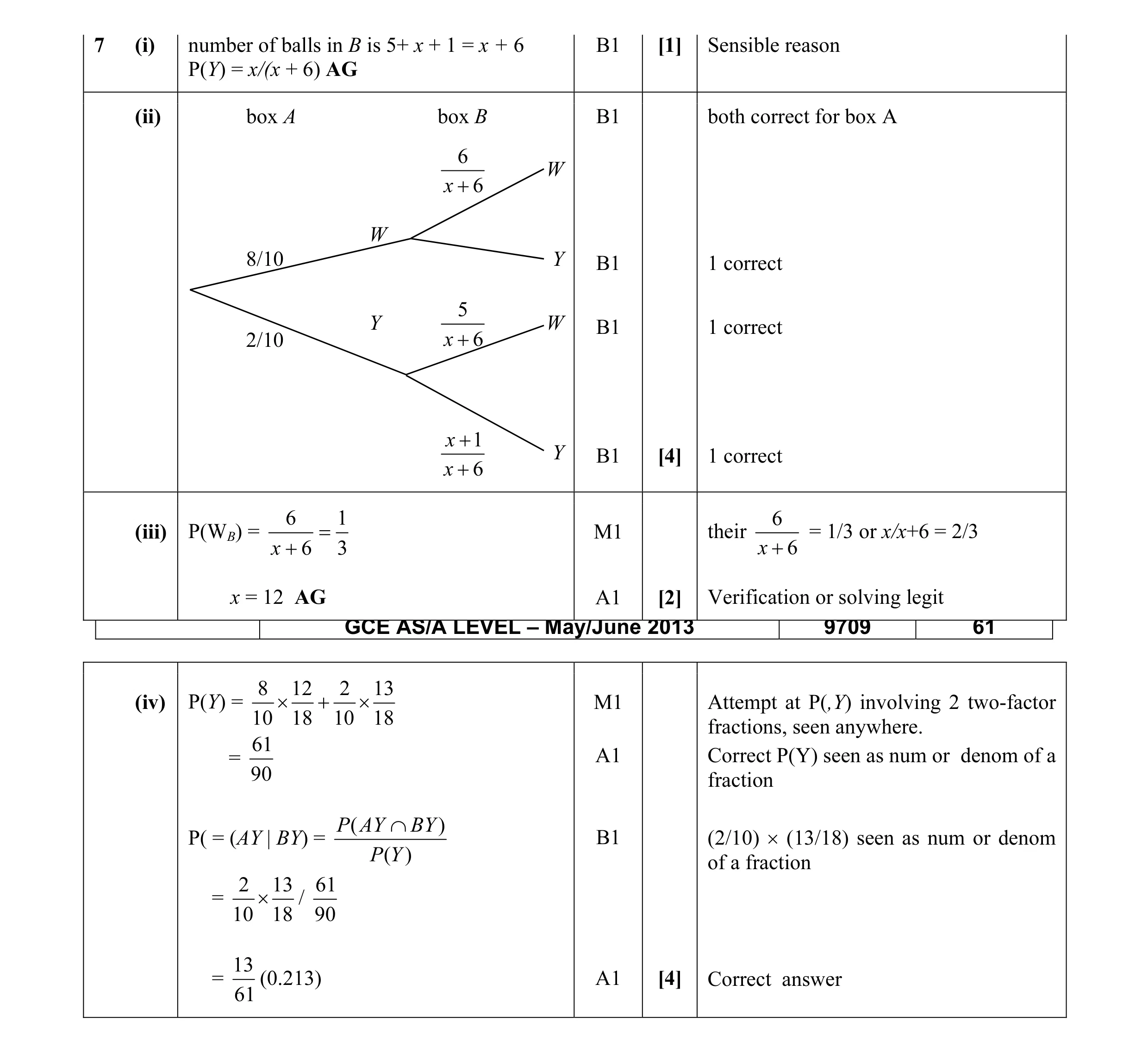 11
11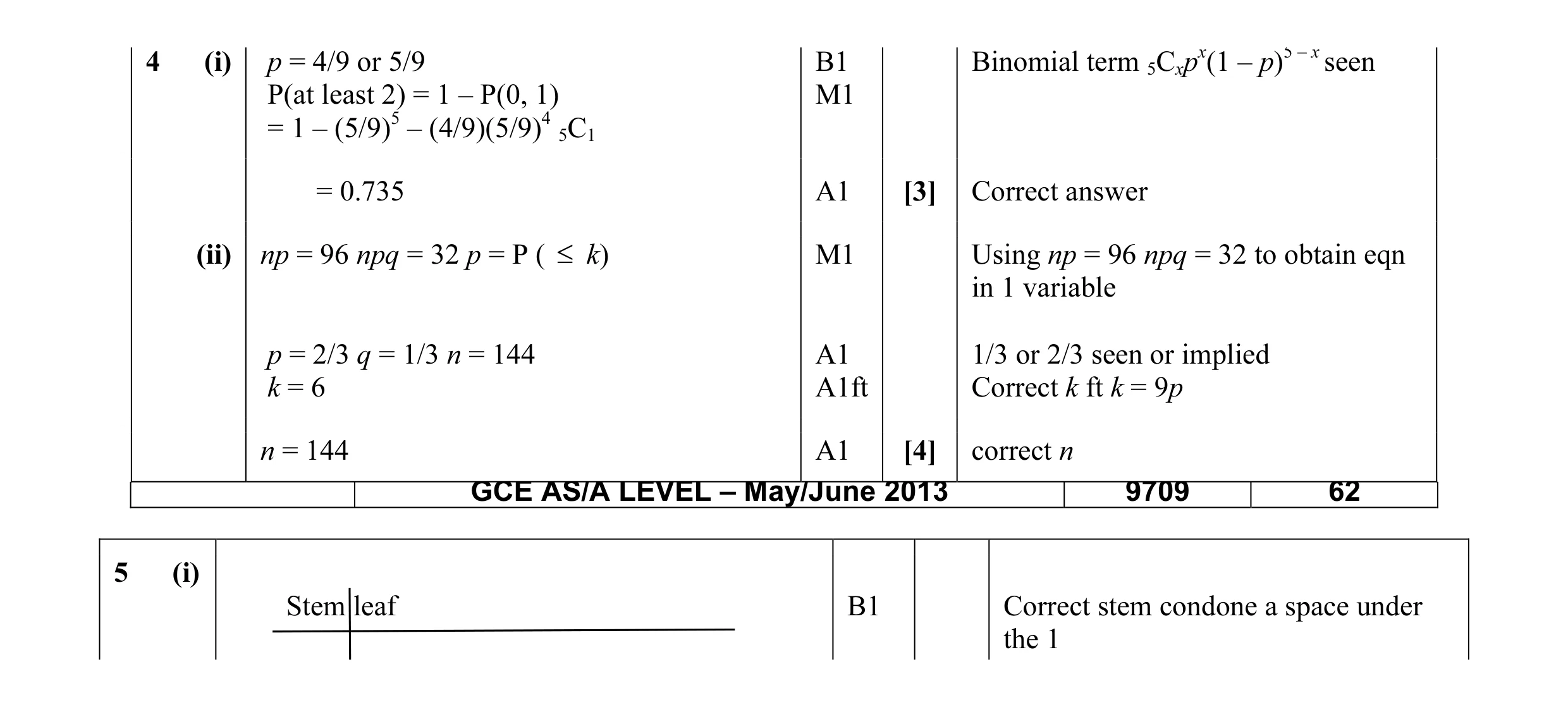 7
7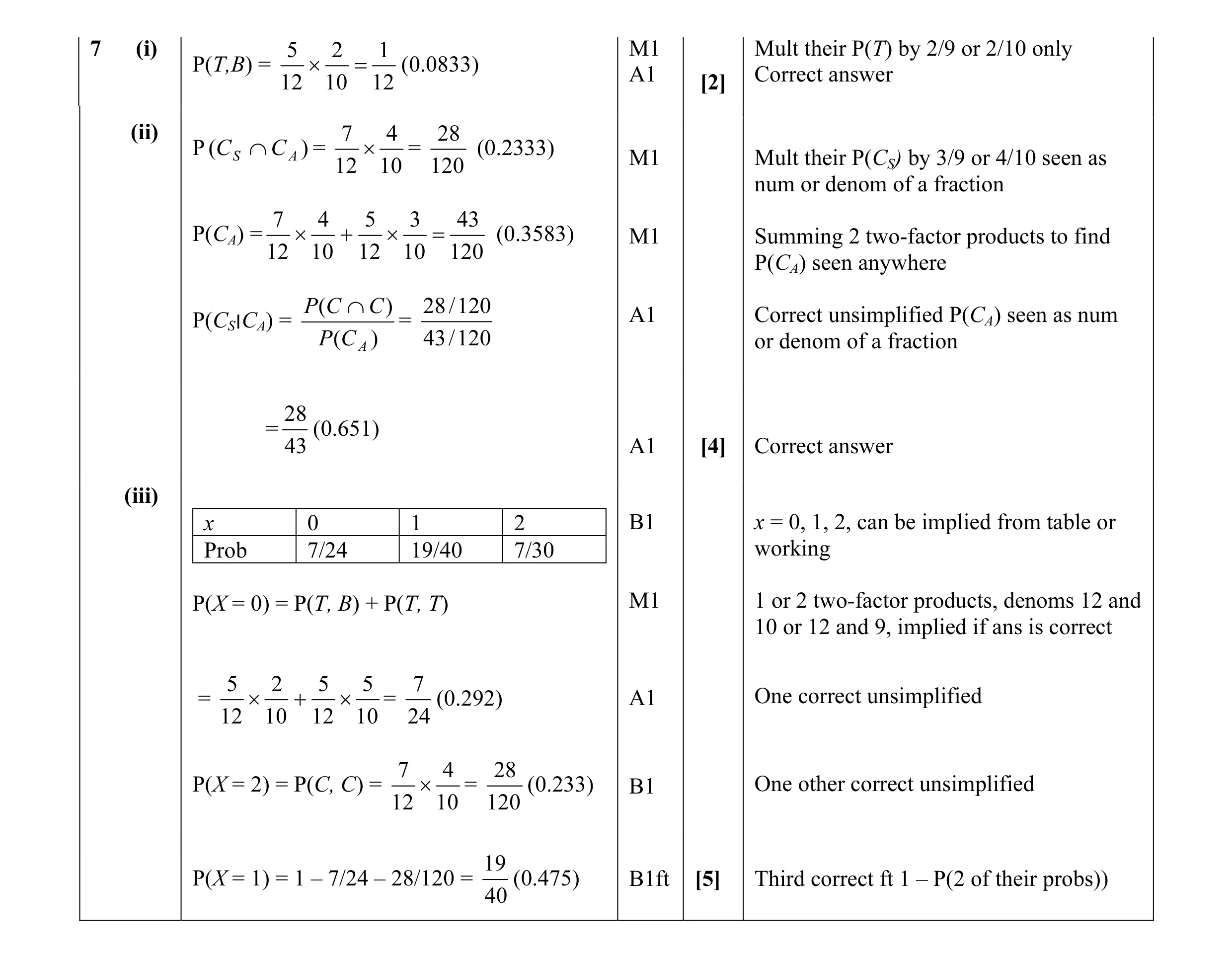 11
11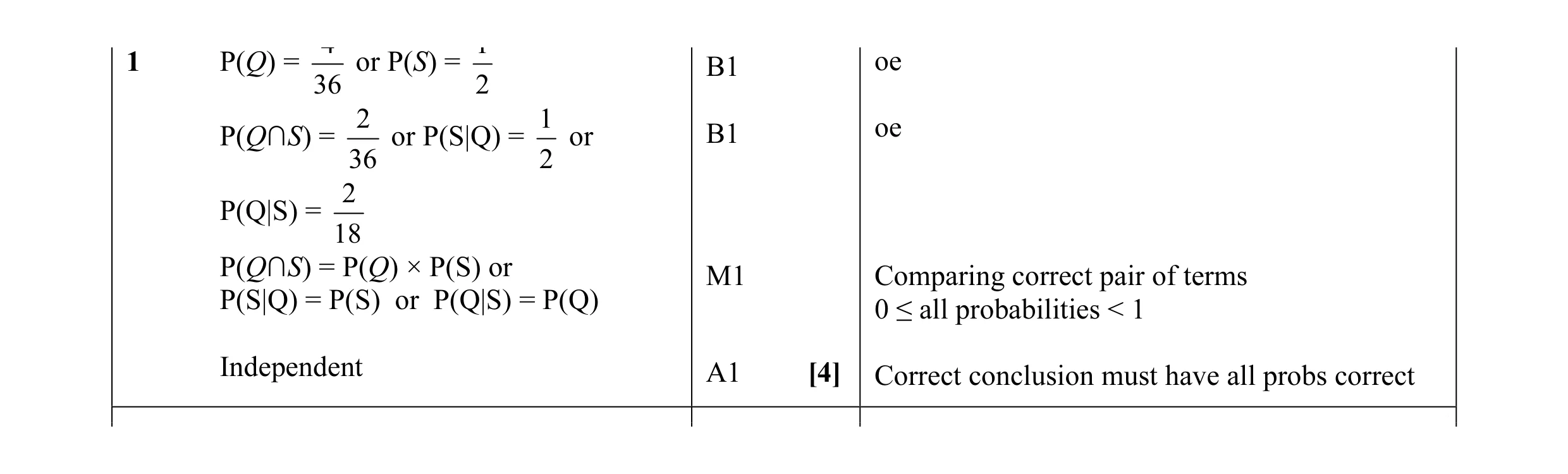 4
4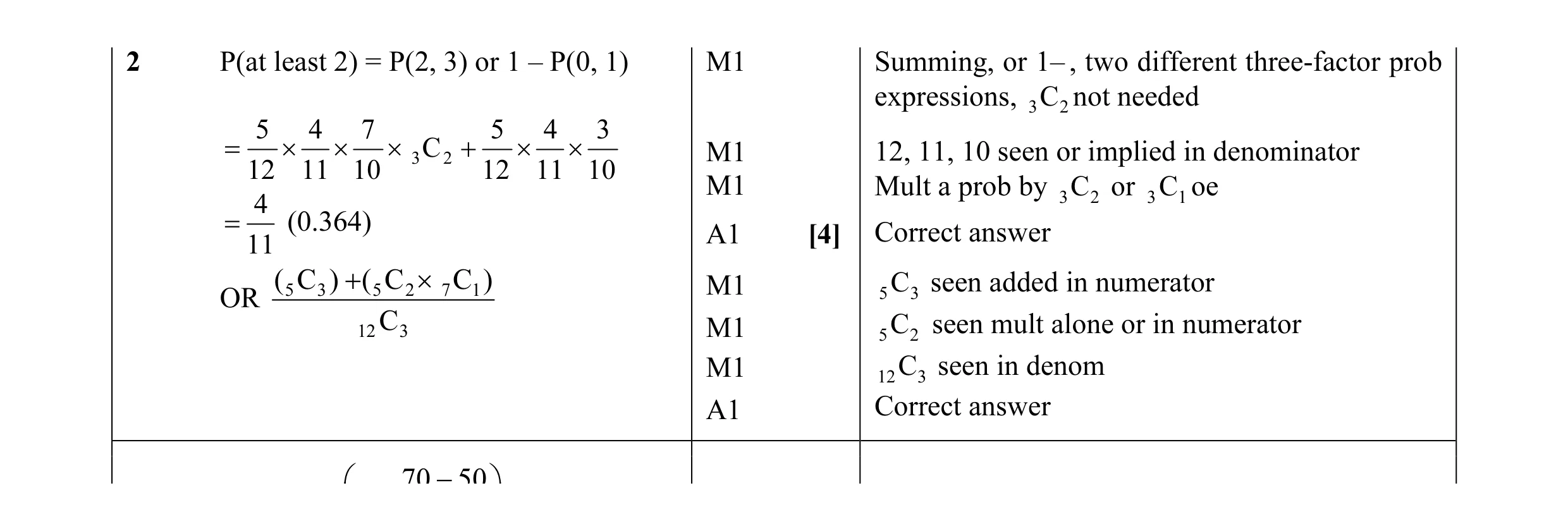 4
4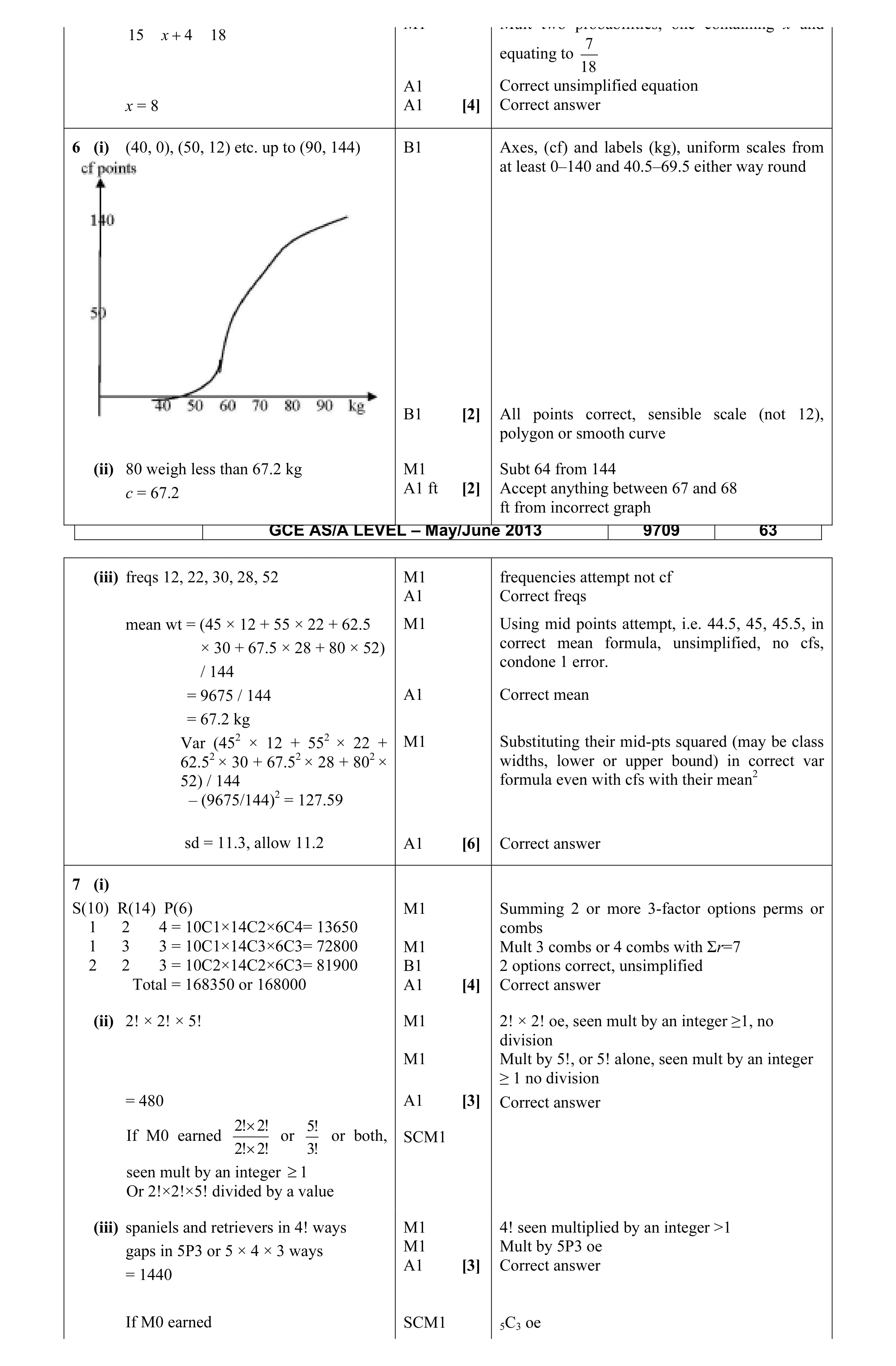 7
7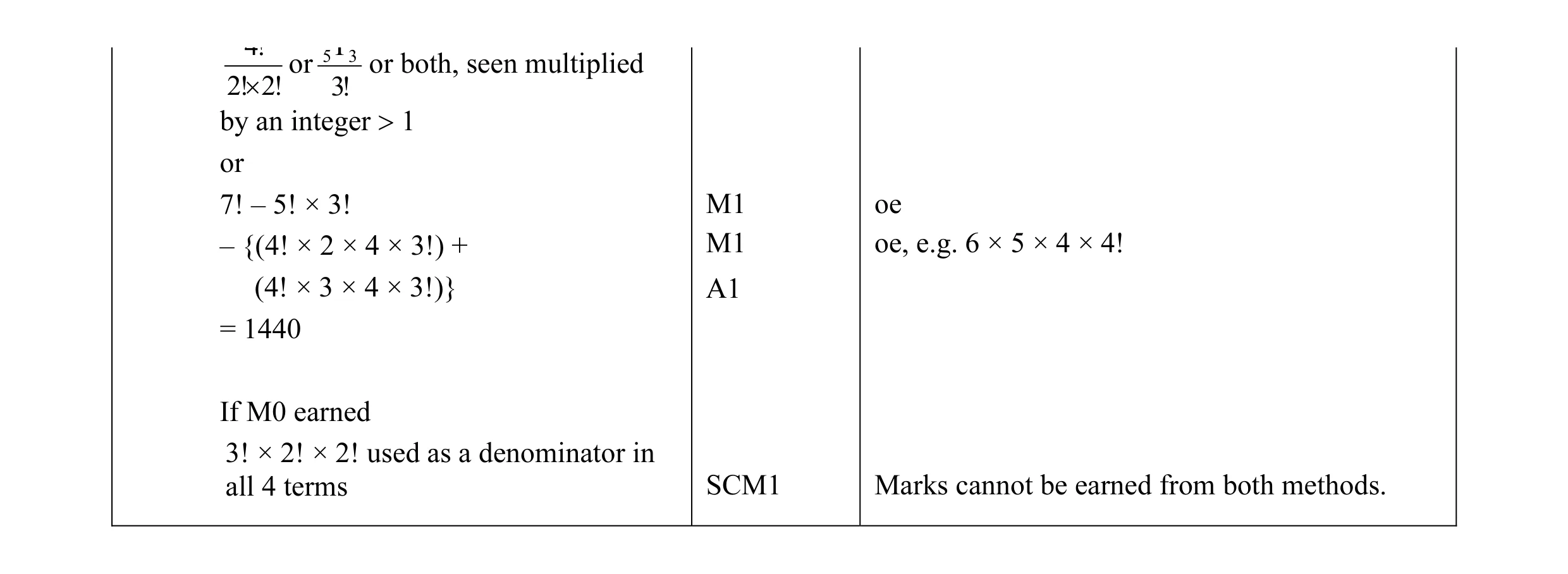 8
8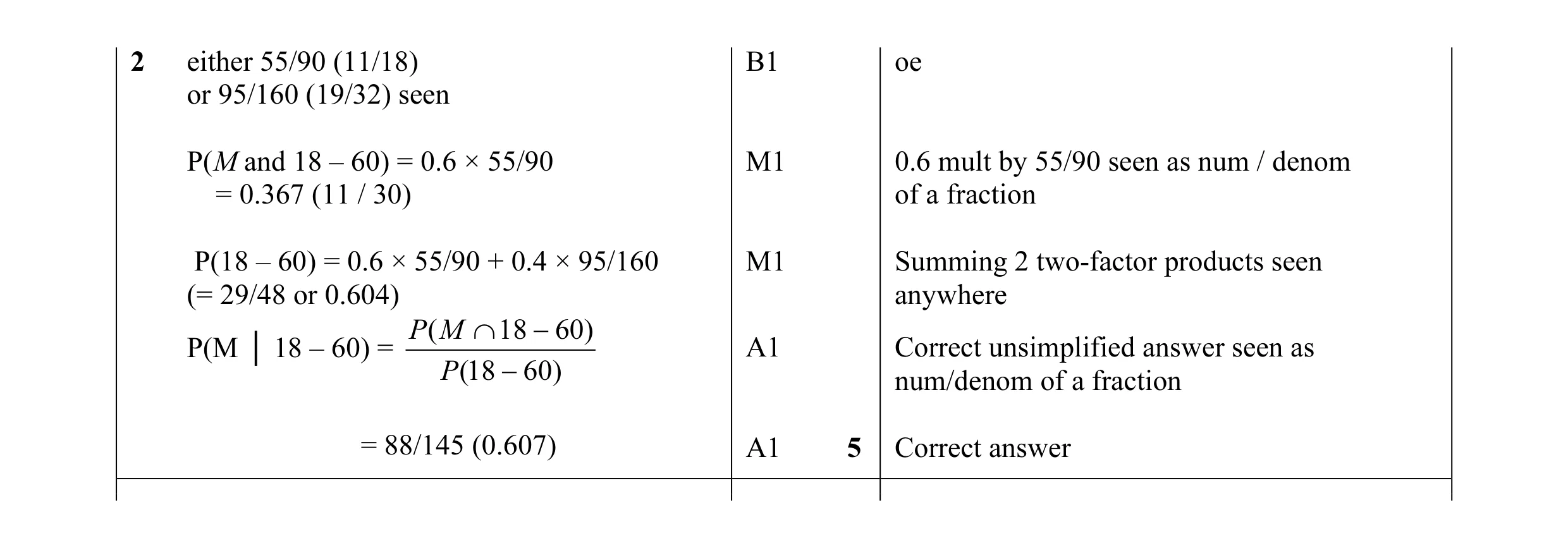 5
5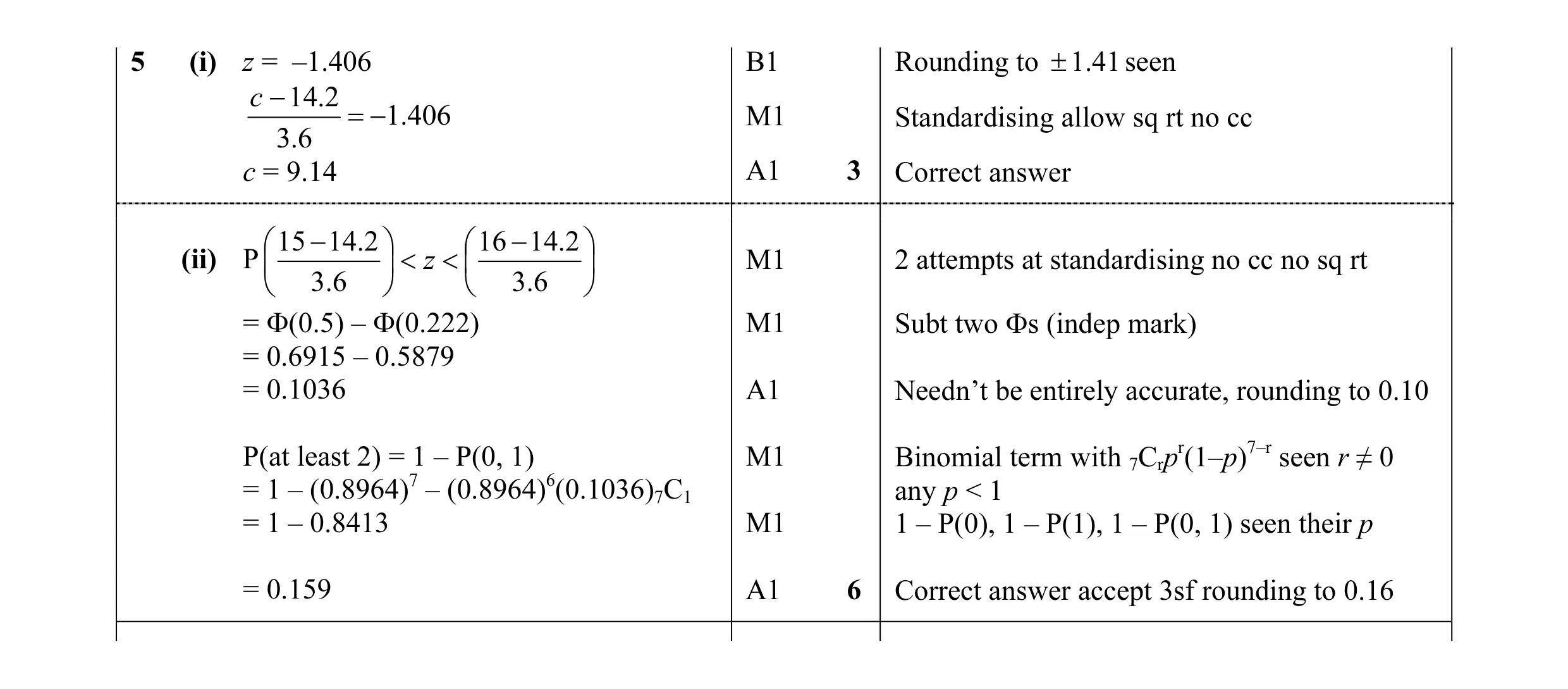 9
9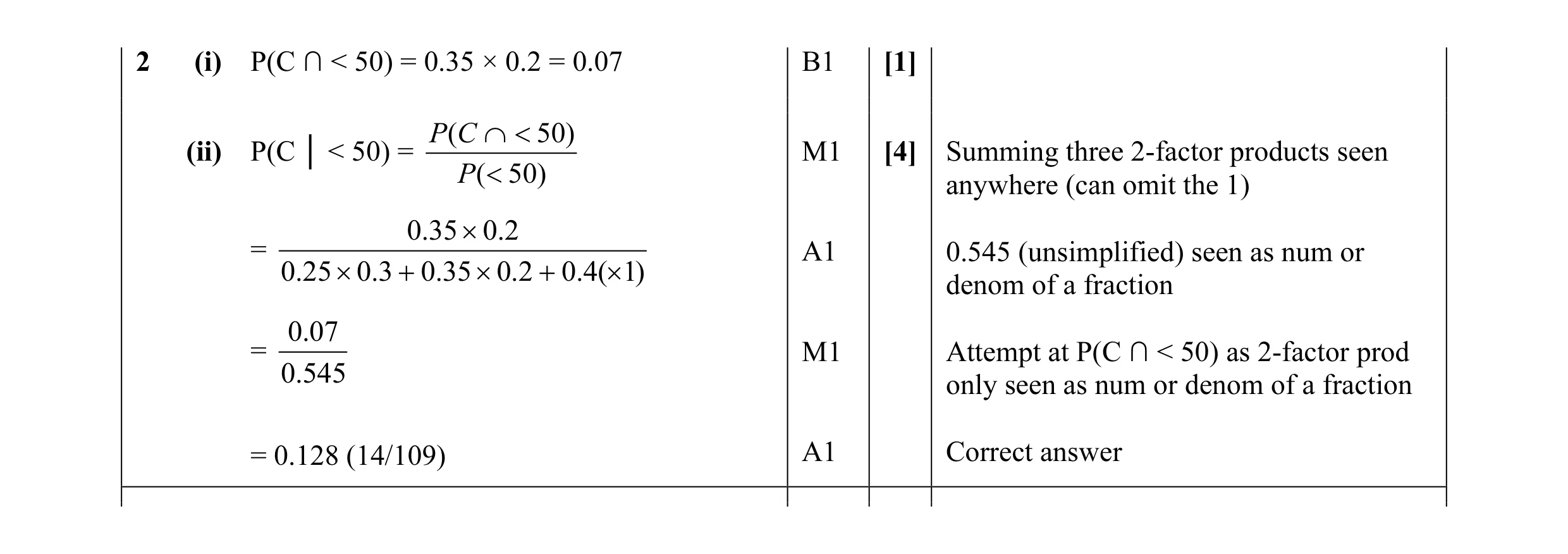 5
5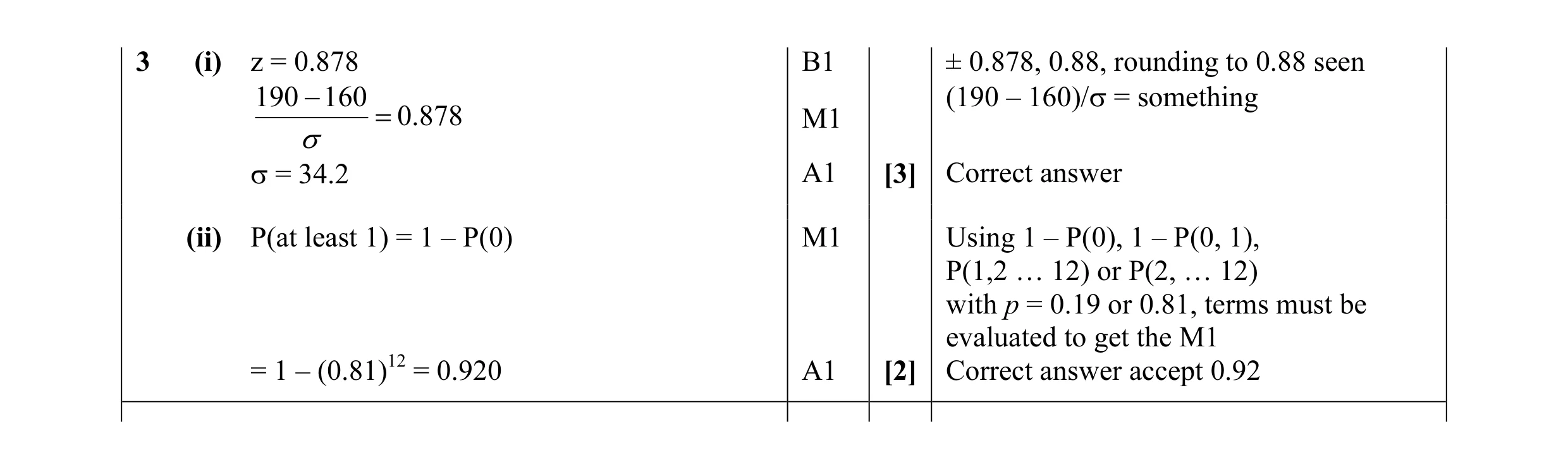 5
5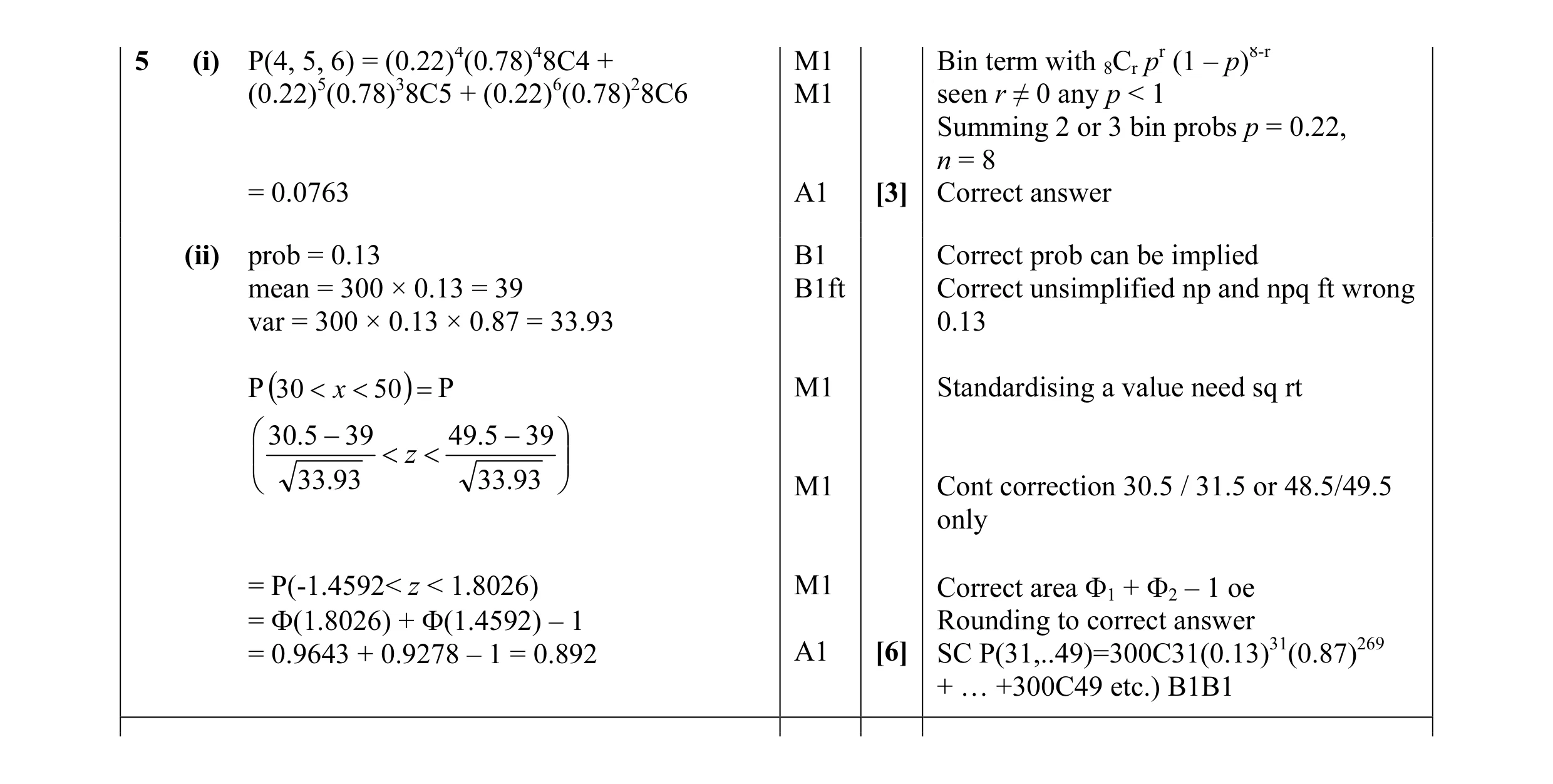 9
9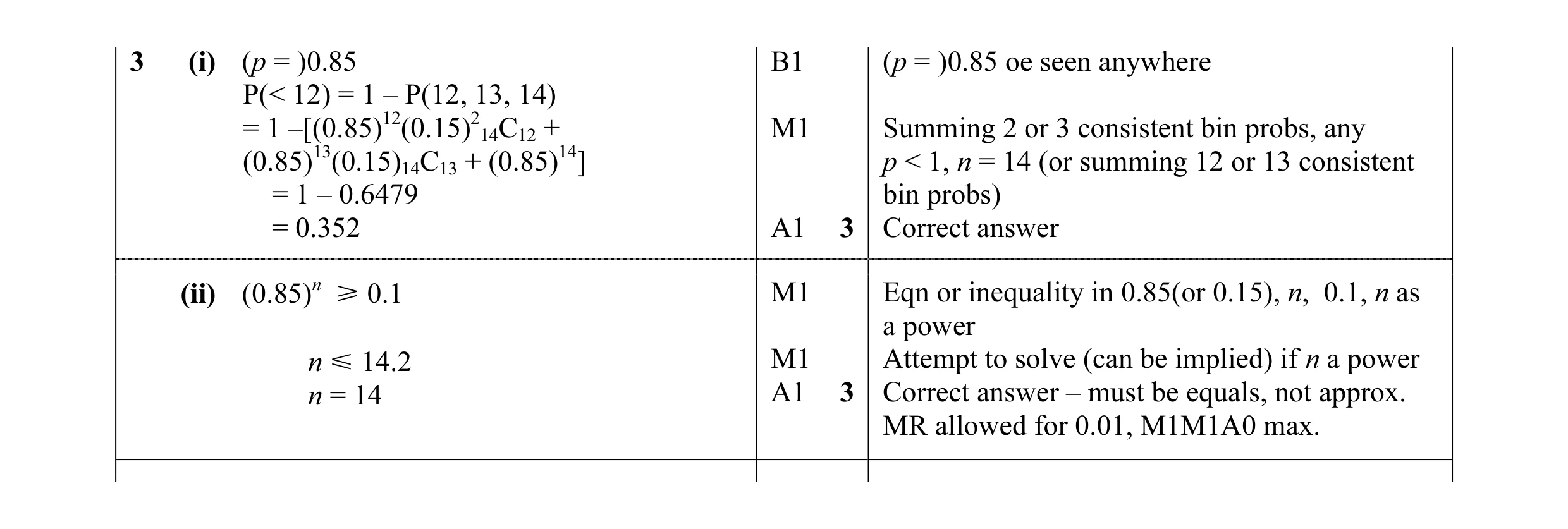 6
6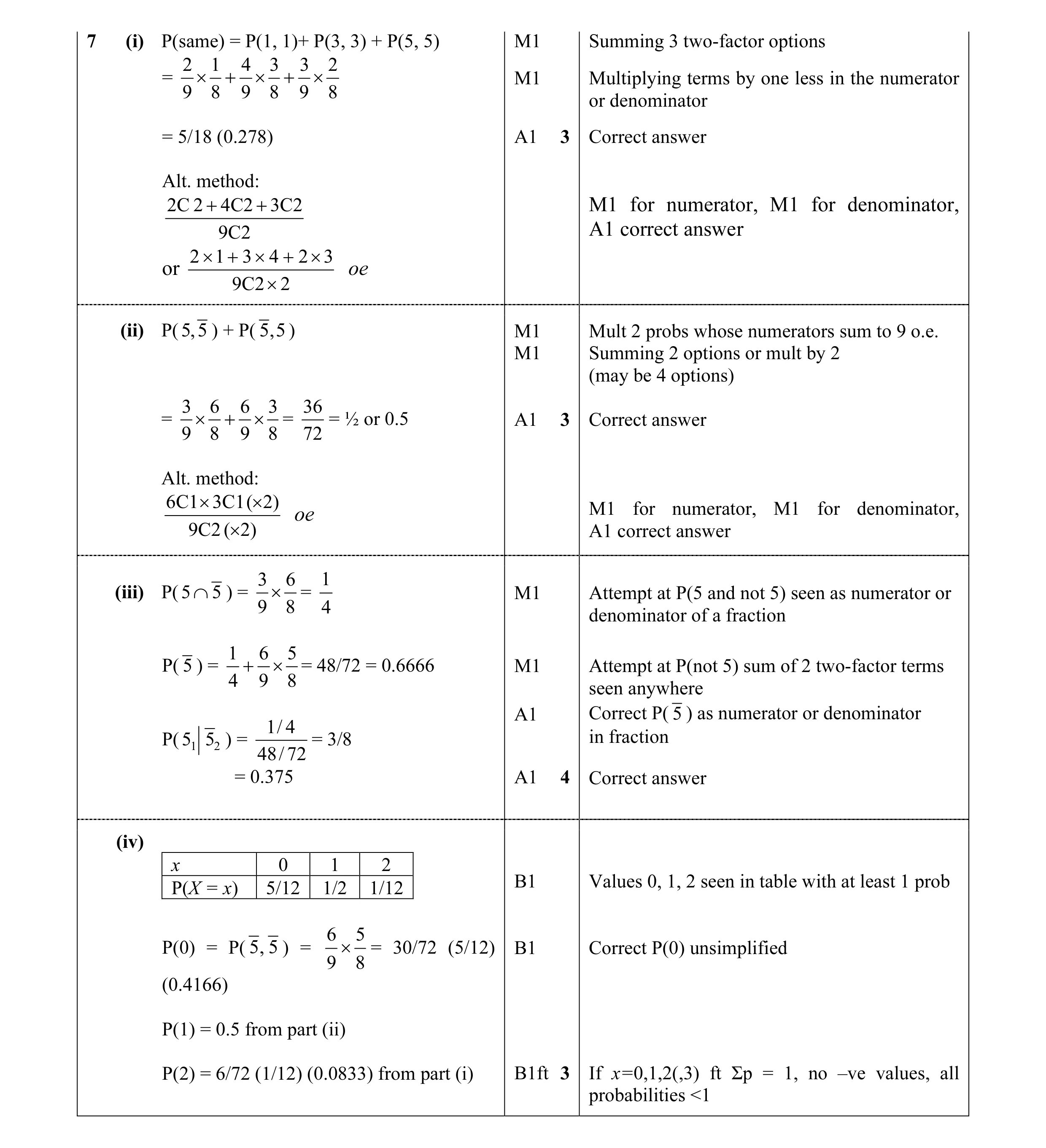 13
13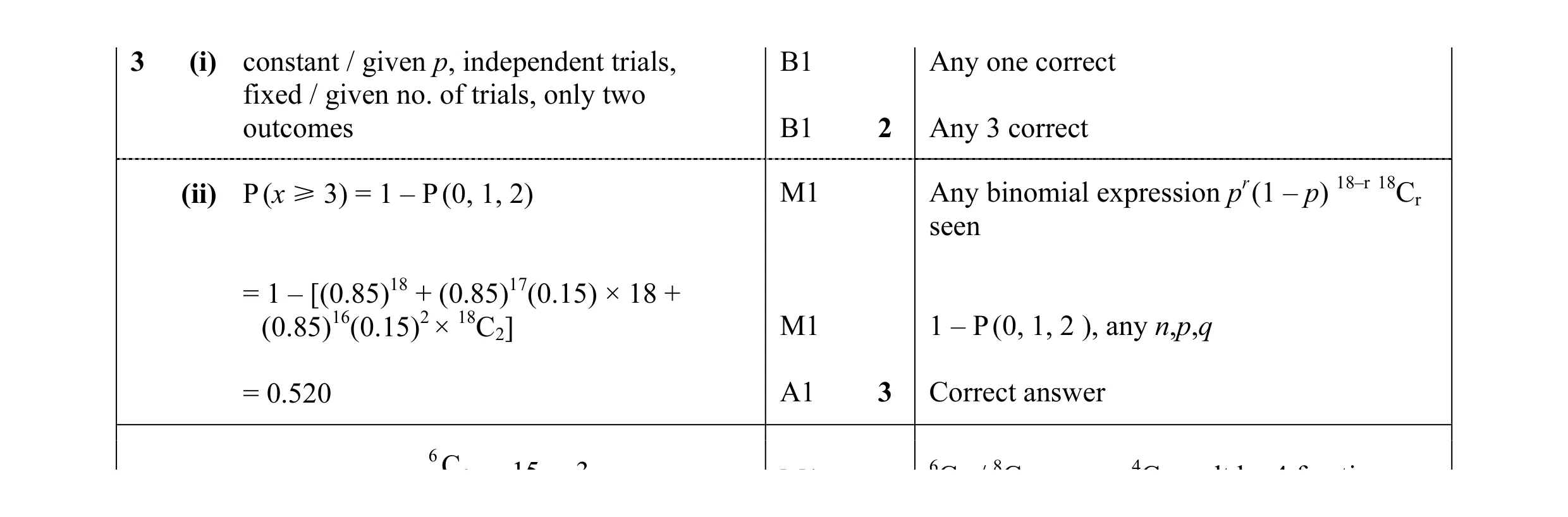 5
5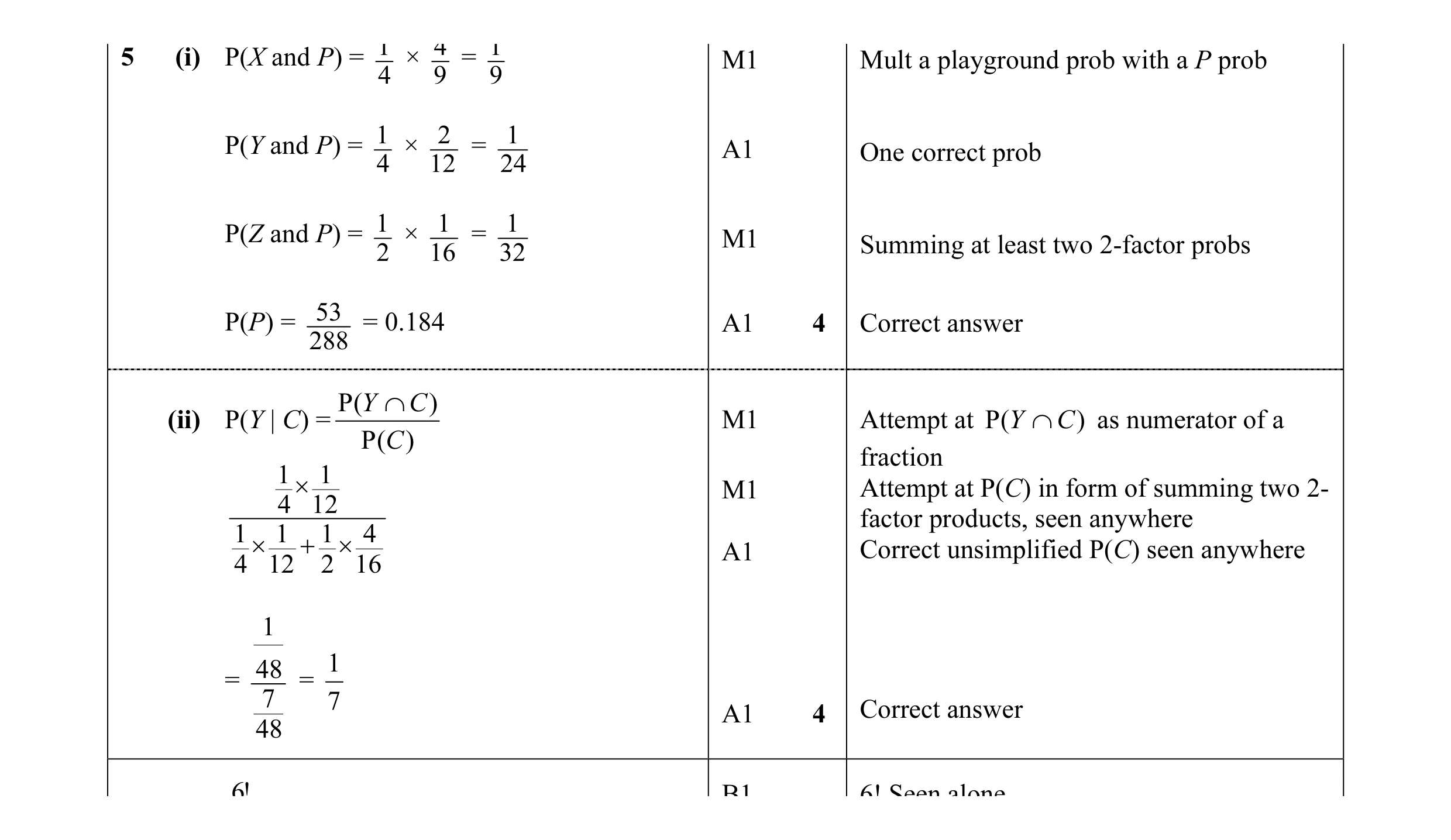 8
8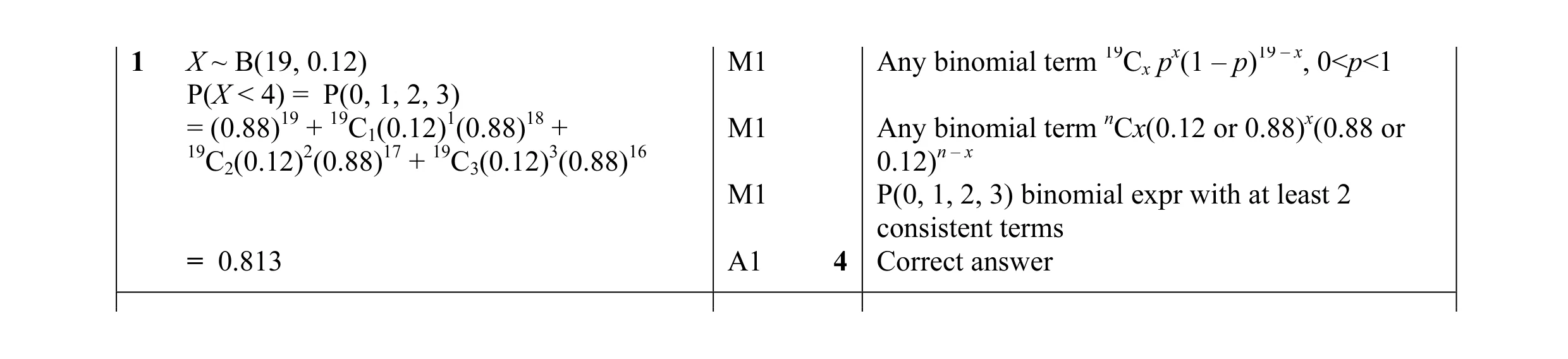 4
4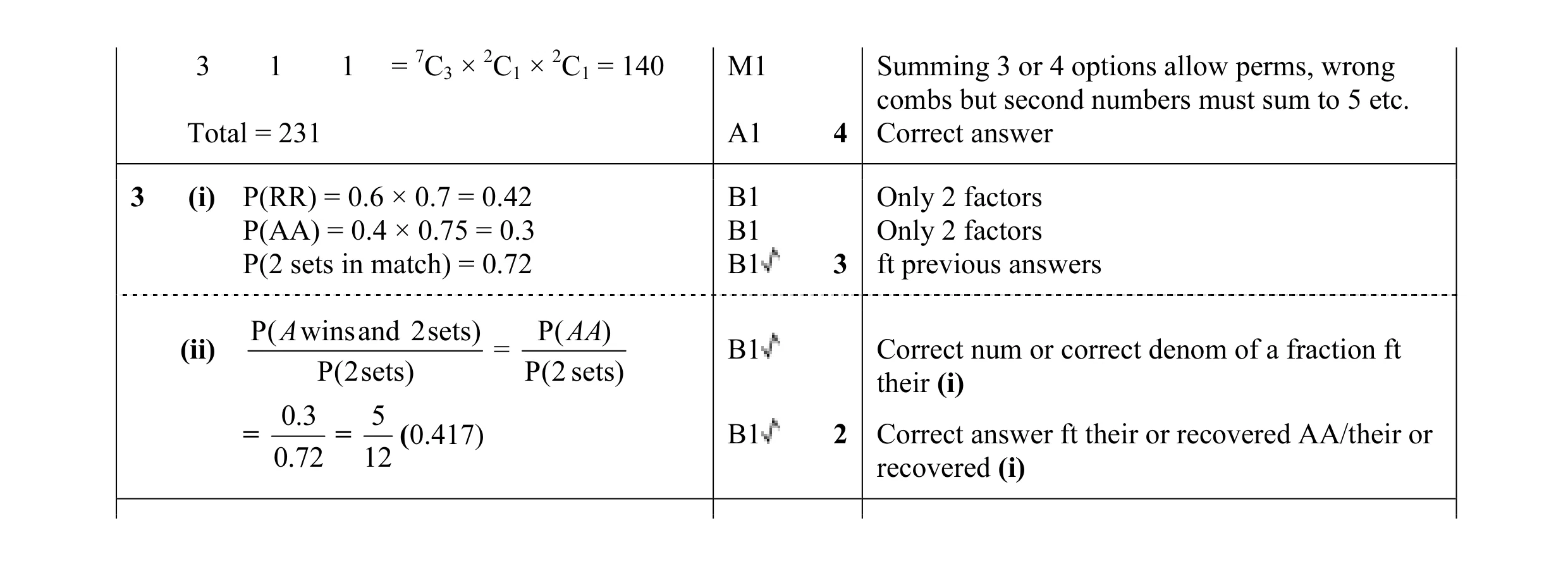 5
5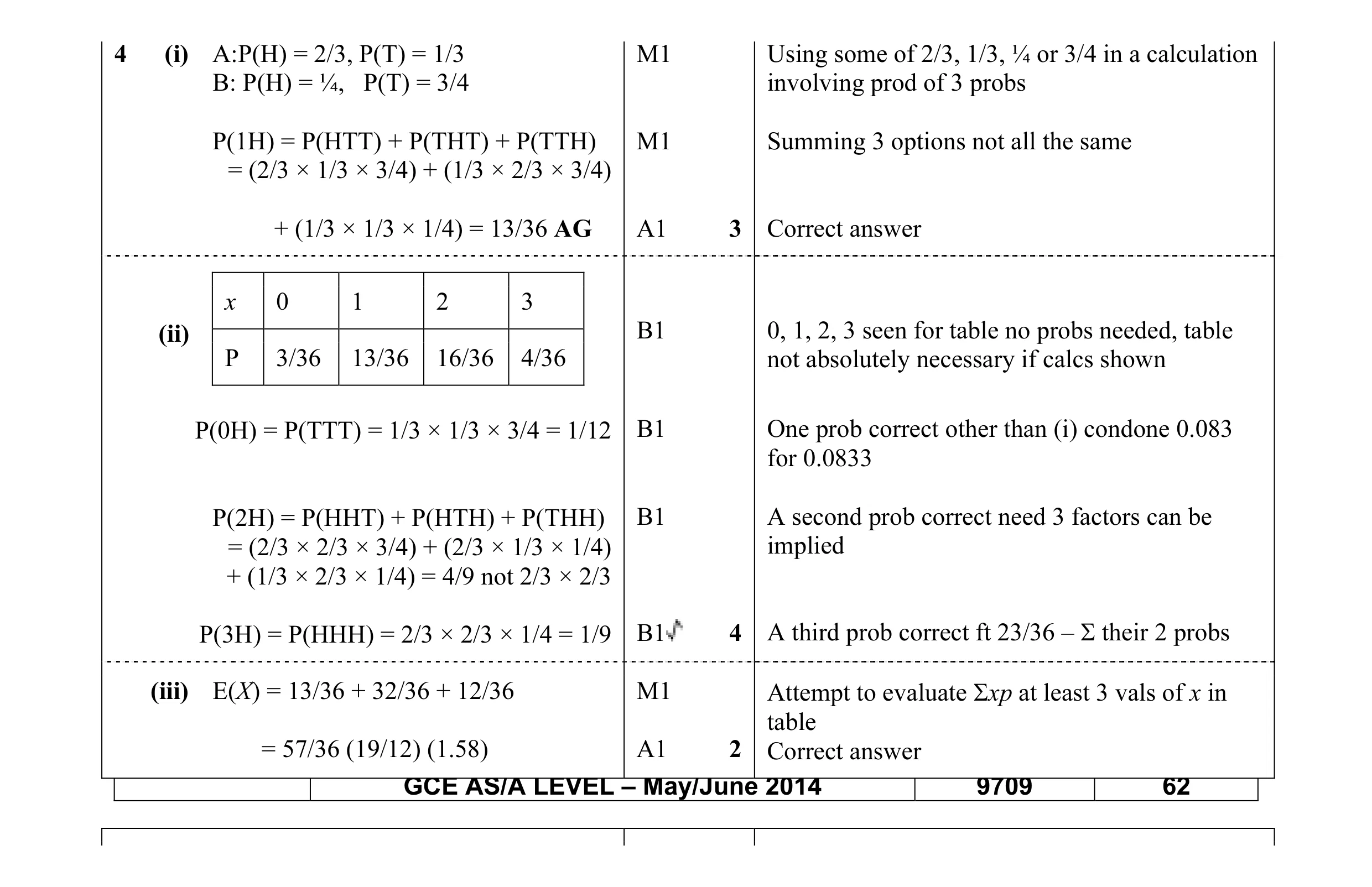 9
9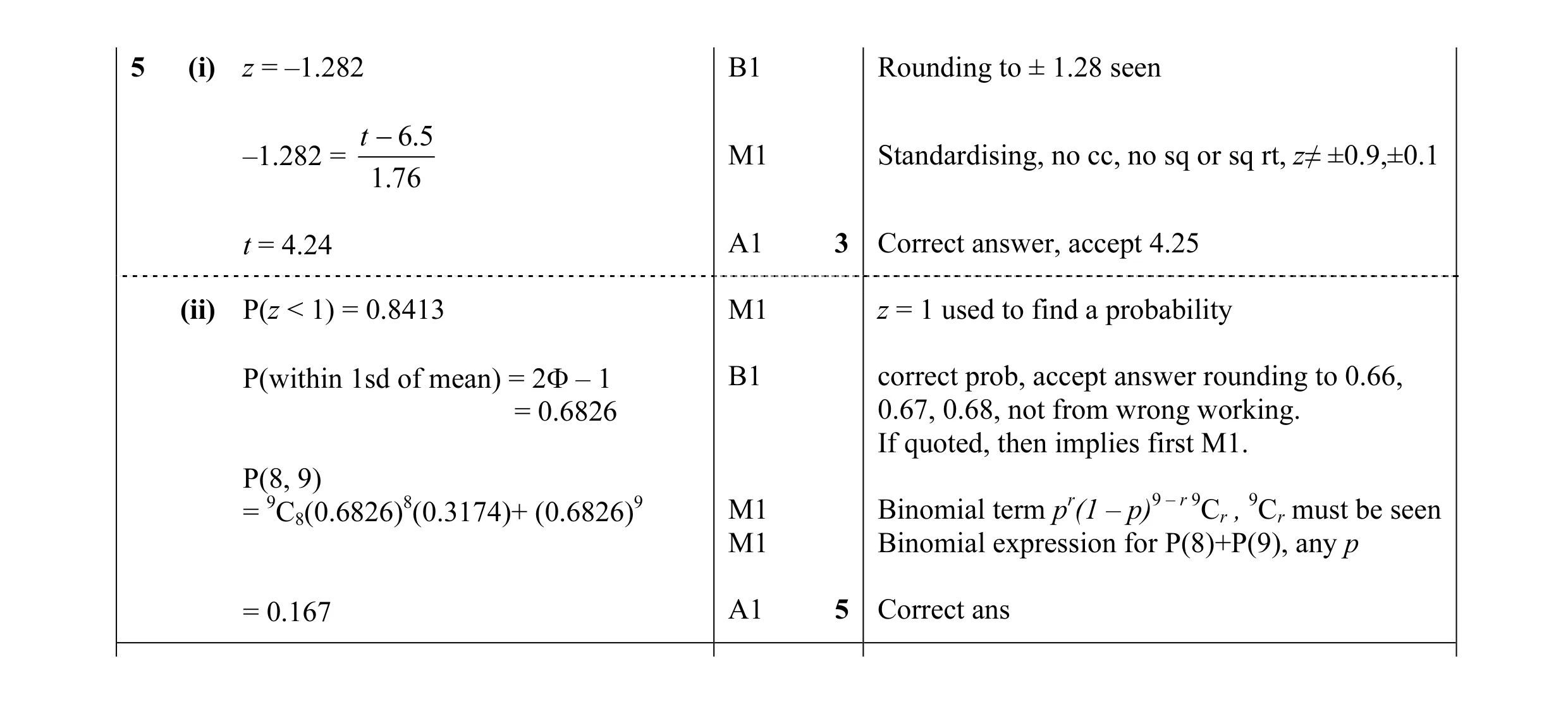 8
8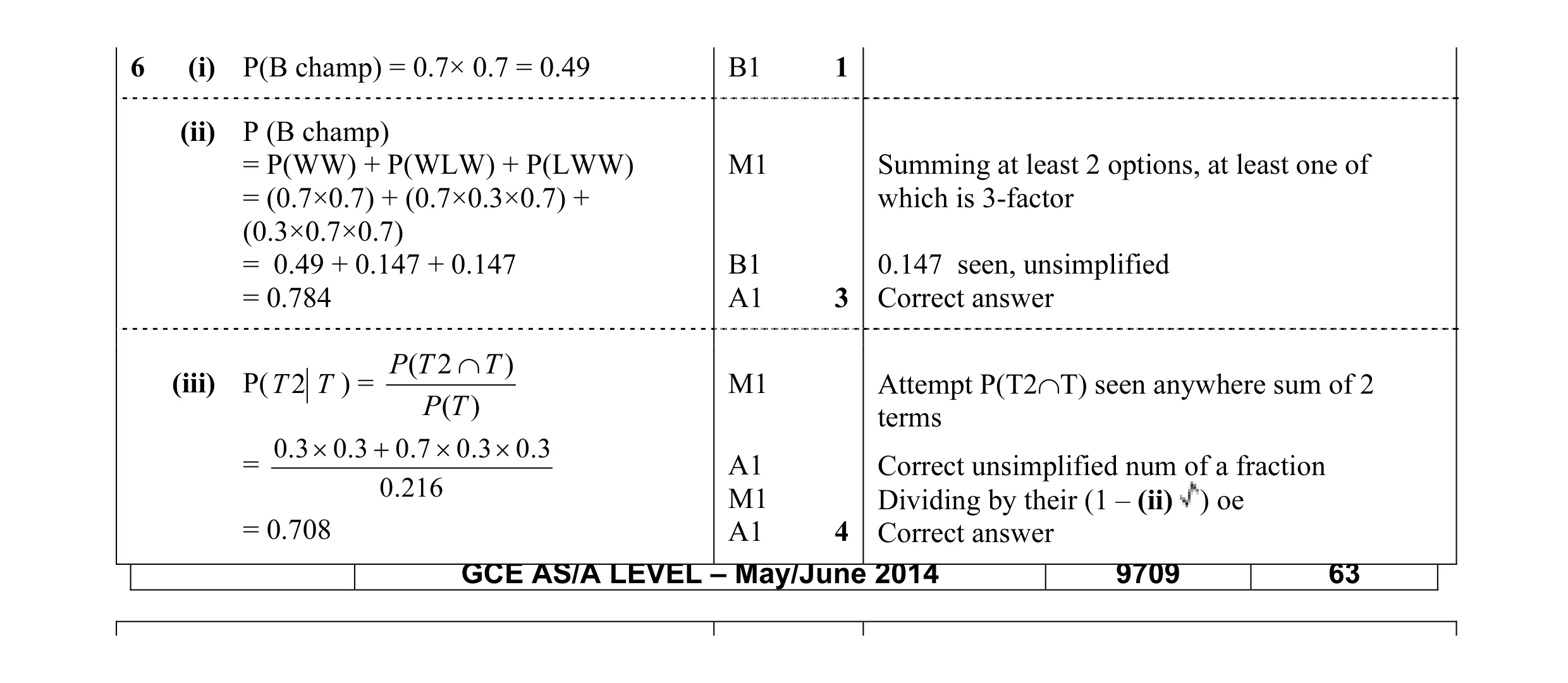 8
8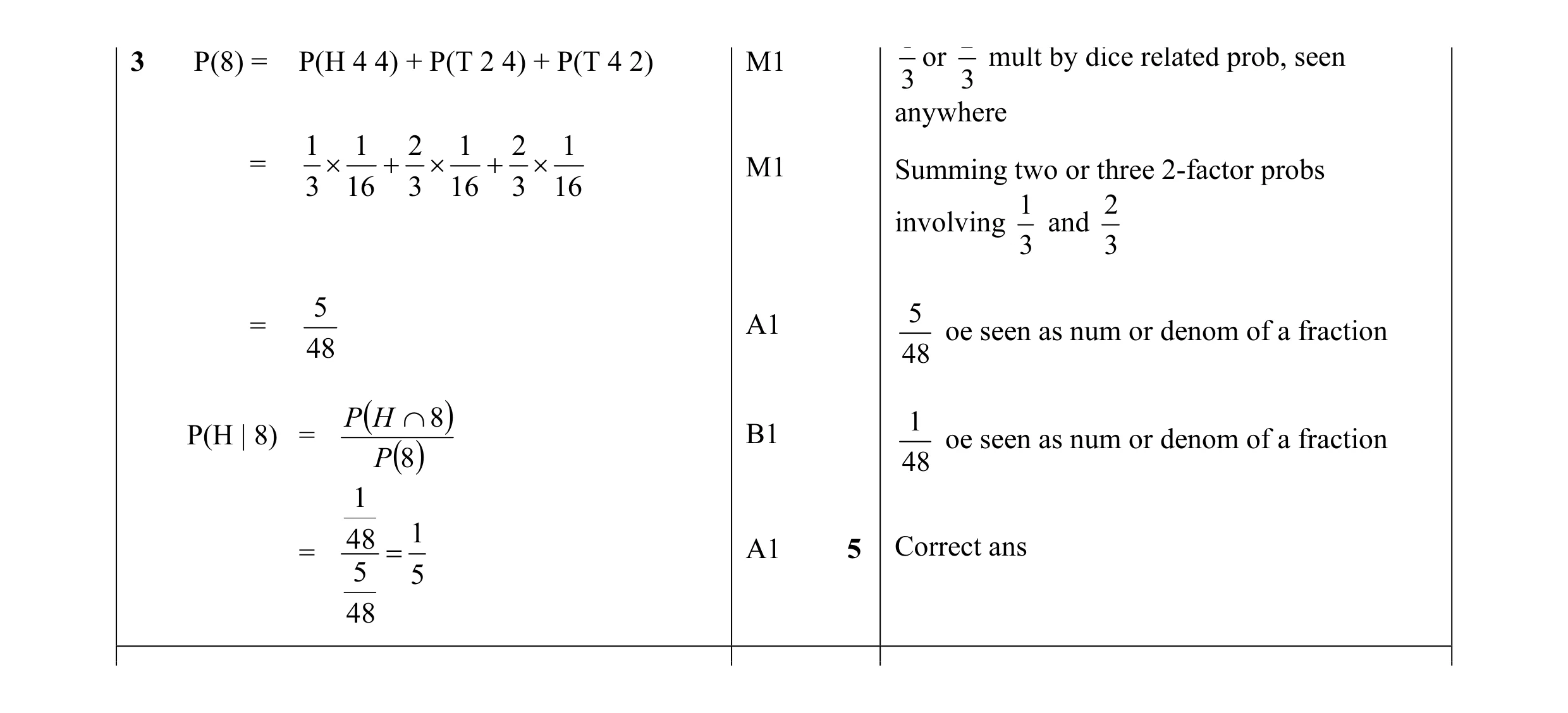 5
5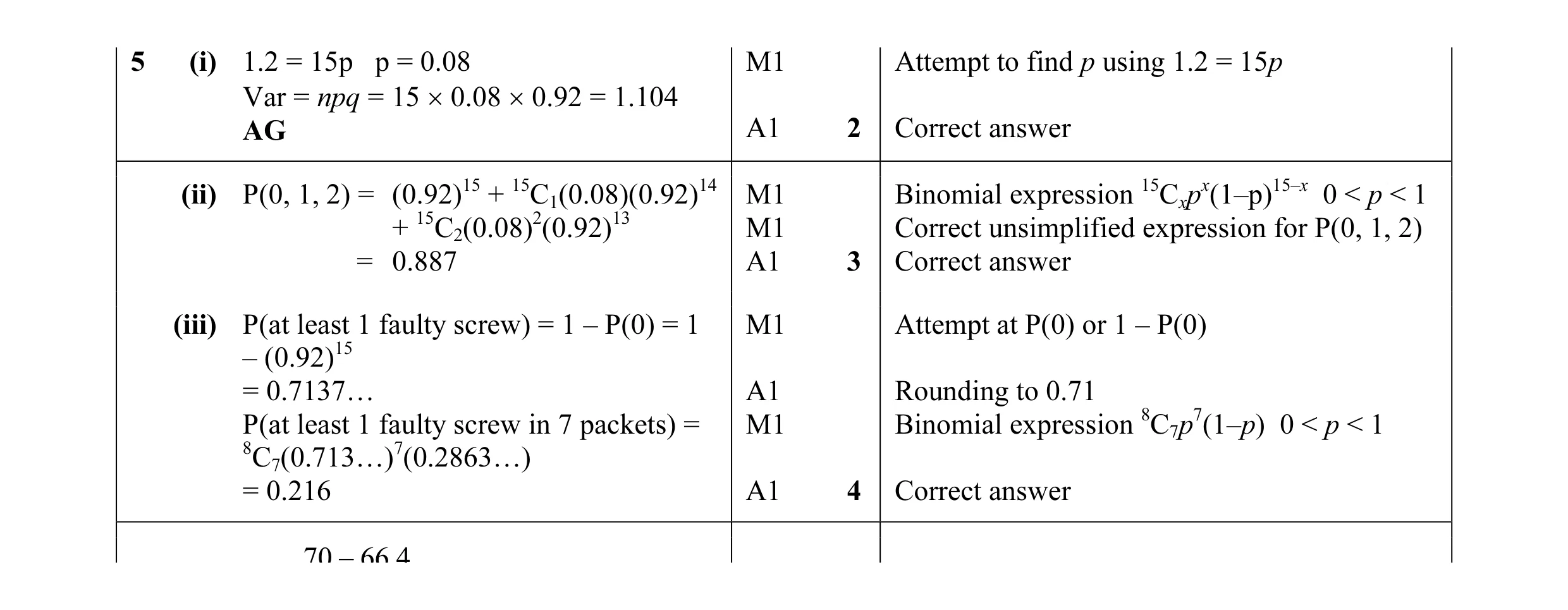 9
9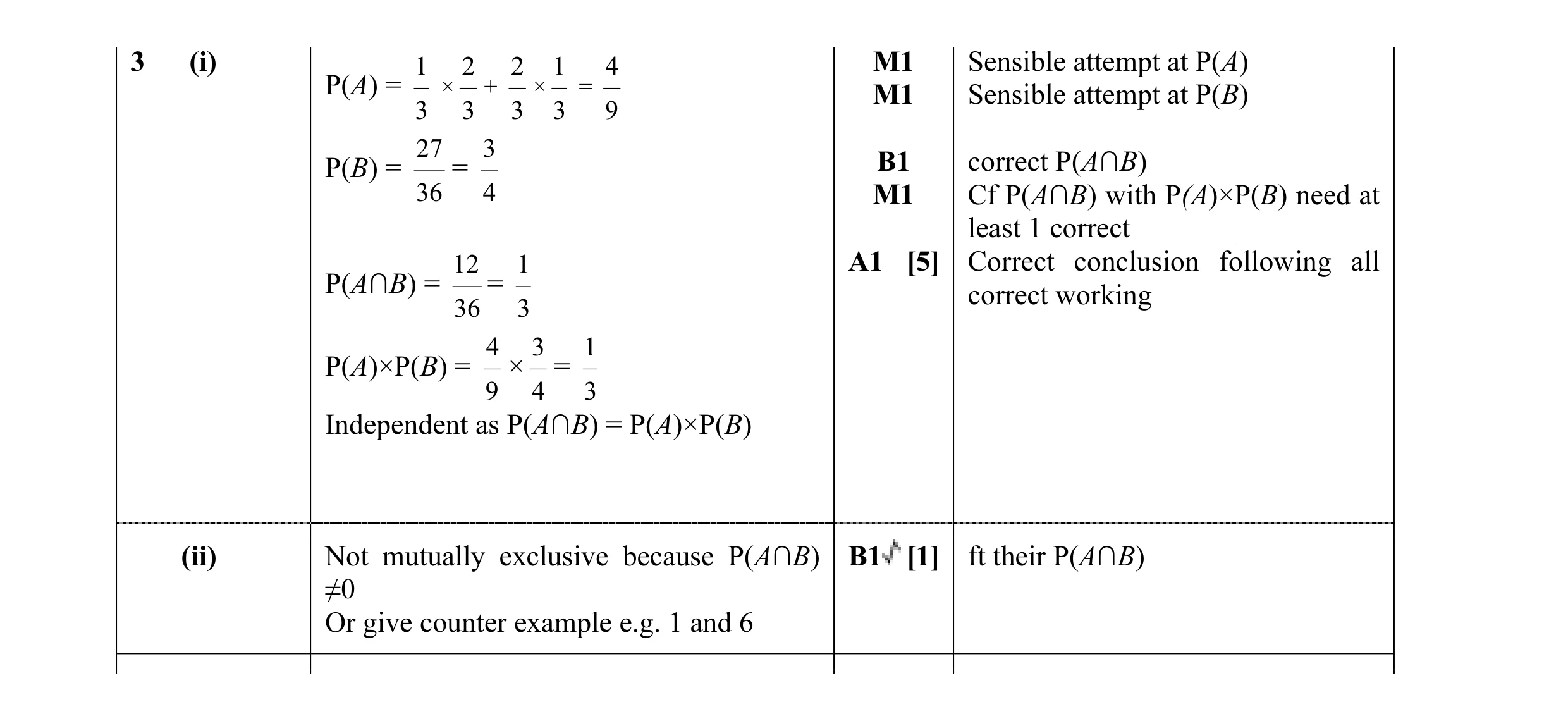 6
6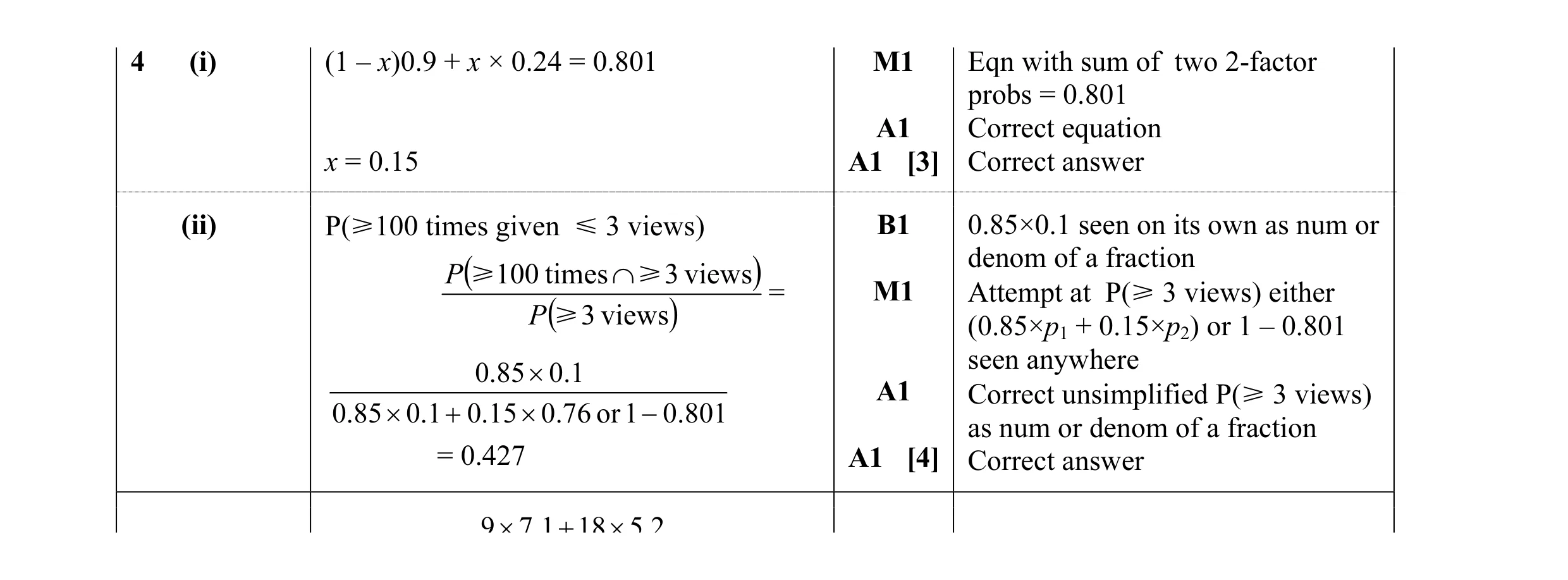 7
7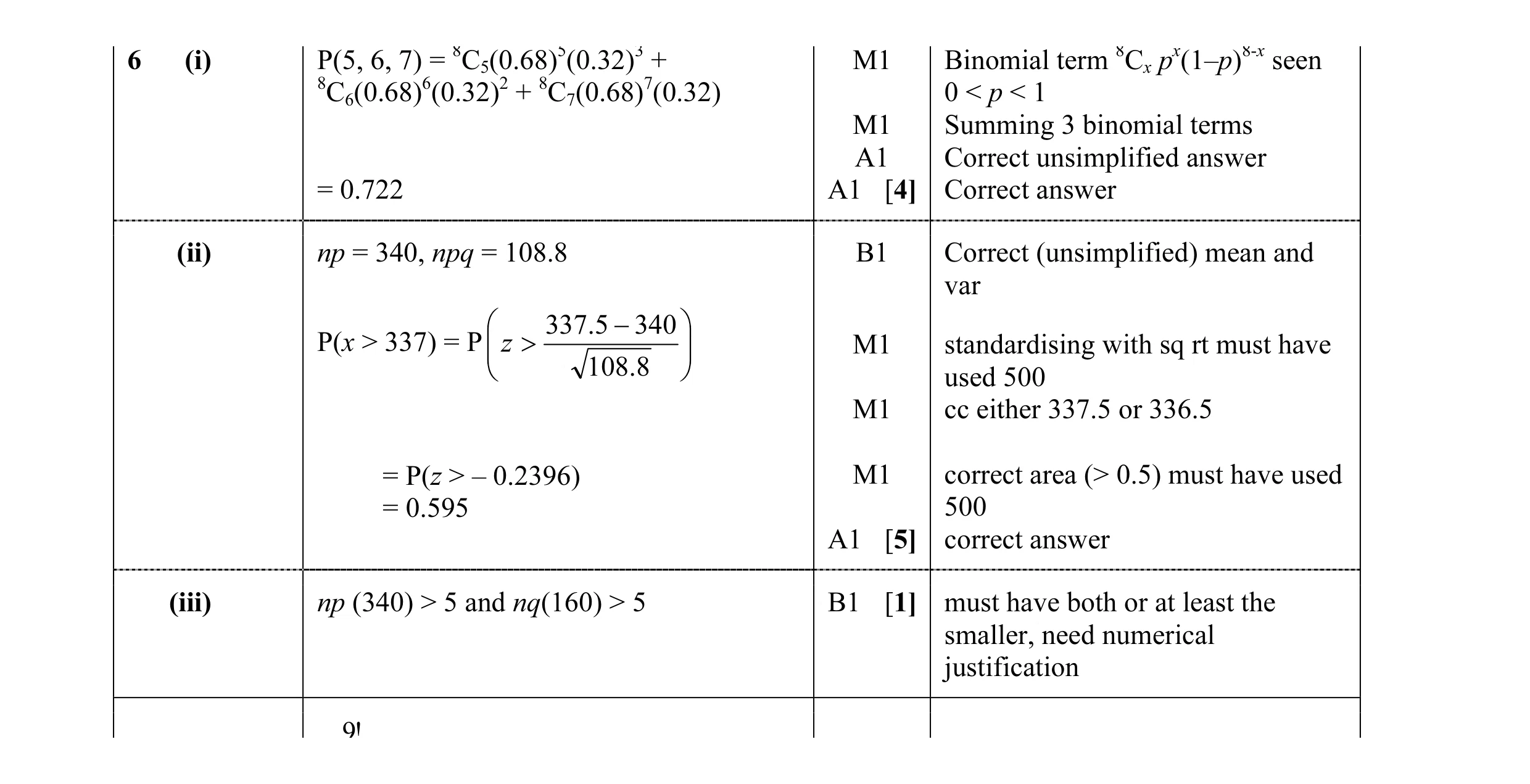 10
10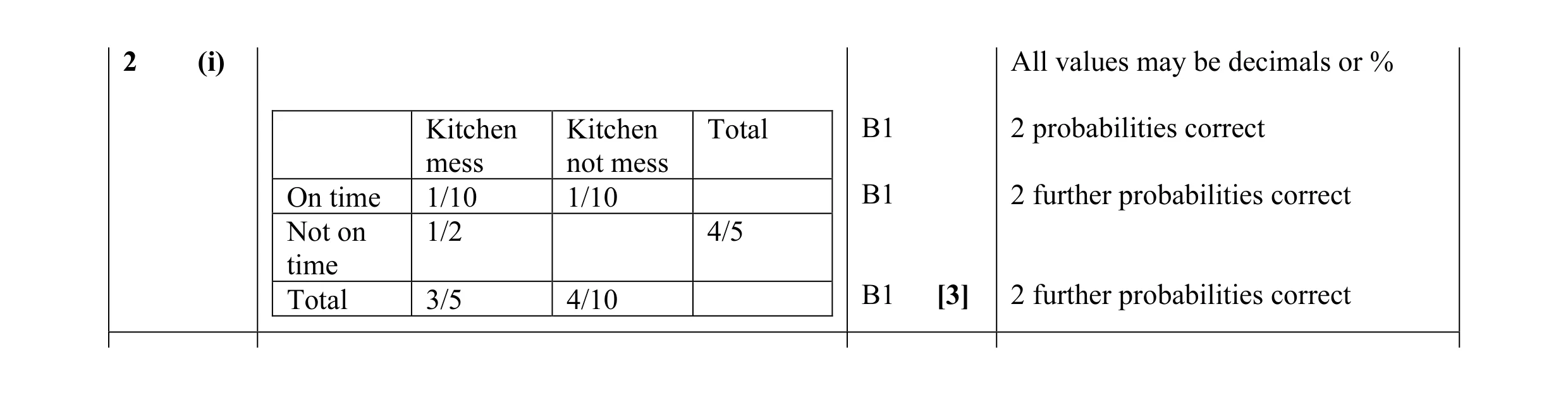 5
5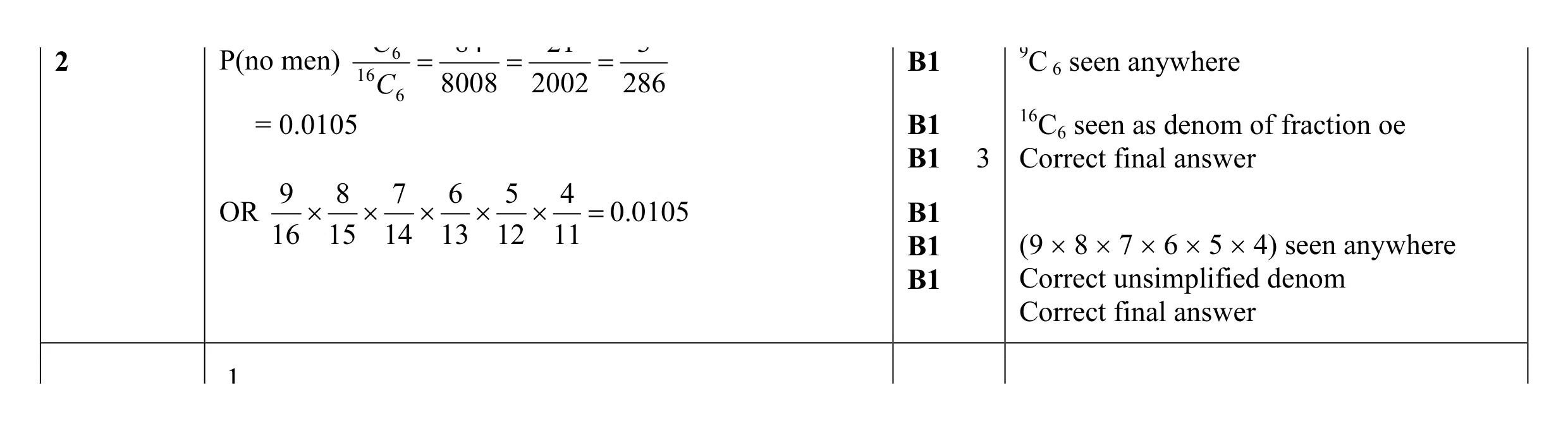 3
3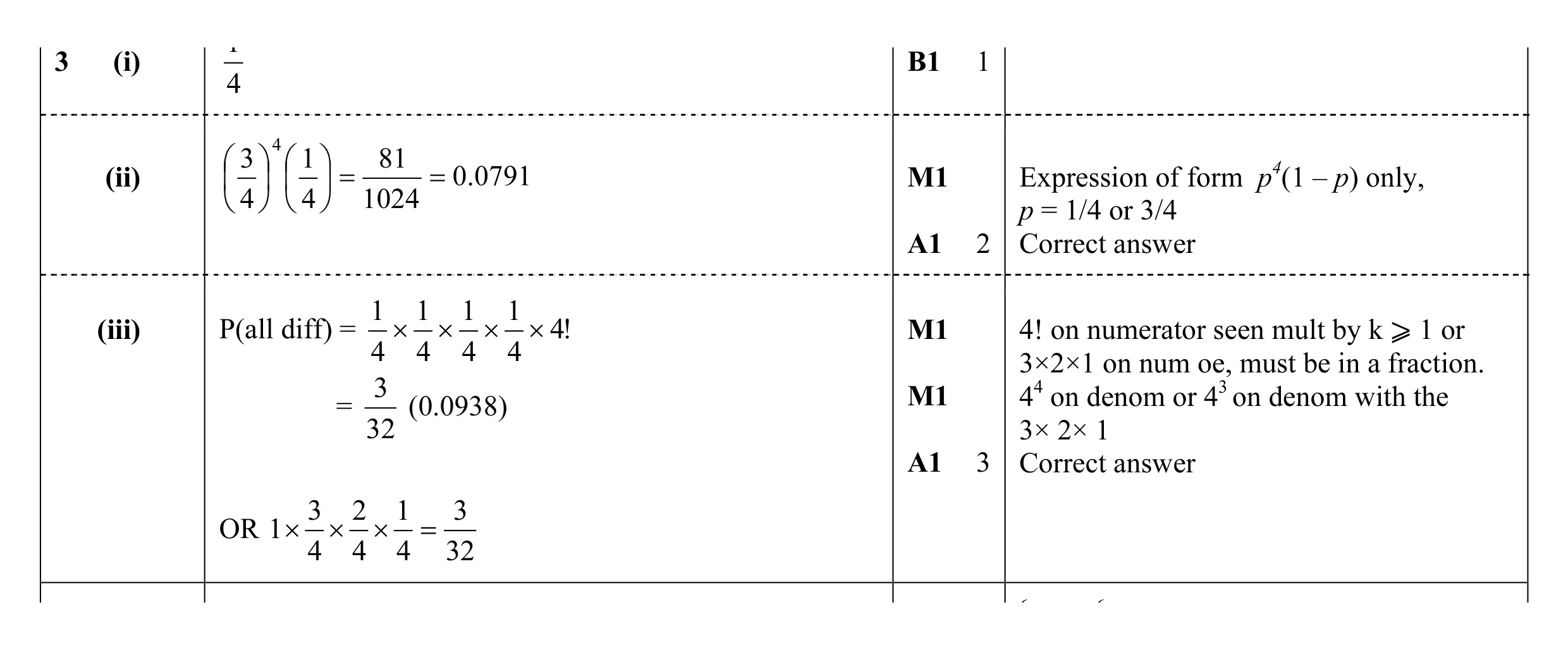 6
6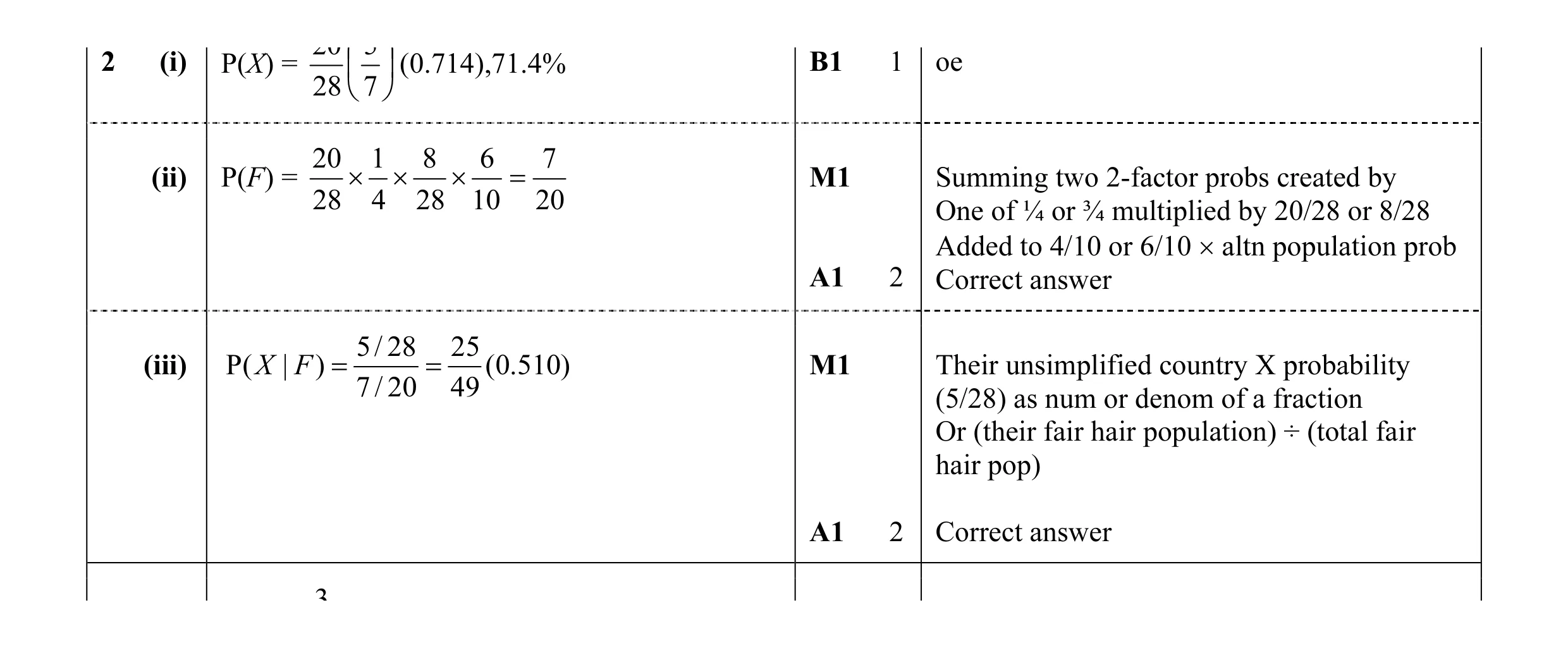 5
5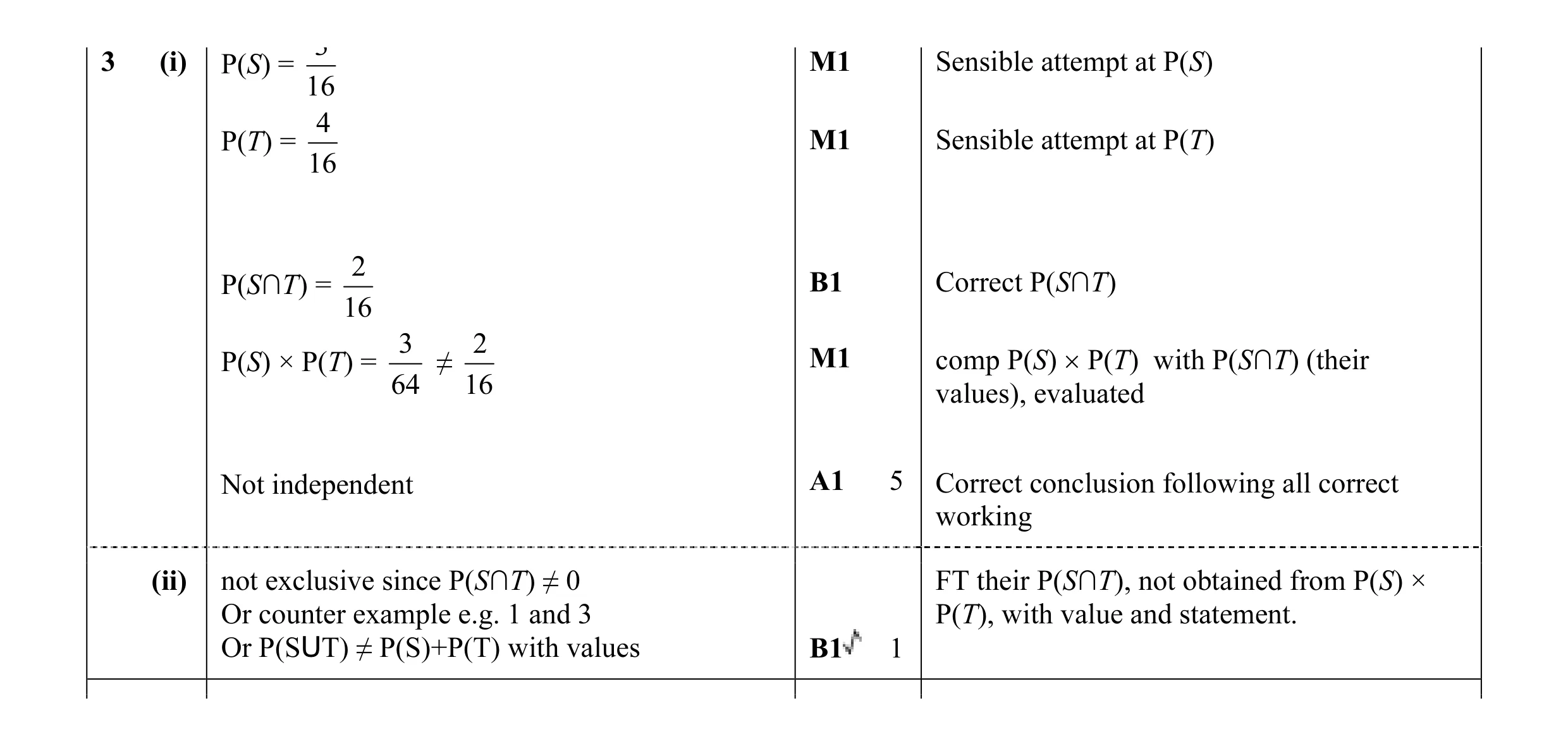 6
6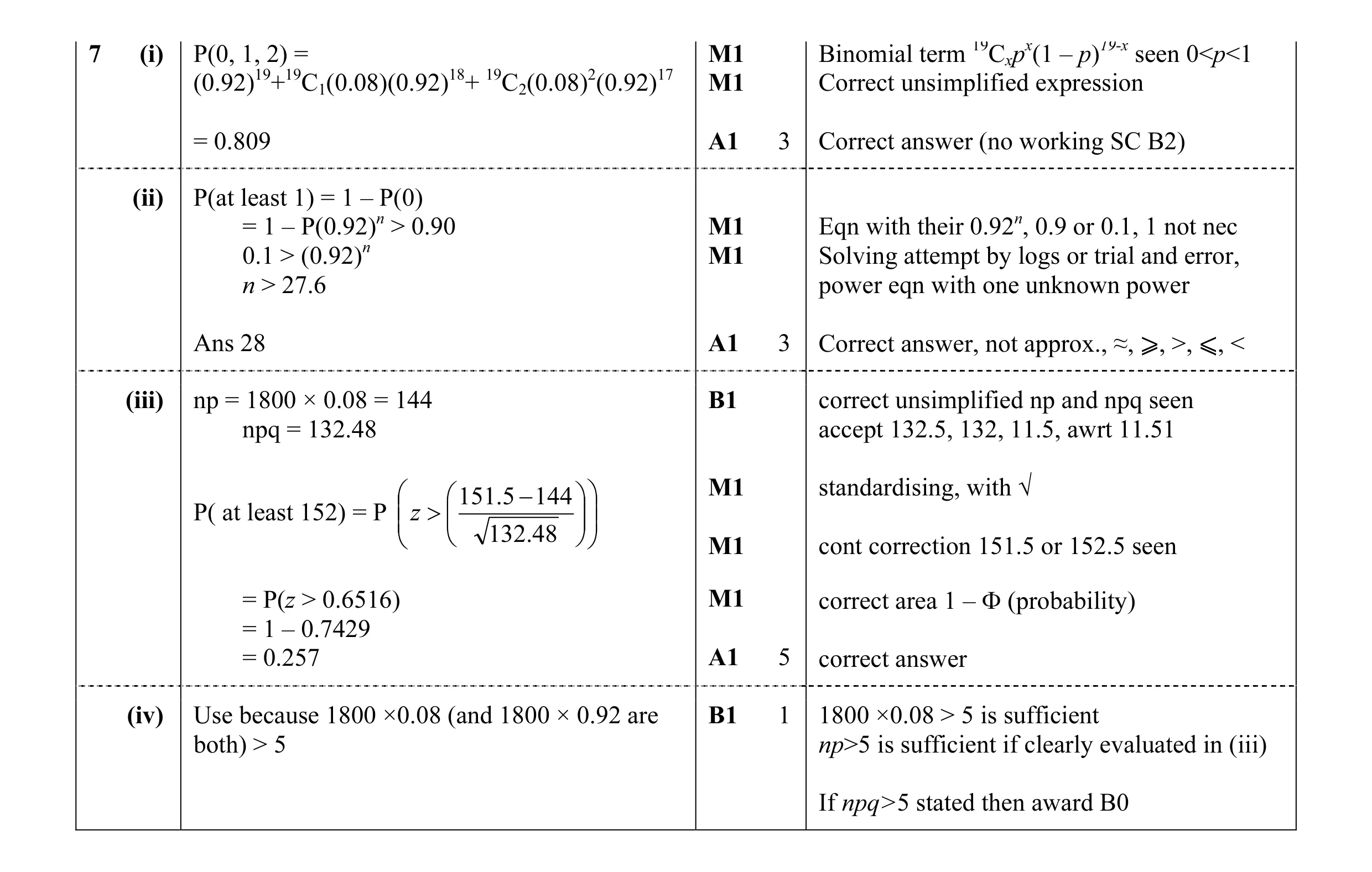 12
12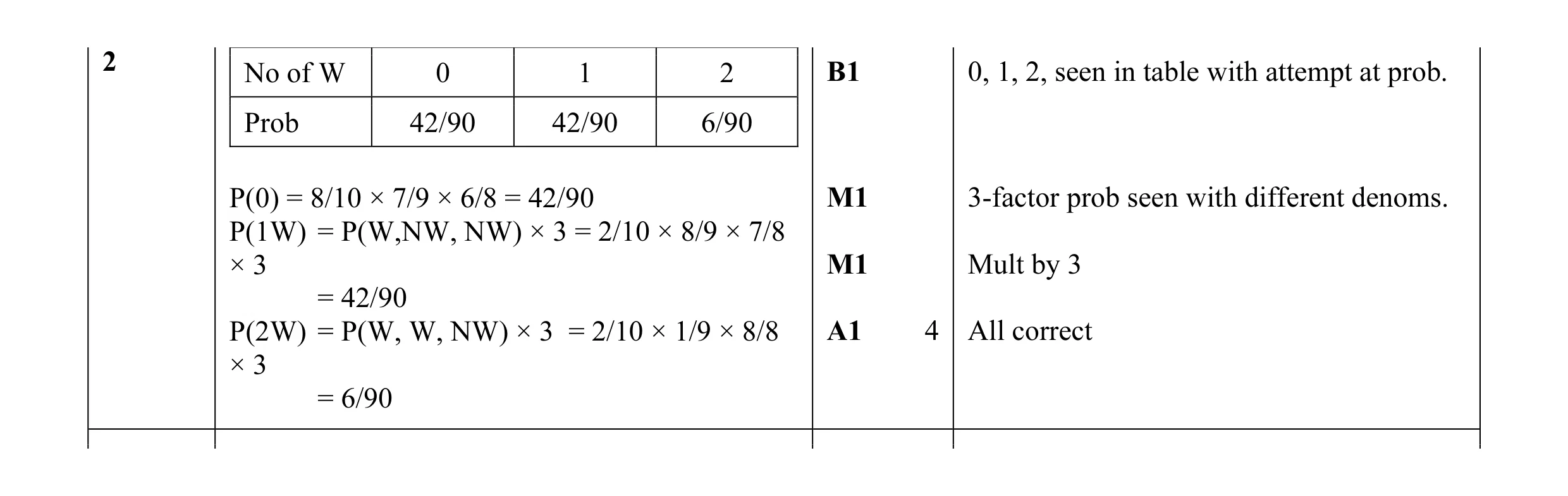 4
4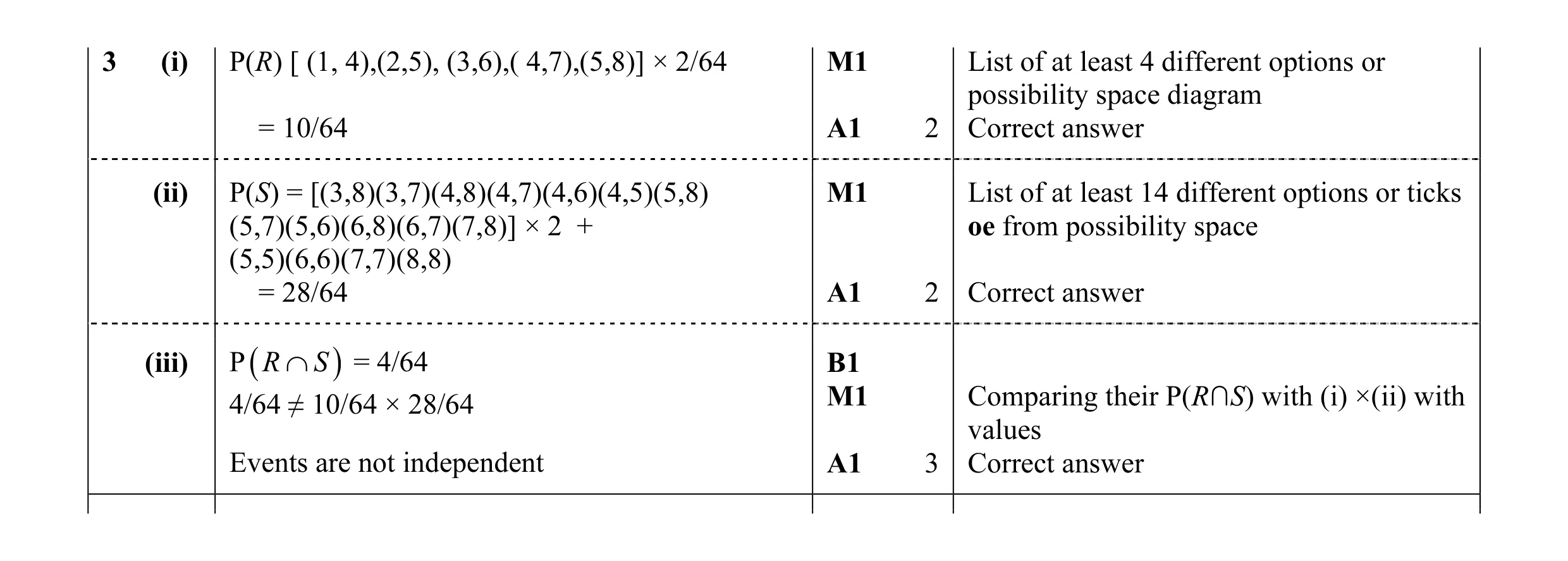 7
7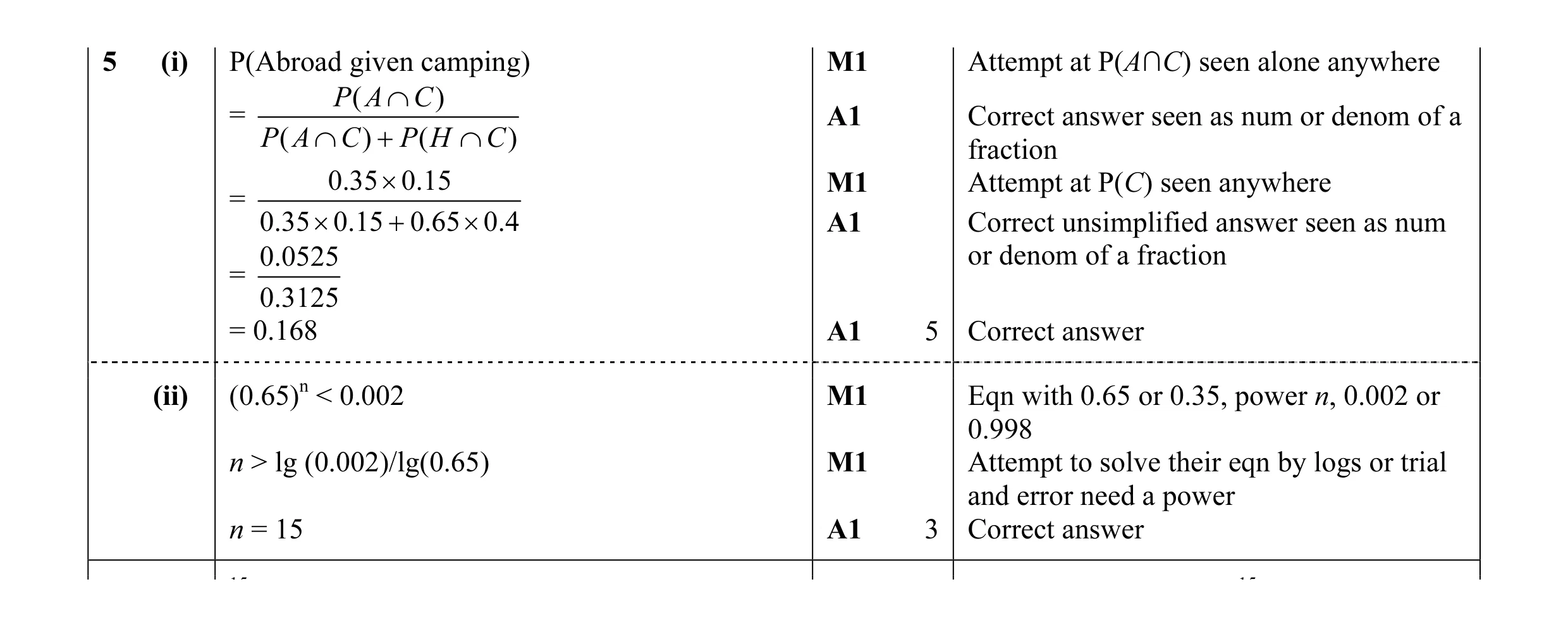 8
8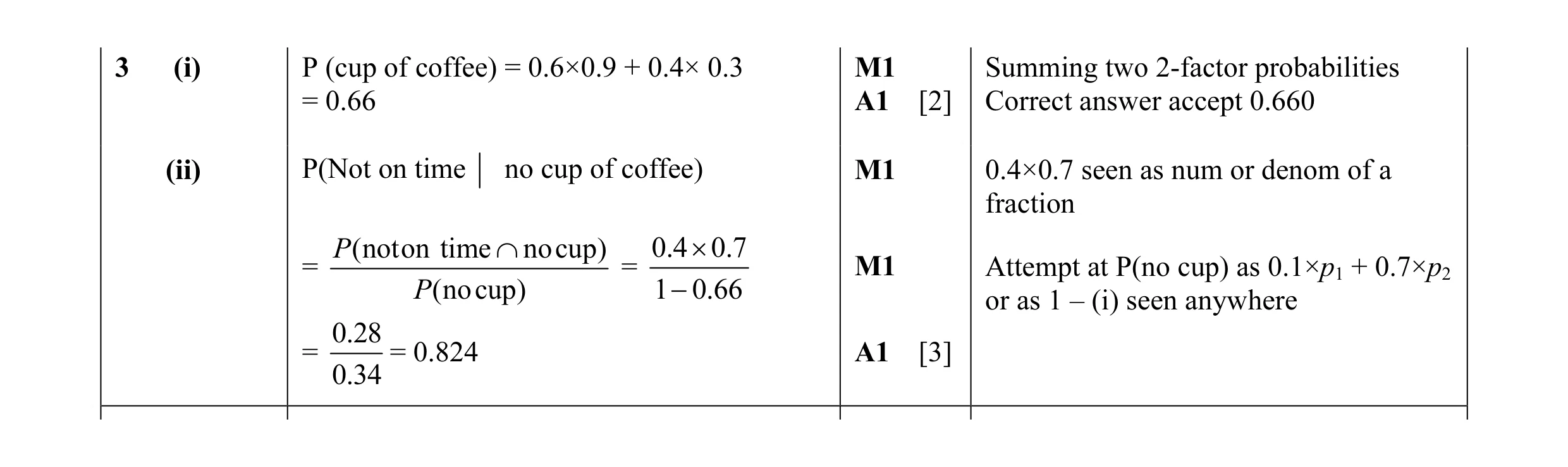 5
5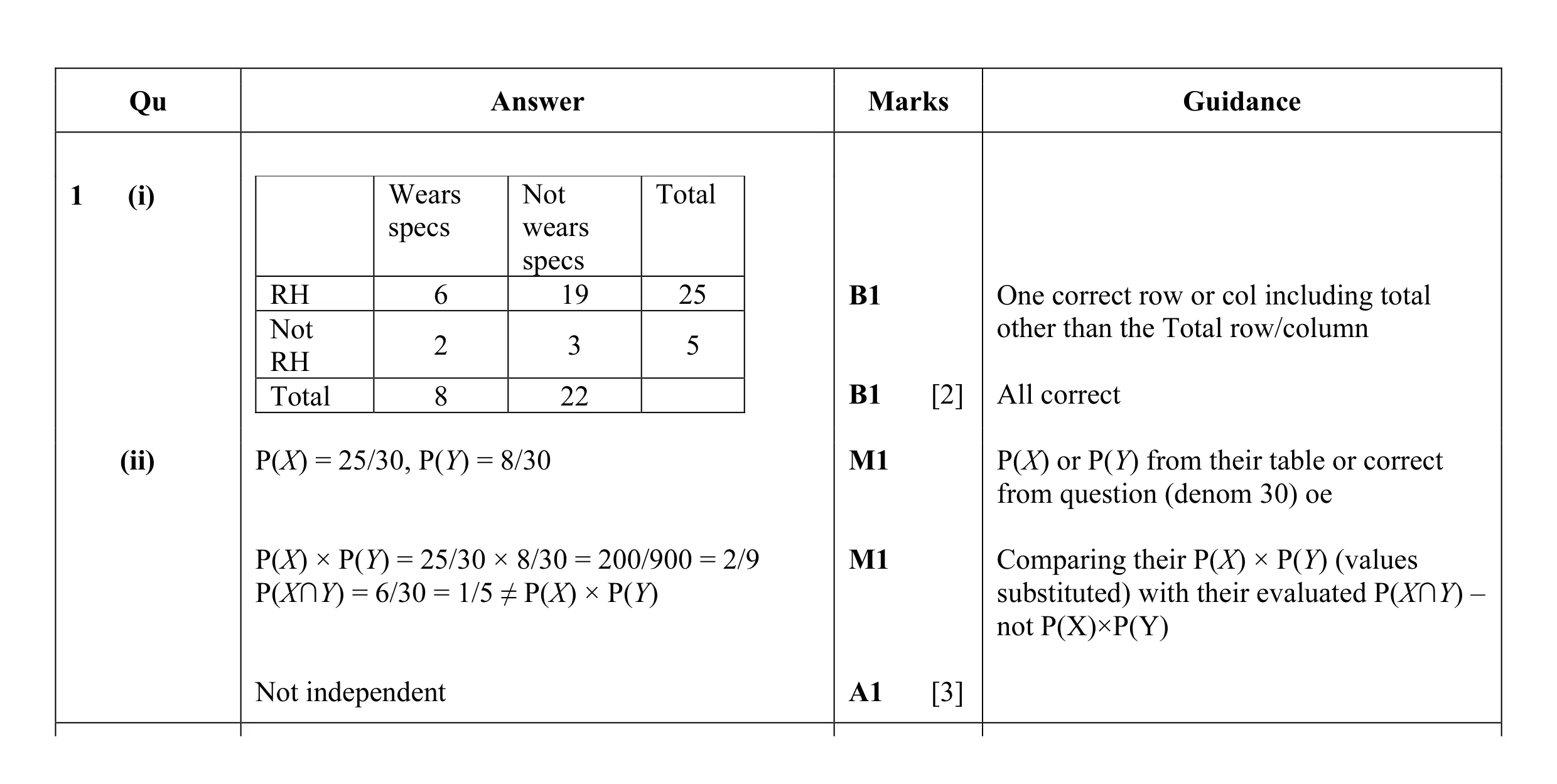 5
5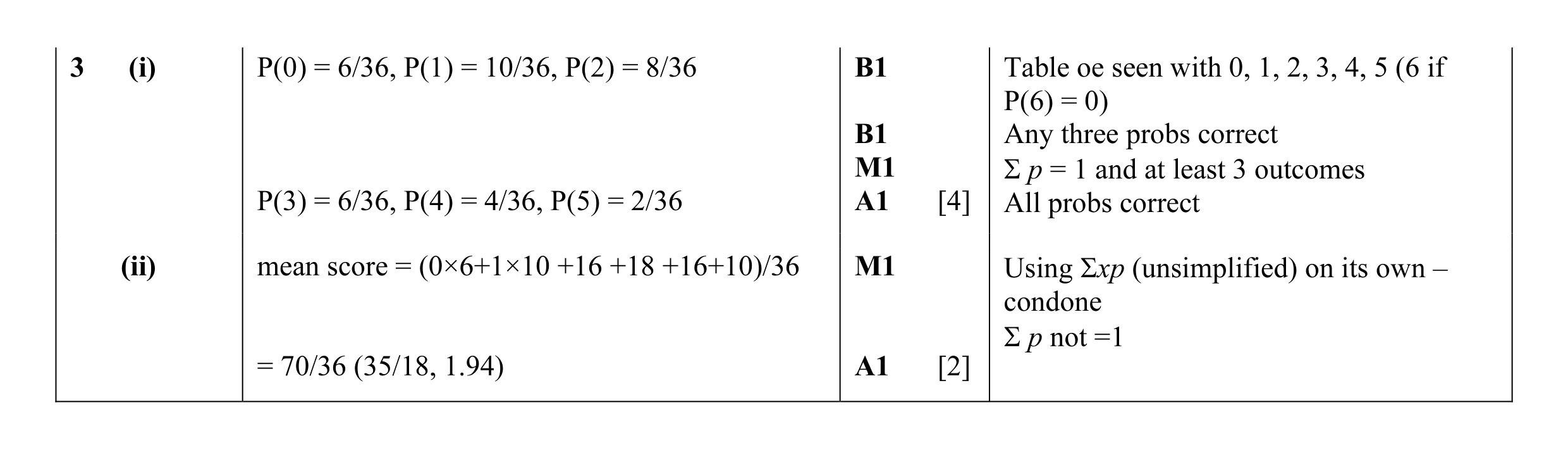 6
6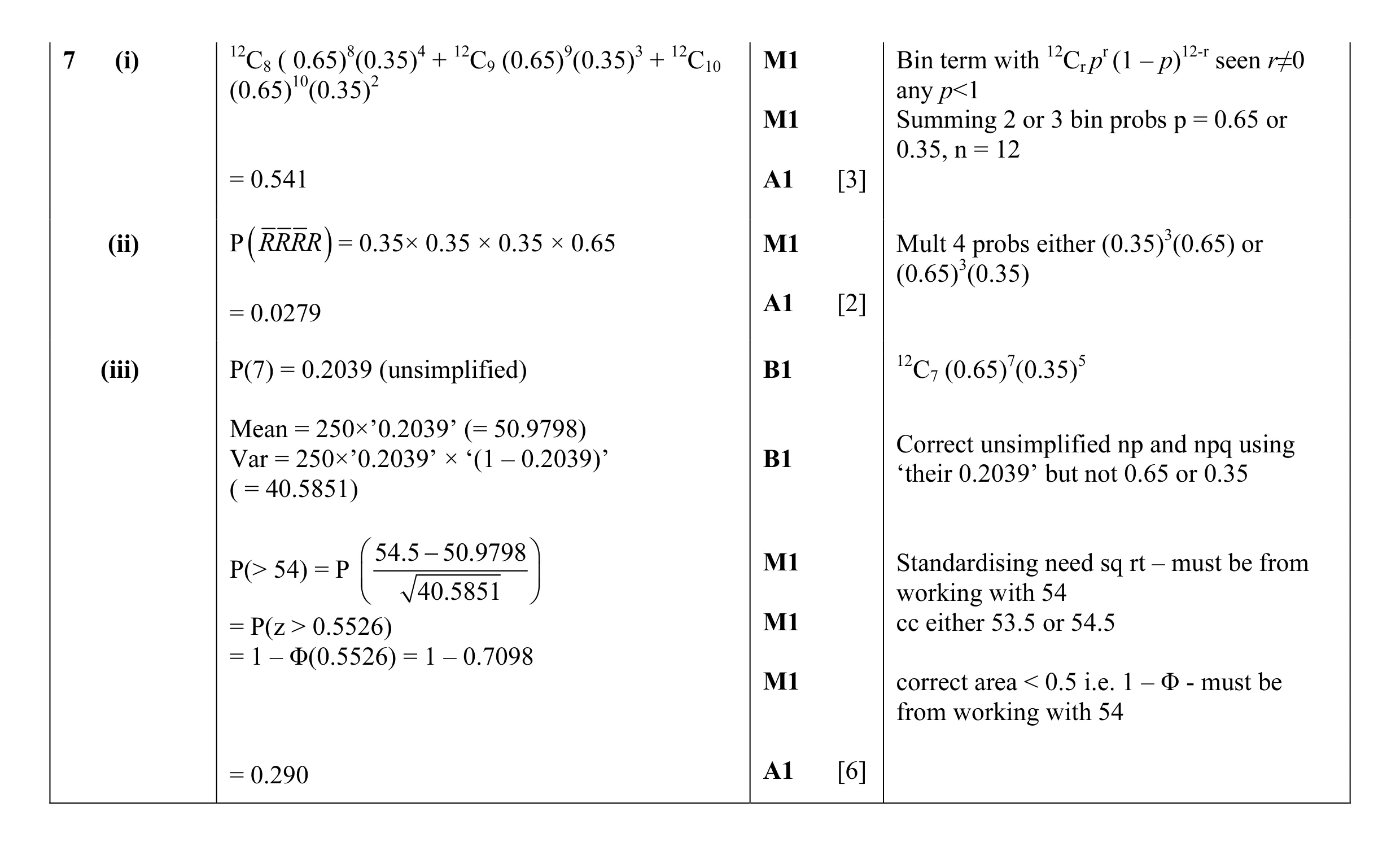 11
11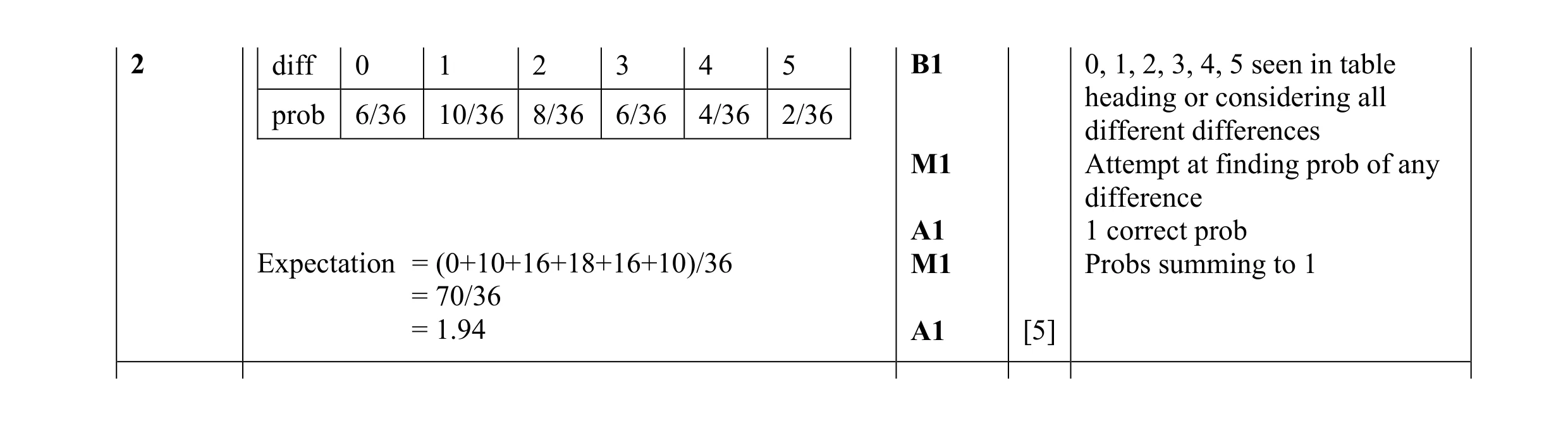 5
5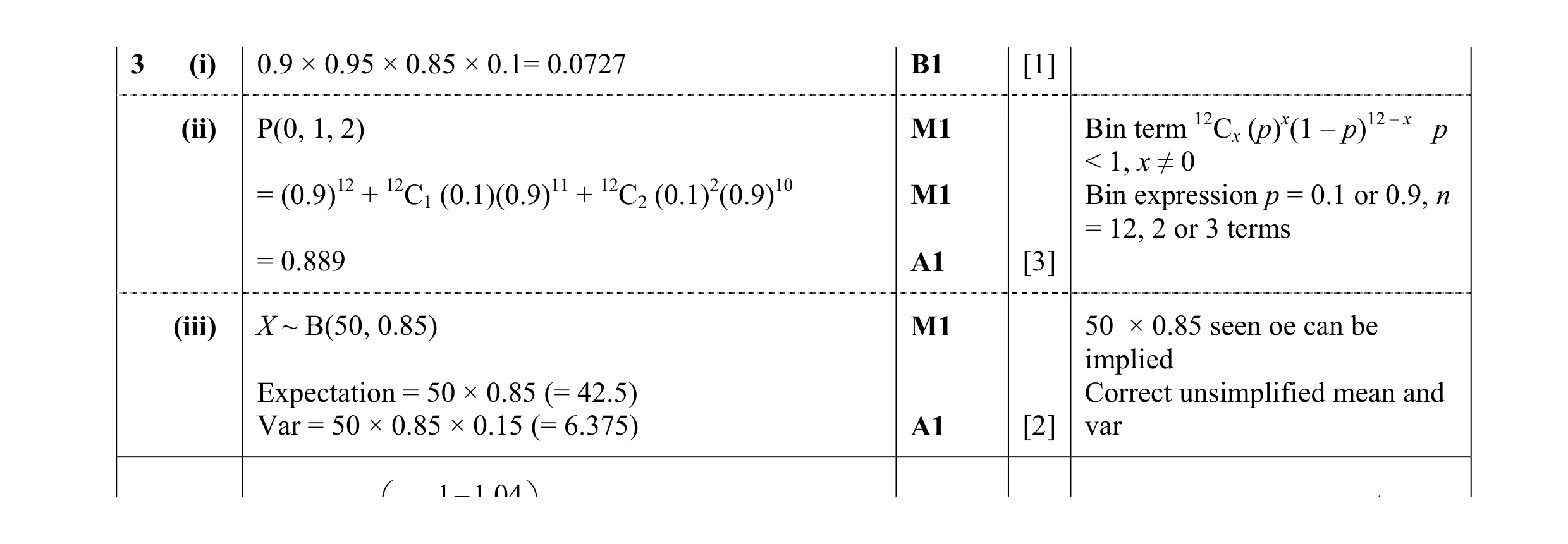 6
6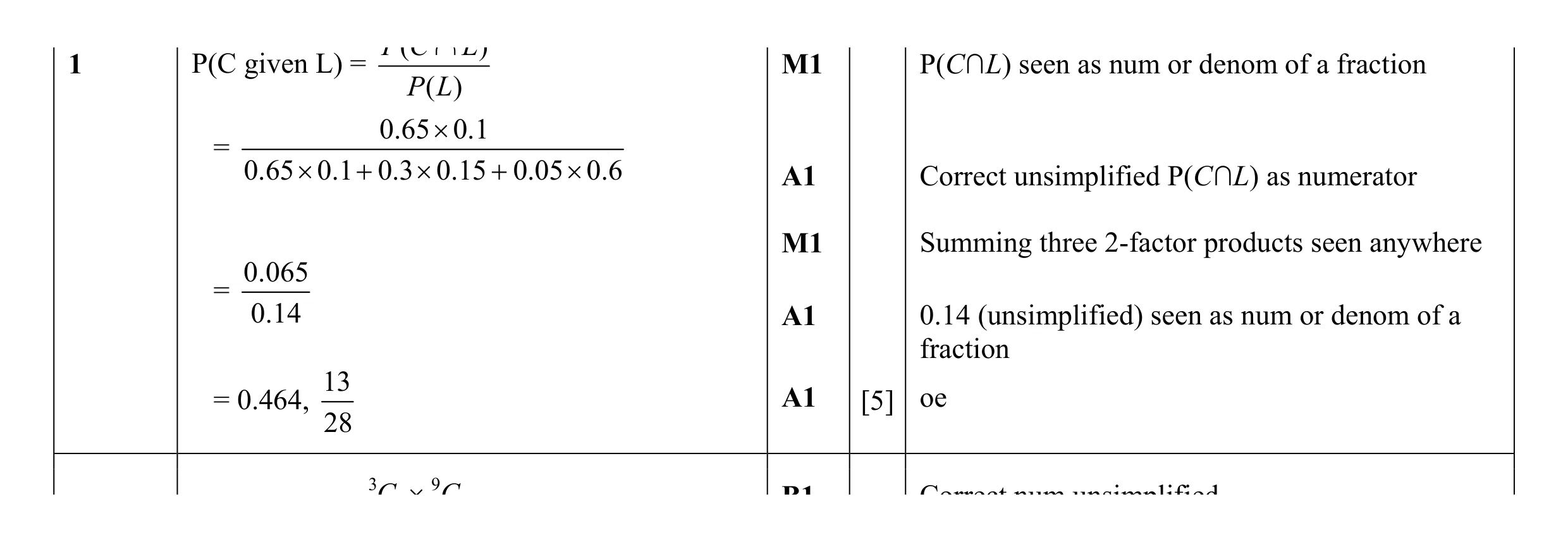 5
5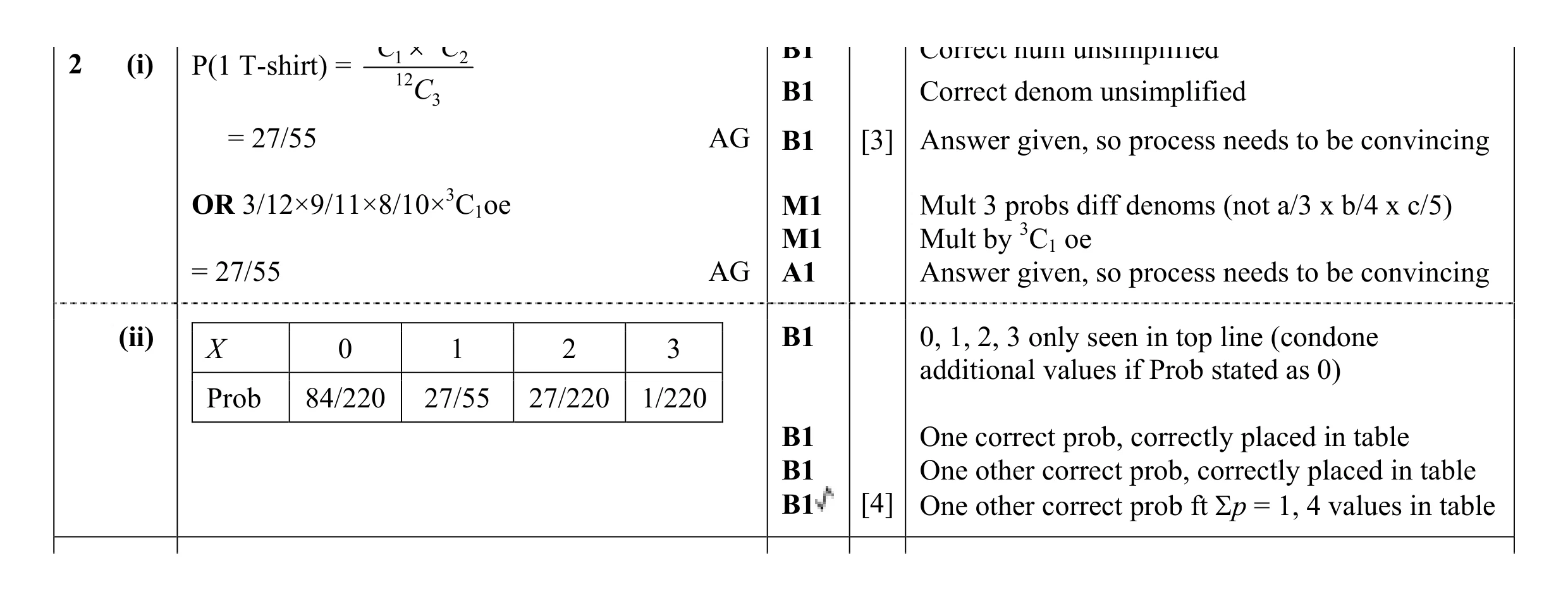 7
7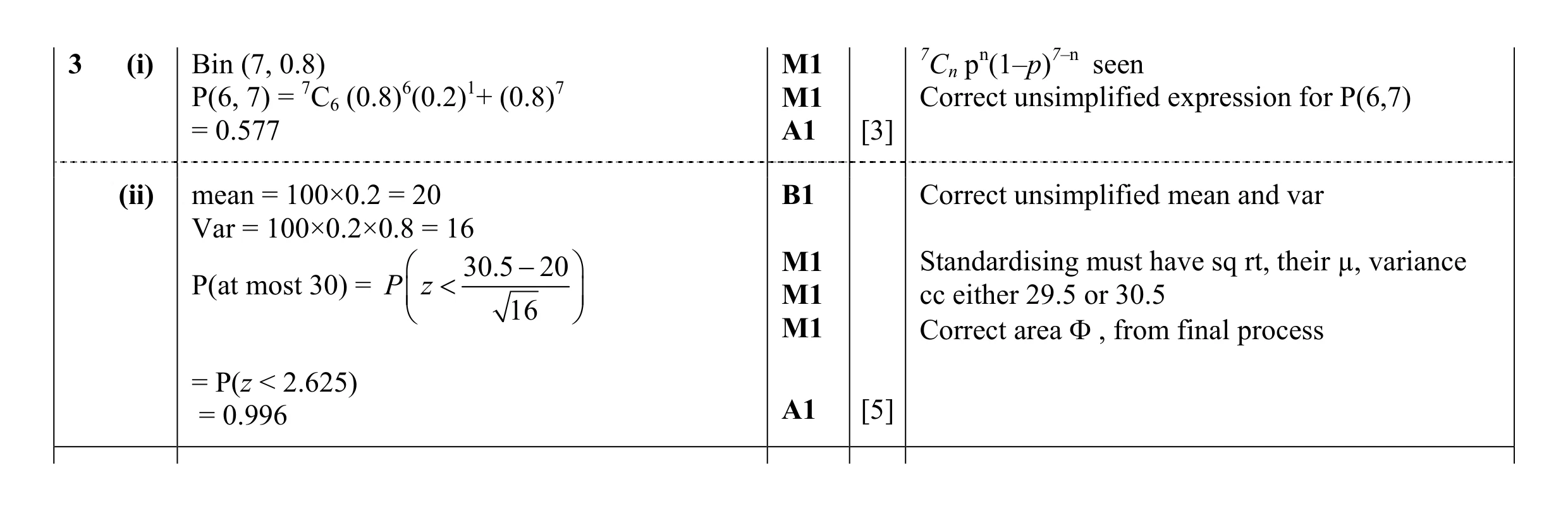 8
8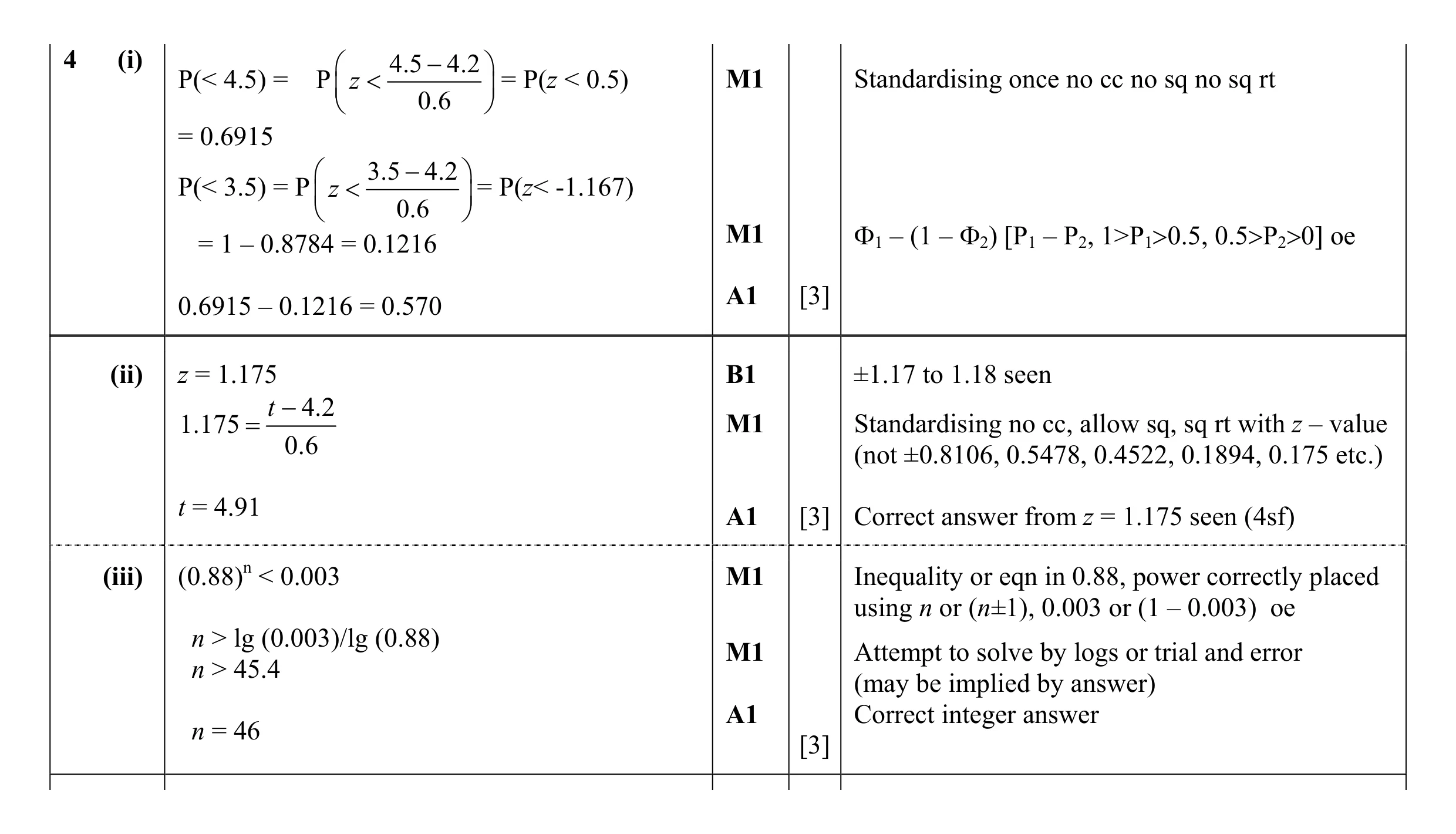 9
9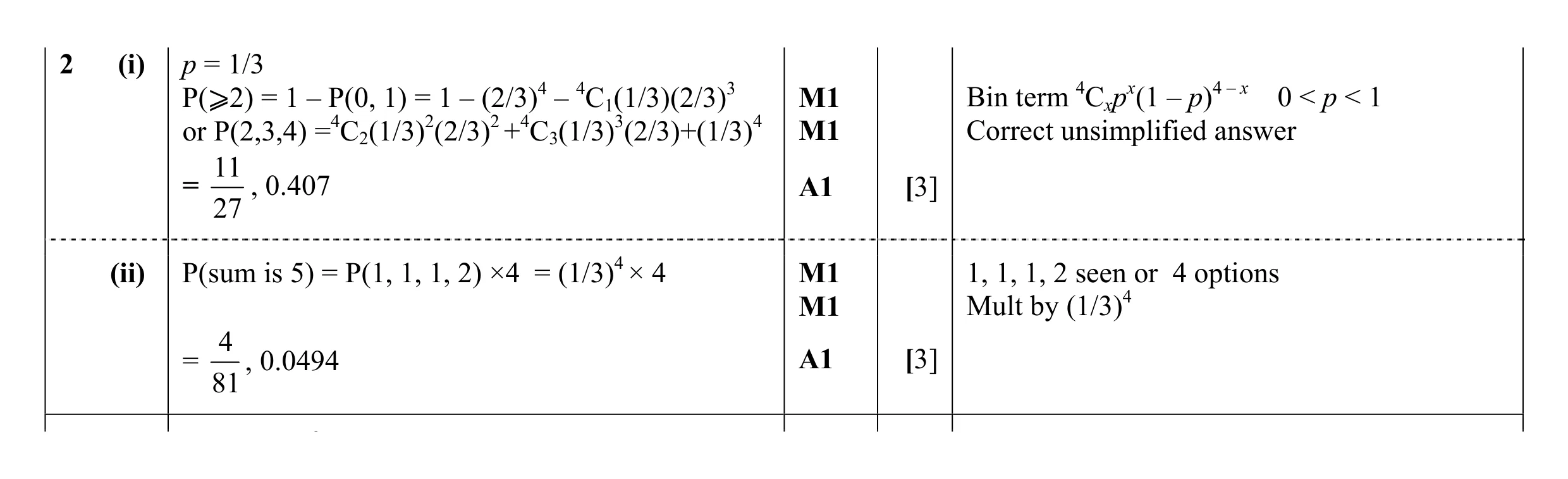 6
6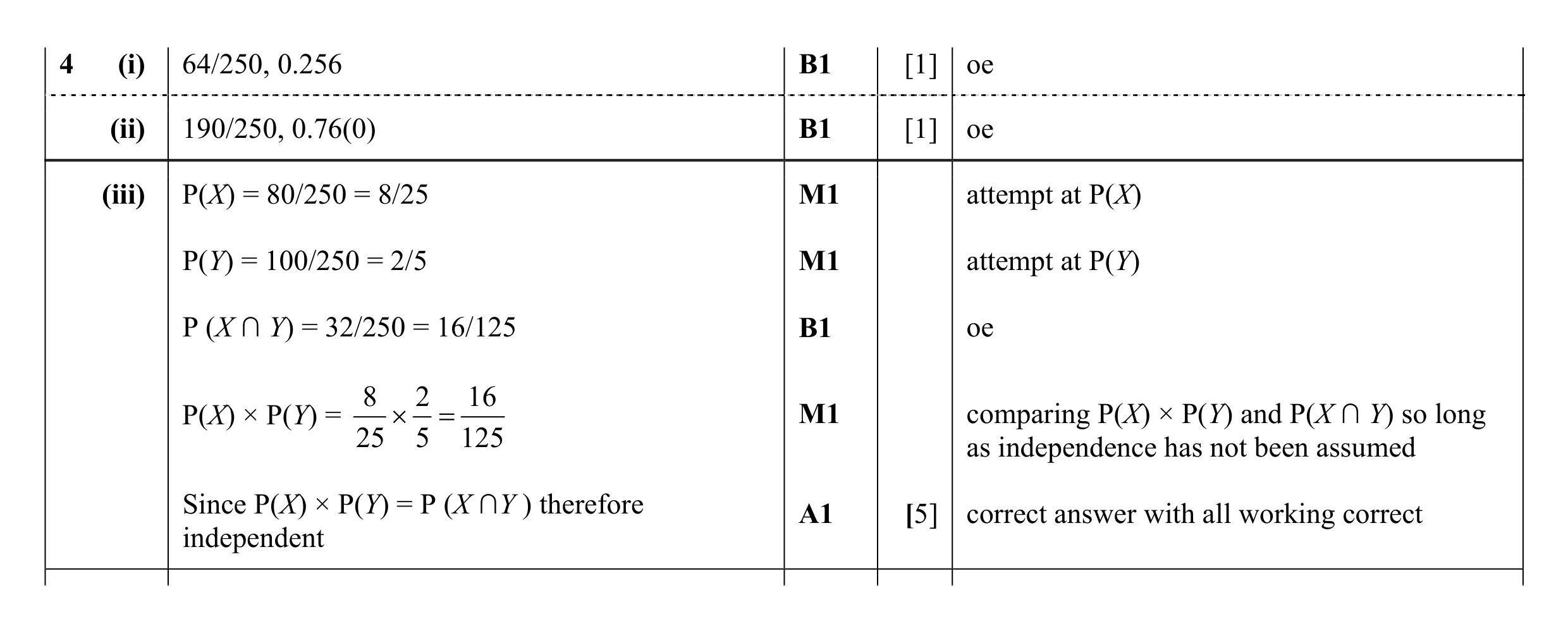 7
7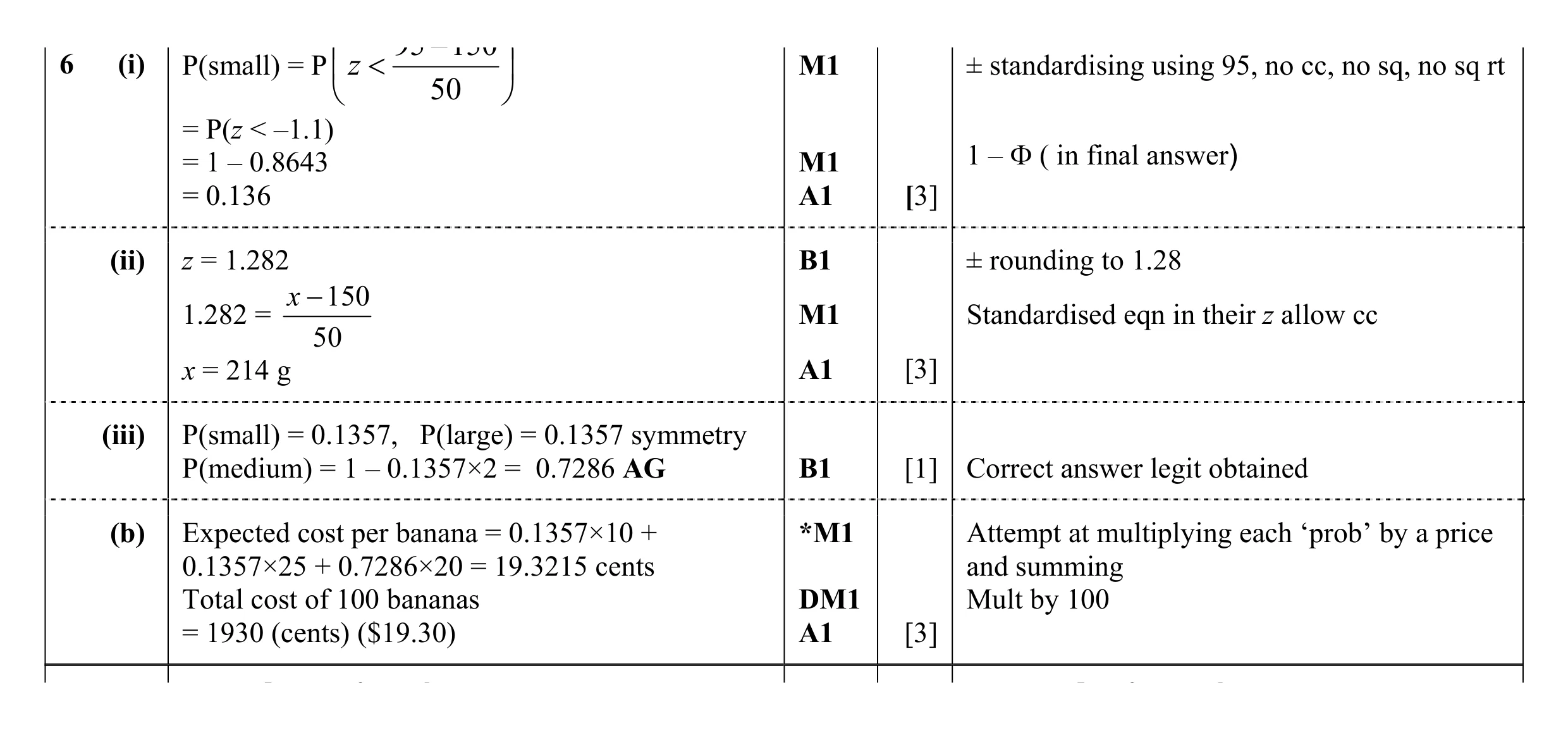 10
10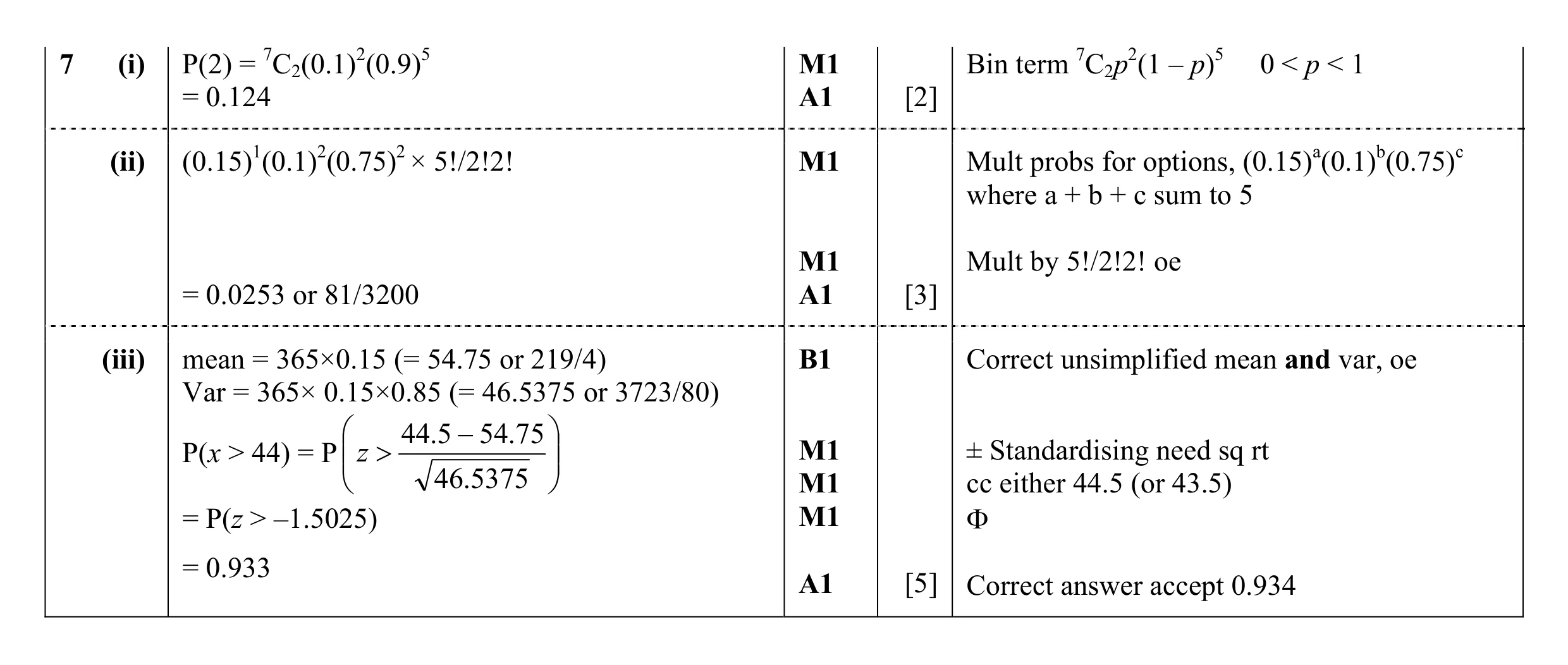 10
10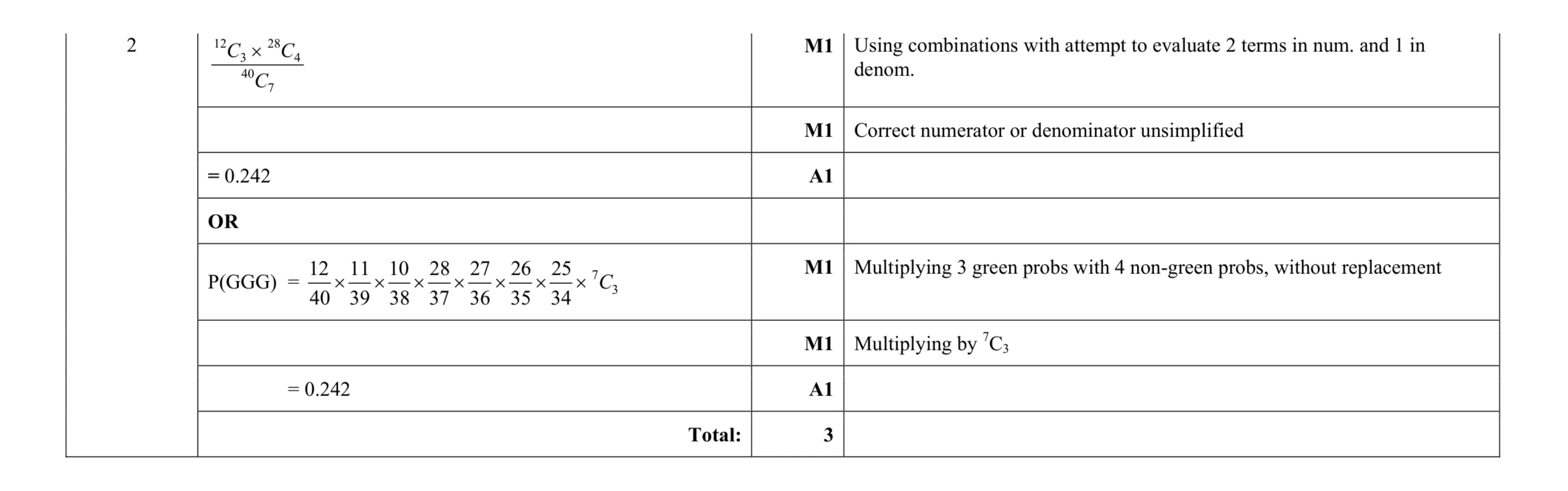 3
3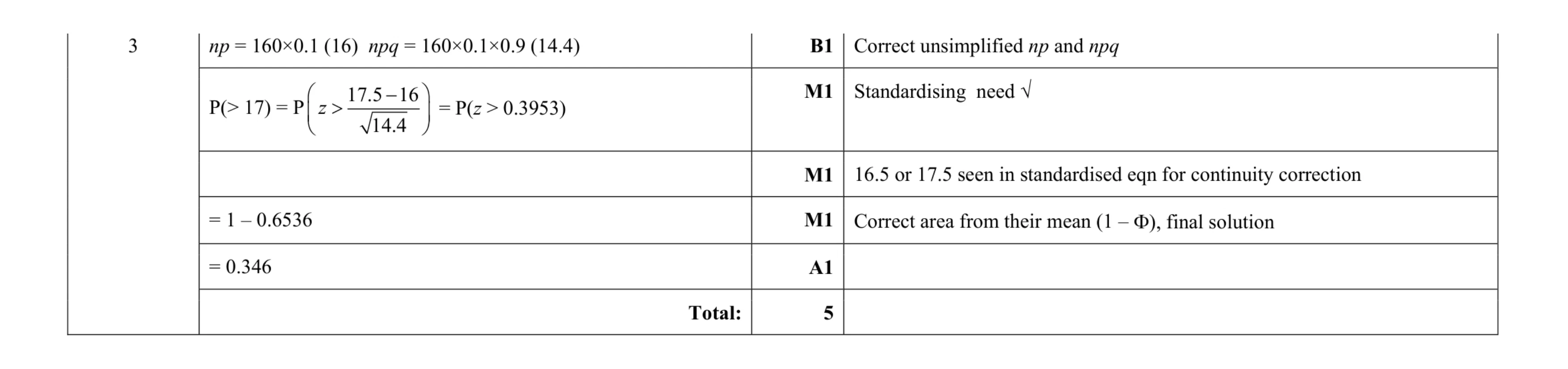 5
5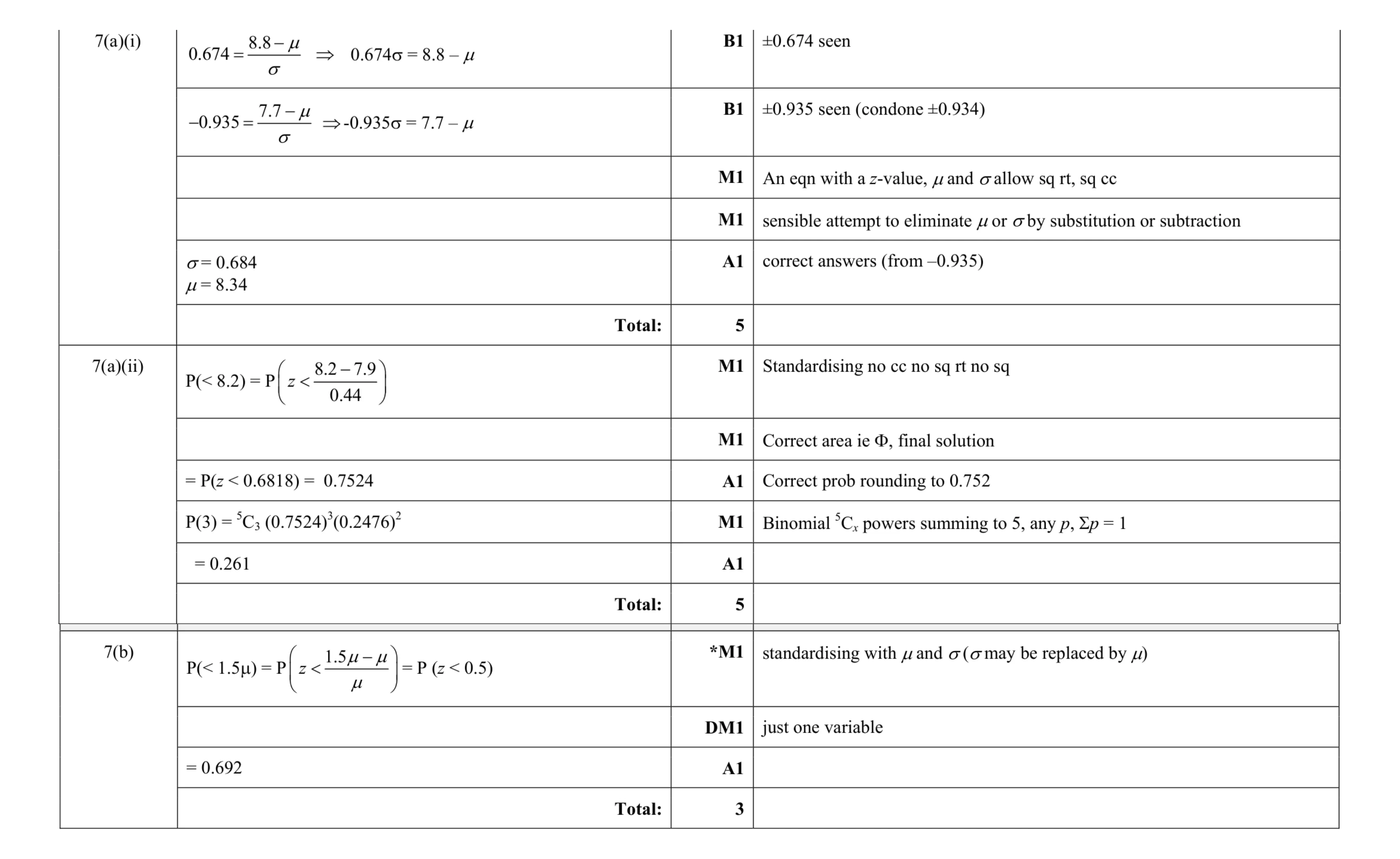 13
13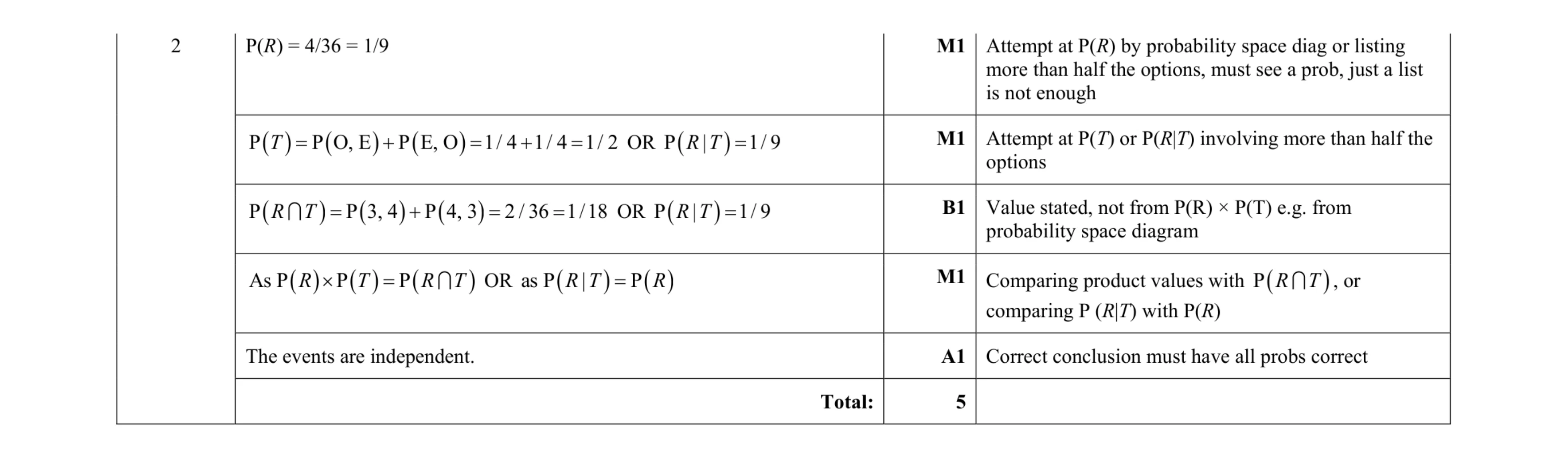 5
5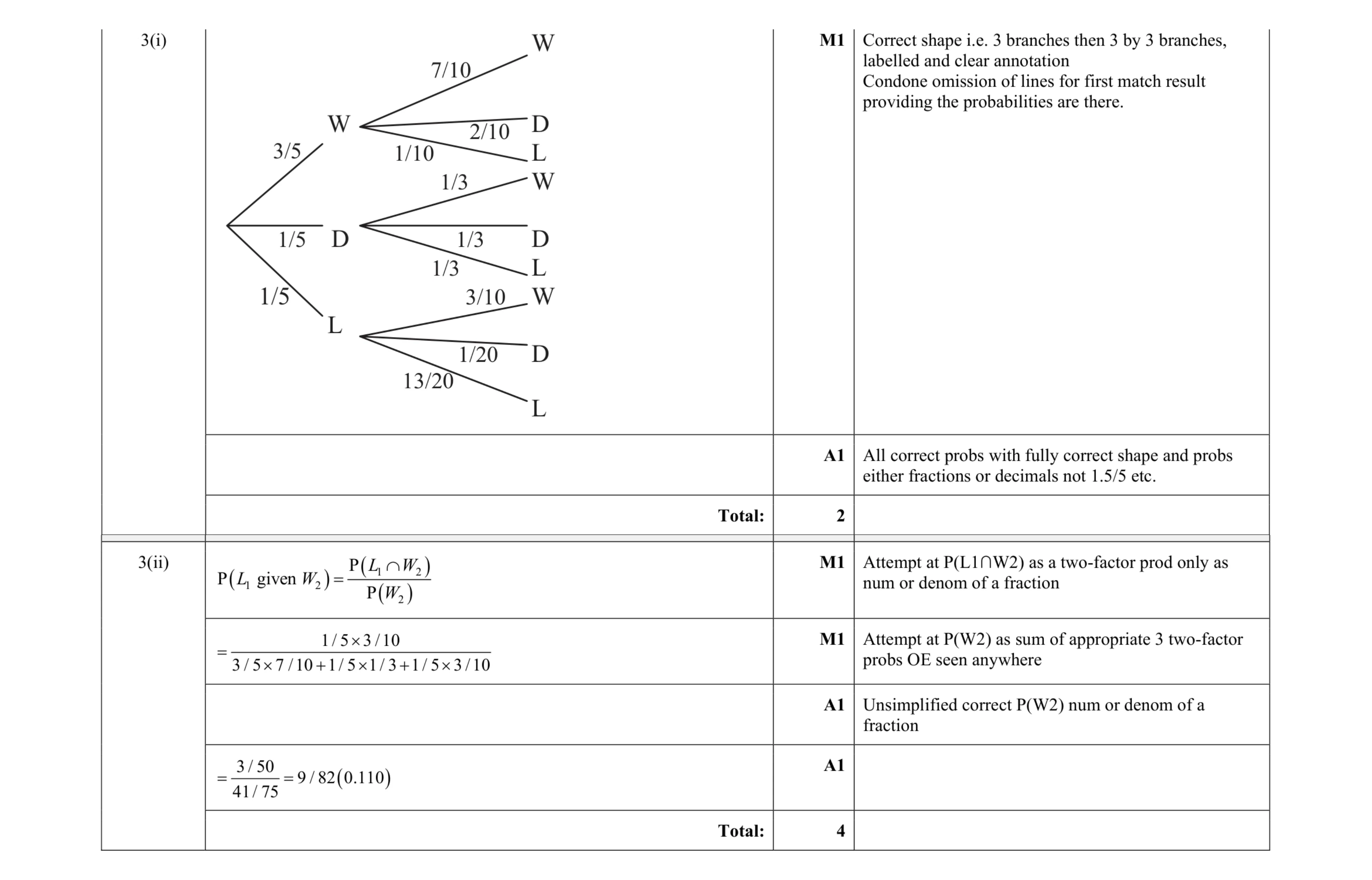 6
6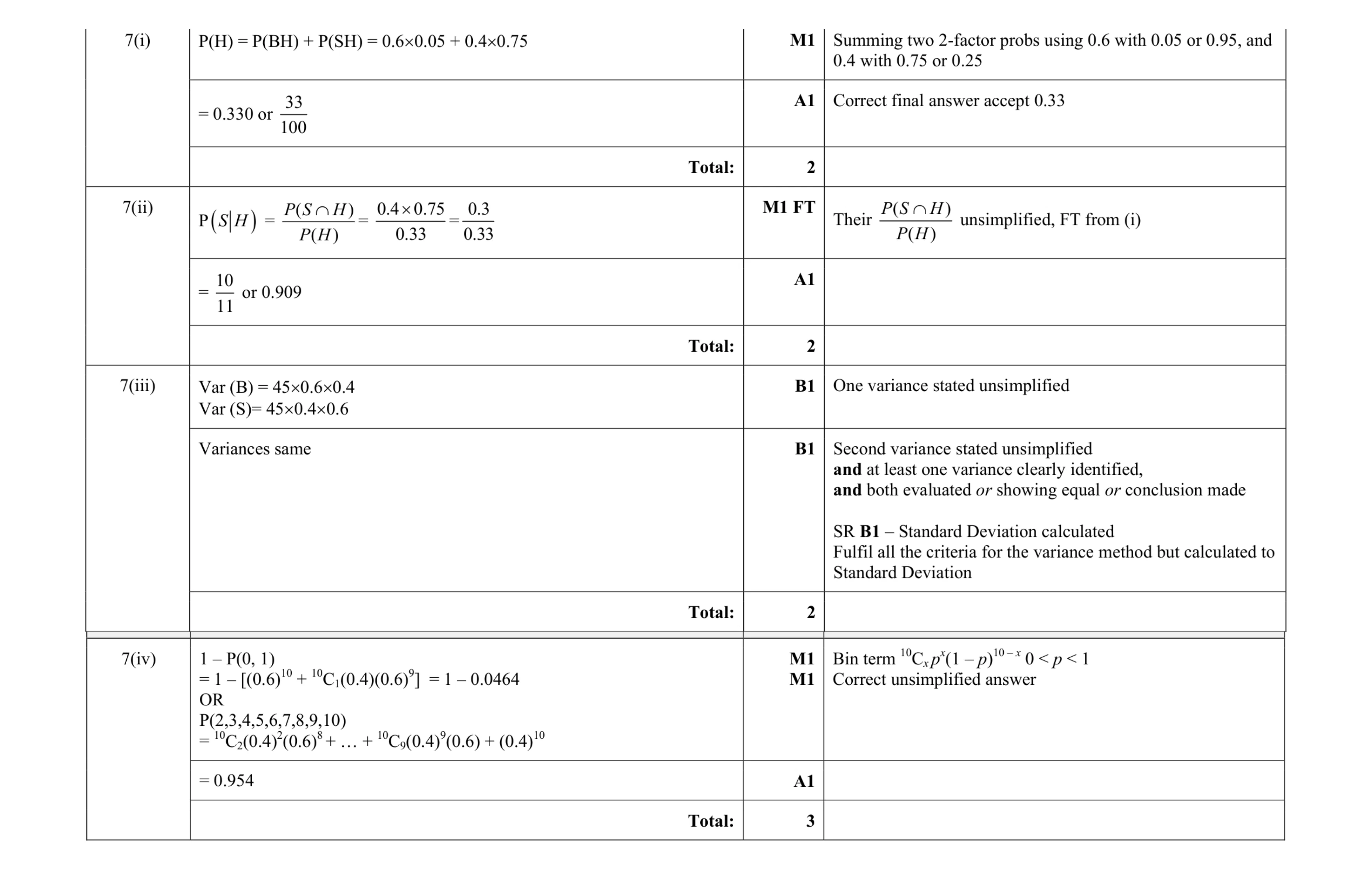 9
9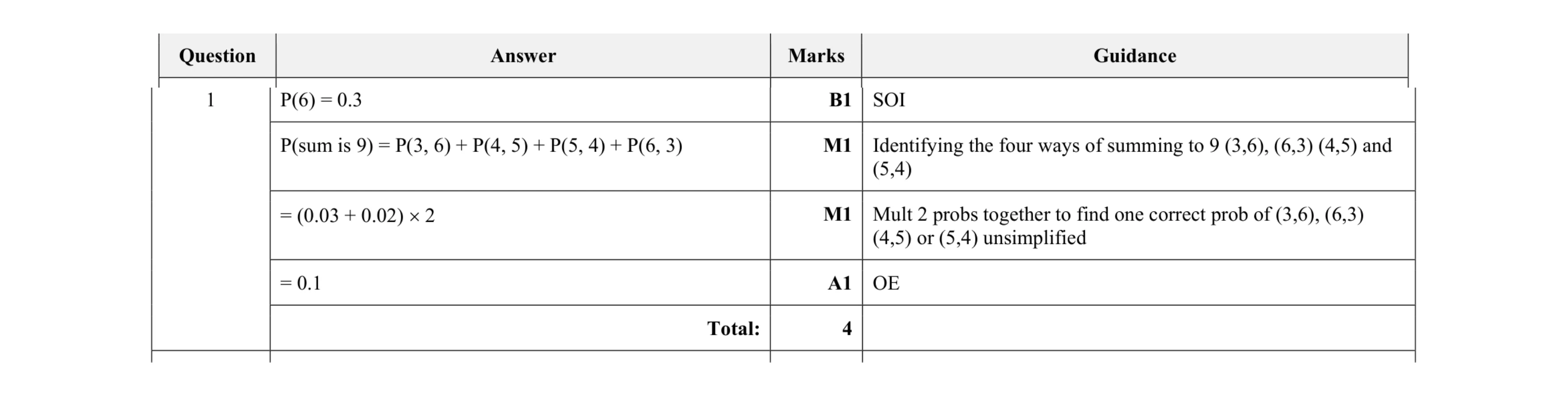 4
4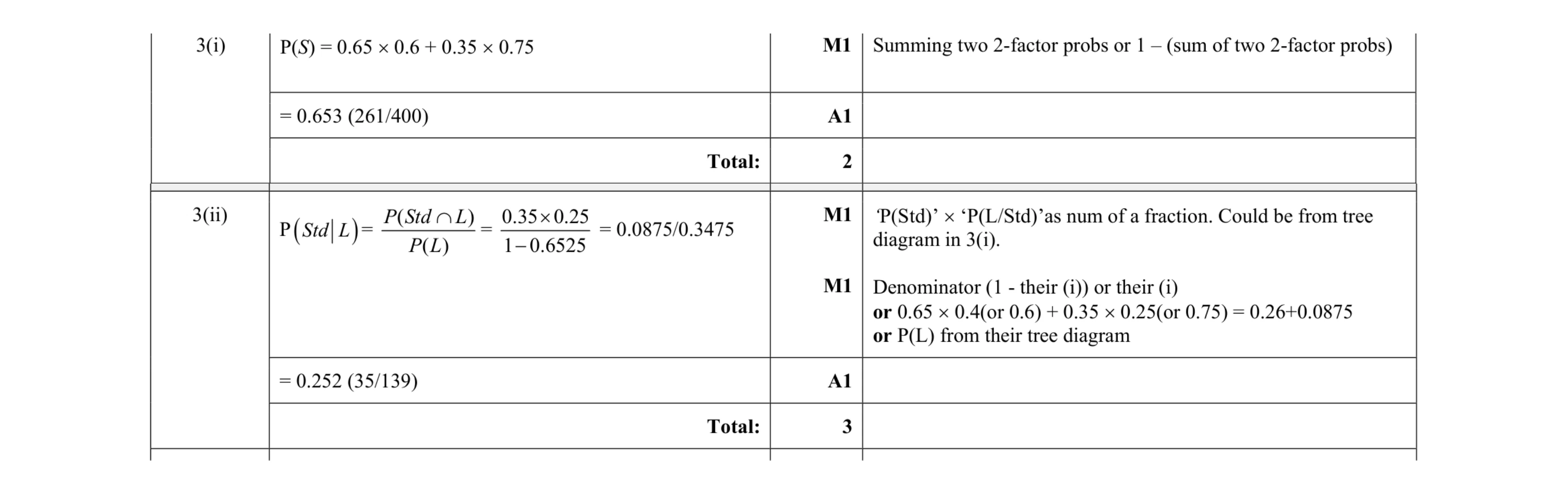 5
5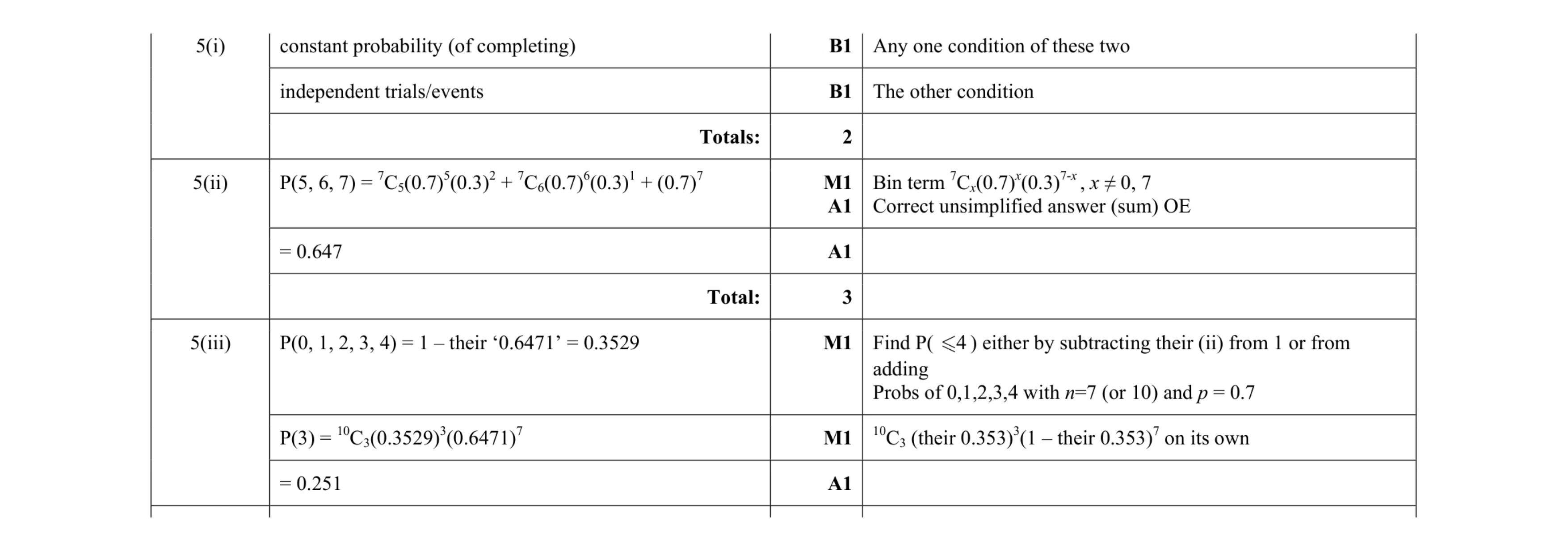 8
8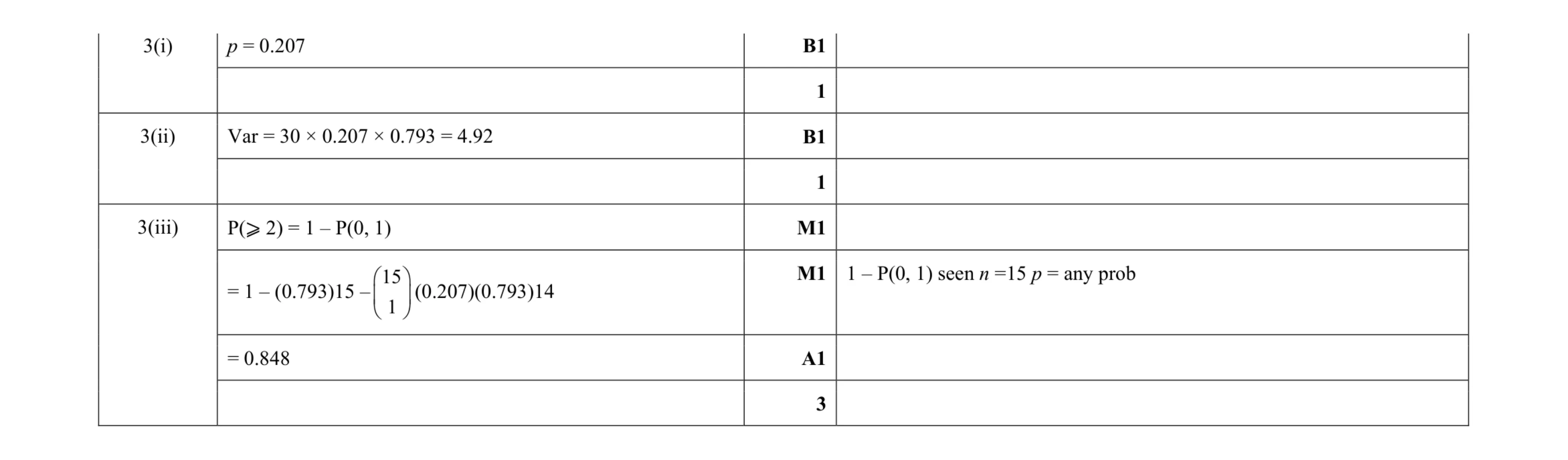 5
5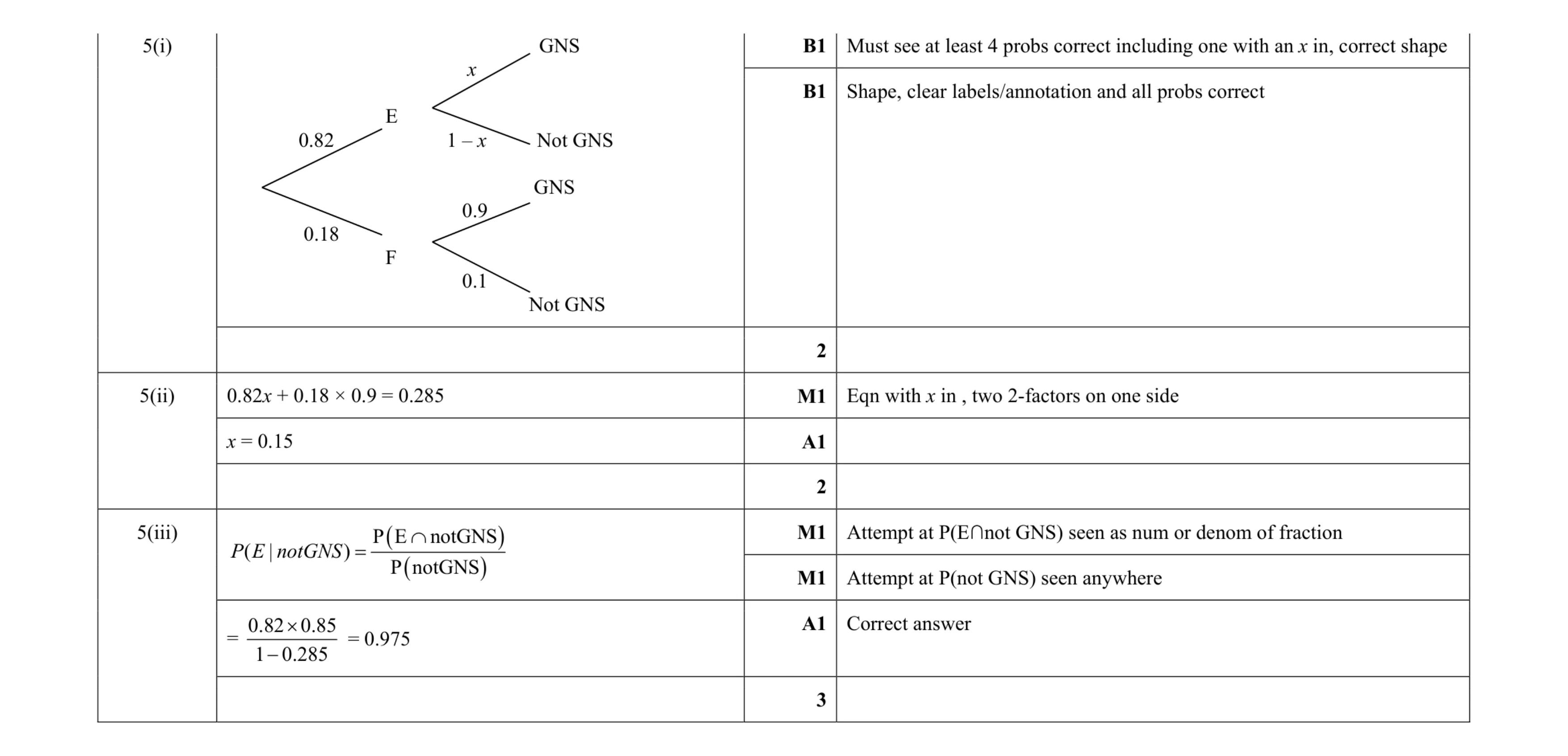 7
7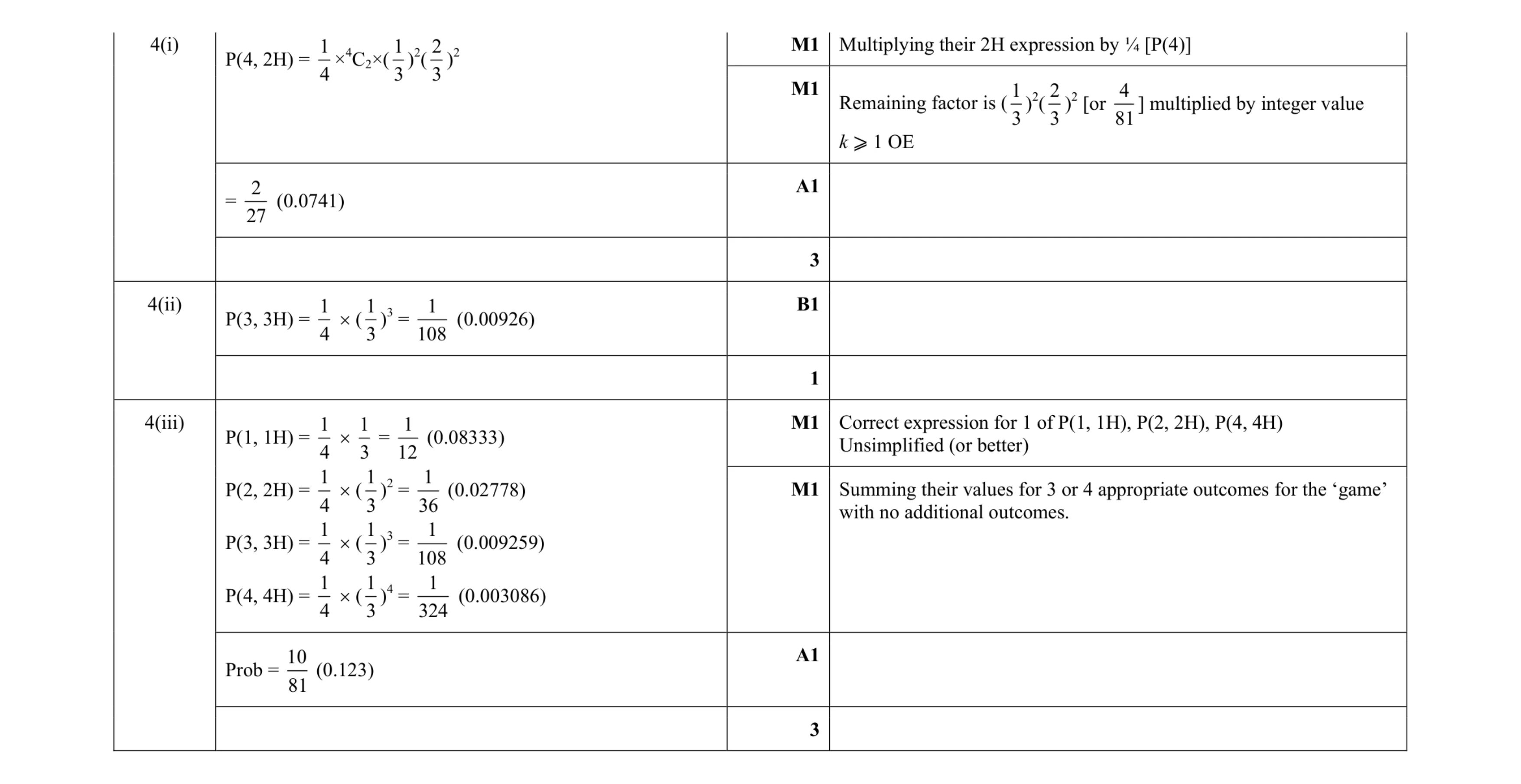 7
7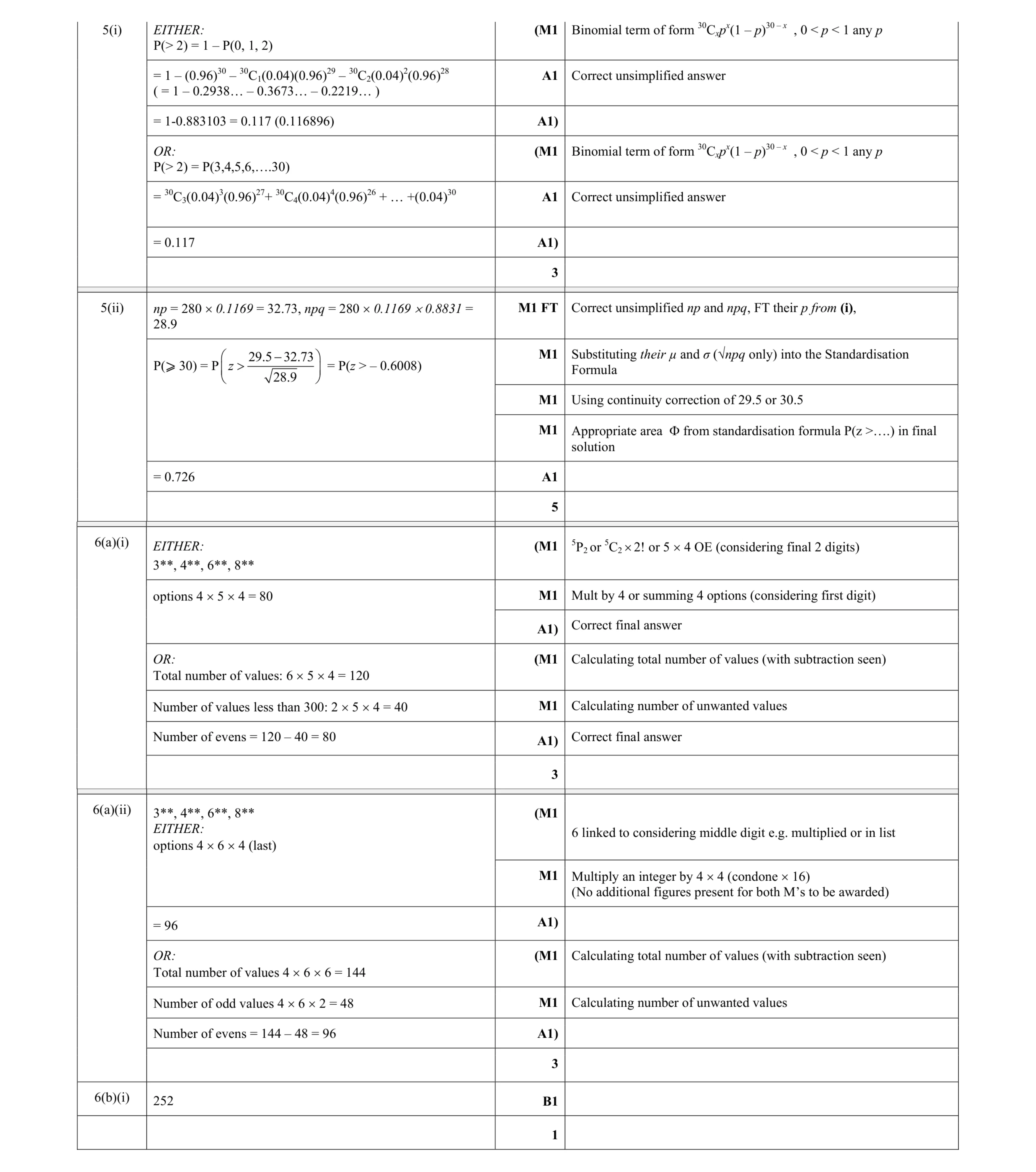 8
8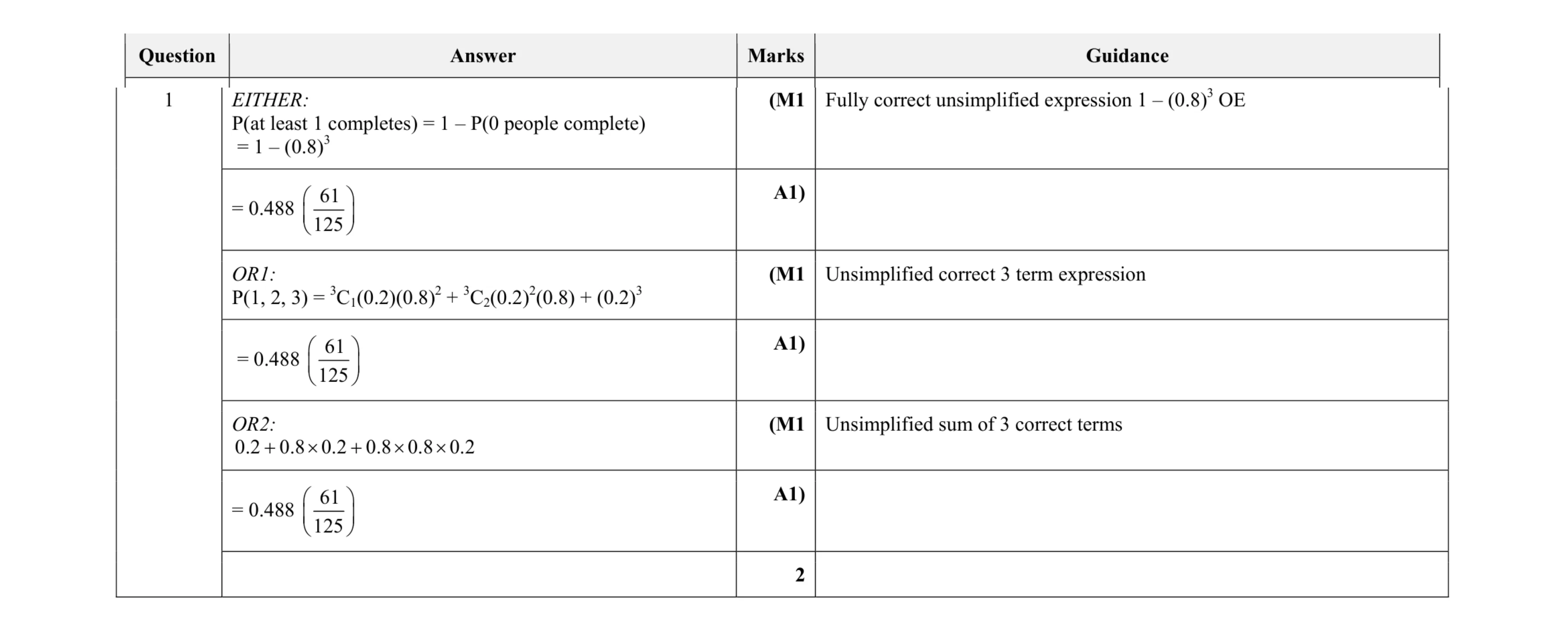 2
2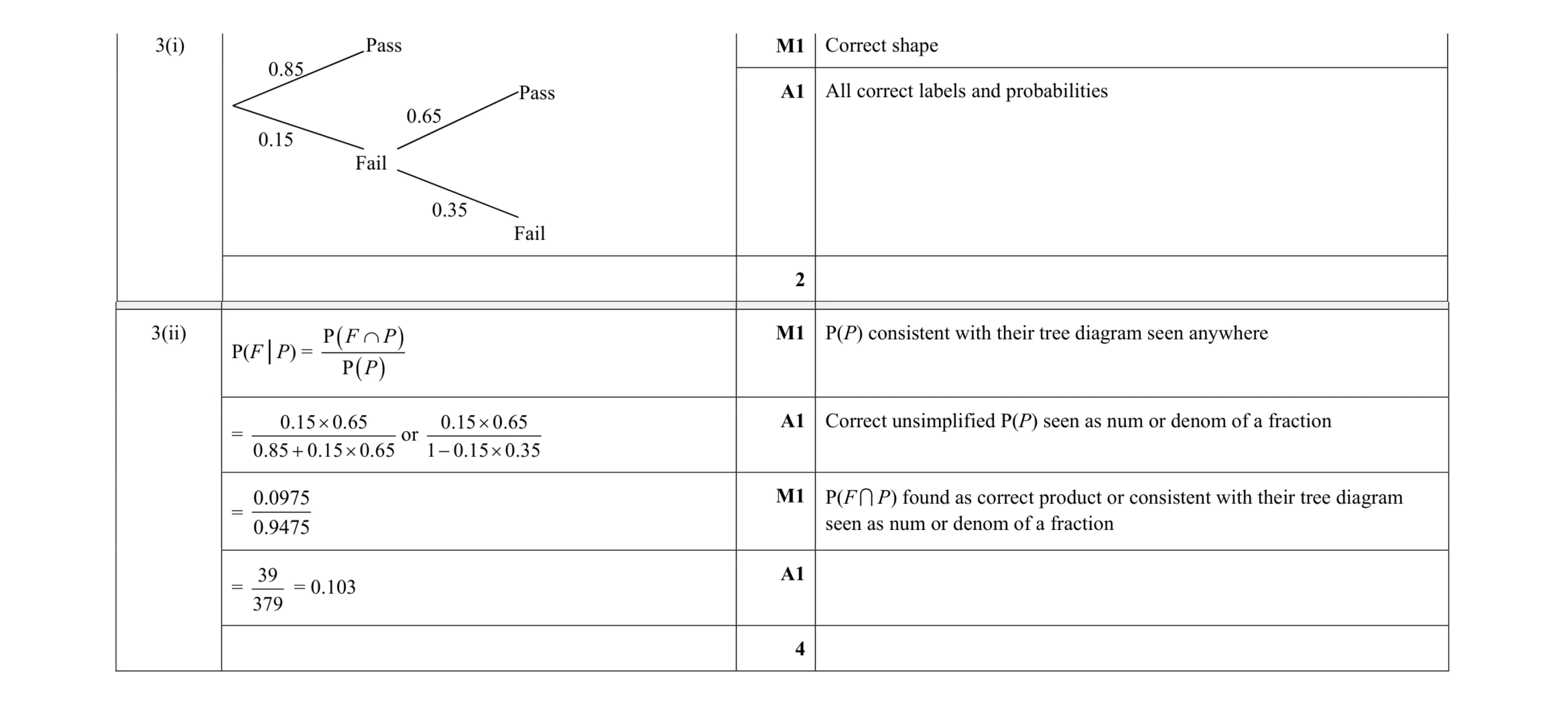 6
6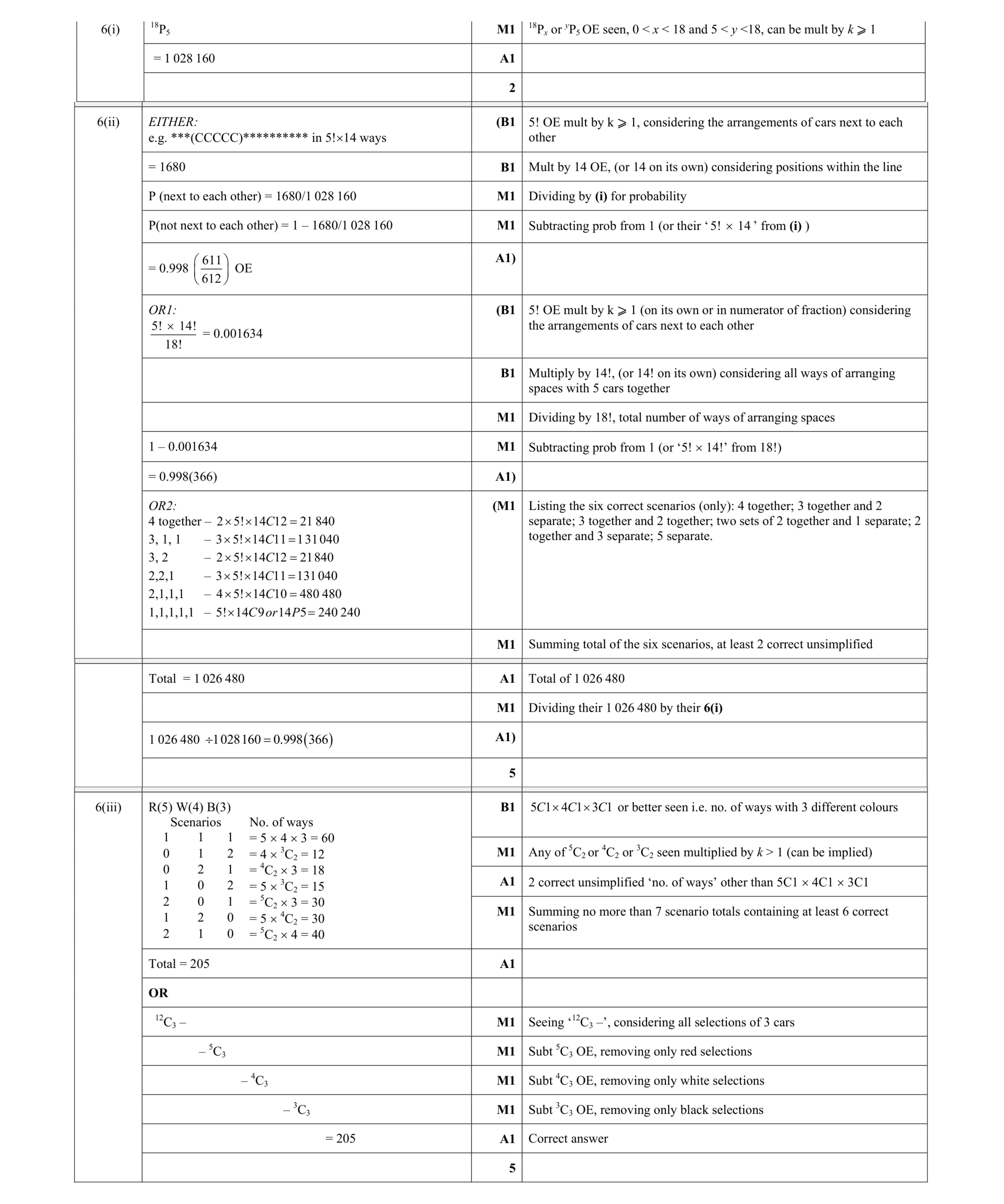 12
12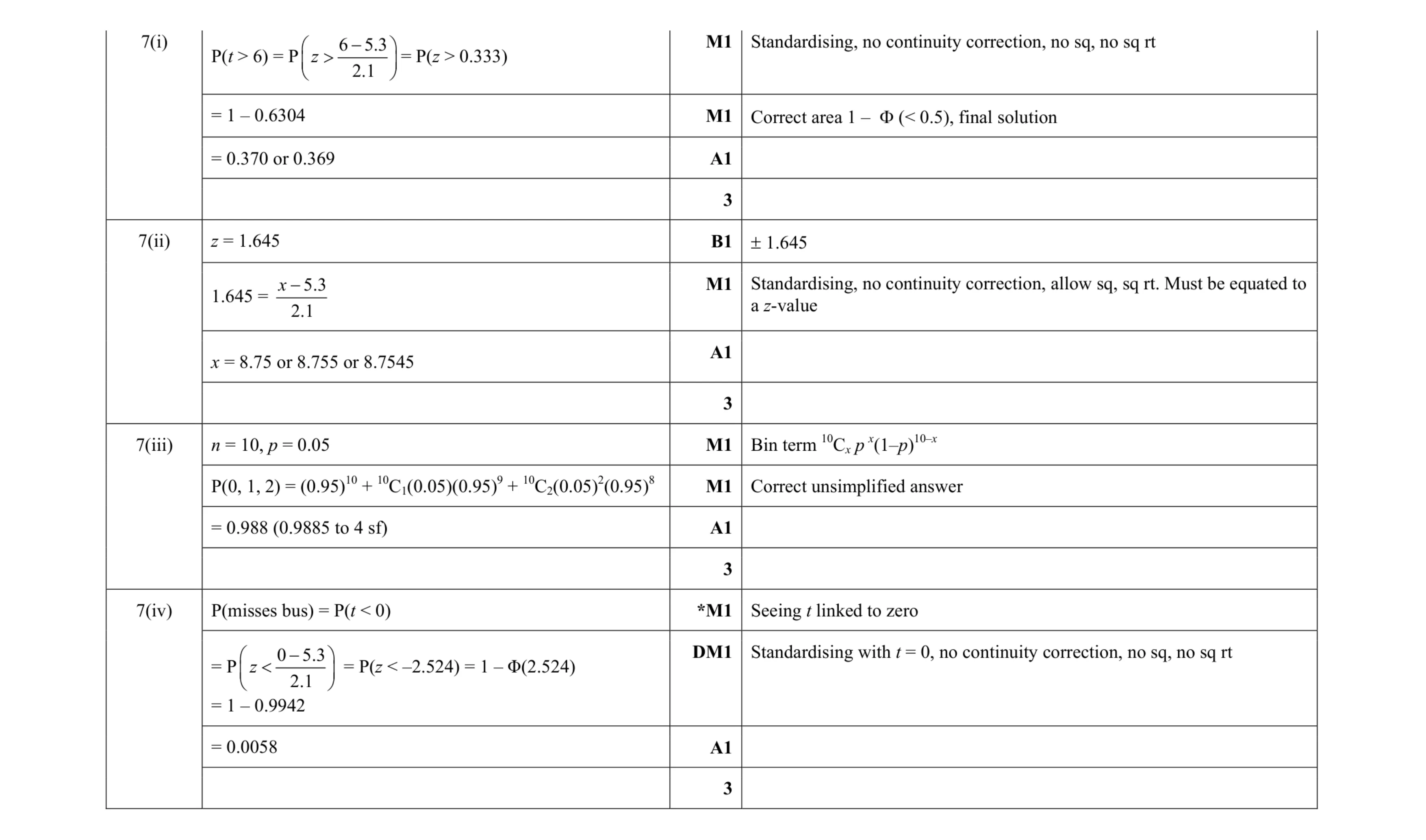 12
12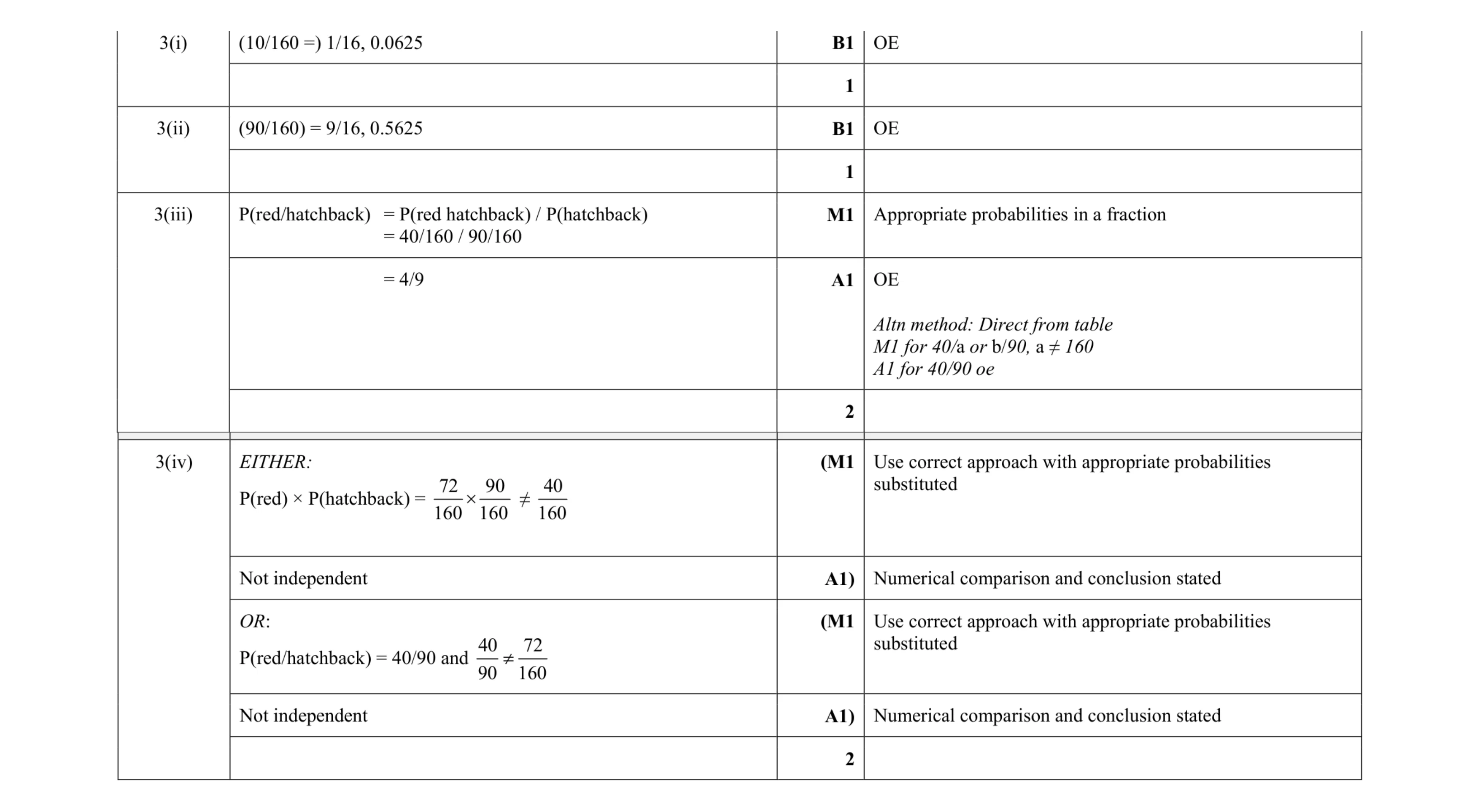 6
6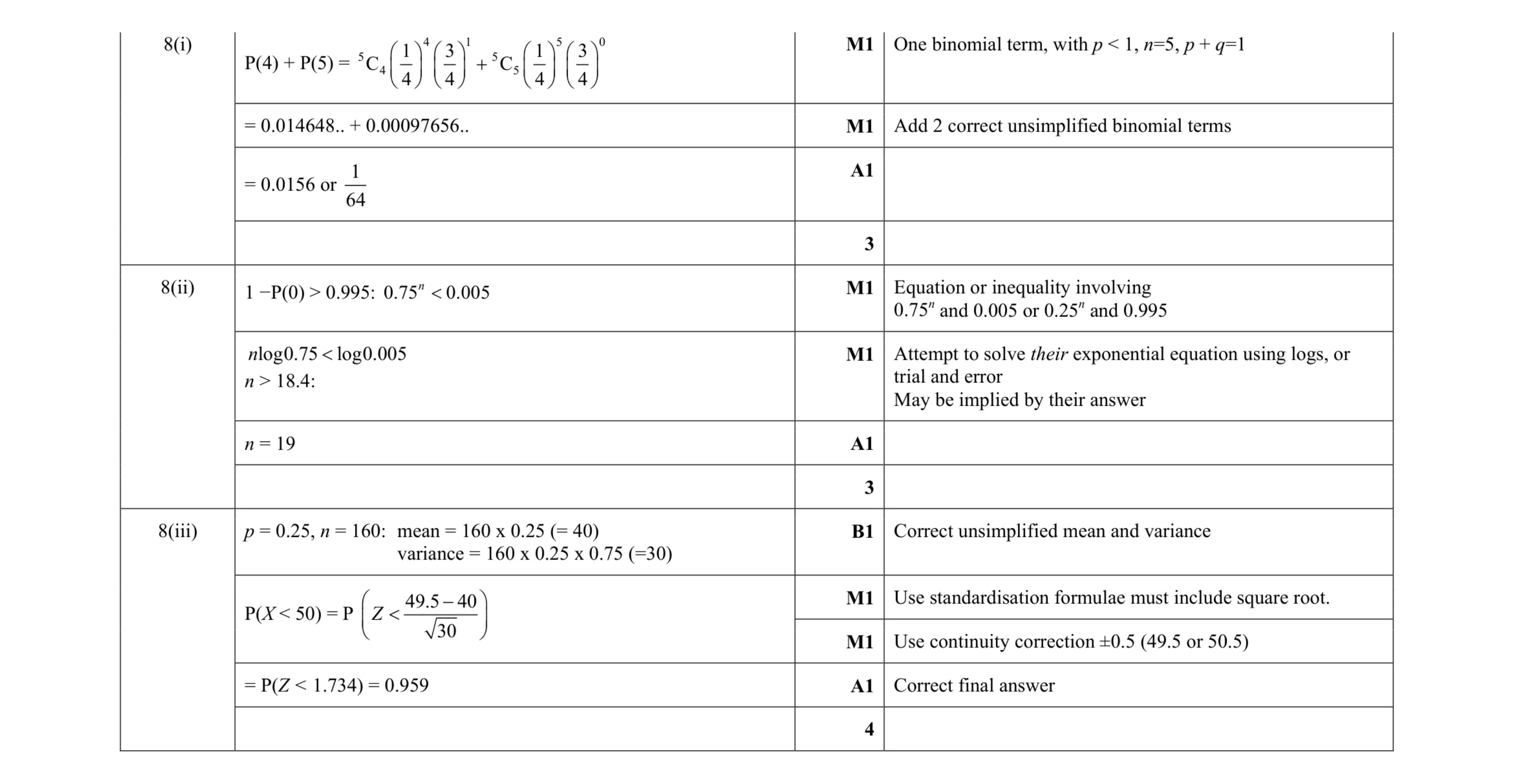 10
10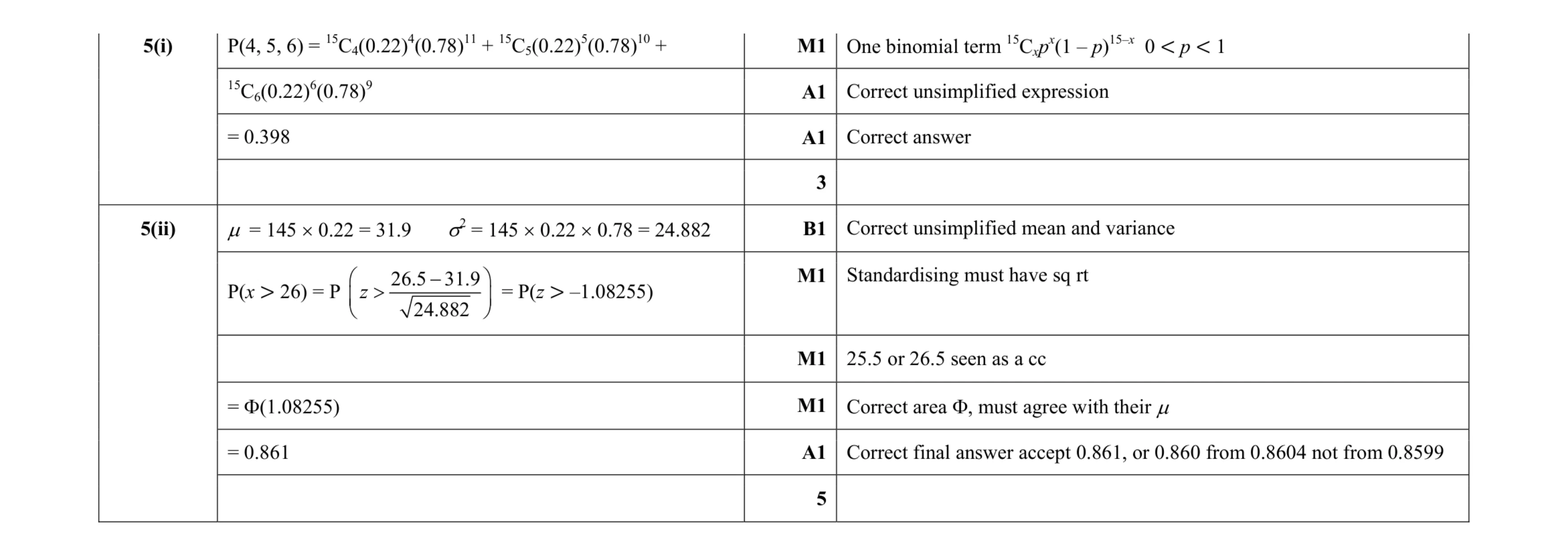 8
8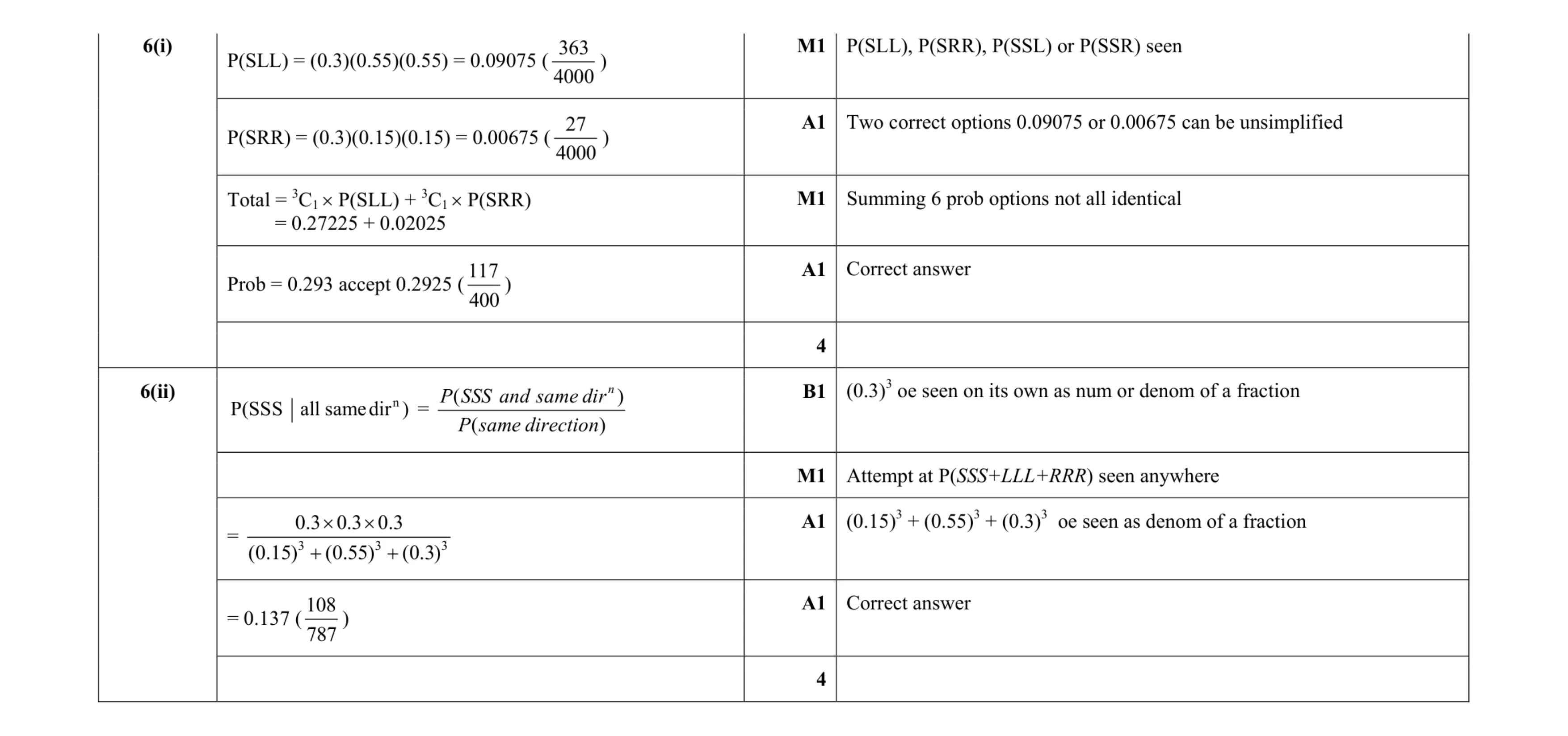 8
8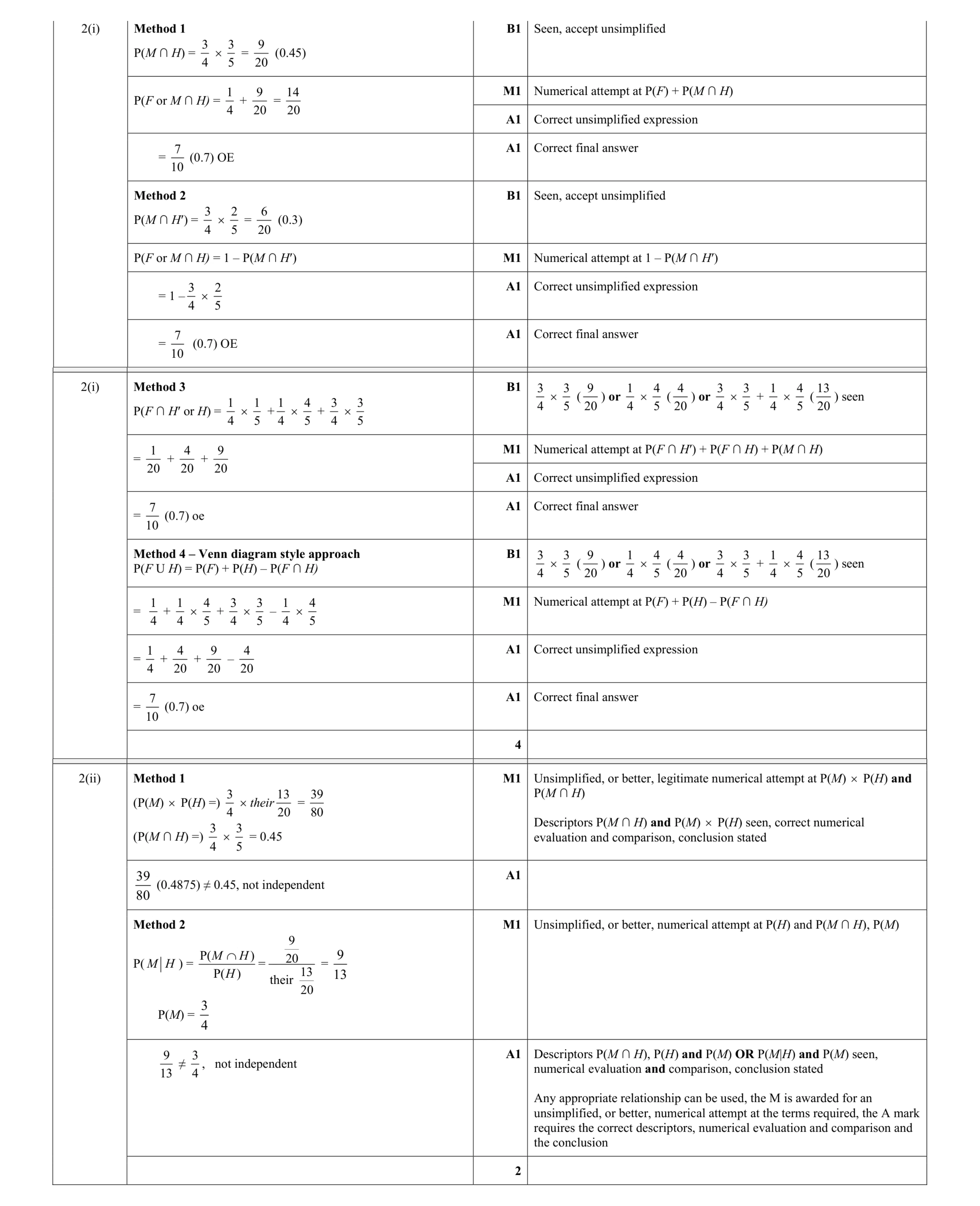 6
6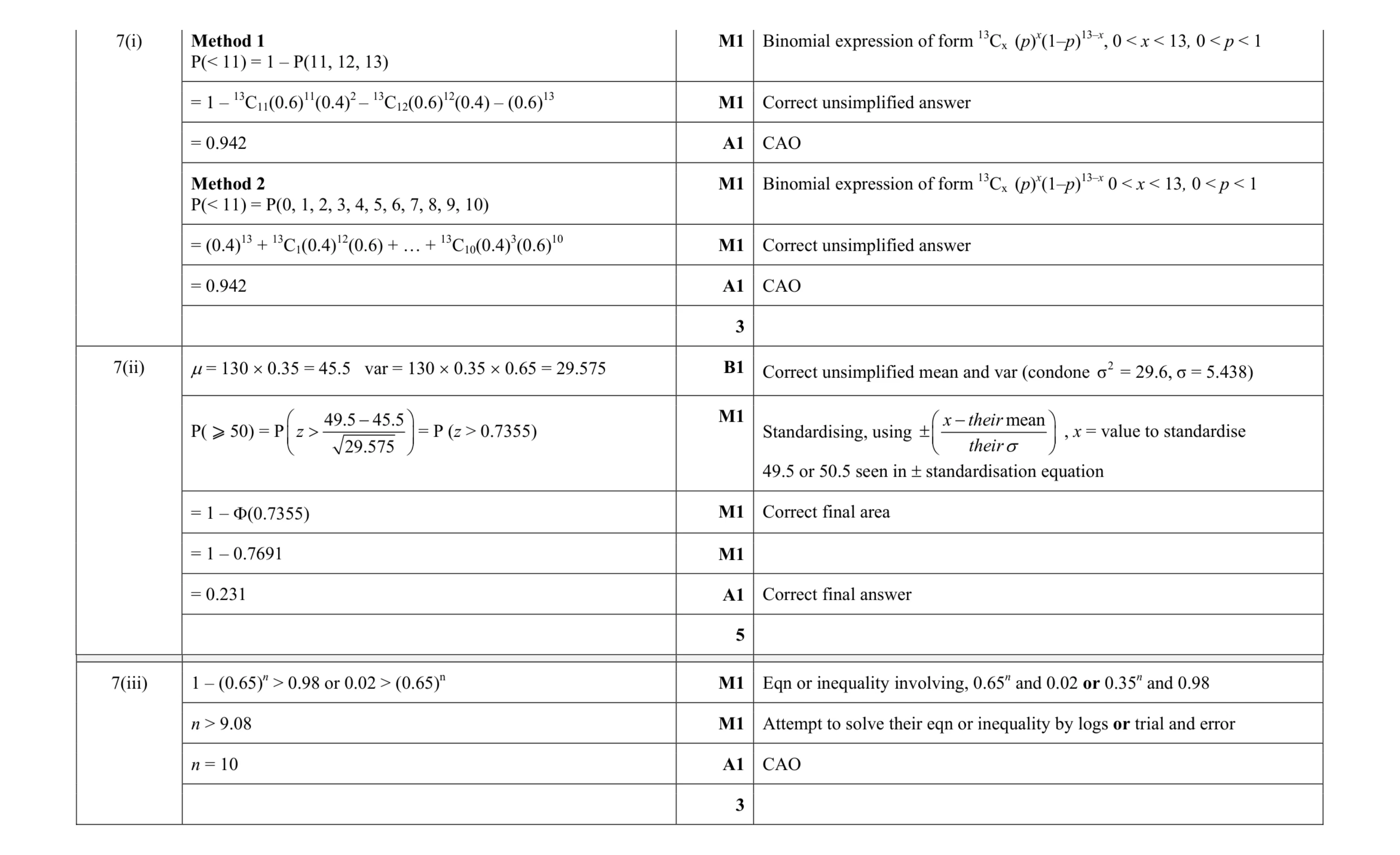 11
11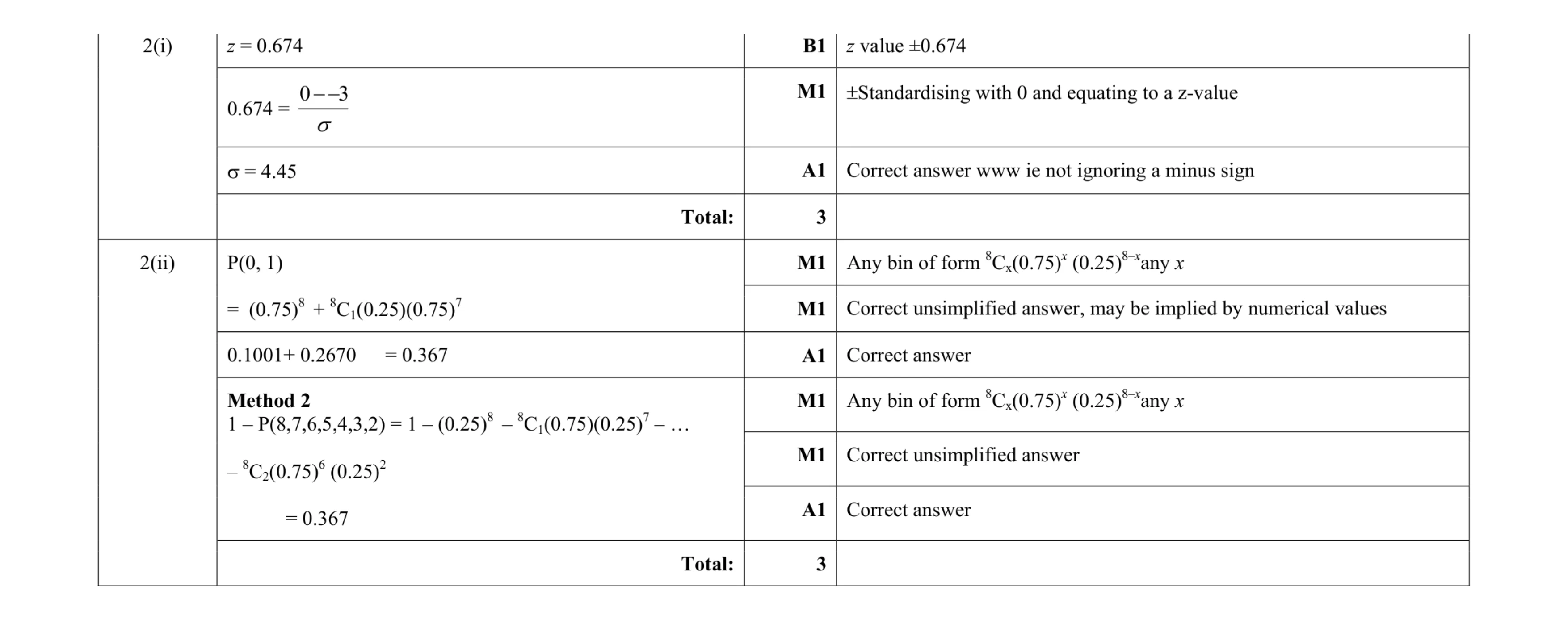 6
6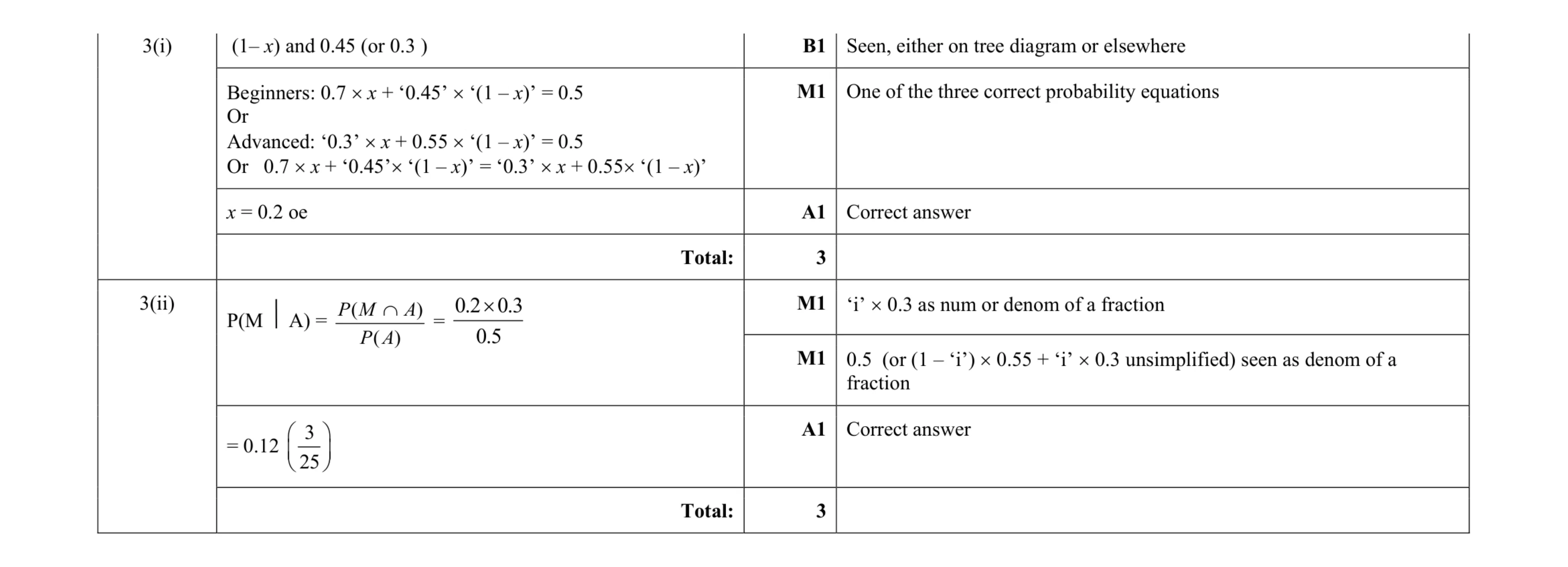 6
6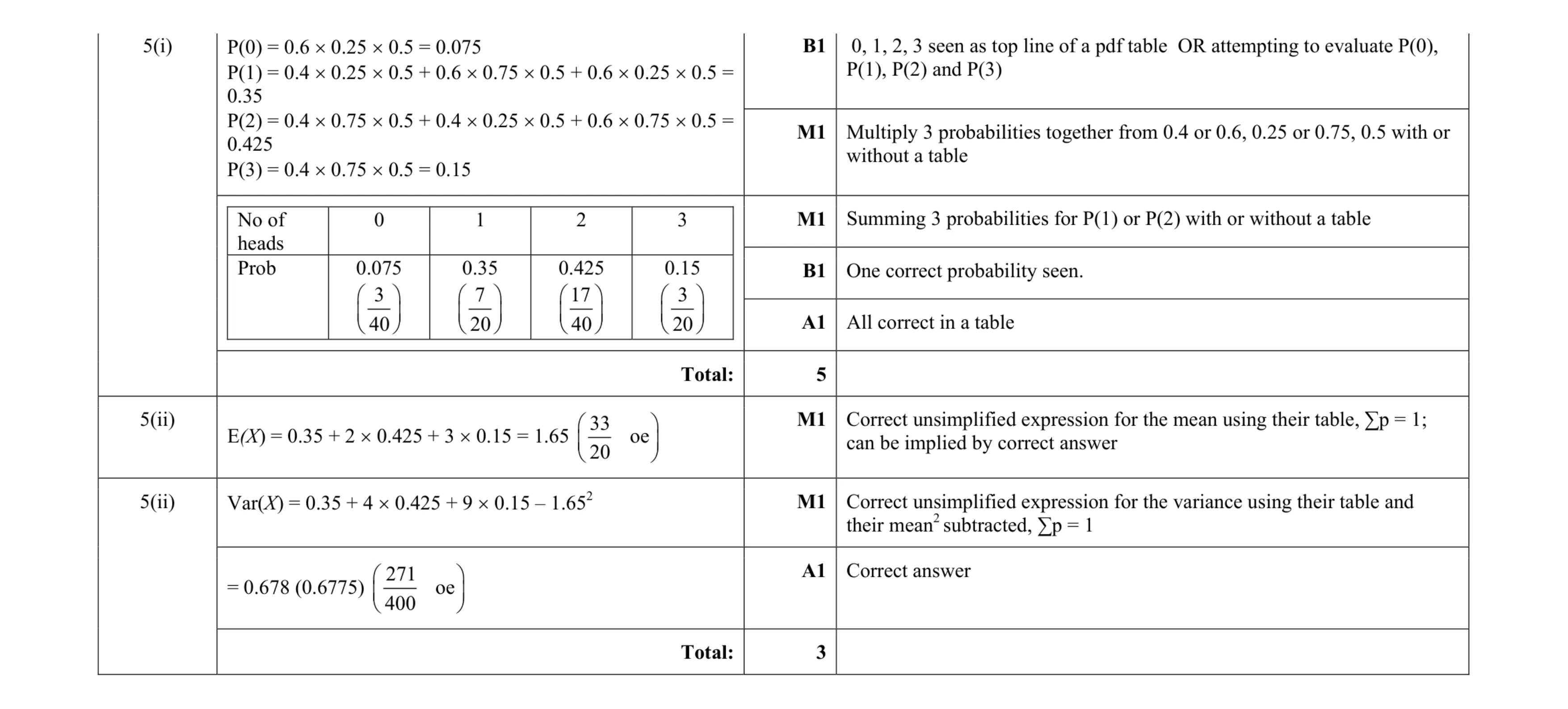 8
8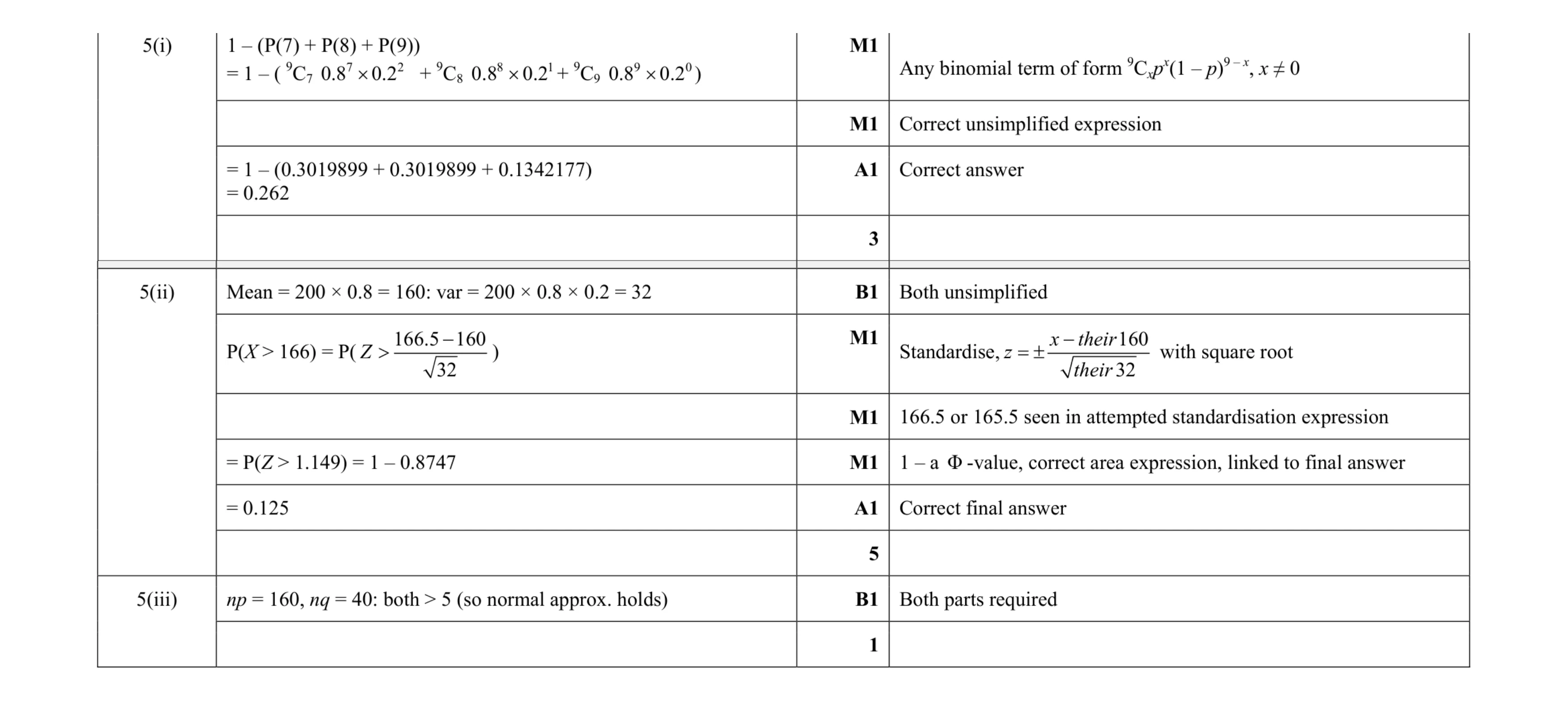 9
9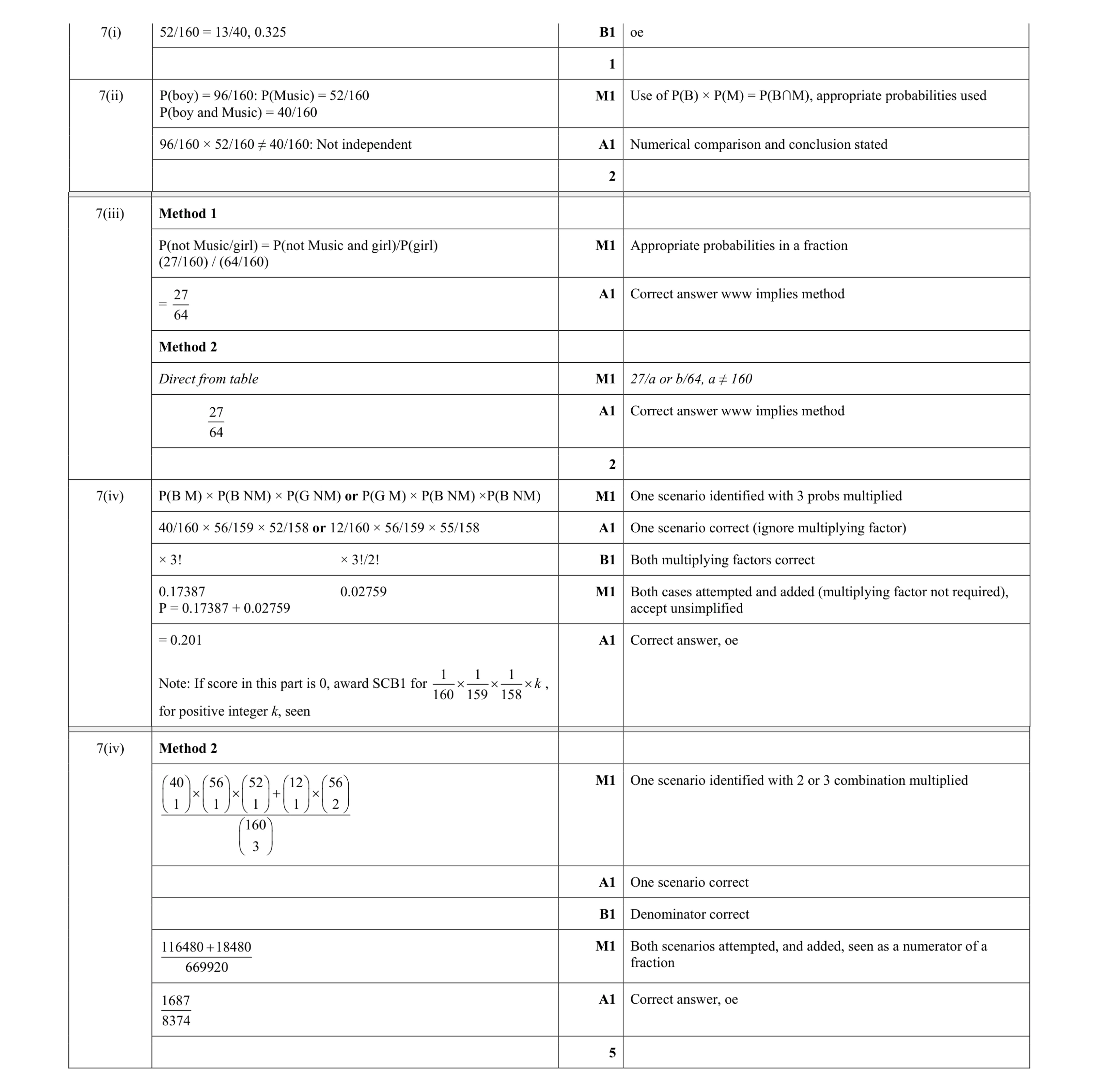 10
10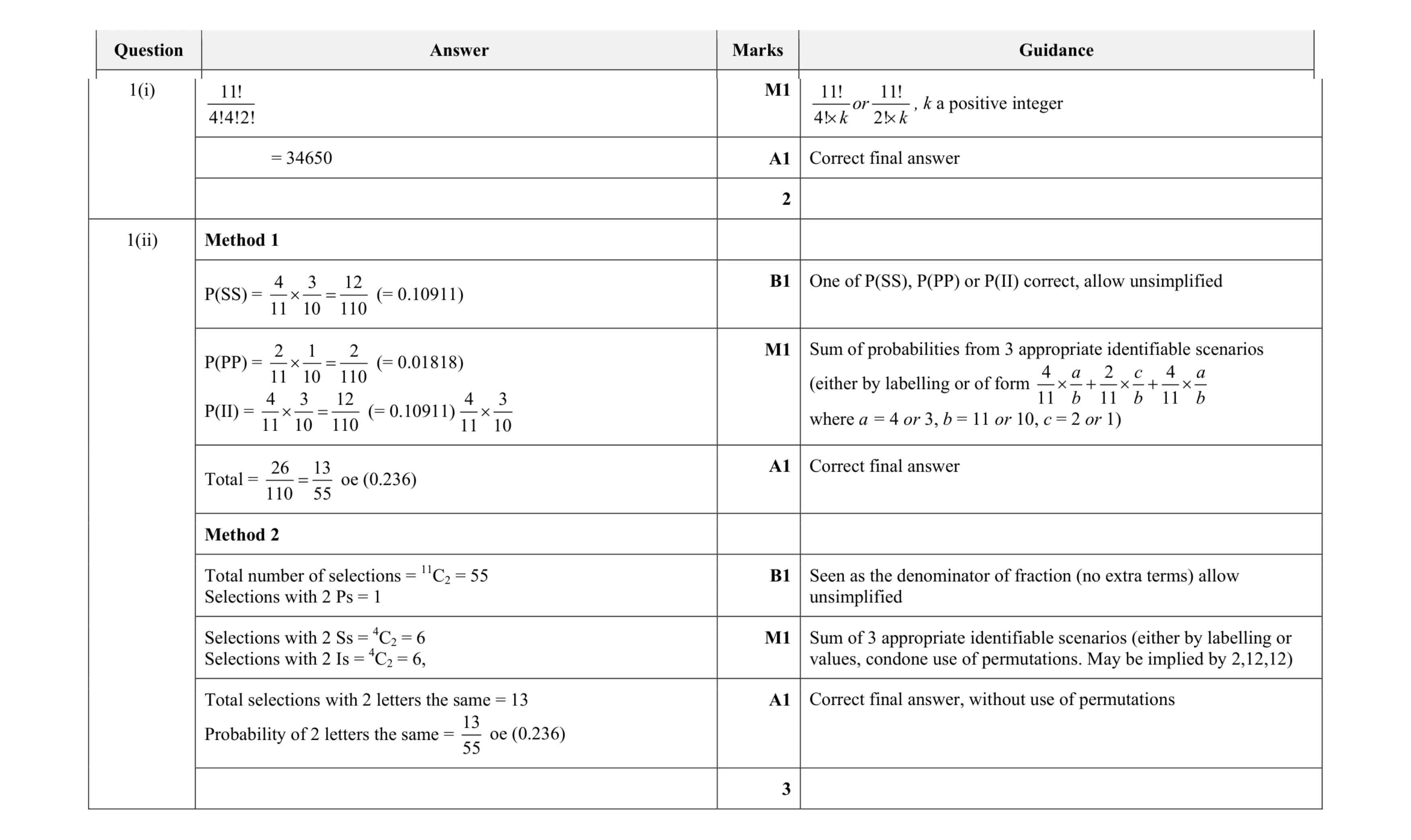 5
5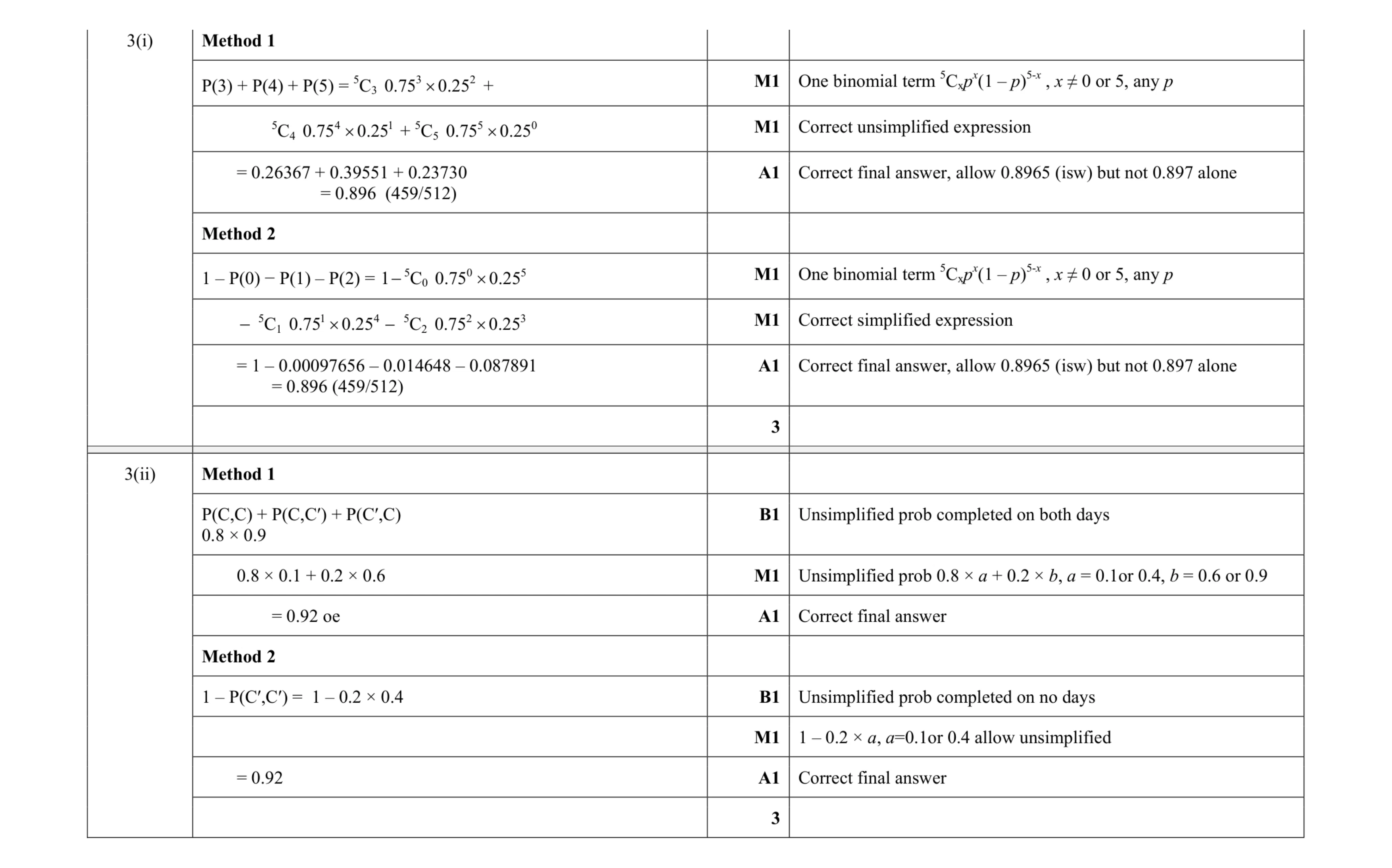 6
6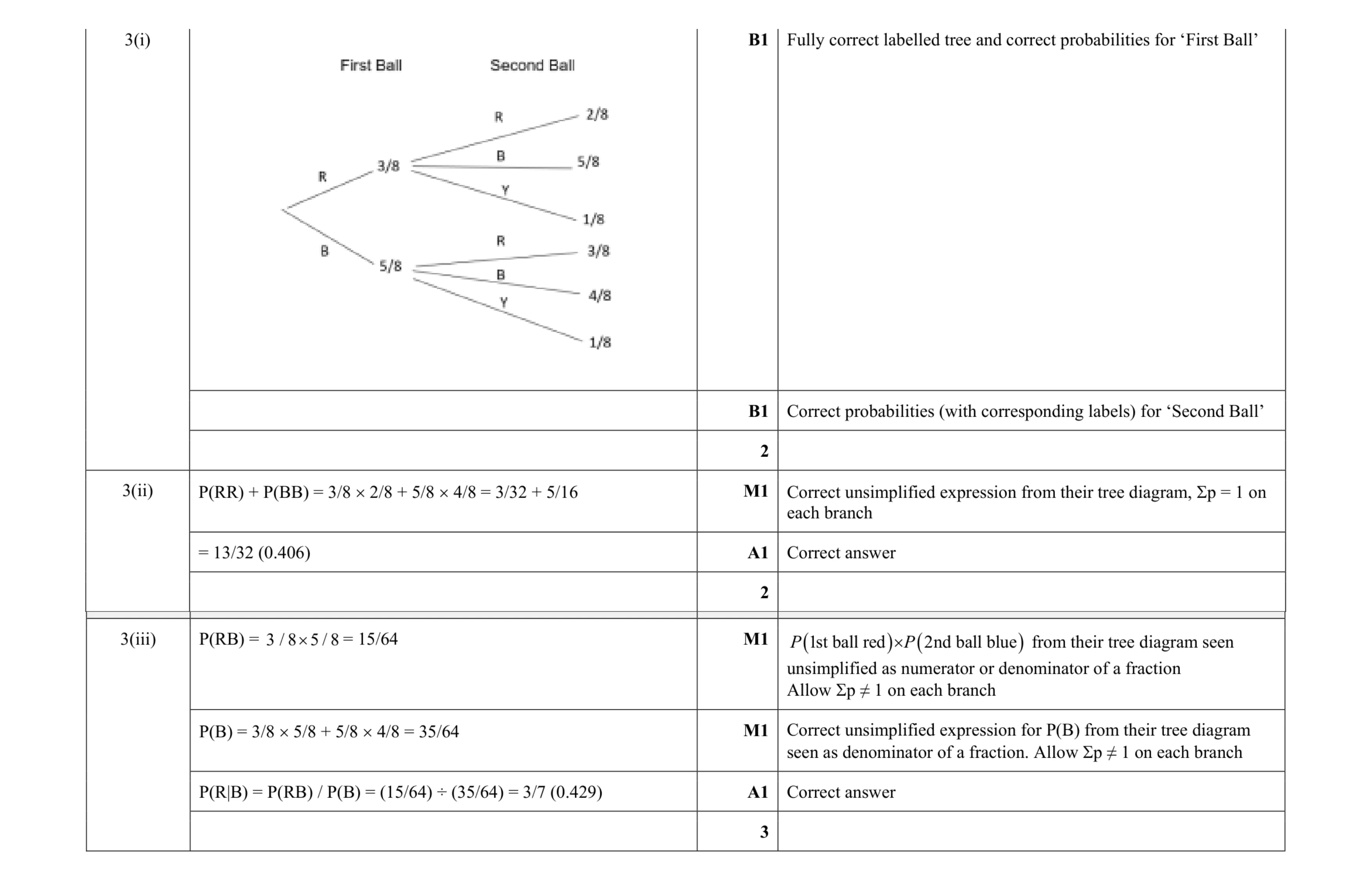 7
7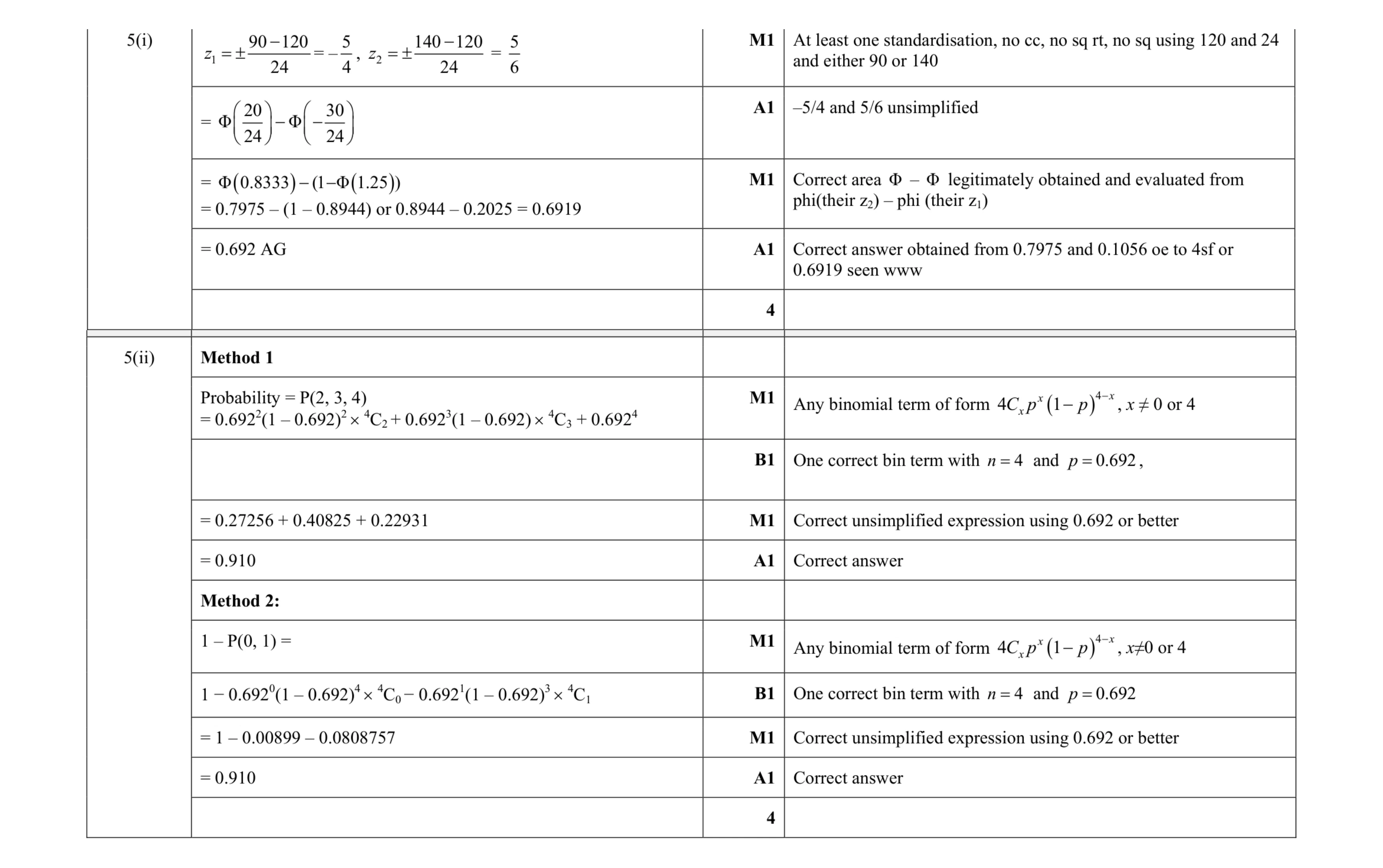 8
8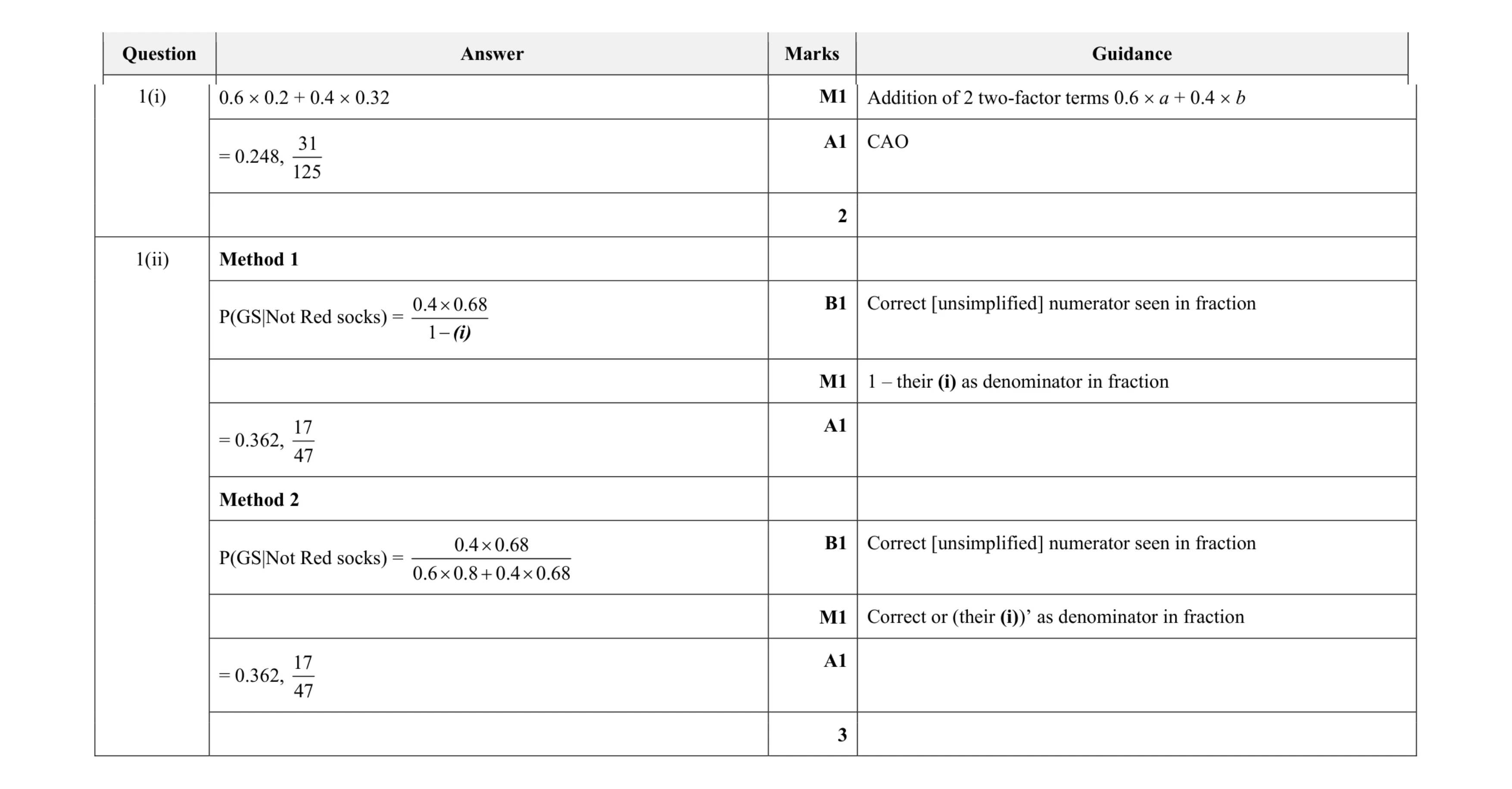 5
5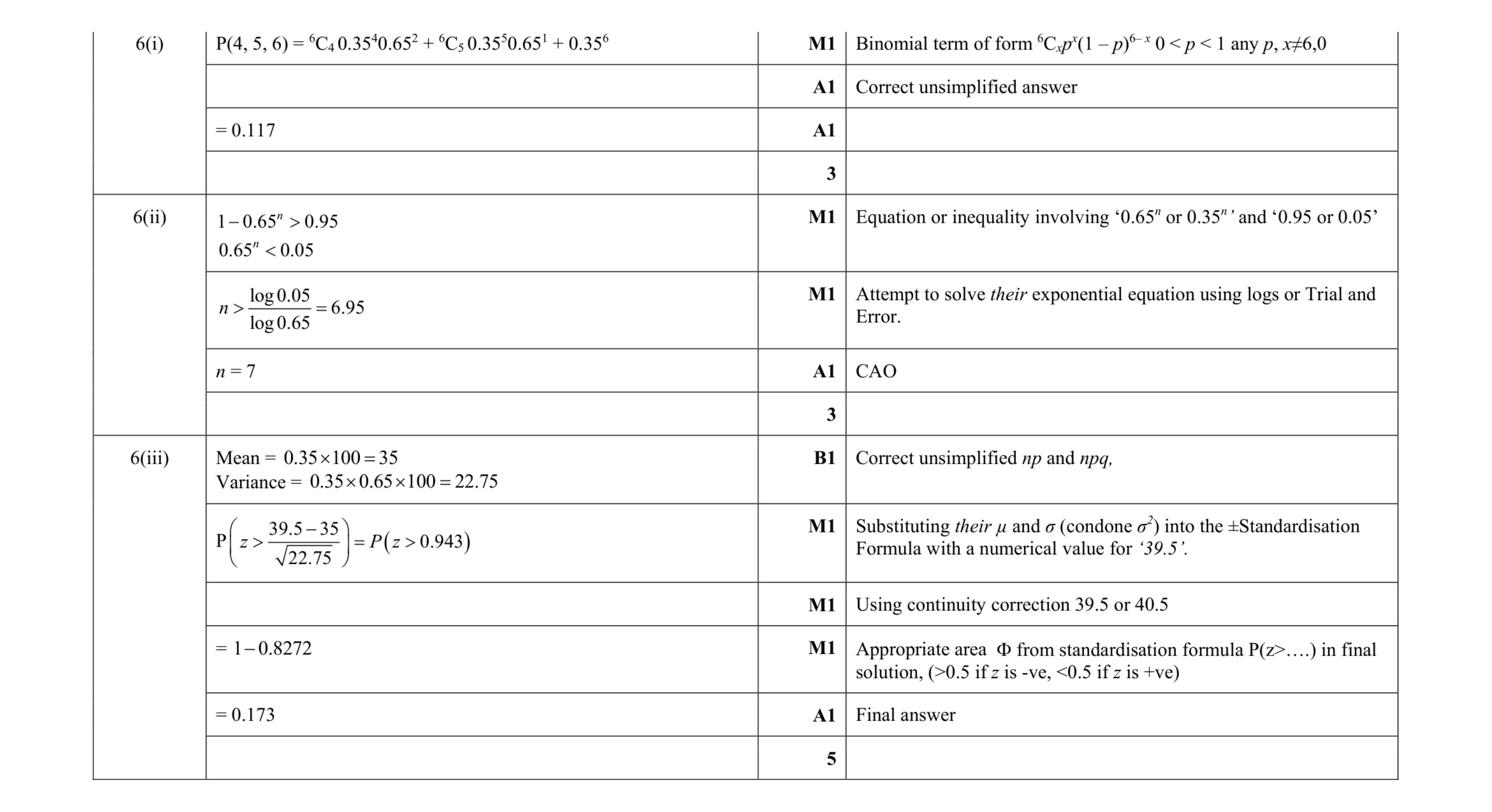 11
11 3
3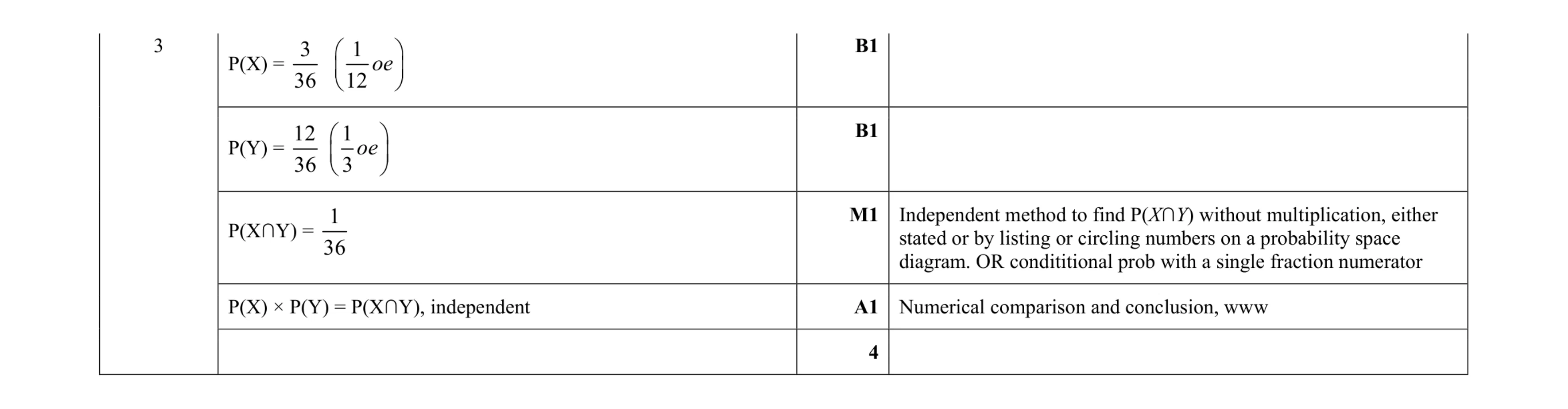 4
4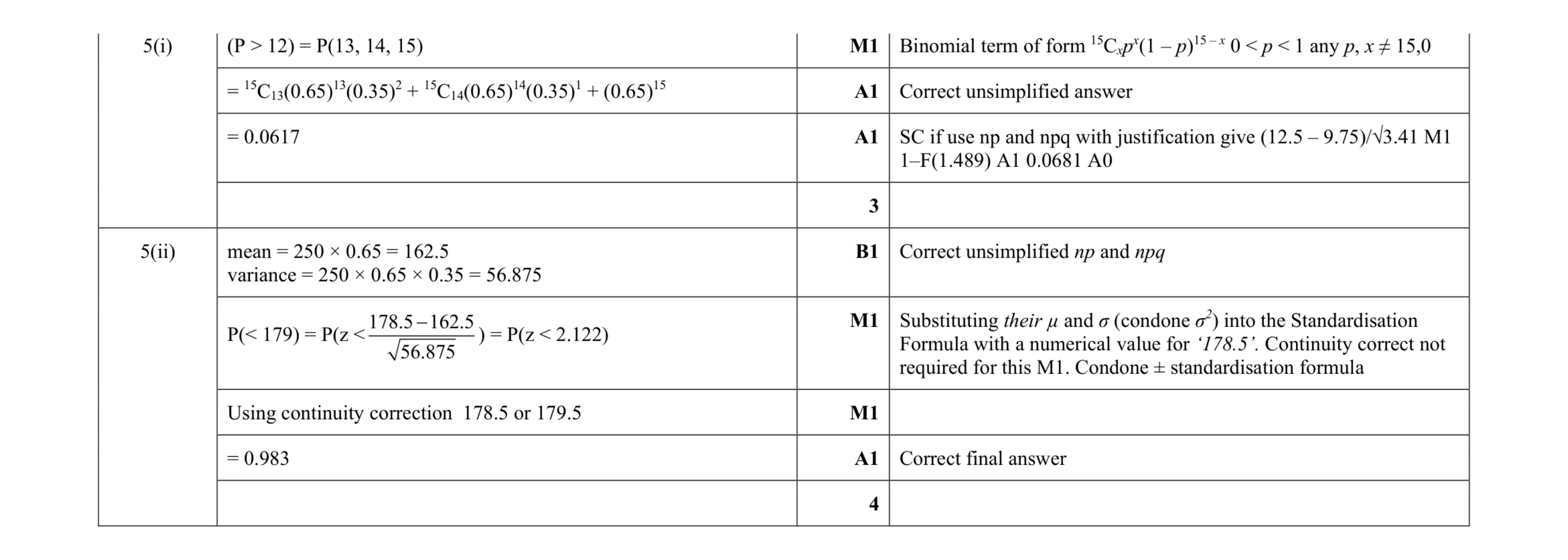 7
7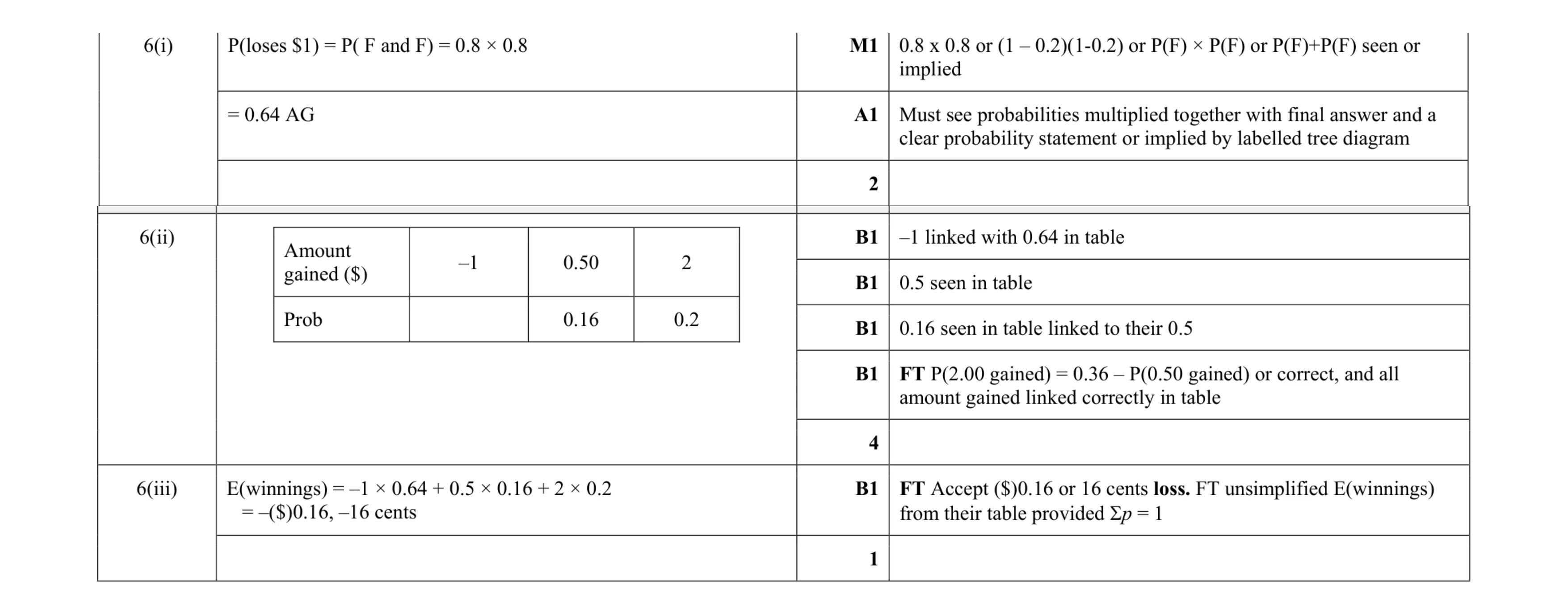 7
7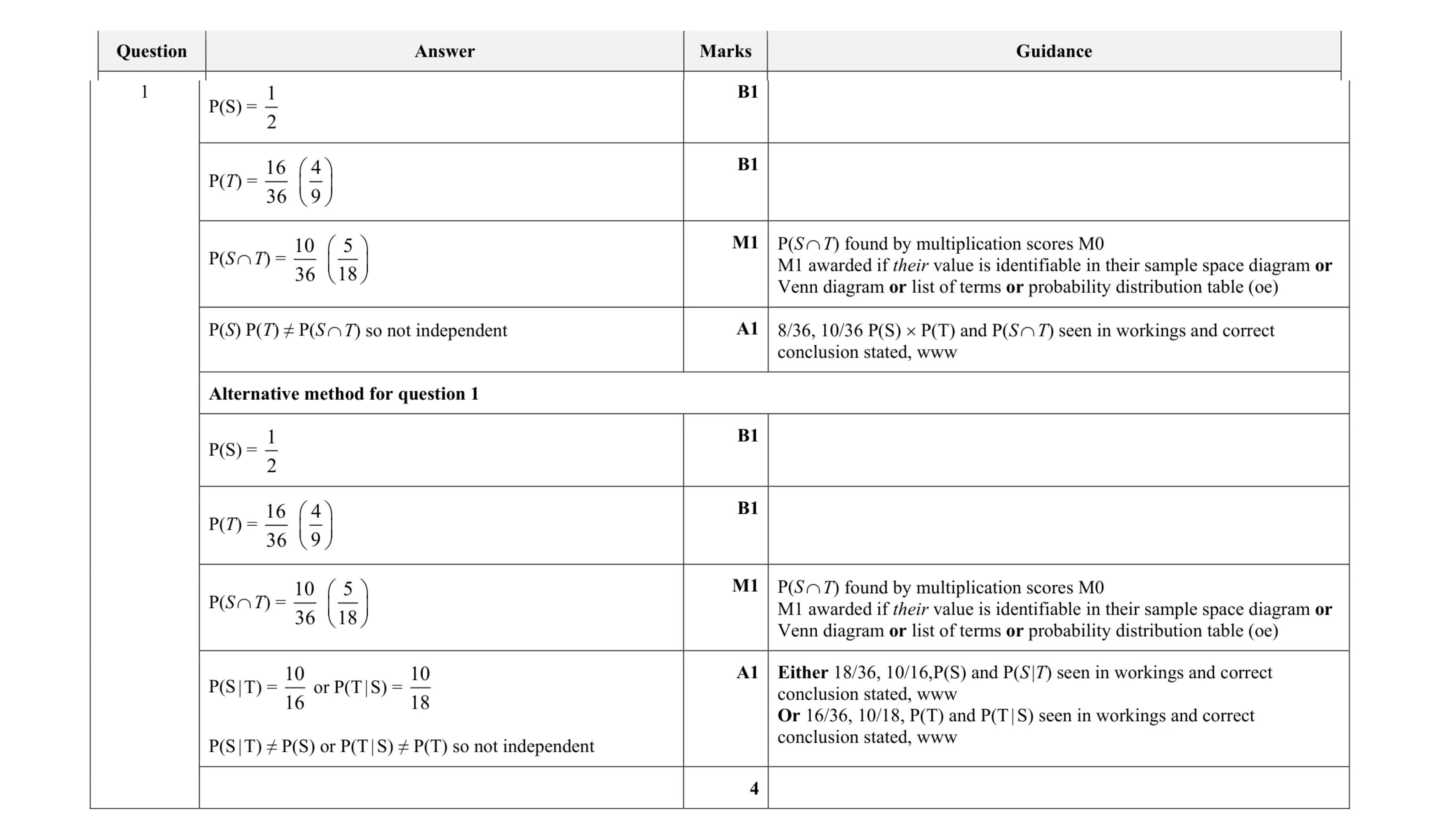 4
4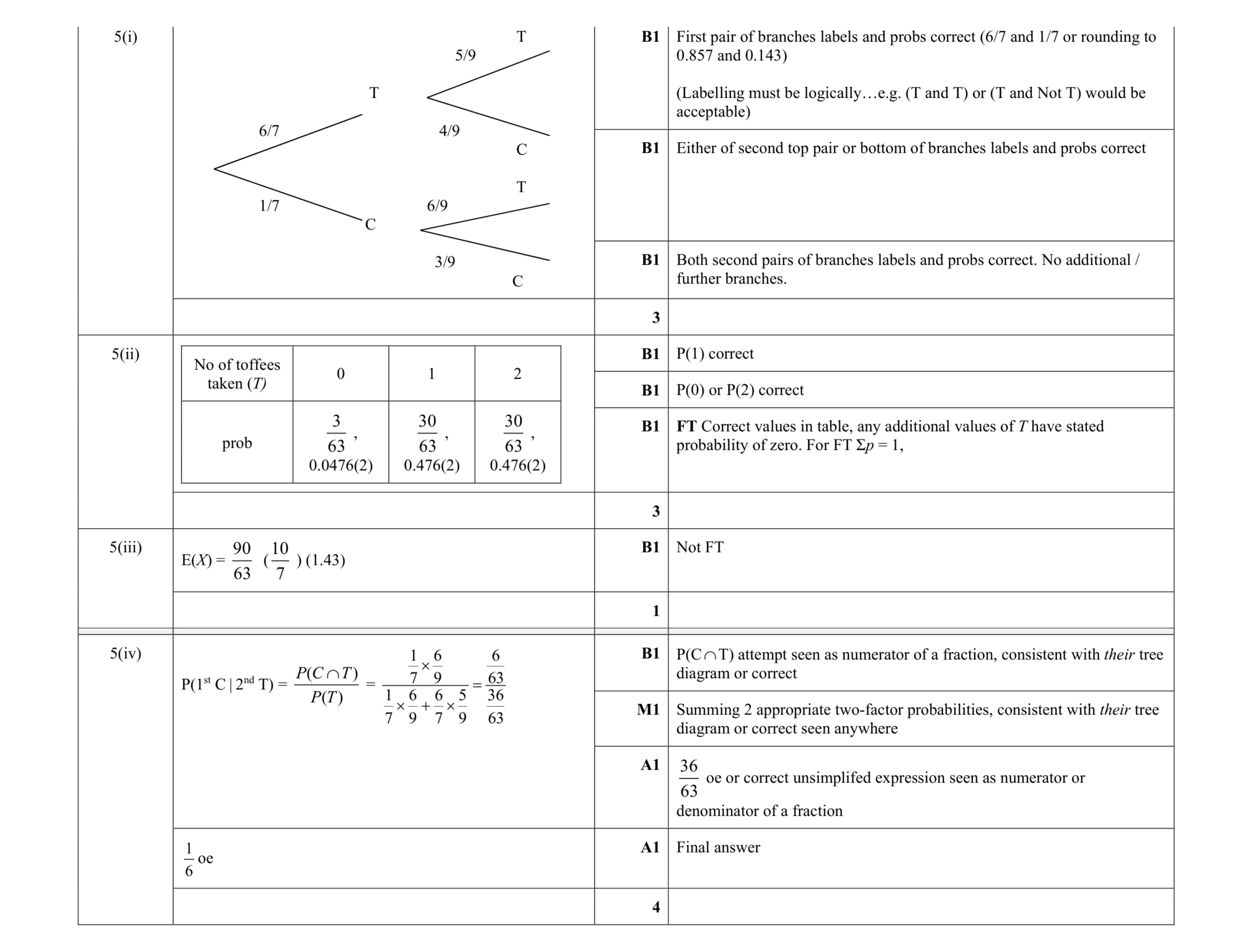 11
11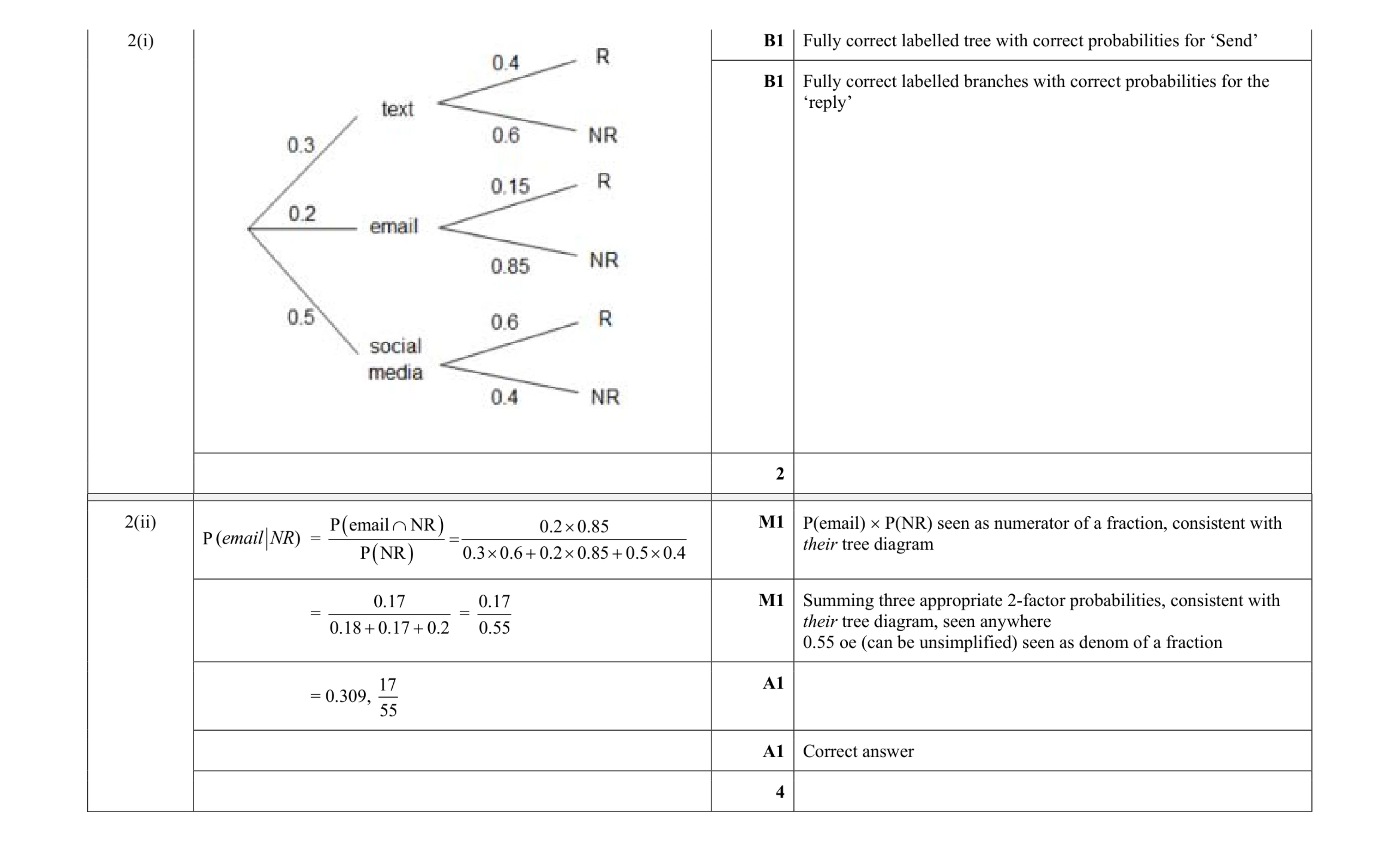 6
6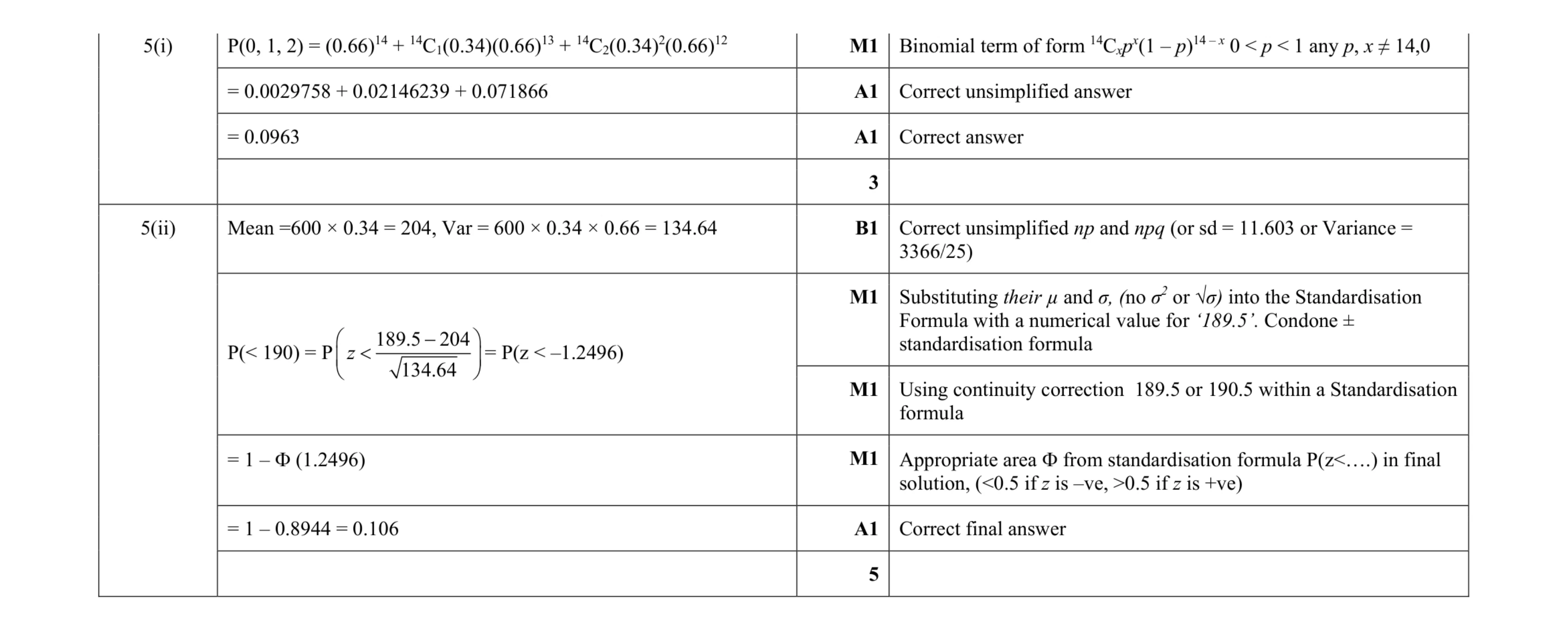 8
8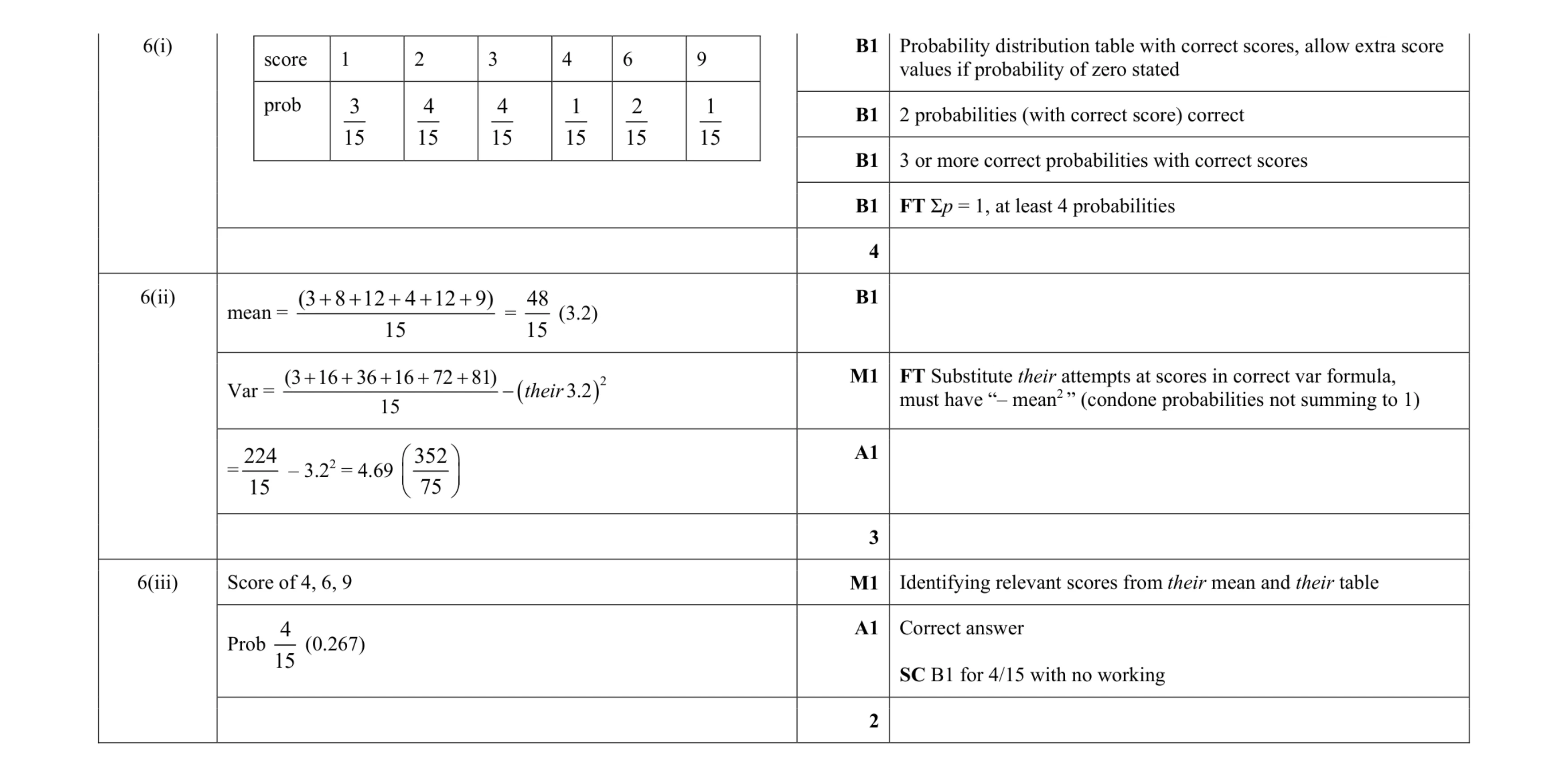 9
9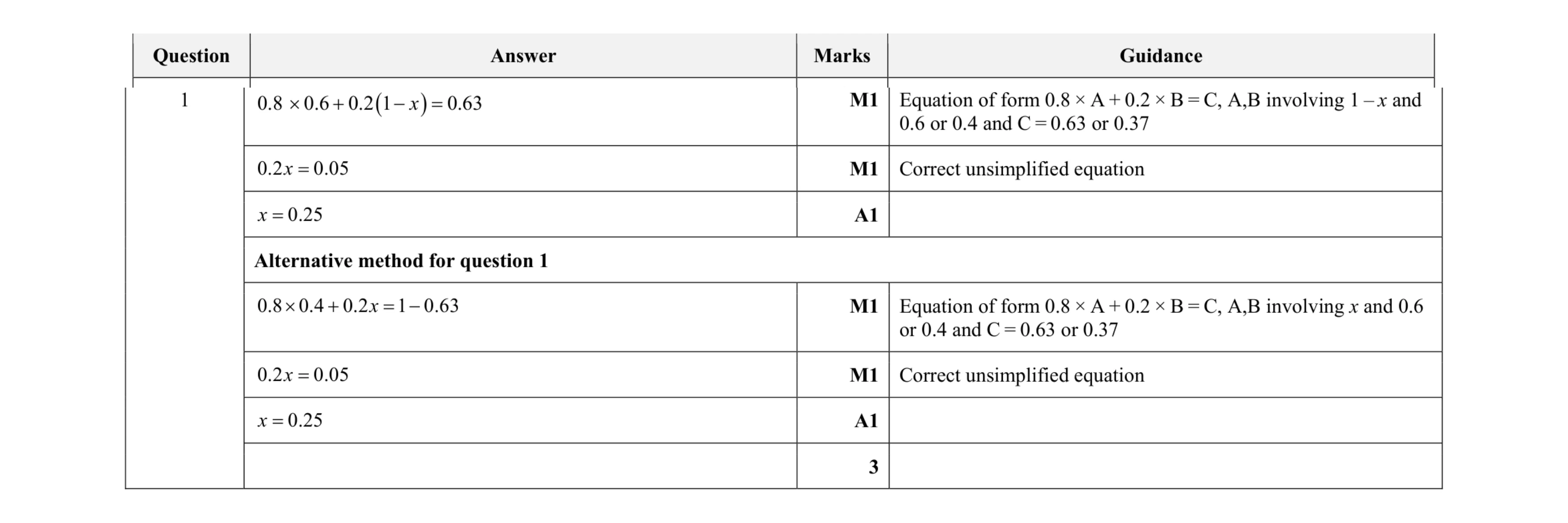 3
3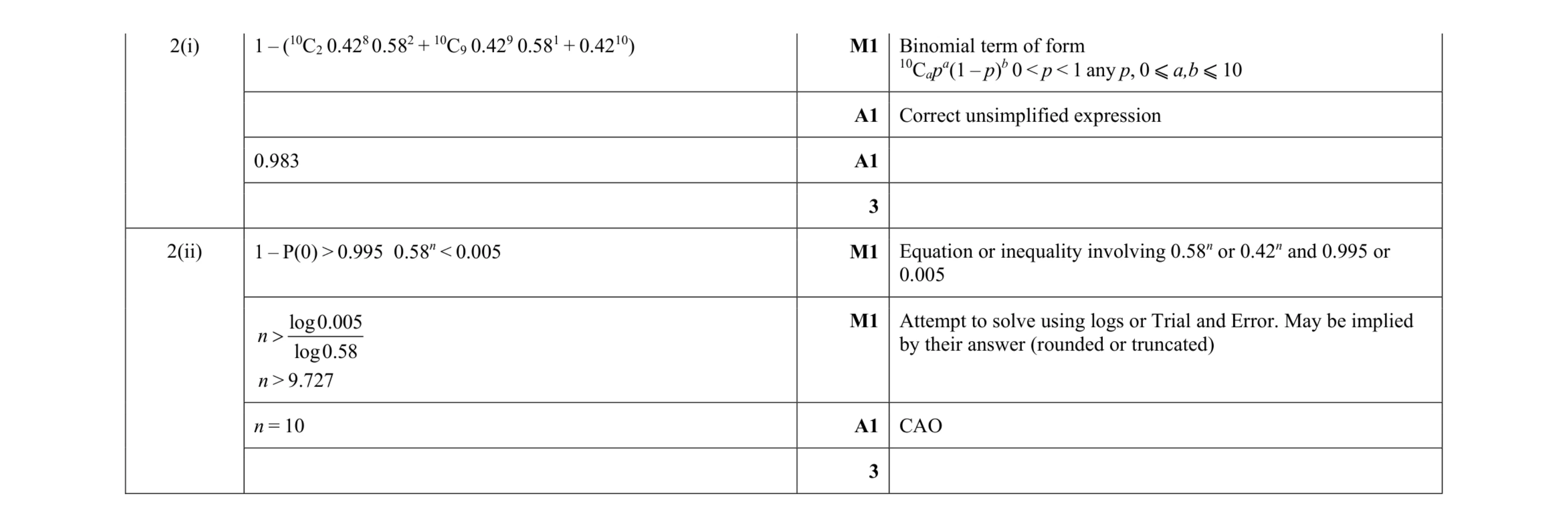 6
6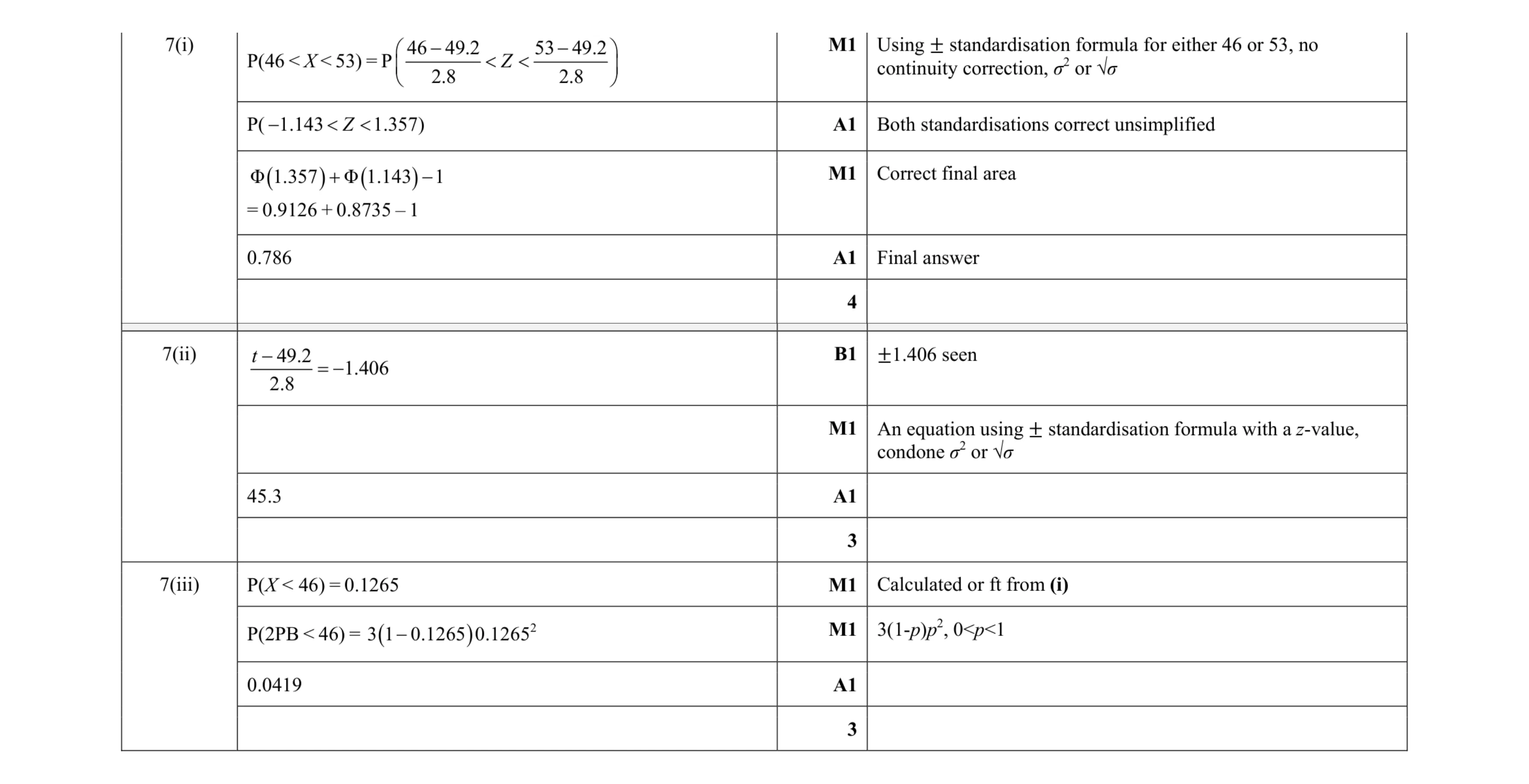 10
10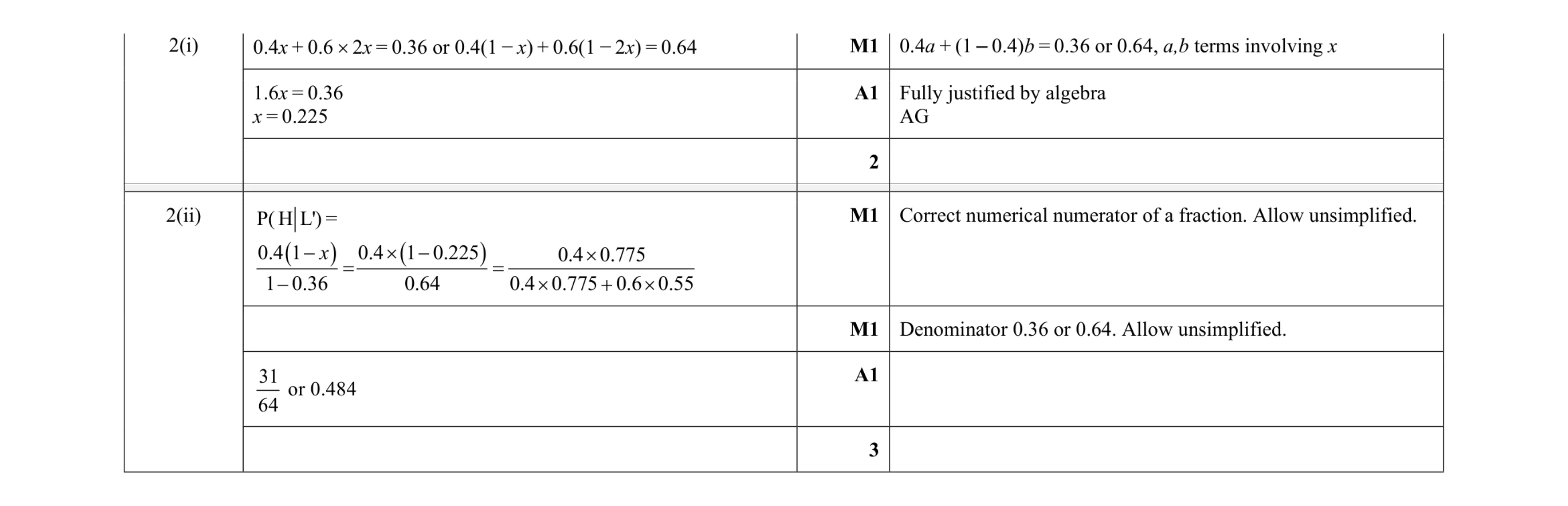 5
5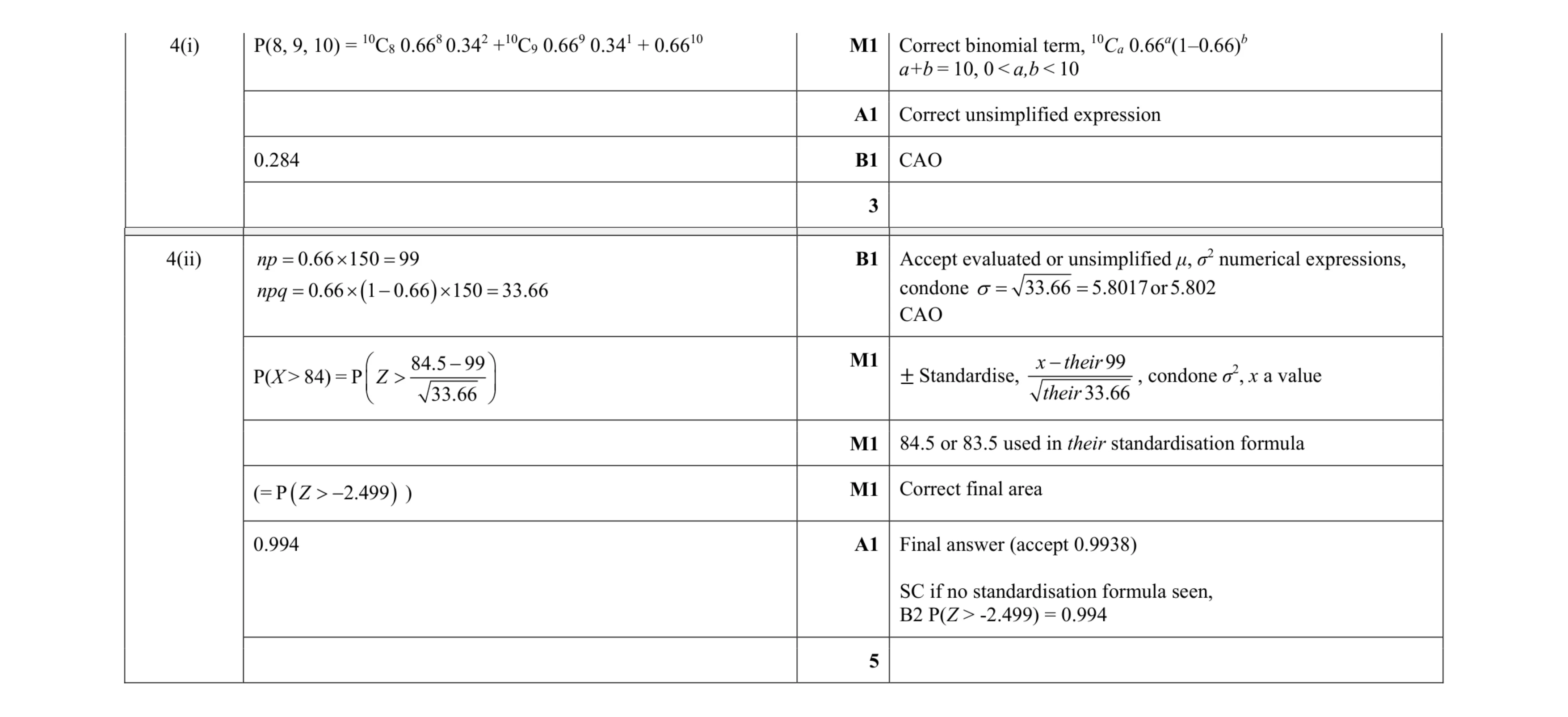 8
8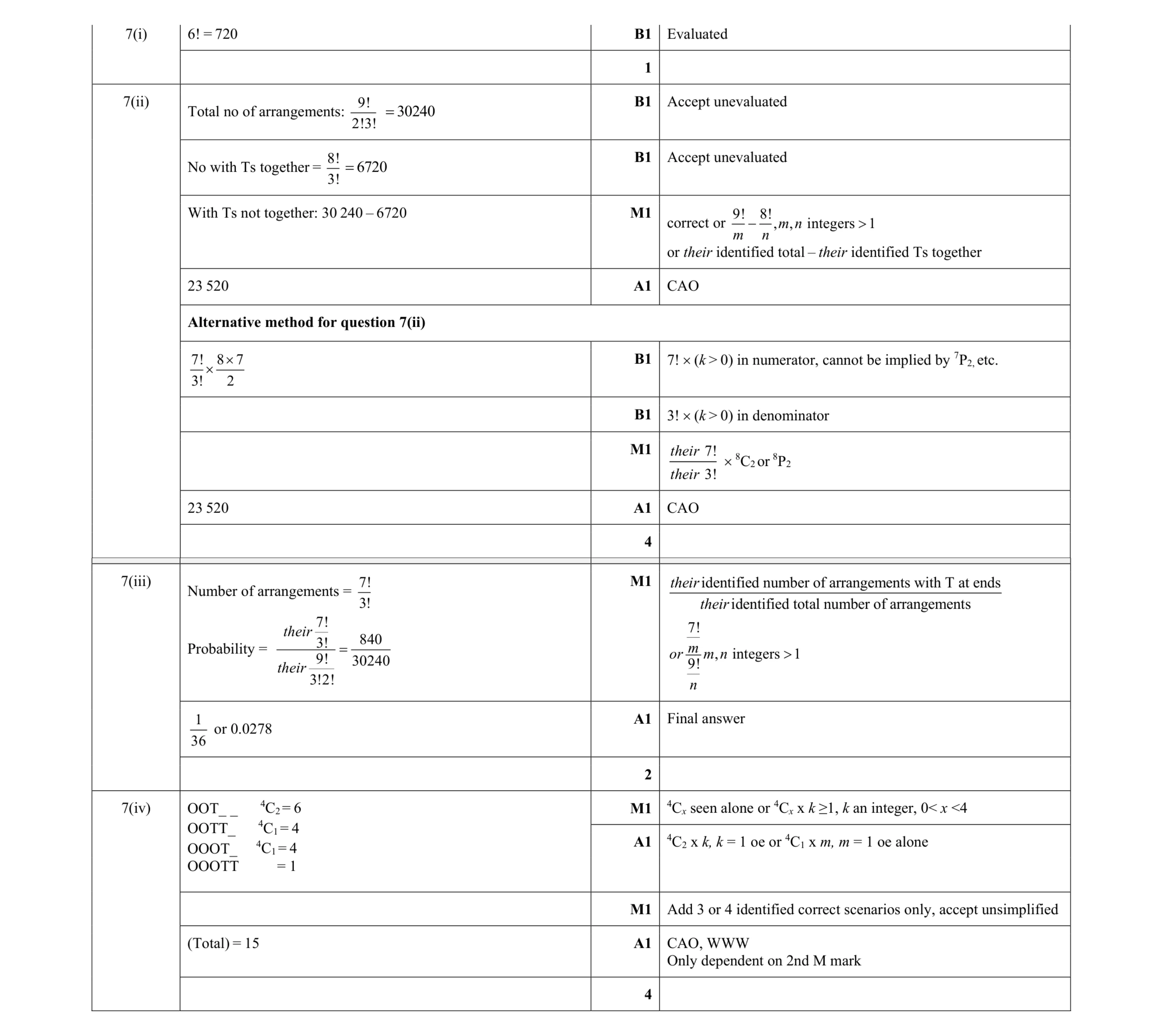 11
11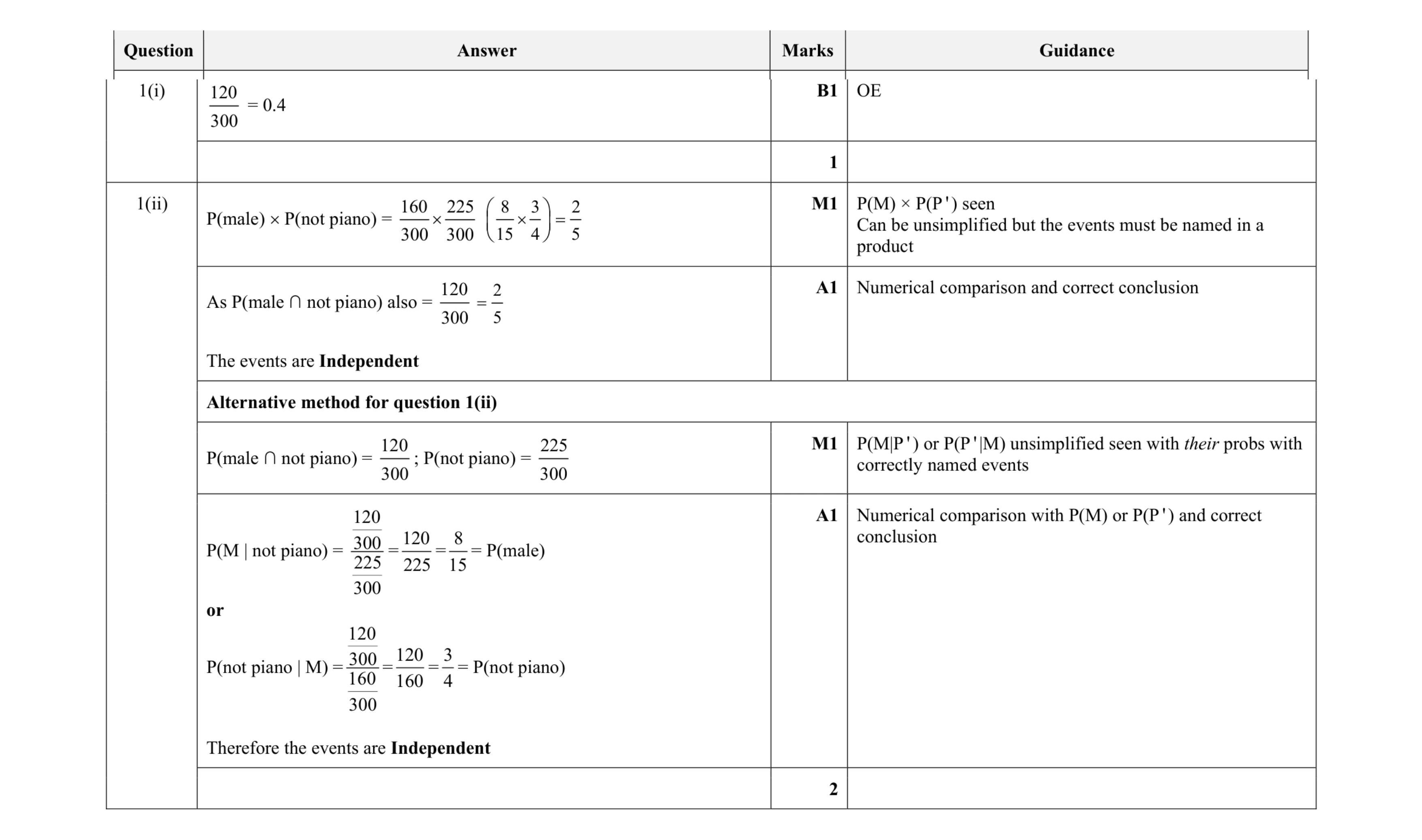 3
3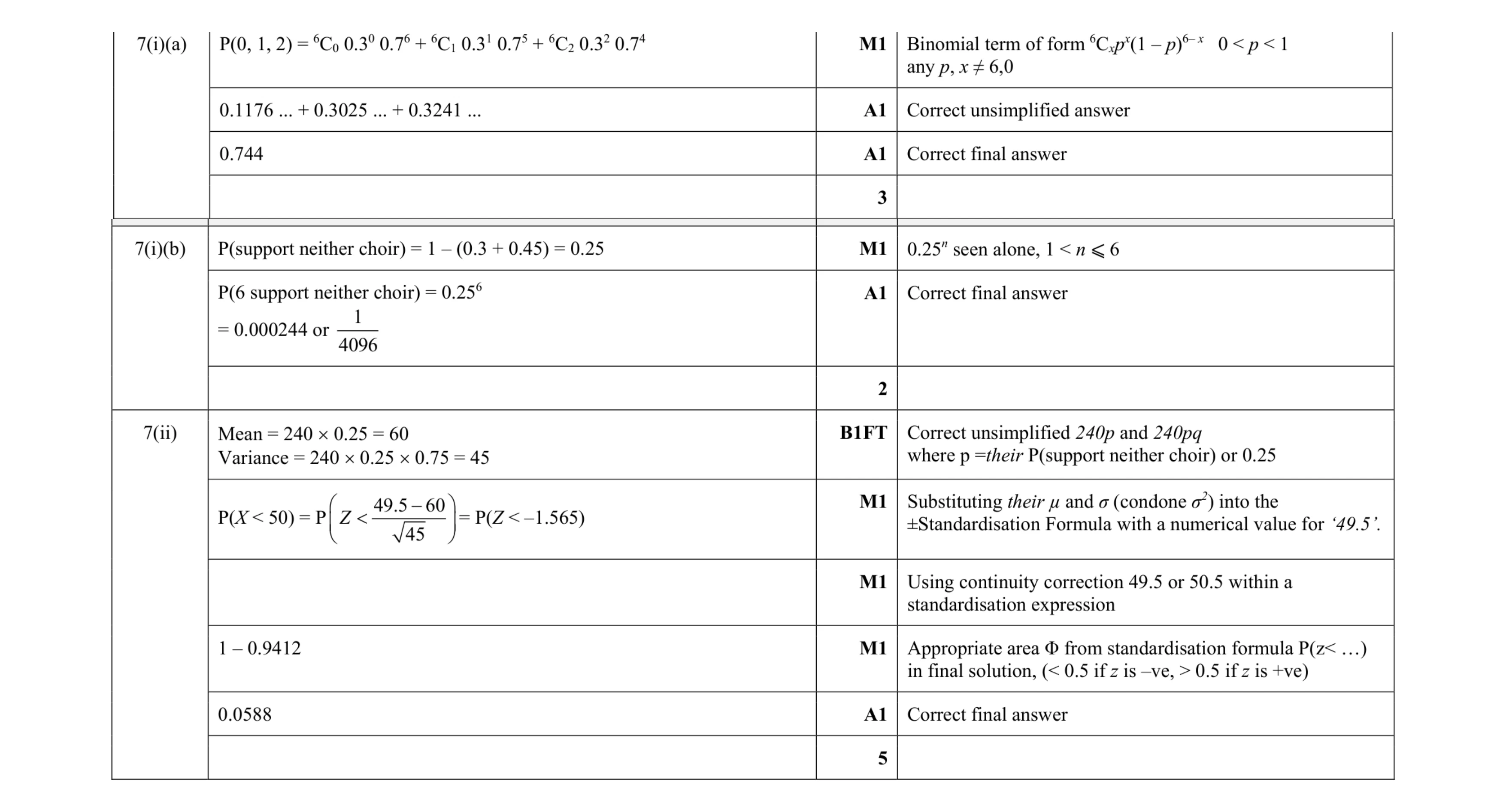 10
10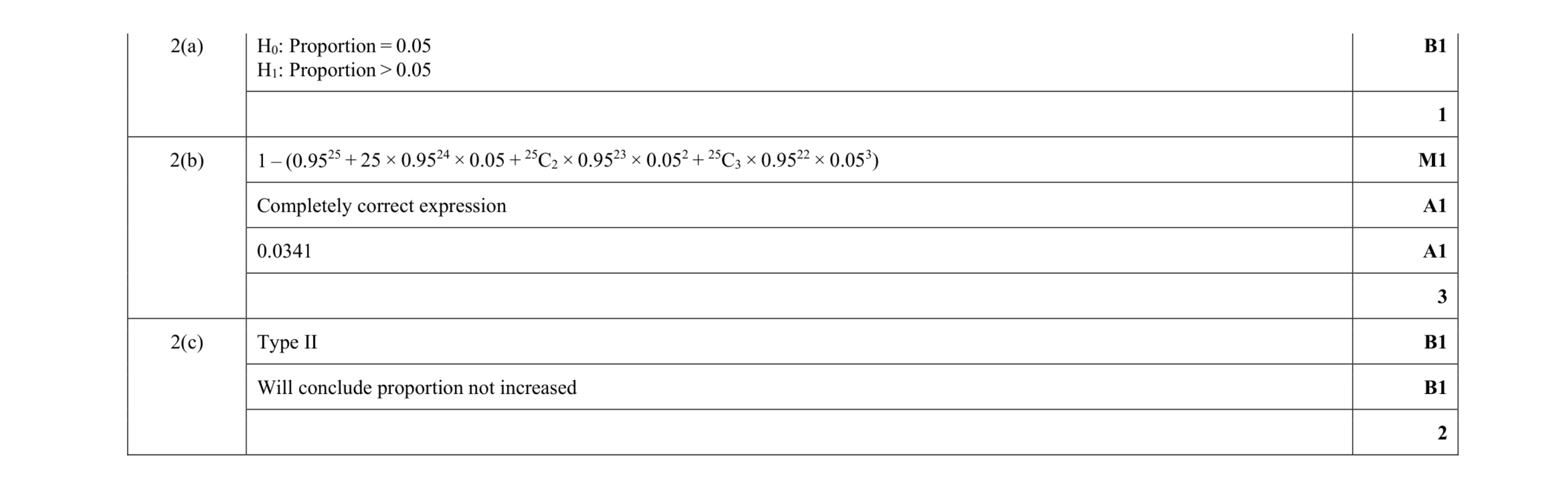 6
6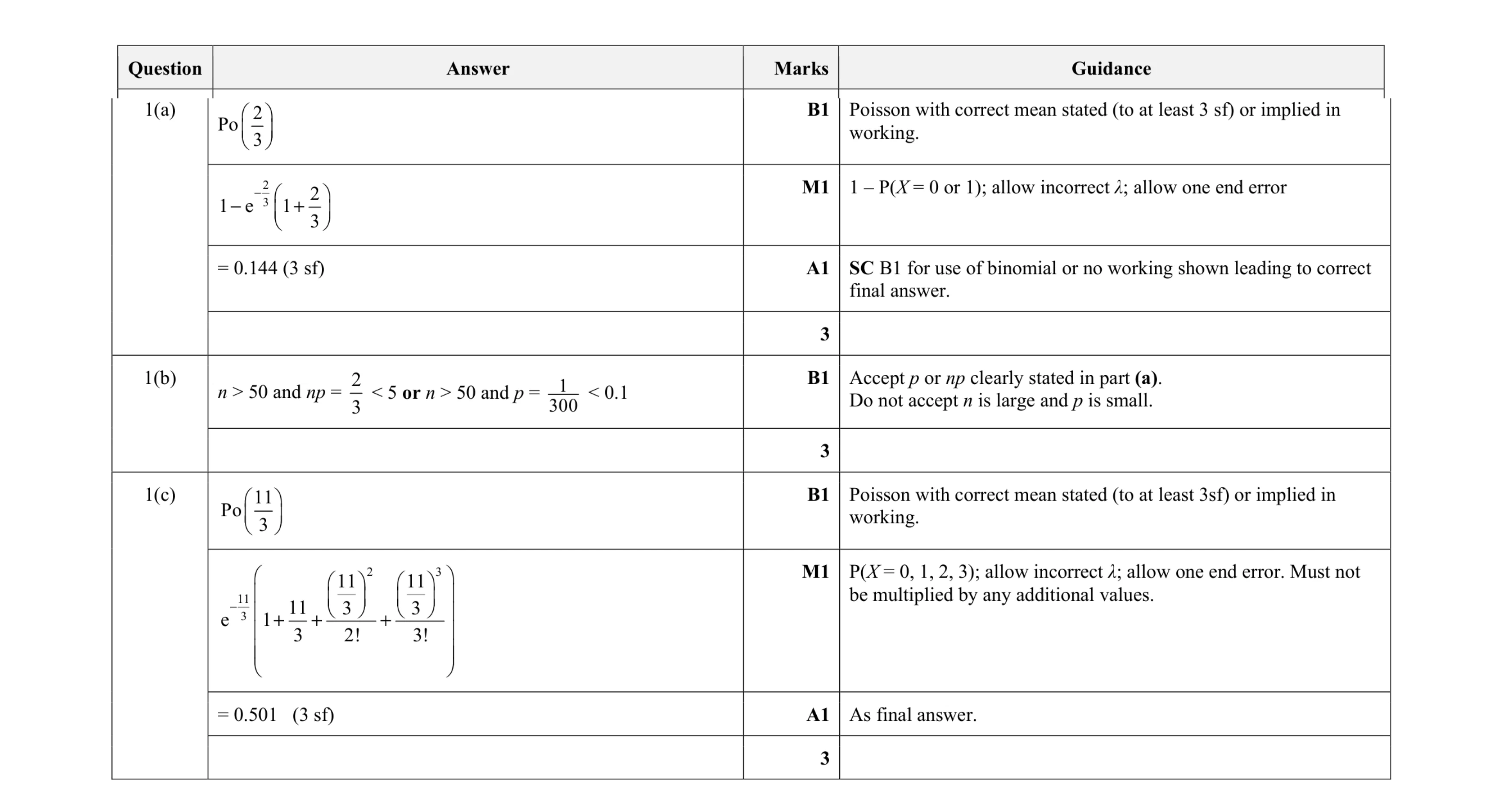 7
7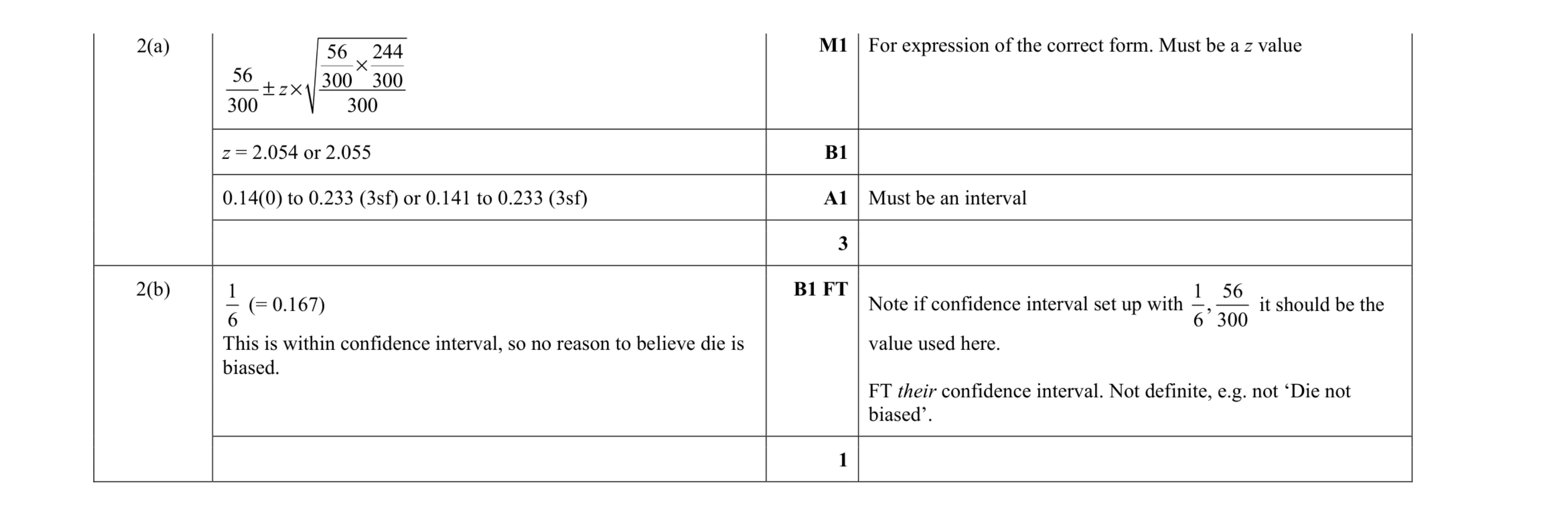 4
4 7
7 7
7 6
6 8
8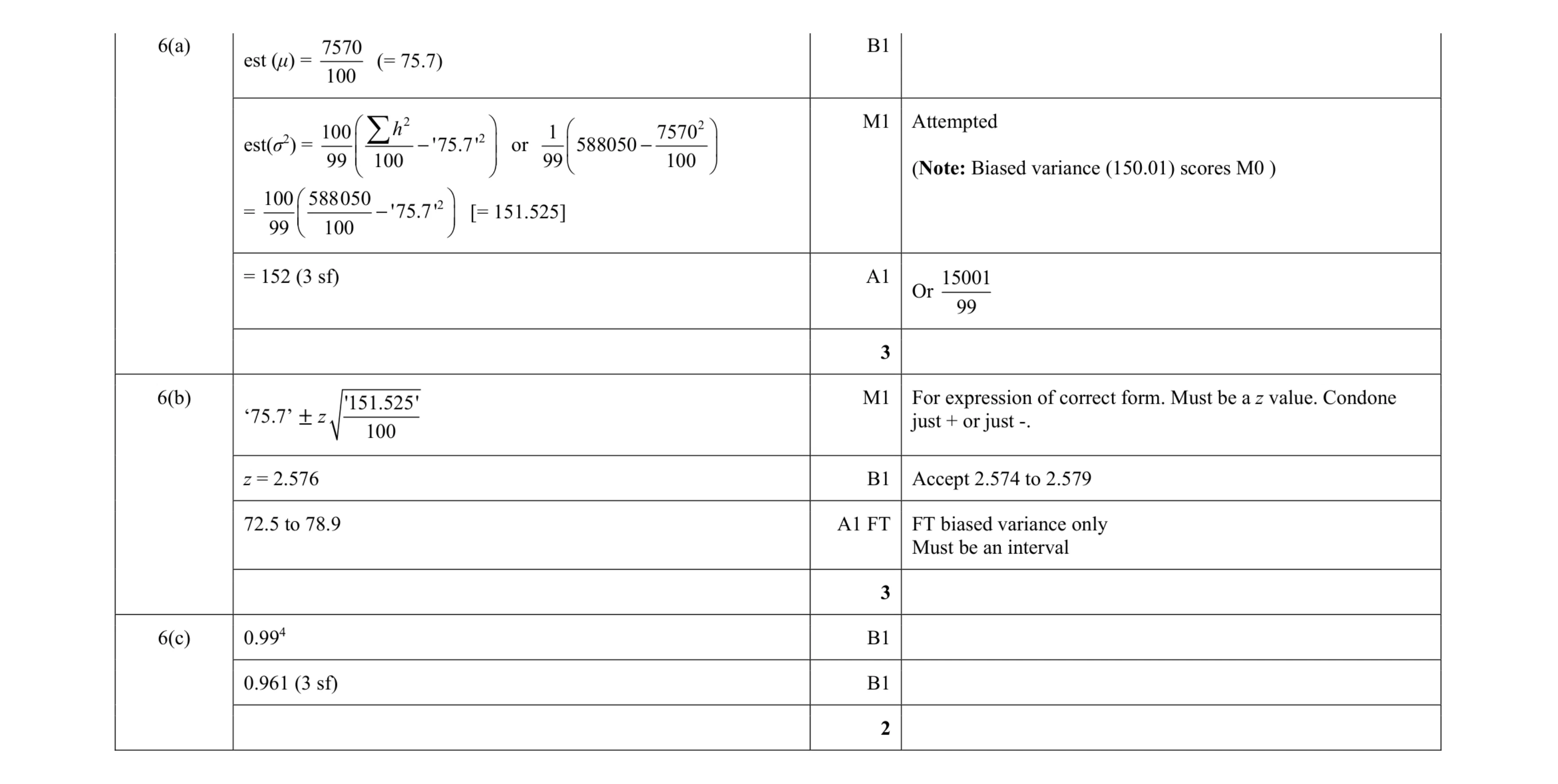 8
8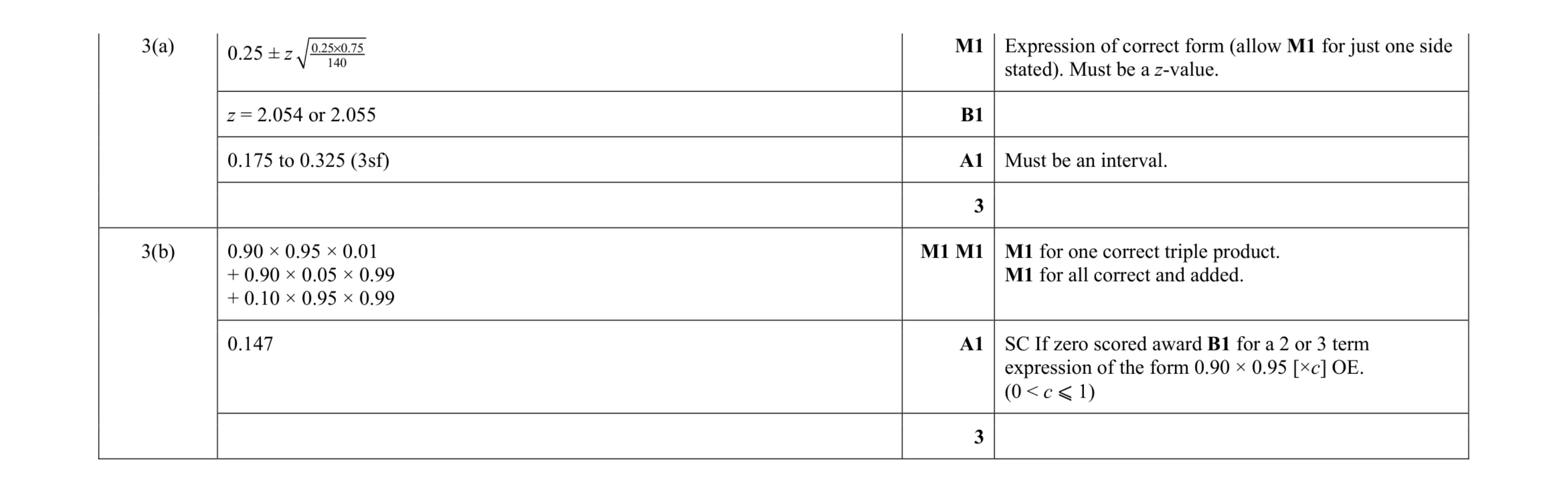 6
6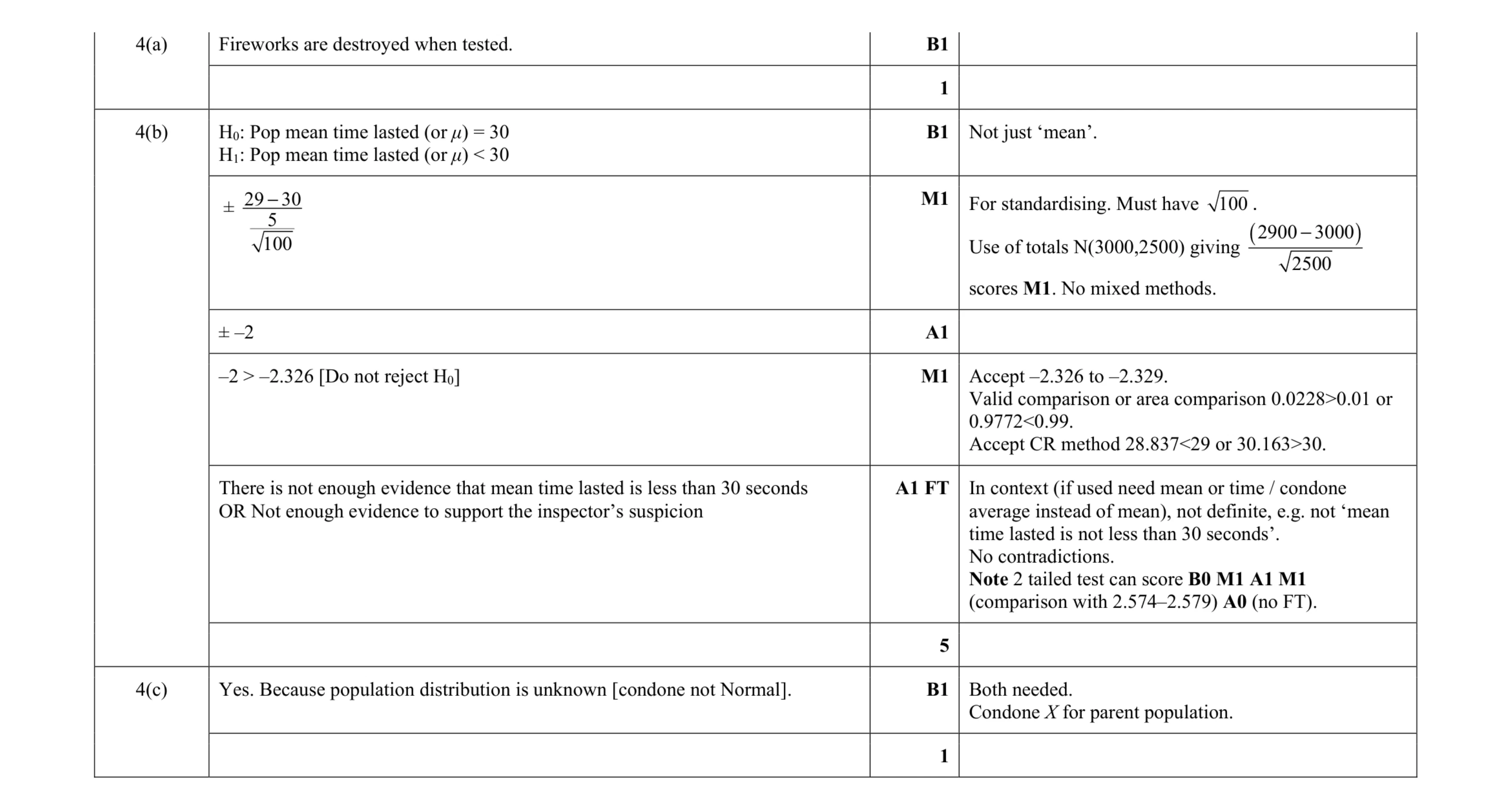 7
7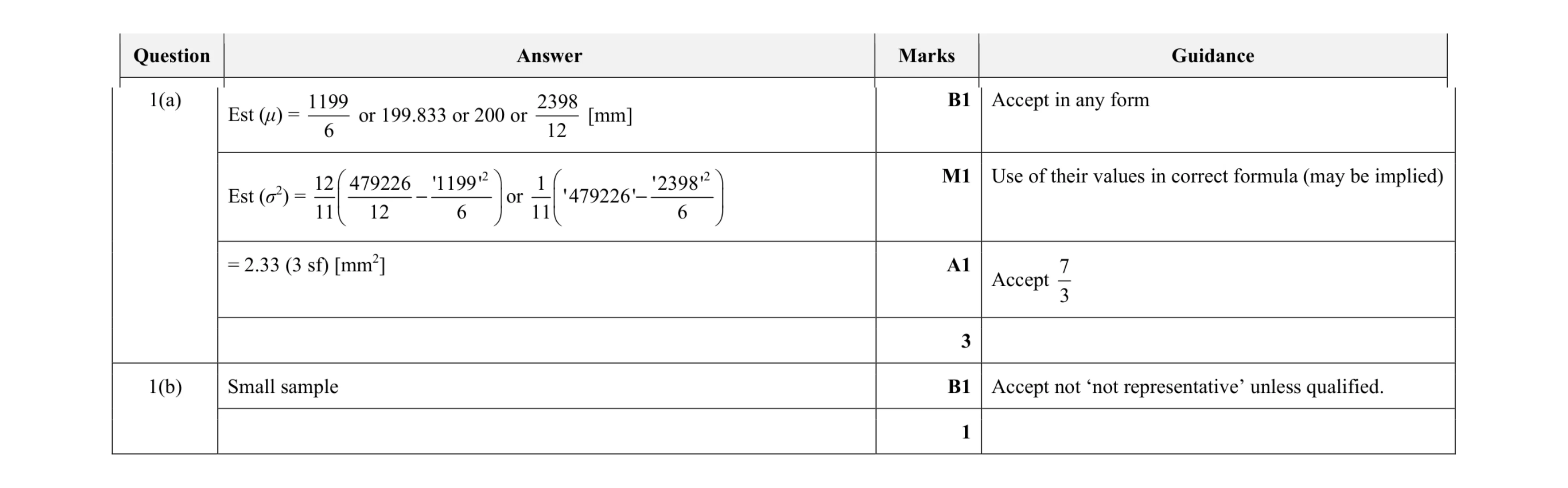 4
4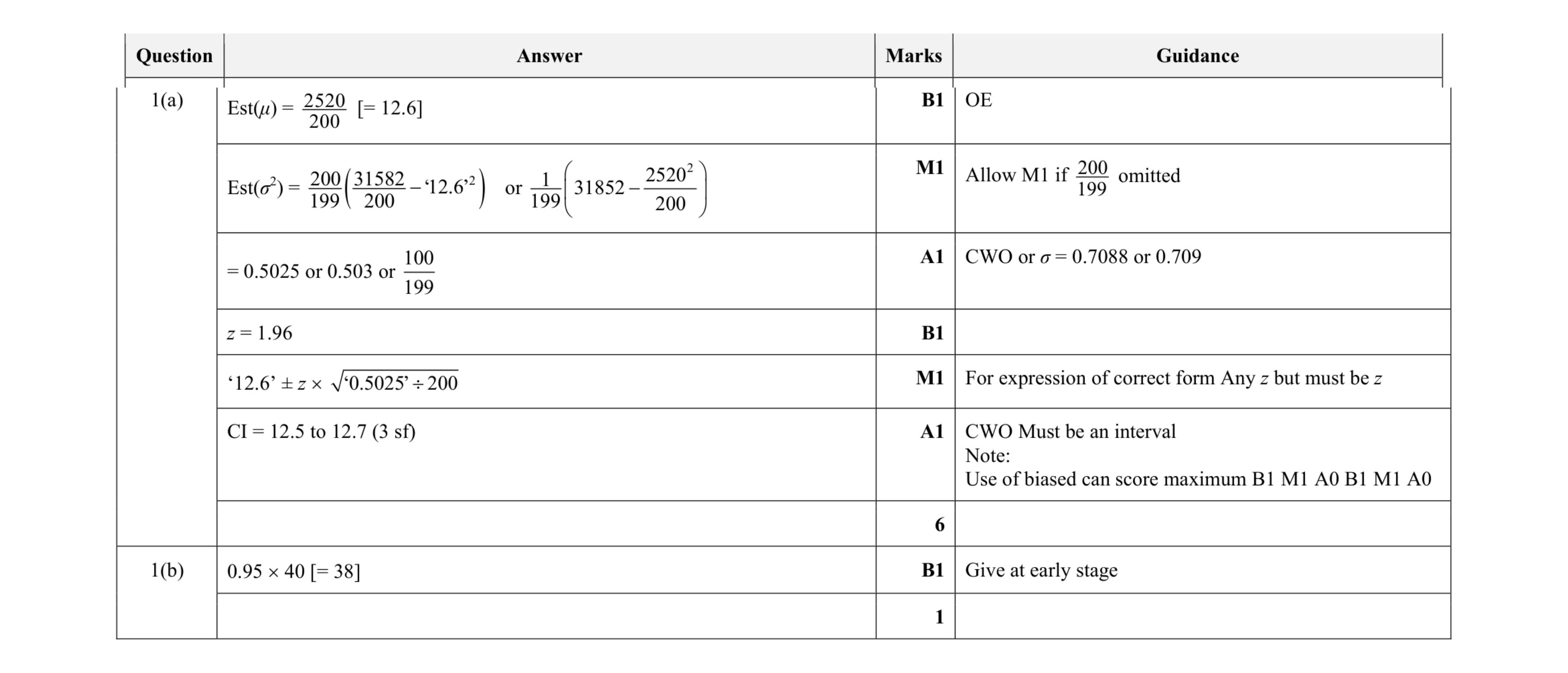 7
7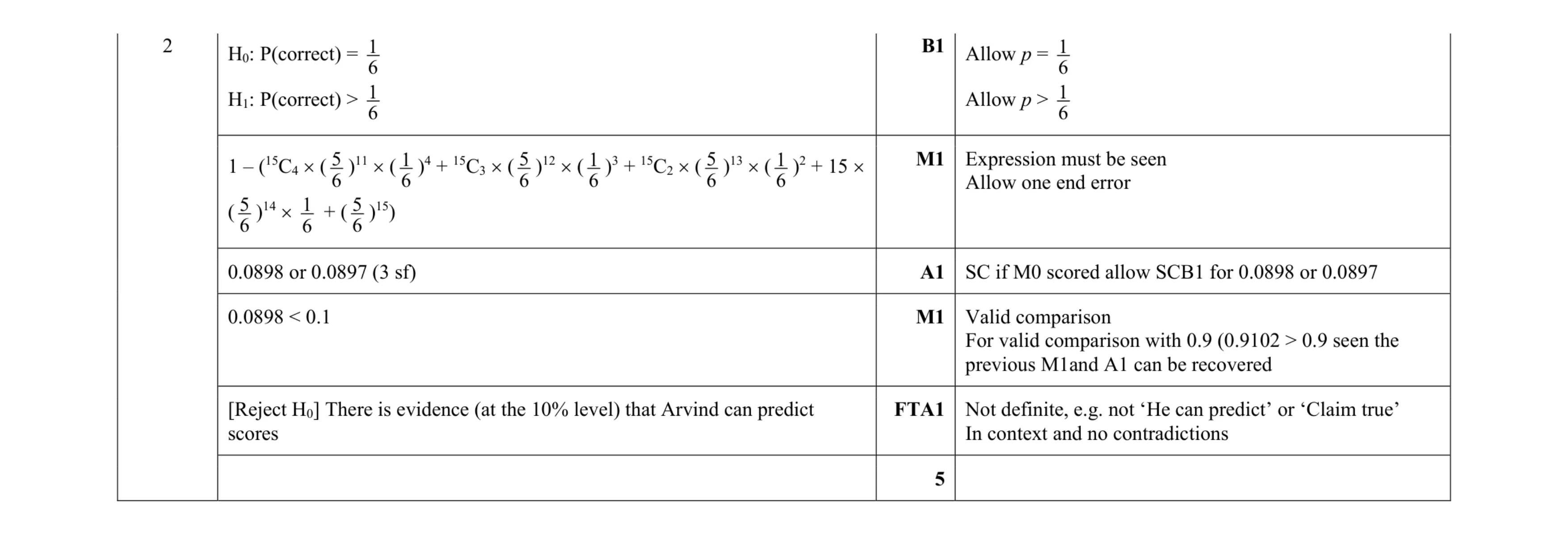 5
5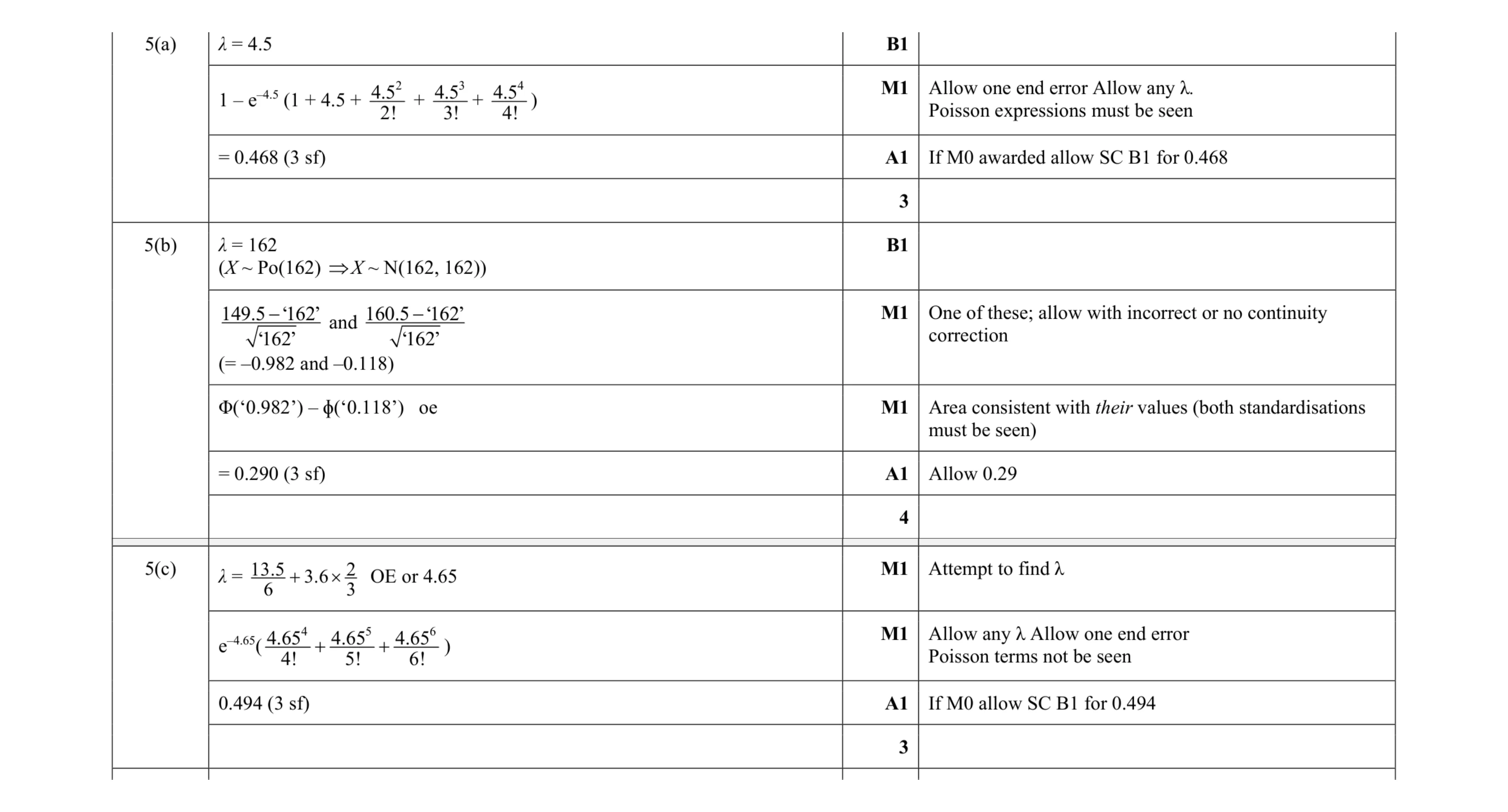 10
10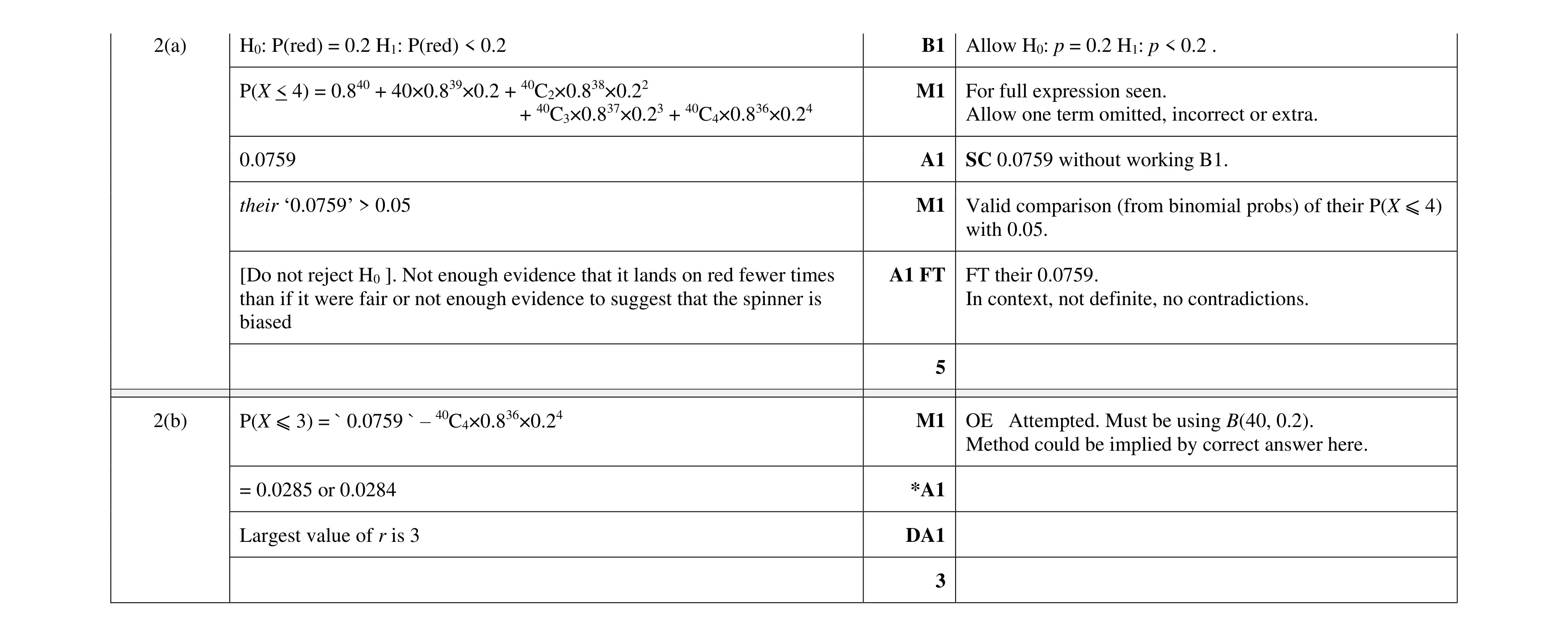 8
8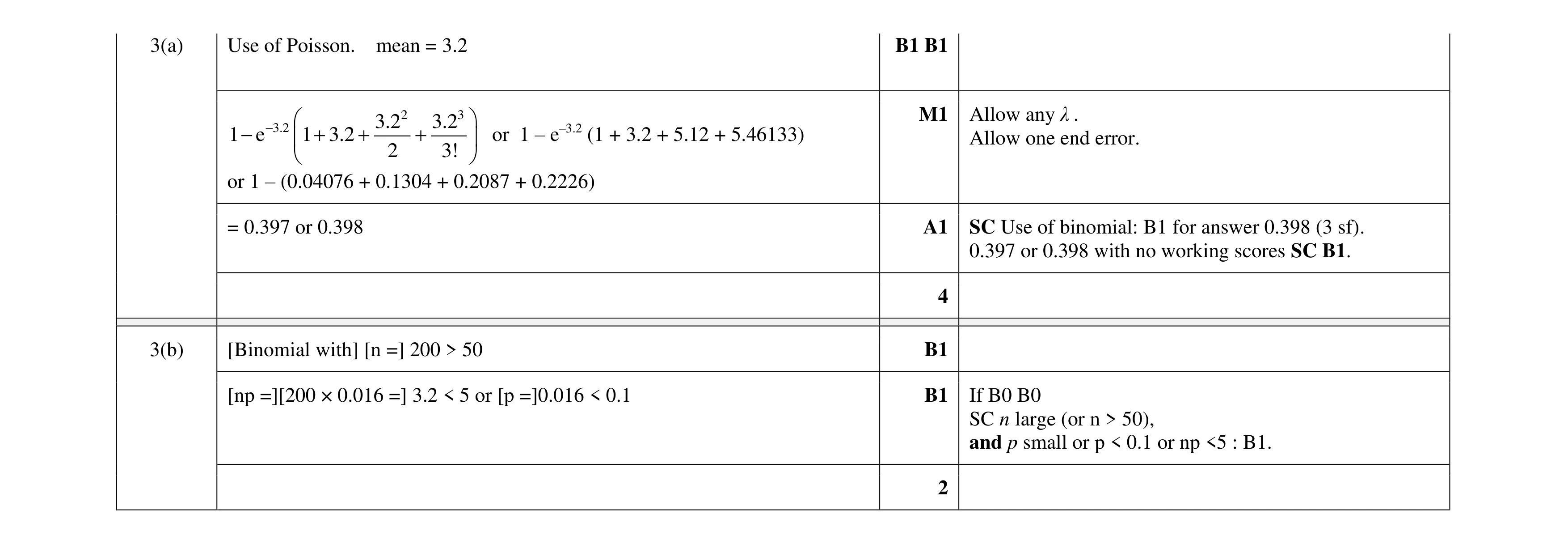 6
6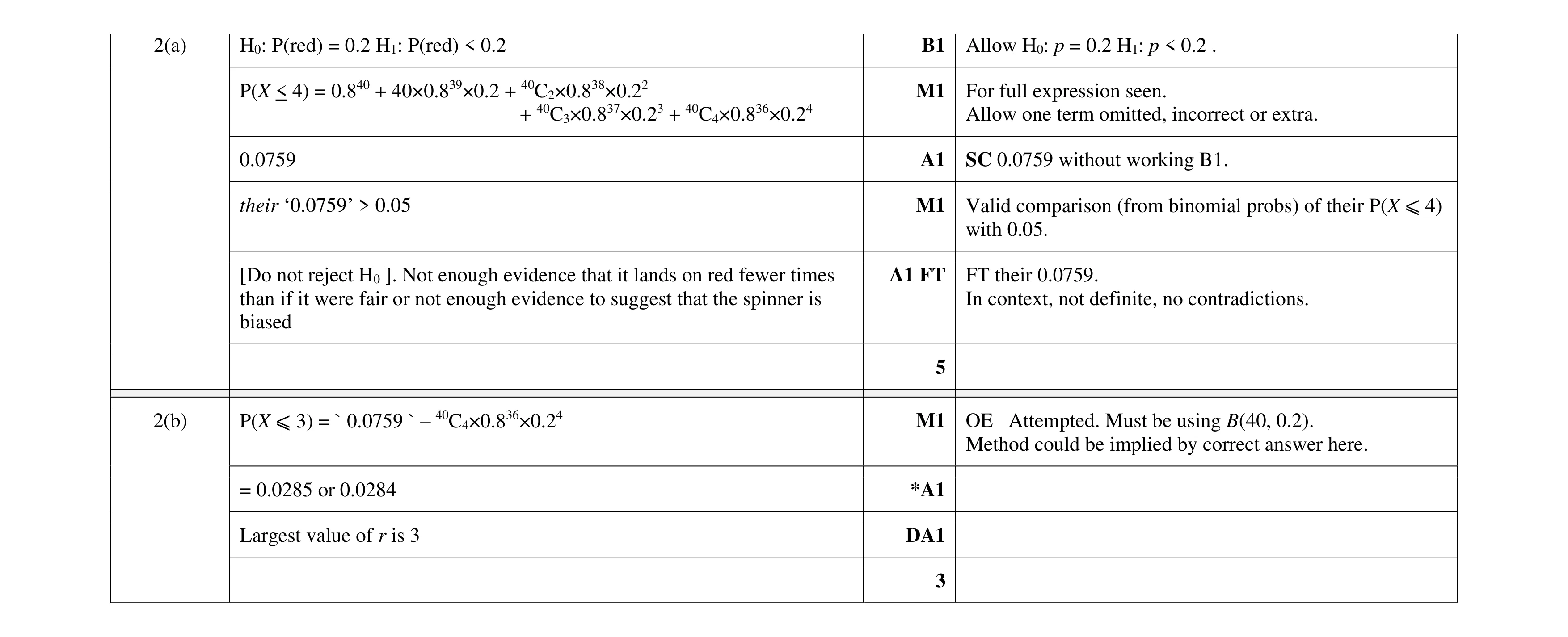 8
8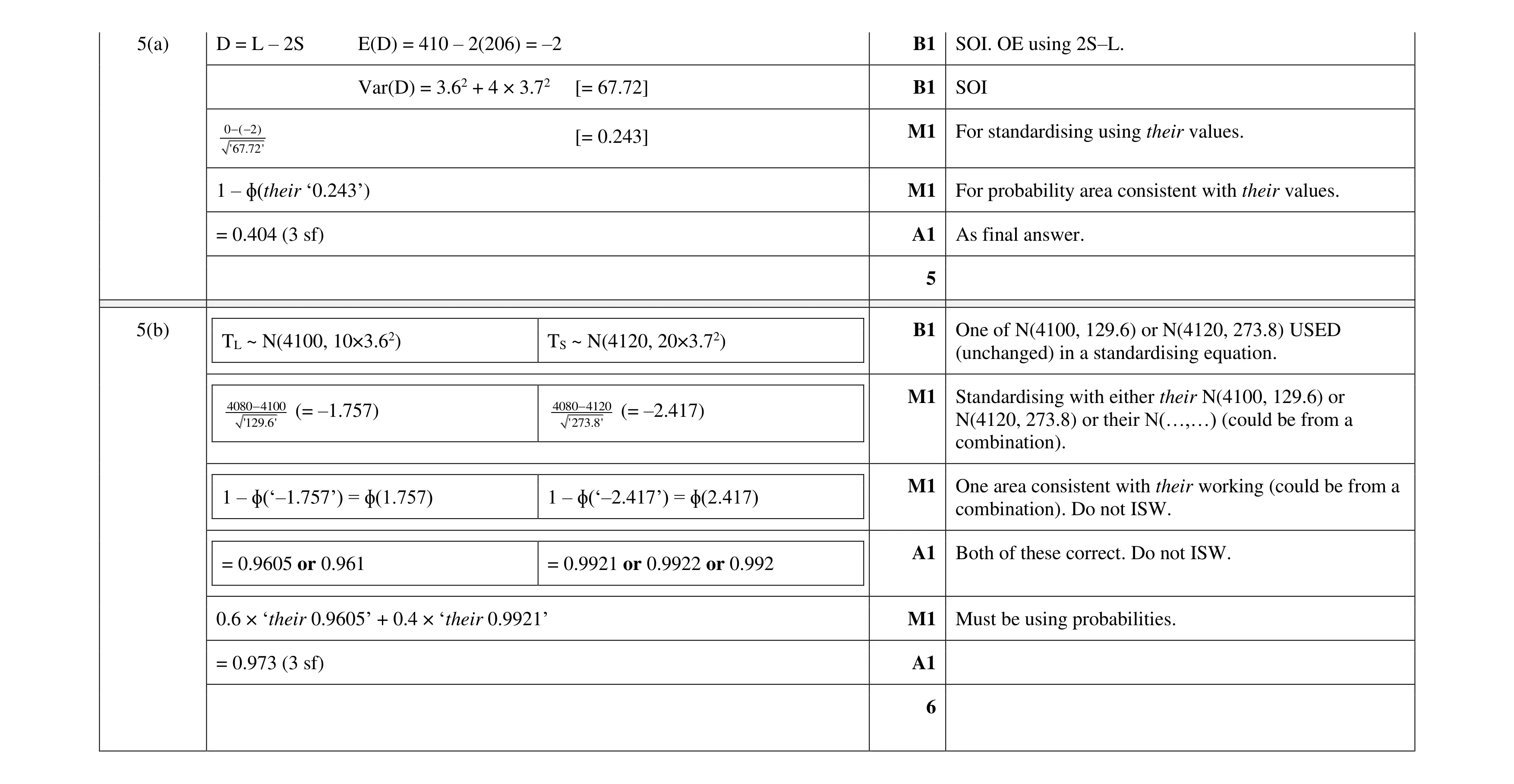 11
11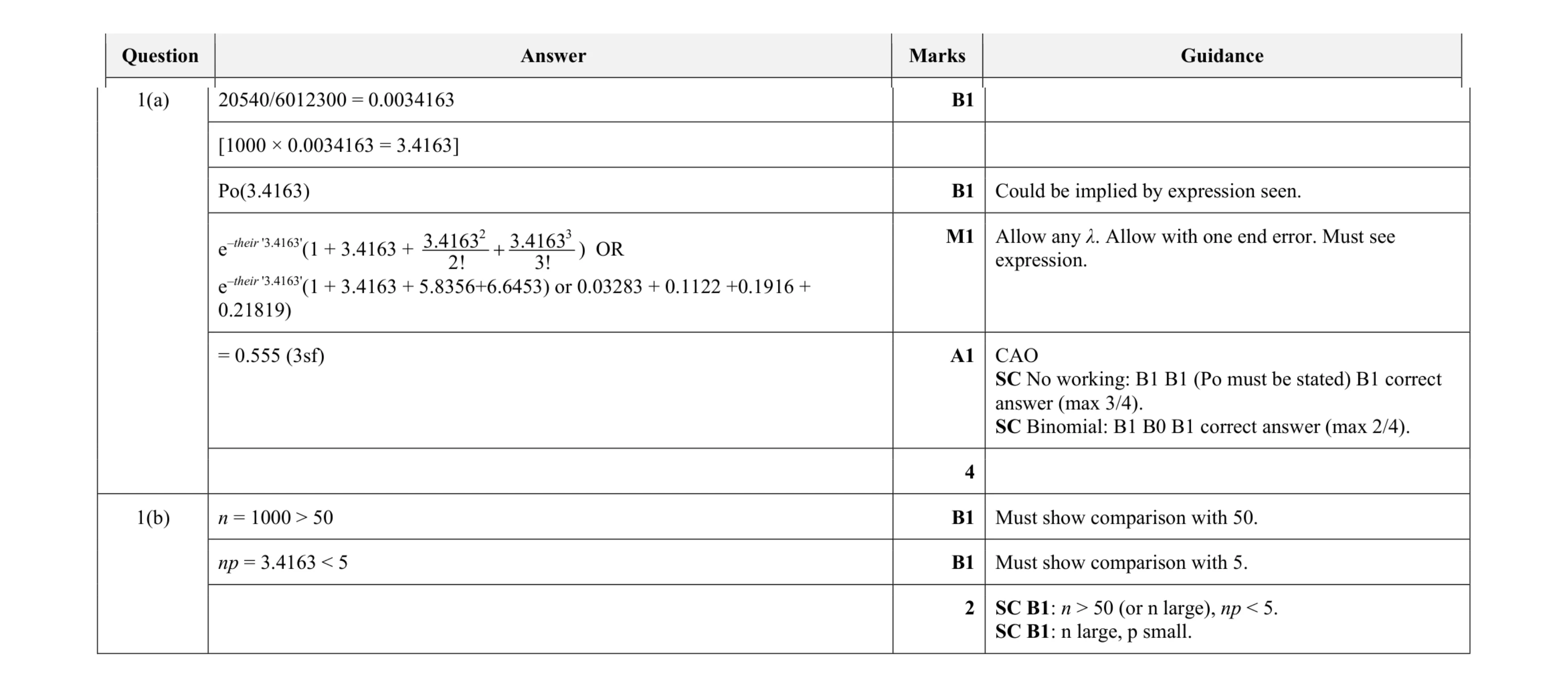 6
6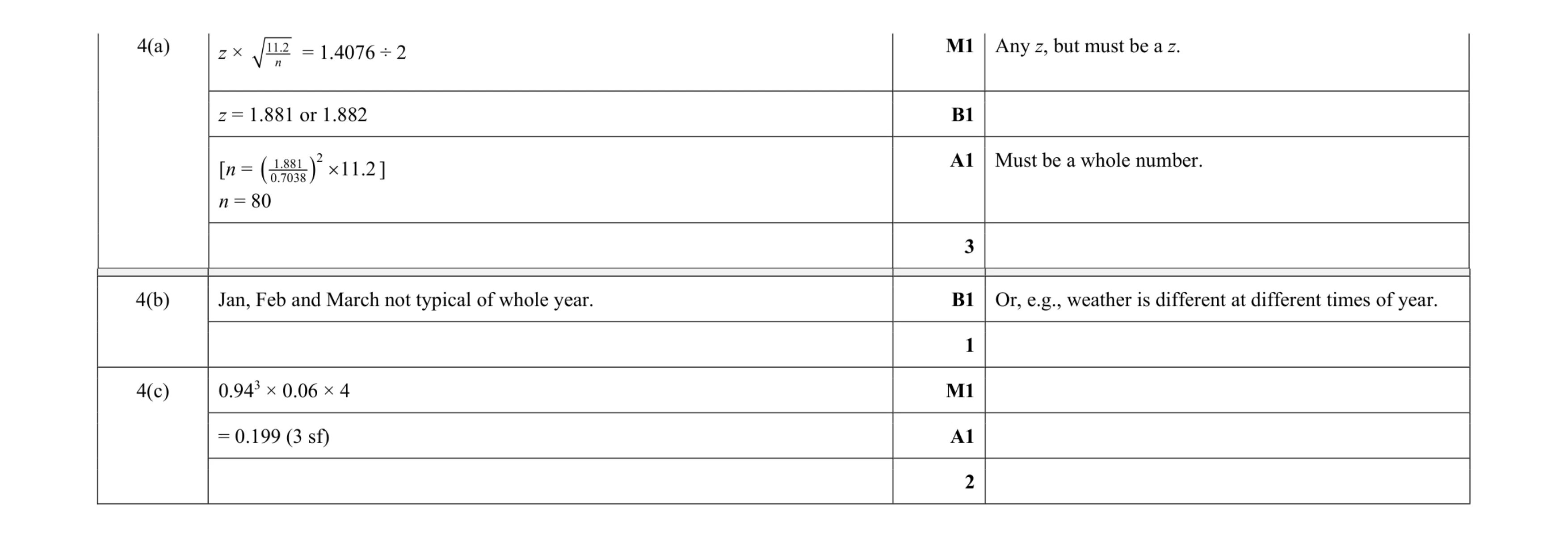 6
6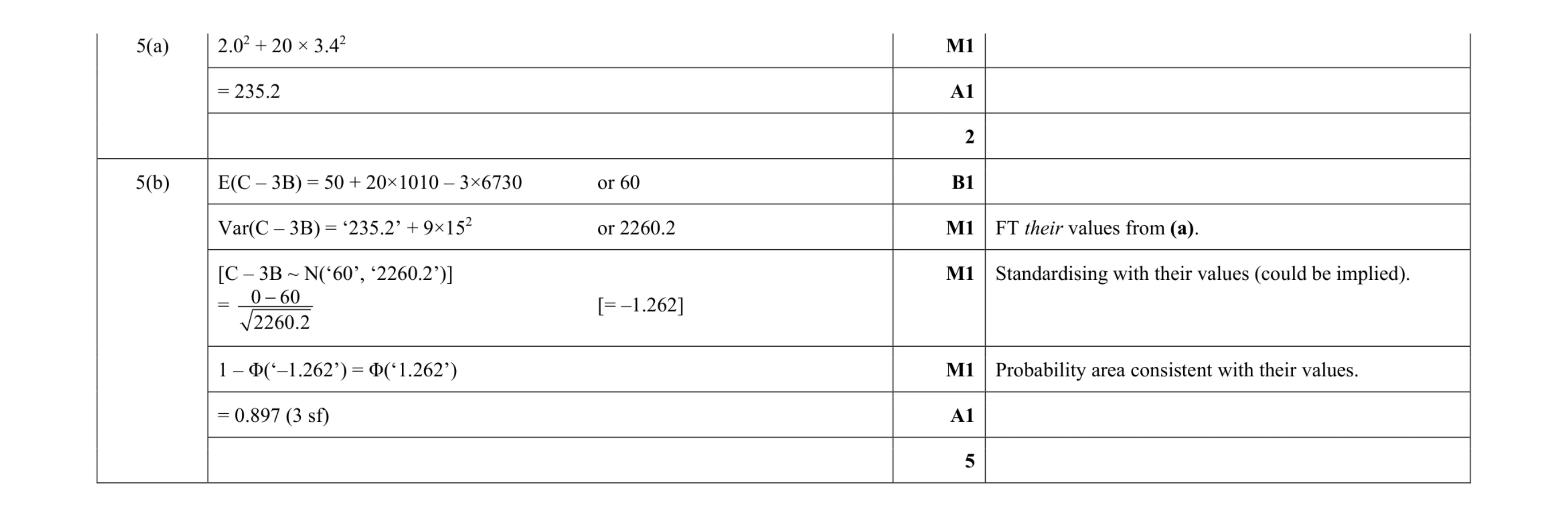 7
7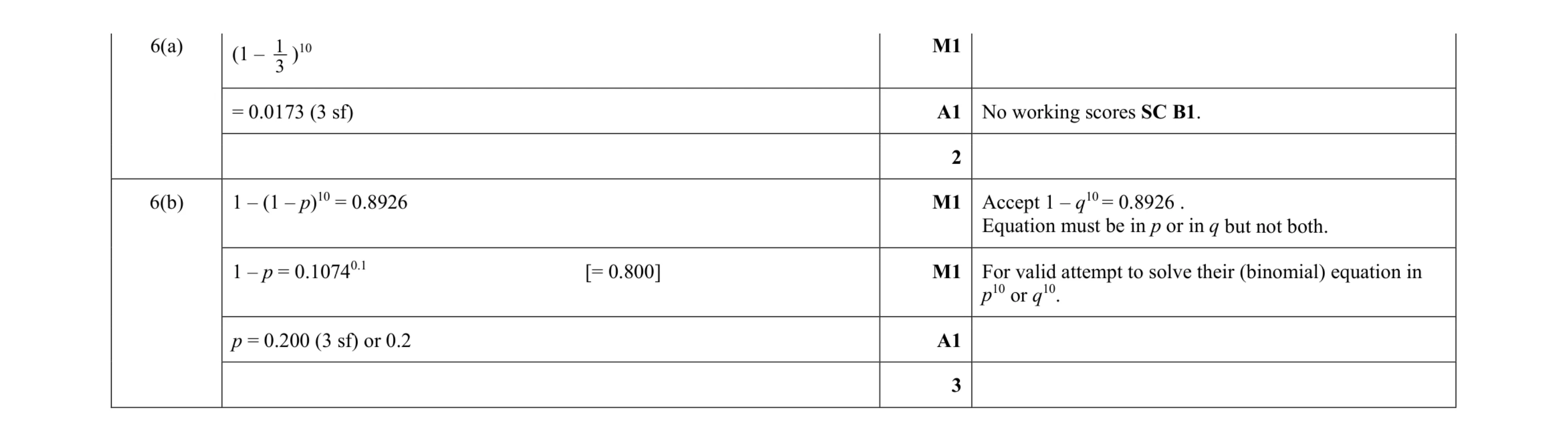 5
5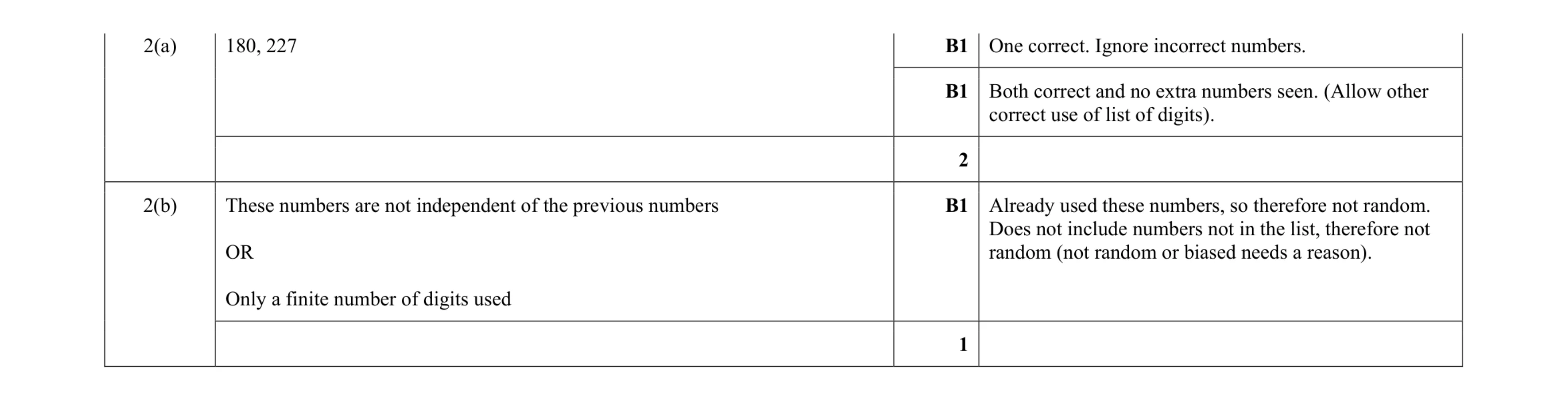 3
3 5
5 8
8 8
8 5
5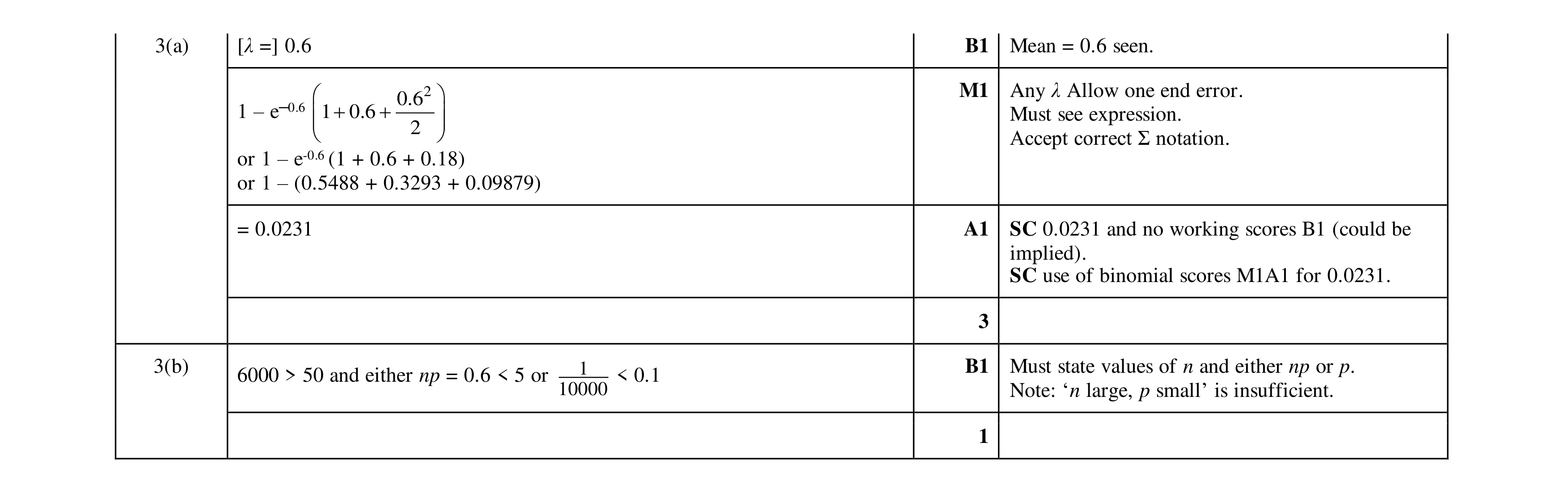 4
4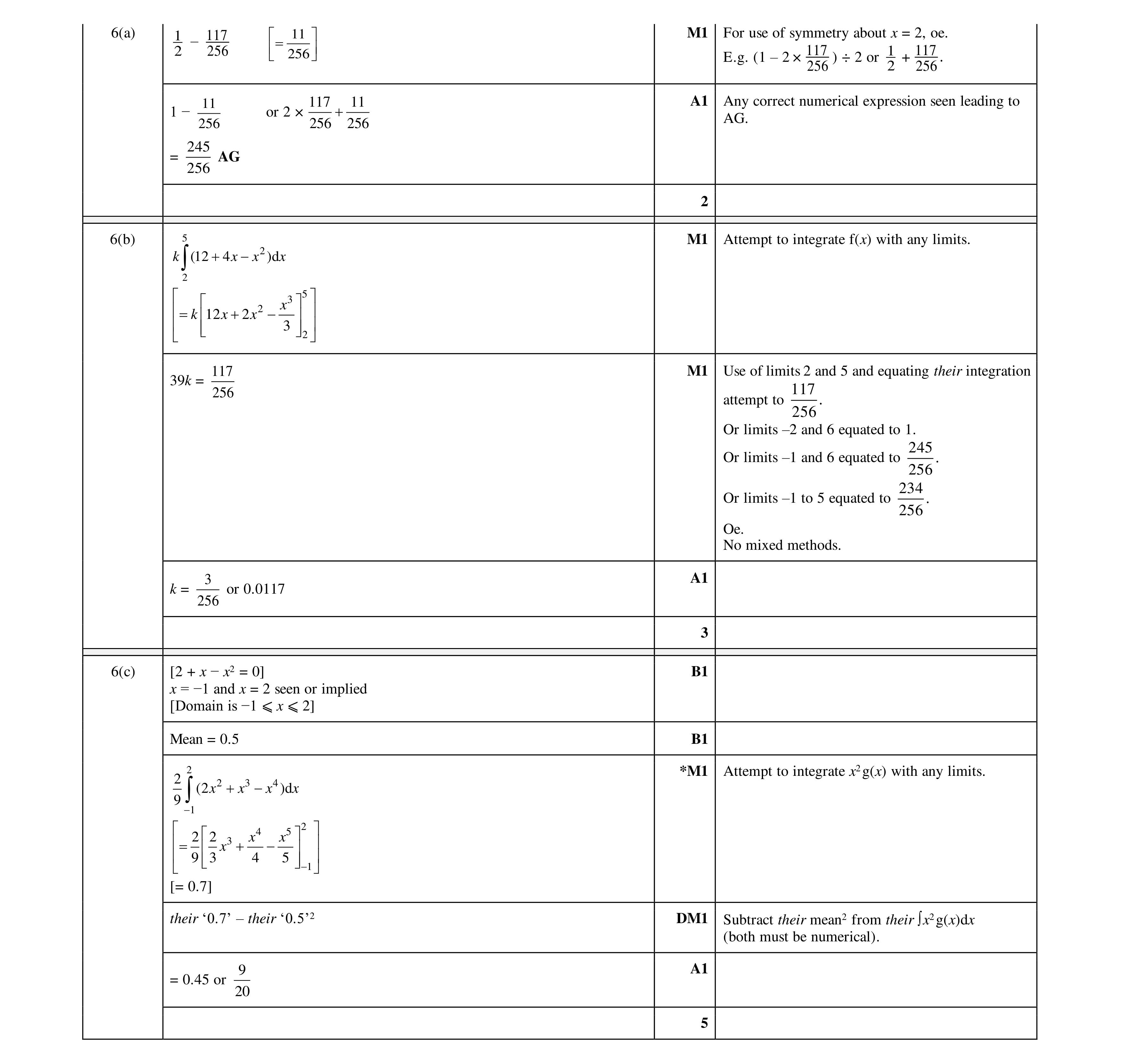 10
10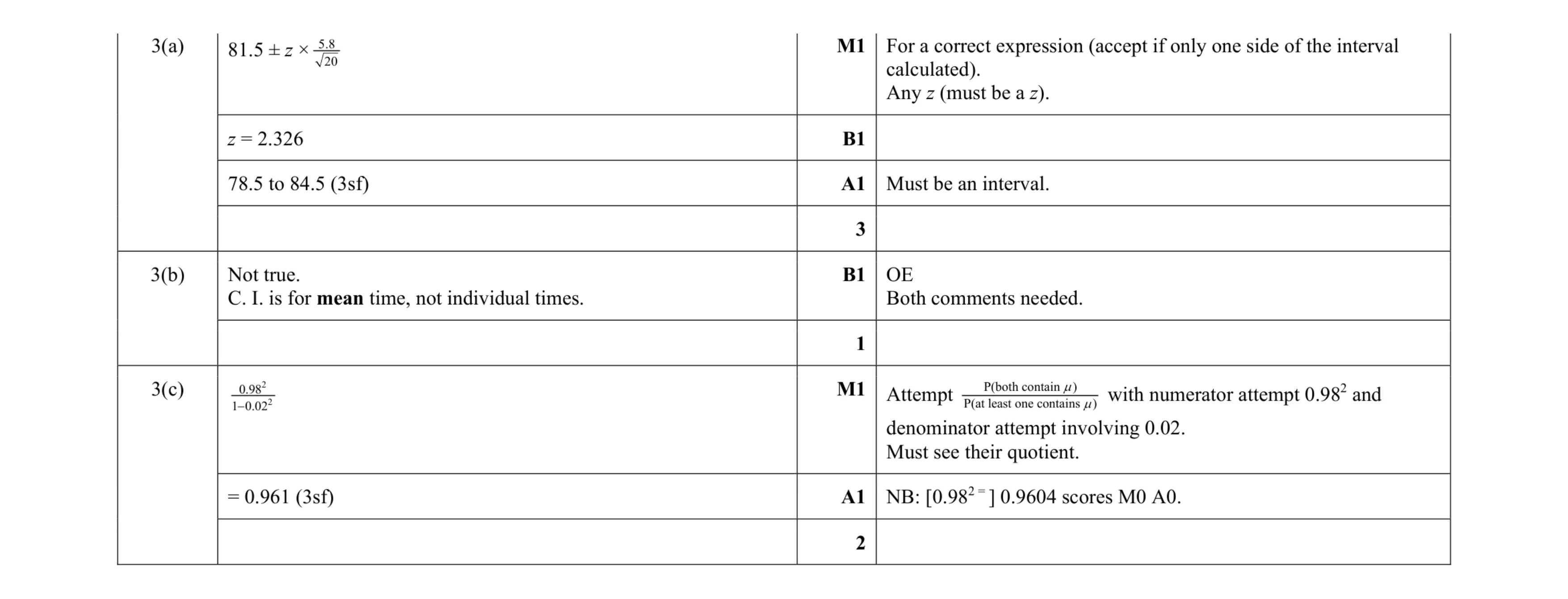 6
6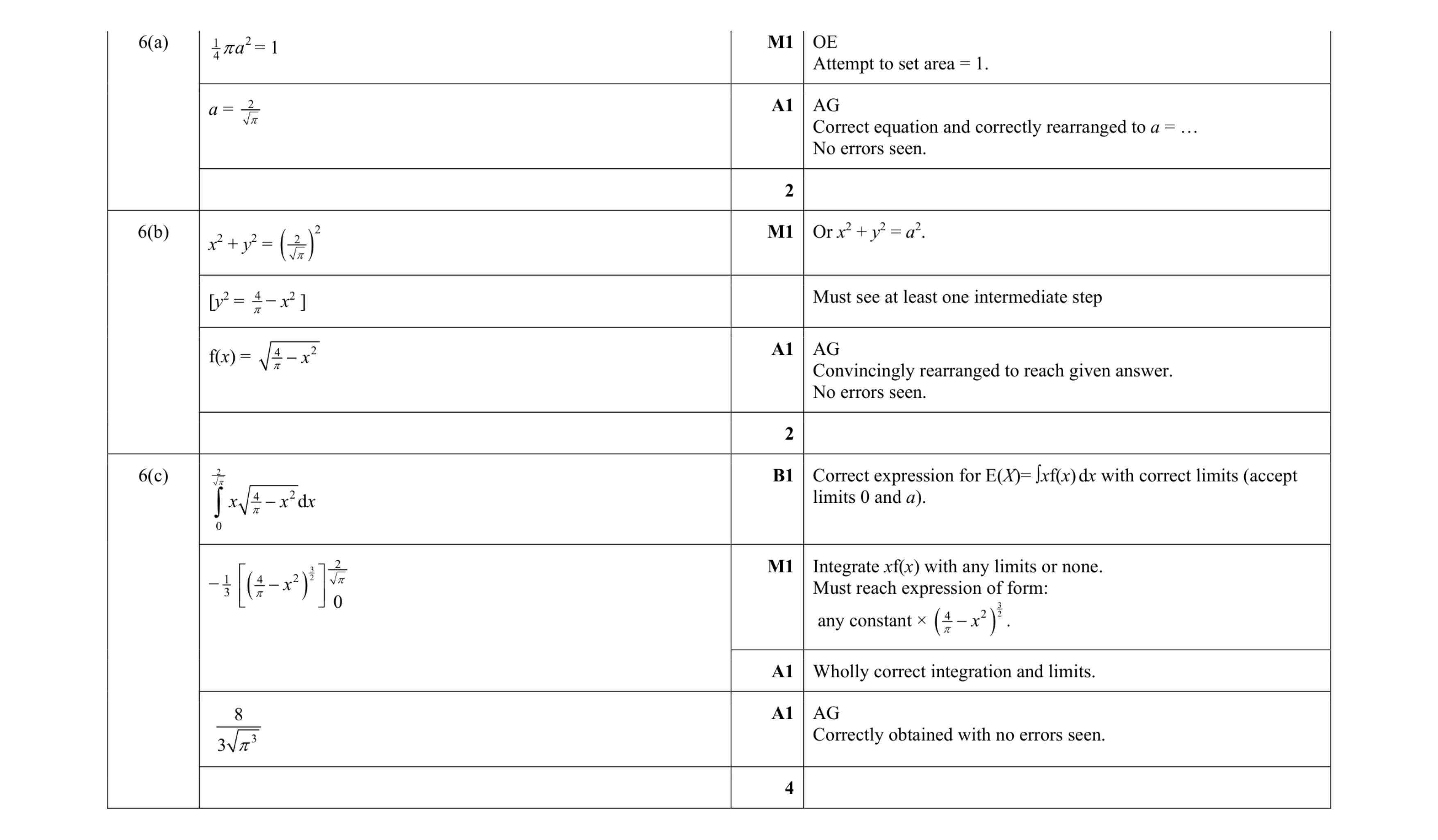 8
8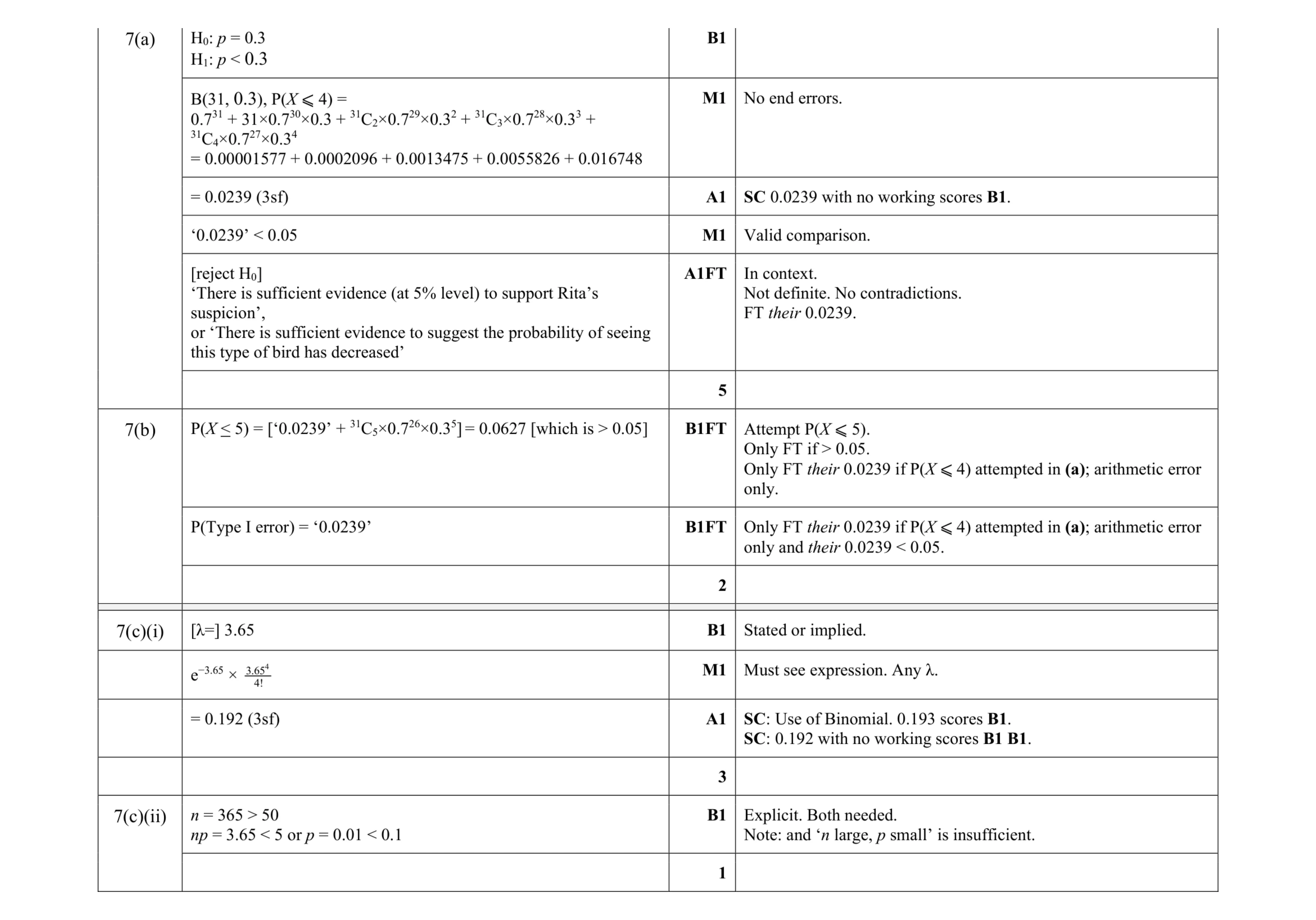 11
11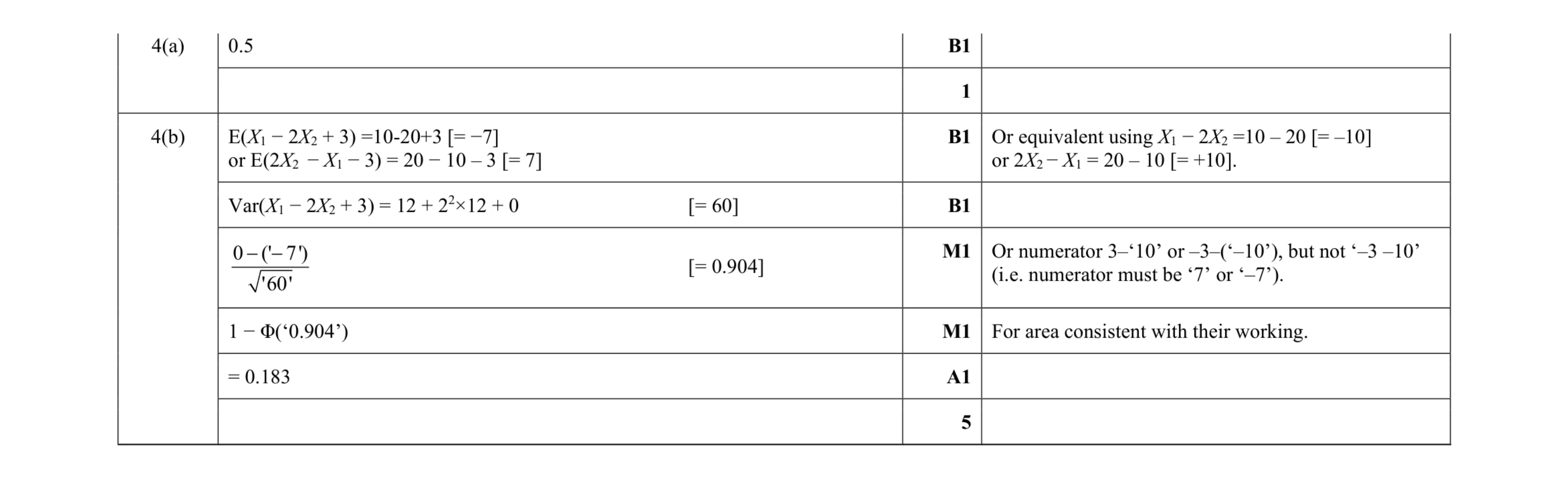 6
6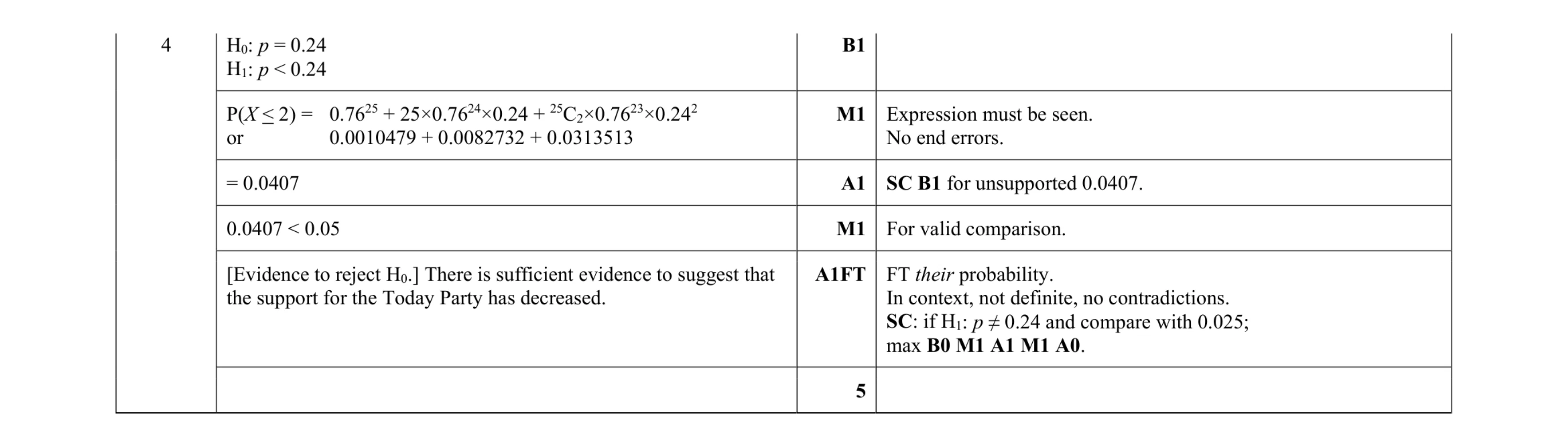 5
5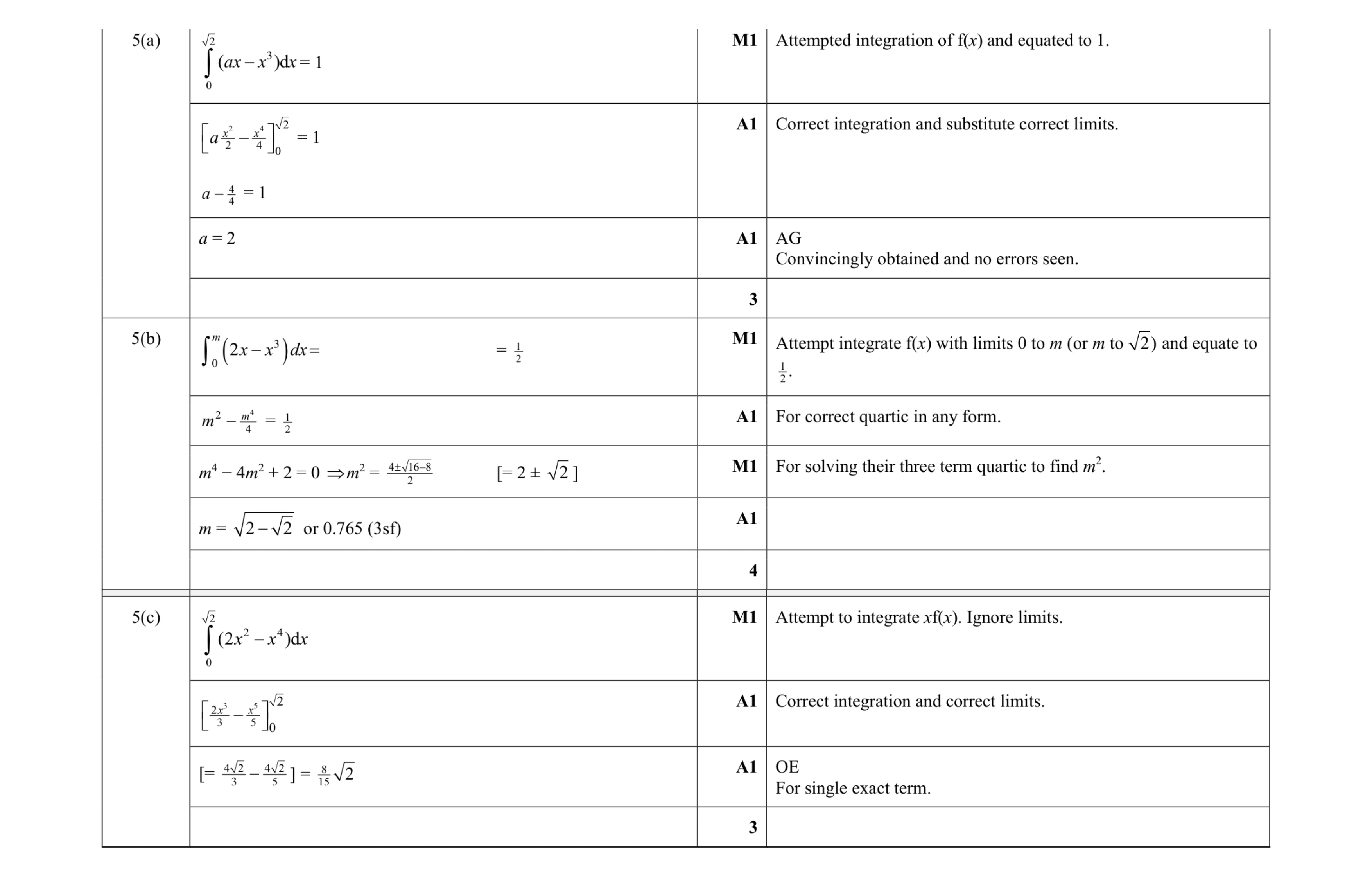 10
10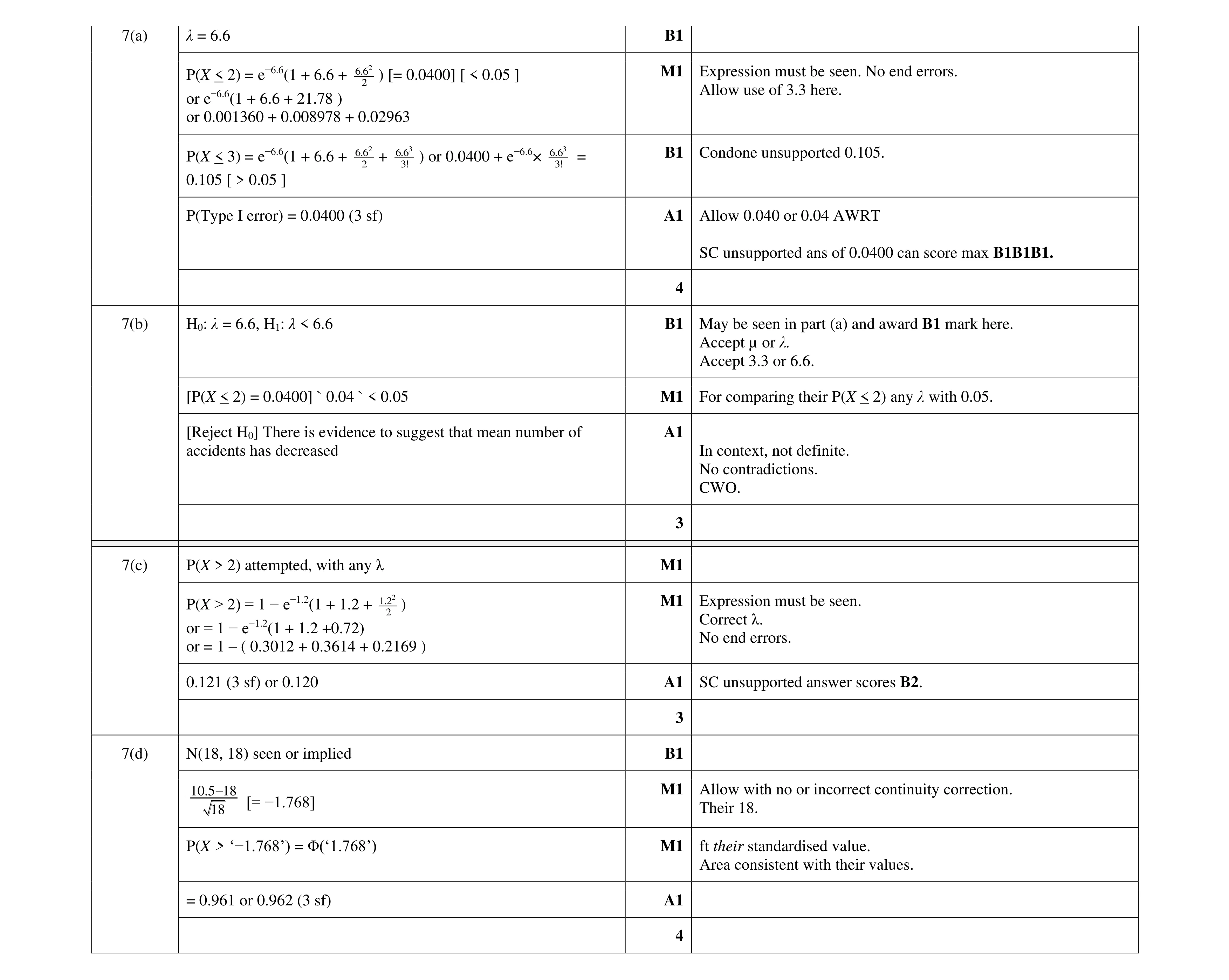 14
14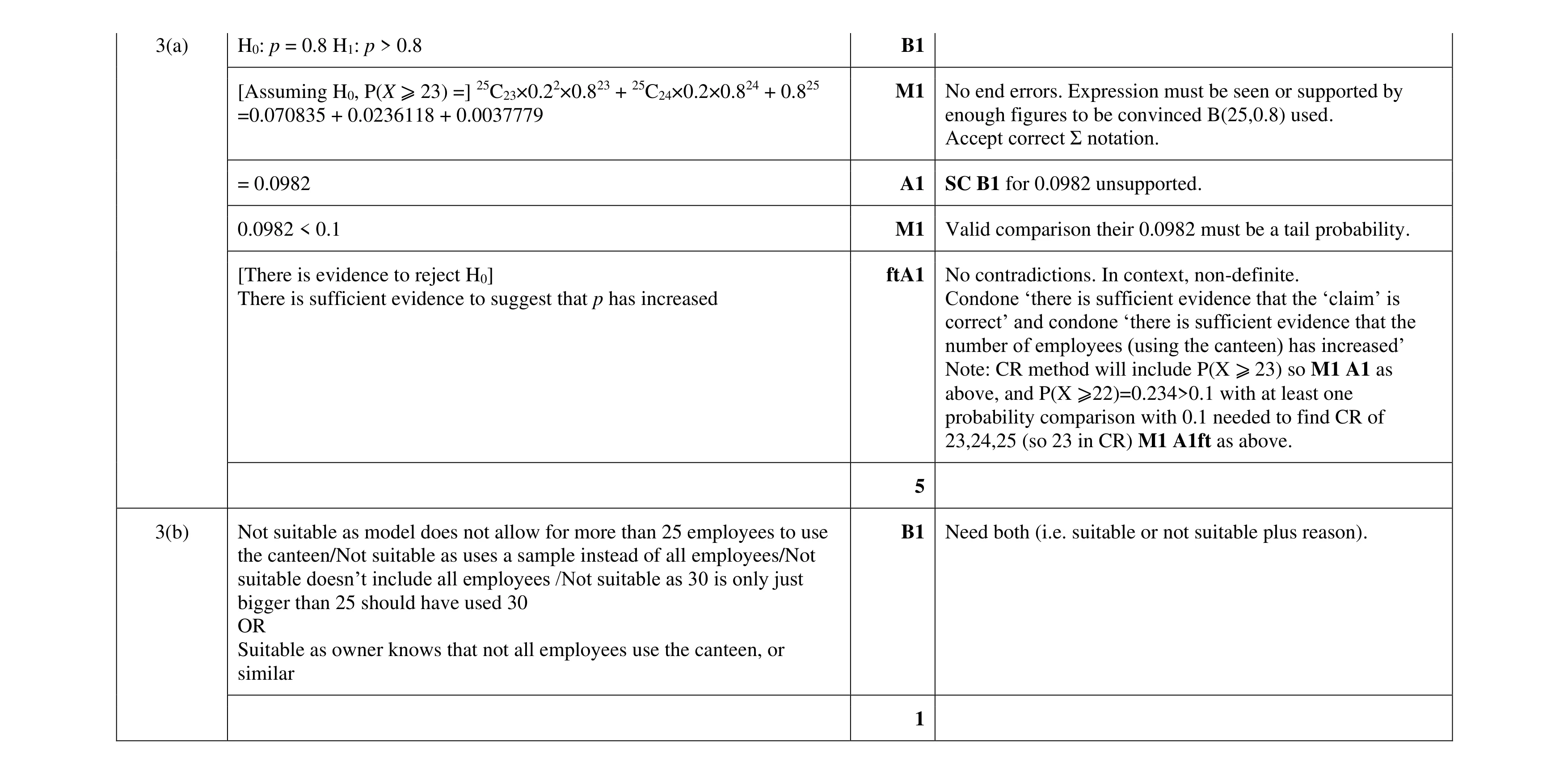 6
6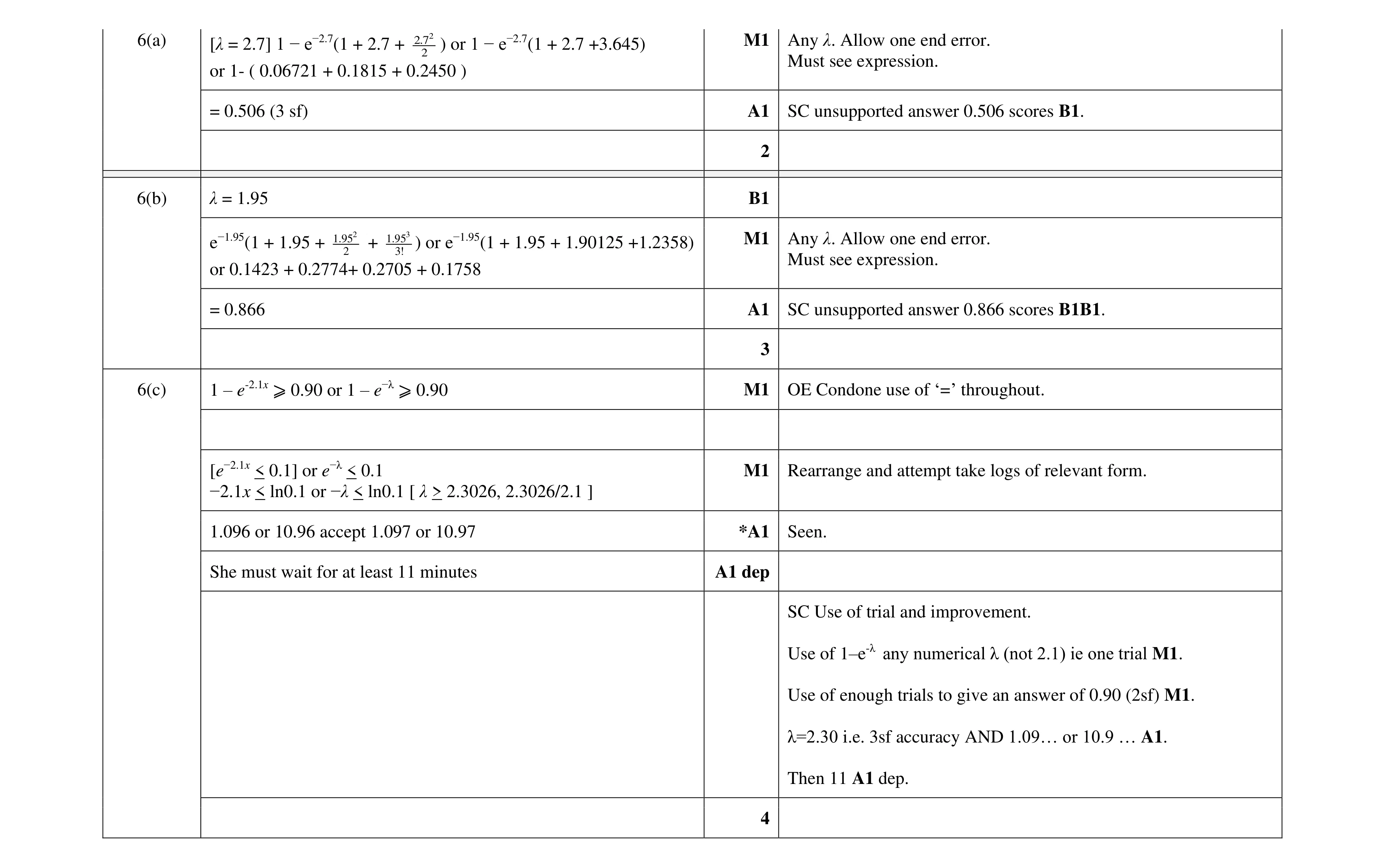 9
9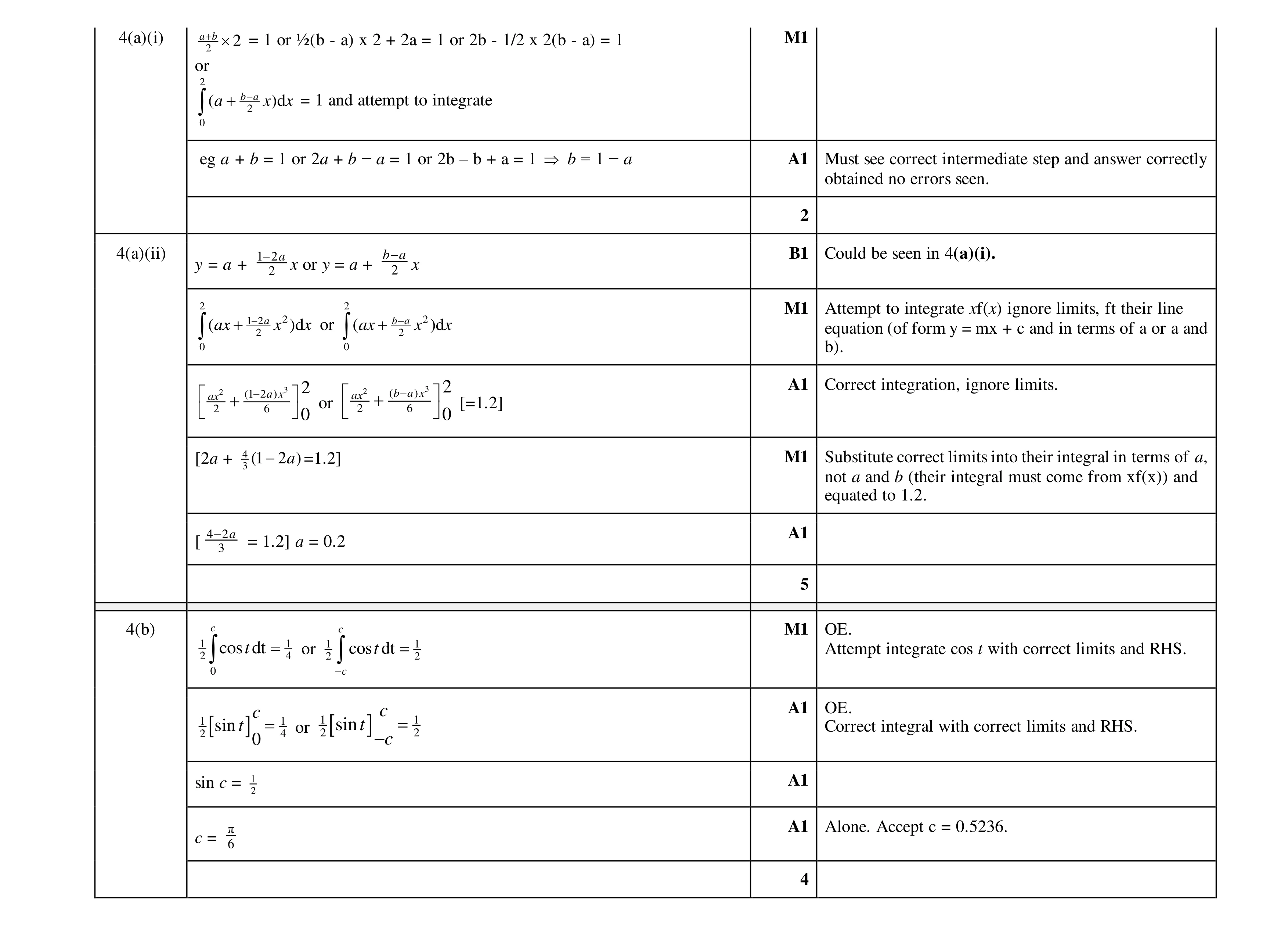 11
11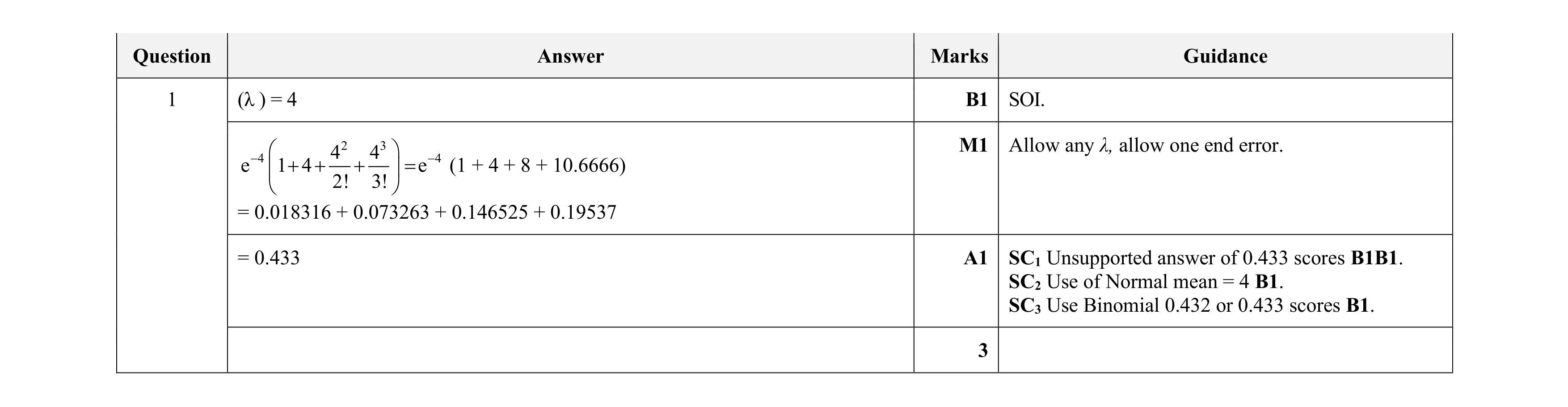 3
3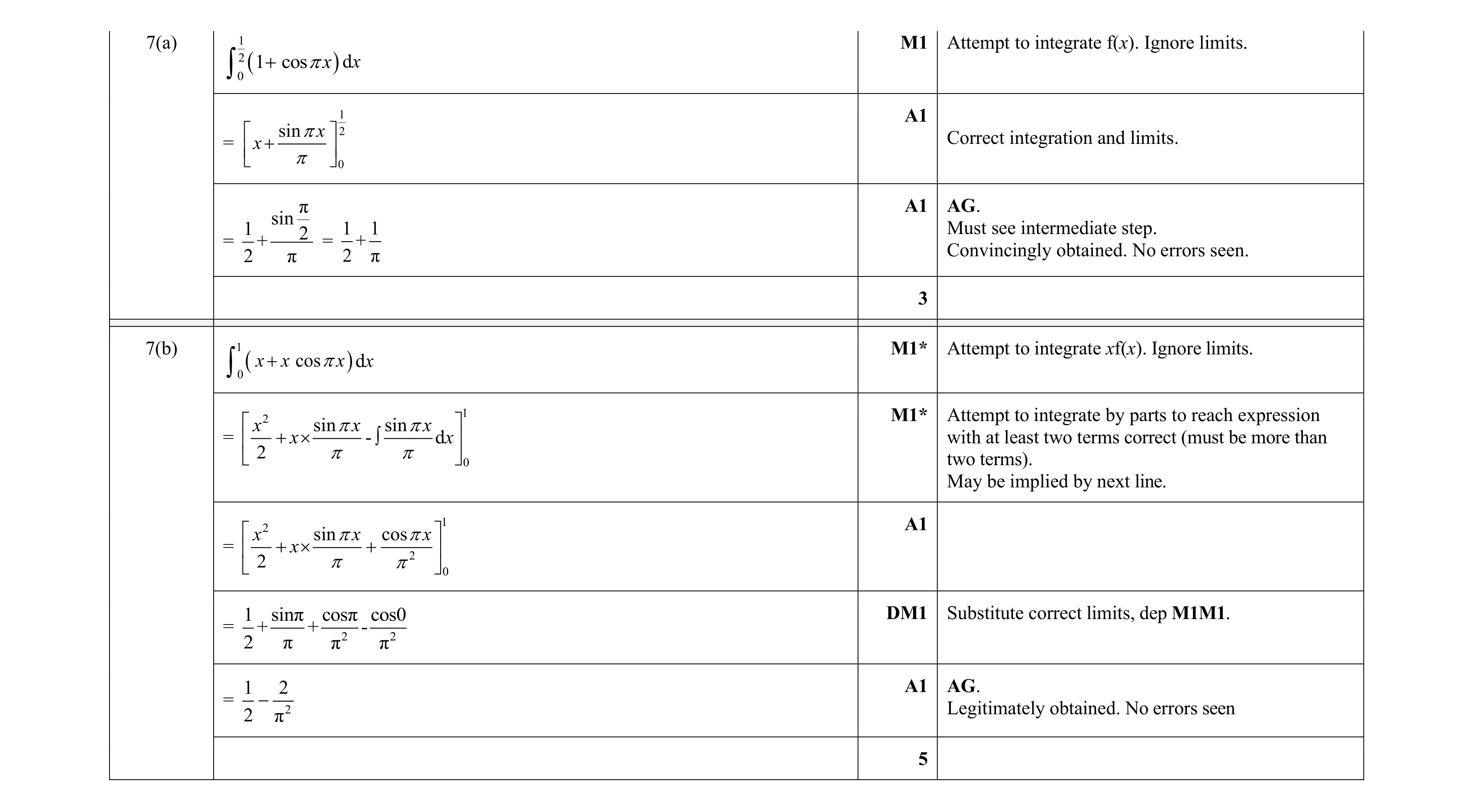 8
8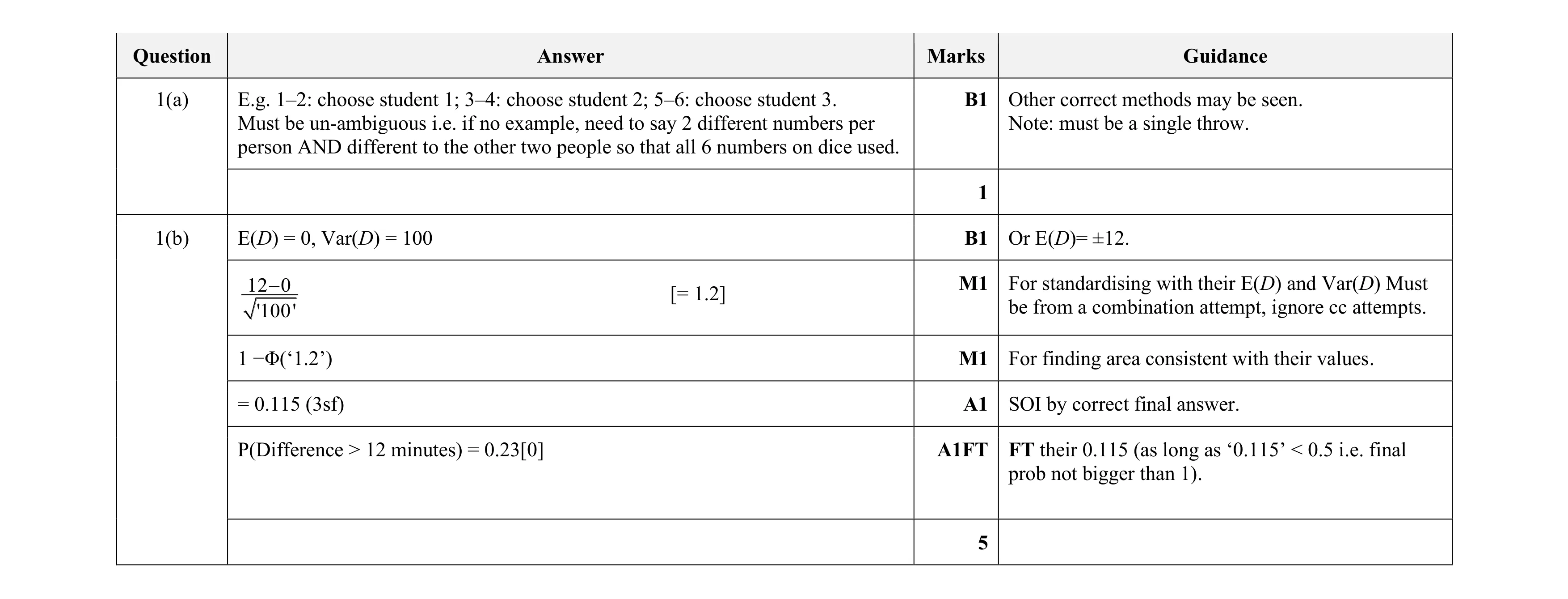 6
6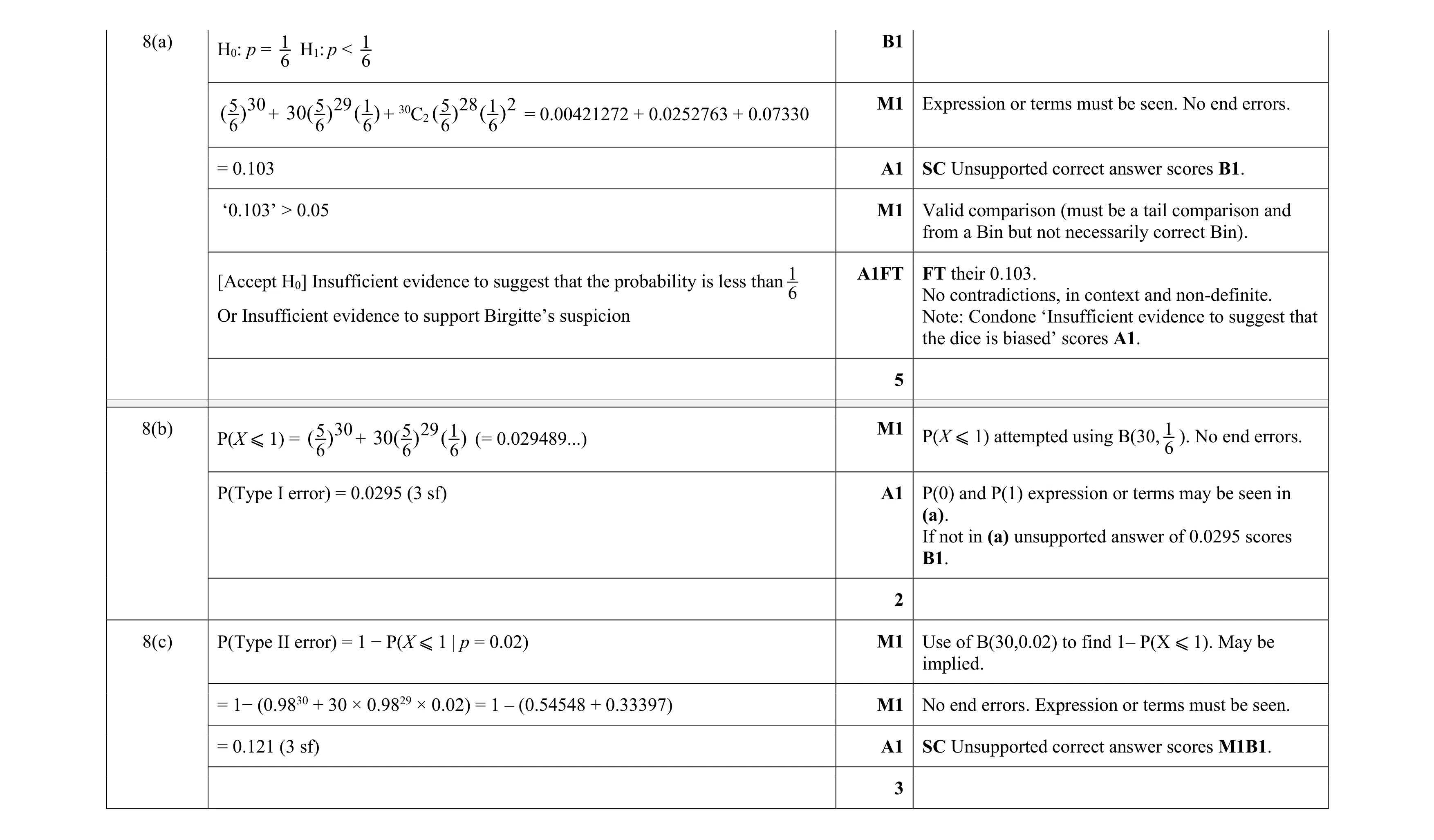 10
10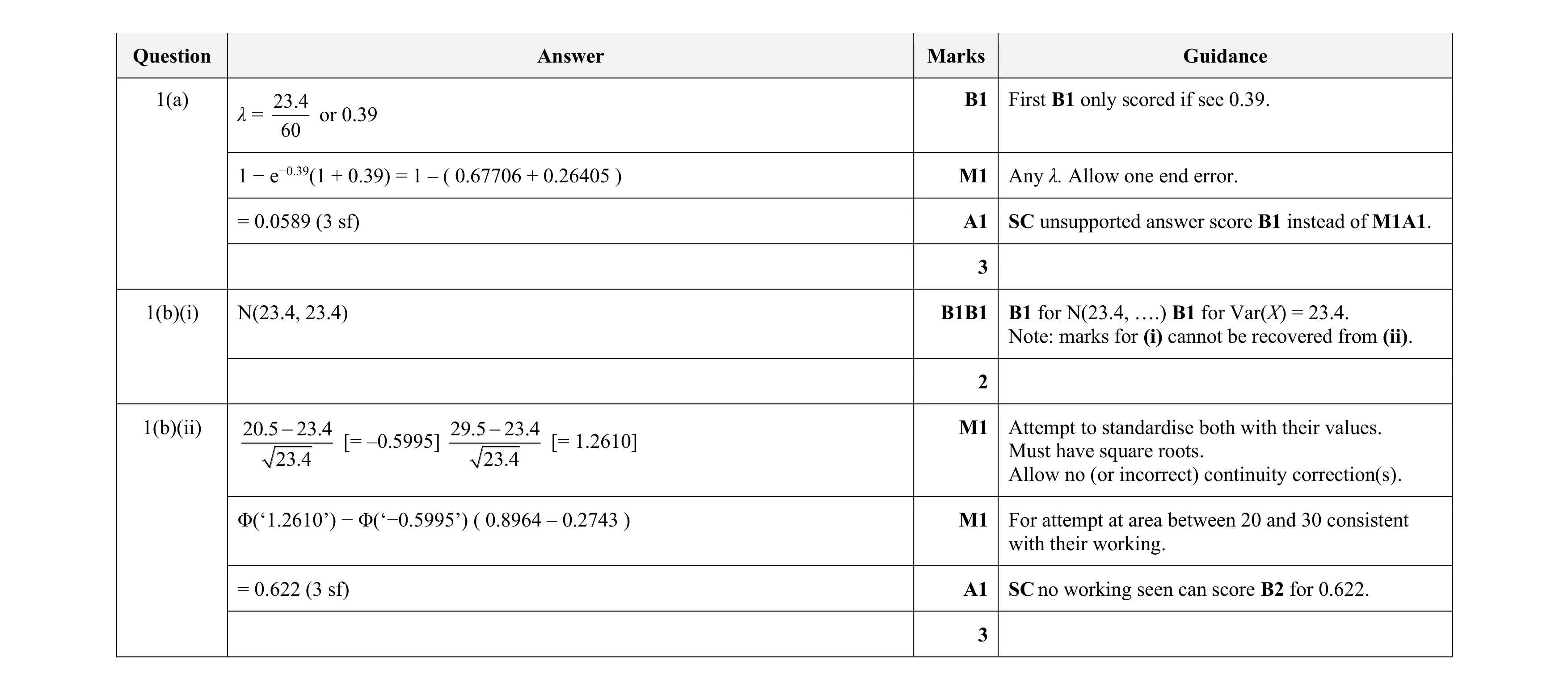 8
8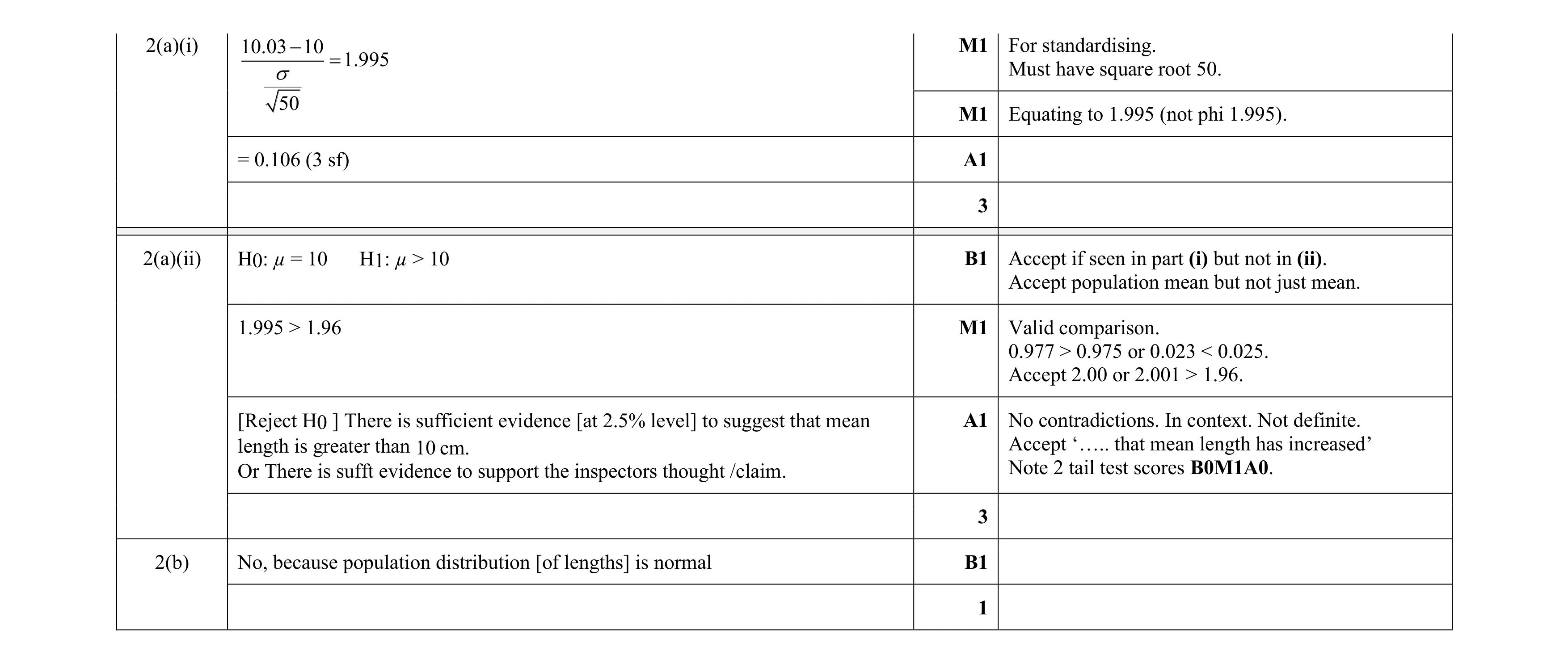 7
7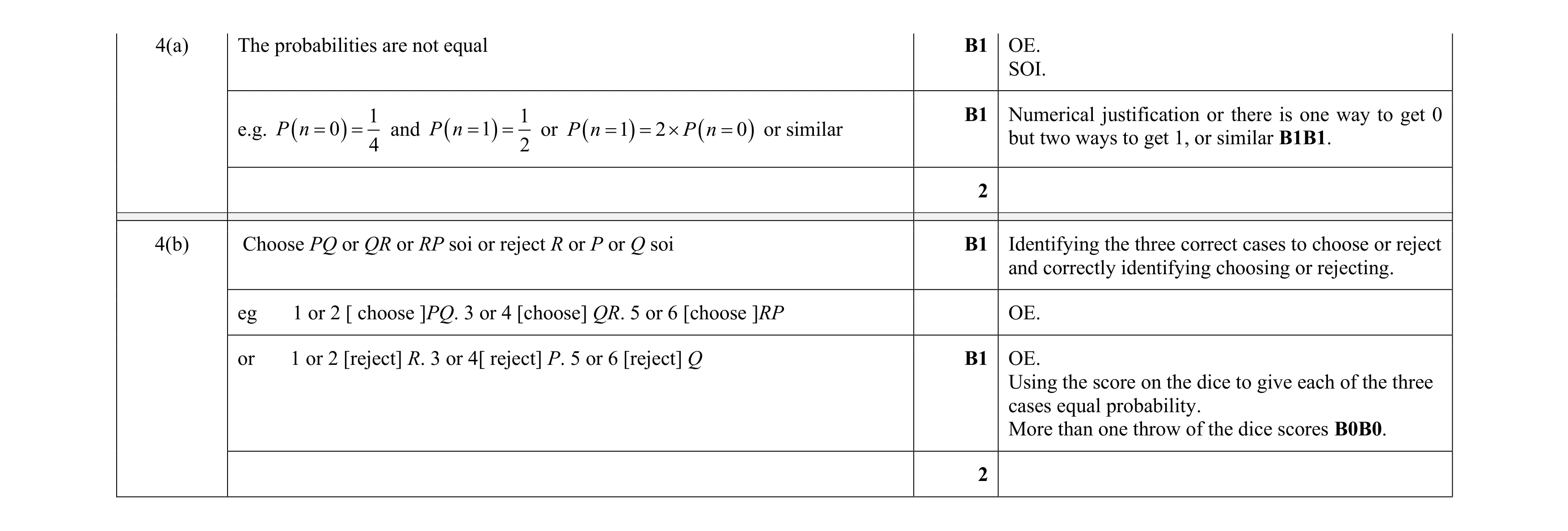 4
4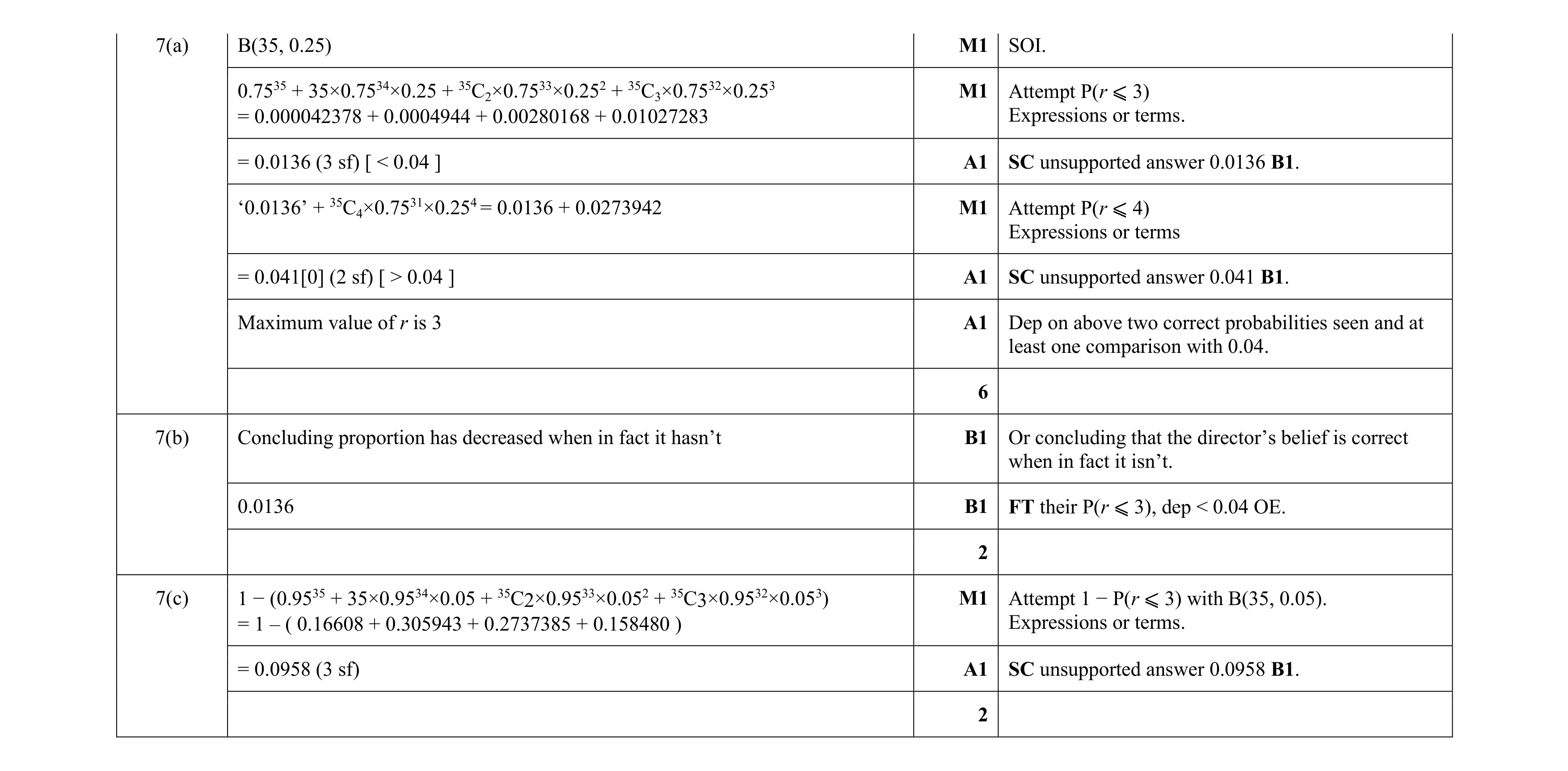 10
10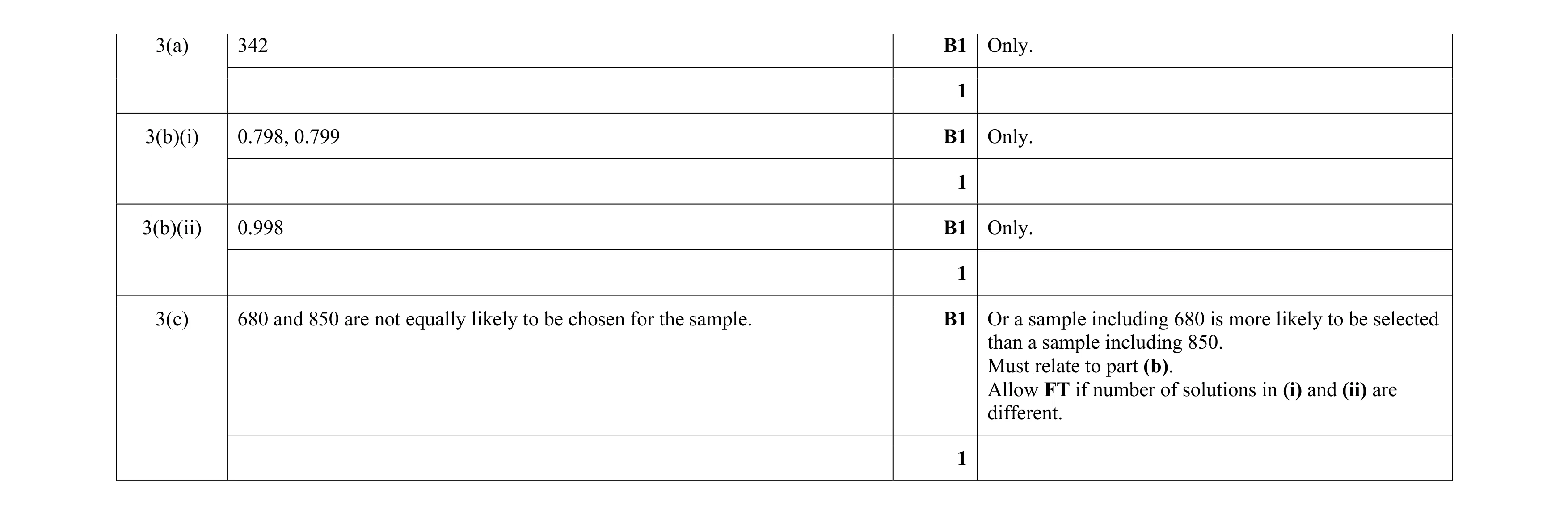 4
4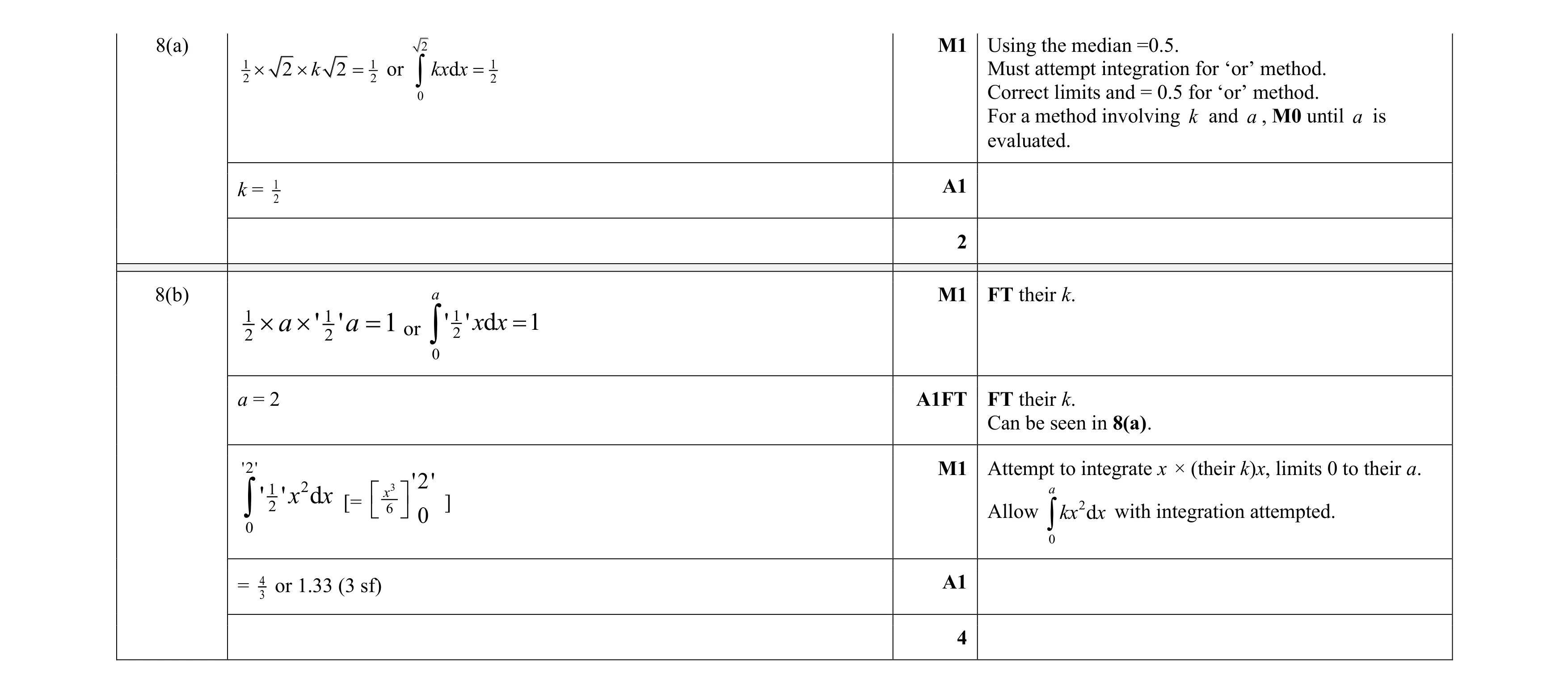 6
6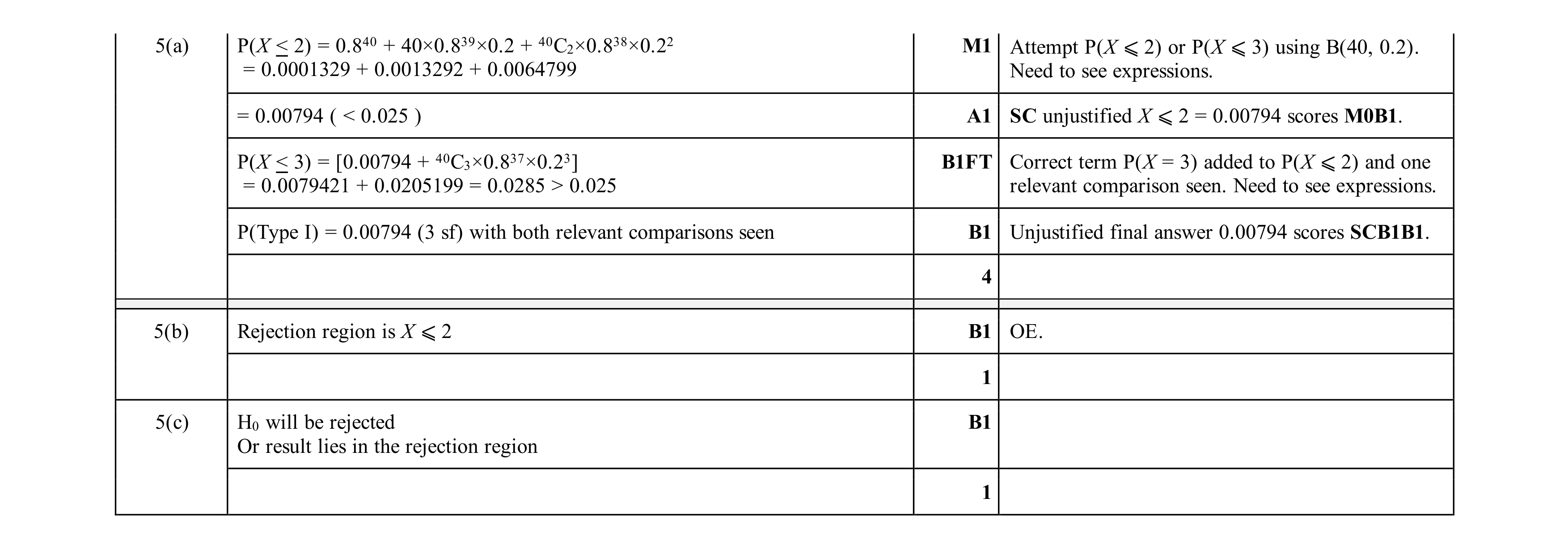 6
6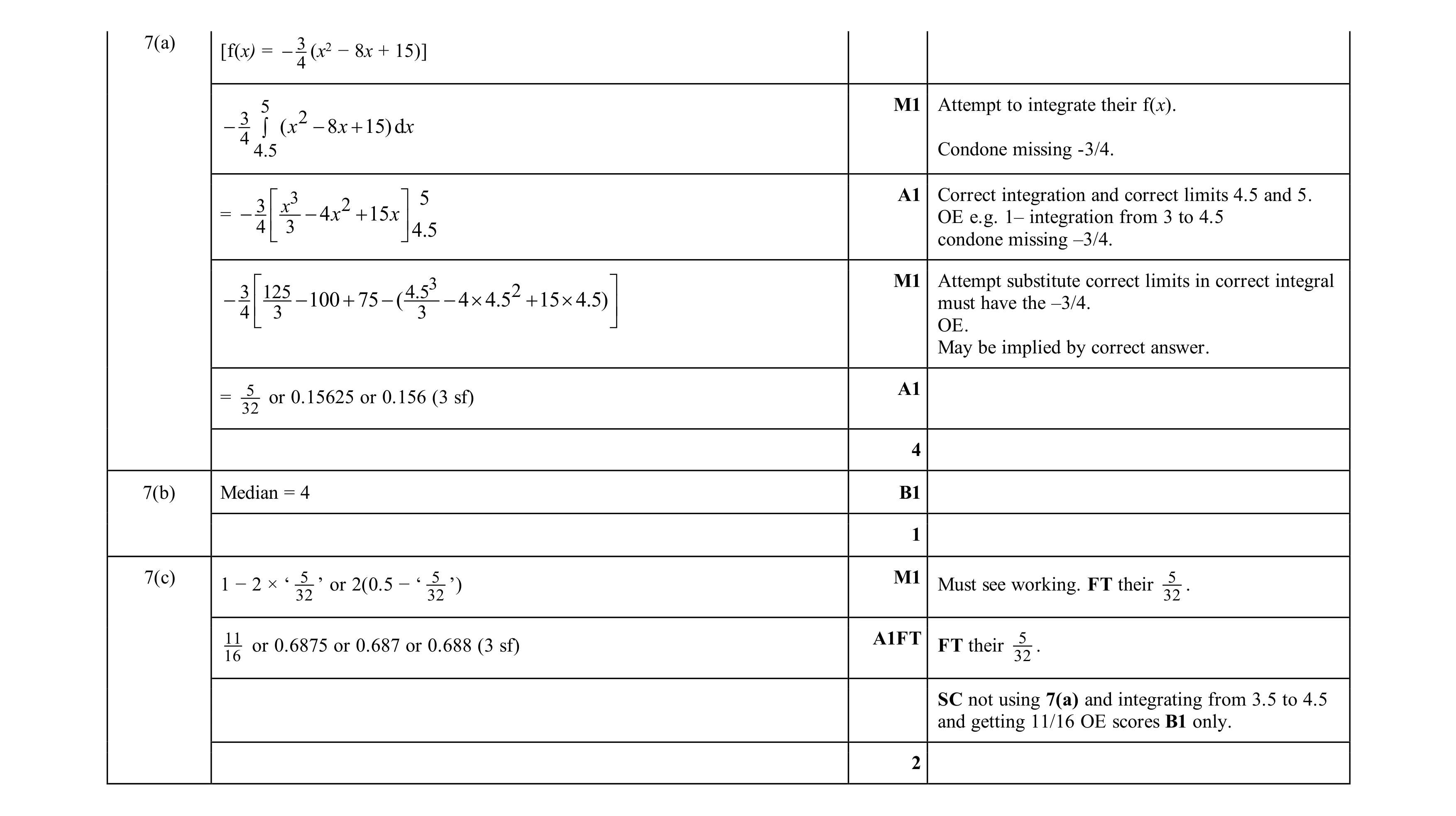 7
7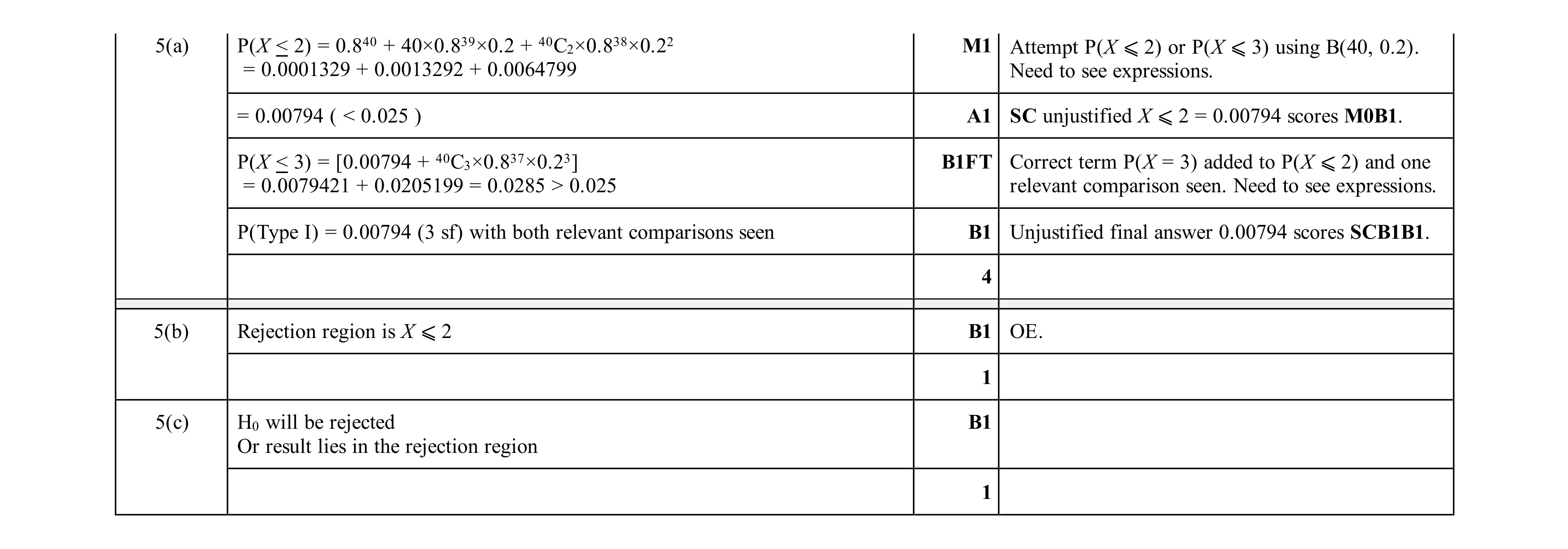 6
6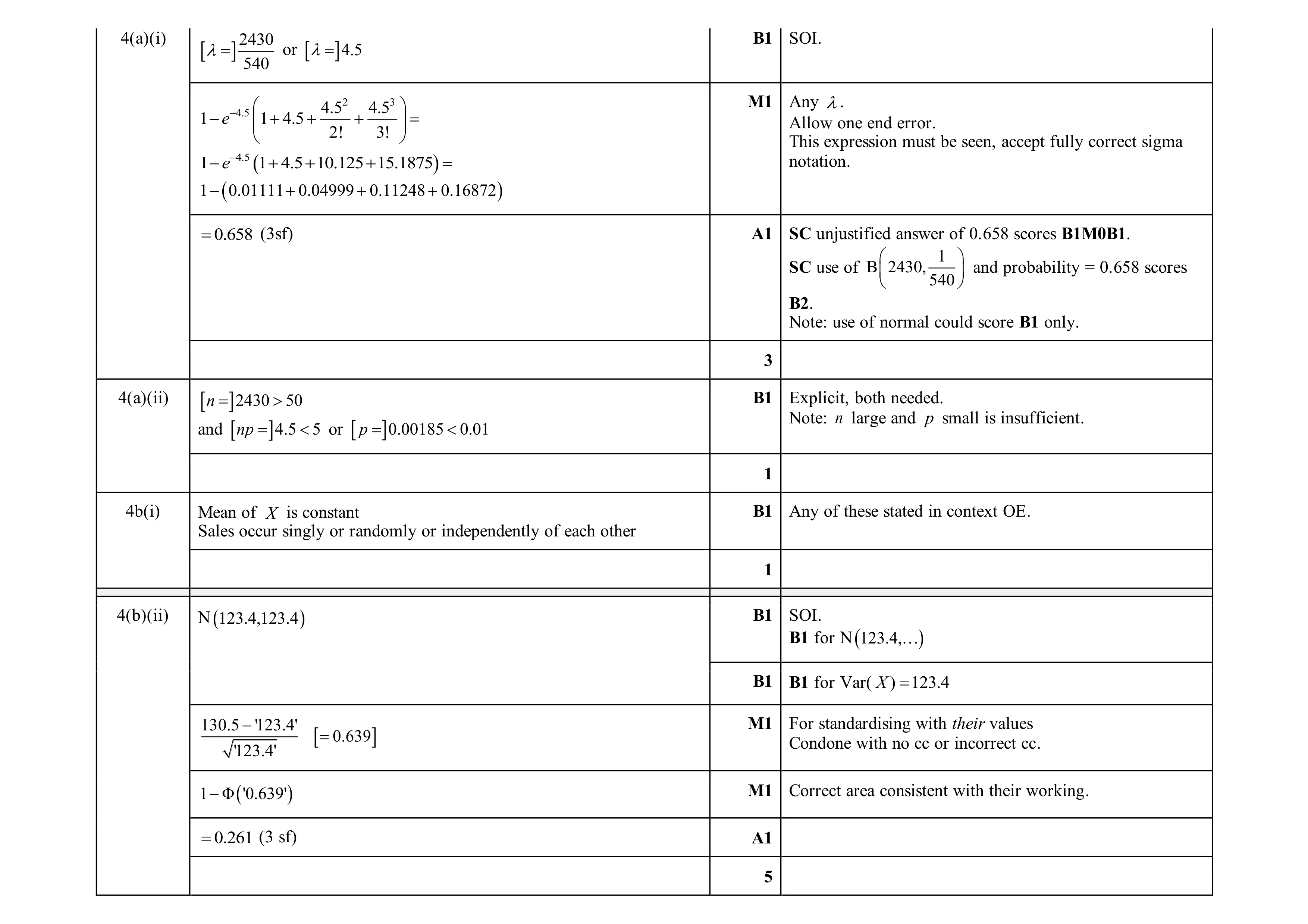 10
10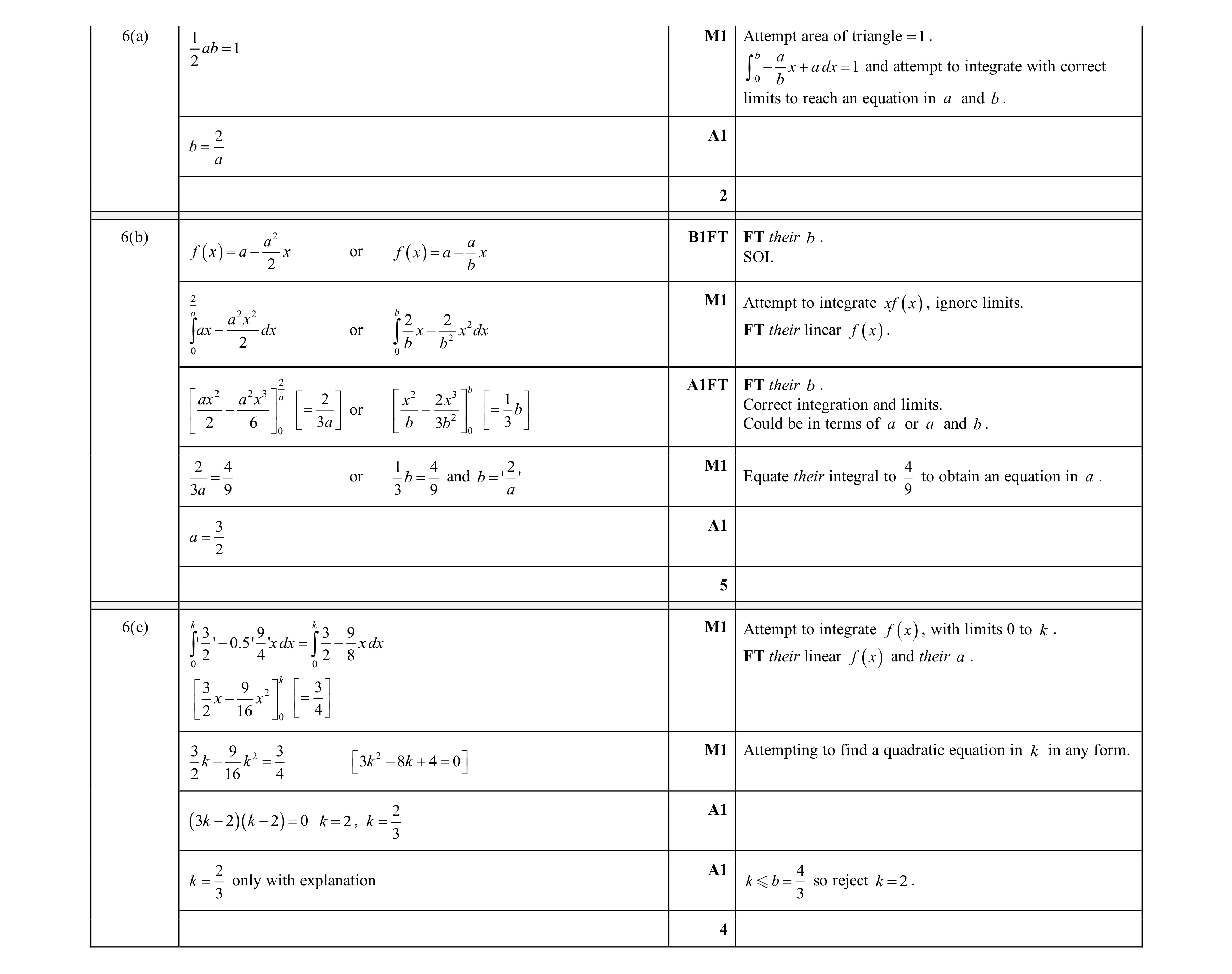 11
11