Cambridge A Level Mathematics 9709 — 2017 Oct/Nov Paper 6 · Variant 2
9709/62/O/N/17 · 4 questions · 50 marks · ≈56 min
The question paper and its mark scheme, free to read here and free to download. This is Cambridge’s own paper, exactly as it was sat.
Question paper12 pages
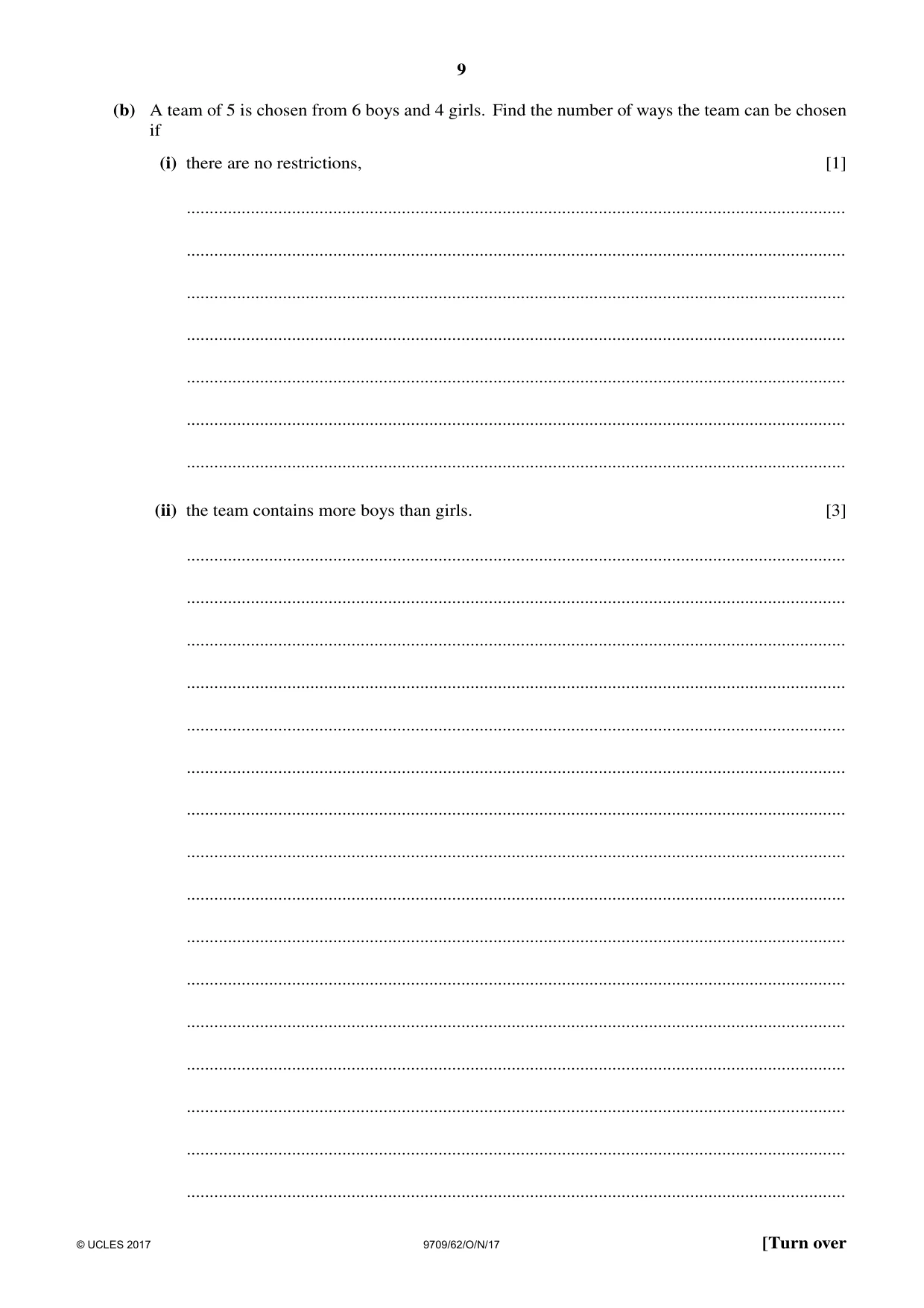
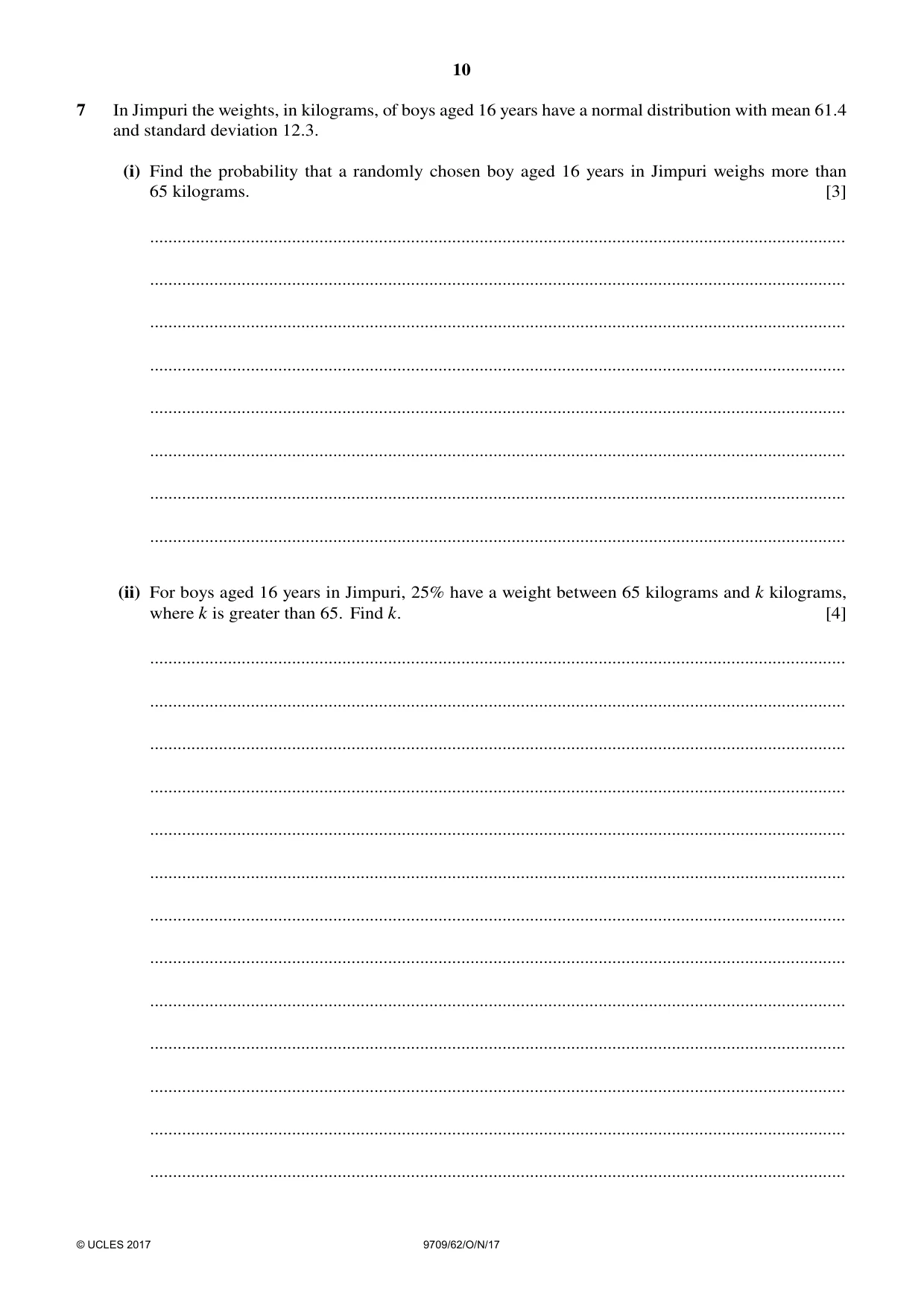
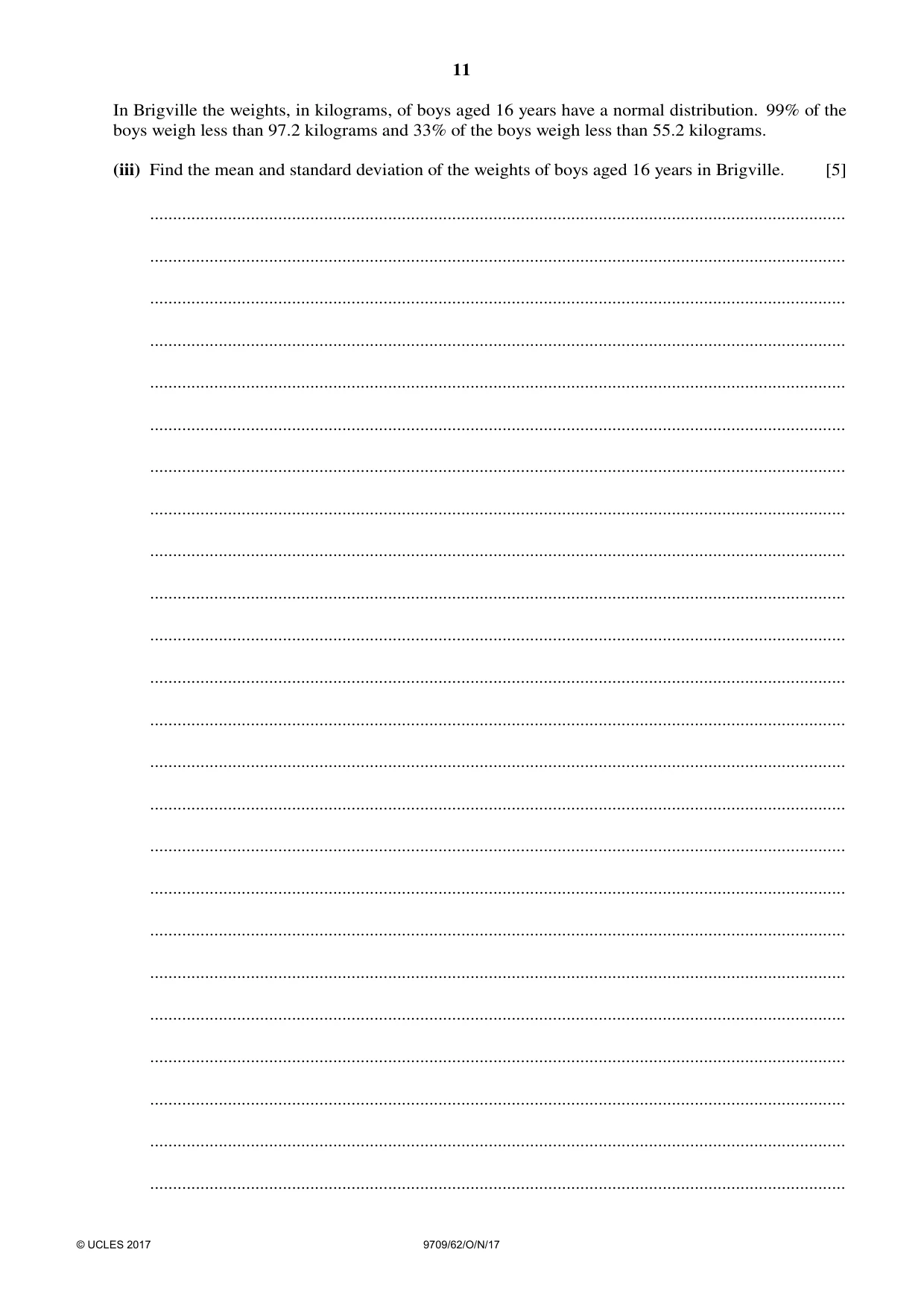
Mark scheme14 pages
Answers below. Sit the paper first if you are practising.
Questions as text
Q2 · The circumferences, c cm, of some trees in a wood were measured
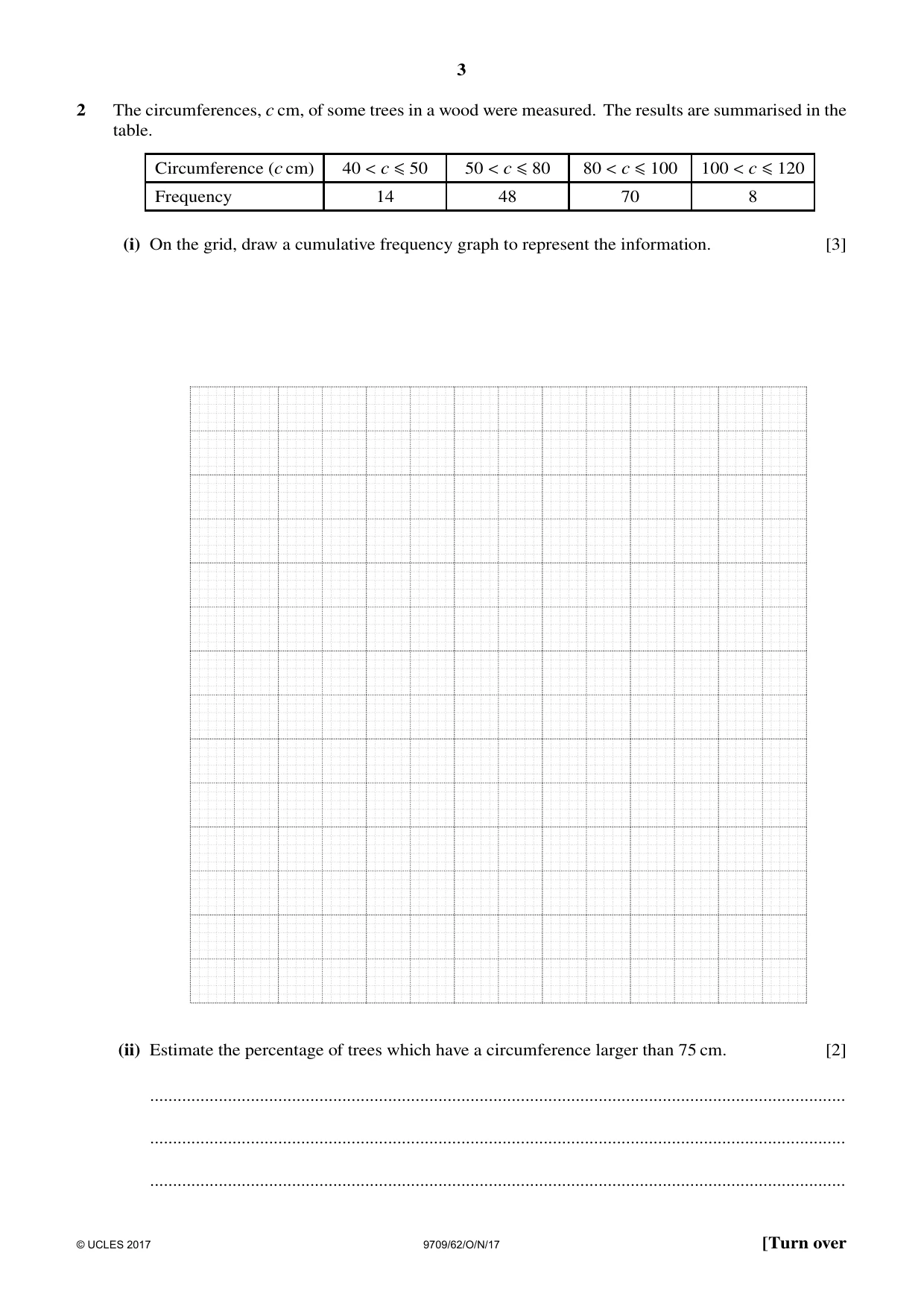
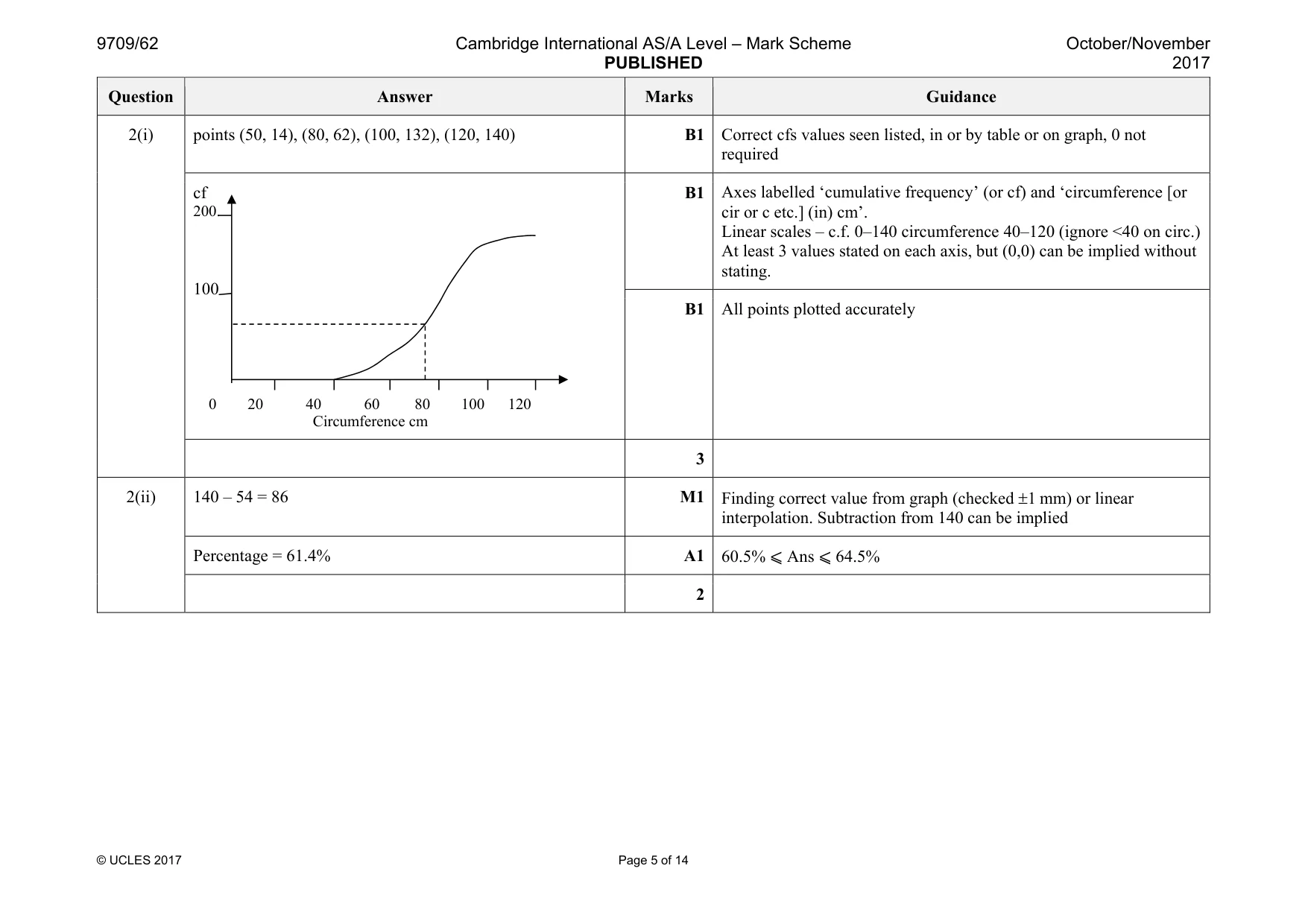
2 The circumferences, c cm, of some trees in a wood were measured. The results are summarised in the table. Circumference (c cm) 40 < c ≤50 50 < c ≤80 80 < c ≤100 100 < c ≤120 Frequency 14 48 70 8 (i) On the grid, draw a cumulative frequency graph to represent the information. [3] (ii) Estimate the percentage of trees which have a circumference larger than 75 cm. [2] ........................................................................................................................................................ ........................................................................................................................................................ ........................................................................................................................................................
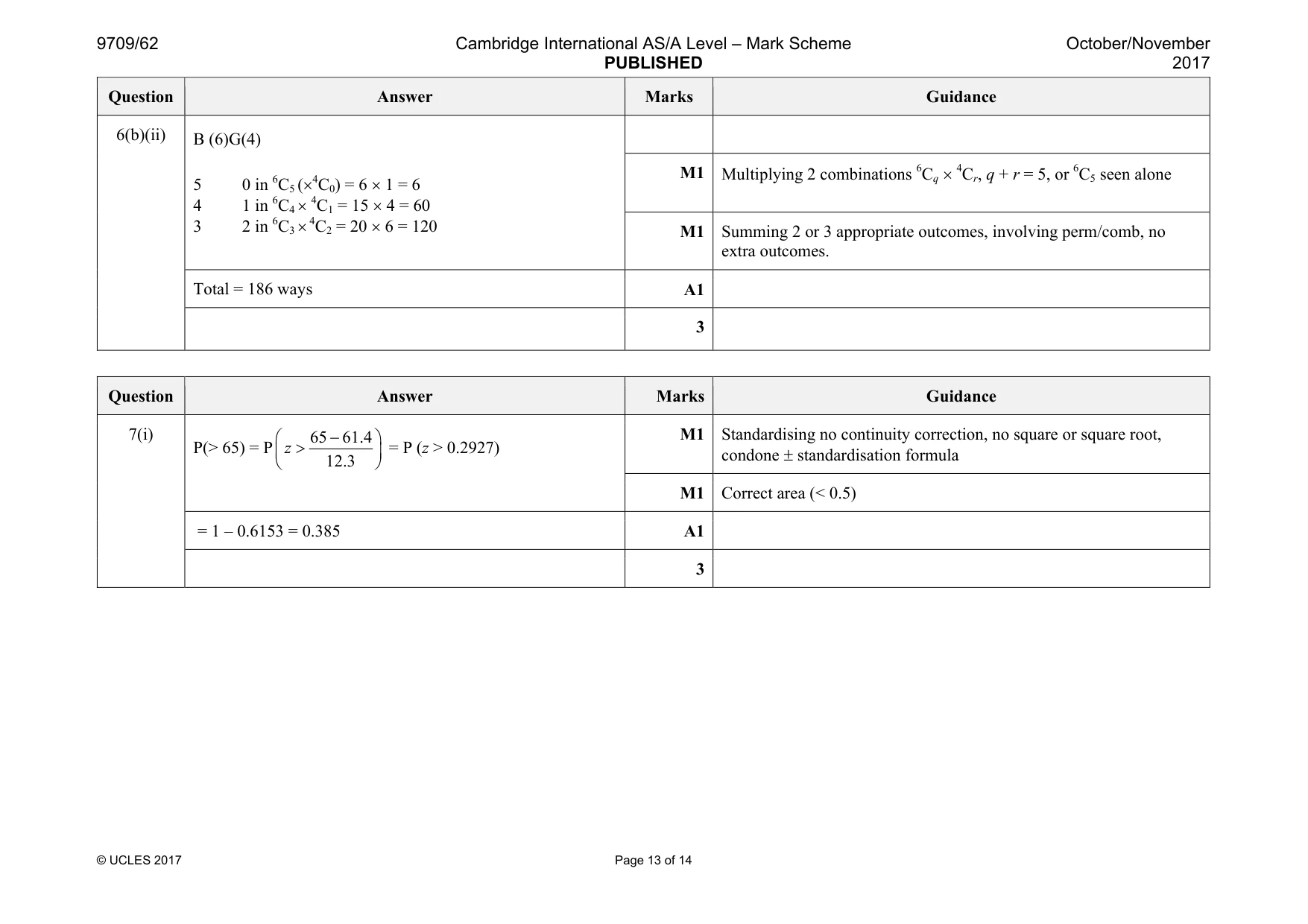
Mark scheme: 2(i) points (50, 14), (80, 62), (100, 132), (120, 140) B1 Correct cfs values seen listed, in or by table or on graph, 0 not required cf 200. 100 0 20 40 60 80 100 120 Circumference cm B1 Axes labelled ‘cumulative frequency’ (or cf) and ‘circumference [or cir or c etc.] (in) cm’. Linear scales – c.f. 0–140 circumference 40–120 (ignore <40 on circ.) At least 3 values stated on each axis, but (0,0) can be implied without stating. B1 All points plotted accurately 3 2(ii) 140 – 54 = 86 M1 Finding correct value from graph (checked ±1 mm) or linear interpolation. Subtraction from 140 can be implied Percentage = 61.4% A1 60.5% ⩽ Ans ⩽ 64.5% 2
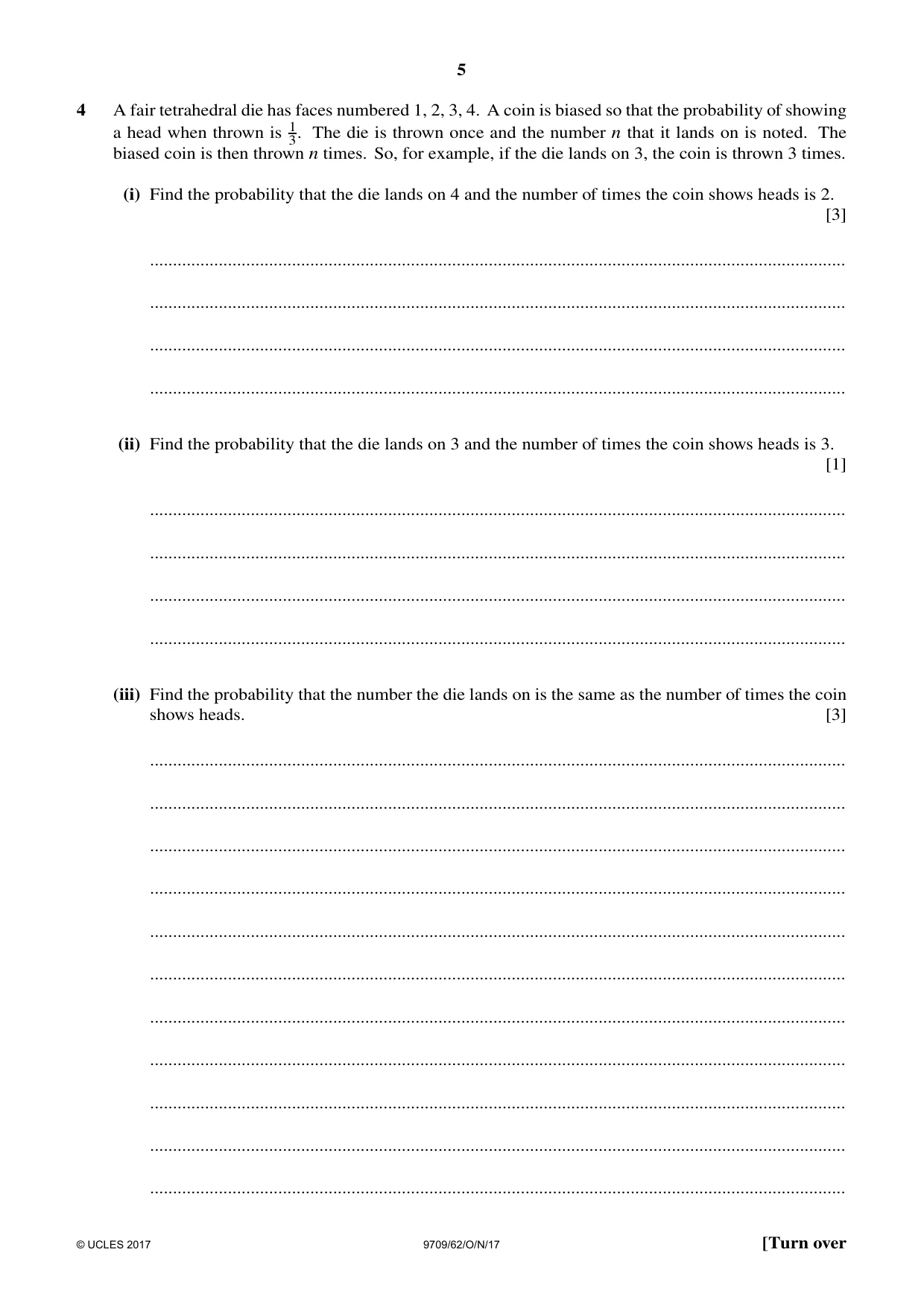
Q4 · A fair tetrahedral die has faces numbered 1, 2, 3, 4
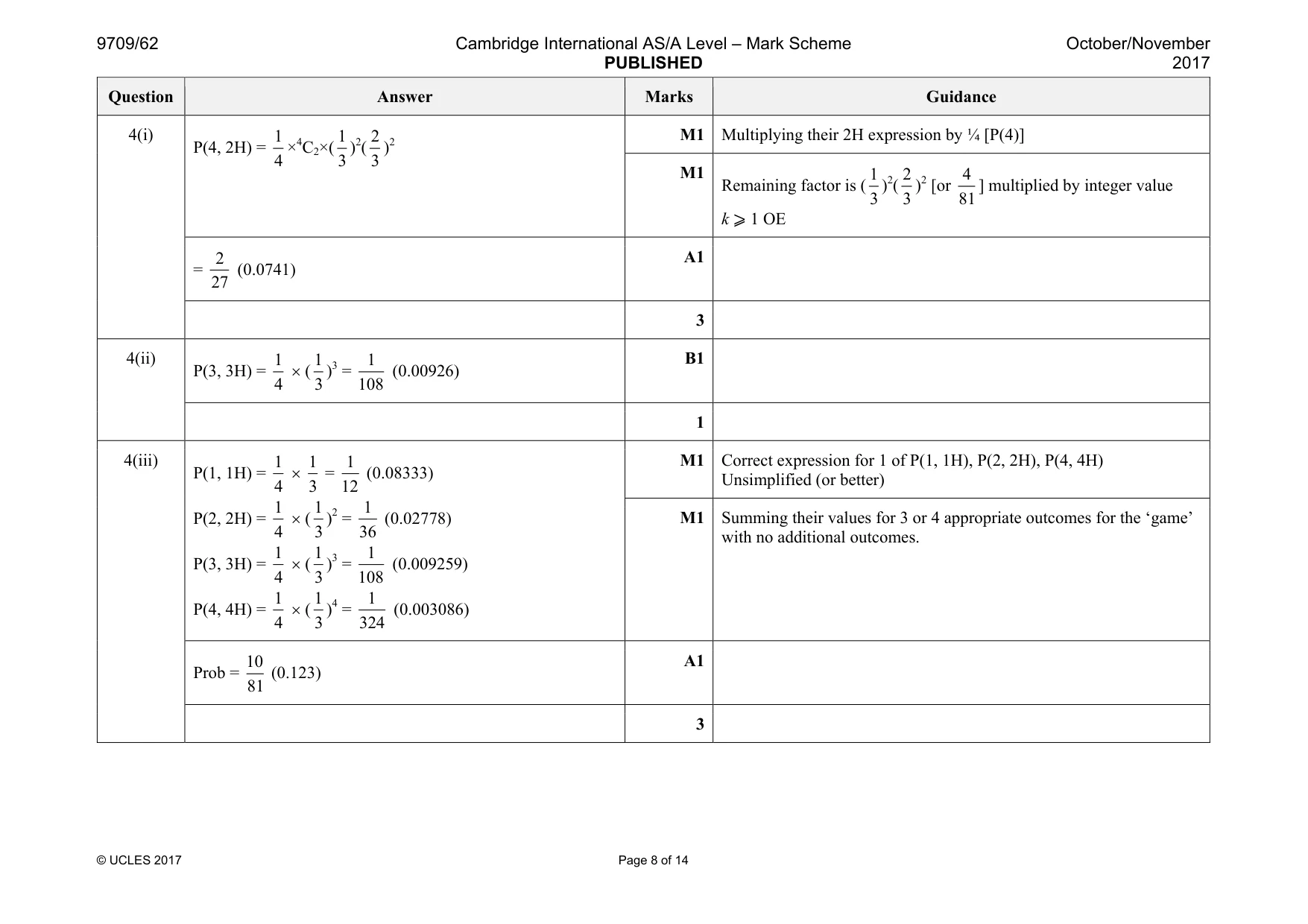
4 A fair tetrahedral die has faces numbered 1, 2, 3, 4. A coin is biased so that the probability of showing a head when thrown is 1 The die is thrown once and the number n that it lands on is noted. The 3. biased coin is then thrown n times. So, for example, if the die lands on 3, the coin is thrown 3 times. (i) Find the probability that the die lands on 4 and the number of times the coin shows heads is 2. [3] ........................................................................................................................................................ ........................................................................................................................................................ ........................................................................................................................................................ ........................................................................................................................................................ (ii) Find the probability that the die lands on 3 and the number of times the coin shows heads is 3. [1] ........................................................................................................................................................ ........................................................................................................................................................ ........................................................................................................................................................ ........................................................................................................................................................ (iii) Find the probability that the number the die lands on is the same as the number of times the coin shows heads. [3] ........................................................................................................................................................ ........................................................................................................................................................ ........................................................................................................................................................ ........................................................................................................................................................ ........................................................................................................................................................ ........................................................................................................................................................ ........................................................................................................................................................ ........................................................................................................................................................ ........................................................................................................................................................ ........................................................................................................................................................ ........................................................................................................................................................
Mark scheme: 4(i) P(4, 2H) = 1 4 ×4C2×( 1 3 )2( 2 3 )2 M1 M1 Remaining factor is ( 1 3 )2( 2 3 )2 [or 4 81 ] multiplied by integer value k ⩾ 1 OE = 2 27 (0.0741) A1 3 4(ii) P(3, 3H) = 1 4 × ( 1 3 )3 = 1 108 (0.00926) B1 1 4(iii) P(1, 1H) = 1 4 × 1 3 = 1 12 (0.08333) P(2, 2H) = 1 4 × ( 1 3 )2 = 1 36 (0.02778) P(3, 3H) = 1 4 × ( 1 3 )3 = 1 108 (0.009259) P(4, 4H) = 1 4 × ( 1 3 )4 = 1 324 (0.003086) M1 Correct expression for 1 of P(1, 1H), P(2, 2H), P(4, 4H) Unsimplified (or better) M1 Summing their values for 3 or 4 appropriate outcomes for the ‘game’ with no additional outcomes. Prob = 10 81 (0.123) A1 3
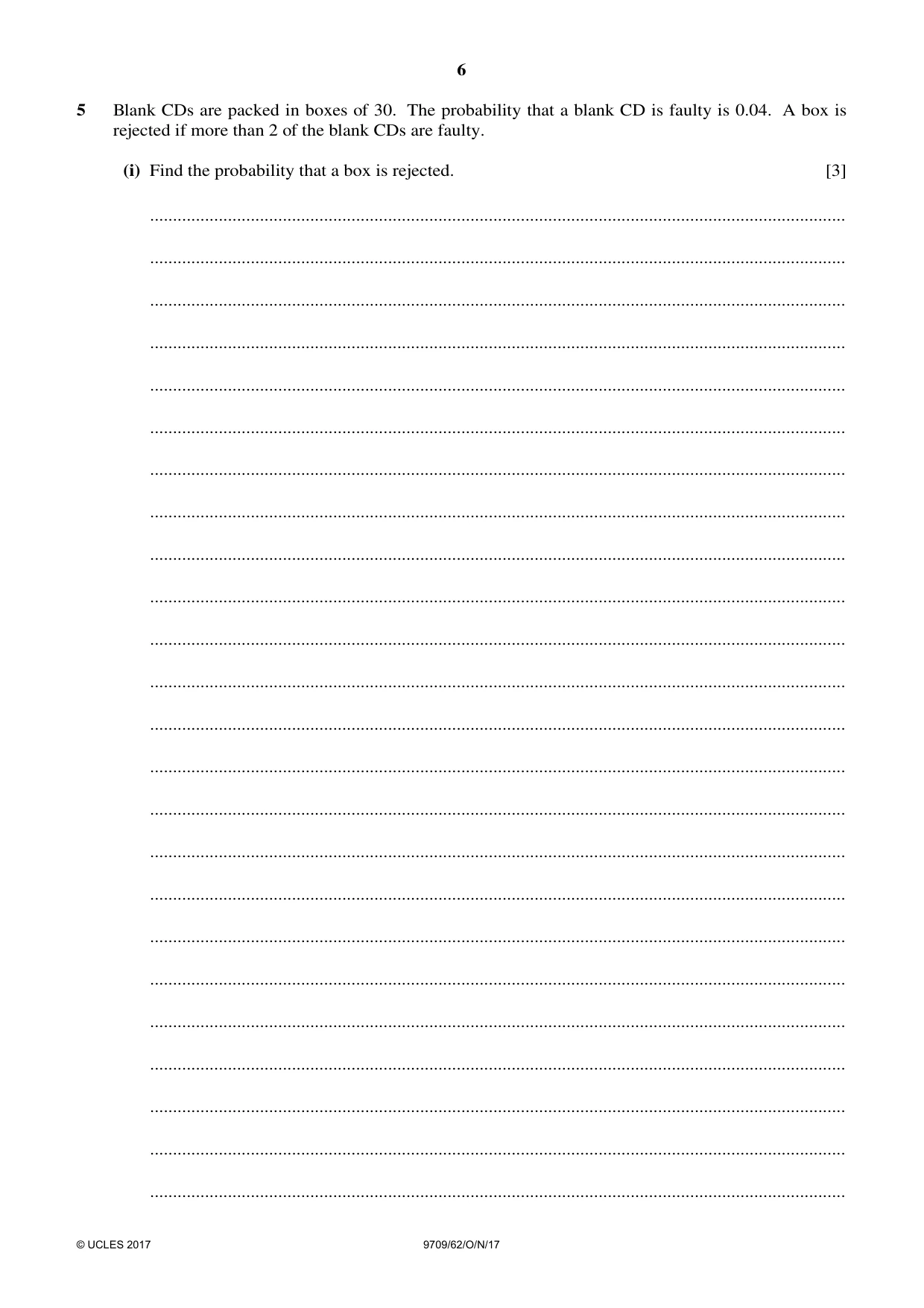
Q5 · Blank CDs are packed in boxes of 30
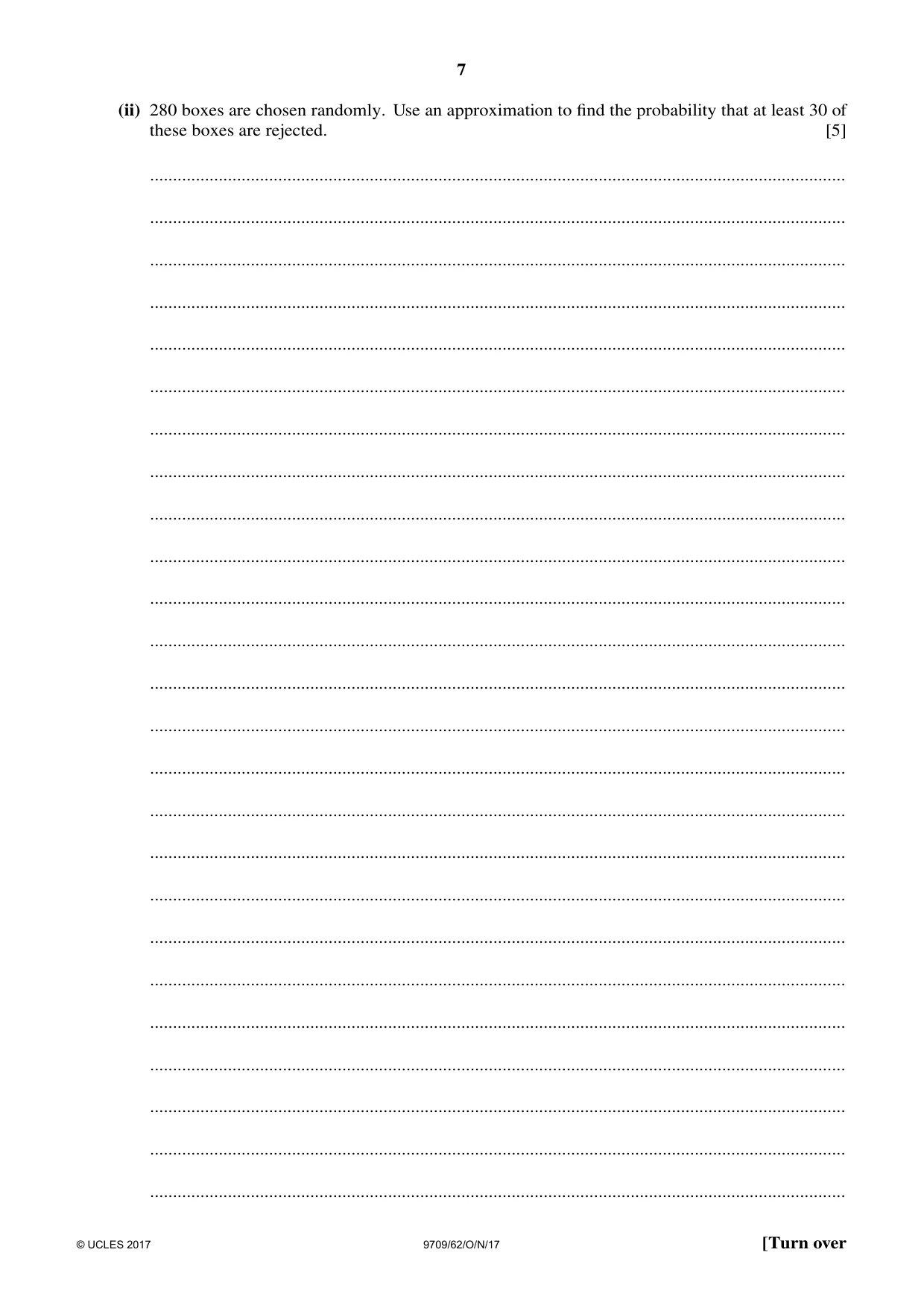
5 Blank CDs are packed in boxes of 30. The probability that a blank CD is faulty is 0.04. A box is rejected if more than 2 of the blank CDs are faulty. (i) Find the probability that a box is rejected. [3] ........................................................................................................................................................ ........................................................................................................................................................ ........................................................................................................................................................ ........................................................................................................................................................ ........................................................................................................................................................ ........................................................................................................................................................ ........................................................................................................................................................ ........................................................................................................................................................ ........................................................................................................................................................ ........................................................................................................................................................ ........................................................................................................................................................ ........................................................................................................................................................ ........................................................................................................................................................ ........................................................................................................................................................ ........................................................................................................................................................ ........................................................................................................................................................ ........................................................................................................................................................ ........................................................................................................................................................ ........................................................................................................................................................ ........................................................................................................................................................ ........................................................................................................................................................ ........................................................................................................................................................ ........................................................................................................................................................ ........................................................................................................................................................ (ii) 280 boxes are chosen randomly. Use an approximation to find the probability that at least 30 of these boxes are rejected. [5] ........................................................................................................................................................ ........................................................................................................................................................ ........................................................................................................................................................ ........................................................................................................................................................ ........................................................................................................................................................ ........................................................................................................................................................ ........................................................................................................................................................ ........................................................................................................................................................ ........................................................................................................................................................ ........................................................................................................................................................ ........................................................................................................................................................ ........................................................................................................................................................ ........................................................................................................................................................ ........................................................................................................................................................ ........................................................................................................................................................ ........................................................................................................................................................ ........................................................................................................................................................ ........................................................................................................................................................ ........................................................................................................................................................ ........................................................................................................................................................ ........................................................................................................................................................ ........................................................................................................................................................ ........................................................................................................................................................ ........................................................................................................................................................ ........................................................................................................................................................
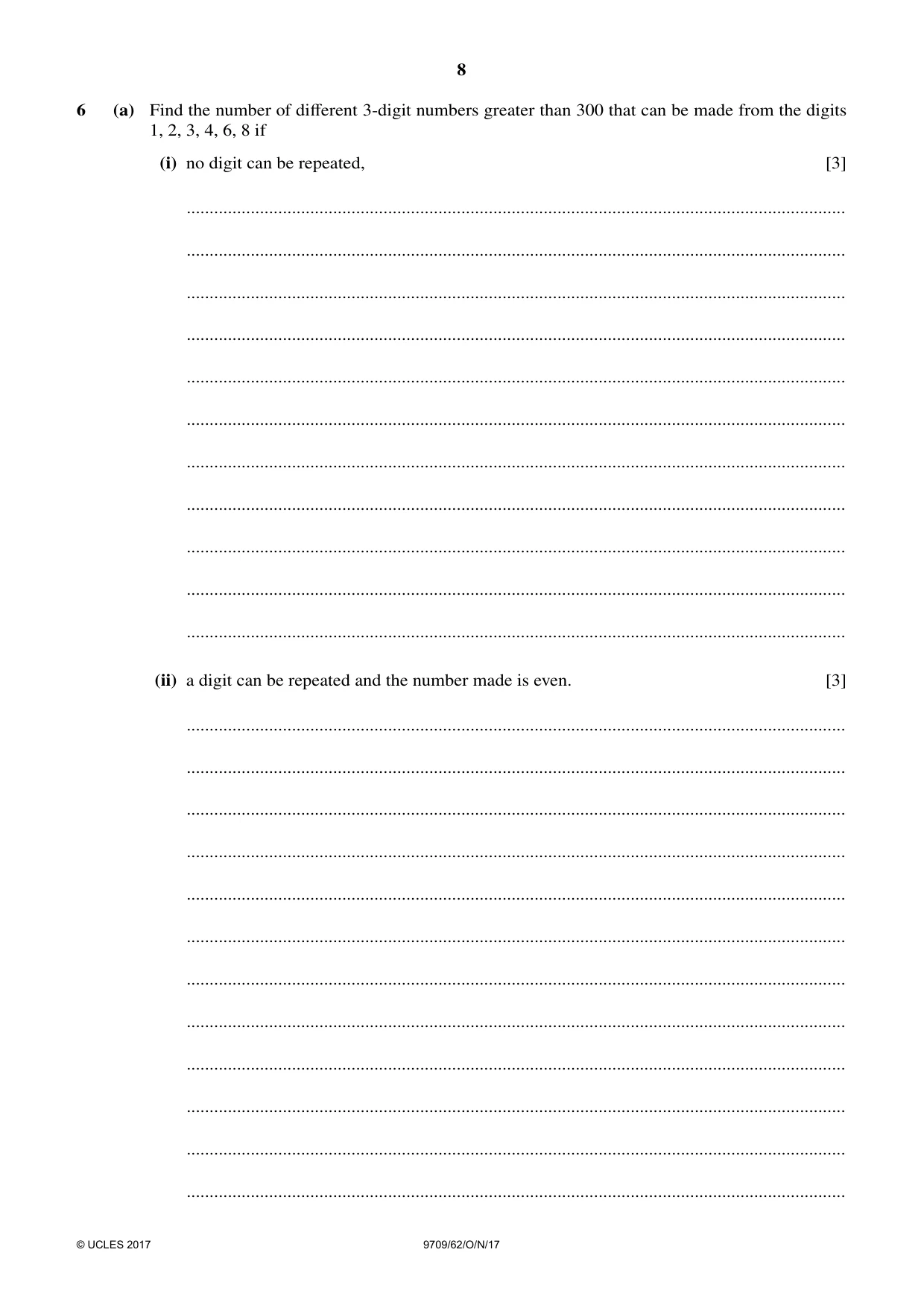
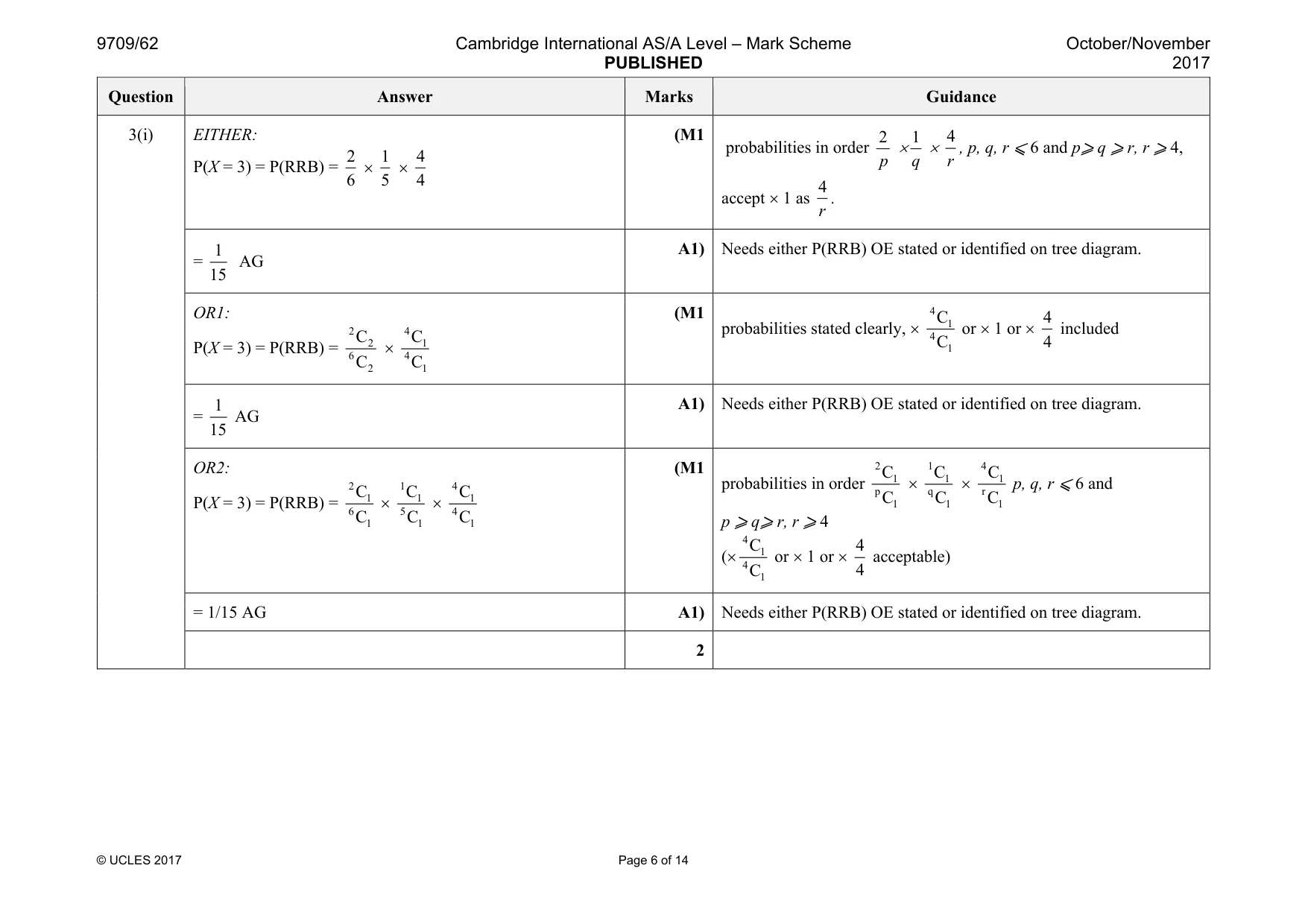
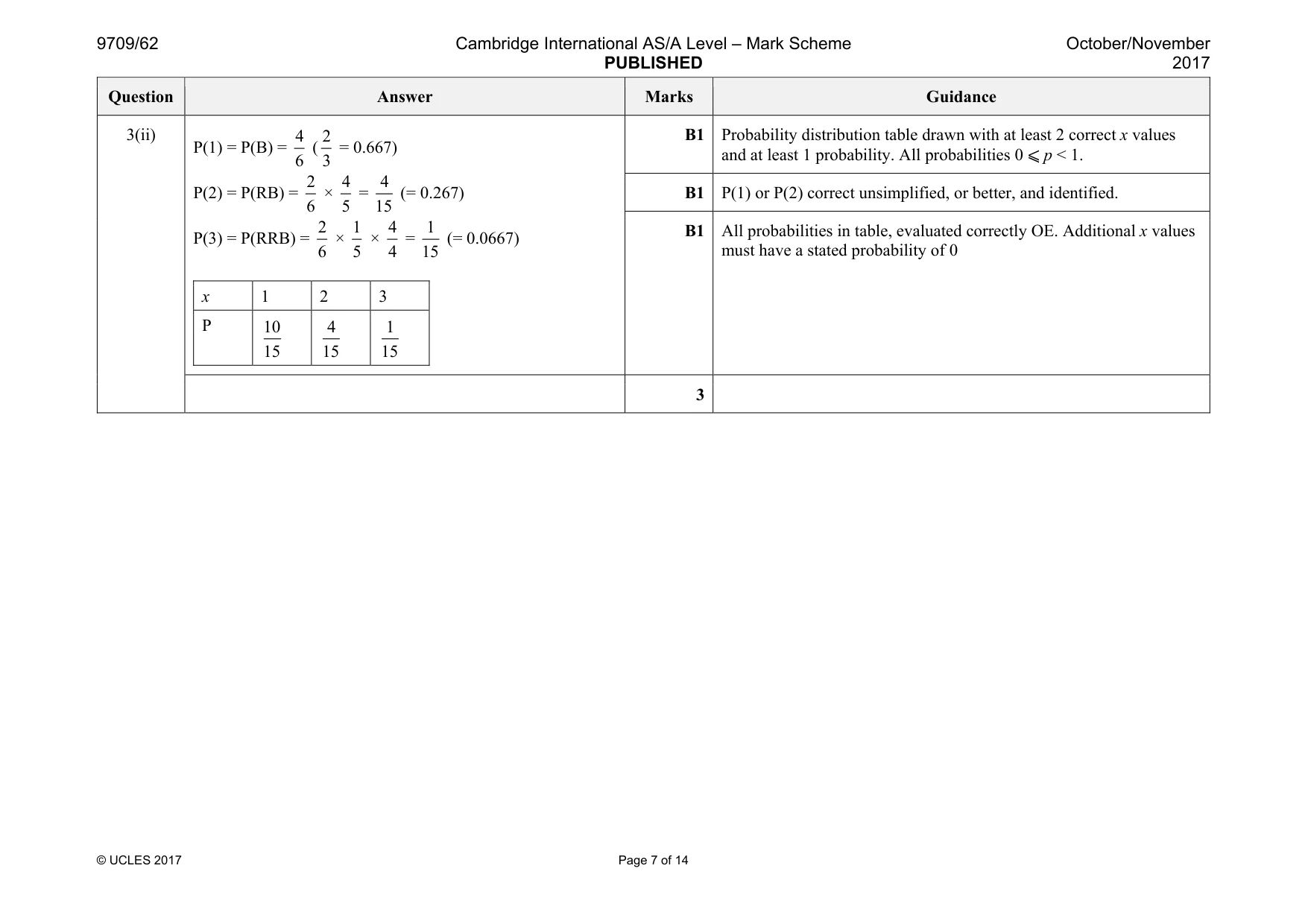
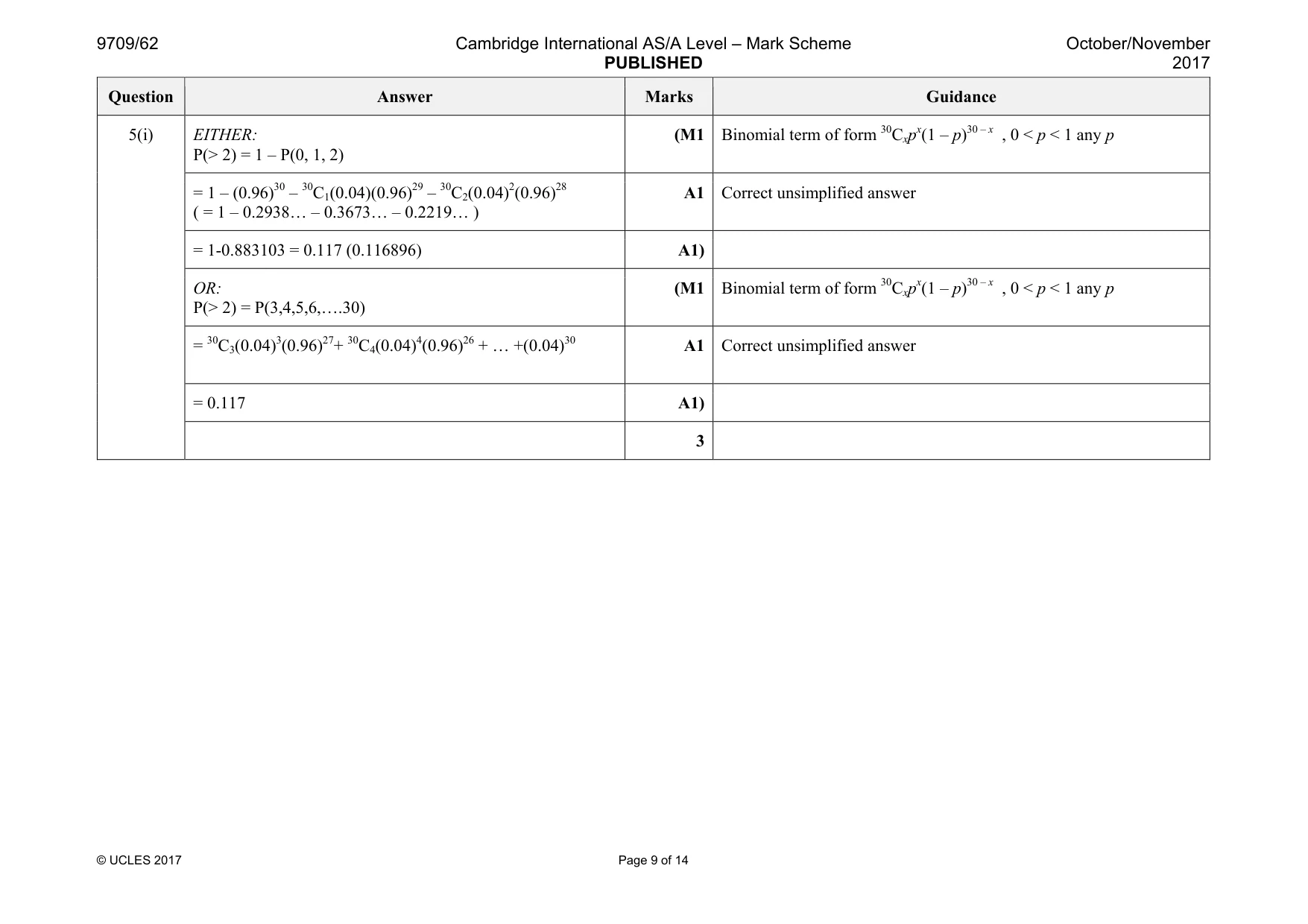
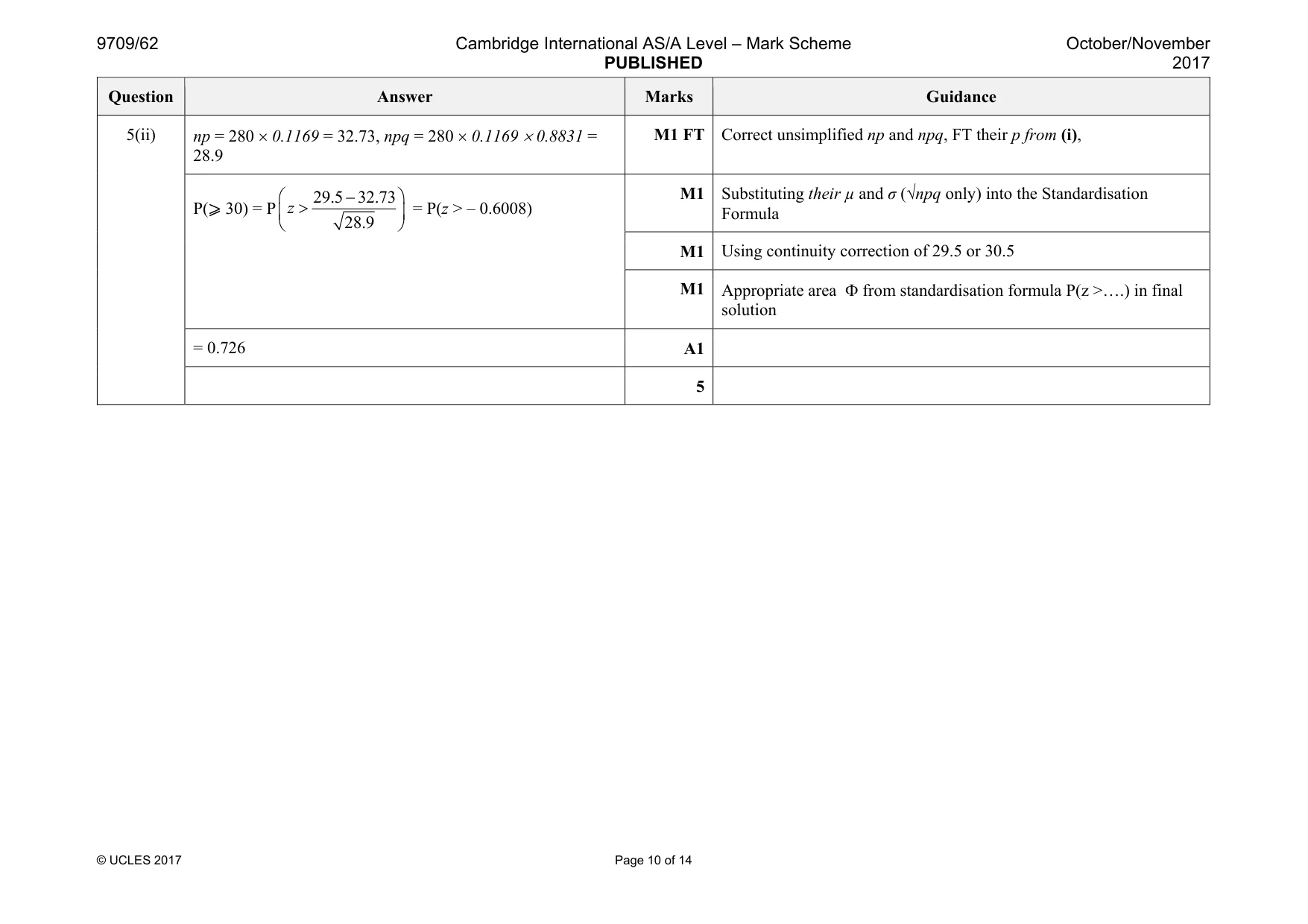
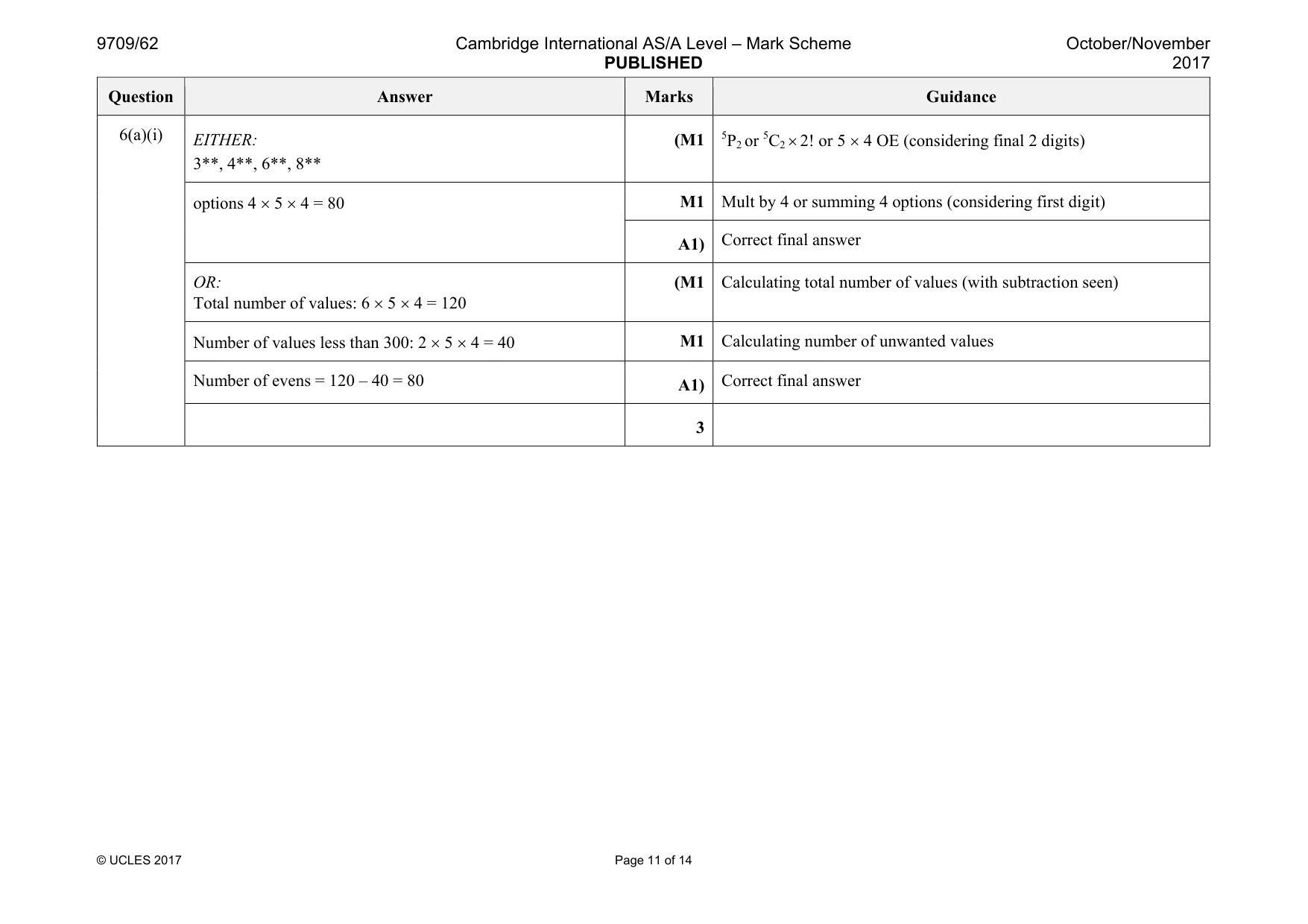
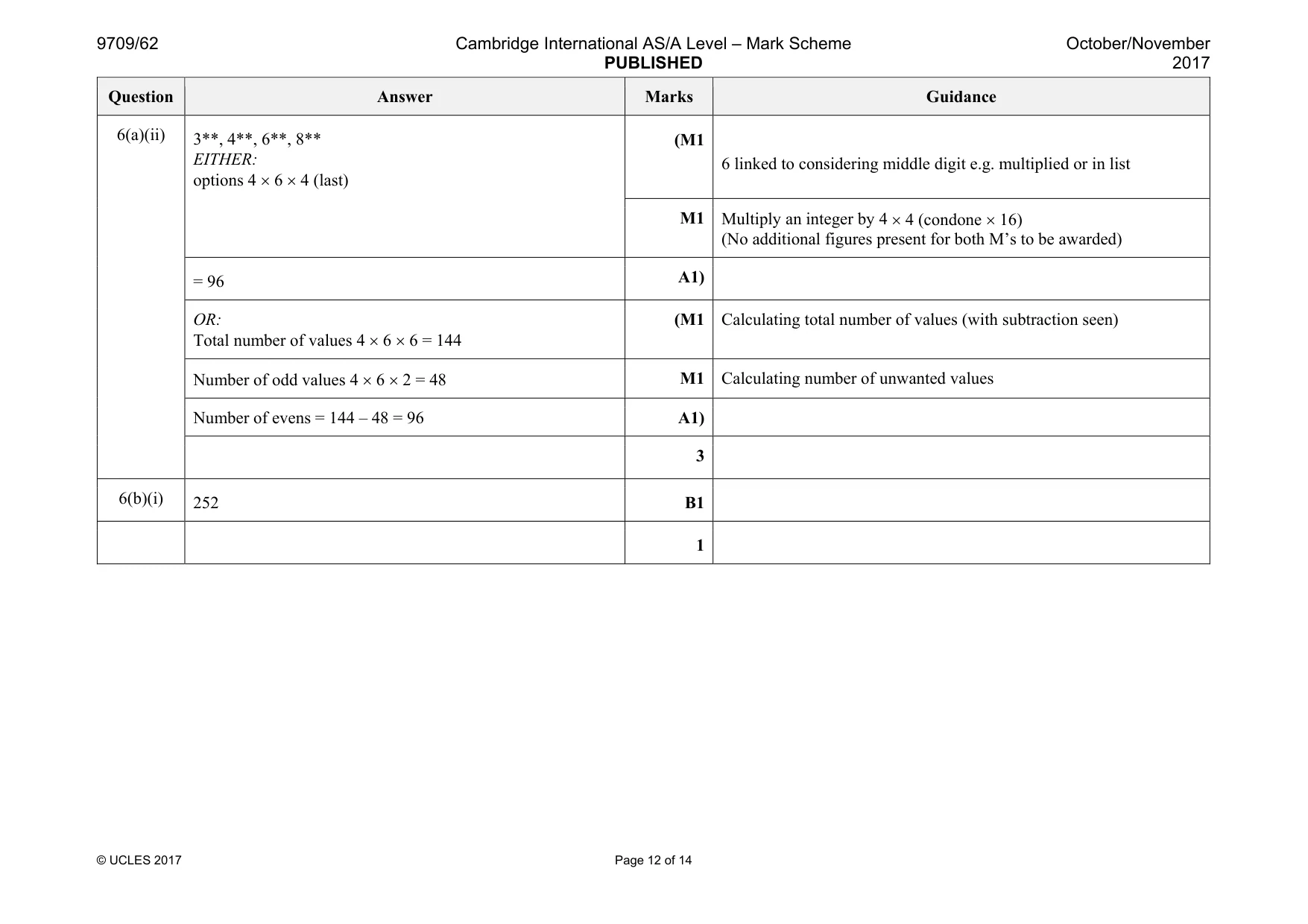
Mark scheme: 5(i) EITHER: P(> 2) = 1 – P(0, 1, 2) (M1 = 1 – (0.96)30 – 30C1(0.04)(0.96)29 – 30C2(0.04)2(0.96)28 ( = 1 – 0.2938… – 0.3673… – 0.2219… ) A1 Correct unsimplified answer = 1-0.883103 = 0.117 (0.116896) A1) OR: P(> 2) = P(3,4,5,6,….30) (M1 Binomial term of form 30Cxpx(1 – p)30 – x , 0 < p < 1 any p = 30C3(0.04)3(0.96)27+ 30C4(0.04)4(0.96)26 + … +(0.04)30 A1 Correct unsimplified answer = 0.117 A1) 3 Question Answer Marks Guidance 5(ii) np = 280 × 0.1169 = 32.73, npq = 280 × 0.1169 × 0.8831 = 28.9 M1 FT Correct unsimplified np and npq, FT their p from (i), P(⩾ 30) = P 29.5 32.73 28.9 − > z = P(z > – 0.6008) M1 Substituting their µ and σ (√npq only) into the Standardisation Formula M1 Using continuity correction of 29.5 or 30.5 M1 Appropriate area Φ from standardisation formula P(z >….) in final solution = 0.726 A1 5 Question Answer Marks Guidance 6(a)(i) EITHER: 3**, 4**, 6**, 8** (M1 5P2 or 5C2 × 2! or 5 × 4 OE (considering final 2 digits) options 4 × 5 × 4 = 80 M1 Mult by 4 or summing 4 options (considering first digit) A1) Correct final answer OR: Total number of values: 6 × 5 × 4 = 120 (M1 Calculating total number of values (with subtraction seen) Number of values less than 300: 2 × 5 × 4 = 40 M1 Calculating number of unwanted values Number of evens = 120 – 40 = 80 A1) Correct final answer 3 Question Answer Marks Guidance 6(a)(ii) 3**, 4**, 6**, 8** EITHER: options 4 × 6 × 4 (last) (M1 6 linked to considering middle digit e.g. multiplied or in list M1 Multiply an integer by 4 × 4 (condone × 16) (No additional figures present for both M’s to be awarded) = 96 A1) OR: Total number of values 4 × 6 × 6 = 144 (M1 Calculating total number of values (with subtraction seen) Number of odd values 4 × 6 × 2 = 48 M1 Calculating number of unwanted values Number of evens = 144 – 48 = 96 A1) 3 6(b)(i) 252 B1 1
Q7 · In Jimpuri the weights, in kilograms, of boys aged 16 years have a normal distribution…
7 In Jimpuri the weights, in kilograms, of boys aged 16 years have a normal distribution with mean 61.4 and standard deviation 12.3. (i) Find the probability that a randomly chosen boy aged 16 years in Jimpuri weighs more than 65 kilograms. [3] ........................................................................................................................................................ ........................................................................................................................................................ ........................................................................................................................................................ ........................................................................................................................................................ ........................................................................................................................................................ ........................................................................................................................................................ ........................................................................................................................................................ ........................................................................................................................................................ (ii) For boys aged 16 years in Jimpuri, 25% have a weight between 65 kilograms and k kilograms, where k is greater than 65. Find k. [4] ........................................................................................................................................................ ........................................................................................................................................................ ........................................................................................................................................................ ........................................................................................................................................................ ........................................................................................................................................................ ........................................................................................................................................................ ........................................................................................................................................................ ........................................................................................................................................................ ........................................................................................................................................................ ........................................................................................................................................................ ........................................................................................................................................................ ........................................................................................................................................................ ........................................................................................................................................................ In Brigville the weights, in kilograms, of boys aged 16 years have a normal distribution. 99% of the boys weigh less than 97.2 kilograms and 33% of the boys weigh less than 55.2 kilograms. (iii) Find the mean and standard deviation of the weights of boys aged 16 years in Brigville. [5] ........................................................................................................................................................ ........................................................................................................................................................ ........................................................................................................................................................ ........................................................................................................................................................ ........................................................................................................................................................ ........................................................................................................................................................ ........................................................................................................................................................ ........................................................................................................................................................ ........................................................................................................................................................ ........................................................................................................................................................ ........................................................................................................................................................ ........................................................................................................................................................ ........................................................................................................................................................ ........................................................................................................................................................ ........................................................................................................................................................ ........................................................................................................................................................ ........................................................................................................................................................ ........................................................................................................................................................ ........................................................................................................................................................ ........................................................................................................................................................ ........................................................................................................................................................ ........................................................................................................................................................ ........................................................................................................................................................ ........................................................................................................................................................
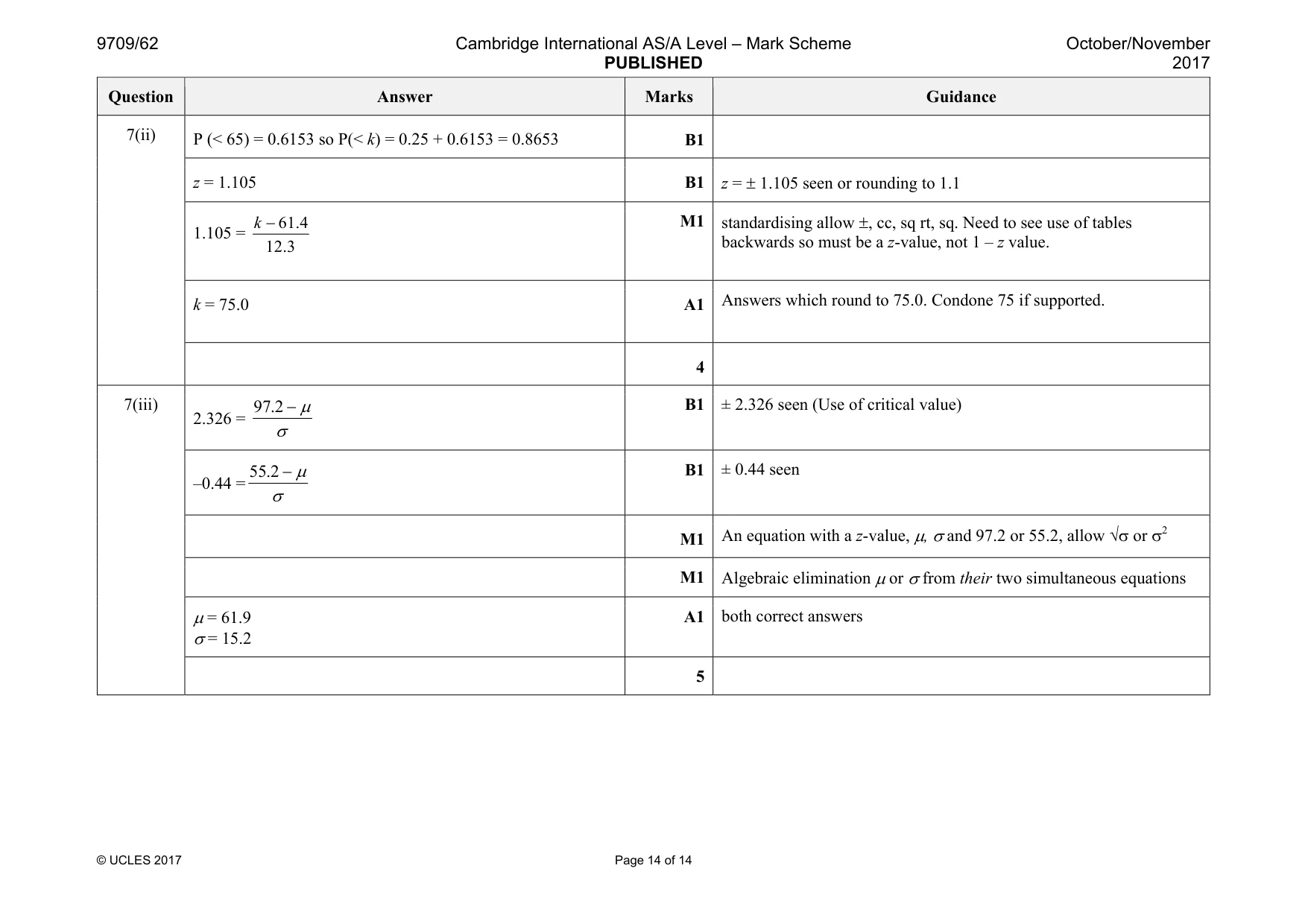
Mark scheme: 7(i) P(> 65) = P 65 61.4 12.3 − > z = P (z > 0.2927) M1 condone ± standardisation formula M1 Correct area (< 0.5) = 1 – 0.6153 = 0.385 A1 3 Question Answer Marks Guidance 7(ii) P (< 65) = 0.6153 so P(< k) = 0.25 + 0.6153 = 0.8653 B1 z = 1.105 B1 z = ± 1.105 seen or rounding to 1.1 1.105 = 61.4 12.3 − k M1 standardising allow ±, cc, sq rt, sq. Need to see use of tables backwards so must be a z-value, not 1 – z value. k = 75.0 A1 Answers which round to 75.0. Condone 75 if supported. 4 7(iii) 2.326 = B1 ± 2.326 seen (Use of critical value) –0.44 = B1 ± 0.44 seen M1 An equation with a z-value, µ, σ and 97.2 or 55.2, allow √σ or σ2 M1 Algebraic elimination µ or σ from their two simultaneous equations µ = 61.9 σ = 15.2 A1 both correct answers 5 σ µ − 2. 97 σ µ − 2. 55
What was in this paper
The subtopics covered by these 4 questions, and how many questions each got. Open one in a new tab to see every Cambridge question on it.
What you needed in this session
Cambridge’s own grade thresholds for 2017 Oct/Nov, Paper 6 · Variant 2. A higher threshold means an easier paper — the bar moves with how the cohort did.