Cambridge A Level Mathematics 9709 — 2017 Oct/Nov Paper 6 · Variant 3
9709/63/O/N/17 · 5 questions · 50 marks · ≈56 min
The question paper and its mark scheme, free to read here and free to download. This is Cambridge’s own paper, exactly as it was sat.
Question paper12 pages
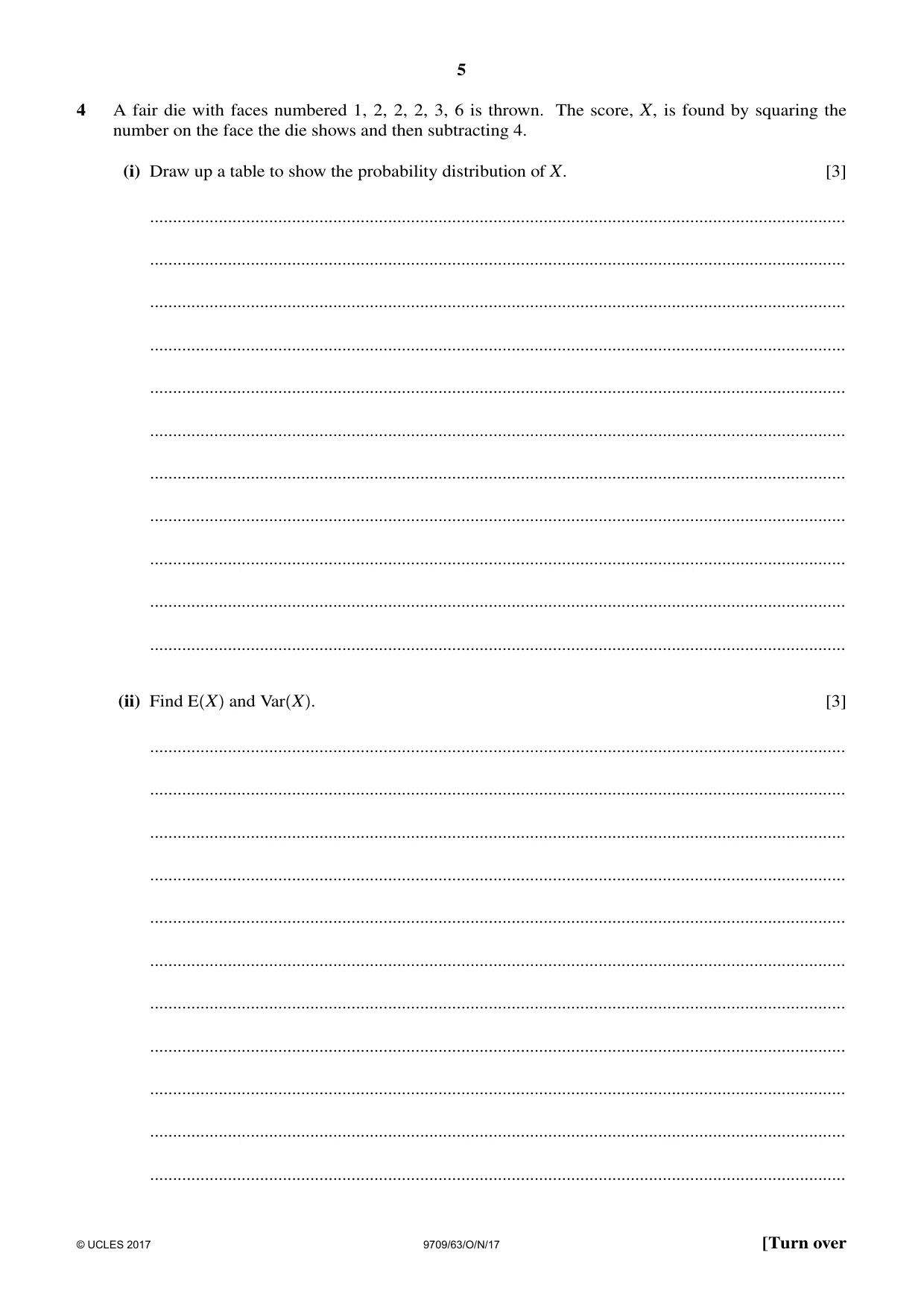
Mark scheme13 pages
Answers below. Sit the paper first if you are practising.
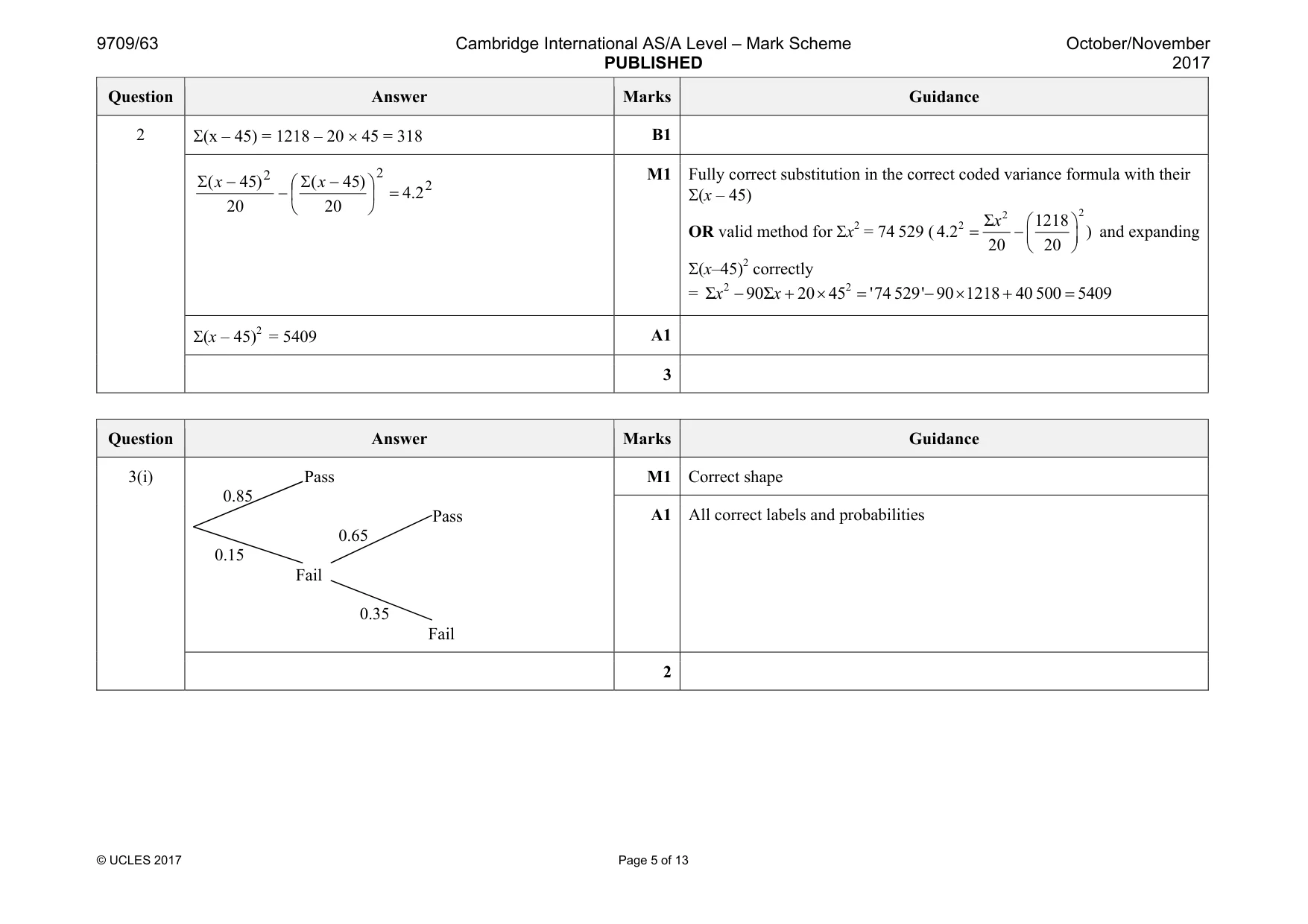
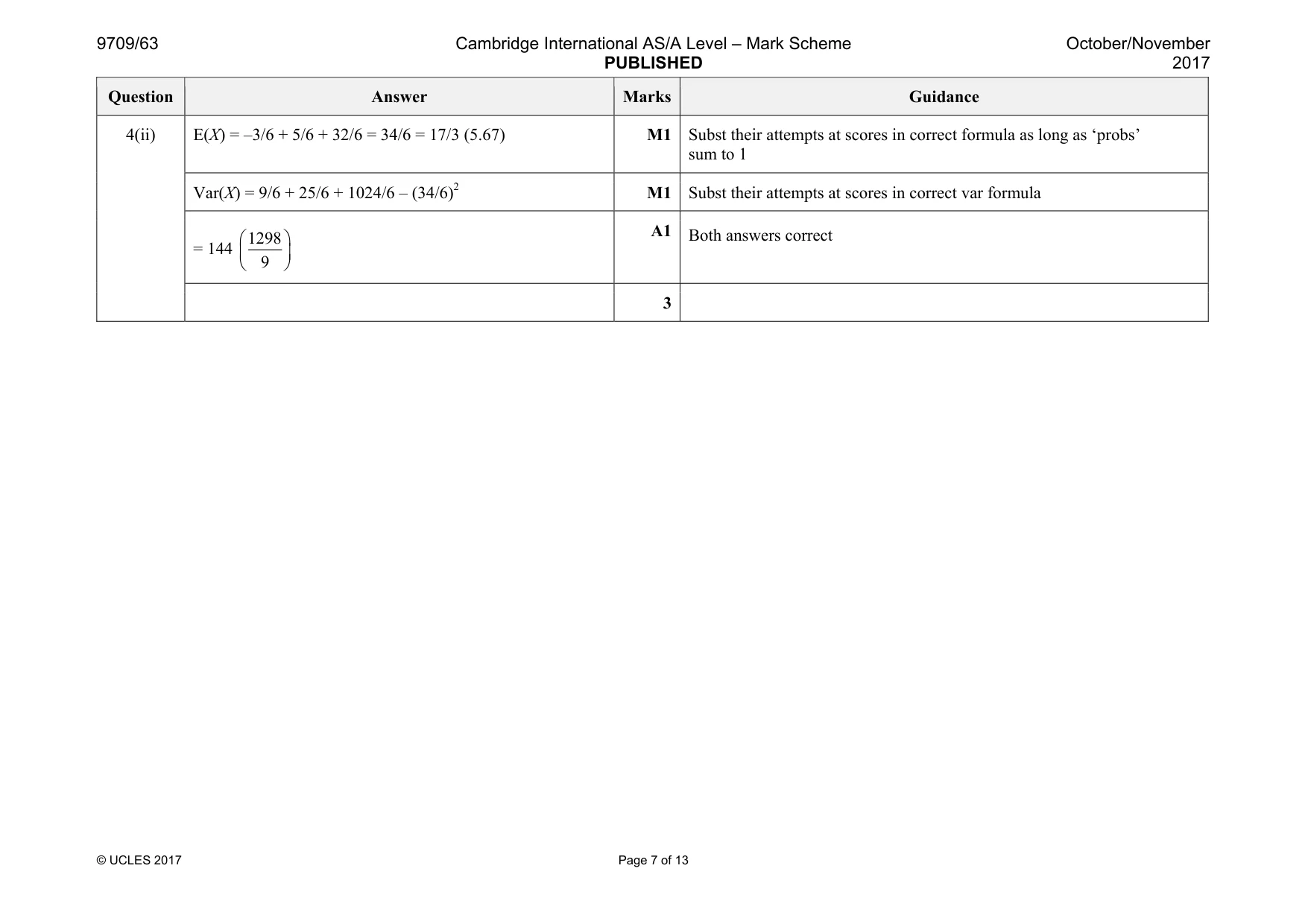
Questions as text
Q1 · A statistics student asks people to complete a survey
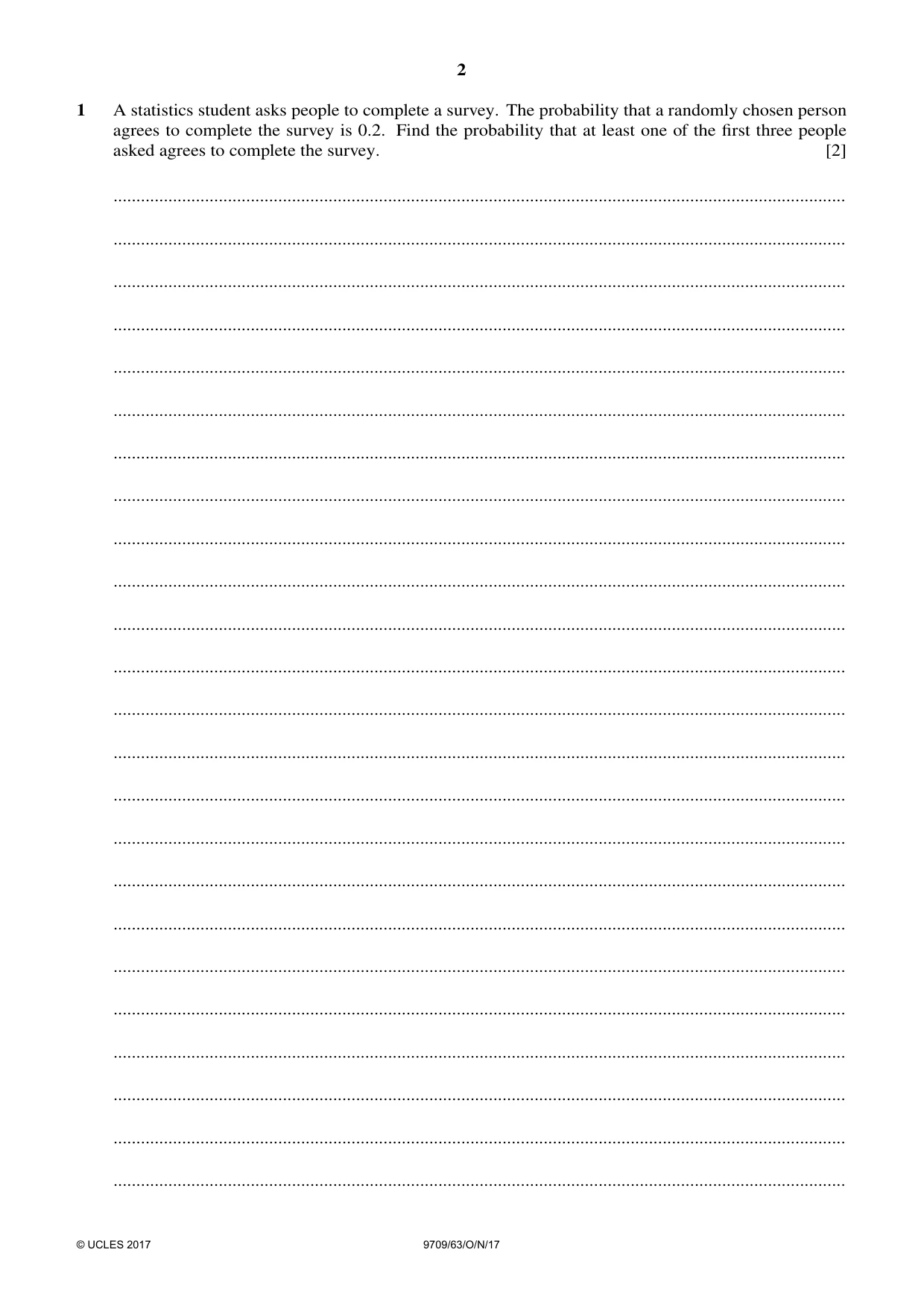
1 A statistics student asks people to complete a survey. The probability that a randomly chosen person agrees to complete the survey is 0.2. Find the probability that at least one of the first three people asked agrees to complete the survey. [2] ................................................................................................................................................................ ................................................................................................................................................................ ................................................................................................................................................................ ................................................................................................................................................................ ................................................................................................................................................................ ................................................................................................................................................................ ................................................................................................................................................................ ................................................................................................................................................................ ................................................................................................................................................................ ................................................................................................................................................................ ................................................................................................................................................................ ................................................................................................................................................................ ................................................................................................................................................................ ................................................................................................................................................................ ................................................................................................................................................................ ................................................................................................................................................................ ................................................................................................................................................................ ................................................................................................................................................................ ................................................................................................................................................................ ................................................................................................................................................................ ................................................................................................................................................................ ................................................................................................................................................................ ................................................................................................................................................................ ................................................................................................................................................................
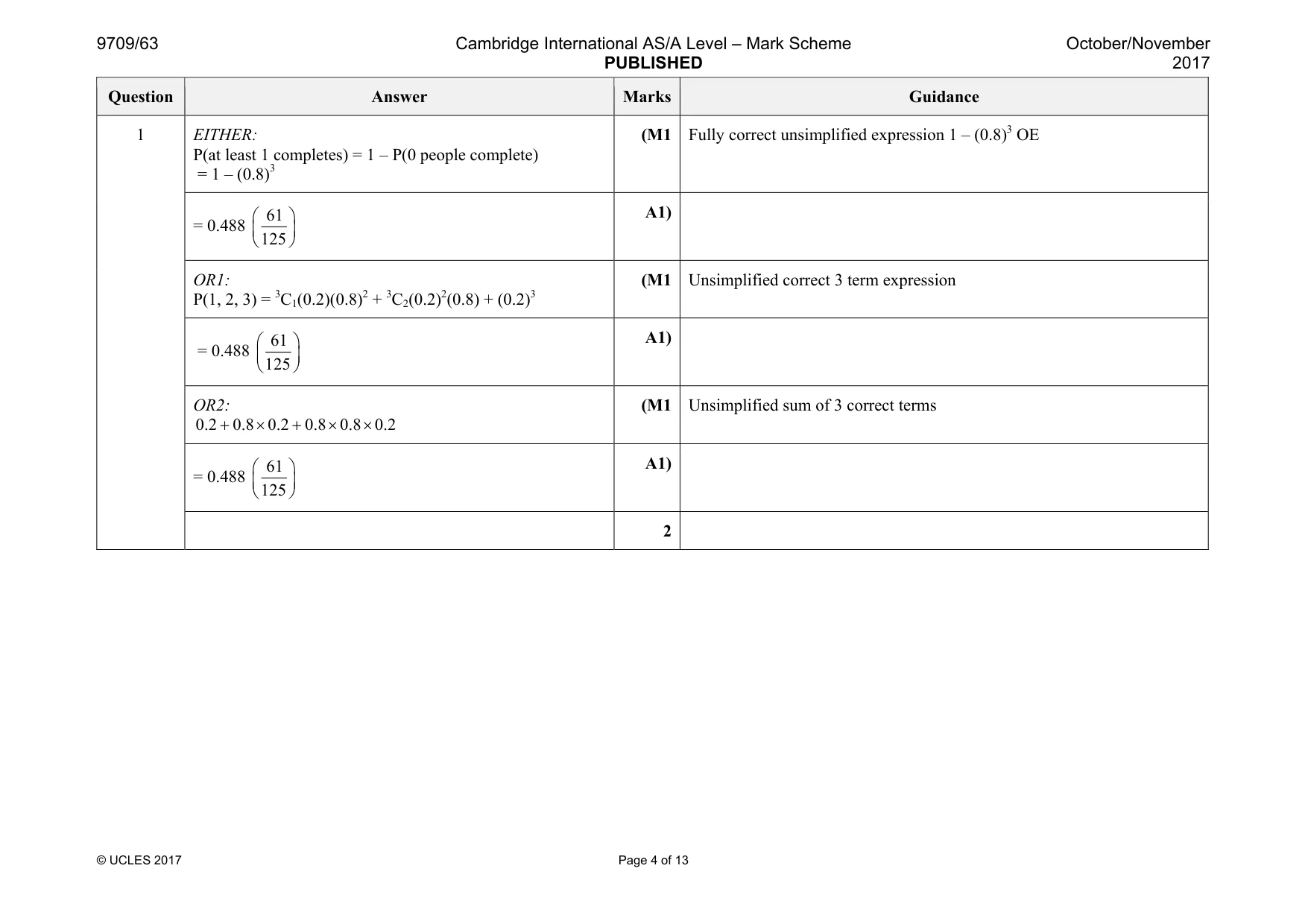
Mark scheme: 1 EITHER: P(at least 1 completes) = 1 – P(0 people complete) = 1 – (0.8)3 (M1 = 0.488 61 125 A1) OR1: P(1, 2, 3) = 3C1(0.2)(0.8)2 + 3C2(0.2)2(0.8) + (0.2)3 (M1 Unsimplified correct 3 term expression = 0.488 61 125 A1) OR2: 0.2 0.8 0.2 0.8 0.8 0.2 + × + × × (M1 Unsimplified sum of 3 correct terms = 0.488 61 125 A1) 2
Q3 · At the end of a revision course in mathematics, students have to pass a test to gain a…
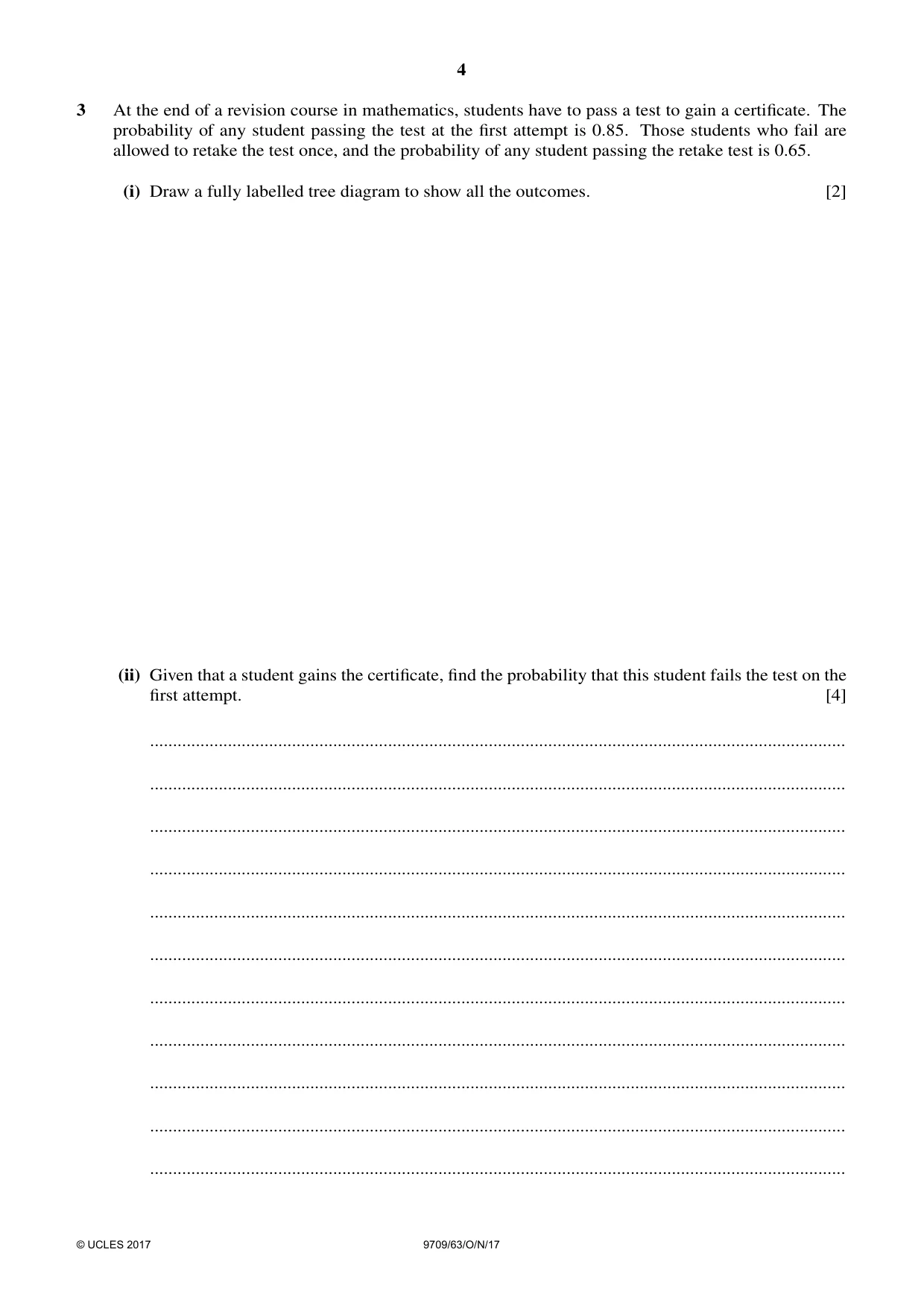
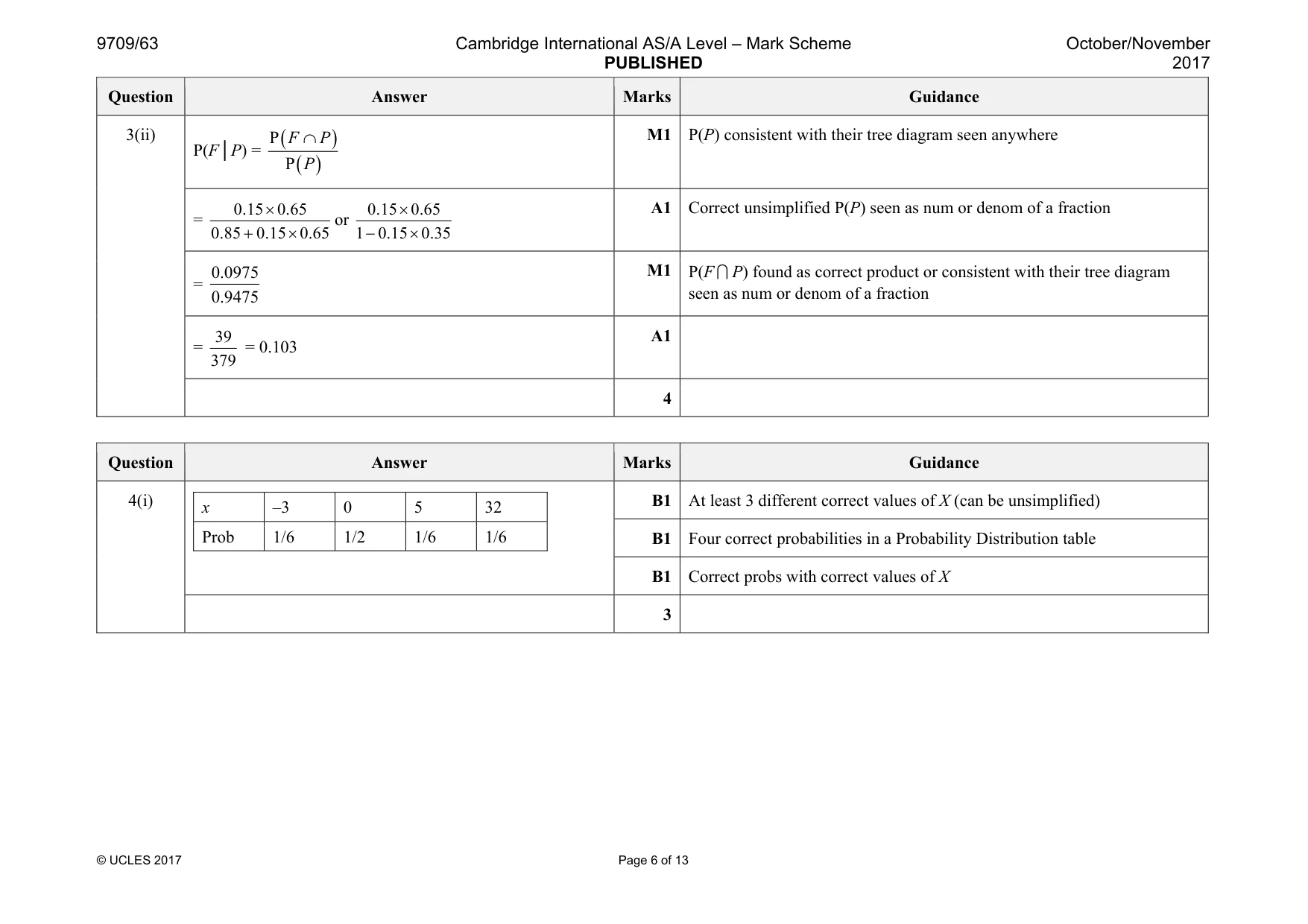
3 At the end of a revision course in mathematics, students have to pass a test to gain a certificate. The probability of any student passing the test at the first attempt is 0.85. Those students who fail are allowed to retake the test once, and the probability of any student passing the retake test is 0.65. (i) Draw a fully labelled tree diagram to show all the outcomes. [2] (ii) Given that a student gains the certificate, find the probability that this student fails the test on the first attempt. [4] ........................................................................................................................................................ ........................................................................................................................................................ ........................................................................................................................................................ ........................................................................................................................................................ ........................................................................................................................................................ ........................................................................................................................................................ ........................................................................................................................................................ ........................................................................................................................................................ ........................................................................................................................................................ ........................................................................................................................................................ ........................................................................................................................................................
Mark scheme: 3(i) Pass 0.85 Pass 0.65 0.15 Fail 0.35 Fail M1 A1 All correct labels and probabilities 2 Question Answer Marks Guidance 3(ii) P(F│P) = ( ) ( ) P P ∩ F P P M1 P(P) consistent with their tree diagram seen anywhere = 0.15 0.65 0.85 0.15 0.65 × + × or 0.15 0.65 1 0.15 0.35 × − × A1 Correct unsimplified P(P) seen as num or denom of a fraction = M1 P(F ∩P) found as correct product or consistent with their tree diagram seen as num or denom of a fraction = 39 379 = 0.103 A1 4 9475 .0 0975 .0
Q5 · The number of Olympic medals won in the 2012 Olympic Games by the top 27 countries is…
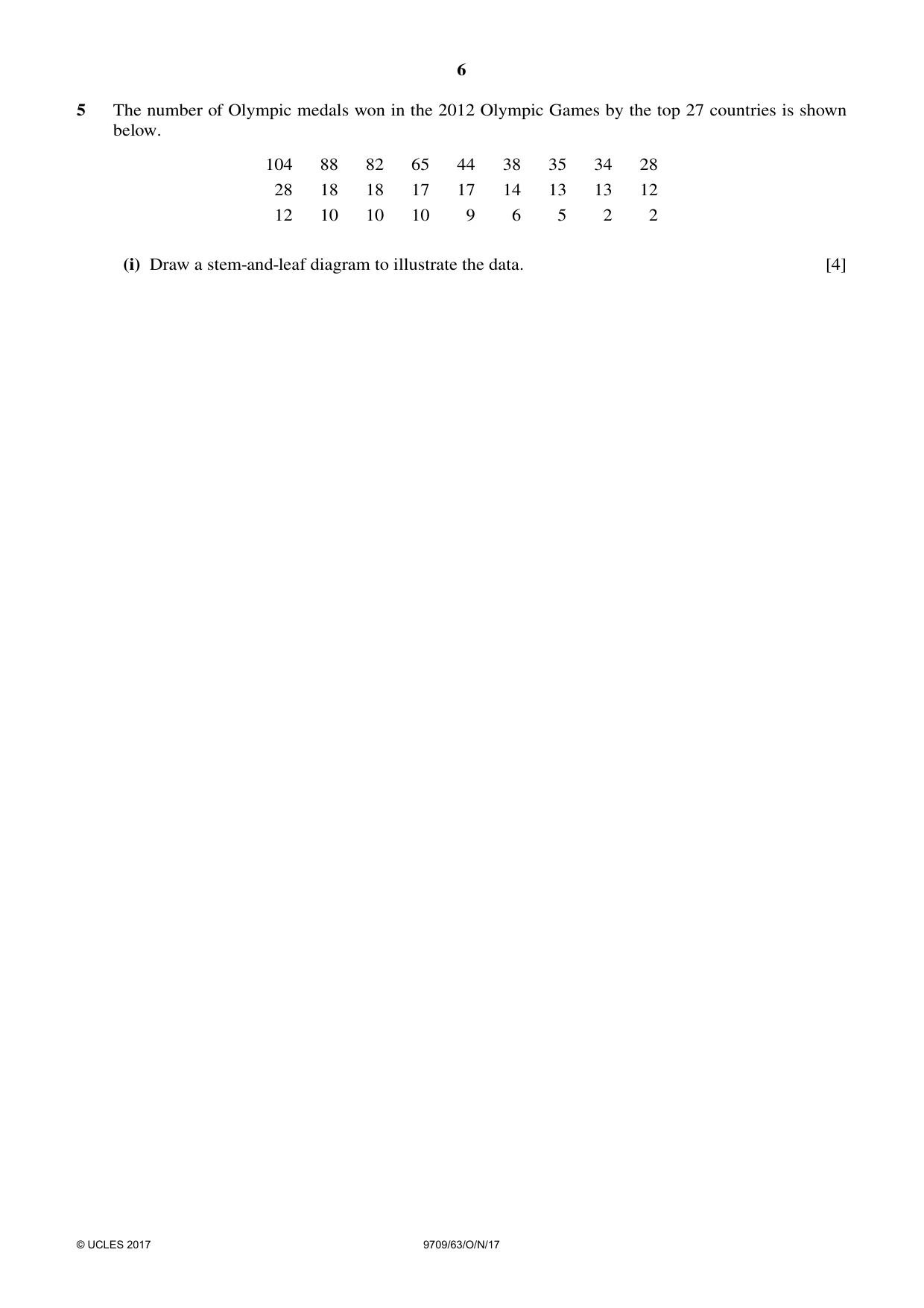
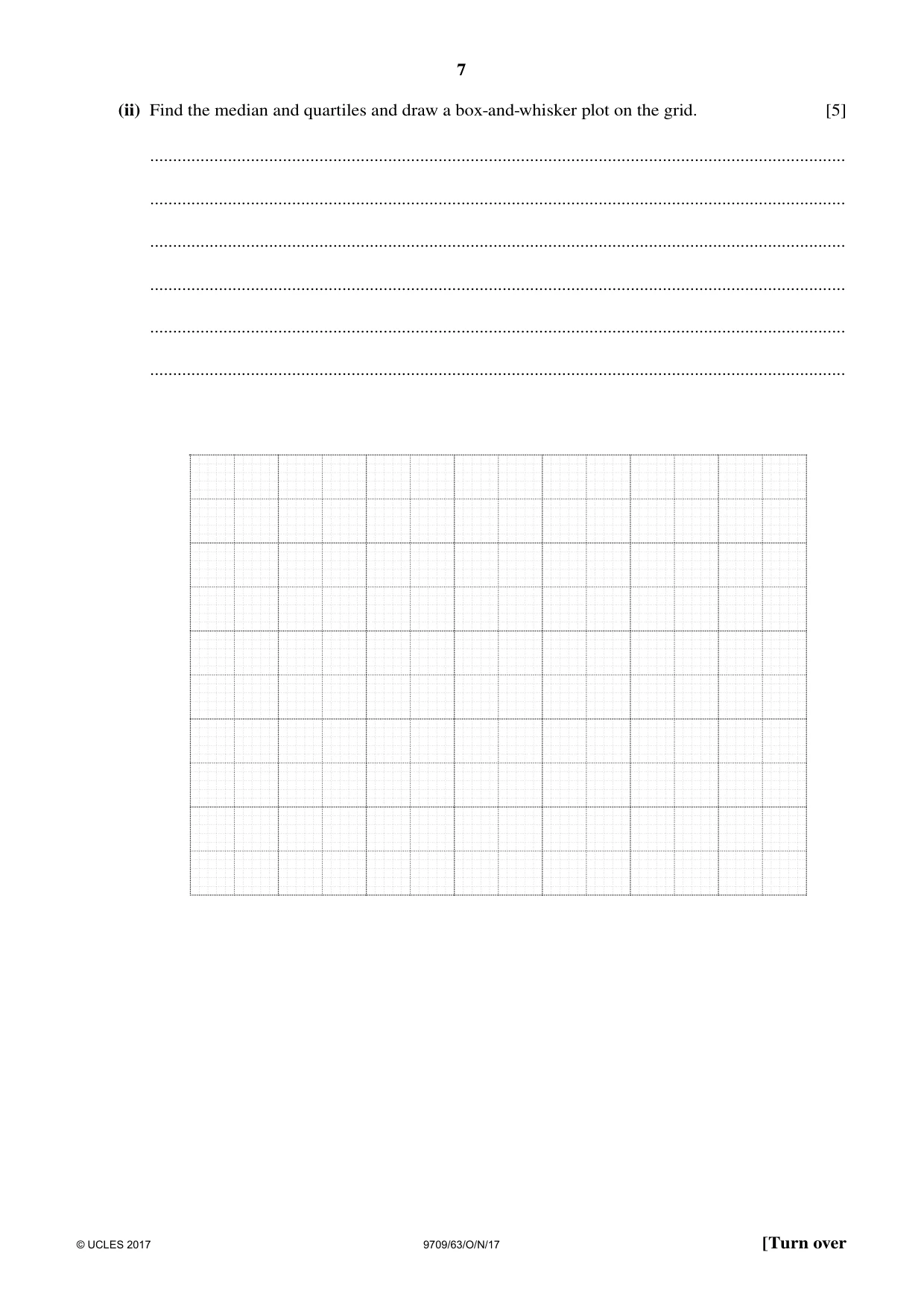
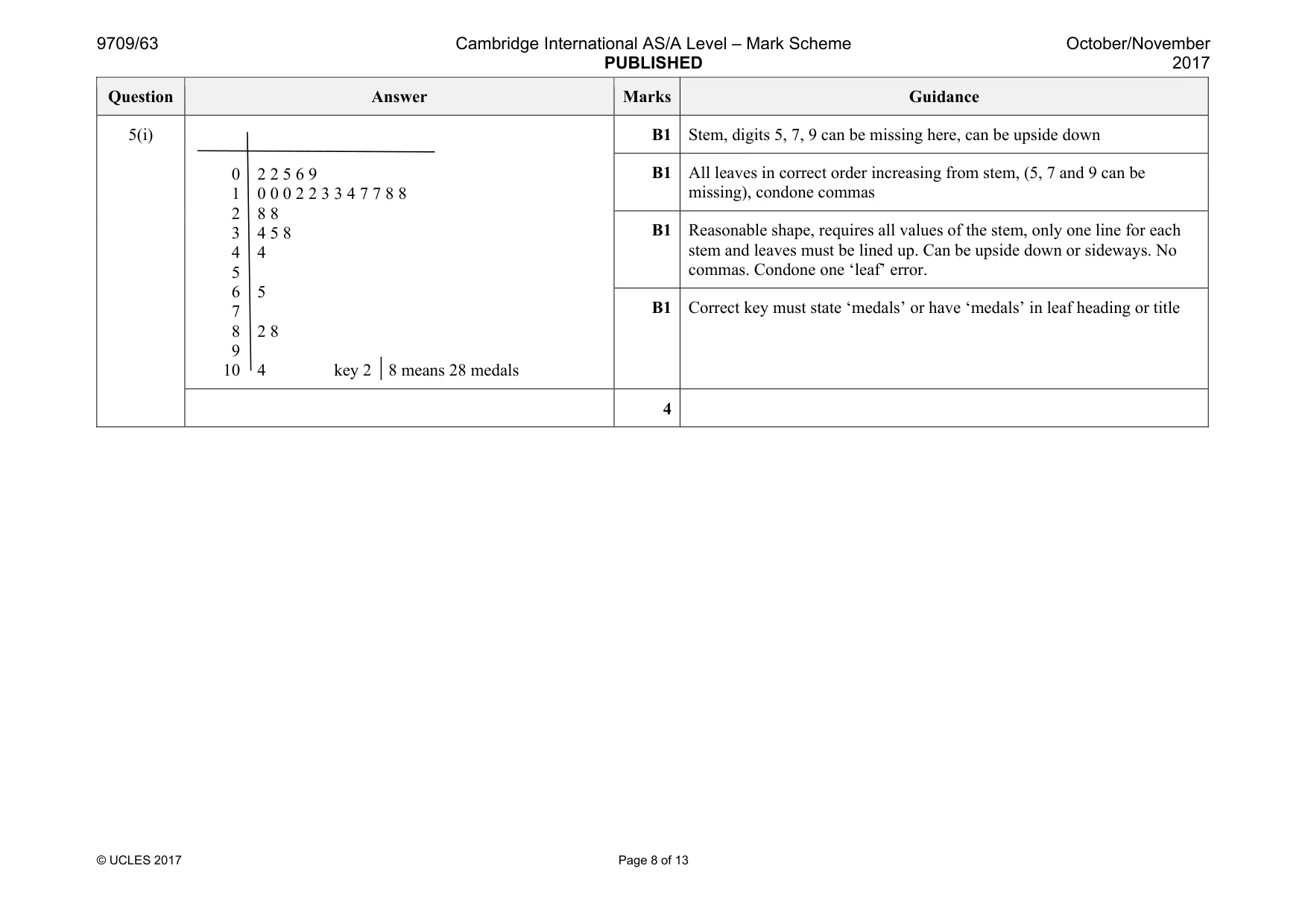
5 The number of Olympic medals won in the 2012 Olympic Games by the top 27 countries is shown below. 104 88 82 65 44 38 35 34 28 28 18 18 17 17 14 13 13 12 12 10 10 10 9 6 5 2 2 (i) Draw a stem-and-leaf diagram to illustrate the data. [4] (ii) Find the median and quartiles and draw a box-and-whisker plot on the grid. [5] ........................................................................................................................................................ ........................................................................................................................................................ ........................................................................................................................................................ ........................................................................................................................................................ ........................................................................................................................................................ ........................................................................................................................................................
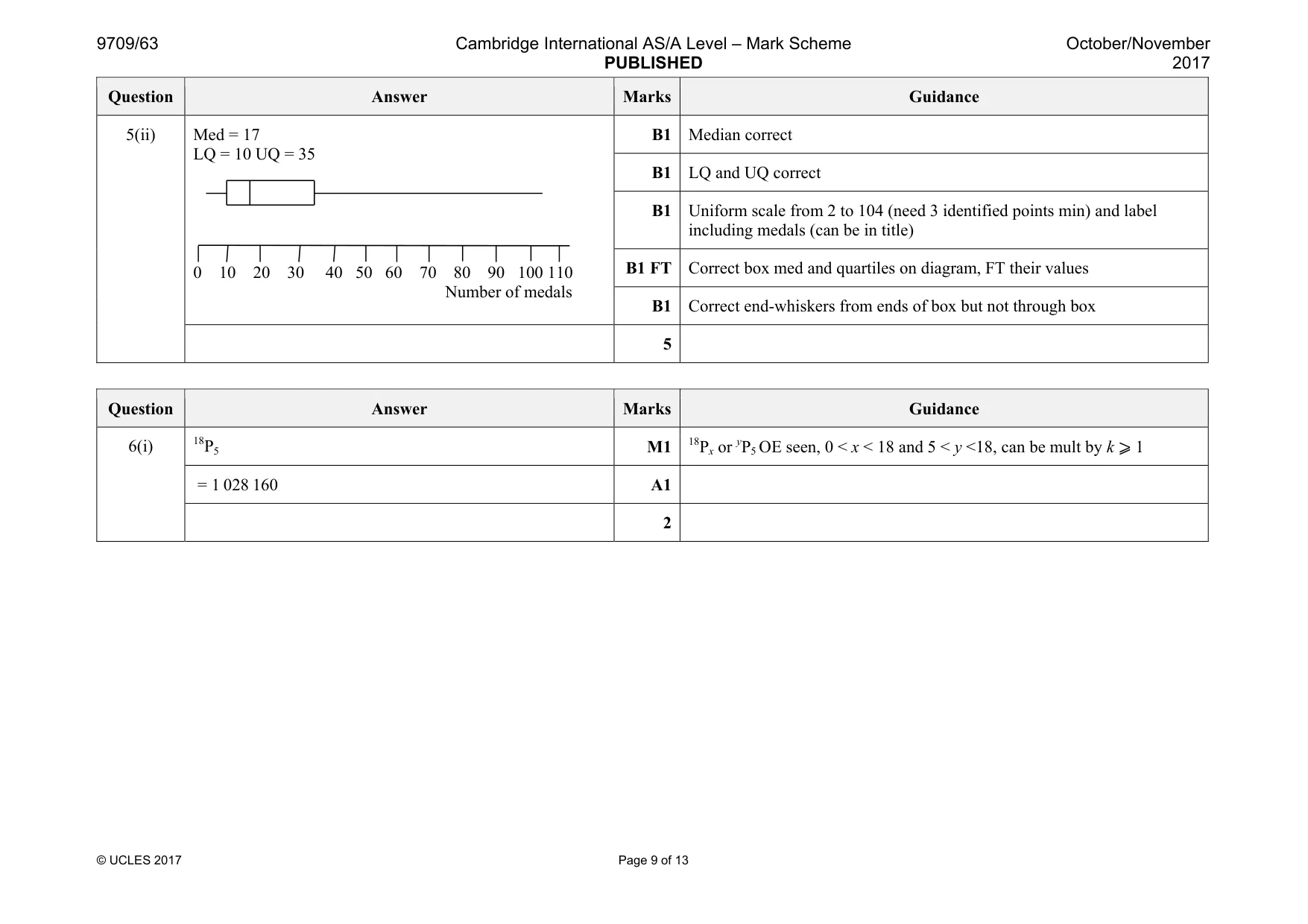
Mark scheme: 5(i) 0 2 2 5 6 9 1 0 0 0 2 2 3 3 4 7 7 8 8 2 8 8 3 4 5 8 4 4 5 6 5 7 8 2 8 9 10 4 key 2 8 means 28 medals B1 B1 All leaves in correct order increasing from stem, (5, 7 and 9 can be missing), condone commas B1 Reasonable shape, requires all values of the stem, only one line for each stem and leaves must be lined up. Can be upside down or sideways. No commas. Condone one ‘leaf’ error. B1 Correct key must state ‘medals’ or have ‘medals’ in leaf heading or title 4 Question Answer Marks Guidance 5(ii) Med = 17 LQ = 10 UQ = 35 0 10 20 30 40 50 60 70 80 90 100 110 Number of medals B1 Median correct B1 LQ and UQ correct B1 Uniform scale from 2 to 104 (need 3 identified points min) and label including medals (can be in title) B1 FT Correct box med and quartiles on diagram, FT their values B1 Correct end-whiskers from ends of box but not through box 5
Q6 · A car park has spaces for 18 cars, arranged in a line
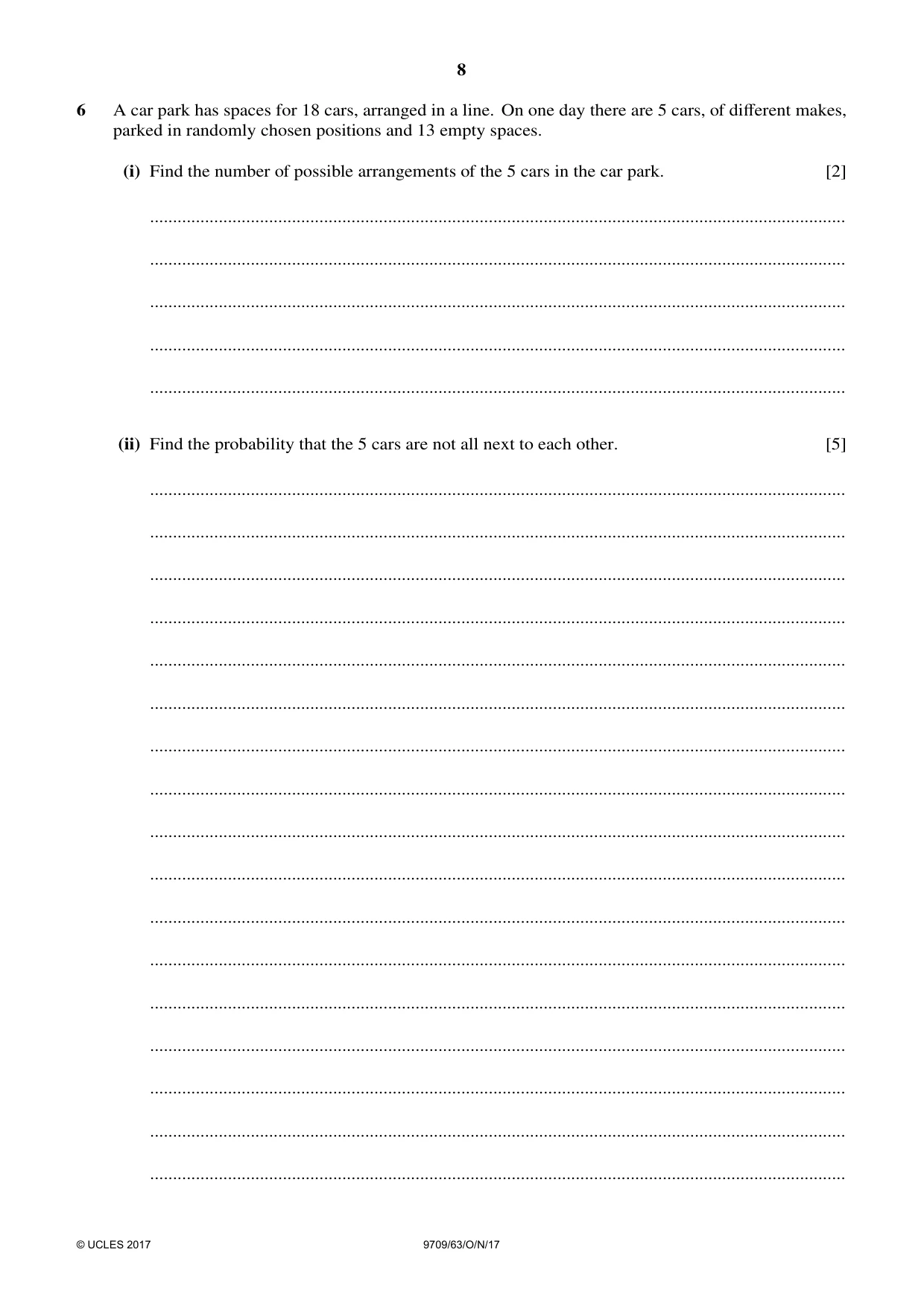
6 A car park has spaces for 18 cars, arranged in a line. On one day there are 5 cars, of different makes, parked in randomly chosen positions and 13 empty spaces. (i) Find the number of possible arrangements of the 5 cars in the car park. [2] ........................................................................................................................................................ ........................................................................................................................................................ ........................................................................................................................................................ ........................................................................................................................................................ ........................................................................................................................................................ (ii) Find the probability that the 5 cars are not all next to each other. [5] ........................................................................................................................................................ ........................................................................................................................................................ ........................................................................................................................................................ ........................................................................................................................................................ ........................................................................................................................................................ ........................................................................................................................................................ ........................................................................................................................................................ ........................................................................................................................................................ ........................................................................................................................................................ ........................................................................................................................................................ ........................................................................................................................................................ ........................................................................................................................................................ ........................................................................................................................................................ ........................................................................................................................................................ ........................................................................................................................................................ ........................................................................................................................................................ ........................................................................................................................................................ On another day, 12 cars of different makes are parked in the car park. 5 of these cars are red, 4 are white and 3 are black. Elizabeth selects 3 of these cars. (iii) Find the number of selections Elizabeth can make that include cars of at least 2 different colours. [5] ........................................................................................................................................................ ........................................................................................................................................................ ........................................................................................................................................................ ........................................................................................................................................................ ........................................................................................................................................................ ........................................................................................................................................................ ........................................................................................................................................................ ........................................................................................................................................................ ........................................................................................................................................................ ........................................................................................................................................................ ........................................................................................................................................................ ........................................................................................................................................................ ........................................................................................................................................................ ........................................................................................................................................................ ........................................................................................................................................................ ........................................................................................................................................................ ........................................................................................................................................................ ........................................................................................................................................................ ........................................................................................................................................................ ........................................................................................................................................................ ........................................................................................................................................................ ........................................................................................................................................................ ........................................................................................................................................................
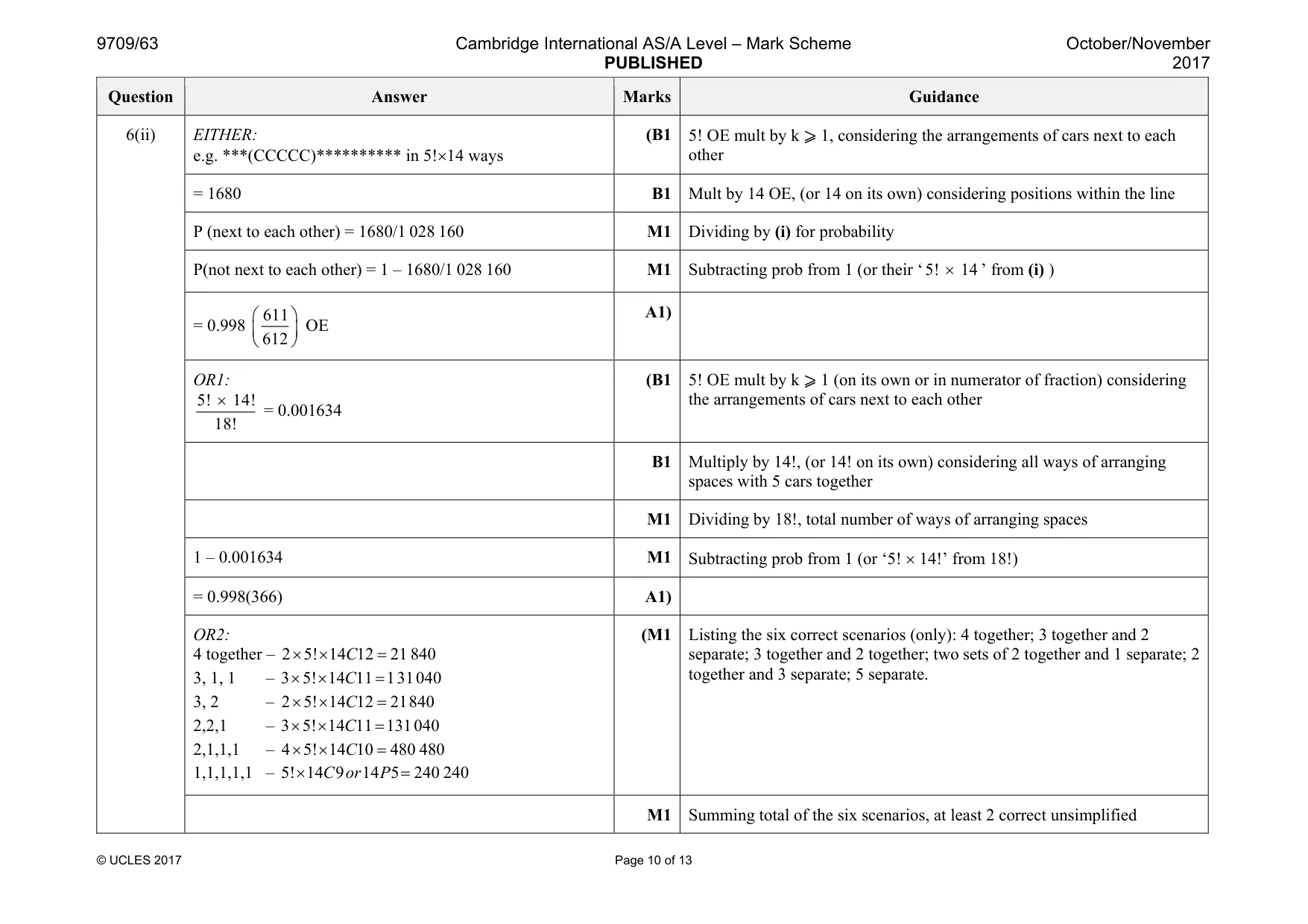
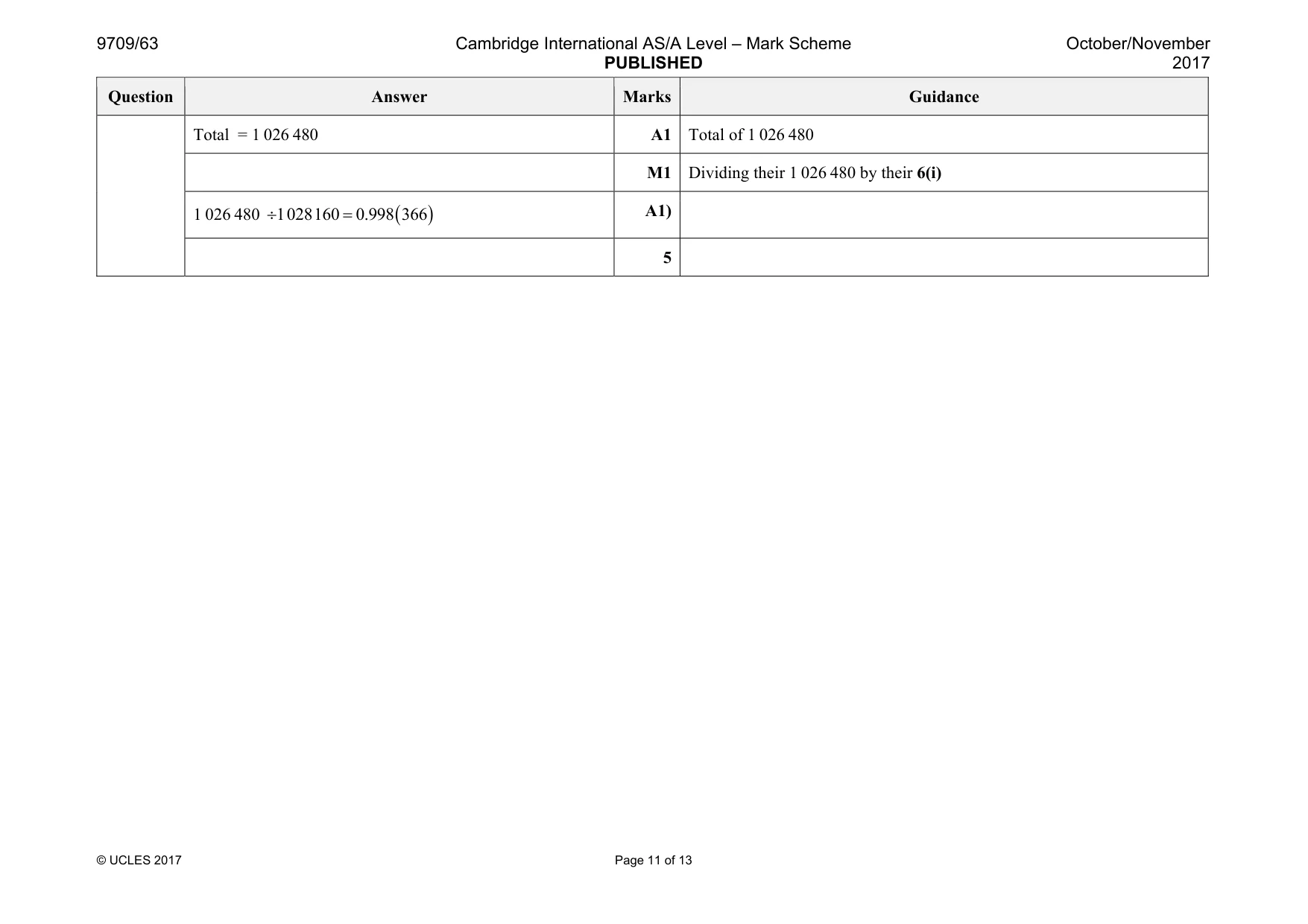
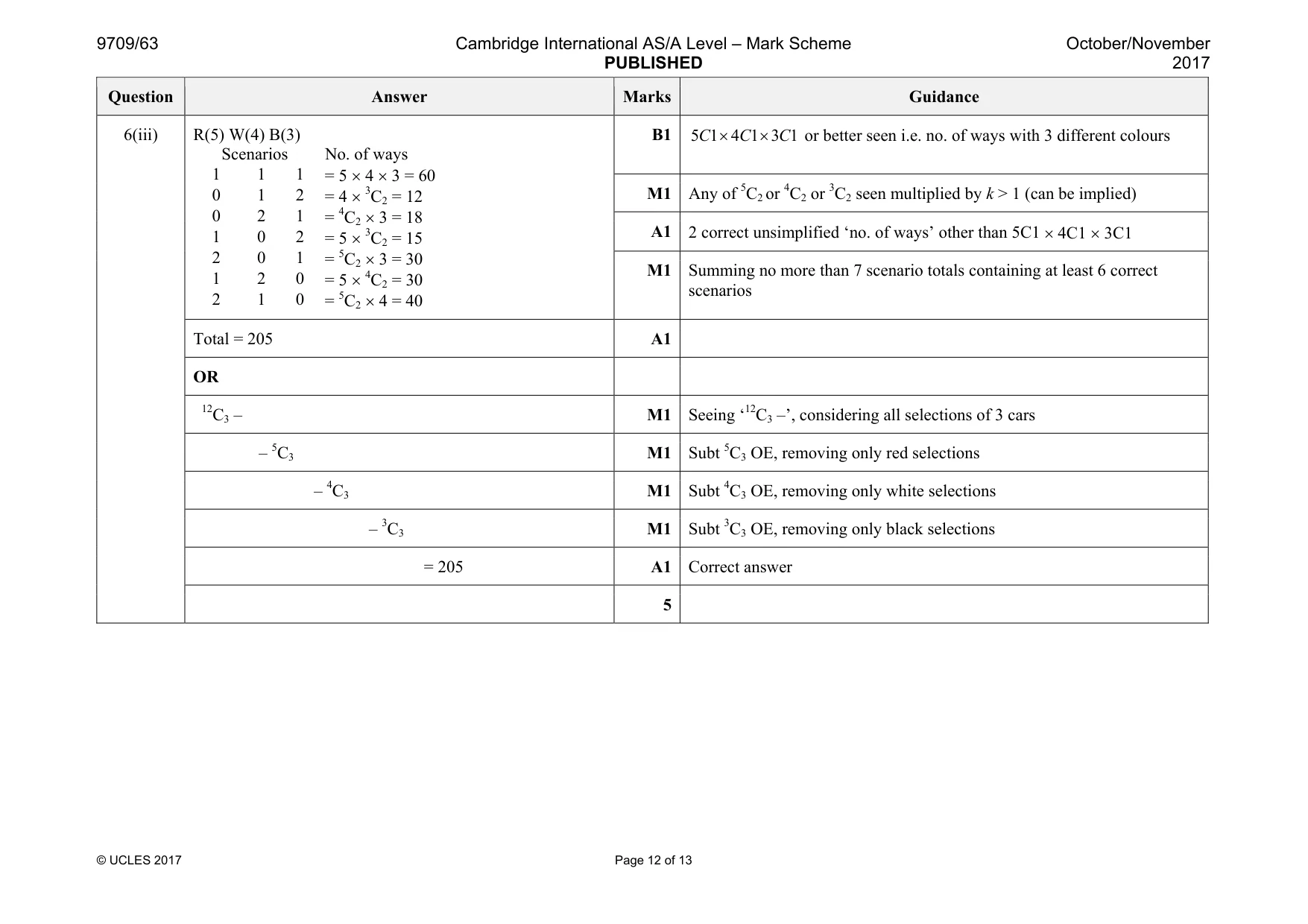
Mark scheme: 6(i) M1 = 1 028 160 A1 2 Question Answer Marks Guidance 6(ii) EITHER: e.g. ***(CCCCC)********** in 5!×14 ways (B1 5! OE mult by k ⩾ 1, considering the arrangements of cars next to each other = 1680 B1 Mult by 14 OE, (or 14 on its own) considering positions within the line P (next to each other) = 1680/1 028 160 M1 Dividing by (i) for probability P(not next to each other) = 1 – 1680/1 028 160 M1 Subtracting prob from 1 (or their ‘5! 14 × ’ from (i) ) = 0.998 611 612 OE A1) OR1: 5! 14! 18! × = 0.001634 (B1 5! OE mult by k ⩾ 1 (on its own or in numerator of fraction) considering the arrangements of cars next to each other B1 Multiply by 14!, (or 14! on its own) considering all ways of arranging spaces with 5 cars together M1 Dividing by 18!, total number of ways of arranging spaces 1 – 0.001634 M1 Subtracting prob from 1 (or ‘5! × 14!’ from 18!) = 0.998(366) A1) OR2: 4 together – 2 5! 14 12 21 840 × × = C 3, 1, 1 – 3 5! 14 11 131040 × × = C 3, 2 – 2 5! 14 12 21840 × × = C 2,2,1 – 3 5! 14 11 131040 × × = C 2,1,1,1 – 4 5! 14 10 480 480 × × = C 1,1,1,1,1 – 5! 14 9 1 4 5 240 240 × = C or P (M1 Listing the six correct scenarios (only): 4 together; 3 together and 2 separate; 3 together and 2 together; two sets of 2 together and 1 separate; 2 together and 3 separate; 5 separate. M1 Summing total of the six scenarios, at least 2 correct unsimplified Question Answer Marks Guidance Total = 1 026 480 A1 Total of 1 026 480 M1 Dividing their 1 026 480 by their 6(i) 1 026 480 ( ) 1028160 0.998 366 ÷ = A1) 5 Question Answer Marks Guidance 6(iii) R(5) W(4) B(3) Scenarios No. of ways 1 1 1 = 5 × 4 × 3 = 60 0 1 2 = 4 × 3C2 = 12 0 2 1 = 4C2 × 3 = 18 1 0 2 = 5 × 3C2 = 15 2 0 1 = 5C2 × 3 = 30 1 2 0 = 5 × 4C2 = 30 2 1 0 = 5C2 × 4 = 40 B1 5 1 4 1 3 1 × × C C C or better seen i.e. no. of ways with 3 different colours M1 Any of 5C2 or 4C2 or 3C2 seen multiplied by k > 1 (can be implied) A1 2 correct unsimplified ‘no. of ways’ other than 5C1 × 4C1 × 3C1 M1 Summing no more than 7 scenario totals containing at least 6 correct scenarios Total = 205 A1 OR 12C3 – M1 Seeing ‘12C3 –’, considering all selections of 3 cars – 5C3 M1 Subt 5C3 OE, removing only red selections – 4C3 M1 Subt 4C3 OE, removing only white selections – 3C3 M1 Subt 3C3 OE, removing only black selections = 205 A1 Correct answer 5
Q7 · Josie aims to catch a bus which departs at a fixed time every day
7 Josie aims to catch a bus which departs at a fixed time every day. Josie arrives at the bus stop T minutes before the bus departs, where T ∼N 5.3, 2.12 . (i) Find the probability that Josie has to wait longer than 6 minutes at the bus stop. [3] ........................................................................................................................................................ ........................................................................................................................................................ ........................................................................................................................................................ ........................................................................................................................................................ ........................................................................................................................................................ ........................................................................................................................................................ ........................................................................................................................................................ ........................................................................................................................................................ ........................................................................................................................................................ ........................................................................................................................................................ On 5% of days Josie has to wait longer than x minutes at the bus stop. (ii) Find the value of x. [3] ........................................................................................................................................................ ........................................................................................................................................................ ........................................................................................................................................................ ........................................................................................................................................................ ........................................................................................................................................................ ........................................................................................................................................................ ........................................................................................................................................................ ........................................................................................................................................................ ........................................................................................................................................................ ........................................................................................................................................................ ........................................................................................................................................................ (iii) Find the probability that Josie waits longer than x minutes on fewer than 3 days in 10 days. [3] ........................................................................................................................................................ ........................................................................................................................................................ ........................................................................................................................................................ ........................................................................................................................................................ ........................................................................................................................................................ ........................................................................................................................................................ ........................................................................................................................................................ ........................................................................................................................................................ ........................................................................................................................................................ ........................................................................................................................................................ ........................................................................................................................................................ ........................................................................................................................................................ (iv) Find the probability that Josie misses the bus. [3] ........................................................................................................................................................ ........................................................................................................................................................ ........................................................................................................................................................ ........................................................................................................................................................ ........................................................................................................................................................ ........................................................................................................................................................ ........................................................................................................................................................ ........................................................................................................................................................ ........................................................................................................................................................ ........................................................................................................................................................ ........................................................................................................................................................ ........................................................................................................................................................
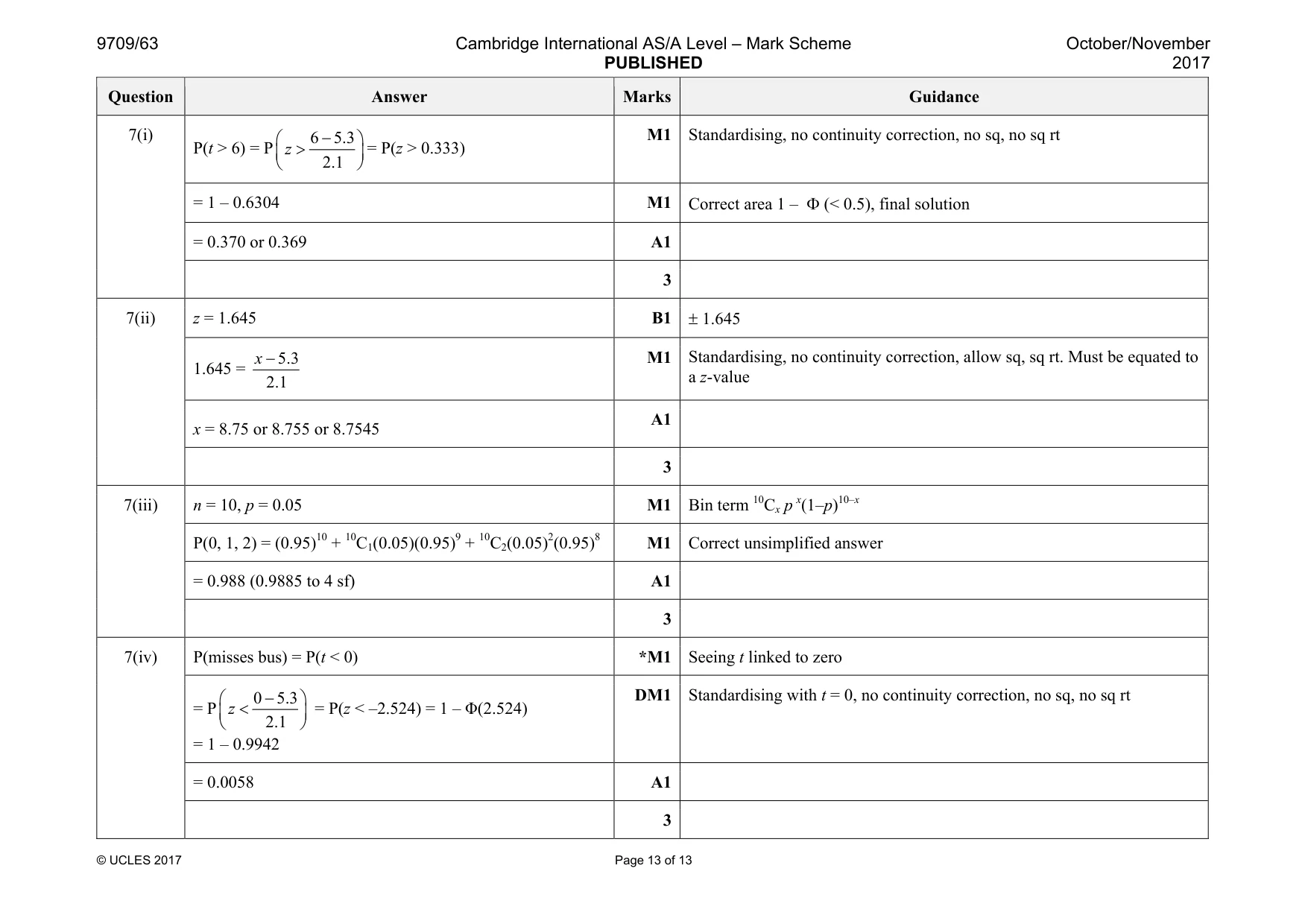
Mark scheme: 7(i) P(t > 6) = P 6 5.3 2.1 − > z = P(z > 0.333) M1 = 1 – 0.6304 M1 Correct area 1 – Φ (< 0.5), final solution = 0.370 or 0.369 A1 3 7(ii) z = 1.645 B1 ± 1.645 1.645 = 5.3 2.1 x − M1 Standardising, no continuity correction, allow sq, sq rt. Must be equated to a z-value x = 8.75 or 8.755 or 8.7545 A1 3 7(iii) n = 10, p = 0.05 M1 Bin term 10Cx p x(1–p)10–x P(0, 1, 2) = (0.95)10 + 10C1(0.05)(0.95)9 + 10C2(0.05)2(0.95)8 M1 Correct unsimplified answer = 0.988 (0.9885 to 4 sf) A1 3 7(iv) P(misses bus) = P(t < 0) *M1 Seeing t linked to zero = P 0 5.3 2.1 − < z = P(z < –2.524) = 1 – Φ(2.524) = 1 – 0.9942 DM1 Standardising with t = 0, no continuity correction, no sq, no sq rt = 0.0058 A1 3
What was in this paper
The subtopics covered by these 5 questions, and how many questions each got. Open one in a new tab to see every Cambridge question on it.
What you needed in this session
Cambridge’s own grade thresholds for 2017 Oct/Nov, Paper 6 · Variant 3. A higher threshold means an easier paper — the bar moves with how the cohort did.