Questions as text
Q1 · A new industrial preparation of ethyl ethanoate has been developed using cheap sources of… 9701/11 May/June 2006
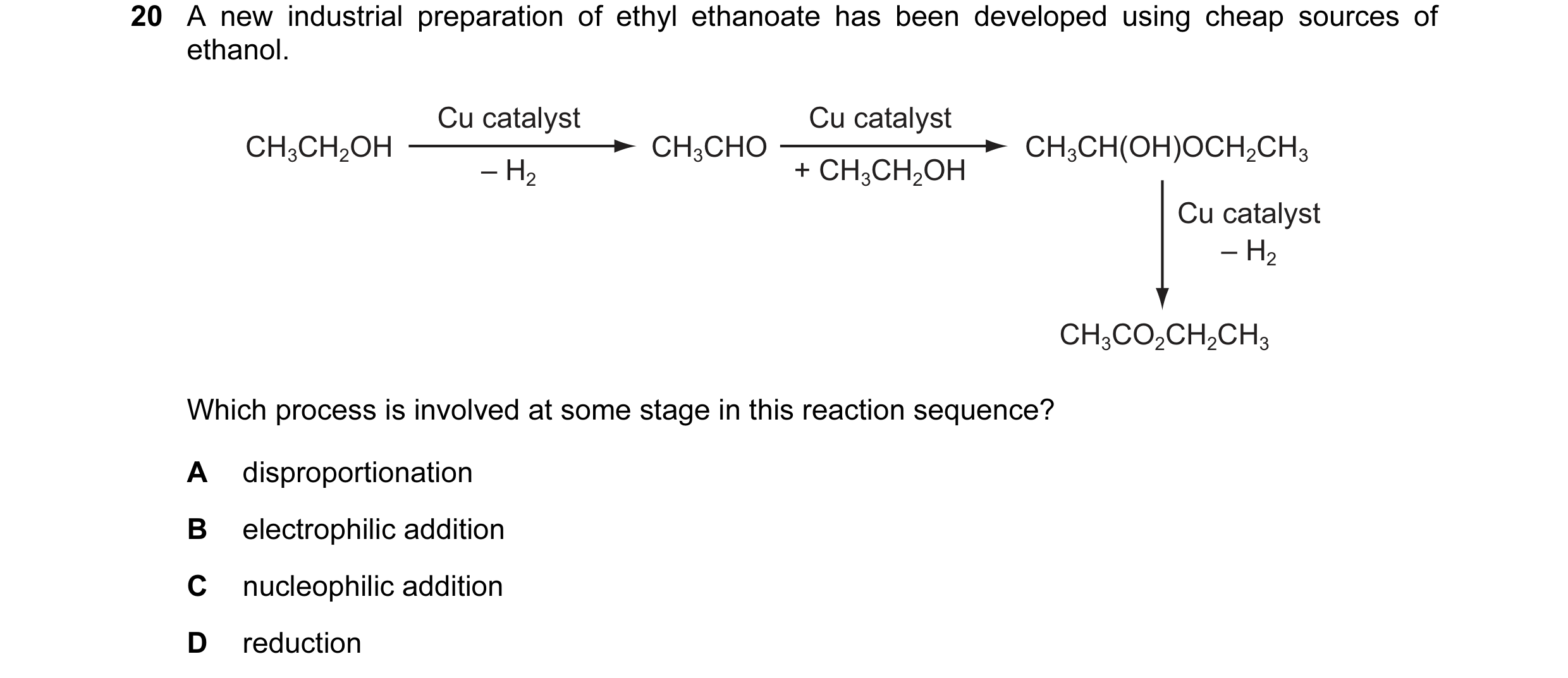
20 A new industrial preparation of ethyl ethanoate has been developed using cheap sources of ethanol. Cu catalyst Cu catalyst CH3CH2OH CH3CHO CH3CH(OH)OCH2CH3 – H2 + CH3CH2OH Cu catalyst – H2 CH3CO2CH2CH3 Which process is involved at some stage in this reaction sequence? A disproportionation B electrophilic addition C nucleophilic addition D reduction
1 marks
Answer: C
This question in 9701/11 May/June 2006
Q2 · When (chloromethyl)benzene, C6H5CH2Cl, is treated in succession with two reagents X and… 9701/11 Oct/Nov 2006
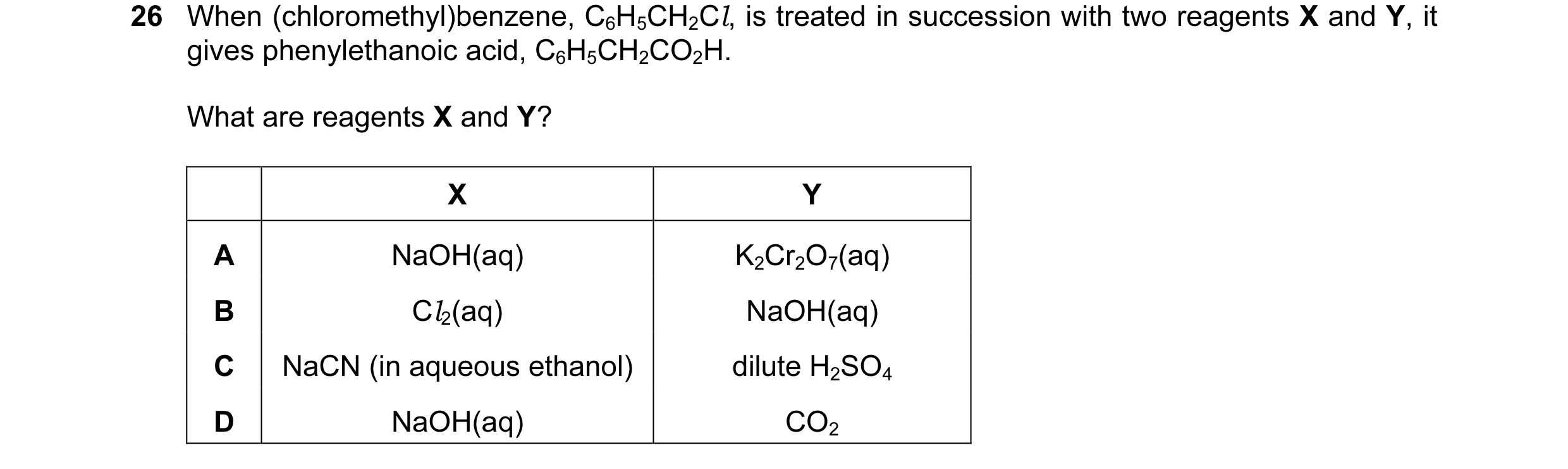
26 When (chloromethyl)benzene, C6H5CH2Cl, is treated in succession with two reagents X and Y, it gives phenylethanoic acid, C6H5CH2CO2H. What are reagents X and Y? X Y A NaOH(aq) K2Cr2O7(aq) B Cl2(aq) NaOH(aq) C NaCN (in aqueous ethanol) dilute H2SO4 D NaOH(aq) CO2
1 marks
Answer: C
This question in 9701/11 Oct/Nov 2006
Q3 · Apples, the fruit of trees of the genus Malus, are rich in malic acid 9701/11 Oct/Nov 2006
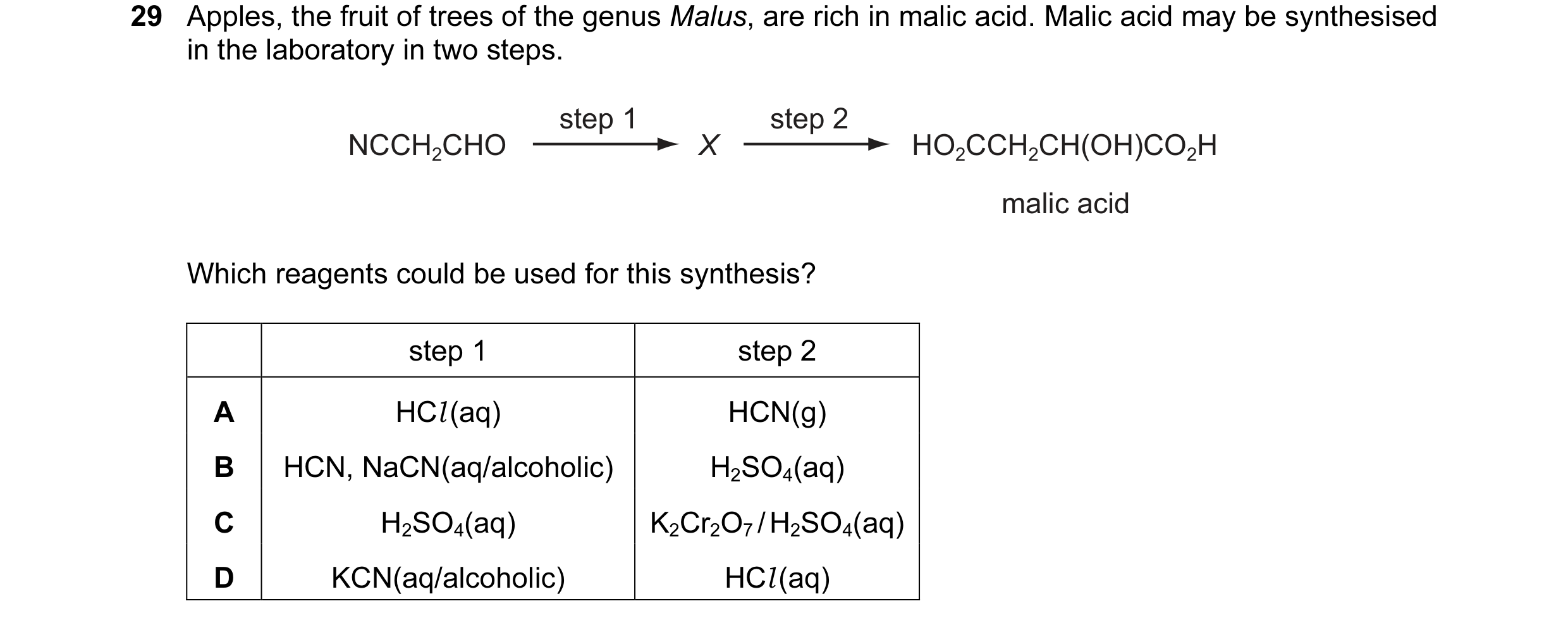
29 Apples, the fruit of trees of the genus Malus, are rich in malic acid. Malic acid may be synthesised in the laboratory in two steps. step 1 step 2 NCCH2CHO X HO2CCH2CH(OH)CO2H malic acid Which reagents could be used for this synthesis? step 1 step 2 A HCl (aq) HCN(g) B HCN, NaCN(aq/alcoholic) H2SO4(aq) C H2SO4(aq) K2Cr2O7 / H2SO4(aq) D KCN(aq/alcoholic) HCl (aq)
1 marks
Answer: B
This question in 9701/11 Oct/Nov 2006
Q4 · Ethyl phenylethanoate, C6H5CH2CO2C2H5, gives a characteristic flowery aroma to honey 9701/11 Oct/Nov 2008
26 Ethyl phenylethanoate, C6H5CH2CO2C2H5, gives a characteristic flowery aroma to honey. Which sequence of reagents, with heating in each case, leads to the preparation of C6H5CH2CO2C2H5 from C6H5CH2Br? NaOH(aq) C2H5COCl A C6H5CH2Br NaOH(aq) C2H5CO2H, conc. H2SO4 B C6H5CH2Br NaCN(alcoholic) H+(aq) C2H5OH, conc. H2SO4 C C6H5CH2Br NaOH(aq) conc. MnO4, H+(aq) – C2H5OH, conc. H2SO4 D C6H5CH2Br
1 marks
Answer: C
This question in 9701/11 Oct/Nov 2008
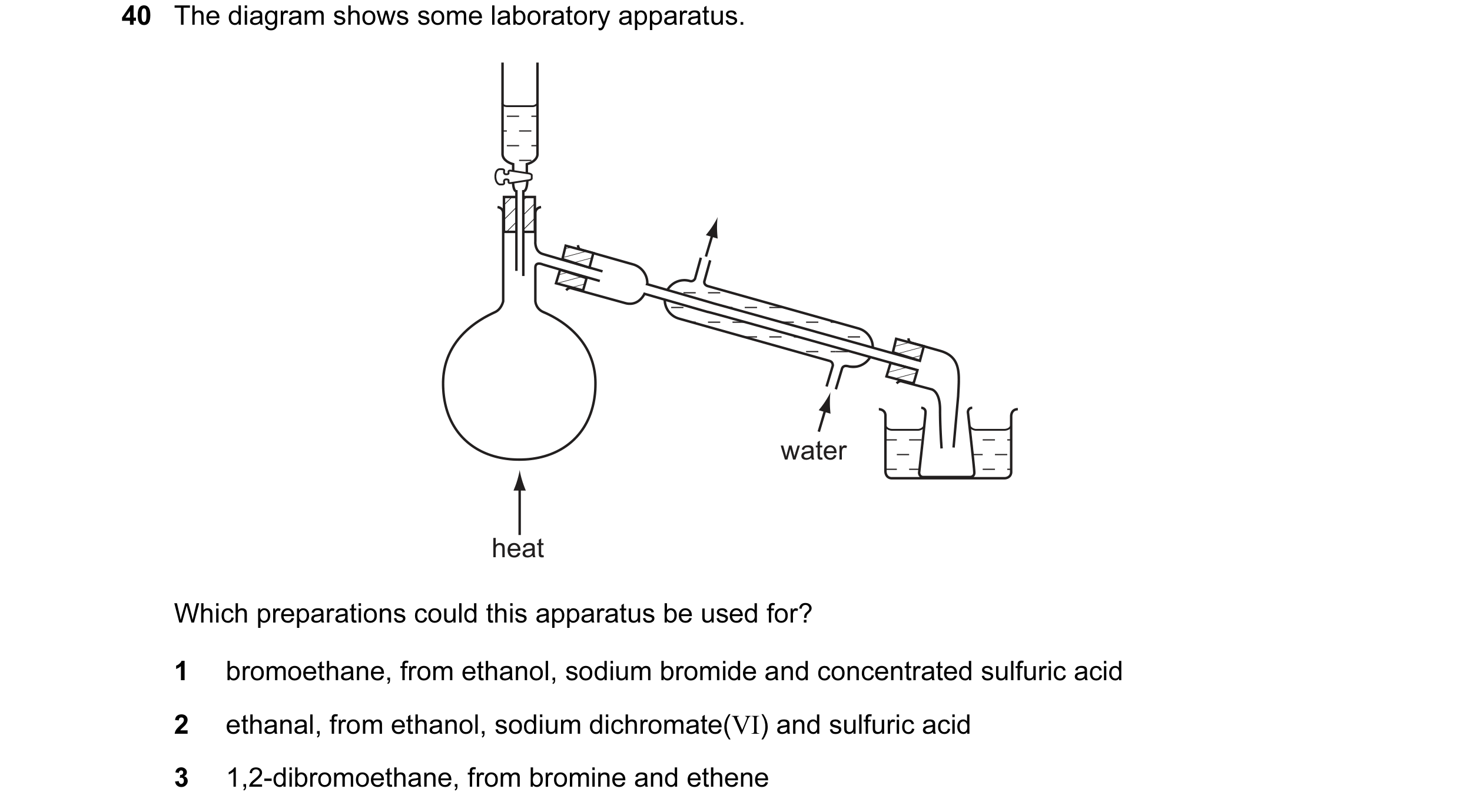
Q5 · The diagram shows some laboratory apparatus 9701/11 May/June 2010
40 The diagram shows some laboratory apparatus. water heat Which preparations could this apparatus be used for? 1 bromoethane, from ethanol, sodium bromide and concentrated sulfuric acid 2 ethanal, from ethanol, sodium dichromate(VI) and sulfuric acid 3 1,2-dibromoethane, from bromine and ethene
1 marks
Answer: B
This question in 9701/11 May/June 2010
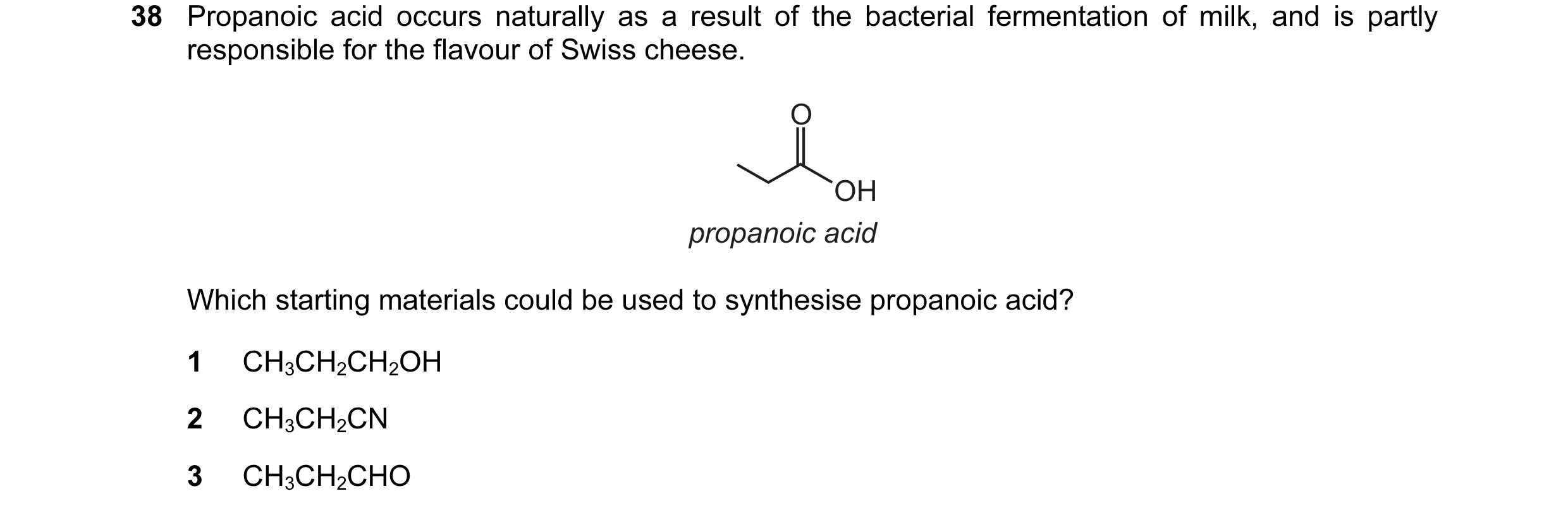
Q6 · Propanoic acid occurs naturally as a result of the bacterial fermentation of milk, and is… 9701/12 May/June 2010
38 Propanoic acid occurs naturally as a result of the bacterial fermentation of milk, and is partly responsible for the flavour of Swiss cheese. O OH propanoic acid Which starting materials could be used to synthesise propanoic acid? 1 CH3CH2CH2OH 2 CH3CH2CN 3 CH3CH2CHO
1 marks
Answer: A
This question in 9701/12 May/June 2010
Q7 · The diagram shows some laboratory apparatus 9701/12 May/June 2010
40 The diagram shows some laboratory apparatus. water heat Which preparations could this apparatus be used for? 1 bromoethane, from ethanol, sodium bromide and concentrated sulfuric acid 2 ethanal, from ethanol, sodium dichromate(VI) and sulfuric acid 3 1,2-dibromoethane, from bromine and ethene
1 marks
Answer: B
This question in 9701/12 May/June 2010
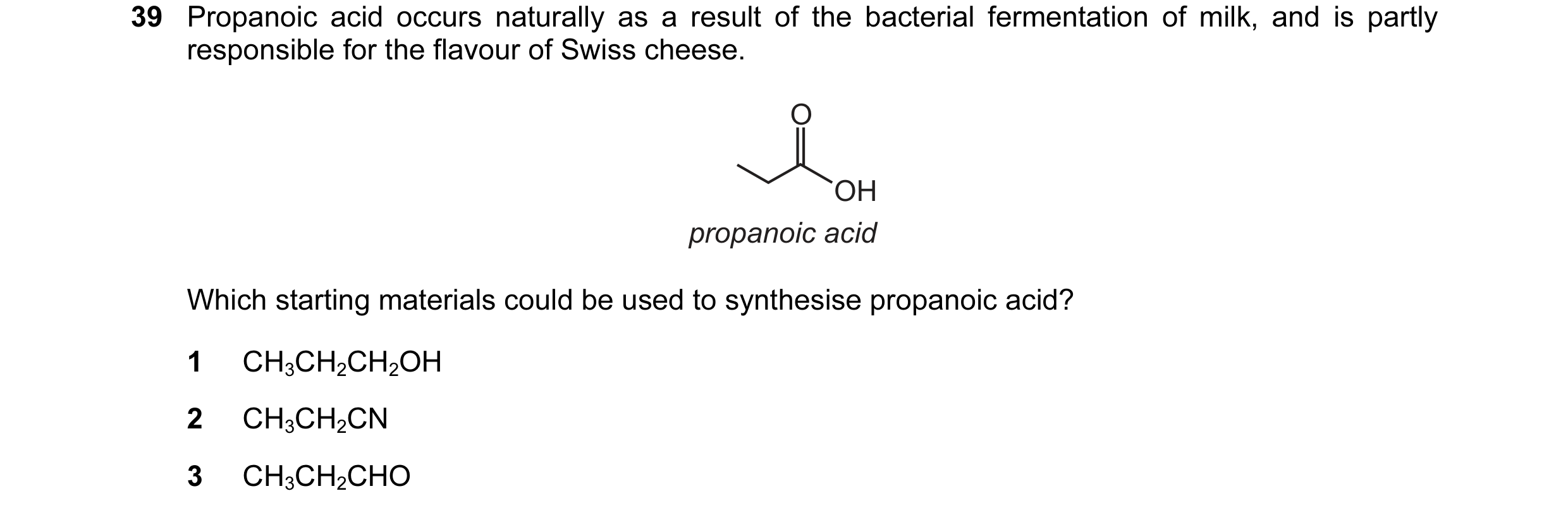
Q8 · Propanoic acid occurs naturally as a result of the bacterial fermentation of milk, and is… 9701/13 May/June 2010
39 Propanoic acid occurs naturally as a result of the bacterial fermentation of milk, and is partly responsible for the flavour of Swiss cheese. O OH propanoic acid Which starting materials could be used to synthesise propanoic acid? 1 CH3CH2CH2OH 2 CH3CH2CN 3 CH3CH2CHO
1 marks
Answer: A
This question in 9701/13 May/June 2010
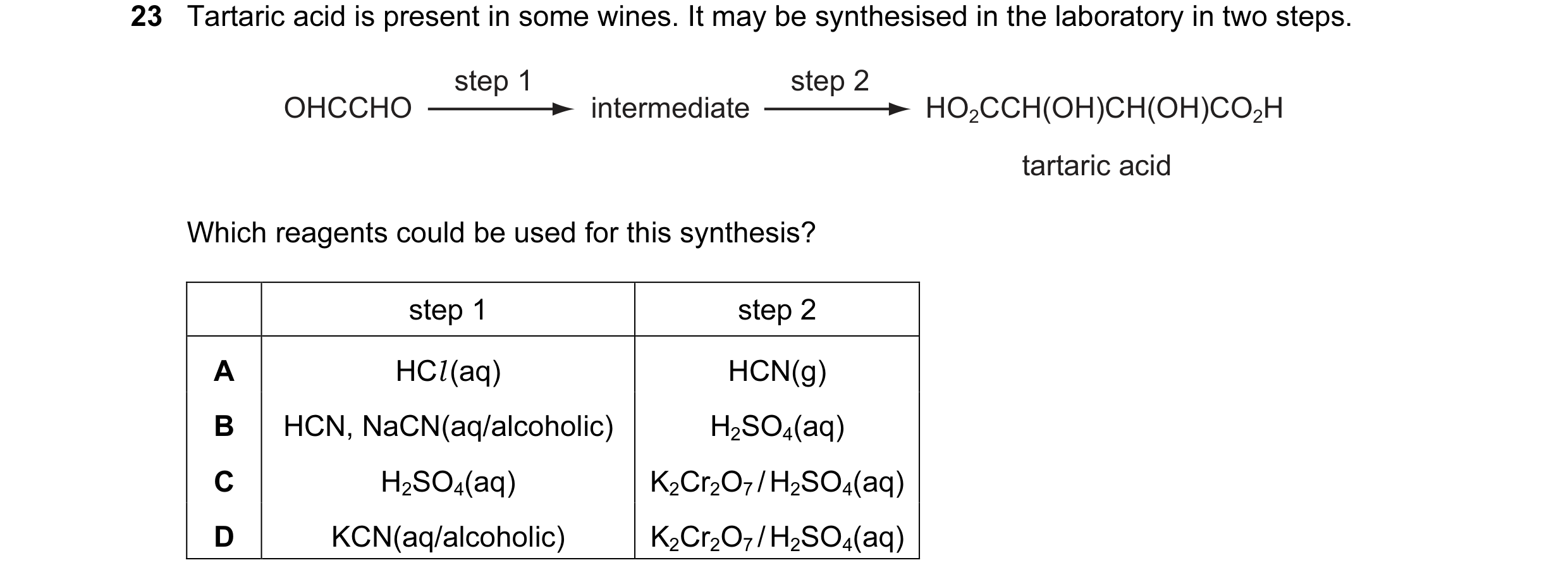
Q9 · Tartaric acid is present in some wines 9701/11 Oct/Nov 2010
23 Tartaric acid is present in some wines. It may be synthesised in the laboratory in two steps. step 1 step 2 OHCCHO intermediate HO2CCH(OH)CH(OH)CO2H tartaric acid Which reagents could be used for this synthesis? step 1 step 2 A HCl (aq) HCN(g) B HCN, NaCN(aq/alcoholic) H2SO4(aq) C H2SO4(aq) K2Cr2O7 / H2SO4(aq) D KCN(aq/alcoholic) K2Cr2O7 / H2SO4(aq)
1 marks
Answer: B
This question in 9701/11 Oct/Nov 2010
Q10 · Tartaric acid is present in some wines 9701/13 Oct/Nov 2010
24 Tartaric acid is present in some wines. It may be synthesised in the laboratory in two steps. step 1 step 2 OHCCHO intermediate HO2CCH(OH)CH(OH)CO2H tartaric acid Which reagents could be used for this synthesis? step 1 step 2 A HCl (aq) HCN(g) B HCN, NaCN(aq/alcoholic) H2SO4(aq) C H2SO4(aq) K2Cr2O7 / H2SO4(aq) D KCN(aq/alcoholic) K2Cr2O7 / H2SO4(aq)
1 marks
Answer: B
This question in 9701/13 Oct/Nov 2010
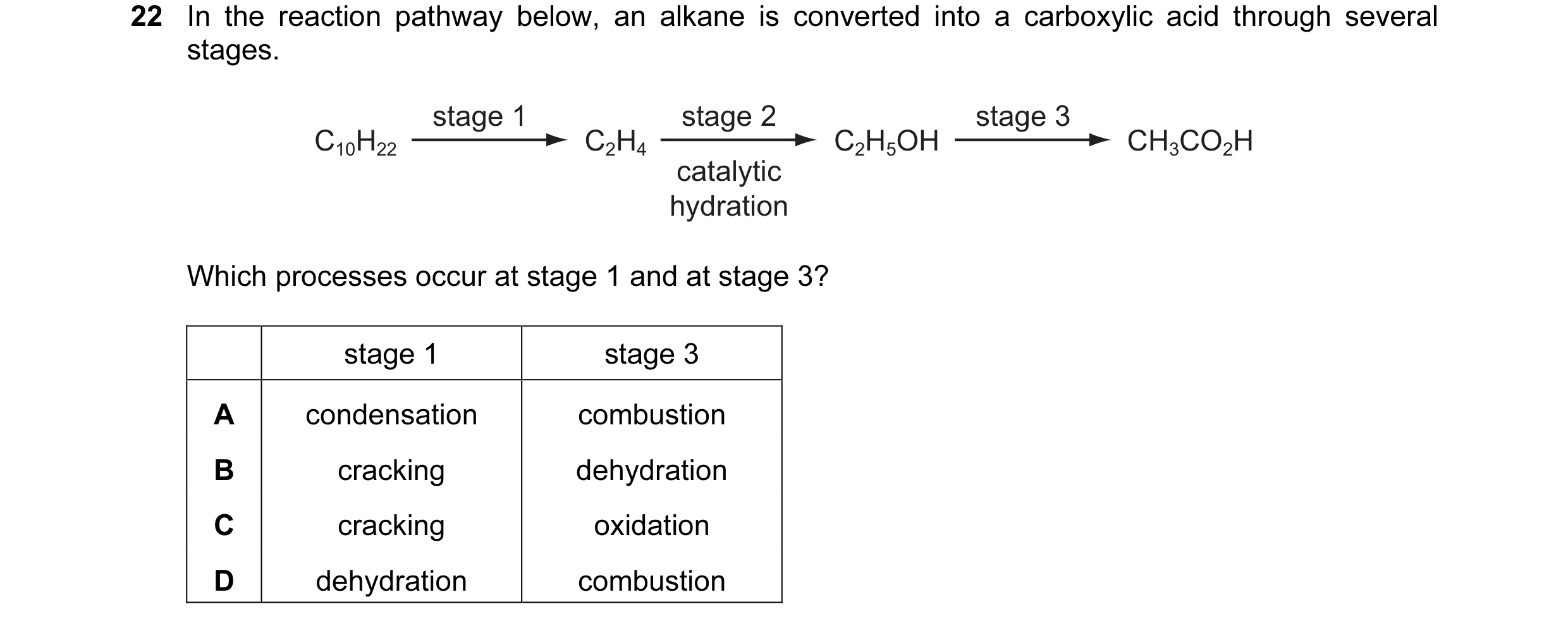
Q11 · In the reaction pathway below, an alkane is converted into a carboxylic acid through… 9701/13 May/June 2011
22 In the reaction pathway below, an alkane is converted into a carboxylic acid through several stages. stage 1 stage 2 stage 3 C10H22 C2H4 C2H5OH CH3CO2H catalytic hydration Which processes occur at stage 1 and at stage 3? stage 1 stage 3 A condensation combustion B cracking dehydration C cracking oxidation D dehydration combustion
1 marks
Answer: C
This question in 9701/13 May/June 2011
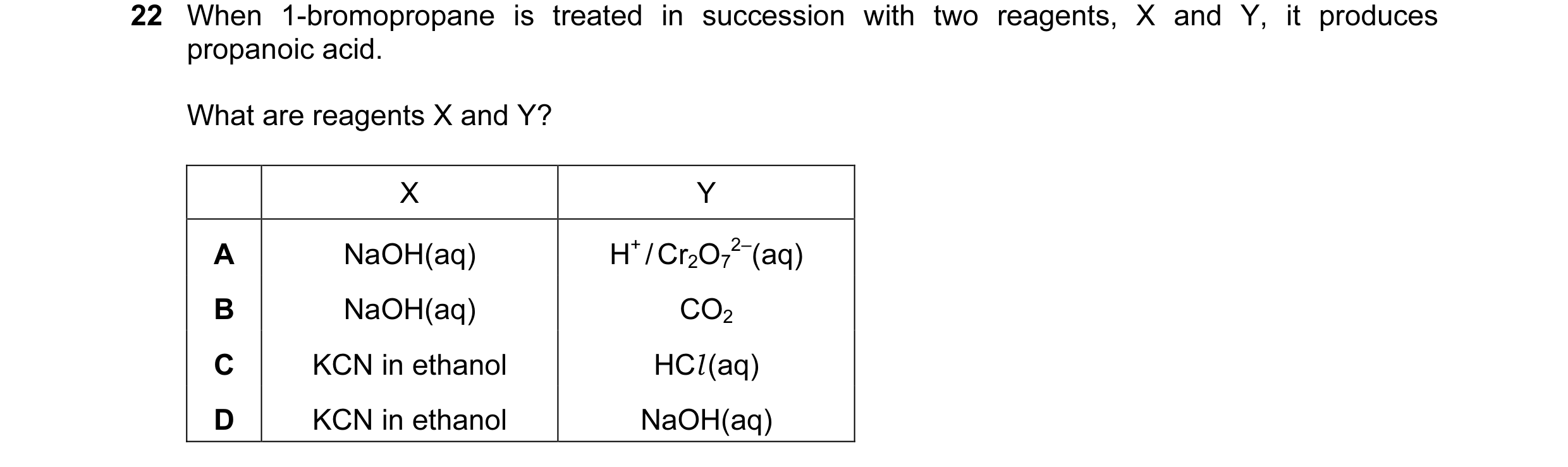
Q12 · When 1-bromopropane is treated in succession with two reagents, X and Y, it produces… 9701/12 May/June 2012
22 When 1-bromopropane is treated in succession with two reagents, X and Y, it produces propanoic acid. What are reagents X and Y? X Y A NaOH(aq) H+ / Cr2O7 2–(aq) B NaOH(aq) CO2 C KCN in ethanol HCl (aq) D KCN in ethanol NaOH(aq)
1 marks
Answer: A
This question in 9701/12 May/June 2012
Q13 · Fumaric acid can be converted into oxaloacetic acid by a two-step process involving the… 9701/13 May/June 2012
19 Fumaric acid can be converted into oxaloacetic acid by a two-step process involving the intermediate Q. step 1 step 2 HO2CCH=CHCO2H Q HO2CCOCH2CO2H fumaric acid oxaloacetic acid Each of these steps can be achieved in the laboratory by a single reagent. What could be the intermediate Q and the reagent for step 2? Q reagent for step 2 A HO2CCHBrCH2CO2H warm acidified KMnO4 B HO2CCHBrCH(OH)CO2H warm NaOH(aq) C HO2CCH(OH)CH2CO2H Fehling’s solution D HO2CCH(OH)CH2CO2H warm acidified K2Cr2O7
1 marks
Answer: D
This question in 9701/13 May/June 2012
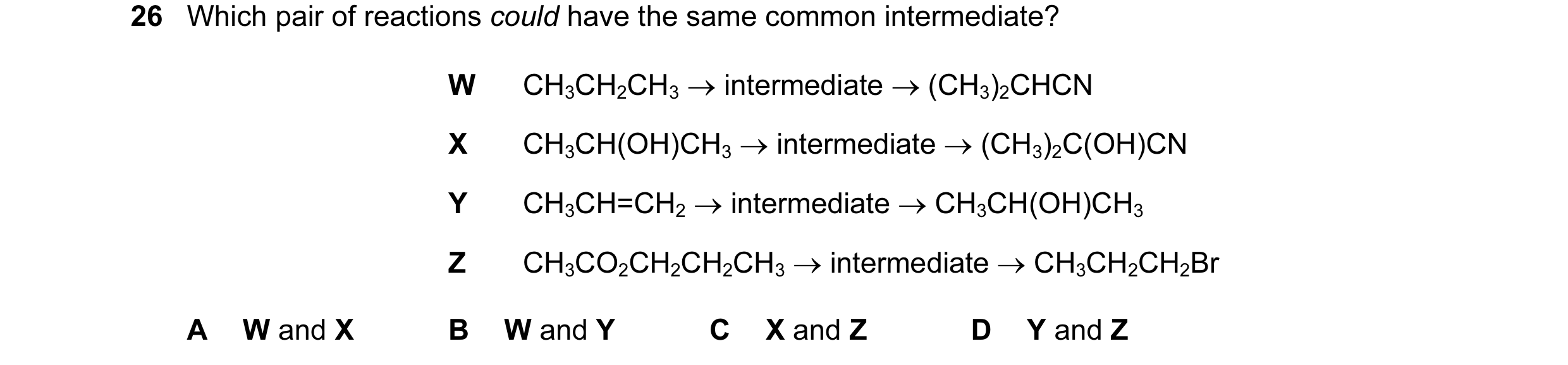
Q14 · Which pair of reactions could have the same common intermediate? 9701/13 Oct/Nov 2012
26 Which pair of reactions could have the same common intermediate? W CH3CH2CH3 → intermediate → (CH3)2CHCN X CH3CH(OH)CH3 → intermediate → (CH3)2C(OH)CN Y CH3CH=CH2 → intermediate → CH3CH(OH)CH3 Z CH3CO2CH2CH2CH3 → intermediate → CH3CH2CH2Br A W and X B W and Y C X and Z D Y and Z
1 marks
Answer: B
This question in 9701/13 Oct/Nov 2012
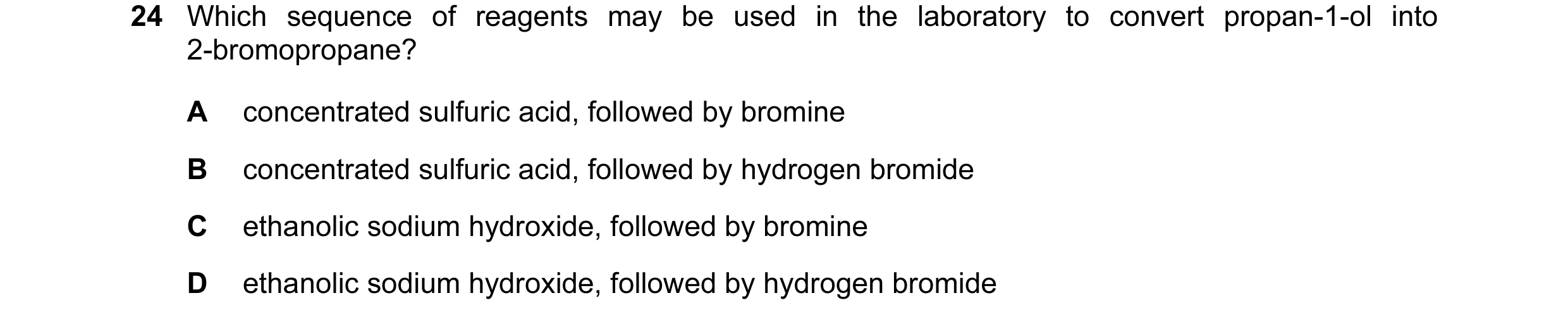
Q15 · Which sequence of reagents may be used in the laboratory to convert propan-1-ol into… 9701/13 May/June 2013
24 Which sequence of reagents may be used in the laboratory to convert propan-1-ol into 2-bromopropane? A concentrated sulfuric acid, followed by bromine B concentrated sulfuric acid, followed by hydrogen bromide C ethanolic sodium hydroxide, followed by bromine D ethanolic sodium hydroxide, followed by hydrogen bromide
1 marks
Answer: B
This question in 9701/13 May/June 2013
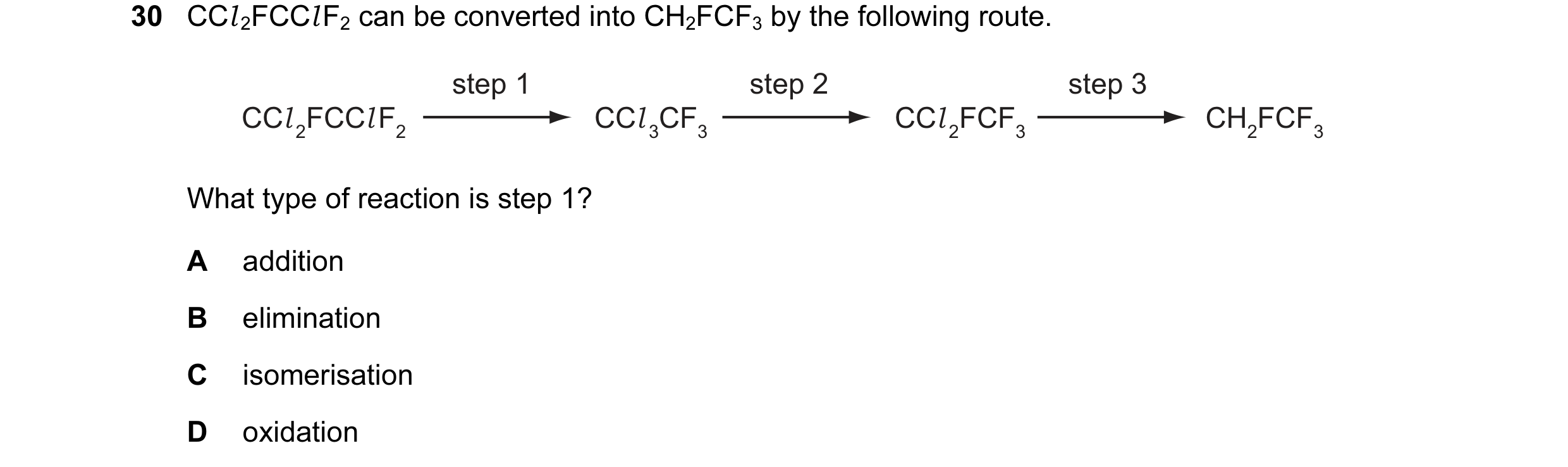
Q16 · CCl 2FCCl F2 can be converted into CH2FCF3 by the following route 9701/13 May/June 2013
30 CCl 2FCCl F2 can be converted into CH2FCF3 by the following route. step 1 step 2 step 3 CCl 2FCCl F2 CCl 3CF3 CCl 2FCF3 CH2FCF3 What type of reaction is step 1? A addition B elimination C isomerisation D oxidation
1 marks
Answer: C
This question in 9701/13 May/June 2013
Q17 · A new industrial preparation of ethyl ethanoate has been developed using cheap sources of… 9701/11 Oct/Nov 2013
20 A new industrial preparation of ethyl ethanoate has been developed using cheap sources of ethanol. Cu catalyst Cu catalyst CH3CH2OH CH3CHO CH3CH(OH)OCH2CH3 –2[H] + CH3CH2OH Cu catalyst –2[H] CH3CO2CH2CH3 Which process is involved at some stage in this reaction sequence? A electrophilic addition B nucleophilic addition C nucleophilic substitution D reduction
1 marks
Answer: B
This question in 9701/11 Oct/Nov 2013
Q18 · A new industrial preparation of ethyl ethanoate has been developed using cheap sources of… 9701/12 Oct/Nov 2013
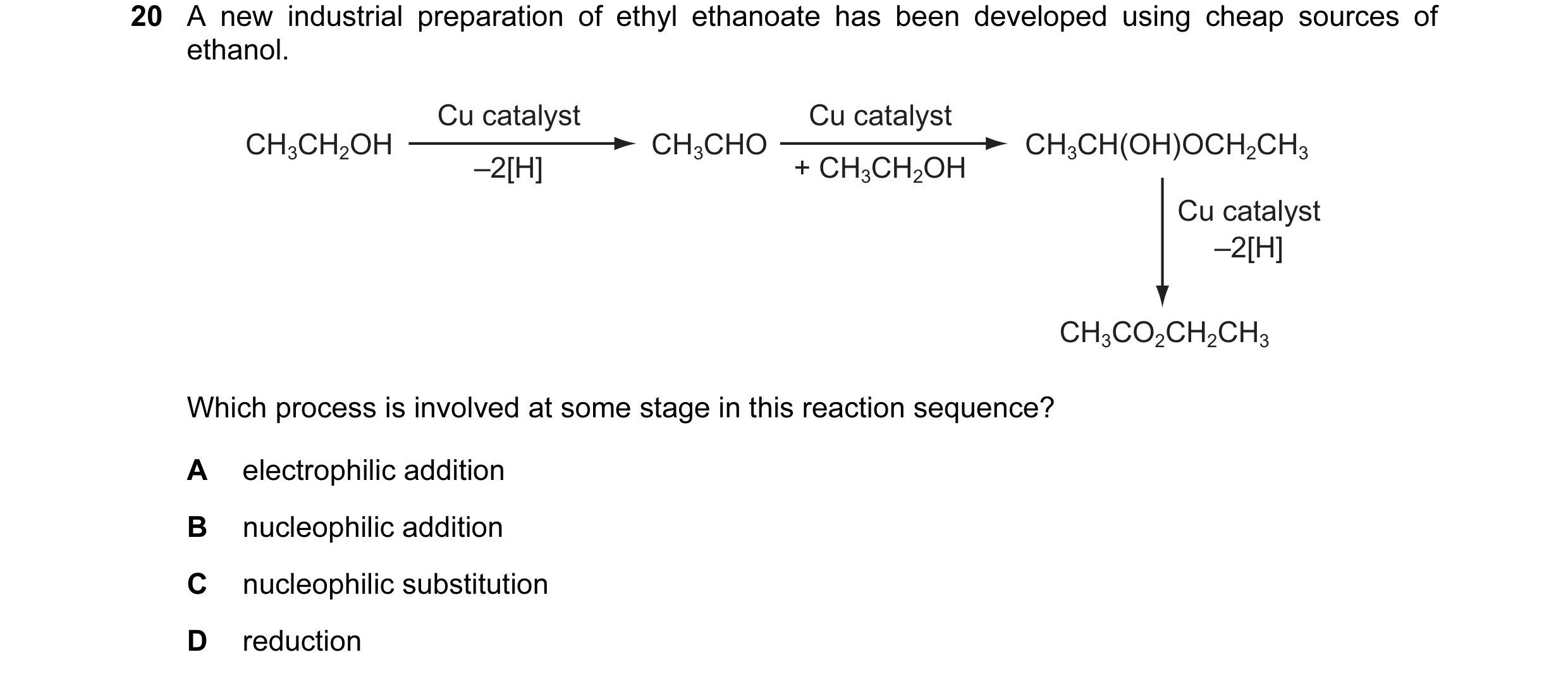
20 A new industrial preparation of ethyl ethanoate has been developed using cheap sources of ethanol. Cu catalyst Cu catalyst CH3CH2OH CH3CHO CH3CH(OH)OCH2CH3 –2[H] + CH3CH2OH Cu catalyst –2[H] CH3CO2CH2CH3 Which process is involved at some stage in this reaction sequence? A electrophilic addition B nucleophilic addition C nucleophilic substitution D reduction
1 marks
Answer: B
This question in 9701/12 Oct/Nov 2013
Q19 · The ester C2H5CO2CH2CH2CH3 can be made in a school or college laboratory by a sequence of… 9701/13 Oct/Nov 2013
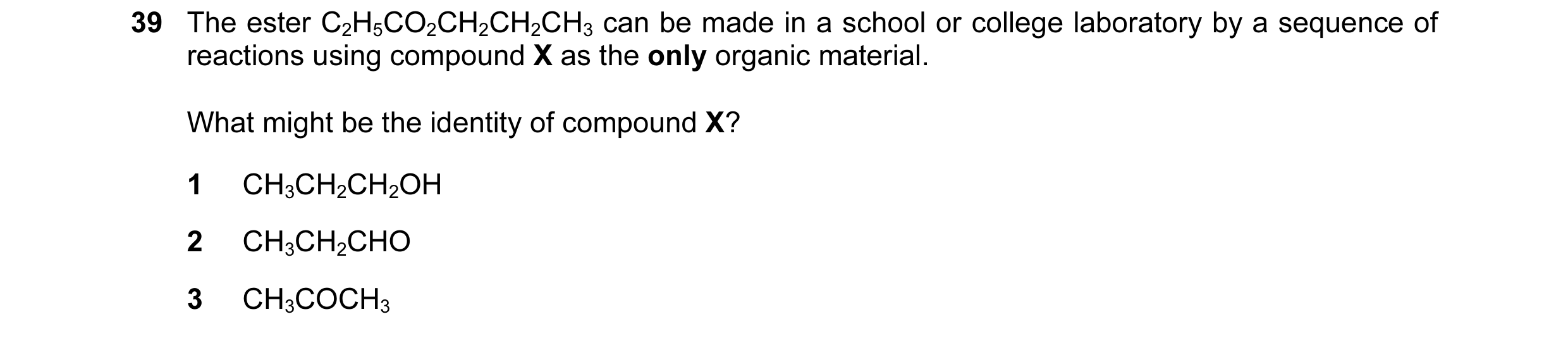
39 The ester C2H5CO2CH2CH2CH3 can be made in a school or college laboratory by a sequence of reactions using compound X as the only organic material. What might be the identity of compound X? 1 CH3CH2CH2OH 2 CH3CH2CHO 3 CH3COCH3
1 marks
Answer: B
This question in 9701/13 Oct/Nov 2013
Q20 · Butanoic acid can be produced from 1-bromopropane using reagents X and Y as shown below 9701/11 May/June 2014
30 Butanoic acid can be produced from 1-bromopropane using reagents X and Y as shown below. reagent X reagent Y 1-bromopropane compound Q butanoic acid What could be reagents X and Y? X Y A KCN in ethanol HCl (aq) B KCN in ethanol NaOH(aq) C NH3 in ethanol HCl (aq) D NaOH(aq) H+ / Cr2O7 2–(aq)
1 marks
Answer: A
This question in 9701/11 May/June 2014
Q21 · Use of the Data Booklet is relevant to this question 9701/11 May/June 2014
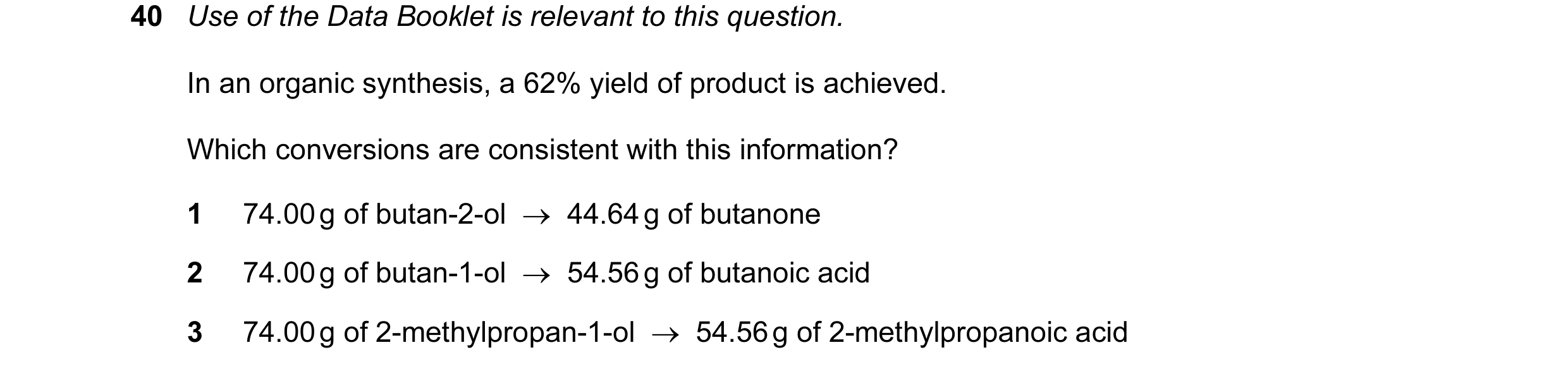
40 Use of the Data Booklet is relevant to this question. In an organic synthesis, a 62% yield of product is achieved. Which conversions are consistent with this information? 1 74.00 g of butan-2-ol → 44.64 g of butanone 2 74.00 g of butan-1-ol → 54.56 g of butanoic acid 3 74.00 g of 2-methylpropan-1-ol → 54.56 g of 2-methylpropanoic acid
1 marks
Answer: A
This question in 9701/11 May/June 2014
Q22 · Propanoic acid occurs naturally as a result of the bacterial fermentation of milk, and is… 9701/12 May/June 2014
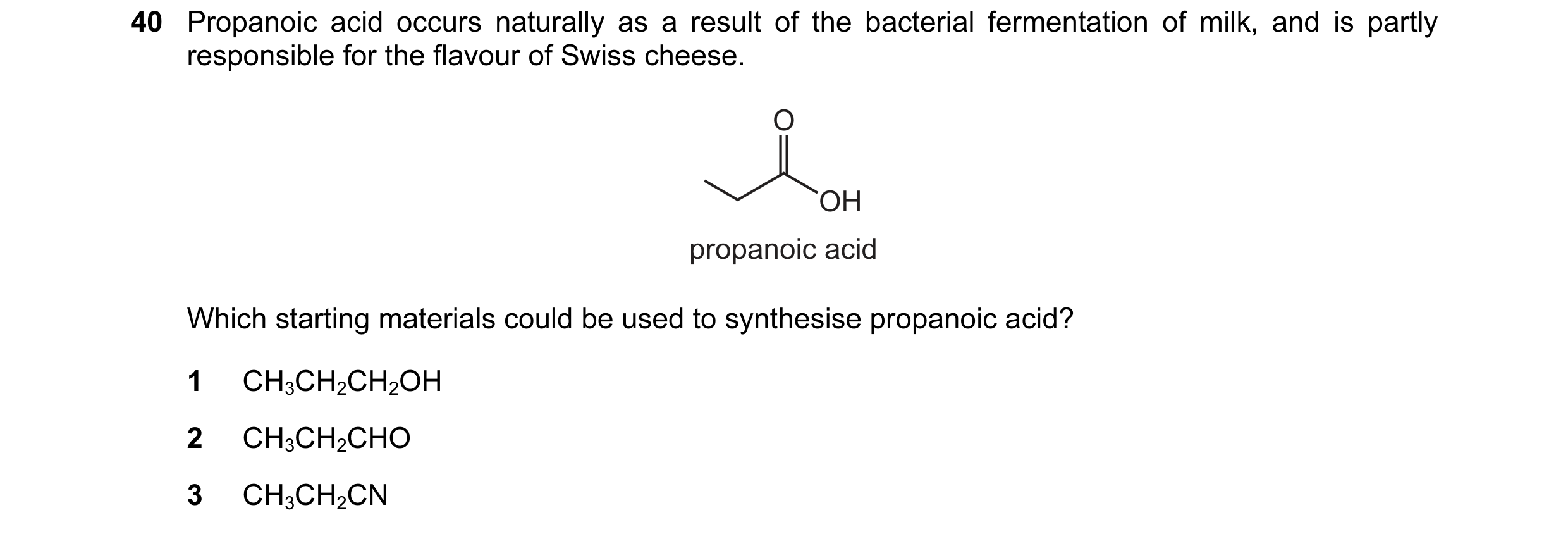
40 Propanoic acid occurs naturally as a result of the bacterial fermentation of milk, and is partly responsible for the flavour of Swiss cheese. O OH propanoic acid Which starting materials could be used to synthesise propanoic acid? 1 CH3CH2CH2OH 2 CH3CH2CHO 3 CH3CH2CN
1 marks
Answer: A
This question in 9701/12 May/June 2014
Q23 · Several steps are involved in the synthesis of 2-hydroxypropanoic acid from ethanol 9701/11 May/June 2016
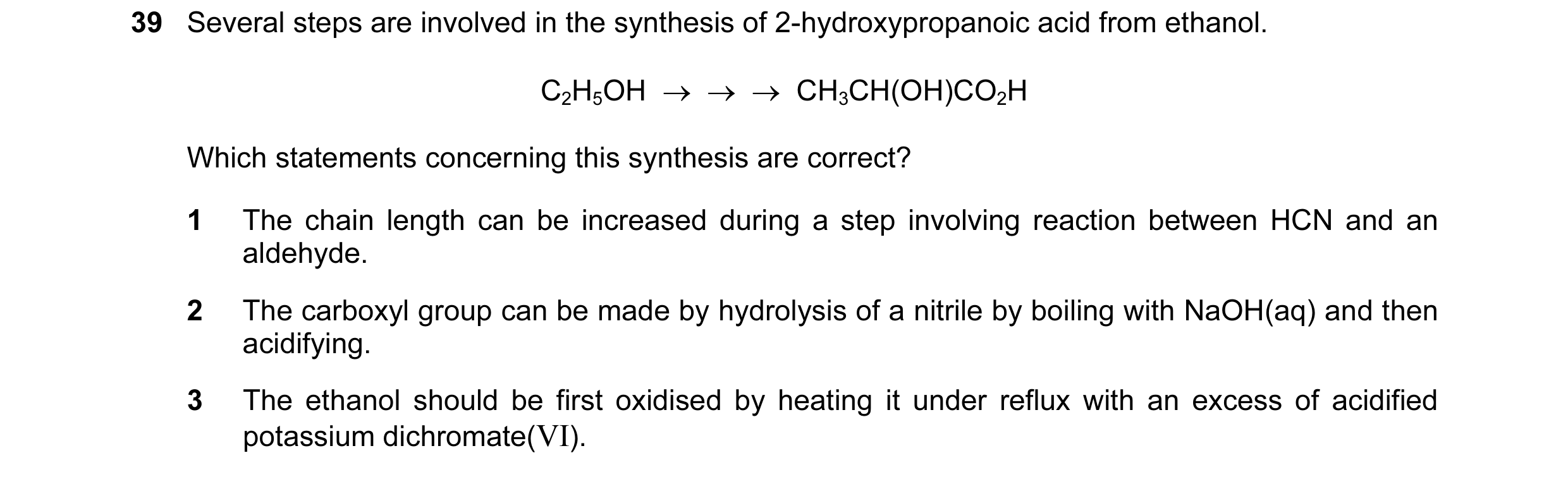
39 Several steps are involved in the synthesis of 2-hydroxypropanoic acid from ethanol. C2H5OH → → → CH3CH(OH)CO2H Which statements concerning this synthesis are correct? 1 The chain length can be increased during a step involving reaction between HCN and an aldehyde. 2 The carboxyl group can be made by hydrolysis of a nitrile by boiling with NaOH(aq) and then acidifying. 3 The ethanol should be first oxidised by heating it under reflux with an excess of acidified potassium dichromate(VI).
1 marks
Answer: B
This question in 9701/11 May/June 2016
Q24 · Which syntheses will be successful? 9701/12 May/June 2016
40 Which syntheses will be successful? 1 CH3CH2CH3 from CH3CH=CH2 + LiAl H4 2 CH3CH(OH)CH3 from CH3COCH3 + NaBH4 3 CH3CH2CH2OH from CH3CH2CHO + NaBH4
1 marks
Answer: C
This question in 9701/12 May/June 2016
Q25 · An ester with an aroma of pineapples can be synthesised in the laboratory from butanal… 9701/13 May/June 2016
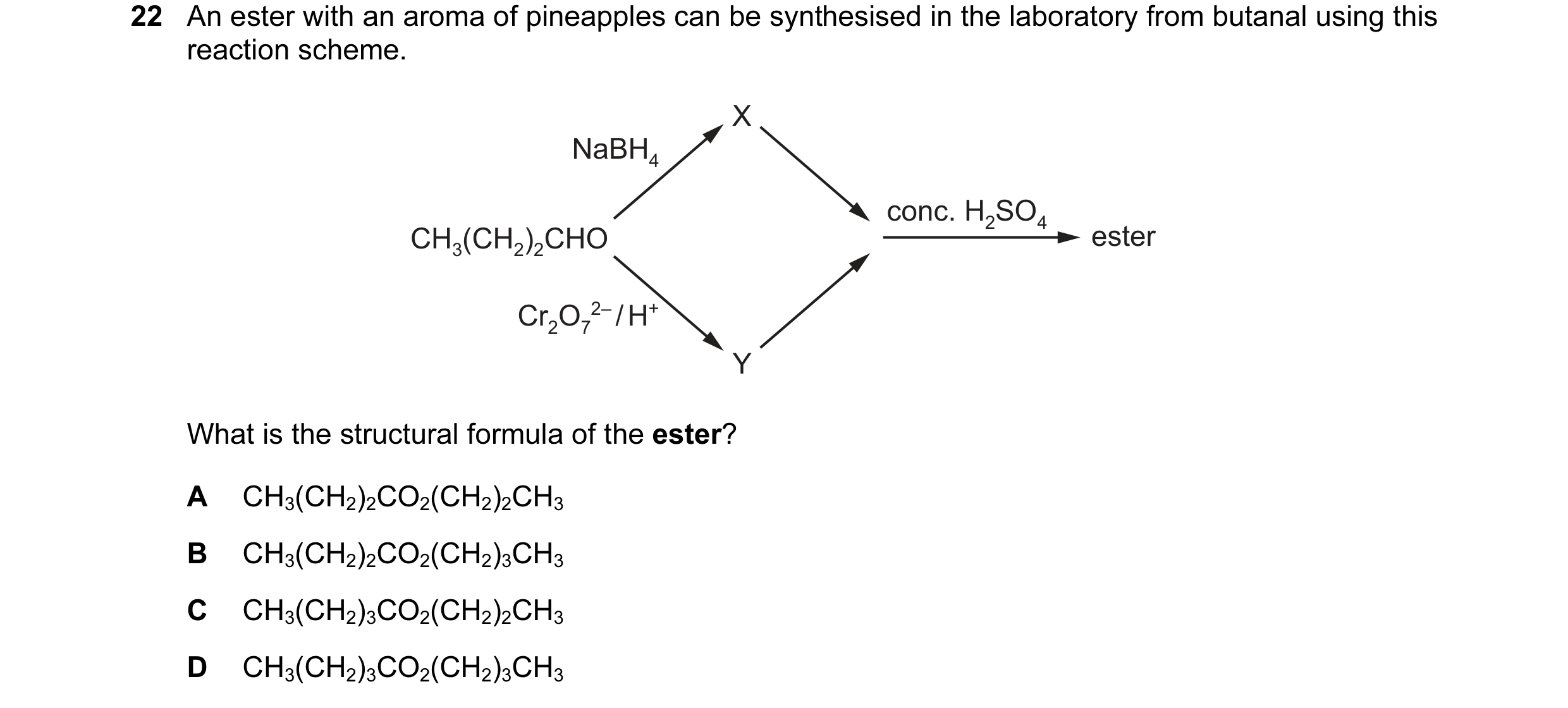
22 An ester with an aroma of pineapples can be synthesised in the laboratory from butanal using this reaction scheme. X NaBH4 conc. H2SO4 CH3(CH2)2CHO ester Cr2O7 2– / H+ Y What is the structural formula of the ester? A CH3(CH2)2CO2(CH2)2CH3 B CH3(CH2)2CO2(CH2)3CH3 C CH3(CH2)3CO2(CH2)2CH3 D CH3(CH2)3CO2(CH2)3CH3
1 marks
Answer: B
This question in 9701/13 May/June 2016
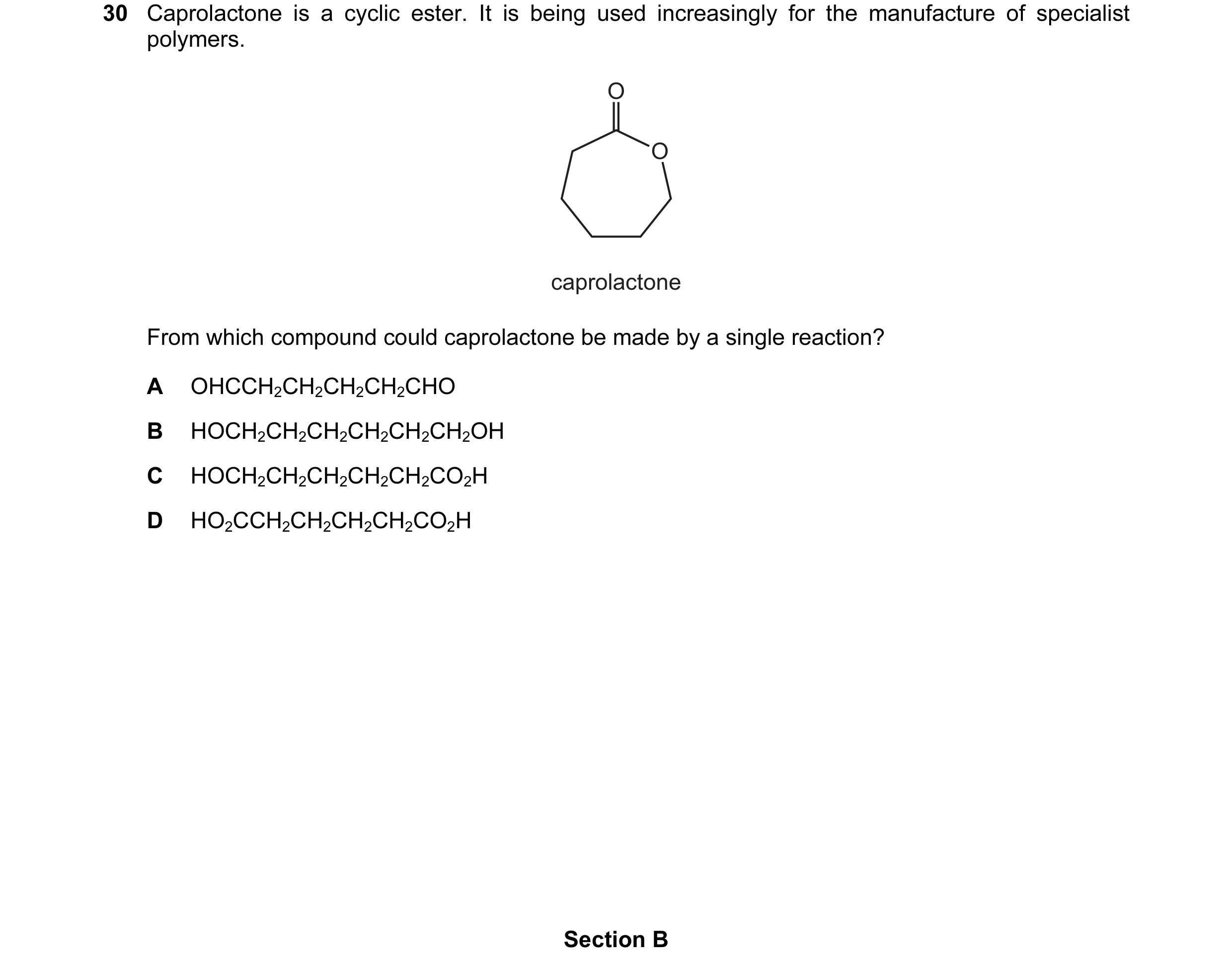
Q26 · Caprolactone is a cyclic ester 9701/13 May/June 2016
30 Caprolactone is a cyclic ester. It is being used increasingly for the manufacture of specialist polymers. O O caprolactone From which compound could caprolactone be made by a single reaction? A OHCCH2CH2CH2CH2CHO B HOCH2CH2CH2CH2CH2CH2OH C HOCH2CH2CH2CH2CH2CO2H D HO2CCH2CH2CH2CH2CO2H Section B
1 marks
Answer: C
This question in 9701/13 May/June 2016
Q27 · Butanoic acid can be produced from 1-bromopropane using reagents X and Y as shown 9701/13 May/June 2017
29 Butanoic acid can be produced from 1-bromopropane using reagents X and Y as shown. reagent X reagent Y 1-bromopropane compound Q butanoic acid What could be reagents X and Y? X Y A KCN in ethanol HCl (aq) B KCN in ethanol NaOH(aq) C NH3 in ethanol HCl (aq) D NaOH(aq) H+ / Cr2O7 2–(aq)
1 marks
Answer: A
This question in 9701/13 May/June 2017
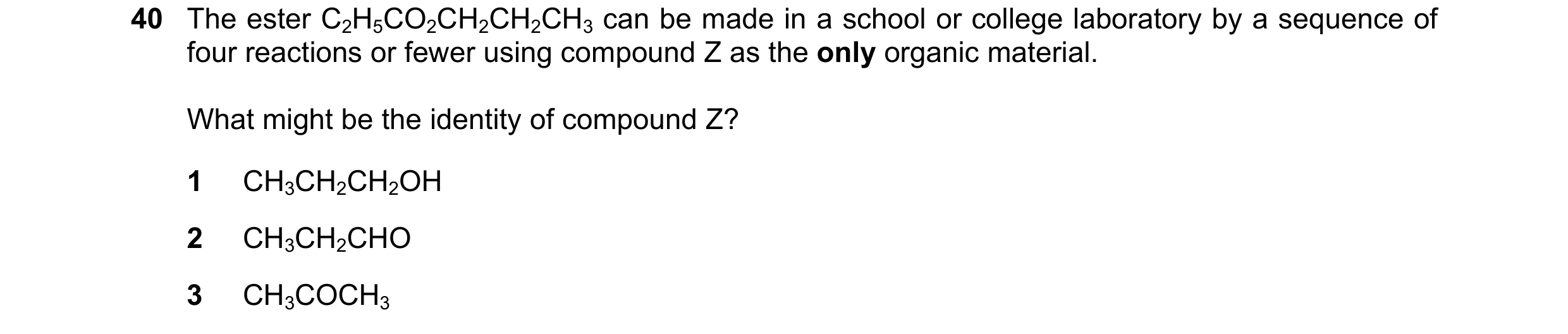
Q28 · The ester C2H5CO2CH2CH2CH3 can be made in a school or college laboratory by a sequence of… 9701/12 May/June 2018
40 The ester C2H5CO2CH2CH2CH3 can be made in a school or college laboratory by a sequence of four reactions or fewer using compound Z as the only organic material. What might be the identity of compound Z? 1 CH3CH2CH2OH 2 CH3CH2CHO 3 CH3COCH3
1 marks
Answer: B
This question in 9701/12 May/June 2018
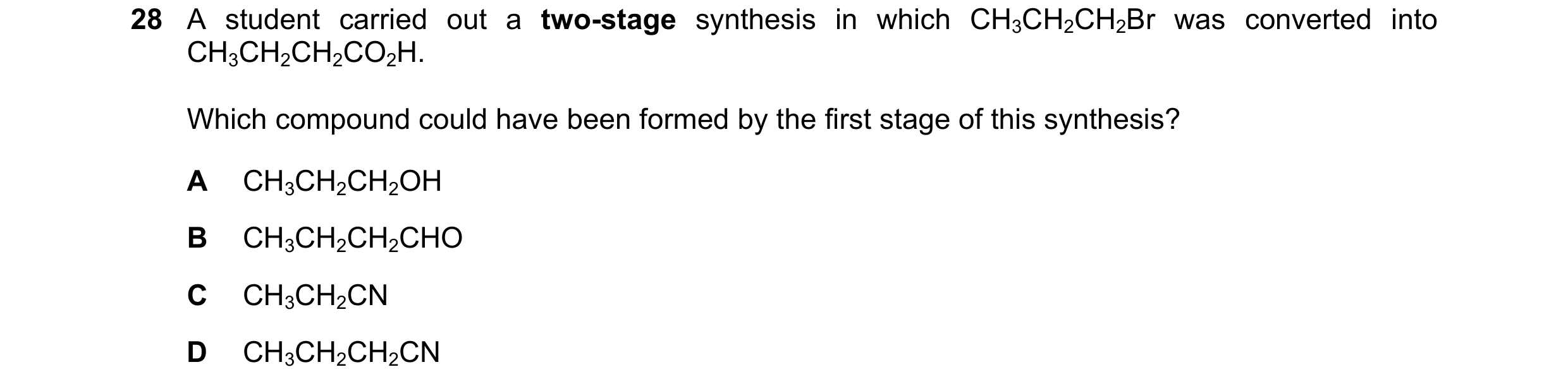
Q29 · A student carried out a two-stage synthesis in which CH3CH2CH2Br was converted into… 9701/13 May/June 2018
28 A student carried out a two-stage synthesis in which CH3CH2CH2Br was converted into CH3CH2CH2CO2H. Which compound could have been formed by the first stage of this synthesis? A CH3CH2CH2OH B CH3CH2CH2CHO C CH3CH2CN D CH3CH2CH2CN
1 marks
Answer: D
This question in 9701/13 May/June 2018
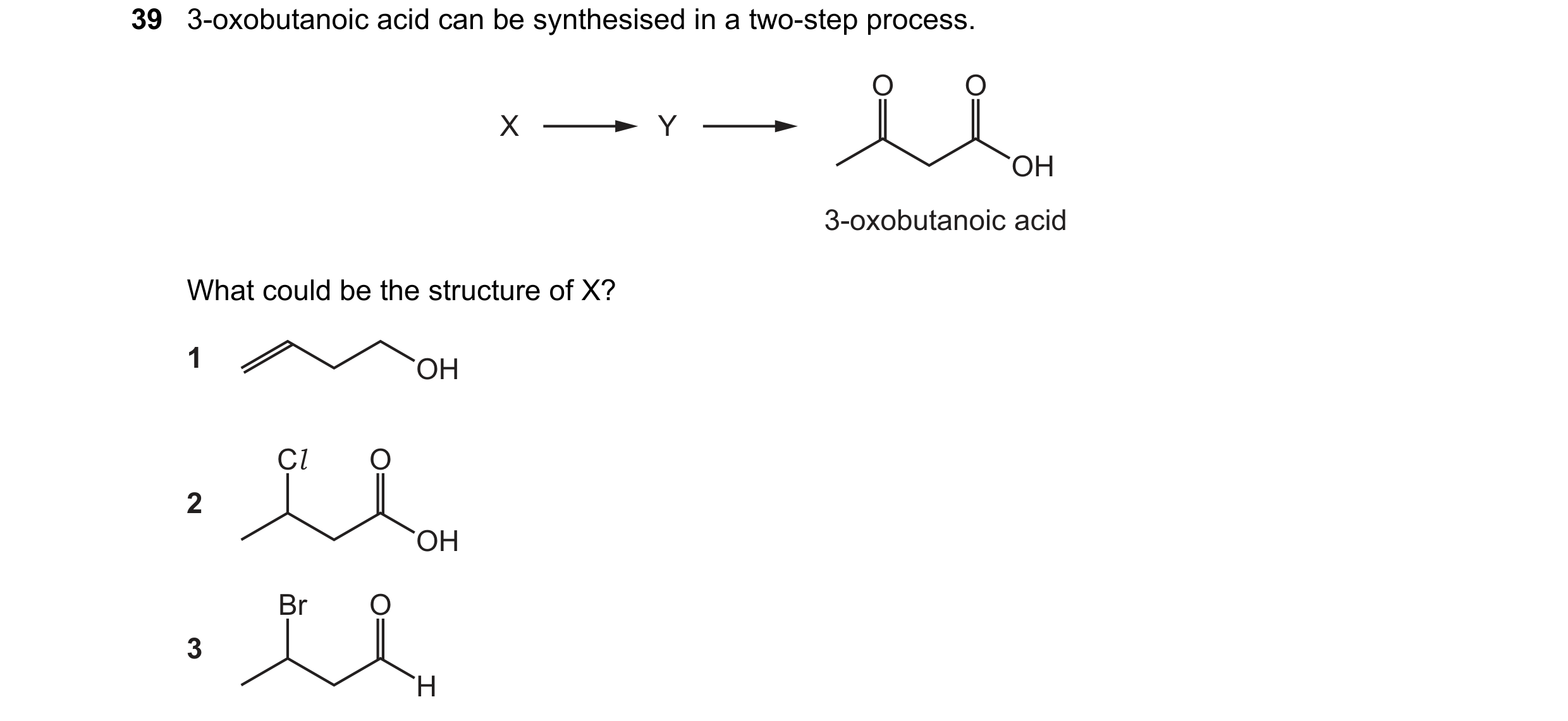
Q30 · 3-oxobutanoic acid can be synthesised in a two-step process 9701/11 Oct/Nov 2018
39 3-oxobutanoic acid can be synthesised in a two-step process. O O X Y OH 3-oxobutanoic acid What could be the structure of X? 1 OH Cl O 2 OH Br O 3 H
1 marks
Answer: A
This question in 9701/11 Oct/Nov 2018
Q31 · Which reaction routes can be used to make a pure sample of barium sulfate? 9701/13 Oct/Nov 2018
35 Which reaction routes can be used to make a pure sample of barium sulfate? heat dilute dilute filter, wash 1 Ba metal product product 2 product 3 in O2 HCl H2SO4 and dry strong solid an excess dilute filter, wash 2 Ba(NO3)2 product 2 product 3 heat in air product of water H2SO4 and dry dilute dilute filter, wash 3 Ba(OH)2 product product 2 HNO3 H2SO4 and dry
1 marks
Answer: A
This question in 9701/13 Oct/Nov 2018
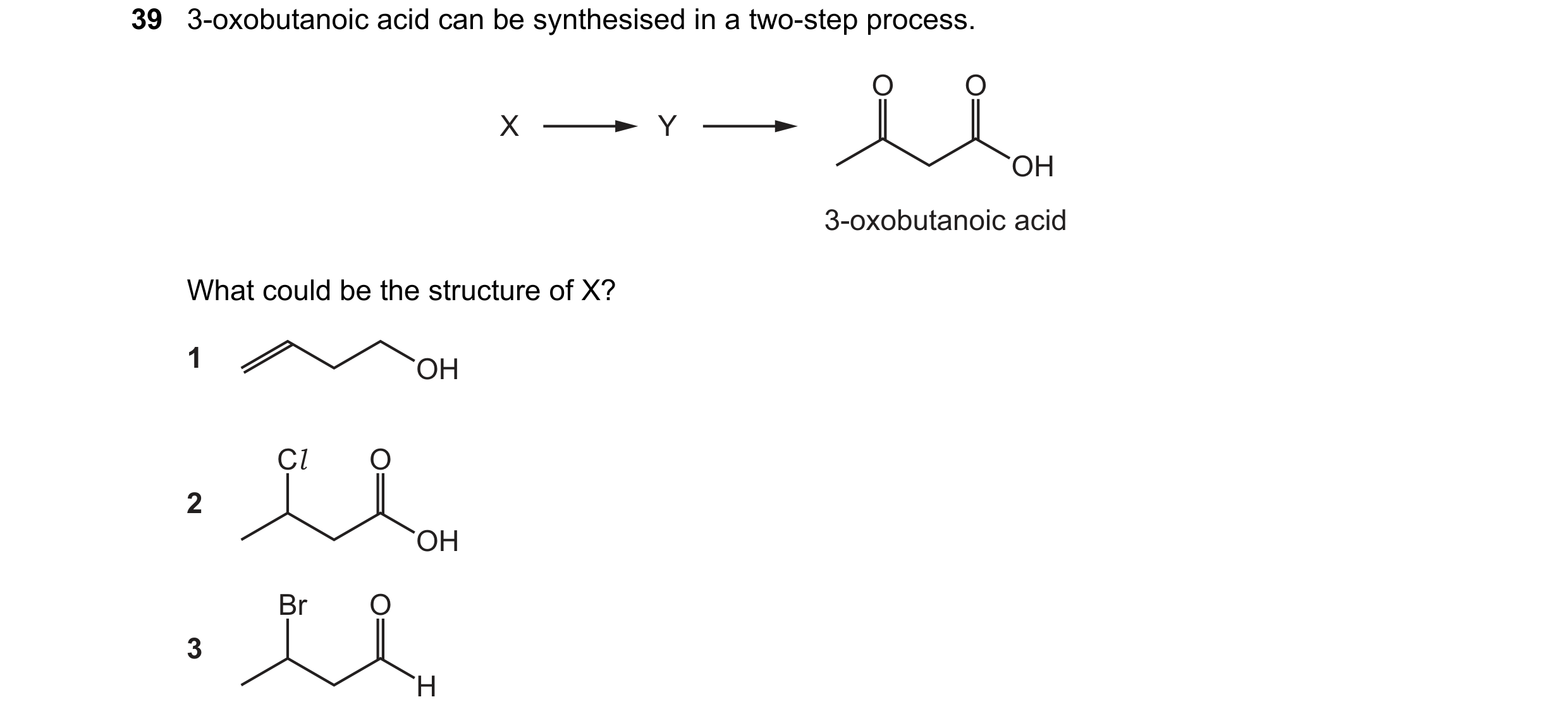
Q32 · 3-oxobutanoic acid can be synthesised in a two-step process 9701/13 Oct/Nov 2018
39 3-oxobutanoic acid can be synthesised in a two-step process. O O X Y OH 3-oxobutanoic acid What could be the structure of X? 1 OH Cl O 2 OH Br O 3 H
1 marks
Answer: A
This question in 9701/13 Oct/Nov 2018
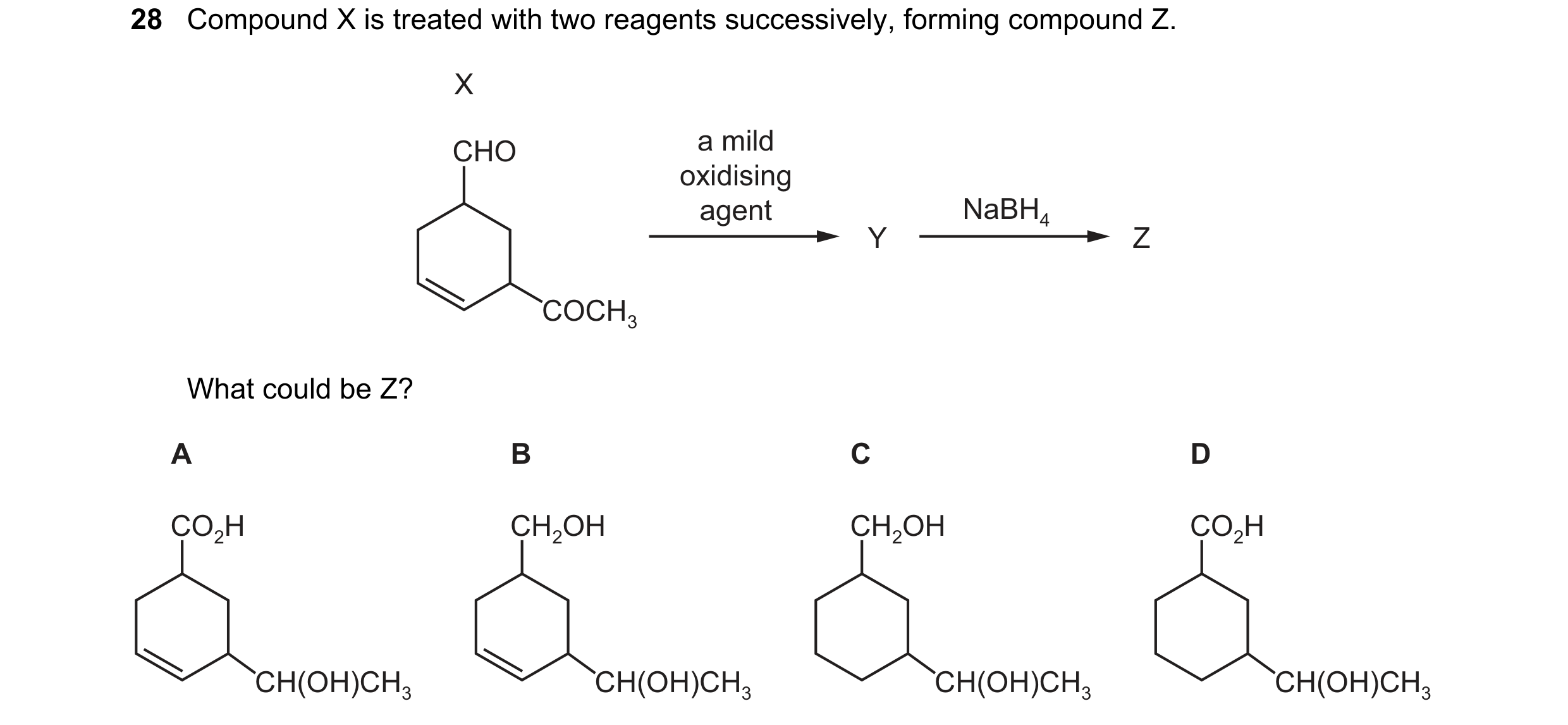
Q33 · Compound X is treated with two reagents successively, forming compound Z 9701/11 May/June 2019
28 Compound X is treated with two reagents successively, forming compound Z. X CHO a mild oxidising agent NaBH4 Y Z COCH3 What could be Z? A B C D CO2H CH2OH CH2OH CO2H CH(OH)CH3 CH(OH)CH3 CH(OH)CH3 CH(OH)CH3
1 marks
Answer: A
This question in 9701/11 May/June 2019
Q34 · The diagram shows that a carboxylic acid P may be formed from X, Y or Z 9701/12 May/June 2019
28 The diagram shows that a carboxylic acid P may be formed from X, Y or Z. alcohol aldehyde X Y carboxylic acid P nitrile Z Which row is correct? the change in Mr alcohol X is is greatest for A primary Y to P B primary Z to P C secondary Y to P D secondary Z to P
1 marks
Answer: B
This question in 9701/12 May/June 2019
Q35 · In an organic synthesis, a 62% yield of product is achieved 9701/12 May/June 2019
39 In an organic synthesis, a 62% yield of product is achieved. Which conversions are consistent with this information? 1 74.00 g of butan-2-ol → 44.64 g of butanone 2 74.00 g of butan-1-ol → 54.56 g of butanoic acid 3 74.00 g of 2-methylpropan-1-ol → 54.56 g of 2-methylpropanoic acid
1 marks
Answer: A
This question in 9701/12 May/June 2019
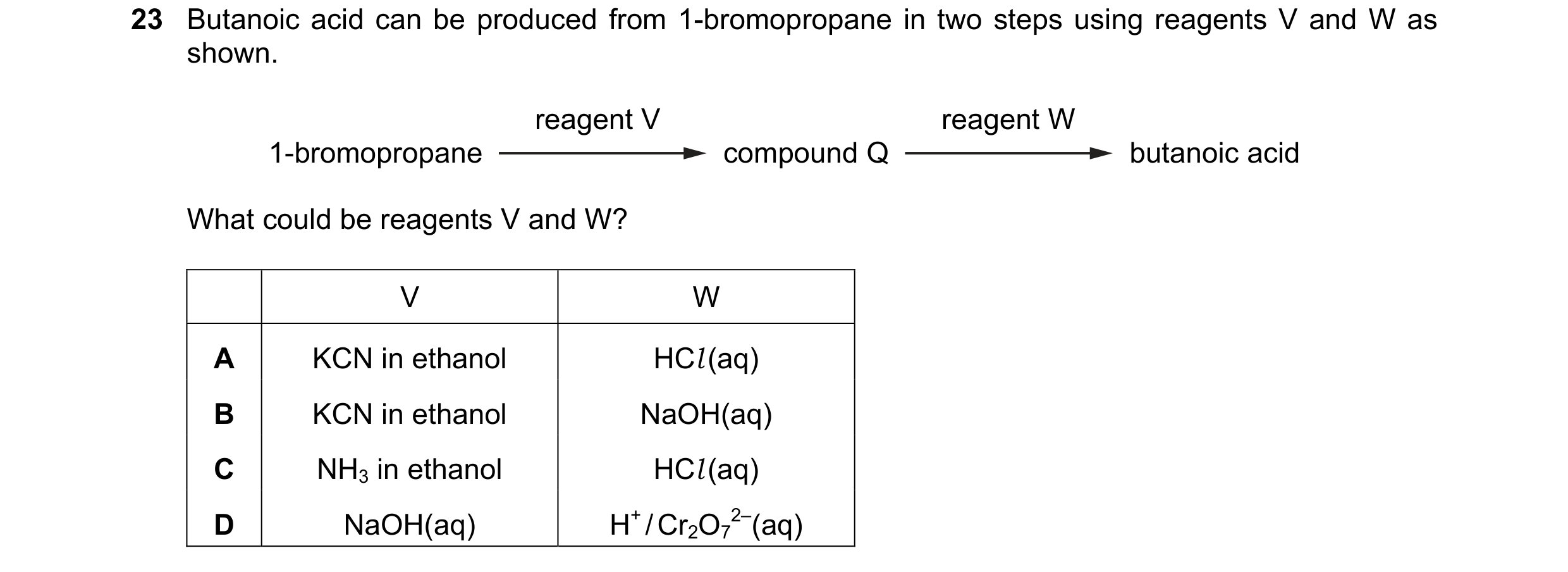
Q36 · Butanoic acid can be produced from 1-bromopropane in two steps using reagents V and W as… 9701/13 May/June 2020
23 Butanoic acid can be produced from 1-bromopropane in two steps using reagents V and W as shown. reagent V reagent W 1-bromopropane compound Q butanoic acid What could be reagents V and W? V W A KCN in ethanol HCl (aq) B KCN in ethanol NaOH(aq) C NH3 in ethanol HCl (aq) D NaOH(aq) H+ / Cr2O7 2–(aq)
1 marks
Answer: A
This question in 9701/13 May/June 2020
Q37 · 1,2-dibromopropane can be made from 1-bromopropane in two steps 9701/13 May/June 2020
27 1,2-dibromopropane can be made from 1-bromopropane in two steps. Which row is correct? step 1 step 2 A addition substitution B elimination addition C hydrolysis elimination D substitution hydrolysis
1 marks
Answer: B
This question in 9701/13 May/June 2020
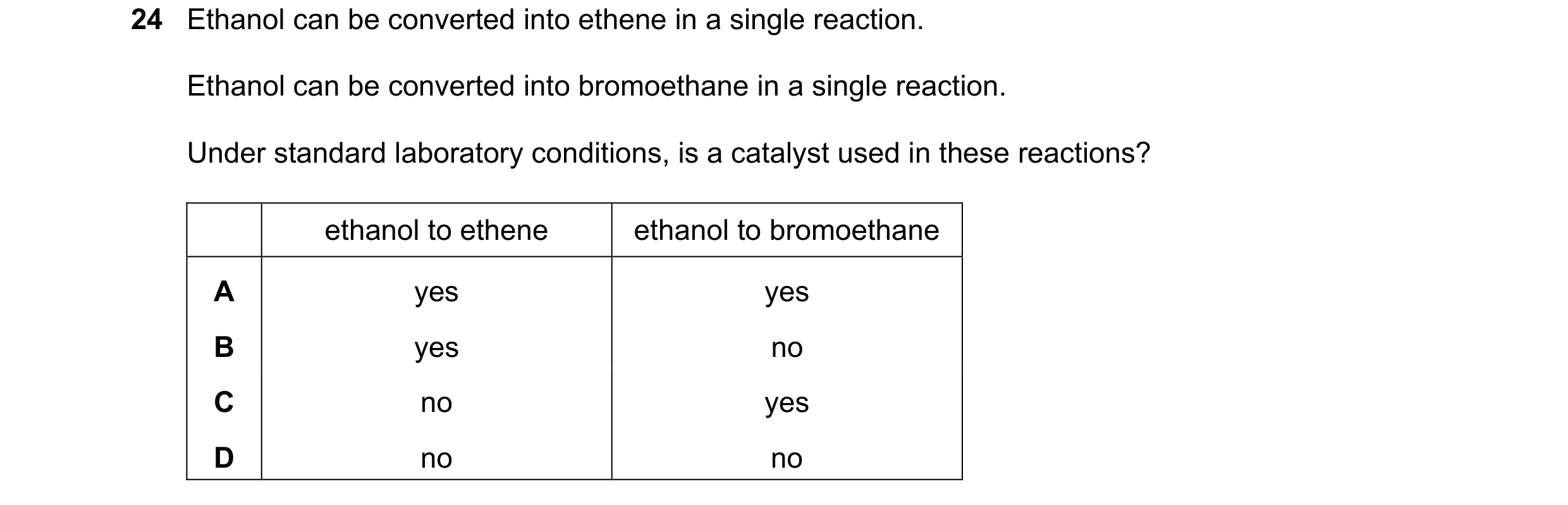
Q38 · Ethanol can be converted into ethene in a single reaction 9701/12 Oct/Nov 2020
24 Ethanol can be converted into ethene in a single reaction. Ethanol can be converted into bromoethane in a single reaction. Under standard laboratory conditions, is a catalyst used in these reactions? ethanol to ethene ethanol to bromoethane A yes yes B yes no C no yes D no no
1 marks
Answer: B
This question in 9701/12 Oct/Nov 2020
Q39 · A student converts 1-iodopropane, C3H7I, into butanoic acid, C3H7CO2H, by a two-stage… 9701/13 Oct/Nov 2020
24 A student converts 1-iodopropane, C3H7I, into butanoic acid, C3H7CO2H, by a two-stage chemical synthesis. In the first of the two stages, which reagent is reacted with 1-iodopropane? A aqueous sodium hydroxide B ethanolic ammonia C ethanolic potassium cyanide D ethanolic sodium hydroxide
1 marks
Answer: C
This question in 9701/13 Oct/Nov 2020
Q40 · Butanoic acid is prepared from 1-bromopropane 9701/11 May/June 2021
30 Butanoic acid is prepared from 1-bromopropane. This synthesis requires a sequence of two reactions. Which compound is prepared in the first stage of the synthesis? A 1-aminopropane B propan-1-ol C butanal D butanenitrile
1 marks
Answer: D
This question in 9701/11 May/June 2021
Q41 · The synthesis shown may be used for the production of propan-1-ol 9701/12 May/June 2021
29 The synthesis shown may be used for the production of propan-1-ol. step 1 step 2 compound X OH N Which row gives the correct reagents for steps 1 and 2? step 1 step 2 A HCl (aq) H2 + Ni B HCl (aq) LiAl H4 C NaOH(aq) H2 + Ni D NaOH(aq) NaBH4
1 marks
Answer: B
This question in 9701/12 May/June 2021
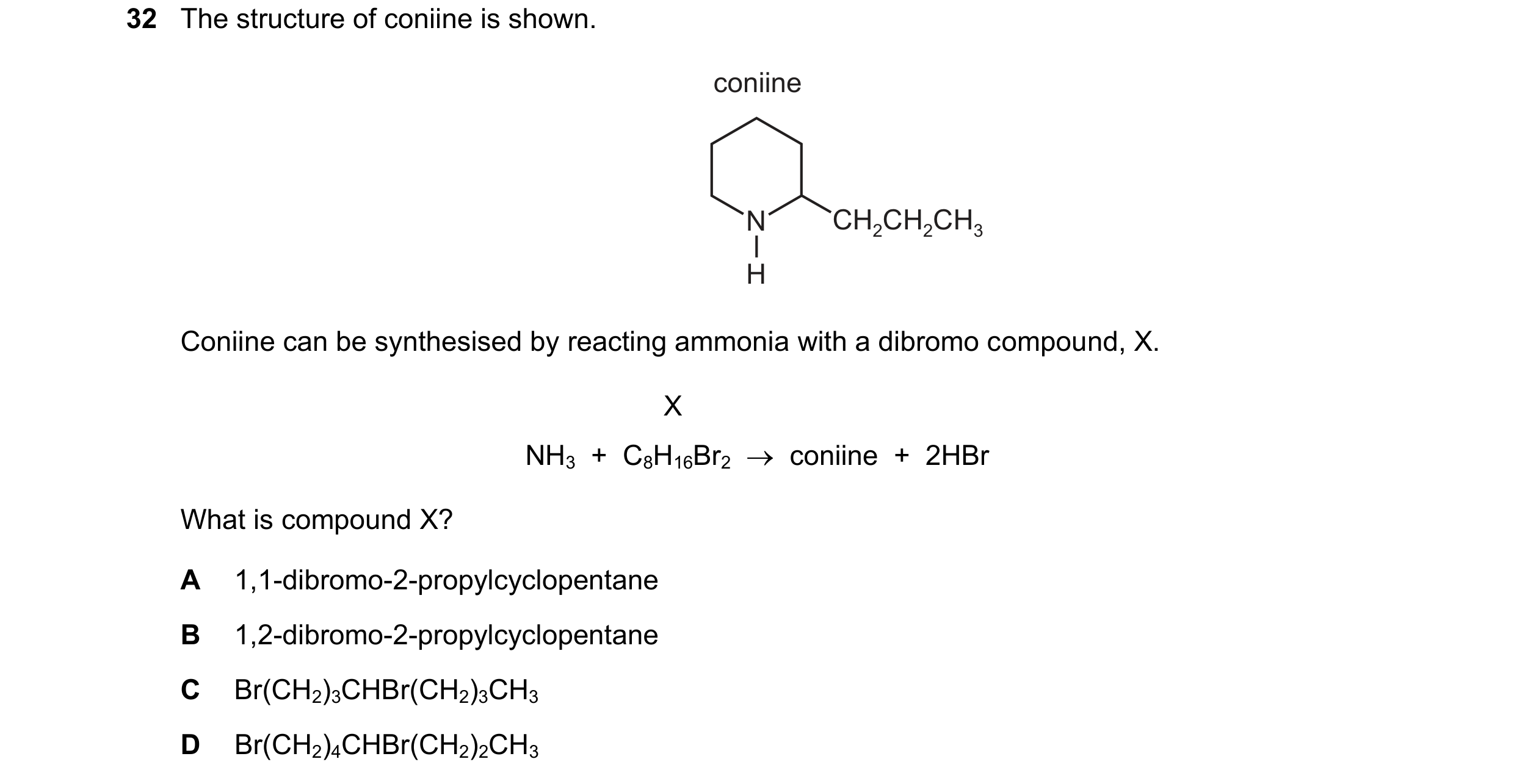
Q42 · The structure of coniine is shown 9701/12 May/June 2022
32 The structure of coniine is shown. coniine N CH2CH2CH3 H Coniine can be synthesised by reacting ammonia with a dibromo compound, X. X NH3 + C8H16Br2 coniine + 2HBr What is compound X? A 1,1-dibromo-2-propylcyclopentane B 1,2-dibromo-2-propylcyclopentane C Br(CH2)3CHBr(CH2)3CH3 D Br(CH2)4CHBr(CH2)2CH3
1 marks
Answer: D
This question in 9701/12 May/June 2022
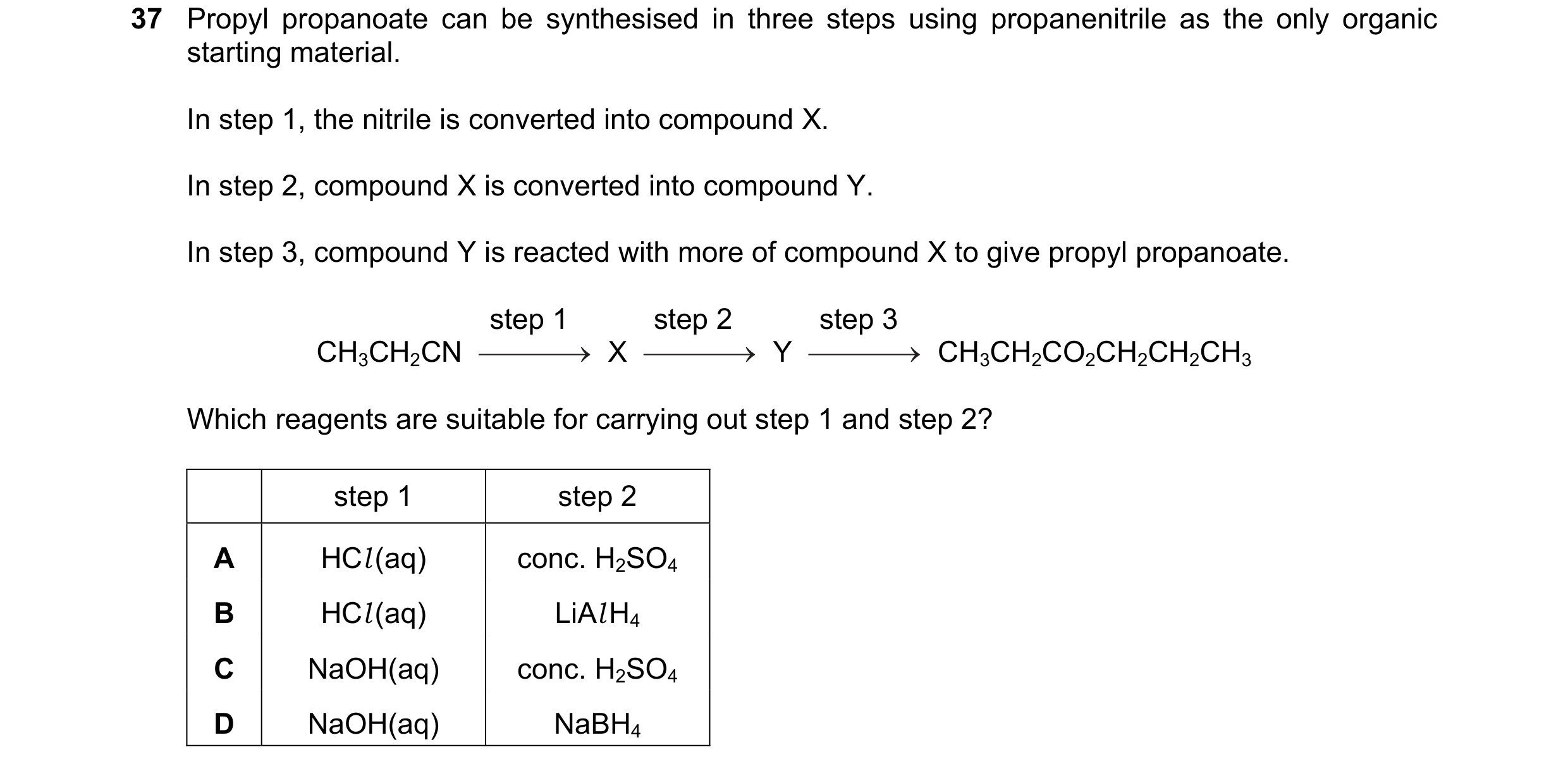
Q43 · Propyl propanoate can be synthesised in three steps using propanenitrile as the only… 9701/12 Oct/Nov 2022
37 Propyl propanoate can be synthesised in three steps using propanenitrile as the only organic starting material. In step 1, the nitrile is converted into compound X. In step 2, compound X is converted into compound Y. In step 3, compound Y is reacted with more of compound X to give propyl propanoate. step 1 step 2 step 3 CH3CH2CN X Y CH3CH2CO2CH2CH2CH3 Which reagents are suitable for carrying out step 1 and step 2? step 1 step 2 A HCl (aq) conc. H2SO4 B HCl (aq) LiAl H4 C NaOH(aq) conc. H2SO4 D NaOH(aq) NaBH4
1 marks
Answer: B
This question in 9701/12 Oct/Nov 2022
Q44 · Compound R can be formed from 1-bromopropane using a nucleophilic substitution reaction… 9701/13 Oct/Nov 2022
30 Compound R can be formed from 1-bromopropane using a nucleophilic substitution reaction followed by an oxidation reaction. What is the identity of R? A propanoic acid B propanone C propylamine D propyl ethanoate
1 marks
Answer: A
This question in 9701/13 Oct/Nov 2022
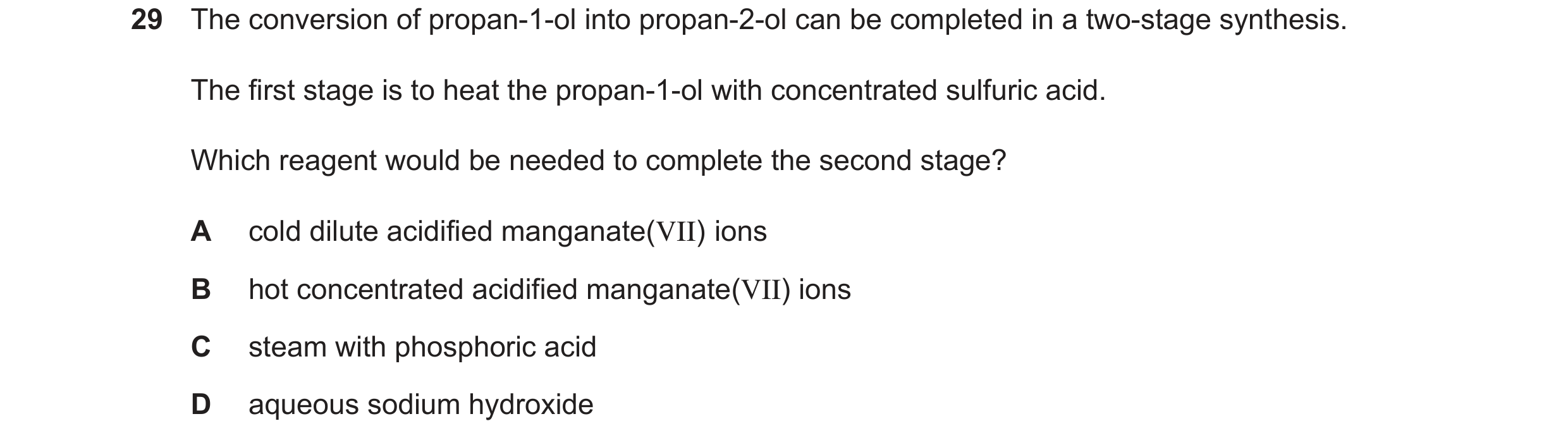
Q45 · The conversion of propan-1-ol into propan-2-ol can be completed in a two-stage synthesis 9701/13 May/June 2023
29 The conversion of propan-1-ol into propan-2-ol can be completed in a two-stage synthesis.
The first stage is to heat the propan-1-ol with concentrated sulfuric acid.
Which reagent would be needed to complete the second stage?
A
B
Cc
D
cold dilute acidified manganate(VII) ions
hot concentrated acidified manganate(VII) ions
steam with phosphoric acid
aqueous sodium hydroxide
1 marks
Answer: C
This question in 9701/13 May/June 2023
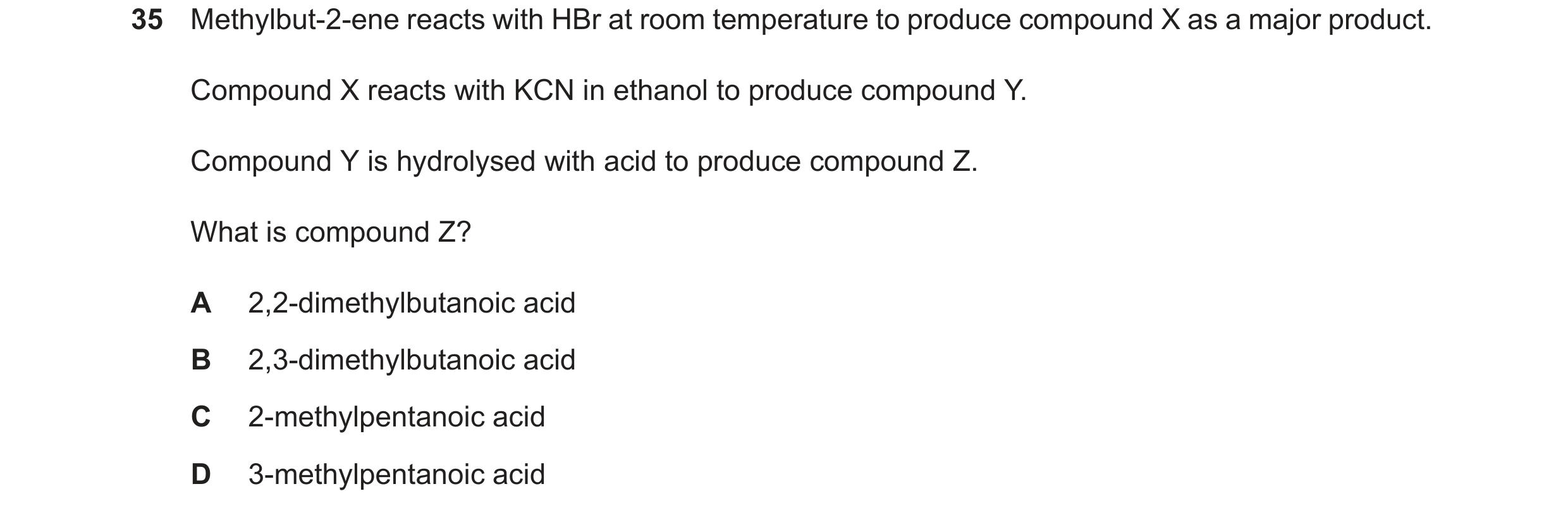
Q46 · Methylbut-2-ene reacts with HBr at room temperature to produce compound X as a major… 9701/13 May/June 2023
35 Methylbut-2-ene reacts with HBr at room temperature to produce compound X as a major product. Compound X reacts with KCN in ethanol to produce compound Y. Compound Y is hydrolysed with acid to produce compound Z. What is compound Z? A 2,2-dimethylbutanoic acid B 2,3-dimethylbutanoic acid C 2-methylpentanoic acid D 3-methylpentanoic acid
1 marks
Answer: A
This question in 9701/13 May/June 2023
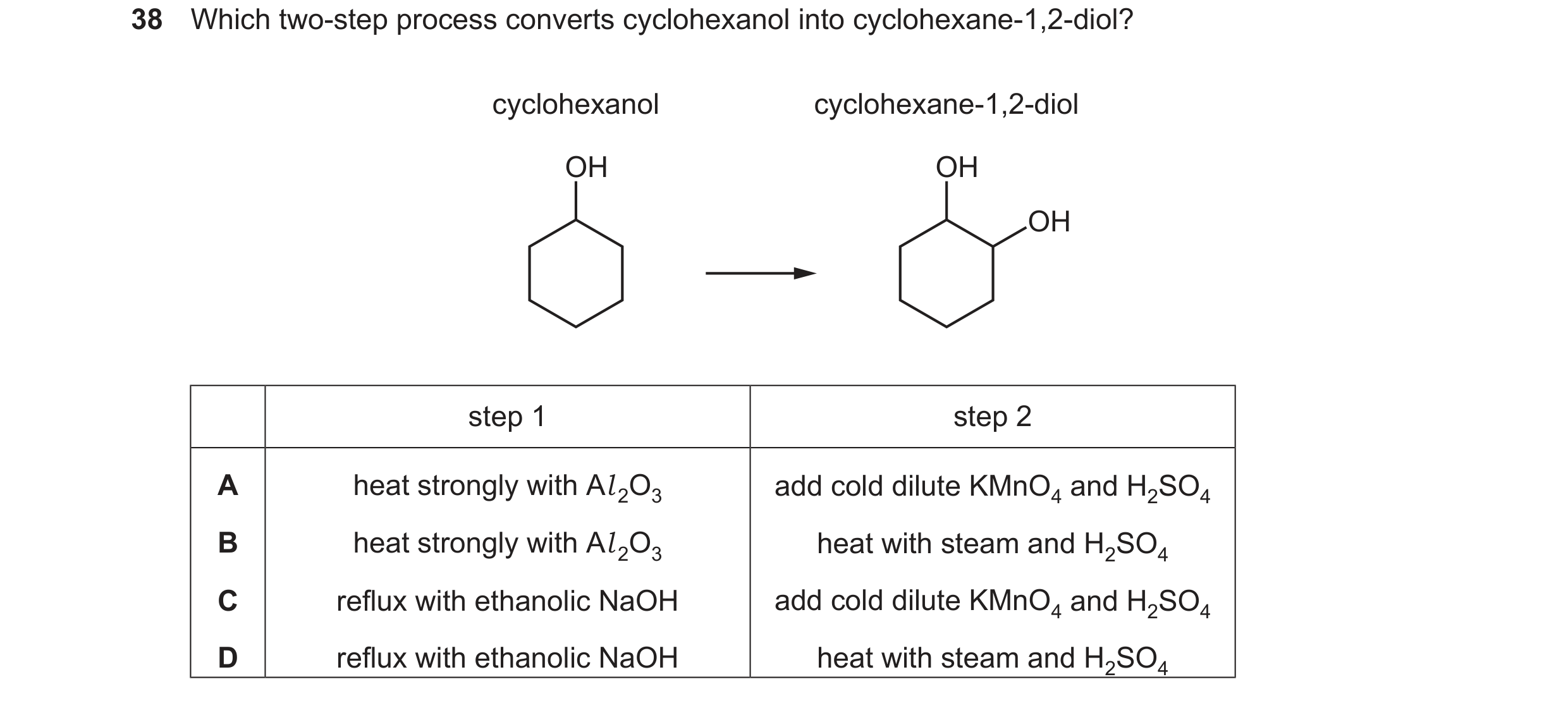
Q47 · Which two-step process converts cyclohexanol into cyclohexane-1 ,2-diol? 9701/13 May/June 2023
38 Which two-step process converts cyclohexanol into cyclohexane-1 ,2-diol?
cyclohexanol cyclohexane-1 ,2-diol
OH OH
OH
step 1 step 2
heat strongly with Al,O, add cold dilute KMnO, and H,SO,
heat strongly with Al,O,, heat with steam and H,SO,
add cold dilute KMnO, and H,SO,
reflux with ethanolic NaOH
reflux with ethanolic NaOH heat with steam and H,SO,
1 marks
Answer: A
This question in 9701/13 May/June 2023
Q48 · Propanoic acid can be made from bromoethane using a two-stage synthesis 9701/11 Oct/Nov 2023
32 Propanoic acid can be made from bromoethane using a two-stage synthesis. Which pair of reagents is most suitable? reagent for stage 1 reagent for stage 2 A hydrogen cyanide aqueous sodium hydroxide B aqueous sodium hydroxide excess acidified potassium dichromate(VI) C ethanolic sodium hydroxide acidified potassium manganate(VII) D potassium cyanide dilute hydrochloric acid
1 marks
Answer: D
This question in 9701/11 Oct/Nov 2023
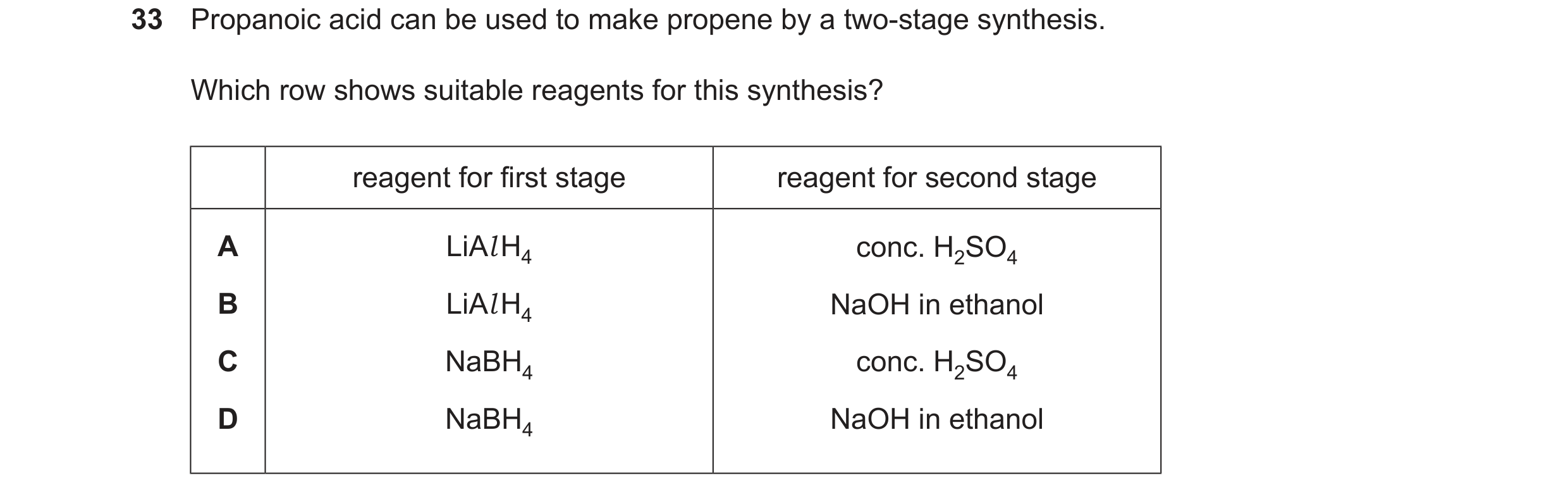
Q49 · Propanoic acid can be used to make propene by a two-stage synthesis 9701/12 Oct/Nov 2023
33 Propanoic acid can be used to make propene by a two-stage synthesis. Which row shows suitable reagents for this synthesis? reagent for first stage reagent for second stage A LiAlH4 conc. H2SO4 B LiAlH4 NaOH in ethanol C NaBH4 conc. H2SO4 D NaBH4 NaOH in ethanol
1 marks
Answer: A
This question in 9701/12 Oct/Nov 2023
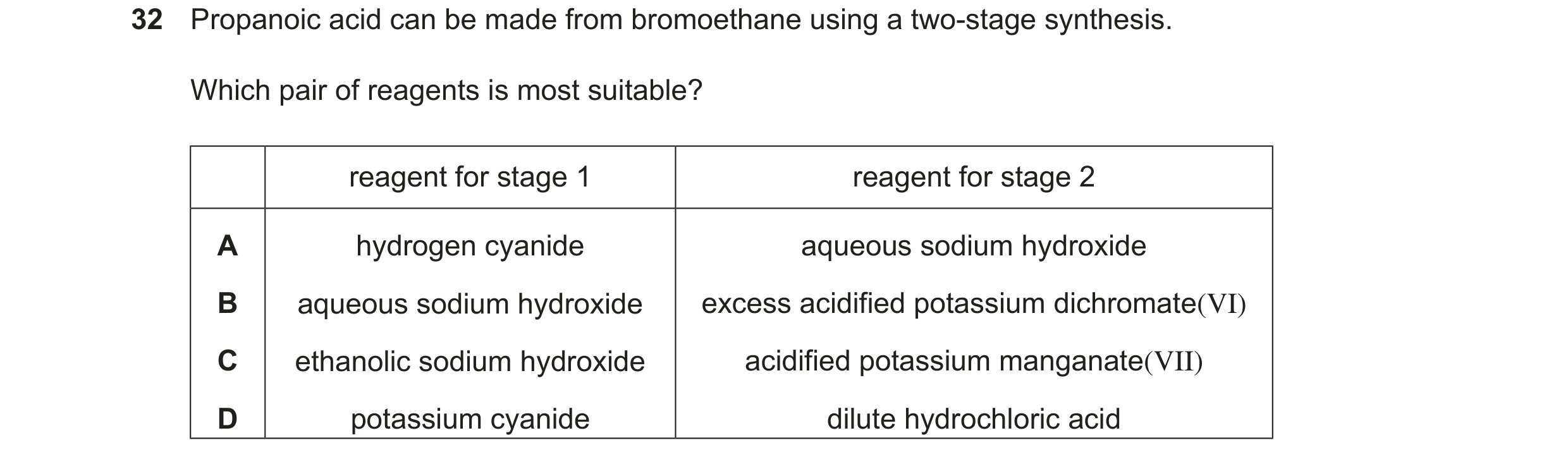
Q50 · Propanoic acid can be made from bromoethane using a two-stage synthesis 9701/13 Oct/Nov 2023
32 Propanoic acid can be made from bromoethane using a two-stage synthesis. Which pair of reagents is most suitable? reagent for stage 1 reagent for stage 2 A hydrogen cyanide aqueous sodium hydroxide B aqueous sodium hydroxide excess acidified potassium dichromate(VI) C ethanolic sodium hydroxide acidified potassium manganate(VII) D potassium cyanide dilute hydrochloric acid
1 marks
Answer: D
This question in 9701/13 Oct/Nov 2023
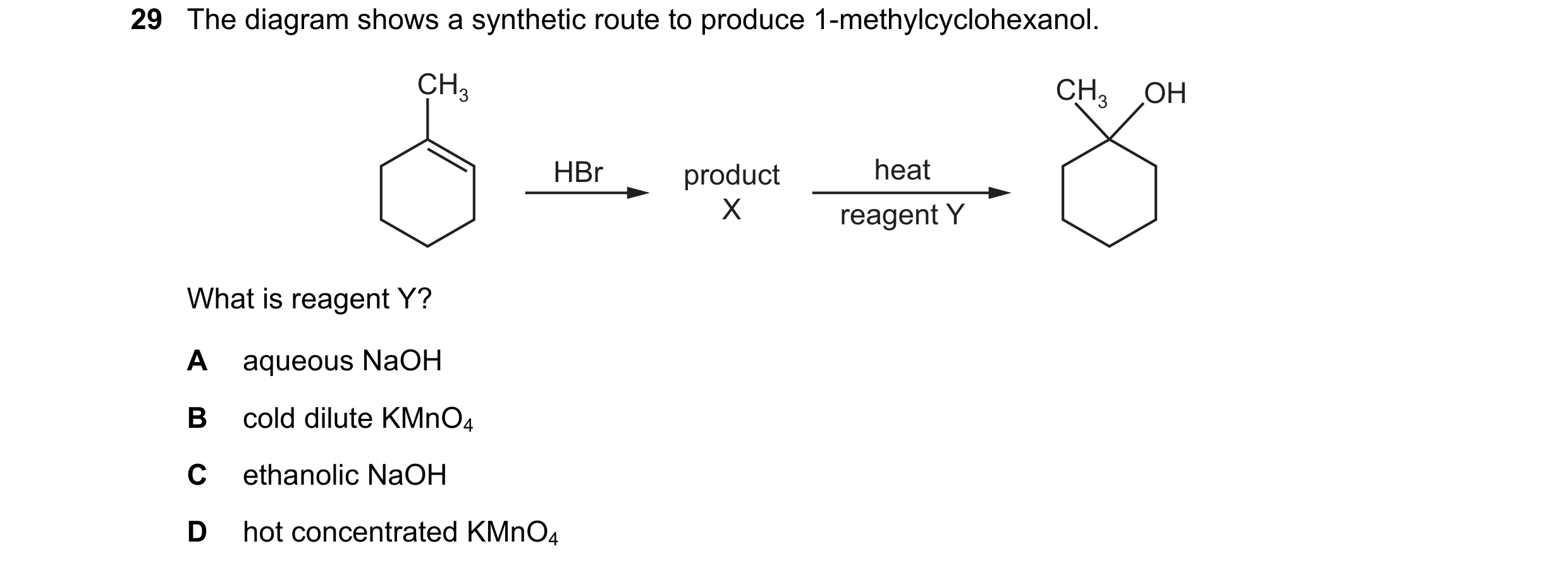
Q51 · The diagram shows a synthetic route to produce 1-methylcyclohexanol 9701/12 Oct/Nov 2024
29 The diagram shows a synthetic route to produce 1-methylcyclohexanol. CH3 CH3 OH HBr product heat X reagent Y What is reagent Y? A aqueous NaOH B cold dilute KMnO4 C ethanolic NaOH D hot concentrated KMnO4
1 marks
Answer: A
This question in 9701/12 Oct/Nov 2024
Q52 · X and Y are the reagents required to convert 1-bromopropane into butanoic acid 9701/12 Oct/Nov 2024
30 X and Y are the reagents required to convert 1-bromopropane into butanoic acid. H H H H H H H H H O X Y H C C C Br H C C C CN H C C C C H H H H H H H H H OH What are the correct identities of reagents X and Y? X Y A NH3 HCl (aq) B KCN in C2H5OH NaOH(aq) C KCN in C2H5OH HCl (aq) D HCN NaOH(aq)
1 marks
Answer: C
This question in 9701/12 Oct/Nov 2024
Q53 · Which organic starting material could be used in a single reaction to produce propanoic… 9701/12 Oct/Nov 2025
36 Which organic starting material could be used in a single reaction to produce propanoic acid? A ethanenitrile B propan-2-ol C propanal D propyl ethanoate
1 marks
Answer: C
This question in 9701/12 Oct/Nov 2025
 1 / 16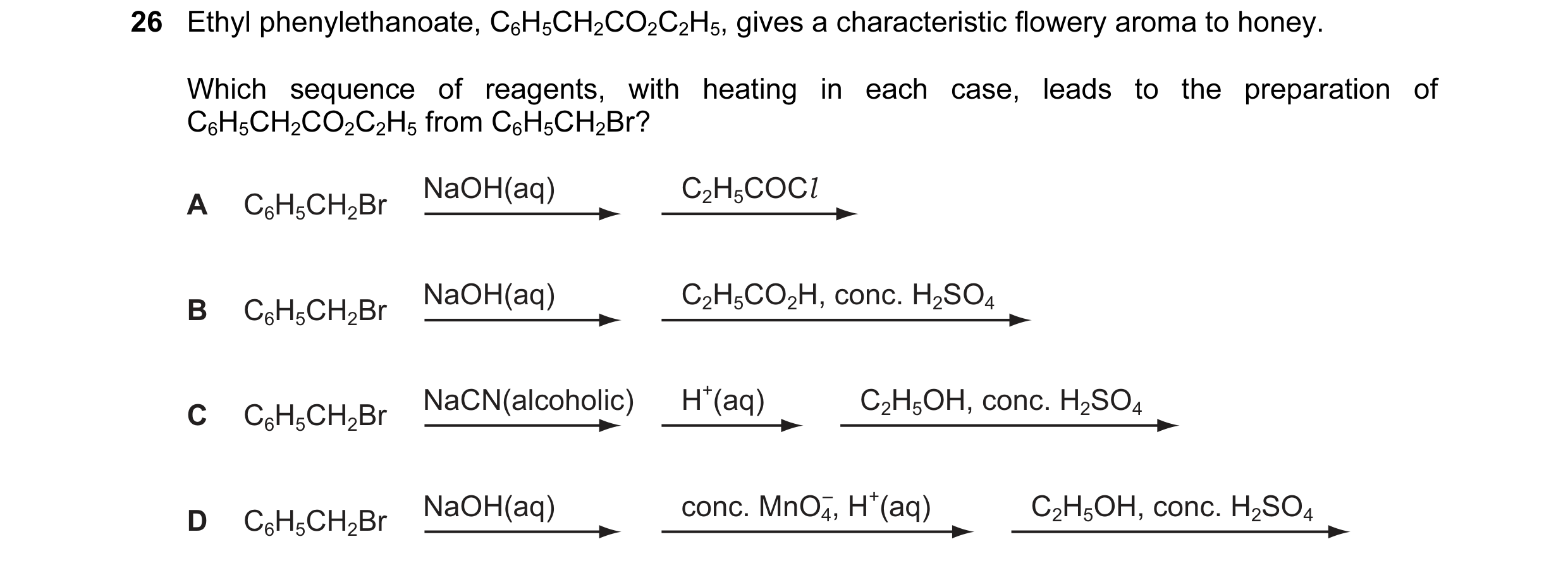
 2 / 16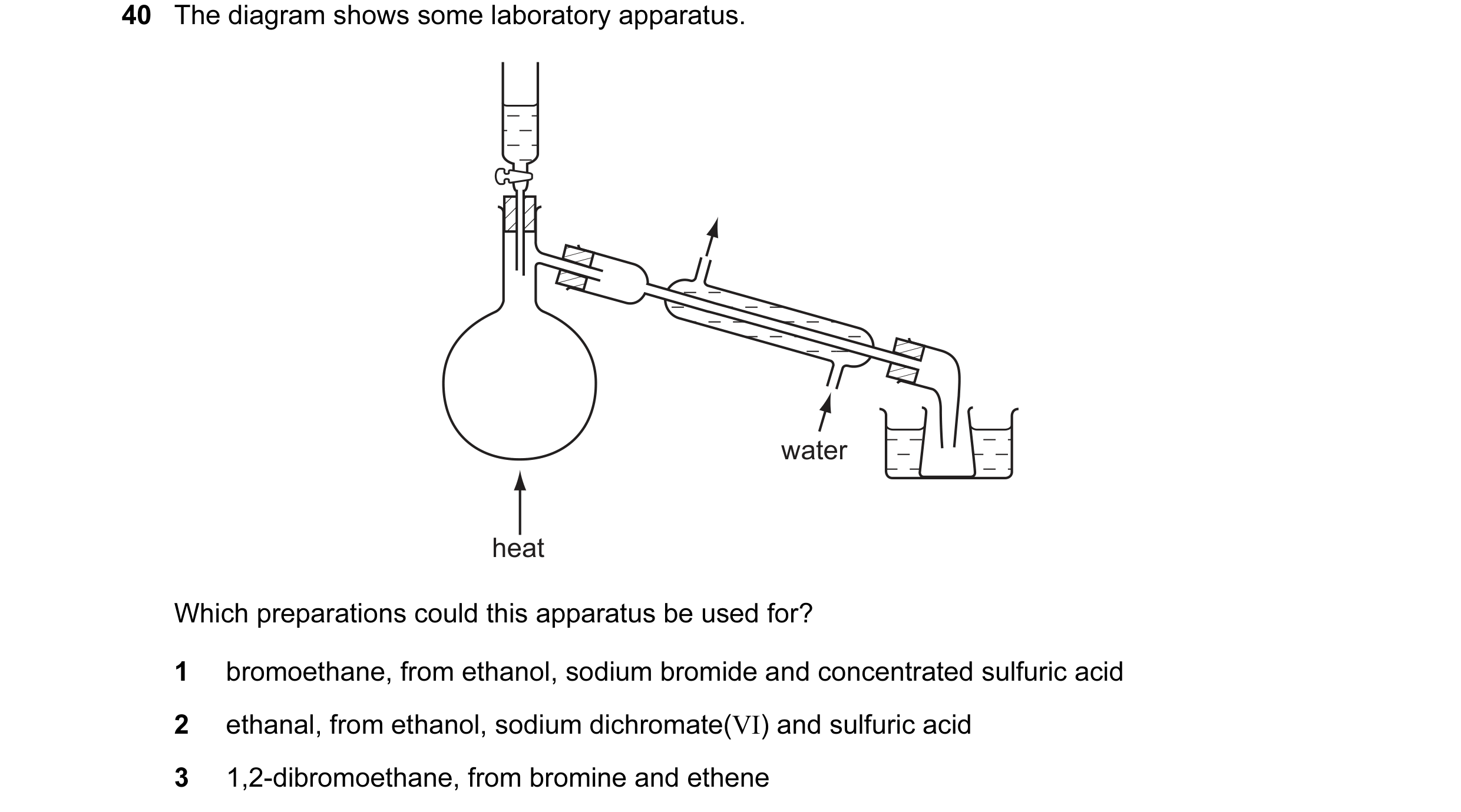
 3 / 16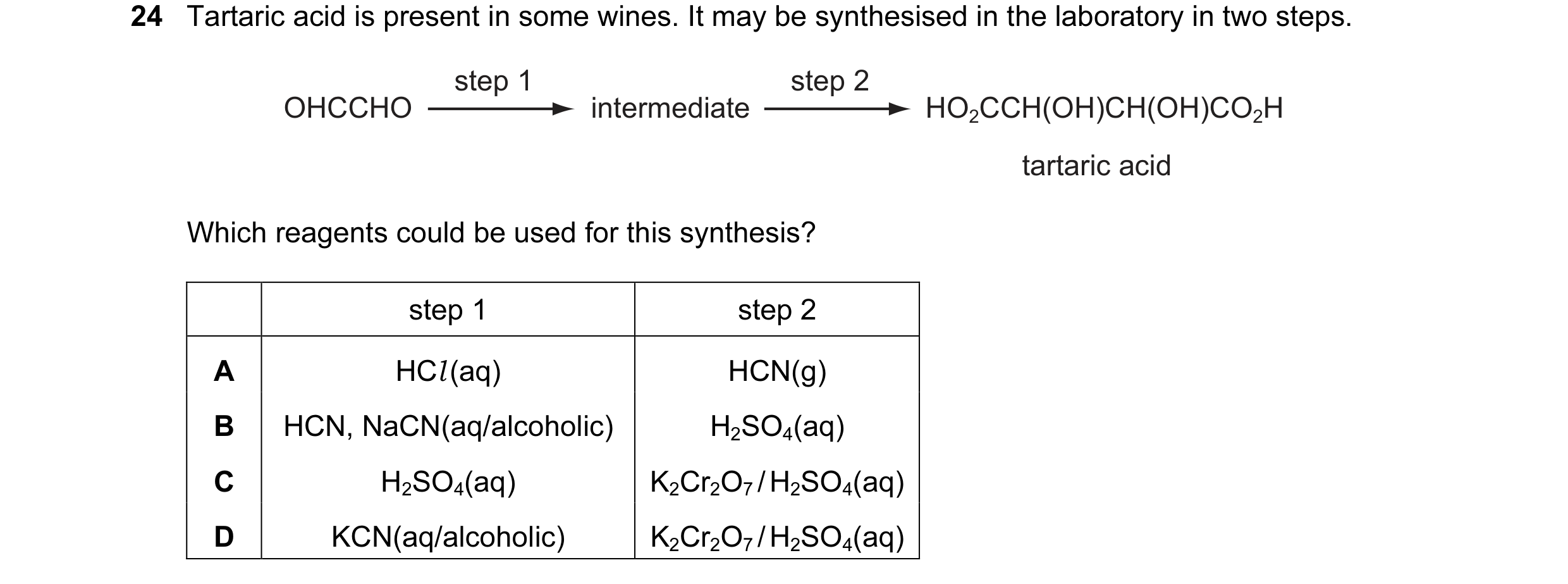
 4 / 16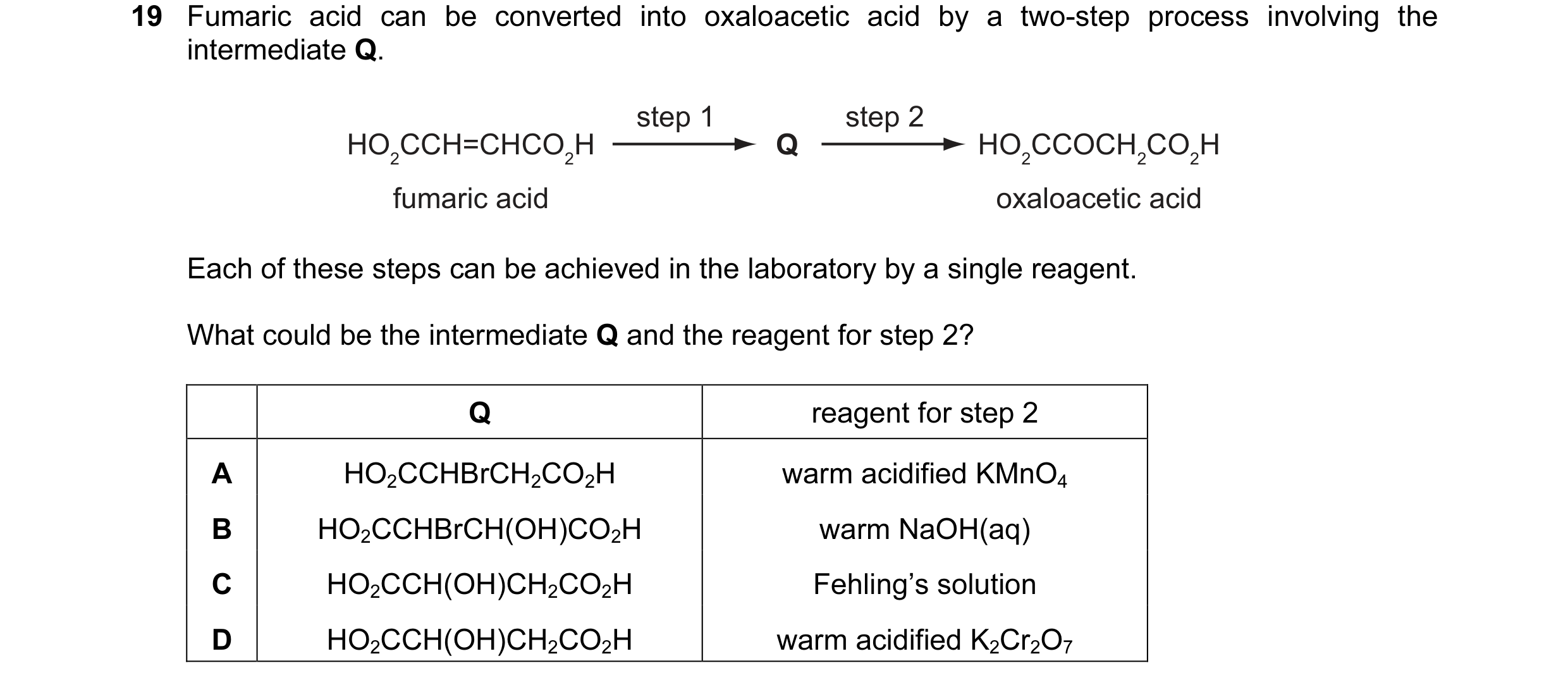
 5 / 16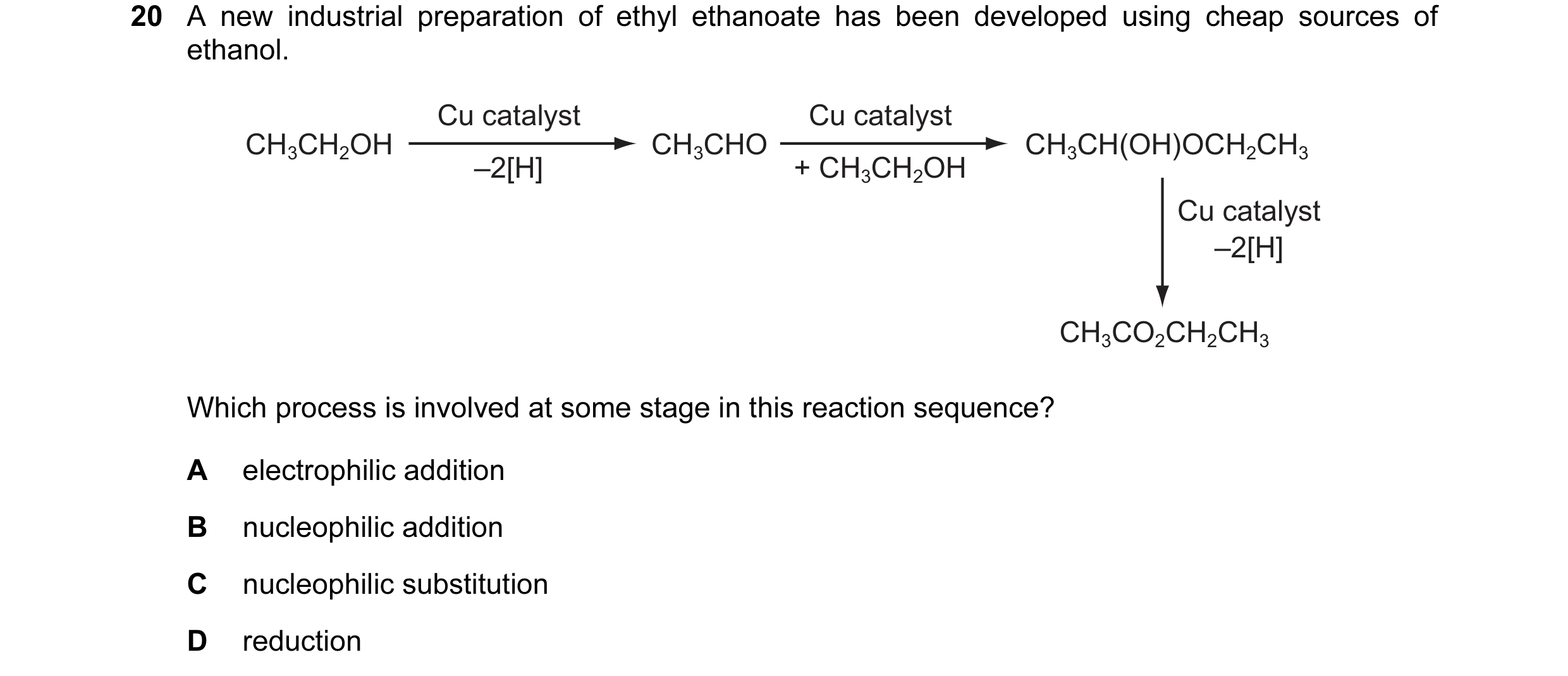
 6 / 16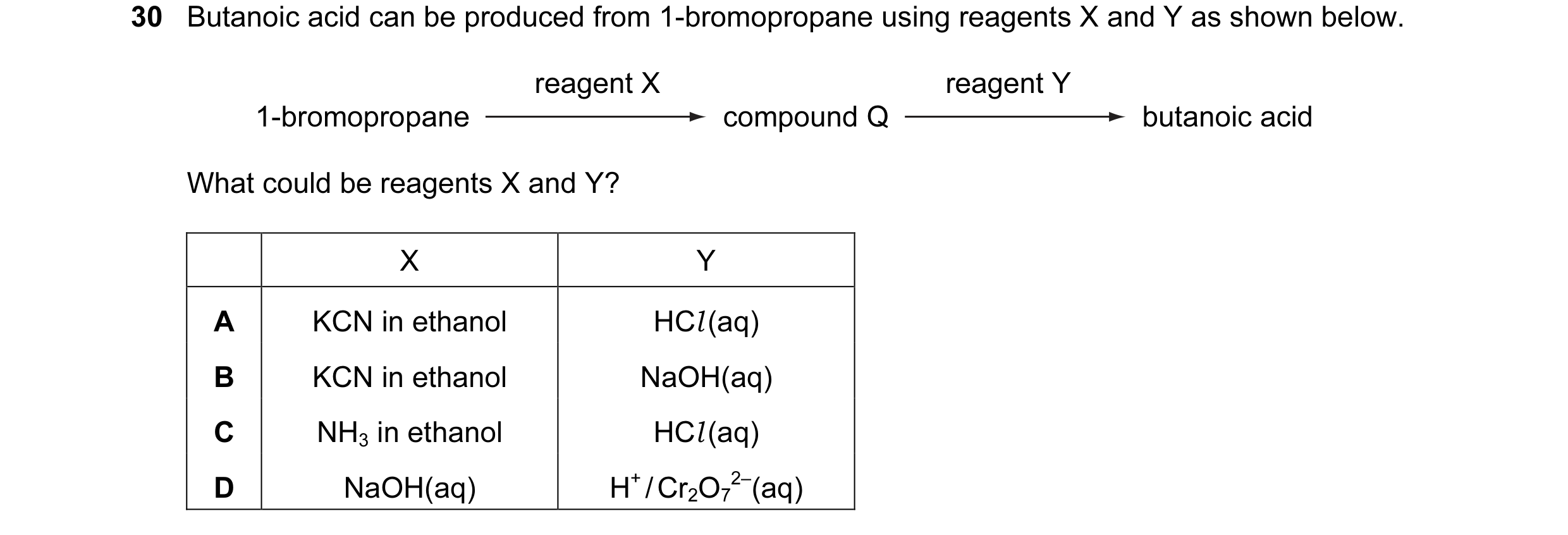
 7 / 16
 8 / 16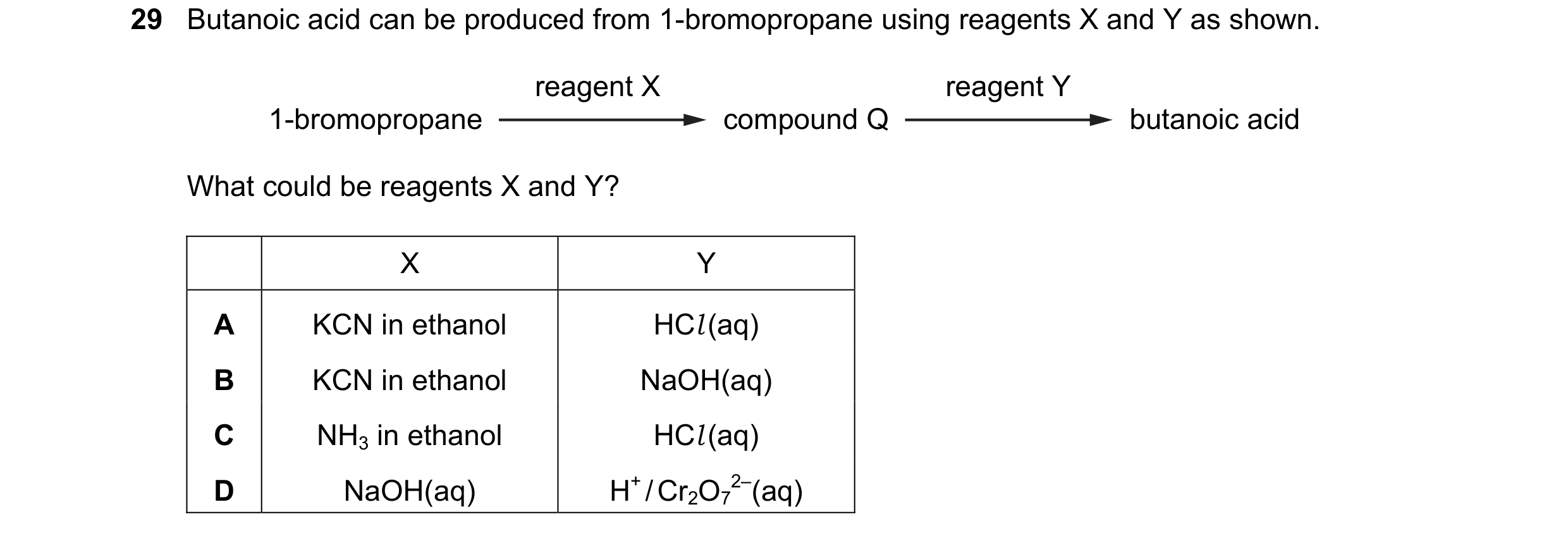
 9 / 16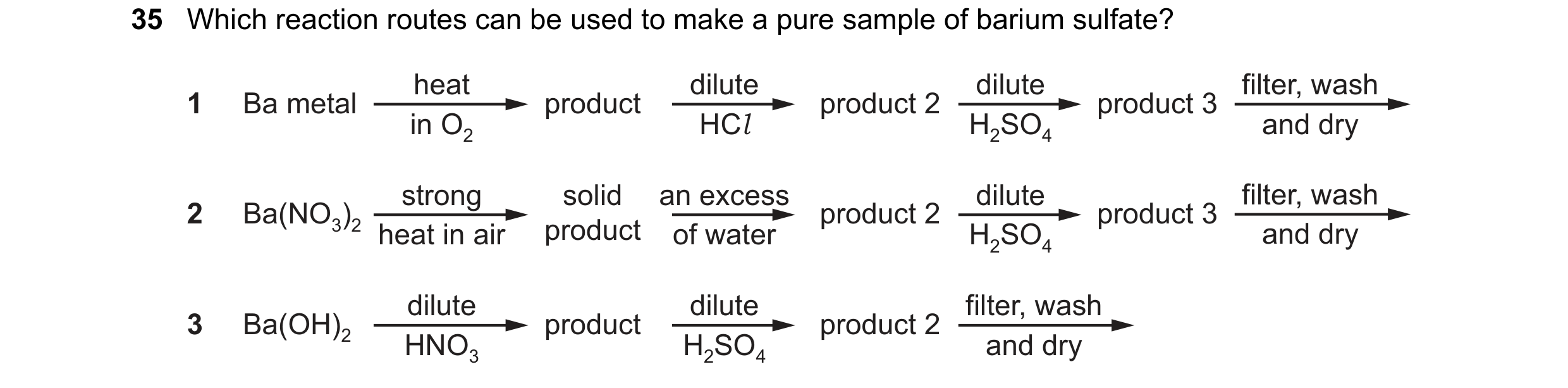
 10 / 16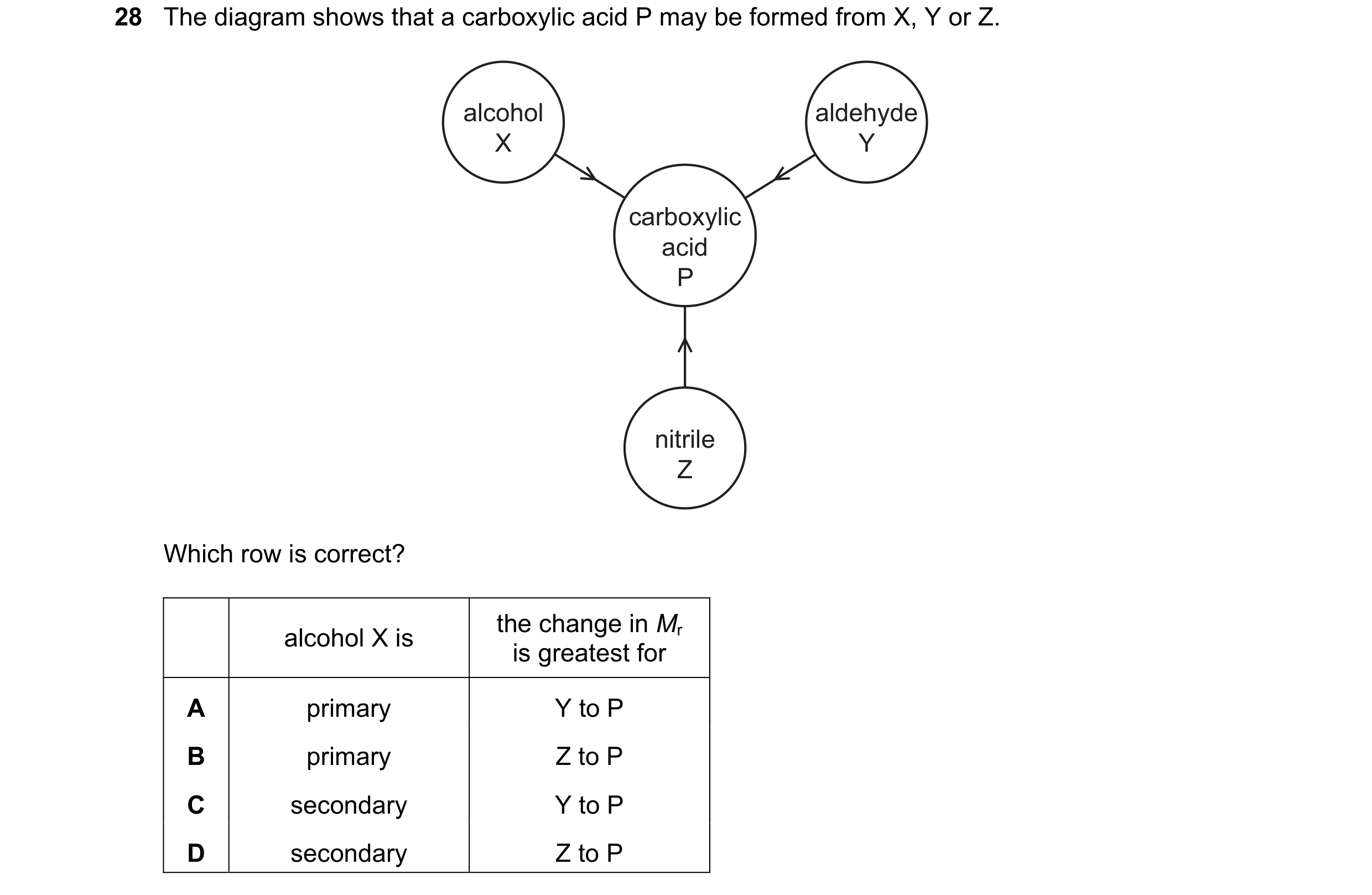

 11 / 16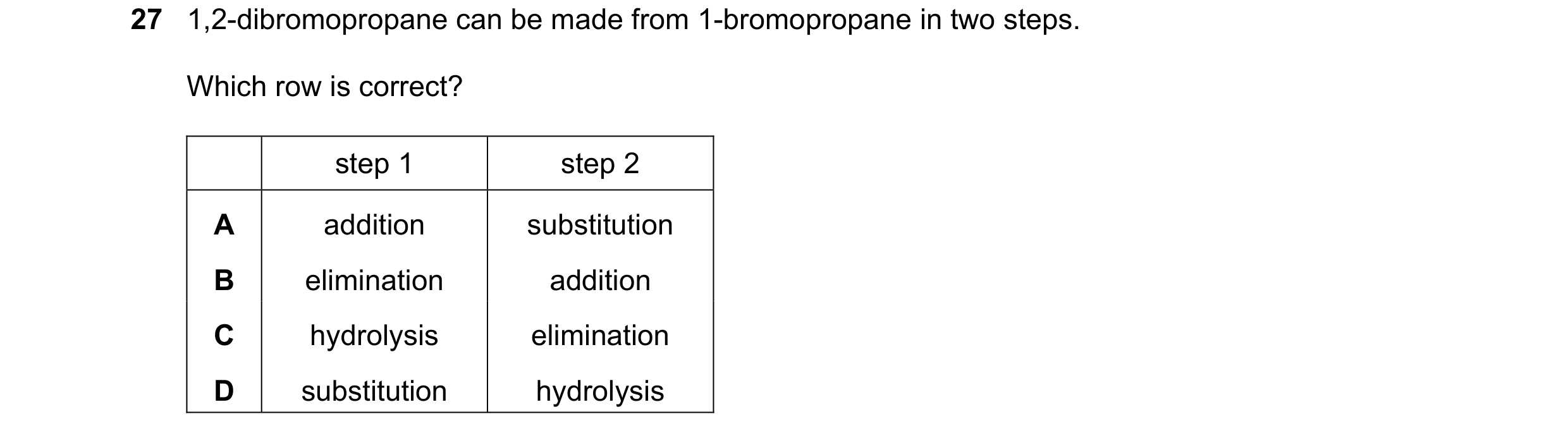
 12 / 16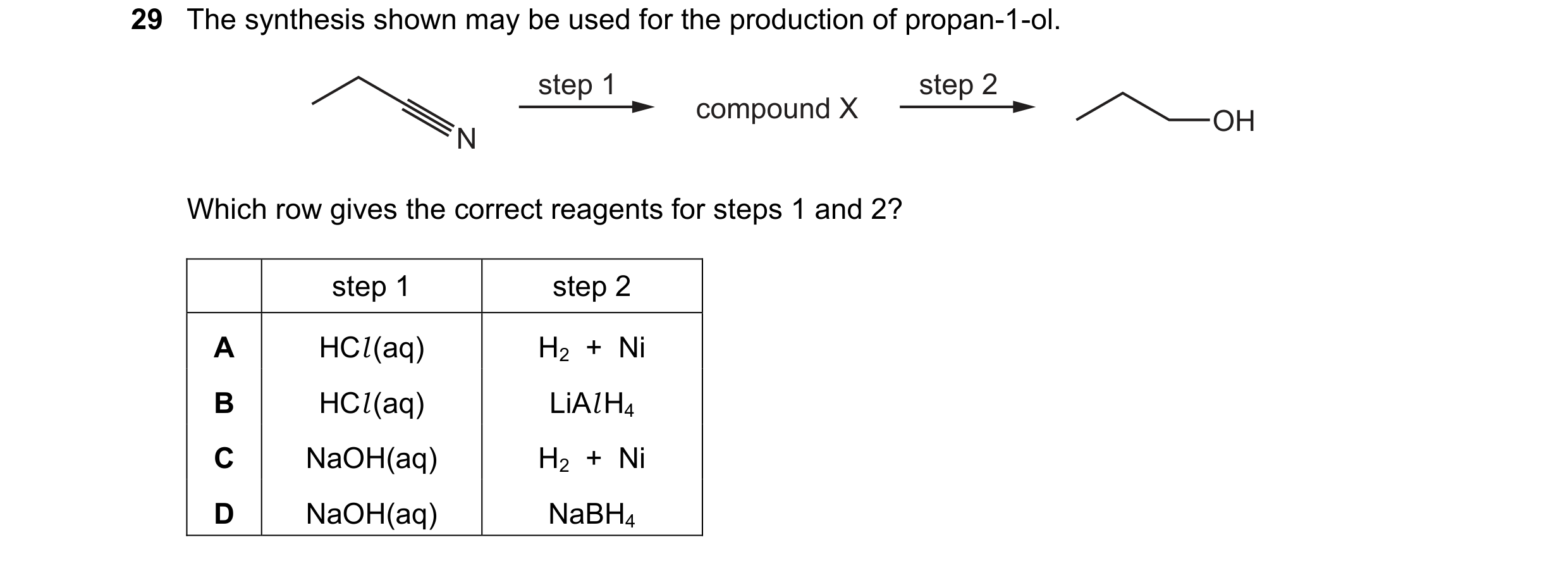
 13 / 16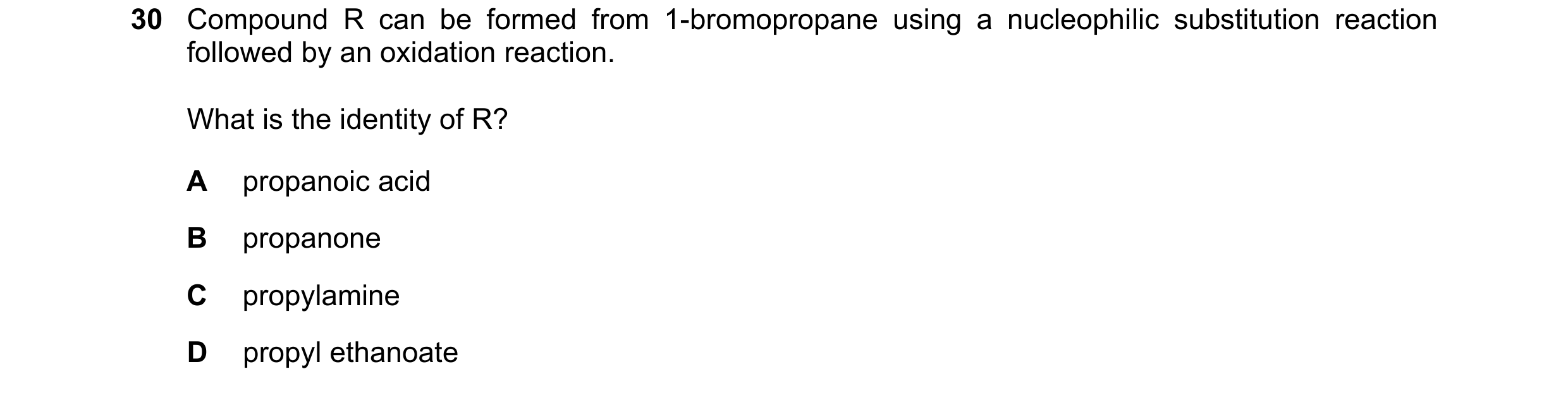
 14 / 16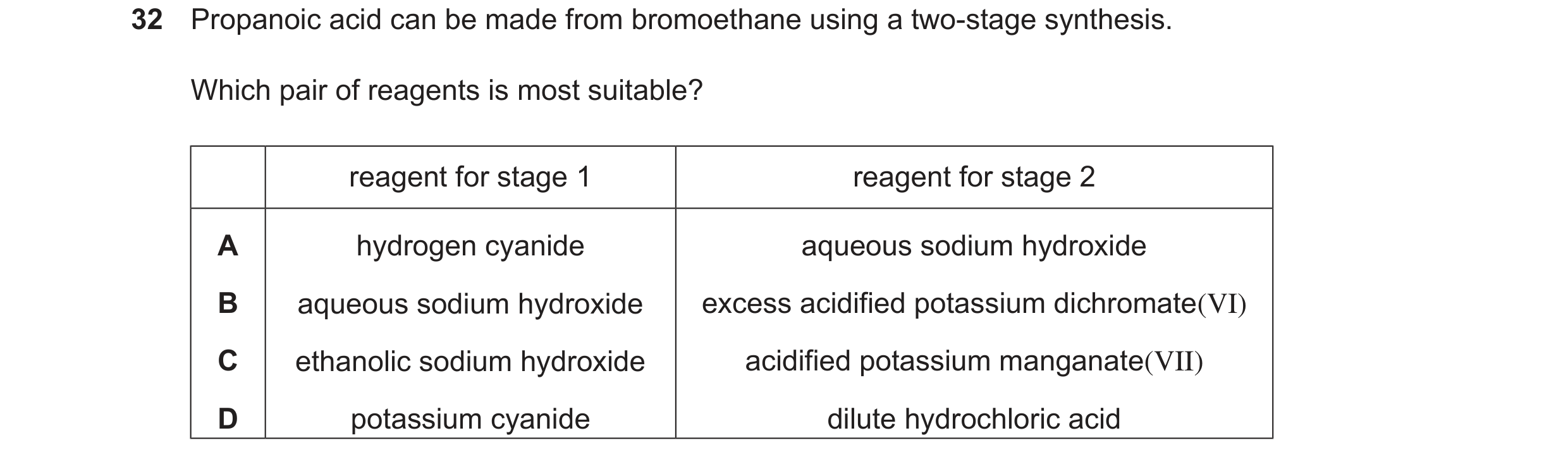
 15 / 16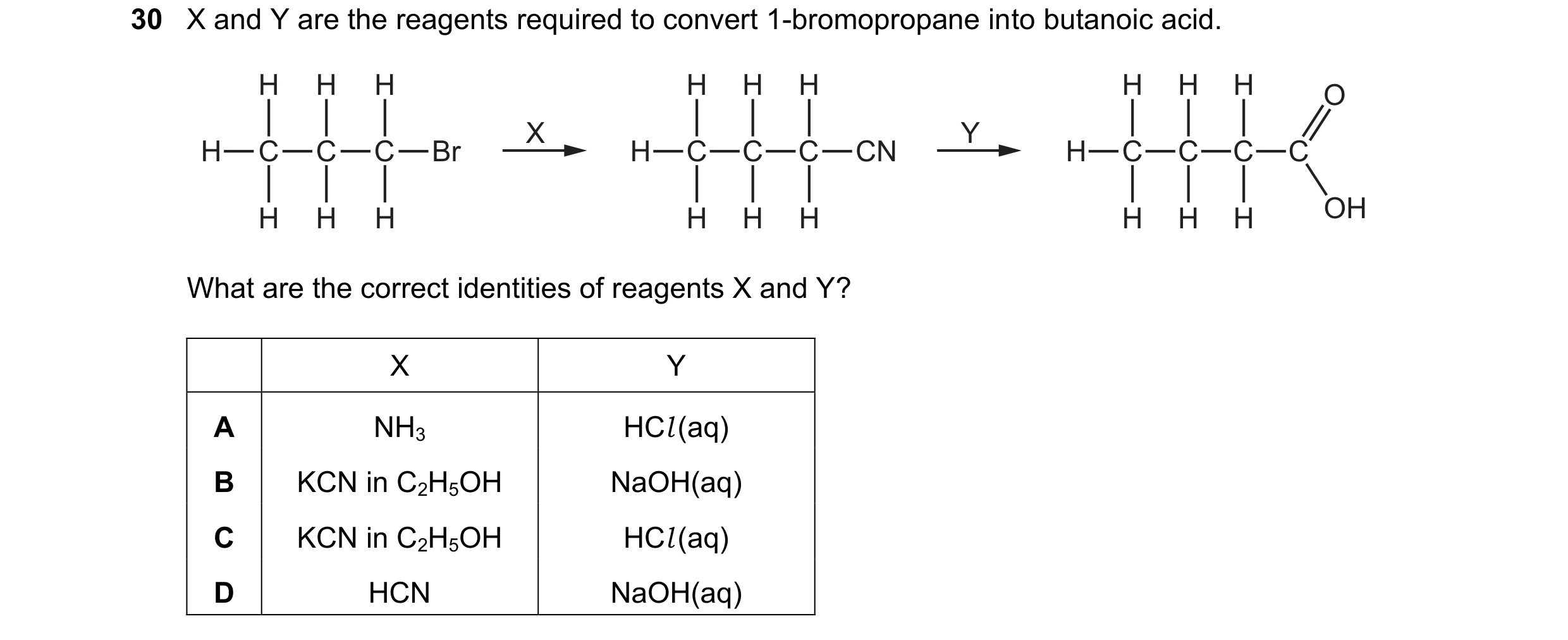
 16 / 16