Questions as text
Q1 · The actions of the Government of Georgia to reduce inflation and unemployment had an… 0455/22 Feb/March 2017
2 The actions of the Government of Georgia to reduce inflation and unemployment had an impact on the business organisations operating in the country in 2015. The country has an expanding tertiary sector including its banking sector. The country now has some features of a market economy. (a) Identify two goals that business organisations may have. [2] (b) Explain two functions of a commercial bank. [4] (c) Analyse how the price mechanism influences the allocation of resources in a market economy. [6] (d) Discuss whether an increase in output will increase the profits that firms receive. [8]
20 marks
Mark scheme: 2(a) Identify two goals that business organisations may have. 1 mark each for each of two goals: • profit maximisation • growth • survival • sales revenue maximisation • profit satisficing • social responsibility • improving the environment 2 for profit maximisation. 2(b) Explain two functions of a commercial bank. 1 mark each for each of two functions identified e.g.: • accepting deposits/allow people to save • lending • allowing customers to make payments • providing a range of other financial services e.g. insurance 1 mark each for each of two explanations given: • customers can open current accounts or deposit accounts/earn interest on savings • customers may keep e.g. documents at the bank. • customers can borrow money to e.g. purchase a home/pay interest on loans. • customers can make payments through e.g. direct debits • customers may be able to get e.g. a guarantee of compensation for theft from a bank. 4 Question Answer Marks Guidance 2(c) Analyse how the price mechanism influences the allocation of resources in a market economy. An increase in demand (1) will increase price (1) this will provide a financial incentive (1) profit motive (1) to supply more of the product (1) resources will move away from less popular products (1). An increase in supply (1) will reduce price (1) this will lead to a rise in demand (1) resulting in more resources being devoted to the product (1). Makes use of demand and supply (1) consumers make the decisions/consumer sovereignty (1). Will encourage firms to use the most cost efficient methods of production (1) e.g. will use labour intensive method of production (1) if ready supply of labour (1). Award up to 3 marks for a correctly labelled demand & supply diagram, showing 3 elements of the above e.g. shift (1) change in price (1) and new equilibrium quantity (1). 6 If a diagram is included, avoid double credit e.g. only 1 mark can be awarded for an increase in demand whether written or drawn. 2(d) Discuss whether an increase in output will increase the profits that firms receive. Up to 5 marks for why it might: The higher output may be the response to higher demand (1) raise revenue (1) may widen the gap between revenue and cost (1). If to sell the higher output a firm has lowered price, revenue would increase if demand is elastic (1) fall in price will cause a greater percentage rise in demand (1). A higher output may enable a firm to take greater advantage of economies of scale (1) lower average costs (1) example (1). Up to 5 marks for why it might not: If demand is inelastic (1) a fall in price will cause a smaller percentage rise in demand (1) revenue will fall (1). May result in the firm experiencing diseconomies of scale (1) raise average costs (1) example (1). May occur when demand is falling (1) revenue will fall (1) may make a loss (1). 8
This question in 0455/22 Feb/March 2017
Q2 · Mining diamonds in Botswana Botswana is the world’s largest producer of diamonds 0455/22 May/June 2017
1 Mining diamonds in Botswana Botswana is the world’s largest producer of diamonds. Indeed, in 2015 diamonds accounted for a third of the country’s Gross Domestic Product (GDP) of US$18 billion and for 80% of the country’s exports. The country currently gets most of its income from mining and selling rough (uncut) diamonds. It receives only US$700 for a 1.5 carat rough diamond. The diamond is then cut, polished and finished, usually in other countries. India is the market leader in cutting and polishing diamonds. The cost of cutting and polishing diamonds in India is only a quarter of the cost in Botswana. The global average cost of finishing a 1.5 carat diamond is US$8000. The diamond is sold to the customer with a 25% profit margin. Botswana is trying to develop industries connected with diamond mining, such as cutting, polishing and jewellery making including diamond rings. Fig. 1 shows how the global market for diamond rings changed in 2015. price of S diamond rings P2 P1 D1 D2 O Q1 Q2 quantity of diamond rings Fig. 1 The global market for diamond rings in 2015 The Botswanan Government has also encouraged the world’s largest diamond company to set up in Gaborone, the capital of Botswana. Some government ministers, however, are concerned that Botswana is too dependent on diamonds. They warn that there is a finite supply of diamonds and urge the government to encourage diversification. As well as diamonds, the country has a number of other strengths. It has good infrastructure, a developed education system and free hospital treatment. (a) Identify, using information from the extract, two reasons why a foreign diamond company may set up in Botswana. [2] (b) Explain two benefits that a country may gain from the presence of a foreign multinational company. [4] (c) Calculate, using information from the extract: (i) the value of diamonds produced in Botswana in 2015 [2] (ii) the average price of a 1.5 carat diamond in 2015. [2] (d) Analyse why a country could have lower production costs for a particular good than another country. [5] (e) Discuss whether Botswana should mine all its diamonds and sell them as quickly as possible. [5] (f) Explain, using information from the extract and Fig. 1, what happened to the market for diamond rings in 2015. [4] (g) Discuss the economic arguments for and against providing free hospital treatment to patients. [6]
30 marks
Mark scheme: 1(a) Identify, using information from the extract, two reasons why a foreign diamond company may set up in Botswana. 1 mark each for each of two reasons identified: • supply of diamonds / largest producer of diamonds • cheap diamonds • educated labour force / developed education system • free healthcare • good infrastructure e.g. transport system • government encouragement • supporting (ancillary) industries e.g. diamond cutting 2 Do not accept subsidies. Question Answer Marks Guidance 1(b) Explain two benefits that a country may gain from the presence of a foreign multinational company. 1 mark each for each of two benefits identified: • higher output / economic growth • higher employment • contribution to current account position • higher tax revenue • new technology introduced • encourage other MNCs to invest • increase competition • increase variety of products produced • train workers in new skills 1 mark each for each of two explanations given: • MNCs’ output will count in the country’s GDP / raise living standards • MNCs may employ workers from the country • MNCs may export products from the country • MNCs profits will be taxed / tax revenue can be spent on e.g. education • MNCs may use more advanced capital equipment • more MNCs can increase employment • increased competition may make domestic firms more efficient/more productive / lower prices • a greater variety of products will increase consumer satisfaction • more skilled workers will be more productive 4 Maximum of 2 marks for a list of benefits. 1(c)(i) Calculate, using information from the extract, the value of diamonds produced in Botswana in 2015. $6 billion (2). Correct method i.e. 33% of US$18 billion (1). 2 Correct answer and $ sign and billion/bn/b required for 2 marks. 6 + >000s = 1 mark Question Answer Marks Guidance 1(c)(ii) Calculate, using information from the extract, the average price of a 1.5 carat diamond in 2015. $10 000 (2). Correct method: $8000 + 25% (1). OR $10 875 (2). Correct method: $8 700 + 25% (1). OR $10 667 ($10 666.66) (2) Correct method: $8000 × 100 / 75. 2 1(d) Analyse why a country could have lower production costs for a particular good than another country. • It may have a more educated/skilled labour force (1) higher productivity/greater efficiency (1) lower wastage (1). • It may have more capital goods (1) may use more advanced technology (1) lower capital costs (1). • Its firms may be producing on a larger scale (1) taking greater advantages of economies of scale (1) example (1). • The government may subsidise the product (1) or tax the product less (1). • It may specialise in the product (1). • It may have easier access to raw materials / natural resources (1) and so raw materials/natural resources may be cheaper (1). • It may have a large supply of labour (1) with low wage rates (1). • It may have low transport costs (1) due to good infrastructure (1). • It may have a more favourable climate (1). • It may have a lower inflation rate than other countries (1). • It may have lower minimum wage (1) lowering wages cost (1). • It may have weaker trade unions (1) reducing bargaining power (1). • It may have a stronger currency (1) causing lower cost of importing raw materials (1). 5 Accept but do not expect reference to comparative/absolute advantage. Maximum of 3 marks for a list- like approach. Question Answer Marks Guidance 1(e) Discuss whether Botswana should mine all its diamonds and sell them as quickly as possible. Up to 3 marks for why it should: • Increase income (1) and employment (1) and living standards now (1). • Increase government tax revenue (1) enabling government to spend more on e.g. infrastructure (1). • Increase export revenue (1) improving the current account position (1). • Demand may be high now (1) causing price to be high (1) causing greater incentive to supply now (1). • Demand may fall in the future (1) lowering prices (1) so income earned in the future may be lower in the future (1). • Higher output now may result in improved economies of scale (1) lowering costs (1). • Higher output may enable greater advantage to be taken of economies of scale (1) lowering average cost (1). Up to 3 marks for why it should not: • Will deplete stocks of diamonds (1) preventing diamond production in the future (1) there is a finite supply of diamonds (1). • Global demand may be low now (1) demand may be higher in the future (1). • Increase in supply may lower prices (1) which may reduce revenue (1). • Risk of relying on one product / one export / being too dependent on diamonds (1). • Advances in technology (1) may reduce costs of mining in the future (1). • May increase the risk of pollution (1) causing environmental damage (1). • In the long run employment (1) and GDP may be higher (1). 5 Reverse arguments may be awarded if justified by reference to short and long run. A response may develop a mixture of relevant points to achieve up to 3 marks on either side. Maximum of 2 marks for a list- like approach. 1(f) Explain, using information from the extract and Fig. 1, what happened to the market for diamond rings in 2015. The diagram shows: • Demand increasing (1) price rising (1) • Supply extending/rising/higher quantity/more diamond rings (1) due to higher income or other valid reasons (1) • Demand is inelastic (1) • Supply is inelastic (1) 4 No marks for just stating the demand curve has shifted to the right or supply is unchanged. Question Answer Marks Guidance 1(g) Discuss the economic arguments for and against providing free hospital treatment to patients. Up to 4 marks for why it should: • It may increase health (1) increase life expectancy/reduce death rate (1) improve living standards/economic development (1) • It would provide access to the poor (1) reduce poverty/provide a necessity (1) • The social benefit of hospital treatment is greater than the private benefit (1) provides external benefits (1) e.g. better quality/higher output/economic growth (1) higher labour productivity (1) may be under-consumed/under-produced (1) if left to market forces (1) people may not appreciate private benefits/benefits to themselves of hospital treatment (1) • People will have more money to spend on other items (1) Up to 4 marks for why it should not: • May increase government spending (1) opportunity cost (1) government spending on e.g. education could be higher (1) taxes may be higher (1) leading to demand-pull inflation (1) • Some of those treated could afford to pay (1) in this case not a good use of government funds (1) • May result in over-consumption (1) people seeking treatment who do not need it (1). • May reduce the work incentive of potential consumers (1) as people will need less income to pay for healthcare (1) • The quality of healthcare may fall (1) loss of profit motive (1) may reduce e.g. innovation (1) • May encourage people to take greater risks (1) e.g. eat less healthily (1). • Government could charge for healthcare/allow private sector to charge for healthcare to get more tax revenue (1) to spend on e.g. education (1) taxes could be lower (1) 6 A response may develop a mixture of relevant points to achieve up to 4 marks on either side. Maximum of 3 marks for a list- like approach.
This question in 0455/22 May/June 2017
Q3 · Coal mining Coal is used directly to heat homes throughout the world and produces more… 0455/23 May/June 2017
1 Coal mining Coal is used directly to heat homes throughout the world and produces more than 40% of the world’s electricity. There are, however, a number of challenges facing the coal industry. These include increasing concerns about the environmental effects of using coal and the increased competition from other fuels. Mining and using coal to produce electricity causes air pollution. Coal-fired power stations emit carbon dioxide, which has a harmful effect on people’s health. Wildlife habitats are damaged when new mines are opened and when coal waste is dumped on landfill sites. However, demand for coal has declined recently. This resulted in the price of a tonne of coal falling from US$300 in 2010 to US$150 in 2015. Even China, the world’s largest consumer of coal, purchased less in 2015. Some high-cost deep mines were closed in the USA. In the same year, Europe’s largest producer, Poland, sold coal at a loss of US$37 a tonne. The fall in demand for coal arises partly from competition from renewable energy. For instance, advances in technology are reducing the costs of producing energy from wind power. Fig. 1 shows how the market for wind power changed in 2015. S1 S2 price of wind power P1 P2 D1 O Q1 Q2 quantity of wind power Fig. 1 The market for wind power in 2015 Some countries protect their energy industries from foreign competition, in some cases to reduce a current account deficit. The governments of a number of coal-producing countries also regulate their coal industries. The extent of government intervention is influenced by the type of economic system operated. (a) Identify, using information from the extract, two external costs that arise from using coal to produce electricity. [2] (b) Explain two reasons why a firm may continue to produce a good despite making a loss. [4] (c) Calculate, using information from the extract: (i) the percentage fall in the price of coal between 2010 and 2015 [2] (ii) the cost (in US$) of producing a tonne of coal in Poland in 2015. [2] (d) Analyse how resources are allocated in a mixed economy. [5] (e) Discuss whether governments should regulate the coal industries of their countries. [5] (f) Explain, using information from the extract and Fig. 1, what happened to the market for wind power in 2015. [4] (g) Discuss whether a government should use trade protection to reduce a current account deficit. [6]
30 marks
Mark scheme: 1(a) Identify, using information from the extract, two external costs that arise from using coal to produce electricity. Air pollution/carbon dioxide emissions (1) damage to wildlife habitats (1) ill health (1). 2 1(b) Explain two reasons why a firm may continue to produce a good despite making a loss. 1 mark each for each of two reasons identified: • expectation revenue/profits may increase (1) expectation costs may fall (1) • government subsidy (1) to preserve jobs (1) sales maximisation as a goal (1) • aim is social welfare (1) it is a strategic industry (1) the firm has seasonal demand (1) • the firm cannot produce any other product (1) the firm may be state owned (1) • the firm does not make an overall loss (1) but covers losses from other products (1) 1 mark each for each of two explanations: • expectation revenue will rise if anticipate demand will be higher in the future (1) • expectation costs will fall e.g. as the firm expands or new resources are discovered (1) • a government subsidy may cover a loss (1) • jobs preserved in the short term in anticipation of an upturn in future (1) • sales maximisation in the short-term for greater future profits e.g. monopoly (1) • non-profit making organisations cover losses by e.g. donations, government support (1) • firm will make losses in winter but anticipate profits in summer (1) • the firm will keep producing its only product until bankrupt (1) • nationalised industries e.g. railways, providing a public service (1) 4 1(c)(i) Calculate, using information from the extract, the percentage fall in the price of coal between 2010 and 2015. Correct answer: 50% (2) Correct working: e.g. 150 ÷ 300 × 100 (1) 2 Question Answer Marks Guidance 1(c)(ii) Calculate, using information from the extract, the cost in (US$) of producing a tonne of coal in Poland in 2015. Correct answer: $187 (2) Correct working: e.g. $150 + $37 (1) 2 $ sign required for 2 marks 1(d) Analyse how resources are allocated in a mixed economy. A mixed economy consists of resource allocation by both public and private sectors (1) Up to 3 marks for analysis of the role of the public sector: • Government production of goods which private sector is unable/unwilling to do (1) government sets prices (1) • Government influencing prices through taxes and subsidies (1) • Government laws and regulations to protect public (1) • Government redistributing incomes (1) Up to 3 marks for analysis of the role of the private sector: • Role of price mechanism (1) responding to changes in demand and supply (1) signalled by price changes (1) • resources moving to making products in increasing demand (1) away from products falling in demand (1) profit incentive (1) creating an efficient use of resources (1) • Those earning the highest income (1) have the greatest purchasing power (1) differences in income provide incentives (1) 5 Question Answer Marks Guidance 1(e) Discuss whether governments should regulate the coal industries of their countries. Up to 3 marks for why they should: • Control of negative externalities (1) harmful effects on third parties (1) e.g. regulations on air pollution or noise pollution (1) • To ensure regular fuel supplies (1) by having output targets (1) • Consumer protection (1) price controls (1) through maximum and/or minimum prices (1) • Worker protection (1) regulation of working conditions/safety in coal industry (1) • Control of any monopoly power (1) preventing price being driven up (1). Up to 3 marks for why they should not: • Regulation may be difficult to enforce (1) expensive to enforce/uses up resources (1) difficult to determine who has caused the pollution (1) coal industry not the only pollution source (1) • May reduce coal industry output (1) reducing GDP economic growth (1) creating unemployment (1) reducing coal exports (1) may reduce government tax revenue (1) • May add to firms’ costs (1) increasing coal prices (1) causing cost-push inflation (1) • May discourage investment in the coal industry (1) raising production costs (1) increasing prices (1) 5 Pollution on its own is insufficient, it needs to be a specific example. 1(f) Explain, using the information from the extract and Figure 1, what happened to the market for wind power in 2015. The diagram shows: • supply increasing/more wind power produced (1) • price falling (1) • demand extending (1) • more wind power traded (1) • costs of production fell (1) due to advances in technology (1) • inelastic demand (1) inelastic supply (1) 4 Question Answer Marks Guidance 1(g) Discuss whether a government should use trade protection to reduce a current account deficit. Up to 4 marks for why it should: • Trade protection/tariffs may increase import prices (1) import volumes will fall (1). • Trade protection/quotas will reduce the quantity of imports (1) • Trade protection/embargoes will stop imports of certain products (1) may cause lower import expenditure (1) reducing a current account deficit (1) • Trade protection may prevent other countries from dumping their output (1) • A reduction in a current account can increase output (1) raise incomes (1) reduce unemployment (1) Up to 4 marks for why it should not: • Trade protection may provoke retaliation (1) if other countries impose trade restrictions (1) the current account may not improve (1) GDP may fall (1) unemployment may rise (1). • Trade protection may discourage firms from becoming efficient (1) this will mean the deficit will continue (1). • Other policies may be more effective (1) e.g. increase in income tax (1). • Trade protection can disadvantage domestic consumers/producers (1) raise price (1) reduce imports of e.g. raw materials (1) reduce quality (1). • Some products cannot be produced domestically (1). 6
This question in 0455/23 May/June 2017
Q4 · 2015 saw more than US$4000 billion-worth of mergers worldwide, many in the USA and the UK 0455/23 May/June 2017
4 2015 saw more than US$4000 billion-worth of mergers worldwide, many in the USA and the UK. Some mergers occur between firms in different countries. These are influenced by a number of factors, including the size and structure of the markets in the countries and their exchange rates. Mergers influence the level of competition in markets. (a) Define ‘conglomerate integration’. [2] (b) Explain why firms in a perfectly competitive market are price-takers. [4] (c) Analyse the causes of an increase in a country’s exchange rate. [6] (d) Discuss whether a large firm will always have lower average costs of production than a small firm. [8]
20 marks
Mark scheme: 4(a) Define ‘conglomerate integration’ A merger (1) between firms producing different products (1). 2 4(b) Explain why firms in a perfectly competitive market are price-takers. • No one firm can change market price/one firm’s output is insufficient to influence price (1) price takers have to accept the market price (1) • If one firm raises its price it will lose all of its customers (1) as demand for its products will be perfectly elastic (1) all the products of the firms in the industry are homogeneous/perfect substitutes for each other (1) price will not be lowered (1) as the firms will be able to sell any quantity they want at the market price (1) • Perfect information (1) so no consumer will be willing to pay one firm’s higher price (1) 4 4(c) Analyse the causes of an increase in a country’s exchange rate. • Change in market conditions for a floating exchange rate (1) • Increase in demand for the currency (1) cheaper exports/higher quality exports (1) may lead to greater demand for exports (1) higher interest rates may increase demand for financial investment (1) there may be speculation that the currency may rise further (1) • Decrease in supply of the currency (1) more expensive imports/poorer quality imports/trade barriers (1) may lead to lower demand for imports (1) lower interest rates may cause inward financial investment (hot money) to fall (1) • Government decision to raise the value of the currency (1) for a fixed exchange rate (1) 6 Maximum of 3 marks for a list-like approach. Question Answer Marks Guidance 4(d) Discuss whether a large firm will always have lower average costs of production than a small one. Up to 5 marks for why they might: • May be able to take advantage of economies of scale (1) purchasing/buying economies – receiving discounts from buying in bulk (1) • technical – using large scale capital equipment (1) • managerial – employing specialists (1) • selling – e.g. lower transport costs (1) • financial – borrowing at lower interest rates (1) • research and development – running a department to develop new products (1) • Large firms spread fixed costs over high output, reducing AFC (1) • Large firms may have access to cheap labour abroad (1) Up to 5 marks for why they might not: • May experience diseconomies of scale (1) raising average cost (1) • problems managing the firms (1) poor communication (1) • poor industrial relations (1) • involve an opportunity cost (1) • may have to switch resources from producing consumer goods (1) • lower living standards in the short run (1) • Large firms are less likely to receive government support (1) in the form of a subsidy (1) • Large firms may pay higher rates of tax (1) adding to average costs (1) corporation tax is progressive (1) 8 A response may develop a mixture of relevant points to achieve up to 5 marks on either side. Maximum of 2 marks on each side of the discussion for a list- like approach. Accept advantages of small firms over large firms, e.g. government support.
This question in 0455/23 May/June 2017
Q5 · Singapore is usually ranked as one of the best countries in which to do business 0455/22 Oct/Nov 2017
2 Singapore is usually ranked as one of the best countries in which to do business. It is an open economy engaging in free trade. It has a history of strong entrepreneurship, low unemployment, low average costs and relatively low tax rates. Its example may encourage other countries to remove trade restrictions. (a) Define ‘average costs’. [2] (b) Explain two factors that would increase the supply of entrepreneurs in an economy. [4] (c) Analyse how the market for a product would be affected by a reduction of the tax on the product combined with a fall in the price of a complement. [6] (d) Discuss whether low unemployment in a country will encourage multinational companies (MNCs) to set up there. [8]
20 marks
Mark scheme: 2(a) Define ‘average costs’. Total cost divided by output (2). Cost per unit / average fixed cost plus average variable cost (1). 2 2(b) Explain two factors that would increase the supply of entrepreneurs in an economy. 1 mark each for each of two factors identified: • rise in education • reduction in corporation tax / tax holidays • increase in subsidies for business/entrepreneurs • reduction in the rate of interest • privatisation / move to market economy • immigration • reduction in barriers to entry / deregulation • economic boom / high level of economic activity • improved legal framework / reduction in crime 1 mark each for each of two explanations given: • rise in education will develop the skills needed to be an entrepreneur • reduction in corporation tax will increase financial return from being an entrepreneur • subsidies may make it easier / cheaper to start-up a business • a lower rate of interest will make it cheaper to borrow to start up a business / increase expectation of higher demand • privatisation / move to market economy will increase the opportunities to set up new firms • a relatively high proportion of immigrants tend to set up their own businesses • lower barriers to entry / deregulation would make it easier to set up new firms • economic boom / high level of economic activity may increase the expectation that firms will be profitable • improved legal framework / reduction in crime would be likely to make entrepreneurs feel more confident. 4 Question Answer Marks Guidance 2(c) Analyse how the market for a product would be affected by a reduction of the tax on the product combined with a fall in the price of a complement. Reducing the tax will lower costs of production (1) increase supply – written or drawn (1). A complement is a product bought to use with another product (1) a fall in its price would increase demand for this product – written or drawn (1). Effect on price is uncertain (1) would depend on relative size of changes (1). Quantity would rise – written or drawn (1). 6 Question Answer Marks Guidance 2(d) Discuss whether low unemployment in a country will encourage multinational companies (MNCs) to set up there. Up to 5 marks for why it might: Low unemployment may indicate a strong economy / economic growth (1) high incomes (1) a high level of demand (1) may expect to be able to sell a large amount in the country (1) make a high profit (1). Low unemployment may mean high tax revenue (1) government spending on education may be high (1) improving quality of workers (1) spending on infrastructure e.g. roads may be high (1) lower MNCs’ costs of production (1). Production may be capital-intensive (1) and so labour shortages may not be a significant problem (1). Other benefits may be greater than higher labour costs (1) e.g. not having to pay an import tariff (1). Up to 5 marks for why it might not: There may be difficulty in recruiting workers (1) may be a shortage of skilled workers (1) may increase trade union power (1) may have to pay high wages (1) which would increase costs (1) lower profits (1). Low unemployment may create demand-pull inflation (1) and cost-push inflation (1) this may make it relatively expensive to produce in the country (1). 8
This question in 0455/22 Oct/Nov 2017
Q6 · In England football stadiums are usually built and financed by the private sector, but in… 0455/21 May/June 2018
2 In England football stadiums are usually built and financed by the private sector, but in some countries the stadiums are built and financed by the government. Many football stadiums in the English Premier League are full on match days. In the short run the supply of seats is perfectly inelastic. The football clubs could actually raise prices, still sell their tickets and so raise their profits. Premier League footballers currently receive very high wages. (a) Define perfectly inelastic supply. [2] (b) Explain two reasons why a firm may not aim to earn maximum profit. [4] (c) Analyse why Premier League footballers receive very high wages. [6] (d) Discuss whether or not a government should spend some of its tax revenue on building sports stadiums. [8]
20 marks
Mark scheme: 2(a) Define perfectly inelastic supply. A change in price causes no change in supply (2). Correct formula (1). A PES of 0 (1). 2 2(b) Explain TWO reasons why a firm may NOT aim to earn maximum profit. A firm may be trying to grow (1) to capture a larger share of the market/to increase pay and status of managers (1). A firm may be trying to maximise sales revenue (1) to make it easier to grow/gain market share (1). A firm may be aiming for a reasonable but not maximum profit/profit satisficing (1) in order to pursue other goals (1). e.g. raising wages to keep workers happy (1). A firm may not know what output will maximise profit (1) due to lack of information about costs/demand (1). A firm may be trying to survive (1) in difficult situations (1). May be in public sector/charity (1) and thus have goals related to social welfare/reducing inequalities (1). 4 2(c) Analyse why Premier League footballers receive very high wages. High demand (1) due to high demand for the services of footballers (1) many people want to watch football matches in stadiums (1) on television (1). Football clubs receive high incomes (1) compete for players (1). Low supply (1) have to be skilled (1) not many possess the skills (1). Premier League players may have strong bargaining power (1) through strong professional organisation/trade union/agents (1). To compensate for negative aspects of the job (1) e.g. risk of personal injury (1) other relevant example (1). 6 Up to 2 marks for a relevant diagram – 1 for high demand and 1 for low supply. Max 4 marks if no specific application to footballers. Question Answer Marks Guidance 2(d) Discuss whether or not a government should spend some of its tax revenue on building sports stadiums. Up to 5 marks for why it should: Building sports stadiums may encourage people to participate in sport (1) increase health/living standards (1). It can generate jobs (1) increase incomes (1) reduce poverty (1). Sports stadiums and sporting events may attract foreign tourists (1) improve the current account of the balance of payments (1). Generate government revenue which could be spent on e.g. health (1). Up to 5 marks for why it should not: It will involve an opportunity cost (1) the tax revenue could be used on e.g. education (1). It may generate external costs (1) e.g. noise suffered by local residents (1). The private sector may be more efficient in building the stadiums (1) profit motive (1) . Wasteful use of government funds (1) since benefits may be mainly private benefits (1). Those who visit the sports stadiums may be richer (1) than some of the taxpayers (1) redistribution of income from the poor to the rich (1). Could result in a budget deficit (1) or need to raise taxes (1). 8 Accept, but do not expect, references to public and merit goods.
This question in 0455/21 May/June 2018
Q7 · Crisis in the ice cream market Vanilla is used in the production of soft drinks, cakes… 0455/22 May/June 2018
1 Crisis in the ice cream market Vanilla is used in the production of soft drinks, cakes and perfumes. Its main use, however, is in the production of ice cream. Fig. 1 shows the different costs of making ice cream for one firm. Fig. 1 The costs of producing ice cream for one firm raw materials including vanilla other wages insurance security lighting rent Madagascar is the world’s largest supplier of vanilla followed by Mexico and Tahiti. At the start of 2016, economists expected the price of ice cream to increase as the price of vanilla had risen by 130% in 2015. This was largely because of the poor harvests in Madagascar which reduced the output of vanilla in 2015. Ice cream is seen as a luxury product in most countries. It has a range of substitutes and this is one reason why producers do not always pass on higher costs to consumers. In 2015, there were a number of other changes in the production of ice cream including a rise in the productivity of the workers. As well as vanilla, Madagascar produces a number of other primary products including coffee and sugar. Nearly 80% of the country’s labour force is employed in the primary sector. The country has a relatively low Gross Domestic Product (GDP) per head and a relatively low Human Development Index (HDI) value as shown in Table 1. This limits the amount that people in Madagascar save. Table 1 GDP per head and HDI in selected countries in 2015 Country GDP per head (US$) HDI Argentina 22 400 0.836 Bangladesh 3 600 0.570 Cuba 10 200 0.769 Egypt 11 500 0.690 Ghana 4 300 0.579 Madagascar 1 500 0.510 Half of Madagascar’s population live in poverty. The government is trying to reduce poverty by introducing a programme of cash benefits. It is hoped that one effect of this will be to increase school enrolment and attendance of the children of poor families. To increase economic growth, the government has sold off a number of state-owned enterprises and is moving the economy towards a market system. (a) Identify two fixed costs of production in Fig. 1. [2] (b) Explain, using information from the extract, two reasons why a rise in the price of vanilla might not cause an increase in the price of ice cream. [4] (c) Analyse, using a demand and supply diagram, the effect of an increase in income on the market for ice cream. [5] (d) Analyse the extent to which the relationship shown in Table 1 between countries’ GDP per head and their HDI value is the expected one. [4] (e) Discuss whether or not a government should encourage people to save more. [5] (f) Explain, using information from the extract, how cash benefits given to the poor can reduce poverty. [4] (g) Discuss whether or not a market system benefits consumers. [6]
30 marks
Mark scheme: 1(a) Identify two fixed costs of production in Fig.1. One mark each for any 2 from: insurance, security, rent, lighting and wages. 2 are given, consider only the first three. 1(b) Explain, using information from the extract, two reasons why a rise in the price of vanilla might not cause an increase in the price of ice cream. Ice cream is a luxury product (1) likely to have elastic demand / producers will be concerned that a rise in price could cause a fall in revenue/profit/demand (1). Ice cream has substitutes (1) likely to have elastic demand / producers will be concerned that a rise in price could cause a fall in revenue / loss of customers / loss of demand (1). Rise in productivity of workers (1) fall in labour costs / lower costs may offset a rise in the price of vanilla (1). Fall in another cost identified in the pie chart (1) may offset a rise in the price of vanilla (1), 4 Question Answer Marks Guidance 1(c) Analyse, using a demand and supply diagram, the effect of an increase in income on the market for ice cream. Up to 4 marks for a diagram: • axes correctly labelled – price and quantity or P and Q (1) • demand and supply curves correctly labelled, S (1) • demand curve D1 shifted to the right D2 (1) • correct equilibriums identified either by lines drawn to both axes or equilibrium prices clearly identified e.g. E1 and E2 (1) 1 mark for written analysis: • an increase in income increases purchasing power (1) • people buy more ice cream when they have more money/income (1) • demand will increase as ice cream is a luxury good • price will rise 5 price of ice cream quantity of ice cream O P2 D1 D1 P1 Q1 Q2 D2 D2 S S Question Answer Marks Guidance 1(d) Analyse the extent to which the relationship shown in Table 1 between countries’ GDP per head and their HDI value is the expected one. Generally, in the same order / positively related / countries with highest GDP per head have the highest HDI (1) countries with high incomes generally spend more on education and healthcare (1) supporting evidence e.g. Argentina has highest GDP per head and highest HDI (1). Egypt higher in terms of GDP per head but lower in terms of HDI than Cuba (1). Cuba may have a high life expectancy (1) indicating good healthcare (1). Cuba may have a high number of mean and expected years of schooling (1) indicating a strong education system / more educated population (1). 4 Reward 1 mark for a supported conclusion that it is generally the expected relationship. Marks may be gained in relation to Cuba by mentioning Egypt may have less good healthcare and education. 1(e) Discuss whether or not a government should encourage people to save more. Up to 3 marks for why it should: More savings can fund investment / enable people to set up a business (1) higher investment can increase economic growth (1) higher economic growth can increase living standards (1). A government may make use of money in government-run saving schemes (1) e.g. to fund infrastructure projects (1). More savings can reduce consumer spending (1) which will lower total (aggregate) demand (1) which can reduce inflation (1). More savings can reduce demand for imports (1) improve the current account position (1). More savings can help people cope with emergencies / increase wealth / for future use (1) prepare for retirement (1) in case of unemployment (1) spend on education (1) reduce need for government expenditure e.g. pensions/education (1) enabling the government to spend on other named area (1). Up to 3 marks for why it should not: More saving may reduce output / cause recession (1) increase unemployment (1) cause deflation (1). More saving will increase deposits at banks (1) this may encourage them to lend to un- creditworthy customers (1) causing banks to collapse (1). 5 Accept response from the perspective of why it should not, by discussing why it would be better for the government to encourage spending, Reward change in consumer spending and total demand in either why it should, or why it should not, but not in both. Question Answer Marks Guidance 1(f) Explain, using information from the extract, how cash benefits given to the poor can reduce poverty. May enable them to send their children to school for longer (1) this may increase their children’s skills (1) qualifications (1) increase their job opportunities / start a business (1) increase their earning potential / living standards (1) enable them to purchase more goods and services (1) including basic necessities (1). 4 Maximum of 1 mark for a way cash benefits may reduce poverty, if not linked to education. Reward but do not expect reference to an implied multiplier effect resulting from the higher spending creating more jobs. 1(g) Discuss whether or not a market system benefits consumers. Up to 4 marks for why it might: In theory there will be consumer sovereignty (1) with firms being responsive to consumer demand (1). The price mechanism allocates resources automatically / profit motive provides an incentive to respond to consumer demand (1) avoiding delays in responding to changes in demand (1). There may be a high level of competition (1) keeping price low (1) increasing efficiency (1) keeping quality high (1) providing choice (1). Up to 4 marks for why it might not: Those with low incomes will lack purchasing power (1) the market will not produce what they want (1). Monopolies may develop (1) driving up price (1) reducing quality (1). Consumers may not always be fully informed (1) e.g. cigarettes (harmful / demerit goods) may be overconsumed (1) e.g. healthcare (beneficial / merit goods) under consumed (1) there may be external costs (1) market failure may occur (1). Some consumers may find too much choice confusing (1) advertising can distort consumer choice (1). 6 Reward but do not expect reference to public goods.
This question in 0455/22 May/June 2018
Q8 · Farms in the USA are getting larger 0455/22 May/June 2018
3 Farms in the USA are getting larger. One dairy farm in the state of Indiana has over 38 000 cows. Farms in the USA compete with farms in both developed and developing countries. The value of the farms’ exports of milk appears in the trade in goods section of the current account of the USA’s balance of payments. (a) Identify two examples of capital goods that may be used by a farm. [2] (b) Explain how a country could have a trade in goods surplus, but a deficit on the current account on the balance of payments. [4] (c) Analyse the economies of scale from which a farm may benefit. [6] (d) Discuss whether or not developing countries benefit from producing mainly primary products. [8]
20 marks
Mark scheme: 3(a) Identify two examples of capital goods that may be used by a farm. One mark each for each of two examples e.g. tractor, farm buildings. 2 3(b) Explain how a country could have a trade in goods surplus but a deficit on the current account on the balance of payments. Trade in goods surplus means exports (of goods) exceeds imports (of goods) (1) trade in goods is only one part of the current account (1) identification of two of the three other components (1) there could be a larger deficit on the trade in services balance (1) example of a service item decreasing (1) there can be a larger deficit on income (primary) balance (1) example of an income item increasing (1) there could be a larger deficit on current transfers (secondary) balance (1) example of a current transfer item decreasing (1) or a combination of deficits on other items (1). A current account deficit means more money will be leaving than entering the country (1). 4 3(c) Analyse the economies of scale from which a farm may benefit. Buying (purchasing) economies (1) e.g. buying seed in bulk at reduced price (1). Technical economies (1) using up to date / efficient equipment e.g. combine harvesters (1). Managerial economies (1) employing specialist workers e.g. farm managers (1). Financial economies (1) borrowing at a lower rate of interest/finding it easier to obtain a loan (1). Risk bearing economies (1) a farm may grow a variety of crops (1). 6 Maximum of 4 marks unless at least one type of economy of scale is related specifically to a farm e.g. buying seed in bulk. Also credit analysis of external economies of scale. Maximum of 3 marks for a list-like approach. Question Answer Marks Guidance 3(d) Discuss whether or not developing countries benefit from producing mainly primary products. Up to 5 marks for why they might: May have the resources to produce high quality (1) low cost primary products (1). If more can be exported (1) revenue can be used for development (1). Specialisation can reduce average costs (1) increasing output (1) enabling advantage to be taken of economies of scale (1). Demand for primary products may be increasing (1) some primary products can be sold for high prices (1) e.g. oil (1) increasing living standards (1). May be able to raise revenue (1) as demand for some primary products, e.g. oil, is price- inelastic (1). Countries may lack education (1) primary sector provides some unskilled jobs (1). Up to 5 marks for why they might not: Demand for primary products does not tend to rise as rapidly as demand for manufactured products and services (1) tend to have less valued added (1). The production of some primary products may be adversely affected by bad weather and diseases (1) disrupting supply (1) resulting in fluctuating income (1) working conditions may be poor (1). Developed countries may impose trade restrictions on primary products from developing countries (1). The primary sector does not tend to offer many high skilled jobs (1) low pay (1) low living standards (1). There are risks of overspecialisation (1) a more diversified economy would be in a stronger position to resist economic downturns (1). Developing countries will be dependent on other countries for manufactured goods and services (1). 8 Accept as an alternative to the first two points that developing countries may have the resources to produce high quality primary products at low cost, that they may not have the resources to produce high quality secondary / tertiary products at low cost. Reward but do not expect reference to comparative advantage.
This question in 0455/22 May/June 2018
Q9 · Russia’s struggle for economic recovery Shortly after the 2014 Winter Olympic Games in… 0455/21 Oct/Nov 2018
1 Russia’s struggle for economic recovery Shortly after the 2014 Winter Olympic Games in Sochi, Russia, the value of the Russian currency, the rouble, depreciated significantly against the US$. Russian Gross Domestic Product (GDP) growth rates also became negative. Political and economic instability in the region contributed to these changes. To avoid further outflows of financial capital from the Russian economy and further falls in the value of the Russian rouble, the central bank of Russia increased the official interest rate to 17%. By 2016, the rouble fell even more and the central bank considered selling its foreign reserves to raise the exchange rate against the US$. Overall, things did not look good for the Russian economy in 2016. Export values fell and foreign investors lacked confidence in the Russian economy. This not only had a negative impact on unemployment rates and economic growth but also had an impact on poverty rates which were expected to return to pre-2007 levels. Demographic trends did not help as Russia’s population declined due to high death rate, low fertility rate, and a high level of emigration. Domestic consumption and investment, however, showed some positive signs. Consumers bought more domestic products and domestic investment increased. However, inflation rose and the central bank introduced policy measures to avoid a rapid increase in prices. As an oil producer, Russia’s economy was affected by falling international oil prices. Saudi Arabia, the world’s second largest oil producer, continued to increase oil production despite pressures by other producers to cut production. In addition, global demand for oil was weak. Table 1 shows the price of oil between 2010 and 2016. Table 1 Price of Oil 2010–16 (US$) Price of Oil Year (US$ per barrel) 2010 82 2011 92 2012 103 2013 93 2014 95 2015 53 2016 37 In 2016, domestic Russian oil producers struggled to make a profit due to economic uncertainty and competition from renewable energy. They were also concerned that it may become even more difficult for them to make a profit in the future. This was because the government wanted to increase tax on oil producers to raise more revenue. The government believed that such an extra tax would not actually hurt the large oil producers. (a) Calculate, using the information in Table 1, the percentage change in the price of oil between 2010 and 2016. [2] (b) Explain, using information from the extract, two reasons for falling oil prices. [4] (c) Identify, using information from the extract, two ways a central bank could try to stop a fall in the international value of its currency. [2] (d) Explain, using information from the extract, two reasons for Russia’s declining population. [4] (e) Analyse the extent to which a rise in oil prices will cause inflation. [5] (f) Discuss whether or not increasing taxes on Russian oil producers will be harmful to those producers. [5] (g) Identify one way in which monetary policy differs from fiscal policy. [2] (h) Discuss whether or not the Russian government should have been concerned about the state of the Russian economy in 2016. [6]
30 marks
Mark scheme: 1(a) Calculate, using the information in Table 1, the percentage change in the price of oil between 2010 and 2016. 54.9 (2) − $37 $82 $82 × 100 correct working (1) 2 1(b) Explain, using information from the extract, two reasons for falling oil prices. Saudi Arabia’s output of oil is growing (1) increasing the supply / shown on accurate diagram (1). (Global) demand for oil is weak/decreasing / shown on accurate diagram (1) due to global economic uncertainty / competition from renewable energy / price reduced to attract consumers (1). 4 1(c) Identify, using information from the extract, two ways a central bank could try to stop a fall in the international value of its currency. Increase interest rate (1). Sell its foreign reserves / buy its own currency (1). 2 1(d) Explain, using information from the extract, two reasons for Russia’s declining population. High death rate (1) e.g. low life expectancy / poor health of the population / poor healthcare system (1). Low fertility rate (1) e.g. low birth rate / birth rates below the replacement rate (1). High levels of emigration (1) e.g. better opportunities elsewhere, unemployment, poverty, domestic political, social, and economic instability (1). 4 Question Answer Marks Guidance 1(e) Analyse the extent to which a rise in oil prices will cause inflation. Rise in oil prices will increase costs of production (1) e.g. higher energy costs / transport costs (1) resulting in cost-push inflation (1). Demand for oil is price-inelastic (1) if prices rise most consumers will keep buying it (1) some producers and consumers however may switch to other products (1) The extent will depend upon the proportion of oil costs in the total costs of other products (1) other costs may be falling (1). Because of rising oil prices, workers may demand higher wages (1) causing cost-push inflation (1). Movements in exchange rates will affect the impact on inflation (1) a rise in the exchange rate would reduce the overall effect (1). For oil producing countries export revenue may rise (1) causing higher demand (1) and demand-pull inflation (1). 5 Question Answer Marks Guidance 1(f) Discuss whether or not increasing taxes on Russian oil producers will be harmful to those producers. Up to 3 marks for reasons why it would be harmful: Producers’ costs will rise (1) they will become less profitable (1) and they already struggled to make a profit (1) small producers will find it difficult to absorb the extra costs (1). They may need to cut production / stop production completely (1) or cut costs (1) causing unemployment of the workforce (1). They might pass on the tax (1) by raising prices (1) to maintain profits (1) but this could reduce demand (1) by making them less competitive with other countries e.g. Saudi Arabia (1) less competitive with other energies e.g. renewables (1) Investments in the oil industry may fall (1) due to less funds available (1). Up to 3 marks for reasons why it would not be harmful: Demand for oil is likely to be price inelastic (1) this may enable the producers to pass on the tax in higher price to consumers (1) without losing revenue (1). Most oil producers are large (1) and earn very high profits (1) paying extra tax will not harm them significantly (1). Some of the tax revenue may be used on e.g. education/training (1) which could increase productivity of workers (1) lowering oil producer’s costs (1). 5 Each point may be credited only once, on either side of an argument, but separate development as to how/why the outcome may differ is to be rewarded. 1(g) Identify one way in which monetary policy differs from fiscal policy. Fiscal policy includes taxes / government spending (1) monetary policy includes interest rates / money supply / exchange rate (1). Fiscal policy is conducted by the government of the country (1) while monetary policy is conducted by the central bank of the country (1). 2 Maximum 1 mark for reference to only monetary OR fiscal. Question Answer Marks Guidance 1(h) Discuss whether or not the Russian government should have been concerned about the state of the Russian economy in 2016. Up to 4 marks for why they should have been concerned: Negative economic growth / recession (1) increasing unemployment (1) increasing poverty rates (1) possible policy measures to reduce poverty (1) e.g. costs of healthcare may rise (1) need for greater spending on benefits e.g. unemployment benefits (1) falling tax revenues (1) may have to increase taxes (1) opportunity cost(s) involved / reduced spending on other areas e.g. defence (1). Rising inflation (1) making goods and services less affordable (1). Emigration from Russia is increasing (1) reducing the available workforce (1). Export values are falling (1) so less foreign currency is earned (1) falling value of the rouble (1) causing imported inflation (1) leading to higher interest rates (1) higher cost of borrowing for government (1). Investors lacked confidence in the Russian economy (1) may have reduced productive potential (1). Up to 4 marks for why it is less of a cause for concern: Government spending may not need to rise (1) and tax revenue may increase (1). Domestic consumption is increasing (1) and domestic investment is increasing (1) this may create employment (1) and offset decreases in foreign investments and exports (1) therefore total (aggregate) demand might not decrease significantly (1). Inflation may be a sign of increasing demand (1) showing confidence in the economy (1). Emigration may be mainly of unskilled workers (1) who are less valuable to firms (1). The falling exchange rate may improve the current account (1) with no need for government / central bank action (1). 6 For all ‘Discuss’ questions Each point may be credited only once, on either side of an argument, but separate development as to how/why the outcome may differ is to be rewarded. Generic example Mark Economic growth will increase 1 because of reason« e.g. demand for services is increasing globally 1 Economic growth will decrease (reverse of 1st argument) 0 because of a different reason / not a reverse argument e.g. a country’s resources may be more suited to producing primary products. 1
This question in 0455/21 Oct/Nov 2018
Q10 · Rubber production in Liberia Liberia is a west African country that has faced a number of… 0455/22 Oct/Nov 2018
1 Rubber production in Liberia Liberia is a west African country that has faced a number of serious problems in recent years. These have included a civil war and in 2014 the outbreak of the Ebola epidemic. There have also been improvements. The unemployment rate was 85% in 2004 but had fallen to 4% in 2016. This reduction has influenced both emigration and wages. Workers have received higher wages although some economists think that the higher wages have increased the country’s inflation rate which in 2016 was 8%. The country has a good supply of drinking water and a climate favourable to agriculture. More than 70% of the country’s labour force is currently employed in agriculture. The country’s main exports are rubber, iron ore, timber and gold. A US multinational company (MNC) runs the world’s largest single natural rubber farming operation in Liberia. The price of rubber fell by 75% between 2011 and 2016. The global supply of rubber had exceeded demand as a number of countries imposed import restrictions on rubber. In response to the lower price the US MNC cut its production, but still made a loss. The MNC does not want to go out of business and is trying to survive by cutting its costs. In the long run it hopes to maximise profits. When some of its 7000 workers retire, they will not be replaced. The MNC has introduced new production techniques and diversified into growing cocoa and coffee. The Liberian government is providing subsidies to local rubber farmers to help them buy new equipment and introduce new farming methods. Despite the challenging situation, a number of local Liberian rubber farmers are increasing the size of their operations by buying up more land. Some others are diversifying by using wood from the rubber trees to make furniture. While helping its rubber farmers, the Liberian government is also encouraging the expansion of the secondary and tertiary sectors. Between 2014 and 2016 it increased its expenditure on healthcare but this was at the expense of a number of public sector investment projects. Table 1 compares the infant mortality rate and healthcare expenditure per head in selected countries in 2015. Table 1 Infant mortality rate and healthcare expenditure per head in selected countries in 2015 Infant mortality rate Healthcare expenditure Country (deaths per 1000 per head live births) (US$) Cuba 4.5 459 Hungary 5.0 2 096 India 41.5 248 Liberia 67.5 90 Turkey 18.8 1 148 UK 4.4 3 749 (a) Identify, from the extract, two goals of business organisations. [2] (b) Explain, using information from the extract, two reasons why the price of rubber fell between 2011 and 2016. [4] (c) Analyse how an increase in wages could cause inflation. [5] (d) Analyse to what extent the information in Table 1 suggests that healthcare expenditure per head is an important influence on the infant mortality rate. [4] (e) Discuss whether or not having more of its workers employed in the tertiary sector would benefit the Liberian economy. [5] (f) Explain, using information from the extract, how the concept of opportunity cost affects all rubber farmers in Liberia. [4] (g) Discuss whether or not a high rate of unemployment would always cause emigration. [6]
30 marks
Mark scheme: 1(a) Identify, from the extract, two goals of business organisations. Survival / growth / profit maximisation / diversification 2 1(b) Explain, using information from the extract, two reasons why the price of rubber fell between 2011 and 2016. Supply exceeding demand / diagram showing excess supply (1) the existence of unsold rubber will encourage rubber producers to lower price (1). Improved production methods (1) lowering costs of production / increasing supply (1). The imposition of import restrictions / diagram showing the effect of import reductions (1) lowering demand for rubber / rubber producers may reduce prices to ensure their rubber is still competitive (1). Government subsidies (1) lowering costs of production / increasing supply / diagram showing supply increasing (1). 4 1(c) Analyse how an increase in wages could cause inflation. Higher wages may increase consumer expenditure (1) increasing total (aggregate) demand / diagram showing total (aggregate) demand increasing (1) causing demand-pull inflation (1) if demand rises by more than money supply / the economy is at, or near, full capacity (1). Higher wages may increase costs of production (1) decrease total (aggregate) supply / diagram showing total (aggregate) supply decreasing (1) causes cost- push inflation (1) if wages rise by more than productivity / may cause a wage- price spiral (1). 5 Question Answer Marks Guidance 1(d) Analyse to what extent the information in Table 1 suggests that healthcare expenditure per head is an important influence on the infant mortality rate. Generally, yes, it would be expected that countries spending a higher amount would have a lower infant mortality rate (1) because e.g. they would be able to afford more midwives/doctors (1). Examples of supporting evidence e.g. Liberia spends the least and has the highest (1) UK spends the most and has the lowest (1). There is an exception, Cuba (1) spends the 4th lowest and has the 2nd lowest infant mortality rate (1). 4 Question Answer Marks Guidance 1(e) Discuss whether or not having more of its workers employed in the tertiary sector would benefit the Liberian economy. Up to 3 marks for why it might: Jobs in the tertiary sector tend to be better paid (1) may raise living standards (1) working conditions tend to be better (1) e.g. less dangerous (1) demand for services tend to increase more than demand for primary products (1) imports of services may be reduced (1) exports of services may increase (1) current account position may be improved (1). Productivity/skills may be higher in the tertiary sector (1) which may cause economic growth (1) may make the country more developed (1). A larger healthcare sector could reduce the infant mortality rate / increase life expectancy (1). May attract MNCs/FDI (1) increasing employment (1). Up to 3 marks for why it might not: The country may be better at producing primary or manufactured products (1) the country has a climate suited to agriculture (1) which may reduce economic growth (1). There may be an opportunity cost in terms of less resources being available in the primary and secondary sectors (1). Some jobs in the tertiary sector are low-paid (1) example (1) because they require fewer skills (1). Many tertiary industries are based in cities (1) this may lead to problems of rural-urban migration / overcrowding (1). Liberia’s resources are more suited to producing rubber (1) which can be exported and bring in foreign exchange (1). Imports of manufactured/primary products may increase (1). 5 For all ‘Discuss’ questions Each point may be credited only once, on either side of an argument, but separate development as to how/why the outcome may differ is to be rewarded. Generic example Mark Economic growth will increase 1 because of reason« e.g. demand for services is increasing globally 1 Economic growth will decrease (reverse of 1st argument) 0 because of a different reason / not a reverse argument e.g. a country’s resources may be more suited to producing primary products. 1 Reward but do not expect reference to comparative advantage as equivalent to better at producing. Question Answer Marks Guidance 1(f) Explain, using information from the extract, how the concept of opportunity cost affects all rubber farmers in Liberia. Opportunity cost is the (next) best alternative foregone (1). The US MNC could use its resources to produce rubber (1) or cocoa/coffee (1). The local farmers could sell rubber (1) or rubber wood / make furniture (1). The farmers could use the money to buy more land (1) example, e.g. diversify into other areas / education for their children (1). Subsidies to farmers (1) could be used to help them in other ways e.g. education (1). 4 Question Answer Marks Guidance 1(g) Discuss whether or not a high rate of unemployment would always cause emigration. Up to 4 marks for why it might: People may go to other countries in search of jobs (1). A high rate of unemployment is likely to mean wages are low in the country / there is poverty in the country (1) people may emigrate in search of higher wages (1). A high rate of unemployment may mean poor healthcare / education / other services in the country (1) people and governments not having the income to spend much on these services (1) people may emigrate to get a higher standard of living (1). People may have skills more appropriate to jobs in other countries / in greater demand in other countries (1). Up to 4 marks for why it might not: Jobs may not be available abroad (1) unemployment may be higher in other countries (1) there may be restrictions on immigration (1). People may lack the skills to take up any available jobs in other countries (1). People may have family ties (1) restricting their mobility (1). People may not be aware of jobs in other countries / lack of information (1). There may be generous unemployment benefits in the country (1). The costs of living may be low in the country (1) which may discourage e.g. the retired from emigrating (1). People may be deterred by cost of emigration (1). People may be deterred by cultural differences in other countries (1). Unemployment may be short term / believed to be short term / the unemployed may be optimistic about future economic prospects in the country (1) if seasonal or frictional unemployment (1). 6 Each point may be credited only once, on either side of an argument, but separate development as to how/why the outcome may differ is expected.
This question in 0455/22 Oct/Nov 2018
Q11 · A United Arab Emirates (UAE) airport announced a record profit of $1.9 billion in 2016 0455/23 Oct/Nov 2018
2 A United Arab Emirates (UAE) airport announced a record profit of $1.9 billion in 2016. This was despite a fall in its total revenue. In 2016, the UAE considered introducing Value Added Tax (VAT). The introduction of an indirect tax may have an impact on unemployment. The UAE has a very low unemployment rate which is one reason why multinational companies (MNCs) set up in the UAE. (a) Define total revenue. [2] (b) Explain how a firm may earn a profit despite a fall in revenue. [4] (c) Analyse how the introduction of an indirect tax may cause unemployment. [6] (d) Discuss whether or not MNCs are likely to set up in countries with low unemployment. [8]
20 marks
Mark scheme: 2(a) Define total revenue. Price × quantity (2). Total cost plus total profit/total cost minus any loss (2). The amount received (1) from selling a product (1). 2 2(b) Explain how a firm may earn a profit despite a fall in revenue. Profit is revenue minus cost (1). Costs of production may fall by more than revenue (1) e.g. fuel costs may have fallen/action taken to reduce costs if revenue falls (1). Revenue may have initially been higher than cost (1) profit may have fallen but still be positive (1). The firm may receive government subsidies (1) reducing costs of production (1). 4 2(c) Analyse how the introduction of an indirect tax may cause unemployment. An indirect tax will impose an additional cost on firms (1) example of an indirect tax (1) producers are likely to pass some of the tax on to consumers (1) raise the price of products (1) to maintain profit (1) higher price reduces demand for products (1) reduces supply (1) reduce demand for labour (1). Higher prices may reduce total demand (1) as consumption is a component of total demand (1) reduction in derived demand for labour (1). If tax mainly borne by producer/demand for the good is elastic (1) less money to invest (1) less jobs available (1). 6 Question Answer Marks Guidance 2(d) Discuss whether or not MNCs are likely to set up in countries with low unemployment. Up to 5 marks for why they might: Incomes/GDP may be high (1) creating high demand for the MNCs’ products (1) increasing profit (1). People they employ are likely to have work experience (1) may be trained/need less expenditure on training (1) have higher productivity (1) lowering costs of production (1). Employment may be in primary sector (1) where wages are lower (1). May be a capital intensive and don’t need many workers (1) just skilled workers (1). Tax revenue may be high (1) due to high incomes and spending (1) so the government may not set high corporation tax (1) may provide subsidies to the MNCs (1) infrastructure is good reducing costs for MNCs (1). Up to 5 marks for why they might not: May have to pay high wages (1) provide generous fringe benefits (1) to attract workers from other firms/difficult to recruit (1) increasing costs of production (1) are uncompetitive with other MNCs in other countries (1) reducing profits (1). The workers may be employed in low-skilled jobs (1) the MNCs may have to spend money on training workers (1). High wages mean MNCs are unable to exploit labour with low wages (1) prefer to locate in countries where pay low wages (1) as this means low costs of production (1) and increases profits (1). Low unemployment may mean a high level of demand (1) causing demand -pull inflation (1) it may push up wages (1) causing cost-push inflation (1) higher inflation may make it harder for the MNCs to export (1). 8 Each point may be credited only once, on either side of an argument, but separate development as to how/why the outcome may differ is to be rewarded. Accept responses from the opposite perspective i.e. why MNCs may want to establish in countries with high unemployment.
This question in 0455/23 Oct/Nov 2018
Q12 · In 2015, Spain experienced a higher death rate than birth rate for the first time since… 0455/23 Oct/Nov 2018
4 In 2015, Spain experienced a higher death rate than birth rate for the first time since 1939. It is forecast that its population will fall by 5.6 million over the next 50 years. Such a decline would be likely to influence the number and size of the country’s firms and have an impact on the environment. There are a variety of ways of increasing a country’s population. (a) Define death rate. [2] (b) Explain two policy measures a government could introduce to encourage families to have more children. [4] (c) Analyse the impact a declining population could have on the environment. [6] (d) Discuss whether or not a firm that produces a wide range of products can take advantage of economies of scale. [8]
20 marks
Mark scheme: 4(a) Define death rate. The number of deaths per 1000 of the country’s population (1) per year/time period (1). 2 4(b) Explain two policy measures a government could introduce to encourage families to have more children. Provide child benefit/subsidy/child bonus (1) to help cover the cost of raising children (1). Increase maternity/paternity leave (1) to make it easier for people to combine work and parenthood (1). Increase tax benefits/allowances to parents (1) to increase their disposable income (1). Subsidise child care (1) to make it easier for people to combine work and parenthood (1). Provide free state education/healthcare (1) to reduce the cost of raising children (1). Lower interest rate (1) may enable parents to buy a larger house (1). 4 4(c) Analyse the impact that a declining population could have on the environment. A declining population is likely to lead to less production (1) less traffic (1) this could reduce pollution (1) improving the quality of e.g. rivers (1). A declining population could reduce consumption (1) slowing down depletion of resources (1) e.g. destroying less of the rainforest (1) preserving fish stocks (1). Reduced labour force (1) there is the possibility that having fewer people may reduce the resources available to improve environmental conditions (1). Shortage of labour may lead to increased use of machines (1) resulting in increased pollution (1). 6 4(d) Discuss whether or not a firm that produces a wide range of products can take advantage of economies of scale. Up to 5 marks for why it might: May be able to take advantage of financial economy of scale/greater ability to raise finance/borrow at a lower rate of interest (1) as this type of economy of scale is just dependent on the size of the firm (1). May be able to take advantage of risk bearing economy of scale (1) as this type is dependent on a range of products being produced (1). May be able to take advantage of managerial economy of scale (1) some specialised jobs e.g. accountants are not dependent on type of products produced (1). May be able to take advantage of external economies of scale (1) these depend on the size of the industry (1). Up to 5 marks for why it might not: May not be able to take advantage of buying/purchasing economy (1) may not be able to buy raw materials in bulk (1). May not be able to take advantage of technical economy (1) the different types of product may require different capital equipment to produce them (1). May not be possible to achieve selling economy in the form of specialised transport (1) the different products may require different forms of transport (1). May not be a large firm e.g. produces small amounts of lots of goods (1) and may not benefit from economies of scale (1). Maybe be too big a firm (1) suffers from diseconomies of scale (1) example (1). 8 Each point may be credited only once, on either side of an argument, but separate development as to how/why the outcome may differ is to be rewarded.
This question in 0455/23 Oct/Nov 2018
Q13 · In 2016, the world shortage of peanuts increased their price 0455/23 Oct/Nov 2018
5 In 2016, the world shortage of peanuts increased their price. China, which has traditionally been a net exporter of peanuts, was about to become a net importer. South Africa, which is an exporter of high-quality, high-cost peanuts used in chocolate confectionery, experienced the worst drought on record. A higher number of South African farmers applied for bank loans in the same year. (a) What is the difference between the price of a product and the cost of a product? [2] (b) Explain two influences on a country’s demand for food. [4] (c) Analyse why a country may change from a net exporter of a product into a net importer of the product. [6] (d) Discuss whether or not a central bank should limit the amount that a commercial bank can lend to its customers. [8]
20 marks
Mark scheme: 5(a) What is the difference between the price of a product and the cost of a product? The price is the amount the customer pays for the product/average revenue/how much the product is sold for (1). The cost is the expenditure involved in producing product e.g. labour costs (1). 2 5(b) Explain two influences on a country’s demand for food. Increase in population size (1) would increase demand as more people consume food (1). Increase in prices (1) will reduce demand and vice versa (1). Increase in income (1) increase demand for food as people have more purchasing power (1). Health awareness (1) in some countries if people become more aware of the health problems of obesity, demand for food may decrease (1). Increase in proportion of young people (1) consume more than old people so demand will rise/patterns of consumption are different (1). The opening of fast food chains (1) may increase demand for meat (1). Advertising (1) may persuade people to eat more (1). 4 . 5(c) Analyse why a country may change from a net exporter of a product into a net importer of the product. Internal demand for the product may increase (1) due to a rise in income (1). There may be a change in tastes from domestic to foreign produced versions (1). There may be supply problems at home (1) due to bad weather/diseases (1). Imports may become relatively cheaper (1) better quality (1). Import restrictions may be removed (1) and foreign producers may be more efficient (1). Higher inflation at home (1) may reduce exports as more expensive/increase imports which are cheaper than before (1). Maybe a change in climate (1) making it difficult to grow a particular crop (1). 6 5(d) Discuss whether or not a central bank should limit the amount commercial banks can lend to its customers. Up to 5 marks for why it should: A function of a central bank maybe to control commercial bank lending (1). Unlimited loans could encourage people to borrow too much (1) they may get into debt (1). Some of the borrowers may not be able to pay back the loans (1) this could result in the banks collapsing (1) this could stop the economy working effectively (1). A limit on the amount lent could control total (aggregate) demand (1) and reduce inflation (1). A limit on bank lending could reduce spending on imports (1) this could improve the current account position on the balance of payments (1). Up to 5 marks for why it should not: Some people who cannot borrow may not have sufficient purchasing power to afford e.g. an adequate amount of food/education for their children (1) move into poverty (1). Limiting loans to firms may cause some to close (1) causing unemployment (1). Some firms may not be able to expand (1) restricting economic growth (1). The limit may discourage MNCs from setting up in the country (1) foregoing the benefits MNCs may bring (1). State of economy (1) if in recession (1) limiting lending by banks could lead to loss of jobs (1). Unlimited loans could reduce the interest rate (1) this could increase economic growth/lower unemployment (1) May force some of the poor to borrow from unregulated lenders (1) causing them to get into further debt (1). 8 Each point may be credited only once, on either side of an argument, but separate development as to how/why the outcome may differ is to be rewarded.
This question in 0455/23 Oct/Nov 2018
Q14 · The mobile (cell) phone industry is growing in Asia with more workers being employed 0455/22 Feb/March 2019
5 The mobile (cell) phone industry is growing in Asia with more workers being employed. In March 2017, there was a merger between two mobile phone producers, both of which had relatively high fixed costs. This merger created one of the largest mobile phone firms and moved the Asian market further from perfect competition and closer to monopoly. It was expected that profits in the industry would increase as a result of the merger. (a) Identify two fixed costs. [2] (b) Explain two ways monopoly differs from perfect competition. [4] (c) Analyse what determines a firm’s demand for labour. [6] (d) Discuss whether or not a merger will increase profits. [8]
20 marks
Mark scheme: 5(a) Identify two fixed costs. 2 • rent • interest on past loans • insurance • salaries 5(b) Explain two ways monopoly differs from perfect competition. 4 • one supplier in monopoly (1) many suppliers in perfect competition (1) • a monopoly has 100% share of the market (1) one perfectly competitive firm will have a small share of the market (1) • barriers to entry and exit in monopoly (1) free entry and exit in perfect competition (1) • a monopoly is a price maker (1) while a perfectly competitive firm is a price taker (1) • a monopolist may advertise (1) no advertising in perfect competition (1) • there may be brand loyalty in monopoly (1) but no attachment between buyers and sellers in perfect competition (1) • there are no substitutes in a monopoly (1) there are perfect substitutes in perfect competition (1). 5(c) Analyse what determines a firm’s demand for labour. 6 Demand for the product (1) demand for labour is a derived demand (1) the higher the demand for the product, the more workers employed (1). Productivity / high skills / qualifications (1) a rise in productivity will increase the return from employing labour / the higher skills the higher the demand (1). Wage rate (1) a fall in the wage rate would be likely to increase the demand for labour (1). The price (1) and productivity (1) of substitutes to labour (1) and complements to labour (1). Production method (1) demand will be higher if production is labour- intensive (1). 5(d) Discuss whether or not a merger will increase profits. 8 Up to 5 marks for why it might: A merger will reduce competition (1) the merged firm will have increased market share (1) this may make demand for its products more inelastic (1) may be able to raise price (1). The new combined firm may be able to take greater advantage of economies of scale (1) so lower average cost (1) examples (2). The new firm may be able to rationalise (1) cut out duplication (1) lower average cost (1). There may be more ideas / sharing of ideas (1) increasing innovation / raising quality (1). A vertical merger will provide greater control over the quality of raw materials / outlets (1). Up to 5 marks for why it might not: The reduction in competition may reduce competitive pressure on the new firm to keep costs low (1) and quality high (1) so demand may fall (1). It may be difficult for the two former firms to adopt common methods of production (1) there may be duplication of equipment and staff (1). The merged firm may experience diseconomies of scale (1) higher average cost (1) examples (2).
This question in 0455/22 Feb/March 2019
Q15 · Changes in the supply of enterprise result in the development of new firms 0455/21 May/June 2019
4 Changes in the supply of enterprise result in the development of new firms. In 2016, a theme park in Hong Kong made a loss with visitor numbers falling by 9%. In 2017, the same public limited company opened another larger theme park in Shanghai. The new theme park is expected to benefit from both internal and external economies of scale. (a) Define a loss. [2] (b) Explain, giving examples, the difference between an internal economy of scale and an external economy of scale. [4] (c) Analyse how a government could increase the supply of enterprise. [6] (d) Discuss whether or not consumers would benefit from a firm changing from being a public limited company to a public corporation (state-owned enterprise). [8]
20 marks
Mark scheme: 4(a) Define a loss. Costs exceed revenue (2). Insufficient revenue / costs too high (1). 2 4(b) Explain, giving examples, the difference between an internal economy of scale and an external economy of scale. Internal economy is the benefit a firm gains from itself (1) e.g. buying economies (1). External economy is the benefit a firm gains from the industry (1) e.g. ancillary industries (1). 4 4(c) Analyse how a government could increase the supply of enterprise. The government could spend more on education and training (1) this will increase people’s skills (1) may increase their ability to start up or run a business (1). The government could cut the rate of the tax on profits (1) provide grants / loans / subsidies (1) this would increase the incentive to be an entrepreneur (1). The government could sell off assets to the private sector / privatise (1) increasing the opportunity to be an entrepreneur (1). Relax immigration laws (1) immigrants may set up new businesses (1). 6 Question Answer Marks Guidance 4(d) Discuss whether or not consumers would benefit from a firm changing from being a public limited company to a public corporation (state- owned enterprise). Up to 5 marks for why they might: A public corporation’s main goal may be social costs and benefits (1) may be subsidised by the government (1) it may charge a low price (1) making it more affordable (1). A public corporation may be less likely to go out of business (1) ensuring continuity of supplies (1). A public corporation may take a longer-term view (1) investing in new technology (1). A public corporation may follow health and safety rules / regulations (1) increasing the safety of products (1). Up to 5 marks for why they might not: A lack of profit motive (1) may increase inefficiency (1). A public corporation is likely to be a monopoly (1) the lack of competition (1) may result in higher prices (1) lower quality (1). A public corporation may lack funds to invest (1) during periods of recession (1). 8
This question in 0455/21 May/June 2019
Q16 · The markets for cars and tyres are closely related 0455/22 May/June 2019
2 The markets for cars and tyres are closely related. The five largest tyre firms used to make 66% of all tyres. The entry of more than 250 Chinese firms has reduced the global market share of the largest five firms to less than 50%. This also changed the price elasticity of demand (PED) for individual firms’ tyres. Some of these firms are state-owned enterprises and some are in the private sector. (a) Identify two types of business organisation that operate in the private sector. [2] (b) Explain what effect more firms producing tyres would have on the PED of individual firms’ tyres. [4] (c) Analyse, using a demand and supply diagram, the effect of an increase in demand for cars on the market for tyres. [6] (d) Discuss whether a large firm will earn more profit per unit sold than a small firm. [8]
20 marks
Mark scheme: 2(a) Identify two types of business organisation that operate in the private sector. • sole trader • public limited companies • cooperatives • multinationals 2 limited companies. 2(b) Explain what effect more firms producing tyres would have on the PED of individual firms’ tyres. Will increase competition (1) more substitutes will be available (1) a rise in the price of one firm’s tyres would cause people to switch to other firms’ tyres (1) demand would become more elastic (1). 4 Accept a diagram as an alternative to the last mark 2(c) Analyse, using a demand and supply diagram, the effect of an increase in demand for cars on the market for tyres. Up to 4 marks for the diagram: Axes correctly labelled – price and quantity or P and Q (1). Demand and supply curves correctly labelled (1). Shift in the demand curve to the right (1). Equilibriums correctly identified either by lines or by e.g. E1 and E2 (1). Up to 2 marks for written analysis: Price of tyres will increase / quantity traded will rise (1). Tyres are a complement of cars (1). More tyres may be purchased by drivers / car firms (1). 6 Question Answer Marks Guidance 2(d) Discuss whether a large firm will earn more profit per unit sold than a small firm. Up to 5 marks for why it might: May be able to take advantage of economies of scale (1) examples (2) lower average cost (1) permitting a lower price to be charged raising sales / enabling more profit to be made even if the price charged is the same (1). May have funds available to spend on advertising (1) create a brand image / brand loyalty (1) allowing the firm to raise price (1). May have more market power (1) may be able to keep competitors out of the market/have high barriers to entry (1) allowing the firm to raise price (1). Up to 5 marks for why it might not: Large firm may experience diseconomies of scale (1) examples (2) higher average cost (1). Small firms may be subsidised by the government (1) lower average cost/extra source of revenue (1). Small firms may be producing a new product (1) for which there may be a high demand (1). Small firms may be in a niche market (1) consumers may be willing to pay a high price (1). Small firms may respond quicker to a change in demand (1) reducing surpluses and shortages (1). Small firms may provide a personal service / develop a personal contact (1) increasing demand / enabling a higher price to be charged (1). 8 Accept an answer from the perspective of a small firm earning more/less profit.
This question in 0455/22 May/June 2019
Q17 · The price elasticity of demand (PED) for sugar in most countries is less than 1 0455/22 May/June 2019
7 The price elasticity of demand (PED) for sugar in most countries is less than 1. In 2017, the price of sugar fell. However, the price of specialised, higher quality sugar grown in countries such as Mauritius fell by less than the average global price. Efficient producers, such as some farmers in Brazil that have a low fixed cost of production, were also less affected by the fall in price. (a) State the formula used to calculate PED. [2] (b) Explain two reasons why the price of sugar may fall. [4] (c) Analyse the possible reasons why a producer’s fixed cost may increase. [6] (d) Discuss whether or not a country will benefit from specialising in an agricultural product such as sugar. [8]
20 marks
Mark scheme: 7(a) State the formula used to calculate PED. % change in quantity demanded divided by % change in price (2). Change in demand divided by change in price (1). 2 7(b) Explain two reasons why the price of sugar may fall. • demand may fall (1) • supply may increase (1) • a fall in income will lower demand (1) because of less purchasing power (1) • a fall in population will lower demand (1) as there will be fewer consumers (1) • a change in tastes will lower demand (1) as people may find sugar less appealing (1) • concern about health will lower demand (1) as consumers will switch to other foods (1) • a rise in the price of a complement (1) e.g. tea (1) • a fall in the price of a substitute (1) e.g. sweeteners (1) • reduction in costs of production will increase supply (1) as it is likely to lead to higher profits (1) • subsidies will increase supply (1) as they will give an incentive to firms to produce more (1) • a cut in indirect tax will increase supply (1) as it lowers costs (1) • good weather conditions will increase supply (1) as less of the crop will be lost (1) • more firms in the market (1) increasing competition in the market (1) 4 Question Answer Marks Guidance 7(c) Analyse the possible reasons why a producer’s fixed cost may increase. Fixed costs are costs that do not alter with output (1) in the short run (1). Rent may increase (1) landlords may decide to charge more for factories and offices (1). The amount charged for insurance may increase (1) insurance companies may be seeking higher profits / their costs may have risen (1). Interest paid on loans may increase (1) e.g. the central bank may have increased the rate of interest (1). A firm may have moved to a larger factory / changed its production process / using more capital goods (1) leading to higher fixed capital costs (1). Inflation may occur (1) increasing e.g. the cost of workers with long-term contracts (1). 6 Question Answer Marks Guidance 7(d) Discuss whether or not a country will benefit from specialising in an agricultural product such as sugar. Up to 5 marks for why it might: It may increase efficiency/productivity (1) workers may be well trained in sugar production (1) advantage may be taken of economies of scale (1) lower cost (1) lower price (1) exports may increase / imports may fall (1) improving the current account position (1). The country may have the right climate (1) to give a good crop of sugar beet/cane (1) economic growth may increase (1). Agriculture may be labour intensive (1) creating employment for high number of workers (1). The country may gain a reputation for high quality agricultural products (1) increasing demand (1). May benefit if demand for the product is high (1). Up to 5 marks for why it might not: Demand may fall (1) due to a change in tastes (1) rise in competitors (1). Supply may be reduced (1) by bad weather or a disease (1). Demand for manufactured good and for services tend to increase more as income rises (1) larger profits tend to be earned on these products (1). Diseconomies of scale may set in (1) Economies of scale tend to be more significant in manufacturing (1). Agricultural products tend to have more trade restrictions imposed on them (1) making it more difficult to export them (1). Market prices of agricultural products are more variable (1) farmers face uncertainty in predicting income (1). The country may become dependent on other countries for other products (1). 8 Reward but do not expect reference to absolute and comparative advantage.
This question in 0455/22 May/June 2019
Q18 · After the UK’s decision to leave the European Union (EU) in June 2016, the value of the… 0455/23 May/June 2019
4 After the UK’s decision to leave the European Union (EU) in June 2016, the value of the British currency, the pound (£), depreciated. However, in August 2016, despite the fall in the value of the £, the Bank of England reduced interest rates from 0.5% to 0.25%. This was to encourage further spending and borrowing to avoid a lower economic growth rate. (a) Identify two motives for consumer spending. [2] (b) Explain two benefits a firm can gain by borrowing. [4] (c) Analyse two consequences of a depreciating foreign exchange rate. [6] (d) Discuss whether or not a fall in interest rates will benefit an economy. [8]
20 marks
Mark scheme: 4(a) Identify two motives for consumer spending. • to satisfy needs e.g food, shelter • to satisfy wants e.g. luxury goods • fear of future price rises • to gain satisfaction from that consumption 2 4(b) Explain two benefits a firm can gain by borrowing. • it can pay running costs / unexpected expenses (1) to enable the firm to stay in business (1) • it can invest/purchase capital (1) to lower costs/improve efficiency (1) to increase profits (1) • it can improve products/add new products (1) by spending on R&D (1) • it can spend on advertising (1) to increase demand/market share (1) • in a recession, it can help to cover its costs (1) in order to stay in business, e.g. paying wages, covering debts (1) 4 4(c) Analyse two consequences of a depreciating foreign exchange rate. • price of exports decreases (1) quantity of exports demanded increases (1) value of exports increases (1) net exports increase (1) • price of imports increases (1) quantity demanded for imports decreases (1) value of imports decreases (1) • current account deficit decreases / surplus increases (1) total (aggregate) demand increases (1) inflation increases (1) • price of imported raw materials / semi-finished goods increases (1) cost of production increases (1) price level increases / inflation (1) • discourages savers from overseas (1) who fear losing money (1) 6 Maximum of 4 marks if only one consequence analysed. Question Answer Marks Guidance 4(d) Discuss whether or not a fall in interest rates will benefit an economy. Up to 5 marks for why it might: Cost of borrowing decreases / borrowing increases (1) may cause increase in consumption (1) investment (1) decrease in savings (1) total (aggregate) demand increases (1) economic growth (1) reduces unemployment (1). May increase spending on research and development (1) increase productivity (1) increase potential growth (1). Value of currency will fall (1) decrease price of exports (1) increase price of imports (1) net exports increases (1). Up to 5 marks for why it might not: May cause inflation (1) due to increased levels of borrowing / consumption / demand (1) Returns from savings decreases (1) those who rely on savings will suffer (1) e.g. pensioners (1). Value of currency will fall, increasing price of imports (1) decreases choice / reduce purchasing power (1) decrease standards of living (1) cost-push inflation (1). Could result in firms/individuals borrowing who would not be able to repay if the interest rate rises (1) unsustainable economic growth (1). 8
This question in 0455/23 May/June 2019
Q19 · In 2016, Argentina’s annual inflation was 20%, down from 40% in 2015 0455/21 Oct/Nov 2019
4 In 2016, Argentina’s annual inflation was 20%, down from 40% in 2015. Inflation had been high since 2003. Wages were constantly adjusted upwards. In addition, some employees demanded more non-wage benefits. Industrial action, often in the form of strikes called by trade unions, became more common in Argentina. (a) Identify two non-wage factors that could affect an individual’s choice of occupation. [2] (b) Explain two causes of inflation. [4] (c) Analyse the impact of strikes on an economy. [6] (d) Discuss whether or not an increase in wages will reduce a firm’s profit. [8]
20 marks
Mark scheme: 4(a) Identify two non-wage factors that could affect an individual’s choice of occupation. • opportunity for promotion • job security • satisfactory work • varied work • pleasant working conditions • fringe benefits • location • danger 2 4(b) Explain two causes of inflation. • demand-pull inflation (1) increase in total demand/ lower interest rate / increase business confidence / increase consumer confidence / depreciation of the currency / lower income tax / lower cost of borrowing / increase disposable income / increase exports (1) increase in money supply (1) • cost-push / increase in costs (1) increase price of commodities / increase cost of production / depreciation of the currency / increase indirect taxes (1) 4 4(c) Analyse the impact of strikes on an economy. Disrupted production (1) loss of output (1) decreased productivity (1) less economic growth (1) increased cost of firms (1) reduced profits (1) rising prices / inflation (1) unemployment (1). Better working conditions of the workers (1) higher wages (1). Exports decreasing (1) increase current account deficit / decrease current account surplus (1). Less investment by MNCs (1). There may be capital investment to replace workers (1). 6 Question Answer Marks Guidance 4(d) Discuss whether or not an increase in wages will reduce a firm’s profit. Up to 5 marks for why it might: Higher wages will mean a higher wage bill (1) if output does not increase by more than wages, labour costs per unit will increase (1) costs of production will increase (1) profit is revenue minus costs (1) with higher costs and the same revenue, profit will fall (1). Prices will rise (1) if demand is elastic, revenue will fall (1) Up to 5 marks for why it might not: Paying higher wages may prevent strikes (1) this can reduce costs of production (1). Higher wages may motivate workers (1) this can increase productivity (1) reduce costs of production (1). Higher wages may make it easier to recruit skilled workers (1) this will raise productivity (1) reduce costs of production (1) increase profits (1) Other costs may be falling (1) e.g. rent, corporation tax (1). Demand for the firm’s products may be increasing (1) this will raise revenue (1). Higher wages may be paid to a smaller labour force (1) reducing the wage bill (1). Replace workers with machines (1) may leave costs unchanged (1). 8 2 marks could be awarded for an accurately drawn Demand and Supply diagram.
This question in 0455/21 Oct/Nov 2019
Q20 · In 2017, the UK included bicycle helmets for the first time in its calculation of the… 0455/21 Oct/Nov 2019
7 In 2017, the UK included bicycle helmets for the first time in its calculation of the consumer prices index (CPI). Many bicycle retailers now provide their customers with a choice of bicycle helmets. Estimates show that 25 million bicycle helmets are sold globally per year and the number sold is on a steady upward trend. (a) Define choice and give an example. [2] (b) Explain how the CPI is calculated. [4] (c) Analyse the possible reasons for the increase in global demand for bicycle helmets. [6] (d) Discuss whether or not increasing sales of a product will be beneficial to a firm. [8]
20 marks
Mark scheme: 7(a) Define choice and provide an example. Two or more different alternatives that an economic agent may have OR the idea of sacrifice and opportunity cost (1) different coloured bicycle helmets / any example (1). 2 7(b) Explain how the CPI is calculated. CPI uses a basket of goods and services (1) weighted to account for the proportion of income (1) spent by the average household (1) found in a survey (1) uses a base year (1) for comparison (1) prices around the country surveyed (1) various types of firms / sources e.g. physical shops and also online (1) weights multiplied by price changes (1). 4 7(c) Analyse the possible reasons for the increase in global demand for bicycle helmets. Increase in popularity of cycling (1) helmets are complements to bicycles (1) quantity demanded for bicycles increasing would increase the demand for helmets (1). Increase in environmental awareness (1) less driving (1) more bicycles (1) thus, more demand for bicycle helmets (1). Increase in health and safety awareness (1) dangers of cycling (1) increased awareness of benefits of helmets (1). Increase in income (1) bicycle helmet is normal good (1) YED positive (1). Increase subsidies for bicycles (1) decrease price of bicycles (1). Increase demand for bicycles (1) increase demand for bicycle helmets Increase in population (1). Reduction in price of helmets (1). 6 2 marks could be awarded for an accurately drawn Demand and Supply diagram. Question Answer Marks Guidance 7(d) Discuss whether or not increasing sales of a product will be beneficial to a firm. Up to 5 marks why it will be: Increase sales revenue/income (1) increase profits (1) allowing firm to reinvest (1) into R&D (1) employ more labour (1) making new products (1) better quality products (1) profits increase even more (1). Revenue may increase if PED is elastic (1) as demand will rise by a greater proportion than price (1). Economies of scale (1) as output increases and average cost falls (1) efficiency arising from bulk buying / lower interest rates / indivisibility / division of labour (1). Up to 5 marks why it will not be: Price might be lower (1) revenue is lower (1) profit is lower (1) sales of product increase but sales of other products decrease (1) not enough to offset each other (1). Extra sales only achieved through higher costs of production (1) e.g. advertising (1). Diseconomies of scale (1) increase output and average costs increases (1) due to control and coordination problems (1). 8
This question in 0455/21 Oct/Nov 2019
Q21 · More agricultural markets come close to perfect competition than markets for manufactured… 0455/22 Oct/Nov 2019
7 More agricultural markets come close to perfect competition than markets for manufactured goods and for services. The goals of business organisations can vary between markets, and within markets. In 2017, the Nigerian government used supply-side policy measures to influence the goals and performance of firms in a range of markets and to lower firms’ average costs of production. (a) Identify two characteristics of perfect competition. [2] (b) Explain two goals a business organisation may have. [4] (c) Analyse the main reasons for the differences in the size of firms. [6] (d) Discuss whether or not the use of supply-side policy measures by a government will reduce firms’ average costs of production. [8]
20 marks
Mark scheme: 7(a) Identify two characteristics of perfect competition. • many buyers • many sellers • no barriers to entry (and exit) • (firms are) price takers • Identical / homogeneous product • no attachment between buyers and sellers • perfect knowledge 2 7(b) Explain two goals a business organisation may have. Profit maximisation (1) making as much profit as possible / increasing the gap between revenue and cost / rewarding entrepreneurs (1). Growth / expansion (1) increasing the size of the firm by e.g. merging / seeking to gain market power (1) to take advantage of economies of scale (1). Survival (1) during difficult times such as recession / when a firm is first established the aim may just be to stay in the market (1). Profit satisficing (1) achieving enough profit to keep shareholders’ happy while following other objectives (1). Social welfare (1) business organisations operating in the public sector may e.g. be concerned about the environment / charging a low price to help the poor (1). 4 Question Answer Marks Guidance 7(c) Analyse the main reasons for the differences in the size of firms. Type of business organisation (1) state-owned enterprises and multinational companies operate on a larger scale than sole traders (1). Size of market (1) the market for some products is large / expanding (1) example (1) while others are declining (1) example (1). Some firms have more access to finance (1) public limited companies can sell shares (1) sole traders cannot (1). Some firms grow through merging (1) type of merger e.g. horizontal merger (1). Motives of owners (1) e.g. some prefer the firm to remain small so that they can retain control / ownership (1). Some firms may be subsidised (1) which may encourage them to produce a higher output (1). Some firms may be more profitable (1) can reinvest profits / internal growth (1). Length of time in the market (1) longer there, more time to grow (1). Some firms may be able to take advantage of economies of scale (1) example of an economy (1). Some firms may experience diseconomies of scale (1) example (1). Type of product / capital v. labour-intensive (1) e.g. aircraft have to be produced on a large scale (1). 6 Maximum of 3 marks for a list-like approach. Question Answer Marks Guidance 7(d) Discuss whether or not the use of supply-side policy measures by a government will reduce firms’ average costs of production. Up to 5 marks for why they might: Education and training (1) should increase labour productivity (1) this could reduce labour costs (1). A cut in income tax (1) may reduce upward pressure on wages (1). A cut in indirect taxes (1). Privatisation (1) may make firms more efficient (1) especially if there is competition in the market (1). Deregulation (1) may reduce the cost of complying with rules and regulations (1). Subsidies (1) may enable firms to buy more efficient machinery (1) train workers (1) may be able to take advantage of economies of scale (1). Remove tariffs (1) enable firms to get raw materials at lower prices (1). Spending on infrastructure (1) reducing transport costs (1). Up to 5 marks for why they might not: Education and training may not be in the areas in demand (1) may not increase workers’ skills (1) some workers who are educated / trained may emigrate (1). Wages of workers may rise by more than productivity (1) increasing labour costs (1). Privatised firms may become private sector monopolies (1) this will reduce pressure on them to keep costs down (1). Subsidies may be given to reduce unemployment / maintain employment (1) additional workers may be less productive (1) may experience diseconomies (1). There may be corruption (1). 8 Maximum of 5 marks if only one policy measure discussed.
This question in 0455/22 Oct/Nov 2019
Q22 · A new capital for Zambia? 0455/23 Oct/Nov 2019
1 A new capital for Zambia? Zambia is a middle-income country but one with 60% of its population of 15 million living below the poverty line. In 2017, the Zambian government announced that it was planning to move the country’s capital from Lusaka in the south of the country to Ngabwe, a village in the centre of the country. Ngabwe currently lacks good roads and other infrastructure. A move to Ngabwe, however, may help the country to cope with its high rate of population growth and encourage entrepreneurs to set up new businesses in that area. In 2017, the country had a zero net migration rate, a birth rate of 41.8, a death rate of 12.4, and a life expectancy of 52.5 years. Zambia’s economic growth rate averaged 6.8% between 2004 and 2014. This rate fell after 2014 due, in part, to a depreciation in the kwacha, Zambia’s currency. The reduction in the foreign exchange rate of the kwacha contributed to the rise in the country’s inflation rate from 10.1% in 2015 to 20.6% in 2016. In 2017, the labour force of 7.2 million accounted for 48% of the country’s population. Workers are employed in a range of industries including agriculture, banking, building, copper mining, and emerald mining. Fig. 1.1 shows the relationship between copper output and revenue from the sale of copper, the index for 2010 is 100. 140 130 120 110 index 100 90 80 70 60 2010 2011 2012 2013 2014 2015 2016 2017 Copper output Revenue from the sale of copper Fig. 1.1 Copper output and revenue from the sale of copper 2010—17 (index numbers) In 2017, Zambia’s central bank reduced commercial bank lending. This lowered investment and household borrowing. Government spending rose more slowly and some cuts were made to the government’s spending on training. (a) Identify, from the extract, two primary sector industries. [2] (b) Calculate, using information from the extract, how many people in Zambia lived in poverty in 2017. [2] (c) Explain, using information from the extract, why Zambia had a high rate of population growth in 2017. [2] (d) Explain, using information from the extract, why a depreciation of the kwacha harmed the Zambian economy. [4] (e) Analyse, using Fig. 1.1, the relationship between copper output and revenue from the sale of copper. [5] (f) Discuss whether or not a central bank should reduce commercial bank lending. [5] (g) Explain, using information from the extract, two reasons why productivity may have been low in Zambia. [4] (h) Discuss whether or not building a new city will benefit an economy. [6]
30 marks
Mark scheme: 1(a) Identify, from the extract, two primary sector industries. • agriculture • copper mining • emerald mining 2 1(b) Calculate, using information from the extract, how many people in Zambia lived in poverty in 2017. • 9m (2). • Correct working: 15 m × 60% (1). 2 1(c) Explain, using information from the extract, why Zambia had a high rate of population growth in 2017. • Birth rate exceed death rate / more people being born than dying (2). • High birth rate / high natural increase (1). • Birth rate 41.8 and death rate 12.4 (1). 2 1(d) Explain, using information from the extract, why a depreciation of the kwacha harmed the Zambian economy. • Inflation rate rose (1) from 10.1% in 2015 to 20.6% in 2016 (1). • Growth rate fell (1) from 6.8% after 2014 (1). • Depreciation is a fall in the value of the currency (1) import prices would have been higher (1) increasing costs of production (1) leads to higher prices (1) demand for higher wages (1) creating a wage-price spiral (1). • Higher inflation may have reduced international competitiveness (1) reducing output / economic growth rate (1) leading to lower employment (1) and reduction in living standards (1). 4 Question Answer Marks Guidance 1(e) Analyse, using Fig.1.1, the relationship between copper output and revenue from the sale of copper. Expected relationship - a direct relationship would have been expected / moved in same direction / as copper output rose, revenue should have risen (1). Evidence in support of unexpected relationship • Does not support expected relationship / shows an inverse relationship (1). • Between 2010–14 revenue rose (from 100 to 128) but output fell (from 100 to 90) so prices rose (1). • Between 2014–17 revenue fell (from128 to 90) but output rose (from 90 to 108) which meant that prices fell (1). • In 2014 copper revenue was highest 128 and output at its lowest 90, while in 2017 copper revenue was at its lowest 90 and output at its highest 108, so changes in revenue were greater than changes in output of copper (1). Analysis of inverse relationship: • When output fell, price per unit may have risen more than fall in output, due to loss of economies of scale causing average costs to rise (1). • Price for Zambian copper affected by world market prices (1). • Copper is likely to be inelastic in demand so prices rise by more than fall in output increasing revenue (1). 5 A pattern of analysis is expected in response to this type of question. Do not reward simple statements (repetition) of the figures given in the table. Question Answer Marks Guidance 1(f) Discuss whether or not a central bank should reduce commercial bank lending. Up to 3 marks for why it should: • Lowering consumer expenditure / investment by firms (1) may reduce demand-pull inflation (1) making exports more competitive (1). • May prevent households and firms getting into debt (1) that they cannot repay banks (1) may avoid a financial crisis in the future (1). • May reduce spending on imports (1) improve the current account position (1). Up to 3 marks for why it should not: • It may reduce consumer expenditure (1) investment (1) this will lower total (aggregate) demand (1) which may reduce economic growth (1). • Some firms may go out of business (1) causing unemployment (1) results in poverty (1). • Firms may not keep up with advances in technology (1) reduce international competitiveness (1) harm the current account position (1). • Households may not be able to borrow to pay for their everyday living / their children’s education / their higher education (1) lower their career prospects (1). 5 Apply this example to all questions with the command word DISCUSS (1g, 1h, 2d, 3d, 4d and 5d) Each point may be credited only once, on either side of an argument, but separate development as to how/why the outcome may differ is rewarded. Generic example mark Tax revenue may decrease « 1 ... because of reason e.g. incomes may be lower. 1 Tax revenue may increase because incomes may be higher i.e. reverse of a previous argument. 0 Tax revenue may increase because of a different reason i.e. not the reverse of a previous argument e.g. government spending on subsidies may stimulate the economy more than spending on education. 1 Question Answer Marks Guidance 1(g) Explain, using information from the extract, two reasons why productivity may have been low in Zambia. • Low investment (1) e.g. fewer workers might be working with new advanced capital equipment (1). • Cut in the government spending on training (1) workers may be less skilled (1). • People living in poverty / poor health (1) more time off work (1). • Lack of infrastructure e.g. lack of roads / lack of school buildings (1) means greater difficulty getting to work / gaining adequate education (1). • Only 48% of the population work (1) less people in work (1). • Life expectancy of only 52.5 years (1) lack of skills / experience (1). 4 1(h) Discuss whether or not building a new city will benefit an economy. Up to 4 marks for why it might: • Jobs will be created (1) reduce unemployment (1) higher total demand / economic growth (1) creating higher income / less poverty (1). • Better housing may be constructed (1) overcrowding may be reduced / less homelessness (1) living standards may rise (1). • MNCs may be attracted into the country (1) by improved facilities (1). • Results in higher tax revenue (1) which government can spend on other objectives e.g. education and health (1). Up to 4 marks for why it might not: • It will involve an opportunity cost (1) money spent/resources used could have been used to e.g. improve education and healthcare (1) may cause a budget deficit (1). • It may cause external costs (1) e.g. damage the environment (1). • People and firms may not want to move (1) new facilities will be wasted (1). • Causes inflation (1) if already at or close to full employment (1). • Pushes up prices (1) causing cost-push inflation (1). • Depletes natural resources / raw materials (1) more dependent on imports (1). 6
This question in 0455/23 Oct/Nov 2019
Q23 · Angola is an African country without a stock exchange 0455/23 Oct/Nov 2019
5 Angola is an African country without a stock exchange. In contrast, South Africa has the most active stock exchange in Africa. Firms in South Africa are also much larger than firms in Angola and South African firms undertake more borrowing from commercial banks. Both countries do, however, have a low saving rate which could be increased if the rate of interest was raised. (a) Define saving. [2] (b) Explain two benefits a country can gain from having a stock exchange. [4] (c) Analyse how firms may be affected by a rise in the rate of interest. [6] (d) Discuss whether or not an economy will benefit from its firms getting larger. [8]
20 marks
Mark scheme: 5(a) Define saving. • Income (1) not spent / minus spending (1). • Putting money in the bank (1) for future use (1). 2 5(b) Explain two benefits a country can gain from having a stock exchange. • Provides a market for the sale of shares and bonds (1) encourages saving and investment (1). • Makes it easier for firms to grow / source of finance for firms (1) makes people more willing to buy shares / facilitates mergers (1). • Government able to raise funding through bonds (1) to support expenditure in economy (1). • May encourage MNCs to set up in the country (1) which can increase economic growth / exports / employment (1). • May encourage the setting up of other financial institutions (1) creating high- skilled/well-paid jobs (1). 4 5(c) Analyse how firms may be affected by a rise in the rate of interest. • It will increase the cost of borrowing (1) this may discourage firms from investing (1) reducing their growth (1) may put up their prices (1). • Firms may decide to save more (1) as the return will increase (1) the opportunity cost of investment will rise (1). • It may increase the cost of past loans (1) reducing firms’ profits (1). • Demand for consumer goods may fall (1) as consumers will be discouraged from borrowing (1) be encouraged to save (1) so lower demand will reduce firms’ revenue (1). 6 Question Answer Marks Guidance 5(d) Discuss whether or not an economy will benefit from its firms getting larger. Up to 5 marks for why it might: • To produce more (1) more workers may be employed (1) which may reduce unemployment (1). • Larger firms may be more price competitive/produce at lower average cost (1) due to economies of scale (1) example (1) this may increase output (1) causing economic growth (1) lower prices (1) it may also increase exports (1) improving the current account position (1). Up to 5 marks for why it might not: • More imported raw materials/capital goods may be purchased (1) worsening the current account position (1). • Larger firms may have more market power (1) may be less efficient (1) may experience diseconomies of scale (1) example (1) average costs may rise (1) cause cost-push inflation (1) reducing exports (1) worsening the current account position (1). 8
This question in 0455/23 Oct/Nov 2019
Q24 · In 2017, the Brazilian paper industry was booming 0455/22 Feb/March 2020
3 In 2017, the Brazilian paper industry was booming. Its total revenue increased and it employed both more, and better quality, factors of production. Brazil’s largest paper producer merged with an Indonesian paper-producing firm at the end of 2017. The performance of Brazil’s coffee industry differed from its paper industry. Brazilian coffee experienced a fall in demand and a fall in total revenue. (a) Define total revenue. [2] (b) Explain two differences between capital and labour. [4] (c) Analyse the possible effects on consumers of a merger between two paper-producing firms. [6] (d) Discuss whether or not demand for coffee is likely to rise in the future. [8]
20 marks
Mark scheme: 3(a) Define total revenue. The total income / money received (1) from a firm’s sales (1). OR Price (1) multiplied by quantity sold (1). 3(b) Explain two differences between capital and labour. Logical explanation which might include: Capital is a human-made resource / factor of production / machines (1) labour is a human resource / factor of production / workers / type of worker (1) Capital is increased by investment (1) labour is increased by e.g. rises in population (1) The quality of capital is improved by advances in technology (1) the quality of labour is improved by e.g. better education (1) Capital is paid interest (1) labour is paid wages (1). Capital can be a fixed cost (1) whereas labour can be a variable cost (1). Capital can be a one-off investment (1) wages are paid regularly (1). Labour tends to be mobile (1) capital tends to be immobile (1). Capital can work for 24 hours (1) workers have breaks / work for less than 24 hours (1). 4 One mark for each of two differences identified and one mark for each explanation. Question Answer Marks Guidance 3(c) Analyse the possible effects on consumers of a merger between two paper-producing firms. Coherent analysis which might include: This would be a horizontal merger (1) it may enable the merged firm to take greater advantage of economies of scale (1) so lower average costs of production (1) which may lower prices (1) enabling consumers to buy more / save more (1). The merger may increase profits (1) allowing the merged firm to spend more on e.g. R&D (1) gain new ideas (1) increase investment (1) consumers may gain from a rise in the quality of the product (1) new products may be produced(1). The merger may reduce competition / result in a monopoly (1) which may increase prices (1). If the merged firm is a monopoly it may restrict supply / result in outlets being shut down (1) making it more difficult for consumers to obtain the product (1) may reduce choice (1) may result in diseconomies of scale (1). A reduction in competitive pressure (1) may reduce the quality of the product (1). 6 Question Answer Marks Guidance 3(d) Discuss whether or not demand for coffee is likely to rise in the future. In assessing each answer, use the table opposite. Why it might: • incomes may rise increasing people’s ability to buy coffee • price may fall (due to e.g. subsidies) increasing people’s willingness and ability to buy coffee • the quality of coffee may rise • population may increase. Why it might not: • price of substitutes, such as tea / coffee produced by other countries, may fall so people may switch away from drinking coffee • there may be a health report suggesting that drinking coffee is harmful to health • the price of complements, such as milk, may rise • taxes / tariffs may be imposed on coffee • Less may be spent on marketing. Example of a Level 2 answer: Coffee is an inelastic good which means the demand for it remains the same irrespective of the price. The demand for coffee increases with time as the population grows, so demand may be a constant growth. However, demand may not rise in the future as there are alternatives to coffee. Education on the harmful effects of coffee has increased leading to less consumption of coffee, reducing the demand for it. 8 Level Description Marks 3 A reasoned discussion which accurately examines both sides of the economic argument, making use of economic information and clear and logical analysis to evaluate economic issues and situations. One side of the argument may have more depth than the other, but overall both sides of the argument are considered and developed. There is thoughtful evaluation of economic concepts, terminology, information and/or data appropriate to the question. The discussion may also point out the possible uncertainties of alternative decisions and outcomes. 6–8 Question Answer Marks Guidance 3(d) Principal Examiner comment: The answer is two-sided but lacks depth. It starts with a confused statement on the meaning of a product having price-inelastic demand. It then correctly identifies an influence on demand for coffee (population) and shows understanding of how an increase in population will affect demand for coffee. On side two, the influence of alternatives (substitutes) is accurate and there is a clear link between education and reduced demand for coffee. More discussion on, for example, changes in relative price or quality of substitutes would have been appropriate. Level Description Marks 2 A reasoned discussion which makes use of economic information and clear analysis to evaluate economic issues and situations. The answer may lack some depth and development may be one- sided. There is relevant use of economic concepts, terminology, information and data appropriate to the question. 3–5 1 There is a simple attempt at using economic definitions and terminology. Some reference may be made to economic theory, with occasional understanding. 1–2 0 A mark of zero should be awarded for no creditable content. 0
This question in 0455/22 Feb/March 2020
Q25 · Australian firms have been praised for introducing new technology 0455/21 May/June 2020
5 Australian firms have been praised for introducing new technology. The actions of some of these firms, however, cause market failure. The Australian government uses subsidies, among other policies, to reduce market failure. Government spending is used both to improve the performance of individual markets and the macroeconomy. The Australian government increased its spending in 2017, in part to reduce unemployment. (a) State two objectives of firms. [2] (b) Explain how a subsidy can correct market failure. [4] (c) Analyse, using a production possibility curve (PPC) diagram, the effect of advances in technology on an economy. [6] (d) Discuss whether or not an increase in government spending will reduce unemployment. [8]
20 marks
Mark scheme: 5(a) State two objectives of firms. 2 One mark each for two from: survival, social welfare, profit maximisation and growth. 5(b) Explain how a subsidy can correct market failure. 4 Logical explanation which might include: A payment to increase production (1) and lower price (1) can increase consumption of merit goods (1) products with positive externalities (1) which are under-consumed if left to market forces (1) can be paid to private sector firms to produce public goods (1) would not be produced if left to market forces (1). 5(c) Analyse, using a production possibility curve (PPC) diagram, the effect 6 of advances in technology on an economy. Up to 4 marks for the diagram: Axes correctly drawn (1). Initial curve drawn as a curve or a downward sloping line to the axes (1). New curve drawn as a curve or a downward sloping line to the axes (1). Shift to the right indicated by arrow or lettering (1). Up to 2 marks for logical analysis: Advances in technology raise the quality of capital (1) increase productive capacity (1). 5(d) Discuss whether or not an increase in government spending will 8 reduce unemployment. In assessing each answer, use the table below. Level Description Marks 3 A reasoned discussion which accurately examines both 6–8 sides of the economic argument, making use of economic information and clear and logical analysis to evaluate economic issues and situations. One side of the argument may have more depth than the other but, overall, both sides of the argument are considered and developed. There is thoughtful evaluation of economic concepts, terminology, information and/or data appropriate to the question. The discussion may also point out the possible uncertainties of alternative decisions and outcomes. 2 A reasoned discussion which makes use of economic 3–5 information and clear analysis to evaluate economic issues and situations. The answer may lack some depth and development may be one-sided. There is relevant use of economic concepts, terminology, information and data appropriate to the question. 1 There is a simple attempt at using economic definitions 1–2 and terminology. Some reference may be made to economic theory, with occasional understanding. 0 A mark of zero should be awarded for no creditable 0 content. Why it might: • may raise total (aggregate) demand, encouraging firms to hire more workers • may be spent on education which may increase people’s skills • may be spent on healthcare which may make people fitter and more employable • may be spent on subsidies to firms which will encourage them to increase output and take on more workers. Why it might not: • if spent on unemployment benefits, it may encourage some people to leave their jobs • if there is full employment, it will just cause inflation • spending on education may be ineffective e.g. develop the wrong skills • higher total (aggregate) demand may encourage firms to use more capital goods rather than labour.
This question in 0455/21 May/June 2020
Q26 · Business-friendly fiscal policy in the United States (US) has encouraged firms to produce… 0455/23 May/June 2020
4 Business-friendly fiscal policy in the United States (US) has encouraged firms to produce more. The US government has also encouraged mergers, including firms in the gas and electricity industries. Even though there are significant regulations, entrepreneurs have found that mergers enable them to maximise their profits. However, this may make markets less competitive and some states have imposed a maximum price for gas and electricity. (a) Define profit maximisation. [2] (b) Explain two types of mergers. [4] (c) Analyse how fiscal policy can encourage firms to produce more. [6] (d) Discuss whether or not maximum prices are beneficial. [8]
20 marks
Mark scheme: 4(a) Define profit maximisation. 2 When a firm produces at the level of output (1) which makes the highest profits for the firm (1). When a firm produces where the gap between TR and TC (1) is largest (1). Reward, but do not expect, produce at a point where MC = MR 4(b) Explain two types of mergers 4 Logical explanation which might include: Horizontal (1) when two or more firms from the same industry and the same stage of production merge (1). Vertical (1) when two or more firms from the same industry but different stage of production merge (1). Conglomerate (1) when two or more firms from different industries merge (1). Allow vertical forward and vertical backward as two separate points. 4(c) Analyse how fiscal policy can encourage firms to produce more. 6 Coherent analysis which might include: Reduce corporation tax (1) could lead to more profits after tax (1) enabling firms to invest more and expand (1). Reduce income tax (1) could increase spending (1) raise total demand (1) encouraging firms to produce more (1). Increase government spending (1) such as increasing subsidies (1) could lead to firms being able to expand production (1) decreasing cost of production (1) decreasing prices (1) increasing demand for the firms’ products (1). 4(d) Discuss whether or not maximum prices are beneficial. 8 In assessing each answer, use the table below. Level Description Marks 3 A reasoned discussion which accurately examines both 6–8 sides of the economic argument, making use of economic information and clear and logical analysis to evaluate economic issues and situations. One side of the argument may have more depth than the other but, overall, both sides of the argument are considered and developed. There is thoughtful evaluation of economic concepts, terminology, information and/or data appropriate to the question. The discussion may also point out the possible uncertainties of alternative decisions and outcomes. 2 A reasoned discussion which makes use of economic 3–5 information and clear analysis to evaluate economic issues and situations. The answer may lack some depth and development may be one-sided. There is relevant use of economic concepts, terminology, information and data appropriate to the question. 1 There is a simple attempt at using economic definitions 1–2 and terminology. Some reference may be made to economic theory, with occasional understanding. 0 A mark of zero should be awarded for no creditable 0 content. Why maximum prices will be beneficial: • More affordable products • More choices for consumers • Less poverty • To prevent exploitation of consumers by producers – especially monopolies • Firms forced to become more efficient to be able to make profit. Why maximum prices will not be beneficial: • Producers will not want to supply that much • Firms leave the market • Could lead to shortage • Black market creation • Less choices for consumers
This question in 0455/23 May/June 2020
Q27 · Calculate the percentage of total world output of palm oil produced by Indonesia in 2017 0455/22 Oct/Nov 2020
1 (a) Calculate the percentage of total world output of palm oil produced by Indonesia in 2017. [1] (b) Identify two variable costs of producing palm oil. [2] (c) Explain one opportunity cost of conserving forests in Indonesia. [2] (d) Explain two external costs of the destruction of forests in Indonesia. [4] (e) Draw a demand and supply diagram to show the effect of a ban on burning stubble on the market for rice. [4] (f) Analyse the relationship between countries’ GDP per head ranking and HDI ranking. [5] (g) Discuss whether or not the immigration of workers would be likely to benefit the Indonesian economy. [6] (h) Discuss whether or not the Indonesian tourism industry will increase in the future. [6]
30 marks
Mark scheme: 1(a) Calculate the percentage of total world output of palm oil produced by Indonesia in 2017. 60% (1). 1 Accept 60. 1(b) Identify two variable costs of producing palm oil. • fertilisers • palm oil seeds • casual labour 2 If more than two are given, consider the first two only. Accept ‘labour’, ‘workers’ or ‘wages’ for ‘casual labour’. 1(c) Explain one opportunity cost of conserving forests in Indonesia. Logical explanation which might include: Palm oil not produced / rice not produced / tourism lost as a result of building fewer hotels / lost opportunity to Norwegian government to spend on e.g. education (1) (next) best alternative forgone (1). 2 1(d) Explain two external costs of the destruction of forests in Indonesia. Logical explanation which might include: Loss of wildlife habitats (1) extinction of species / harmful effect on animals not involved in the economic decision (1). Harmful gases/air pollution/pollution (1) unpleasant atmosphere for local residents / illnesses / global warming (1). 4 One mark for each of two costs identified and one mark for each of two explanations. Question Answer Marks Guidance 1(e) Draw a demand and supply diagram to show the effect of a ban on burning stubble on the market for rice. Axes correctly labelled – price and quantity or p and q (1). Demand and supply curves correctly labelled (1). Supply curve shifted to the left (1). Equilibriums – shown by lines P1 and Q1 and P2 and Q2, or by labelling equilibrium points as E1 and E2 (1). 4 For quantity label accept Q, quantity demanded, quantity supplied. Do not reward a completely macro diagram. O S2 P2 Q2 Q1 P1 S1 D1 price of rice quantity of rice Question Answer Marks Guidance 1(f) Analyse the relationship between countries’ GDP per head ranking and HDI ranking. Coherent analysis which might include: Expected relationship: Generally, the higher the GDP per head ranking, the higher the HDI ranking / positive relationship / direct relationship (1). Supporting evidence: The top country, the top two or top three countries with the highest GDP per head ranking have the highest HDI ranking (1) the country, two countries with the lowest GDP per head ranking have the lowest HDI ranking (1). Exception: Cuba or Indonesia (1) supportive data – Cuba has a lower GDP per head ranking than Indonesia but a higher HDI ranking than Indonesia (1). Analysis: It is the expected relationship (1). GDP is a component of HDI / HDI ranking influenced by additional factors – education and/or life expectancy / higher GDP per head enables more to be spent on education and healthcare (1). 5 HDI now includes years of schooling but accept an idea that it includes education - adult literacy rate was included in the old measure. Responses do not have to be in the format suggested but they should address the expected/normal relationship, offer supporting evidence of that, highlight any exceptions to that, and analyse the overall data. Question Answer Marks Guidance 1(g) Discuss whether or not the immigration of workers would be likely to benefit the Indonesian economy. Up to 4 marks why it might: • may be skilled workers (1) who may be more productive (1) • may be motivated to work harder (1) to improve quality of life (1) • bring in new ideas (1) improving production methods / use advanced technology (1) • may pay taxes (1) enabling the government to spend more (1) • fill vacancies left by Indonesians going to work abroad (1) • increase size of labour force (1) increase productive capacity (1) reduce dependency ratio (1) • may increase exports / total (aggregate) demand (1) may result in economic growth / increase output (1). Up to 4 marks why it might not: • population is already increasing (1) immigration may take it above the optimum level / lead to overpopulation / put pressure on resources (1) • pressure may be put on housing / education / food (1) • may put downward pressure on wages (1) may replace Indonesian workers / cause unemployment (1) lowering living standards (1) • may need training (1) increasing firms’ costs (1) • may increase pollution (1) • may send money home to relatives (1) may have to import more e.g. rice (1) negative impact on the current account of the balance of payments (1). 6 For an answer that examines the effects of migration of workers from Indonesia, a maximum of 2 marks. Apply this example to all questions with the command word DISCUSS (1(g), 1(h), 2(d), 3(d), 4(d) and 5(d)). Each point may be credited only once, on either side of an argument, but separate development as to how/why the outcome may differ is rewarded. Generic example mark Tax revenue may decrease … 1 ... because of reason e.g. incomes may be lower. 1 Tax revenue may increase because incomes may be higher i.e. reverse of a previous argument. 0 Tax revenue may increase because of a different reason i.e. not the reverse of a previous argument e.g. government spending on subsidies may stimulate the economy more than spending on education. 1 Question Answer Marks Guidance 1(h) Discuss whether or not the Indonesian tourism industry will increase in the future. Up to 4 marks for why it might: • it is currently price competitive (1) • if the exchange rate continues to fall (1), price of tourism for foreign visitors will fall (1) • it has natural tourist attractions (1) may preserve forests (1) • global economy is growing (1), incomes are rising (1) enabling foreigners to afford more holidays (1) • people coming from abroad to work in high paid jobs may be skilled / highly motivated (1) raise quality of tourism (1). • Indonesian government may subsidise the tourism industry (1) lowering costs of production (1). • the industry may be promoted /advertised (1) • air travel is falling in price (1) air travel is a complement to holidays (1) • foreign investment may be attracted into the industry (1) Up to 4 marks for why it might not: • pollution may discourage visitors (1) worried about health (1) • there are substitutes (1) Indonesia has competition from neighbouring countries (1) • natural areas of beauty may be destroyed (1) by e.g. new palm oil plantations / natural disasters (1) • net emigration (1) may mean there are not enough workers (1). • Covid-19 may continue to reduce tourism (1). 6
This question in 0455/22 Oct/Nov 2020
Q28 · Australia experienced a drought in 2018 which caused its agricultural output to fall 0455/21 May/June 2021
5 Australia experienced a drought in 2018 which caused its agricultural output to fall. Australia’s secondary and tertiary sectors performed better in 2018 than its primary sector. All three sectors were affected by the measures taken by the central bank to avoid deflation. Some firms benefited from these measures and increased their output. (a) Identify two industries, other than agriculture, that operate in the primary sector. [2] (b) Explain two possible disadvantages to an economy of a fall in agricultural output. [4] (c) Analyse how a central bank could avoid deflation. [6] (d) Discuss whether or not a firm should have growth as its main objective. [8]
20 marks
Mark scheme: 5(a) Identify two industries, other than agriculture, that operate in the primary sector. Two from e.g.: Mining, fishing, forestry, oil extraction 2 5(b) Explain two possible disadvantages to an economy of a fall in its agricultural output. Logical explanation which might include: • Shortage of food / famine (1) may have to import more food (1) export less food (1) worsen the current account position (1). • Price of food may rise (1) may increase poverty / might worsen health (1). • Less food production (1) unemployment may increase (1) if lack of labour mobility / structural unemployment (1). • May result in migration from rural to urban areas (1) putting pressure on resources in urban areas (1). • Economic growth / GDP will fall (1) if lower agricultural output is not offset by rise in output of secondary and tertiary sectors (1). 4 One mark each for each of two disadvantages identified and one mark each for each of two explanations. 5(c) Analyse how a central bank could avoid deflation. • Deflation is a fall in the price level (1). • The central bank could lower the rate of interest (1) reduce return from saving (1) encourage borrowing (1) encourage a rise in consumer expenditure (1) encouraging firms to raise their prices (1). • It could increase the money supply (1) increasing bank lending (1) increasing investment (1). • Expansionary monetary policy (1) increases total (aggregate) demand (1) causing prices to rise (1). 6 Question Answer Marks Guidance 5(d) Discuss whether or not a firm should have growth as its main objective. In assessing each answer, use the table opposite. Why it should: • may increase market share • may increase market power • may increase profits / keep shareholders happy • may enable the firm to take greater advantage of economies of scale • may increase pay and job security of managers / directors • may make it more difficult for another firm to take it over as will involve a greater cost Why it might not: • if demand is falling, survival may be a more appropriate main objective • if demand is limited e.g. a niche market, growth may be an unlikely objective • profit maximisation as an objective, if successful, will provide the funds for growth in the longer run • state-owned enterprise may have social welfare as an objective • growth may result in diseconomies of scale • growth may put pressure on workers which could lower productivity / result in higher labour turnover • may make it more attractive for a firm to take it over 8 Level Description Marks 3 A reasoned discussion which accurately examines both sides of the economic argument, making use of economic information and clear and logical analysis to evaluate economic issues and situations. One side of the argument may have more depth than the other, but overall both sides of the argument are considered and developed. There is thoughtful evaluation of economic concepts, terminology, information and/or data appropriate to the question. The discussion may also point out the possible uncertainties of alternative decisions and outcomes. 6–8 2 A reasoned discussion which makes use of economic information and clear analysis to evaluate economic issues and situations. The answer may lack some depth and development may be one- sided. There is relevant use of economic concepts, terminology, information and data appropriate to the question. 3–5 Question Answer Marks Guidance 5(d) Level Description Marks 1 There is a simple attempt at using economic definitions and terminology. Some reference may be made to economic theory, with occasional understanding. 1–2 0 A mark of zero should be awarded for no creditable content. 0
This question in 0455/21 May/June 2021
Q29 · Uruguay’s inflation rate reached 8.4% in July 2018 0455/21 Oct/Nov 2021
4 Uruguay’s inflation rate reached 8.4% in July 2018. The central bank considered increasing the interest rate to reduce the inflation rate. An increase in interest rates might influence total demand in an economy and lead to an appreciation of its currency. This might influence Uruguay’s exports, especially soybean exports. The total revenue of Uruguay’s soybean firms might change if there is an appreciation of the Uruguayan peso. (a) Define total revenue. [2] (b) Explain two causes of inflation. [4] (c) Analyse how an increase in the interest rate could reduce total demand in an economy. [6] (d) Discuss whether or not an appreciation of a country’s domestic currency will have negative effects on its economy. [8]
20 marks
Mark scheme: 4(a) Define total revenue. Total amount of money earned by firms (1) for selling their products (1). Price times quantity (2), P × Q (2) Total costs plus profit (2). 4(b) Explain two causes of inflation. Logical explanation which might include: Demand-pull inflation (1) increase in total demand (1) e.g. increase in consumption / increase in investment / government spending / net exports (1) e.g. cut in income tax / decrease interest rate / increase employment / increase in the money supply (1). Cost-push inflation (1) increase in costs of production (1) e.g. increase in wages / raw material cost / profit margin / tariffs (1) e.g. wages may rise more than productivity / fall in exchange rate would increase raw material costs (1). 4 One mark each for each of two causes identified and one mark each for each of two explanations. Full marks may be awarded for a detailed explanation of two causes of one type of inflation. 4(c) Analyse how an increase in interest rate could reduce total demand in an economy. Coherent analysis which might include: Increase in interest rate will lead to an increase in the cost of borrowing (1) there will be less borrowing (1) less consumption / spending (1) less investments (1) An increase in interest rate will lead to an increase in the returns from savings (1) there will be more savings (1) less consumption / less spending (1) An increase in interest rate may attract an inflow of money from other countries into the country’s banks (1) leading to an appreciation of the currency (1) leading to increase in price of exports / decrease in price of imports (1) increase exports / decrease imports (1) decrease net exports (1) 6 Question Answer Marks Guidance 4(d) Discuss whether or not an appreciation of a country’s domestic currency will have negative effects on its economy. In assessing each answer, use the table opposite. Why appreciation will have a negative impact: • Price of exports will be higher – decrease export revenue. • Price of imports will be lower – increase import spending. • Decrease demand for domestic products – decrease demand for labour. • Decrease current account surplus / increase current account deficit. • Lower economic growth. Why appreciation will not have a negative impact: • Price of imports cheaper – increase affordability of imports – increase standards of living. • Price of imported raw materials / machinery lower – lower cost of production – lower final price. • PED for exports and imports might be inelastic. • May encourage foreign investment as there may be increased confidence in the country’s future economic prospects 8 Level Description Marks 3 A reasoned discussion which accurately examines both sides of the economic argument, making use of economic information and clear and logical analysis to evaluate economic issues and situations. One side of the argument may have more depth than the other, but overall both sided of the argument are considered and developed. There is thoughtful evaluation of economic concepts, terminology, information and/or data appropriate to the question. The discussion may also point out the possible uncertainties of alternative decisions and outcomes. 6–8 Question Answer Marks Guidance 4(d) Level Description Marks 2 A reasoned discussion which makes use of economic information and clear analysis to evaluate economic issues and situations. The answer may lack some depth and development may be one- sided. There is relevant use of economic concepts, terminology, information and data appropriate to the question. 3–5 1 There is a simple attempt at u sing economic definitions and terminology. Some reference may be made to economic theory, with occasional understanding. 1–2 0 A mark of zero should be awarded for no creditable content. 0
This question in 0455/21 Oct/Nov 2021
Q30 · Two of Uzbekistan’s main industries are cotton and gas 0455/22 Oct/Nov 2021
3 Two of Uzbekistan’s main industries are cotton and gas. Uzbekistan is the world’s seventh largest producer, and fifth largest exporter, of cotton. The Uzbek government has tried to influence the cotton industry’s price elasticity of supply. It has also nearly ended the use of child labour in cotton production. The country’s output of gas increased by 7% in 2018 and its average cost of gas production fell. (a) Identify two determinants of price elasticity of supply. [2] (b) Explain two advantages to an economy of ending child labour. [4] (c) Analyse how average cost can change as output increases. [6] (d) Discuss whether or not an economy would benefit from allocating more of its resources to agriculture. [8]
20 marks
Mark scheme: 3(a) Identify two determinants of price elasticity of supply. Two from: • ability to store • level of stocks • perishability • production time • level of spare capacity • cost of altering supply • time period under consideration – short/long run 2 Accept weather. 3(b) Explain two advantages to an economy of ending child labour. Logical explanation which might include: Enable children to be educated (1) raise productivity / workers’ skills / literacy rates / long run economic growth (1). Improve children’s health (1) increase life expectancy / raise living standards (1). Reduce cycle of poverty (1) children will later gain higher paid jobs (1). Raise wages (1) due to reduced supply of cheap labour (1). Remove international bans / encourage more foreign tourists (1) increase exports (1). Increase job opportunities for adults (1) lower unemployment / increase employment of adults (1). 4 One mark each for each of two advantages identified and one mark each for each of two explanations. Question Answer Marks Guidance 3(c) Analyse how average cost can change as output increases. Average cost may fall due to economies of scale (1) example of an economy of scale e.g. financial economy (1) explanation of the example (up to 2 marks) e.g. banks may charge lower interest rates (1) reducing firms’ cost of borrowing (1). Another example e.g. buying economy (1) explanation of the example (up to 2 marks) e.g. able to buy in bulk (1) and receive a discount (1). Higher output may enable fixed costs to be spread over a larger output (1) which may reduce average fixed costs (1) whether average total cost will fall will depend on what happens to average fixed cost plus average variable cost (1). Average cost may rise due to diseconomies of scale (1) example e.g. managerial economy (1) explanation of the example (up to 2 marks) e.g. difficulty of keeping control of a large organisation (1) leading to more mistakes / poor decision making (1). Another example e.g. poor labour relations (1) explanation of the example (up to 2 marks) e.g. lack of contact between workers and managers (1) may be strikes (1). 6 Nothing for reference to causes of changes in total costs e.g. employing more workers will increase wages paid. Question Answer Marks Guidance 3(d) Discuss whether or not an economy would benefit from allocating more of its resources to agriculture. In assessing each answer, use the table opposite. Why it might: • specialisation may increase efficiency, raise output, increase exports • may improve the current account of the balance of payments • imports of food may be reduced, reduced reliance on other countries for basic necessities • health and safety standards may be maintained • the industry is labour intensive in some countries and so may reduce unemployment Why it might not: • wages in the industry tend to be relatively low • the supply of agricultural products can fluctuate significantly due to changes in weather conditions • opportunity cost of fewer resources for manufacturing goods and for services • demand for manufactured goods and for services tend to rise more as income increases • agriculture uses up considerable amounts of water. 8 Level Description Marks 3 A reasoned discussion which accurately examines both sides of the economic argument, making use of economic information and clear and logical analysis to evaluate economic issues and situations. One side of the argument may have more depth than the other, but overall, both sides of the argument are considered and developed. There is thoughtful evaluation of economic concepts, terminology, information and/or data appropriate to the question. The discussion may also point out the possible uncertainties of alternative decisions and outcomes. 6–8 2 A reasoned discussion which makes use of economic information and clear analysis to evaluate economic issues and situations. The answer may lack some depth and development may be one-sided. There is relevant use of economic concepts, terminology, information and data appropriate to the question. 3–5 1 There is a simple attempt at u sing economic definitions and terminology. Some reference may be made to economic theory, with occasional understanding. 1–2 Question Answer Marks Guidance 3(d) Level Description Marks 0 A mark of zero should be awarded for no creditable content. 0
This question in 0455/22 Oct/Nov 2021
Q31 · Industries and markets are changing in Vietnam 0455/23 Oct/Nov 2021
5 Industries and markets are changing in Vietnam. There is greater use of division of labour in a range of industries. Many markets are becoming more competitive, causing some firms to make losses. Manufacturing was Vietnam’s strongest sector in 2018, when manufacturing output increased by 13%. (a) Define division of labour. [2] (b) Explain two reasons why a loss-making firm may continue to produce. [4] (c) Analyse the advantages that consumers may gain from a competitive market. [6] (d) Discuss whether or not an increase in a country’s manufacturing output will increase its economic development. [8]
20 marks
Mark scheme: 5(a) Define division of labour. Workers specialising (1) in particular tasks / repeating the same task (1). Breaking down production into different / separate tasks (1) using different workers for the different tasks (1). 5(b) Explain two reasons why a loss-making firm may continue to produce. Logical explanation which might include: May not expect the loss to last (1) may think demand will rise/costs will fall in the future (1). May be subsidised by the government (1) to e.g. promote social welfare/encourage consumption of merit goods/increase exports/respond to dumping by other countries (1). May lower prices to drive out competitors/increase market share (1) raising price when successful (1). May accept losses in short-term (1) in order to expand in long-term (1) May have high retained profits (1) to allow for downturns in demand/cover the losses (1). May be a new firm (1) in the process of growth/trying to survive (1). A firm’s main objective may not be profit maximisation (1) e.g. growing market share/charity/provides public goods (1). 4 One mark each for each of two reasons identified and one mark each for each of two explanations. Reward but do not expect reference to predatory pricing. Question Answer Marks Guidance 5(c) Analyse the advantages that consumers may gain from a competitive market. Coherent analysis which might include: Wide choice of producers (1) producing a similar product (1). Efficiency (1) better quality (1) greater choice of products (1) firms may innovate (1) as firms try to gain a larger share of the market (1). Lower price (1) as firms try to beat competition (1) increasing consumers’ purchasing power/standard of living (1). Raise consumer sovereignty (1) firms may respond quickly to changes in consumer demand (1). 6 Question Answer Marks Guidance 5(d) Discuss whether or not an increase in a country’s manufacturing output will increase its economic development. In assessing each answer, use the table opposite. Why it might: • increase products available for households • increase capital goods enabling greater capacity • may raise incomes/profits • create employment • may promote growth of the other two sectors – greater demand for raw materials and greater demand for services e.g. insurance • may mean firms are getting larger – economies of scale, reduced average costs, increased exports • likely to have a higher value added than primary sector • greater stability in income than primary sector Why it might not: • may create pollution/reduce open spaces • jobs may have poor working conditions • employment may not rise if capital-intensive methods are used • opportunity cost/less resources used in primary and/or tertiary sectors • wages may be lower than tertiary sector • may reduce natural resources available for future • goods produced may be of poor quality/inefficiently produced/uncompetitive 8 Level Description Marks 3 A reasoned discussion which accurately examines both sides of the economic argument, making use of economic information and clear and logical analysis to evaluate economic issues and situations. One side of the argument may have more depth than the other, but overall, both sides of the argument are considered and developed. There is thoughtful evaluation of economic concepts, terminology, information and/or data appropriate to the question. The discussion may also point out the possible uncertainties of alternative decisions and outcomes. 6–8 2 A reasoned discussion which makes use of economic information and clear analysis to evaluate economic issues and situations. The answer may lack some depth and development may be one- sided. There is relevant use of economic concepts, terminology, information and data appropriate to the question. 3–5 Question Answer Marks Guidance 5(d) Level Description Marks 1 There is a simple attempt at using economic definitions and terminology. Some reference may be made to economic theory, with occasional understanding. 1–2 0 A mark of zero should be awarded for no creditable content. 0
This question in 0455/23 Oct/Nov 2021
Q32 · New Zealand is a small country with a population of 5 million 0455/22 Feb/March 2022
3 New Zealand is a small country with a population of 5 million. Most New Zealand firms are relatively small and most do not experience diseconomies of scale. In 1894, New Zealand was the first country to introduce a national minimum wage. New Zealand experienced a rise in income per head every year between 2010 and 2019. During this period, 6% of New Zealand’s households experienced absolute poverty. (a) Define diseconomies of scale. [2] (b) Explain two reasons why a high-income household may borrow more than a low-income household. [4] (c) Analyse, using a diagram, the effect of an increase in output on average fixed cost (AFC) and total fixed cost (TFC). [6] (d) Discuss whether or not the introduction of a national minimum wage will reduce poverty. [8]
20 marks
Mark scheme: 3(a) Define diseconomies of scale. Higher average costs of production (1) as a result of a larger scale of production / growing too large / internal diseconomies of scale affect a firm whereas external diseconomies of scale affect an industry (1). 2 3(b) Explain two reasons why a high-income household may borrow more than a low-income household. Logical explanation which might include: Banks may be more willing to lend to them (1) more confident of being repaid (1). Banks may charge a low interest rate (1) as a high-income household may borrow a larger amount (1). High-income households may be more confident of being able to repay the loan / able to repay the loan quickly (1) may expect income to rise / have greater job security (1). High-income households may have significant wealth / assets (1) able to offer collateral (1). High-income households may borrow for a big-ticket items/luxuries (1) e.g. to buy an expensive house, expensive car, to pay for children’s education / to increase/maintain status / living standards (1). 4 One mark for each of two reasons identified and one mark for each explanation. Note: the focus here is on households not firms. Nothing for just high-income households spend more. Question Answer Marks Guidance 3(c) Analyse, using a diagram, the effect of an increase in output on average fixed cost (AFC) and total fixed cost (TFC). Up to 4 marks for the diagram: Axes correctly labelled: costs and output (1) TFC horizontal line (1). AFC downward sloping (1). Curves correctly labelled: TFC / FC and AFC (1). Up to 2 marks for coherent written analysis which might include: A higher output will have no effect on total fixed cost / fixed costs do not change with output in the short run / fixed costs have to be paid even when output is zero (1). Average fixed cost will fall with output / as the same cost figure is divided by a higher output / AFC is TFC divided by output (1). 6 Do not reward a demand/supply/demand and supply or PPC diagram. Question Answer Marks Guidance 3(d) Discuss whether or not the introduction of a national minimum wage will reduce poverty. In assessing each answer, use the table opposite. Why it might: • low-paid workers may be better paid • higher income may enable people to buy basic necessities • reduce absolute poverty • pay gap between high-income and low-income workers may be reduced, lower relative poverty • higher pay may increase spending, creating more jobs and income • higher tax revenue may enable the government to spend more on reducing poverty • higher wages may increase productivity which could encourage firms to hire more workers. Why it might not: • may be set below current low pay and so have no effect • may result in some workers losing their jobs • unemployed will have lower income • may discourage MNCs operating in the country • does not help people who are poor because of age, unemployment or sickness • may result in inflation, leaving purchasing power/real wages unchanged. 8 Level Description Marks 3 A reasoned discussion which accurately examines both sides of the economic argument, making use of economic information and clear and logical analysis to evaluate economic issues and situations. One side of the argument may have more depth than the other, but overall both sides of the argument are considered and developed. There is thoughtful evaluation of economic concepts, terminology, information and/or data appropriate to the question. The discussion may also point out the possible uncertainties of alternative decisions and outcomes. 6–8 Question Answer Marks Guidance 3(d) Level Description Marks 2 A reasoned discussion which makes use of economic information and clear analysis to evaluate economic issues and situations. The answer may lack some depth and development may be one-sided. There is relevant use of economic concepts, terminology, information and data appropriate to the question. 3–5 1 There is a simple attempt at using economic definitions and terminology. Some reference may be made to economic theory, with occasional understanding. 1–2 0 A mark of zero should be awarded for no creditable content. 0
This question in 0455/22 Feb/March 2022
Q33 · Nicaragua experienced a 4% decrease in GDP in 2019, although household spending rose 0455/22 May/June 2022
5 Nicaragua experienced a 4% decrease in GDP in 2019, although household spending rose. One Nicaraguan product that increased in supply was bananas, which are a merit good. The Nicaraguan government encouraged its banana farmers and its other producers to increase their output. Increases in output can affect a firm’s average costs of production. (a) Define supply. [2] (b) Explain two ways a government could increase the consumption of merit goods. [4] (c) Analyse how the level and pattern of household spending may change when GDP decreases. [6] (d) Discuss whether or not a firm will benefit from an increase in its output. [8]
20 marks
Mark scheme: 5(a) Define supply. Willingness to sell a product (1) and ability to sell a product (1). Supply at a given price / in a given time period (1). 2 Allow one mark in total for amount produced or amount sold. Need idea of selling / making available to consumers for full two marks. 5(b) Explain two ways a government could increase the consumption of merit goods. Logical explanation which might include: Provide information/education (1) about the benefits of merit goods / consumers may be unaware of full benefits (1). Provide merit goods free / direct provision (1) e.g. education and healthcare / nationalise industries producing merit goods (1). Subsidise the production of merit goods (1) to lower prices (1). Subsidise the consumption of merit goods (1) by e.g. providing vouchers (1). Set a maximum price / price ceiling (1) to make merit goods more affordable / to lower price (1), Pass laws / introduce regulation (1) to make consumption of merit goods compulsory (1). Remove / cut indirect taxes on merit goods (1) to make them more affordable / to lower price (1). 4 One mark for each of two ways identified and one mark for each explanation. Can accept lower price as a development of a subsidy for a mark and lower price as another mark if given as a development of indirect taxes or maximum price. Question Answer Marks Guidance 5(c) Analyse how the level and pattern of household spending may change when GDP decreases. Coherent analysis which might include: Spending may decrease (1) as households may have less income (1) less able to buy goods and services / lower purchasing power (1). Lower GDP may reduce confidence / create greater uncertainty (1) encouraging people to save more (1). May borrow less (1) may be concerned cannot repay (1). May expect prices to fall further (1) delay purchases (1). Spending may not decrease if households think the decrease is temporary (1) may borrow (1) as interest rates may be lower (1) may use past saving to finance spending (1). May spend a higher proportion on basic necessities (1) less on luxuries/wants (1). May spend a higher proportion of income (1) as saving may fall by more than spending (1). Households may spend less on imports (1) imports may be higher in price / lower in quality (1). GDP may decrease but GDP per head may rise (1) if population falls by more than GDP (1). 6 Reward but do not expect: reference to inferior and normal goods. dissaving. Nominal GDP may fall but real GDP may rise if there is deflation Question Answer Marks Guidance 5(d) Discuss whether or not a firm will benefit from an increase in its output. In assessing each answer, use the table opposite. Why it might: may increase average revenue, if higher output is result of higher demand profits may rise if average revenue raises more than average cost may be able to make greater use of spare capacity higher output may increase a firm’s market power greater advantage may be taken of technical, marketing managerial, labour and risk bearing economies of scale. Why it might not: average revenue may fall, higher output may reduce price not all of the higher output may be sold / may be a lack of demand diseconomies of scale may be experienced managerial / communication problems may occur / labour relations may decline growth achieved by vertical merger may lead to problems of co-ordination. 8 Level Description Marks 3 A reasoned discussion which accurately examines both sides of the economic argument, making use of economic information and clear and logical analysis to evaluate economic issues and situations. One side of the argument may have more depth than the other, but overall, both sides of the argument are considered and developed. There is thoughtful evaluation of economic concepts, terminology, information and/or data appropriate to the question. The discussion may also point out the possible uncertainties of alternative decisions and outcomes. 68 Question Answer Marks Guidance 5(d) 2 A reasoned discussion which makes use of economic information and clear analysis to evaluate economic issues and situations. The answer may lack some depth and development may be one-sided. There is relevant use of economic concepts, terminology, information and data appropriate to the question. 35 1 There is a simple attempt at using economic definitions and terminology. Some reference may be made to economic theory, with occasional understanding. 12 0 A mark of zero should be awarded for no creditable content. 0
This question in 0455/22 May/June 2022
Q34 · Calculate Europe’s percentage contribution to the global total eSports revenue in 2019 0455/23 May/June 2022
1 (a) Calculate Europe’s percentage contribution to the global total eSports revenue in 2019. [1] (b) Identify two conditions of demand for eSports. [2] (c) Explain how a change in social attitudes would lead to greater participation by women in the labour force. [2] (d) Explain two differences between private sector investment and public sector investment. [4] (e) Analyse how the development of eSports in Malta can help the government achieve its macroeconomic aims. [4] (f) Analyse the relationship between GDP per head and the proportion of females in the labour force. [5] (g) Discuss whether or not specialisation at a national level is harmful to an economy. [6] (h) Discuss whether or not government investment in education and training will help the Maltese economy. [6]
30 marks
Mark scheme: 1(a) Calculate Europe’s percentage contribution to the global total eSports revenue in 2019. 30% 1(b) Identify two conditions of demand for eSports. Increasing incomes Decrease in the price of technology needed to participate in this sport 2 1(c) Explain how a change in social attitudes would lead to greater participation by women in the labour force. Logical explanation which might include: Acceptance that women are equal to men / that it is acceptable for women to work (1) and that their role is not only as a home maker (1) childcare is not just female role (1). It is more acceptable for women to be educated / there is more encouragement for women to study (1) which increases their job opportunities (1). Women feel more comfortable / accepted at work (1) more jobs will be open to women (1.) Wages paid to women may rise (1) eSports are no longer seen as a male-only sport (1). 2 Question Answer Marks Guidance 1(d) Explain two differences between private sector investment and public sector investment. Private sector investments are investments made by firms (1) while the public sector investments are investments made by the government (1). Private sector investments are made to maximise profits (1) while public sector investments are made to maximise welfare of society (e.g. provide employment) (1). Private sector investments made based on private costs and benefits (1) while public sector investments are made based on social costs and benefits (1). Profits from private sector investment go to shareholders (1) profits from public sector investment go to public spending e.g. health care (1) The aim of private sector investment is to be more competitive / gain market share (1) the aim of public sector investment is to improve macroeconomic performance (1). Private sector investment may be financed by retained profits/entrepreneurs (1) public sector investment may be financed by tax revenue (1). 4 For the 2nd mark for public sector investment, accept any of the macroeconomic objectives as the reason why public sector investment is made. Question Answer Marks Guidance 1(e) Analyse how the development of eSports in Malta can help the government achieve its macroeconomic aims. Coherent analysis which might include: Economic growth is indicated (1) as eSports is part of the service sector that contributes 90% of Malta's GDP (1) development of eSports in Malta can increase Malta’s GDP (1) Unemployment may be reduced / employment increased (1) because it will be able to attract investments (1) creating more jobs (1) from building infrastructure (1) and more professional e-sports players (1) Current account may also be improved by more inflow of money (1) from increased expenditure on exports (1) of services / tourism (1). Tax revenues may increase (1) enabling the government to increase spending on e.g. education (1). 4 Question Answer Marks Guidance 1(f) Analyse the relationship between GDP per head and the proportion of females in the labour force. Coherent analysis which might include: Overview: Generally, GDP per head is higher when the proportion of females in the labour force is higher / positive relationship between GDP per head and proportion of females in the labour force (1). Supporting Evidence: (up to 2 marks) Yemen has the lowest female labour force participation rate and also the lowest GDP per head (1) Luxembourg has the highest female labour force participation rate and the highest GDP per head (1) Yemen, Saudi Arabia, and Bangladesh have the 3 lowest figures for both female participation rate and GDP per head (1) Luxembourg, France and Malta have the 3 highest figures for both female participation rate and GDP per head (1) Exception: However, exception is Saudi Arabia / Bangladesh (1) Saudi Arabia has a lower female labour force participation rate but higher GDP per head than Bangladesh (1). Comments: This is because higher female labour force participation rate means there are higher quantities of labour which is a factor of production / more labour is available to contribute to the growth of the economy (1) increased availability of education for women will positively affect GDP (1) 5 Give BOD if answer states GDP alone and not GDP per head. Question Answer Marks Guidance 1(g) Discuss whether or not specialisation at a national level is harmful to an economy. Award up to 4 marks for logical reasons why it might be harmful, which might include: Specialisation could lead to overdependence on a specific industry / danger of over-specialisation (1) if this industry fails (1) e.g. if there is a fall in demand / revenue from eSports, the whole Maltese economy could be adversely affected (1). Specialisation makes it difficult for the workers to retrain to other industries (1) danger of structural (1) unemployment (1). Specialisation might lead to diseconomies of scale (1) where long run average costs increase as output increases (1). Resources may become exhausted (1) making industry unsustainable (1) Award up to 4 marks for logical reasons why it might not be harmful, which might include: Specialisation leads to increase in efficiency (1) increased competitiveness (1) as the economy focuses on what they do best (1), they will be able to produce more (1) and at a better quality (1) lower cost (1). Specialisation enables workers to become highly trained / skilled (1) and increase their productivity (1) leading to higher incomes (1) and demand for their labour (1). Specialisation could help the economy achieve economies of scale (1) where long-run average cost falls as output increases (1). 6 Apply this example to all questions with the command word DISCUSS (1g, 1h, 2d, 3d, 4d and 5d) Each point may be credited only once, on either side of an argument, but separate development as to how/why the outcome may differ is rewarded. Generic example mark Tax revenue may decrease… 1 ...because of reason e.g. incomes may be lower. 1 Tax revenue may increase because incomes may be higher i.e. reverse of a previous argument. 0 Tax revenue may increase because of a different reason i.e. not the reverse of a previous argument e.g. government spending on subsidies may stimulate the economy more than spending on education. 1 Reward but do not expect reference to comparative/absolute advantage. Question Answer Marks Guidance 1(g) Specialisation enables countries to trade more with other countries (1) increased export earnings can enable countries to afford more imports as well (1) leading to increased choices (1) higher standards of living (1). As output increases and trade increases, governments receive more tax revenue (1) Question Answer Marks Guidance 1(h) Discuss whether or not government investment in education and training will help the Maltese economy. Award up to 4 marks for logical reasons why it could, which might include: Government investment in education and training will enable more students to gain access to e.g. higher education / create a more educated labour force (1) which will enable them to increase their skills (1) productivity / efficiency (1) and enable them to get jobs in the future (1) reducing unemployment (1) increase incomes (1) which would increase consumption / total demand (1) and output / GDP (1) Organising work placements for Maltese students will enable students to gain work experience (1) further increasing their skills (1) and help firms develop (1) with new ideas / extra help (1) at low cost (1) increasing output (1) and economic growth (1). Tax from incomes of those employed (1) will improve public finances (1) Bringing in professionals from other countries to train Maltese students could introduce more expertise (1) helping to transfer new skills (1). May contribute to the growth of the tertiary sector (1) increase development (1). A more educated labour force may attract MNCs (1) more efficient production (1). Award up to 4 marks for why it could not, which might include: Investment in education and training is expensive (1) using public finances (1) 6 Question Answer Marks Guidance 1(h) opportunity cost for the government (1) less spending on government projects such as Healthcare (1) could decrease overall productivity of the economy (1) less economic growth (1). Education and training might not be successful (1) work placements might not teach students the right skills needed in the future / scholarship schemes misused or not given out fairly / foreign professionals might not be able to transfer knowledge effectively (1). Education and training can take a very long before it impacts the economy (1) scholarship schemes usually at least 3 years for a degree level course (1). In the short run, it could reduce the size of the labour force (1) reduce output / lower productive potential (1). There may be emigration of skilled workers (1) other countries gaining the benefits (1).
This question in 0455/23 May/June 2022
Q35 · Some firms have social welfare as their main objective 0455/21 Oct/Nov 2022
4 Some firms have social welfare as their main objective. Globally, the number of this type of firm is increasing. Consumers are also starting to change their spending patterns by moving towards environmentally friendly products such as solar energy. Environmentally unfriendly firms are less able to make profits and some of these firms must merge to survive. (a) Identify two examples of social welfare objectives of firms. [2] (b) Explain two types of merger. [4] (c) Analyse, using a demand and supply diagram, the effects on the solar energy industry of the change in spending patterns towards environmentally friendly products. [6] (d) Discuss whether or not a merger can help a firm survive. [8]
20 marks
Mark scheme: 4(a) Identify two examples of social welfare objectives of firms. 2 Accept any reasonable example. Environmental protection (1) Provide jobs to disabled / ex-convicts / minorities (1) Promoting healthy lifestyle (1) Provide basic necessities to local communities (1) Good working conditions (1) 4(b) Explain two types of merger. 4 Accept forward and backward vertical integration for all 4 marks. Horizontal (1) is when two (or more) firms at the same stages of production in the same industry merge (1). Vertical (1) is when two (or more) firms at different stages of production in the same industry merge (1). Conglomerate (1) is when two (or more) firms in different industries merge (1). 4(c) Analyse, using a demand and supply diagram, the effects on the solar 6 energy industry of the change in spending patterns towards environmentally friendly products. Up to 4 marks for the diagram: Axes correctly labelled – price and quantity or p and q (1) Original demand and supply curves correctly labelled (1) Demand curve shifts to the right (1) Equilibriums shown by lines or e.g. E1 and E2 (1). Up to 2 marks for written comments: Changing spending patterns towards greener products will encourage more people to demand solar energy since it is more environmentally friendly and cleaner (1) decreased demand for polluting substitutes such as coal energy (1) price and quantity of solar energy will be higher (1). 4(d) Discuss whether or not a merger can help a firm survive. 8 Level Description Marks In assessing each answer, use the table opposite. 3 A reasoned 6–8 discussion which Why merger can help a firm survive: accurately examines • Merger may enable a firm to take greater advantage of economies of both sides of the scale economic argument, • Merger will enable struggling firm to get more capital injection to enable making use of more production / cover debts economic • Merger will enable transfer of technology from other firms which could information and lead to increase efficiency and productivity clear and logical • Merger will increase awareness of struggling firm and could increase analysis to evaluate demand. economic issues and situations. One Why merger cannot help a firm survive: side of the argument • Mergers could lead to diseconomies of scale which will increase the may have more average cost depth than the other, • Mergers that lacks synergy will make it more difficult for the firm to but overall both operate sides of the • Mergers may eliminate the brand name of the struggling company argument are altogether considered and • Merger will close parts of the firm. developed. There is thoughtful evaluation of economic concepts, terminology, information and/or data appropriate to the question. The discussion may also point out the possible uncertainties of alternative decisions and outcomes. 4(d) Level Description Marks 2 A reasoned 3–5 discussion which makes use of economic information and clear analysis to evaluate economic issues and situations. The answer may lack some depth and development may be one-sided. There is relevant use of economic concepts, terminology, information and data appropriate to the question. 1 There is a simple 1–2 attempt at using economic definitions and terminology. Some reference may be made to economic theory, with occasional understanding. 0 A mark of zero 0 should be awarded for no creditable content.
This question in 0455/21 Oct/Nov 2022
Q36 · Calculate the price elasticity of supply of Ecuador’s oil 0455/23 Oct/Nov 2022
1 (a) Calculate the price elasticity of supply of Ecuador’s oil. [1] (b) Identify two key resource allocation questions. [2] (c) State why sunshine has no opportunity cost. [2] (d) Explain two reasons why Ecuador experienced a recession between 2014 and 2016. [4] (e) Analyse how building more roads can increase a country’s economic growth rate. [4] (f) Analyse the relationship between GDP per head and car ownership. [5] (g) Discuss whether or not the profits of Ecuador’s textile firms are likely to have increased between 2016 and 2019. [6] (h) Discuss whether or not Ecuador benefits from the emigration of some of its workers. [6]
30 marks
Mark scheme: Question Answer Marks Guidance 1(a) Calculate the price elasticity of supply of Ecuador’s oil. 1 Do not accept 16% 0.16 (1). 1(b) Identify two key resource allocation questions. 2 Do not accept: How much to produce or for whom to produce What to produce / produce less of one product and more of another product / less oil and more textiles (1). How to produce it / how products are made / using fewer capital goods (1). 1(c) State why sunshine has no opportunity cost. 2 It is a free good (1). In unlimited supply / not scarce / a renewable source of energy (1). Does not take resources to produce it / nothing needs to be sacrificed to use it / no alternative / substitute so no opportunity cost (1). It is there naturally (1). 1(d) Explain two reasons why Ecuador experienced a 4 One mark for each of two reasons identified and one mark recession between 2014 and 2016. for each explanation. Logical explanation which might include: Fall in demand for exports [of oil] (1) lower export revenue / increase current account deficit / lower output of oil / lower total demand / lower GDP (1). Decrease in government spending (1) lower employment / lower output / lower income from benefits / lower total demand / lower GDP (1). 1(e) Analyse how building more roads can increase a 4 country’s economic growth rate. Building more roads would increase employment )1) lower unemployment (1) increase demand for road building materials (1) increase in government spending on roads (1) increase incomes (1) leading to higher demand / expenditure on goods and services e.g. education / cars (1). Less congestion (1) easier to transport goods / better infrastructure (1) quicker to work / increases labour mobility / longer working hours / more productive / efficient workforce (1) output rises (1). Lower transport costs (1) encourage firms to increase output / attract MNCs / foreign investment (1). Lower costs may increase international competitiveness (1) increase demand for country’s exports (1). 1(f) Analyse the relationship between GDP per head and car 5 There must be a comparison between countries and/or GDP ownership. per head and car ownership. Merely describing the data gets no marks as it is not analysis. Coherent analysis which might include: A direct comparison between two countries e.g. GDP per Overview head is higher in Switzerland than Senegal and car Generally, a direct relationship / the higher the income, the ownership is higher in Switzerland than Senegal is worth the higher the car ownership / the lower the income, the lower 2 marks. the car ownership (1). Supporting evidence – two comparison examples Senegal has the lowest GDP per head and the lowest car ownership (1). Ecuador has the second lowest GDP per head and the second lowest car ownership / Spain has higher GDP per head and car ownership than Uruguay (1) Exception New Zealand / Switzerland (1) Switzerland has a higher GDP per head but lower car ownership than New Zealand (1). OR Switzerland has highest GDP per head but only second highest car ownership (1) OR New Zealand has second highest GDP per head but highest car ownership (1). Comments Higher income would increase ability to purchase cars / high income countries often have more than one car per household (1) For exception other influences on demand e.g. cost of public transport / road space / congestions (1). 1(g) Discuss whether or not the profits of Ecuador’s textile 6 Apply this example to all questions with the command firms are likely to have increased between 2016 and word DISCUSS 2019. (1g, 1h, 2d, 3d, 4d and 5d) Award up to 4 marks for logical reasons why they Each point may be credited only once, on either side of an might, which may include: argument, but separate development as to how/why the Incomes / household spending increased in Ecuador (1) outcome may differ is rewarded. increasing demand for textiles (1) revenue increases (1). Generic example Mark Costs of production may have fallen (1) due to lower transport costs (1)’. Tax revenue may decrease… 1 Increase in scale of production (1) increased ability to take ...because of reason e.g. incomes may be lower. 1 advantage of economies of scale (1) average cost falls (1) profits may rise if prices unchanged but costs fall / profit is Tax revenue may increase because incomes 0 revenue – costs (1). may be higher i.e. reverse of a previous argument. Low increase in wage costs (1) revenue may have increased by more than costs (1). Tax revenue may increase because of a 1 different reason i.e. not the reverse of a previous Incomes abroad may have increased (1) increasing demand argument e.g. government spending on for Ecuadorean textiles (1) especially of luxury textiles (1). subsidies may stimulate the economy more than spending on education. Award up to 4 marks for logical reasons why they might not, which may include: The firms may have lost skilled workers abroad (1) which could have reduced productivity (1) increased costs / production falls (1). Strong competition from abroad (1) they may have lost sales to competitors (1) reducing revenue and or prices (1). Low wage increase (1) workers may leave industry / lower productivity (1) trade unions / workers may take action (1) may strike / disrupting the firms’ supply/ lead to higher costs (1). 1(h) Discuss whether or not Ecuador benefits from the 6 emigration of some of its workers. Award up to 4 marks for logical reasons why it might, which may include: Some may be unskilled (1), may have been unemployed (1) others leaving jobs create vacancies to be filled by unemployed (1) and so the government would spend less on unemployment benefit / more for other public spending (1) less poverty as a result (1). Some may be trained abroad (1) and may bring back skills and ideas into the country (1) increasing output (1). Some may send money home (1) improve the current account balance (1) will increase spending / total demand (1) leading to economic growth (1). Net emigration results in lower population / reduces overpopulation (1) less depletion of resources / pollution / shortage of resources e.g. housing (1). Award up to 4 marks for logical reasons why it might not, which may include: May lose skilled workers (1) lower productivity (1) low quality products / reduce output / economic growth (1) a relatively high proportion of people lost (1) makes it more difficult to attract MNCs (1). If some will not support families at home (1) dependency ratio will rise (1) place more burden on the government (1). Large proportion / 3 million already working abroad (1) shortage of workers / large reduction in size of labour force / increase (unit) wage costs (1) less income (1) less government tax revenue (1) less government spending e.g. education, health (1). Younger workers emigrating (1) leads to an ageing population (1).
This question in 0455/23 Oct/Nov 2022
Q37 · Calculate Australia’s unemployment rate in 2021 0455/21 May/June 2023
1 (a) Calculate Australia’s unemployment rate in 2021. [1] (b) Identify two substitutes for coal. [2] (c) Explain one economy of scale that could benefit a coal-mining firm. [2] (d) Explain two influences on the price elasticity of supply of coal. [4] (e) Draw a demand and supply diagram to show how setting a maximum price below the equilibrium price will affect a market. [4] (f) Analyse whether large coal-producing countries are likely to be net exporters of coal. [5] (g) Discuss whether or not an increase in the size of its coal industry will benefit the Australian economy. [6] (h) Discuss whether or not Australia is likely to have a budget deficit in 2026. [6]
30 marks
Mark scheme: 1(a) Calculate Australia’s unemployment rate in 2021. 4% Allow 4 without percentage 1(b) Identify two substitutes for coal. Two from: gas offshore wind / wind power solar power / panels 2 1(c) Explain one economy of scale that could benefit a coal- mining firm. Managerial / labour economy (1) employing specialist workers e.g. mining engineers (1). Technical economy (1) employing efficient / technologically advanced equipment e.g. drones (1). External economy of scale (1) example e.g. skilled labour force (1). 2 One mark for the economy of scale identified and one mark for an explanation. 1(d) Explain two influences on the price elasticity of supply of coal. Storage time (1) expensive to store so inelastic supply (1). Construction of new mine / production time (1) takes a long time, so inelastic supply (1). Stocks (1) may make supply elastic (1). 4 One mark each for each of two influences identified and one mark each for each of two explanations. Question Answer Marks Guidance 1(e) Draw a demand and supply diagram to show how setting a maximum price below the equilibrium price will affect a market. Demand and supply diagram: Axes correctly labelled – price and quantity or p and q (1). Demand and supply curves correctly labelled (1). Price line set below the equilibrium (1). Demand shown as greater than supply (1) e.g. has the two dotted lines downwards (it does not have to be labelled Qs and Qd). 4 Note: Accept unlabelled price line / line drawn only to demand curve. Accept shortage if correctly identified on the diagram. Do not accept demand greater than supply if demand and supply curves are incorrectly drawn Question Answer Marks Guidance 1(f) Analyse whether large coal-producing countries are likely to be net exporters of coal. Coherent analysis which might include: Expected outcome: Large coal producing countries may have a surplus to sell / may have grown their production in order to sell abroad (1) most of the evidence supports this relationship (1) Supporting evidence: Five of the seven countries consume less coal than they produce (1) calculation e.g. US could have exported 11 million tonnes / Australia could have exported 394 million tonnes or simply the difference (1). Analysis: Countries that produce more coal than they consume may benefit from economies of scale / can export because their prices are low (1). Exceptions: China or India are an exception (1) as they consumed more coal than they produced (1). Analysis: they may have been net importers (1) since had used up stocks of coal / need more energy as a developing country (1) may not be able to export coal if world demand for coal is low / countries may both import and export coal (1). 5 Responses do not have to be in the format suggested but they should address the expected / normal outcome, offer supporting evidence of that, highlight any exceptions to that, and analyse the overall data. Question Answer Marks Guidance 1(g) Discuss whether or not an increase in the size of its coal industry will benefit the Australian economy. Award up to 4 marks for logical reasons why it might, which may include: may increase GDP / economic growth (1) increasing living standards / raise incomes / reduce poverty (1) may reduce unemployment (1) structural unemployment (1) may improve current account position / have a surplus (1) as Australia seems to be a net exporter of coal (1) may increase tax revenue (1) increasing government’s ability to spend (1) economies of scale (1) result in lower prices for households and industries (1). Award up to 4 marks for logical reasons why it might not, which may include: may increase pollution (1) lowering living standards / cause health issues (1) reduce tourism / negative impact on current account (1) other forms of power may not be developed (1) example (1) some workers may leave other jobs (1) these jobs may have better working conditions (1) coal mining is a relatively dangerous industry (1) so life expectancy may be reduced / creates chronic illnesses / workers unable to work (1). Global demand for coal may fall (1) impact upon Australia e.g. unsold stock (1). May rapidly deplete stocks (1) leading to lower exports (1) and less employment (1). 6 Apply this example to all questions with the command word DISCUSS (1g, 1h, 2d, 3d, 4d and 5d) Each point may be credited only once, on either side of an argument, but separate development as to how/why the outcome may differ is rewarded. Generic example Mark Tax revenue may decrease … 1 … because of reason e.g. incomes may be lower. 1 Tax revenue may increase because incomes may be higher i.e. reverse of a previous argument. 0 Tax revenue may increase because of a different reason i.e. not the reverse of a previous argument e.g. government spending on subsidies may stimulate the economy more than spending on education. 1 Question Answer Marks Guidance 1(h) Discuss whether or not Australia is likely to have a budget deficit in 2026. Award up to 4 marks for logical reasons why it might, which may include: unemployment is forecast to increase (1) so there may be more government spending on unemployment benefits (1) less income tax revenue (1) there may be more government spending on retraining unemployed workers (1) some of the rise in population may result in more government spending (1) e.g. on pensions / healthcare / education (up to 2 marks) budget deficit in previous years (1) would mean interest would have to be paid on the debt that has built up (1). Award up to 4 marks for logical reasons why it might not, which may include: population and the labour force are forecast to increase (1) so there may be more taxpayers / fewer claiming benefits (1) tax revenue may rise (1) due to higher profits / higher tax rates (1) GDP is forecast to increase (1) more people in work (1) which would be likely to increase direct and indirect tax revenue (1) state support for industries may fall (1) may have been high in 2021 due to Covid-19 (1). 6
This question in 0455/21 May/June 2023
Q38 · Canada’s private sector firms have a number of different objectives 0455/22 May/June 2023
3 Canada’s private sector firms have a number of different objectives. The quantity and quality of land used by these firms, including farms, has increased. There has also been increased investment with the firms buying more capital goods. In 2021, the Canadian government encouraged higher investment and aimed to prevent a rise in unemployment. (a) Identify two objectives of private sector firms. [2] (b) Explain one reason why the quantity of land may increase and one reason why the quality of land may increase. [4] (c) Analyse how an increase in investment may affect unemployment. [6] (d) Discuss whether or not a government should try to prevent a rise in unemployment. [8]
20 marks
Mark scheme: 3(a) Identify two objectives of private sector firms. Two from: profit (maximisation) growth / high sales greater market share / market dominance survival improving the environment 2 Reward but do not expect profit satisficing, revenue maximisation, sales maximisation. Allow social welfare. If more than two objectives given, consider the first three. 3(b) Explain one reason why the quantity of land may increase and one reason why the quality of land may increase. Logical explanation which might include: Quantity of land Reclamation (1) creating land from the sea (1). Reduction in overfishing / hunting (1) restoring stocks of fish / wildlife (1). Reduction in flooding (1) avoiding soil erosion (1). Discovery of new natural resources (1) e.g. of oil (1). Quality of land Use of fertilisers (1) raising productivity / efficiency / fertility of land (1). Reduction in pollution (1) preventing damage / diseases (1). Good weather (1) raising productivity efficiency / fertility of land (1). Better equipment / more advanced technology (1) raising productivity efficiency / fertility of land (1). 4 One mark for identifying one reason why the quantity of land may increase and one mark for explaining that reason. One mark for identifying one reason why the quality of land may increase and one mark for explaining that reason. Question Answer Marks Guidance 3(c) Analyse how an increase in investment may affect unemployment. Coherent analysis which might include: Spending on capital goods (1) will increase total demand (1) firms may expand their output / new firms may set up / economic growth may occur (1) (may need more workers) to work with the capital equipment / demand for labour may increase / need more workers / increase job opportunities (1) this can reduce cyclical (1) unemployment (1). Investment in education / training/ healthcare / research and development (1) can raise productivity / skills (1) increase mobility (1) reduce structural unemployment (1). Investment in infrastructure (1) increase geographical mobility (1) reduce structural unemployment (1). It could cause unemployment (1) as capital goods may replace workers / production may become more capital- intensive / demand for workers may decrease (1) capital goods can be a substitute for labour (1) cause technological unemployment (1). 6 Credit fall in unemployment / rise in unemployment only once (1). Reference to cyclical / structural / technological (unemployment) can be given an additional mark in each case if linked to a relevant point. Question Answer Marks Guidance 3(d) Discuss whether or not a government should try to prevent a rise in unemployment. In assessing each answer, use the table opposite. Why it should: may increase output / economic growth increase tax revenue reduce spending on unemployment benefit reduce living standards / poverty Why it should not: unemployment may be low reduction in unemployment may cause inflation the resulting higher incomes may cause a current account deficit unemployment can create flexibility opportunity cost of government policy measures a government may have other objectives. 8 Level Description Marks 3 A reasoned discussion which accurately examines both sides of the economic argument, making use of economic information and clear and logical analysis to evaluate economic issues and situations. One side of the argument may have more depth than the other, but overall, both sides of the argument are considered and developed. There is thoughtful evaluation of economic concepts, terminology, information and/or data appropriate to the question. The discussion may also point out the possible uncertainties of alternative decisions and outcomes. 6–8 2 A reasoned discussion which makes use of economic information and clear analysis to evaluate economic issues and situations. The answer may lack some depth and development may be one-sided. There is relevant use of economic concepts, terminology, information and data appropriate to the question. 3–5 1 There is a simple attempt at using economic definitions and terminology. Some reference may be made to economic theory, with occasional understanding. 1–2 0 A mark of zero should be awarded for no creditable content. 0
This question in 0455/22 May/June 2023
Q39 · Calculate New Zealand’s GDP per head in 2020 0455/23 May/June 2023
1 (a) Calculate New Zealand’s GDP per head in 2020. [1] (b) Identify two external costs arising from the milk and car industries. [2] (c) Explain the impact on a cow farmer’s profits if they are unable to find a different source of revenue. [2] (d) Explain the two plans that the New Zealand government has to reduce external costs to the environment. [4] (e) Draw a demand and supply diagram to show the effect of a cheaper substitute on the market for petrol‑powered cars. [4] (f) Analyse the relationship between a country’s share of world GDP (%) and its share of world carbon dioxide emissions (%). [5] (g) Discuss whether or not an increase in exports of clean and green products will help the New Zealand government achieve its macroeconomic aims. [6] (h) Discuss whether or not job losses caused by a change to a carbon‑neutral economy will be harmful. [6]
30 marks
Mark scheme: 1(a) Calculate New Zealand’s GDP per head in 2020. $39 000 (1) 1 Accept the correct figure without the $ sign. 1(b) Identify two external costs arising from the milk and car industries. Air pollution (1). Damages the environment (where wild animals live) (1). 2 If more than two costs given, consider the first three. 1(c) Explain the impact on a cow farmer’s profits if they are unable to find a different source of revenue. Profit is revenue minus costs (1) Profits will fall (1) due to reduction in quantity sold / decrease in supply (1). Less revenue (1) less income for farmers (1) farmers may become unemployed (1). 2 1(d) Explain the two plans that the New Zealand government has to reduce external costs to the environment. Logical explanation which might include: End imports of petrol-powered cars by 2032 (1) decreasing the number of petrol−powered cars in New Zealand / reduce use of fossil fuels / by imposing an embargo/increasing the price of petrol-power cars / increasing usage of greener / electric cars (1). Limit the number of cows that each farmer can have (1) decreasing the amount of air pollution emitted by cows / less habitat damaged by cows / government fines to those who have more cows than permitted/ imposing regulations (1). 4 One mark each for each of two plans identified and one mark each for each of two explanations. Accept milk production for keeping cows. Question Answer Mark Guidance 1(e) Draw a demand and supply diagram, to show the effect of a cheaper substitute on the market for petrol- powered cars. Demand and supply diagram: Axes correctly labelled – price and quantity or P and Q (1). Original demand and supply curves correctly labelled (1). New demand curve shifted to the left (1). Equilibriums – shown by lines P1 and Q1 and P2 and Q2 or equilibrium points marked as E1 and E2 (1). 4 Question Answer Mark Guidance 1(f) Analyse the relationship between a country’s share of world GDP (%) and its share of world carbon dioxide emissions (%). Coherent analysis which might include: Expected relationship: Positive relationship (1) – the lower / higher total GDP as a % of world GDP, the lower / higher the carbon dioxide emission as a % of world GDP (1). Supporting evidence: up to 2 marks for relevant evidence e.g. New Zealand has the lowest total GDP as a % of world GDP and lowest level of carbon dioxide emission as a % of world carbon dioxide emissions Thailand has the second lowest total GDP as a % of world GDP and second lowest level of carbon emissions as % of world carbon dioxide emissions China and USA have the two highest total GDP as a % of world GDP and highest level of carbon emissions as a % of world carbon dioxide emissions. Analysis of expected relationship: As countries produce more goods and services which increases their GDP (1), their carbon emissions also increase as more factories / energy / transport needed for production (1). Exception: China/United States (1) China has 2nd highest GDP as a % of world GDP after the US but China has the highest carbon dioxide emission as a % of world GDP (1). Analysis of exception: e.g. China has a larger secondary sector / higher percentage of heavy industries / larger population (1). 5 Responses do not have to be in the format suggested but they should address the expected/normal relationship, offer supporting evidence of that, highlight any exceptions to that, and analyse the overall data. Question Answer Mark Guidance 1(g) Discuss whether or not an increase in exports of clean and green products will help the New Zealand government achieve its macroeconomic aims. Award up to 4 marks for logical reasons why it might, which may include: Increase economic growth / GDP (1) as increased exports lead to increased total demand (1) clean and green products may have higher demand (1) and higher prices (1) Reduce its current account of the balance of payment deficit (1) as value of exports will increase (1) increasing net exports (1) more inflow into the current account / increase in trade in goods inflow (1) Decrease unemployment (1) as more goods produced (1) requires more workers (1) reduce poverty (1) Improved HDI (1). Award up to 4 marks for logical reasons why it might not, which may include: Not all firms benefit (1) as some firms which are less clean / green will lose revenues / profits (1) cut costs (1) hire less workers (1) increase unemployment (1) Increased total demand (1) will lead to inflation (1) firms increase the price of their products since demand is higher (1) lower purchasing power of consumers / lower real income (1). 6 Apply this example to all questions with the command word DISCUSS (1g, 1h, 2d, 3d, 4d and 5d) Each point may be credited only once, on either side of an argument, but separate development as to how/why the outcome may differ is rewarded. Generic example mark Tax revenue may decrease … 1 ... because of reason e.g. incomes may be lower. 1 Tax revenue may increase because incomes may be higher i.e. reverse of a previous argument. 0 Tax revenue may increase because of a different reason i.e. not the reverse of a previous argument e.g. government spending on subsidies may stimulate the economy more than spending on education. 1 Question Answer Mark Guidance 1(h) Discuss whether or not job losses caused by a change to a carbon−neutral economy will be harmful. Award up to 4 marks for logical reasons why there might be negative economic consequences, which may include: increased poverty (1) as fewer jobs means less income (1) can’t afford basic necessities (1) such as shelter / clothes / food (1) possibility of increased crime (1) huge losses in the other firms that serve these communities (1) less spending in local shops (1) less revenue / profit (1) may have to shut down (1) lost output (1) economy not producing at its full capacity (1) unused resources (1) actual output lower than maximum output (1) inefficient allocation of resources due to the existence of labour who wants to work but can’t find work (1) lost skills / lost motivation (1) occupational immobility /can't find new jobs (1) cost of retraining workers (1) double effect on government finances (1) unemployed don’t pay taxes (1) but get benefits (1) reduce government revenue (1) may decrease government expenditure on other areas (1) Unequal burden (1) structural unemployment (1) increases inequality (1) youth and older individuals more likely to be unemployed (1). Award up to 4 marks for logical reasons why negative economic consequences above may not occur: temporary (1) frictional unemployment (1) as other jobs in carbon−neutral economy are available (1) 6 Question Answer Mark Guidance 1(h) an economy with a high mobility of factors of production could avoid such problems (1) workers can move to other industries (1) develop skills for jobs in the carbon−neutral economy (1) if education / training is provided (1). new jobs may be higher paid (1) boosting total demand (1) better air quality leads to better health (1) improving productivity (1) government spends less on health care (1) allowing more to be spent elsewhere e.g. on education and training (1).
This question in 0455/23 May/June 2023
Q40 · Liechtenstein is a high‑income economy in the middle of Europe 0455/23 May/June 2023
2 Liechtenstein is a high‑income economy in the middle of Europe. The country’s low tax rates and low levels of regulation make it an attractive place for foreign firms and individuals to open bank accounts. Firms’ costs of production in Liechtenstein are high but this is slightly offset by low indirect taxation. (a) Identify two types of cost to a firm. [2] (b) Explain two roles of commercial banks for firms. [4] (c) Analyse the causes of differences in the level of income between countries. [6] (d) Discuss whether or not low tax rates benefit an economy. [8]
20 marks
Mark scheme: 2(a) Identify two types of cost to a firm. total cost (1) average total cost (1) fixed cost (1) variable cost (1) average fixed cost (1) average variable cost (1) 2 Accept any relevant costs e.g. labour cost Accept abbreviations e.g. TC If more than two costs given, consider the first three. 2(b) Explain two roles of commercial banks for firms. Logical explanation which might include: Provide loans / overdrafts to banks / source of finance (1) to fund investments / expansion / start−up / day to day operations (1). Help process payments (1) internet banking / fund transfers / credit card / debit card payments (1). Issuing bank drafts / bank cheques (1) to help firms make payments (1). Safe place to store money / savings (1) firms making deposits / earn interest (1). Safekeeping of documents and other items (1) in safe deposit boxes (1). Currency exchange (1) to facilitate transfers between firms / international transactions (1). Provides insurance (1) to reduce various risks to the firm (1). 4 One mark each for each of two roles identified and one mark each for each of two explanations. If more than two roles given, consider the first three. Question Answer Mark Guidance 2(c) Analyse the causes of differences in the level of income between countries. Coherent analysis which might include: difference in productivity (1) countries with higher productivity have higher incomes (1) as workers can produce more (1) and earn more money from their production (1) difference in availability of natural resources (1) e.g. valuable commodities such as oil or gold (1). difference in population growth (1) countries with higher population growth have higher incomes (1) as there are more people to produce goods and services (1) lower labour costs (1) encourage more investments (1) differences in distribution of primary, secondary and tertiary sectors / level of development (1) those with higher secondary and tertiary sectors have higher incomes (1) more value added (1) less dependent on weather (1) higher productivity (1) difference in specialisation / diversification (1) level of exports (1). difference in minimum wage level (1) affects the level of total demand in a country (1) difference in level of saving and investment (1) higher savings leads to higher investment (1) and higher productivity growth (1) and therefore higher income growth (1) difference in education levels (1) higher education levels lead to higher incomes (1) workers have more qualification / skills / experience (1) leading to higher productivity / higher output (1) 6 Alternatively, accept arguments which describes reasons for lower incomes. Question Answer Mark Guidance 2(c) difference in health / healthcare standards (1) higher health / healthcare standards lead to higher incomes (1) less sick / healthier / stronger (1) produce more / higher productivity leading to higher income (1). difference in unemployment rates (1) the more unemployed resources a country has, the less income is likely to be earned (1). differences in birth rates / proportion of elderly people (1) high birth rate and ageing population may place high demands on a country's resources (1) difference in frequency of war / natural disasters (1) reducing a country’s ability to produce goods and services (1) Question Answer Mark Guidance 2(d) Discuss whether or not low tax rates benefit an economy. In assessing each answer, use the table opposite. Why it might: low corporation tax rates encourage more investments and therefore higher productivity growth which encourages economic growth low corporation tax rates encourage more investments which increases demand for labour and reduces unemployment low income tax rates encourage more people to enter the labour force low income tax rates increase disposable income which can encourage higher consumer expenditure and, as a result, higher output low indirect tax rates reduce cost of production which reduces cost−push inflation low indirect tax rates reduce cost of production which increases competitiveness of exports which reduces current account deficit / increases current account surplus Why it might not: low tax rates reduce government revenues which could reduce spending on public goods / infrastructure, reducing investments / productivity growth low tax rates increase production which increases pollution and environmental degradation low direct tax rates may be inflationary 8 Level Description Marks 3 A reasoned discussion which accurately examines both sides of the economic argument, making use of economic information and clear and logical analysis to evaluate economic issues and situations. One side of the argument may have more depth than the other, but overall both sides of the argument are considered and developed. There is thoughtful evaluation of economic concepts, terminology, information and/or data appropriate to the question. The discussion may also point out the possible uncertainties of alternative decisions and outcomes. 6−8 2 A reasoned discussion which makes use of economic information and clear analysis to evaluate economic issues and situations. The answer may lack some depth and development may be one−sided. There is relevant use of economic concepts, terminology, information and data appropriate to the question. 3−5 1 There is a simple attempt at using economic definitions and terminology. Some reference may be made to economic theory, with occasional understanding. 1−2 0 A mark of zero should be awarded for no creditable content. 0 Question Answer Mark Guidance 2(d) low tax rates increase trade which increases need for international transport such as ships and planes which increases pollution low direct tax rates increase inequality low tax rates on demerit goods may worsen health / result in market failure. low tax rates on imports (tariffs) may worsen the current account of the balance of payments
This question in 0455/23 May/June 2023
Q41 · A third of the world’s ski resorts are located in the Alps 0455/21 Oct/Nov 2023
2 A third of the world’s ski resorts are located in the Alps. Prices for holidays in the Alps are relatively higher than in other regions. The recent pandemic, however, reduced the revenues of many large and small firms in the tourism industry in the winter season of 2020/2021. Many blamed strict government regulations for this. However, government intervention also helped many firms to survive. (a) State how average revenue is calculated. [2] (b) Explain two advantages of a large firm. [4] (c) Analyse the possible causes of higher prices of a product such as ski holidays in the Alps. [6] (d) Discuss whether or not government intervention is beneficial for firms. [8]
20 marks
Mark scheme: 2(a) State how average revenue is calculated. 2 Accept quantity without ‘sold’ as the divisor. Average revenue = total revenue (1) / quantity sold (1) 2(b) Explain two advantages of a large firm. 4 One mark each for each of two advantages identified and one mark each for each of two explanations. Logical explanation which might include: Accept explanation of two different economies of scale. economies of scale (1) (average) cost lower than smaller firms Credit another example of economies of scale e.g. (1) financial economies. finance / capital available (1) ease of getting loans from banks (1) technological development (1) high productivity (1) large customer base (1) high revenue / profits (1) may be well-known (1) increase brand loyalty (1). 2(c) Analyse the possible causes of higher prices of a product 6 Accept any relevant example of a fall in the price of a such as ski holidays in the Alps. complement e.g. ski equipment, as a reason for higher demand. Coherent analysis which might include: • higher demand / higher popularity (1) from e.g. advertisements / reputation (1) rise in quality (1) rise in price of a substitute / another type of holiday (1) • more inelastic demand (1) quantity demanded less responsive to changes in price (1) e.g, due to higher brand loyalty (1) • higher income of target market (1) luxury good (1) • lower supply (1) e.g. due to better quality (1) • more inelastic supply (1) quantity supplied less responsive to changes in price (1) more regulations (1) • higher cost of production (1) higher labour costs (1) higher minimum wage (1) higher living costs of workers in ski industry (1) • investment in improving facilities e.g. ski lifts (1) may raise costs in the short run (1). 2(d) Discuss whether or not government intervention is 8 Level Description Marks beneficial for firms. 3 A reasoned discussion which 6–8 In assessing each answer, use the table opposite. accurately examines both sides of the economic argument, making use of Why it might: economic information and clear and logical analysis to evaluate economic • government could provide subsidies to reduce firms' costs / issues and situations. One side of the help boost output / help during natural disasters / help firms argument may have more depth than survive the other, but overall both sides of the • government could reduce taxes to reduce cost of production argument are considered and • minimum prices could increase revenues of firms developed. There is thoughtful • government spending on education could increase skills of evaluation of economic concepts, workers terminology, information and / or data • government spending on benefits could increase demand appropriate to the question. The for products discussion may also point out the • regulations controlling monopolies could promote possible uncertainties of alternative competition. decisions and outcomes. Why it might not: 2 A reasoned discussion which makes 3–5 use of economic information and clear • government regulations could increase cost of production analysis to evaluate economic issues • minimum wage could add to firms' costs, reducing profits and situations. The answer may lack • indirect taxes or direct taxes could reduce firms’ profits some depth and development may be • maximum prices could reduce firms’ revenues one-sided. There is relevant use of • trade restrictions could limit competition. economic concepts, terminology, information and data appropriate to the question. 2(d) Level Description Marks 1 There is a simple attempt at using 1–2 economic definitions and terminology. Some reference may be made to economic theory, with occasional understanding. 0 A mark of zero should be awarded for 0 no creditable content.
This question in 0455/21 Oct/Nov 2023
Q42 · In 2020, some firms in Suriname, a South American country, stopped production 0455/22 Oct/Nov 2023
3 In 2020, some firms in Suriname, a South American country, stopped production. This was because the firms could not cover their variable costs, as well as some of their fixed costs. The reduction in the country’s output resulted in a rise in its unemployment rate. The government used supply-side policy measures to reduce unemployment. In 2021, the number of firms in some markets fell again, but this time it was when output was rising. (a) Define, with an example, a fixed cost. [2] (b) Explain two types of unemployment. [4] (c) Analyse how supply-side policy measures could reduce unemployment. [6] (d) Discuss whether or not having fewer firms in a market will benefit consumers. [8]
20 marks
Mark scheme: 3(a) Define, with an example, a fixed cost. 2 Not sufficient to state a cost that does not change. A cost that does not change with output / a cost that has to Accepting electricity / electricity bills and wages. be paid even when output is zero (1) e.g. rent (1). 3(b) Explain two types of unemployment. 4 Allow explanation of two types of frictional unemployment i.e. search, casual or seasonal and two types of structural Logical explanation which might include: unemployment i.e. regional and technological. Also allow • frictional unemployment (1) workers in between jobs voluntary and involuntary. (1) • structural unemployment (1) changes in demand and One mark each for each of two types identified and one supply conditions / skills not matching vacancies / mark each for each of two explanations. lack of labour mobility (1) • cyclical / demand-deficient unemployment (1) lack of total demand / occurs during a recession (1) 3(c) Analyse how supply-side policy measures could reduce 6 Reward the same point e.g. ‘raise productivity’ only once. unemployment. Coherent analysis which might include: Accept lower interest rate if linked to encouraging investment. Education (1) can increase qualifications / literacy rate (1) training (1) can increase skills / productivity / quality of labour (1) raise mobility / increase job opportunities (1) reduce structural unemployment (1). Lower income tax (1) reduce unemployment benefit (1) increases the incentive for the unemployed to find work quickly (1) reduce frictional unemployment (1). Lower corporation tax / tax incentives (1) encourage firms to invest / expand output (1). Privatisation (1) deregulation (1) can increase efficiency (1) reduce firms’ costs (1) enabling firms to afford more workers (1). Reform of trade unions / labour market reforms (1) Deregulation / removing labour regulations (1) making it easier to hire and fire workers (1). Government spending on infrastructure (1) can reduce firms’ costs of production / reduce transport costs (1) encouraging firms to expand (1) increase labour mobility (1). Minimum wage legislation (1) reducing may encourage employer to employ more workers / increasing may encourage the unemployed to search more actively for work (1). Subsidies (1) encouraging firms to expand / prevent firms going out of business (1). Better/more healthcare (1) can increase productivity / reduce working time lost (1). 3(d) Discuss whether or not having fewer firms in a market 8 will benefit consumers. Level Description Marks In assessing each answer, use the table opposite. 3 A reasoned discussion which 6–8 accurately examines both sides of Why it might: the economic argument, making • firms may be larger, may be able to benefit from use of economic information and economies of scale clear and logical analysis to • economies of scale may include e.g. financial, evaluate economic issues and managerial, technical situations. One side of the • lower costs may result in lower prices argument may have more depth • firms may have more market power - firms may make than the other, but overall, both more profit and may reinvest which can improve quality sides of the argument are • firms may have moved to another market in response to considered and developed. There changes in consumer demand is thoughtful evaluation of • firms that were creating pollution and other external economic concepts, terminology, costs may close down information and/or data appropriate • may reduce the time consumers spend shopping to the question. The discussion around may also point out the possible uncertainties of alternative decisions and outcomes. Why it might not: • firms may experience diseconomies of scale 2 A reasoned discussion which 3–5 • diseconomies of scale may include e.g. communication makes use of economic information problems, control problems and poor industrial relations and clear analysis to evaluate • less choice economic issues and situations. • lack of competition / move towards monopoly resulting The answer may lack some depth and development may be one- in lower quality and higher prices sided. There is relevant use of • lower availability. economic concepts, terminology, information and data appropriate to the question. 3(d) 1 There is a simple attempt at using 1–2 economic definitions and terminology. Some reference may be made to economic theory, with occasional understanding. 0 A mark of zero should be awarded 0 for no creditable content.
This question in 0455/22 Oct/Nov 2023
Q43 · People in Ecuador buy products using a variety of forms of money 0455/23 Oct/Nov 2023
4 People in Ecuador buy products using a variety of forms of money. The Ecuadorian government pays public sector workers’ wages directly into their bank accounts. In 2019, some Ecuadorian firms’ profits were affected by advances in technology. That year, the Ecuadorian government cut public sector workers’ hours and, in 2020, it reduced its spending. Economists were uncertain what effect the decrease in government spending would have on unemployment. (a) Identify two characteristics of money. [2] (b) Explain two reasons why a reduction in their working hours may not cause public sector workers to move to working in the private sector. [4] (c) Analyse how advances in technology could affect firms’ profits. [6] (d) Discuss whether or not a decrease in government spending will increase unemployment. [8]
20 marks
Mark scheme: 4(a) Identify two characteristics of money. 2 If more than two characteristics of money are given, consider the first three. Two from: • generally acceptable Accept an explanation of a characteristic e.g. money is easy • portable to carry rather than using the word portable. • recognisible • divisible • durable • limited in supply / scarce • uniformity 4(b) Explain two reasons why a reduction in their working 4 Also accept approach from the point of view of why workers hours may not cause public sector workers to move to would not want to work in the private sector. working in the private sector. Logical explanation which might include: One mark each for each of two reasons identified and one Wages may still be higher in the public sector (1) enabling mark each for each of two explanations. workers to buy more goods and services (1). If more than two reasons are given, consider the first three. Fringe benefits may be better in the public sector (1) e.g. more generous state pensions (1). Reduction in working hours results in more leisure time (1) improving work life balance (1). Job security may be better in the public sector (1) less worry about losing jobs / few job opportunities in the private sector (1). Skills are not transferable to the private sector (1) e.g. occupational immobility (1). Working conditions may be better in the public sector (1) e.g. better health and safety standards (1). Reduction in working hours may not result in less pay (1) making working in the public sector more attractive / may benefit from more leisure time / reduction in stress at work (1). 4(c) Analyse how advances in technology could affect firms’ 6 Note: Only reward lower cost of production once. profits. Coherent analysis which might include: Advances in technology: will improve the quality of capital goods (1) this could raise productivity / efficiency (1) higher output / lower costs of production (1) increase profits (1). could raise the quality of products (1) create new products (1) increase demand / revenue (1). could lead to new products / innovation (1) which may lead to lower demand for related products leading to loss of profits (1) example e.g. development of electric cars has led to fall in demand for diesel cars (1). can enable online training of new skills (1) improving productivity / speeding up training / increases number that can be trained (1). can improve internet and social media links (1) able to contact more potential customers in other countries (1) thereby increasing revenue / profit (1). due to the initial high cost of buying / developing advanced technological equipment (1) can reduce profits in the short run (1). could lead to small firms being forced out of business (1) due to the cost of new technology / and its maintenance (1) reducing profits / making a loss (1). 4(d) Discuss whether or not a decrease in government 8 Level Description Marks spending will increase unemployment. 3 A reasoned discussion which accurately 6–8 In assessing each answer, use the table opposite. examines both sides of the economic Why it might: argument, making use of economic • a cut in government spending could on education / information and clear and logical analysis to training could reduce skills / qualifications and labour evaluate economic issues and situations. productivity One side of the argument may have more • reduction in skills /qualifications could increase depth than the other, but overall, both sides structural unemployment of the argument are considered and • cut in government spending on public sector workers’ developed. There is thoughtful evaluation of wages could reduce, their motivation, may resign economic concepts, terminology, • lower government spending on providing information information and/or data appropriate to the about job vacancies could increase frictional question. The discussion may also point out unemployment the possible uncertainties of alternative • lower government spending could reduce total demand decisions and outcomes. which could cause cyclical unemployment. 2 A reasoned discussion which makes use of 3–5 Why it might not: economic information and clear analysis to • may reduce inflation, making products more evaluate economic issues and situations. internationally competitive, raising net exports The answer may lack some depth and • cut in government spending on unemployment benefits development may be one-sided. There is may reduce frictional unemployment relevant use of economic concepts, • may enable taxes to be cut which could increase terminology, information and data consumer spending and investment, leaving total appropriate to the question. demand and unemployment unchanged • amount of government spending may fall but it may be 1 There is a simple attempt at using economic 1–2 definitions and terminology. Some reference spent more effectively e.g. training may be more directed at skills required to fill vacancies. may be made to economic theory, with occasional understanding. Note: Level 1 would be knowledge and understanding of 0 A mark of zero should be awarded for no 0 unemployment and government spending or just creditable content. identification of points.
This question in 0455/23 Oct/Nov 2023
Q44 · Since 2016, South Korea’s population has declined, due to a falling birth rate, and a… 0455/22 Feb/March 2024
2 Since 2016, South Korea’s population has declined, due to a falling birth rate, and a high proportion of its population is now aged over 64. The South Korean government has used tax revenue to give cash incentives to couples to have more children. However, many parents have chosen to have fewer children and spend more on each child to ensure they get a good education. South Korea now has fewer but larger schools. (a) Identify two benefits people may gain from a good education. [2] (b) Explain two reasons for a change in the amount of tax revenue a government receives. [4] (c) Analyse the economies of scale a school may gain from an increase in its size. [6] (d) Discuss whether or not having a high proportion of a country’s population over the age of 64 is a benefit to its economy. [8]
20 marks
Mark scheme: 2(a) Identify two benefits people may gain from a good 2 education. Two from: • high income / high living standards / less risk of poverty • skills / high productivity / high efficiency • qualifications • good job / good job opportunities / increased occupational mobility • wide range of interests • better health/better nutrition/avoidance of demerit goods • may gain entrepreneurial skills 2(b) Explain two reasons for a change in the amount of tax 4 One mark each for each of two reasons identified and one revenue a government receives. mark for each of two explanations. Logical explanation which might include: Change in GDP / economic growth (1) will affect revenue from direct taxes / move into different tax brackets (1). Change in employment / wages / incomes (1) will affect (personal) income tax (1). Change in profits (1) will affect corporate (income) tax (1). Change in spending (1) will affect revenue from indirect taxes / VAT / GST (1). Change in demand for imports (1) affect revenue from import tariffs / import duty (1). Change in tax rates (1) e.g. higher sales tax rates on products with inelastic demand may increase tax revenue (1). Change in tax avoidance / tax evasion (1) as a result of e.g. campaigns / greater penalties (1) Change in population size (1) will affect number of people paying taxes (1) Inflation (1) fiscal drag (1). Change in what is taxed (1) the more products taxed, the more revenue might be raised (1). 2(c) Analyse the economies of scale a school may gain from 6 Up to 3 marks for one type of economy of scale that is well- an increase in its size. developed. Coherent analysis which might include: Allow one mark for internal economies of scale. Economies of scale reduce average cost of production / lower long run costs (1). Purchasing / buying economies (1) buying e.g. desks / computers in bulk (1) at a discount (1). Management economies (1) employing e.g. school accountant (1). Labour economies (1) teachers specialising e.g. in teaching biology (1). Technical economies (1) e.g. a film studio for media studies (1). Financial economies (1) a school may be able to borrow at a lower rate of interest (1) find it easier to get a loan (1). Marketing / selling economies (1) a private sector school may be able to advertise more cheaply (1). 2(d) Discuss whether or not having a high proportion of a 8 Level Description Marks country’s population over the age of 64 is a benefit to its economy. 3 A reasoned discussion which 6–8 accurately examines both sides of the In assessing each answer, use the table opposite. economic argument, making use of economic information and clear and Why it might: logical analysis to evaluate economic • may still be in work and may be efficient due to issues and situations. One side of the experience argument may have more depth than • may provide family support and care the other, but overall both sides of the • may be the result of a rise in life expectancy which may argument are considered and mean living standards have risen developed. There is thoughtful • may be a smaller proportion of young dependents evaluation of economic concepts, terminology, information and/or data appropriate to the question. The discussion may also point out the Why it might not: • may be a high proportion of older dependents possible uncertainties of alternative decisions and outcomes. • may be high healthcare costs • may be a high cost of state pensions 2 A reasoned discussion which makes 3–5 • older workers may be out of date with new technology / use of economic information and clear may be less innovative. analysis to evaluate economic issues and situations. The answer may lack some depth and development may be one-sided. There is relevant use of economic concepts, terminology, information and data appropriate to the question. 1 There is a simple attempt at using 1–2 economic definitions and terminology. Some reference may be made to economic theory, with occasional understanding. 0 A mark of zero should be awarded for 0 no creditable content.
This question in 0455/22 Feb/March 2024
Q45 · In 2021, the Suez Canal was blocked by one of the world’s biggest container ships 0455/22 Feb/March 2024
4 In 2021, the Suez Canal was blocked by one of the world’s biggest container ships. This affected some firms’ profits and caused a shortage in a number of products. The delivery of luxury chocolate and salt, for example, was delayed. These two goods have differences in their price elasticity of demand. The disruption to international trade created particular difficulties for those countries which import most of the food they consume. (a) Define a shortage. [2] (b) Explain two ways a firm can increase its profit. [4] (c) Analyse the reasons why the price elasticity of demand for one brand of luxury chocolates is likely to be different from that of salt. [6] (d) Discuss whether or not a country should import most of the food it consumes. [8]
20 marks
Mark scheme: 4(a) Define a shortage. 2 Demand exceeding supply (2). Too much demand / not enough supply / supply is low and demand is high (1). 4(b) Explain two ways a firm can increase its profit. 4 One mark each for each of two ways identified and one mark for each of two explanations. Logical explanation which might include: Note: in each case, reduce cost of production, raise Becoming more capital-intensive (1) which may reduce cost demand, increase revenue can only be rewarded once. of production (1). Buying cheaper raw materials (1) which may reduce cost of Nothing for change in price without relative reference to production (1). PED. Increasing efficiency / raising quality of product (1) by e.g. employing skilled workers (1). Increase training of workers (1) to raise productivity (1). Merging (1) enabling greater advantage to be taken of economies of scale (1). Advertising / improved packaging / adding more features (1) to increase demand / raise revenue (1). Gaining greater market power (1) enabling price to rise and revenue to increase / making demand inelastic (1). Raise revenue (1) by reducing price if demand is elastic / by raising price if demand is inelastic (1). 4(c) Analyse the reasons why the price elasticity of demand 6 Award: for one brand of luxury chocolates is likely to be Demand for a luxury brand of chocolate may be inelastic is different from that of salt. consumers have brand loyalty (1) reinforced by advertising (1). Coherent analysis which might include: One brand of chocolates is likely to have substitutes / other brands to switch to (1) is narrowly defined (1) it is not a necessity / is a want (1) the purchase can be postponed (1) it takes up a large proportion of income (1) demand is likely to be price elastic (1) a rise in price will cause a greater percentage change in quantity demand (1). Salt does not have substitutes (1) is widely defined (1) it takes up a small proportion of income / is likely to be cheap (so price change less noticeable) (1) people become addicted to the taste (1) may be seen as a necessity (1) demand is likely to be price inelastic (1) a rise in price will cause a smaller percentage change in quantity demanded (1). 4(d) Discuss whether or not a country should import most of 8 Level Description Marks the food it consumes. 3 A reasoned discussion which 6–8 In assessing each answer, use the table opposite. accurately examines both sides of the economic argument, making use of Why it should: economic information and clear and • may lack appropriate resources to produce food logical analysis to evaluate economic • will allow the country to produce other goods and issues and situations. One side of the services argument may have more depth than • value added may be greater in the secondary and the other, but overall both sides of the tertiary sectors argument are considered and • wages may be higher in the secondary and tertiary developed. There is thoughtful evaluation of economic concepts, sectors • working conditions may be better in the secondary and terminology, information and/or data appropriate to the question. The tertiary sectors discussion may also point out the • the output of food can be affected by changes in possible uncertainties of alternative weather and natural disasters. decisions and outcomes. 2 A reasoned discussion which makes 3–5 Why it should not: use of economic information and clear • makes the country dependent on other countries analysis to evaluate economic issues • agriculture may be considered to be a strategic industry and situations. The answer may lack • foreign producers may raise price some depth and development may be • food is a basic essential one-sided. There is relevant use of • a higher price could increase poverty economic concepts, terminology, • there may be disruptions in supply. information and data appropriate to the question. 1 There is a simple attempt at using 1–2 economic definitions and terminology. Some reference may be made to economic theory, with occasional understanding. 0 A mark of zero should be awarded for 0 no creditable content. 4(d) Reward but do not expect reference to comparative advantage or absolute advantage.
This question in 0455/22 Feb/March 2024
Q46 · Since 2020, the revenue gained in the video gaming industry has been higher than the… 0455/23 May/June 2024
3 Since 2020, the revenue gained in the video gaming industry has been higher than the revenue in the film industry. The fastest growing part of the video gaming industry is mobile gaming, which is a substitute for console gaming. Young people are spending many hours playing video games and some governments are concerned that this may have negative effects on their health and educational progress. Therefore, regulations have been introduced to reduce the time young people spend playing these games. (a) Identify two pairs of products, not in the gaming industry, which are substitutes. [2] (b) Explain two reasons why a firm’s revenue may increase. [4] (c) Analyse two economic consequences of having a large proportion of the population aged under 16. [6] (d) Discuss whether or not it would benefit the economy if a government imposed regulations on video game use by young people. [8]
20 marks
Mark scheme: 3(a) Identify two pairs of products, not in the gaming industry, which are substitutes. tea and coffee (1) Netflix and Disney streaming services (1) iPhones and Android Phones (1) glasses and contact lenses (1) 2 Accept any relevant pairs of products: 1 mark for each pair. 3(b) Explain two reasons why a firm’s revenue may increase. Logical explanation which might include: higher demand (1) due to e.g. increase in income / successful advertising / change in taste / fashion (1) change in price of the product (1) if demand is inelastic (1) a rise in price will cause a rise in revenue (1) / if demand is elastic (1) a fall in price will cause a rise in revenue (1) increased market power / market share / monopoly (1) price of substitutes increased / fewer substitutes available (1) demand shifted to this product (1) price of complements decreased (1) raising demand for the complement (1) higher incomes of consumers (1) increasing affordability to buy the product (1) firm selling higher quality product (1) more consumers want to buy the product (1) government subsidy received (1) extra source of revenue (1). 4 One mark each for each of two reasons identified and one mark for each of two explanations. Do not award for decreased costs or increased profits. Question Answer Mark Guidance 3(c) Analyse two economic consequences of having a large proportion of the population aged under 16. Coherent analysis which might include: requirement for substantial spending on education (1) opportunity cost for other spending (1) e.g. healthcare / infrastructure / any examples of other spending (1) high demand for teachers (1) high dependency ratio (1) few income earners and many dependents (1) reduced tax revenues (1) lower living standards (1) income has to be shared between many people (1) low levels of economic activity (1) young population not in the labour force / not working (1) lack of experienced workers (1) less productivity (1) smaller GDP / lower economic growth (1) greater demand for items consumed by children e.g. toys (1) smaller demand for items consumed by adults e.g. cars (1) future economic growth potential high (1) when young reach adulthood they enter the labour force (1) increasing the supply of labour (1) lowering labour costs (1) encouraging investments (1). 6 Question Answer Mark Guidance 3(d) Discuss whether or not it would benefit the economy if a government imposed regulations on video game use by young people. In assessing each answer, use the table opposite. Why it might: government can ban a product or limit the quantity allowed to be bought, decreasing demand for the product government can impose age limits on certain products government can ensure the product produced doesn’t create too many external costs e.g. violent crime improve educational achievement, skills of worker, higher output improve health, reduce healthcare costs reduce consumption of a demerit good i.e. violent video games. Why it might not: policing might not be effective unofficial / illegal markets could be formed, government spending required to police them opportunity cost, spending on e.g. healthcare instead of policing could increase unemployment in the video gaming industry could reduce GDP / economic growth if the industry is significant could reduce tax revenue if games are subject to tax video games can be creative, giving participants skills could reduce exports and worsen the current account balance. 8 Level Description Marks 3 A reasoned discussion which accurately examines both sides of the economic argument, making use of economic information and clear and logical analysis to evaluate economic issues and situations. One side of the argument may have more depth than the other, but overall both sides of the argument are considered and developed. There is thoughtful evaluation of economic concepts, terminology, information and/or data appropriate to the question. The discussion may also point out the possible uncertainties of alternative decisions and outcomes. 6–8 2 A reasoned discussion which makes use of economic information and clear analysis to evaluate economic issues and situations. The answer may lack some depth and development may be one-sided. There is relevant use of economic concepts, terminology, information and data appropriate to the question. 3–5 1 There is a simple attempt at using economic definitions and terminology. Some reference may be made to economic theory, with occasional understanding. 1–2 Question Answer Mark Guidance 3(d) Level Description Marks 0 A mark of zero should be awarded for no creditable content. 0
This question in 0455/23 May/June 2024
Q47 · Calculate the average cost of producing a car in Belarus in 2021 0455/23 Oct/Nov 2024
1 (a) Calculate the average cost of producing a car in Belarus in 2021. [1] (b) Identify two reasons why Belarus is described as a mixed economy. [2] (c) Explain the type of inflation experienced by Belarus. [2] (d) Explain two reasons why the production possibility curve (PPC) of Belarus may have shifted to the left between 2011 and 2021. [4] (e) Analyse the relationship between life expectancy and HDI value. [4] (f) Analyse, using a demand and supply diagram, how subsidising the production of milk would affect the market for milk. [5] (g) Discuss whether or not the construction of electric vehicle charging stations would benefit an economy. [6] (h) Discuss whether or not people should be fined for being unemployed. [6]
30 marks
Mark scheme: Question Answer Marks Guidance 1(a) Calculate the average cost of producing a car in Belarus 1 Accept 10 650 or 0.010650million or 0.1065m. in 2021. Needs to be to at least 2 dp e.g. 0.011m $10 650 (1). 1(b) Identify two reasons why Belarus is described as a 2 mixed economy. • There is a public sector / some people work in the public sector / there are state-owned firms / there is government intervention e.g. fining the unemployed (1). • There is a private sector (1). 1(c) Explain the type of inflation experienced by Belarus. 2 Cost-push (1) due to a rise in the price of energy / increase in costs of production of firms (1). 1(d) Explain two reasons why the production possibility 4 One mark each for each of two reasons identified and one curve (PPC) of Belarus may have shifted to the left mark for each of two explanations. between 2011 and 2021. No marks for drawing a PPC diagram. Logical explanation which might include: • a decline in the size of the country’s labour force (1) reduction in the quantity of resources / fewer workers will be likely to reduce country’s ability to produce products (1) • a decrease in the number of students going to university (1) reduce quality of resources / labour skills / productivity / (1). 1(e) Analyse the relationship between life expectancy and 4 Responses do not have to be in the format suggested but HDI value. they should address the expected/normal relationship, offer supporting evidence of that, highlight any exceptions to that, Coherent analysis which might include: and analyse the overall data. Expected relationship: Note: simply repeating the data is not enough for a mark as • a high life expectancy would be expected to be it is only description whereas the skill being tested is associated with a high HDI value (1) analysis. • positive relationship / direct relationship / move in the same direction (1). Supporting evidence: • two countries with the longest life expectancy have the highest HDI value OR two countries with the lowest life expectancy also have the lowest HDI value (1) • specific reference to a country e.g. Norway had the longest life expectancy and the highest HDI value (1). Analysis of expected relationship: • life expectancy is one of the components of HDI (1) accounts for a third of its value / explanation of how better health / life expectancy raises standard of living (1). Exception: • Belarus / Thailand (1) Belarus has a shorter life expectancy but a higher HDI value (1). Analysis of exception: • there are other components of the HDI: education / GDP (GNI) per head (1). 1(f) Analyse, using a demand and supply diagram, how 5 subsidising the production of milk would affect the market for milk. Coherent analysis which might include: D&S diagram: • axes correctly labelled – price and quantity or P and Q (1) • original demand and supply curves correctly labelled (1) • new supply curve shifted to the right (1) • equilibriums – shown by lines P1 and Q1 and P2 and Q2 or equilibrium points marked as E1 and E2 (1). Written analysis: • reduction in cost of production / increase in supply / increase in quantity traded / reduction in price (1). 1(g) Discuss whether or not the construction of electric 6 Apply this example to all questions with the command vehicle charging stations would benefit an economy. word DISCUSS (1(g), 1(h), 2(d), 3(d), 4(d) and 5(d) Award up to 4 marks for logical reasons why it might benefit, which may include: Each point may be credited only once, on either side of an • likely to encourage use of electric vehicles (1) stations argument, but separate development as to how/why the and vehicles are complements (1) outcome may differ is rewarded. • improve the environment (1) reduce external costs (1) including air / noise pollution (1) reduce healthcare Generic example Mark costs / improve health of workers (1) • building the stations / building more electric cars may Tax revenue may decrease… 1 create employment (1) • government / private sector investment / purchase of ...because of reason e.g. incomes 1 electric vehicles may raise total (aggregate) demand (1) may be lower. causing higher output / economic growth (1). Tax revenue may increase 0 Award up to 4 marks for logical reasons why it might not because incomes may be higher benefit, which may include: i.e. reverse of a previous • other forms of transport may have more beneficial argument. effects on the environment (1) e.g. cycling / buses (1) • some people may be reluctant to switch (1) price of Tax revenue may increase 1 electric cars may be too high (1) resources are wasted because of a different reason i.e. (1) not the reverse of a previous • if people do switch, it may cause unemployment (1) in argument e.g. government e.g. oil firms / production of diesel and petrol cars / less spending on subsidies may public transport (1) stimulate the economy more than • Increase in electric vehicles on road (1) causes road spending on education. congestion (1) • Opportunity cost of government investment (1) monies could have been spent e.g. education /health / infrastructure (1) • If economy at full employment (1) investment may lead to demand-pull inflation (1). 1(h) Discuss whether or not people should be fined for being 6 unemployed. Award up to 4 marks for logical reasons why they should be fined, which may include: • if frictional unemployment (1) a fine would encourage workers to put more effort into finding a job (1) spend less time between jobs (1) help move economy towards full employment (1) higher output (1) and economic growth (1) • fines may increase government revenue (1) which could be spent on e.g. healthcare / support to find a job (1) • may not be seeking a job as receive benefits (1) fines may encourage them to find work and reduce government spending on unemployment benefits (1). Award up to 4 marks for logical reasons why they should not be fined, which may include: • may be a lack of suitable jobs available (1) the unemployed may have lacked the skills required (1) may not have been able to move to other areas of the country (1) may have disabilities / ill-health (1) providing support may reduce unemployment more quickly (1) • unemployment may be structural / cyclical (1) it would have been more effective to increase training (1) increase total demand (1) • unemployed may have little income to pay the fine (1) may increase their debt (1) lead to greater poverty / unable to pay for basic necessities (1) affect their mental health / wellbeing / causes depression (1) • may encourage the growth of the shadow/unofficial/informal economy (1) as not registered as unemployed (1) • may reduce wages (1) workers may be forced to accept low-paid jobs (1).
This question in 0455/23 Oct/Nov 2024
Q48 · Calculate the value of Gabon’s oil production as a percentage of Gabon’s GDP 0455/21 May/June 2025
1 (a) Calculate the value of Gabon’s oil production as a percentage of Gabon’s GDP. [1] (b) Identify two external benefits of rainforests. [2] (c) Explain what effect an increase in tourism may have on Gabon’s current account of the balance of payments. [2] (d) Explain two reasons why the Gabonese Government wants to reduce reliance on oil. [4] (e) Draw a demand and supply diagram to show the effect of the discovery of new gold deposits on the market for gold. [4] (f) Analyse the relationship between the literacy rate and the percentage of the labour force employed in agriculture. [5] (g) Discuss whether or not a government should pay private sector firms to give work experience to unemployed young people. [6] (h) Discuss whether or not a growth in the size of firms in Gabon’s textile industry will reduce their average cost of production. [6]
30 marks
Mark scheme: Question Answer Marks Guidance 1(a) Calculate the value of Gabon’s oil production as a 1 Accept 30 without %. percentage of Gabon’s GDP. 30%. 1(b) Identify two external benefits of rainforests. 2 If more than two benefits given, consider the first three. Two from: • reduce air pollution / pollution / improves air quality (1) • protect against floods (1) • prevent soil erosion (1). 1(c) Explain what effect an increase in tourism may have on 2 No marks for simply saying current account of the balance of Gabon’s current account of the balance of payments. payments increases. • Increase in exports (1) • increase trade in services (invisible) surplus / reduces deficit (1) • Improves the current account balance surplus / reduces deficit (1). 1(d) Explain two reasons why the Gabonese Government 4 One mark each for each of two reasons identified and one wants to reduce reliance on oil. mark each for each of two explanations. Logical explanation which might include: Only these two reasons are acceptable. • Running out of oil / create a shortage (1) revenue from the industry will decline / employment in the industry will decline / GDP will decline /cause recession / conserve for future generations / may need to import oil / price for oil may rise (1). • Oil industry creates water pollution / pollution (1) an external cost / harms health / reduces standard of living / protect the environment / attract tourists (1). 1(e) Draw a demand and supply diagram to show the effect 4 of the discovery of new gold deposits on the market for gold. Coherent analysis which might include: D&S diagram: Axes correctly labelled – price and quantity or p and q (1). Original demand and supply curves correctly labelled (1). New supply curve shifted to the right (1). Equilibriums – shown by lines P1 and Q1 and P2 and Q2 or equilibrium points marked as E1 and E2 (1). 1(f) Analyse the relationship between the literacy rate and 5 Responses do not have to be in the format suggested but the percentage of the labour force employed in they should address the expected/normal relationship, offer agriculture. supporting evidence of that, highlight any exceptions to that, and analyse the overall data. Coherent analysis which might include: Supporting evidence should involve interpretation, not just Expected relationship: description. Simply stating percentages without analysis of • Generally, an inverse / negative relationship (1) the being high or low gets no marks. higher the literacy rate, the smaller the % of the labour force employed in agriculture (1). Accept as analysis where two countries with different levels of adult literacy and percentage employed in agriculture are Supporting evidence: directly compared. • South Africa had the highest literacy rate and the lowest % of the labour force employed in agriculture (1). • Zambia / Sierra Leone / Mali had the lowest literacy rates and the highest %s of labour force employed in agriculture (1). Analysis of expected relationship: • A high literacy rate may increase the chance of workers gaining jobs in high paid tertiary jobs (1) a low literacy rate may mean workers have to undertake unskilled jobs in agriculture / a high proportion of workers employed in agriculture may mean that high literacy rate is not required (1). Exception: • Gabon (1) Gabon has a high literacy rate but also a high % of the labour force employed in agriculture (1). Analysis of exception: • Some jobs in agriculture are skilled / secondary and tertiary sectors may be small (1). 1(g) Discuss whether or not a government should pay 6 Apply this example to all questions with the command private sector firms to give work experience to word DISCUSS unemployed young people. (1(g), 1(h), 2(d), 3(d), 4(d) and 5(d)) Award up to 4 marks for logical reasons why it should, Each point may be credited only once, on either side of an which may include: argument, but separate development as to how/why the outcome may differ is rewarded. • can enable young workers to develop their skills / raise their productivity (1) increase their confidence / Generic example mark motivation to get a job / get higher paid jobs (1) young people may make mistakes and cost firm money while Tax revenue may decrease 1 being trained (1) • can increase the chances of young people gaining a job because of reason e.g. incomes may be lower. 1 (1) reduce unemployment (1) reduce the cost of unemployment benefits (1) reduce future training costs Tax revenue may increase because incomes 0 (1) increase tax revenue (1) leads to economic growth may be higher i.e. reverse of a previous (1). argument. Award up to 4 marks for logical reasons why it should Tax revenue may increase because of a 1 not, which may include: different reason i.e. not the reverse of a previous argument e.g. government spending • the quality of the work experience may not be good (1) on subsidies may stimulate the economy more the young may be given unskilled jobs (1) poor working than spending on education. conditions / not regulated (1) • opportunity cost [implied] (1) government spending could be used to e.g. improve state education (1) government incurs additional expenditure / raises taxes to pay for it (1) the young may have been employed by the private sector without payment by the government (1) • it may reduce the efficiency of private firms (1) reduce their output (1) firms may be corrupt (1). 1(h) Discuss whether or not a growth in the size of firms in 6 Maximum of 2 marks for just listing different types of Gabon’s textile industry will reduce their average cost economies and diseconomies of scale or just stating of production. economies of scale and diseconomies of scale may be experienced without references to examples. Award up to 4 marks for logical reasons why it might, which may include: Essentially full marks can be gained for identification and explanation of two economies of scale and one diseconomy • labour economies (1) workers can specialise / increase of scale OR one economy of scale and two diseconomies of labour productivity (1) scale. • managerial economies (1) employ specialists (1) • technical economies (1) using advanced capital Note there is no marks awarded for simply stating that equipment (1) average costs may or rise or for drawing a diagram showing • buying / purchasing economies (1) receiving a discount average costs changing as a firm grows in size. as buying in bulk (1) • selling economies (1) reducing transport costs (1) • marketing economies (1) spreads fixed costs over more output (1) • financial economies (1) easier / cheaper to borrow (1) • research and development economies (1) introduce new products / new production methods (1) • risk bearing economies (1) able to suffer fall in demand for one product or supply problems connected to one product (1) • may experience external economies of scale (1) example (1). Award up to 4 marks for logical reasons why it might not, which may include: • difficulty of controlling a large firm (1) may be slower to make decisions (1) 1(h) • communication problems (1) may be more difficult to 6 keep everyone informed (1) • poor industrial relations (1) may be less contact between managers and workers / decreasing productivity (1).
This question in 0455/21 May/June 2025
Q49 · As cities experience economic growth, the buildings in the city become taller 0455/23 May/June 2025
4 As cities experience economic growth, the buildings in the city become taller. This is driven by an increase in the willingness and ability of consumers to live in tall buildings. Changes in the conditions of supply have also increased the number of tall buildings being constructed. However, there is a limit to the height of buildings – above a certain height, the total cost of constructing the building will exceed the total revenue generated. (a) Define total cost. [2] (b) Explain two causes of an increase in the supply of a product. [4] (c) Analyse factors that can increase the willingness and ability of consumers to buy a certain product. [6] (d) Discuss whether or not economic growth will improve living standards in a city. [8]
20 marks
Mark scheme: 4(a) Define total cost. 2 Total cost is addition of all costs / overall costs (1) fixed cost (1) plus variable cost (1). 4(b) Explain two causes of an increase in the supply of a 4 One mark each for each of two reasons identified and one product. mark each for each of two explanations. Logical explanation which might include: If more than two causes given, consider the first three. • lower costs (1) e.g. cost of raw materials / greater potential profitability (1) • increased productivity (1) e.g. due to better technology (1) • reduced regulations (1) easier / cheaper to produce more (1) • reduced taxes (1) reducing cost of production (1) • increased subsidies (1) enabling producers to be able to produce more with the same amount of financial capital / money / cover some costs / provide additional revenue (1) • better weather / more suitable season (1) increasing crop yield / less destruction or damage to crops(1) • increases in stocks / inventories (1). 4(c) Analyse factors that can increase the willingness and 6 Maximum of two marks for just listing different reasons for ability of consumers to buy a certain product. increase in willingness and ability of consumers to buy a certain product. Coherent analysis which might include: Reward increase in demand only once and reward decrease • decrease in the price of the product itself / subsidy (1) in demand only once. makes the product more affordable (1) increasing demand (1) • increase in the price of substitutes (1) which are goods that provide the similar levels of satisfaction / example of substitutes (1) increasing demand (1) • decrease in the price of complements (1) goods that are in joint demand / example of complements (1) increasing demand (1) • increase in expected price in future (1) consumers willing to buy more now when prices are lower (1) instead of the future when prices go up (1) • increase in incomes (1) consumers more able to buy the product now (1) since affordability / purchasing power increase (1) • change in trends / popularity (1) some products become more fashionable / more popular (1) • increase in quality (1) making the product more desirable (1) • increase in or more effective advertising / marketing (1) informing consumers about the product (1) persuading consumers to buy the product (1) • increased peer pressure to buy the product (1) e.g. conspicuous consumption / to keep in with friends (1) • government health campaigns (1) encouraging consumption of merit goods (1) • change in seasons / weather (1) some products become more needed / desired at certain times (1) relevant example (1). 4(d) Discuss whether or not economic growth will improve 8 Maximum of four marks if no reference to a city. living standards in a city. Level Description Marks In assessing each answer, use the table opposite. 3 A reasoned discussion which accurately 6–8 Why it might: examines both sides of the economic • increase job opportunities in the city – increase income argument, making use of economic • increase government revenue – more public and merit information and clear and logical goods for the city analysis to evaluate economic issues • increase amount of investment in the city – more choice and situations. One side of the argument of goods and services may have more depth than the other, but overall both sides of the argument are Why it might not: considered and developed. There is • increase negative externalities such as pollution and thoughtful evaluation of economic congestion concepts, terminology, information • overcrowding as more people attracted to come to cities and/or data appropriate to the question. • increase inequality The discussion may also point out the • may produce inflationary pressures – reducing possible uncertainties of alternative affordability decisions and outcomes. 2 A reasoned discussion which makes use 3–5 of economic information and clear analysis to evaluate economic issues and situations. The answer may lack some depth and development may be one-sided. There is relevant use of economic concepts, terminology, information and data appropriate to the question. 4(d) 8 Level Description Marks 1 There is a simple attempt at using 1–2 economic definitions and terminology. Some reference may be made to economic theory, with occasional understanding. 0 A mark of zero should be awarded for no 0 creditable content.
This question in 0455/23 May/June 2025
Q50 · In April 2023, a French cosmetics firm merged with an Australian cosmetics firm 0455/22 Oct/Nov 2025
3 In April 2023, a French cosmetics firm merged with an Australian cosmetics firm. It is expected the merger will lower average total cost as the new firm is likely to benefit from greater internal economies of scale. A manager stated that a key aim is to make the firm’s production more sustainable by using raw materials taken from renewable sources. In most countries, the cosmetics firm’s products, including perfume, are taxed at a higher rate than food. (a) Define average total cost. [2] (b) Explain how using renewable raw materials may affect a firm’s profits. [4] (c) Analyse the internal economies of scale that a cosmetics firm could experience. [6] (d) Discuss whether or not perfume should be taxed at a higher rate than food. [8]
20 marks
Mark scheme: 3(a) Define average total cost. 2 Total cost divided by output (2). Cost per unit (1). 3(b) Explain how using renewable raw materials may affect a 4 A simple statement that profits rise or fall with no relevant firm’s profits. explanation is 0 marks. Logical explanation which might include the following. Profits rising and profits falling can both be credited if each is explained. • Using renewable resources may be more expensive (1) increase costs of production (1) reduce profits (1). • Can advertise that renewable resources which create less pollution / improve environmental sustainability are being used (1) increase image of the firm (1) raise demand (1) increase profits (1). • Using renewable resources may be subsidised (1). May become cheaper to use renewable resources in the long run (1). • Resources will not be depleted / firms have a constant supply of raw materials (1) raise profits (1). 3(c) Analyse the internal economies of scale that a 6 Maximum of 3 marks for a list of different types of internal cosmetics firm could experience. economies of scale with no development / explanation. Coherent analysis which might include the following. • Buying / purchasing economies (1) buy ingredients in bulk at a discount (1). • Labour economies (1) workers specialising e.g. designing the packaging (1). • Managerial economies (1) e.g. specialist human resource manager (1). • Technical economies (1) advanced technology could be used to produce perfume (1). • Financial economies (1) the firm finding it cheaper / easier to borrow from banks (1). • Research and development economies (1) develop new perfumes (1). • Selling / marketing economies (1) lower average advertising costs (1). • Risk-bearing economies (1) selling perfume in more markets (1). 3(d) Discuss whether or not perfume should be taxed at a 8 Level Description Marks higher rate than food. 3 A reasoned discussion which accurately 6–8 In assessing each answer, use the table opposite. examines both sides of the economic argument, making use of economic Why it should: information and clear and logical • perfume is a luxury whereas food is a necessity analysis to evaluate economic issues • rich spend more on perfume than the poor and situations. One side of the • taxing food more may increase poverty as poor spend a argument may have more depth than high proportion of their income on food the other, but overall, both sides of the • perfume is less likely than food to be a merit good argument are considered and • a higher price for perfume will not significantly contribute developed. There is thoughtful to inflation, not a significant item in CPI evaluation of economic concepts, • perfume may be imported while food may be supplied terminology, information and/or data by domestic firms. appropriate to the question. The discussion may also point out the Why it should not: possible uncertainties of alternative • demand for perfume may be elastic and so may not decisions and outcomes. raise much revenue. In contrast, inelastic demand for food so may raise high tax revenue 2 A reasoned discussion which makes 3–5 • perfume may be an important domestic industry. Higher use of economic information and clear taxes may result in closure / unemployment analysis to evaluate economic issues • some food is a demerit good e.g. food with a high sugar and situations. The answer may lack content some depth and development may be • taxing demerit food may improve health one-sided. There is relevant use of • taxing food may reduce obesity. economic concepts, terminology, information and data appropriate to the question. 3(d) Level Description Marks 1 There is a simple attempt at using 1–2 economic definitions and terminology. Some reference may be made to economic theory, with occasional understanding. 0 A mark of zero should be awarded for 0 no creditable content.
This question in 0455/22 Oct/Nov 2025
 1 / 22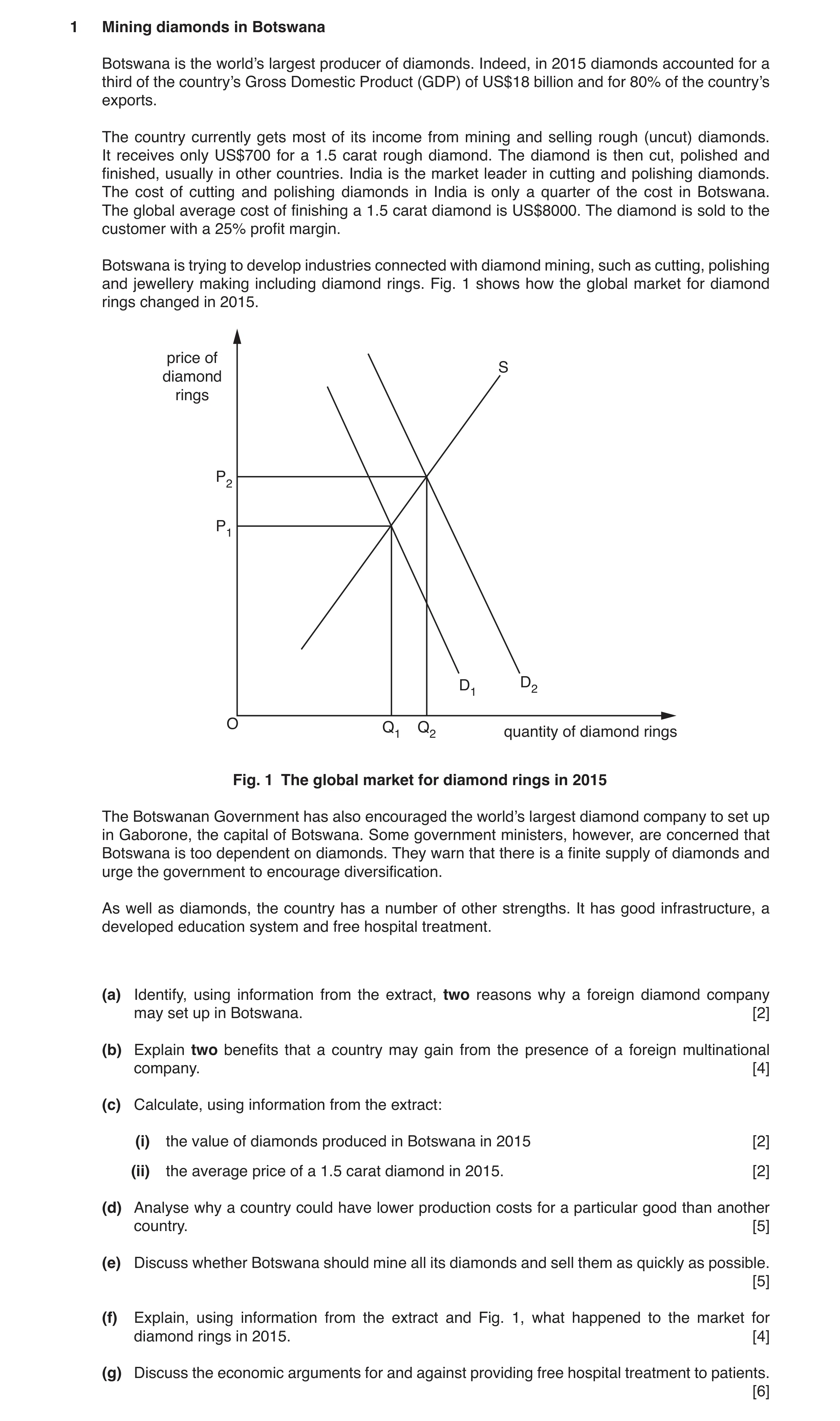
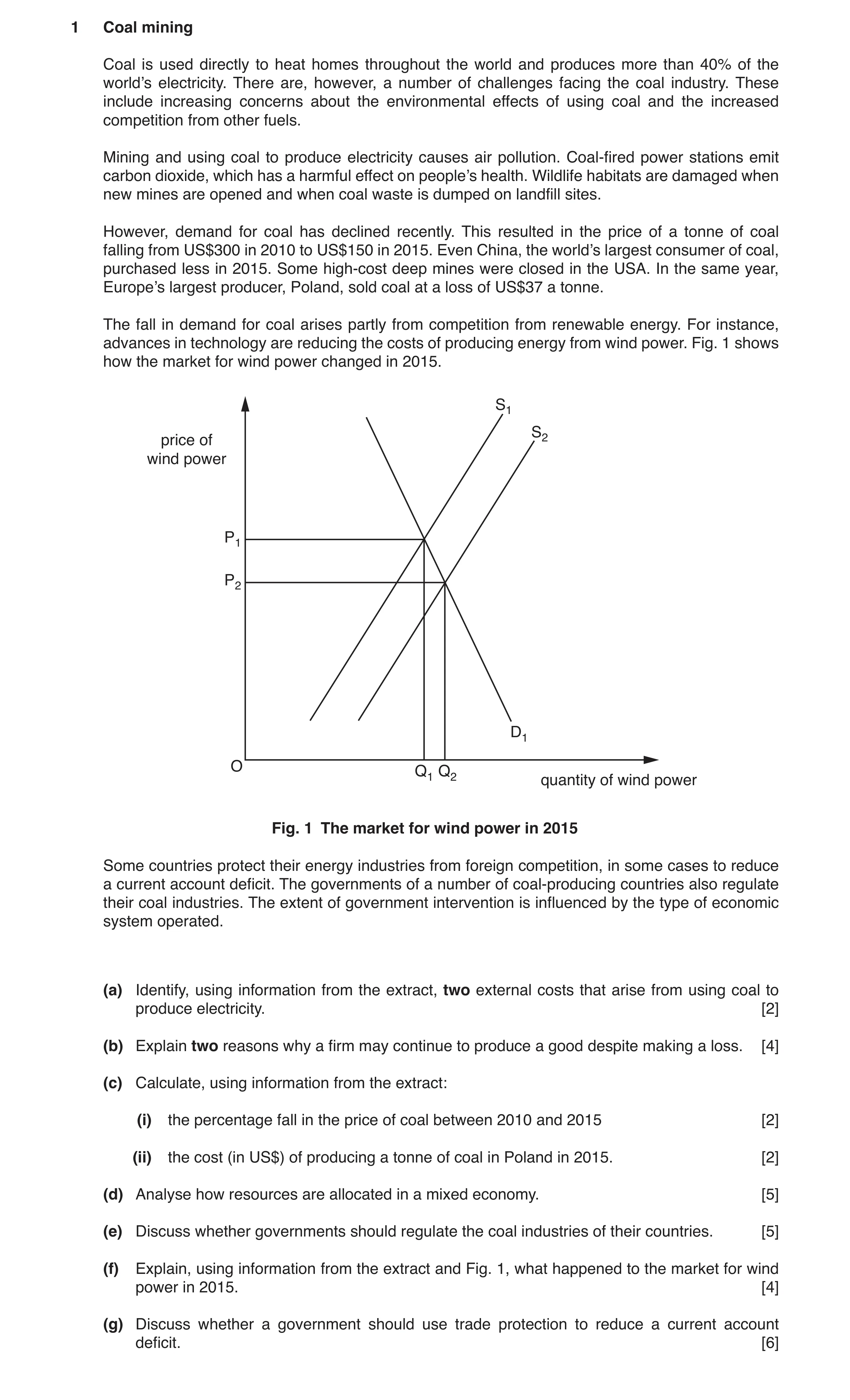
 4 / 22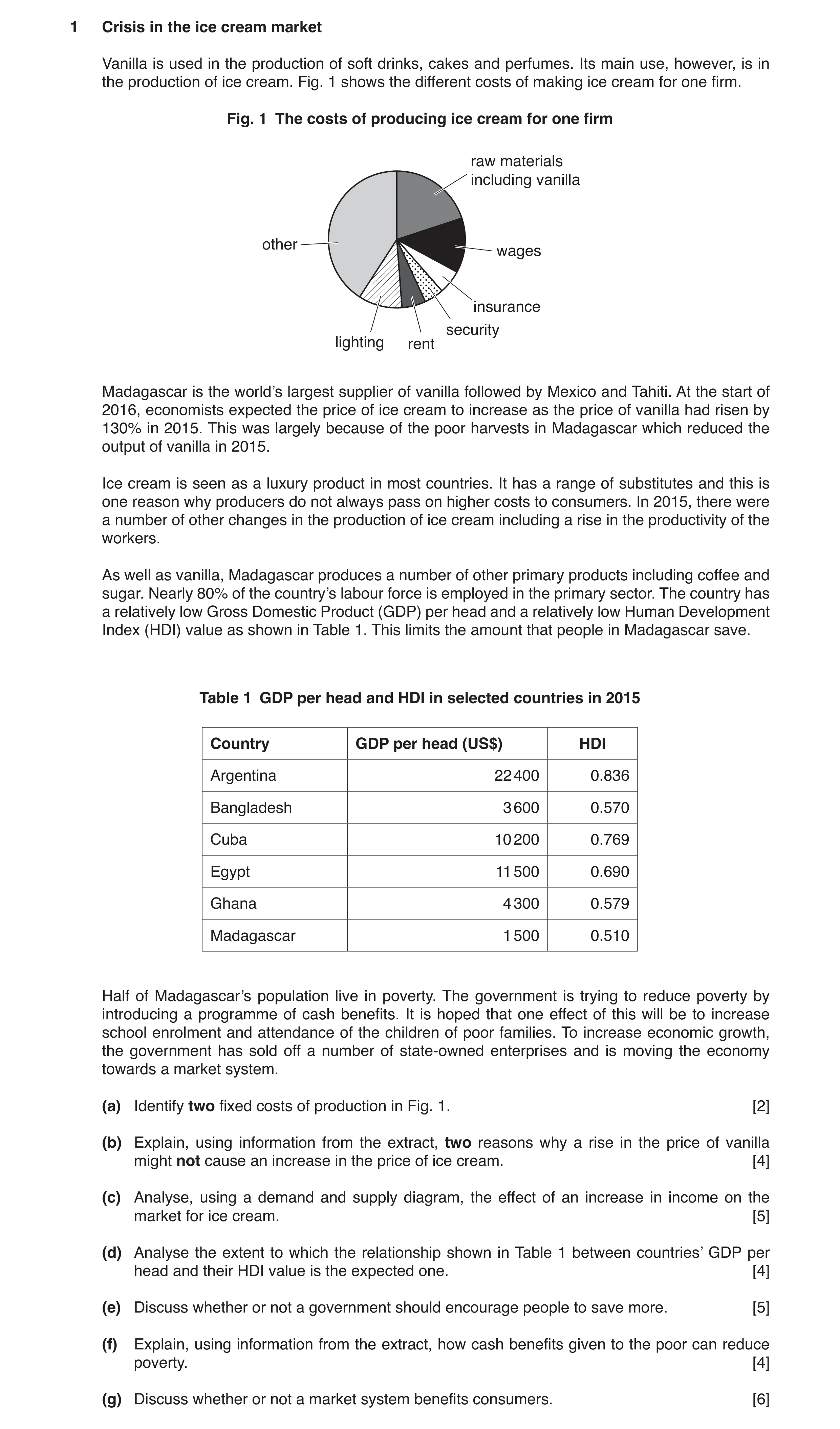
 6 / 22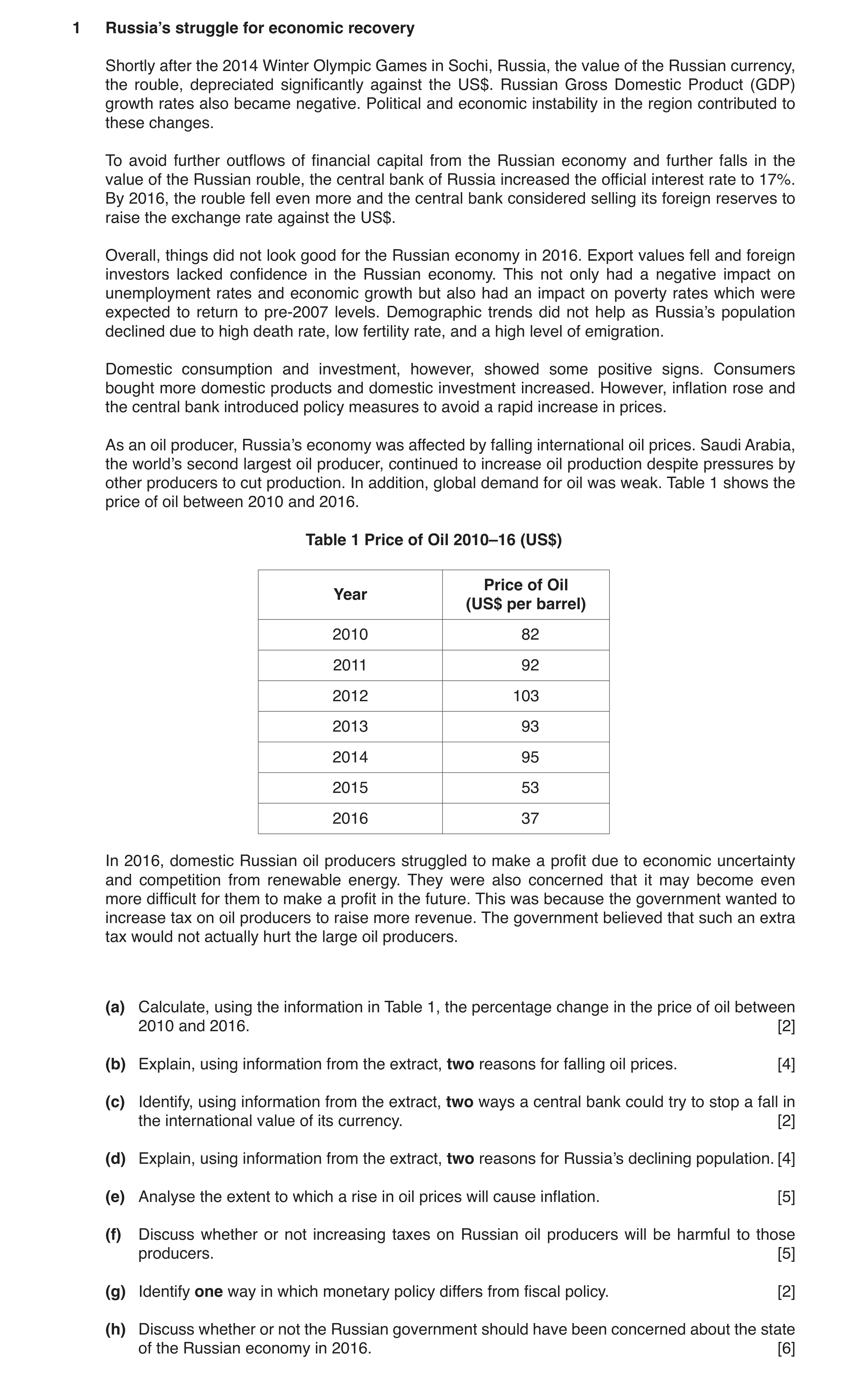
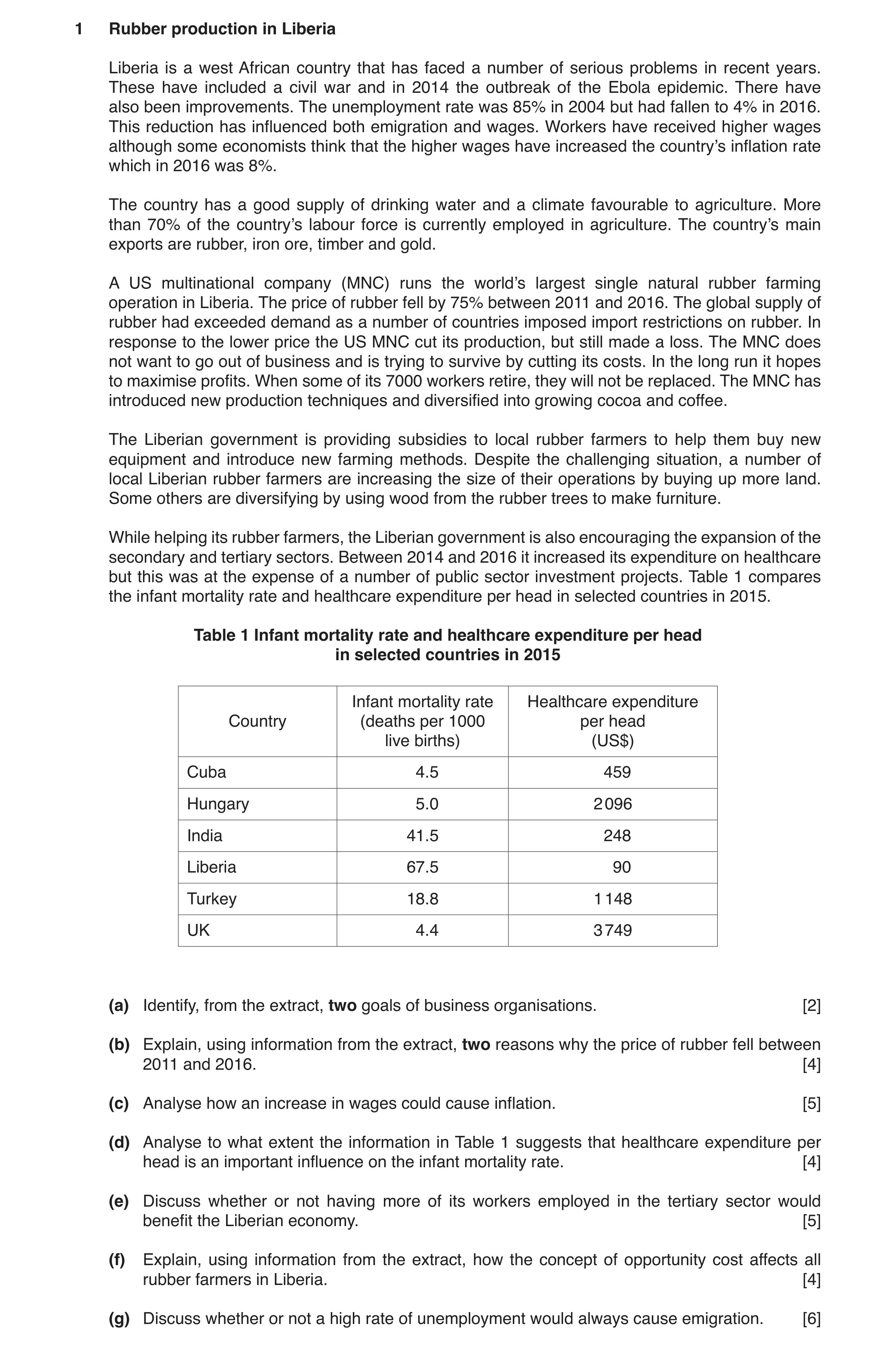
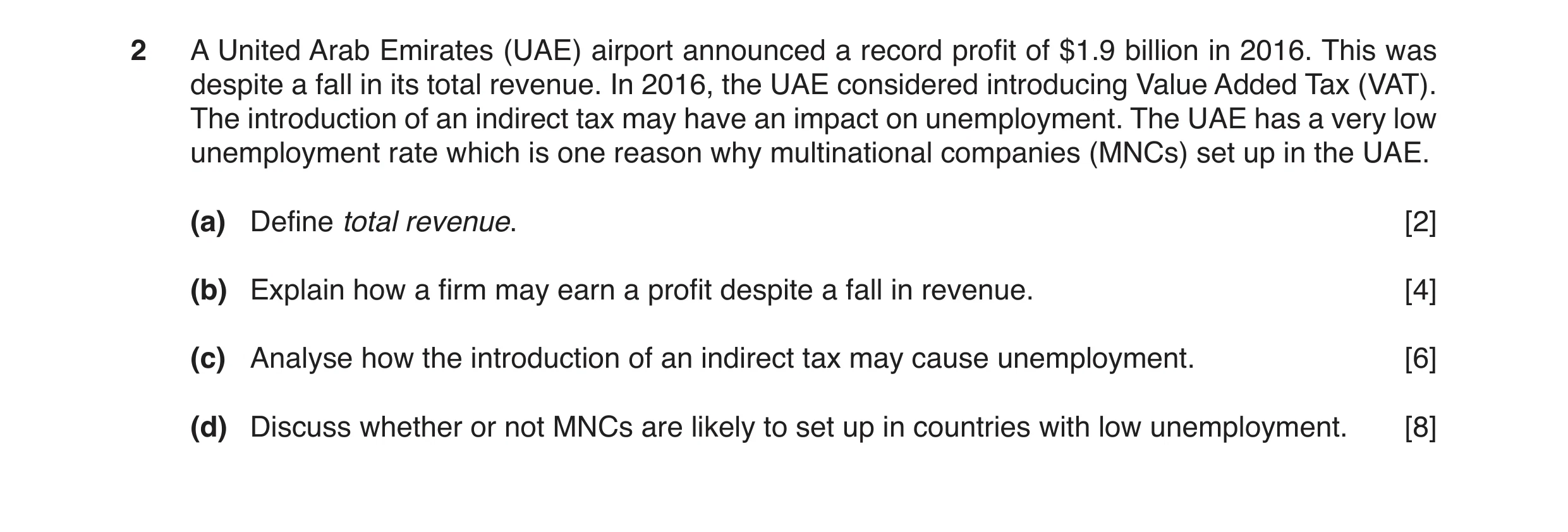 8 / 22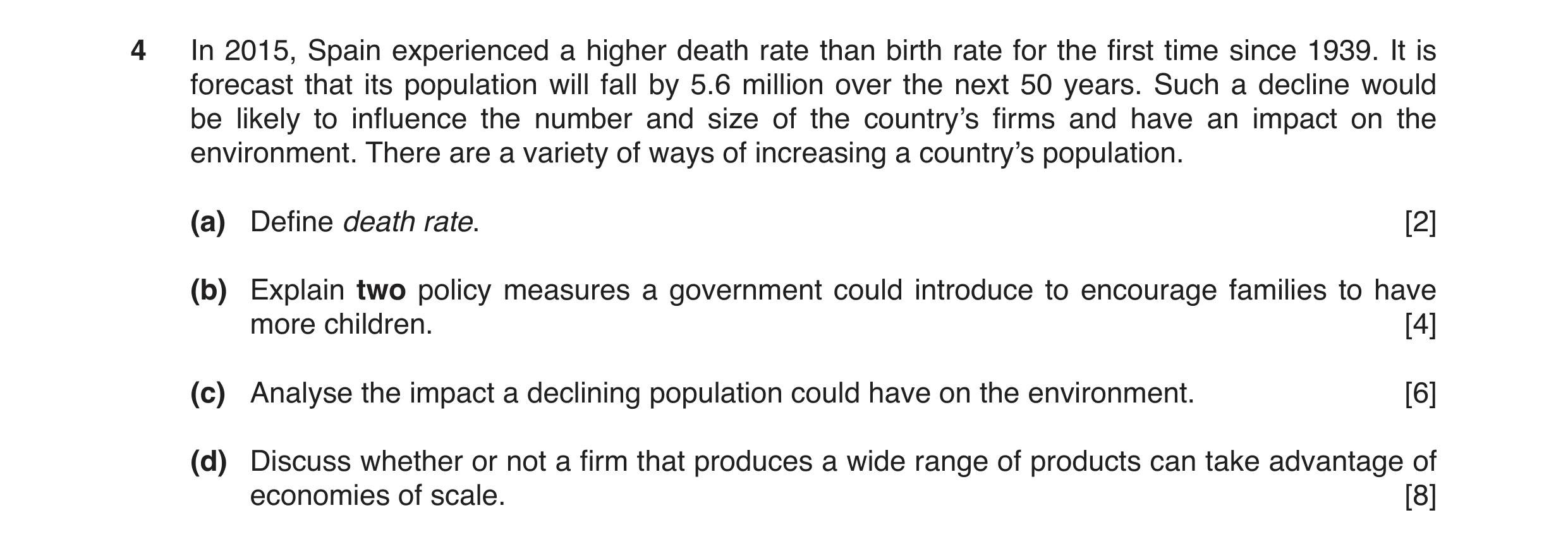
 9 / 22
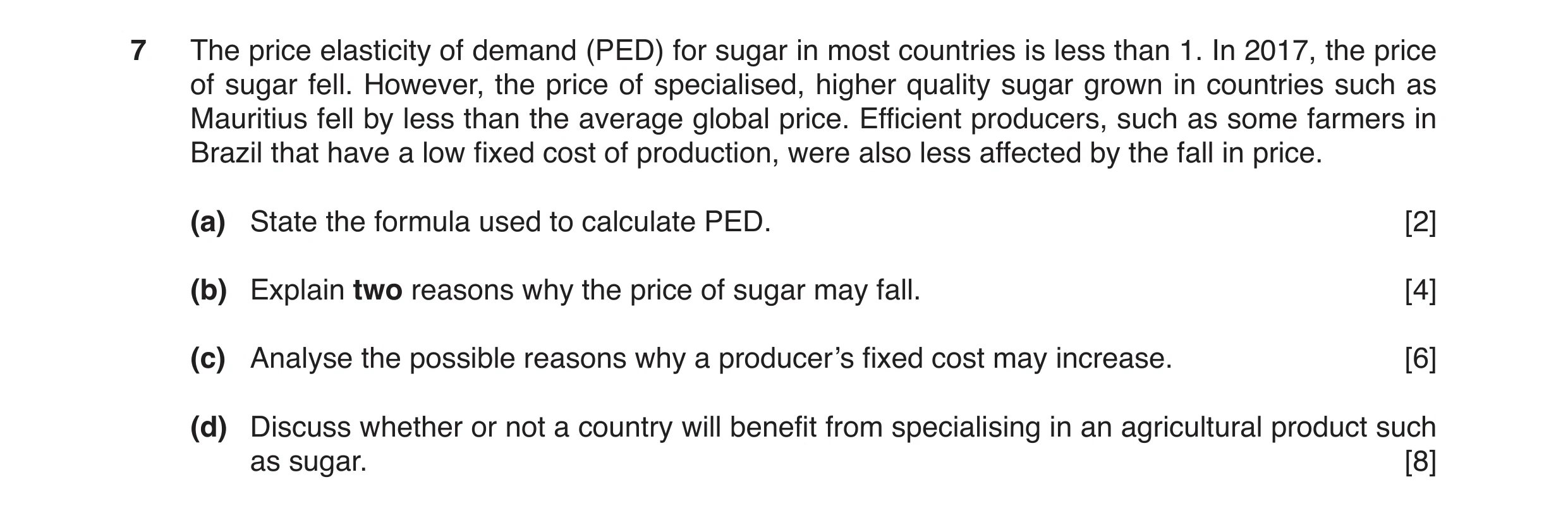 10 / 22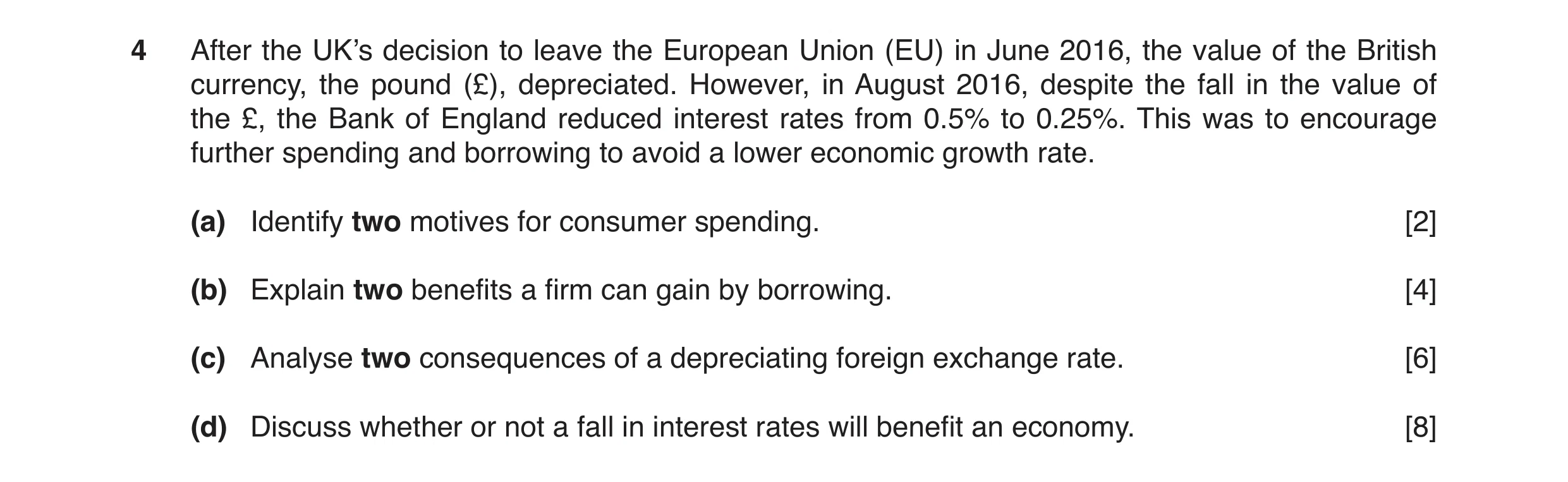
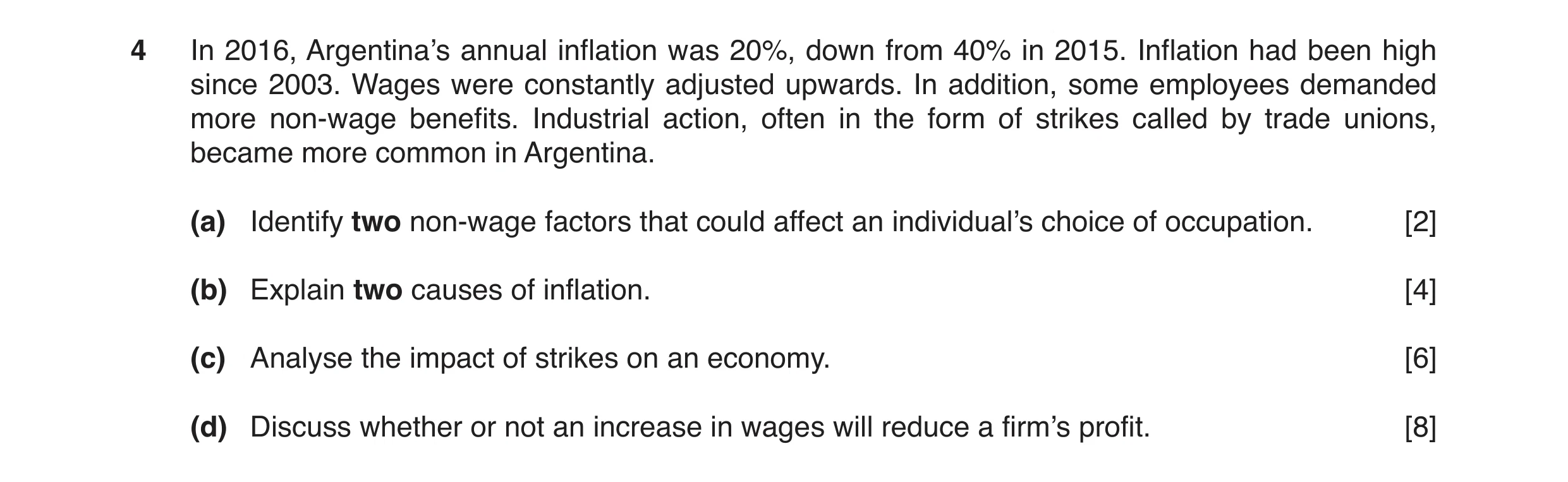
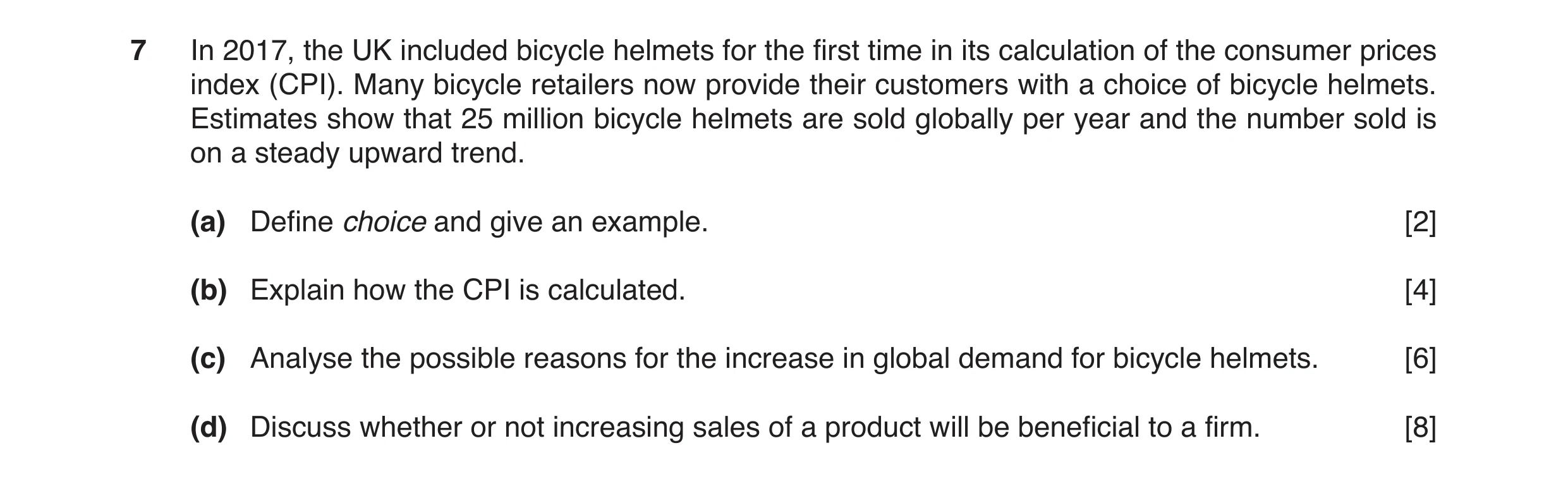
 11 / 22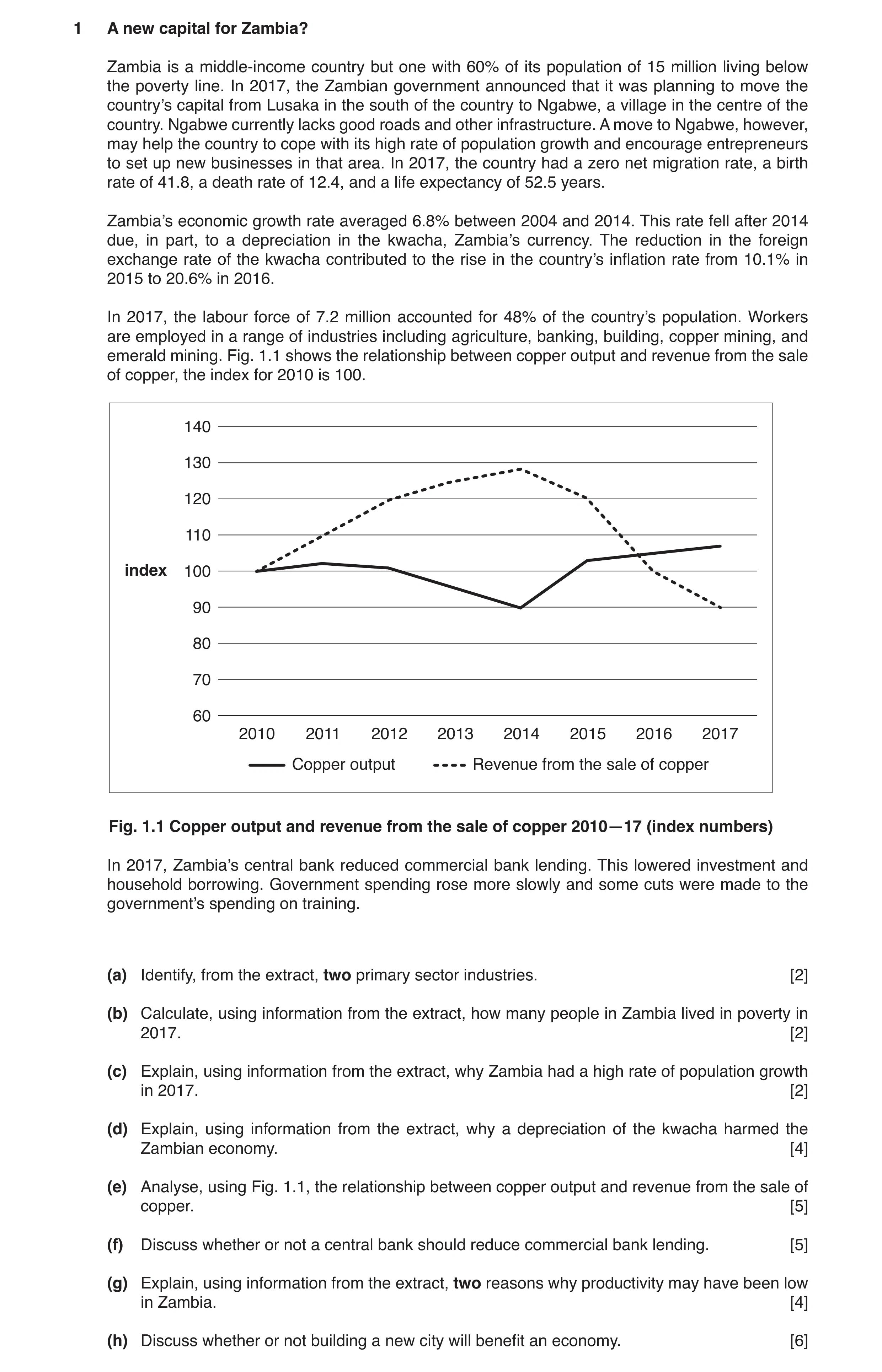
 13 / 22
![Question 27: (a) Calculate the percentage of total world output of palm oil produced by Indonesia in 2017. [1] (b) Identify two variable costs of produc…](https://img.pastlit.com/crops/5a673893-06b0-42f3-86c9-97cce6ecfc5a/q1.webp)
 14 / 22
 15 / 22
![Question 34: (a) Calculate Europe’s percentage contribution to the global total eSports revenue in 2019. [1] (b) Identify two conditions of demand for e…](https://img.pastlit.com/crops/55724c26-a8be-463d-9a87-4549a55a1e45/q1.webp) 16 / 22
16 / 22
![Question 36: (a) Calculate the price elasticity of supply of Ecuador’s oil. [1] (b) Identify two key resource allocation questions. [2] (c) State why su…](https://img.pastlit.com/crops/23ae5604-fbfe-4bc2-8158-2b705635eae3/q1.webp)
![Question 37: (a) Calculate Australia’s unemployment rate in 2021. [1] (b) Identify two substitutes for coal. [2] (c) Explain one economy of scale that c…](https://img.pastlit.com/crops/98fc39f6-25f7-4ed0-b403-3fea1f534b68/q1.webp) 17 / 22
17 / 22
![Question 39: (a) Calculate New Zealand’s GDP per head in 2020. [1] (b) Identify two external costs arising from the milk and car industries. [2] (c) Exp…](https://img.pastlit.com/crops/8d5f5060-3ec7-4f3b-bb31-99b8340193d4/q1.webp)
 18 / 22
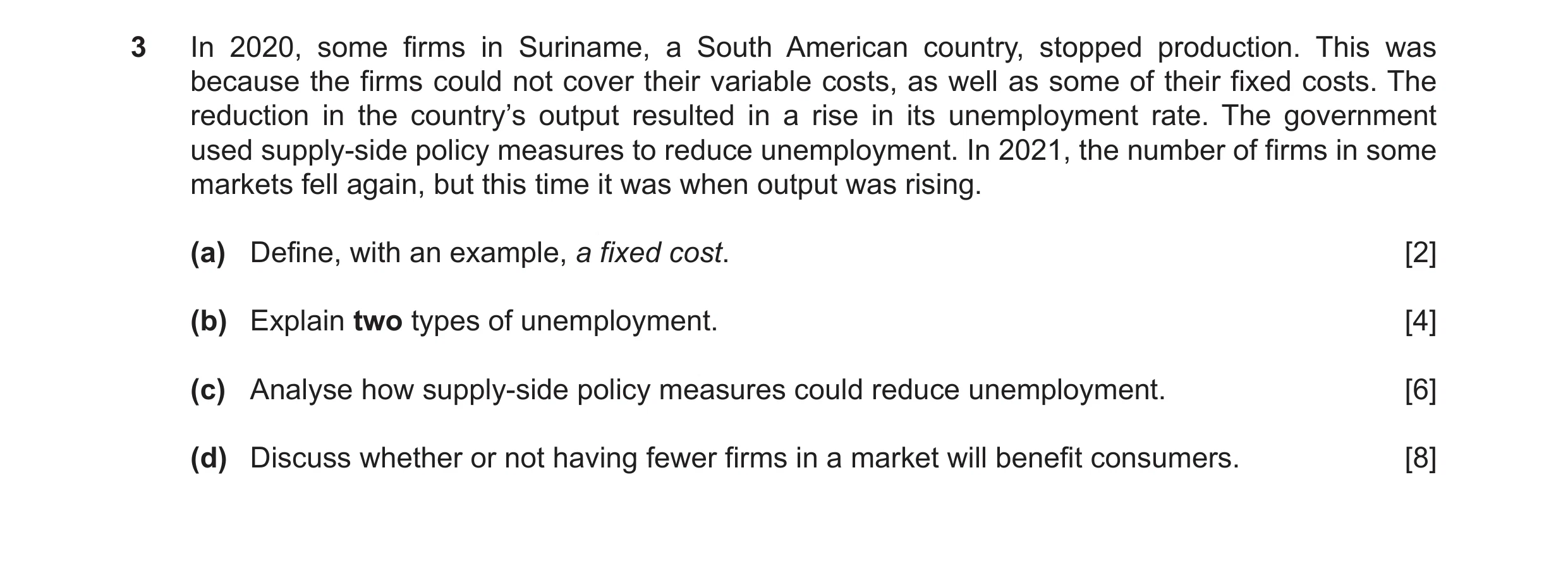
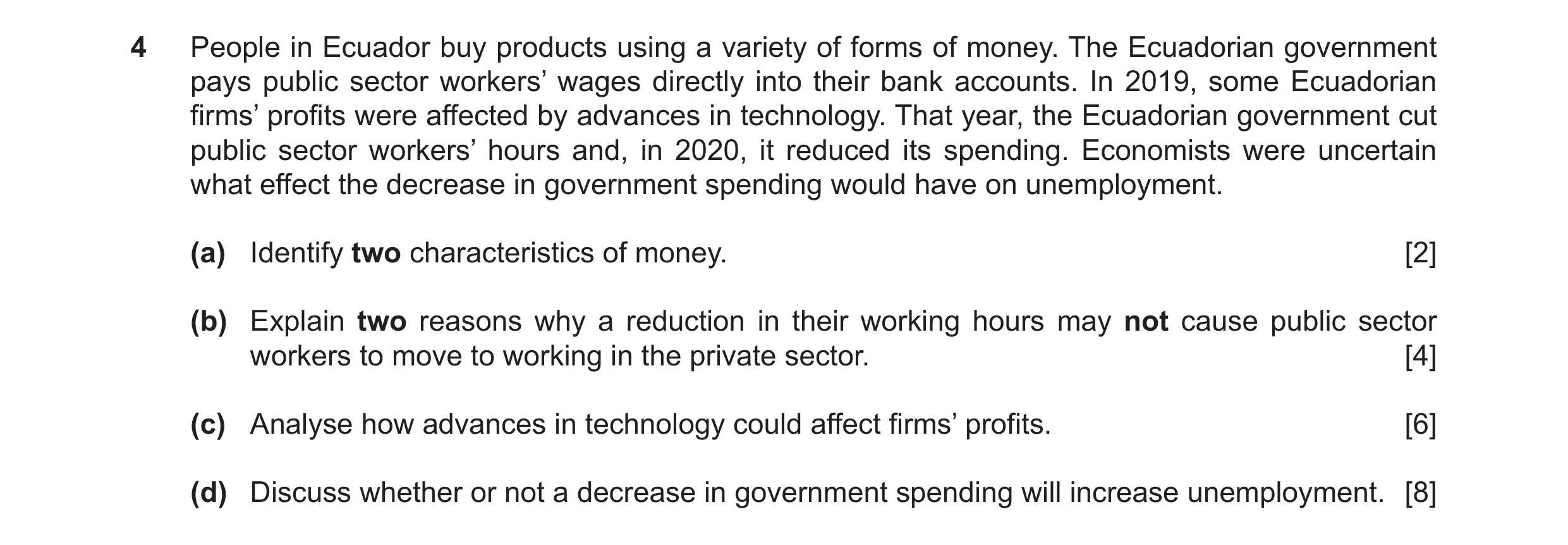 19 / 22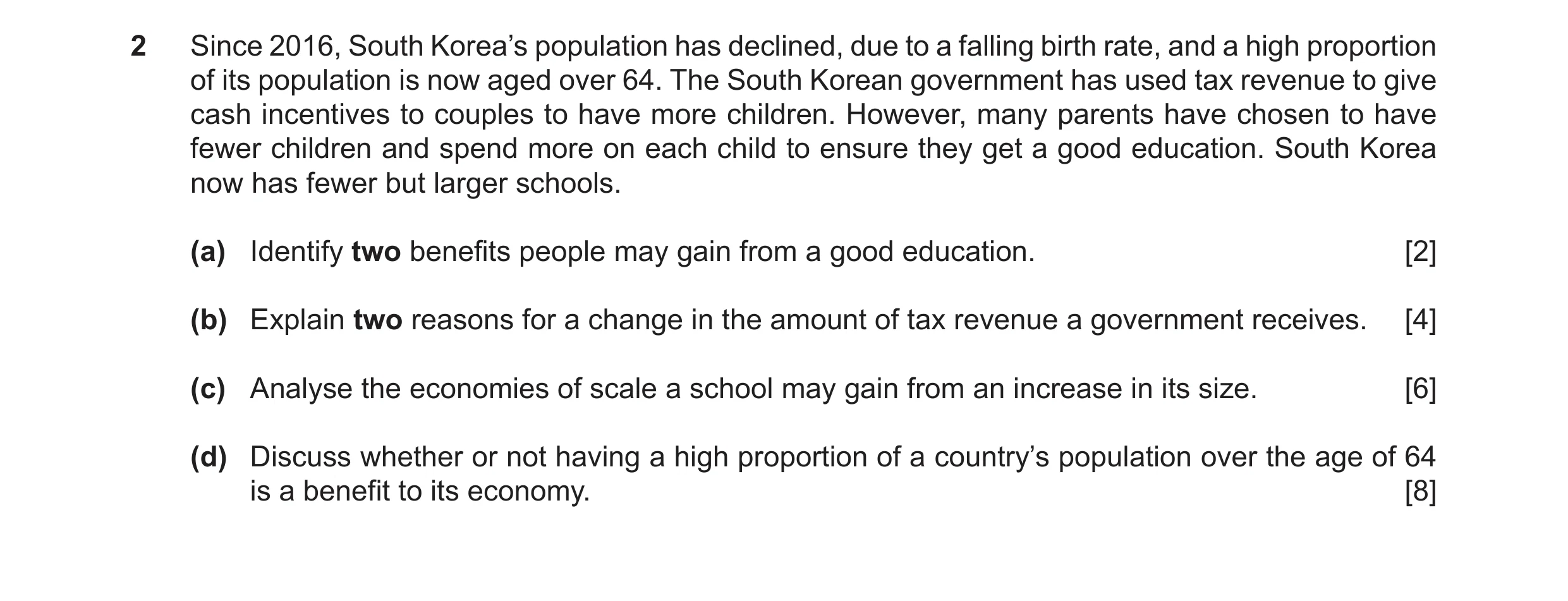
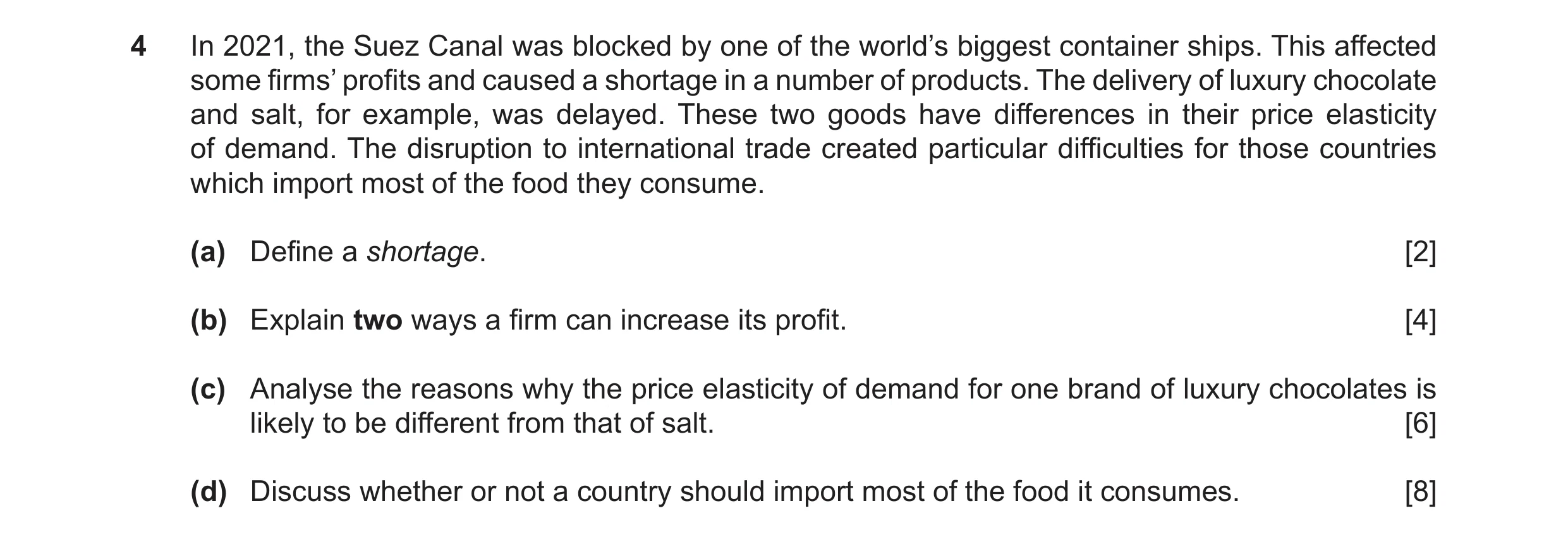
 20 / 22
![Question 47: (a) Calculate the average cost of producing a car in Belarus in 2021. [1] (b) Identify two reasons why Belarus is described as a mixed econ…](https://img.pastlit.com/crops/694c5e96-092a-4fd5-aadb-0306b621e45b/q1.webp)
![Question 48: (a) Calculate the value of Gabon’s oil production as a percentage of Gabon’s GDP. [1] (b) Identify two external benefits of rainforests. [2…](https://img.pastlit.com/crops/a6ddbc31-564d-42aa-be39-86043cb5f3e2/q1.webp)
 21 / 22
 22 / 22
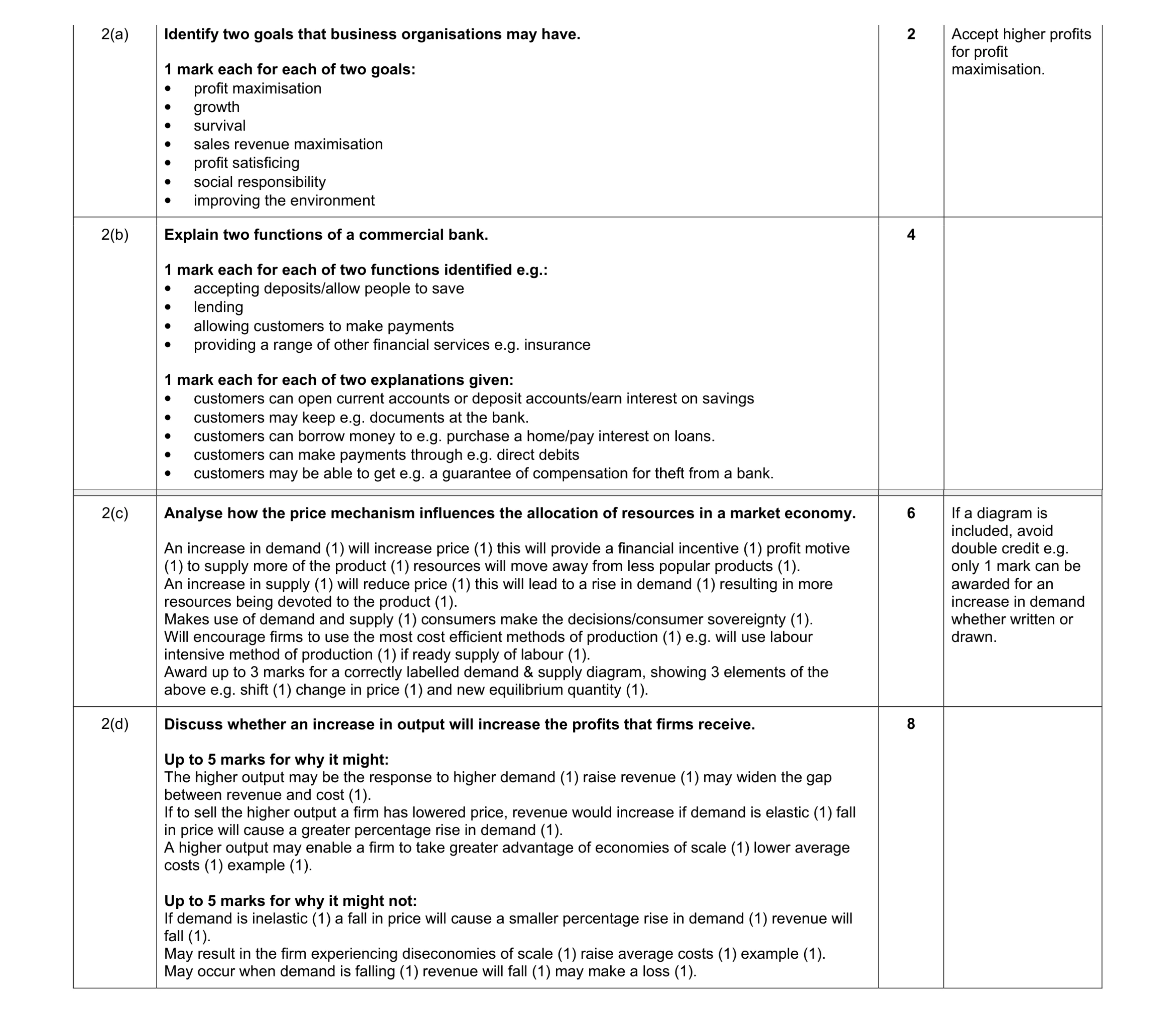 20
20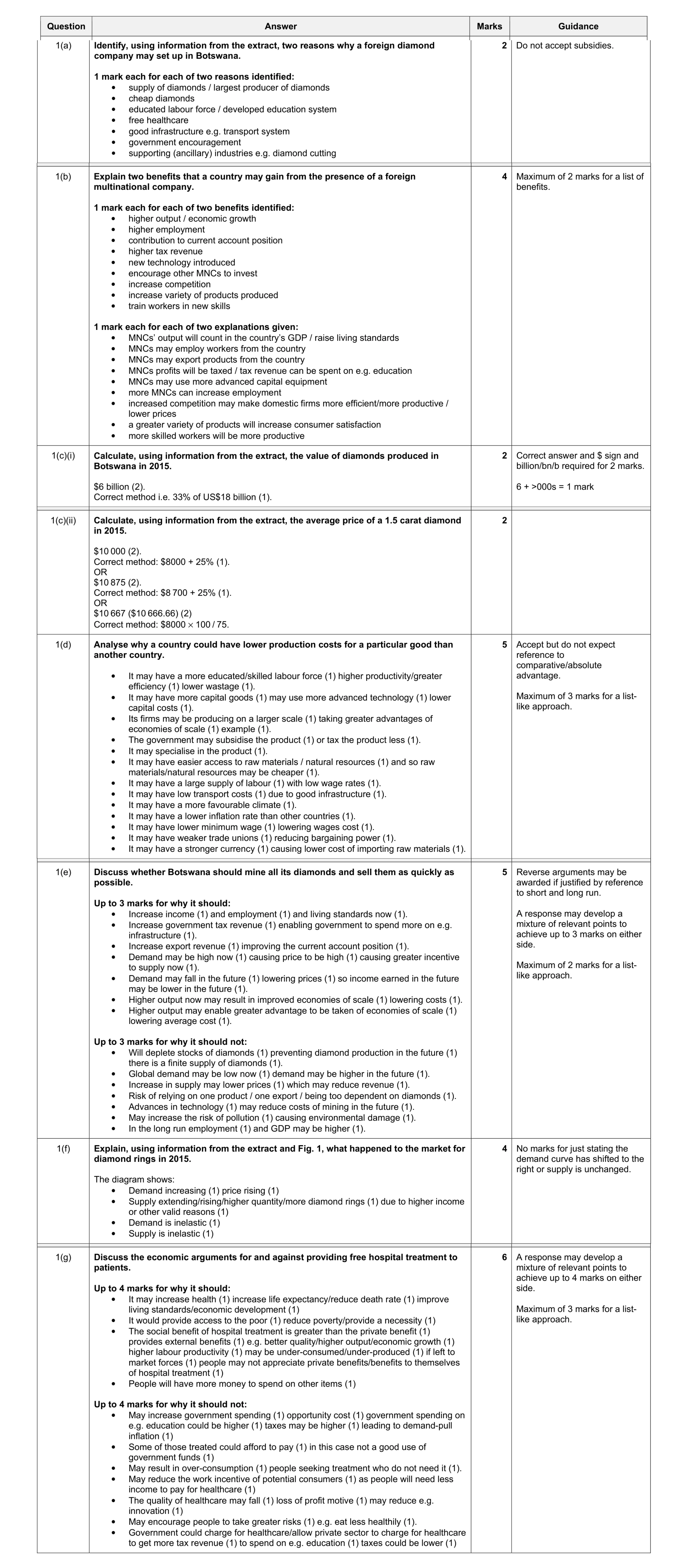 30
30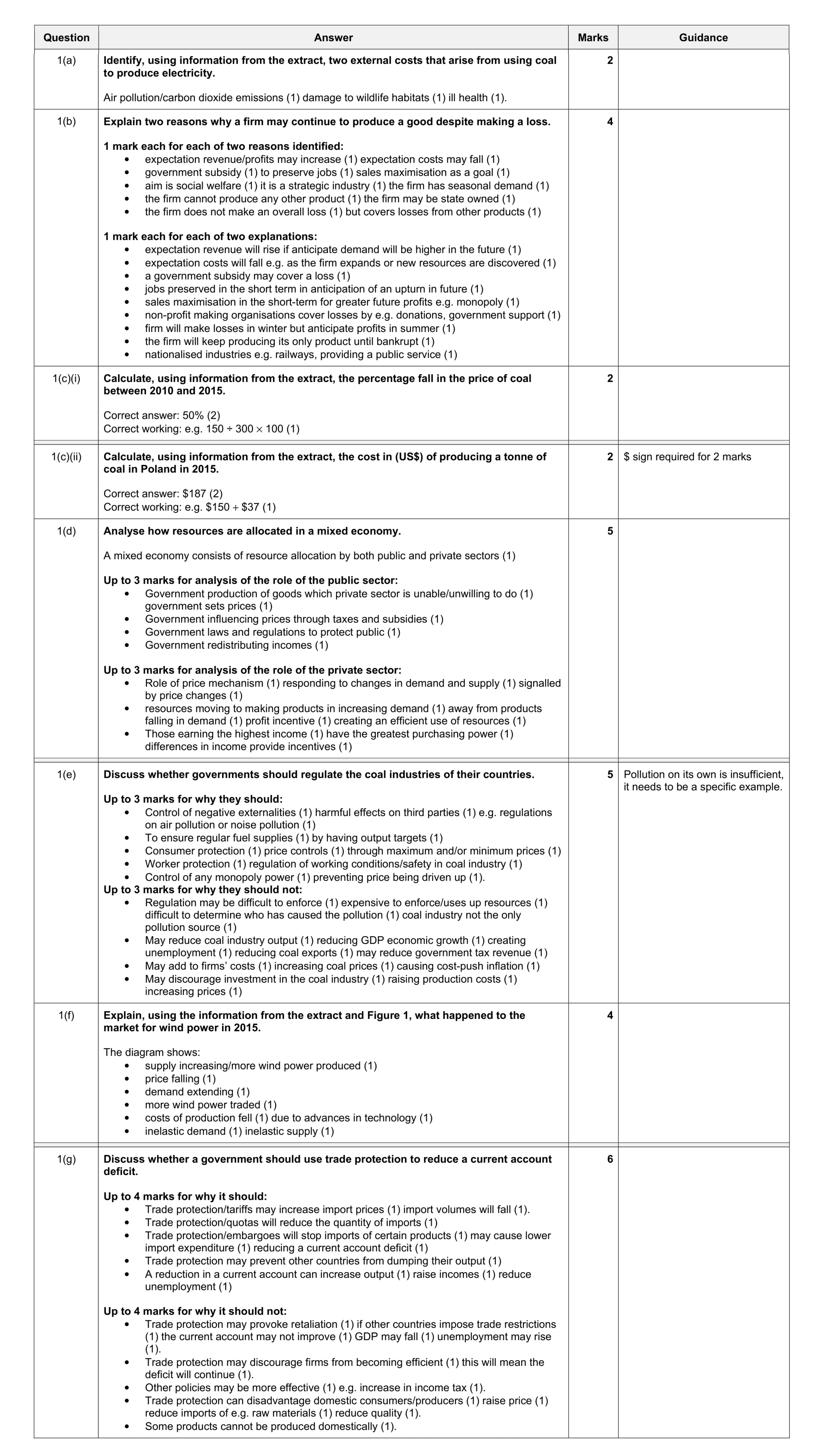 30
30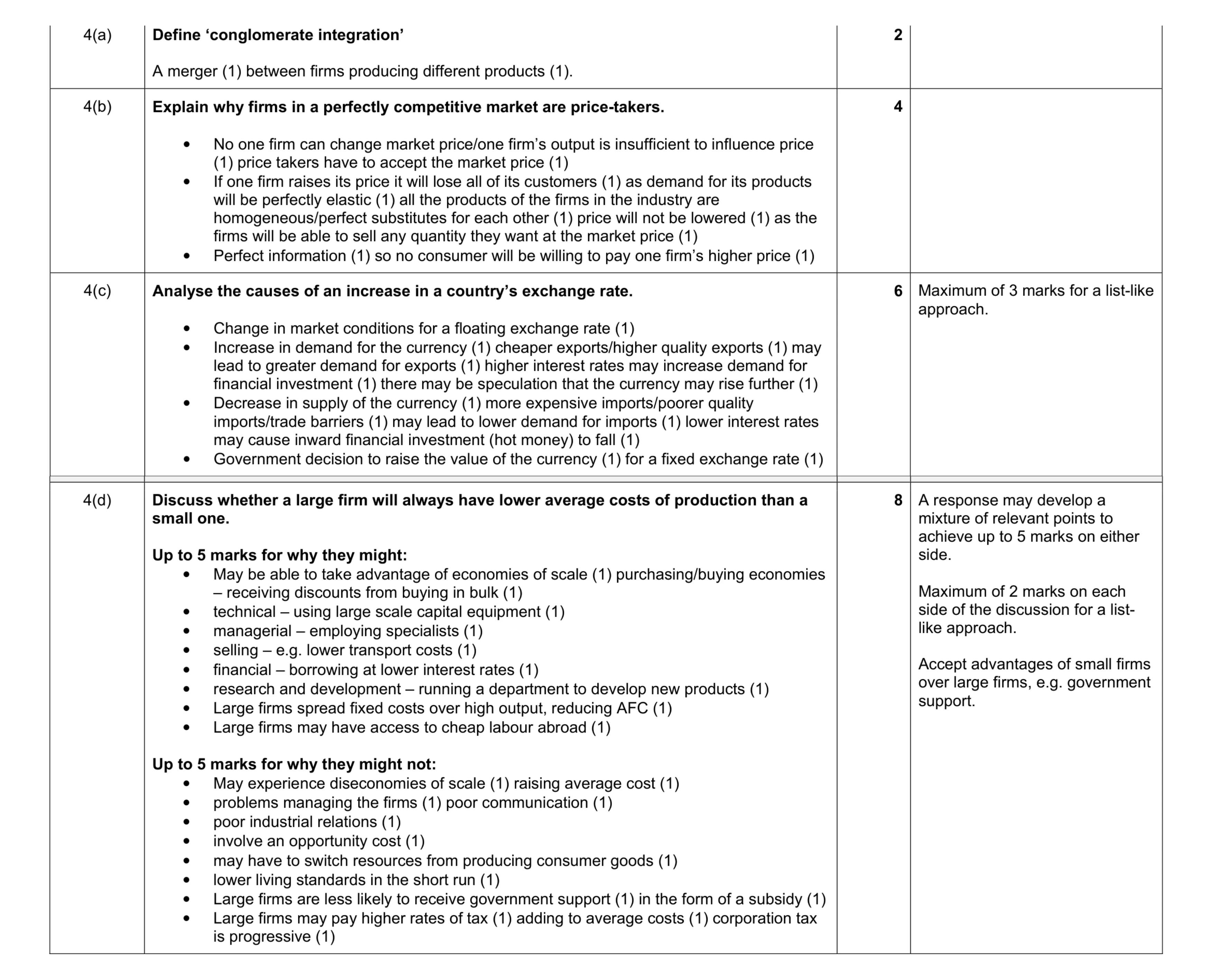 20
20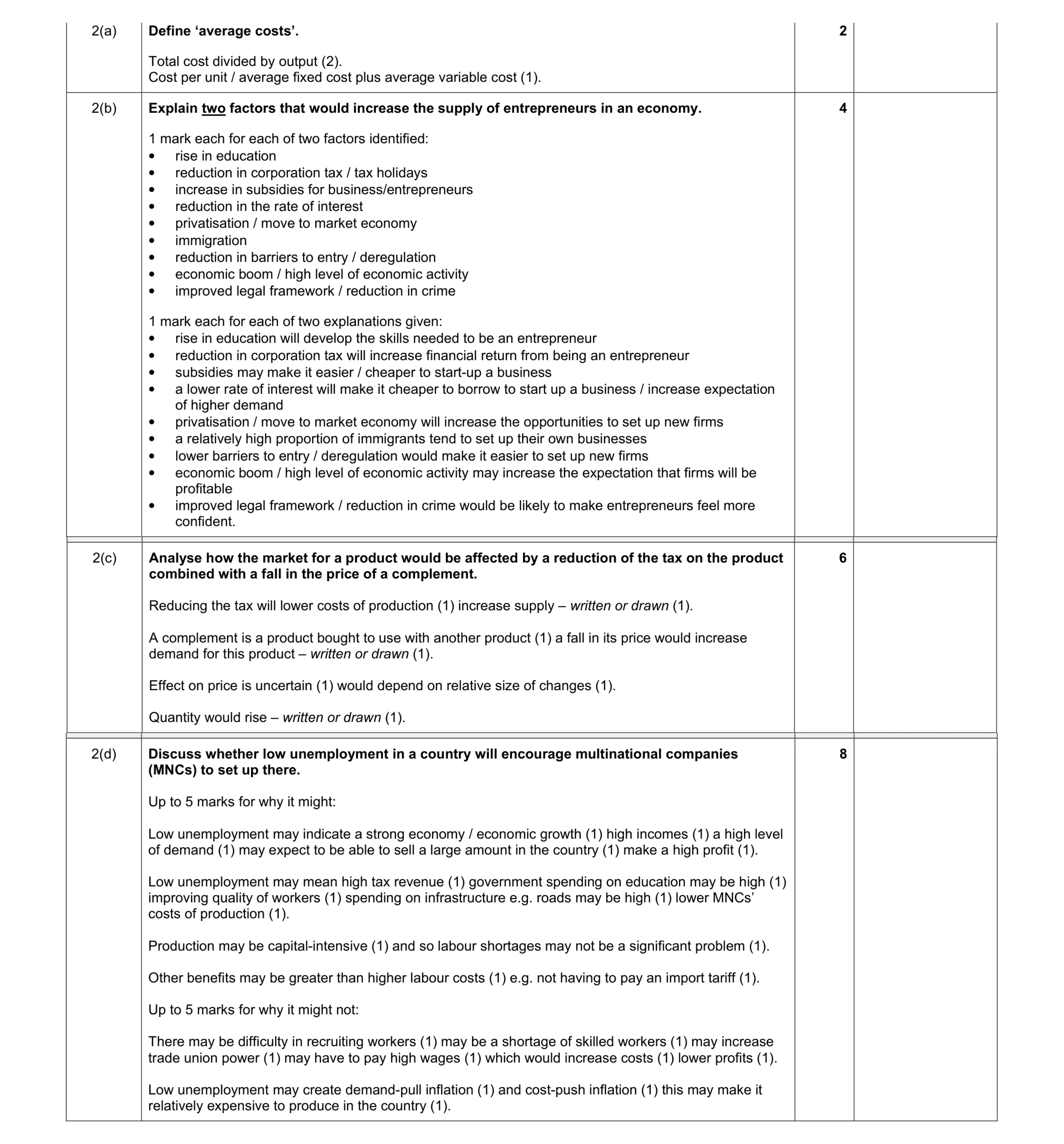 20
20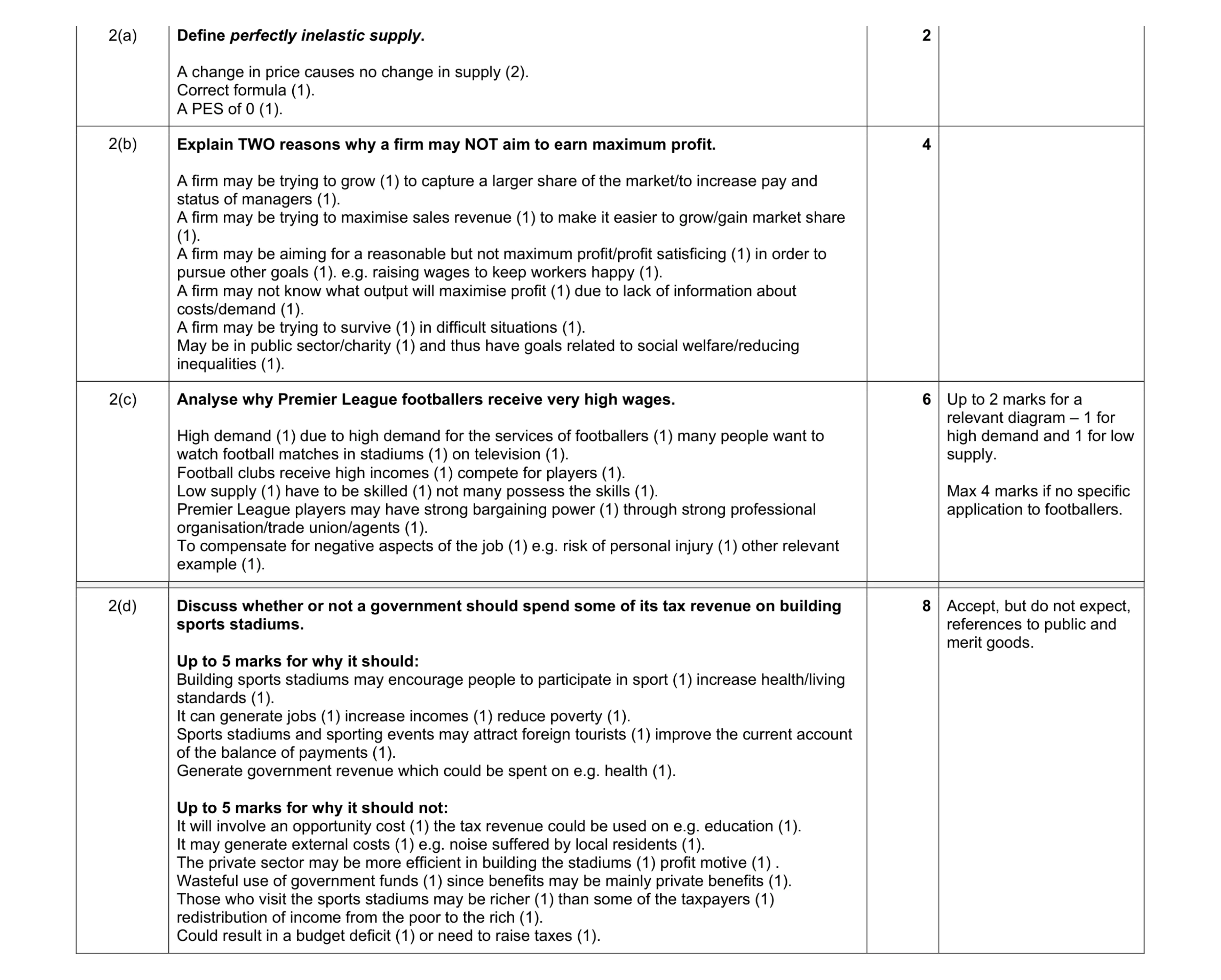 20
20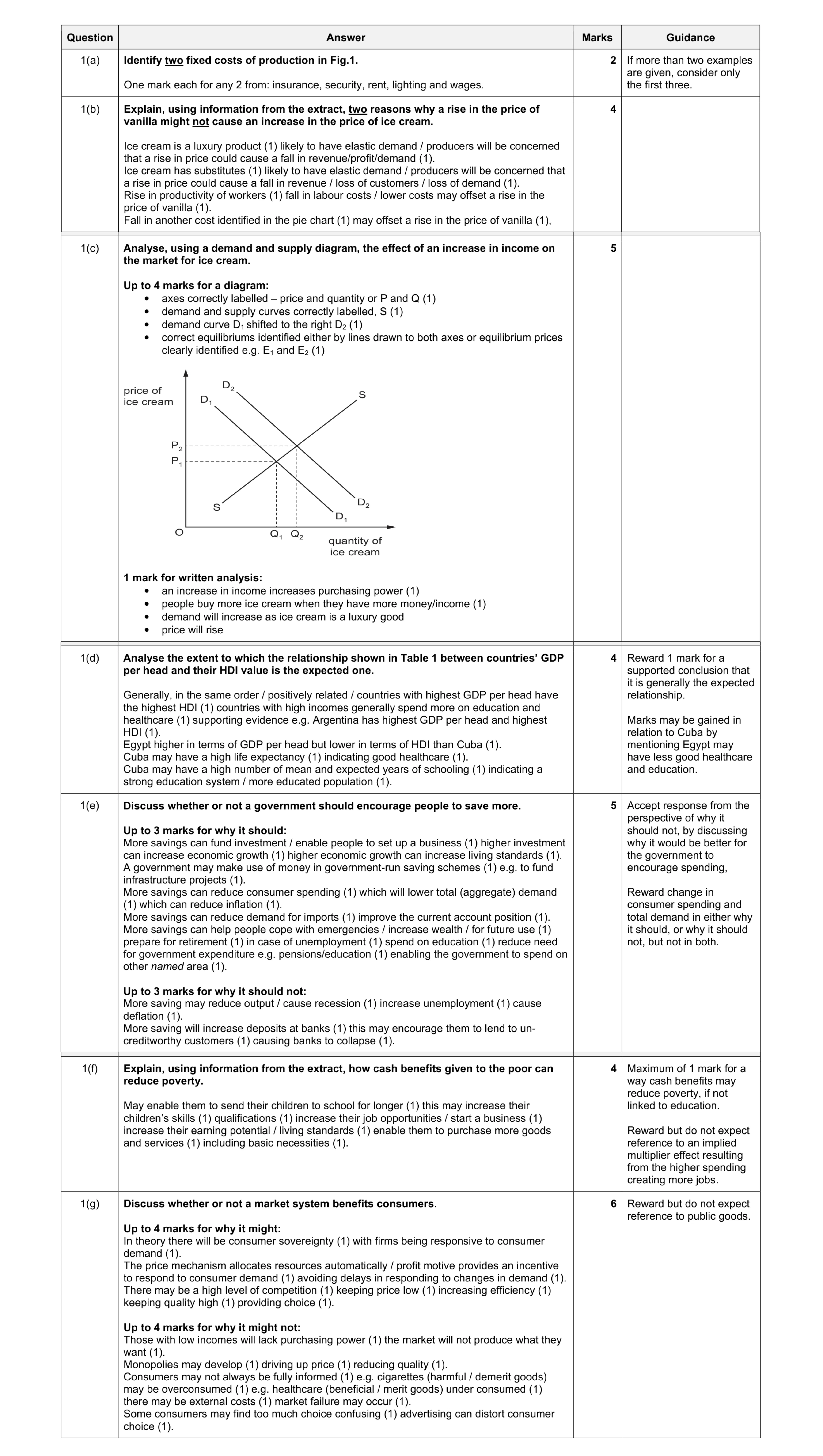 30
30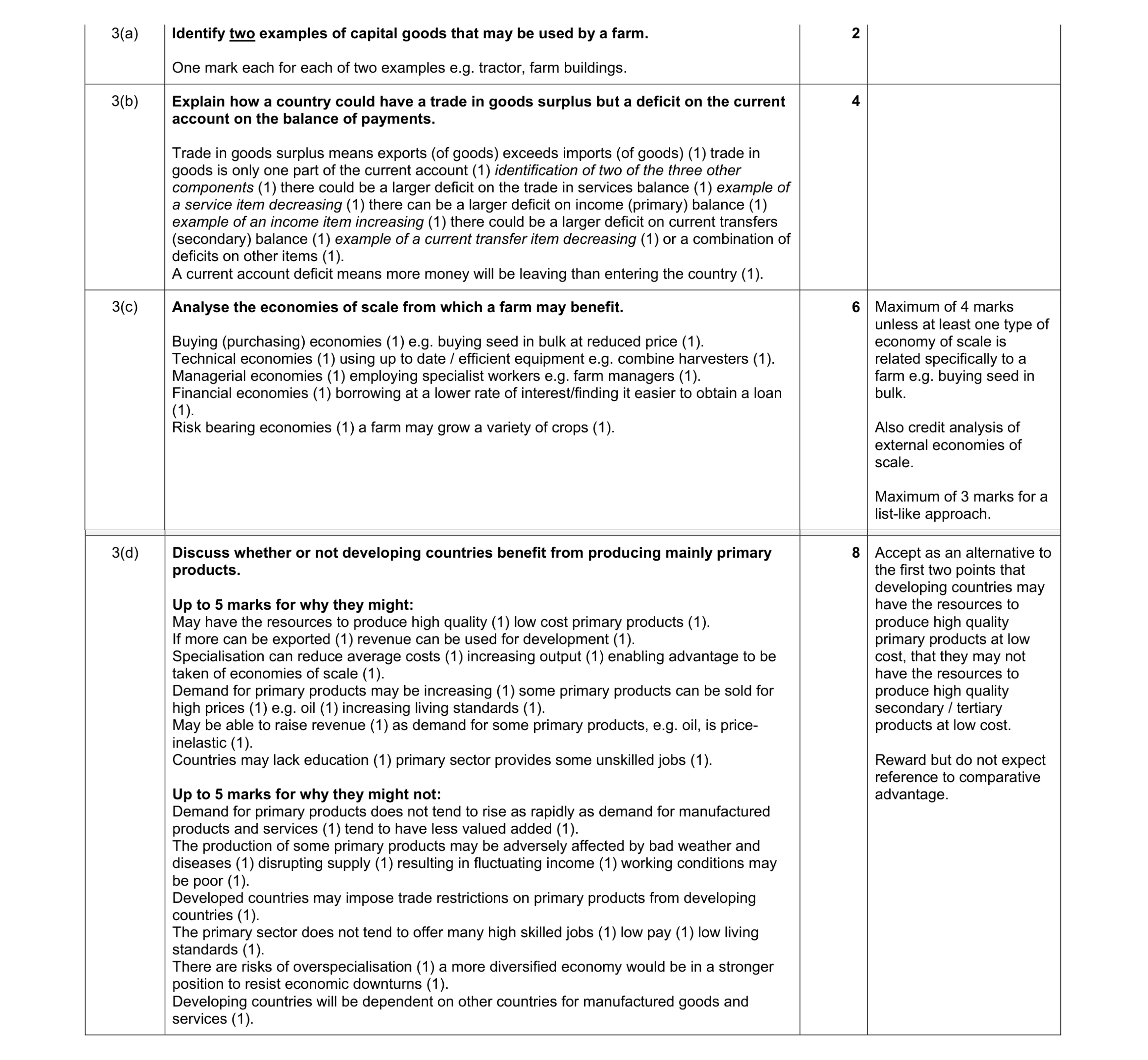 20
20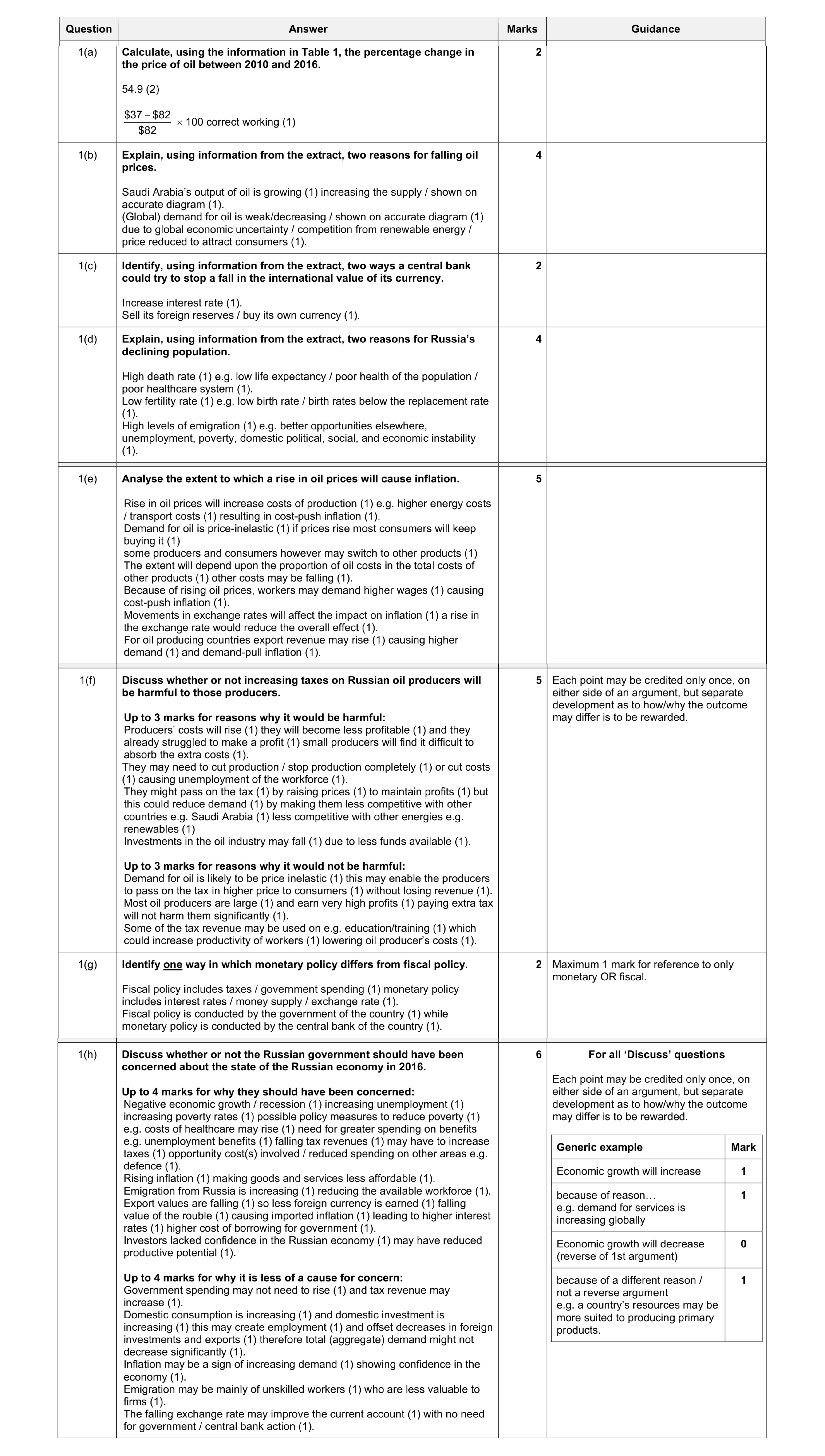 30
30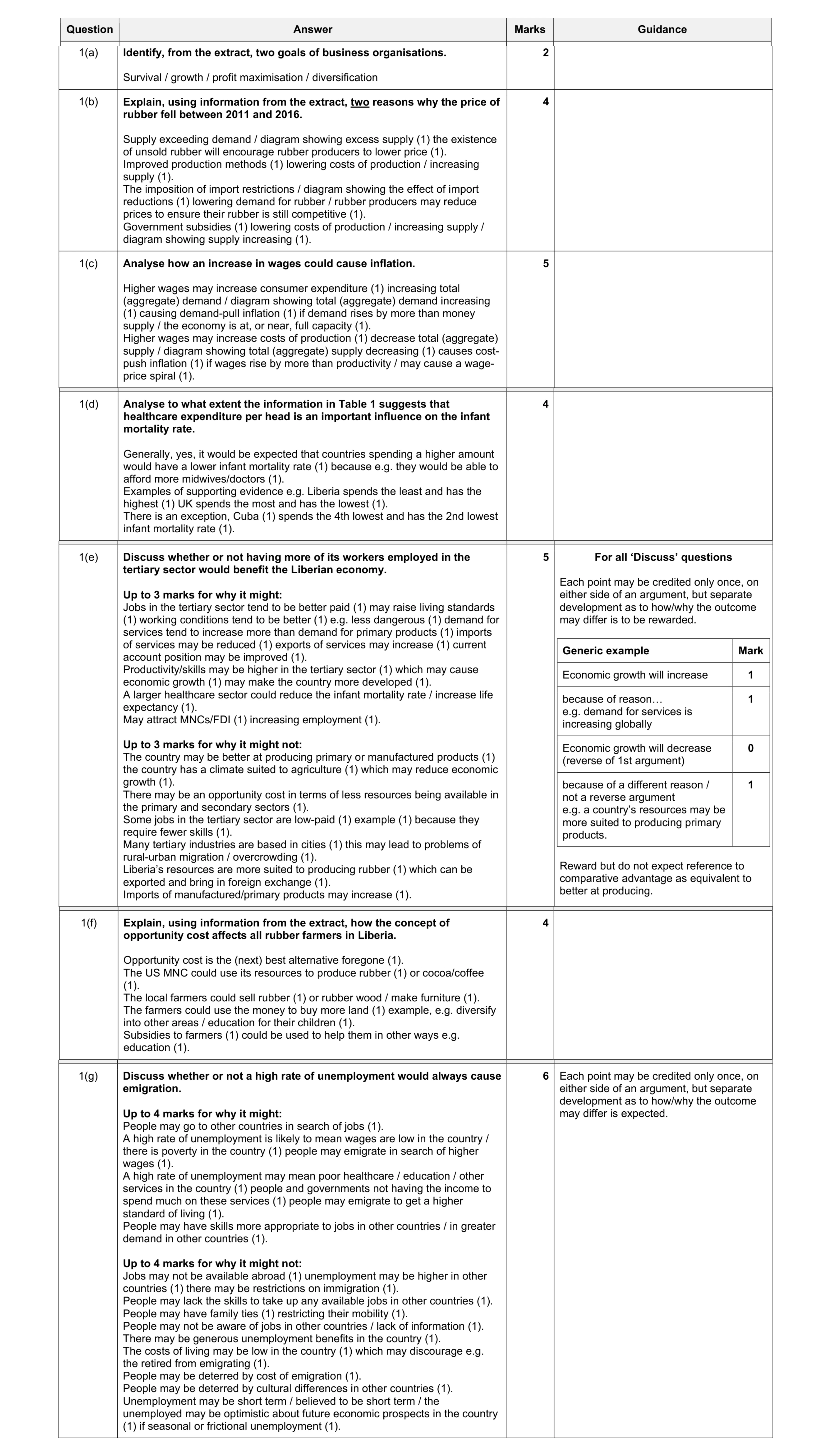 30
30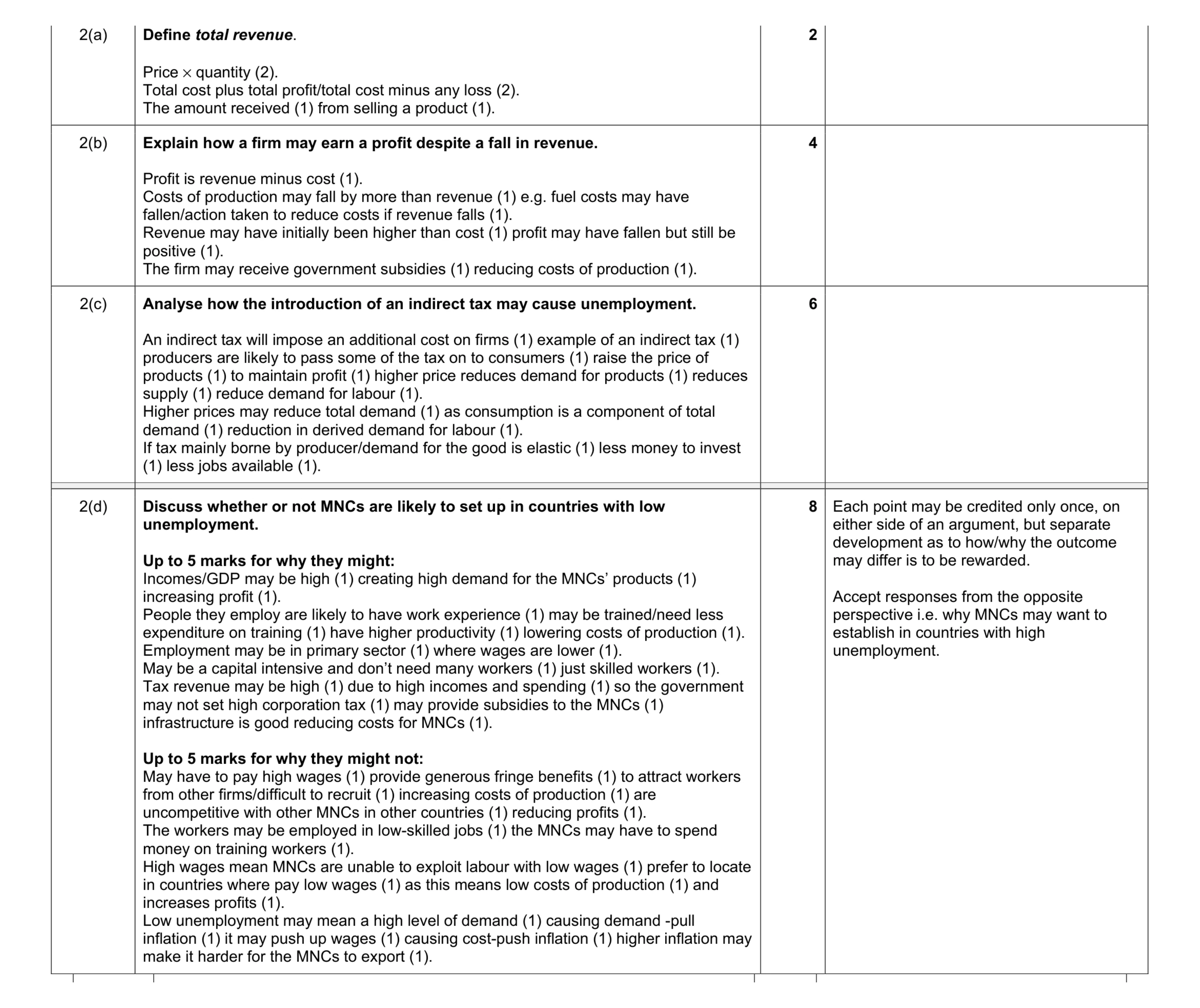 20
20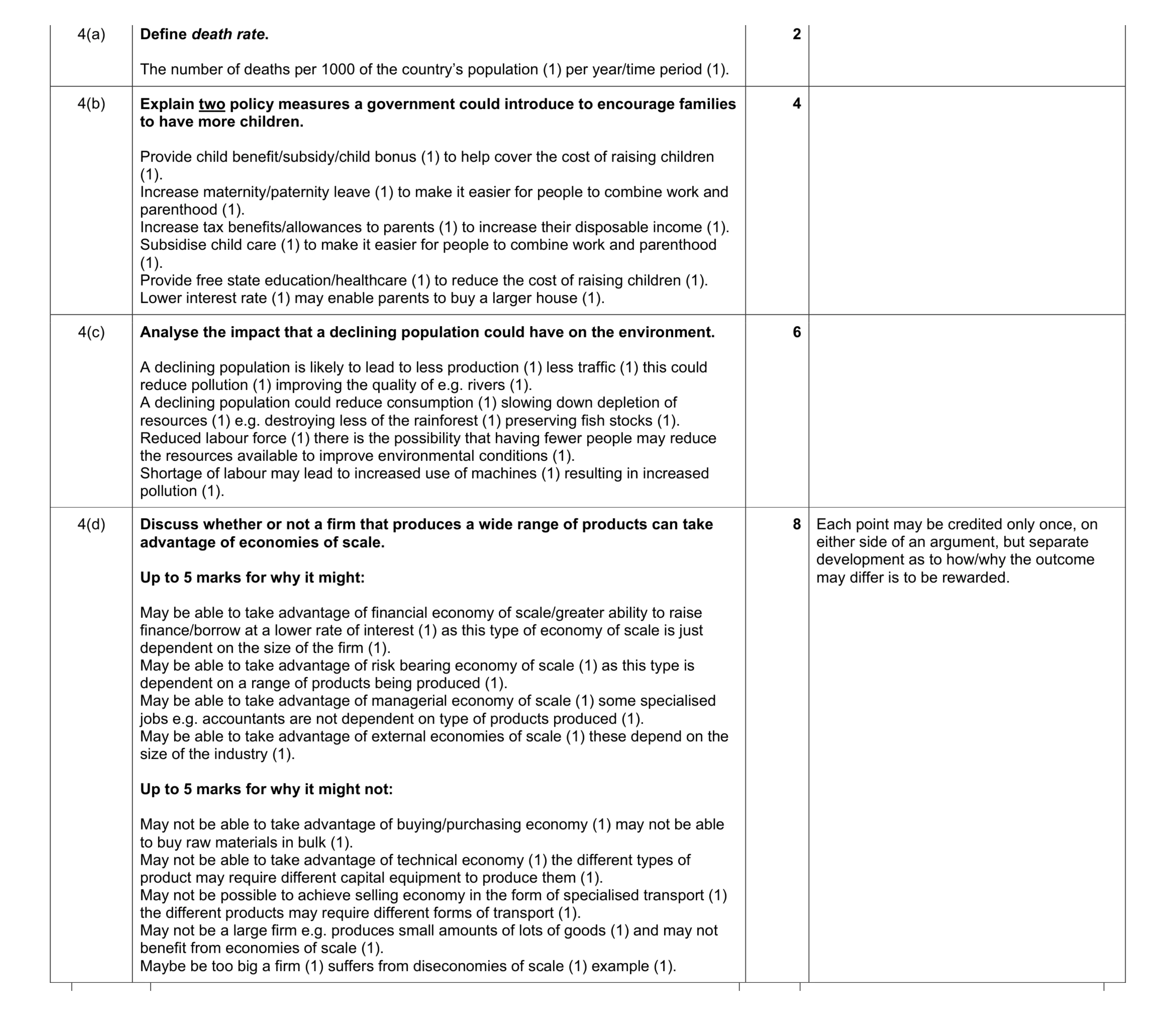 20
20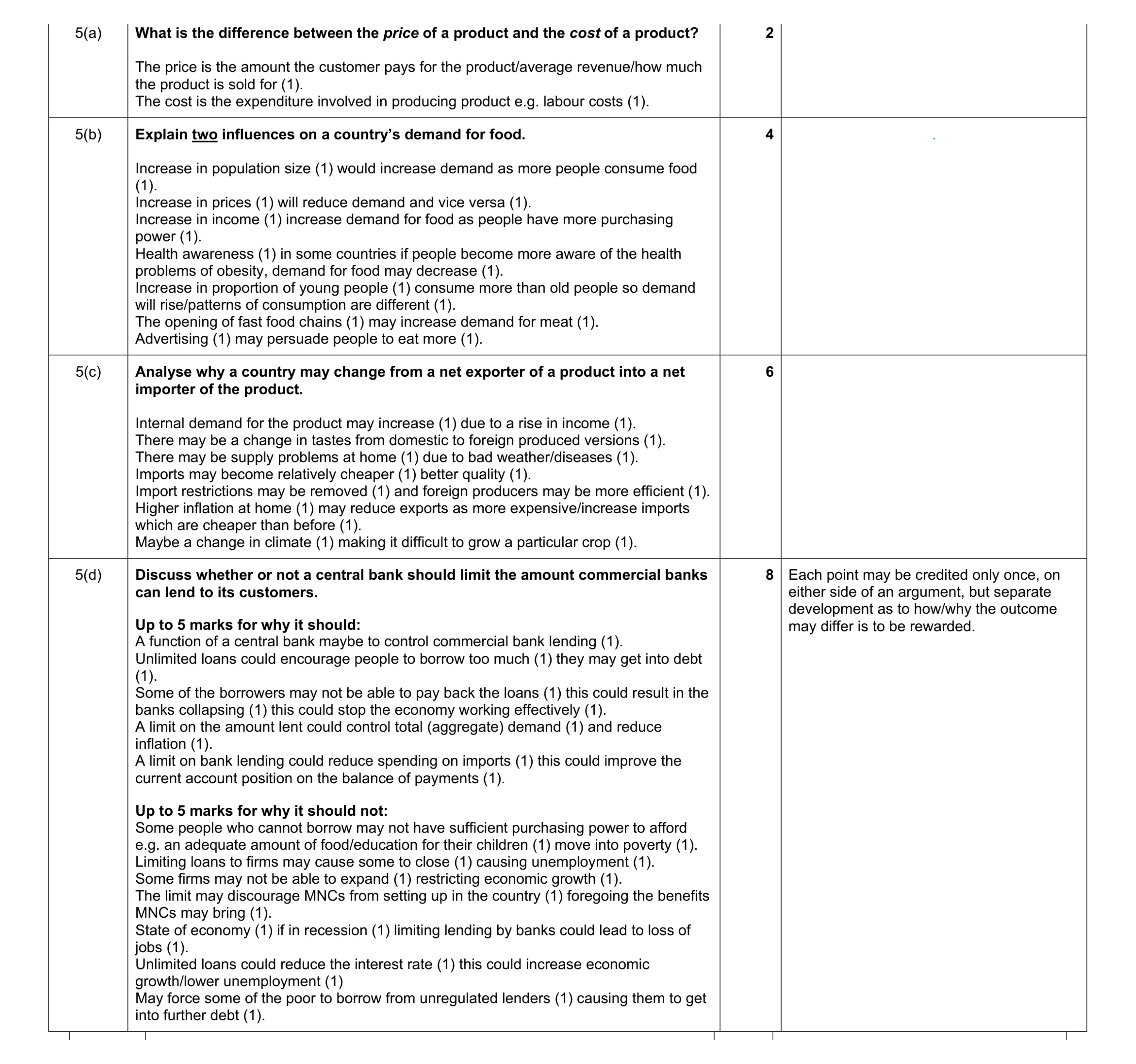 20
20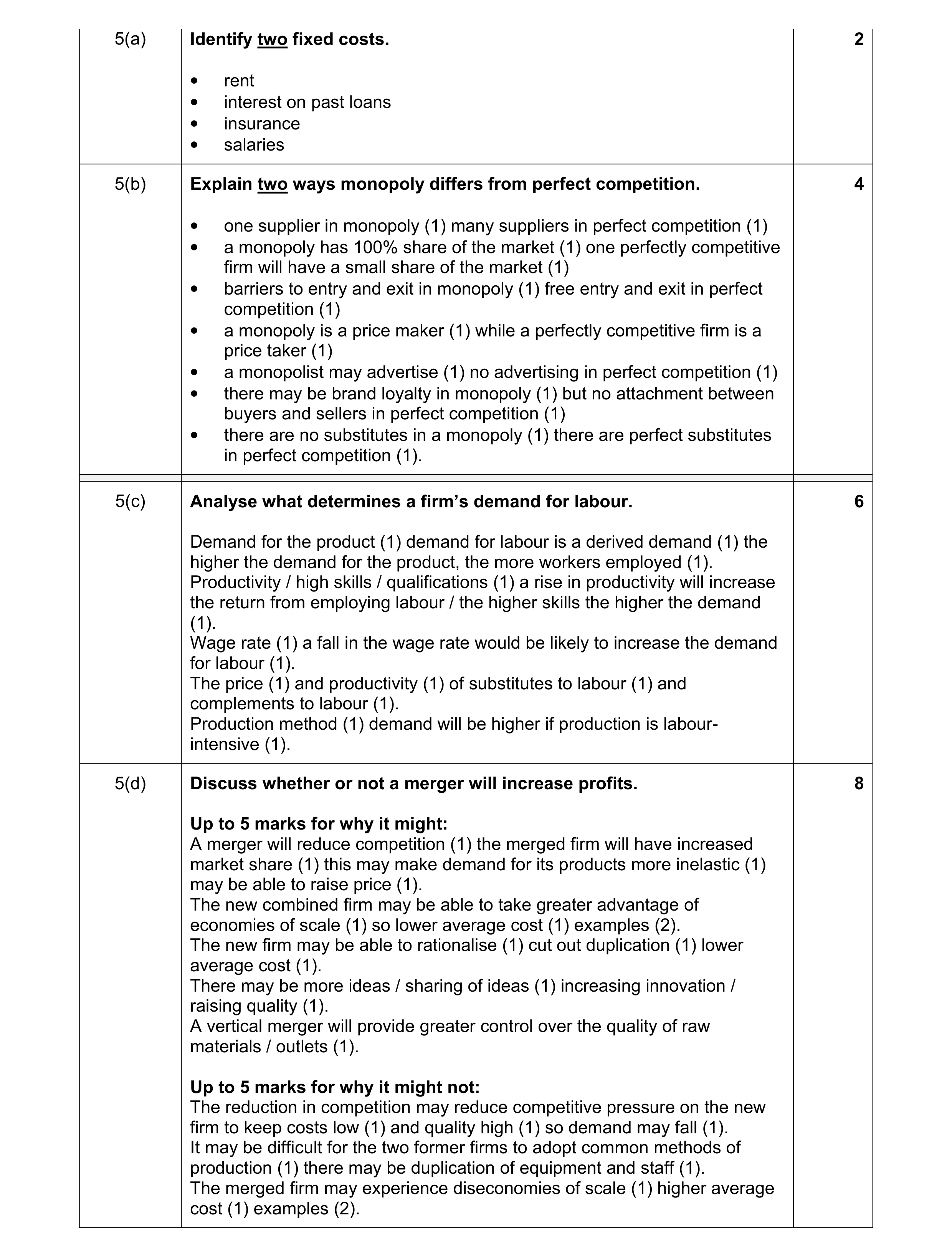 20
20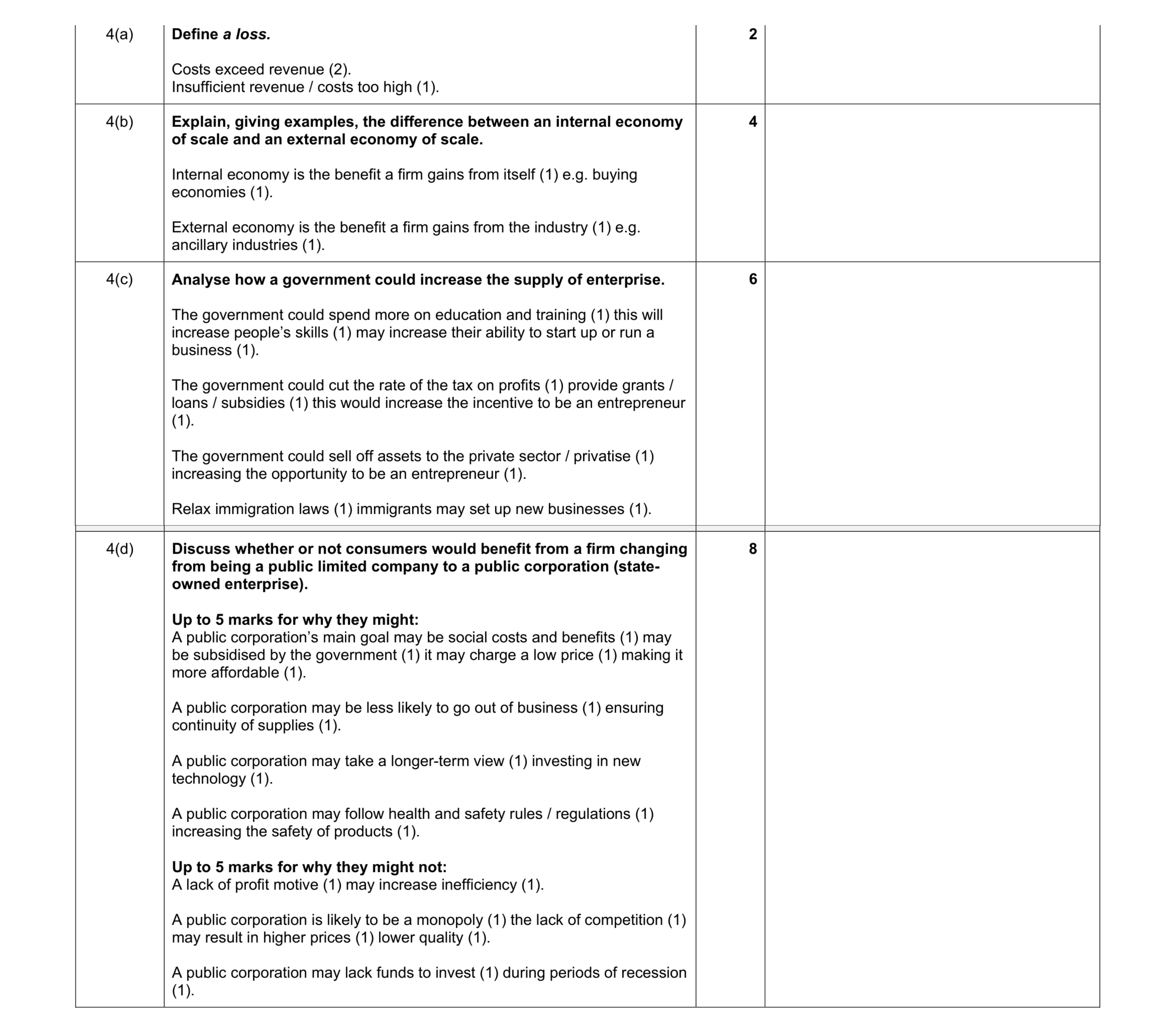 20
20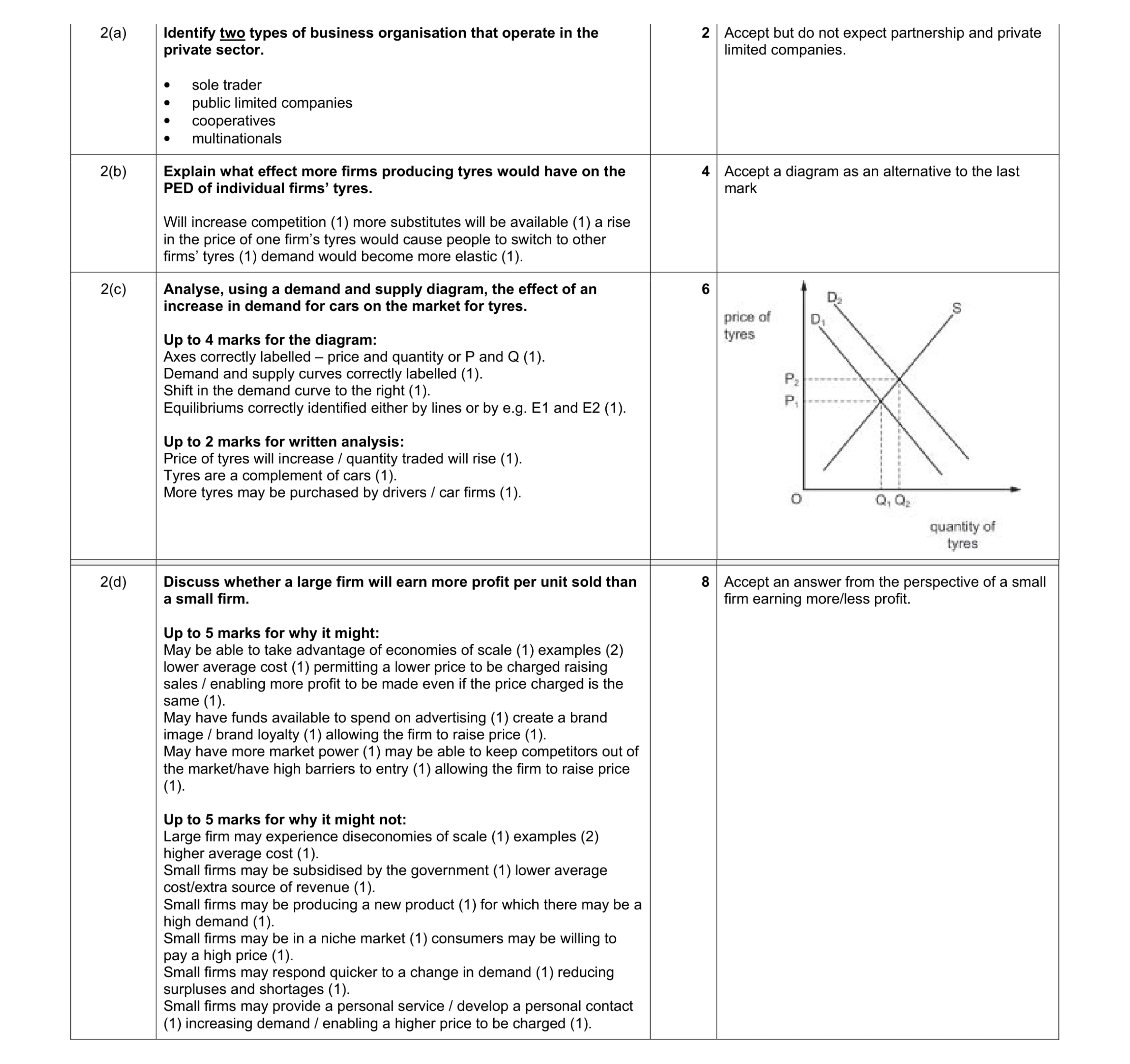 20
20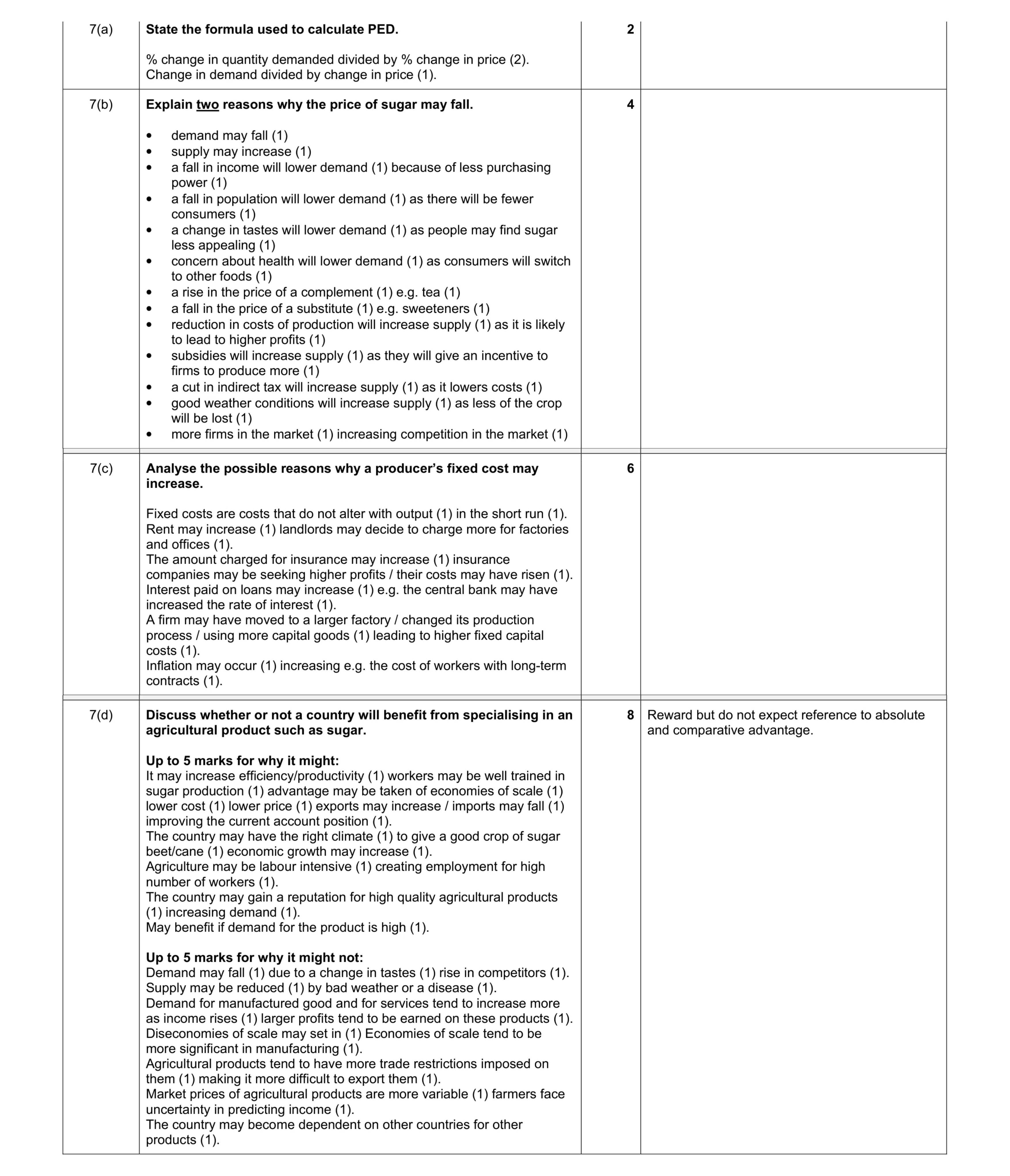 20
20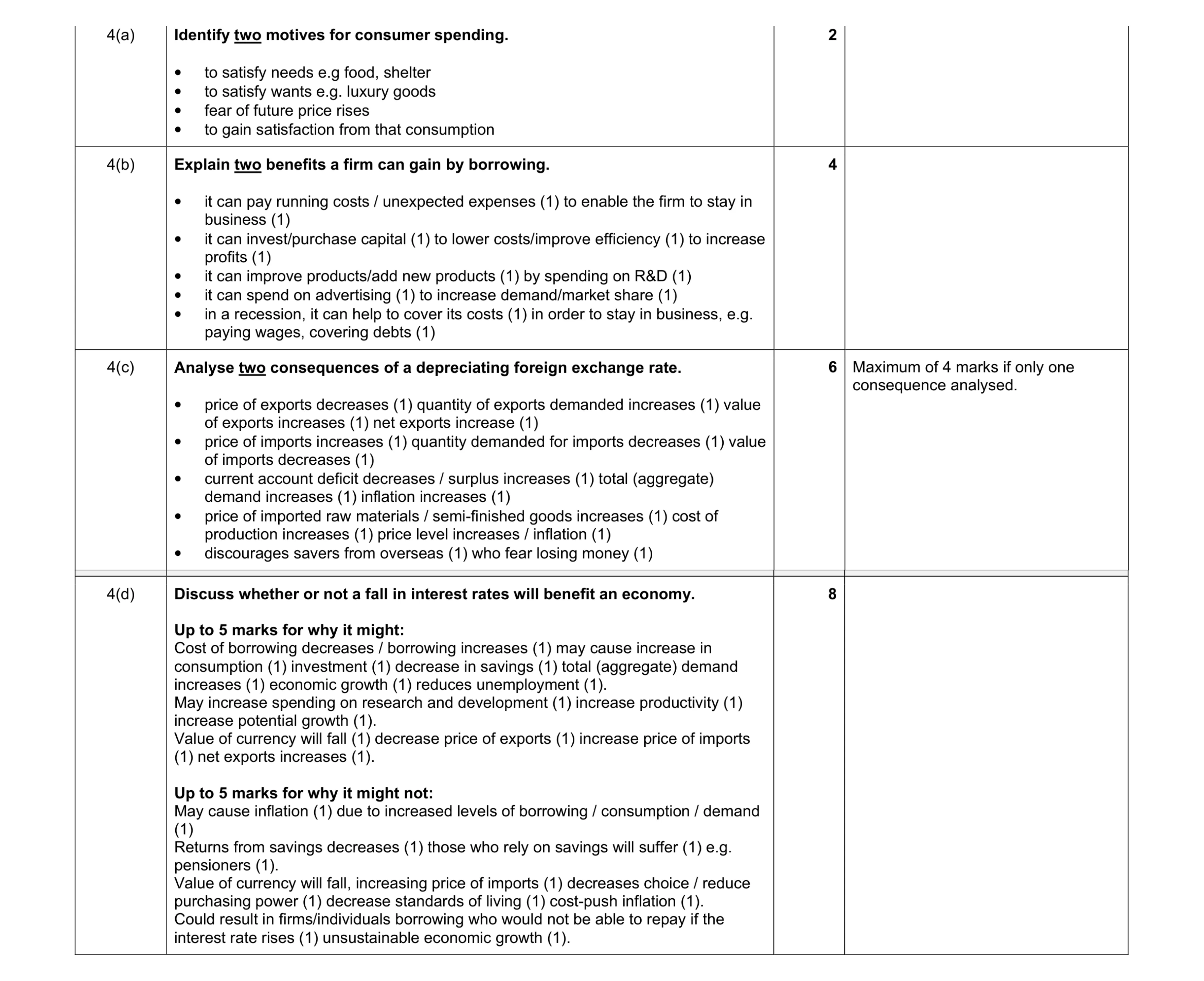 20
20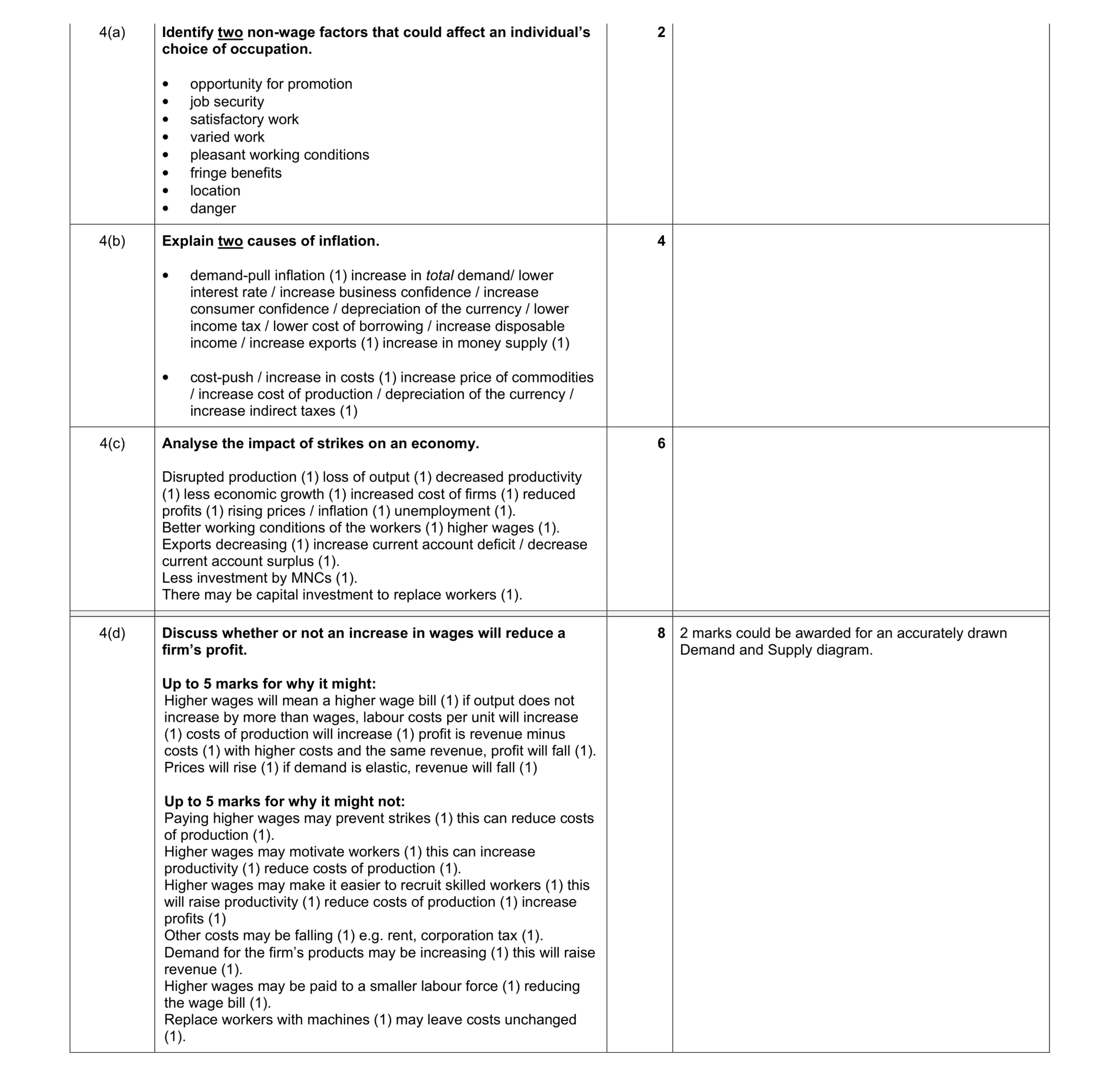 20
20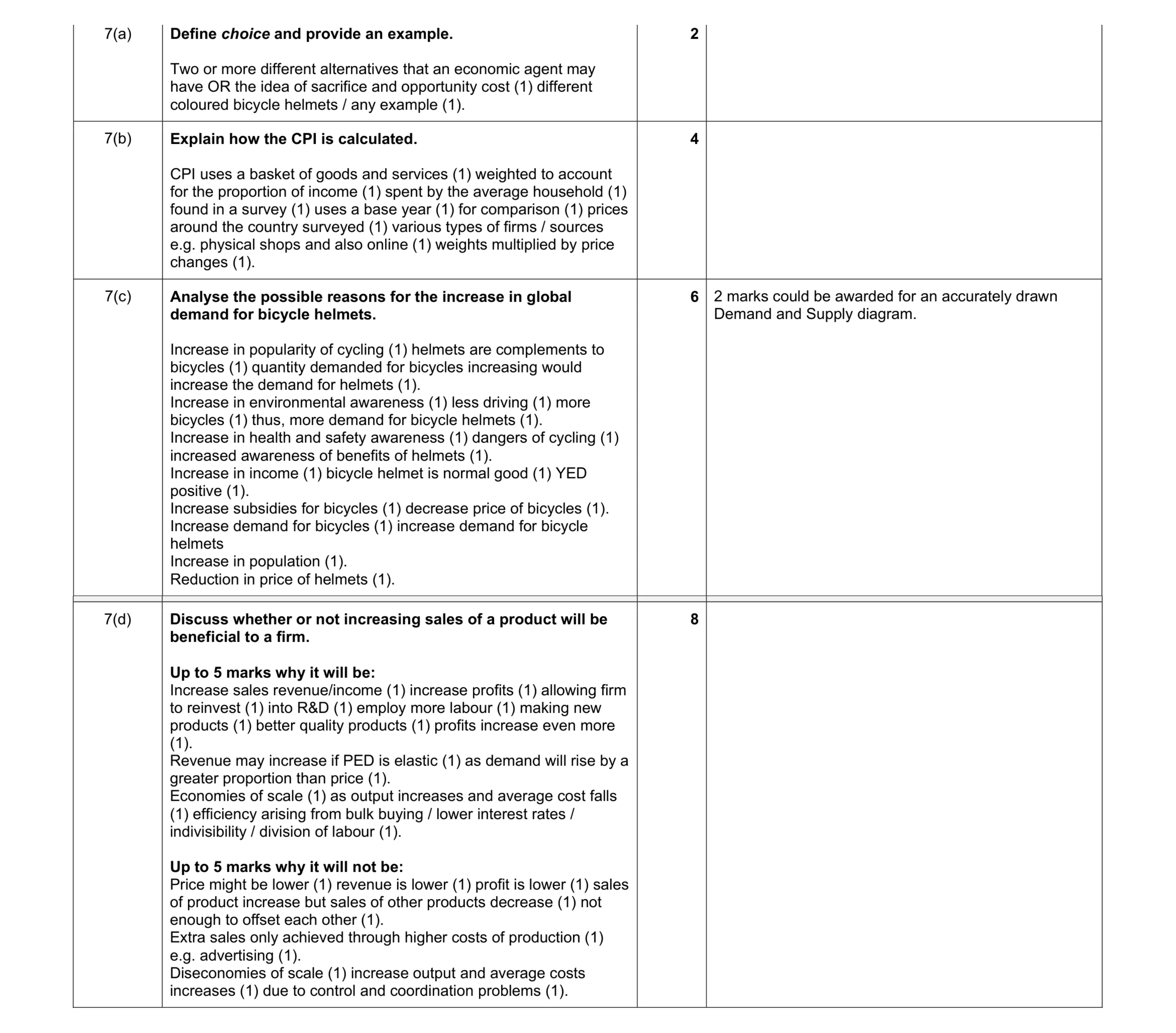 20
20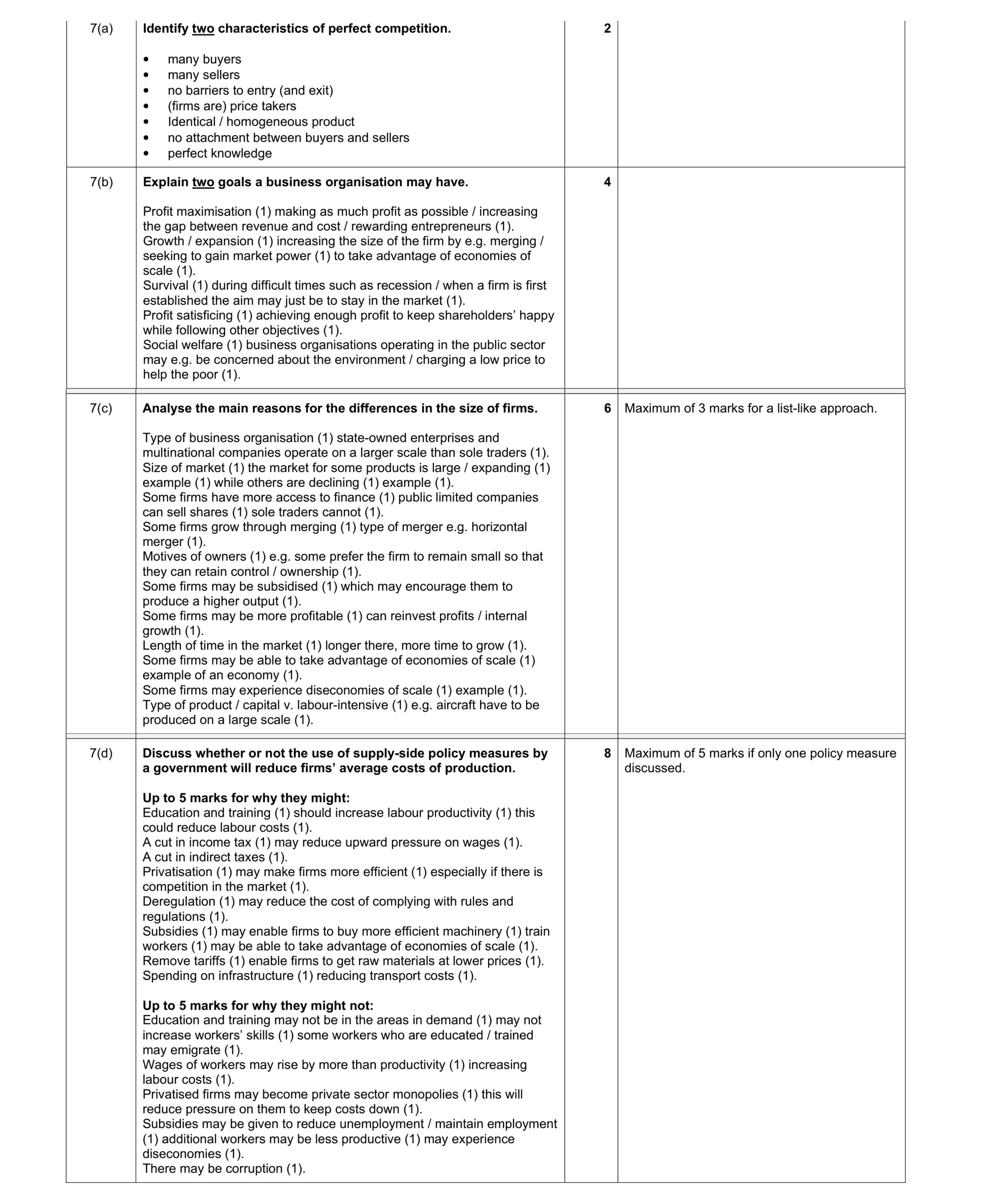 20
20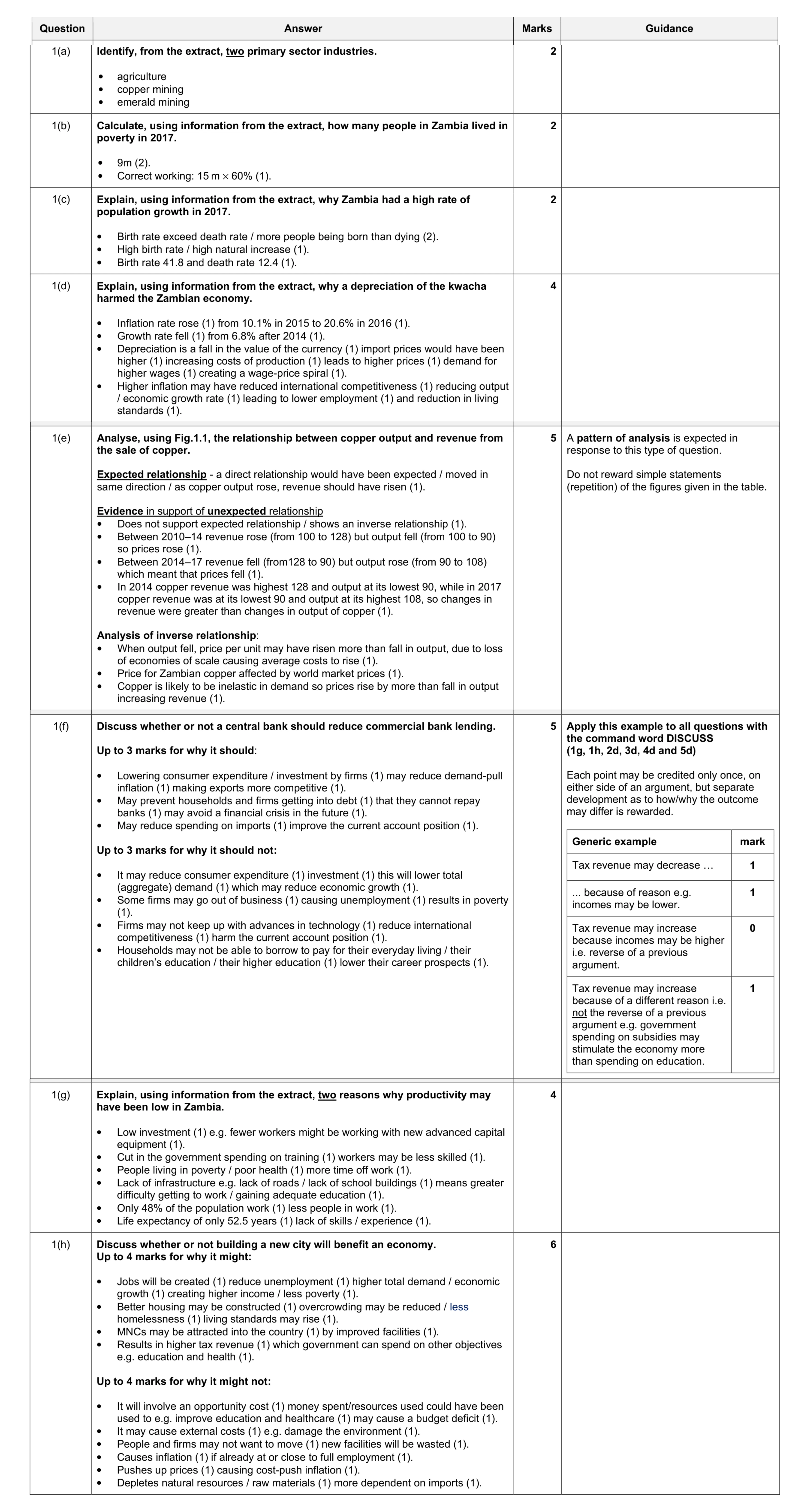 30
30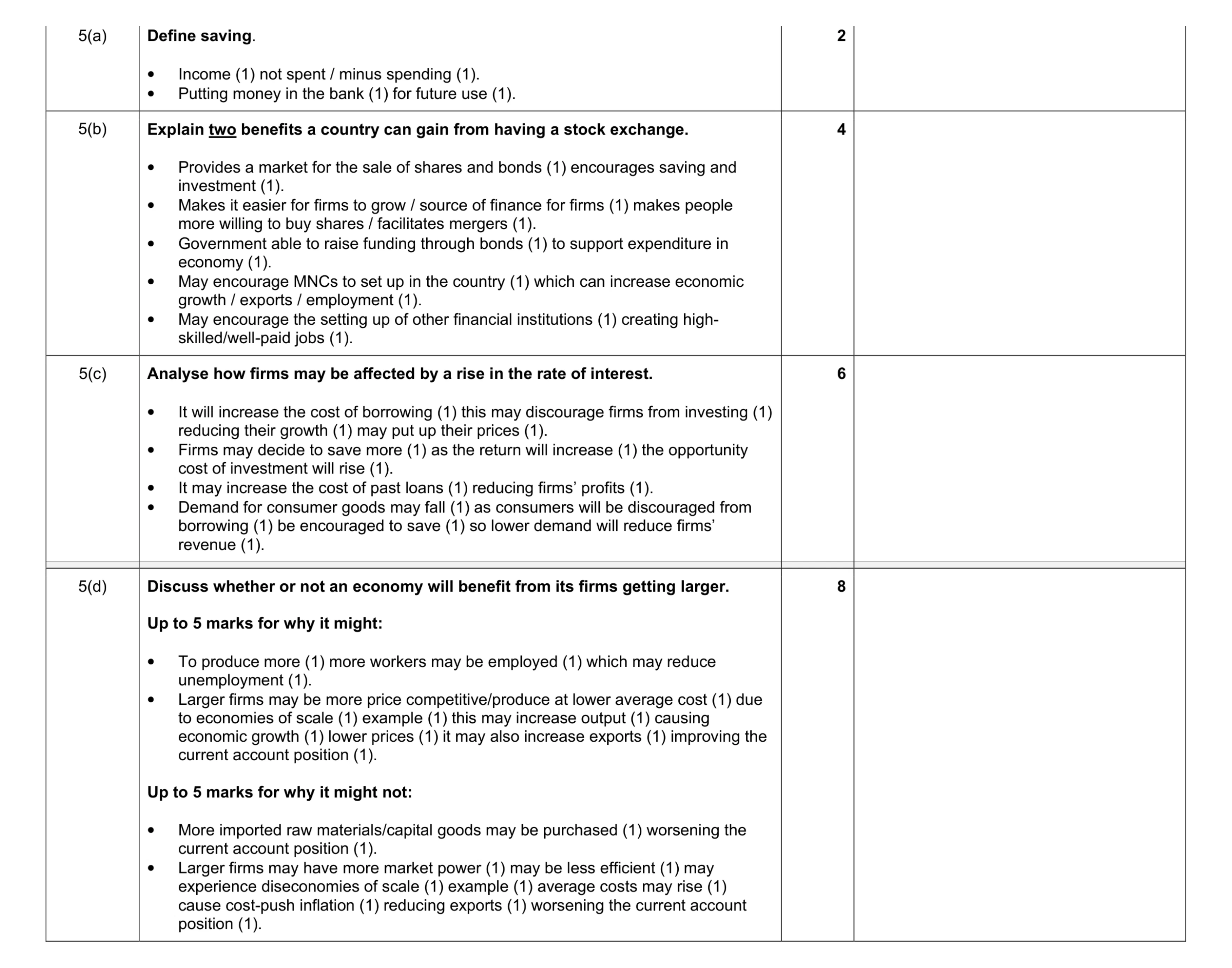 20
20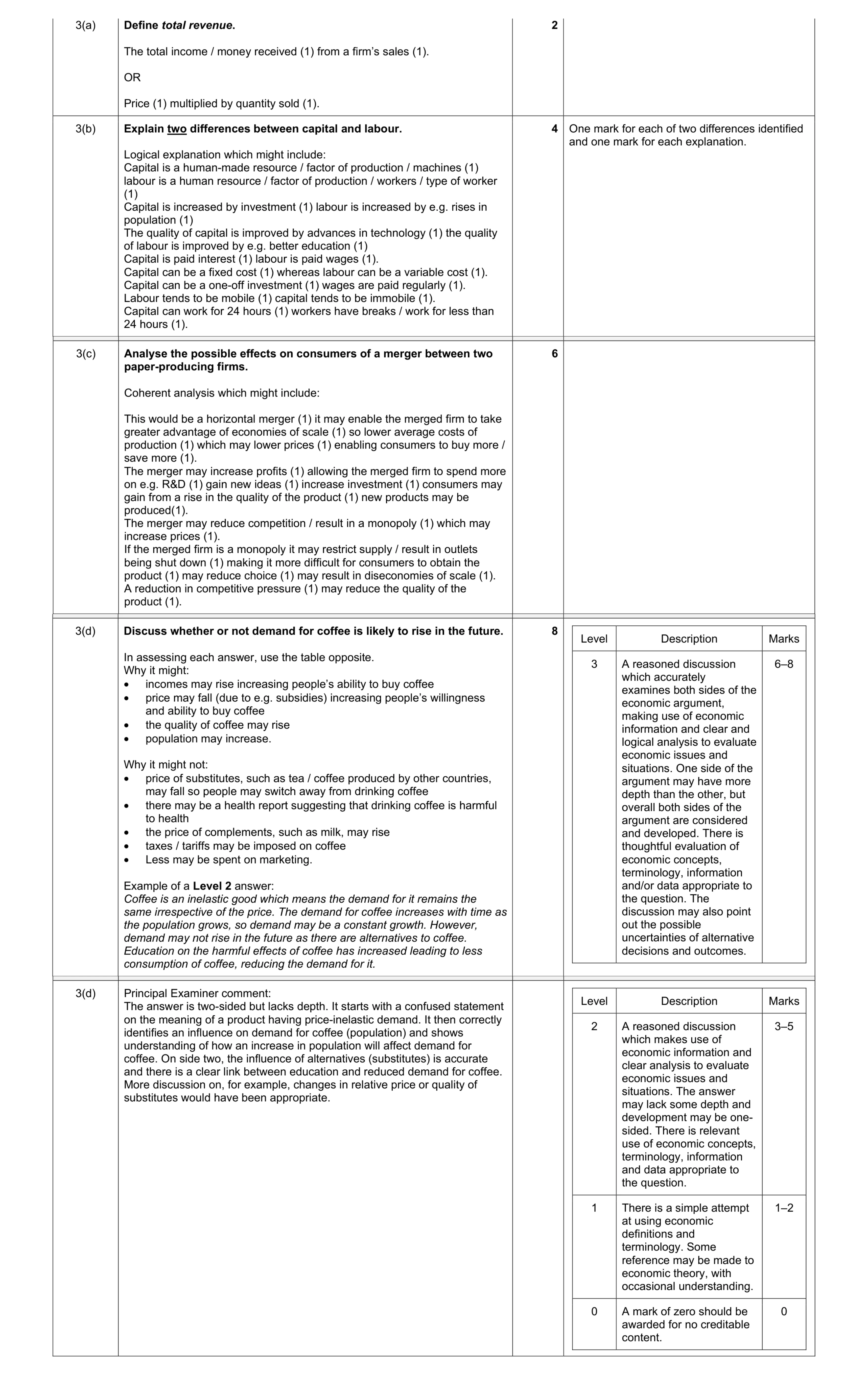 20
20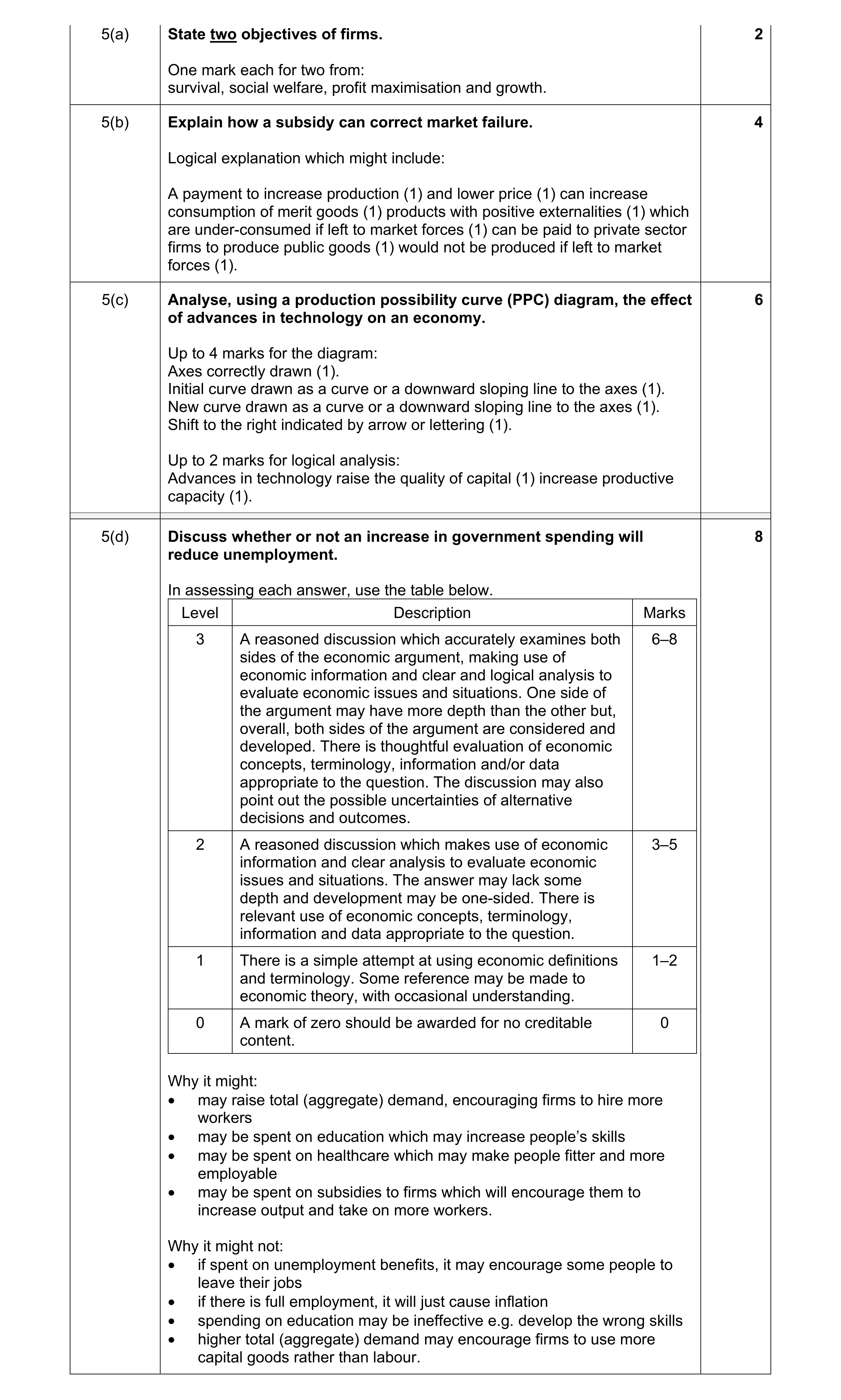 20
20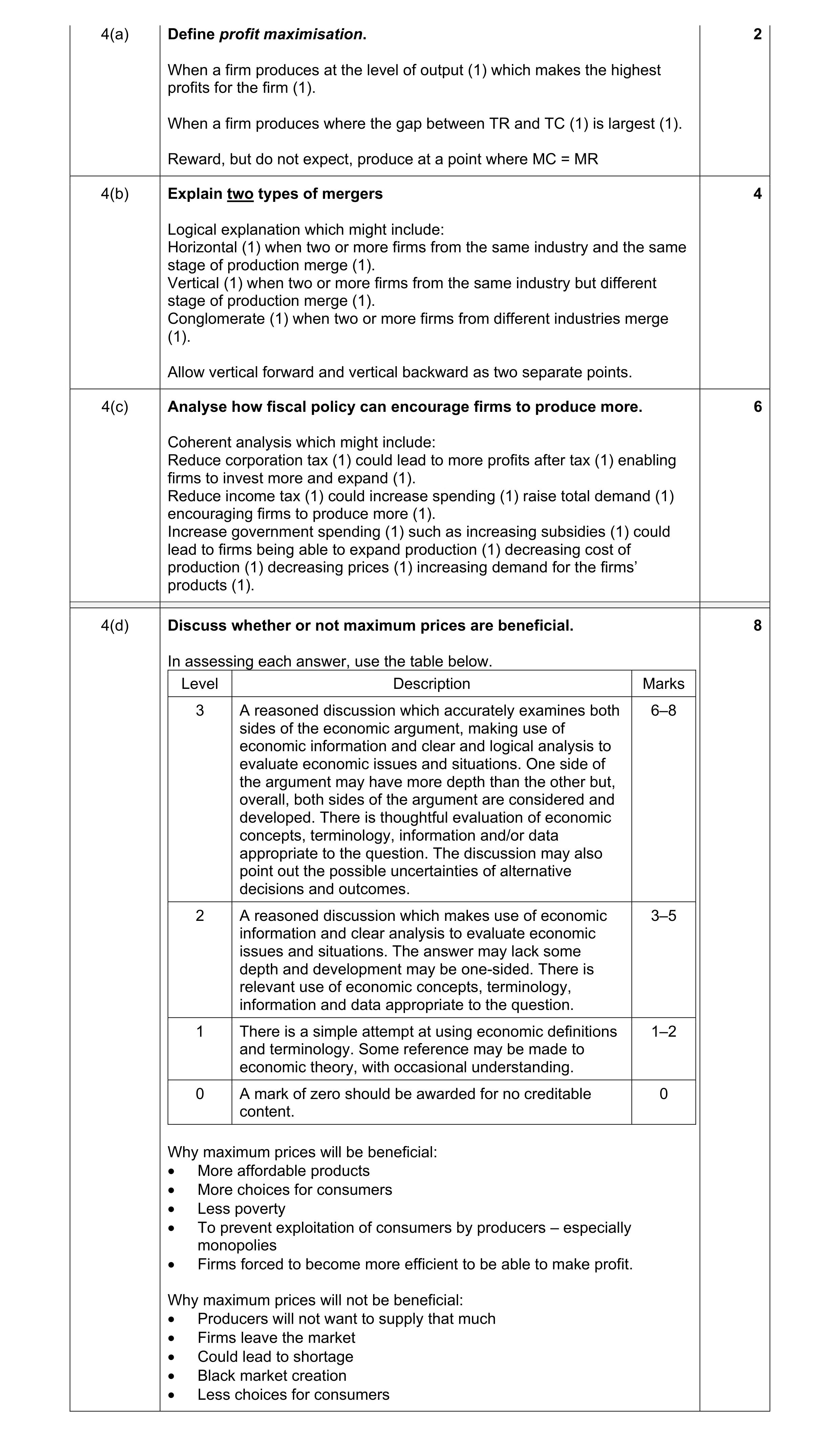 20
20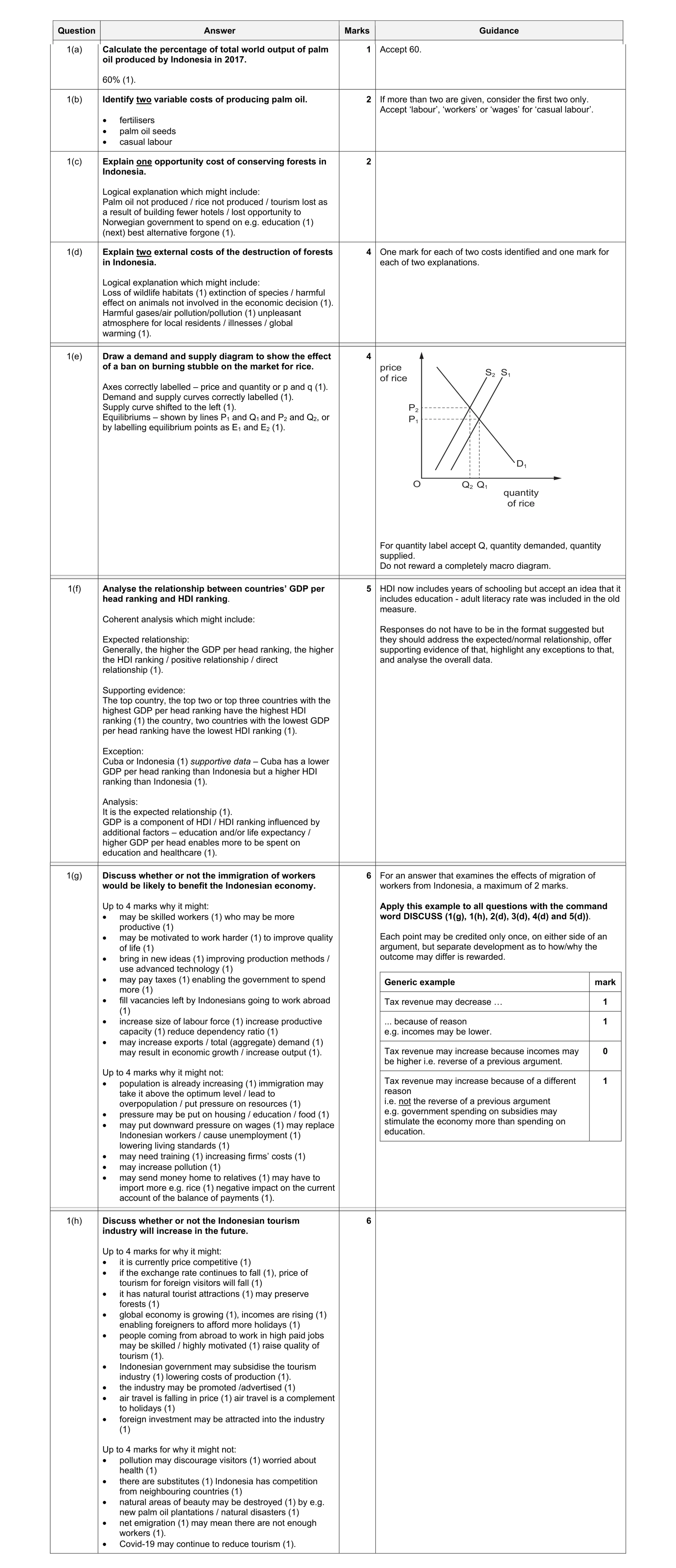 30
30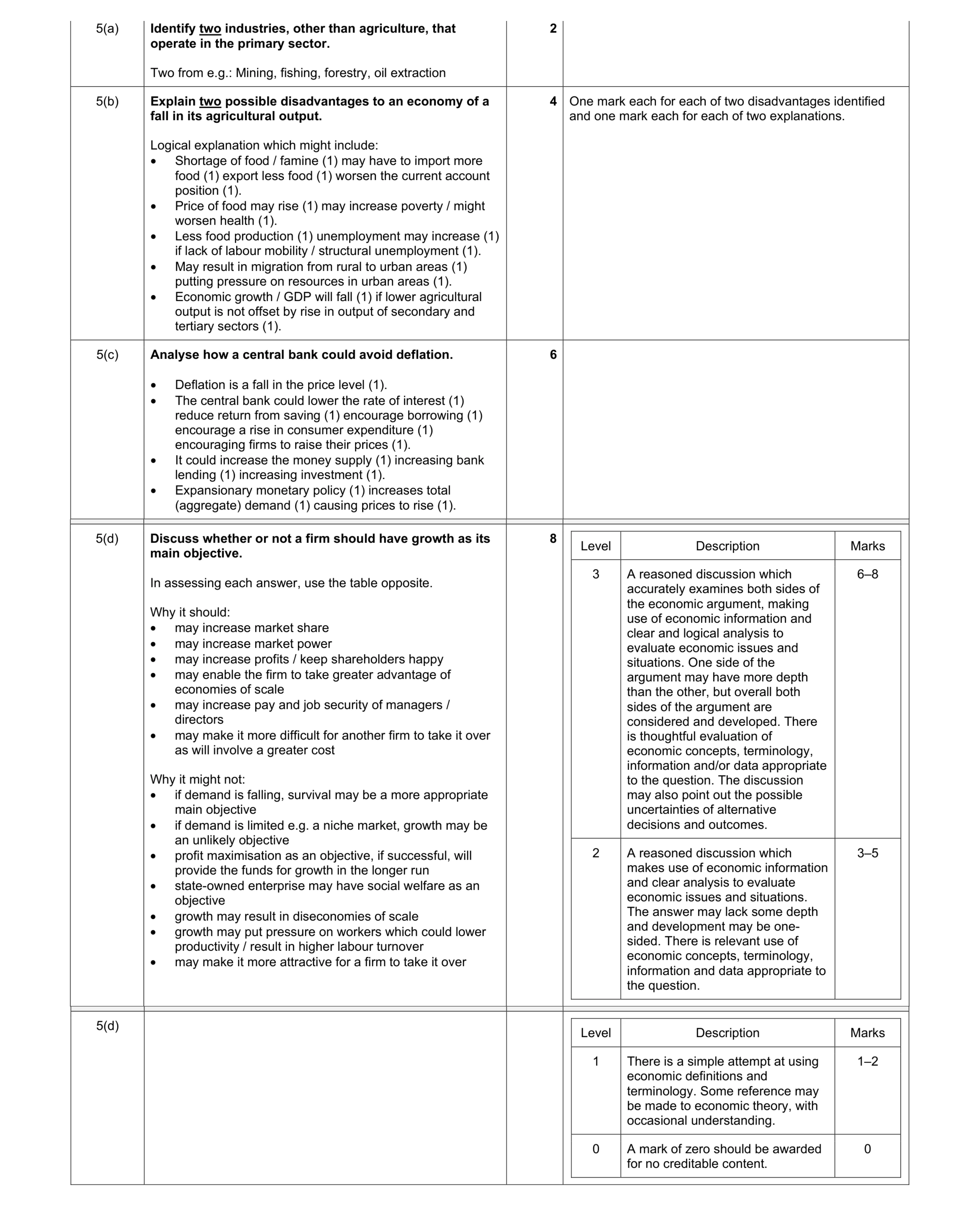 20
20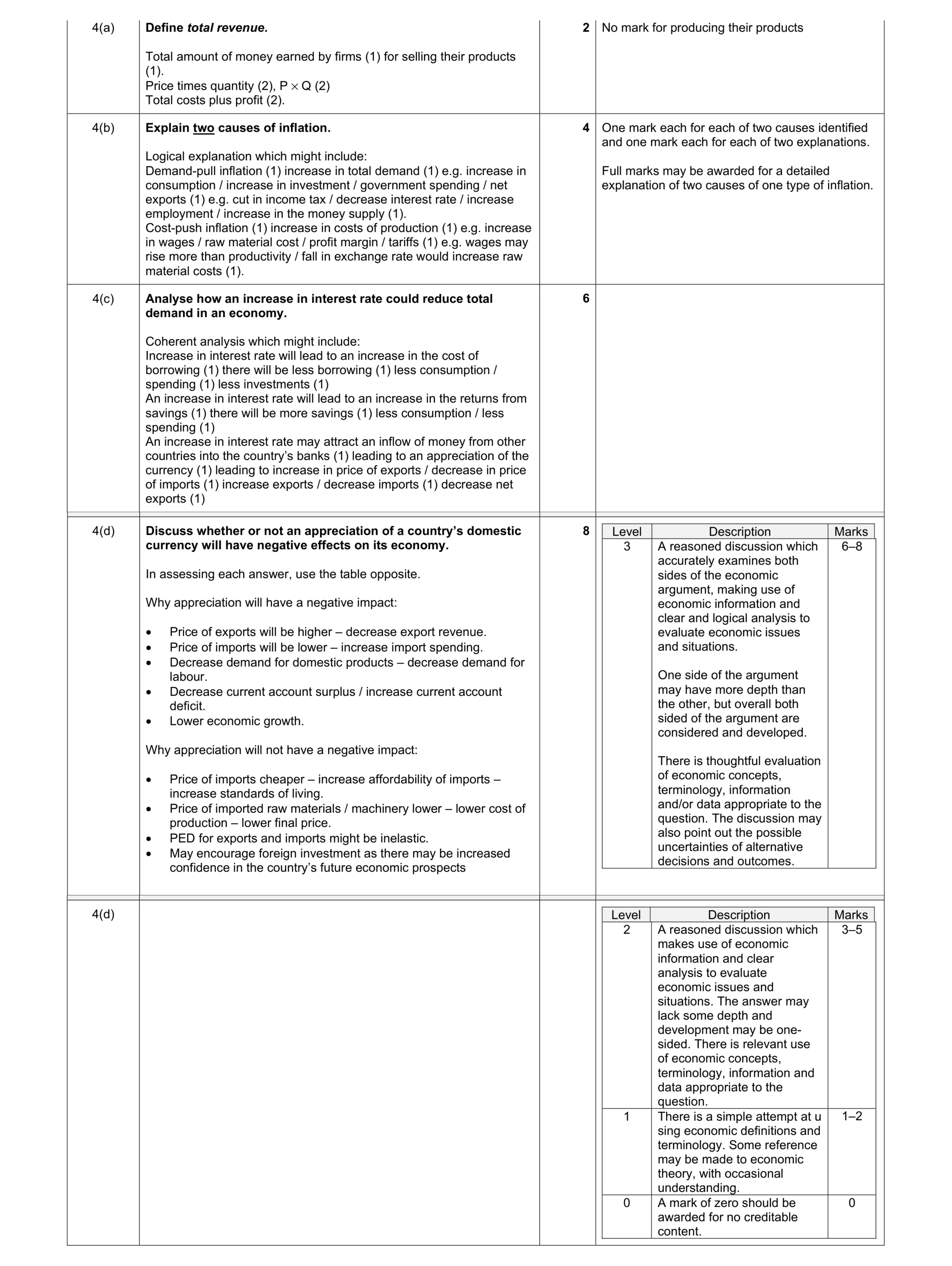 20
20 20
20 20
20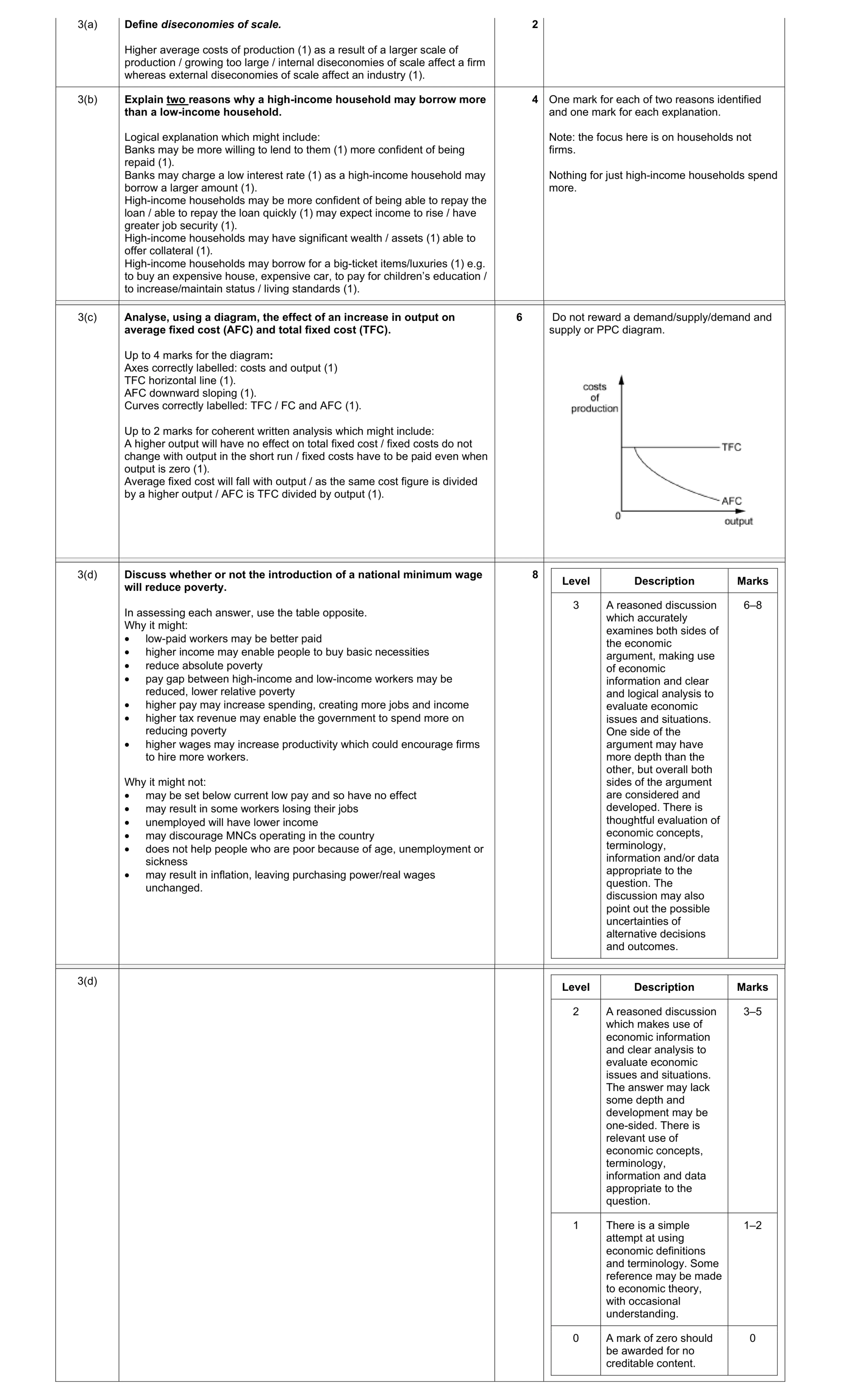 20
20 20
20 30
30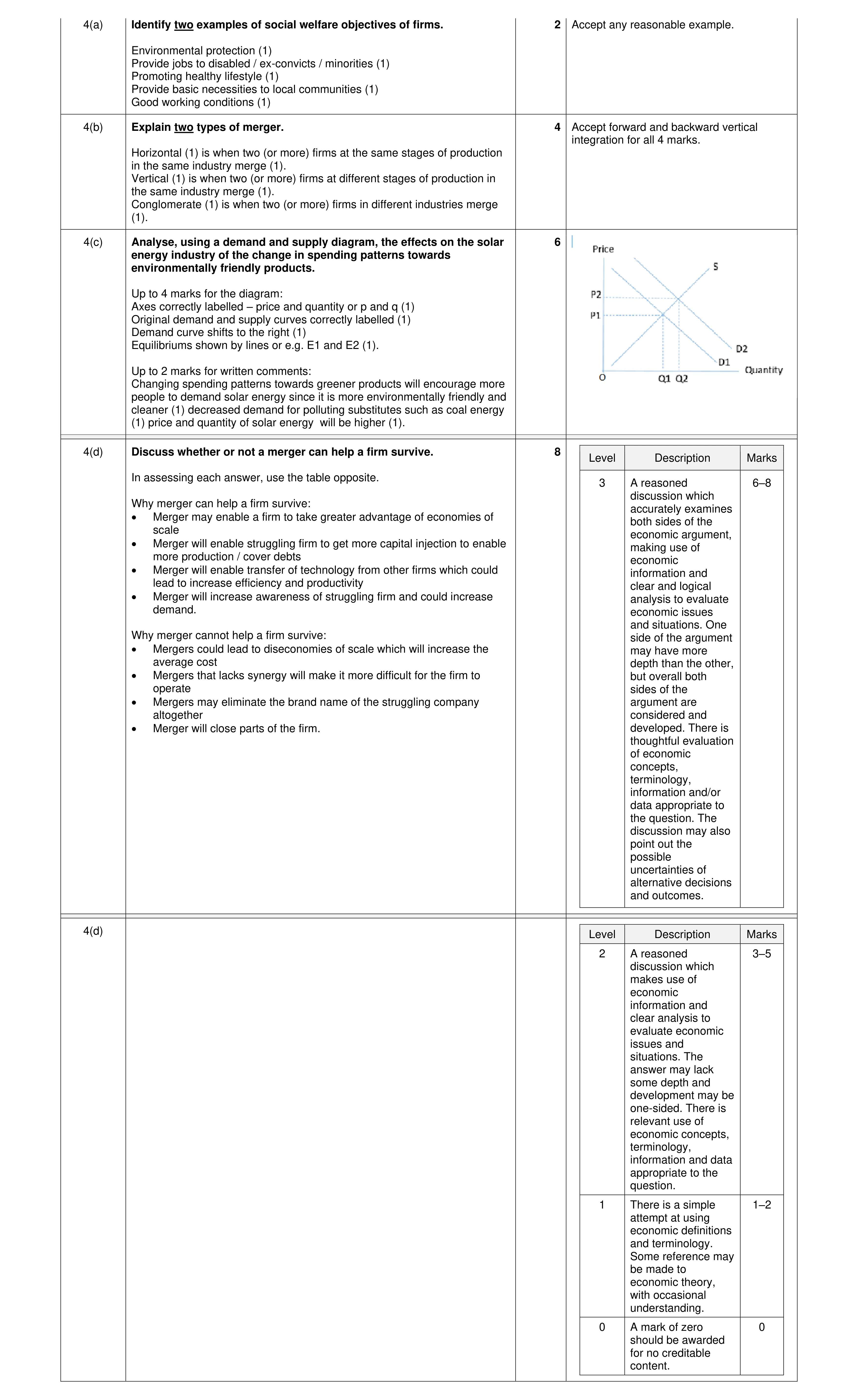 20
20 30
30 30
30 20
20 30
30 20
20 20
20 20
20 20
20 20
20 20
20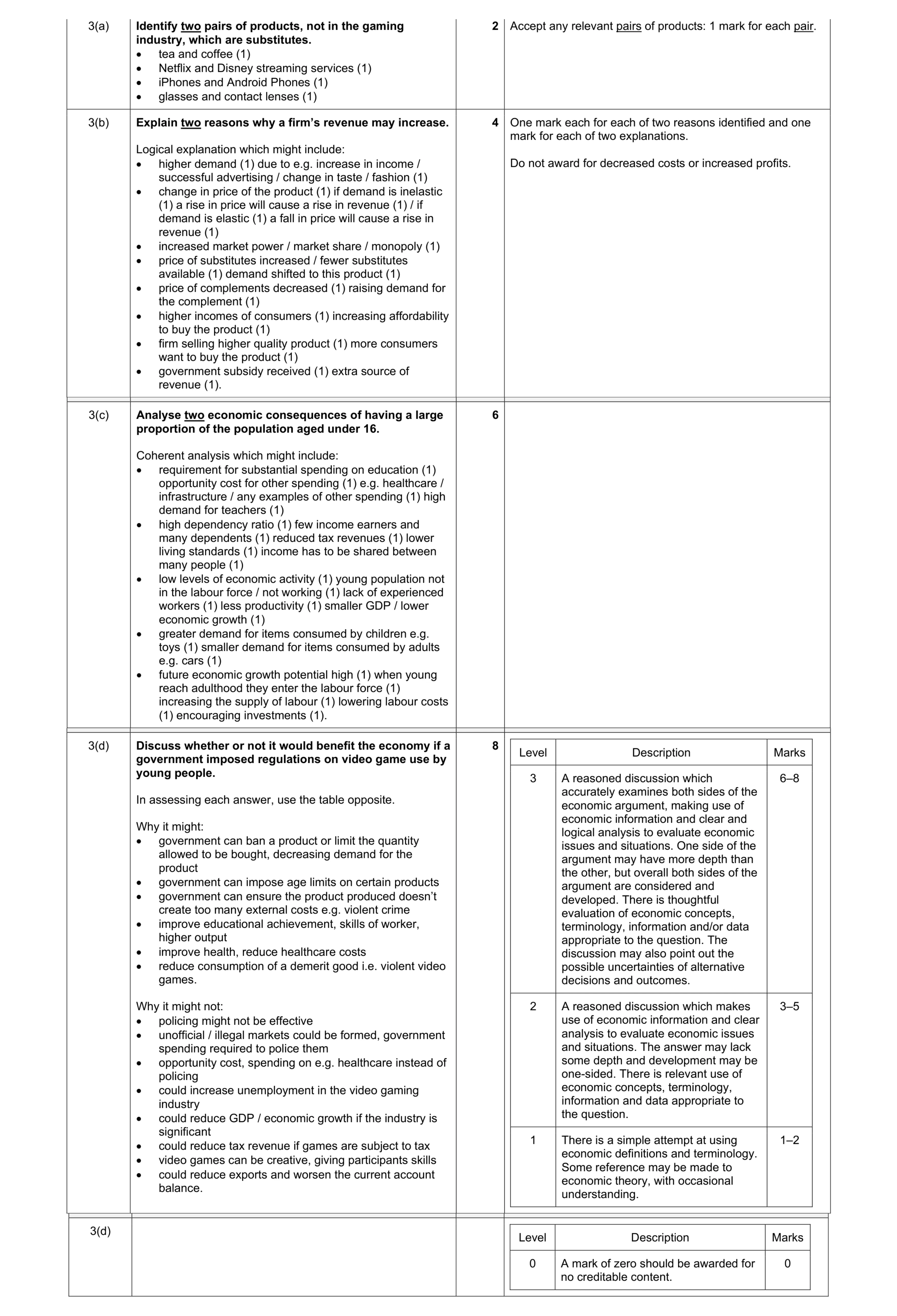 20
20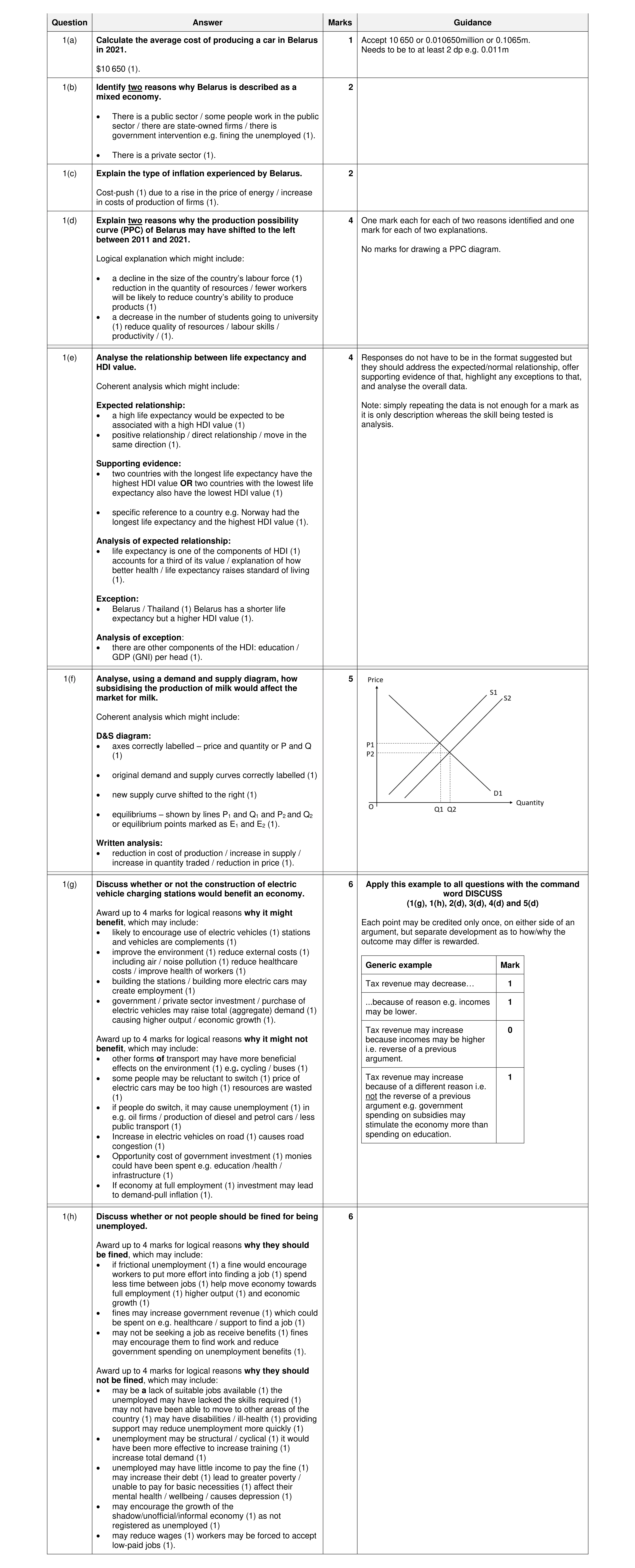 30
30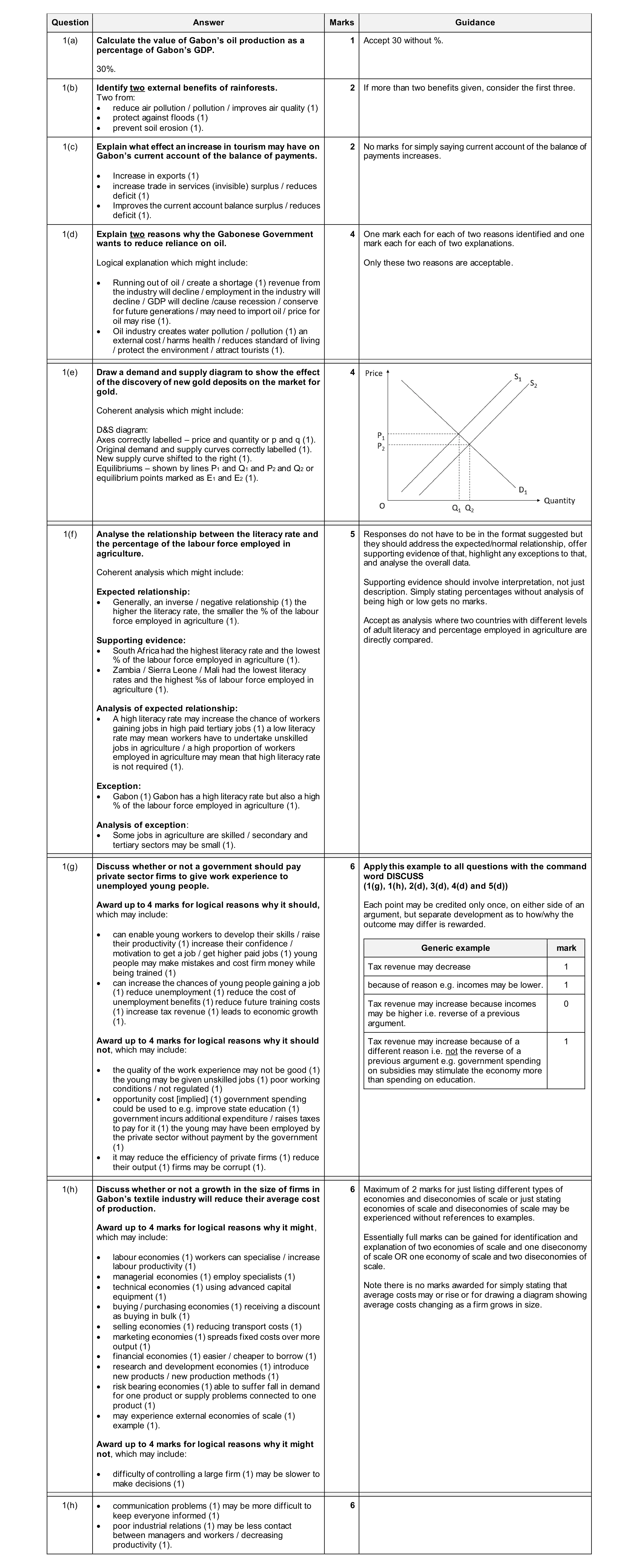 30
30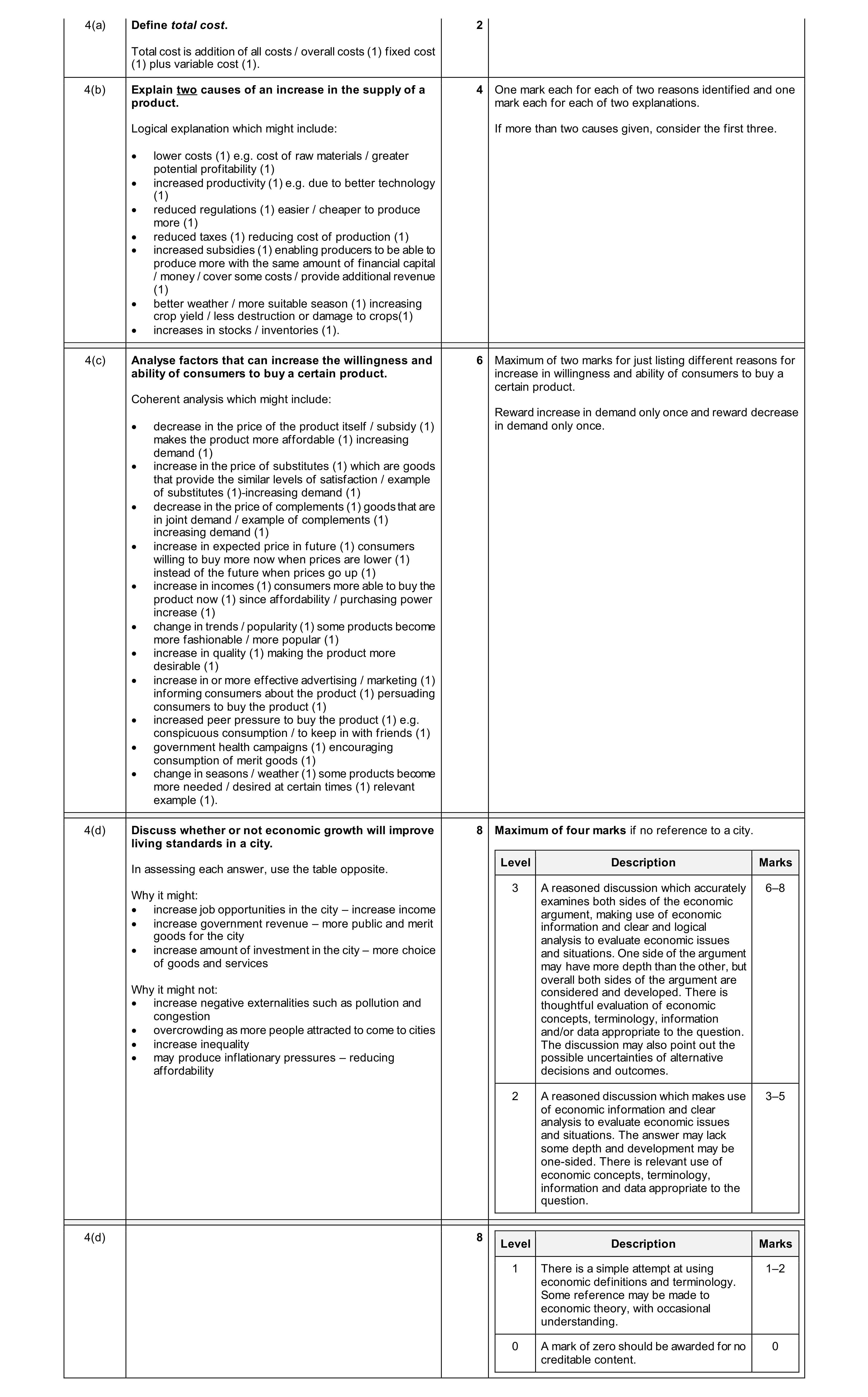 20
20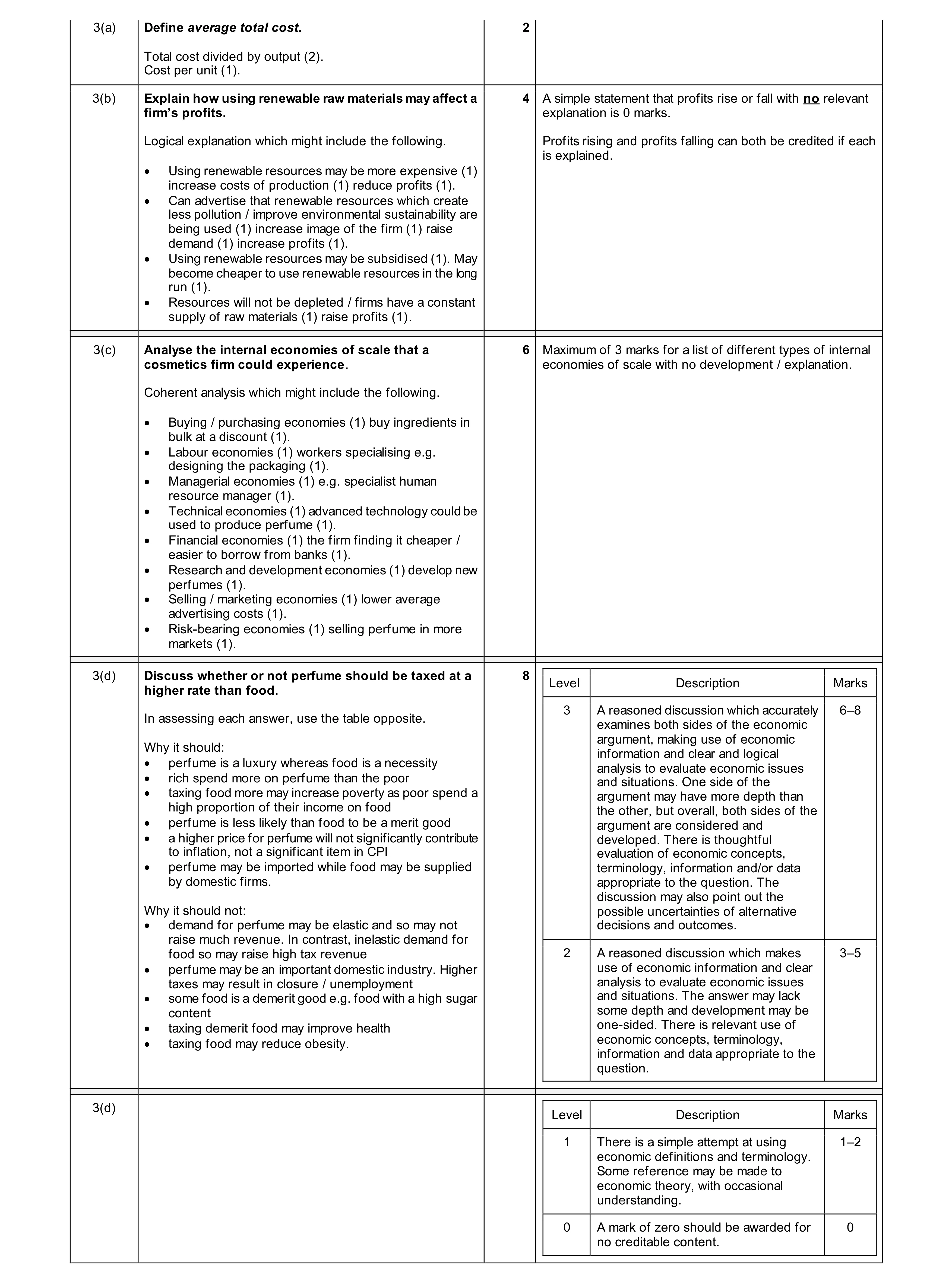 20
20