Cambridge IGCSE Economics 0455 — 2020 May/June Paper 2 · Variant 1
0455/21/M/J/20 · 5 questions · 110 marks · ≈124 min
The question paper and its mark scheme, free to read here and free to download. This is Cambridge’s own paper, exactly as it was sat.
Question paper8 pages




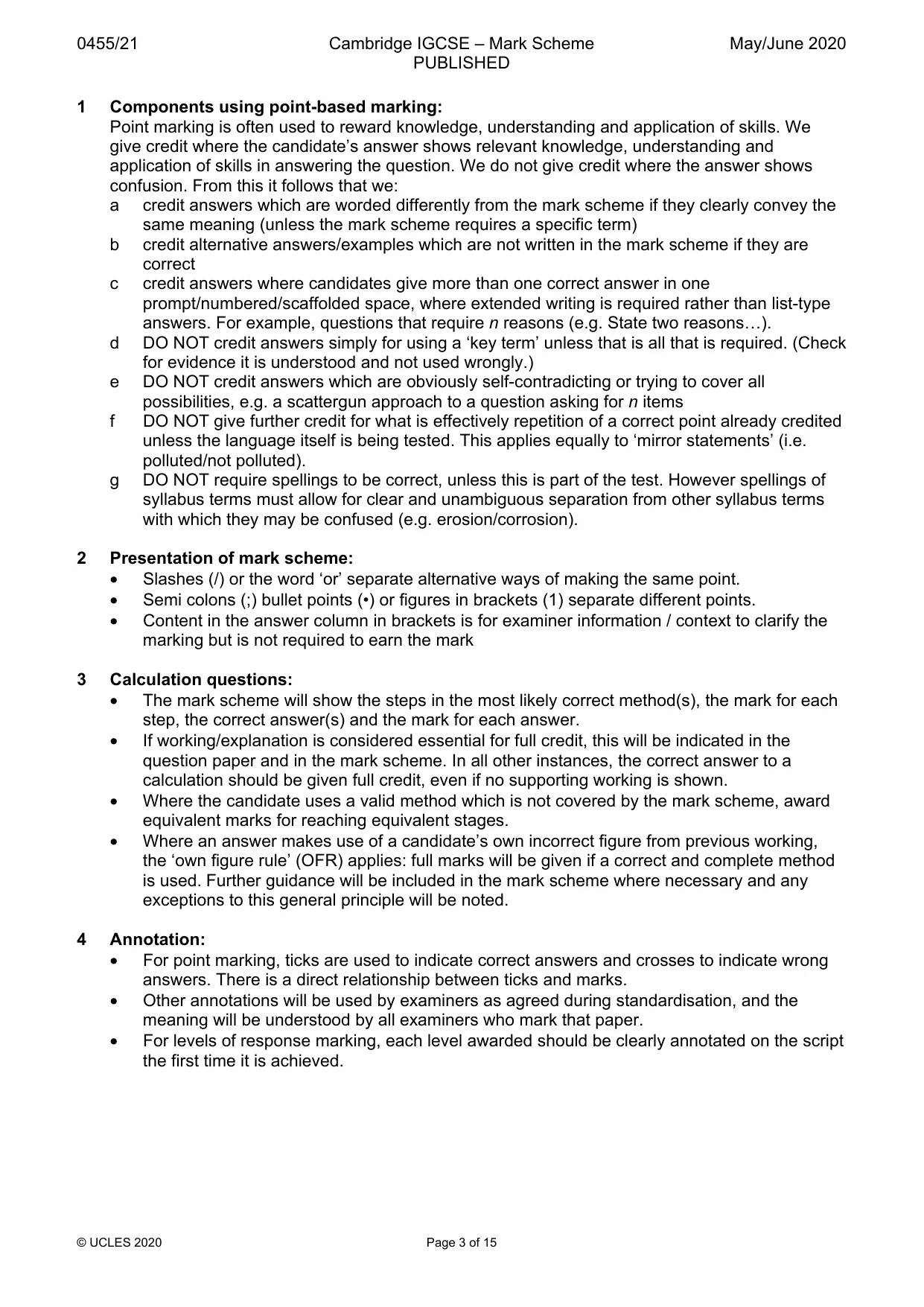
Mark scheme15 pages
Answers below. Sit the paper first if you are practising.



Questions as text
Q1 · Calculate Vietnam’s GDP per head in 2017
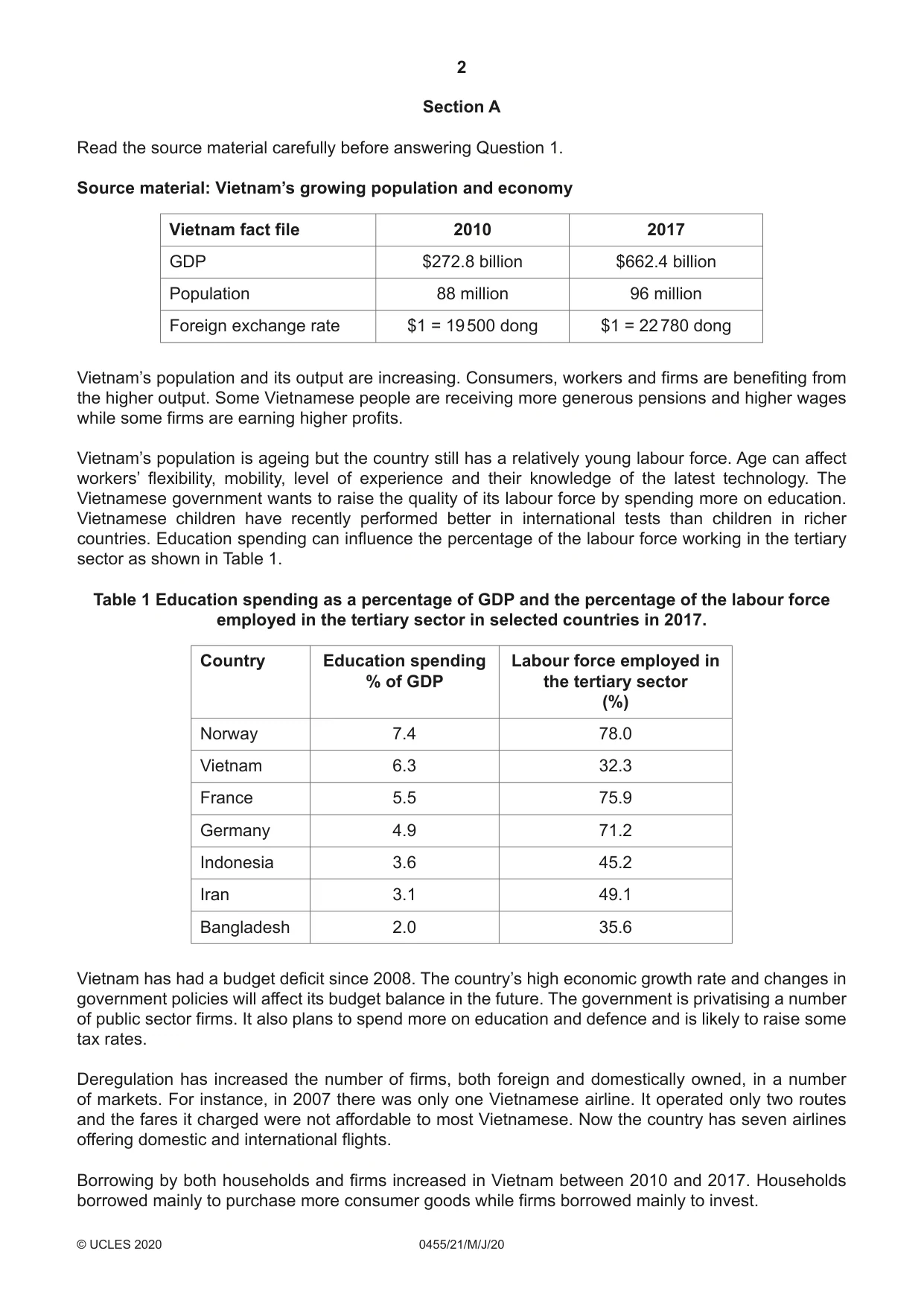
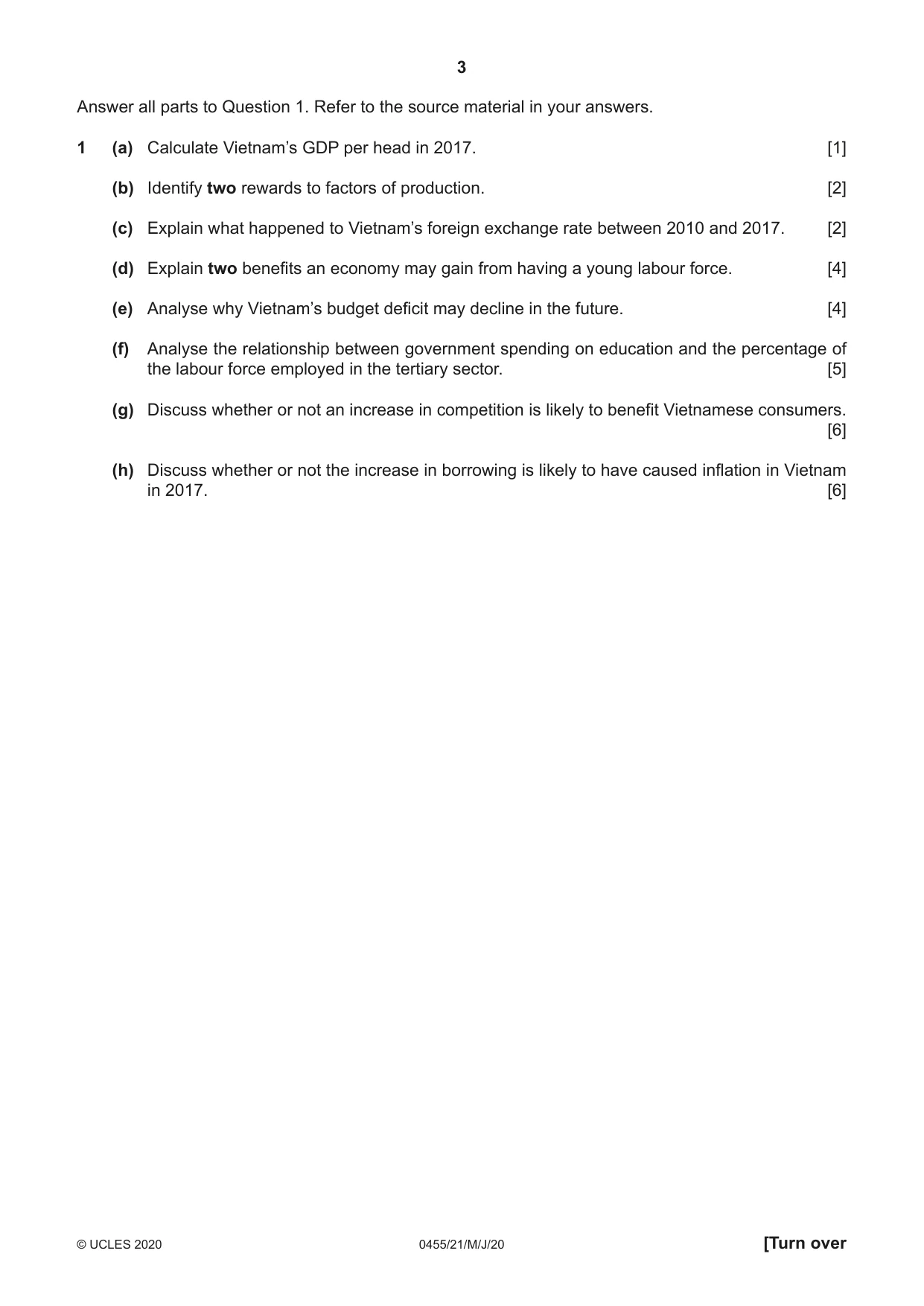
1 (a) Calculate Vietnam’s GDP per head in 2017. [1] (b) Identify two rewards to factors of production. [2] (c) Explain what happened to Vietnam’s foreign exchange rate between 2010 and 2017. [2] (d) Explain two benefits an economy may gain from having a young labour force. [4] (e) Analyse why Vietnam’s budget deficit may decline in the future. [4] (f) Analyse the relationship between government spending on education and the percentage of the labour force employed in the tertiary sector. [5] (g) Discuss whether or not an increase in competition is likely to benefit Vietnamese consumers. [6] (h) Discuss whether or not the increase in borrowing is likely to have caused inflation in Vietnam in 2017. [6]
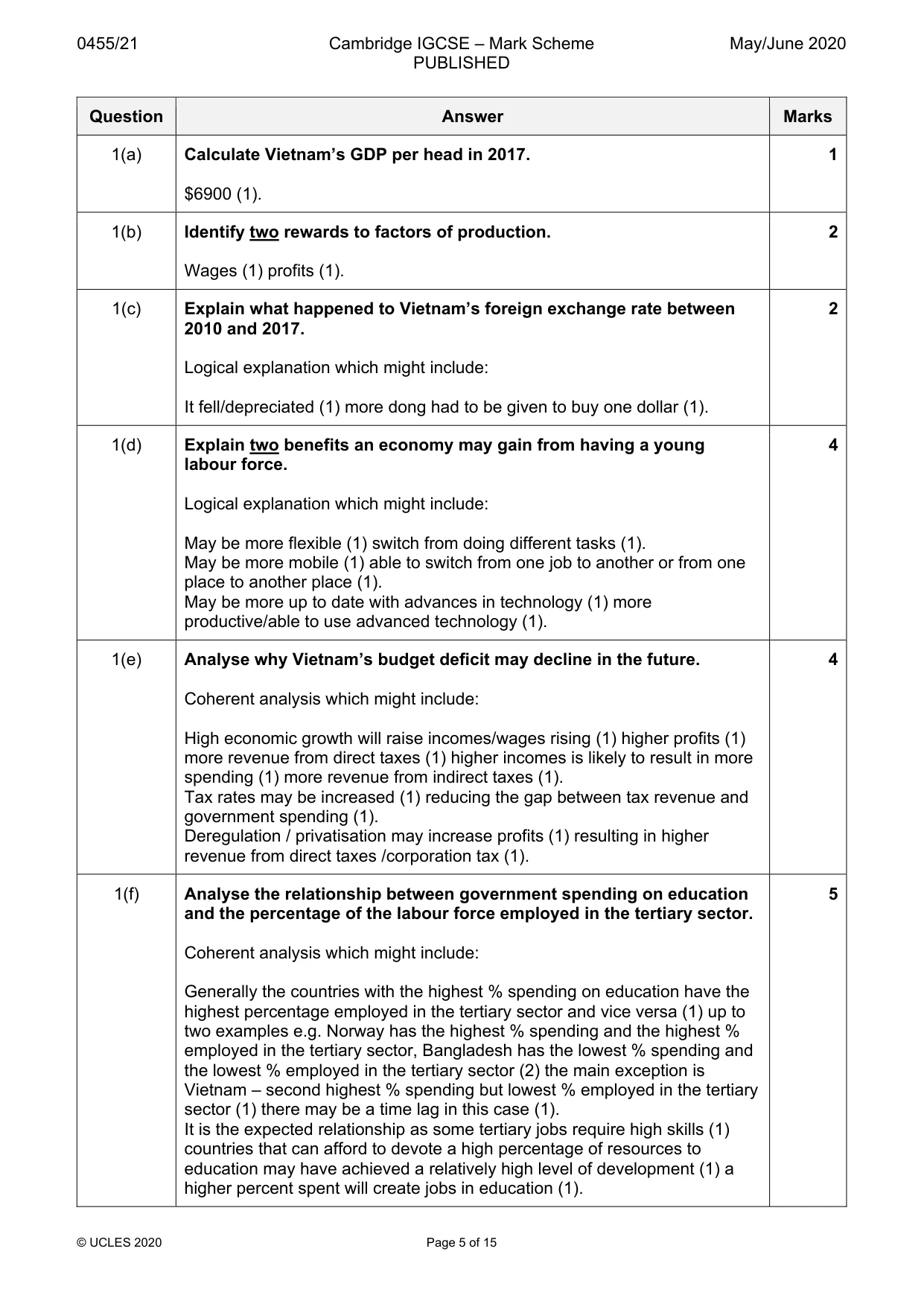
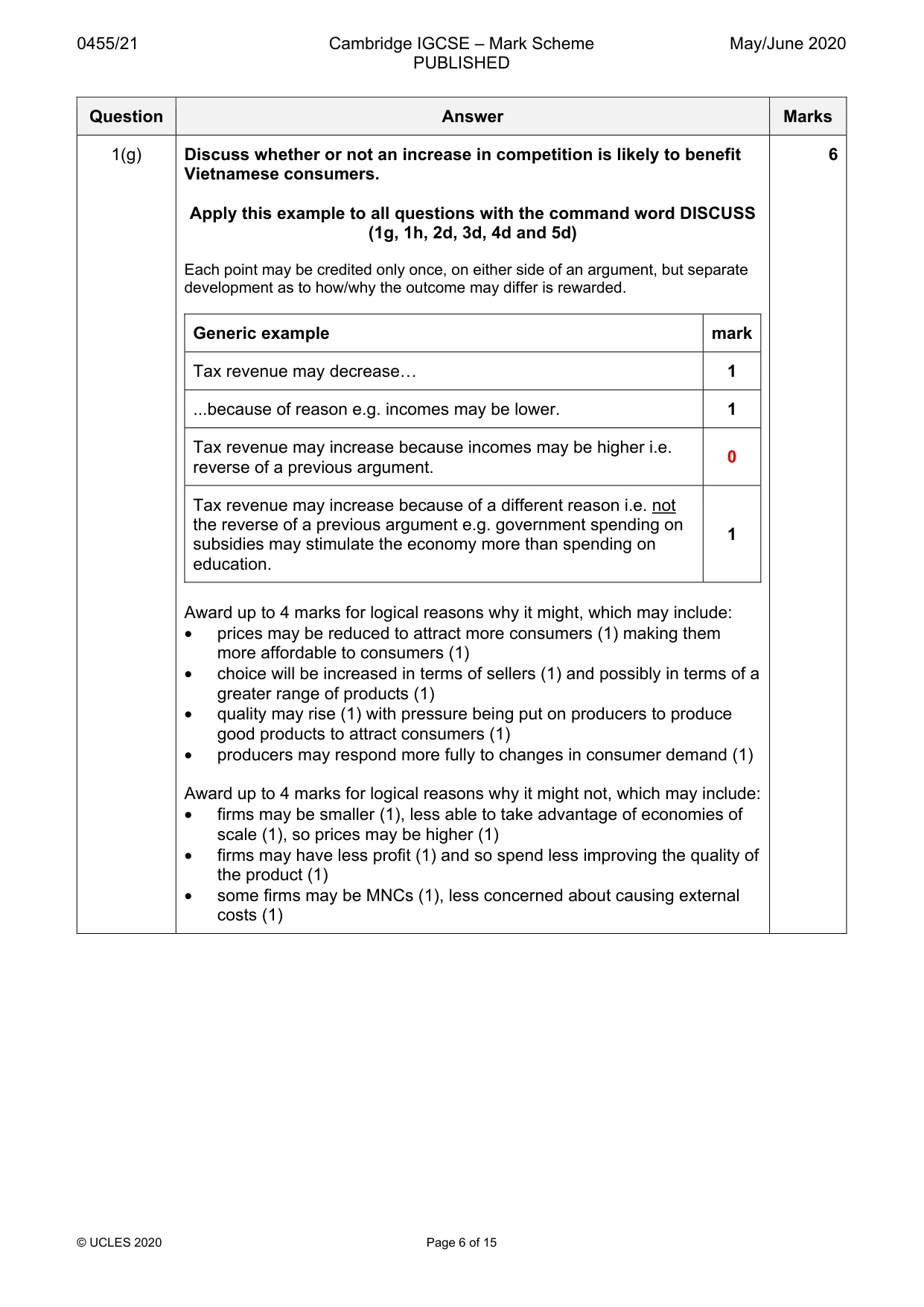
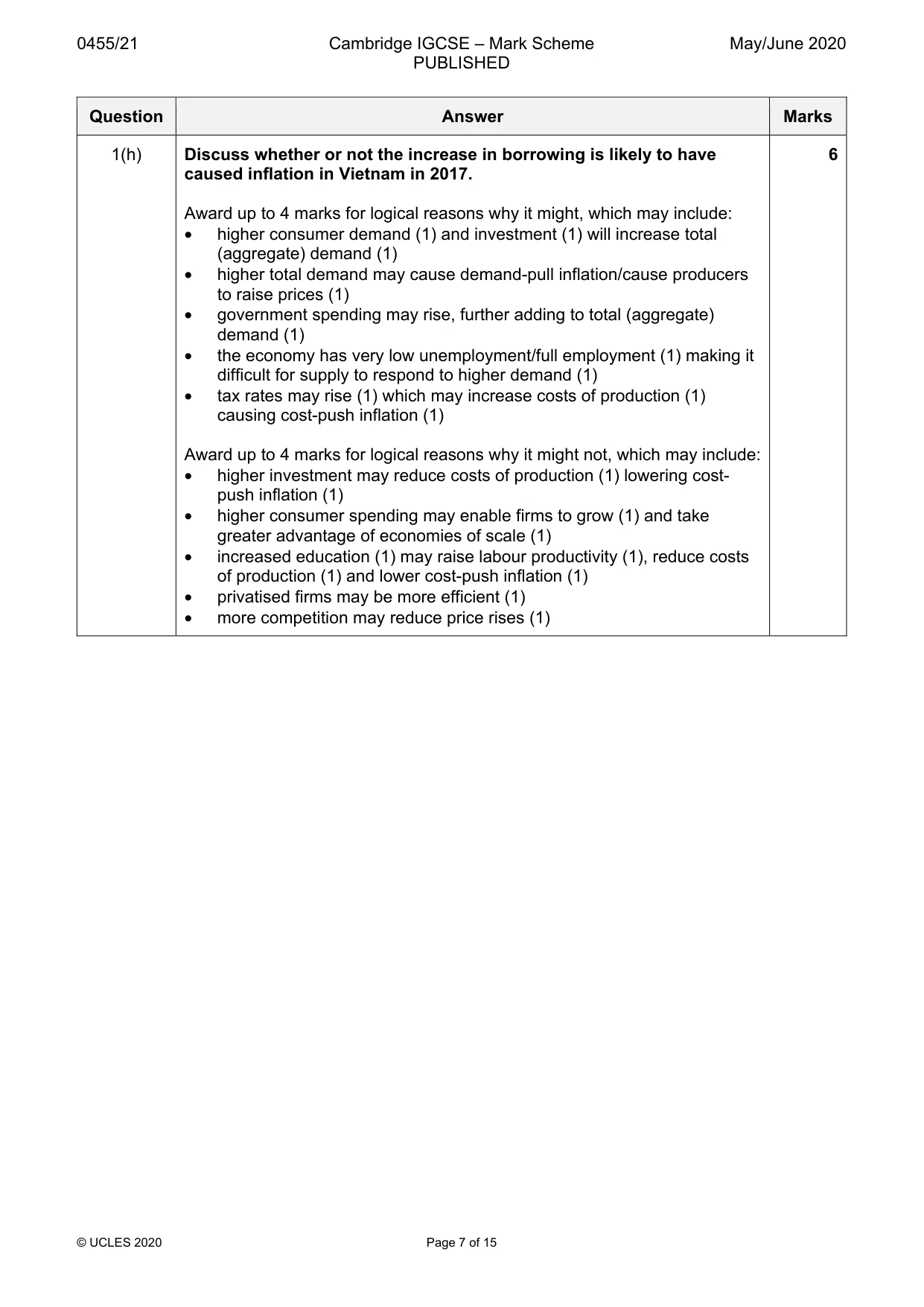
Mark scheme: Question Answer Marks 1(a) Calculate Vietnam’s GDP per head in 2017. 1 $6900 (1). 1(b) Identify two rewards to factors of production. 2 Wages (1) profits (1). 1(c) Explain what happened to Vietnam’s foreign exchange rate between 2 2010 and 2017. Logical explanation which might include: It fell/depreciated (1) more dong had to be given to buy one dollar (1). 1(d) Explain two benefits an economy may gain from having a young 4 labour force. Logical explanation which might include: May be more flexible (1) switch from doing different tasks (1). May be more mobile (1) able to switch from one job to another or from one place to another place (1). May be more up to date with advances in technology (1) more productive/able to use advanced technology (1). 1(e) Analyse why Vietnam’s budget deficit may decline in the future. 4 Coherent analysis which might include: High economic growth will raise incomes/wages rising (1) higher profits (1) more revenue from direct taxes (1) higher incomes is likely to result in more spending (1) more revenue from indirect taxes (1). Tax rates may be increased (1) reducing the gap between tax revenue and government spending (1). Deregulation / privatisation may increase profits (1) resulting in higher revenue from direct taxes /corporation tax (1). 1(f) Analyse the relationship between government spending on education 5 and the percentage of the labour force employed in the tertiary sector. Coherent analysis which might include: Generally the countries with the highest % spending on education have the highest percentage employed in the tertiary sector and vice versa (1) up to two examples e.g. Norway has the highest % spending and the highest % employed in the tertiary sector, Bangladesh has the lowest % spending and the lowest % employed in the tertiary sector (2) the main exception is Vietnam – second highest % spending but lowest % employed in the tertiary sector (1) there may be a time lag in this case (1). It is the expected relationship as some tertiary jobs require high skills (1) countries that can afford to devote a high percentage of resources to education may have achieved a relatively high level of development (1) a higher percent spent will create jobs in education (1). 1(g) Discuss whether or not an increase in competition is likely to benefit 6 Vietnamese consumers. Apply this example to all questions with the command word DISCUSS (1g, 1h, 2d, 3d, 4d and 5d) Each point may be credited only once, on either side of an argument, but separate development as to how/why the outcome may differ is rewarded. Generic example mark Tax revenue may decrease… 1 ...because of reason e.g. incomes may be lower. 1 Tax revenue may increase because incomes may be higher i.e. 0 reverse of a previous argument. Tax revenue may increase because of a different reason i.e. not the reverse of a previous argument e.g. government spending on 1 subsidies may stimulate the economy more than spending on education. Award up to 4 marks for logical reasons why it might, which may include: • prices may be reduced to attract more consumers (1) making them more affordable to consumers (1) • choice will be increased in terms of sellers (1) and possibly in terms of a greater range of products (1) • quality may rise (1) with pressure being put on producers to produce good products to attract consumers (1) • producers may respond more fully to changes in consumer demand (1) Award up to 4 marks for logical reasons why it might not, which may include: • firms may be smaller (1), less able to take advantage of economies of scale (1), so prices may be higher (1) • firms may have less profit (1) and so spend less improving the quality of the product (1) • some firms may be MNCs (1), less concerned about causing external costs (1) 1(h) Discuss whether or not the increase in borrowing is likely to have 6 caused inflation in Vietnam in 2017. Award up to 4 marks for logical reasons why it might, which may include: • higher consumer demand (1) and investment (1) will increase total (aggregate) demand (1) • higher total demand may cause demand-pull inflation/cause producers to raise prices (1) • government spending may rise, further adding to total (aggregate) demand (1) • the economy has very low unemployment/full employment (1) making it difficult for supply to respond to higher demand (1) • tax rates may rise (1) which may increase costs of production (1) causing cost-push inflation (1) Award up to 4 marks for logical reasons why it might not, which may include: • higher investment may reduce costs of production (1) lowering cost- push inflation (1) • higher consumer spending may enable firms to grow (1) and take greater advantage of economies of scale (1) • increased education (1) may raise labour productivity (1), reduce costs of production (1) and lower cost-push inflation (1) • privatised firms may be more efficient (1) • more competition may reduce price rises (1)
Q2 · Japan has a low immigration rate and a declining population
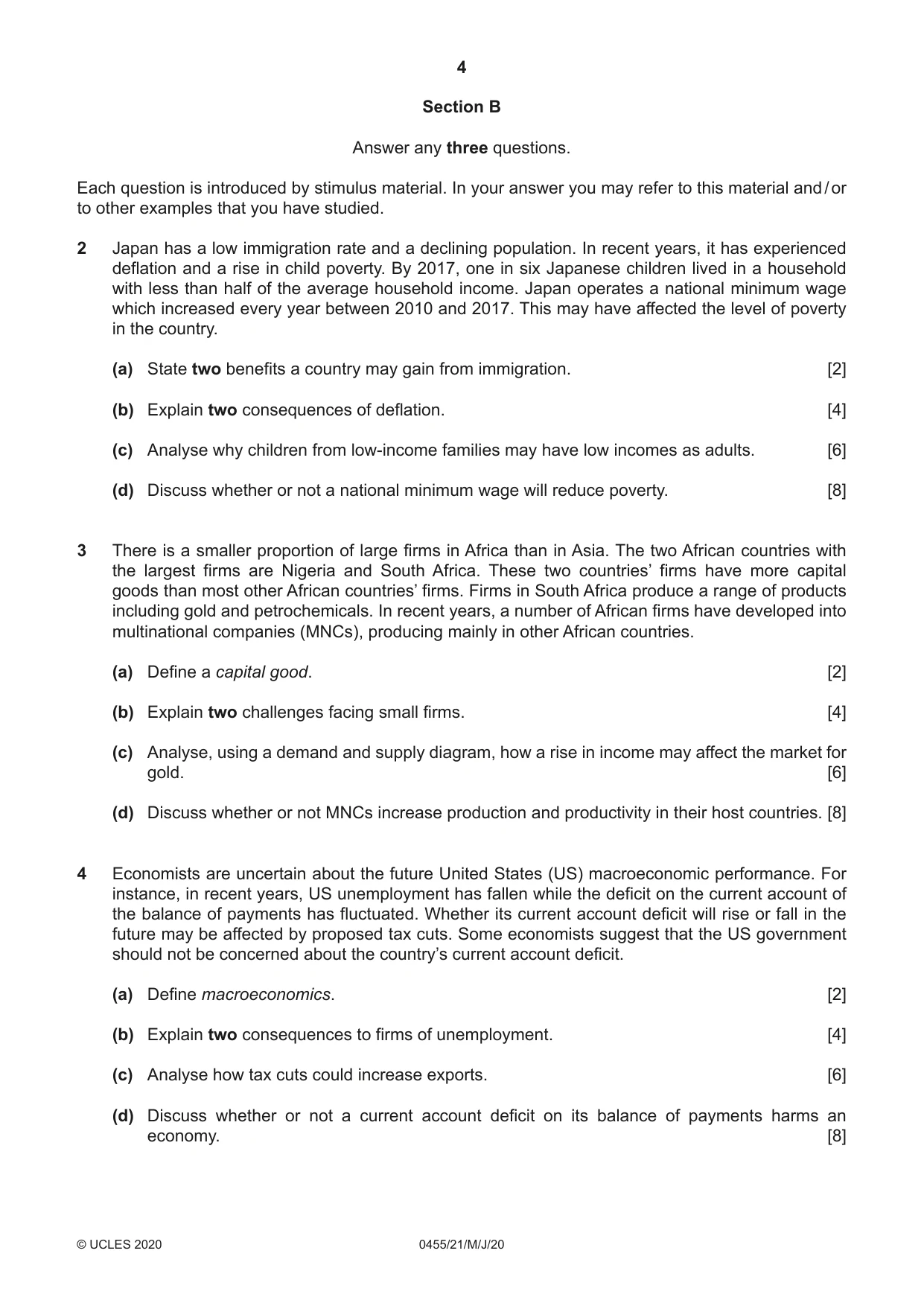
2 Japan has a low immigration rate and a declining population. In recent years, it has experienced deflation and a rise in child poverty. By 2017, one in six Japanese children lived in a household with less than half of the average household income. Japan operates a national minimum wage which increased every year between 2010 and 2017. This may have affected the level of poverty in the country. (a) State two benefits a country may gain from immigration. [2] (b) Explain two consequences of deflation. [4] (c) Analyse why children from low-income families may have low incomes as adults. [6] (d) Discuss whether or not a national minimum wage will reduce poverty. [8]
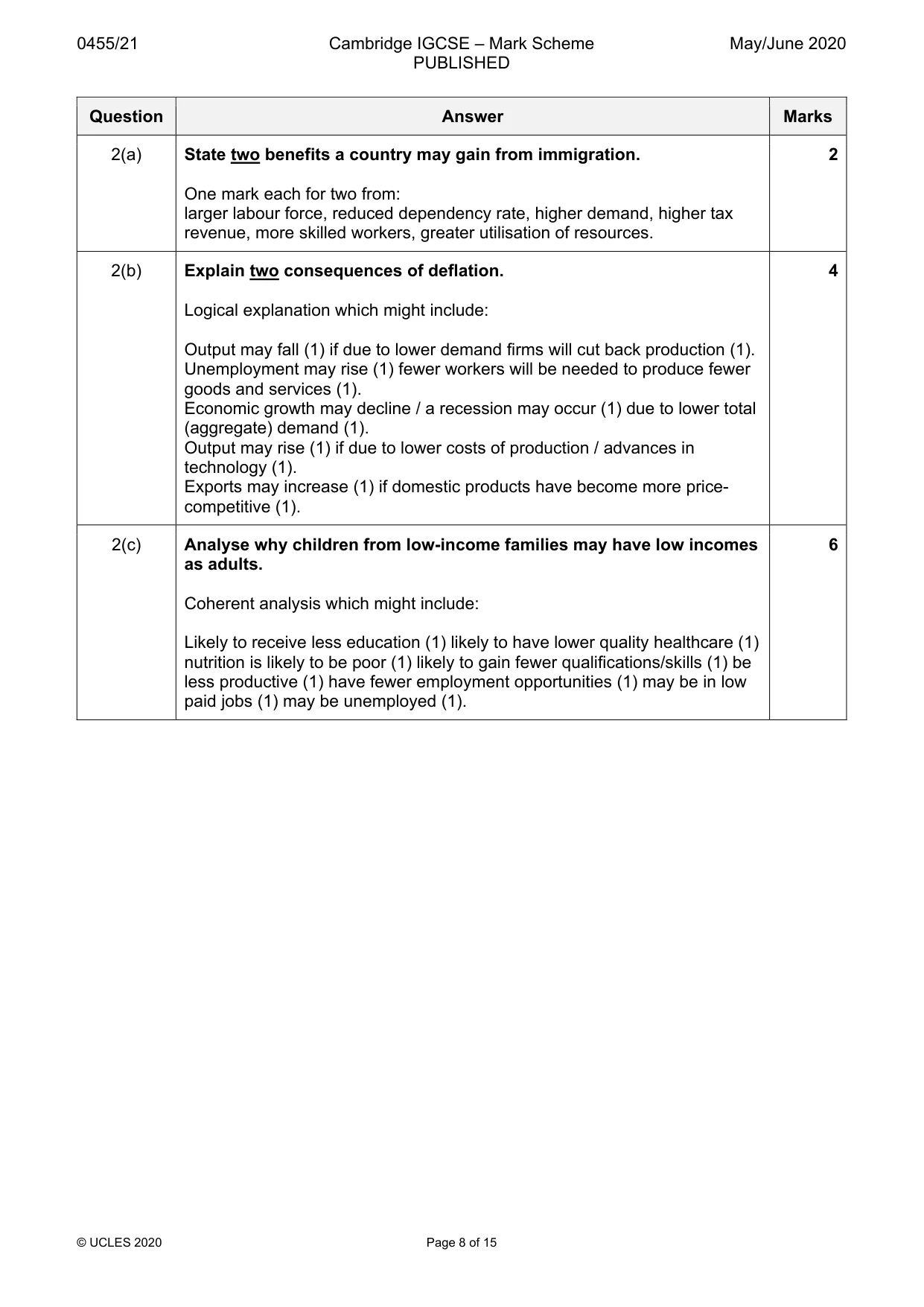
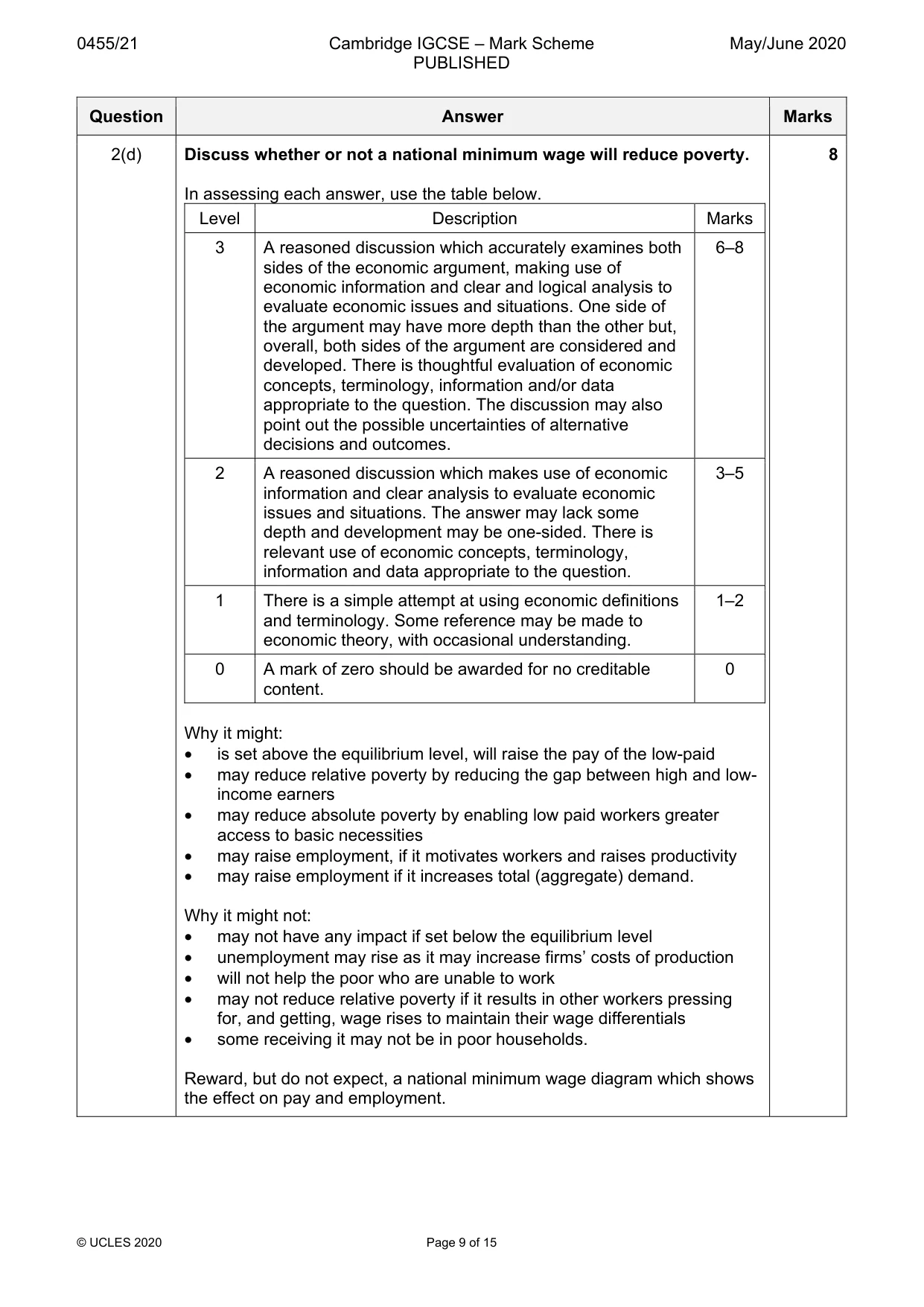
Mark scheme: 2(a) State two benefits a country may gain from immigration. 2 One mark each for two from: larger labour force, reduced dependency rate, higher demand, higher tax revenue, more skilled workers, greater utilisation of resources. 2(b) Explain two consequences of deflation. 4 Logical explanation which might include: Output may fall (1) if due to lower demand firms will cut back production (1). Unemployment may rise (1) fewer workers will be needed to produce fewer goods and services (1). Economic growth may decline / a recession may occur (1) due to lower total (aggregate) demand (1). Output may rise (1) if due to lower costs of production / advances in technology (1). Exports may increase (1) if domestic products have become more price- competitive (1). 2(c) Analyse why children from low-income families may have low incomes 6 as adults. Coherent analysis which might include: Likely to receive less education (1) likely to have lower quality healthcare (1) nutrition is likely to be poor (1) likely to gain fewer qualifications/skills (1) be less productive (1) have fewer employment opportunities (1) may be in low paid jobs (1) may be unemployed (1). 2(d) Discuss whether or not a national minimum wage will reduce poverty. 8 In assessing each answer, use the table below. Level Description Marks 3 A reasoned discussion which accurately examines both 6–8 sides of the economic argument, making use of economic information and clear and logical analysis to evaluate economic issues and situations. One side of the argument may have more depth than the other but, overall, both sides of the argument are considered and developed. There is thoughtful evaluation of economic concepts, terminology, information and/or data appropriate to the question. The discussion may also point out the possible uncertainties of alternative decisions and outcomes. 2 A reasoned discussion which makes use of economic 3–5 information and clear analysis to evaluate economic issues and situations. The answer may lack some depth and development may be one-sided. There is relevant use of economic concepts, terminology, information and data appropriate to the question. 1 There is a simple attempt at using economic definitions 1–2 and terminology. Some reference may be made to economic theory, with occasional understanding. 0 A mark of zero should be awarded for no creditable 0 content. Why it might: • is set above the equilibrium level, will raise the pay of the low-paid • may reduce relative poverty by reducing the gap between high and low- income earners • may reduce absolute poverty by enabling low paid workers greater access to basic necessities • may raise employment, if it motivates workers and raises productivity • may raise employment if it increases total (aggregate) demand. Why it might not: • may not have any impact if set below the equilibrium level • unemployment may rise as it may increase firms’ costs of production • will not help the poor who are unable to work • may not reduce relative poverty if it results in other workers pressing for, and getting, wage rises to maintain their wage differentials • some receiving it may not be in poor households. Reward, but do not expect, a national minimum wage diagram which shows the effect on pay and employment.
Q3 · There is a smaller proportion of large firms in Africa than in Asia
3 There is a smaller proportion of large firms in Africa than in Asia. The two African countries with the largest firms are Nigeria and South Africa. These two countries’ firms have more capital goods than most other African countries’ firms. Firms in South Africa produce a range of products including gold and petrochemicals. In recent years, a number of African firms have developed into multinational companies (MNCs), producing mainly in other African countries. (a) Define a capital good. [2] (b) Explain two challenges facing small firms. [4] (c) Analyse, using a demand and supply diagram, how a rise in income may affect the market for gold. [6] (d) Discuss whether or not MNCs increase production and productivity in their host countries. [8]
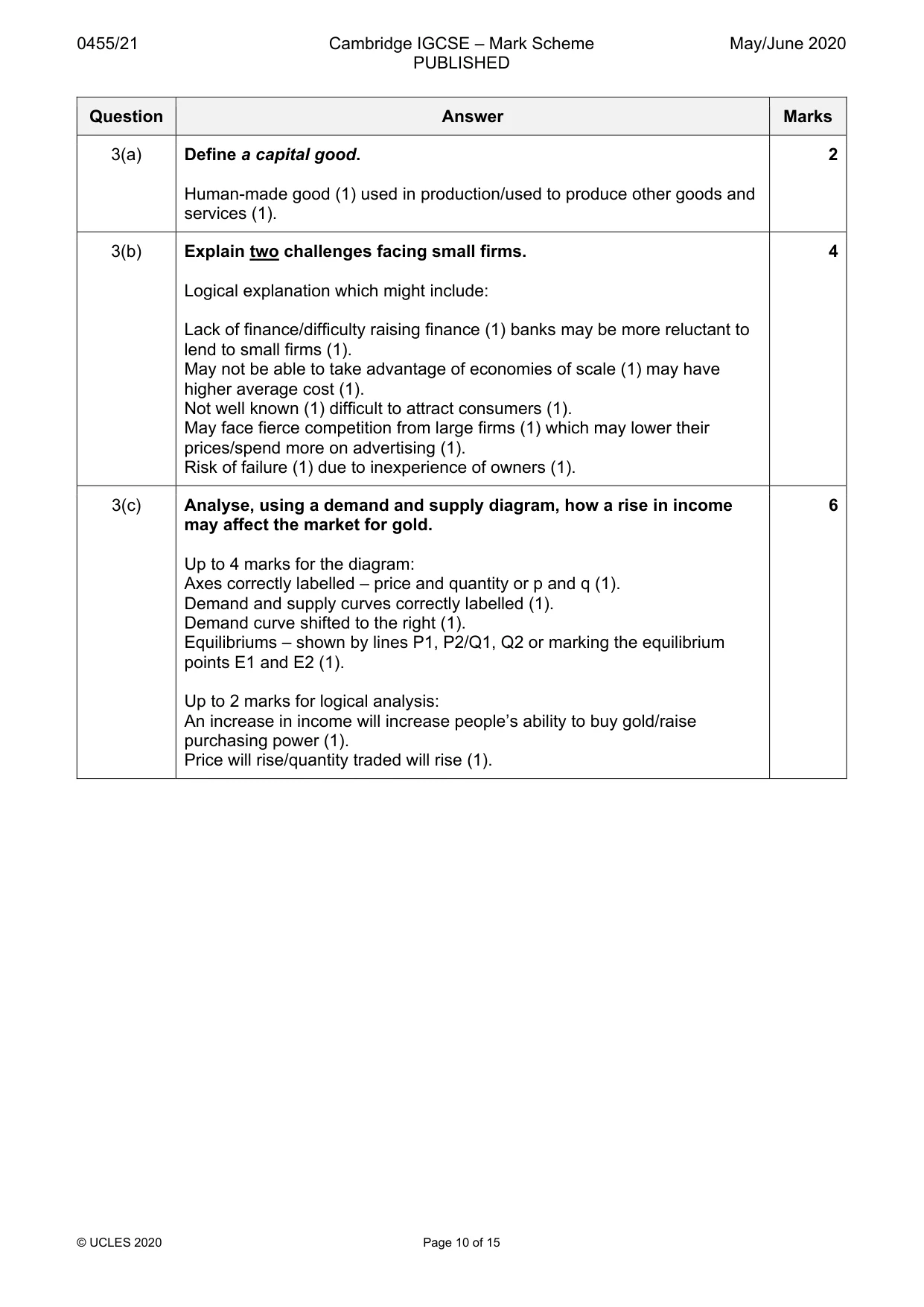
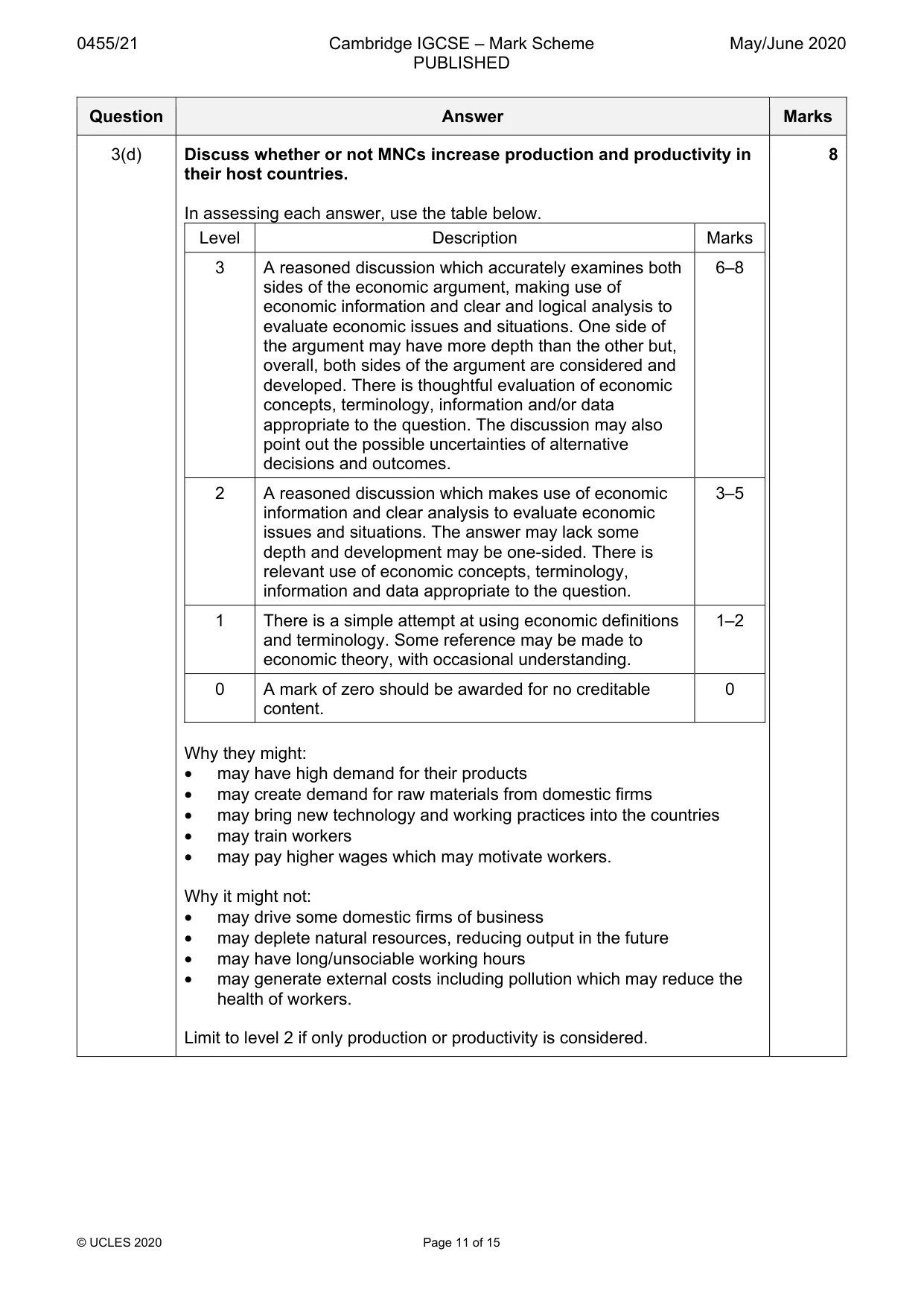
Mark scheme: 3(a) Define a capital good. 2 Human-made good (1) used in production/used to produce other goods and services (1). 3(b) Explain two challenges facing small firms. 4 Logical explanation which might include: Lack of finance/difficulty raising finance (1) banks may be more reluctant to lend to small firms (1). May not be able to take advantage of economies of scale (1) may have higher average cost (1). Not well known (1) difficult to attract consumers (1). May face fierce competition from large firms (1) which may lower their prices/spend more on advertising (1). Risk of failure (1) due to inexperience of owners (1). 3(c) Analyse, using a demand and supply diagram, how a rise in income 6 may affect the market for gold. Up to 4 marks for the diagram: Axes correctly labelled – price and quantity or p and q (1). Demand and supply curves correctly labelled (1). Demand curve shifted to the right (1). Equilibriums – shown by lines P1, P2/Q1, Q2 or marking the equilibrium points E1 and E2 (1). Up to 2 marks for logical analysis: An increase in income will increase people’s ability to buy gold/raise purchasing power (1). Price will rise/quantity traded will rise (1). 3(d) Discuss whether or not MNCs increase production and productivity in 8 their host countries. In assessing each answer, use the table below. Level Description Marks 3 A reasoned discussion which accurately examines both 6–8 sides of the economic argument, making use of economic information and clear and logical analysis to evaluate economic issues and situations. One side of the argument may have more depth than the other but, overall, both sides of the argument are considered and developed. There is thoughtful evaluation of economic concepts, terminology, information and/or data appropriate to the question. The discussion may also point out the possible uncertainties of alternative decisions and outcomes. 2 A reasoned discussion which makes use of economic 3–5 information and clear analysis to evaluate economic issues and situations. The answer may lack some depth and development may be one-sided. There is relevant use of economic concepts, terminology, information and data appropriate to the question. 1 There is a simple attempt at using economic definitions 1–2 and terminology. Some reference may be made to economic theory, with occasional understanding. 0 A mark of zero should be awarded for no creditable 0 content. Why they might: • may have high demand for their products • may create demand for raw materials from domestic firms • may bring new technology and working practices into the countries • may train workers • may pay higher wages which may motivate workers. Why it might not: • may drive some domestic firms of business • may deplete natural resources, reducing output in the future • may have long/unsociable working hours • may generate external costs including pollution which may reduce the health of workers. Limit to level 2 if only production or productivity is considered.
Q4 · Economists are uncertain about the future United States (US) macroeconomic performance
4 Economists are uncertain about the future United States (US) macroeconomic performance. For instance, in recent years, US unemployment has fallen while the deficit on the current account of the balance of payments has fluctuated. Whether its current account deficit will rise or fall in the future may be affected by proposed tax cuts. Some economists suggest that the US government should not be concerned about the country’s current account deficit. (a) Define macroeconomics. [2] (b) Explain two consequences to firms of unemployment. [4] (c) Analyse how tax cuts could increase exports. [6] (d) Discuss whether or not a current account deficit on its balance of payments harms an economy. [8]
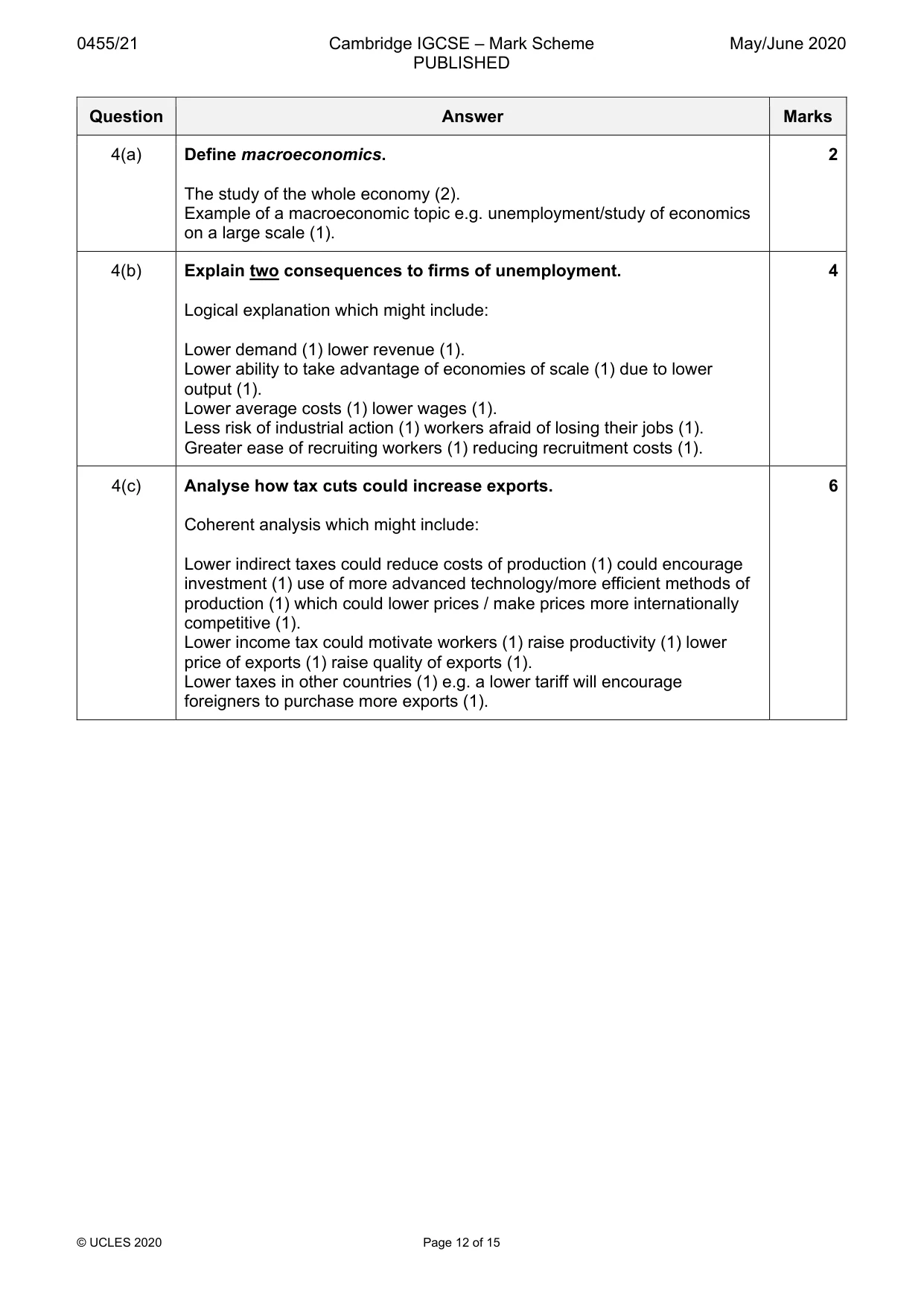
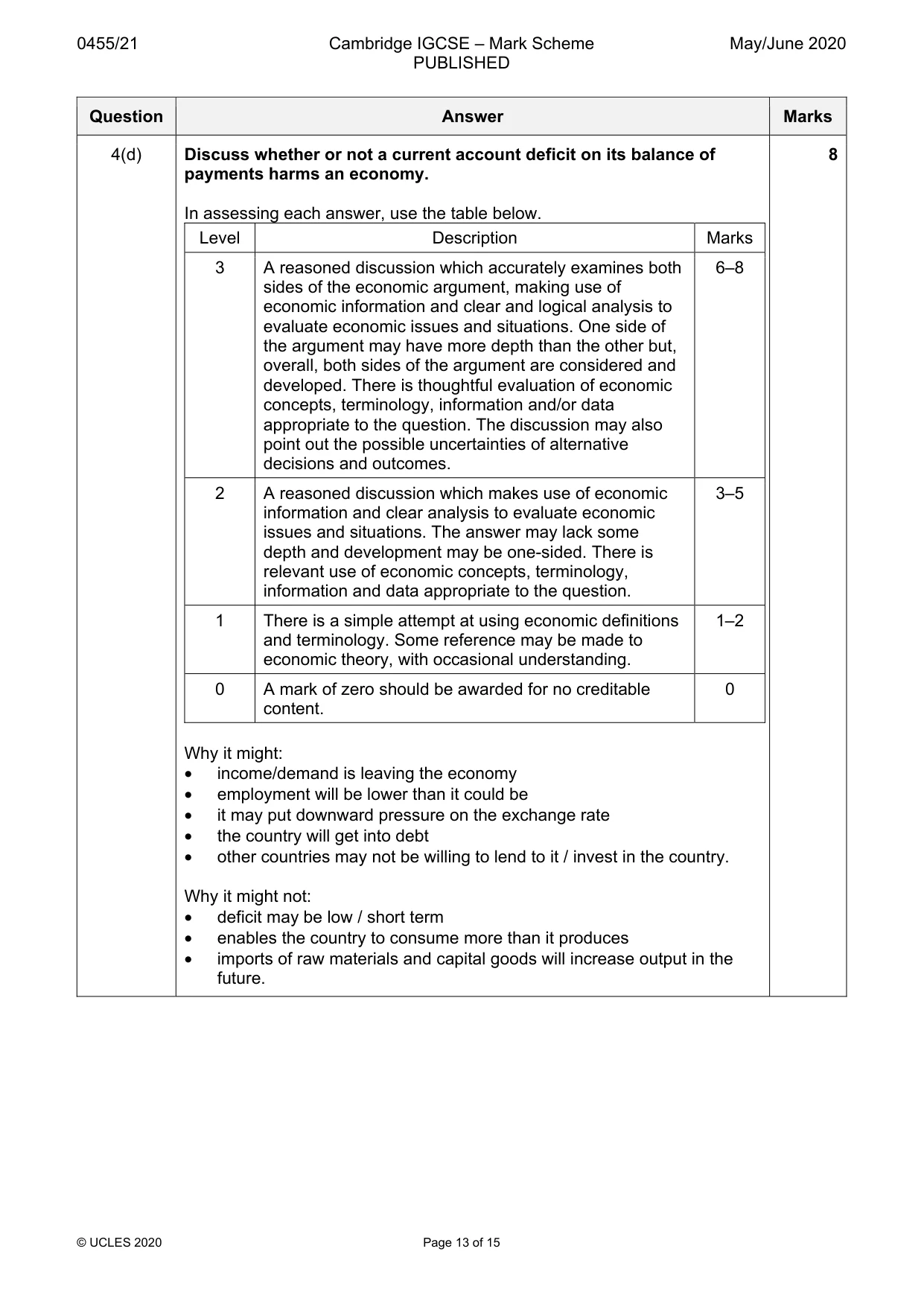
Mark scheme: 4(a) Define macroeconomics. 2 The study of the whole economy (2). Example of a macroeconomic topic e.g. unemployment/study of economics on a large scale (1). 4(b) Explain two consequences to firms of unemployment. 4 Logical explanation which might include: Lower demand (1) lower revenue (1). Lower ability to take advantage of economies of scale (1) due to lower output (1). Lower average costs (1) lower wages (1). Less risk of industrial action (1) workers afraid of losing their jobs (1). Greater ease of recruiting workers (1) reducing recruitment costs (1). 4(c) Analyse how tax cuts could increase exports. 6 Coherent analysis which might include: Lower indirect taxes could reduce costs of production (1) could encourage investment (1) use of more advanced technology/more efficient methods of production (1) which could lower prices / make prices more internationally competitive (1). Lower income tax could motivate workers (1) raise productivity (1) lower price of exports (1) raise quality of exports (1). Lower taxes in other countries (1) e.g. a lower tariff will encourage foreigners to purchase more exports (1). 4(d) Discuss whether or not a current account deficit on its balance of 8 payments harms an economy. In assessing each answer, use the table below. Level Description Marks 3 A reasoned discussion which accurately examines both 6–8 sides of the economic argument, making use of economic information and clear and logical analysis to evaluate economic issues and situations. One side of the argument may have more depth than the other but, overall, both sides of the argument are considered and developed. There is thoughtful evaluation of economic concepts, terminology, information and/or data appropriate to the question. The discussion may also point out the possible uncertainties of alternative decisions and outcomes. 2 A reasoned discussion which makes use of economic 3–5 information and clear analysis to evaluate economic issues and situations. The answer may lack some depth and development may be one-sided. There is relevant use of economic concepts, terminology, information and data appropriate to the question. 1 There is a simple attempt at using economic definitions 1–2 and terminology. Some reference may be made to economic theory, with occasional understanding. 0 A mark of zero should be awarded for no creditable 0 content. Why it might: • income/demand is leaving the economy • employment will be lower than it could be • it may put downward pressure on the exchange rate • the country will get into debt • other countries may not be willing to lend to it / invest in the country. Why it might not: • deficit may be low / short term • enables the country to consume more than it produces • imports of raw materials and capital goods will increase output in the future.
Q5 · Australian firms have been praised for introducing new technology
5 Australian firms have been praised for introducing new technology. The actions of some of these firms, however, cause market failure. The Australian government uses subsidies, among other policies, to reduce market failure. Government spending is used both to improve the performance of individual markets and the macroeconomy. The Australian government increased its spending in 2017, in part to reduce unemployment. (a) State two objectives of firms. [2] (b) Explain how a subsidy can correct market failure. [4] (c) Analyse, using a production possibility curve (PPC) diagram, the effect of advances in technology on an economy. [6] (d) Discuss whether or not an increase in government spending will reduce unemployment. [8]
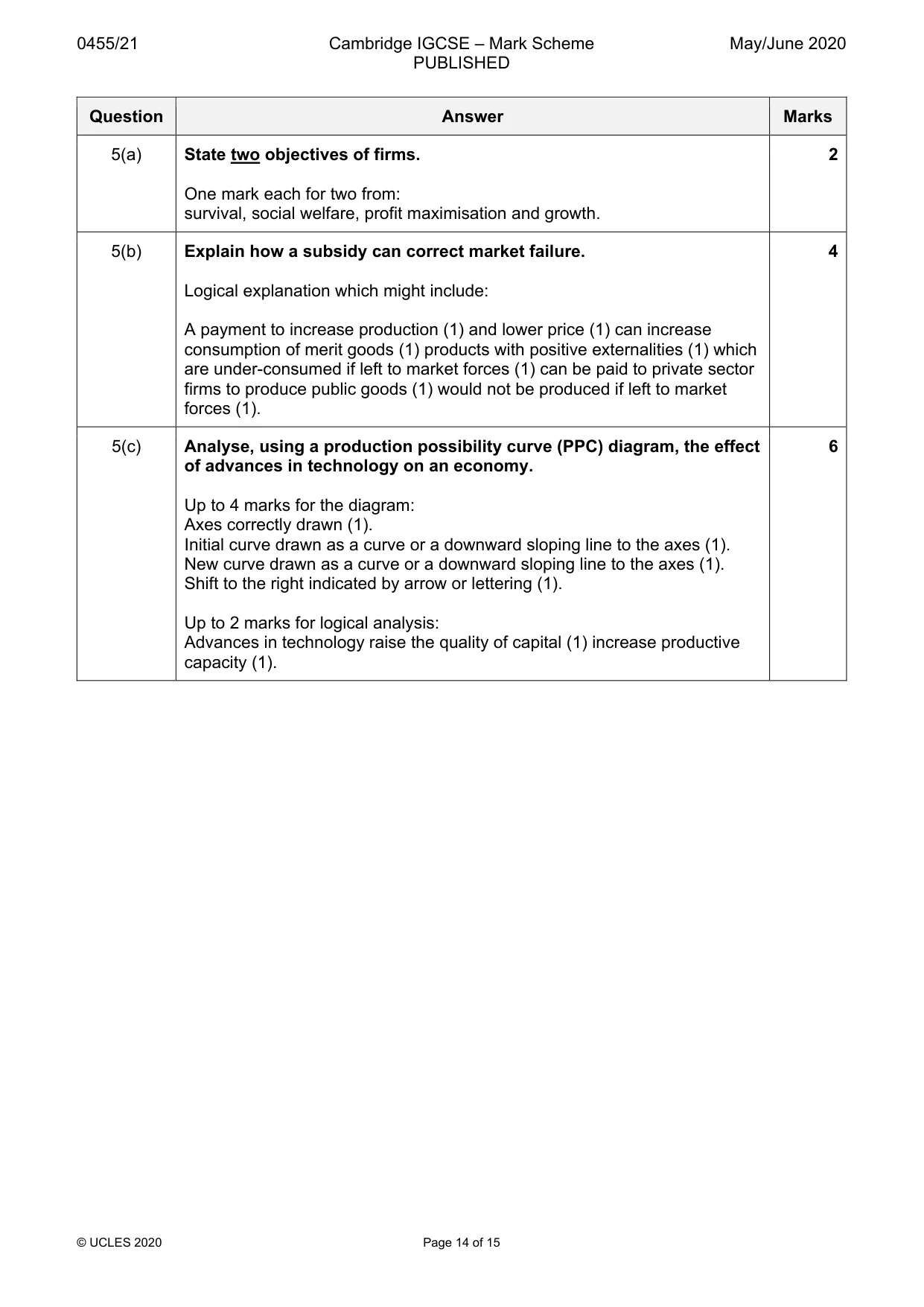
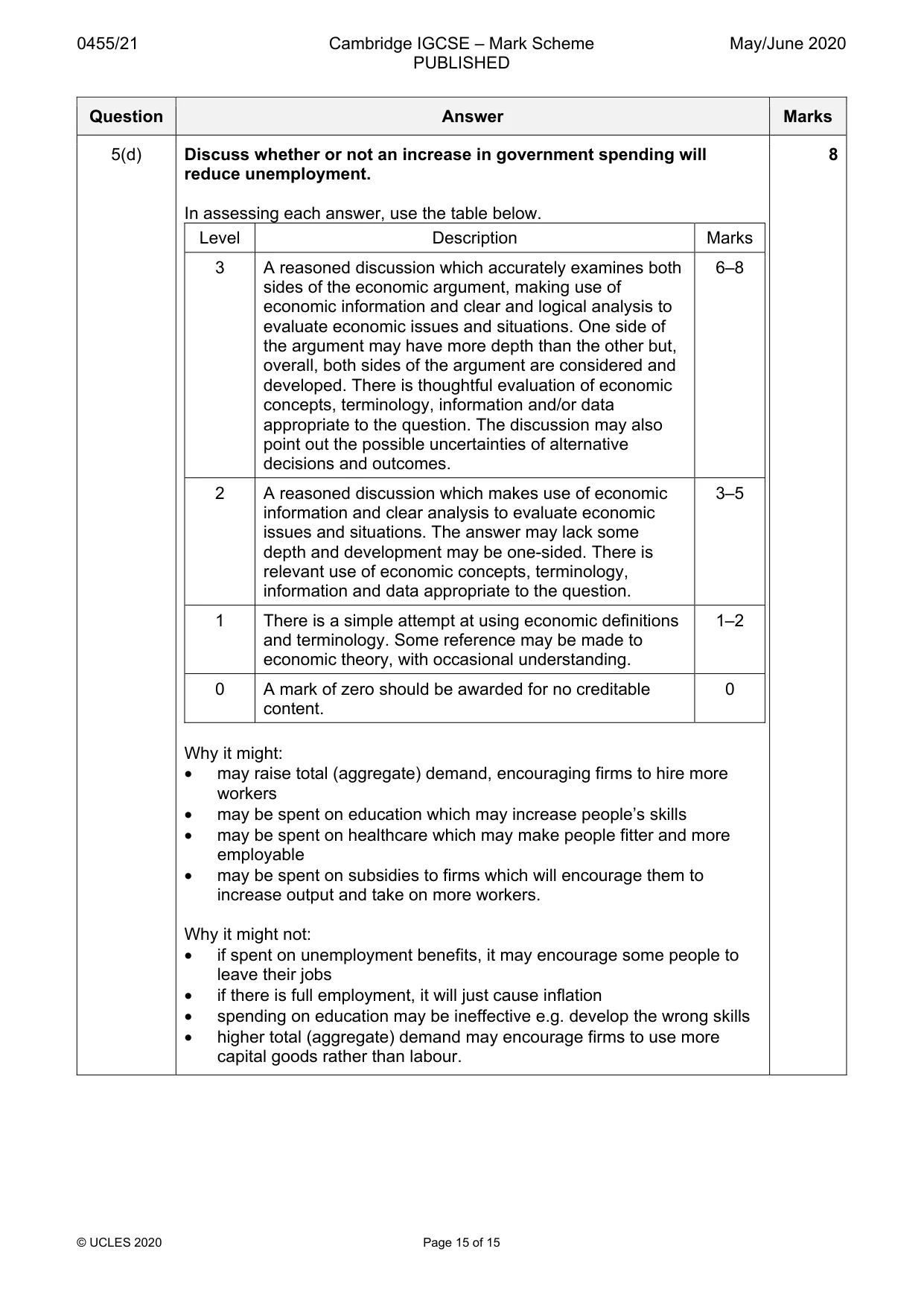
Mark scheme: 5(a) State two objectives of firms. 2 One mark each for two from: survival, social welfare, profit maximisation and growth. 5(b) Explain how a subsidy can correct market failure. 4 Logical explanation which might include: A payment to increase production (1) and lower price (1) can increase consumption of merit goods (1) products with positive externalities (1) which are under-consumed if left to market forces (1) can be paid to private sector firms to produce public goods (1) would not be produced if left to market forces (1). 5(c) Analyse, using a production possibility curve (PPC) diagram, the effect 6 of advances in technology on an economy. Up to 4 marks for the diagram: Axes correctly drawn (1). Initial curve drawn as a curve or a downward sloping line to the axes (1). New curve drawn as a curve or a downward sloping line to the axes (1). Shift to the right indicated by arrow or lettering (1). Up to 2 marks for logical analysis: Advances in technology raise the quality of capital (1) increase productive capacity (1). 5(d) Discuss whether or not an increase in government spending will 8 reduce unemployment. In assessing each answer, use the table below. Level Description Marks 3 A reasoned discussion which accurately examines both 6–8 sides of the economic argument, making use of economic information and clear and logical analysis to evaluate economic issues and situations. One side of the argument may have more depth than the other but, overall, both sides of the argument are considered and developed. There is thoughtful evaluation of economic concepts, terminology, information and/or data appropriate to the question. The discussion may also point out the possible uncertainties of alternative decisions and outcomes. 2 A reasoned discussion which makes use of economic 3–5 information and clear analysis to evaluate economic issues and situations. The answer may lack some depth and development may be one-sided. There is relevant use of economic concepts, terminology, information and data appropriate to the question. 1 There is a simple attempt at using economic definitions 1–2 and terminology. Some reference may be made to economic theory, with occasional understanding. 0 A mark of zero should be awarded for no creditable 0 content. Why it might: • may raise total (aggregate) demand, encouraging firms to hire more workers • may be spent on education which may increase people’s skills • may be spent on healthcare which may make people fitter and more employable • may be spent on subsidies to firms which will encourage them to increase output and take on more workers. Why it might not: • if spent on unemployment benefits, it may encourage some people to leave their jobs • if there is full employment, it will just cause inflation • spending on education may be ineffective e.g. develop the wrong skills • higher total (aggregate) demand may encourage firms to use more capital goods rather than labour.
What was in this paper
The subtopics covered by these 5 questions, and how many questions each got. Open one in a new tab to see every Cambridge question on it.