Questions as text
Q1 · −tan2x 3 Prove the identity ≡1 −2 sin2x 9709/11 May/June 2007
1 −tan2x 3 Prove the identity ≡1 −2 sin2x. [4] 1 + tan2x
4 marks
Mark scheme: 3 Use of t=s/c M1 tan completely removed → (c²−s²) ÷ (c²+s²) A1 May omit the denominator (=1) Use of c²+s²=1 M1 Whenever used appropriately → (c²−s²) → 1 − 2sin²x A1 ag Beware fortuitous answers [4]
This question in 9709/11 May/June 2007
Q2 · In the diagram, OAB is a sector of a circle with centre O and radius 12 cm 9709/11 May/June 2007
5 In the diagram, OAB is a sector of a circle with centre O and radius 12 cm. The lines AX and BX are tangents to the circle at A and B respectively. Angle AOB = 13π radians. (i) Find the exact length of AX, giving your answer in terms of √3. [2] (ii) Find the area of the shaded region, giving your answer in terms of π and √3. [3]
5 marks
Mark scheme: 5 (i) tan 16 π =AX÷12 or other valid method M1 Use of trig with tangent in correct ∆ tan 16 π =√3÷3 → AX = 4√3 A1 Co (12 ÷ √3 ok) [2] (ii) area AOC = ½r²θ (= 24π) M1 Correct formula + attempt with radians Area of ∆AOX = ½ × AX×12 M1 Use of ½bh in correct ∆ (once ok) → shaded area = 48√3 − 24π A1 co (144 ÷ √3 ok) [3]
This question in 9709/11 May/June 2007
Q3 · In the triangle ABC, AB = 12 cm, angle BAC = 60◦and angle ACB = 45◦ 9709/11 May/June 2008
1 In the triangle ABC, AB = 12 cm, angle BAC = 60◦and angle ACB = 45◦. Find the exact length of BC. [3]
3 marks
Mark scheme: 3 1 sin 60 = and sin 45 = B1 Both of these correct
This question in 9709/11 May/June 2008
Q4 · Show that the equation 2 tan2 θ cos θ = 3 can be written in the form 2 cos2 θ + 3 cos θ… 9709/11 May/June 2008
2 (i) Show that the equation 2 tan2 θ cos θ = 3 can be written in the form 2 cos2 θ + 3 cos θ −2 = 0. [2] (ii) Hence solve the equation 2 tan2 θ cos θ = 3, for 0◦≤θ ≤360◦. [3]
5 marks
Mark scheme: 2 2 A1 Co m st be in s rd form
This question in 9709/11 May/June 2008
Q5 · Sin x sin x 1 Prove the identity − ≡2 tan2x 9709/11 May/June 2009
sin x sin x 1 Prove the identity − ≡2 tan2x. [3] 1 −sin x 1 + sin x
3 marks
Mark scheme: s s 2 s 1 − = 2 B1 Correct algebra 1 − s 1 + s 1 − s Use of 1 − s² = c² M1 Use of this formula. 2 s 2 → 2 A1 Evidence of tan=sin/cos and everything c [3] completed accurately. → 2t 2
This question in 9709/11 May/June 2009
Q6 · Y 9 3 x O p 2p –3 The diagram shows the graph of y = a sin(bx) + c for 0 ≤x ≤2π 9709/11 May/June 2009
4 y 9 3 x O p 2p –3 The diagram shows the graph of y = a sin(bx) + c for 0 ≤x ≤2π. (i) Find the values of a, b and c. [3] (ii) Find the smallest value of x in the interval 0 ≤x ≤2π for which y = 0. [3]
6 marks
Mark scheme: 4 (i) a = 6 B1 co b = 2 B1 co c = 3 B1 co [3] (ii) 6sin2x + 3 = 0 M1 Setting to 0 and attempt at making sinbx the → sin2x = −½ subject. Works with “2x” first M1 Must be evidence of ÷b 7π x = or 1.83. A1 Co (radians only) 12 [3]
This question in 9709/11 May/June 2009
Q7 · Prove the identity (sin x + cos x)(1 −sin x cos x) ≡sin3x + cos3x 9709/12 Oct/Nov 2009
5 (i) Prove the identity (sin x + cos x)(1 −sin x cos x) ≡sin3x + cos3x. [3] (ii) Solve the equation (sin x + cos x)(1 −sin x cos x) = 9 sin3x for 0◦≤x ≤360◦. [3]
6 marks
Mark scheme: 5 (i) (sin x + cos x)(1 – sin x cos x) = sin x + cos x – sin2 x cos x – cos2 x sin x M1 Needs 4 terms from the product. sin2 x = 1 – cos2 x and cos2 x = 1 – sin2 x M1 Needs to be used once. → sin3 x + cos3 x A1 All ok. [3] (ii) (sin x + cos x)(1 – sin x cos x) = 9 sin3 x Uses part (i) → 8 sin3 x = cos3 x → tan3 x = 1 → tan x = ½ M1 Uses tan x = sin x ÷ cos x → tan3x = k. 8 → x = 26.6º and 206.6º A1 B1√ Co. √ for 180º + first answer and providing [3] there are no other answers in range.
This question in 9709/12 Oct/Nov 2009
Q8 · C1 P 8 cm T C2 Q 2 cm R S The diagram shows two circles, C1 and C2, touching at the point… 9709/11 Oct/Nov 2010
9 C1 P 8 cm T C2 Q 2 cm R S The diagram shows two circles, C1 and C2, touching at the point T. Circle C1 has centre P and radius 8 cm; circle C2 has centre Q and radius 2 cm. Points R and S lie on C1 and C2 respectively, and RS is a tangent to both circles. (i) Show that RS 8 cm. [2] = (ii) Find angle RPQ in radians correct to 4 significant figures. [2] (iii) Find the area of the shaded region. [4]
8 marks
Mark scheme: 9 (i) RS² = 10² – 6² M1 Use of Pythagoras (or other) → RS = 8 cm. A1 Answer given. [2] (ii) sin θ = 8/10 oe M1 Use of trig – even if with degrees. → angle RPQ = 0.9273 radians A1 co in radians. (Accept 0.927) [2] (iii) Region = trapezium − 2 sectors Area of trapezium = 40 cm² B1 co 1 1 Large sector = × 8² × 0.9273 M1 Use of r²θ. 2 2 Small sector angle = (π − 0.9273) 1 1 Small sector = × 2² × 2.214 M1 Use of r²θ with angle = π − (ii) 2 2 → 5.90 cm2 A1 [4] co 2
This question in 9709/11 Oct/Nov 2010
Q9 · Prove the identity tan2x −sin2x ≡tan2x sin2x 9709/12 Oct/Nov 2010
2 Prove the identity tan2x −sin2x ≡tan2x sin2x. [4]
4 marks
Mark scheme: 2 LHS = sin2x/cos2x – sin2x M1 Replace t² by s²/c² or sec² − 1 sin2x(1 – cos2x)/cos2x M1 Use of 1 – cos2x = sin2x sin 2 x sin 2 x oe M1 Valid overall method cos 2 x tan2xsin2x A1 AG sin 2 x 2 OR RHS = . sin x M1 Replace t² by s²/c² 2 cos x sin2x(1 – cos2x)/cos2x M1 Use of 1 – cos2x = sin2x (sin2x/cos2x) – sin2x M1 Valid overall method tan2x – sin2x A1 AG [4] 1/2
This question in 9709/12 Oct/Nov 2010
Q10 · Solve the equation 15 sin2x = 13 + cos x for 0◦≤x ≤180◦ 9709/13 Oct/Nov 2010
3 Solve the equation 15 sin2x = 13 + cos x for 0◦≤x ≤180◦. [4]
4 marks
Mark scheme: 3 15cos2x + cosx – 2 = 0 M1 1 – cos2x = sin2x & attempt simplify (5cosx + 2)(3cosx – 1) = 0 M1 Attempt to solve 3-term quadratic for cosx 113(.6), 70.5 A1A1 SC 1.98, 1.23 scores 1/2 [4]
This question in 9709/13 Oct/Nov 2010
Q11 · Sketch the curve y = 2 sin x for 0 ≤x ≤2π 9709/13 Oct/Nov 2010
4 (i) Sketch the curve y = 2 sin x for 0 ≤x ≤2π. [1] (ii) By adding a suitable straight line to your sketch, determine the number of real roots of the equation 2π sin x = π −x. State the equation of the straight line. [3]
4 marks
Mark scheme: 4 (i) Correct sine curve B1 2 shown or implied [1] x (ii) Required line y = 1 – B1 π Line through (0, 1), (π, 0) drawn B1 SC B1 for correct graphs without 1 or 2 marked 3 roots B1√ ft on trig curve and line [3] dy − 1
This question in 9709/13 Oct/Nov 2010
Q12 · B A C O The diagram shows triangle OAB, in which the position vectors of A and B with… 9709/13 Oct/Nov 2010
10 B A C O The diagram shows triangle OAB, in which the position vectors of A and B with respect to O are given by −−→ −−→ OA = 2i + j −3k and OB = −3i + 2j −4k. −−→ C is a point on OA such that OC = p−−→OA, where p is a constant. (i) Find angle AOB. [4] −−→ (ii) Find BC in terms of p and vectors i, j and k. [1] (iii) Find the value of p given that BC is perpendicular to OA. [4]
9 marks
Mark scheme: 10 (i) OA.OB = –6 + 2 + 12 = 8 M1 Use of x1x2 + y1y2 + z1z2 8 cos AOB = M1 Mod worked correctly for either one 14 29 M1 Division of “8” by product of mods AOB = 66.6° A1 [4] (ii) 3i – 2j + 4k + p(2i + j – 3k) B1 In any unsimplified form [1] (iii) BC = i(3 + 2p) + j(–2 + p) + k(4 – 3p) M1 Their BC .[2i + j – 3k] = 0 M1 Scalar product = 0 used 2(3 + 2p) + (p – 2) – 3(4 – 3p) = 0 A1√ ft from their BC p = 4/7 0.571 A1 cao [4] 3 8
This question in 9709/13 Oct/Nov 2010
Q13 · Show that the equation 2 tan2θ sin2θ = 1 can be written in the form 2 sin4θ + sin2θ −1 = 0 9709/11 May/June 2011
5 (i) Show that the equation 2 tan2θ sin2θ = 1 can be written in the form 2 sin4θ + sin2θ −1 = 0. [2] (ii) Hence solve the equation 2 tan2θ sin2θ = 1 for 0◦≤θ ≤360◦. [4]
6 marks
Mark scheme: 2 sin θ sin θ M1 Equation as function of sin θ5 (i) = 1 1 − sin 2 θ 2 sin 4 θ + sin 2 θ − 1 = 0 AG A1 [2] (ii) ( 2 sin 2 θ − 1)(sin 2 θ + )1 = 0 M1 Or use formula on quadratic in sin2 θ ( ± 1) sin θ = A1 2 θ = 45°, 135° A1 θ = 225°, 315° A1 Provided no excess solutions in range [4] ( z −x3 ) B1 600
This question in 9709/11 May/June 2011
Q14 · Cos θ 1 5 (i) Prove the identity 9709/12 May/June 2011
cos θ 1 5 (i) Prove the identity . [3] tan sin θ ≡1 + θ(1 −sin θ) cos θ (ii) Hence solve the equation 4, for [3] tan = 0◦≤θ ≤360◦. θ(1 −sin θ)
6 marks
Mark scheme: cos θ cos θ 5 (i) ≡ M1 Use of t = s ÷ c tan θ 1( − sin θ ) sin θ 1( − sin θ ) 1 − sin 2 θ = M1 Replaces cos²θ with 1 − sin²θ to form sin θ 1( − sin θ ) f(sinθ). 1+ sin θ 1 = = + 1 A1 AG. Ensure all ok. Must show difference of sin θ sin θ [3] 2 squares. cos θ 1 (ii) = 4 → + 1 = 4 M1 Linking up to obtain sinθ = k. tan θ 1( − sin θ ) sin θ → sinθ = ⅓ → θ = 19.5º, 160.5º A1 A1√ co. √ 180º − 1st answer providing there are [3] no other solutions in the range 0º to 360º. x + 3
This question in 9709/12 May/June 2011
Q15 · Sketch, on a single diagram, the graphs of y cos 2θ and y 1 for 0 [3] 2 = = ≤θ ≤2π 9709/11 Oct/Nov 2011
3 (i) Sketch, on a single diagram, the graphs of y cos 2θ and y 1 for 0 [3] 2 = = ≤θ ≤2π. (ii) Write down the number of roots of the equation 2 cos 2θ −1 = 0 in the interval 0 ≤θ ≤2π. [1] (iii) Deduce the number of roots of the equation 2 cos 2θ −1 = 0 in the interval 10π ≤θ ≤20π. [1]
5 marks
Mark scheme: (3 x − 2 ) 2 ≥ 0 A1 [3] 3 (i) Correct cosine curve for at least 1 Range − 1 → 1 . Ignore labels on B1 oscillation θ axis Exactly 2 complete oscillations in[2,0π ] B1 1 Line y = correct B1 [3] 2 (ii) 4 Ft their graph. Accept 30 ° , 150 ° , B1√ [1] 210 ° , 330 ° (iii) 20 B1√ [1] Or 5 × their part (ii) 4 (i) 3 B1 [1] (ii) f ( x ) = x 2 − 6 x (+ c ) M1A1 Dependent on c present Subst (,3 −4 ) M1 cao c = 5 → f ( x ) = x 2 − 6 x + 5 A1 [4] 5 (i) Arc AB = r θ M1 θ OC = r sin θ or BC = r cos θ M1 oe eg BC = r sin etc tan θ r (1 + θ + cos θ + sin θ ) A1 [3] OC & BC reversed loses M1A1 correctly derived 1 2 π (ii) Sector OAB = × 10 × (= 31 .42 ) M1 oe ∆ in terms of π and 10 2 5 1 ∆OCB = π π Allow OC & BC reversed 2 10 cos 10 sin M1 5 5 (ie max 4/6) (= 23.78 ) Total area = 55 2. A1 [3] 6 (a) a + 5 d = 23 B1 Solution of 2 linear equations ( )
This question in 9709/11 Oct/Nov 2011
Q16 · Sketch, on the same diagram, the graphs of y = sin x and y = cos 2x for 0◦≤x ≤180◦ 9709/12 Oct/Nov 2011
5 (i) Sketch, on the same diagram, the graphs of y = sin x and y = cos 2x for 0◦≤x ≤180◦. [3] (ii) Verify that x = 30◦is a root of the equation sin x = cos 2x, and state the other root of this equation for which 0◦≤x ≤180◦. [2] (iii) Hence state the set of values of x, for 0◦≤x ≤180◦, for which sin x < cos 2x. [2]
7 marks
Mark scheme: 5 (i) B1 y = sinx (0,0). (π,0) + curve B1 y = cos2x One full cycle. B1 y = cos2x starts and finishes at (0, 1) and oscillates between −1 and +1. [3] Do not penalise graphs from 0 to 360. B1 co (ii) Evidence of sin 30 = cos 60 = 0.5 B1 co Other root is 150º [2] (iii) 0 ≤ x < 30 and 150 < x ≤ 180 B1 B1√ Condone < or ≤ throughout (x < 30 or x > 150 ok) [2] √ B1 N d √3 2 j 3√3
This question in 9709/12 Oct/Nov 2011
Q17 · C2 D E C1 6 cm 10 cm 3p1 q A B X The diagram shows a circle C1 touching a circle C2 at a… 9709/12 Oct/Nov 2011
6 C2 D E C1 6 cm 10 cm 3p1 q A B X The diagram shows a circle C1 touching a circle C2 at a point X. Circle C1 has centre A and radius 6 cm, and circle C2 has centre B and radius 10 cm. Points D and E lie on C1 and C2 respectively and DE is parallel to AB. Angle DAX = 13π radians and angle EBX = θ radians. (i) By considering the perpendicular distances of D and E from AB, show that the exact value of θ 3 √3 is sin−1 . [3] 10 (ii) Find the perimeter of the shaded region, correct to 4 significant figures. [5]
8 marks
Mark scheme: 6 (i) D to AX = 6 sin π3 = 6√3÷2 B1 co Needs –√3÷2 not just 3√3. E to AX = 10sinθ B1 co Correct method. ag. 3 3 B1 Use of decimals loses this B mark. . Equate these → θ = sin −1 10 [3] (ii) Arc DX = 6.⅓π = 2π B1 co Arc EX = 10×0.5464 =5.464 M1 Use of s=rθ radians. Horizontal steps = 6cos⅓π and 10cosθ M1 Attempt at both steps needed DE = 10 + 6 − 6cos⅓π − 10cosθ M1 Full method for DE. Perimeter = arc DX + arc BX + DE → 16.20 A1 Co – must be exactly 16.20, not more or [5] less places. dy 8
This question in 9709/12 Oct/Nov 2011
Q18 · D 10 cm C P 10 cm Q 0.8 rad A 10 cm B In the diagram, ABCD is a parallelogram with AB =… 9709/13 Oct/Nov 2011
4 D 10 cm C P 10 cm Q 0.8 rad A 10 cm B In the diagram, ABCD is a parallelogram with AB = BD = DC = 10 cm and angle ABD = 0.8 radians. APD and BQC are arcs of circles with centres B and D respectively. (i) Find the area of the parallelogram ABCD. [2] (ii) Find the area of the complete figure ABQCDP. [2] (iii) Find the perimeter of the complete figure ABQCDP. [2]
6 marks
Mark scheme: 4 (i) 102 sin 0.8 = 71.7 M1A1 Completely correct method for a [2] triangle (ii) sector(s) = (2) × 12 × 102 × 0.8 = (2) × 40 M1 Correct formula used for a sector Total area = 80 A1 [2] (iii) arc(s) = (2) × 10 × 0.8 16+20 = 36 M1 Correct formula used for an arc A1 [2] 2 2 2
This question in 9709/13 Oct/Nov 2011
Q19 · Given that 3 sin2x −8 cos x −7 = 0, show that, for real values of x, cos x = −23 9709/13 Oct/Nov 2011
5 (i) Given that 3 sin2x −8 cos x −7 = 0, show that, for real values of x, cos x = −23. [3] (ii) Hence solve the equation 3 sin2(θ + 70◦) −8 cos(θ + 70◦) −7 = 0 for 0◦≤θ ≤180◦. [4]
7 marks
Mark scheme: 5 (i) 3cos2x + 8cosx + 4 = 0 M1 Use of c2 + s2 = 1 (3cosx + 2)(cosx + 2) = 0 M1 Factorising, formula or completing the square needed 2 A1 AG Ignore cosx = –2 also offered cosx = − 3 [3] SC B1 if –2/3 and –2 seen 2 (ii) cos(θ + 70) = − , θ = 61.8 3 M1 A1 θ + 70 = 131.8 (or 228.2) θ = 158.2 M1 A1 [4] GCE AS/A LEVEL – October/November 2011 9709 13 f
This question in 9709/13 Oct/Nov 2011
Q20 · Solve the equation sin 2x 2 cos 2x, for [4] = 0◦≤x ≤180◦ 9709/11 May/June 2012
1 Solve the equation sin 2x 2 cos 2x, for [4] = 0◦≤x ≤180◦.
4 marks
Mark scheme: 1 tan 2x = 2 M1 2x = 63.4 or 243.4 A1 1 solution sufficient x = 31.7 or 121.7 (allow 122) A1A1 For 2nd A1 allow 90 + 1st soln prov. [4] only 2 solns in range. Alt methods possible
This question in 9709/11 May/June 2012
Q21 · A 2 cm 2 cm P R B C Q 2 cm In the diagram, ABC is an equilateral triangle of side 2 cm 9709/11 May/June 2012
3 A 2 cm 2 cm P R B C Q 2 cm In the diagram, ABC is an equilateral triangle of side 2 cm. The mid-point of BC is Q. An arc of a circle with centre A touches BC at Q, and meets AB at P and AC at R. Find the total area of the shaded regions, giving your answer in terms of π and √3. [5]
5 marks
Mark scheme: 3 AQ (or r) = 3 B1 soi Allow 1.73 soi ft their 3 Allow 1.73 3 B1 Area ∆ = 3 (or area ∆AQC = ) 2 ft their 3 . Allow 1.57. SCA1 for π/4 1 2 π π 1 2 π 3 Area sector APR = ( 3 ) × = M1A1 from ( 3 ) × provided ∆ = 2 3 2 2 6 2 π Shaded region = 3 − oe cao A1 2 [5] 3 2 2
This question in 9709/11 May/June 2012
Q22 · 1 5 (i) Prove the identity tan x [2] + tan x ≡ sin x cos x 9709/12 May/June 2012
1 1 5 (i) Prove the identity tan x [2] + tan x ≡ sin x cos x. 2 (ii) Solve the equation 1 3 tan x, for [4] sin x cos x = + 0◦≤x ≤180◦.
6 marks
Mark scheme: 1 1 5 tan x + ≡ tan x sin x cos x sin x cos x (i) LHS = + M1 Use of tan = sin/cos twice cos x sin x sin 2 x + cos 2 x 1 M1 Use of s² + c² = 1 appropriately – = = sin x cos x sin xcos x [2] everything correct. 2 (ii) = 3 tan x + 1 sin x cos x M1 Uses part (i) to obtain eqn in tanx only 1 Uses (i) 2(tan x + ) = 3 tan x + 1 tan x → tan2 x + tan x − 2 = 0 DM1 Correct soln of quadratic eqn → tanx = 1 or −2 B1 A1 co. Must have correct quadratic co → x = 45º or 116.6º [4]
This question in 9709/12 May/June 2012
Q23 · A B 2.4 rad 8 cm O The diagram shows a metal plate made by removing a segment from a… 9709/12 May/June 2012
6 A B 2.4 rad 8 cm O The diagram shows a metal plate made by removing a segment from a circle with centre O and radius 8 cm. The line AB is a chord of the circle and angle AOB 2.4 radians. Find = (i) the length of AB, [2] (ii) the perimeter of the plate, [3] (iii) the area of the plate. [3]
8 marks
Mark scheme: 6 (i) cosine rule or 2×r × sin ½.(2.4) M1 Any complete valid method. → 14.9 cm A1 co [2] (ii) Perimeter = (i) + rθ M1 Uses s = rθ with 2.4, or π − 2.4, θ = 2π − 2.4, B1 or 2π − 2.4 → 46.0 cm A1 Anywhere in parts (ii) or (iii). [3] Adds 31.1 to (i) for . (iii) Area = Sector + triangle ½×8² (2π − 2.4) + ½×8²sin 2.4 M1 M1 124.3 + 21.6 → 146 cm². A1 Uses ½r²θ. Uses any valid method. [3] co
This question in 9709/12 May/June 2012
Q24 · Solve the equation 7 cos x + 5 = 2 sin2x, for 0◦≤x ≤360◦ 9709/13 Oct/Nov 2012
3 Solve the equation 7 cos x + 5 = 2 sin2x, for 0◦≤x ≤360◦. [4]
4 marks
Mark scheme: 1 1 3 M1 A1 =55 (i) 2 4 3 9 3 27
This question in 9709/13 Oct/Nov 2012
Q25 · Express the equation 2 cos21 = tan21 as a quadratic equation in cos21 9709/13 May/June 2013
3 (i) Express the equation 2 cos21 = tan21 as a quadratic equation in cos21. [2] (ii) Solve the equation 2 cos21 = tan21 for 0 ≤1 ≤0, giving solutions in terms of 0. [3]
5 marks
Mark scheme: 3 B1 B1 Everything without “÷2”
This question in 9709/13 May/June 2013
Q26 · Solve the equation 4 sin2x + 8 cos x −7 = 0 for 0Å ≤x ≤360Å 9709/11 Oct/Nov 2013
4 (i) Solve the equation 4 sin2x + 8 cos x −7 = 0 for 0Å ≤x ≤360Å. [4] (ii) Hence find the solution of the equation 4 sin2 121 + 8 cos 121 −7 = 0 for 0Å ≤1 ≤360Å. [2]
6 marks
Mark scheme: 2 + s 2 = 14 (i) 4 (1 − cos 2 x ) + 8 cos x − 7 = 0 M1 Use c 4c 2 − 8c + 3 = 0 → (2 cos x − 1)(2 cos x − 3 ) = 0 M1 Attempt to solve x = 60 ° or 300 ° A1A1 [4] (ii) 1 θ = 60 ° (or 300 °) M1 Allow 300° in addition 2 θ = 120 ° only A1 [2] ( ) 2 t
This question in 9709/11 Oct/Nov 2013
Q27 · Tan x + 1 4 (i) Prove the identity sin x + cos x 9709/13 May/June 2014
tan x + 1 4 (i) Prove the identity sin x + cos x. [3] sin x tan x + cosx tan x + 1 (ii) Hence solve the equation = 3 sin x −2 cosx for 0 ≤x ≤20. [3] sin x tan x + cos x
6 marks
Mark scheme: tan x + 14 ≡ sin x + cos x sin x tan x + cos x s + 1 c s + c M1 Use of t = s / c twice (i) LHS = s 2 + c 2 M1 Correct algebra and use of s² + c² = 1 s 2 + c c = RHS A1 AG all ok [3] (ii) s + c = 3s − 2c → tanx = 3 Allow cos2 = 4 , sin2 = 9 M1 Uses (i) and t = s t = 2 or 0 is M0 2 13 13 c 3 → x = 0.983 and 4.12 or 4.13 A1 A1 co. 1st + π, providing no excess solns in range. Allow 0.313π, 1.31π [3] GCE AS/A LEVEL – May/June 2014 9709 13 15
This question in 9709/13 May/June 2014
Q28 · Sin2 3 Solve the equation + cos = 2 for 0 ≤ ≤180 9709/11 Oct/Nov 2014
13 sin2 3 Solve the equation + cos = 2 for 0 ≤ ≤180 . [4] 2 + cos
4 marks
Mark scheme: 3 13 sin 2 θ + 2 cos θ + cos 2 θ = 4 + 2 cos θ M1 Attempt to multiply by 2 + cos θ 13 sin 2 θ + 1 − sin 2 θ = 4 → sin 2 θ = 1 4 M1 Use of s2 + c2 appropriately or 13 − 13 cos 2 θ + cos 2 θ = 4 → cos 2 θ = 34 A1A1 SC both answers correct in radians, A1 [4] only 30º, 150º Ft on 180 – their first value of ( ) ( )
This question in 9709/11 Oct/Nov 2014
Q29 · P B Q 5 cm A O 12 cm The diagram shows a triangle AOB in which OA is 12 cm, OB is 5 cm… 9709/12 Oct/Nov 2014
2 P B Q 5 cm A O 12 cm The diagram shows a triangle AOB in which OA is 12 cm, OB is 5 cm and angle AOB is a right angle. Point P lies on AB and OP is an arc of a circle with centre A. Point Q lies on AB and OQ is an arc of a circle with centre B. (i) Show that angle BAO is 0.3948 radians, correct to 4 decimal places. [1] (ii) Calculate the area of the shaded region. [5]
6 marks
Mark scheme: 5 2 (i) tanθ = M1 Any valid trig method ag 12 → ( θ = 0.3948 ) [1] (ii) Other angle in triangle = − π – 0.3948 B1 Unsimplified OK Area of triangle AOB = ×12×5 (= 30) B1 co Use of r²θ once M1 With θ in radians and r = 5 or 12 Shaded area = sector + sector – triangle = ×12²×0.3948 + 5²θ – 30 DM1 Sum of 2 sectors – triangle or any other valid method using the given angle and a different one. = 28.43 + 14.70 – 30 = 13.1 A1 co [5] 5
This question in 9709/12 Oct/Nov 2014
Q30 · Show that the equation 1 + sin x tan x = 5 cosx can be expressed as 6 cos2x −cosx −1 = 0 9709/12 Oct/Nov 2014
5 (i) Show that the equation 1 + sin x tan x = 5 cosx can be expressed as 6 cos2x −cosx −1 = 0. (ii) Hence solve the equation 1 + sin x tan x = 5 cosx for 0 ≤x ≤180 . [3]
3 marks
Mark scheme: 5 1 + sinxtanx = 5cosx (i) Replaces t by s/c M1 Correct formula 2s 1 + = 5c c Replace s² by 1 − c² M1 Correct formula used in appropriate place → 6c² − c − 1 (= 0) A1 AG [3] (ii) Soln of quadratic → (c = −⅓ or ½) M1 Correct method → x = 60° or 109.5° A1 A1 co co [3] 3 2
This question in 9709/12 Oct/Nov 2014
Q31 · C 1 rad B 3 D O 3 cm A In the diagram, OADC is a sector of a circle with centre O and… 9709/13 Oct/Nov 2014
2 C 1 rad B 3 D O 3 cm A In the diagram, OADC is a sector of a circle with centre O and radius 3 cm. AB and CB are tangents to the circle and angle ABC = 1 radians. Find, giving your answer in terms of 3 and , 3 (i) the perimeter of the shaded region, [3] (ii) the area of the shaded region. [3]
6 marks
Mark scheme: 3 π 2 (i) CB or AB = or 3 tan B1 Allow throughout for e.g. 3 3 , π 3 tan 3 9 3 6 3 , B1 27, 3 , ( ) 3 2π π Arc or AC = 3 × or (= 2π or π ) B1 After B0B0 SCB1 for 16.7 3 3 [3] Perimeter = 6 3 + 2π oe B1 Their AB in form k√3 1 (ii) Area OABC (2 ) × × 3 × their AB 2 9 3 (=9√3 or ) B1 2 1 2 2π π 3π Area OADC × 3 × or = 3π or B1 After B0B0 SCB1 for 6.16 or 6.17. 2 2 3 2 5 Allow ( 3 ) − 3π Shaded area 9 3 − 3π oe [3] ( )2 B1B1B1 F ith f 1st 2 k b k t
This question in 9709/13 Oct/Nov 2014
Q32 · Show that sin4 −cos4 2 sin2 −1 9709/13 Oct/Nov 2014
5 (i) Show that sin4 −cos4 2 sin2 −1. [3] (ii) Hence solve the equation sin4 −cos4 = 1 for 0 ≤ ≤360 . [4] 2
7 marks
Mark scheme: M1 OR sin4θ – (1 – sin2θ)25 (i) ( s 2 − c 2 )( s 2 + c 2 ) OR s 2 (1 − c 2 ) − c 2 (1 − s 2 ) sin2θ – cos2θ A1 sin4θ – (1 – 2sin2θ + sin4θ) 2sin2θ – 1 www AG A1 = 2sin2θ – 1 AG [3] 1 3 1 (ii) 2sin2θ – 1 = ⇒ sinθ = (± ) or (± ).0 866 B1 OR cos 2θ = − → 2θ = 120, 240 2 2 2 etc. B1 Ft for 180 – their 60 θ = 60 ° B1 Ft for 180 + their 60, 360 – their θ =120 ° 60 π 2π B1 Allow , etc. Extra sols in θ = 240°, 300° 3 3 [4] range −1 3a + 9 − (2 a − 1) a + 10 −a − 10 ll i i f b k
This question in 9709/13 Oct/Nov 2014
Q33 · Express the equation 3 sin 1 = cos 1 in the form tan 1 = k and solve the equation for 0Å… 9709/13 May/June 2015
4 (i) Express the equation 3 sin 1 = cos 1 in the form tan 1 = k and solve the equation for 0Å < 1 < 180Å. [2] (ii) Solve the equation 3 sin22x = cos22x for 0Å < x < 180Å. [4]
6 marks
Mark scheme: 4 (i) tan θ = 1 / 3 M1 θ = 184.° only A1 Ignore solns. outside range 0→180 [2] (ii) tan 2 x = ( ± 1) / 3 Must be sq. root soi M1 sin 2 x = ( ± ) 1 / 2 or cos 2 x = ( ± ) 3/2 2 2 1 using c + s = .1 Not tan x = ( ± ) etc. 3 ( x ) = 15 A1 ft for (90 their 15) or (180 – their 15) (x ) = any correct second value (75, 105, 165) A1 All four correct. Extra solns in range 1 (x ) = cao A1 [4] 5 3 2
This question in 9709/13 May/June 2015
Q34 · A r O ! 9709/13 May/June 2015
11 A r O ! rad C B In the diagram, OAB is a sector of a circle with centre O and radius r. The point C on OB is such that angle ACO is a right angle. Angle AOB is ! radians and is such that AC divides the sector into two regions of equal area. (i) Show that sin ! cos ! = 12!. [4] It is given that the solution of the equation in part (i) is ! = 0.9477, correct to 4 decimal places. (ii) Find the ratio perimeter of region OAC : perimeter of region ACB, giving your answer in the form k : 1, where k is given correct to 1 decimal place. [5] (iii) Find angle AOB in degrees. [1]
10 marks
Mark scheme: 11 (i) OC = r cos α or AC = r sin α or oe soi M1 (Area ∆OAC = ) 12 r 2 sin α cos α A1 1 r 2 sin α cos α = 1 × 1 r 2α oe M1 Or e.g. 2 2 2 1 2 r 2α − 1 2 r 2 cos α sin α = 1 4 r 2α 1 2 r 2α − 1 2 r 2 cos α sin α = 1 2 r 2 cos α sin α sin α cos α = 12 α A1 AG [4] (ii) Perimeter ∆OAC = r + r sin α + r cos α = 4.2 ( 0 ) r M1A1 Allow with r a number. 2.0164 gets M1A0 Perim. ACB = rα + r sin α + r − r cos α = 2.18r or 2.17r M1A1 Allow with r a number. 0.9644 gets M1A0 Allow 2.2 www. 4.2 ( 0 ) Ratio = : 1 = 1.1 : 1 A1 Use of cos = 0.6, sin = 0.8, α = 9.0 is PA 1 .2 18 or .2 17 [5] (iii) 54.3º cao B1 [1]
This question in 9709/13 May/June 2015
Q35 · Cos 1 4 (i) Show that the equation + 15 = 0 can be expressed as tan 1 4 sin21 −15 sin 1… 9709/11 Oct/Nov 2015
4 cos 1 4 (i) Show that the equation + 15 = 0 can be expressed as tan 1 4 sin21 −15 sin 1 −4 = 0. 4 cos 1 (ii) Hence solve the equation + 15 = 0 for 0Å ≤1 ≤360Å. [3] tan 1
3 marks
Mark scheme: 2 sin θ 4 (i) 4 cos θ + 15 sin θ = 0 M1 Replace tan θ by and multiply by cos θ sin θ or equivalent 41( − s 2 ) + 15 s = 0 → 4 sin 2 θ − 15 sin θ − 4 = 0 M1A1 Use c 2 = 1 − s 2 and rearrange to AG [3] (www) (ii) sin θ = − 1 / 4 B1 θ = 194 5. or 345 5. B1B1 Ignore other solution [3] Ft from 1st solution, SC B1 both angles in rads (3.39 and 6.03) dy 8
This question in 9709/11 Oct/Nov 2015
Q36 · @ A2 1 1 1 −cosx 4 (i) Prove the identity − [4] sin x tan x 1 + cosx 9709/12 Oct/Nov 2015
@ A2 1 1 1 −cosx 4 (i) Prove the identity − [4] sin x tan x 1 + cosx. @ A2 1 1 2 (ii) Hence solve the equation − = for 0 ≤x ≤20. [3] sin x tan x 5
7 marks
Mark scheme: 1 1 1 c 4 (i) − = − M1 Use of tan = sin/cos sin x tan x s s 1( − c ) 2 1( − c ) 2 = M1 Use of s² = 1 – c² s 2 1 − c 2 1( − c )(1 − c ) 1( − c ) 2 = or A1 1( − c )(1 + c ) 1( − c )(1 + c ) 1 − cos x ≡ A1 [4] ag 1 + cos x 2 1 1 2 (ii) − = sin x tan x 5 1 − cos x 2 3 = → cos x M1 Making cosx the subject 1 + cos x 5 7 → x = 1.13 or 5.16 A1 A1 2π – 1st answer. [3] 6
This question in 9709/12 Oct/Nov 2015
Q37 · C B 0.6 rad O 6 cm A The diagram shows a metal plate OABC, consisting of a right-angled… 9709/12 Oct/Nov 2015
5 C B 0.6 rad O 6 cm A The diagram shows a metal plate OABC, consisting of a right-angled triangle OAB and a sector OBC of a circle with centre O. Angle AOB = 0.6 radians, OA = 6 cm and OA is perpendicular to OC. (i) Show that the length of OB is 7.270 cm, correct to 3 decimal places. [1] (ii) Find the perimeter of the metal plate. [3] (iii) Find the area of the metal plate. [3]
7 marks
Mark scheme: 6 5 (i) Length of OB = = 7.270 M1 ag Any valid method cos 6.0 [1] (ii) AB = 6tan0.6 or 4.1 B1 Sight of in (ii) Arc length = 7.27 × (½π – 0.6) = (7.06) M1 Use of s= rθ with sector angle Perimeter = 6 + 7.27 + 7.06 + 6tan0.6 = 24.4 A1 [3] (iii) Area of AOB = ½ × 6 × 7.27 × sin0.6 M1 Use of any correct area method Area of OBC = ½ × 7.27² × (½π – 0.6) M1 Use of ½r²θ. → area = 12.31 + 25.65 = 38.0 A1 [3]
This question in 9709/12 Oct/Nov 2015
Question 38 9709/12 Feb/March 2016
9 (a) X ! A B r r O Fig. 1 In Fig. 1, OAB is a sector of a circle with centre O and radius r. AX is the tangent at A to the arc AB and angle BAX = !. (i) Show that angle AOB = 2!. [2] (ii) Find the area of the shaded segment in terms of r and !. [2] (b) C 4 cm 4 cm X A B 4 cm Fig. 2 In Fig. 2, ABC is an equilateral triangle of side 4 cm. The lines AX, BX and CX are tangents to the equal circular arcs AB, BC and CA. Use the results in part (a) to find the area of the shaded region, giving your answer in terms of 0 and ï3. [6]
10 marks
Mark scheme: π 9 (a) (i) BAO = OBA = − α Allow use of 90º or 180º 2 π π AOB = π − − α − − α = 2α AG M1A1 Or other valid reasoning 2 2 [2] 1 2 1 2 (ii) r ( 2α ) − r sin 2α oe B2,1,0 SCB1 for reversed subtraction 2 2 [2] π (b) Use of α = , r = 4 B1B1 6 1 2 π 1 2 π 1 segment S = 4 − 4 sin 2 3 2 3 8π = − 4 3 M1 Ft their (ii), α , r 3 1 2 π T π B1 OR AXB = = 4tan or = 4 3 Area ABC T = 4 sin ( ) 2 3 3 6 1 4 2 2π 4 3 1 2 π ( ) sin = 4 sin T − 3S = – 3 3 2 3 3 3 2 1 2 π 1 2 π T 4 3 8π 4 − 4 sin M1 OR 3 − S = 3 − − 4 3 2 3 2 3 3 3 3 16√3 −8π cao A1 [6]
This question in 9709/12 Feb/March 2016
Q39 · A 1 130 B C x M x In the diagram, triangle ABC is right-angled at C and M is the… 9709/12 May/June 2016
5 A 1 130 B C x M x In the diagram, triangle ABC is right-angled at C and M is the mid-point of BC. It is given that angle ABC 1 radians and angle BAM radians. Denoting the lengths of BM and MC by x, = 30 = 1 (i) find AM in terms of x, [3] @ A 1 1 (ii) show that . [2] 1 = 60 −tan−1 2ï3
5 marks
Mark scheme: f ( ) ( 5 − 2 x ) 2 ( ) 1
This question in 9709/12 May/June 2016
Q40 · Show that 3 sin x tan x −cos x + 1 = 0 can be written as a quadratic equation in cos x… 9709/13 May/June 2016
8 (i) Show that 3 sin x tan x −cos x + 1 = 0 can be written as a quadratic equation in cos x and hence solve the equation 3 sin x tanx −cosx + 1 = 0 for 0 ≤x ≤0. [5] (ii) Find the solutions to the equation 3 sin 2x tan2x −cos 2x + 1 = 0 for 0 ≤x ≤0. [3]
8 marks
Mark scheme: 8 (i) 3sin 2 x − cos 2 x + cos x = 0 M1 Multiply by cos x Use s 2 = 1 − c 2 and simplify to 3-term quad M1 Expect 4c 2 −−c 3 = 0 cos x = −3 / 4 and 1 A1 x = 2.42 (allow 0.77π ) or 0 (extra in range A1A1 SC1 for 0.723 (or 0.23π), π max 1) [5] following 4c 2 + c − 3 = 0 (ii) 2x = 2π −their 2.42 or 360 – 138.6 B1 Expect 2x = 3.86 x = 1.21 (0.385π), 1.93 (0.614/5π), 0, π (3.14) B1B1 Any 2 correct B1. Remaining 2 (extra max 1) [3] correct B1. SCB1for all 69.3, 110.7, 0, 180 (degrees) SCB1 for .361, π/2, 2.78 after 4c 2 + c − 3 = 0 −1
This question in 9709/13 May/June 2016
Q41 · Show that cos4x 1 −2 sin2x + sin4x 9709/11 Oct/Nov 2016
6 (i) Show that cos4x 1 −2 sin2x + sin4x. [1] (ii) Hence, or otherwise, solve the equation 8 sin4x + cos4x = 2 cos2x for 0Å ≤x ≤360Å. [5]
6 marks
Mark scheme: 2 1 − sin 2 x = 1 − 2sin 2 x + sin 4 x AG B1 Could be LHS to RHS or vice6 (i) cos 4 x = ( ) [1] versa (ii) 4 2 4 2 4 2 8sin x + 1 − 2sin x + sin x = 2 1 − sin x M1 Substitute for cos x and cos x or ( ) 9sin 4 x = 1 A1 OR sub for sin 4 x → 3cos 2 x = 2 x = 35.3o (or any correct solution) A1 → cos x = ( ± ) 2 / 3 Any correct second solution from 144.7˚, 215.3˚, Allow the first 2 A1 marks for 324.7˚ A1 radians The remaining 2 solutions A1 (0.616, 2.53, 3.76, 5.67) [5]
This question in 9709/11 Oct/Nov 2016
Q42 · Two convergent geometric progressions, P and Q, have the same sum to infinity 9709/13 Oct/Nov 2016
9 (a) Two convergent geometric progressions, P and Q, have the same sum to infinity. The first and second terms of P are 6 and 6r respectively. The first and second terms of Q are 12 and −12r respectively. Find the value of the common sum to infinity. [3] (b) The first term of an arithmetic progression is cos 1 and the second term is cos 1 + sin21, where 0 ≤1 ≤0. The sum of the first 13 terms is 52. Find the possible values of 1. [5] [Questions 10 and 11 are printed on the next page.]
8 marks
Mark scheme: 6 12 9 (a) = M1 1 − r 1 + r 1 r = A1 3 S = 9 A1 [3] 13 2 (b) 2cosθ+ 12sin θ = 52 M1* Use of correct formula for sum of 2 AP 2cosθ+ 12(1 − cos²θ) = 8 → 6cos 2θ− cosθ− 2 ( = 0 ) DM1 Use s 2 = 1 − c 2 & simplify to 3- term quad cosθ = 2 / 3 or − 1/ 2 soi A1 Accept 0.268π, 2π/3. SRA1 for θ= 0.841 , 2.09 Dep on previous A1 A1A1 48.2˚, 120˚ Extra solutions in [5] range –1 d y 2 1 3 2 1 2 2
This question in 9709/13 Oct/Nov 2016
Q43 · C 8 cm 702 rad D B 8 cm A In the diagram, AB = AC = 8 cm and angle CAB = 270 radians 9709/12 Feb/March 2017
4 C 8 cm 702 rad D B 8 cm A In the diagram, AB = AC = 8 cm and angle CAB = 270 radians. The circular arc BC has centre A, the circular arc CD has centre B and ABD is a straight line. (i) Show that angle CBD = 1409 radians. [1] … … … … … … … … … … … … … … … … … … (ii) Find the perimeter of the shaded region. [5] … … … … … … … … … … … … … … … … … … … … … … … … …
6 marks
Mark scheme: 4(i) Total: 1 4(ii) ½ sin 7 8 BC π = or 8 2 5 sin sin 7 14 BC π π = or ( )( ) 2 2 2 2 8 8 2 8 8 cos 7 BC π = + − M1 BC = 6.94(2) A1 arc CD = their 6.94 9 /14 π × M1 Expect 14.02(0) arc 8 2 / 7 CB π = × M1 Expect 7.18(1) perimeter = 6.94 + 14.02 + 7.18 = 28.1 A1 Total: 5
This question in 9709/12 Feb/March 2017
Q44 · Y y = tan x A x 0 O B y = cos x The diagram shows the graphs of y = tan x and y = cos x… 9709/12 Feb/March 2017
5 y y = tan x A x 0 O B y = cos x The diagram shows the graphs of y = tan x and y = cos x for 0 ≤x ≤0. The graphs intersect at points A and B. (i) Find by calculation the x-coordinate of A. [4] … … … … … … … … … … … … … … … … … … … … … … … … (ii) Find by calculation the coordinates of B. [3] … … … … … … … … … … … … … … … … …
7 marks
Mark scheme: 5(i) 2 tan cos sin cos x x x x = → = 2 sin 1 sin x x = − M1 Use 2 2 cos 1 sin x x = − sin 0.6180 x = . Allow (‒1 + √5)/2 M1 Attempt soln of quadratic in sin x . Ignore solution ‒1.618. Allow x = 0.618 x-coord of A = 1 sin 0.618 0.666 − = cao A1 Must be radians. Accept 0.212π Total: 4 5(ii) EITHER x-coord of B is 0.666 their π − (M1 Expect 2.475(3). Must be radians throughout y-coord of B is tan( 2.475) or cos( 2.475) their their M1 x = 2.48, y = ‒0.786 or ‒0.787 cao A1) Accept x = 0.788π OR y-coord of B is – (cos or tan (their 0.666)) (M1 x-coord of B is 1 cos−(their y) or π + 1 tan−(their y) M1 x = 2.48, y = ‒0.786 or ‒0.787 A1) Accept x = 0.788π Total: 3
This question in 9709/12 Feb/March 2017
Q45 · + cos 1 sin 1 2 3 (i) Prove the identity + [3] sin 1 1 + cos 1 sin 1 9709/11 May/June 2017
1 + cos 1 sin 1 2 3 (i) Prove the identity + [3] sin 1 1 + cos 1 sin 1. … … … … … … … … … … … … … … … … … … … … … … … … … 1 + cos 1 sin 1 3 (ii) Hence solve the equation + = for 0Å ≤1 ≤360Å. [3] sin 1 1 + cos 1 cos 1 … … … … … … … … … … … … … … … … … … … … … … … … …
6 marks
Mark scheme: 3(i) 1 cos sin 2 sin 1 cos sin θ θ θ + ≡ + . ( ) ( ) 2 1 ² 1 c s s c + + + = ( ) 1 2 ² ² 1 c c s s c + + + + M1 Correct use of fractions = ( ) ( ) ( ) 2 1 2 2 1 1 c c s c s c + + = + + → 2 s M1 A1 Use of trig identity, A1 needs evidence of cancelling Total: 3 3(ii) 2 3 = s c → 2 3 t = M1 Use part (i) and t = s ÷ c, may restart from given equation → θ = 33.7° or 213.7° A1 A1FT FT for 180° + 1st answer. 2nd A1 lost for extra solns in range Total: 3
This question in 9709/11 May/June 2017
Q46 · 2 1 −sin 1 3 (i) Prove the identity −tan 1 [3] cos 1 1 + sin 1 9709/12 May/June 2017
1 2 1 −sin 1 3 (i) Prove the identity −tan 1 [3] cos 1 1 + sin 1. … … … … … … … … … … … … … … … … … … … … … … … … … @ A2 1 1(ii) Hence solve the equation −tan 1 = 2, for 0Å ≤1 ≤360Å. [3] cos 1 … … … … … … … … … … … … … … … … … … … … … … … … …
6 marks
Mark scheme: 3(i) LHS = 2 1 s c − c M1 Eliminates tan by replacing with sin cos leading to a function of sin and/or cos only. = ( ) 2 1 1 ² − − s s M1 Uses s² + c² = 1 leading to a function of sin only. = ( )( ) ( )( ) 1 1 1 1 − − − + s s s s =1 sin 1 sin θ θ − + A1 AG. Must show use of factors for A1. Total: 3 3(ii) Uses part (i) → 2 – 2s = 1 + s → s = ⅓ M1 Uses part (i) to obtain s = k θ = 19.5º or 160.5° A1A1 FT FT from error in 19.5° Allow 0.340ᶜ (0.3398ᶜ) & 2.80(2) or 0.108πᶜ & 0.892πᶜ for A1 only. Extra answers in the range lose the second A1 if gained for 160.5°. Total: 3 θ θ etc
This question in 9709/12 May/June 2017
Q47 · C 8 cm 10 cm A B D The diagram shows two circles with centres A and B having radii 8 cm… 9709/13 May/June 2017
7 C 8 cm 10 cm A B D The diagram shows two circles with centres A and B having radii 8 cm and 10 cm respectively. The two circles intersect at C and D where CAD is a straight line and AB is perpendicular to CD. (i) Find angle ABC in radians. [1] … … … … … (ii) Find the area of the shaded region. [6] … … … … … … … … … … … … … … … … … … … … … … … … … … … … … … … … … … …
7 marks
Mark scheme: 7(i) sin 8 /10 0.927 3 ABC ABC = → = B1 Total: 1 7(ii) ( ) 6 Pythagoras 8 6 48.0 AB BCD = → ∆ = × = M1A1 OR 8×10sin0.6435 or ½×10×10sin((2)×0.927)=48. 24or 40or80 gets M1A0 Area sector ( ) 2 ½ 10 2 0.9273 BCD their = × × × *M1 Expect 92.7(3). 46.4 gets M1 Area segment = 92.7(3) – 48 *A1 Expect 44.7(3). Might not appear until final calculation. Area semi-circle ‒ segment = ( ) 2 ½ 8 92.7 48 their π × × − − DM1 Dep. on previous M1A1 OR ( ) 2 2 8 ½ 8 44.7 . their π π × − × × + Shaded area = 55.8 – 56.0 A1 Total: 6
This question in 9709/13 May/June 2017
Q48 · B 10 cm 10 cm A D E C 16 cm The diagram shows an isosceles triangle ABC in which AC = 16… 9709/11 Oct/Nov 2017
5 B 10 cm 10 cm A D E C 16 cm The diagram shows an isosceles triangle ABC in which AC = 16 cm and AB = BC = 10 cm. The circular arcs BE and BD have centres at A and C respectively, where D and E lie on AC. (i) Show that angle BAC = 0.6435 radians, correct to 4 decimal places. [1] … … … … … … … … … … (ii) Find the area of the shaded region. [5] … … … … … … … … … … … … … … … … … … … … … … … … … … … … … … … …
6 marks
Mark scheme: 5(i) B1 AG Allow other valid methods e.g. sin 6 /10 A 1 5(ii) EITHER: Area ½ 16 6 or ½ 10 16sin0.6435 48 ∆ = × × × × = ABC (M1A1 Area 1 sector 2 ½ 10 0.6435 × × M1 Shaded area 2 sector = × − ∆ their their ABC M1) OR: 12, 30 ∆ = ∆ = BDE BDC (B1 B1 Sector = 32.18 M1 2×segment + ∆BDE M1) =16.4 A1 5
This question in 9709/11 Oct/Nov 2017
Q49 · Cos 1 + 4 5 (i) Show that the equation + 5 sin 1 −5 = 0 may be expressed as 5 cos21 −cos… 9709/13 Oct/Nov 2017
cos 1 + 4 5 (i) Show that the equation + 5 sin 1 −5 = 0 may be expressed as 5 cos21 −cos 1 −4 = 0. sin 1 + 1 [3] … … … … … … … … … … … … … … … … … … … … … … … … cos 1 + 4 (ii) Hence solve the equation + 5 sin 1 −5 = 0 for 0Å ≤1 ≤360Å. [4] sin 1 + 1 … … … … … … … … … … … … … … … … … … … … … … … … …
7 marks
Mark scheme: 5(i) 2 cos 4 5sin 5sin 5sin 5 0 θ θ θ θ + + + − − = is not seen ( ) ( ) 2 5 1 cos cos 1 0 θ θ − + − = M1 Use 2 2 1 = − s c 2 5cos cos 4 0 θ θ − − = AG A1 Rearrange to AG 3 5(ii) cos 1 and 0.8 θ = − B1 Both required [ ] [ ] [ ] 0 , 360 , 143.1 , 216.9 θ = ° ° ° ° B1 B1 B1 FT Both solutions required for 1st mark. For 3rd mark FT for ( ) 360 1 43.1 °− ° their Extra solution(s) in range (e.g. 180º) among 4 correct solutions scores 3 4 4
This question in 9709/13 Oct/Nov 2017
Q50 · A 5 B 3 D P Q C The diagram shows a rectangle ABCD in which AB = 5 units and BC = 3 units 9709/13 Oct/Nov 2017
7 A 5 B 3 D P Q C The diagram shows a rectangle ABCD in which AB = 5 units and BC = 3 units. Point P lies on DC and AP is an arc of a circle with centre B. Point Q lies on DC and AQ is an arc of a circle with centre D. (i) Show that angle ABP = 0.6435 radians, correct to 4 decimal places. [1] … … … … … … … … (ii) Calculate the areas of the sectors BAP and DAQ. [3] … … … … … … … … … … … … … … … … … (iii) Calculate the area of the shaded region. [3] … … … … … … … … … … … … … … … …
7 marks
Mark scheme: 7(i) 1 3 sin 0.6435 5 − = AG M1 OR ( ) ( ) 1 3 cos 0.9273 0.9273 0.6435 5 2 PBC ABP π − = = ⇒ = − = Or other valid method. Check working and diagram for evidence of incorrect method 7(ii) Use (once) of sector area 2 ½ θ = r M1 Area sector 2 ½ 5 0.6435 = × × BAP = 8.04 A1 Area sector 2 ½ ½ 3 π = × × DAQ = 7.07 , Allow 9 4 π A1 3 Question Answer Marks Guidance 7(iii) EITHER: Region = sect + sect ‒ (rect ‒ ∆) or sect ‒ [rect ‒ (sect + ∆)] (M1 Use of correct strategy (Area ∆ BPC =) ½ × 3 × 4 = 6 Seen A1 8.04 + 7.07 ‒ (15 ‒ 6) = 6.11 A1) OR1: Region = sector ADQ ‒ (trap ABPD ‒ sector ABP). (M1 Use of correct strategy (Area trap ABPD = ) ½ (5 + 1) ×3 = 9 Seen A1 7.07 ‒ (9 ‒ 8.04) = 7.07 ‒ 0.96 = 6.11 A1) OR2: Area segment AP= 2.5686 Area segment AQ = 0.5438 Region = segment AP + segment AQ + ∆APQ. (M1 Use of correct strategy (Area ∆APQ =) ½ × 2 × 3 = 3 Seen A1 2.57 + 0.54 + 3 = 6.11 A1) 3
This question in 9709/13 Oct/Nov 2017
Q51 · A straight line cuts the positive x-axis at A and the positive y-axis at B 0, 2 9709/12 Feb/March 2018
4 A straight line cuts the positive x-axis at A and the positive y-axis at B 0, 2 . Angle BAO 1 radians, = 60 where O is the origin. (i) Find the exact value of the x-coordinate of A. [2] … … … … … … … … (ii) Find the equation of the perpendicular bisector of AB, giving your answer in the form y mx c, = + where m is given exactly and c is an integer. [4] … … … … … … … … … … … … … …
6 marks
Mark scheme: 4(i) 1 2 3 x = or 1 2 3 y x − = M1 OE, Allow 1 2 3 y x + − = . Attempt to express tan tan 6 3 or is required or the use of 1/ 3 3 or √ √ ( )2 3 x = A1 OE 2 4(ii) Mid-point (a, b) = (½ their (i), 1) B1FT Expect (√3, 1) Gradient of AB leading to gradient of bisector, m M1 Expect 1/ 3 − √ leading to 3 m = √ Equation is ( ) y theirb m x their a − = − OE DM1 Expect ( ) 1 3 3 y x −= − 3 2 = − y x OE A1 4
This question in 9709/12 Feb/March 2018
Q52 · P 10 cm O R 2.2 rad Q The diagram shows a sector POQ of a circle of radius 10 cm and… 9709/12 Feb/March 2018
6 P 10 cm O R 2.2 rad Q The diagram shows a sector POQ of a circle of radius 10 cm and centre O. Angle POQ is 2.2 radians. QR is an arc of a circle with centre P and POR is a straight line. (i) Show that the length of PQ is 17.8 cm, correct to 3 significant figures. [2] … … … … … … … … … … … … … … … … … … (ii) Find the perimeter of the shaded region. [4] … … … … … … … … … … … … … … … … … … … … … … … … …
6 marks
Mark scheme: 6(i) 10 sin1.1 2 × (PQ =) 17.8 (17.82…implies M1, A1) AG A1 OR 10sin 2.2 10sin 2.2 sin0.4708 sin 1.1 2 PQ or π = − or 200 200cos2.2 − = 17.8 2 6(ii) Angle OPQ = (π/2 ‒ 1.1) [accept 27° ] B1 OE Expect 0.4708 or 0.471. Can be scored in part (i) Arc QR =17.8 × their (π/2 ‒ 1.1) M1 Expect 8.39. (or 8.38). Perimeter 17.8 10 10 arc their QR = − + + M1 26.2 A1 For both parts allow correct methods in degrees 4
This question in 9709/12 Feb/March 2018
Q53 · Solve the equation 2 cosx + 3 sin x = 0, for 0Å ≤x ≤360Å 9709/12 May/June 2018
10 (i) Solve the equation 2 cosx + 3 sin x = 0, for 0Å ≤x ≤360Å. [3] … … … … … … … … … … … … … … … … … … … … … … … … … (ii) Sketch, on the same diagram, the graphs of y = 2 cos x and y = −3 sin x for 0Å ≤x ≤360Å. [3] (iii) Use your answers to parts (i) and (ii) to find the set of values of x for 0Å ≤x ≤360Å for which 2 cosx + 3 sin x > 0. [2] … … … … … … … … … … …
8 marks
Mark scheme: 10(i) 2cosx = –3sinx → tanx = – ⅔ M1 Use of tan=sin/cos to get tan =, or other valid method to find sin or cos =. M0 for tanx = +/ 3 – 2 → x = 146.3º or 326.3ºawrt A1 A1FT FT for 180 added to an incorrect first answer in the given range. The second A1 is withheld if any further values in the range 0°⩽ x⩽ 360° are given. Answers in radians score A0, A0. 3 Question Answer Marks Guidance 10(ii) No labels required on either axis. Assume that the diagram is 0º to 360º unless labelled otherwise. Ignore any part of the diagram outside this range. B1 Sketch of y = 2cosx. One complete cycle; start and finish at top of curve at roughly the same positive y value and go below the x axis by roughly the same distance. (Can be a poor curve but not straight lines.) B1 Sketch of y= –3sinx One complete cycle; start and finish on the x axis, must be inverted and go below and then above the x axis by roughly the same distance. (Can be a poor curve but not straight lines.) B1 Fully correct answer including the sine curve with clearly larger amplitude than cosine curve. Must now be reasonable curves. Note: Separate diagrams can score 2/3 3 10(iii) x < 146.3º, x > 326.3º B1FT B1FT Does not need to include 0º, 360º. √ from their answers in (i) Allow combined statement as long as correct inequalities if taken separately. SC For two correct values including ft but with ⩽ and ⩾ B1 2
This question in 9709/12 May/June 2018
Q54 · A 5 cm 6 cm O C B The diagram shows a triangle OAB in which angle OAB = 90Å and OA = 5 cm 9709/13 May/June 2018
5 A 5 cm 6 cm O C B The diagram shows a triangle OAB in which angle OAB = 90Å and OA = 5 cm. The arc AC is part of a circle with centre O. The arc has length 6 cm and it meets OB at C. Find the area of the shaded region. [5] … … … … … … … … … … … … … … … … … … … … … … … … … … … … … … … … … … … … … … … … … … … … …
5 marks
Mark scheme: 5 Angle AOC = 6 5 or 1.2 M1 Allow 68.8º. Allow 5 6 AB = 5 tan( 1 .2) their × OR by e.g. Sine Rule Expect 12.86 DM1 OR 5 cos 1.2 = OB their . Expect 13.80 Area 1 5 1 2.86 2 OAB their ∆ = × × Expect 32.15 DM1 OR 1 2 × 5 × their OB × sin their 1.2 Area sector 2 1 5 1 .2 2 their × × Expect 15 DM1 All DM marks are dependent on the first M1 Shaded region = 32.15 ‒ 15 = 17.2 A1 Allow degrees used appropriately throughout. 17.25 scores A0 5
This question in 9709/13 May/June 2018
Q55 · Tan21 −1 7 (a) (i) Express in the form a sin21 + b, where a and b are constants to be… 9709/13 May/June 2018
tan21 −1 7 (a) (i) Express in the form a sin21 + b, where a and b are constants to be found. [3] tan21 + 1 … … … … … … … … … … … … … … (ii) Hence, or otherwise, and showing all necessary working, solve the equation tan21 −1 1 = tan21 + 1 4 for −90Å ≤1 ≤0Å. [2] … … … … … … … (b) y A y = sin x O x −0 0 B y = 2 cos x The diagram shows the graphs of y = sin x and y = 2 cos x for −0 ≤x ≤0. The graphs intersect at the points A and B. (i) Find the x-coordinate of A. [2] … … … … … … … … (ii) Find the y-coordinate of B. [2] … … … … … … … …
9 marks
Mark scheme: 7(a)(i) 2 2 2 2 2 2 sin 1 tan 1 cos tan 1 sin 1 cos − − = + + θ θ θ θ θ θ 2 2 2 2 sin cos sin cos − = + θ θ θ θ A1 multiplying by 2 cosθ Intermediate stage can be omitted by multiplying directly by 2 cosθ 2 2 sin cos = − θ θ ( ) 2 2 2 sin 1 sin 2sin 1 = − − = − θ θ θ A1 Using 2 2 sin cos 1 + = θ θ twice. Accept 2, 1 = = − a b ALT 1 2 2 sec 2 sec θ θ − M1 ALT 2 2 2 tan 1 sec θ θ − 2 2 1 sec θ − = 2 1 2cos θ − A1 2 2 (tan 1)cos θ θ − ( ) 2 2 1 2 1 sin 2sin 1 θ θ − − = − A1 ( ) 2 2 2 2 2 sin cos sin 1 sin 2sin 1 − = − − = − θ θ θ θ θ 3 7(a)(ii) 2 1 2sin 1 4 θ −= → ( ) ( ) 5 sin or 0.7906 8 θ = ± ± M1 OR ( ) ( ) 2 2 2 1 1 5 3 5 or 1.2910 4 3 1 t t t t t −= → = →= ± = ± + 52.2 θ = − A1 2 Question Answer Marks Guidance 7(b)(i) sin 2cos tan 2 = → = x x x M1 Or sinx = 4 5 or cosx = 1 5 1.11 = x with no additional solutions A1 Accept 0.352π or 0.353π. Accept in co-ord form ignoring y co-ord 2 7(b)(ii) Negative answer in range 1 0.8 −< < − y B1 0.894 or 0.895 or 0.896 − − − B1 2
This question in 9709/13 May/June 2018
Q56 · B 20 cm 1Å A C 9 cm D The diagram shows a triangle ABC in which BC 20 cm and angle ABC… 9709/12 Oct/Nov 2018
6 B 20 cm 1Å A C 9 cm D The diagram shows a triangle ABC in which BC 20 cm and angle ABC The perpendicular from B to AC meets AC at D and AD 9 cm. Angle= BCA = 90Å. = = 1Å. (i) By expressing the length of BD in terms of in each of the triangles ABD and DBC, show that 20 9 cos 1 [4] sin21 = 1. … … … … … … … … … … … … … … … … … … (ii) Hence, showing all necessary working, calculate [3] 1. … … … … … … … … … … … … … … … … … … … … … … … … …
7 marks
Mark scheme: 6(i) In ∆ ABD, tanθ = 9 BD → BD = 9 tanθ or 9tan(90 – θ) or 9 cotθ or ( ) 2 2 20 9 θ − tan (Pythag) or ( ) 9sin 90 sin θ θ − (Sine rule) B1 In ∆ DBC, sinθ= 20 BD → BD = 20sinθ B1 20sinθ = 9 tanθ M1 Equates their expressions for BD and uses sinθ/cosθ = tanθ or cosθ/sinθ = cot θ if necessary. → 20sin²θ = 9cosθ AG A1 Correct manipulation of their expression to arrive at given answer. SC: In ∆ DBC, sinθ = 20 BD → BD = 20sinθ B1 In ∆ ABD, BA = 9 sinθ and cosθ = BD BA cosθ = 20sin 9 / sin θ θ → cosθ = 20 ² 9 sin θ M1 → 20sin²θ = 9cosθ A1 Scores 3/4 4 6(ii) Uses s² + c² = 1 → 20cos²θ + 9cosθ – 20 (= 0) M1 Uses s² + c² = 1 to form a three term quadratic in cosθ → cosθ = 0.8 A1 www → θ = 36.9º awrt A1 www. Allow 0.644c awrt. Ignore 323.1º or 2.50c. Note: correct answer without working scores 0/3. 3
This question in 9709/12 Oct/Nov 2018
Q57 · Y X B 8 cm 8 cm A 12 cm C The diagram shows an isosceles triangle ACB in which AB BC 8 cm… 9709/12 Oct/Nov 2018
8 Y X B 8 cm 8 cm A 12 cm C The diagram shows an isosceles triangle ACB in which AB BC 8 cm and AC 12 cm. The arc XC is part of a circle with centre A and radius 12 cm, and the=arc YC= is part of a circle= with centre B and radius 8 cm. The points A, B, X and Y lie on a straight line. (i) Show that angle CBY 1.445 radians, correct to 4 significant figures. [3] = … … … … … … … … … … … … … … … … … (ii) Find the perimeter of the shaded region. [4] … … … … … … … … … … … … … … … … … … … … … … … … …
7 marks
Mark scheme: 8(i) A ˆB C using cosine rule giving cos-1( 1 8 −) or 2sin−1(¾) or 2 1 7 cos 2 − or B ˆA C = cos-1(¾) or B ˆA C = sin-1 7 4 or B ˆA C = 1 7 tan 3 − M1 Or for B ˆA C, expect 0.723cawrt C ˆB Y = π – A ˆB C or 2×C ˆA B M1 For attempt at C ˆB Y = π – A ˆB C or C ˆB Y = 2 × C ˆA B OR Find CY from ∆ ACY using Pythagoras or similar ∆s M1 Expect 4 7 C ˆB Y = ( ) 2 2 2 1 8 8 cos 2 8 8 theirCY − + − × × M1 Correct use of cosine rule C ˆB Y = 1.445c AG A1 Numerical values for angles in radians, if given, need to be correct to 3 decimal places. Method marks can be awarded for working in degrees. Need 82.8° awrt converted to radians for A1. Identification of angles must be consistent for A1. 3 8(ii) Arc CY = 8 × 1.445 B1 Use of s=8θ for arc CY, Expect 11.56 B ˆA C = ½(π – A ˆB C) or cos−1(¾) *M1 For a valid attempt at B ˆA C, may be from (i). Expect 0.7227c Arc XC = 12 × (their B ˆA C) DM1 Expect 8.673 Perimeter = 11.56 + 8.673 + 4 = 24.2 cm awrt www A1 Omission of ‘+4’ only penalised here. 4
This question in 9709/12 Oct/Nov 2018
Q58 · 2 1 −sin x 6 (i) Prove the identity −tan x [4] cosx 1 + sin x 9709/11 May/June 2019
1 2 1 −sin x 6 (i) Prove the identity −tan x [4] cosx 1 + sin x. … … … … … … … … … … … … … … … … … … … … … … … … … @ A2 1 1(ii) Hence solve the equation −tan 2x = for 0 ≤x ≤0. [3] cos 2x 3 … … … … … … … … … … … … … … … … … … … … … … … … …
7 marks
Mark scheme: 6(i) LHS = 2 1 s c c − 1 1 ² s s c − − 2 1 1 1 s s s − − = − B1 B1 correctly 1– s2 as the denominator = ( )( ) ( )( ) 1 1 1 1 s s s s − − − + M1 Factors and correct cancelling www 1 sin 1 sin x x − + AG A1 4 Question Answer Marks Guidance 6(ii) Uses part (i) to obtain 1 sin2 1 sin2 x x − + = 1 3 → sin 2x = ½ M1 Realises use of 2x and makes sin2x the subject x = 12 π A1 Allow decimal (0.262) (or) x = 5 12 π A1 FT for ½π – 1st answer. Allow decimal (1.31) 12 π and 5 12 π only, and no others in range. SC sinx=½ → 6 π 5 6 π B1 3
This question in 9709/11 May/June 2019
Q59 · Angle x is such that sin x a b and cosx a where a and b are constants 9709/12 May/June 2019
4 Angle x is such that sin x a b and cosx a where a and b are constants. = + = −b, (i) Show that a2 b2 has a constant value for all values of x. [3] + … … … … … … … … … … … … … … (ii) In the case where tan x 2, express a in terms of b. [2] = … … … … … … … … …
5 marks
Mark scheme: 4(i) 2 2 2 2 2 , 2 + + − + a ab b a ab b B1 sin²x + cos²x = 1 used → ( ) ( ) 2 2 1 + + − = a b a b M1 Appropriate use of sin²x + cos²x = 1 with ( ) 2 + a b and ( ) 2 − a b a² + b² = ½ A1 No evidence of ±2ab, scores 2/3 Alternative method for question 4(i) 2a = (s+c) & 2b = (s−c) or a = ½(s+c) & b = ½(s−c) B1 a²+b² = ( ) ( ) 2 2 1 1 4 4 + + − s c s c = ½(s²+c²) M1 Appropriate use of sin²x + cos²x = 1 a² + b² = ½ A1 Method using only 2 2 (sin ) and ( cos ) − − x b a x scores 0/3. 3 SC B1 for assuming θ is acute giving 1 5 = + a b or 2 5 −b Question Answer Marks Guidance 4(ii) sin tan cos = x x x → 2 + = − a b a b M1 Use of sin tan cos = x x x to form an equation in a and b only a = 3b A1 2
This question in 9709/12 May/June 2019
Q60 · X 6 The equation of a curve is y 3 cos 2x and the equation of a line is 2y 5 9709/12 May/June 2019
3x 6 The equation of a curve is y 3 cos 2x and the equation of a line is 2y 5. = + = 0 (i) State the smallest and largest values of y for both the curve and the line for 0 [3] ≤x ≤20. … … … … … … … … 3x (ii) Sketch, on the same diagram, the graphs of y 3 cos 2x and 2y 5 for 0 [3] = + = ≤x ≤20. 0 (iii) State the number of solutions of the equation 6 cos 2x 5 for 0 [1] = −3x ≤x ≤20. 0 … … … …
7 marks
Mark scheme: 6(i) 3, –3 B1 Accept ± 3 −½ B1 2½ B1 3 Condone misuse of inequality signs. 6(ii) Only mark the curve from 0 → 2π. If the x axis is not labelled assume that 0 → 2π is the range shown. Labels on axes are not required. 2 complete oscillations of a cosine curve starting with a maximum at (0,a), a0 B1 Fully correct curve which must appear to level off at 0 and/or 2π. B1 Line starting on positive y axis and finishing below the x axis at 2π. Must be straight. B1 3 6(iii) 4 B1 1
This question in 9709/12 May/June 2019
Q61 · A 8 cm E 150 rad B D C The diagram shows triangle ABC which is right-angled at A 9709/13 May/June 2019
3 A 8 cm E 150 rad B D C The diagram shows triangle ABC which is right-angled at A. Angle ABC = 150 radians and AC = 8 cm. The points D and E lie on BC and BA respectively. The sector ADE is part of a circle with centre A and is such that BDC is the tangent to the arc DE at D. (i) Find the length of AD. [3] … … … … … … … … (ii) Find the area of the shaded region. [3] … … … … … … … … …
6 marks
Mark scheme: 3(i) Angle EAD = Angle ACD = 3π 10 or 54° or 0.942 soi or Angle DAC = π 5 or 36° or 0.628 soi AD = 8sin( 3π 10 ) or 8cos( π 5 ) M1 Angles used must be correct (AD =) 6.47 A1 Alternative method for question 3(i) ( ) 3 8sin 8 10 or or 1 1. 01 π tan sin 5 5 AB AB π π = = B1 Angles used must be correct ( ) 11.0 1 sin 5 AD π = oe M1 (AD =) 6.47 A1 3 3(ii) Area sector = ( ) 2 1 2 2 5 theirAD their π π × − M1 19.7(4) Area 1 8 sin 2 5 ADC theirAD π ∆ = × × × or 1 3 3 8cos 8sin 2 10 10 π π × × M1 Or e.g. ½ 2 2 8 theirAD theirAD × − . 15.2(2) (Shaded area =) 35.0 or 34.9 A1 3
This question in 9709/13 May/June 2019
Q62 · C A r O r B The diagram shows a semicircle ACB with centre O and radius r 9709/13 Oct/Nov 2019
4 C A r O r B The diagram shows a semicircle ACB with centre O and radius r. Arc OC is part of a circle with centre A. (i) Express angle CAO in radians in terms of 0. [1] … … … (ii) Find the area of the shaded region in terms of r, 0 and ï3, simplifying your answer. [4] … … … … … … … … … … … … … … …
5 marks
Mark scheme: 4(i) Angle CAO = π 3 B1 1 4(ii) (Sector AOC) = 2 3 1 2 π r their × M1 SOI (∆ ABC) = ( )( ) π 1 2 sin 2 3 r r their or ( )( ) 1 3 2 2 2 r r or ( )( ) 1 3 2 r r M1 For M1M1, π 3 their must be of the form kπ where 0 < k < ½ (∆ ABC) = ( )( ) π 1 3 2 sin 2 r r or ( )( ) 1 3 2 2 2 r r or ( )( ) 1 3 2 r r A1 All correct 2 2 2 π 3 3 1 2 r r − A1 4
This question in 9709/13 Oct/Nov 2019
Q63 · Show that the equation 3 cos41 + 4 sin21 −3 = 0 can be expressed as 3x2 −4x + 1 = 0… 9709/13 Oct/Nov 2019
7 (i) Show that the equation 3 cos41 + 4 sin21 −3 = 0 can be expressed as 3x2 −4x + 1 = 0, where x = cos21. [2] … … … … … … … … … … … … … … … … … … … … … … … … … (ii) Hence solve the equation 3 cos41 + 4 sin21 −3 = 0 for 0Å ≤1 ≤180Å. [5] … … … … … … … … … … … … … … … … … … … … … … … … …
7 marks
Mark scheme: 7(i) 4 2 3cos 4 1 cos 3 0 θ θ + − − = M1 Use 2 2 1 s c = − ( ) ( ) ( ) 2 2 3 4 1 3 0 3 4 1 0 x x x x + − − = → − + = A1 AG 2 7(ii) Attempt to solve for x M1 Expect x = 1, 1/3 ( ) ( ) cos 1, 0.5774 θ = ± ± A1 Accept ( ) 1 3 ± SOI (θ = ) 0º, 180º, 54.7º, 125.3º A3,2,1,0 A2,1,0 if more than 4 solutions in range 5
This question in 9709/13 Oct/Nov 2019
Q64 · Solve the equation tan 1 + 3 sin 1 + 2 = 2 tan 1 −3 sin 1 + 1 for 0Å ≤1 ≤90Å 9709/12 Feb/March 2020
5 Solve the equation tan 1 + 3 sin 1 + 2 = 2 tan 1 −3 sin 1 + 1 for 0Å ≤1 ≤90Å. [5] … … … … … … … … … … … … … … … … … … … … … … …
5 marks
Mark scheme: 5 ( ) 2tan 6sin 2 tan 3sin 2 tan 9sin 0 θ θ θ θ θ θ − + = + + → − = M1 Multiply by denominator and simplify ( ) sin 9sin cos 0 θ θ θ − = M1 Multiply by cosθ ( ) 1 sin (1 9cos ) 0 sin 0, cos 9 θ θ θ θ − = → = = M1 Factorise and attempt to solve at least one of the factors = 0 0 or 83.6 θ = ° (only answers in the given range) A1A1 5
This question in 9709/12 Feb/March 2020
Q65 · Solve the equation 3 tan2x −5 tan x −2 = 0 for 0Å ≤x ≤180Å 9709/12 Feb/March 2020
11 (a) Solve the equation 3 tan2x −5 tan x −2 = 0 for 0Å ≤x ≤180Å. [4] … … … … … … … … … … … … … … … (b) Find the set of values of k for which the equation 3 tan2x −5 tan x + k = 0 has no solutions. [2] … … … … … … … … … (c) For the equation 3 tan2x −5 tan x + k = 0, state the value of k for which there are three solutions in the interval 0Å ≤x ≤180Å, and find these solutions. [3] … … … … … … … … … … … … … … … … … … … … … … … … …
9 marks
Mark scheme: 11(a) ( ) (tan 2)(3tan 1) 0 . x x − + = or formula or completing square M1 Allow reversal of signs in the factors. Must see a method 1 tan 2 or -3 x = A1 ( ) 63.4 only value in range or1 61.6 (only value in range x = ° ° ) B1FT B1FT 4 11(b) Apply 2 4 0 b ac − < M1 SOI. Expect ( )( ) 25 4 3 k − < 0, tan x must not be in coefficients 25 12 k > A1 Allow 2 4 0 b ac − = leading to correct 25 12 k > for M1A1 2 11(c) k = 0 M1 SOI 5 tan 0 or 3 x = A1 0 or 1 80 or 59.0 x = ° ° ° A1 All three required 3
This question in 9709/12 Feb/March 2020
Q66 · Express the equation 3 cos 1 = 8 tan 1 as a quadratic equation in sin 1 9709/12 May/June 2020
2 (a) Express the equation 3 cos 1 = 8 tan 1 as a quadratic equation in sin 1. [3] … … … … … … … … … … … … … (b) Hence find the acute angle, in degrees, for which 3 cos 1 = 8 tan 1. [2] … … … … … … … … … … …
5 marks
Mark scheme: 2(a) 3cos 8tan θ θ = → 8sin 3cos cos θ θ θ = M1 3(1 − 2 sin θ ) = 8sinθ M1 3 sin² θ + 8 sin θ – 3 = 0 A1 3 2(b) (3sinθ – 1)(sinθ + 3) = 0 → sin θ = ⅓ M1 θ = 19.5° A1 2 Question Answer Marks
This question in 9709/12 May/June 2020
Q67 · A r C r 16π rad O B 2r In the diagram, OAB is a sector of a circle with centre O and… 9709/12 May/June 2020
7 A r C r 16π rad O B 2r In the diagram, OAB is a sector of a circle with centre O and radius 2r, and angle AOB = 16π radians. The point C is the midpoint of OA. (a) Show that the exact length of BC is r 5 −2 3. [2] … … … … … … … … … … … … … … … … … … (b) Find the exact perimeter of the shaded region. [2] … … … … … … … … … … … … (c) Find the exact area of the shaded region. [3] … … … … … … … … … … … …
7 marks
Mark scheme: 7(a) BC² = r² + 4r² − 2r.2r × cos π 6 = 5r² − 2r²√3 M1 BC = ( ) 5 2 3 r − A1 2 7(b) Perimeter = 2 6 π + + r r ( ) 5 2 3 r − M1 A1 2 7(c) Area = sector – triangle Sector area = 1 π 4 ² 2 6 r M1 Triangle area = ½ r. 2r sin π 6 M1 Shaded area = π 1 ² 3 2 r − A1 3 Question Answer Marks
This question in 9709/12 May/June 2020
Q68 · O 5 A B 13 P The diagram shows a cord going around a pulley and a pin 9709/13 May/June 2020
5 O 5 A B 13 P The diagram shows a cord going around a pulley and a pin. The pulley is modelled as a circle with centre O and radius 5 cm. The thickness of the cord and the size of the pin P can be neglected. The pin is situated 13 cm vertically below O. Points A and B are on the circumference of the circle such that AP and BP are tangents to the circle. The cord passes over the major arc AB of the circle and under the pin such that the cord is taut. Calculate the length of the cord. [6] … … … … … … … … … … … … … … … … … … … … … … … … … … … … … … … … … … … … … …
6 marks
Mark scheme: 5 ( ) 5 cos 1.17 6 13 POA POA = → = Allow 67.4° or sin = 12 13 or tan = 12 5 M1 A1 Reflex AOB = ( ) 2 2 1.17 6 π−×their OE in degrees or minor arc AB = 5×2×their1.17(6) M1 Major arc = 5 × their 3.93(1) or 2π 5 - 11.7(6) their × M1 AP (or BP) = 2 2 13 5 1 2 − = B1 Cord length = 43.7 A1 6
This question in 9709/13 May/June 2020
Q69 · Tan 1 tan 1 2 7 (a) Show that + [4] 1 + cos 1 1 −cos 1 sin 1 cos 1 9709/13 May/June 2020
tan 1 tan 1 2 7 (a) Show that + [4] 1 + cos 1 1 −cos 1 sin 1 cos 1. … … … … … … … … … … … … … … … … … … … … … … … … … tan 1 tan 1 6 (b) Hence solve the equation + = for 0Å < 1 < 180Å. [4] 1 + cos 1 1 −cos 1 tan 1 … … … … … … … … … … … … … … … … … … … … … … … … …
8 marks
Mark scheme: 7(a) 2 tan tan tan (1 cos ) tan (1 cos ) 1 cos 1 cos 1 cos θ θ θ θ θ θ θ θ θ − + + + = + − − M1 2 2tan sin θ θ = M1 2 2sin cos sin θ θ θ = M1 2 sin cos θ θ = AG A1 4 Question Answer Marks 7(b) 2 6cos sin cos sin θ θ θ θ = M1 ( ) 2 1 cos cos 0.5774 3 θ θ = → = ± A1 54.7º, 125.3º (FT for 180º ‒ 1st solution) A1 A1FT 4
This question in 9709/13 May/June 2020
Q70 · Y 5 4 3 2 1 y = cos 1 1 0 π 2π 3π 4π −1 In the diagram, the lower curve has equation y =… 9709/11 Oct/Nov 2020
4 y 5 4 3 2 1 y = cos 1 1 0 π 2π 3π 4π −1 In the diagram, the lower curve has equation y = cos 1. The upper curve shows the result of applying a combination of transformations to y = cos 1. Find, in terms of a cosine function, the equation of the upper curve. [3] … … … … … … … … … … … … … … … …
3 marks
Mark scheme: 4 ( )[ ] [ ] 1 3 2 cos 2 y = + θ B1 B1 B1 3
This question in 9709/11 Oct/Nov 2020
Q71 · Sin 1 sin 1 7 (a) Show that − 2 tan21 9709/11 Oct/Nov 2020
sin 1 sin 1 7 (a) Show that − 2 tan21. [3] 1 −sin 1 1 + sin 1 … … … … … … … … … … … … … … … … … … … … … … … … … sin 1 sin 1 (b) Hence solve the equation − = 8, for 0Å < 1 < 180Å. [3] 1 −sin 1 1 + sin 1 … … … … … … … … … … … … … … … … … … … … … … … … …
6 marks
Mark scheme: 7(a) 2 sin sin sin (1 sin ) sin (1 sin ) 1 sin 1 sin 1 sin + − − − = − + − θ θ θ θ θ θ θ θ θ *M1 Put over a single common denominator 2 2 2sin cos θ θ DM1 Replace 2 2 1 sin by cos − θ θ and simplify numerator 2 2tan θ A1 AG 3 7(b) ( ) 2 2tan 8 tan 2 θ θ = → = ± B1 SOI ( ) 63.4 , 1 16.6 θ = ° ° B1 B1 FT FT on 180 – 1st solution (with justification) 3
This question in 9709/11 Oct/Nov 2020
Q72 · C 1 rad F E r O A B D The diagram shows a sector CAB which is part of a circle with… 9709/11 Oct/Nov 2020
10 C 1 rad F E r O A B D The diagram shows a sector CAB which is part of a circle with centre C. A circle with centre O and radius r lies within the sector and touches it at D, E and F, where COD is a straight line and angle ACD is 1 radians. (a) Find CD in terms of r and sin 1. [3] … … … … … … … … … … … … … … It is now given that r = 4 and 1 = 16π. (b) Find the perimeter of sector CAB in terms of π. [3] … … … … … … … … … … … (c) Find the area of the shaded region in terms of π and 3. [4] … … … … … … … … … … … …
10 marks
Mark scheme: 10(a) sin r OC = → θ sin r OC = θ M1 A1 sinθ = + r CD r A1 3 10(b) Radius of arc AB = 4 4 4 8 12 π sin 6 + = + = B1 SOI (Arc AB =) 2π 12 6 their × or 1 π 12 2 6 AB their = × M1 Expect 4π, must use their CD, not 4 Perimeter = 24 4π + A1 3 Question Answer Marks Guidance 10(c) Area FOC = 1 π 4 sin 2 3 their OC × × × M1 8 3 A1 Area sector FOE = 2 1 2π 16π 4 2 3 3 × × = B1 Shaded area = 16π 16 3 3 − A1 Alternative method for question 10(c) FC = ( ) 2 2 4 their OC − M1 48 or 4 3 Area FOC = 1 4 4 3 2 × × = 8 3 A1 Area of half sector FOE = 2 1 π 8π 4 2 3 3 × × = B1 Shaded area = 16π 16 3 3 − A1 4
This question in 9709/11 Oct/Nov 2020
Q73 · @ A @ A 1 1 1 6 (a) Prove the identity x 1 [4] cosx −tan sin x + tan x 9709/12 Oct/Nov 2020
@ A @ A 1 1 1 6 (a) Prove the identity x 1 [4] cosx −tan sin x + tan x. … … … … … … … … … … … … … … @ A @ A 1 1 (b) Hence solve the equation x 1 2 tan2x for [2] cos x −tan sin x + = 0Å ≤x ≤180Å. … … … … … … … … …
6 marks
Mark scheme: 6(a) 1 sin 1 1 cos cos sin − + x x x x B1 Uses “tanx = sinx ÷ cosx” throughout 1 sin 1 sin cos sin − + x x x x or 1 sin² cos sin − x x x M1 Correct algebra leading to two or four terms cos² cos sin x x x A1 OE. A correct expression which can be cancelled directly to cos sin x x e.g. ( ) ( ) 2 2 cos 1 sin sin 1 sin x x x x − − cos² cos sin x x x = cos sin x x = 1 tanx A1 AG. Must show cancelling. If x is missing throughout their working withhold this mark. 4 6(b) Uses (a) → 1 2tan² tan = x x tan³x = 1 2 M1 Reducing to tan³x = k. (x =) 38.4° A1 AWRT. Ignore extra answers outside the range 0 to 180° but A0 if within. 2
This question in 9709/12 Oct/Nov 2020
Q74 · 3 Solve the equation 3 1 for [5] tan21 + = 0Å < 1 < 180Å 9709/13 Oct/Nov 2020
2 3 Solve the equation 3 1 for [5] tan21 + = 0Å < 1 < 180Å. tan21 … … … … … … … … … … … … … … … … … … … … … … … … …
5 marks
Mark scheme: 3 ( ) 4 2 3tan tan 2 0 θ θ + − = M1 SOI 3-term quartic, condone sign errors for this mark only ( )( ) ( ) 2 2 3tan 2 tan 1 0 θ θ − + = M1 Attempt to factorise or solve 3-term quadratic in 2 tan θ . ( ) ( ) ( ) 2 tan or 0.816 or 0.817 3 = ± ± ± θ A1 SOI Implied by final answer = 39.2° after 1st M1 scored 39.2°, 140.8° A1 A1 FT FT for 2nd solution =180° ‒ 1st solution 5
This question in 9709/13 Oct/Nov 2020
Q75 · 7 The first and second terms of an arithmetic progression are and respectively, where… 9709/13 Oct/Nov 2020
1 7 The first and second terms of an arithmetic progression are and respectively, where −tan2 0 1 cos21 cos21, < 1 < 2π. 1 (a) Show that the common difference is [4] − cos41. … … … … … … … … … … … … … … … … … … … … … … … (b) Find the exact value of the 13th term when 1 [3] 1 = 6π. … … … … … … … … … … … … … … … … … … … … … … … … …
7 marks
Mark scheme: 7(a) ( ) 2 2 2 tan 1 cos cos θ θ θ = − − d B1 Allow sign error(s). Award only at form (d =)... stage 2 4 2 sin 1 cos cos − − θ θ θ or 2 2 sec cos − θ θ M1 Allow sign error(s). Can imply B1 2 2 4 sin cos cos − − θ θ θ or 2 2 1 cos cos − θ θ M1 4 1 cos − θ A1 AG, WWW 4 7(b) 4 3 a = , 16 9 d = − B1 SOI, both required. Allow a = 1 3 4 , d = 6 1 9 1 − 13 2 4 1 12 4 16 12 3 9 cos cos θ θ − = − = + u M1 Use of correct formula with their a and their d. The first 2 steps could be reversed ‒20 A1 WWW 3
This question in 9709/13 Oct/Nov 2020
Q76 · B 12 cm 8 cm A 8 cm O C In the diagram, arc AB is part of a circle with centre O and… 9709/13 Oct/Nov 2020
9 B 12 cm 8 cm A 8 cm O C In the diagram, arc AB is part of a circle with centre O and radius 8 cm. Arc BC is part of a circle with centre A and radius 12 cm, where AOC is a straight line. (a) Find angle BAO in radians. [2] … … … … … … … … … … … … … … … … … (b) Find the area of the shaded region. [4] … … … … … … … … … … … … (c) Find the perimeter of the shaded region. [3] … … … … … … … … … … … …
9 marks
Mark scheme: 9(a) 6 cos 8 = BAO or 2 2 2 8 12 8 2 8 12 + − × × M1 Or other correct method BAO = 0.723 A1 2 Question Answer Marks Guidance 9(b) Sector ABC = 2 ½ 12 0.7227 × ×their *M1 Accept 52.1 ( ) Triangle ½ 8 12sin 0.7227 AOB their = × × or ½×12×√28 *M1 or ( ) ½ 8 8sin 2 0.7227 π × × −×their . Expect 31.7 or 31.8 Shaded area = their 52.0 31.7 their − = 20.3 DM1 A1 M1 dependent on both previous M marks 4 9(c) Arc BC = 12 0.7227 ×their *M1 Expect 8.67 Perimeter = 8 + 4 + their 8.67 = 20.7 DM1 A1 3
This question in 9709/13 Oct/Nov 2020
Q77 · Tan 1 + 2 sin 1 3 Solve the equation = 3 for 0Å < 1 < 180Å 9709/12 Feb/March 2021
tan 1 + 2 sin 1 3 Solve the equation = 3 for 0Å < 1 < 180Å. [4] tan 1 −2 sin 1 … … … … … … … … … … … … … … … … … … … … … … … … …
4 marks
Mark scheme: 3 tan 2sin 3tan 6sin θ θ θ θ + = − leading to [ ] 2tan 8sin 0 θ θ − = M1 OE ( ) 2sin 8sin cos 0 θ θ θ − = leading to [ ] ( ) [ ] 2 sin 1 4cos 0 θ θ − = M1 1 cos 4 θ = A1 Ignore sin 0 θ = 75.5 θ = ° only A1 4
This question in 9709/12 Feb/March 2021
Q78 · −2 sin21 7 (a) Prove the identity 1 −tan21 9709/11 May/June 2021
1 −2 sin21 7 (a) Prove the identity 1 −tan21. [2] 1 −sin21 … … … … … … … … … … … … … … … … … … … … … … … … … 1 −2 sin21 (b) Hence solve the equation = 2 tan41 for 0Å ≤1 ≤180Å. [3] 1 −sin21 … … … … … … … … … … … … … … … … … … … … … … … … …
5 marks
Mark scheme: 7(a) Reach 2 2 2 cos θ sin θ cos θ − or 2 2 2 2 1 sin θ sin θ 1 sin θ cos θ − − − or 2 2 2 2 sin θ cos θ 2tan cos θ θ + − or 2 2 2 2sin θ sec cos θ θ − or 2 2 sec θ − or 2 cos2 cos θ θ M1 May start with 2 1 tan θ − 2 1 tan θ − A1 AG, must show sufficient stages 2 7(b) 2 4 1 tan 2tan θ θ − = ⇒ 4 2tan θ + 2 tan θ −1 [= 0] M1 Forming a 3-term quadratic in 2 tan θ or e.g. u 2 tan θ = 0.5 or −1 leading to [ ] tan 0.5 θ = ± M1 θ = 35.3° and 144.7° (AWRT) A1 Both correct. Radians 0.615, 2.53 scores A0. 3
This question in 9709/11 May/June 2021
Q79 · Prove the identity 1 + sin x −1 −sin x 4 tan x 9709/12 May/June 2021
10 (a) Prove the identity 1 + sin x −1 −sin x 4 tan x . [4] 1 −sin x 1 + sin x cosx … … … … … … … … … … … … … … … … … … … … … … … … … (b) Hence solve the equation 1 + sin x −1 −sin x = 8 tan x for 0 ≤x ≤1 [3] 2π. 1 −sin x 1 + sin x … … … … … … … … … … … … … … … … … … … … … … … … …
7 marks
Mark scheme: 10(a) ( ) ( ) ( )( ) 2 2 1 sin 1 sin 1 sin 1 sin 1 sin 1 sin 1 sin 1 sin + − − + − − ≡ − + − + x x x x x x x x )( ) 1 sin 1 sin − + x x and reasonable attempt at the numerator(s). ( ) ( )( ) 2 2 1 2sin sin 1 2sin sin 1 sin 1 sin + + − − + ≡ − + x x x x x x DM1 For multiplying out the numerators correctly. Condone sign errors for this mark. 2 2 4sin 4sin 1 sin cos ≡ ≡ − x x x x DM1 For simplifying denominator to 2 cos x . 4sin 4tan cos cos cos ≡ ≡ x x x x x A1 AG. Do not award A1 if undefined notation such as s, c, t or missing x’s used throughout or brackets are missing. Alternative method for Question 10(a) 4tan cos ≡ x x 2 2 4sin 4sin cos 1 sin ≡ − x x x x *M1 Using 2 sin tan andcos cos = = x x x x 2 1 sin − x 2 2 1 in 1 sin − ≡ + + − s x x DM1 Separating into partial fractions. 2 2 1 1 1 in 1 sin − ≡+ + − + − s x x DM1 Use of 1-1 or similar 1 sin 1 sin − ≡−+ x x + 1 sin 1 sin + − x x A1 4 Question Answer Marks Guidance 10(b) 1 cos 2 = x *B1 OE. WWW. π 3 x = DB1 Or AWRT 1.05 0from tan 0 or sin 0 = = = x x x B1 WWW. Condone extra solutions outside the domain 0 to π 2 but B0 if any inside. 3 Question Answer Marks Guidance
This question in 9709/12 May/June 2021
Q80 · Q P A B F C E D The diagram shows a cross-section of seven cylindrical pipes, each of… 9709/12 May/June 2021
12 Q P A B F C E D The diagram shows a cross-section of seven cylindrical pipes, each of radius 20 cm, held together by a thin rope which is wrapped tightly around the pipes. The centres of the six outer pipes are A, B, C, D, E and F. Points P and Q are situated where straight sections of the rope meet the pipe with centre A. (a) Show that angle PAQ = 13π radians. [2] … … … … … … (b) Find the length of the rope. [4] … … … … … … … … (c) Find the area of the hexagon ABCDEF, giving your answer in terms of 3. [2] … … … … … … … … … … (d) Find the area of the complete region enclosed by the rope. [3] … … … … … … … … … … … … … …
11 marks
Mark scheme: 12(a) [By symmetry] [6 × PAQ = 2π], [ PAQ =] 2π÷6, M1 Explaining that there are six sectors around the diagram that make up a complete circle. A1 AG Alternative method for Question 12(a) Using area or circumference of circle centre A ÷ 6 M1 400π 6 or 40π 6 Justification for dividing by 6 followed by comparison with the sector area or arc length. A1 AG Alternative method for Question 12(a) Explain why ∆PAQ is an equilateral triangle M1 Assumption of this scores M0 Using ∆PAQ is an equilateral triangle ⸫ ˆ PAQ = π 3 A1 AG Alternative method for Question 12(a) Using the internal angle of a regular hexagon = 2π 3 Or 3 ˆ ˆ 2π FAO OAB + = , equilateral triangles M1 ˆ PAQ = π 2π π 2π — 2 3 2 + + = π 3 A1 AG Question Answer Marks Guidance 12(a) Alternative method for Question 12(a) 20, with 40 θ θ = Sin clearly identified M1 π π , 2 6 3 θ θ = = = ˆ FAO and by similar triangles = ˆ PAQ A1 AG 2 12(b) Each straight section of rope has length 40 cm B1 SOI Each curved section round each pipe has length π 20 3 rθ = × *M1 Use of θ r with r = 20 and θ in radians Total length = ( ) ( ) 6 40 π their k × + DM1 6×(their straight section + their curved section). Their curved section must be from acceptable use of θ r – this could now be numeric. 240 40π + or 366 (AWRT) (cm) A1 Or directly: (6 diameter) × + circumference 4 Question Answer Marks Guidance 12(c) [Triangle area =] 1 π 40 40 sin 2 3 × × × or 1 40 20 3 2 × × or 400 3 or 693(AWRT) B1 [Total area of hexagon = 6 × 400 3 =] 2400 3 B1 Condone 4800 3 2 Alternative method for Question 12(c) [Trapezium area =] ( ) 1 π 40 80 40sin 2 3 × + × or 1200 3 or 2080 (AWRT) B1 [Total area of hexagon = 2 × 1200 3 =] 2400 3 B1 Condone 3 4800 2 √ Alternative method for Question 12(c) Area of triangle ABC = 400 3 or 693 (AWRT) or 4 × Area of half of triangle ABC = 4 200 3 × or 1390 (AWRT) or Area of rectangle ABDE = 1600 3 or 2770 (AWRT) B1 [Total area of hexagon = 2 400 3 × +1600 3 =] 2400 3 Or [= 4 200 3 × +1600 =] 2400 3 B1 Condone 3 4800 2 √ If B0B0, SC B1 can be scored for sight of 4160 (AWRT) as final answer. 2 Question Answer Marks Guidance 12(d) Each rectangle area = 40 × 20 (= 800) B1 SOI, e.g. by sight of 4800 Each sector area = 2 2 1 1 π 200π 20 2 2 3 3 r θ = × × = B1 SOI. Total area = 2400 3 4800 400π + + or 10 200 (cm2) (AWRT) B1 Or directly: part (c) + 6800 + area circle radius 20. 3
This question in 9709/12 May/June 2021
Q81 · Show that the equation tan x + sin x = k, tan x −sin x where k is a constant, may be… 9709/13 May/June 2021
4 (a) Show that the equation tan x + sin x = k, tan x −sin x where k is a constant, may be expressed as 1 + cos x = k. [2] 1 −cos x … … … … … … … (b) Hence express cos x in terms of k. [2] … … … … … … tan x + sin x (c) Hence solve the equation = 4 for −π < x < π. [2] tan x −sin x … … … … … …
6 marks
Mark scheme: 4(a) [ ] [ ] tan sin sin sin cos leading to tan sin sin sin cos x x x x x k k x x x x x + + = = − − or 1 1 cos 1 1 cos x x + − [=k] or tanx tanxcosx tanx tanxcosx + − [=k] or divide numerator and denominator by tan x or sin x ( ) ( ) ( ) ( ) [ ] 1 1 sin 1 cos tanx 1 cosx cos 1 cos cos or . or leading to 1 sin 1 cos cos tanx 1 cosx 1 cos 1 cos x x x x x k x x x x x + + + + = − − − − A1 AG, WWW 2 4(b) cos 1 cos leading to 1 cos cos k k x x k k x x − = + −= + M1 Gather like terms on LHS and RHS ( ) 1 1 1 cos leading to cos 1 k k k x x k − −= + = + A1 WWW, OE 2 4(c) Obtaining cos x from their (b) or (a) M1 Expect 3 cos 5 = x ±0.927 (only solutions in the given range) A1 AWRT. Accept ±0.295π 2
This question in 9709/13 May/June 2021
Q82 · Solve, by factorising, the equation 6 cos tan cos 4 tan 0, 1 1 −3 1 + 1 −2 = for [4] 0Å… 9709/11 Oct/Nov 2021
3 Solve, by factorising, the equation 6 cos tan cos 4 tan 0, 1 1 −3 1 + 1 −2 = for [4] 0Å ≤1 ≤180Å. … … … … … … … … … … … … … … … … … … … … … … …
4 marks
Mark scheme: 3 [ ] 3cos (2tan 1) 2(2tan 1) 0 θ θ θ − + − = [ ] (2tan 1) (3cos 2) 0 θ θ − + = [leading to 1 2 tan , cos ] 2 3 θ θ = = − M1 OE. At least 2 out of 4 products correct. 26.6º, 131.8º A1 A1 WWW. Must be 1 d.p. or better. Final A0 if extra solution within the interval. SC B1 No factorisation: Division by 2tanθ ‒1 leading to 131.8° or division by 3cos 2 θ + or similar leading to 26.6°. Alternative method for question 3 [ ] sin sin 6cos 3cos 4 2 0 cos cos θ θ θ θ θ θ − + − = [ ] 2 6cos sin 3cos 4sin 2cos 0 θ θ θ θ θ − + − = ( ) ( ) 2sin 3cos 2 cos 3cos 2 θ θ θ θ + − + [ ] 0 = M1 Using sin tan cos θ θ θ = and reaching a partial factorisation; condone sign errors. (2 ( ) sin cos ) 3cos 2 θ θ θ − + [ ] 0 = [leading to 1 2 tanθ , cos ] 2 3 θ = = − M1 At least 2 out of 4 products correct. 26.6º, 131.8º A1 A1 WWW. Must be 1 d.p. or better. Final A0 if extra solution within the interval. SC B1 No factorisation: Division by 2tanθ ‒1 leading to 131.8° or division by 3cos 2 θ + or similar leading to 26.6°. 4
This question in 9709/11 Oct/Nov 2021
Q83 · 1 Solve the equation 2 cos 1 = 7 − for −90Å < 1 < 90Å 9709/12 Oct/Nov 2021
3 1 Solve the equation 2 cos 1 = 7 − for −90Å < 1 < 90Å. [4] cos 1 … … … … … … … … … … … … … … … … … … … … … … … … …
4 marks
Mark scheme: 1 [ ] 2 2cos 7cos 3 0 θ θ − + = M1 Forming a 3-term quadratic expression with all terms on the same side or correctly set up prior to completing the square. Allow ± sign errors. ( )( ) 2cos 1 cos 3 0 θ θ − − = DM1 Solving their 3-term quadratic using factorisation, formula or completing the square. 1 [cos or cos 3 2 θ θ = = leading to] 60 or 60 θ θ = − ° = ° A1 60 60 θ θ = − ° = ° and A1 FT FT for ± same answer between 0° and 90° or 0 and π 2 . π or 1.05 3 ± ± AWRT scores maximum M1M1A0A1FT. Special case: If M1 DM0 scored then SC B1 for θ 60 60 θ = − ° = ° or , and SC B1 FT can be awarded for ( ± their 60 )° . 4
This question in 9709/12 Oct/Nov 2021
Q84 · The first, third and fifth terms of an arithmetic progression are 2 cos x, −6 3 sin x and… 9709/12 Oct/Nov 2021
5 The first, third and fifth terms of an arithmetic progression are 2 cos x, −6 3 sin x and 10 cos x respectively, where 2π1 < x < π. (a) Find the exact value of x. [3] … … … … … … … … … … … … … (b) Hence find the exact sum of the first 25 terms of the progression. [3] … … … … … … … … …
6 marks
Mark scheme: 5(a) 6 3sin 2cos 10cos 6 3sin x x x x − − = + leading to 12 3sin 12cos x x − = OR [(1st term + 5th term) = 2 × 3rd term leading to…] 12cos 12 3sin x x = − *M1 OE. From the given terms, obtain 2 expressions relating to the common difference of the arithmetic progression, attempt to solve them simultaneously and achieve an equation just involving sinx and cosx. Elimination of sinx and cosx to give an expression in tanx 1 tan 3 x = − DM1 For use of sin tan cos x x x = [ ]5π 6 x = only A1 CAO. Must be exact. 3 5(b) d = 2cosx or d = 2cos(their x) B1 FT Or an equivalent expression involving sinx and cosx e.g. ( ) ( ) 3 3sin cos their x their x − − 3 = − FT for their x from (a) only. If not ± 3 , must see unevaluated form. S25 ( ) ( ) ( ) ( ) ( ) 25 2 2cos 25 1 2 their x their d = × + − × ( ) ( ) ( ) 12.5 2 3 24 3 = × − + − M1 Using the correct sum formula with 25 2 , (25 — 1) and with a replaced by either 2(cos(their x)) or ± 3 and d replaced by either 2(cos(their x)) or ± 3 . 325 3 − A1 Must be exact. 3
This question in 9709/12 Oct/Nov 2021
Q85 · 15cm P B Q A 9 cm 15 cm C In the diagram the lengths of AB and AC are both 15 cm 9709/12 Oct/Nov 2021
7 15cm P B Q A 9 cm 15 cm C In the diagram the lengths of AB and AC are both 15 cm. The point P is the foot of the perpendicular from C to AB. The length CP = 9 cm. An arc of a circle with centre B passes through C and meets AB at Q. (a) Show that angle ABC = 1.25 radians, correct to 3 significant figures. [2] … … … … … … … … … … … … … … … … (b) Calculate the area of the shaded region which is bounded by the arc CQ and the lines CP and PQ. [4] … … … … … … … … … … … … … … … … … … … … … … … … …
6 marks
Mark scheme: 7(a) EITHER By using trigonometry: ˆ BAC = 0.6435… and ˆ ABC = π 0.6435 2 − OR By Pythagoras: AP = 12 ⇒ BP = 3 so tan ˆ ABC = 9 3 OR Using ∆PBC and either the sine or cosine rule 3 sin 10 ˆ ABC = or 10 cos 1 ˆ 0 ABC = M1 3 0.9486 10 = … 10 0.3162 10 = … ˆ ABC = π 0.6435 2 − or tan-1 9 3 or 1 3 sin 10 − or 1 10 cos or 10 − ( ) 1 .249 04 or 71.56 … ° = 1.25 radians (3 sf) A1 AG. Final answer must be 1.25, more accurate value 1.24904… with no rounding to 3sf seen as the final answer gets M1A0. If decimals are used all values must be given to at least 4sf for A1. 2 7(b) BC = ( ) 2 2 3 9 their + or 9 sin1.25 [= 90 , 3 10 or 9.48697…] M1 Using correct method(s) to find BC. Area of sector = ( ) [ ] 2 1 1 tan 3 56.207 56.25 2 their BC or − × × = M1 Using 1 tan 3 or 1.25 − and their BC, but not 9 or 15, in correct area of sector formula. Area of triangle PBC = 13.4 to 13.6 or 1 9 3 2 × × B1 [Area = (56.207 or 56.25) – their 13.5 =] 42.7 or 42.8 A1 AWRT 4
This question in 9709/12 Oct/Nov 2021
Q86 · B Y 9 cm 11 cm X C A In the diagram, X and Y are points on the line AB such that BX = 9… 9709/13 Oct/Nov 2021
5 B Y 9 cm 11 cm X C A In the diagram, X and Y are points on the line AB such that BX = 9 cm and AY = 11 cm. Arc BC is part of a circle with centre X and radius 9 cm, where CX is perpendicular to AB. Arc AC is part of a circle with centre Y and radius 11 cm. (a) Show that angle XYC = 0.9582 radians, correct to 4 significant figures. [1] … … … … … … … … … … … … … … … (b) Find the perimeter of ABC. [6] … … … … … … … … … … … … … … … … … … … … … … … … …
7 marks
Mark scheme: 5(a) Angle XYC = 1 9 sin 11 − = 0.9582 or 9 sin leading to 0.9582 11 XYC XYC = = B1 AG. OE using cosine rule. 1 5(b) 2 2 11 9 40 XY = − = or using 0.9582 and trigonometry *M1 A1 9 11 AB theirXY = + − B1 FT OE e.g. 20 2 10 −√ , 2 9 2 10 11 2 10 + − + −√ Arc AC = 11 × 0.9582 M1 Arc BC = 9× π 2 M1 Perimeter = [13.6(8) + 10.5(4) +14.1(4) =] 38.4 A1 AWRT. Answer must be evaluated as a single decimal. 6
This question in 9709/13 Oct/Nov 2021
Q87 · Show that sin 1 + 2 cos 1 −sin 1 −2 cos 1 4 [4] cos 1 −2 sin 1 cos 1 + 2 sin 1 5 cos21… 9709/12 Feb/March 2022
7 (a) Show that sin 1 + 2 cos 1 −sin 1 −2 cos 1 4 [4] cos 1 −2 sin 1 cos 1 + 2 sin 1 5 cos21 −4. … … … … … … … … … … … … … … … … … … … … … … … … … (b) Hence solve the equation sin 1 + 2 cos 1 −sin 1 −2 cos 1 = 5 for 0Å < 1 < 180Å. [3] cos 1 −2 sin 1 cos 1 + 2 sin 1 … … … … … … … … … … … … … … … … … … … … … … … … …
7 marks
Mark scheme: 7(a) ( )( ) ( )( ) ( )( ) sin 2cos cos 2sin sin 2cos cos 2sin cos 2sin cos 2sin θ θ θ θ θ θ θ θ θ θ θ θ + + − − − − + *M1 Obtain an expression with a common denominator ( ) 2 2 2 2 2 2 5sin cos 2cos 2sin 5sin cos 2sin 2cos cos 4sin θ θ θ θ θ θ θ θ θ θ + + − − − − ( ) 2 2 2 2 4 cos sin cos 4sin θ θ θ θ + = − A1 ( ) 2 2 4 cos 4 1 cos θ θ − − DM1 Use 2 2 cos sin 1 θ θ + = twice 2 4 5cos 4 θ − A1 AG 4 7(b) 2 2 4 5 leading to 25cos 24 5cos 4 θ θ = = − ( ) 24 leading to cos 0.9798 25 θ = = ± M1 Make cos θ the subject 11.5 or 1 68.5 θ = ° ° A1 A1 FT FT on 180º ‒ 1st solution 3
This question in 9709/12 Feb/March 2022
Q88 · The curve y = sin x is transformed to the curve y = 4 sin 12x −30Å 9709/11 May/June 2022
8 (a) The curve y = sin x is transformed to the curve y = 4 sin 12x −30Å . Describe fully a sequence of transformations that have been combined, making clear the order in which the transformations are applied. [5] … … … … … … … … … … … … … … … … … … … … … … … … (b) Find the exact solutions of the equation 4 sin 12x −30Å = 2 2 for 0Å ≤x ≤360Å. [3] … … … … … … … … … … … … … … … … … … … … … … … … …
8 marks
Mark scheme: 8(a) 30 0 60 0 B2,1,0 B2 for fully correct, B1 with two elements correct. { } indicates different elements. Accept angle in radians. (3){Stretch} {factor 2} {in x-direction} B2,1,0 B2 for fully correct, B1 with two elements correct. { } indicates different elements. (4) Stretch factor 4 in y-direction and correct order B1 Stretch, y-direction and factor and correct order. Correct order is either (1) then (3) or (3) then (2). (4) can be anywhere in the sequence. 5 8(b) 1 1 2 4sin 30 2 2 sin 45 2 2 x M1 SOI 1 30 45 or 1 35 2 45 30 or 2 135 30 2 x x x M1 SOI. The M marks are independent. x = 150°, x = 330° A1 Both exact values, condone 5π 11π , 6 6 . A0 if extra solutions in the interval. Ignore other solutions outside 0, 360 . 3
This question in 9709/11 May/June 2022
Q89 · 5 (a) Solve the equation 6 y 0 9709/13 May/June 2022
2 5 (a) Solve the equation 6 y 0. [4] + y −7 = … … … … … … … … … … … … … … 2 (b) Hence solve the equation 6 tan x 0 for [3] + tan x −7 = 0Å ≤x ≤360Å. … … … … … … … … …
7 marks
Mark scheme: 5(a) 1/2 6 2 7 y y [= 0] 1 1 2 2 2 1 3 2 y y [= 0] or e.g. 2 1 3 2 u u [= 0] DM1 Or use of formula or completing the square. 1/2 1 2 [ ] , 2 3 y A1 Answers only SC B1 if DM1 not scored. 1 4 , 4 9 y A1 Answers only SC B1 if DM1 not scored. 4 5(b) Use of tan x = their y values M1 Must have at least 2 values of y from part (a). x 14[.0], 24[.0], x 194[.0], 204[.0] A1 A1 FT FT for 180 + angle (twice). AWRT 3
This question in 9709/13 May/June 2022
Q90 · Show that the equation 1 1 + = 1 sin 1 + cos 1 sin 1 −cos 1 may be expressed in the form… 9709/11 Oct/Nov 2022
6 (a) Show that the equation 1 1 + = 1 sin 1 + cos 1 sin 1 −cos 1 may be expressed in the form a sin2 1 + b sin 1 + c = 0, where a, b and c are constants to be found. [3] … … … … … … … … … … … … … … … … … … … … … … … 1 1 (b) Hence solve the equation + = 1 for 0Å ≤1 ≤360Å. [3] sin 1 + cos 1 sin 1 −cos 1 … … … … … … … … … … … … … … … … … … … … … … … … …
6 marks
Mark scheme: 6(a) sin− cos+ sin+ cos sin− cos+ sin+ cos *M1 Use common denominator and equate to 1. = = 1 ( sin+ cos)( sin− cos) sin 2− cos 2 DM1 Multiply by common denominator and replace cos2 by 2sin [ = sin 2− cos 2] = sin 2− 1 − sin 2 ( ) 1 – sin2 . 2sin 2− 2sin−=1 0 A1 OE In the given form. 3 6(b) 2 M1 Use formula or complete the square to solve a quadratic 2 ( −2 ) − 4 ( 2 )( −1) 2 4 + 8 1 3 [sin = ] = = equation of the correct form. 4 4 2 201.5° or 338.5° A1 A1 FT AWRT; A1 for either solution correct. A1 FT for 540 ‒ (first value). If M0, allow SC B1 B1FT similarly. 3
This question in 9709/11 Oct/Nov 2022
Q91 · Y !Å B 4, 5 1 2 + 1 y = 2x A 0, 1 1 y = 2x2 −x + 1 x O 1 Curves with equations y = 2x 2 +… 9709/11 Oct/Nov 2022
10 y !Å B 4, 5 1 2 + 1 y = 2x A 0, 1 1 y = 2x2 −x + 1 x O 1 Curves with equations y = 2x 2 + 1 and y = 12x2 −x + 1 intersect at A 0, 1 and B 4, 5 , as shown in the diagram. (a) Find the area of the region between the two curves. [5] … … … … … … … … … … … … … The acute angle between the two tangents at B is denoted by !Å, and the scales on the axes are the same. (b) Find !. [5] … … … … … … … … … … … … … … … … … … … … … … … …
10 marks
Mark scheme: 10(a) 1/2 1 2 1/2 1 2 *M1 2 x + 1 − x − x + 1 dx [ = 2 x − x + xdx ] ( ) 2 2 4 x 3/2 x 3 x 2 4 x 3/2 x 3 x 2 B2, 1, 0 OE Coefficients may be unsimplified. + x − − + x or − + 3 6 2 3 6 2 32 32 44 20 DM1 (F(4) – F(0)) using their integral(s). − + 8 or − 0 − + 0 3 3 3 3 = 8 A1 Depends on all previous marks. If *M1 B2 DM0 and limits stated, SC B1 for +8 5 10(b) d y − 12 dy M1 A1 Attempt at differentiating one function. Upper curve: = x . Lower curve: = x − 1 A1 if both correct. d x dx 1 M1 Evaluate two gradients using x = 4 . At x = 4: gradient of upper curve = , gradient of lower curve = 3 2 −1 −1 1 M1 Use inverse tan to find angles then subtract. = tan 3 − tan = 71.57 − 26.57 OR find equations of both tangents then Pythagoras using 2 a point on each e.g. on axes. OR cosine rule using intercepts or proportion. = 45 A1 AWRT 5
This question in 9709/11 Oct/Nov 2022
Q92 · Find the set of values of k for which the equation 8x2 + kx + 2 = 0 has no real roots 9709/12 Oct/Nov 2022
3 (a) Find the set of values of k for which the equation 8x2 + kx + 2 = 0 has no real roots. [2] … … … … … … … … … … … … (b) Solve the equation 8 cos21 −10 cos 1 + 2 = 0 for 0Å ≤1 ≤180Å. [3] … … … … … … … … … … … …
5 marks
Mark scheme: 3(a) k 2 − 4 8 2 [ 0] M1 Use of b2 – 4 a c but not just in the quadratic formula. −8 < k < 8 or −8 < k , k < 8 or k 8 or (–8, 8) A1 Condone ‘ − 8 < k or k < 8’, ‘ − 8 < k and k < 8’ but not 64 . 2 3(b) 2 ( 4cos− 1)( cos− 1) or ( 4cos− 1)( cos− 1) M1 OE Or use of formula or completing the square. Allow use of replacement variable. 2 A1 OE For both answers. cos= , cos= 1 2 8 SC: If M0, SC B1 available for sight of cos= and 1 8 [θ =] 0°, 75.5° A1 AWRT ISW rejection of 0°. For both answers and no others in the range 0 180, must be in degrees. SC: If M0 B1 scored, SC B1 available for correct answers. 2 SC: If M1 A0 scored, SC B1 available for cos= and θ = 8 75.5° only, WWW. 3
This question in 9709/12 Oct/Nov 2022
Q93 · Sin 1 cos 1 tan21 + 1 7 (a) Prove the identity + [3] sin 1 + cos 1 sin 1 −cos 1 tan21 −1 9709/12 Oct/Nov 2022
sin 1 cos 1 tan21 + 1 7 (a) Prove the identity + [3] sin 1 + cos 1 sin 1 −cos 1 tan21 −1. … … … … … … … … … … … … … … … … … … … … … … … … … sin 1 cos 1 (b) Hence find the exact solutions of the equation + = 2 for 0 ≤1 ≤π. sin 1 + cos 1 sin 1 −cos 1 [4] … … … … … … … … … … … … … … … … … … … … … … … …
7 marks
Mark scheme: 2 + cos 2 *M1 Sight of a correct common denominator, either in one or two7(a) sin( sin− cos) + cos( sin+ cos) sin = 2 2 fractions, condone missing brackets if recovered. In the numerator ( sin+ cos)( sin− cos) sin − cos condone sign errors only. sin 2 cos 2 DM1 Divide throughout by cos 2 . + cos 2 cos 2 sin 2 cos 2 − cos 2 cos 2 tan 2 + 1 A1 AG tan 2 − 1 Alternative method for Question 7(a) sin 2 *M1 sin 2 + 1 and multiply top and bottom by Replace tan2 with cos 2 sin 2 + cos 2 cos 2 cos 2 = or the equivalent step sin 2 cos 2 sin 2 − cos 2 cos 2 . Condone sign errors. − 1 cos 2 Sight of convincing use of partial fractions DM1 sinθ cosθ A1 + AG sinθ + cosθ sinθ − cosθ 3 Note: M1 DM1 A1 for working on both sides at the same time and finishing at the same correct expression. M1 DM1 for starting separately and finishing at the same correct expression and A1 if there is a final conclusion e.g. QED. Do not allow cross multiplication. Condone use of s, c and t and omission of . 7(b) tan 2 + 1 2 2 *M1 Equate expression from (a) to 2 and clear fraction. = 2 tan + 1 = 2 tan − 1 2 ( ) tan − 1 tan= 3 DM1 Simplify as far as tan= . May be implied by a correct final answer in degrees or radians. Alternative method for first two marks of Question 7(b) sin 2 + cos 2 2 2 *M1 Equate expression to 2, clear fraction and use trig identities to = 2 1 = 2 sin − 2 1 − sin 2 2 ( ) form an equation in sin or cos only. sin − cos 3 1 DM1 Simplify as far as sin= , or cos= . sin= or cos= 4 4 1 2 A1 A1 for either correct answer then A1FT For their second value = π , π being − (their first) and no others in range 0 , both 3 3 A1 FT values must be exact and in radians. SC: B1 for = 60,120 or 0.333, 0.667 AWRT. or 1.05, 2.09 AWRT. 4
This question in 9709/12 Oct/Nov 2022
Q94 · Solve the equation 8 sin21 + 6 cos 1 + 1 = 0 for 0Å < 1 < 180Å 9709/13 Oct/Nov 2022
1 Solve the equation 8 sin21 + 6 cos 1 + 1 = 0 for 0Å < 1 < 180Å. [3] … … … … … … … … … … … … … … … … … … … … … … … … …
3 marks
Mark scheme: Question Answer Marks Guidance 1 8cos 2− 6cos− 9 = 0 . 8 1 − cos 2 + 6cos+ 1 = 0 M1 Expect ( ) (4cos+ 3)(2cos− 3) = 0 A1 Factors or formula or completing square must be shown. → cos = −0.75 → = 138.6° only, A1 AWRT, ignore solutions outside the given range, answer in radians A0. 3
This question in 9709/13 Oct/Nov 2022
Q95 · It is given that ! 9709/13 Oct/Nov 2022
6 It is given that ! = cos−1 8 . 17 1 1 Find, without using the trigonometric functions on your calculator, the exact value of + sin ! tan !. [5] … … … … … … … … … … … … … … … … … … … … … … …
5 marks
Mark scheme: 6 2 *M1 Or Pythagoras seen (may quote 8, 15, 17 triple). 2 2 8 Use of sin + cos = 1 eg sin= 1 − 17 15 A1 sinα = 17 15 A1 tan= 8 1 1 17 8 DM1 Dealing with reciprocals and addition of fractions + = + correctly. sin tan 15 15 5 A1 Correct answer with no working shown scores 0. = oe 15 3 Extra answers from sinα = − are allowed. 17 5
This question in 9709/13 Oct/Nov 2022
Q96 · By first obtaining a quadratic equation in cos 1, solve the equation tan 1 sin 1 = 1 for… 9709/12 Feb/March 2023
7 (a) By first obtaining a quadratic equation in cos 1, solve the equation tan 1 sin 1 = 1 for 0Å < 1 < 360Å. [5] … … … … … … … … … … … … … … … … … … … … … … … (b) Show that tan 1 −sin 1 tan 1 sin 1. [3] sin 1 tan 1 … … … … … … … … … … … … … … … … … … … … … … … … …
8 marks
Mark scheme: 7(a) tansin= 1 leading to sin 2 = cos M1 sin Use of tan = and multiplication by cos cos. 1 − cos 2= cos or cos 2+ cos− 1 = 0 M1 Use of trig identity to form a 3-term quadratic. −1 5 M1 Use of formula or completion of the square must [cos=] be seen on a 3-term quadratic. Expect 0.6180 . 2 51.8º, A1 Both A marks dependent on the 2nd M1. 308.2º A1 FT FT for (360º ‒ 1st soln), A0 if extra solutions in range. Radians 0.905 and 5.38, A1 only for both. 5 7(b) tan sin sin sincos 1 M1 sin − = − = − cos Use tan = twice with correct use of sin tan sincos sin cos cos fractions. 1 − cos 2 sin 2 M1 Use 1 − cos 2= sin 2 with correct use of = = cos cos fractions. = tansin A1 WWW 3
This question in 9709/12 Feb/March 2023
Q97 · Solve the equation 4 sin 1 + tan 1 = 0 for 0Å < 1 < 180Å 9709/11 May/June 2023
1 Solve the equation 4 sin 1 + tan 1 = 0 for 0Å < 1 < 180Å. [3] … … … … … … … … … … … … … … … … … … … … … … … … …
3 marks
Mark scheme: 1 4sin tan 0 ⇒ sin 4sin 0 cos sin tan . cos BOD if missing. ⇒ sin 4cos 1 [ 0 ⇒ 1 sin 0 or ] cos 4 M1 WWW Factorise, not divide by sin or tan. May see tan 4cos 1 0 or sin 4 sec 0 . θ = 104.5° A1 AWRT 1.82 rads A0. Ignore answers outside (0, 180°). If M1 M0, SC B1 for θ = 104.5° max 2/3. 3
This question in 9709/11 May/June 2023
Q98 · A curve has equation y = 2 + 3 sin 12x for 0 ≤x ≤4π 9709/11 May/June 2023
7 A curve has equation y = 2 + 3 sin 12x for 0 ≤x ≤4π. (a) State greatest and least values of y. [2] … … … … (b) Sketch the curve. [2] y x 0 π 2π 3π 4π (c) State the number of solutions of the equation 2 + 3 sin 12x = 5 −2x for 0 ≤x ≤4π. [1] … … … …
5 marks
Mark scheme: 7(a) [Greatest =] 5 B1 No inequality required. [Least =] ‒1 B1 No inequality required. Condone 1, 5 or equivalent. 2 Question Answer Marks Guidance 7(b) B1 One complete cycle starting and finishing at y = 2. Maximum and minimum in correct quadrants. Shape and curvature approximately correct. B1 FT Maximum and minimum (indicated on y -axis with numbers or lines, or labelled on graph). FT their greatest and least values. Award B1 for 5 and 1 even if their values were incorrect in (a). 2 7(c) 1 B1 WWW 1 π 2π 3π 4π −2 2 4 x y
This question in 9709/11 May/June 2023
Q99 · A x 1 rad O B x P The diagram shows a sector OAB of a circle with centre O 9709/12 May/June 2023
6 A x 1 rad O B x P The diagram shows a sector OAB of a circle with centre O. Angle AOB = 1 radians and OP = AP = x. (a) Show that the arc length AB is 2x1 cos 1. [2] … … … … … (b) Find the area of the shaded region APB in terms of x and 1. [4] … … … … … … … … … … … …
6 marks
Mark scheme: 6(a) 1 cos 2 OA x or sin π 2 sin OA x or 2 2 2 2 2 cos π 2 OA x x x or 2 2 2 2 cos x r x rx or other valid method. 2 OA, OA or 2 OA (allow p, a or r for OA) containing only terms with x and but not just 2 cos OA x . Do not condone sin π 2 until missing brackets recovered or cos(180 2 ) until it becomes 2 cos etc. OA = 2 cos x leading to Arc length = 2 cos x DB1 AG Complete correct method showing all necessary working. Condone 2 cos x . 2 If B0 but www then SCB1 for OA = 2 cos x leading to Arc length = 2 cos x . 6(b) Sector area = 2 1 2 cos 2 x θ M1 OE Using sector formula with a correct OA. Condone 2 cos for 2 cos and missing brackets. Triangle area = 1 2 cos sin 2 x x OR 2 1 sin π 2 2 x M1 Using a correct triangle formula for the correct triangle. Condone missing brackets and 180 for π. [Area APB =] Their sector area – their triangle area M1 Both expressions must be areas involving terms with x2 and only. Condone missing brackets and 180 for π for the triangle. Condone calling the sector a segment. [Area APB =] 2 1 2 cos 2 x 2 1 sin π 2 2 x 2 2 [ (2 cos x 1 sin2 ) 2 or 2 cos (2 cos x sin ) ] A1 OE A correct expression. Mark the first unsimplified result of subtraction and ISW any incorrect ‘simplifications’. 4
This question in 9709/12 May/June 2023
Q100 · Show that the equation 3 tan2x −3 sin2x −4 = 0 may be expressed in the form a cos4x + b… 9709/13 May/June 2023
4 (a) Show that the equation 3 tan2x −3 sin2x −4 = 0 may be expressed in the form a cos4x + b cos2x + c = 0, where a, b and c are constants to be found. [3] … … … … … … … … … … … … … (b) Hence solve the equation 3 tan2x −3 sin2x −4 = 0 for 0Å ≤x ≤180Å. [4] … … … … … … … … …
7 marks
Mark scheme: 4(a) 2 2 2 2 3sin 3sin cos 4cos 0 x x x x M1 Replace 2 tan x with 2 2 sin cos x x and multiply by 2 cos x . 2 2 2 2 3 1 cos 3 1 cos cos 4cos 0 x x x x M1 Replace 2 2 sin by 1 cos x x twice. 4 2 3cos 10cos 3 0 x x or 4 2 3cos 10cos 3 0 x x A1 Or multiple of these equations. 3 Question Answer Marks Guidance 4(b) 2 2 3cos 1 cos 3 0 x x M1 OE, using their equation in the given form. Allow unusual notation if meaning is clear. 1 cos 3 x A1 SOI Answer only SC B1. 54.7º, A1 125.3º A1 FT Only other answer and must be from correct factorisation for A1. FT for 180 first answer their . Answers only SC B1, SC B1 FT. 4
This question in 9709/13 May/June 2023
Q101 · Show that the equation 5 2 4 sin x + + = 0 tan x sin x may be expressed in the form a… 9709/11 Oct/Nov 2023
5 (a) Show that the equation 5 2 4 sin x + + = 0 tan x sin x may be expressed in the form a cos2x + b cos x + c = 0, where a, b and c are integers to be found. [3] … … … … … … … … … … … … 5 2 (b) Hence solve the equation 4 sin x + + = 0 for 0Å ≤x ≤360Å. [3] tan x sin x … … … … … … … … …
6 marks
Mark scheme: 5(a) 2 *M1 Multiply by sin x (or writing as a single fraction) and 4sin x + 5cos x + 2 = 0 sin x using tan x = . cos x 2 DM1 Correctly obtaining a quadratic in cos x (allow sign 4 1 − cos x + 5cos x + 2 = 0 ( ) errors). 4cos 2 x − 5cos x − 6 = 0 A1 Condone missing x. Must be = 0 unless 0 appears on RHS earlier. 3 5(b) (4cos x + 3)(cos x − 2) = 0 M1 Or use of formula or completing square. 138.6º, 221.4º A1 B1 FT FT on 360º ‒ 1st solution from quadratic in cos x. Use of radians (2.42) A0 but allow B1 FT for 2π: 1st solution if use of radians is clear. SC If M0 scored SC B1 B1 for correct final answer(s). If extra incorrect solutions in the range 0 → 360º are given award A1 B0. 3
This question in 9709/11 Oct/Nov 2023
Q102 · A 2 cm C B The diagram shows the shape of a coin 9709/12 Oct/Nov 2023
4 A 2 cm C B The diagram shows the shape of a coin. The three arcs AB, BC and CA are parts of circles with centres C, A and B respectively. ABC is an equilateral triangle with sides of length 2cm. (a) Find the perimeter of the coin. [2] … … … … (b) Find the area of the face ABC of the coin, giving the answer in terms of π and 3. [4] … … … … … … … … … … … …
6 marks
Mark scheme: 4(a) π 60 B1 Finding one correct arc length – may be implied by correct Arc length = 2 or 2π 2 final answer. 3 360 Perimeter = 2π or 6.28 B1 AWRT 2 4(b) 1 2 π 60 2 2π B1 SOI AWRT [Area of one sector =] 2 or π 2 = or 2.09 2 3 360 3 1 2 π B1 AWRT [Area of triangle = ] 2 sin or other valid method Allow use of 60 2 3 = 3 or1.73 2π M1 OE − 3 + 3 [= 2.82] Area of coin = 3 segments + triangle 3 2π 3 −2 3 Or 3 sectors – 2 triangles 3 or 3 2π 2π Sector + 2 segments + 2 − 3 3 3 2π − 2 3 or 2( π - 3 ) A1 Must be one of these simplified versions but equivalent decimal answers can score B1B1M1 4
This question in 9709/12 Oct/Nov 2023
Q103 · Show that the equation 5 cos 1 −sin 1 tan 1 + 1 = 0 may be expressed in the form a cos2 1… 9709/13 Oct/Nov 2023
3 (a) Show that the equation 5 cos 1 −sin 1 tan 1 + 1 = 0 may be expressed in the form a cos2 1 + b cos 1 + c = 0, where a, b and c are constants to be found. [3] … … … … … … … … … … (b) Hence solve the equation 5 cos 1 −sin 1 tan 1 + 1 = 0 for 0 < 1 < 2π. [4] … … … … … … … … … … … …
7 marks
Mark scheme: 3(a) 5cos 2− sin 2+ cos = 0 M1 Multiply by cos and replace tan by sin . cos 2 2 M1 5cos − 1 − cos + cos = 0 ( ) 6cos 2+ cos−=1 0 A1 Missing ‘= 0’ can be condoned if ‘= 0’ appears earlier. 3 3(b) (3cos− 1)(2cos+ 1) = 0 M1 1 1 Must have 3 term quadratic, expect cos= , − . 3 2 Factors (OE) must be shown. 2π 4π A1 A1 For A1 FT is for both 2π ‒ 1st solutions. = 1.23 ; {2.09 or } ; {5.05 and 4.19 (allow ) } A1 FT 3 3 4
This question in 9709/13 Oct/Nov 2023
Q104 · A 2.8 rad B r O R r C The diagram shows points A, B and C lying on a circle with centre O… 9709/13 Oct/Nov 2023
10 A 2.8 rad B r O R r C The diagram shows points A, B and C lying on a circle with centre O and radius r. Angle AOB is 2.8 radians. The shaded region is bounded by two arcs. The upper arc is part of the circle with centre O and radius r. The lower arc is part of a circle with centre C and radius R. (a) State the size of angle ACO in radians. [1] … … … … … (b) Find R in terms of r. [1] … … … … … … … … … … (c) Find the area of the shaded region in terms of r. [7] … … … … … … … … … … … … … … … … … … … … … … … … …
9 marks
Mark scheme: 10(a) Angle ACO = 0.7 B1 Don’t allow AWRT 0.7 . 1 10(b) R = 1.53 r B1 Allow AWRT 1.53r. 1 10(c) 1 2 2 B1 Sector OAB = r 2.8 = 1.4 r 2 1 2 *M1 Sector CAB = ( their R ) 2 their 0.7 2 1.638 r 2 A1 Allow AWRT 1.64 r 2 . 1 2 1 *M1 2 r sin (− 1.4 ) OR 2 r theirR sin0.7 2 2 2 0.4927r 2 A1 Allow AWRT 0.98 r 2 to 0.99 r 2 . 2 2 2 DM1 1.4r − their 1.638r − their 0.985r ( ) 0.747r 2 to 0.748r 2 A1 7 10(c) General guidance for alternative methods Finding any useful sector area of the circle radius, r B1 May be ‘nested’ in a segment. Finding the area of sector CAB *M1A1 May be ‘nested’ in a segment. Finding the area of one useful triangle *M1 May be ‘nested’ in a segment. Finding the total area of useful triangles A1 May be ‘nested’ in a segment. A correct plan for the shaded area DM1 0.747r 2 to 0.748r 2 A1 7
This question in 9709/13 Oct/Nov 2023
Q105 · Y O x A The diagram shows part of the curve with equation y = k sin 12 x , where k is a… 9709/12 Feb/March 2024
2 y O x A The diagram shows part of the curve with equation y = k sin 12 x , where k is a positive constant and x is measured in radians. The curve has a minimum point A. (a) State the coordinates of A. [1] … … … … … (b) A sequence of transformations is applied to the curve in the following order. Translation of 2 units in the negative y-direction Reflection in the x-axis Find the equation of the new curve and determine the coordinates of the point on the new curve corresponding to A. [3] … … … … … … … … … … …
4 marks
Mark scheme: 2(a) State (3π, − k ) B1 1 2(b) 1 M1 Any non-zero c. Obtain equation of form y = c k sin x 2 1 A1 OE Obtain correct equation y = 2 − k sin x 2 State (3π, 2 + k ) B1 FT Following part (a), i.e. (their x, 2 – their y). 3
This question in 9709/12 Feb/March 2024
Q106 · ( sin i + cos i) 2 - 1 i 9709/12 Feb/March 2024
( sin i + cos i) 2 - 1 i . [3]4 (a) Prove that 2 / 2 tan cos i … … … … … … … … … … … … ( sin i + cos i) 2 - 1 3 i for - 90c 1 i 1 90c . [3] (b) Hence solve the equation 2 = 5 tan cos i … … … … … … … … … … … … …
6 marks
Mark scheme: 4(a) Expand bracket to obtain 3 terms and use correct identity M1 may be missing or another symbol used. sin M1 Does not require any further explanation. Use identity tan may be missing or another symbol used. cos= Conclude with 2tan A1 WWW AG 3 4(b) Attempt solution of 5tan 3 = 2tan to obtain at least one value of tan M1 SOI Can be awarded if tanis cancelled and ignored. Obtain at least two of 0, 32.3 A1 Or greater accuracy. SC B1 if no method shown. Obtain all three values A1 Or greater accuracy; and no others in −90 90 range. Other units SC B1 only for all 3 angles. SC B1 if no method shown. 3
This question in 9709/12 Feb/March 2024
Q107 · Y 1 x r 3 O 1 r r 2 r 5 r 3r 7 r 2 2 2 2 – 1 – 2 – 3 – 4 – 5 The diagram shows two curves 9709/11 May/June 2024
2 y 1 x r 3 O 1 r r 2 r 5 r 3r 7 r 2 2 2 2 – 1 – 2 – 3 – 4 – 5 The diagram shows two curves. One curve has equation y = sin x and the other curve has equation y = f ( x) . (a) In order to transform the curve y = sin x to the curve y = f ( x) , the curve y = sin x is first reflected in the x-axis. Describe fully a sequence of two further transformations which are required. [4] … … … … … … … (b) Find f ( x) in terms of sinx. [2] … … … … … … … …
6 marks
Mark scheme: 2(a) {Stretch}{factor 3}{ in y-direction} B2,1,0 2 out of 3 scores B1. {Translation} 0 2 B2,1,0 Accept shift. Alternative Method for Question 2(a) {Translation} 0 2 3 (B2,1,0) 2 out of 3 scores B1. Accept shift. {Stretch}{factor 3}{ in y-direction} (B2,1,0) 4 2(b) f { 3sin }{ 2 x x } B1 B1 No marks awarded if extra terms seen. 2
This question in 9709/11 May/June 2024
Q108 · Sin 2 x - cos x - 15 (a) Prove the identity / - cos x 9709/11 May/June 2024
sin 2 x - cos x - 15 (a) Prove the identity / - cos x . [3] 1 + cos x … … … … … … … … … … … … … sin 2 x - cos x - 1 1 (b) Hence solve the equation = for 0° G x G 360° . [3] 2 + 2 cos x 4 … … … … … … … … … … … … …
6 marks
Mark scheme: 5(a) 2 2 sin cos 1 1 cos cos 1 1 cos 1 cos x x x x x x or 2 cos cos 1 cos x x x 2 2 sin cos 1 x x . Allow use of s, c, t or omission of x throughout. = cos 1 cos 1 cos x x x M1 For factorising. = cos x A1 3 5(b) 1 1 cos 2 4 x ⇒ 1 1 cos 2 x M1 120 x or 240 x A1 A1 FT FT for 360 – their answer. A1 A0 if extra solution(s) in range. SC B1 if answer in radians for both 2π 3 , 4π 3 . 3
This question in 9709/11 May/June 2024
Q109 · B C i rad A D 15 cm O 10 cm In the diagram, AOD and BC are two parallel straight lines 9709/11 May/June 2024
7 B C i rad A D 15 cm O 10 cm In the diagram, AOD and BC are two parallel straight lines. Arc AB is part of a circle with centre O and radius 15 cm . Angle BOA = i radians. Arc CD is part of a circle with centre O and radius 10 cm . r radians. Angle COD = 12 (a) Show that i = .07297 , correct to 4 decimal places. [1] … … … … … … (b) Find the perimeter and the area of the shape ABCD. Give your answers correct to 3 significant figures. [7] … … … … … … … … … … … … … … … … … … … … … … … … … … … … … … … … … … … … …
8 marks
Mark scheme: 7(a) Angle = 1 1 π 10 10 cos or sin 0.7297 2 15 15 B1 Condone working in degrees if converted to radians at the end. AG 1 Question Answer Marks Guidance 7(b) BC = 2 2 15 10 11.18... or 5 5 B1 Arc AB = 15 0.7297 10.9455 B1 Perimeter = their BC + their arc AB + 25 + 5π M1 Perimeter = 62.8 A1 AWRT Area sector AOB = 2 1 15 0.7297 82.09 2 B1 Area = 1 10 2 their BC + their sector AOB + 2 π 10 4 M1 Area = 217 A1 AWRT 7
This question in 9709/11 May/June 2024
Q110 · Tan i3 (a) Show that the equation + 12 = 0 can be expressed as cos i 12 sin 2i - 7 sin i… 9709/12 May/June 2024
7 tan i3 (a) Show that the equation + 12 = 0 can be expressed as cos i 12 sin 2i - 7 sin i - 12 = 0 . [3] … … … … … … … … … … … 7 tan i (b) Hence solve the equation + 12 = 0 for 0c G i G 360c. [3] cos i … … … … … … … … … … … … … …
6 marks
Mark scheme: 3(a) sin 7 cos 12 0 cos sin leading to 7 12cos 0 cos Use of sin tan cos . 2 7sin 12 1 sin 0 DM1 Use of 2 2 1 s c . ⇒ 2 12sin 7sin 12 0 A1 AG, WWW Condone use of s, c and t and/or omission of θ throughout working but the A1 is for cao. 3 3(b) 2 12sin 7sin 12 0 leading to 4sin 3 3sin 4 M1 3 sin 4 4 or 3 B1 OE, WWW Can be implied by a correct value for 1 3 sin 4 e.g. 48.6°. 228.6 ,311.4 B1 AWRT, WWW No others in the range 0 360 . Ignore any answers outside this range. Condone 229°, 311°. 3
This question in 9709/12 May/June 2024
Q111 · Y A x O B The diagram shows the curve y = k cos ( x - 1 r) where k is a positive constant… 9709/13 May/June 2024
2 (a) y A x O B The diagram shows the curve y = k cos ( x - 1 r) where k is a positive constant and x is measured 6 in radians. The curve crosses the x-axis at point A and B is a minimum point. Find the coordinates of A and B. [3] … … … … … … … … (b) Find the exact value of t that satisfies the equation 3 sin -1 ( 3t) + 2 cos -1 b 1 2l = r . [2] 2 … … … … … … …
5 marks
Mark scheme: 2(a) State 5 3( π, 0) for point A Allow 5 π 3 x or exact equivalent. 19 π 6 x for point B B1 Or exact equivalent. May be implied in coordinate or vector form. y k for point B B1 May be implied in coordinate or vector form. 3 2(b) Solve at least as far as 1 sin 3 π t k with correct value for 1 1 2 cos 2 M1 Allow use of π 3.14... . Allow 1 sin 3 30 t . 1 1 6 sin 3 π t and hence 1 6 t A1 Or exact equivalent. Can use degrees if consistent. 2
This question in 9709/13 May/June 2024
Q112 · Show that the equation cos i ( 7 tan i - 5 cos i) = 1 can be written in the form a sin 2i… 9709/13 May/June 2024
4 (a) Show that the equation cos i ( 7 tan i - 5 cos i) = 1 can be written in the form a sin 2i + b sin i + c = 0 , where a, b and c are integers to be found. [3] … … … … … … … … … … (b) Hence solve the equation cos 2 x ( 7 tan 2x - 5 cos 2 x) = 1 for 0° 1 x 1 180° . [3] … … … … … … … … … … … … … … …
6 marks
Mark scheme: 4(a) Use identity sin tan cos M1 Use identity 2 2 cos 1 sin θ M1 ± ( 2 5sin θ 7sinθ 6 0 ) A1 3 Question Answer Marks Guidance 4(b) Attempt solution of their 3 term equation and correct process to find at least 1 value of sin x or sin 2x or sin M1 Expect 5 3 2 0, 3 / 5. s s s 18.4 x A1 Or greater accuracy. B1 SC if no solution to the quadratic. 71.6 x or (90 – their 18.4) or greater accuracy; and no other solutions for 0 180 x A1FT WWW B1 SC FT if no solution to the quadratic. B1 SC both correct in radians, 0.322, 1.25. 3
This question in 9709/13 May/June 2024
Q113 · It is given that b is an angle between 90° and 180° such that sin b = a 9709/11 Oct/Nov 2024
8 (a) It is given that b is an angle between 90° and 180° such that sin b = a . Express tan 2b - 3 sin b cos b in terms of a. [3] … … … … … … … … … … … … … … … … … … … … … … … … … … (b) Solve the equation sin 2 i + 2 cos 2 i = 4 sin i + 3 for 0° 1 i 1 360° . [5] … … … … … … … … … … … … … … … … … … … … … … … … … … …
8 marks
Mark scheme: 8(a) 2 sin 2 B1 2 sin 2 2 Use tan = E.g. tan = and then replaces sin cos 2 cos 2 with a2 or cos 2 with 1 – a2. 2 B1 cos = − 1 − a a 2 2 B1 Obtain + 3a 1 − a 1 − a 2 3 8(b) Use correct identity to obtain 3-term quadratic equation in sin *M1 Obtain sin 2 + 4sin+ 1 = 0 A1 Attempt to solve quadratic DM1 −4 12 At least as far as . 2 –15.5o implies attempt at solving quadratic. Obtain 195.5 A1 Obtain 344.5 A1FT Following first answer; and no others for 0 360 but must be in 4th quadrant. SC B1 for 3.41c and 6.01c. 5
This question in 9709/11 Oct/Nov 2024
Q114 · Find the exact solution of the equation 1 3 1 1 cos r + tan 2 x + = 0 for - r 1 x 1 r 9709/13 Oct/Nov 2024
2 Find the exact solution of the equation 1 3 1 1 cos r + tan 2 x + = 0 for - r 1 x 1 r . [2] 6 2 4 4 … … … … … … … … … … … … … … … … … … … … … … … … … …
2 marks
Mark scheme: 2 3 M1 Making tan2x the subject. tan2 x = 0 is M0. cos + tan 2 x + = 0 tan 2 x = − 3 Accept decimals and one sign error. 6 2 A1 May come from non-exact working. 2 x = − x = − Ignore answers outside the given range. 3 6 2
This question in 9709/13 Oct/Nov 2024
Q115 · Solve the equation 4 sin 4 i + 12 sin 2 i - 7 = 0 for 0° G i G 360° 9709/13 Oct/Nov 2024
4 Solve the equation 4 sin 4 i + 12 sin 2 i - 7 = 0 for 0° G i G 360° . [4] … … … … … … … … … … … … … … … … … … … … … … … … … … …
4 marks
Mark scheme: 4 Let x = sin 2 M1 Or equivalent method. 2sin 2 + 7 2sin 2 − 1 ( 2 x + 7 )( 2 x − 1) = 0 or ( )( ) 2 1 M1 Finding sin 2 and then sin (may be implied). ⇒ sin = ⇒ sin= 1 2 2 = 45, 135, 225, 315 A1 A1 A1 for any two correct values. A1 for all correct and no others within the range. For answers in radians, A1 only for all 4 angles. If no (correct) working, then SC B1 for all 4 solutions. 4
This question in 9709/13 Oct/Nov 2024
Q116 · A B 4 cm 4 cm C D 6 cm 0.8 rad 6 cm O The diagram shows a triangle OAB where OA = OB = 10… 9709/12 Feb/March 2025
4 A B 4 cm 4 cm C D 6 cm 0.8 rad 6 cm O The diagram shows a triangle OAB where OA = OB = 10 cm and angle AOB = 0.8 radians. Points C and D on OA and OB respectively are such that the arc CD is part of a circle with centre O and radius 6 cm. The shaded region is bounded by the arc CD and the line segments CA, AB and BD. (a) Find the perimeter of the shaded region. [3] … … … … … … … … … (b) Find the area of the shaded region. [3] … … … … … … … …
6 marks
Mark scheme: 4(a) 6 0.8 B1 45.8 Accept 12π. 360 2 2 2 M1 Allow angles correctly converted to degrees for this mark. AB =10 + 10 − 2 10 10cos0.8 or AB = 2 (10sin0.4 ) or 0.8 rad = 45.8, OABˆ = OBAˆ = 67. 1. 10sin0.8 AB = π − 0.8 = 1.17 π − 0.8 sin 2 2 This mark can be implied by AWRT 7.8. 20.6 A1 AWRT 3 4(b) 1 2 B1 [Area of sector =] 6 0.8 2 1 2 M1 OE [Area of triangle =] 10 sin0.8 or 10sin0.4 10cos0.4 2 Allow use of their value of or 12 in degrees. or other complete method. 21.5 A1 AWRT 3
This question in 9709/12 Feb/March 2025
Q117 · 4 2 2 8 sin i - 5 sin i 7 (a) Show that 3 tan i + 5 sin i / 9709/12 Feb/March 2025
2 4 2 2 8 sin i - 5 sin i 7 (a) Show that 3 tan i + 5 sin i / . [3] 1 - sin 2 i … … … … … … … … … … … … … … … … … … … … … … … … … … … (b) Hence solve the equation 3 tan 2 i + 5 sin 2 i = 9 for 0° 1 i 1 270° . [4] … … … … … … … … … … … … … … … … … … … … … … … … … … …
7 marks
Mark scheme: 7(a) 2 sin 2 M1 Use of tan = 2 cos Relevant use of cos 2 = 1 − sin 2 at least once M1 8sin 2 − 5sin 4 A1 AG 2 All necessary detail needed. 1 − sin 3 7(b) Attempt to solve their 5sin 4 − 17sin 2 + 9 = 0 using a “correct” method *M1 Allow errors in arriving at their quadratic in sin 2 . This can be implied by either sin 2 = or 0.6559. 2.744 A1 Condone inclusion of sin= 1.65 for this mark. 17 − 109 sin= 0.810 or 10 17 109 Allow . 10 This mark can be implied by correct values. Their 54.1, and 180 − their 54.1 or 180 + their 54.1 DM1 A correct method for obtaining a second angle within the range 0 their 54.1 90. 54.1, 125.9, 234.1 A1 AWRT A0 for additional values between 0 and 270. 4
This question in 9709/12 Feb/March 2025
Q118 · 1 Solve the equation 6 sin i = 1 + for - 180° 1 i 1 180° 9709/11 May/June 2025
2 1 Solve the equation 6 sin i = 1 + for - 180° 1 i 1 180° . [4] sin i … … … … … … … … … … … … … … … … … … … … … … … … … … …
4 marks
Mark scheme: Question Answer Marks Guidance 1 6sin 2 − sin− 2 = 0 ( 2sin+ 1)( 3sin− 2 ) = 0 M1 For expressing as a 3-term quadratic. Terms need not all be on the same side. 1 2 A1 For both. sin = − or sin= Allow AWRT 0.667. 2 3 = −150−, 30, 41.8, 138.2 A1 A1 AWRT A1 for any correct angle from a correct value of sin, A1 for all 4 and no others in the interval −180 180. − 5π − π SC B1 for , , 0.730c, 2.41c if use of 6 6 radians is clear. 4
This question in 9709/11 May/June 2025
Q119 · The equation of a curve is y = 4 cos 2x + 3 for 0 G x G 2 r 9709/12 May/June 2025
5 The equation of a curve is y = 4 cos 2x + 3 for 0 G x G 2 r. (a) State the greatest and least possible values of y. [2] … … … … … … (b) Sketch the curve. [2] y x O 1 3 rr r rr 2r 2 2 (c) Hence determine the number of solutions of the equation 4 cos 2 x + 3 = 2x - 1 for 0 G x G 2 r. [1] … … … … … … … … …
5 marks
Mark scheme: 5(a) [Greatest] 7, [least] −1 B1B1 B2 for answers of − 1 and 7 only. B1 for one correct value. Ignore incorrect identification/inequality. 2 5(b) 8 y B2,1,0 Ignore any graph outside domain ( 0, 2π ) . 7 B1 for two complete cycles, one from 0 to approximately 6 π and the other finishing at approximately 2π. Starting at 5 their greatest value and initially decreasing. 4 Condone straight lines and minimum above the x-axis or 3 joining points with straight lines. 2 1 x B2 for correct curve; condone any incorrect x-axis −π/2 π/2 π 3π/2 2π intercepts. Graph must start to level off at both 0 and 2π. −1 Ignore any y-labels, but the curve should be more above −2 the x-axis than below. 2 5(c) 3 [solutions] B1 Ignore any graphs drawn 1
This question in 9709/12 May/June 2025
Q120 · Solve the equation 4 sin i tan i = 1 + 5 cos i for - 180° 1 i 1 180° 9709/13 May/June 2025
5 Solve the equation 4 sin i tan i = 1 + 5 cos i for - 180° 1 i 1 180° . [6] … … … … … … … … … … … … … … … … … … … … … … … … …
6 marks
Mark scheme: 5 sin M1 Replace tan with cos Replace sin 2 with 1 − cos 2 leading to a 3-term quadratic *M1 To obtain a 3-term quadratic in cos. Accept a cubic that has a common factor of cos. Condone +/–sign errors during simplification. 9cos 2 + cos− 4 = 0 A1 OE Attempt to solve (their quadratic in cos ) using a valid method DM1 Only available for solution of a three-term quadratic. Correct values of cos are 0.6134 and –0.7245. Any two of 52.2, 136.4 A1 AWRT as final answers. Any two correct answers between −180 and 180 as their final answers. All four values A1 Condone other answers outside the range but no others between −180 and 180. SC after M1 *M1 A1 DM0, correct answers can score B1 B1. 6
This question in 9709/13 May/June 2025
Q121 · A 12 cm B E 12 cm D F C The diagram shows a square ABCD where each side has length 12 cm 9709/13 May/June 2025
8 A 12 cm B E 12 cm D F C The diagram shows a square ABCD where each side has length 12 cm. Points E and F lie on the sides BC and CD respectively and are such that BE = 1 BC and DF = 1 DC . The arc EF is part of a circle 3 3 with centre A. The shaded region is bounded by the arc EF and the line segments EC and FC. (a) Show that the size of angle EAF is 0.9273 radians, correct to 4 significant figures. [2] … … … … (b) Find the perimeter of the shaded region. [3] … … … … … … (c) Find the area of the shaded region. [3] … … … … … …
8 marks
Mark scheme: 8(a) 1 −1 4 −1 4 −1 12 M1 Attempt a complete valid method for finding angle EAF. π −2 tan or sin or cos 2 12 160 160 160 may be replaced by 12.65 AWRT and 32 by 5.657 Or AWRT. ˆ 1 Working in degrees should give EAF = 53.13° which EF 32 2 converts to the correct value in radians. −1 2 2sin = = or other valid method. AE 160 10 ˆ [ EAF = 0.927295…=] 0.9273 A1 AG If decimals are used, at least one of 0.32175.., 0.6435 or 0.92729.. must be seen in the first method and 5.6569 and 12.649 or 0.46364 seen in the second method for the correct level of accuracy. Note: EAFˆ = 53.14° does not convert to the correct answer, so A0. Alternative Method for Question 8(a) 2 1 M1 Attempt a complete valid method for finding angle EAF. ˆ 12 − ( 24 + 24 + 32 ) = ( theirAE their AF ) si n EAF Area of ABCD – (Area ∆s ADF, ABE &CEF) = Area ∆AEF. 2 4 ˆ = sin −1 2 12 2 − ( 24 + 24 + 32 ) EAF their . ˆ sin EAF = 5 ( theirAE their AF ) −1 3 2 Using the cosine rule should lead to cos . 2 12 − ( 24 + 24 + 32 ) 5 ˆ −1 EAF = sin ( theirAE their AF ) 1 A1 AG EF −1 4 2 ˆ EAF = sin = 5 AE 2 8(b) 4 B1 OE [AE or AF =] 160 or ˆ Expect AWRT 12.65. sin EAB their 160 . r= ( their 12.65 ) 0.9273 M1 Use of r with ( ) Note: using r = 12 scores M0. 11.729... + 8 + 8 = 27.7 AWRT A1 3 8(c) 1 2 M1 1 2 ( their 12.65 ) 0.9273 [= 74.184] Use r for area of sector with ( their 12.65 ) . 2 2 Note: using r = 12 scores M0. 1 2 M1 Attempt a complete method for finding area of shaded region. 144 − 24 − 24 − ( their12.65 ) 0.9273 Condone use of r = 12. 2 [Area =] 21.8 A1 AWRT Alternative Method for Question 8(c) 1 2 M1 Area of the segment with ( their 12.65 ) . ( their 12.65 ) ( 0.9273 − sin 0.9273 ) [=10.183] 2 Note: using r =12 scores M0. 1 2 M1 Attempt a complete method for finding area of shaded region, 32 − ( their12.65 ) ( 0.9273 − sin 0.9273 ) condone use of r = 12. 2 [Area =] 21.8 A1 AWRT 3
This question in 9709/13 May/June 2025
Q122 · Use completing the square to find the exact solutions of the equation 4x 2 - 4 x - 1 = 0 9709/15 May/June 2025
3 (a) Use completing the square to find the exact solutions of the equation 4x 2 - 4 x - 1 = 0 . [2] … … … … … … … … … … … … … 1 (b) Hence solve the equation 4 tan i = 4 + for 0° 1 i 1 180° . [3] tan i … … … … … … … … … … … … …
5 marks
Mark scheme: 3(a) 2 2 M1 OE 1 2 1 1 0 4 x − −=2 0 or ( 2 x − 1) −=2 0 or x − − = Must deal with the coefficient of x2 and x correctly to 2 2 2 2 produce an ( ax + b ) term. 1 1 A1 1 1 2 . x = OE, e.g. x = ( ) 2 2 2 SC B1 only for correct solutions from another method. 2 3(b) 1 M1 Setting tan= their x for at least one value of their x. tan= 1 2 ( ) May restart and solve the quadratic in tan. 2 [ =] 50.4, 168.3 AWRT and no other answers in the range 0 180 A1 A1 SC A1 only for AWRT 0.879 and 2.94 radians. SC M0 B1 B1 for answers only. SC M0 B1(only) for both answers only in radians. 3
This question in 9709/15 May/June 2025
Q123 · Sketch the graph of y = 3 sin x + 2 for 0 G x G 2 r 9709/12 Oct/Nov 2025
6 (a) Sketch the graph of y = 3 sin x + 2 for 0 G x G 2 r . [2] y 3 0 1 r r r 2 r x 2 2 (b) Determine the number of solutions in the interval 0 G x G 2 r of each of the following equations. (i) 3 sinx + 2 = x [1] … … … … … (ii) 3 sinx + 2 = 5 - x [1] … … … … … (c) Solve the equation 3 sin x + 2 = 5 cos 2 x - 1 for 0 G x G 2 r . [5] … … … … … … … … … … … … … … … … … … … … … … … … … … …
9 marks
Mark scheme: 6(a) B2, 1, 0 B2 Fully correct curve, including 2, 5 and − 1 clearly labelled or implied on the y-axis and the curve 3 1 and horizontal only at ( ( 2 π, 5 ) 2 π, − 1) (approximately). Condone the x-axis intercepts and the stationary points not being in exactly the correct positions and y-axis not to scale. B1 for one full cycle from 0 to 2π starting on the positive y-axis and initially increasing. Note: Starting at the origin or finishing at (2π, 0) scores B0. 2 6(b)(i) 1 B1 Ignore any working out seen or graphs drawn. 1 6(b)(ii) 3 B1 1 6(c) 3sin x + 2 = 5 1 − sin 2 x − 1 M1* For replacing cos 2 x with 1 − sin 2 x. ( ) 2 DM1 For simplifying to a 3-term quadratic. The terms 5sin x + 3sin x − 2 = 0 don’t all need to be on the same side. Condone sign errors only. Candidates who miss out the ‘ −’1 can score the M1DM1 only. sin x = 0.4 and −1 A1 x = 0.41, 2.73, 32 π AWRT A2, 1, 0 A2 for three correct values and no others in the range 0 x 2π. or 0.13π, 0.87π, 1.5π A1 for 2 correct values. 59 391 3 or π, π, π Ignore symbol if seen with answers. 450 450 2 Ignore answers outside the domain. Allow 4.71 or equivalent fractions instead of 32 π SC A1 for 23.6, 156.4 AWRT and 270 or 32 π only. SC A1 for 0.4, 2.7 and 4.7 or 32 π only. 5
This question in 9709/12 Oct/Nov 2025
Q124 · B s r s C r A r s D The diagram shows a circle with centre A and radius r passing through… 9709/12 Oct/Nov 2025
10 B s r s C r A r s D The diagram shows a circle with centre A and radius r passing through points B, C and D. A larger circle of radius s has centre C and passes through B and D. The length BD is also s. (a) Show that s = 3 r . [2] … … … … … … … … … … … … (b) Find an expression for the area of the shaded region. Give your answer in the form `a + b rj r2 , where a and b are constants to be found. [7] … … … … … … … … … … … … … … … … … … … … … … … … … … … … Additional page If you use the following page to complete the answer to any question, the question number must be clearly shown. … … … … … … … … … … … … … … … … … … … … … … … … …
9 marks
Mark scheme: 10(a) 2 2 2 2 2π M1 Forming a correct equation. s = r + r − 2 r cos Allow use of degrees. 3 r s or = π 2π sin sin 6 3 π or s = 2 r cos 6 r 2 s 2 2 or + = r 2 2 3r 2 s 2 2 or + = s oe 2 2 3 A1 AG ⇒ E.g. s = 2 r s = 3 r Convincing proof required. E.g., for those using trig, 2 the exact value of the trig ratio substituted before the final answer is needed. 2 10(b) 2π B1 SOI, unless clearly associated with the wrong angle. [Angle BAD, BAC or CAD =] or 120 Condone 2.09 for this mark only. 3 1 2 2π B1 [Sector BAD =] r oe 2 3 1 2 π B1* [Sector BCD = ]2 s 3 oe 3 2 1 2 DB1 Sector BCD simplified in terms of r. = πr or π r 6 2 1 2 2π r s B1* May be multiplied by 2 or by 3. Either Area triangle ABD,ABC or ACD = r sin or oe 2 3 2 2 1 2 π 3 2 Note: r sin = r is B0DB0. 2 3 4 DB1 May be multiplied by 2 or by 3. 3 2 = r 4 1 2 π 3r s (B1* 1 2 2π 3 3 2 Or [Area triangle CBD =] s sin or oe Note: s sin = r is B0DB0. 2 3 2 2 2 3 4 3 3 2 DB1) = r 4 3 π 2 12 3 − 4π 2 B1 Fully correct solution. − r or e.g. r oe in the required exact form 3 π 2 6 24 Accept a = , b = − . 2 6 7
This question in 9709/12 Oct/Nov 2025
Q125 · Solve the equation tan -1 ( 5x - 3) =- 1 r 9709/13 Oct/Nov 2025
2 (a) Solve the equation tan -1 ( 5x - 3) =- 1 r . [2] 4 … … … … … … … … (b) Solve the equation 5 cos 2i = 4 sin i + 4 for 1 r G i G 2 r . [4] 2 … … … … … … … … … … … … … … … … … …
6 marks
Mark scheme: 2(a) 1 1 M1 1 5 x − 3 = tan − π or − tan π = −1 Condone 5 x − 3 = tan π and 5x −=3 −0.0137 4 4 4 2 A1 x = or 0.4 5 2 2(b) 5 − 5sin 2 = 4sin+ 4 *M1 Replacing cos 2 with 1 − sin 2. 5sin 2 + 4sin− 1 = 0 ( 5sin− 1)( sin+ 1) = 0 DM1 Collecting terms to form a three-term quadratic. Condone only errors. 1 A1 sin= and − 1 5 = 2.94, 4.71 A1 AWRT 3 337 Accept π in place of 4.71and 0.936π or π in place 2 360 of 2.94. 3 Condone repetition of π but no other values within the range. 2 π Ignore answers outside the range 2π. 2 4
This question in 9709/13 Oct/Nov 2025
Q126 · X O 4 cm 4 cm θ rad P Q 4 3 cm The diagram shows part of a circle with centre O and… 9709/13 Oct/Nov 2025
5 X O 4 cm 4 cm θ rad P Q 4 3 cm The diagram shows part of a circle with centre O and radius 4 cm. The chord PQ is of length 4 3cm and angle POQ = i radians. The point X lies on the circle. (a) Find the exact value of i. [2] … … … … … (b) Find the exact area of the segment PXQ. [3] … … … … … … … … … … … …
5 marks
Mark scheme: 5(a) 1 2 3 B1 Use of a correct expression for either or . sin = 2 4 2 1 2 or cos = 2 4 2 4 2 + 4 2 − 4 3 ( ) 1 or cos= = − 2 4 4 2 B1 Correct answer can imply B1B1. = 2π Condone inconsistent use of . 3 2 5(b) 1 2 2 1 2 4 1 2 2 *M1 Use of a correct formula with theiror 2− their, 0 . Triangle 4 sin or 4 or 4 2 3 2 3 2 3 and/or minor sector may be seen in the formula for finding the minor segment. 1 2 4π 1 2 2π DM1 Addition of relevant sector area with 2− their, where 0, 4 + 4 sin 2 3 2 3 and triangle area with their, where 0. 1 2 2π 1 2 2π Subtraction of triangle area, with their, 0 , from relevant Or 16π − 4 − 4 sin 2 3 2 3 sector area, with their, 0, and subtract from circle area. 32π A1 OE. Exact equivalents only. + 4 3 SC B2 following M0DM0 for 40.4 AWRT. 3 3
This question in 9709/13 Oct/Nov 2025
Q127 · A B r cm 1 r rad 3 O r cm C The diagram shows the design for a company’s new logo 9709/15 Oct/Nov 2025
4 A B r cm 1 r rad 3 O r cm C The diagram shows the design for a company’s new logo. The sector of the circle, centre O, has radius r cm. The acute angle AOC = 1 r radians. The quadrilateral OABC is a rhombus. 3 (a) Find an expression for the perimeter of the design. Give your answer in terms of r and r. [2] … … … … (b) It is now given that the perimeter of the design is 200 cm. Find the area of the design. Give your answer to 3 significant figures. [5] … … … … … … … … … … … … …
7 marks
Mark scheme: 4(a) 1 5 M1 Finding the reflex angle AND using arc length 2π − π = πr Arc Length = r 1 3 3 π formula or 2 π r − r . 3 5 1 A1 Answer must be exact. Perimeter = πr + 2 r oe e.g. 2πr − πr + 2 r 3 3 2 4(b) 5π M1 Equating their expression to 200 and attempting to r + 2 = 200 solve (their expression must be linear). 3 200 A1 CAO r = 27.6 4 allow r = oe 5π + 2 3 1 2 1 M1 Using 2(0.5ab sin C) with a = b = theirr and ( = 661.6 ) Area of Rhombus = 2 ( 27.64 ) sin π 1 2 3 C = π to get the area of the rhombus (or suitable 3 1 2 π 1 2 1 Or Area of segment = ( 27.64 ) − ( 27.64 ) sin π other method), with their value of r which may be 2 3 2 3 substituted later. Expect segment area = 400 – 330.8 = 69.2. Must be an attempt to find and use r. 1 2 5 M1 5 Area of Sector = ( 27.64 ) π ( = 2000 ) oe Using sector area formula with their r and π, 2 3 3 Or Total Area = Circle area – Segment area + Triangle area or complete method using the segment. Must be an attempt to find and use r. Total Area = 2000 + 661.6 = 2660 (3sf) A1 CAO WWW AWRT 2660 (3sf). Or Total area = 2400 – 69.2 + 330.8 = 2660 (3sf) 5
This question in 9709/15 Oct/Nov 2025
Q128 · Show that the equation 1 4 6 sin i + = tan i sin i can be written in the form 6 cos 2i… 9709/15 Oct/Nov 2025
6 (a) Show that the equation 1 4 6 sin i + = tan i sin i can be written in the form 6 cos 2i - cos i - 2 = 0 . [3] … … … … … … … … … … … … … … … … … … … … … … … … (b) Hence, solve the equation 1 4 6 sin i + = tan i sin i for 0° G i G 360° . [4] … … … … … … … … … … … … … … … … … … … … … … … … …
7 marks
Mark scheme: 6(a) cos 4 2 M1 Using identity for tan and multiplying through 6sin+ = 6sin + cos= 4 sin sin by sin. 6(1 − cos 2 ) + cos = 4 M1 Uses sin 2 + cos 2 = 1. 6cos 2 − cos− 2 = 0 A1 AG Expands out and simplifies to give the answer. 3 6(b) ( 3cos− 2 )( 2cos+ 1) = 0 M1 Suitable method for solving quadratic. 2 1 B1 Obtaining both values of cos. cos= , cos= − 3 2 = 48.2, 120, 240, 311.8 B1 Any 2 values of correct. B1 All 4 values of correct and no other values in the given range. SC B1 All four answers in radians: 0.841, 2π/3, 4π/3, 5.44. 4
This question in 9709/15 Oct/Nov 2025
![Question 1: −tan2x 3 Prove the identity ≡1 −2 sin2x. [4] 1 + tan2x](https://img.pastlit.com/crops/6f87434c-1a74-4a0a-b557-c966e5bf19a6/q3.webp)
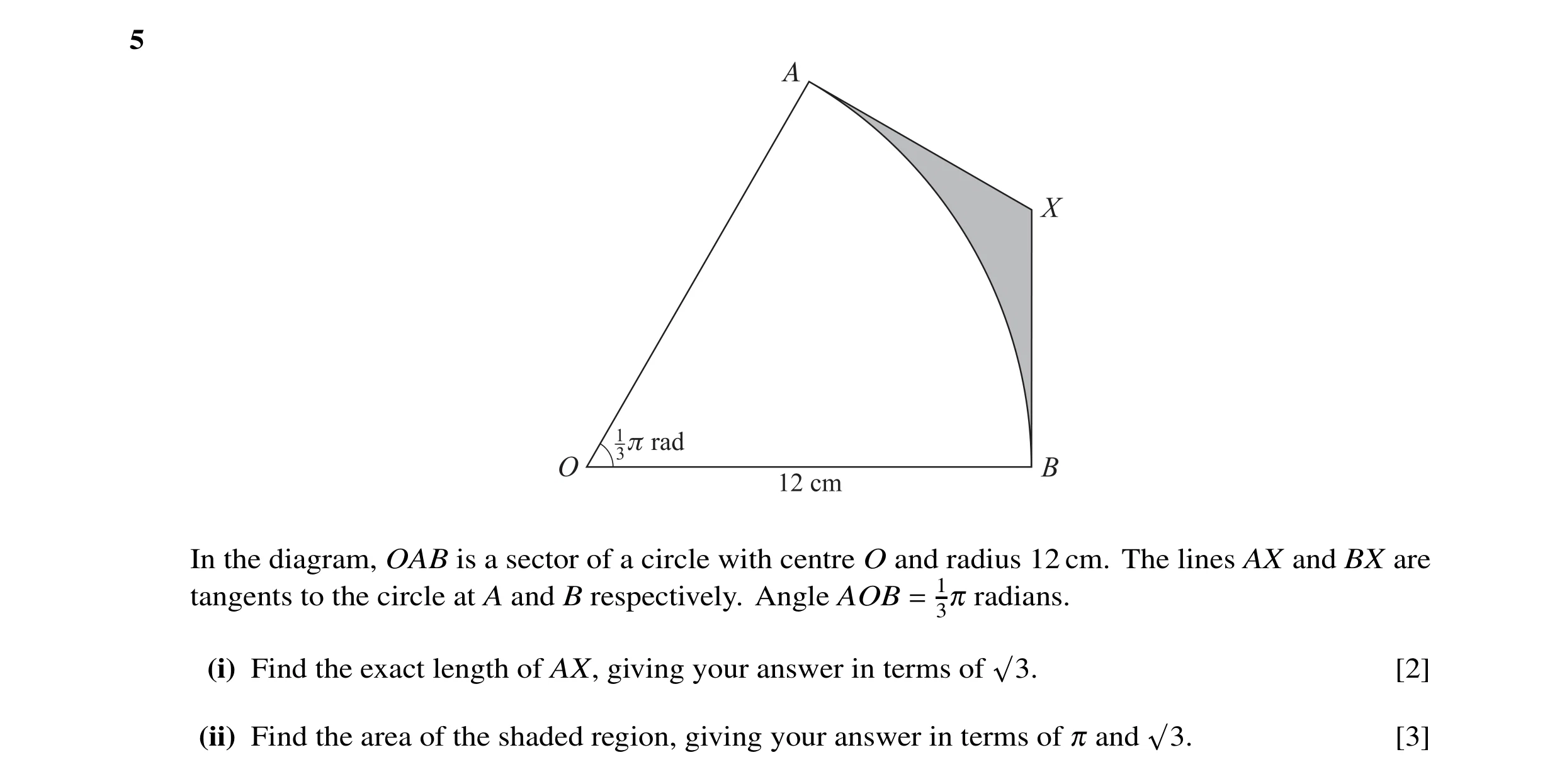
![Question 3: In the triangle ABC, AB = 12 cm, angle BAC = 60◦and angle ACB = 45◦. Find the exact length of BC. [3]](https://img.pastlit.com/crops/3ab83931-c847-4e3c-aeb3-5f3eec476a5a/q1.webp)
![Question 4: (i) Show that the equation 2 tan2 θ cos θ = 3 can be written in the form 2 cos2 θ + 3 cos θ −2 = 0. [2] (ii) Hence solve the equation 2 tan…](https://img.pastlit.com/crops/3ab83931-c847-4e3c-aeb3-5f3eec476a5a/q2.webp)
![Question 5: sin x sin x 1 Prove the identity − ≡2 tan2x. [3] 1 −sin x 1 + sin x](https://img.pastlit.com/crops/38b78239-bbb0-4ce9-b04c-cea1bd1921a3/q1.webp) 1 / 136
1 / 136![Question 6: y 9 3 x O p 2p –3 The diagram shows the graph of y = a sin(bx) + c for 0 ≤x ≤2π. (i) Find the values of a, b and c. [3] (ii) Find the small…](https://img.pastlit.com/crops/38b78239-bbb0-4ce9-b04c-cea1bd1921a3/q4.webp)
![Question 7: (i) Prove the identity (sin x + cos x)(1 −sin x cos x) ≡sin3x + cos3x. [3] (ii) Solve the equation (sin x + cos x)(1 −sin x cos x) = 9 sin3…](https://img.pastlit.com/crops/dcfa0c42-3f9a-47e4-a6dd-a82184c21b1b/q5.webp)
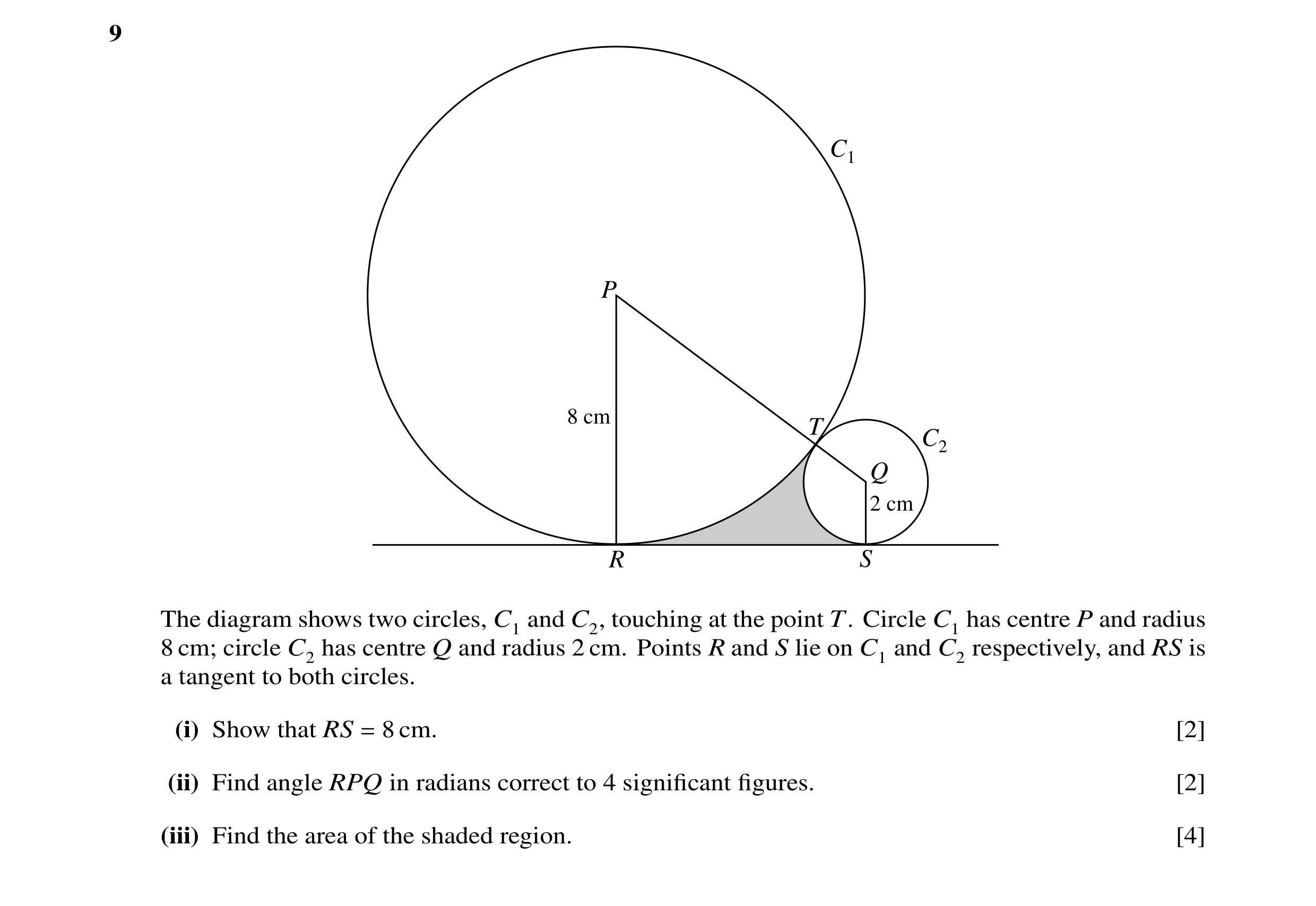 2 / 136
![Question 9: Prove the identity tan2x −sin2x ≡tan2x sin2x. [4]](https://img.pastlit.com/crops/b84e7a19-7582-41cb-80a1-29afac53e28a/q2.webp)
![Question 10: Solve the equation 15 sin2x = 13 + cos x for 0◦≤x ≤180◦. [4]](https://img.pastlit.com/crops/514f9e6e-9aff-4c9a-a939-32557b62237f/q3.webp)
![Question 11: (i) Sketch the curve y = 2 sin x for 0 ≤x ≤2π. [1] (ii) By adding a suitable straight line to your sketch, determine the number of real roo…](https://img.pastlit.com/crops/514f9e6e-9aff-4c9a-a939-32557b62237f/q4.webp)
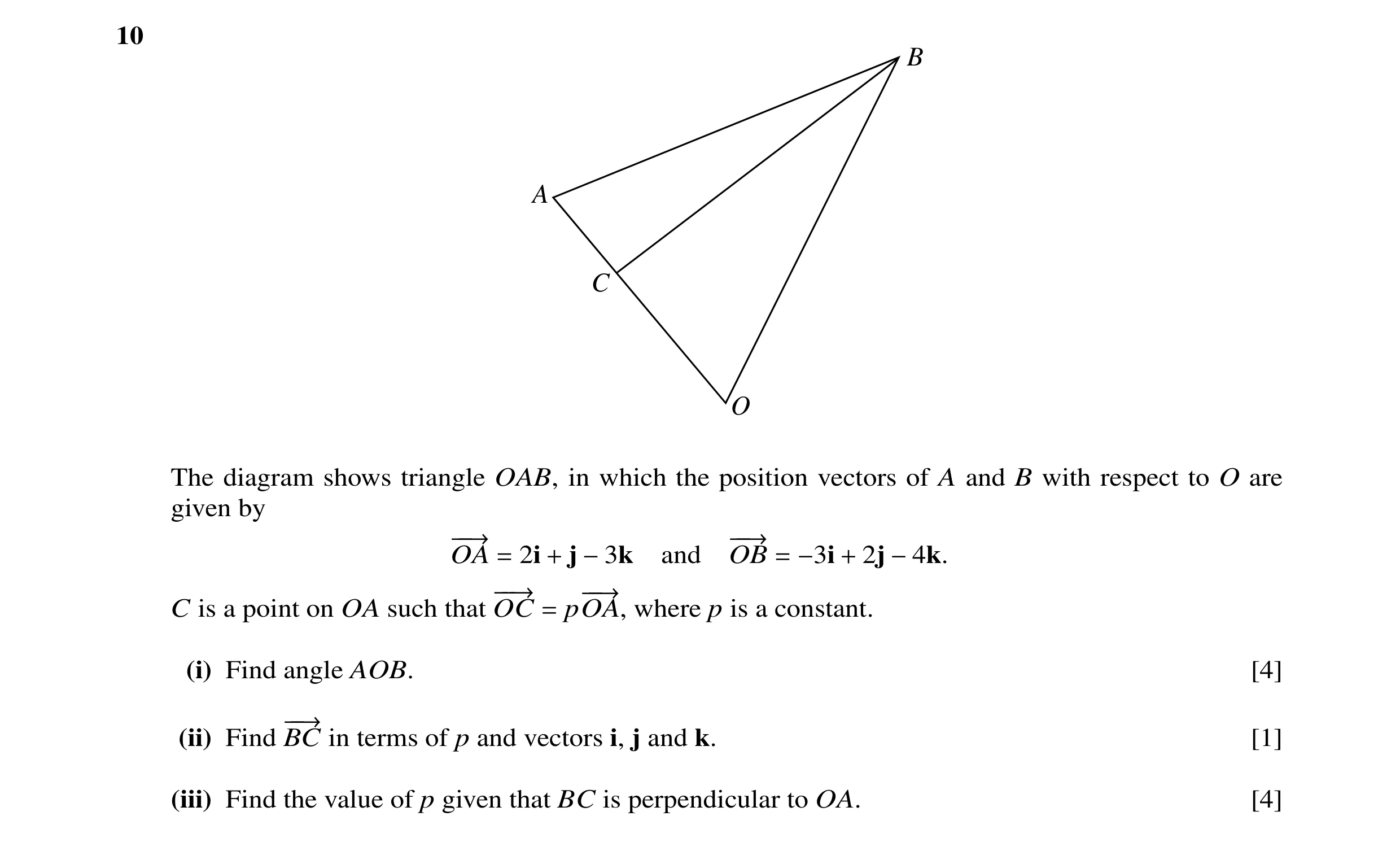
![Question 13: (i) Show that the equation 2 tan2θ sin2θ = 1 can be written in the form 2 sin4θ + sin2θ −1 = 0. [2] (ii) Hence solve the equation 2 tan2θ s…](https://img.pastlit.com/crops/db524538-8583-4784-aabf-89f7f22dfd9b/q5.webp) 3 / 136
3 / 136![Question 14: cos θ 1 5 (i) Prove the identity . [3] tan sin θ ≡1 + θ(1 −sin θ) cos θ (ii) Hence solve the equation 4, for [3] tan = 0◦≤θ ≤360◦. θ(1 −sin…](https://img.pastlit.com/crops/05e78195-5856-432f-8369-53061e868103/q5.webp)
![Question 15: (i) Sketch, on a single diagram, the graphs of y cos 2θ and y 1 for 0 [3] 2 = = ≤θ ≤2π. (ii) Write down the number of roots of the equation…](https://img.pastlit.com/crops/b0559761-6f6d-4b21-8cdd-0e4296291fa1/q3.webp)
![Question 16: (i) Sketch, on the same diagram, the graphs of y = sin x and y = cos 2x for 0◦≤x ≤180◦. [3] (ii) Verify that x = 30◦is a root of the equati…](https://img.pastlit.com/crops/e31c5fe8-1a9d-4442-a58c-fffcca76d81e/q5.webp)
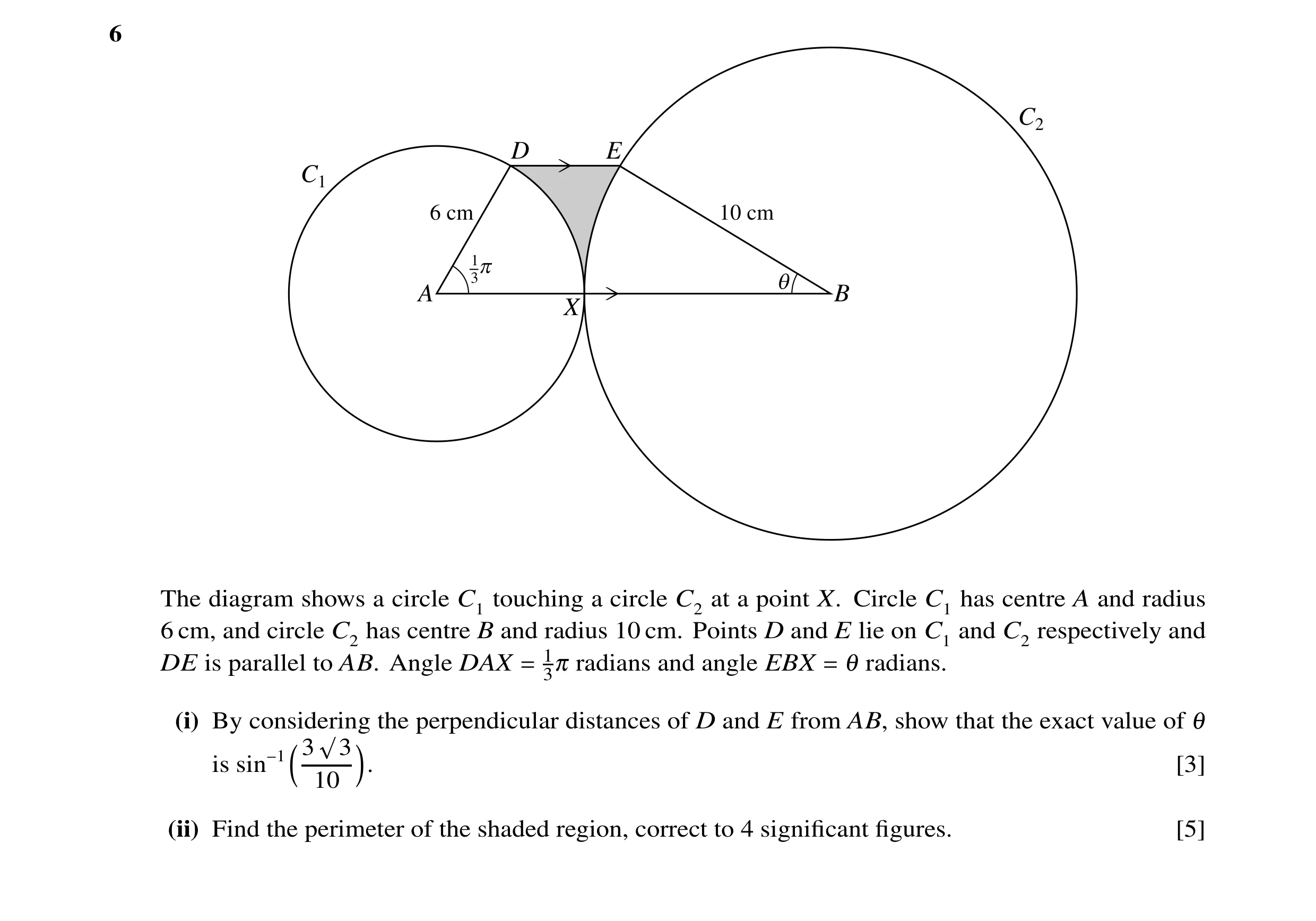 4 / 136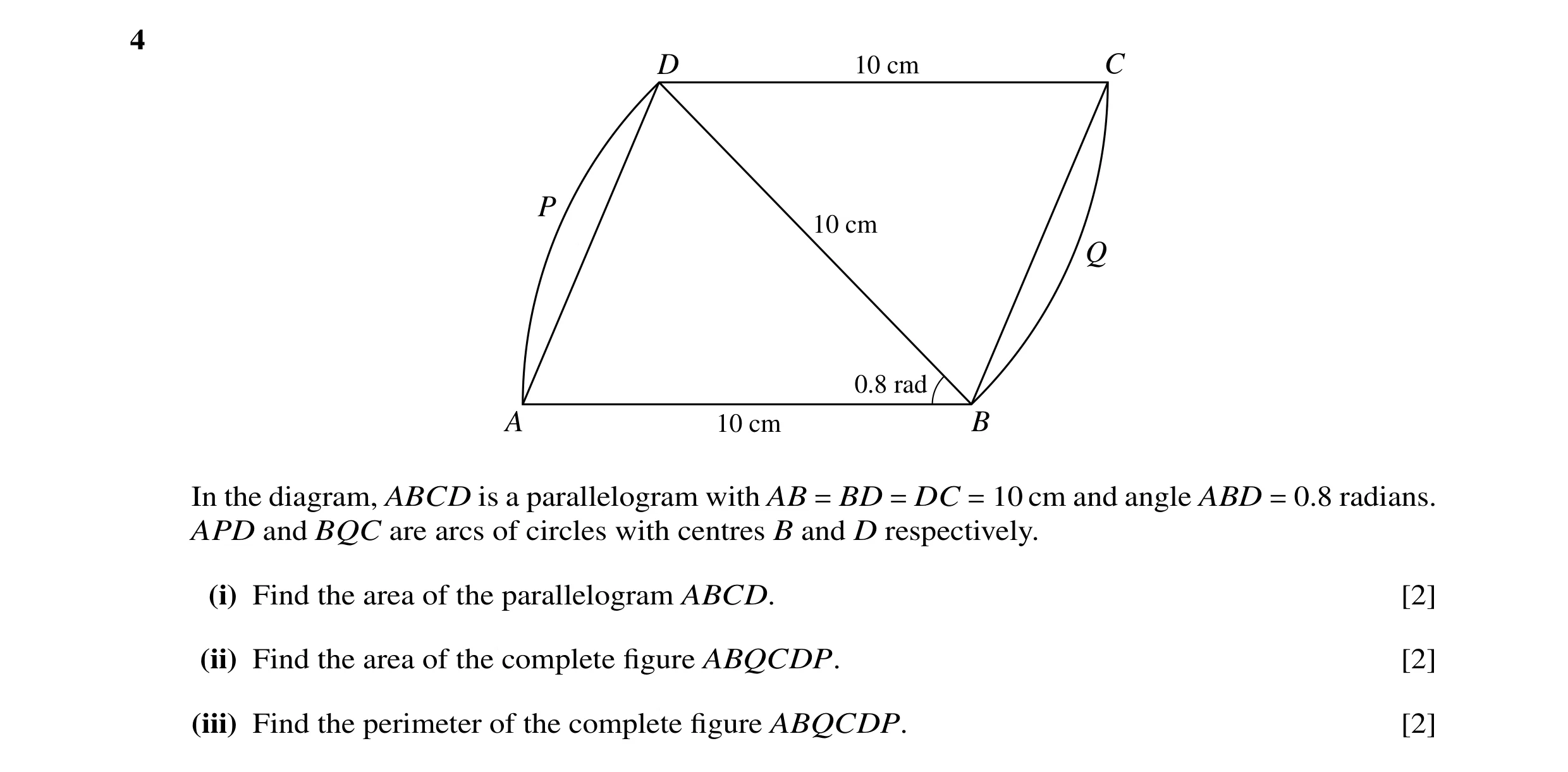
![Question 19: (i) Given that 3 sin2x −8 cos x −7 = 0, show that, for real values of x, cos x = −23. [3] (ii) Hence solve the equation 3 sin2(θ + 70◦) −8 …](https://img.pastlit.com/crops/14aff7b1-d1ad-4442-8f1f-936b6a915233/q5.webp)
![Question 20: Solve the equation sin 2x 2 cos 2x, for [4] = 0◦≤x ≤180◦.](https://img.pastlit.com/crops/b481afc1-a1df-4815-9cf0-41b2e8b72baf/q1.webp) 5 / 136
5 / 136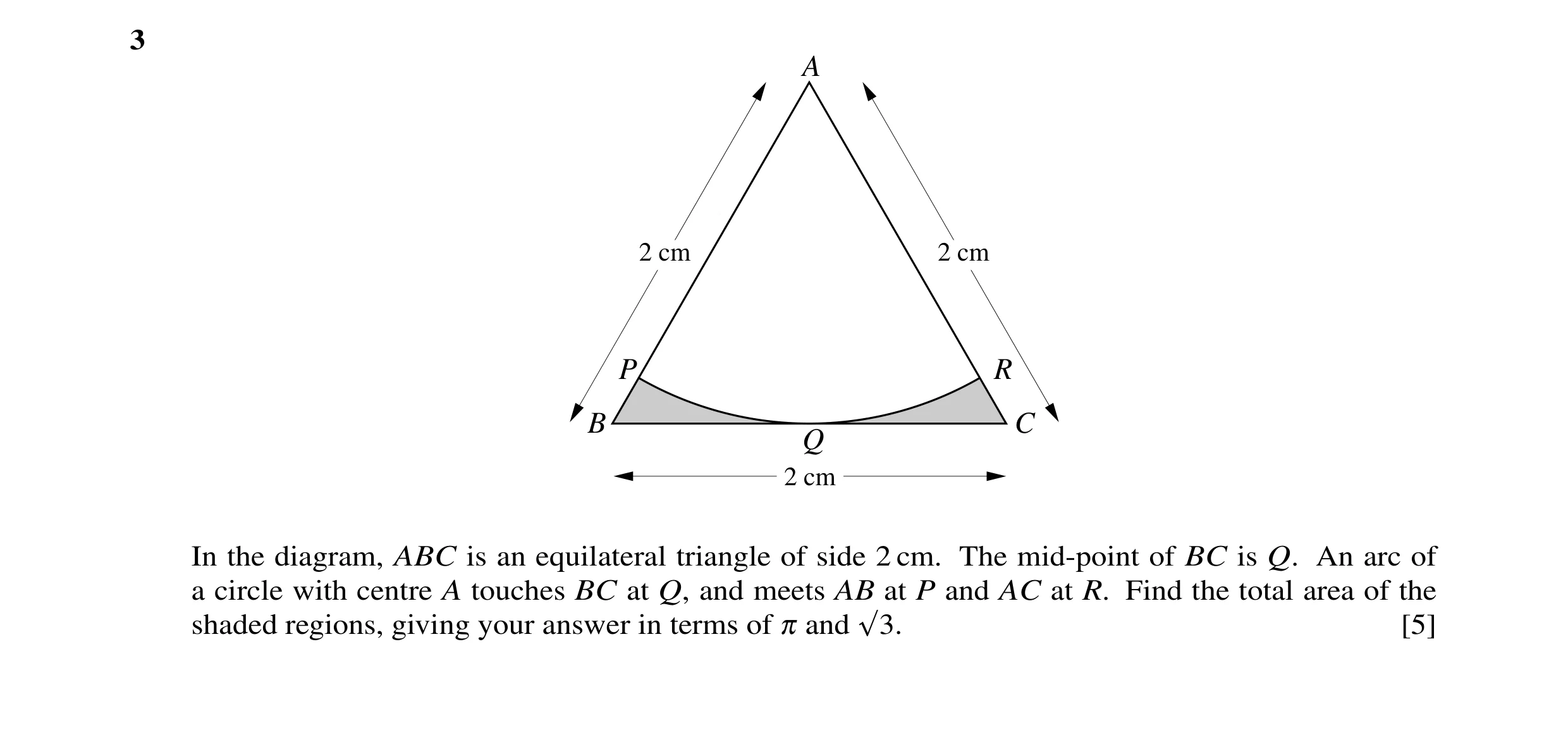
![Question 22: 1 5 (i) Prove the identity tan x [2] + tan x ≡ sin x cos x. 2 (ii) Solve the equation 1 3 tan x, for [4] sin x cos x = + 0◦≤x ≤180◦.](https://img.pastlit.com/crops/8c52c895-e4f4-40fc-b338-c5fd214c4ae0/q5.webp)
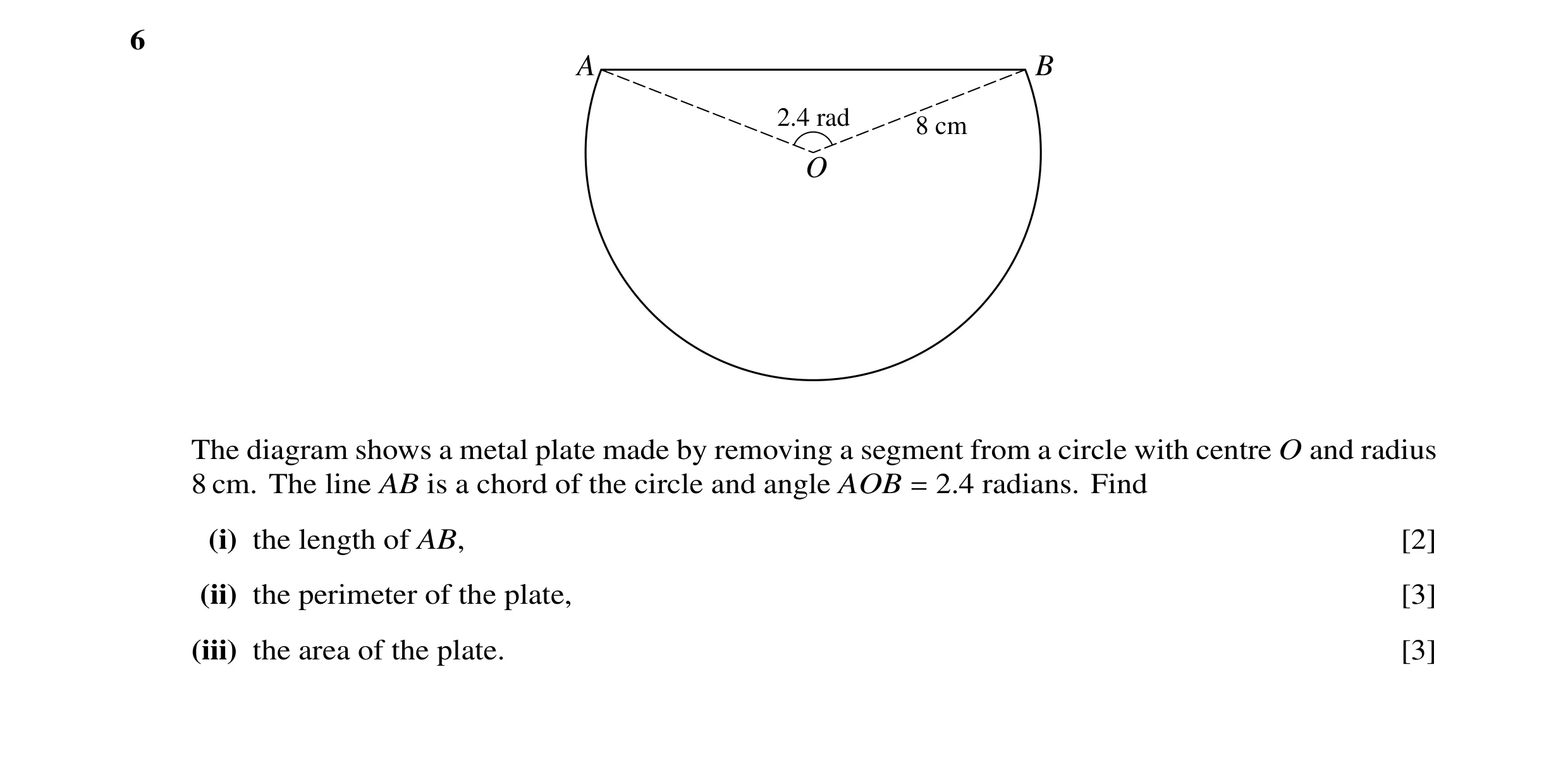
![Question 24: Solve the equation 7 cos x + 5 = 2 sin2x, for 0◦≤x ≤360◦. [4]](https://img.pastlit.com/crops/e2c42827-5b1a-4c86-bcb1-ffd60f27a35d/q3.webp) 6 / 136
6 / 136![Question 25: (i) Express the equation 2 cos21 = tan21 as a quadratic equation in cos21. [2] (ii) Solve the equation 2 cos21 = tan21 for 0 ≤1 ≤0, giving …](https://img.pastlit.com/crops/686e5e9f-7c46-48d1-9945-331875e3db9c/q3.webp)
![Question 26: (i) Solve the equation 4 sin2x + 8 cos x −7 = 0 for 0Å ≤x ≤360Å. [4] (ii) Hence find the solution of the equation 4 sin2 121 + 8 cos 121 −7 …](https://img.pastlit.com/crops/281e927b-aae8-44ba-84f3-6c1397bea898/q4.webp)
![Question 27: tan x + 1 4 (i) Prove the identity sin x + cos x. [3] sin x tan x + cosx tan x + 1 (ii) Hence solve the equation = 3 sin x −2 cosx for 0 …](https://img.pastlit.com/crops/883e8d39-9abe-4193-bb93-3f17dc2de94a/q4.webp)
![Question 28: sin2 3 Solve the equation + cos = 2 for 0 ≤ ≤180 . [4] 2 + cos](https://img.pastlit.com/crops/b3ec1609-b62f-4edd-9c6e-78aded864a65/q3.webp)
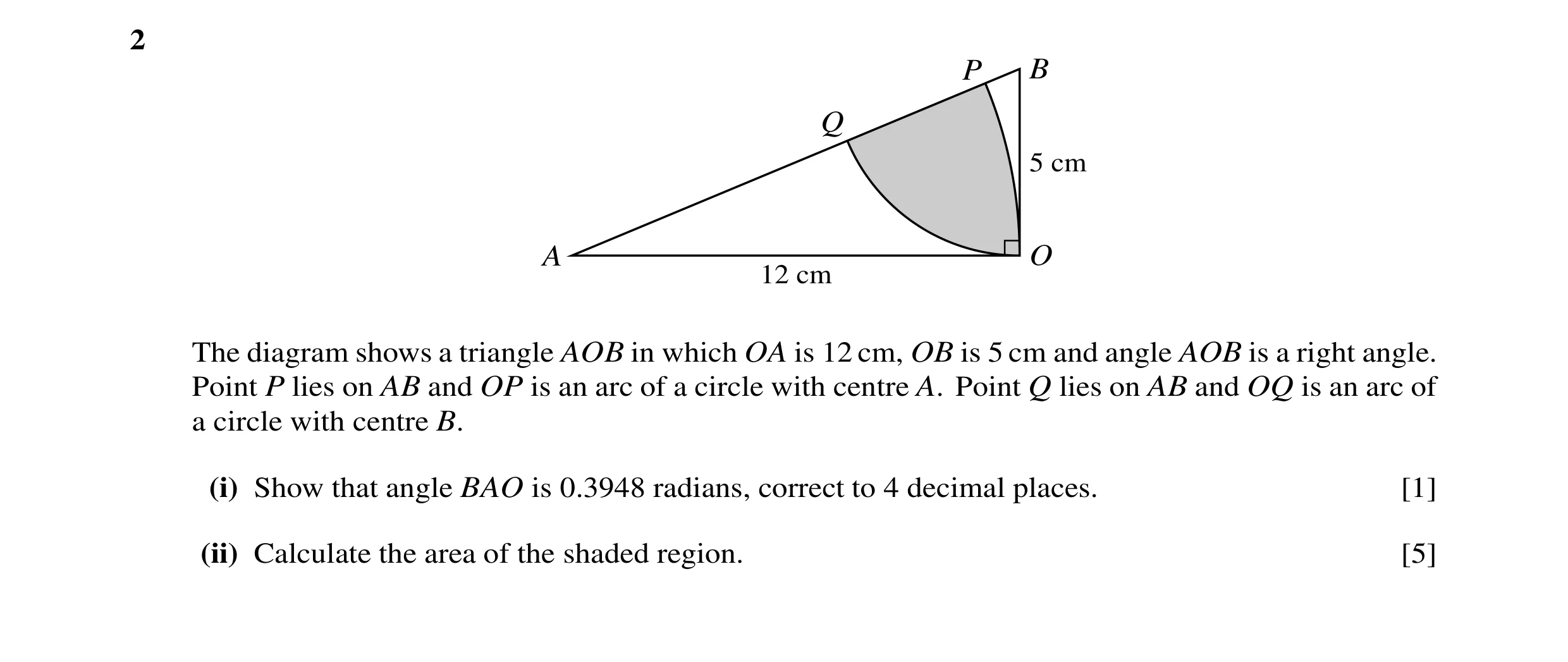
 7 / 136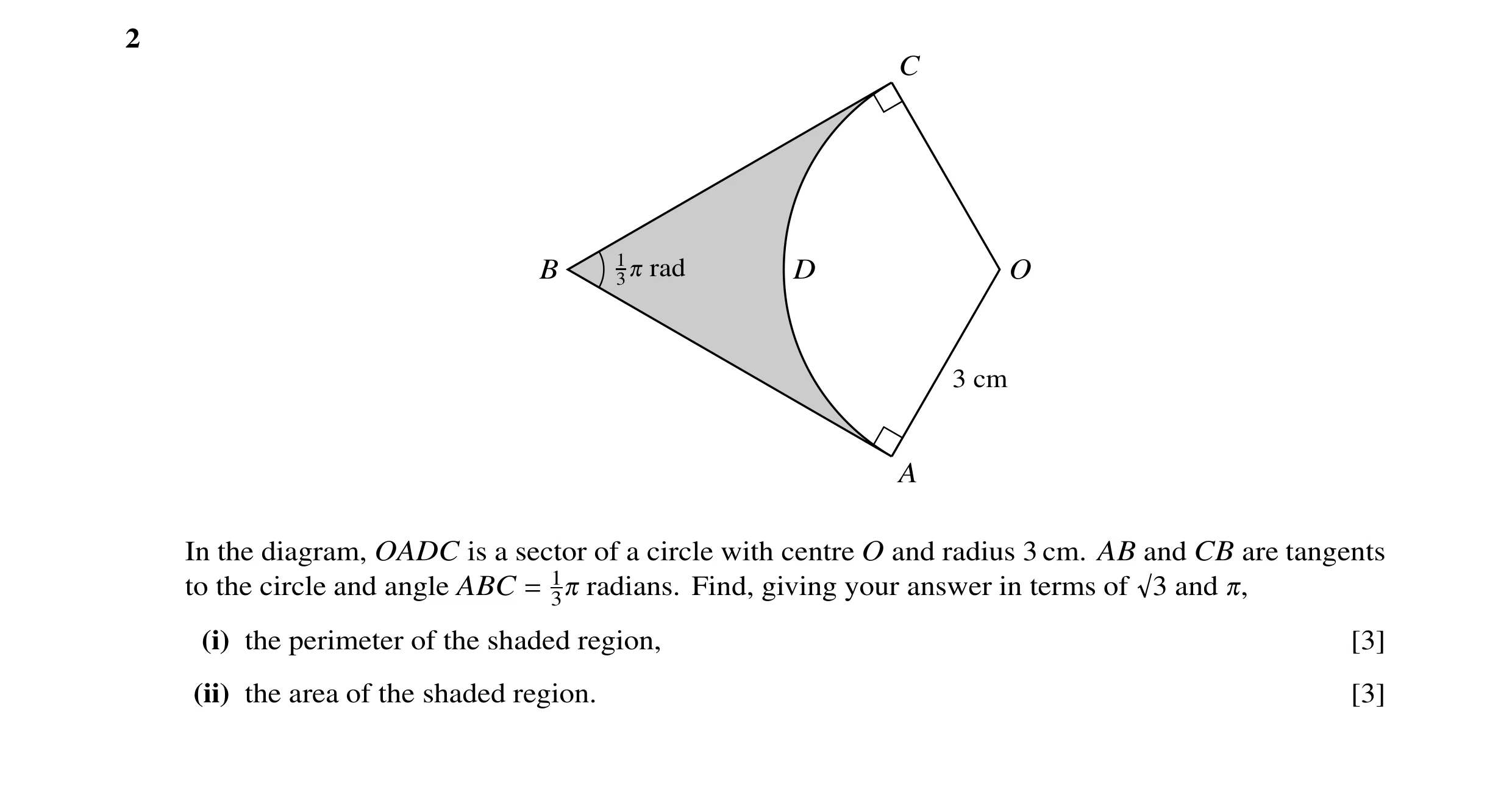
![Question 32: (i) Show that sin4 −cos4 2 sin2 −1. [3] (ii) Hence solve the equation sin4 −cos4 = 1 for 0 ≤ ≤360 . [4] 2](https://img.pastlit.com/crops/592e771a-e0c0-419f-bf50-3ab5c978a58a/q5.webp)
![Question 33: (i) Express the equation 3 sin 1 = cos 1 in the form tan 1 = k and solve the equation for 0Å < 1 < 180Å. [2] (ii) Solve the equation 3 sin2…](https://img.pastlit.com/crops/09858a70-a0a7-4dcb-828c-a986fe85b964/q4.webp) 8 / 136
8 / 136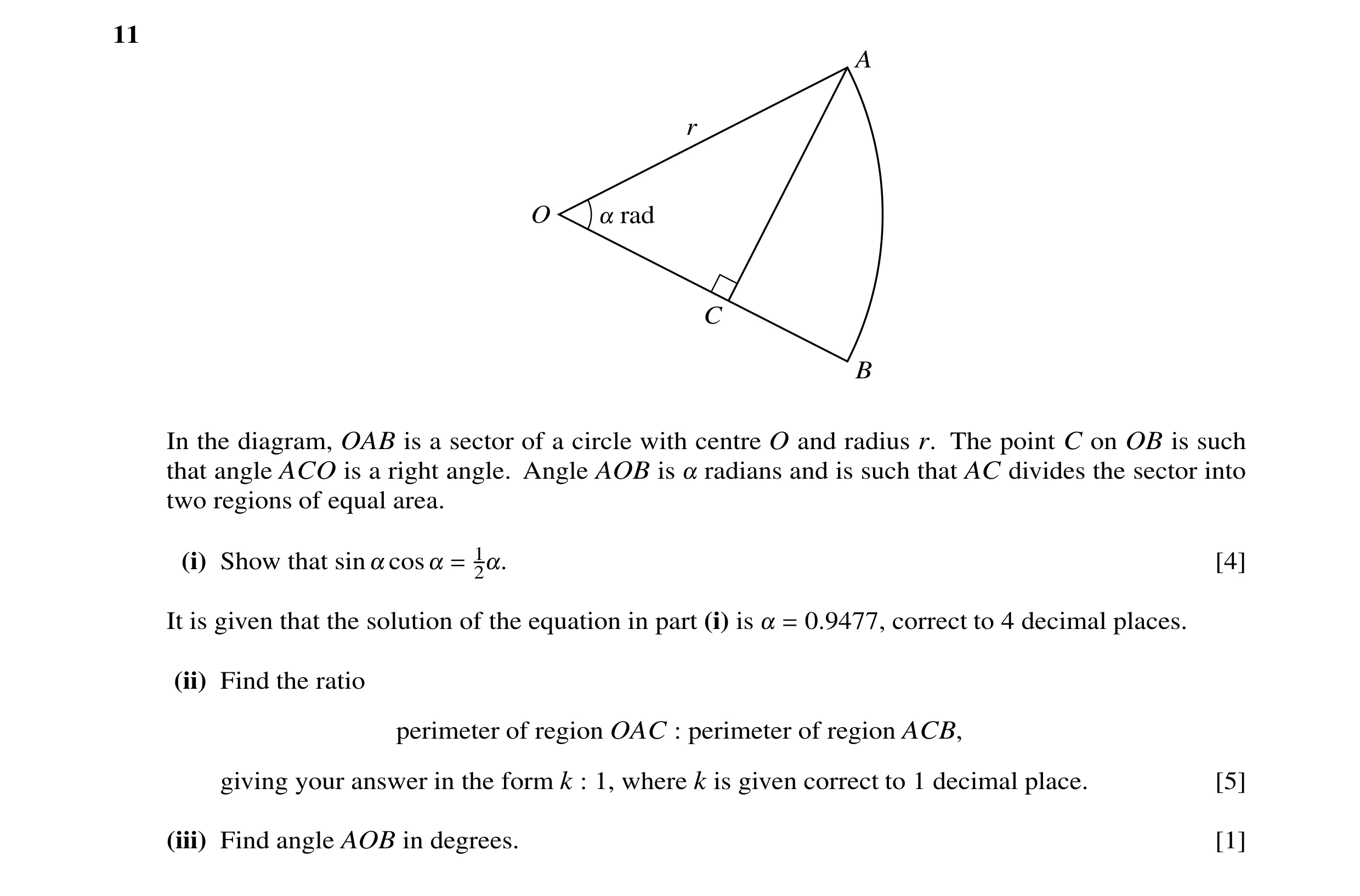
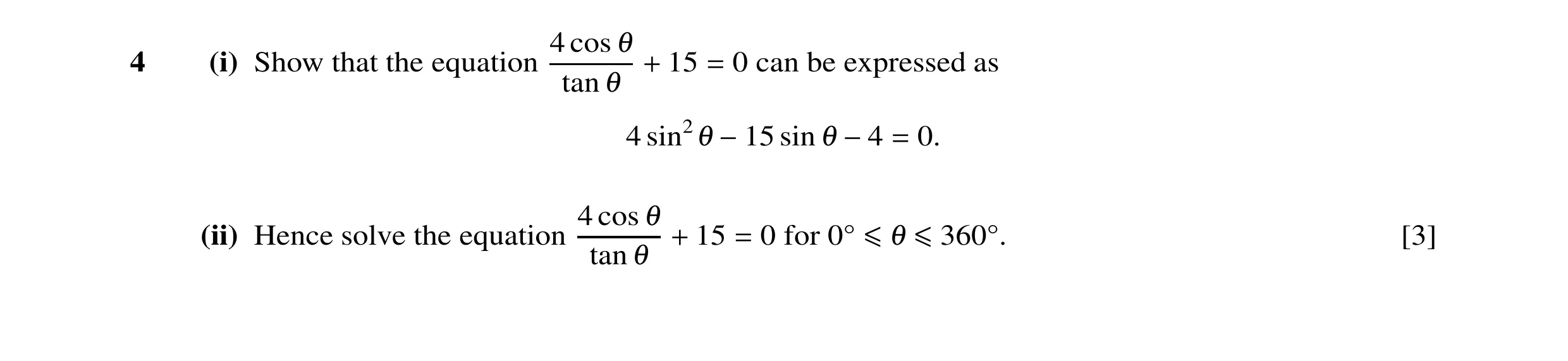
![Question 36: @ A2 1 1 1 −cosx 4 (i) Prove the identity − [4] sin x tan x 1 + cosx. @ A2 1 1 2 (ii) Hence solve the equation − = for 0 ≤x ≤20. [3] sin …](https://img.pastlit.com/crops/f50d2484-5e16-442a-bddc-42759a1eec4d/q4.webp) 9 / 136
9 / 136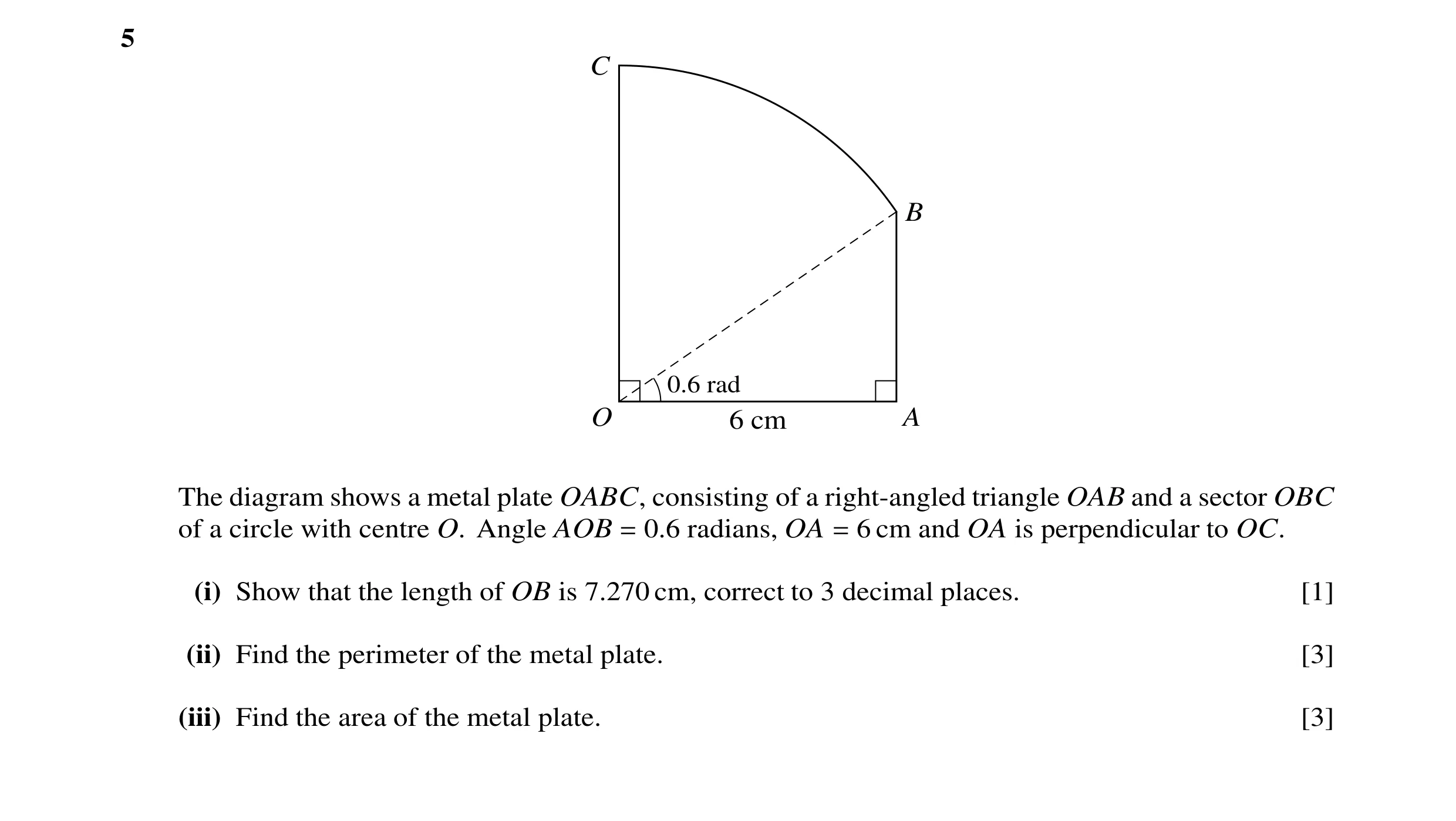
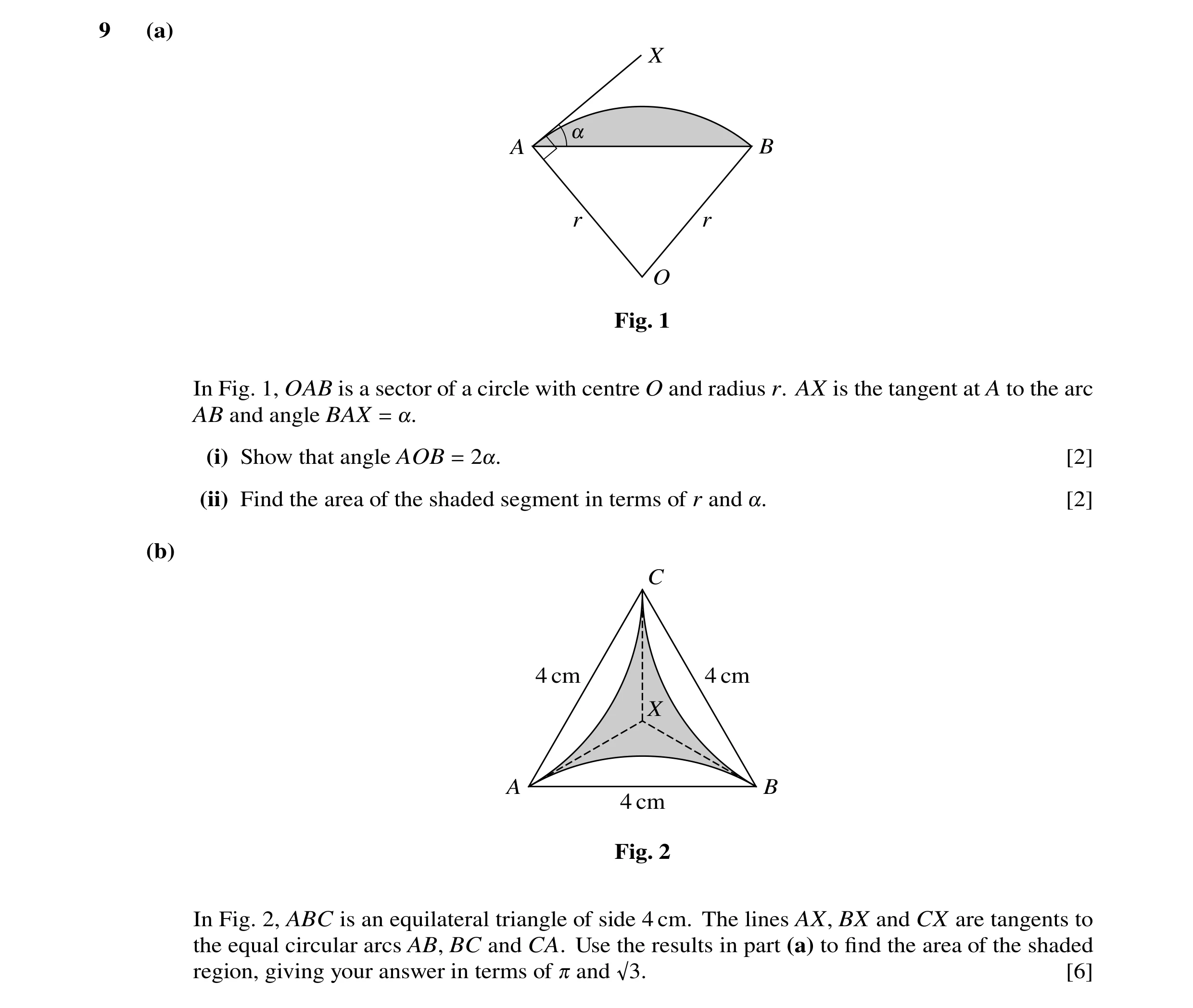 10 / 136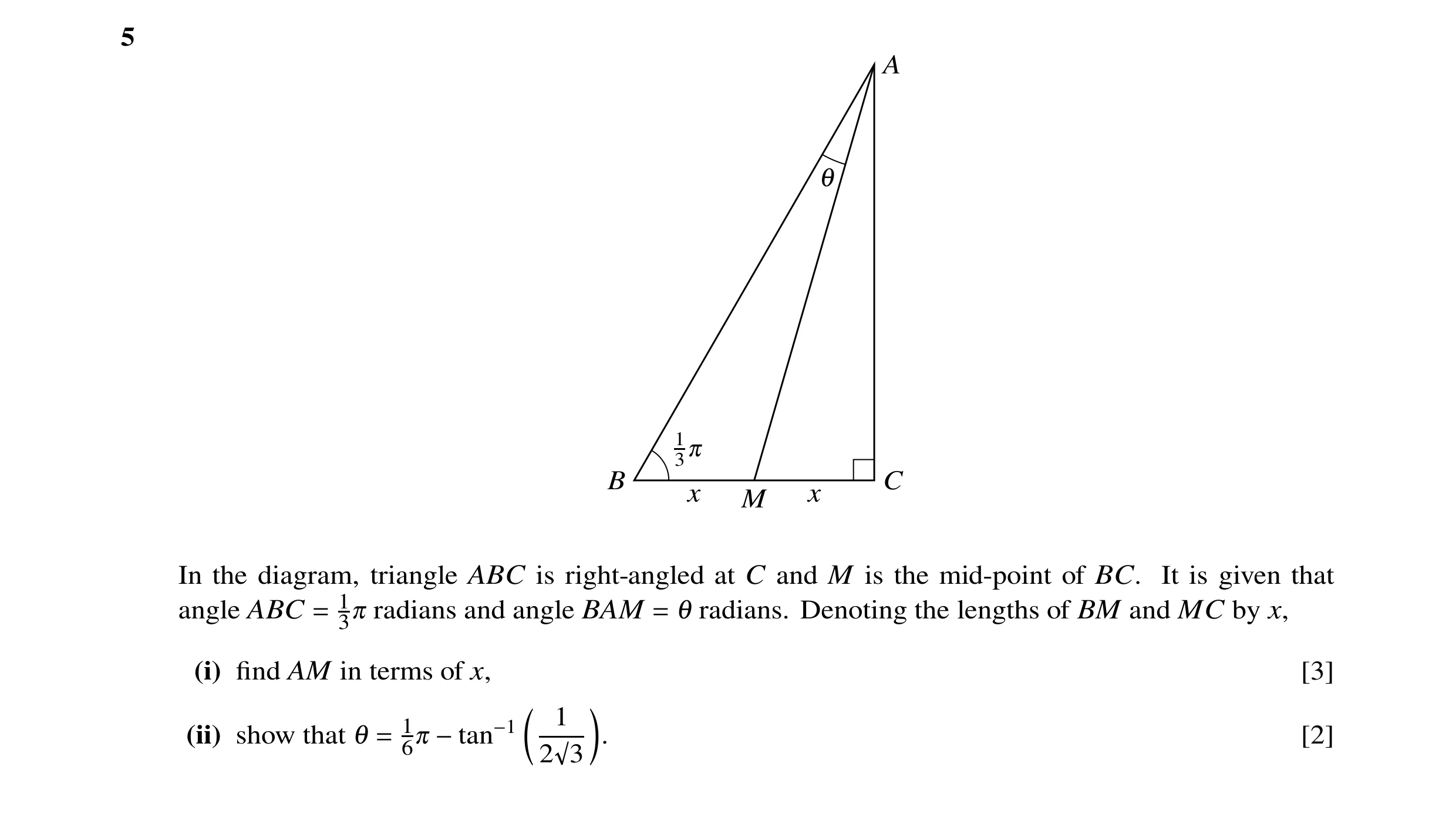

![Question 41: (i) Show that cos4x 1 −2 sin2x + sin4x. [1] (ii) Hence, or otherwise, solve the equation 8 sin4x + cos4x = 2 cos2x for 0Å ≤x ≤360Å. [5]](https://img.pastlit.com/crops/31ef89a5-a80a-4ea0-8f21-2e8c5d45c89f/q6.webp)
 11 / 136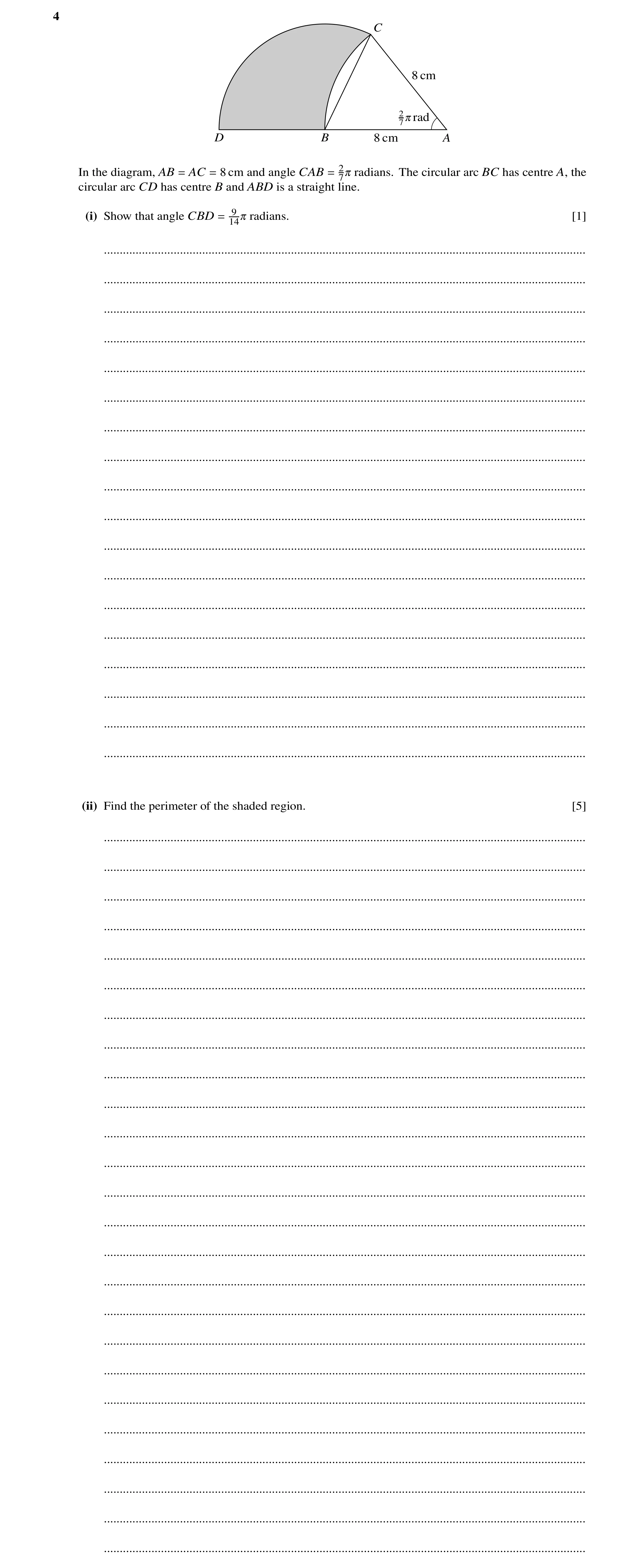
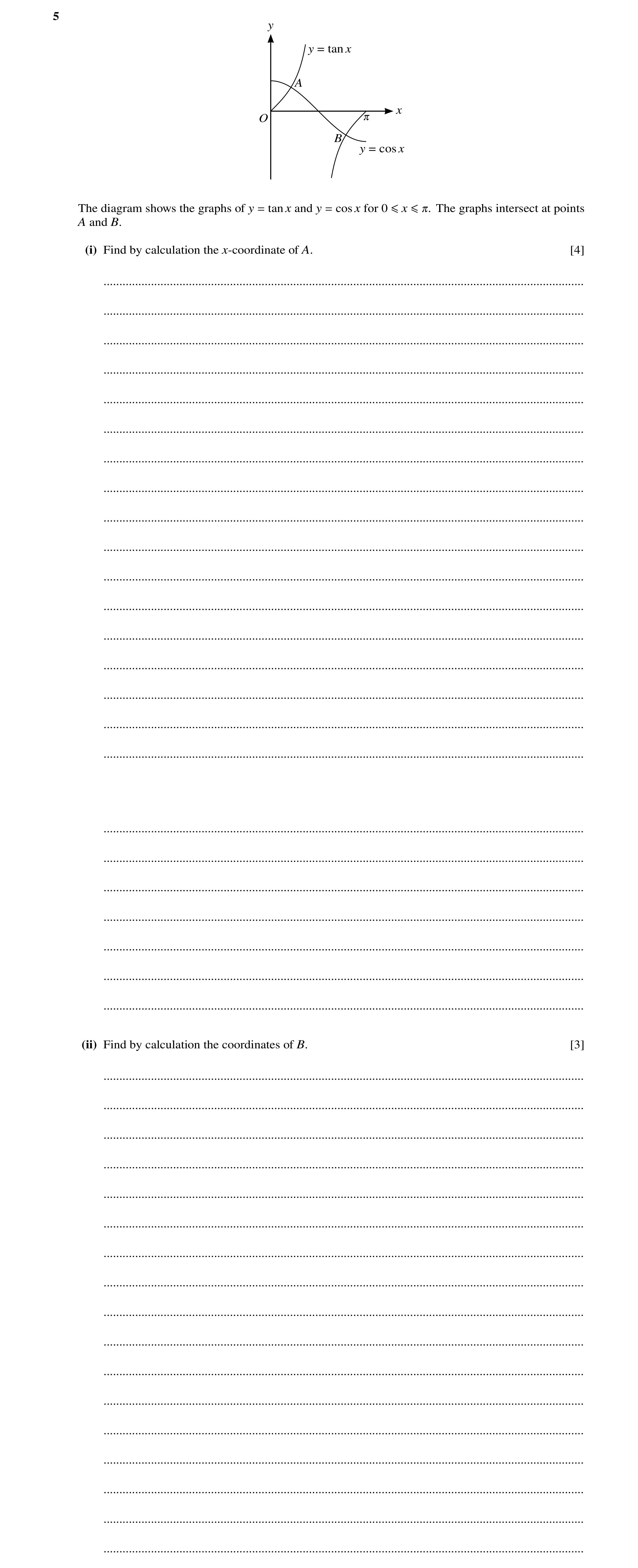
![Question 45: + cos 1 sin 1 2 3 (i) Prove the identity + [3] sin 1 1 + cos 1 sin 1. ...................................................................…](https://img.pastlit.com/crops/6f0360fe-663c-4711-b93b-0badf7e79581/q3.webp)
![Question 46: 2 1 −sin 1 3 (i) Prove the identity −tan 1 [3] cos 1 1 + sin 1. .........................................................................…](https://img.pastlit.com/crops/5b5efe26-87be-4940-aa7e-ae84b6bc54b8/q3.webp)
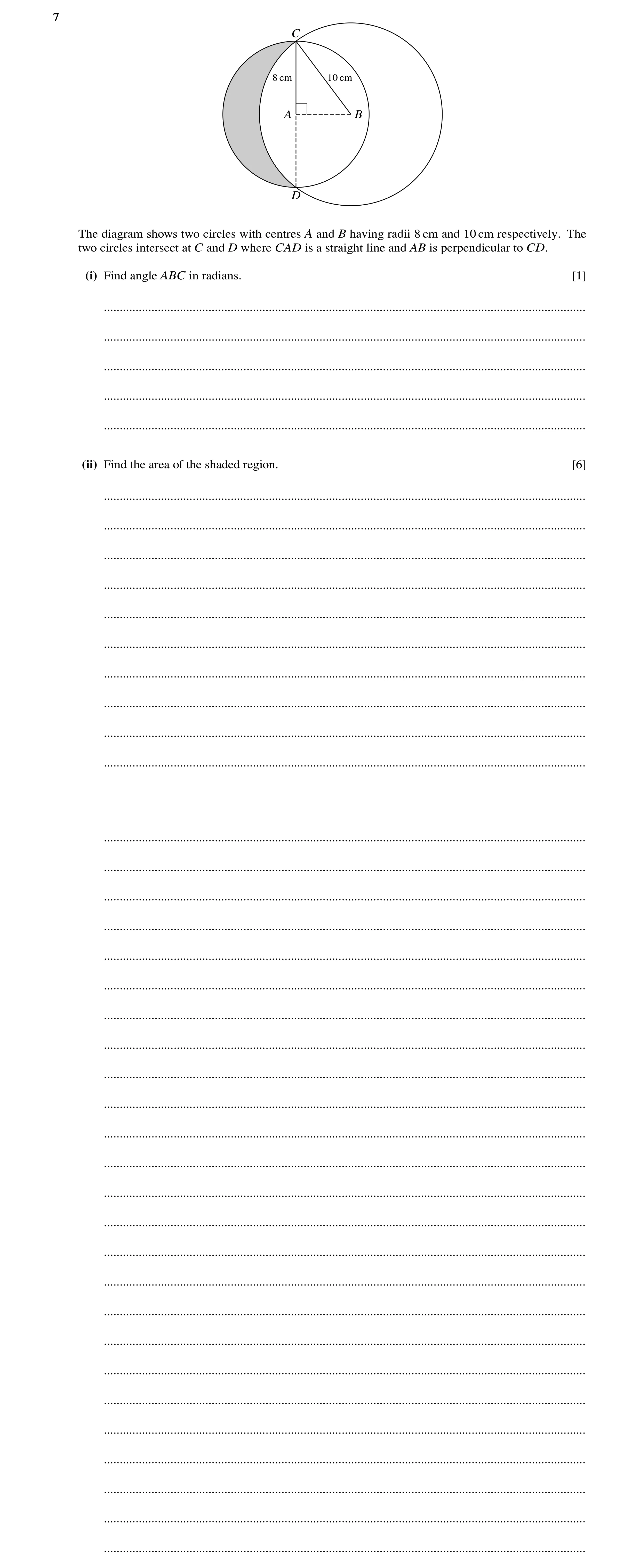
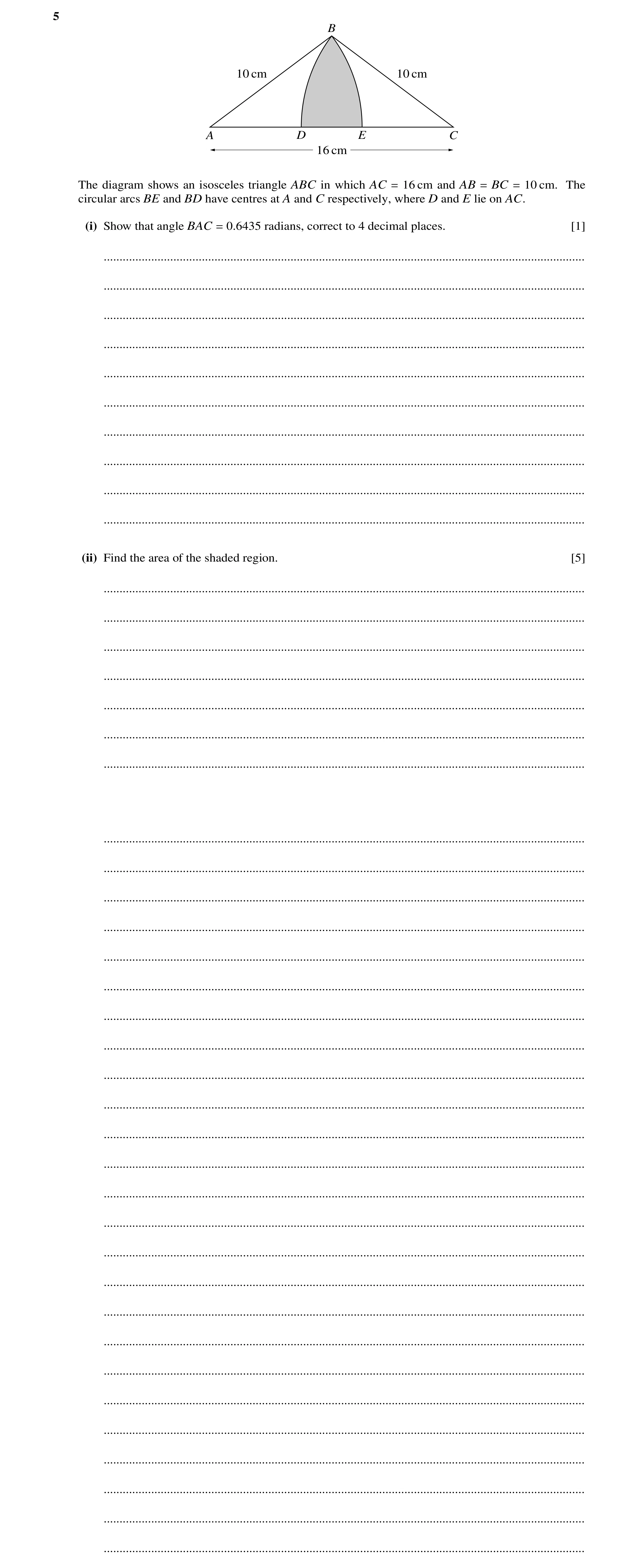
![Question 49: cos 1 + 4 5 (i) Show that the equation + 5 sin 1 −5 = 0 may be expressed as 5 cos21 −cos 1 −4 = 0. sin 1 + 1 [3] ..........................…](https://img.pastlit.com/crops/ca6ee983-5c93-425b-9aed-127c6b9154c2/q5.webp)
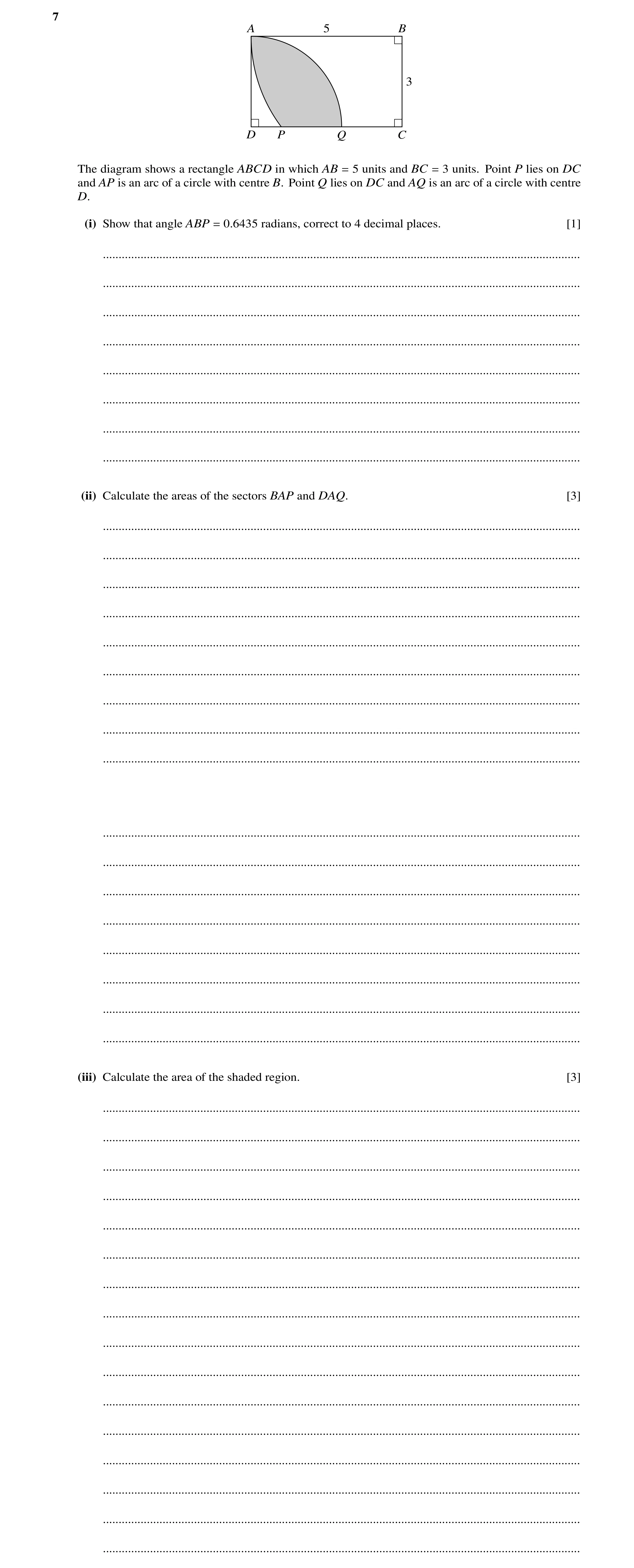
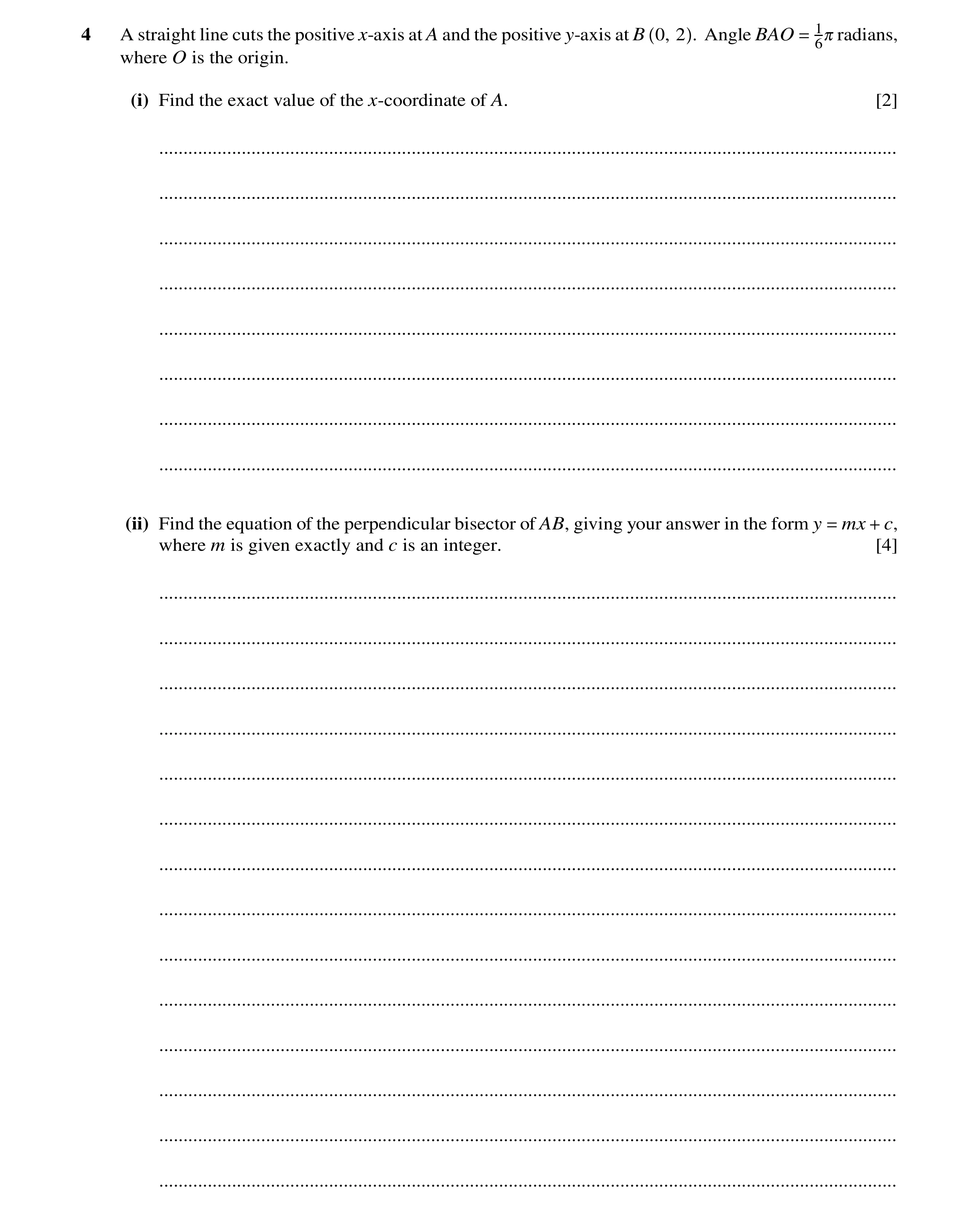 26 / 136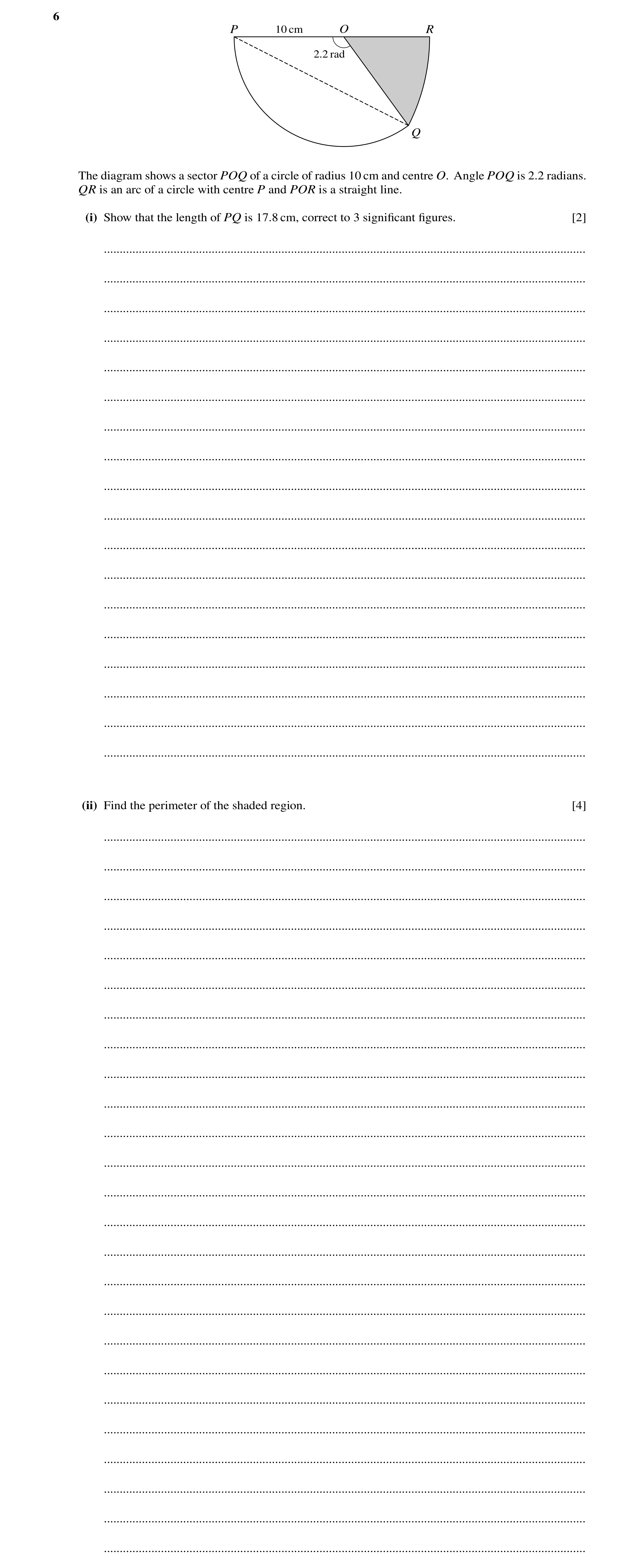
![Question 53: (i) Solve the equation 2 cosx + 3 sin x = 0, for 0Å ≤x ≤360Å. [3] .........................................................................…](https://img.pastlit.com/crops/575c3d79-718b-47e5-80f1-cd91c1a63f9a/q10.webp)
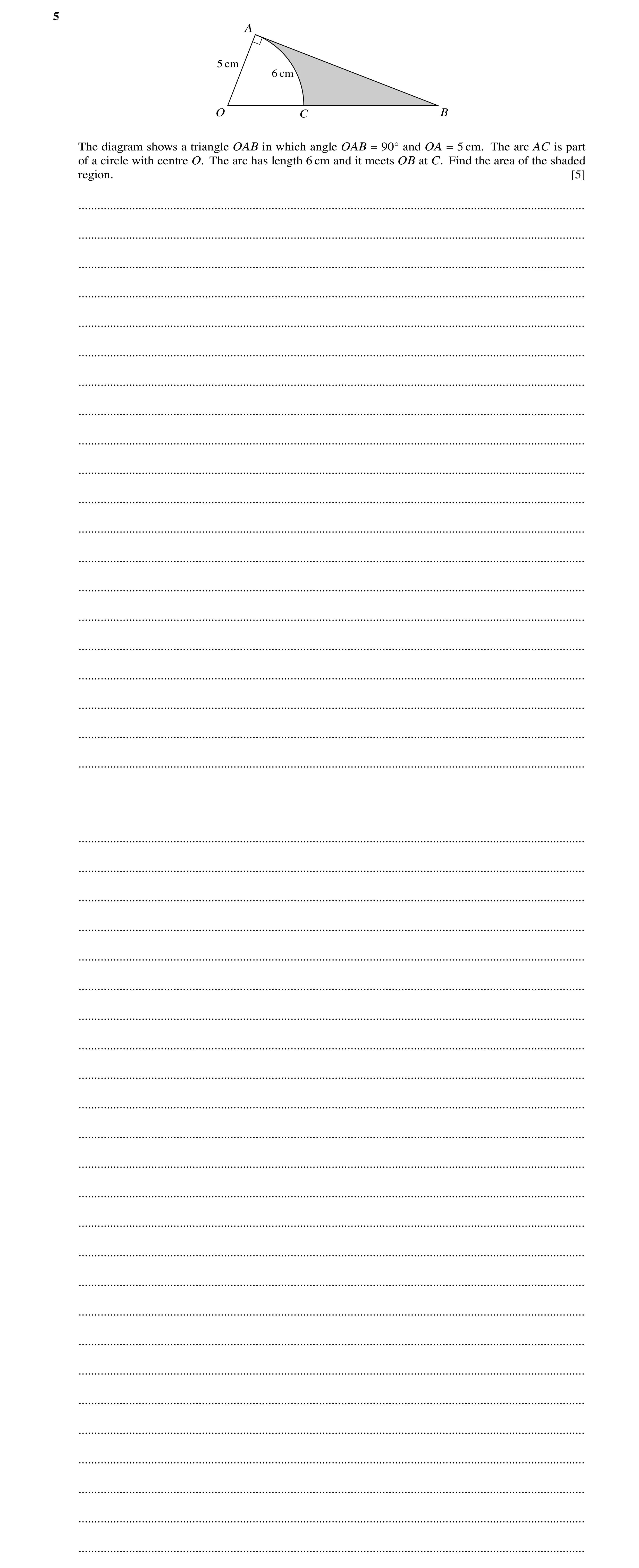
![Question 55: tan21 −1 7 (a) (i) Express in the form a sin21 + b, where a and b are constants to be found. [3] tan21 + 1 ................................…](https://img.pastlit.com/crops/0b8d4840-ac35-4edb-8644-695927b77a0d/q7.webp)
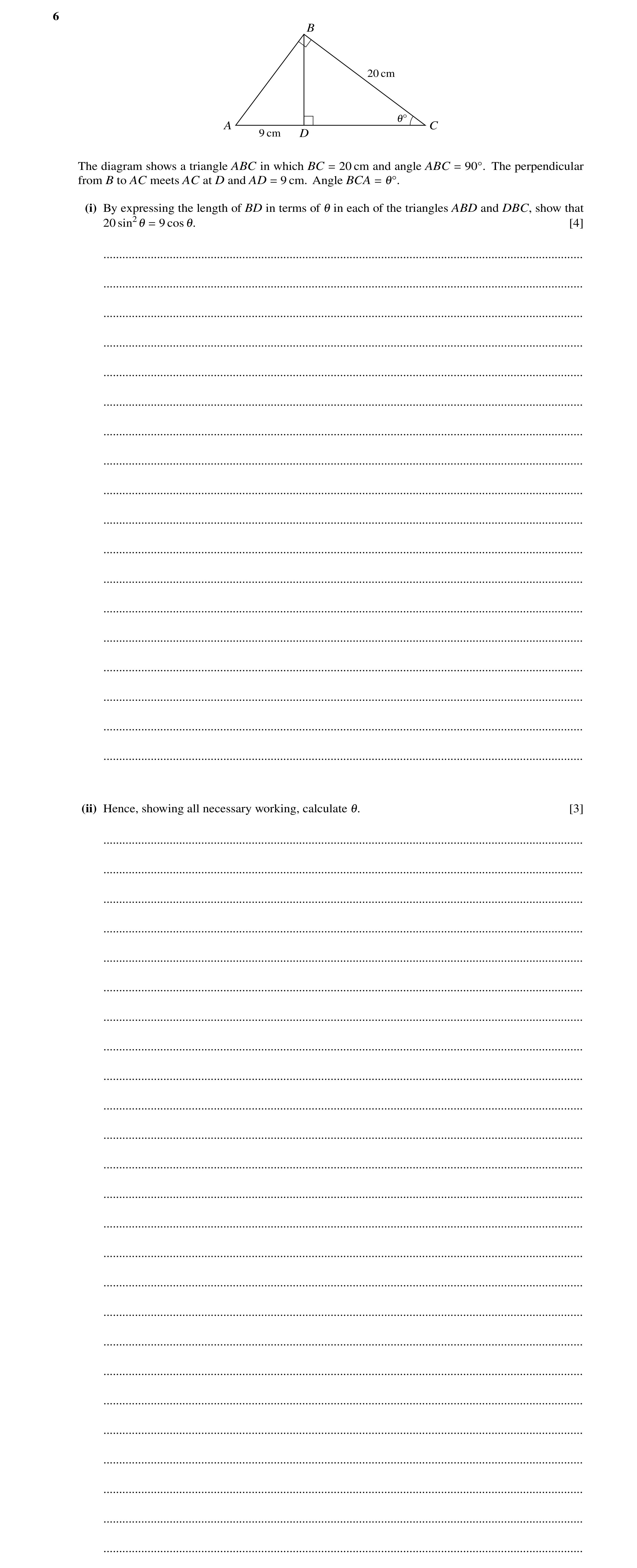
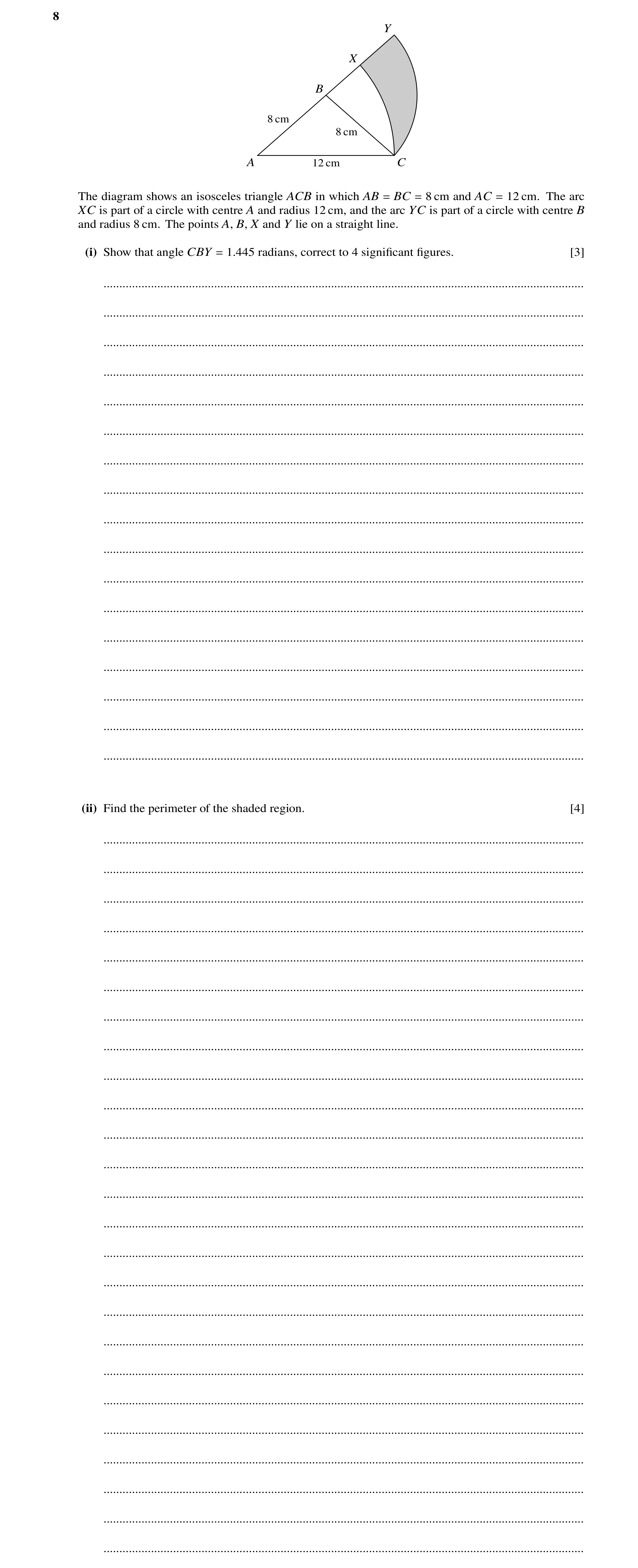
![Question 58: 2 1 −sin x 6 (i) Prove the identity −tan x [4] cosx 1 + sin x. ..........................................................................…](https://img.pastlit.com/crops/a3f765d2-a966-49f0-9690-ca5b1d00727c/q6.webp)
 40 / 136
 41 / 136
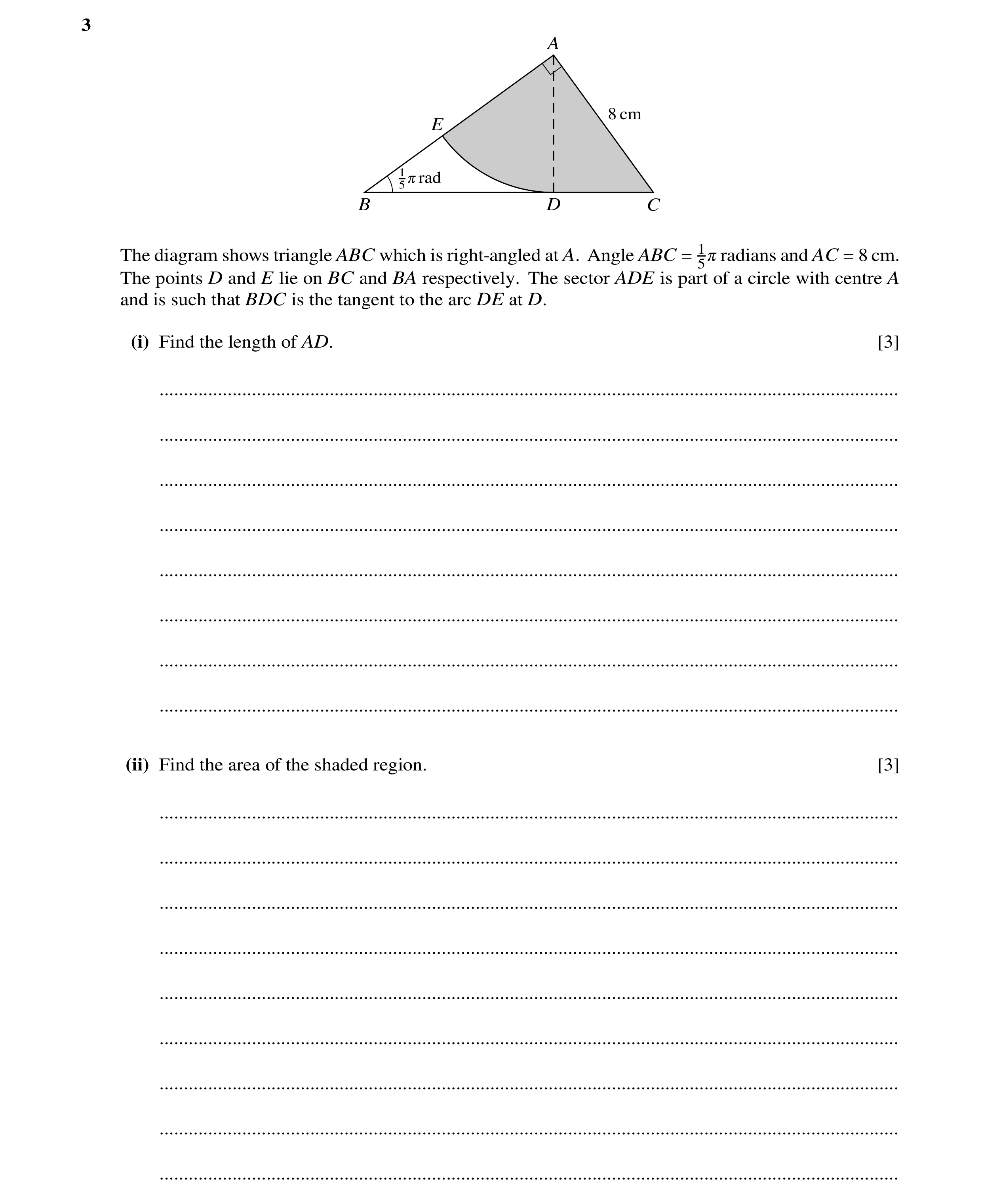 42 / 136
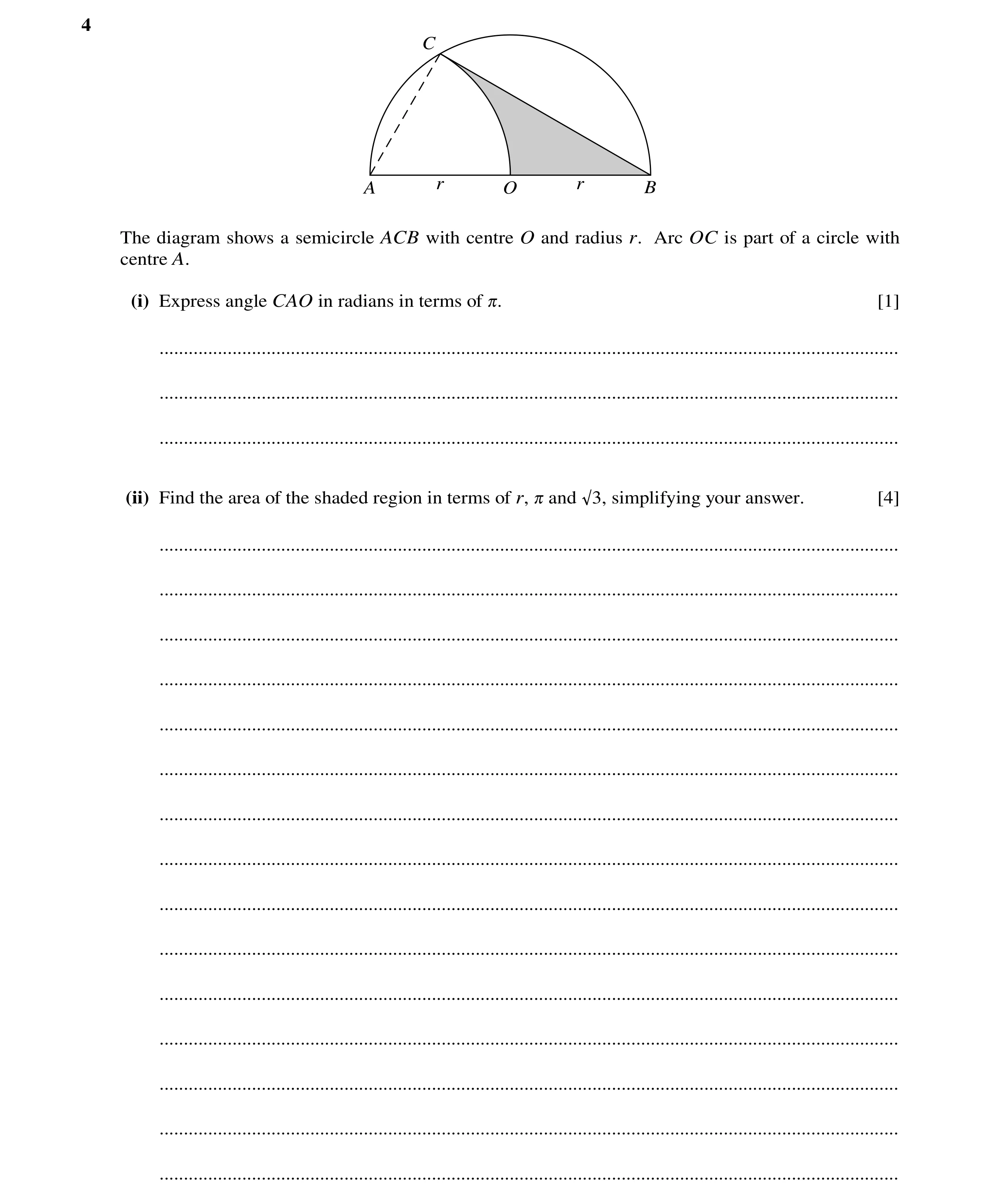 43 / 136
![Question 63: (i) Show that the equation 3 cos41 + 4 sin21 −3 = 0 can be expressed as 3x2 −4x + 1 = 0, where x = cos21. [2] .............................…](https://img.pastlit.com/crops/1ac6205f-affc-4f08-8df9-304809b7333c/q7.webp)
![Question 64: Solve the equation tan 1 + 3 sin 1 + 2 = 2 tan 1 −3 sin 1 + 1 for 0Å ≤1 ≤90Å. [5] .........................................................…](https://img.pastlit.com/crops/f34237d1-5a29-4a0c-ab2d-85ccb9b9c16e/q5.webp) 46 / 136
46 / 136![Question 65: (a) Solve the equation 3 tan2x −5 tan x −2 = 0 for 0Å ≤x ≤180Å. [4] .......................................................................…](https://img.pastlit.com/crops/f34237d1-5a29-4a0c-ab2d-85ccb9b9c16e/q11.webp)
![Question 66: (a) Express the equation 3 cos 1 = 8 tan 1 as a quadratic equation in sin 1. [3] ..........................................................…](https://img.pastlit.com/crops/2d1124e7-481d-4760-ab75-9ad611f0b3b7/q2.webp) 49 / 136
49 / 136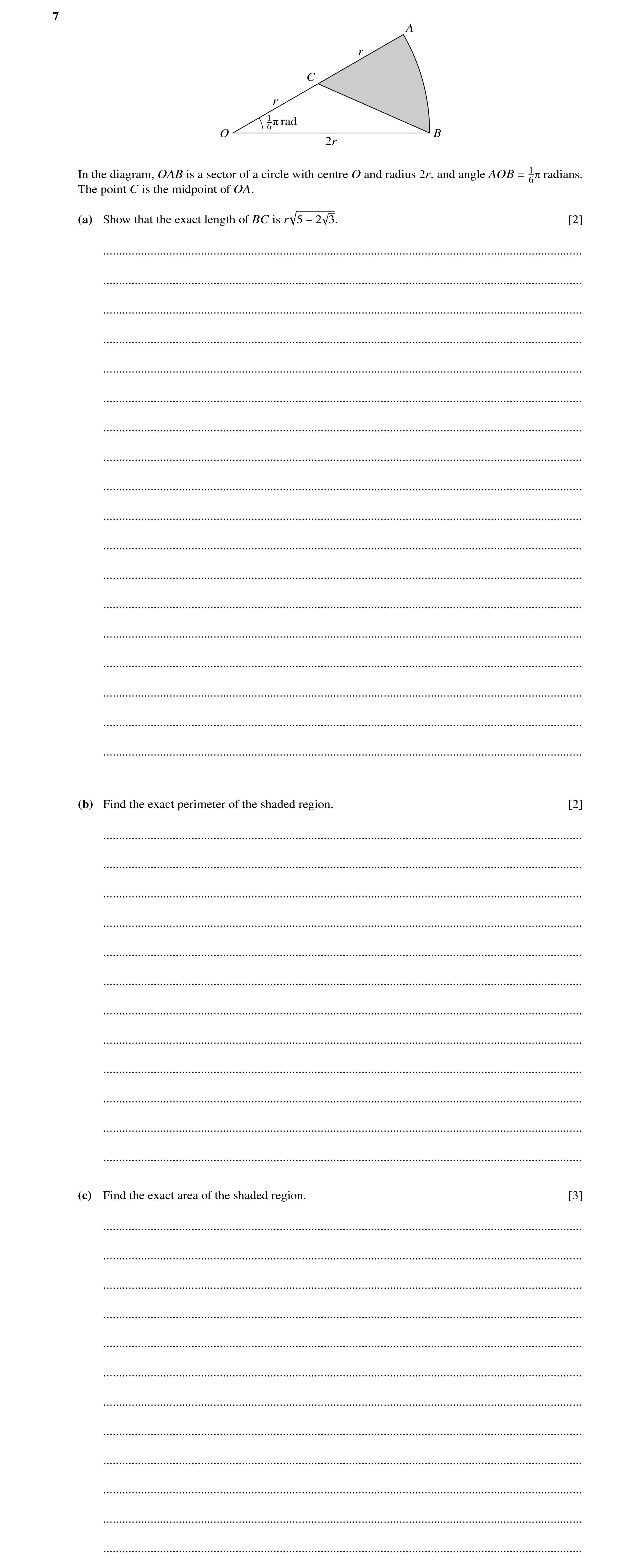
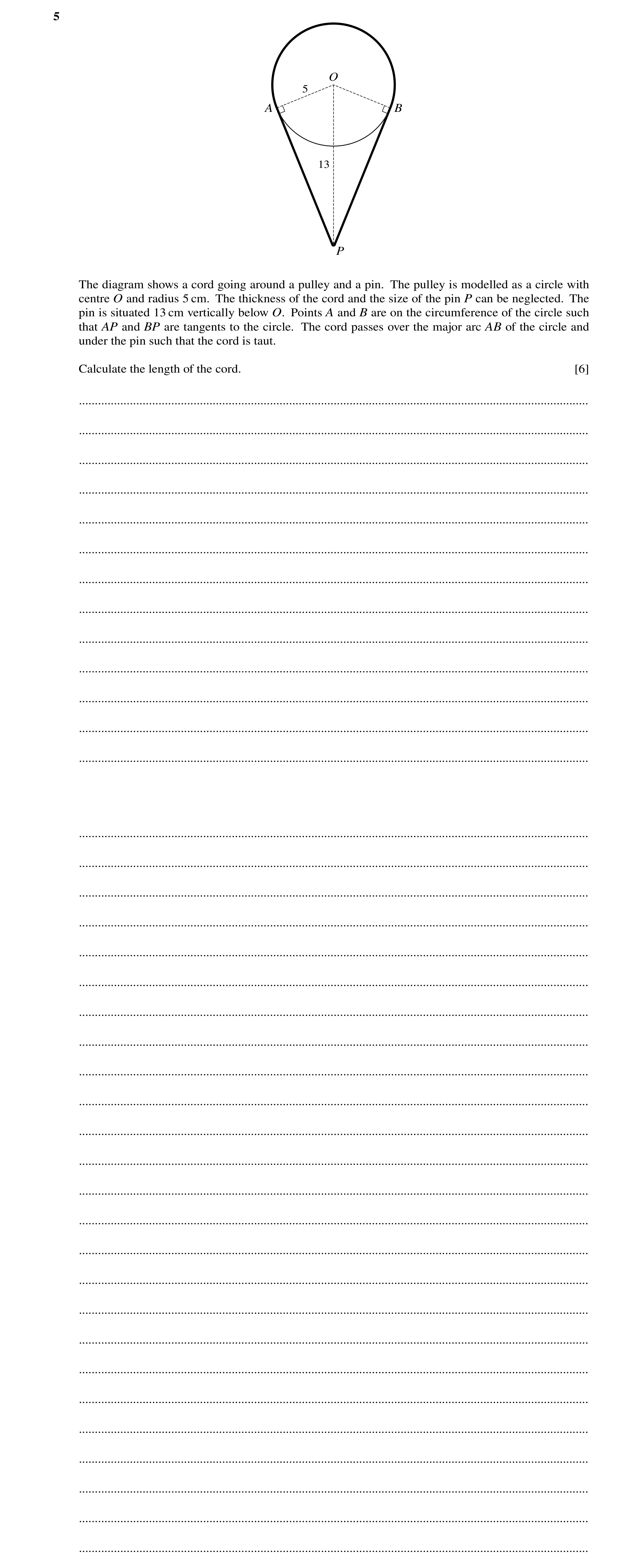
![Question 69: tan 1 tan 1 2 7 (a) Show that + [4] 1 + cos 1 1 −cos 1 sin 1 cos 1. .....................................................................…](https://img.pastlit.com/crops/1991099c-f282-4ad2-b48c-b75246f7080d/q7.webp)
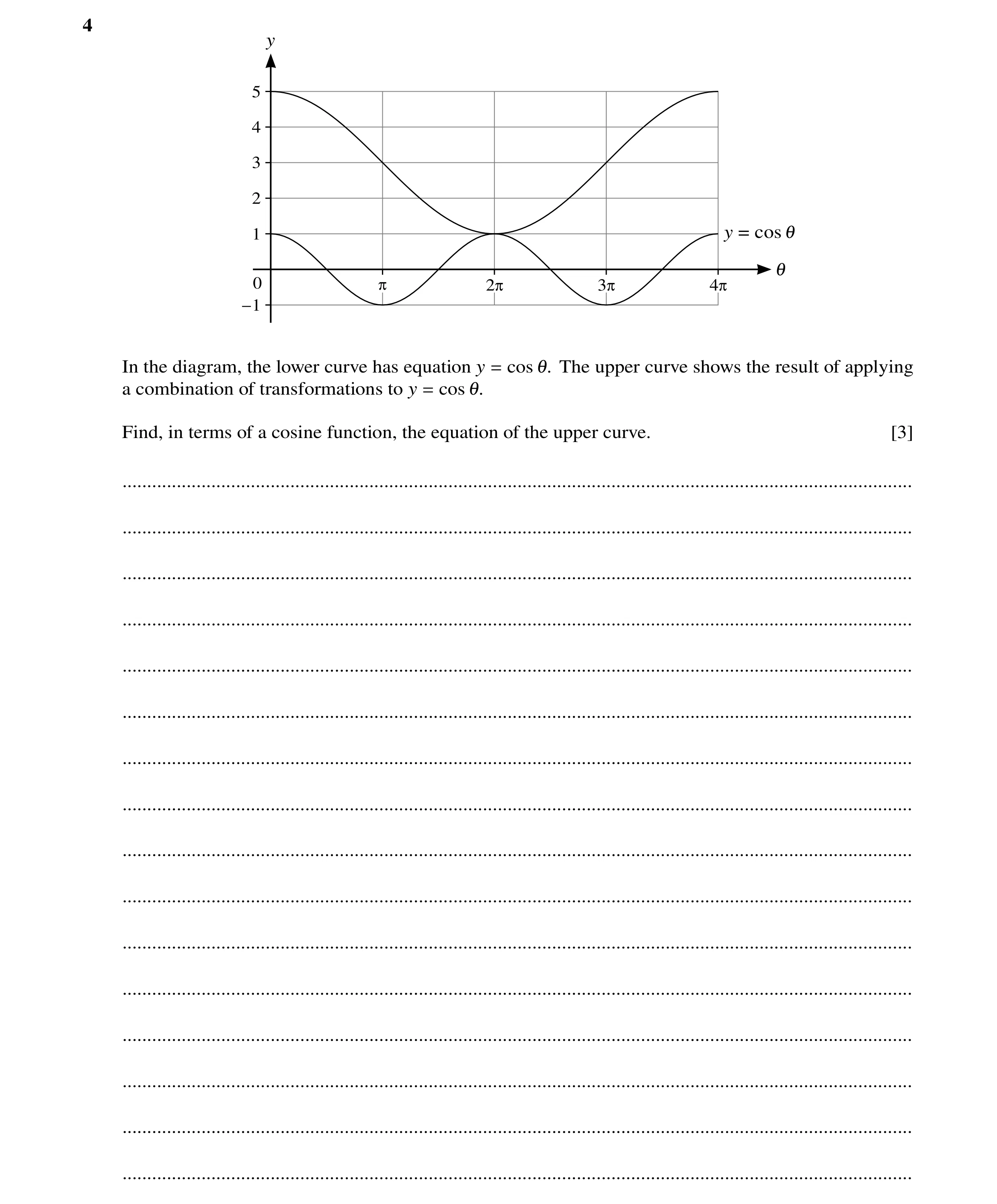 56 / 136
![Question 71: sin 1 sin 1 7 (a) Show that − 2 tan21. [3] 1 −sin 1 1 + sin 1 ...........................................................................…](https://img.pastlit.com/crops/e41441a4-b20a-475e-9d56-bab903e528ec/q7.webp)
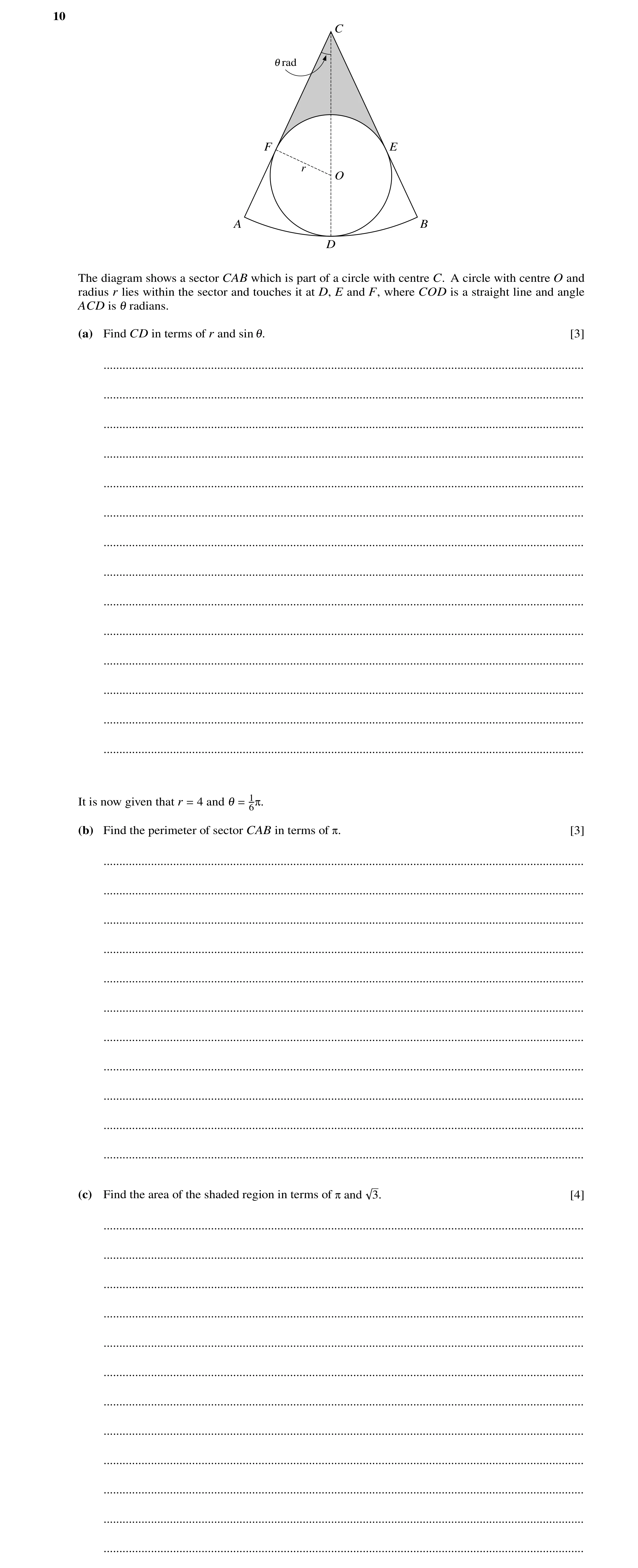
![Question 73: @ A @ A 1 1 1 6 (a) Prove the identity x 1 [4] cosx −tan sin x + tan x. .................................................................…](https://img.pastlit.com/crops/713c68e6-741e-44a8-98b9-347134cd094e/q6.webp) 61 / 136
61 / 136![Question 74: 3 Solve the equation 3 1 for [5] tan21 + = 0Å < 1 < 180Å. tan21 ...........................................................................…](https://img.pastlit.com/crops/641233a6-125c-47d4-9a3c-a5f62ff4618f/q3.webp) 62 / 136
62 / 136
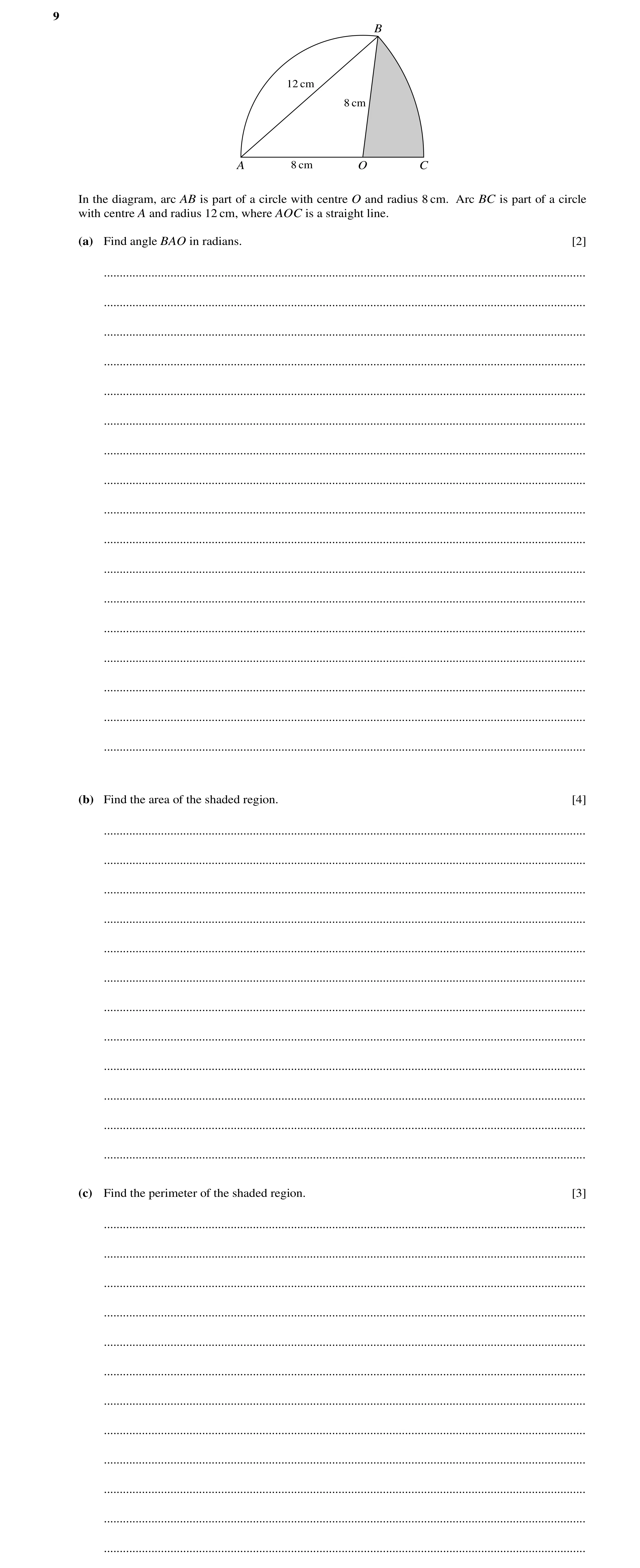
![Question 77: tan 1 + 2 sin 1 3 Solve the equation = 3 for 0Å < 1 < 180Å. [4] tan 1 −2 sin 1 ............................................................…](https://img.pastlit.com/crops/7d0dc07a-d426-4ede-a180-c1d512861f86/q3.webp) 67 / 136
67 / 136![Question 78: −2 sin21 7 (a) Prove the identity 1 −tan21. [2] 1 −sin21 ................................................................................…](https://img.pastlit.com/crops/c655ace2-10ce-4e87-af56-2c3eac412b3e/q7.webp)
![Question 79: (a) Prove the identity 1 + sin x −1 −sin x 4 tan x . [4] 1 −sin x 1 + sin x cosx ........................................................…](https://img.pastlit.com/crops/74de4793-5af5-455a-8c1d-5ef34c00f3a4/q10.webp)
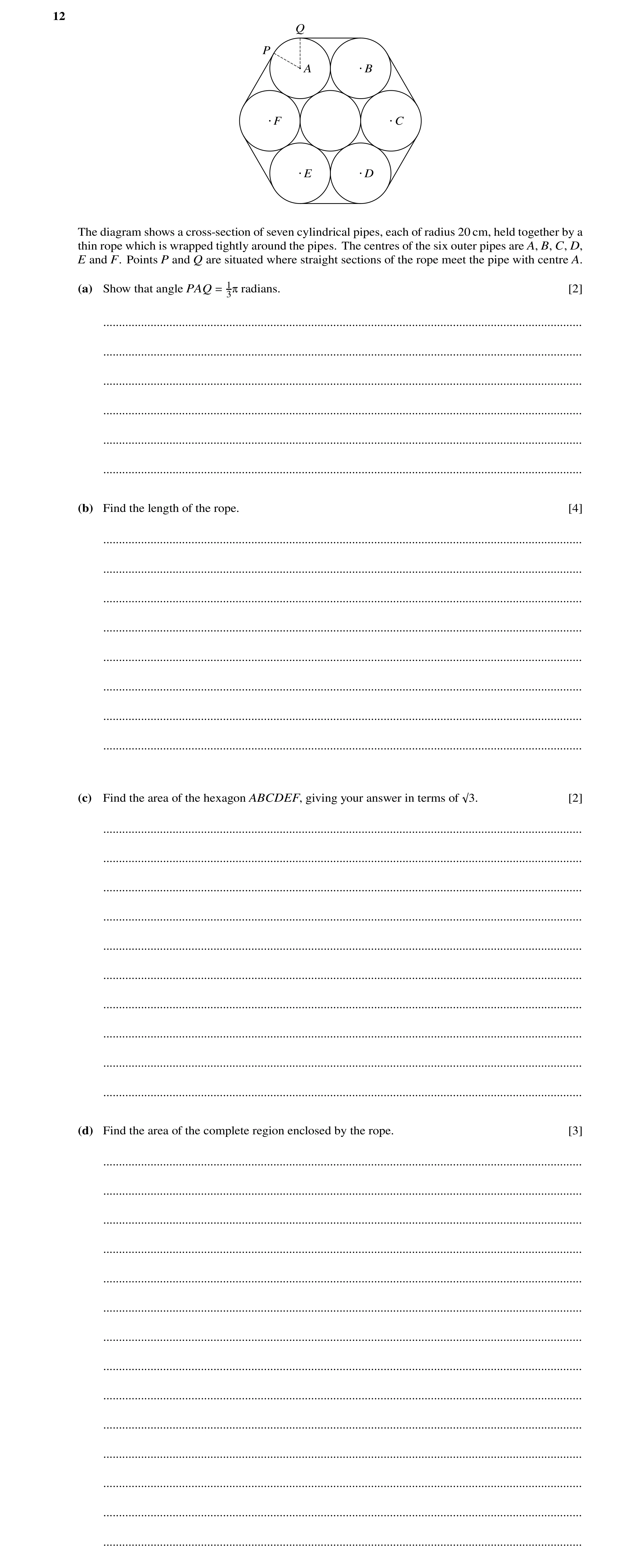
![Question 81: (a) Show that the equation tan x + sin x = k, tan x −sin x where k is a constant, may be expressed as 1 + cos x = k. [2] 1 −cos x .........…](https://img.pastlit.com/crops/0e3a3850-ab7b-48e2-a84a-cd186d51fd5f/q4.webp) 74 / 136
74 / 136![Question 82: Solve, by factorising, the equation 6 cos tan cos 4 tan 0, 1 1 −3 1 + 1 −2 = for [4] 0Å ≤1 ≤180Å. .........................................…](https://img.pastlit.com/crops/b833ab26-35a5-4bc6-8cbb-b6d425ca3110/q3.webp) 75 / 136
75 / 136![Question 83: 1 Solve the equation 2 cos 1 = 7 − for −90Å < 1 < 90Å. [4] cos 1 ..........................................................................…](https://img.pastlit.com/crops/2d49e285-67e5-4252-9b41-ab26cd3a22b7/q1.webp) 76 / 136
76 / 136 77 / 136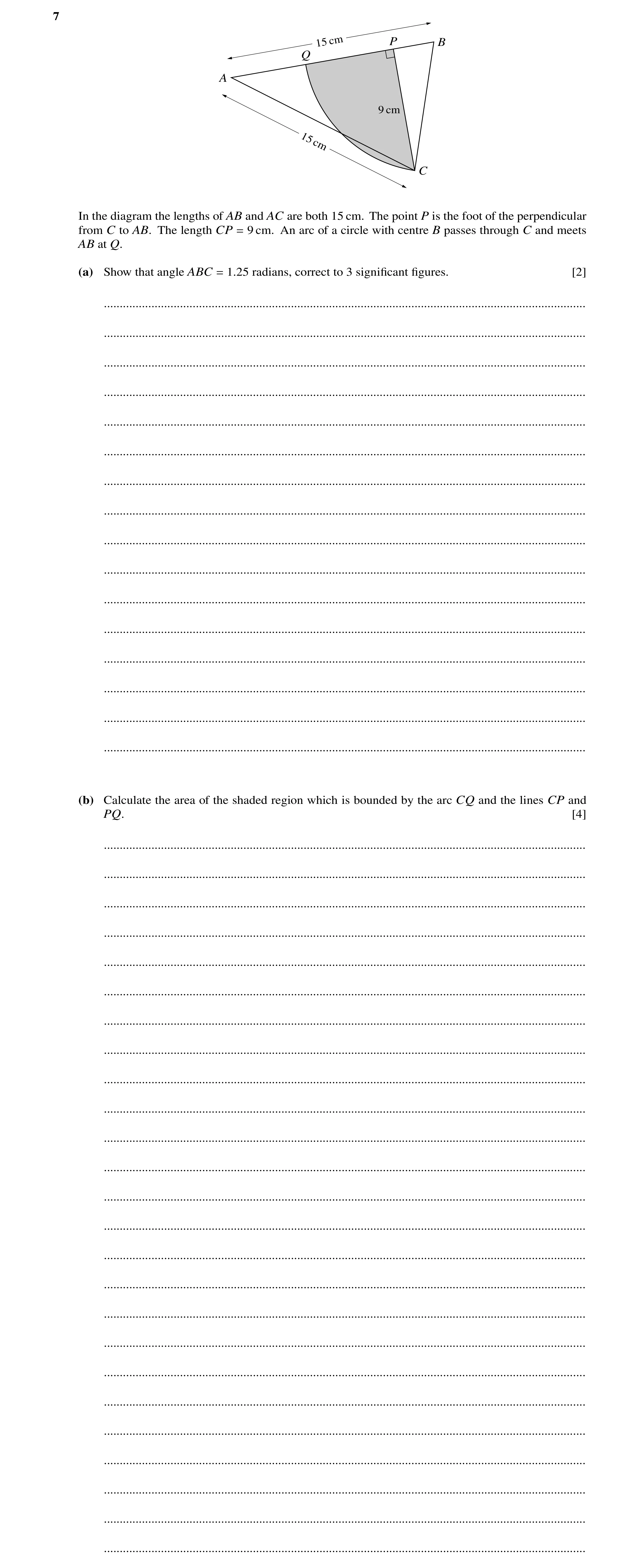
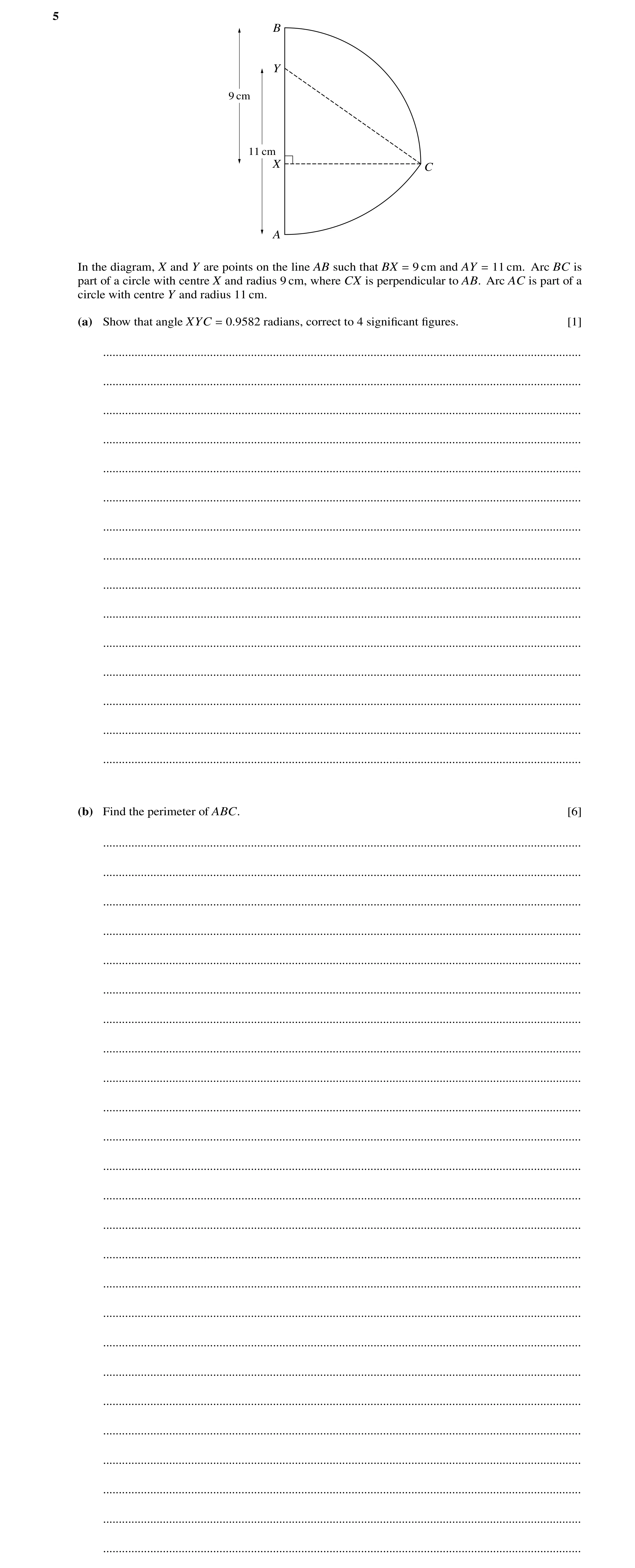
![Question 87: (a) Show that sin 1 + 2 cos 1 −sin 1 −2 cos 1 4 [4] cos 1 −2 sin 1 cos 1 + 2 sin 1 5 cos21 −4. ..........................................…](https://img.pastlit.com/crops/9d4458e9-0d16-4727-96d2-dd938c9de8af/q7.webp)
![Question 89: 5 (a) Solve the equation 6 y 0. [4] + y −7 = ..............................................................................................…](https://img.pastlit.com/crops/423e4ce0-e477-4985-b359-80b0ef55a1be/q5.webp) 85 / 136
85 / 136
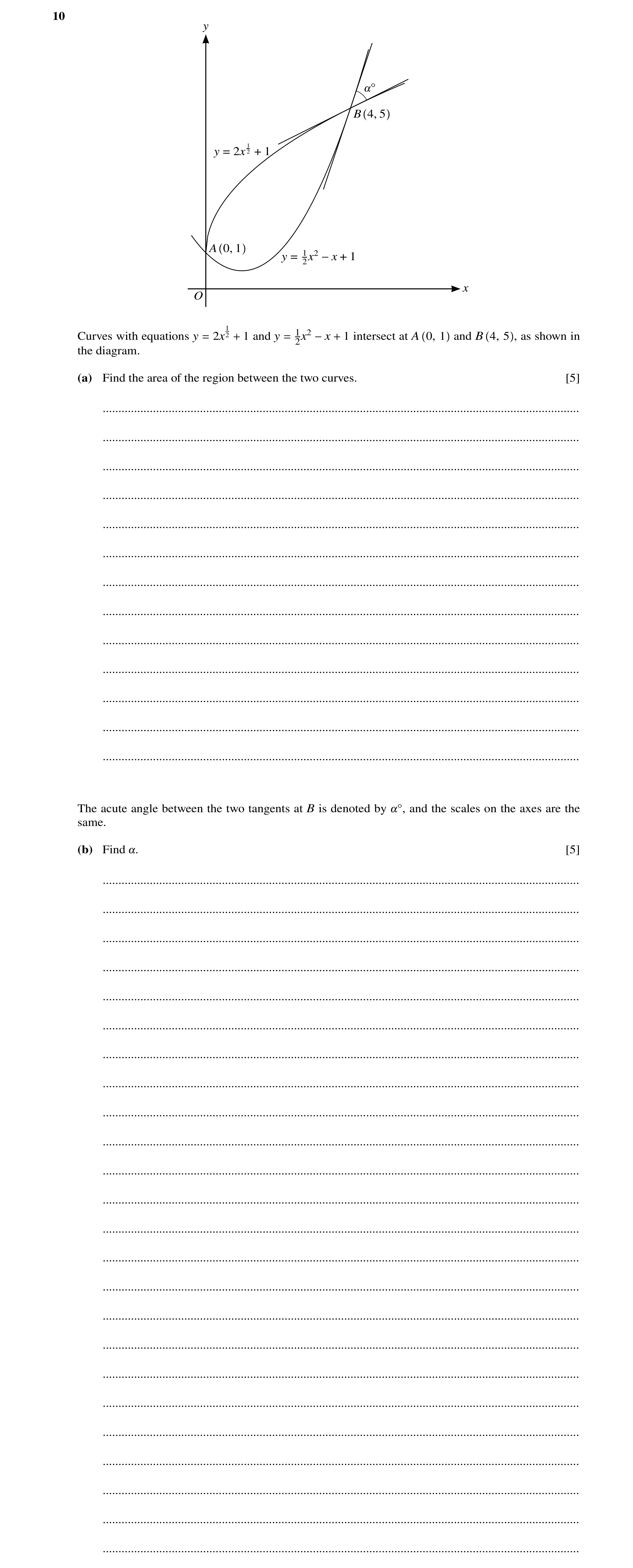
![Question 92: (a) Find the set of values of k for which the equation 8x2 + kx + 2 = 0 has no real roots. [2] ............................................…](https://img.pastlit.com/crops/6aa5094a-97b4-44e8-9ef8-0fce912a145b/q3.webp) 90 / 136
90 / 136![Question 93: sin 1 cos 1 tan21 + 1 7 (a) Prove the identity + [3] sin 1 + cos 1 sin 1 −cos 1 tan21 −1. ...............................................…](https://img.pastlit.com/crops/6aa5094a-97b4-44e8-9ef8-0fce912a145b/q7.webp)
![Question 94: Solve the equation 8 sin21 + 6 cos 1 + 1 = 0 for 0Å < 1 < 180Å. [3] .......................................................................…](https://img.pastlit.com/crops/1fc7b303-e23b-4e63-9c8d-4f517c2a43bf/q1.webp) 93 / 136
93 / 136 94 / 136
![Question 96: (a) By first obtaining a quadratic equation in cos 1, solve the equation tan 1 sin 1 = 1 for 0Å < 1 < 360Å. [5] ............................…](https://img.pastlit.com/crops/ce7ecc32-4106-4e1a-8d22-9f39d9f58662/q7.webp)
![Question 97: Solve the equation 4 sin 1 + tan 1 = 0 for 0Å < 1 < 180Å. [3] .............................................................................…](https://img.pastlit.com/crops/2303a84f-0764-4422-9ee3-cd4736f72e70/q1.webp) 97 / 136
97 / 136![Question 98: A curve has equation y = 2 + 3 sin 12x for 0 ≤x ≤4π. (a) State greatest and least values of y. [2] ........................................…](https://img.pastlit.com/crops/2303a84f-0764-4422-9ee3-cd4736f72e70/q7.webp) 98 / 136
98 / 136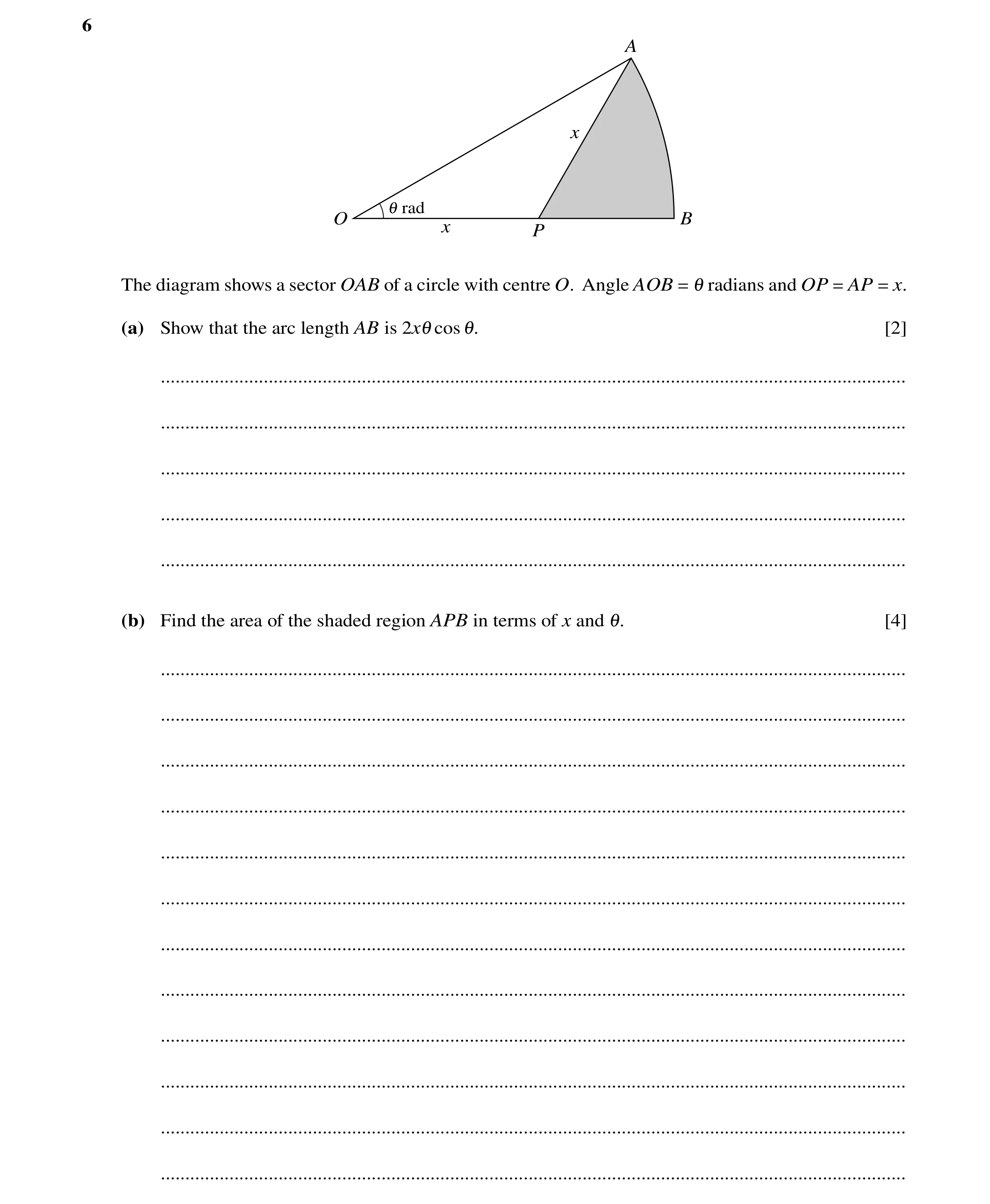 99 / 136
 100 / 136
 101 / 136
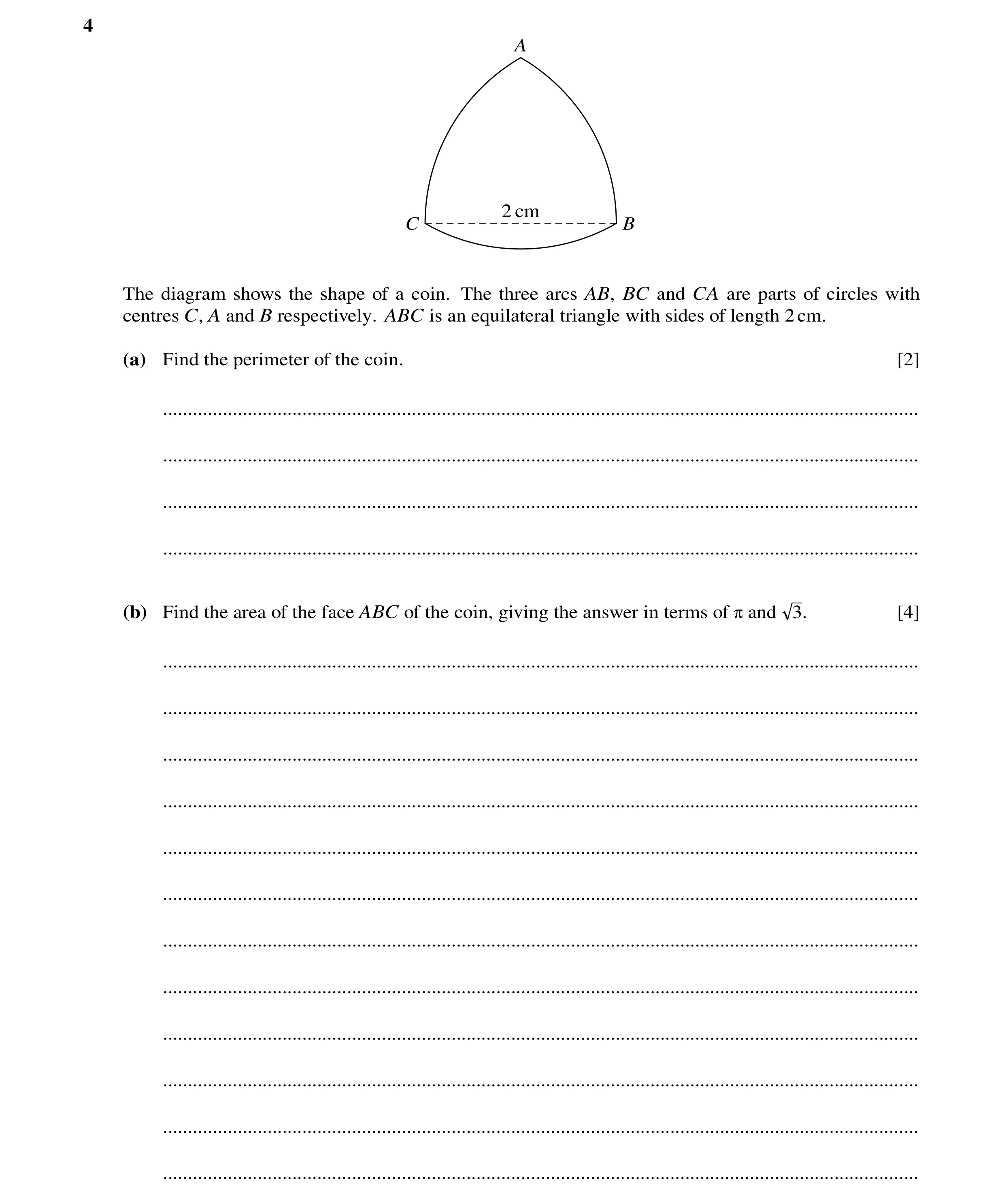 102 / 136
 103 / 136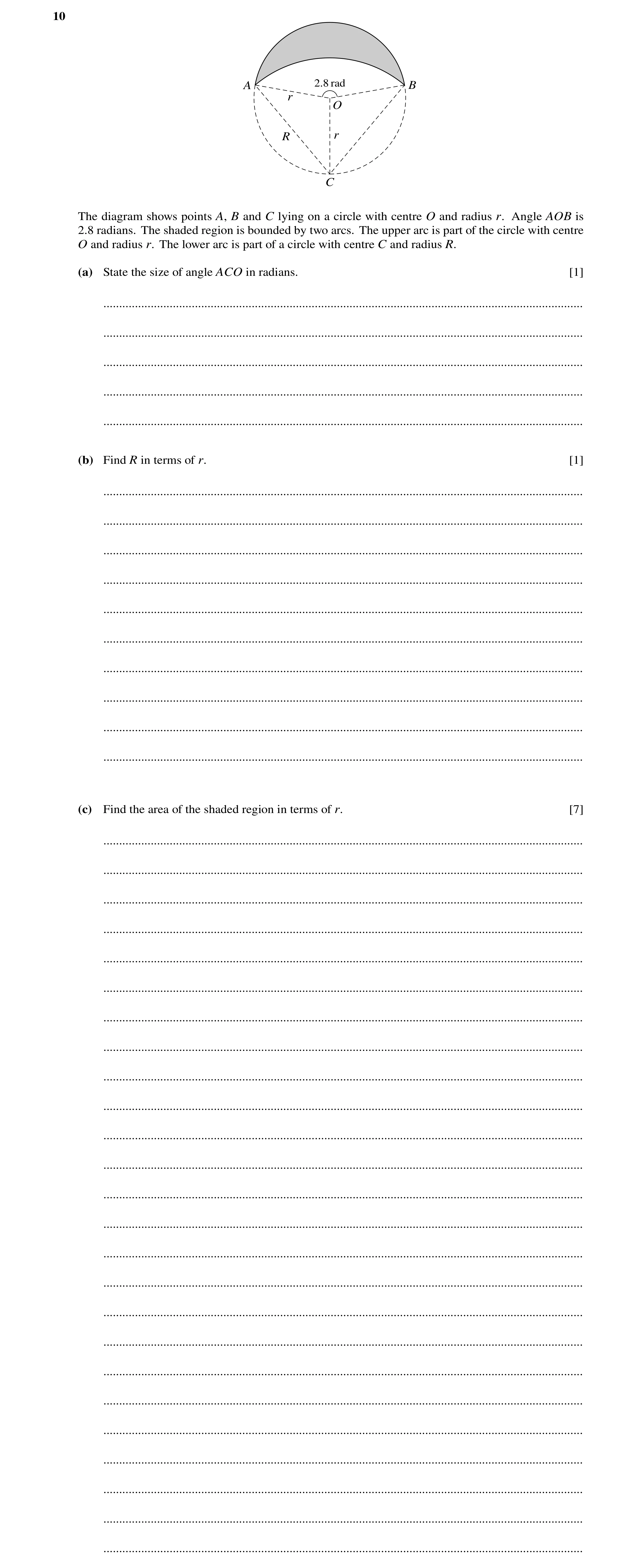
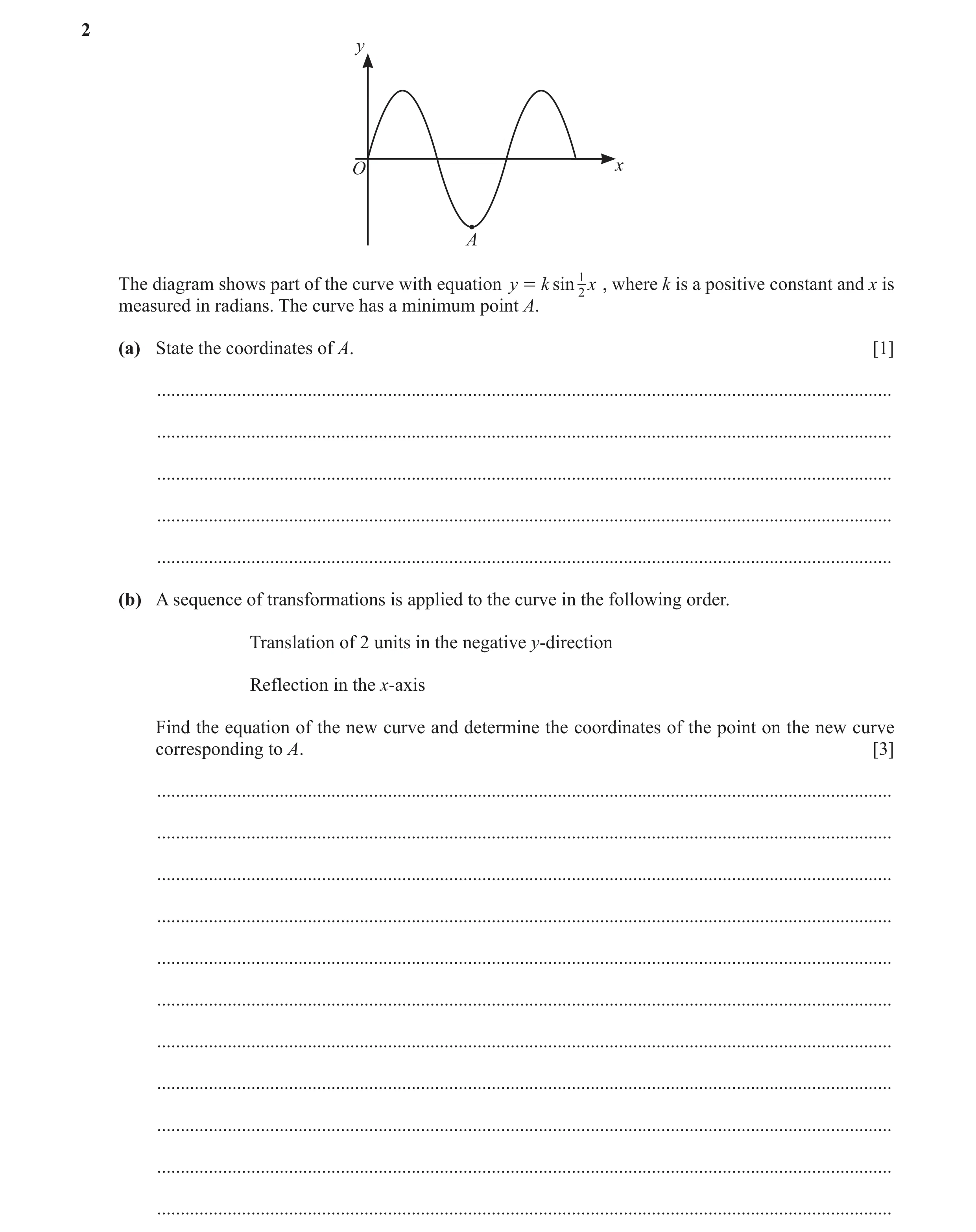 106 / 136
![Question 106: ( sin i + cos i) 2 - 1 i . [3]4 (a) Prove that 2 / 2 tan cos i ............................................................................…](https://img.pastlit.com/crops/bd8c5d94-e4ec-43fc-8e01-368b5717dc5c/q4.webp) 107 / 136
107 / 136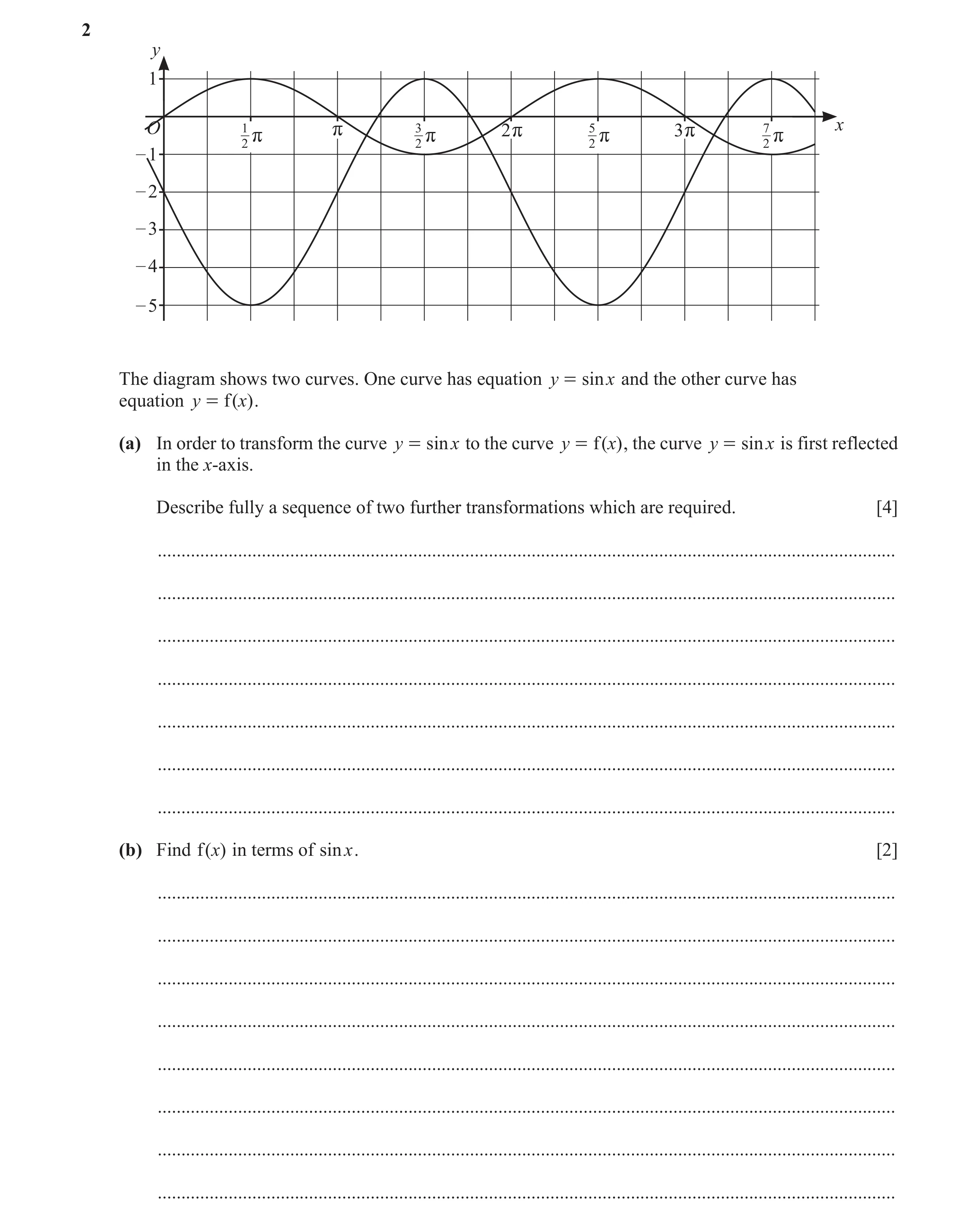 108 / 136
![Question 108: sin 2 x - cos x - 15 (a) Prove the identity / - cos x . [3] 1 + cos x .....................................................................…](https://img.pastlit.com/crops/67c066b8-3770-43fa-b902-931b865fb047/q5.webp) 109 / 136
109 / 136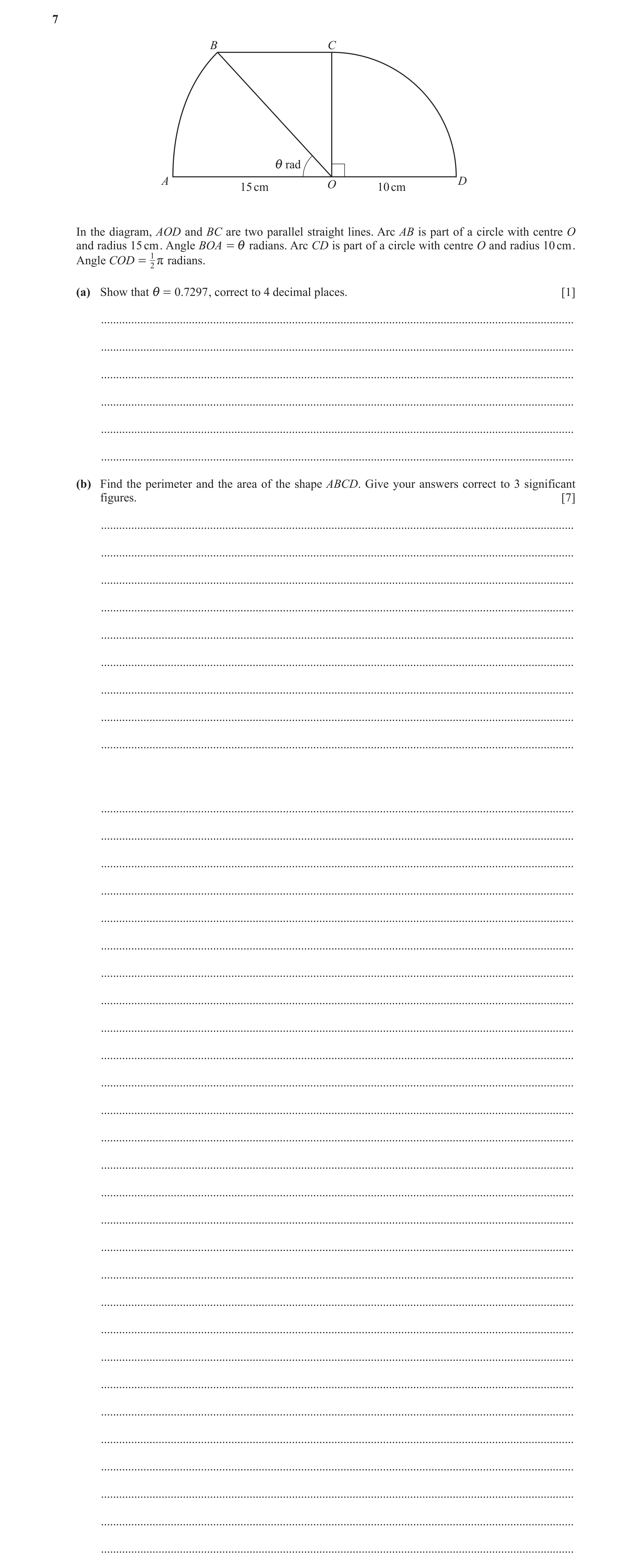
![Question 110: tan i3 (a) Show that the equation + 12 = 0 can be expressed as cos i 12 sin 2i - 7 sin i - 12 = 0 . [3] ...................................…](https://img.pastlit.com/crops/4e22790a-a310-47f2-8a73-721932d73647/q3.webp) 112 / 136
112 / 136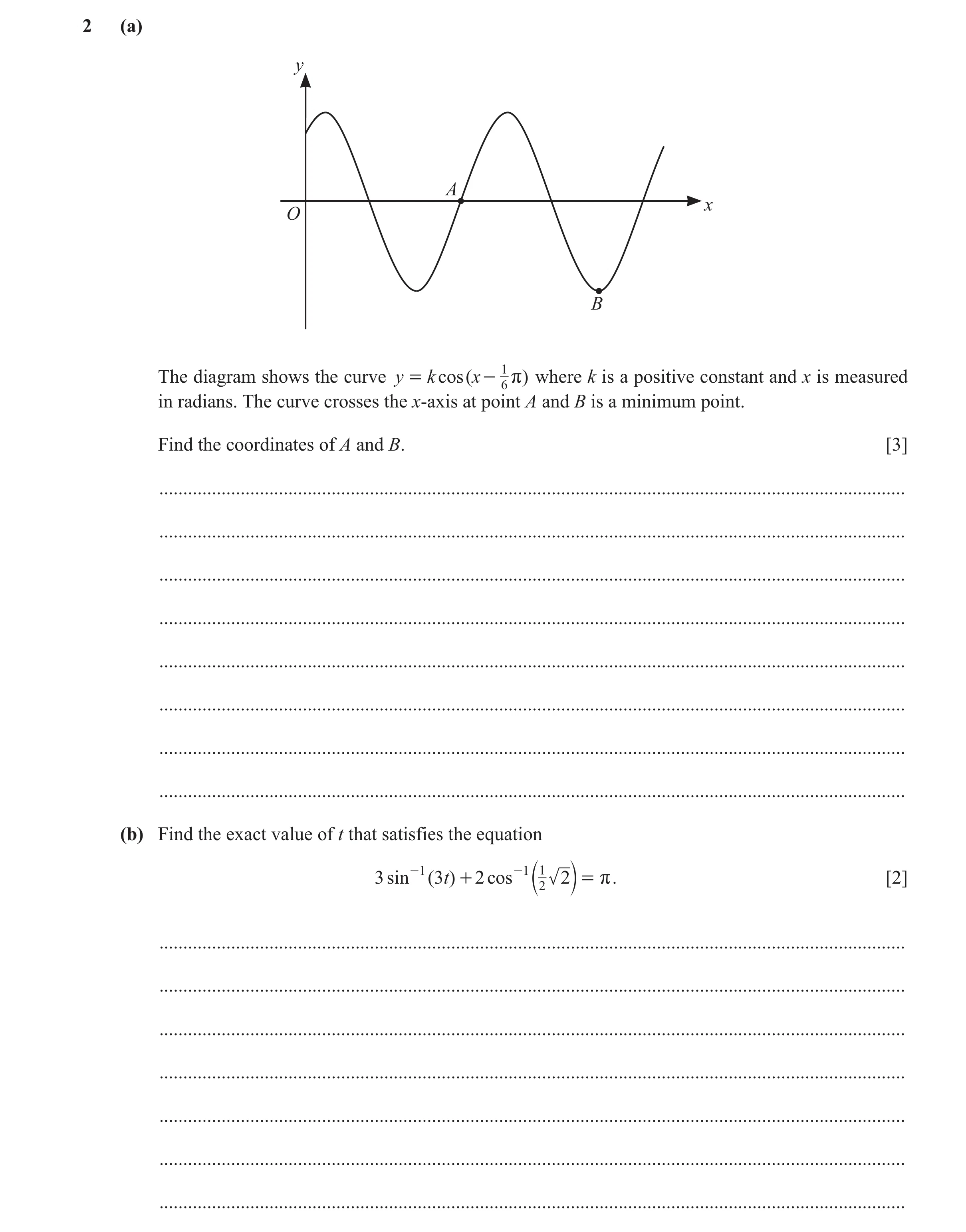 113 / 136
 114 / 136
![Question 113: (a) It is given that b is an angle between 90° and 180° such that sin b = a . Express tan 2b - 3 sin b cos b in terms of a. [3] ...........…](https://img.pastlit.com/crops/7ce854aa-e4b4-4ed4-84a0-d1812ac3db56/q8.webp)
![Question 114: Find the exact solution of the equation 1 3 1 1 cos r + tan 2 x + = 0 for - r 1 x 1 r . [2] 6 2 4 4 .......................................…](https://img.pastlit.com/crops/213fb9ab-55a4-4cb9-b320-df7a32b7525b/q2.webp) 117 / 136
117 / 136![Question 115: Solve the equation 4 sin 4 i + 12 sin 2 i - 7 = 0 for 0° G i G 360° . [4] .................................................................…](https://img.pastlit.com/crops/213fb9ab-55a4-4cb9-b320-df7a32b7525b/q4.webp) 118 / 136
118 / 136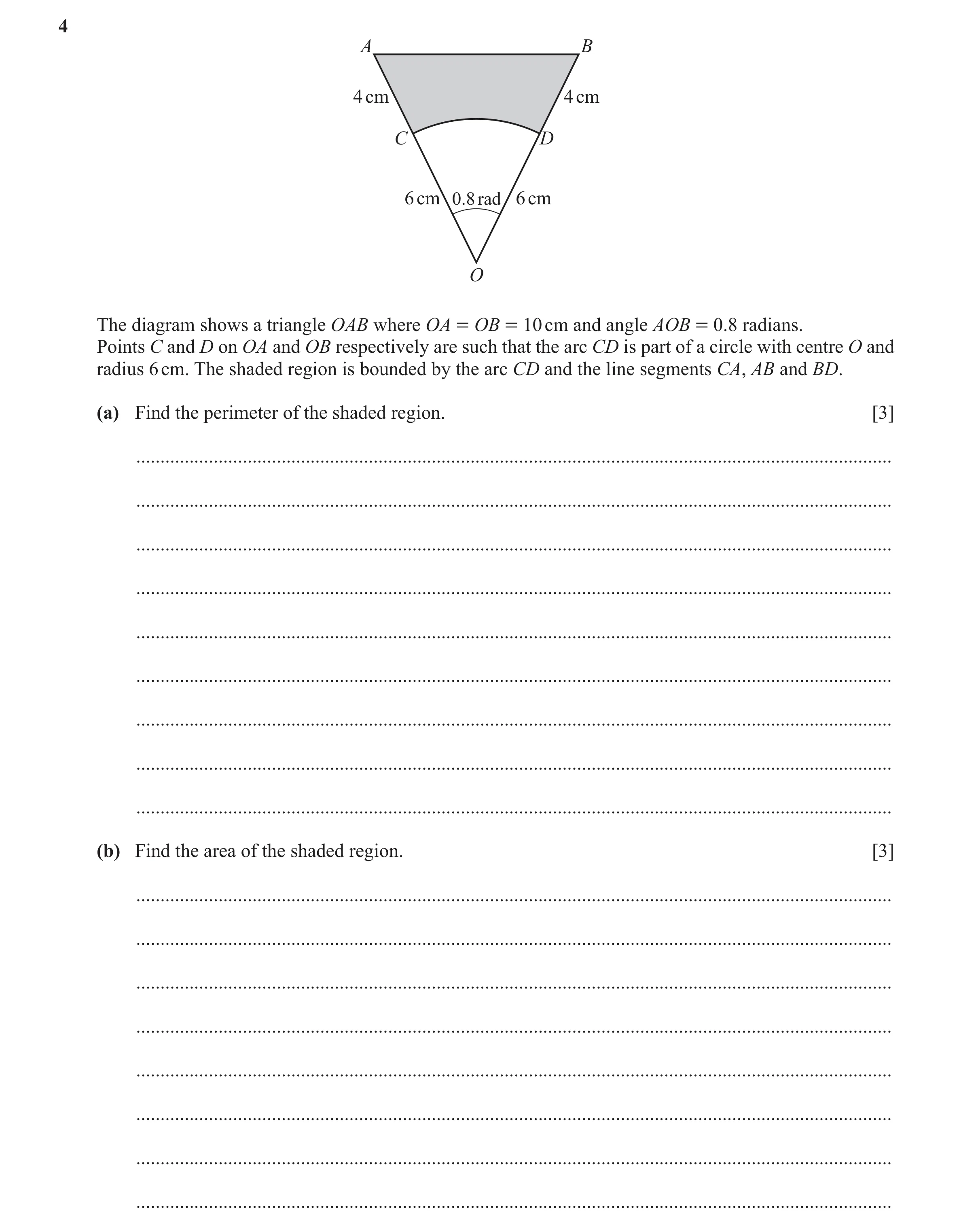 119 / 136
![Question 117: 4 2 2 8 sin i - 5 sin i 7 (a) Show that 3 tan i + 5 sin i / . [3] 1 - sin 2 i .............................................................…](https://img.pastlit.com/crops/3cdac5a4-8a23-4583-a570-d2901d64686a/q7.webp)
![Question 118: 1 Solve the equation 6 sin i = 1 + for - 180° 1 i 1 180° . [4] sin i ......................................................................…](https://img.pastlit.com/crops/443e1411-f9ba-4330-bec3-5eed76cbc082/q1.webp) 122 / 136
122 / 136![Question 119: The equation of a curve is y = 4 cos 2x + 3 for 0 G x G 2 r. (a) State the greatest and least possible values of y. [2] ...................…](https://img.pastlit.com/crops/fd7f1dcf-dd85-463a-affa-12775d64d07f/q5.webp) 123 / 136
123 / 136![Question 120: Solve the equation 4 sin i tan i = 1 + 5 cos i for - 180° 1 i 1 180° . [6] ................................................................…](https://img.pastlit.com/crops/4b0c72ad-9eb0-4f13-8801-e6da23fe9a3b/q5.webp) 124 / 136
124 / 136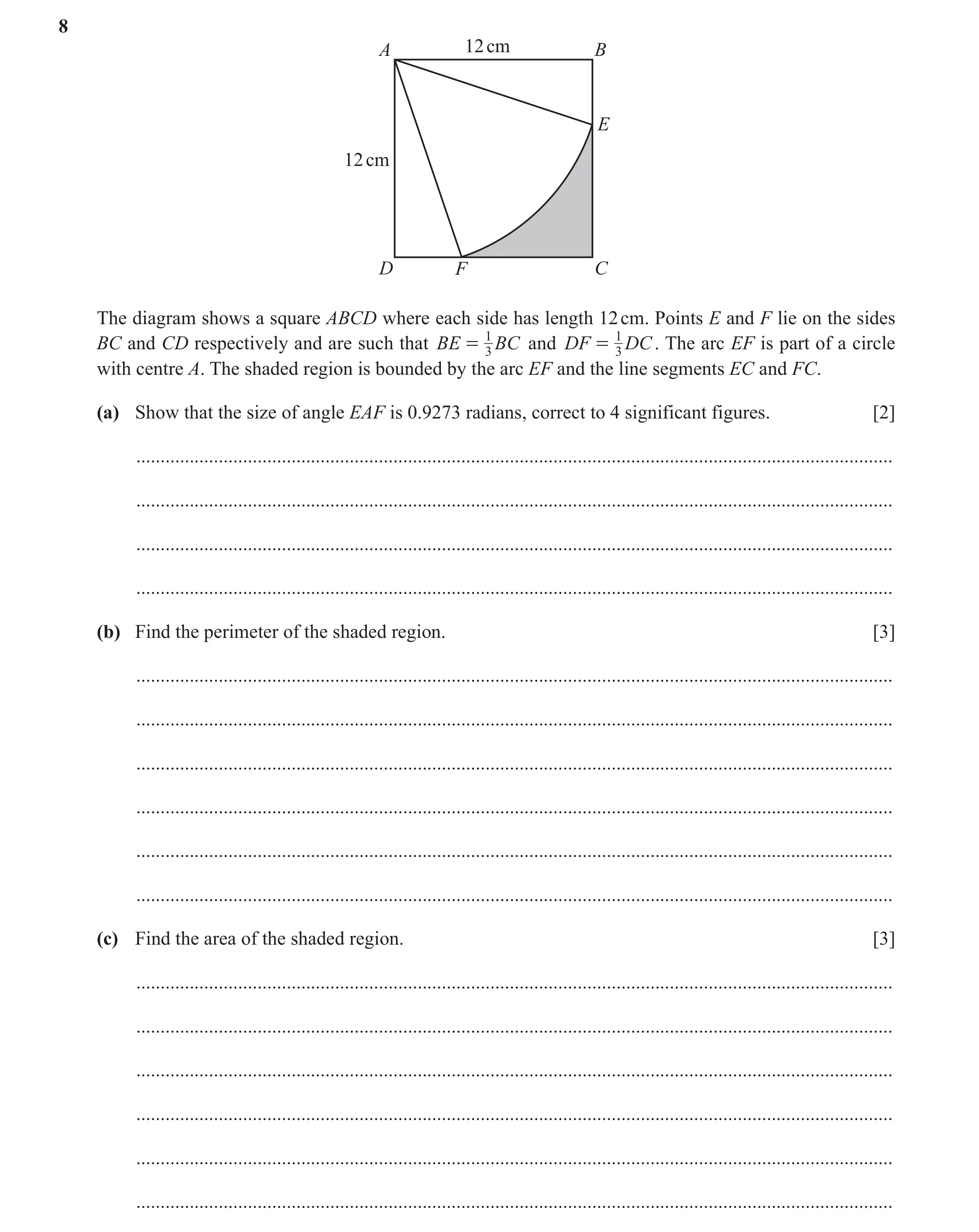 125 / 136
![Question 122: (a) Use completing the square to find the exact solutions of the equation 4x 2 - 4 x - 1 = 0 . [2] ........................................…](https://img.pastlit.com/crops/ad5ed91a-a99e-46a1-9126-21b183aa9272/q3.webp) 126 / 136
126 / 136![Question 123: (a) Sketch the graph of y = 3 sin x + 2 for 0 G x G 2 r . [2] y 3 0 1 r r r 2 r x 2 2 (b) Determine the number of solutions in the interval…](https://img.pastlit.com/crops/0e24c104-8d1d-48f0-97c7-665e1c0c5363/q6.webp)
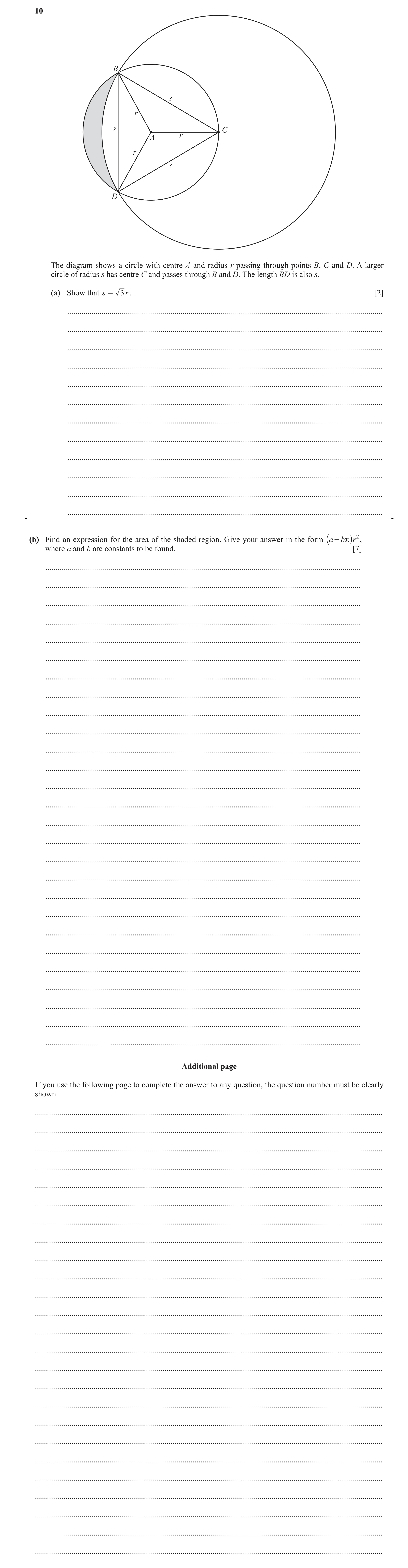
![Question 125: (a) Solve the equation tan -1 ( 5x - 3) =- 1 r . [2] 4 ....................................................................................…](https://img.pastlit.com/crops/126c78a5-90b1-484e-ac58-5f839273be50/q2.webp) 132 / 136
132 / 136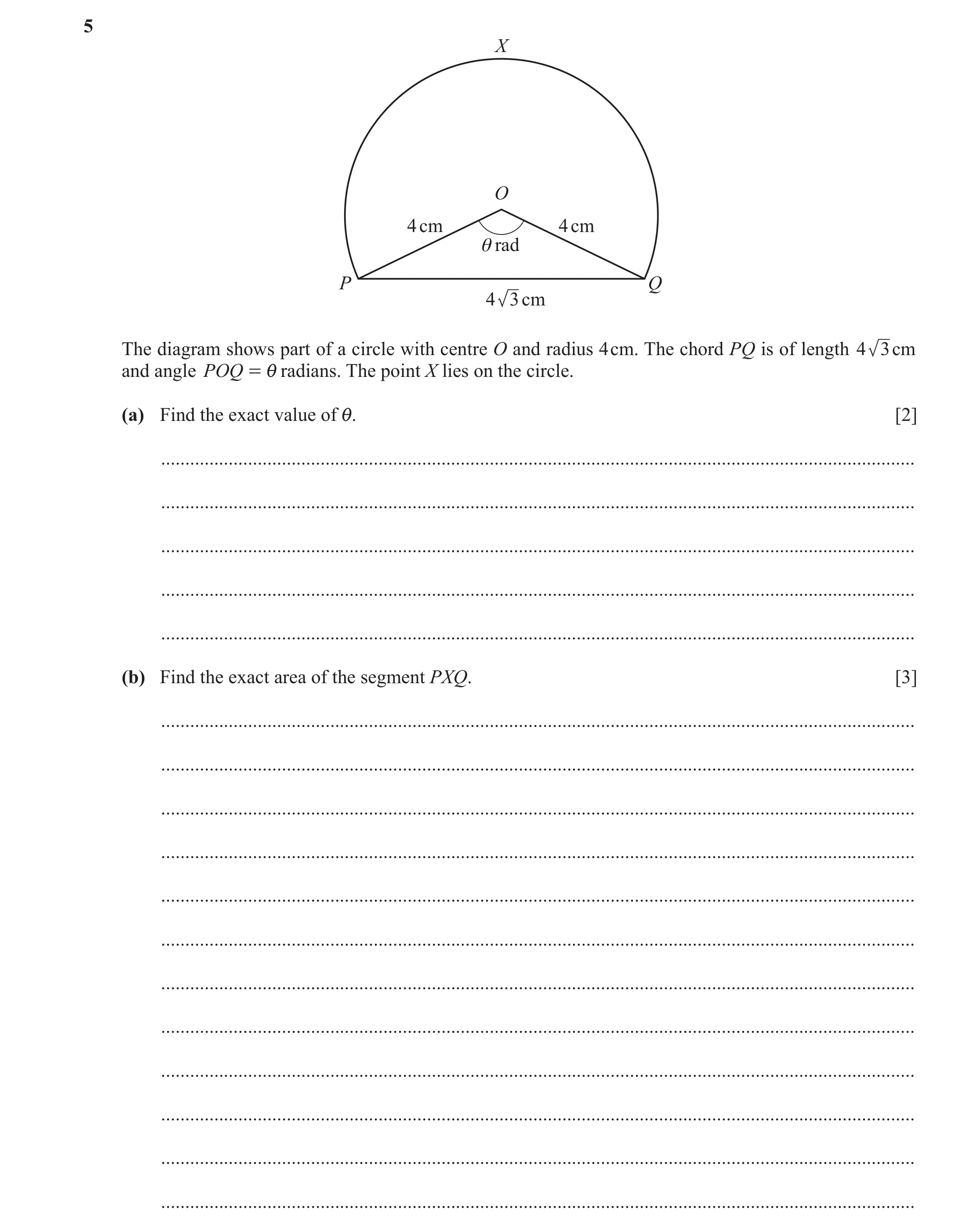 133 / 136
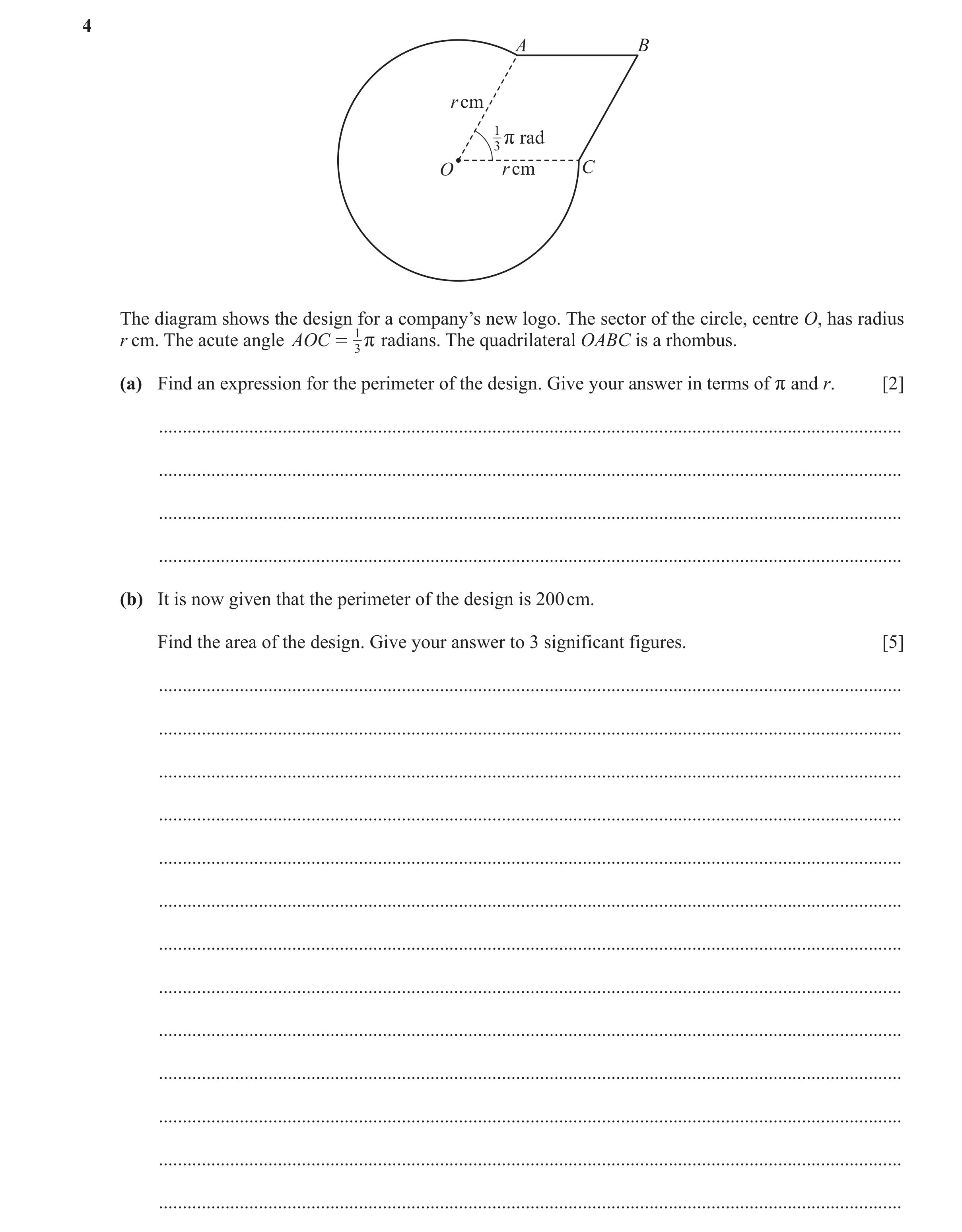 134 / 136
![Question 128: (a) Show that the equation 1 4 6 sin i + = tan i sin i can be written in the form 6 cos 2i - cos i - 2 = 0 . [3] ..........................…](https://img.pastlit.com/crops/a3d47a8a-f3b0-443a-9d96-08eed7643bf0/q6.webp)
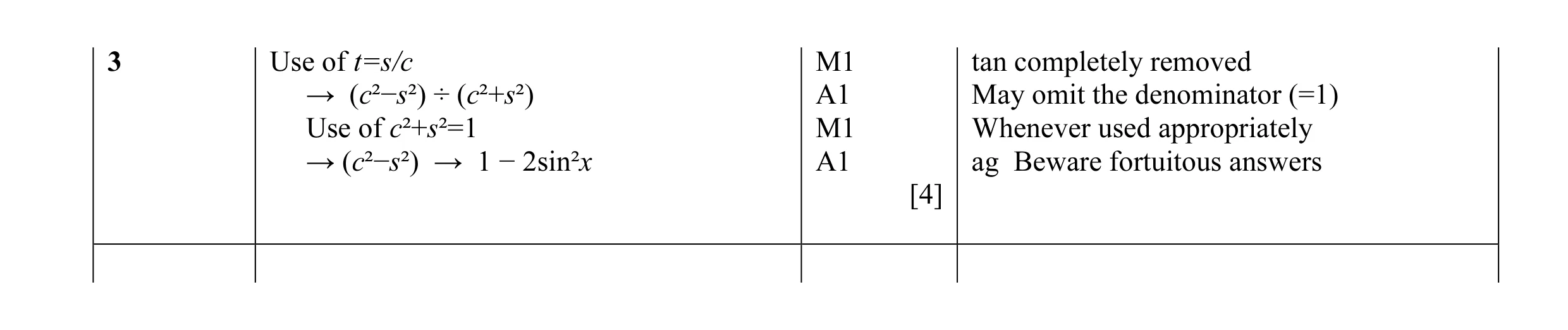 4
4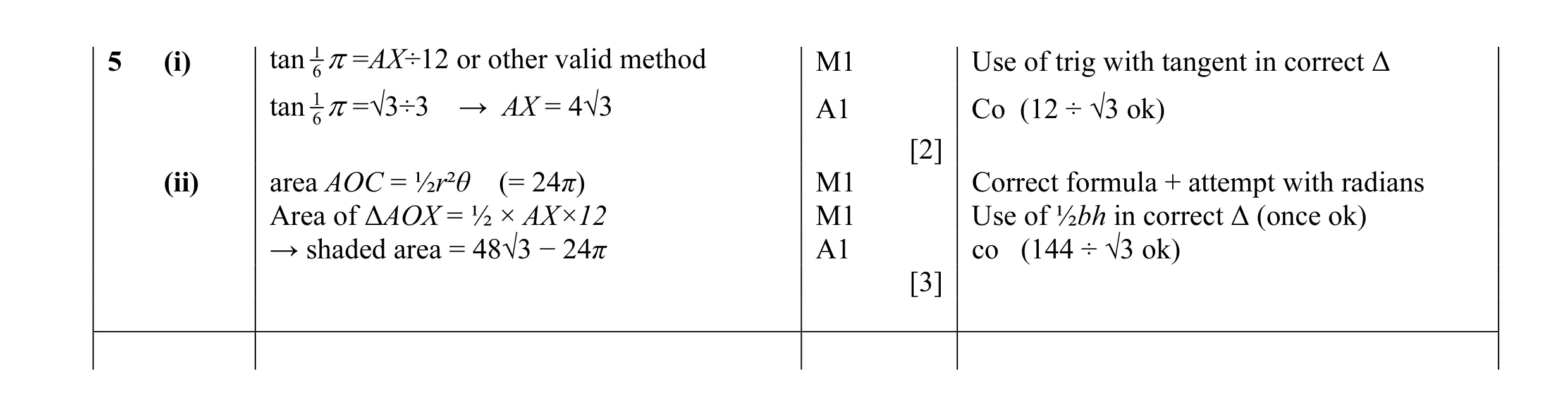 5
5 3
3 5
5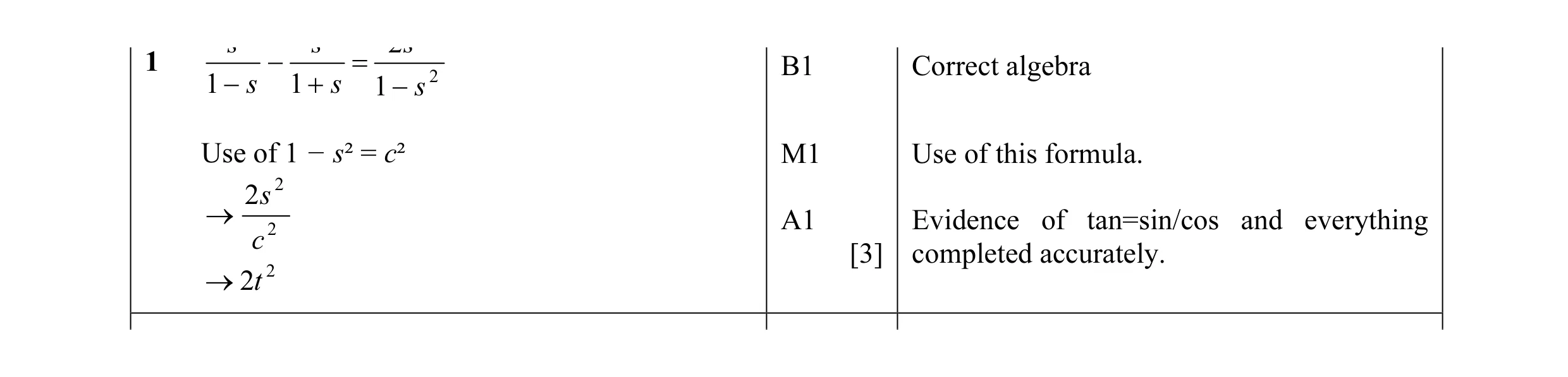 3
3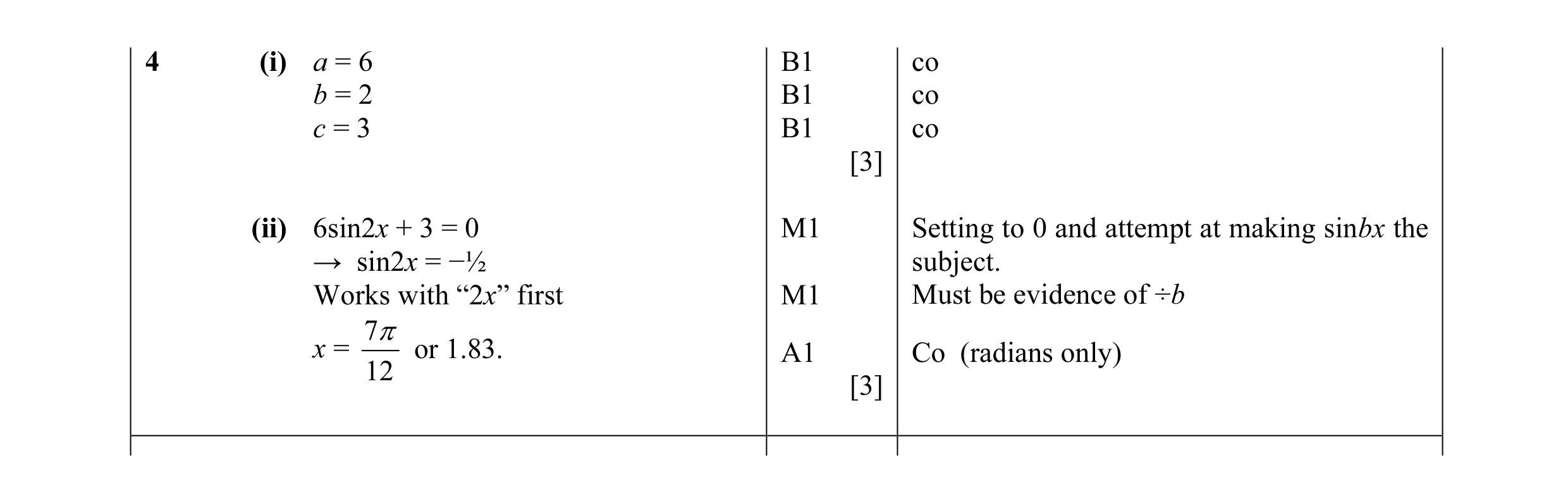 6
6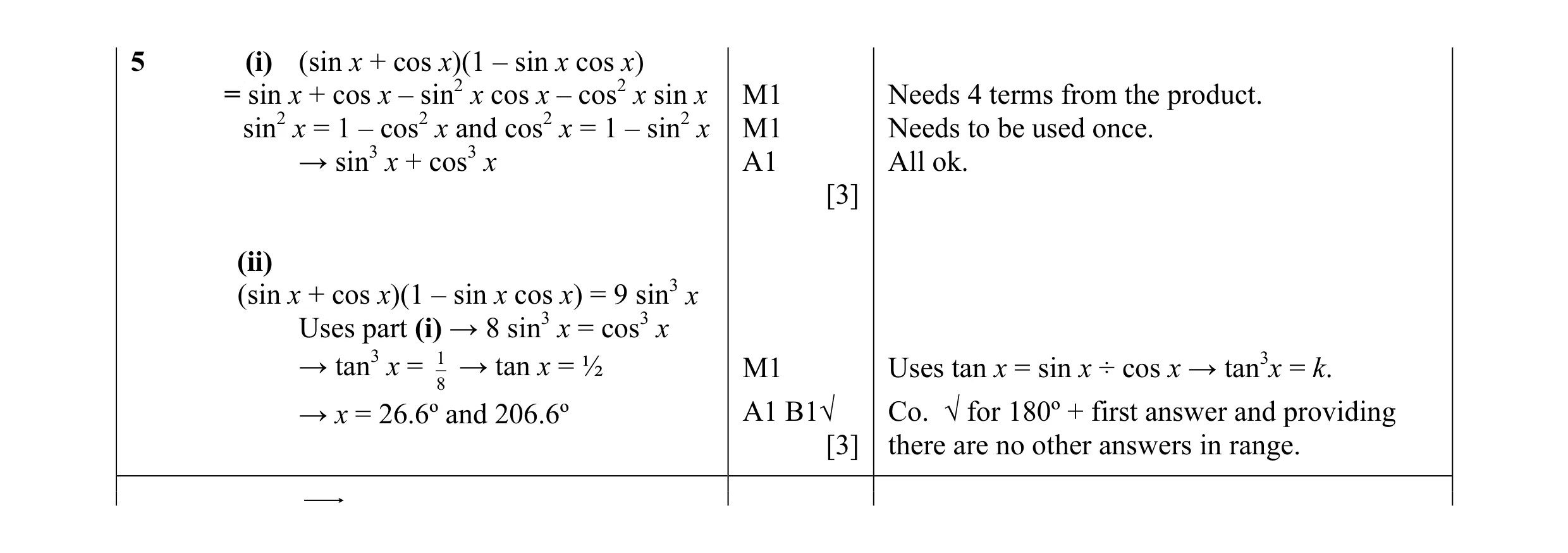 6
6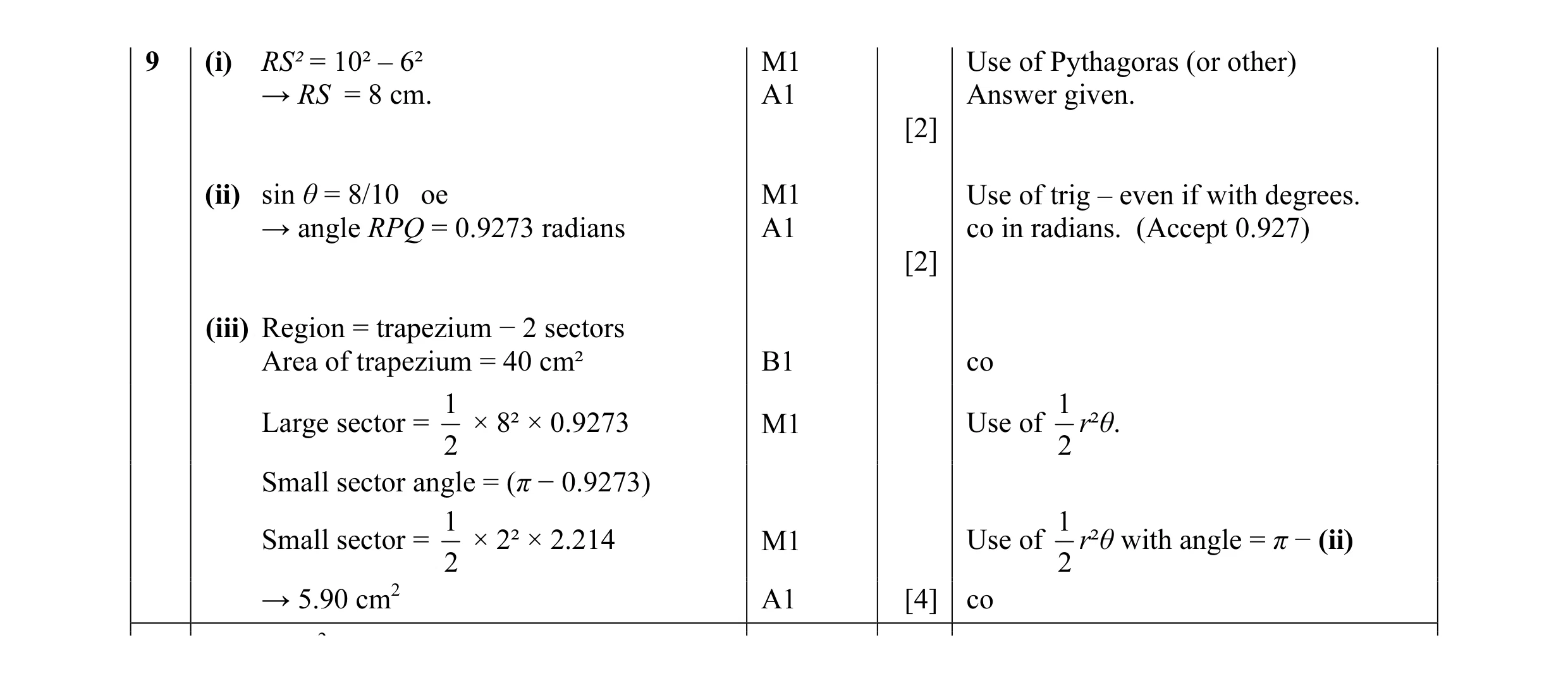 8
8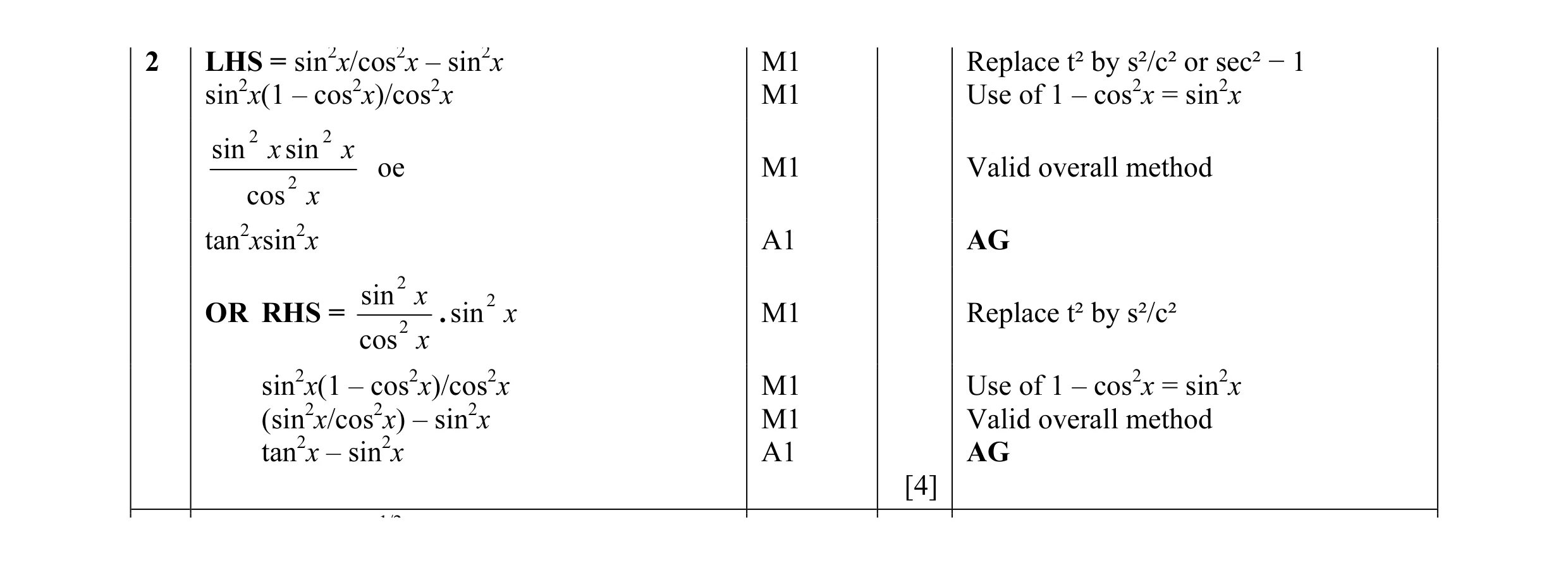 4
4 4
4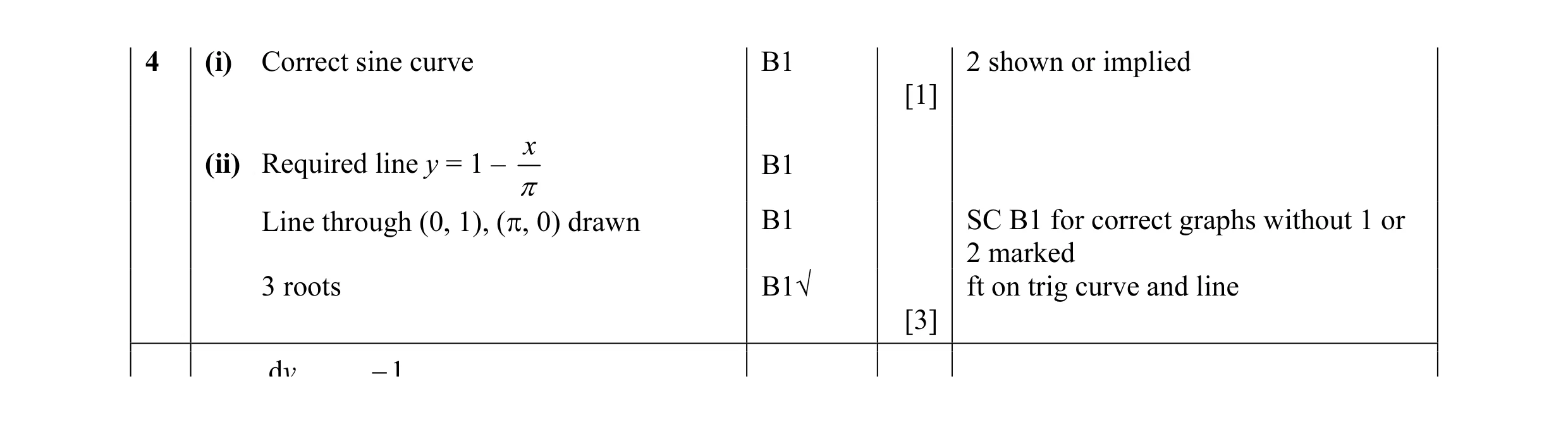 4
4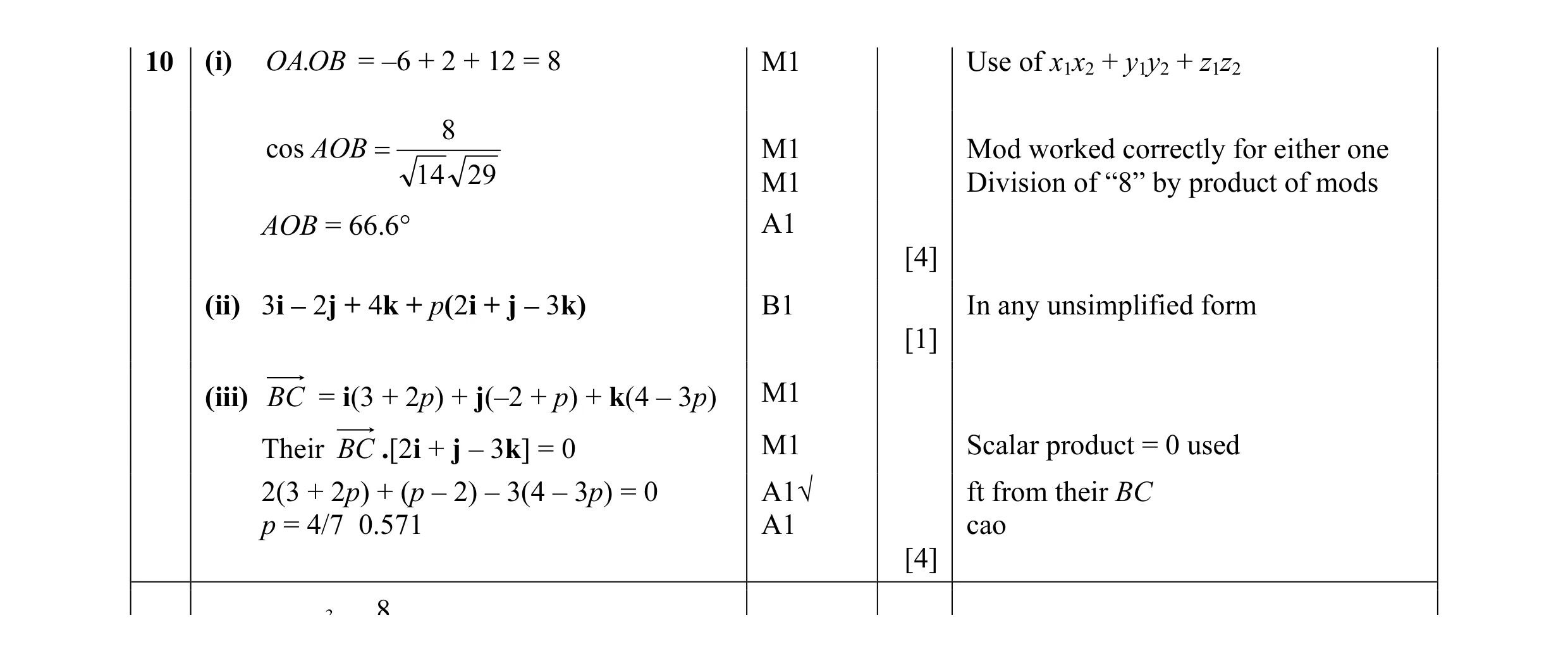 9
9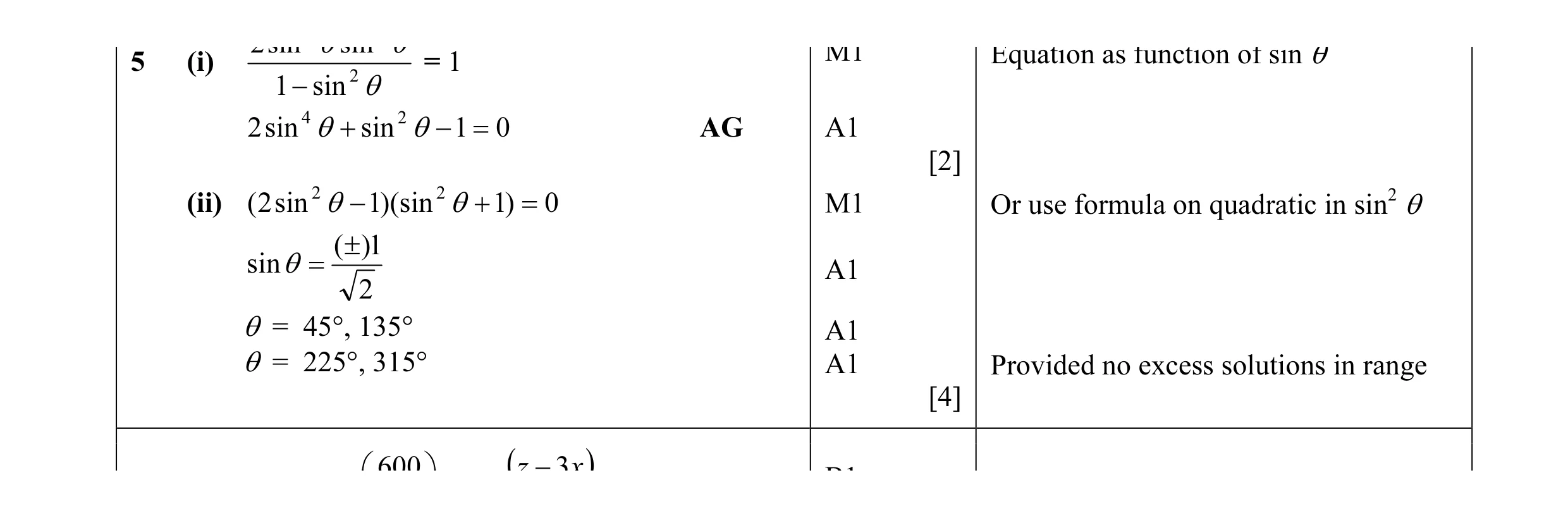 6
6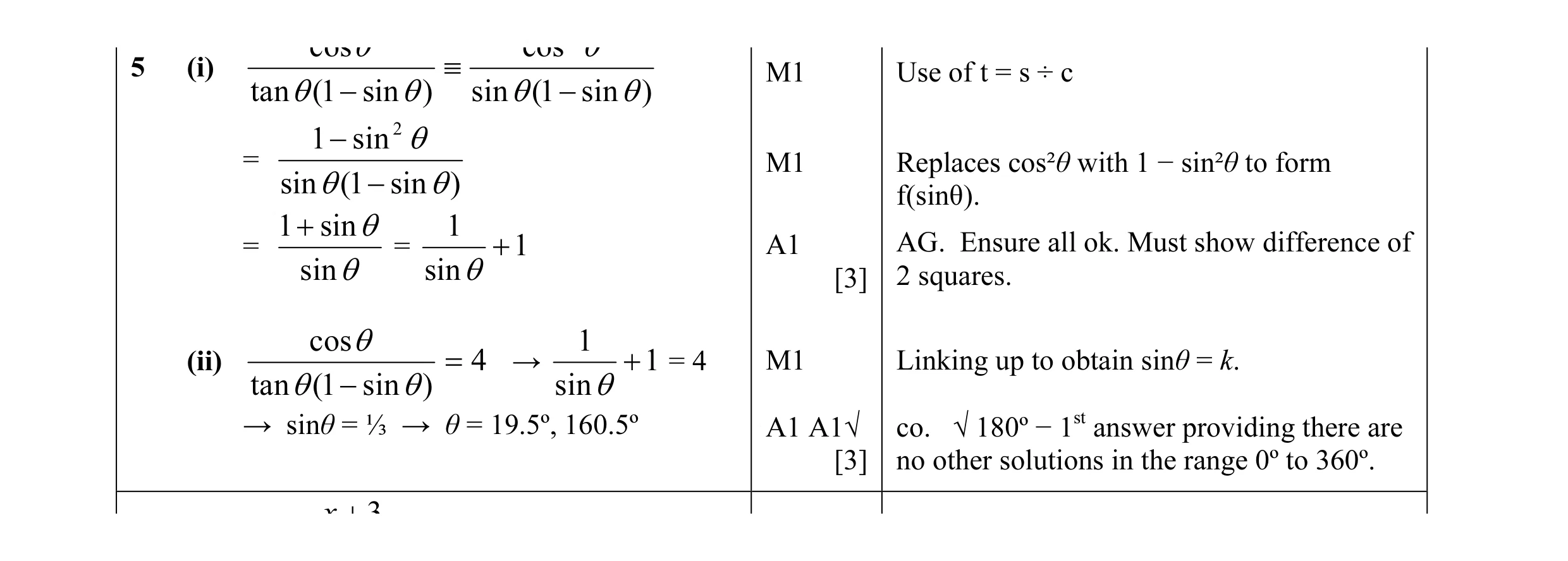 6
6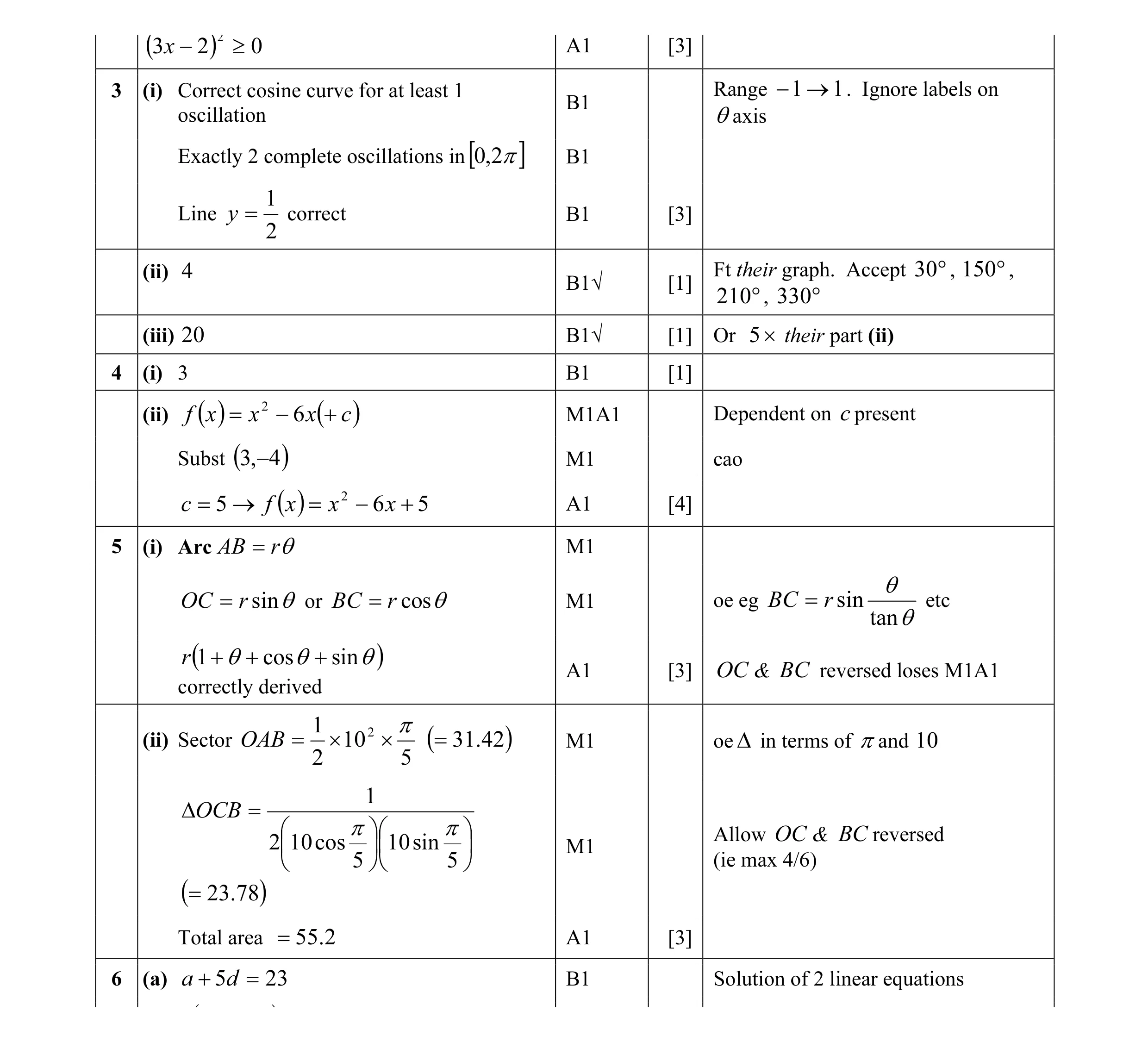 5
5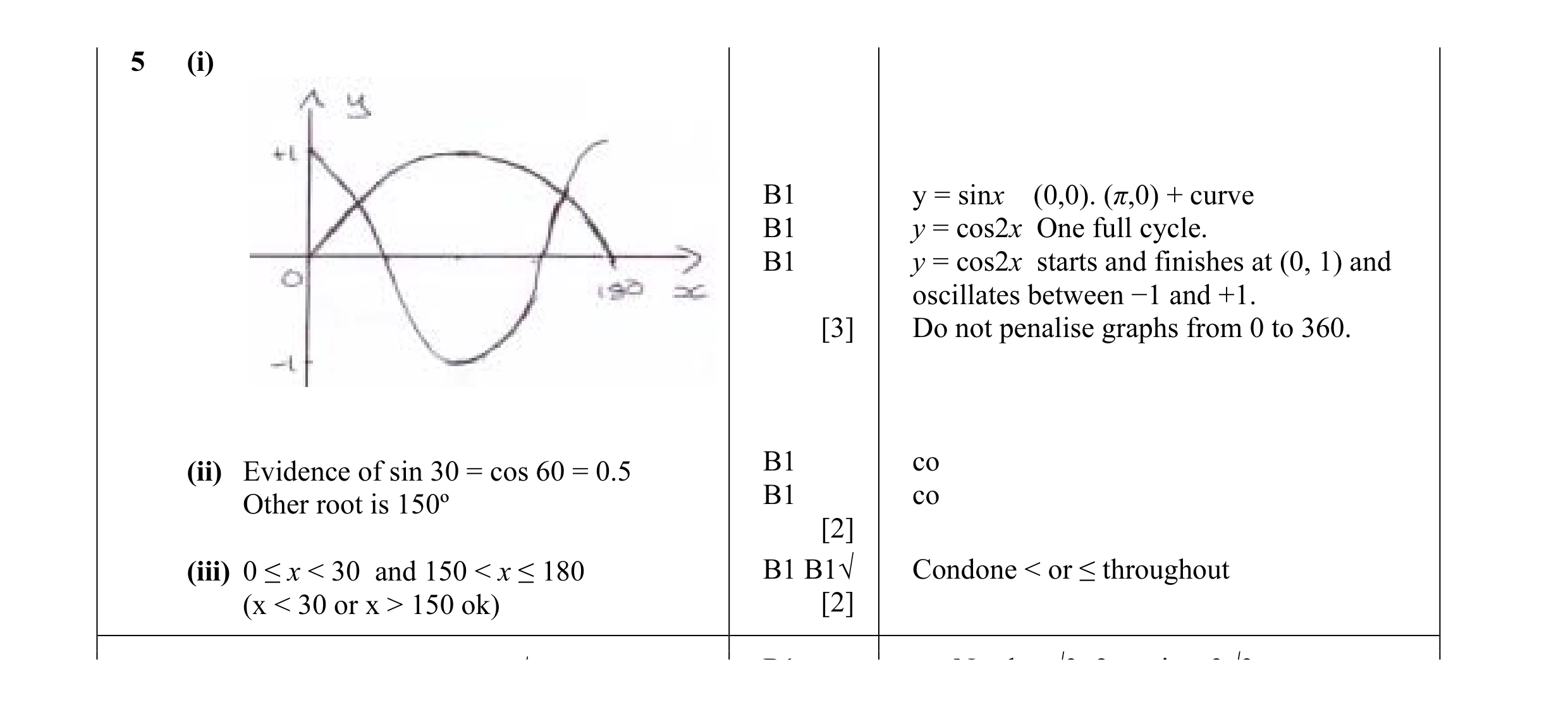 7
7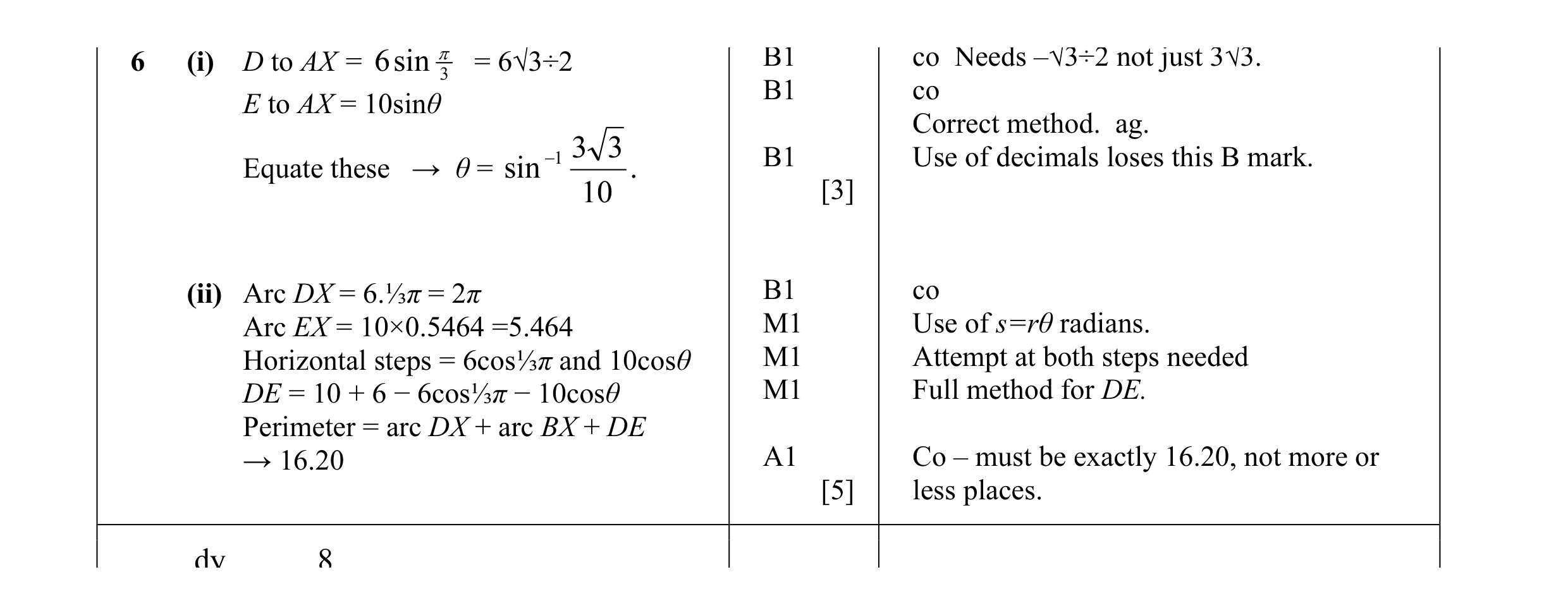 8
8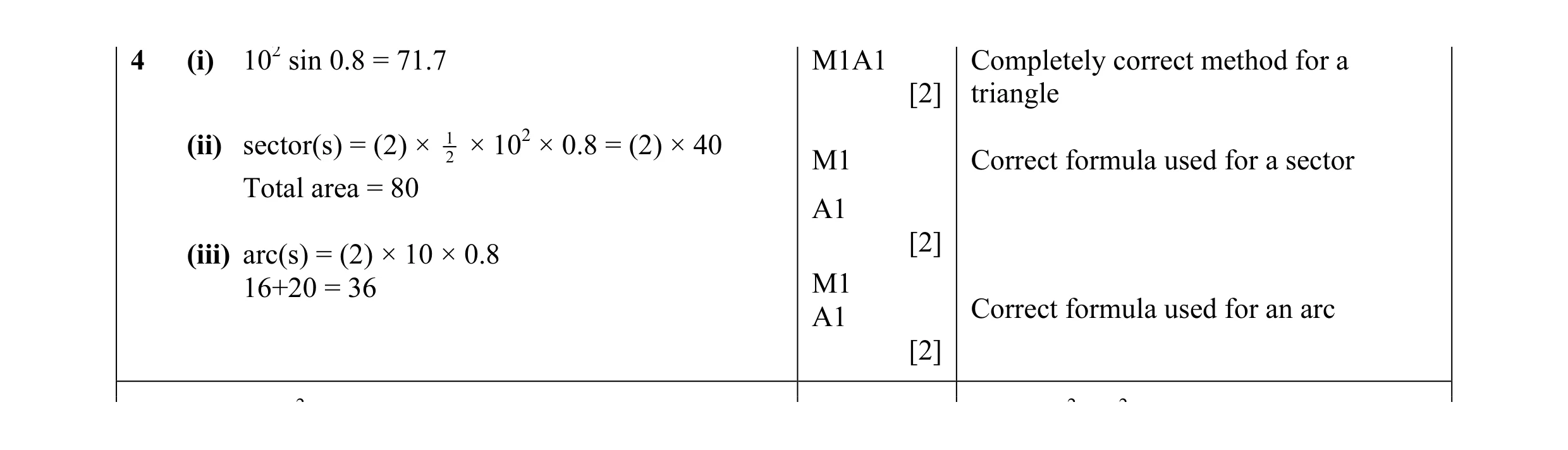 6
6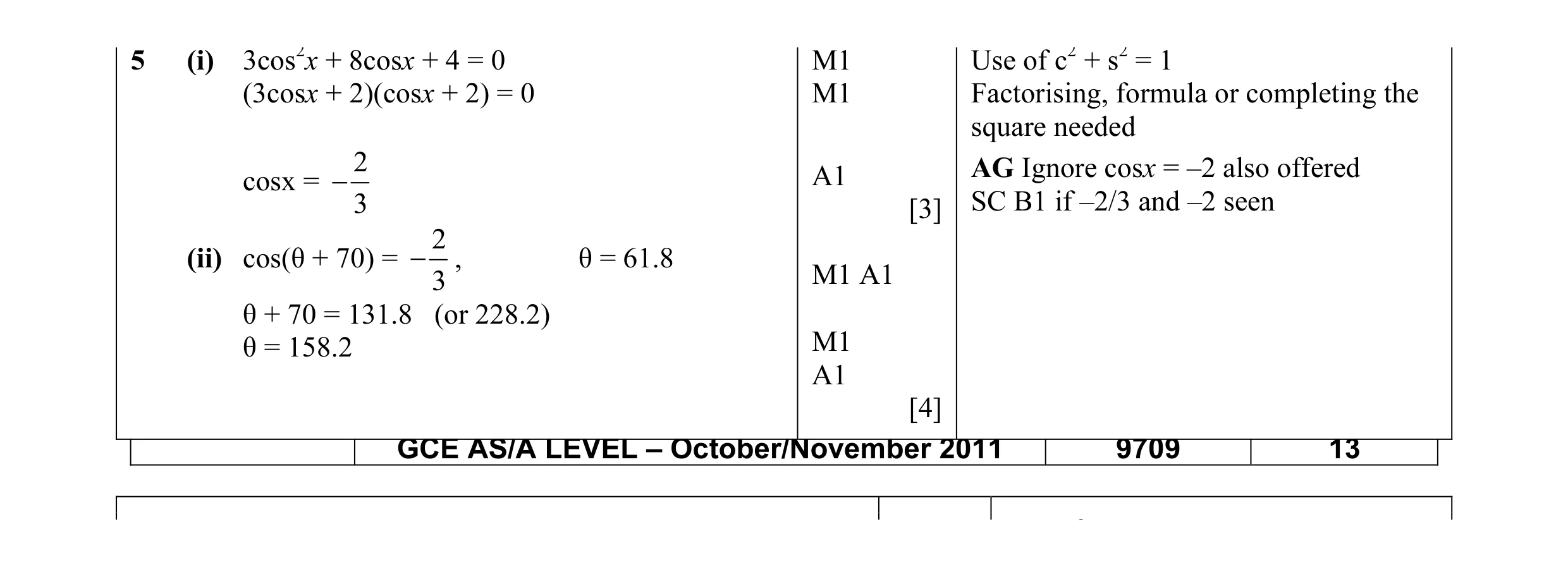 7
7 4
4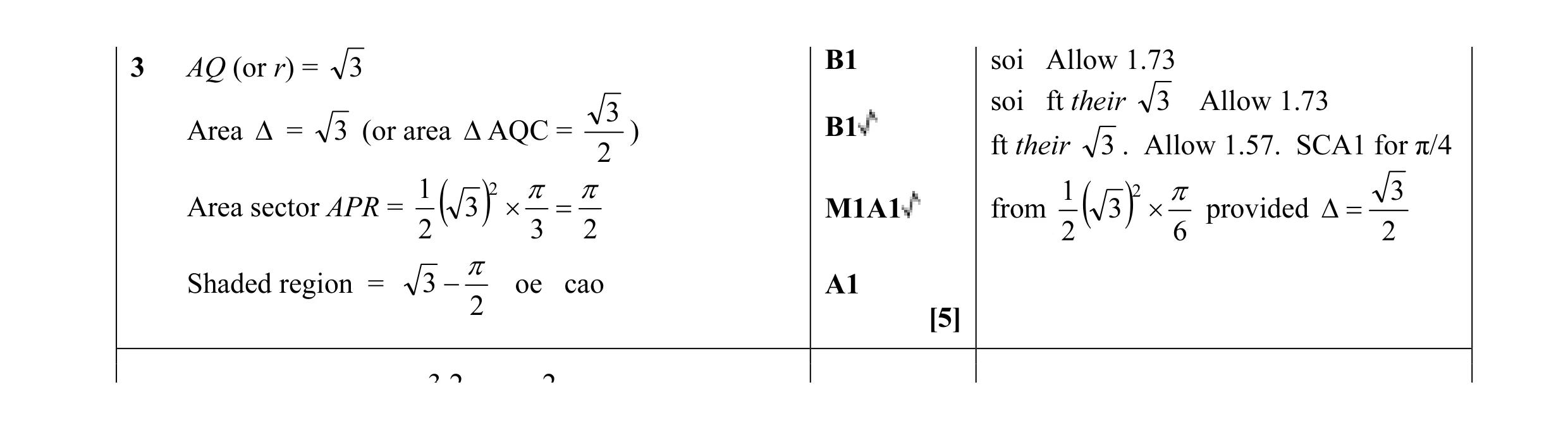 5
5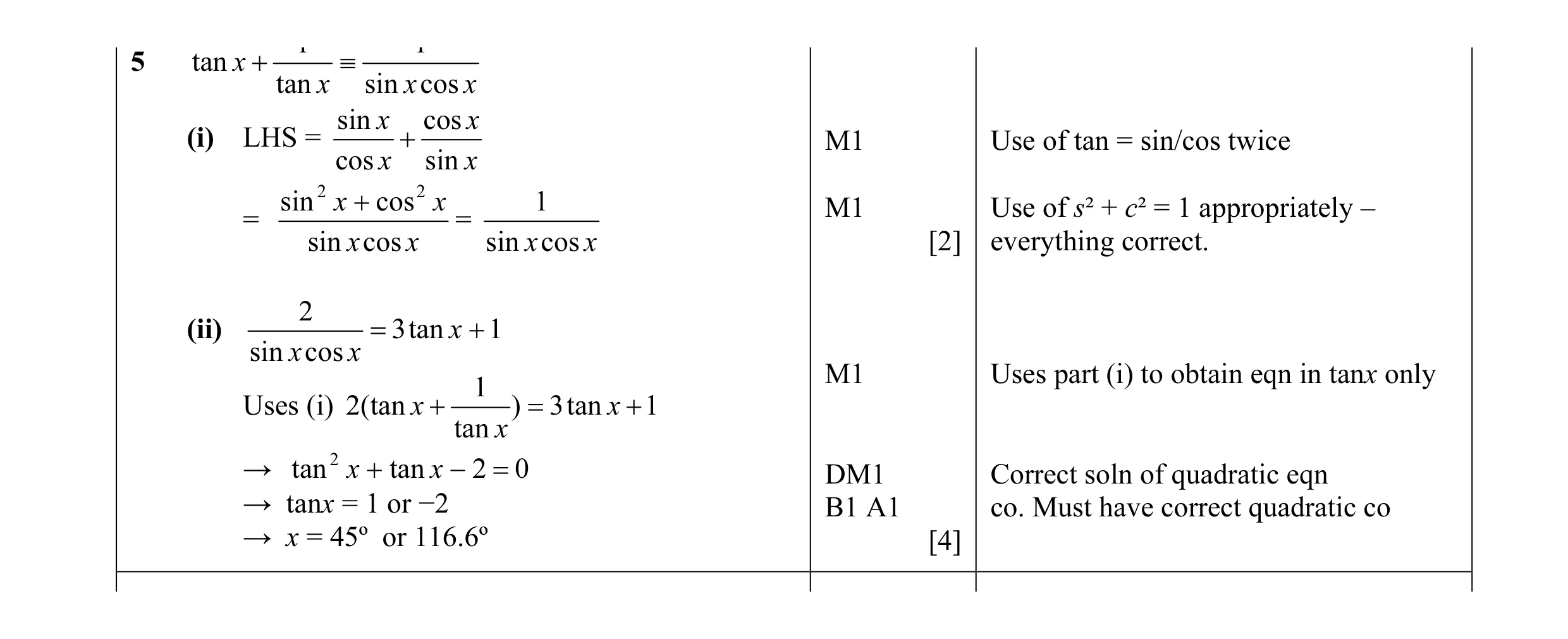 6
6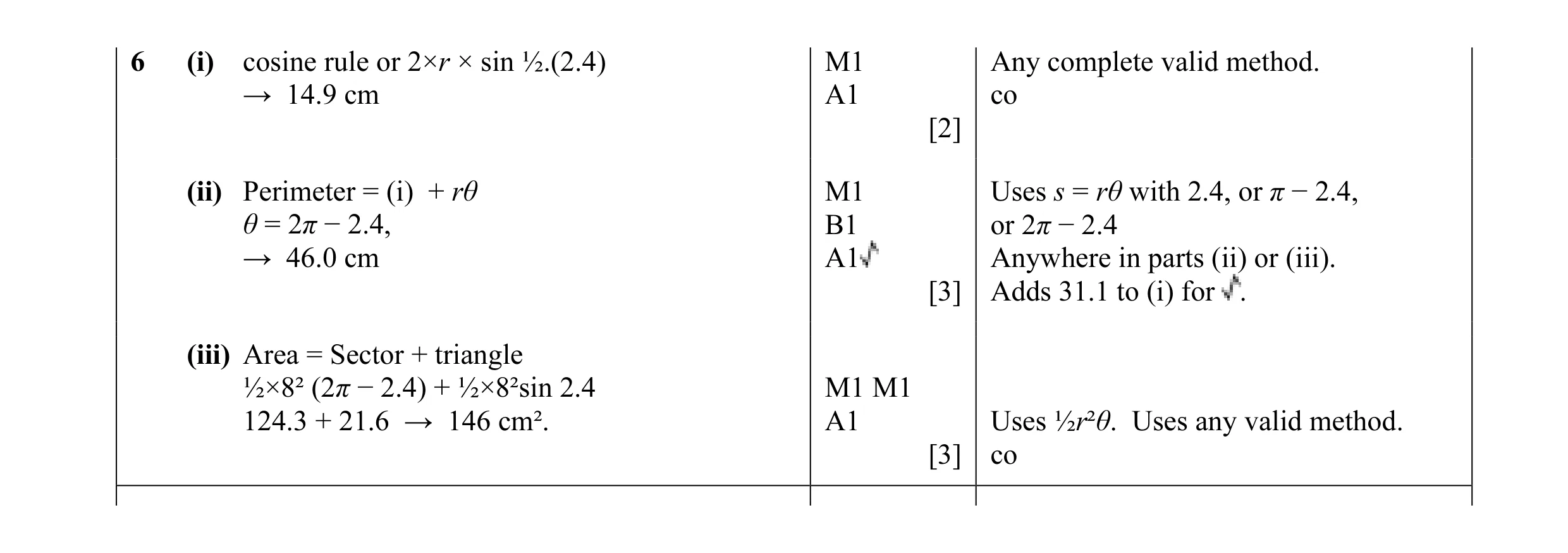 8
8 4
4 5
5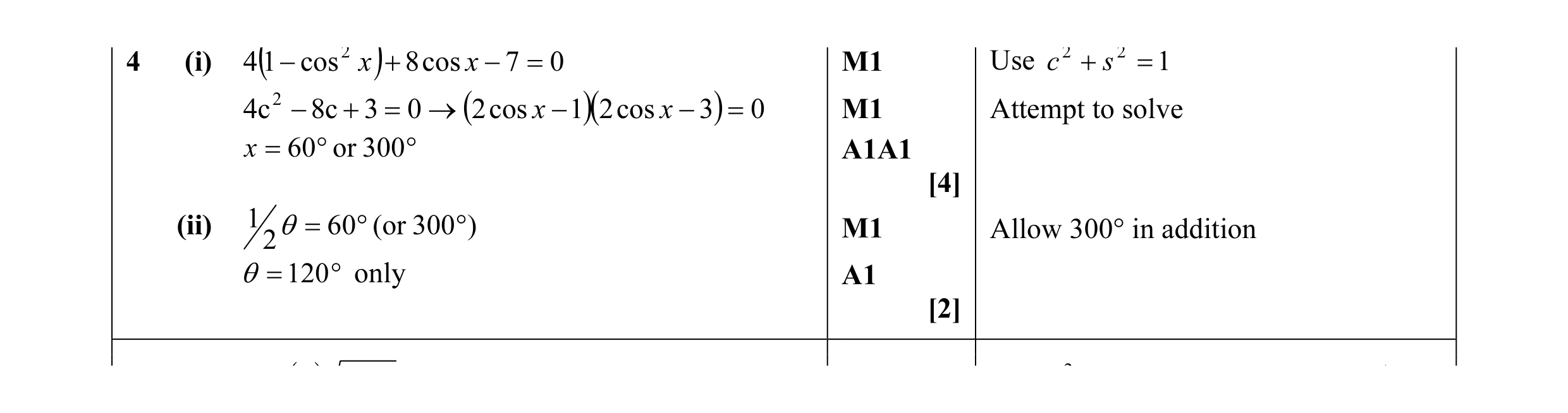 6
6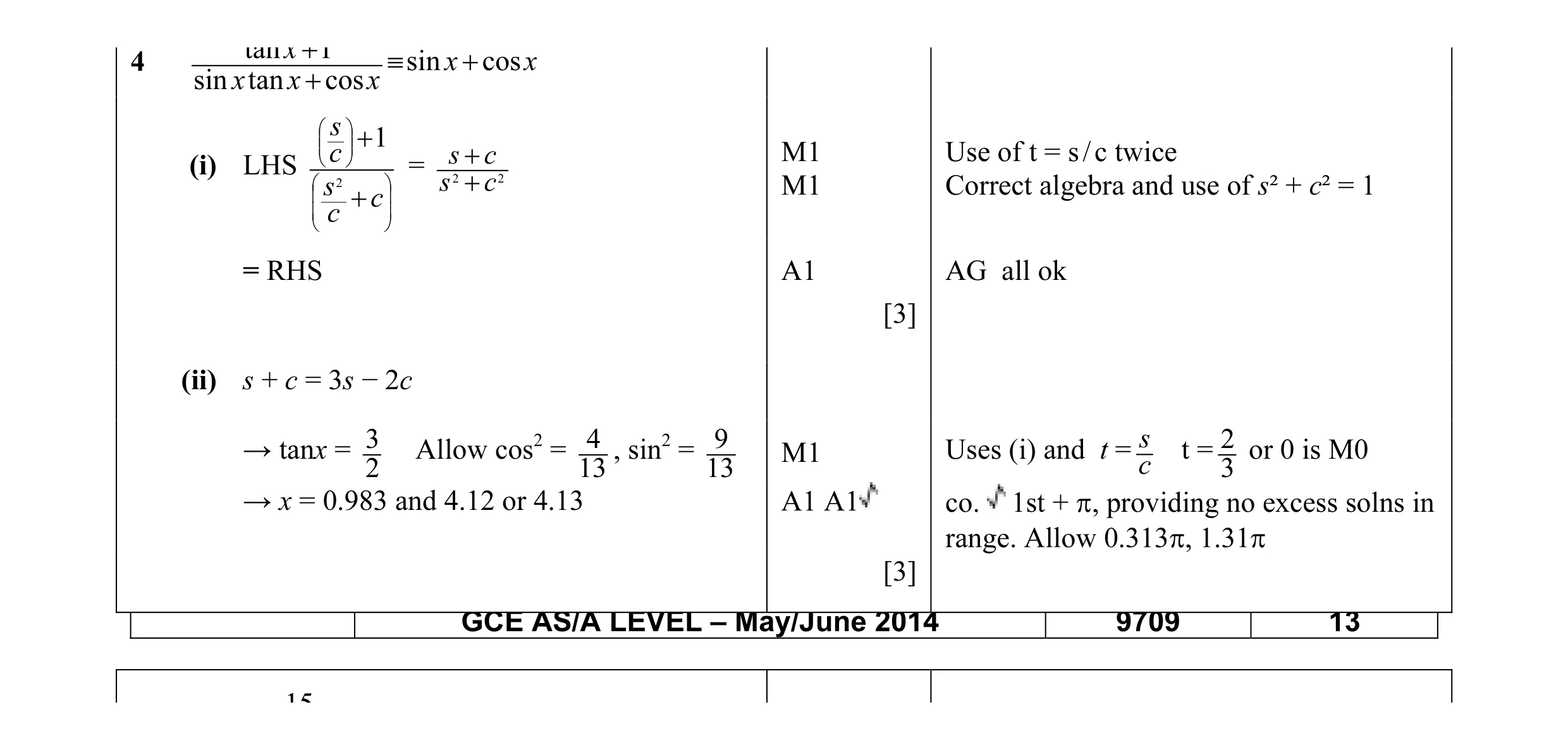 6
6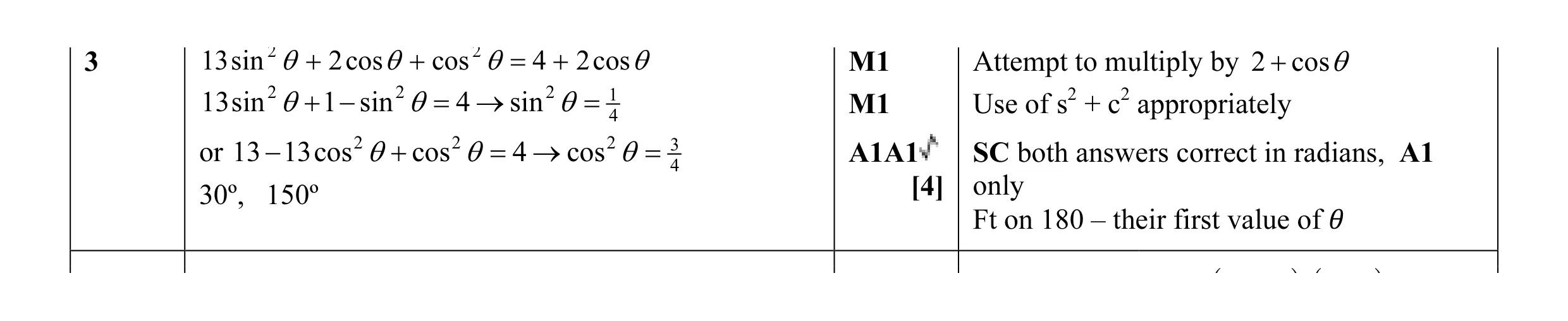 4
4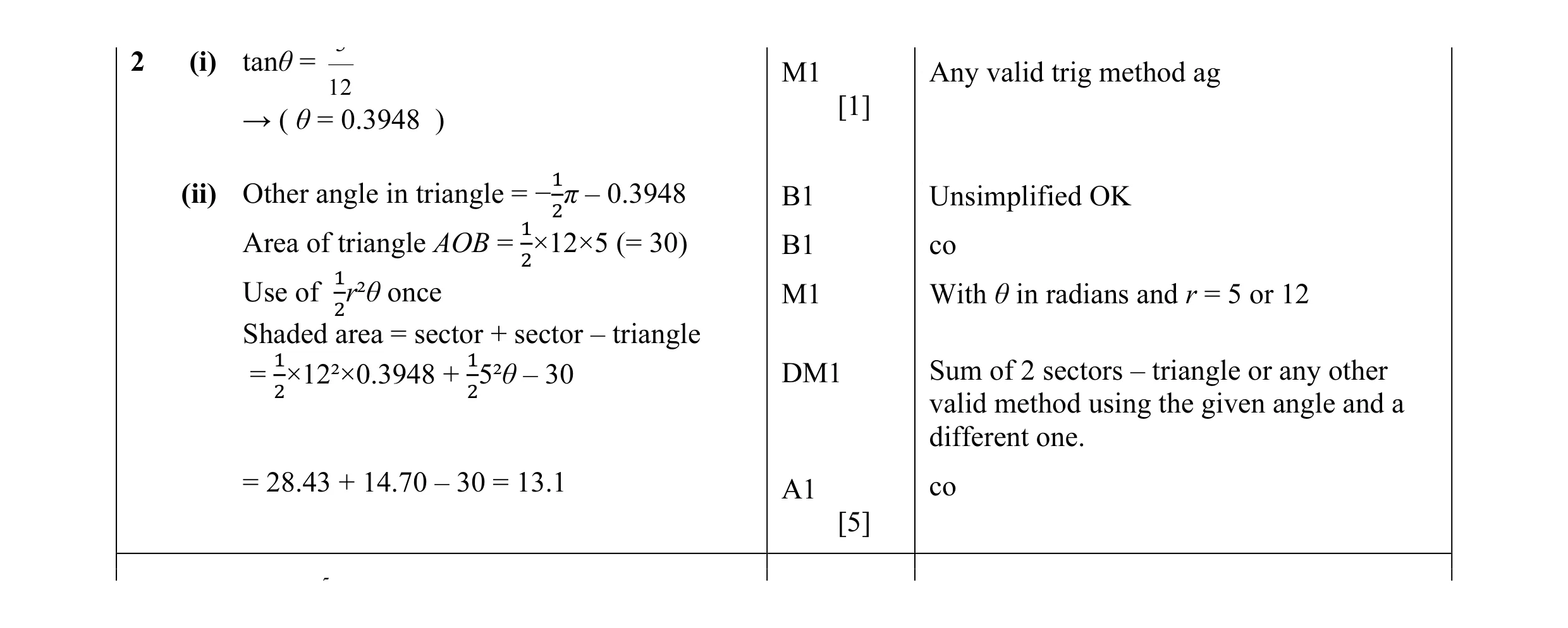 6
6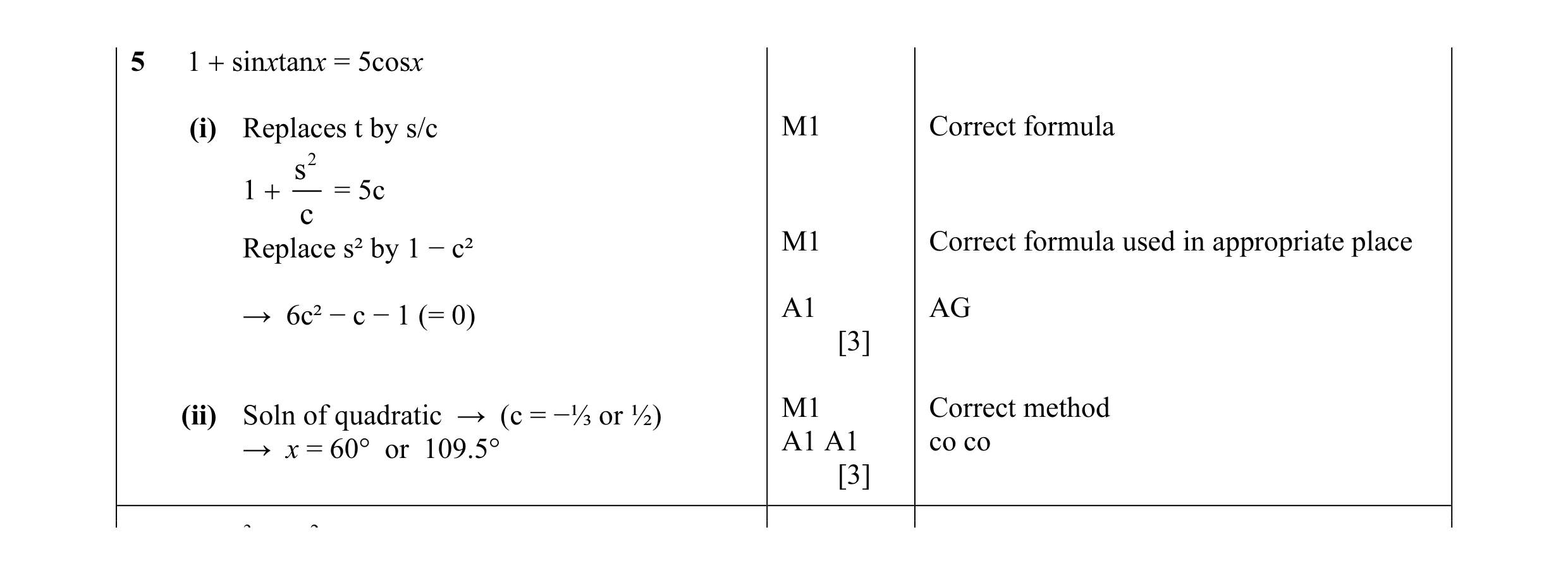 3
3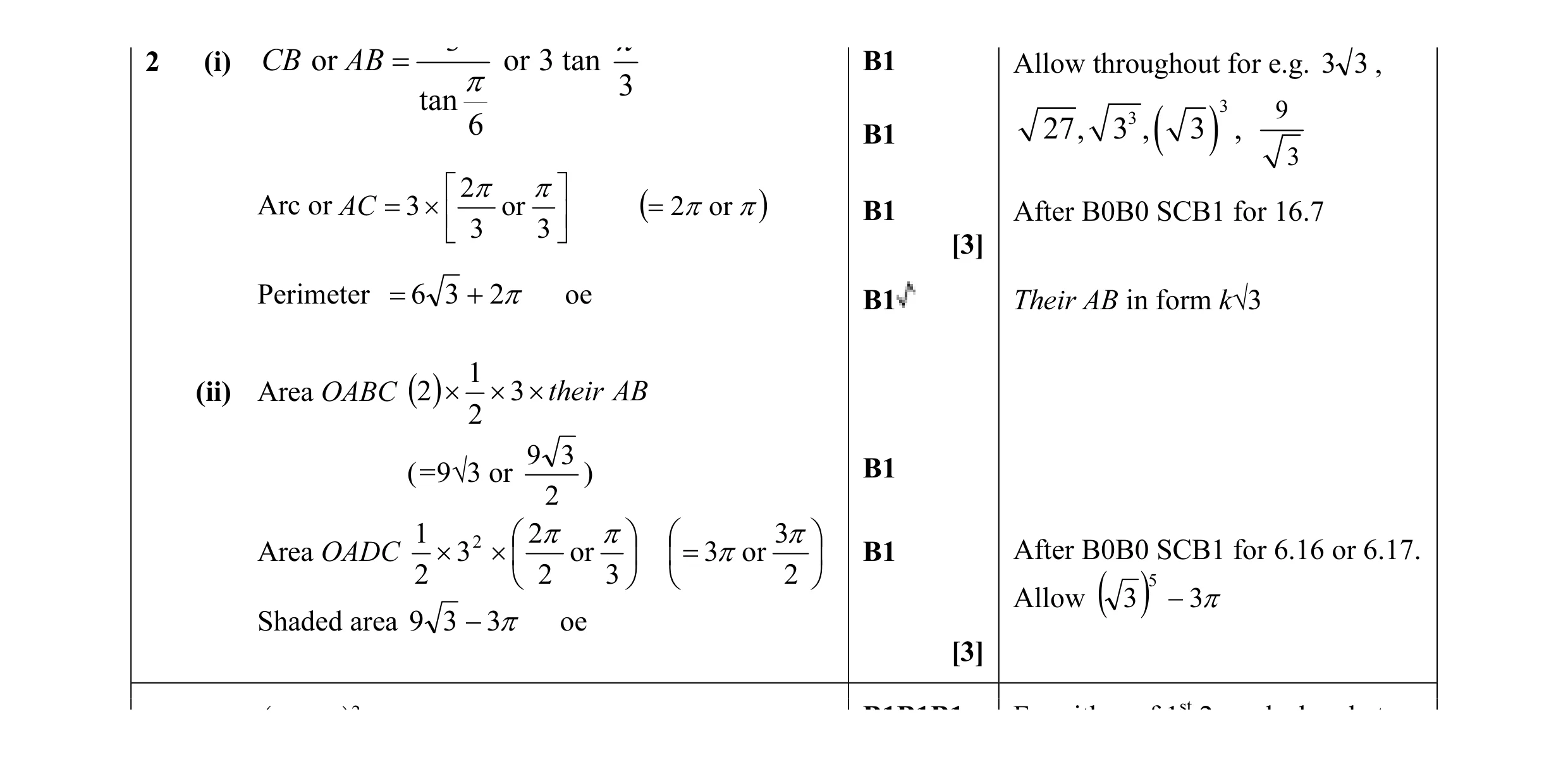 6
6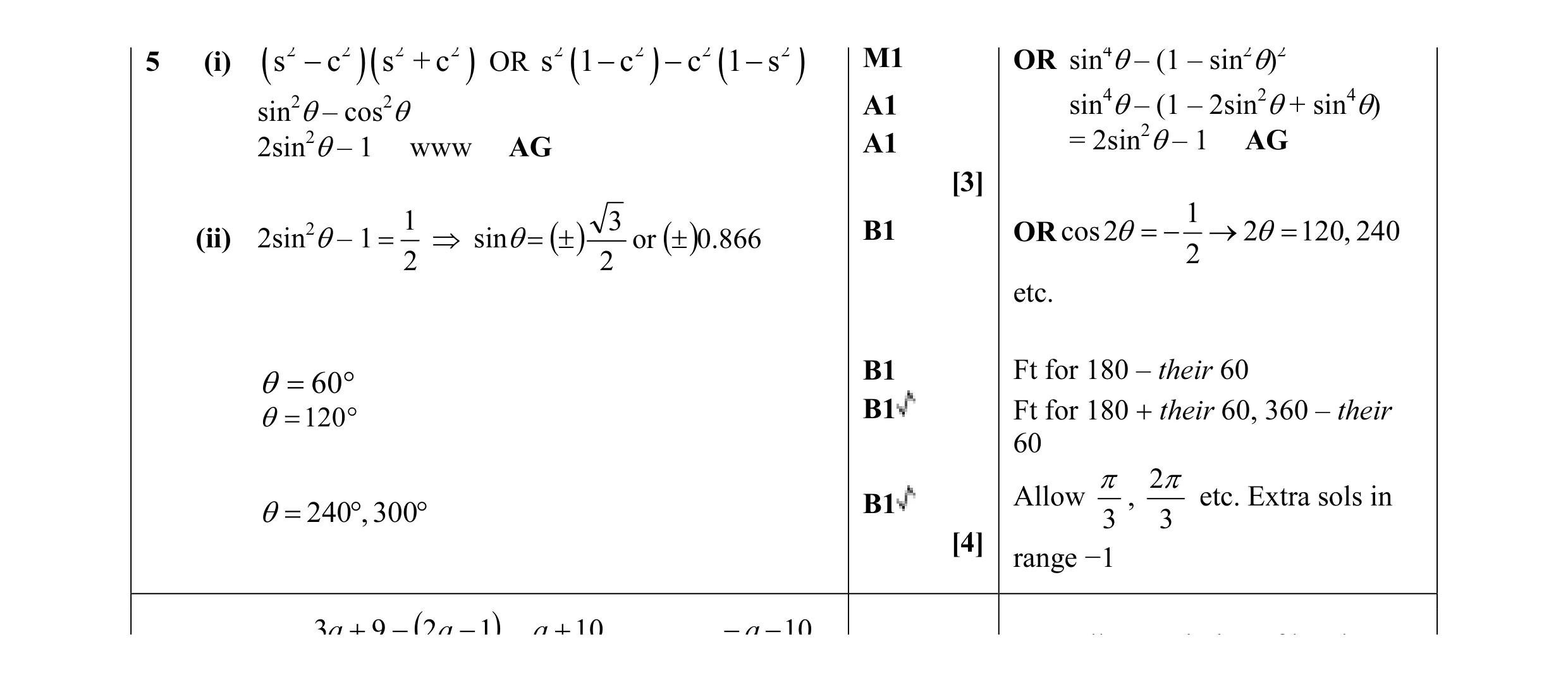 7
7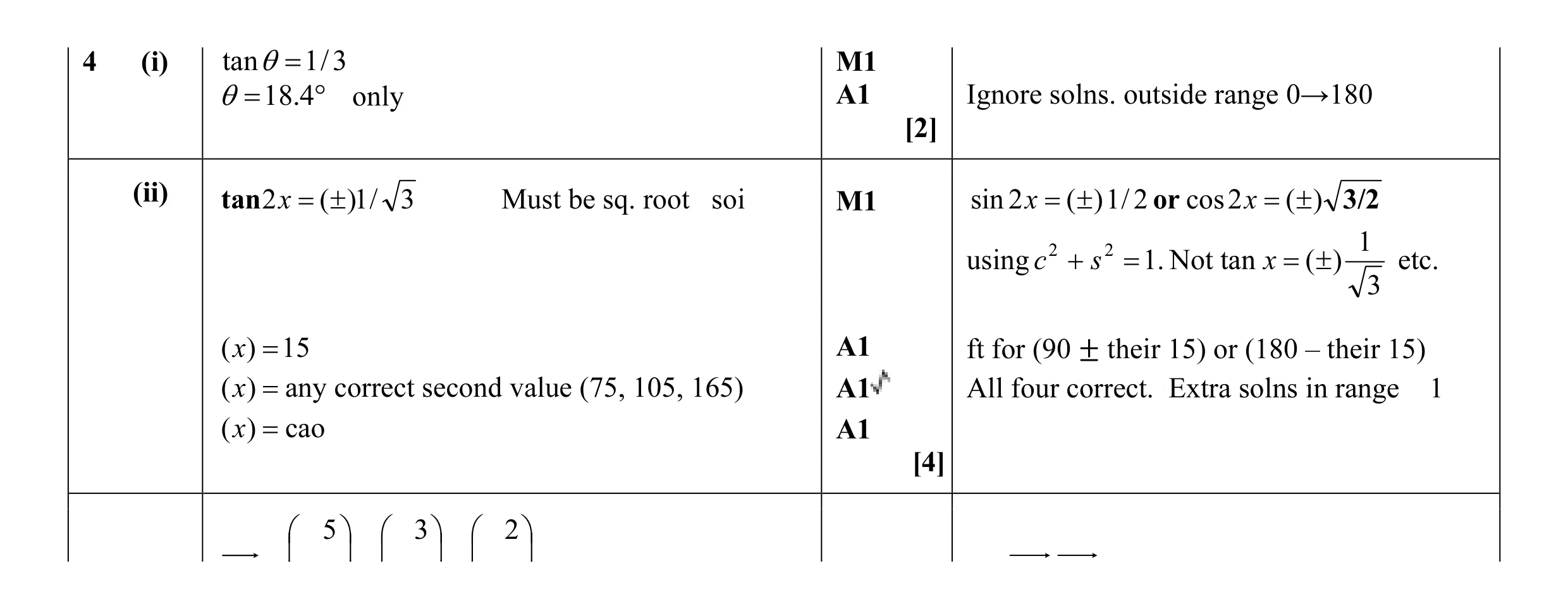 6
6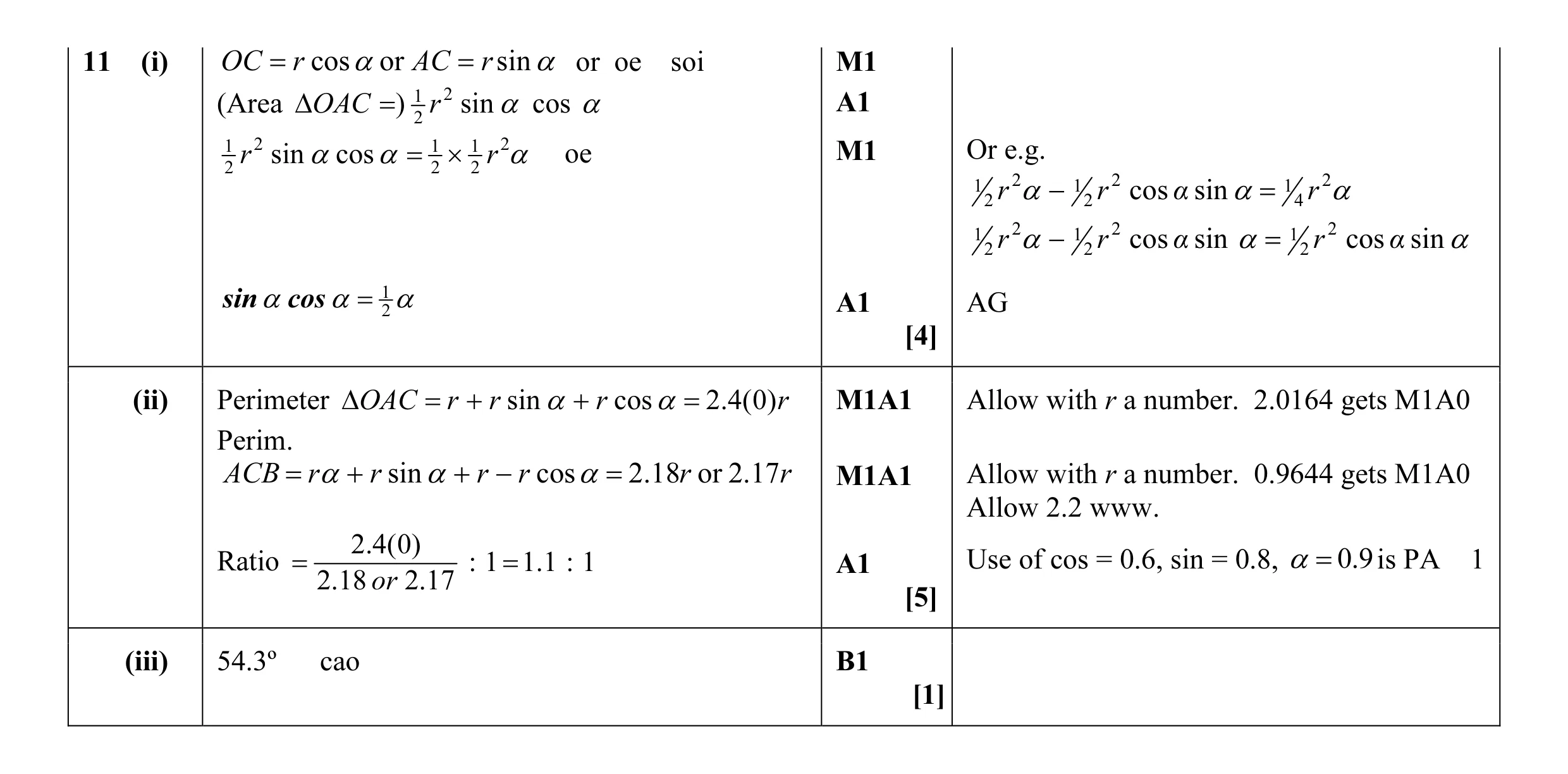 10
10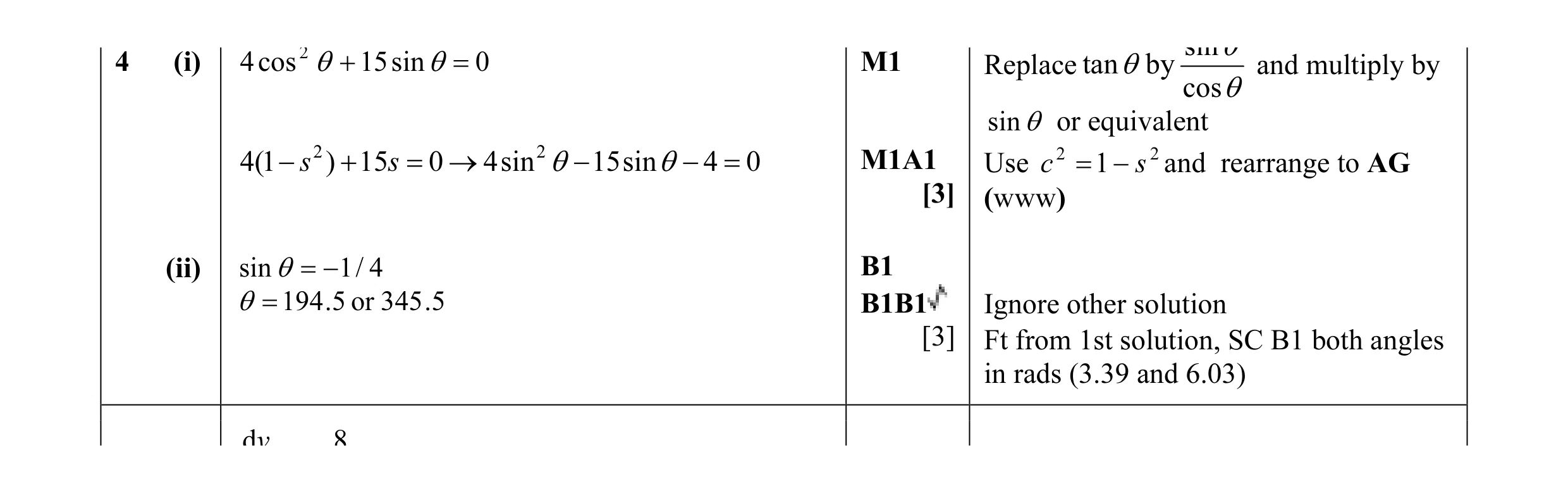 3
3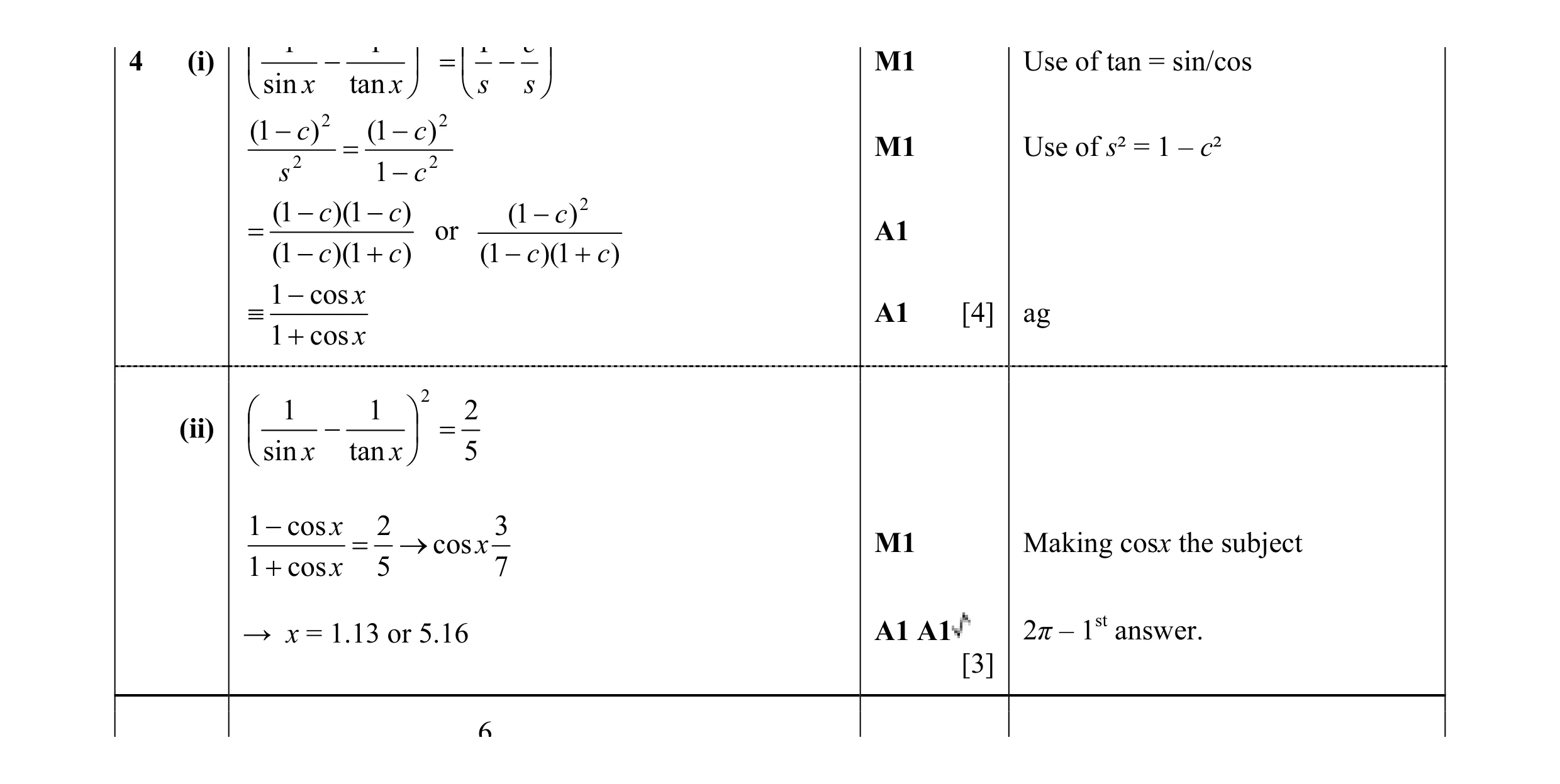 7
7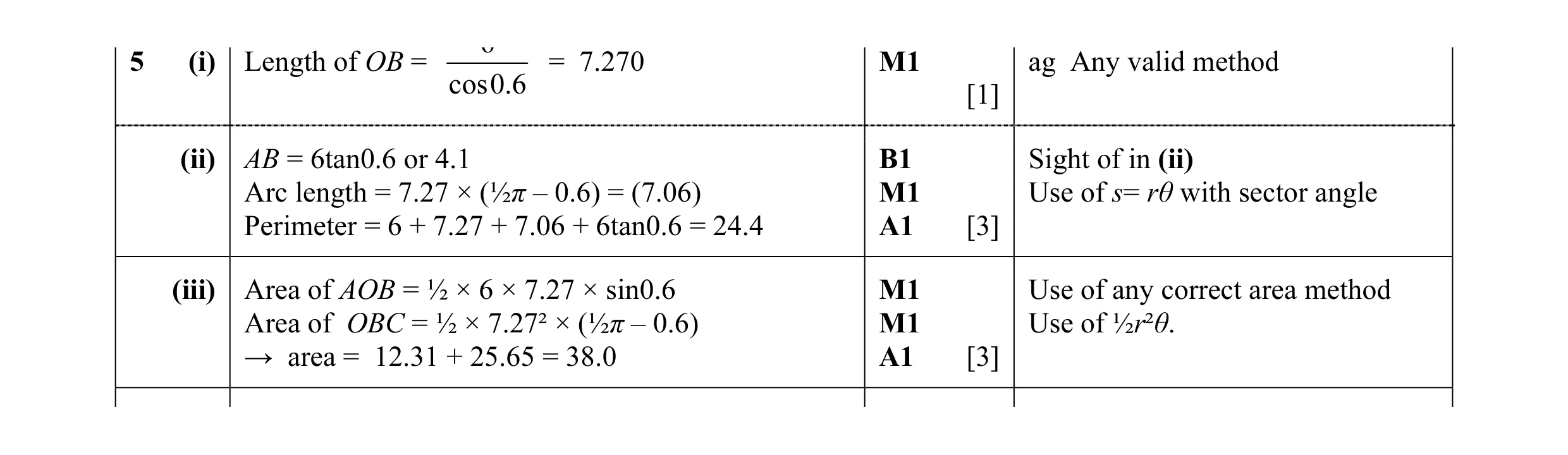 7
7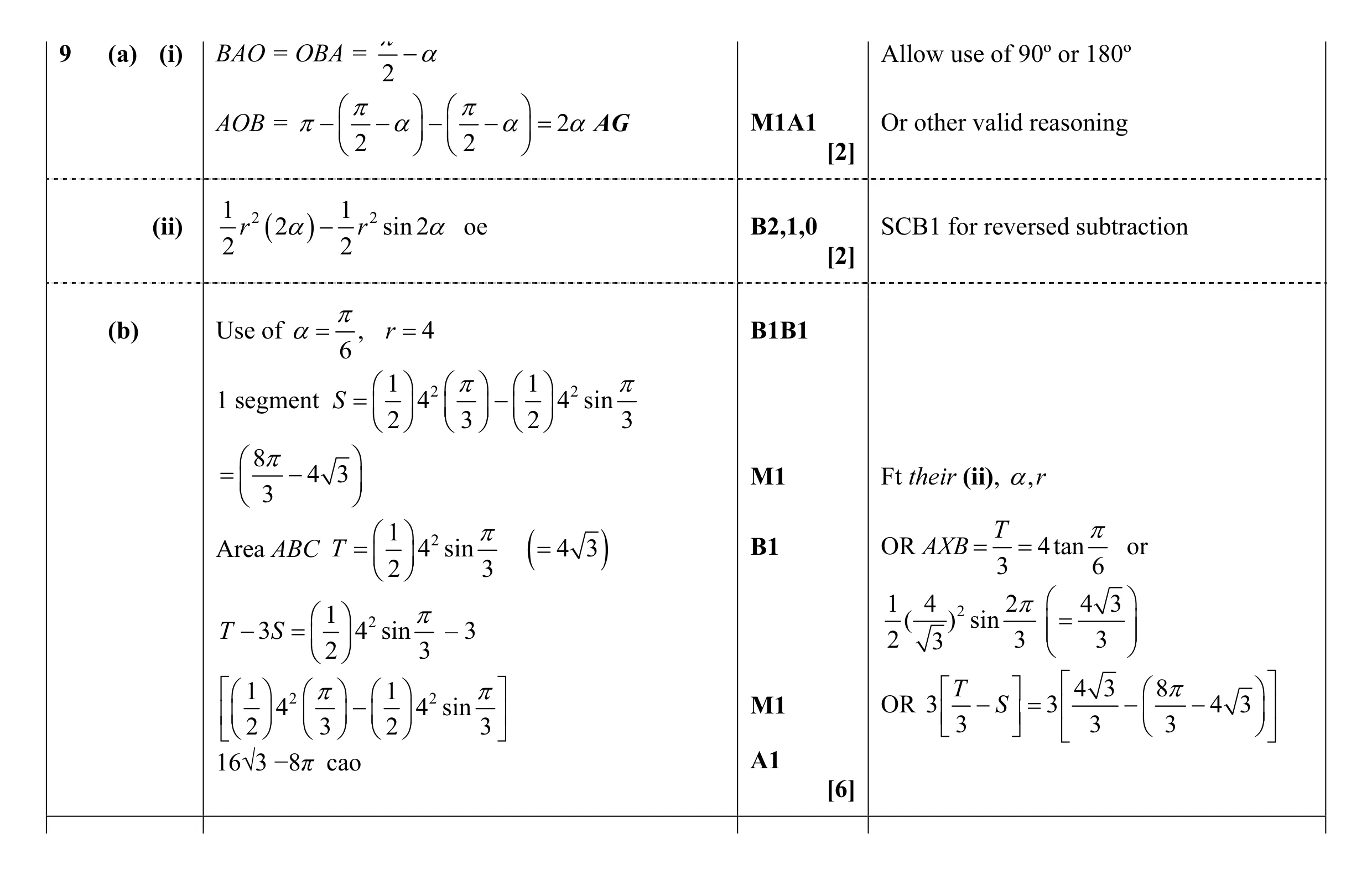 10
10 5
5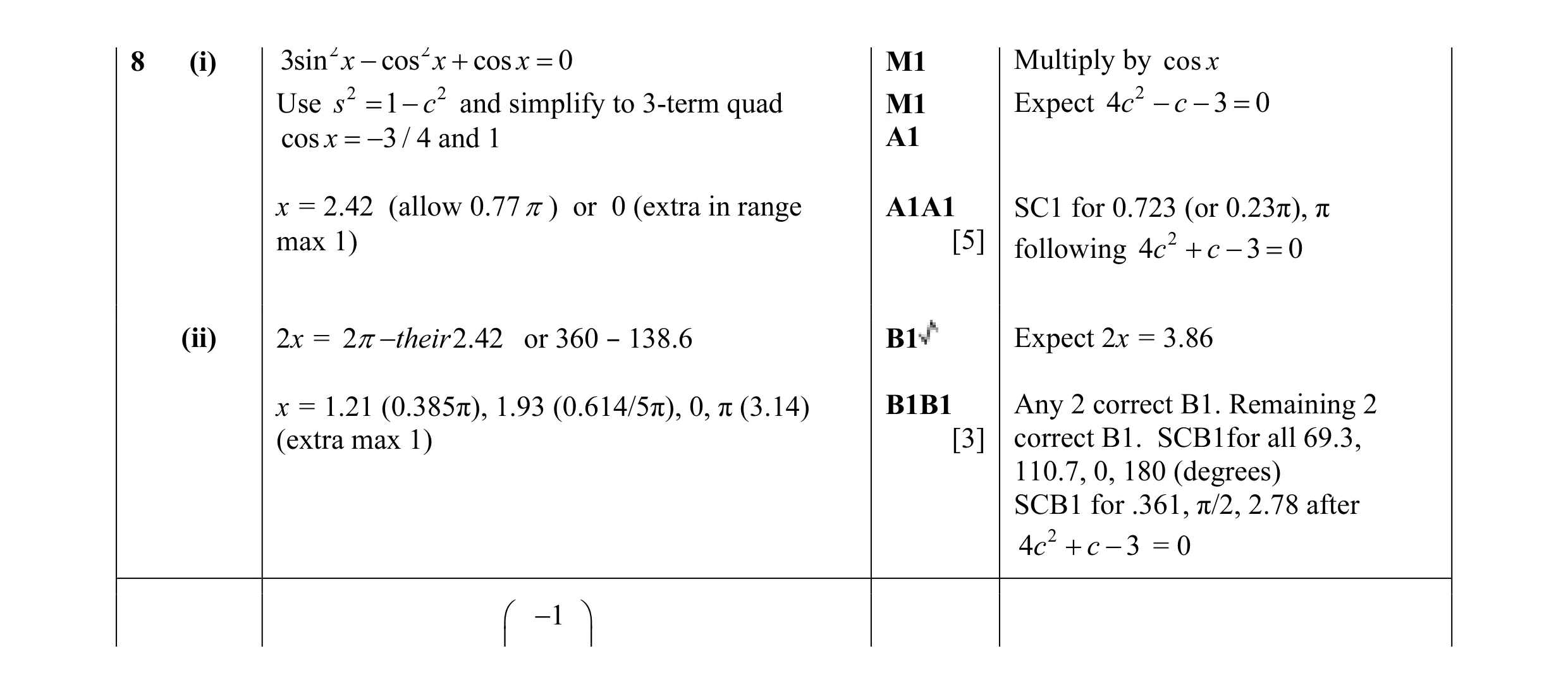 8
8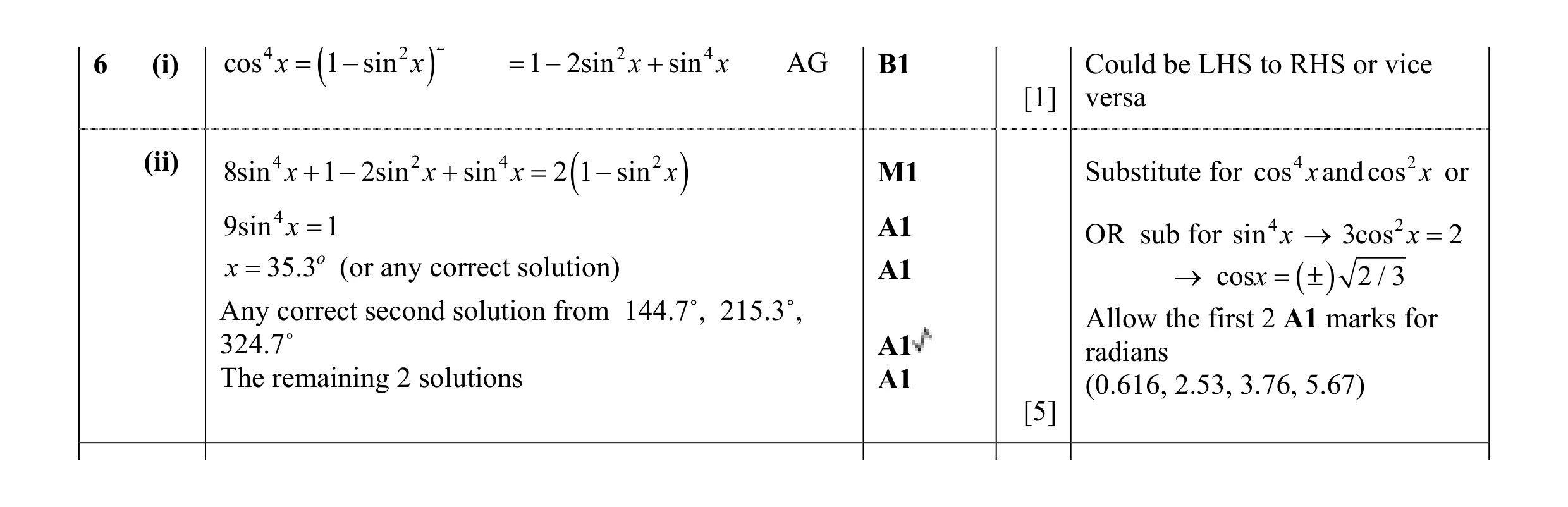 6
6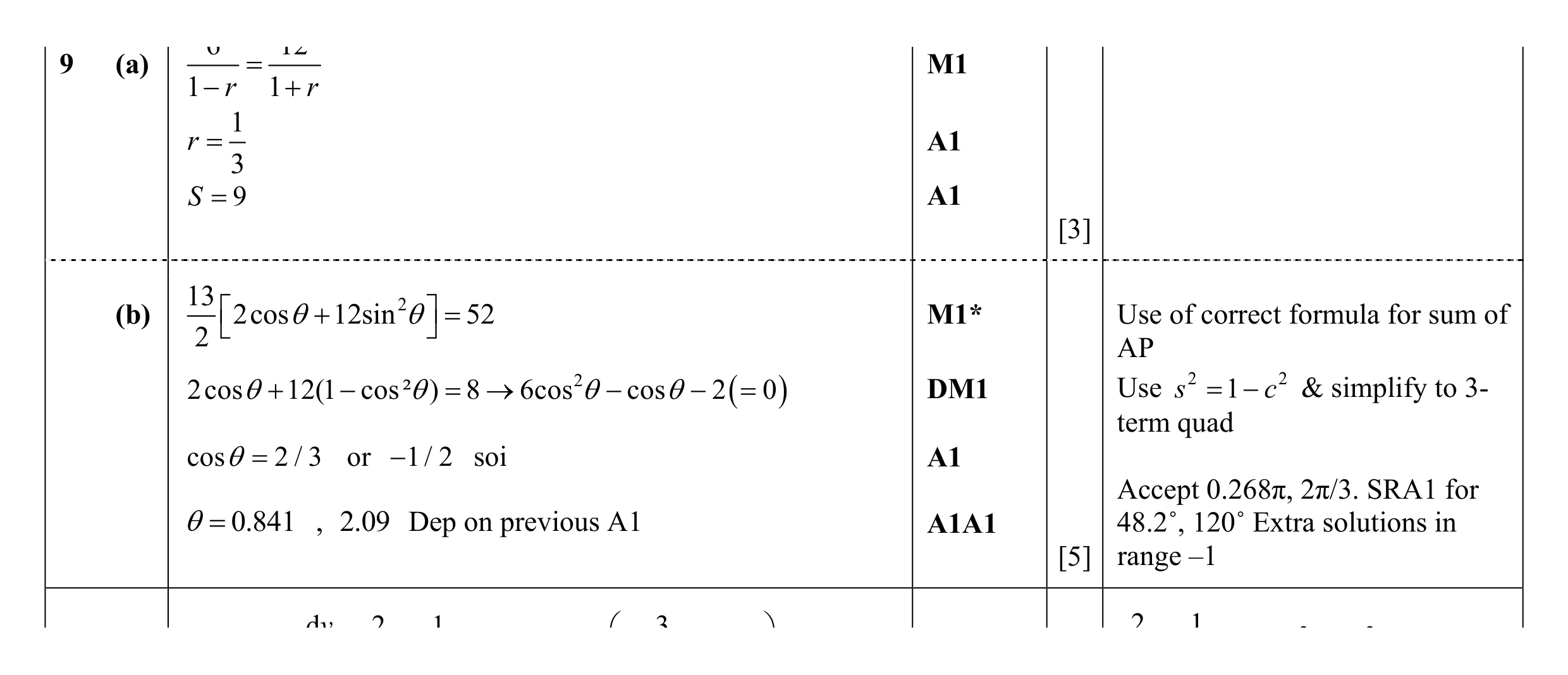 8
8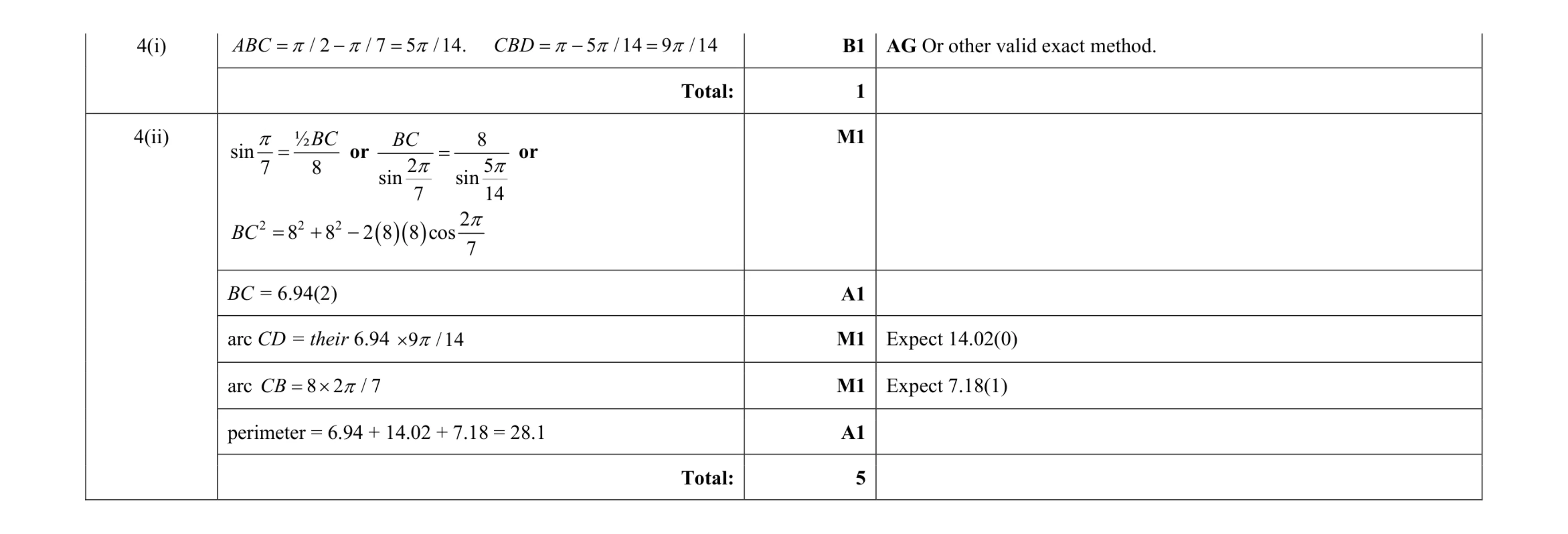 6
6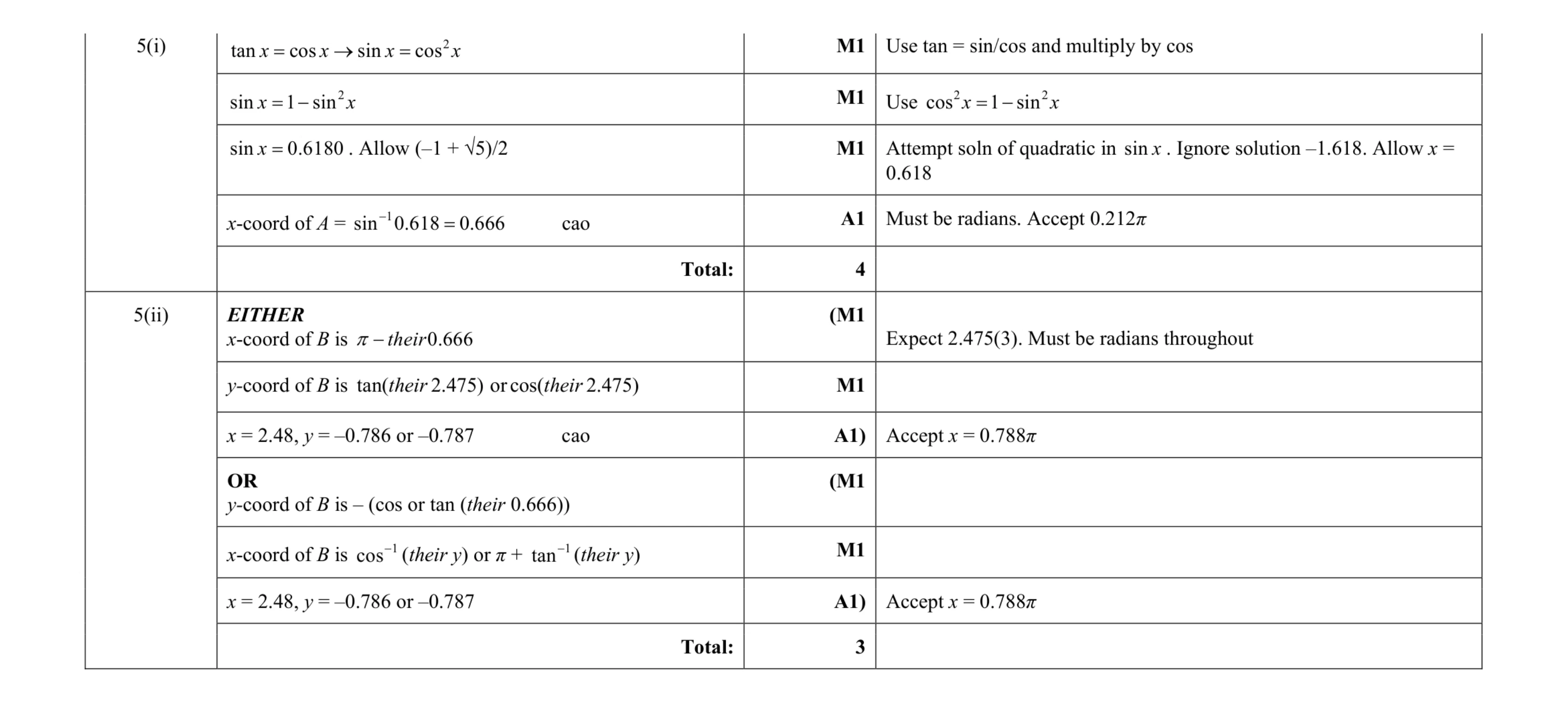 7
7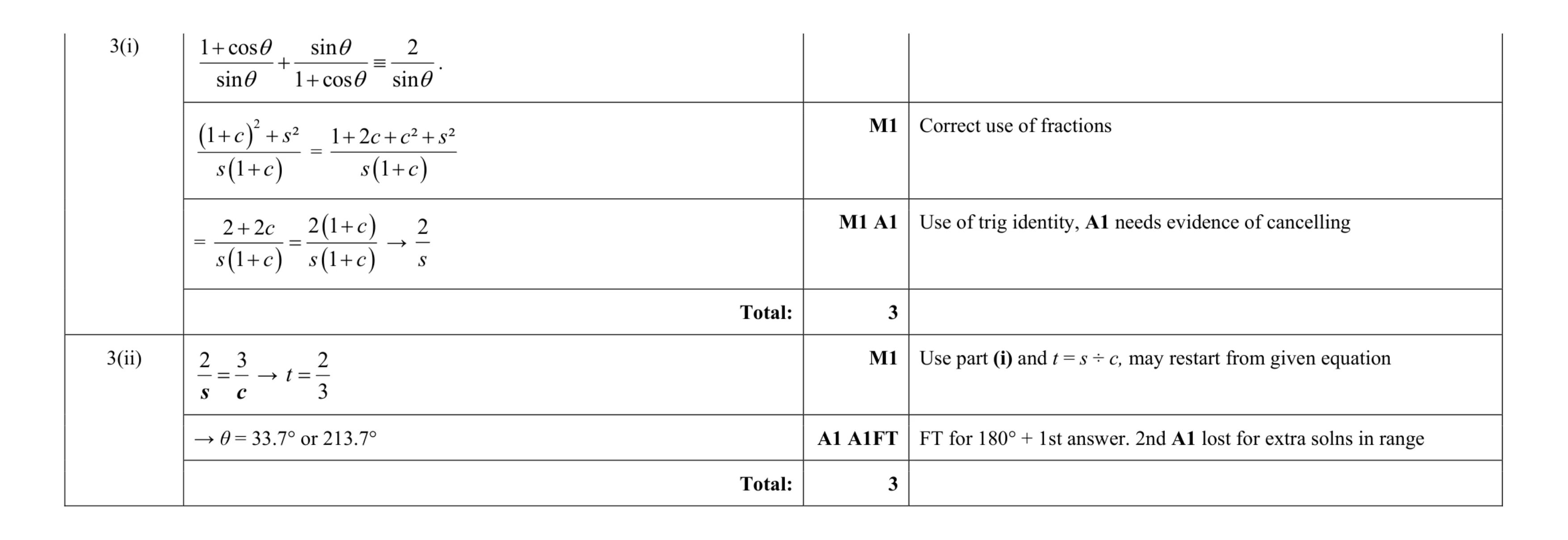 6
6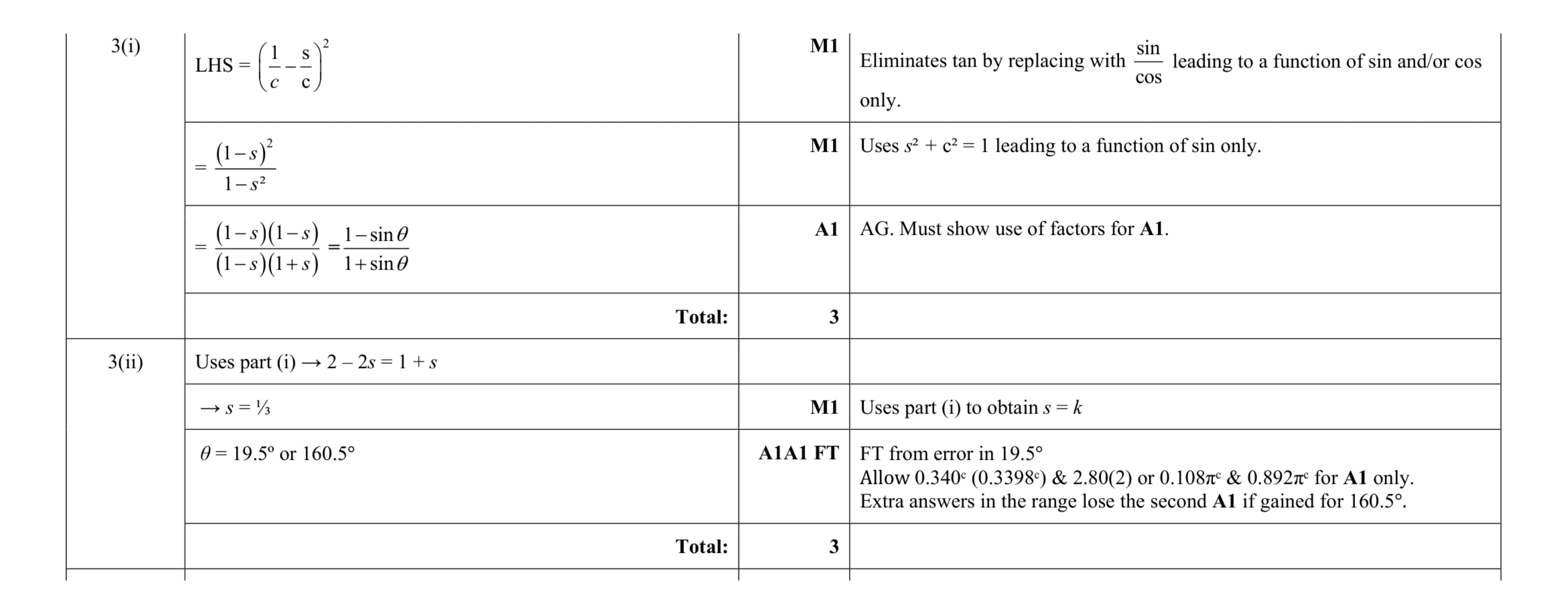 6
6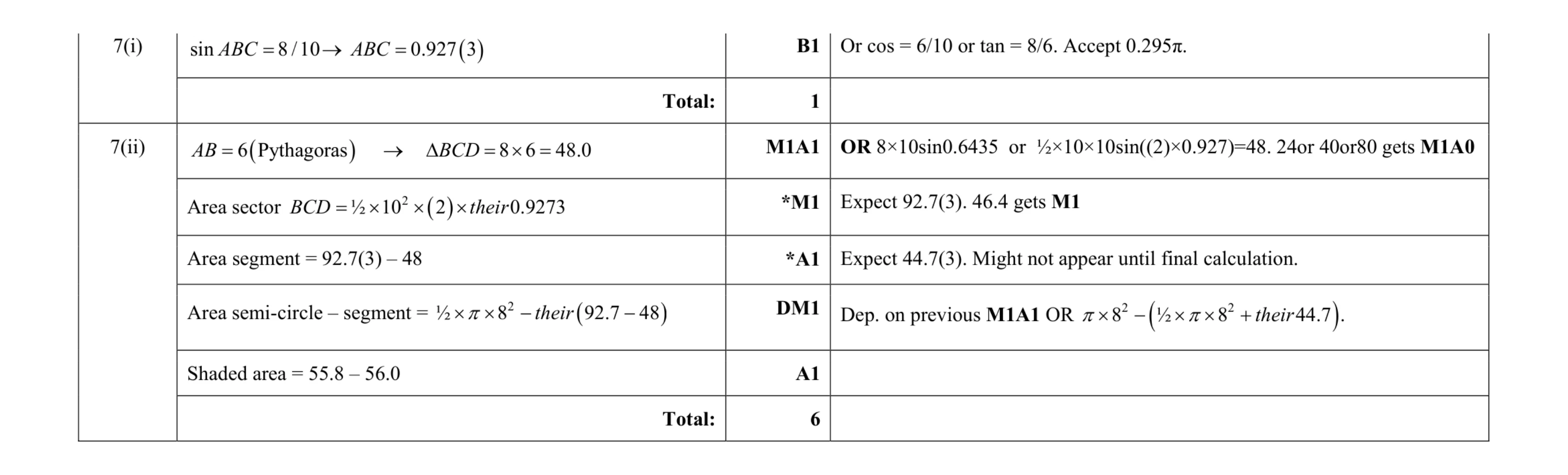 7
7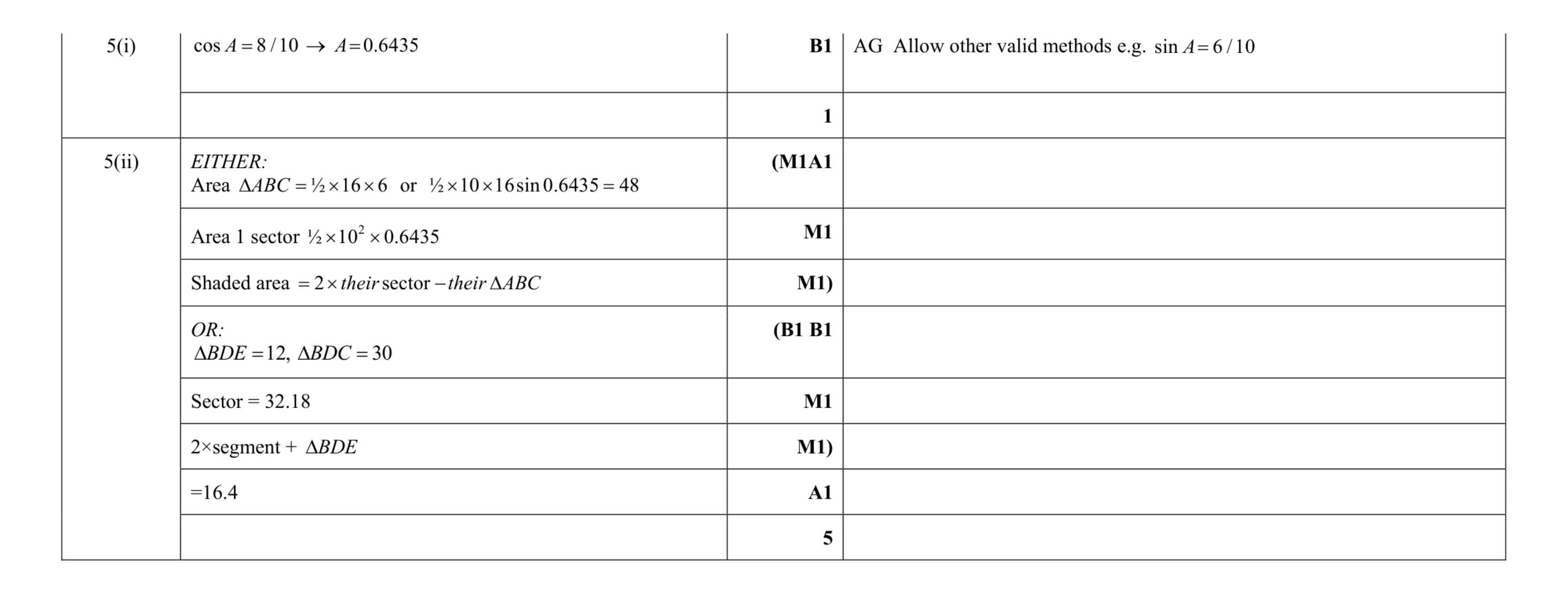 6
6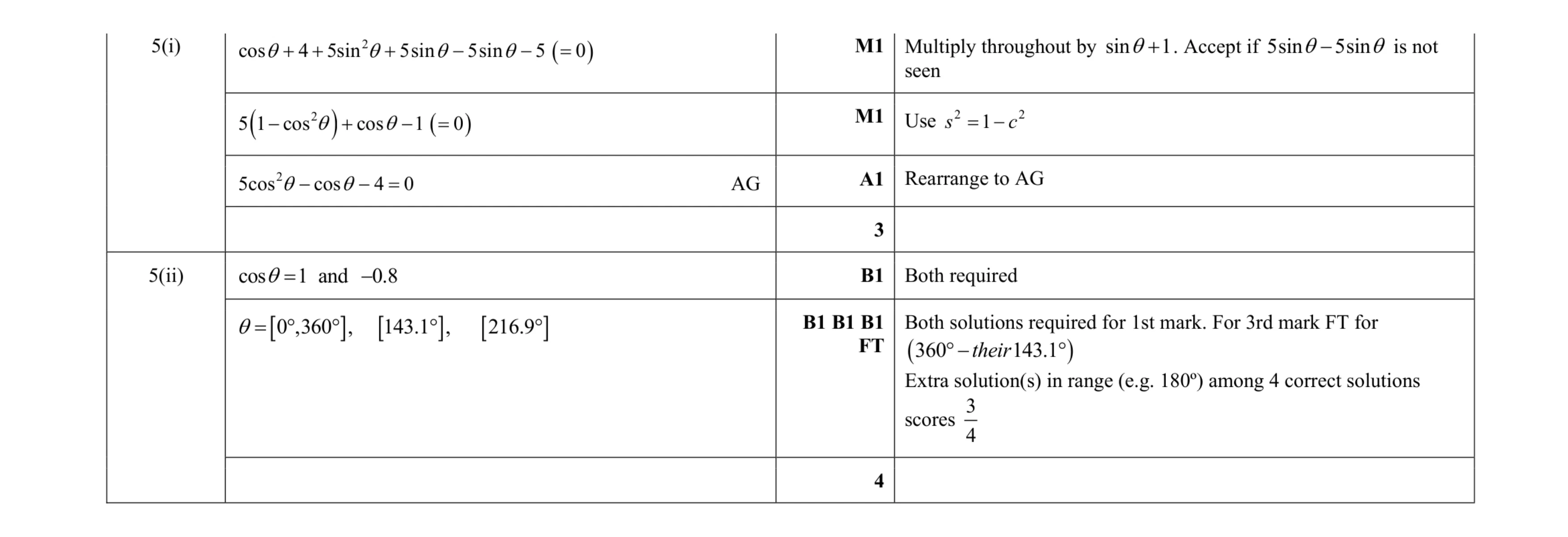 7
7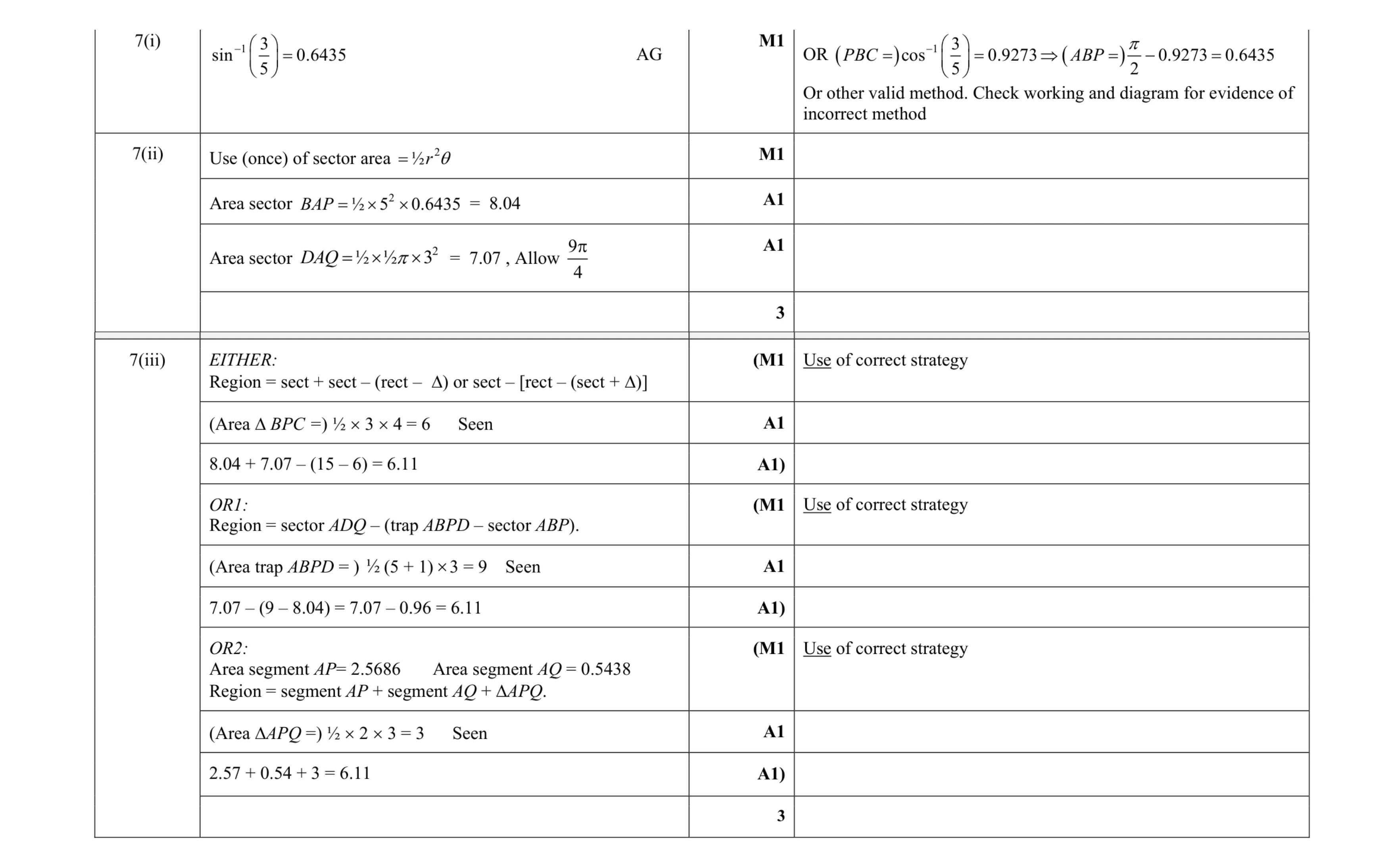 7
7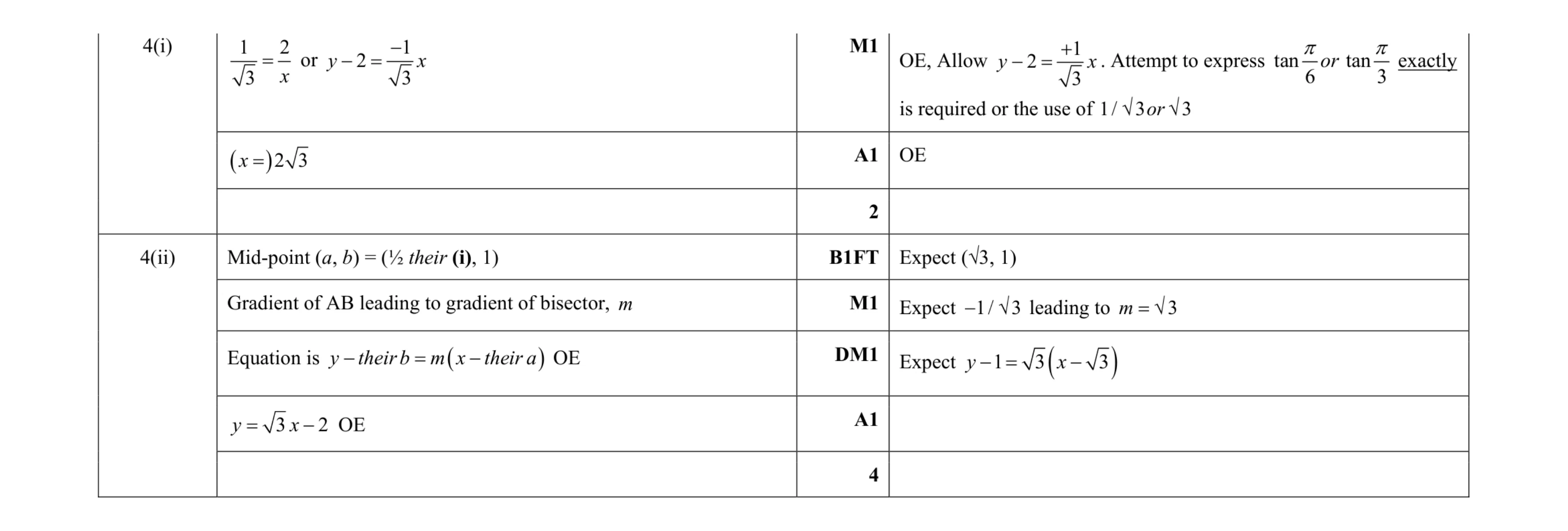 6
6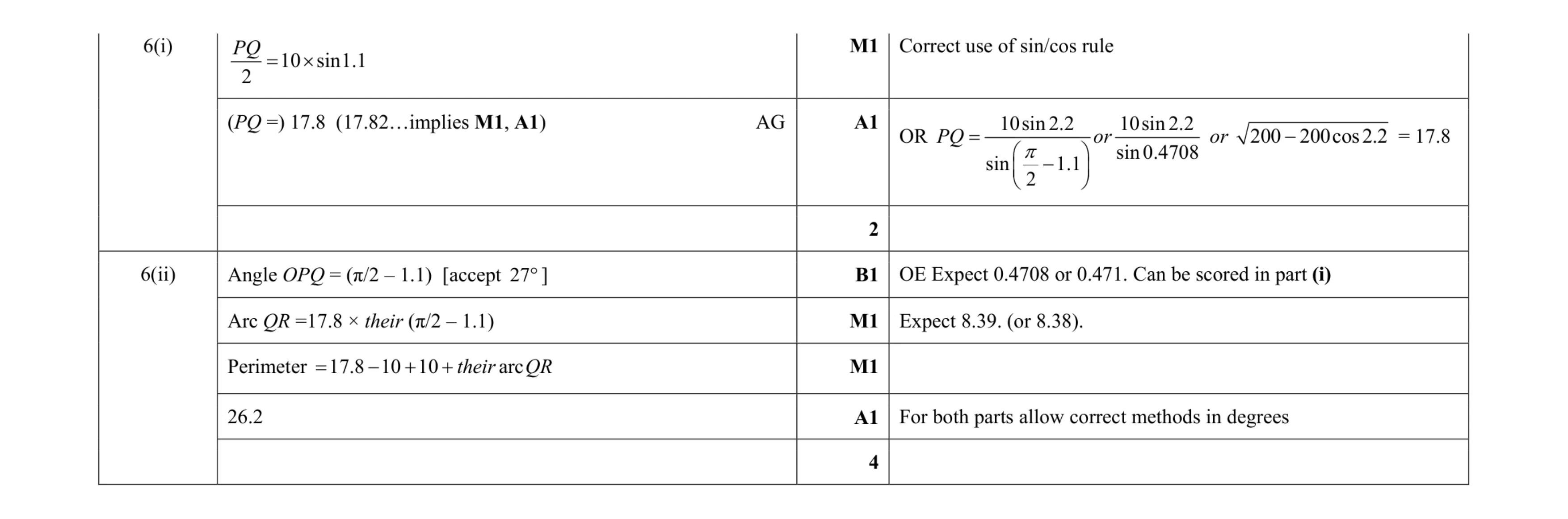 6
6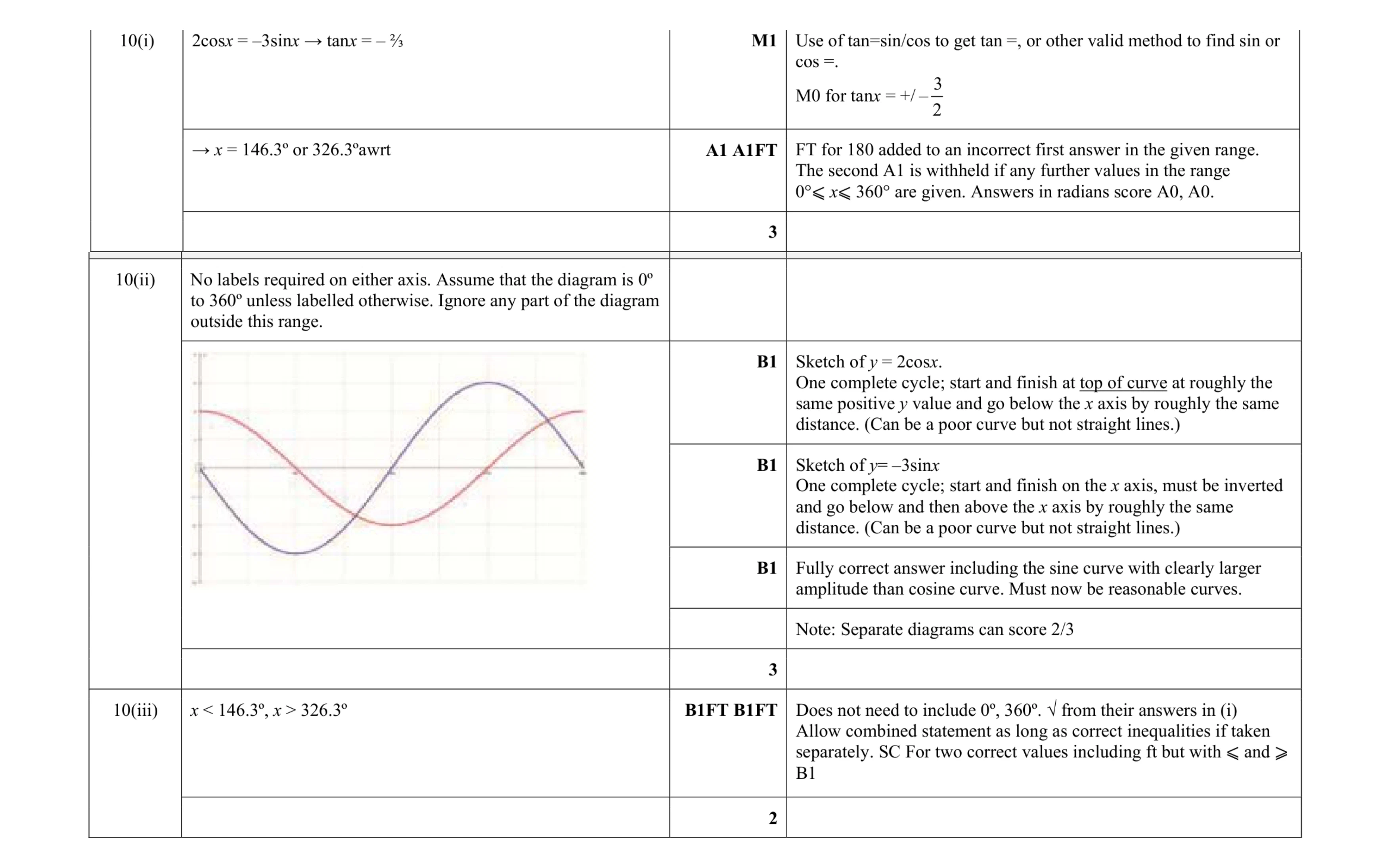 8
8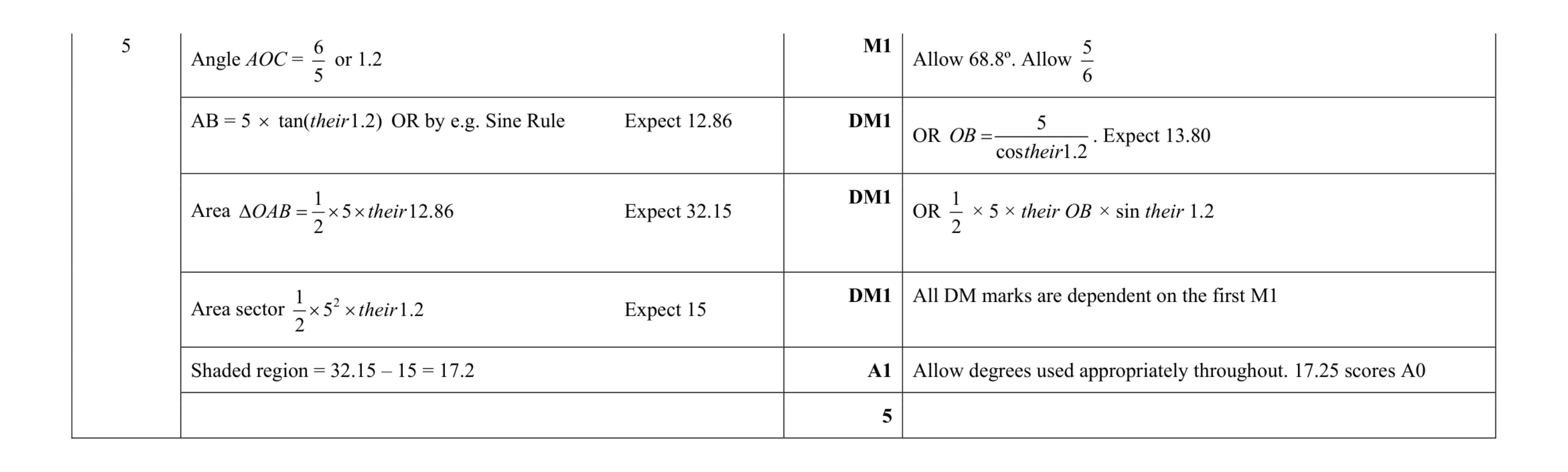 5
5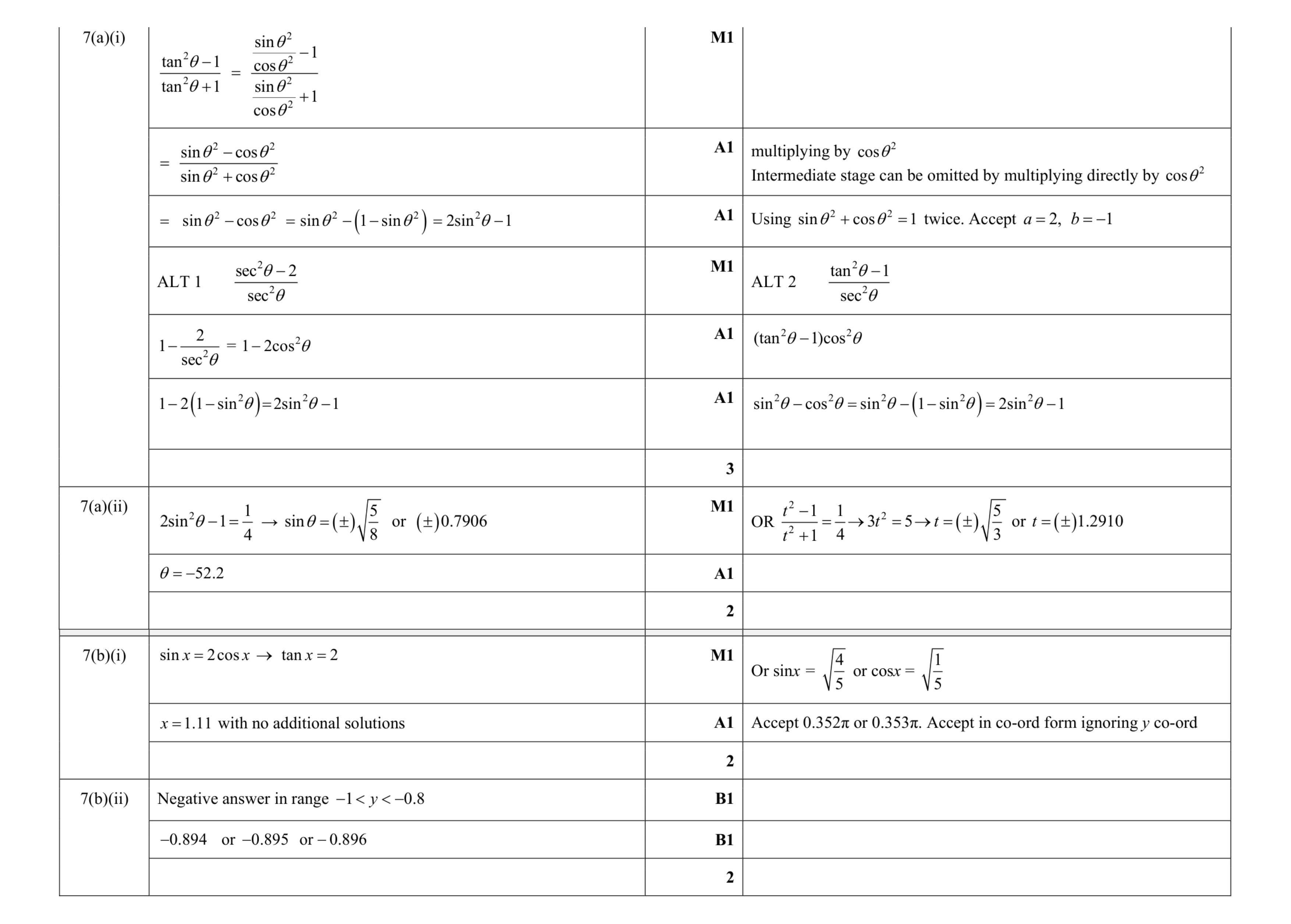 9
9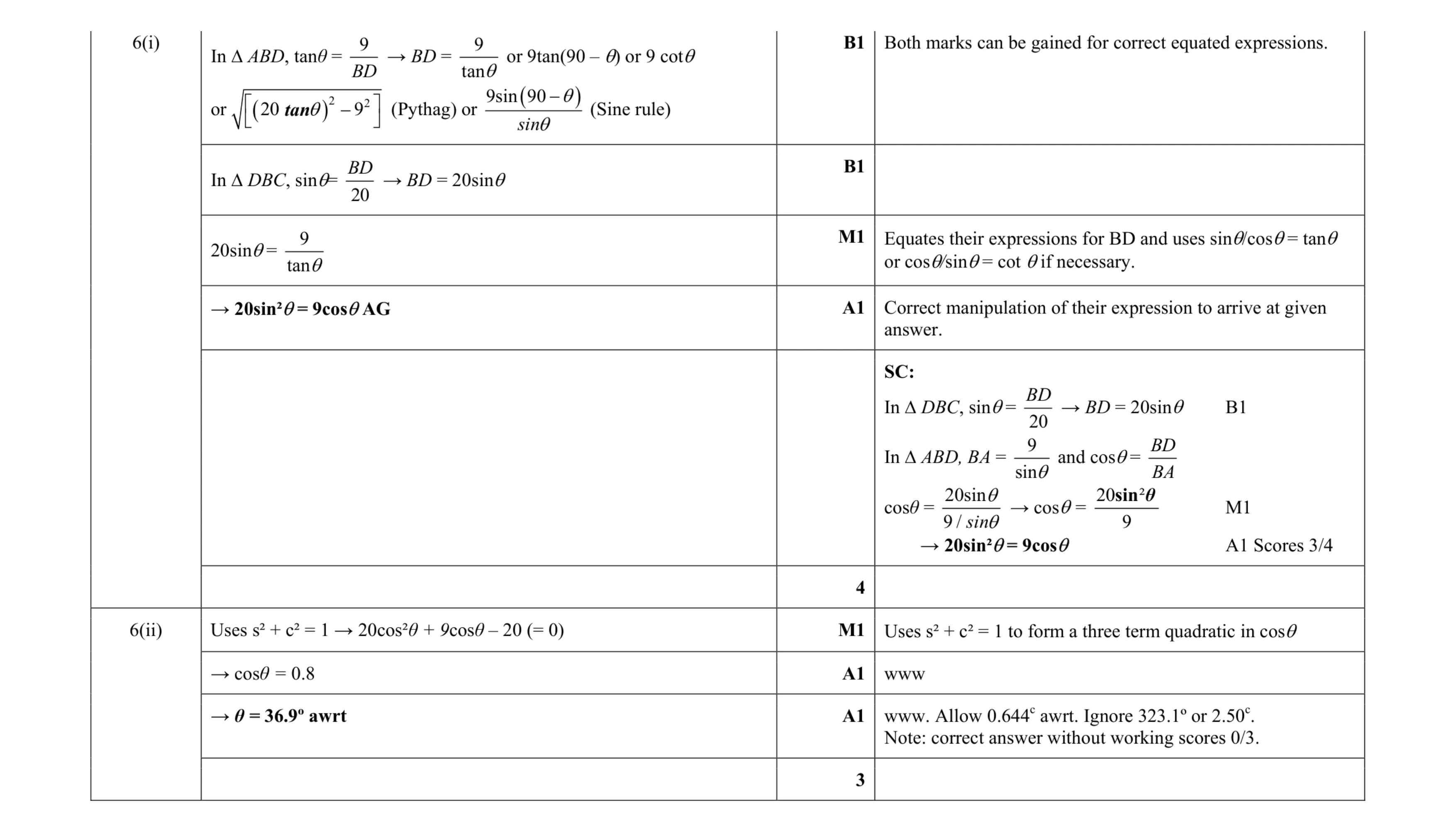 7
7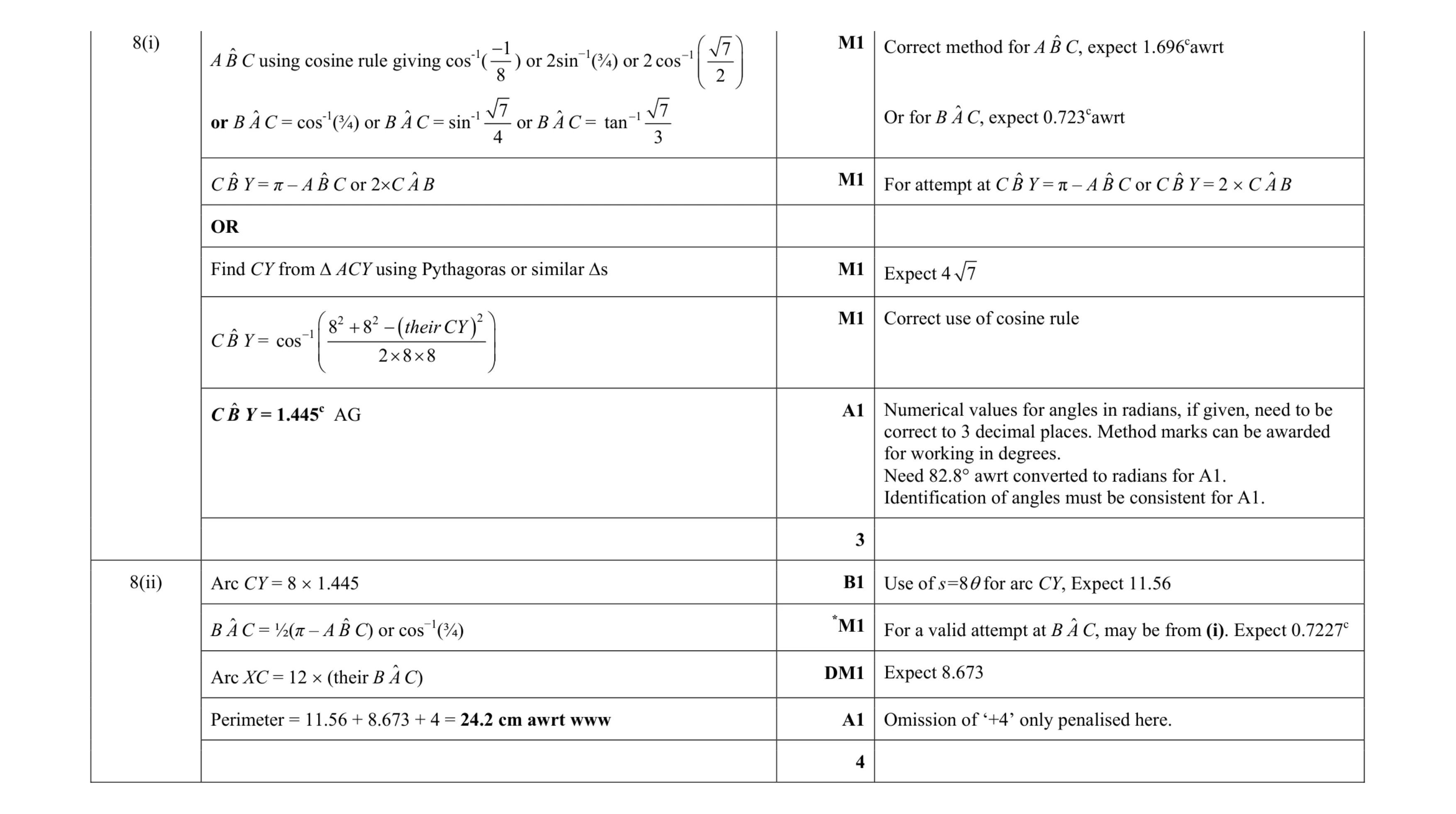 7
7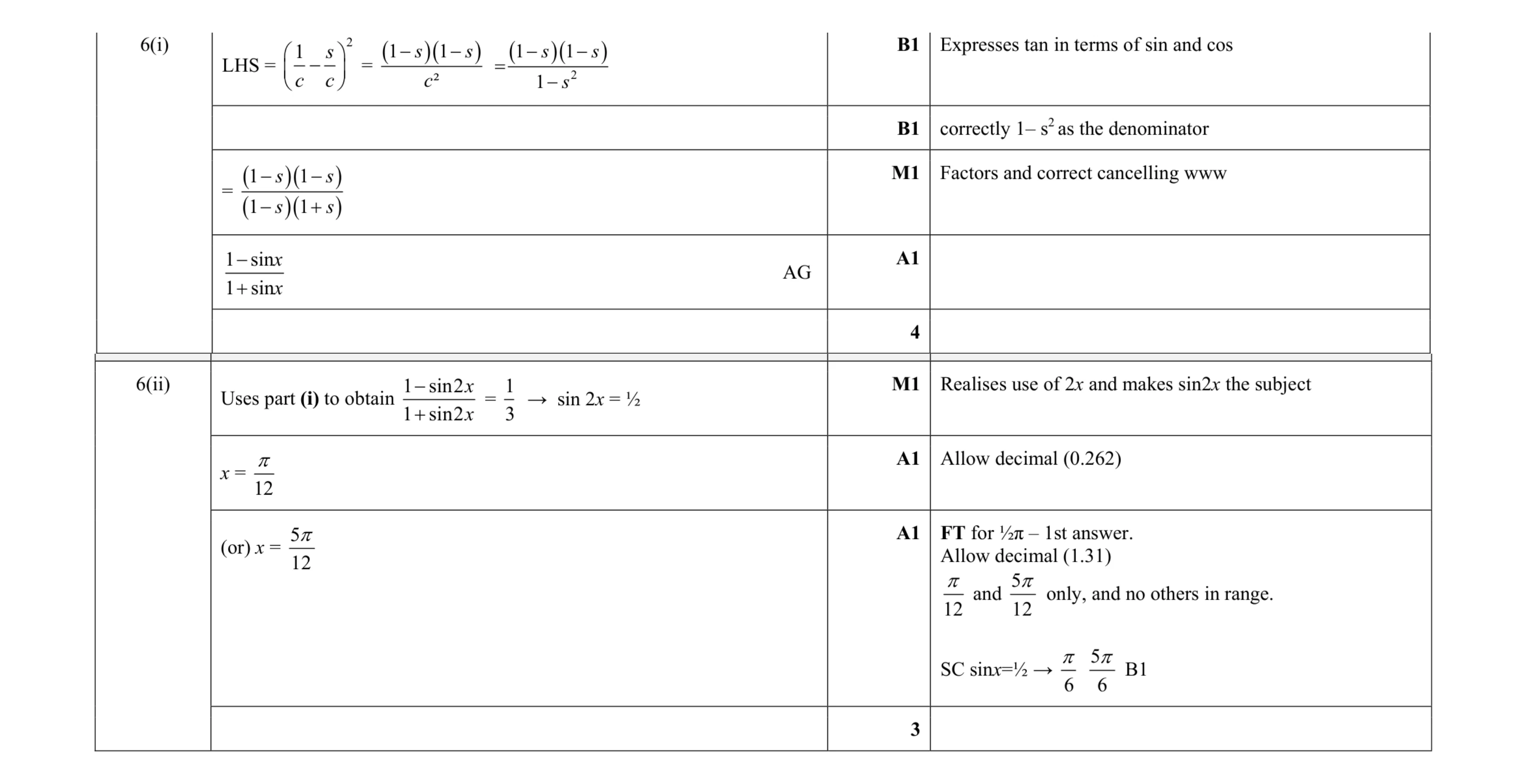 7
7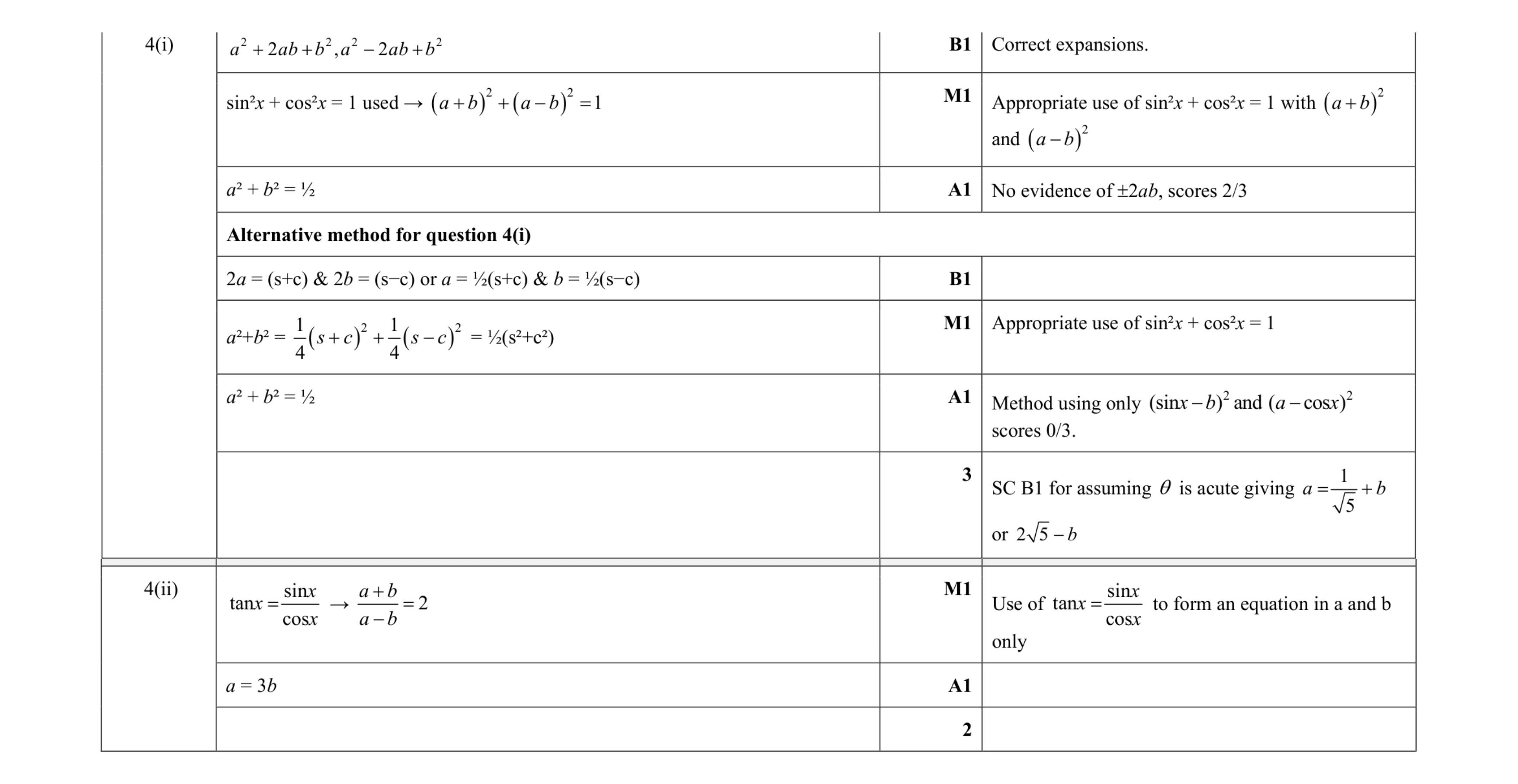 5
5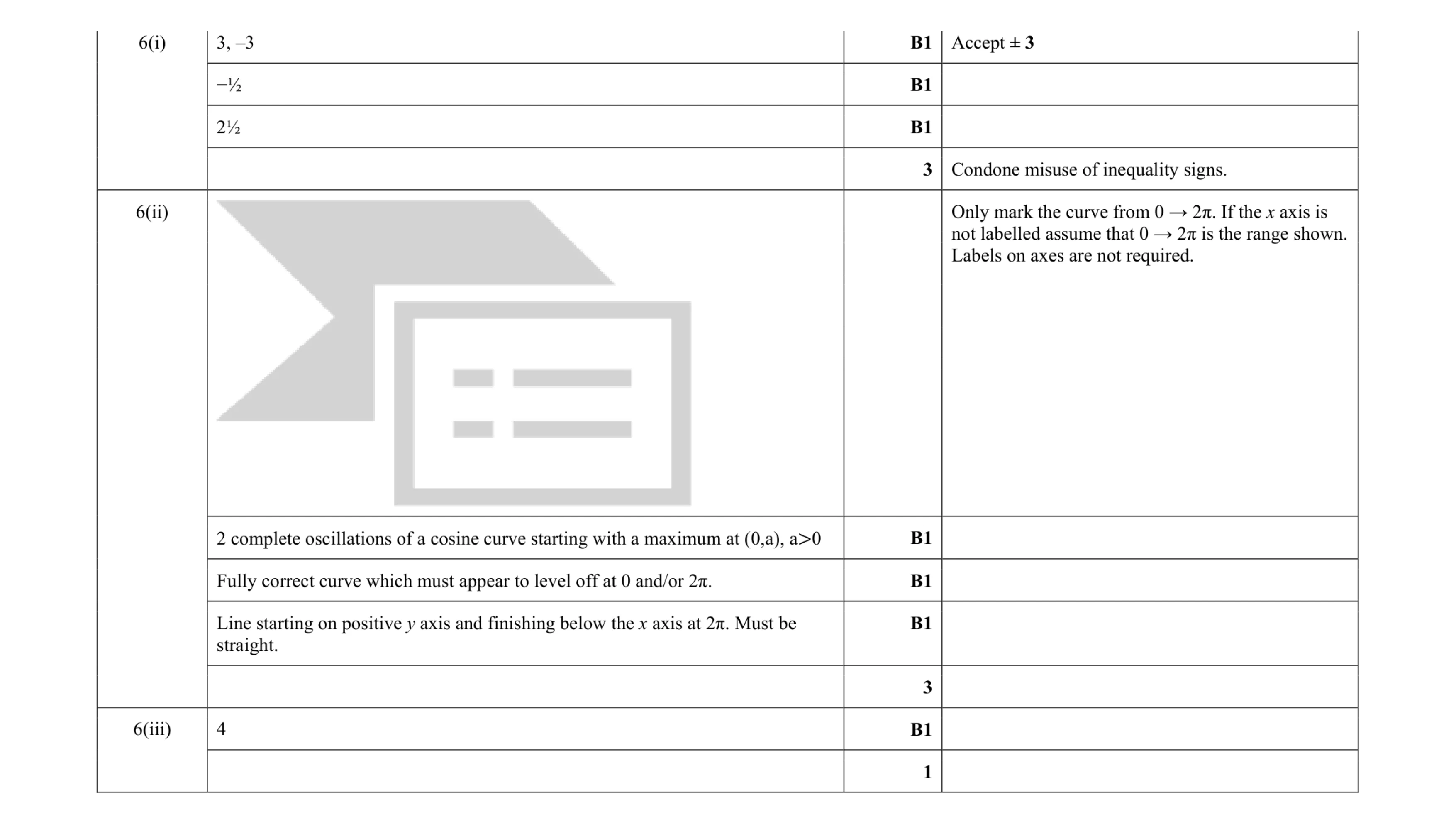 7
7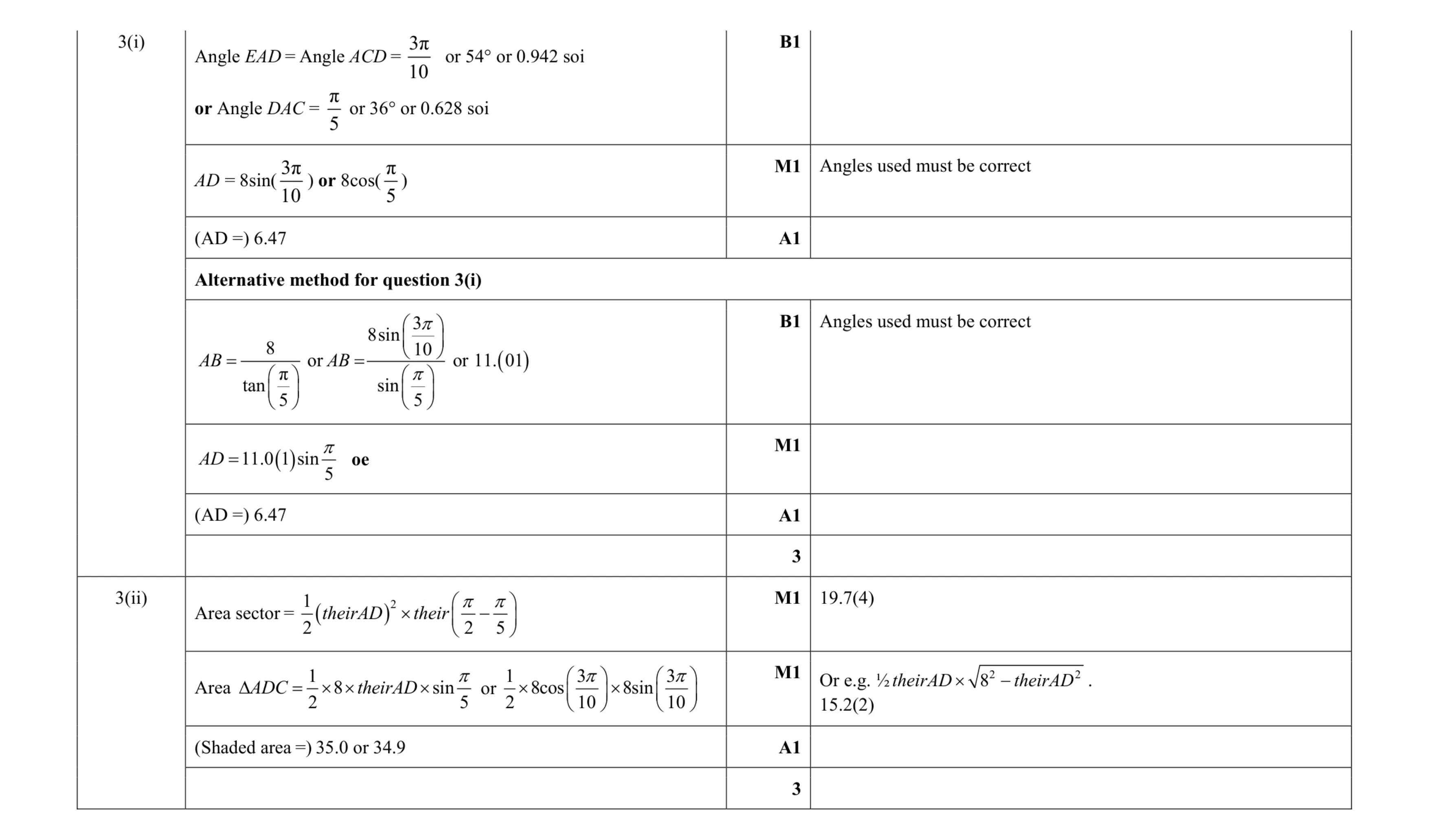 6
6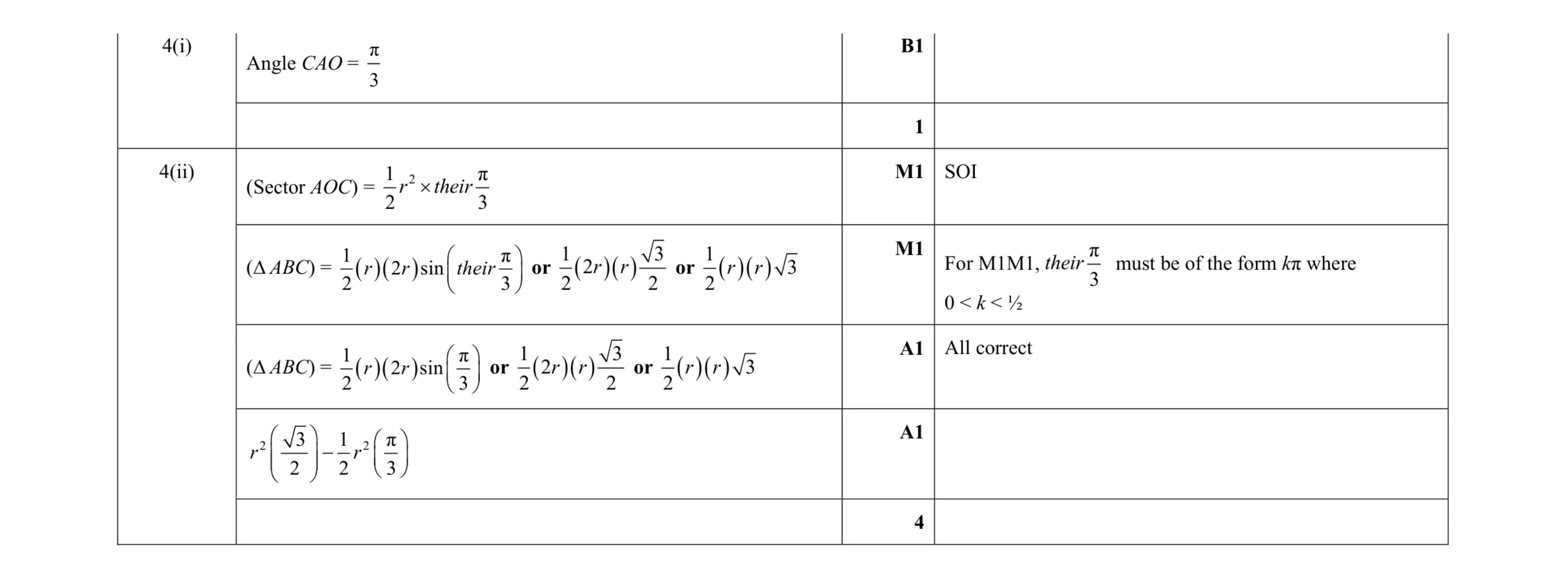 5
5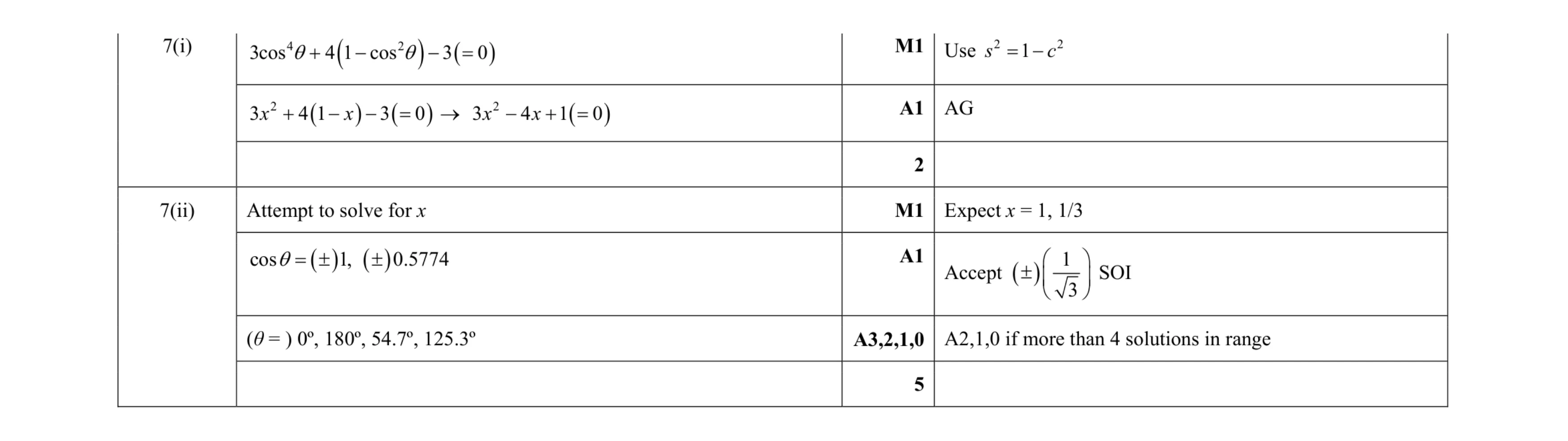 7
7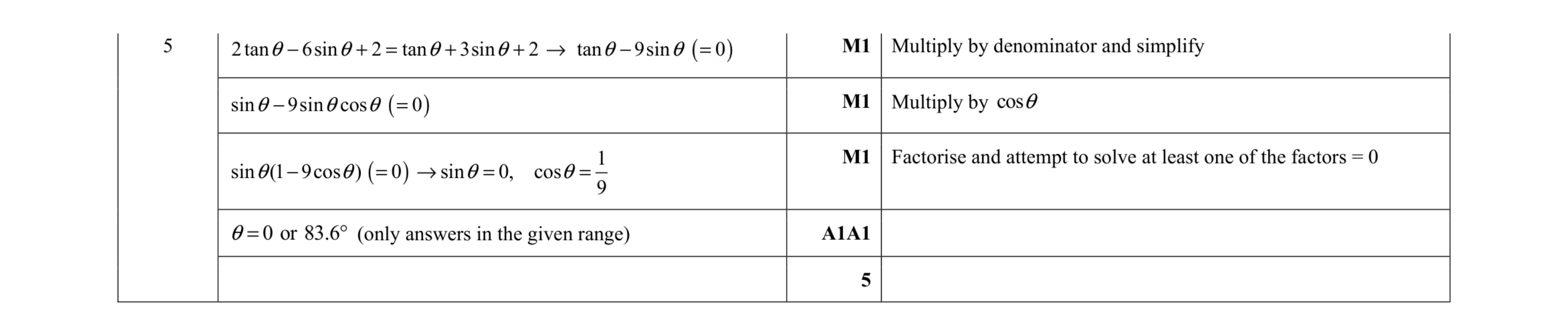 5
5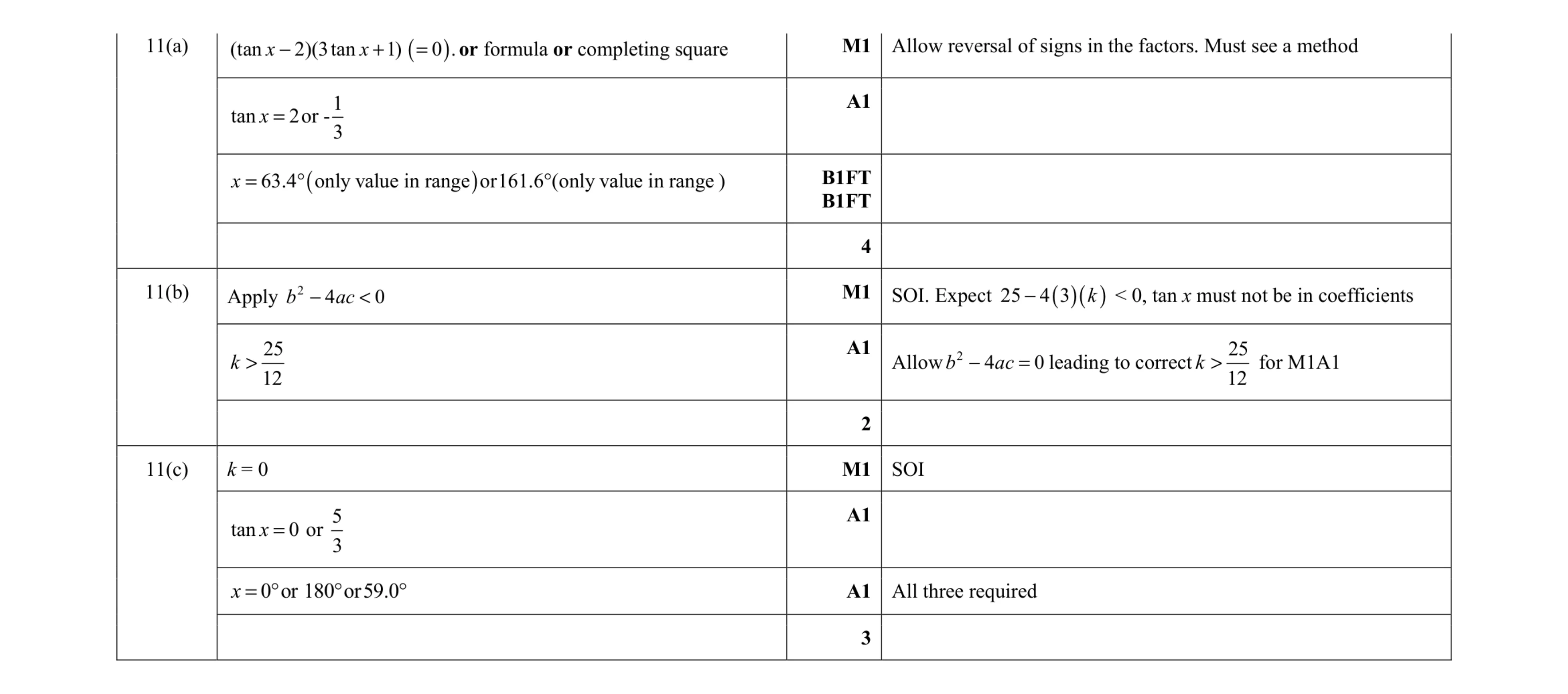 9
9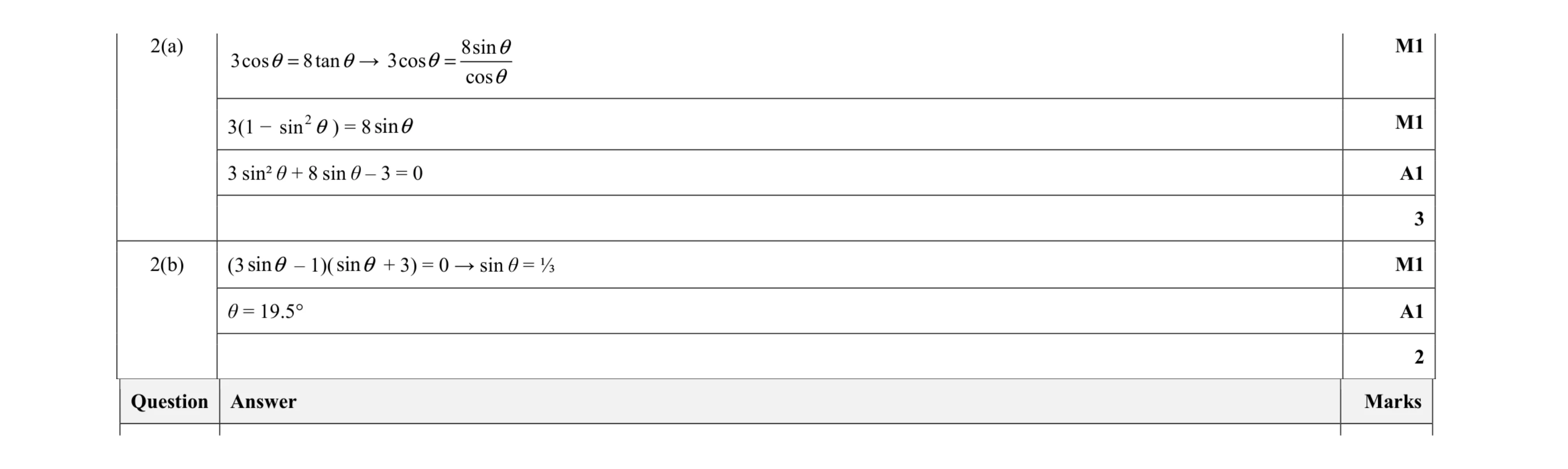 5
5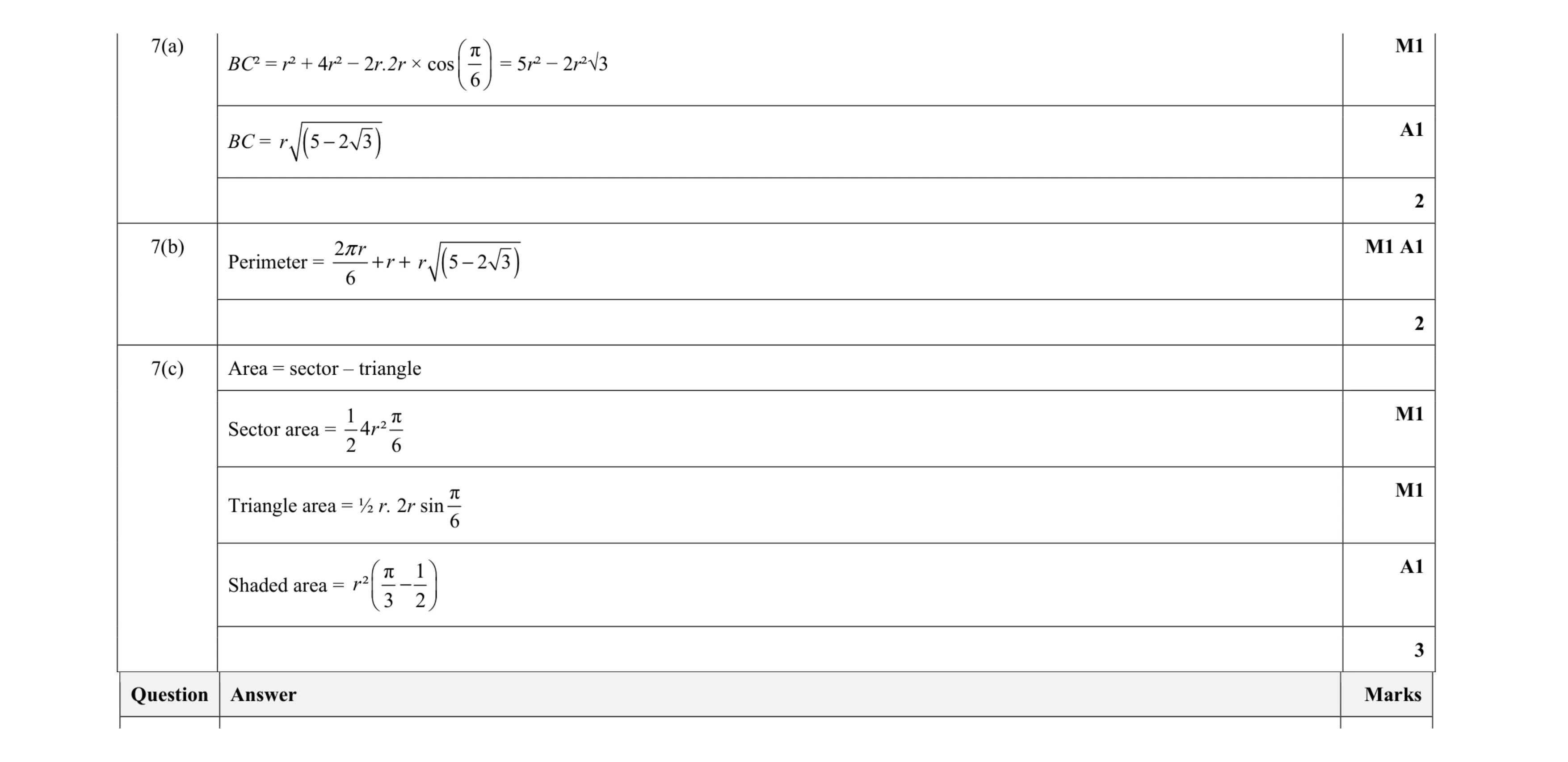 7
7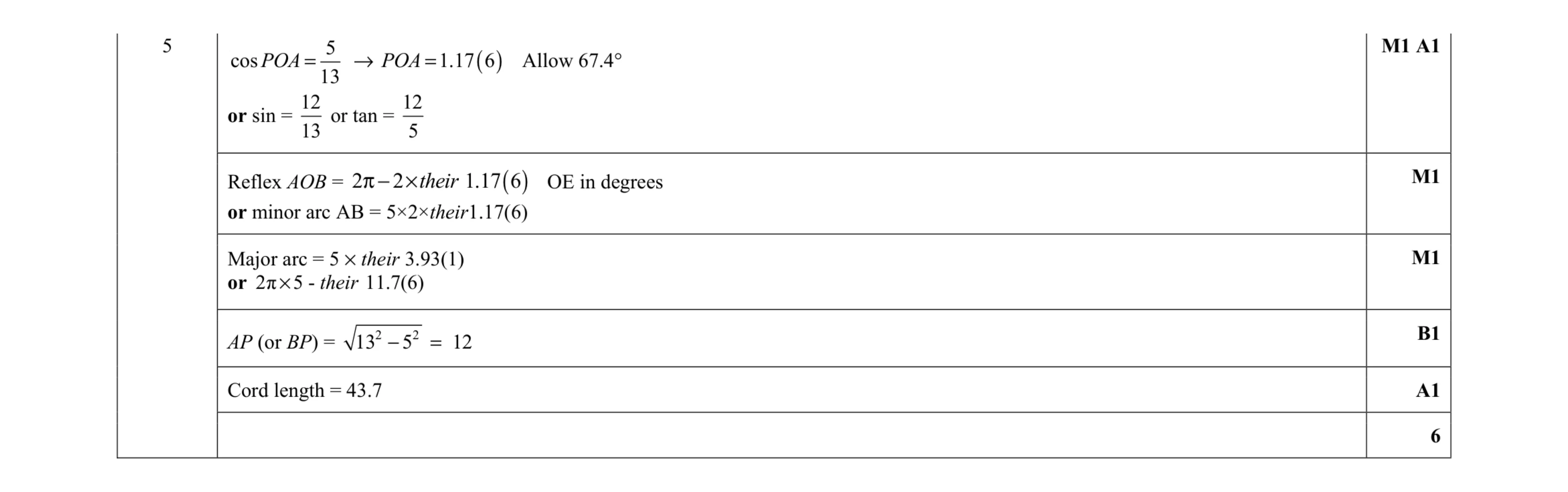 6
6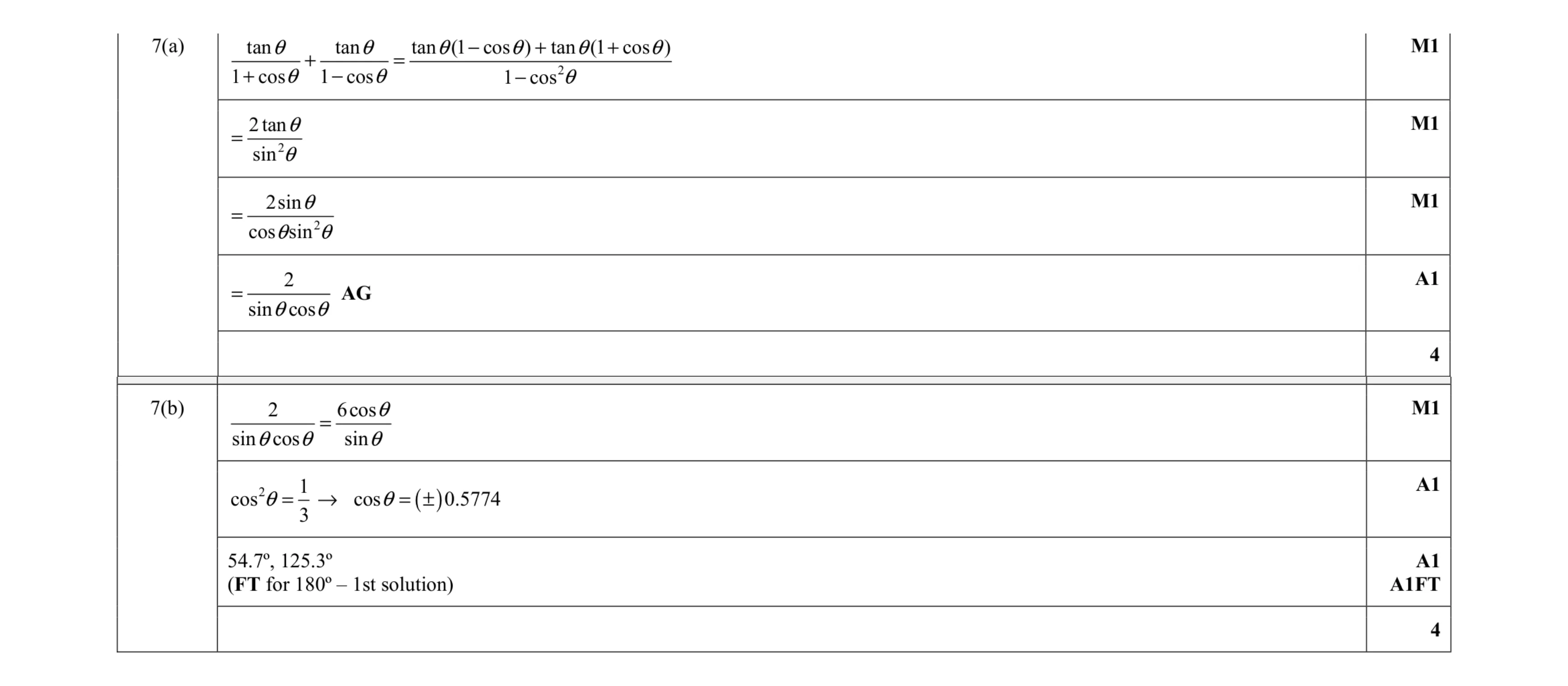 8
8 3
3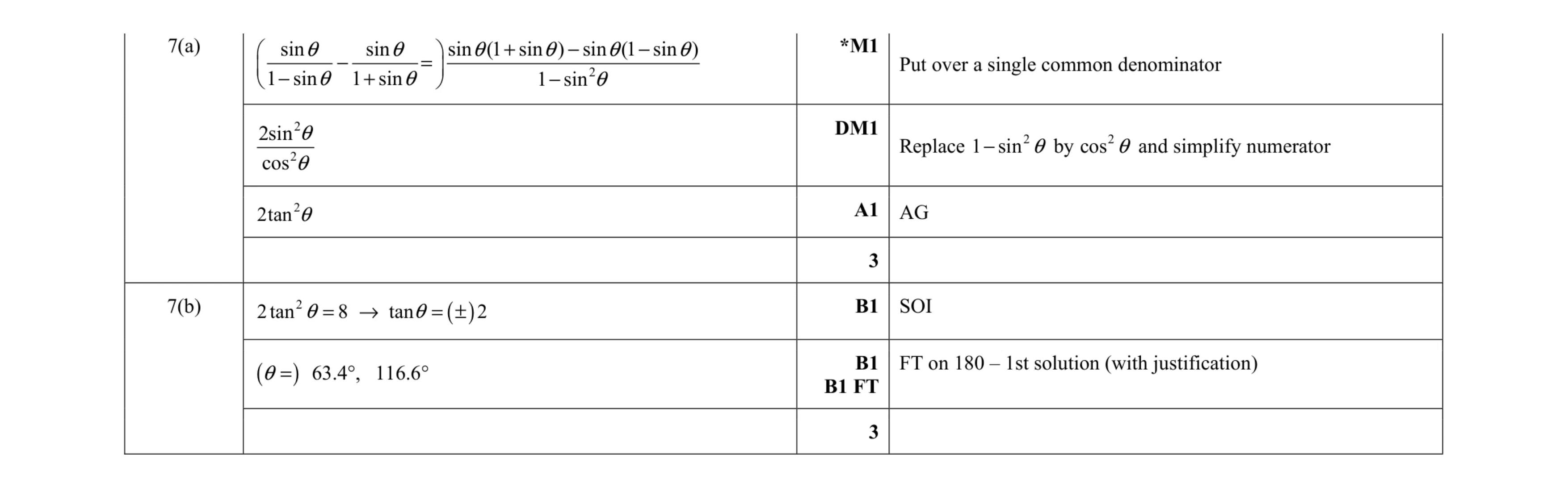 6
6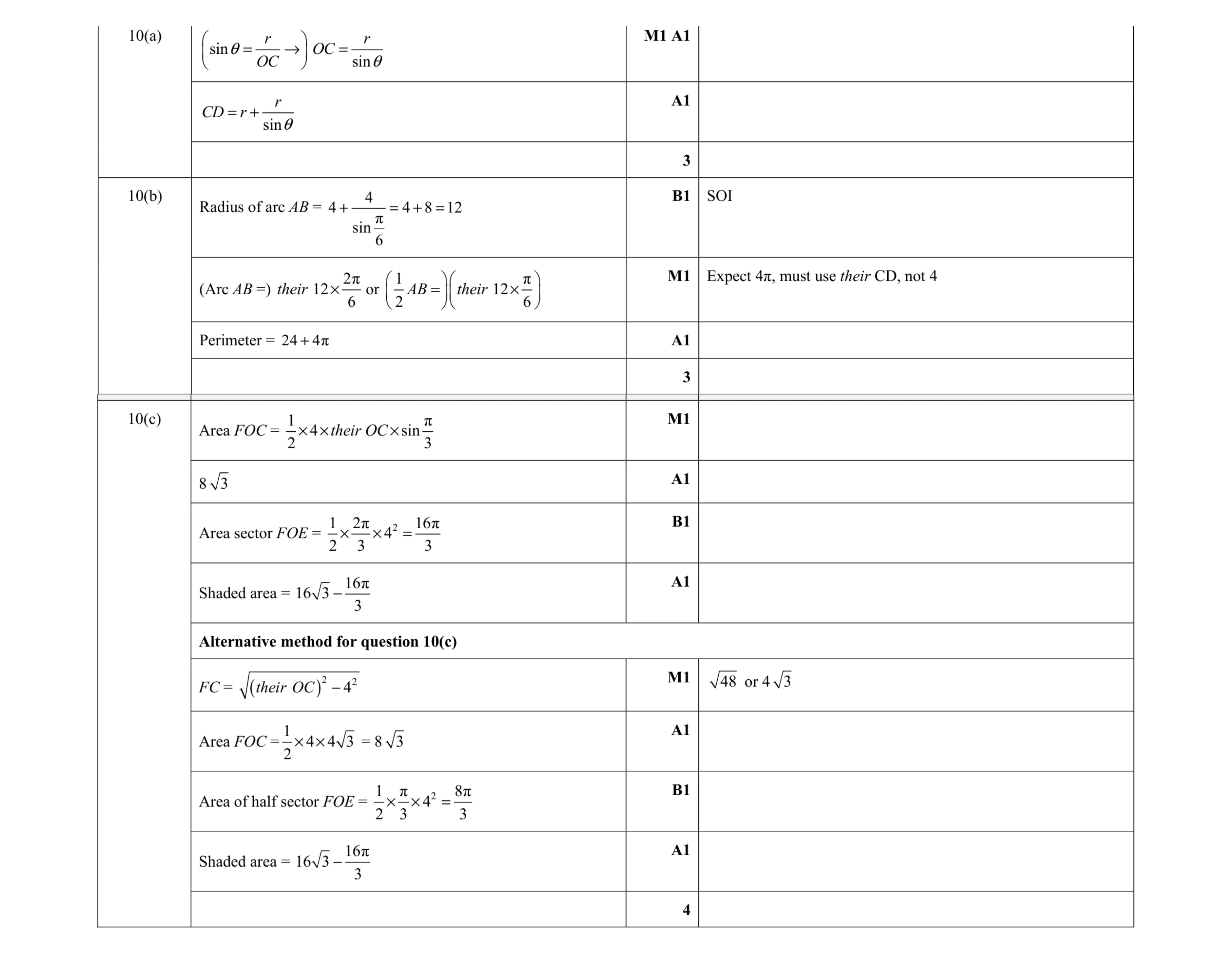 10
10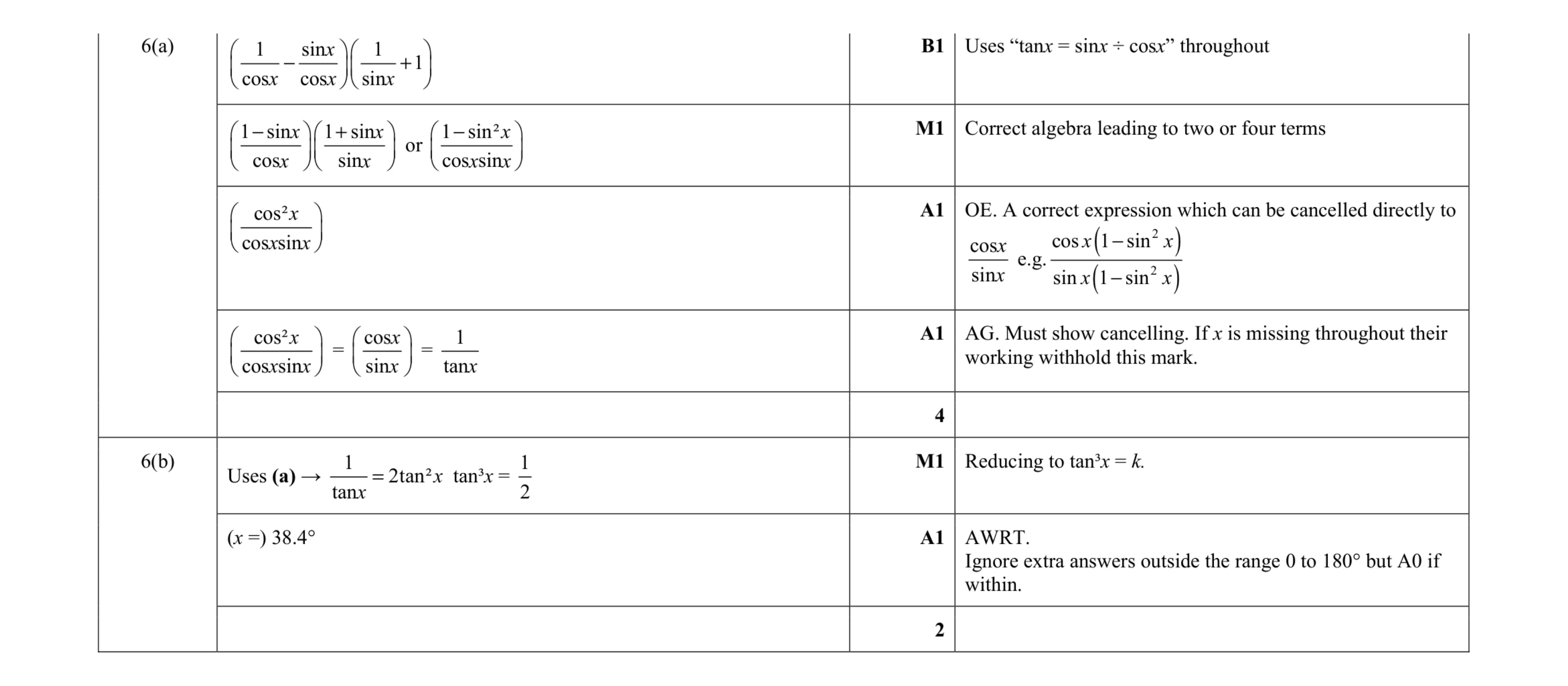 6
6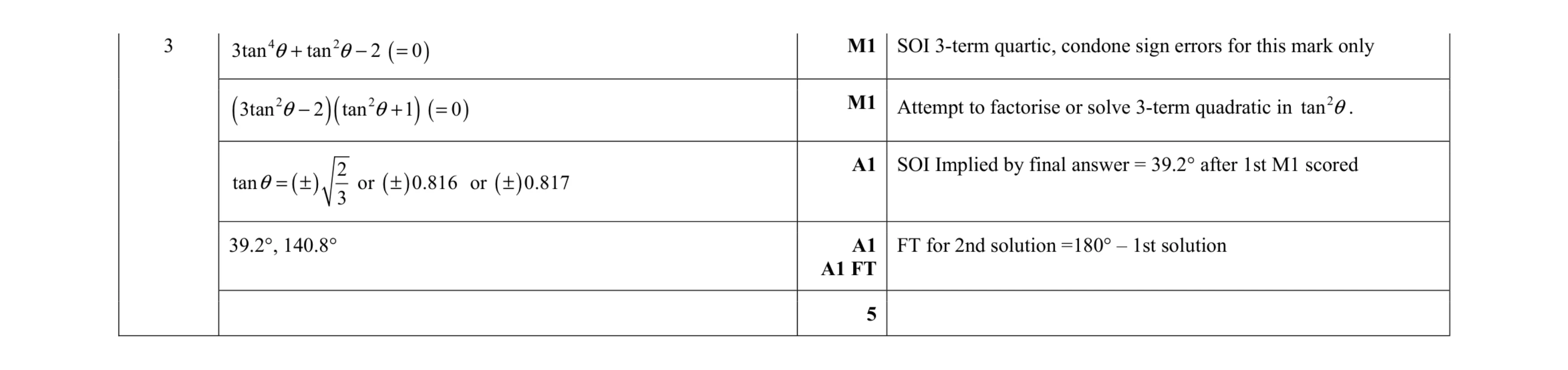 5
5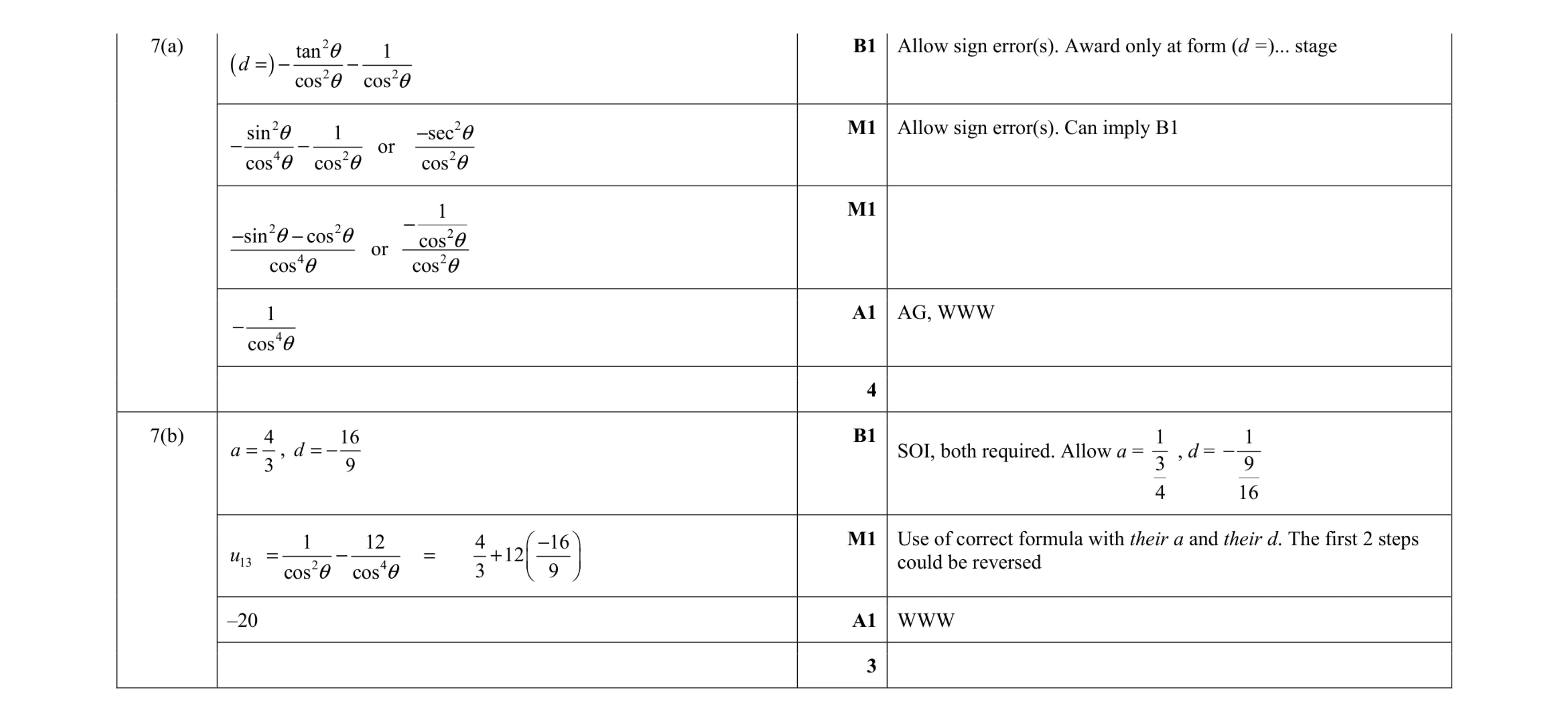 7
7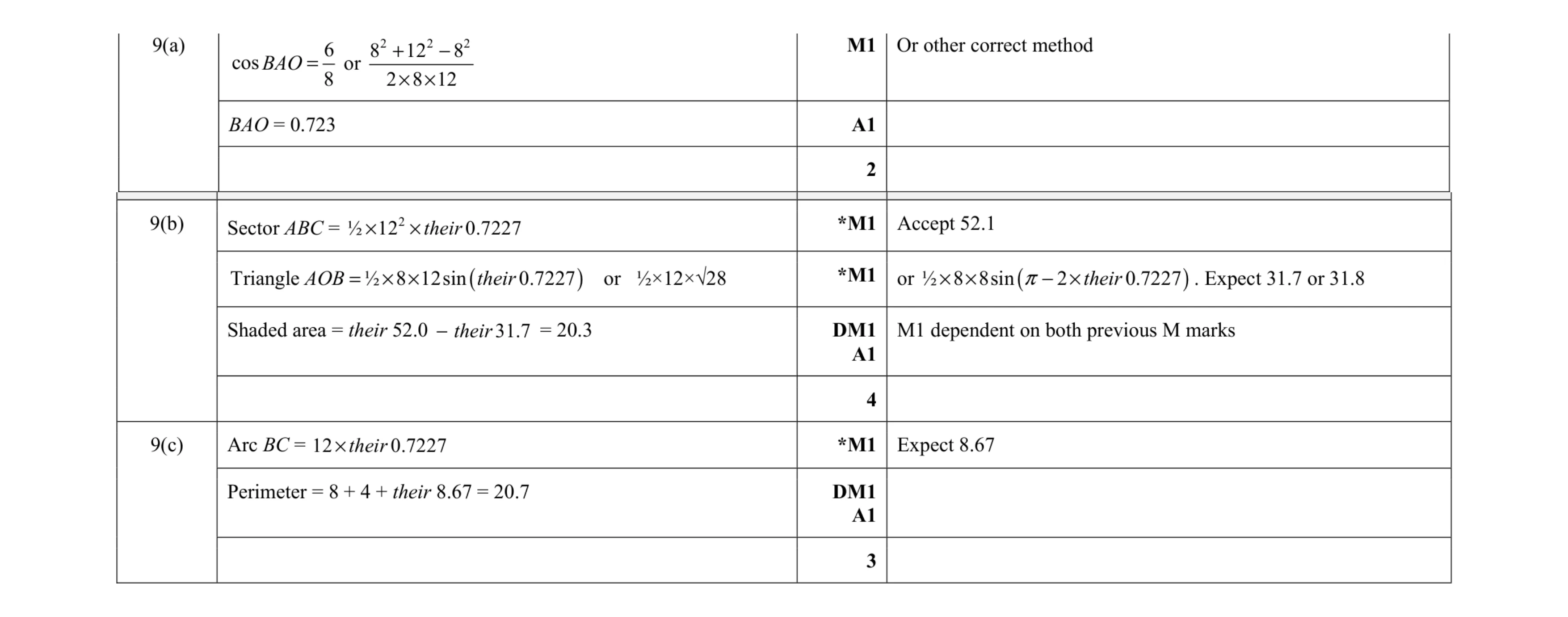 9
9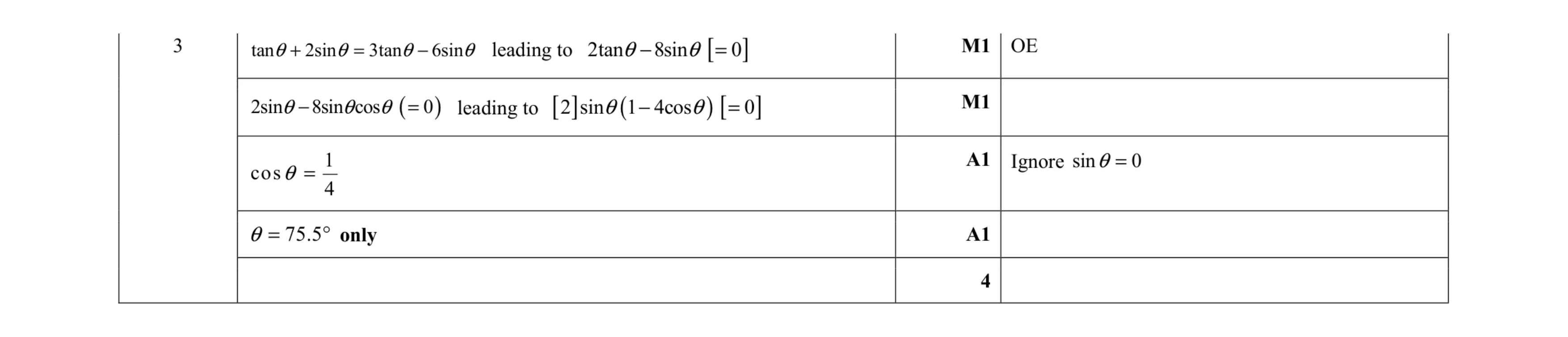 4
4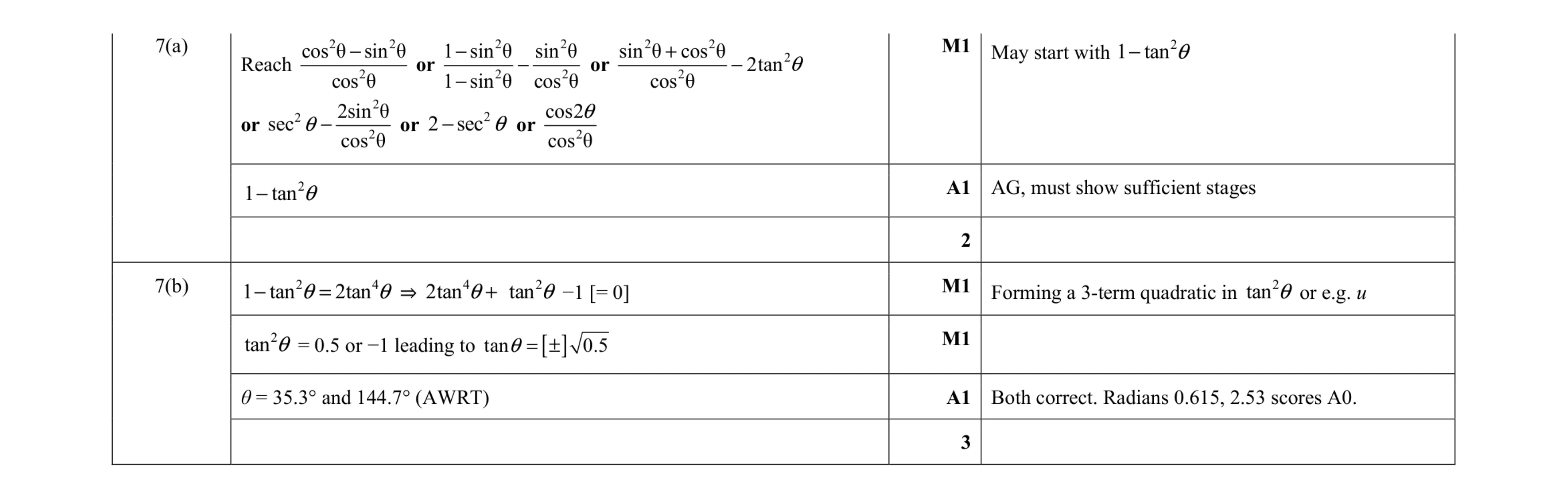 5
5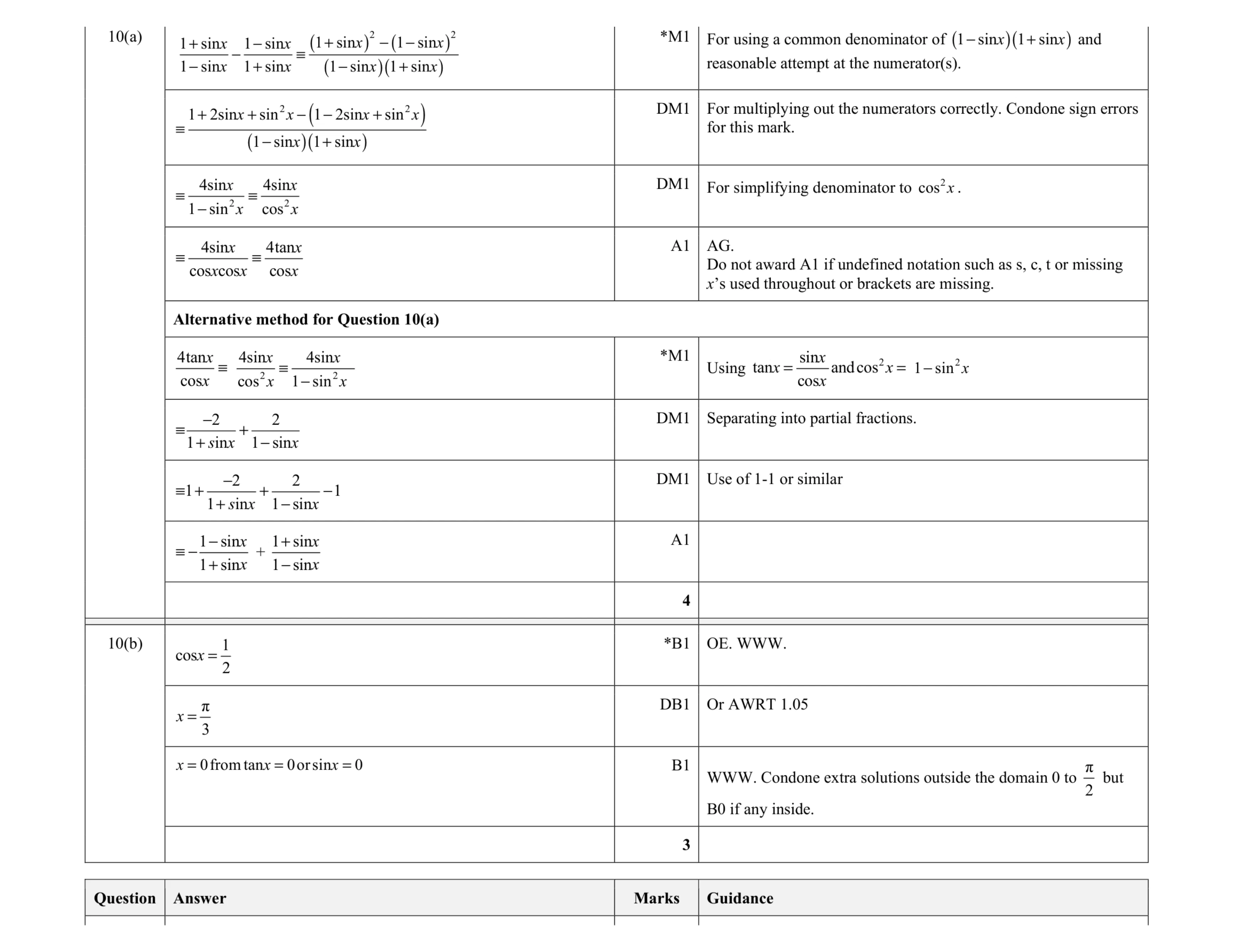 7
7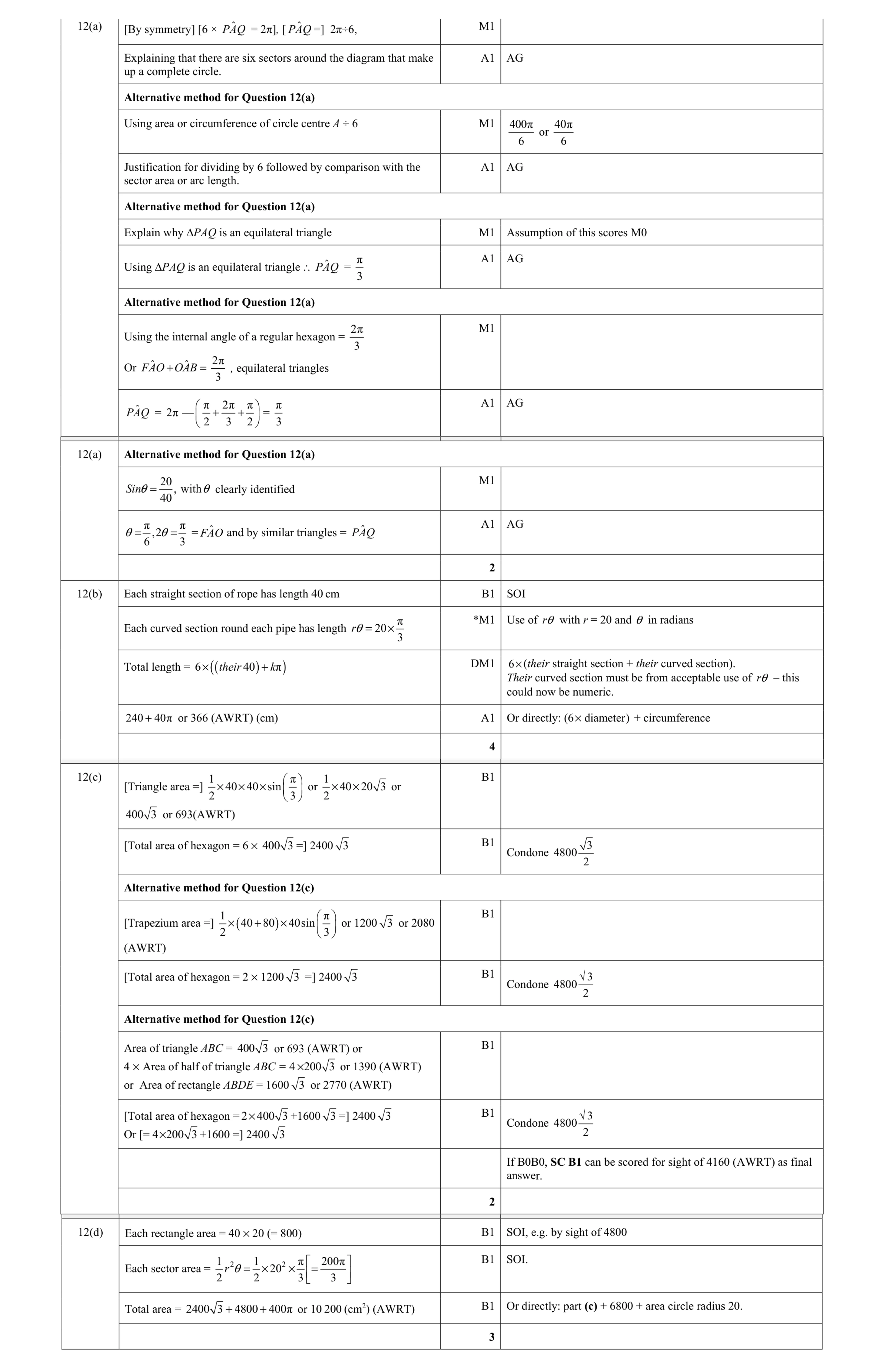 11
11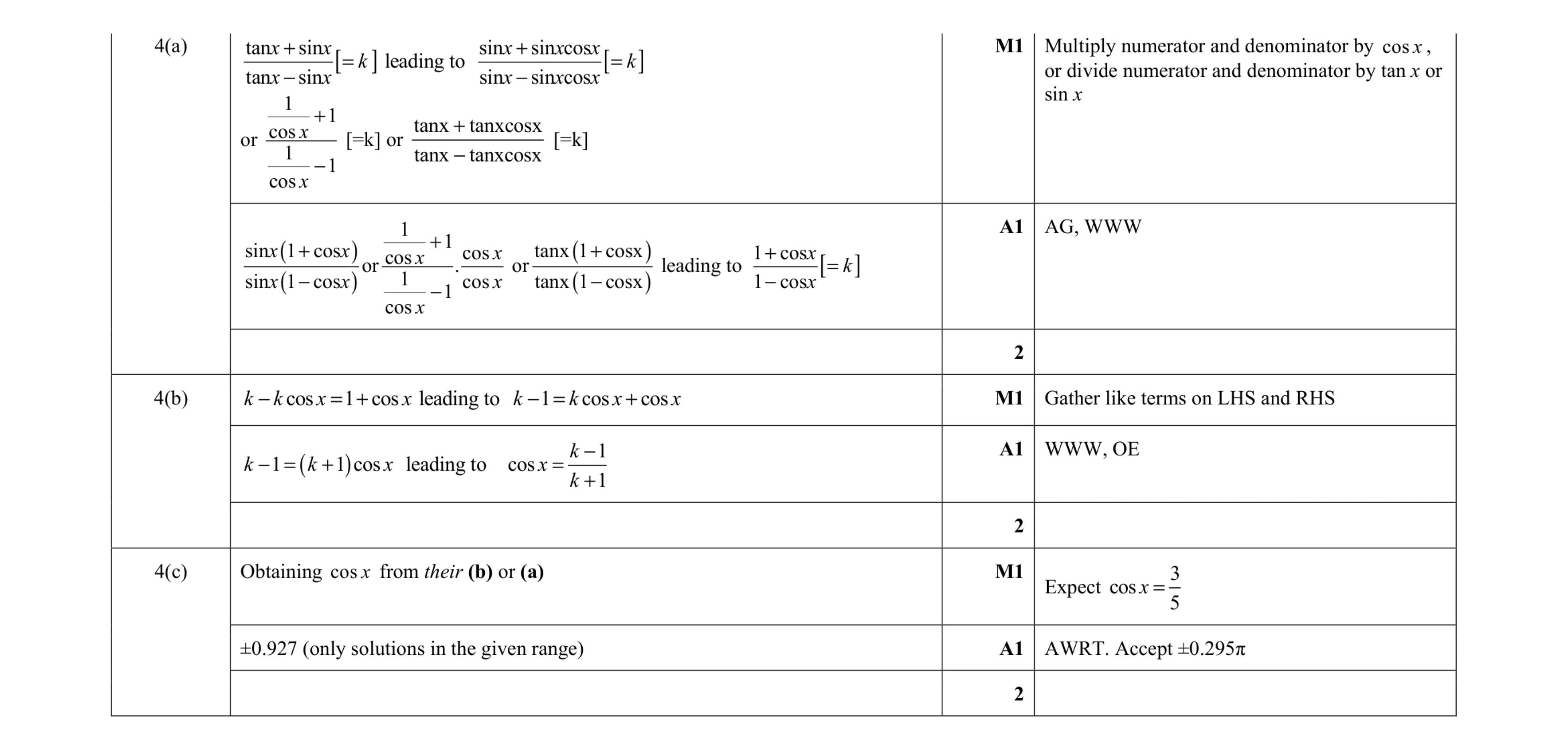 6
6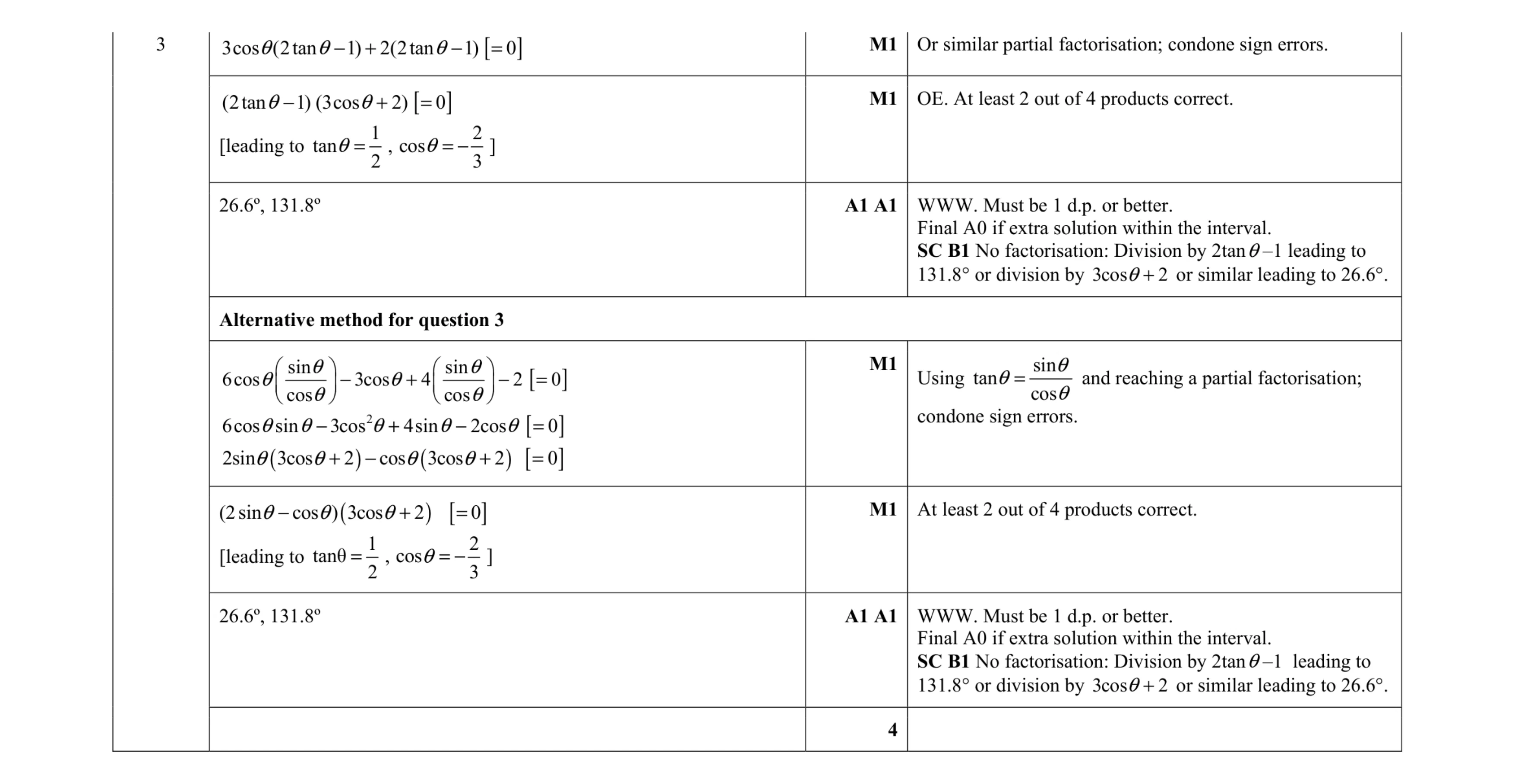 4
4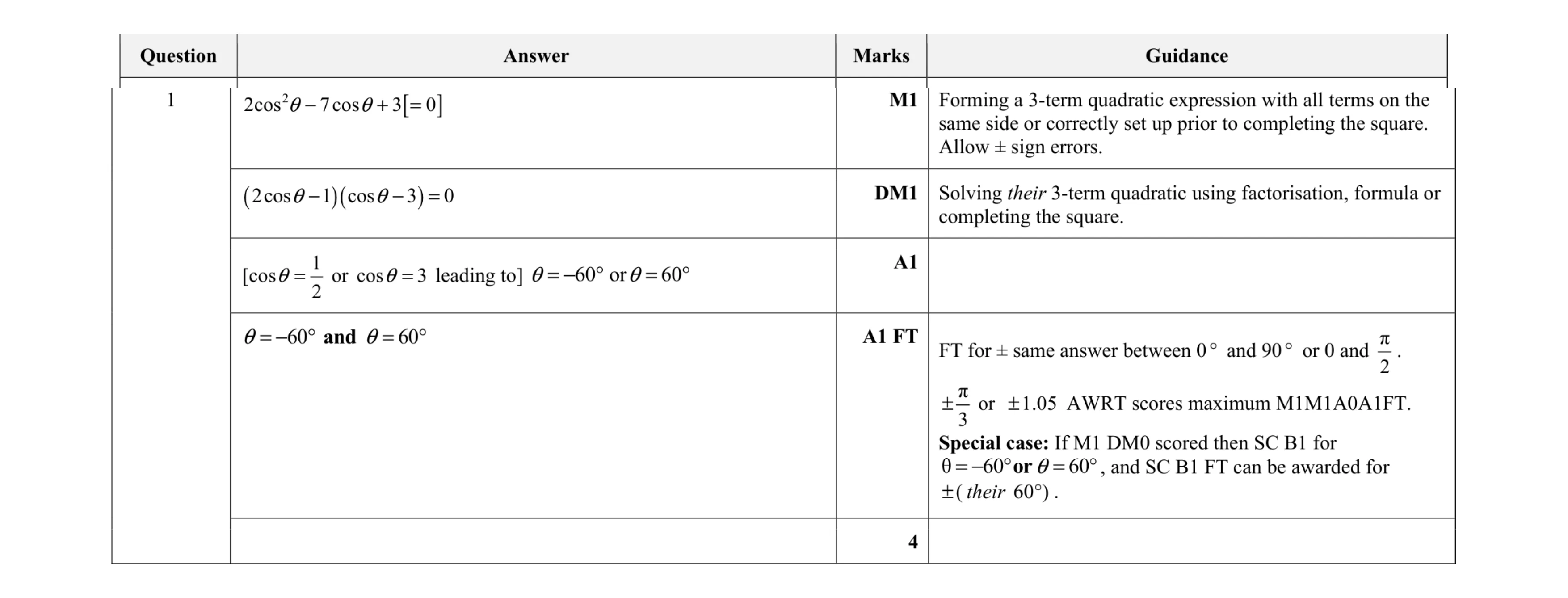 4
4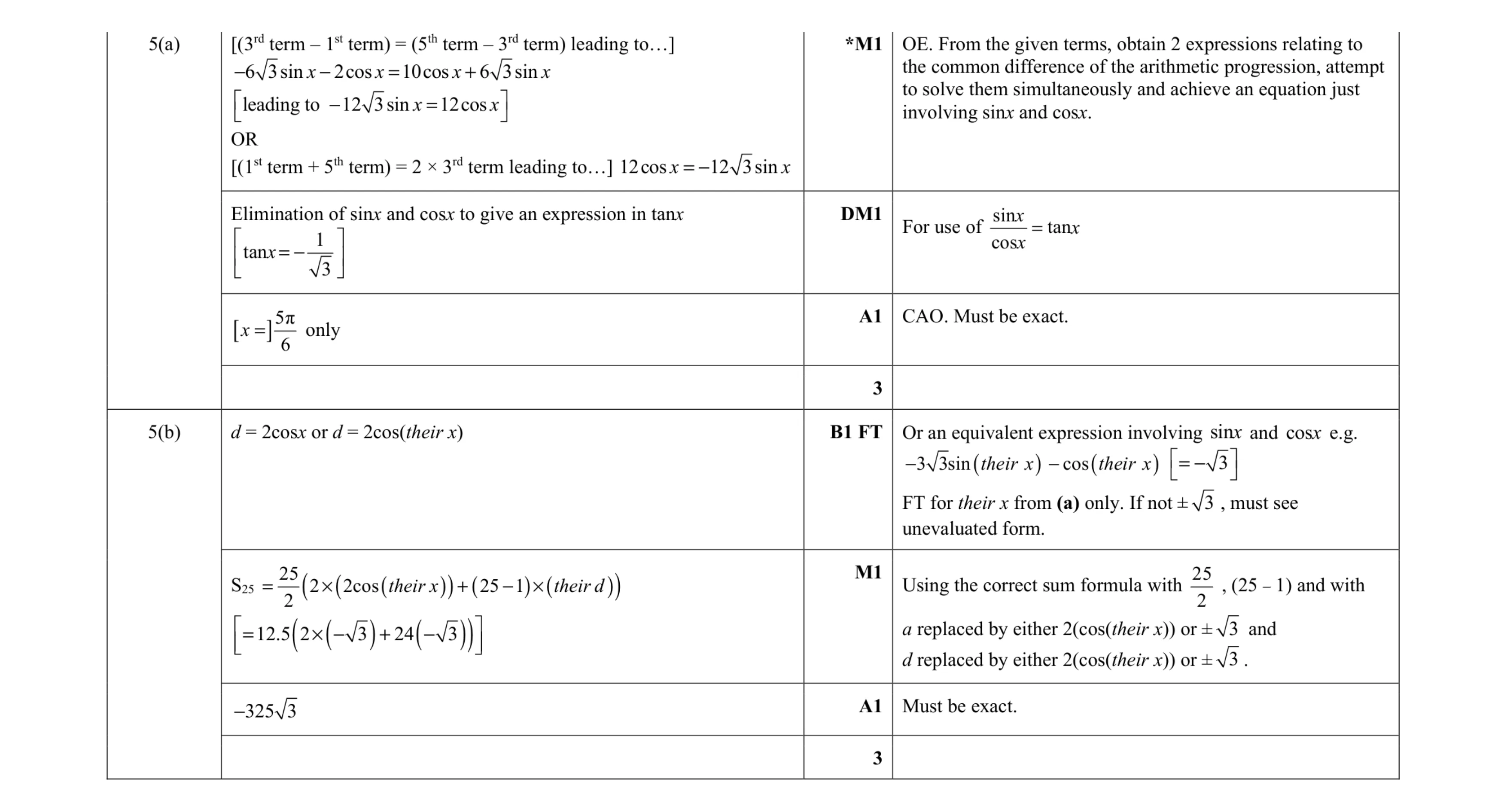 6
6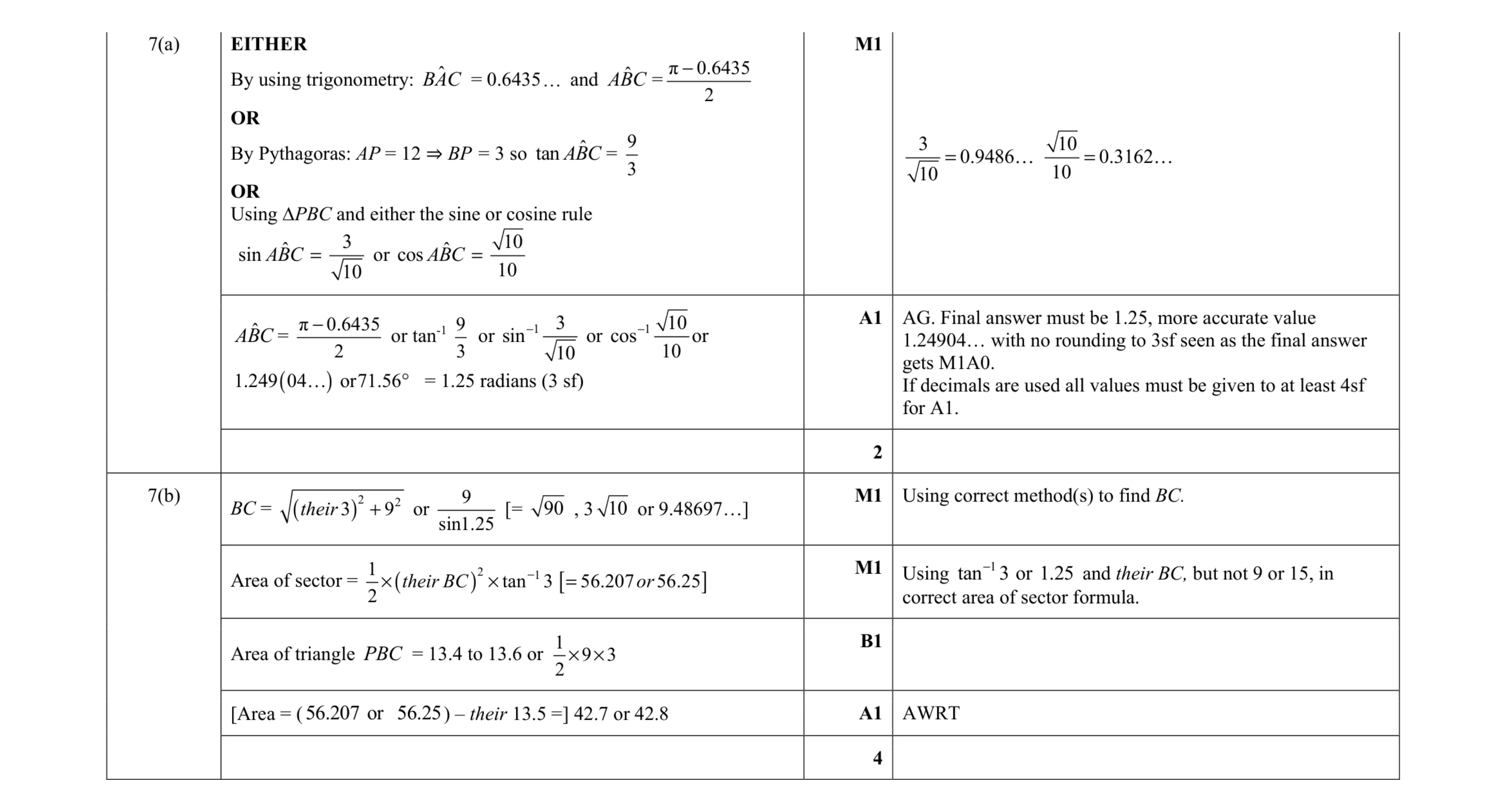 6
6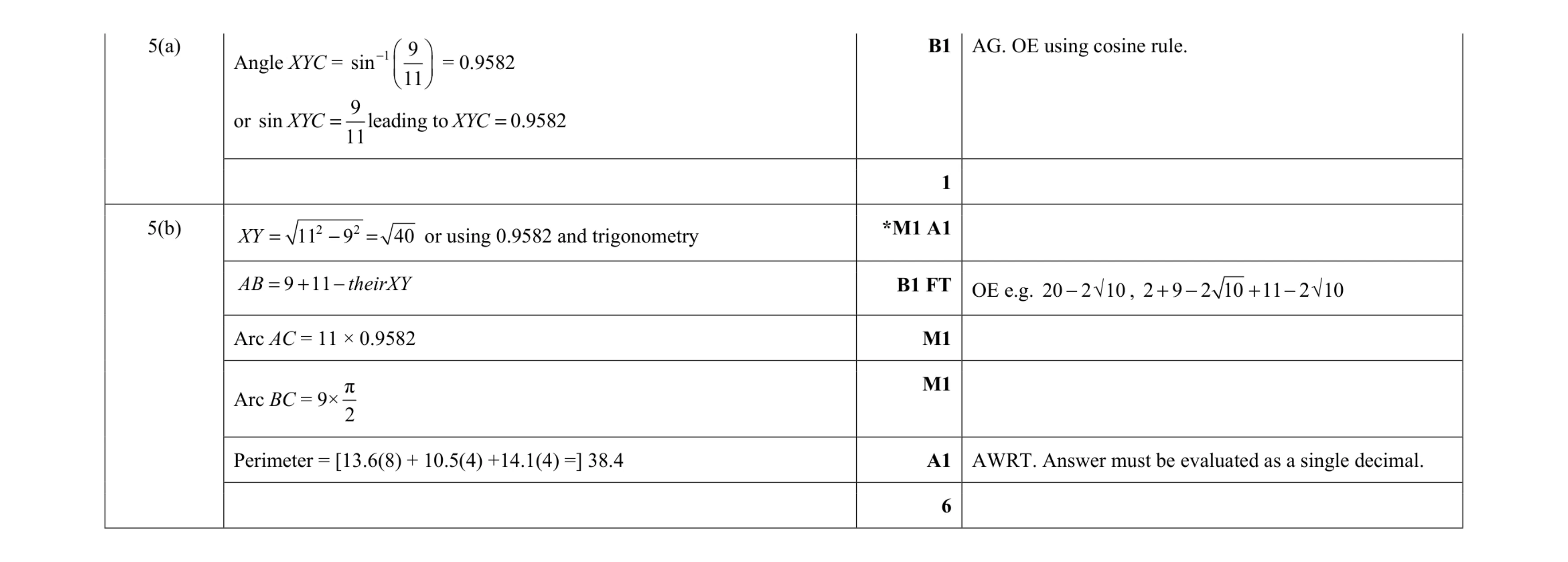 7
7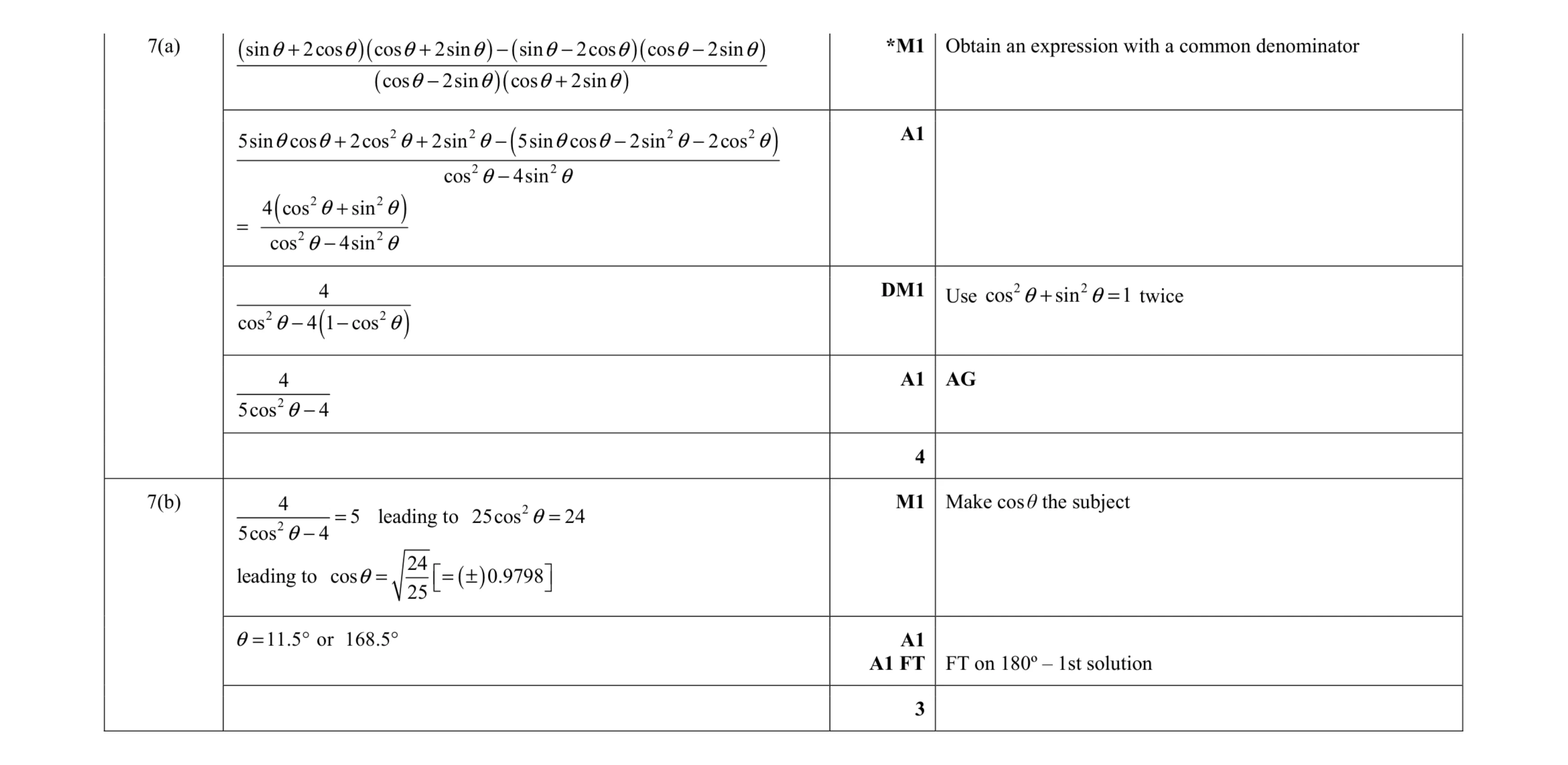 7
7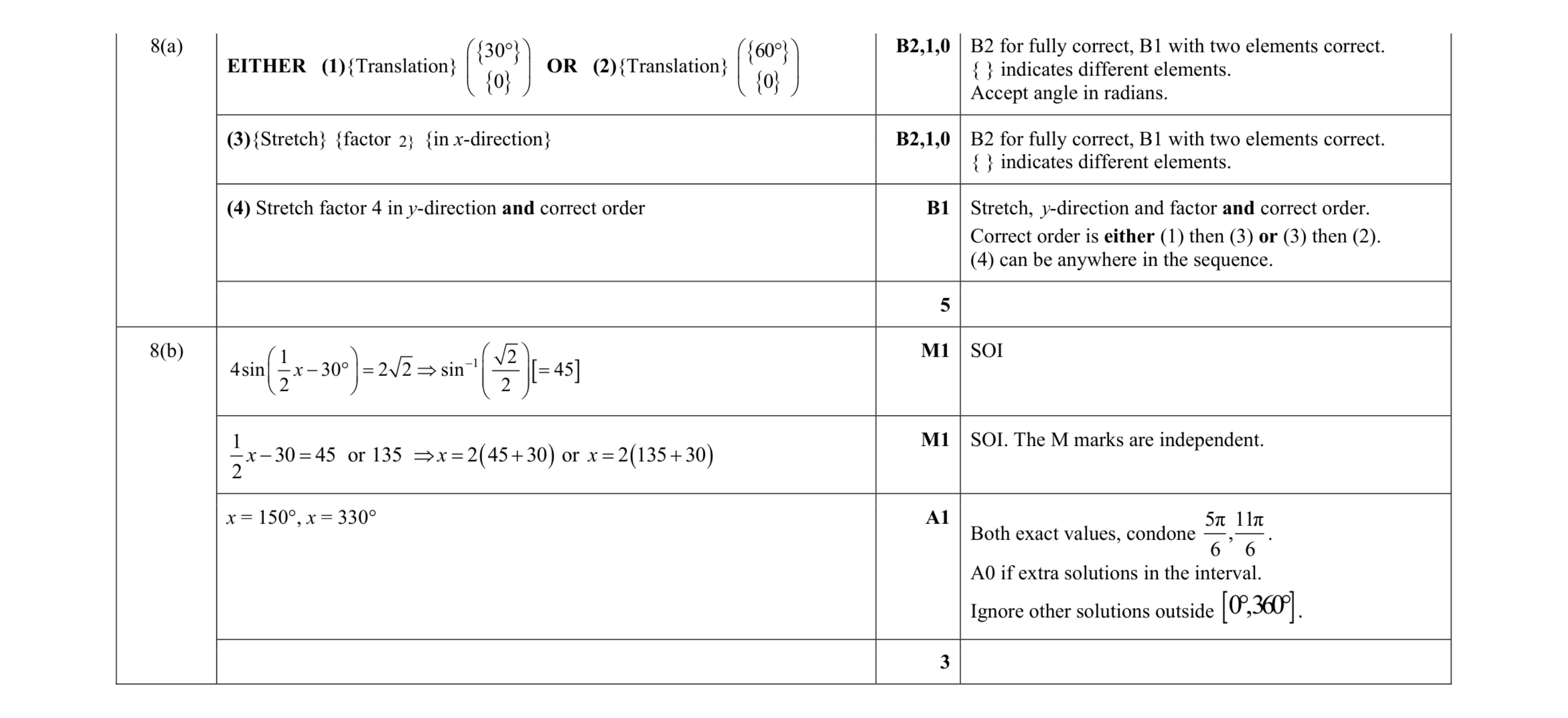 8
8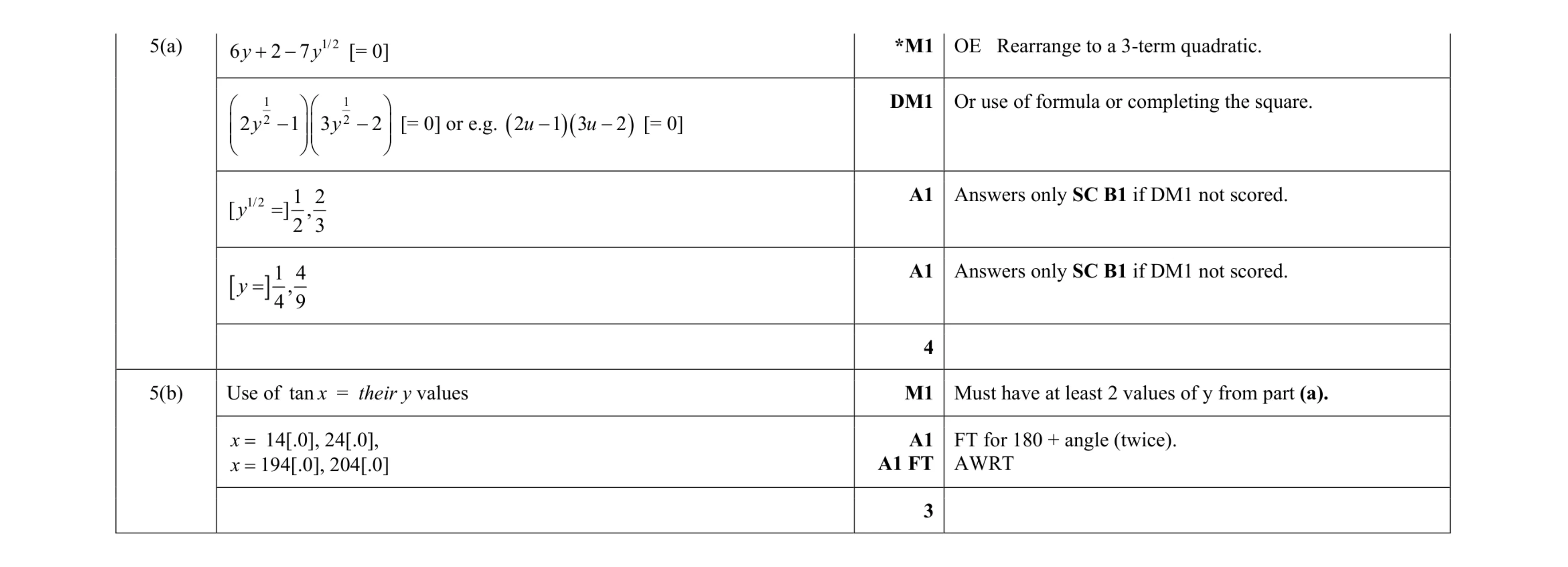 7
7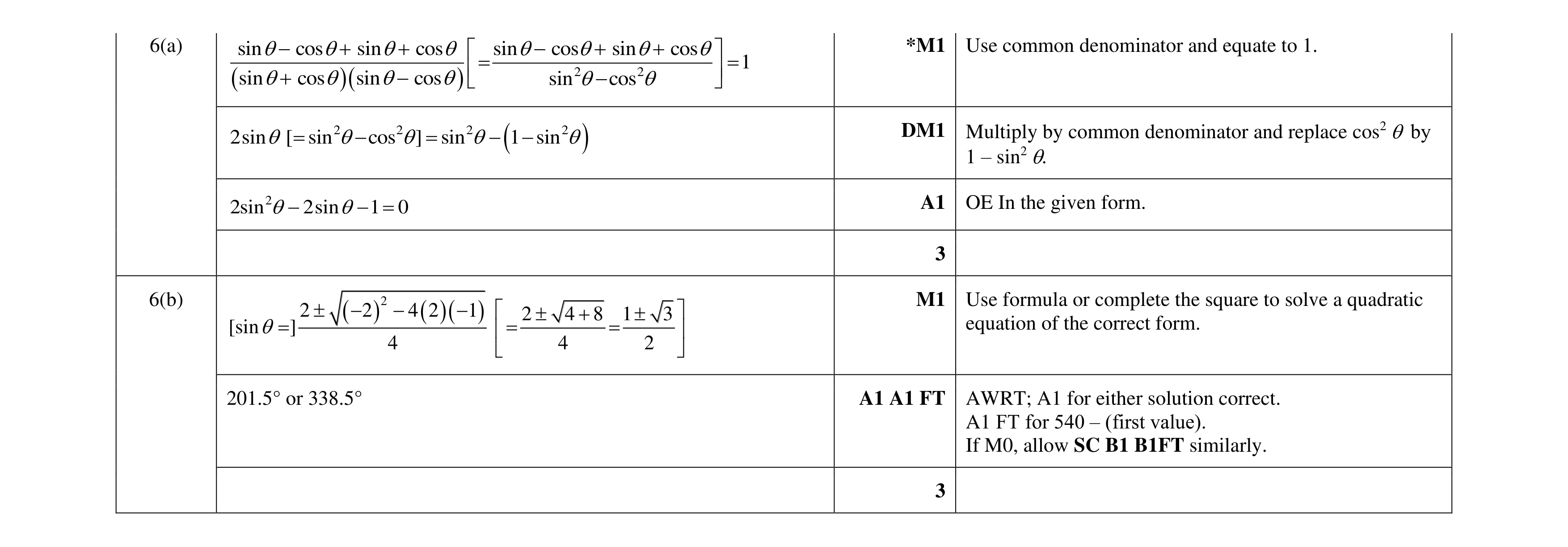 6
6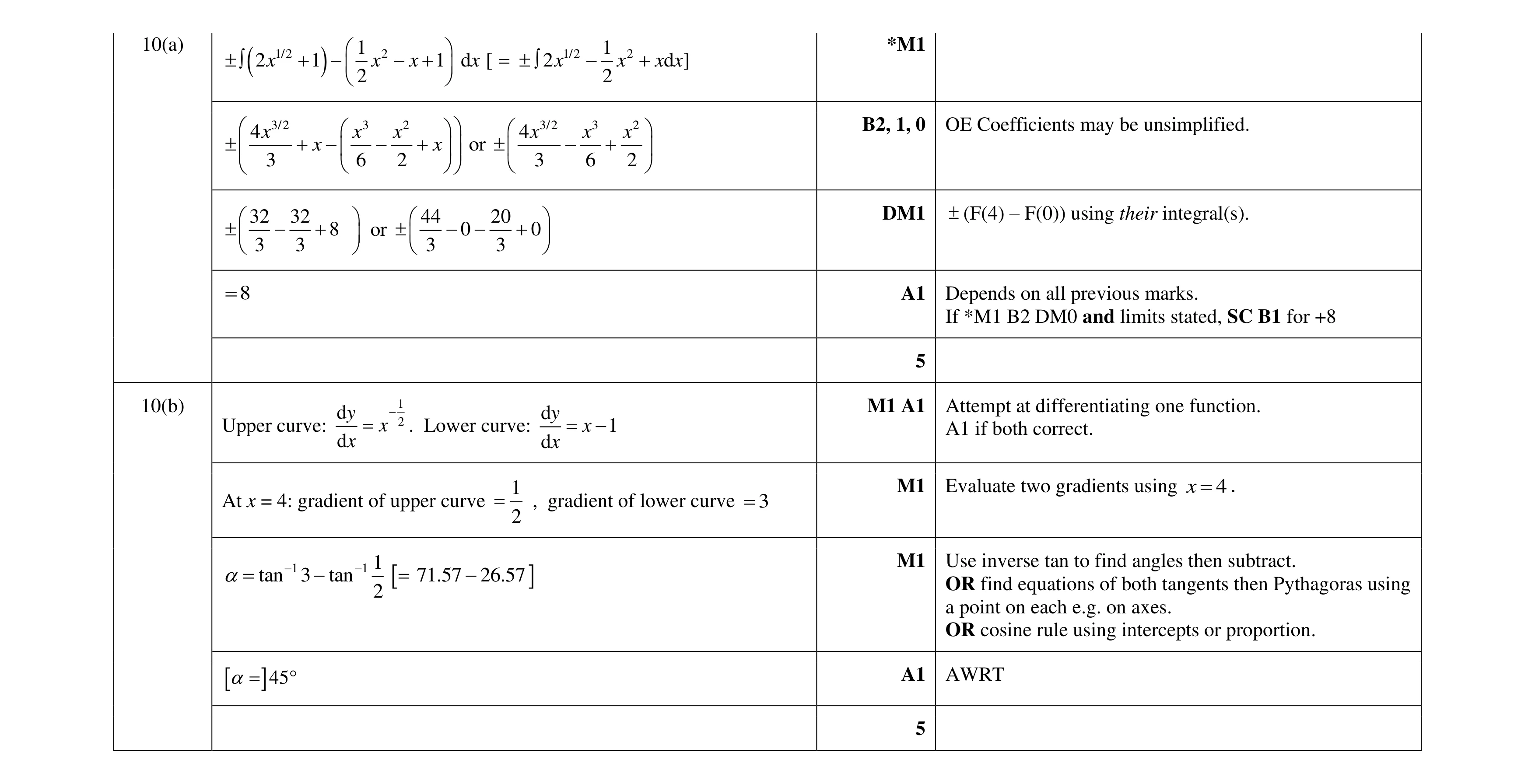 10
10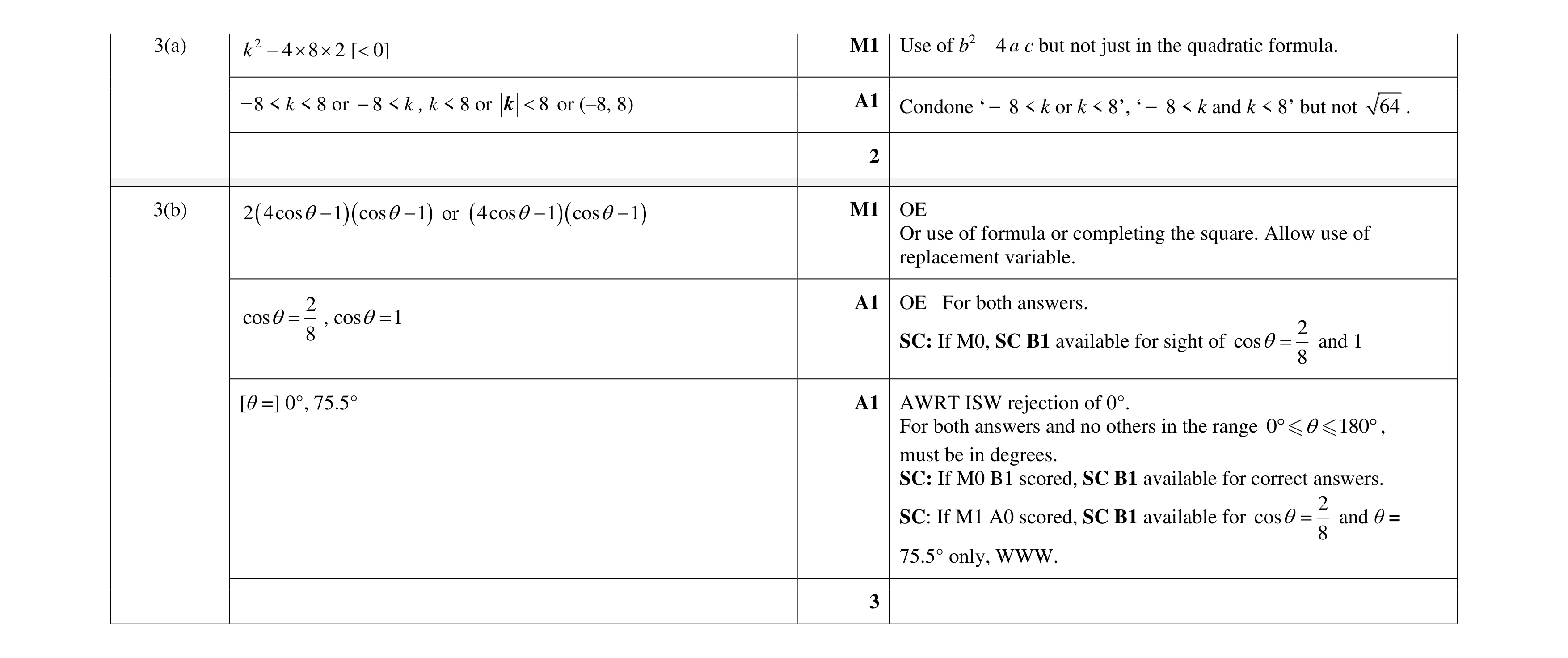 5
5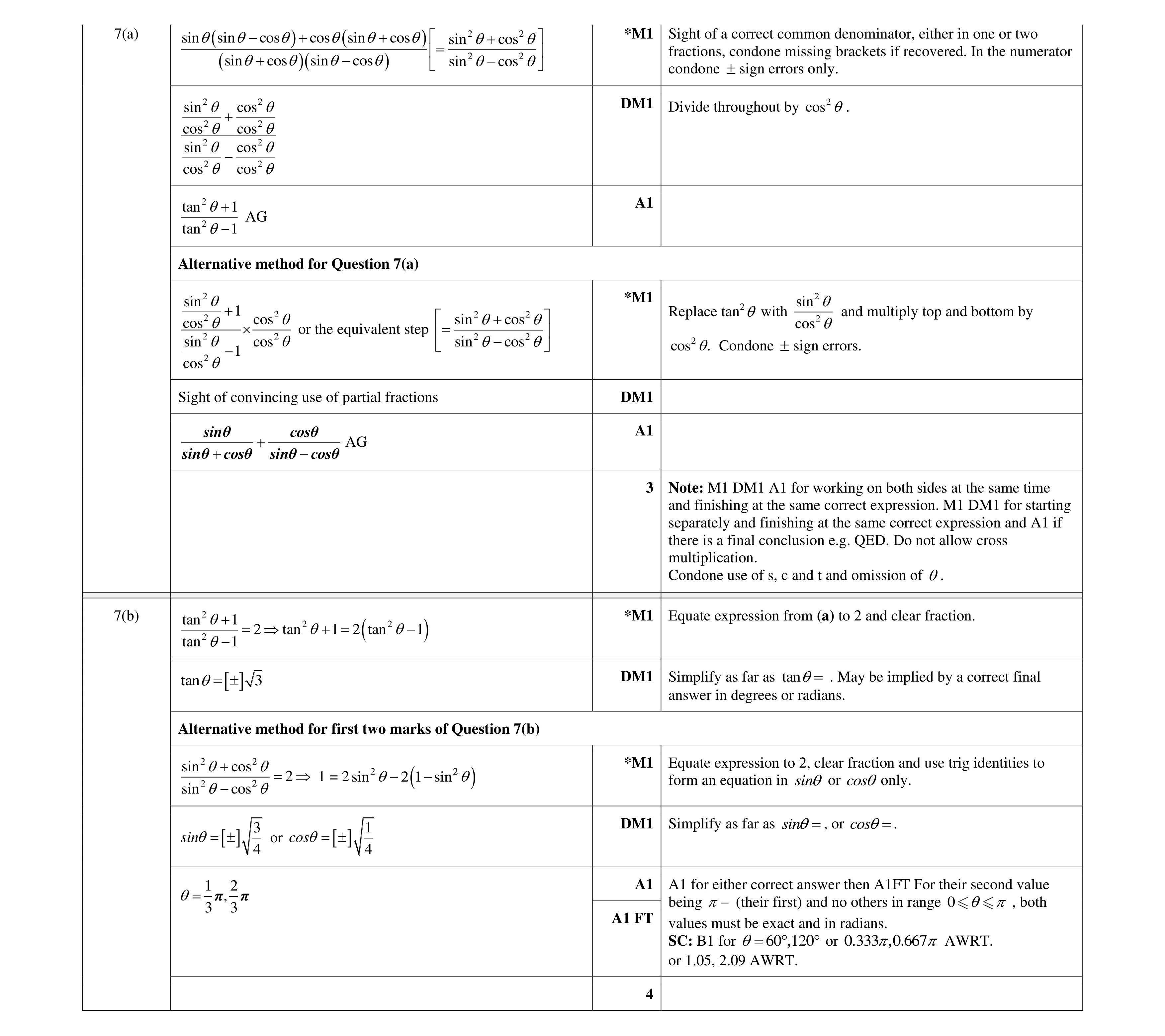 7
7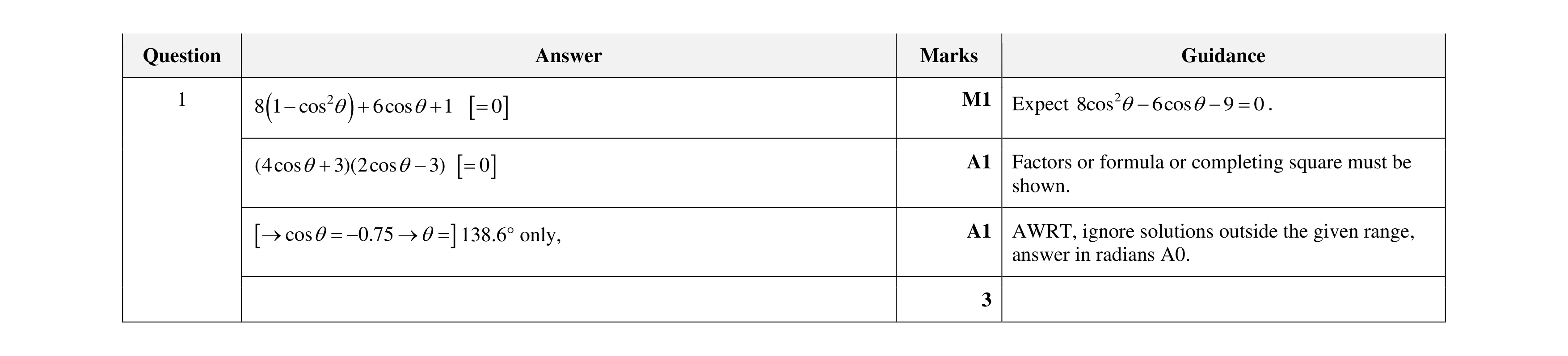 3
3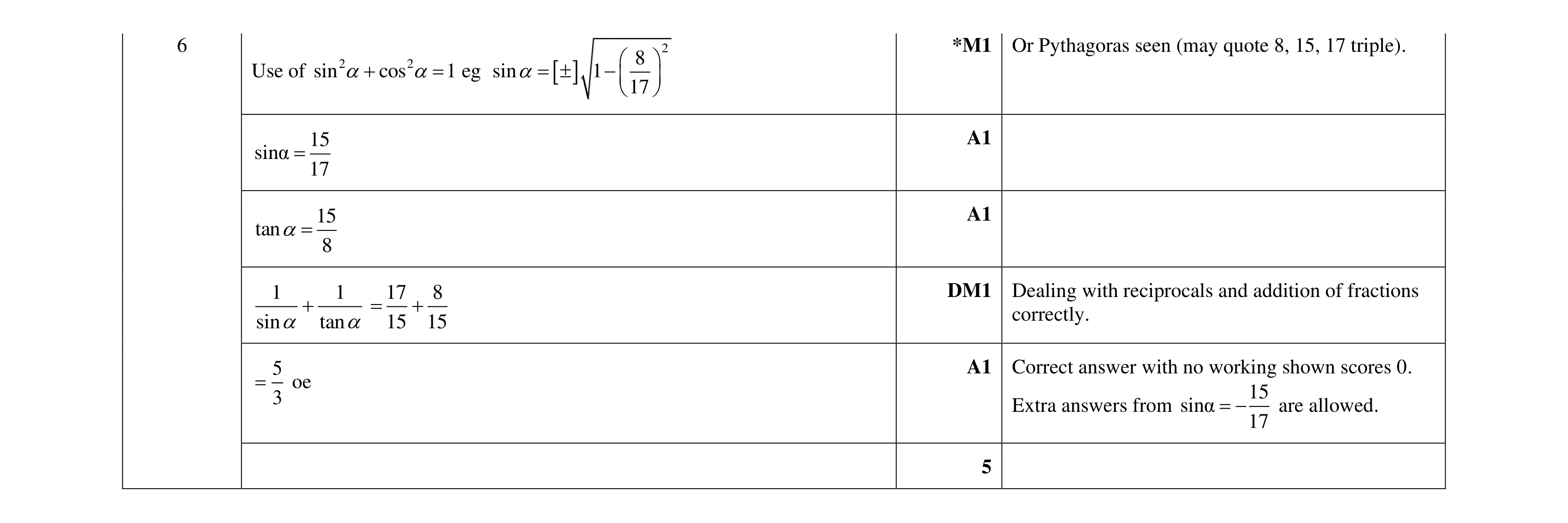 5
5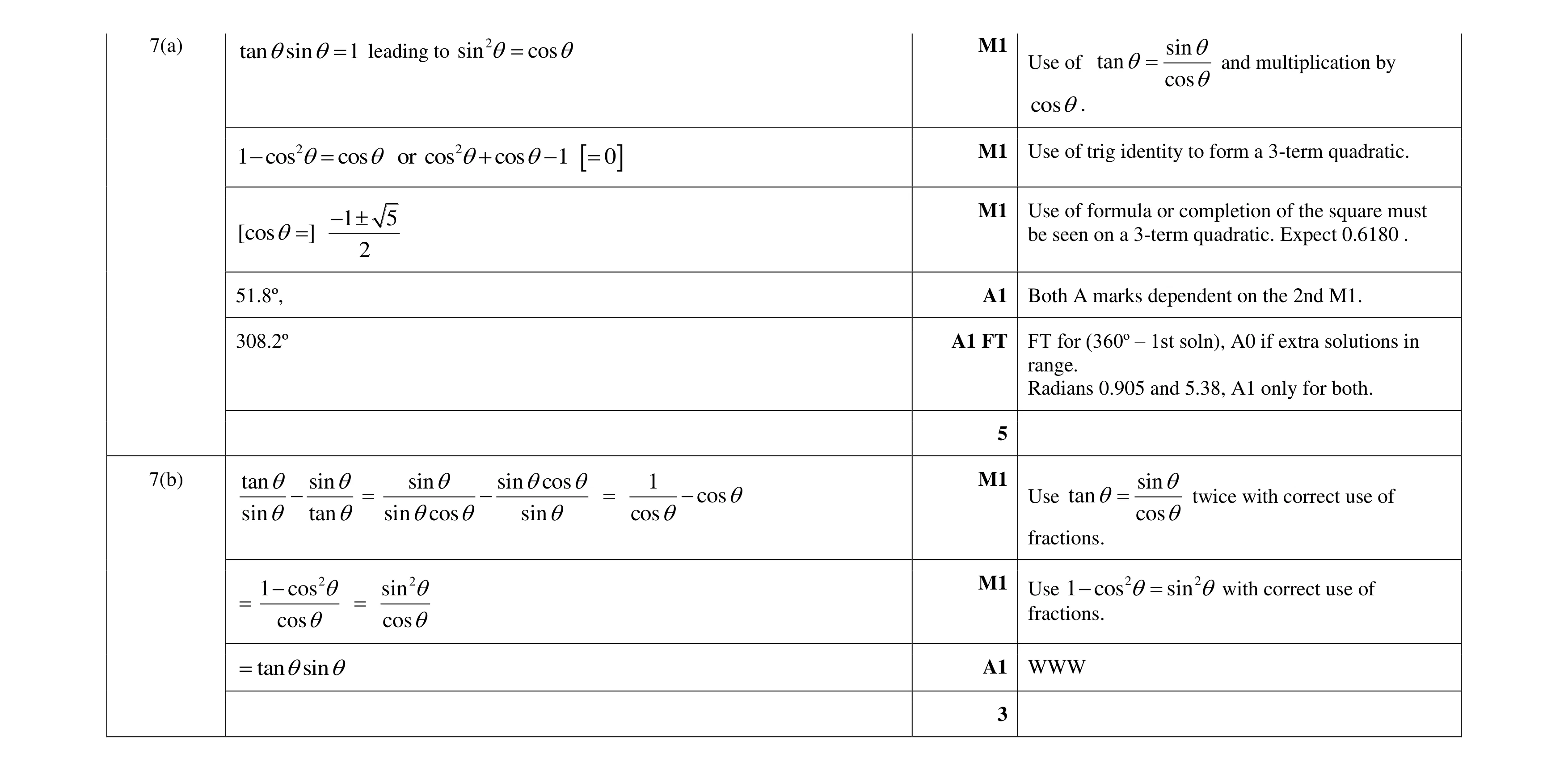 8
8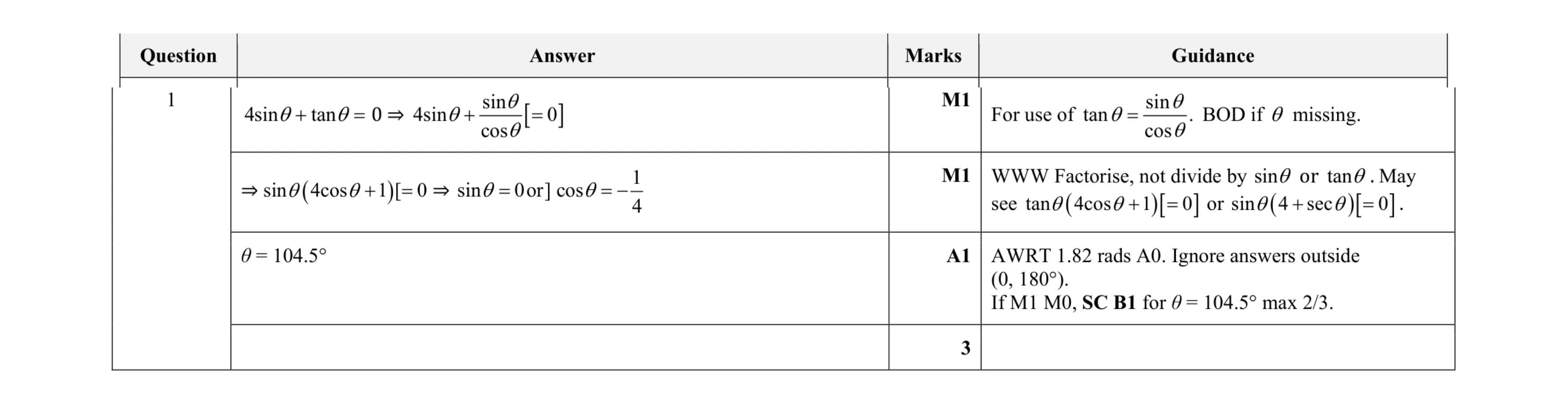 3
3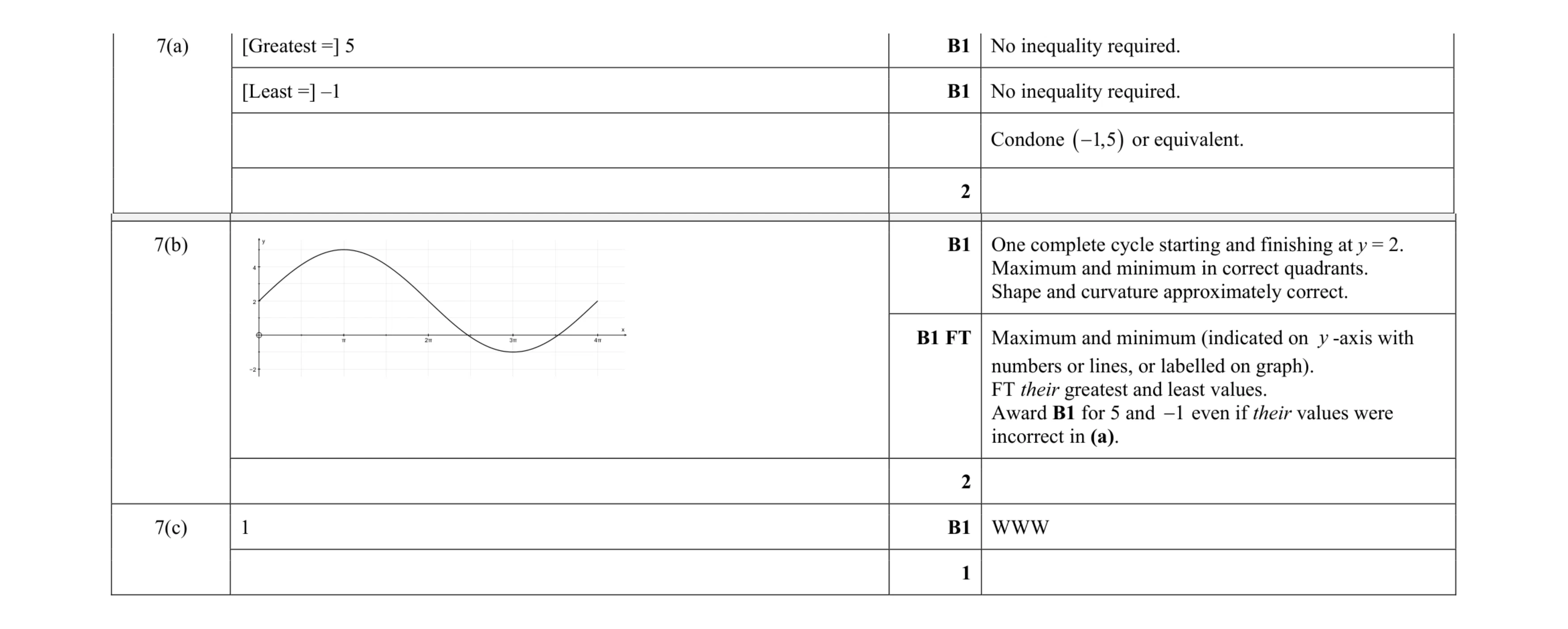 5
5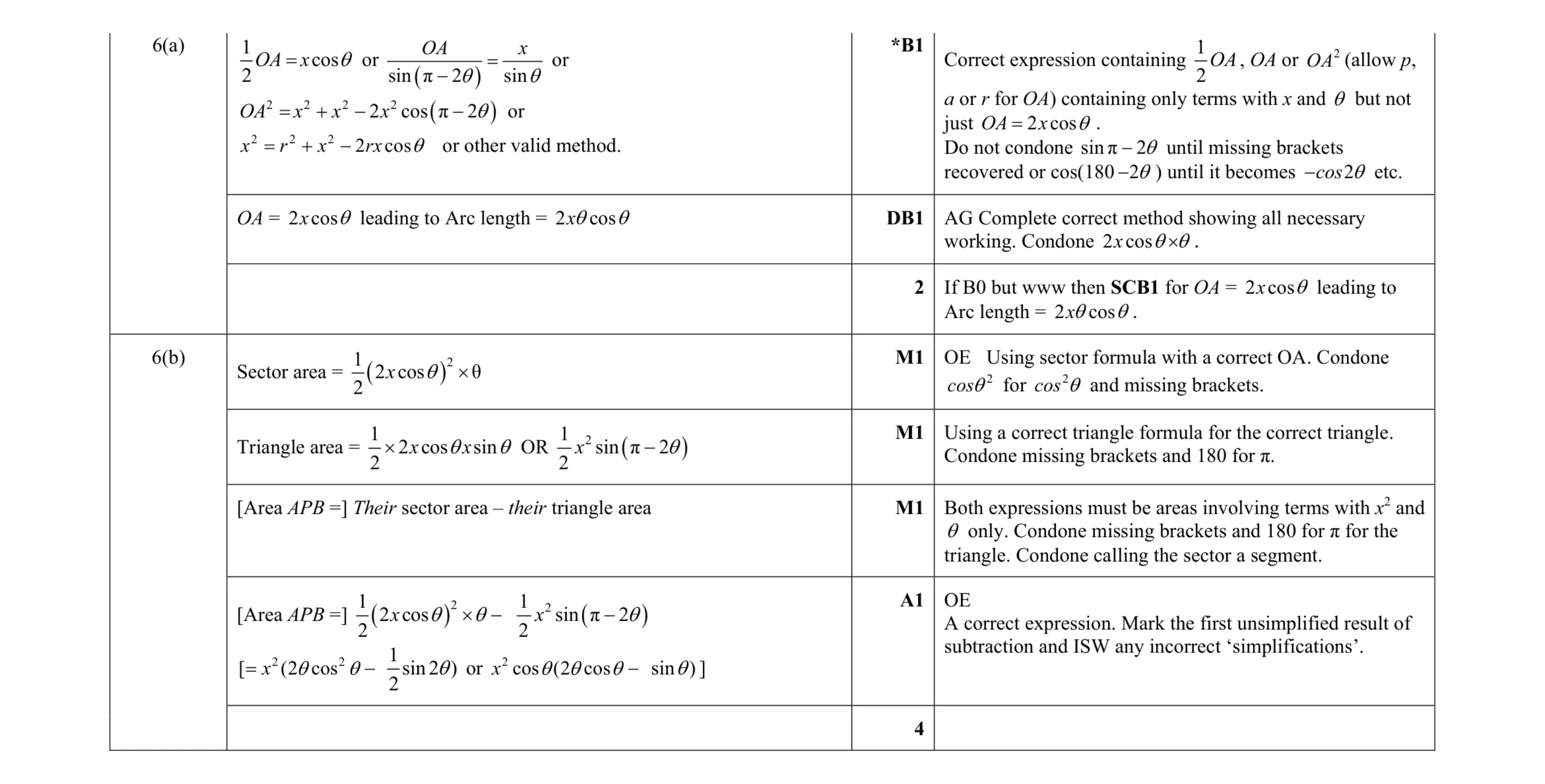 6
6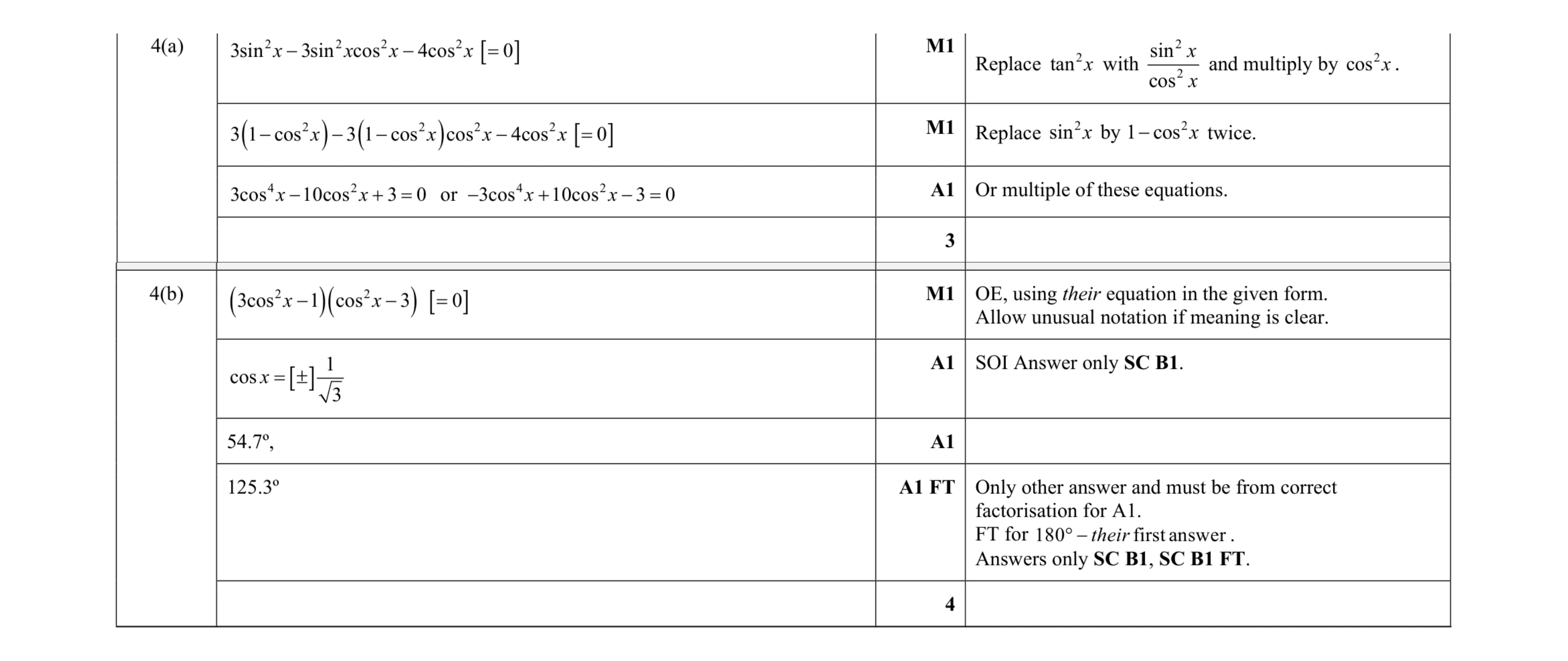 7
7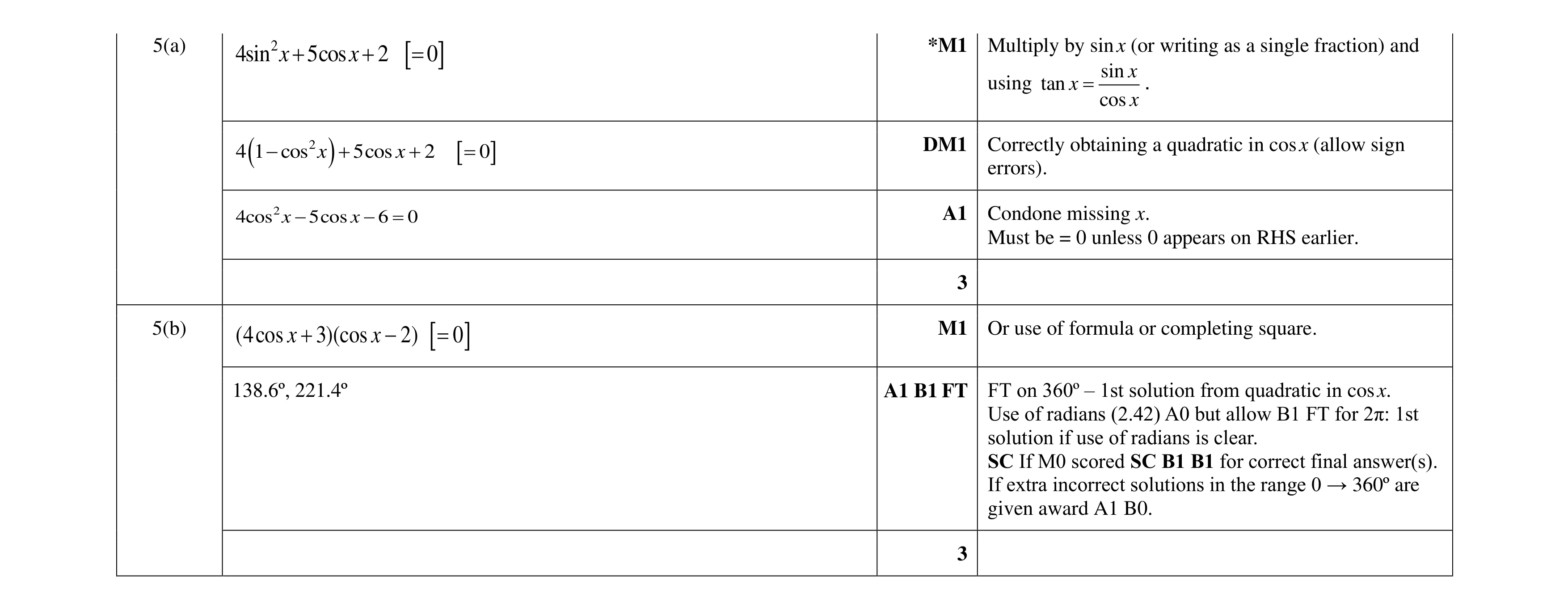 6
6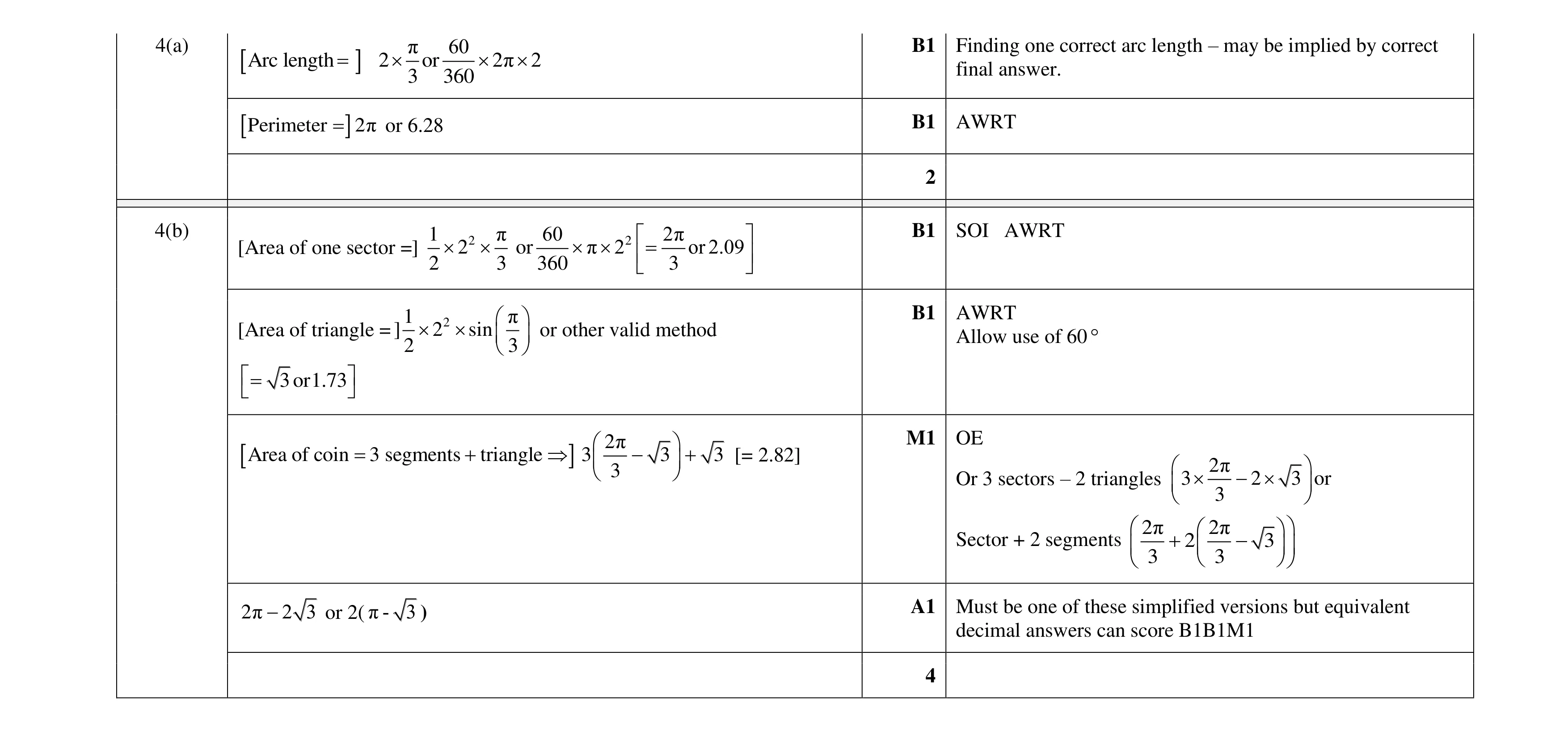 6
6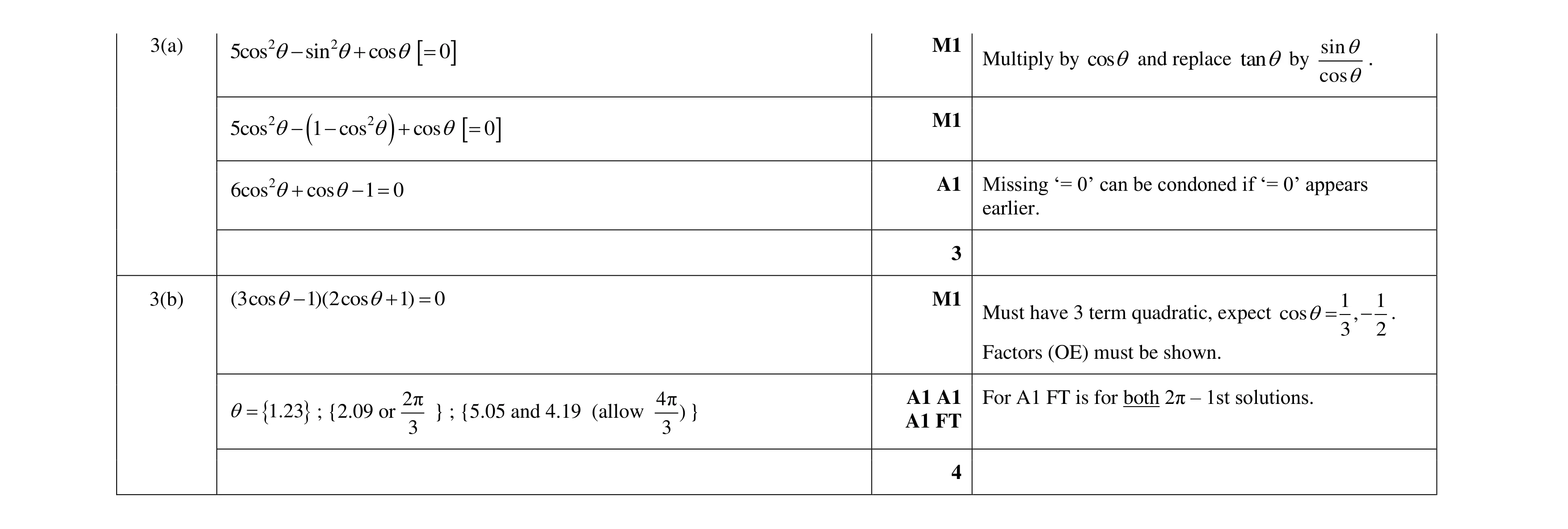 7
7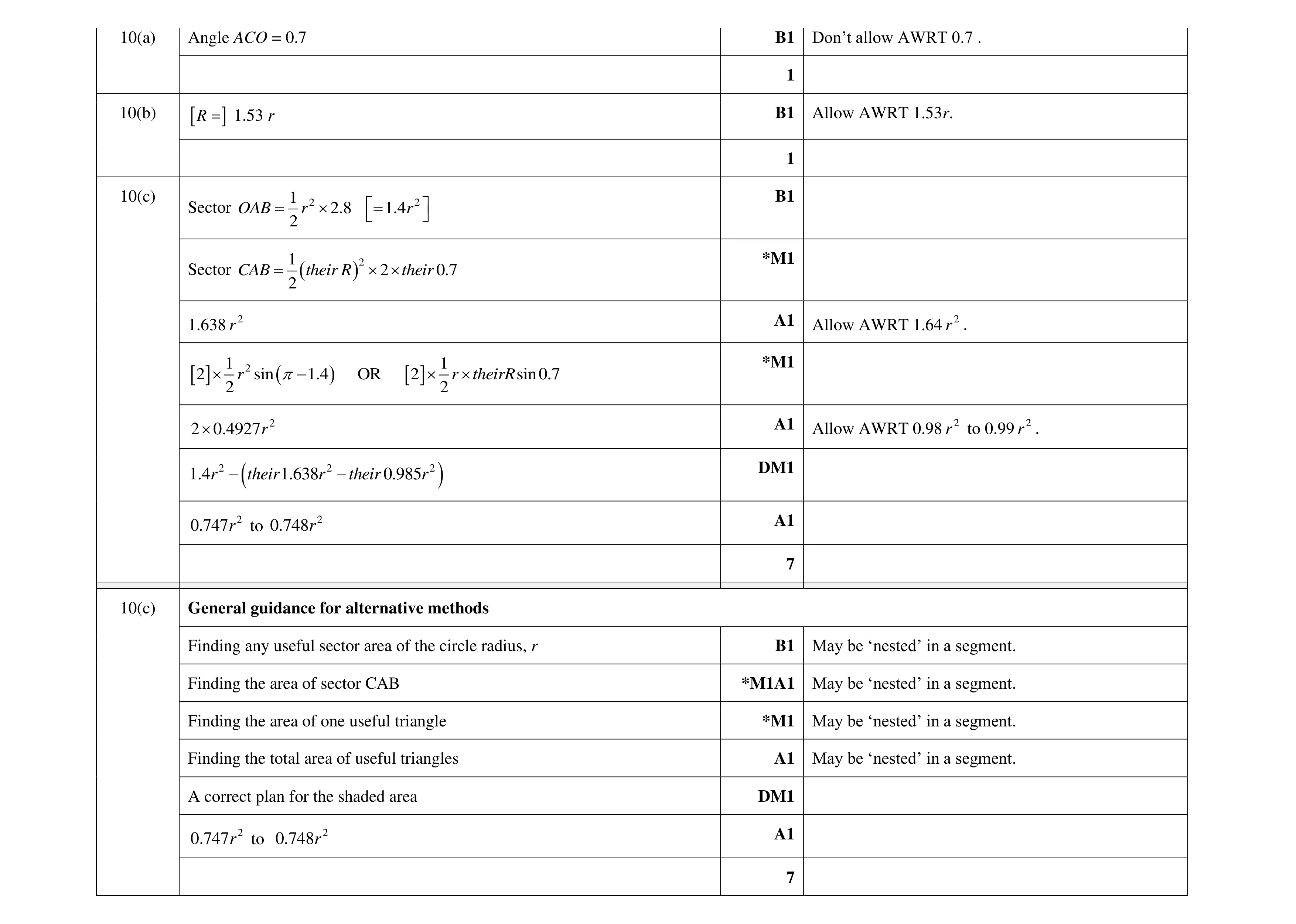 9
9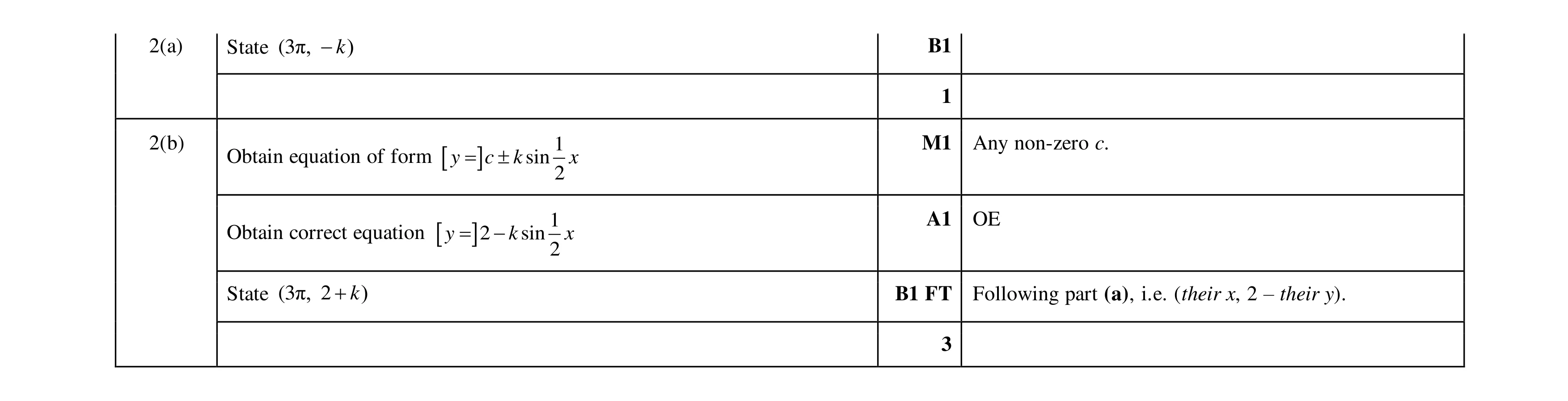 4
4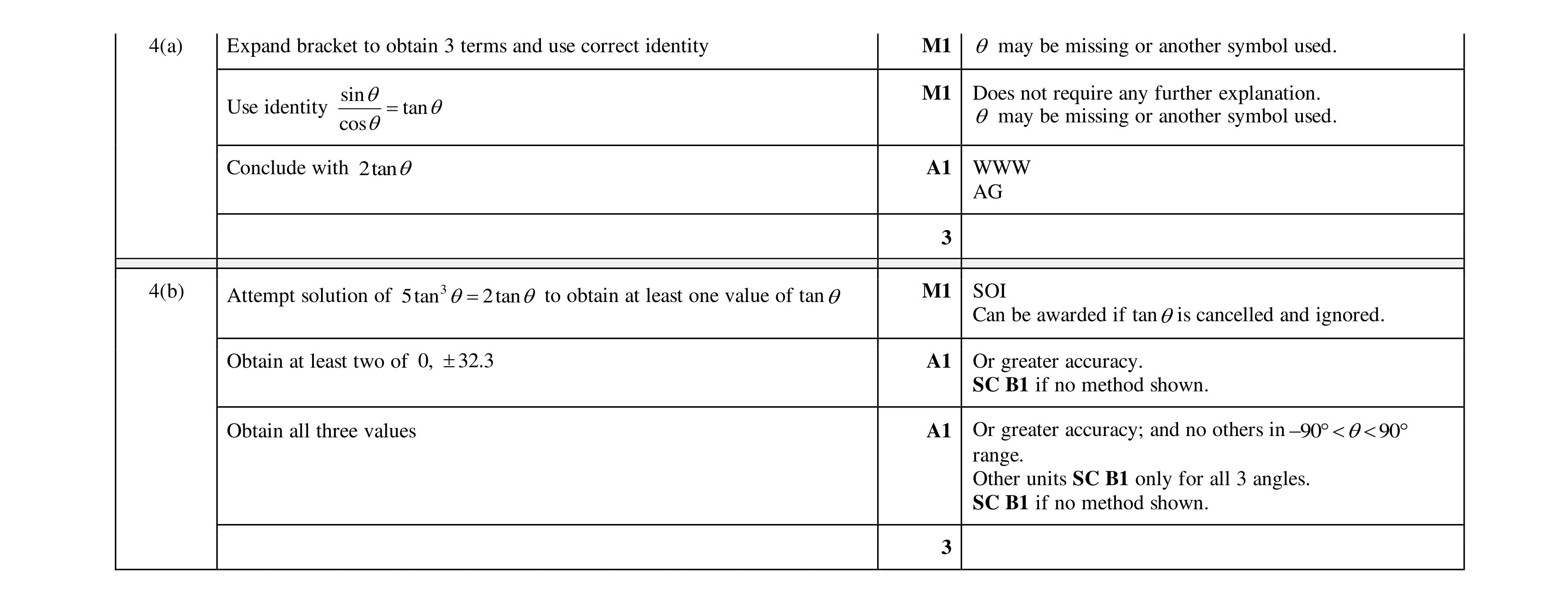 6
6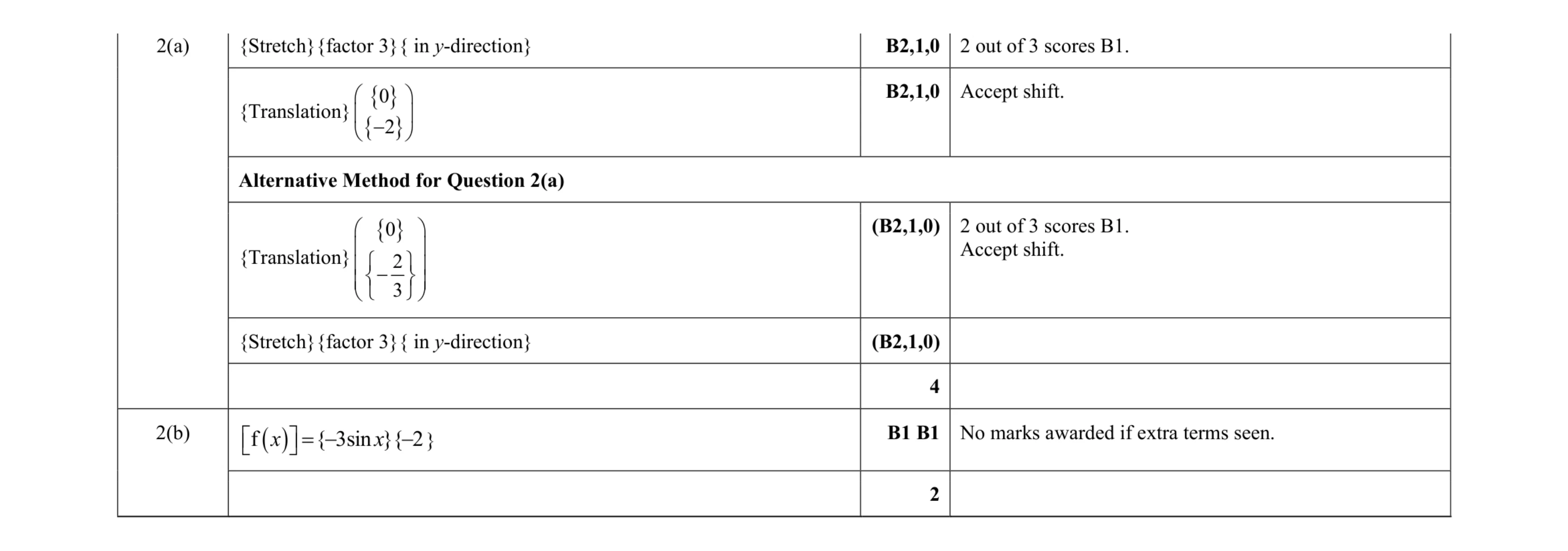 6
6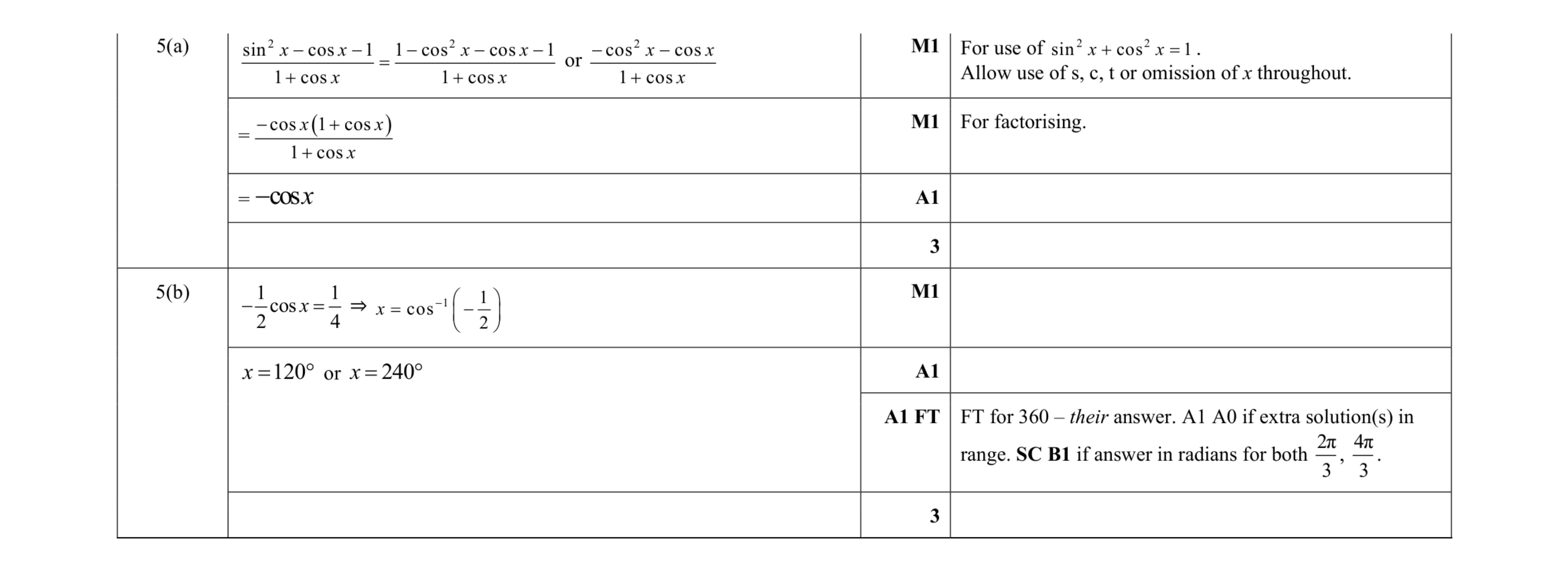 6
6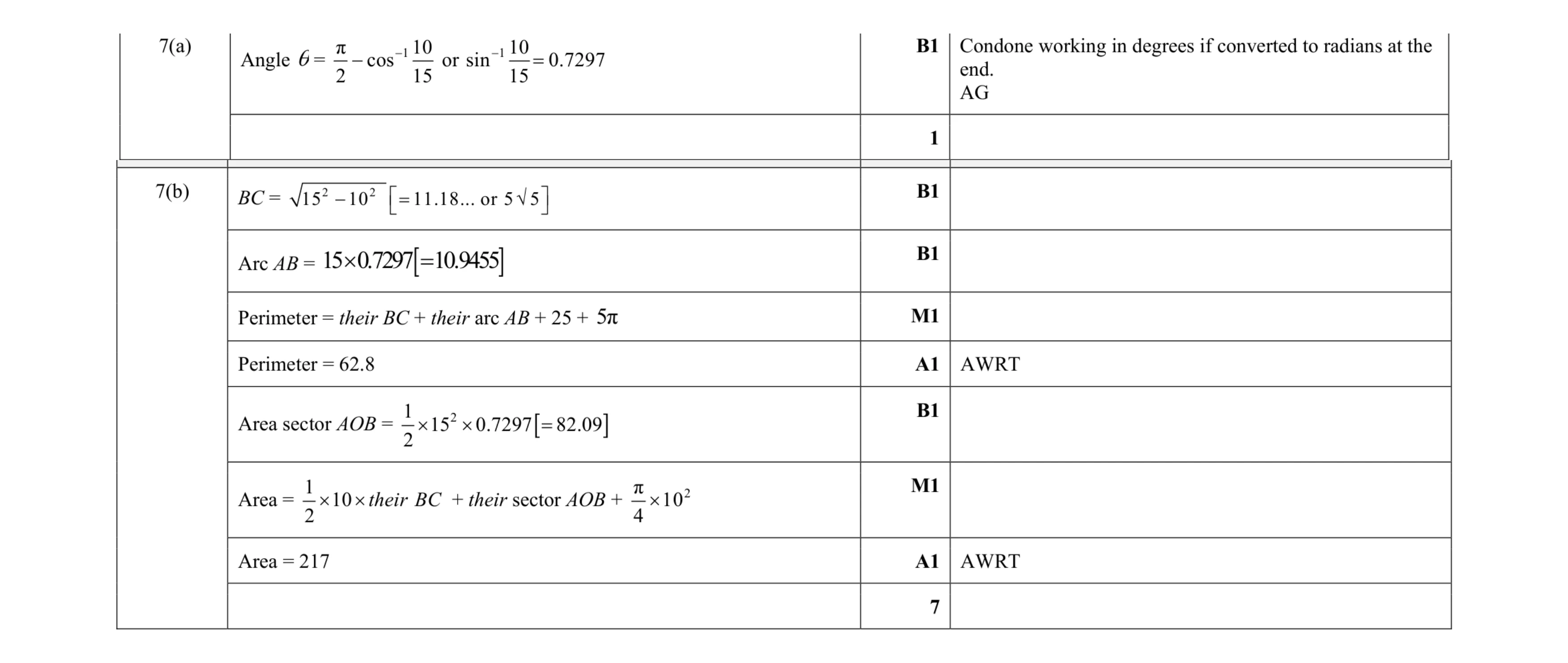 8
8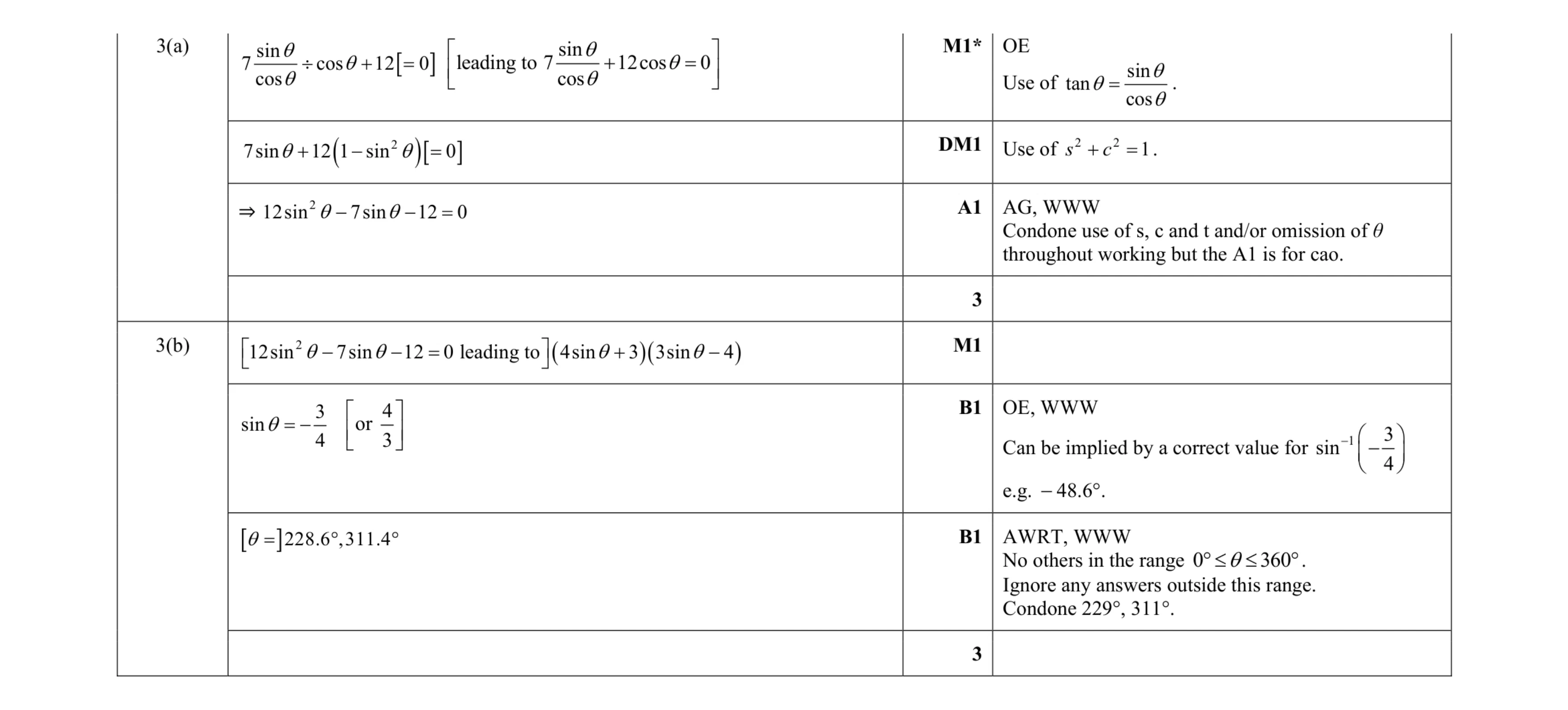 6
6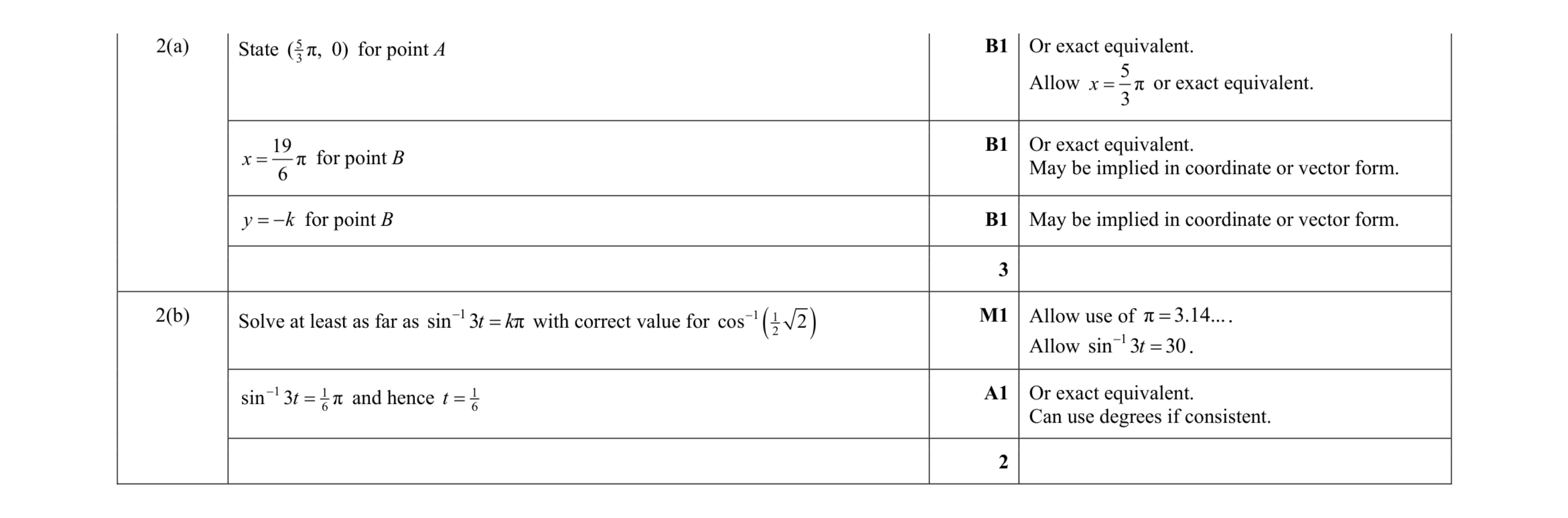 5
5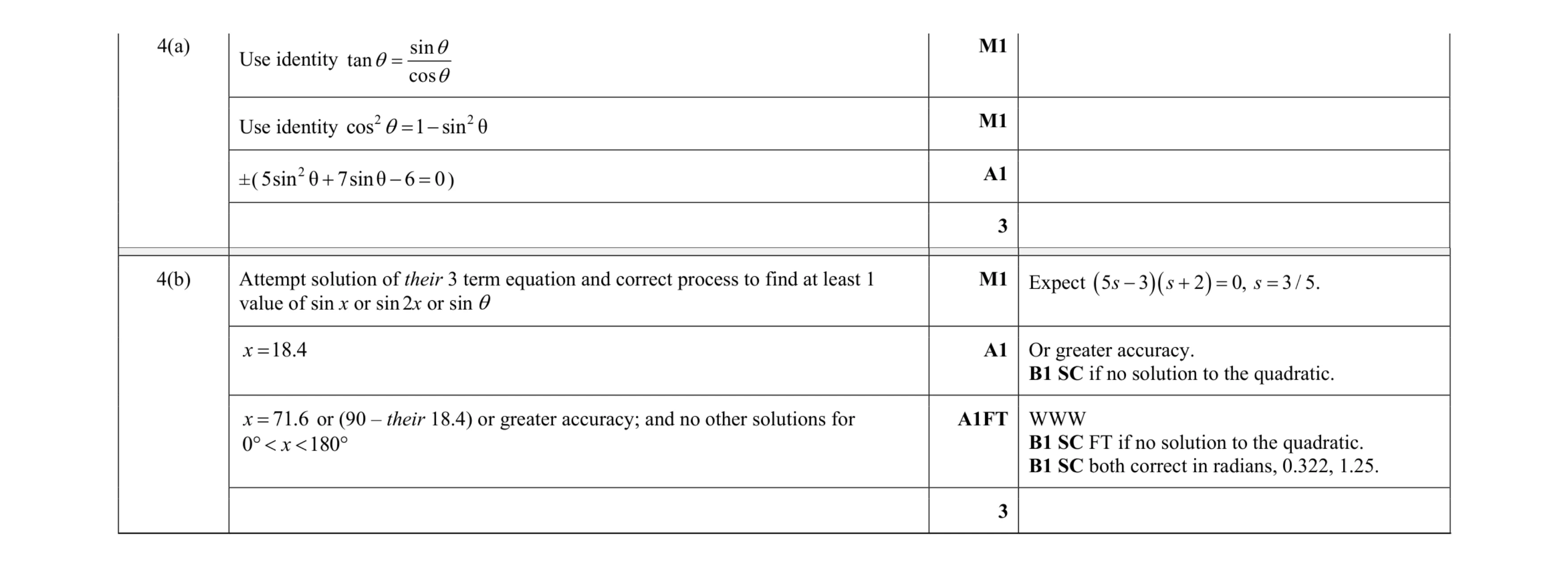 6
6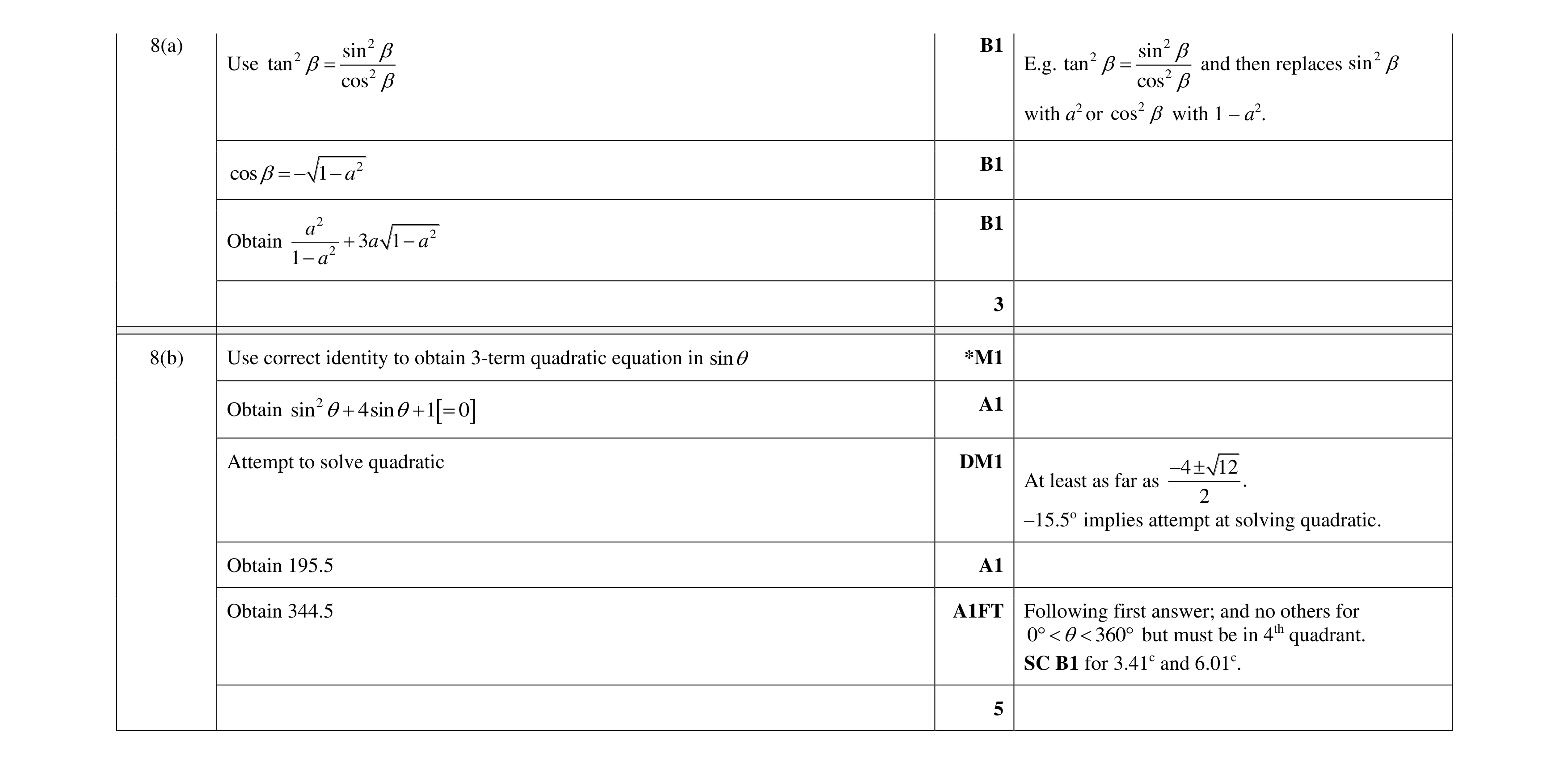 8
8 2
2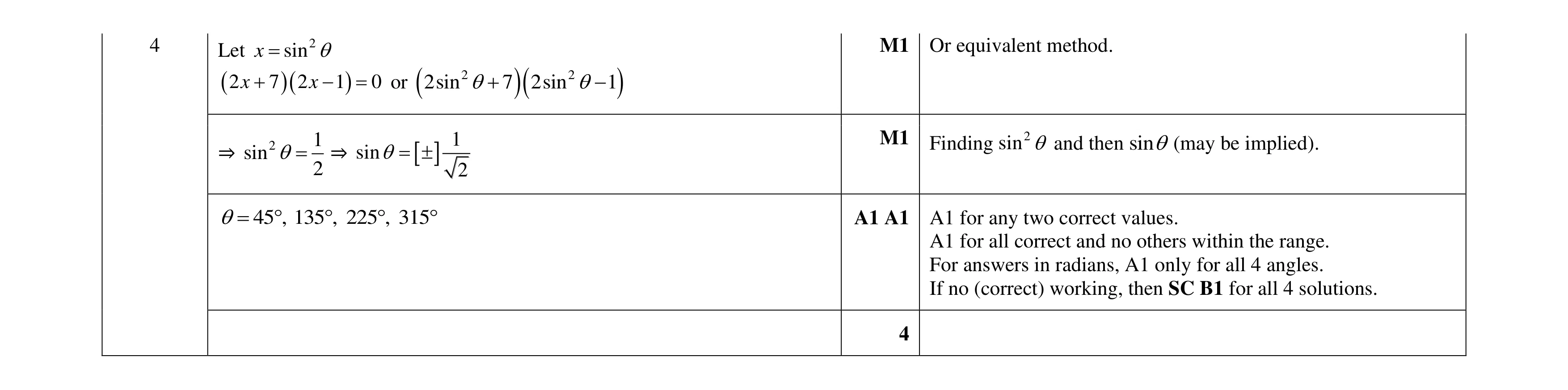 4
4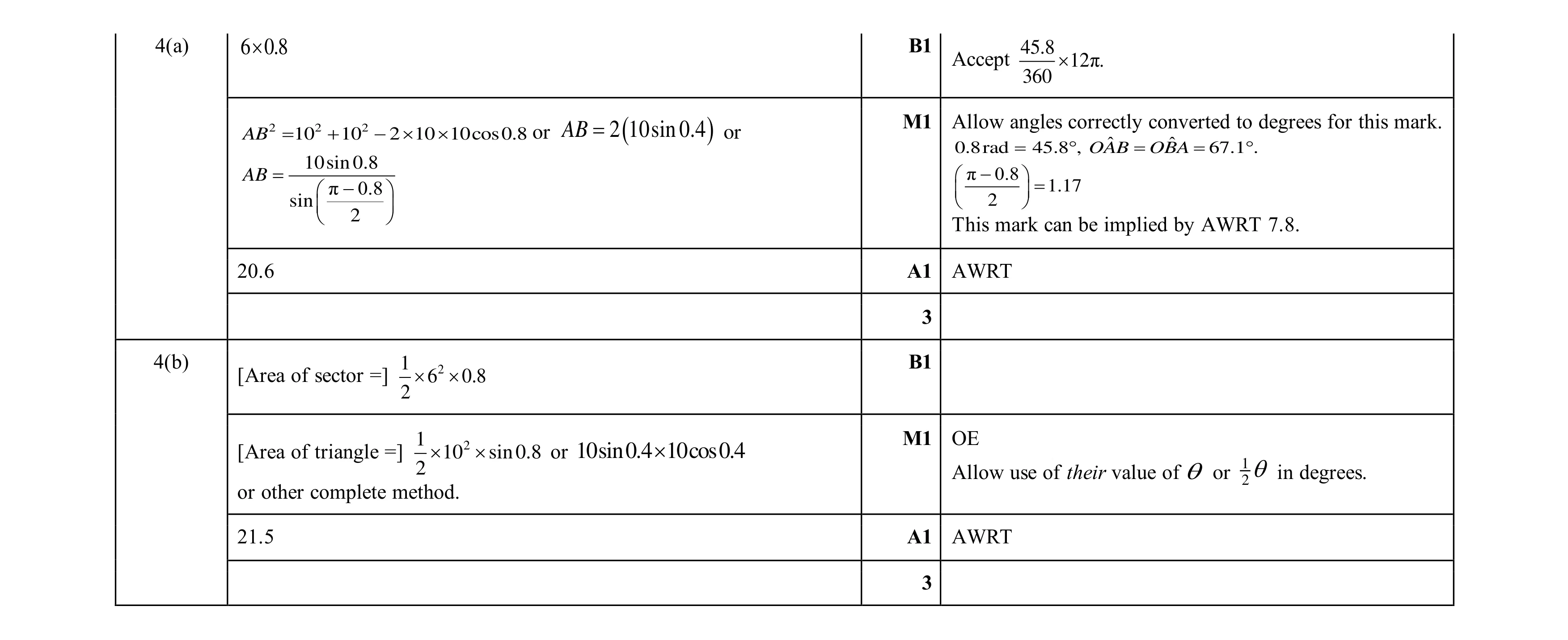 6
6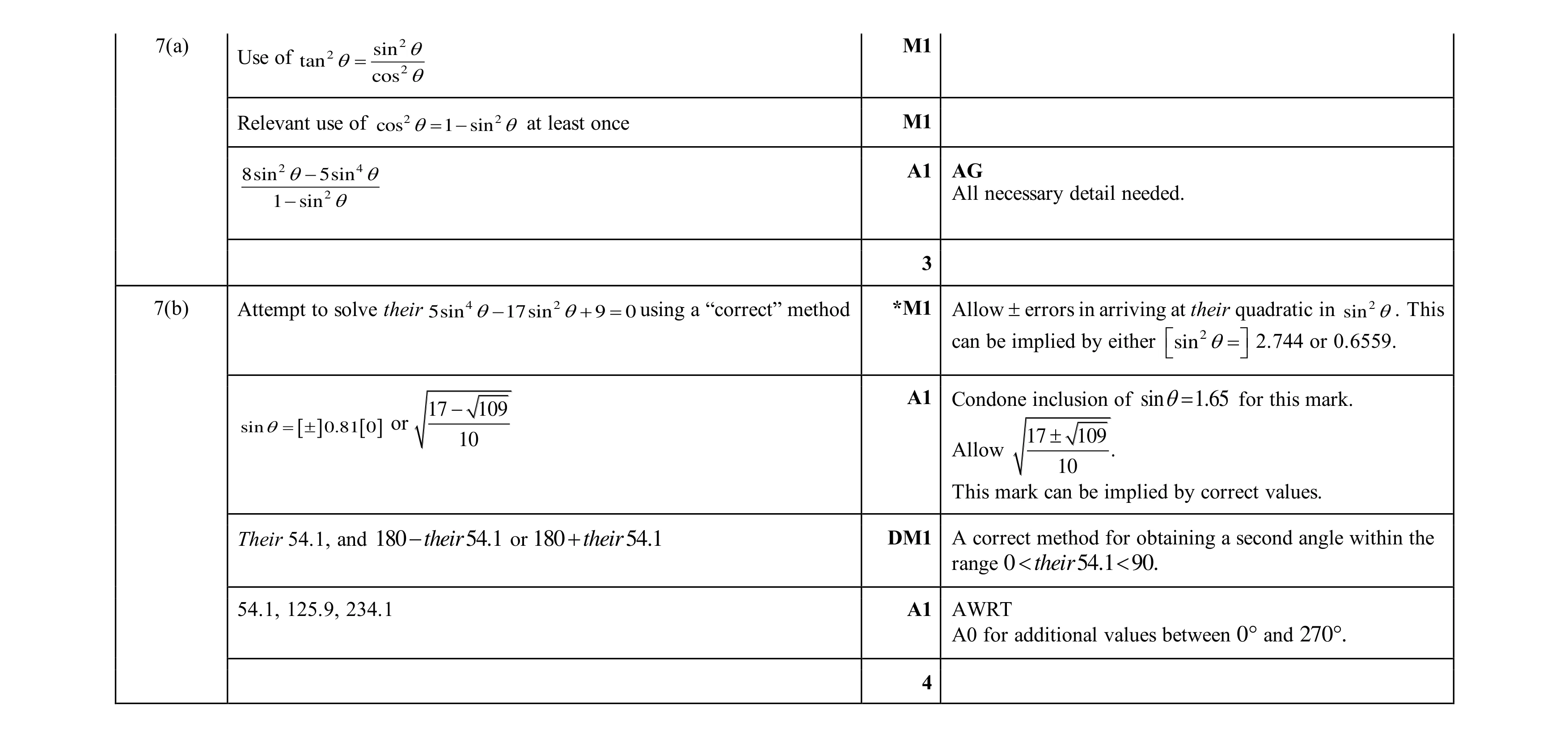 7
7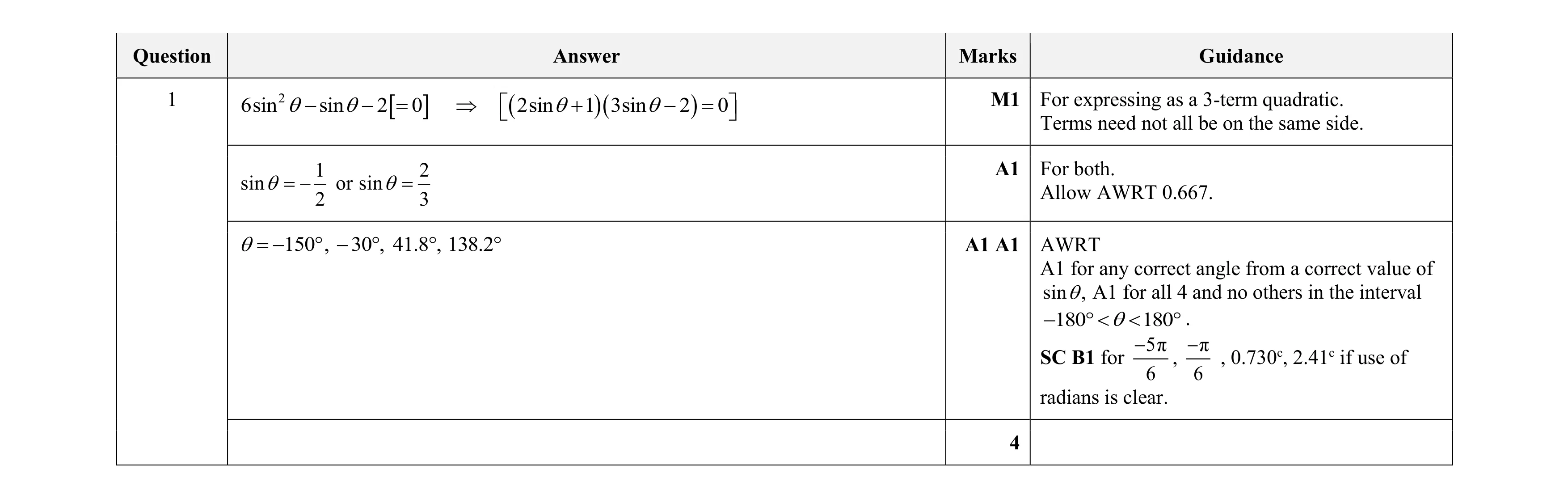 4
4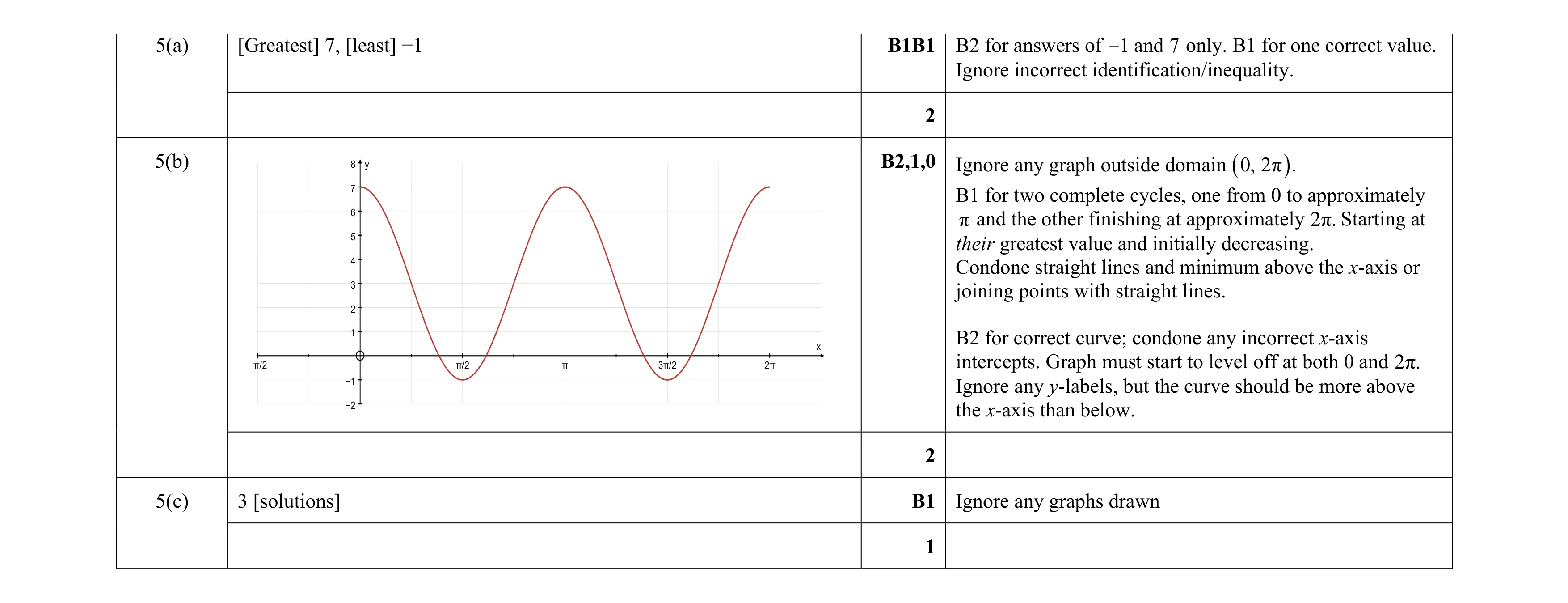 5
5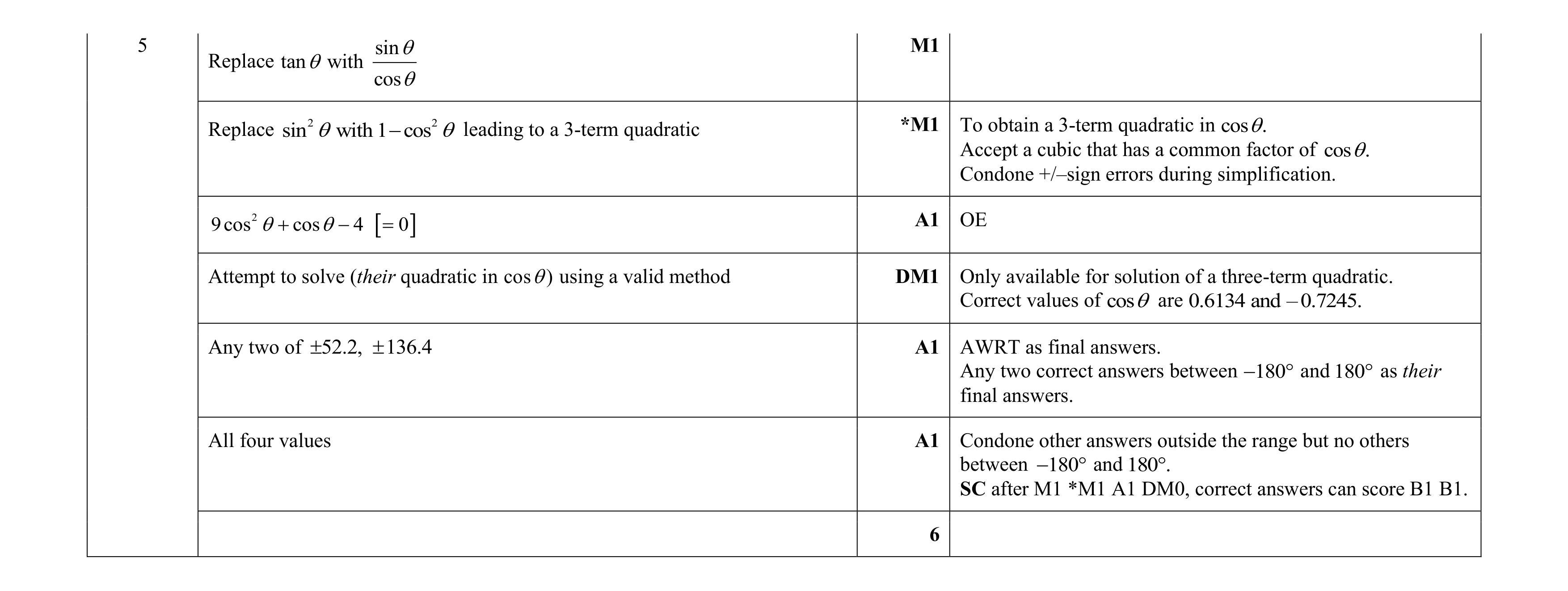 6
6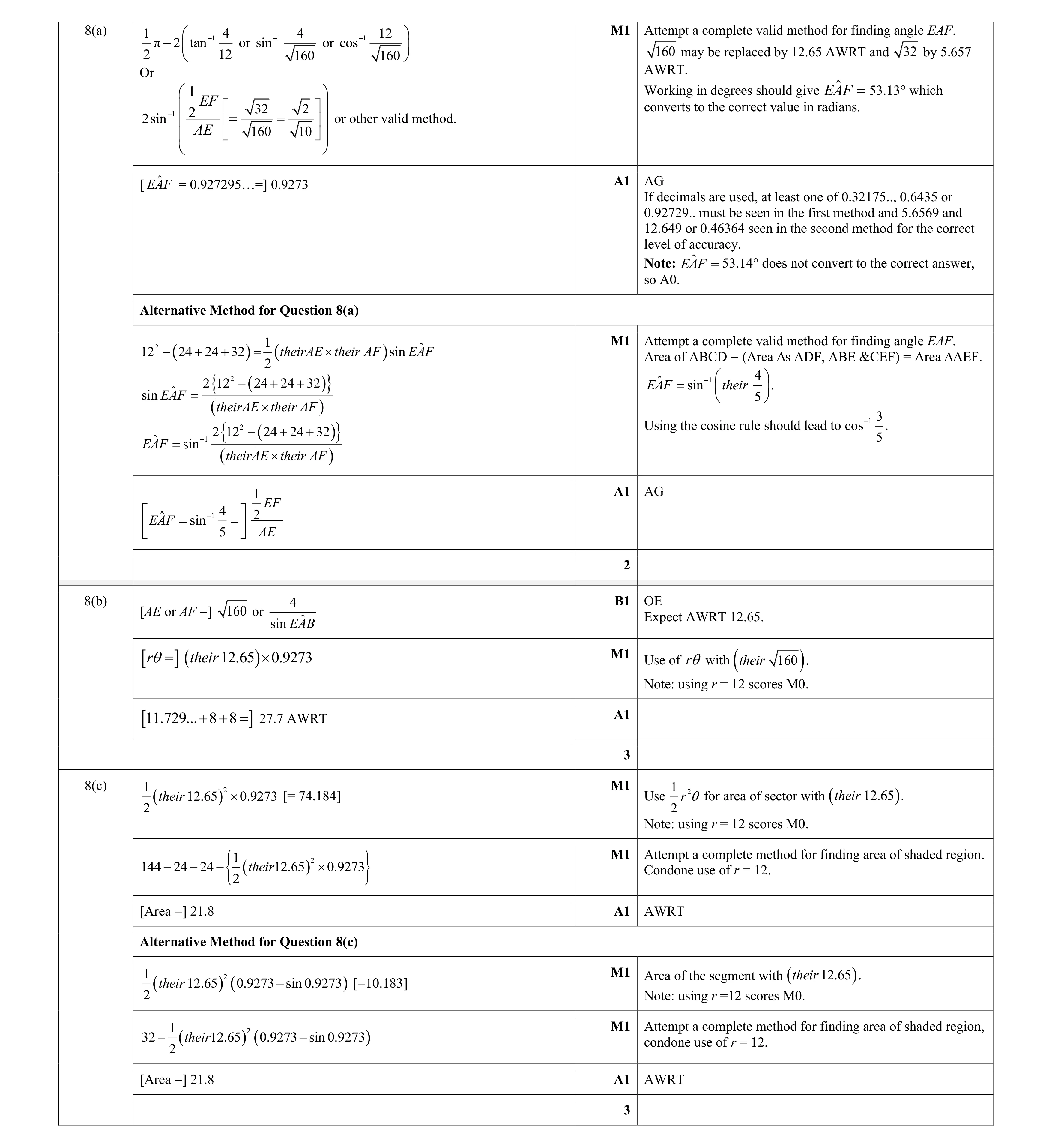 8
8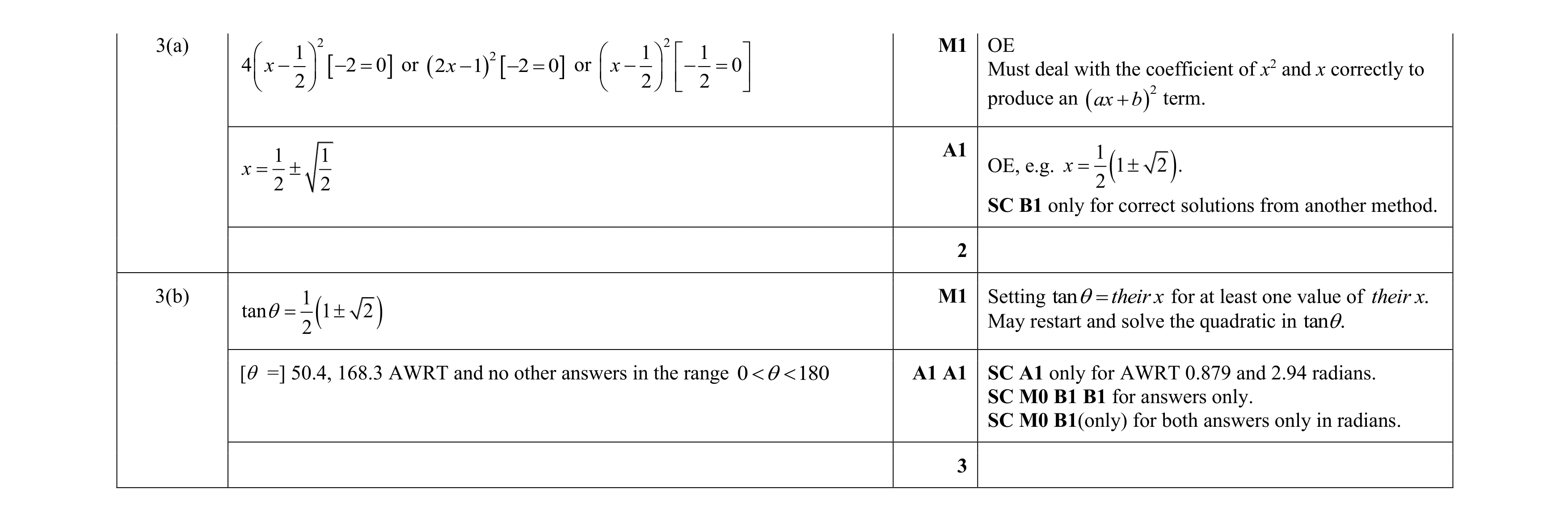 5
5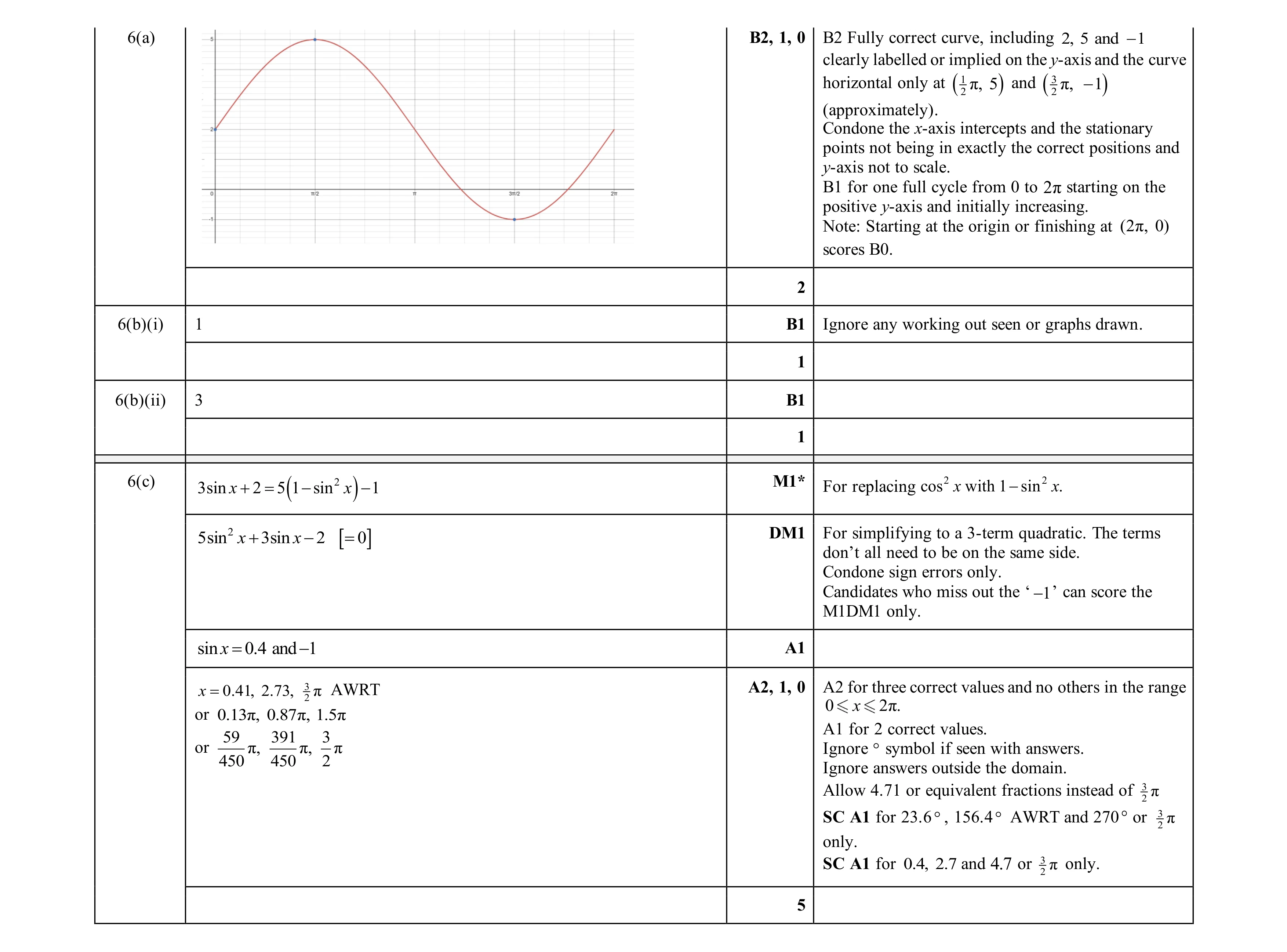 9
9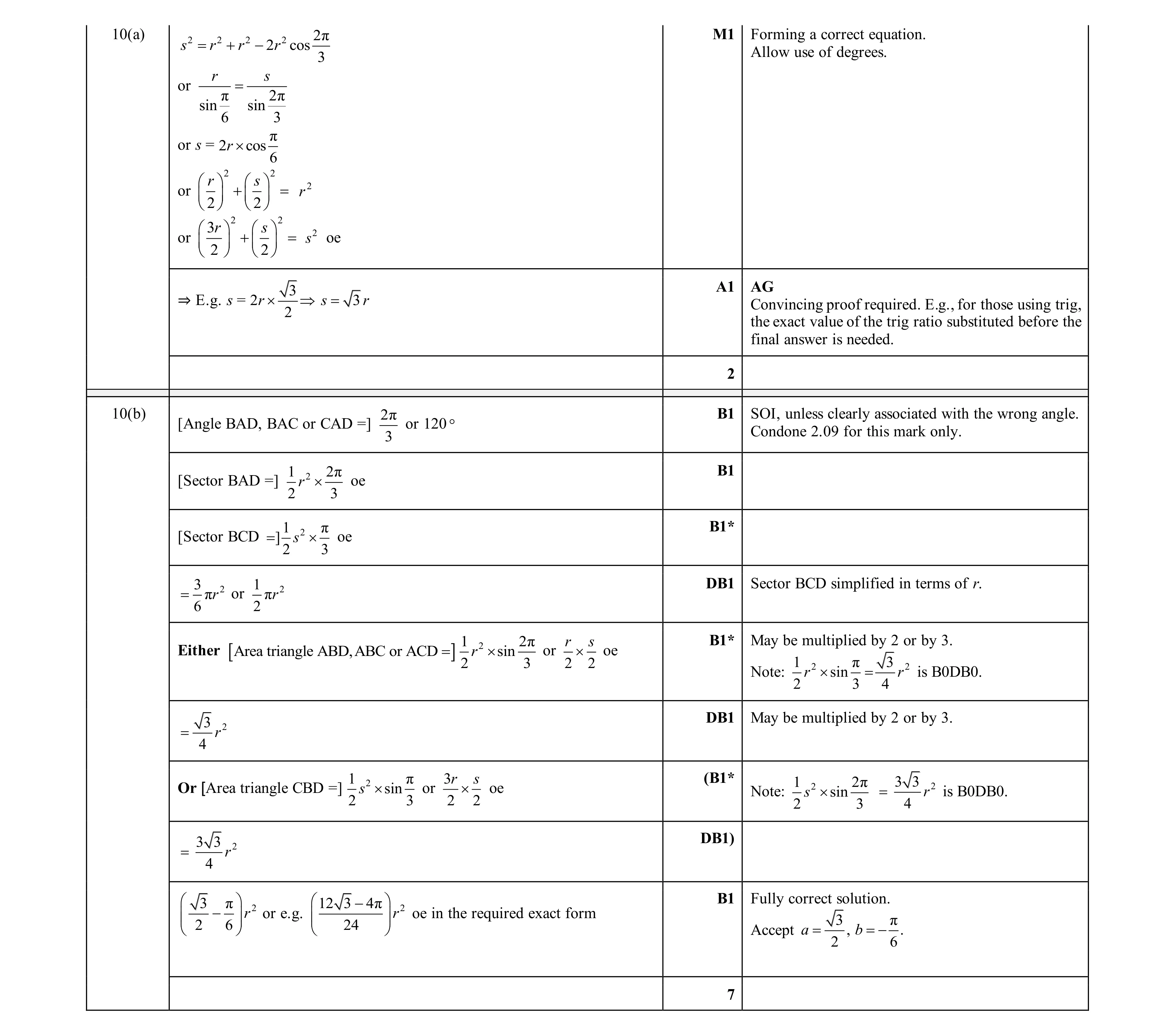 9
9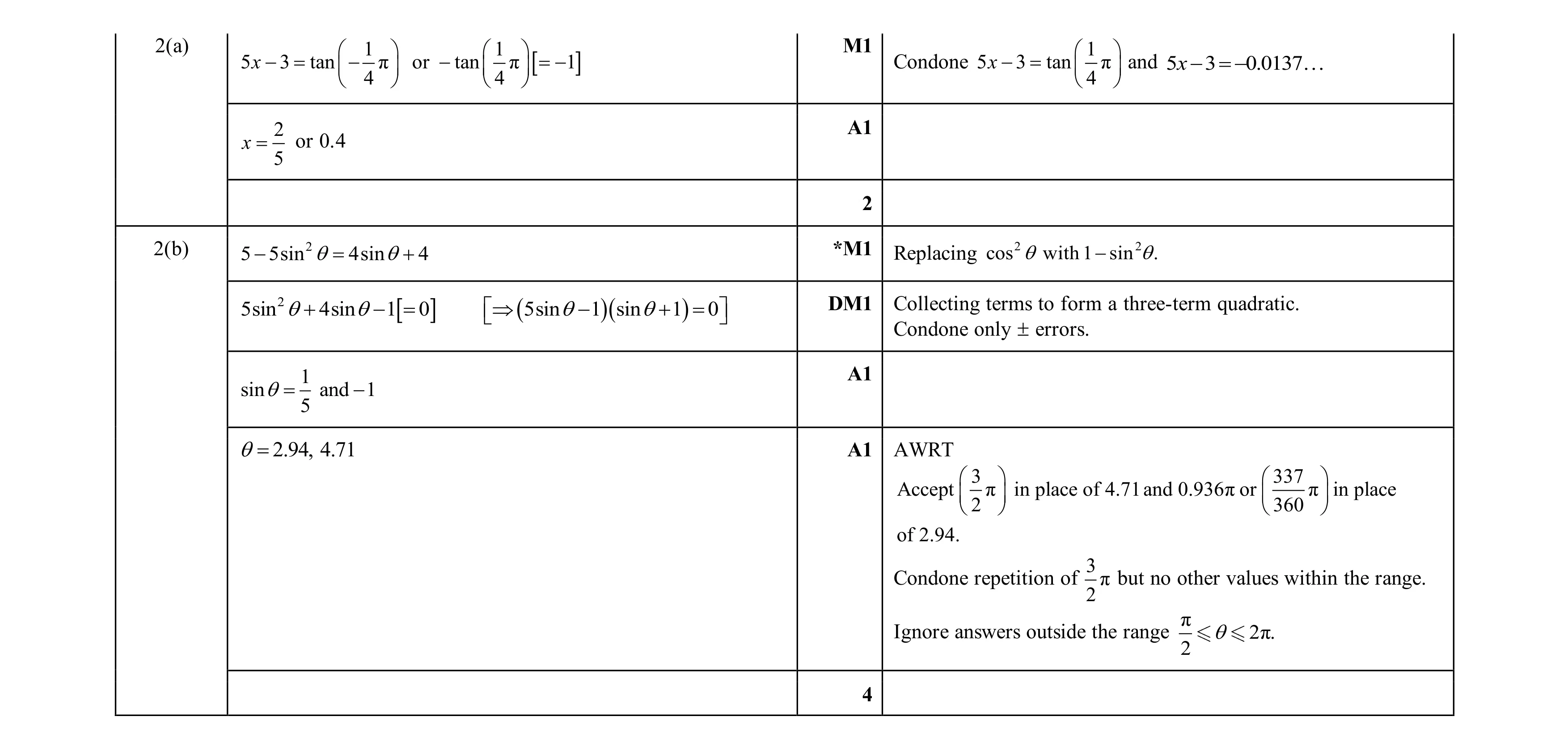 6
6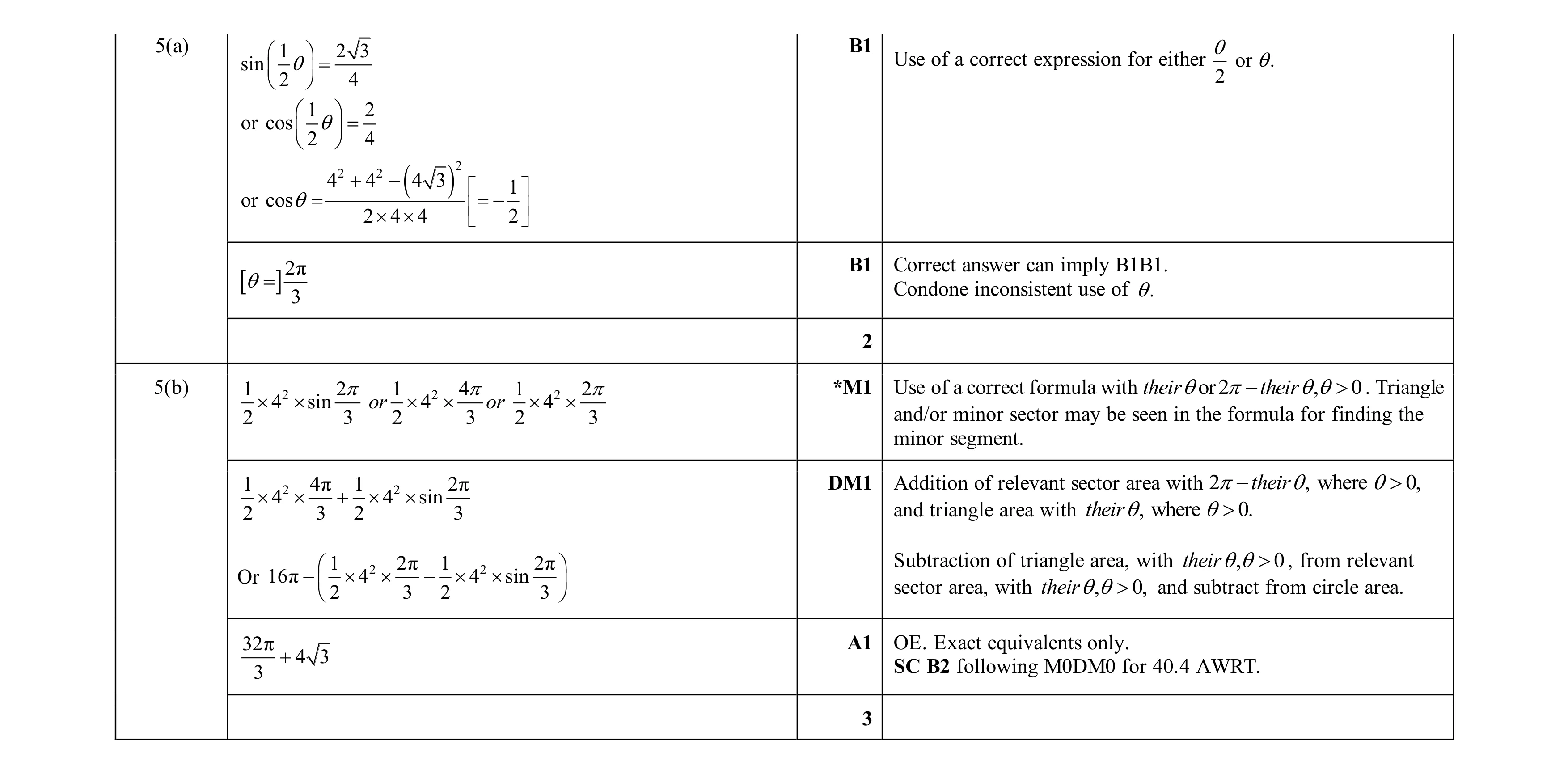 5
5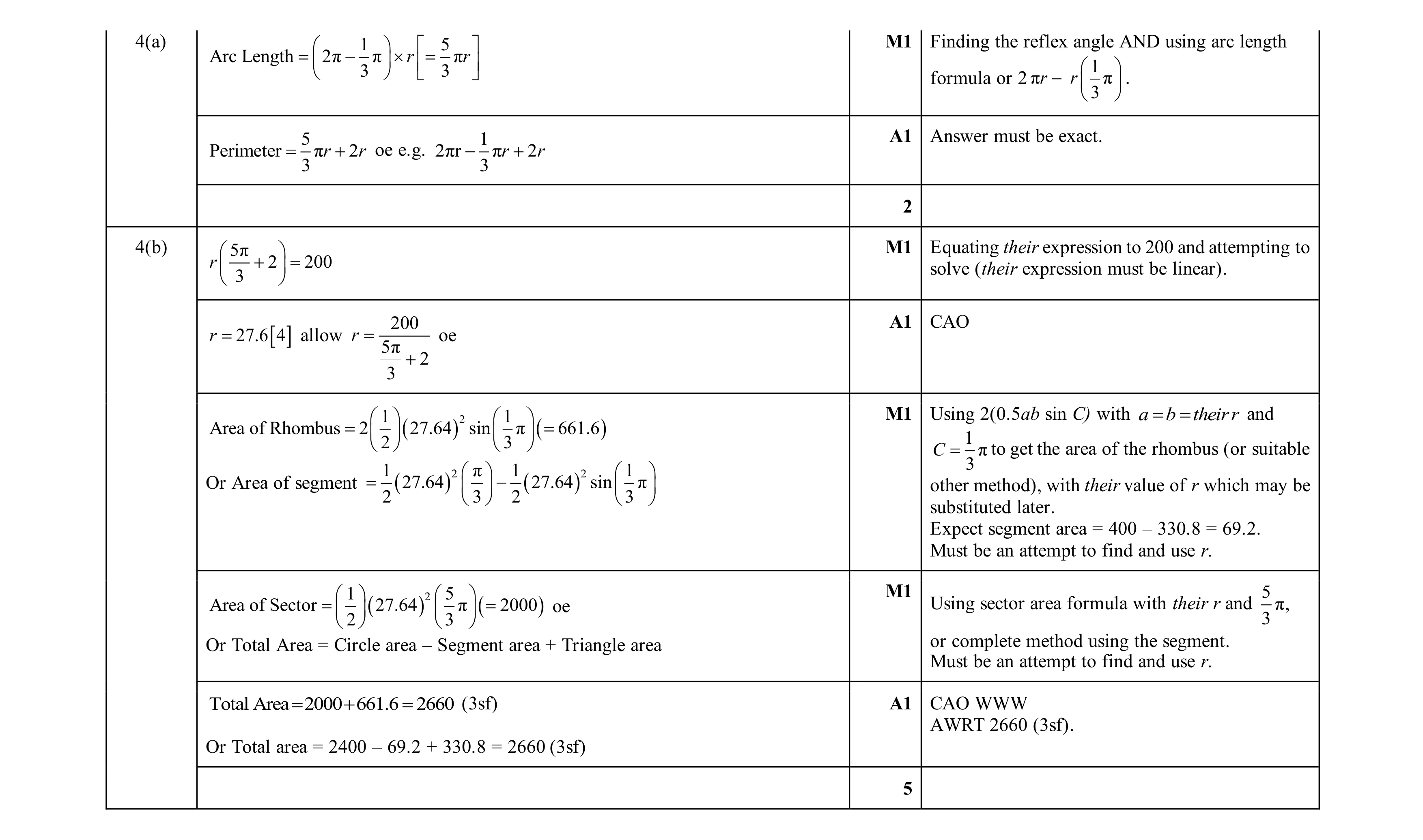 7
7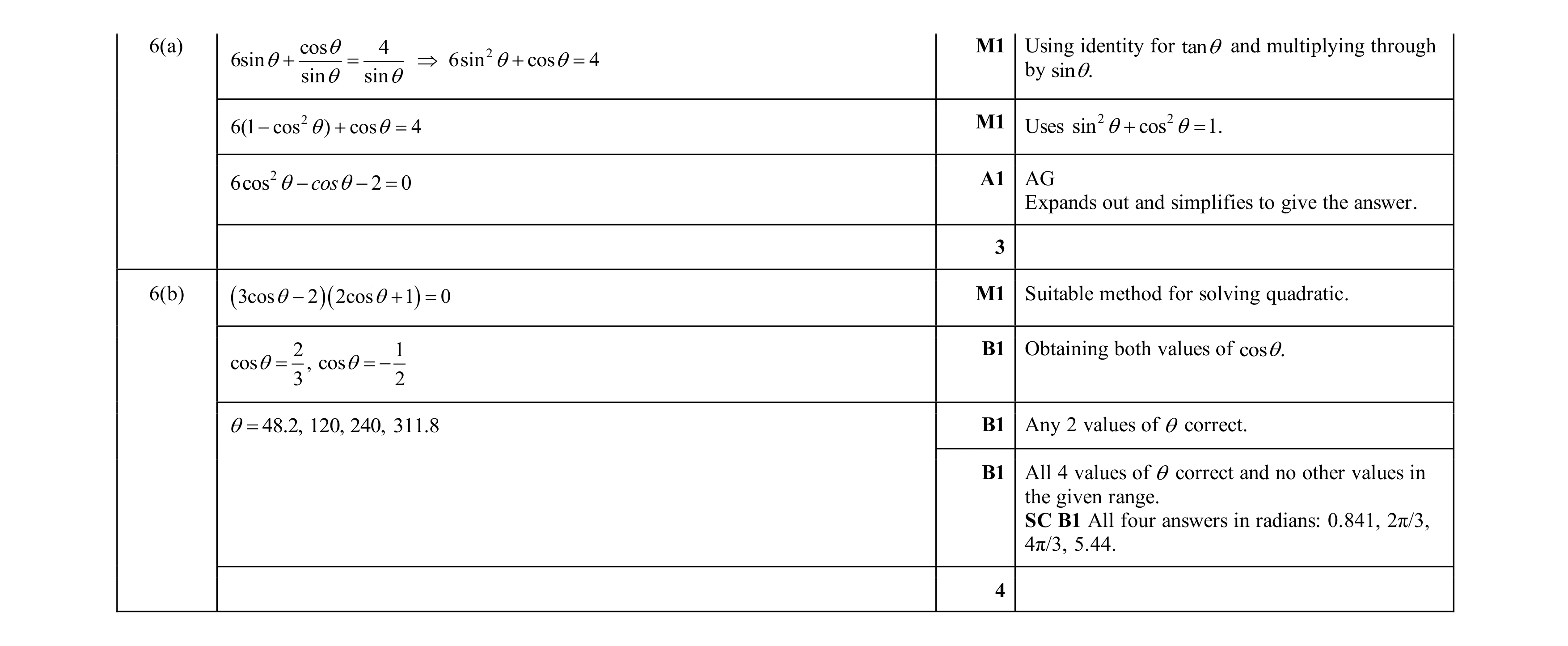 7
7