Questions as text
Q1 · For A Examiner's Use NOT TO SCALE D 140o 80o B yo C In the diagram above AB=BC and AD=DC 0580/31 Oct/Nov 2004
5 (a) For A Examiner's Use NOT TO SCALE D 140o 80o B yo C In the diagram above AB=BC and AD=DC. (i) What is the special name of the quadrilateral ABCD? Answer(a)(i) [1] (ii) On the diagram draw the line of symmetry. [1] (iii) Calculate the value of y. Answer(a)(iii) y = [2] (b) N po 40o M ro qo O NOT TO SCALE K L In the diagram above, the points K,L,M and N lie on the circle centre O. KN is parallel to LM. Find the values of p,q and r. Answer(b) p = , q = , r = [3] (c) For xo Examiner's Use NOT TO SCALE The diagram above shows a regular seven-sided polygon. Each of the interior angles measures x°. One of the angles is marked in the diagram. Calculate the value of x, giving your answer correct to 1 decimal place. Show all your working. Answer(c) x = [4]
11 marks
Mark scheme: 5 a) i) kite 1 ii) correct line BD drawn 1 Allow broken line, one line only iii) 70 2 360 − 140 − 80 M1 for o.e. 2 b) (p =) 90 1 (q =) 50 1 (r =) 50 1√ f.t. from their q, not strict f.t. c) 128.6 c.a.o. 4 360 M2 for 180 - or 7 5× 180 o.e. 7 (may be implied by art 129) +A1 for 128.57 11
This question in 0580/31 Oct/Nov 2004
Q2 · For l Examiner's Use DD CC AA BB O A quadrilateral ABCD, a line l and a point O are shown… 0580/31 May/June 2007
7 For l Examiner's Use DD CC AA BB O A quadrilateral ABCD, a line l and a point O are shown on the grid above. (a) Write down the mathematical name for the quadrilateral ABCD. Answer(a) [1] (b) On the grid above, draw the images of the quadrilateral ABCD under the following transformations. 9 (i) Translation by the vector . Label this image P. [2] − 3 (ii) Reflection in the line l. Label this image Q. [2] (iii) Rotation, centre A, through 90° anti-clockwise. Label this image R. [2] (iv) Enlargement, centre O and scale factor 3. Label this image S. [3]
10 marks
Mark scheme: 7 (a) Trapezium B1 − 3 (b) (i) Translation 9 across, 3 down B2 B1 for 9 across or 3 down or 9 (ii) Correct reflection B2 B1 any reflection of ABCD in a line parallel to l. (iii) Correct rotation B2 B1 90° clockwise rotation of ABCD about A (iv) Correct enlargement B3 B1 any enlargement of ABCD and B1 any enlargement of ABCD SF 3 or B1 any enlargement of ABCD centre O (not penalise lack of labelling provided intention clear) [10]
This question in 0580/31 May/June 2007
Q3 · For Examiner's Use O A R P B The diagram shows a circular garden, centre O 0580/31 May/June 2007
8 For Examiner's Use O A R P B The diagram shows a circular garden, centre O. A straight path AB touches the circle at P. (a) (i) Draw on the diagram the diameter PQ and label the point Q. [1] (ii) Without measuring, write down the size of angle APQ. Answer(a)(ii) Angle APQ= [1] (iii) The point R is marked on the circumference of the circle. Draw the lines PR and QR. [1] (iv) Write down the reason why the angle PRQ is 90°. Answer(a)(iv) [1] (b) Showing all your construction lines, use a straight edge and compasses only to construct (i) the perpendicular bisector of QR, [2] (ii) the bisector of angle PRQ. [2] (c) Shade the region of the garden between PQ and QR which is closer to R than to Q and closer to RQ than to RP. [2] Question 9 is on the next page.
10 marks
Mark scheme: 8 (a) (i) Diameter from P through O to Q B1 (ii) 90 B1cao (iii) P to R and Q to R ruled. B1 (iv) (angle in a ) semi-circle B1 Angle on a diameter. Half the angle at the centre. (b) (i) Bisector of QR with arcs. B2 SC1 if accurate without arcs. Maximum errors 2mm from mid-point and 2° from perpendicular. (ii) Bisector of PRQ with arcs. B2 SC1 if accurate without arcs. Maximum error 2° in line from R. If wrong line and/or angle used treat as misread each time. (c) Correct Shading 2 Dep. on B2 in (b)(i) and (b)(ii). SC1 for ‘correct’ shading but dependent on at least SC1 in (b)(i) and (b)(ii). [10] IGCSE – May/June 2007 0580/0581 03
This question in 0580/31 May/June 2007
Q4 · In this question, all construction arcs must be shown clearly 0580/31 May/June 2008
9 In this question, all construction arcs must be shown clearly. For Examiner's Jalal buys an area of land on which to build a school. Use The land, ABCDE, is in the shape of a polygon with 5 sides. (a) Write down the mathematical name of this polygon. Answer(a) [1] (b) Jalal starts to make an accurate plan of the land, as shown below. He uses a scale of 1 centimetre to represent 10 metres. D A m 45 m B C 70 m (i) The actual lengths of AB and BC are written on the plan. Write the actual length of CD on the plan. [1] (ii) Use compasses to find the point E such that AE = 64 m and DE = 58 m. Draw the lines AE and DE. [2] (c) The land is to be divided into distinct regions. For Examiner's Construct, using a straight edge and compasses only, Use (i) the perpendicular bisector of BC, [2] (ii) the bisector of angle ABC. [2] (d) The music department building will be nearer to B than to C and nearer to BC than to BA. Write a letter M on the plan where the music department could be. [1] (e) The school gate, PQ, will be 8 metres wide. It will lie along AB so that AP = QB. Mark P and Q accurately on the plan. [2]
11 marks
Mark scheme: 9 (a) Pentagon B1 (b) (i) 61 to 63 B1 (ii) AE = 6.3 to 6.5 cm and DE = 5.7 to 5.9 cm B1 correct arcs seen B1 accept concave polygon SC1 if lengths reversed and with arcs (c) (i) perpen.bisector of BC B1 +/- 1mm and +/- 1 degree accuracy correct arcs seen B1 (ii) bisector of angle ABC B1 +/- 1 degree accuracy correct arcs seen B1 (d) "M" correctly marked B1 dep. on at least first B1 in each part of (c) (e) 2 marks 0.8 (+/-0.1) apart B1 1.85 (+/-0.1) from A and B B1 [11]
This question in 0580/31 May/June 2008
Q5 · Write down the name of a polygon with 8 sides 0580/31 May/June 2009
6 (a) Write down the name of a polygon with 8 sides. For Examiner's Use Answer(a) [1] (b) Find the size of the interior angle of a regular polygon with 8 sides. Answer(b) [2] (c) A regular 8-sided polygon, centre O, and side 8 cm, is shown below. M is the mid-point of the side AB. F E NOT TO SCALE G D O H C A M B 8 cm (i) Show that OM = 9.66 cm correct to 3 significant figures. Answer (c)(i) [3] (ii) Calculate the area of the triangle AOB. For Examiner's Use Answer(c)(ii) cm2 [2] (iii) Calculate the area of the polygon. Answer(c)(iii) cm2 [1] (d) The polygon forms the cross-section of a box. The box is a prism of height 12 cm. Calculate the volume of the box. Answer(d) cm3 [1] (e) The box contains 200 toffees in the shape of cuboids, 3 cm by 2 cm by 2 cm. Calculate (i) the total volume of the 200 toffees, Answer(e)(i) cm3 [2] (ii) the percentage of the volume of the box not filled by the toffees. Answer(e)(ii) % [3]
15 marks
Mark scheme: 6 (a) Octagon 1 (b) 135 2 M1 for 180 − (360 ÷ 8) oe (c) (i) Angle OAB = their (b)/2 or W1ft 67.5 or 22.5 correct values, angle AOM = 90 − their (b)/2 4 × tan ‘67.5’ or 4 ÷ tan ‘22.5’ M1 9.656… or 9.66 A1cao Dep on W1 and M1 (ii) 38.6 to 38.64 2 M1 for 0.5 × 8 × 9.66 (iii) 308.8 to 309.12 1ft Their (c) (ii) × 8 (d) 3705.6 to 3709.44 or 3710 1ft Their (c) (iii) × 12 (e) (i) 2400 2cao M1 for 3 × 2 × 2 × 200 (ii) 35.2(3…) to 35.3(0…) 3cao M1 for their ((d) − (e) (i)) soi. (d)− (e)(i) M1 for (d) × 100 (e)(i) Or M2 for (1 (d) ) × 100 SC1 for Answer 64.7 to 64.77
This question in 0580/31 May/June 2009
Q6 · For C Examiner's Use NOT TO D SCALE 85 cm 65 cm A 50 cm B The diagram represents the… 0580/32 Oct/Nov 2010
7 For C Examiner's Use NOT TO D SCALE 85 cm 65 cm A 50 cm B The diagram represents the cross-section of a storage box. AB = 50 cm, AD = 65 cm and BC = 85 cm. AD is parallel to BC. (a) Write down the geometrical name of the quadrilateral ABCD. Answer(a) [1] (b) Calculate angle DCB. Answer(b) Angle DCB = [3] (c) Calculate the area of the cross-section ABCD. Answer(c) cm2 [2] (d) The storage box is 96 cm long. Calculate the volume of the box. Write down the units of your answer. 96 cm Answer(d) [2]
8 marks
Mark scheme: 7 (a) Trapezium 1 (b) 68.2 3 M2 for tan = 50 ÷ (85–65) or better B1 for 85 – 65 (= 20) seen in working area (c) 3750 2 M1 for 0.5(65 + 85) × 50 (d) 360 000 1ft ft their (c) × 96, correct to a minimum of 3sf cm3 1 units mark independent
This question in 0580/32 Oct/Nov 2010
Q7 · Here is a scale drawing of a shop floor, EFGH 0580/33 May/June 2012
3 Here is a scale drawing of a shop floor, EFGH. For The scale is 1 centimetre represents 2 metres. Examiner's Use F G H Scale: 1 cm to 2 m E (a) What is the mathematical name of the shape EFGH? Answer(a) [1] (b) What type of angle is angle EFG? Answer(b) [1] (c) Find the actual length, in metres, of the side EH. Answer(c) m [2] (d) Measure angle FEH. Answer(d) Angle FEH = [1] (e) Complete this part using ruler and compasses only. All construction arcs must be clearly shown. A table is placed • nearer to E than to H and • less than 14 m from H. By constructing two loci on the scale drawing, find and label the region R, where the table is placed. [5] (f) The shop sells shoes which are packed in boxes. Each box is a cuboid 33.2 cm long, 16.8 cm wide and 11 cm high. Calculate the volume of one of these shoe boxes. Answer(f) cm3 [2]
12 marks
Mark scheme: 3 (a) quadrilateral 1 (b) obtuse 1 (c) 23.6–24.4 2 M1 for 11.8 – 12.2 (d) 31–35 1 (e) construction of perpendicular 5 B1 for two pairs of arcs, same radius, centres E bisector of EH and H part circle centre H radius 7 cm B1 for bisector within 2mm of correct one, ± 2° of indication of region correct angle B1 for part circle centre H B1 for radius 7 cm B1ft for an indication of the region, ft dependent on at least B2 from above (f) 6135.36 or 6135.4 or 6135 or 6140 2 M1 for 33.2 × 16.8 × 11
This question in 0580/33 May/June 2012
Q8 · For Examiner's Use A B C D Complete the table for each of the different quadrilaterals A… 0580/32 Oct/Nov 2012
4 (a) For Examiner's Use A B C D Complete the table for each of the different quadrilaterals A, B, C and D. Quadrilateral Mathematical name Number of lines of symmetry A B C D [8] (b) R C 9 cm NOT TO 14 cm SCALE 6 cm P 120° 120° B 10 cm A 21 cm Q The two triangles are similar. (i) Write down the angle in triangle PQR that corresponds to angle B in triangle ABC. Answer(b)(i) Angle [1] (ii) Work out PQ. Answer(b)(ii) PQ = cm [2]
11 marks
Mark scheme: 4 (a) Parallelogram 0 1,1 Kite 1 1,1 Rhombus 2 1,1 Trapezium 0 1,1 (b) (i) Q or RQP or PQR 1 (ii) 15 2 M1 for a complete correct method
This question in 0580/32 Oct/Nov 2012
Q9 · For y Examiner's Use 8 7 6 5 4 3 A 2 1 x –6 –5 –4 –3 –2 –1 0 1 2 3 4 5 6 7 8 9 10 –1 –2 B… 0580/33 Oct/Nov 2012
5 For y Examiner's Use 8 7 6 5 4 3 A 2 1 x –6 –5 –4 –3 –2 –1 0 1 2 3 4 5 6 7 8 9 10 –1 –2 B –3 –4 –5 –6 (a) What special type of quadrilateral is shape A? Answer(a) [1] (b) Describe fully the single transformation which maps shape A onto shape B. Answer(b) [3] (c) On the grid (i) reflect shape A in the y-axis and label the image C, [2] − 6 (ii) translate shape A by and label the image D, [2] − 4 (iii) enlarge shape A by scale factor 2, with centre (0, 0) and label the image E. [2]
10 marks
Mark scheme: 5 (a) Parallelogram 1 (b) Rotation, 90° clockwise, about origin 1,1,1 (c) (i) Correct reflection 2 B1 reflection in the x axis (ii) Correct translation 2 B1 for translation –6,k or k,–4 (iii) Correct enlargement 2 B1 Correct size, wrong position
This question in 0580/33 Oct/Nov 2012
Q10 · For Examiner′s G Use E B C 24° NOT TO SCALE x° O 78° A y° D H F A, B, C and D are points… 0580/31 Oct/Nov 2013
9 For Examiner′s G Use E B C 24° NOT TO SCALE x° O 78° A y° D H F A, B, C and D are points on the circumference of a circle, centre O. EF is a tangent to the circle at A. GH is a straight line through the point A. Angle CBD = 24° and angle OAG = 78°. (a) (i) Write down the mathematical names of lines BC and OA. Answer(a)(i) BC is a … OA is a … [2] (ii) Find the value of x, giving a reason for your answer. Answer(a)(ii) x = … because … … [2] (iii) Find the value of y, giving a reason for your answer. Answer(a)(iii) y = … because … … [3] (b) The diagram shows a regular polygon, centre O. For Examiner′s Use NOT TO SCALE O w° (i) Write down the name of this polygon. Answer(b)(i) … [1] (ii) Find the value of w. Show all your working. Answer(b)(ii) w = … [3] (c) The exterior angle of another regular polygon is 24°. Calculate the number of sides this polygon has. Answer(c) … [2] _____________________________________________________________________________________
13 marks
Mark scheme: 9 (a) (i) Chord 1 Radius 1 (ii) 12 1 Tangent [meets] radius [at] 90 [°] 1 (iii) 66 2 M1 for BCD identified as 90 or 180–24–90 Angles [in] triangle 180 or 1 Angle [in a] semi–circle [= 90] (b) (i) Octagon 1 alternative method (ii) 360 ÷ 8 [= 45] M1 M1 for (8–2) × 180 [=1080] or 6 × 180 [=1080] (180 – their 45) ÷ 2 M1FT M1FT for (their 1080 ÷ 8) ÷ 2 or their 1080 ÷ 16 67.5 A1 A1 for 67.5 (c) 15 2 M1 for 360 / 24
This question in 0580/31 Oct/Nov 2013
Q11 · For Examiner′s y Use 8 7 6 5 B 4 3 A 2 1 x –6 –5 –4 –3 –2 –1 0 1 2 3 4 5 6 7 8 –1 –2 C –3… 0580/32 Oct/Nov 2013
1 For Examiner′s y Use 8 7 6 5 B 4 3 A 2 1 x –6 –5 –4 –3 –2 –1 0 1 2 3 4 5 6 7 8 –1 –2 C –3 –4 –5 –6 –7 –8 Triangles A, B and C are shown on a 1 cm2 grid. (a) Write down the mathematical name for triangle A. Answer(a) … [1] (b) Complete the following statement. Triangles A, B and C are … triangles because they are the same shape and size. [1] (c) Describe fully the single transformation that maps For Examiner′s Use (i) triangle A onto triangle B, Answer(c)(i) … … [2] (ii) triangle A onto triangle C. Answer(c)(ii) … … [3] (d) Refl ect triangle A in the x-axis. Label the image P. [1] (e) Enlarge triangle A, scale factor 2, centre (0, 0). Label the image Q. [2] (f) Calculate the area of triangle Q. Answer(f) … cm2 [2] _____________________________________________________________________________________
12 marks
Mark scheme: 1 (a) Scalene [triangle] 1 1 (b) Congruent (c) (i) translation 1 − 6 1 Accept 6 left and 2 up. 2 (ii) rotation 1 SC1, 1, 1 for 180° 1 Enlargement, [SF=] –1,(0,0) [Centre] ( 0,0 ) 1 (d) Image (1, –2), (4, –2), (2, –3) 1 (e) Image (2, 4), (8, 4), (4, 6) 2 B1 for 2 times enlargement, incorrect centre (f) 6 2FT M1 for 0.5 × their base × their height IGCSE – October/November 2013 0580 32 5 80
This question in 0580/32 Oct/Nov 2013
Question 12 0580/32 Oct/Nov 2013
8 (a) Complete the table. For Examiner′s Use Name of polygon Number of sides Quadrilateral 4 Heptagon 5 [2] (b) B C D NOT TO 23° SCALE 55° A E In the diagram, AB is parallel to EC and BCD is parallel to AE. Angle BAE = 55° and angle CED = 23°. (i) Complete the following statement. The mathematical name for quadrilateral ABDE is … . [1] (ii) Work out the size of angle ABC. Answer(b)(ii) Angle ABC = … [1] (iii) Work out the size of angle CDE. Answer(b)(iii) Angle CDE = … [2] (c) For Examiner′s B Use C NOT TO O 35° SCALE A 52° D Points A, B and C lie on a circle with centre O. DA is a tangent to the circle at A. Angle BAC = 35° and angle ADC = 52°. (i) Write down the size of angle ABC giving a reason for your answer. Answer(c)(i) Angle ABC = … because … … [2] (ii) Work out the size of angle BCA. Answer(c)(ii) Angle BCA = … [1] (iii) Work out the size of angle BCD. Answer(c)(iii) Angle BCD = … [3] _____________________________________________________________________________________
12 marks
Mark scheme: 8 (a) 7 1 Pentagon 1 (b) (i) trapezium 1 (ii) 125° 1 (iii) 32° 2 M1FT for 180 – 125 – 23 or better or 180 – their 125 – 23 or better (c) (i) 90° 1 angle [in a] semicircle [=90°] 1 (ii) 55° 1 (iii) 93° 3 M2 for 90 – 52 or 180 – 90 – 52 or 38 If M0 then B1 for angle CAD = 90° indicated
This question in 0580/32 Oct/Nov 2013
Q13 · The diagram shows four quadrilaterals drawn on a 1 cm2 grid 0580/33 Oct/Nov 2013
2 The diagram shows four quadrilaterals drawn on a 1 cm2 grid. For Examiner′s Use y 8 7 X 6 5 A 4 3 2 1 x –8 –7 –6 –5 –4 –3 –2 –1 0 1 2 3 4 5 6 7 8 –1 –2 –3 B C –4 –5 –6 –7 –8 (a) Write down the mathematical name of the quadrilateral X. Answer(a) … [1] (b) Describe fully the single transformation that maps quadrilateral X onto quadrilateral For Examiner′s Use (i) A, Answer(b)(i) … … [3] (ii) B, Answer(b)(ii) … … [2] (iii) C. Answer(b)(iii) … … [3] (c) (i) Calculate the length of the longest side of quadrilateral X. Show that your answer rounds to 3.16 cm, correct to 3 signifi cant fi gures. Answer(c)(i) [2] (ii) Calculate the perimeter of quadrilateral X. Answer(c)(ii) … cm [3] (iii) Find the perimeter of quadrilateral C. Answer(c)(iii) … cm [1] _____________________________________________________________________________________
15 marks
Mark scheme: 2 (a) Kite 1 (b) (i) Rotation 1 90° clockwise (or 270° anti- 1 clockwise) oe [centre] origin oe 1 (ii) Translation 1 − 2 Accept 2 left and 10 down oe 1 − 10 IGCSE – October/November 2013 0580 33 (iii) Enlargement 1 [Scale Factor] –3 1 [centre] (–3, 4) 1 (c) (i) [x2 =] 32 + 12 M1 M1 for 32 + 12 or better [x =] 3 2 + 1 2 or [x = 9 + 1 Needs a value to 3 or more decimal places M1dep or 10 and = 3.162… (ii) 9.15 3 B1 for 2 or 1.41 or better seen M1 for 2 x 3.16 + 2 x their 1.41... soi by 9.14 If zero scored SC1 if answer in range 8.6 to 9.6 (iii) 27.45 to 27.5 1FT their (c)(ii) ×3
This question in 0580/33 Oct/Nov 2013
Q14 · Here is a sequence of patterns made using identical polygons 0580/33 Oct/Nov 2013
8 Here is a sequence of patterns made using identical polygons. For Examiner′s Use Pattern 1 Pattern 2 Pattern 3 (a) Write down the mathematical name of the polygon in Pattern 1. Answer(a) … [1] (b) Complete the table for the number of vertices (corners) and the number of lines in Pattern 3, Pattern 4 and Pattern 7. Pattern 1 2 3 4 7 Number of vertices 8 14 Number of lines 8 15 [5] (c) (i) Find an expression for the number of vertices in Pattern n. Answer(c)(i) … [2] (ii) Work out the number of vertices in Pattern 23. Answer(c)(ii) … [1] (d) Find an expression for the number of lines in Pattern n. For Examiner′s Use Answer(d) … [2] (e) Work out an expression, in its simplest form, for (number of lines in Pattern n) – (number of vertices in Pattern n). Answer(e) … [2] _____________________________________________________________________________________ Question 9 is printed on the next page.
13 marks
Mark scheme: 8 (a) Octagon 1 (b) [Pattern 3] 20 and 22 1 [Pattern 4] 26, 29 1, 1 [Pattern 7] 44, 50 1, 1 (c) (i) 6n + 2 oe final answer 2 B1 for 6n + a or bn + 2 b ≠ 0 (ii) 140 oe 1FT ft linear expression in (c)(i) (d) 7n + 1 oe final answer 2 B1 for 7n + c or dn + 1 d ≠ 0 (e) n – 1 final answer 2FT B1FT for n + j or kn 1 k ≠ 0 3V 2 3V 3V
This question in 0580/33 Oct/Nov 2013
Q15 · Use a ruler and compasses only in parts (a), (c) and (d) of this question 0580/31 May/June 2014
5 Use a ruler and compasses only in parts (a), (c) and (d) of this question. Show all your construction arcs. A 100 m B E 120 m P 150 m C 100 m D Scale: 1 cm to 20 m Maria owns a farm. The scale drawing shows part of the boundary of the farm. The scale is 1 centimetre represents 20 metres. (a) The point F is such that AF = 140 m and EF = 160 m. Angle BAF and angle DEF are both obtuse angles. Complete the scale drawing of the farm boundary ABCDEF. [2] (b) Write down the name of the polygon ABCDEF. Answer(b) … [1] (c) (i) Construct the perpendicular bisector of the side CD. [2] (ii) Construct the bisector of angle ABC. [2] (iii) All the farm buildings are within a region that is ● nearer to C than to D and ● nearer to BC than to BA. Shade the region containing the farm buildings. [1] (d) A fence post, P, is shown on the boundary DE. (i) Construct the locus of points that are 50 m from P and also inside the farm boundary. [2] (ii) A region for keeping pigs is within 50 m of P and inside the farm boundary. Calculate the actual area for keeping pigs. Answer(d)(ii) … m2 [2] __________________________________________________________________________________________
12 marks
Mark scheme: 5 (a) Hexagon correct with arcs. 2 B1 for correct hexagon without arcs AF = 7 cm (±2mm) EF = 8 cm (±2mm) or one length correct with arcs. Or B1 for two correct arcs (b) Hexagon 1 (c) (i) Bisector of CD with 2 pairs of arcs 2 B1 for correct bisector with one pair or no arcs (ii) Bisector of angle ABC with 2 pairs of correct 2 B1 for bisector without 2 pairs of arcs. arcs (iii) Correct enclosed region shaded 1FT Their enclosed region provided at least 1 mark in each of parts (i) and (ii) (d) (i) Semi-circle radius 2.5cm (±2mm) from P and 2 SC1 for arc centre P radius 2.5cm inside polygon Or for arc inside polygon centre P touching boundaries twice or any circle centre P. (ii) 3930 or 3926 to 3928 2 M1 for (π × 50²) ÷ 2 oe
This question in 0580/31 May/June 2014
Q16 · B A NOT TO SCALE 240 cm 180 cm D C 120 cm The diagram shows the cross section ABCD of a… 0580/32 May/June 2014
2 B A NOT TO SCALE 240 cm 180 cm D C 120 cm The diagram shows the cross section ABCD of a shed. AD = 180 cm, DC = 120 cm and BC = 240 cm. (a) (i) Write down the mathematical name of the cross section ABCD. Answer(a)(i) … [1] (ii) Calculate the area of the cross section ABCD. Give the units of your answer. Answer(a)(ii) … … [3] (iii) The shed is a prism of length 2.5 metres. Calculate the volume of the shed. Give your answer in cubic metres. Answer(a)(iii) … m3 [2] (iv) Calculate the length AB. Answer(a)(iv) AB = … cm [3] (b) Here is a scale drawing of a garden, GHIJ. The scale is 1 centimetre represents 5 metres. I H G J Scale: 1 cm to 5 m The shed is placed in the garden so that it is ● nearer to GJ than to IJ and ● within 20 m of H. Using a ruler and compasses only, construct and shade the region where the shed can be placed. Show all your construction arcs. [5] __________________________________________________________________________________________
14 marks
Mark scheme: 2 (a) (i) Trapezium 1 (ii) 25 200 2 SCB3 for 2.52 m2 180 + 240 × 120 M1 for 2 1 or 180 × 120 + × 120 × 60 2 8.1 + 4.2 1 or × 2.1 or 1.8 × 1.2 + × 1.2 × 0.6 oe 2 2 cm2 1 (iii) 6.3 2 M1 for their (a)(ii) × 2.5 oe or figs 63 (iv) 134 or 134.1 to 134.2 3 B1 for 60 seen on diagram or used M1 for 1202 + (their ‘240 – 180’) 2 or better (b) correct angle bisector of angle J 2 M1 for the correct angle bisector of angle J without with two pairs of supporting arcs arcs arc centre H radius 4 cm 2 M1 for any arc centre H correct region shaded 1 dep on at least both M marks
This question in 0580/32 May/June 2014
Q17 · Y 9 8 7 6 5 4 3 P 2 1 x –8 –7 –6 –5 –4 –3 –2 –1 0 1 2 3 4 5 6 –1 –2 –3 –4 –5 H –6 G –7 –8… 0580/31 Oct/Nov 2014
2 y 9 8 7 6 5 4 3 P 2 1 x –8 –7 –6 –5 –4 –3 –2 –1 0 1 2 3 4 5 6 –1 –2 –3 –4 –5 H –6 G –7 –8 –9 Two congruent quadrilaterals, G and H, and a point P are shown on this 1 cm2 grid. (a) (i) Write down the mathematical name of the shaded quadrilateral. Answer(a)(i) … [1] (ii) Calculate the area of the shaded quadrilateral. Give the units of your answer. Answer(a)(ii) … … [3] (b) Describe fully the single transformation that maps quadrilateral G onto quadrilateral H. Answer(b) … … [3] (c) On the grid, draw the images of quadrilateral G after the following transformations. (i) Refl ection in the line y = 0. [2] -5 (ii) Translation by the vector [2] e 7 o. (iii) Enlargement by scale factor 0.5 with centre P. [2] (d) On quadrilateral H mark, with an arc, an obtuse angle. [1] __________________________________________________________________________________________
14 marks
Mark scheme: 2 (a) (i) Trapezium 1 (ii) 16 2 M1 for ½(2 + 6) × 4 oe cm2 1 (b) Rotation B1 Independent marks 90°[anti-clockwise] oe B1 [centre] (–2, –8) B1 (c) (i) Correct reflection in y = 0 2 SC1 for correct reflection in x = 0 (ii) Translation 5 left and 7 up 2 SC1 for one of 5 left or 7 up (iii) Correct Enlargement 2 SC1 for enlargement, SF ½, but incorrectly placed. (d) Obtuse angle marked 1
This question in 0580/31 Oct/Nov 2014
Q18 · A 9 cm F G 50 cm B NOT TO SCALE E 52 cm D 12 cm H 70 cm C The diagram shows a rectangle… 0580/32 Oct/Nov 2014
5 A 9 cm F G 50 cm B NOT TO SCALE E 52 cm D 12 cm H 70 cm C The diagram shows a rectangle ABCD divided into three sections by the lines EF and HG. AF = 9 cm, GB = 50 cm, DH = 12 cm, HC = 70 cm and HG = 52 cm. (a) Write down the mathematical name of (i) quadrilateral BCHG, Answer(a)(i) … [1] (ii) the shaded polygon. Answer(a)(ii) … [1] (b) (i) Show by calculation that BC = 48 cm. Answer(b)(i) [2] (ii) Calculate the area of rectangle ABCD. Answer(b)(ii) … cm2 [2] (c) Calculate (i) the perimeter of BCHG, Answer(c)(i) … cm [1] (ii) the area of BCHG. Answer(c)(ii) … cm2 [2] (d) E is the midpoint of AD. Find the area of triangle AEF. Answer(d) … cm2 [3] (e) Work out the area of the shaded polygon. Answer(e) … cm2 [1] __________________________________________________________________________________________
13 marks
Mark scheme: 5 (a) (i) Trapezium 1 (ii) Pentagon 1 (b) (i) [BC =] 52 2 − 20 2 [= 48] B2 B1 for 522 = BC2 + (70 – 50)2 or 522 = BC2 + 202 or BC2 = 522 – 202 (ii) 3936 or 3940 2 M1 for (70 + 12) × 48 oe (c) (i) 220 1 (ii) 2880 2 M1 for 0.5(50 + 70) × 48 oe (d) 108 3 B1 for [AE=] 24 M1 for 0.5 × their AE × 9 (e) 948 1FT FT their (b)(ii) – (their (c)(ii) + their (d))
This question in 0580/32 Oct/Nov 2014
Q19 · Y 10 9 8 7 6 5 4 3 C 2 1 x –7 –6 –5 –4 –3 –2 –1 0 1 2 3 4 5 6 7 –1 –2 –3 –4 A –5 –6 B –7… 0580/32 May/June 2015
5 y 10 9 8 7 6 5 4 3 C 2 1 x –7 –6 –5 –4 –3 –2 –1 0 1 2 3 4 5 6 7 –1 –2 –3 –4 A –5 –6 B –7 –8 –9 –10 (a) For the shaded quadrilateral, write down (i) its mathematical name, Answer(a)(i) … [1] (ii) the number of lines of symmetry. Answer(a)(ii) … [1] (b) The quadrilaterals are drawn on a 1 cm2 grid. Work out the area of the shaded quadrilateral. Answer(b) … cm2 [1] (c) Describe fully the single transformation that maps the shaded quadrilateral onto (i) quadrilateral A, Answer(c)(i) … … [2] (ii) quadrilateral B, Answer(c)(ii) … … [2] (iii) quadrilateral C. Answer(c)(iii) … … [3] (d) On the grid, draw the image of the shaded quadrilateral after a rotation of 90° clockwise about the origin. [2] __________________________________________________________________________________________
12 marks
Mark scheme: 5 (a) (i) Kite 1 (ii) 1 1 (b) 12 1 (c) (i) Translation 1 7 1 −9 (ii) Reflection 1 y = −1 oe 1 (iii) Enlargement 1 1 1 [Scale Factor] 2 1 [Centre] (−6, 0) (d) Correct rotation 2 B1 for a ‘correct’ rotation of 90° anti- clockwise or correct orientation but wrong position 1 1 6 (a) (i) 3 × 60 [= 195] 4 (ii) 22 45 2 B1 for [Total time =] 6 [hours] 30 [minutes] or 1 6 [hours] or 390 [minutes] 2 or M1 for adding to 16 15 their attempt at 1 1 3 + 2 + 45 4 2 (iii) 13 : 10 : 3 2 B1 for 3 1 : 2 1 : 3 or 195 : 150 : 45 or 4 2 4 better or SC1 for 13,10,3 in the wrong order in a ratio (b) (i) 78 1 (ii) 30 1 (iii) 87 1FT 195 – (their (b)(i) + their (b)(ii)) 22 5. − 20 7. (c) 8 3 M2 for × 100 or better 22 5. or B1 for 22.5 – 20.7
This question in 0580/32 May/June 2015
Q20 · Write the mathematical name under each of these triangles 0580/33 May/June 2015
2 (a) Write the mathematical name under each of these triangles. 8 cm 8 cm 8 cm 8 cm 8 cm 12 cm NOT TO SCALE 8 cm 12 cm … … … [3] (b) NOT TO 2 cm SCALE 5 cm 8 cm 12 cm (i) Find the perimeter of this shape. Answer(b)(i) … cm [1] (ii) Find the area of this shape. Give the units of your answer. Answer(b)(ii) … … [3] (c) C NOT TO 6 cm SCALE B 16 cm A In the diagram AB is the diameter of the circle and C is a point on the circumference. AB = 16 cm and BC = 6 cm. (i) Give a reason why angle ACB = 90°. Answer(c)(i) … … [1] (ii) Calculate AC. Answer(c)(ii) AC = … cm [3] (iii) Calculate the shaded area. Answer(c)(iii) … cm2 [5]
16 marks
Mark scheme: 2 (a) equilateral 3 B1 for each isosceles right-angled or scalene (b) (i) 40 1 (ii) 86 2 M1 for 8 × 12 – 2 × 5 oe cm2 1 B1indep for cm2 (c) (i) angle [in a] semi-circle [=90] 1 accept any correct equivalent statement 2 − 6 2 oe or better (ii) 14.8 3 M2 for 16 or M1 for AC2 + 62 = 162 or better (iii) 56.0 to 56.144 5 M2 for π × 82 ÷ 2 oe or M1 for π × 82 M1 for 6 × their (c)(ii) ÷ 2 oe or 44.4[…] M1dep for the area of their semi-circle – the area of their triangle
This question in 0580/33 May/June 2015
Q21 · Irina has some solid building blocks 0580/31 Oct/Nov 2015
6 Irina has some solid building blocks. (a) Write down the mathematical name of this solid. Answer(a) … [1] (b) Irina describes the shape of a different block. She says: It has 12 edges and 8 vertices. All the faces are the same shape. Write down the mathematical name of this solid. Answer(b) … [1] (c) The diagram shows the end face of another block. A NOT TO 6 cm SCALE 3 cm B C (i) Show that BC = 5.2 cm, correct to 1 decimal place. Answer(c)(i) [3] (ii) Find the area of triangle ABC. Answer(c)(ii) … cm2 [2] (iii) This block is a triangular prism with length 8 cm. Calculate the volume of the block. Answer(c)(iii) … cm3 [1] (d) The diagram shows another building block. NOT TO SCALE 6 cm 4 cm x cm 8 cm (i) Calculate the area of the end face of this block. Answer(d)(i) … cm2 [2] (ii) The volume of this block is 336 cm3. Find the value of x. Answer(d)(ii) x = … [1] __________________________________________________________________________________________
11 marks
Mark scheme: 6 (a) Cylinder 1 (b) Cube or cuboid 1 (c) (i) 6 2 − 3 2 M2 M1 for 62 = 32 + BC2 or (BC2 = ) 62 – 32 5.19… A1 (ii) 7.79 to 7.8 2 M1 for 0.5 × 5.2 × 3 (iii) 62.4 1FT FT 8 × their (c)(ii) (d) (i) 28 2 M1 for 0.5 × (6 + 8) × 4 oe (ii) 12 1FT FT 336 ÷ their (d)(i)
This question in 0580/31 Oct/Nov 2015
Q22 · U° NOT TO 132° SCALE Find the value of u 0580/32 Oct/Nov 2015
4 (a) u° NOT TO 132° SCALE Find the value of u. Answer(a) u = … [1] (b) 120° NOT TO v° SCALE 155° 91° Find the value of v. Answer(b) v = … [2] (c) 44° NOT TO SCALE w° 165° x° (i) Write down the mathematical name for this triangle. Answer(c)(i) … [1] (ii) Find the value of w. Answer(c)(ii) w = … [1] (iii) Find the value of x. Answer(c)(iii) x = … [1] (d) A NOT TO y° C SCALE 62° B A, B and C lie on a circle with diameter BC. (i) Find the value of y. Answer(d)(i) y = … [2] (ii) Write down the mathematical name for the straight line AB. Answer(d)(ii) … [1]
9 marks
Mark scheme: 4 (a) 132 1 (b) 124 2 M1 for 180 – 155 soi by 25 or for 360 – 120 – 91 – their angle marked on diagram provided their angle is less than 149 (c) (i) Isosceles 1 (ii) 68 1 (iii) 127 1FT FT is 360 – 165 – their (c)(ii) or 195 – their (c)(ii) (d) (i) 28 2 M1 for 90 marked at A or for 180 – (90 + 62) or 90 + 62 or 90 – 62 (ii) Chord 1
This question in 0580/32 Oct/Nov 2015
Q23 · The diagram shows a circle, centre O 0580/33 Oct/Nov 2015
5 (a) The diagram shows a circle, centre O. C NOT TO SCALE A B O D Write down the mathematical name of the line (i) OD, Answer(a)(i) … [1] (ii) BC. Answer(a)(ii) … [1] (b) C A G NOT TO SCALE 65° E F B D The diagram shows a circle with diameter EF. AEB is a tangent to the circle at E. CD is parallel to AB and angle EFG = 65°. Calculate the size of the following angles, giving a reason for each answer. (i) Angle EGF = … because … [2] (ii) Angle GEF = … because … [2] (iii) Angle AEG = … because … [2] (iv) Angle EGD = … because … [2] __________________________________________________________________________________________
10 marks
Mark scheme: 5 (a) (i) Radius 1 (ii) Chord 1
This question in 0580/33 Oct/Nov 2015
Q24 · B 73° NOT TO SCALE C F d° O 19° e° b° a° A D c° G E A, B, C, D and E are points on the… 0580/33 May/June 2016
8 B 73° NOT TO SCALE C F d° O 19° e° b° a° A D c° G E A, B, C, D and E are points on the circumference of a circle, centre O. GAF is a tangent to the circle at A. AB is parallel to EC and AB = AD. (a) Write down the mathematical name of triangle ABD. … [1] (b) Find the value of (i) a, a = … [1] (ii) b, b = … [1] (iii) c, c = … [1] (iv) d, d = … [1] (v) e. e = … [2] (c) The diameter, AC, of the circle is 13 cm. Calculate the circumference of the circle. Give your answer correct to 1 decimal place. … cm [3] Question 9 is printed on the next page.
10 marks
Mark scheme: 8 (a) Isosceles 1 (b) (i) 73 1 (ii) 15 1FT FT is 180 – (73 + 19 + their (b)(i)) (iii) 90 1 (iv) 19 1 (v) 71 2 M1 for [angle CAF = ] 90 – 19 or B1 for angle CAF = 90˚ soi (c) 40.8 cao 3 B2 for 40.84….. or M1 for 13π oe seen in the working B1 independent for rounding their circumference correctly if to more than 1 d p
This question in 0580/33 May/June 2016
Q25 · A solid has 6 faces, 8 vertices and 12 edges 0580/33 May/June 2016
9 (a) A solid has 6 faces, 8 vertices and 12 edges. All the edges have the same length. Write down the mathematical name of this solid. … [1] (b) Here is a sequence of diagrams made from identical square tiles. Diagram 1 Diagram 2 Diagram 3 Diagram 4 (i) On the grid, draw Diagram 4. [1] (ii) Complete the table. Diagram 1 2 3 4 5 Number of tiles 1 5 9 [2] (iii) Find an expression, in terms of n, for the number of tiles in Diagram n. … [2] (iv) Find the number of tiles in Diagram 19. … [1] (v) A box contains 98 of these tiles. (a) Diagram x is made from as many tiles as possible from this box. Find the value of x. x = … [2] (b) When Diagram x is made, how many tiles are left in the box?
9 marks
Mark scheme: 9 (a) Cube 1 (b) (i) 1 (ii) 13 1 17 1 If 0 scored SC1 for second number 4 more than the first (iii) 4n – 3 oe final answer 2 B1 for 4n – j or kn – 3 ( k ≠ 0 ) (iv) 73 1FT follow through linear expressions in (b)(iii) (v)(a) 25 2 B1FT for their (b)(iii) = 98 or B1 for 25.25 (v)(b) 1 1FT follow through their (b)(v)(a) if an integer
This question in 0580/33 May/June 2016
Q26 · A cuboid measures 6 cm by 3 cm by 2 cm 0580/31 Oct/Nov 2016
8 (a) A cuboid measures 6 cm by 3 cm by 2 cm. (i) On this 1 cm2 grid, complete the net of the cuboid. [3] (ii) Calculate the volume of the cuboid. … cm3 [2] (b) Write down the mathematical name of this shape. … [1] (c) Mark an obtuse angle on this trapezium. [1] (d) A regular polygon has an exterior angle of 22.5°. Work out how many sides this polygon has. … [2] (e) NOT TO SCALE 20 cm 6 cm x cm The diagram shows a shape made from a semi-circle, radius 6 cm, and a right-angled triangle. (i) Show that x = 16. [2] (ii) Calculate the area of the shape. … cm2 [5]
16 marks
Mark scheme: 8 (a) (i) Correct net 3 B2 for 3 or 4 correct faces in correct position or B1 for 1 or 2 correct faces in correct position (ii) 36 2 M1 for 6 × 3 × 2 oe (b) Hexagon 1 (c) Obtuse angle indicated 1 360 360 (d) 16 2 M1 for or = 22.5 22.5 n 180 ( n − 2 ) or = 157.5 oe n (e) (i) 20 2 − 12 2 M2 M1 for 202 = 122 + x2 or [x2 =] 202 – 122 π6 2 (ii) 153 or 152.5 to 152.6 5 M2 for soi by 56.5… . or 18 π 2 or M1 for π62 soi by 113 or 113.0…. or 113.1…. or 36 π M1 for 0.5 × 12 × 16 soi by 96 M1dep for their 56.5... + their 96 dep on at least M1 earned soi
This question in 0580/31 Oct/Nov 2016
Q27 · Polygon A is shown on the grid 0580/32 Oct/Nov 2016
2 (a) Polygon A is shown on the grid. A (i) Write down the mathematical name of polygon A. … [1] (ii) Write down the order of rotational symmetry of polygon A. … [1] (iii) Polygon A is enlarged by scale factor 3 to give polygon B. Draw polygon B on the grid. [2] (b) Triangle R and triangle S are shown on the grid. y 7 6 5 4 3 S 2 R 1 x –7 –6 –5 –4 –3 –2 –1 0 1 2 3 4 5 6 7 –1 –2 –3 –4 –5 –6 –7 (i) Describe fully the single transformation that maps triangle R onto triangle S. … … [3] (ii) Reflect triangle R in the x-axis. [1] 3 (iii) Translate triangle S by the vector [2] c- 4m.
10 marks
Mark scheme: 2 (a) (i) Octagon 1 (ii) 2 1 (iii) Correct enlargement 2 B1 for enlargement with incorrect scale factor (sf ≠1) or B1 for any four sides correct (b) (i) Rotation B1 90° clockwise oe B1 [Centre] (0, 0) oe B1 (ii) Correct reflection 1 Vertices (–2, –1), (–2, –2), (–5, –2)
This question in 0580/32 Oct/Nov 2016
Q28 · P NOT TO SCALE O Q R S The diagram shows a circle, centre O, and lines PQ and RS 0580/32 Oct/Nov 2016
8 (a) P NOT TO SCALE O Q R S The diagram shows a circle, centre O, and lines PQ and RS. Write down the mathematical name for (i) line PQ, … [1] (ii) line RS. … [1] (b) NOT TO SCALE C A O B A, B and C are points on the circle, centre O. (i) Complete the statement. Angle ACB = 90° because … [1] (ii) AC = 8 cm and BC = 5 cm. Calculate the area of triangle ABC. … cm2 [2] (iii) Show that the diameter of the circle is 9.43 cm, correct to 2 decimal places. [2] (iv) Calculate the area of the circle. … cm2 [2] (v) Calculate the percentage of the circle that is shaded. … % [2] Question 9 is printed on the next page.
11 marks
Mark scheme: 8 (a) (i) Tangent 1 (ii) Chord 1 (b) (i) Angle [in] semicircle 1 1 (ii) 20 2 M1 for × 8 × 5 2 (iii) [AB = ] 8 2 + 5 2 = 9.433… M2 M1 for [AB2 = ] 82 + 52 or 9.434 9.43 2 2 4.72 ) (iv) 69.8 or 69.9 or 69.84 to 2 M1 for π × or π × ( 2 69.91 their b(iv) − their b(ii) (v) 71.3 to 71.4 2 M1 for [× 100] their b(iv) their b(ii) or (1 − ) [× 100] their b(iv) their b(ii) or [100 –] × 100 their b(iv)
This question in 0580/32 Oct/Nov 2016
Q29 · Y 10 8 6 4 A 2 x –10 –8 –6 –4 –2 0 2 4 6 8 10 –2 –4 –6 B –8 –10 (a) Write down the… 0580/31 May/June 2017
2 y 10 8 6 4 A 2 x –10 –8 –6 –4 –2 0 2 4 6 8 10 –2 –4 –6 B –8 –10 (a) Write down the mathematical name of the shaded polygon. … [1] (b) Describe fully the single transformation that maps the shaded polygon onto polygon A. … … [3] (c) Describe fully the single transformation that maps the shaded polygon onto polygon B. … … [2] (d) On the grid, draw the reflection of the shaded polygon in the line x = 2. [2] (e) On the grid, draw the rotation of the shaded polygon through 90° anti-clockwise about the origin. [2]
10 marks
Mark scheme: 2(a) Quadrilateral 1 2(b) Enlargement 1 [Scale factor] 3 1 [Centre] (–3, –1) 1 2(c) Translation 1 10 1 −7 2(d) Vertices (6, 2), (7, −1), 2 B1 for a correct reflection in x = k or y = 2 (8, −1), (9, 1) 2(e) Vertices (−2, −2), (1, −3), 2 B1 for a ‘correct’ 90° clockwise rotation about the (1, −4), (−1, −5) origin If zero scored, SC1 for correct size and orientation but wrong position
This question in 0580/31 May/June 2017
Q30 · NOT TO SCALE D O A 49° 5.4 cm B C The diagram shows a circle, centre O, with points B and… 0580/31 May/June 2017
4 (a) NOT TO SCALE D O A 49° 5.4 cm B C The diagram shows a circle, centre O, with points B and D on the circumference. The line AC touches the circle at B. OB is parallel to DC and angle OAB = 49°. (i) Write down the mathematical name of the line OB. … [1] (ii) Write down the reason why angle ABO is 90°. … … [1] (iii) Find angle AOB. Angle AOB = … [1] (iv) Write down the reason why angle ADC = angle AOB. … [1] (v) Complete the statement using a mathematical word. Triangle AOB is … to triangle ADC. [1] (vi) AB = 5.4 cm Calculate (a) OB, OB = … cm [2] (b) OA, OA = … cm [2] (c) the area of triangle AOB. … cm2 [2] (b) Here is a polygon with 7 sides. Show that the sum of the interior angles of this polygon is 900°. [1]
12 marks
Mark scheme: 4(a)(i) Radius 1 4(a)(ii) [Angle between] tangent [and] 1 radius 4(a)(iii) 41 1 4(a)(iv) Corresponding [angles] 1 4(a)(v) Similar 1 4(a)(vi)(a) 6.21 or 6.211 to 6.212 2 OB M1 for tan 49 = or better 5.4 4(a)(vi)(b) 8.23 or 8.229 to 8.231 2FT 5.4 M1 for cos 49 = or better OA or for 5.42 + their (vi)(a)2 or better 4(a)(vi)(c) 16.8 or 16.76 to 16.77 2FT M1 for their (vi)(a) × 5.4 ÷ 2 4(b) 5 × 180 1
This question in 0580/31 May/June 2017
Q31 · Measure the reflex angle at A 0580/33 May/June 2017
4 (a) Measure the reflex angle at A. A … [1] (b) b° NOT TO SCALE 68° Find the value of b. Give a reason for your answer. b = … because … [2] (c) e° NOT TO 36° SCALE d° c° Find the values of c, d and e. c = … d = … e = … [3] (d) A regular polygon has 24 sides. Work out the size of one of the interior angles of the polygon. … [3] (e) Town Y is 6.7 km from town X. The bearing of town Y from town X is 113°. On the scale drawing, draw a line from X and mark the position of Y. The scale is 1 centimetre represents 1 kilometre. North Scale: 1 cm to 1 km X [2] (f) Give the correct mathematical name for each of the shapes described below. (i) I am a quadrilateral. I have two pairs of parallel sides but no right angles. I have two lines of symmetry. … [1] (ii) I am a quadrilateral. I have one pair of opposite angles that are equal. I have one line of symmetry. … [1]
13 marks
Mark scheme: 4(a) 328 1 4(b) 68 1 corresponding 1 4(c) 72 1 108 1FT FT is 180 – their c 72 1FT FT is their c 4(d) 165 3 360 M2 for 180 – or (180 × ( 24 − 2 ) ÷ 24 ) or better 24 360 or M1 for or 180 × (24 – 2) or better 24 4(e) Correct distance XY 1 Correct bearing 1 4(e)(ii) Rhombus 1 4(e)(ii) Kite 1
This question in 0580/33 May/June 2017
Q32 · Write down the mathematical name for this polygon 0580/32 Oct/Nov 2017
7 (a) Write down the mathematical name for this polygon. (i) … [1] (ii) Write down the mathematical name for this quadrilateral. … [1] (iii) Write down the type of angle shown in this diagram. … [1] (b) A cuboid measures 25 cm by 12 cm by 8 cm. (i) Calculate the volume. … cm3 [2] (ii) Write this volume in cubic metres. … m3 [1] (c) D E C A 8 cm 14 cm O NOT TO SCALE B A, B and D lie on the circle, centre O. EC is a tangent to the circle at D. OD = 8 cm and OC = 14 cm. (i) Write down the mathematical name for the line OD. … [1] (ii) Explain why angle BAD is 90°. … [1] (iii) Calculate the circumference of the circle. … cm [2] (iv) Calculate CD. CD = … cm [3]
13 marks
Mark scheme: 7(a)(i) Pentagon 1 7(a)(ii) Parallelogram 1 7(a)(iii) Obtuse 1 7(b)(i) 2400 2 M1 for 25 × 12 × 8 7(b)(ii) [0] .0024 1FT 7(c)(i) Radius 1 7(c)(ii) Angle [in a] semicircle, [90°] 1 7(c)(iii) 50.3 or 50.26 to 50.27……. 2 M1 for 2 × 8 × π or 16 × π 7(c)(iv) 11.5 or 11.48 to 11.49 3 2 2 M2 for 14 − 8 soi or better or M1 for 142 = 82 + CD2 or better
This question in 0580/32 Oct/Nov 2017
Q33 · B A NOT TO 48° SCALE O P C Q A, B and C are points on the circumference of the circle… 0580/33 Oct/Nov 2017
3 B A NOT TO 48° SCALE O P C Q A, B and C are points on the circumference of the circle, centre O. BC is a diameter of the circle. PQ touches the circle at C and AOQ is a straight line. (a) Write down the mathematical name for (i) line AB, … [1] (ii) PQ. … [1] (b) Find the size of (i) angle COQ, Angle COQ = … [1] (ii) angle ABO, Angle ABO = … [2] (iii) angle OQC. Angle OQC = … [2]
7 marks
Mark scheme: 3(a)(i) Chord 1 3(a)(ii) Tangent 1 3(b)(i) 48 1 3(b)(ii) 66 2 M1 for 180 – 48 soi by 132 3(b)(iii) 42 2FT 2FT for 90 – their (b)(i) or B1 for angle OCQ = 90 soi
This question in 0580/33 Oct/Nov 2017
Q34 · Y 5 4 3 Q 2 1 B A R P x –7 –6 –5 –4 –3 –2 –1 0 1 2 3 4 5 6 7 C D –1 –2 S –3 –4 –5 The… 0580/31 May/June 2018
4 y 5 4 3 Q 2 1 B A R P x –7 –6 –5 –4 –3 –2 –1 0 1 2 3 4 5 6 7 C D –1 –2 S –3 –4 –5 The diagram shows a quadrilateral PQRS which is made from four congruent triangles A, B, C and D. (a) Write down the mathematical name for the quadrilateral PQRS. … [1] (b) (i) Write down the co-ordinates of S. ( … , … ) [1] (ii) Measure the obtuse angle PSR. … [1] (c) (i) Measure the length of the line PQ. … cm [1] (ii) Work out the perimeter of the quadrilateral PQRS. … cm [1] (d) Describe fully the single transformation that maps (i) triangle A onto triangle B, … … [2] (ii) triangle A onto triangle C. … … [3] 1 (e) On the grid, draw the image of triangle D after a translation by the vector [2] c- 2m.
12 marks
Mark scheme: 4(a) Rhombus 1 4(b)(i) (0, –2) 1 4(b)(ii) 136 1 4(c)(i) 5.4 1 4(c)(ii) 21.5 or 21.6 1 FT their (c)(i) × 4 4(d)(i) Reflection 2 B1 for each y-axis oe 4(d)(ii) Rotation 3 B1 for each 180 oe (0, 0) oe 4(e) Triangle (1, –2) (1, –4) (6, –2) 2 1 k B1 for or k −2
This question in 0580/31 May/June 2018
Q35 · B A NOT TO O SCALE C A, B and C are points on the circumference of a circle, centre O 0580/31 May/June 2018
9 B A NOT TO O SCALE C A, B and C are points on the circumference of a circle, centre O. (a) Write down the mathematical name for (i) the straight line AC, … [1] (ii) the straight line AB. … [1] (b) Give a geometrical reason why angle ABC = 90°. … [1] (c) AB = 20 cm and AC = 52 cm. (i) Use trigonometry to calculate angle BAC. Angle BAC = … [2] (ii) Show that BC = 48 cm. [2] (iii) Work out the area of triangle ABC. … cm2 [2] (iv) Work out the total shaded area. … cm2 [3]
12 marks
Mark scheme: 9(a)(i) Diameter 1 9(a)(ii) Chord 1 9(b) Angle [in] semi-circle [is 90] 1 9(c)(i) 67.4 or 67.38….. 2 20 M1 for cos [ A = ] or better 52 M2 2 − 20 2 M1 for 20 2 + ( BC ) 2 = 52 29(c)(ii) ( BC ) 2 = 52 9(c)(iii) 480 2 M1 for 0.5 × 20 × 48 or better 9(c)(iv) 582 or 581.8 to 582.0 3 2 1 52 M1 for × π × or better 2 2 M1 for their 338π – their (c)(iii)
This question in 0580/31 May/June 2018
Q36 · Y 8 7 6 5 4 3 2 1 x 0 –8 –7 –6 –5 –4 –3 –2 –1 1 2 3 4 5 6 7 8 –1 A –2 –3 –4 –5 –6 (a)… 0580/32 May/June 2018
2 y 8 7 6 5 4 3 2 1 x 0 –8 –7 –6 –5 –4 –3 –2 –1 1 2 3 4 5 6 7 8 –1 A –2 –3 –4 –5 –6 (a) Write down the mathematical name of the shaded quadrilateral shown on the grid. … [1] (b) Describe fully the single transformation that maps the shaded quadrilateral onto quadrilateral A. … … [3] (c) Complete this statement with a fraction in its simplest form. The area of quadrilateral A is … of the area of the shaded quadrilateral. [3] (d) On the grid, draw the image of - 4 (i) shape A after a translation by the vector , [2] c 7 m (ii) shape A after a rotation of 180° about the origin, [2] (iii) shape A after a reflection in the line x = 2. [2]
13 marks
Mark scheme: 2(a) Trapezium 1 2(b) Enlargement 3 B1 for each 1 [Scale factor] oe 3 [Centre] (−5, −5) 2(c) 1 3 1 2 B2 for 9 3 or B1 for [shaded area] 13.5 or [area of A] 1.5 seen 1.5 M1 for oe their13.5 2(d)(i) Image at (−6, 6),(−5, 6),(−5, 5), 2 − 4 k (−7, 5) B1 for image of A at or k 7 2(d)(ii) Image at (1, 1), (1, 2), (3, 2), (2, 1) 2 B1 for 180° rotation with incorrect centre 2(d)(iii) Image at (5, −2), (5, −1), (6, −1), 2 B1 for reflection in y = 2 or in x = k (7, −2)
This question in 0580/32 May/June 2018
Q37 · Shapes A, B and C are shown on the 1 cm2 grid 0580/33 Oct/Nov 2018
2 Shapes A, B and C are shown on the 1 cm2 grid. y 10 9 8 B 7 6 5 4 3 A 2 1 x –6 –5 –4 –3 –2 –1 0 1 2 3 4 5 6 7 8 –1 –2 C –3 –4 (a) Shape A is a special type of quadrilateral. Write down the mathematical name for shape A. … [1] (b) Describe fully the single transformation that maps (i) shape A onto shape B, … … [3] (ii) shape A onto shape C. … … [3] (c) On the grid, 8 (i) translate shape A by the vector , [2] c- 4m (ii) reflect shape A in the line x = 2. [2] (d) Find the area of shape B. … cm2 [1]
12 marks
Mark scheme: 2(a) Trapezium 1 2(b)(i) Enlargement 3 B1 for each [SF] 3 [centre] (−5, 0) 2(b)(ii) Rotation 3 B1 for each 180° [centre] (0, 0) oe 2(c)(i) Shape with vertices at (6, −1) (5, –1) 2 k 8 (6, −2) (5, −3) B1 for or − 4 k 2(c)(ii) Shape with vertices at (7, 3) (6, 3) (6, 2) 2 B1 for reflection in x = k or y = 2 (7, 1) 2(d) 13.5 1
This question in 0580/33 Oct/Nov 2018
Q38 · A NOT TO 35° SCALE O E B C D A, B and C are points on the circumference of the circle… 0580/33 Oct/Nov 2018
9 A NOT TO 35° SCALE O E B C D A, B and C are points on the circumference of the circle, centre O. The straight line DE touches the circle at B. (a) Write down the mathematical name for the line DE. … [1] (b) On the circle, draw a radius. [1] (c) Complete the following statements. (i) Angle ABD = … because … … [2] (ii) Angle ACB = … because … … [2] (d) AB = 9 cm. (i) Calculate the area of the circle. Give the units of your answer. … … [3] (ii) Calculate BC. BC = … cm [2]
11 marks
Mark scheme: 9(a) Tangent 1 9(b) Radius drawn on circle 1 9(c)(i) 90 2 B1 for each radius [and] tangent [at 90] 9(c)(ii) 90 2 B1 for each angle [in a] semicircle [= 90] 9(d)(i) 63.6 or 63.61 to 63.63 2 M1 for 4.52 × π cm2 1 9(d)(ii) 5.16 or 5.162 … 2 BC M1 for sin 35 = or better 9
This question in 0580/33 Oct/Nov 2018
Q39 · Three quadrilaterals are shown on a 1 cm2 grid 0580/33 May/June 2019
2 Three quadrilaterals are shown on a 1 cm2 grid. y 8 7 6 5 4 3 2 1 – 7 – 6 – 5 – 4 – 3 – 2 – 1 0 1 2 3 4 5 6 7 8 x – 1 – 2 – 3 A – 4 B – 5 – 6 – 7 – 8 (a) Write down the mathematical name of the shaded quadrilateral. … [1] (b) For the shaded quadrilateral (i) measure the perimeter, … cm [1] (ii) work out the area. … cm2 [1] (c) Describe fully the single transformation that maps the shaded quadrilateral onto (i) quadrilateral A, … … [2] (ii) quadrilateral B. … … [3] (d) On the grid, (i) reflect the shaded quadrilateral in the line x = 1, [2] 1 (ii) enlarge the shaded quadrilateral by scale factor , centre (- 1, 0) . [2] 2
12 marks
Mark scheme: 2(a) Trapezium 1 2(b)(i) 16 or 15.8 to 16.2 1 2(b)(ii) 14 1 2(c)(i) Translation 2 B1 for each −9 −8 2(c)(ii) Rotation 3 B1 for each 90˚ clockwise oe [about] (0, 0) oe 2(d)(i) Correct shape 2 B1 for reflection in x = k or y = 1 Vertices (−1, 4), (−1, 6), (−5, 6), (−5, 1) 2(d)(ii) Correct shape 2 B1 for any enlargement, SF 12 with different Vertices centre (3, 0.5), (3, 3), (1, 3), (1, 2)
This question in 0580/33 May/June 2019
Q40 · Write down the mathematical name for this type of angle 0580/32 Feb/March 2020
3 (a) (i) Write down the mathematical name for this type of angle. … [1] (ii) Measure this angle. … [1] (b) (i) Write down the mathematical name for an 8-sided polygon. … [1] (ii) Work out the size of an interior angle of a regular 24-sided polygon. … [2] (c) E A y° NOT TO 24° SCALE x° O D 73° B C The diagram shows a circle, centre O, with diameter CE. A, B, C, D and E lie on the circumference of the circle. (i) Find the value of x. Give a reason for your answer. x = … because … [3] (ii) Find the value of y. Give a reason for your answer. y = … because … [2] (iii) Draw a tangent to the circle at A. [1]
11 marks
Mark scheme: 3(a)(i) Obtuse 1 3(a)(ii) 134 1 3(b)(i) Octagon 1 3(b)(ii) 165 2 360 M1 for or (24 – 2) × 180 24 3(c)(i) 132 B2 B1 for angle OBA = 24 soi [Triangle AOB is] isosceles oe B1 3(c)(ii) 17 2 B1 for each Angle [in a] semicircle is [90°] 3(c)(iii) Ruled tangent drawn at A 1
This question in 0580/32 Feb/March 2020
Q41 · The grid shows a point E and four quadrilaterals, A, B, C and D 0580/31 May/June 2020
2 The grid shows a point E and four quadrilaterals, A, B, C and D. y 7 6 B 5 4 D 3 2 1 – 7 – 6 – 5 – 4 – 3 – 2 – 1 0 1 2 3 4 5 6 7 8 x – 1 – 2 – 3 A C – 4 – 5 – 6 E – 7 (a) Write down the mathematical name of shape A. … [1] (b) Describe fully the single transformation that maps (i) shape A onto shape B, … … [2] (ii) shape A onto shape C, … … [2] (iii) shape A onto shape D. … … [3] (c) (i) Write down the coordinates of the point E. ( … , … ) [1] (ii) On the grid, draw the image of shape A after an enlargement by scale factor 3, centre E. [2]
11 marks
Mark scheme: 2(a) Kite 1 2(b)(i) Translation 2 B1 for each 4 9 2(b)(ii) Reflection 2 B1 for each x = 0.5 oe 2(b)(iii) Rotation 3 B1 for each 90° clockwise oe [centre] (0, 0) oe 2(c)(i) (−5, −6) 1 2(c)(ii) Image at (−5, 0), (−2, 3), (7, 0),(−2, −3) 2 B1 for correct size, wrong position or correct shape with incorrect scale factor
This question in 0580/31 May/June 2020
Q42 · The diagram shows the net of a triangular prism on a 1 cm2 grid 0580/31 May/June 2020
3 The diagram shows the net of a triangular prism on a 1 cm2 grid. (a) Write down the mathematical name for the type of triangle shown on the grid. … [1] (b) (i) Measure the perpendicular height of the triangle. … cm [1] (ii) Calculate the area of the triangle. … cm2 [2] (iii) Calculate the volume of the triangular prism. … cm3 [2]
6 marks
Mark scheme: 3(a) Equilateral 1 3(b)(i) 4.1 to 4.5 1 3(b)(ii) 10.25 to 11.25 2 M1 for 0.5 × 5 × their (b)(i) 3(b)(iii) 61.5 to 67.5 2 FT their (b)(ii) B1 for 6 seen
This question in 0580/31 May/June 2020
Q43 · NOT TO SCALE G O F 11 cm E D H C 140° B A The diagram shows a circle, centre O, radius 11… 0580/31 May/June 2020
6 NOT TO SCALE G O F 11 cm E D H C 140° B A The diagram shows a circle, centre O, radius 11 cm. C, F, G and H are points on the circumference of the circle. The line AD touches the circle at C and is parallel to the line EG. B is a point on AD and angle ABO = 140°. (a) Write down the mathematical name of the straight line AD. … [1] (b) (i) Find, in terms of r, the circumference of the circle. … cm [2] (ii) Work out angle FOH. Angle FOH = … [2] (iii) Calculate the length of the minor arc FH. … cm [2] (c) (i) Give a reason why angle BCO is 90°. … [1] (ii) Show that BC = 13.11 cm, correct to 2 decimal places. [3] (iii) Calculate BH. BH = … cm [3]
14 marks
Mark scheme: 6(a) Tangent 1 6(b)(i) 22π final answer 2 M1 for 2 × 11 × π 6(b)(ii) 40 2 B1 for angle OBC = 40˚ or angle BOG = 140˚ 6(b)(iii) 7.68 or 7.679 to 7.680 … 2 FT their (b)(ii) and (b)(i) their (b)(ii) M1 for × their (b)(i) 360 6(c)(i) Angle [between] tangent [and] radius 1 6(c)(ii) 180 – 140 or 90 – their (b)(ii) B1 11 M1 tan (180 – 140) = oe BC [BC =] 13.109[...] A1 6(c)(iii) 6.11 or 6.112 to 6.114 3 M1 for [OB2 =] 13.112 + 112 A1 for 17.1 or 17.11 or 17.112 to 17.114 OR 11 M1 for oe sin40 A1 for 17.1 or 17.11... or 17.112 to 17.113
This question in 0580/31 May/June 2020
Q44 · The diagram shows a regular polygon 0580/33 May/June 2020
7 (a) The diagram shows a regular polygon. (i) Write down the mathematical name for this shape. … [1] (ii) Write down the order of rotational symmetry of this shape. … [1] (b) The diagram shows part of a different regular polygon. NOT TO SCALE i e i e e is an exterior angle. i is an interior angle. The ratio e : i = 2 : 13 . (i) Work out angle e. … [3] (ii) Work out the number of sides of this regular polygon. … [1] (c) Using a straight edge and compasses only, construct the equilateral triangle ABC. Side AB has been drawn for you. A B [2] (d) In this part, all angles are in degrees. 2x NOT TO SCALE x + 23 2x - 13 (i) Use the information in the triangle to write down an equation in terms of x. … [1] (ii) Solve this equation to find the value of x. x = … [3] (iii) Work out the size of the smallest angle in the triangle. … [2]
14 marks
Mark scheme: 7(a)(i) Hexagon 1 7(a)(ii) 6 1 7(b)(i) 24 3 180 M2 for × k where k = 1, 2 or 13 2 + 13 or B1 for e + i = 180 soi 7(b)(ii) 15 1 360 FT if is an integer their (b)(i) 7(c) Correct ruled triangle with arcs 2 M1 for correct triangle without arcs or for correct arcs and no lines 7(d)(i) 2x + x + 23 + 2x – 13 = 180 oe 1 7(d)(ii) 34 3 M1 for correctly collecting their like terms in form ax + b = k M1 for correctly isolating their x k − b x = a 7(d)(iii) 55 2 M1 for evaluating 2x – 13 and x + 23 with their x
This question in 0580/33 May/June 2020
Q45 · NOT TO w° SCALE 118° The diagram shows an isosceles triangle and a straight line 0580/31 Oct/Nov 2020
7 (a) NOT TO w° SCALE 118° The diagram shows an isosceles triangle and a straight line. Work out the value of w. w = … [2] (b) E F NOT TO SCALE A 31° x° B y° D C ABCD is a rectangle. AE is parallel to DBF. Find the value of x and the value of y. x = … y = … [2] (c) B NOT TO SCALE a° 53° A C A, B and C are points on a circle. AC is a diameter of the circle. Find the value of a. a = … [2] (d) NOT TO SCALE P Two regular octagons and a square meet at point P. Show, by calculation, that the three interior angles at P add up to 360°. [3]
9 marks
Mark scheme: 7(a) 56 2 M1 for 180 – 118 oe or 180 – 2 × their 62 oe 7(b) [x =] 31 2 B1 for each [y =] 121 or M1 for their y = 90 + their x 7(c) 37 2 B1 for the angle ABC marked as 90 or M1 for 180 – (90 + 53) oe 7(d) 360 M2 360 180 – or (8 – 2) × 180 ÷ 8 M1 for or (8 – 2) × 180 8 8 135 + 135 + 90 [= 360] A1
This question in 0580/31 Oct/Nov 2020
Q46 · Write down the mathematical name for this (i) quadrilateral, … [1] (ii) solid 0580/32 Oct/Nov 2020
3 (a) Write down the mathematical name for this (i) quadrilateral, … [1] (ii) solid. … [1] (b) The area of a square is 64 cm2. Work out the length of one side of the square. … cm [1] (c) The length, l, of a rectangle is 3 cm longer than the width, w. The perimeter of the rectangle is 26 cm. Calculate the length, l, and the width, w. l = … cm w = … cm [3] (d) A cuboid measures 6 cm by 3 cm by 1 cm. (i) On the 1 cm2 grid, draw an accurate net of this cuboid. One face has been drawn for you. [3] (ii) Calculate the surface area of the cuboid. … cm2 [2]
11 marks
Mark scheme: 3(a)(i) Trapezium 1 3(a)(ii) Cylinder 1 3(b) 8 1 3(c) 8 3 M2 for 4w = 20 oe 5 or M1 for w + w + 3 + w + w + 3 = 26 oe If 0 scored, SC2 for correct answers reversed or SC1 for 2 answers where l + w = 13 3(d)(i) Correct net 3 B2 for 4 more correct faces in correct position or B1 for 2 or 3 more correct faces in correct position 3(d)(ii) 54 2 M1 for [2 ×] (6 × 3 + 6 × 1 + 3 × 1) oe
This question in 0580/32 Oct/Nov 2020
Q47 · A P NOT TO SCALE 53° O x° B Q P and Q are points on the circle, centre O 0580/33 Oct/Nov 2020
8 (a) A P NOT TO SCALE 53° O x° B Q P and Q are points on the circle, centre O. APB is a tangent to the circle at P. (i) Write down the mathematical name for the line PQ. … [1] (ii) Explain why angle OPB is 90°. … [1] (iii) Find the value of x. x = … [3] (b) a° b° 65° 48° NOT TO SCALE c° The diagram shows two parallel lines and two straight lines. (i) Find the value of a. Give a reason for your answer. a = … because … [2] (ii) Find the value of b. Give a reason for your answer. b = … because … [2] (iii) Find the value of c. c = … [2] (c) NOT TO 11.8 cm SCALE 34° x cm Calculate the value of x. x = … [3] Question 9 is printed on the next page.
14 marks
Mark scheme: 8(a)(i) Chord 1 8(a)(ii) Angle [between] tangent [and] radius [is] 1 90° 8(a)(iii) 106 3 M1 for 90 – 53 soi by 37 M1 for 180 – 2 × their angle OPQ 8(b)(i) 48 2 B1 for 48 corresponding 8(b)(ii) 67 2 B1 for 67 angles [on a straight] line [add to] 180 8(b)(iii) 115 2 B1 for 65 or 115 seen in correct position 8(c) 17.5 or 17.49… 3 11.8 M2 for [x =] or [x =] 11.8 tan 56 tan34 11.8 or M1 for tan [34] = x x or tan 56 = 11.8
This question in 0580/33 Oct/Nov 2020
Q48 · On the 1cm2 grid, draw one rectangle that has • a perimeter of 22 cm and • an area of… 0580/32 Feb/March 2021
9 (a) On the 1cm2 grid, draw one rectangle that has • a perimeter of 22 cm and • an area of 24cm2. [2] (b) 94° 127° NOT TO SCALE x° 298° Work out the value of x. Write down the two geometrical properties needed to find x. 1 … 2 … x = … [4] (c) P Draw a tangent to the circle at point P. [1] (d) The exterior angle of a regular polygon is 24°. Work out the number of sides of this polygon. … [1] (e) D 13.6 cm x cm NOT TO SCALE 41° A B C 7.4 cm Calculate the value of x. x = … [5]
13 marks
Mark scheme: 9(a) 8 cm by 3 cm rectangle drawn 2 B1 for rectangle with perimeter 22 or for rectangle with area 24 If no rectangle drawn, SC1 for showing calculations that go together and satisfy either area=24 or perimeter=22 9(b) 77 with two correct properties 4 B2 for 77 or M1 for 360 − 298 B1 for angles [at a] point [add to] 360 B1 for angles [in a] quadrilateral [add to] 360 9(c) Ruled tangent drawn 1 9(d) 15 1 9(e) 17.4 or 17.39… 5 M2 for 13.6 2 − 7.4 2 oe or better 2 2 2 or M1 for 7.4 + ( BD ) = 13.6 oe and theirBD M2FT for x = sin 41 theirBD or M1FT for sin41 = oe or better x BD or B1 for stating sin41 = or better x
This question in 0580/32 Feb/March 2021
Q49 · The diagram shows four polygons on a 1 cm 2 grid 0580/32 May/June 2021
2 The diagram shows four polygons on a 1 cm 2 grid. y 1111 1010 99 A 88 77 66 55 44 C 33 22 11 0 x –– 77 –– 66 –– 55 –– 44 –– 33 –– 22 –– 11 11 22 33 44 55 66 77 –– 11 –– 22 –– 33 –– 44 B –– 55 –– 66 –– 77 –– 88 –– 99 (a) Write down the mathematical name of the shaded polygon. … [1] (b) Find the area of the shaded polygon. … cm2 [2] (c) Describe fully the single transformation that maps (i) the shaded polygon onto polygon A, … … [2] (ii) the shaded polygon onto polygon B, … … [3] (iii) the shaded polygon onto polygon C. … … [3] (d) On the grid, draw the image of the shaded polygon after a reflection in the line y = 0 . [2]
13 marks
Mark scheme: 2(a) Pentagon 1 2(b) 12 2 B1 for 10 to 14 2(c)(i) Translation 2 B1 for each 7 4 2(c)(ii) Rotation 3 B1 for each [centre] (0, 0) oe 180° 2(c)(iii) Enlargement 3 B1 for each [centre] (4, 2) [scale factor] 0.5 oe 2(d) Correct reflection 2 B1 for a correct reflection in x = 0 or in (−2, −2), (−1, −4), (−2, −6), (−4, −6) y = k k ≠ 0 or for 4 correct points (−6, −4)
This question in 0580/32 May/June 2021
Q50 · C NOT TO SCALE 36° D x° A B The diagram shows a triangle ABC and a line BD 0580/32 May/June 2021
8 (a) C NOT TO SCALE 36° D x° A B The diagram shows a triangle ABC and a line BD. AB = BC and AC is parallel to BD. (i) Angle ACB = 36°. Write down the mathematical name for this type of angle. … [1] (ii) Write down the mathematical name for triangle ABC. … [1] (iii) Work out the value of x. x = … [2] (iv) Find angle CBD. Give a geometrical reason for your answer. Angle CBD = … because … … [2] (b) P Q NOT TO SCALE 6.5 cm h 120° T R 6.5 cm 8 cm S The diagram shows a quadrilateral, PQRS. PQ is parallel to SR and SP is parallel to RQ. TSR is a straight line. SR = 8 cm, PS = ST = 6.5 cm and angle PST = 120°. (i) Write down the mathematical name of quadrilateral PQRS. … [1] (ii) Work out the perimeter of quadrilateral PQRS. … cm [1] (iii) Find angle PSR. Give a reason for your answer. Angle PSR = … because … … [2] (iv) PS and ST are two sides of a regular polygon. Work out the number of sides of this regular polygon. … [1] (v) Show that the height, h, of the quadrilateral PQRS is 5.63 cm, correct to 2 decimal places. [2] (vi) Work out the area of quadrilateral PQRS. … cm2 [2]
15 marks
Mark scheme: 8(a)(i) Acute 1 8(a)(ii) Isosceles 1 8(a)(iii) 108 2 B1 for angle CAB = 36° or M1 for 180 – 2 × 36 or 180 – 72 oe 8(a)(iv) 36 2 B1 for each Alternate [angles] 8(b)(i) Parallelogram 1 8(b)(ii) 29 1 8(b)(iii) 60 2 B1 for each Angles [on a straight] line [add up to] 180 8(b)(iv) 6 1 8(b)(v) h M1 sin60 = or better 6.5 5.629 ... A1 8(b)(vi) 45.[0] or 45.03 to 45.04 2 M1 for 5.63 × 8 or 5.629…. × 8 oe
This question in 0580/32 May/June 2021
Q51 · Y Z O X X, Y and Z lie on a circle, centre O 0580/32 Feb/March 2022
4 (a) Y Z O X X, Y and Z lie on a circle, centre O. (i) Write down the mathematical name of the line (a) OX, … [1] (b) YZ. … [1] (ii) Measure the length of OX. … cm [1] (b) Another circle has a radius of 18 cm. Calculate the circumference of this circle. … cm [2] (c) In this part, all angles are in degrees. NOT TO B SCALE A 18x - 4y O C 9x + 3y X D Y A, B, C and D lie on a circle, centre O, diameter AC. XY is a tangent to the circle at D. (i) Use the information in the diagram to complete these two simultaneous equations. 9x + 3y = … 18x - 4y = … [2] (ii) Solve your simultaneous equations. You must show all your working. x = … y = … [3]
10 marks
Mark scheme: 4(a)(i)(a) Radius 1 4(a)(i)(b) Chord 1 4(a)(ii) 3.5 1 4(b) 113 or 113.09… to 113.112 2 M1 for 2 × 18 × π oe 4(c)(i) 90 2 B1 for each 90 4(c)(ii) For correctly eliminating one M1 M1FT their two linear equations variable [ x = ]7 A1 [ y = ]9 A1 If M0 scored, SC1 for 2 values satisfying one of their original equations If no working shown, SC1 for two correct answers given
This question in 0580/32 Feb/March 2022
Q52 · Write down the number of sides of a hexagon 0580/31 May/June 2022
2 (a) Write down the number of sides of a hexagon. … [1] (b) B A C In triangle ABC, AB = AC. (i) Write down the mathematical name for this type of triangle. … [1] (ii) Measure angle CAB. Angle CAB = … [1] (iii) Write down the mathematical name for angle CAB. … [1] (c) Show that the interior angle of a regular pentagon is 108°. [2] (d) B C NOT TO SCALE D A 248° ABCD is a parallelogram. The reflex angle at D is 248°. Find angle DCB. Angle DCB = … [2] (e) The angles of a triangle are in the ratio 3 : 5 : 7. Find the size of the largest angle in this triangle. … [3]
11 marks
Mark scheme: 2(a) 6 1 2(b)(i) Isosceles 1 2(b)(ii) 124 1 2(b)(iii) Obtuse 1 2(c) 360 M2 360 180 − [= 108] M1 for or (5 – 2) 180 5 5 (5 2) 180 or [= 108 ] 5 2(d) 68 2 360 2 (360 248) M1 for 248 – 180 or 2 or 180 – (360 – 248) or B1 for ADC = 112 2(e) 84 3 180 M2 for j or better 3 5 7 where j = 1, 3, 5 or 7 7 or B1 for 180 or k 15
This question in 0580/31 May/June 2022
Q53 · A (i) Write down the mathematical name for the type of angle a 0580/32 May/June 2022
3 (a) a (i) Write down the mathematical name for the type of angle a. … [1] (ii) Measure angle a. … [1] (b) Kate describes a quadrilateral. • All the sides are the same length. • It has only two lines of symmetry. (i) Draw a sketch of this quadrilateral. [1] (ii) Write down the mathematical name for this quadrilateral. … [1] (iii) One of the interior angles of this quadrilateral is 70°. Work out the other three interior angles. … , … , … [2] (c) The diagrams show the angles in a triangle and two angles on a straight line. 2y° NOT TO SCALE 6y° x° x° x° (i) The triangle is used to write down an equation in terms of x and y. 2x + 2y = 180 Give the geometrical reason why this equation is correct. Reason … [1] (ii) Use the diagram with two angles on a straight line to write down another equation in terms of x and y. … [1] (iii) Solve these simultaneous equations. You must show all your working. x = … y = … [3]
11 marks
Mark scheme: 3(a)(i) Obtuse 1 3(a)(ii) 113 1 3(b)(i) Sketch of a rhombus 1 3(b)(ii) Rhombus cao 1 3(b)(iii) 70, 110, 110 2 B1 for 110 or M1 for (360 – 70 – 70 ) ÷ 2 oe or M1 for 70 70 x x 360 oe soi 3(c)(i) Angles [in a] triangle add to 1 180 3(c)(ii) x 6 y 180 oe 1 3(c)(iii) Correctly eliminating one M1 FT their (c)(ii), if linear in x and y variable [ x ] 72 A1 [ y ]1 8 A1 If M0 scored, SC1 for 2 values satisfying one of the original equations or their equations in (c)(ii) SC1 if no working shown but 2 correct answers given
This question in 0580/32 May/June 2022
Q54 · The diagram shows three quadrilaterals on a 1 cm 2 grid 0580/33 May/June 2022
1 The diagram shows three quadrilaterals on a 1 cm 2 grid. y 10 9 8 7 B 6 5 A 4 3 2 1 x – 8 – 7 – 6 – 5 – 4 – 3 – 2 – 1 0 1 2 3 4 5 6 7 8 – 1 – 2 – 3 – 4 – 5 C – 6 – 7 – 8 – 9 – 10 (a) Write down the mathematical name of quadrilateral A. … [1] (b) Find the area of quadrilateral A. … cm2 [1] (c) Describe fully the single transformation that maps quadrilateral A onto (i) quadrilateral B, … … [3] (ii) quadrilateral C. … … [2] (d) On the grid, draw the image of (i) quadrilateral C after a 90° anticlockwise rotation about the origin, [2] (ii) quadrilateral C after a reflection in the line x = 1. [2]
11 marks
Mark scheme: Question Answer Marks Partial Marks 1(a) Kite 1 1(b) 4 1 1(c)(i) Enlargement 3 B1 for each [centre] (−8, 2) [scale factor] 2 1(c)(ii) Translation 2 B1 for each 0 10 OR Reflection in y = –1 oe 1(d)(i) Correct rotation 2 B1 for a correct 90° clockwise rotation about (6, −1), (7, −4), (6, −5), (5, −4) (0, 0) or correct orientation, incorrect position 1(d)(ii) Correct reflection 2 B1 for a correct reflection in y = 1 or in (3, −6), (6, −5), (7, −6), (6, −7) x = k, k ≠ 1
This question in 0580/33 May/June 2022
Q55 · The diagram shows a regular polygon 0580/33 May/June 2022
4 The diagram shows a regular polygon. (a) (i) Write down the mathematical name of this polygon. … [1] (ii) Show that the interior angle of this polygon is 135°. [2] (b) A sequence of diagrams is made by joining these polygons. Diagram 1 Diagram 2 Diagram 3 (i) Complete the table. Diagram number 1 2 3 4 5 Number of lines 8 15 [3] (ii) Write down the term to term rule for the number of lines in the sequence. … [1] (iii) Work out the number of lines in Diagram 9. … [1] (iv) Find an expression, in terms of n, for the number of lines in Diagram n. … [2] (v) Diagram k has 113 lines. Find the value of k. k = … [2]
12 marks
Mark scheme: 4(a)(i) Octagon 1 4(a)(ii) (8 2) 180 M2 M1 for 360 ÷ 8 or (8 – 2) × 180 180 – (360 ÷ 8) or 8 4(b)(i) 22 29 36 3 B1 for each or B2FT for adding 7 twice or B1FT for adding 7 between terms once 4(b)(ii) Add 7 oe 1 4(b)(iii) 64 1 4(b)(iv) 7n + 1 oe final answer 2 M1 for jn + 1, j ≠ 0 or 7n + k, k ≠ 1 or for 7n + 1 oe seen but not as final answer 4(b)(v) 16 nfww 2 M1 for their (b)(iv) = 113
This question in 0580/33 May/June 2022
Q56 · P NOT TO SCALE 114° Q R S In the diagram, PQ = PR and QRS is a straight line 0580/33 May/June 2022
8 (a) P NOT TO SCALE 114° Q R S In the diagram, PQ = PR and QRS is a straight line. (i) Write down the mathematical name of triangle PQR. … [1] (ii) Work out angle QPR. Angle QPR = … [3] (b) C F NOT TO SCALE D O A 68° E B In the diagram, D, E and F are points on a circle, centre O. AB is a tangent to the circle at E. Lines AB and CD are parallel and angle BED = 68° . (i) Find angle CDE and give a reason for your answer. Angle CDE = … because … … [2] (ii) Find angle DEF and give a reason for your answer. Angle DEF = … because … … [2] (iii) Work out angle EFD. Write down the two further geometrical properties needed to find angle EFD. Angle EFD = … 1. … 2. … [3] (c) O NOT TO 60° SCALE 7.5 cm 7.5 cm Q P POQ is a sector of a circle, centre O and radius 7.5 cm. The sector angle is 60°. Calculate the length of the arc PQ. PQ = … cm [2]
13 marks
Mark scheme: 8(a)(i) Isosceles 1 8(a)(ii) 48 3 M2 for 180 – 2 × (180 – 114) oe or M1 for 180 – 114 or B1 for PQR = 66 or PRQ = 66 8(b)(i) 68 2 B1 for each Alternate [angles] 8(b)(ii) 22 2 B1 for each Angle [between] tangent [and] radius [=] 90° 8(b)(iii) 68 with two correct reasons 3 B1 for each Angle [in a] semicircle [=] 90° Angles [in a] triangle add to 180° 8(c) 7.85 or 7.86 or 7.853 to 7.855 2 60 M1 for × 2π × 7.5 oe 360
This question in 0580/33 May/June 2022
Q57 · Write down the mathematical name of this solid 0580/31 Oct/Nov 2022
6 (a) Write down the mathematical name of this solid. … [1] (b) B C A D 104° NOT TO SCALE x° E The diagram shows triangle BCE and a straight line ABCD. BE = CE and angle ABE = 104°. Find the value of x. x = … [2] (c) Work out the size of one interior angle of a regular polygon with 15 sides. … [2] (d) B y° O NOT TO A 38° SCALE C A, B and C are points on a circle, centre O. (i) Write down the mathematical name of the line BC. … [1] (ii) Draw a tangent to the circle at point B. [1] (iii) The area of the circle is 245.5 cm 2. Calculate AB. AB = … cm [3] (iv) Find the value of y. y = … [2]
12 marks
Mark scheme: 6(a) Cylinder 1 6(b) 28 2 M1 for 180 – 104 oe 6(c) 156 2 360 (15 − 2 )180 M1 for 180 – oe or oe 15 15 6(d)(i) Chord 1 6(d)(ii) Tangent drawn at point B 1 6(d)(iii) 17.7 or 17.67 to 17.68 3 M2 for [2] 245.5 π oe or M1 for 245.5 ÷ π oe 6(d)(iv) 52 2 M1 for 180 – 90 – 38 oe or B1 for [angle ACB =] 90 correctly identified
This question in 0580/31 Oct/Nov 2022
Question 58 0580/31 May/June 2023
2 (a) Complete this statement. The mathematical name of any polygon with 4 sides is a … [1] (b) Three of these shapes are shown on the grid. y 8 7 6 5 A 4 3 2 1 x – 7 – 6 – 5 – 4 – 3 – 2 – 1 0 1 2 3 4 5 6 7 8 – 1 – 2 B – 3 – 4 – 5 – 6 – 7 – 8 – 9 Describe fully the single transformation that maps (i) the shaded shape onto shape A … … [3] (ii) the shaded shape onto shape B. … … [3] (c) On the grid, draw the image of 9 (i) the shaded shape after a translation by the vector [2] e- 6o (ii) the shaded shape after a reflection in the line y =- 1. [2]
11 marks
Mark scheme: 2(a) Quadrilateral 1 2(b)(i) Rotation 3 B1 for each 90° clockwise oe (centre) (0, 0) oe 2(b)(ii) Enlargement 3 B1 for each (scale factor) 12 oe (centre) (7, −8) oe 2(c)(i) Correct translation 2 k (4, 0), (7, −2), (7, −5), (3, −4) B1 for a translation of or 6 9 k 2(c)(ii) Correct reflection 2 B1 for a reflection in y = k or in (−2, −3), (−2, −6), (−5, −8), (−6, −4) x = −1
This question in 0580/31 May/June 2023
Q59 · D F NOT TO SCALE E O C B 28° A The diagram shows a circle, centre O, with points B, D and… 0580/31 May/June 2023
7 (a) D F NOT TO SCALE E O C B 28° A The diagram shows a circle, centre O, with points B, D and E on the circumference. AOEF is a straight line. The straight line AC touches the circle at B. (i) Write down the mathematical name for (a) line BOD … [1] (b) line ABC. … [1] (ii) Write down the two geometrical reasons why angle AOB is 62°. … and … [2] (iii) Give the geometrical reason why angle DOE is also 62°. … [1] (iv) (a) Find angle DEB. Angle DEB = … [1] (b) Find angle ODE. Angle ODE = … [2] (c) Find angle BEF. Angle BEF = … [2] (b) Write down two geometrical properties that show that a polygon is regular. … and … [2] (c) Work out the interior angle of a regular 10-sided polygon. … [2]
14 marks
Mark scheme: 7(a)(i)(a) Diameter 1 7(a)(i)(b) Tangent 1 7(a)(ii) Angle between tangent and radius = 90 2 B1 for each Angles in a triangle add to 180 7(a)(iii) Opposite angles are equal 1 7(a)(iv)(a) 90 1 7(a)(iv)(b) 59 2 M1 for (180 – 62) ÷ 2 oe 7(a)(iv)(c) 149 2 B1 for OEB = 31 or B1FT for 180 – their a + their b or 298 – (their a + their b) 7(b) Equal sides 2 B1 for each Equal angles 7(c) 144 2 M1 for 180 – (360 ÷ 10) oe (10 2) 180 or oe 10
This question in 0580/31 May/June 2023
Q60 · Write down the mathematical name for this polygon 0580/32 Oct/Nov 2023
2 (a) (i) Write down the mathematical name for this polygon. … [1] (ii) Write down the mathematical name for this quadrilateral. … [1] (iii) (a) Write down the mathematical name for this type of angle. … [1] (b) Measure the size of this angle. … [1] (b) Draw the lines of symmetry on this rectangle. [2] (c) A cuboid measures 6 cm by 3 cm by 2 cm. (i) Work out the volume of the cuboid. … cm3 [1] (ii) Draw a net of the cuboid on the 1 cm 2 grid. One face has been drawn for you. [3]
10 marks
Mark scheme: 2(a)(i) Pentagon 1 2(a)(ii) Trapezium 1 2(a)(iii)(a) Obtuse 1 2(a)(iii)(b) 123 1 2(b) 2 correct lines 2 B1 for 1 correct and 0 extra or 2 correct and 1 extra 2(c)(i) 36 nfww 1 2(c)(ii) Fully correct net 3 B2 for 3 or 4 correct extra faces in correct place or B1 for 1 or 2 correct extra faces in correct place
This question in 0580/32 Oct/Nov 2023
Q61 · P Q 114° 3y° NOT TO SCALE y° S R 114° T In the diagram, PST is a straight line 0580/33 Oct/Nov 2023
6 (a) P Q 114° 3y° NOT TO SCALE y° S R 114° T In the diagram, PST is a straight line. (i) Give the geometrical reason why the lines PQ and SR are parallel. … [1] (ii) Write down the mathematical name for the shape PQRS. … [1] (iii) Find the value of y. y = … [2] (b) y 7 6 C 5 4 3 2 1 - 5 - 4 - 3 - 2 - 1 0 1 2 3 4 5 6 7 8 9 x - 1 - 2 B A - 3 - 4 - 5 - 6 (i) Describe fully the single transformation that maps triangle A onto triangle B. … … [3] (ii) Describe fully the single transformation that maps triangle A onto triangle C. … … [2] (iii) On the grid, enlarge triangle A by scale factor 3, centre (4, - 5 ). [2]
11 marks
Mark scheme: 6(a)(i) TSR and SPQ (or TPQ) are 1 corresponding angles oe 6(a)(ii) Trapezium 1 6(a)(iii) 45 2 B1 for [angle PSR=] 66 or M1 for y + 3y = 180 or 114 + 66 + 3y + y = 360 6(b)(i) Rotation 3 B1 for each 90 clockwise oe (centre) (0, 0) oe 6(b)(ii) Translation 2 B1 for each 3 8 6(b)(iii) Triangle at (–2, 1), (7, 1), (–2, 4) 2 B1 for enlargement SF 3 in wrong position
This question in 0580/33 Oct/Nov 2023
Q62 · The diagram shows four quadrilaterals, A, B, C and D, on a 1 cm 2 grid 0580/32 May/June 2024
3 The diagram shows four quadrilaterals, A, B, C and D, on a 1 cm 2 grid. y 12 11 10 9 8 7 6 5 4 D 3 A 2 1 – 8 – 7 – 6 – 5 – 4 – 3 – 2 – 1 0 1 2 3 4 5 6 7 8 x – 1 – 2 – 3 – 4 B – 5 – 6 – 7 – 8 C – 9 – 10 – 11 (a) Write down the mathematical name of quadrilateral A. … [1] (b) (i) Find the area of quadrilateral A. … cm2 [1] (ii) Measure the perimeter of quadrilateral A. … cm [1] (c) Describe fully the single transformation that maps (i) quadrilateral A onto quadrilateral B … … [2] (ii) quadrilateral A onto quadrilateral C … … [2] (iii) quadrilateral A onto quadrilateral D. … … [3] (d) On the grid, enlarge quadrilateral A by scale factor 2, centre ( - 3, - 3) . [2]
12 marks
Mark scheme: 3(a) Trapezium 1 3(b)(i) 7.5 1 3(b)(ii) 11 to 11.4 1 3(c)(i) Translation 2 B1 for each 9 7 3(c)(ii) Reflection 2 B1 for each y = −3 oe 3(c)(iii) Rotation 3 B1 for each (0, 0) 90° clockwise 3(d) Trapezium drawn at 2 B1 for correct enlargement, scale factor (−1, 5),(−7, 5),(−7, 11),(−3, 11) 2, but in the wrong position.
This question in 0580/32 May/June 2024
Q63 · Shapes A, B and C are shown on the grid 0580/33 Oct/Nov 2024
9 Shapes A, B and C are shown on the grid. y 5 4 A 3 B 2 1 x – 5 – 4 – 3 – 2 – 1 0 1 2 3 4 5 – 1 C – 2 – 3 – 4 – 5 (a) Write down the mathematical name of shape A. … [1] (b) Describe fully the single transformation that maps shape A onto shape B. … … [3] (c) Describe fully the single transformation that maps shape A onto shape C. … … [2] (d) Draw the image of shape A after a rotation, 90° clockwise, centre (0, 0). [2] (e) Draw the image of shape A after a reflection in the line x = 1. [2]
10 marks
Mark scheme: 9(a) Trapezium 1 9(b) Enlargement 3 B1 for each [SF] 0.5 [Centre] ( 2,1) 9(c) Translation 2 B1 for each –7 –5 9(d) Correct rotation, vertices at 2 B1 for correct 90 anticlockwise rotation (3, – 3) ( 3, –5) (4, –3)(4, –4) about the origin or correct orientation, wrong centre 9(e) Correct reflection, Vertices at 2 B1 for reflection in x = k, or y = 1 (–3, 3) (–2, 4)(–1, 4) (–1, 3)
This question in 0580/33 Oct/Nov 2024
Q64 · The diagram shows a square-based pyramid 0580/32 May/June 2025
2 The diagram shows a square-based pyramid. Complete this statement. The pyramid has … edges and … vertices. [2]
2 marks
Mark scheme: 2 8 5 2 B1 for each in correct position
This question in 0580/32 May/June 2025
Q65 · D C Points C and D lie on the circle 0580/33 May/June 2025
18 (a) D C Points C and D lie on the circle. Write down the mathematical name for the line CD. … [1] (b) The diagram shows a circle with centre O. O Points K, L and M lie on the circumference of the circle. Draw triangle KLM so that angle KLM = 90° . [1]
2 marks
Mark scheme: 18(a) Chord 1 18(b) Correct triangle drawn 1
This question in 0580/33 May/June 2025
Q66 · A, B and C are points on a circle, centre O 0580/32 Oct/Nov 2025
1 A, B and C are points on a circle, centre O. A O C B (a) Write down the mathematical name for line OC. … [1] (b) Write down the mathematical name for line AB. … [1]
2 marks
Mark scheme: Question Answer Marks Partial Marks 1(a) radius 1 1(b) chord 1
This question in 0580/32 Oct/Nov 2025
Q67 · Shape A is a quadrilateral with only one pair of parallel lines 0580/32 Oct/Nov 2025
9 (a) Shape A is a quadrilateral with only one pair of parallel lines. Write down the mathematical name of shape A. … [1] (b) Shape B is a quadrilateral with • two pairs of parallel lines • all four sides equal • no right angles. Write down the mathematical name of shape B. … [1]
2 marks
Mark scheme: 9(a) trapezium 1 9(b) rhombus 1
This question in 0580/32 Oct/Nov 2025
Q68 · B O A A and B lie on a circle, centre O 0580/33 Oct/Nov 2025
2 B O A A and B lie on a circle, centre O. (a) Write down the mathematical name of the line AB. … [1] (b) On the diagram, draw a radius. [1]
2 marks
Mark scheme: 2(a) Chord 1 2(b) Radius drawn 1
This question in 0580/33 Oct/Nov 2025
Q69 · Write down the mathematical name of this solid 0580/33 Oct/Nov 2025
4 (a) Write down the mathematical name of this solid. … [1] (b) 60° 60° 60° Write down the mathematical name of this type of triangle. … [1]
2 marks
Mark scheme: 4(a) Cylinder 1 4(b) Equilateral 1
This question in 0580/33 Oct/Nov 2025
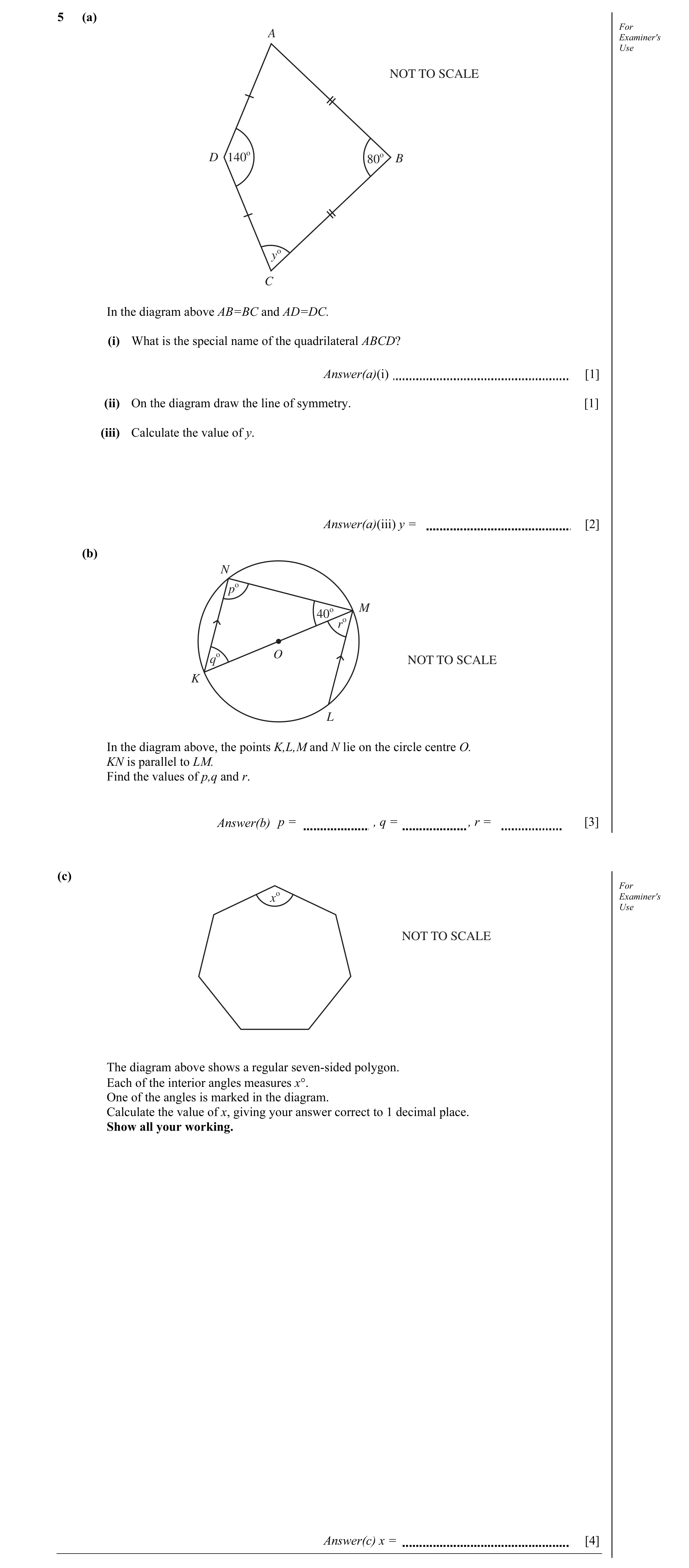
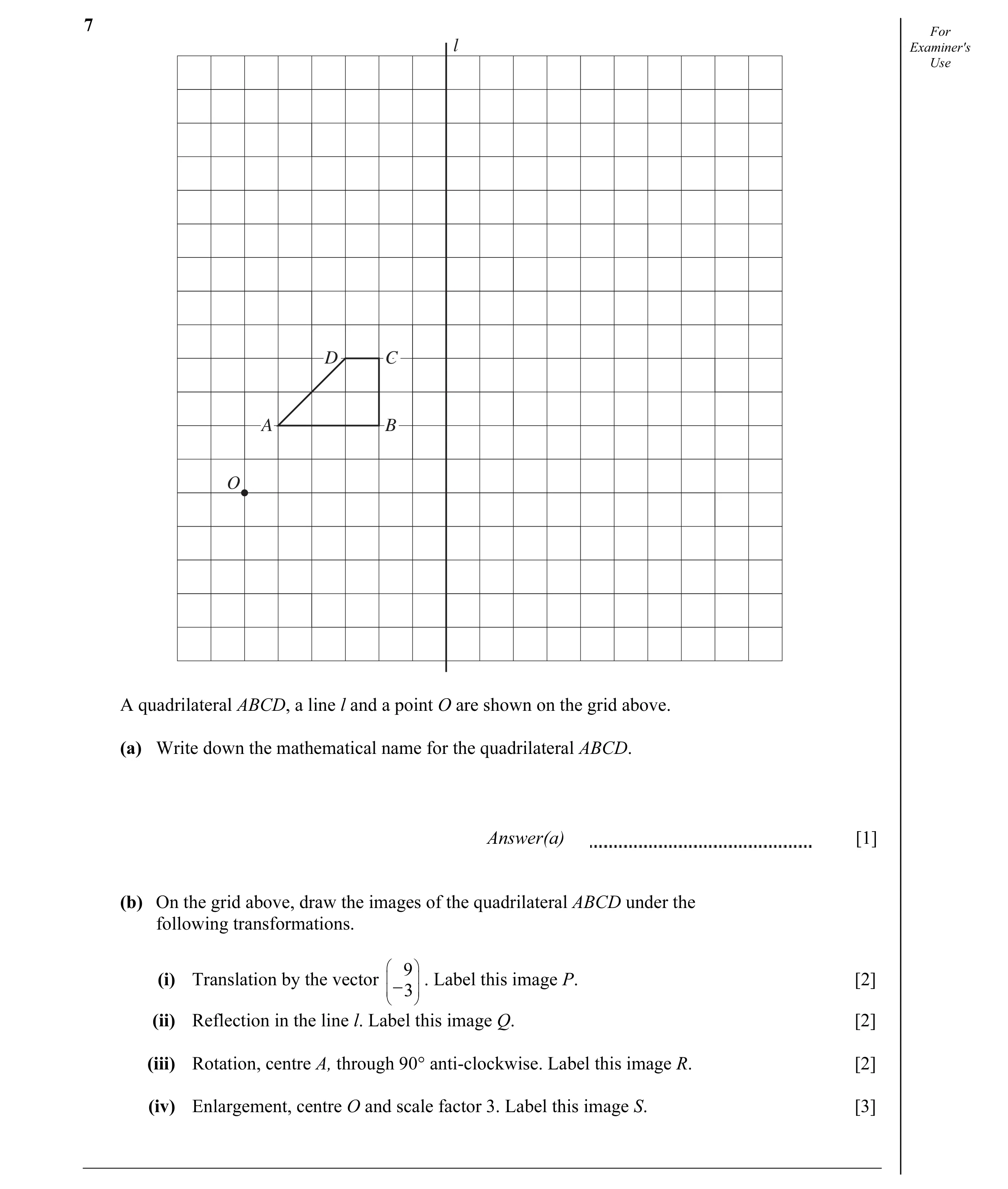 3 / 103
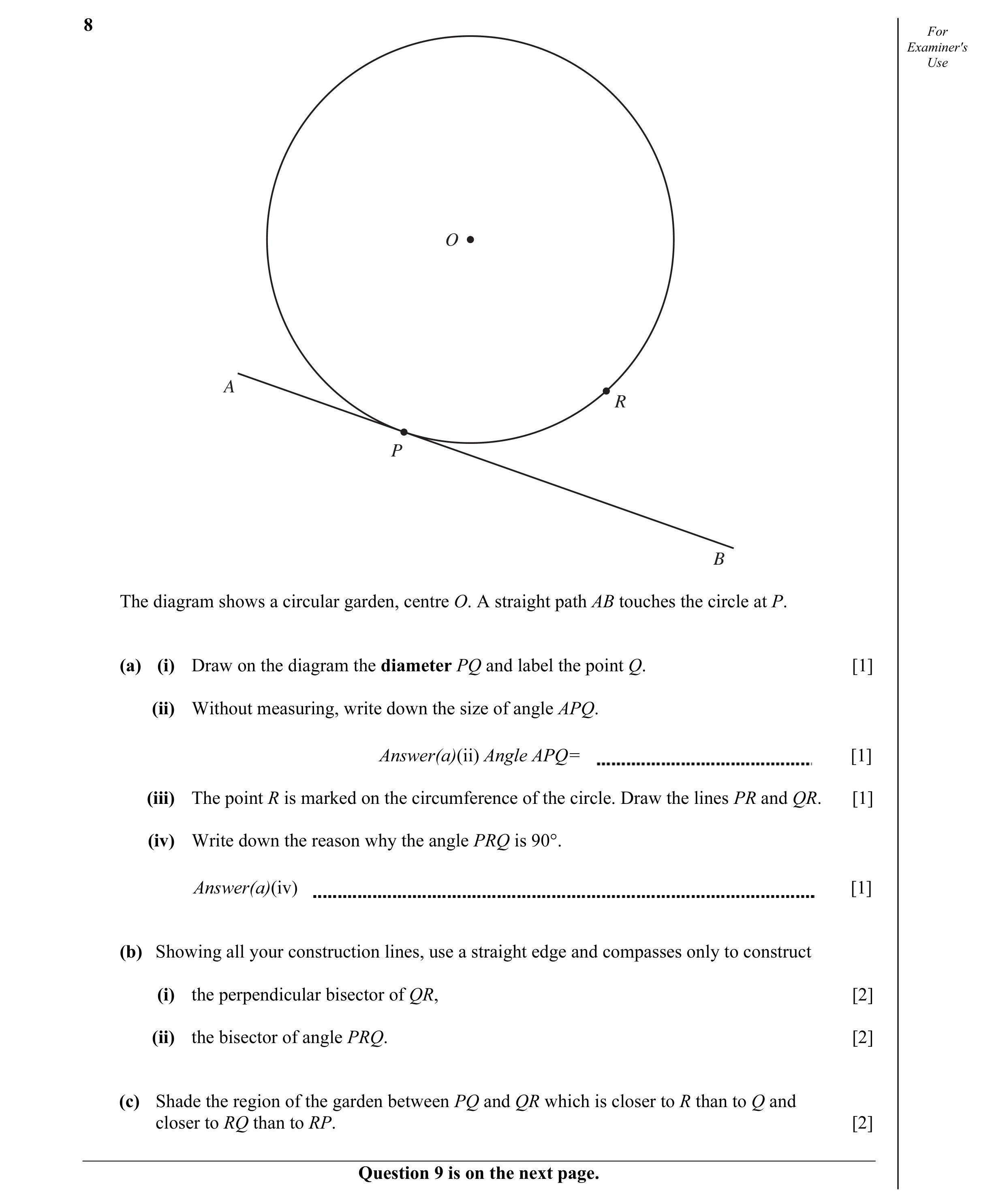 4 / 103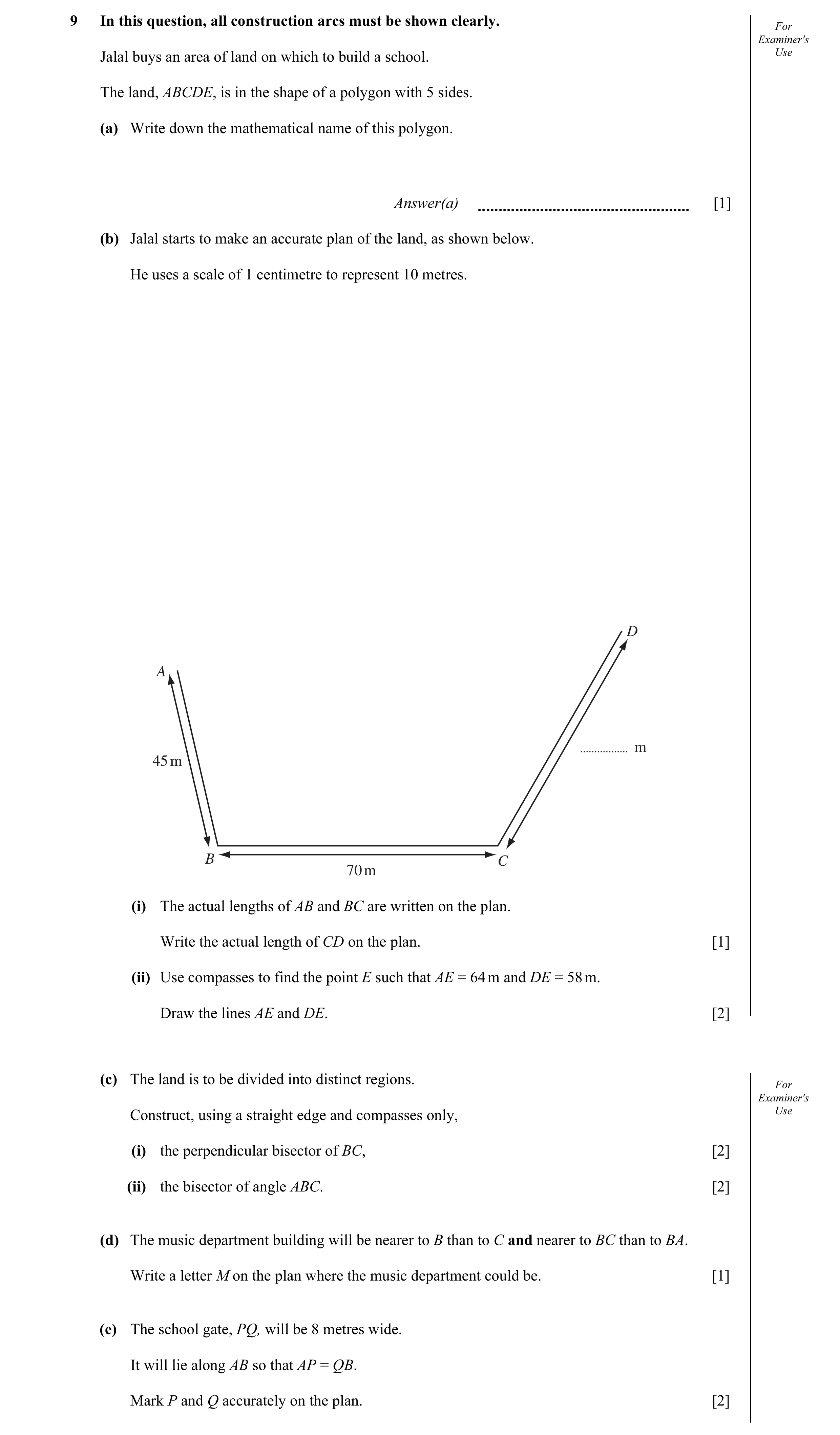
![Question 5: (a) Write down the name of a polygon with 8 sides. For Examiner's Use Answer(a) [1] (b) Find the size of the interior angle of a regular po…](https://img.pastlit.com/crops/348dae6f-a731-4dc3-97a1-00657539a354/q6.webp)
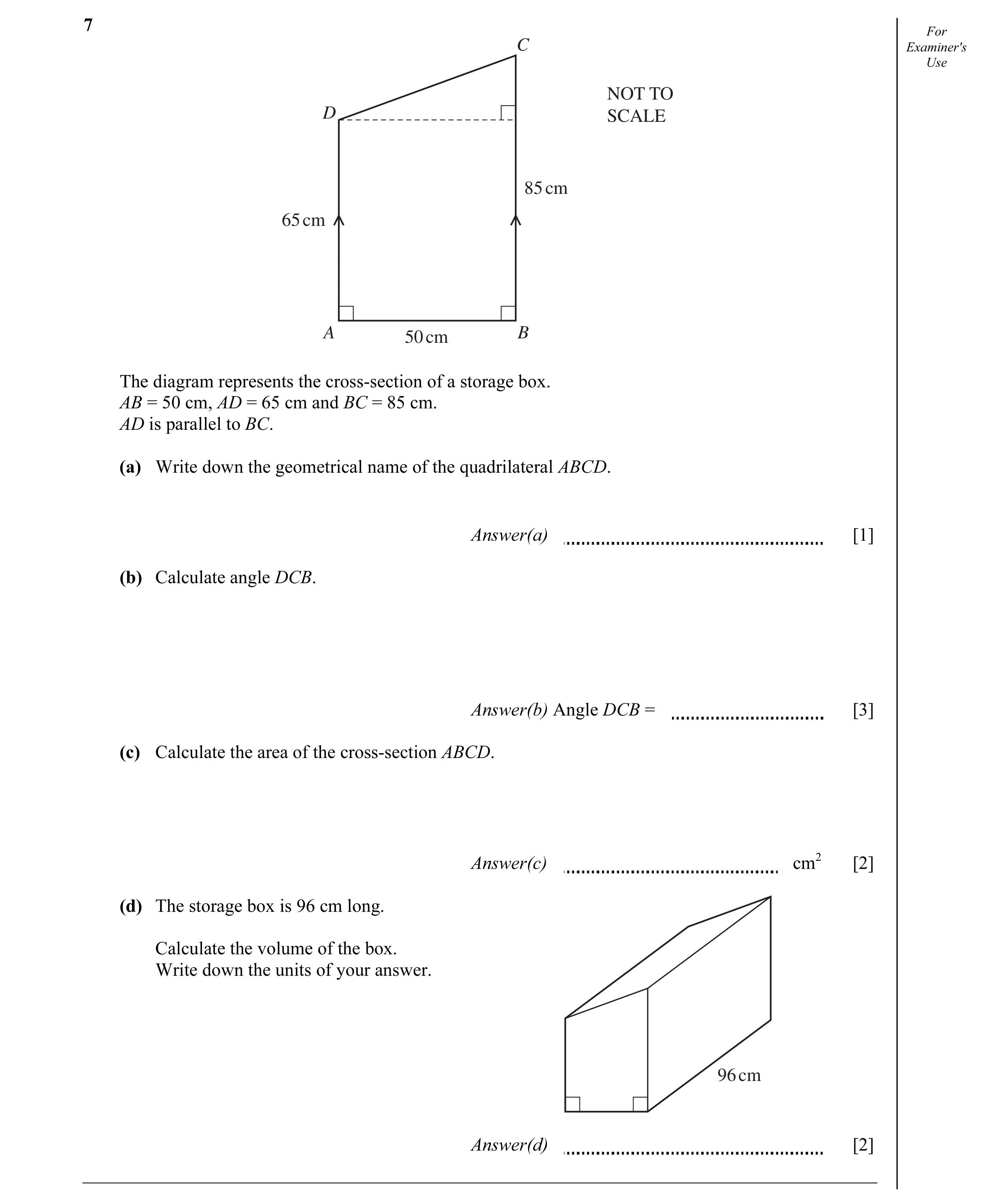 9 / 103
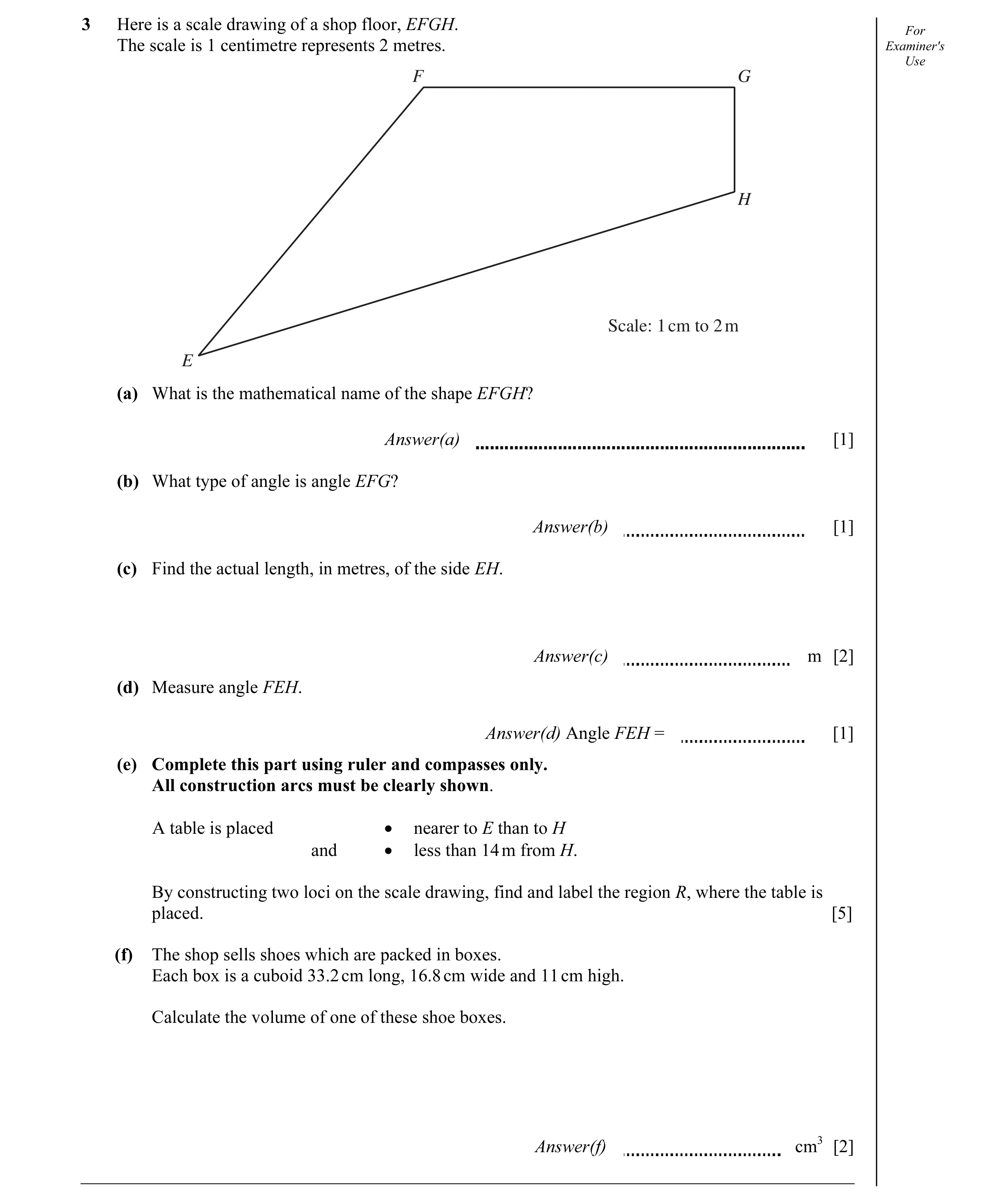 10 / 103
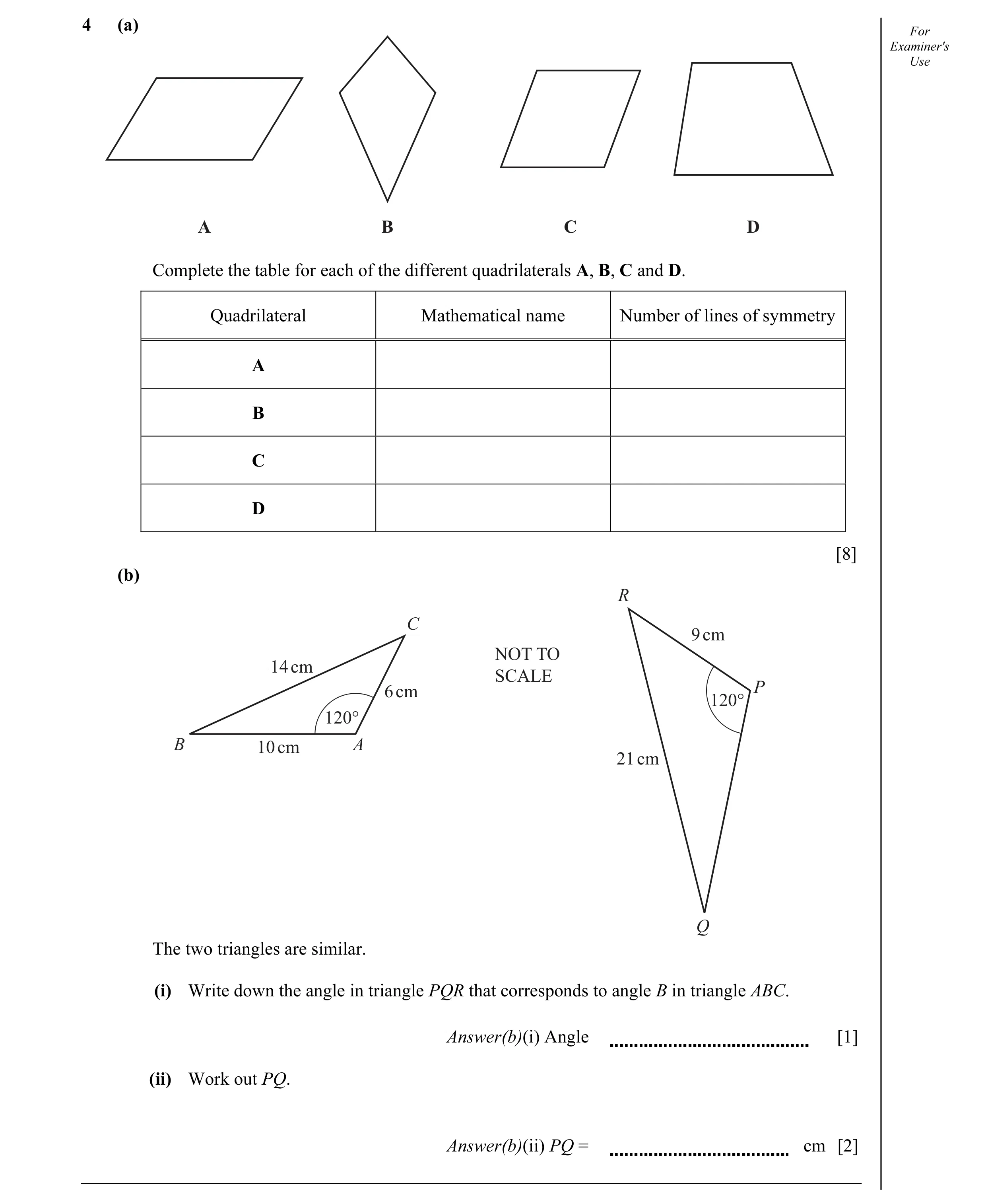 11 / 103
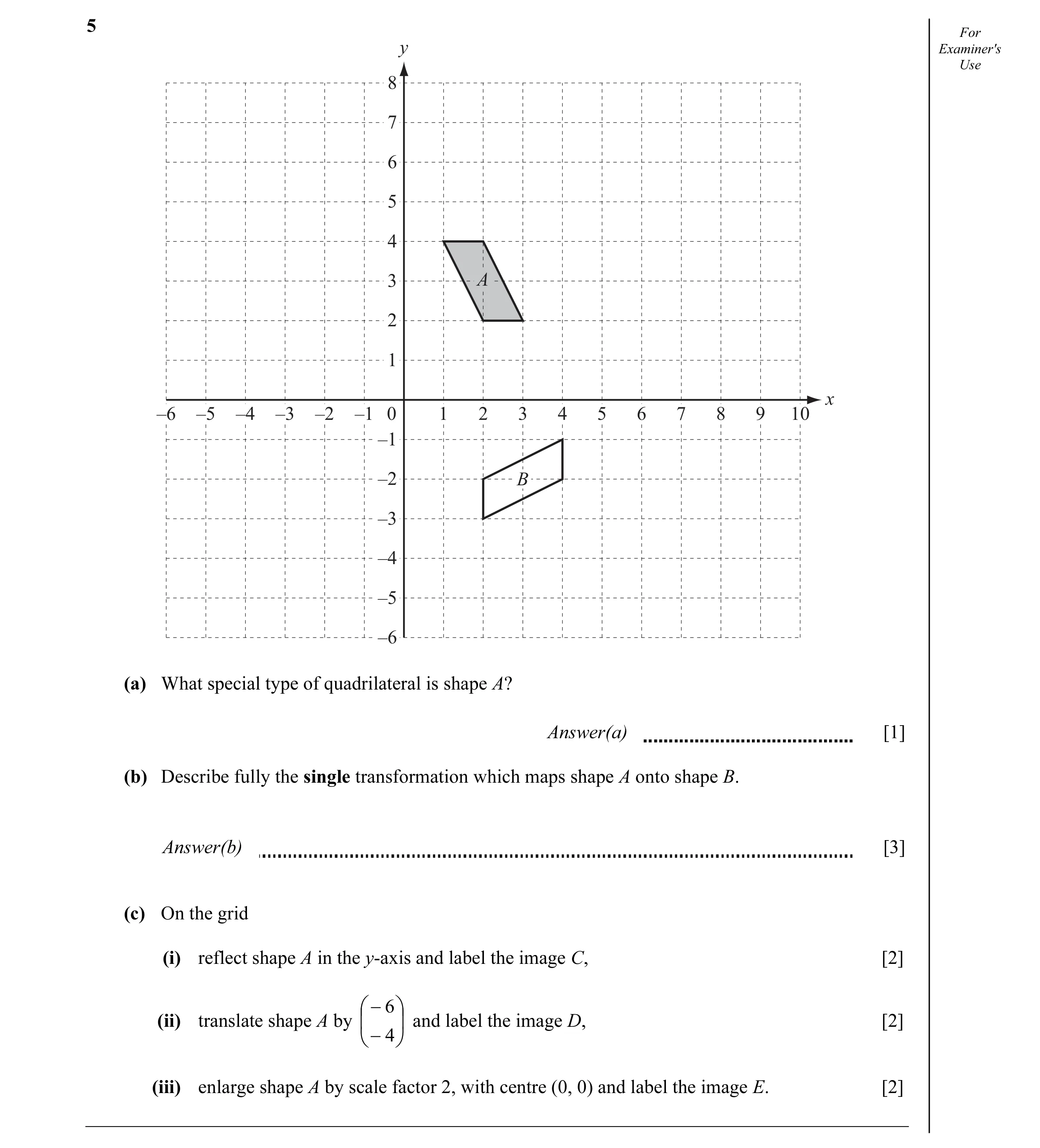 12 / 103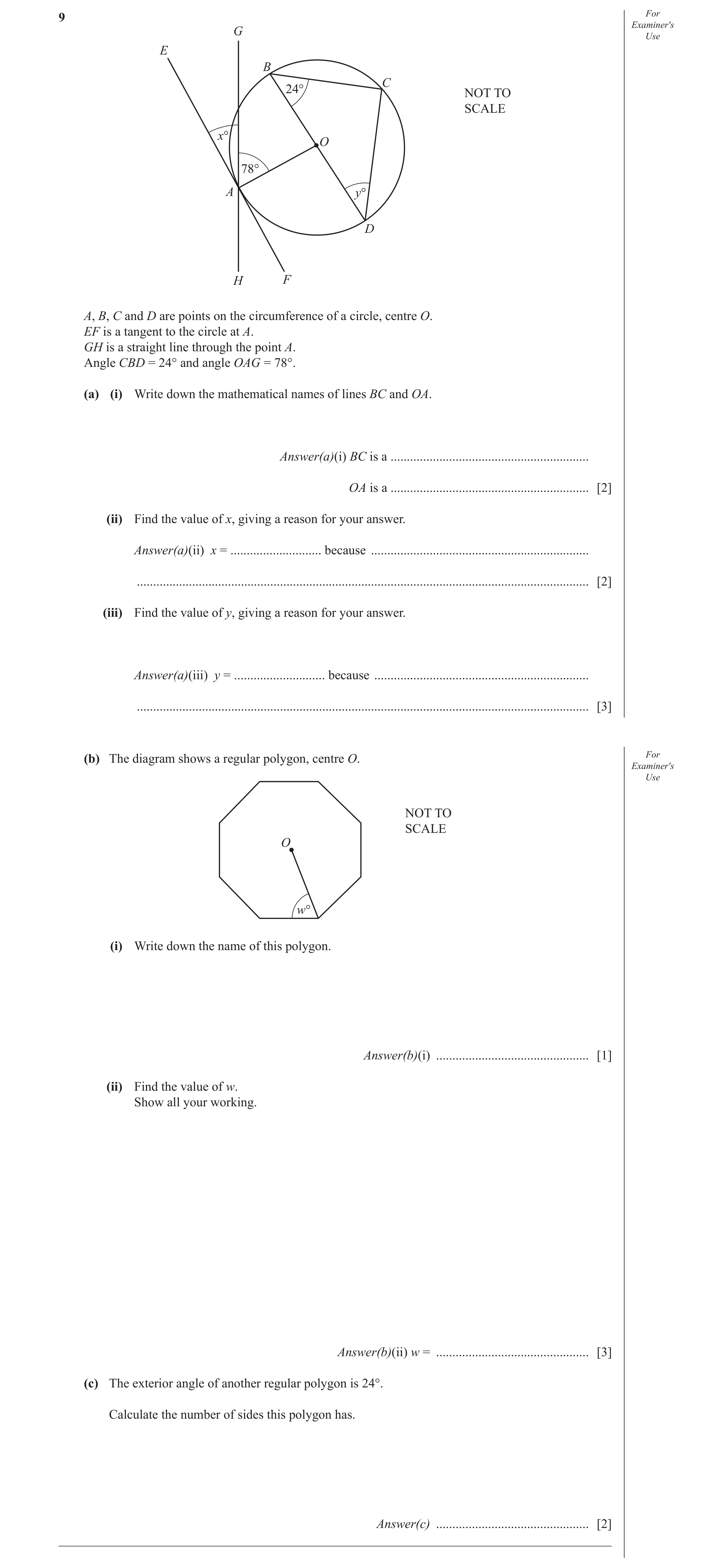
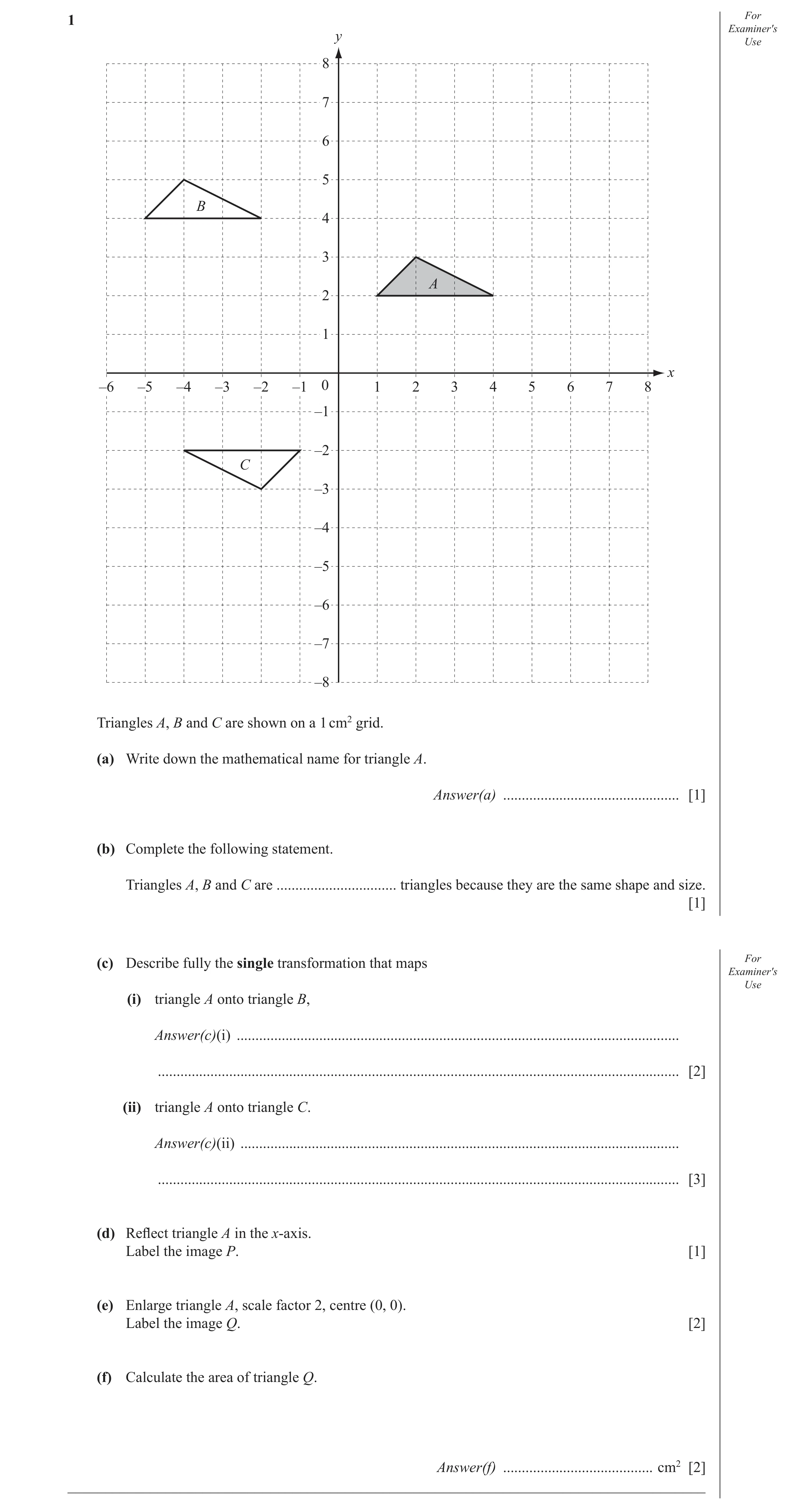
![Question 12: (a) Complete the table. For Examiner′s Use Name of polygon Number of sides Quadrilateral 4 Heptagon 5 [2] (b) B C D NOT TO 23° SCALE 55° A …](https://img.pastlit.com/crops/e4393281-7574-4be6-8250-a43a1837622b/q8.webp)
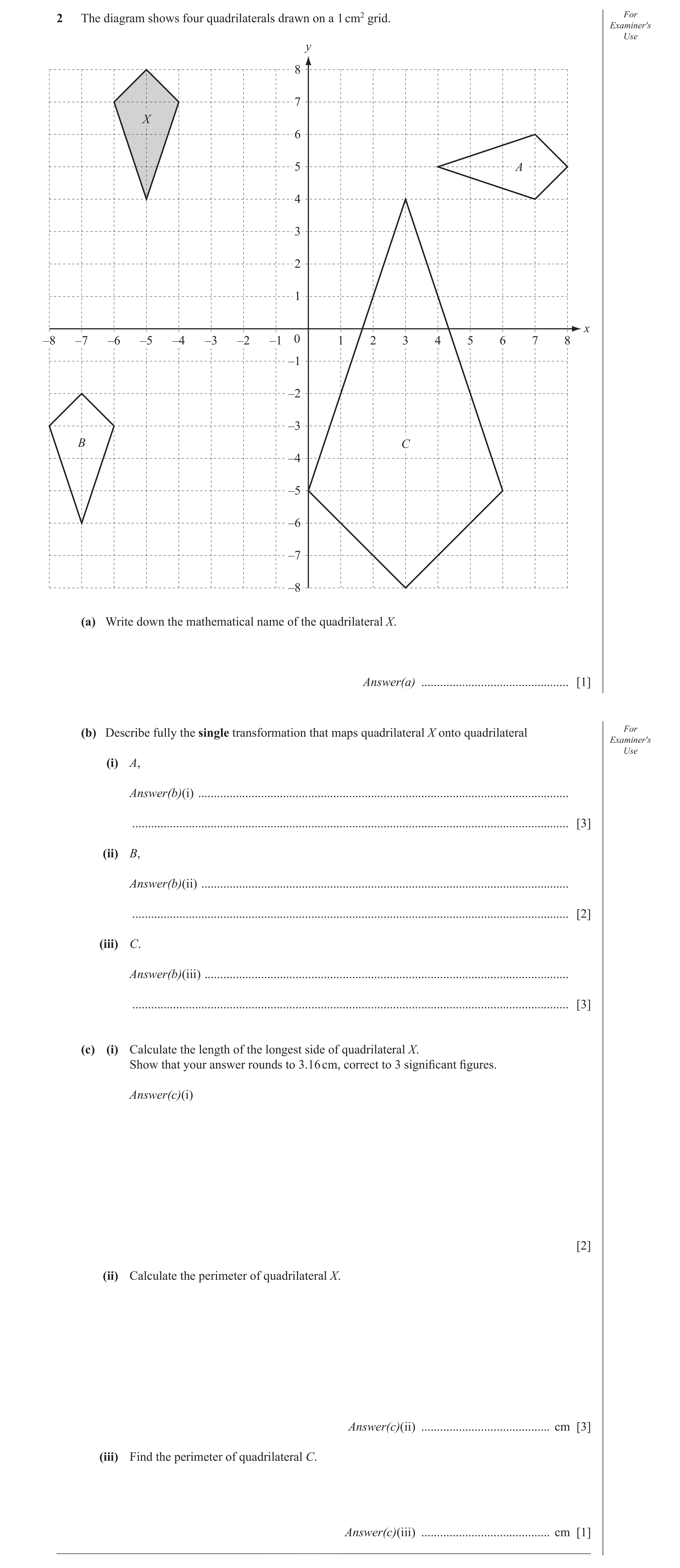
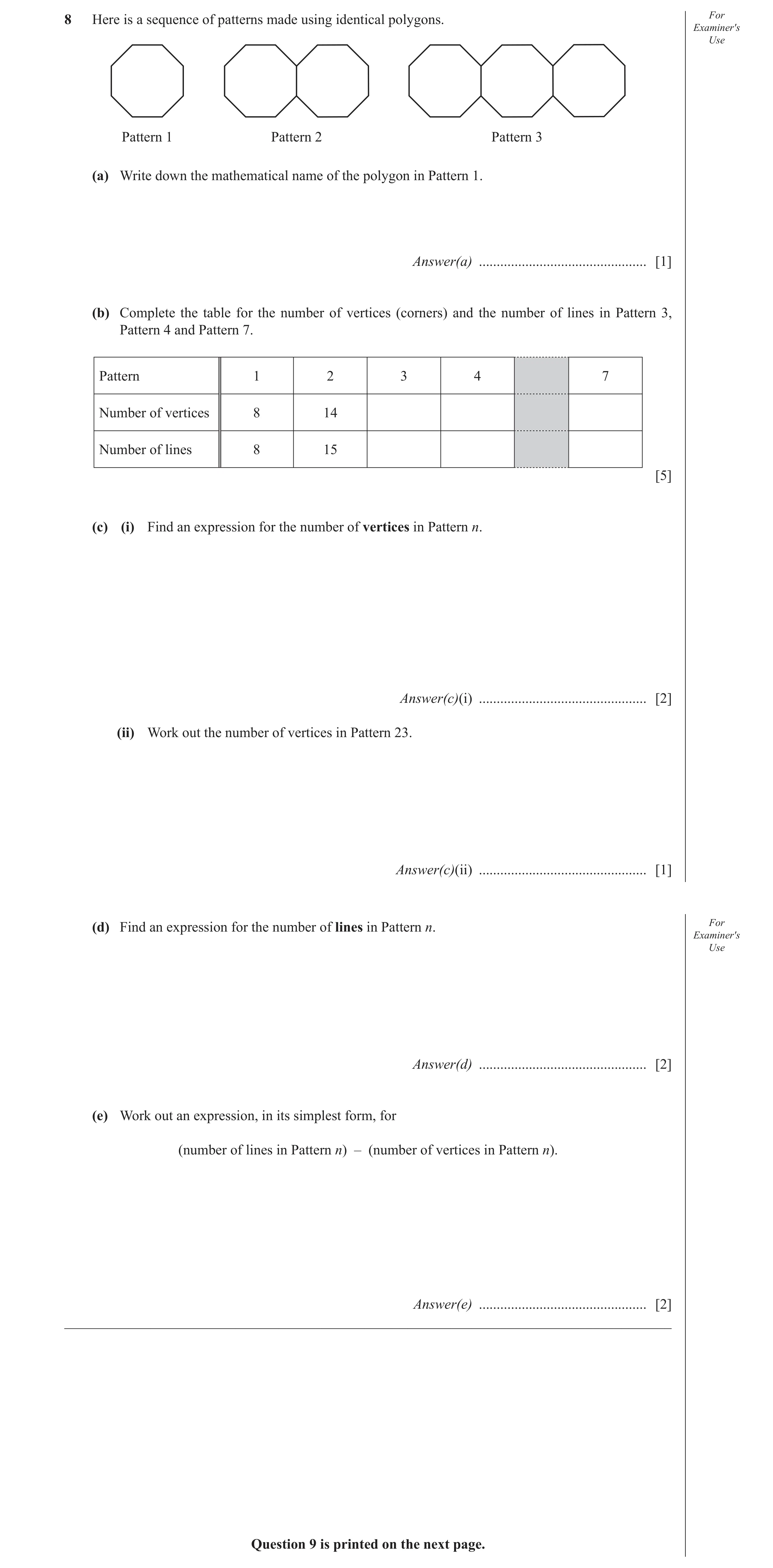
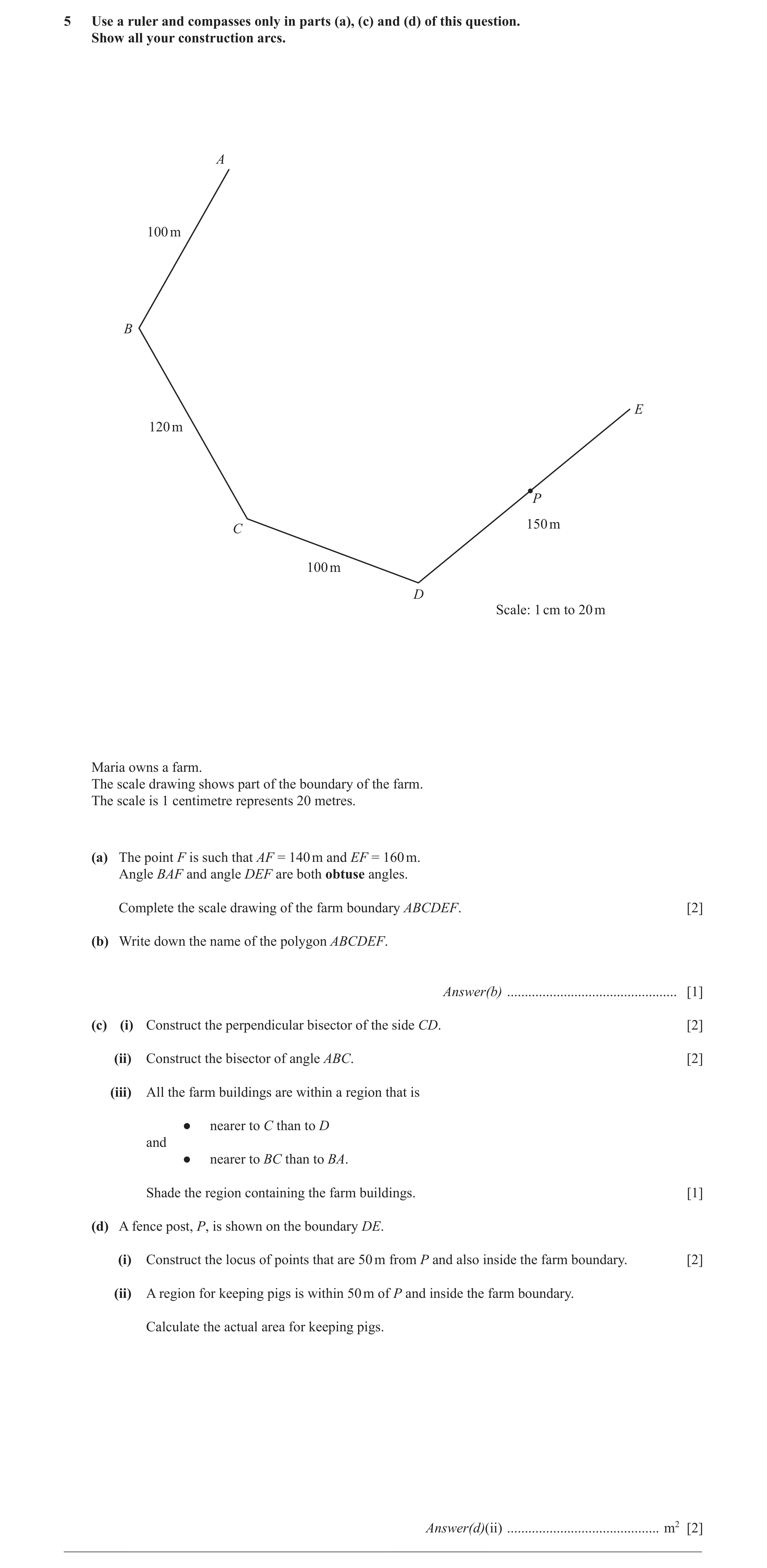
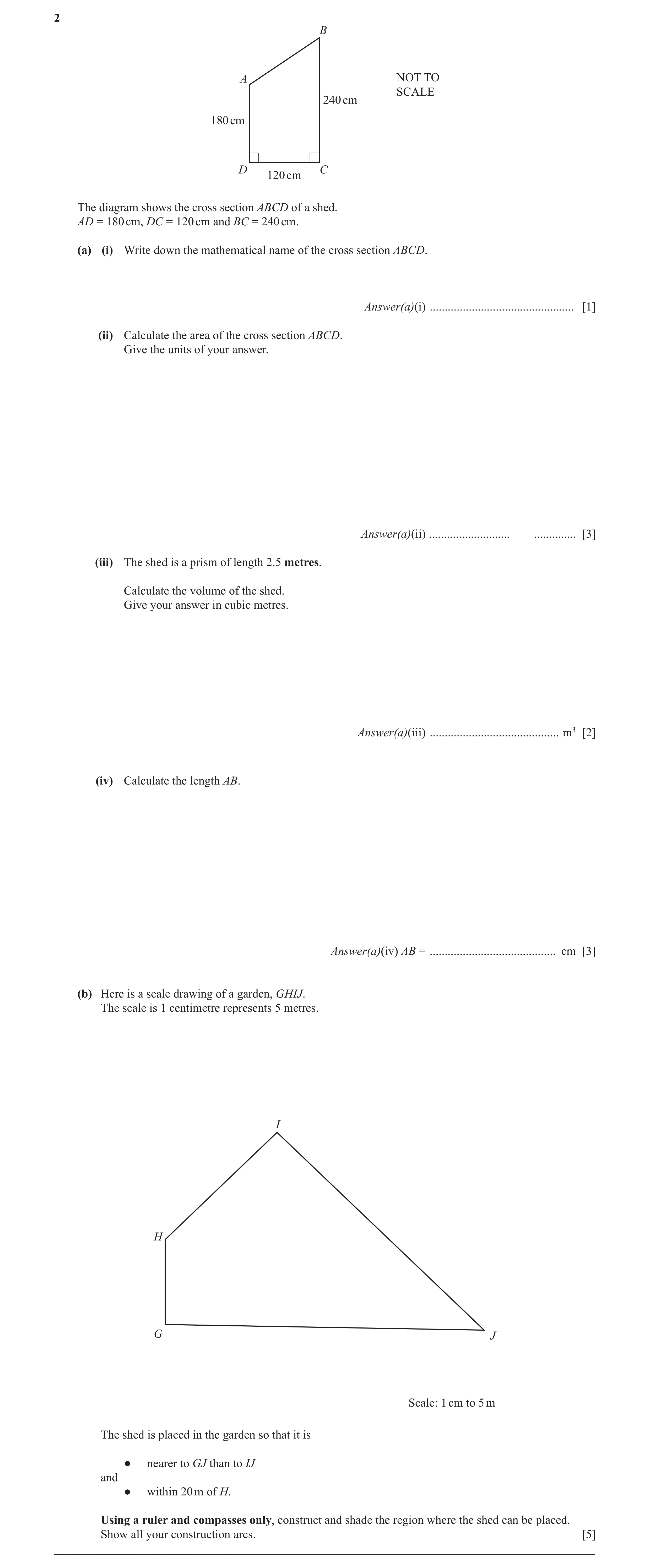
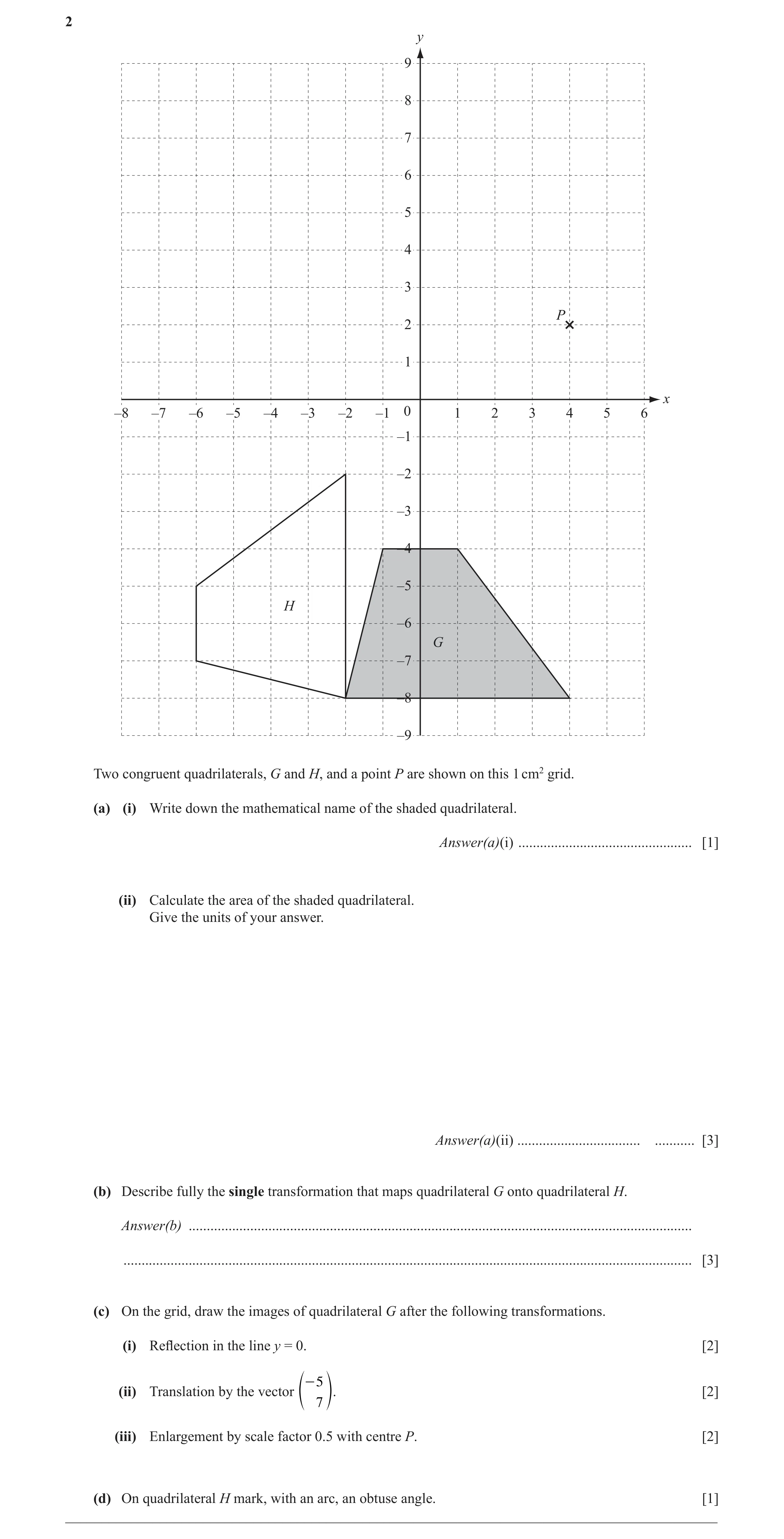
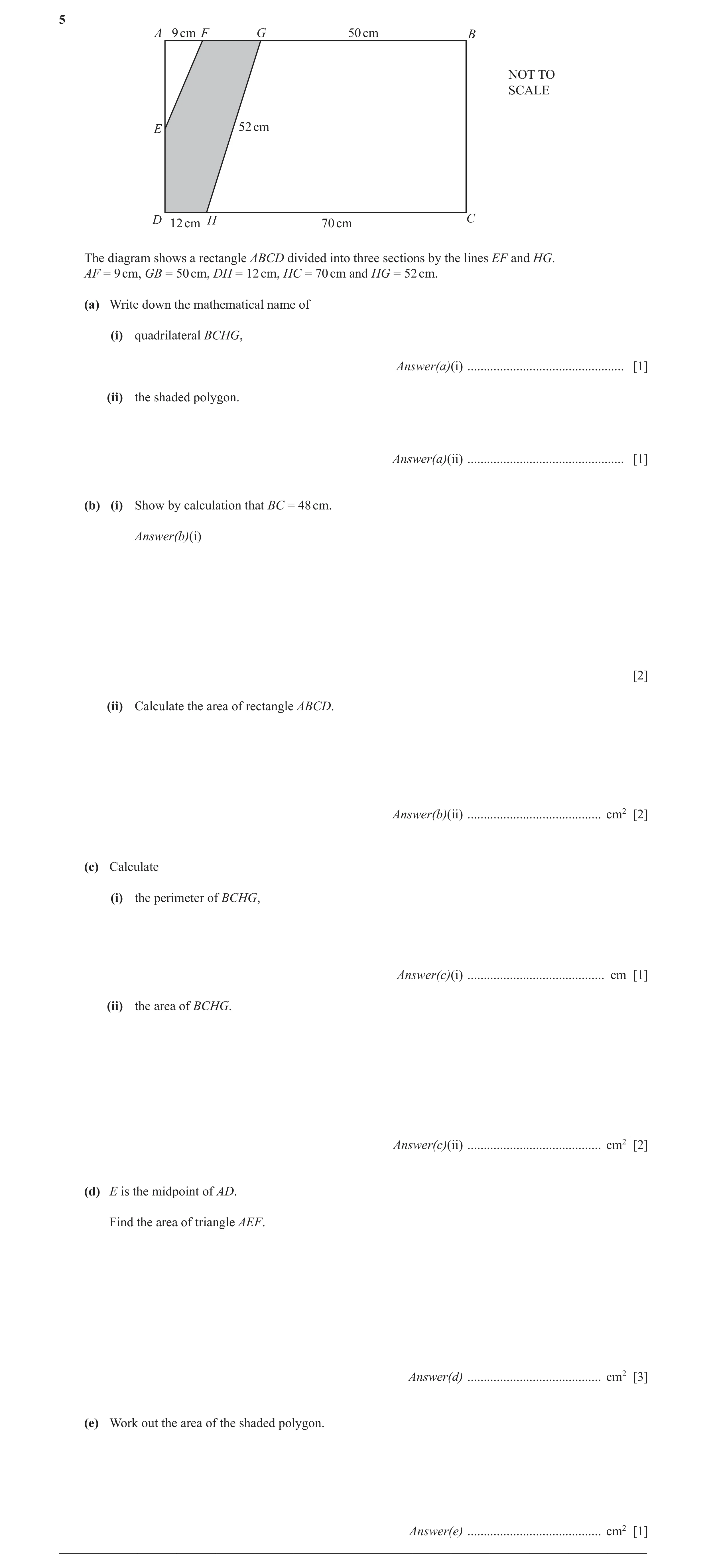
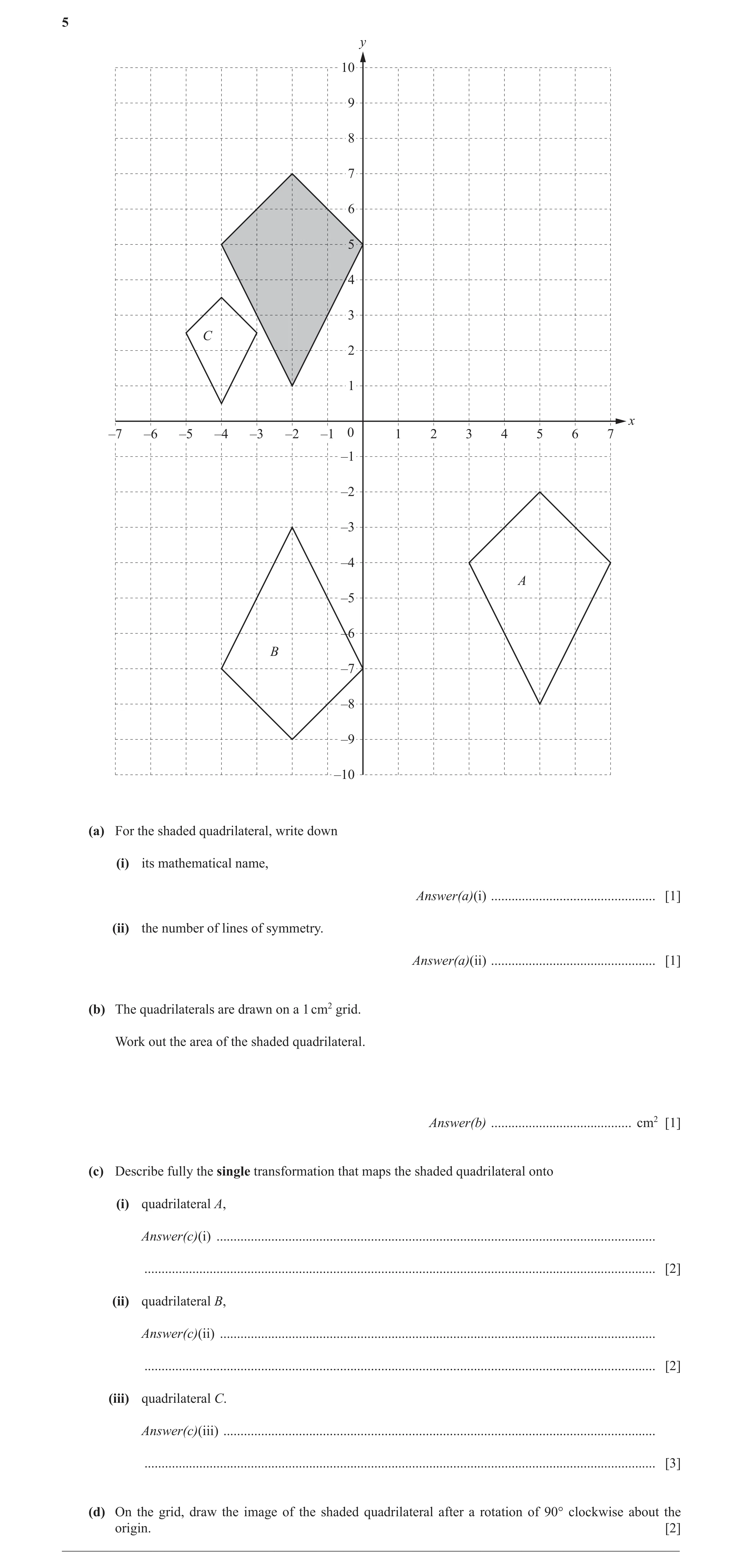
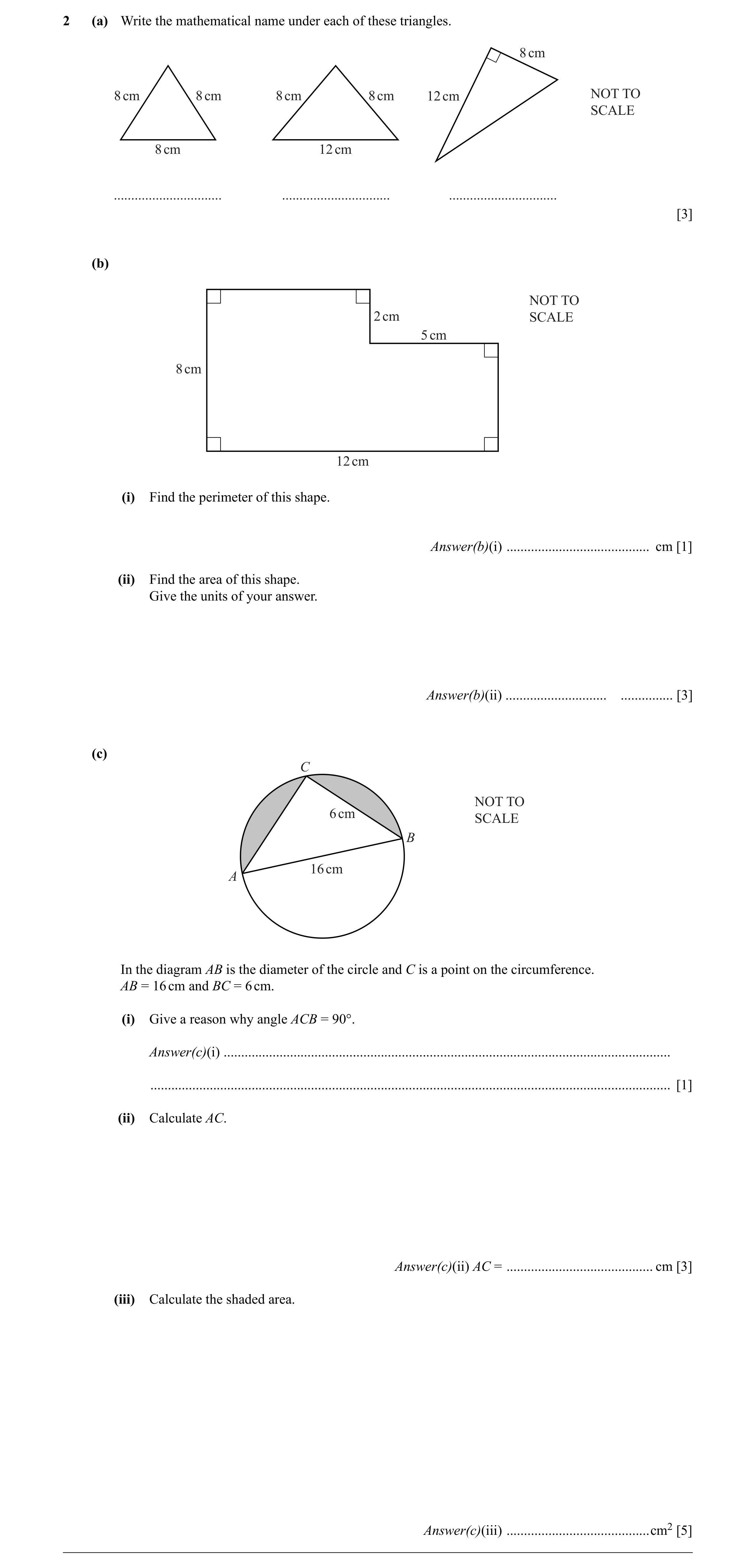
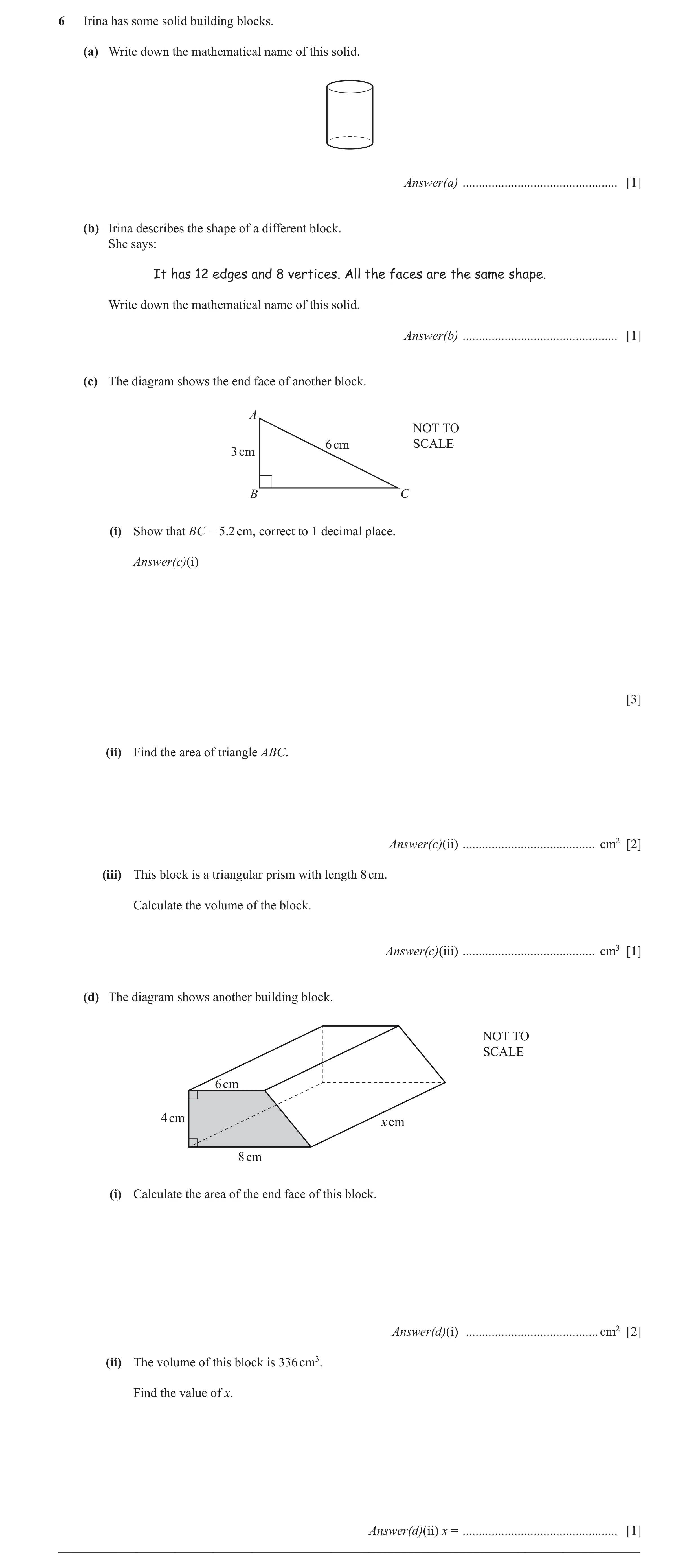
![Question 22: (a) u° NOT TO 132° SCALE Find the value of u. Answer(a) u = .................................................. [1] (b) 120° NOT TO v° SCALE…](https://img.pastlit.com/crops/7ab7d6f5-6845-40a0-8e69-0026b3364f47/q4.webp)
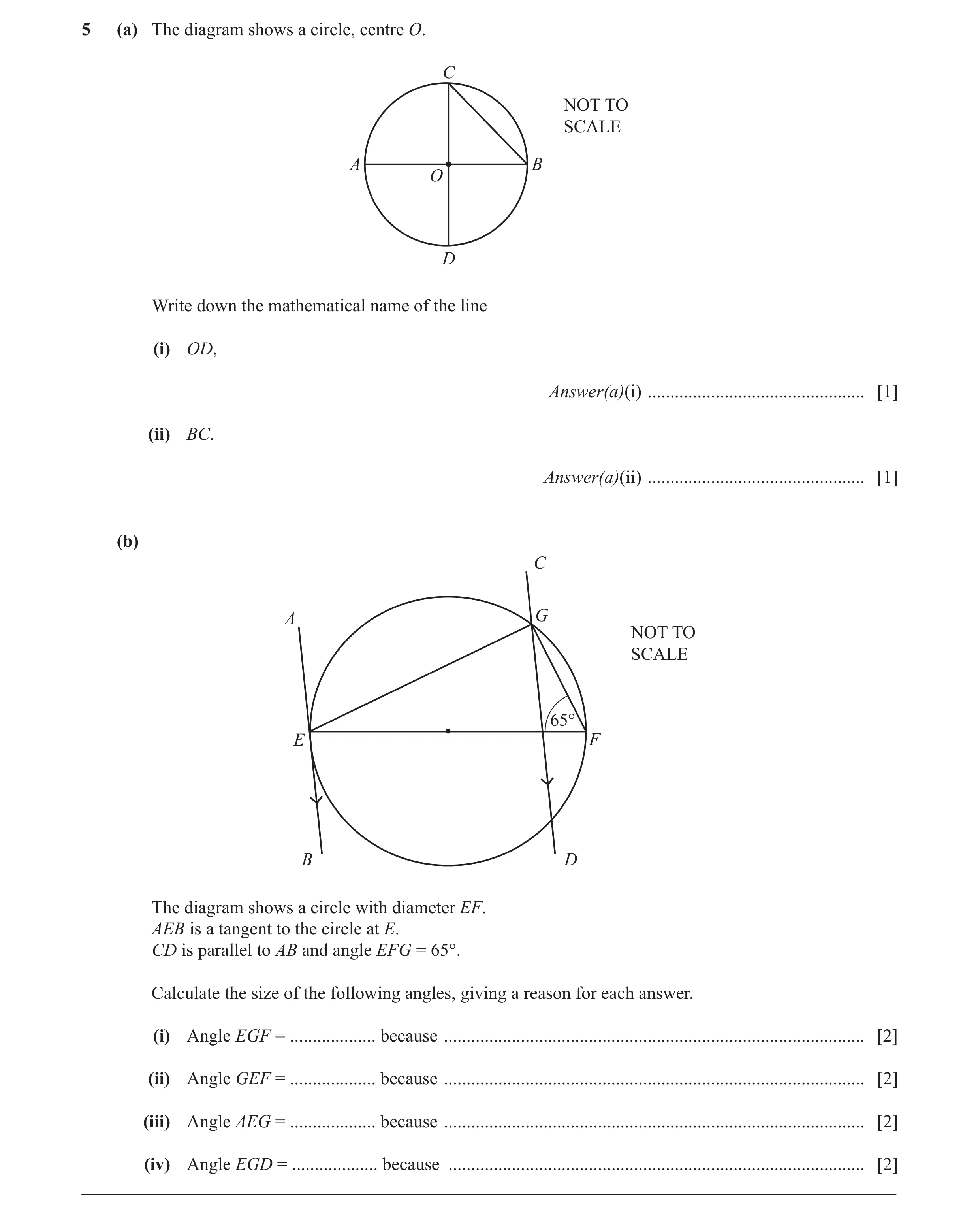 36 / 103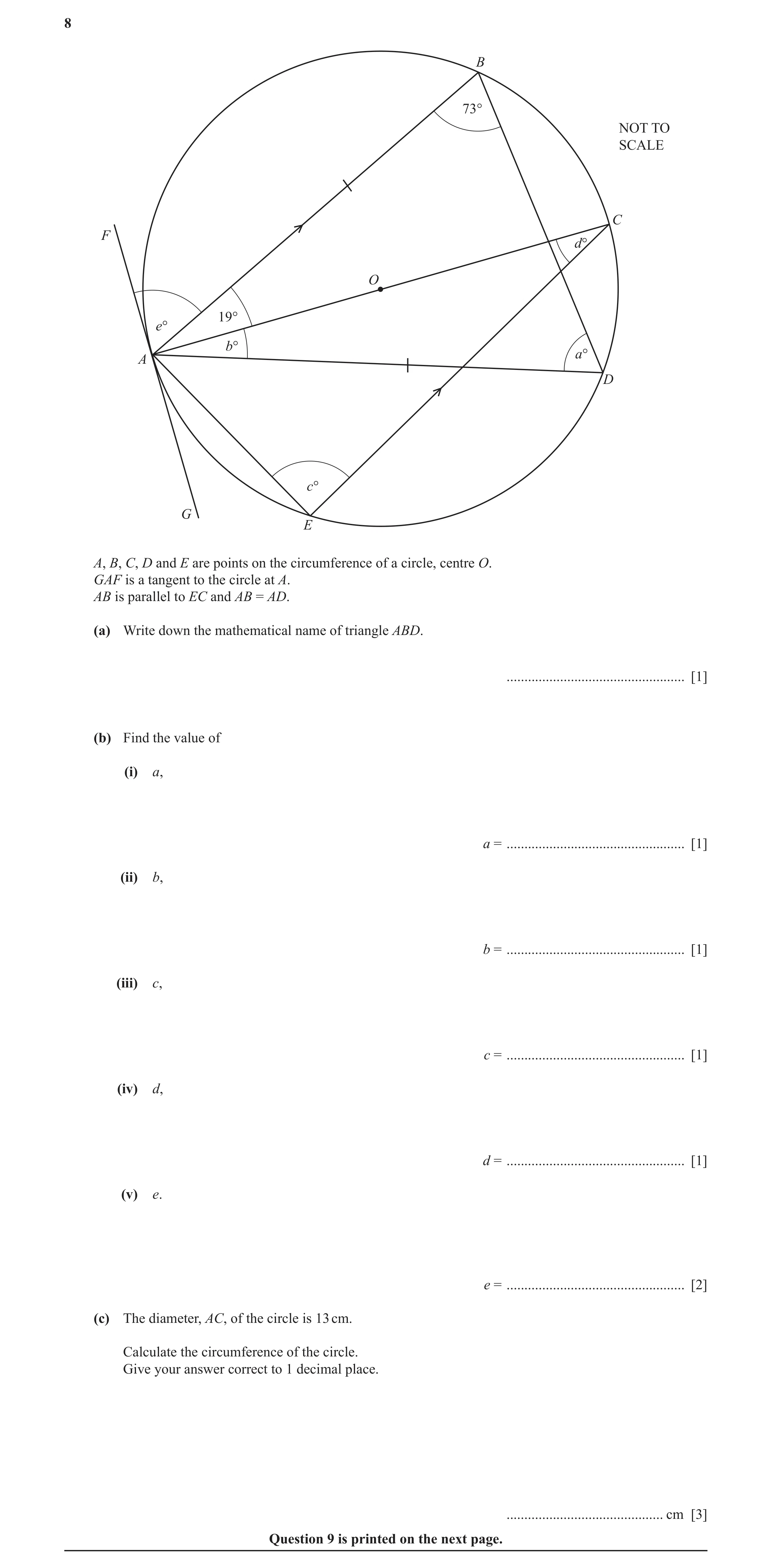
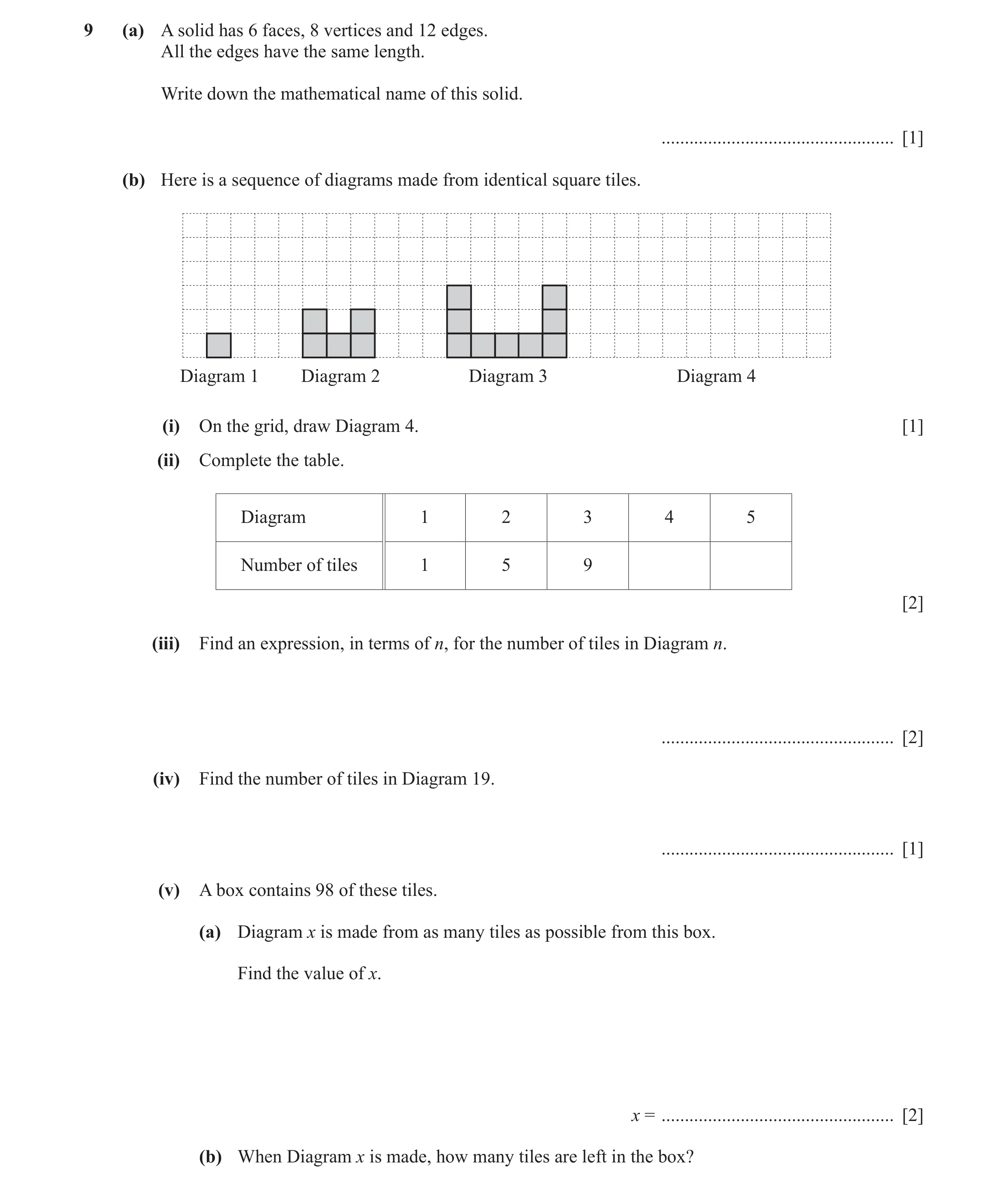 39 / 103
![Question 26: (a) A cuboid measures 6 cm by 3 cm by 2 cm. (i) On this 1 cm2 grid, complete the net of the cuboid. [3] (ii) Calculate the volume of the cu…](https://img.pastlit.com/crops/b1832f5f-04f0-4430-b742-d8ad78944206/q8.webp)
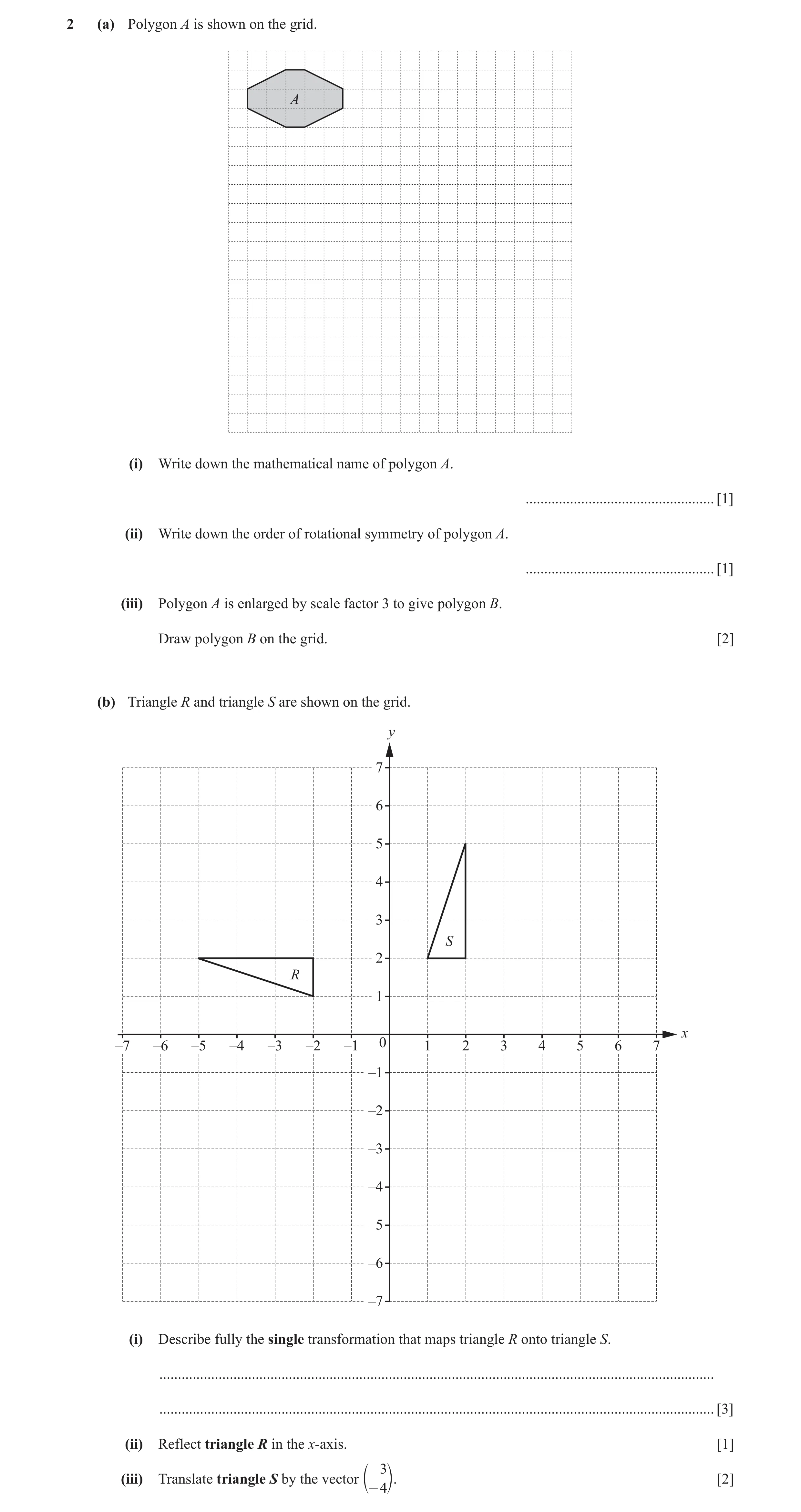
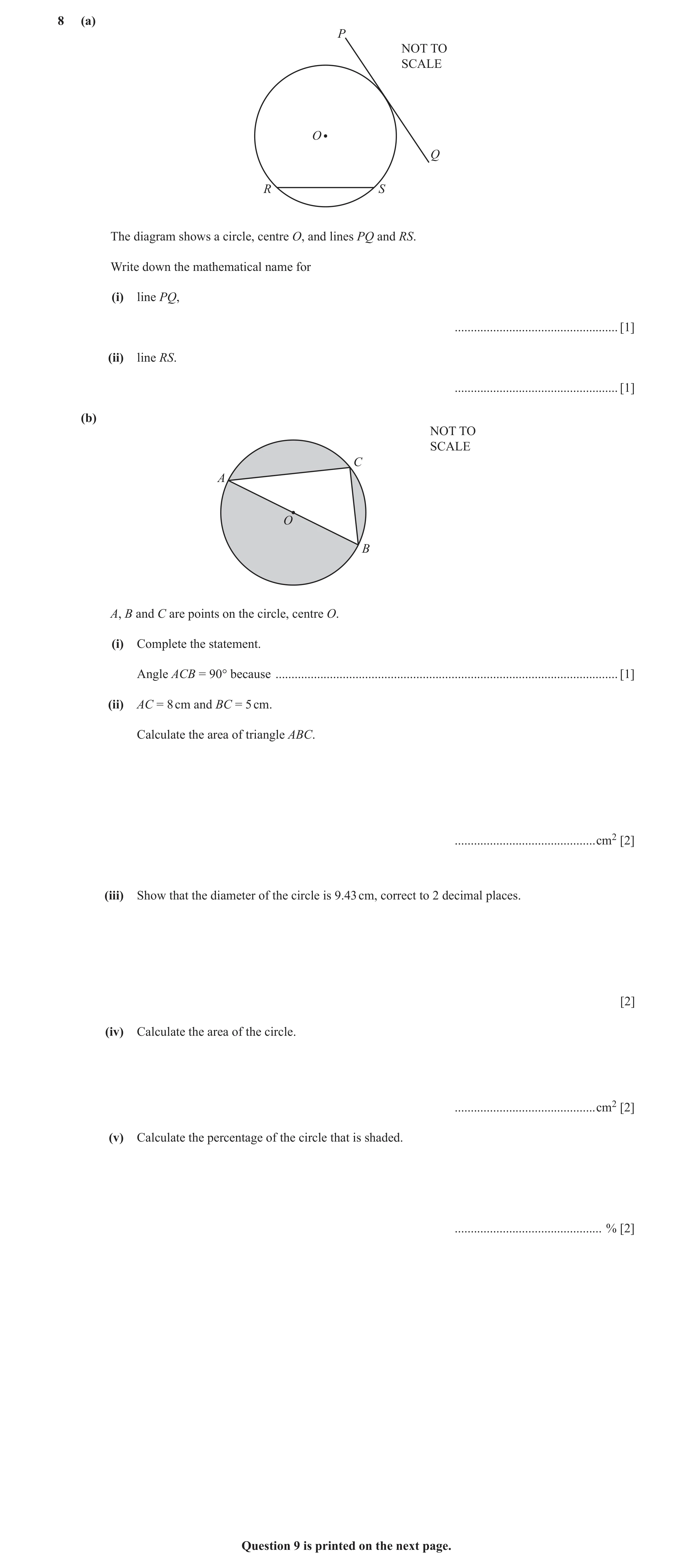
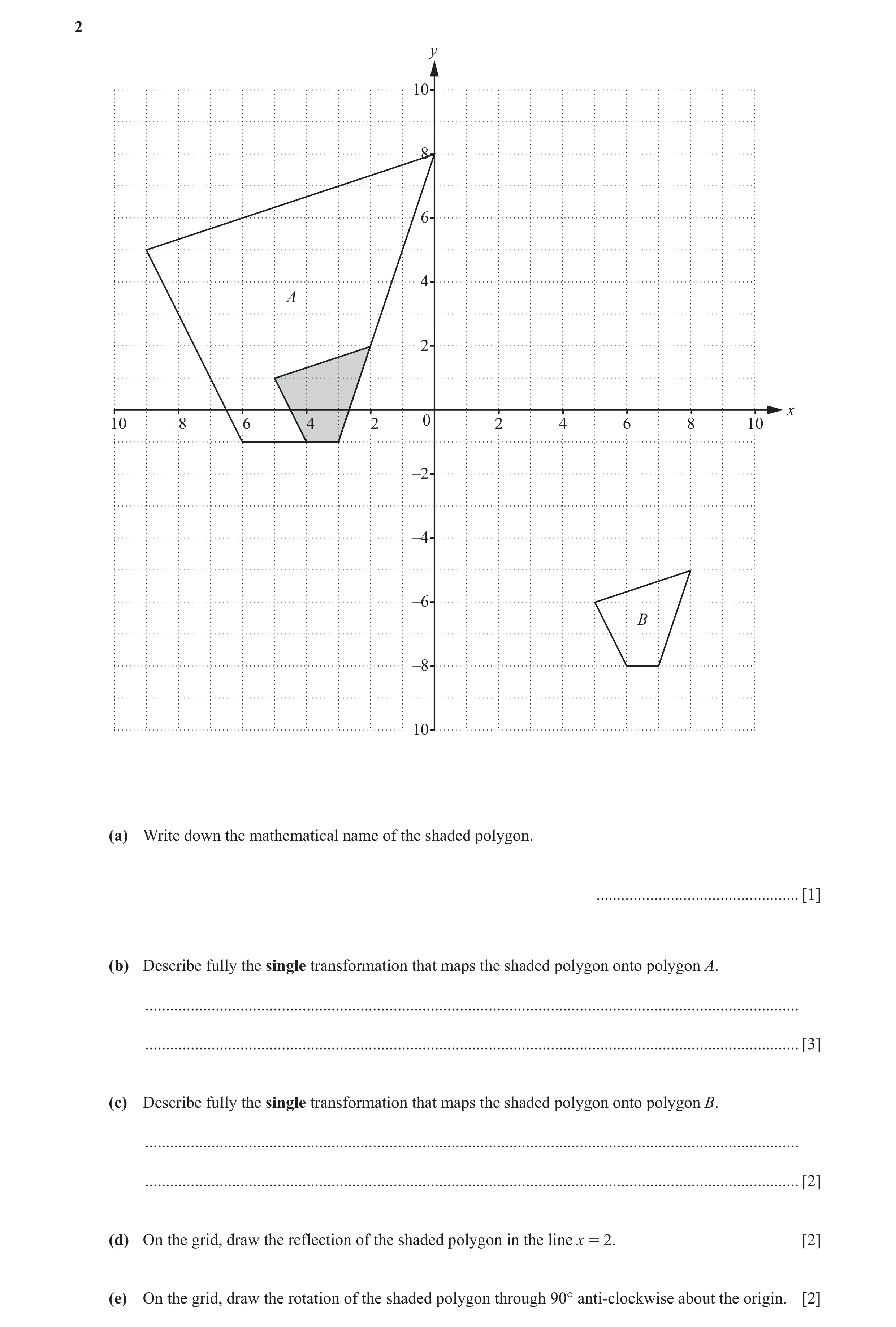
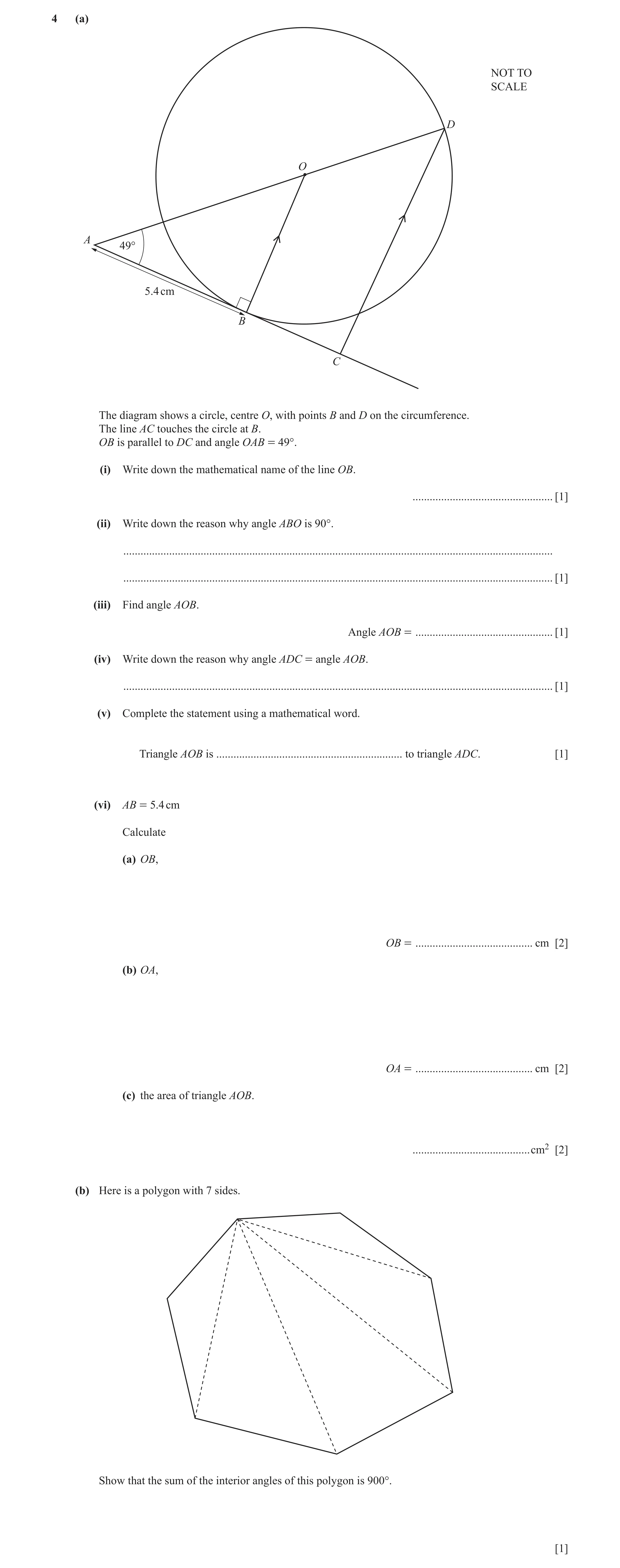
![Question 31: (a) Measure the reflex angle at A. A .................................................. [1] (b) b° NOT TO SCALE 68° Find the value of b. Gi…](https://img.pastlit.com/crops/09acb117-9e4d-43a9-8268-6d1408ce72cd/q4.webp)
![Question 32: (a) Write down the mathematical name for this polygon. (i) .................................................. [1] (ii) Write down the mathe…](https://img.pastlit.com/crops/af508e64-f88e-4bd2-ad49-d439108a3563/q7.webp)
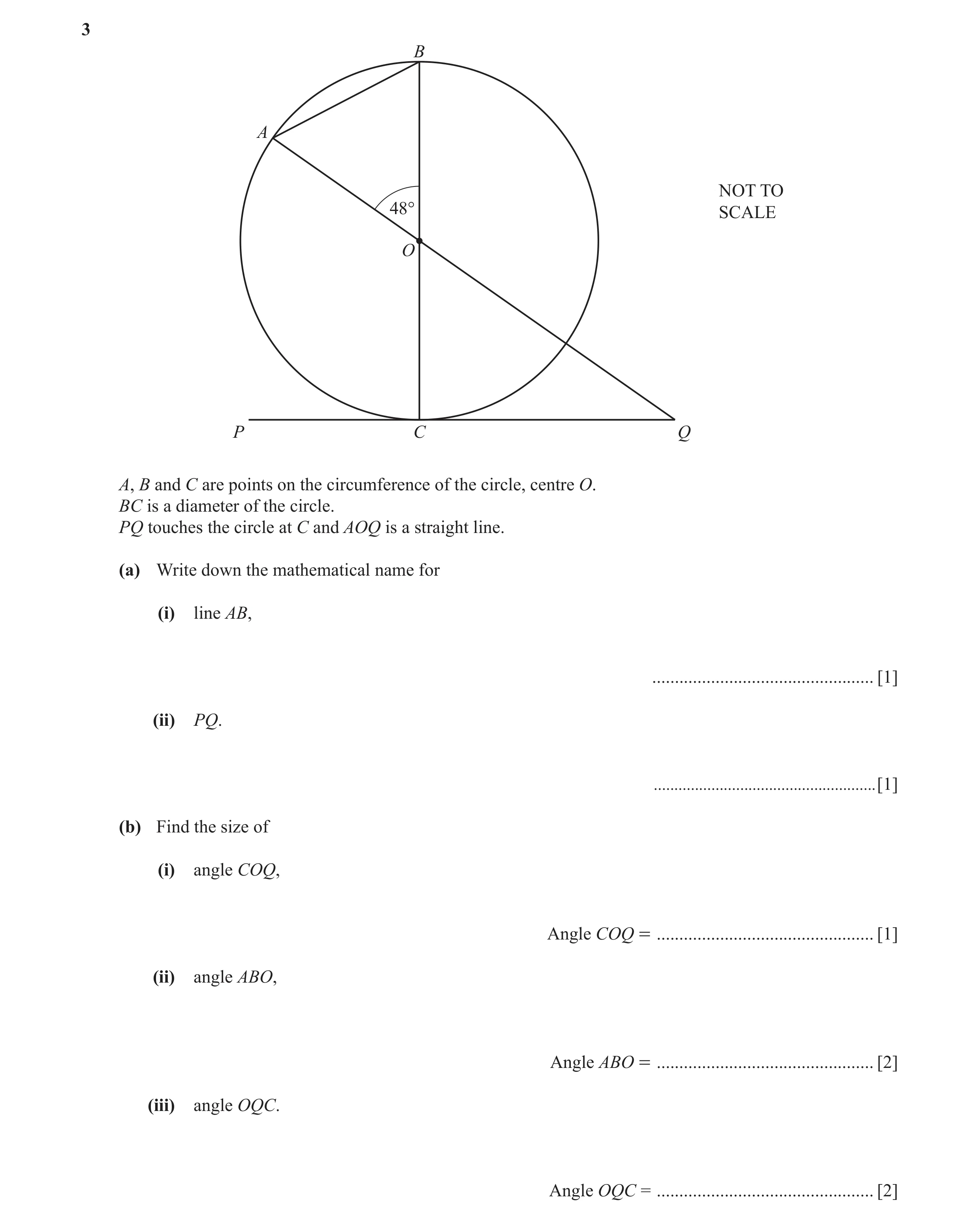 53 / 103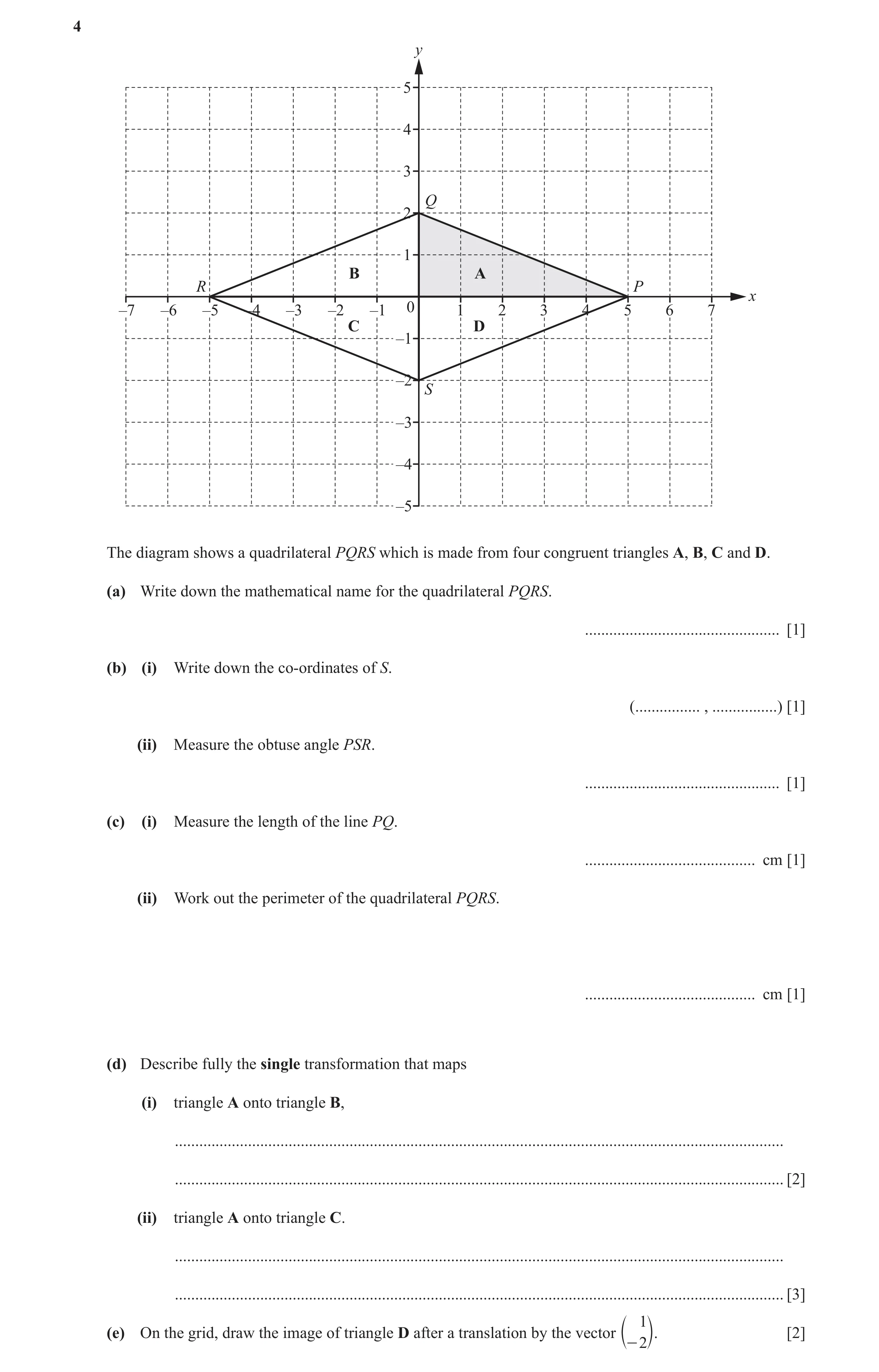
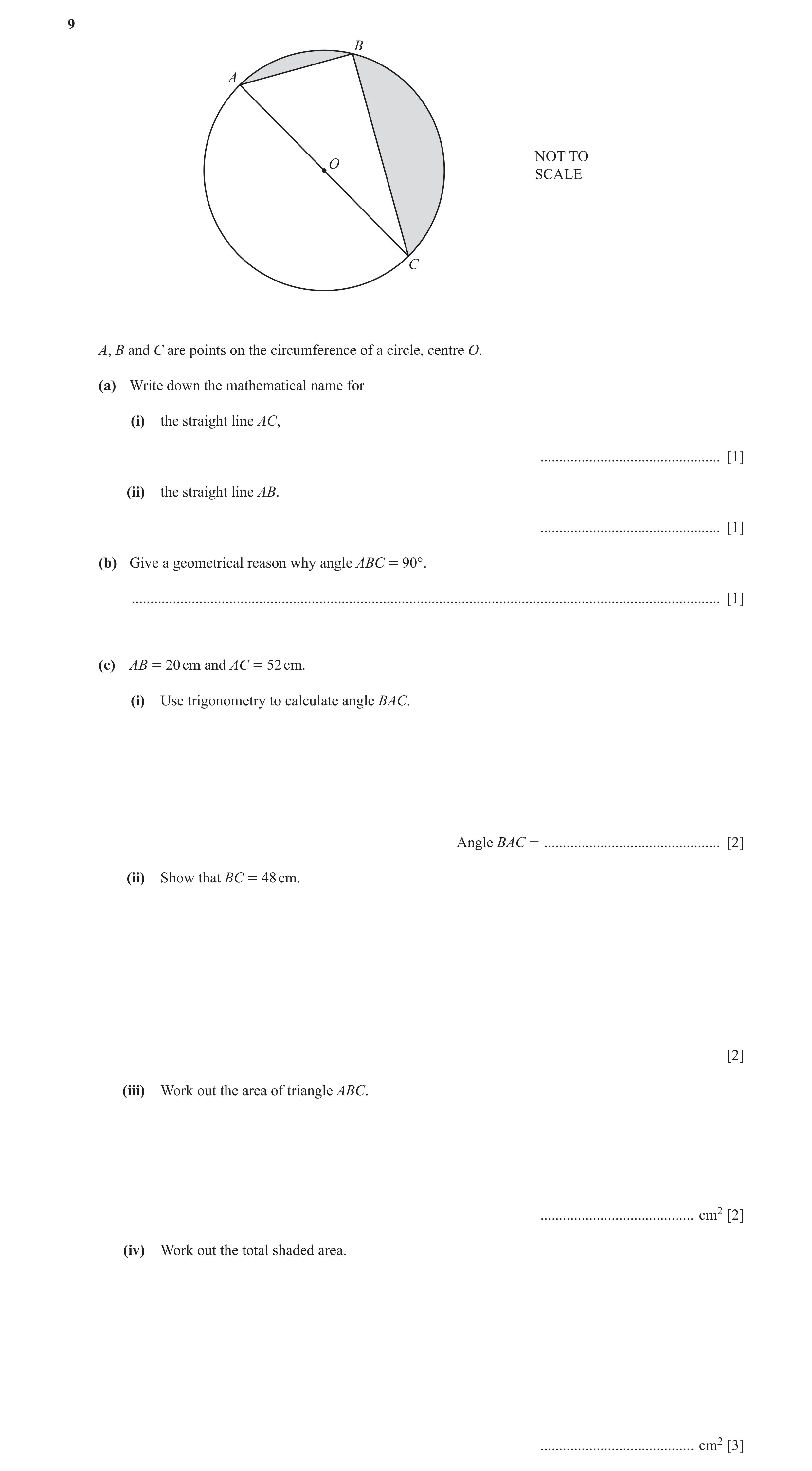
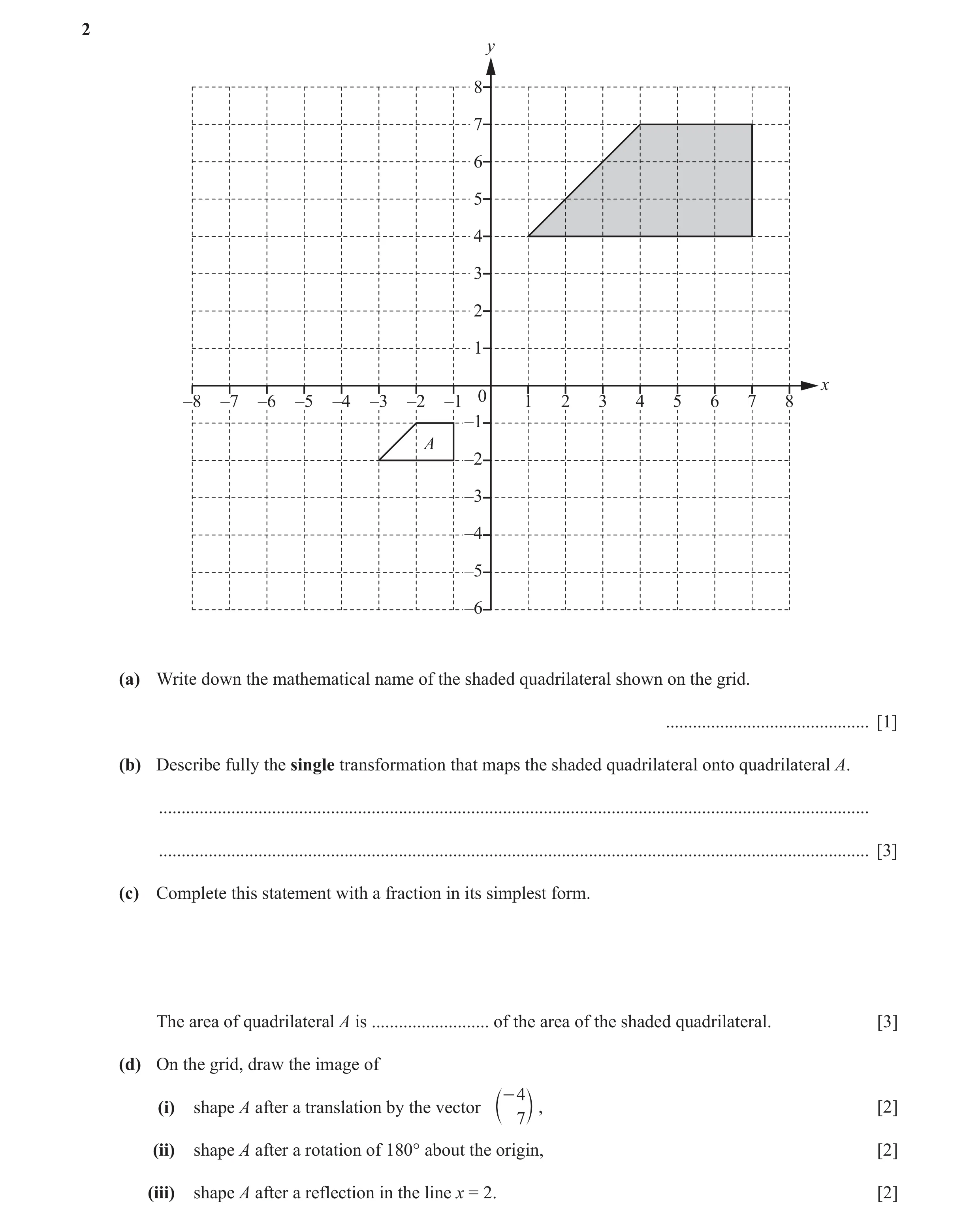 57 / 103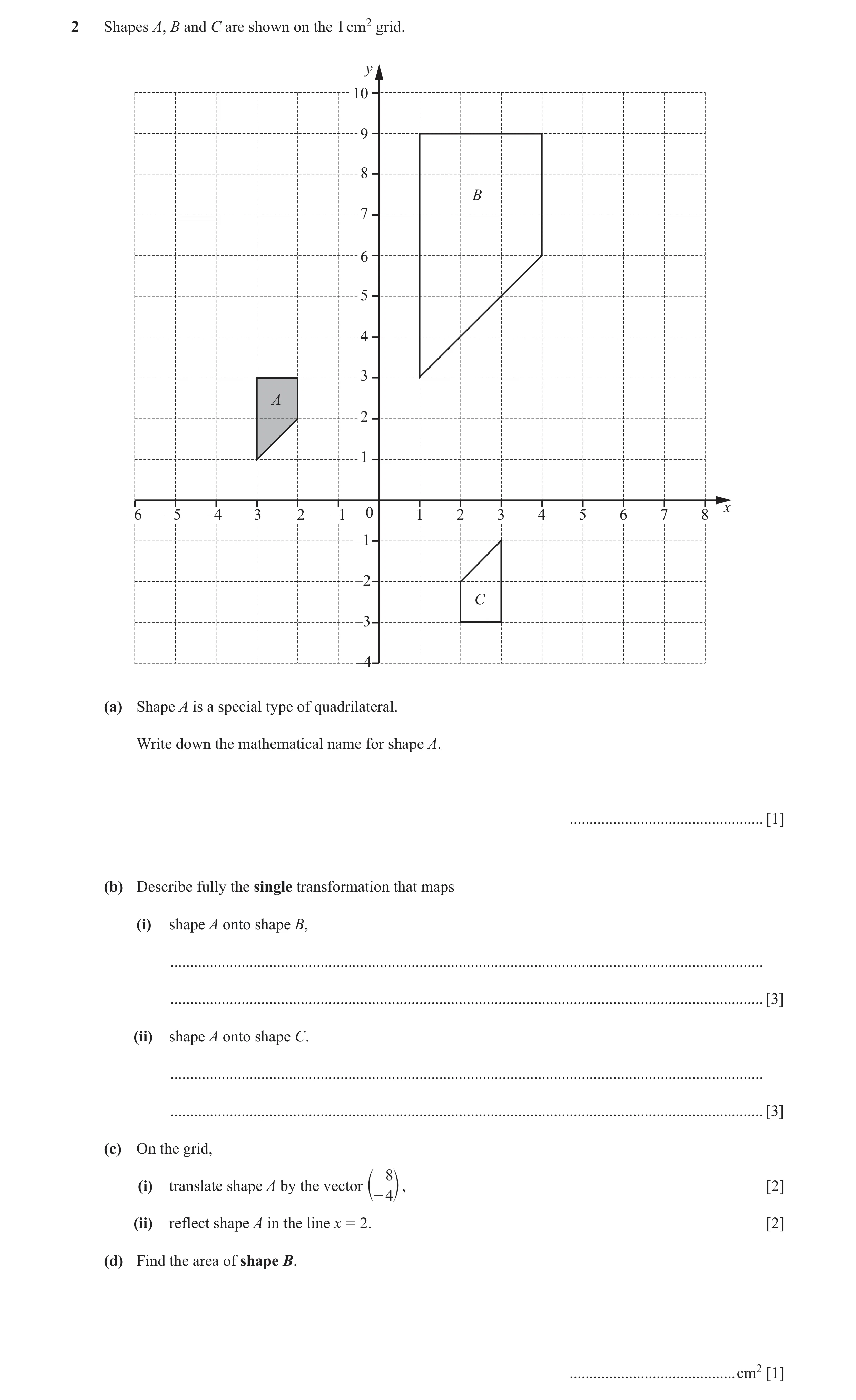
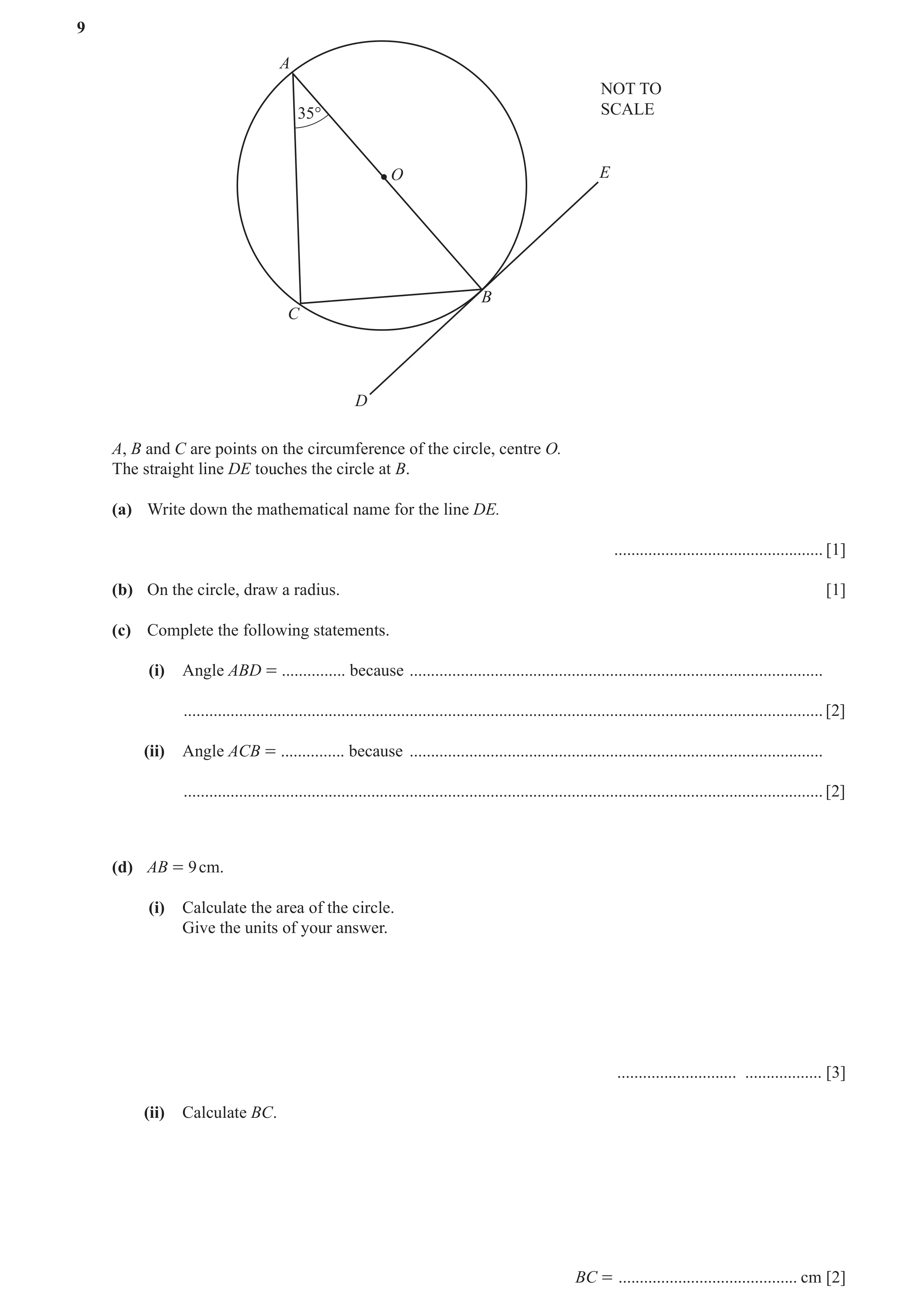 60 / 103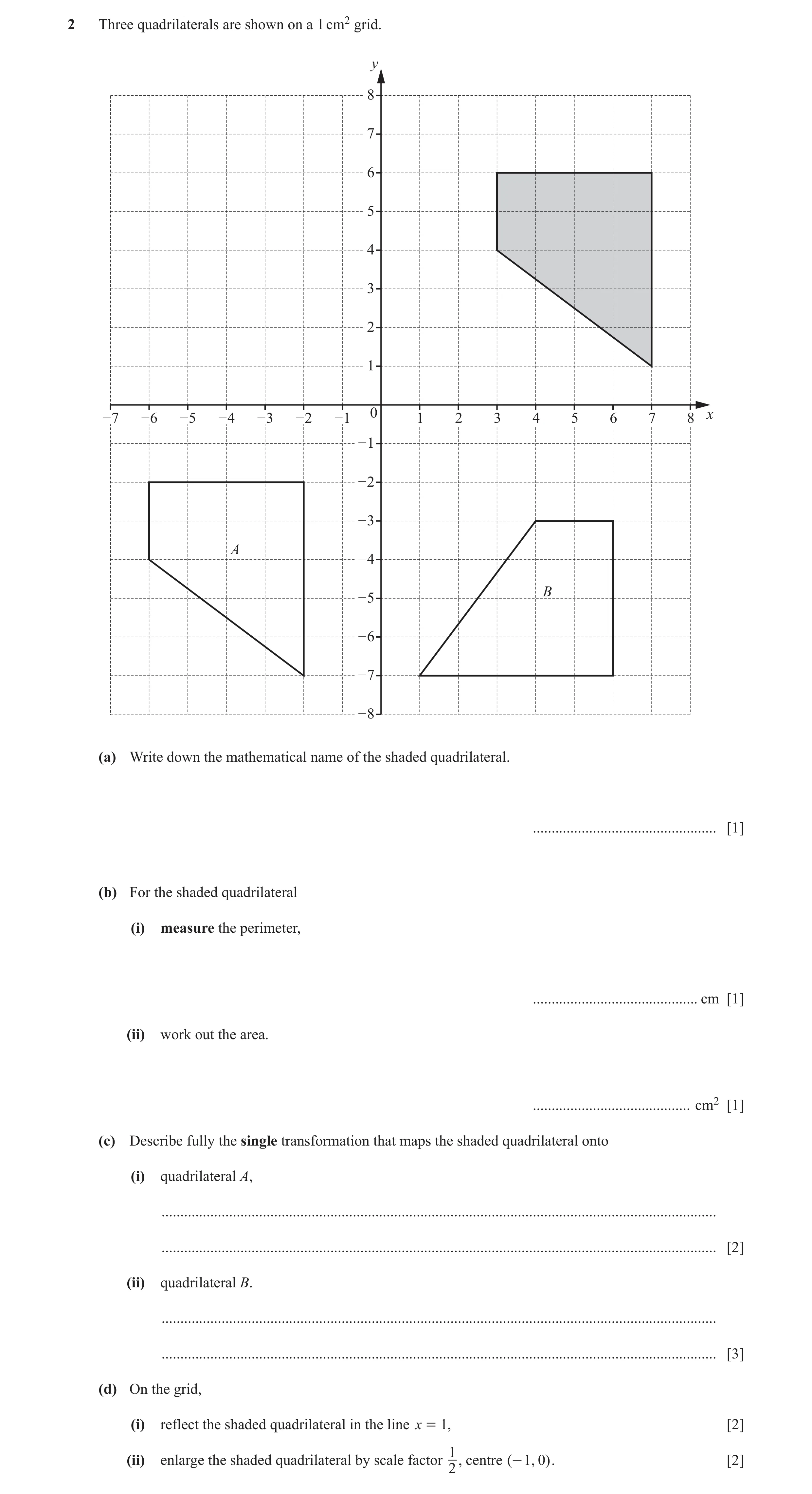
![Question 40: (a) (i) Write down the mathematical name for this type of angle. ................................................. [1] (ii) Measure this an…](https://img.pastlit.com/crops/7fa0bb4d-65a3-46d8-b8d9-7702ec6a3dbe/q3.webp)
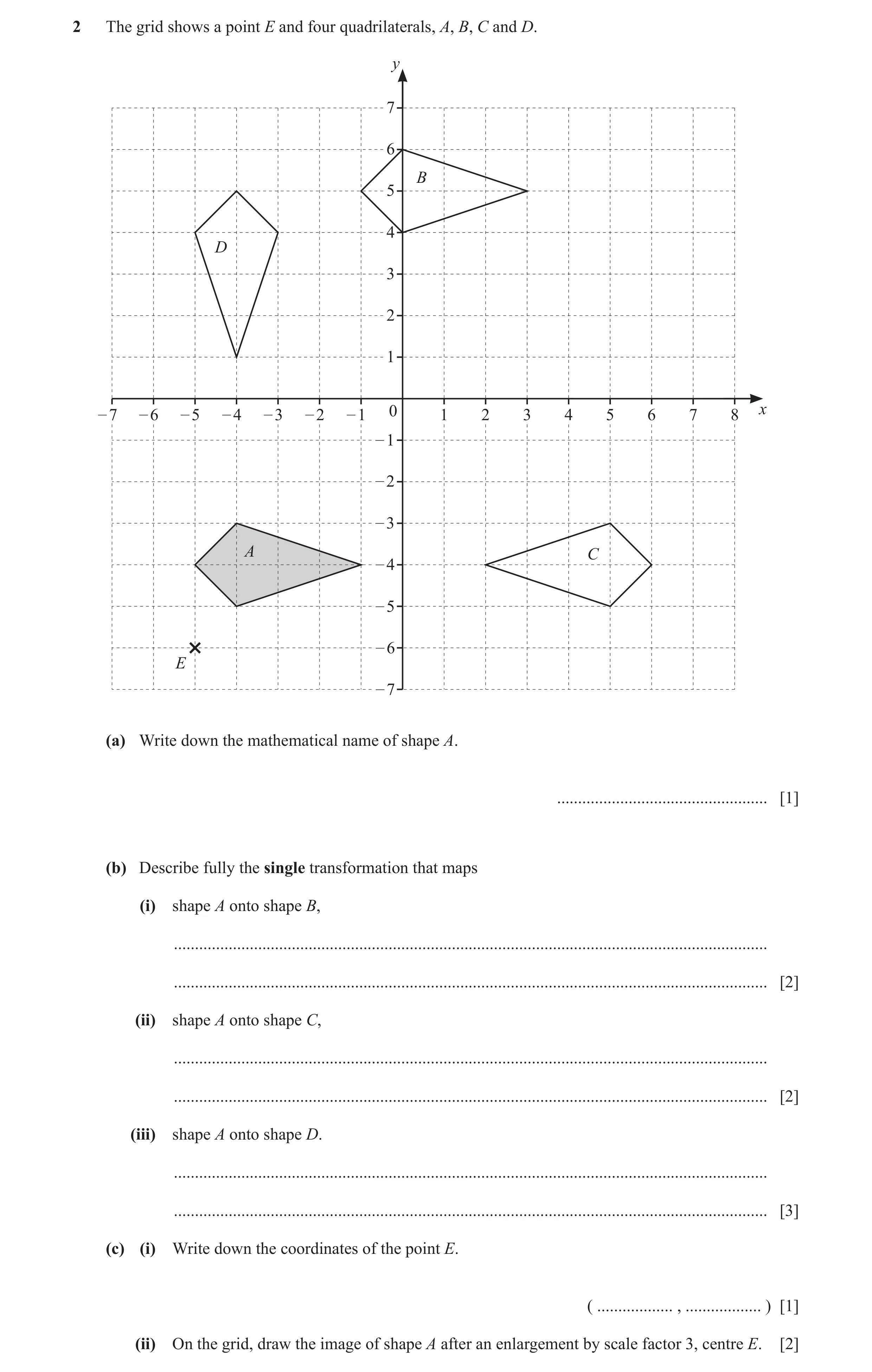
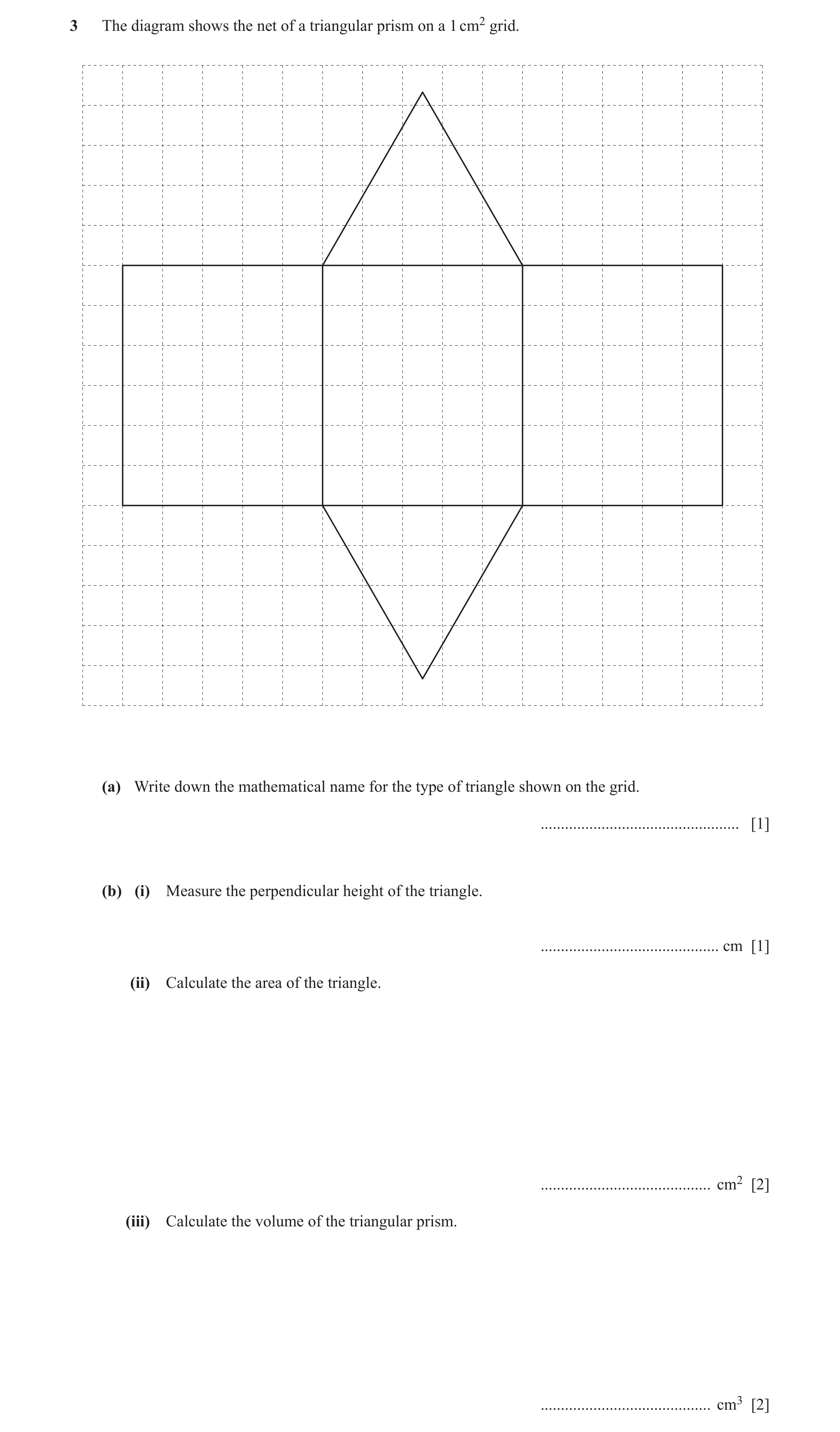
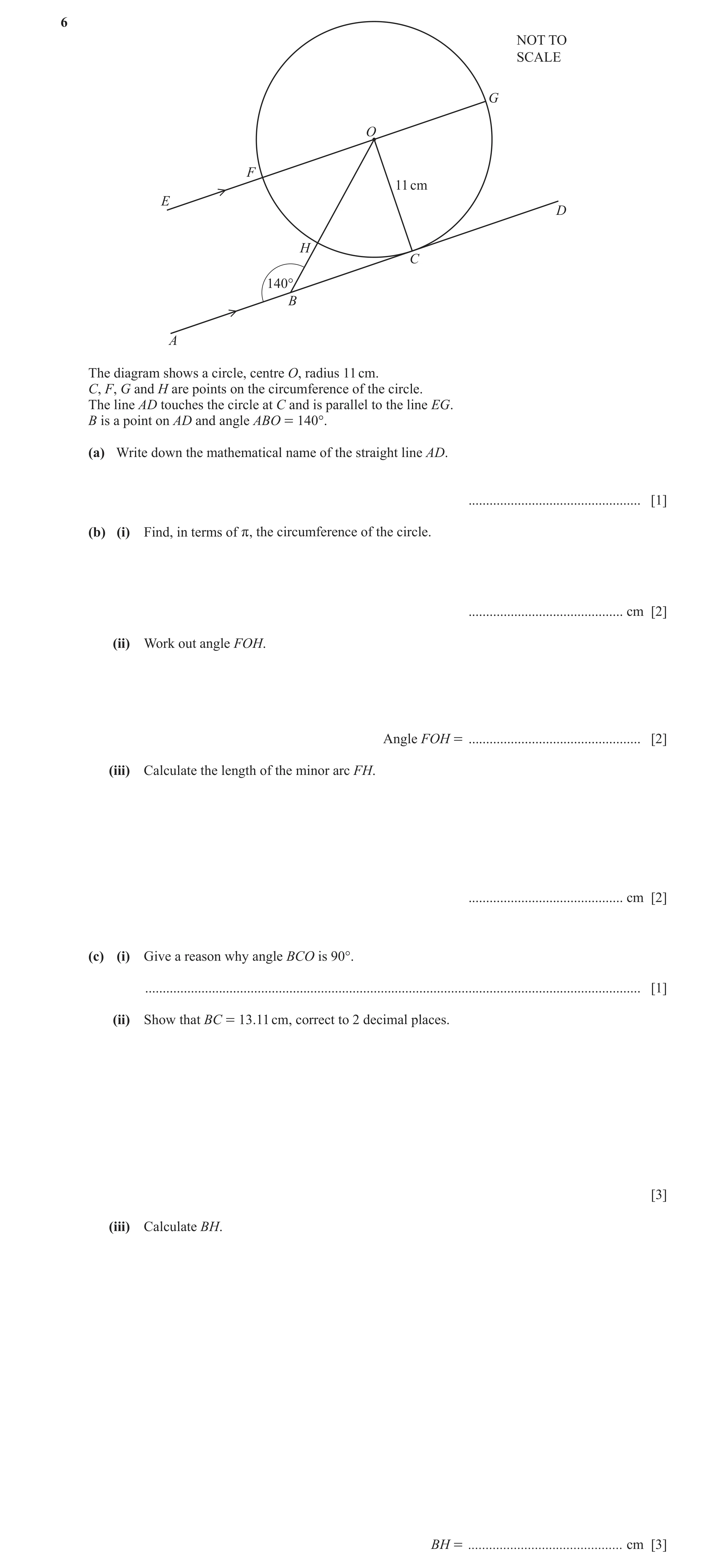
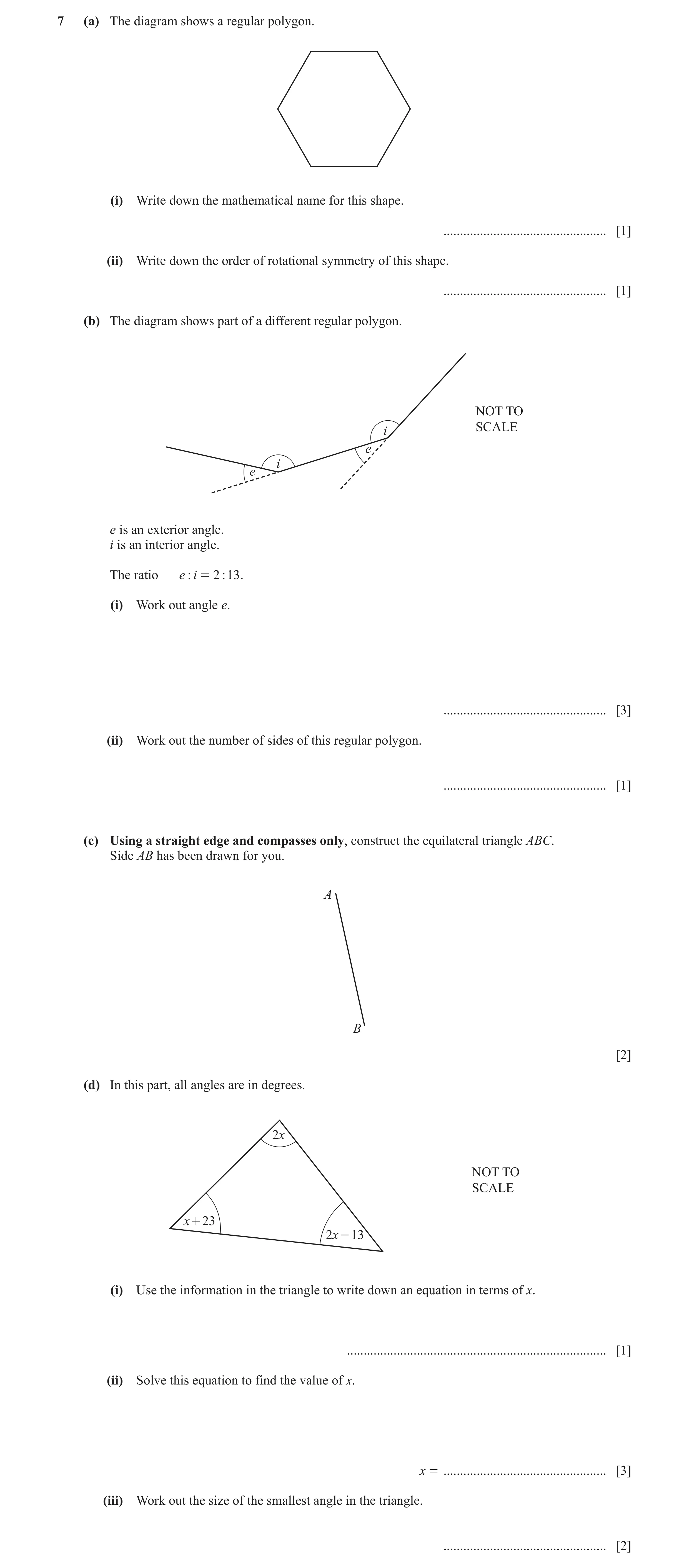
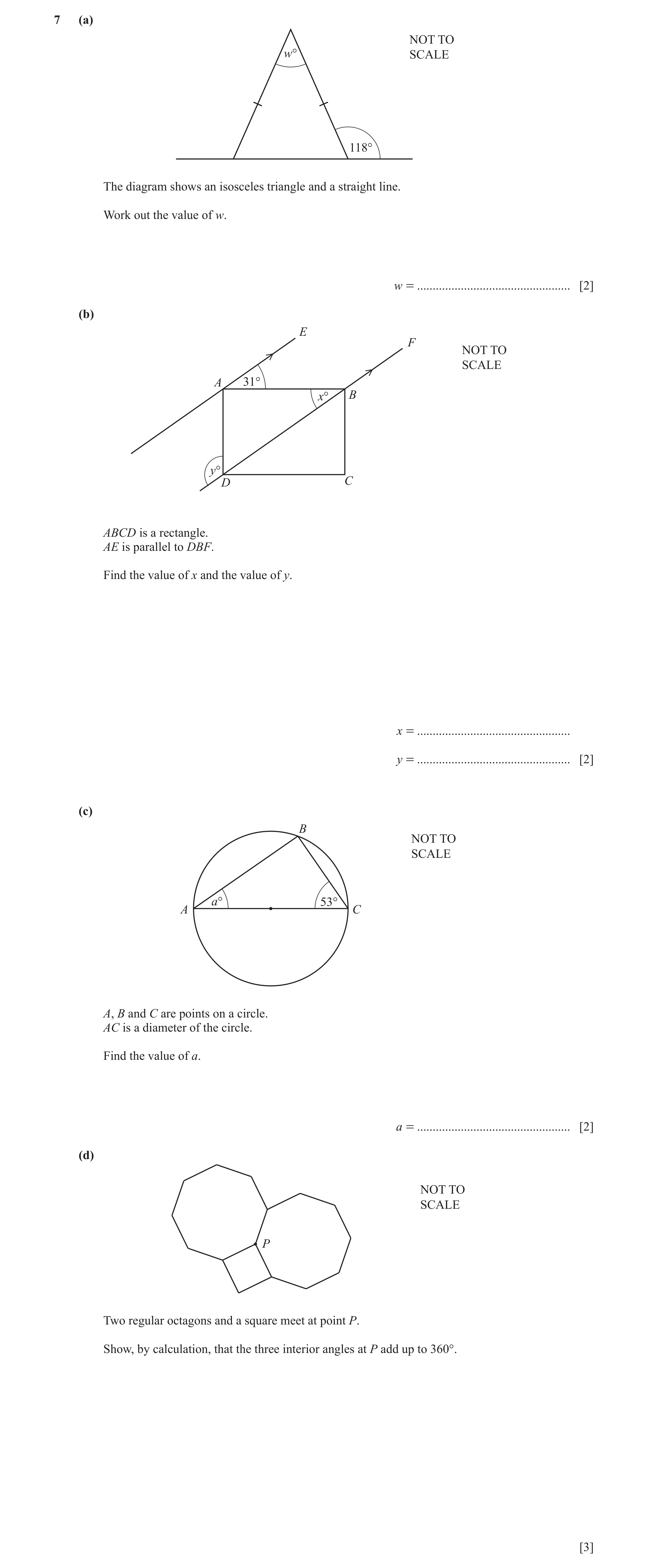
![Question 46: (a) Write down the mathematical name for this (i) quadrilateral, ................................................. [1] (ii) solid. ........…](https://img.pastlit.com/crops/4c3ceda7-6366-46e2-8f79-99af726499d4/q3.webp)
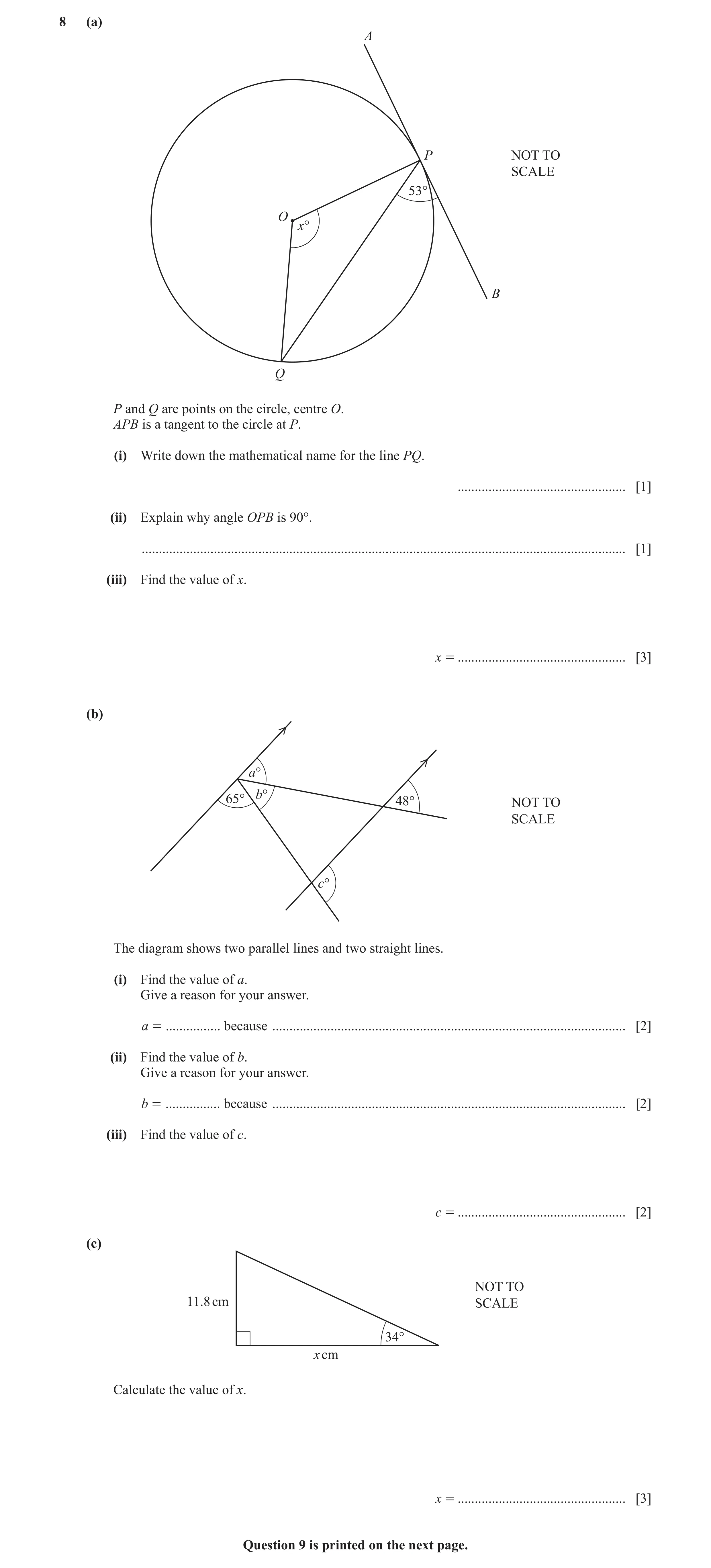
![Question 48: (a) On the 1cm2 grid, draw one rectangle that has • a perimeter of 22 cm and • an area of 24cm2. [2] (b) 94° 127° NOT TO SCALE x° 298° Work…](https://img.pastlit.com/crops/1fcbe8a1-d11f-4e6f-833a-064983c160bf/q9.webp)
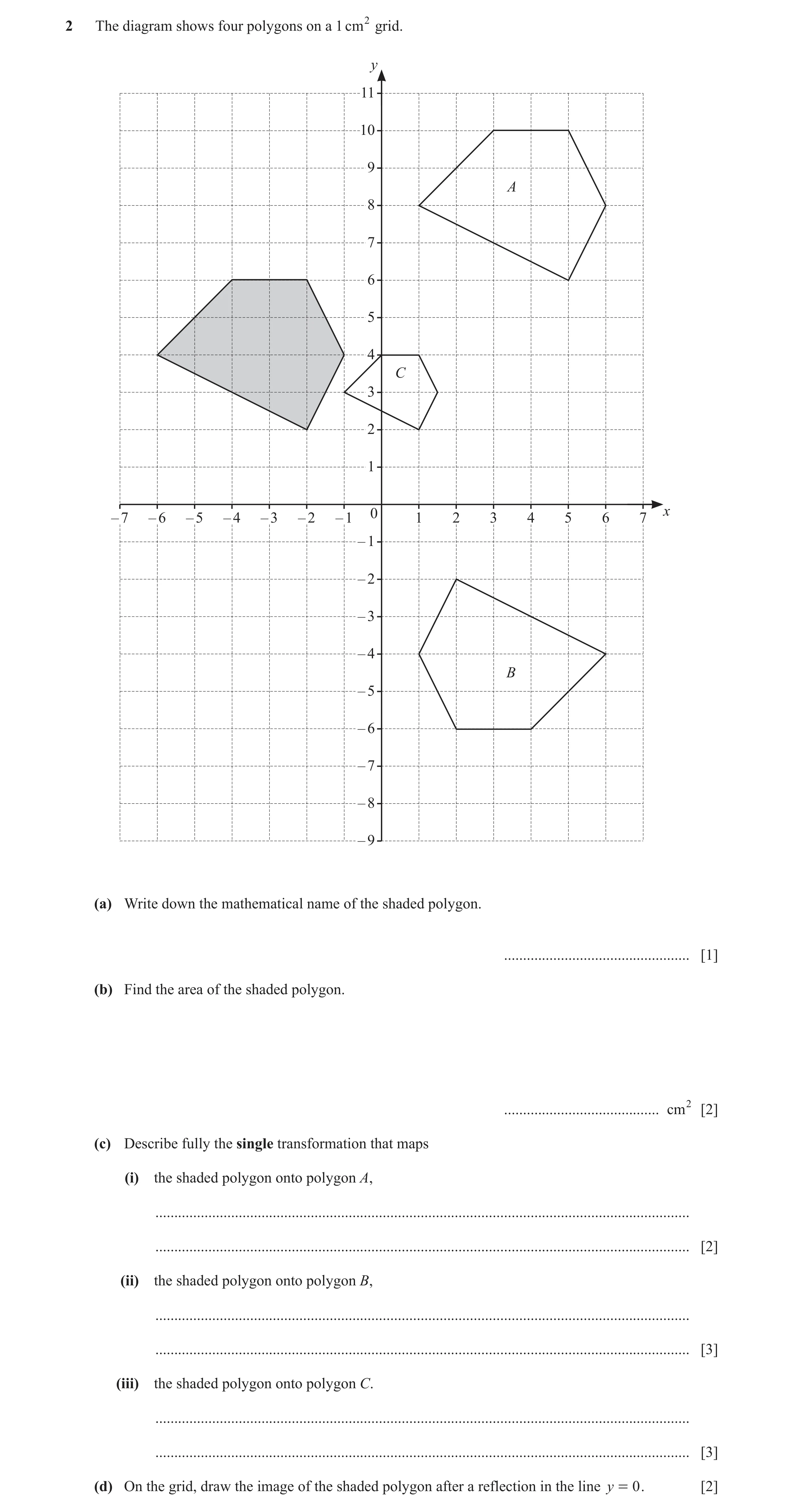
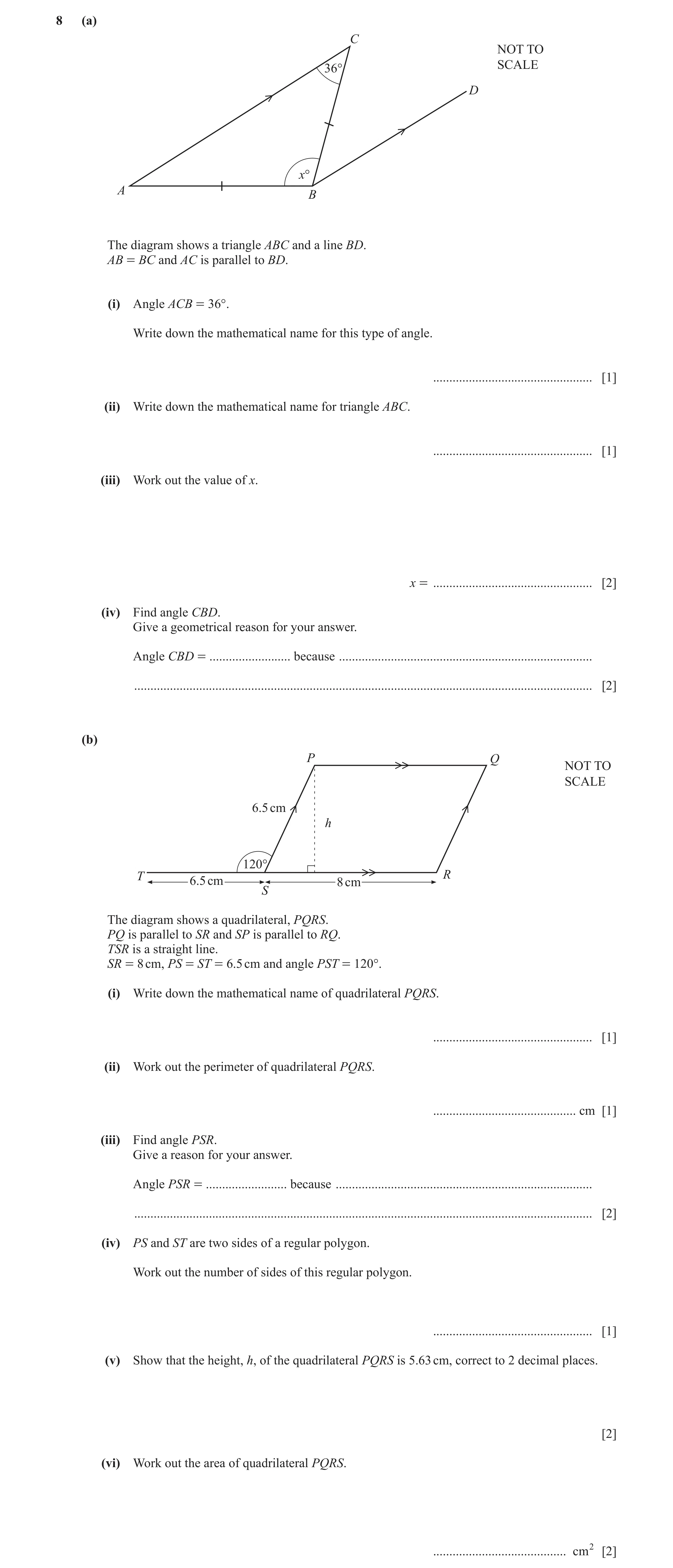
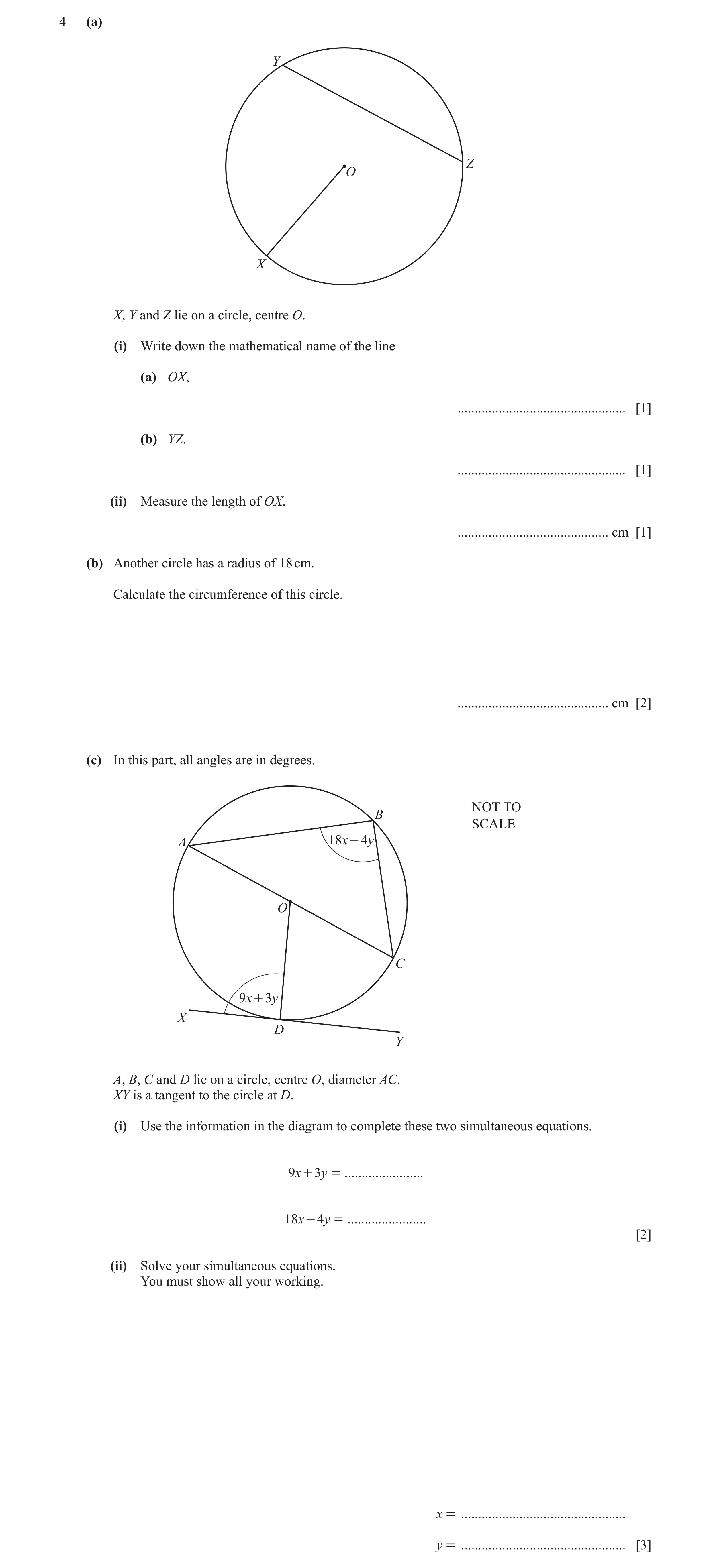
![Question 52: (a) Write down the number of sides of a hexagon. ................................................. [1] (b) B A C In triangle ABC, AB = AC. …](https://img.pastlit.com/crops/687830e1-184a-433b-8370-66ee3b3a9dab/q2.webp)
![Question 53: (a) a (i) Write down the mathematical name for the type of angle a. ................................................. [1] (ii) Measure angl…](https://img.pastlit.com/crops/f002e79f-33b8-4c75-b1ce-a8c38bfa6051/q3.webp)
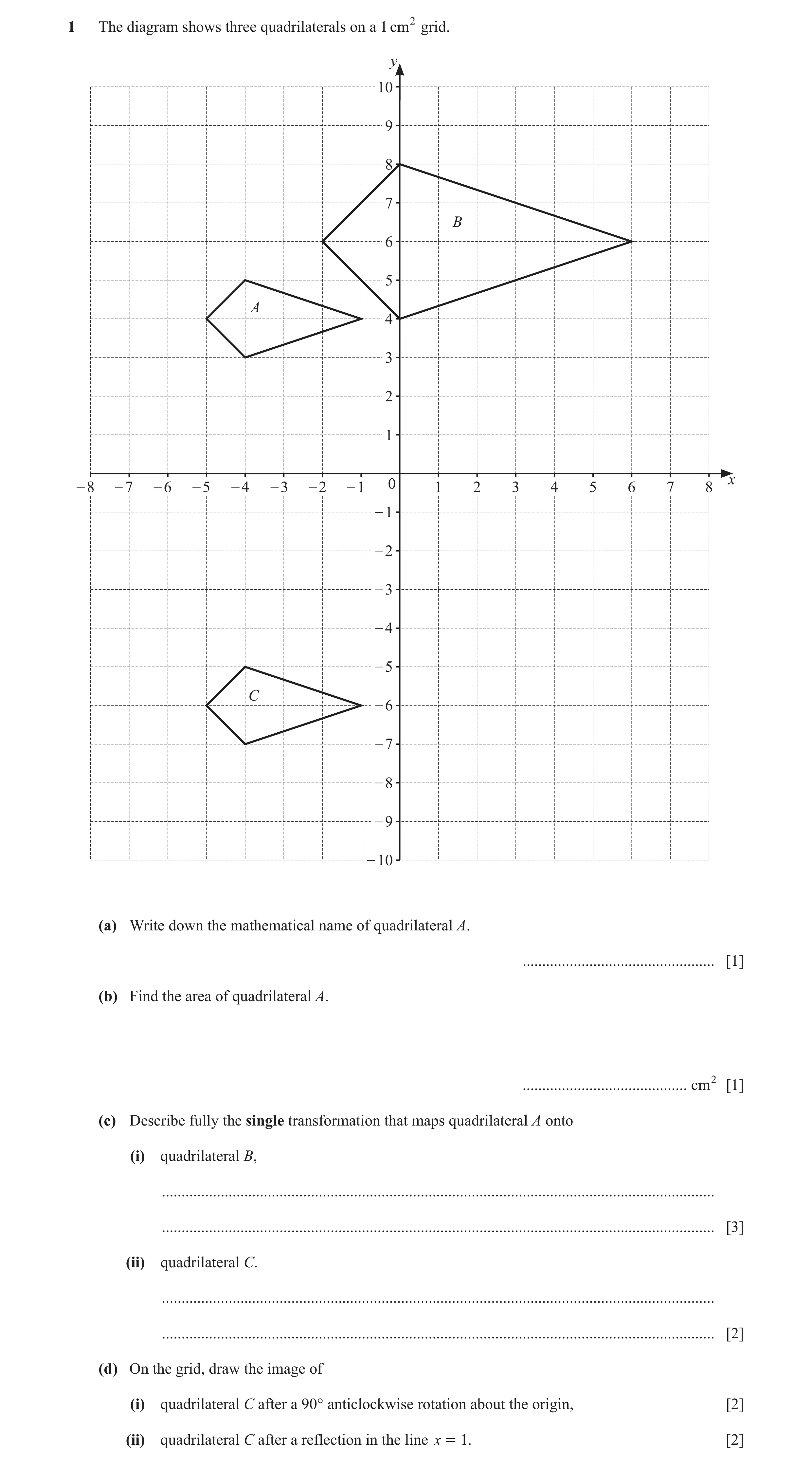
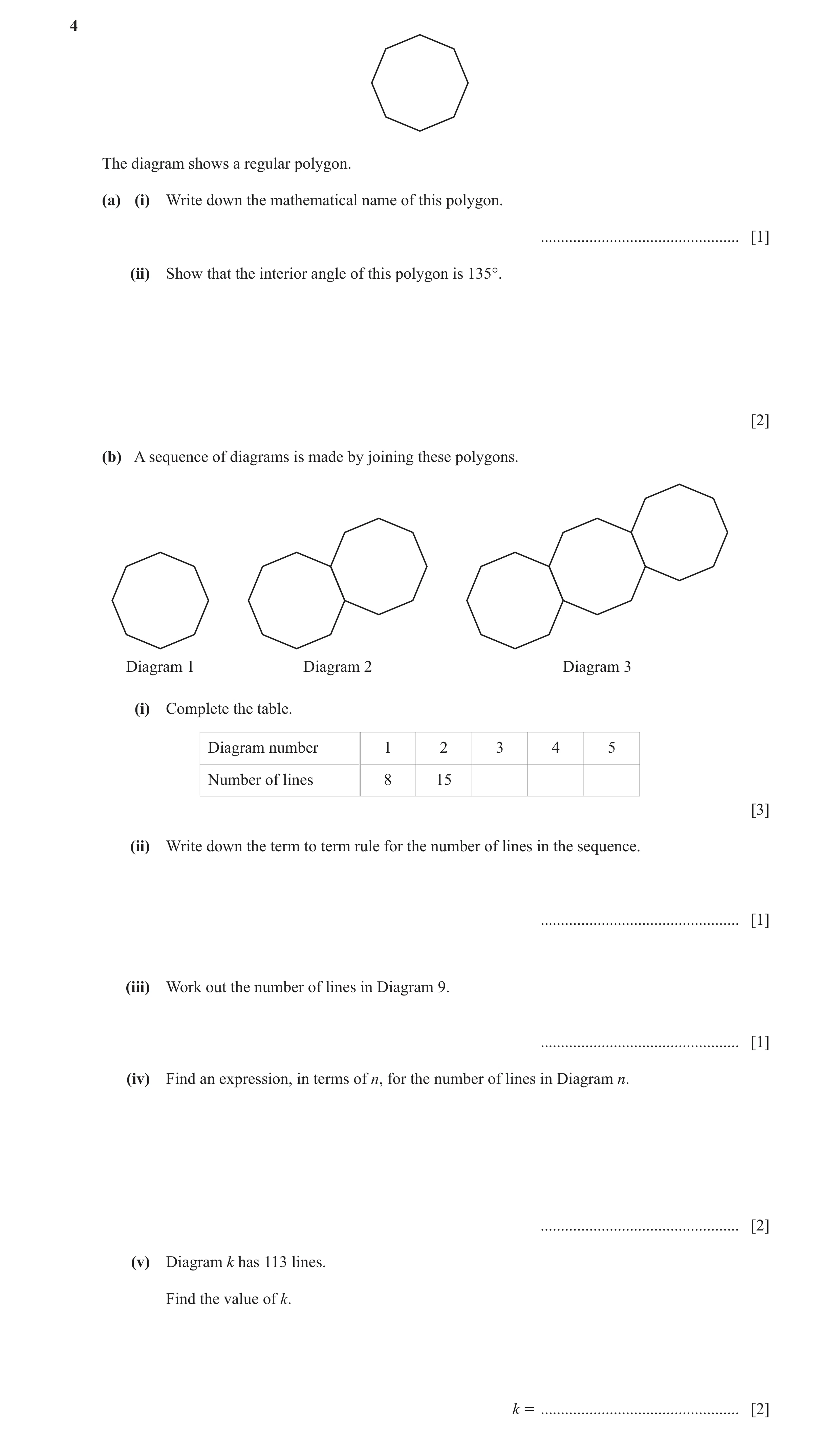
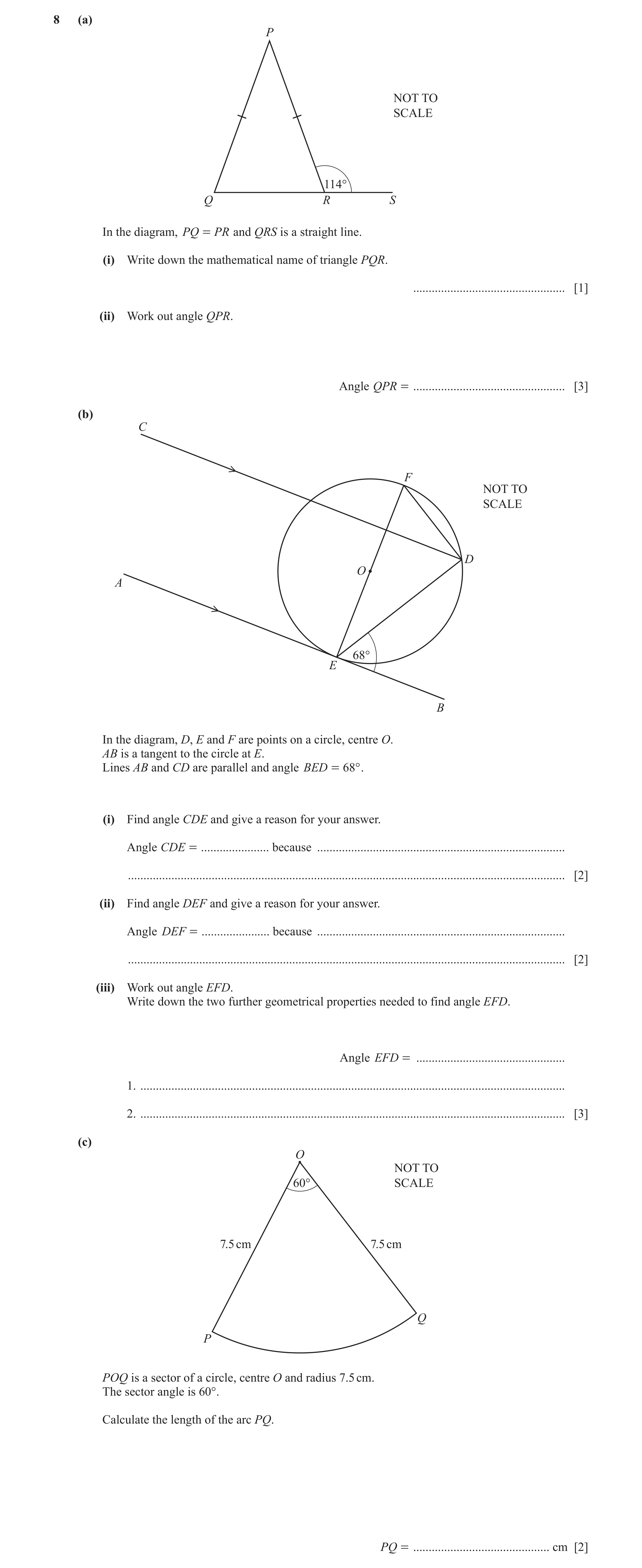
![Question 57: (a) Write down the mathematical name of this solid. ................................................. [1] (b) B C A D 104° NOT TO SCALE x° …](https://img.pastlit.com/crops/c8e6e169-266e-4899-ac71-feaa008981a3/q6.webp)
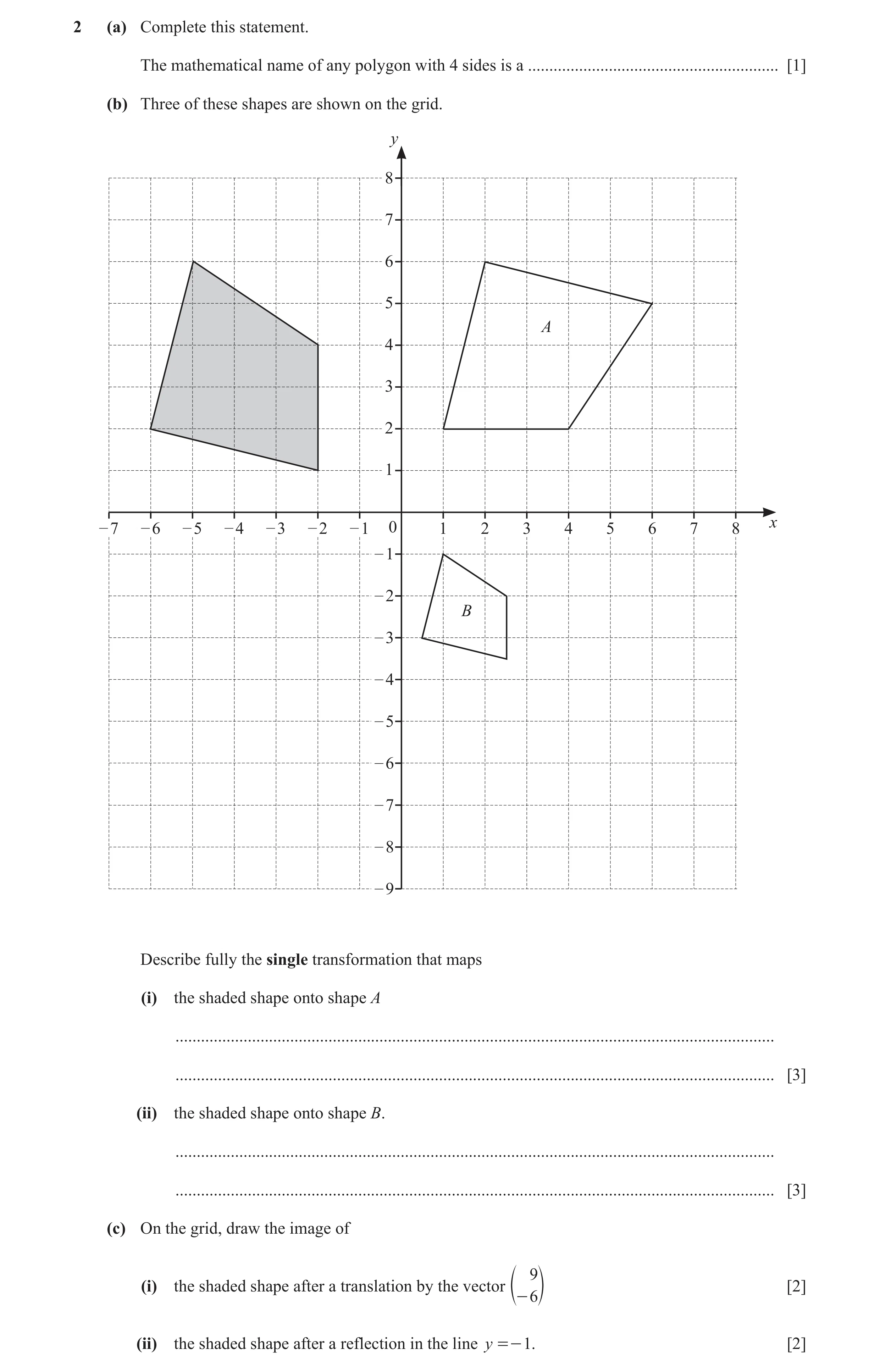
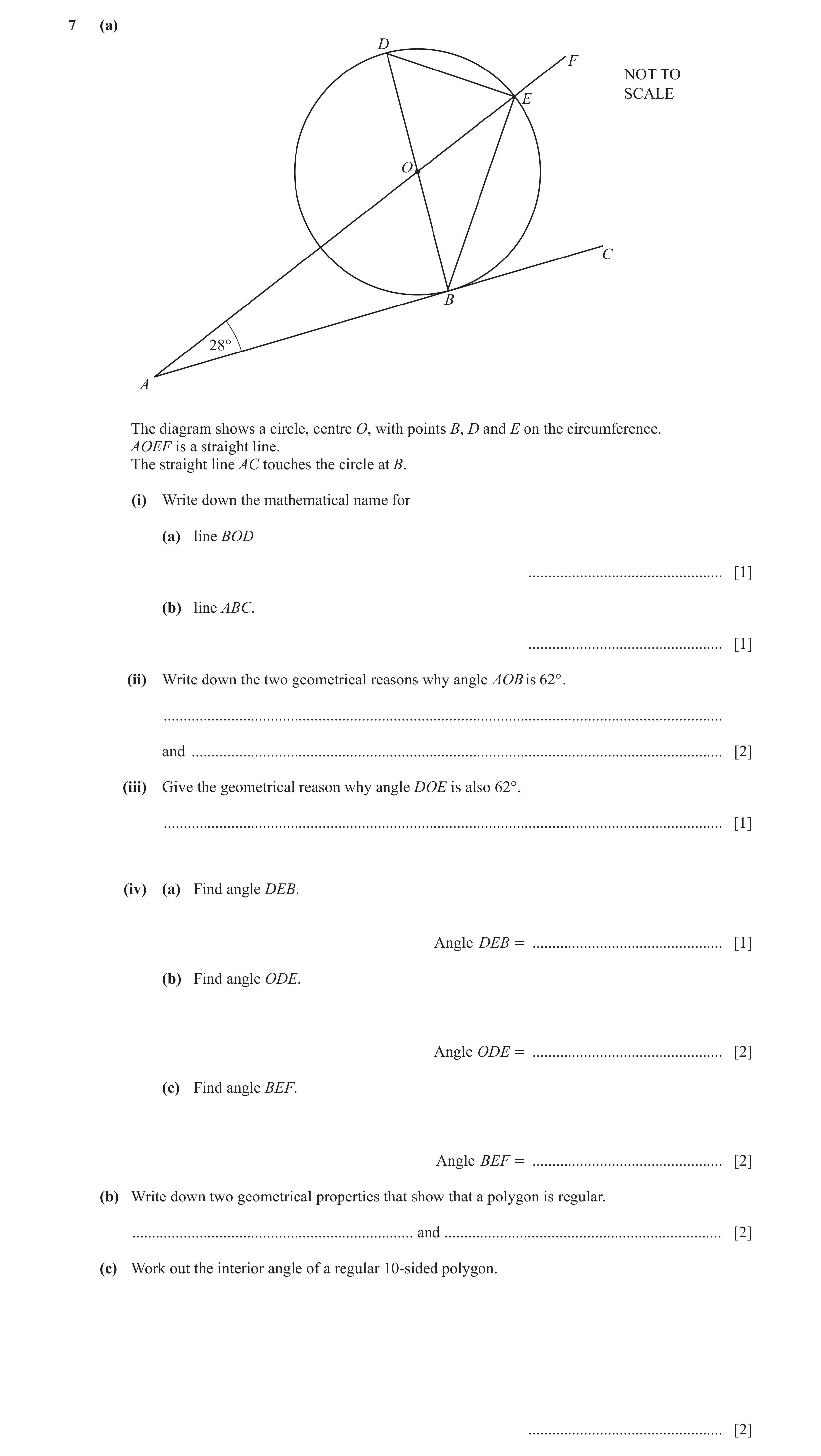
![Question 60: (a) (i) Write down the mathematical name for this polygon. ................................................. [1] (ii) Write down the mathem…](https://img.pastlit.com/crops/e94073ea-fcf5-4cdf-afe9-b2ae391a4209/q2.webp)
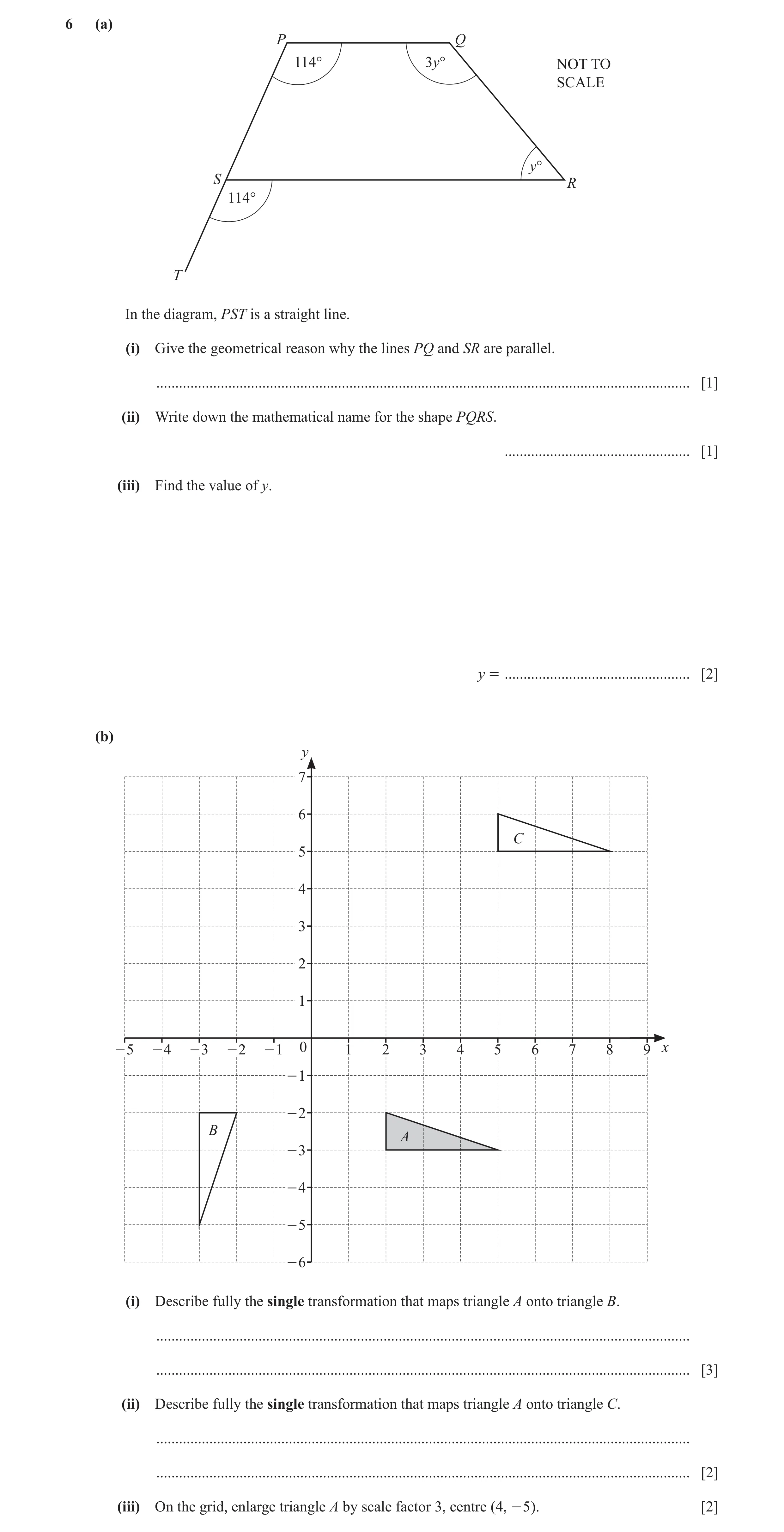
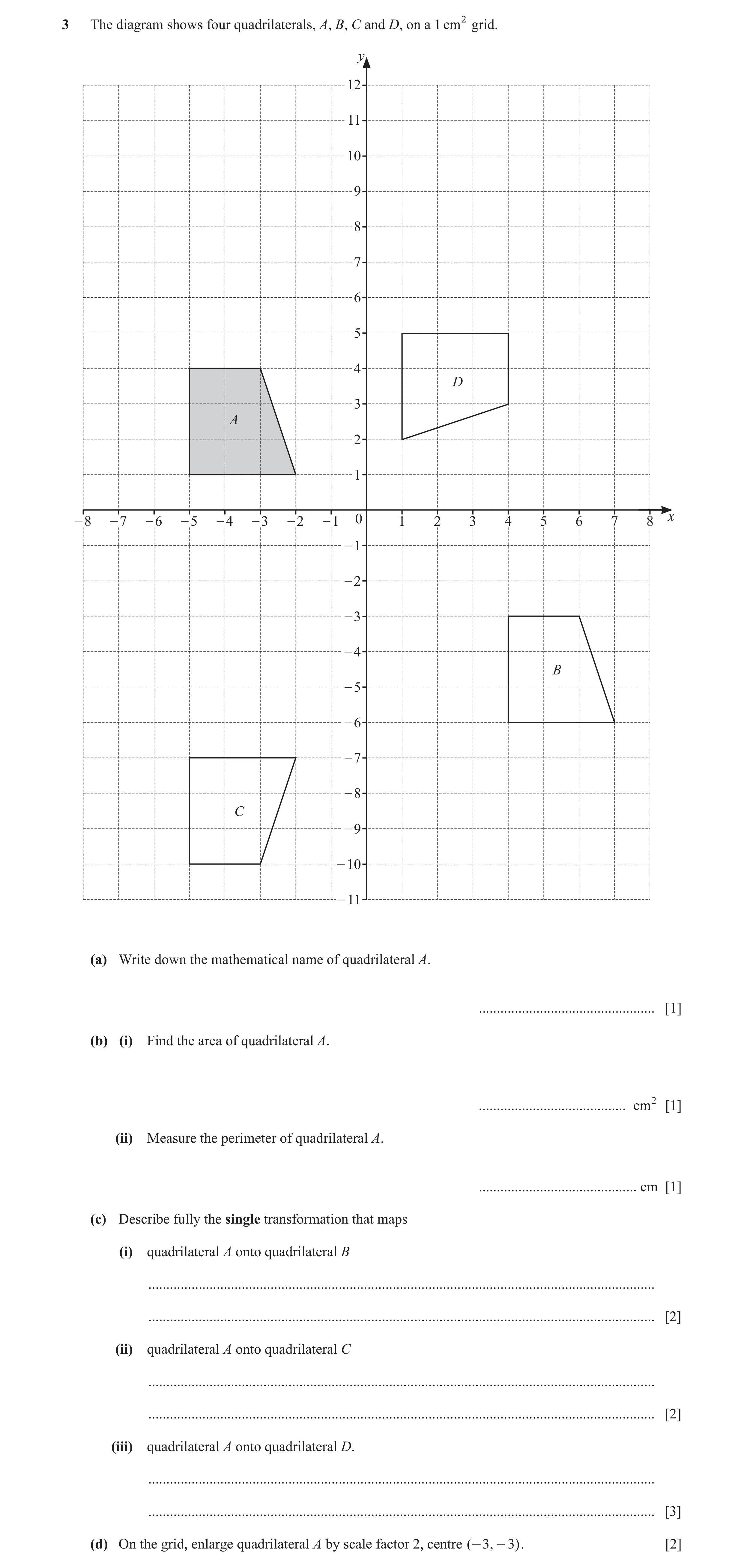
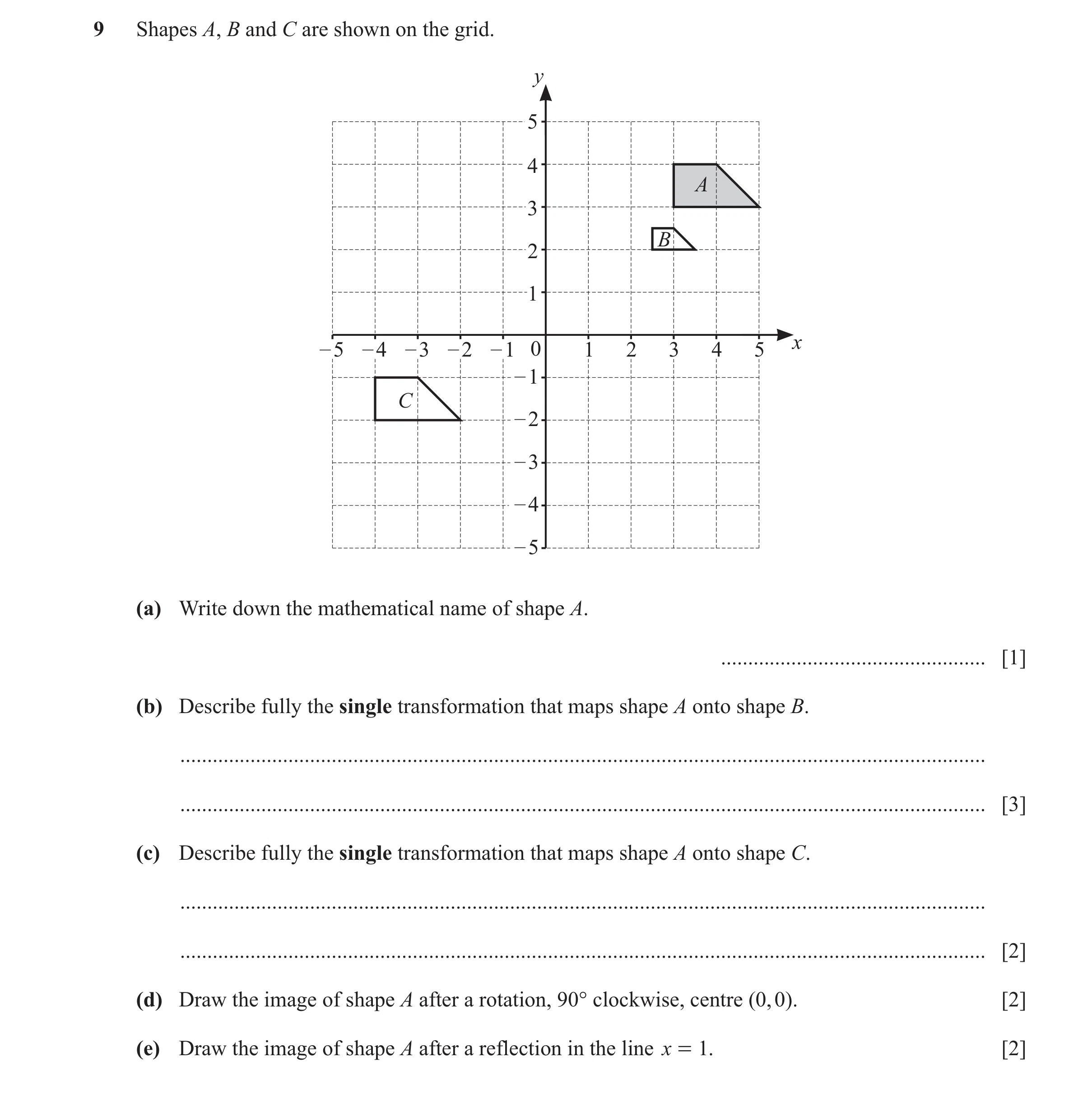
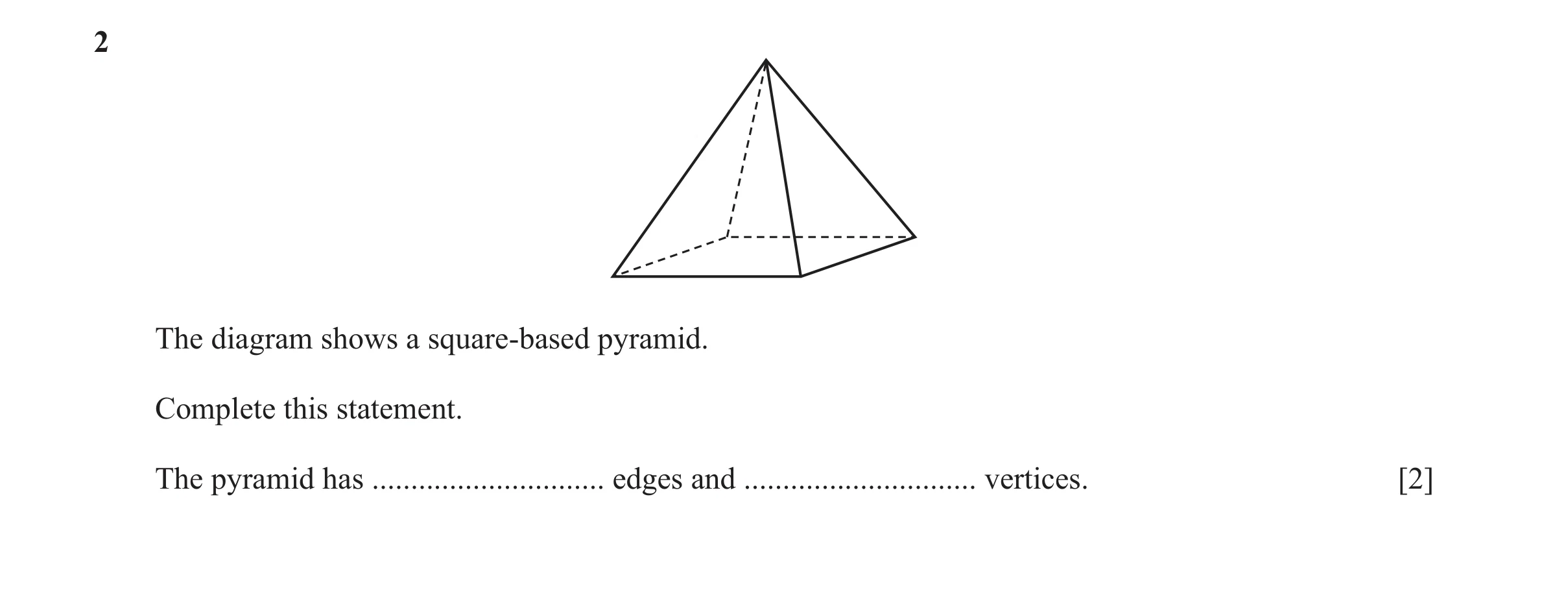 100 / 103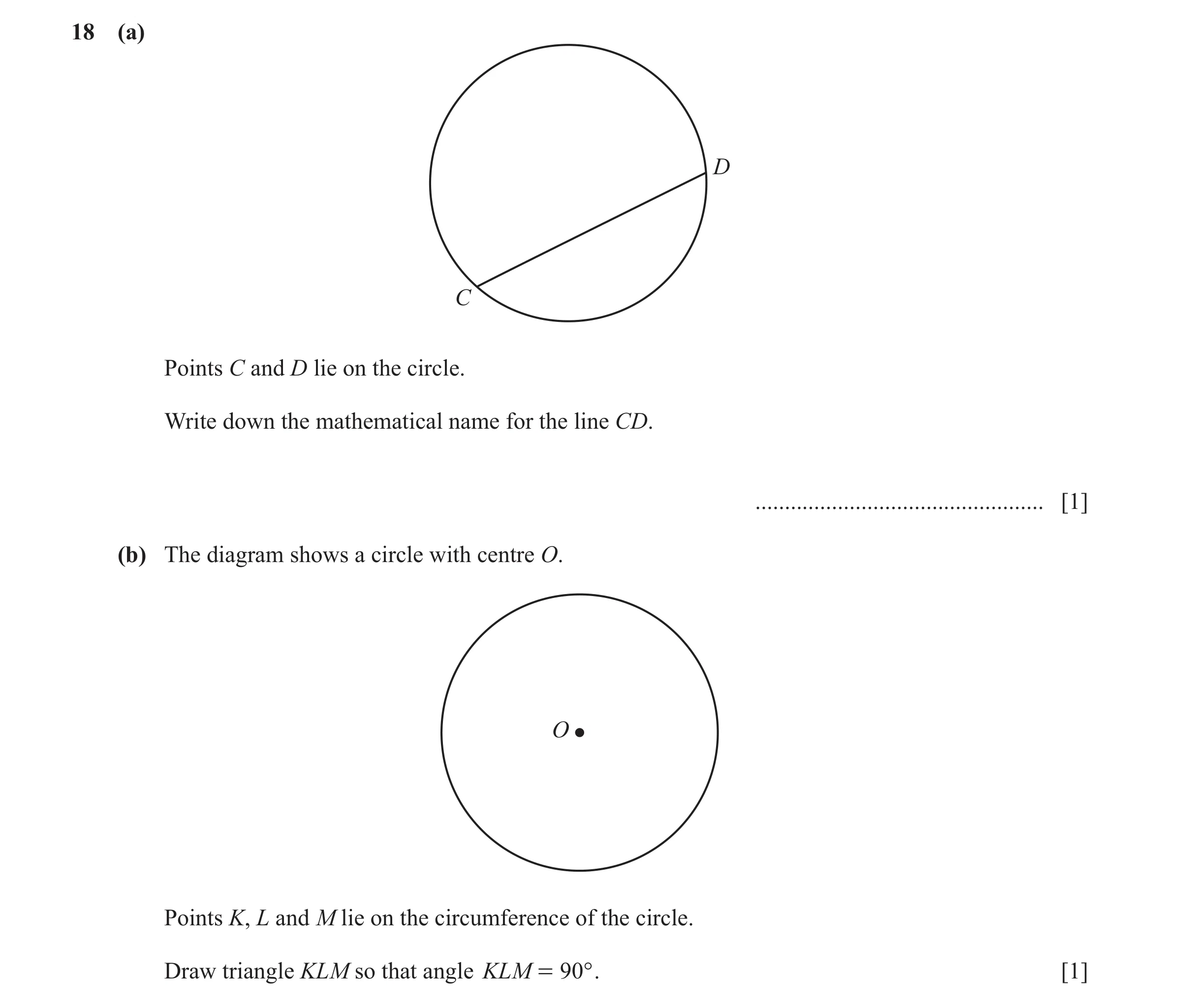
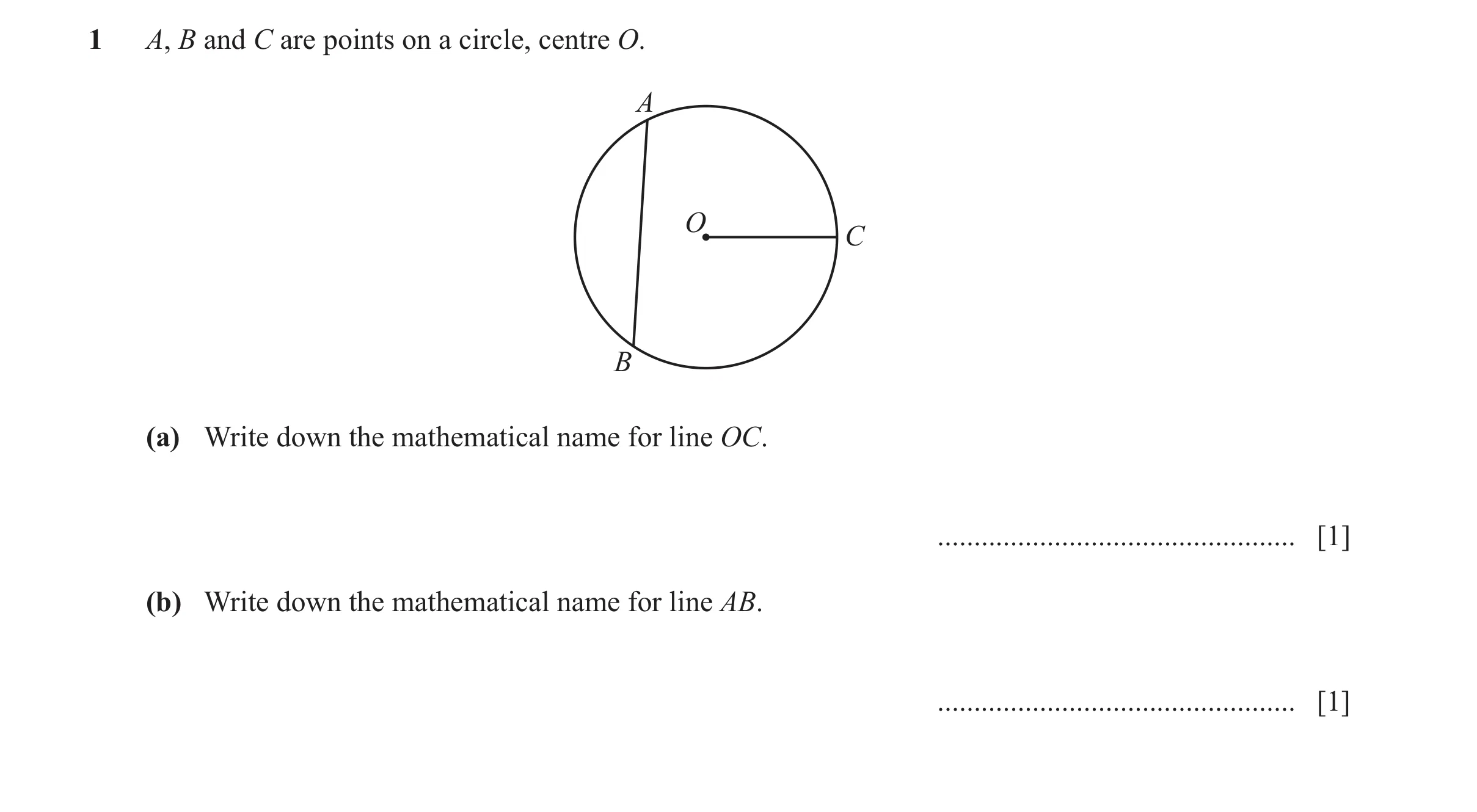 101 / 103
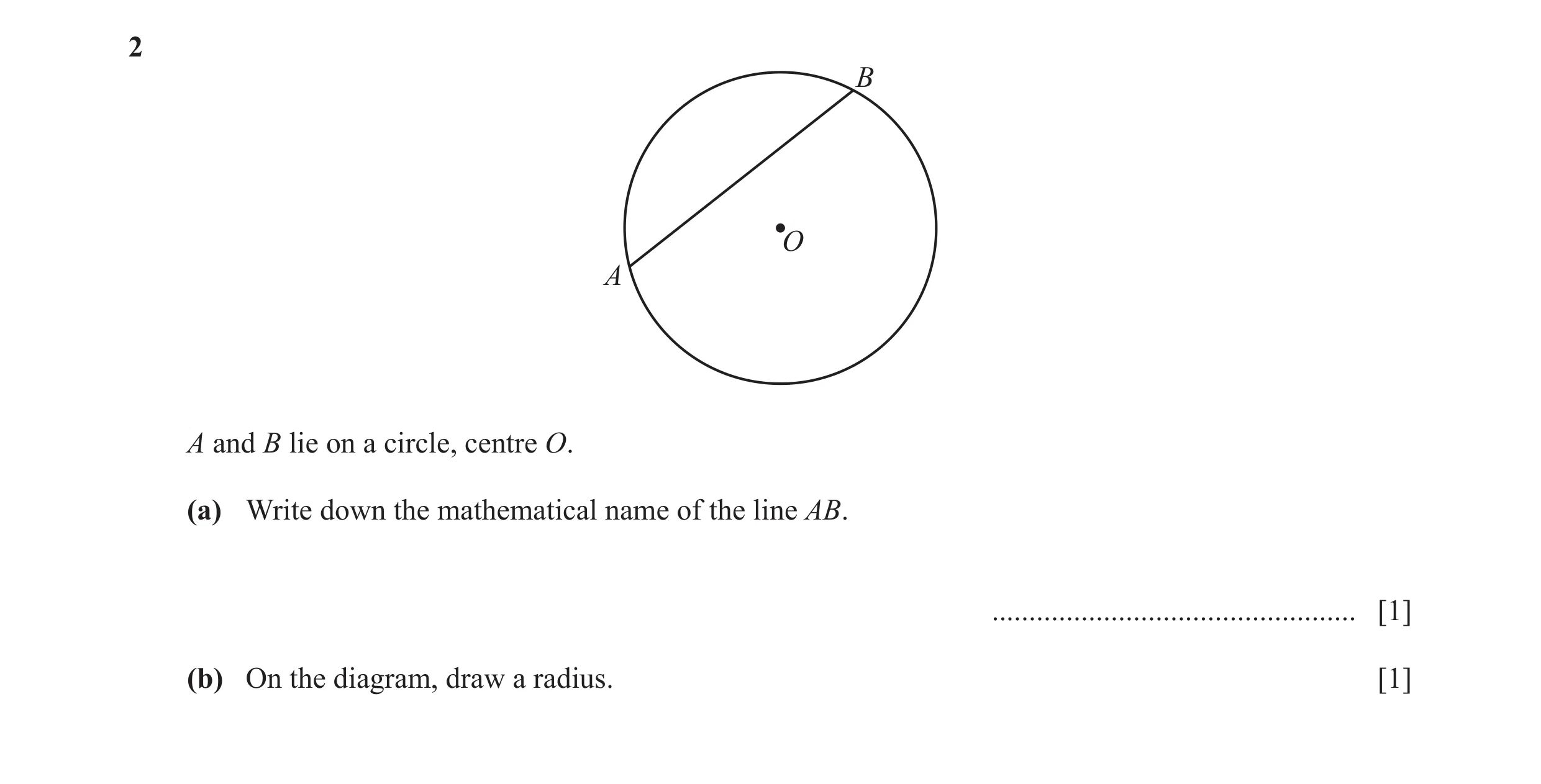 102 / 103
![Question 69: (a) Write down the mathematical name of this solid. ................................................. [1] (b) 60° 60° 60° Write down the ma…](https://img.pastlit.com/crops/280e54c7-cf6f-40af-acc2-c4ebd16f4a46/q4.webp) 103 / 103
103 / 103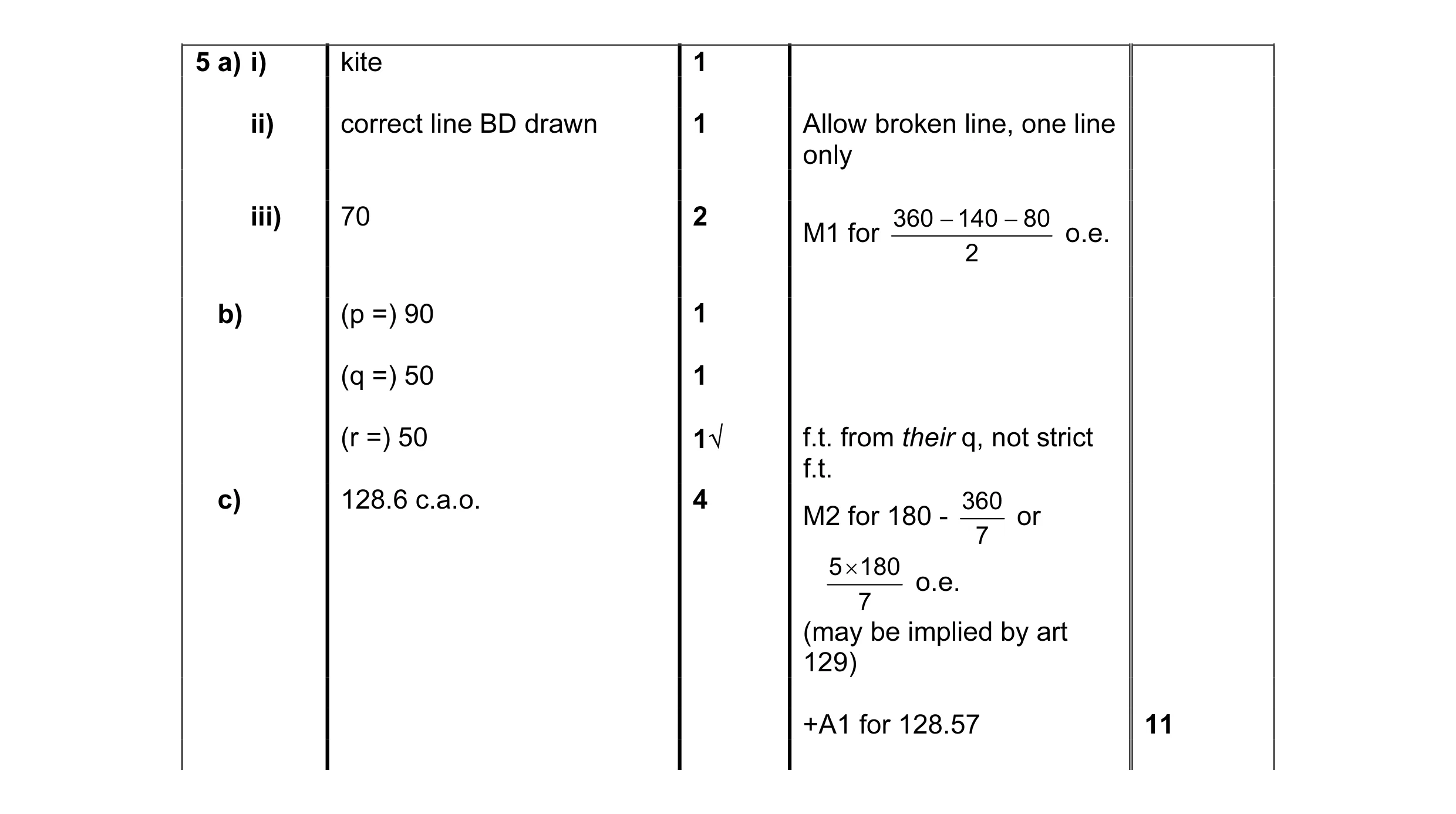 11
11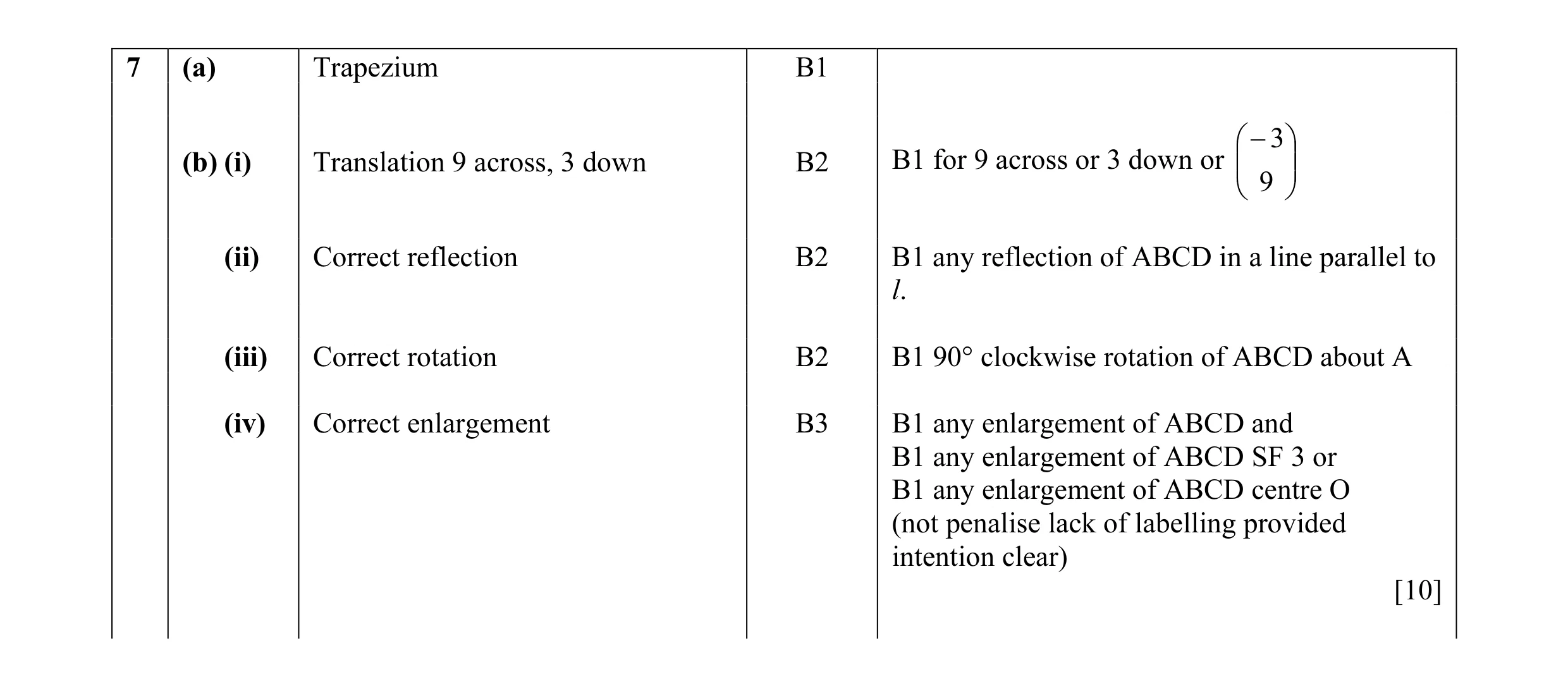 10
10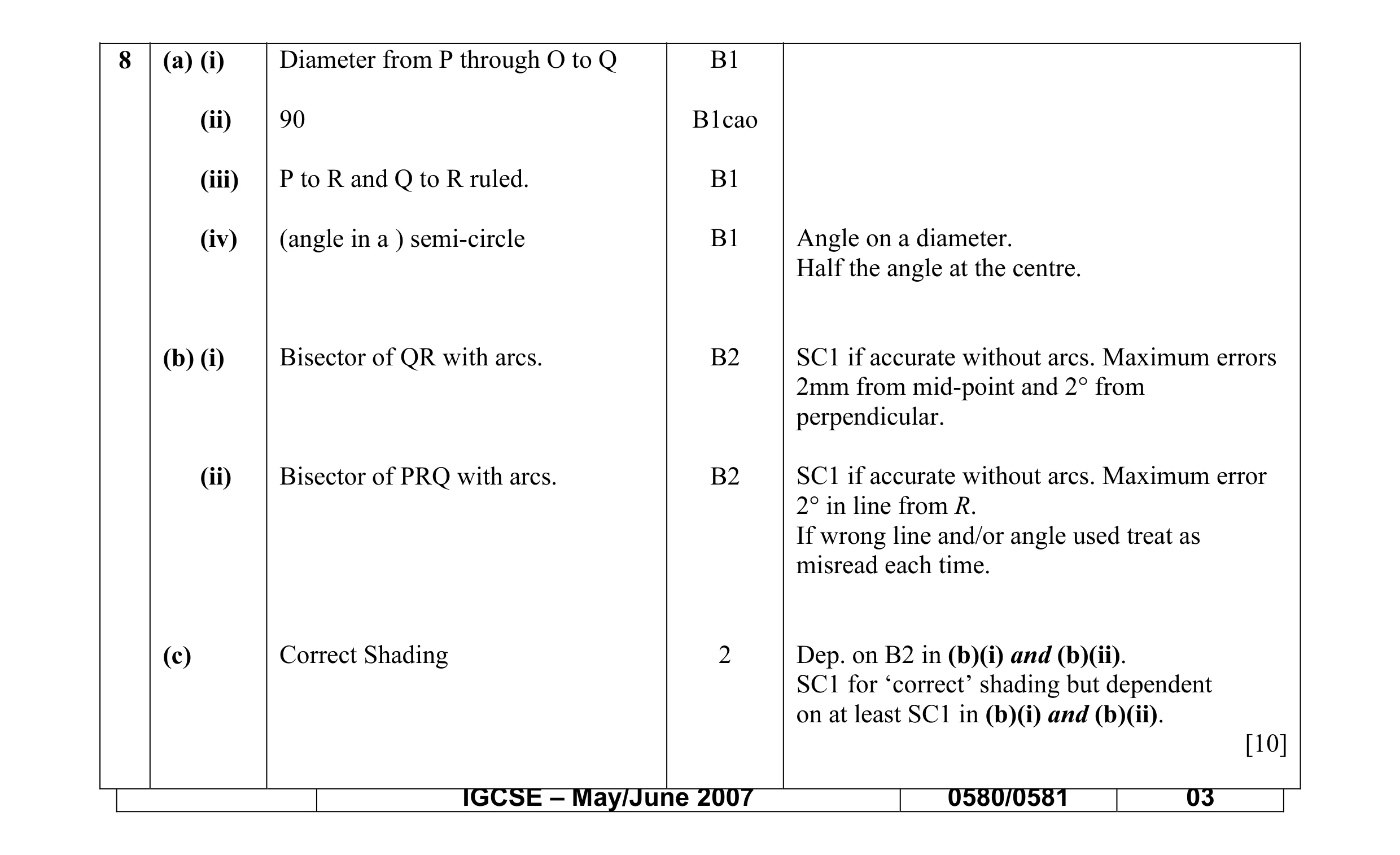 10
10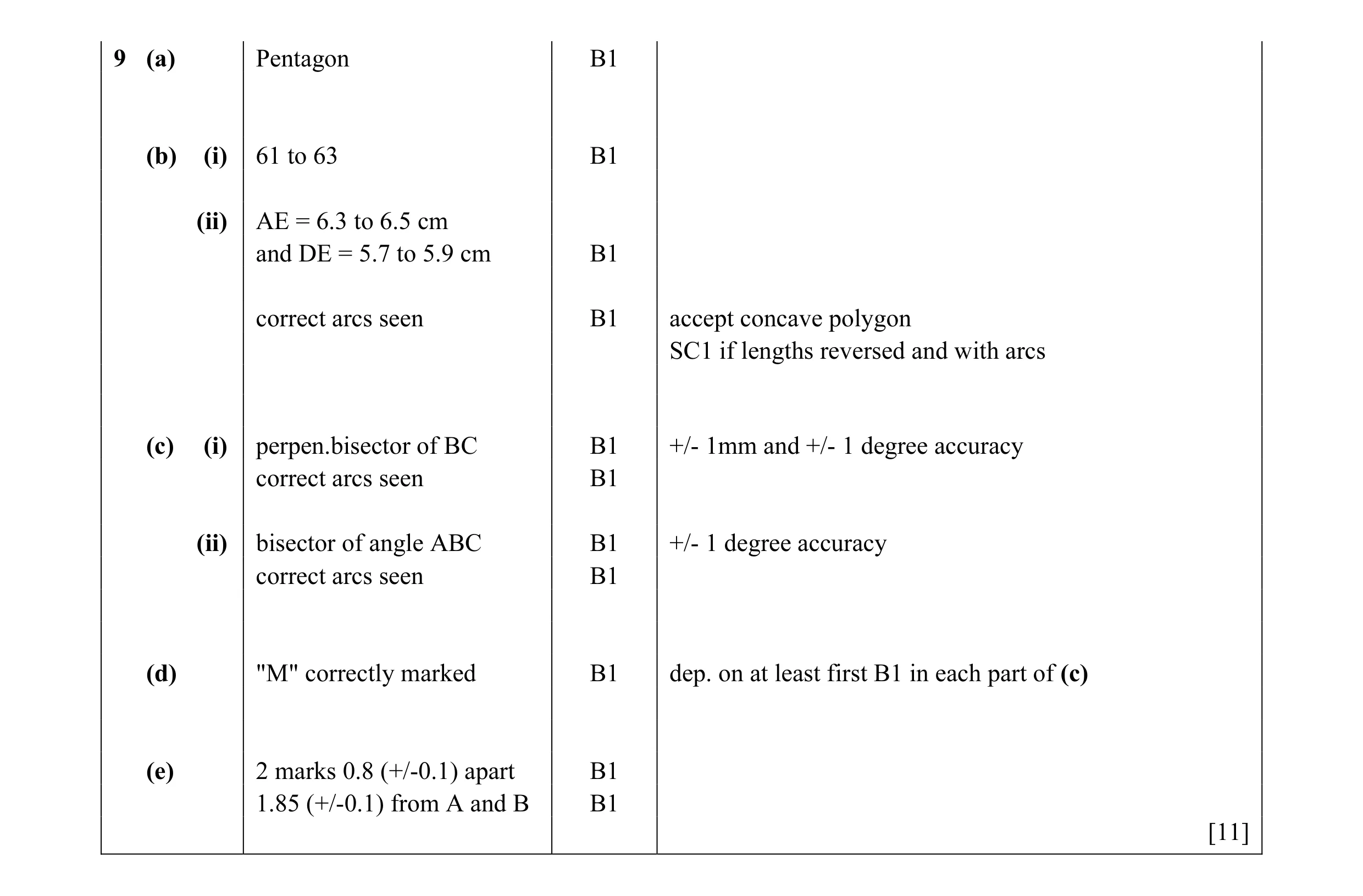 11
11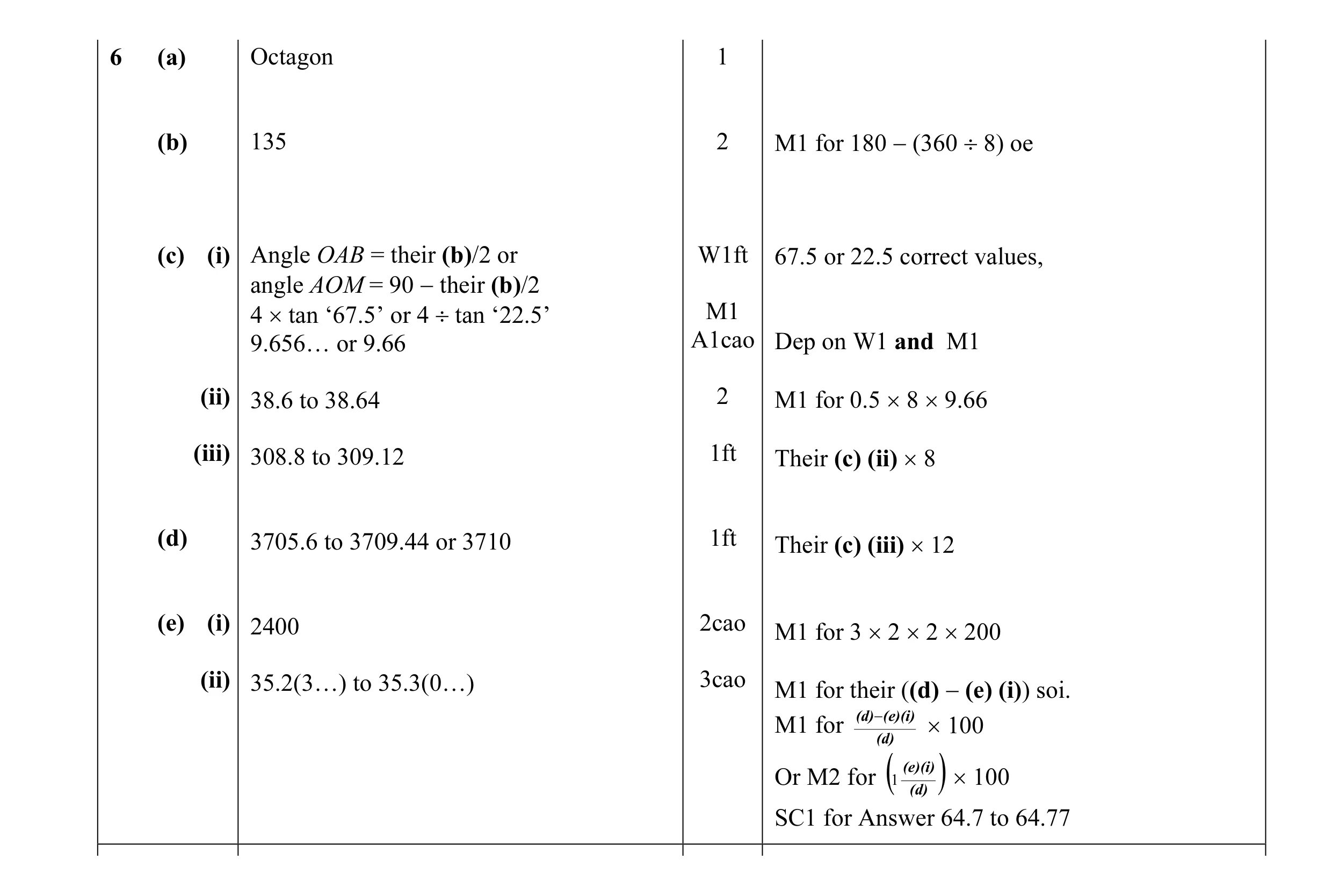 15
15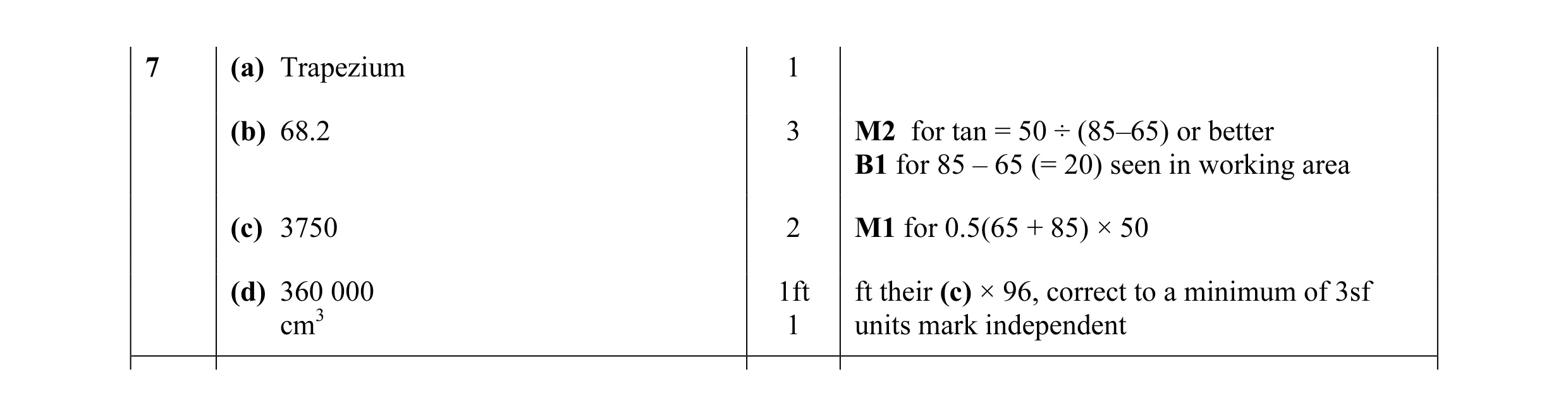 8
8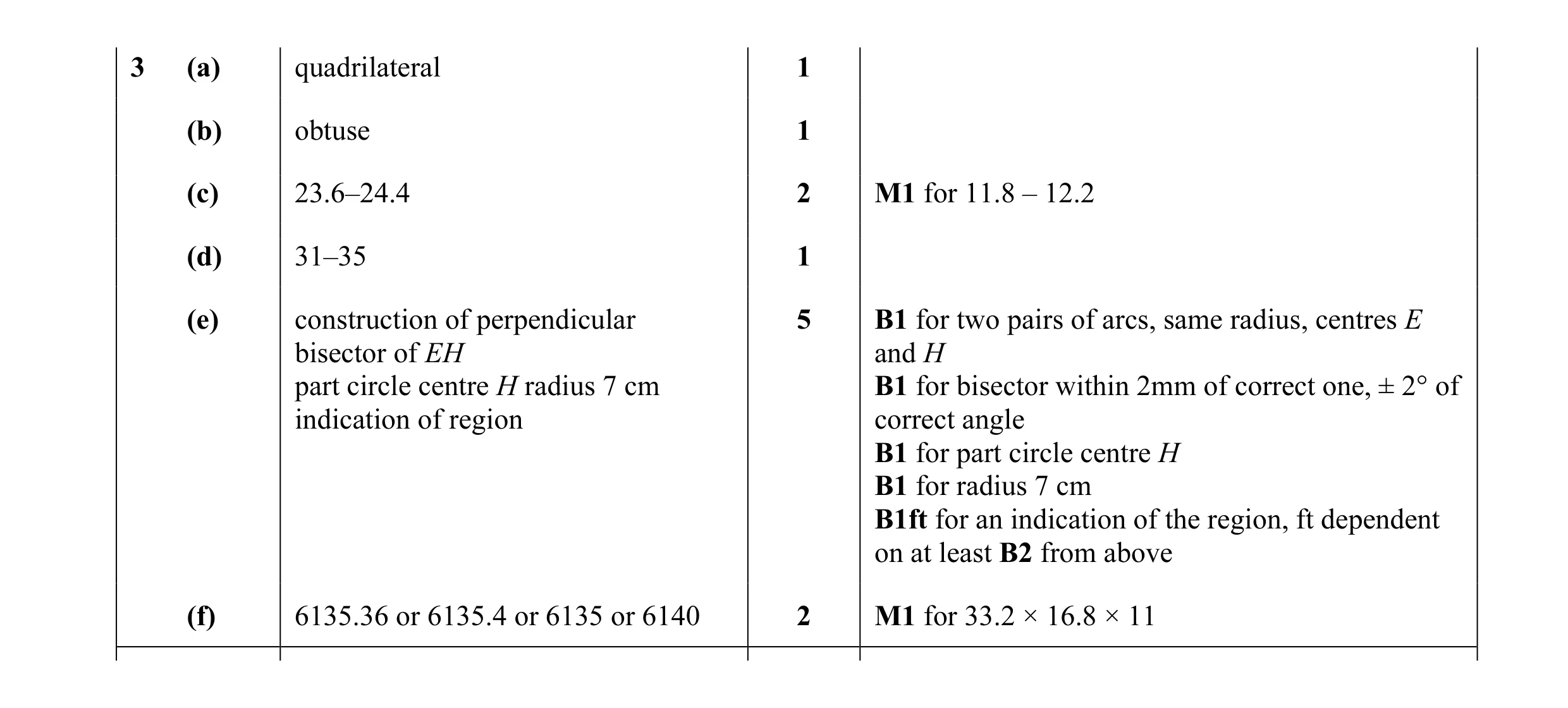 12
12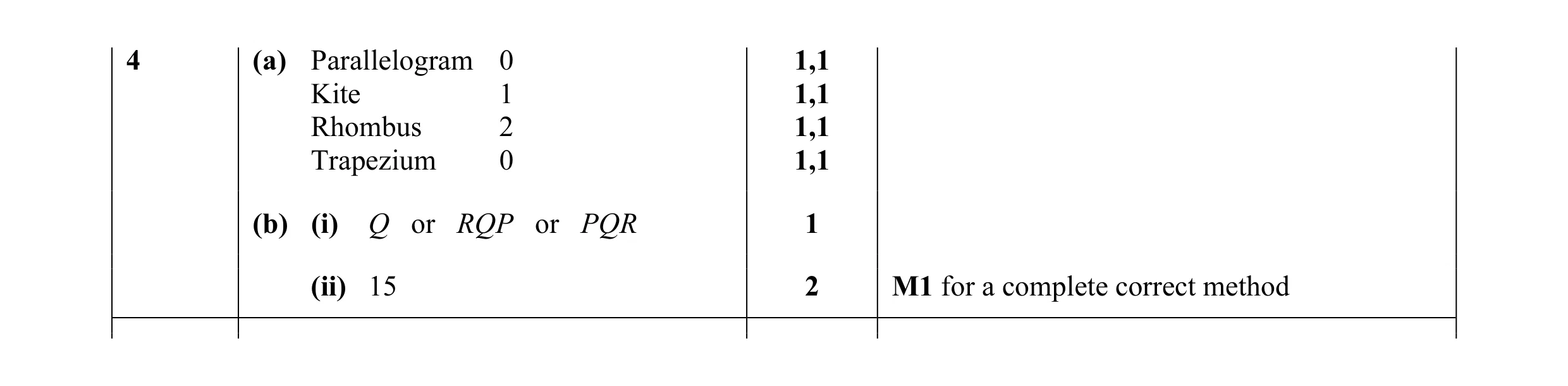 11
11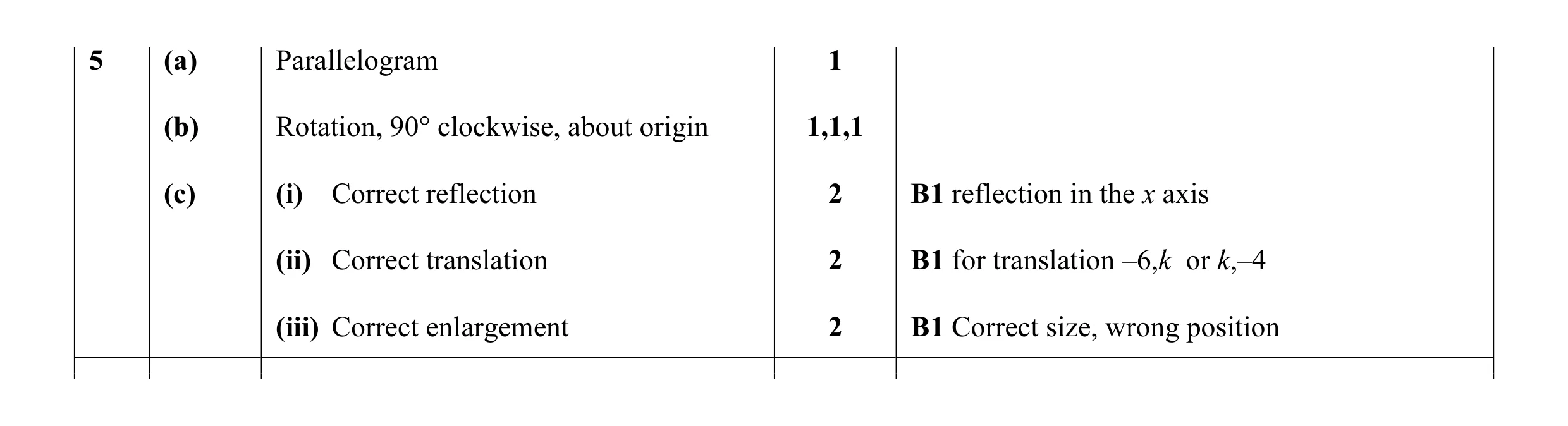 10
10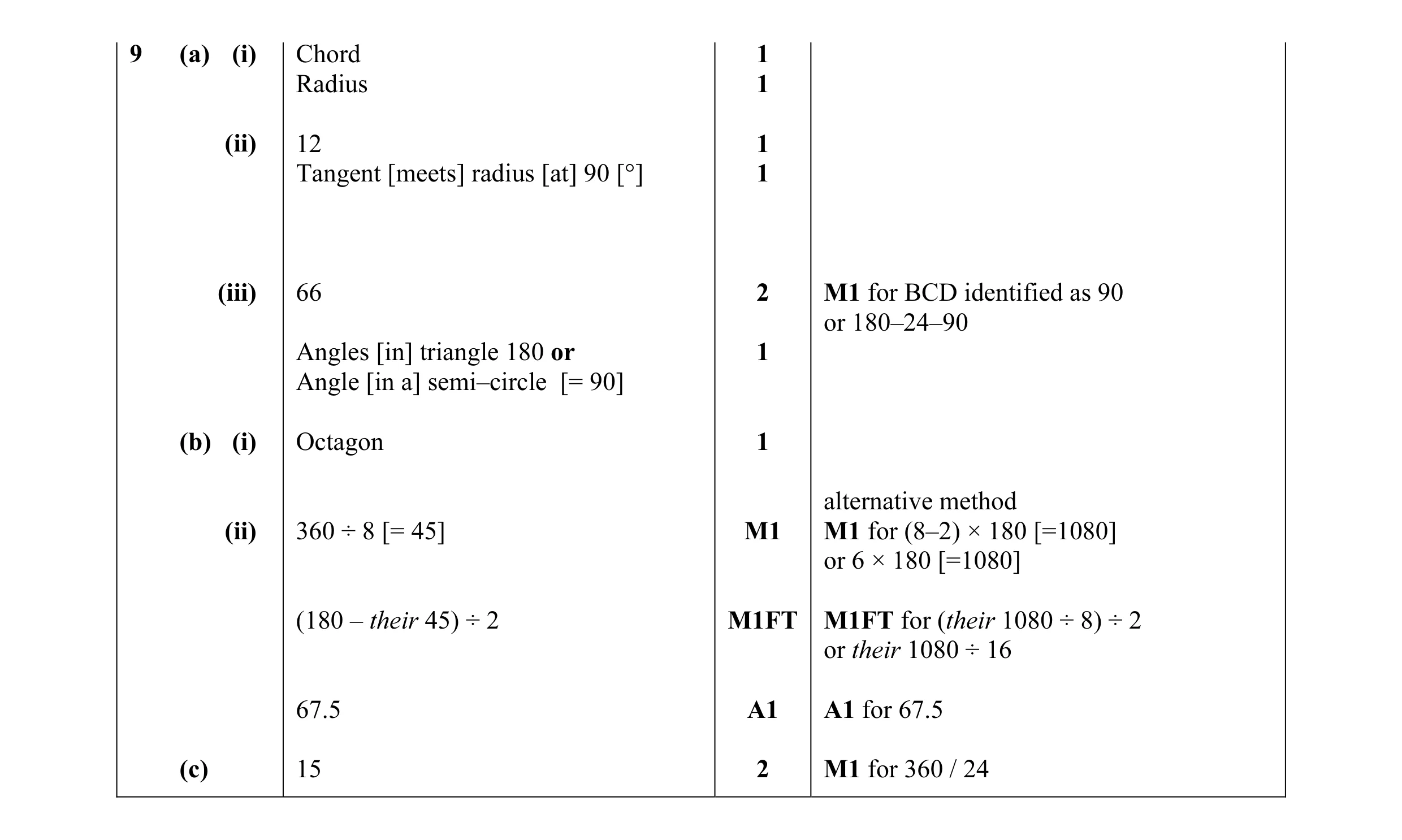 13
13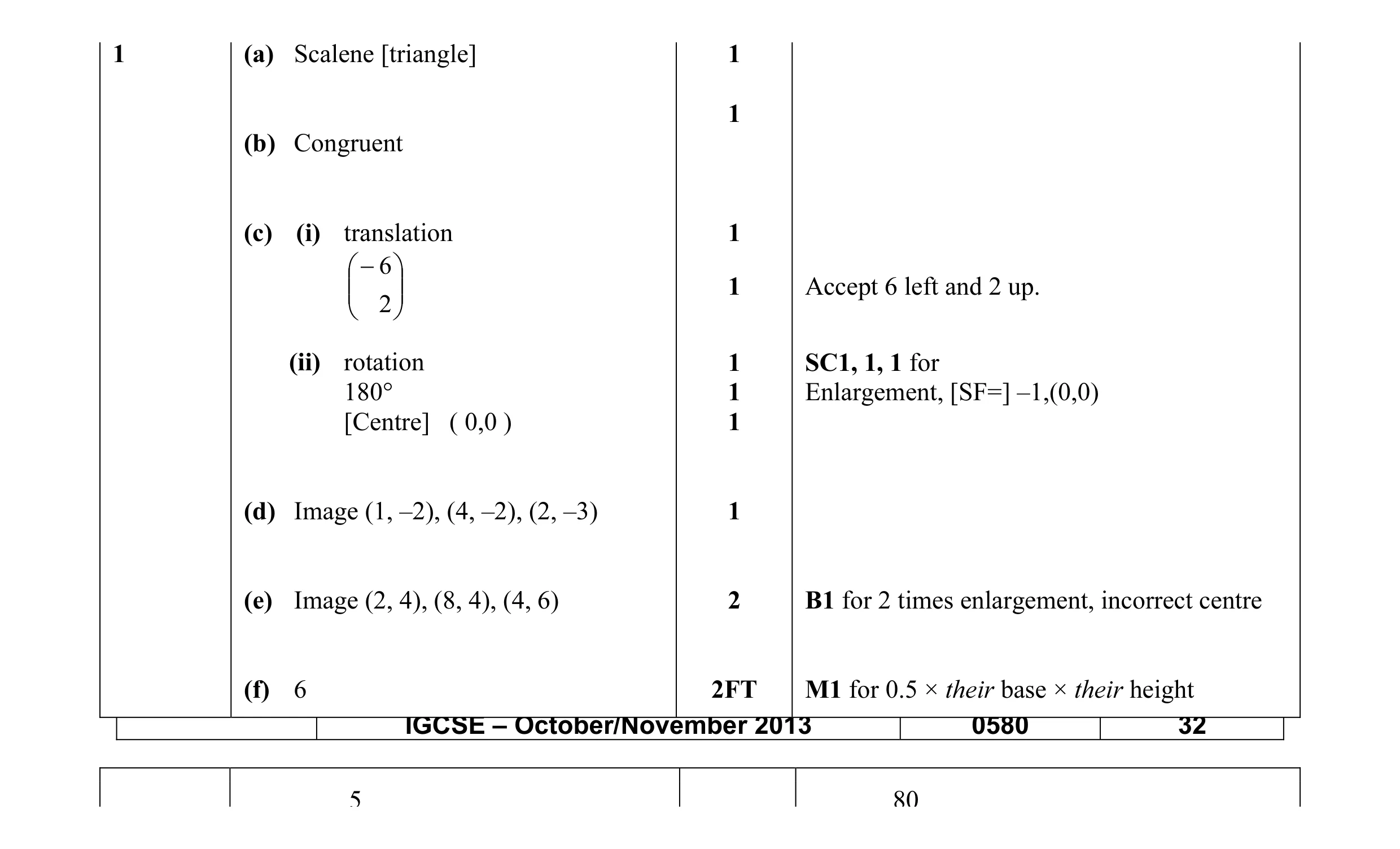 12
12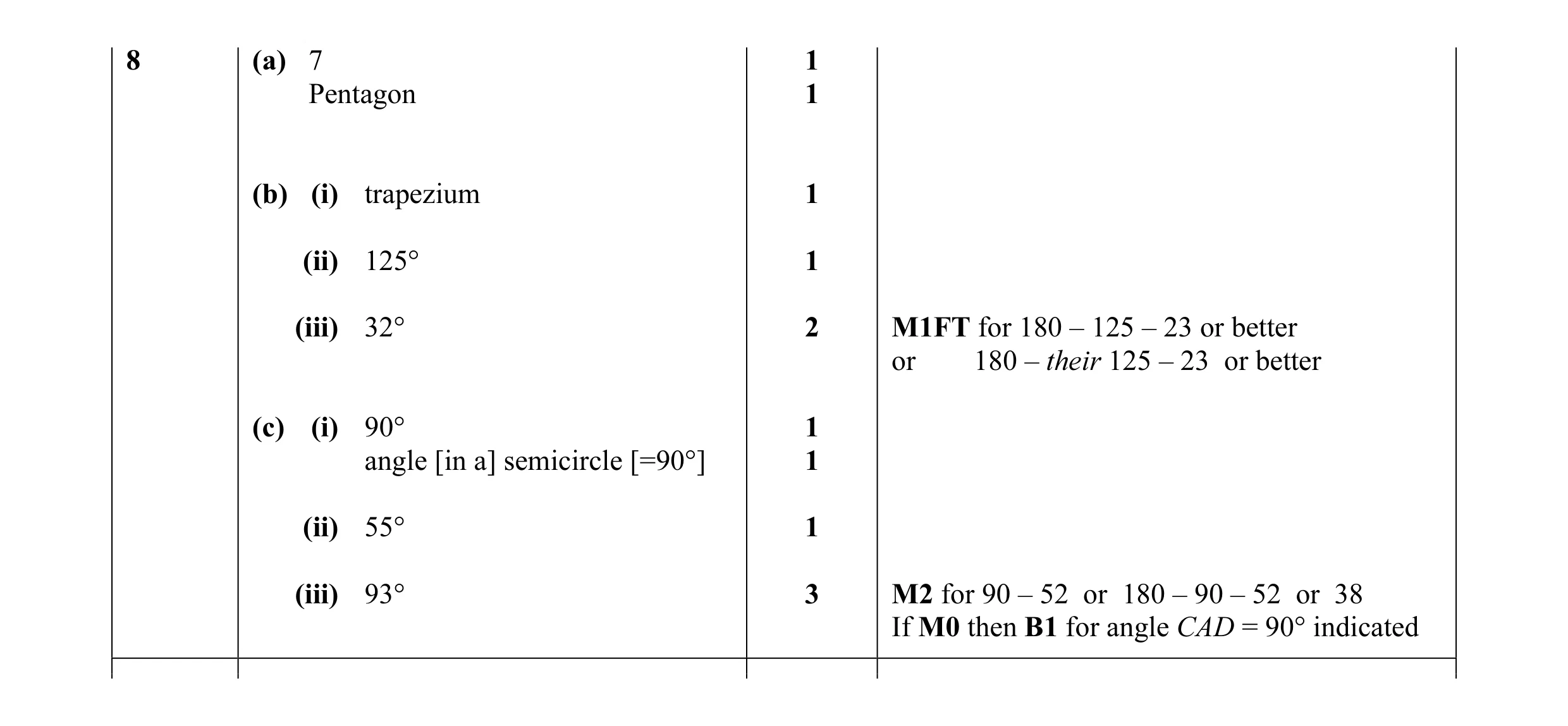 12
12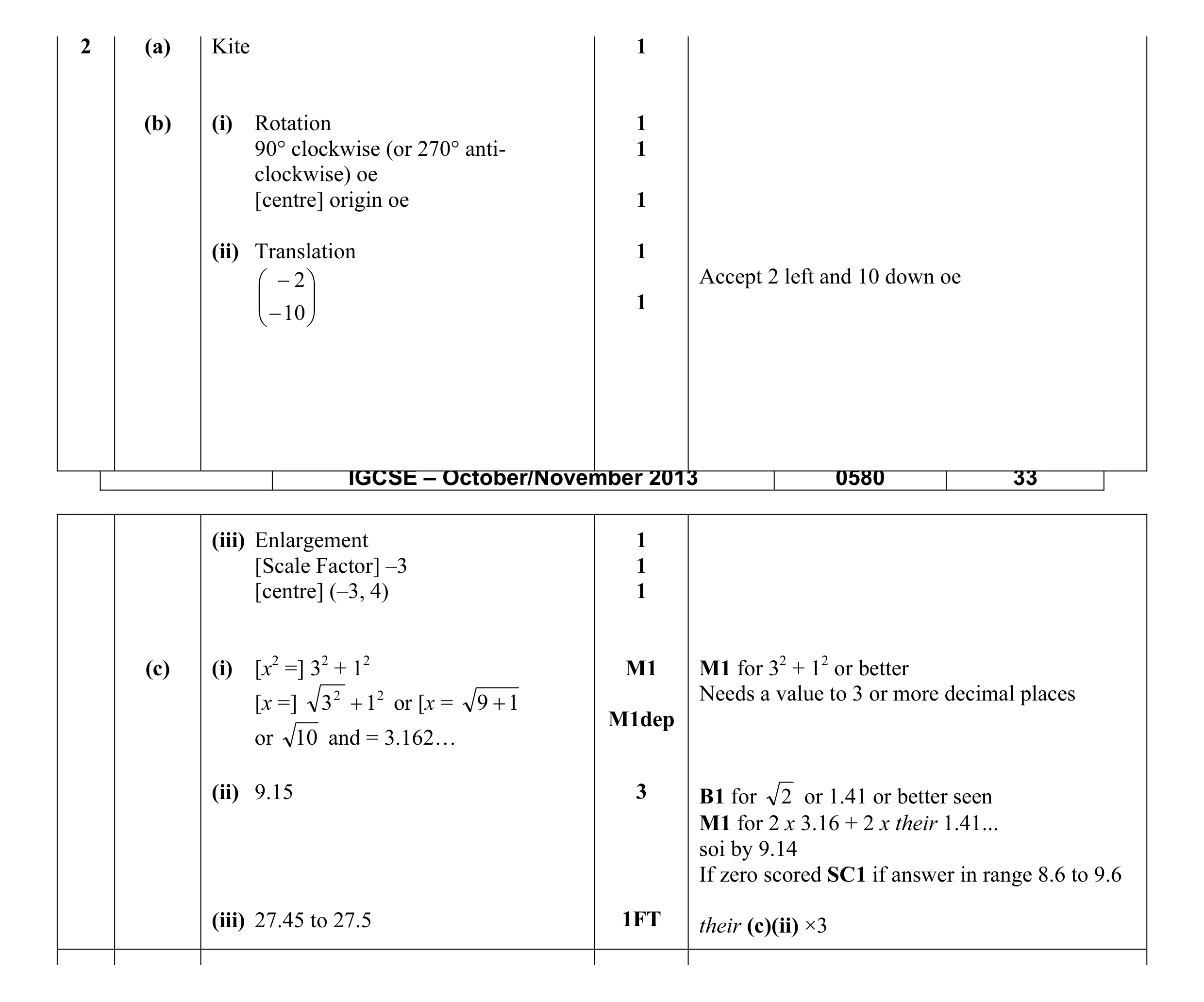 15
15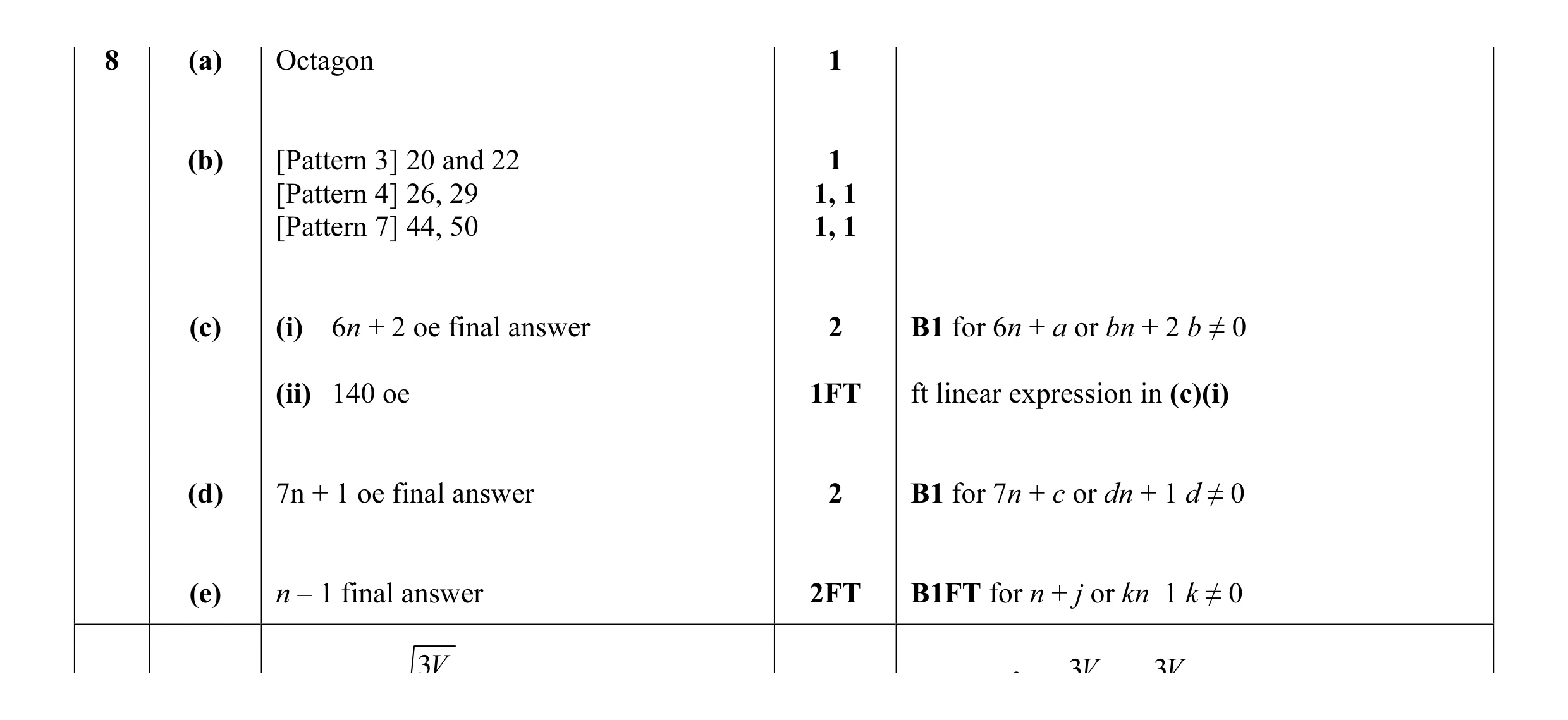 13
13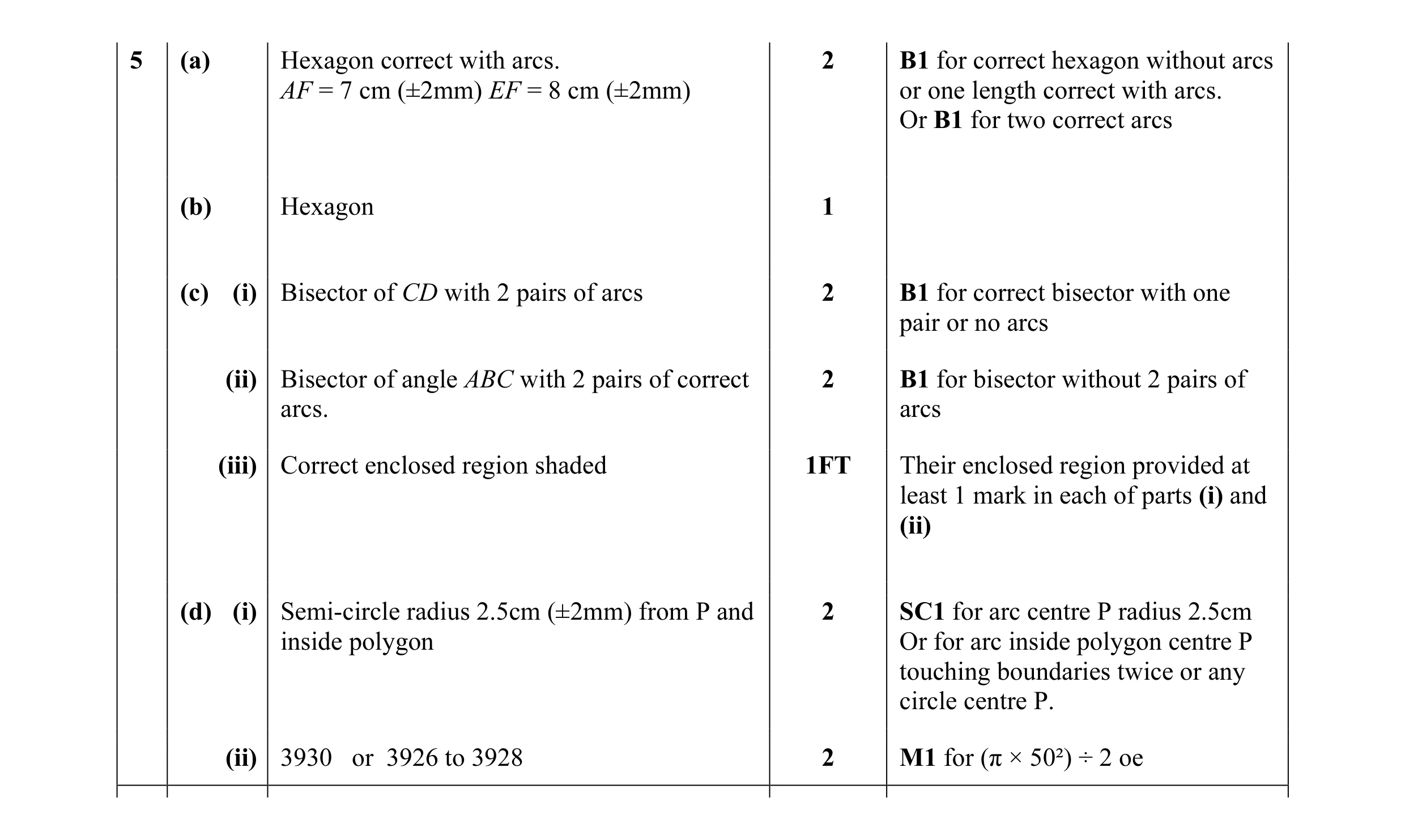 12
12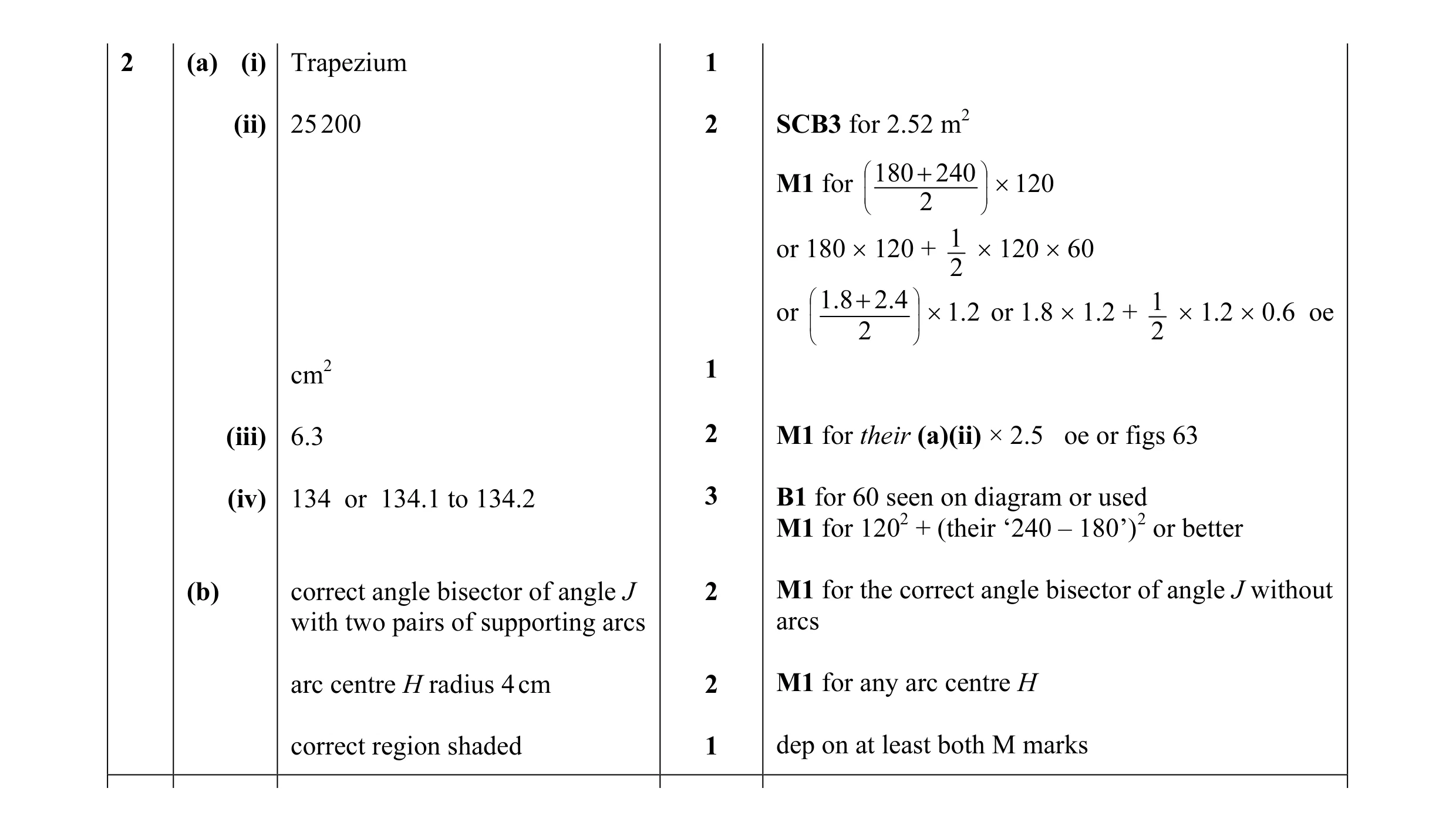 14
14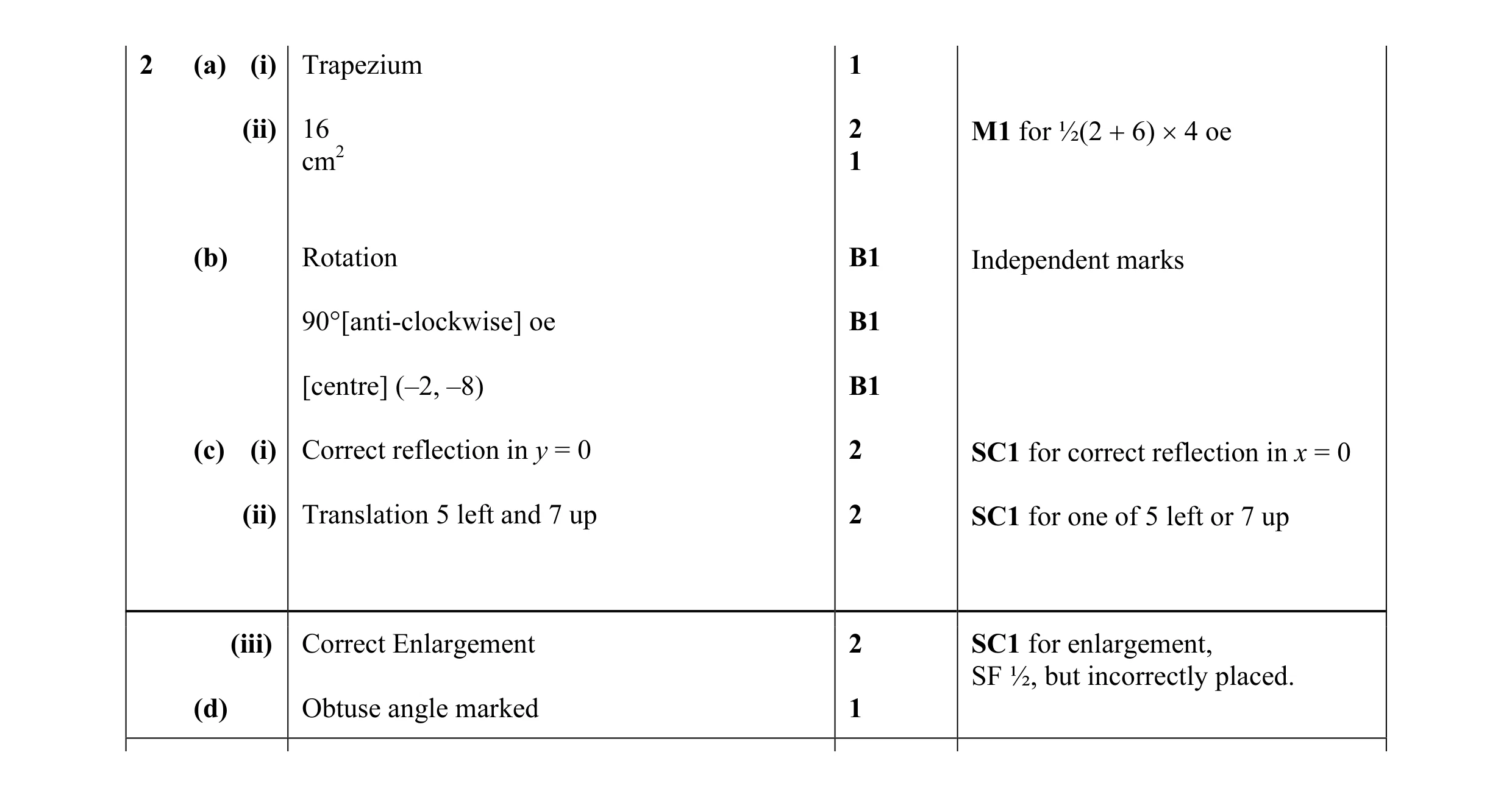 14
14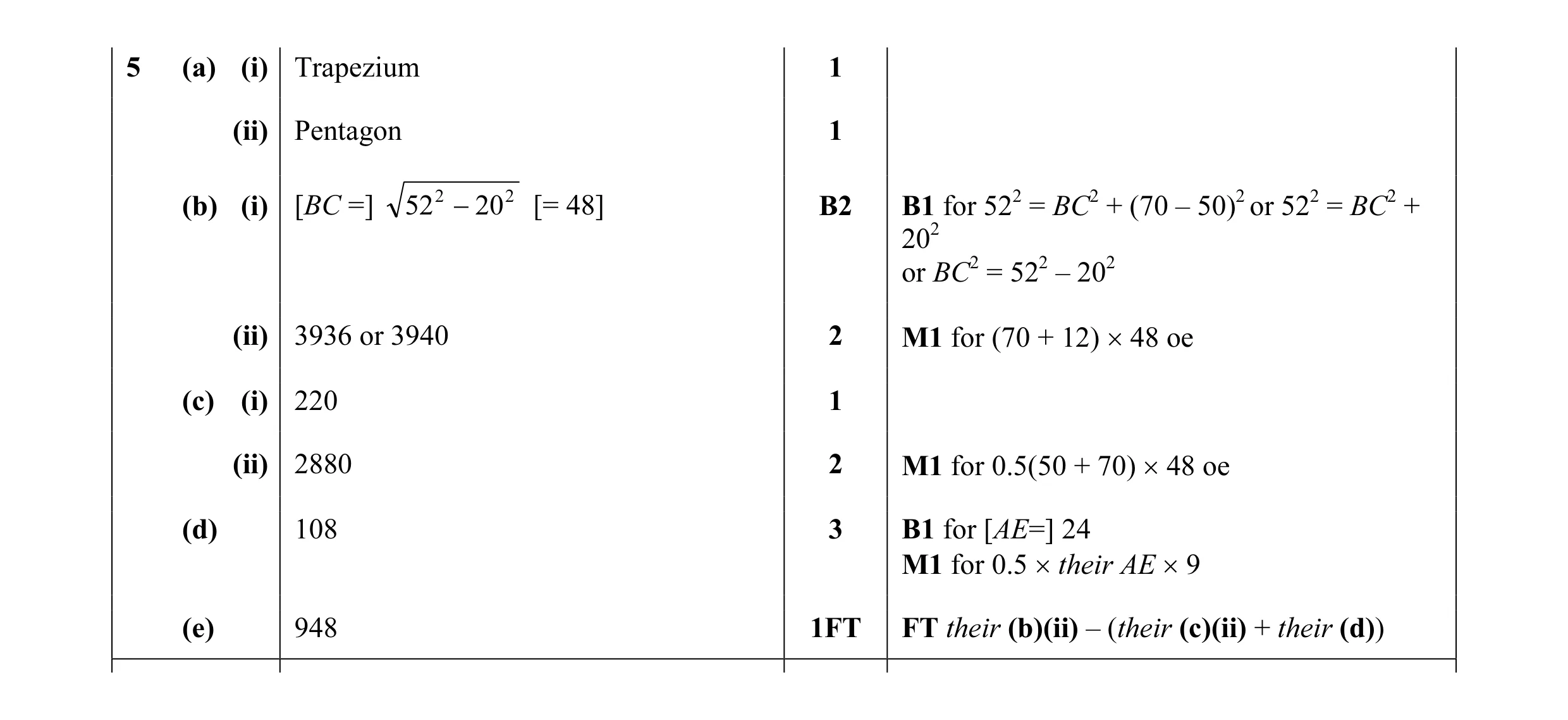 13
13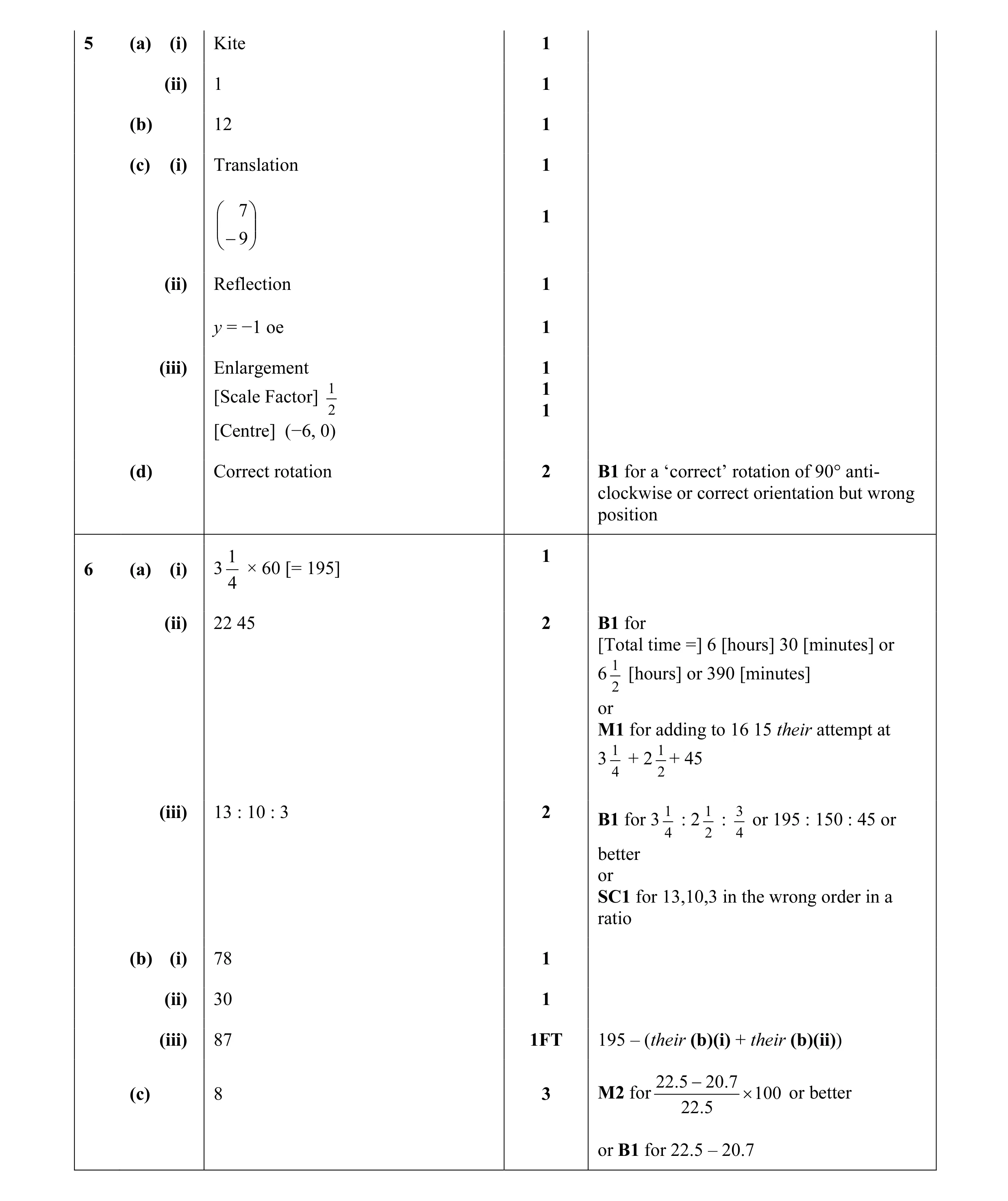 12
12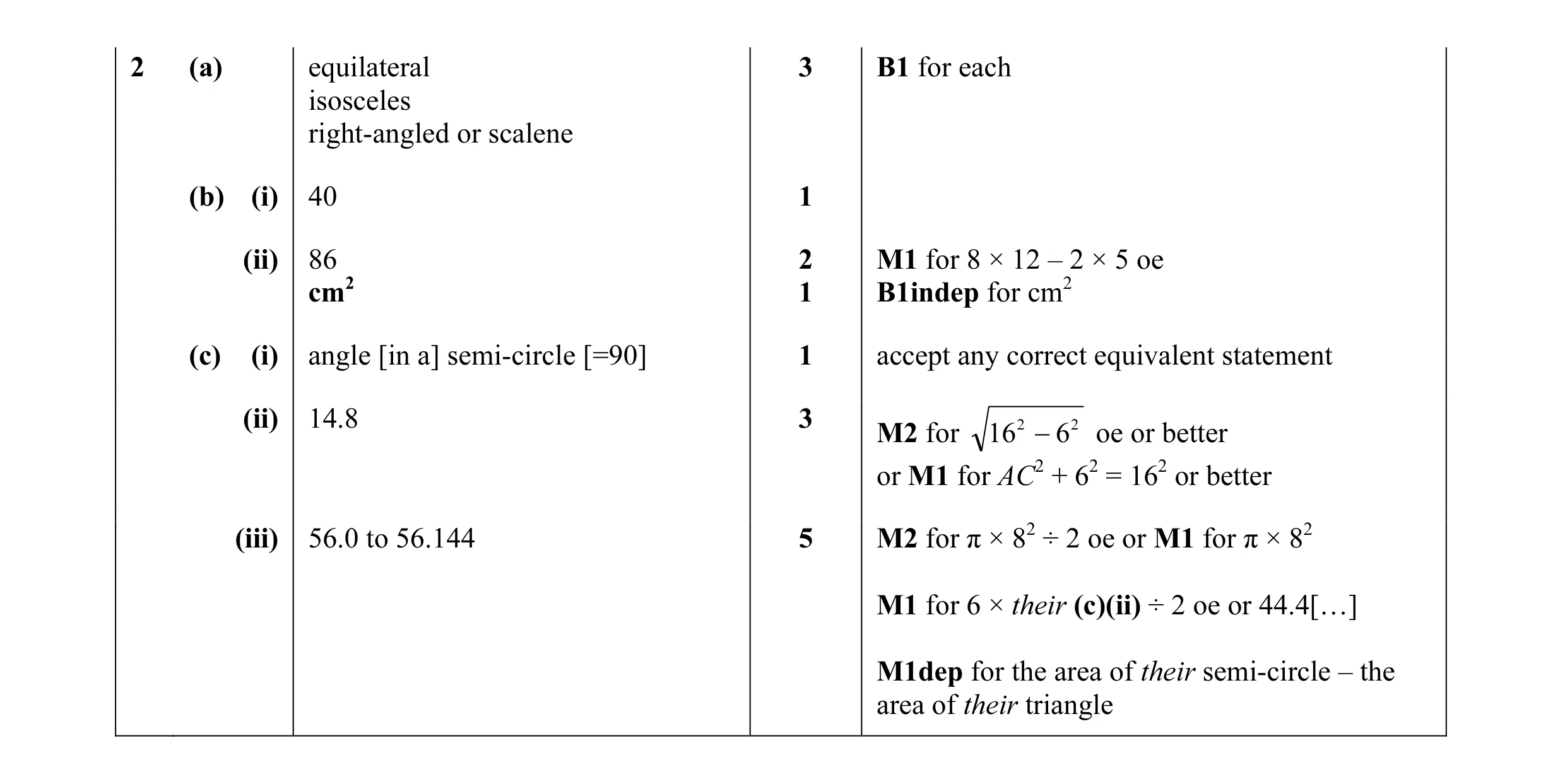 16
16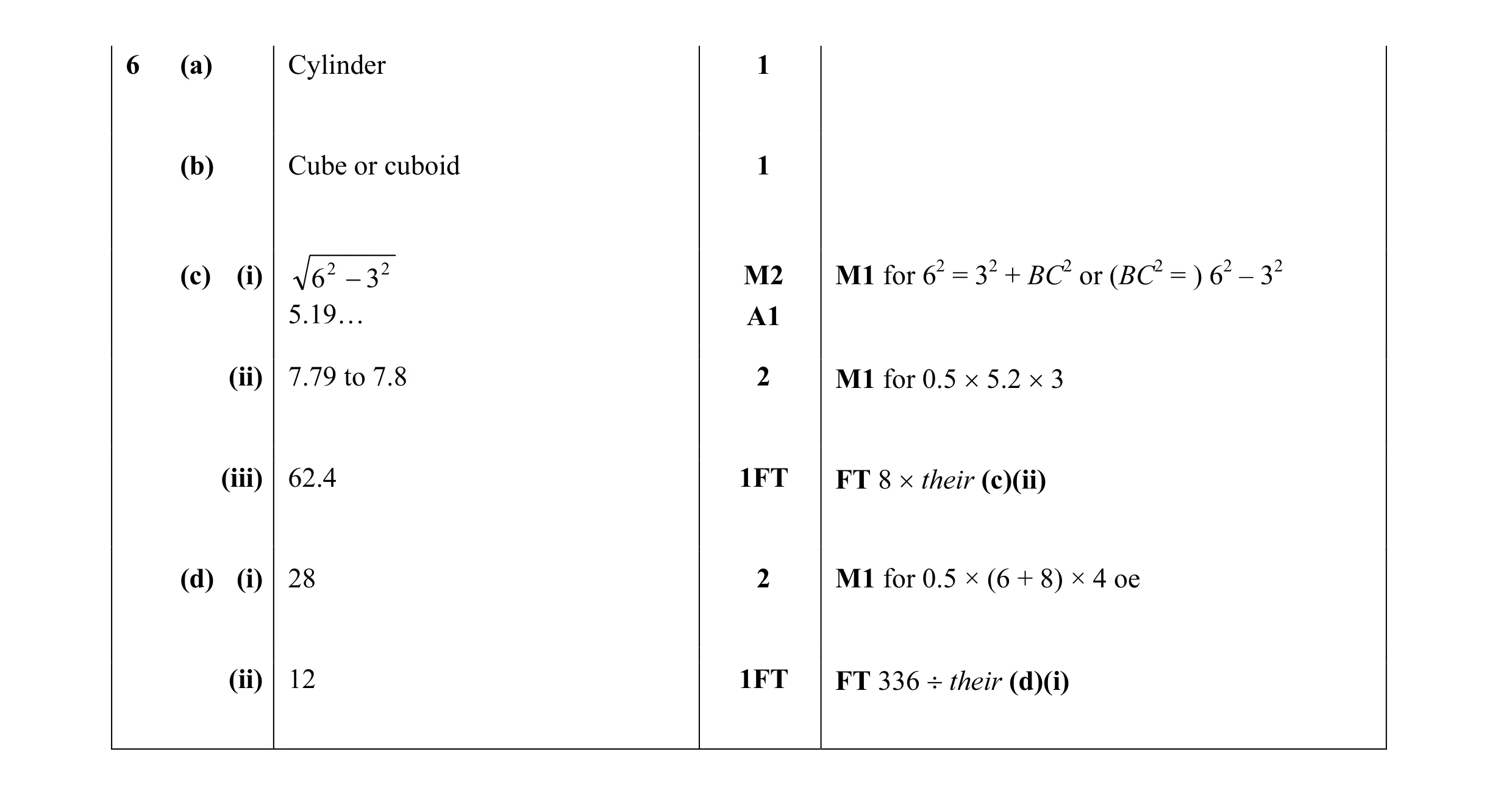 11
11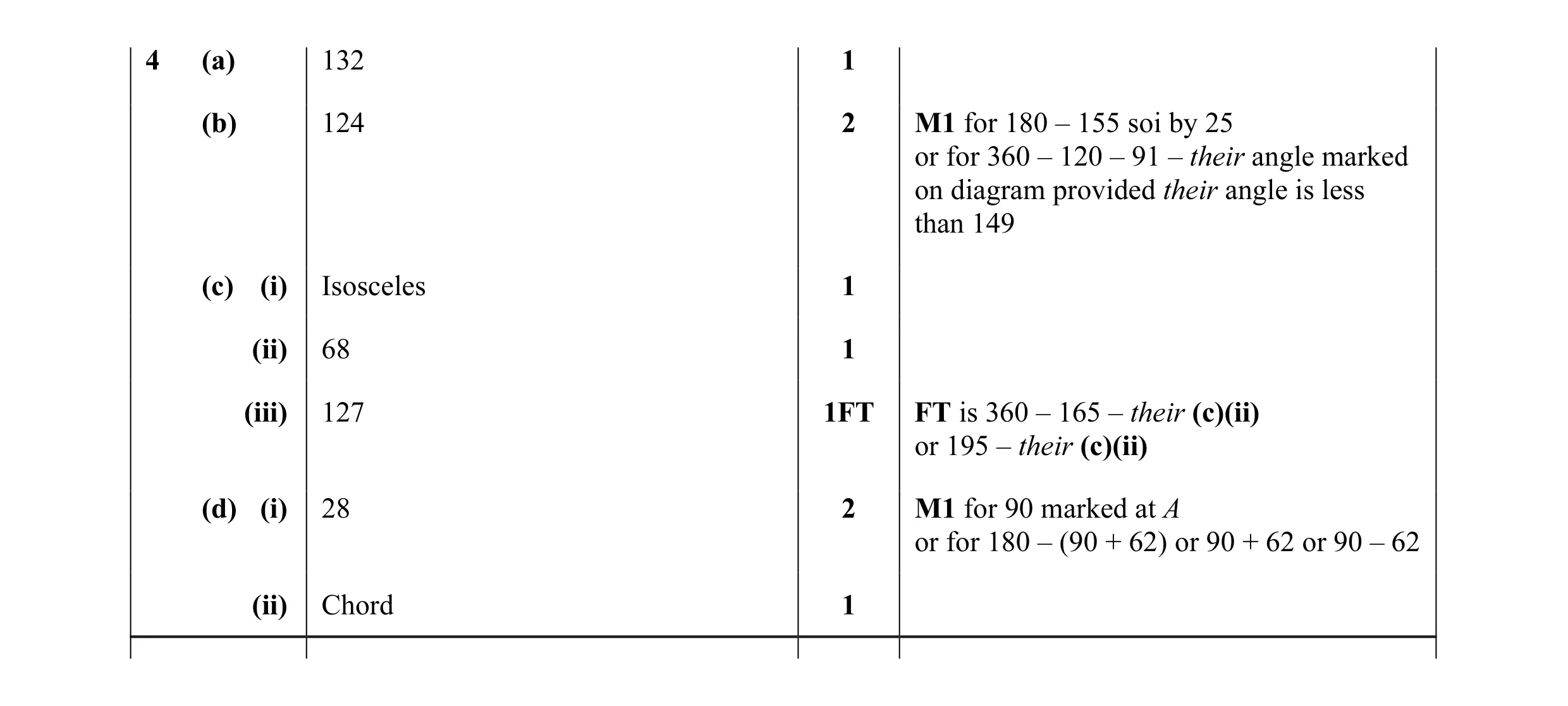 9
9 10
10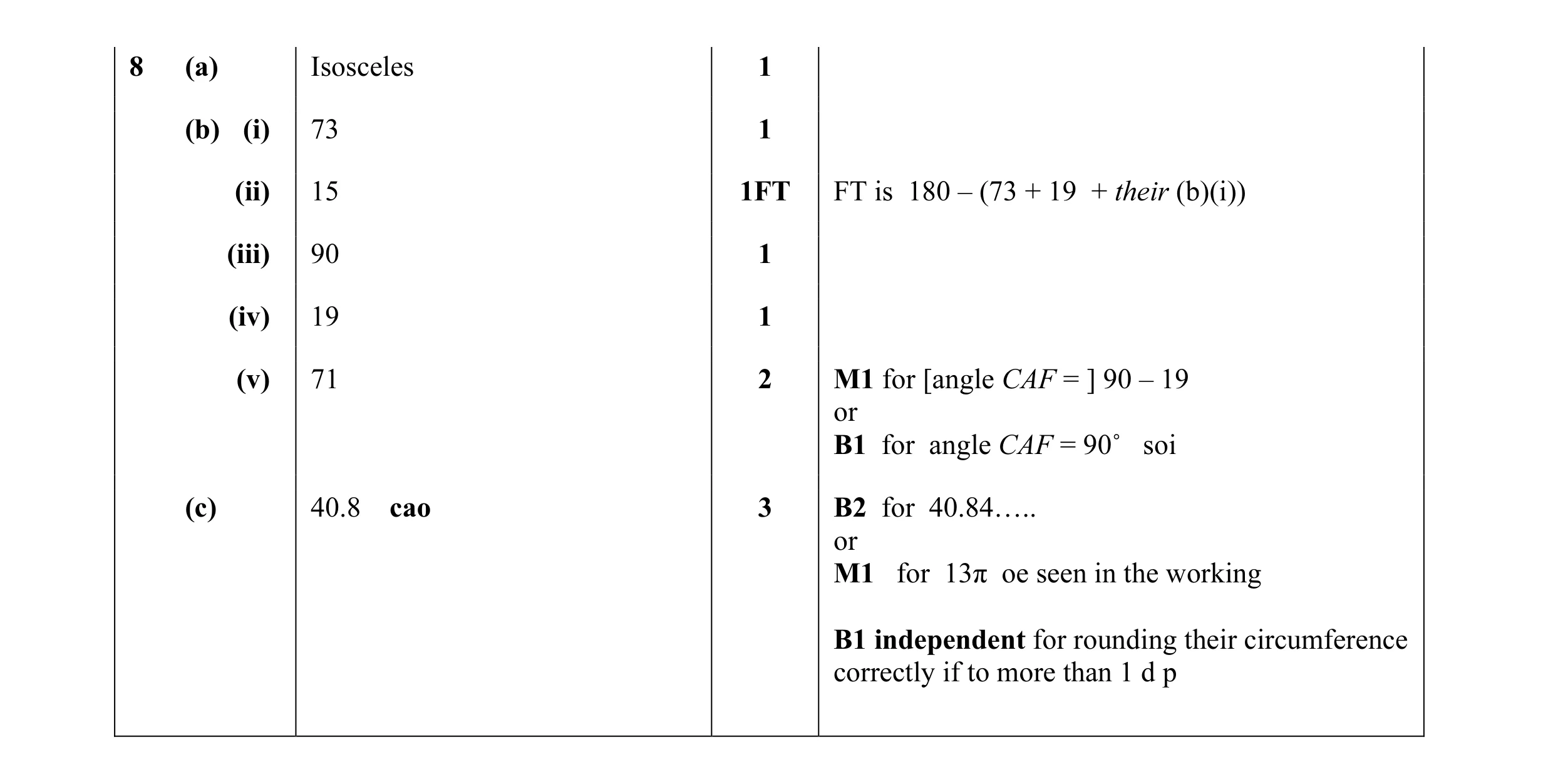 10
10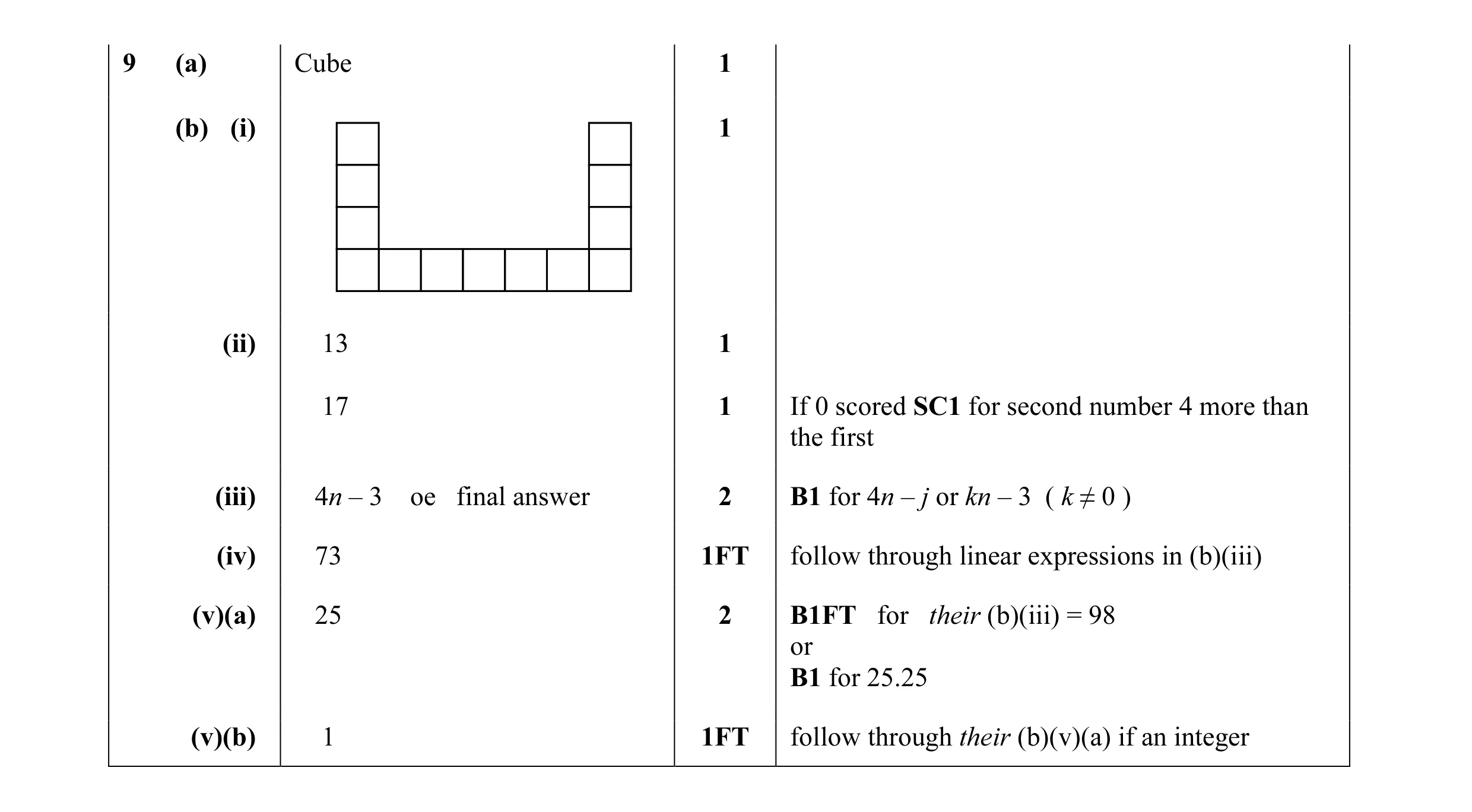 9
9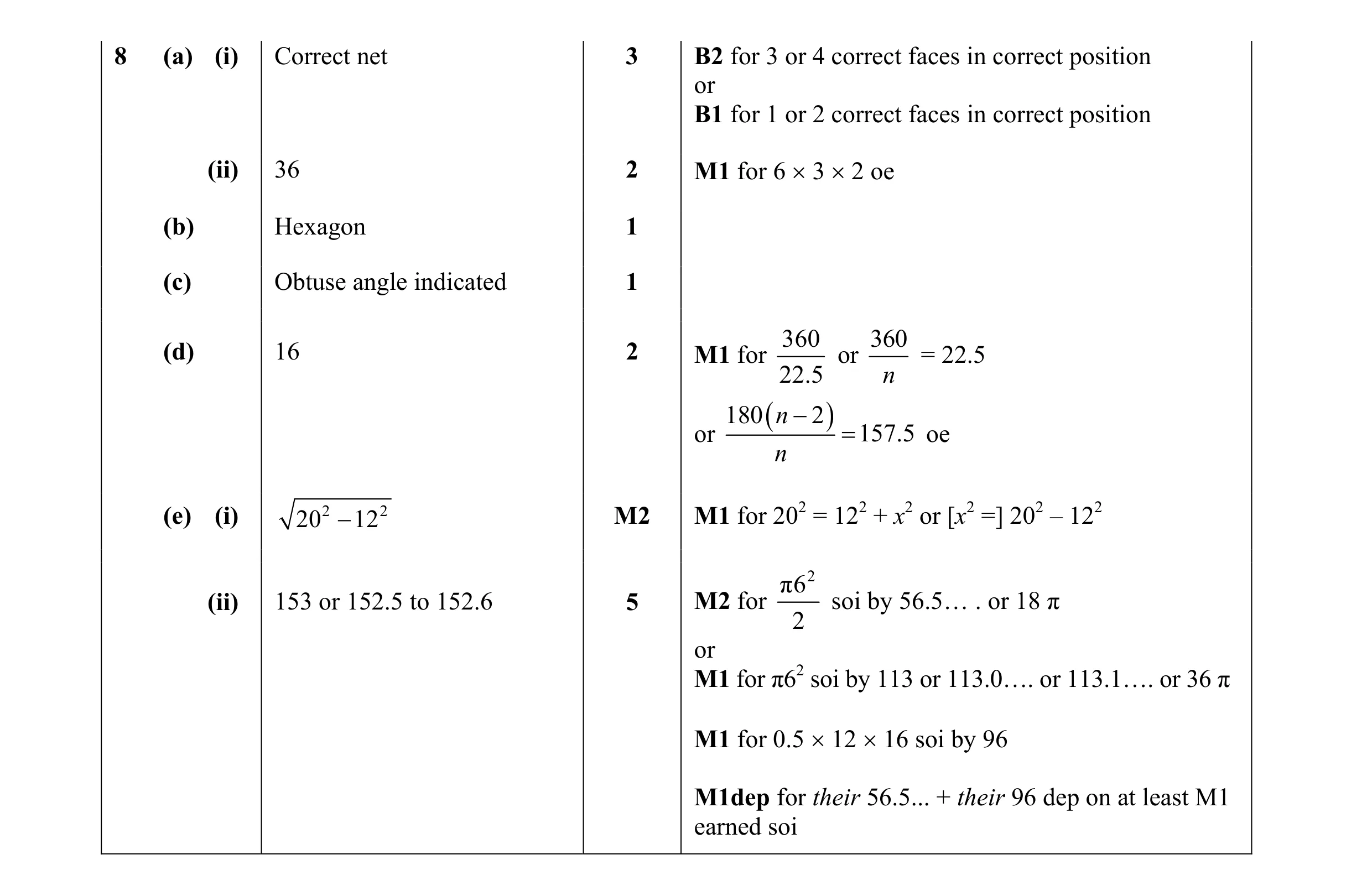 16
16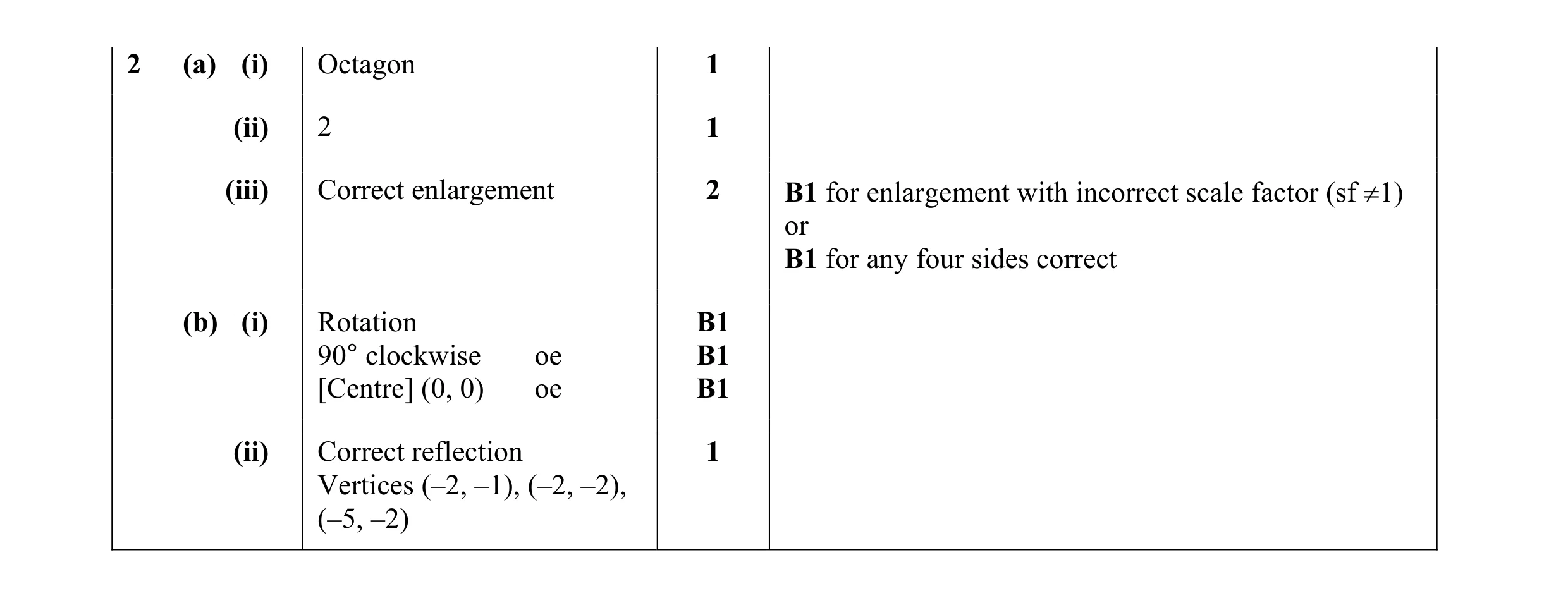 10
10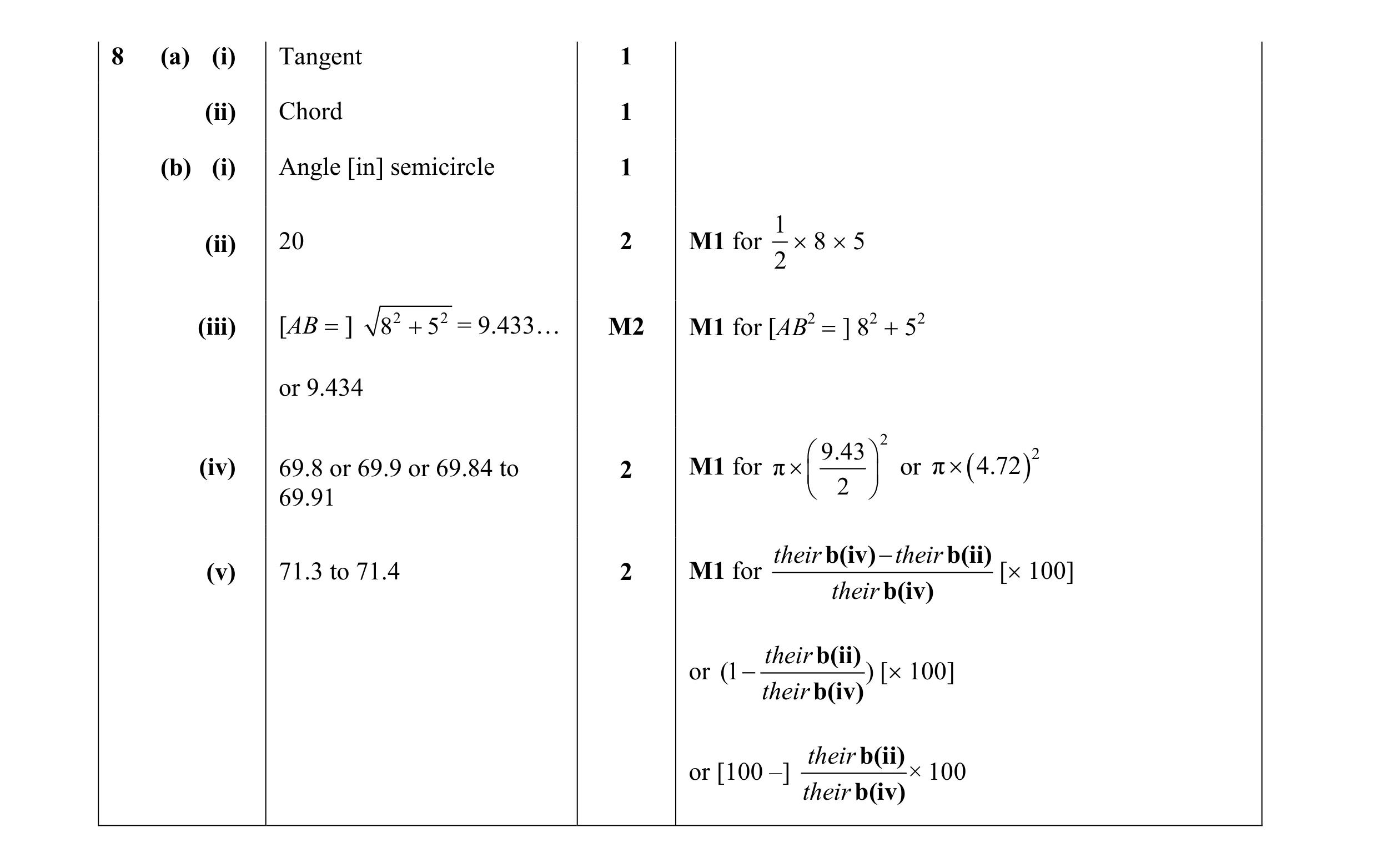 11
11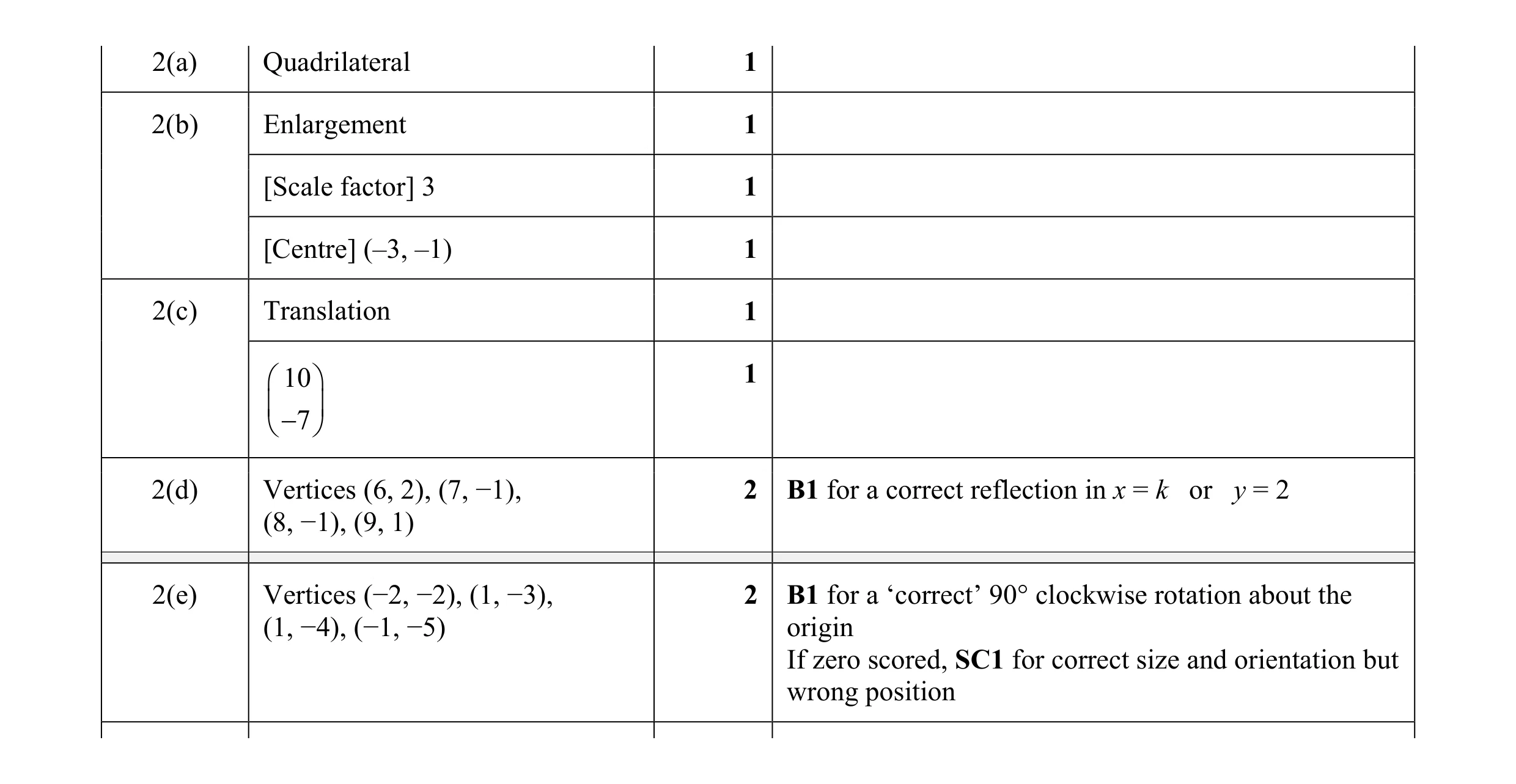 10
10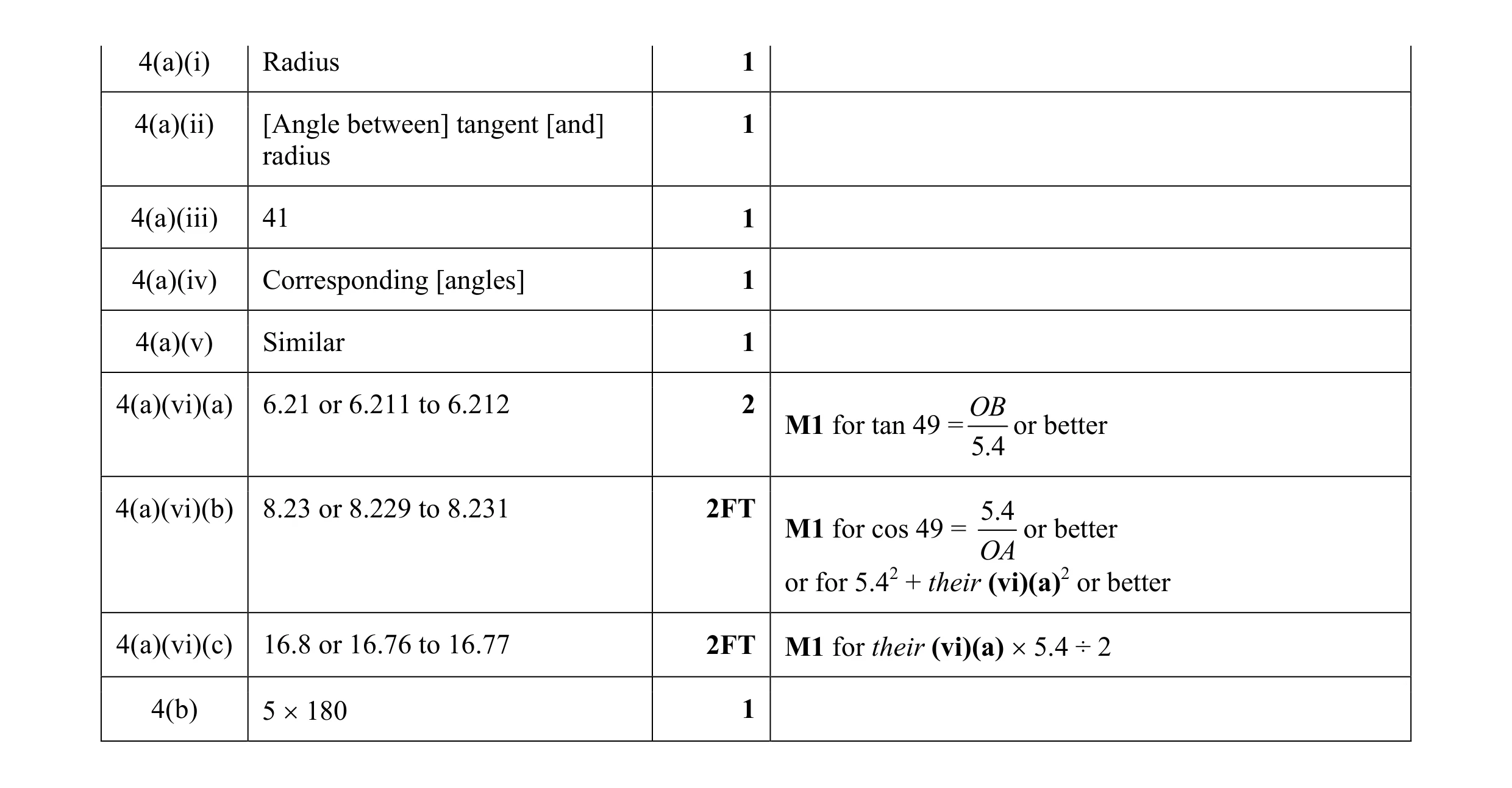 12
12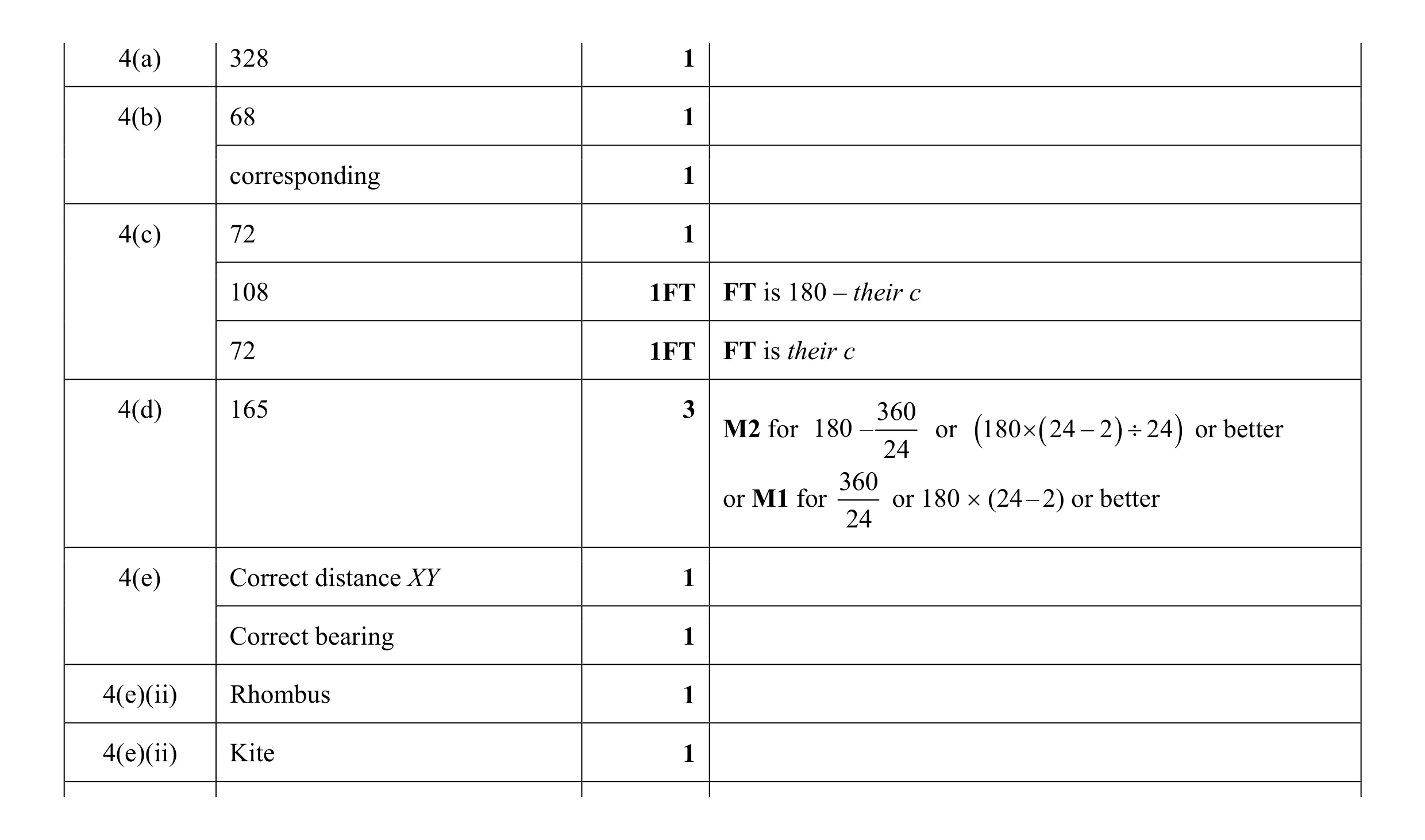 13
13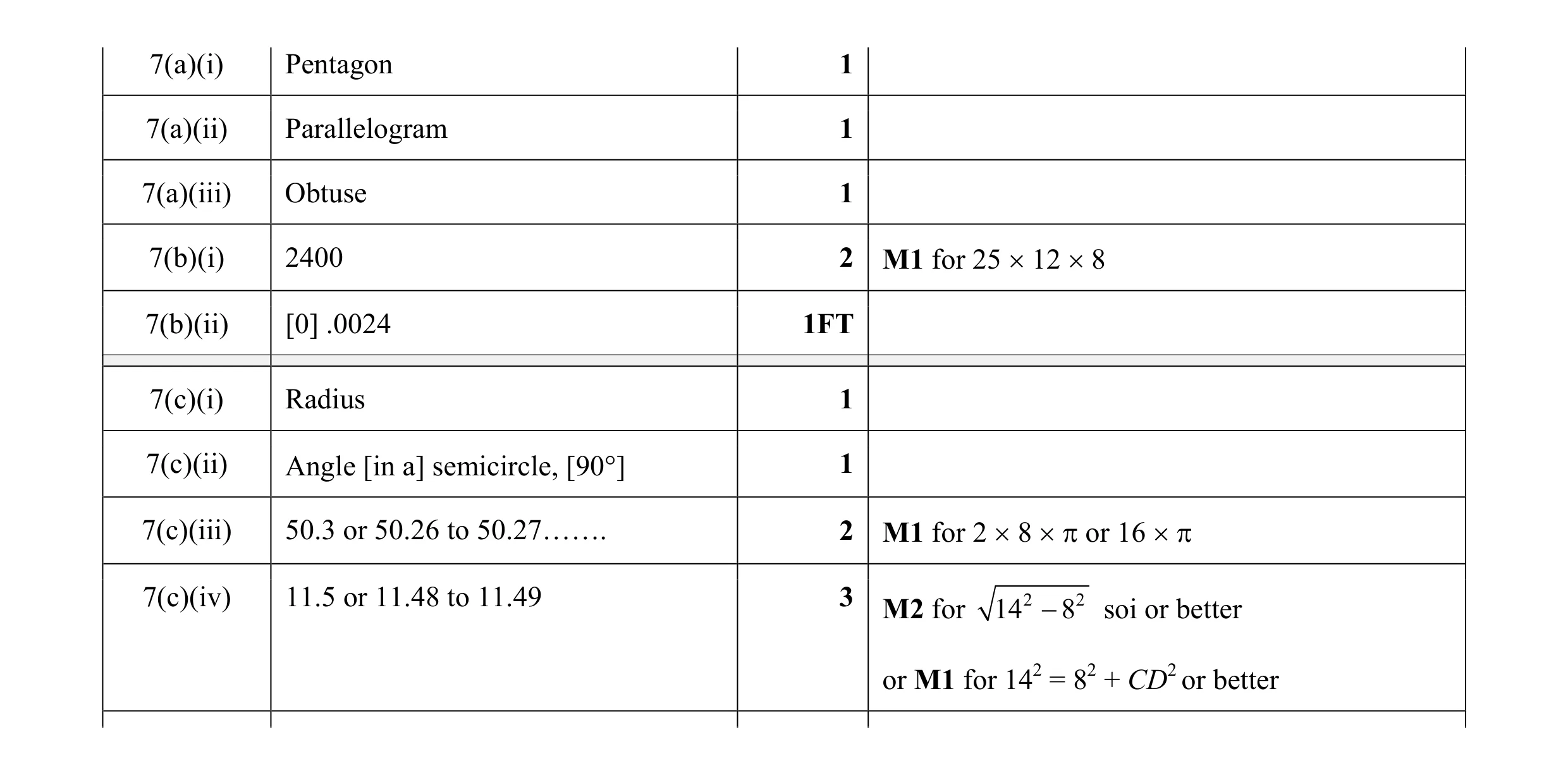 13
13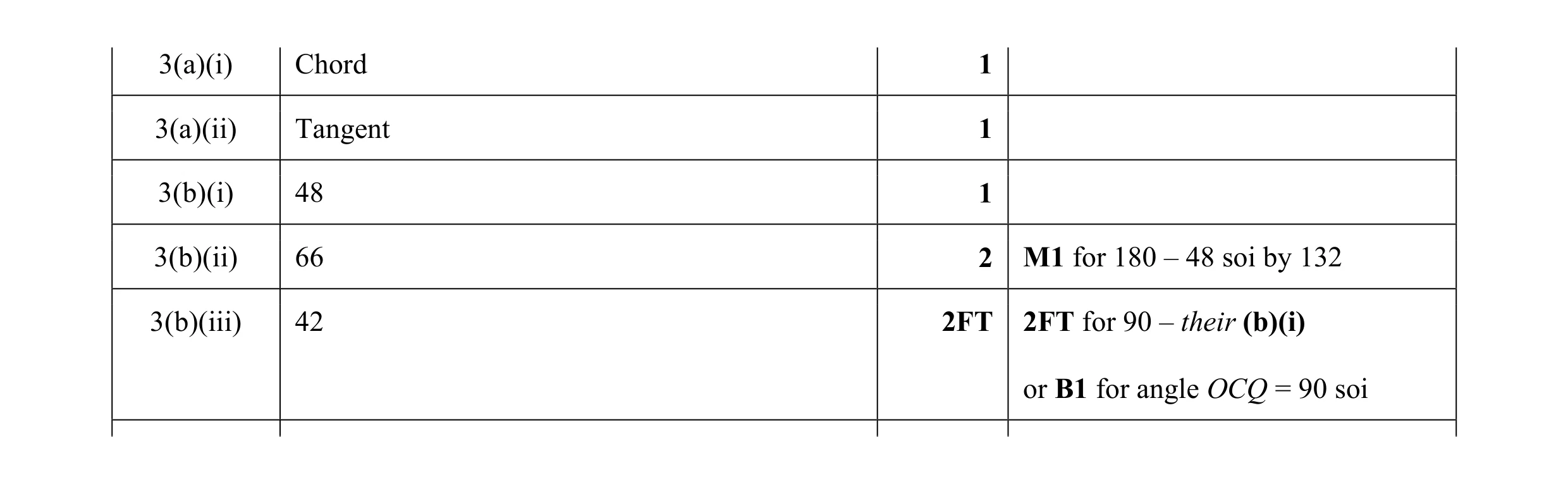 7
7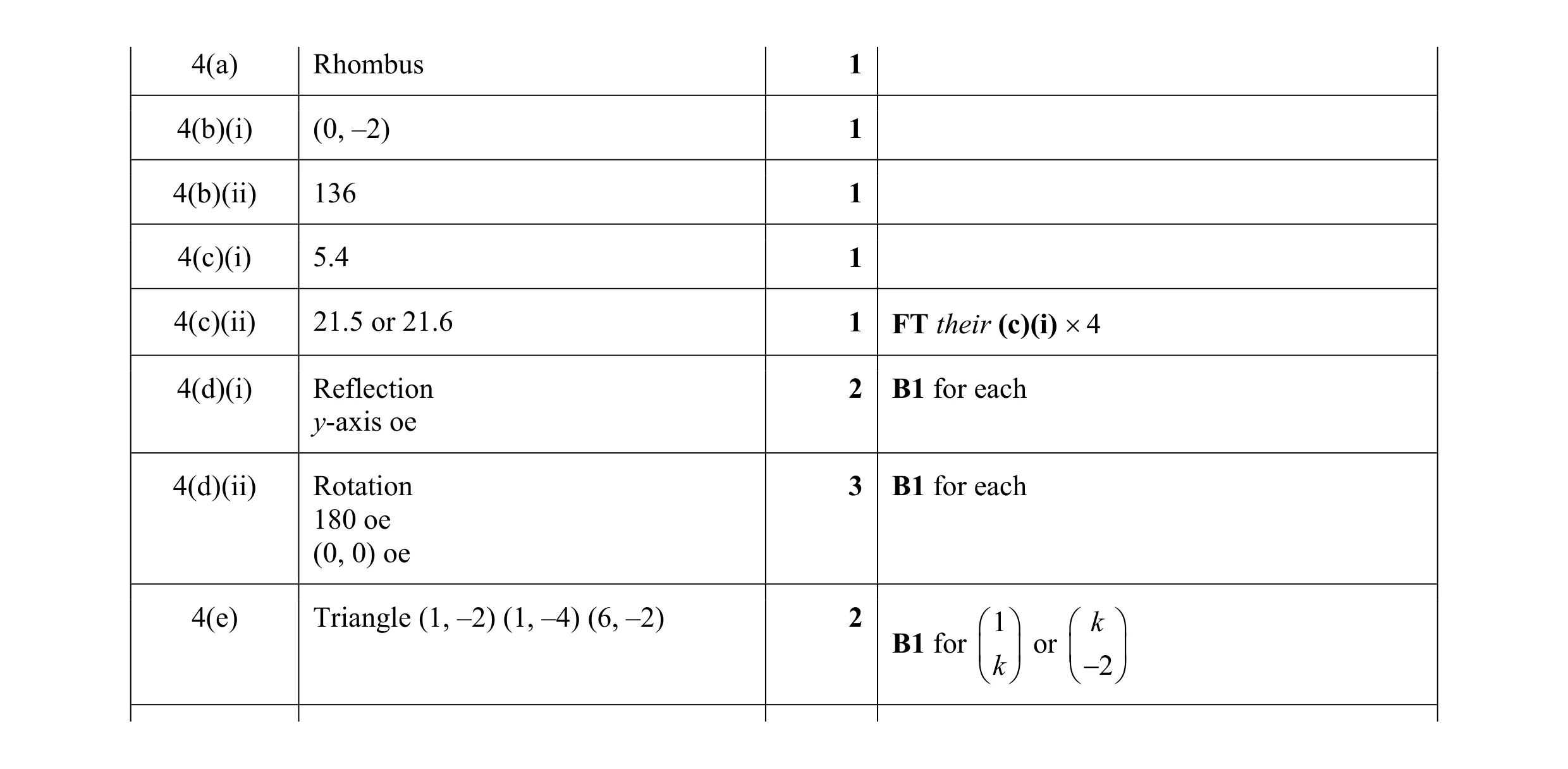 12
12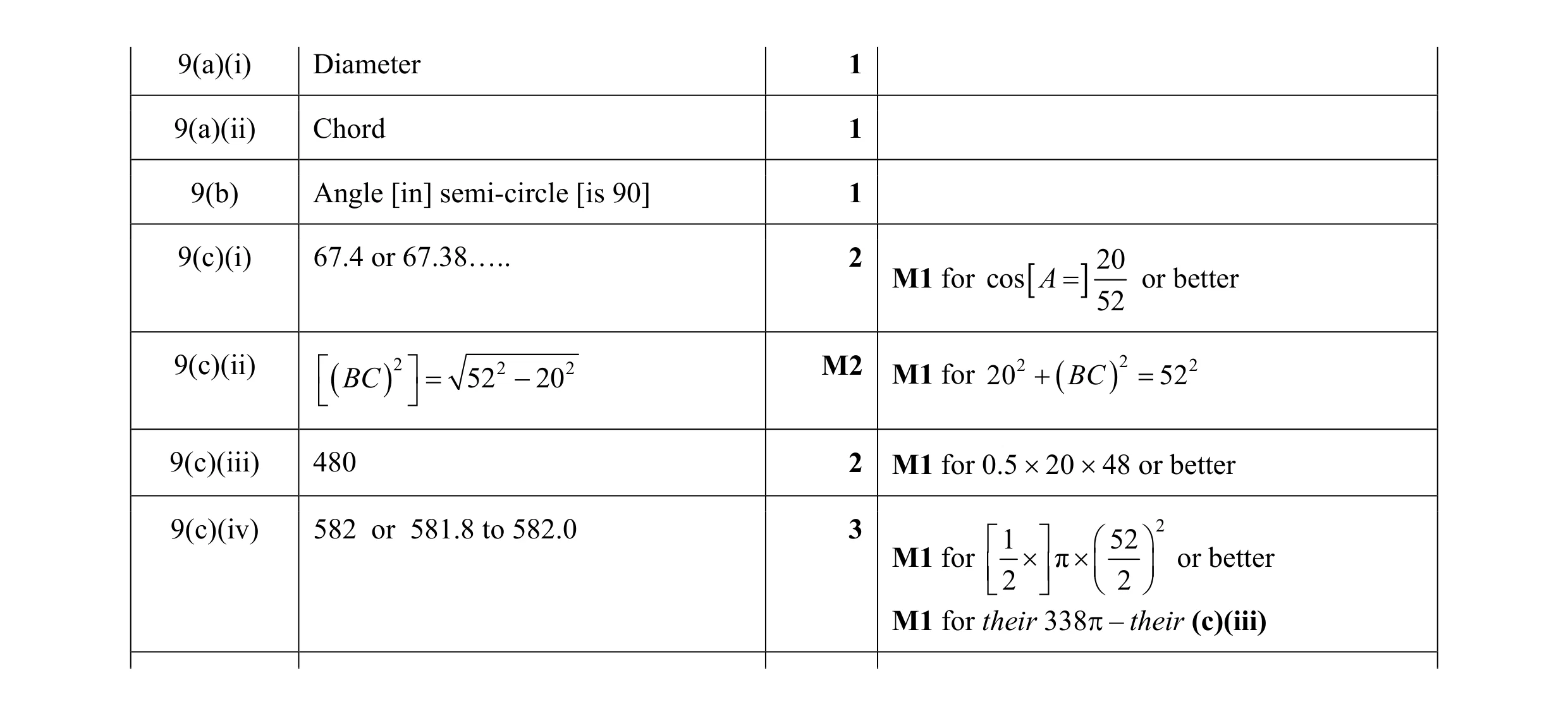 12
12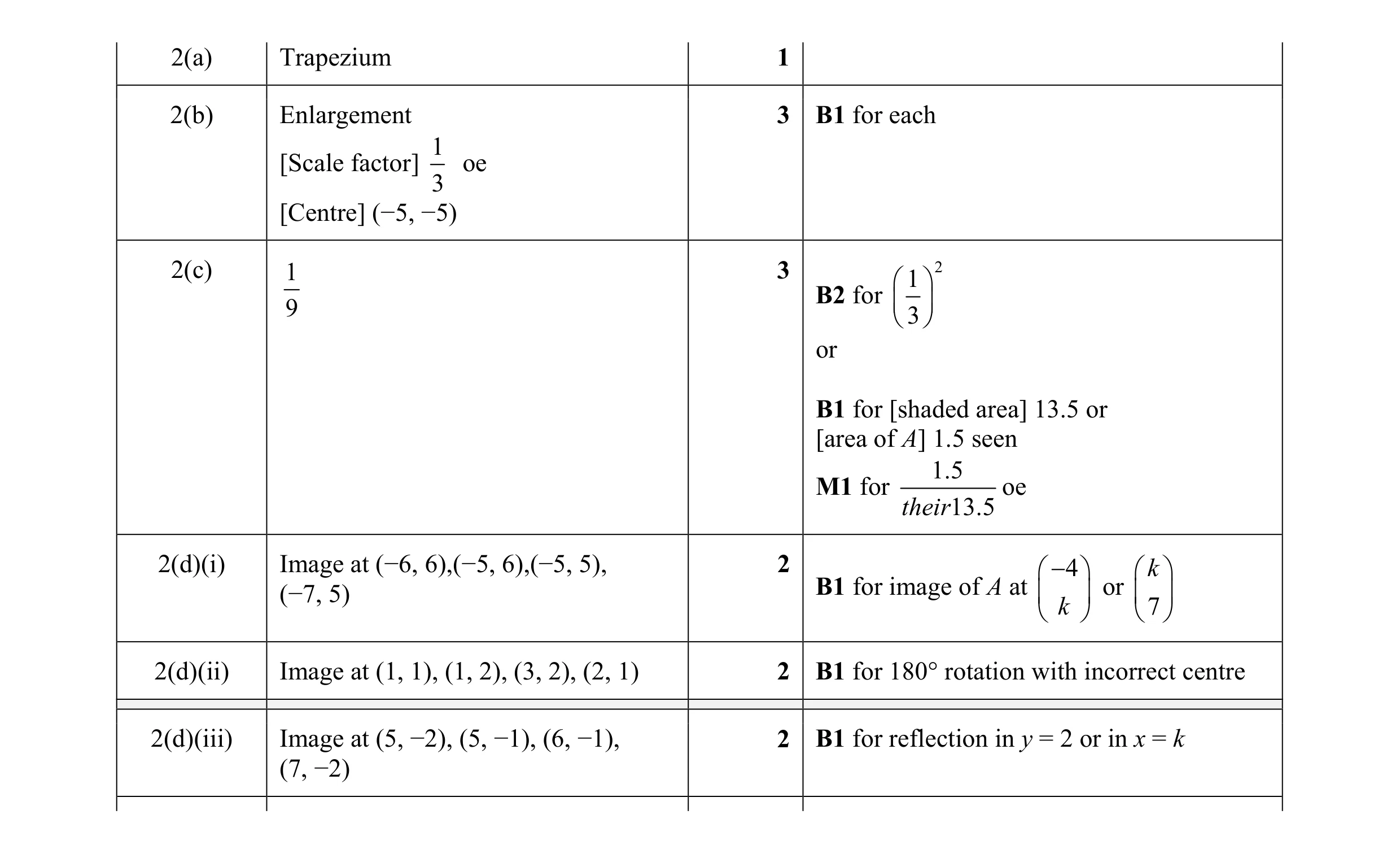 13
13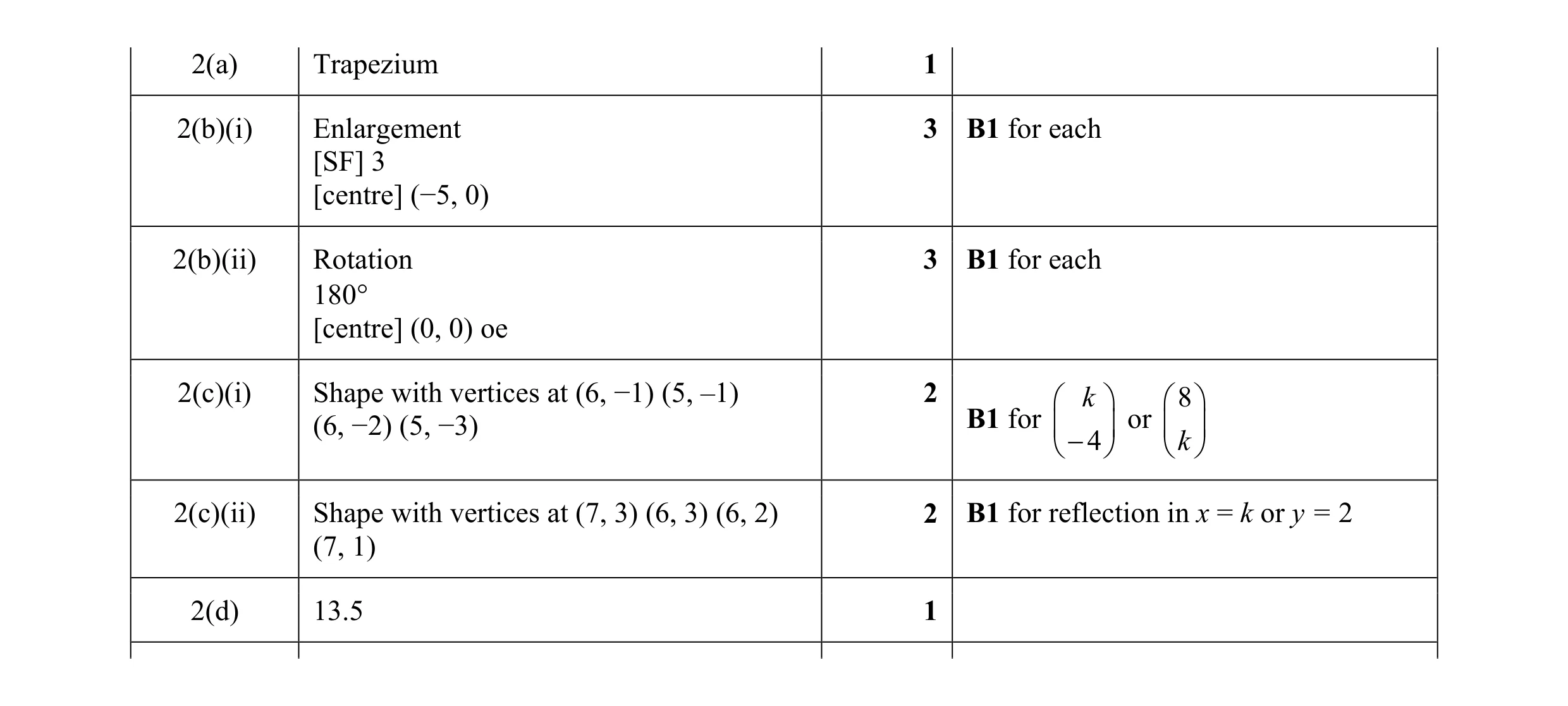 12
12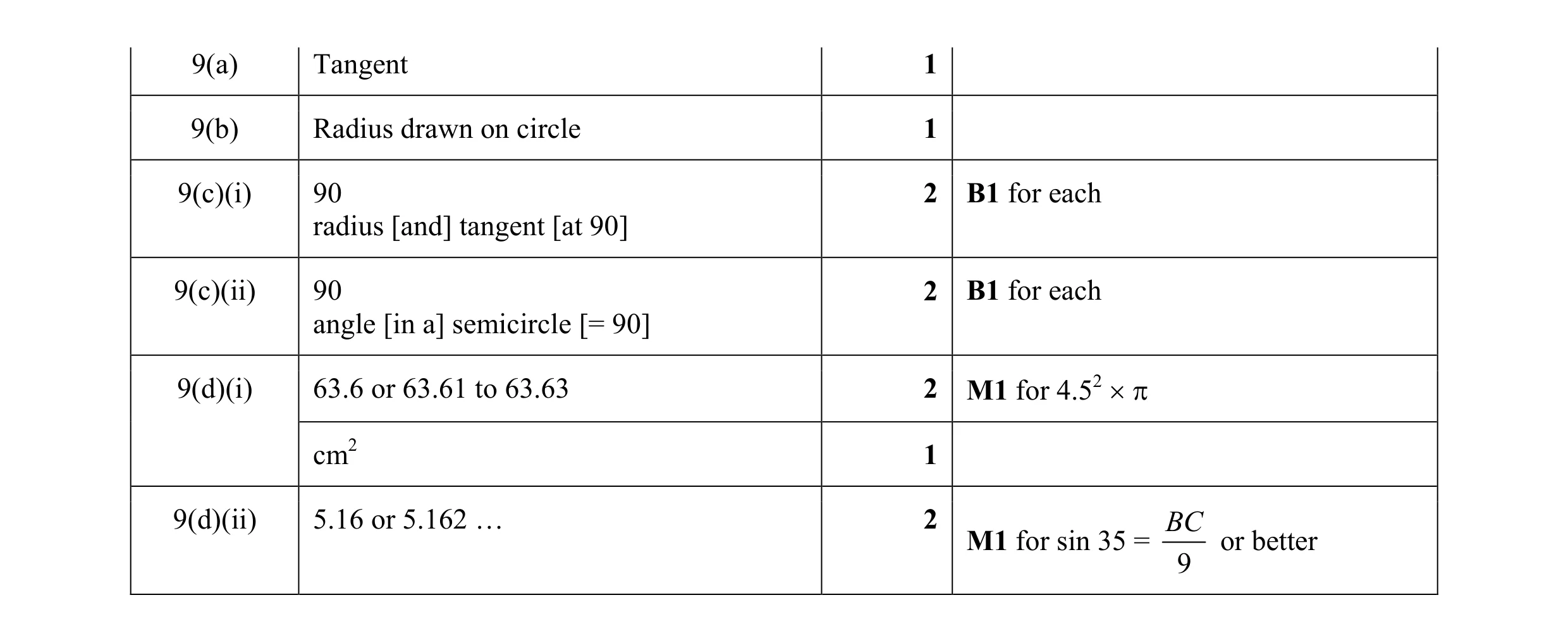 11
11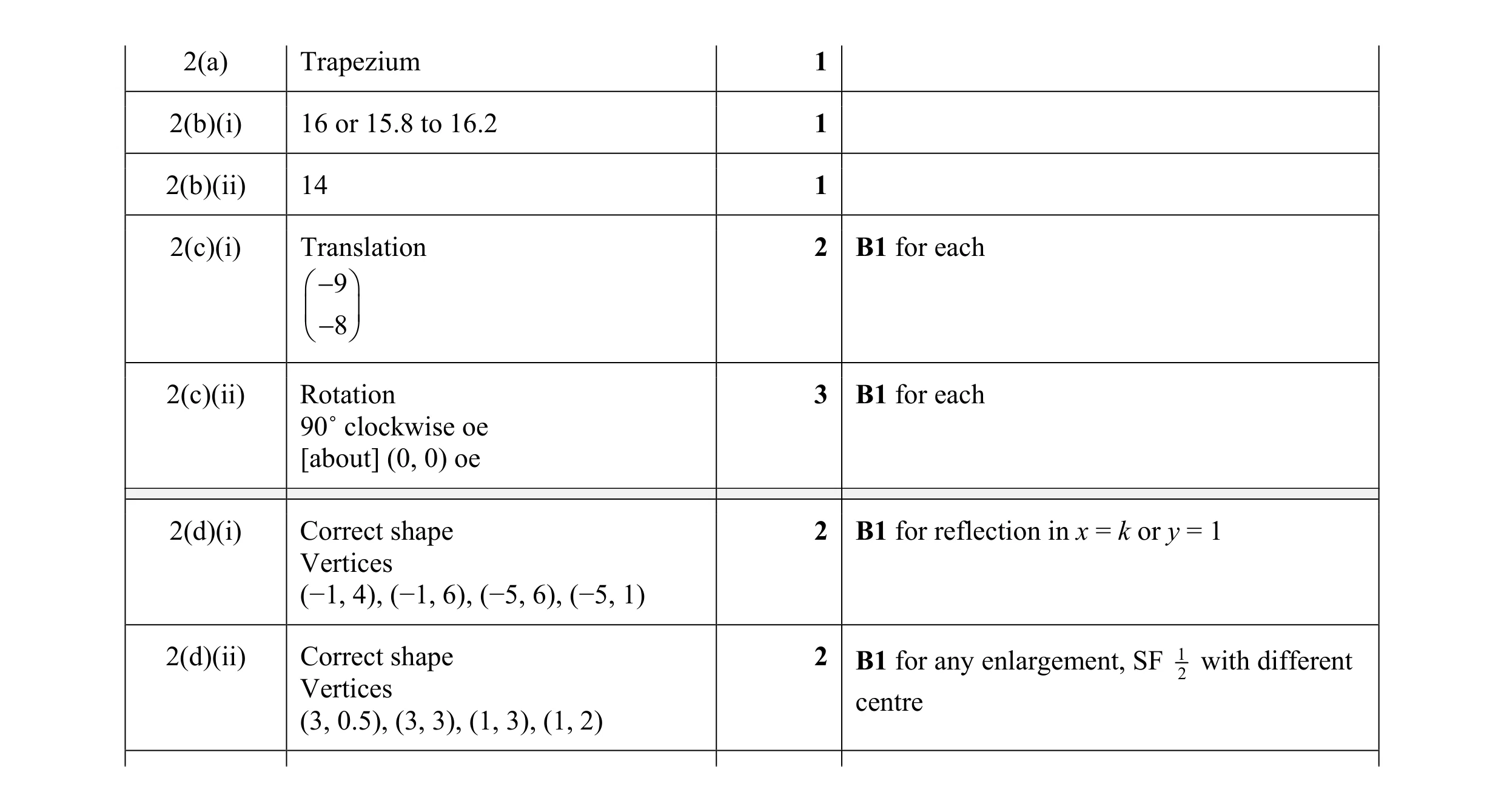 12
12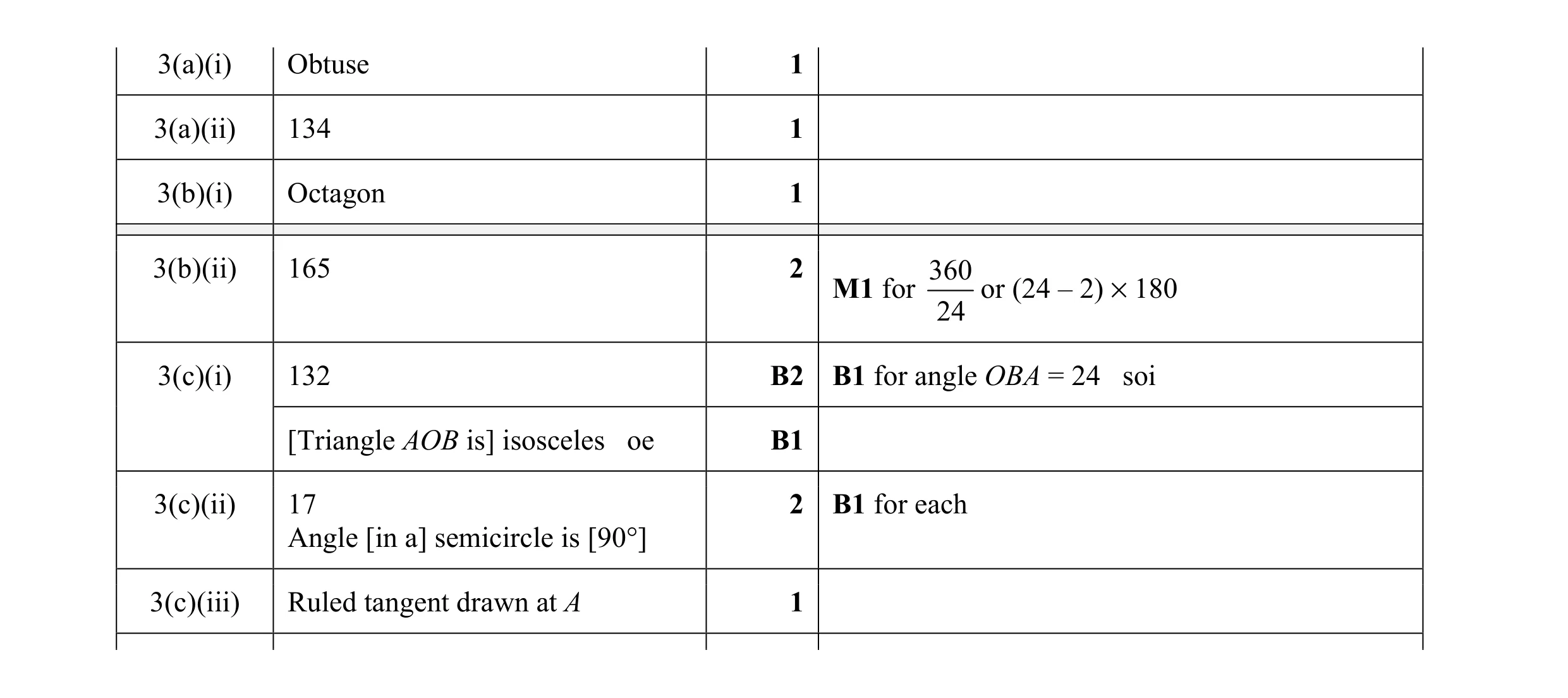 11
11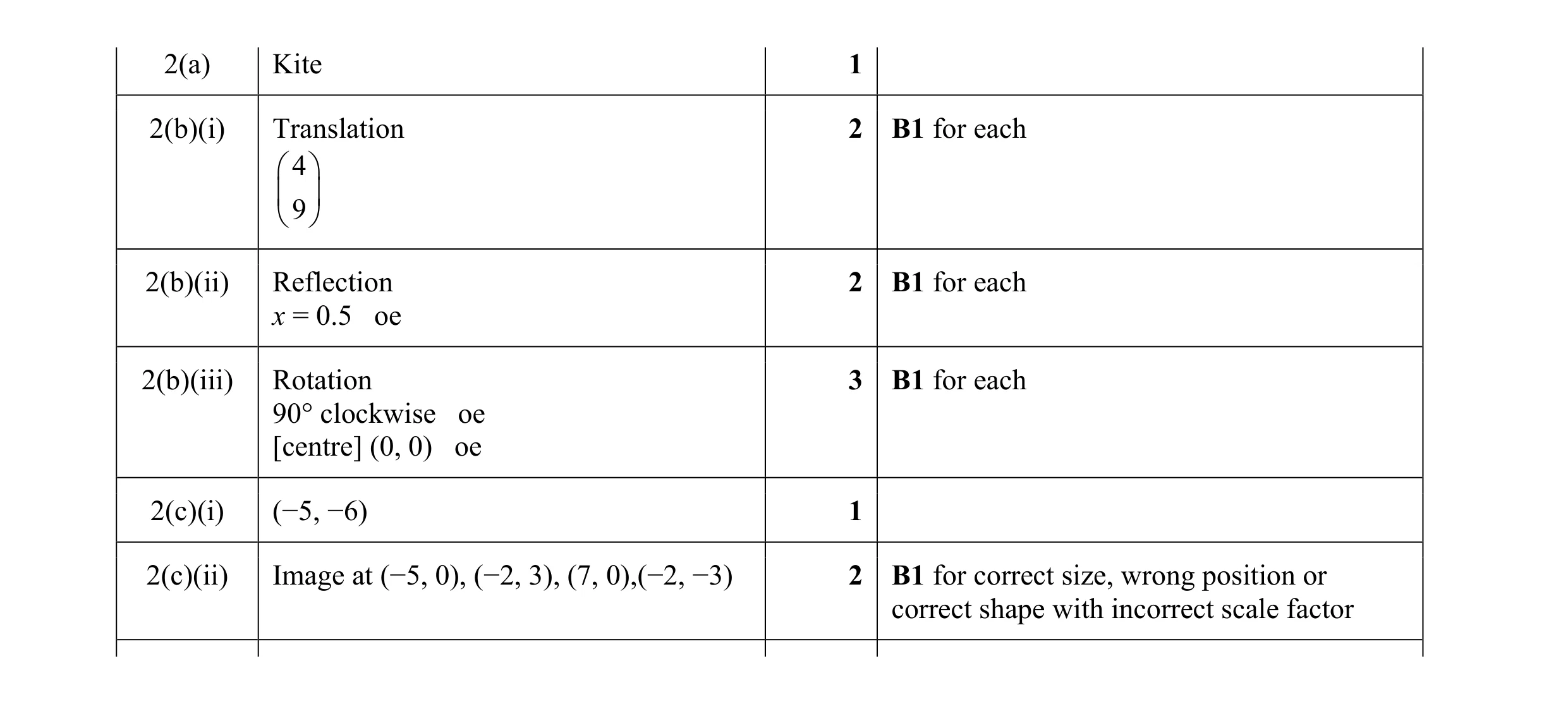 11
11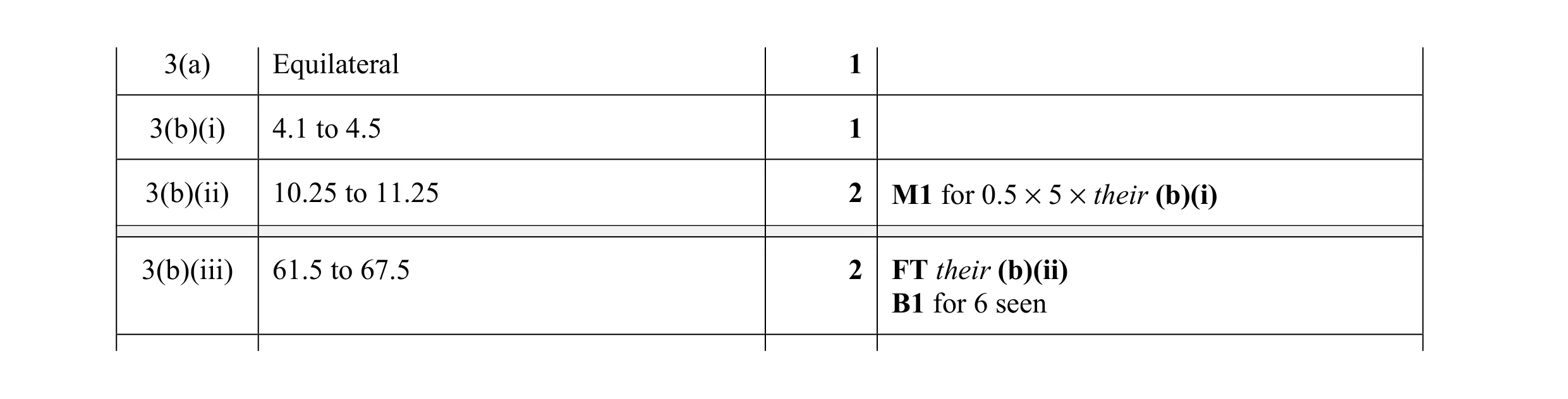 6
6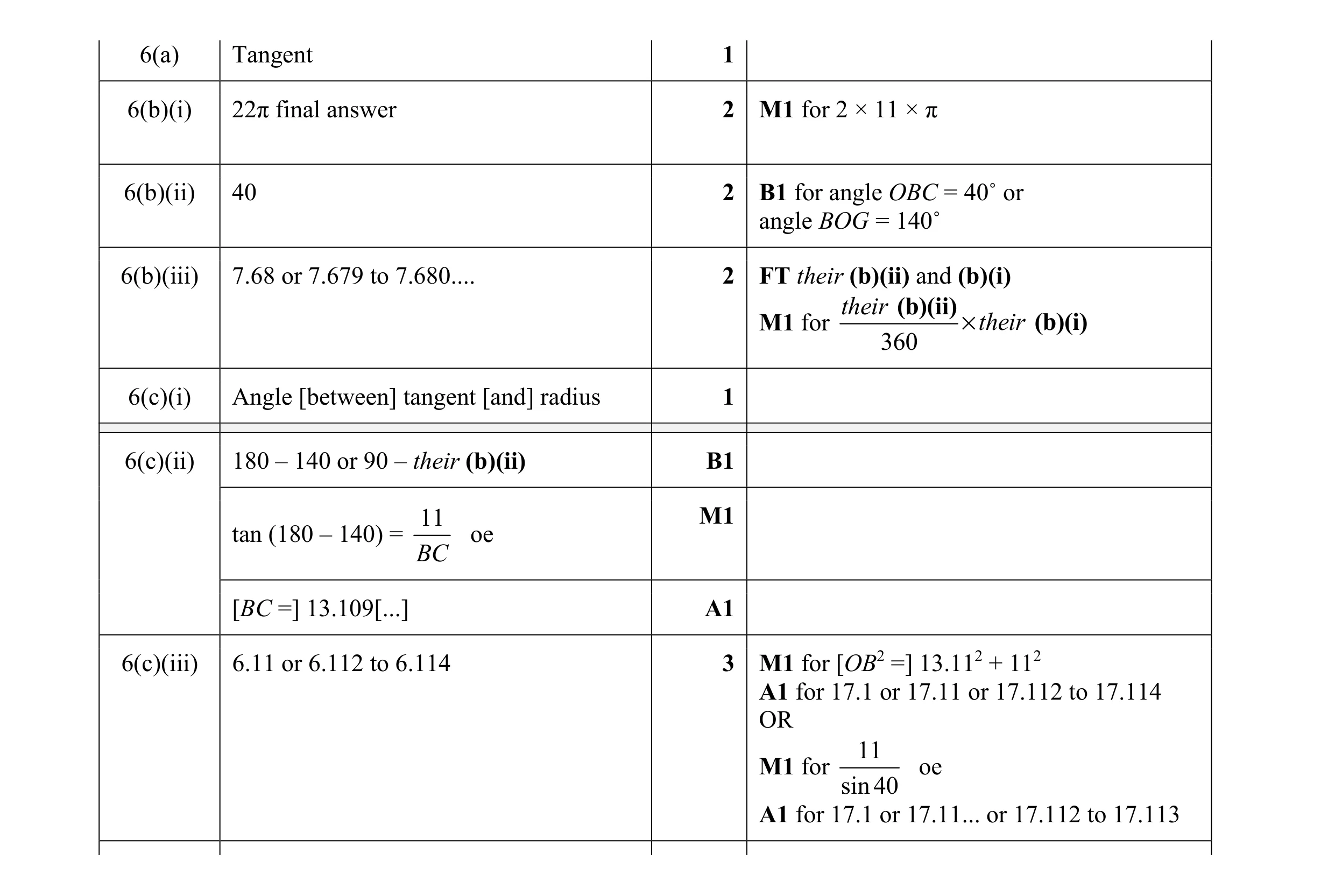 14
14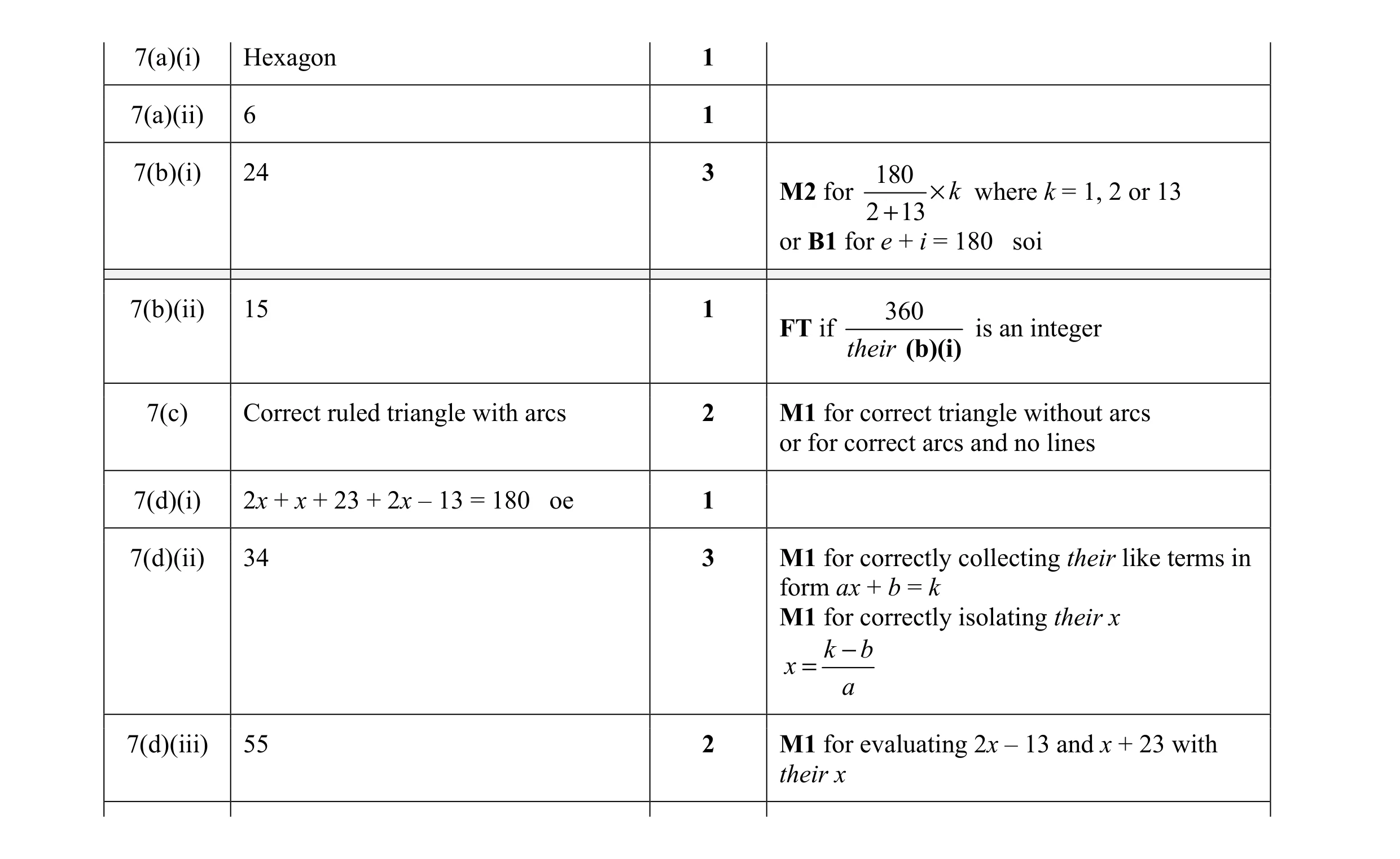 14
14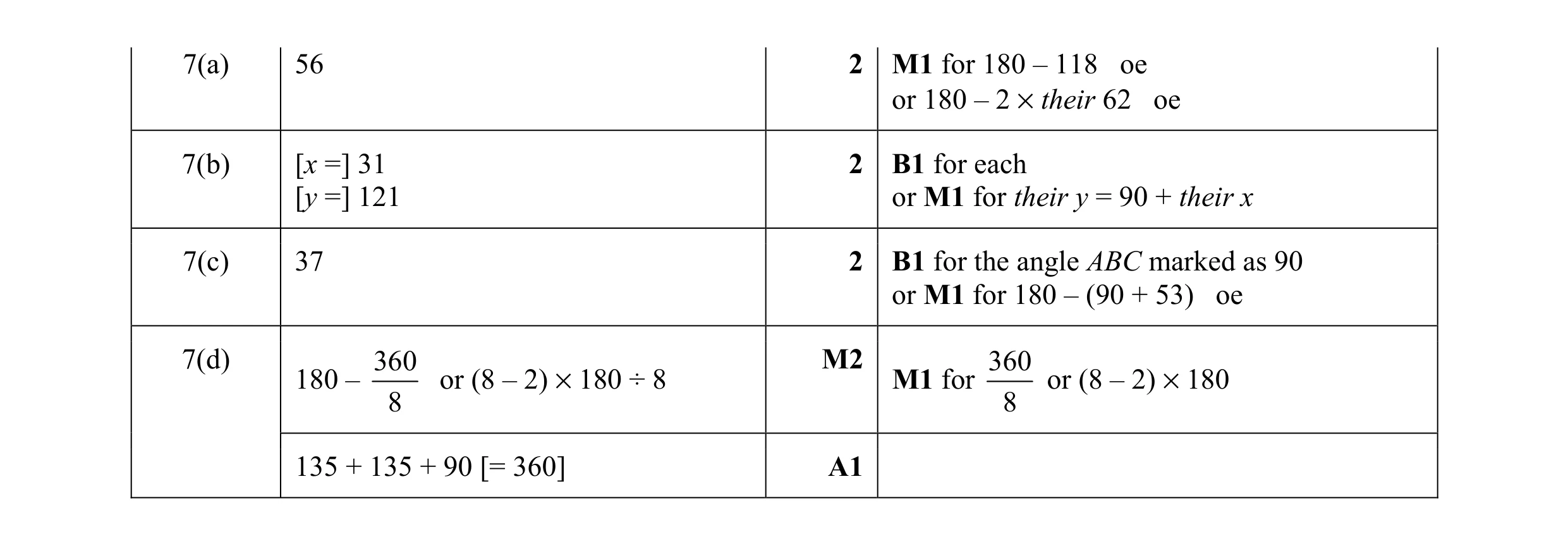 9
9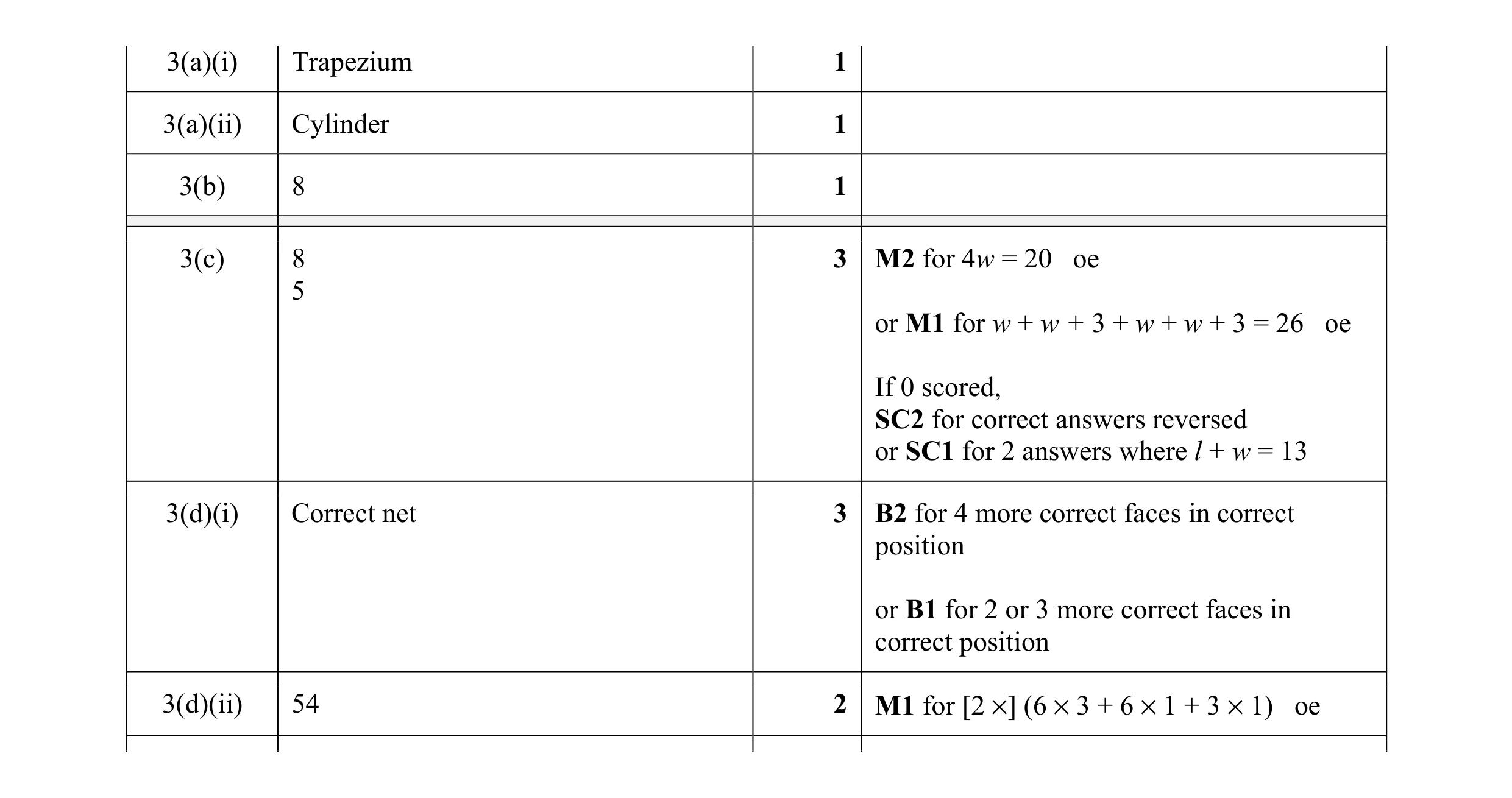 11
11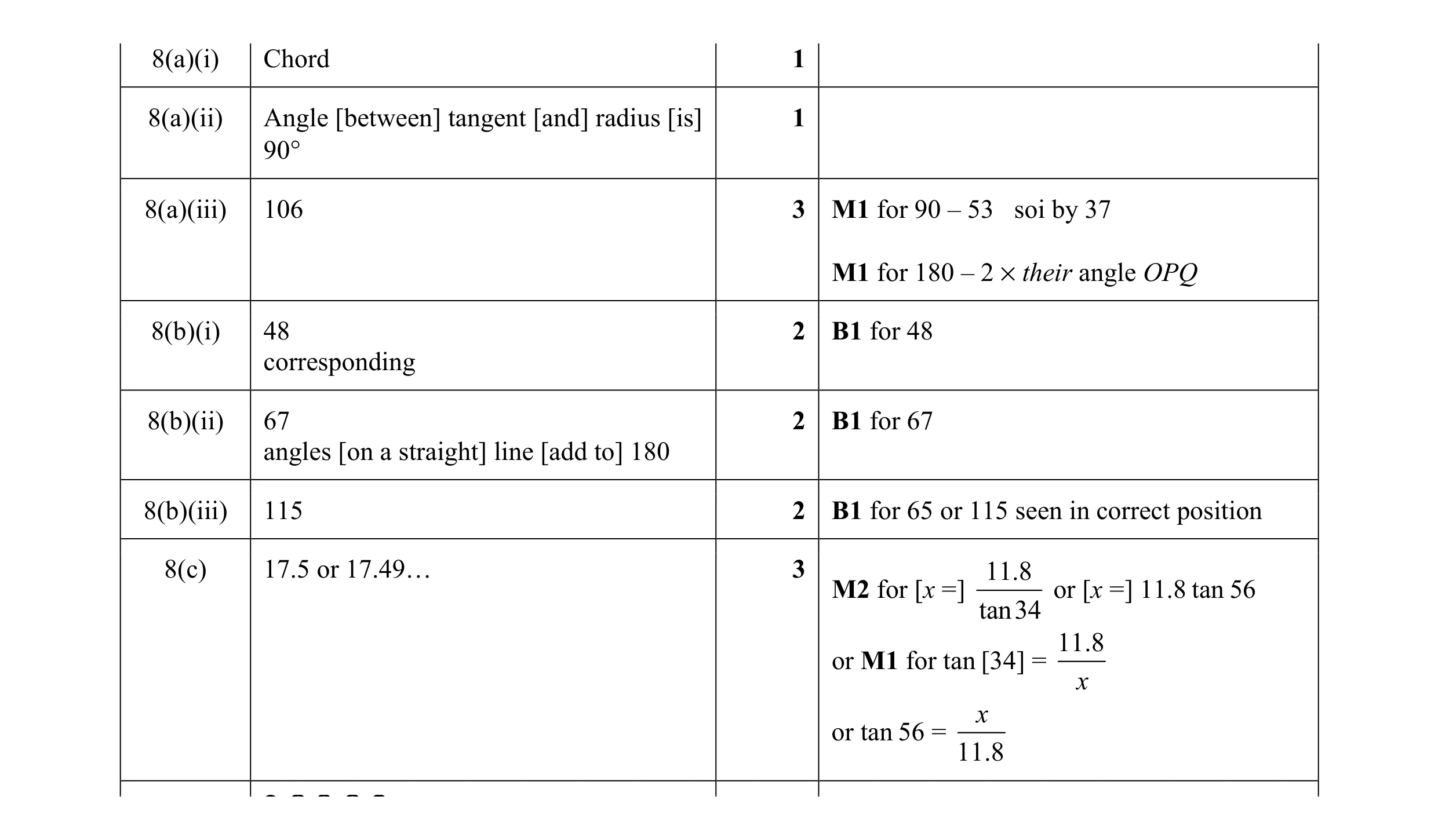 14
14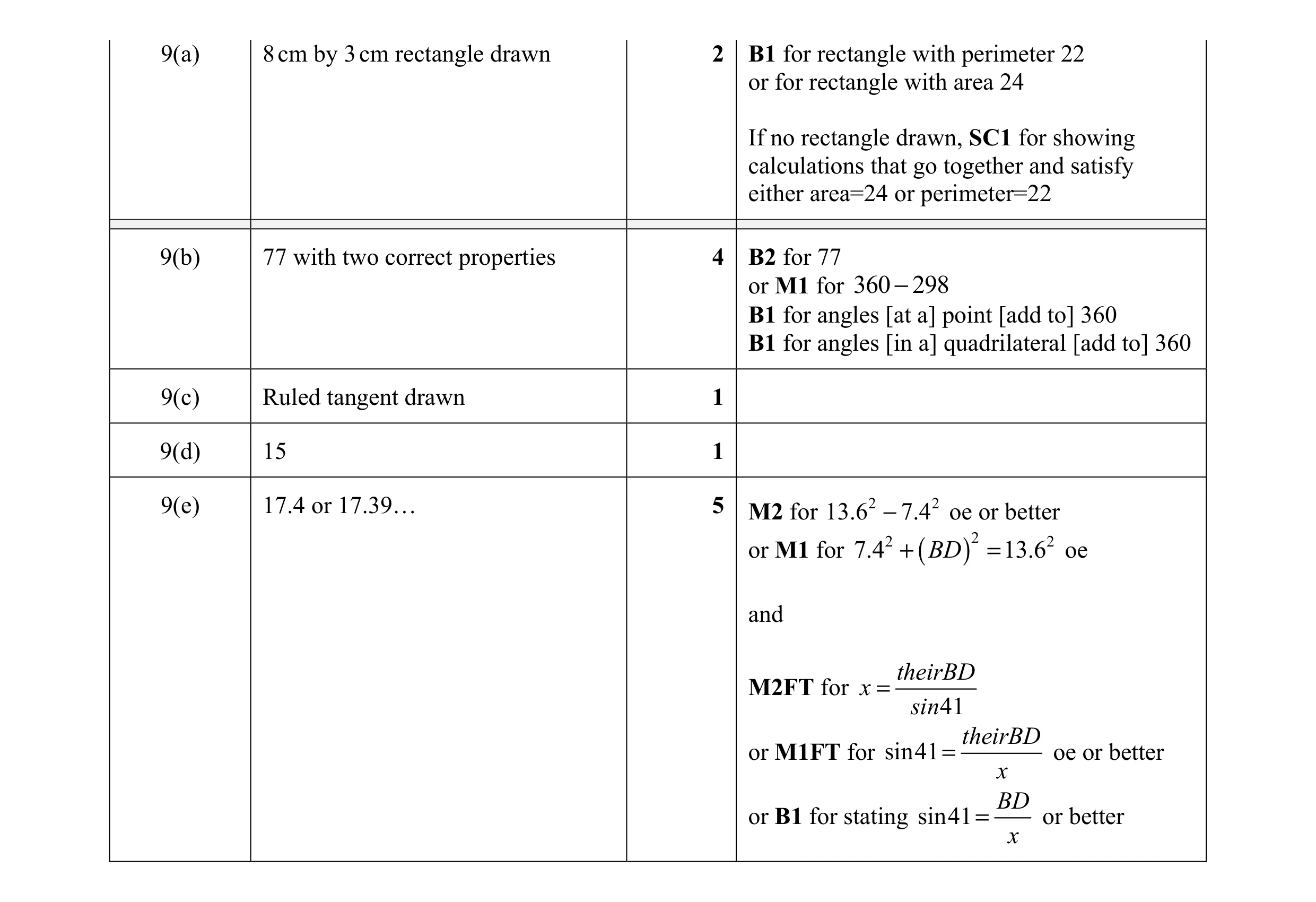 13
13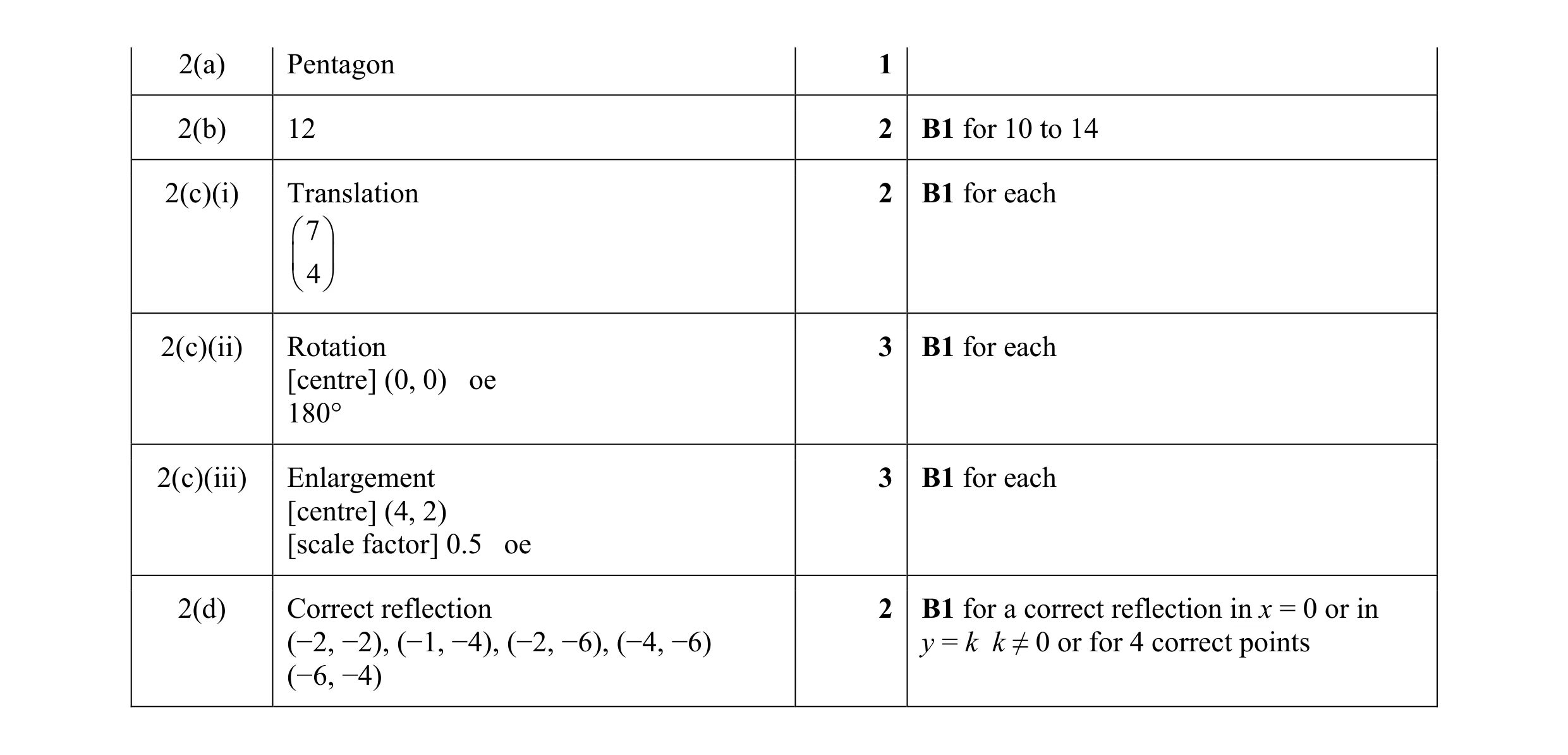 13
13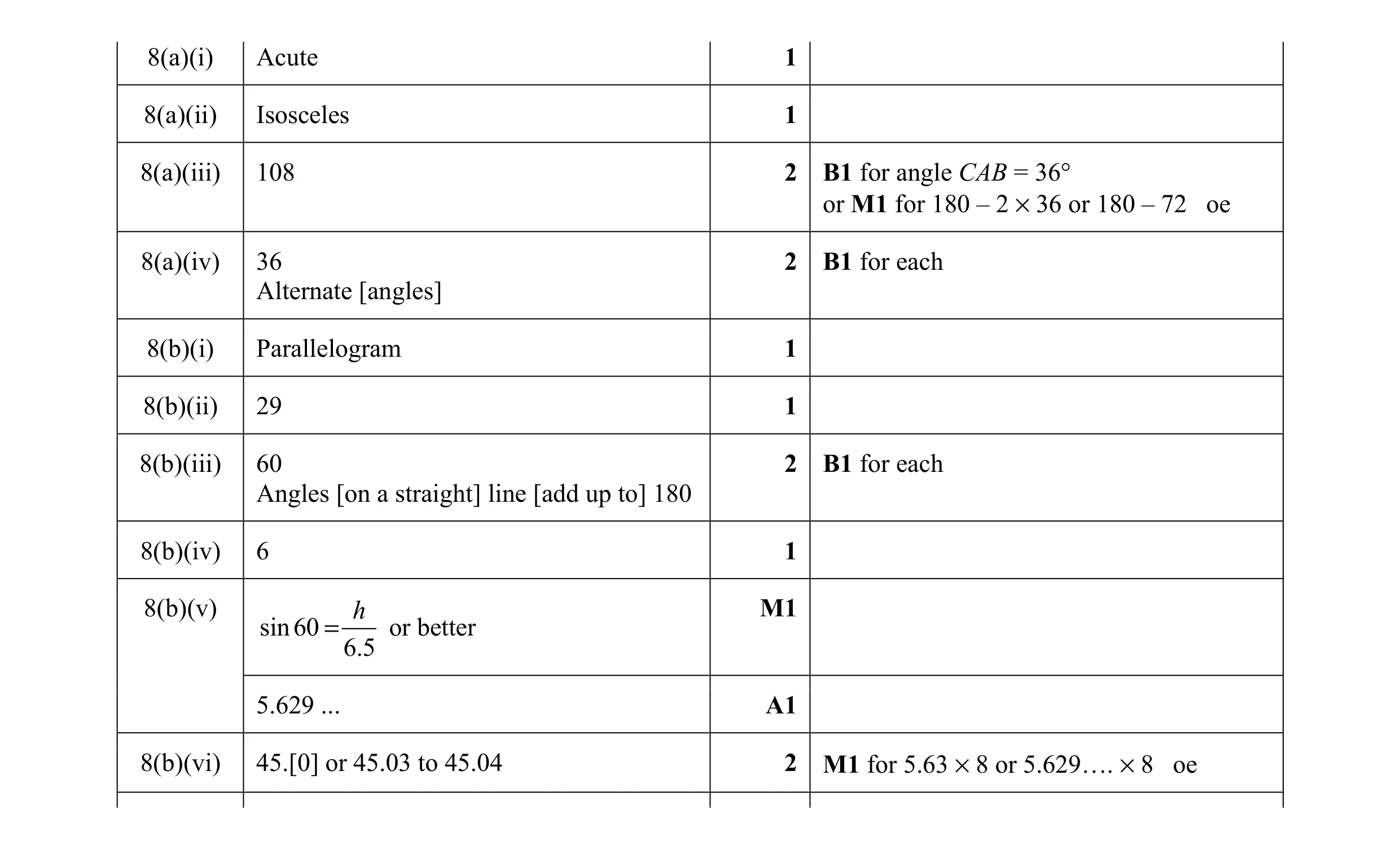 15
15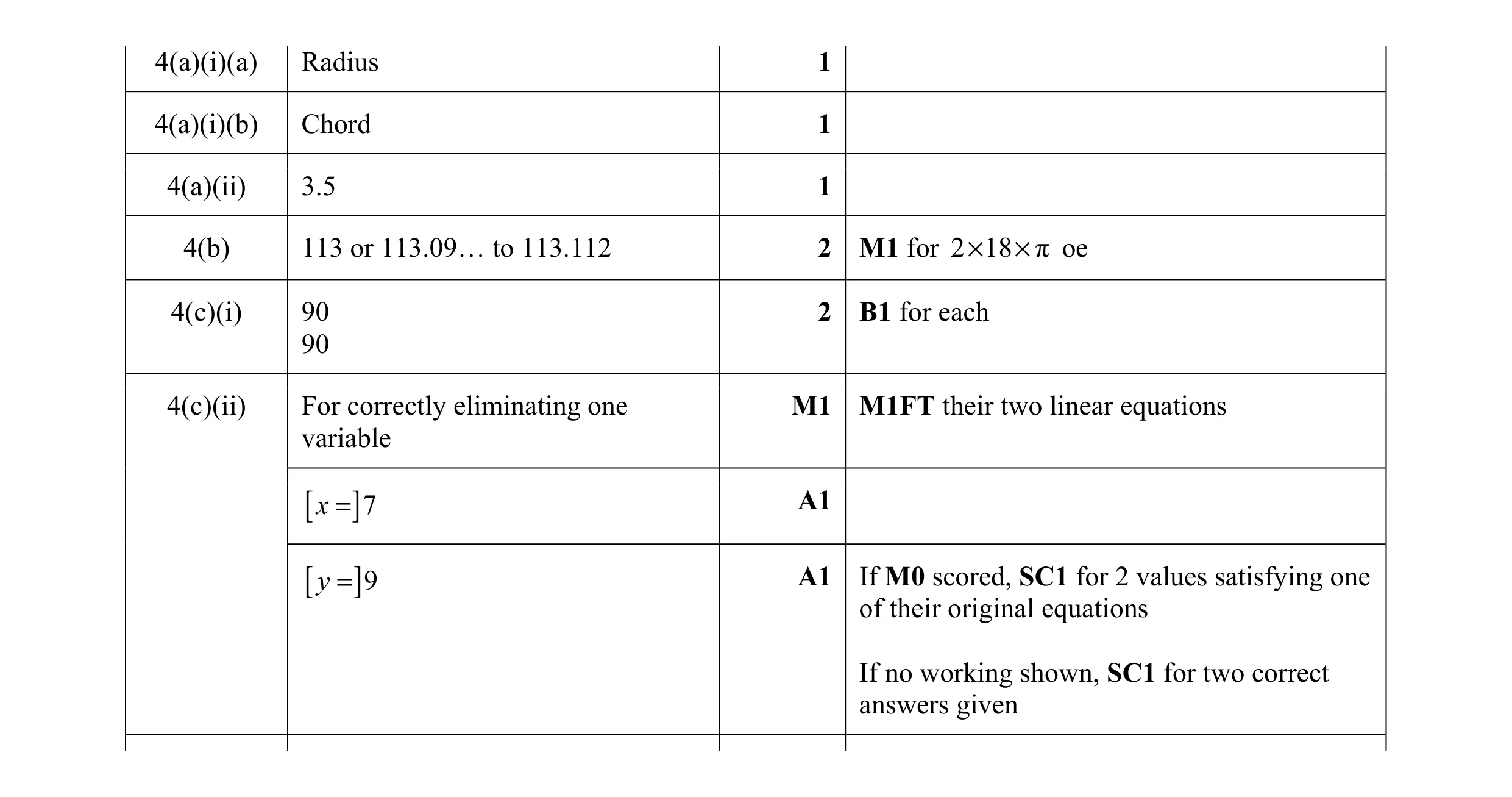 10
10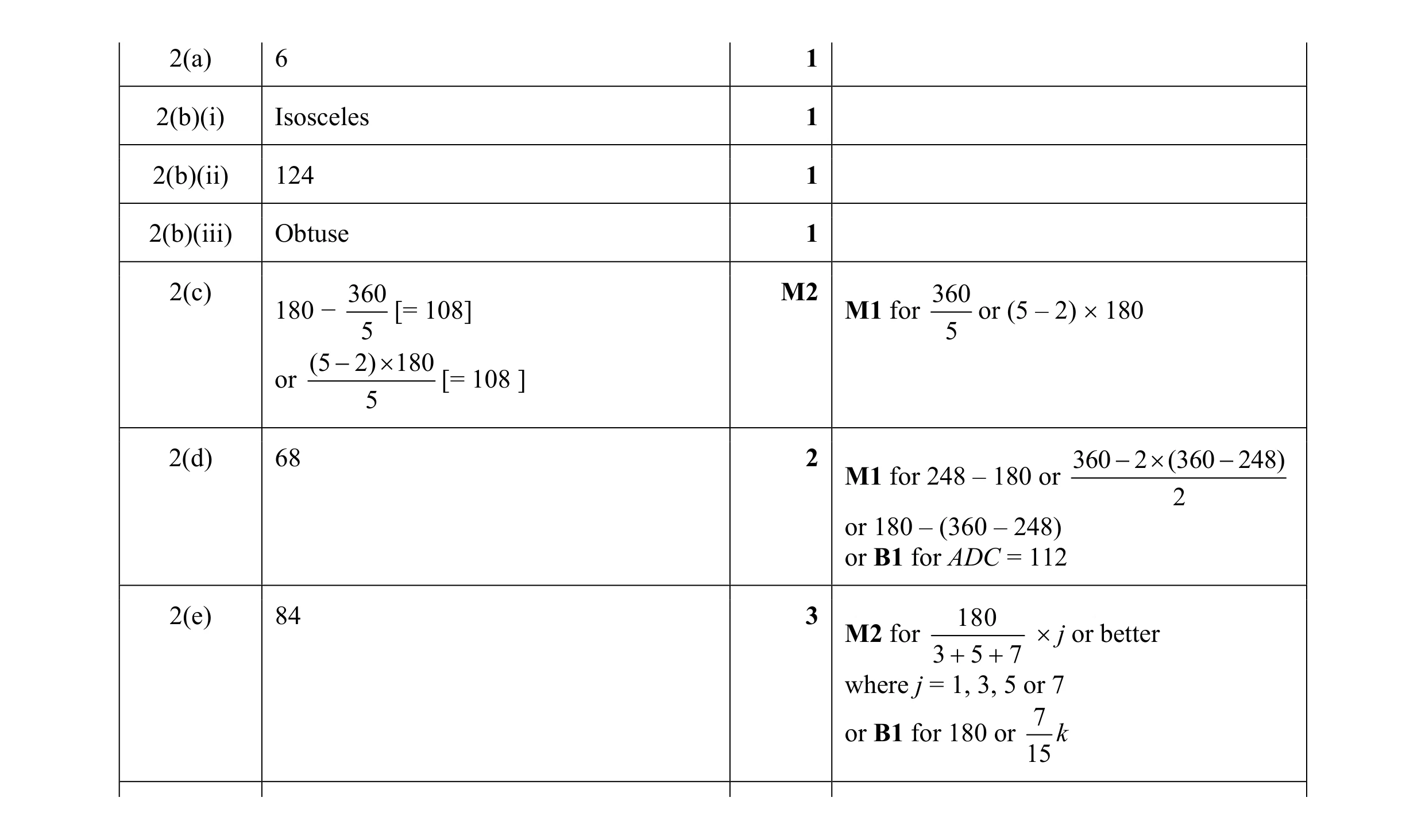 11
11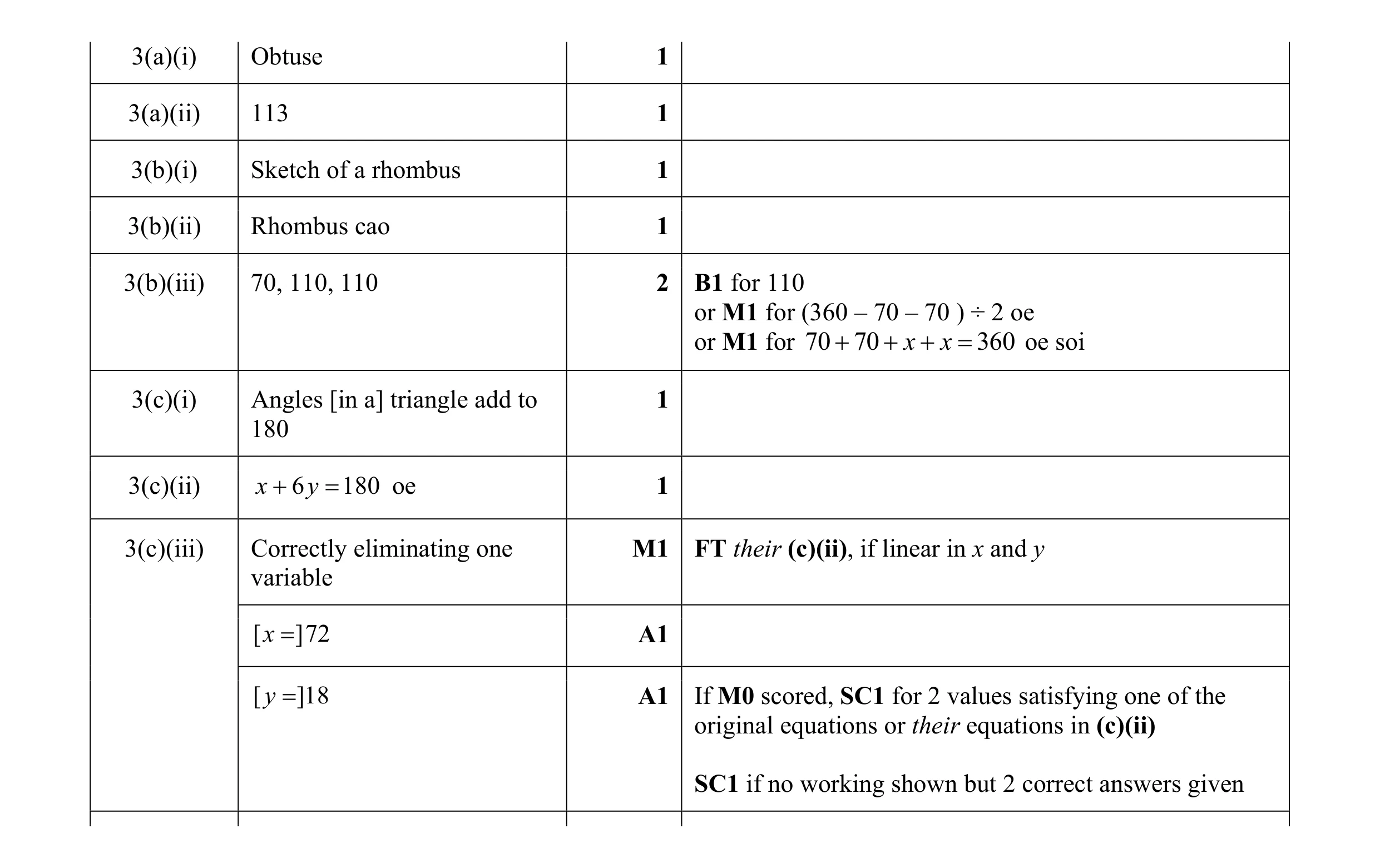 11
11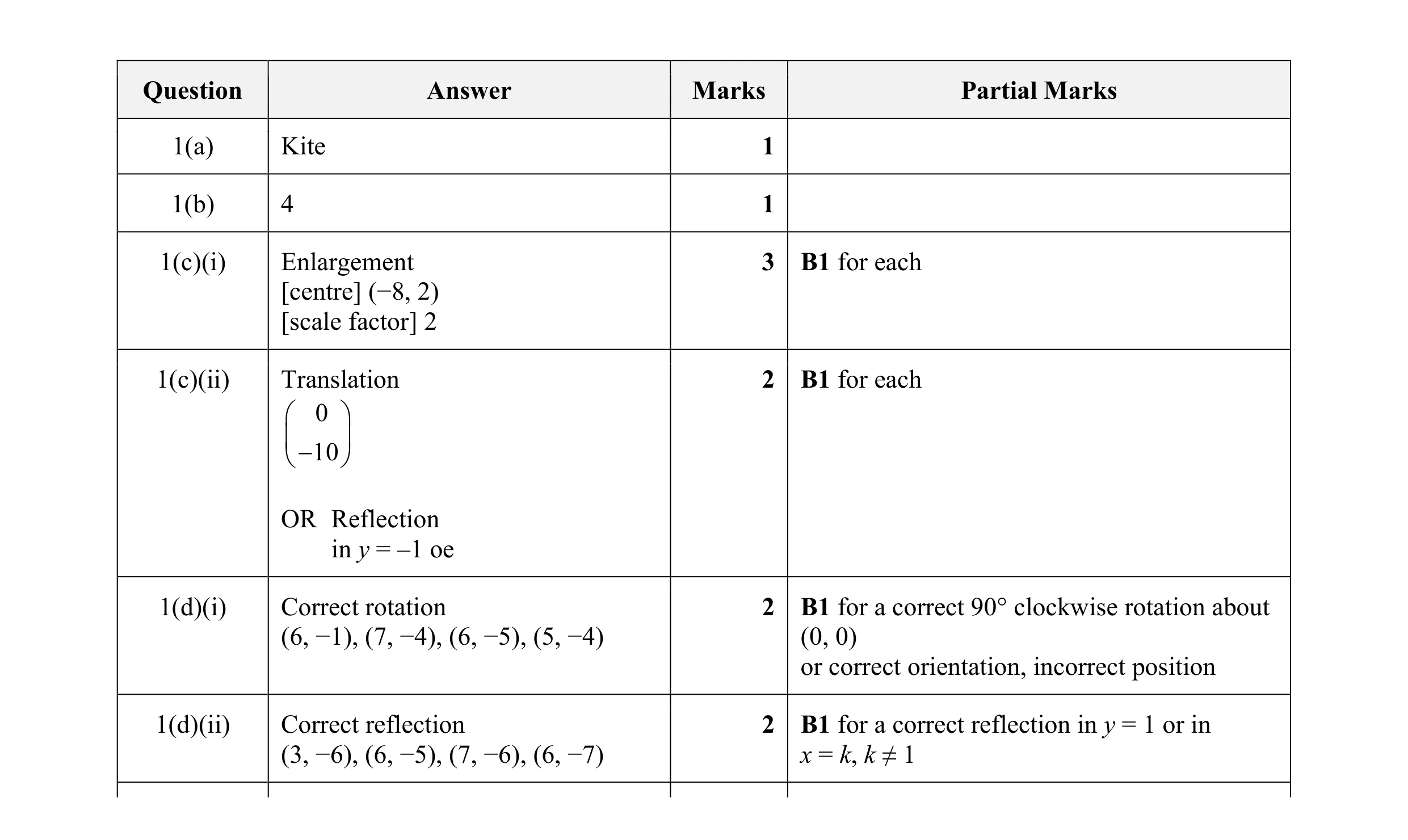 11
11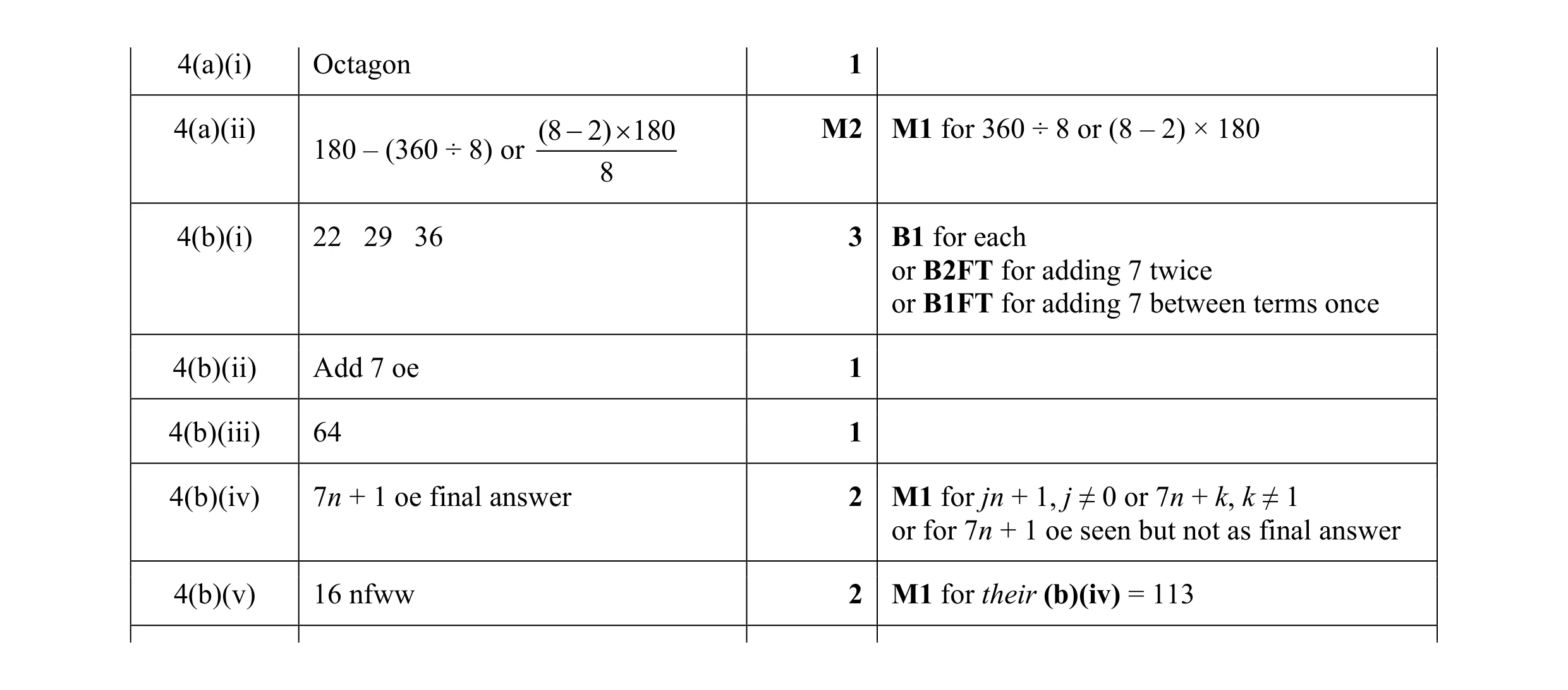 12
12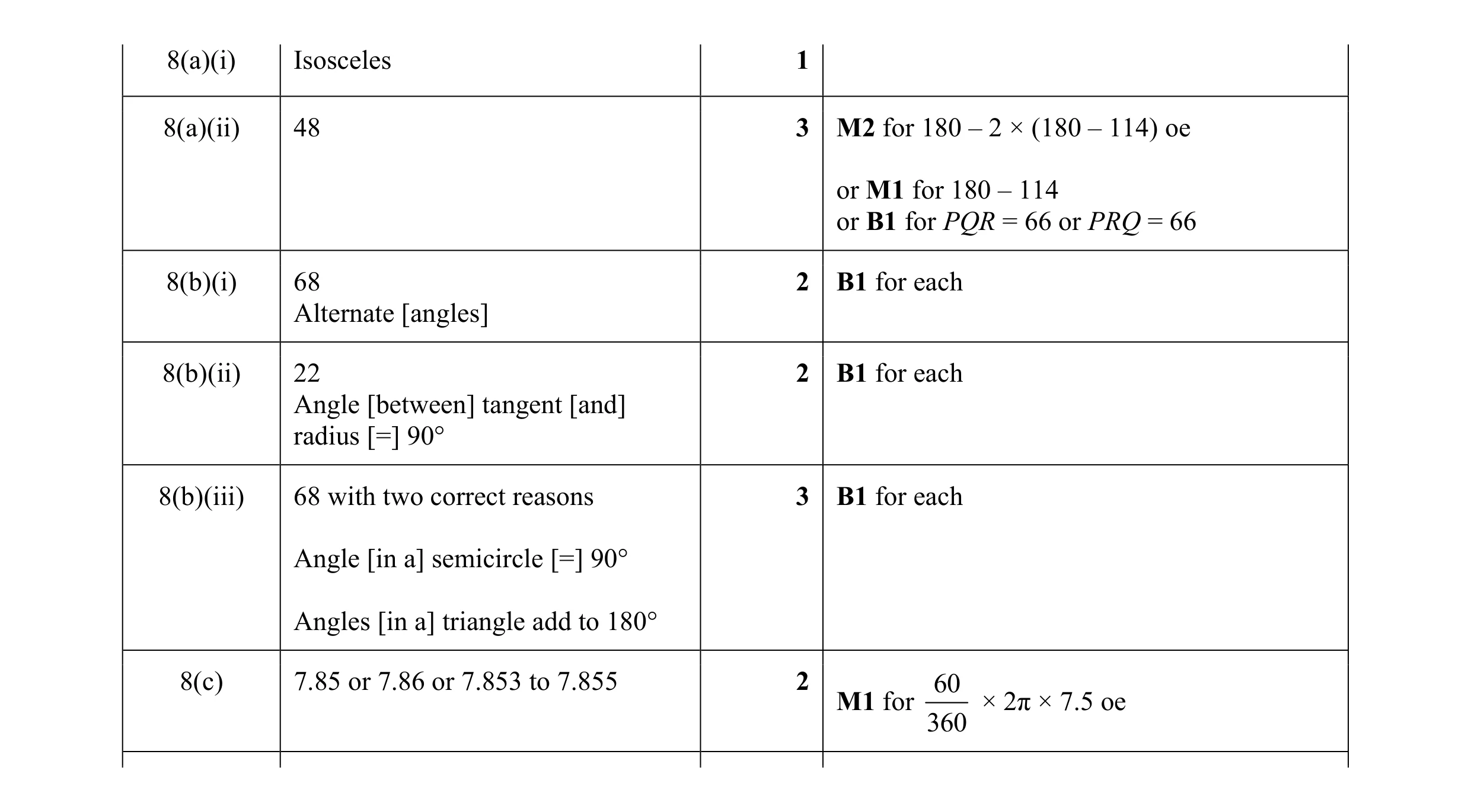 13
13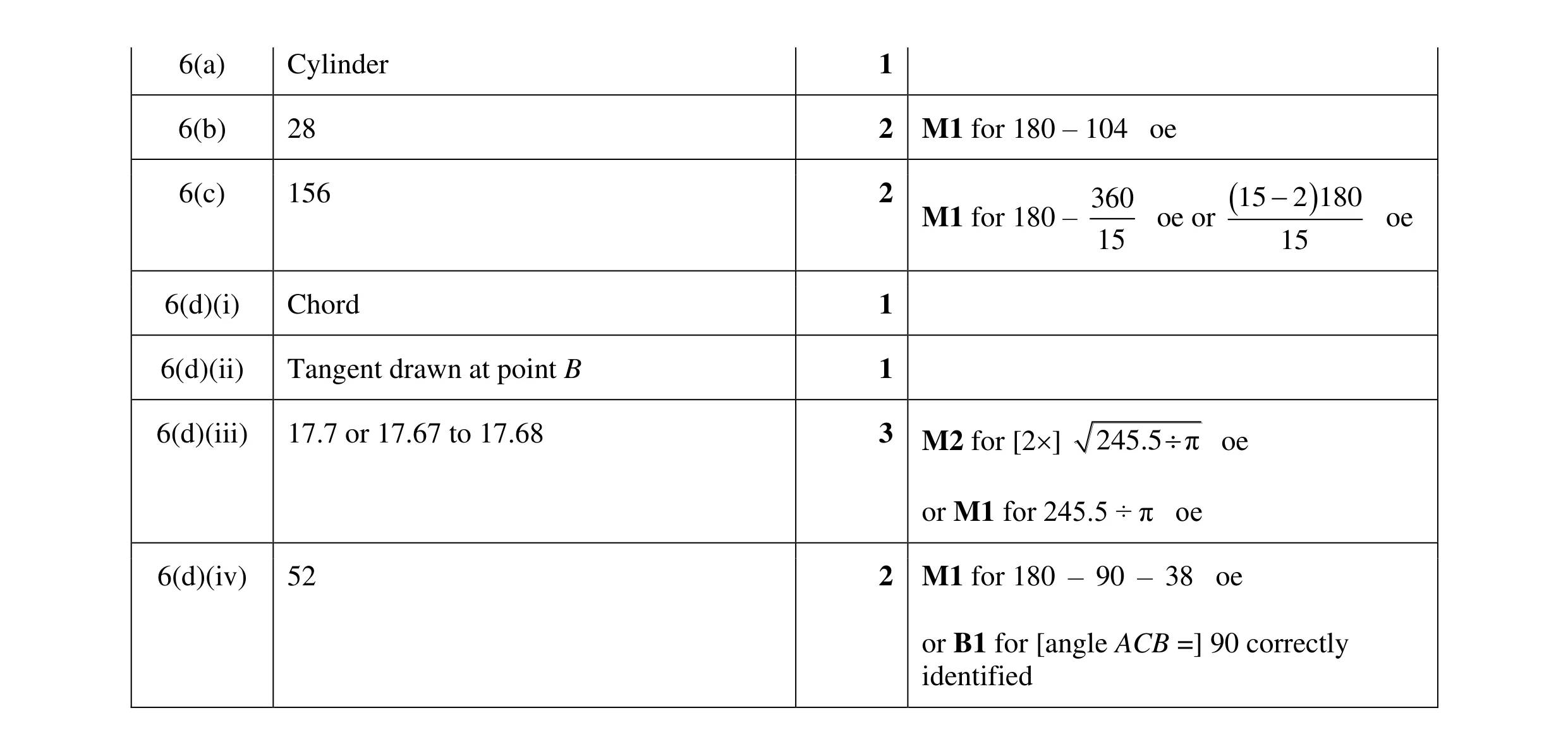 12
12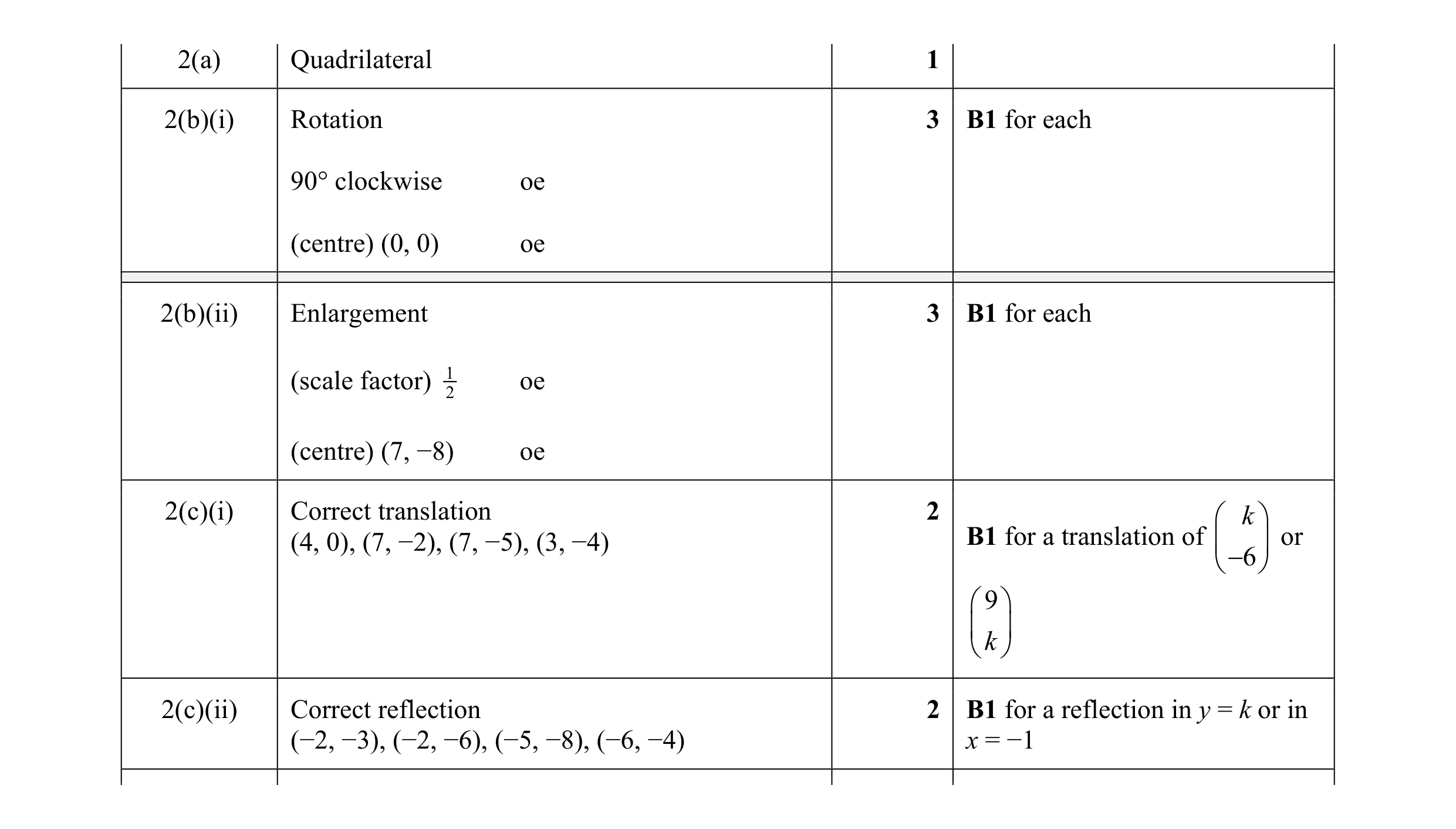 11
11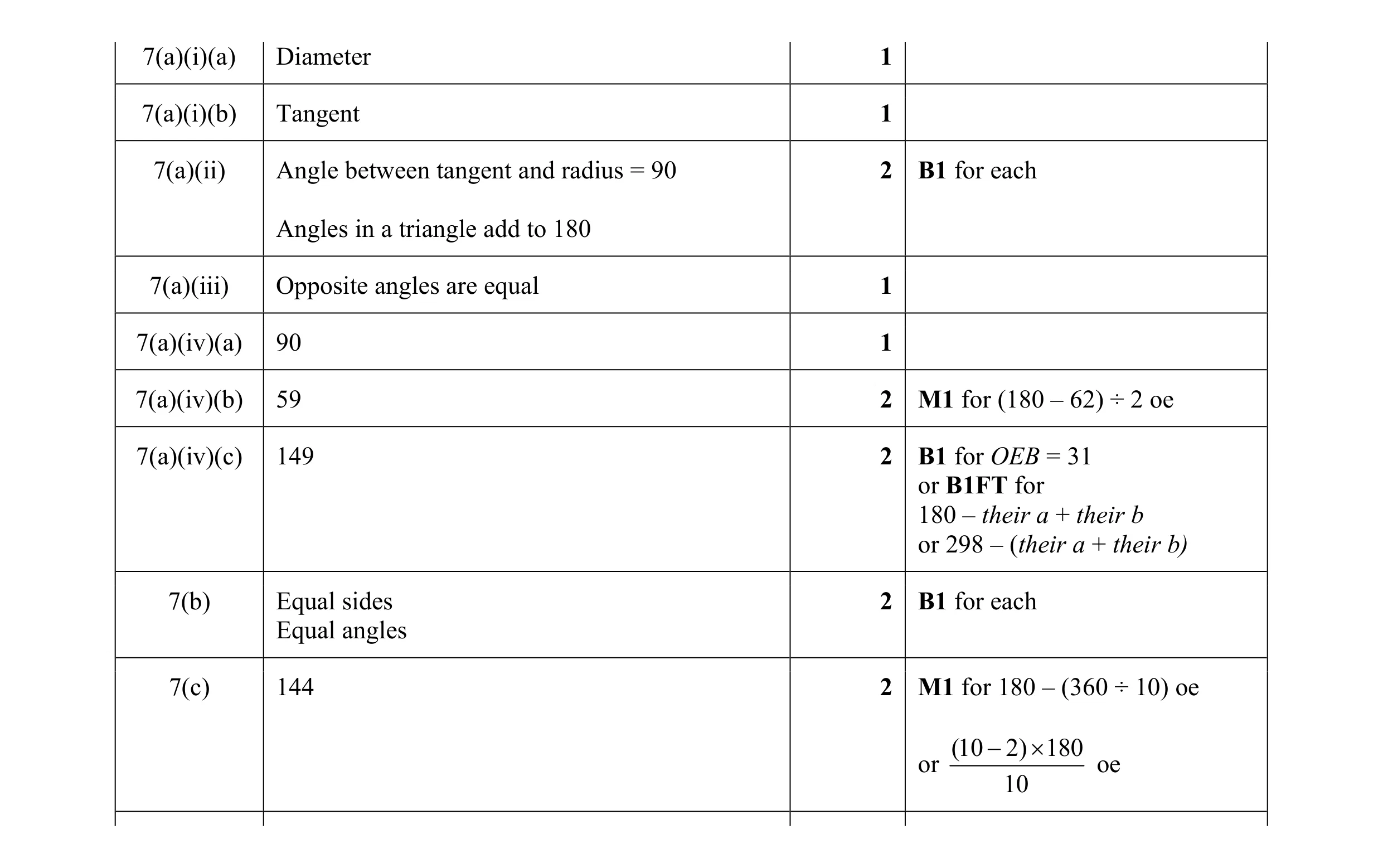 14
14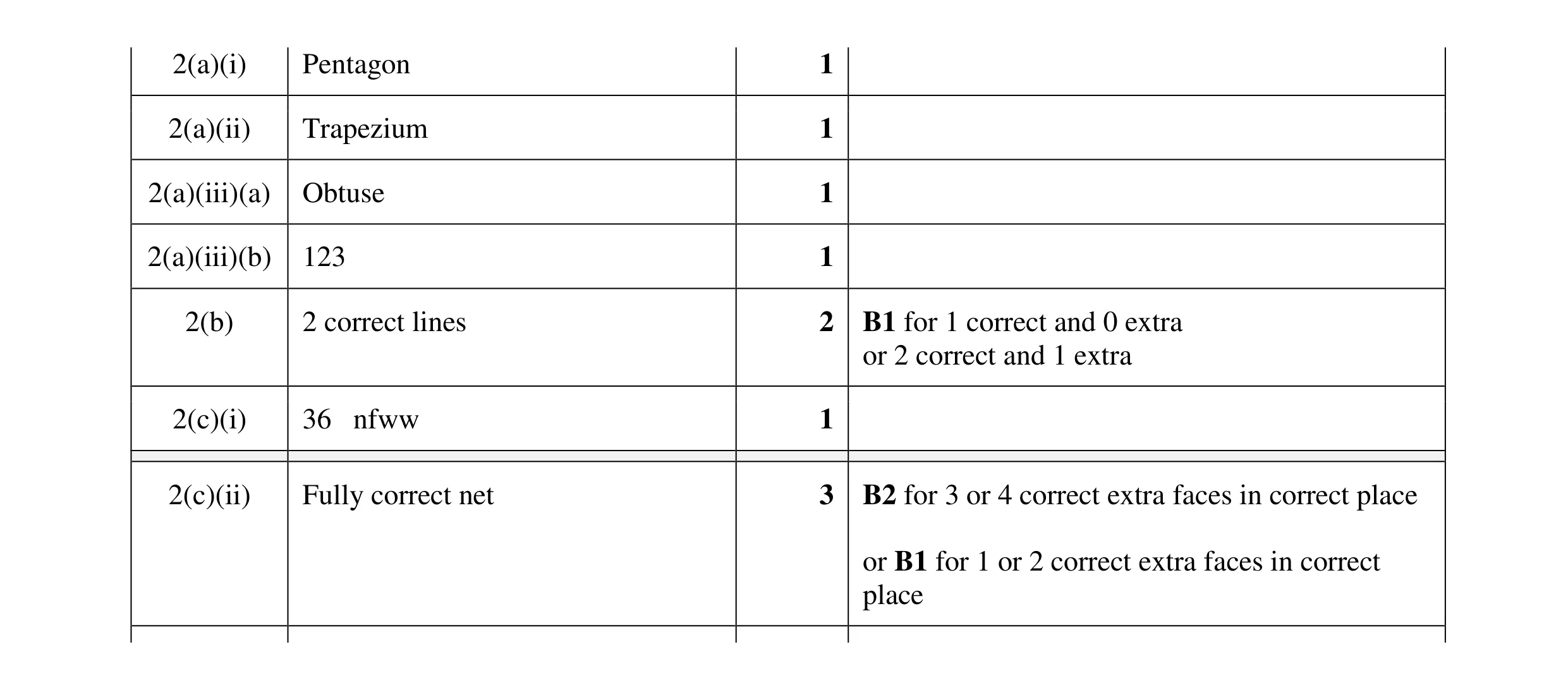 10
10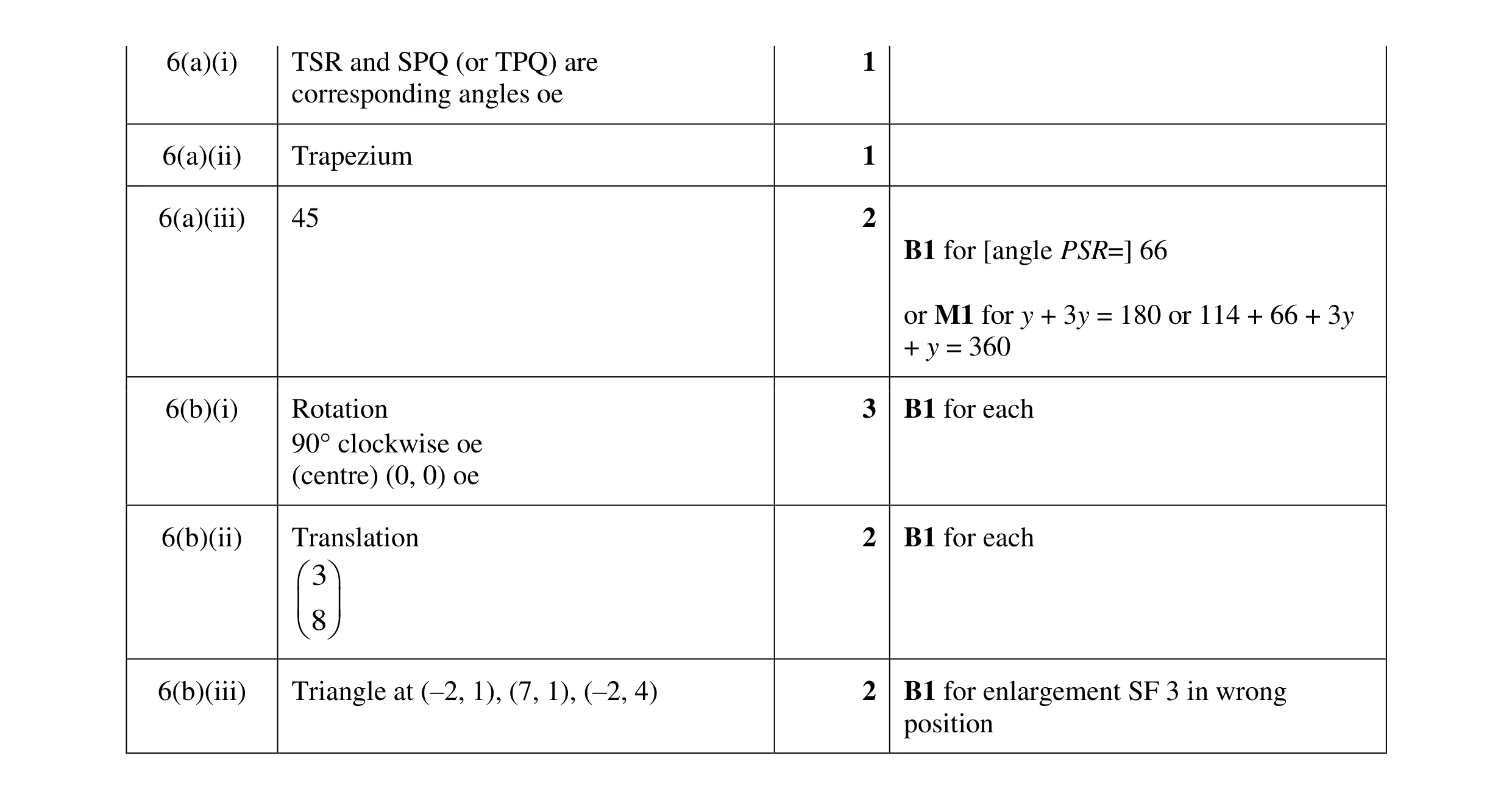 11
11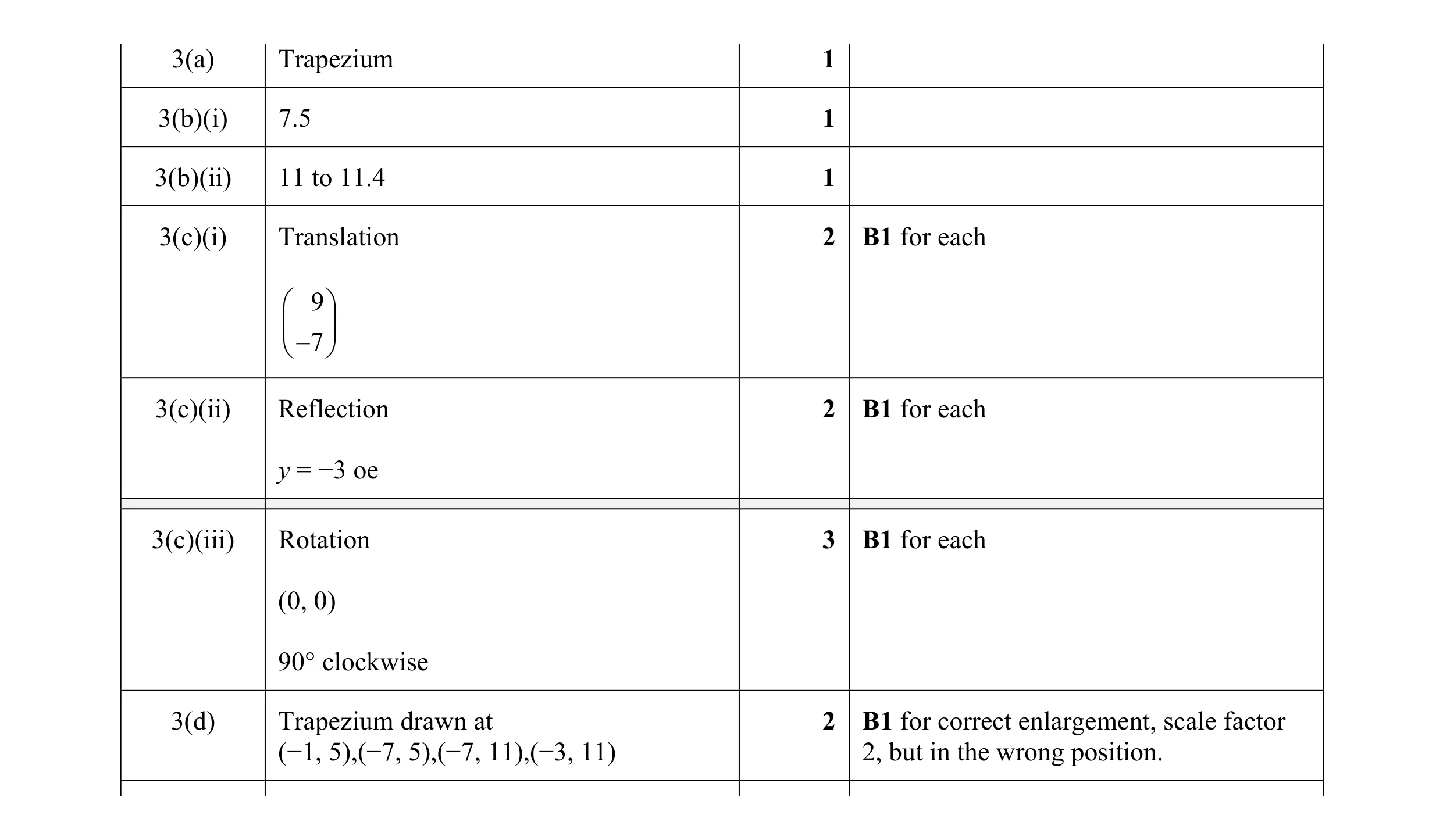 12
12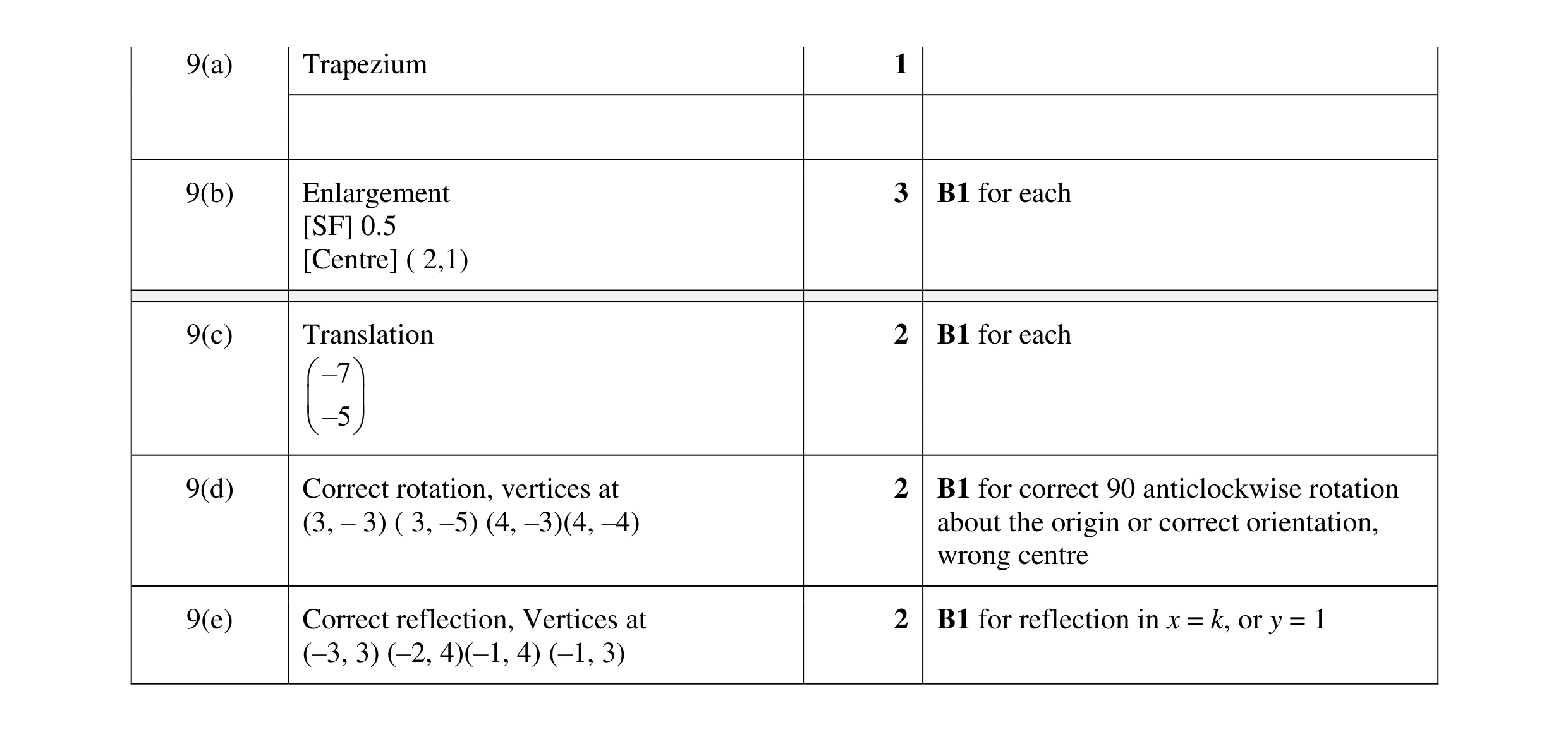 10
10 2
2 2
2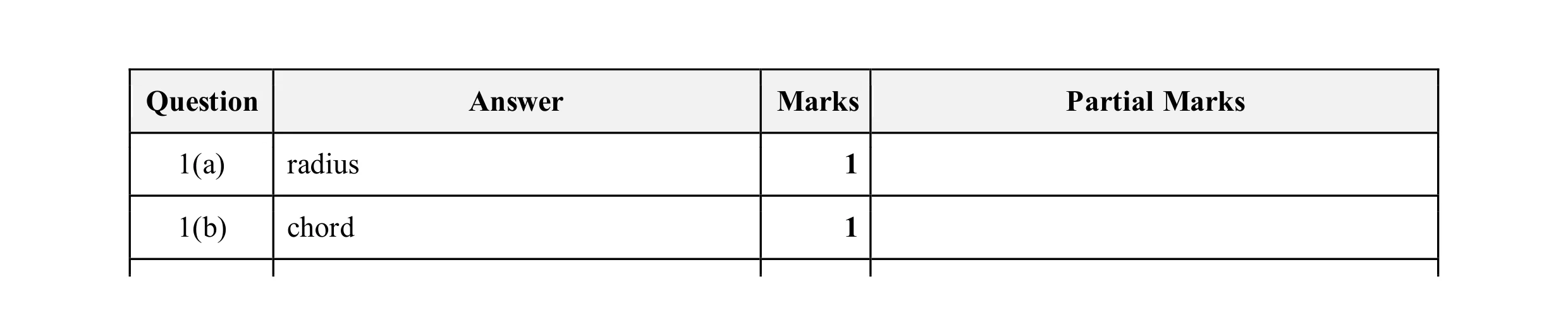 2
2 2
2 2
2 2
2