Questions as text
Q1 · Alan is organising a business dinner for 46 people at the local hotel 9694/31 May/June 2017
1 Alan is organising a business dinner for 46 people at the local hotel. Two kinds of table are available: round tables can seat 6 people and square tables can seat 8 people. He wants to seat all of the people so that there are no empty spaces at any table. He works out that there are two different combinations of round and square tables that will do this. (a) What are the two possible combinations of round and square tables that will work? [2] Dinner is a buffet and is charged at $50 for a round table and $60 for a square table. Alan telephones the hotel to make the arrangements, but they inform him that they have only 4 of each kind of table. Alan realises that he can no longer seat all of the people so that there are no empty spaces at any table. (b) Which combination of round and square tables will enable him to seat the 46 people for the lowest possible cost? [2] Alan considers not inviting two people, so as to bring the total down to 44 people. (c) How much would Alan have to pay to seat 44 people? [1] There are additional charges for two extra items which Alan wants: drinks and table decorations. The costs are shown in the table below. Alan can choose, for each item, to pay a price per person or a price per table or a price for the whole room. Per person Per table Whole room Drinks $4 $20 $130 Table decorations $1 $7 $50 (d) If Alan chooses the cheapest way to pay for each item, how much money could he save on drinks and table decorations altogether by inviting 44 people rather than 46? [3] The hotel now insists that Alan must choose the same payment method (price per person, price per table or price for the whole room) for both items. (e) If Alan chooses the cheapest way overall, how much could he save on drinks and table decorations altogether by inviting 44 people rather than 46? [2]
10 marks
Mark scheme: Question Answer Marks 1(a) 1 round and 5 squares; 5 rounds and 2 squares 2 Award 1 mark for each one of these. If no reference to the shapes, award 1 mark for complete correct numerical working (1 ×6 + 5 ×8) and (5 ×6 + 2 ×8). 1(b) The best he can do is 4 rounds and 3 squares, which provides 48 seats at a 2 cost of $380. Award 1 mark for either of the other two, more expensive, combinations which provide at least 46 seats, with a correct cost: 4 rounds and 4 squares = $440 OR 3 rounds and 4 squares = $390 1(c) Reducing the total number of people to 44 would enable him to use 2 1 rounds and 4 squares at a cost of $340. 1(d) For 46 people, the cheapest way is to pay for the drinks at the whole room 3 rate but the decorations per person, giving a total of 130 + 46 × 1 = $176. For 44 people, the cheapest way is to pay for both items per table, giving a total of 6 × 20 + 6 × 7 = $162. So the difference is $14. Award 1 mark for at least two of the bracketed values: (1 ×130) + (46 ×1)= 176 (6 ×20) + (6 ×7) = 162 Alternative construal: (1 ×130) – (6 ×20) = 10; (46 ×1) – (6 ×7) = 4 Award 2 marks for three of the bracketed values appropriately combined, including one pair in which different rates are used. 1(e) The cheapest method overall for 46 people is at the whole room rate: 2 130 + 50 = $180 The cheapest method overall for 44 people is per table: 120 + 42 = $162. So the difference is $18. If $18 not seen, award 1 mark for $180
This question in 9694/31 May/June 2017
Q2 · Hector owns a bookshop, and decides that he can attract new customers by issuing vouchers… 9694/31 May/June 2017
2 Hector owns a bookshop, and decides that he can attract new customers by issuing vouchers which offer a variety of discounts. The vouchers issued are as follows: The prices of individual books range from $10 to $60 at the shop. (a) What is the biggest discount (in $) that can be achieved using only one voucher, if three books are bought from the shop? [1] Brodie has managed to acquire one of each of the vouchers. He wants to buy 5 books, whose undiscounted prices are $17, $20, $33, $40 and $50. (b) What is the biggest discount (in $) that Brodie can achieve if he uses just one of the vouchers, and buys some or all of the books he wants? [2] Hector realises that he did not state that the vouchers cannot be used together, and so customers will be allowed to use as many of the vouchers as they wish on a single purchase. He decides that, if more than one voucher is used, the customer must give him the vouchers one at a time and the prices of the books will be adjusted by each voucher in the order they are given to him. Brodie’s brother Brock claims that, if he selects two of the vouchers, the order in which he uses them could affect the total discount. (c) (i) Use some of Brodie’s books to give an example which shows that Brock is correct. Give the two different discounts (in $) that can be achieved for your example. [2] (ii) Give one example of a pair of vouchers for which the order would never matter. [1] (d) Show clearly how Brodie should use the four vouchers to buy his five books and pay the lowest price overall. (He may make more than one purchase.) [4]
10 marks
Mark scheme: 2(a) $60 if three $60 books are bought. 1 2(b) Voucher L applied to $33, $40, $50 = $33 discount 2 1 mark for (S: $160 total; 20% discount = $)32 2(c)(i) 1 mark for vouchers correctly applied to any collection of Brodie’s books. 2 1 mark for vouchers correctly applied in the other order. If vouchers and prices do not lead to a change of price after the order of discounts is altered, then no marks should be awarded. Allow prices instead of discounts (given in square brackets in the table) SC1: if prices used are not from Brodie’s list of five, award 1 mark for correct selection and application of discounts (in both orders). Voucher 1 Voucher 2 Price 1 then 2 2 then 1 S A 20 + 33 [$38.16] [$47.70] [50 < price ⩽ 55] $14.84 $5.30 S L 3+ books price > 50 more expensive < 50 not possible with Brodie’s books S E Any books with price > 50 [$52] [$56] e.g. 40 + 50 $38 $34 A E Any books incl. one>30 [$45] [$27] e.g. 17 + 33 $5 $23 L E 17 + 20 + 33 [$33] $37 [$37] $33 OR OR OR 33 + 40+ 50 [$70] $53 [$73] $50 2(c)(ii) A & L is the only pair. 1 No mark if any other pairs included. 2(d) If $50, $40 and $33 are bought first 4 $123: cheapest book free = $90 20% off = $72 10% off = $64.80 $20 off = $44.80 remaining books = $37 TOTAL = $81.80 (discount of $78.20) Award 4 marks for a correct solution (division of books, and order of application) yielding a total of $81.80 or discount of $78.20. If all bought together $160: cheapest book free = $143 (can be applied later) 20% off = $114.40 10% off = $102.96 $20 off = $82.96 TOTAL = $82.96 (discount of $77.04) Award 3 marks for correct application of 4 vouchers if all bought together (total of $82.96 or discount of $77.04). Award 2 marks for a clear and correct application of 4 vouchers to the 5 books, with S & A not after E (allow one processing error). Award 1 mark for a clear and correct application of 4 vouchers to the 5 books in any order (allow one processing error). SC3: $81.80 without any clear direction as to how the vouchers are applied. SC2: $82.96 without any clear direction as to how the vouchers are applied. If no total prices or discounts calculated: award 1 mark for clear order of application of all vouchers that avoids putting E before A and/or S and avoids applying L to fewer than 3 books.
This question in 9694/31 May/June 2017
Q3 · In a nursery, the children must be properly supervised throughout the day 9694/32 May/June 2017
1 In a nursery, the children must be properly supervised throughout the day. In any room which has children in it there must be 1 adult present for every 4 children, plus 1 additional adult. So 5 children would require 3 adults to be present in the room. Sandra’s nursery has 1 large room and 4 identical small rooms. The large room holds a maximum of 10 children and the small rooms each hold a maximum of 7 children. (a) If the nursery employs 6 adults, what is the largest number of children that could be supervised? [2] There are currently 18 children enrolled at the nursery. (b) What is the smallest number of adults that would be needed to supervise all 18 children? [2] 5 more children join the nursery. (c) What is the smallest number of adults that are needed to supervise all 23 children? [1] Sandra decides to combine some of the rooms, in order to reduce the number of adults she needs to employ. After consultation with the builder, she has three options. Her budget will allow for only one of these to be undertaken: 1) Combine the large room and one of the small rooms to make a room with a capacity of 17 children 2) Combine two of the small rooms to make a room with a capacity of 14 children 3) Combine three of the small rooms to make a room with a capacity of 21 children (d) For each of these options, find the minimum number of adults required to supervise all 23 children. [3] Sandra expects that more children will join the nursery in the future. (e) Explain which of the three options she should choose. [2]
10 marks
Mark scheme: Question Answer Marks 1(a) With (8; 7, 0, 0, 0) we would need (3; 3, 0, 0, 0) staff and could 2 accommodate 15 children. Award 1 mark for 14. 1(b) With numbers of children in each room as (10; 4, 4, 0, 0) we would need 2 (4; 2, 2, 0, 0) adults, or 8 adults altogether. Other possibilities would be (8; 4, 6, 0, 0) and (3; 2, 3, 0, 0). (Seven adults can supervise a maximum of 17.) 1 mark for any arrangement requiring 9 (e.g., (10; 7, 1, 0, 0)). 1(c) The smallest number of adults is 10 (e.g., (9; 7, 7, 0, 0)). 1 (Nine adults can supervise a maximum of 22.) 1(d) Option 1 [capacity (17; 7, 7, 7)] 3 (16; 7, 0, 0) needs 5 + 3 = 8 adults Option 2 [capacity (14; 10; 7, 7)] (14; 9; 0, 0) needs 5 + 4 = 9 adults (13; 10; 0, 0) needs 5 + 4 = 9 adults (12; 8; 3, 0) needs 4 + 3 + 2 = 9 adults (12; 7; 4, 0) needs 4 + 3 + 2 = 9 adults (11; 8; 4, 0) needs 4 + 3 + 2 = 9 adults (8; 8; 7, 0) needs 3 + 3 + 3 = 9 adults Option 3 [capacity (21; 10; 7)] (20; 3; 0) needs 6 + 2 = 8 adults (19; 4; 0) needs 6 + 2 = 8 adults (16; 7; 0) needs 5 + 3 = 8 adults 1 mark each for any correct arrangement for each of the three options. SC2: 8, 9, 8 SC1: one off from 8, 9, 8 1(e) As soon as 24 children attend, option 3 becomes the best, allowing just 8 2 adults to supervise all 24 children in the arrangement (20; 4; 0), whilst the other two options would require 9. 2 marks for clear explanation that option 1 and 2 are ‘sometimes worse’ or example where option 3 is better for some number between 23 and 38 OR consideration of general principle that larger rooms are more efficient OR consideration of maximum case (38 children) with comparison of at least two options 1 mark for single arithmetic error or FT from their 1(d).
This question in 9694/32 May/June 2017
Q4 · Economists study the inequalities in the distribution of wealth in different countries in… 9694/32 May/June 2017
2 Economists study the inequalities in the distribution of wealth in different countries in the following way: • They consider who owns the wealth of the country, and place the owners of the wealth in order (from least wealthy to most wealthy). • The amounts of wealth owned by different groups (for example, the top 10% in this list of wealth-owners, or the bottom 1%) are then compared, and used to support claims about how fairly the wealth is distributed. A student of economics studies these measures of inequality by creating a simple model. She defines a situation in which there are 100 people in a community, and $1000 of total wealth shared between them. None of this wealth is ‘unowned’ (i.e., the total wealth of all the people in the community adds up to $1000), but not everyone necessarily has some of it. The wealth is divided up into $1 units, and cannot be divided into smaller units. Any number of people could have the same amount of wealth. In these circumstances, when they are put in order of wealth, which particular person is considered ‘more wealthy’ than another is arbitrary and does not matter. (a) If everyone in the community owns at least $1, what is the most that the wealthiest person in the community could own? [1] (b) If the least wealthy 10 people in the community own $50 in total, (i) what is the most that the least wealthy person (or people) could own? [1] (ii) explain why the wealthiest of these 10 people could not own $50. [2] (iii) what is the most that the 10 most wealthy members of the community could own in total? [1] (c) One economist claims that the wealthiest 10% of the population in Europe owned 60% of the wealth in 2010. Use the student’s model to calculate what is the most that the least wealthy 10% could own. [3] One measure of the inequality of wealth in a country is calculated as A minus B, where A is the percentage of wealth owned by wealthiest 10% of the population, and B is the percentage of wealth owned by least wealthy 10% of the population. (d) If a country had a measure of 50 on this scale, what would be the maximum value of B? Justify your answer. [2]
10 marks
Mark scheme: 2(a) 99 people owning $1 each = $99: 1000 – 99 = $901 1 2(b)(i) $5 (since the remaining 9 must all own at least $5, and 10 × $5 = $50) 1 2(b)(ii) This would entail the other, wealthier 90 people all owning at least $50 2 [1 mark], which would make a total in the community in excess of $1000 [1 mark]. 2(b)(iii) $50 for each of the other 9 deciles: $450 in total 1 So the top 10% could own at most 1000 – 450 = $550 2(c) $400 to be split over 9 deciles. 3 If all equal, 400/9 = $44.4 per decile. However, integer units mean that there would have to be at least one $5 or more, meaning the second decile would have a minimum of 5 × 10 = $50. So the most possible, under the student’s model, for the bottom decile is $40 (or 4%). 3 marks for $40 (or 4% or $4 each) with justification. 2 marks for $44 (or 4.4%) or $40 without working. 1 mark for $44.4« (or 4.44%) seen. 2(d) 5 with justification 2 With the population split 10% : 80% : 10%, wealth distributed 55 : 40 : 5 represents the maximum, where the middle 80% have the same wealth as the bottom 10% (40/8 = 5). Algebraically, if the middle 80% are minimised, x + 8x + (x + 50) = 100. A value of B of 6 entails 56 : 38 : 6, where 38/8 < 6 (or 46 : 48 : 6, where inequality measure is less than 50). 2 marks for 5 with a justification. 1 mark for 5 unjustified or for any value of B with implications for the middle 80% explained.
This question in 9694/32 May/June 2017
Q5 · Richard owns a company which produces a range of different chocolates 9694/32 May/June 2017
3 Richard owns a company which produces a range of different chocolates. He owns a shop where he sells standard boxes of the chocolates. He also has a website through which customers can order boxes containing whatever assortment of chocolates they want. The standard boxes of chocolates come in three sizes: small, medium and large. Richard packs these boxes in the back room, and has a full-time salesperson working in the shop. Every morning Richard checks how many of each type of box he has in stock. He then plans how many of each type to pack during that day. As medium boxes are more popular, his aim is to have in stock equal numbers of small and large boxes and twice this number of medium boxes. He packs boxes such that, if no boxes were sold during the day, he would have boxes in this ratio at the end of the day. He starts work at 09:00 and spends 8 hours packing chocolates each day. It takes Richard 4 minutes to pack a small box of chocolates, 8 minutes to pack a medium box and 10 minutes to pack a large box. If a box of chocolates is ordered on the website it takes Richard 3 minutes, plus 30 seconds for every chocolate to pack the box. The maximum number of chocolates that can be packed into a box for an order through the website is 48. The table shows the website orders and the numbers of boxes in the shop last week. Stock in shop at 09:00 Day Website orders Small Medium Large 1 box of 24 chocolates Monday 17 23 14 1 box of 32 chocolates Tuesday None 15 20 11 Wednesday 1 box of 36 chocolates 12 18 8 Thursday None 4 10 5 Friday None 6 12 7 (a) How long did it take for Richard to pack the boxes for the website orders on Monday? [2] (b) To deliver an order from the website on the next day, Richard needs to have it packed by 11:00. What is the largest number of chocolates that Richard would be able to have delivered on the next day? [3] (c) How many of each type of box did Richard pack on Tuesday? [3] Richard has decided to hire a part-time assistant to help him to pack the chocolates. On any day that the assistant works, she will work for a whole number of hours. Richard expects that it will take the assistant 7 minutes to pack a small box, 9 minutes to pack a medium box and 15 minutes to pack a large box. Neither Richard nor the assistant will start to pack a box if there is not time to complete it during the same day. Richard will continue to complete the website orders himself. (d) If the assistant works for 3 hours during one day and there are no website orders, what is the largest number of boxes that can be packed in the ratio 1 : 2 : 1 (small : medium : large)? [3] On Monday morning this week there were only 6 small, 5 medium and 4 large boxes in stock. (e) Richard assumes that the sales of chocolates last week were typical. He wants to use this information to decide how many hours he should employ the assistant for each week. What is the smallest number of hours that he could employ her for each week, so that the stock of boxes of chocolates at the end of each week remains constant? [4] [Question 4 begins on the next page]
15 marks
Mark scheme: 3(a) 3 minutes for each of the boxes, plus a total of 28 minutes for the 56 2 chocolates. 34 minutes in total. Allow 15 minutes and 19 minutes both given (the times for each box). 1 mark for either 28 minutes for the 56 chocolates or the total time for either box calculated (15 or 19 minutes). 3(b) The total is 4 × 48 + 18 = 210 chocolates. 3 The largest boxes (48 chocolates) take 27 minutes to pack. [1 mark] There are two hours available, so 4 boxes can be packed, (with an extra 12 minutes left). [1 mark] Award 1 mark for an attempt to find a set of at most 5 boxes that can be packed in the 2 hours available. SC1: 234 chocolates in one box. 3(c) To reach the correct proportions requires packing 10 additional medium 3 boxes and 4 additional large boxes, (which will take a total of 120 minutes). [1 mark] Packing 1 small, 2 medium and 1 large box will take a total of 30 = (4 +8 + 8 + 10) minutes. [1 mark] There will be enough time to pack 12 additional sets of 1 small, 2 medium and 1 large, so in total Richard should pack 12 small, 34 medium and 16 large boxes. [1 mark] 3(d) 84 boxes 3 The assistant is considerably slower packing small and large boxes compared to Richard, but only slightly slower packing medium boxes, so the assistant should be assigned to pack medium boxes. (In 3 hours, 20 boxes can be packed.) [1 mark] It will take Richard 140 minutes to pack 10 boxes each of small and large, leaving 340 minutes more packing time. [1 mark] In 340 minutes, 11 sets in the ratio 1 : 2 : 1 can be packed, so in total 20 + 20 + 11 × 4 = 84 boxes. [1 mark] SC1: Has both pack in the ratio 1 : 2 : 1, obtains total of 80 boxes. OR SC1: Assistant only takes 40 minutes, so can only complete 4 sets/16 boxes. 3(e) With Richard working on his own the number of boxes in stock has reduced 4 by 11 small, 18 medium and 10 large boxes over the week. [1 mark] It would be most efficient for Richard to package the small and large boxes and the assistant to package the medium boxes, plus some of the medium boxes that Richard had been packaging. Richard needs 11 × 4 + 10 × 10 = 144 minutes to package the additional small and large boxes. [1 mark] This means that Richard will be able to package 144 ÷ 8 = 18 fewer medium boxes, which will need to be packaged by the assistant (in addition to the 18 other medium boxes that are required). [1 mark] OR (SC1) If assistant only for 11S 18M 10L, 77 + 162 + 150 = 389 minutes, (rounding up to 7 hours). A total of 36 medium boxes will require 36 × 9 = 324 minutes, so the assistant should be employed for 6 hours each week since it must be a whole number of hours. [1 mark for rounding up their answer]
This question in 9694/32 May/June 2017
Q6 · The theme park Pirate World is open every day from 10:00 to 18:30 9694/32 May/June 2017
4 The theme park Pirate World is open every day from 10:00 to 18:30. Admission prices each day are as follows: Adults (ages 16–59) $40 Juniors (under 16) $25 Seniors (60+) $25 Group of 1 Adult + up to 3 Juniors $75 Group of 2 Adults + up to 4 Juniors $120 Group of 4 or more Adults $30 per person Upon entry each person receives a treasure chest containing 30 doubloons, to pay for rides. Further doubloons can be bought during the day at Blackbeard’s Booth, as follows: 10 doubloons $12 20 doubloons $18 50 doubloons $40 Pirate World has six premium rides, known collectively as the Swashbuckler Rides. They are: Avast (72 seats) Broadside (72 seats) Plunder (72 seats) Mutiny (64 seats) Keelhaul (60 seats) Scuppered (60 seats) The Swashbuckler Rides have a strict timetable, starting runs every 10 minutes from 10:25 to 18:05. They are very popular and there are frequently large queues for each of them. The normal cost of each of the Swashbuckler Rides is 6 doubloons per run. Queuing can be avoided by purchasing Black Spot tokens at Blackbeard’s Booth. Each token costs 10 doubloons and is for a specific ride at a specific time, guaranteeing a seat on that run without having to queue. Black Spot tokens can only be bought for the runs that begin at quarter to and quarter past each hour. The number of tokens offered for sale for each run is limited to half the number of seats on the ride. Nobody is allowed to ride any of the Swashbuckler Rides again without rejoining the queue, unless they have a Black Spot token. The other rides at Pirate World are: Ride Seats Cost per run Davy Jones’s Locker 48 4 doubloons Spanish Main 48 4 doubloons Cutlass 40 4 doubloons Shiver Me Timbers 40 4 doubloons Crow’s Nest 36 3 doubloons Jolly Roger 48 3 doubloons Marooned 40 3 doubloons Seven Seas 40 3 doubloons Yo-Ho-Ho 36 2 doubloons Sea Legs 32 2 doubloons Bucko 36 1 doubloon Weigh Anchor 32 1 doubloon These rides do not operate to a timetable and there are no Black Spot tokens available for any of them. In addition, there are two free shows at the Yardarm Theatre: Ahoy There Me Hearties is performed daily at 10:30, 13:00 and 15:30. Batten Down The Hatches is performed daily at 11:45, 14:15 and 16:45. Both shows last for 35 minutes. There is also a free Treasure Hunt that takes place at 15:00 each day and lasts for 50 minutes. (a) What is the maximum number of people that could ride on Scuppered in one day? [2] (b) At 10:00 each morning, what is the total number of Black Spot tokens on sale for the day’s Swashbuckler Rides? [2] (c) What is the minimum possible total cost of admission to Pirate World for a party consisting of 15 Adults and 9 Juniors? [2] Will and Elizabeth went to Pirate World yesterday. They headed first for Broadside and joined the queue whilst the 10:55 run was in progress. Eventually they were the last two people to be allowed onto the 11:45 run. All the available Black Spot tokens for runs of Broadside before midday had been sold. (d) How many people were ahead of Will and Elizabeth in the queue for Broadside when they first joined it? [2] After Broadside, they realized that if they were to achieve their aim of experiencing all of the rides in the park, they would have to buy Black Spot tokens for the other five Swashbuckler Rides. They did manage one run on every ride, and even had a second run on Cutlass, Jolly Roger and Marooned before time and their doubloons ran out. (e) How much did the couple pay for the doubloons they bought at Blackbeard’s Booth, assuming they bought them as economically as possible? [2] It is 12:20, and Ruth, Kate, Samuel, Frederic and Edith have just entered Pirate World. They intend to ride together on all six of the Swashbuckler Rides. They also intend to watch one of the shows together and take part in the Treasure Hunt. They have decided to buy Black Spot tokens for all of the Swashbuckler Rides. A display outside Blackbeard’s Booth shows how many Black Spot tokens are still available for the rest of the day, as follows: 12:45 13:15 13:45 14:15 14:45 15:15 15:45 16:15 16:45 17:15 17:45 Avast 3 4 4 2 5 7 6 8 6 7 8 Broadside 0 3 0 4 6 7 8 6 4 6 3 Plunder 1 0 2 0 4 4 3 4 3 7 4 Mutiny 0 6 3 2 3 3 6 4 4 8 4 Keelhaul 3 6 0 4 6 8 7 6 4 5 7 Scuppered 2 4 5 5 3 5 4 7 5 6 6 Kate has pointed out that the only run of Plunder that still has enough tokens available is the 17:15 run. (f) Which runs of the other five Swashbuckler Rides must they buy Black Spot tokens for in order
15 marks
Mark scheme: 4(a) 2820 (47 × 60) 2 If 2 marks cannot be awarded, award 1 mark for any of: • recognition that there are 47 runs per day (every 10 minutes from 10:25 to 18:05) • correct calculation of an incorrect number of runs × 60 • 2760 4(b) 3000 (15 × 200) 2 If 2 marks cannot be awarded, award 1 mark for either of the following: • recognition that there are 15 runs per day of each of the Swashbuckler Rides for which Black Spot tokens are offered for sale (every 30 minutes from 10:45 to 17:45) • recognition that for any specific time there are 200 Black Spot tokens offered for sale (half of the total number of seats on the Swashbuckler Rides) 4(c) $585 (3 × $75 + 12 × $30) 2 For 2 marks to be awarded, there must be evidence of comparison with (2 ×$120 + 11 ×$30 + 1 ×$25 =) $595. If 2 marks cannot be awarded, award 1 mark for sight of $585 or $595 or $600. ($600 is 1 × $120 + 2 × $75 +11 × $30.) 4(d) 286 2 72 people from the queue rode at 11:05, 11:25 and 11:35, 36 rode at 11:15 and 34 + Will and Elizabeth rode at 11:45. If 2 marks cannot be awarded, award 1 mark for one of the following answers: • 288 (which includes Will and Elizabeth) • 322 (which takes account of the Black Spot tokens on one of the runs but not the other) • 358 (which fails to take account of any Black Spot tokens) • 178 (which allows Black Spot tokens for all runs) 4(e) $116 2 They “spent” a total of 200 doubloons altogether: Broadside 12 doubloons the other Swashbuckler Rides 100 doubloons the other rides, including three of them twice 88 doubloons They bought 200 – (2 × 30) = 140 doubloons at Blackbeard’s Booth at a cost of 2 × $40 + 2 × $18 = $116. 1 mark for evidence of appreciation that they “spent” 200 doubloons altogether OR needed 140 more. 4(f) Award marks as follows: 5 Evidence of ruling out 15:15 and 15:45 (because of the Treasure Hunt). This may be implied by a set of five timings that do not include 15:15 or 15:45. [1 mark] Mutiny at 13:15 [1 mark] Evidence of appreciation that they must watch the 14:15 show (because of Mutiny at 13:15, the Treasure Hunt and Plunder at 17:15). This may be implied by a set of five timings that do not include 14:15 or 14:45. [1 mark] Broadside at 16:15 [1 mark] Scuppered at 13:45, Keelhaul at 17:45 and Avast at 16:45 [1 mark] If no more than 1 mark can be awarded as detailed above: award 2 marks in total for any five timings for which sufficient tokens are available which do not include 15:15 or 15:45 (when the Treasure Hunt is on), otherwise award 1 mark in total for any five distinct timings for which sufficient tokens are available.
This question in 9694/32 May/June 2017
Q7 · In a nursery, the children must be properly supervised throughout the day 9694/33 May/June 2017
1 In a nursery, the children must be properly supervised throughout the day. In any room which has children in it there must be 1 adult present for every 4 children, plus 1 additional adult. So 5 children would require 3 adults to be present in the room. Sandra’s nursery has 1 large room and 4 identical small rooms. The large room holds a maximum of 10 children and the small rooms each hold a maximum of 7 children. (a) If the nursery employs 6 adults, what is the largest number of children that could be supervised? [2] There are currently 18 children enrolled at the nursery. (b) What is the smallest number of adults that would be needed to supervise all 18 children? [2] 5 more children join the nursery. (c) What is the smallest number of adults that are needed to supervise all 23 children? [1] Sandra decides to combine some of the rooms, in order to reduce the number of adults she needs to employ. After consultation with the builder, she has three options. Her budget will allow for only one of these to be undertaken: 1) Combine the large room and one of the small rooms to make a room with a capacity of 17 children 2) Combine two of the small rooms to make a room with a capacity of 14 children 3) Combine three of the small rooms to make a room with a capacity of 21 children (d) For each of these options, find the minimum number of adults required to supervise all 23 children. [3] Sandra expects that more children will join the nursery in the future. (e) Explain which of the three options she should choose. [2]
10 marks
Mark scheme: Question Answer Marks 1(a) With (8; 7, 0, 0, 0) we would need (3; 3, 0, 0, 0) staff and could 2 accommodate 15 children. Award 1 mark for 14. 1(b) With numbers of children in each room as (10; 4, 4, 0, 0) we would need 2 (4; 2, 2, 0, 0) adults, or 8 adults altogether. Other possibilities would be (8; 4, 6, 0, 0) and (3; 2, 3, 0, 0). (Seven adults can supervise a maximum of 17.) 1 mark for any arrangement requiring 9 (e.g., (10; 7, 1, 0, 0)). 1(c) The smallest number of adults is 10 (e.g., (9; 7, 7, 0, 0)). 1 (Nine adults can supervise a maximum of 22.) 1(d) Option 1 [capacity (17; 7, 7, 7)] 3 (16; 7, 0, 0) needs 5 + 3 = 8 adults Option 2 [capacity (14; 10; 7, 7)] (14; 9; 0, 0) needs 5 + 4 = 9 adults (13; 10; 0, 0) needs 5 + 4 = 9 adults (12; 8; 3, 0) needs 4 + 3 + 2 = 9 adults (12; 7; 4, 0) needs 4 + 3 + 2 = 9 adults (11; 8; 4, 0) needs 4 + 3 + 2 = 9 adults (8; 8; 7, 0) needs 3 + 3 + 3 = 9 adults Option 3 [capacity (21; 10; 7)] (20; 3; 0) needs 6 + 2 = 8 adults (19; 4; 0) needs 6 + 2 = 8 adults (16; 7; 0) needs 5 + 3 = 8 adults 1 mark each for any correct arrangement for each of the three options. SC2: 8, 9, 8 SC1: one off from 8, 9, 8 1(e) As soon as 24 children attend, option 3 becomes the best, allowing just 8 2 adults to supervise all 24 children in the arrangement (20; 4; 0), whilst the other two options would require 9. 2 marks for clear explanation that option 1 and 2 are ‘sometimes worse’ or example where option 3 is better for some number between 23 and 38 OR consideration of general principle that larger rooms are more efficient OR consideration of maximum case (38 children) with comparison of at least two options 1 mark for single arithmetic error or FT from their 1(d).
This question in 9694/33 May/June 2017
Q8 · Economists study the inequalities in the distribution of wealth in different countries in… 9694/33 May/June 2017
2 Economists study the inequalities in the distribution of wealth in different countries in the following way: • They consider who owns the wealth of the country, and place the owners of the wealth in order (from least wealthy to most wealthy). • The amounts of wealth owned by different groups (for example, the top 10% in this list of wealth-owners, or the bottom 1%) are then compared, and used to support claims about how fairly the wealth is distributed. A student of economics studies these measures of inequality by creating a simple model. She defines a situation in which there are 100 people in a community, and $1000 of total wealth shared between them. None of this wealth is ‘unowned’ (i.e., the total wealth of all the people in the community adds up to $1000), but not everyone necessarily has some of it. The wealth is divided up into $1 units, and cannot be divided into smaller units. Any number of people could have the same amount of wealth. In these circumstances, when they are put in order of wealth, which particular person is considered ‘more wealthy’ than another is arbitrary and does not matter. (a) If everyone in the community owns at least $1, what is the most that the wealthiest person in the community could own? [1] (b) If the least wealthy 10 people in the community own $50 in total, (i) what is the most that the least wealthy person (or people) could own? [1] (ii) explain why the wealthiest of these 10 people could not own $50. [2] (iii) what is the most that the 10 most wealthy members of the community could own in total? [1] (c) One economist claims that the wealthiest 10% of the population in Europe owned 60% of the wealth in 2010. Use the student’s model to calculate what is the most that the least wealthy 10% could own. [3] One measure of the inequality of wealth in a country is calculated as A minus B, where A is the percentage of wealth owned by wealthiest 10% of the population, and B is the percentage of wealth owned by least wealthy 10% of the population. (d) If a country had a measure of 50 on this scale, what would be the maximum value of B? Justify your answer. [2]
10 marks
Mark scheme: 2(a) 99 people owning $1 each = $99: 1000 – 99 = $901 1 2(b)(i) $5 (since the remaining 9 must all own at least $5, and 10 × $5 = $50) 1 2(b)(ii) This would entail the other, wealthier 90 people all owning at least $50 2 [1 mark], which would make a total in the community in excess of $1000 [1 mark]. 2(b)(iii) $50 for each of the other 9 deciles: $450 in total 1 So the top 10% could own at most 1000 – 450 = $550 2(c) $400 to be split over 9 deciles. 3 If all equal, 400/9 = $44.4 per decile. However, integer units mean that there would have to be at least one $5 or more, meaning the second decile would have a minimum of 5 × 10 = $50. So the most possible, under the student’s model, for the bottom decile is $40 (or 4%). 3 marks for $40 (or 4% or $4 each) with justification. 2 marks for $44 (or 4.4%) or $40 without working. 1 mark for $44.4« (or 4.44%) seen. 2(d) 5 with justification 2 With the population split 10% : 80% : 10%, wealth distributed 55 : 40 : 5 represents the maximum, where the middle 80% have the same wealth as the bottom 10% (40/8 = 5). Algebraically, if the middle 80% are minimised, x + 8x + (x + 50) = 100. A value of B of 6 entails 56 : 38 : 6, where 38/8 < 6 (or 46 : 48 : 6, where inequality measure is less than 50). 2 marks for 5 with a justification. 1 mark for 5 unjustified or for any value of B with implications for the middle 80% explained.
This question in 9694/33 May/June 2017
Q9 · Richard owns a company which produces a range of different chocolates 9694/33 May/June 2017
3 Richard owns a company which produces a range of different chocolates. He owns a shop where he sells standard boxes of the chocolates. He also has a website through which customers can order boxes containing whatever assortment of chocolates they want. The standard boxes of chocolates come in three sizes: small, medium and large. Richard packs these boxes in the back room, and has a full-time salesperson working in the shop. Every morning Richard checks how many of each type of box he has in stock. He then plans how many of each type to pack during that day. As medium boxes are more popular, his aim is to have in stock equal numbers of small and large boxes and twice this number of medium boxes. He packs boxes such that, if no boxes were sold during the day, he would have boxes in this ratio at the end of the day. He starts work at 09:00 and spends 8 hours packing chocolates each day. It takes Richard 4 minutes to pack a small box of chocolates, 8 minutes to pack a medium box and 10 minutes to pack a large box. If a box of chocolates is ordered on the website it takes Richard 3 minutes, plus 30 seconds for every chocolate to pack the box. The maximum number of chocolates that can be packed into a box for an order through the website is 48. The table shows the website orders and the numbers of boxes in the shop last week. Stock in shop at 09:00 Day Website orders Small Medium Large 1 box of 24 chocolates Monday 17 23 14 1 box of 32 chocolates Tuesday None 15 20 11 Wednesday 1 box of 36 chocolates 12 18 8 Thursday None 4 10 5 Friday None 6 12 7 (a) How long did it take for Richard to pack the boxes for the website orders on Monday? [2] (b) To deliver an order from the website on the next day, Richard needs to have it packed by 11:00. What is the largest number of chocolates that Richard would be able to have delivered on the next day? [3] (c) How many of each type of box did Richard pack on Tuesday? [3] Richard has decided to hire a part-time assistant to help him to pack the chocolates. On any day that the assistant works, she will work for a whole number of hours. Richard expects that it will take the assistant 7 minutes to pack a small box, 9 minutes to pack a medium box and 15 minutes to pack a large box. Neither Richard nor the assistant will start to pack a box if there is not time to complete it during the same day. Richard will continue to complete the website orders himself. (d) If the assistant works for 3 hours during one day and there are no website orders, what is the largest number of boxes that can be packed in the ratio 1 : 2 : 1 (small : medium : large)? [3] On Monday morning this week there were only 6 small, 5 medium and 4 large boxes in stock. (e) Richard assumes that the sales of chocolates last week were typical. He wants to use this information to decide how many hours he should employ the assistant for each week. What is the smallest number of hours that he could employ her for each week, so that the stock of boxes of chocolates at the end of each week remains constant? [4] [Question 4 begins on the next page]
15 marks
Mark scheme: 3(a) 3 minutes for each of the boxes, plus a total of 28 minutes for the 56 2 chocolates. 34 minutes in total. Allow 15 minutes and 19 minutes both given (the times for each box). 1 mark for either 28 minutes for the 56 chocolates or the total time for either box calculated (15 or 19 minutes). 3(b) The total is 4 × 48 + 18 = 210 chocolates. 3 The largest boxes (48 chocolates) take 27 minutes to pack. [1 mark] There are two hours available, so 4 boxes can be packed, (with an extra 12 minutes left). [1 mark] Award 1 mark for an attempt to find a set of at most 5 boxes that can be packed in the 2 hours available. SC1: 234 chocolates in one box. 3(c) To reach the correct proportions requires packing 10 additional medium 3 boxes and 4 additional large boxes, (which will take a total of 120 minutes). [1 mark] Packing 1 small, 2 medium and 1 large box will take a total of 30 = (4 +8 + 8 + 10) minutes. [1 mark] There will be enough time to pack 12 additional sets of 1 small, 2 medium and 1 large, so in total Richard should pack 12 small, 34 medium and 16 large boxes. [1 mark] 3(d) 84 boxes 3 The assistant is considerably slower packing small and large boxes compared to Richard, but only slightly slower packing medium boxes, so the assistant should be assigned to pack medium boxes. (In 3 hours, 20 boxes can be packed.) [1 mark] It will take Richard 140 minutes to pack 10 boxes each of small and large, leaving 340 minutes more packing time. [1 mark] In 340 minutes, 11 sets in the ratio 1 : 2 : 1 can be packed, so in total 20 + 20 + 11 × 4 = 84 boxes. [1 mark] SC1: Has both pack in the ratio 1 : 2 : 1, obtains total of 80 boxes. OR SC1: Assistant only takes 40 minutes, so can only complete 4 sets/16 boxes. 3(e) With Richard working on his own the number of boxes in stock has reduced 4 by 11 small, 18 medium and 10 large boxes over the week. [1 mark] It would be most efficient for Richard to package the small and large boxes and the assistant to package the medium boxes, plus some of the medium boxes that Richard had been packaging. Richard needs 11 × 4 + 10 × 10 = 144 minutes to package the additional small and large boxes. [1 mark] This means that Richard will be able to package 144 ÷ 8 = 18 fewer medium boxes, which will need to be packaged by the assistant (in addition to the 18 other medium boxes that are required). [1 mark] OR (SC1) If assistant only for 11S 18M 10L, 77 + 162 + 150 = 389 minutes, (rounding up to 7 hours). A total of 36 medium boxes will require 36 × 9 = 324 minutes, so the assistant should be employed for 6 hours each week since it must be a whole number of hours. [1 mark for rounding up their answer]
This question in 9694/33 May/June 2017
Q10 · The theme park Pirate World is open every day from 10:00 to 18:30 9694/33 May/June 2017
4 The theme park Pirate World is open every day from 10:00 to 18:30. Admission prices each day are as follows: Adults (ages 16–59) $40 Juniors (under 16) $25 Seniors (60+) $25 Group of 1 Adult + up to 3 Juniors $75 Group of 2 Adults + up to 4 Juniors $120 Group of 4 or more Adults $30 per person Upon entry each person receives a treasure chest containing 30 doubloons, to pay for rides. Further doubloons can be bought during the day at Blackbeard’s Booth, as follows: 10 doubloons $12 20 doubloons $18 50 doubloons $40 Pirate World has six premium rides, known collectively as the Swashbuckler Rides. They are: Avast (72 seats) Broadside (72 seats) Plunder (72 seats) Mutiny (64 seats) Keelhaul (60 seats) Scuppered (60 seats) The Swashbuckler Rides have a strict timetable, starting runs every 10 minutes from 10:25 to 18:05. They are very popular and there are frequently large queues for each of them. The normal cost of each of the Swashbuckler Rides is 6 doubloons per run. Queuing can be avoided by purchasing Black Spot tokens at Blackbeard’s Booth. Each token costs 10 doubloons and is for a specific ride at a specific time, guaranteeing a seat on that run without having to queue. Black Spot tokens can only be bought for the runs that begin at quarter to and quarter past each hour. The number of tokens offered for sale for each run is limited to half the number of seats on the ride. Nobody is allowed to ride any of the Swashbuckler Rides again without rejoining the queue, unless they have a Black Spot token. The other rides at Pirate World are: Ride Seats Cost per run Davy Jones’s Locker 48 4 doubloons Spanish Main 48 4 doubloons Cutlass 40 4 doubloons Shiver Me Timbers 40 4 doubloons Crow’s Nest 36 3 doubloons Jolly Roger 48 3 doubloons Marooned 40 3 doubloons Seven Seas 40 3 doubloons Yo-Ho-Ho 36 2 doubloons Sea Legs 32 2 doubloons Bucko 36 1 doubloon Weigh Anchor 32 1 doubloon These rides do not operate to a timetable and there are no Black Spot tokens available for any of them. In addition, there are two free shows at the Yardarm Theatre: Ahoy There Me Hearties is performed daily at 10:30, 13:00 and 15:30. Batten Down The Hatches is performed daily at 11:45, 14:15 and 16:45. Both shows last for 35 minutes. There is also a free Treasure Hunt that takes place at 15:00 each day and lasts for 50 minutes. (a) What is the maximum number of people that could ride on Scuppered in one day? [2] (b) At 10:00 each morning, what is the total number of Black Spot tokens on sale for the day’s Swashbuckler Rides? [2] (c) What is the minimum possible total cost of admission to Pirate World for a party consisting of 15 Adults and 9 Juniors? [2] Will and Elizabeth went to Pirate World yesterday. They headed first for Broadside and joined the queue whilst the 10:55 run was in progress. Eventually they were the last two people to be allowed onto the 11:45 run. All the available Black Spot tokens for runs of Broadside before midday had been sold. (d) How many people were ahead of Will and Elizabeth in the queue for Broadside when they first joined it? [2] After Broadside, they realized that if they were to achieve their aim of experiencing all of the rides in the park, they would have to buy Black Spot tokens for the other five Swashbuckler Rides. They did manage one run on every ride, and even had a second run on Cutlass, Jolly Roger and Marooned before time and their doubloons ran out. (e) How much did the couple pay for the doubloons they bought at Blackbeard’s Booth, assuming they bought them as economically as possible? [2] It is 12:20, and Ruth, Kate, Samuel, Frederic and Edith have just entered Pirate World. They intend to ride together on all six of the Swashbuckler Rides. They also intend to watch one of the shows together and take part in the Treasure Hunt. They have decided to buy Black Spot tokens for all of the Swashbuckler Rides. A display outside Blackbeard’s Booth shows how many Black Spot tokens are still available for the rest of the day, as follows: 12:45 13:15 13:45 14:15 14:45 15:15 15:45 16:15 16:45 17:15 17:45 Avast 3 4 4 2 5 7 6 8 6 7 8 Broadside 0 3 0 4 6 7 8 6 4 6 3 Plunder 1 0 2 0 4 4 3 4 3 7 4 Mutiny 0 6 3 2 3 3 6 4 4 8 4 Keelhaul 3 6 0 4 6 8 7 6 4 5 7 Scuppered 2 4 5 5 3 5 4 7 5 6 6 Kate has pointed out that the only run of Plunder that still has enough tokens available is the 17:15 run. (f) Which runs of the other five Swashbuckler Rides must they buy Black Spot tokens for in order
15 marks
Mark scheme: 4(a) 2820 (47 × 60) 2 If 2 marks cannot be awarded, award 1 mark for any of: • recognition that there are 47 runs per day (every 10 minutes from 10:25 to 18:05) • correct calculation of an incorrect number of runs × 60 • 2760 4(b) 3000 (15 × 200) 2 If 2 marks cannot be awarded, award 1 mark for either of the following: • recognition that there are 15 runs per day of each of the Swashbuckler Rides for which Black Spot tokens are offered for sale (every 30 minutes from 10:45 to 17:45) • recognition that for any specific time there are 200 Black Spot tokens offered for sale (half of the total number of seats on the Swashbuckler Rides) 4(c) $585 (3 × $75 + 12 × $30) 2 For 2 marks to be awarded, there must be evidence of comparison with (2 ×$120 + 11 ×$30 + 1 ×$25 =) $595. If 2 marks cannot be awarded, award 1 mark for sight of $585 or $595 or $600. ($600 is 1 × $120 + 2 × $75 +11 × $30.) 4(d) 286 2 72 people from the queue rode at 11:05, 11:25 and 11:35, 36 rode at 11:15 and 34 + Will and Elizabeth rode at 11:45. If 2 marks cannot be awarded, award 1 mark for one of the following answers: • 288 (which includes Will and Elizabeth) • 322 (which takes account of the Black Spot tokens on one of the runs but not the other) • 358 (which fails to take account of any Black Spot tokens) • 178 (which allows Black Spot tokens for all runs) 4(e) $116 2 They “spent” a total of 200 doubloons altogether: Broadside 12 doubloons the other Swashbuckler Rides 100 doubloons the other rides, including three of them twice 88 doubloons They bought 200 – (2 × 30) = 140 doubloons at Blackbeard’s Booth at a cost of 2 × $40 + 2 × $18 = $116. 1 mark for evidence of appreciation that they “spent” 200 doubloons altogether OR needed 140 more. 4(f) Award marks as follows: 5 Evidence of ruling out 15:15 and 15:45 (because of the Treasure Hunt). This may be implied by a set of five timings that do not include 15:15 or 15:45. [1 mark] Mutiny at 13:15 [1 mark] Evidence of appreciation that they must watch the 14:15 show (because of Mutiny at 13:15, the Treasure Hunt and Plunder at 17:15). This may be implied by a set of five timings that do not include 14:15 or 14:45. [1 mark] Broadside at 16:15 [1 mark] Scuppered at 13:45, Keelhaul at 17:45 and Avast at 16:45 [1 mark] If no more than 1 mark can be awarded as detailed above: award 2 marks in total for any five timings for which sufficient tokens are available which do not include 15:15 or 15:45 (when the Treasure Hunt is on), otherwise award 1 mark in total for any five distinct timings for which sufficient tokens are available.
This question in 9694/33 May/June 2017
Q11 · Five days every week, Faridah sells ice cream at the beach from a box on the back of her… 9694/31 Oct/Nov 2017
1 Five days every week, Faridah sells ice cream at the beach from a box on the back of her bicycle. Each morning she cycles from her home to the beach with the ice cream, and some of it melts, the liquid dripping out of the box onto the road as she travels. When she gets to the beach she sells all of her remaining ice cream and then cycles back home. There are two routes that Faridah can take to the beach. The direct route takes 10 minutes but involves cycling through the sunshine. The scenic route takes 25 minutes but stays mainly in the shade. The ice cream melts more quickly on the direct route, and Faridah finds that she loses 60 grams for every minute of the journey, whereas on the scenic route she loses only 20 grams for every minute of the journey. (a) Which route leads to the smaller total loss of ice cream? [2] Faridah is considering buying a better-insulated box for her bicycle. The new box would lead to a loss of only 10 grams per minute on the direct route and only 5 grams per minute on the scenic route. Unfortunately, the new box would be a lot heavier, and each route would now take Faridah twice as long to travel as it did before. Faridah decides that she will always use the route which results in the smaller loss of ice cream. (b) How much ice cream could Faridah save each day by using the better-insulated box? [1] Buying and fitting the new box to her bicycle would cost Faridah $15. She sells every 600 grams of ice cream for $1. (c) How many weeks would it take her to recover this cost from the ice cream that she saves? [2] Faridah decides not to buy the better-insulated box. Iman suggests that she should take the bus to the beach each day and walk home. The bus journey would cost $0.80 and the ice cream loss on the bus journey would be 1 gram per minute. (d) What is the longest possible time that the bus journey could take if Faridah is to make more money than she would by cycling? [2] Faridah decides to continue using her bicycle, because she enjoys the exercise. However, she considers changing to a better-quality ice cream. She can sell every 500 grams of this ice cream for $1, but unfortunately it melts more quickly. She will lose 80 grams per minute on the direct route and 40 grams per minute on the scenic route. Faridah wants to know how much ice cream she would need to start with each day in order to make more money by changing to the better-quality ice cream. She knows that there will be a quantity of ice cream for which she will make the same amount of money, whichever type she takes. (e) What is this quantity? [3] [Question 2 begins on the next page]
10 marks
Mark scheme: Question Answer Marks 1(a) The scenic route loses 20 × 25 = 500 g, whereas the direct route loses 2 60 × 10 = 600 g. Award 1 mark for either of these masses, or for ‘scenic by 100 g’. No marks for unsupported answer. 1(b) With the better-insulated box, the direct route loses 10 × 20 = 200 g, 1 whereas the scenic route loses 5 × 50 = 250 g. So Faridah could save 500 g – 200 g = 300 g. 1(c) It would take 2 days, each day saving 300 g of ice cream, to recoup $1, so it 2 would take 30 days to recoup the $15, which corresponds to 6 weeks. Award 1 mark for 50¢ per day or equivalent. 1(d) In terms of ice-cream saving, the $0.80 bus fare corresponds to 2 600 × 0.8 g = 480 g of ice cream. Currently, Faridah is losing 500 g of ice cream a day, so the bus journey would be an improvement if she lost less than 20 g of ice cream on the journey, which means that the journey would have to take less than 20 minutes. Award 1 mark for comparing the net cost of taking a bus journey (for an arbitrary number of minutes) and the net cost of not; this includes consideration of 0 minutes, which reduces to the equivalence between the bus fare and 480 g of ice cream OR for an algebraic representation: (t/600) + 0.8 = 500/600. 1(e) The total quantity needed is 2300 g 3 1 mark for any comparison of profit from n normal ice-creams on scenic route (500 g lost, $1 for 600 g) with profit from n luxury ice creams on direct route (800 g lost, $1 for 500 g). e.g.: 800 g of luxury gives no money, whereas 800 g of normal yields 50 cents. 1 further mark for any improved comparison of quantities, or a comparison of rates (e.g. every additional 300 g of ice cream would be sold for 10¢ more if it is the better quality ice cream, so 1500 g is needed to compensate for the 50¢ loss). Alternatively: (q – 500)/600 = (q – 800)/500 [2 marks; 1 mark for either side correct]
This question in 9694/31 Oct/Nov 2017
Q12 · Universal Time (UT) is the standard time at 0° longitude (which is the imaginary line… 9694/31 Oct/Nov 2017
2 Universal Time (UT) is the standard time at 0° longitude (which is the imaginary line running from pole to pole through Greenwich, London, UK). Throughout the world, the local time is defined relative to UT. The following table shows seven regions of Australia in 2009 and the local time in each region relative to UT. For example, the time in New South Wales is UT + 10 hours, so when it is 08:00 in London it is 18:00 in New South Wales. Region Abbreviation Time Western Australia WA UT + 8 hours Northern Territory NT UT + 9.5 hours South Australia SA UT + 9.5 hours Queensland QLD UT + 10 hours New South Wales NSW UT + 10 hours Victoria VIC UT + 10 hours Tasmania TAS UT + 10 hours During some months, Daylight Saving Time (DST) is in operation in four of the regions: NSW, VIC, TAS and SA. Clocks are put forward by one hour on the first Sunday in October and back by one hour on the first Sunday in April, when the period of DST ends. The changes are made a few hours after midnight. (a) How many different times are there across these seven regions of Australia in November? [1] Amy leaves Western Australia at 13:00 local time on 20th December and makes a 12-hour journey to visit her parents in South Australia. (b) What is the local date and time when she arrives? [1] In London, British Summer Time (BST) applies in some months. Clocks are put forward by one hour on the last Sunday in March and then back by one hour on the last Sunday in October. Beryl catches a flight from London to Perth in Western Australia at 09:30 on 1st July. The flight time is 18 hours 55 minutes. (c) What is the local date and time when Beryl arrives in Perth? [2] In 2009, 1st April was on a Wednesday and 1st October was on a Thursday. (There are 31 days in each of March and October.) Frank lives in London and he rings his mother in Sydney (NSW) every day at 09:00 local London time. (d) (i) On how many days in 2009 were the clocks in both London and Sydney one hour forward at the time that Frank rang his mother? [2] (ii) What is the greatest number of days in any one year for which clocks in both London and Sydney are one hour forward at the time that Frank rings his mother? [1] In New York, USA, the time is UT – 5 hours and Daylight Saving Time operates from the second Sunday in March until the first Sunday in November, putting the clocks one hour forward. The following table shows the time to fly between various cities. TO New York London Perth Sydney New York – 7 h 27 min 22 h 47 min 21 h 46 min London 7 h 57 min – 18 h 55 min 22 h 30 min FROM Perth 24 h 35 min 20 h 35 min – 4 h 50 min Sydney 22 h 50 min 23 h 15 min 4 h 50 min – Gloria intends to travel from New York to Sydney, via London and Perth. She will take three separate flights, and spend at most 12 hours in each of London and Perth. She will leave New York on 15th March at 22:00 local time. (e) What is the latest local date and time when Gloria would expect to arrive in Sydney? [3]
10 marks
Mark scheme: 2(a) 5 1 2(b) 03:30 on 21st December 1 2(c) 11:25 on 2nd July 2 1 mark for an otherwise correct answer which fails to deal with BST or DST correctly. Alternatively: 1 mark for correct time AND incorrect date or date omitted. 2(d)(i) 28 days 2 BST: 29 March to 25 October DST: … to 5 April and 4 October to ... Overlap = 29 March to 5 April (7 days) + 4 October to 25 October (21 days) Award 1 mark for 7 days or 21 days or 3 correct dates given. SC: 1 mark for 156 days (using complement of one DST or BST time period) 2(d)(ii) 35 days 1 Always 7 days in March/April. Maximum number of days overlap in October = 28 days, for example, when first Sunday is on 2nd October and last Sunday is on 30th October. 2(e) 20:12 on 18th March 3 Total flight time = 31 h 12 min + 24 h stop-overs. Time difference NY to Sydney (DST applies) = 15 hours. Total time elapsed = 2 days 22 h 12 min. From a 22:00 start on 15th March, this gives arrival time of 20:12 on 18th March. 1 mark for travel time correct 31h 12min (+24) or final answer of 10:46 (which uses the direct time from NY to Sydney) OR evidence of correct local date and time for arrival/departure at London or Perth in clearly stated time system. OR 2 marks for 2 days 22h 12 min (or equivalent) OR 19:12 OR 21:12 on 18th March (one incorrect application of DST) OR correct time (with working) but incorrect date/lack of date
This question in 9694/31 Oct/Nov 2017
Q13 · The Proverbs were a successful band in the 1980s, whose songs frequently made it into the… 9694/31 Oct/Nov 2017
4 The Proverbs were a successful band in the 1980s, whose songs frequently made it into the music charts. The charts were published each week, with particular emphasis on which 10 songs were the most popular that week – known as the Top Ten. Five of The Proverbs’ songs managed to reach Number One. The table below shows all sixteen of The Proverbs’ Top Ten hits, in the order that they were released. Number of Running Highest Number of weeks at Song title time Year position weeks in the Number (min:sec) reached Top Ten One Too Many Cooks 3:40 1982 3rd 8 – Hope Springs Eternal 4:30 1982 3rd 6 – No Smoke Without Fire 4:10 1983 6th 5 – First Things First 3:50 1983 1st 11 5 Sauce For The Goose 3:30 1983 1st 10 2 Half A Loaf 3:40 1983 2nd 8 – Red Sky At Night 3:20 1984 4th 5 – A Stitch In Time 4:20 1984 2nd 7 – The Last Straw 4:30 1984 1st 10 3 Safety In Numbers 4:10 1984 3rd 8 – History Repeats Itself 3:30 1985 1st 11 8 Thicker Than Water 5:20 1985 2nd 12 – A Friend In Need 4:00 1985 3rd 9 – Empty Vessels 3:30 1986 1st 10 4 Better Late Than Never 4:40 1986 3rd 7 – Spilt Milk 3:20 1987 7th 3 – The band is currently taking part in an Eighties Revival tour. On each night they have a 35-minute slot in the show, during which time they perform seven songs chosen from their Top Ten hits. Before the tour began, the band made the following decisions regarding their performances: • No two nights will feature the same seven songs. • The songs will always be performed in order of their release. • No performance will contain more than two songs that were released in the same year. • They will not leave any song out of their performances for more than three days consecutively. • They will not perform any song for more than three days consecutively. • To allow time to interact with the audience, the total running time of the seven songs will never be more than 29 minutes. Tonight is the 10th night of the tour. They have kept a record of their performances so far, identifying each song using a key word, as follows: 1st Night Cooks Smoke Sky Straw History Water Vessels 2nd Night Cooks Goose Loaf Stitch Friend Late Milk 3rd Night Hope Goose Loaf Stitch Straw Friend Vessels 4th Night Smoke First Sky Safety Water Vessels Milk 5th Night Hope First Loaf Sky History Water Late 6th Night Cooks First Goose Stitch Water Late Milk 7th Night Hope Smoke Loaf Straw Safety Friend Vessels 8th Night Hope First Goose Straw History Friend Milk 9th Night Hope Smoke Goose Sky Straw Vessels Milk (a) Which of the band’s Number One hits has the longest running time? [1] Each one of the hits was only in the Top Ten during the year it was released, and at no time were two of them in the Top Ten at the same time. (b) In which year did The Proverbs’ hits spend the greatest number of weeks in the Top Ten? [1] (c) What is the greatest number of weeks during 1985 that The Proverbs’ hits could have been 2nd in the charts? [2] (d) (i) Which two songs did the band not perform until the 4th night of the tour? [2] (ii) On which night did they perform only one of their Number One hits? [1] (e) On the 9th night, how much of the band’s 35-minute slot was used for interaction with the audience? [2] The members of the band are discussing which seven songs they will perform tonight. Solomon has suggested that they should perform all five of their Number One hits and two of the three hits which reached a highest position of 2nd. (f) (i) Give two reasons why this suggestion is not acceptable, even though the total time of any seven of these eight songs is less than 29 minutes. [2] (ii) Construct a running order of seven songs for tonight that the band would accept. [4]
15 marks
Mark scheme: 4(a) The Last Straw (4:30) 1 4(b) 1983 1 4(c) History could have been 11 – 8 = 3 weeks at number 2. [1 mark] 2 Water could have spent all 12 of its weeks in the Top Ten at number 2. 15 4(d)(i) First and Safety 2 Award 1 mark for each 4(d)(ii) 2nd Night (Goose) 1 4(e) Sum of 4:30, 4:10, 3:30, 3:20, 4:30, 3:30 and 3:20 is 26:50 [1 mark] 2 35 – 26:50 = 8 minutes 10 seconds / 8:10 / 490 seconds Accept 8 minutes, provided it is clear that the answer has been rounded down to the nearest minute. 4(f)(i) Award 1 mark each of the following (maximum 2 marks): 2 • Cooks has not been performed for three nights / must be performed tonight. • Late has not been performed for three nights / must be performed tonight. • Straw has been performed for the last three nights / cannot be performed tonight. 4(f)(ii) For 4 marks to be awarded: 4 • the running order must include Cooks, Stitch, Water and Late; • the other three songs must have a total time of no more than 11 minutes and must not include Hope or Straw; • no more than two songs can come from the same year of release; • the songs must be listed in order of release. For example, {Cooks; Goose; Sky; Stitch; Water; Late; Milk} (28:10). If 4 marks cannot be awarded, award 1 mark for each of the following (maximum 3 marks): • Any running order that has seven songs in order of their release and has no more than two from the same year. • Any running order of seven songs containing Cooks, Stitch, Water and Late. • Evidence of recognition that these four songs have a total time of 18 minutes / the other three songs must have a total time of 11 minutes or less. • Evidence that Hope and Straw have been left out of the running order deliberately.
This question in 9694/31 Oct/Nov 2017
Q14 · Moses has a storage room, in the shape of a cuboid, enclosing a space measuring 220 cm… 9694/32 Oct/Nov 2017
2 Moses has a storage room, in the shape of a cuboid, enclosing a space measuring 220 cm horizontally, 240 cm vertically and 600 cm back. 240 cm 600 cm 220 cm He has 130 identical boxes measuring 50 cm by 60 cm by 80 cm. They can be stacked in any orientation. Moses stacks boxes into the storage room, all with the same orientation, with the 50 cm edge vertical. (a) What is the maximum number of boxes he can fit in this way? [2] (b) What is the largest number of boxes that can be stored if they can be placed in any orientation, but all the boxes must be placed in the same orientation as each other? [2] Moses’ wife, Leillah, claims that there is a way of placing the 130 boxes into the storage room, but not all the boxes would be in the same orientation. (c) Show that Leillah is correct. [3] Moses now exchanges his boxes for larger boxes measuring 50 cm by 60 cm by 160 cm, which hold twice as much and are better value. The boxes do not have to be placed in the same orientation as each other. (d) Moses’ daughter, Janet, claims that 63 of these larger boxes can be fitted into the storage room. Is she correct? [3]
10 marks
Mark scheme: 2(a) He can fit in 2 × 4 × 10 = 80 or 3 × 4 × 7 = 84 boxes. 2 1 mark for either calculation. 2(b) If he places the 50 cm side horizontal and 80 cm side vertical he can fit in 2 4 × 3 × 10 = 120 boxes. 1 mark for 12 × 3 × 3 = 108 boxes OR 7 × 4 × 4 = 112 boxes OR 2 × 12 × 4 = 96 boxes seen. 2(c) For example, 96 boxes can be placed as 2 × 4 × 12, leaving a space 60 × 3 240 × 600, into which a further 36 boxes can be placed, with the 60 cm side horizontal and the 80 cm side vertical. This makes a total of 132 boxes (so 130 is obviously possible). 3 marks for any demonstration of ⩾130 boxes If 3 marks not awarded, award 1 mark each for the following (max 2): • Volume calculation to show sufficient • Splitting the 220 into a combination of 50s, 60s and 80s • Covering a side with 220 end 2(d) For example, with 160 horizontally, he can fit 1 × 4 × 12; this leaves room for 3 1 × 1 × 12 with 60 horizontally. On top of this second set can be fitted another 1 × 1 × 3, making a total of 63. AG 1 mark for filling an entire face OR for room volume = 66 boxes (if not given in (c)) OR 2 marks for obtaining at least 60 (with supporting working) OR 3 marks for (at least) 63 (with supporting working)
This question in 9694/32 Oct/Nov 2017
Q15 · Tickets for next year’s Glastonbourne Music Festival are soon to be released to the… 9694/32 Oct/Nov 2017
3 Tickets for next year’s Glastonbourne Music Festival are soon to be released to the general public. They can only be bought by calling the box office, which opens at 8 am on the release date. There are discounted tickets available for the first 100 callers. Sally is keen to buy discounted tickets, and decides to call before 8 am in the hope of being at the front of the queue when the box office opens. She calls at 6 am precisely and is told by an automated message that she is 560th in the queue. She stays on the line, and one minute later she is told that she is 540th. (a) Using this information alone, state when Sally should expect to reach the front of the queue. [1] When Sally reaches the front of the queue, another message informs her that the box office has not opened yet, and that she must try again later. She decides to call again immediately. She assumes that no new people will call the box office, and that everyone else who has already called will also call again immediately after reaching the front of the queue. (b) If this continues until after the box office opens, at what time will Sally be able to buy her tickets? [1] However, when Sally calls for the second time, she is told that she is 588th in the queue. She realises that in fact some new people have called the box office. She assumes that these new callers have joined the queue at a constant rate since her first call. Sally wants to predict, using this new information, when she will be able to buy tickets. She wants to keep her calculations as simple as possible, so she decides to place all her calls precisely at the start of a minute. For example, if she were to arrive at the front of the queue at 7 seconds past 6.49 am, she would place her next call at 6.50 am. If however she were to arrive at 6.49 am exactly, she would place the call immediately, i.e. at 6.49 am. On this basis, Sally predicts that she will be able to buy tickets at 27 seconds past 8.01 am. (c) Show how Sally reached her prediction. [3] Sally wonders if she could avoid waiting unnecessarily in the queue. She uses the information she has so far to work out the best time to call in order to arrive at the front of the queue as soon after 8 am as possible. She will only consider placing the call precisely at the start of a minute. (d) (i) Calculate at what time she should call, and the precise time she will reach the front of the queue. [2] (ii) What is the latest time that she could call and still expect to buy discounted tickets? Show at what time she will arrive at the front of the queue. [2] Sally realises that her assumption that all callers will re-join the queue as soon as they reach the front is unlikely to be realistic. She now assumes that half of the callers will give up and not call again after reaching the front of the queue. So, each time she calls and is told how many people are in the queue, only half of those people will be in the queue the next time she calls. Because of this extra complexity, Sally decides it will be easier for her to rejoin the queue again each time she reaches the front. (e) (i) How many new callers does Sally now calculate are joining the queue every minute? [2] (ii) Will Sally be able to buy discounted tickets? Show what time she should expect to get through to the box office. [4] [Question 4 begins on the next page]
15 marks
Mark scheme: 3(a) 20 people in one minute: 560/20 = 28 minutes. She will reach the front at 1 06:28 am. 3(b) 06:28 – 06:56 – 07:24 – 07:52 – 08:20 1 08:20am 3(c) 3 Time joined Number of people Minutes wait 06:00:00 560 560/20 = 28 06:28:00 588 588/20 = 29.4 06:58:00 618 618/20 = 30.9 07:29:00 649 649/20 = 32.45 She reaches the operator at 08:01:27 AG Award 1 mark for converting 588 into minutes wait or time joined Award 1 mark for 618 seen Award 1 mark for accurate application: implied by sight of 07:29 and 649/20 oe 3(d)(i) Award 2 marks for the correct time (07:28) and the correct time that the front 2 of the queue is reached (08:00:24). If 2 marks cannot be awarded, award 1 mark for either the following: • at 07:28 the queue has 648 people in it, which means a 32.4 minute wait; • at 07:27 the queue has 647 people in it, which means a 32.35 minute wait, arriving at the front at 07:59:21. 3(d)(ii) 100 discounts at 20 per minute suggests that the last ones will go to the 2 caller getting through just before 8.05 am. Joining at 07.33, there will be 653 people in the queue. 653/20 = 32 m 39 s, leading to 08:05:39 seconds: too late. Therefore 07:32 is the latest time, from which she gets to the front at 08:04:36. Award 2 marks for the correct time (07:32) and the correct time that the front of the queue is reached (08:04:36). If 2 marks cannot be awarded, award 1 mark for either of the following: • at 07.32 am the queue has 652 people in it, which means a 32.6 minute wait; • at 07.33 am the queue has 653 people in it, which means a 32.65 minute wait, arriving at the front at 08:05:39. 3(e)(i) Of the 560 callers, only 280 re-join. 2 So 588 – 280 = 308 have joined in the meantime. 308 over 28 minutes: 11 per minute 1 mark for 308 soi 3(e)(ii) 08:03:12 (07:30:00 + 33.2 minutes wait), so Yes 4 If 4 marks cannot be awarded: Award 1 mark for clearly calculating the three components for any case: minutes wait (queue/20), number re-starting (queue/2) and number arriving (minute × (their) 11). Award 1 mark for correctly applying the process iteratively once (implied by 06:28:00 as second time of starting). Award 1 mark for a second iteration applied correctly (implied by either 06:58 or 07:30 AND the number of people in the queue at those times).
This question in 9694/32 Oct/Nov 2017
Q16 · Moses has a storage room, in the shape of a cuboid, enclosing a space measuring 220 cm… 9694/33 Oct/Nov 2017
2 Moses has a storage room, in the shape of a cuboid, enclosing a space measuring 220 cm horizontally, 240 cm vertically and 600 cm back. 240 cm 600 cm 220 cm He has 130 identical boxes measuring 50 cm by 60 cm by 80 cm. They can be stacked in any orientation. Moses stacks boxes into the storage room, all with the same orientation, with the 50 cm edge vertical. (a) What is the maximum number of boxes he can fit in this way? [2] (b) What is the largest number of boxes that can be stored if they can be placed in any orientation, but all the boxes must be placed in the same orientation as each other? [2] Moses’ wife, Leillah, claims that there is a way of placing the 130 boxes into the storage room, but not all the boxes would be in the same orientation. (c) Show that Leillah is correct. [3] Moses now exchanges his boxes for larger boxes measuring 50 cm by 60 cm by 160 cm, which hold twice as much and are better value. The boxes do not have to be placed in the same orientation as each other. (d) Moses’ daughter, Janet, claims that 63 of these larger boxes can be fitted into the storage room. Is she correct? [3]
10 marks
Mark scheme: 2(a) He can fit in 2 × 4 × 10 = 80 or 3 × 4 × 7 = 84 boxes. 2 1 mark for either calculation. 2(b) If he places the 50 cm side horizontal and 80 cm side vertical he can fit in 2 4 × 3 × 10 = 120 boxes. 1 mark for 12 × 3 × 3 = 108 boxes OR 7 × 4 × 4 = 112 boxes OR 2 × 12 × 4 = 96 boxes seen. 2(c) For example, 96 boxes can be placed as 2 × 4 × 12, leaving a space 60 × 3 240 × 600, into which a further 36 boxes can be placed, with the 60 cm side horizontal and the 80 cm side vertical. This makes a total of 132 boxes (so 130 is obviously possible). 3 marks for any demonstration of ⩾130 boxes If 3 marks not awarded, award 1 mark each for the following (max 2): • Volume calculation to show sufficient • Splitting the 220 into a combination of 50s, 60s and 80s • Covering a side with 220 end 2(d) For example, with 160 horizontally, he can fit 1 × 4 × 12; this leaves room for 3 1 × 1 × 12 with 60 horizontally. On top of this second set can be fitted another 1 × 1 × 3, making a total of 63. AG 1 mark for filling an entire face OR for room volume = 66 boxes (if not given in (c)) OR 2 marks for obtaining at least 60 (with supporting working) OR 3 marks for (at least) 63 (with supporting working)
This question in 9694/33 Oct/Nov 2017
Q17 · Tickets for next year’s Glastonbourne Music Festival are soon to be released to the… 9694/33 Oct/Nov 2017
3 Tickets for next year’s Glastonbourne Music Festival are soon to be released to the general public. They can only be bought by calling the box office, which opens at 8 am on the release date. There are discounted tickets available for the first 100 callers. Sally is keen to buy discounted tickets, and decides to call before 8 am in the hope of being at the front of the queue when the box office opens. She calls at 6 am precisely and is told by an automated message that she is 560th in the queue. She stays on the line, and one minute later she is told that she is 540th. (a) Using this information alone, state when Sally should expect to reach the front of the queue. [1] When Sally reaches the front of the queue, another message informs her that the box office has not opened yet, and that she must try again later. She decides to call again immediately. She assumes that no new people will call the box office, and that everyone else who has already called will also call again immediately after reaching the front of the queue. (b) If this continues until after the box office opens, at what time will Sally be able to buy her tickets? [1] However, when Sally calls for the second time, she is told that she is 588th in the queue. She realises that in fact some new people have called the box office. She assumes that these new callers have joined the queue at a constant rate since her first call. Sally wants to predict, using this new information, when she will be able to buy tickets. She wants to keep her calculations as simple as possible, so she decides to place all her calls precisely at the start of a minute. For example, if she were to arrive at the front of the queue at 7 seconds past 6.49 am, she would place her next call at 6.50 am. If however she were to arrive at 6.49 am exactly, she would place the call immediately, i.e. at 6.49 am. On this basis, Sally predicts that she will be able to buy tickets at 27 seconds past 8.01 am. (c) Show how Sally reached her prediction. [3] Sally wonders if she could avoid waiting unnecessarily in the queue. She uses the information she has so far to work out the best time to call in order to arrive at the front of the queue as soon after 8 am as possible. She will only consider placing the call precisely at the start of a minute. (d) (i) Calculate at what time she should call, and the precise time she will reach the front of the queue. [2] (ii) What is the latest time that she could call and still expect to buy discounted tickets? Show at what time she will arrive at the front of the queue. [2] Sally realises that her assumption that all callers will re-join the queue as soon as they reach the front is unlikely to be realistic. She now assumes that half of the callers will give up and not call again after reaching the front of the queue. So, each time she calls and is told how many people are in the queue, only half of those people will be in the queue the next time she calls. Because of this extra complexity, Sally decides it will be easier for her to rejoin the queue again each time she reaches the front. (e) (i) How many new callers does Sally now calculate are joining the queue every minute? [2] (ii) Will Sally be able to buy discounted tickets? Show what time she should expect to get through to the box office. [4] [Question 4 begins on the next page]
15 marks
Mark scheme: 3(a) 20 people in one minute: 560/20 = 28 minutes. She will reach the front at 1 06:28 am. 3(b) 06:28 – 06:56 – 07:24 – 07:52 – 08:20 1 08:20am 3(c) 3 Time joined Number of people Minutes wait 06:00:00 560 560/20 = 28 06:28:00 588 588/20 = 29.4 06:58:00 618 618/20 = 30.9 07:29:00 649 649/20 = 32.45 She reaches the operator at 08:01:27 AG Award 1 mark for converting 588 into minutes wait or time joined Award 1 mark for 618 seen Award 1 mark for accurate application: implied by sight of 07:29 and 649/20 oe 3(d)(i) Award 2 marks for the correct time (07:28) and the correct time that the front 2 of the queue is reached (08:00:24). If 2 marks cannot be awarded, award 1 mark for either the following: • at 07:28 the queue has 648 people in it, which means a 32.4 minute wait; • at 07:27 the queue has 647 people in it, which means a 32.35 minute wait, arriving at the front at 07:59:21. 3(d)(ii) 100 discounts at 20 per minute suggests that the last ones will go to the 2 caller getting through just before 8.05 am. Joining at 07.33, there will be 653 people in the queue. 653/20 = 32 m 39 s, leading to 08:05:39 seconds: too late. Therefore 07:32 is the latest time, from which she gets to the front at 08:04:36. Award 2 marks for the correct time (07:32) and the correct time that the front of the queue is reached (08:04:36). If 2 marks cannot be awarded, award 1 mark for either of the following: • at 07.32 am the queue has 652 people in it, which means a 32.6 minute wait; • at 07.33 am the queue has 653 people in it, which means a 32.65 minute wait, arriving at the front at 08:05:39. 3(e)(i) Of the 560 callers, only 280 re-join. 2 So 588 – 280 = 308 have joined in the meantime. 308 over 28 minutes: 11 per minute 1 mark for 308 soi 3(e)(ii) 08:03:12 (07:30:00 + 33.2 minutes wait), so Yes 4 If 4 marks cannot be awarded: Award 1 mark for clearly calculating the three components for any case: minutes wait (queue/20), number re-starting (queue/2) and number arriving (minute × (their) 11). Award 1 mark for correctly applying the process iteratively once (implied by 06:28:00 as second time of starting). Award 1 mark for a second iteration applied correctly (implied by either 06:58 or 07:30 AND the number of people in the queue at those times).
This question in 9694/33 Oct/Nov 2017
Q18 · David is assembling an examination paper which must consist of exactly 10 questions and a… 9694/31 May/June 2018
1 David is assembling an examination paper which must consist of exactly 10 questions and a total of 50 marks. He has a question bank of prepared questions of four types, each of which has a fixed number of marks. Question type Number of marks Short 2 Procedural 4 Conceptual 5 Long 10 (a) Explain why it is impossible for David to use more than three Long questions. [2] David wants to make sure that there is at least one question of each type. He decides to use just one Long question. (b) State how many Short, Procedural and Conceptual questions he must use. [2] David now receives an email from the Chief Examiner: David Sorry, I forgot to say that the total number of Short and Procedural questions must be larger than the total number of Conceptual and Long questions. Please make sure that your examination paper takes account of this. Chief Examiner David now decides to use exactly two Long questions. He still wants to make sure that there is at least one question of each type. (c) State how many Short, Procedural and Conceptual questions he must use now. [2] David now receives another email from the Chief Examiner: David Due to the difficulties in assembling examination papers, I have now decided that it is permissible for a paper to have no Conceptual questions, provided that there are at least two Long questions. The total number of Short and Procedural questions on any paper must still always be larger than the total number of Conceptual and Long questions. Please assemble as many examination papers as you can using the questions available in the question bank. Good Luck! Chief Examiner David looks in the question bank to see how many of each kind of question he has: Question type Number of questions in the bank Short 16 Procedural 27 Conceptual 18 Long 16 Each question can only be used once. He decides that he will use exactly three Long questions for each examination paper. (d) Explain why the maximum number of separate examination papers David can assemble from this bank is four. [2] David realises that he could use different numbers of Long questions in different papers. (e) What is the maximum number of separate examination papers he can assemble from this bank? [2]
10 marks
Mark scheme: Question Answer Marks 1(a) If he uses 4 Long questions, he has only 10 marks remaining soi [1] for the 2 other six questions. This is an average of less than 2 marks per question / lowest total for remaining questions is (6 × 2 =) 12 / lowest total is 52 / only 5 questions possible [1]. 1(b) The only possibility is 1S, 2P and 6C (244555555) 2 1 mark if one condition not satisfied: 10Qs, 50 marks, 1 Long, 1 of each type. 1(c) 1S, 7P, 0C is ruled out because there would be no Conceptual questions, 2 and 3S, 1P, 4C would be ruled out because the total number of Short and Procedural questions would be smaller than the total number of Conceptual and Long questions. So the only possibility is 2S, 4P, 2C. 1 mark if one condition not satisfied: 10Qs, 50 marks, 2 Long, 1 of each type, S+P>C+L 1(d) The only possible composition is 4 Short, 3 Procedural and 3 Long 2 questions in each paper [1]; therefore the number of papers he can make will be limited by the number of Short questions available [1]. This means that he can make 4 examination papers AG. 1(e) His options are (1S, 7P, 0C, 2L), (2S, 4P, 2C, 2L) and (4S, 3P, 0C, 3L). 2 The maximum number possible of each of these patterns by themselves would be 3, 6 and 3. Using 6 × (2S, 4P, 2C, 2L) allows him to assemble a seventh paper of (4, 3, 0, 3). A total of 7. Award 1 mark for 6 with (2S, 4P, 2C, 2L) OR explicit listing of just the three exam paper options available
This question in 9694/31 May/June 2018
Q19 · Leon is an architect and he uses coloured plastic building blocks to help him model new… 9694/31 May/June 2018
3 Leon is an architect and he uses coloured plastic building blocks to help him model new housing developments. Each building block measures 2 cm by 1 cm by 1 cm. He represents a house by building a ‘shell’ which consists only of the four outside walls of a rectangular box (with no floor and no roof). The base of a model of a Type A house measures 8 cm by 4 cm and the walls are 6 cm high. (a) Use a diagram of the shell, seen from above, to show that 60 blocks are needed to model a Type A house. [1] The base of a model of a Type B house measures 5 cm by 5 cm and the walls are 5 cm high. (b) How many building blocks are needed to model a Type B house? [1] In Leon’s model of the housing development, Parklands, each Type A house has a garden adjacent to it with area 16 square centimetres, and each Type B house has a garden adjacent to it with area 10 square centimetres. Red blocks are used to model Type A houses and blue blocks are used to model Type B houses. The gardens are modelled with green building blocks, covering the entire area of the garden. Building blocks are sold in packets of a single colour, in various quantities, as shown in the following table. Number of blocks Cost per packet 50 $6 200 $22 500 $55 (c) What is the least total cost of the blocks needed for 20 Type A houses and 20 Type B houses, each with their garden? [3] Leon has $200 to spend on red blocks. (d) What is the maximum number of Type A houses (without their gardens) that Leon can model with this money? [2] In Leon’s model, 1 square centimetre represents 4 square metres. (e) In the actual development, what will be the area occupied by 20 Type A houses and 20 Type B houses, all with their gardens? [2] In another housing development, Grasslands, Leon introduces a new type of house, Type C. Each Type C model house has a base area of 50 square centimetres and a garden of 50 square centimetres. The actual area of Grasslands is 30 000 square metres. Leon wants there to be as many houses as possible, but regulations require that they must be built in sets of 10: in every set, 5 must be Type A, 4 must be Type B and 1 must be Type C. Any land not occupied by houses and their gardens will be used for car parking. (f) (i) How many houses of each type will there be in Grasslands? [4] (ii) What area of land will be used for car parking in Grasslands? [2]
15 marks
Mark scheme: 3(a) Suitable diagram with suitable calculation. 1 3(b) 8 for base × 5 for height, so 40 1 3(c) Type A house: 60 Red + 8 Green; Type B house: 40 Blue + 5 Green 3 Number of blocks required = 1200 Red, 800 Blue and 260 Green Cost = (2 × $55 + $22) + (4 × $22) + ($22 + 2 × $6) = $254 ft 1 mark for each brick colour, correctly calculated (3 marks, only awarded if correctly summed): Green bricks cost $34 Red bricks cost $132 Blue bricks cost $88 If no marks awarded for brick costs, award 1 mark for calculating the best cost for a specified number of bricks, greater than 500 (Type A = $156 and Type B = $122). 3(d) $200 = 3 × $55 + 1 × $22 + 2 × $6 + $1 2 OR 2 × $55 + 4 × $22 + $2 OR 1 × $55 +6 × $22 + 2 × $6 + $1 OR 9 × $22 + $2 [1] Number of blocks = 1800 so number of Type A houses = 1800/60 = 30 Award 1 mark for 1800 seen without supporting working 3(e) In the model, 2 Area of Type A plot is 8 × 4 + 16 = 48 cm2 (for 192 m2) Area of Type B plot = 5 × 5 + 10 = 35 cm2 (for 140 m2) Area for 20 of each type = 20 × 83 = 1660 cm2 Actual area = 1660 × 4 = 6640 m2 1 mark for 48 or 35 or 192 or 140 or 1660 soi SC: 1 mark for 26560 m2 3(f)(i) Area of 10 houses = 5 × their 48 + 4 × their 35 + 100 = 480 (cm2) [1] 4 Actual area = 4 × their 480 = 1920 (m2) OR available area = 30 000/4 = 7500 (cm2) [1] Divide 30 000 by their 1920 OR 7500 by their 480 (= 15.625) [1] Number of houses must be a whole number, so 15 × 5 = 75 Type A 15 × 4 = 60 Type B 15 × 1 = 15 Type C ft [1] Award final ft if ratio is calculated using the integer part of 30 000/their area for plot of 10 houses. 3(f)(ii) 75 Type A, 60 Type B and 15 Type C have area 1920 × 15 = 28 800 ft [1] 2 Area left for car parking is 30 000 – 28 800 = 1200 square metres ft [1] OR (0.625/15.625) = proportion unused ft [1] × 30 000 = 1200 square metres ft [1]
This question in 9694/31 May/June 2018
Q20 · The Quadrille is the underground railway system of the city of Lewcar 9694/31 May/June 2018
4 The Quadrille is the underground railway system of the city of Lewcar. It has two lines: the Jabber–Wock line and the Bander–Snatch line. This is a map of the Quadrille. WEST ZONE CENTRAL ZONE EAST ZONE Brillig Wock Slithy Mimsy Wabe Gimble Toves Callay Jabber Frabjous Vorpal Snatch Uffish Bander Mome Callooh Frumious Tulgey Beamish Gyre Borogroves Jubjub Whiffling Trains on the Jabber–Wock line depart from both Jabber and Wock at 06:20 and every 10 minutes throughout the day until 23:10. Trains on the Bander–Snatch line depart from both Bander and Snatch at 06:30 and every 15 minutes throughout the day until 23:15. On both lines, trains depart from each station 3 minutes after departure from the previous station. Trains arrive at Wock, Snatch, Jabber and Bander 2 minutes after departure from Slithy, Gyre, Mimsy and Frumious respectively. The two lines are close enough to each other at Uffish and Vorpal that it is always possible to change from one train to another when both have the same departure time. All tickets are for single journeys only. The cost of a journey depends upon the zones of departure and arrival. Standard Journey Fares To: West zone Central zone East zone West zone $2.50 $3.50 $4.00 From: Central zone $3.50 $3.00 $3.50 East zone $4.00 $3.50 $2.50 Note: It is permissible to change lines during a journey. There are three types of Quadrille Discount Cards available. These are pre-paid cards which offer discounted travel. Card Cost Discount Lobster $25 30% off standard fares Turtle $50 40% off standard fares Porpoise $100 50% off standard fares There is no charge for the cards themselves, so the whole amount paid for a card is credit available to pay for journeys. However, on any day that a card is used, the first journey of the day will cost an additional $1.00. This means that, for instance, a Lobster Card holder who makes a number of journeys within the Central zone on the same day will be charged $3.10 for the first journey and $2.10 for each of the others. Purchasers of Quadrille Discount Cards also need to be aware that cards cannot be used for part payment for a journey, so if the credit remaining falls below the minimum journey fare, that credit becomes unavailable for use and is lost. (a) What is the latest time each day that any train arrives at its final destination? [2] (b) How many trains in total are there on the lines between Jabber and Wock and between Bander and Snatch at 11:05 each day? [2] (c) Charles only uses the Quadrille to travel to and from work, making the journey from Brillig to Callay and back again every day. He finds that he makes considerable savings by using a Porpoise Card, even though he is not able to make use of all the credit. (i) How many days of travel does Charles get from one Porpoise Card? [3] (ii) How much does he save, compared with paying standard fares, during this time? [1] (d) Yesterday Alice used her Turtle Card to pay for three journeys on the Quadrille. First she travelled from Wabe to Slithy. Later she travelled from Slithy to Bander, changing at Vorpal, and finally from Bander back to Wabe. (i) What was the total cost of Alice’s three journeys? [2] For her journey to Bander, Alice was on the platform at Slithy at 14:37. She boarded the first available train at both Slithy and Vorpal. (ii) At what time did her train arrive at Bander? [3] (iii) What would have been the earliest time that she could have arrived at Bander if she had changed at Uffish instead of Vorpal? [2]
15 marks
Mark scheme: 4(a) 23:48 2 It takes trains 38 minutes (12 × 3 minutes + 2 minutes) to travel from Jabber to Wock (or from Wock to Jabber). The final trains of the day depart from Jabber and Wock at 23:10 and arrive at their final destinations at 23:48. It takes trains 29 minutes (9 × 3 minutes + 2 minutes) to travel from Bander to Snatch (or from Snatch to Bander). The final trains of the day depart from Bander and Snatch at 23:15 and arrive at their final destinations at 23:44. Award 1 mark for journey time for one of the lines (Jabber–Wock = 38 minutes, OR Bander–Snatch = 29 minutes). Implied by 23:48 or 23:44 seen SC: 1 mark for 23:47 or 23:49 4(b) 12 2 8 trains on the Jabber–Wock line (the 10:30 departures from Jabber and Wock are still 3 minutes away from their final destinations) [1] 4 trains on the Bander–Snatch line (the 10:30 departures from Bander and Snatch arrive at their final destinations at 10:59) [1] SC: If no marks can be awarded for the above, award 1 mark for a total of 6 OR 4 trains on the Jabber–Wock line AND 2 trains on the Bander–Snatch line (considering one direction only). 4(c)(i) His first journey of the day costs 50% of $3.50 [1] + $1.00 and his journey 3 back costs 50% of $3.50, a daily total of $4.50 [1] $100 ÷ $4.50 = 22 (with $1.00 credit remaining) SC: 1 mark for 28 (omitting the $1 cost at the start of day) 4(c)(ii) $54 (ft their (i) × $7 – $100) 1 4(d)(i) $7.60 2 Wabe to Slithy: 60% of $3.50 + $1.00 = $3.10 Slithy to Bander: 60% of $4.00 = $2.40 Bander to Wabe: 60% of $3.50 = $2.10 If 2 marks cannot be awarded, award 1 mark for any of the following: • an answer of $6.60 (forgetting the extra $1.00 for the first journey) • an answer of $8.70 (the total cost with a Lobster card) • an answer of $6.50 (the total cost with a Porpoise card) • an answer of $12 (forgetting the discount) • evidence of correct calculation of the cost for two of the journeys 4(d)(ii) She boarded the 14:43 train from Slithy (the 14:40 from Wock), which 3 arrived at Vorpal shortly before 14:49. She boarded the 14:57 train at Vorpal (the 14:45 from Snatch), arriving at Bander 17 minutes later (5 × 3 + 2) at 15:14. If 3 marks cannot be awarded, award 1 mark for sight of leaving Slithy at 14:43 or 14:42 and 1 mark for sight of leaving Vorpal at 14:57 or 14:56 SC: 2 marks for 15:15 or 15:13 4(d)(iii) She would have arrived at Uffish at / shortly before 15:07 (18 minutes after 2 departure from Vorpal) and could have boarded the 15:09 train from Uffish (the 14:45 from Snatch), so would arrive at 15:14 If 2 marks cannot be awarded, award 1 mark for appreciation of arrival at Uffish at / just before 15:07 or 15.06 OR 18 minutes later than the arrival time at Vorpal seen in (ii) ft
This question in 9694/31 May/June 2018
Q21 · A local store has started to make and sell cakes alongside its other products 9694/32 May/June 2018
3 A local store has started to make and sell cakes alongside its other products. The cakes each require 150 g flour, 200 g sugar and 2 eggs. Flour and sugar each cost 60¢ per kg and eggs cost 20¢ each. The total cost of making an individual cake is the cost of the ingredients plus $3, which covers all the other standing costs. The store owner expected that he would be able to sell 40 cakes each week. At the end of each week, any unsold cakes are thrown away. (a) Show that the total cost to make 40 cakes is $144.40. [2] In the first week he made 40 cakes, which were priced at $5 each. Only 10 of the cakes were sold. When asked, the customers said that this was because the prices were too high. In the second week 40 cakes were made, but the price was reduced to $4.50. (b) What is the smallest number of cakes that would need to be sold so that the total money received for the cakes was higher than in the first week? [2] In fact 20 cakes were sold in the second week. As a result, the store owner assumes that for every 5¢ by which he reduces the price of a cake, an extra customer will buy a cake. The price must always be a multiple of 5¢. (c) If the store owner’s assumption is correct, what is the maximum profit possible if he makes 30 cakes? [2] (d) What number of cakes should the store owner make if he wants to achieve the maximum profit? [4] In the second week (when 20 cakes were sold at $4.50 each) no customer bought more than one cake, but a number of customers commented that they would have bought a second cake if there were a discount available. Based on these comments, the store owner is considering offering a 10% discount to customers who buy two cakes. This discount would apply to both of the cakes. However, no customer would be allowed to buy more than 2 cakes. (e) (i) If all 20 customers in the second week had bought 2 cakes, what profit would the store owner have made? [2] (ii) If this offer had been in place, how many of the customers would have had to have bought a second cake in order for the shopkeeper to make a profit? [3] [Question 4 begins on the next page]
15 marks
Mark scheme: 3(a) Price of ingredients for a cake is 61¢ soi [1] 2 350 g of sugar or flour is 0.35 × $0.60 = $0.21 2 eggs cost $8 ÷ 20 = $0.40 Total is $0.61, so the total cost of making a cake is $3.61. 40 cakes therefore cost $144.40 to make. AG If 2 marks cannot be awarded, award 1 mark for calculating that the cost to make one cake is $3.61 OR at least one of 3.6 4.8 8.4 or 24.40 for 40. 3(b) In the first week the sales amounted to a total of 10 × $5 = $50 [1] 2 At $4.50 each, 11 would amount to $49.50, so 12 is the smallest number to make more money than in the first week. 1 mark for “greater than 11”. 3(c) The cakes would need to be sold at $4 each [1] 2 which means that there would be a profit of $0.39 on each one. 30 × $0.39 = $11.70 ft cost from (a) 3(d) 19 4 Making one extra cake increases the costs by $3.61, but 5¢ is lost from the profit from all of the other cakes that would have been sold. Therefore, for any given number of cakes, the cost of producing one extra can be thought of as $3.61 + $0.05 × the number of cakes. Number of Total cost for Selling price for cakes one extra extra cake 30 $5.11 $3.95 20 $4.61 $4.45 19 $4.56 $4.50 18 $4.51 $4.55 So it is worth making one extra cake when only 18 are made, but not when 19 are made. 19 cakes gives the best profit of $17.86. If four marks cannot be awarded, award one mark for: • Calculating the profit for a particular number of cakes made. • Calculating the profit for a second case. • Calculating another case which improves on the profit from the first case. Alternatively, solutions involving calculus should be rewarded thus: Finding the price (p) as a function of the number of cakes (x): p = 550 – 5x [1] Finding profit π = (189 – 5x)x oe [1] Differentiating and equating to zero or determining mirror line [1] 19 cakes ft their 3.61 from (a) 3(e)(i) The cakes will all be sold at $4.05 2 Profit of 44¢ per cake [1] 40 × $0.44 = $17.60 Alternatively, $4.05 × 40 soi [1] $162 – $144.40 = $17.60 ft their 3.61 from (a) 3(e)(ii) Producing the 40 cakes cost $144.40. 20 cakes at $4.50 will bring in $90, so 3 an extra $54.40 is required. [1] Since both cakes get the 10% discount, the second cakes effectively cost 80% of $4.50, or $3.60. [1] 15 such cakes would produce $54, so 16 customers would need to take advantage of the offer. OR 1 mark for correct calculation of profit when a second cake is bought by a specified number of the 20 customers
This question in 9694/32 May/June 2018
Q22 · Linker is an electronic game in which the player tries to score as many points as… 9694/32 May/June 2018
4 Linker is an electronic game in which the player tries to score as many points as possible in three minutes by linking from one letter to another successfully. This is the device used to play Linker. From SCORE A B C D E F A FROM TIME B C To TO D A B C E F D E F SET When the SET button is pressed, digits from 0 to 5 appear in the grid, 0 appears in the SCORE display, 3:00 appears in the TIME display and a letter (A, B, C, D, E or F) appears to the right of the grid in the FROM display. As soon as the player presses one of the TO buttons the game begins and a link is made. The time starts to count down towards 0:00 and the relevant number of points are added to the score. The letter on the button that was pressed now appears in the FROM display ready for the next link to be made. This continues until the TIME display shows 0:00. However, if the sequence of letters entered by the player repeats the same three letters in a row, the game is over. Because of the limited time available to make as many links as possible and the threat of causing the game to end prematurely, players often do not try to score the maximum amount available from every link. For example, suppose a player were to be given the following grid and the letter D in the FROM display: From A B C D E F A 1 2 0 4 5 3 B 0 5 1 3 2 4 C 2 3 4 5 0 1 To D 4 0 2 1 3 5 E 3 1 5 0 4 2 F 5 4 3 2 1 0 If the player were to enter, in order, F D B B F C B B B, the links made and points scored would be: From To (D) F = 2 points F D = 5 points D B = 3 points B B = 5 points B F = 4 points F C = 1 point C B = 1 point B B = 5 points B B = 5 points If the player’s next entry were F, they would score another 4 points, but the game would be over because B B F would have occurred twice in the sequence of the player’s entries. Their final score would be 35 points. If the player’s next entry were B, they would score another 5 points, but the game would be over because B B B would have occurred twice in the sequence of the player’s entries. Their final score would be 36 points. (a) Liam is playing a game of Linker. This is his grid. From A B C D E F A 5 3 2 0 4 1 B 0 4 1 5 3 2 C 3 5 0 2 1 4 To D 1 2 3 4 0 5 E 4 0 5 1 2 3 F 2 1 4 3 5 0 His starting letter in the FROM display was B. His third entry was D, which took his score to 14. Since then he has entered, in order, F E F C. (i) What, in order, were his first two entries? [2] (ii) What is his total score at present? [2] [Question 4 continues on the next page] (b) Inga is about to start a game of Linker. This is her grid. From A B C D E F A 2 4 3 1 0 5 B 3 5 0 4 2 1 C 4 2 1 3 5 0 To D 1 0 5 2 4 3 E 5 3 4 0 1 2 F 0 1 2 5 3 4 Her starting letter in the FROM display is A. Her intended strategy is to score 5 points as often as possible, only scoring less when a 5-point link would end the game. Show how Inga can score a total of 47 points for her first ten links, without causing the game to be over. [2] For each game, the grid that appears on the screen is the following grid, or a rotation of it, with each letter from P to U replaced by a different digit from 0 to 5: From A B C D E F A P T R U S Q B R S P Q T U C T Q U S R P To D U R T P Q S E Q P S R U T F S U Q T P R Each version of the grid that appears on the screen has its own grid code, which is shown in a small display on the side of the device. This code consists of the letter P, Q, R or S, indicating the orientation of the grid, followed by the numerical values of P, Q, R, S, T and U, in order. For example, the grid that Liam is playing with has the grid code Q251043. This means that Q is in the top-left corner and P = 2, Q = 5, R = 1, S = 0, T = 4, U = 3. (c) (i) All the possible grid codes are programmed into the device. How many are there? [1] (ii) Write, in order from left to right, the digits of the top row of the grid with the grid code R403215. [2] (iii) What is the grid code for the game that Inga is about to start? [2] (d) When Kerry plays Linker, he always starts by entering A A A D D D very quickly. This often gives him a reasonable score in a very short time before he settles down to give more thought to the rest of the game. On one occasion, however, he did this and scored a total of 1 point only for his first six links. Draw a grid for which entering A A A D D D will result in a total score of 1 point only. State the code for your grid. [4]
15 marks
Mark scheme: 4(a)(i) C F 2 From B, entries C F D score 5 + 4 + 5 = 14. Award 1 mark for any of the following: • B C (from B, entries B C A score 4 + 5 + 5) • C E (from B, entries C E A score 5 + 5 + 4) • E F (from A, entries E F D score 4 + 5 + 5) • F D (from E, entries F D D score 5 + 5 + 4) 4(a)(ii) 29 2 14 + 3 (D to F) + 3 (F to E) + 5 (E to F) + 4 (F to C) Award 1 mark for either of the following answers: • 15, which fails to include the points already scored • 26, which fails to include the link from D to F 4(b) (She can score 47 points by entering) 2 E C D F A E C E C A OR E C D F A E C A E D Award 2 marks for either answer. E C D F A E C is the limit for scoring consecutive 5s (total 35), then either A E D scores 3 + 5 + 4 or E C A scores 4 + 5 + 3. If 2 marks cannot be awarded, award 1 mark for appreciation that (A) E C D F A E must be the first six entries. 4(c)(i) 2880 (4 × 6 × 5 × 4 × 3 × 2 × 1) 1 4(c)(ii) 3, 4, 1, 0, 5, 2 2 If 2 marks cannot be awarded, award 1 mark for one the following: • 4,1,3,5,2,0 (the top row of grid P403215) • 0,5,4,2,1,3 (the top row of grid Q403215) • 2,0,5,1,3,4 (the top row of grid S403215) • 3,1,2,4,5,0 (right-hand column read upwards or R downwards) 4(c)(iii) S540213 2 Consideration of, for instance, the relative positions of the 2s (the digit in the top left corner), the code letter must be S. The top row of 243105 therefore corresponds to SQUTRP. If 2 marks cannot be awarded, award 1 mark for any code beginning with S that contains the digits 0 to 5 once. OR Award 1 mark for one of the following, which only matches the top row of Inga’s grid with the master grid: • P253041 (with 243105 corresponding to PTRUSQ) • Q325104 (with 243105 corresponding to QUPSTR) • R412530 (with 243105 corresponding to RPTQUS) 4(d) The 1 point must have been scored for the link from A to D, so A to A and D 4 to D must score 0. This must be a grid with a grid code of the form P01 or S01. Award 4 marks for any correct grid with a P01 or S01grid code. e.g. A B C D E F A 0 2 3 1 4 5 B 3 4 0 5 2 1 C 2 5 1 4 3 0 D 1 3 2 0 5 4 E 5 0 4 3 1 2 F 4 1 5 2 0 3 If 4 marks cannot be awarded, award 3 marks for any grid with all the 0s and 1s consistent with a P01 or S01grid code (given) and no digit appearing more than once in any column. e.g. A B C D E F A 0 2 3 1 4 5 B 2 4 0 5 3 1 C 3 5 1 4 2 0 D 1 3 2 0 5 4 E 4 0 5 2 1 3 F 5 1 4 3 0 2 If 3 marks cannot be awarded, award 2 marks for any grid with all the 0s and 1s consistent with a P01 or S01grid code, even if code not stated. i.e. (pto) 4(d) A B C D E F A 0 1 B 0 1 C 1 0 D 1 0 E 0 1 F 1 0 or A B C D E F A 0 1 B 0 1 C 0 1 0 D 1 0 E 1 0 F 1 0 If 2 marks cannot be awarded, award 1 mark for valid code seen OR any grid that contains the following: A B C D E F A 0 B C D 1 0 E F
This question in 9694/32 May/June 2018
Q23 · A local store has started to make and sell cakes alongside its other products 9694/33 May/June 2018
3 A local store has started to make and sell cakes alongside its other products. The cakes each require 150 g flour, 200 g sugar and 2 eggs. Flour and sugar each cost 60¢ per kg and eggs cost 20¢ each. The total cost of making an individual cake is the cost of the ingredients plus $3, which covers all the other standing costs. The store owner expected that he would be able to sell 40 cakes each week. At the end of each week, any unsold cakes are thrown away. (a) Show that the total cost to make 40 cakes is $144.40. [2] In the first week he made 40 cakes, which were priced at $5 each. Only 10 of the cakes were sold. When asked, the customers said that this was because the prices were too high. In the second week 40 cakes were made, but the price was reduced to $4.50. (b) What is the smallest number of cakes that would need to be sold so that the total money received for the cakes was higher than in the first week? [2] In fact 20 cakes were sold in the second week. As a result, the store owner assumes that for every 5¢ by which he reduces the price of a cake, an extra customer will buy a cake. The price must always be a multiple of 5¢. (c) If the store owner’s assumption is correct, what is the maximum profit possible if he makes 30 cakes? [2] (d) What number of cakes should the store owner make if he wants to achieve the maximum profit? [4] In the second week (when 20 cakes were sold at $4.50 each) no customer bought more than one cake, but a number of customers commented that they would have bought a second cake if there were a discount available. Based on these comments, the store owner is considering offering a 10% discount to customers who buy two cakes. This discount would apply to both of the cakes. However, no customer would be allowed to buy more than 2 cakes. (e) (i) If all 20 customers in the second week had bought 2 cakes, what profit would the store owner have made? [2] (ii) If this offer had been in place, how many of the customers would have had to have bought a second cake in order for the shopkeeper to make a profit? [3] [Question 4 begins on the next page]
15 marks
Mark scheme: 3(a) Price of ingredients for a cake is 61¢ soi [1] 2 350 g of sugar or flour is 0.35 × $0.60 = $0.21 2 eggs cost $8 ÷ 20 = $0.40 Total is $0.61, so the total cost of making a cake is $3.61. 40 cakes therefore cost $144.40 to make. AG If 2 marks cannot be awarded, award 1 mark for calculating that the cost to make one cake is $3.61 OR at least one of 3.6 4.8 8.4 or 24.40 for 40. 3(b) In the first week the sales amounted to a total of 10 × $5 = $50 [1] 2 At $4.50 each, 11 would amount to $49.50, so 12 is the smallest number to make more money than in the first week. 1 mark for “greater than 11”. 3(c) The cakes would need to be sold at $4 each [1] 2 which means that there would be a profit of $0.39 on each one. 30 × $0.39 = $11.70 ft cost from (a) 3(d) 19 4 Making one extra cake increases the costs by $3.61, but 5¢ is lost from the profit from all of the other cakes that would have been sold. Therefore, for any given number of cakes, the cost of producing one extra can be thought of as $3.61 + $0.05 × the number of cakes. Number of Total cost for Selling price for cakes one extra extra cake 30 $5.11 $3.95 20 $4.61 $4.45 19 $4.56 $4.50 18 $4.51 $4.55 So it is worth making one extra cake when only 18 are made, but not when 19 are made. 19 cakes gives the best profit of $17.86. If four marks cannot be awarded, award one mark for: • Calculating the profit for a particular number of cakes made. • Calculating the profit for a second case. • Calculating another case which improves on the profit from the first case. Alternatively, solutions involving calculus should be rewarded thus: Finding the price (p) as a function of the number of cakes (x): p = 550 – 5x [1] Finding profit π = (189 – 5x)x oe [1] Differentiating and equating to zero or determining mirror line [1] 19 cakes ft their 3.61 from (a) 3(e)(i) The cakes will all be sold at $4.05 2 Profit of 44¢ per cake [1] 40 × $0.44 = $17.60 Alternatively, $4.05 × 40 soi [1] $162 – $144.40 = $17.60 ft their 3.61 from (a) 3(e)(ii) Producing the 40 cakes cost $144.40. 20 cakes at $4.50 will bring in $90, so 3 an extra $54.40 is required. [1] Since both cakes get the 10% discount, the second cakes effectively cost 80% of $4.50, or $3.60. [1] 15 such cakes would produce $54, so 16 customers would need to take advantage of the offer. OR 1 mark for correct calculation of profit when a second cake is bought by a specified number of the 20 customers
This question in 9694/33 May/June 2018
Q24 · Linker is an electronic game in which the player tries to score as many points as… 9694/33 May/June 2018
4 Linker is an electronic game in which the player tries to score as many points as possible in three minutes by linking from one letter to another successfully. This is the device used to play Linker. From SCORE A B C D E F A FROM TIME B C To TO D A B C E F D E F SET When the SET button is pressed, digits from 0 to 5 appear in the grid, 0 appears in the SCORE display, 3:00 appears in the TIME display and a letter (A, B, C, D, E or F) appears to the right of the grid in the FROM display. As soon as the player presses one of the TO buttons the game begins and a link is made. The time starts to count down towards 0:00 and the relevant number of points are added to the score. The letter on the button that was pressed now appears in the FROM display ready for the next link to be made. This continues until the TIME display shows 0:00. However, if the sequence of letters entered by the player repeats the same three letters in a row, the game is over. Because of the limited time available to make as many links as possible and the threat of causing the game to end prematurely, players often do not try to score the maximum amount available from every link. For example, suppose a player were to be given the following grid and the letter D in the FROM display: From A B C D E F A 1 2 0 4 5 3 B 0 5 1 3 2 4 C 2 3 4 5 0 1 To D 4 0 2 1 3 5 E 3 1 5 0 4 2 F 5 4 3 2 1 0 If the player were to enter, in order, F D B B F C B B B, the links made and points scored would be: From To (D) F = 2 points F D = 5 points D B = 3 points B B = 5 points B F = 4 points F C = 1 point C B = 1 point B B = 5 points B B = 5 points If the player’s next entry were F, they would score another 4 points, but the game would be over because B B F would have occurred twice in the sequence of the player’s entries. Their final score would be 35 points. If the player’s next entry were B, they would score another 5 points, but the game would be over because B B B would have occurred twice in the sequence of the player’s entries. Their final score would be 36 points. (a) Liam is playing a game of Linker. This is his grid. From A B C D E F A 5 3 2 0 4 1 B 0 4 1 5 3 2 C 3 5 0 2 1 4 To D 1 2 3 4 0 5 E 4 0 5 1 2 3 F 2 1 4 3 5 0 His starting letter in the FROM display was B. His third entry was D, which took his score to 14. Since then he has entered, in order, F E F C. (i) What, in order, were his first two entries? [2] (ii) What is his total score at present? [2] [Question 4 continues on the next page] (b) Inga is about to start a game of Linker. This is her grid. From A B C D E F A 2 4 3 1 0 5 B 3 5 0 4 2 1 C 4 2 1 3 5 0 To D 1 0 5 2 4 3 E 5 3 4 0 1 2 F 0 1 2 5 3 4 Her starting letter in the FROM display is A. Her intended strategy is to score 5 points as often as possible, only scoring less when a 5-point link would end the game. Show how Inga can score a total of 47 points for her first ten links, without causing the game to be over. [2] For each game, the grid that appears on the screen is the following grid, or a rotation of it, with each letter from P to U replaced by a different digit from 0 to 5: From A B C D E F A P T R U S Q B R S P Q T U C T Q U S R P To D U R T P Q S E Q P S R U T F S U Q T P R Each version of the grid that appears on the screen has its own grid code, which is shown in a small display on the side of the device. This code consists of the letter P, Q, R or S, indicating the orientation of the grid, followed by the numerical values of P, Q, R, S, T and U, in order. For example, the grid that Liam is playing with has the grid code Q251043. This means that Q is in the top-left corner and P = 2, Q = 5, R = 1, S = 0, T = 4, U = 3. (c) (i) All the possible grid codes are programmed into the device. How many are there? [1] (ii) Write, in order from left to right, the digits of the top row of the grid with the grid code R403215. [2] (iii) What is the grid code for the game that Inga is about to start? [2] (d) When Kerry plays Linker, he always starts by entering A A A D D D very quickly. This often gives him a reasonable score in a very short time before he settles down to give more thought to the rest of the game. On one occasion, however, he did this and scored a total of 1 point only for his first six links. Draw a grid for which entering A A A D D D will result in a total score of 1 point only. State the code for your grid. [4]
15 marks
Mark scheme: 4(a)(i) C F 2 From B, entries C F D score 5 + 4 + 5 = 14. Award 1 mark for any of the following: • B C (from B, entries B C A score 4 + 5 + 5) • C E (from B, entries C E A score 5 + 5 + 4) • E F (from A, entries E F D score 4 + 5 + 5) • F D (from E, entries F D D score 5 + 5 + 4) 4(a)(ii) 29 2 14 + 3 (D to F) + 3 (F to E) + 5 (E to F) + 4 (F to C) Award 1 mark for either of the following answers: • 15, which fails to include the points already scored • 26, which fails to include the link from D to F 4(b) (She can score 47 points by entering) 2 E C D F A E C E C A OR E C D F A E C A E D Award 2 marks for either answer. E C D F A E C is the limit for scoring consecutive 5s (total 35), then either A E D scores 3 + 5 + 4 or E C A scores 4 + 5 + 3. If 2 marks cannot be awarded, award 1 mark for appreciation that (A) E C D F A E must be the first six entries. 4(c)(i) 2880 (4 × 6 × 5 × 4 × 3 × 2 × 1) 1 4(c)(ii) 3, 4, 1, 0, 5, 2 2 If 2 marks cannot be awarded, award 1 mark for one the following: • 4,1,3,5,2,0 (the top row of grid P403215) • 0,5,4,2,1,3 (the top row of grid Q403215) • 2,0,5,1,3,4 (the top row of grid S403215) • 3,1,2,4,5,0 (right-hand column read upwards or R downwards) 4(c)(iii) S540213 2 Consideration of, for instance, the relative positions of the 2s (the digit in the top left corner), the code letter must be S. The top row of 243105 therefore corresponds to SQUTRP. If 2 marks cannot be awarded, award 1 mark for any code beginning with S that contains the digits 0 to 5 once. OR Award 1 mark for one of the following, which only matches the top row of Inga’s grid with the master grid: • P253041 (with 243105 corresponding to PTRUSQ) • Q325104 (with 243105 corresponding to QUPSTR) • R412530 (with 243105 corresponding to RPTQUS) 4(d) The 1 point must have been scored for the link from A to D, so A to A and D 4 to D must score 0. This must be a grid with a grid code of the form P01 or S01. Award 4 marks for any correct grid with a P01 or S01grid code. e.g. A B C D E F A 0 2 3 1 4 5 B 3 4 0 5 2 1 C 2 5 1 4 3 0 D 1 3 2 0 5 4 E 5 0 4 3 1 2 F 4 1 5 2 0 3 If 4 marks cannot be awarded, award 3 marks for any grid with all the 0s and 1s consistent with a P01 or S01grid code (given) and no digit appearing more than once in any column. e.g. A B C D E F A 0 2 3 1 4 5 B 2 4 0 5 3 1 C 3 5 1 4 2 0 D 1 3 2 0 5 4 E 4 0 5 2 1 3 F 5 1 4 3 0 2 If 3 marks cannot be awarded, award 2 marks for any grid with all the 0s and 1s consistent with a P01 or S01grid code, even if code not stated. i.e. (pto) 4(d) A B C D E F A 0 1 B 0 1 C 1 0 D 1 0 E 0 1 F 1 0 or A B C D E F A 0 1 B 0 1 C 0 1 0 D 1 0 E 1 0 F 1 0 If 2 marks cannot be awarded, award 1 mark for valid code seen OR any grid that contains the following: A B C D E F A 0 B C D 1 0 E F
This question in 9694/33 May/June 2018
Q25 · Fred likes to go out and will do so every day unless he has a reason not to 9694/31 Oct/Nov 2018
1 Fred likes to go out and will do so every day unless he has a reason not to. He is superstitious and will not go out on odd-numbered dates (i.e., the 1st, 3rd, 5th and so on of every month). He also never goes out on any Wednesdays. The month of June has 30 days, and begins on a Tuesday this year. (a) On how many days in June will Fred go out? [1] Fred has some pills called Makemewell that he must take during June. He can take his first pill on any date, but he must then keep taking another pill every 5 days, and must take a total of 6 pills during the month of June. Fred’s pills make him feel tired, so he does not go out on any day when he takes his pill. (b) If Fred takes his first pill on 4th June, on how many days in June will he be able to go out? [2] Fred likes to attend his social club, which holds events every weekend. He would like to be able to go out on the largest total number of weekend days (Saturdays and Sundays) as possible in June. (c) State all the possible dates on which he could take his first pill to ensure that this would happen. [2] Fred’s doctor would like him to consider a long-term treatment plan, using a different pill instead of Makemewell. The doctor suggests either Treatme or Sortmeout. Fred has tried both of these pills previously; they are equally effective for his condition, but he experiences different side effects. Pill Frequency of dose Fred’s side effects Treatme 1 pill every 7 days Feel too tired to go out on the day I take the pill and the following day. Sortmeout 1 pill every 8 days Feel too tired to go out on the day I take the pill and the following two days. Fred thinks about how taking these pills would have affected his ability to go out in June. (d) If he had taken his first pill on 4 June, which of these two pills would have enabled him to have gone out on more days? For each pill, state how many days in total (both weekdays and weekend days) he would have been able to go out. [2] Before he makes a decision, Fred wants to compare the costs of the three types of pill. His doctor gives him the following information: Frequency Number of Cost of Expiry date (from the day Pill of dose pills in a box 1 box the box is first opened) Makemewell 1 pill every 5 days 35 $4.50 150 days Treatme 1 pill every 7 days 50 $6.00 400 days Sortmeout 1 pill every 8 days 60 $10.00 400 days Fred will open each box of pills on the day that he uses the first pill from it, and will never use a pill from a box that has passed its expiry date. (e) Use the information from the doctor to estimate which pill will be cheapest for Fred in the long run. Justify your answer. [3]
10 marks
Mark scheme: Question Answer Marks 1(a) 12 days (4th, 6th, 8th, 10th, 12th, 14th, 18th, 20th, 22nd, 24th, 26th, 28th) 1 1(b) 9 days (6th, 8th, 10th, 12th, 18th, 20th, 22nd, 26th, 28th) 2 Award 1 mark for 8 or 10 or 3 less than their (a) OR a list of six dates on which Fred takes a pill (4th, 9th, 14th, 19th, 24th, 29th ) OR 21 days (complement of correct answer) 1(c) He should begin taking his pill on either Thursday 3rd June or Friday 4th 2 June, allowing him to go out on 4 weekend days, which is the maximum possible. Award 1 mark for either of these days OR for clear indication that 4 weekend days.(6th, 12th, 20th, 26th ) is the limit 1(d) Treatme: 8 days. 2 Sortmeout: 5 days So Treatme would allow more days. 1 mark for T = 8 OR S = 5. 1(e) He will not finish a box of Makemewell, as this would take him roughly 175 3 days and they expire after 150. He will not finish a box of Sortmeout, as this would take him roughly 480 days and they expire after 400. So these will cost $0.03 per day and $0.025 per day / 33 days per $ and 40 days per $ respectively. For Treatme to be cheaper than Sortmeout, a box must last him at least (approximately) 240 days; which it easily does. (Treatme provides 58 days per dollar / $0.0174« dollars per day, so is easily cheaper than Sortmeout.) So Treatme will be cheapest. 1 mark for correctly dealing with at least two expiry dates, e.g. 30/50/50 pills useable or 150/350/400 days 1 mark for correctly calculating an appropriate rate of cost per day for any pill or reciprocal OR calculating the cost of an arbitrary time period 400days+ [M] 150 days@$4.50 : 0.033$pd : 33dp$ [T] 350 days@$6 : 0.017$pd : 58dp$ [S] 400 days@$10 : 0.025$pd : 40dp$ 1 mark for justification based on relevant rates that T will be cheaper than S.
This question in 9694/31 Oct/Nov 2018
Q26 · Jaspreet owns a business making suits to order – he only makes the suits once a customer… 9694/31 Oct/Nov 2018
3 Jaspreet owns a business making suits to order – he only makes the suits once a customer has ordered them. Customers can order any number of pairs of trousers, jackets and waistcoats at the following prices: Pair of trousers $40 Jacket $85 Waistcoat $50 If a jacket is bought with a pair of trousers, the price is reduced by $10, meaning that the two items together cost just $115. Last Monday morning Roger ordered two pairs of trousers and one jacket. (a) What was the total price of this order? [1] Jaspreet does not make any of the items himself, but employs two tailors, Harry and Joe, for this. Each of them works for a total of 8 hours each day from Monday to Friday. Only one tailor can work on any one item at any time. When one item is finished the tailor will immediately start work on another, if there are more items still to be made. Each tailor takes a total of 10 hours to make a pair of trousers, 20 hours to make a jacket and 15 hours to make a waistcoat. Each item must be entirely made by one tailor. The tailors were able to start working on Roger’s order at the start of work on Tuesday. Their work was planned so that the order would be completed as quickly as possible. (b) On which day was the order completed? [1] (c) What is the maximum total price of an order that the two tailors would be able to complete within four working days, if they had no other work needing to be done? [3] Priya is organising a large event and wants to know how long an order would take to be completed. The order would be for 5 pairs of trousers, 7 jackets and 3 waistcoats. (d) What is the minimum number of hours in which the work on this order could be completed? Suggest a set of items that each tailor should make. [3] Customers come into Jaspreet’s shop and are measured for the items that they want. He then tells them which day they can come to collect their items. On Monday morning this week, both of the tailors still had work to do on orders from last week. Harry had 4 hours of work left on a waistcoat, while Joe had 3 hours left to work on a jacket. Following this there were two further orders to be completed, the details of which are below: Order Collection day 1 pair of trousers Wednesday 1 waistcoat Friday 1 pair of trousers A customer urgently needs a jacket, a waistcoat and pair of trousers for an event this weekend and asked on Monday morning if his order can be completed to collect on Friday, at the end of the working day. Both of the tailors are willing to work for more hours this week. (e) How many extra hours would Jaspreet need to ask the tailors to work in order to get the order ready to collect before the end of normal working hours on Friday, without completing either of the other orders late? Suggest a set of items that each tailor should make. [3] (f) How many extra hours would be needed to complete the orders on time if Harry was unable to work any extra hours? [1] If an order is not ready on the agreed collection day, Jaspreet reduces the price by 20%. The reduction increases by an additional 10% for each extra weekday that the order is late, as compensation. For example, if an order for which the agreed collection day was Thursday is not ready until Monday, the price will be reduced by 30%. Jaspreet has decided that he will not pay for any additional hours of work from the tailors, but he will make sure that the urgent order is completed by Friday. (g) If he allocates the work in the best possible way, how much money will he lose? [3]
15 marks
Mark scheme: 3(a) Trousers bought with jacket: $115 1 Additional pair of trousers: $40 Total price = $155 3(b) The quickest way to complete the order is for one tailor to make the jacket 1 (20 hours) and one tailor to make the trousers (20 hours in total). Therefore 20 hours are needed in total. 16 hours of work will be completed on Tuesday and Wednesday, so the items will be ready on Thursday. 3(c) Four working days is a total of 32 hours, so each tailor can make either 3 3 pairs of trousers ($120 each, so $240) 1 pair of trousers and 1 jacket ($125 – discount $10 each, so $230) 2 waistcoats ($100 each, so $200) The maximum total price would be $240. If 3 marks cannot be awarded, award 1 mark for (max 2): calculating the income per hour for two of the three items ($4, $4.25, $3.33) OR correctly calculating one of the three options above (120/240, 125/250, 100/200) correctly applying the discount (115/230) SC: 2 marks for an answer of $250 for 1 trousers and 1 jacket (forgetting the discount) OR an answer of $120 (forgetting there are two tailors) 3(d) The total time for the order is 5 × 10 + 7 × 20 + 3 × 15 = 235 hours. [1] 3 This means that the shortest time is 120 hours. [1] One way to achieve this would be for Harry to do 6 jackets and Joe to do 5 trousers, 1 jacket and 3 waistcoats Alternative: Harry does 1 trouser, 4 jackets and 2 waistcoats, and Joe does 4 trouser, 3 jacket and 1 waistcoat [1] 3(e) The total time needed for completing the orders is 7 hours for the order that 3 is still in progress, 10 hours, 25 hours and 45 hours for the other three orders, making a total of 87 hours for all of the work. [1] There is a total of 2 × 5 × 8 = 80 hours available if no extra hours are worked, so 7 extra hours will be needed. [1] If Harry is given 40 hours from the three orders (so that he has 4 extra hours), this will leave Joe with 3 extra hours. For example, Harry could be allocated two pairs of trousers followed by the jacket, and Joe the two waistcoats and a pair of trousers. [1] Alternatively, for solutions using scheduling: A schedule which allows for the non-urgent orders to be completed on time. [1] A schedule in which both tailors are occupied for the full 40 hours of the normal week. [1] Answer of 7 hours. [1] 3(f) If Harry can’t work any extra hours then he needs to have work allocated 1 that gets him as close as possible to his 40 hours. After he has completed the 4 hours to finish the waistcoat he can be allocated 35 hours of work to make a total of 39 in the week. 8 extra hours will be needed. 3(g) Since there are 7 hours more work needed than are available by the end of 3 the week, one of the orders must be completed on Monday. Delaying any one order to be finished on Monday will allow the others to be completed on time. [1] The order that is due on Wednesday would need a 40% reduction. The discount would be $16. The order that is due on Friday would need a 20% reduction. The discount would be $18. [1 for the value of either discount] The best option involves losing $16.
This question in 9694/31 Oct/Nov 2018
Q27 · David is trying to work out the bonuses that he will pay to his employees for their work… 9694/31 Oct/Nov 2018
4 David is trying to work out the bonuses that he will pay to his employees for their work over the past six months. The city in which they work is divided into four zones and each of the employees works in just one of the zones. The sales made by each employee in each month are shown in the table below. Sales Total Employee Zone sales Jan Feb Mar Apr May Jun Anna North 13 10 12 20 12 13 80 Carol East 16 12 20 19 14 14 95 Frank East 9 15 13 17 21 17 92 John South 5 8 4 13 5 1 36 Martin North 18 11 18 12 18 22 99 Oliver West 10 18 14 11 17 16 86 Rachel South 7 8 11 9 9 9 53 Tanya West 11 14 16 15 20 9 85 (a) In which zone have the most sales taken place? [1] Bonuses have already been paid at the end of each month according to the following rules: • The employee with the highest number of sales in the month receives $150 • The employee with the second-highest receives $50 (There has never been a tie, but if there were, David would decide what to do.) (b) How much has Carol already received in bonuses from the first six months? [2] David is aware that the South zone is a more difficult one to make sales in and so wants to alter the way in which he pays bonuses to reflect this. He has decided to allocate different numbers of points to sales in each of the zones based on the difficulty of making sales. The points are awarded for the sales in any one month. Points per sale Zone Sales Sales Sales Sales 1–10 11–15 16–20 21+ North 1 1 1 1 East 1 1 1 2 South 2 2 3 5 West 1 2 2 3 So, for example, in the East zone sales are worth one point each for the first 20 sales and then any further sales are worth 2 points each. David is going to use this system to award additional bonuses for the past six months. (c) How many points were Tanya’s sales in May worth? [2] The total number of points awarded over the six months is calculated. Each employee receives a bonus of $100 for every point above 100 that they have earned. This bonus is in addition to the monthly bonuses that have already been awarded. (d) Which employees will receive bonuses based on their points scores, and how much will each bonus be? [4] Some of the employees suggest that it would be better if all the monthly bonuses were cancelled and the bonuses were instead calculated every three months. They suggest that the number of points for each of the three months should be added up and a bonus of $100 awarded for every point above 50. Had this system applied to the first six months, the bonuses would have been calculated based on the periods Jan–Mar and Apr–Jun. (e) How would Martin’s total bonus for the six months have changed if the employees’ proposed new system were in place? [3] David decides to adopt the employees’ proposed new system for bonuses. Oliver wishes to earn a bonus of at least $1000 for the next three months. He sets himself a target number of sales per month, so that if he achieves this number in each of the three months, he will get the bonus he wants. John also wishes to earn a bonus of at least $1000 for the next three months, and adopts the same strategy as Oliver. (f) How many more sales per month will Oliver need to make than John, if they both set the lowest target that they can? [3]
15 marks
Mark scheme: 4(a) North: 80 + 99 = 179 1 East: 95 + 92 = 187 South: 36 + 53 = 89 West: 86 + 85 = 171 The most sales took place in East zone 4(b) Carol had the highest sales in Mar 2 and the second highest sales in Jan and Apr Total bonuses were 2 × $50 + $150 = $250 1 mark for an answer showing an incorrect judgement for ONE of Carol’s monthly bonuses: e.g. 50 + 150 = $200 or 50 + 50 + 50 + 150 = $300. 4(c) Tanya works in the West zone, so the first 10 sales are worth 10 points in 2 total. [1] The remaining 10 sales are worth 2 points each, so the total is 30 SC: 1 mark for 40 or ‘2 each’ 4(d) Neither North zone employee will receive any bonus 4 Neither East zone employee will receive any bonus In the South zone all sales were worth 2 points, so Rachel will have a bonus of $600 and John will not get a bonus. In the West zone, both employees will receive bonuses. Bonuses will be awarded to Rachel, Oliver and Tanya [1] (dependent on no others identified) Rachel had a bonus of $600 [1] Oliver had a bonus of $1200 [1] Tanya had a bonus of $1100 [1] SC: 1 mark for identification that North and East zone employees do not receive bonuses; may be implied by correct points totals for A, C, F and M seen. 4(e) Martin would have received bonuses for most sales in 2 of the months and 3 second highest in 1 of the months, which would have been $350. He would not have received any bonuses from the points. Therefore his total bonus in the old system was $350. [1] Under the new system, Martin would have earned 47 points in the first three months and then 52 points in the second three months, so would receive no bonus for the first three months and $200 in the second three months. [1] Martin’s total bonus would be $150 less. 4(f) A bonus of $1000 requires a total of 60 points for the three month period. 3 Since Oliver is in the West zone he would achieve 30 points from 10 sales every month and would only need an additional 5 sales per month (at 2 points each) to reach 60 points. Oliver’s minimum target would be 15 sales per month. [1] Since John is in the South zone he can achieve 60 points by making 10 sales per month (at 2 points each). [1] Oliver would need to make 5 sales more per month than John. SC: 2marks for 15 difference in total sales (rather than number per month)
This question in 9694/31 Oct/Nov 2018
Q28 · An innovative school has secured $600 of sponsorship money to spend on improving their… 9694/32 Oct/Nov 2018
1 An innovative school has secured $600 of sponsorship money to spend on improving their students’ exam grades in maths. The school has 100 students who have recently taken a mock exam. The summary data shows that there were ten students who scored between 0 and 9 inclusive, ten students between 10 and 19, and so on, all the way up to 99. No-one scored 100. The raw data has been lost, so there is no evidence regarding how the students performed within these intervals. The school assumes that, without any intervention, all students will get the same mark in their final exam as in their mock exam. However, evidence from a recent study on incentive-based education shows that a $2 reward will increase a student’s score by 1 mark between their mock exam and the final exam (regardless of how well they did in their mock exam). The school assumes that this will be true for all of their students. Grades in the maths exams (both the mock and the final) are awarded as follows: Grade Marks range A 80–100 B 70–79 C 60–69 D 50–59 E 40–49 U 0–39 The school’s first idea is to distribute the $600 equally among the 100 students, in order to raise every student’s score by 3 marks. (a) (i) What is the greatest possible number of students whose grades could improve? [2] (ii) What is the smallest possible number of students whose grades could improve? [1] The school decides that its priority will be to ensure that all students obtain at least a grade E. (b) What is the minimum cost that might achieve this? [2] A different study shows that it is more effective to pay the students who obtained grade A in their mock exam to tutor those who obtained grade U: for every $1 spent on an A-grade student tutor, the mark of any U-grade student they tutor will be raised by 1 mark. The school again assumes that this will be true for all of their students. The school considers spending all $600 on student tutors. (c) Is it possible that this could lead to all students obtaining at least a grade E? Justify your answer. [1] The school decides that the A-grade students should not do too much tuition, since this may affect their own results; so a limit of $20 is placed on the amount of money that can be paid to each A-grade student for tutoring. (d) What is the greatest possible number of students who could obtain a grade E or above in the final exam? [4]
10 marks
This question in 9694/32 Oct/Nov 2018
Q29 · Trigole is a sport in which three teams play against each other on a pitch that is an… 9694/32 Oct/Nov 2018
4 Trigole is a sport in which three teams play against each other on a pitch that is an equilateral triangle and has a goalmouth at each corner. There is a limit of 60 minutes playing time in a Trigole match. The team leading after 60 minutes wins the match. If two of the teams, or all three, are level after 60 minutes, the higher, or highest, placed team is the one that reached the score first. However, a team scoring 6 goals wins the match immediately and there is no further play. If two of the teams fail to score during a match, neither side is credited with second place. If no teams score, the match is declared ‘no result’. Today, eight teams have been competing in the annual tournament organized by Clenastone Trigole Club. The teams were divided into two leagues of four, with all possible combinations of three teams within each league playing one match each. The winners of both leagues and the runner-up with the greater number of points will play each other in the Final for the Pascal Cup. If both runners-up have the same number of points, the one with the greater number of goals scored goes through, or, if both have scored the same number of goals, the team with the greater number of goals in its first match goes through. Below is today’s schedule, together with results of matches. The figures in the result column show the number of goals scored by each of the participating teams, in order, e.g. Blacks 2, Purples 5, Yellows 4 in the first match. Match 8 began ten minutes ago, though the result of match 7 has not yet been entered. Match Time League Teams Result number 09:00 1 A Blacks Purples Yellows 2 – 5 – 4 10:15 2 B Blues Oranges Whites 1 – 3 – 3 11:30 3 A Blacks Reds Yellows 2 – 6 – 0 12:45 4 B Blues Greens Oranges 5 – 1 – 2 14:00 5 A Blacks Purples Reds 4 – 3 – 2 15:15 6 B Greens Oranges Whites 5 – 2 – 6 16:30 7 A Purples Reds Yellows 17:45 8 B Blues Greens Whites 19:00 9 Final to be determined Points are awarded for each match, as follows: • 3 points for a winning team scoring 6 goals; otherwise the winning team receives 2 points, • 1 point for the second placed team, • 0 points for the third placed team. (a) (i) What was the latest time that a team began its first match? [1] (ii) Which was the first team to complete its league matches? [1] Updated to include match 7, the league tables are now as follows: League A League B Played Goals Points Played Goals Points Reds 3 13 5 Whites 2 9 4 Purples 3 11 4 Oranges 3 7 3 Blacks 3 8 3 Blues 2 6 2 Yellows 3 6 1 Greens 2 6 1 (b) (i) Which team won match 2? Explain your answer. [1] (ii) When it is entered, how will the result of match 7 appear in the result column of today’s schedule? [2] A trophy is presented to the player who scores the greatest number of goals in the league matches. If two or more players are level, the trophy is shared. Listed below are all the players who have scored 2 goals or more, updated to include match 7. 8 goals Morton (Reds) 2 goals Barkley (Yellows) 6 goals Curtis (Blacks) Dawes (Reds) 4 goals Tyler (Whites) Ford (Whites) Wheeler (Purples) Garner (Blacks) 3 goals Adams (Whites) Hendricks (Purples) Burr (Oranges) Marshall (Blues) Fairbanks (Purples) Stevenson (Oranges) Hamlin (Yellows) Wallace (Greens) Sherman (Reds) Three goals have been scored so far in match 8; Wallace has scored twice for the Greens and Adams once for the Whites. It is not possible to score an ‘own goal’ in Trigole. (c) (i) Which team has only two players who have scored? Explain your answer. [1] (ii) How many different players have scored for the Purples? [1] (iii) Name all the players who still have a chance, however unlikely, of denying Morton the trophy, or sharing it with him. [2] (d) The Blues are the current holders of the Pascal Cup. They defeated the Purples and the Reds in last year’s Final. They know that they can only qualify for this year’s Final if they win match 8. (i) Which three teams would contest this year’s Final if no further goals were to be scored in match 8? [1] (ii) Explain why 6 goals for the Blues would guarantee that they qualify for the Final. [1] (iii) Explain why 5 goals for the Blues could still allow them to qualify for the Final, but only if they win League B. [4]
15 marks
This question in 9694/32 Oct/Nov 2018
Q30 · Fred likes to go out and will do so every day unless he has a reason not to 9694/33 Oct/Nov 2018
1 Fred likes to go out and will do so every day unless he has a reason not to. He is superstitious and will not go out on odd-numbered dates (i.e., the 1st, 3rd, 5th and so on of every month). He also never goes out on any Wednesdays. The month of June has 30 days, and begins on a Tuesday this year. (a) On how many days in June will Fred go out? [1] Fred has some pills called Makemewell that he must take during June. He can take his first pill on any date, but he must then keep taking another pill every 5 days, and must take a total of 6 pills during the month of June. Fred’s pills make him feel tired, so he does not go out on any day when he takes his pill. (b) If Fred takes his first pill on 4th June, on how many days in June will he be able to go out? [2] Fred likes to attend his social club, which holds events every weekend. He would like to be able to go out on the largest total number of weekend days (Saturdays and Sundays) as possible in June. (c) State all the possible dates on which he could take his first pill to ensure that this would happen. [2] Fred’s doctor would like him to consider a long-term treatment plan, using a different pill instead of Makemewell. The doctor suggests either Treatme or Sortmeout. Fred has tried both of these pills previously; they are equally effective for his condition, but he experiences different side effects. Pill Frequency of dose Fred’s side effects Treatme 1 pill every 7 days Feel too tired to go out on the day I take the pill and the following day. Sortmeout 1 pill every 8 days Feel too tired to go out on the day I take the pill and the following two days. Fred thinks about how taking these pills would have affected his ability to go out in June. (d) If he had taken his first pill on 4 June, which of these two pills would have enabled him to have gone out on more days? For each pill, state how many days in total (both weekdays and weekend days) he would have been able to go out. [2] Before he makes a decision, Fred wants to compare the costs of the three types of pill. His doctor gives him the following information: Frequency Number of Cost of Expiry date (from the day Pill of dose pills in a box 1 box the box is first opened) Makemewell 1 pill every 5 days 35 $4.50 150 days Treatme 1 pill every 7 days 50 $6.00 400 days Sortmeout 1 pill every 8 days 60 $10.00 400 days Fred will open each box of pills on the day that he uses the first pill from it, and will never use a pill from a box that has passed its expiry date. (e) Use the information from the doctor to estimate which pill will be cheapest for Fred in the long run. Justify your answer. [3]
10 marks
Mark scheme: Question Answer Marks 1(a) 12 days (4th, 6th, 8th, 10th, 12th, 14th, 18th, 20th, 22nd, 24th, 26th, 28th) 1 1(b) 9 days (6th, 8th, 10th, 12th, 18th, 20th, 22nd, 26th, 28th) 2 Award 1 mark for 8 or 10 or 3 less than their (a) OR a list of six dates on which Fred takes a pill (4th, 9th, 14th, 19th, 24th, 29th ) OR 21 days (complement of correct answer) 1(c) He should begin taking his pill on either Thursday 3rd June or Friday 4th 2 June, allowing him to go out on 4 weekend days, which is the maximum possible. Award 1 mark for either of these days OR for clear indication that 4 weekend days.(6th, 12th, 20th, 26th ) is the limit 1(d) Treatme: 8 days. 2 Sortmeout: 5 days So Treatme would allow more days. 1 mark for T = 8 OR S = 5. 1(e) He will not finish a box of Makemewell, as this would take him roughly 175 3 days and they expire after 150. He will not finish a box of Sortmeout, as this would take him roughly 480 days and they expire after 400. So these will cost $0.03 per day and $0.025 per day / 33 days per $ and 40 days per $ respectively. For Treatme to be cheaper than Sortmeout, a box must last him at least (approximately) 240 days; which it easily does. (Treatme provides 58 days per dollar / $0.0174« dollars per day, so is easily cheaper than Sortmeout.) So Treatme will be cheapest. 1 mark for correctly dealing with at least two expiry dates, e.g. 30/50/50 pills useable or 150/350/400 days 1 mark for correctly calculating an appropriate rate of cost per day for any pill or reciprocal OR calculating the cost of an arbitrary time period 400days+ [M] 150 days@$4.50 : 0.033$pd : 33dp$ [T] 350 days@$6 : 0.017$pd : 58dp$ [S] 400 days@$10 : 0.025$pd : 40dp$ 1 mark for justification based on relevant rates that T will be cheaper than S.
This question in 9694/33 Oct/Nov 2018
Q31 · Jaspreet owns a business making suits to order – he only makes the suits once a customer… 9694/33 Oct/Nov 2018
3 Jaspreet owns a business making suits to order – he only makes the suits once a customer has ordered them. Customers can order any number of pairs of trousers, jackets and waistcoats at the following prices: Pair of trousers $40 Jacket $85 Waistcoat $50 If a jacket is bought with a pair of trousers, the price is reduced by $10, meaning that the two items together cost just $115. Last Monday morning Roger ordered two pairs of trousers and one jacket. (a) What was the total price of this order? [1] Jaspreet does not make any of the items himself, but employs two tailors, Harry and Joe, for this. Each of them works for a total of 8 hours each day from Monday to Friday. Only one tailor can work on any one item at any time. When one item is finished the tailor will immediately start work on another, if there are more items still to be made. Each tailor takes a total of 10 hours to make a pair of trousers, 20 hours to make a jacket and 15 hours to make a waistcoat. Each item must be entirely made by one tailor. The tailors were able to start working on Roger’s order at the start of work on Tuesday. Their work was planned so that the order would be completed as quickly as possible. (b) On which day was the order completed? [1] (c) What is the maximum total price of an order that the two tailors would be able to complete within four working days, if they had no other work needing to be done? [3] Priya is organising a large event and wants to know how long an order would take to be completed. The order would be for 5 pairs of trousers, 7 jackets and 3 waistcoats. (d) What is the minimum number of hours in which the work on this order could be completed? Suggest a set of items that each tailor should make. [3] Customers come into Jaspreet’s shop and are measured for the items that they want. He then tells them which day they can come to collect their items. On Monday morning this week, both of the tailors still had work to do on orders from last week. Harry had 4 hours of work left on a waistcoat, while Joe had 3 hours left to work on a jacket. Following this there were two further orders to be completed, the details of which are below: Order Collection day 1 pair of trousers Wednesday 1 waistcoat Friday 1 pair of trousers A customer urgently needs a jacket, a waistcoat and pair of trousers for an event this weekend and asked on Monday morning if his order can be completed to collect on Friday, at the end of the working day. Both of the tailors are willing to work for more hours this week. (e) How many extra hours would Jaspreet need to ask the tailors to work in order to get the order ready to collect before the end of normal working hours on Friday, without completing either of the other orders late? Suggest a set of items that each tailor should make. [3] (f) How many extra hours would be needed to complete the orders on time if Harry was unable to work any extra hours? [1] If an order is not ready on the agreed collection day, Jaspreet reduces the price by 20%. The reduction increases by an additional 10% for each extra weekday that the order is late, as compensation. For example, if an order for which the agreed collection day was Thursday is not ready until Monday, the price will be reduced by 30%. Jaspreet has decided that he will not pay for any additional hours of work from the tailors, but he will make sure that the urgent order is completed by Friday. (g) If he allocates the work in the best possible way, how much money will he lose? [3]
15 marks
Mark scheme: 3(a) Trousers bought with jacket: $115 1 Additional pair of trousers: $40 Total price = $155 3(b) The quickest way to complete the order is for one tailor to make the jacket 1 (20 hours) and one tailor to make the trousers (20 hours in total). Therefore 20 hours are needed in total. 16 hours of work will be completed on Tuesday and Wednesday, so the items will be ready on Thursday. 3(c) Four working days is a total of 32 hours, so each tailor can make either 3 3 pairs of trousers ($120 each, so $240) 1 pair of trousers and 1 jacket ($125 – discount $10 each, so $230) 2 waistcoats ($100 each, so $200) The maximum total price would be $240. If 3 marks cannot be awarded, award 1 mark for (max 2): calculating the income per hour for two of the three items ($4, $4.25, $3.33) OR correctly calculating one of the three options above (120/240, 125/250, 100/200) correctly applying the discount (115/230) SC: 2 marks for an answer of $250 for 1 trousers and 1 jacket (forgetting the discount) OR an answer of $120 (forgetting there are two tailors) 3(d) The total time for the order is 5 × 10 + 7 × 20 + 3 × 15 = 235 hours. [1] 3 This means that the shortest time is 120 hours. [1] One way to achieve this would be for Harry to do 6 jackets and Joe to do 5 trousers, 1 jacket and 3 waistcoats Alternative: Harry does 1 trouser, 4 jackets and 2 waistcoats, and Joe does 4 trouser, 3 jacket and 1 waistcoat [1] 3(e) The total time needed for completing the orders is 7 hours for the order that 3 is still in progress, 10 hours, 25 hours and 45 hours for the other three orders, making a total of 87 hours for all of the work. [1] There is a total of 2 × 5 × 8 = 80 hours available if no extra hours are worked, so 7 extra hours will be needed. [1] If Harry is given 40 hours from the three orders (so that he has 4 extra hours), this will leave Joe with 3 extra hours. For example, Harry could be allocated two pairs of trousers followed by the jacket, and Joe the two waistcoats and a pair of trousers. [1] Alternatively, for solutions using scheduling: A schedule which allows for the non-urgent orders to be completed on time. [1] A schedule in which both tailors are occupied for the full 40 hours of the normal week. [1] Answer of 7 hours. [1] 3(f) If Harry can’t work any extra hours then he needs to have work allocated 1 that gets him as close as possible to his 40 hours. After he has completed the 4 hours to finish the waistcoat he can be allocated 35 hours of work to make a total of 39 in the week. 8 extra hours will be needed. 3(g) Since there are 7 hours more work needed than are available by the end of 3 the week, one of the orders must be completed on Monday. Delaying any one order to be finished on Monday will allow the others to be completed on time. [1] The order that is due on Wednesday would need a 40% reduction. The discount would be $16. The order that is due on Friday would need a 20% reduction. The discount would be $18. [1 for the value of either discount] The best option involves losing $16.
This question in 9694/33 Oct/Nov 2018
Q32 · David is trying to work out the bonuses that he will pay to his employees for their work… 9694/33 Oct/Nov 2018
4 David is trying to work out the bonuses that he will pay to his employees for their work over the past six months. The city in which they work is divided into four zones and each of the employees works in just one of the zones. The sales made by each employee in each month are shown in the table below. Sales Total Employee Zone sales Jan Feb Mar Apr May Jun Anna North 13 10 12 20 12 13 80 Carol East 16 12 20 19 14 14 95 Frank East 9 15 13 17 21 17 92 John South 5 8 4 13 5 1 36 Martin North 18 11 18 12 18 22 99 Oliver West 10 18 14 11 17 16 86 Rachel South 7 8 11 9 9 9 53 Tanya West 11 14 16 15 20 9 85 (a) In which zone have the most sales taken place? [1] Bonuses have already been paid at the end of each month according to the following rules: • The employee with the highest number of sales in the month receives $150 • The employee with the second-highest receives $50 (There has never been a tie, but if there were, David would decide what to do.) (b) How much has Carol already received in bonuses from the first six months? [2] David is aware that the South zone is a more difficult one to make sales in and so wants to alter the way in which he pays bonuses to reflect this. He has decided to allocate different numbers of points to sales in each of the zones based on the difficulty of making sales. The points are awarded for the sales in any one month. Points per sale Zone Sales Sales Sales Sales 1–10 11–15 16–20 21+ North 1 1 1 1 East 1 1 1 2 South 2 2 3 5 West 1 2 2 3 So, for example, in the East zone sales are worth one point each for the first 20 sales and then any further sales are worth 2 points each. David is going to use this system to award additional bonuses for the past six months. (c) How many points were Tanya’s sales in May worth? [2] The total number of points awarded over the six months is calculated. Each employee receives a bonus of $100 for every point above 100 that they have earned. This bonus is in addition to the monthly bonuses that have already been awarded. (d) Which employees will receive bonuses based on their points scores, and how much will each bonus be? [4] Some of the employees suggest that it would be better if all the monthly bonuses were cancelled and the bonuses were instead calculated every three months. They suggest that the number of points for each of the three months should be added up and a bonus of $100 awarded for every point above 50. Had this system applied to the first six months, the bonuses would have been calculated based on the periods Jan–Mar and Apr–Jun. (e) How would Martin’s total bonus for the six months have changed if the employees’ proposed new system were in place? [3] David decides to adopt the employees’ proposed new system for bonuses. Oliver wishes to earn a bonus of at least $1000 for the next three months. He sets himself a target number of sales per month, so that if he achieves this number in each of the three months, he will get the bonus he wants. John also wishes to earn a bonus of at least $1000 for the next three months, and adopts the same strategy as Oliver. (f) How many more sales per month will Oliver need to make than John, if they both set the lowest target that they can? [3]
15 marks
Mark scheme: 4(a) North: 80 + 99 = 179 1 East: 95 + 92 = 187 South: 36 + 53 = 89 West: 86 + 85 = 171 The most sales took place in East zone 4(b) Carol had the highest sales in Mar 2 and the second highest sales in Jan and Apr Total bonuses were 2 × $50 + $150 = $250 1 mark for an answer showing an incorrect judgement for ONE of Carol’s monthly bonuses: e.g. 50 + 150 = $200 or 50 + 50 + 50 + 150 = $300. 4(c) Tanya works in the West zone, so the first 10 sales are worth 10 points in 2 total. [1] The remaining 10 sales are worth 2 points each, so the total is 30 SC: 1 mark for 40 or ‘2 each’ 4(d) Neither North zone employee will receive any bonus 4 Neither East zone employee will receive any bonus In the South zone all sales were worth 2 points, so Rachel will have a bonus of $600 and John will not get a bonus. In the West zone, both employees will receive bonuses. Bonuses will be awarded to Rachel, Oliver and Tanya [1] (dependent on no others identified) Rachel had a bonus of $600 [1] Oliver had a bonus of $1200 [1] Tanya had a bonus of $1100 [1] SC: 1 mark for identification that North and East zone employees do not receive bonuses; may be implied by correct points totals for A, C, F and M seen. 4(e) Martin would have received bonuses for most sales in 2 of the months and 3 second highest in 1 of the months, which would have been $350. He would not have received any bonuses from the points. Therefore his total bonus in the old system was $350. [1] Under the new system, Martin would have earned 47 points in the first three months and then 52 points in the second three months, so would receive no bonus for the first three months and $200 in the second three months. [1] Martin’s total bonus would be $150 less. 4(f) A bonus of $1000 requires a total of 60 points for the three month period. 3 Since Oliver is in the West zone he would achieve 30 points from 10 sales every month and would only need an additional 5 sales per month (at 2 points each) to reach 60 points. Oliver’s minimum target would be 15 sales per month. [1] Since John is in the South zone he can achieve 60 points by making 10 sales per month (at 2 points each). [1] Oliver would need to make 5 sales more per month than John. SC: 2marks for 15 difference in total sales (rather than number per month)
This question in 9694/33 Oct/Nov 2018
Q33 · Barry needs to send some documents to Marcia 9694/31 May/June 2019
1 Barry needs to send some documents to Marcia. He decides to send the documents as email attachments. He can attach up to 5 files to each email, and the total file size of all the attachments on any one email must not be larger than 15.0 megabytes (MB). Barry needs to send 8 files, which are of the following exact sizes in MB: 1.1, 1.5, 1.6, 2.1, 3.2, 4.6, 6.5, 8.7 He realises that he can send all 8 files attached to just two emails. (a) Give an example of which file sizes could go together attached to each of the two emails to achieve this. [2] Barry sends these 8 files to Marcia, but Marcia notices that the files contain some mistakes. She asks Barry to correct these mistakes and then send her all 8 corrected files. Once Barry has corrected the files, two of them increase in size and one decreases in size. The 4.6 MB file becomes 5.0 MB, the 1.1 MB file becomes 1.4 MB, and the 2.1 MB file becomes 1.8 MB. (b) Is it still possible for Barry to send all 8 files attached to just two emails? Justify your answer. [1] Marcia now makes some changes to Barry’s files and then needs to return them to Barry. Like Barry, she can attach up to 5 files to each email, but for Marcia the total file size of all the attachments on any one email must be no larger than 10.0 megabytes (MB). The 8 files now have the following exact sizes in MB: 2.7, 4.5, 4.5, 4.5, 5.3, 6.4, 7.9, 8.1 (c) What is the smallest number of emails which Marcia can use to send all 8 files to Barry? Give an example of which file sizes could go together attached to each email to achieve this. [2] Barry has one large document to send to Marcia, which he decides to print on paper and send through the post. The printed document consists of 350 sheets of paper. Barry is considering how to post the document so that the total cost of the envelopes and the postage is as low as possible. He will use only one size of envelope and needs to buy these first. The table shows the capacity (maximum number of sheets) and costs for each of the sizes of envelope that Barry can choose from. Fixed postage cost Cost Additional postage cost Size Capacity per envelope (per envelope) per extra sheet for up to 40 sheets Small 50 $0.50 $4 $0.03 Medium 80 $0.70 $5 $0.02 Large 120 $1.60 $10 $0.01 (d) What is the lowest possible total cost for Barry to send his document to Marcia? [5]
10 marks
Mark scheme: Question Answer Marks 1(a) For example, 2 8.7, 4.6, 1.1 (= 14.4) 6.5, 3.2, 2.1, 1.6, 1.5 (= 14.9) Award two marks for any correct pair of sets. Award one mark for one correct set and one incorrect set OR one correct set and the other incomplete/not defined. 1(b) Yes. The file sizes are now 1.4, 1.5, 1.6, 1.8, 3.2, 5.0, 6.5, 8.7, so, for 1 example, if Barry puts 6.5, 3.2 and the 5 together (total 14.7) then the others can go together (total 15) in the other email. 1(c) 5. [1] 2 {8.1}, {7.9}, {6.4, 2.7}, {5.3, 4.5}, {4.5, 4.5} [1] If neither mark is awarded, award 1 mark for {6.4, 2.7} seen. 1(d) Small: 7 envelopes = $3.50, postage $28 + $2.10, total $33.60 5 Medium: 5 envelopes = $3.50, postage $25 + $3.00, total $31.50 Large: 3 envelopes = $4.80, postage $30 + $2.30, total $37.10 5 marks for $31.50 as final answer 4 marks for $31.70 as final answer (fills 4 M envelopes so has only 30 sheets in the fifth) 3 marks for correct total costs for any two sizes (allow $31.70 M) 2 marks for correct total cost for any one size (allow $31.70 M) If no other marks can be awarded, 1 mark for correct number of envelopes for all three sizes OR correct cost of envelopes for any one size ($3.50 for S, $3.50 for M, $4.80 for L).
This question in 9694/31 May/June 2019
Q34 · A substitution cipher is a method of encoding messages in which uncoded letters of the… 9694/31 May/June 2019
3 A substitution cipher is a method of encoding messages in which uncoded letters of the alphabet, known as plaintext, are replaced with ciphertext. In one form of substitution cipher, the ciphertext alphabet begins with a chosen keyword, removing any repeats of letters within it, and is completed by the rest of the alphabet in order. Example: If the keyword is HIPPOPOTAMUS Plaintext A B C D E F G H I J K L M N O P Q R S T U V W X Y Z alphabet Ciphertext H I P O T A M U S B C D E F G J K L N Q R V W X Y Z alphabet The word MESSAGE encodes as ETNNHMT Beth and Ross send all their email messages to each other in code. Their ciphertext alphabet makes use of a keyword, which is always the name of the current month. The position of the keyword changes every day: its first letter is placed so that its position in the ciphertext alphabet corresponds to the day of the month. Days of the month from the 27th to 31st are treated as if they were the 1st to 5th. Example: On 4th January (and 30th January) Position 1 2 3 4 5 6 7 8 9 10 11 12 13 14 15 16 17 18 19 20 21 22 23 24 25 26 Plaintext A B C D E F G H I J K L M N O P Q R S T U V W X Y Z alphabet Ciphertext W X Z J A N U R Y B C D E F G H I K L M O P Q S T V alphabet The word MESSAGE encodes as EALLWUA (a) (i) How does the word CIPHER encode on 4th January? [1] (ii) How do Beth and Ross encode their own names on 12th April? [2] (iii) Give two dates in the year on which ROSS encodes as ROSS. [2] (b) How many different ciphertext alphabets do Beth and Ross use altogether? [1] (c) (i) On which day in October does their ciphertext alphabet begin with the letter A? [2] (ii) On how many days of the year does their ciphertext alphabet begin with the letter A? [2] (d) The last and first letters of a ciphertext alphabet are considered to be consecutive. Which two consecutive letters of the plaintext alphabet are consecutive in all of the ciphertext alphabets that Beth and Ross use? Explain your reasoning. [2] (e) When Ross sent the message HAPPY BIRTHDAY BETH it encoded as RKGGI LVTCRNKI LOCR. On what date is Beth’s birthday? [3] [Question 4 begins on the next page]
15 marks
Mark scheme: 3(a)(i) ZYHRAK 1 3(a)(ii) OTEW (Beth) [1] 2 CIDD (Ross) [1] SC: 1 mark for QTEW and NBDD (translating ‘the wrong way’) 3(a)(iii) Award 1 mark for each of the following (maximum 2 marks): 2 May 26th June 26th July 25th (It can only occur when O, P, Q, R and S are positioned consecutively in the ciphertext alphabet. At least one of these letters appears in each of the other nine keywords.) 3(b) 312 (12 × 26) 1 3(c)(i) 21st 2 1 mark for evidence of Z→R OR for answer of 20th (failing to discount the second O). 3(c)(ii) 14 2 1 mark for once in each month (12) 1 mark for a second date in April and August 3(d) W and X [1] 2 are the only consecutive pair of letters of which neither appear in any of the keywords oe (so they are never separated in the ciphertext alphabet). [1] SC: 1 mark for A and Z, justified by an appeal to the fact that they will be adjacent throughout April and August. OR 1 mark for S and T, justified by an appeal to the fact that they will be adjacent throughout August. 3(e) August 14th 3 If 3 marks cannot be awarded, award 2 marks for concluding that it must be ‘August’ If 2 marks cannot be awarded, award 1 mark: For showing the cipher text alphabet for the 10 letters in HAPPY BIRTHDAY OR For explicitly eliminating January, February, March, April, September, October, November, and December due to R not being in a keyword OR For appreciating that R adjacent to V means that month must contain STU OR For appreciating that T must be in a keyword (so month must be August, September, October) SC: 1 mark for 14th without a reference to the month.
This question in 9694/31 May/June 2019
Q35 · Spelanskor is a game for two players, played over a number of rounds 9694/31 May/June 2019
4 Spelanskor is a game for two players, played over a number of rounds. The first player to score a total of 60 points or more wins the game. The equipment for playing the game consists of a board, 28 lettered tiles and a bag. The board and the tiles are shown below. E E E E E Player I Player E F F G A B N H H I I O N N N O T O R R S Bin S T T U V V W X Before the beginning of the first round, the two players agree who will be player A and who will be player B during the game. The player to take the first turn is decided by the toss of a coin for the first round, then alternates for subsequent rounds. At the beginning of each round, all the tiles are placed in the bag. Both players take three tiles from the bag at random and place them, face up, in their respective sections on the board. The players take it in turns to place one tile onto one of the five rows, each of which has a fixed letter printed on it. Whenever a player places a tile that completes one of the following words: ONE, TWO, THREE, FOUR, FIVE, SIX, SEVEN, EIGHT, NINE or TEN, they score that many points. The following rules apply to the placing of tiles: • A tile can only be placed immediately to the left or right of a tile or fixed letter that is already on a row. No gaps are allowed. • A tile can only be placed if it spells part of, or the whole of, a number from ONE to TEN. For instance, only G, N, V or X can be placed to the right of the fixed I on the second row to begin with, and if V is placed there, then subsequently only E can be placed to the right and F to the left. • As soon as a row can only lead to one possible number, the same number must not be attempted on another row. For instance, if V has been placed to the right of the fixed I on the second row, then V cannot be placed to the left of the E on the first row at a later turn. At each turn, a player must place a tile on one of the five rows if it is possible to do so. If it is not possible, they must place one of their three tiles, face up, in the bin. After placing a tile on one of the rows or in the bin, they take another tile from the bag, unless there are no tiles left to take. Each round finishes when all five rows have spelled a different number or both players have no further tiles to play. A round may also be brought to an early conclusion if both players agree that it will not be possible to complete any further numbers. The game is over as soon as one player’s score reaches 60. If a round is in progress when this happens, it is not continued. (a) The maximum combined score for both players in one round of Spelanskor is 38. This occurs when TEN, NINE, EIGHT, SEVEN and FOUR are spelled. Give two examples of the order in which these five words can appear together on the board, from the top row to the bottom row. [2] Greg and Ingrid are playing a game of Spelanskor. (b) In the first round, Greg started with all three N tiles and he had the first turn. He decided to place one of the tiles on row 2, to the right of the fixed I. List all the other possible moves that had been available to him. [2] (c) In the second round, all five rows spelled even numbers. Greg scored points for the top row and the bottom two rows, and Ingrid scored points for the other two rows. How many points did Greg score and how many points did Ingrid score in this round? [2] (d) In the third round, the appearance of the rows after two turns each was as follows: E I N N O U G H T It was Greg’s turn next. He was not able to place a tile on any of the rows, so he had to place one in the bin. What were the letters on Greg’s three tiles? [2] (e) In the fourth round, Ingrid had the first turn, and the appearance of the rows after two turns each was as follows: V E I X I N O H T The letters placed, in order, for the rest of this round were: F, S, I, E, U, S, R, F, and N. (i) Which one of these letters was placed in the bin? [1] (ii) They agreed to end the round after four numbers had been completed. How did they know that the fifth number could not be completed? [1] (iii) How many points did Greg score and how many points did Ingrid score in this round? [2] (f) Greg and Ingrid now both have 59 points and they are about to begin the fifth round. Greg’s letters are T, S and H. Ingrid’s letters are W, H and X. Greg is to play first. State what move Greg should make, and explain why this makes him certain to win on his second turn. [3]
15 marks
Mark scheme: 4(a) Award 1 mark each (maximum 2 marks) for any of the following five 2 possibilities (accept words or digits): SEVEN, EIGHT, NINE, FOUR, TEN SEVEN, NINE, TEN, FOUR, EIGHT EIGHT, NINE, SEVEN, FOUR, TEN NINE, EIGHT, SEVEN, FOUR, TEN TEN, NINE, SEVEN, FOUR, EIGHT 4(b) row 1, to the left (of the fixed E) NE (row 1) 2 row 1, to the right (of the fixed E) EN (row 1) row 2, to the left (of the fixed I) NI (row 2) row 2, to the right (of the fixed I) IN (row 2) Given row 4, to the right (of the fixed O) ON (row 4) Ignore repetition of the location given (i.e. row 2, to the right of the fixed I) Award 1 mark for two or three correct. 4(c) Greg scored 14 points; Ingrid scored 16 points 2 Order : EIGHT – SIX – TEN – FOUR – TWO 1 mark for appreciation that SIX must be on the second row and FOUR on the fourth row. 4(d) H, W and X (it is possible to place all the other available tiles on at least one 2 row) 2 marks for all three letters in any order. Award 1 mark for two correct letters. 4(e)(i) S (the second S – placed by Greg) 1 4(e)(ii) There was not another I in the bag (with which to spell EIGHT). 1 4(e)(iii) Greg scored 11 points [1] 2 Ingrid scored 13 points [1] (Greg completed SIX with the first S and FIVE with the second F; Ingrid completed FOUR with the R and NINE with the N.) Allow 1 mark for 11 points and 13 points, either credited the wrong way round or not specified who scored which. SC: 1 mark for Greg scores 19 and Ingrid scores 5 (if S is disregarded rather than discarded). 4(f) Greg should play his H next to the T (on either side, making EIGHT or 3 THREE) [1] Forcing Ingrid to play either her X (to the right of the I), in which case Greg can use S (to make SIX) [1] or her W (Ito the left of the O), in which case Greg can use T (to make TWO) [1]
This question in 9694/31 May/June 2019
Q36 · An international cycling competition is held every year in Pelatonia 9694/32 May/June 2019
1 An international cycling competition is held every year in Pelatonia. Countries are invited to send a squad of cyclists to take part in the competition. There are 5 different events. The names of the events, the number of cyclists in a team for each event and the maximum number of teams allowed per squad are shown in the following table. Number of cyclists Maximum number of teams Event in each team allowed per squad Individual Trial 1 4 Manhattan 2 4 Chase 2 3 Derby 4 1 Road Race 6 1 For example, there are 2 cyclists in each team that takes part in the Chase and each squad is allowed to enter up to 3 teams in the Chase. Every cyclist in a squad must take part in at least one of the events. (a) What is the least possible number of cyclists in a squad which enters as many teams as possible in the competition? [1] The coach of the Keirison squad decides that none of his cyclists who takes part in the Road Race event can take part in any other event, but all other cyclists must take part in exactly two events. The squad will enter as many teams as possible. (b) (i) How many cyclists will be in the Keirison squad? [1] (ii) By labelling these cyclists as A, B, C, D, etc., show clearly one possible way in which the cyclists can be allocated to each of the 5 events. [2] In each of the five events, a gold medal is awarded to each member of the team that finishes first; silver medals are awarded for second, and bronze for third. For example, in the Road Race, 6 gold medals, 6 silver medals and 6 bronze medals are awarded. (c) What is the greatest total number of medals, of any type, that a squad can be awarded? [1] The squad from Graton did not have any restrictions on the number of events in which a cyclist can take part. They won exactly 7 gold medals. (d) (i) Show that there are three ways in which this could have been achieved. [1] (ii) What is the greatest number of silver medals that the Graton squad could have won? [2] The Graton squad won as many medals as possible, given the events in which they won gold. (e) What is the smallest total number of medals that the Graton squad could have won? [2] [Question 2 begins on the next page]
10 marks
Mark scheme: Question Answer Marks 1(a) 8 1 1(b)(i) 28 – 6 = 22 in the first 4 events; 2 events each, so 11 + 6 = 17 1 1(b)(ii) 2 Event Number Maximum Allocation of cyclists number of in each teams allowed team per squad Individual trial 1 4 I J K G Manhattan 2 4 AB CD EF GH Chase 2 3 AB CD EF Derby 4 1 I J K H Road race 6 1 LMNOPQ 1 mark for any solution with six different letters uniquely in the Road Race. 1(c) 3 + 6 + 6 + 4 + 6 = 25 medals 1 1(d)(i) (7 golds can be awarded as:) 1 (6 in the) Road Race and (1 in the) Individual trial or (4 in the) Derby, (2 in the) Manhattan and (1 in the) Individual trial or (4 in the) Derby, (2 in the) Chase and (1 in the) Individual trial 1(d)(ii) (7 golds can be awarded as:) 2 (6 in the) Road race + (1 in the) Individual trial: Possible silvers: 1, 2, 2, 4, 0 in the 5 events, a total of 9 or (4 in the) Derby, (2 in the) Manhattan/Chase and (1 in the) Individual trial: Possible silvers: 1, 2, 2, 0, 6 in the 5 events, a total of 11 Greatest number of silver = 11 1 mark for 9 seen 1(e) (7 golds can be awarded as:) 2 (6 in the) Road race + (1 in the) Individual Trial: Other medals: 2, 4, 4, 4, 0 = 14 or (4 in the) Derby, (2 in the) Manhattan or Chase and (1 in the) Individual Trial: Other medals: 2, 4, 4, 0, 6 = 16 Smallest possible total is 14 + 7 = 21 www Award 1 mark for 14, 16 or 23
This question in 9694/32 May/June 2019
Q37 · Alice runs a company that organises parties 9694/32 May/June 2019
3 Alice runs a company that organises parties. For each party she performs the following tasks: • Booking the room for the party • Sending out invitations to all of the guests • Providing food and drink for the party The hotel that Alice uses for the parties that she organises has three rooms available, but each party only ever uses one room. The parties always last between 2 and 5 hours (inclusive). The details of each room are given in the table below. Number of Room Cost per hour guests Bijou Room Maximum 18 $200 Minimum 12 Conservatory $250 Maximum 40 Minimum 20 Grand Ballroom $275 Maximum 50 Alice does not organise parties for more than 50 guests. The total cost for Alice of sending invitations and providing the food is $24 per guest. (a) Alice is organising a party for 30 guests next week. The party will last for 4 hours. What is the cheapest possible total cost for the party? [2] When determining the price that she charges for organising a party, Alice multiplies the number of hours of the party by $150. She then adds on an extra amount for each guest. She has decided to set the amount per guest at $40. (b) What is the profit or loss that Alice would make on a 2-hour party for 10 guests? [2] (c) For a party lasting 3 hours, what is the smallest number of guests for which Alice would make a profit? [3] Alice is concerned that her prices are too expensive for large parties. She has decided that she should not be making a profit of more than 20% of her costs from any party that she organises. (d) For the party with the smallest number of guests for which Alice would make a profit of more than 20% with her current pricing system: (i) How many hours would the party last for? [1] (ii) How many guests would there be? [3] She has decided that, in future, she will charge a standard rate of $35 for each of the first 30 guests, and a reduced rate for any further guests. (e) What is the lowest possible price that she can set for this reduced rate and still make a profit of at least 5% of her costs from a 3-hour party for 50 guests? [4] [Question 4 begins on the next page]
15 marks
Mark scheme: 3(a) The cheapest room that can accommodate 30 guests is the Conservatory 2 The cost of the hall will be $250 × 4 = $1000 The remaining costs are $24 × 30 = $720 The total cost of the party is $1000 + $720 = $1720 1 mark for either $1000 or $720. 3(b) The Bijou room will need to be used. 2 The total cost of the party will be 2 × $200 + 10 × $24 = $640 Alice will charge 2 × $150 + 10 × $40 = $700 Alice will make a profit of $60 1 mark for either $640 or $700 or $160 seen. 3(c) Alice will lose money from her charge for the number of hours, but recovers 3 $16 for each guest that attends. [1] If the Bijou room is used, then Alice needs to recover a total of $150 from the guest charges. [1] This would require 10 guests. (Since other rooms would leave more to be recovered from guest charges, this must be the smallest total number.) Inequality showing 16n >150 oe cores the first two marks. 3(d)(i) Since the hourly charge for the party is less than Alice’s fixed charge, Alice’s 1 profits for a given number of guests would be maximised by the shortest possible party. The party would last for 2 hours. 3(d)(ii) If she wishes to achieve a 20% profit, Alice only recovers 3 $40 – $24 – $4.80 = $11.20 from each guest. [1] For a 20% profit on a party in the Bijou room, Alice needs to recover more than $400 + $80 – $300 = $180. [1] The number of guests needs to be more than $180 ÷ $11.20, so 17 (which is within the capacity of the room). 3(e) Alice will gain 3 × $150 + 30 × $35 = $1500 for the first 30 guests [1] 4 The cost of a party for 50 guests is 3 × $275 + 50 × $24 = $2025 To make a profit of at least 5%, Alice needs to gain $2126.25 from the charge to guests [1] The additional 20 guests must therefore contribute a total of $626.25 [1] The lowest rate that Alice could set is $31.32 ($31.3125)
This question in 9694/32 May/June 2019
Q38 · Twenty contestants have been taking part today in Abracadabra!, a competition for… 9694/32 May/June 2019
4 Twenty contestants have been taking part today in Abracadabra!, a competition for magicians. All the magic tricks performed in the competition are selected by the contestants themselves from a list compiled by the competition committee. Each trick has a difficulty rating of 1.0, 1.5, 2.0, 2.5, or 3.0. Every performance of a trick is given a whole number mark from 1 to 8 by five judges. The score for the performance of a trick is calculated by discarding the highest and lowest of the five marks and multiplying the sum of the other three marks by the difficulty rating. The competition began with the qualifying round, from which the top eight advanced to the final. In the qualifying round each contestant was required to perform one trick only. Anyone who was unhappy with their score, though, had the opportunity to have a second attempt, performing either the same trick again or a different one. However, any contestant who did have a second attempt had their first score cancelled and had to accept the second score, which included a penalty subtraction of 5 points applied after the multiplication. The following table shows the judges’ marks and the scores for the qualifying performances (except Rowena’s) of the eight finalists. (Marks shown are for second attempts, where applicable.) Marks Position Contestant Score Judge 1 Judge 2 Judge 3 Judge 4 Judge 5 1st Minerva 6 7 7 6 5 57.0 2nd Cuthbert 8 7 8 6 7 55.0 3rd Salazar 6 6 7 6 6 54.0 4th Amelia 7 6 8 8 6 52.5 5th Godric 6 6 8 6 7 52.0 6th Helga 6 5 7 6 5 51.0 7th Rowena 6 7 6 5 6 8th Kingsley 6 7 6 6 7 47.5 The final consists of three rounds. In each round the finalists perform in reverse order of their positions in the qualifying round and must perform a different trick each time. No second attempts are allowed in the final. All tricks in the last round have the judges’ marks doubled before the multiplication by the difficulty rating. Half of each finalist’s qualifying score is added to the scores for the three tricks performed in the final to give the grand total. At present Salazar has just performed his third trick and is waiting for the judges’ marks. The current situation is as follows: Scores for: Contestant Grand total First trick Second trick Third trick Kingsley 51.0 57.5 102.0 234.25 Rowena 52.5 51.0 108.0 236.00 Helga 63.0 54.0 102.0 244.50 Godric 54.0 52.5 110.0 242.00 Amelia 45.0 55.0 96.0 222.25 Salazar 50.0 52.5 Cuthbert 57.5 54.0 Minerva 39.0 51.0 (a) What is the maximum score that a contestant could achieve for a trick in the qualifying round? [1] Rowena’s score is missing from the table of qualifying performances. She made a mistake during her first attempt, while performing a trick with a difficulty rating of 3.0. She chose to try the same trick again and each of the five judges awarded her 2 marks more than previously. (b) (i) What was her qualifying score? [2] (ii) What was her score for the first attempt? [1] (c) (i) Name the contestants who qualified for the final with a trick that had a difficulty rating of 2.5. [2] (ii) As well as Rowena, which one of the other finalists qualified with their second attempt? Justify your answer. [2] (d) Explain why it is not possible to deduce the difficulty rating of the first trick that Amelia performed in the final. [1] The judges have now given their marks for Salazar’s third trick: they are 7, 6, 6, 7 and 6. He knows that he has not done well enough to be in first place. (e) Salazar’s third trick had a difficulty rating of 3.0. What is his grand total? [2] The next finalist to perform his third trick will be Cuthbert, who has decided to perform a trick with a difficulty rating of 2.5. (f) (i) Show that at least 2 judges will need to award 8 marks to Cuthbert’s third trick for him to finish ahead of Helga. [2] (ii) Is it possible that Cuthbert could be certain to have won the competition upon receiving the score for his third trick? Justify your answer. [2]
15 marks
Mark scheme: 4(a) 72(.0) ((8 + 8 + 8) × 3.0) 1 4(b)(i) 18 × 3 – 5 [1] 2 49(.0) 4(b)(ii) (4 + 4 + 4) × 3.0 1 = 36(.0) 4(c)(i) Cuthbert (22 × 2.5 = 55.0) 2 Amelia (21 × 2.5 = 52.5) Kingsley (19 × 2.5 = 47.5) 1 mark for Cuthbert without wrong extra name 1 mark for Amelia AND Kingsley without wrong extra name SC: 1 mark for Cuthbert, Amelia and Kinglsey with one extra name 4(c)(ii) Godric: [1] 2 52 does not divide by any of the higher difficulty ratings / 52.0 = 19 × 3.0 – 5.0. [1] 4(d) 45 is a multiple of both 2.5 and 3.0 (oe) 1 4(e) 243.5(0) 2 If 2 marks cannot be awarded, award 1 mark for sight of either of the following: • a score of 114(.0) for the third trick (19 ×2 ×3.0 ) • inclusion of 27(.0) (from the qualifying performance) 4(f)(i) Cuthbert currently has 139, 105.5 behind Helga. 2 In order to overtake her, he must be awarded ≥ 22 marks. This is achieved with 8, 7, 7 but he must be awarded another 8 which will be discounted. So at least 2 judges must award him 8 marks. AG 1 mark for 22 or 21.1 soi 4(f)(ii) Cuthbert’s maximum possible grand total is 259. [1] 2 OR Minerva has 118.5 so far. She could score a maximum of 144 with her final trick for a grand total of 262.5. [1] So No. Explicit judgment required for 2 marks
This question in 9694/32 May/June 2019
Q39 · An international cycling competition is held every year in Pelatonia 9694/33 May/June 2019
1 An international cycling competition is held every year in Pelatonia. Countries are invited to send a squad of cyclists to take part in the competition. There are 5 different events. The names of the events, the number of cyclists in a team for each event and the maximum number of teams allowed per squad are shown in the following table. Number of cyclists Maximum number of teams Event in each team allowed per squad Individual Trial 1 4 Manhattan 2 4 Chase 2 3 Derby 4 1 Road Race 6 1 For example, there are 2 cyclists in each team that takes part in the Chase and each squad is allowed to enter up to 3 teams in the Chase. Every cyclist in a squad must take part in at least one of the events. (a) What is the least possible number of cyclists in a squad which enters as many teams as possible in the competition? [1] The coach of the Keirison squad decides that none of his cyclists who takes part in the Road Race event can take part in any other event, but all other cyclists must take part in exactly two events. The squad will enter as many teams as possible. (b) (i) How many cyclists will be in the Keirison squad? [1] (ii) By labelling these cyclists as A, B, C, D, etc., show clearly one possible way in which the cyclists can be allocated to each of the 5 events. [2] In each of the five events, a gold medal is awarded to each member of the team that finishes first; silver medals are awarded for second, and bronze for third. For example, in the Road Race, 6 gold medals, 6 silver medals and 6 bronze medals are awarded. (c) What is the greatest total number of medals, of any type, that a squad can be awarded? [1] The squad from Graton did not have any restrictions on the number of events in which a cyclist can take part. They won exactly 7 gold medals. (d) (i) Show that there are three ways in which this could have been achieved. [1] (ii) What is the greatest number of silver medals that the Graton squad could have won? [2] The Graton squad won as many medals as possible, given the events in which they won gold. (e) What is the smallest total number of medals that the Graton squad could have won? [2] [Question 2 begins on the next page]
10 marks
Mark scheme: Question Answer Marks 1(a) 8 1 1(b)(i) 28 – 6 = 22 in the first 4 events; 2 events each, so 11 + 6 = 17 1 1(b)(ii) 2 Event Number Maximum Allocation of cyclists number of in each teams allowed team per squad Individual trial 1 4 I J K G Manhattan 2 4 AB CD EF GH Chase 2 3 AB CD EF Derby 4 1 I J K H Road race 6 1 LMNOPQ 1 mark for any solution with six different letters uniquely in the Road Race. 1(c) 3 + 6 + 6 + 4 + 6 = 25 medals 1 1(d)(i) (7 golds can be awarded as:) 1 (6 in the) Road Race and (1 in the) Individual trial or (4 in the) Derby, (2 in the) Manhattan and (1 in the) Individual trial or (4 in the) Derby, (2 in the) Chase and (1 in the) Individual trial 1(d)(ii) (7 golds can be awarded as:) 2 (6 in the) Road race + (1 in the) Individual trial: Possible silvers: 1, 2, 2, 4, 0 in the 5 events, a total of 9 or (4 in the) Derby, (2 in the) Manhattan/Chase and (1 in the) Individual trial: Possible silvers: 1, 2, 2, 0, 6 in the 5 events, a total of 11 Greatest number of silver = 11 1 mark for 9 seen 1(e) (7 golds can be awarded as:) 2 (6 in the) Road race + (1 in the) Individual Trial: Other medals: 2, 4, 4, 4, 0 = 14 or (4 in the) Derby, (2 in the) Manhattan or Chase and (1 in the) Individual Trial: Other medals: 2, 4, 4, 0, 6 = 16 Smallest possible total is 14 + 7 = 21 www Award 1 mark for 14, 16 or 23
This question in 9694/33 May/June 2019
Q40 · Alice runs a company that organises parties 9694/33 May/June 2019
3 Alice runs a company that organises parties. For each party she performs the following tasks: • Booking the room for the party • Sending out invitations to all of the guests • Providing food and drink for the party The hotel that Alice uses for the parties that she organises has three rooms available, but each party only ever uses one room. The parties always last between 2 and 5 hours (inclusive). The details of each room are given in the table below. Number of Room Cost per hour guests Bijou Room Maximum 18 $200 Minimum 12 Conservatory $250 Maximum 40 Minimum 20 Grand Ballroom $275 Maximum 50 Alice does not organise parties for more than 50 guests. The total cost for Alice of sending invitations and providing the food is $24 per guest. (a) Alice is organising a party for 30 guests next week. The party will last for 4 hours. What is the cheapest possible total cost for the party? [2] When determining the price that she charges for organising a party, Alice multiplies the number of hours of the party by $150. She then adds on an extra amount for each guest. She has decided to set the amount per guest at $40. (b) What is the profit or loss that Alice would make on a 2-hour party for 10 guests? [2] (c) For a party lasting 3 hours, what is the smallest number of guests for which Alice would make a profit? [3] Alice is concerned that her prices are too expensive for large parties. She has decided that she should not be making a profit of more than 20% of her costs from any party that she organises. (d) For the party with the smallest number of guests for which Alice would make a profit of more than 20% with her current pricing system: (i) How many hours would the party last for? [1] (ii) How many guests would there be? [3] She has decided that, in future, she will charge a standard rate of $35 for each of the first 30 guests, and a reduced rate for any further guests. (e) What is the lowest possible price that she can set for this reduced rate and still make a profit of at least 5% of her costs from a 3-hour party for 50 guests? [4] [Question 4 begins on the next page]
15 marks
Mark scheme: 3(a) The cheapest room that can accommodate 30 guests is the Conservatory 2 The cost of the hall will be $250 × 4 = $1000 The remaining costs are $24 × 30 = $720 The total cost of the party is $1000 + $720 = $1720 1 mark for either $1000 or $720. 3(b) The Bijou room will need to be used. 2 The total cost of the party will be 2 × $200 + 10 × $24 = $640 Alice will charge 2 × $150 + 10 × $40 = $700 Alice will make a profit of $60 1 mark for either $640 or $700 or $160 seen. 3(c) Alice will lose money from her charge for the number of hours, but recovers 3 $16 for each guest that attends. [1] If the Bijou room is used, then Alice needs to recover a total of $150 from the guest charges. [1] This would require 10 guests. (Since other rooms would leave more to be recovered from guest charges, this must be the smallest total number.) Inequality showing 16n >150 oe cores the first two marks. 3(d)(i) Since the hourly charge for the party is less than Alice’s fixed charge, Alice’s 1 profits for a given number of guests would be maximised by the shortest possible party. The party would last for 2 hours. 3(d)(ii) If she wishes to achieve a 20% profit, Alice only recovers 3 $40 – $24 – $4.80 = $11.20 from each guest. [1] For a 20% profit on a party in the Bijou room, Alice needs to recover more than $400 + $80 – $300 = $180. [1] The number of guests needs to be more than $180 ÷ $11.20, so 17 (which is within the capacity of the room). 3(e) Alice will gain 3 × $150 + 30 × $35 = $1500 for the first 30 guests [1] 4 The cost of a party for 50 guests is 3 × $275 + 50 × $24 = $2025 To make a profit of at least 5%, Alice needs to gain $2126.25 from the charge to guests [1] The additional 20 guests must therefore contribute a total of $626.25 [1] The lowest rate that Alice could set is $31.32 ($31.3125)
This question in 9694/33 May/June 2019
Q41 · Twenty contestants have been taking part today in Abracadabra!, a competition for… 9694/33 May/June 2019
4 Twenty contestants have been taking part today in Abracadabra!, a competition for magicians. All the magic tricks performed in the competition are selected by the contestants themselves from a list compiled by the competition committee. Each trick has a difficulty rating of 1.0, 1.5, 2.0, 2.5, or 3.0. Every performance of a trick is given a whole number mark from 1 to 8 by five judges. The score for the performance of a trick is calculated by discarding the highest and lowest of the five marks and multiplying the sum of the other three marks by the difficulty rating. The competition began with the qualifying round, from which the top eight advanced to the final. In the qualifying round each contestant was required to perform one trick only. Anyone who was unhappy with their score, though, had the opportunity to have a second attempt, performing either the same trick again or a different one. However, any contestant who did have a second attempt had their first score cancelled and had to accept the second score, which included a penalty subtraction of 5 points applied after the multiplication. The following table shows the judges’ marks and the scores for the qualifying performances (except Rowena’s) of the eight finalists. (Marks shown are for second attempts, where applicable.) Marks Position Contestant Score Judge 1 Judge 2 Judge 3 Judge 4 Judge 5 1st Minerva 6 7 7 6 5 57.0 2nd Cuthbert 8 7 8 6 7 55.0 3rd Salazar 6 6 7 6 6 54.0 4th Amelia 7 6 8 8 6 52.5 5th Godric 6 6 8 6 7 52.0 6th Helga 6 5 7 6 5 51.0 7th Rowena 6 7 6 5 6 8th Kingsley 6 7 6 6 7 47.5 The final consists of three rounds. In each round the finalists perform in reverse order of their positions in the qualifying round and must perform a different trick each time. No second attempts are allowed in the final. All tricks in the last round have the judges’ marks doubled before the multiplication by the difficulty rating. Half of each finalist’s qualifying score is added to the scores for the three tricks performed in the final to give the grand total. At present Salazar has just performed his third trick and is waiting for the judges’ marks. The current situation is as follows: Scores for: Contestant Grand total First trick Second trick Third trick Kingsley 51.0 57.5 102.0 234.25 Rowena 52.5 51.0 108.0 236.00 Helga 63.0 54.0 102.0 244.50 Godric 54.0 52.5 110.0 242.00 Amelia 45.0 55.0 96.0 222.25 Salazar 50.0 52.5 Cuthbert 57.5 54.0 Minerva 39.0 51.0 (a) What is the maximum score that a contestant could achieve for a trick in the qualifying round? [1] Rowena’s score is missing from the table of qualifying performances. She made a mistake during her first attempt, while performing a trick with a difficulty rating of 3.0. She chose to try the same trick again and each of the five judges awarded her 2 marks more than previously. (b) (i) What was her qualifying score? [2] (ii) What was her score for the first attempt? [1] (c) (i) Name the contestants who qualified for the final with a trick that had a difficulty rating of 2.5. [2] (ii) As well as Rowena, which one of the other finalists qualified with their second attempt? Justify your answer. [2] (d) Explain why it is not possible to deduce the difficulty rating of the first trick that Amelia performed in the final. [1] The judges have now given their marks for Salazar’s third trick: they are 7, 6, 6, 7 and 6. He knows that he has not done well enough to be in first place. (e) Salazar’s third trick had a difficulty rating of 3.0. What is his grand total? [2] The next finalist to perform his third trick will be Cuthbert, who has decided to perform a trick with a difficulty rating of 2.5. (f) (i) Show that at least 2 judges will need to award 8 marks to Cuthbert’s third trick for him to finish ahead of Helga. [2] (ii) Is it possible that Cuthbert could be certain to have won the competition upon receiving the score for his third trick? Justify your answer. [2]
15 marks
Mark scheme: 4(a) 72(.0) ((8 + 8 + 8) × 3.0) 1 4(b)(i) 18 × 3 – 5 [1] 2 49(.0) 4(b)(ii) (4 + 4 + 4) × 3.0 1 = 36(.0) 4(c)(i) Cuthbert (22 × 2.5 = 55.0) 2 Amelia (21 × 2.5 = 52.5) Kingsley (19 × 2.5 = 47.5) 1 mark for Cuthbert without wrong extra name 1 mark for Amelia AND Kingsley without wrong extra name SC: 1 mark for Cuthbert, Amelia and Kinglsey with one extra name 4(c)(ii) Godric: [1] 2 52 does not divide by any of the higher difficulty ratings / 52.0 = 19 × 3.0 – 5.0. [1] 4(d) 45 is a multiple of both 2.5 and 3.0 (oe) 1 4(e) 243.5(0) 2 If 2 marks cannot be awarded, award 1 mark for sight of either of the following: • a score of 114(.0) for the third trick (19 ×2 ×3.0 ) • inclusion of 27(.0) (from the qualifying performance) 4(f)(i) Cuthbert currently has 139, 105.5 behind Helga. 2 In order to overtake her, he must be awarded ≥ 22 marks. This is achieved with 8, 7, 7 but he must be awarded another 8 which will be discounted. So at least 2 judges must award him 8 marks. AG 1 mark for 22 or 21.1 soi 4(f)(ii) Cuthbert’s maximum possible grand total is 259. [1] 2 OR Minerva has 118.5 so far. She could score a maximum of 144 with her final trick for a grand total of 262.5. [1] So No. Explicit judgment required for 2 marks
This question in 9694/33 May/June 2019
Q42 · An online toy store sells all of its toys in boxes that are wrapped and then tied with… 9694/31 Oct/Nov 2019
1 An online toy store sells all of its toys in boxes that are wrapped and then tied with coloured string. All of the boxes have dimensions of 20 cm by 10 cm by 12 cm. A single, continuous piece of string is wrapped around the box in two directions, as shown in the diagram. It is then tied in a bow at the centre of the top face, using the first 8 cm and the last 8 cm of the piece of string. 12 cm 10 cm 20 cm (a) Show that the length of string needed for one box is 124 cm. [1] A new ball of Stripey String contains 100 m of string. It has 10 cm lengths of the colours red, blue and white in a repeating pattern of 10 cm red, 10 cm blue, 10 cm white and so on. A new ball of string starts with 10 cm of red. A number of boxes are wrapped separately, in turn, using Stripey String. A new ball of string is used, and no string is wasted in between wrapping the boxes. (b) (i) For the 1st box, what length of the string used is red? [1] (ii) For the 3rd box, what length of the string used is red? [1] (iii) What is the least total amount of red string that is used for any box, and which boxes in the first 8 use this least amount? [4] Some toys (wrapped in boxes) are on special offer at 3 for the price of 2. The store decides to stack the 3 boxes on top of each other and use just one piece of string around the stack of 3, with a single bow on top. (c) (i) Find the difference between the length of string used when the 3 boxes are wrapped separately and the length of string used when they are wrapped as a stack. [2] (ii) Explain why the difference found in part (c)(i) would be the same if boxes of a different height were used. [1] [Question 2 begins on the next page]
10 marks
Mark scheme: Question Answer Marks 1(a) (20 + 12 + 10 + 12) × 2 + 16 = 124 cm AG 1 1(b)(i) 10 + 10 + 10 + 10 + 4 = 44 cm 1 1(b)(ii) 2 + 10 + 10 + 10 + 10 = 42 cm 1 1(b)(iii) 40 cm [1 mark] 4 Box starts Red Blue White 1 0 44 40 40 2 124 44 40 40 3 248 42 42 40 4 372 40 44 40 5 496 40 44 40 6 620 40 40 44 7 744 40 40 44 8 868 42 40 42 Boxes 4, 5, 6, 7 [3 marks] Award of marks for incorrect final answers : Correct 1 2 3 4 1 0 2 0 1 Given 34 00 11 22 3 5 0 0 1 2 6 0 0 0 1 OR For the 'box selection' marks, award 1 mark each for the following points seen in working (max 2), if the correct four boxes have not been given: • the correct amount of red for at least two boxes (4 onwards) • box ribbon starting lengths for at least three ribbons beyond 124 (either relative to 0 or to the red sections) 1(c)(i) For one large box, height 3 × 12 = 36 cm, 2 string used = (30 + 2 × 36) × 2 + 16 = 220 cm Difference = (3 × 124) – 220 = 152 cm 1 mark for a solution which omits the 16 cm for the bow, but is otherwise correct, giving 168 cm OR Saving on string will always be 2 bows + the length used on the faces that are together = 2 × 16 + 4 × (20 + 10) = 32 + 120 = 152 cm 1 mark for evidence of recognising that 2 × (20 + 10) is saved between two boxes. 1(c)(ii) The saving on string will always be 2 bows + the length used on the faces 1 that are together. These faces do not include any lengths of string equivalent to the height of the box (nor do the bows). Clear explanation required for the mark.
This question in 9694/31 Oct/Nov 2019
Q43 · This map shows the ferry routes on Lake Veronica, together with the time taken to sail… 9694/31 Oct/Nov 2019
4 This map shows the ferry routes on Lake Veronica, together with the time taken to sail from each stop to the next. Carleton 31 mins 15 mins 21 mins Ockelman Is Detlie 12 mins Toth 17 mins 26 mins Munro Three ferry boats, Constance, Frances and Marie, based at Carleton Ferry Terminal, operate on the lake. Constance sails between Carleton and Munro via Detlie, daily. Frances sails between Carleton and Munro via Toth, daily. Marie sails between Carleton and Toth via Ockelman Island, on Fridays, Saturdays and Sundays only. Ferry Departure Times Constance (Daily) Carleton → Munro → Carleton Carleton 08:00 10:25 12:50 15:15 17:40 Detlie 08:37 11:02 13:27 15:52 18:17 Munro 09:09 11:34 13:59 16:24 18:49 Detlie 09:41 12:06 14:31 16:56 19:21 Frances (Daily) Carleton → Munro → Carleton Carleton 08:30 10:30 12:30 14:30 16:30 18:30 Toth 08:57 10:57 12:57 14:57 16:57 18:57 Munro 09:20 11:20 13:20 15:20 17:20 19:20 Toth 09:43 11:43 13:43 15:43 17:43 19:43 Marie (Fridays, Saturdays and Sundays only) Carleton → Ockelman Island → Carleton Carleton 09:00 10:40 12:20 14:00 15:40 17:20 Ockelman Is. 09:21 11:01 12:41 14:21 16:01 17:41 Toth 09:39 11:19 12:59 14:39 16:19 17:59 Ockelman Is. 09:57 11:37 13:17 14:57 16:37 18:17 Ticket Prices Child Adult (under 16) One Both One Both way ways way ways Carleton – Detlie Carleton – Toth $3.40 $5.10 $2.00 $3.00 Detlie – Munro Munro – Toth Carleton – Munro $5.20 $7.80 $3.10 $4.60 Detlie – Toth Carleton or Toth – Ockelman Is. – Carleton or Toth – $6.30 – $3.80 Day Roamer Ticket: Mon, Tues, Wed, Thurs $10.80 $6.50 Fri, Sat, Sun $15.00 $9.00 The Day Roamer ticket allows unlimited travel between stops on the lake for one day, including Ockelman Island on Fridays, Saturdays and Sundays. It is only valid on the day for which it is bought. Tickets from Carleton or Toth to Ockelman Island are only valid for travel on Marie. However, after visiting the island, passengers who travelled out from Carleton may travel on to Toth instead of returning to Carleton, and those who travelled out from Toth may travel on to Carleton instead of returning to Toth. All other tickets are valid for travel by any route, but with these tickets passengers may not leave the boat at intermediate stops, except to change from one boat to another. (a) What is the earliest time in the day that a passenger sailing from Munro can arrive at Carleton on a Monday? [2] (b) On a day when Marie is operating, how much sooner can a passenger who is waiting at Carleton at 15:30 reach Toth by sailing on Marie rather than Frances? [2] [Question 4 continues on the next page] Ockelman Island is a nature reserve which is only open to the public on Fridays, Saturdays and Sundays. The number of visitors arriving onto the island and the number leaving are recorded each time Marie docks. This is done to make sure that nobody is left on the island after the last departure of the day. This is last Saturday’s record. Number of Visitors Arriving Departing 23 0 28 7 37 11 45 18 34 26 33 29 40 34 29 33 21 30 15 47 3 35 0 38 (c) How many visitors were there on Ockelman Island at 13:00 last Saturday? [2] Mr. and Mrs. Sullivan and their two young children arrived at the Munro Ferry Stop at 09:05 on Sunday. They bought Day Roamer tickets, intending to explore the whole lake. They decided to start by sailing to Toth and then across to Ockelman Island as soon as possible. The children enjoyed the nature reserve so much that they stayed much longer than they had intended to and there was only time for them to return to Toth and sail back to Munro. (d) How much more than necessary did the Sullivan family spend on their tickets? [3] A total of 83 Day Roamer tickets were sold for Sunday. The total price of these tickets was $1059. (e) How many of the Day Roamer tickets sold for Sunday were Adult tickets? [2] Susie is on holiday in nearby Bracken and wants to spend the day around Lake Veronica next Tuesday. She will arrive by train at Carleton Railway Station at 09:10. She will have over an hour to look around Carleton before setting off from the Ferry Terminal to explore the other three towns on the lake. She wants to spend at least one hour in both Detlie and Toth, and as long as she possibly can in Munro. Her train back to Bracken departs from Carleton at 20:35. (f) In which order should Susie visit the other towns: Detlie, Munro, Toth, or Toth, Munro, Detlie? Support your answer by giving the greatest amount of time she could spend in Munro for each of the alternatives. [4]
15 marks
Mark scheme: 4(a) Via Detlie, earliest arrival time is 09:41 + 31 mins = 10:12. 2 Via Toth, earliest is 09:43 + 21 mins = 10:04, so earliest is 10:04. 1 mark for either time correct AND an appropriate conclusion from their times if two are given. SC: 1 mark for 10:18 or 10:10 (+6 minutes, uses departure times) SC: 1 mark for 10:06 or 09:58 (–6 minutes, uses sum of travel times from Munro) SC :1 mark for 10:25 or 10:30 (using the departure times from Carleton) 4(b) Earliest arrival times are 16:30 + 21 mins = 16:51 aboard Frances and 16:01 2 (from Ockelman Island) + 12 mins = 16:13 aboard Marie, so 38 mins. 1 mark for either time correct OR 44 minutes (6 minutes on Ockelman Island omitted) 4(c) By 13:00, Marie had stopped five times at the island. According to the 2 record, 23 + 28 + 37 + 45 + 34 = 167 visitors had arrived and (0 +) 7 + 11 + 18 + 26 = 62 had departed, so there were 105 visitors on the island at that time. 1 mark for recognition that the first five rows of figures (and only the first five) are involved in the calculation (indicated by ‘167 arrived’ or ‘62 departed’), or for calculating the number on the island after the 3rd (70), or 4th (97) or 6th (109) ferries have left. 4(d) Cost of Day Roamer tickets = (2 × $15) + (2 × $9) = $48 3 Extraction of ticket prices $5.10 and $3.00 (Munro – Toth) and $6.30 and $3.80 (Ockelman Is.) 2 × ($5.10 + $3.00 + $6.30 + $3.80) = $36.40 Difference $11.60 1 mark each for any of the following (max 2): $48 [whole family day roamer] $18.20/$36.20 [half family/whole family ticket by ticket] $3.60/$7.20 [adult(s) difference] $2.20/$4.40[child(ren) difference] SC: 2 marks for final answer of $5.80 (uses one-way tickets OR only buys tickets for 1 × adult + child) 4(e) 52 × $15 + 31 × $9 = $1059 2 Number of adult tickets = 52 Search method: The criteria for the search are tickets = 83 and income = $1059 1 mark for an initial search that meets either one of the criteria AND for an adjustment that gets closer to the solution Algebraic method (1 mark for parsing algebraically) a + c = 83 AND 15a + 9c = 1059 OR 15x + 9(83 – x) = 1059 4(f) Detlie first [CDMTC] 4 Depart C 10:25, depart D 13:27, arrive M 13:53 Depart M 17:20 3 hours 27 minutes / 207 minutes at Munro Toth first [CTMDC] Depart C 10:30, depart T 12:57, arrive M 13:14 Depart M 16:24 3 hours 10 minutes / 190 minutes at Munro She should therefore visit the towns in the order Detlie, Munro, Toth. 4 marks for 3 hours 27 minutes / 207 minutes and 3 hours 10 minutes / 190 minutes AND statement of the order Detlie, Munro, Toth. 3 marks for 3 hours 27 minutes / 207 minutes OR 3 hours 10 minutes / 190 minutes. 2 marks for three or more correct arrival/departure times in Munro. 1 mark for two correct arrival/departure times in Munro (allowing the 6 minute discrepancy) SC: using the departure times from the table rather than the journey times (i.e. 6 minutes later): 1 mark for arrival and departure times from Munro [13:59 and 17:20, 13:20 and 16:24] OR the time spent on Munro for either route [3 h 21 m or 3 h 04 m] 2 marks for 3 h 21 m AND 3 h 04 m
This question in 9694/31 Oct/Nov 2019
Q44 · An online toy store sells all of its toys in boxes that are wrapped and then tied with… 9694/32 Oct/Nov 2019
1 An online toy store sells all of its toys in boxes that are wrapped and then tied with coloured string. All of the boxes have dimensions of 20 cm by 10 cm by 12 cm. A single, continuous piece of string is wrapped around the box in two directions, as shown in the diagram. It is then tied in a bow at the centre of the top face, using the first 8 cm and the last 8 cm of the piece of string. 12 cm 10 cm 20 cm (a) Show that the length of string needed for one box is 124 cm. [1] A new ball of Stripey String contains 100 m of string. It has 10 cm lengths of the colours red, blue and white in a repeating pattern of 10 cm red, 10 cm blue, 10 cm white and so on. A new ball of string starts with 10 cm of red. A number of boxes are wrapped separately, in turn, using Stripey String. A new ball of string is used, and no string is wasted in between wrapping the boxes. (b) (i) For the 1st box, what length of the string used is red? [1] (ii) For the 3rd box, what length of the string used is red? [1] (iii) What is the least total amount of red string that is used for any box, and which boxes in the first 8 use this least amount? [4] Some toys (wrapped in boxes) are on special offer at 3 for the price of 2. The store decides to stack the 3 boxes on top of each other and use just one piece of string around the stack of 3, with a single bow on top. (c) (i) Find the difference between the length of string used when the 3 boxes are wrapped separately and the length of string used when they are wrapped as a stack. [2] (ii) Explain why the difference found in part (c)(i) would be the same if boxes of a different height were used. [1] [Question 2 begins on the next page]
10 marks
Mark scheme: Question Answer Marks 1(a) (20 + 12 + 10 + 12) × 2 + 16 = 124 cm AG 1 1(b)(i) 10 + 10 + 10 + 10 + 4 = 44 cm 1 1(b)(ii) 2 + 10 + 10 + 10 + 10 = 42 cm 1 1(b)(iii) 40 cm [1 mark] 4 Box starts Red Blue White 1 0 44 40 40 2 124 44 40 40 3 248 42 42 40 4 372 40 44 40 5 496 40 44 40 6 620 40 40 44 7 744 40 40 44 8 868 42 40 42 Boxes 4, 5, 6, 7 [3 marks] Award of marks for incorrect final answers : Correct 1 2 3 4 1 0 2 0 1 Given 34 00 11 22 3 5 0 0 1 2 6 0 0 0 1 OR For the 'box selection' marks, award 1 mark each for the following points seen in working (max 2), if the correct four boxes have not been given: • the correct amount of red for at least two boxes (4 onwards) • box ribbon starting lengths for at least three ribbons beyond 124 (either relative to 0 or to the red sections) 1(c)(i) For one large box, height 3 × 12 = 36 cm, 2 string used = (30 + 2 × 36) × 2 + 16 = 220 cm Difference = (3 × 124) – 220 = 152 cm 1 mark for a solution which omits the 16 cm for the bow, but is otherwise correct, giving 168 cm OR Saving on string will always be 2 bows + the length used on the faces that are together = 2 × 16 + 4 × (20 + 10) = 32 + 120 = 152 cm 1 mark for evidence of recognising that 2 × (20 + 10) is saved between two boxes. 1(c)(ii) The saving on string will always be 2 bows + the length used on the faces 1 that are together. These faces do not include any lengths of string equivalent to the height of the box (nor do the bows). Clear explanation required for the mark.
This question in 9694/32 Oct/Nov 2019
Q45 · This map shows the ferry routes on Lake Veronica, together with the time taken to sail… 9694/32 Oct/Nov 2019
4 This map shows the ferry routes on Lake Veronica, together with the time taken to sail from each stop to the next. Carleton 31 mins 15 mins 21 mins Ockelman Is Detlie 12 mins Toth 17 mins 26 mins Munro Three ferry boats, Constance, Frances and Marie, based at Carleton Ferry Terminal, operate on the lake. Constance sails between Carleton and Munro via Detlie, daily. Frances sails between Carleton and Munro via Toth, daily. Marie sails between Carleton and Toth via Ockelman Island, on Fridays, Saturdays and Sundays only. Ferry Departure Times Constance (Daily) Carleton → Munro → Carleton Carleton 08:00 10:25 12:50 15:15 17:40 Detlie 08:37 11:02 13:27 15:52 18:17 Munro 09:09 11:34 13:59 16:24 18:49 Detlie 09:41 12:06 14:31 16:56 19:21 Frances (Daily) Carleton → Munro → Carleton Carleton 08:30 10:30 12:30 14:30 16:30 18:30 Toth 08:57 10:57 12:57 14:57 16:57 18:57 Munro 09:20 11:20 13:20 15:20 17:20 19:20 Toth 09:43 11:43 13:43 15:43 17:43 19:43 Marie (Fridays, Saturdays and Sundays only) Carleton → Ockelman Island → Carleton Carleton 09:00 10:40 12:20 14:00 15:40 17:20 Ockelman Is. 09:21 11:01 12:41 14:21 16:01 17:41 Toth 09:39 11:19 12:59 14:39 16:19 17:59 Ockelman Is. 09:57 11:37 13:17 14:57 16:37 18:17 Ticket Prices Child Adult (under 16) One Both One Both way ways way ways Carleton – Detlie Carleton – Toth $3.40 $5.10 $2.00 $3.00 Detlie – Munro Munro – Toth Carleton – Munro $5.20 $7.80 $3.10 $4.60 Detlie – Toth Carleton or Toth – Ockelman Is. – Carleton or Toth – $6.30 – $3.80 Day Roamer Ticket: Mon, Tues, Wed, Thurs $10.80 $6.50 Fri, Sat, Sun $15.00 $9.00 The Day Roamer ticket allows unlimited travel between stops on the lake for one day, including Ockelman Island on Fridays, Saturdays and Sundays. It is only valid on the day for which it is bought. Tickets from Carleton or Toth to Ockelman Island are only valid for travel on Marie. However, after visiting the island, passengers who travelled out from Carleton may travel on to Toth instead of returning to Carleton, and those who travelled out from Toth may travel on to Carleton instead of returning to Toth. All other tickets are valid for travel by any route, but with these tickets passengers may not leave the boat at intermediate stops, except to change from one boat to another. (a) What is the earliest time in the day that a passenger sailing from Munro can arrive at Carleton on a Monday? [2] (b) On a day when Marie is operating, how much sooner can a passenger who is waiting at Carleton at 15:30 reach Toth by sailing on Marie rather than Frances? [2] [Question 4 continues on the next page] Ockelman Island is a nature reserve which is only open to the public on Fridays, Saturdays and Sundays. The number of visitors arriving onto the island and the number leaving are recorded each time Marie docks. This is done to make sure that nobody is left on the island after the last departure of the day. This is last Saturday’s record. Number of Visitors Arriving Departing 23 0 28 7 37 11 45 18 34 26 33 29 40 34 29 33 21 30 15 47 3 35 0 38 (c) How many visitors were there on Ockelman Island at 13:00 last Saturday? [2] Mr. and Mrs. Sullivan and their two young children arrived at the Munro Ferry Stop at 09:05 on Sunday. They bought Day Roamer tickets, intending to explore the whole lake. They decided to start by sailing to Toth and then across to Ockelman Island as soon as possible. The children enjoyed the nature reserve so much that they stayed much longer than they had intended to and there was only time for them to return to Toth and sail back to Munro. (d) How much more than necessary did the Sullivan family spend on their tickets? [3] A total of 83 Day Roamer tickets were sold for Sunday. The total price of these tickets was $1059. (e) How many of the Day Roamer tickets sold for Sunday were Adult tickets? [2] Susie is on holiday in nearby Bracken and wants to spend the day around Lake Veronica next Tuesday. She will arrive by train at Carleton Railway Station at 09:10. She will have over an hour to look around Carleton before setting off from the Ferry Terminal to explore the other three towns on the lake. She wants to spend at least one hour in both Detlie and Toth, and as long as she possibly can in Munro. Her train back to Bracken departs from Carleton at 20:35. (f) In which order should Susie visit the other towns: Detlie, Munro, Toth, or Toth, Munro, Detlie? Support your answer by giving the greatest amount of time she could spend in Munro for each of the alternatives. [4]
15 marks
Mark scheme: 4(a) Via Detlie, earliest arrival time is 09:41 + 31 mins = 10:12. 2 Via Toth, earliest is 09:43 + 21 mins = 10:04, so earliest is 10:04. 1 mark for either time correct AND an appropriate conclusion from their times if two are given. SC: 1 mark for 10:18 or 10:10 (+6 minutes, uses departure times) SC: 1 mark for 10:06 or 09:58 (–6 minutes, uses sum of travel times from Munro) SC :1 mark for 10:25 or 10:30 (using the departure times from Carleton) 4(b) Earliest arrival times are 16:30 + 21 mins = 16:51 aboard Frances and 16:01 2 (from Ockelman Island) + 12 mins = 16:13 aboard Marie, so 38 mins. 1 mark for either time correct OR 44 minutes (6 minutes on Ockelman Island omitted) 4(c) By 13:00, Marie had stopped five times at the island. According to the 2 record, 23 + 28 + 37 + 45 + 34 = 167 visitors had arrived and (0 +) 7 + 11 + 18 + 26 = 62 had departed, so there were 105 visitors on the island at that time. 1 mark for recognition that the first five rows of figures (and only the first five) are involved in the calculation (indicated by ‘167 arrived’ or ‘62 departed’), or for calculating the number on the island after the 3rd (70), or 4th (97) or 6th (109) ferries have left. 4(d) Cost of Day Roamer tickets = (2 × $15) + (2 × $9) = $48 3 Extraction of ticket prices $5.10 and $3.00 (Munro – Toth) and $6.30 and $3.80 (Ockelman Is.) 2 × ($5.10 + $3.00 + $6.30 + $3.80) = $36.40 Difference $11.60 1 mark each for any of the following (max 2): $48 [whole family day roamer] $18.20/$36.20 [half family/whole family ticket by ticket] $3.60/$7.20 [adult(s) difference] $2.20/$4.40[child(ren) difference] SC: 2 marks for final answer of $5.80 (uses one-way tickets OR only buys tickets for 1 × adult + child) 4(e) 52 × $15 + 31 × $9 = $1059 2 Number of adult tickets = 52 Search method: The criteria for the search are tickets = 83 and income = $1059 1 mark for an initial search that meets either one of the criteria AND for an adjustment that gets closer to the solution Algebraic method (1 mark for parsing algebraically) a + c = 83 AND 15a + 9c = 1059 OR 15x + 9(83 – x) = 1059 4(f) Detlie first [CDMTC] 4 Depart C 10:25, depart D 13:27, arrive M 13:53 Depart M 17:20 3 hours 27 minutes / 207 minutes at Munro Toth first [CTMDC] Depart C 10:30, depart T 12:57, arrive M 13:14 Depart M 16:24 3 hours 10 minutes / 190 minutes at Munro She should therefore visit the towns in the order Detlie, Munro, Toth. 4 marks for 3 hours 27 minutes / 207 minutes and 3 hours 10 minutes / 190 minutes AND statement of the order Detlie, Munro, Toth. 3 marks for 3 hours 27 minutes / 207 minutes OR 3 hours 10 minutes / 190 minutes. 2 marks for three or more correct arrival/departure times in Munro. 1 mark for two correct arrival/departure times in Munro (allowing the 6 minute discrepancy) SC: using the departure times from the table rather than the journey times (i.e. 6 minutes later): 1 mark for arrival and departure times from Munro [13:59 and 17:20, 13:20 and 16:24] OR the time spent on Munro for either route [3 h 21 m or 3 h 04 m] 2 marks for 3 h 21 m AND 3 h 04 m
This question in 9694/32 Oct/Nov 2019
Q46 · An online toy store sells all of its toys in boxes that are wrapped and then tied with… 9694/33 Oct/Nov 2019
1 An online toy store sells all of its toys in boxes that are wrapped and then tied with coloured string. All of the boxes have dimensions of 20 cm by 10 cm by 12 cm. A single, continuous piece of string is wrapped around the box in two directions, as shown in the diagram. It is then tied in a bow at the centre of the top face, using the first 8 cm and the last 8 cm of the piece of string. 12 cm 10 cm 20 cm (a) Show that the length of string needed for one box is 124 cm. [1] A new ball of Stripey String contains 100 m of string. It has 10 cm lengths of the colours red, blue and white in a repeating pattern of 10 cm red, 10 cm blue, 10 cm white and so on. A new ball of string starts with 10 cm of red. A number of boxes are wrapped separately, in turn, using Stripey String. A new ball of string is used, and no string is wasted in between wrapping the boxes. (b) (i) For the 1st box, what length of the string used is red? [1] (ii) For the 3rd box, what length of the string used is red? [1] (iii) What is the least total amount of red string that is used for any box, and which boxes in the first 8 use this least amount? [4] Some toys (wrapped in boxes) are on special offer at 3 for the price of 2. The store decides to stack the 3 boxes on top of each other and use just one piece of string around the stack of 3, with a single bow on top. (c) (i) Find the difference between the length of string used when the 3 boxes are wrapped separately and the length of string used when they are wrapped as a stack. [2] (ii) Explain why the difference found in part (c)(i) would be the same if boxes of a different height were used. [1] [Question 2 begins on the next page]
10 marks
Mark scheme: Question Answer Marks 1(a) (20 + 12 + 10 + 12) × 2 + 16 = 124 cm AG 1 1(b)(i) 10 + 10 + 10 + 10 + 4 = 44 cm 1 1(b)(ii) 2 + 10 + 10 + 10 + 10 = 42 cm 1 1(b)(iii) 40 cm [1 mark] 4 Box starts Red Blue White 1 0 44 40 40 2 124 44 40 40 3 248 42 42 40 4 372 40 44 40 5 496 40 44 40 6 620 40 40 44 7 744 40 40 44 8 868 42 40 42 Boxes 4, 5, 6, 7 [3 marks] Award of marks for incorrect final answers : Correct 1 2 3 4 1 0 2 0 1 Given 34 00 11 22 3 5 0 0 1 2 6 0 0 0 1 OR For the 'box selection' marks, award 1 mark each for the following points seen in working (max 2), if the correct four boxes have not been given: • the correct amount of red for at least two boxes (4 onwards) • box ribbon starting lengths for at least three ribbons beyond 124 (either relative to 0 or to the red sections) 1(c)(i) For one large box, height 3 × 12 = 36 cm, 2 string used = (30 + 2 × 36) × 2 + 16 = 220 cm Difference = (3 × 124) – 220 = 152 cm 1 mark for a solution which omits the 16 cm for the bow, but is otherwise correct, giving 168 cm OR Saving on string will always be 2 bows + the length used on the faces that are together = 2 × 16 + 4 × (20 + 10) = 32 + 120 = 152 cm 1 mark for evidence of recognising that 2 × (20 + 10) is saved between two boxes. 1(c)(ii) The saving on string will always be 2 bows + the length used on the faces 1 that are together. These faces do not include any lengths of string equivalent to the height of the box (nor do the bows). Clear explanation required for the mark.
This question in 9694/33 Oct/Nov 2019
Q47 · This map shows the ferry routes on Lake Veronica, together with the time taken to sail… 9694/33 Oct/Nov 2019
4 This map shows the ferry routes on Lake Veronica, together with the time taken to sail from each stop to the next. Carleton 31 mins 15 mins 21 mins Ockelman Is Detlie 12 mins Toth 17 mins 26 mins Munro Three ferry boats, Constance, Frances and Marie, based at Carleton Ferry Terminal, operate on the lake. Constance sails between Carleton and Munro via Detlie, daily. Frances sails between Carleton and Munro via Toth, daily. Marie sails between Carleton and Toth via Ockelman Island, on Fridays, Saturdays and Sundays only. Ferry Departure Times Constance (Daily) Carleton → Munro → Carleton Carleton 08:00 10:25 12:50 15:15 17:40 Detlie 08:37 11:02 13:27 15:52 18:17 Munro 09:09 11:34 13:59 16:24 18:49 Detlie 09:41 12:06 14:31 16:56 19:21 Frances (Daily) Carleton → Munro → Carleton Carleton 08:30 10:30 12:30 14:30 16:30 18:30 Toth 08:57 10:57 12:57 14:57 16:57 18:57 Munro 09:20 11:20 13:20 15:20 17:20 19:20 Toth 09:43 11:43 13:43 15:43 17:43 19:43 Marie (Fridays, Saturdays and Sundays only) Carleton → Ockelman Island → Carleton Carleton 09:00 10:40 12:20 14:00 15:40 17:20 Ockelman Is. 09:21 11:01 12:41 14:21 16:01 17:41 Toth 09:39 11:19 12:59 14:39 16:19 17:59 Ockelman Is. 09:57 11:37 13:17 14:57 16:37 18:17 Ticket Prices Child Adult (under 16) One Both One Both way ways way ways Carleton – Detlie Carleton – Toth $3.40 $5.10 $2.00 $3.00 Detlie – Munro Munro – Toth Carleton – Munro $5.20 $7.80 $3.10 $4.60 Detlie – Toth Carleton or Toth – Ockelman Is. – Carleton or Toth – $6.30 – $3.80 Day Roamer Ticket: Mon, Tues, Wed, Thurs $10.80 $6.50 Fri, Sat, Sun $15.00 $9.00 The Day Roamer ticket allows unlimited travel between stops on the lake for one day, including Ockelman Island on Fridays, Saturdays and Sundays. It is only valid on the day for which it is bought. Tickets from Carleton or Toth to Ockelman Island are only valid for travel on Marie. However, after visiting the island, passengers who travelled out from Carleton may travel on to Toth instead of returning to Carleton, and those who travelled out from Toth may travel on to Carleton instead of returning to Toth. All other tickets are valid for travel by any route, but with these tickets passengers may not leave the boat at intermediate stops, except to change from one boat to another. (a) What is the earliest time in the day that a passenger sailing from Munro can arrive at Carleton on a Monday? [2] (b) On a day when Marie is operating, how much sooner can a passenger who is waiting at Carleton at 15:30 reach Toth by sailing on Marie rather than Frances? [2] [Question 4 continues on the next page] Ockelman Island is a nature reserve which is only open to the public on Fridays, Saturdays and Sundays. The number of visitors arriving onto the island and the number leaving are recorded each time Marie docks. This is done to make sure that nobody is left on the island after the last departure of the day. This is last Saturday’s record. Number of Visitors Arriving Departing 23 0 28 7 37 11 45 18 34 26 33 29 40 34 29 33 21 30 15 47 3 35 0 38 (c) How many visitors were there on Ockelman Island at 13:00 last Saturday? [2] Mr. and Mrs. Sullivan and their two young children arrived at the Munro Ferry Stop at 09:05 on Sunday. They bought Day Roamer tickets, intending to explore the whole lake. They decided to start by sailing to Toth and then across to Ockelman Island as soon as possible. The children enjoyed the nature reserve so much that they stayed much longer than they had intended to and there was only time for them to return to Toth and sail back to Munro. (d) How much more than necessary did the Sullivan family spend on their tickets? [3] A total of 83 Day Roamer tickets were sold for Sunday. The total price of these tickets was $1059. (e) How many of the Day Roamer tickets sold for Sunday were Adult tickets? [2] Susie is on holiday in nearby Bracken and wants to spend the day around Lake Veronica next Tuesday. She will arrive by train at Carleton Railway Station at 09:10. She will have over an hour to look around Carleton before setting off from the Ferry Terminal to explore the other three towns on the lake. She wants to spend at least one hour in both Detlie and Toth, and as long as she possibly can in Munro. Her train back to Bracken departs from Carleton at 20:35. (f) In which order should Susie visit the other towns: Detlie, Munro, Toth, or Toth, Munro, Detlie? Support your answer by giving the greatest amount of time she could spend in Munro for each of the alternatives. [4]
15 marks
Mark scheme: 4(a) Via Detlie, earliest arrival time is 09:41 + 31 mins = 10:12. 2 Via Toth, earliest is 09:43 + 21 mins = 10:04, so earliest is 10:04. 1 mark for either time correct AND an appropriate conclusion from their times if two are given. SC: 1 mark for 10:18 or 10:10 (+6 minutes, uses departure times) SC: 1 mark for 10:06 or 09:58 (–6 minutes, uses sum of travel times from Munro) SC :1 mark for 10:25 or 10:30 (using the departure times from Carleton) 4(b) Earliest arrival times are 16:30 + 21 mins = 16:51 aboard Frances and 16:01 2 (from Ockelman Island) + 12 mins = 16:13 aboard Marie, so 38 mins. 1 mark for either time correct OR 44 minutes (6 minutes on Ockelman Island omitted) 4(c) By 13:00, Marie had stopped five times at the island. According to the 2 record, 23 + 28 + 37 + 45 + 34 = 167 visitors had arrived and (0 +) 7 + 11 + 18 + 26 = 62 had departed, so there were 105 visitors on the island at that time. 1 mark for recognition that the first five rows of figures (and only the first five) are involved in the calculation (indicated by ‘167 arrived’ or ‘62 departed’), or for calculating the number on the island after the 3rd (70), or 4th (97) or 6th (109) ferries have left. 4(d) Cost of Day Roamer tickets = (2 × $15) + (2 × $9) = $48 3 Extraction of ticket prices $5.10 and $3.00 (Munro – Toth) and $6.30 and $3.80 (Ockelman Is.) 2 × ($5.10 + $3.00 + $6.30 + $3.80) = $36.40 Difference $11.60 1 mark each for any of the following (max 2): $48 [whole family day roamer] $18.20/$36.20 [half family/whole family ticket by ticket] $3.60/$7.20 [adult(s) difference] $2.20/$4.40[child(ren) difference] SC: 2 marks for final answer of $5.80 (uses one-way tickets OR only buys tickets for 1 × adult + child) 4(e) 52 × $15 + 31 × $9 = $1059 2 Number of adult tickets = 52 Search method: The criteria for the search are tickets = 83 and income = $1059 1 mark for an initial search that meets either one of the criteria AND for an adjustment that gets closer to the solution Algebraic method (1 mark for parsing algebraically) a + c = 83 AND 15a + 9c = 1059 OR 15x + 9(83 – x) = 1059 4(f) Detlie first [CDMTC] 4 Depart C 10:25, depart D 13:27, arrive M 13:53 Depart M 17:20 3 hours 27 minutes / 207 minutes at Munro Toth first [CTMDC] Depart C 10:30, depart T 12:57, arrive M 13:14 Depart M 16:24 3 hours 10 minutes / 190 minutes at Munro She should therefore visit the towns in the order Detlie, Munro, Toth. 4 marks for 3 hours 27 minutes / 207 minutes and 3 hours 10 minutes / 190 minutes AND statement of the order Detlie, Munro, Toth. 3 marks for 3 hours 27 minutes / 207 minutes OR 3 hours 10 minutes / 190 minutes. 2 marks for three or more correct arrival/departure times in Munro. 1 mark for two correct arrival/departure times in Munro (allowing the 6 minute discrepancy) SC: using the departure times from the table rather than the journey times (i.e. 6 minutes later): 1 mark for arrival and departure times from Munro [13:59 and 17:20, 13:20 and 16:24] OR the time spent on Munro for either route [3 h 21 m or 3 h 04 m] 2 marks for 3 h 21 m AND 3 h 04 m
This question in 9694/33 Oct/Nov 2019
Q48 · In The Bolandian Patisserie, the pastries have the following names and prices 9694/31 May/June 2020
1 In The Bolandian Patisserie, the pastries have the following names and prices. crunchy croissant 65 ¢ essential éclair 43 ¢ gorgeous gâteau 35 ¢ marvellous macaron 57¢ Ania bought some essential éclairs and marvellous macarons, spending $2.43 in total. (a) How many of each type of pastry did Ania buy? [1] Raadiyah bought some crunchy croissants and gorgeous gâteaux, spending $2.95 in total. (b) How many of each type of pastry did Raadiyah buy? [1] (c) Tim has $3.00 and needs to buy a total of 8 pastries. (i) He would like to buy at least 3 different types of pastry. Explain why he is unable to do this. [2] (ii) Tim decides that he will buy 2 different types of pastry. State two different ways in which he can do this. [2] On Sundays, the patisserie has an offer: ‘Buy any four pastries and get the cheapest one free’. Customers can make multiple purchases one after another if they wish. Rebecca wants to buy 4 of each type of pastry on Sunday. She will make 4 purchases, buying 4 pastries each time. (d) What is the smallest amount and the largest amount that she can pay in total? [2] The patisserie considers changing the offer to ‘Buy any three pastries and get the cheapest one free’. Rebecca would still want to buy 4 of each type of pastry, and would make 6 purchases if this offer were in place. (e) What is the smallest amount that she could pay in total? [2] [Question 2 begins on the next page]
10 marks
Mark scheme: Question Answer Marks 1(a) She bought 3 essential éclairs and 2 marvellous macarons. 1 1(b) She bought 4 crunchy croissants and 1 gorgeous gâteau. 1 1(c)(i) The cheapest way to buy 8 cakes of at least three different kinds would be 2 to buy 6 gorgeous gâteaux, 1 essential éclair and 1 marvellous macaron [1] but this comes to $3.10 (which is more than $3). [1] 1(c)(ii) He can buy 6 gorgeous gâteaux and 2 essential éclairs [1] for $2.96 2 or he can buy 7 gorgeous gâteaux and 1 essential éclair [1] for $2.88. 1(d) If she buys four identical cakes in each purchase, then she will save 65c, 2 43c, 35c and 57c, a total of $2, so she will pay $8 – $2 = $6 [1] On the other hand, if she buys CCCG, CMMG, MMEG and EEEG, for instance, then the cheapest cake in each purchase will be the gorgeous gâteau, so she will save only 4 × 0.35 = $1.40, so she will pay $8 – $1.40 = $6.60 [1] SC: 1 mark for $2 and $1.40 seen. 1(e) The cheapest way will involve getting one C, one M, two Es and one G free. 2 [1] One solution is to buy CCC, EEE, GGG, MMM, CME, and G. She will save a total of $2 from getting one of each free and 43c on the second E making a total cost of $8 – $2.43 = $5.57.
This question in 9694/31 May/June 2020
Q49 · The all-inclusive holiday resort at Cofete provides buffet meals every day, but guests… 9694/31 May/June 2020
3 The all-inclusive holiday resort at Cofete provides buffet meals every day, but guests may choose to go for some evening meals in the three speciality restaurants: Albanian, Bosnian, or Croatian. Some guests are not pleased because there are significant restrictions on the choices: • Only two restaurants are open each evening. • They must be booked, in person, the morning of the day before. • A guest may visit each restaurant only once during their holiday. • A guest can have only one booking ‘open’ at a time (so once a booking has been made, the guest cannot make another booking until after they have had that meal). The schedule for which restaurants are open each evening is: Sunday Monday Tuesday Wednesday Thursday Friday Saturday A & B A & C A & C A & C B & C B & C A & B Guests arrive at the resort in the afternoon and leave in the morning, after 7 nights, to get the flight home. A guest who arrives on Thursday finds that his options are restricted: if he wishes to dine at all three speciality restaurants, he has no choice about which restaurant to visit on one of the days. (a) Which day, which restaurant, and why? [3] (b) For which other day of arrival is there a similar restriction on a guest’s options if they want to visit all three restaurants? Explain your answer. [2] A new manager suggests changing the schedule slightly to the more symmetrical Sunday Monday Tuesday Wednesday Thursday Friday Saturday A & B A & C B & C A & C B & C A & C A & B (c) Which guests would have reason to complain about this change, and what would be the grounds for complaint? [2] (d) The staff suggest several other schedules in which there are exactly two restaurants open on each evening. Why can there never be such a schedule when all three restaurants are open for the same number of evenings a week? [1] The manager’s suggested schedule would not be as good for the staff in restaurants A and B as the original one, because they prefer to have a single break each week. The manager suggests using the original schedule, but opening all three restaurants on one evening of the week. There are two days when it would be better to do this than any of the others. (e) Which two days, and why are they better? [2]
10 marks
Mark scheme: 3(a) Saturday [1], B [1 (dependent)], 3 because to visit all three he has to go on Saturday, Monday, and Wednesday, and of those days B is only open on Saturday [1]. 3(b) Arrival on Saturday [1] means that one has to visit B on Friday [1]. 2 3(c) With Monday, Wednesday and Friday all the same, those arriving on 2 Saturday [1] cannot use all three restaurants [1] soi. SC: 1 mark for Friday (A), Sunday (A) and Monday (B) arrivals now also have restrictions on when they can dine. 3(d) 14 is not a multiple of 3. 1 3(e) Monday and Wednesday [1] 2 because either would make the staff break contiguous OR would avoid any restrictions on options / allow choice for the Thursday and Saturday arrivals. 1 mark for either reason
This question in 9694/31 May/June 2020
Q50 · In Bolandian currency, $1 is worth 100 cents (¢) 9694/32 May/June 2020
1 In Bolandian currency, $1 is worth 100 cents (¢). Only the following coins are used: 1¢, 2¢, 5¢, 10¢, 20¢ and 50¢ On Monday, Peter has $1.10 in his pocket, all in coins, but he cannot make exactly $1 using these. (a) How many of which coins must Peter have in his pocket on Monday? [1] On Tuesday, Peter has some coins in his pocket, but he still cannot make exactly $1 using these. (b) What is the maximum amount of money that Peter could have in his pocket on Tuesday? Write down the coins that he has. [2] On Wednesday, Peter decides that he wants to be able to make any amount of money in cents up to and including $1.60. (c) What is the smallest possible total number of coins which will enable him to do this? Write down the coins that he would need. [2] On Thursday, Peter decides to use his new purse. His new purse can hold up to 12 coins in total, of any values. He wants to be able to make any amount of money in cents up to the maximum possible value. (d) What is this maximum value? [2] On Friday, Peter leaves his purse at home and keeps his coins in his pocket again. He decides that, as on Wednesday, he wants to be able to make any amount of money in cents up to and including $1.60. This time, however, he does not mind how many coins he needs to have in his pocket, but he wants the total weight of the coins to be as small as possible. The weights, in grams, of the different coins are shown in the table below. Value (¢) Weight (g) 1 5 2 5 5 5 10 10 20 5 50 20 (e) What is the smallest possible weight of coins that will allow Peter to do this? Write down a suitable set of coins. [2] The Bolandian treasury considers introducing a 25¢ coin with a weight of 5 g. (f) Would this allow Peter to reduce the total weight of coins in his pocket on Friday? Explain your answer. [1] [Question 2 begins on the next page]
10 marks
Mark scheme: Question Answer Marks 1(a) He must have one 50¢ and three 20¢ coins. 1 1(b) The maximum is one 50¢, four 20¢, one 5¢ and four 2¢ coins, [1] 2 making $1.43. [1] SC: 1 mark for £1.41 or £1.39, from miscounting 2¢ coins OR 1 mark for $1.30, considering only 20¢ and 50¢. 1(c) He needs 9 coins: 2 two 50¢, two 20¢, one 10¢, one 5¢, two 2¢ and one 1¢ coins. 1 mark for one extra or omitted coin, or for 9 without a list. 1(d) He should have the same set as Wednesday, but add three 50¢ coins: 2 five 50¢, two 20¢, one 10¢, one 5¢, two 2¢, and one 1¢ coins [1] meaning that he can make any amount up to $2.50 + $0.60 = $3.10. [1] FT both marks from (c) 1(e) The value to weight ratio is very high for 20¢ coins, so a sensible strategy is 2 to maximise the number of these. So he could have e.g. seven 20¢, one 10¢, one 5¢, two 2¢ and one 1¢ coins [1] with a total weight of 65 g. [1] 1(f) Yes, because five 20¢ could be swapped for four 25¢, saving 5 g. 1 FT: if their (e) includes a 50¢ coin: two 25¢ weigh less than one 50¢
This question in 9694/32 May/June 2020
Q51 · Every year at the two-day Chevalier Horse Show teams of four riders from Frogford… 9694/32 May/June 2020
2 Every year at the two-day Chevalier Horse Show teams of four riders from Frogford, Hockingham and Witherston Horse Clubs take part in a jumping competition. The competition consists of five rounds, all over the same course. The first four rounds take place on the first day of the show and the final round is on the second day. In each round the placings are decided by a combination of the time taken to complete the course and any penalties for hitting fences. It is not possible for two or more riders to be placed jointly in the same position in any round. Points are awarded as follows: Position 1st 2nd 3rd 4th 5th 6th 7th 8th 9th Points 20 15 12 10 8 6 4 2 1 In the first and final rounds the riders all ride their own horses. However, for the second, third and fourth rounds a draw is made to allocate the twelve horses to the riders. The draw is organised such that no rider is allocated a horse from their own club in these rounds and every rider is allocated a different horse in each of the three rounds. The final round of this year’s competition is in progress. Yesterday’s results are detailed below. Frogford Round 1 Round 2 Round 3 Round 4 Rider Total Horse Points Horse Points Horse Points Horse Points Jenny Rocket 0 Aspen 20 Deister 0 Tamino 0 20 Mahela Biscuit 10 Sapphire 0 Aspen 4 Meteor 10 24 Natalie Pedro 12 Tamino 8 Verdi 20 Calypso 1 41 Robert Norton 0 Calypso 4 Harvey 0 Deister 12 16 Team total 101 Hockingham Round 1 Round 2 Round 3 Round 4 Rider Total Horse Points Horse Points Horse Points Horse Points Andrew Verdi 6 Rocket 6 Meteor Pedro 0 13 Dilani Tamino 20 Norton 1 Calypso Sapphire 8 41 Graham Aspen 0 Meteor 15 Sapphire Harvey 20 41 Sana Deister 4 Harvey 0 Rocket Biscuit 0 19 Team total 114 Witherston Round 1 Round 2 Round 3 Round 4 Rider Total Horse Points Horse Points Horse Points Horse Points Brian Sapphire 1 Biscuit 0 Pedro 2 Verdi 15 18 Hanif Calypso 15 Pedro 10 Tamino 10 Rocket 6 41 Laura Harvey 8 Deister 2 Norton 8 Aspen 2 20 Tamsin Meteor 2 Verdi 12 Biscuit 0 Norton 4 18 Team total 97 (a) All four of the Hockingham riders scored points in the third round, but they are missing from the table. In which positions were each of the four Hockingham riders placed in the third round? [2] (b) Andrew is disappointed to be in last place individually after the fourth round, but he is proud of his horse Verdi. How many points have riders from the other two clubs scored in total while riding Verdi? [1] (c) Which horse failed to provide its riders with any points at all in the second, third and fourth rounds? [1] (d) Which of the Hockingham riders rode three horses from the same club in the second, third and fourth rounds? [1] (e) In the second round, Sana was originally placed third. However, she was later disqualified when it was discovered that she had crossed the start line before the starting bell had been rung. How many more points would Hockingham have scored in the second round if Sana had not been disqualified? [2] There is a trophy for the winning team, and also one for the top individual rider. If there is a tie for first place after the fifth round, for either the team or the individual trophy, then that trophy is shared. Last year all three teams shared the team trophy. The individual trophy was also shared, between two riders. (f) Explain why there will definitely not be a tie for the trophy for the top individual rider this year, assuming no disqualifications. [4] In today’s final round, four riders have already jumped and the current positions in this round are as follows: 1st Tamsin; 2nd Andrew; 3rd Robert; 4th Brian (g) Give a final order of positions of the riders in today’s round that would result in a three-way tie for the team trophy again this year. [4]
15 marks
Mark scheme: 2(a) Andrew 9th; Dilani 3rd; Graham 6th; Sana 2nd 2 1 mark (max) for any of the following: • two or three positions correct • sight of correct number of points for all four riders (1, 12, 6, and 15 respectively) • all four correct positions without the names of the riders 2(b) 12 (Tamsin), 20 (Natalie) and 15 (Brian) makes 1 47 (points) 2(c) Biscuit (ridden by Brian, Tamsin and Sana) 1 2(d) Graham (rode Meteor, Sapphire and Harvey from Witherston) 1 2(e) Andrew would have scored 4 instead of 6; 2 Dilani would have scored 0 instead of 1. 1 mark for either Sana would have scored 12 instead of 0. 12 – 2 – 1 = 9 2(f) 1 mark for each of the following: 4 • None of the (seven) riders who have fewer than 21 points at the end of the fourth round can win. • At least one of the (four) riders with 41 points will score (because only three score no points). • All the riders with 41 points who score will score a different number of points. • Mahela could total 44 points (if he wins the round), but none of those with 41 points could tie with him (because it is not possible to score 3 points). 2(g) 4 marks for any assignment of positions to the riders that does not violate 4 the order for the four known riders and is consistent with the correct total points. If 4 not scored: A three-way tie requires each team to have (5 × 78 ÷ 3 =) 130 points. [1] OR (78 – 30 =) 48 points to split between them, so 16 each [1] Therefore Frogford need (16 + 13 =) 29 points, Hockingham 16 points and Witherston (16 + 17=) 33 points. [1] 1 mark for any valid allocation of points that gives the right total for each team, e.g. 15 + 10 + 4 + 0 = 29; 8 + 6 + 2 + 0 = 16; 20 + 12 + 1 + 0 = 33.
This question in 9694/32 May/June 2020
Q52 · Tridaw is a game played between 2 teams of 3 players 9694/32 May/June 2020
3 Tridaw is a game played between 2 teams of 3 players. Each round of a match is played by one player from each of the teams. A match consists of 9 rounds, divided into 3 groups of 3. Each player of a team must play in one round in each of the groups, and no two rounds can be played by the same two players against each other. The winning team for each round in the first group scores 1 point. The winning team for each round in the second group scores 3 points. The winning team for each round in the third group scores 5 points. The team with the most points at the end of the 9 rounds wins the match. (a) What is the lowest possible winning score for a match of Tridaw? [1] To determine in which group each pair of players will compete against each other, the team captains take it in turns to fill in a table. For today’s match between the Hawks and the Griffins, the captain of the Hawks decided to pair Karl with Steven in group 3. The captain of the Griffins then chose to pair Roger with Len in group 1. The table now looks as shown below. Hawks Jack Karl Len Roger 1 Griffins Steven 3 Tom There is now only one possible way in which the remaining values in the table can be completed according to the rules. (b) Show how all of the remaining pairs will be allocated to groups 1, 2 or 3. [2] (c) Give an example of an allocation of two initial pairs that would have left more than one way for the grid to be completed. [1] The winners of each of the rounds are shown in the table below. Hawks Jack Karl Len Roger Roger Karl Roger Griffins Steven Jack Steven Len Tom Jack Tom Len (d) What was the final score in the match? [2] After the match, Tom complained that they had lost because the captain had made the wrong decision when he chose to pair Roger with Len in group 1 (after the opposing captain had decided to pair Karl with Steven in group 3). Tom says that, assuming that the winner of the round between any pair of players would have been the same whichever group that round was played in, the outcome of the match could have been different. (e) (i) What is the greatest score that Tom thinks the Griffins team could have achieved if the captain had made a different decision? [2] (ii) Which group would the captain have had to specify for the round between Roger and Len in order to be sure to achieve the greatest score? Explain why it is the only possibility that guarantees this greatest score. [2]
10 marks
Mark scheme: 3(a) There is a total of 3 × 1 + 3 × 3 + 3 × 5 = 27 points available, so the winning 1 team must score at least 14. 3(b) 3 2 1 2 1 3 2 2 1 3 1 mark for a completed grid in which there are no repetitions in any row OR no repetitions in any column. 3(c) Any example that is either two allocations to the same group or two 1 allocations in the same row or column. 3(d) Griffins: 2×1 + 2×5 = 12 points. [1] 2 Hawks: 1×1 + 3×3 + 1×5 = 15 points. [1] SC: 1 mark for 12 and 15 with no indication of teams. 3(e)(i) 16 2 1 mark for evidence of different decision leading to Roger scoring 8 points instead of 6 OR Tom scoring 3 points instead of 1. 3(e)(ii) Specifying group 2 would force all the remaining rounds to be as required / If 2 the captain of the Griffins had specified group 3 for this round then the remaining rounds would not have been determined [1] and so the other captain’s selection might have put the other Griffin wins into group 1 rather than group 2 (giving the Griffins a score of 12). [1]
This question in 9694/32 May/June 2020
Q53 · In Bolandian currency, $1 is worth 100 cents (¢) 9694/33 May/June 2020
1 In Bolandian currency, $1 is worth 100 cents (¢). Only the following coins are used: 1¢, 2¢, 5¢, 10¢, 20¢ and 50¢ On Monday, Peter has $1.10 in his pocket, all in coins, but he cannot make exactly $1 using these. (a) How many of which coins must Peter have in his pocket on Monday? [1] On Tuesday, Peter has some coins in his pocket, but he still cannot make exactly $1 using these. (b) What is the maximum amount of money that Peter could have in his pocket on Tuesday? Write down the coins that he has. [2] On Wednesday, Peter decides that he wants to be able to make any amount of money in cents up to and including $1.60. (c) What is the smallest possible total number of coins which will enable him to do this? Write down the coins that he would need. [2] On Thursday, Peter decides to use his new purse. His new purse can hold up to 12 coins in total, of any values. He wants to be able to make any amount of money in cents up to the maximum possible value. (d) What is this maximum value? [2] On Friday, Peter leaves his purse at home and keeps his coins in his pocket again. He decides that, as on Wednesday, he wants to be able to make any amount of money in cents up to and including $1.60. This time, however, he does not mind how many coins he needs to have in his pocket, but he wants the total weight of the coins to be as small as possible. The weights, in grams, of the different coins are shown in the table below. Value (¢) Weight (g) 1 5 2 5 5 5 10 10 20 5 50 20 (e) What is the smallest possible weight of coins that will allow Peter to do this? Write down a suitable set of coins. [2] The Bolandian treasury considers introducing a 25¢ coin with a weight of 5 g. (f) Would this allow Peter to reduce the total weight of coins in his pocket on Friday? Explain your answer. [1] [Question 2 begins on the next page]
10 marks
Mark scheme: Question Answer Marks 1(a) He must have one 50¢ and three 20¢ coins. 1 1(b) The maximum is one 50¢, four 20¢, one 5¢ and four 2¢ coins, [1] 2 making $1.43. [1] SC: 1 mark for £1.41 or £1.39, from miscounting 2¢ coins OR 1 mark for $1.30, considering only 20¢ and 50¢. 1(c) He needs 9 coins: 2 two 50¢, two 20¢, one 10¢, one 5¢, two 2¢ and one 1¢ coins. 1 mark for one extra or omitted coin, or for 9 without a list. 1(d) He should have the same set as Wednesday, but add three 50¢ coins: 2 five 50¢, two 20¢, one 10¢, one 5¢, two 2¢, and one 1¢ coins [1] meaning that he can make any amount up to $2.50 + $0.60 = $3.10. [1] FT both marks from (c) 1(e) The value to weight ratio is very high for 20¢ coins, so a sensible strategy is 2 to maximise the number of these. So he could have e.g. seven 20¢, one 10¢, one 5¢, two 2¢ and one 1¢ coins [1] with a total weight of 65 g. [1] 1(f) Yes, because five 20¢ could be swapped for four 25¢, saving 5 g. 1 FT: if their (e) includes a 50¢ coin: two 25¢ weigh less than one 50¢
This question in 9694/33 May/June 2020
Q54 · Every year at the two-day Chevalier Horse Show teams of four riders from Frogford… 9694/33 May/June 2020
2 Every year at the two-day Chevalier Horse Show teams of four riders from Frogford, Hockingham and Witherston Horse Clubs take part in a jumping competition. The competition consists of five rounds, all over the same course. The first four rounds take place on the first day of the show and the final round is on the second day. In each round the placings are decided by a combination of the time taken to complete the course and any penalties for hitting fences. It is not possible for two or more riders to be placed jointly in the same position in any round. Points are awarded as follows: Position 1st 2nd 3rd 4th 5th 6th 7th 8th 9th Points 20 15 12 10 8 6 4 2 1 In the first and final rounds the riders all ride their own horses. However, for the second, third and fourth rounds a draw is made to allocate the twelve horses to the riders. The draw is organised such that no rider is allocated a horse from their own club in these rounds and every rider is allocated a different horse in each of the three rounds. The final round of this year’s competition is in progress. Yesterday’s results are detailed below. Frogford Round 1 Round 2 Round 3 Round 4 Rider Total Horse Points Horse Points Horse Points Horse Points Jenny Rocket 0 Aspen 20 Deister 0 Tamino 0 20 Mahela Biscuit 10 Sapphire 0 Aspen 4 Meteor 10 24 Natalie Pedro 12 Tamino 8 Verdi 20 Calypso 1 41 Robert Norton 0 Calypso 4 Harvey 0 Deister 12 16 Team total 101 Hockingham Round 1 Round 2 Round 3 Round 4 Rider Total Horse Points Horse Points Horse Points Horse Points Andrew Verdi 6 Rocket 6 Meteor Pedro 0 13 Dilani Tamino 20 Norton 1 Calypso Sapphire 8 41 Graham Aspen 0 Meteor 15 Sapphire Harvey 20 41 Sana Deister 4 Harvey 0 Rocket Biscuit 0 19 Team total 114 Witherston Round 1 Round 2 Round 3 Round 4 Rider Total Horse Points Horse Points Horse Points Horse Points Brian Sapphire 1 Biscuit 0 Pedro 2 Verdi 15 18 Hanif Calypso 15 Pedro 10 Tamino 10 Rocket 6 41 Laura Harvey 8 Deister 2 Norton 8 Aspen 2 20 Tamsin Meteor 2 Verdi 12 Biscuit 0 Norton 4 18 Team total 97 (a) All four of the Hockingham riders scored points in the third round, but they are missing from the table. In which positions were each of the four Hockingham riders placed in the third round? [2] (b) Andrew is disappointed to be in last place individually after the fourth round, but he is proud of his horse Verdi. How many points have riders from the other two clubs scored in total while riding Verdi? [1] (c) Which horse failed to provide its riders with any points at all in the second, third and fourth rounds? [1] (d) Which of the Hockingham riders rode three horses from the same club in the second, third and fourth rounds? [1] (e) In the second round, Sana was originally placed third. However, she was later disqualified when it was discovered that she had crossed the start line before the starting bell had been rung. How many more points would Hockingham have scored in the second round if Sana had not been disqualified? [2] There is a trophy for the winning team, and also one for the top individual rider. If there is a tie for first place after the fifth round, for either the team or the individual trophy, then that trophy is shared. Last year all three teams shared the team trophy. The individual trophy was also shared, between two riders. (f) Explain why there will definitely not be a tie for the trophy for the top individual rider this year, assuming no disqualifications. [4] In today’s final round, four riders have already jumped and the current positions in this round are as follows: 1st Tamsin; 2nd Andrew; 3rd Robert; 4th Brian (g) Give a final order of positions of the riders in today’s round that would result in a three-way tie for the team trophy again this year. [4]
15 marks
Mark scheme: 2(a) Andrew 9th; Dilani 3rd; Graham 6th; Sana 2nd 2 1 mark (max) for any of the following: • two or three positions correct • sight of correct number of points for all four riders (1, 12, 6, and 15 respectively) • all four correct positions without the names of the riders 2(b) 12 (Tamsin), 20 (Natalie) and 15 (Brian) makes 1 47 (points) 2(c) Biscuit (ridden by Brian, Tamsin and Sana) 1 2(d) Graham (rode Meteor, Sapphire and Harvey from Witherston) 1 2(e) Andrew would have scored 4 instead of 6; 2 Dilani would have scored 0 instead of 1. 1 mark for either Sana would have scored 12 instead of 0. 12 – 2 – 1 = 9 2(f) 1 mark for each of the following: 4 • None of the (seven) riders who have fewer than 21 points at the end of the fourth round can win. • At least one of the (four) riders with 41 points will score (because only three score no points). • All the riders with 41 points who score will score a different number of points. • Mahela could total 44 points (if he wins the round), but none of those with 41 points could tie with him (because it is not possible to score 3 points). 2(g) 4 marks for any assignment of positions to the riders that does not violate 4 the order for the four known riders and is consistent with the correct total points. If 4 not scored: A three-way tie requires each team to have (5 × 78 ÷ 3 =) 130 points. [1] OR (78 – 30 =) 48 points to split between them, so 16 each [1] Therefore Frogford need (16 + 13 =) 29 points, Hockingham 16 points and Witherston (16 + 17=) 33 points. [1] 1 mark for any valid allocation of points that gives the right total for each team, e.g. 15 + 10 + 4 + 0 = 29; 8 + 6 + 2 + 0 = 16; 20 + 12 + 1 + 0 = 33.
This question in 9694/33 May/June 2020
Q55 · Tridaw is a game played between 2 teams of 3 players 9694/33 May/June 2020
3 Tridaw is a game played between 2 teams of 3 players. Each round of a match is played by one player from each of the teams. A match consists of 9 rounds, divided into 3 groups of 3. Each player of a team must play in one round in each of the groups, and no two rounds can be played by the same two players against each other. The winning team for each round in the first group scores 1 point. The winning team for each round in the second group scores 3 points. The winning team for each round in the third group scores 5 points. The team with the most points at the end of the 9 rounds wins the match. (a) What is the lowest possible winning score for a match of Tridaw? [1] To determine in which group each pair of players will compete against each other, the team captains take it in turns to fill in a table. For today’s match between the Hawks and the Griffins, the captain of the Hawks decided to pair Karl with Steven in group 3. The captain of the Griffins then chose to pair Roger with Len in group 1. The table now looks as shown below. Hawks Jack Karl Len Roger 1 Griffins Steven 3 Tom There is now only one possible way in which the remaining values in the table can be completed according to the rules. (b) Show how all of the remaining pairs will be allocated to groups 1, 2 or 3. [2] (c) Give an example of an allocation of two initial pairs that would have left more than one way for the grid to be completed. [1] The winners of each of the rounds are shown in the table below. Hawks Jack Karl Len Roger Roger Karl Roger Griffins Steven Jack Steven Len Tom Jack Tom Len (d) What was the final score in the match? [2] After the match, Tom complained that they had lost because the captain had made the wrong decision when he chose to pair Roger with Len in group 1 (after the opposing captain had decided to pair Karl with Steven in group 3). Tom says that, assuming that the winner of the round between any pair of players would have been the same whichever group that round was played in, the outcome of the match could have been different. (e) (i) What is the greatest score that Tom thinks the Griffins team could have achieved if the captain had made a different decision? [2] (ii) Which group would the captain have had to specify for the round between Roger and Len in order to be sure to achieve the greatest score? Explain why it is the only possibility that guarantees this greatest score. [2]
10 marks
Mark scheme: 3(a) There is a total of 3 × 1 + 3 × 3 + 3 × 5 = 27 points available, so the winning 1 team must score at least 14. 3(b) 3 2 1 2 1 3 2 2 1 3 1 mark for a completed grid in which there are no repetitions in any row OR no repetitions in any column. 3(c) Any example that is either two allocations to the same group or two 1 allocations in the same row or column. 3(d) Griffins: 2×1 + 2×5 = 12 points. [1] 2 Hawks: 1×1 + 3×3 + 1×5 = 15 points. [1] SC: 1 mark for 12 and 15 with no indication of teams. 3(e)(i) 16 2 1 mark for evidence of different decision leading to Roger scoring 8 points instead of 6 OR Tom scoring 3 points instead of 1. 3(e)(ii) Specifying group 2 would force all the remaining rounds to be as required / If 2 the captain of the Griffins had specified group 3 for this round then the remaining rounds would not have been determined [1] and so the other captain’s selection might have put the other Griffin wins into group 1 rather than group 2 (giving the Griffins a score of 12). [1]
This question in 9694/33 May/June 2020
Q56 · The Goodlen Dancing Society holds a dancing competition every Saturday 9694/31 Oct/Nov 2020
2 The Goodlen Dancing Society holds a dancing competition every Saturday. Ten couples take part each Saturday, and each couple dances the Waltz and the Jive. Their performances are judged by five experts and by the audience. For each dance, each expert gives each couple a score out of 10. For each couple, the highest score and the lowest score are ignored and the remaining three scores are added together to give the total score for that dance. Points are then awarded as follows: 12 for the highest total score, 10 for the second-highest total score, 8 for the third-highest total score, then 7, 6, 5, 4, 3, 2 ending with 1 point for the tenth-highest total score. If two or more couples have the same total score, then each of the couples is given the points corresponding to that score. For example, if the leading four couples have scores 25, 24, 24, 23, then they will receive 12, 10, 10, 7 points respectively. The scores awarded last Saturday by the experts for the Waltz are shown in the following table. Couple A B C D E F G H I J Expert 1 8 6 5 9 4 8 8 6 7 9 Expert 2 7 7 5 8 5 8 9 7 8 7 Expert 3 8 8 6 8 7 8 6 6 7 6 Expert 4 8 7 8 6 5 8 9 7 8 9 Expert 5 7 6 5 8 8 8 8 6 7 8 (a) Copy and complete the table below to show the total scores and points after the Waltz. Couple A B C D E F G H I J Total score for Waltz 23 20 16 17 24 25 22 24 Points for Waltz 6 [2] For the Jive, the points awarded were as follows: Couple A B C D E F G H I J Points for Jive 6 3 2 10 4 7 6 12 1 8 (b) Which couple had the highest total number of points after the two dances, and how many points did they have? [1] The audience vote is also taken into consideration. The following table shows the percentage of the total audience vote gained by each couple. Couple A B C D E F G H I J % of vote 6 4 5 8 7 10 21 14 9 16 Points are awarded as for the two dances (12, 10, 8, 7 etc. ) based on this percentage vote. These points are added to those gained from the experts’ scores to give a grand total. The five couples with the highest grand totals qualify for the final. (c) Which couple had the highest grand total, and what was this grand total? [2] It was later discovered that there was an error in the recording of the audience vote. The percentages scored by couples B and H had been switched and in fact, couple B gained 14% and couple H gained 4% of the audience vote. (d) Couple B said that they should have been in the final. Show that they were incorrect. [2] This Saturday, the same ten couples competed again in the dancing competition. All the rules for scoring and awarding points were the same as last Saturday. The points gained by each couple as a result of the experts’ scores for the Waltz are shown in the following table. Couple A B C D E F G H I J Points for Waltz 2 5 4 12 10 6 8 1 7 3 After the points had been awarded for the Jive, five couples were tied for 1st place with 16 points each and four couples were tied for 6th place. No two couples received the same number of points for the Jive. (e) Which couple were in 10th place and how many points did they have? [3] The points from the audience vote were then added to give the grand total for each couple. (f) Explain why none of the couples who tied for 6th place after the two dances could have the highest grand total when the audience vote is included. [2] In the audience vote, each couple gained at least 1% of the vote and each percentage was an exact whole number. No couples had equal percentages of the vote. Couple D had the highest percentage of the vote. (g) What are the least and the greatest percentages of the audience vote that couple D could have received? [3]
15 marks
Mark scheme: 2(a) 2 Couple A B C D E F G H I J Total score 23 20 16 24 17 24 25 19 22 24 for Waltz Points for 6 4 1 10 2 10 12 3 5 10 Waltz 1 mark for top row, 1 mark for entire bottom row ft from top row 2(b) 1 Couple A B C D E F G H I J Points for 6 4 1 10 2 10 12 3 5 10 Waltz Points for 6 3 2 10 4 7 6 12 1 8 Jive Total 12 7 3 20 6 17 18 15 6 18 D with 20 points ft from (a) 2(c) 2 Couple A B C D E F G H I J Points for 6 4 1 10 2 10 12 3 5 10 Waltz Points for 6 3 2 10 4 7 6 12 1 8 Jive Points for 3 1 2 5 4 7 12 8 6 10 Audience Grand 15 8 5 25 10 24 30 23 12 28 Total G with 30 points 1 mark for audience points correctly assigned SC: 1 mark for G with 39 points (using percentage not points) 2(d) Couple B now have 4 + 3 + 8 = 15 points [1] 2 Couple H have 16 points and are still in 5th place / D, F, G, H and J all have at least 16 points [1] 2(e) Only possibility is that the points for the Jive were: 3 2, 3, 12, 4, 6, 10, 8, 7, 1, 5 giving totals 4, 8, 16, 16, 16, 16, 16, 8, 8, 8 So A with 4 points 1 mark for indication that the couples with 16 points must be C, D, E, F, and G 1 mark for deducing that the four tied (in 6th place) each have 8 points 2(f) One of couples with 16 will have at least 5 points, a total of 21. [1] The couples on 8 points can get a maximum of 12 points, a total of 20. [1] 2(g) Greatest is 55 [1] 3 Least is 15 [2] 1 mark for attempt to find a set of scores that add to 100 with at least 4 adjacent pairs.
This question in 9694/31 Oct/Nov 2020
Q57 · The Bolandian Photographic Society (BPS) organises an annual competition to encourage… 9694/31 Oct/Nov 2020
3 The Bolandian Photographic Society (BPS) organises an annual competition to encourage young people to take photographs of local wildlife. A businessman donates $400 each year to be awarded as cash prizes for the best photographs, and all $400 must be awarded in prizes. In 2001, the BPS decides to award four prizes, each of a different amount and each a whole number of dollars, in decreasing value. No prize will be more than $200 and no prize will be less than $20. (a) (i) The lowest possible value of the second prize is $68. State possible values for the other three prizes. [2] (ii) Find the greatest possible value of the second prize. [1] Amos enters two photographs in the competition and he wins both the second and third prizes. His total prize money is $175. (b) What is the lowest possible value that the first prize could have been? [2] In 2002, the BPS decides that there will be five cash prizes in the competition. The businessman still donates $400 and the restrictions on the values of the prizes still hold. In addition, the five prizes will be such that the difference between the values of any two consecutive prizes will be the same, and that this difference will be as large as possible. (c) What are the values of the five prizes? [2] In 2003, the BPS decides that, instead of having the difference between any two consecutive prizes as the same, the third prize will be equal to one half of the first prize. (d) What is the greatest possible value of the second prize? [3]
10 marks
Mark scheme: 3(a)(i) Least 2nd prize when others are greatest, so 1st prize is $200 and 2 3rd/4th as large as possible while still less than 2nd prize. $200 ($68) $67 $65 OR $199 ($68) $67 $66 1 mark for $67 OR $200 OR $199 3(a)(ii) Greatest 2nd prize requires 3rd and 4th to be as small as possible, so 1 $21 and $20, leaving $180 and $179 3(b) 2nd and 3rd as close as possible: 2 $88 and $87 [1] Largest 4th prize is $86, so Smallest 1st prize is $400 – $88 – $87 – $86 $139 3(c) $140, $110, $80, $50, $20 2 1 mark for equally spaced centred on 80. OR 1 mark for any set of 5 equally spaced prizes AND a second, improved set. 3(d) 4th and 5th prizes must be $21 and $20, leaving $359 to be distributed 3 with 1st twice 3rd and 2nd as high as possible. This is equivalent to dividing into 5 parts 2: 2: 1 $144 $143 $72 1 mark for 359 OR BOTH 20 and 21 1 mark for three amounts with the 1st equal to twice 3rd and 2nd equal to one less than 1st. SC: 1 mark considering four prizes rather than five: which gives $134, $133, $67, $66. So highest second prize is $133.
This question in 9694/31 Oct/Nov 2020
Q58 · John is a ferryman – he takes people across the River Butley near where he lives 9694/31 Oct/Nov 2020
4 John is a ferryman – he takes people across the River Butley near where he lives. His charges, to carry people from one side of the river to the other, are as follows: Pedestrian: $4 Cyclist: $6 At the beginning of the day, John puts some money in his cashbox so that he is able to give change to his customers. This initial money is called the ‘float’. The local currency has only notes with values of $1, $10 and $25. (a) What are the different amounts of change that John might need to give to an individual customer (who pays only for herself)? [2] John decides to have enough of each type of note in his float to be able to give change to the first customers using the smallest number of notes that the local currency allows. (b) How many of each type of note does John need in his float to be able to give change to the first customer, if she is an individual (who pays only for herself)? [2] The ferry has space for 12 pedestrian passengers. A cyclist takes up the space of two pedestrians. The ferry is not always full when it departs. (c) Sometimes one customer pays for a whole group. What is the minimum float that John would need to be sure that he can give change to such a customer, if they were the first customer of the day? [3] From experience, John knows that, for individual customers (who pay only for themselves) • half of them pay their fare with $1 notes, • one third pay with a $10 note, • the remaining sixth pay with a $25 note. (d) If the first 12 customers are all pedestrians paying individually, and who pay as described above, (i) what is the minimum float that John would need to ensure that he will be able to give them all change, whatever order they arrive in? [2] (ii) what is the minimum float that John could have and still be able to give them all change? [3] One morning John forgot to bring his cashbox. The first ferry was full, and all of the customers paid individually. Fortunately, John was able to give change to all of them, by choosing the order in which they paid. (e) What is the maximum number of $10 notes that John could have received? Justify your answer. [3]
15 marks
Mark scheme: 4(a) ($0), $4, $6, $19 and $21 2 1 mark for 3 correct with at most one incorrect. 4(b) walker paying with $10 note : 6 × $1. 2 walker paying with $25 note: 2 × $10 + 1 × $1 cyclist paying with $10 note: 4 × $1. cyclist paying with $25 note: 1 × $10 + 9 × $1 9 × $1 and 2 × $10 needed 1 mark for each OR all four combinations. 4(c) (for example) 4 pedestrians would require $9 in change 3 9 × $1 notes are needed. [1] An amount between $26 and $30 would require 2 × $10 notes for example $26 would be cost for 5 pedestrians and 1 cyclist [1] 2 × $10 notes (and 4 × $1) are needed $29 4(d)(i) 2 × $25 customers first: 2 $42 needed [1] Then 4 × $10 customers: $24 needed so $66 needed in total 1 mark for 2 × $25 then 4 × $10. 4(d)(ii) 6 × $1 note customers first: 6 × $4: 24 × $1 gained [1] 3 4 × $10 customers: require $24 change: 4 × $10 gained, 24 × $1 paid out Overall: 4 × $10 gained [1] 2 × $25 customers: $10 + $10 + $1 needed each (4 × $10 notes received from previous customer) so $2 needed in the float 4(e) A variety of ways that he can cope with 4 × $10 notes: 3 4 pedestrians paying with $1 bills = 4 × 4 = $16 4 cyclists paying with $10 bills = 4 × 4 =$16 change needed 5 pedestrians pay with $1 bills = 5 × 4 = $20 1 pedestrian pays with $10 bill = $6 change needed 3 cyclists pay with $10 bills = $12 change needed 5 × $10 notes: minimum change required = $20 if cyclists. Then only space for 2 pedestrians 5 × $10 notes: $30 if pedestrians. 7 pedestrians could only raise $28. Algebraically: if c=number of cyclists, 6c + 4(12 – 2c) > 50 1 mark for an example of how 3 or 4 is achieved. 1 mark for concluding 4. 1 mark for justifying that 5 is impossible.
This question in 9694/31 Oct/Nov 2020
Q59 · The Goodlen Dancing Society holds a dancing competition every Saturday 9694/32 Oct/Nov 2020
2 The Goodlen Dancing Society holds a dancing competition every Saturday. Ten couples take part each Saturday, and each couple dances the Waltz and the Jive. Their performances are judged by five experts and by the audience. For each dance, each expert gives each couple a score out of 10. For each couple, the highest score and the lowest score are ignored and the remaining three scores are added together to give the total score for that dance. Points are then awarded as follows: 12 for the highest total score, 10 for the second-highest total score, 8 for the third-highest total score, then 7, 6, 5, 4, 3, 2 ending with 1 point for the tenth-highest total score. If two or more couples have the same total score, then each of the couples is given the points corresponding to that score. For example, if the leading four couples have scores 25, 24, 24, 23, then they will receive 12, 10, 10, 7 points respectively. The scores awarded last Saturday by the experts for the Waltz are shown in the following table. Couple A B C D E F G H I J Expert 1 8 6 5 9 4 8 8 6 7 9 Expert 2 7 7 5 8 5 8 9 7 8 7 Expert 3 8 8 6 8 7 8 6 6 7 6 Expert 4 8 7 8 6 5 8 9 7 8 9 Expert 5 7 6 5 8 8 8 8 6 7 8 (a) Copy and complete the table below to show the total scores and points after the Waltz. Couple A B C D E F G H I J Total score for Waltz 23 20 16 17 24 25 22 24 Points for Waltz 6 [2] For the Jive, the points awarded were as follows: Couple A B C D E F G H I J Points for Jive 6 3 2 10 4 7 6 12 1 8 (b) Which couple had the highest total number of points after the two dances, and how many points did they have? [1] The audience vote is also taken into consideration. The following table shows the percentage of the total audience vote gained by each couple. Couple A B C D E F G H I J % of vote 6 4 5 8 7 10 21 14 9 16 Points are awarded as for the two dances (12, 10, 8, 7 etc. ) based on this percentage vote. These points are added to those gained from the experts’ scores to give a grand total. The five couples with the highest grand totals qualify for the final. (c) Which couple had the highest grand total, and what was this grand total? [2] It was later discovered that there was an error in the recording of the audience vote. The percentages scored by couples B and H had been switched and in fact, couple B gained 14% and couple H gained 4% of the audience vote. (d) Couple B said that they should have been in the final. Show that they were incorrect. [2] This Saturday, the same ten couples competed again in the dancing competition. All the rules for scoring and awarding points were the same as last Saturday. The points gained by each couple as a result of the experts’ scores for the Waltz are shown in the following table. Couple A B C D E F G H I J Points for Waltz 2 5 4 12 10 6 8 1 7 3 After the points had been awarded for the Jive, five couples were tied for 1st place with 16 points each and four couples were tied for 6th place. No two couples received the same number of points for the Jive. (e) Which couple were in 10th place and how many points did they have? [3] The points from the audience vote were then added to give the grand total for each couple. (f) Explain why none of the couples who tied for 6th place after the two dances could have the highest grand total when the audience vote is included. [2] In the audience vote, each couple gained at least 1% of the vote and each percentage was an exact whole number. No couples had equal percentages of the vote. Couple D had the highest percentage of the vote. (g) What are the least and the greatest percentages of the audience vote that couple D could have received? [3]
15 marks
Mark scheme: 2(a) 2 Couple A B C D E F G H I J Total score 23 20 16 24 17 24 25 19 22 24 for Waltz Points for 6 4 1 10 2 10 12 3 5 10 Waltz 1 mark for top row, 1 mark for entire bottom row ft from top row 2(b) 1 Couple A B C D E F G H I J Points for 6 4 1 10 2 10 12 3 5 10 Waltz Points for 6 3 2 10 4 7 6 12 1 8 Jive Total 12 7 3 20 6 17 18 15 6 18 D with 20 points ft from (a) 2(c) 2 Couple A B C D E F G H I J Points for 6 4 1 10 2 10 12 3 5 10 Waltz Points for 6 3 2 10 4 7 6 12 1 8 Jive Points for 3 1 2 5 4 7 12 8 6 10 Audience Grand 15 8 5 25 10 24 30 23 12 28 Total G with 30 points 1 mark for audience points correctly assigned SC: 1 mark for G with 39 points (using percentage not points) 2(d) Couple B now have 4 + 3 + 8 = 15 points [1] 2 Couple H have 16 points and are still in 5th place / D, F, G, H and J all have at least 16 points [1] 2(e) Only possibility is that the points for the Jive were: 3 2, 3, 12, 4, 6, 10, 8, 7, 1, 5 giving totals 4, 8, 16, 16, 16, 16, 16, 8, 8, 8 So A with 4 points 1 mark for indication that the couples with 16 points must be C, D, E, F, and G 1 mark for deducing that the four tied (in 6th place) each have 8 points 2(f) One of couples with 16 will have at least 5 points, a total of 21. [1] The couples on 8 points can get a maximum of 12 points, a total of 20. [1] 2(g) Greatest is 55 [1] 3 Least is 15 [2] 1 mark for attempt to find a set of scores that add to 100 with at least 4 adjacent pairs.
This question in 9694/32 Oct/Nov 2020
Q60 · The Bolandian Photographic Society (BPS) organises an annual competition to encourage… 9694/32 Oct/Nov 2020
3 The Bolandian Photographic Society (BPS) organises an annual competition to encourage young people to take photographs of local wildlife. A businessman donates $400 each year to be awarded as cash prizes for the best photographs, and all $400 must be awarded in prizes. In 2001, the BPS decides to award four prizes, each of a different amount and each a whole number of dollars, in decreasing value. No prize will be more than $200 and no prize will be less than $20. (a) (i) The lowest possible value of the second prize is $68. State possible values for the other three prizes. [2] (ii) Find the greatest possible value of the second prize. [1] Amos enters two photographs in the competition and he wins both the second and third prizes. His total prize money is $175. (b) What is the lowest possible value that the first prize could have been? [2] In 2002, the BPS decides that there will be five cash prizes in the competition. The businessman still donates $400 and the restrictions on the values of the prizes still hold. In addition, the five prizes will be such that the difference between the values of any two consecutive prizes will be the same, and that this difference will be as large as possible. (c) What are the values of the five prizes? [2] In 2003, the BPS decides that, instead of having the difference between any two consecutive prizes as the same, the third prize will be equal to one half of the first prize. (d) What is the greatest possible value of the second prize? [3]
10 marks
Mark scheme: 3(a)(i) Least 2nd prize when others are greatest, so 1st prize is $200 and 2 3rd/4th as large as possible while still less than 2nd prize. $200 ($68) $67 $65 OR $199 ($68) $67 $66 1 mark for $67 OR $200 OR $199 3(a)(ii) Greatest 2nd prize requires 3rd and 4th to be as small as possible, so 1 $21 and $20, leaving $180 and $179 3(b) 2nd and 3rd as close as possible: 2 $88 and $87 [1] Largest 4th prize is $86, so Smallest 1st prize is $400 – $88 – $87 – $86 $139 3(c) $140, $110, $80, $50, $20 2 1 mark for equally spaced centred on 80. OR 1 mark for any set of 5 equally spaced prizes AND a second, improved set. 3(d) 4th and 5th prizes must be $21 and $20, leaving $359 to be distributed 3 with 1st twice 3rd and 2nd as high as possible. This is equivalent to dividing into 5 parts 2: 2: 1 $144 $143 $72 1 mark for 359 OR BOTH 20 and 21 1 mark for three amounts with the 1st equal to twice 3rd and 2nd equal to one less than 1st. SC: 1 mark considering four prizes rather than five: which gives $134, $133, $67, $66. So highest second prize is $133.
This question in 9694/32 Oct/Nov 2020
Q61 · John is a ferryman – he takes people across the River Butley near where he lives 9694/32 Oct/Nov 2020
4 John is a ferryman – he takes people across the River Butley near where he lives. His charges, to carry people from one side of the river to the other, are as follows: Pedestrian: $4 Cyclist: $6 At the beginning of the day, John puts some money in his cashbox so that he is able to give change to his customers. This initial money is called the ‘float’. The local currency has only notes with values of $1, $10 and $25. (a) What are the different amounts of change that John might need to give to an individual customer (who pays only for herself)? [2] John decides to have enough of each type of note in his float to be able to give change to the first customers using the smallest number of notes that the local currency allows. (b) How many of each type of note does John need in his float to be able to give change to the first customer, if she is an individual (who pays only for herself)? [2] The ferry has space for 12 pedestrian passengers. A cyclist takes up the space of two pedestrians. The ferry is not always full when it departs. (c) Sometimes one customer pays for a whole group. What is the minimum float that John would need to be sure that he can give change to such a customer, if they were the first customer of the day? [3] From experience, John knows that, for individual customers (who pay only for themselves) • half of them pay their fare with $1 notes, • one third pay with a $10 note, • the remaining sixth pay with a $25 note. (d) If the first 12 customers are all pedestrians paying individually, and who pay as described above, (i) what is the minimum float that John would need to ensure that he will be able to give them all change, whatever order they arrive in? [2] (ii) what is the minimum float that John could have and still be able to give them all change? [3] One morning John forgot to bring his cashbox. The first ferry was full, and all of the customers paid individually. Fortunately, John was able to give change to all of them, by choosing the order in which they paid. (e) What is the maximum number of $10 notes that John could have received? Justify your answer. [3]
15 marks
Mark scheme: 4(a) ($0), $4, $6, $19 and $21 2 1 mark for 3 correct with at most one incorrect. 4(b) walker paying with $10 note : 6 × $1. 2 walker paying with $25 note: 2 × $10 + 1 × $1 cyclist paying with $10 note: 4 × $1. cyclist paying with $25 note: 1 × $10 + 9 × $1 9 × $1 and 2 × $10 needed 1 mark for each OR all four combinations. 4(c) (for example) 4 pedestrians would require $9 in change 3 9 × $1 notes are needed. [1] An amount between $26 and $30 would require 2 × $10 notes for example $26 would be cost for 5 pedestrians and 1 cyclist [1] 2 × $10 notes (and 4 × $1) are needed $29 4(d)(i) 2 × $25 customers first: 2 $42 needed [1] Then 4 × $10 customers: $24 needed so $66 needed in total 1 mark for 2 × $25 then 4 × $10. 4(d)(ii) 6 × $1 note customers first: 6 × $4: 24 × $1 gained [1] 3 4 × $10 customers: require $24 change: 4 × $10 gained, 24 × $1 paid out Overall: 4 × $10 gained [1] 2 × $25 customers: $10 + $10 + $1 needed each (4 × $10 notes received from previous customer) so $2 needed in the float 4(e) A variety of ways that he can cope with 4 × $10 notes: 3 4 pedestrians paying with $1 bills = 4 × 4 = $16 4 cyclists paying with $10 bills = 4 × 4 =$16 change needed 5 pedestrians pay with $1 bills = 5 × 4 = $20 1 pedestrian pays with $10 bill = $6 change needed 3 cyclists pay with $10 bills = $12 change needed 5 × $10 notes: minimum change required = $20 if cyclists. Then only space for 2 pedestrians 5 × $10 notes: $30 if pedestrians. 7 pedestrians could only raise $28. Algebraically: if c=number of cyclists, 6c + 4(12 – 2c) > 50 1 mark for an example of how 3 or 4 is achieved. 1 mark for concluding 4. 1 mark for justifying that 5 is impossible.
This question in 9694/32 Oct/Nov 2020
Q62 · The Goodlen Dancing Society holds a dancing competition every Saturday 9694/33 Oct/Nov 2020
2 The Goodlen Dancing Society holds a dancing competition every Saturday. Ten couples take part each Saturday, and each couple dances the Waltz and the Jive. Their performances are judged by five experts and by the audience. For each dance, each expert gives each couple a score out of 10. For each couple, the highest score and the lowest score are ignored and the remaining three scores are added together to give the total score for that dance. Points are then awarded as follows: 12 for the highest total score, 10 for the second-highest total score, 8 for the third-highest total score, then 7, 6, 5, 4, 3, 2 ending with 1 point for the tenth-highest total score. If two or more couples have the same total score, then each of the couples is given the points corresponding to that score. For example, if the leading four couples have scores 25, 24, 24, 23, then they will receive 12, 10, 10, 7 points respectively. The scores awarded last Saturday by the experts for the Waltz are shown in the following table. Couple A B C D E F G H I J Expert 1 8 6 5 9 4 8 8 6 7 9 Expert 2 7 7 5 8 5 8 9 7 8 7 Expert 3 8 8 6 8 7 8 6 6 7 6 Expert 4 8 7 8 6 5 8 9 7 8 9 Expert 5 7 6 5 8 8 8 8 6 7 8 (a) Copy and complete the table below to show the total scores and points after the Waltz. Couple A B C D E F G H I J Total score for Waltz 23 20 16 17 24 25 22 24 Points for Waltz 6 [2] For the Jive, the points awarded were as follows: Couple A B C D E F G H I J Points for Jive 6 3 2 10 4 7 6 12 1 8 (b) Which couple had the highest total number of points after the two dances, and how many points did they have? [1] The audience vote is also taken into consideration. The following table shows the percentage of the total audience vote gained by each couple. Couple A B C D E F G H I J % of vote 6 4 5 8 7 10 21 14 9 16 Points are awarded as for the two dances (12, 10, 8, 7 etc. ) based on this percentage vote. These points are added to those gained from the experts’ scores to give a grand total. The five couples with the highest grand totals qualify for the final. (c) Which couple had the highest grand total, and what was this grand total? [2] It was later discovered that there was an error in the recording of the audience vote. The percentages scored by couples B and H had been switched and in fact, couple B gained 14% and couple H gained 4% of the audience vote. (d) Couple B said that they should have been in the final. Show that they were incorrect. [2] This Saturday, the same ten couples competed again in the dancing competition. All the rules for scoring and awarding points were the same as last Saturday. The points gained by each couple as a result of the experts’ scores for the Waltz are shown in the following table. Couple A B C D E F G H I J Points for Waltz 2 5 4 12 10 6 8 1 7 3 After the points had been awarded for the Jive, five couples were tied for 1st place with 16 points each and four couples were tied for 6th place. No two couples received the same number of points for the Jive. (e) Which couple were in 10th place and how many points did they have? [3] The points from the audience vote were then added to give the grand total for each couple. (f) Explain why none of the couples who tied for 6th place after the two dances could have the highest grand total when the audience vote is included. [2] In the audience vote, each couple gained at least 1% of the vote and each percentage was an exact whole number. No couples had equal percentages of the vote. Couple D had the highest percentage of the vote. (g) What are the least and the greatest percentages of the audience vote that couple D could have received? [3]
15 marks
Mark scheme: 2(a) 2 Couple A B C D E F G H I J Total score 23 20 16 24 17 24 25 19 22 24 for Waltz Points for 6 4 1 10 2 10 12 3 5 10 Waltz 1 mark for top row, 1 mark for entire bottom row ft from top row 2(b) 1 Couple A B C D E F G H I J Points for 6 4 1 10 2 10 12 3 5 10 Waltz Points for 6 3 2 10 4 7 6 12 1 8 Jive Total 12 7 3 20 6 17 18 15 6 18 D with 20 points ft from (a) 2(c) 2 Couple A B C D E F G H I J Points for 6 4 1 10 2 10 12 3 5 10 Waltz Points for 6 3 2 10 4 7 6 12 1 8 Jive Points for 3 1 2 5 4 7 12 8 6 10 Audience Grand 15 8 5 25 10 24 30 23 12 28 Total G with 30 points 1 mark for audience points correctly assigned SC: 1 mark for G with 39 points (using percentage not points) 2(d) Couple B now have 4 + 3 + 8 = 15 points [1] 2 Couple H have 16 points and are still in 5th place / D, F, G, H and J all have at least 16 points [1] 2(e) Only possibility is that the points for the Jive were: 3 2, 3, 12, 4, 6, 10, 8, 7, 1, 5 giving totals 4, 8, 16, 16, 16, 16, 16, 8, 8, 8 So A with 4 points 1 mark for indication that the couples with 16 points must be C, D, E, F, and G 1 mark for deducing that the four tied (in 6th place) each have 8 points 2(f) One of couples with 16 will have at least 5 points, a total of 21. [1] The couples on 8 points can get a maximum of 12 points, a total of 20. [1] 2(g) Greatest is 55 [1] 3 Least is 15 [2] 1 mark for attempt to find a set of scores that add to 100 with at least 4 adjacent pairs.
This question in 9694/33 Oct/Nov 2020
Q63 · The Bolandian Photographic Society (BPS) organises an annual competition to encourage… 9694/33 Oct/Nov 2020
3 The Bolandian Photographic Society (BPS) organises an annual competition to encourage young people to take photographs of local wildlife. A businessman donates $400 each year to be awarded as cash prizes for the best photographs, and all $400 must be awarded in prizes. In 2001, the BPS decides to award four prizes, each of a different amount and each a whole number of dollars, in decreasing value. No prize will be more than $200 and no prize will be less than $20. (a) (i) The lowest possible value of the second prize is $68. State possible values for the other three prizes. [2] (ii) Find the greatest possible value of the second prize. [1] Amos enters two photographs in the competition and he wins both the second and third prizes. His total prize money is $175. (b) What is the lowest possible value that the first prize could have been? [2] In 2002, the BPS decides that there will be five cash prizes in the competition. The businessman still donates $400 and the restrictions on the values of the prizes still hold. In addition, the five prizes will be such that the difference between the values of any two consecutive prizes will be the same, and that this difference will be as large as possible. (c) What are the values of the five prizes? [2] In 2003, the BPS decides that, instead of having the difference between any two consecutive prizes as the same, the third prize will be equal to one half of the first prize. (d) What is the greatest possible value of the second prize? [3]
10 marks
Mark scheme: 3(a)(i) Least 2nd prize when others are greatest, so 1st prize is $200 and 2 3rd/4th as large as possible while still less than 2nd prize. $200 ($68) $67 $65 OR $199 ($68) $67 $66 1 mark for $67 OR $200 OR $199 3(a)(ii) Greatest 2nd prize requires 3rd and 4th to be as small as possible, so 1 $21 and $20, leaving $180 and $179 3(b) 2nd and 3rd as close as possible: 2 $88 and $87 [1] Largest 4th prize is $86, so Smallest 1st prize is $400 – $88 – $87 – $86 $139 3(c) $140, $110, $80, $50, $20 2 1 mark for equally spaced centred on 80. OR 1 mark for any set of 5 equally spaced prizes AND a second, improved set. 3(d) 4th and 5th prizes must be $21 and $20, leaving $359 to be distributed 3 with 1st twice 3rd and 2nd as high as possible. This is equivalent to dividing into 5 parts 2: 2: 1 $144 $143 $72 1 mark for 359 OR BOTH 20 and 21 1 mark for three amounts with the 1st equal to twice 3rd and 2nd equal to one less than 1st. SC: 1 mark considering four prizes rather than five: which gives $134, $133, $67, $66. So highest second prize is $133.
This question in 9694/33 Oct/Nov 2020
Q64 · John is a ferryman – he takes people across the River Butley near where he lives 9694/33 Oct/Nov 2020
4 John is a ferryman – he takes people across the River Butley near where he lives. His charges, to carry people from one side of the river to the other, are as follows: Pedestrian: $4 Cyclist: $6 At the beginning of the day, John puts some money in his cashbox so that he is able to give change to his customers. This initial money is called the ‘float’. The local currency has only notes with values of $1, $10 and $25. (a) What are the different amounts of change that John might need to give to an individual customer (who pays only for herself)? [2] John decides to have enough of each type of note in his float to be able to give change to the first customers using the smallest number of notes that the local currency allows. (b) How many of each type of note does John need in his float to be able to give change to the first customer, if she is an individual (who pays only for herself)? [2] The ferry has space for 12 pedestrian passengers. A cyclist takes up the space of two pedestrians. The ferry is not always full when it departs. (c) Sometimes one customer pays for a whole group. What is the minimum float that John would need to be sure that he can give change to such a customer, if they were the first customer of the day? [3] From experience, John knows that, for individual customers (who pay only for themselves) • half of them pay their fare with $1 notes, • one third pay with a $10 note, • the remaining sixth pay with a $25 note. (d) If the first 12 customers are all pedestrians paying individually, and who pay as described above, (i) what is the minimum float that John would need to ensure that he will be able to give them all change, whatever order they arrive in? [2] (ii) what is the minimum float that John could have and still be able to give them all change? [3] One morning John forgot to bring his cashbox. The first ferry was full, and all of the customers paid individually. Fortunately, John was able to give change to all of them, by choosing the order in which they paid. (e) What is the maximum number of $10 notes that John could have received? Justify your answer. [3]
15 marks
Mark scheme: 4(a) ($0), $4, $6, $19 and $21 2 1 mark for 3 correct with at most one incorrect. 4(b) walker paying with $10 note : 6 × $1. 2 walker paying with $25 note: 2 × $10 + 1 × $1 cyclist paying with $10 note: 4 × $1. cyclist paying with $25 note: 1 × $10 + 9 × $1 9 × $1 and 2 × $10 needed 1 mark for each OR all four combinations. 4(c) (for example) 4 pedestrians would require $9 in change 3 9 × $1 notes are needed. [1] An amount between $26 and $30 would require 2 × $10 notes for example $26 would be cost for 5 pedestrians and 1 cyclist [1] 2 × $10 notes (and 4 × $1) are needed $29 4(d)(i) 2 × $25 customers first: 2 $42 needed [1] Then 4 × $10 customers: $24 needed so $66 needed in total 1 mark for 2 × $25 then 4 × $10. 4(d)(ii) 6 × $1 note customers first: 6 × $4: 24 × $1 gained [1] 3 4 × $10 customers: require $24 change: 4 × $10 gained, 24 × $1 paid out Overall: 4 × $10 gained [1] 2 × $25 customers: $10 + $10 + $1 needed each (4 × $10 notes received from previous customer) so $2 needed in the float 4(e) A variety of ways that he can cope with 4 × $10 notes: 3 4 pedestrians paying with $1 bills = 4 × 4 = $16 4 cyclists paying with $10 bills = 4 × 4 =$16 change needed 5 pedestrians pay with $1 bills = 5 × 4 = $20 1 pedestrian pays with $10 bill = $6 change needed 3 cyclists pay with $10 bills = $12 change needed 5 × $10 notes: minimum change required = $20 if cyclists. Then only space for 2 pedestrians 5 × $10 notes: $30 if pedestrians. 7 pedestrians could only raise $28. Algebraically: if c=number of cyclists, 6c + 4(12 – 2c) > 50 1 mark for an example of how 3 or 4 is achieved. 1 mark for concluding 4. 1 mark for justifying that 5 is impossible.
This question in 9694/33 Oct/Nov 2020
Q65 · There is a long-distance cycle route between Princeville and Queda, of total length 1560… 9694/31 May/June 2021
1 There is a long-distance cycle route between Princeville and Queda, of total length 1560 km. Eric plans to cycle along the whole route, leaving Princeville on Monday 1 August. He will cycle 50 km per day on Mondays, Tuesdays, Wednesdays, Thursdays and Fridays, and 30 km on Saturdays. He will have a rest day every Sunday. (There are 31 days in August.) (a) Show that, by the end of August, Eric will have cycled 1270 km. [1] (b) On what date and day of the week will Eric arrive in Queda? [2] Eric decides he will cycle 11 km further than planned each day, but still keep Sundays as rest days. (c) Show that Eric will be able to complete the route during August. [2] Ferino also plans to cycle along the whole route from Princeville to Queda, but he will follow a four-day pattern. He will cycle 60 km on the first day, 40 km on the second day and 80 km on the third day. Then on the fourth day he will rest. He will repeat this pattern every four days. He is able to start his cycling on any day in July or August. (There are 31 days in July.) Ferino makes a plan that means that, by the end of the day on 9 August, he will have covered exactly 400 km since the beginning of that month. (d) (i) How far will Ferino cycle on 9 August? [1] (ii) How much further in total will Ferino have cycled by the end of 19 August? (Assume that he will not be due to reach Queda until after this date.) [1] Ferino finds out that there is a concert in Queda on 31 August and he decides to change his plan so that he will arrive in Queda before 31 August. (e) What is the latest date on which Ferino could leave Princeville? [3]
10 marks
Mark scheme: Question Answer Marks 1(a) 50 × 5 + 30 = 280 km each week. 1 4 complete weeks plus 3 days in August: total = 280 × 4 + 150 = 1270 km AG 1(b) Cycles the remaining distance of 290 km in September. 2 This is one complete week plus one day for the remaining 10 km. Thursday [1] 8 September [1] 1(c) Eric cycles on 27 days in August. Extra 11 km a day means 297 km extra 2 1270 + 297 = 1567 > 1560, so completes in August [Alternatively 297 > 290 so completes in August] 1 mark for 27 or 297 or 1567 soi 1(d)(i) He cycles 400 km in 9 days. (40 + 80 + 0 + 60) × 2 + 40 = 400, so 40 km 1 1(d)(ii) In next 10 days, he will cycle (80 + 0 + 60 + 40) × 2 + 80 + 0 = 440 km 1 ft from (d)(i): 80: 360 + 0 + 60 = 420 0: 360 + 60 + 40 = 460 60: 360 + 40 + 80 = 480 1(e) 1560 = (60 + 40 + 80 + 0) × 8 + 120 [1] 3 120 is achieved by 3 more days (60 + 40 + 80) 35 days in total needed [1] Start must be 35 days before 31 August 27 July OR Cycles maximum of 30 days in August: distance = (40 + 80 + 0 + 60) × 7 + 40 + 80 = 1380 km Therefore, cycles 1560 – 1380 = 180 km in July 31 July is 60 km, which leads to 28 July for 180 km (40 + 80 + 0 + 60) But, starts with a 60 km day, so 27 July 1 mark for 1380 km in August or 180 km in July SC: 1 mark for July 28th
This question in 9694/31 May/June 2021
Q66 · The Culean Coast Railway operates along the north coast of Culea, between Trotwood and… 9694/31 May/June 2021
2 The Culean Coast Railway operates along the north coast of Culea, between Trotwood and Wickfield. Trains depart from both Trotwood and Wickfield at 15-minute intervals every day from 06:45 to 20:00 and then at 30-minute intervals until 22:30. The diagram below shows the towns served by the railway and the travelling time between successive stations, e.g. 10 minutes 40 seconds between Trotwood and Murdstone. The control of the speed of the trains is such that these times are strictly observed. TROTWOOD MURDSTONE CHILLIP SPENLOW ENDELL LITTIMER DARTLE WICKFIELD 10 min 40 sec 8 min 20 sec 12 min 30 sec 10 min 30 sec 11 min 40 sec 9 min 10 sec 11 min 10 sec At the intermediate stations, the length of time that a train is stationary depends on the number of passengers leaving and boarding the train. However, it is never less than 20 seconds and never more than 50 seconds. (a) How many departures are there from Trotwood (and therefore also from Wickfield) every day? [1] (b) What is the latest time at night that a train might arrive at Wickfield? [3] (c) What is the smallest possible time interval between two trains arriving at Trotwood? [2] The railway is cashless. All fares are charged by the use of smart cards, which passengers present to a card reader upon boarding and leaving a train. The cost of each journey is 40¢, which is deducted from the credit on the smart card upon boarding, plus 2¢ for every 10 seconds of travelling time between stations, which is deducted upon leaving. (d) What is the cost of a journey from Spenlow to Murdstone? [2] Passengers can top up the credit on their smart cards at any of the stations or online. When a card is topped up by $30 or more in a single payment, a bonus credit of 20% of the top up amount is also added to the card. Martha lives in Endell and works in Littimer. She travels to and from work by train, but never uses her smart card at any other time. She realises that she only has $2.20 credit left on her card and she will top up with a payment of $50 at Endell station this morning. (e) Including today, how many days’ travel will she have enough credit for when she has topped up her card this morning? [3] When Daniel goes by train to visit his mother, the cost in either direction is $5.56. (f) Between which two stations does Daniel travel when he visits his mother? [4]
15 marks
Mark scheme: 2(a) 59 1 2(b) 23:49 3 Max 2 from Travelling time is 74 minutes [1] Maximum total time stationary at intermediate stations is (6 × 50 secs =) 5 minutes [1] Add the two times to last departure (22:30) [1] SC: 2 marks 23:49:50 final answer 2(c) The difference between the maximum and minimum total stationary times 2 is 3 minutes (6 × 30 secs) [1] OR ft: Minimum time is difference between 76 m and the figure in 2(b) [1]. (When trains are starting off at 15-minute intervals,) two could arrive only 12 minutes apart 2(d) Travelling time is 20 min 50 sec / 1250 seconds, 2 which is 125 × 10 seconds [1] Cost of the journey is (40¢ + 125 × 2¢ =) 290¢ / $2.90 SC: 1 mark $3.30 final answer 2(e) Cost of day’s travel is (2 × $1.80 =) $3.60 [1] 3 Credit after top up is $2.20 + $50.00 + $10.00 [1] = $62.20 Credit is enough for 17 days 2(f) A cost of $5.56 would be for a travelling time of (556 – 40)/2 = 258 [1], so 4 2580 seconds = 43 minutes. The only journey of this length is between Murdstone and Littimer. 1 mark for correct cumulative list of journey times 1 mark for correct calculation of any one of: Trotwood and Endell = 42 minutes Endell and Wickfield = 32 minutes Chillip and Dartle = 43 minutes 50 seconds Spenlow and Wickfield = 42 minutes 30 seconds OR Using cumulative costs 128, 228, 378, 504, 644, 754, 888 [1] One correct cost difference for above cases. [1]
This question in 9694/31 May/June 2021
Q67 · John is looking for a hotel near a conference hall 9694/31 May/June 2021
3 John is looking for a hotel near a conference hall. This is a list of the hotels available online, and a graph of the cost in $ against distance from the conference hall in km: 100 Hotel Distance Cost per night 90 Bessy 6.3 $74 Liza 4.5 $60 80 Liz 3.0 $80 Cost 70 Elsie 4.0 $85 per night 60 Beth 7.0 $64 Elizabeth 3.0 $70 50 Betty 5.0 $90 40 Lisbet 2.0 $80 0 Libby 7.3 $55 0 5 10 Distance John is not interested in any hotel if there is some hotel both at least as cheap and at least as close. (If two are the same, either would do.) (a) (i) Which four hotels will he consider? [2] (ii) Give two examples of a price and distance for a new hotel that would remove just one of these four from consideration. Each example must remove a different hotel, and identify it. [3] Another hotel, the Eliza Lodge, does not have its details available online. It is 2.7 km away and costs $57 per night. (b) Which hotels would be omitted from consideration if the Eliza Lodge had details online? [1] Unfortunately, the Eliza Lodge does not have any rooms available. John will need a taxi from the conference hall to the hotel in the evening and back again in the morning; this will increase the cost of his stay at any hotel. The price of a taxi involves a fixed charge and a cost related to the distance. (c) (i) What is the lowest taxi rate per km that would result in just one of the hotels listed online being of interest? [3] (ii) Which of the hotels listed online would cost the same total for taxi and accommodation at this rate, but not be chosen because it is further away? [1] [Question 4 begins on the next page]
10 marks
Mark scheme: 3(a)(i) Lisbet, Elizabeth, Liza, Libby (in any order) 2 1 mark for any three correct and no more than four given. 3(a)(ii) 0.0 < x ⩽ 2.0 , 70 < y ⩽ 80 – Lisbet 3 2.0 < x ⩽ 3.0 , 60 < y ⩽ 70 – Elizabeth 3.0 < x ⩽ 4.5 , 55 < y ⩽ 60 – Liza 4.5. < x ⩽ 7.3 , 0 < y ⩽ 55 – Libby 1 mark for any suitable x, y 1 mark for second suitable x, y from a different range 1 mark for both the matching hotels 3(b) Liza & Elizabeth 1 3(c)(i) Award up to 2 marks for 3 Algebraic Inequality between any pair of hotels [1] The fixed charge is constant for all cases and can be ignored explicitly identified [1]. The (cheapest) nearest is always included, in this case Lisbet. [1] The steepest rate of change (is from there to Elizabeth:) $10 for 1 km [1] The critical combination is Lisbet and Elizabeth. [1] There are two trips, so $5 per km. SC: 2 marks for $10 (per km) final answer 3(c)(ii) Elizabeth 1
This question in 9694/31 May/June 2021
Q68 · A ‘tidal river’ is the lower section of a river near the coast, where the water flows… 9694/32 May/June 2021
1 A ‘tidal river’ is the lower section of a river near the coast, where the water flows upstream when the tide is coming in (between low tide and high tide) and flows downstream when the tide is going out (between high tide and low tide). Heather’s motor boat goes at 5 km/h through the water and a full tank has enough fuel to go for 8 hours. She lives in a house next to a tidal river and tried to use a simple model for boat journeys: The water flows at 1 km/h upstream for the 6 hours between low tide and high tide, and then 1 km/h downstream for the following 6 hours until the next low tide. She tries to time her journeys so that, where possible, she saves time and fuel by travelling in the same direction that the water is flowing. (a) (i) What is the furthest she could travel in one direction on a continuous 8-hour journey? [2] (ii) What range of times in relation to low tide could she start such a journey going upstream? [1] She now considers a better model that still assumes a 12-hour cycle: the water does not flow for 90 minutes before low tide and 90 minutes after low tide, nor for 90 minutes before high tide and 90 minutes after high tide; the rest of the time it flows at 2 km/h. (b) What is the furthest she could travel upstream in a continuous 8-hour journey? [1] (c) What is the furthest point from where she starts that she could travel to and back from in a continuous 8 hour journey? [2] (d) Heather wants to make a journey to and from a town 26 km upstream, with continuous travel for 4 hours up, a break in the town with the engine off and then 4 hours down. (i) At what range of times after low tide could she start? [2] (ii) What would be the shortest possible break? [1] (e) Unfortunately, her boat was left untied at her house, with the motor turned off. The boat drifted downstream on the tide and was then lost at sea. Using the model, what is the furthest upstream from the coast that her house could be? [1]
10 marks
Mark scheme: Question Answer Marks 1(a)(i) 6 × (5 + 1) + 2 × (5–1) = 44 km. 2 1 mark for sight of 6 hours and 2 hours OR 6 km / h and 4 km / h 1(a)(ii) From two hours before to low tide. 1 1(b) Using all 3 hours of incoming tide and the rest slack water: 1 3 × (5 + 2) + 5 × 5 = 46 km. 1(c) Avoiding going against the current would give maximum, taking 4 hours 2 before high tide going up: (1.5 × 5 + 2.5 × 7) = 25 km. 1 mark for seeing that 3 of the 8 hours will be at 5 mph. SC: 1 mark for 50 1(d)(i) Needs the full three hours of stream to get 3 × 7 + 5 km, so 2 earliest is 1.5 – 1 = 0.5 hours / 30 minutes [1] and latest 1.5 hours / 90 minutes [1] 1(d)(ii) Shortest break is 3 × 3 – 8 = 1 hour 1 1(e) Not more than 2 km / h for (12 – 4 × 1.5)/2 hours = 6 km 1
This question in 9694/32 May/June 2021
Q69 · A quiz is held on the second Friday of every month at the local village hall 9694/32 May/June 2021
4 A quiz is held on the second Friday of every month at the local village hall. At each quiz, the maximum score that can be achieved is 50 points. The team with the highest score receives a $40 prize, the team in second place receives $30 and the team in third place receives $25. If teams are tied on the same score then additional questions are asked to determine the rank order, but the score for the quiz is not changed. The organisers want to award a prize to the best team at the end of the year, but they are aware that most of the teams do not compete every month and so they will not simply use the total score. After each quiz a table showing the results of that quiz and some information about the performances so far this year for all teams who have won at least one prize is published on a website. The table that appeared after the October quiz is shown below. Best Prize Team Points scored in Quizzes score in money Captain October entered any quiz so far Ali 41 8 46 $100 Bianca 31 9 42 $95 Chen Did not compete 7 45 $90 Duong 45 5 48 $155 Ellen Did not compete 9 47 $55 Francesca 38 6 44 $145 Grigory 37 7 43 $170 Hari 34 4 40 $140 (a) (i) How many times has Bianca’s team won each type of prize? [1] (ii) What are the two possible combinations of prizes for Chen’s team? [1] (b) Which team must have finished in second place in the month that Duong’s team scored their highest score? [1] Duong’s and Hari’s teams are the only ones that have won a prize every time they have entered the quiz. (c) (i) Explain how it can be deduced that Hari’s team has won first prize exactly twice. [2] (ii) Explain how it can be deduced that Duong’s team has won first prize exactly twice. [3] (d) Based solely on the information above, what is the maximum number of teams that could have received third prize on at least two occasions this year? Explain your answer. [2] The quiz organisers have announced that they will use the following system to determine the overall winning team for the year: • The team with the most first places will be the winning team. • If there is a tie between teams then the highest quiz score over the year will be used to determine the winning team. • If there is still a tie between teams then these teams will be asked additional questions after the December quiz has finished to determine a winner. The organisers have also announced that: • There are six teams who could be the overall winning team for the year. • Francesca’s team are currently in the lead as the only team with three first places. Grigory’s team have only managed to finish in first place once, so they must win both of the remaining quizzes to be overall winners. (e) Draw a table to show how many of each type of prize has been won by each team. [5]
15 marks
Mark scheme: 4(a)(i) 1 of each prize 1 4(a)(ii) 1 first and 2 third, or 3 second 1 4(b) Ellen’s team 1 4(c)(i) He has to win $140 from 4 prizes [1] 2 The only possible sum is $40 + $40 + $30 + $30. [1] OR It is not possible to reach $140 in 4 quizzes without winning a first prize. If there were only 1 first prize then the other three prizes would have to total $100, which is not possible as the highest amount is $30. [1] 3 first prizes would give $120 of prize money, but there is no way to obtain $20 as the remaining prize. [1] Since there must be at least 2 first prizes and also at most 2 first prizes, the number of first prizes must be exactly 2. So Hari’s team must have 2 first prizes and 2 second prizes. 4(c)(ii) Duong’s team won the October quiz and, as they have the highest best 3 score of any team, they must have won another quiz earlier in the year. [1] Duong’s team must have at least 1 (an odd number of) third place (from $5) [1] Thus 2 prizes left totalling $50 must both be thirds, so they must have received 2 firsts and 3 thirds. [1] 4(d) Any team with total prize money not a multiple of 10 must have received a third prize. Bianca’s, Duong’s, Ellen’s and Francesca’s teams must have won at least 1 third prize. [1] The 6 remaining third prizes must be in three pairs, so at most 3 teams have received third prize on at least two occasions. [1] SC: 1 mark for October is 10th month so max 5 × 2. 4(e) 5 Team First Second Third A 1 2 B 1 1 1 C 3 D 2 3 E 1 1 F 3 1 G 1 1 4 H 2 2 If not fully correct, award 1 mark each (max 4) for: • Bianca [1, 1, 1] AND Duong [2, 0, 3] AND Hari [2, 2, 0] • Ali [1, 2, 0] • Chen [0, 3, 0] • Ellen [0, 1, 1] • Francesca [3, 0, 1] • Grigory [1, 1, 4]
This question in 9694/32 May/June 2021
Q70 · Jennifer is planning to take part in a sponsored marathon next week 9694/31 Oct/Nov 2021
1 Jennifer is planning to take part in a sponsored marathon next week. The total length of the marathon is 42 km. Jennifer will take sponsorships in any of the following forms: • A donation, which the sponsor will give regardless of the distance that Jennifer runs. • An amount for each whole kilometre of the marathon completed. • A fixed amount, which the sponsor will give only if Jennifer finishes the marathon (i.e. runs all 42 km). More complicated sponsorships can be made by combining the different options. The table below shows the sponsorship that has already been promised to Jennifer. Name of Amount per Amount for Donation ($) sponsor complete km ($) finishing ($) Natasha 10.00 0.47 Rebecca 0.93 Vijay 0.50 Anh 5.00 20.00 Raj 1.10 5.00 (a) How much will Jennifer raise in sponsorship if she finishes the marathon? [2] (b) What is the shortest distance that Jennifer would have to run in order to receive more money in sponsorship from Vijay than from Anh? [1] Cyril wishes to sponsor Jennifer. He has decided that he will promise only an amount per complete kilometre and an amount for finishing the marathon. Both of these amounts will be a whole number of dollars. Cyril will choose the values so that he will give Jennifer exactly $100 if she finishes the marathon. (c) What are the possible values that Cyril could specify as the amount for finishing the marathon? [2] On the day of the marathon, the totals that Jennifer has been promised in donations for each category are as shown in the table below. Amount per Amount for Donation ($) complete km ($) finishing ($) Total 370.00 24.00 150.00 Jennifer’s target is to raise a total of $1000 for her charity. (d) What distance does Jennifer need to complete in order to achieve her target? [2] Karl is also participating in the sponsored marathon. He also has a target of raising $1000 for charity and knows that he needs to complete at least 16 km of the marathon in order to achieve his target. He will raise a total of $3000 if he finishes the marathon. (e) What is the smallest amount that could have been promised to Karl for finishing the marathon? [3] [Question 2 begins on the next page]
10 marks
Mark scheme: Question Answer Marks 1(a) $0.47 + $0.93 + $0.50 + $1.10 = $3 per km, so a total of 42 × $3 = $126 [1] 2 Additional donations of $10 + $5 + $20 + $5 = $40, so total is $166 1 mark for 6 of 8 components correct and no extras 1(b) Anh gives $5 for any distance unless Jennifer completes the marathon. 1 Vijay’s sponsorship will be $5 if Jennifer completes 10 km. 11 km 1(c) If Cyril promises either $1 or $2 per complete kilometre then the amounts 2 for completing the marathon would be $42 or $84 The amounts for completing the marathon must make this number up to $100 so the possible amounts are: $58 [1] and $16 [1] SC: If neither scored, award 1 mark for 42 or 84 seen. 1(d) $370 from donations, so a further $630 needed. [1] 2 630 ÷ 24 = 26.25 27 km 1(e) If there are no donations then the $1000 would be achieved by completing 3 15 km if the amount per km was at least $1000 ÷ 15 = $66.67 [1] To require a distance of 16 km to achieve the target, the maximum amount that could be promised per km is $66.66 In that case the amount raised for completing 42 km would be 42 × $66.66 = $2799.72 [1] The minimum amount that could have been promised for completing the marathon is therefore $200.28 SC: (By using 16 $62.50 (1000/16): 1 mark for $2625 or 2 marks for $375. SC: (integer sponsorship values), giving $66 as the maximum to require 16 km, and 1 mark for $2772 donated if completed or 2 marks $228. SC: 2 marks for $3000 – (42 × 1000/15) = $200 SC: 1 mark for using (999/16)
This question in 9694/31 Oct/Nov 2021
Q71 · Give and Take is a TV general knowledge quiz programme 9694/31 Oct/Nov 2021
2 Give and Take is a TV general knowledge quiz programme. Each show features four contestants competing to win prize money. In each show, each of the four contestants starts with a total of $200, displayed on a computer- operated scoreboard. The order in which they are asked questions is determined before the show begins and stays the same throughout the show. Money is gained and lost as each contestant responds to their question: • A correct answer adds $50 to the contestant’s total. The contestant also takes $50 from one of the others, thus adding a further $50 to his or her total. • A contestant who answers incorrectly, or fails to answer, gives $100 of his or her total to one of the others, or $50 if that is all the contestant has left. In all instances of giving and taking, the computer selects at random who to give to or take from. If, at any time during a show, a contestant’s total becomes $0, that contestant is eliminated and takes no further part. On the rare occasions that three contestants are eliminated, the remaining contestant has nobody to give to or take from, so for the rest of the show just $50 is added to the total for a correct answer and there is no penalty for an incorrect answer. Each show has 60 questions. The contestant with the greatest total after the 60th question is the winner. If two or more contestants tie for first place, the winner is decided by a tie-break procedure. The tie-break does not affect the totals of any of the contestants. All contestants, other than the winner, who still have a total of $50 or more after the final question win their total as prize money. The winner has two options. He or she can either accept double their total as prize money and retire, or take half of their total as prize money and return to take part in the next show. (a) What is the greatest possible total that one contestant could have after all four contestants have been asked one question each at the beginning of a show? Explain how this could happen. [2] Today Anona has won for the third time and she has decided to retire. In her first show, two days ago, the final totals of the four contestants were: Simon $700 Emily $0 Anona $1800 James $350 (b) How many of this show’s 60 questions were answered correctly? [3] At the end of yesterday’s show only two contestants remained: Anona with a total of $2050 and Liam with a total of $750. Anona correctly answered 19 of the 22 questions she was asked. During the show the computer gave her $100 on 6 occasions, and also $50 from one of the eliminated contestants when that was all he had left to give. (c) How many times did the computer take $50 from Anona during yesterday’s show? [3] In today’s show, the totals after the 52nd question were: Kyle $300 Rajiv $900 Anona $1000 Nerys $650 The next six questions proceeded as follows: Money given Question Question Answer to or taken number asked to from 53 Kyle correct Rajiv 54 Rajiv correct Anona 55 Anona correct Rajiv 56 Nerys incorrect Kyle 57 Kyle incorrect Anona 58 Rajiv correct Nerys The final totals were: Kyle $400 Rajiv $950 Anona $1050 Nerys $700 (d) (i) What were the totals of each of the four contestants after the 58th question of today’s show? [2] (ii) Describe the outcome of the 59th question and the outcome of the 60th question. [2] (e) How much more prize money did Anona win altogether than if she had retired after her first appearance? [3]
15 marks
Mark scheme: 2(a) $600 [1] 2 One contestant answers correctly and is also given $100 from each of the other three, who all answer incorrectly. [1] 2(b) 41 3 Each has 200 to be removed [1] $2050 has been added to the totals during the show Each correct answer adds $50 to the sum of the contestants’ totals [1] their $2050 ÷ $50 2(c) 8 (not from wrong working) 3 19 correct answers added $1900 to her total AND 3 incorrect answers removed $300 from her total [1] $200 (initial total) + their ($1900 – $300) + $650 (given by computer) = $2450 [1] their ($2450 – $2050) ÷ $50 [1] 2(d)(i) Kyle $400 2 Rajiv $1000 Anona $1150 Nerys $ 500 1 mark for two correct totals 2(d)(ii) 59: (Anona) incorrect/$100 to Nerys [1] 2 60: (Nerys) correct/50 from Rajiv [1] SC1: responses switched questions 2(e) $425 (more) 3 If she had retired after the first show she would have won $3600 [1] The total she won altogether was $900 + $1025 + 2 × $1050 [1]
This question in 9694/31 Oct/Nov 2021
Q72 · Carpenters sometimes use ropes with carefully positioned ribbons on them to measure… 9694/31 Oct/Nov 2021
3 Carpenters sometimes use ropes with carefully positioned ribbons on them to measure distances. They do this by measuring a distance from the end of the rope to one of the ribbons, or a distance between two of the ribbons. Below is an example of how a 4 m rope with ribbons 1 m from each end can be used to measure lengths of 1 m, 2 m and 3 m, as well as 4 m. 3 metres 1 metre 2 metres (a) If a 7 m rope had ribbons 4 m and 6 m from one end, which lengths could be measured? [2] (b) An 8 m rope with three ribbons can be used to measure all the integer lengths between 1 m and 8 m. Show how this can be done. [2] (c) A particular job needs frequent measurements of 6 m, 7 m, 8 m, 13 m and 15 m. What is the minimum number of ribbons that would be needed? State the shortest possible length of the rope and the positions of the ribbons on the rope. [2] (d) What is the maximum number of lengths that can be measured using a rope with 5 ribbons on it? [1] (e) A rope with 3 ribbons can be used to measure 10 different integer lengths. What is the shortest length of rope which will allow this? State the positions of the ribbons on the rope and all the lengths it can measure. [3] [Question 4 begins on the next page]
10 marks
Mark scheme: 3(a) 1, 3 [1] 2 2 [1] (ignore 4, 6, 7). Only award 2 marks if no incorrect lengths given. 3(b) Correct ropes: 2 [1,2,5], [1,3,7], [1,4,6], [1,5,7], [2,4,7], [3,6,7], [2,3,7], [1,5,6] 1 mark for any correct rope. 1 mark for clear identification of all lengths for that rope. 3(c) A 15 metre rope with ribbons at 7 m and 13 m (or 2 m and 8 m) will allow 2 this. 1 mark for any rope length with 3 ribbons that achieves all the required lengths. 3(d) 21 1 3(e) An 11 m rope with ribbons at [2,7,8] (= [3,4,9]) OR [1,4,9] (= [2,7,10]) [2] 3 can be used to measure 1, 2, 3, 4, 5, 6, 7, 8, 9 or 11 metres. [1] 1 mark for any rope and set of 3 ribbons that achieves 9 identified different lengths. OR 2 marks for any rope and set of 3 ribbons that achieves10 identified different lengths.
This question in 9694/31 Oct/Nov 2021
Q73 · Jennifer is planning to take part in a sponsored marathon next week 9694/32 Oct/Nov 2021
1 Jennifer is planning to take part in a sponsored marathon next week. The total length of the marathon is 42 km. Jennifer will take sponsorships in any of the following forms: • A donation, which the sponsor will give regardless of the distance that Jennifer runs. • An amount for each whole kilometre of the marathon completed. • A fixed amount, which the sponsor will give only if Jennifer finishes the marathon (i.e. runs all 42 km). More complicated sponsorships can be made by combining the different options. The table below shows the sponsorship that has already been promised to Jennifer. Name of Amount per Amount for Donation ($) sponsor complete km ($) finishing ($) Natasha 10.00 0.47 Rebecca 0.93 Vijay 0.50 Anh 5.00 20.00 Raj 1.10 5.00 (a) How much will Jennifer raise in sponsorship if she finishes the marathon? [2] (b) What is the shortest distance that Jennifer would have to run in order to receive more money in sponsorship from Vijay than from Anh? [1] Cyril wishes to sponsor Jennifer. He has decided that he will promise only an amount per complete kilometre and an amount for finishing the marathon. Both of these amounts will be a whole number of dollars. Cyril will choose the values so that he will give Jennifer exactly $100 if she finishes the marathon. (c) What are the possible values that Cyril could specify as the amount for finishing the marathon? [2] On the day of the marathon, the totals that Jennifer has been promised in donations for each category are as shown in the table below. Amount per Amount for Donation ($) complete km ($) finishing ($) Total 370.00 24.00 150.00 Jennifer’s target is to raise a total of $1000 for her charity. (d) What distance does Jennifer need to complete in order to achieve her target? [2] Karl is also participating in the sponsored marathon. He also has a target of raising $1000 for charity and knows that he needs to complete at least 16 km of the marathon in order to achieve his target. He will raise a total of $3000 if he finishes the marathon. (e) What is the smallest amount that could have been promised to Karl for finishing the marathon? [3] [Question 2 begins on the next page]
10 marks
Mark scheme: Question Answer Marks 1(a) $0.47 + $0.93 + $0.50 + $1.10 = $3 per km, so a total of 42 × $3 = $126 [1] 2 Additional donations of $10 + $5 + $20 + $5 = $40, so total is $166 1 mark for 6 of 8 components correct and no extras 1(b) Anh gives $5 for any distance unless Jennifer completes the marathon. 1 Vijay’s sponsorship will be $5 if Jennifer completes 10 km. 11 km 1(c) If Cyril promises either $1 or $2 per complete kilometre then the amounts 2 for completing the marathon would be $42 or $84 The amounts for completing the marathon must make this number up to $100 so the possible amounts are: $58 [1] and $16 [1] SC: If neither scored, award 1 mark for 42 or 84 seen. 1(d) $370 from donations, so a further $630 needed. [1] 2 630 ÷ 24 = 26.25 27 km 1(e) If there are no donations then the $1000 would be achieved by completing 3 15 km if the amount per km was at least $1000 ÷ 15 = $66.67 [1] To require a distance of 16 km to achieve the target, the maximum amount that could be promised per km is $66.66 In that case the amount raised for completing 42 km would be 42 × $66.66 = $2799.72 [1] The minimum amount that could have been promised for completing the marathon is therefore $200.28 SC: (By using 16 $62.50 (1000/16): 1 mark for $2625 or 2 marks for $375. SC: (integer sponsorship values), giving $66 as the maximum to require 16 km, and 1 mark for $2772 donated if completed or 2 marks $228. SC: 2 marks for $3000 – (42 × 1000/15) = $200 SC: 1 mark for using (999/16)
This question in 9694/32 Oct/Nov 2021
Q74 · Give and Take is a TV general knowledge quiz programme 9694/32 Oct/Nov 2021
2 Give and Take is a TV general knowledge quiz programme. Each show features four contestants competing to win prize money. In each show, each of the four contestants starts with a total of $200, displayed on a computer- operated scoreboard. The order in which they are asked questions is determined before the show begins and stays the same throughout the show. Money is gained and lost as each contestant responds to their question: • A correct answer adds $50 to the contestant’s total. The contestant also takes $50 from one of the others, thus adding a further $50 to his or her total. • A contestant who answers incorrectly, or fails to answer, gives $100 of his or her total to one of the others, or $50 if that is all the contestant has left. In all instances of giving and taking, the computer selects at random who to give to or take from. If, at any time during a show, a contestant’s total becomes $0, that contestant is eliminated and takes no further part. On the rare occasions that three contestants are eliminated, the remaining contestant has nobody to give to or take from, so for the rest of the show just $50 is added to the total for a correct answer and there is no penalty for an incorrect answer. Each show has 60 questions. The contestant with the greatest total after the 60th question is the winner. If two or more contestants tie for first place, the winner is decided by a tie-break procedure. The tie-break does not affect the totals of any of the contestants. All contestants, other than the winner, who still have a total of $50 or more after the final question win their total as prize money. The winner has two options. He or she can either accept double their total as prize money and retire, or take half of their total as prize money and return to take part in the next show. (a) What is the greatest possible total that one contestant could have after all four contestants have been asked one question each at the beginning of a show? Explain how this could happen. [2] Today Anona has won for the third time and she has decided to retire. In her first show, two days ago, the final totals of the four contestants were: Simon $700 Emily $0 Anona $1800 James $350 (b) How many of this show’s 60 questions were answered correctly? [3] At the end of yesterday’s show only two contestants remained: Anona with a total of $2050 and Liam with a total of $750. Anona correctly answered 19 of the 22 questions she was asked. During the show the computer gave her $100 on 6 occasions, and also $50 from one of the eliminated contestants when that was all he had left to give. (c) How many times did the computer take $50 from Anona during yesterday’s show? [3] In today’s show, the totals after the 52nd question were: Kyle $300 Rajiv $900 Anona $1000 Nerys $650 The next six questions proceeded as follows: Money given Question Question Answer to or taken number asked to from 53 Kyle correct Rajiv 54 Rajiv correct Anona 55 Anona correct Rajiv 56 Nerys incorrect Kyle 57 Kyle incorrect Anona 58 Rajiv correct Nerys The final totals were: Kyle $400 Rajiv $950 Anona $1050 Nerys $700 (d) (i) What were the totals of each of the four contestants after the 58th question of today’s show? [2] (ii) Describe the outcome of the 59th question and the outcome of the 60th question. [2] (e) How much more prize money did Anona win altogether than if she had retired after her first appearance? [3]
15 marks
Mark scheme: 2(a) $600 [1] 2 One contestant answers correctly and is also given $100 from each of the other three, who all answer incorrectly. [1] 2(b) 41 3 Each has 200 to be removed [1] $2050 has been added to the totals during the show Each correct answer adds $50 to the sum of the contestants’ totals [1] their $2050 ÷ $50 2(c) 8 (not from wrong working) 3 19 correct answers added $1900 to her total AND 3 incorrect answers removed $300 from her total [1] $200 (initial total) + their ($1900 – $300) + $650 (given by computer) = $2450 [1] their ($2450 – $2050) ÷ $50 [1] 2(d)(i) Kyle $400 2 Rajiv $1000 Anona $1150 Nerys $ 500 1 mark for two correct totals 2(d)(ii) 59: (Anona) incorrect/$100 to Nerys [1] 2 60: (Nerys) correct/50 from Rajiv [1] SC1: responses switched questions 2(e) $425 (more) 3 If she had retired after the first show she would have won $3600 [1] The total she won altogether was $900 + $1025 + 2 × $1050 [1]
This question in 9694/32 Oct/Nov 2021
Q75 · Carpenters sometimes use ropes with carefully positioned ribbons on them to measure… 9694/32 Oct/Nov 2021
3 Carpenters sometimes use ropes with carefully positioned ribbons on them to measure distances. They do this by measuring a distance from the end of the rope to one of the ribbons, or a distance between two of the ribbons. Below is an example of how a 4 m rope with ribbons 1 m from each end can be used to measure lengths of 1 m, 2 m and 3 m, as well as 4 m. 3 metres 1 metre 2 metres (a) If a 7 m rope had ribbons 4 m and 6 m from one end, which lengths could be measured? [2] (b) An 8 m rope with three ribbons can be used to measure all the integer lengths between 1 m and 8 m. Show how this can be done. [2] (c) A particular job needs frequent measurements of 6 m, 7 m, 8 m, 13 m and 15 m. What is the minimum number of ribbons that would be needed? State the shortest possible length of the rope and the positions of the ribbons on the rope. [2] (d) What is the maximum number of lengths that can be measured using a rope with 5 ribbons on it? [1] (e) A rope with 3 ribbons can be used to measure 10 different integer lengths. What is the shortest length of rope which will allow this? State the positions of the ribbons on the rope and all the lengths it can measure. [3] [Question 4 begins on the next page]
10 marks
Mark scheme: 3(a) 1, 3 [1] 2 2 [1] (ignore 4, 6, 7). Only award 2 marks if no incorrect lengths given. 3(b) Correct ropes: 2 [1,2,5], [1,3,7], [1,4,6], [1,5,7], [2,4,7], [3,6,7], [2,3,7], [1,5,6] 1 mark for any correct rope. 1 mark for clear identification of all lengths for that rope. 3(c) A 15 metre rope with ribbons at 7 m and 13 m (or 2 m and 8 m) will allow 2 this. 1 mark for any rope length with 3 ribbons that achieves all the required lengths. 3(d) 21 1 3(e) An 11 m rope with ribbons at [2,7,8] (= [3,4,9]) OR [1,4,9] (= [2,7,10]) [2] 3 can be used to measure 1, 2, 3, 4, 5, 6, 7, 8, 9 or 11 metres. [1] 1 mark for any rope and set of 3 ribbons that achieves 9 identified different lengths. OR 2 marks for any rope and set of 3 ribbons that achieves10 identified different lengths.
This question in 9694/32 Oct/Nov 2021
Q76 · Jennifer is planning to take part in a sponsored marathon next week 9694/33 Oct/Nov 2021
1 Jennifer is planning to take part in a sponsored marathon next week. The total length of the marathon is 42 km. Jennifer will take sponsorships in any of the following forms: • A donation, which the sponsor will give regardless of the distance that Jennifer runs. • An amount for each whole kilometre of the marathon completed. • A fixed amount, which the sponsor will give only if Jennifer finishes the marathon (i.e. runs all 42 km). More complicated sponsorships can be made by combining the different options. The table below shows the sponsorship that has already been promised to Jennifer. Name of Amount per Amount for Donation ($) sponsor complete km ($) finishing ($) Natasha 10.00 0.47 Rebecca 0.93 Vijay 0.50 Anh 5.00 20.00 Raj 1.10 5.00 (a) How much will Jennifer raise in sponsorship if she finishes the marathon? [2] (b) What is the shortest distance that Jennifer would have to run in order to receive more money in sponsorship from Vijay than from Anh? [1] Cyril wishes to sponsor Jennifer. He has decided that he will promise only an amount per complete kilometre and an amount for finishing the marathon. Both of these amounts will be a whole number of dollars. Cyril will choose the values so that he will give Jennifer exactly $100 if she finishes the marathon. (c) What are the possible values that Cyril could specify as the amount for finishing the marathon? [2] On the day of the marathon, the totals that Jennifer has been promised in donations for each category are as shown in the table below. Amount per Amount for Donation ($) complete km ($) finishing ($) Total 370.00 24.00 150.00 Jennifer’s target is to raise a total of $1000 for her charity. (d) What distance does Jennifer need to complete in order to achieve her target? [2] Karl is also participating in the sponsored marathon. He also has a target of raising $1000 for charity and knows that he needs to complete at least 16 km of the marathon in order to achieve his target. He will raise a total of $3000 if he finishes the marathon. (e) What is the smallest amount that could have been promised to Karl for finishing the marathon? [3] [Question 2 begins on the next page]
10 marks
Mark scheme: Question Answer Marks 1(a) $0.47 + $0.93 + $0.50 + $1.10 = $3 per km, so a total of 42 × $3 = $126 [1] 2 Additional donations of $10 + $5 + $20 + $5 = $40, so total is $166 1 mark for 6 of 8 components correct and no extras 1(b) Anh gives $5 for any distance unless Jennifer completes the marathon. 1 Vijay’s sponsorship will be $5 if Jennifer completes 10 km. 11 km 1(c) If Cyril promises either $1 or $2 per complete kilometre then the amounts 2 for completing the marathon would be $42 or $84 The amounts for completing the marathon must make this number up to $100 so the possible amounts are: $58 [1] and $16 [1] SC: If neither scored, award 1 mark for 42 or 84 seen. 1(d) $370 from donations, so a further $630 needed. [1] 2 630 ÷ 24 = 26.25 27 km 1(e) If there are no donations then the $1000 would be achieved by completing 3 15 km if the amount per km was at least $1000 ÷ 15 = $66.67 [1] To require a distance of 16 km to achieve the target, the maximum amount that could be promised per km is $66.66 In that case the amount raised for completing 42 km would be 42 × $66.66 = $2799.72 [1] The minimum amount that could have been promised for completing the marathon is therefore $200.28 SC: (By using 16 $62.50 (1000/16): 1 mark for $2625 or 2 marks for $375. SC: (integer sponsorship values), giving $66 as the maximum to require 16 km, and 1 mark for $2772 donated if completed or 2 marks $228. SC: 2 marks for $3000 – (42 × 1000/15) = $200 SC: 1 mark for using (999/16)
This question in 9694/33 Oct/Nov 2021
Q77 · Give and Take is a TV general knowledge quiz programme 9694/33 Oct/Nov 2021
2 Give and Take is a TV general knowledge quiz programme. Each show features four contestants competing to win prize money. In each show, each of the four contestants starts with a total of $200, displayed on a computer- operated scoreboard. The order in which they are asked questions is determined before the show begins and stays the same throughout the show. Money is gained and lost as each contestant responds to their question: • A correct answer adds $50 to the contestant’s total. The contestant also takes $50 from one of the others, thus adding a further $50 to his or her total. • A contestant who answers incorrectly, or fails to answer, gives $100 of his or her total to one of the others, or $50 if that is all the contestant has left. In all instances of giving and taking, the computer selects at random who to give to or take from. If, at any time during a show, a contestant’s total becomes $0, that contestant is eliminated and takes no further part. On the rare occasions that three contestants are eliminated, the remaining contestant has nobody to give to or take from, so for the rest of the show just $50 is added to the total for a correct answer and there is no penalty for an incorrect answer. Each show has 60 questions. The contestant with the greatest total after the 60th question is the winner. If two or more contestants tie for first place, the winner is decided by a tie-break procedure. The tie-break does not affect the totals of any of the contestants. All contestants, other than the winner, who still have a total of $50 or more after the final question win their total as prize money. The winner has two options. He or she can either accept double their total as prize money and retire, or take half of their total as prize money and return to take part in the next show. (a) What is the greatest possible total that one contestant could have after all four contestants have been asked one question each at the beginning of a show? Explain how this could happen. [2] Today Anona has won for the third time and she has decided to retire. In her first show, two days ago, the final totals of the four contestants were: Simon $700 Emily $0 Anona $1800 James $350 (b) How many of this show’s 60 questions were answered correctly? [3] At the end of yesterday’s show only two contestants remained: Anona with a total of $2050 and Liam with a total of $750. Anona correctly answered 19 of the 22 questions she was asked. During the show the computer gave her $100 on 6 occasions, and also $50 from one of the eliminated contestants when that was all he had left to give. (c) How many times did the computer take $50 from Anona during yesterday’s show? [3] In today’s show, the totals after the 52nd question were: Kyle $300 Rajiv $900 Anona $1000 Nerys $650 The next six questions proceeded as follows: Money given Question Question Answer to or taken number asked to from 53 Kyle correct Rajiv 54 Rajiv correct Anona 55 Anona correct Rajiv 56 Nerys incorrect Kyle 57 Kyle incorrect Anona 58 Rajiv correct Nerys The final totals were: Kyle $400 Rajiv $950 Anona $1050 Nerys $700 (d) (i) What were the totals of each of the four contestants after the 58th question of today’s show? [2] (ii) Describe the outcome of the 59th question and the outcome of the 60th question. [2] (e) How much more prize money did Anona win altogether than if she had retired after her first appearance? [3]
15 marks
Mark scheme: 2(a) $600 [1] 2 One contestant answers correctly and is also given $100 from each of the other three, who all answer incorrectly. [1] 2(b) 41 3 Each has 200 to be removed [1] $2050 has been added to the totals during the show Each correct answer adds $50 to the sum of the contestants’ totals [1] their $2050 ÷ $50 2(c) 8 (not from wrong working) 3 19 correct answers added $1900 to her total AND 3 incorrect answers removed $300 from her total [1] $200 (initial total) + their ($1900 – $300) + $650 (given by computer) = $2450 [1] their ($2450 – $2050) ÷ $50 [1] 2(d)(i) Kyle $400 2 Rajiv $1000 Anona $1150 Nerys $ 500 1 mark for two correct totals 2(d)(ii) 59: (Anona) incorrect/$100 to Nerys [1] 2 60: (Nerys) correct/50 from Rajiv [1] SC1: responses switched questions 2(e) $425 (more) 3 If she had retired after the first show she would have won $3600 [1] The total she won altogether was $900 + $1025 + 2 × $1050 [1]
This question in 9694/33 Oct/Nov 2021
Q78 · Carpenters sometimes use ropes with carefully positioned ribbons on them to measure… 9694/33 Oct/Nov 2021
3 Carpenters sometimes use ropes with carefully positioned ribbons on them to measure distances. They do this by measuring a distance from the end of the rope to one of the ribbons, or a distance between two of the ribbons. Below is an example of how a 4 m rope with ribbons 1 m from each end can be used to measure lengths of 1 m, 2 m and 3 m, as well as 4 m. 3 metres 1 metre 2 metres (a) If a 7 m rope had ribbons 4 m and 6 m from one end, which lengths could be measured? [2] (b) An 8 m rope with three ribbons can be used to measure all the integer lengths between 1 m and 8 m. Show how this can be done. [2] (c) A particular job needs frequent measurements of 6 m, 7 m, 8 m, 13 m and 15 m. What is the minimum number of ribbons that would be needed? State the shortest possible length of the rope and the positions of the ribbons on the rope. [2] (d) What is the maximum number of lengths that can be measured using a rope with 5 ribbons on it? [1] (e) A rope with 3 ribbons can be used to measure 10 different integer lengths. What is the shortest length of rope which will allow this? State the positions of the ribbons on the rope and all the lengths it can measure. [3] [Question 4 begins on the next page]
10 marks
Mark scheme: 3(a) 1, 3 [1] 2 2 [1] (ignore 4, 6, 7). Only award 2 marks if no incorrect lengths given. 3(b) Correct ropes: 2 [1,2,5], [1,3,7], [1,4,6], [1,5,7], [2,4,7], [3,6,7], [2,3,7], [1,5,6] 1 mark for any correct rope. 1 mark for clear identification of all lengths for that rope. 3(c) A 15 metre rope with ribbons at 7 m and 13 m (or 2 m and 8 m) will allow 2 this. 1 mark for any rope length with 3 ribbons that achieves all the required lengths. 3(d) 21 1 3(e) An 11 m rope with ribbons at [2,7,8] (= [3,4,9]) OR [1,4,9] (= [2,7,10]) [2] 3 can be used to measure 1, 2, 3, 4, 5, 6, 7, 8, 9 or 11 metres. [1] 1 mark for any rope and set of 3 ribbons that achieves 9 identified different lengths. OR 2 marks for any rope and set of 3 ribbons that achieves10 identified different lengths.
This question in 9694/33 Oct/Nov 2021
Q79 · Lilly wants to eat dinner at Trista’s Restaurant 9694/31 May/June 2022
1 Lilly wants to eat dinner at Trista’s Restaurant. Dinner consists of a starter, a main and a dessert. The menu is shown below. Starters Mains Desserts Bruschetta $5 Grilled Sea Bass $15 Aubergine Cheesecake $5 Calamari $5 Lamb Principessa $13 Indigo Tart $5 Doughballs $4 Mushroom Crostata $12 Raspberry Sorbet $3 Fishcake $6 Steak $17 Tiramisu $5 Pizza Bread $6 (a) Show that the most that Lilly can pay for dinner is $9 more than the least she can pay for dinner. [1] (b) How many different combinations of starter, main and dessert could she choose that would cost exactly $23? [3] Customers may use either of two special offers which are available in Trista’s Restaurant: • Special Offer 1: Any starter and any main for $20, and the dessert costs its normal price. • Special Offer 2: Any three courses for $24. Lilly can spend any amount of money. (c) What is the maximum amount of money Lilly could save on dinner, compared to the cost without using either special offer? [1] Lilly returns to Trista’s Restaurant the following day with her two friends, Seb and Maya. When three people dine together, a third special offer is available: • Special Offer 3: All three people pay the price of the cheapest of the starters, of the mains and of the desserts that is chosen by any of the three people. However, each person must choose a different starter, different main and different dessert from the other two. (d) What is the maximum total amount of money that Lilly, Seb and Maya could save on dinner using this special offer, compared to the cost without using any special offers? [2] Lilly, Seb and Maya choose to have items that would lead to this maximum saving. If they do not use Special Offer 3, they may use either Special Offer 1 or Special Offer 2 (but not both) up to three times, regardless of who ordered which item. (e) Which of Special Offer 1 or Special Offer 2 would save them more money, compared to the cost without using any special offers? Justify your answer. [3] [Turn over for Question 2]
10 marks
Mark scheme: Question Answer Marks 1(a) The most she can pay is $6 + $17 + $5 = $28. 1 The least she can pay is $4 + $12 + $3 = $19. And $28 – $19 = $9. AG May also be presented with per-item differences as $2 + $5 + $2. 1(b) She can spend $5, $15 and $3 in 2 ways. 3 She can spend $5, $13 and $5 in 2 3 = 6 ways. She can spend $6, $12 and $5 in 2 3 = 6 ways. So there is a total of 2 + 6 + 6 = 14 different combinations. Award 2 marks for the three combinations of dollars and no extras OR for any two of the 2, 6 and 6 ways. Award 1 mark for two of the combinations of dollars OR for any one of the 2, 6 and 6 ways. 1(c) Special Offer 1: 6 + 17 – 20 1 = $3 Special Offer 2: 6 + 17 + 5 – 24 = $4 1(d) They can save $16 – $12 = $4 on the starter, $44 – $36 = $8 on the main 2 and $13 – $9 = $4 on the dessert, making a total saving of $16. Award 1 mark for any two of the $4, $8 and $4 OR for calculating the costs for any two of the three best-case courses ($16, $44, $13) OR $57 seen OR $19 identified as cheapest 1(e) Special Offer 1: 3 Doughballs $4 and Mushroom Crostata $12 can be paired for $16, cheaper than using the special offer. The other dishes would then be 2 $20 + $10 + $3. Total $69. Special Offer 2: Doughballs $4, Mushroom Crostata $12 and Raspberry Sorbet $3 can be combined for $19, cheaper than using the special offer. The other dishes would then be 2 $24. Total $67. So Special Offer 2 is cheaper. 1 mark for the $16 in SO1 1 mark for the $19 in SO2. 1 mark for concluding Special Offer 2 from $69 and $67. SC: 1 mark for Special Offer 2 justified with $72 v. $73 (assumes three applications of each special offer, and then offer 1 gives no saving).
This question in 9694/31 May/June 2022
Q80 · Argo runs an after-school club and he is devising a competition for the young people who… 9694/31 May/June 2022
2 Argo runs an after-school club and he is devising a competition for the young people who attend the club. At present the competition consists of three events: • Complete an obstacle course as fast as possible • Throw a ball as far as possible • Answer 10 general knowledge (GK) questions Points are awarded for each event as follows: • Record the time taken to the nearest second. Award 1 point for each second less than 500 seconds. • Record the distance thrown to the nearest tenth of a metre. Award 40 points for each complete 2 metres thrown. • Award 10 points for each Easy question answered correctly, 20 points for each Medium question answered correctly and 30 points for each Hard question answered correctly. The competitor can choose how many of each type of question to attempt. Incorrect answers are awarded 0 points. Jamie completed the obstacle course in 3 minutes 30 seconds, threw the ball 32.4 metres and answered 4 Easy and 5 Medium questions correctly (the other question was answered incorrectly). (a) Show that Jamie was awarded a total of 1070 points. [2] Kieran completed the obstacle course in 4 minutes and answered exactly 8 questions correctly, all of which were Hard questions. He was awarded a total of 980 points for the competition. (b) What are the least and greatest recorded distances that Kieran could have thrown the ball? [3] Lee answered all 10 GK questions correctly and scored 230 points in this event. (c) List all the combinations of Easy, Medium and Hard questions that Lee could have answered. [3] Eight boys took part in Argo’s competition last Friday and the results (except Tony’s) are given in the following table. Obstacle course Throw points GK points Total points points Matt 350 760 100 1210 Nathan 322 720 90 1132 Ollie 250 720 150 1120 Paul 284 640 200 1124 Ricky 340 600 240 1180 Sam 328 560 80 968 Tony Van 362 360 300 1022
8 marks
Mark scheme: 2(a) Obstacle: 210s, so points = 500 – 210 = 290 2 Number of complete 2m thrown = 16, so points = 16 40 = 640 4 Easy + 5 Medium, so points = 4 10 + 5 20 = 140 Total points = 290 + 640 + 140 = 1070 AG 1 mark for two events correct 1 mark for all three correct and added 2(b) 24 m & 25.9 m 3 Obstacle: 4 minutes, so 240 s, so 500 – 240 = 260 points and GK 8 30 = 240 points, total 500 points [1] This leaves 480 points for the throw, which is 480/40 = 12 complete 2 m. Least throw is 24 m [1] Greatest throw is 25.9 m [1] SC: 2 marks for 23.95 to 25.95 – using actual rather than recorded distance. 2(c) 3E, 1M, 6H 3 2E, 3M, 5H 1E, 5M, 4H (0E,) 7M, 3H 3 marks for all 4 correct and no extras 2 marks for 3 correct 1 mark for 1 correct SC: 2 marks for all four correct unlabelled but in a consistent order. 2(d) Tony is 34 seconds faster than Matt, which gives him 4 384 points [1] Matt throws 38.0 to 39.9 m, so Tony throws 35.0 to 36.9 m, scoring 680 (or 720 points) [1] So overall Tony needs more than (either 106 points or) 146 points to overtake Matt [1] So Tony might need to answer 8 (Medium) questions correctly [1] 4 marks for answer 8 with at least 680 or 146/147 seen. 2(e) With the change, Van would have 362 + 184 + 300 = 3 846 points. [1] Matt threw 38.0 to 39.9 m, so new points would be from 380 (to 399). [1] Matt might only have 830, so Yes, Van could have more points [1] (if Matt’s throw was no longer than 39.5 metres).
This question in 9694/31 May/June 2022
Q81 · Metres less than Matt 9694/31 May/June 2022
3 metres less than Matt. Tony chose to answer only Medium questions in the GK event. (d) What is the highest number of Medium questions that Tony might have needed to answer correctly so that his total points would be more than Matt’s total points? Justify your answer. [4] Van has done better than Matt in two of the three events but has finished with a much lower total number of points than Matt. He thinks this is unfair and suggests to Argo that the way points are awarded for throwing the ball should be changed. Argo agrees and says that in future he will award points for throwing the ball as follows: • Record the distance to the nearest tenth of a metre. The number of points awarded is this distance multiplied by 10. (So, for example, a distance of 23.4 metres will result in 234 points being awarded.) (e) Van threw the ball exactly 18.4 metres. Under Argo’s new scoring system, could Van have had more total points than Matt? Justify your answer. [3] 3 The Bolandian government plans to gain revenue from its citizens by means of an income tax: this will require all citizens to pay some of the money they earn to the government. The amount they will pay depends on how much they earn, with different percentages defined for different ‘income brackets’. The first version of the tax legislation was as follows: Income Earnings per year Proportion of total earnings bracket ($) to be paid in tax I Up to 10 000 5% II 10 001 to 40 000 10% III 40 001 and above 20% All earnings are a whole number of dollars. The amount of money a person has after tax has been deducted from their earnings is called their ‘take-home pay’. (a) Amelie was offered an increase of $200 on her earnings of $9 900 per year. Show that this would reduce her take-home pay by $315. [1] (b) Bella currently earns $40 000 per year. How much would she need to earn for her take-home pay to increase? [2] The government improved the tax legislation. The second version states that any person is allowed to have the take-home pay associated with a lower level of earnings. It is assumed that everyone chooses the highest take-home pay allowed by the legislation. For example, someone earning $41 000 per year will have the take-home pay associated with $40 000. (c) For what range of earnings in income bracket II was the take-home pay affected by the change introduced in the second version of the legislation? [1] 5 (d) Chloe’s take-home pay is exactly of her earnings. 6 How much does she earn? [2] (e) Daisy’s earnings increase by $200 and her take-home pay increases by exactly $152. What are the two amounts she could have been earning before the increase? [4] [Turn over for Question 4]
17 marks
Mark scheme: 3(a) Before: $9900 earned so $9405 taken home 1 After: $10 100 earned so $9090 taken home So they will take home $9405 – $9090 = $315 less AG 3(b) $40 000 earned so $36 000 taken home [1] 2 80% of her new income must be more than $36 000. So over $36 000 ÷ 0.8 = $45 000 OR $45 001 3(c) The upper boundary is $9500 / 0.9 = $10 555.55... 1 ($10 001) to $10 555 3(d) She paid between 10% and 20% of her earnings in tax, so must be in the 2 lower end of income bracket III. Therefore her take-home pay will be $36 000 [1] $36 000 ÷ 5/6 = $43 200. 3(e) At the II / III boundary, an increase in take-home pay from $36 000 to 4 $36 152 [1] occurs when $200 is added to earnings of $44 990. [1] At the I / II boundary, an increase in take-home pay from $9348 [1] to $9500 occurs when $200 is added to earnings of $9840. [1]
This question in 9694/31 May/June 2022
Q82 · Make&Break is a game, played over a number of rounds, in which two players, X and Y, take… 9694/31 May/June 2022
4 Make&Break is a game, played over a number of rounds, in which two players, X and Y, take turns during each round to place tiles on a 5 × 5 grid of squares. Each tile bears a number from 1 to 9 and each of the nine numbers appears on three of the 27 tiles that make up the set. The rows on the grid score points for X and the columns score points for Y. Both players try to make lines of five different numbers, while attempting to stop the opponent from doing so. A line (row or column) of five different numbers that has a sum which is a multiple of three scores 3 points and any other line of five different numbers scores 1 point. Before the first round of the game the players decide who will be X and who will be Y and also who will take the first turn. In subsequent rounds the player who takes the first turn alternates. The game proceeds as follows: • At the start of each round the 27 tiles are placed in a bag. • The first player takes three tiles from the bag, at random, and puts them below the grid, face up. • The same player must then place one of these three tiles on the centre square of the grid. • Play alternates with both players in turn taking one tile from the bag and placing it face up with the other two below the grid, then placing one of the three tiles onto the grid adjacent to (immediately above, below, to the left or to the right of) a tile already in place. • As soon as a line of five different numbers is completed, 1 or 3 points are added to the total score of the relevant player(s). • A round finishes when the grid is full or as soon as a player achieves or exceeds 40 points in total. The game is won by the first player to achieve or exceed 40 points in total. However, if the placing of a tile completes both a row and a column and causes both players to achieve or exceed 40 points, the winner is the player who placed the tile. (a) What is the minimum number of rounds in any game of Make&Break? [1] Rowan and Colette are playing a game of Make&Break. Rowan is X and Colette is Y. Colette placed the tile in the centre square at the beginning of the first round. This was the appearance of the grid during the first round after both players had placed four tiles, together with the three tiles available to Colette for her fifth turn. 9 7 4 6 2 5 1 8 3 3 3 (b) How many squares on the grid did Colette have to choose from for her fifth turn? [1] This was the grid at the end of the first round. 4 8 6 3 6 3 9 1 7 2 7 4 6 2 9 9 2 5 1 5 3 1 8 7 4 (c) (i) Rowan scored 3 points. How many points did Colette score? [1] (ii) What were the numbers on the two tiles not placed on the grid? [1] This was the appearance of the grid in the second round immediately before Colette’s tenth turn, together with the three tiles she had to choose from. 7 1 3 9 6 9 2 1 4 8 3 4 1 4 9 8 6 3 6 2 5 7 In this turn she completed the only line of the round so far that scored points, scoring 3 points for herself and 0 points for Rowan. (d) Which tile did Colette choose and where did she place it? Explain your answer. [3] In a later round the grid appeared as follows after both players had placed eleven tiles each: 7 5 8 9 8 6 1 2 5 2 4 3 7 5 1 3 4 4 3 6 9 1 By the end of the round all ten lines had scored 1 point, adding 5 points to both players’ totals. (e) (i) Explain why the tile that completed the middle row and the far right column must have been a 6. [2] (ii) What were the other two tiles used to complete the grid, and where were they placed? [2] [Question 4 continues on the next page] Both players currently have 37 points. It is Colette’s turn and she has just taken the last 9 from the bag. This is the grid at present and the three tiles that Colette has to choose from. 9 4 8 3 2 5 1 7 3 6 4 8 6 2 7 1 5 6 3 8 9 4 2 5 9 Colette knows that she can win the game this round, whatever Rowan does in his last turn. (f) Describe what Colette should do this turn and explain why this will make sure that she wins the game. [4]
15 marks
Mark scheme: 4(a) The maximum one player can score in a round is 15 (5 3), so the 1 minimum number of rounds needed to score 40 is 3. 4(b) 11 1 4(c)(i) 4 (0 + 3 + 0 + 0 + 1) 1 4(c)(ii) 5 and 8 1 4(d) In the second column (/second row) [1] 3 She placed the 2 [1 dependent on first mark] Rowan does not get a point two 2s in the row, and column total is 21. [1] 4(e)(i) 8 would score 3 points (for both) the row or the column. [1] 2 The other available tiles (2, 7, 9) would give 0. [1] 4(e)(ii) 2 in the top row/second column [1] 2 7 in the fourth row/third column [1] 1 mark for 2 and 7 without positions 4(f) She must place the 2 at the bottom of the middle column (even though it 4 scores no points for Colette and gives away 1 point to Rowan). [1] 1 mark for each of the following (maximum 3): (Colette knows that) the two tiles left are 1 and 7. Rowan could use the 2 on his turn to win (by scoring 3 points on the second or fourth row). As the 2 isn’t available to him, Rowan will only be able to score 1 point (by placing the 9 in either the second or fourth row) Either 1 or 7 will be available to Collette, which she can use to win with 3 points
This question in 9694/31 May/June 2022
Q83 · There is a train service between Arba and Boab 9694/32 May/June 2022
1 There is a train service between Arba and Boab. Details of the different types of train ticket available are shown in the table below. Type of ticket Restrictions on use Cost One journey in either direction Single $4.50 (Arba to Boab OR Boab to Arba) One journey in each direction on the same day Day return $7.50 (Arba to Boab AND Boab to Arba) 5* weekly 5 single journeys in either direction in the same week $20.00 Weekly return 5 journeys in each direction in the same week $36.00 Any two journeys, in either direction, both on Saturday, Weekend special $5.00 both on Sunday or one on Saturday and one on Sunday Jacob and Katy live in Arba and travel by train to and from work in Boab. Each of them makes all of the journeys allowed by each ticket that he or she buys, and does not make any other journeys by train. Jacob works on Mondays, Tuesdays and Wednesdays. (a) What are the five possible costs that Jacob could pay for train journeys in one week? [2] Katy works on Tuesdays, Wednesdays, Thursdays, Fridays and Saturdays. (b) What is the least possible cost that Katy could pay for train journeys in one week? State how she would achieve this. [2] Trains are not very reliable, and often arrive late on weekdays. However, they are never late on Saturdays and Sundays. There is a compensation scheme when trains arrive more than 15 minutes late. Currently, any customer on a train that arrives late at the customer’s destination can claim $1 for that journey. However, a new system has been proposed: instead of the separate $1 claims, customers whose trains arrived late on 10 or more occasions in any year can now claim a voucher giving one week of free travel in the following year. Only one such claim may be made each year. Katy works 40 weeks in a year. She wants to work out the impact of the change to the compensation scheme on her travel costs. She assumes that between 10% and 20% of her trains will arrive late. (c) Based on her assumption: (i) What is the greatest amount that Katy could claim in compensation in one year under the current scheme? [1] (ii) Show that Katy’s travel costs could be lower by at most $3 under the proposed scheme. [2] The charges for train journeys are simplified as shown below. Type of ticket Restrictions on use Cost Single One journey in either direction $5 Day return One journey in each direction on the same day $9 Any number of journeys in either direction in a period of Weekly $50 seven days Donald also lives in Arba. He gets a job in Boab for four weeks in April. Each week starts on a Monday and he must work six days in each week, but he can choose which six days they are. This year, 1 April is a Monday. (d) (i) What is the least possible total cost of Donald’s journeys to and from work in April? [2] (ii) Donald achieves this least possible cost, and chooses not to work on Monday 1 April. What is the latest possible date of the next day on which he will not work? [1]
10 marks
Mark scheme: Question Answer Marks 1(a) $22.50, $24.00, $24.50, $25.50, $27.00 2 1 mark for any three correct 1(b) 4 same-day returns and 1 Weekend special [1] 2 4 $7.50 + $5.00 = $35.00 [1] 1(c)(i) $64 1 SC: Allow $80 1(c)(ii) One week of travel costs $35 2 In the current scheme, her minimum claim = $32 [1] (The minimum satisfies the 10 or more occasions requirement) So costs could be lower by at most $35 – $32 = $3 AG SC: 2 marks for their (b) compared with half of their (c)(i) OR 2 marks for $35 or $45 compared with any of $32, $40 or half of their (c)(i) OR 1 mark for $45 or $40 or $32 or half of their 1(c)(i) seen 1(d)(i) Use the $50 weekly ticket for 7 return journeys in 7 days soi [1] 2 3 weekly + 3 day return: $150 + $27 = $177 1(d)(ii) 12th 1
This question in 9694/32 May/June 2022
Q84 · Penelope is organising an exhibition to show the paintings of her class of art students 9694/32 May/June 2022
2 Penelope is organising an exhibition to show the paintings of her class of art students. Each painting measures 30 cm × 50 cm. Penelope will buy display boards that are 2.0 m tall to display her students’ paintings. She has not yet decided what width(s) to buy. The boards will be placed around the edge of the room, so only one side of each board can be used to display paintings. Penelope plans to display the paintings with the longer side horizontal. She will arrange the paintings in vertical columns with the edges aligned. There must be a gap of at least 30 cm between any painting and the edge of the display board on which it is placed. There must be a gap of at least 10 cm between any two paintings. (a) (i) Show that the largest number of paintings that could be displayed in one column on a display board is 3. [2] (ii) If the gaps between paintings in one column of 3 paintings were all the same height, what is the maximum this height could be? [1] Penelope has 20 students. Each student will produce 2 paintings for the exhibition. (b) If Penelope were to buy display boards with a width of 3.0 m, how many display boards would be needed to show all the paintings? [2] The widths of boards that are available and their prices are shown in the table. (There are plenty of each width in stock.) Width (m) 2.0 2.5 3.0 3.5 4.0 Price ($) 50 55 60 65 70 (c) What is the least that Penelope could pay to buy enough display boards to show all of the paintings? [3] Unfortunately, the students did not listen to Penelope’s instructions and each student has painted one picture that needs to be displayed with the longer side horizontal and one picture that needs to be displayed with the shorter side horizontal. Penelope would like to place the pictures so that, for any display board, all the pictures are oriented the same way. (d) (i) What is the least that Penelope could pay to buy enough display boards to display all 20 paintings that will have the longer side horizontal? [1] (ii) What is the least that Penelope could pay to buy enough display boards to display all 20 paintings that will have the shorter side horizontal? [2] Penelope decides instead that paintings can be placed in both orientations on each display board, but they will be arranged in columns within which all paintings are in the same orientation. There must still be a gap of at least 10 cm between each column of paintings. (e) What is the minimum that Penelope could pay to buy enough boards to display all of the paintings? For each board, state how many columns of each orientation there would be. [4]
15 marks
Mark scheme: 2(a)(i) 3 paintings would require a height of 2 30 + 3 30 + 2 10 = 170 cm, which 2 is possible. [1] 4 paintings would require a height of 2 30 + 4 30 + 3 10 = 210 cm, which is not possible. [1] Alternative: Consider the paintings as having a height of 40 cm and borders of 25 cm at the top and bottom (or 30 at one and 20 at other). [1] The number of paintings that can be fitted is (200 – 2 25) / 40 (= 3.75), so 3 is the maximum. [1] 2(a)(ii) 200 – 2 30 – 3 30 = 50. 1 2 gaps so 50 ÷ 2 = 25 cm 2(b) A maximum of 4 columns can be placed on one 3.0 m board. [1] 2 20 2 ÷ 12 = 3.33, so 4 display boards are needed. 2(c) On one board: 3 2 columns requires a width of at least 170 cm, so $50 3 columns requires a width of at least 230 cm, so $55 4 columns requires a width of at least 290 cm, so $60 5 columns requires a width of at least 350 cm, so $65 (6 columns requires a width of at least 410 cm, which is too much for any board.) 1 mark for any 2 numbers of columns/pictures or 2 widths of board evaluated correctly. 1 mark for all of 2–5 columns or all widths of board evaluated correctly. The cheapest price is therefore 2 65 + 60 = $190. SC: If 0 scored, 1 mark for seeing that 40 paintings will require a total of 14 columns. OR 1 mark for selecting 3.5 m (for having no waste) 2(d)(i) $115 1 2(d)(ii) If the shorter side is horizontal, then only 2 paintings can be in each column, 2 so 10 columns are required. 3 columns requires a width of at least 170 cm, so $50 4 columns requires a width of at least 210 cm, so $55 5 columns requires a width of at least 250 cm, so $55 6 columns requires a width of at least 290 cm, so $60 7 columns requires a width of at least 330 cm, so $65 8 columns requires a width of at least 370 cm, so $70 1 mark for any 2 numbers of columns/pictures or 2 widths of board evaluated correctly. 2 boards at $55 is best, so $110. 2(e) 1 mark for any two arrangements correctly established. 4 2 marks for any set of boards (including at least one with mixed orientations) that caters for 40 paintings. 3 marks for a correct price $190 together with boards that cater for 20 paintings of each orientation. Plus 1 mark for number of columns of each orientation correctly shown for each board used in a correct solution. Alternatively 7 columns with longer side horizontal and 10 columns with shorter side horizontal. Taking widths of paintings as 40cm and 60cm, the total width required is 7 60 + 10 40 = 820. [1] Widths of boards that can be used are 150, 200, 250, 300 and 350. 820 fits into e.g. 2 300 + 250 [1] 3.5 m boards could have 3 columns of each orientation. 3 m board with 1 column with long side horizontal and 4 with short side horizontal. [1] So cost of boards will be 2 $65 + $60 = $190. [1]
This question in 9694/32 May/June 2022
Q85 · Moses is researching his family history and is particularly interested in five siblings… 9694/32 May/June 2022
3 Moses is researching his family history and is particularly interested in five siblings (brothers and sisters) who lived a century ago. He finds five letters, each of which was written by one of the five siblings to one of the other four. Unfortunately, the letters are addressed to their nicknames, and it is not clear which nickname refers to which sibling. Moses is sure that each of the five nicknames refers to a different one of the five siblings and wants to match the siblings to their nicknames. Below are names of the five siblings, their gender (M/F) and the nicknames they addressed letters to: Alfred (M) wrote a letter to Pozzle Bede (M) wrote a letter to Quiggie Celeste (F) wrote a letter to Rusty Dorian (M) wrote a letter to Soppet Ethel (F) wrote a letter to Tupper Initially Moses suspects that the two sisters wrote to each other. (a) Assuming that Moses is correct, list the two possible ways in which the three brothers could be matched to their nicknames. [1] Moses knows that he can match any nickname to the correct sibling if he studies the letter addressed to that person carefully. He studies the letter written by Celeste and finds out that his initial suspicion was wrong: Rusty is in fact Alfred. Moses begins to construct a table showing the ways in which the other four nicknames could be matched to the siblings. He uses the first letter of each name to save space. Pozzle B B B … Quiggie C D E … Rusty A A A … Soppet E E C … Tupper D C D … (b) Copy Moses’ table and complete it with all the other possible ways to match the nicknames to the siblings. [3] Moses wants to study the smallest number of letters possible, as each one takes a long time to study carefully. He considers what might happen if he now studies the letter written by Alfred, to determine the identity of Pozzle. (c) (i) Suppose that Moses finds that Pozzle is Bede. With reference to Moses’ table, explain which of the letters is the one he should study next to be able to match all the nicknames to the correct siblings. [2] (ii) Suppose that Moses finds that Pozzle is Celeste. With reference to Moses’ table, explain why he will be able to match all the nicknames to the correct siblings by studying any one of the other letters. [1] Moses decides that, instead of studying the letter written by Alfred, he will read all of the letters quickly to see if he can find any clues. After doing this, he concludes that: • no two of the letters form a pair in which two siblings wrote to each other (for example, if Alfred wrote to Bede, then Bede did not write to Alfred); • Pozzle is one of the sisters. Moses decides to study the letter written by Dorian, and finds that Soppet is Bede. (d) Deduce how all the remaining nicknames are matched to the siblings. Explain each step in your reasoning. [3]
10 marks
Mark scheme: 3(a) A = Q, B = S, D = P 1 A = S, B = P, D = Q 3(b) 3 Pozzle B B B C C D D D E E E Quiggie C D E E D E C E C D D Rusty A A A A A A A A A A A Soppet E E C B E B E C B B C Tupper D C D D B C B B D C B If 3 not scored, then award 1 mark for each set of P=C, P=D and P=E all correct OR 1 mark for all columns where S=B correct or all where T=B correct OR 1 mark for observation Q≠B, S≠D, and T≠E. 3(c)(i) The row for Quiggie does not repeat any sibling in the relevant columns 2 (those where P=B), [1] so identifying which sibling is Quiggie must identify which column of the table is correct. [1] OR If Moses looked at the letter to Soppet or Tupper, there could still be two possibilities for the other two nicknames, [1] but identifying Quiggie determines all three names because whoever Quiggie turns out to be there is only one possibility left for Soppet and Tupper. [1] The letter written by Bede (to Quiggie) 1 mark for the letter written by Bede without (correct) explanation. 3(c)(ii) None of the rows for Q, S and T contains a repetition in the columns where 1 P=C. OR There are only two possibilities left, both of which match all the names differently, so finding out the identity of any of the remaining three will determine all the pairs. 3(d) Rusty = Alfred (given) 3 so Pozzle = Ethel (to avoid a pair) [1] Soppet = Bede (given) so the remaining pairs are Q=D and T=C or Q=C and T=D Quiggie cannot be Dorian (to avoid a pair) [1] so Quiggie = Celeste and Tupper = Dorian. [1]
This question in 9694/32 May/June 2022
Q86 · George has his own window cleaning business 9694/32 May/June 2022
4 George has his own window cleaning business. His charges to customers depend on the type of building and the number of windows. These charges, and the time taken to complete the job, are shown in the following table. Number of windows Time taken Type of building Basic charge included in basic charge (minutes) House 12 $36 40 Bungalow 6 $20 25 Apartment 5 $12 20 Extra windows are charged at $3 each and take 4 minutes each. George has a contract to clean all the windows on the Riverside estate, once a month. There are 30 houses, each with 15 windows, and 10 bungalows, each with 6 windows. (a) (i) Show that the total income that George will take from Riverside each month is $1550. [1] (ii) Find the total time taken, in minutes, to clean the windows in Riverside each month. [1] George also cleans all the windows on the Lakeview estate. There are 50 houses, 30 bungalows and 15 apartments. All the windows in these buildings are included in the basic charge. George works at least 6½ hours a day and no more than 7 hours a day, excluding breaks and travel time between buildings. He will only start on a building if he has time to finish it that day. (b) (i) Find the greatest possible income on the first day of cleaning windows on Lakeview. [2] (ii) Find the least possible income on the first day of cleaning windows on Lakeview. [3] The Waterfall estate consists of 240 houses and 120 apartments, all with windows that come within the basic charge. George decides to recruit sufficient employees so that all the windows of the buildings on Waterfall can be cleaned within a working week of 7 hours a day for 5 days. He will not clean any of these windows himself. (c) How many employees does George need to recruit? Justify your answer. [3] Business is so good that George decides to increase his number of employees to 10. He will not clean windows himself. He will simplify his charges to $30 for any building and allow 40 minutes per building. Each employee will bring in an income of $1500 per week and be paid $1000 per week. The other costs (materials, insurance, etc.) amount to $250 per week per employee. (d) (i) How much time will each employee spend working every week? [1] (ii) Find George’s weekly profit. [1] George decides to invest in a new method of cleaning windows, the ‘water-fed pole’, which means that all windows can be cleaned from ground level. He estimates that this will result in a 25% reduction in the time taken to clean each building. He will also increase his charges by 10%. George will pay each employee $1000 per week, for all 52 weeks of the year. Each employee will work for 45 weeks in the year, the remaining time being holiday. The other costs will be $500 per week per employee, whether or not the employee is working or on holiday. When working, each employee will clean windows for 6 hours each day, 5 days a week. (e) George wants his profit to be at least $80 000 per year. Find the smallest number of employees that he will need to employ. Justify your answer. [3]
15 marks
Mark scheme: 4(a)(i) (30 $36) + (30 $3 3) + (10 $20) = $1550 AG 1 4(a)(ii) (30 40) + (30 4 3) + (10 25) = 1810 mins 1 4(b)(i) Houses give greatest income per minute [1] 2 In 7 hours (= 420 mins), George can clean 10 houses + 1 apartment, giving an income of $372 4(b)(ii) Apartments give least income per minute, but only 15 [1] 3 15 apartments leave 90 minutes. Arrangement of houses and bungalows between 90 and 120 minutes [1] Least income from 1 house + 2 bungalows = $180 + $76 = $256 4(c) 10 houses + 1 apartment take 7 hours to clean, 240 houses + 24 apartments 3 take 168 hours. Remaining 96 apartments take 32 hours, so total time needed is 168 + 32 = 200 hours [1] 35 hours per week, so 200/35 oe [1] = 5.7... Number of employees needed is 6. [1] 3 marks for final answer 6 if 200 hours oe seen 4(d)(i) 1500/30 = 50 houses per week. 1 Time taken = 50 40 = 2000 mins (33 hours 20 mins) 4(d)(ii) Profit = $1500 – $1000 – $250 = $250 per employee, so for 10 employees, 1 $2500 4(e) In 6 hours, one employee can clean 360/30 (6/0.5) = 12 houses with a daily 3 income of 12 $30 1.10 = $396 Total annual income = $396 5 = $1980 per week for 45 weeks [1] Outgoings = $1000 + $500 = $1500 per employee for 52 weeks [1] Profit = $1980 45 – $1500 52 = $11 100 per year per employee Number of employees for this to be $80 000 in 52 weeks = ($80 000/11 100) > 7 < 8. so least number of employees required is 8. [1] 3 marks for final answer 8 if 11 100 seen
This question in 9694/32 May/June 2022
Q87 · There is a train service between Arba and Boab 9694/33 May/June 2022
1 There is a train service between Arba and Boab. Details of the different types of train ticket available are shown in the table below. Type of ticket Restrictions on use Cost One journey in either direction Single $4.50 (Arba to Boab OR Boab to Arba) One journey in each direction on the same day Day return $7.50 (Arba to Boab AND Boab to Arba) 5* weekly 5 single journeys in either direction in the same week $20.00 Weekly return 5 journeys in each direction in the same week $36.00 Any two journeys, in either direction, both on Saturday, Weekend special $5.00 both on Sunday or one on Saturday and one on Sunday Jacob and Katy live in Arba and travel by train to and from work in Boab. Each of them makes all of the journeys allowed by each ticket that he or she buys, and does not make any other journeys by train. Jacob works on Mondays, Tuesdays and Wednesdays. (a) What are the five possible costs that Jacob could pay for train journeys in one week? [2] Katy works on Tuesdays, Wednesdays, Thursdays, Fridays and Saturdays. (b) What is the least possible cost that Katy could pay for train journeys in one week? State how she would achieve this. [2] Trains are not very reliable, and often arrive late on weekdays. However, they are never late on Saturdays and Sundays. There is a compensation scheme when trains arrive more than 15 minutes late. Currently, any customer on a train that arrives late at the customer’s destination can claim $1 for that journey. However, a new system has been proposed: instead of the separate $1 claims, customers whose trains arrived late on 10 or more occasions in any year can now claim a voucher giving one week of free travel in the following year. Only one such claim may be made each year. Katy works 40 weeks in a year. She wants to work out the impact of the change to the compensation scheme on her travel costs. She assumes that between 10% and 20% of her trains will arrive late. (c) Based on her assumption: (i) What is the greatest amount that Katy could claim in compensation in one year under the current scheme? [1] (ii) Show that Katy’s travel costs could be lower by at most $3 under the proposed scheme. [2] The charges for train journeys are simplified as shown below. Type of ticket Restrictions on use Cost Single One journey in either direction $5 Day return One journey in each direction on the same day $9 Any number of journeys in either direction in a period of Weekly $50 seven days Donald also lives in Arba. He gets a job in Boab for four weeks in April. Each week starts on a Monday and he must work six days in each week, but he can choose which six days they are. This year, 1 April is a Monday. (d) (i) What is the least possible total cost of Donald’s journeys to and from work in April? [2] (ii) Donald achieves this least possible cost, and chooses not to work on Monday 1 April. What is the latest possible date of the next day on which he will not work? [1]
10 marks
Mark scheme: Question Answer Marks 1(a) $22.50, $24.00, $24.50, $25.50, $27.00 2 1 mark for any three correct 1(b) 4 same-day returns and 1 Weekend special [1] 2 4 $7.50 + $5.00 = $35.00 [1] 1(c)(i) $64 1 SC: Allow $80 1(c)(ii) One week of travel costs $35 2 In the current scheme, her minimum claim = $32 [1] (The minimum satisfies the 10 or more occasions requirement) So costs could be lower by at most $35 – $32 = $3 AG SC: 2 marks for their (b) compared with half of their (c)(i) OR 2 marks for $35 or $45 compared with any of $32, $40 or half of their (c)(i) OR 1 mark for $45 or $40 or $32 or half of their 1(c)(i) seen 1(d)(i) Use the $50 weekly ticket for 7 return journeys in 7 days soi [1] 2 3 weekly + 3 day return: $150 + $27 = $177 1(d)(ii) 12th 1
This question in 9694/33 May/June 2022
Q88 · Penelope is organising an exhibition to show the paintings of her class of art students 9694/33 May/June 2022
2 Penelope is organising an exhibition to show the paintings of her class of art students. Each painting measures 30 cm × 50 cm. Penelope will buy display boards that are 2.0 m tall to display her students’ paintings. She has not yet decided what width(s) to buy. The boards will be placed around the edge of the room, so only one side of each board can be used to display paintings. Penelope plans to display the paintings with the longer side horizontal. She will arrange the paintings in vertical columns with the edges aligned. There must be a gap of at least 30 cm between any painting and the edge of the display board on which it is placed. There must be a gap of at least 10 cm between any two paintings. (a) (i) Show that the largest number of paintings that could be displayed in one column on a display board is 3. [2] (ii) If the gaps between paintings in one column of 3 paintings were all the same height, what is the maximum this height could be? [1] Penelope has 20 students. Each student will produce 2 paintings for the exhibition. (b) If Penelope were to buy display boards with a width of 3.0 m, how many display boards would be needed to show all the paintings? [2] The widths of boards that are available and their prices are shown in the table. (There are plenty of each width in stock.) Width (m) 2.0 2.5 3.0 3.5 4.0 Price ($) 50 55 60 65 70 (c) What is the least that Penelope could pay to buy enough display boards to show all of the paintings? [3] Unfortunately, the students did not listen to Penelope’s instructions and each student has painted one picture that needs to be displayed with the longer side horizontal and one picture that needs to be displayed with the shorter side horizontal. Penelope would like to place the pictures so that, for any display board, all the pictures are oriented the same way. (d) (i) What is the least that Penelope could pay to buy enough display boards to display all 20 paintings that will have the longer side horizontal? [1] (ii) What is the least that Penelope could pay to buy enough display boards to display all 20 paintings that will have the shorter side horizontal? [2] Penelope decides instead that paintings can be placed in both orientations on each display board, but they will be arranged in columns within which all paintings are in the same orientation. There must still be a gap of at least 10 cm between each column of paintings. (e) What is the minimum that Penelope could pay to buy enough boards to display all of the paintings? For each board, state how many columns of each orientation there would be. [4]
15 marks
Mark scheme: 2(a)(i) 3 paintings would require a height of 2 30 + 3 30 + 2 10 = 170 cm, which 2 is possible. [1] 4 paintings would require a height of 2 30 + 4 30 + 3 10 = 210 cm, which is not possible. [1] Alternative: Consider the paintings as having a height of 40 cm and borders of 25 cm at the top and bottom (or 30 at one and 20 at other). [1] The number of paintings that can be fitted is (200 – 2 25) / 40 (= 3.75), so 3 is the maximum. [1] 2(a)(ii) 200 – 2 30 – 3 30 = 50. 1 2 gaps so 50 ÷ 2 = 25 cm 2(b) A maximum of 4 columns can be placed on one 3.0 m board. [1] 2 20 2 ÷ 12 = 3.33, so 4 display boards are needed. 2(c) On one board: 3 2 columns requires a width of at least 170 cm, so $50 3 columns requires a width of at least 230 cm, so $55 4 columns requires a width of at least 290 cm, so $60 5 columns requires a width of at least 350 cm, so $65 (6 columns requires a width of at least 410 cm, which is too much for any board.) 1 mark for any 2 numbers of columns/pictures or 2 widths of board evaluated correctly. 1 mark for all of 2–5 columns or all widths of board evaluated correctly. The cheapest price is therefore 2 65 + 60 = $190. SC: If 0 scored, 1 mark for seeing that 40 paintings will require a total of 14 columns. OR 1 mark for selecting 3.5 m (for having no waste) 2(d)(i) $115 1 2(d)(ii) If the shorter side is horizontal, then only 2 paintings can be in each column, 2 so 10 columns are required. 3 columns requires a width of at least 170 cm, so $50 4 columns requires a width of at least 210 cm, so $55 5 columns requires a width of at least 250 cm, so $55 6 columns requires a width of at least 290 cm, so $60 7 columns requires a width of at least 330 cm, so $65 8 columns requires a width of at least 370 cm, so $70 1 mark for any 2 numbers of columns/pictures or 2 widths of board evaluated correctly. 2 boards at $55 is best, so $110. 2(e) 1 mark for any two arrangements correctly established. 4 2 marks for any set of boards (including at least one with mixed orientations) that caters for 40 paintings. 3 marks for a correct price $190 together with boards that cater for 20 paintings of each orientation. Plus 1 mark for number of columns of each orientation correctly shown for each board used in a correct solution. Alternatively 7 columns with longer side horizontal and 10 columns with shorter side horizontal. Taking widths of paintings as 40cm and 60cm, the total width required is 7 60 + 10 40 = 820. [1] Widths of boards that can be used are 150, 200, 250, 300 and 350. 820 fits into e.g. 2 300 + 250 [1] 3.5 m boards could have 3 columns of each orientation. 3 m board with 1 column with long side horizontal and 4 with short side horizontal. [1] So cost of boards will be 2 $65 + $60 = $190. [1]
This question in 9694/33 May/June 2022
Q89 · Moses is researching his family history and is particularly interested in five siblings… 9694/33 May/June 2022
3 Moses is researching his family history and is particularly interested in five siblings (brothers and sisters) who lived a century ago. He finds five letters, each of which was written by one of the five siblings to one of the other four. Unfortunately, the letters are addressed to their nicknames, and it is not clear which nickname refers to which sibling. Moses is sure that each of the five nicknames refers to a different one of the five siblings and wants to match the siblings to their nicknames. Below are names of the five siblings, their gender (M/F) and the nicknames they addressed letters to: Alfred (M) wrote a letter to Pozzle Bede (M) wrote a letter to Quiggie Celeste (F) wrote a letter to Rusty Dorian (M) wrote a letter to Soppet Ethel (F) wrote a letter to Tupper Initially Moses suspects that the two sisters wrote to each other. (a) Assuming that Moses is correct, list the two possible ways in which the three brothers could be matched to their nicknames. [1] Moses knows that he can match any nickname to the correct sibling if he studies the letter addressed to that person carefully. He studies the letter written by Celeste and finds out that his initial suspicion was wrong: Rusty is in fact Alfred. Moses begins to construct a table showing the ways in which the other four nicknames could be matched to the siblings. He uses the first letter of each name to save space. Pozzle B B B … Quiggie C D E … Rusty A A A … Soppet E E C … Tupper D C D … (b) Copy Moses’ table and complete it with all the other possible ways to match the nicknames to the siblings. [3] Moses wants to study the smallest number of letters possible, as each one takes a long time to study carefully. He considers what might happen if he now studies the letter written by Alfred, to determine the identity of Pozzle. (c) (i) Suppose that Moses finds that Pozzle is Bede. With reference to Moses’ table, explain which of the letters is the one he should study next to be able to match all the nicknames to the correct siblings. [2] (ii) Suppose that Moses finds that Pozzle is Celeste. With reference to Moses’ table, explain why he will be able to match all the nicknames to the correct siblings by studying any one of the other letters. [1] Moses decides that, instead of studying the letter written by Alfred, he will read all of the letters quickly to see if he can find any clues. After doing this, he concludes that: • no two of the letters form a pair in which two siblings wrote to each other (for example, if Alfred wrote to Bede, then Bede did not write to Alfred); • Pozzle is one of the sisters. Moses decides to study the letter written by Dorian, and finds that Soppet is Bede. (d) Deduce how all the remaining nicknames are matched to the siblings. Explain each step in your reasoning. [3]
10 marks
Mark scheme: 3(a) A = Q, B = S, D = P 1 A = S, B = P, D = Q 3(b) 3 Pozzle B B B C C D D D E E E Quiggie C D E E D E C E C D D Rusty A A A A A A A A A A A Soppet E E C B E B E C B B C Tupper D C D D B C B B D C B If 3 not scored, then award 1 mark for each set of P=C, P=D and P=E all correct OR 1 mark for all columns where S=B correct or all where T=B correct OR 1 mark for observation Q≠B, S≠D, and T≠E. 3(c)(i) The row for Quiggie does not repeat any sibling in the relevant columns 2 (those where P=B), [1] so identifying which sibling is Quiggie must identify which column of the table is correct. [1] OR If Moses looked at the letter to Soppet or Tupper, there could still be two possibilities for the other two nicknames, [1] but identifying Quiggie determines all three names because whoever Quiggie turns out to be there is only one possibility left for Soppet and Tupper. [1] The letter written by Bede (to Quiggie) 1 mark for the letter written by Bede without (correct) explanation. 3(c)(ii) None of the rows for Q, S and T contains a repetition in the columns where 1 P=C. OR There are only two possibilities left, both of which match all the names differently, so finding out the identity of any of the remaining three will determine all the pairs. 3(d) Rusty = Alfred (given) 3 so Pozzle = Ethel (to avoid a pair) [1] Soppet = Bede (given) so the remaining pairs are Q=D and T=C or Q=C and T=D Quiggie cannot be Dorian (to avoid a pair) [1] so Quiggie = Celeste and Tupper = Dorian. [1]
This question in 9694/33 May/June 2022
Q90 · George has his own window cleaning business 9694/33 May/June 2022
4 George has his own window cleaning business. His charges to customers depend on the type of building and the number of windows. These charges, and the time taken to complete the job, are shown in the following table. Number of windows Time taken Type of building Basic charge included in basic charge (minutes) House 12 $36 40 Bungalow 6 $20 25 Apartment 5 $12 20 Extra windows are charged at $3 each and take 4 minutes each. George has a contract to clean all the windows on the Riverside estate, once a month. There are 30 houses, each with 15 windows, and 10 bungalows, each with 6 windows. (a) (i) Show that the total income that George will take from Riverside each month is $1550. [1] (ii) Find the total time taken, in minutes, to clean the windows in Riverside each month. [1] George also cleans all the windows on the Lakeview estate. There are 50 houses, 30 bungalows and 15 apartments. All the windows in these buildings are included in the basic charge. George works at least 6½ hours a day and no more than 7 hours a day, excluding breaks and travel time between buildings. He will only start on a building if he has time to finish it that day. (b) (i) Find the greatest possible income on the first day of cleaning windows on Lakeview. [2] (ii) Find the least possible income on the first day of cleaning windows on Lakeview. [3] The Waterfall estate consists of 240 houses and 120 apartments, all with windows that come within the basic charge. George decides to recruit sufficient employees so that all the windows of the buildings on Waterfall can be cleaned within a working week of 7 hours a day for 5 days. He will not clean any of these windows himself. (c) How many employees does George need to recruit? Justify your answer. [3] Business is so good that George decides to increase his number of employees to 10. He will not clean windows himself. He will simplify his charges to $30 for any building and allow 40 minutes per building. Each employee will bring in an income of $1500 per week and be paid $1000 per week. The other costs (materials, insurance, etc.) amount to $250 per week per employee. (d) (i) How much time will each employee spend working every week? [1] (ii) Find George’s weekly profit. [1] George decides to invest in a new method of cleaning windows, the ‘water-fed pole’, which means that all windows can be cleaned from ground level. He estimates that this will result in a 25% reduction in the time taken to clean each building. He will also increase his charges by 10%. George will pay each employee $1000 per week, for all 52 weeks of the year. Each employee will work for 45 weeks in the year, the remaining time being holiday. The other costs will be $500 per week per employee, whether or not the employee is working or on holiday. When working, each employee will clean windows for 6 hours each day, 5 days a week. (e) George wants his profit to be at least $80 000 per year. Find the smallest number of employees that he will need to employ. Justify your answer. [3]
15 marks
Mark scheme: 4(a)(i) (30 $36) + (30 $3 3) + (10 $20) = $1550 AG 1 4(a)(ii) (30 40) + (30 4 3) + (10 25) = 1810 mins 1 4(b)(i) Houses give greatest income per minute [1] 2 In 7 hours (= 420 mins), George can clean 10 houses + 1 apartment, giving an income of $372 4(b)(ii) Apartments give least income per minute, but only 15 [1] 3 15 apartments leave 90 minutes. Arrangement of houses and bungalows between 90 and 120 minutes [1] Least income from 1 house + 2 bungalows = $180 + $76 = $256 4(c) 10 houses + 1 apartment take 7 hours to clean, 240 houses + 24 apartments 3 take 168 hours. Remaining 96 apartments take 32 hours, so total time needed is 168 + 32 = 200 hours [1] 35 hours per week, so 200/35 oe [1] = 5.7... Number of employees needed is 6. [1] 3 marks for final answer 6 if 200 hours oe seen 4(d)(i) 1500/30 = 50 houses per week. 1 Time taken = 50 40 = 2000 mins (33 hours 20 mins) 4(d)(ii) Profit = $1500 – $1000 – $250 = $250 per employee, so for 10 employees, 1 $2500 4(e) In 6 hours, one employee can clean 360/30 (6/0.5) = 12 houses with a daily 3 income of 12 $30 1.10 = $396 Total annual income = $396 5 = $1980 per week for 45 weeks [1] Outgoings = $1000 + $500 = $1500 per employee for 52 weeks [1] Profit = $1980 45 – $1500 52 = $11 100 per year per employee Number of employees for this to be $80 000 in 52 weeks = ($80 000/11 100) > 7 < 8. so least number of employees required is 8. [1] 3 marks for final answer 8 if 11 100 seen
This question in 9694/33 May/June 2022
Q91 · Pumpet is a game for two players 9694/31 Oct/Nov 2022
2 Pumpet is a game for two players. The first player to win three rounds is the winner. The game is played with a pack of 36 numbered cards. One single-digit number appears on the face of every card. The numbers from 1 to 9 appear on four cards each. In each round the players take it in turns to make a total of five claims each. Whichever player is making the current claim is called the ‘claimant’ and the other player is called the ‘judge’. The procedure for each claim is as follows. • The claimant lays three of the five cards in their hand face down in front of them. • The claimant then claims a number of points, which must be a multiple of 5. • The judge then either accepts the claim, if they think that the claim matches the sum of the numbers on the three cards, or challenges it. • The three cards are then revealed and points are scored as detailed below. Claim matches sum Claim does not match sum Claimant scores the value Claimant scores the value of the claim. of the claim. Claim accepted Judge scores 10 points for Judge scores 0. judging correctly. Claimant scores double the Claimant scores 0. value of the claim. Claim Judge scores 0. Judge scores 10 points challenged for judging correctly, plus the value of the sum of the three cards. At the beginning of each round, both players draw a card from the pack and the player with the higher number (after redrawing if necessary) decides whether to be claimant or judge first. The full pack is then shuffled and placed in front of the players with the cards face down. Both players take five cards from the top of the pack, without showing them to each other, before the first claim is made. After each claim has been judged and the points recorded, the three cards that were laid down are discarded and the claimant takes the next three cards from the top of the pack (again without showing them to the other player). The winner of the round is the player with the higher score. (a) What is the greatest total score that one player could possibly have after both players have made their first claim? [2] Olivia and Gavin are playing a game of Pumpet. In the first round Olivia was the first claimant. Her cards were 9, 9, 6, 5, 1. She claimed 20 points and Gavin accepted her claim. The three cards she had laid down were revealed as 9, 6 and 5. She then drew 9, 9 and 3 from the pack. Gavin’s first claim was 25 points. Olivia had no hesitation in challenging the claim and Gavin’s cards were revealed to be 6, 4 and 2. (b) (i) What were Olivia’s and Gavin’s scores after both had made their first claim? [2] (ii) How did Olivia know that Gavin’s claim did not match the sum of his three cards? [2] Gavin said later that he was unable to make any multiples of 5 from three of his first five cards, so he had decided to make the lowest sum he could and claim high. (c) What were the other two of Gavin’s first five cards? Explain your reasoning. [3] Olivia and Gavin have now won two rounds each, so, unless there is a tie, the winner of the fifth round will win the game. Both players have made four claims in the fifth round and taken three cards from the pack for the final time. The progress of the round so far is shown in the table below. Cumulative scores Claim Points Claimant Cards number claimed Olivia Gavin 1 Olivia 15 7, 6, 2 15 10 2 Gavin 20 9, 7, 4 25 30 3 Olivia 20 9, 8, 3 65 30 4 Gavin 15 6, 2, 1 65 45 5 Olivia 20 8, 5, 4 85 45 6 Gavin 15 9, 5, 1 85 75 7 Olivia 15 6, 2, 2 85 95 8 Gavin 15 7, 4, 4 95 110 (d) Which of the claims made so far were challenged? [2] Olivia’s final five cards are 9, 7, 3, 1 and 1. The only claim she can make that would match the sum of three of her cards is for 5 points, which, if accepted by Gavin will put her further behind. Nevertheless, she has worked out that this claim will guarantee that she wins the round and therefore the game. (e) Explain Olivia’s reasoning. [4]
15 marks
Mark scheme: 2(a) As claimant a player may claim 25 points with (e.g.) 9, 8 and 8, which 2 would be doubled to 50 if challenged, and as judge a correct challenge involving 9, 9 and 9 would score 27 + 10 = 37, so the greatest possible score is 50 + 37 = 87. 1 mark for 50 OR 37 seen. SC: 1 mark for final answer 89 2(b)(i) Olivia’s claim for 20 points was accepted and Gavin scored 10 points for 2 judging correctly. Gavin’s claim for 25 points with cards numbered 6, 4 and 2 was successfully challenged, so Gavin scored 0 and Olivia scored 6 + 4 + 2 + 10 = 22. Olivia: 42 [1] Gavin: 10 [1] SC: 1 mark for 10, 42 with no indication of which score belongs to each person. 2(b)(ii) A sum of 25 requires at least one 9. [1] 2 Olivia has already taken all/four 9s. [1] 2(c) 6 and 6 [1] 3 Reasoning that rules out 7 [1] e.g. With 7 he could have made 15 (7 + 6 + 2). Reasoning that rules out 8 [1] e.g. With 8 and 6 he could have made 20 (8 + 6 + 6) and with 8 and 8 he could (also) have made 20 (8 + 8 + 4). Must be at least 6. 2(d) 3 (Olivia – unsuccessfully challenged) 2 6 (Gavin – unsuccessfully challenged) 7 (Olivia – successfully challenged) Accept any unambiguously clear description of the relevant claims. 2 marks for all three correct with no extra incorrect answers 1 mark for all three correct with no more than one extra incorrect answer OR for two correct and no more than one incorrect answer 2(e) 1 mark for recognition of each of the following: 4 • If Gavin accepts her claim she will be 20 points behind/the score will be Olivia 100; Gavin 120. • The cards that she has not seen (of which Gavin has five) are: 8, 8, 6, 5, 5, 3 and 3. • Gavin could not make a multiple of 5 from any three of these cards. • (So) she is guaranteed a successful challenge, which will score (at least) (5 + 3 + 3 + 10 =) 21 points.
This question in 9694/31 Oct/Nov 2022
Q92 · Hugh is planning to hold an executive meeting in a boardroom that contains a large… 9694/31 Oct/Nov 2022
3 Hugh is planning to hold an executive meeting in a boardroom that contains a large circular table surrounded by 25 seats. The table and the seats are fixed to the floor, so if fewer than 25 people attend the meeting then there will be some empty seats around the table. Hugh does not want there to be any gaps between executives of more than two empty seats. (a) What is the smallest number of executives (including Hugh) that could attend the meeting without this happening? Explain your answer. [2] (b) Hugh is considering holding a meeting for 19 executives (including himself). Hugh’s wife says, ‘With 19 executives and 25 seats, you are certain to have at least one group of at least 4 executives sitting next to each other without a gap.’ Is Hugh’s wife correct? Explain your answer. [2] (c) What is the smallest number of executives (including Hugh) that would need to attend a meeting to be sure of having at least one group of at least 8 executives sitting next to each other without a gap? Explain your answer. [2] Hugh also wants to arrange a separate meeting, which he will not attend, for some of the managers in the company. Another room in the building contains 10 identical circular tables, each surrounded by 12 seats. The managers are instructed to fill up the tables so that the difference between the number of managers on the fullest table and the number on the emptiest table is as small as possible. (d) What is the smallest number of managers that must attend so that there definitely will not be more than two empty seats next to each other at any table? [1] Hugh decides that he will tolerate sometimes having a maximum of three consecutive empty seats, provided that this happens a maximum of twice on fewer than half of the tables in the room and a maximum of once on each of the other tables. (e) If Hugh creates a seating plan, specifying where each manager must sit, what is the smallest number of managers needed? [3] [Turn over for Question 4]
10 marks
Mark scheme: 3(a) 9 executives are necessary [1] 2 If there are 2 empty seats between every pair of executives, then with 8 executives this would only account for 8 + 2 8 = 24 seats. [1] 3(b) She is correct, because 18 executives could sit in 6 separate groups of 3 2 (or 5 groups of 3, a pair and a single), but, no matter where they sit, the nineteenth executive will have to create a group of at least 4. Award 1 mark for recognising that 18 executives could sit down without 4 executives sitting consecutively. Alternatively: 6 separate groups of three people plus a gap would use up 6 4 = 24 seats, but there are 25 seats, so there must be another person in a seat somewhere, making a group of 4. Award 1 mark for evidence of 6 4. 3(c) 7 people sitting together with one empty seat can happen 3 times [1] 2 so with 22 executives (only 3 empty seats) a group of (at least) 8 must occur. 3(d) 10 managers could sit consecutively on each table, which would mean that 1 Hugh must invite at least 10 (12 – 2) = 100 managers. 3(e) 4 managers are necessary in order to prevent more than two groups of 3 3 consecutive empty seats. [1] In fact, only 4 managers, suitably deployed, are needed to prevent 3 consecutive empty seats. [1] So the total number of managers needed is 4 10 = 40.
This question in 9694/31 Oct/Nov 2022
Q93 · Quadrominoes is a two-player game that is played with a set of square tiles 9694/31 Oct/Nov 2022
4 Quadrominoes is a two-player game that is played with a set of square tiles. Each tile is divided into four sections and has a number of dots between 1 and 3 in each section. Every tile has at least one section with one dot, at least one section with two dots and at least one section with three dots. There is therefore one number of dots that appears twice on any tile. No two tiles are the same as each other. All of the tiles which have two sections each containing just one dot are shown below. The board for a game of Quadrominoes is shown below. A B H C X G D F E Each of the large squares is the size of one tile. To set up the game a tile is chosen at random and placed on the central square (X). The remaining tiles are placed in a bag. Players then take turns alternately. On a turn, the player draws three tiles from the bag, and chooses two to return to the bag. The player then places the remaining tile onto an empty square. • On the first turn the tile may be placed on any of the empty squares. • On all other turns the tile cannot be placed so that it is touching the tile that was placed on the previous turn. • When two tiles touch the number of dots in the adjacent sections must not be equal. On each turn the player can score points as follows: • Each empty square next to the tile just placed scores 1 point. • If placing the tile causes the total number of dots above, below or to the side of a star to increase from below 6 to above 5, 3 points are scored for each such star. The game ends when the players have had three turns each. The player with the higher score is the winner. (a) (i) What is the maximum number of points that could be scored on the first turn of the game? [2] (ii) Explain why at most 10 points can be scored in one turn. [2] Scott and Miles are playing a game of Quadrominoes. Scott played the first tile on square B. The current state of the board is: A H G D F (b) (i) On which square did Miles place his tile? [1] (ii) What is the current score in the game? [2] The five tiles that are left in the bag are shown below. Tile 1 Tile 2 Tile 3 Tile 4 Tile 5 (c) Assuming that Miles does not place a tile on square F (or square D), which are the two tiles that could not be used to score 6 points for Scott if placed on square D on his next turn? [2] Miles has drawn tiles 1, 2 and 3 from the bag. As he is not permitted to play on square D, he has decided to play on square G and then play his final turn on square F. He wants to be able to score
9 marks
Mark scheme: 4(a)(i) 2 points for empty squares. [1] 2 It is not possible to score for both stars as the Quadrominoes would have to be placed with three dots in the sections that touch. So a maximum of 3 points for stars. 5 4(a)(ii) The maximum must come from scoring all three stars touching a square 2 (gaining 9 points). [1] Only one adjacent square could be empty, scoring 1 additional point. [1] 4(b)(i) E 1 4(b)(ii) Scott will have scored 2 points for empty squares adjacent to his first tile, 1 2 point for an empty square adjacent to his second tile and 3 points for the star touching just B and C. His total score is 6. Miles will have scored 2 points for empty squares adjacent to his tile. Scott 6 [1] Miles 2 [1] SC: 1 mark for 6–2 without a name. 4(c) To score 6 points the tile needs to be placed with three dots in the bottom 2 right. Tile 2 [1] cannot be placed like this as there would be one dot in the top left. Tile 5 [1] cannot be placed like this as there would either be three dots on the bottom left or one dot in the top left. Only award second mark if no extras. SC: 1 mark for the three tiles that can be placed. 4(d)(i) There must be three dots in the bottom left [1] (as he places the tile) if 3 Miles is to have a chance to score 9 points on his final move. To ensure that the star on the left of square D is scored even if Scott places only one dot next to it, Miles needs to have 2 dots in the top right of the tile (as he places it) that he plays. So the tile must have three dots and two dots in opposite corners. [1] Tiles 2 and 3 do not satisfy this requirement. Since the tile on square G will need to have three dots in the bottom right, the tile that Miles plays cannot have three dots in the top left. This means that tile 5 will not be playable either. [1] 4(d)(ii) If Miles plays tile 1, then Scott might be able to play tile 4 on his turn 3 which would prevent Miles from being able to score 9 points on his final turn. Therefore Miles must not play tile 1. Since either of the tiles that Miles could play on square F will only add one dot to the star touching the top edge of square F, Miles needs to have 2 dots in the top right of the tile that he plays on square G. Tile 3 must therefore be played rotated 90 degrees anticlockwise from the orientation displayed on the diagram. Tile 3 identified with correct orientation [1] 1 mark for each of the following (max 2) Tile 1 cannot be played as tile 4 might not be available. Top left of tile on square F will be one dot when placed. Two dots needed in top right.
This question in 9694/31 Oct/Nov 2022
Q94 · Pumpet is a game for two players 9694/32 Oct/Nov 2022
2 Pumpet is a game for two players. The first player to win three rounds is the winner. The game is played with a pack of 36 numbered cards. One single-digit number appears on the face of every card. The numbers from 1 to 9 appear on four cards each. In each round the players take it in turns to make a total of five claims each. Whichever player is making the current claim is called the ‘claimant’ and the other player is called the ‘judge’. The procedure for each claim is as follows. • The claimant lays three of the five cards in their hand face down in front of them. • The claimant then claims a number of points, which must be a multiple of 5. • The judge then either accepts the claim, if they think that the claim matches the sum of the numbers on the three cards, or challenges it. • The three cards are then revealed and points are scored as detailed below. Claim matches sum Claim does not match sum Claimant scores the value Claimant scores the value of the claim. of the claim. Claim accepted Judge scores 10 points for Judge scores 0. judging correctly. Claimant scores double the Claimant scores 0. value of the claim. Claim Judge scores 0. Judge scores 10 points challenged for judging correctly, plus the value of the sum of the three cards. At the beginning of each round, both players draw a card from the pack and the player with the higher number (after redrawing if necessary) decides whether to be claimant or judge first. The full pack is then shuffled and placed in front of the players with the cards face down. Both players take five cards from the top of the pack, without showing them to each other, before the first claim is made. After each claim has been judged and the points recorded, the three cards that were laid down are discarded and the claimant takes the next three cards from the top of the pack (again without showing them to the other player). The winner of the round is the player with the higher score. (a) What is the greatest total score that one player could possibly have after both players have made their first claim? [2] Olivia and Gavin are playing a game of Pumpet. In the first round Olivia was the first claimant. Her cards were 9, 9, 6, 5, 1. She claimed 20 points and Gavin accepted her claim. The three cards she had laid down were revealed as 9, 6 and 5. She then drew 9, 9 and 3 from the pack. Gavin’s first claim was 25 points. Olivia had no hesitation in challenging the claim and Gavin’s cards were revealed to be 6, 4 and 2. (b) (i) What were Olivia’s and Gavin’s scores after both had made their first claim? [2] (ii) How did Olivia know that Gavin’s claim did not match the sum of his three cards? [2] Gavin said later that he was unable to make any multiples of 5 from three of his first five cards, so he had decided to make the lowest sum he could and claim high. (c) What were the other two of Gavin’s first five cards? Explain your reasoning. [3] Olivia and Gavin have now won two rounds each, so, unless there is a tie, the winner of the fifth round will win the game. Both players have made four claims in the fifth round and taken three cards from the pack for the final time. The progress of the round so far is shown in the table below. Cumulative scores Claim Points Claimant Cards number claimed Olivia Gavin 1 Olivia 15 7, 6, 2 15 10 2 Gavin 20 9, 7, 4 25 30 3 Olivia 20 9, 8, 3 65 30 4 Gavin 15 6, 2, 1 65 45 5 Olivia 20 8, 5, 4 85 45 6 Gavin 15 9, 5, 1 85 75 7 Olivia 15 6, 2, 2 85 95 8 Gavin 15 7, 4, 4 95 110 (d) Which of the claims made so far were challenged? [2] Olivia’s final five cards are 9, 7, 3, 1 and 1. The only claim she can make that would match the sum of three of her cards is for 5 points, which, if accepted by Gavin will put her further behind. Nevertheless, she has worked out that this claim will guarantee that she wins the round and therefore the game. (e) Explain Olivia’s reasoning. [4]
15 marks
Mark scheme: 2(a) As claimant a player may claim 25 points with (e.g.) 9, 8 and 8, which 2 would be doubled to 50 if challenged, and as judge a correct challenge involving 9, 9 and 9 would score 27 + 10 = 37, so the greatest possible score is 50 + 37 = 87. 1 mark for 50 OR 37 seen. SC: 1 mark for final answer 89 2(b)(i) Olivia’s claim for 20 points was accepted and Gavin scored 10 points for 2 judging correctly. Gavin’s claim for 25 points with cards numbered 6, 4 and 2 was successfully challenged, so Gavin scored 0 and Olivia scored 6 + 4 + 2 + 10 = 22. Olivia: 42 [1] Gavin: 10 [1] SC: 1 mark for 10, 42 with no indication of which score belongs to each person. 2(b)(ii) A sum of 25 requires at least one 9. [1] 2 Olivia has already taken all/four 9s. [1] 2(c) 6 and 6 [1] 3 Reasoning that rules out 7 [1] e.g. With 7 he could have made 15 (7 + 6 + 2). Reasoning that rules out 8 [1] e.g. With 8 and 6 he could have made 20 (8 + 6 + 6) and with 8 and 8 he could (also) have made 20 (8 + 8 + 4). Must be at least 6. 2(d) 3 (Olivia – unsuccessfully challenged) 2 6 (Gavin – unsuccessfully challenged) 7 (Olivia – successfully challenged) Accept any unambiguously clear description of the relevant claims. 2 marks for all three correct with no extra incorrect answers 1 mark for all three correct with no more than one extra incorrect answer OR for two correct and no more than one incorrect answer 2(e) 1 mark for recognition of each of the following: 4 • If Gavin accepts her claim she will be 20 points behind/the score will be Olivia 100; Gavin 120. • The cards that she has not seen (of which Gavin has five) are: 8, 8, 6, 5, 5, 3 and 3. • Gavin could not make a multiple of 5 from any three of these cards. • (So) she is guaranteed a successful challenge, which will score (at least) (5 + 3 + 3 + 10 =) 21 points.
This question in 9694/32 Oct/Nov 2022
Q95 · Hugh is planning to hold an executive meeting in a boardroom that contains a large… 9694/32 Oct/Nov 2022
3 Hugh is planning to hold an executive meeting in a boardroom that contains a large circular table surrounded by 25 seats. The table and the seats are fixed to the floor, so if fewer than 25 people attend the meeting then there will be some empty seats around the table. Hugh does not want there to be any gaps between executives of more than two empty seats. (a) What is the smallest number of executives (including Hugh) that could attend the meeting without this happening? Explain your answer. [2] (b) Hugh is considering holding a meeting for 19 executives (including himself). Hugh’s wife says, ‘With 19 executives and 25 seats, you are certain to have at least one group of at least 4 executives sitting next to each other without a gap.’ Is Hugh’s wife correct? Explain your answer. [2] (c) What is the smallest number of executives (including Hugh) that would need to attend a meeting to be sure of having at least one group of at least 8 executives sitting next to each other without a gap? Explain your answer. [2] Hugh also wants to arrange a separate meeting, which he will not attend, for some of the managers in the company. Another room in the building contains 10 identical circular tables, each surrounded by 12 seats. The managers are instructed to fill up the tables so that the difference between the number of managers on the fullest table and the number on the emptiest table is as small as possible. (d) What is the smallest number of managers that must attend so that there definitely will not be more than two empty seats next to each other at any table? [1] Hugh decides that he will tolerate sometimes having a maximum of three consecutive empty seats, provided that this happens a maximum of twice on fewer than half of the tables in the room and a maximum of once on each of the other tables. (e) If Hugh creates a seating plan, specifying where each manager must sit, what is the smallest number of managers needed? [3] [Turn over for Question 4]
10 marks
Mark scheme: 3(a) 9 executives are necessary [1] 2 If there are 2 empty seats between every pair of executives, then with 8 executives this would only account for 8 + 2 8 = 24 seats. [1] 3(b) She is correct, because 18 executives could sit in 6 separate groups of 3 2 (or 5 groups of 3, a pair and a single), but, no matter where they sit, the nineteenth executive will have to create a group of at least 4. Award 1 mark for recognising that 18 executives could sit down without 4 executives sitting consecutively. Alternatively: 6 separate groups of three people plus a gap would use up 6 4 = 24 seats, but there are 25 seats, so there must be another person in a seat somewhere, making a group of 4. Award 1 mark for evidence of 6 4. 3(c) 7 people sitting together with one empty seat can happen 3 times [1] 2 so with 22 executives (only 3 empty seats) a group of (at least) 8 must occur. 3(d) 10 managers could sit consecutively on each table, which would mean that 1 Hugh must invite at least 10 (12 – 2) = 100 managers. 3(e) 4 managers are necessary in order to prevent more than two groups of 3 3 consecutive empty seats. [1] In fact, only 4 managers, suitably deployed, are needed to prevent 3 consecutive empty seats. [1] So the total number of managers needed is 4 10 = 40.
This question in 9694/32 Oct/Nov 2022
Q96 · Quadrominoes is a two-player game that is played with a set of square tiles 9694/32 Oct/Nov 2022
4 Quadrominoes is a two-player game that is played with a set of square tiles. Each tile is divided into four sections and has a number of dots between 1 and 3 in each section. Every tile has at least one section with one dot, at least one section with two dots and at least one section with three dots. There is therefore one number of dots that appears twice on any tile. No two tiles are the same as each other. All of the tiles which have two sections each containing just one dot are shown below. The board for a game of Quadrominoes is shown below. A B H C X G D F E Each of the large squares is the size of one tile. To set up the game a tile is chosen at random and placed on the central square (X). The remaining tiles are placed in a bag. Players then take turns alternately. On a turn, the player draws three tiles from the bag, and chooses two to return to the bag. The player then places the remaining tile onto an empty square. • On the first turn the tile may be placed on any of the empty squares. • On all other turns the tile cannot be placed so that it is touching the tile that was placed on the previous turn. • When two tiles touch the number of dots in the adjacent sections must not be equal. On each turn the player can score points as follows: • Each empty square next to the tile just placed scores 1 point. • If placing the tile causes the total number of dots above, below or to the side of a star to increase from below 6 to above 5, 3 points are scored for each such star. The game ends when the players have had three turns each. The player with the higher score is the winner. (a) (i) What is the maximum number of points that could be scored on the first turn of the game? [2] (ii) Explain why at most 10 points can be scored in one turn. [2] Scott and Miles are playing a game of Quadrominoes. Scott played the first tile on square B. The current state of the board is: A H G D F (b) (i) On which square did Miles place his tile? [1] (ii) What is the current score in the game? [2] The five tiles that are left in the bag are shown below. Tile 1 Tile 2 Tile 3 Tile 4 Tile 5 (c) Assuming that Miles does not place a tile on square F (or square D), which are the two tiles that could not be used to score 6 points for Scott if placed on square D on his next turn? [2] Miles has drawn tiles 1, 2 and 3 from the bag. As he is not permitted to play on square D, he has decided to play on square G and then play his final turn on square F. He wants to be able to score
9 marks
Mark scheme: 4(a)(i) 2 points for empty squares. [1] 2 It is not possible to score for both stars as the Quadrominoes would have to be placed with three dots in the sections that touch. So a maximum of 3 points for stars. 5 4(a)(ii) The maximum must come from scoring all three stars touching a square 2 (gaining 9 points). [1] Only one adjacent square could be empty, scoring 1 additional point. [1] 4(b)(i) E 1 4(b)(ii) Scott will have scored 2 points for empty squares adjacent to his first tile, 1 2 point for an empty square adjacent to his second tile and 3 points for the star touching just B and C. His total score is 6. Miles will have scored 2 points for empty squares adjacent to his tile. Scott 6 [1] Miles 2 [1] SC: 1 mark for 6–2 without a name. 4(c) To score 6 points the tile needs to be placed with three dots in the bottom 2 right. Tile 2 [1] cannot be placed like this as there would be one dot in the top left. Tile 5 [1] cannot be placed like this as there would either be three dots on the bottom left or one dot in the top left. Only award second mark if no extras. SC: 1 mark for the three tiles that can be placed. 4(d)(i) There must be three dots in the bottom left [1] (as he places the tile) if 3 Miles is to have a chance to score 9 points on his final move. To ensure that the star on the left of square D is scored even if Scott places only one dot next to it, Miles needs to have 2 dots in the top right of the tile (as he places it) that he plays. So the tile must have three dots and two dots in opposite corners. [1] Tiles 2 and 3 do not satisfy this requirement. Since the tile on square G will need to have three dots in the bottom right, the tile that Miles plays cannot have three dots in the top left. This means that tile 5 will not be playable either. [1] 4(d)(ii) If Miles plays tile 1, then Scott might be able to play tile 4 on his turn 3 which would prevent Miles from being able to score 9 points on his final turn. Therefore Miles must not play tile 1. Since either of the tiles that Miles could play on square F will only add one dot to the star touching the top edge of square F, Miles needs to have 2 dots in the top right of the tile that he plays on square G. Tile 3 must therefore be played rotated 90 degrees anticlockwise from the orientation displayed on the diagram. Tile 3 identified with correct orientation [1] 1 mark for each of the following (max 2) Tile 1 cannot be played as tile 4 might not be available. Top left of tile on square F will be one dot when placed. Two dots needed in top right.
This question in 9694/32 Oct/Nov 2022
Q97 · Pumpet is a game for two players 9694/33 Oct/Nov 2022
2 Pumpet is a game for two players. The first player to win three rounds is the winner. The game is played with a pack of 36 numbered cards. One single-digit number appears on the face of every card. The numbers from 1 to 9 appear on four cards each. In each round the players take it in turns to make a total of five claims each. Whichever player is making the current claim is called the ‘claimant’ and the other player is called the ‘judge’. The procedure for each claim is as follows. • The claimant lays three of the five cards in their hand face down in front of them. • The claimant then claims a number of points, which must be a multiple of 5. • The judge then either accepts the claim, if they think that the claim matches the sum of the numbers on the three cards, or challenges it. • The three cards are then revealed and points are scored as detailed below. Claim matches sum Claim does not match sum Claimant scores the value Claimant scores the value of the claim. of the claim. Claim accepted Judge scores 10 points for Judge scores 0. judging correctly. Claimant scores double the Claimant scores 0. value of the claim. Claim Judge scores 0. Judge scores 10 points challenged for judging correctly, plus the value of the sum of the three cards. At the beginning of each round, both players draw a card from the pack and the player with the higher number (after redrawing if necessary) decides whether to be claimant or judge first. The full pack is then shuffled and placed in front of the players with the cards face down. Both players take five cards from the top of the pack, without showing them to each other, before the first claim is made. After each claim has been judged and the points recorded, the three cards that were laid down are discarded and the claimant takes the next three cards from the top of the pack (again without showing them to the other player). The winner of the round is the player with the higher score. (a) What is the greatest total score that one player could possibly have after both players have made their first claim? [2] Olivia and Gavin are playing a game of Pumpet. In the first round Olivia was the first claimant. Her cards were 9, 9, 6, 5, 1. She claimed 20 points and Gavin accepted her claim. The three cards she had laid down were revealed as 9, 6 and 5. She then drew 9, 9 and 3 from the pack. Gavin’s first claim was 25 points. Olivia had no hesitation in challenging the claim and Gavin’s cards were revealed to be 6, 4 and 2. (b) (i) What were Olivia’s and Gavin’s scores after both had made their first claim? [2] (ii) How did Olivia know that Gavin’s claim did not match the sum of his three cards? [2] Gavin said later that he was unable to make any multiples of 5 from three of his first five cards, so he had decided to make the lowest sum he could and claim high. (c) What were the other two of Gavin’s first five cards? Explain your reasoning. [3] Olivia and Gavin have now won two rounds each, so, unless there is a tie, the winner of the fifth round will win the game. Both players have made four claims in the fifth round and taken three cards from the pack for the final time. The progress of the round so far is shown in the table below. Cumulative scores Claim Points Claimant Cards number claimed Olivia Gavin 1 Olivia 15 7, 6, 2 15 10 2 Gavin 20 9, 7, 4 25 30 3 Olivia 20 9, 8, 3 65 30 4 Gavin 15 6, 2, 1 65 45 5 Olivia 20 8, 5, 4 85 45 6 Gavin 15 9, 5, 1 85 75 7 Olivia 15 6, 2, 2 85 95 8 Gavin 15 7, 4, 4 95 110 (d) Which of the claims made so far were challenged? [2] Olivia’s final five cards are 9, 7, 3, 1 and 1. The only claim she can make that would match the sum of three of her cards is for 5 points, which, if accepted by Gavin will put her further behind. Nevertheless, she has worked out that this claim will guarantee that she wins the round and therefore the game. (e) Explain Olivia’s reasoning. [4]
15 marks
Mark scheme: 2(a) As claimant a player may claim 25 points with (e.g.) 9, 8 and 8, which 2 would be doubled to 50 if challenged, and as judge a correct challenge involving 9, 9 and 9 would score 27 + 10 = 37, so the greatest possible score is 50 + 37 = 87. 1 mark for 50 OR 37 seen. SC: 1 mark for final answer 89 2(b)(i) Olivia’s claim for 20 points was accepted and Gavin scored 10 points for 2 judging correctly. Gavin’s claim for 25 points with cards numbered 6, 4 and 2 was successfully challenged, so Gavin scored 0 and Olivia scored 6 + 4 + 2 + 10 = 22. Olivia: 42 [1] Gavin: 10 [1] SC: 1 mark for 10, 42 with no indication of which score belongs to each person. 2(b)(ii) A sum of 25 requires at least one 9. [1] 2 Olivia has already taken all/four 9s. [1] 2(c) 6 and 6 [1] 3 Reasoning that rules out 7 [1] e.g. With 7 he could have made 15 (7 + 6 + 2). Reasoning that rules out 8 [1] e.g. With 8 and 6 he could have made 20 (8 + 6 + 6) and with 8 and 8 he could (also) have made 20 (8 + 8 + 4). Must be at least 6. 2(d) 3 (Olivia – unsuccessfully challenged) 2 6 (Gavin – unsuccessfully challenged) 7 (Olivia – successfully challenged) Accept any unambiguously clear description of the relevant claims. 2 marks for all three correct with no extra incorrect answers 1 mark for all three correct with no more than one extra incorrect answer OR for two correct and no more than one incorrect answer 2(e) 1 mark for recognition of each of the following: 4 • If Gavin accepts her claim she will be 20 points behind/the score will be Olivia 100; Gavin 120. • The cards that she has not seen (of which Gavin has five) are: 8, 8, 6, 5, 5, 3 and 3. • Gavin could not make a multiple of 5 from any three of these cards. • (So) she is guaranteed a successful challenge, which will score (at least) (5 + 3 + 3 + 10 =) 21 points.
This question in 9694/33 Oct/Nov 2022
Q98 · Hugh is planning to hold an executive meeting in a boardroom that contains a large… 9694/33 Oct/Nov 2022
3 Hugh is planning to hold an executive meeting in a boardroom that contains a large circular table surrounded by 25 seats. The table and the seats are fixed to the floor, so if fewer than 25 people attend the meeting then there will be some empty seats around the table. Hugh does not want there to be any gaps between executives of more than two empty seats. (a) What is the smallest number of executives (including Hugh) that could attend the meeting without this happening? Explain your answer. [2] (b) Hugh is considering holding a meeting for 19 executives (including himself). Hugh’s wife says, ‘With 19 executives and 25 seats, you are certain to have at least one group of at least 4 executives sitting next to each other without a gap.’ Is Hugh’s wife correct? Explain your answer. [2] (c) What is the smallest number of executives (including Hugh) that would need to attend a meeting to be sure of having at least one group of at least 8 executives sitting next to each other without a gap? Explain your answer. [2] Hugh also wants to arrange a separate meeting, which he will not attend, for some of the managers in the company. Another room in the building contains 10 identical circular tables, each surrounded by 12 seats. The managers are instructed to fill up the tables so that the difference between the number of managers on the fullest table and the number on the emptiest table is as small as possible. (d) What is the smallest number of managers that must attend so that there definitely will not be more than two empty seats next to each other at any table? [1] Hugh decides that he will tolerate sometimes having a maximum of three consecutive empty seats, provided that this happens a maximum of twice on fewer than half of the tables in the room and a maximum of once on each of the other tables. (e) If Hugh creates a seating plan, specifying where each manager must sit, what is the smallest number of managers needed? [3] [Turn over for Question 4]
10 marks
Mark scheme: 3(a) 9 executives are necessary [1] 2 If there are 2 empty seats between every pair of executives, then with 8 executives this would only account for 8 + 2 8 = 24 seats. [1] 3(b) She is correct, because 18 executives could sit in 6 separate groups of 3 2 (or 5 groups of 3, a pair and a single), but, no matter where they sit, the nineteenth executive will have to create a group of at least 4. Award 1 mark for recognising that 18 executives could sit down without 4 executives sitting consecutively. Alternatively: 6 separate groups of three people plus a gap would use up 6 4 = 24 seats, but there are 25 seats, so there must be another person in a seat somewhere, making a group of 4. Award 1 mark for evidence of 6 4. 3(c) 7 people sitting together with one empty seat can happen 3 times [1] 2 so with 22 executives (only 3 empty seats) a group of (at least) 8 must occur. 3(d) 10 managers could sit consecutively on each table, which would mean that 1 Hugh must invite at least 10 (12 – 2) = 100 managers. 3(e) 4 managers are necessary in order to prevent more than two groups of 3 3 consecutive empty seats. [1] In fact, only 4 managers, suitably deployed, are needed to prevent 3 consecutive empty seats. [1] So the total number of managers needed is 4 10 = 40.
This question in 9694/33 Oct/Nov 2022
Q99 · Quadrominoes is a two-player game that is played with a set of square tiles 9694/33 Oct/Nov 2022
4 Quadrominoes is a two-player game that is played with a set of square tiles. Each tile is divided into four sections and has a number of dots between 1 and 3 in each section. Every tile has at least one section with one dot, at least one section with two dots and at least one section with three dots. There is therefore one number of dots that appears twice on any tile. No two tiles are the same as each other. All of the tiles which have two sections each containing just one dot are shown below. The board for a game of Quadrominoes is shown below. A B H C X G D F E Each of the large squares is the size of one tile. To set up the game a tile is chosen at random and placed on the central square (X). The remaining tiles are placed in a bag. Players then take turns alternately. On a turn, the player draws three tiles from the bag, and chooses two to return to the bag. The player then places the remaining tile onto an empty square. • On the first turn the tile may be placed on any of the empty squares. • On all other turns the tile cannot be placed so that it is touching the tile that was placed on the previous turn. • When two tiles touch the number of dots in the adjacent sections must not be equal. On each turn the player can score points as follows: • Each empty square next to the tile just placed scores 1 point. • If placing the tile causes the total number of dots above, below or to the side of a star to increase from below 6 to above 5, 3 points are scored for each such star. The game ends when the players have had three turns each. The player with the higher score is the winner. (a) (i) What is the maximum number of points that could be scored on the first turn of the game? [2] (ii) Explain why at most 10 points can be scored in one turn. [2] Scott and Miles are playing a game of Quadrominoes. Scott played the first tile on square B. The current state of the board is: A H G D F (b) (i) On which square did Miles place his tile? [1] (ii) What is the current score in the game? [2] The five tiles that are left in the bag are shown below. Tile 1 Tile 2 Tile 3 Tile 4 Tile 5 (c) Assuming that Miles does not place a tile on square F (or square D), which are the two tiles that could not be used to score 6 points for Scott if placed on square D on his next turn? [2] Miles has drawn tiles 1, 2 and 3 from the bag. As he is not permitted to play on square D, he has decided to play on square G and then play his final turn on square F. He wants to be able to score
9 marks
Mark scheme: 4(a)(i) 2 points for empty squares. [1] 2 It is not possible to score for both stars as the Quadrominoes would have to be placed with three dots in the sections that touch. So a maximum of 3 points for stars. 5 4(a)(ii) The maximum must come from scoring all three stars touching a square 2 (gaining 9 points). [1] Only one adjacent square could be empty, scoring 1 additional point. [1] 4(b)(i) E 1 4(b)(ii) Scott will have scored 2 points for empty squares adjacent to his first tile, 1 2 point for an empty square adjacent to his second tile and 3 points for the star touching just B and C. His total score is 6. Miles will have scored 2 points for empty squares adjacent to his tile. Scott 6 [1] Miles 2 [1] SC: 1 mark for 6–2 without a name. 4(c) To score 6 points the tile needs to be placed with three dots in the bottom 2 right. Tile 2 [1] cannot be placed like this as there would be one dot in the top left. Tile 5 [1] cannot be placed like this as there would either be three dots on the bottom left or one dot in the top left. Only award second mark if no extras. SC: 1 mark for the three tiles that can be placed. 4(d)(i) There must be three dots in the bottom left [1] (as he places the tile) if 3 Miles is to have a chance to score 9 points on his final move. To ensure that the star on the left of square D is scored even if Scott places only one dot next to it, Miles needs to have 2 dots in the top right of the tile (as he places it) that he plays. So the tile must have three dots and two dots in opposite corners. [1] Tiles 2 and 3 do not satisfy this requirement. Since the tile on square G will need to have three dots in the bottom right, the tile that Miles plays cannot have three dots in the top left. This means that tile 5 will not be playable either. [1] 4(d)(ii) If Miles plays tile 1, then Scott might be able to play tile 4 on his turn 3 which would prevent Miles from being able to score 9 points on his final turn. Therefore Miles must not play tile 1. Since either of the tiles that Miles could play on square F will only add one dot to the star touching the top edge of square F, Miles needs to have 2 dots in the top right of the tile that he plays on square G. Tile 3 must therefore be played rotated 90 degrees anticlockwise from the orientation displayed on the diagram. Tile 3 identified with correct orientation [1] 1 mark for each of the following (max 2) Tile 1 cannot be played as tile 4 might not be available. Top left of tile on square F will be one dot when placed. Two dots needed in top right.
This question in 9694/33 Oct/Nov 2022
Q100 · OrienT-8 is a single-player game, played on a 10 × 10 grid displayed on the touch screen… 9694/31 May/June 2023
1 OrienT-8 is a single-player game, played on a 10 × 10 grid displayed on the touch screen of an electronic device. The game consists of five rounds. In each round the grid contains eight T-shapes, each occupying four squares. • In round one, four are revealed at the start and the player has to find the other four. • In round two, three are revealed at the start and the player has to find the other five. • In round three, two are revealed at the start and the player has to find the other six. • In round four, one is revealed at the start and the player has to find the other seven. • In round five, none are revealed at the start and the player has to find all eight. At no time do two T-shapes ever touch, either edge to edge or corner to corner. In every round: • When a square is touched, either a tick (ü) appears in the square, indicating that part of a T-shape occupies the square, or a cross (X) appears. Each tick scores 2 points, whereas each cross deducts 1 point from the player’s score. • Immediately after a tick appears that completes a T-shape, all four squares turn black and a bonus of 2 points is added to the score. • The round ends when all eight T-shapes have been revealed or when twelve crosses have appeared, whichever occurs first. No points are scored for T-shapes already displayed at the start of any round. Tom is playing a game of OrienT-8. This is the current situation part way through round three. 91 92 93 94 95 96 97 98 X 81 82 84 85 86 X X 71 75 76 ü 78 79 61 X 63 64 65 66 ü 68 69 70 X 52 53 54 55 56 57 58 59 60 41 42 43 44 45 X 47 32 33 34 35 37 38 40 23 24 28 29 30 12 13 14 15 X 17 18 19 20 1 2 3 4 5 6 7 8 9 10 The squares have been numbered to help identify positions on the grid. For instance the T-shape in the top right corner can be described as 80-89-90-100. Tom has completed both of the first two rounds without any crosses appearing at all. He knows that he can complete this round without any further crosses and he is hopeful that he can beat his previous best total score of 273. (a) How many squares has Tom touched so far this round? [2] (b) What is Tom’s total score at present? [2] (c) What evidence is there that 11-21-22-31 and 39-48-49-50 are the two T-shapes that were revealed at the start of round three? [1] (d) Give the numbers of the ten squares that Tom will touch to complete the last three T-shapes in this round. [3] (e) In order to register a new personal best score, what is the maximum number of crosses that can be revealed altogether in the last two rounds? [2]
10 marks
Mark scheme: Question Answer Marks 1(a) 21 2 1 mark for sight of 12 (black squares not already revealed at the start of the round) or 9 (crosses + ticks) SC 1 mark for answer of 57 1(b) 117 2 1 mark for sight of 90 (score at the end of round two) OR 27 (score so far in this round) OR 93 seen (forgets bonus points) 1(c) There are no crosses in squares next to either of these two T-shapes 1 / there are crosses in squares next to each of the other (three) T-shapes. 1(d) 66 and 68 [1] 3 8, 9, 10 and 19 [1] 43, 52, 53 and 54 [1] 1(e) 117 points so far and will score a further 26 in round three = 143 points [1] 2 so 131 needed . ft their 117 + 26 for 143 There are a total of 70 + 80 = 150 points available for the last two rounds so he can afford 19 crosses maximum. Alternatively Tom’s maximum possible game score is 293 ft their 117 + 176 A maximum of 26 crosses allows a score of 274 1 mark for either He has already revealed 7 so can afford 19 more. SC 1 mark for answer of 20
This question in 9694/31 May/June 2023
Q101 · A ‘three-legged race’ is a running event in which pairs of participants compete with the… 9694/31 May/June 2023
2 A ‘three-legged race’ is a running event in which pairs of participants compete with the left leg of one of each pair strapped to the right leg of the other. Today is Bryford’s annual carnival. The highlight of the carnival every year is a series of five three-legged races in which three teams of six compete for the Tripod Trophy. The teams are Team Blue, Team Red and Team Yellow. In each race, all 18 participants take part, paired with another member of their own team. Points are awarded to the first five pairs to cross the finishing line, as follows: First 12 points Second 8 points Third 5 points Fourth 3 points Fifth 1 point On the rare occasions that two or more pairs cross the finishing line together, the pairs involved run again to decide the positions, but only if at least one of the teams involved will score any points as a result. No-one is allowed to be paired with the same person twice, so every participant competes once with every other member of their team. In addition to the trophy awarded to the winning team, the individual participant with the greatest number of points wins a cash prize. The points awarded to a pair count only once towards the team trophy in each race, but both partners are awarded the points towards their individual totals. This is today’s scoreboard, showing the points awarded to the participants in the first three races. Surname Team Race 1 Race 2 Race 3 Race 4 Race 5 Total Amber Yellow 3 8 Brick Red 5 5 Cherry Red 5 Denim Blue 8 Flame Red 12 5 Honey Yellow 12 Lemon Yellow 8 Madder Red 12 1 Mustard Yellow 3 12 Ocean Blue 1 8 3 Ochre Yellow Peacock Blue 12 3 Royal Blue 3 Ruby Red 1 1 Saffron Yellow 8 8 Scarlet Red 5 5 1 Slate Blue 12 Teal Blue 1 3 Team Blue is the only one of the three teams that has never won the Tripod Trophy, and they made a poor start today, scoring only 1 point in the first race. (a) (i) How many points did Team Red score and how many points did Team Yellow score in the first race? [2] (ii) Who was Honey’s partner in the first race? [1] The results of the fourth race, which has just finished, are as follows: First Flame & Scarlet Second Lemon & Mustard Third Ochre & Saffron Fourth Ocean & Royal Fifth Denim & Slate Sixth Amber & Honey Seventh Brick & Madder Eighth Cherry & Ruby Ninth Peacock & Teal (b) Who has achieved the same top-five position in the third and fourth races? [1] Last year Team Red and Team Yellow tied with a total of 52 points each and, for the first time, the trophy was shared. (c) What was Team Blue’s total last year? [1] (d) Explain why the result of the competition can never be a three-way tie. [1] With one race left, the team totals are now: Yellow 44 points Red 41 points Blue 31 points (e) Give the three possible final team totals for both Team Red and Team Yellow that would result in them sharing the trophy again today, after the final race. [3] In the final race: Team Blue’s pairs are Denim & Teal, Ocean & Slate, and Peacock & Royal; Team Yellow’s pairs are Amber & Ochre, Honey & Lemon, and Mustard & Saffron. (f) Deduce Team Red’s three pairs in the final race. [2] There was also a tie in the individual competition last year, which resulted in two participants each receiving half of the cash prize. The top five individuals after the fourth race today are: Flame 29 points Mustard 23 points Scarlet 23 points Saffron 21 points Lemon 16 points (g) Explain why it is now certain that Flame or Scarlet or Mustard will win the whole of today’s cash prize. [4]
15 marks
Mark scheme: 2(a)(i) Red: 17 (points) [1] 2 Yellow: 11 (points) [1] 1 mark for either of the following: (Red) 34 AND (Yellow) 22 11,17 without teams being identified 2(a)(ii) Ochre 1 2(b) Ocean 1 2(c) 41 (points) 1 2(d) The total number of (team) points (145) is not divisible by 3. 1 2(e) 49, 53 and 57 (points) 3 Award one mark for each correct total, max 2 if any incorrect. Award up to 2 marks for correct descriptions without totals calculated. Max 1 if 5 answers, 0 if more than 5. If 0 scored, award 1 mark for answer of just 47. 2(f) Brick & Cherry 2 Flame & Ruby Madder & Scarlet 1 mark for one or two correct pairs with no more than 3 pairs given. 1 mark for fully correct answer with another set of 3 given. 2(g) Only Flame, Scarlet and Mustard can achieve a winning score: 4 Lemon (and no-one below Lemon) can match (or surpass) Flame’s current score (of 29) [1] Mustard and Saffron are paired together, so Mustard will finish (2 points) ahead of Saffron [1] There will not be a tie for first place: There is no way for two peoples’ scores to differ by 6 points (so Flame cannot be tied with Mustard or Scarlett) [1] Mustard and Scarlett are not paired, so must score different numbers of points (unless they both score 0, in which case Flame will have a higher score. [1] Award 1 mark for an answer which notes both features of the explanation, but does not score either mark for one of the parts.
This question in 9694/31 May/June 2023
Q102 · In the political Assembly of Bolandia, there are 10 Representatives, one for each of the… 9694/31 May/June 2023
3 In the political Assembly of Bolandia, there are 10 Representatives, one for each of the 10 constituencies in the country. Each Representative is elected by the residents of their constituency. Each Representative belongs to one (and only one) of three political parties. In an election, the residents in a constituency may vote for one of three candidates (one from each of the three parties). The candidate who gets the most votes is chosen as Representative. It is not compulsory for any resident to vote. For a constituency’s election to be valid, both of the following conditions must be met: • The winning candidate must have more votes than any other. • At least 50% of the residents in the constituency must have cast a vote. If either condition is not met then another election must be held in that constituency. (a) In a previous election, all 600 residents in a constituency voted, and the election was valid. (i) What is the minimum number of votes the winning candidate could have received? [1] (ii) What is the maximum number of votes that a losing candidate could have received? [1] In this year’s election, there were exactly 600 residents in each of the 10 constituencies. (b) If only 1 Representative from a particular party was elected in this year’s election, what is the largest number of votes that party could have received across the whole country? [1] (c) If 6 Representatives from a particular party were elected in this year’s election, what is the smallest number of votes that party could have received across the whole country? [2] (d) Suppose that, for one of the parties, the average number of votes it received for each of its elected Representatives was 150. What is the largest number of residents who could have voted, for all parties, across the whole country? [2] The following table gives the actual number of Representatives for the three parties who were elected in this year’s election. Party Representatives Green 6 Blue 3 Red 1 In spite of this result, it is possible that the Red party received more votes than the Green party in this year’s election. (e) Find the greatest number of votes more than the Green party that the Red party could have received. [3]
10 marks
Mark scheme: 3(a)(i) 201 1 3(a)(ii) 299 1 3(b) (9 ‘299’) + 600 = 3291 1 ft their 299 3(c) Minimum to meet 50% rule is 101 [1] 2 0 votes in 4 constituencies 101 6 = 606 SC 1 mark for answer of 1206 (assuming full turnout) 3(d) If elected with 150 votes, the maximum in that constituency is 448 [1] 2 The maximum is achieved by considering only one representative elected, and other 9 constituencies having 100% turnout (600). (9 600) + 448 = 5848 3(e) 1 mark each (max 2 if final answer not calculated). 3 Green only receives votes in the constituencies they won. Red receives 1 fewer vote than Green in each of the six constituencies won by Green / Red receives 6 (g-1) votes in constituencies won by Green. Red receives 600 votes in constituency won and ‘299’ votes in each constituency won by Blue. e.g. 600 + 3 ‘299’ + 6 … ft their 299 Total difference is 600 + 3 299 – 6 1 = 1491
This question in 9694/31 May/June 2023
Q103 · Jane is responsible for ordering and installing 100 computers in an office for a new… 9694/31 May/June 2023
4 Jane is responsible for ordering and installing 100 computers in an office for a new business that will open soon. The computers have been ordered from a company that assembles and delivers them. The company can assemble 5 computers each day. Deliveries are sent at the end of the day in which all of the required computers have been assembled and arrive the following morning. Jane is able to install 3 computers in one day. To plan the installation of the computers, Jane numbers the working days as Day 1, Day 2, etc. On each of these days the company will be working on assembling Jane’s computers, until all 100 have been assembled, and Jane will install computers if they have been delivered. On any day that a delivery arrives, it arrives before Jane starts work. (a) If all the computers are sent in one delivery, on which Day will Jane finish installing them? [2] Jane considers splitting her order into smaller deliveries so that she can install the computers from the first delivery while she is waiting for the second delivery to arrive. (b) Suppose that Jane splits her order into two deliveries of 50 computers each. On which Day will Jane finish installing all the computers? [1] (c) (i) What is the earliest Day on which Jane could finish installing all the computers if the order is split into two deliveries? [2] (ii) What is the smallest number of computers that could be in the first delivery, to have all the computers installed by the earliest Day? [1] (iii) What is the largest number of computers that could be in the first delivery, to have all the computers installed by the earliest Day? [1] Jane needs to have all of the computers installed before the office opens at the beginning of Day 38. (d) (i) Explain why the latest day on which the first delivery could arrive is Day 4. [1] (ii) How many deliveries would be needed to get all of the computers delivered and installed before the start of Day 38? Justify your answer. [3] Jane decides that she should employ an assistant to help her to install the computers. The assistant will be able to install 2 computers each day, in addition to the 3 that Jane can install. She wishes to employ the assistant for the smallest number of days possible so that only two deliveries would be required, but all the computers would still be installed on time. The first day that the assistant works will be the day that the second delivery arrives. (e) If the assistant is employed for 10 days, what is the latest Day on which the first delivery could arrive? [2] (f) What is the smallest number of days for which the assistant could be employed? Justify your answer. [2]
15 marks
Mark scheme: 4(a) She will start installing on Day 21 2 She will take 34 days to install. 1 mark for either of the above. And finish on Day 54 SC 1 mark for answer of 55 4(b) Day 44 1 ft their 4(a) – 10 if 53 or 55 4(c)(i) The optimum sizes for the deliveries are approximately in the ratio 3 : 5. 2 A first delivery of size 34 to 40 leads to a finishing date of Day 42 1 mark for a trial starting 35, 37, 38, 40 OR 1 mark for starting day 30 getting 44 OR day 45 getting 43. 4(c)(ii) 34 1 Condone 35 4(c)(iii) 40 1 4(d)(i) Installing the 100 computers will require at least 34 Days, so she must 1 start work on Day 4 at the latest. 4(d)(ii) Delivery 1: 15 computers will arrive on Day 4 3 Delivery 2 must arrive by Day 9 (25 computers) [1] Delivery 3 must arrive on Day 17 or 18 (40 or 45 computers) It is not possible to deliver all the remaining computers in Delivery 3 [1] soi Delivery 4 [1] can contain the remaining computers and be timed such that she can finish before Day 38 4(e) From Day 21, (17 3) + (10 2) = 71 computers can be installed [1] 2 The other 29 must have been installed before Day 21, which would take 10 Days So the latest Day she could start is Day 11 4(f) To finish on 37 rather than 42, 5 days to be gained [1] 2 so 13 or 14 computers. It can be done in 7 days [1]. OR 1 mark for any worked solution that has the assistant employed for 8 or 9 days after the second delivery
This question in 9694/31 May/June 2023
Q104 · Julie sells sweets in her shop 9694/32 May/June 2023
2 Julie sells sweets in her shop. There are five different types of sweet available, each of which is a different colour. All sweets weigh a small whole number of grams. Sweets of the same colour do not necessarily weigh the same amount. Customers put the sweets that they wish to buy in one or more bags. The price for a bag of sweets is $1.00 for the bag, plus an amount for every complete 100 g of sweets, which is determined by the most expensive type of sweet in the bag. The amounts per 100 g are shown in the table. Sweet colour Red Yellow Green Blue Purple Price per 100 g $0.30 $0.50 $0.70 $0.80 $1.00 Julie’s first customer today buys 482 g of red sweets, 507 g of yellow sweets and 442 g of green sweets. (a) Show that it costs $10.80 to buy these sweets if they are all placed in one bag. [2] (b) How much would it cost to buy the sweets if they were bought in three bags with just one colour of sweet in each bag? [2] The customer in fact puts the sweets into bags in such a way that she pays the least possible total cost for the sweets. (c) What is this least possible total cost? [3] Julie’s second customer today wants to buy some yellow sweets and purple sweets and has $14.00 to spend. (d) What is the maximum possible total weight of the sweets bought if the customer buys as many sweets as possible with (i) equal weights of yellow and purple sweets? [2] (ii) exactly twice the weight of purple sweets as yellow sweets? [3] Julie has decided to change the way in which the price of a bag of sweets is calculated. There will no longer be a charge for the bag, but at least 500 g of sweets must be placed in any bag bought. The price for blue sweets will now be $0.95 for every complete 100 g. (e) What is the least weight of blue sweets that will be more expensive with this new system compared with the old one? [2] The price of purple sweets will be set so that bags of purple sweets are always more expensive with this new system compared to the old one. (f) What is the lowest value that could be set for the price for every complete 100 g of purple sweets? [1]
15 marks
Mark scheme: 2(a) Price per 10 g is $0.70. [1] 2 Total weight is 482 + 507 + 442 = 1431 g $1.00 + 14 $0.70 = $10.80 [1] AG 2(b) Prices for bags would be: 2 Red: $1.00 + 4 $0.30 = $2.20 Yellow: $1.00 + 5 $0.50 = $3.50 Green: $1.00 + 4 $0.70 = $3.80 1 mark for any one calculated correctly Total cost is $2.20 + $3.50 + $3.80 = $9.50 SC 1 mark for answer $6.50 2(c) The cheapest with 2 bags is: 3 R+Y: 989 g, so $1.00 + 9 $0.50 = $5.50 Total cost $3.80 + $5.50 = $9.30 With 3 bags: Add between 8 g and 57 g (inclusive) of yellow to the green bag reduces cost of yellow bag by $0.50 without increasing price of green bag Cheapest possible = $9.00 1 mark for correct calculation for any 2-bag case OR 2 marks for identifying $9.30 as cheapest with 2 bags 2(d)(i) 2 bags should be used, leaving $12.00 to spend on the sweets. 2 The amount paid for the bag containing purple sweets will be at least twice the amount paid for the bag containing only yellow sweets, so $4.00 will be paid for yellow sweets and $8.00 for purple sweets. [1] The maximum weight possible is 899 g for each colour. 1798 g 2(d)(ii) The amount paid for the bag containing purple sweets will be at least four 3 times the amount paid for the bag containing only yellow sweets. $2.40 and $9.60 is not possible, so values would be $2.00 and $10.00. [1] soi Weight in $2.00 bag would be up to 499 g Weight in $10.00 bag would be up to 1099 g Total weight would be 1598 g [1], but must be a multiple of 3 g, so 1596 g (one bag containing 499 g of yellow and one bag containing 33 g of yellow and 1064 g of purple) SC 1 mark for 1497 g (Maximum if only one colour in each bag) 2(e) Every complete 100 g will now cost $0.15 more. [1] 2 This will exceed $1.00 once 700 g has been bought. 2(f) $1.21 1
This question in 9694/32 May/June 2023
Q105 · Multi-Facto is a game in which two players take turns in taking numbers from a list, with… 9694/32 May/June 2023
3 Multi-Facto is a game in which two players take turns in taking numbers from a list, with the goal of being the person who takes the last number. The list consists of all the numbers from 1 up to a maximum that has been agreed by the players. Once a number has been taken from the list, it cannot be used again by either player. A turn involves selecting a string of numbers, each of which must be a factor or a multiple of the previous number in the string. A string may consist of only one number, but the player must continue their string until there are no continuations possible. (A factor of a number is a whole number that divides into it exactly (including 1).) (A multiple of a number is the result of multiplying it by a whole number.) Below is an example of a string of five numbers that a player could take at the start of a game with a list of 20. 16 → 4 → 1 → 14 → 7 Luciano and Jenny are playing a game with a list of 12. Luciano is to take the first turn. He is considering what lengths of string he could make. (a) Give the only two possible strings of two numbers that could be the first turn. [1] (b) How many different ways could Luciano start the game with a string of three numbers? Explain your answer. [3] Luciano correctly believes that he can win the game by creating a string of ten numbers that starts with a 5. The remaining two numbers will not make a string, so Jenny will take one, and he will take the final one, thereby winning the game. (c) Give a possible string of ten numbers from a list of 12. [2] Luciano wins their first game with this tactic. After the game, Jenny considers whether she could create a string which used every number in the list. (d) (i) Explain why this is not possible with a list of 12. [1] (ii) Show how it can be done with a list of 6. [1] They play their next game with a list of 20. After two turns, only the following numbers are left: 2 4 6 8 11 12 13 16 17 18 19 It is Jenny’s turn, and she believes that she can select a string on this turn that will ensure that ultimately she wins the game. (e) Explain how she can do this. [2]
10 marks
Mark scheme: 3(a) 1 11 and 1 7 1 3(b) 1 3 9 3 1 9 3 1 10 5 10 1 5 1 mark for any one of the above * 1 11 : where * could be any of the 10 other numbers * 1 7 : where * could be any of the 10 other numbers 1 mark for any one of the above 1 mark for final answer 24 or complete list with no additions 3(c) For example, 5 10 2 6 3 12 4 8 1 11 2 2 marks for a valid string of exactly ten numbers 1 mark for a valid string or substring of eight or nine numbers OR 1 mark for a string of ten numbers which could continue 3(d)(i) Both 7 and 11 may only be linked to 1, (so one of them or all the other 1 numbers must be left out). 3(d)(ii) Any of: 1 5 1 3 6 2 4 4 2 6 3 1 5 5 1 4 2 6 3 3 6 2 4 1 5 3(e) For example, 18 6 2 8 16 4 12 2 leaves 11, 13, 17 and 19, which must be taken alternately with Jenny taking the last one. 1 mark for a correct string of four, five or seven numbers 1 mark for a clear description of how the game progresses to her inevitable victory
This question in 9694/32 May/June 2023
Q106 · Julie sells sweets in her shop 9694/33 May/June 2023
2 Julie sells sweets in her shop. There are five different types of sweet available, each of which is a different colour. All sweets weigh a small whole number of grams. Sweets of the same colour do not necessarily weigh the same amount. Customers put the sweets that they wish to buy in one or more bags. The price for a bag of sweets is $1.00 for the bag, plus an amount for every complete 100 g of sweets, which is determined by the most expensive type of sweet in the bag. The amounts per 100 g are shown in the table. Sweet colour Red Yellow Green Blue Purple Price per 100 g $0.30 $0.50 $0.70 $0.80 $1.00 Julie’s first customer today buys 482 g of red sweets, 507 g of yellow sweets and 442 g of green sweets. (a) Show that it costs $10.80 to buy these sweets if they are all placed in one bag. [2] (b) How much would it cost to buy the sweets if they were bought in three bags with just one colour of sweet in each bag? [2] The customer in fact puts the sweets into bags in such a way that she pays the least possible total cost for the sweets. (c) What is this least possible total cost? [3] Julie’s second customer today wants to buy some yellow sweets and purple sweets and has $14.00 to spend. (d) What is the maximum possible total weight of the sweets bought if the customer buys as many sweets as possible with (i) equal weights of yellow and purple sweets? [2] (ii) exactly twice the weight of purple sweets as yellow sweets? [3] Julie has decided to change the way in which the price of a bag of sweets is calculated. There will no longer be a charge for the bag, but at least 500 g of sweets must be placed in any bag bought. The price for blue sweets will now be $0.95 for every complete 100 g. (e) What is the least weight of blue sweets that will be more expensive with this new system compared with the old one? [2] The price of purple sweets will be set so that bags of purple sweets are always more expensive with this new system compared to the old one. (f) What is the lowest value that could be set for the price for every complete 100 g of purple sweets? [1]
15 marks
Mark scheme: 2(a) Price per 10 g is $0.70. [1] 2 Total weight is 482 + 507 + 442 = 1431 g $1.00 + 14 $0.70 = $10.80 [1] AG 2(b) Prices for bags would be: 2 Red: $1.00 + 4 $0.30 = $2.20 Yellow: $1.00 + 5 $0.50 = $3.50 Green: $1.00 + 4 $0.70 = $3.80 1 mark for any one calculated correctly Total cost is $2.20 + $3.50 + $3.80 = $9.50 SC 1 mark for answer $6.50 2(c) The cheapest with 2 bags is: 3 R+Y: 989 g, so $1.00 + 9 $0.50 = $5.50 Total cost $3.80 + $5.50 = $9.30 With 3 bags: Add between 8 g and 57 g (inclusive) of yellow to the green bag reduces cost of yellow bag by $0.50 without increasing price of green bag Cheapest possible = $9.00 1 mark for correct calculation for any 2-bag case OR 2 marks for identifying $9.30 as cheapest with 2 bags 2(d)(i) 2 bags should be used, leaving $12.00 to spend on the sweets. 2 The amount paid for the bag containing purple sweets will be at least twice the amount paid for the bag containing only yellow sweets, so $4.00 will be paid for yellow sweets and $8.00 for purple sweets. [1] The maximum weight possible is 899 g for each colour. 1798 g 2(d)(ii) The amount paid for the bag containing purple sweets will be at least four 3 times the amount paid for the bag containing only yellow sweets. $2.40 and $9.60 is not possible, so values would be $2.00 and $10.00. [1] soi Weight in $2.00 bag would be up to 499 g Weight in $10.00 bag would be up to 1099 g Total weight would be 1598 g [1], but must be a multiple of 3 g, so 1596 g (one bag containing 499 g of yellow and one bag containing 33 g of yellow and 1064 g of purple) SC 1 mark for 1497 g (Maximum if only one colour in each bag) 2(e) Every complete 100 g will now cost $0.15 more. [1] 2 This will exceed $1.00 once 700 g has been bought. 2(f) $1.21 1
This question in 9694/33 May/June 2023
Q107 · Multi-Facto is a game in which two players take turns in taking numbers from a list, with… 9694/33 May/June 2023
3 Multi-Facto is a game in which two players take turns in taking numbers from a list, with the goal of being the person who takes the last number. The list consists of all the numbers from 1 up to a maximum that has been agreed by the players. Once a number has been taken from the list, it cannot be used again by either player. A turn involves selecting a string of numbers, each of which must be a factor or a multiple of the previous number in the string. A string may consist of only one number, but the player must continue their string until there are no continuations possible. (A factor of a number is a whole number that divides into it exactly (including 1).) (A multiple of a number is the result of multiplying it by a whole number.) Below is an example of a string of five numbers that a player could take at the start of a game with a list of 20. 16 → 4 → 1 → 14 → 7 Luciano and Jenny are playing a game with a list of 12. Luciano is to take the first turn. He is considering what lengths of string he could make. (a) Give the only two possible strings of two numbers that could be the first turn. [1] (b) How many different ways could Luciano start the game with a string of three numbers? Explain your answer. [3] Luciano correctly believes that he can win the game by creating a string of ten numbers that starts with a 5. The remaining two numbers will not make a string, so Jenny will take one, and he will take the final one, thereby winning the game. (c) Give a possible string of ten numbers from a list of 12. [2] Luciano wins their first game with this tactic. After the game, Jenny considers whether she could create a string which used every number in the list. (d) (i) Explain why this is not possible with a list of 12. [1] (ii) Show how it can be done with a list of 6. [1] They play their next game with a list of 20. After two turns, only the following numbers are left: 2 4 6 8 11 12 13 16 17 18 19 It is Jenny’s turn, and she believes that she can select a string on this turn that will ensure that ultimately she wins the game. (e) Explain how she can do this. [2]
10 marks
Mark scheme: 3(a) 1 11 and 1 7 1 3(b) 1 3 9 3 1 9 3 1 10 5 10 1 5 1 mark for any one of the above * 1 11 : where * could be any of the 10 other numbers * 1 7 : where * could be any of the 10 other numbers 1 mark for any one of the above 1 mark for final answer 24 or complete list with no additions 3(c) For example, 5 10 2 6 3 12 4 8 1 11 2 2 marks for a valid string of exactly ten numbers 1 mark for a valid string or substring of eight or nine numbers OR 1 mark for a string of ten numbers which could continue 3(d)(i) Both 7 and 11 may only be linked to 1, (so one of them or all the other 1 numbers must be left out). 3(d)(ii) Any of: 1 5 1 3 6 2 4 4 2 6 3 1 5 5 1 4 2 6 3 3 6 2 4 1 5 3(e) For example, 18 6 2 8 16 4 12 2 leaves 11, 13, 17 and 19, which must be taken alternately with Jenny taking the last one. 1 mark for a correct string of four, five or seven numbers 1 mark for a clear description of how the game progresses to her inevitable victory
This question in 9694/33 May/June 2023
Q108 · Visits to sites in Antarctica by tourists are strictly controlled 9694/31 Oct/Nov 2023
1 Visits to sites in Antarctica by tourists are strictly controlled. The rules state that not more than one ship may visit each site each day, and not more than 100 tourists may land at each site each day. Ships vary in size – sometimes just one person might land. Ships only visit sites where everyone on board may land, although sometimes a few people do not do so. There is a short summer season each year, and the unpredictable weather means that landings sometimes need to be rearranged or cancelled. Ships never go to the same site twice on a single cruise. Each site has a fixed maximum number of tourists per season, and a record is kept of the actual number of visits to the sites. All have spectacular scenery, but some have points of special interest such as historic huts (H) and penguin colonies (P). It is towards the end of the season and there are only two ships still there on otherwise typical cruises: Borchgrevink is carrying 97 tourists and Shirase has 53. Each ship has done two landings. The two southernmost sites, W and Y, have just been closed by frozen sea. Special Maximum tourists Borchgrevink Shirase Total to Site interest per season tourists to date tourists to date date A 1000 94 52 972 C 2000 93 1696 D P 500 444 F H 1500 914 G H P 1000 953 K P 1500 1402 T H 2000 1863 W 500 51 54 Y 500 46 (a) What is the minimum number of days that site C must have been open this season? [2] (b) Which sites might it be possible for Borchgrevink to visit tomorrow? [1] (c) What is the largest group that could have visited Y, if W is the site visited by the smallest number of ships? [2] Both ships will visit just two more sites on their current cruises. They want their tourists to have the chance to see both a historic hut and a penguin colony. (d) Give an example of which sites each ship should visit. [2] (e) Estimate how many tourists there have been in total this season. State any assumptions you have made. [3] [Turn over for Question 2]
10 marks
Mark scheme: Question Answer Marks 1(a) 93 were from B, so 1603 from others, [1] 2 each max 100, so 17 others and thus 18 [1] SC: 1 mark for final answer 17 (rounding up but not noting 93 separate) 1(b) Been to A&C, W&Y are closed, D and G do not have enough slots left, so 1 F,K,T 1(c) W had at least 2 visits [1] 2 so Y must have had at least 3 Two could have been singletons, so at most 44 1(d) B visits K and F 2 S visits D and F OR B visits K and T S visits D and F OR B visits K and F S visits D and T 1 mark for B visits K OR S visits D OR for correct pairings but not necessarily going to both sites OR not specifying ships. 1(e) Sensible assumption in line with the information given [1] 3 Calculation using data relevant to assumption (possibly rounded) [1] Consistent final answer that is at least 1863 and at most 3000 [1] Allow substantial rounding anywhere For example: Assume: 4 sites per cruise Total expected landings this season = 8644 2161 tourists Assume: Proportion landing from B and S are typical 150 tourists: 2 (187+103) = 580 landings So 3.89 landings per visitor Other ships landings 8344 – (187 + 103) = 8054 150 + 8054/3.89 = 2233 tourists SC: 1 mark for Minimum possible: 1863 + 150 = 2013.
This question in 9694/31 Oct/Nov 2023
Q109 · Jessica runs a small business which makes wooden puzzles 9694/31 Oct/Nov 2023
4 Jessica runs a small business which makes wooden puzzles. Jessica employs Graham to make the puzzles. The materials to make one puzzle cost $44 and it takes Graham 30 minutes to make each puzzle. Jessica pays Graham at a rate of $12.00 per hour (e.g. $97 for 8 hours 5 minutes worked). Jessica works out the total cost to produce one puzzle as the cost for the materials plus the amount paid to Graham to make the puzzle. She does not include any other costs that are incurred. Jessica decides that the selling price for a puzzle will be 20% more than the total cost to produce it. (a) What will be the selling price of one puzzle? [1] The puzzles are very popular, so Jessica also employs Tom to make puzzles. She pays Tom at a rate of $12.00 per hour. Tom takes 25 minutes to make a puzzle, but he sometimes makes a mistake. If he makes a mistake then the puzzle is given to Graham to correct. This requires additional materials costing $10. It takes Graham 15 minutes to correct each puzzle. Jessica now decides that she will set the selling price of the puzzles at $65 each. (b) (i) What is the greatest profit that Jessica could make from selling one puzzle? [1] (ii) What is the least profit that Jessica could make from selling one puzzle? [1] Graham and Tom both work five days each week, from Monday to Friday. Tom starts work at 08:00 each day and Graham starts work at 09:00. Throughout the day, Graham always corrects any mistakes that Tom has made before beginning to make a puzzle himself. Graham and Tom both work for at least 8 hours in a day. They each take an unpaid one-hour break as soon as they complete the puzzle that they are working on 4 hours into their day. Once they have worked for 8 hours they do not begin work on a new puzzle, but they do complete any puzzles that have been started before they leave. Graham also makes sure that any of Tom’s mistakes have been corrected before he leaves. (c) What is the latest time that Graham might start work on his first new puzzle on any day? [2] (d) At what time does Tom finish work each day? [2] (e) (i) What is the most profit that could be made for a day’s production? [2] (ii) What is the least profit that could be made for a day’s production? [2] Graham complains to Jessica that it is not fair that he is paid at the same rate as Tom. Jessica decides to regard the profits made from puzzles as having been generated by either Graham or Tom: if Tom makes a puzzle without mistakes then he is regarded as having generated the profit for that puzzle, while Graham will be regarded as having generated the profits for all of the other puzzles. Jessica will set the new rate of Graham’s pay so that, on a day in which exactly half of the puzzles made by Tom needed to be corrected, she would regard Tom and Graham as having generated the same amount of profit. (f) What is the hourly rate of pay that Graham will now receive? [4]
15 marks
Mark scheme: 4(a) Total costs: $44 + $6 = $50 1 Add 20%: $60 4(b)(i) Greatest profit would be from a puzzle made by Tom without errors: 1 Total costs: $44 + $5 = $49 Profit = $16 4(b)(ii) Least profit would be from a puzzle made by Tom with errors: 1 Total costs: $44 + $5 + $10 + $3 = $62 Profit = $3 ft 4(b)(i) – $13 4(c) If Tom keeps making puzzles that need to be corrected, then they are finished 2 at 08:25, 08:50, 09:15, 09:40, 10:05, … [1] Graham starts correcting puzzles at 09:00, 09:15, 09:30, 09:45 and then at 10:00 there are no other puzzles to be corrected, so he will start on a new puzzle 4(d) Tom will make 19 puzzles in 475 minutes (7 hours 55 minutes), [1] 2 so will have to start a 20th, which will take him until 17:20 4(e)(i) Most profit is if Tom does not make any errors: 2 Tom produces 20 at a profit of $16 each = $320 Graham produces 16 at a profit of $15 each = $240 1 mark for profit from either calculated correctly OR total income ($2340) OR total cost ($1780) Total profit: $560 ft 19 puzzles in 4(d) leading to $543 4(e)(ii) Least profit will be if Tom makes errors on every puzzle: 2 Tom produces 20 at a profit of $3 each = $60 Graham needs 5 hours to correct errors, so has 3 hours to work on new puzzles [1] Graham produces 6 at a profit of $15 each = $90 Total profit: $150 ft 19 puzzles in 4(d) leading to $143 4(f) Tom will produce 20 puzzles and 10 will need correction 4 10 puzzles not needing correction will give a profit of 10 $16 = $160 profit generated by Tom [1] On his current rate of pay, Graham will correct these 10 puzzles, each generating a profit of $3, and also make 11 of his own, generating a profit of $15 each. So he generates a profit of $195 [1] Thus Graham will need to be paid $35 more on such a day to make the profits equal, [1] so he must be paid $12 + $35/8 = $16.375 per hour
This question in 9694/31 Oct/Nov 2023
Q110 · Visits to sites in Antarctica by tourists are strictly controlled 9694/32 Oct/Nov 2023
1 Visits to sites in Antarctica by tourists are strictly controlled. The rules state that not more than one ship may visit each site each day, and not more than 100 tourists may land at each site each day. Ships vary in size – sometimes just one person might land. Ships only visit sites where everyone on board may land, although sometimes a few people do not do so. There is a short summer season each year, and the unpredictable weather means that landings sometimes need to be rearranged or cancelled. Ships never go to the same site twice on a single cruise. Each site has a fixed maximum number of tourists per season, and a record is kept of the actual number of visits to the sites. All have spectacular scenery, but some have points of special interest such as historic huts (H) and penguin colonies (P). It is towards the end of the season and there are only two ships still there on otherwise typical cruises: Borchgrevink is carrying 97 tourists and Shirase has 53. Each ship has done two landings. The two southernmost sites, W and Y, have just been closed by frozen sea. Special Maximum tourists Borchgrevink Shirase Total to Site interest per season tourists to date tourists to date date A 1000 94 52 972 C 2000 93 1696 D P 500 444 F H 1500 914 G H P 1000 953 K P 1500 1402 T H 2000 1863 W 500 51 54 Y 500 46 (a) What is the minimum number of days that site C must have been open this season? [2] (b) Which sites might it be possible for Borchgrevink to visit tomorrow? [1] (c) What is the largest group that could have visited Y, if W is the site visited by the smallest number of ships? [2] Both ships will visit just two more sites on their current cruises. They want their tourists to have the chance to see both a historic hut and a penguin colony. (d) Give an example of which sites each ship should visit. [2] (e) Estimate how many tourists there have been in total this season. State any assumptions you have made. [3] [Turn over for Question 2]
10 marks
Mark scheme: Question Answer Marks 1(a) 93 were from B, so 1603 from others, [1] 2 each max 100, so 17 others and thus 18 [1] SC: 1 mark for final answer 17 (rounding up but not noting 93 separate) 1(b) Been to A&C, W&Y are closed, D and G do not have enough slots left, so 1 F,K,T 1(c) W had at least 2 visits [1] 2 so Y must have had at least 3 Two could have been singletons, so at most 44 1(d) B visits K and F 2 S visits D and F OR B visits K and T S visits D and F OR B visits K and F S visits D and T 1 mark for B visits K OR S visits D OR for correct pairings but not necessarily going to both sites OR not specifying ships. 1(e) Sensible assumption in line with the information given [1] 3 Calculation using data relevant to assumption (possibly rounded) [1] Consistent final answer that is at least 1863 and at most 3000 [1] Allow substantial rounding anywhere For example: Assume: 4 sites per cruise Total expected landings this season = 8644 2161 tourists Assume: Proportion landing from B and S are typical 150 tourists: 2 (187+103) = 580 landings So 3.89 landings per visitor Other ships landings 8344 – (187 + 103) = 8054 150 + 8054/3.89 = 2233 tourists SC: 1 mark for Minimum possible: 1863 + 150 = 2013.
This question in 9694/32 Oct/Nov 2023
Q111 · Jessica runs a small business which makes wooden puzzles 9694/32 Oct/Nov 2023
4 Jessica runs a small business which makes wooden puzzles. Jessica employs Graham to make the puzzles. The materials to make one puzzle cost $44 and it takes Graham 30 minutes to make each puzzle. Jessica pays Graham at a rate of $12.00 per hour (e.g. $97 for 8 hours 5 minutes worked). Jessica works out the total cost to produce one puzzle as the cost for the materials plus the amount paid to Graham to make the puzzle. She does not include any other costs that are incurred. Jessica decides that the selling price for a puzzle will be 20% more than the total cost to produce it. (a) What will be the selling price of one puzzle? [1] The puzzles are very popular, so Jessica also employs Tom to make puzzles. She pays Tom at a rate of $12.00 per hour. Tom takes 25 minutes to make a puzzle, but he sometimes makes a mistake. If he makes a mistake then the puzzle is given to Graham to correct. This requires additional materials costing $10. It takes Graham 15 minutes to correct each puzzle. Jessica now decides that she will set the selling price of the puzzles at $65 each. (b) (i) What is the greatest profit that Jessica could make from selling one puzzle? [1] (ii) What is the least profit that Jessica could make from selling one puzzle? [1] Graham and Tom both work five days each week, from Monday to Friday. Tom starts work at 08:00 each day and Graham starts work at 09:00. Throughout the day, Graham always corrects any mistakes that Tom has made before beginning to make a puzzle himself. Graham and Tom both work for at least 8 hours in a day. They each take an unpaid one-hour break as soon as they complete the puzzle that they are working on 4 hours into their day. Once they have worked for 8 hours they do not begin work on a new puzzle, but they do complete any puzzles that have been started before they leave. Graham also makes sure that any of Tom’s mistakes have been corrected before he leaves. (c) What is the latest time that Graham might start work on his first new puzzle on any day? [2] (d) At what time does Tom finish work each day? [2] (e) (i) What is the most profit that could be made for a day’s production? [2] (ii) What is the least profit that could be made for a day’s production? [2] Graham complains to Jessica that it is not fair that he is paid at the same rate as Tom. Jessica decides to regard the profits made from puzzles as having been generated by either Graham or Tom: if Tom makes a puzzle without mistakes then he is regarded as having generated the profit for that puzzle, while Graham will be regarded as having generated the profits for all of the other puzzles. Jessica will set the new rate of Graham’s pay so that, on a day in which exactly half of the puzzles made by Tom needed to be corrected, she would regard Tom and Graham as having generated the same amount of profit. (f) What is the hourly rate of pay that Graham will now receive? [4]
15 marks
Mark scheme: 4(a) Total costs: $44 + $6 = $50 1 Add 20%: $60 4(b)(i) Greatest profit would be from a puzzle made by Tom without errors: 1 Total costs: $44 + $5 = $49 Profit = $16 4(b)(ii) Least profit would be from a puzzle made by Tom with errors: 1 Total costs: $44 + $5 + $10 + $3 = $62 Profit = $3 ft 4(b)(i) – $13 4(c) If Tom keeps making puzzles that need to be corrected, then they are finished 2 at 08:25, 08:50, 09:15, 09:40, 10:05, … [1] Graham starts correcting puzzles at 09:00, 09:15, 09:30, 09:45 and then at 10:00 there are no other puzzles to be corrected, so he will start on a new puzzle 4(d) Tom will make 19 puzzles in 475 minutes (7 hours 55 minutes), [1] 2 so will have to start a 20th, which will take him until 17:20 4(e)(i) Most profit is if Tom does not make any errors: 2 Tom produces 20 at a profit of $16 each = $320 Graham produces 16 at a profit of $15 each = $240 1 mark for profit from either calculated correctly OR total income ($2340) OR total cost ($1780) Total profit: $560 ft 19 puzzles in 4(d) leading to $543 4(e)(ii) Least profit will be if Tom makes errors on every puzzle: 2 Tom produces 20 at a profit of $3 each = $60 Graham needs 5 hours to correct errors, so has 3 hours to work on new puzzles [1] Graham produces 6 at a profit of $15 each = $90 Total profit: $150 ft 19 puzzles in 4(d) leading to $143 4(f) Tom will produce 20 puzzles and 10 will need correction 4 10 puzzles not needing correction will give a profit of 10 $16 = $160 profit generated by Tom [1] On his current rate of pay, Graham will correct these 10 puzzles, each generating a profit of $3, and also make 11 of his own, generating a profit of $15 each. So he generates a profit of $195 [1] Thus Graham will need to be paid $35 more on such a day to make the profits equal, [1] so he must be paid $12 + $35/8 = $16.375 per hour
This question in 9694/32 Oct/Nov 2023
Q112 · Visits to sites in Antarctica by tourists are strictly controlled 9694/33 Oct/Nov 2023
1 Visits to sites in Antarctica by tourists are strictly controlled. The rules state that not more than one ship may visit each site each day, and not more than 100 tourists may land at each site each day. Ships vary in size – sometimes just one person might land. Ships only visit sites where everyone on board may land, although sometimes a few people do not do so. There is a short summer season each year, and the unpredictable weather means that landings sometimes need to be rearranged or cancelled. Ships never go to the same site twice on a single cruise. Each site has a fixed maximum number of tourists per season, and a record is kept of the actual number of visits to the sites. All have spectacular scenery, but some have points of special interest such as historic huts (H) and penguin colonies (P). It is towards the end of the season and there are only two ships still there on otherwise typical cruises: Borchgrevink is carrying 97 tourists and Shirase has 53. Each ship has done two landings. The two southernmost sites, W and Y, have just been closed by frozen sea. Special Maximum tourists Borchgrevink Shirase Total to Site interest per season tourists to date tourists to date date A 1000 94 52 972 C 2000 93 1696 D P 500 444 F H 1500 914 G H P 1000 953 K P 1500 1402 T H 2000 1863 W 500 51 54 Y 500 46 (a) What is the minimum number of days that site C must have been open this season? [2] (b) Which sites might it be possible for Borchgrevink to visit tomorrow? [1] (c) What is the largest group that could have visited Y, if W is the site visited by the smallest number of ships? [2] Both ships will visit just two more sites on their current cruises. They want their tourists to have the chance to see both a historic hut and a penguin colony. (d) Give an example of which sites each ship should visit. [2] (e) Estimate how many tourists there have been in total this season. State any assumptions you have made. [3] [Turn over for Question 2]
10 marks
Mark scheme: Question Answer Marks 1(a) 93 were from B, so 1603 from others, [1] 2 each max 100, so 17 others and thus 18 [1] SC: 1 mark for final answer 17 (rounding up but not noting 93 separate) 1(b) Been to A&C, W&Y are closed, D and G do not have enough slots left, so 1 F,K,T 1(c) W had at least 2 visits [1] 2 so Y must have had at least 3 Two could have been singletons, so at most 44 1(d) B visits K and F 2 S visits D and F OR B visits K and T S visits D and F OR B visits K and F S visits D and T 1 mark for B visits K OR S visits D OR for correct pairings but not necessarily going to both sites OR not specifying ships. 1(e) Sensible assumption in line with the information given [1] 3 Calculation using data relevant to assumption (possibly rounded) [1] Consistent final answer that is at least 1863 and at most 3000 [1] Allow substantial rounding anywhere For example: Assume: 4 sites per cruise Total expected landings this season = 8644 2161 tourists Assume: Proportion landing from B and S are typical 150 tourists: 2 (187+103) = 580 landings So 3.89 landings per visitor Other ships landings 8344 – (187 + 103) = 8054 150 + 8054/3.89 = 2233 tourists SC: 1 mark for Minimum possible: 1863 + 150 = 2013.
This question in 9694/33 Oct/Nov 2023
Q113 · Jessica runs a small business which makes wooden puzzles 9694/33 Oct/Nov 2023
4 Jessica runs a small business which makes wooden puzzles. Jessica employs Graham to make the puzzles. The materials to make one puzzle cost $44 and it takes Graham 30 minutes to make each puzzle. Jessica pays Graham at a rate of $12.00 per hour (e.g. $97 for 8 hours 5 minutes worked). Jessica works out the total cost to produce one puzzle as the cost for the materials plus the amount paid to Graham to make the puzzle. She does not include any other costs that are incurred. Jessica decides that the selling price for a puzzle will be 20% more than the total cost to produce it. (a) What will be the selling price of one puzzle? [1] The puzzles are very popular, so Jessica also employs Tom to make puzzles. She pays Tom at a rate of $12.00 per hour. Tom takes 25 minutes to make a puzzle, but he sometimes makes a mistake. If he makes a mistake then the puzzle is given to Graham to correct. This requires additional materials costing $10. It takes Graham 15 minutes to correct each puzzle. Jessica now decides that she will set the selling price of the puzzles at $65 each. (b) (i) What is the greatest profit that Jessica could make from selling one puzzle? [1] (ii) What is the least profit that Jessica could make from selling one puzzle? [1] Graham and Tom both work five days each week, from Monday to Friday. Tom starts work at 08:00 each day and Graham starts work at 09:00. Throughout the day, Graham always corrects any mistakes that Tom has made before beginning to make a puzzle himself. Graham and Tom both work for at least 8 hours in a day. They each take an unpaid one-hour break as soon as they complete the puzzle that they are working on 4 hours into their day. Once they have worked for 8 hours they do not begin work on a new puzzle, but they do complete any puzzles that have been started before they leave. Graham also makes sure that any of Tom’s mistakes have been corrected before he leaves. (c) What is the latest time that Graham might start work on his first new puzzle on any day? [2] (d) At what time does Tom finish work each day? [2] (e) (i) What is the most profit that could be made for a day’s production? [2] (ii) What is the least profit that could be made for a day’s production? [2] Graham complains to Jessica that it is not fair that he is paid at the same rate as Tom. Jessica decides to regard the profits made from puzzles as having been generated by either Graham or Tom: if Tom makes a puzzle without mistakes then he is regarded as having generated the profit for that puzzle, while Graham will be regarded as having generated the profits for all of the other puzzles. Jessica will set the new rate of Graham’s pay so that, on a day in which exactly half of the puzzles made by Tom needed to be corrected, she would regard Tom and Graham as having generated the same amount of profit. (f) What is the hourly rate of pay that Graham will now receive? [4]
15 marks
Mark scheme: 4(a) Total costs: $44 + $6 = $50 1 Add 20%: $60 4(b)(i) Greatest profit would be from a puzzle made by Tom without errors: 1 Total costs: $44 + $5 = $49 Profit = $16 4(b)(ii) Least profit would be from a puzzle made by Tom with errors: 1 Total costs: $44 + $5 + $10 + $3 = $62 Profit = $3 ft 4(b)(i) – $13 4(c) If Tom keeps making puzzles that need to be corrected, then they are finished 2 at 08:25, 08:50, 09:15, 09:40, 10:05, … [1] Graham starts correcting puzzles at 09:00, 09:15, 09:30, 09:45 and then at 10:00 there are no other puzzles to be corrected, so he will start on a new puzzle 4(d) Tom will make 19 puzzles in 475 minutes (7 hours 55 minutes), [1] 2 so will have to start a 20th, which will take him until 17:20 4(e)(i) Most profit is if Tom does not make any errors: 2 Tom produces 20 at a profit of $16 each = $320 Graham produces 16 at a profit of $15 each = $240 1 mark for profit from either calculated correctly OR total income ($2340) OR total cost ($1780) Total profit: $560 ft 19 puzzles in 4(d) leading to $543 4(e)(ii) Least profit will be if Tom makes errors on every puzzle: 2 Tom produces 20 at a profit of $3 each = $60 Graham needs 5 hours to correct errors, so has 3 hours to work on new puzzles [1] Graham produces 6 at a profit of $15 each = $90 Total profit: $150 ft 19 puzzles in 4(d) leading to $143 4(f) Tom will produce 20 puzzles and 10 will need correction 4 10 puzzles not needing correction will give a profit of 10 $16 = $160 profit generated by Tom [1] On his current rate of pay, Graham will correct these 10 puzzles, each generating a profit of $3, and also make 11 of his own, generating a profit of $15 each. So he generates a profit of $195 [1] Thus Graham will need to be paid $35 more on such a day to make the profits equal, [1] so he must be paid $12 + $35/8 = $16.375 per hour
This question in 9694/33 Oct/Nov 2023
Q114 · Frank runs a funfair which has 7 small rides and 6 big rides 9694/31 May/June 2024
1 Frank runs a funfair which has 7 small rides and 6 big rides. There are two options for paying for entry to the fair and for rides: Wristband and Tokens. • Wristband: $12 gives entry to the fair and an unlimited number of rides. • Tokens: Entry to the fair is free, tokens cost $1.20 each or 10 tokens cost $10. Each go on a small ride requires 1 token and each go on a big ride requires 2 tokens. A wristband can only be used by the person who buys it; tokens can be used by anyone. Jim went to the fair and chose to use the Tokens option. By the time he left the fair he had had 4 goes on small rides and 6 goes on big rides. (a) What is the smallest amount of money that Jim could have saved if he had used the Wristband option instead? [2] Kenny and two of his friends are going to the fair. They will all go on the same rides together, and they might go on some of the rides more than once. They will have as many goes on rides as possible such that it will be cheaper for them to use the Tokens option. (b) (i) What is the greatest possible number of goes on rides that each of the friends will be able to have? [2] (ii) What is the least possible number of goes on rides that each of the friends will be able to have? [2] Frank’s funfair is open from 14:00 to 22:00 each day. Each small ride lasts 5 minutes and each big ride lasts 10 minutes, including time for getting on and off the ride. The queuing time for small rides is 10 minutes and the queuing time for big rides is 20 minutes. It takes 2 minutes to walk between rides. Pete is going to the fair tomorrow. He will arrive at the first ride at 16:00 and must get off the final ride no later than 21:30. He will go on an equal number of small and big rides and will fit in as many rides as possible. (c) What is the earliest time at which Pete might get off his final ride? [3] Pete works out that if he arrives at the first ride 11 minutes earlier than planned, he will be able to fit in another two rides. (d) Is Pete correct? Explain your answer. [1] [Turn over for Question 2]
10 marks
Mark scheme: Question Answer Marks 1(a) 4 small and 6 big rides require 4 + 12 [1] = 16 tokens 2 Least cost $10 + 6 $1.20 = $17.20 which is $5.20 more than $12 1(b)(i) 3 $12 = $36 available, 35 tokens costs $36, 2 so number of tokens must be less than 35 [1] Greatest number of rides (all small) < 35/3, so 11 Alternatively: The largest number of tokens obtainable for less than $12 is 11 (cost $11.20) [1], which could all be used to have 11 goes on small rides 1(b)(ii) Number of big rides < 35/6 (for all) OR < 11/2 (each) 2 Least number of rides maximises big rides, so 5, using 30 tokens (all) OR 10 tokens (each) [1] This leaves 5 tokens which gives a small ride each, total number of rides 6 SC: 1 mark for final answer of 5 1(c) Small + big ride takes (5 + 10) + (10 + 20) = 45 mins [1] 3 Time is 5.5 hrs = 330 mins, and 330/45 = 7 with 15 mins to spare, but walking time would be 13 2 = 26 mins, so only time for 12 rides [1] Time required is 270 + 11 2 = 292 mins, so 20:52 SC: 2 marks for final answer of 20:54 SC: 3 marks for final answer of 21:17 1(d) Time required for 2 more rides is 49 mins 1 Time available is 38 + 11 = 49 mins So Pete is correct
This question in 9694/31 May/June 2024
Q115 · Trayles is a game for two players 9694/31 May/June 2024
2 Trayles is a game for two players. The equipment for playing the game consists of 28 discs, which are placed into a bag at the start of the game, and the 6 × 6 grid of squares shown below. a b c d e f A B C D E F The rows and columns have been labelled to identify positions on the grid. For instance, the four shaded squares are identified as Bb, Be, Eb and Ee. Each of the 28 discs has a number from 1 to 7 on one face and each of the seven numbers appears on four discs. The game proceeds as follows: • Both players take one disc from the bag and show their number to each other. • The first player must place their disc on one of the shaded squares and then take another disc from the bag and show its number to the other player. • Play alternates and at each turn a player must place their disc on an unoccupied square that is adjacent to (immediately above, below, to the left or to the right of) at least one other disc already on the grid, or on a shaded square that is unoccupied. • A player’s turn is not completed until another disc has been taken from the bag and its number shown to the other player, except after each player’s final turn when there are no more discs in the bag. (a) How many squares are available to the second player when deciding where to place their first disc? [1] The players score points each time they complete a line of three different numbers in consecutive squares, either horizontally or vertically, but not diagonally. This line is called a trayle. • When a trayle is completed that does not include a disc on a shaded square, the player who completes it scores the sum of the three numbers. • When a trayle is completed that does include a disc on a shaded square, the player who completes it scores double the number on the shaded square plus the sum of the other two numbers. (b) What is the most that can be scored for a single trayle? [1] When the score for a trayle has been recorded, the three discs are turned over so the numbers are no longer visible. The discs remain on the grid, but they cannot be part of another trayle. Sometimes the placing of a disc could form more than one trayle. When this occurs, the player must choose which trayle to score points from and turn over the relevant three discs. (c) (i) What is the maximum number of trayles that points can be scored from in a game of Trayles? [1] (ii) What is the maximum number of points that could be scored in total in a full game of Trayles? [3] Wilfred and Lara are playing a game of Trayles. This is the current appearance of the grid. a b c d e f A B 6 C 3 1 D 5 4 4 7 E 6 4 4 F It is Wilfred’s turn and his disc is a 3. He is currently 2 points behind Lara. Lara’s disc is a 6. (d) (i) What is the highest number of points that Wilfred could score on this turn? State the square on which he would place his disc. [1] (ii) Explain how Lara could regain the lead if Wilfred did place his disc on this square. [1] Wilfred sees that, by placing his disc on a different square, he could score fewer points but ensure that Lara cannot regain the lead on her turn. (e) (i) What is the second-highest number of points that Wilfred could score on this turn? State all the squares on which he could place his disc to obtain this score. [2] (ii) Identify the three squares that Wilfred’s trayle will occupy, and state Lara’s only possible score when she places her 6, as a result of Wilfred’s choice. [2] Earlier, the first trayle of this game had been completed when Lara placed a 2 on square Ab, earning her 11 points. (f) Deduce the number on the overturned disc on square Bb and the number on the overturned disc on square Cb. [3]
15 marks
Mark scheme: 2(a) 7 1 2(b) 25 1 2(c)(i) 9 1 2(c)(ii) 1 mark for each of the following (max. 2): 3 The total value of the discs is 112 One disc will not be used – the total will be maximised if a 1 is omitted The total will be maximised if all four sevens are placed on shaded squares, (generating an extra 28 points) 139 points SC: 2 marks for final answer of 111 OR 140 2(d)(i) 17 on Ec 1 2(d)(ii) Lara could play on Dc OR Df OR Ee 1 2(e)(i) 14 [1] 2 Ca; Dc; Df; Ee; Fa [1] 2(e)(ii) Dc, Dd, De (in any order) [1] 2 10 [1] (two possibilities on row C) 2(f) The number on Bb x 2 + the number on Cb = 11 – 2 = 9 [1] 3 The possibilities are (1, 7), (2, 5), (3, 3) and (4,1) No trayle can contain a repeated number, so (2, 5) and (3, 3) are not possible All 4s are already on the board, so (4, 1) is not possible 1 mark for evidence that at least one pair has been eliminated The two numbers must be 1 (on Bb) and 7 (on Cb)
This question in 9694/31 May/June 2024
Q116 · A singing competition takes place over six rounds 9694/31 May/June 2024
3 A singing competition takes place over six rounds. In each round the performances of all of the singers are ranked and points are awarded according to the following rules: • The number of points scored by the highest-ranked singer is twice the total number of singers in that round. • The number of points scored for each other position is two less than the position above. • If two singers are ranked equally, the points for those two positions are shared between them. Similarly, if three singers are ranked equally, the points for those three positions are shared between them, and so on. There are eight singers in round 1; so the highest-ranked singer is awarded 16 points and the next-ranked singer is awarded 14. If two singers were tied for the first and second positions, they would each be awarded 15 points. Any number of singers in the round could also receive a bonus. The bonus is always 2 points. At the end of each round, the singer with the lowest total score is eliminated and does not take part in any of the later rounds. If two or more singers have the same lowest total score then one of them is chosen to be eliminated at random. The scores for each of the first five rounds are shown in the table below. Score for each round Total Name Score 1 2 3 4 5 6 Akmal 11 16 4 7 6 44 Beau 4 11 10 5 4 34 Charlie 12 2 6 20 Daryl 14 8 6 2 30 Eliza 16 13 8 10 6 53 Feroza 9 10 14 10 8 51 George 8 4 12 Hank 4 4 (a) How many of the singers were awarded 2 bonus points in round 1? [2] At the end of round 4, Daryl was chosen at random to be eliminated from the two singers who shared the same total score. (b) Who was the other singer with the same lowest total score? [1] (c) Which singers were awarded 2 bonus points in round 2? Explain your answer. [3] (d) There are four different ways in which the points awarded in round 3 could have been achieved. Identify the set of singers receiving bonus points in each of these four cases. [4]
10 marks
Mark scheme: 3(a) In total 11 + 4 + 12 + 14 + 16 + 9 + 8 + 4 = 78 points were scored [1] 2 If no bonus points were awarded the total would be 16 + 14 + 12 + 10 + 8 + 6 + 4 + 2 = 72, so 3 people were awarded 2 bonus points Alternatively: In descending order the scores are 16, 14, 12, 11, 9, 8, 4, 4 The 9 and 11 must have been from a tie for 4th place with one (A) receiving 2 bonus points The 8 must have been achieved from 6 points plus 2 bonus points One of the 4s must have been achieved by adding 2 bonus points to 2 1 mark for any two identified 3(b) Beau 1 3(c) A, D, E and F (received bonus points) [1] 3 1 mark for each of the following (max 2): Maximum is 14 so A must have received a bonus E’s 13 points must have come from a tie (with B) leading to 11 points each, plus a bonus D’s 8 points and F’s 10 points can only have come from them each being awarded a bonus (because there is no 6 in the table) 3(d) A, C, F [1] 4 A, D, F [1] A, E, F [1] C, D, F [1] Max 3 if 5 answers offered Max 2 if 6 answers offered Max 1 if 7 answers offered 0 marks if more than 7 answers offered If no marks scored, award 1 mark for identifying that F must get a bonus SC: 2 marks for answer A, C, D, E, F
This question in 9694/31 May/June 2024
Q117 · Jez runs his own company, carrying out repairs and routine services on laptops and tablets 9694/31 May/June 2024
4 Jez runs his own company, carrying out repairs and routine services on laptops and tablets. His business is very popular, and he always has plenty of work of each type waiting to be done. Jobs always take a whole number of hours. A laptop repair takes at least 1 hour and at most 6 hours to complete. A tablet repair takes at least 1 hour and at most 3 hours to complete. Routine services always take 1 hour to complete. For repairing laptops, Jez charges a basic fee of $100 for the first hour, then $50 for each subsequent hour. For repairing tablets, he charges a basic fee of $90 for the first hour, then $50 for each subsequent hour. For a routine service of a laptop or a tablet, he charges a fixed fee of $60. Before he begins a job, Jez is not able to predict how long a repair will take, so he always assumes that it could take the maximum time. He selects his next job at random from those he is certain that he will be able to complete on the same day. Jez works an 8-hour day. (a) What is the least amount of money that Jez might take in one day? [2] (b) What is the greatest amount of money that Jez could take in one day? [2] Jez pays himself a wage of $40 per hour and the other costs of running the business are $100 per working day. Jez decides that instead of working five 8-hour days in a week, he will work four 10-hour days in a week. He says that the least profit that he might make in one week will be increased by this change in his working pattern. (c) Is Jez correct? [3] Jez now decides to work only three 10-hour days, but he employs an apprentice, Becky, to help him. Becky works the same hours as Jez and is paid $25 per hour. She is able to carry out routine services on laptops and tablets, but not to do repairs. Customers are given a 20% reduction if Becky carries out the work on their laptop or tablet. Jez continues to pay himself $40 an hour. The other costs of running the business increase by 50%. (d) What is the least profit that Jez might now make in one day? [2] After a few months, Becky tells Jez that she would like to reduce her hours. If Jez allows this, he wants to be certain that he would make a profit of at least $200 each day. Becky would only be able to work at times when Jez was also working. (e) For how many hours a day would Becky need to be employed? [3] Jez agrees with Becky that, instead of reducing her hours, he will send her on a training course so that she will be able to repair tablets as well as carry out services. Following this, he will be able to pay her more than $25 an hour. However, she will need to continue to work the same three 10-hour days as him. (f) What is the most that Jez could pay Becky per hour so that he can still make a profit of at least $200 each day? [3]
15 marks
Mark scheme: 4(a) 1 laptop repair @ 6 hours = $350 [1] 2 + 2 services @ $60 = $120 $470 4(b) 3 laptop repairs @ 1 hour each = $300 [1] 2 + 3 tablet repairs @ 1 hour each = $270 + 2 services @ $60 = $120 $690 SC: 1 mark for answer of $800 4(c) Yes with $250 and $360 seen 3 5 8-hour days: least profit per day is ‘$470’ – $100 – 8 $40 = $50, so weekly profit = $250 4 10-hour days: least income comes from 1 laptop repair taking 6 hours + 4 services = $590 Profit per day = $590 – $100 – 10 $40 = $90, so weekly profit $360 OR since salary unchanged: Yes with $1850 and $1960 seen $470 – $100 = $370 and $590 – $100 = $490 per day so 5 $370 = $1850 and 4 $490 = $1960 Award 1 mark for $250 OR $590 OR $360 OR $1850 OR $490 OR $1960 Award 2 marks for $250 AND ($590 OR $360) OR $1850 AND ($490 OR $1960) Alternative methods may look at weekly income v. cost: Yes with $2350 and $110 seen $2350 → $2360, income +$10; cost –$100; so weekly profit increase by $110 Award 1 mark for $2350 or $2360 or $110 Award 2 marks for $2350 and ($2360 or $110) SC: 2 marks for stating Jez is correct based on $250 compared with $400 OR stating Jez is correct based on $1850 compared with $2000 4(d) Least income = $590 (Jez) + 10 $48 (Becky) = $1070 2 Outgoings are $150 + 10 $40 + 10 $25 = $800 1 mark for either Profit = $1070 – $800 = $270 Alternatively: Jez profit = $590 – 10 $40 = $190 Becky profit = 10 $48 – 10 $25 = $230 1 mark for either Other outgoings are $150 Profit = $190 + $230 – $150 = $270 SC: 2 marks for $280 if $600 for Jez seen in 4(c) 4(e) Follow through incorrect value of $600 in 4(c) OR their $270 in 4(d) except for 3 final answer Becky can do one service per hour, at a profit of $23 [1] Profit at 10 hours is $270, so can reduce profit by up to $70 [1] 70 / 23, so 3 hours reduction So 7 hours [1] Alternatively: Least income = $590 + $48x Outgoings = $150 + 10 $40 + $25x Profit per day = $(590 + 48x – 550 – 25x) = $(40 + 23x) [1] 40 + 23x ⩾ 200 [1] requires x to be at least 6.95, so Becky needs to work 7 hours [1] Alternatively: Becky can do one repair per hour, at a profit of $23 [1] Calculation of profit for Becky working a number of hours in the range [5,9] [1] 7 hours [1] 4(f) Least income from Jez is still $590 3 Least income from Becky: 10 routine service = $600 (before discount) so $480 once 20% discount applied [1] Minimum total income is therefore $590 + $480 = $1070 For $200 profit, outgoings must be at most $870 [1] Jez pays himself $400 Other costs are $150 Maximum amount that Becky can be paid is $320 for 10 hours $32 per hour Alternatively: Least income from Becky: 10 routine service = $600 (before discount) so $480 once 20% discount applied [1] Which is the same as before, so the profit is still $270 if Becky earns $25 per hour Maximum possible increase to Becky’s rate of pay is $70/10 [1] New rate of pay is $32 per hour
This question in 9694/31 May/June 2024
Q118 · A small car park is open all day 9694/32 May/June 2024
1 A small car park is open all day. Yesterday, 12 cars used the car park, and their times of entry and exit are given below. Car Entry Exit 1 08:22 15:51 2 08:58 10:25 3 09:43 11:06 4 10:21 15:45 5 10:30 14:12 6 10:52 17:08 7 12:10 12:41 8 12:38 16:30 9 14:13 15:50 10 16:25 18:10 11 16:38 18:15 12 17:22 19:01 (a) State which cars were in the car park at 11:00. [1] (b) What is the largest number of cars in the car park at any time? State a time at which this occurs. [2] (c) Which two cars stayed for the same number of minutes as each other? [1] Cars parking for less than 90 minutes take advantage of a special parking rate of $0.10 per minute. (d) State which cars were eligible for this special rate. [1] Parking is free for any minutes before 09:00 and any minutes after 16:00. At all other times, unless the special rate applies, parking costs $0.20 per minute. (e) Which cars parked for free? [1] (f) What was the largest amount of money paid for any of the 12 cars to park? [2] If the exit time for one of the cars had been 8 minutes later than the time shown in the table, the cost for its parking would have been $9.90 more. (g) Which car is this? [2] [Turn over for Question 2]
10 marks
Mark scheme: Question Answer Marks 1(a) 1, 3, 4, 5, 6 1 1(b) 6 cars [1] 2 at any time between 12:38 and 12:41 inclusive [1 dep] SC: 1 mark for a correct time, but no number of cars indicated 1(c) 9 and 11 1 1(d) 2, 3, 7 1 1(e) 10, 11, 12 1 1(f) Car 1 was in the car park for 7 hours 29 minutes 2 The first 38 minutes were free, so had to pay for 6 hours 51 minutes [1] This would have cost 411 $0.20 = $82.20 SC: 1 mark for $89.80 (includes first 38 minutes) 1(g) Car 3 2 Time goes from 83 min to 91 min, so slips out of the special parking rate Cost goes from 83 $0.10 = $8.30 to 91 $0.20 = $18.20, (which is a difference of $9.90) 2 marks for Car 3 AND $8.30 AND $18.20 seen 1 mark for just Car 3 OR $8.30 AND $18.20 SC: 1 mark for Car 2 AND $8.70 AND $18:60 seen
This question in 9694/32 May/June 2024
Q119 · Every summer, from May to September, Ashley operates sightseeing boat trips in his vessel… 9694/32 May/June 2024
2 Every summer, from May to September, Ashley operates sightseeing boat trips in his vessel Anteros around Cambass Bay, departing from and returning to the dock at Cambass Quay. It is not safe to be away from the dock when the tide is too low, or when it is too dark, so Ashley must follow these rules: • He must not leave the dock earlier than 200 minutes before high tide. • He must not return to the dock later than 200 minutes after high tide. • His last trip of the day must finish no later than 30 minutes before sunset. Every day Ashley makes as many trips as possible and he plans his timetable as follows: • Each trip lasts 60 minutes and the next trip departs 20 minutes after the return of the previous one. • He times trips to depart at multiples of 10 minutes past the hour (i.e. 00, 10, 20 etc.). • The first trip of the day departs at 09:30 whenever the rules allow. • When he cannot start at 09:30 and when he is able to re-start before a high tide, his first departure time is always the first possible multiple of 10 minutes past the hour. (a) Show that on any day when the whole of the 400-minute period around high tide is between 09:30 and 30 minutes before sunset he can always make five trips during this period. [2] There were 4 trips yesterday, with departures at 09:30, 10:50, 18:00 and 19:20. Sunset yesterday was at 20:56. (b) (i) How many minutes before the latest possible time allowed by the rules did the last trip of the day return to the dock yesterday? [1] (ii) Give the earliest time (in the form hh:mm) that yesterday evening’s high tide might have occurred at. [2] Ashley’s vessel can carry a maximum of 30 passengers. He charges $16 per trip for each adult and $10 per trip for each child. Yesterday there was the same number of passengers aboard each of the four trips and the total income was $1618. (c) How many passengers were aboard each of yesterday’s trips? [3] This year Ashley has decided to finish on September 16. He is working out his timetable for September. The times of high tides and sunset for the relevant dates are detailed below. High Tides Sunset High Tides Sunset September 1 02:51 15:12 20:01 September 9 11:24 23:42 19:42 September 2 03:33 15:57 19:59 September 10 – 12:09 19:40 September 3 04:24 16:56 19:57 September 11 00:26 12:53 19:37 September 4 05:35 18:18 19:54 September 12 01:07 13:31 19:35 September 5 07:03 19:46 19:52 September 13 01:48 14:10 19:32 September 6 08:27 21:01 19:49 September 14 02:27 14:47 19:30 September 7 09:37 22:02 19:47 September 15 03:05 15:27 19:27 September 8 10:34 22:55 19:44 September 16 03:48 16:12 19:25 (d) (i) Give all the departure times that Ashley will schedule for his trips on September 3. [2] (ii) On which dates in September will he be able to start his first trip of the day at 09:30? [2] Ashley has worked out that there will be only four trips on September 16. As it will be the last day of his season, he wants to try to fit in one further trip within the time period allowed by the rules. He thinks he can do this if he starts his first trip at the first possible multiple of 5 minutes past the hour and reduces the time at the dock between trips from 20 minutes to 15 minutes during the day. (e) Can Ashley schedule a fifth trip on September 16? Explain your answer. [3]
15 marks
Mark scheme: 2(a) Five trips take (5 60 + 4 20 =) 380 minutes [1] 2 In the worst case he might start up to 9 minutes after the first available time, increasing the total to 389 minutes [1] (which is still less than 400) 2(b)(i) 6 minutes 1 2(b)(ii) 21:11 2 1 mark for sight of 17:51 OR 21:20 OR 21:10 2(c) A search will reveal that the only combination of multiples of $16 and $10 3 adding up to $1618 that gives a total number of passengers ⩽ 120 which is a multiple of 4 is 83 $16 + 29 $10, so the number aboard each trip was 112 ÷ 4 = 28 1 mark for sight of any combination of multiples of $16 and $10 adding up to $1618 OR 2 marks for sight of any combination of multiples of $16 and $10 adding up to $1618 that give a total number of passengers ⩽ 120 OR 2 marks for algebraic formulation, e.g. 8(4n + x) + 5(4n – x) = 809 with 2n passengers per day. 2(d)(i) 13:40, 15:00, 16:20, 17:40 2 1 mark for any one of the following: two or three correct times with no more than four times given 13:30, 14:50, 16:10, 17:30 (identifies 13:36, but goes to 13:30 rather than 13:40) 13:36, 14:56, 16:16, 17:36 (does not start on multiple of 10) all four correct times, plus 19:00 (which would arrive back less than 200 minutes after high tide, but after sunset) 12:40, 14:00, 15:20, 16:40, 18:00 (departure times for September 2nd) 13:00, 14:20, 15:40, 17:00, 18:20 (departure times for September 16th) 2(d)(ii) September 6, 7, 8, 9, 10 2 1 mark for one of the following: the above dates plus September 5 (which could depart but would need to return by 10:23 07:10 or 12:50 seen 2(e) He must return by 18:55 at the latest [1] 3 If he departs at 12:55 and (every 75 minutes) at 14:10, 15:25, 16:40 and 17:55 [1] he will return at 18:55 (which is an acceptable time), so Ashley can schedule a fifth trip [1]
This question in 9694/32 May/June 2024
Q120 · Felix manages a company that provides temporary workers to businesses 9694/32 May/June 2024
3 Felix manages a company that provides temporary workers to businesses. When a business makes a request for a worker, the type of work must be one of the following: answering the phone, typing letters, entering data, or filing documents. The table below shows the details of the five workers who could be provided. Type of work Hourly rate Name Answering Typing Entering Filing ($) the phone letters data documents Casey Y Y Y 47 Gene Y Y 45 Jamie Y Y 44 Robin Y 41 William Y Y Y 49 At 17:00 every day Felix takes a list of tasks needing to be allocated for the following day and allocates them in the order that they appear on the list. Whenever more than one worker is available for a task, Felix allocates the one with the lowest hourly rate. If any of the tasks is not allocated, Felix has to pay another company to supply someone. Each worker can only be allocated to one task each day. All workers are able to be allocated any amount of work up to 10 hours per day. One day, the list to be allocated has the following three tasks: Task Number of hours Filing documents 8 Entering data 6 Typing letters 7 (a) Explain why one of the tasks would not be allocated by Felix’s method. [1] (b) If Felix’s method is not followed and all three tasks are allocated to workers, what is the lowest total amount that could be paid? [3] On another day, Robin was on holiday and so not available. The other four workers were allocated tasks, using Felix’s method, as follows: William: answering the phone Casey and Jamie: typing letters Gene: entering data (c) Explain why it must be the case that the first task on the list was ‘typing letters’. [1] (d) Which must have been the last task on the list? Explain your answer. [1] All of the hourly rates that the current workers receive are calculated by adding the amount for each type of work that they can do to a basic hourly rate. (e) (i) For each of the four types of work, what is the amount added to the basic rate? [3] (ii) What are the highest and lowest hourly rates that a new worker at Felix’s company could be paid? [1] [Turn over for Question 4]
10 marks
Mark scheme: 3(a) Filing documents would be allocated to Casey 1 Entering data would be allocated to Jamie There is no-one left who could be allocated to typing letters 3(b) Filing documents – Casey – 8 $47 = $376 3 Typing letters – Jamie – 7 $44 = $308 Entering data – Gene – 6 $45 = $270 Total = $376 + $308 + $270 = $954 1 mark for any valid allocation of workers to the three tasks, with at least one worker’s pay calculated correctly 2 marks for a valid, but not optimal allocation with the correct total pay SC: 1 mark for the correct allocation of tasks to workers SC: 2 marks for $954 with an incorrect lower value subsequently found SC: 2 marks for $951 (ignoring 1 task per worker rule) 3(c) Any other task would not have been allocated as given: 1 Answering the phone would have gone to Gene; Entering data would have gone to Jamie 3(d) Answering the phone 1 (Jamie would been allocated typing Letters first) (Casey or) Gene would have been allocated answering the phone before William if it had not been the last on the list 3(e)(i) Answering the phone – $3 3 Typing letters – $2 Entering data – $4 Filing documents – $4 1 mark for any one identified 2 marks for any two identified 3(e)(ii) $40 and $51 1
This question in 9694/32 May/June 2024
Q121 · A small car park is open all day 9694/33 May/June 2024
1 A small car park is open all day. Yesterday, 12 cars used the car park, and their times of entry and exit are given below. Car Entry Exit 1 08:22 15:51 2 08:58 10:25 3 09:43 11:06 4 10:21 15:45 5 10:30 14:12 6 10:52 17:08 7 12:10 12:41 8 12:38 16:30 9 14:13 15:50 10 16:25 18:10 11 16:38 18:15 12 17:22 19:01 (a) State which cars were in the car park at 11:00. [1] (b) What is the largest number of cars in the car park at any time? State a time at which this occurs. [2] (c) Which two cars stayed for the same number of minutes as each other? [1] Cars parking for less than 90 minutes take advantage of a special parking rate of $0.10 per minute. (d) State which cars were eligible for this special rate. [1] Parking is free for any minutes before 09:00 and any minutes after 16:00. At all other times, unless the special rate applies, parking costs $0.20 per minute. (e) Which cars parked for free? [1] (f) What was the largest amount of money paid for any of the 12 cars to park? [2] If the exit time for one of the cars had been 8 minutes later than the time shown in the table, the cost for its parking would have been $9.90 more. (g) Which car is this? [2] [Turn over for Question 2]
10 marks
Mark scheme: Question Answer Marks 1(a) 1, 3, 4, 5, 6 1 1(b) 6 cars [1] 2 at any time between 12:38 and 12:41 inclusive [1 dep] SC: 1 mark for a correct time, but no number of cars indicated 1(c) 9 and 11 1 1(d) 2, 3, 7 1 1(e) 10, 11, 12 1 1(f) Car 1 was in the car park for 7 hours 29 minutes 2 The first 38 minutes were free, so had to pay for 6 hours 51 minutes [1] This would have cost 411 $0.20 = $82.20 SC: 1 mark for $89.80 (includes first 38 minutes) 1(g) Car 3 2 Time goes from 83 min to 91 min, so slips out of the special parking rate Cost goes from 83 $0.10 = $8.30 to 91 $0.20 = $18.20, (which is a difference of $9.90) 2 marks for Car 3 AND $8.30 AND $18.20 seen 1 mark for just Car 3 OR $8.30 AND $18.20 SC: 1 mark for Car 2 AND $8.70 AND $18:60 seen
This question in 9694/33 May/June 2024
Q122 · Every summer, from May to September, Ashley operates sightseeing boat trips in his vessel… 9694/33 May/June 2024
2 Every summer, from May to September, Ashley operates sightseeing boat trips in his vessel Anteros around Cambass Bay, departing from and returning to the dock at Cambass Quay. It is not safe to be away from the dock when the tide is too low, or when it is too dark, so Ashley must follow these rules: • He must not leave the dock earlier than 200 minutes before high tide. • He must not return to the dock later than 200 minutes after high tide. • His last trip of the day must finish no later than 30 minutes before sunset. Every day Ashley makes as many trips as possible and he plans his timetable as follows: • Each trip lasts 60 minutes and the next trip departs 20 minutes after the return of the previous one. • He times trips to depart at multiples of 10 minutes past the hour (i.e. 00, 10, 20 etc.). • The first trip of the day departs at 09:30 whenever the rules allow. • When he cannot start at 09:30 and when he is able to re-start before a high tide, his first departure time is always the first possible multiple of 10 minutes past the hour. (a) Show that on any day when the whole of the 400-minute period around high tide is between 09:30 and 30 minutes before sunset he can always make five trips during this period. [2] There were 4 trips yesterday, with departures at 09:30, 10:50, 18:00 and 19:20. Sunset yesterday was at 20:56. (b) (i) How many minutes before the latest possible time allowed by the rules did the last trip of the day return to the dock yesterday? [1] (ii) Give the earliest time (in the form hh:mm) that yesterday evening’s high tide might have occurred at. [2] Ashley’s vessel can carry a maximum of 30 passengers. He charges $16 per trip for each adult and $10 per trip for each child. Yesterday there was the same number of passengers aboard each of the four trips and the total income was $1618. (c) How many passengers were aboard each of yesterday’s trips? [3] This year Ashley has decided to finish on September 16. He is working out his timetable for September. The times of high tides and sunset for the relevant dates are detailed below. High Tides Sunset High Tides Sunset September 1 02:51 15:12 20:01 September 9 11:24 23:42 19:42 September 2 03:33 15:57 19:59 September 10 – 12:09 19:40 September 3 04:24 16:56 19:57 September 11 00:26 12:53 19:37 September 4 05:35 18:18 19:54 September 12 01:07 13:31 19:35 September 5 07:03 19:46 19:52 September 13 01:48 14:10 19:32 September 6 08:27 21:01 19:49 September 14 02:27 14:47 19:30 September 7 09:37 22:02 19:47 September 15 03:05 15:27 19:27 September 8 10:34 22:55 19:44 September 16 03:48 16:12 19:25 (d) (i) Give all the departure times that Ashley will schedule for his trips on September 3. [2] (ii) On which dates in September will he be able to start his first trip of the day at 09:30? [2] Ashley has worked out that there will be only four trips on September 16. As it will be the last day of his season, he wants to try to fit in one further trip within the time period allowed by the rules. He thinks he can do this if he starts his first trip at the first possible multiple of 5 minutes past the hour and reduces the time at the dock between trips from 20 minutes to 15 minutes during the day. (e) Can Ashley schedule a fifth trip on September 16? Explain your answer. [3]
15 marks
Mark scheme: 2(a) Five trips take (5 60 + 4 20 =) 380 minutes [1] 2 In the worst case he might start up to 9 minutes after the first available time, increasing the total to 389 minutes [1] (which is still less than 400) 2(b)(i) 6 minutes 1 2(b)(ii) 21:11 2 1 mark for sight of 17:51 OR 21:20 OR 21:10 2(c) A search will reveal that the only combination of multiples of $16 and $10 3 adding up to $1618 that gives a total number of passengers ⩽ 120 which is a multiple of 4 is 83 $16 + 29 $10, so the number aboard each trip was 112 ÷ 4 = 28 1 mark for sight of any combination of multiples of $16 and $10 adding up to $1618 OR 2 marks for sight of any combination of multiples of $16 and $10 adding up to $1618 that give a total number of passengers ⩽ 120 OR 2 marks for algebraic formulation, e.g. 8(4n + x) + 5(4n – x) = 809 with 2n passengers per day. 2(d)(i) 13:40, 15:00, 16:20, 17:40 2 1 mark for any one of the following: two or three correct times with no more than four times given 13:30, 14:50, 16:10, 17:30 (identifies 13:36, but goes to 13:30 rather than 13:40) 13:36, 14:56, 16:16, 17:36 (does not start on multiple of 10) all four correct times, plus 19:00 (which would arrive back less than 200 minutes after high tide, but after sunset) 12:40, 14:00, 15:20, 16:40, 18:00 (departure times for September 2nd) 13:00, 14:20, 15:40, 17:00, 18:20 (departure times for September 16th) 2(d)(ii) September 6, 7, 8, 9, 10 2 1 mark for one of the following: the above dates plus September 5 (which could depart but would need to return by 10:23 07:10 or 12:50 seen 2(e) He must return by 18:55 at the latest [1] 3 If he departs at 12:55 and (every 75 minutes) at 14:10, 15:25, 16:40 and 17:55 [1] he will return at 18:55 (which is an acceptable time), so Ashley can schedule a fifth trip [1]
This question in 9694/33 May/June 2024
Q123 · Felix manages a company that provides temporary workers to businesses 9694/33 May/June 2024
3 Felix manages a company that provides temporary workers to businesses. When a business makes a request for a worker, the type of work must be one of the following: answering the phone, typing letters, entering data, or filing documents. The table below shows the details of the five workers who could be provided. Type of work Hourly rate Name Answering Typing Entering Filing ($) the phone letters data documents Casey Y Y Y 47 Gene Y Y 45 Jamie Y Y 44 Robin Y 41 William Y Y Y 49 At 17:00 every day Felix takes a list of tasks needing to be allocated for the following day and allocates them in the order that they appear on the list. Whenever more than one worker is available for a task, Felix allocates the one with the lowest hourly rate. If any of the tasks is not allocated, Felix has to pay another company to supply someone. Each worker can only be allocated to one task each day. All workers are able to be allocated any amount of work up to 10 hours per day. One day, the list to be allocated has the following three tasks: Task Number of hours Filing documents 8 Entering data 6 Typing letters 7 (a) Explain why one of the tasks would not be allocated by Felix’s method. [1] (b) If Felix’s method is not followed and all three tasks are allocated to workers, what is the lowest total amount that could be paid? [3] On another day, Robin was on holiday and so not available. The other four workers were allocated tasks, using Felix’s method, as follows: William: answering the phone Casey and Jamie: typing letters Gene: entering data (c) Explain why it must be the case that the first task on the list was ‘typing letters’. [1] (d) Which must have been the last task on the list? Explain your answer. [1] All of the hourly rates that the current workers receive are calculated by adding the amount for each type of work that they can do to a basic hourly rate. (e) (i) For each of the four types of work, what is the amount added to the basic rate? [3] (ii) What are the highest and lowest hourly rates that a new worker at Felix’s company could be paid? [1] [Turn over for Question 4]
10 marks
Mark scheme: 3(a) Filing documents would be allocated to Casey 1 Entering data would be allocated to Jamie There is no-one left who could be allocated to typing letters 3(b) Filing documents – Casey – 8 $47 = $376 3 Typing letters – Jamie – 7 $44 = $308 Entering data – Gene – 6 $45 = $270 Total = $376 + $308 + $270 = $954 1 mark for any valid allocation of workers to the three tasks, with at least one worker’s pay calculated correctly 2 marks for a valid, but not optimal allocation with the correct total pay SC: 1 mark for the correct allocation of tasks to workers SC: 2 marks for $954 with an incorrect lower value subsequently found SC: 2 marks for $951 (ignoring 1 task per worker rule) 3(c) Any other task would not have been allocated as given: 1 Answering the phone would have gone to Gene; Entering data would have gone to Jamie 3(d) Answering the phone 1 (Jamie would been allocated typing Letters first) (Casey or) Gene would have been allocated answering the phone before William if it had not been the last on the list 3(e)(i) Answering the phone – $3 3 Typing letters – $2 Entering data – $4 Filing documents – $4 1 mark for any one identified 2 marks for any two identified 3(e)(ii) $40 and $51 1
This question in 9694/33 May/June 2024
Q124 · A rural hospital is planning the staff and beds it will need during the forthcoming months 9694/31 Oct/Nov 2024
1 A rural hospital is planning the staff and beds it will need during the forthcoming months. Any patient arriving at the Accident and Emergency Department (A&E) needs to be seen by an Assessor. Each assessment takes 20 minutes. The Assessor classifies each patient as an Urgent case, a Supervision case, or a Home case. • Urgent cases are assigned a bed for 24 hours immediately after their assessment and are attended to as necessary by other staff. • Supervision cases need to be supervised until 6 hours after they arrived at A&E. They are assigned a bed for any supervision time remaining after their assessment. • Home cases can be sent home immediately after their assessment. The hospital has data, gathered over many years, about the number of different cases that have arrived at A&E during one-hour time periods. They have simplified this data as shown in the table below and intend to use this for their planning. Urgent Supervision Home Lower limit 0 0 2 Average (mean) 1 1 4 Upper limit 8 2 5 The hospital uses this data to model the arrivals of patients. To simplify their model, they assume that patients arrive as a group at the beginning of each hour. Patients are seen by an Assessor before any patient that arrived later. At present the hospital has two Assessors on duty at any time. (a) Explain why having at least two Assessors on duty can be justified by the row of averages in the table. [1] (b) Give an example of how patients could arrive over an 8-hour period that matches all the data in the table, and all be seen by two Assessors by the end of the period. [2] (c) How many beds does the hospital need if an average number of each of the different cases arrives every hour? [2] Consider an 8-hour period in which the numbers of arrivals are not beyond the limits in the table, and at the start of which there are no patients still waiting to be assessed. (d) If none of the beds is occupied just after this period, what are the least and the greatest number of arrivals there could have been? [2] (e) If there are three Assessors on duty at any time, what is the longest that someone who arrived during this period could wait for their assessment to begin? [3] [Turn over for Question 2]
10 marks
Mark scheme: Question Answer Marks 1(a) On average 6 arrivals. 1 assessment per 20 minutes = 3 per Assessor per 1 hour. 6 ÷ 3 = 2 Assessors needed. 1(b) 2 marks for any example with the correct totals AND values within the limits 2 AND must be at least cumulative 6,12,18….. 1 mark for any example with two of these features 1 mark for an example in which any one type of appointment has the correct total and values within the limits 1 2 3 4 5 6 7 8 total U 8 0 0 0 0 0 0 0 8 S 0 0 1 1 1 1 2 2 8 H 2 2 5 5 5 5 5 3 32 1(c) Supervision: 1 an hour for 24 hours, but they start leaving (one in one out) 2 after 6: 6 beds needed [1] Urgents: 1 an hour for 24 hours = 24 beds needed If (at any point in time) the Urgent case classified 24 hours ago was not assessed immediately upon arrival, then 1 more bed is needed Total = 31 SC: 2 marks for final answer 30 1(d) min = 8 2 homes = 16 arrivals [1] 2 max = (8 5 homes) + (2 3 supervision) = 46 arrivals [1] SC: If 0 scored, award 1 mark for max = 44. (from 2 2 supervision) 1(e) If all 15 (max of each) came at the same time then they would take 5 3 Assessor–hours to be seen If this happened every hour for 8 hours, 40 Assessor–hours needed [1] If there were only 3 Assessors, this would take 13 h 20 m to complete [1] Someone arriving at the beginning of the 8th hour could have to wait (13 h 20 m – 7 h – 20 m =) 6 hours [1] oe OR Only 9 patients can be assessed within an hour, so if 15 arrive there will be an overflow of 6 At the start of the 8th hour there could be 7 6 = 42 patients [1] from earlier hours still waiting, plus 15 arrivals for the 8th hour The total number of patients waiting to be seen at the start of the 8th hour could be 57 57 assessments takes 19 hours [1], so with 3 assessors 6 hours 20 minutes are required The assessment takes 20 minutes, so the longest wait would be 6 hours 20 minutes – 20 minutes = 6 hours [1]
This question in 9694/31 Oct/Nov 2024
Q125 · Fansee is a ball sport in which two teams attempt to hit a target suspended above the… 9694/31 Oct/Nov 2024
2 Fansee is a ball sport in which two teams attempt to hit a target suspended above the ground at their opponents’ end of the pitch. A fansee match consists of fifteen periods of play, known as ‘flytes’. Each flyte lasts for a maximum of 4 minutes and points are scored as follows: • When one team hits their target, they score a ‘tap’, which is worth 5 points. This brings the flyte to an immediate end. • If neither team has hit their target after four minutes of play, the team which has the ball at the end of the flyte scores a ‘hold’, which is worth 2 points. During a match, there is a break of 8 minutes between the fifth and sixth flytes and a break of 8 minutes between the tenth and eleventh flytes. All the other flytes begin exactly 1 minute after the end of the previous one. (a) What is the longest possible time that a fansee match can take to complete? [2] The team with the greater number of points after fifteen flytes wins the match. If both teams have the same number of points at the end of the match, the team that has scored the greater number of taps is the winner. (b) Explain why there will always be a winner. [1] Six teams are competing in a two-day fansee tournament. By the end of the tournament, later today, each team will have played five matches, one against each of the other teams. Only one fansee court is available, so two matches cannot be played simultaneously. The winner of the tournament will be the team with the most wins. If two or more teams have the same number of wins, the winner will be the team which has scored the greatest total number of points. The teams taking part are the Aces, the Deuces, the Treys, the Quartos, the Pentads and the Hexyls. Eight matches were played yesterday. The table below shows the points scored in yesterday’s matches. Points scored by Aces Deuces Treys Quartos Pentads Hexyls Aces 23 34 20 Deuces 31 28 12 Points Treys 32 33 24 scored against Quartos 26 19 Pentads 18 21 Hexyls 28 24 29 The Aces, the Deuces and the Quartos each won two matches yesterday and the Pentads and the Hexyls both won one. Only the Quartos are so far unbeaten, having defeated the Aces 34–26 and the Hexyls 29–19. (c) The greatest margin of victory in any of yesterday’s matches was 12 points. Which team won this match and who did they beat by 12 points? [1] (d) Which team won the match between the Treys and the Hexyls? Explain your answer. [1] (e) Explain how it can be deduced that the longest of yesterday’s matches was the match between the Deuces and the Pentads. [2] (f) How many taps and how many holds did each team score in the match between the Aces and the Deuces? [2] (g) The total number of taps scored by the Quartos yesterday was the same as the total number of holds they scored. How many taps did they score against the Hexyls? [2] The first of today’s seven matches is in progress. The fifth flyte has just finished and the Pentads are leading the Quartos 17–5. (h) What is the minimum number of the remaining ten flytes that the Quartos must score points from to have any chance of avoiding their first defeat of the tournament? [2] When this match has finished, the teams will all have played three matches. The organisers are currently arranging the order of play for the remaining six matches. They will make sure that: • no team plays in two consecutive matches at any time during the day • all teams have played their fourth match before any team plays its fifth match • all teams will have played each other once during the tournament. (i) Construct an order of play for the remaining six matches that meets these criteria. [2]
15 marks
Mark scheme: 2(a) (15 4) + (2 8) + (12 1) = 88 minutes oe 2 1 mark for 12 intervals of 1 minute each between flytes soi SC: 1 mark for a final answer of 89 minutes 2(b) For the scores to be level with both teams having scored the same number of 1 taps, they would need to have scored the same number of holds, which is not possible as there is an odd number of flytes 2(c) The Pentads beat the Treys (33 – 21) 1 2(d) The Hexyls: 1 The Treys did not win any matches OR the Hexyls won one match, but lost to the Aces and the Quartos 2(e) The total number of points scored was 30 (18 + 12) [1] 2 (which means that all the scores were holds,) so every flyte lasted 4 minutes / the maximum possible time [1] OR It was the only match in which there were no taps scored [1] so it lasted the maximum amount of time [1] 1 mark for associating fewer points with more time 2(f) The Aces’ 31 could be scored by 5 taps and 3 holds, 3 taps and 8 holds, or 1 2 tap and 13 holds The Deuces’ 23 could be scored by 3 taps and 4 holds or 1 tap and 9 holds 1 mark for identifying all possibilities for one of the teams The only pair which constitutes 15 flytes is Aces: 5 taps and 3 holds Deuces: 3 taps and 4 holds OR 1 mark for noting 31 + 23 = 54 = 30 + 3t total, 8 taps, so 7 holds. SC: 1 mark for full answer but with names swapped 2(g) 63 points scored by the Quartos must be from 63/(5 + 2) = 9 taps (+ 9 holds) 2 [1] They must have scored 6 taps (and 2 holds) against the Aces, so they scored 3 taps [1] (and 7 holds) against the Hexyls OR 34 against the Aces could be scored by 6 taps and 2 holds, 4 taps and 7 holds, or 2 taps and 12 holds 29 against the Hexyls could be scored by 5 taps and 2 holds, 3 taps and 7 holds, or 1 tap and 12 holds 1 mark for either Only one pair of these is consistent with the opponents’ scores, so they must have scored 6 taps against the Aces and 3 taps [1] against the Hexyls 2(h) 5 flytes won with taps would give them 30 points; if the Pentads won the 2 remaining five with holds they would have 27 1 mark for establishing that either 4 or 3 would not be enough: 4 taps would give the Deuces 25 points, but the other six flytes would give the Treys at least 29 points.3 taps would give the Quartos 20 points, but the other seven flytes would give the Pentads at least 31 points 2(i) Any one of the solutions shown in the table: 2 A v T A v T A v T A v T D v Q D v Q P v H P v H P v H P v H D v Q D v Q T v Q T v Q A v P A v P A v P D v H D v H T v Q D v H A v P T v Q D v H D v H D v H D v H D v H T v Q T v Q A v P A v P A v P A v P T v Q T v Q D v Q D v Q P v H P v H A v T P v H A v T D v Q P v H A v T D v Q A v T 1 mark for a schedule which includes each team twice, but has at most one instance of any of the following: Either Pentads or Quartos in the first match A team name appearing on two consecutive lines A team name not appearing in the last three lines 1 mark for correct answer with final game missing
This question in 9694/31 Oct/Nov 2024
Q126 · Every morning on his expedition to the South Pole, Amundsen recorded the outside… 9694/31 Oct/Nov 2024
3 Every morning on his expedition to the South Pole, Amundsen recorded the outside temperature as a whole number of degrees, but for various reasons he also asked each member of the team separately and independently to estimate the temperature. He found that each person had a range around the correct temperature (T): one of them always under-estimates and one of them always over-estimates. Name Range Stubberud T‒5° to T+5° Johansen T+1° to T+3° Hanssen T‒3° to T‒1° Prestrud T‒2° to T+2° Each value within a range was equally likely to be chosen. (a) What is the maximum difference possible between two of the estimates on any particular day? [1] (b) On average, Stubberud and Johansen will have the same estimate once every how many days? [1] (c) Explain why Johansen’s estimates are more useful than Prestrud’s. [2] These were the figures on 17 May: Name Estimate Stubberud ‒7° Johansen ‒9° Hanssen ‒13° Prestrud ‒14° (d) What was the temperature on this day? [2] If three people had the same estimate, they called it an Emperor day. It was a King day if there were one or two pairs. Otherwise it was Gentoo day. (e) Why is the common estimate on an Emperor day never correct? [1] On Gentoo days, team members lined up in the order of the estimates they gave, with the lowest temperature on the left. (f) How many different orders could there be on a Gentoo day? [3] [Turn over for Question 4]
10 marks
Mark scheme: 3(a) Maximum is 3 one way and 5 the other, so 8° 1 3(b) Whatever J does, there’s a 1 in 11 chance that it will match 1 3(c) J has the smaller spread [1] 2 And it is known that his estimate will always be too high [1] (whereas P’s could be higher or lower) OR His estimate can be corrected (by subtracting 2) [1] 3(d) (Either J or H shows that) T must be –12°, –11° or –10° [1] 2 OR Any one of J, H and S shows that the minimum possible value is –12 [1] –12° [1] is the only one consistent with P 3(e) Must include H or J, (neither of which include T) 1 OR Triple can only be one of T–2, T–1, T + 1 or T + 2 OR Only two include T in range (S & P) 3(f) Gentoo day: the order of H and J is fixed. Each order PHJ HPJ HJP can have 3 S inserted in any position except PSH and JSP, so 10. If 3 not awarded then 1 mark each for (max 2): • H must be to the left of J • If S could be in any position then there would be 12 possibilities • (But) PSHJ and HJSP are not possible OR 1 mark for SHPJ, HSPJ, HPSJ, HPJS 1 mark for SPHJ, PHSJ, PHJS AND not PSHJ 1 mark for SHJP, HSJP, HJPS AND not HJSP OR 1 mark for any four correct, with no more than two incorrect
This question in 9694/31 Oct/Nov 2024
Q127 · A rural hospital is planning the staff and beds it will need during the forthcoming months 9694/32 Oct/Nov 2024
1 A rural hospital is planning the staff and beds it will need during the forthcoming months. Any patient arriving at the Accident and Emergency Department (A&E) needs to be seen by an Assessor. Each assessment takes 20 minutes. The Assessor classifies each patient as an Urgent case, a Supervision case, or a Home case. • Urgent cases are assigned a bed for 24 hours immediately after their assessment and are attended to as necessary by other staff. • Supervision cases need to be supervised until 6 hours after they arrived at A&E. They are assigned a bed for any supervision time remaining after their assessment. • Home cases can be sent home immediately after their assessment. The hospital has data, gathered over many years, about the number of different cases that have arrived at A&E during one-hour time periods. They have simplified this data as shown in the table below and intend to use this for their planning. Urgent Supervision Home Lower limit 0 0 2 Average (mean) 1 1 4 Upper limit 8 2 5 The hospital uses this data to model the arrivals of patients. To simplify their model, they assume that patients arrive as a group at the beginning of each hour. Patients are seen by an Assessor before any patient that arrived later. At present the hospital has two Assessors on duty at any time. (a) Explain why having at least two Assessors on duty can be justified by the row of averages in the table. [1] (b) Give an example of how patients could arrive over an 8-hour period that matches all the data in the table, and all be seen by two Assessors by the end of the period. [2] (c) How many beds does the hospital need if an average number of each of the different cases arrives every hour? [2] Consider an 8-hour period in which the numbers of arrivals are not beyond the limits in the table, and at the start of which there are no patients still waiting to be assessed. (d) If none of the beds is occupied just after this period, what are the least and the greatest number of arrivals there could have been? [2] (e) If there are three Assessors on duty at any time, what is the longest that someone who arrived during this period could wait for their assessment to begin? [3] [Turn over for Question 2]
10 marks
Mark scheme: Question Answer Marks 1(a) On average 6 arrivals. 1 assessment per 20 minutes = 3 per Assessor per 1 hour. 6 ÷ 3 = 2 Assessors needed. 1(b) 2 marks for any example with the correct totals AND values within the limits 2 AND must be at least cumulative 6,12,18….. 1 mark for any example with two of these features 1 mark for an example in which any one type of appointment has the correct total and values within the limits 1 2 3 4 5 6 7 8 total U 8 0 0 0 0 0 0 0 8 S 0 0 1 1 1 1 2 2 8 H 2 2 5 5 5 5 5 3 32 1(c) Supervision: 1 an hour for 24 hours, but they start leaving (one in one out) 2 after 6: 6 beds needed [1] Urgents: 1 an hour for 24 hours = 24 beds needed If (at any point in time) the Urgent case classified 24 hours ago was not assessed immediately upon arrival, then 1 more bed is needed Total = 31 SC: 2 marks for final answer 30 1(d) min = 8 2 homes = 16 arrivals [1] 2 max = (8 5 homes) + (2 3 supervision) = 46 arrivals [1] SC: If 0 scored, award 1 mark for max = 44. (from 2 2 supervision) 1(e) If all 15 (max of each) came at the same time then they would take 5 3 Assessor–hours to be seen If this happened every hour for 8 hours, 40 Assessor–hours needed [1] If there were only 3 Assessors, this would take 13 h 20 m to complete [1] Someone arriving at the beginning of the 8th hour could have to wait (13 h 20 m – 7 h – 20 m =) 6 hours [1] oe OR Only 9 patients can be assessed within an hour, so if 15 arrive there will be an overflow of 6 At the start of the 8th hour there could be 7 6 = 42 patients [1] from earlier hours still waiting, plus 15 arrivals for the 8th hour The total number of patients waiting to be seen at the start of the 8th hour could be 57 57 assessments takes 19 hours [1], so with 3 assessors 6 hours 20 minutes are required The assessment takes 20 minutes, so the longest wait would be 6 hours 20 minutes – 20 minutes = 6 hours [1]
This question in 9694/32 Oct/Nov 2024
Q128 · Fansee is a ball sport in which two teams attempt to hit a target suspended above the… 9694/32 Oct/Nov 2024
2 Fansee is a ball sport in which two teams attempt to hit a target suspended above the ground at their opponents’ end of the pitch. A fansee match consists of fifteen periods of play, known as ‘flytes’. Each flyte lasts for a maximum of 4 minutes and points are scored as follows: • When one team hits their target, they score a ‘tap’, which is worth 5 points. This brings the flyte to an immediate end. • If neither team has hit their target after four minutes of play, the team which has the ball at the end of the flyte scores a ‘hold’, which is worth 2 points. During a match, there is a break of 8 minutes between the fifth and sixth flytes and a break of 8 minutes between the tenth and eleventh flytes. All the other flytes begin exactly 1 minute after the end of the previous one. (a) What is the longest possible time that a fansee match can take to complete? [2] The team with the greater number of points after fifteen flytes wins the match. If both teams have the same number of points at the end of the match, the team that has scored the greater number of taps is the winner. (b) Explain why there will always be a winner. [1] Six teams are competing in a two-day fansee tournament. By the end of the tournament, later today, each team will have played five matches, one against each of the other teams. Only one fansee court is available, so two matches cannot be played simultaneously. The winner of the tournament will be the team with the most wins. If two or more teams have the same number of wins, the winner will be the team which has scored the greatest total number of points. The teams taking part are the Aces, the Deuces, the Treys, the Quartos, the Pentads and the Hexyls. Eight matches were played yesterday. The table below shows the points scored in yesterday’s matches. Points scored by Aces Deuces Treys Quartos Pentads Hexyls Aces 23 34 20 Deuces 31 28 12 Points Treys 32 33 24 scored against Quartos 26 19 Pentads 18 21 Hexyls 28 24 29 The Aces, the Deuces and the Quartos each won two matches yesterday and the Pentads and the Hexyls both won one. Only the Quartos are so far unbeaten, having defeated the Aces 34–26 and the Hexyls 29–19. (c) The greatest margin of victory in any of yesterday’s matches was 12 points. Which team won this match and who did they beat by 12 points? [1] (d) Which team won the match between the Treys and the Hexyls? Explain your answer. [1] (e) Explain how it can be deduced that the longest of yesterday’s matches was the match between the Deuces and the Pentads. [2] (f) How many taps and how many holds did each team score in the match between the Aces and the Deuces? [2] (g) The total number of taps scored by the Quartos yesterday was the same as the total number of holds they scored. How many taps did they score against the Hexyls? [2] The first of today’s seven matches is in progress. The fifth flyte has just finished and the Pentads are leading the Quartos 17–5. (h) What is the minimum number of the remaining ten flytes that the Quartos must score points from to have any chance of avoiding their first defeat of the tournament? [2] When this match has finished, the teams will all have played three matches. The organisers are currently arranging the order of play for the remaining six matches. They will make sure that: • no team plays in two consecutive matches at any time during the day • all teams have played their fourth match before any team plays its fifth match • all teams will have played each other once during the tournament. (i) Construct an order of play for the remaining six matches that meets these criteria. [2]
15 marks
Mark scheme: 2(a) (15 4) + (2 8) + (12 1) = 88 minutes oe 2 1 mark for 12 intervals of 1 minute each between flytes soi SC: 1 mark for a final answer of 89 minutes 2(b) For the scores to be level with both teams having scored the same number of 1 taps, they would need to have scored the same number of holds, which is not possible as there is an odd number of flytes 2(c) The Pentads beat the Treys (33 – 21) 1 2(d) The Hexyls: 1 The Treys did not win any matches OR the Hexyls won one match, but lost to the Aces and the Quartos 2(e) The total number of points scored was 30 (18 + 12) [1] 2 (which means that all the scores were holds,) so every flyte lasted 4 minutes / the maximum possible time [1] OR It was the only match in which there were no taps scored [1] so it lasted the maximum amount of time [1] 1 mark for associating fewer points with more time 2(f) The Aces’ 31 could be scored by 5 taps and 3 holds, 3 taps and 8 holds, or 1 2 tap and 13 holds The Deuces’ 23 could be scored by 3 taps and 4 holds or 1 tap and 9 holds 1 mark for identifying all possibilities for one of the teams The only pair which constitutes 15 flytes is Aces: 5 taps and 3 holds Deuces: 3 taps and 4 holds OR 1 mark for noting 31 + 23 = 54 = 30 + 3t total, 8 taps, so 7 holds. SC: 1 mark for full answer but with names swapped 2(g) 63 points scored by the Quartos must be from 63/(5 + 2) = 9 taps (+ 9 holds) 2 [1] They must have scored 6 taps (and 2 holds) against the Aces, so they scored 3 taps [1] (and 7 holds) against the Hexyls OR 34 against the Aces could be scored by 6 taps and 2 holds, 4 taps and 7 holds, or 2 taps and 12 holds 29 against the Hexyls could be scored by 5 taps and 2 holds, 3 taps and 7 holds, or 1 tap and 12 holds 1 mark for either Only one pair of these is consistent with the opponents’ scores, so they must have scored 6 taps against the Aces and 3 taps [1] against the Hexyls 2(h) 5 flytes won with taps would give them 30 points; if the Pentads won the 2 remaining five with holds they would have 27 1 mark for establishing that either 4 or 3 would not be enough: 4 taps would give the Deuces 25 points, but the other six flytes would give the Treys at least 29 points.3 taps would give the Quartos 20 points, but the other seven flytes would give the Pentads at least 31 points 2(i) Any one of the solutions shown in the table: 2 A v T A v T A v T A v T D v Q D v Q P v H P v H P v H P v H D v Q D v Q T v Q T v Q A v P A v P A v P D v H D v H T v Q D v H A v P T v Q D v H D v H D v H D v H D v H T v Q T v Q A v P A v P A v P A v P T v Q T v Q D v Q D v Q P v H P v H A v T P v H A v T D v Q P v H A v T D v Q A v T 1 mark for a schedule which includes each team twice, but has at most one instance of any of the following: Either Pentads or Quartos in the first match A team name appearing on two consecutive lines A team name not appearing in the last three lines 1 mark for correct answer with final game missing
This question in 9694/32 Oct/Nov 2024
Q129 · Every morning on his expedition to the South Pole, Amundsen recorded the outside… 9694/32 Oct/Nov 2024
3 Every morning on his expedition to the South Pole, Amundsen recorded the outside temperature as a whole number of degrees, but for various reasons he also asked each member of the team separately and independently to estimate the temperature. He found that each person had a range around the correct temperature (T): one of them always under-estimates and one of them always over-estimates. Name Range Stubberud T‒5° to T+5° Johansen T+1° to T+3° Hanssen T‒3° to T‒1° Prestrud T‒2° to T+2° Each value within a range was equally likely to be chosen. (a) What is the maximum difference possible between two of the estimates on any particular day? [1] (b) On average, Stubberud and Johansen will have the same estimate once every how many days? [1] (c) Explain why Johansen’s estimates are more useful than Prestrud’s. [2] These were the figures on 17 May: Name Estimate Stubberud ‒7° Johansen ‒9° Hanssen ‒13° Prestrud ‒14° (d) What was the temperature on this day? [2] If three people had the same estimate, they called it an Emperor day. It was a King day if there were one or two pairs. Otherwise it was Gentoo day. (e) Why is the common estimate on an Emperor day never correct? [1] On Gentoo days, team members lined up in the order of the estimates they gave, with the lowest temperature on the left. (f) How many different orders could there be on a Gentoo day? [3] [Turn over for Question 4]
10 marks
Mark scheme: 3(a) Maximum is 3 one way and 5 the other, so 8° 1 3(b) Whatever J does, there’s a 1 in 11 chance that it will match 1 3(c) J has the smaller spread [1] 2 And it is known that his estimate will always be too high [1] (whereas P’s could be higher or lower) OR His estimate can be corrected (by subtracting 2) [1] 3(d) (Either J or H shows that) T must be –12°, –11° or –10° [1] 2 OR Any one of J, H and S shows that the minimum possible value is –12 [1] –12° [1] is the only one consistent with P 3(e) Must include H or J, (neither of which include T) 1 OR Triple can only be one of T–2, T–1, T + 1 or T + 2 OR Only two include T in range (S & P) 3(f) Gentoo day: the order of H and J is fixed. Each order PHJ HPJ HJP can have 3 S inserted in any position except PSH and JSP, so 10. If 3 not awarded then 1 mark each for (max 2): • H must be to the left of J • If S could be in any position then there would be 12 possibilities • (But) PSHJ and HJSP are not possible OR 1 mark for SHPJ, HSPJ, HPSJ, HPJS 1 mark for SPHJ, PHSJ, PHJS AND not PSHJ 1 mark for SHJP, HSJP, HJPS AND not HJSP OR 1 mark for any four correct, with no more than two incorrect
This question in 9694/32 Oct/Nov 2024
Q130 · A rural hospital is planning the staff and beds it will need during the forthcoming months 9694/33 Oct/Nov 2024
1 A rural hospital is planning the staff and beds it will need during the forthcoming months. Any patient arriving at the Accident and Emergency Department (A&E) needs to be seen by an Assessor. Each assessment takes 20 minutes. The Assessor classifies each patient as an Urgent case, a Supervision case, or a Home case. • Urgent cases are assigned a bed for 24 hours immediately after their assessment and are attended to as necessary by other staff. • Supervision cases need to be supervised until 6 hours after they arrived at A&E. They are assigned a bed for any supervision time remaining after their assessment. • Home cases can be sent home immediately after their assessment. The hospital has data, gathered over many years, about the number of different cases that have arrived at A&E during one-hour time periods. They have simplified this data as shown in the table below and intend to use this for their planning. Urgent Supervision Home Lower limit 0 0 2 Average (mean) 1 1 4 Upper limit 8 2 5 The hospital uses this data to model the arrivals of patients. To simplify their model, they assume that patients arrive as a group at the beginning of each hour. Patients are seen by an Assessor before any patient that arrived later. At present the hospital has two Assessors on duty at any time. (a) Explain why having at least two Assessors on duty can be justified by the row of averages in the table. [1] (b) Give an example of how patients could arrive over an 8-hour period that matches all the data in the table, and all be seen by two Assessors by the end of the period. [2] (c) How many beds does the hospital need if an average number of each of the different cases arrives every hour? [2] Consider an 8-hour period in which the numbers of arrivals are not beyond the limits in the table, and at the start of which there are no patients still waiting to be assessed. (d) If none of the beds is occupied just after this period, what are the least and the greatest number of arrivals there could have been? [2] (e) If there are three Assessors on duty at any time, what is the longest that someone who arrived during this period could wait for their assessment to begin? [3] [Turn over for Question 2]
10 marks
Mark scheme: Question Answer Marks 1(a) On average 6 arrivals. 1 assessment per 20 minutes = 3 per Assessor per 1 hour. 6 ÷ 3 = 2 Assessors needed. 1(b) 2 marks for any example with the correct totals AND values within the limits 2 AND must be at least cumulative 6,12,18….. 1 mark for any example with two of these features 1 mark for an example in which any one type of appointment has the correct total and values within the limits 1 2 3 4 5 6 7 8 total U 8 0 0 0 0 0 0 0 8 S 0 0 1 1 1 1 2 2 8 H 2 2 5 5 5 5 5 3 32 1(c) Supervision: 1 an hour for 24 hours, but they start leaving (one in one out) 2 after 6: 6 beds needed [1] Urgents: 1 an hour for 24 hours = 24 beds needed If (at any point in time) the Urgent case classified 24 hours ago was not assessed immediately upon arrival, then 1 more bed is needed Total = 31 SC: 2 marks for final answer 30 1(d) min = 8 2 homes = 16 arrivals [1] 2 max = (8 5 homes) + (2 3 supervision) = 46 arrivals [1] SC: If 0 scored, award 1 mark for max = 44. (from 2 2 supervision) 1(e) If all 15 (max of each) came at the same time then they would take 5 3 Assessor–hours to be seen If this happened every hour for 8 hours, 40 Assessor–hours needed [1] If there were only 3 Assessors, this would take 13 h 20 m to complete [1] Someone arriving at the beginning of the 8th hour could have to wait (13 h 20 m – 7 h – 20 m =) 6 hours [1] oe OR Only 9 patients can be assessed within an hour, so if 15 arrive there will be an overflow of 6 At the start of the 8th hour there could be 7 6 = 42 patients [1] from earlier hours still waiting, plus 15 arrivals for the 8th hour The total number of patients waiting to be seen at the start of the 8th hour could be 57 57 assessments takes 19 hours [1], so with 3 assessors 6 hours 20 minutes are required The assessment takes 20 minutes, so the longest wait would be 6 hours 20 minutes – 20 minutes = 6 hours [1]
This question in 9694/33 Oct/Nov 2024
Q131 · Fansee is a ball sport in which two teams attempt to hit a target suspended above the… 9694/33 Oct/Nov 2024
2 Fansee is a ball sport in which two teams attempt to hit a target suspended above the ground at their opponents’ end of the pitch. A fansee match consists of fifteen periods of play, known as ‘flytes’. Each flyte lasts for a maximum of 4 minutes and points are scored as follows: • When one team hits their target, they score a ‘tap’, which is worth 5 points. This brings the flyte to an immediate end. • If neither team has hit their target after four minutes of play, the team which has the ball at the end of the flyte scores a ‘hold’, which is worth 2 points. During a match, there is a break of 8 minutes between the fifth and sixth flytes and a break of 8 minutes between the tenth and eleventh flytes. All the other flytes begin exactly 1 minute after the end of the previous one. (a) What is the longest possible time that a fansee match can take to complete? [2] The team with the greater number of points after fifteen flytes wins the match. If both teams have the same number of points at the end of the match, the team that has scored the greater number of taps is the winner. (b) Explain why there will always be a winner. [1] Six teams are competing in a two-day fansee tournament. By the end of the tournament, later today, each team will have played five matches, one against each of the other teams. Only one fansee court is available, so two matches cannot be played simultaneously. The winner of the tournament will be the team with the most wins. If two or more teams have the same number of wins, the winner will be the team which has scored the greatest total number of points. The teams taking part are the Aces, the Deuces, the Treys, the Quartos, the Pentads and the Hexyls. Eight matches were played yesterday. The table below shows the points scored in yesterday’s matches. Points scored by Aces Deuces Treys Quartos Pentads Hexyls Aces 23 34 20 Deuces 31 28 12 Points Treys 32 33 24 scored against Quartos 26 19 Pentads 18 21 Hexyls 28 24 29 The Aces, the Deuces and the Quartos each won two matches yesterday and the Pentads and the Hexyls both won one. Only the Quartos are so far unbeaten, having defeated the Aces 34–26 and the Hexyls 29–19. (c) The greatest margin of victory in any of yesterday’s matches was 12 points. Which team won this match and who did they beat by 12 points? [1] (d) Which team won the match between the Treys and the Hexyls? Explain your answer. [1] (e) Explain how it can be deduced that the longest of yesterday’s matches was the match between the Deuces and the Pentads. [2] (f) How many taps and how many holds did each team score in the match between the Aces and the Deuces? [2] (g) The total number of taps scored by the Quartos yesterday was the same as the total number of holds they scored. How many taps did they score against the Hexyls? [2] The first of today’s seven matches is in progress. The fifth flyte has just finished and the Pentads are leading the Quartos 17–5. (h) What is the minimum number of the remaining ten flytes that the Quartos must score points from to have any chance of avoiding their first defeat of the tournament? [2] When this match has finished, the teams will all have played three matches. The organisers are currently arranging the order of play for the remaining six matches. They will make sure that: • no team plays in two consecutive matches at any time during the day • all teams have played their fourth match before any team plays its fifth match • all teams will have played each other once during the tournament. (i) Construct an order of play for the remaining six matches that meets these criteria. [2]
15 marks
Mark scheme: 2(a) (15 4) + (2 8) + (12 1) = 88 minutes oe 2 1 mark for 12 intervals of 1 minute each between flytes soi SC: 1 mark for a final answer of 89 minutes 2(b) For the scores to be level with both teams having scored the same number of 1 taps, they would need to have scored the same number of holds, which is not possible as there is an odd number of flytes 2(c) The Pentads beat the Treys (33 – 21) 1 2(d) The Hexyls: 1 The Treys did not win any matches OR the Hexyls won one match, but lost to the Aces and the Quartos 2(e) The total number of points scored was 30 (18 + 12) [1] 2 (which means that all the scores were holds,) so every flyte lasted 4 minutes / the maximum possible time [1] OR It was the only match in which there were no taps scored [1] so it lasted the maximum amount of time [1] 1 mark for associating fewer points with more time 2(f) The Aces’ 31 could be scored by 5 taps and 3 holds, 3 taps and 8 holds, or 1 2 tap and 13 holds The Deuces’ 23 could be scored by 3 taps and 4 holds or 1 tap and 9 holds 1 mark for identifying all possibilities for one of the teams The only pair which constitutes 15 flytes is Aces: 5 taps and 3 holds Deuces: 3 taps and 4 holds OR 1 mark for noting 31 + 23 = 54 = 30 + 3t total, 8 taps, so 7 holds. SC: 1 mark for full answer but with names swapped 2(g) 63 points scored by the Quartos must be from 63/(5 + 2) = 9 taps (+ 9 holds) 2 [1] They must have scored 6 taps (and 2 holds) against the Aces, so they scored 3 taps [1] (and 7 holds) against the Hexyls OR 34 against the Aces could be scored by 6 taps and 2 holds, 4 taps and 7 holds, or 2 taps and 12 holds 29 against the Hexyls could be scored by 5 taps and 2 holds, 3 taps and 7 holds, or 1 tap and 12 holds 1 mark for either Only one pair of these is consistent with the opponents’ scores, so they must have scored 6 taps against the Aces and 3 taps [1] against the Hexyls 2(h) 5 flytes won with taps would give them 30 points; if the Pentads won the 2 remaining five with holds they would have 27 1 mark for establishing that either 4 or 3 would not be enough: 4 taps would give the Deuces 25 points, but the other six flytes would give the Treys at least 29 points.3 taps would give the Quartos 20 points, but the other seven flytes would give the Pentads at least 31 points 2(i) Any one of the solutions shown in the table: 2 A v T A v T A v T A v T D v Q D v Q P v H P v H P v H P v H D v Q D v Q T v Q T v Q A v P A v P A v P D v H D v H T v Q D v H A v P T v Q D v H D v H D v H D v H D v H T v Q T v Q A v P A v P A v P A v P T v Q T v Q D v Q D v Q P v H P v H A v T P v H A v T D v Q P v H A v T D v Q A v T 1 mark for a schedule which includes each team twice, but has at most one instance of any of the following: Either Pentads or Quartos in the first match A team name appearing on two consecutive lines A team name not appearing in the last three lines 1 mark for correct answer with final game missing
This question in 9694/33 Oct/Nov 2024
Q132 · Every morning on his expedition to the South Pole, Amundsen recorded the outside… 9694/33 Oct/Nov 2024
3 Every morning on his expedition to the South Pole, Amundsen recorded the outside temperature as a whole number of degrees, but for various reasons he also asked each member of the team separately and independently to estimate the temperature. He found that each person had a range around the correct temperature (T): one of them always under-estimates and one of them always over-estimates. Name Range Stubberud T‒5° to T+5° Johansen T+1° to T+3° Hanssen T‒3° to T‒1° Prestrud T‒2° to T+2° Each value within a range was equally likely to be chosen. (a) What is the maximum difference possible between two of the estimates on any particular day? [1] (b) On average, Stubberud and Johansen will have the same estimate once every how many days? [1] (c) Explain why Johansen’s estimates are more useful than Prestrud’s. [2] These were the figures on 17 May: Name Estimate Stubberud ‒7° Johansen ‒9° Hanssen ‒13° Prestrud ‒14° (d) What was the temperature on this day? [2] If three people had the same estimate, they called it an Emperor day. It was a King day if there were one or two pairs. Otherwise it was Gentoo day. (e) Why is the common estimate on an Emperor day never correct? [1] On Gentoo days, team members lined up in the order of the estimates they gave, with the lowest temperature on the left. (f) How many different orders could there be on a Gentoo day? [3] [Turn over for Question 4]
10 marks
Mark scheme: 3(a) Maximum is 3 one way and 5 the other, so 8° 1 3(b) Whatever J does, there’s a 1 in 11 chance that it will match 1 3(c) J has the smaller spread [1] 2 And it is known that his estimate will always be too high [1] (whereas P’s could be higher or lower) OR His estimate can be corrected (by subtracting 2) [1] 3(d) (Either J or H shows that) T must be –12°, –11° or –10° [1] 2 OR Any one of J, H and S shows that the minimum possible value is –12 [1] –12° [1] is the only one consistent with P 3(e) Must include H or J, (neither of which include T) 1 OR Triple can only be one of T–2, T–1, T + 1 or T + 2 OR Only two include T in range (S & P) 3(f) Gentoo day: the order of H and J is fixed. Each order PHJ HPJ HJP can have 3 S inserted in any position except PSH and JSP, so 10. If 3 not awarded then 1 mark each for (max 2): • H must be to the left of J • If S could be in any position then there would be 12 possibilities • (But) PSHJ and HJSP are not possible OR 1 mark for SHPJ, HSPJ, HPSJ, HPJS 1 mark for SPHJ, PHSJ, PHJS AND not PSHJ 1 mark for SHJP, HSJP, HJPS AND not HJSP OR 1 mark for any four correct, with no more than two incorrect
This question in 9694/33 Oct/Nov 2024
Q133 · All the episodes of four recent television dramas are available to rent in boxsets 9694/31 May/June 2025
1 All the episodes of four recent television dramas are available to rent in boxsets. Information about these boxsets is given in the following table. Number of Number of episodes Running time Drama boxsets per boxset per episode Caspian 1 13 30 minutes Day of the Dawn 3 8 50 minutes Jubilee 4 12 40 minutes The King 1 8 30 minutes Each boxset can be rented from Dramaflick for 1 day or for 2, 5 or 10 consecutive days. The rental costs are given in the following table. Length of rental Cost per boxset 1 day $5 2 days $8 5 days $21 10 days $38 Max will watch the whole of Jubilee, starting on a Monday, from 13:00 to 19:00 each day. (a) On which day and at what time will the final episode of Jubilee end? [1] Max will rent the boxsets for Jubilee so that the total rental cost is as low as possible. (b) What is this lowest cost? State what lengths of rentals he will need to purchase on which days. [2] Katy is planning to watch one episode of The King every day of the week except Thursdays. She wants the rental cost to be as low as possible. (c) What is this lowest cost, and on which days of the week could she start watching in order to achieve it? [3] Harriet is planning to watch all the episodes of Caspian, Day of the Dawn and Jubilee. She will watch for 4 hours 30 minutes each day and she will only watch complete episodes. She is happy to switch from one drama to another as long as the episodes of each drama are in order. Harriet claims that she will be able to complete her viewing in 13 days. (d) Is Harriet correct? [4] [Turn over for Question 2]
10 marks
Mark scheme: Question Answer Marks 1(a) Total time is 4 12 40 minutes = 32 hours. 1 6 hours a day, so 5 days and 2 hours, giving Saturday at 15:00 1(b) $32 [1] 2 Monday: rent set 1 for 2 days Tuesday: rent set 2 for 2 days Wednesday: rent set 3 for 2 days (Thursday: none) Friday: rent set 4 for 2 days 1 mark for all four days SC: 1 mark for $96 AND Monday Wednesday Friday 1(c) $32 [1] 3 Tuesday, Friday, Sunday [2] 1 mark for any two of the correct days and no incorrect SC: 1 mark for Monday, Tuesday, Friday and Saturday with $34 1(d) 1 mark for the total viewing time is 3510 minutes 4 OR the time available is 3510 minutes (so she must fit episodes exactly into each day) 1 mark for any combination of episodes that completely fills one day 1 mark for a schedule of complete days (270 minutes each) which accounts exactly for all of the episodes of at least one show 1 mark for a fully correct schedule with Yes
This question in 9694/31 May/June 2025
Q134 · A game for two players is played with a set of cards 9694/31 May/June 2025
4 A game for two players is played with a set of cards. Each card has three numbers on it, which are written in three different colours. The red number is 1, 2 or 3, the blue number is 4, 5 or 6 and the green number is 7, 8 or 9. The set of cards contains one card for each of the possible combinations of three numbers that can be made. At the start of each game, the set of cards is shuffled. The players each take 3 cards and the next card is turned face up to start a pile of cards. The player who is to play first chooses one of their cards. The card is compared with the card on the top of the pile and points are scored as follows: • 1 point is scored for every number that appears on both cards. • 2 points are scored for each pair of colours for which the total is the same on both cards. • 4 points are scored if the total of the three numbers is the same on both cards. The player’s card is then placed on top of the pile and becomes the card to be compared with the next player’s chosen card. The game continues until both players have played all three of their cards. In their first game, the first two cards played by Fiona and Yvette are shown below. 1 3 2 2 3 4 4 5 4 6 9 7 7 9 7 Starting Fiona’s Yvette’s Fiona’s Yvette’s card 1st card 1st card 2nd card 2nd card (a) Show that Fiona scored 7 points when she played her first card. [2] (b) How many points would Fiona have scored on her first turn if she had played the 2-4-9 card first instead of the 3-4-7 card? [2] On each of her first two turns, Fiona found that one of her cards would score more points than any other, and she chose to play that card. (c) What are the two possibilities for the card that Fiona has left? [3] In their second game, the card that was turned over to start the pile was the 1-5-7 card. (d) (i) How many of the cards would score exactly 1 point if played as the first turn of the game? [3] (ii) How many of the cards would score exactly 4 points if played as the first turn of the game? [2] In the third game, Fiona and Yvette both managed to score the maximum possible score of 7 points on each of their three turns. This was possible because all the cards had the same total. (e) (i) What must have been the total of the three numbers on each card? [2] (ii) Give an example of the order in which these cards might have been added to the pile (including the card that was turned over to start the pile). [1]
15 marks
Mark scheme: 4(a) 4 appears on both cards, so 1 point 2 Both cards contain a pair that adds up to 10, so 2 points The totals of the two cards are both 14, so 4 points (So the total is 7 points) 2 marks for all three scoring cases shown 1 mark for any two of the scoring cases shown 4(b) 2 points from numbers that appear on both cards (4, 9) 2 2 points for the same total from 1 pair of numbers (4 + 9 = 4 + 9) 4 points in total 1 mark if only one of the two cases identified. 4(c) Fiona’s second card scored 1 point so her other card would have scored 0 3 So her remaining card cannot contain any of the numbers 2, 5 or 7 There cannot have been scores for matching pairs, so 1–6–x, 1–x–8, 3–4–x and x–4–8 are not possible, leaving: 1–4–9, 3–6–8 and 3–6–9 1–4–9 has already been played / has the same total as 2-5-7 so is also not possible The only possibilities are 3–6–8 and 3–6–9 2 marks for a correct answer and no other (except 1–4–9) 1 mark for a correct answer or 1–4–9 and an incorrect answer or just 1–4–9 4(d)(i) There must be one number the same on the two cards, so either 1–x–x, 3 x–5–x or x–x–7 In each case there are 2 possibilities for each of the other two positions, so a total of 3 2 2 = 12 cases In two of those cases the total of all three cards will remain the same (when the 5 is replaced by 4, one of the other pair is unchanged and the final number is increased by 1) Total number of cases is 10 1 mark for 3 correct or (at least 6 correct and one incorrect) 2 marks for 6 correct or 10 correct and up to two incorrect) 1 4 9, 1 6 8, 1 6 9, 2 5 8, 2 5 9, 3 5 8, 3 5 9, 2 6 7, 3 4 7, 3 6 7 4(d)(ii) 4 points could be scored as two matching numbers and one different number 2 (1 + 1 + 2) There are 3 2 = 6 ways for this to happen 4 points could also be scored as two matching totals of pairs The only way for this to happen is with the 2–4–8 card 1 mark for either of the above (The case with the same total, but no matching numbers, is not possible, as a total of 13 must involve two of 1, 4 and 7) 7 SC: 1 mark for answer 6 4(e)(i) The numbers of cards with particular totals are: 2 1 card with a total of 12 and 1 with 18 3 cards with a total of 13 and 3 with 17 6 cards with a total of 14 and 6 with 16 7 cards with total of 15 1 mark for correct number of cards with total in range 13–17 4(e)(ii) Each card must match one number from the previous card and one of the 1 other two numbers increases by 1 or 2 while the other decreases by the same amount For example: 2–5–8 1–6–8 1–5–9 2–4–9 3–4–8 3–5–7 2–6–7 ft from 4(e)(i) for correct chain of 6 cards with total 14 or 16
This question in 9694/31 May/June 2025
Q135 · Grace is a children’s entertainer who can be booked for parties 9694/32 May/June 2025
2 Grace is a children’s entertainer who can be booked for parties. When she receives a request to perform at a party, Grace collects the following information: • The number of hours for which she will need to perform. • The distance that she will need to travel to reach the party. • Her own rating for the party, to indicate how much she thinks she will enjoy performing. The rating is either 1, 2 or 3. A rating of 3 is given to the parties that she will most enjoy performing at. • The fee that she will be paid for performing at the party, which must always be a whole number of dollars. Grace uses the following method to calculate a score for each request: • She subtracts the number of kilometres that she will need to travel to reach the party from the fee that she will be paid for performing. • She then divides this value by the number of hours for which she will perform. • If her rating for how much she would enjoy performing at the party is 1 then she reduces this amount by 10%. • If her rating for how much she would enjoy performing at the party is 3 then she increases this amount by 10%. Grace will not perform at any party with a score of less than 25. If she has more than one request scoring 25 or more for the same day then she will choose the one with the highest score. Grace has four requests to perform at parties next Saturday. The details are shown in the table. Customer Length (hours) Fee ($) Distance (km) Grace’s rating Mollie 3 88 10 1 John 2 68 6 2 Frank 3 99 12 3 Wendy 4 135 9 Grace has not yet decided on her rating for Wendy’s party. (a) Show that Grace will not perform at Mollie’s party. [2] (b) Show that Grace will not perform at John’s party. [2] Once she had allocated a rating to Wendy’s party, Grace used her system to decide that she would perform at Frank’s party. (c) What rating or ratings might Grace have given to Wendy’s party? [1] When Grace contacted John to tell him that she would not perform at his party, John offered to increase the fee. (d) What is the smallest fee that John could offer so that Grace would choose to perform at his party? [2] Grace decides that she would like to change her system so that she is more likely to choose longer parties. To do this she calculates the score as before, but then adds on a fixed amount for each hour that the party lasts. To decide on this fixed amount, Grace considers parties that she would need to travel 5 km to reach and that she would award a rating of 2. Initially, she wants to set the additional amount for each hour so that a 2-hour party with a fee of $69 will receive the same score as a 4-hour party with a fee of $109. (e) What is the amount that Grace would need to set for each hour that the party lasts? [2] Instead, Grace decides to set the fixed amount for each hour that the party lasts to 5. She realises that she needs to change the minimum score that a party needs to be given in order for her to choose to perform at it. She would like to choose a value that ensures that she will reject the same 3-hour parties as she would have rejected under her original system. (f) What is the minimum value that a party will need to score for Grace to perform at it? [1] (g) Show that, under the new system, Wendy’s party would have been chosen no matter what rating Grace gave it. [2] Grace considers the two parties shown below: Customer Length (hours) Fee ($) Distance (km) Grace’s rating Polly 5 180 5 1 Quentin 4 7 2 (h) What fee would need to be offered for Quentin’s party in order for both parties to receive the same score under the new system? [3]
15 marks
Mark scheme: 2(a) (88 – 10) / 3 = 26 [1] 2 90 % of 26 = 23.4 < 25 [1] Alternative solution: Mollie: (88 – 10) / 3 = 26 [1] 90 % of 26 = 23.4 Frank: 1.1 (99 – 12) / 3 = 31.9 Mollie’s rating of 23.4 is less than Frank’s 31.9, so not chosen [1] 2(b) John’s party has a rating of 31 2 Frank’s party has a rating of 31.9 1 mark for either rating calculated correctly Since 31 < 31.9, John’s party will not be chosen [1] 2(c) 135 – 9 = 126 and 126 ÷ 4 = 31.5 1 31.5 < 31.9 < 31.5 + 3.15 1 or 2 2(d) 31.9 2 = 63.8 [1] 2 The fee must be more than 63.8 + 6 = 69.8 $70 2(e) (69 – 5) ÷ 2 = 32 2 (109 – 5) ÷ 4 = 26 1 mark for both scores So 2 additional hours increases the score by 6 3 for each hour 2(f) 25 + 3 5 = 40 1 2(g) Under the new system, Frank’s party is the best of the others with a score of 2 46.9 [1] The lowest score Wendy’s party could be given is: (135 – 9) ÷ 4 = 31.5 31.5 – 3.15 = 28.35 28.35 + 4 5 = 48.35 [1] 2(h) Polly’s party would have a score of (180 – 5) / 5 = 35, 3 reduced by 10 % to 31.5 [1] plus the fixed amount of 25 = 56.5 To achieve a score of 56.5 would require a fee of (56.5 – 20) [1] 4 + 7 = $153 1 mark for calculating the score for Quentin’s for two choices of fee with improvement towards their value of Polly’s score SC: 2 marks for final answer $133
This question in 9694/32 May/June 2025
Q136 · A company offers a service to help workers in the local city to travel 9694/32 May/June 2025
4 A company offers a service to help workers in the local city to travel. There is a large car park outside the city and a bus travels between the car park and the city centre during the day. Tickets must be bought to travel from the car park to the city, but journeys back to the car park are free. There is also a 3-day ticket available, which can be used for one journey to the city on each of three consecutive days. Similarly, a 5-day ticket is available, which can be used for one journey to the city on each of five consecutive days. The service operates each day from Monday to Friday, but the 3-day and 5-day tickets include Saturdays and Sundays when working out the consecutive days. The prices for the types of tickets are: Ticket type 1-day 3-day 5-day Price ($) 8 20 30 This week, Jack needs to travel to the city on Monday, Tuesday, Wednesday and Friday. (a) What is the minimum that Jack would have to pay for his journeys? [1] This week, Jill needs to travel to the city on Monday, Tuesday, Thursday and Friday. (b) What is the minimum that Jill would have to pay for her journeys? [1] The table below shows the number of journeys made to the city and the total amount of money paid for tickets on each day last week. Monday Tuesday Wednesday Thursday Friday Journeys to 44 81 125 130 92 the city Total paid ($) 1036 844 1068 112 136 All of the tickets that were used last week were bought last week. Every ticket that was bought last week was used for a journey to the city on that day. (c) Based only on the information for Monday: (i) What is the maximum number of 5-day tickets that could have been sold on Monday? State also the number of 3-day and 1-day tickets that would have been sold in this case. [4] (ii) What is the minimum number of 5-day tickets that could have been sold on Monday? State also the number of 3-day and 1-day tickets that would have been sold in this case. [2] It is known that customers always buy tickets such that they pay the least necessary for their journeys. Consequently, Monday was the only day last week on which 5-day tickets were bought. The tickets that were used for journeys on Friday were: 1-day tickets bought on Friday, or 3-day tickets bought on Wednesday, or 5-day tickets bought on Monday. (d) What are the tickets that might have been used for the journeys on Thursday? For each possibility, state the type of ticket and the day that it was bought. [1] Janet realises that, from the information in the table, she can deduce exactly how many of each type of ticket were sold on each day of last week. (e) (i) Show that three 1-day tickets were sold on Tuesday. [3] (ii) How many 5-day tickets were sold on Monday? [3]
15 marks
Mark scheme: 4(a) $28 1 4(b) $30 1 4(c)(i) There must be at least two 1–day tickets, so the remaining 42 tickets must 4 have a total cost of $1020 [1] If all 42 journeys used 5–day tickets then a total of $1260 would have been paid Substituting 5 of these for 1–day tickets reduces the amount taken by $110 Substituting 1 of these for a 3–day ticket reduces the amount by $10 1 mark for either substitution So substituting for 1–day tickets reduces the total more rapidly [1] soi Therefore maximum number of 5–day tickets is if two sets of five are changed to 1–day and two are changed to 3–day 44 tickets 12 1–day tickets, 2 3–day tickets,30 5–day tickets Alternative solution: Any valid combination of tickets costing $1036 [1] Any valid combination of tickets costing $1036 with a number of tickets closer to 44 [1] Any valid combination of 44 tickets costing $1036 [1] 12 1–day tickets, 2 3–day tickets, 30 5–day tickets 4(c)(ii) If no further 1–day tickets were sold then the $1020 for 42 tickets would have 2 to be a combination of $20 and $30 [1] $1020 would be 51 $20 Exchanging sets of three 3–day tickets for two 5–day tickets: 24 $20 + 18 $30 = $1020 18 is the minimum number of 5–day tickets 4(d) 1–day tickets bought on Thursday 1 3–day tickets bought on Tuesday 3–day tickets bought on Wednesday 5–day tickets bought on Monday 4(e)(i) On Friday 136 / 8 = 17 1–day tickets were sold [1] 3 Therefore the number of 3–day tickets bought on Wednesday plus the number of 5–day tickets bought on Monday must be 92 – 17 = 75 [1] On Thursday 112 / 8 = 14 1–day tickets were sold Therefore the number of 3–day tickets sold on Tuesday must be 130 – 14 – 75 = 41; 41 $20 = $820 so the remaining $24 must have been for 3 1–day tickets [1] AG 4(e)(ii) Of the 81 journeys on Tuesday, 3 were with 1–day tickets bought that day and 3 41 were with 3–day tickets bought on that day, then the number of 3–day and 5-day tickets bought on Monday must have been 81 – 3 – (ft their 4(e)(i)) 41 = 37 [1] Therefore seven 1–day tickets must have been bought for $56 37 tickets costing a total of $980 and costing $20 or $30 each [1] Which must be 13 $20 + 24 $30 = $980, so 24 5–day tickets
This question in 9694/32 May/June 2025
Q137 · Grace is a children’s entertainer who can be booked for parties 9694/33 May/June 2025
2 Grace is a children’s entertainer who can be booked for parties. When she receives a request to perform at a party, Grace collects the following information: • The number of hours for which she will need to perform. • The distance that she will need to travel to reach the party. • Her own rating for the party, to indicate how much she thinks she will enjoy performing. The rating is either 1, 2 or 3. A rating of 3 is given to the parties that she will most enjoy performing at. • The fee that she will be paid for performing at the party, which must always be a whole number of dollars. Grace uses the following method to calculate a score for each request: • She subtracts the number of kilometres that she will need to travel to reach the party from the fee that she will be paid for performing. • She then divides this value by the number of hours for which she will perform. • If her rating for how much she would enjoy performing at the party is 1 then she reduces this amount by 10%. • If her rating for how much she would enjoy performing at the party is 3 then she increases this amount by 10%. Grace will not perform at any party with a score of less than 25. If she has more than one request scoring 25 or more for the same day then she will choose the one with the highest score. Grace has four requests to perform at parties next Saturday. The details are shown in the table. Customer Length (hours) Fee ($) Distance (km) Grace’s rating Mollie 3 88 10 1 John 2 68 6 2 Frank 3 99 12 3 Wendy 4 135 9 Grace has not yet decided on her rating for Wendy’s party. (a) Show that Grace will not perform at Mollie’s party. [2] (b) Show that Grace will not perform at John’s party. [2] Once she had allocated a rating to Wendy’s party, Grace used her system to decide that she would perform at Frank’s party. (c) What rating or ratings might Grace have given to Wendy’s party? [1] When Grace contacted John to tell him that she would not perform at his party, John offered to increase the fee. (d) What is the smallest fee that John could offer so that Grace would choose to perform at his party? [2] Grace decides that she would like to change her system so that she is more likely to choose longer parties. To do this she calculates the score as before, but then adds on a fixed amount for each hour that the party lasts. To decide on this fixed amount, Grace considers parties that she would need to travel 5 km to reach and that she would award a rating of 2. Initially, she wants to set the additional amount for each hour so that a 2-hour party with a fee of $69 will receive the same score as a 4-hour party with a fee of $109. (e) What is the amount that Grace would need to set for each hour that the party lasts? [2] Instead, Grace decides to set the fixed amount for each hour that the party lasts to 5. She realises that she needs to change the minimum score that a party needs to be given in order for her to choose to perform at it. She would like to choose a value that ensures that she will reject the same 3-hour parties as she would have rejected under her original system. (f) What is the minimum value that a party will need to score for Grace to perform at it? [1] (g) Show that, under the new system, Wendy’s party would have been chosen no matter what rating Grace gave it. [2] Grace considers the two parties shown below: Customer Length (hours) Fee ($) Distance (km) Grace’s rating Polly 5 180 5 1 Quentin 4 7 2 (h) What fee would need to be offered for Quentin’s party in order for both parties to receive the same score under the new system? [3]
15 marks
Mark scheme: 2(a) (88 – 10) / 3 = 26 [1] 2 90 % of 26 = 23.4 < 25 [1] Alternative solution: Mollie: (88 – 10) / 3 = 26 [1] 90 % of 26 = 23.4 Frank: 1.1 (99 – 12) / 3 = 31.9 Mollie’s rating of 23.4 is less than Frank’s 31.9, so not chosen [1] 2(b) John’s party has a rating of 31 2 Frank’s party has a rating of 31.9 1 mark for either rating calculated correctly Since 31 < 31.9, John’s party will not be chosen [1] 2(c) 135 – 9 = 126 and 126 ÷ 4 = 31.5 1 31.5 < 31.9 < 31.5 + 3.15 1 or 2 2(d) 31.9 2 = 63.8 [1] 2 The fee must be more than 63.8 + 6 = 69.8 $70 2(e) (69 – 5) ÷ 2 = 32 2 (109 – 5) ÷ 4 = 26 1 mark for both scores So 2 additional hours increases the score by 6 3 for each hour 2(f) 25 + 3 5 = 40 1 2(g) Under the new system, Frank’s party is the best of the others with a score of 2 46.9 [1] The lowest score Wendy’s party could be given is: (135 – 9) ÷ 4 = 31.5 31.5 – 3.15 = 28.35 28.35 + 4 5 = 48.35 [1] 2(h) Polly’s party would have a score of (180 – 5) / 5 = 35, 3 reduced by 10 % to 31.5 [1] plus the fixed amount of 25 = 56.5 To achieve a score of 56.5 would require a fee of (56.5 – 20) [1] 4 + 7 = $153 1 mark for calculating the score for Quentin’s for two choices of fee with improvement towards their value of Polly’s score SC: 2 marks for final answer $133
This question in 9694/33 May/June 2025
Q138 · A company offers a service to help workers in the local city to travel 9694/33 May/June 2025
4 A company offers a service to help workers in the local city to travel. There is a large car park outside the city and a bus travels between the car park and the city centre during the day. Tickets must be bought to travel from the car park to the city, but journeys back to the car park are free. There is also a 3-day ticket available, which can be used for one journey to the city on each of three consecutive days. Similarly, a 5-day ticket is available, which can be used for one journey to the city on each of five consecutive days. The service operates each day from Monday to Friday, but the 3-day and 5-day tickets include Saturdays and Sundays when working out the consecutive days. The prices for the types of tickets are: Ticket type 1-day 3-day 5-day Price ($) 8 20 30 This week, Jack needs to travel to the city on Monday, Tuesday, Wednesday and Friday. (a) What is the minimum that Jack would have to pay for his journeys? [1] This week, Jill needs to travel to the city on Monday, Tuesday, Thursday and Friday. (b) What is the minimum that Jill would have to pay for her journeys? [1] The table below shows the number of journeys made to the city and the total amount of money paid for tickets on each day last week. Monday Tuesday Wednesday Thursday Friday Journeys to 44 81 125 130 92 the city Total paid ($) 1036 844 1068 112 136 All of the tickets that were used last week were bought last week. Every ticket that was bought last week was used for a journey to the city on that day. (c) Based only on the information for Monday: (i) What is the maximum number of 5-day tickets that could have been sold on Monday? State also the number of 3-day and 1-day tickets that would have been sold in this case. [4] (ii) What is the minimum number of 5-day tickets that could have been sold on Monday? State also the number of 3-day and 1-day tickets that would have been sold in this case. [2] It is known that customers always buy tickets such that they pay the least necessary for their journeys. Consequently, Monday was the only day last week on which 5-day tickets were bought. The tickets that were used for journeys on Friday were: 1-day tickets bought on Friday, or 3-day tickets bought on Wednesday, or 5-day tickets bought on Monday. (d) What are the tickets that might have been used for the journeys on Thursday? For each possibility, state the type of ticket and the day that it was bought. [1] Janet realises that, from the information in the table, she can deduce exactly how many of each type of ticket were sold on each day of last week. (e) (i) Show that three 1-day tickets were sold on Tuesday. [3] (ii) How many 5-day tickets were sold on Monday? [3]
15 marks
Mark scheme: 4(a) $28 1 4(b) $30 1 4(c)(i) There must be at least two 1–day tickets, so the remaining 42 tickets must 4 have a total cost of $1020 [1] If all 42 journeys used 5–day tickets then a total of $1260 would have been paid Substituting 5 of these for 1–day tickets reduces the amount taken by $110 Substituting 1 of these for a 3–day ticket reduces the amount by $10 1 mark for either substitution So substituting for 1–day tickets reduces the total more rapidly [1] soi Therefore maximum number of 5–day tickets is if two sets of five are changed to 1–day and two are changed to 3–day 44 tickets 12 1–day tickets, 2 3–day tickets,30 5–day tickets Alternative solution: Any valid combination of tickets costing $1036 [1] Any valid combination of tickets costing $1036 with a number of tickets closer to 44 [1] Any valid combination of 44 tickets costing $1036 [1] 12 1–day tickets, 2 3–day tickets, 30 5–day tickets 4(c)(ii) If no further 1–day tickets were sold then the $1020 for 42 tickets would have 2 to be a combination of $20 and $30 [1] $1020 would be 51 $20 Exchanging sets of three 3–day tickets for two 5–day tickets: 24 $20 + 18 $30 = $1020 18 is the minimum number of 5–day tickets 4(d) 1–day tickets bought on Thursday 1 3–day tickets bought on Tuesday 3–day tickets bought on Wednesday 5–day tickets bought on Monday 4(e)(i) On Friday 136 / 8 = 17 1–day tickets were sold [1] 3 Therefore the number of 3–day tickets bought on Wednesday plus the number of 5–day tickets bought on Monday must be 92 – 17 = 75 [1] On Thursday 112 / 8 = 14 1–day tickets were sold Therefore the number of 3–day tickets sold on Tuesday must be 130 – 14 – 75 = 41; 41 $20 = $820 so the remaining $24 must have been for 3 1–day tickets [1] AG 4(e)(ii) Of the 81 journeys on Tuesday, 3 were with 1–day tickets bought that day and 3 41 were with 3–day tickets bought on that day, then the number of 3–day and 5-day tickets bought on Monday must have been 81 – 3 – (ft their 4(e)(i)) 41 = 37 [1] Therefore seven 1–day tickets must have been bought for $56 37 tickets costing a total of $980 and costing $20 or $30 each [1] Which must be 13 $20 + 24 $30 = $980, so 24 5–day tickets
This question in 9694/33 May/June 2025
Q139 · A government scheme for supporting the poor was badly designed 9694/31 Oct/Nov 2025
1 A government scheme for supporting the poor was badly designed. The idea was to make a payment, called a ‘benefit’, each (calendar) month to people whose income is below a certain level (threshold). The amount someone would receive was calculated so that, in order to ‘make work pay’, at every level of income, an increase in earned income would always result in an increase in the total of earned income and benefit. Anyone whose income went above the threshold in any month would automatically be removed from the scheme on the assumption that they had now found higher-paid employment. This policy assumed that everyone receives their pay just once each month, and was problematic for people whose pay comes at some other interval. (a) Consider people who are paid three-quarters of the threshold by their employer every four weeks. (i) Which is the only month when there could not be any of these people removed from the scheme? [1] (ii) Explain how it can be deduced that such people would be removed from the scheme at least once per year (52 weeks). [1] (b) Consider people who are paid a fixed amount by their employer every Friday. (i) What percentage pay rise could they appear to get from one month to the next when there was no actual change to their income? [1] (ii) What is the maximum number of times in a year with 53 Fridays that such people could be removed from the scheme? [1] The graph shows the relationship between earned income and benefit. 600 500 Total of 400 earned income 300 and benefit ($ per month) 200 100 0 0 100 200 300 400 500 600 Earned income ($ per month) (c) Boris is paid a fixed amount each month, and his total of earned income and benefit for the year is $5400. How much of this is benefit? [2] (d) How much is the threshold? [1] (e) Consider people on a high annual income, well above the threshold, who are able to control when they receive their pay and how much each payment is. Explain how such people could arrange to receive the most total money in a year from earned income and benefit, and calculate their total benefit for the year. [3] [Turn over for Question 2]
10 marks
Mark scheme: Question Answer Marks 1(a)(i) February 1 1(a)(ii) 13 payments in 12 months, so at least one month must have two payments 1 1(b)(i) 5 weeks after 4 would give 1 25% increase 1(b)(ii) 53 – 48 = 1 5 times 1(c) $5400 per annum = $450 per month, so $400 monthly income [1] 2 12 $50 = $600 1(d) $500 1 1(e) Take benefit in 11 months and pay rest of income in the other month [1] 3 Maximum benefit per month is $150 (at $200 income) [1] 11 $150 = $1650 [1]
This question in 9694/31 Oct/Nov 2025
Q140 · In the Double Triple Quiz there are 4 rounds of questions 9694/31 Oct/Nov 2025
2 In the Double Triple Quiz there are 4 rounds of questions. In each round each contestant is asked 5 questions. Points are awarded for correct answers. In round 1, there is no penalty for an incorrect answer or a ‘pass’ (no answer given). In subsequent rounds, points are deducted for incorrect answers or passes. The following table shows the points that are awarded and deducted, where for example ‘–10’ means that 10 points are deducted. Correct Incorrect Round Pass answer answer 1 10 0 0 2 20 –5 –15 3 30 –10 –25 4 50 –20 –35 It is possible for a contestant’s score (total number of points) to be negative (less than zero). Fred answered 3 questions correctly in each round. (a) Show that his least possible total number of points is 180. [2] Leah scored 15 points in the second round. (b) How many questions did Leah answer correctly, how many did she answer incorrectly and how many did she pass? [1] The notation (1, 4, 0) is used to denote that a contestant has answered 1 question correctly, answered 4 questions incorrectly and passed on 0 questions. Henry’s score in the second round was 40 points greater than Isaac’s score in the second round. Both of them answered at least one question correctly in the second round. (c) Find the four possible pairs of scores for Henry and Isaac with which this could have been achieved. [3] Four contestants took part in last night’s Double Triple Quiz. Their scores in each round and their total scores are shown in the following table. Round 1 Round 2 Round 3 Round 4 Total score Alexa 30 75 70 110 285 Betty 10 30 110 110 260 Charlie 50 100 40 80 270 Damon 40 50 15 180 285 (d) (i) Using the notation described above, state how many questions each contestant answered correctly, answered incorrectly, and passed in Round 4. [2] (ii) Charlie realises that he could have had the highest total score without answering any more questions correctly in round 4. How could he have achieved this? [1] Alexa and Damon progressed to the final. In the final, each contestant is asked 8 questions. For each question they can choose whether it is Easy or Hard. An Easy question scores 1 point for the correct answer and a Hard question scores 2 points for the correct answer. There are no deductions for incorrect answers or passes. Each contestant has a ‘Double’ which doubles the points for that question and a ‘Triple’ which triples the points for that question. They must use their Double and Triple once each, but not on the same question. They must choose which question they want to use each one on before they hear the question. In the event of a tie, the contestant who has answered the most questions correctly in the final will be the winner. (e) Show that the greatest number of points that a contestant can score in the final is 22. [1] Alexa chose to attempt Easy and Hard questions alternately, beginning with an Easy one. (f) Suppose she had scored 7 points after 5 questions and then answered the remaining 3 questions correctly. What would be her greatest and least possible total scores? Give an example of how each of these could be achieved. [2] Damon chose to attempt Hard questions for all 8 of his questions. After 5 questions, Alexa had 7 points and she had (in fact) already used her Double. After 5 questions, Damon had 6 points and he had not yet used his Double. After 8 questions, Alexa and Damon each had 16 points. (g) Explain why Alexa was declared as the winner of the final. [3]
15 marks
Mark scheme: 2(a) Points awarded are 3 (10 + 20 + 30 + 50) = 330 2 Biggest deduction for 2 questions is 0 – 30 – 50 – 70 = (−)150 [1] So least possible total is 330 – 150 = 180 [1] AG 2(b) 2 correct, 2 incorrect and 1 pass 1 2(c) 65, 25 from (4, 0, 1) and (2, 3, 0) 3 40, 0 from (3, 1, 1) and (1, 4, 0) 30, –10 from (3, 0, 2) and (1, 3, 1) 0, –40 from (1, 4, 0) and (1, 0, 4) 2 marks for 3 correct with at most one incorrect OR 2 marks for a list of 4 containing only correct pairs of scores or pairs of scores in which one player answered no questions correctly: 15, –25 from (2,2,1) and (0,5,0), 5, –35 from (2,1,2) and (0,4,1), –5, –45 from (2, 0, 3) and (0, 3, 2), –25, –65 from (0,5,0) and (0,1,4), –35, –75 from (0,4,1) and (0,0,5) OR 1 mark for 2 correct or finding vectors (-2, +3, –1) or (0, +4, –4) 2(d)(i) Alexa (3, 2, 0) 2 Betty (3, 2, 0) Charlie (3, 0, 2) Damon (4, 1, 0) 1 mark for any pair from AC, AD, BC, BD, CD correct 2(d)(ii) If Charlie had given answers (even if incorrect) to the two questions he 1 passed, then he would have at least 30 points more, so a total of at least 300, which is more than 285 2(e) 8 Hard questions, one with Double and one with Triple, 1 so 6 2 + 4 + 6 = 22 AG 2(f) Highest: scores in first 5 questions 1, 2, 1, 2, 1 (7) then Hard Double (4), Easy 2 (1), Hard Triple (6), total 18 [1] Lowest: Valid example for questions 1-5, e.g. 3, 4, 0, 0, 0 or 3, 2, 2, 0, 0 then Hard (2), Easy (1), Hard (2), total 12 [1] SC: 1 mark for 12 and 18 with no/incorrect example given 2(g) • Alexa must have answered her last three questions correctly to score 16 3 with one of them tripled. • Therefore she answered at most 2 questions incorrectly. • The only possibility is that Damon scores 6, 4 and 0 from his final three questions. • This means that he must have answered 3 questions incorrectly. 3 marks for all four steps in the reasoning given. 2 marks for any two given. 1 mark for any one given
This question in 9694/31 Oct/Nov 2025
Q141 · A government scheme for supporting the poor was badly designed 9694/32 Oct/Nov 2025
1 A government scheme for supporting the poor was badly designed. The idea was to make a payment, called a ‘benefit’, each (calendar) month to people whose income is below a certain level (threshold). The amount someone would receive was calculated so that, in order to ‘make work pay’, at every level of income, an increase in earned income would always result in an increase in the total of earned income and benefit. Anyone whose income went above the threshold in any month would automatically be removed from the scheme on the assumption that they had now found higher-paid employment. This policy assumed that everyone receives their pay just once each month, and was problematic for people whose pay comes at some other interval. (a) Consider people who are paid three-quarters of the threshold by their employer every four weeks. (i) Which is the only month when there could not be any of these people removed from the scheme? [1] (ii) Explain how it can be deduced that such people would be removed from the scheme at least once per year (52 weeks). [1] (b) Consider people who are paid a fixed amount by their employer every Friday. (i) What percentage pay rise could they appear to get from one month to the next when there was no actual change to their income? [1] (ii) What is the maximum number of times in a year with 53 Fridays that such people could be removed from the scheme? [1] The graph shows the relationship between earned income and benefit. 600 500 Total of 400 earned income 300 and benefit ($ per month) 200 100 0 0 100 200 300 400 500 600 Earned income ($ per month) (c) Boris is paid a fixed amount each month, and his total of earned income and benefit for the year is $5400. How much of this is benefit? [2] (d) How much is the threshold? [1] (e) Consider people on a high annual income, well above the threshold, who are able to control when they receive their pay and how much each payment is. Explain how such people could arrange to receive the most total money in a year from earned income and benefit, and calculate their total benefit for the year. [3] [Turn over for Question 2]
10 marks
Mark scheme: Question Answer Marks 1(a)(i) February 1 1(a)(ii) 13 payments in 12 months, so at least one month must have two payments 1 1(b)(i) 5 weeks after 4 would give 1 25% increase 1(b)(ii) 53 – 48 = 1 5 times 1(c) $5400 per annum = $450 per month, so $400 monthly income [1] 2 12 $50 = $600 1(d) $500 1 1(e) Take benefit in 11 months and pay rest of income in the other month [1] 3 Maximum benefit per month is $150 (at $200 income) [1] 11 $150 = $1650 [1]
This question in 9694/32 Oct/Nov 2025
Q142 · In the Double Triple Quiz there are 4 rounds of questions 9694/32 Oct/Nov 2025
2 In the Double Triple Quiz there are 4 rounds of questions. In each round each contestant is asked 5 questions. Points are awarded for correct answers. In round 1, there is no penalty for an incorrect answer or a ‘pass’ (no answer given). In subsequent rounds, points are deducted for incorrect answers or passes. The following table shows the points that are awarded and deducted, where for example ‘–10’ means that 10 points are deducted. Correct Incorrect Round Pass answer answer 1 10 0 0 2 20 –5 –15 3 30 –10 –25 4 50 –20 –35 It is possible for a contestant’s score (total number of points) to be negative (less than zero). Fred answered 3 questions correctly in each round. (a) Show that his least possible total number of points is 180. [2] Leah scored 15 points in the second round. (b) How many questions did Leah answer correctly, how many did she answer incorrectly and how many did she pass? [1] The notation (1, 4, 0) is used to denote that a contestant has answered 1 question correctly, answered 4 questions incorrectly and passed on 0 questions. Henry’s score in the second round was 40 points greater than Isaac’s score in the second round. Both of them answered at least one question correctly in the second round. (c) Find the four possible pairs of scores for Henry and Isaac with which this could have been achieved. [3] Four contestants took part in last night’s Double Triple Quiz. Their scores in each round and their total scores are shown in the following table. Round 1 Round 2 Round 3 Round 4 Total score Alexa 30 75 70 110 285 Betty 10 30 110 110 260 Charlie 50 100 40 80 270 Damon 40 50 15 180 285 (d) (i) Using the notation described above, state how many questions each contestant answered correctly, answered incorrectly, and passed in Round 4. [2] (ii) Charlie realises that he could have had the highest total score without answering any more questions correctly in round 4. How could he have achieved this? [1] Alexa and Damon progressed to the final. In the final, each contestant is asked 8 questions. For each question they can choose whether it is Easy or Hard. An Easy question scores 1 point for the correct answer and a Hard question scores 2 points for the correct answer. There are no deductions for incorrect answers or passes. Each contestant has a ‘Double’ which doubles the points for that question and a ‘Triple’ which triples the points for that question. They must use their Double and Triple once each, but not on the same question. They must choose which question they want to use each one on before they hear the question. In the event of a tie, the contestant who has answered the most questions correctly in the final will be the winner. (e) Show that the greatest number of points that a contestant can score in the final is 22. [1] Alexa chose to attempt Easy and Hard questions alternately, beginning with an Easy one. (f) Suppose she had scored 7 points after 5 questions and then answered the remaining 3 questions correctly. What would be her greatest and least possible total scores? Give an example of how each of these could be achieved. [2] Damon chose to attempt Hard questions for all 8 of his questions. After 5 questions, Alexa had 7 points and she had (in fact) already used her Double. After 5 questions, Damon had 6 points and he had not yet used his Double. After 8 questions, Alexa and Damon each had 16 points. (g) Explain why Alexa was declared as the winner of the final. [3]
15 marks
Mark scheme: 2(a) Points awarded are 3 (10 + 20 + 30 + 50) = 330 2 Biggest deduction for 2 questions is 0 – 30 – 50 – 70 = (−)150 [1] So least possible total is 330 – 150 = 180 [1] AG 2(b) 2 correct, 2 incorrect and 1 pass 1 2(c) 65, 25 from (4, 0, 1) and (2, 3, 0) 3 40, 0 from (3, 1, 1) and (1, 4, 0) 30, –10 from (3, 0, 2) and (1, 3, 1) 0, –40 from (1, 4, 0) and (1, 0, 4) 2 marks for 3 correct with at most one incorrect OR 2 marks for a list of 4 containing only correct pairs of scores or pairs of scores in which one player answered no questions correctly: 15, –25 from (2,2,1) and (0,5,0), 5, –35 from (2,1,2) and (0,4,1), –5, –45 from (2, 0, 3) and (0, 3, 2), –25, –65 from (0,5,0) and (0,1,4), –35, –75 from (0,4,1) and (0,0,5) OR 1 mark for 2 correct or finding vectors (-2, +3, –1) or (0, +4, –4) 2(d)(i) Alexa (3, 2, 0) 2 Betty (3, 2, 0) Charlie (3, 0, 2) Damon (4, 1, 0) 1 mark for any pair from AC, AD, BC, BD, CD correct 2(d)(ii) If Charlie had given answers (even if incorrect) to the two questions he 1 passed, then he would have at least 30 points more, so a total of at least 300, which is more than 285 2(e) 8 Hard questions, one with Double and one with Triple, 1 so 6 2 + 4 + 6 = 22 AG 2(f) Highest: scores in first 5 questions 1, 2, 1, 2, 1 (7) then Hard Double (4), Easy 2 (1), Hard Triple (6), total 18 [1] Lowest: Valid example for questions 1-5, e.g. 3, 4, 0, 0, 0 or 3, 2, 2, 0, 0 then Hard (2), Easy (1), Hard (2), total 12 [1] SC: 1 mark for 12 and 18 with no/incorrect example given 2(g) • Alexa must have answered her last three questions correctly to score 16 3 with one of them tripled. • Therefore she answered at most 2 questions incorrectly. • The only possibility is that Damon scores 6, 4 and 0 from his final three questions. • This means that he must have answered 3 questions incorrectly. 3 marks for all four steps in the reasoning given. 2 marks for any two given. 1 mark for any one given
This question in 9694/32 Oct/Nov 2025
Q143 · A government scheme for supporting the poor was badly designed 9694/33 Oct/Nov 2025
1 A government scheme for supporting the poor was badly designed. The idea was to make a payment, called a ‘benefit’, each (calendar) month to people whose income is below a certain level (threshold). The amount someone would receive was calculated so that, in order to ‘make work pay’, at every level of income, an increase in earned income would always result in an increase in the total of earned income and benefit. Anyone whose income went above the threshold in any month would automatically be removed from the scheme on the assumption that they had now found higher-paid employment. This policy assumed that everyone receives their pay just once each month, and was problematic for people whose pay comes at some other interval. (a) Consider people who are paid three-quarters of the threshold by their employer every four weeks. (i) Which is the only month when there could not be any of these people removed from the scheme? [1] (ii) Explain how it can be deduced that such people would be removed from the scheme at least once per year (52 weeks). [1] (b) Consider people who are paid a fixed amount by their employer every Friday. (i) What percentage pay rise could they appear to get from one month to the next when there was no actual change to their income? [1] (ii) What is the maximum number of times in a year with 53 Fridays that such people could be removed from the scheme? [1] The graph shows the relationship between earned income and benefit. 600 500 Total of 400 earned income 300 and benefit ($ per month) 200 100 0 0 100 200 300 400 500 600 Earned income ($ per month) (c) Boris is paid a fixed amount each month, and his total of earned income and benefit for the year is $5400. How much of this is benefit? [2] (d) How much is the threshold? [1] (e) Consider people on a high annual income, well above the threshold, who are able to control when they receive their pay and how much each payment is. Explain how such people could arrange to receive the most total money in a year from earned income and benefit, and calculate their total benefit for the year. [3] [Turn over for Question 2]
10 marks
Mark scheme: Question Answer Marks 1(a)(i) February 1 1(a)(ii) 13 payments in 12 months, so at least one month must have two payments 1 1(b)(i) 5 weeks after 4 would give 1 25% increase 1(b)(ii) 53 – 48 = 1 5 times 1(c) $5400 per annum = $450 per month, so $400 monthly income [1] 2 12 $50 = $600 1(d) $500 1 1(e) Take benefit in 11 months and pay rest of income in the other month [1] 3 Maximum benefit per month is $150 (at $200 income) [1] 11 $150 = $1650 [1]
This question in 9694/33 Oct/Nov 2025
Q144 · In the Double Triple Quiz there are 4 rounds of questions 9694/33 Oct/Nov 2025
2 In the Double Triple Quiz there are 4 rounds of questions. In each round each contestant is asked 5 questions. Points are awarded for correct answers. In round 1, there is no penalty for an incorrect answer or a ‘pass’ (no answer given). In subsequent rounds, points are deducted for incorrect answers or passes. The following table shows the points that are awarded and deducted, where for example ‘–10’ means that 10 points are deducted. Correct Incorrect Round Pass answer answer 1 10 0 0 2 20 –5 –15 3 30 –10 –25 4 50 –20 –35 It is possible for a contestant’s score (total number of points) to be negative (less than zero). Fred answered 3 questions correctly in each round. (a) Show that his least possible total number of points is 180. [2] Leah scored 15 points in the second round. (b) How many questions did Leah answer correctly, how many did she answer incorrectly and how many did she pass? [1] The notation (1, 4, 0) is used to denote that a contestant has answered 1 question correctly, answered 4 questions incorrectly and passed on 0 questions. Henry’s score in the second round was 40 points greater than Isaac’s score in the second round. Both of them answered at least one question correctly in the second round. (c) Find the four possible pairs of scores for Henry and Isaac with which this could have been achieved. [3] Four contestants took part in last night’s Double Triple Quiz. Their scores in each round and their total scores are shown in the following table. Round 1 Round 2 Round 3 Round 4 Total score Alexa 30 75 70 110 285 Betty 10 30 110 110 260 Charlie 50 100 40 80 270 Damon 40 50 15 180 285 (d) (i) Using the notation described above, state how many questions each contestant answered correctly, answered incorrectly, and passed in Round 4. [2] (ii) Charlie realises that he could have had the highest total score without answering any more questions correctly in round 4. How could he have achieved this? [1] Alexa and Damon progressed to the final. In the final, each contestant is asked 8 questions. For each question they can choose whether it is Easy or Hard. An Easy question scores 1 point for the correct answer and a Hard question scores 2 points for the correct answer. There are no deductions for incorrect answers or passes. Each contestant has a ‘Double’ which doubles the points for that question and a ‘Triple’ which triples the points for that question. They must use their Double and Triple once each, but not on the same question. They must choose which question they want to use each one on before they hear the question. In the event of a tie, the contestant who has answered the most questions correctly in the final will be the winner. (e) Show that the greatest number of points that a contestant can score in the final is 22. [1] Alexa chose to attempt Easy and Hard questions alternately, beginning with an Easy one. (f) Suppose she had scored 7 points after 5 questions and then answered the remaining 3 questions correctly. What would be her greatest and least possible total scores? Give an example of how each of these could be achieved. [2] Damon chose to attempt Hard questions for all 8 of his questions. After 5 questions, Alexa had 7 points and she had (in fact) already used her Double. After 5 questions, Damon had 6 points and he had not yet used his Double. After 8 questions, Alexa and Damon each had 16 points. (g) Explain why Alexa was declared as the winner of the final. [3]
15 marks
Mark scheme: 2(a) Points awarded are 3 (10 + 20 + 30 + 50) = 330 2 Biggest deduction for 2 questions is 0 – 30 – 50 – 70 = (−)150 [1] So least possible total is 330 – 150 = 180 [1] AG 2(b) 2 correct, 2 incorrect and 1 pass 1 2(c) 65, 25 from (4, 0, 1) and (2, 3, 0) 3 40, 0 from (3, 1, 1) and (1, 4, 0) 30, –10 from (3, 0, 2) and (1, 3, 1) 0, –40 from (1, 4, 0) and (1, 0, 4) 2 marks for 3 correct with at most one incorrect OR 2 marks for a list of 4 containing only correct pairs of scores or pairs of scores in which one player answered no questions correctly: 15, –25 from (2,2,1) and (0,5,0), 5, –35 from (2,1,2) and (0,4,1), –5, –45 from (2, 0, 3) and (0, 3, 2), –25, –65 from (0,5,0) and (0,1,4), –35, –75 from (0,4,1) and (0,0,5) OR 1 mark for 2 correct or finding vectors (-2, +3, –1) or (0, +4, –4) 2(d)(i) Alexa (3, 2, 0) 2 Betty (3, 2, 0) Charlie (3, 0, 2) Damon (4, 1, 0) 1 mark for any pair from AC, AD, BC, BD, CD correct 2(d)(ii) If Charlie had given answers (even if incorrect) to the two questions he 1 passed, then he would have at least 30 points more, so a total of at least 300, which is more than 285 2(e) 8 Hard questions, one with Double and one with Triple, 1 so 6 2 + 4 + 6 = 22 AG 2(f) Highest: scores in first 5 questions 1, 2, 1, 2, 1 (7) then Hard Double (4), Easy 2 (1), Hard Triple (6), total 18 [1] Lowest: Valid example for questions 1-5, e.g. 3, 4, 0, 0, 0 or 3, 2, 2, 0, 0 then Hard (2), Easy (1), Hard (2), total 12 [1] SC: 1 mark for 12 and 18 with no/incorrect example given 2(g) • Alexa must have answered her last three questions correctly to score 16 3 with one of them tripled. • Therefore she answered at most 2 questions incorrectly. • The only possibility is that Damon scores 6, 4 and 0 from his final three questions. • This means that he must have answered 3 questions incorrectly. 3 marks for all four steps in the reasoning given. 2 marks for any two given. 1 mark for any one given
This question in 9694/33 Oct/Nov 2025
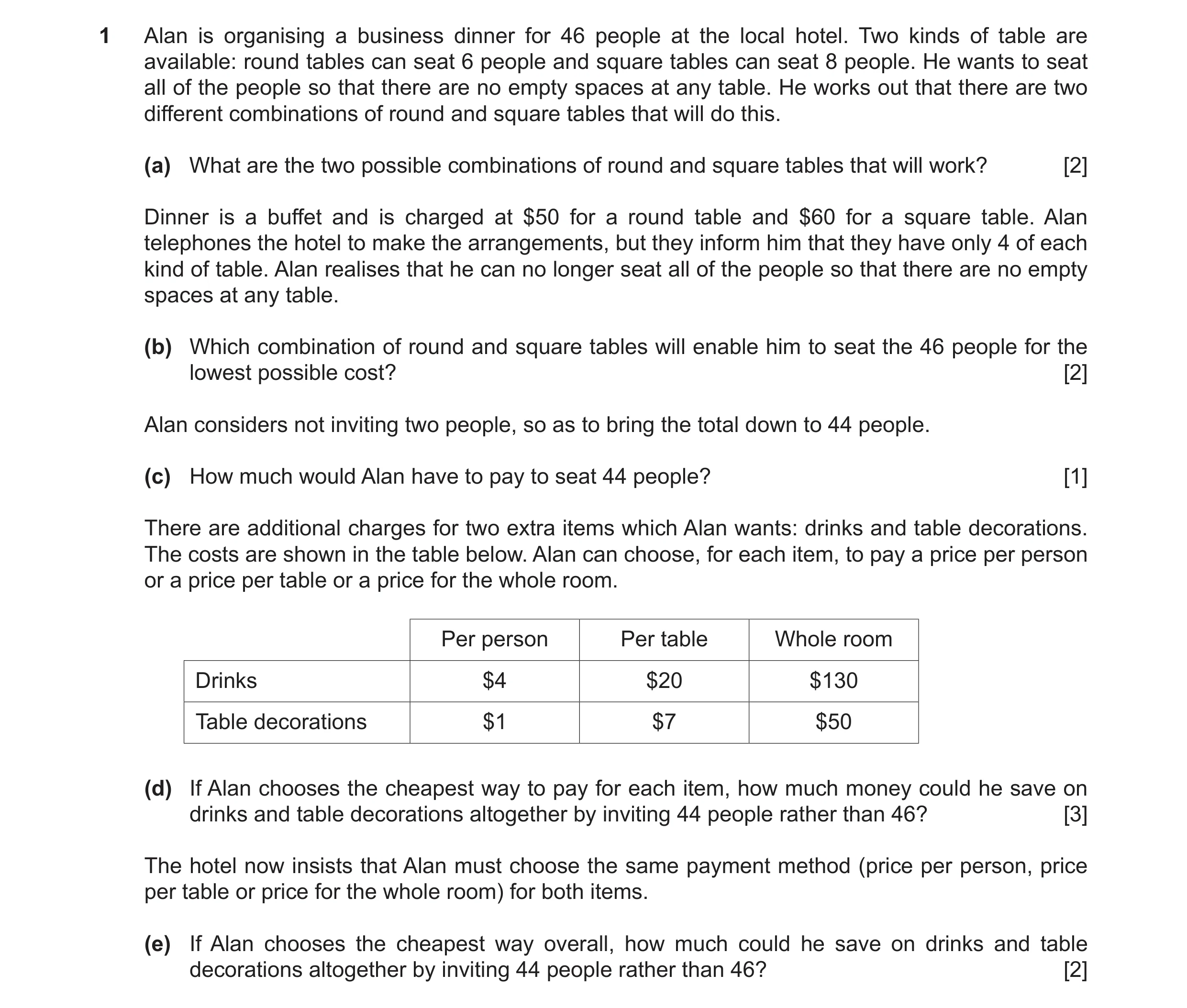 1 / 207
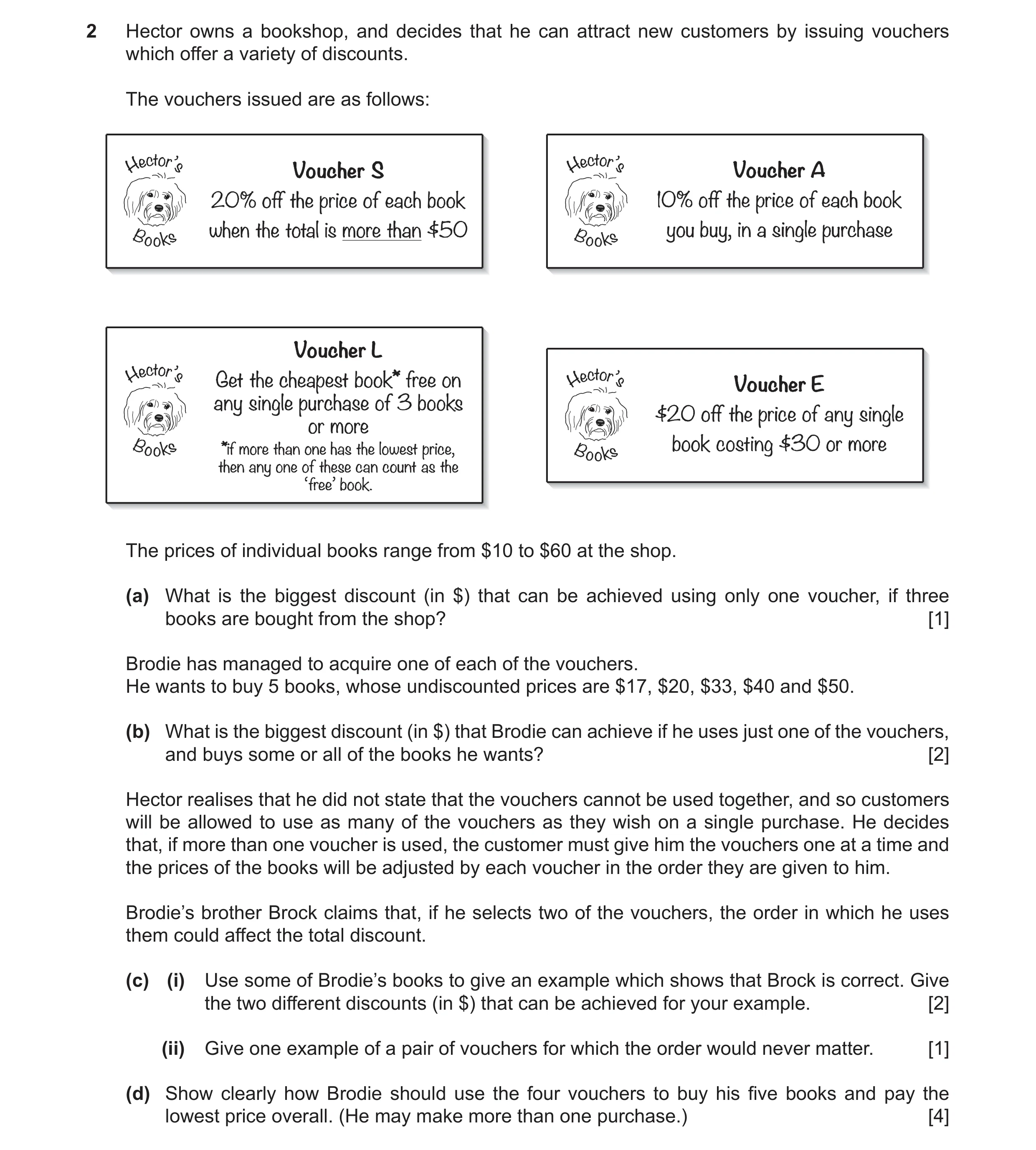 2 / 207
 3 / 207
 4 / 207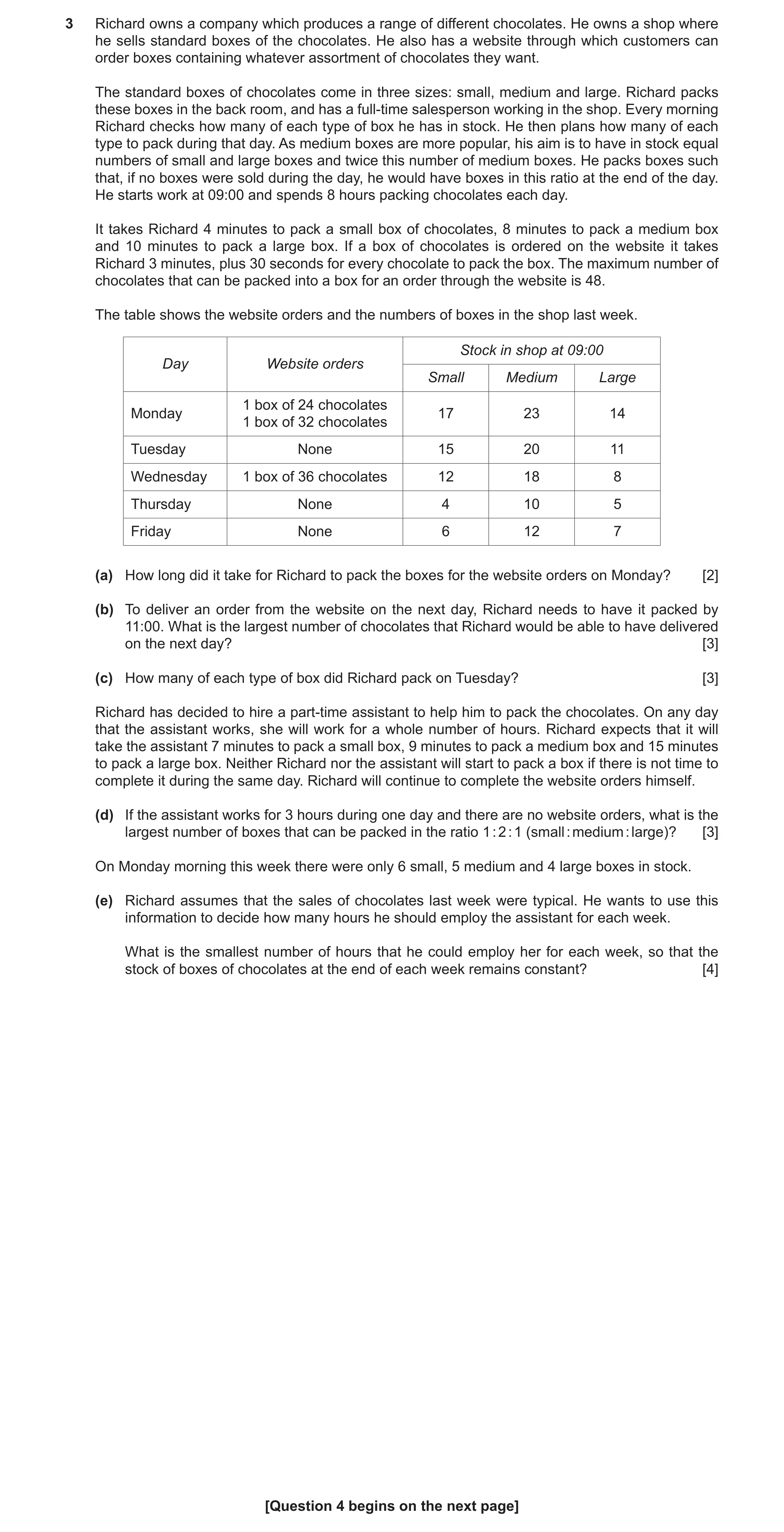
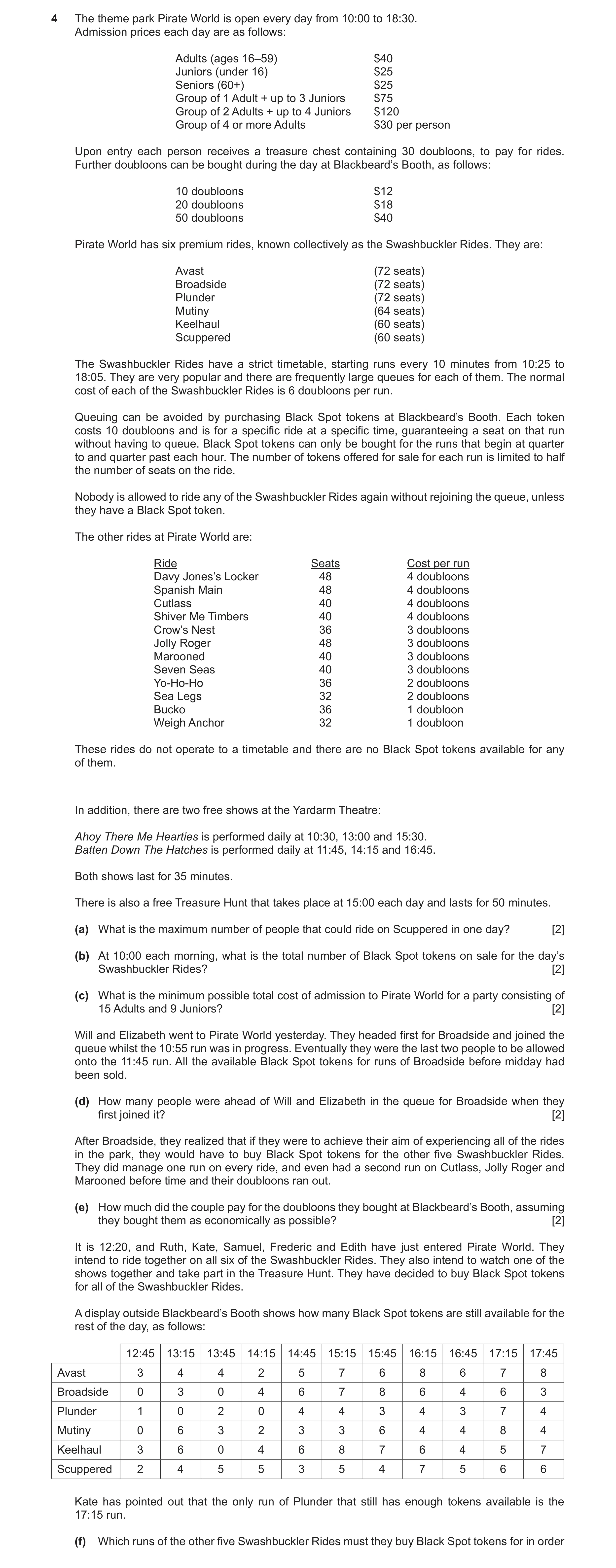
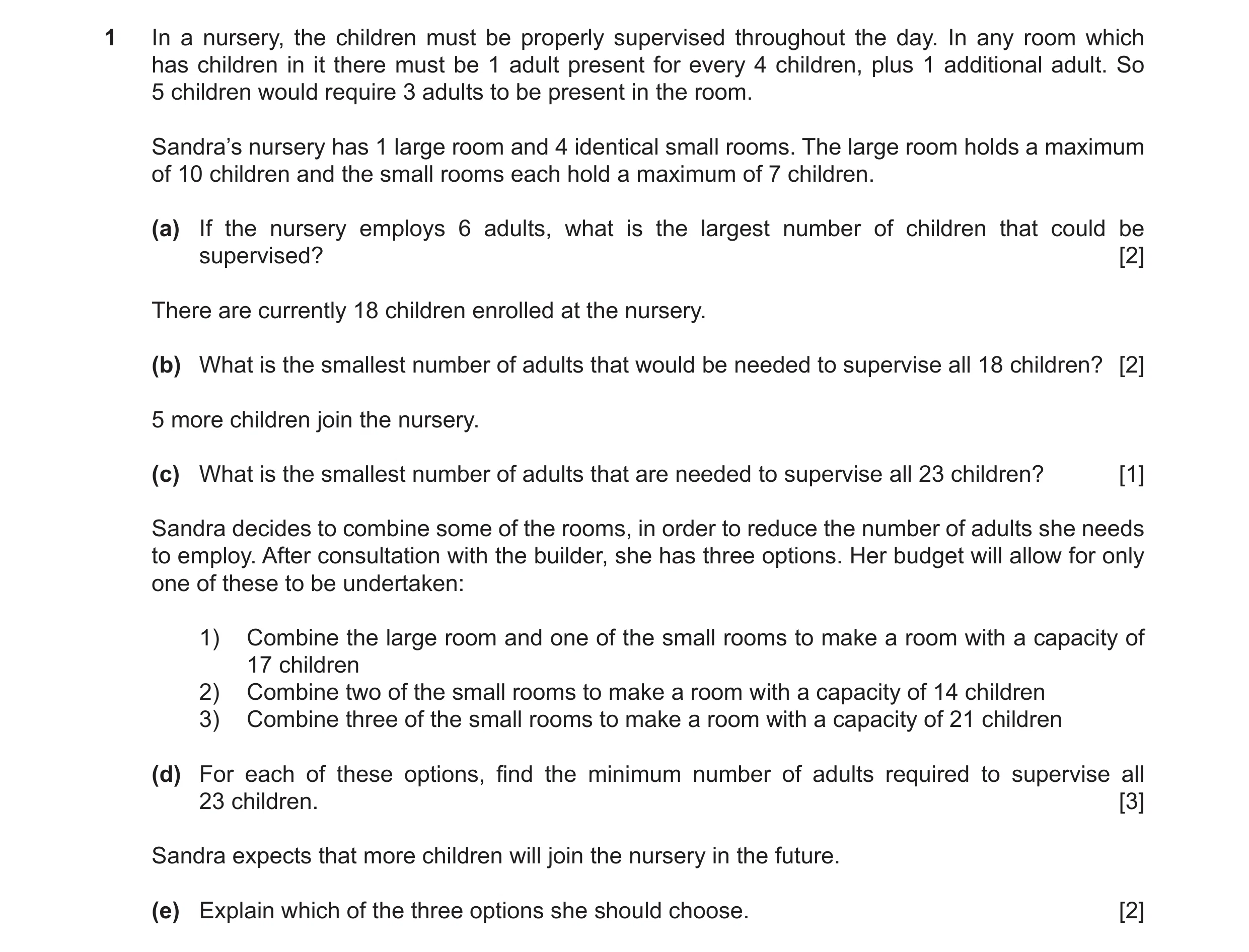 8 / 207
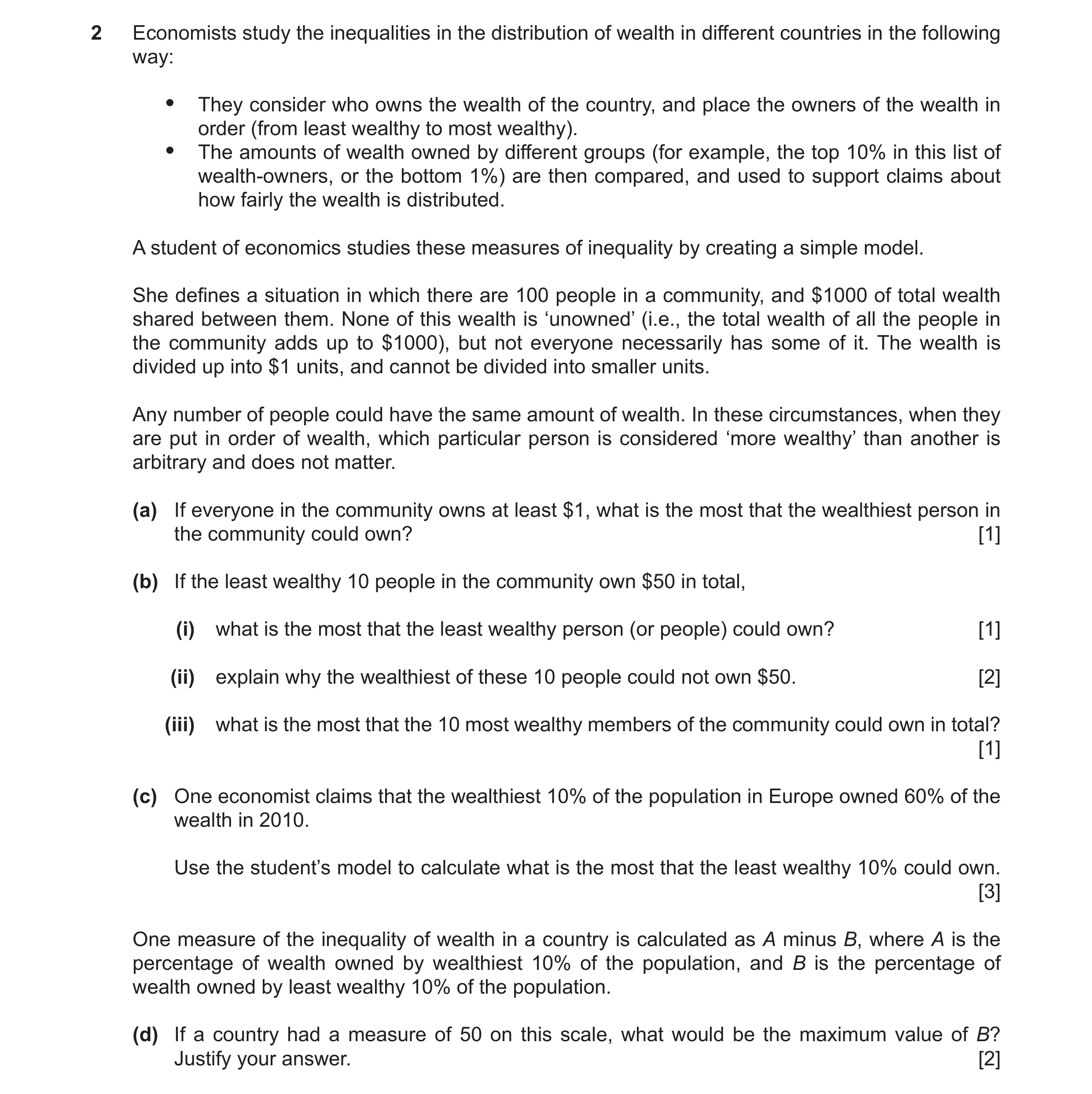 9 / 207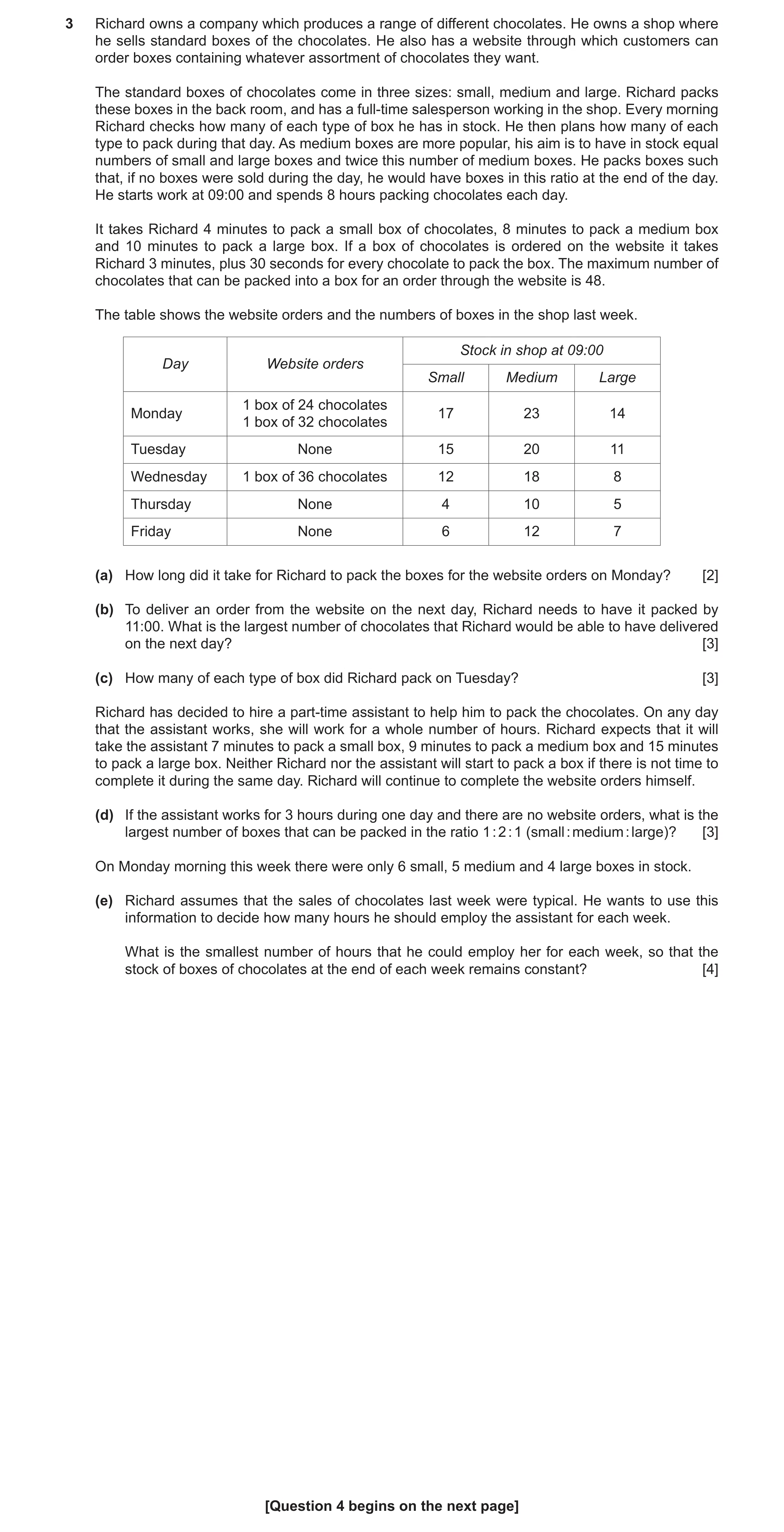
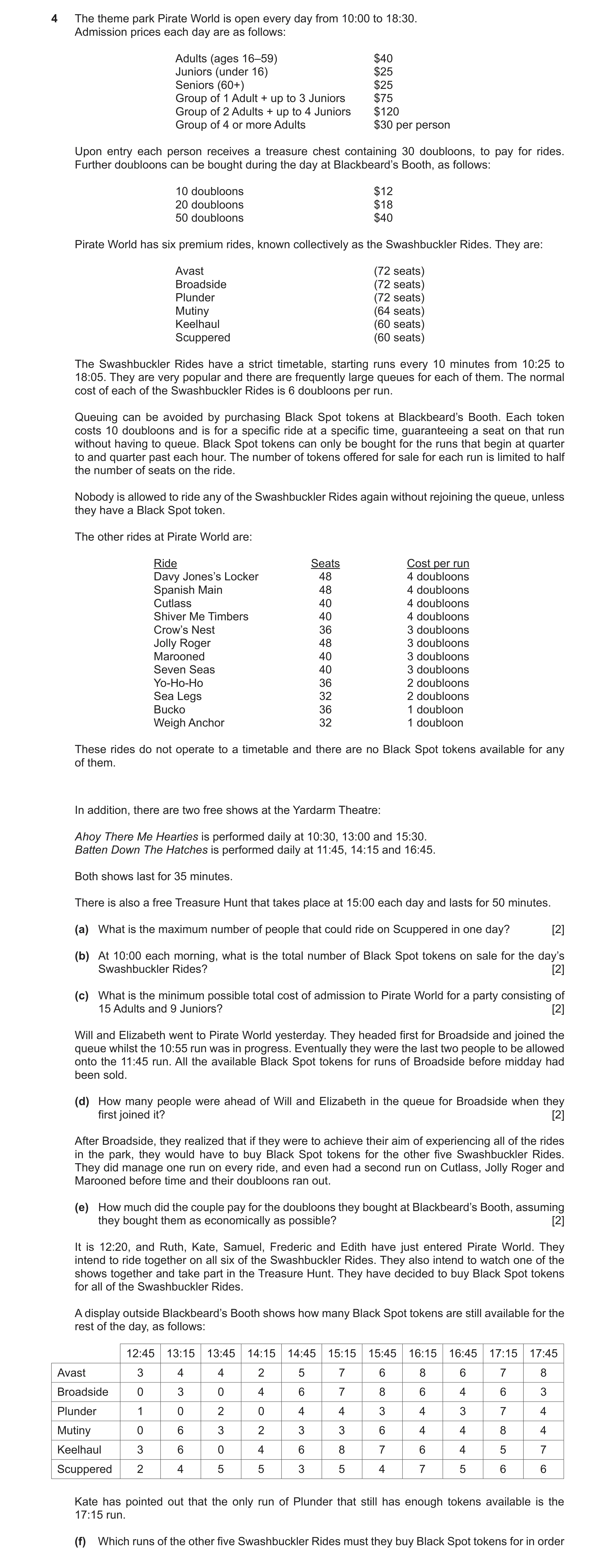
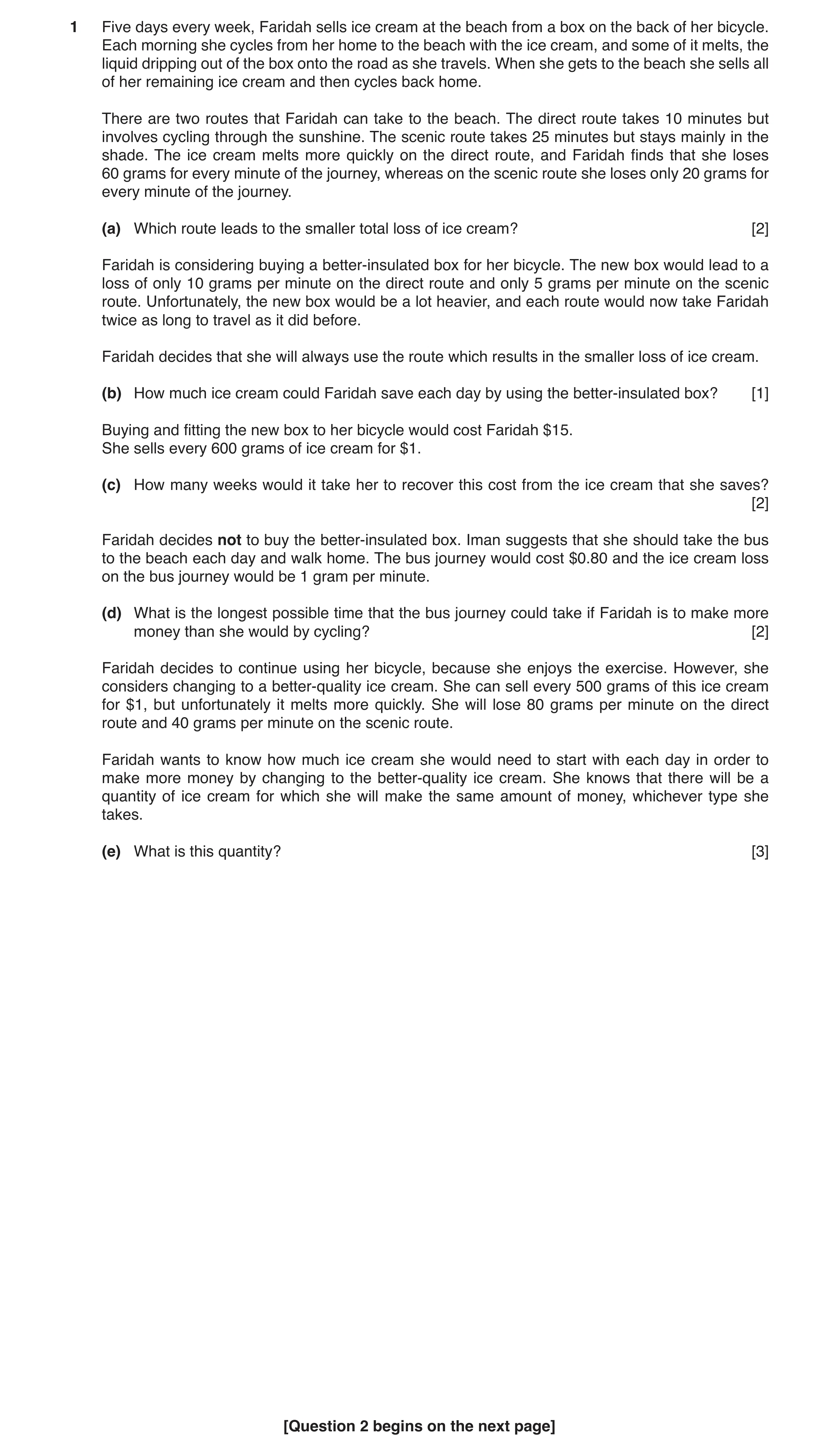
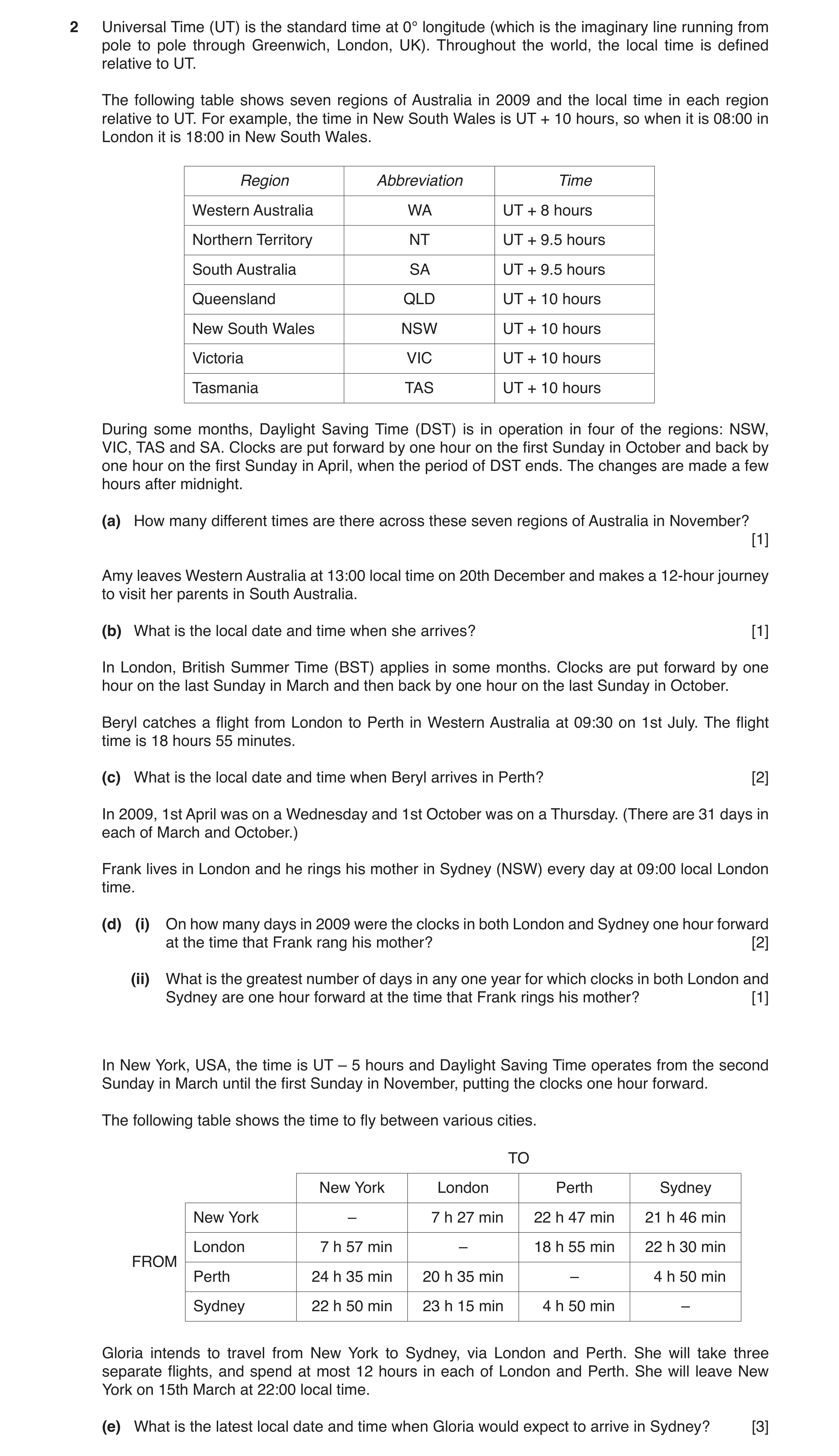
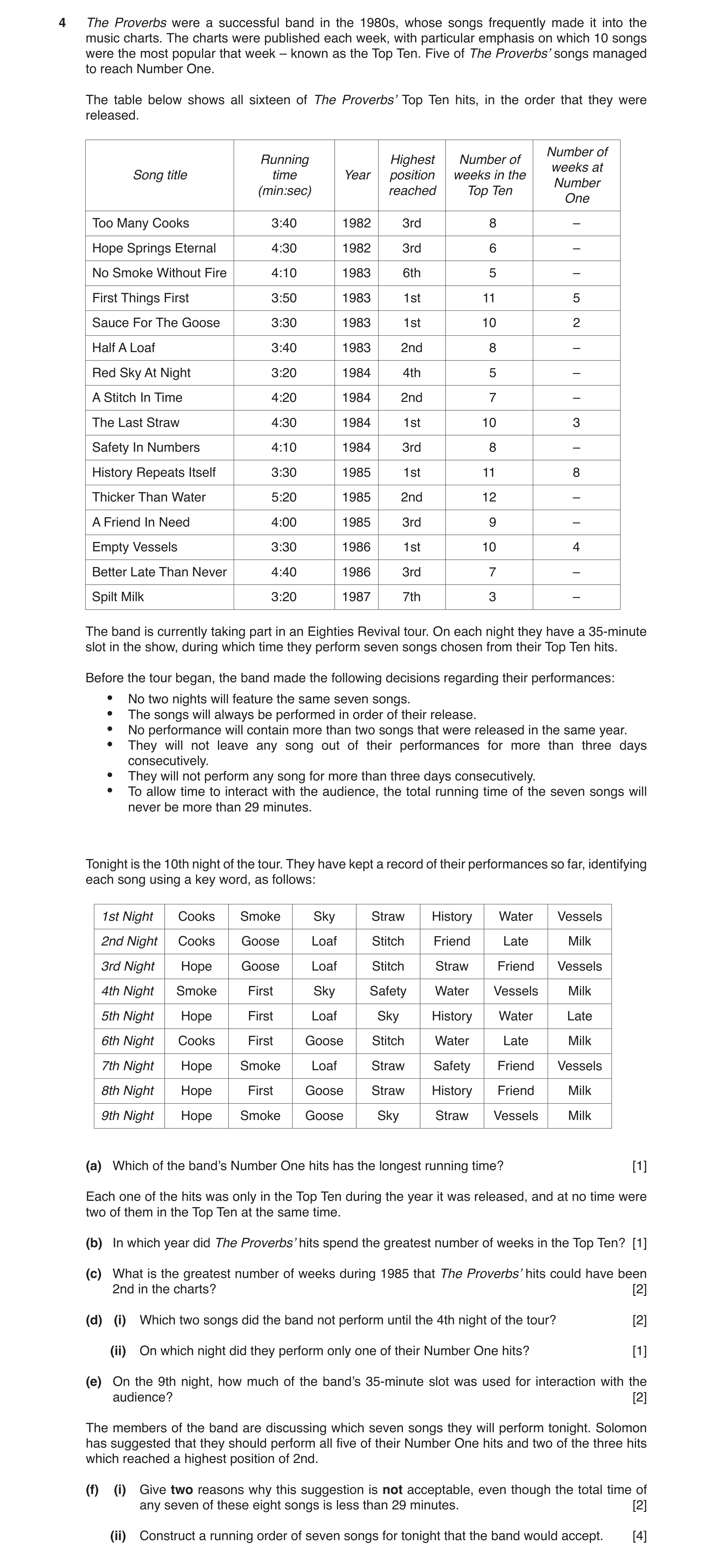
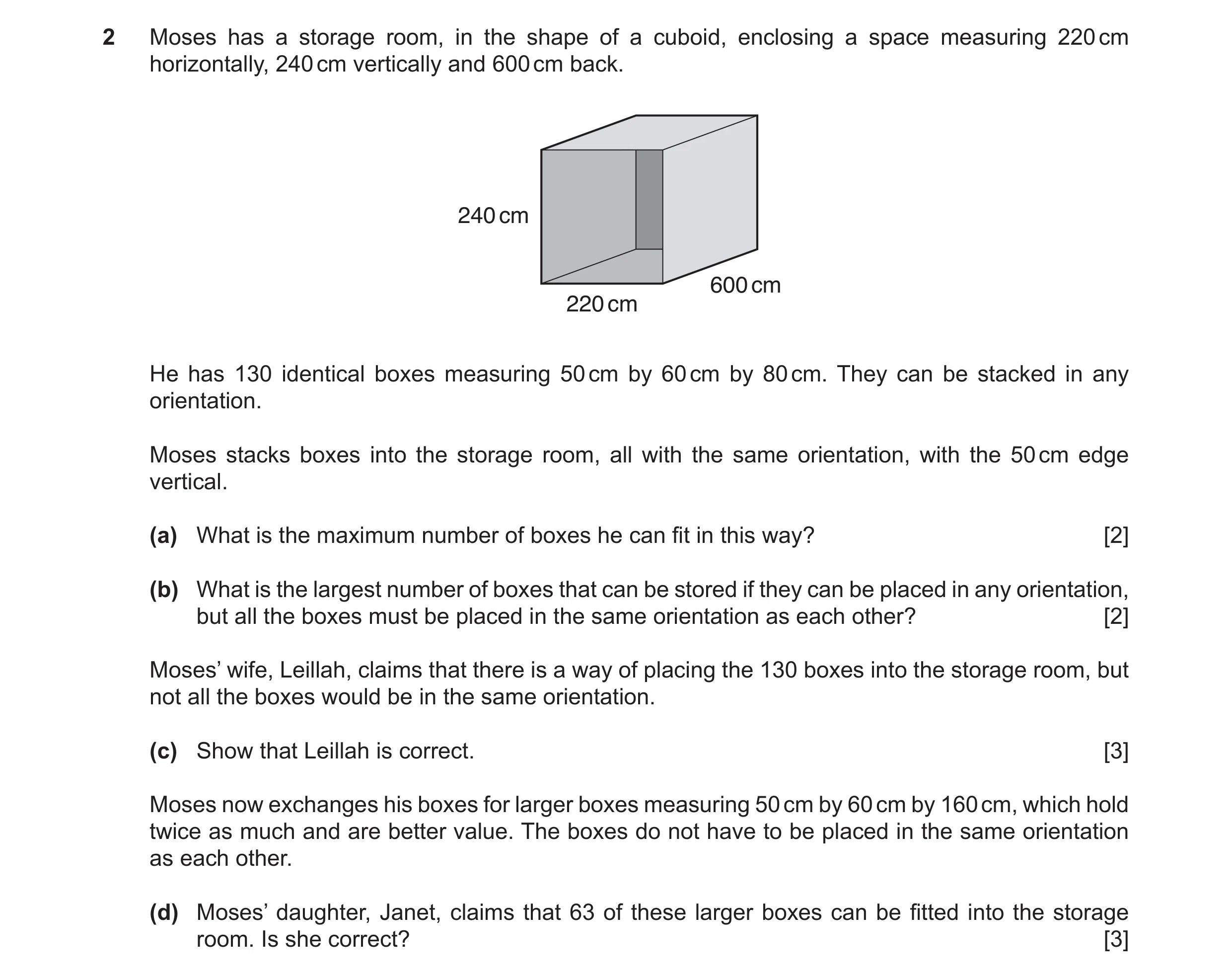 18 / 207
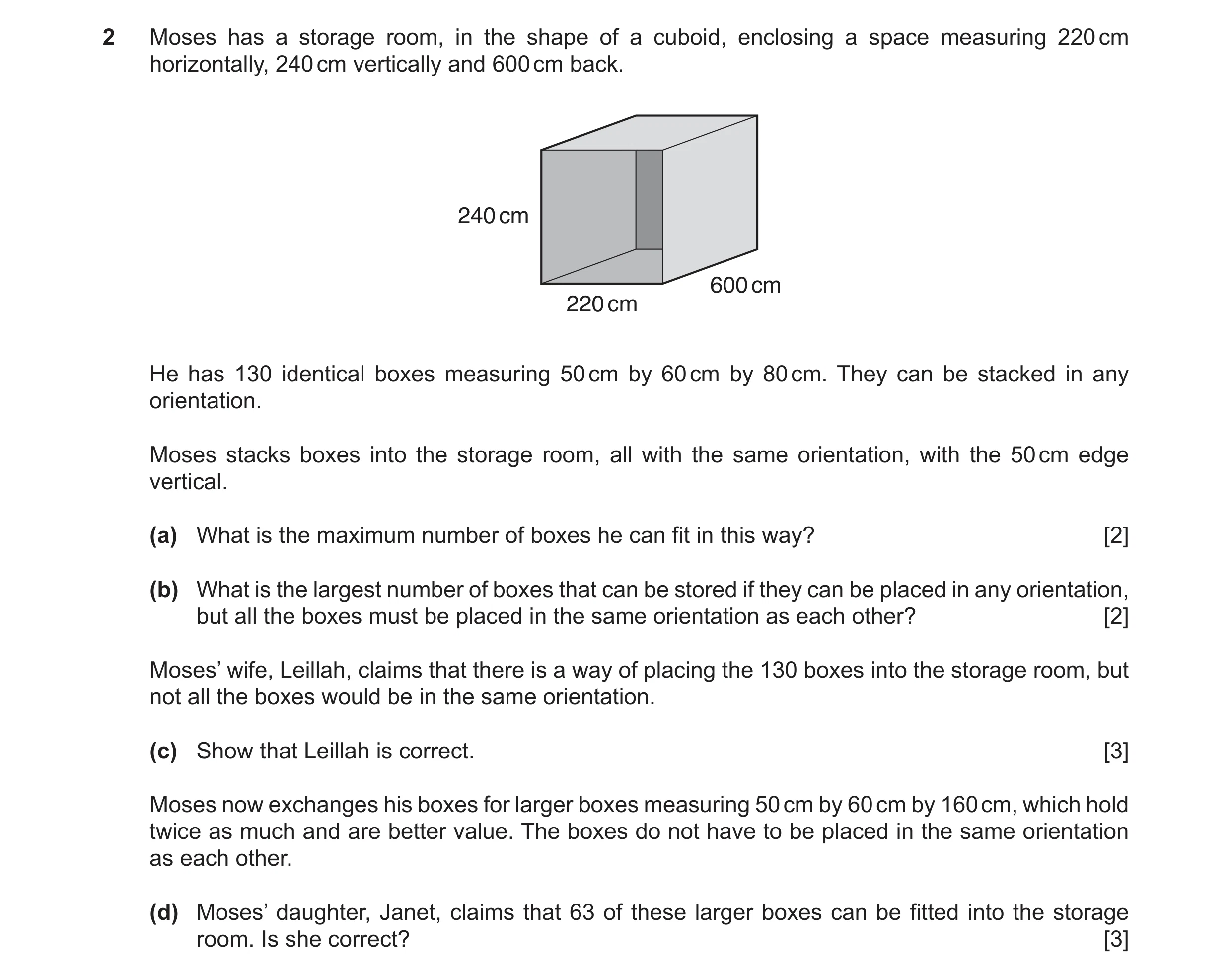 20 / 207
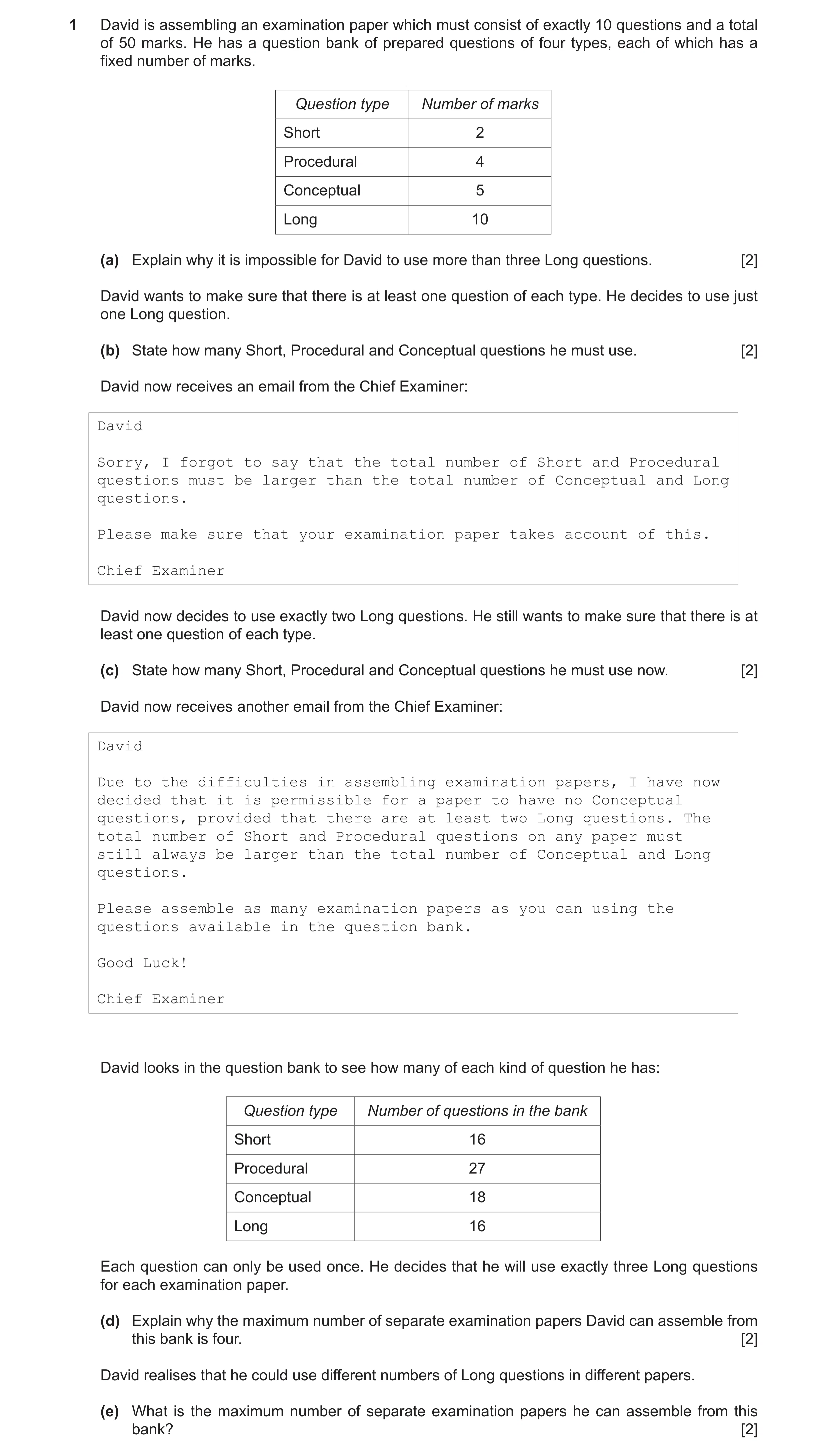
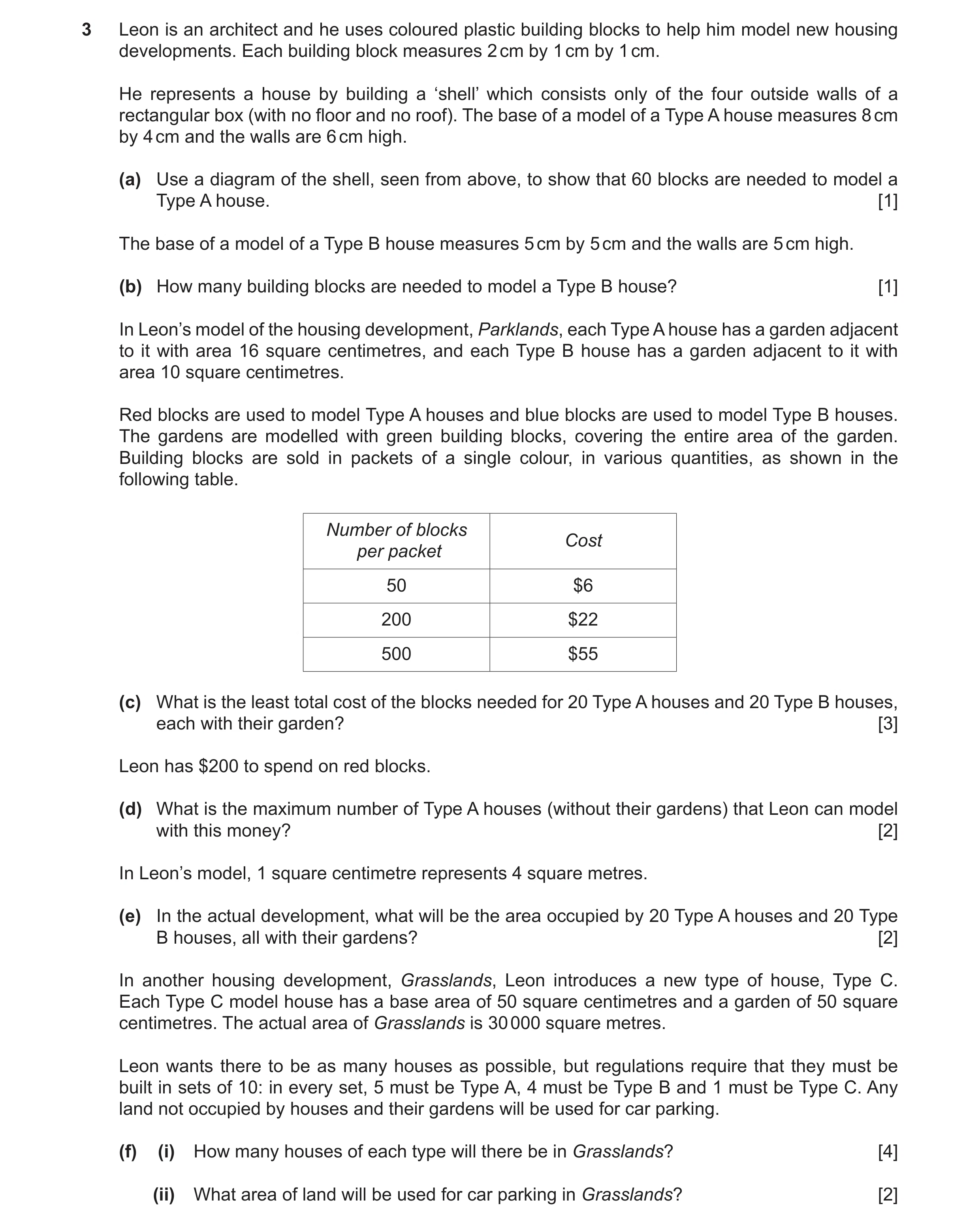 24 / 207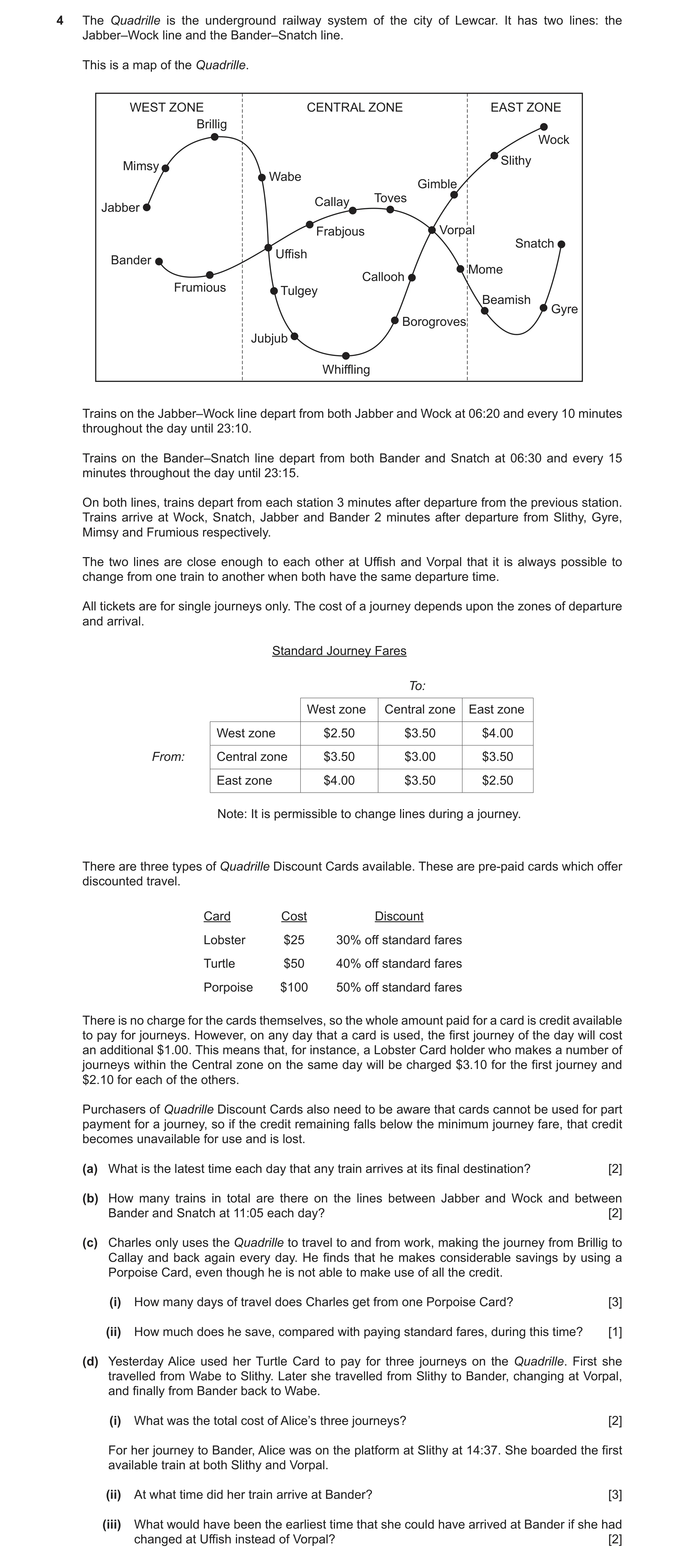
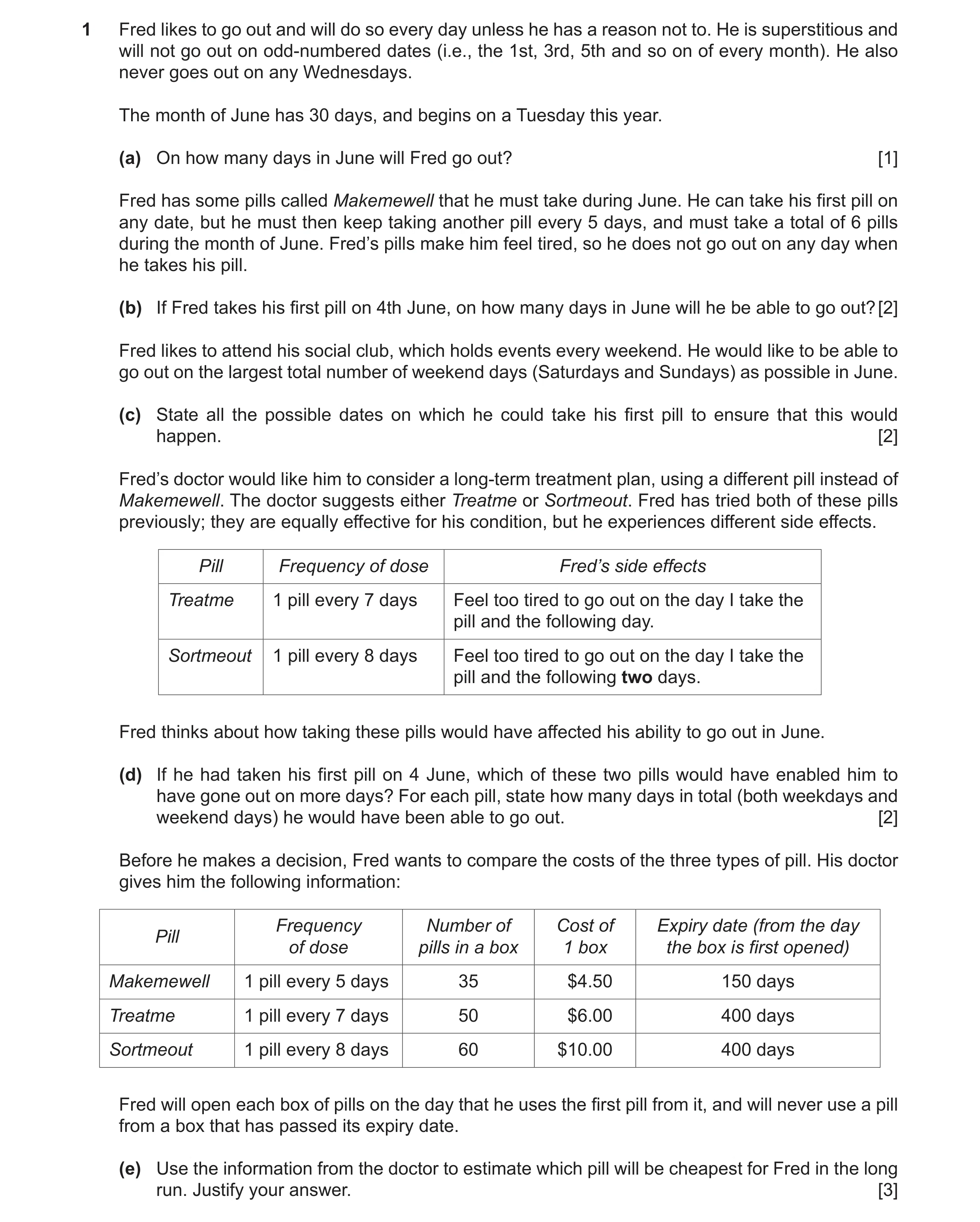 36 / 207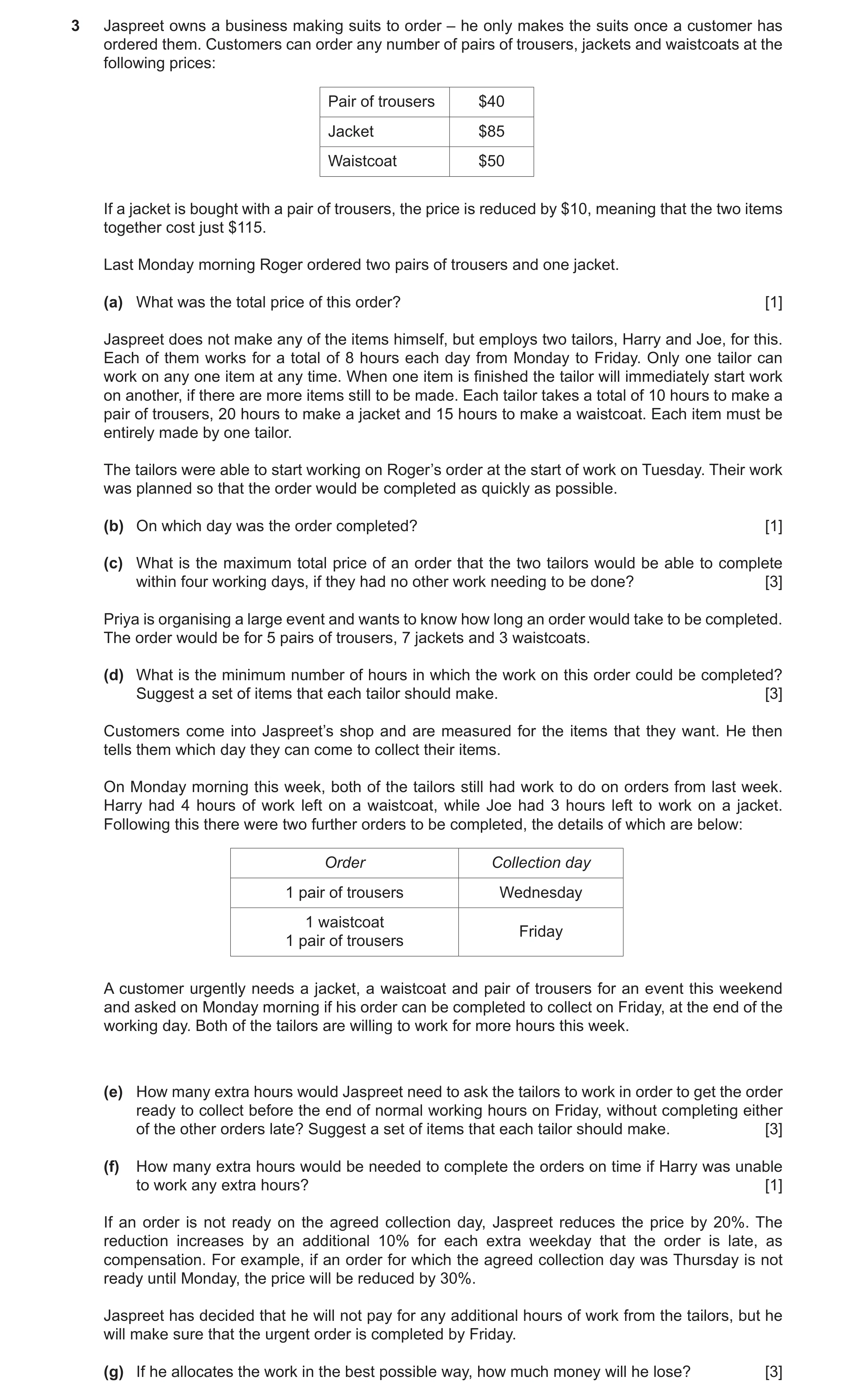
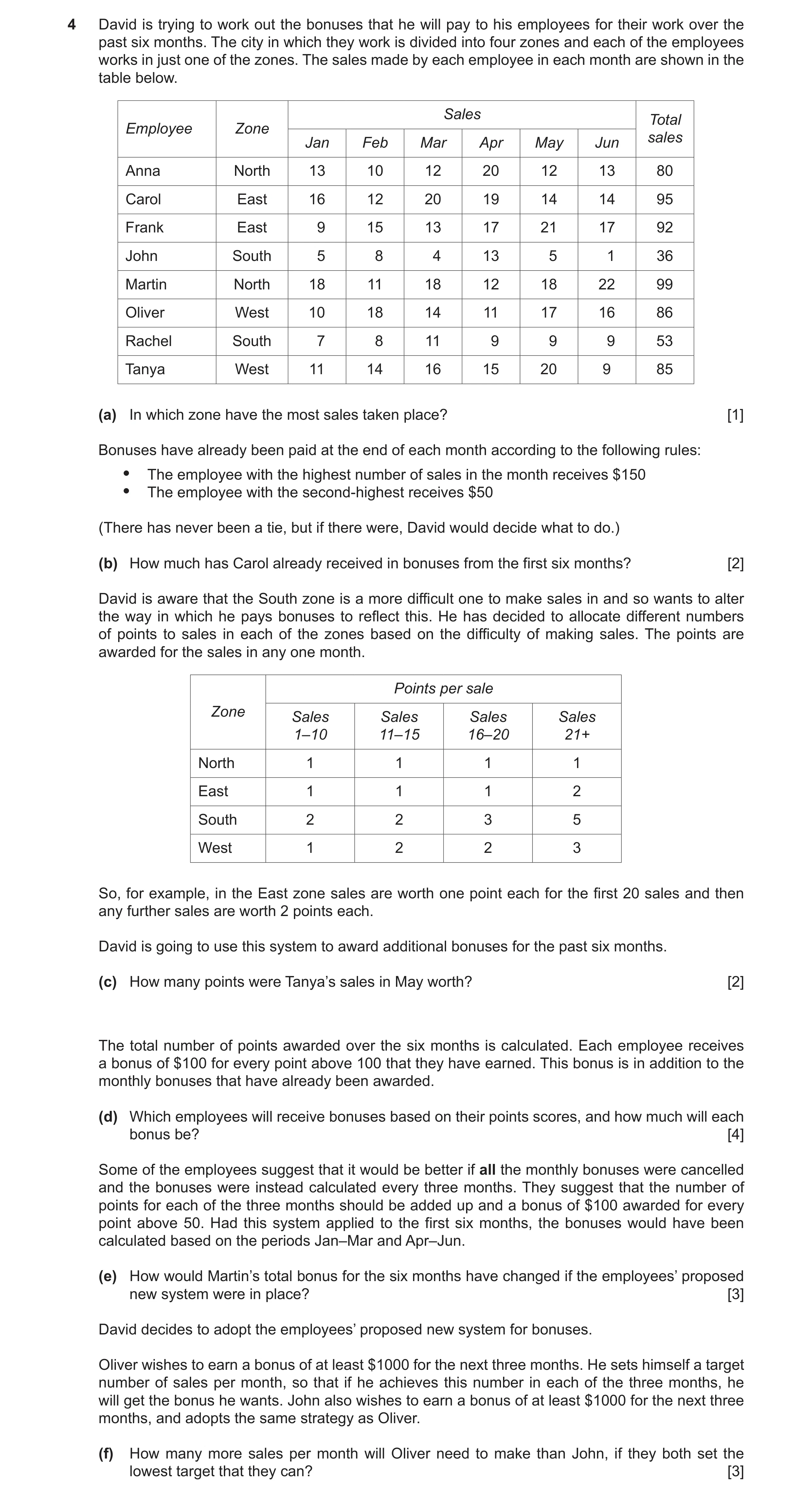
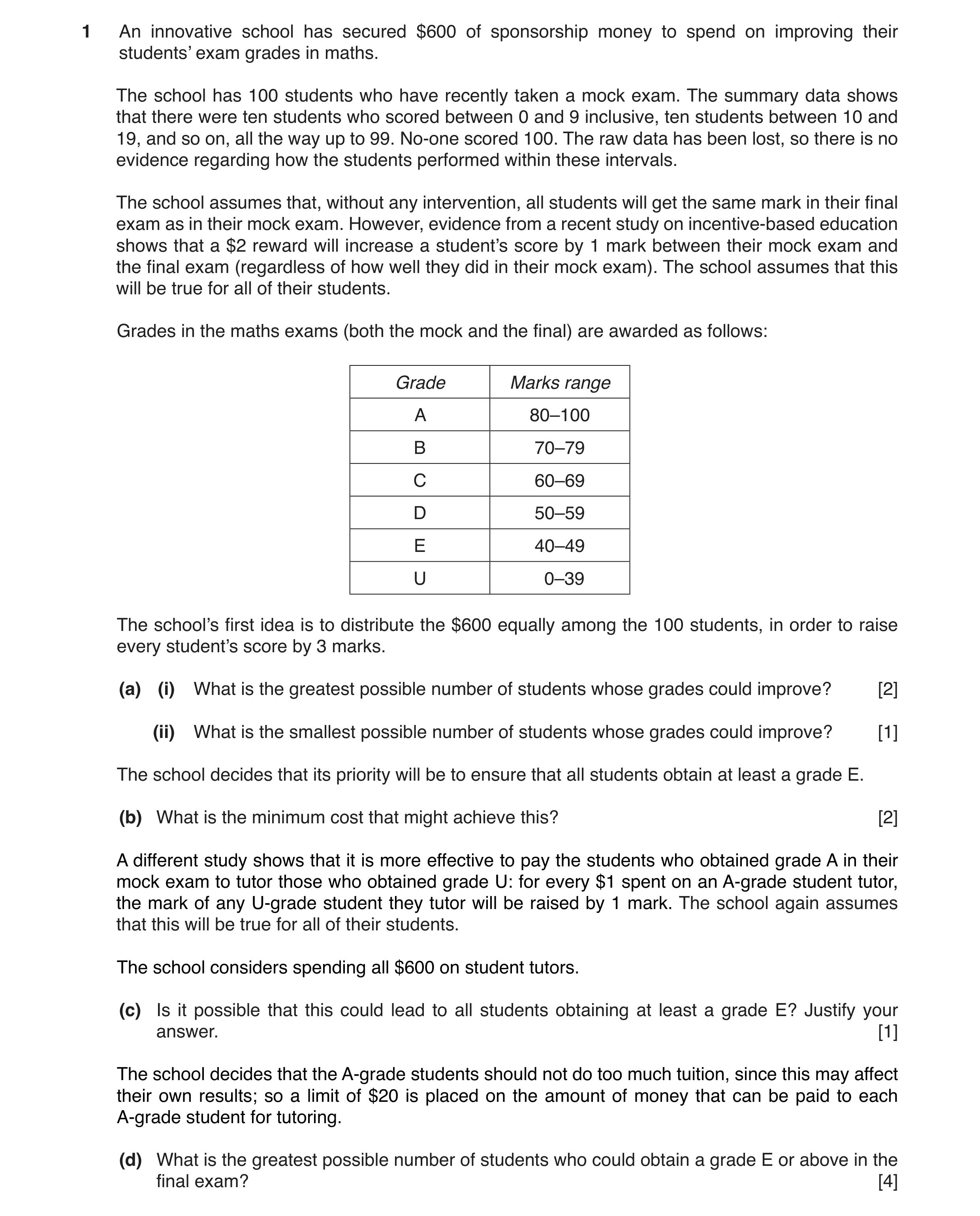 40 / 207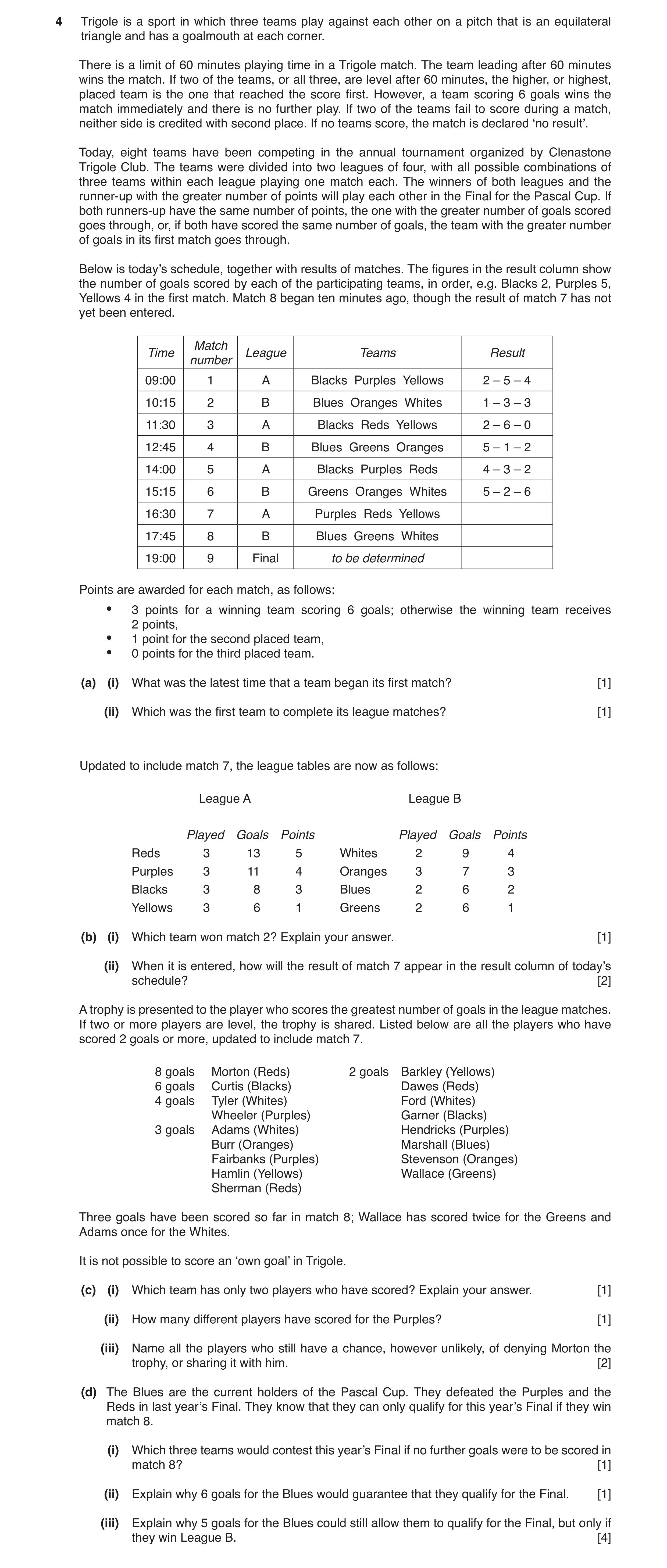
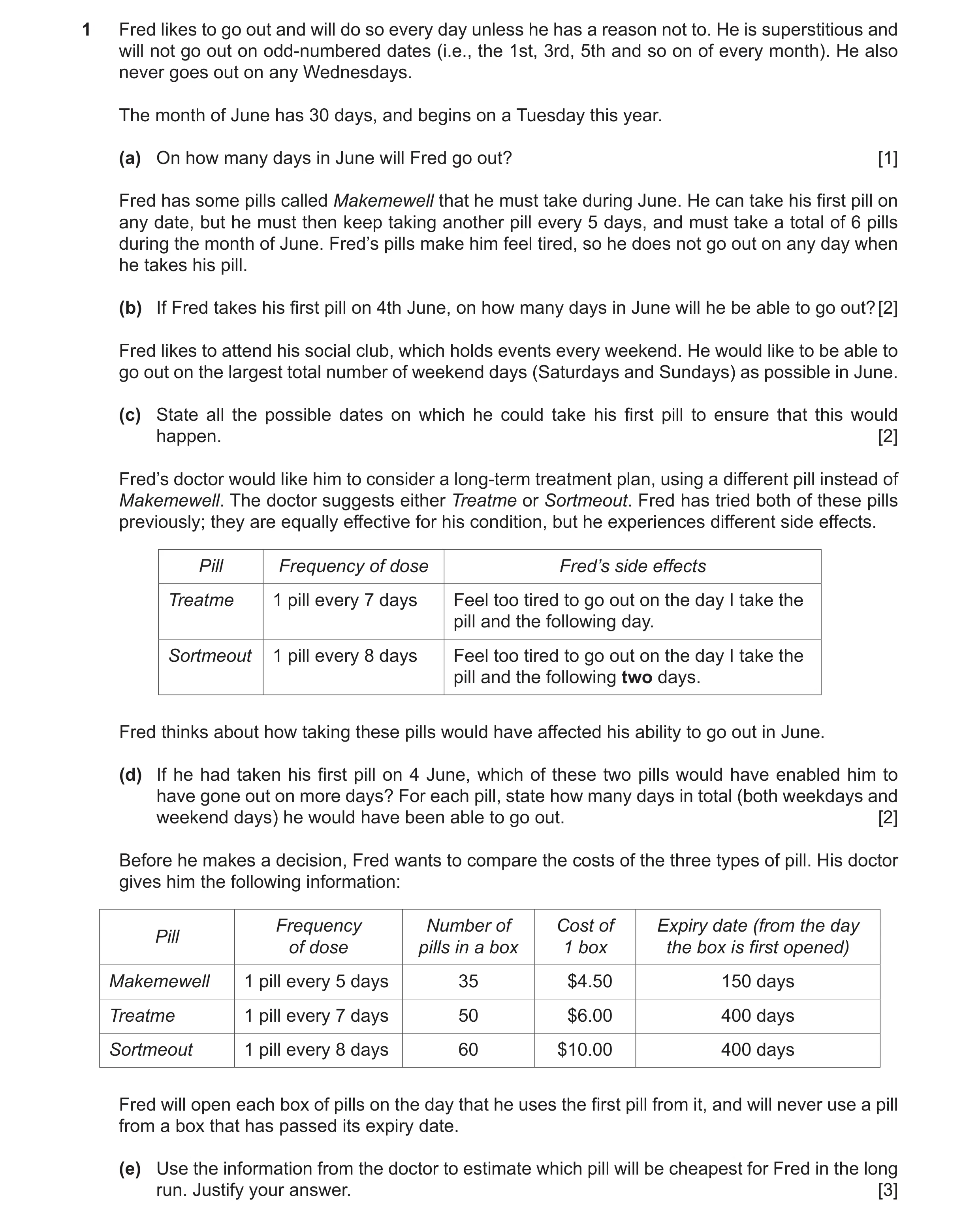 43 / 207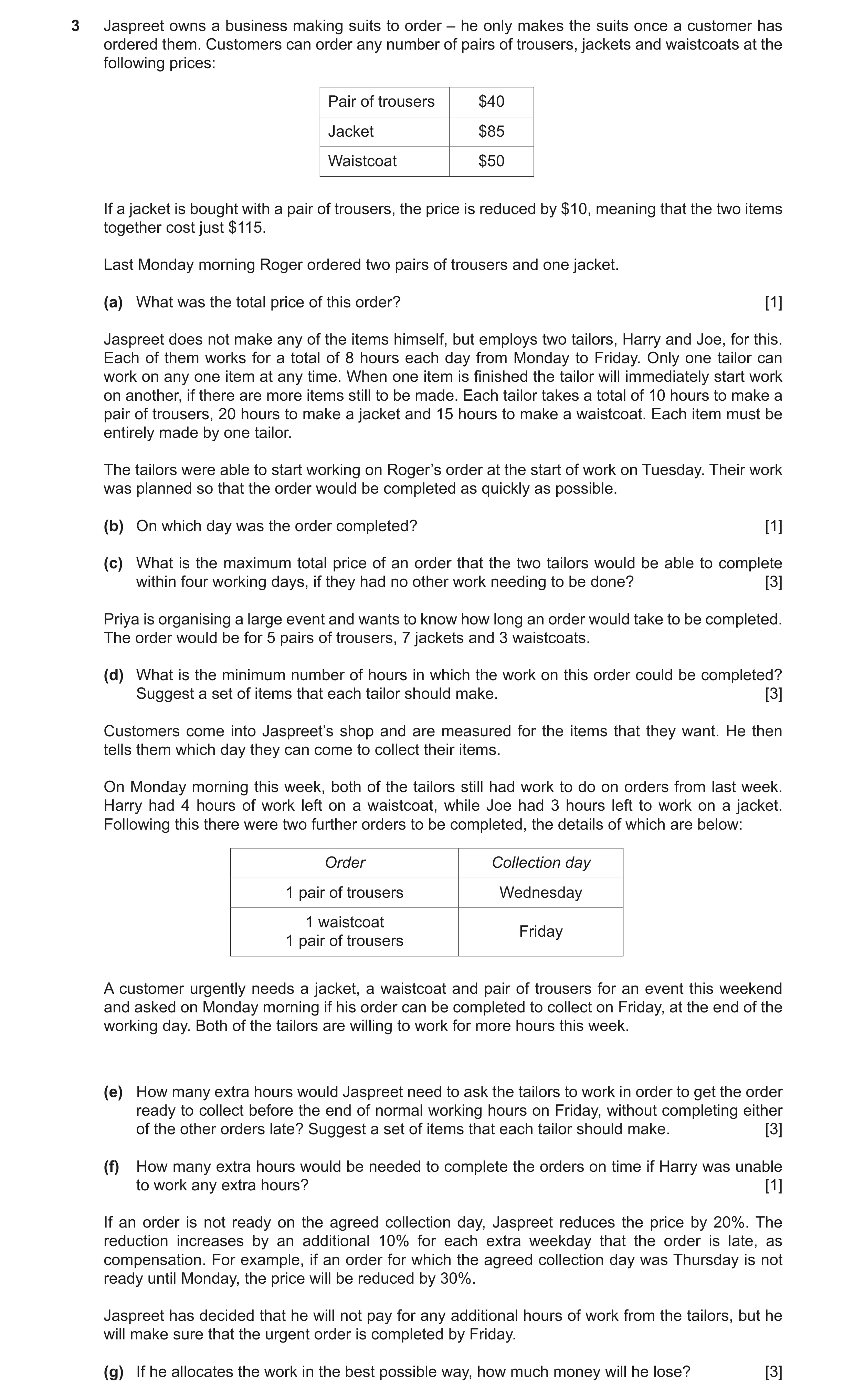
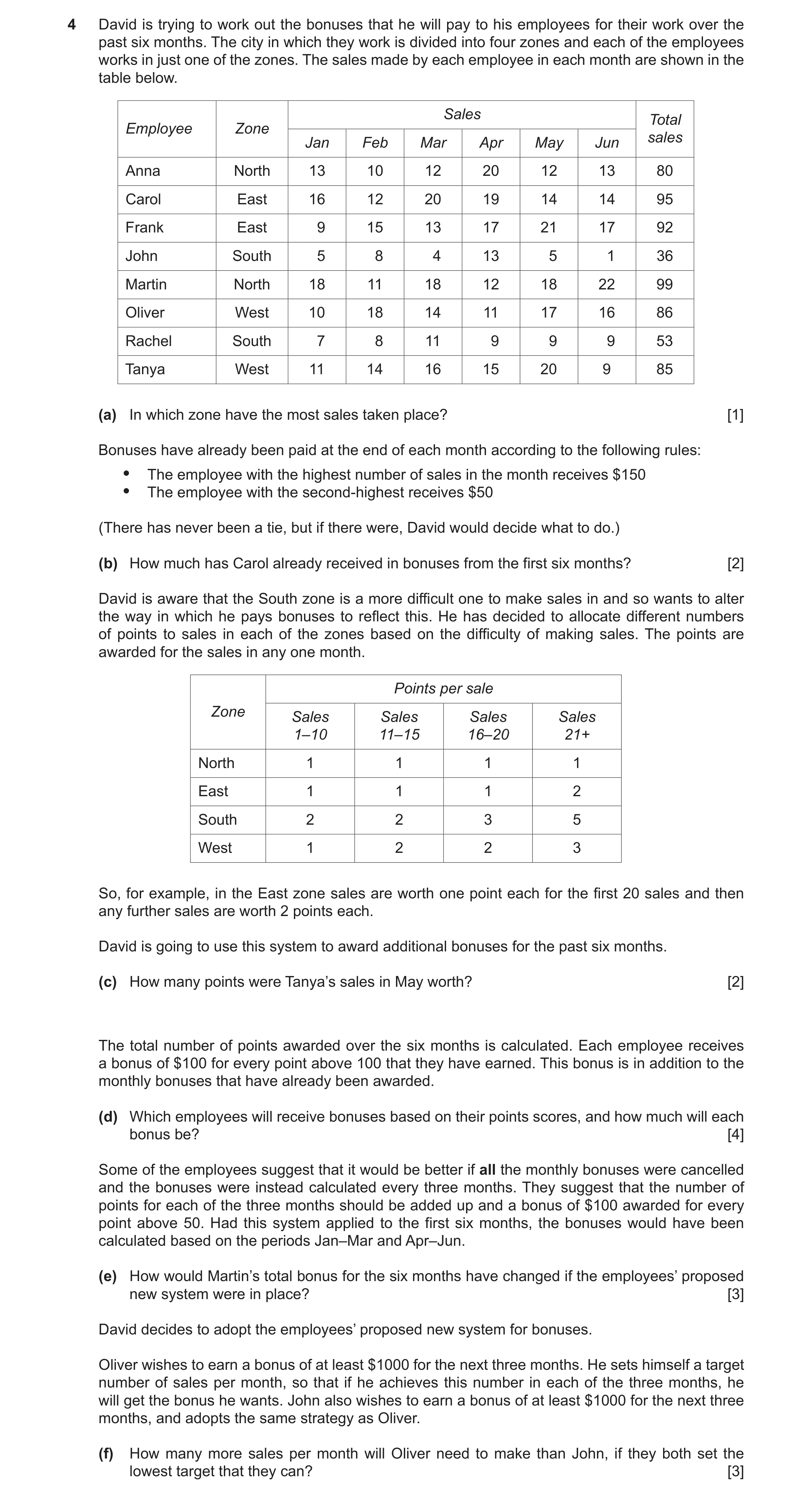
 47 / 207
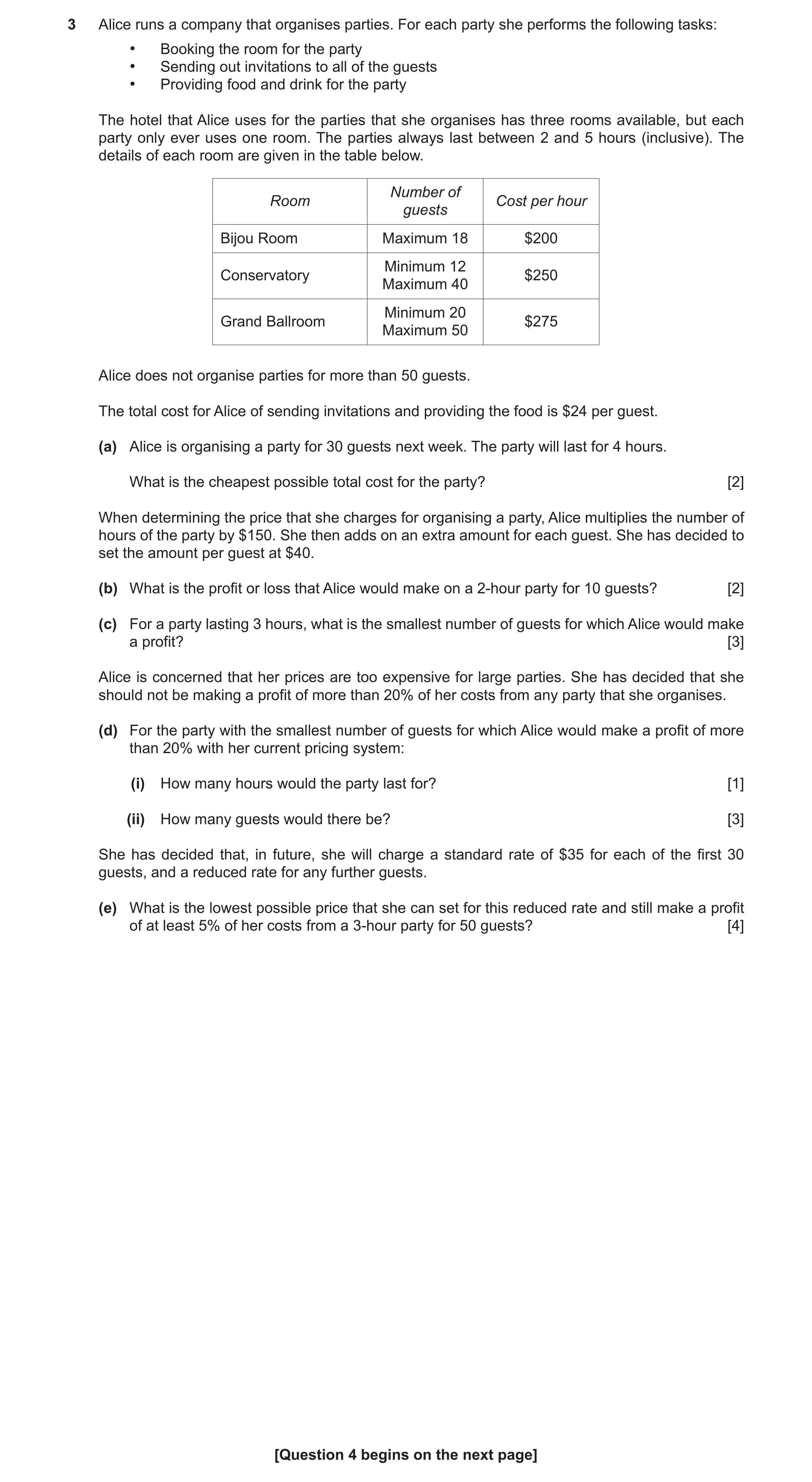
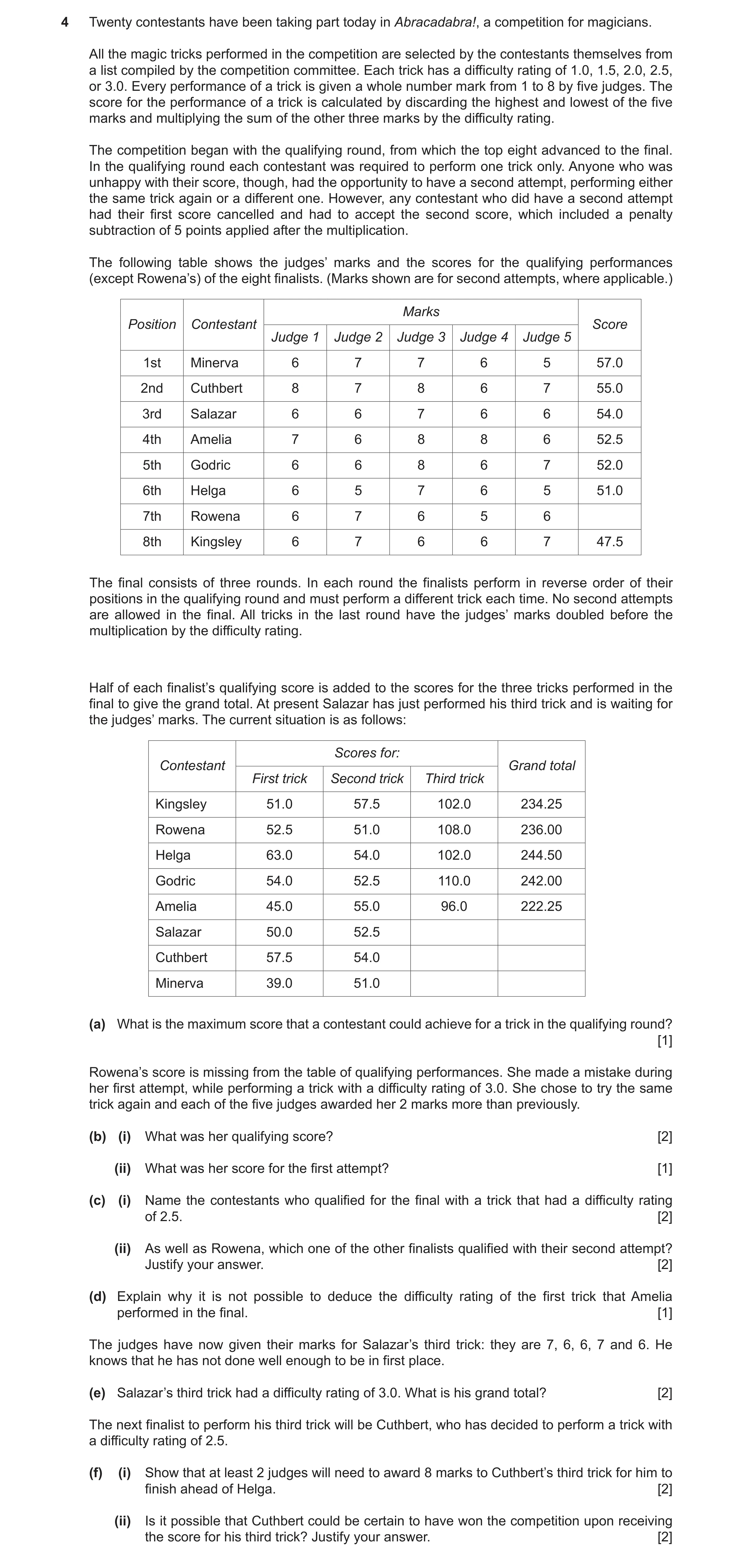
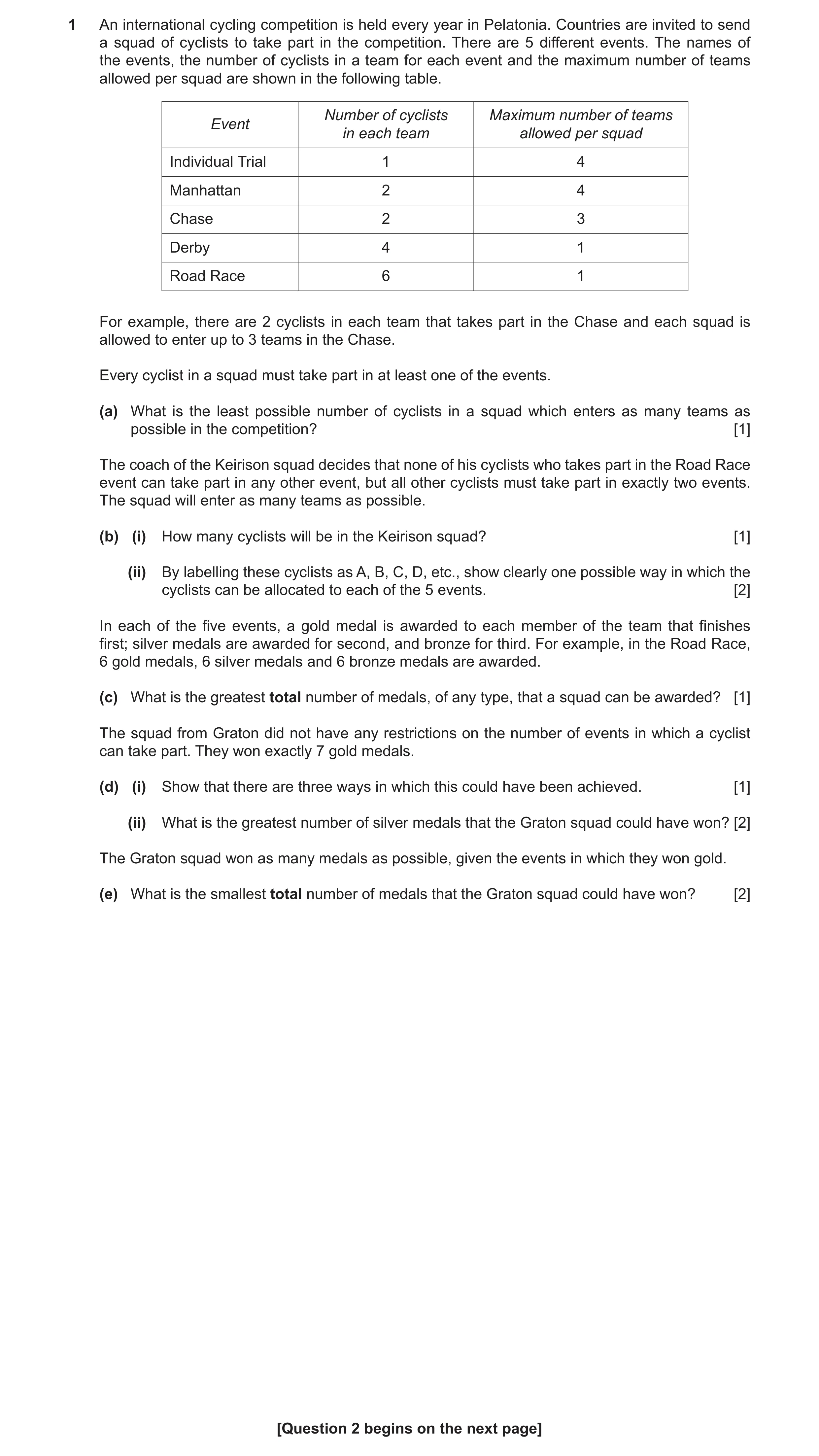
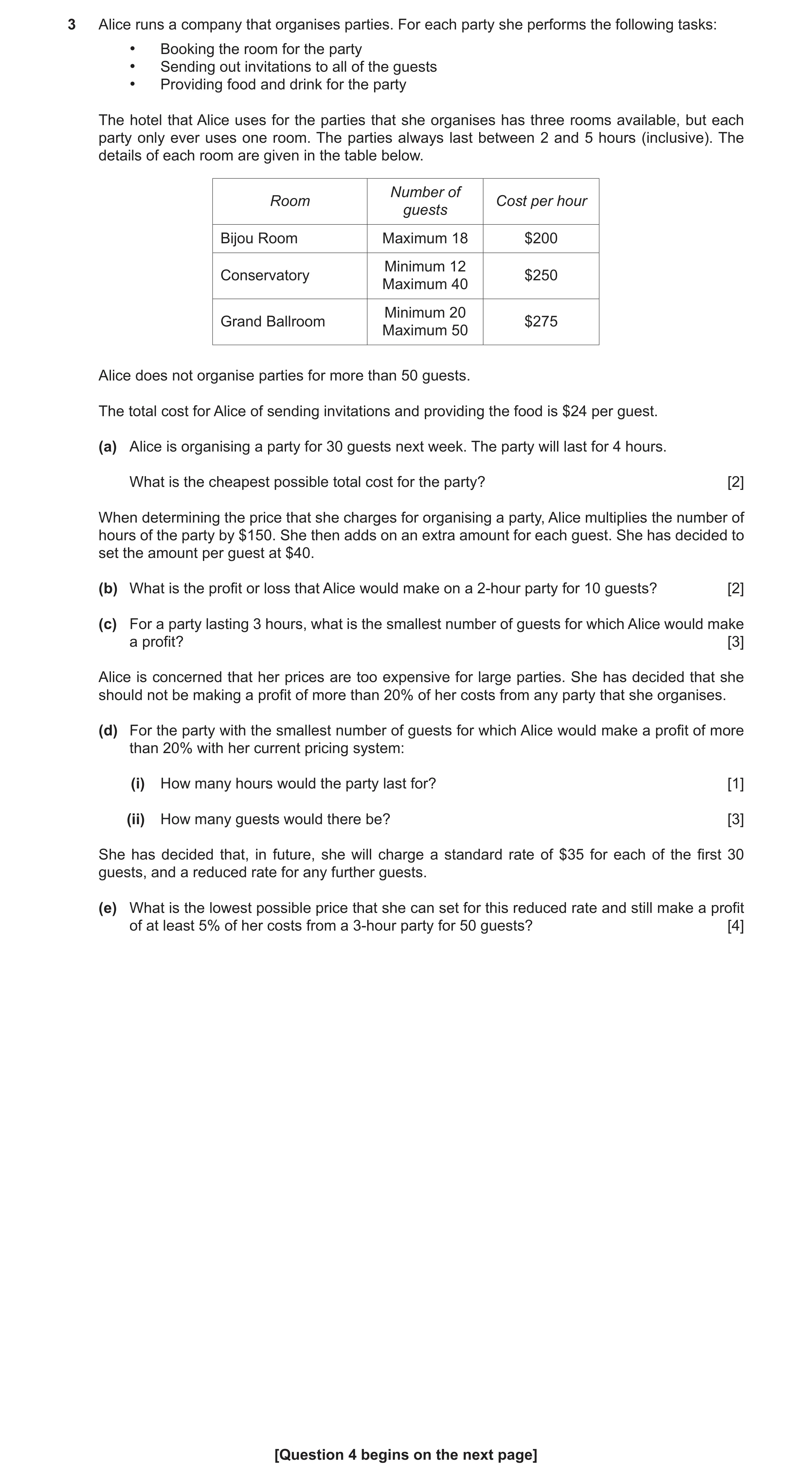
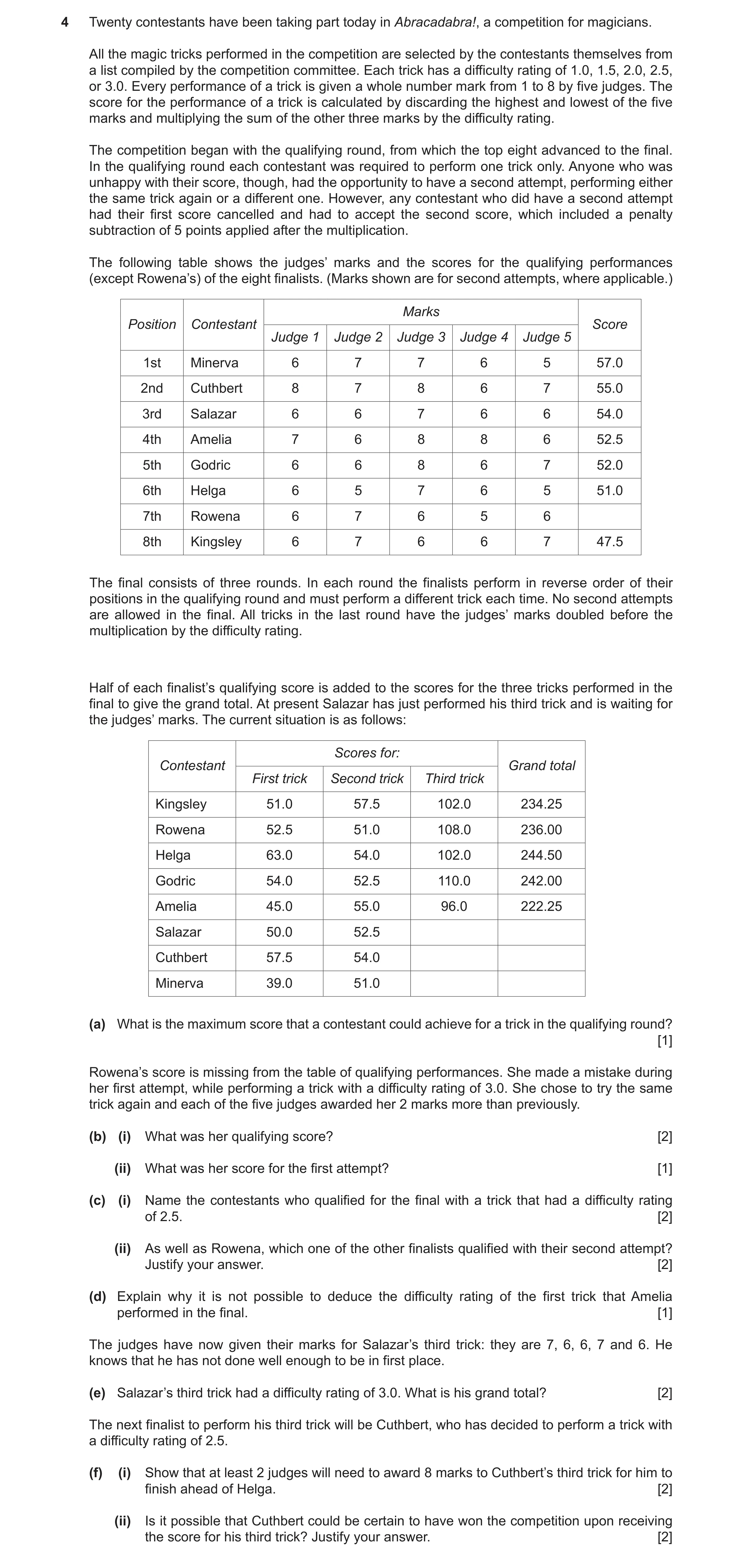
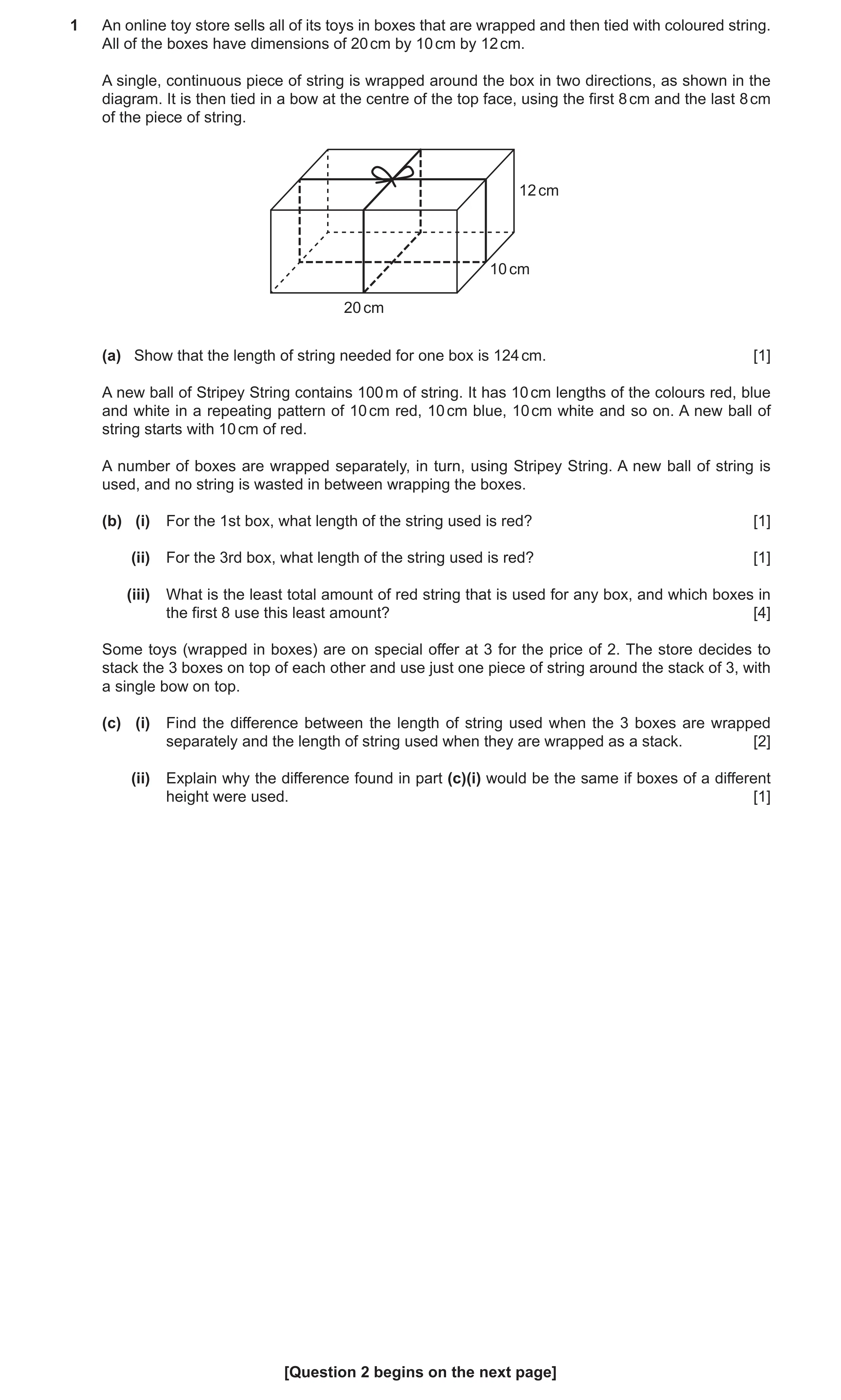
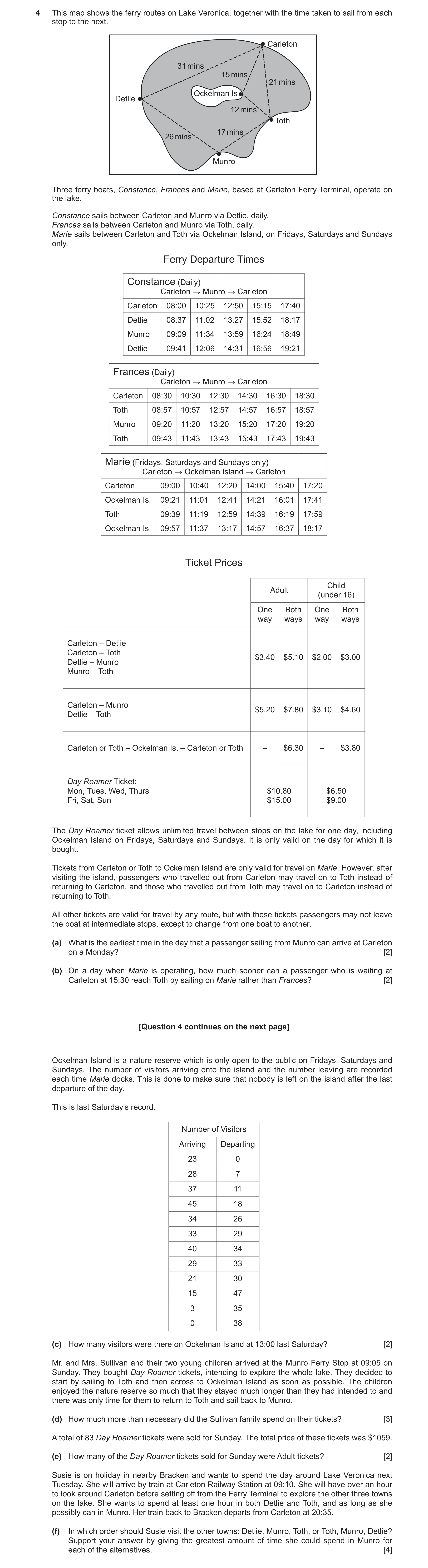
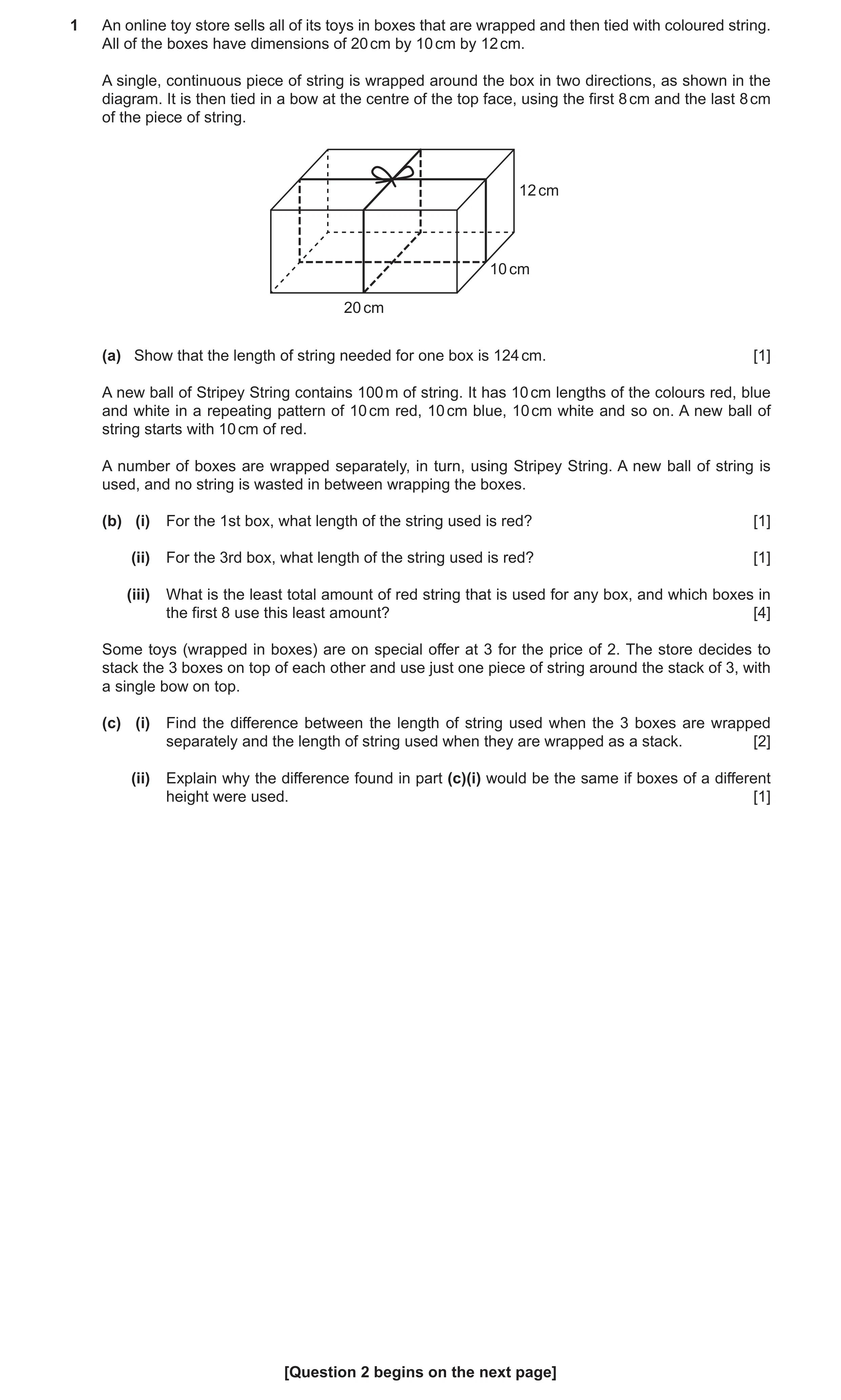
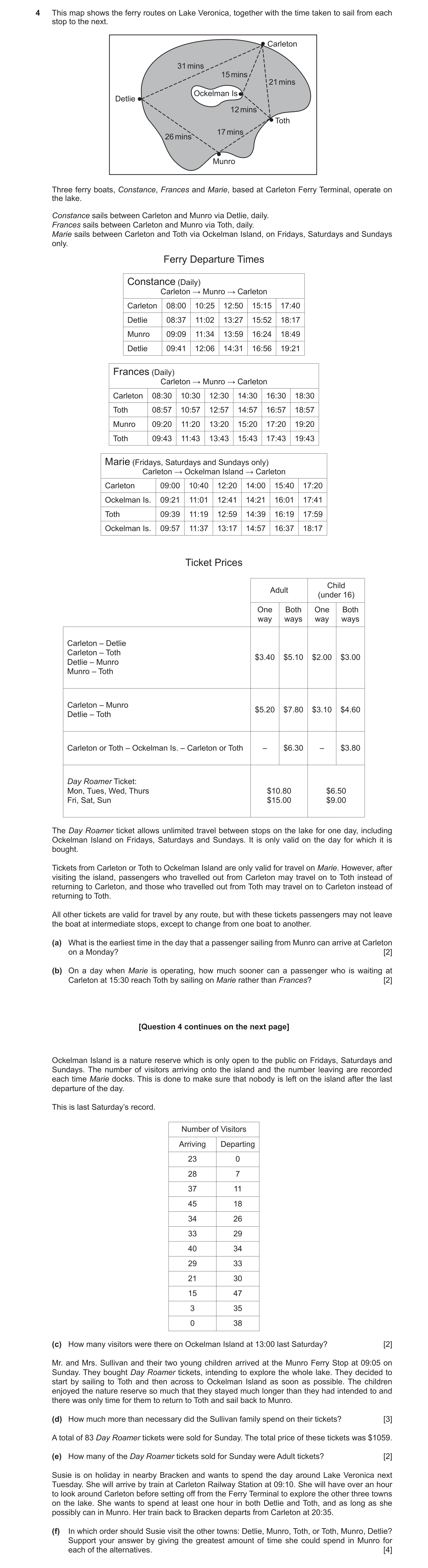
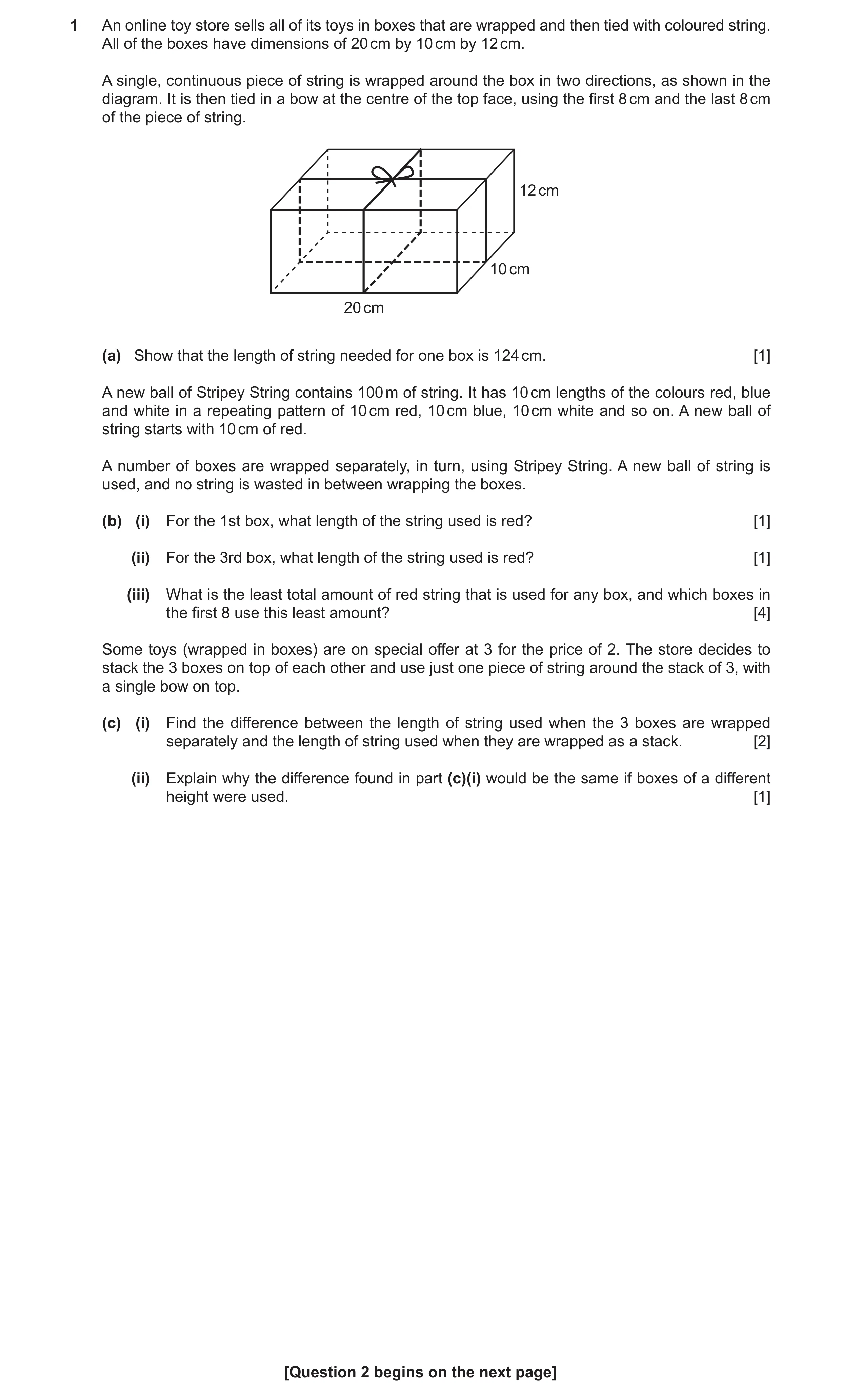
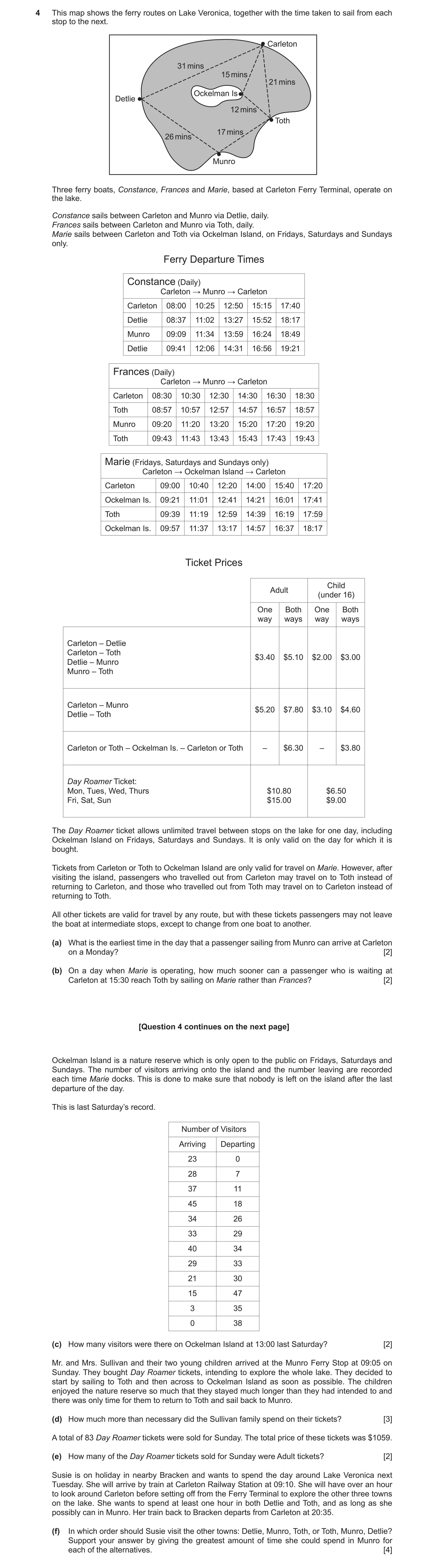
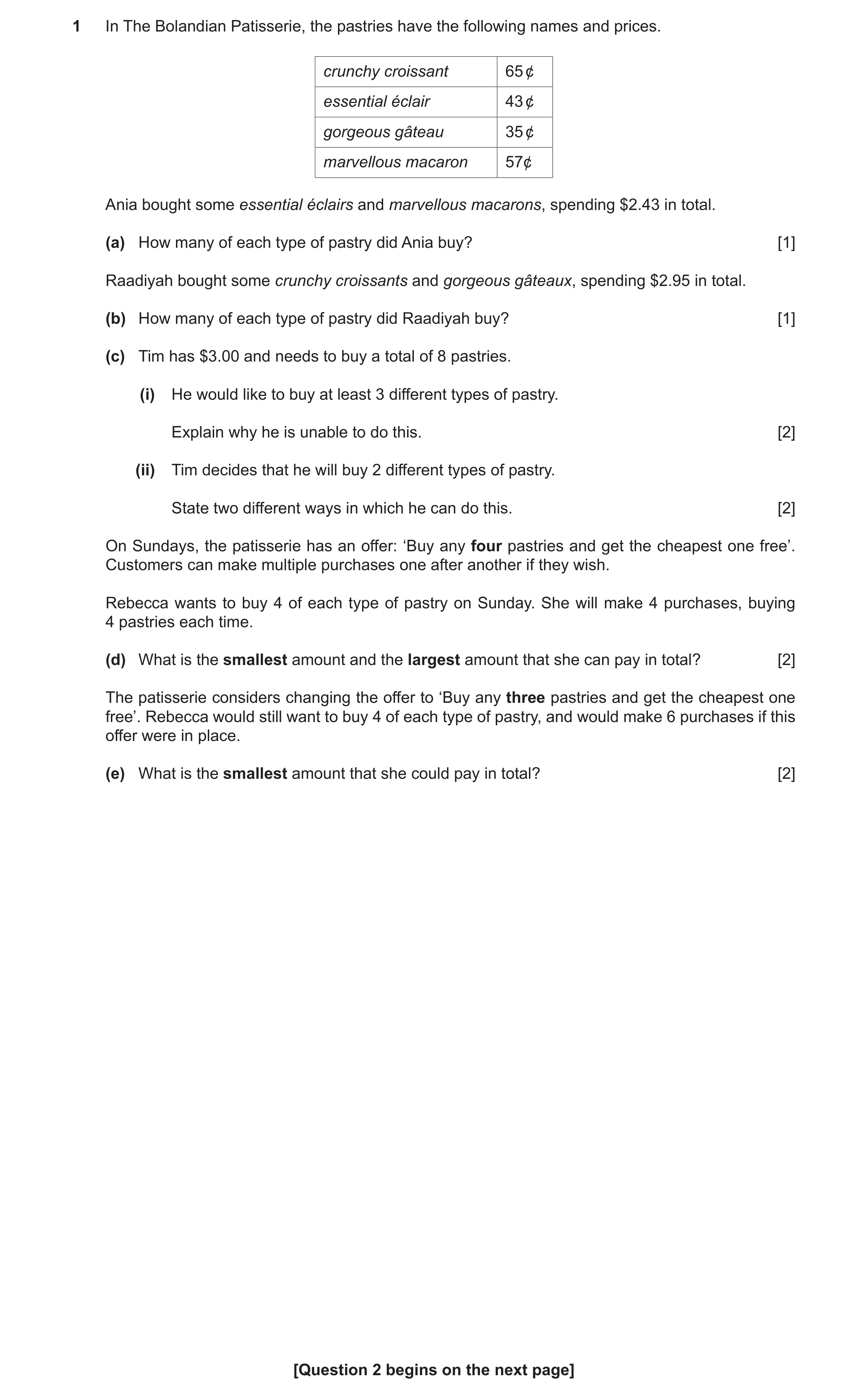
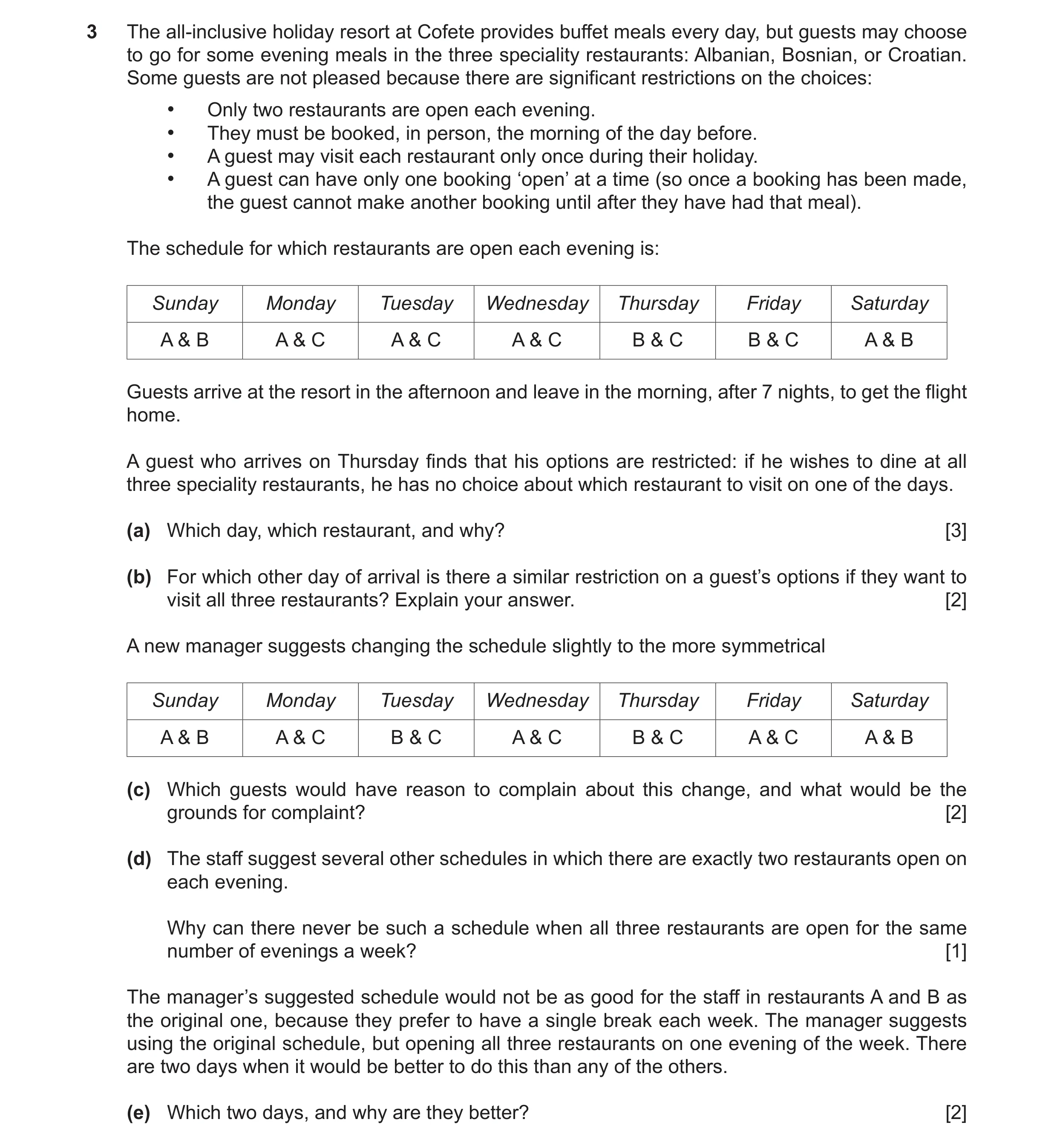 77 / 207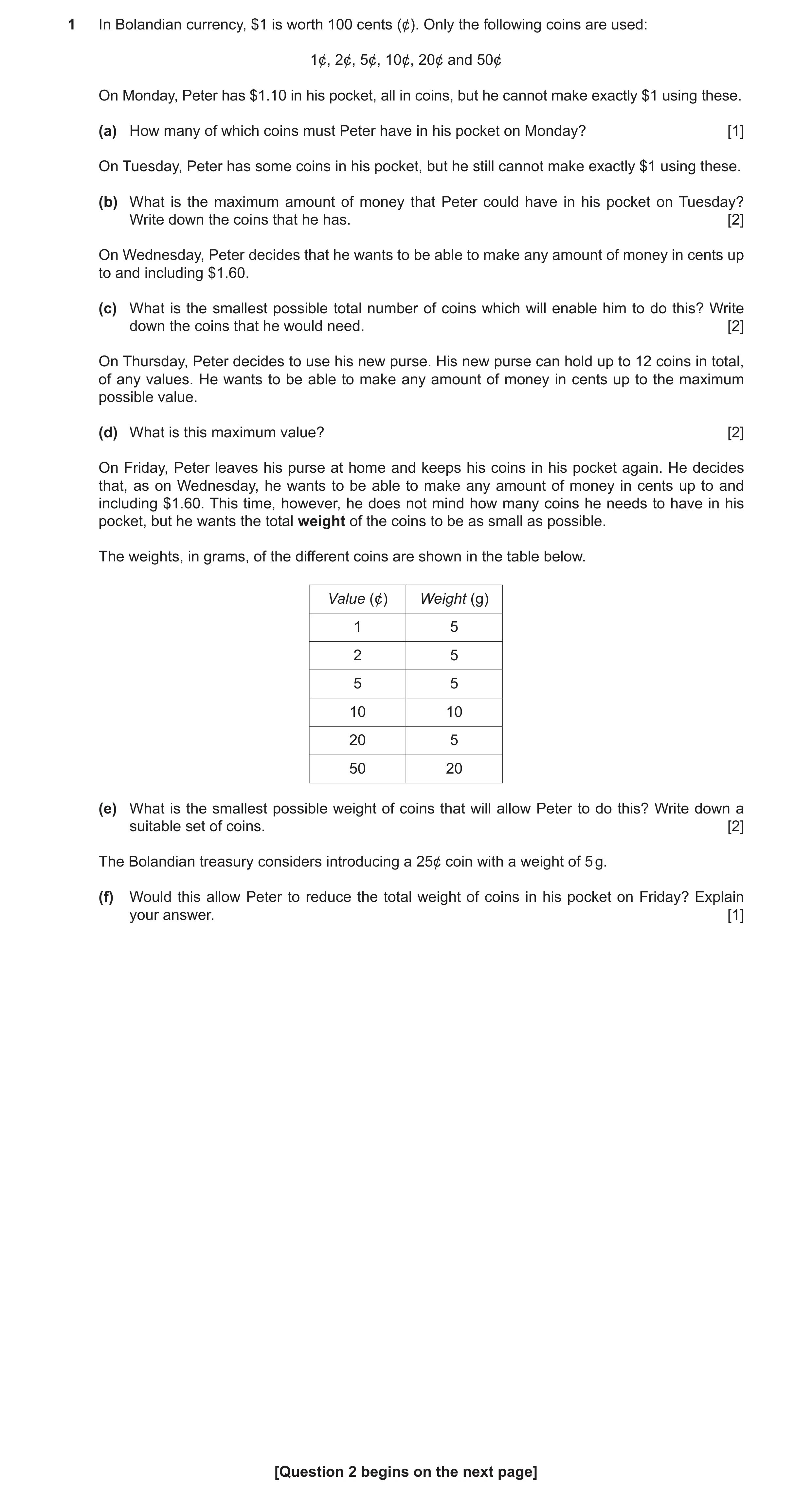
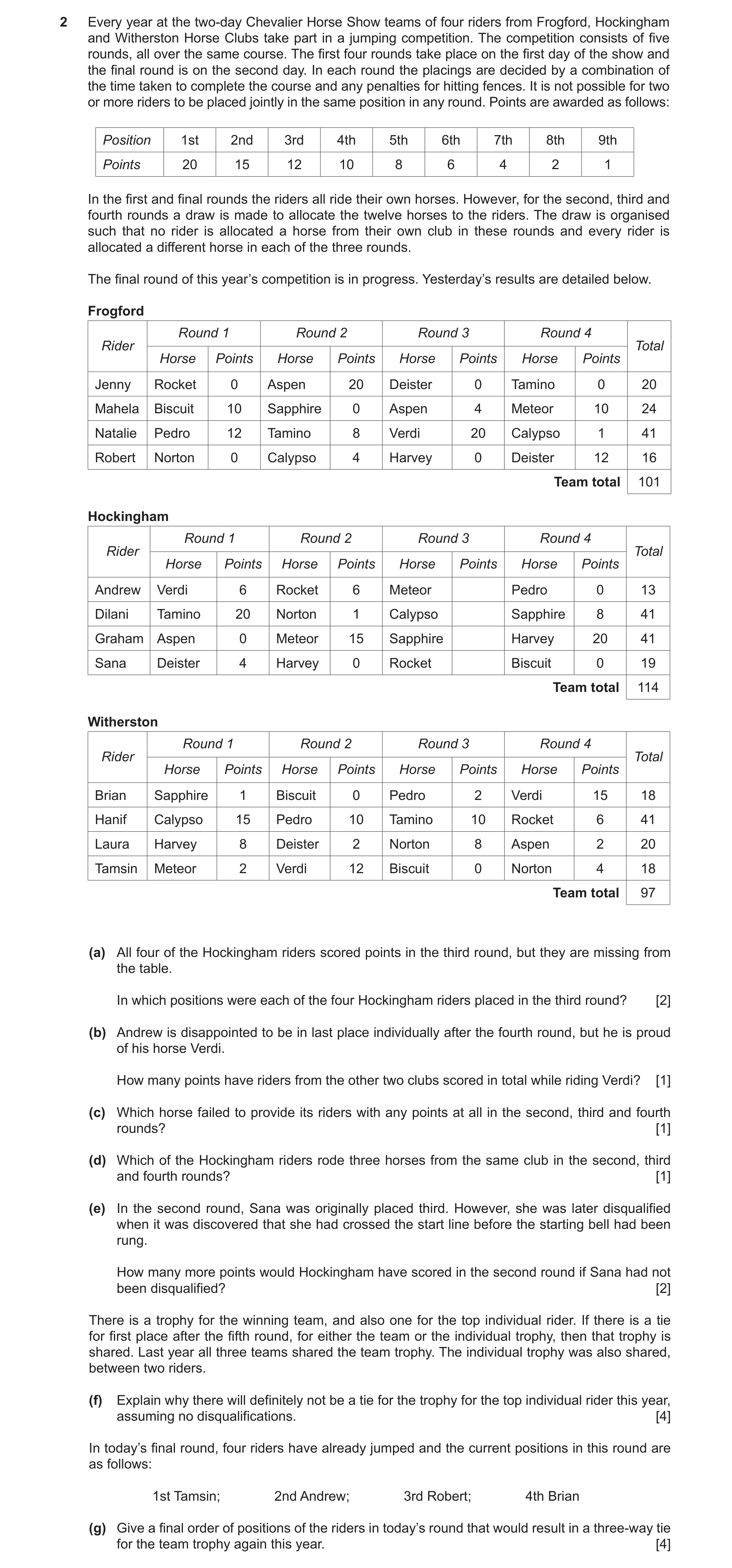
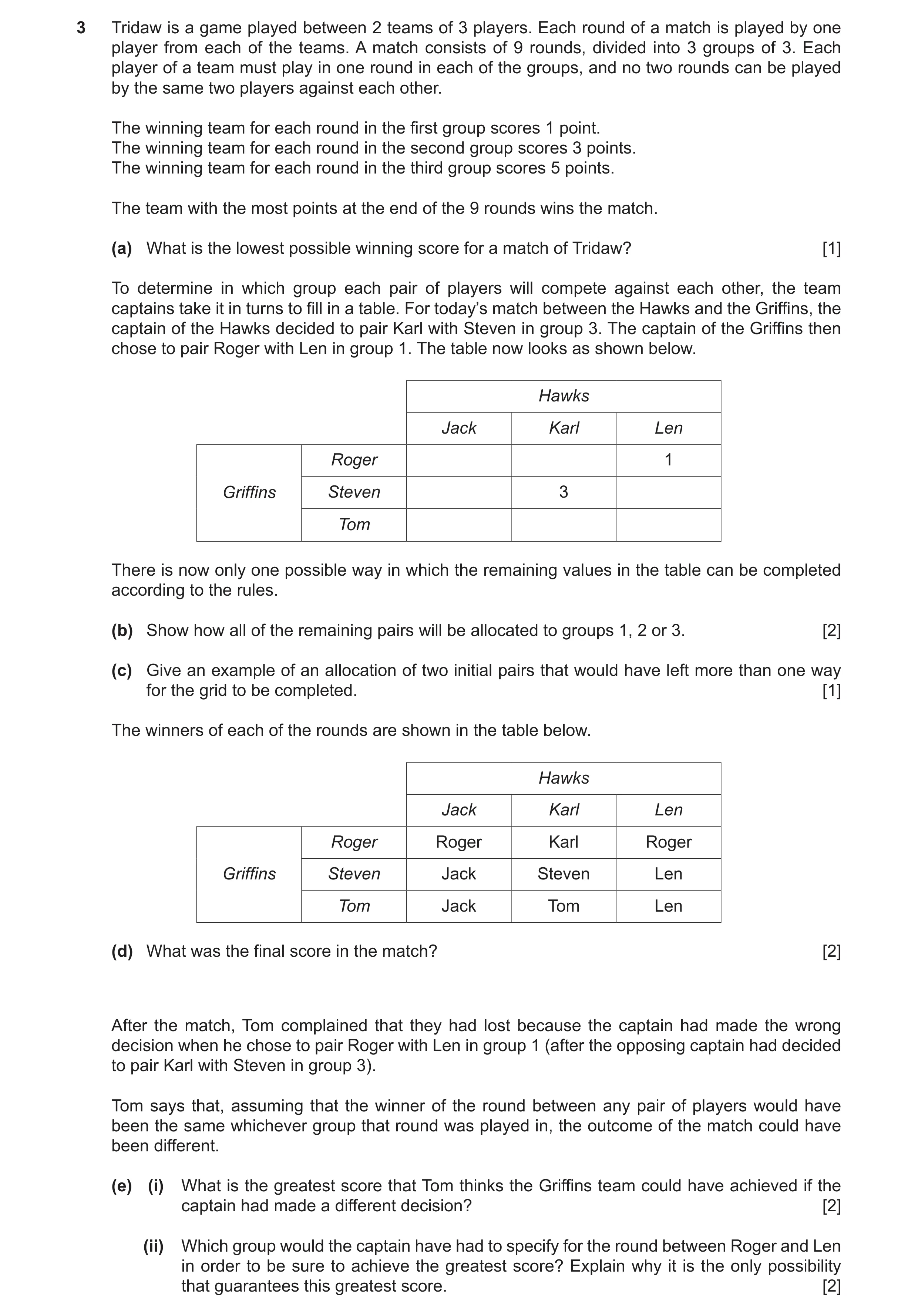 81 / 207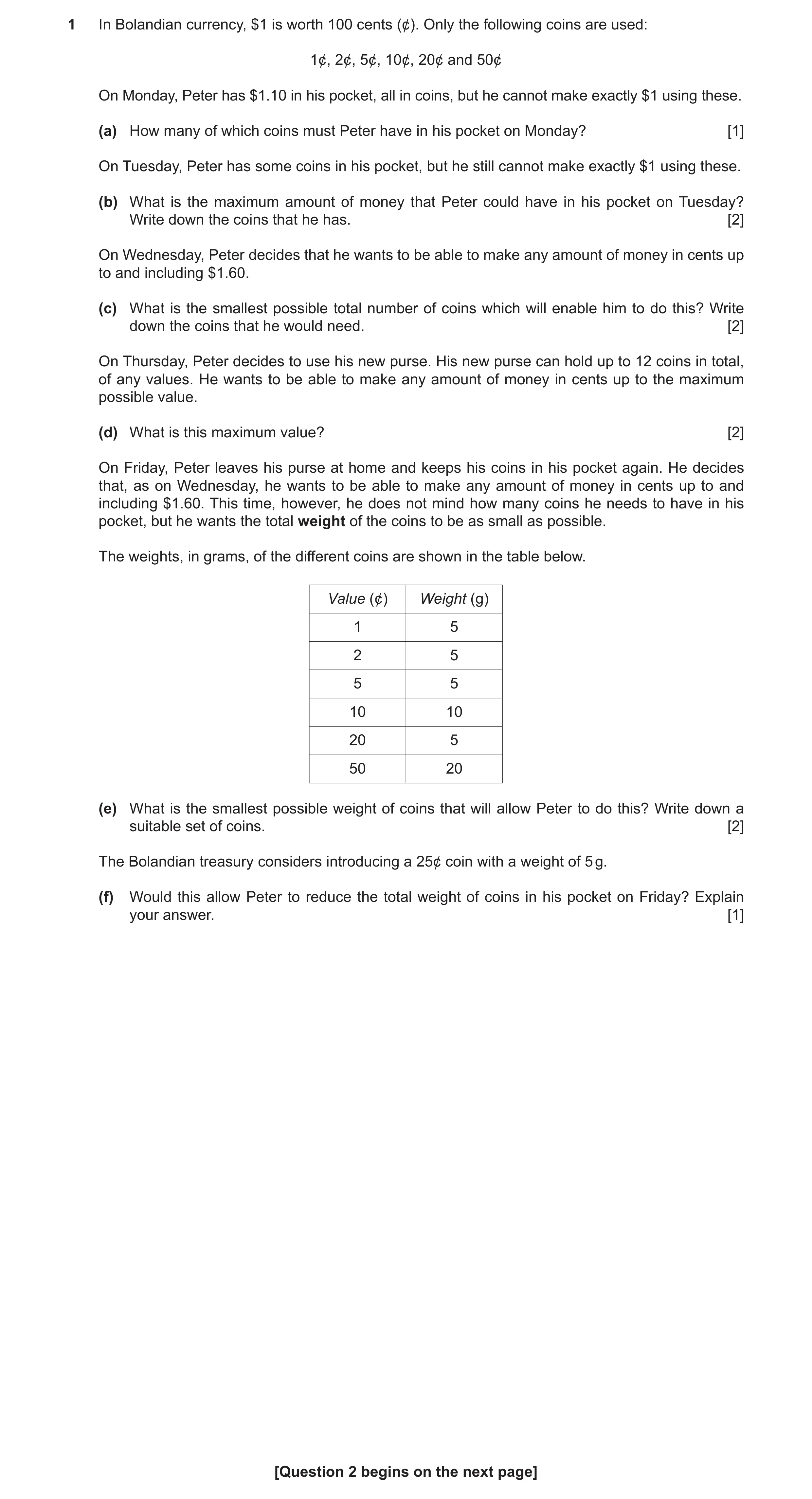
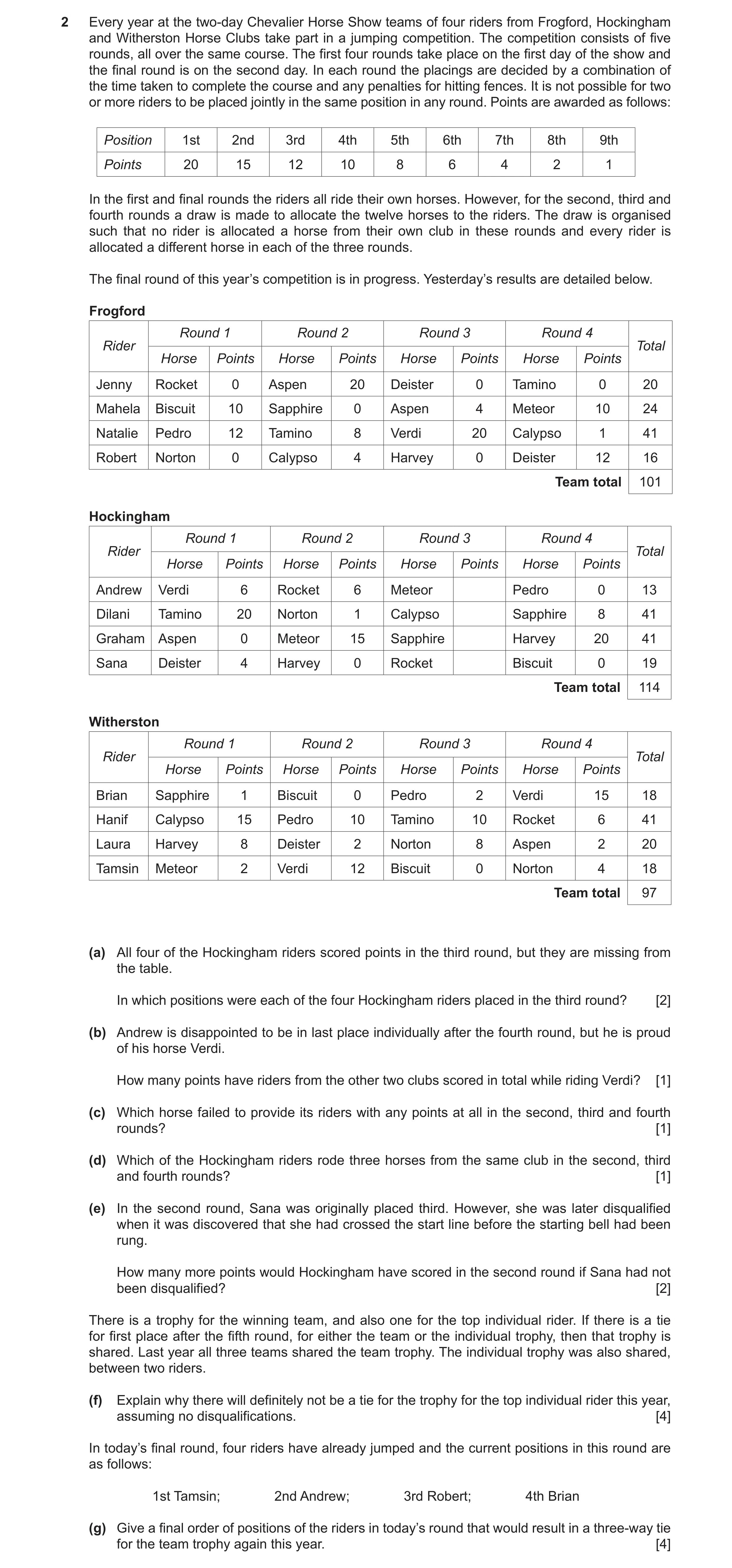
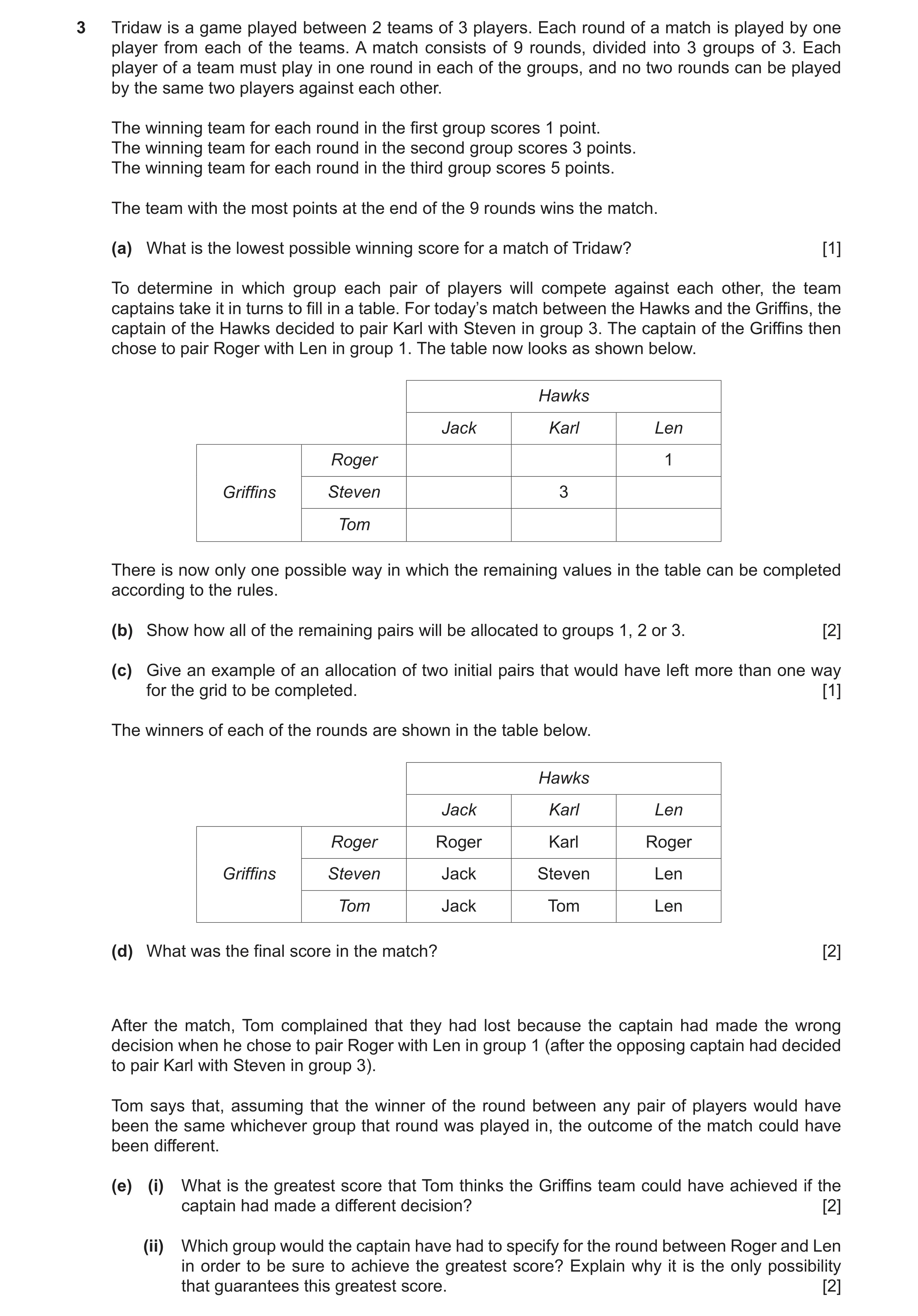 86 / 207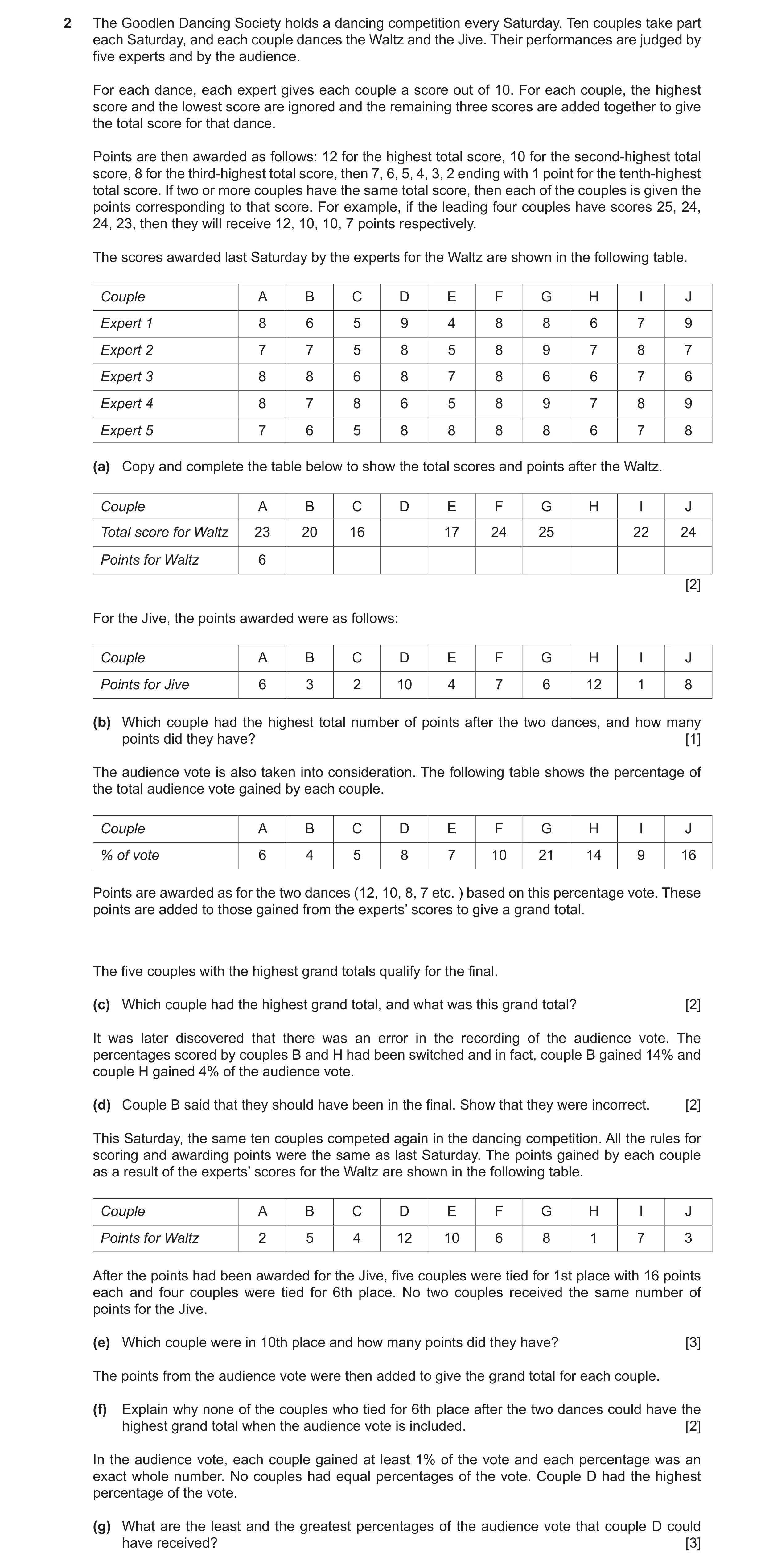
 88 / 207
 89 / 207
 91 / 207
 92 / 207
 94 / 207
 95 / 207
 96 / 207
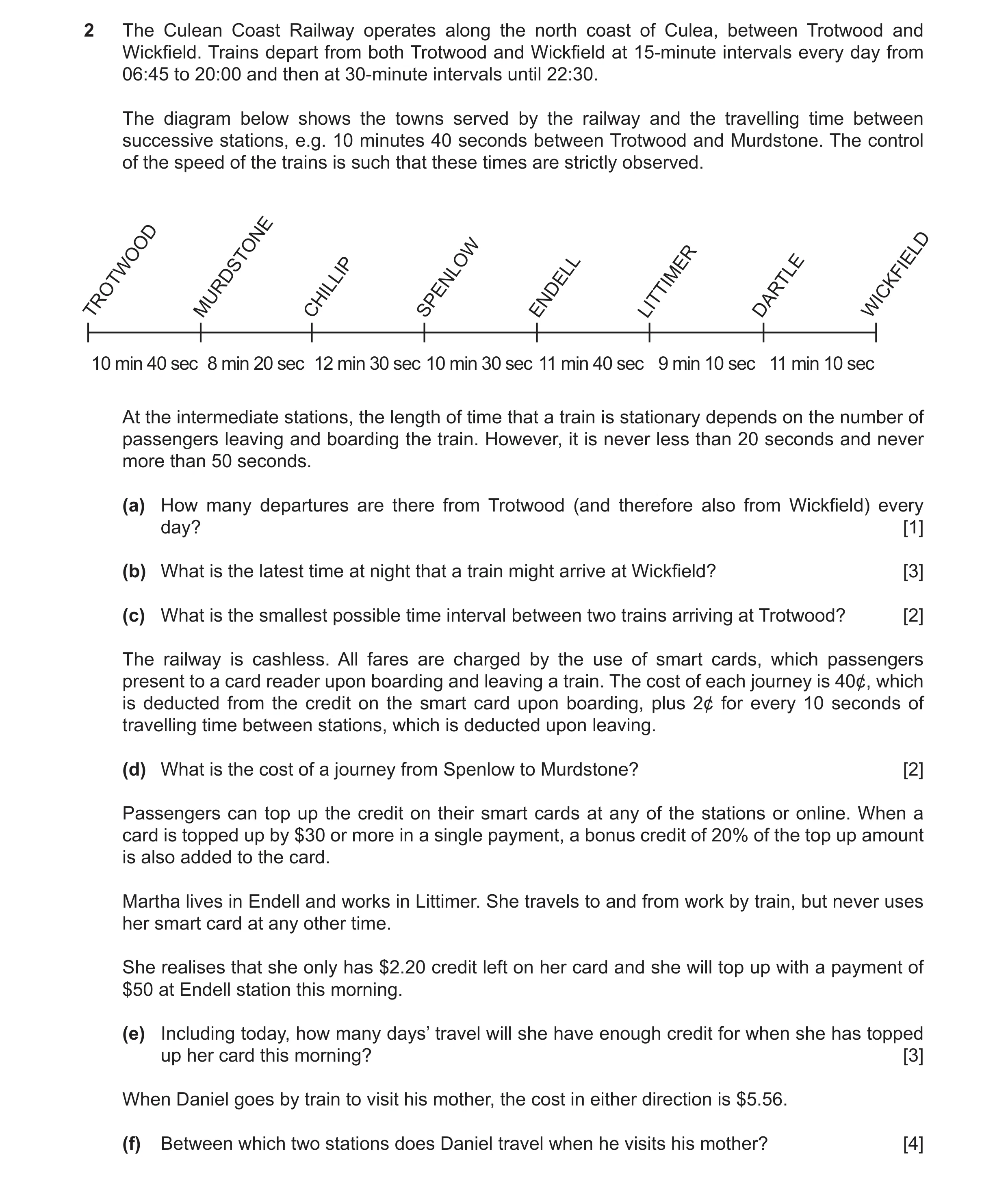 97 / 207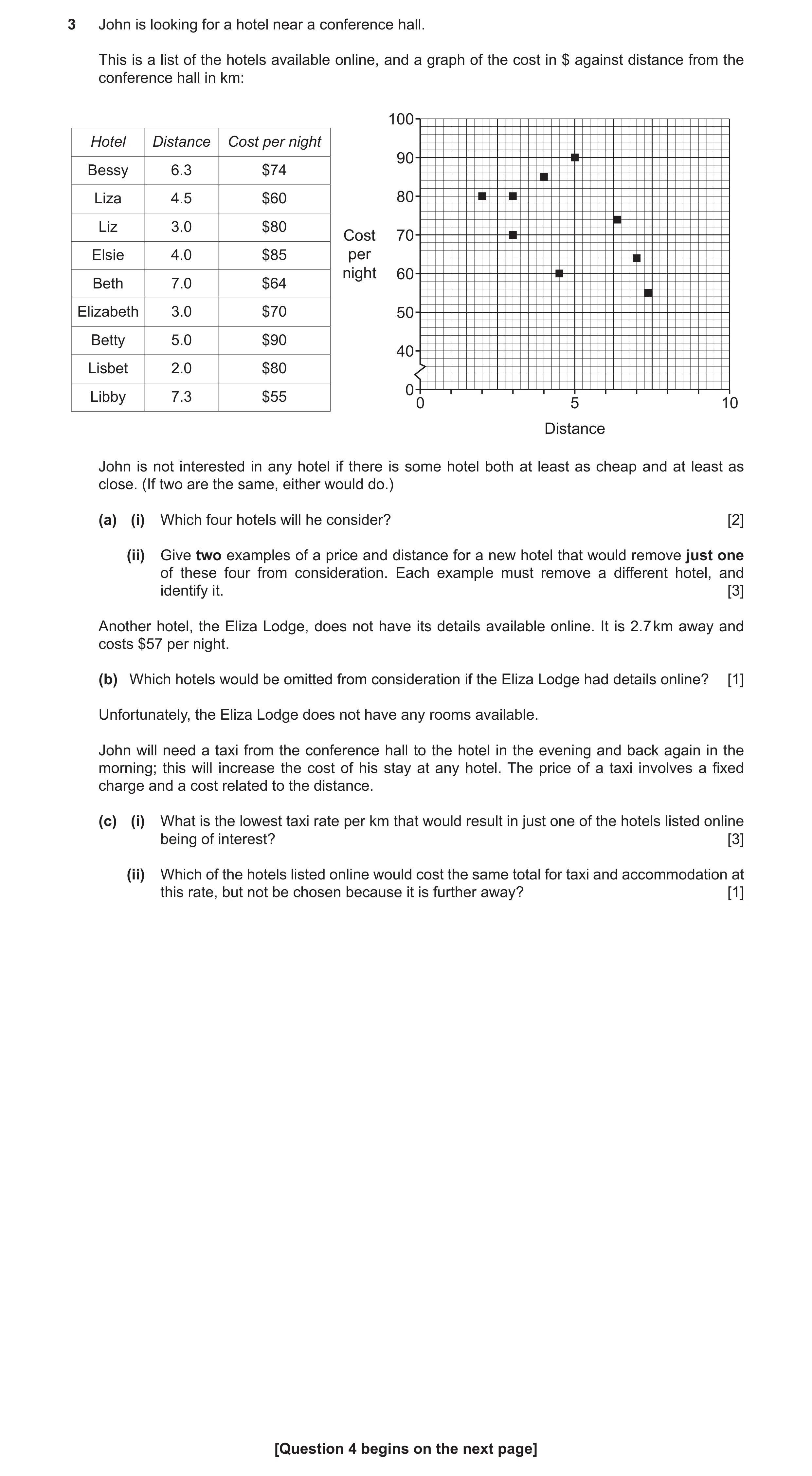
 99 / 207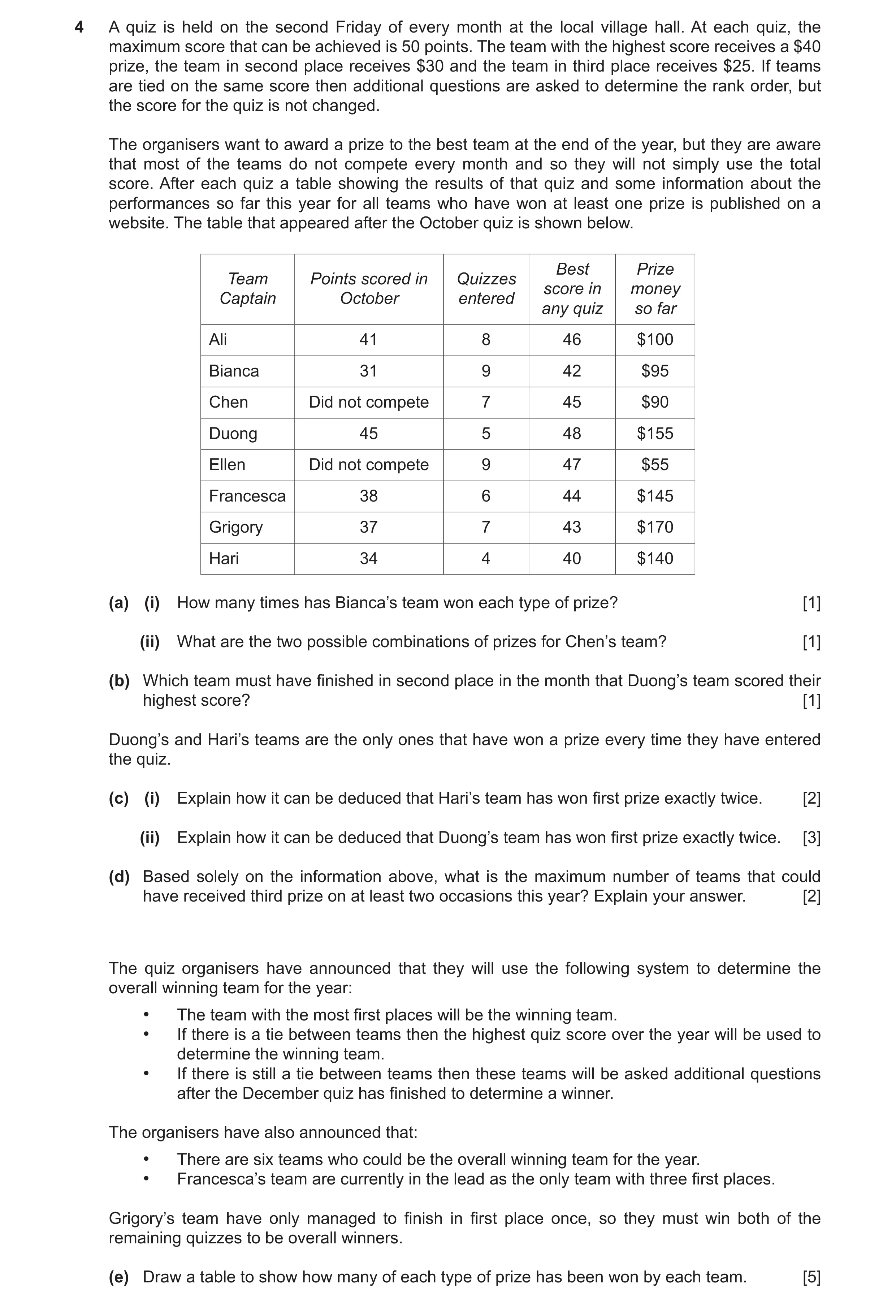
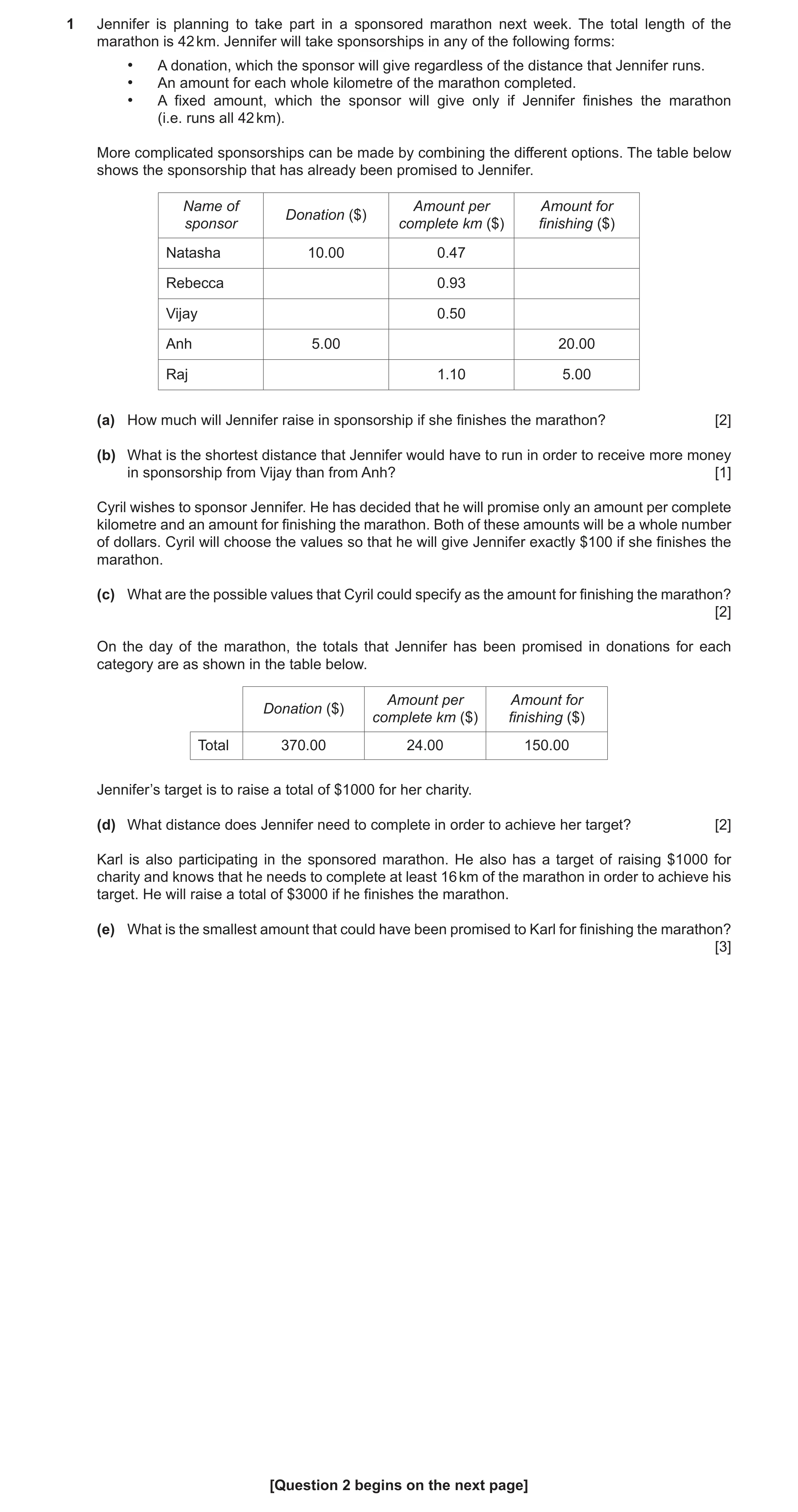
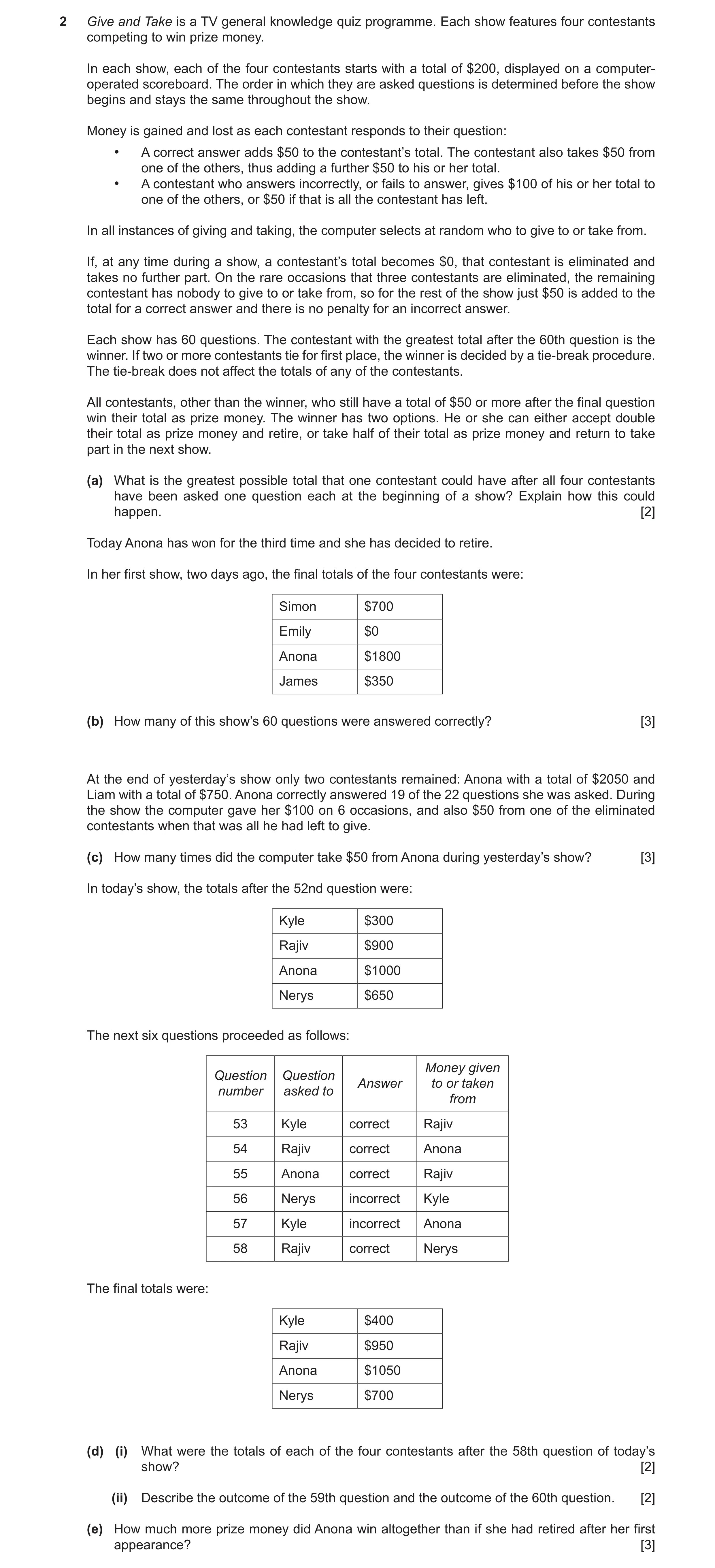
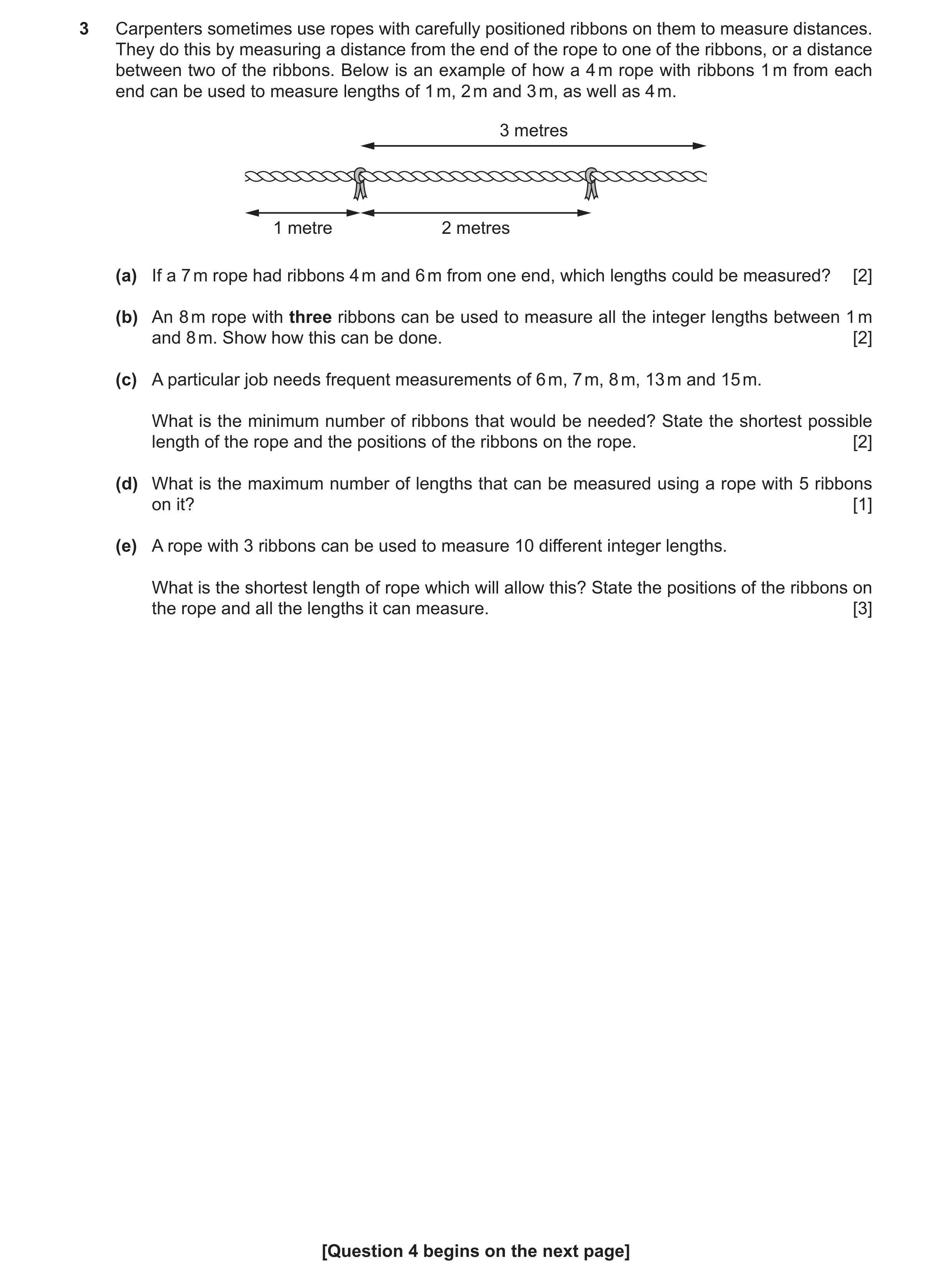 105 / 207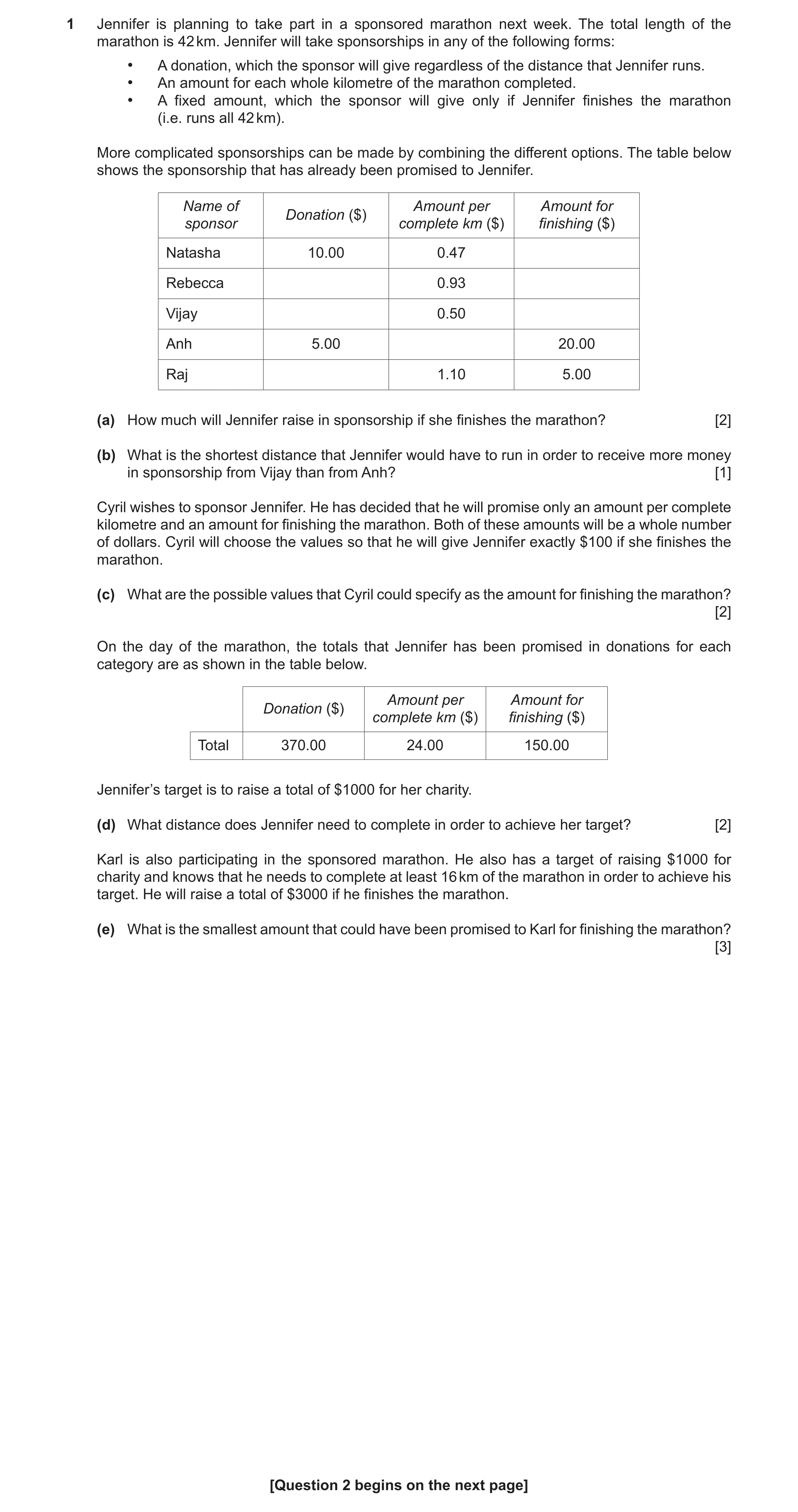
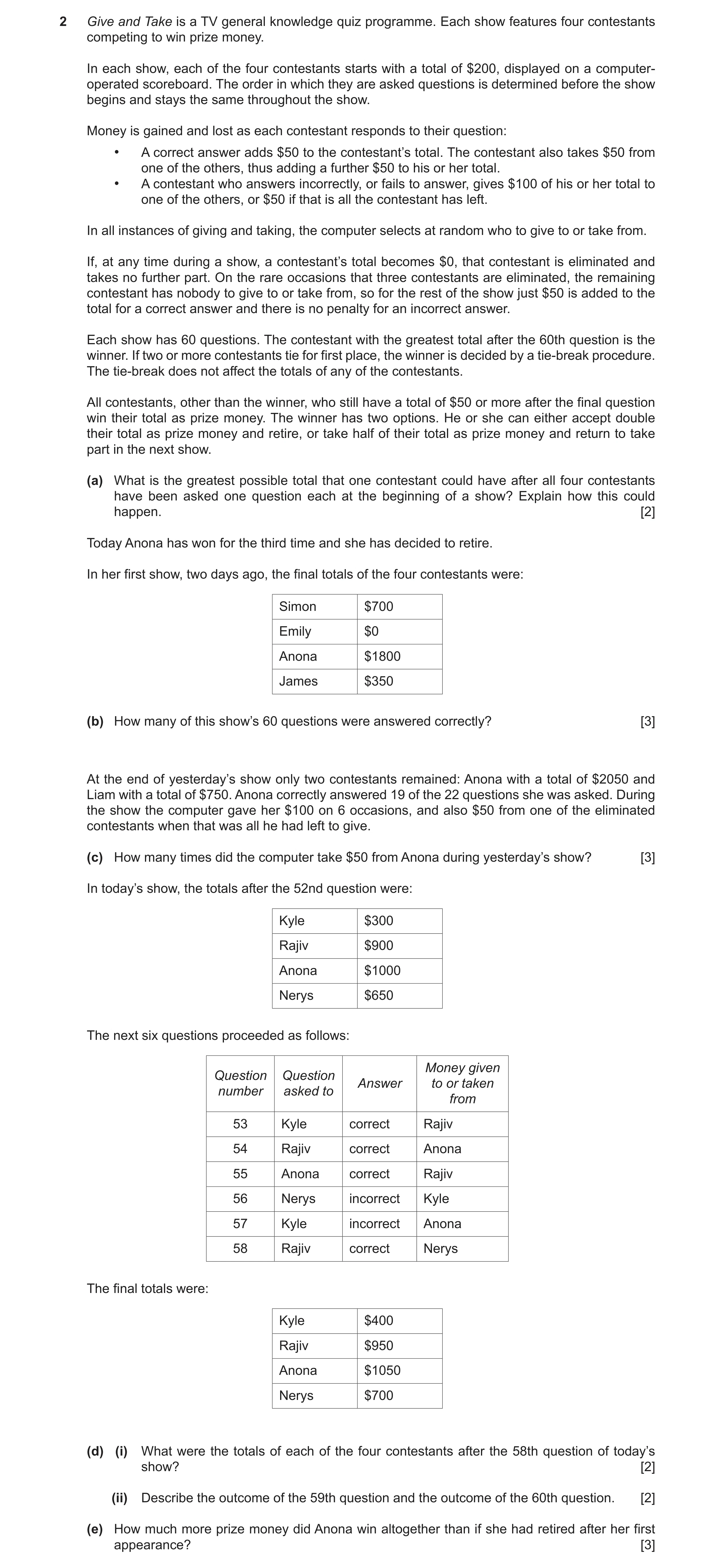
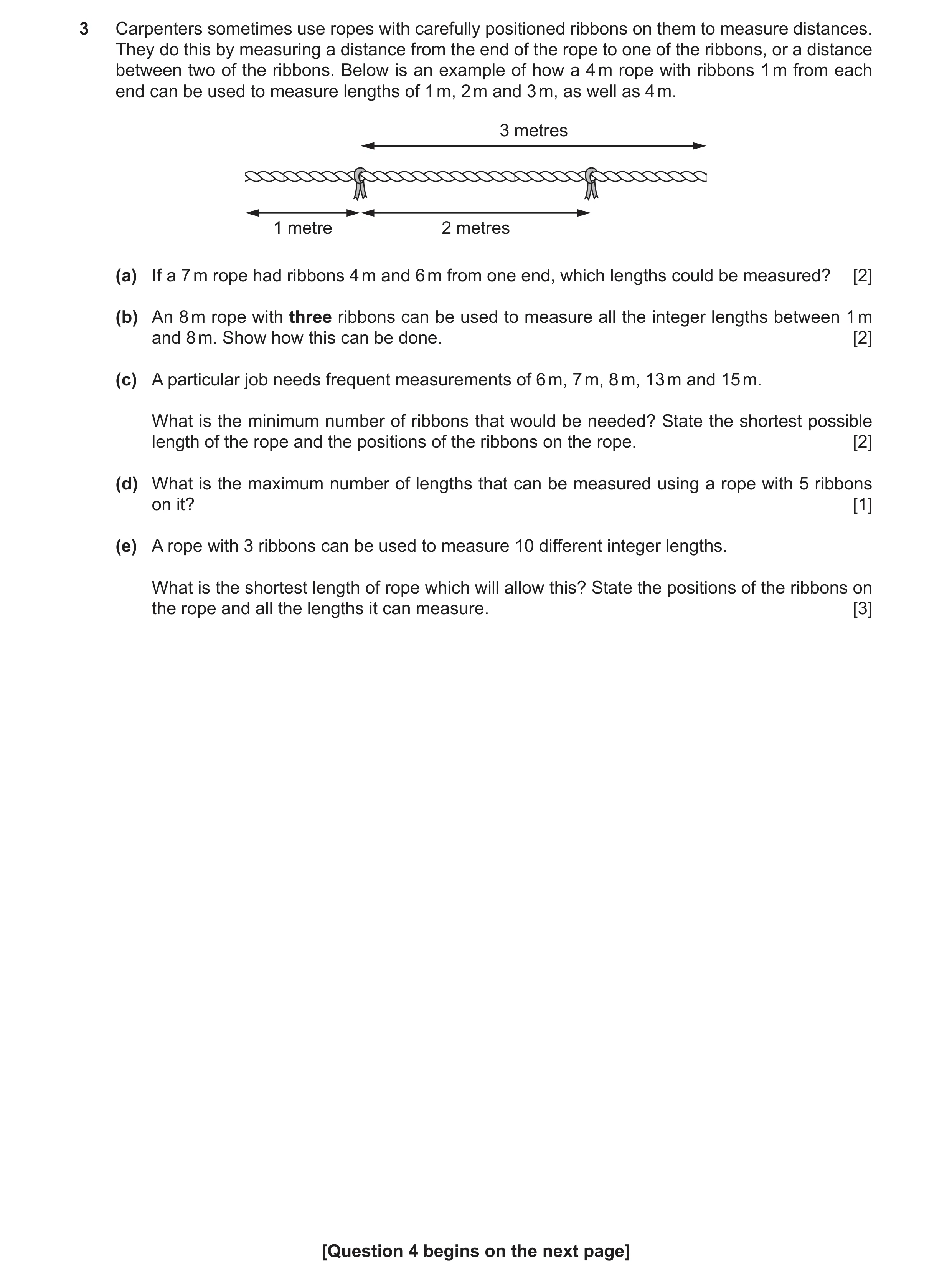 110 / 207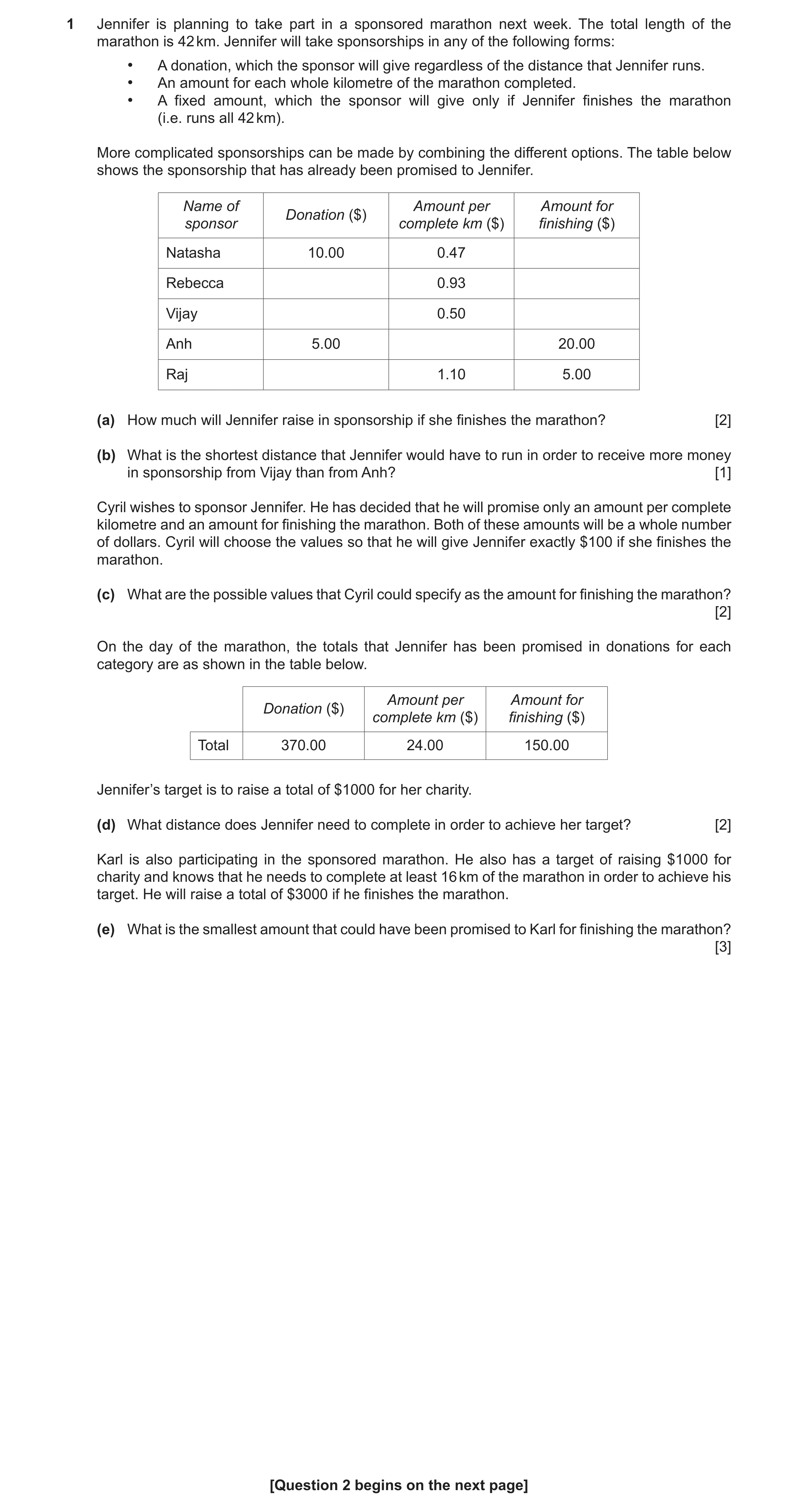
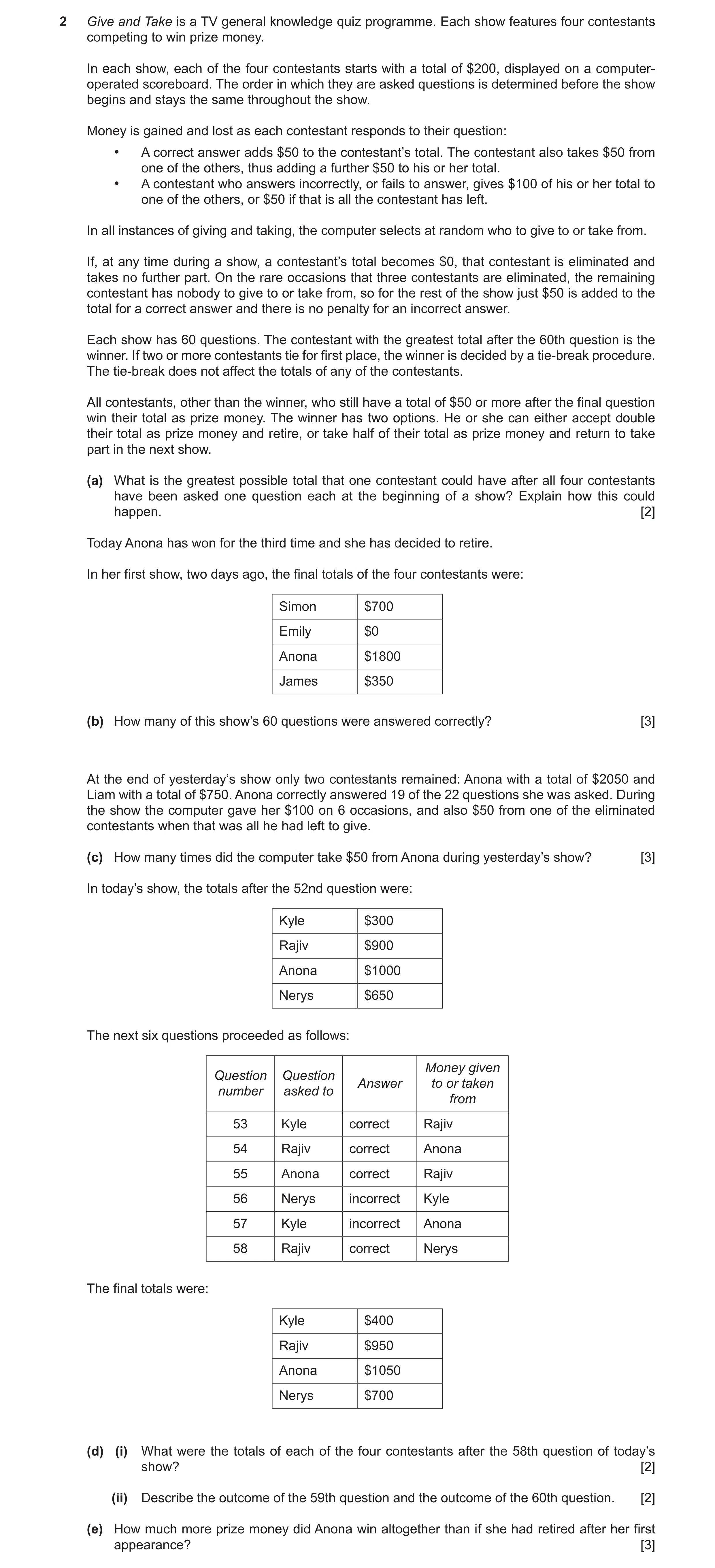
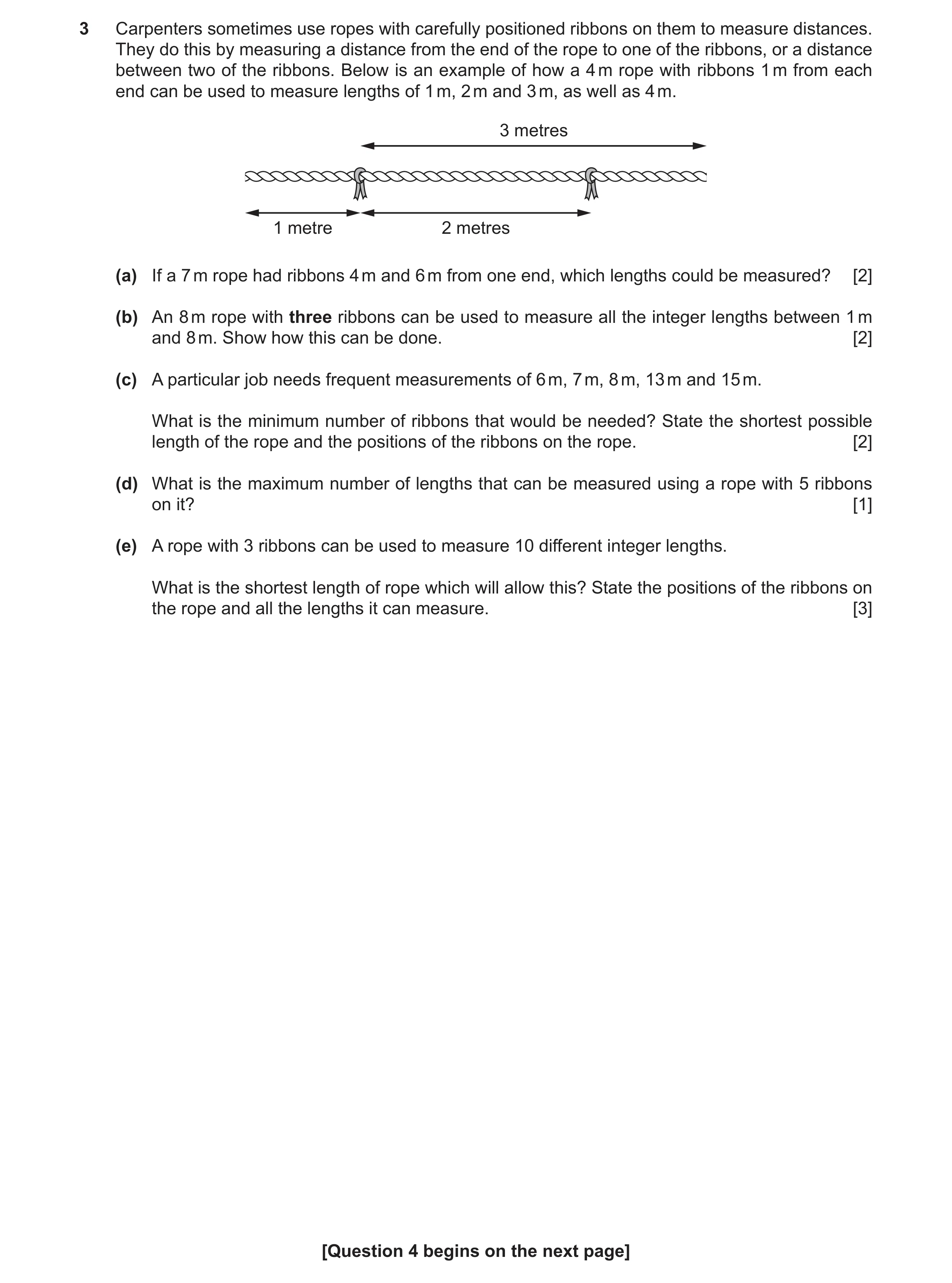 115 / 207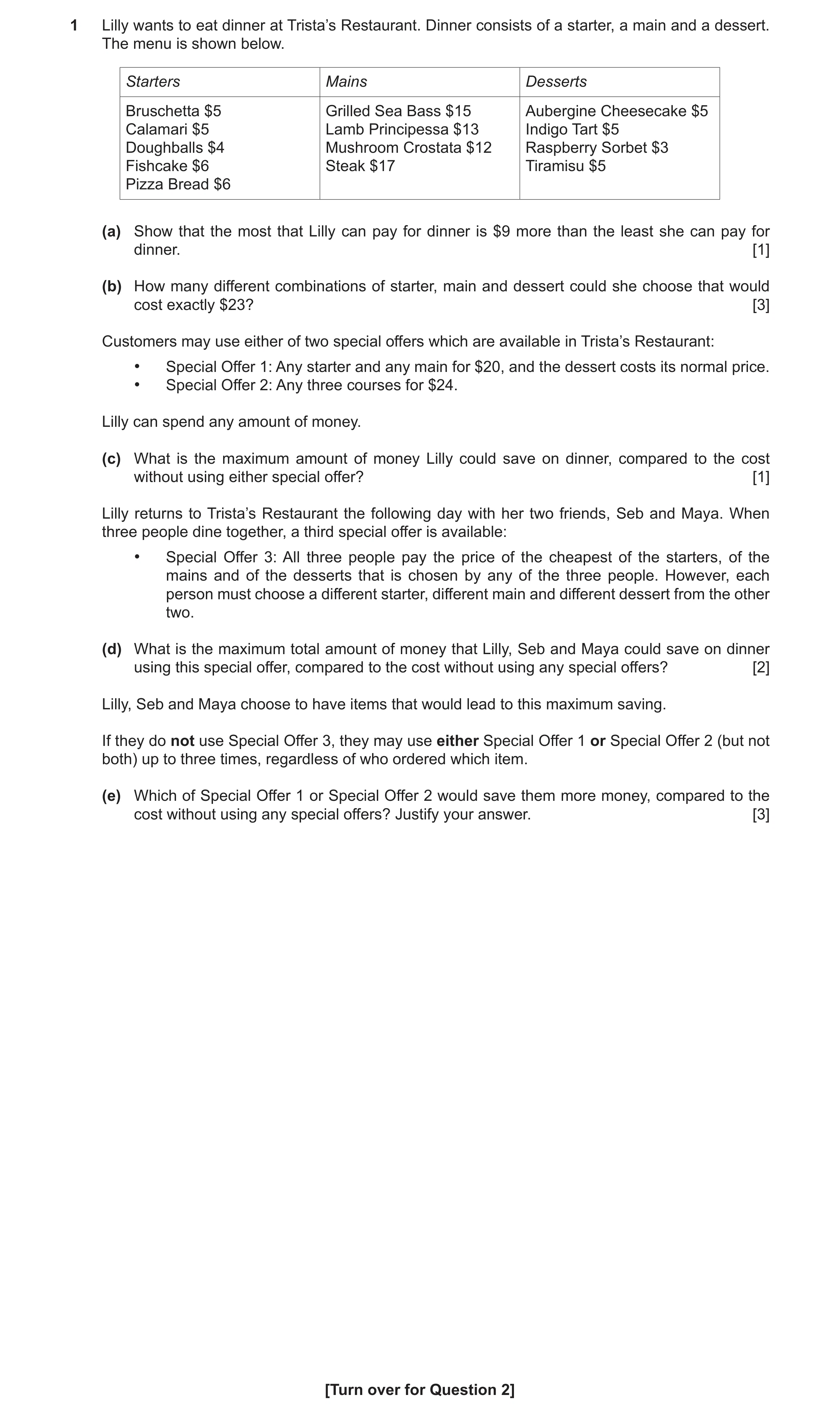
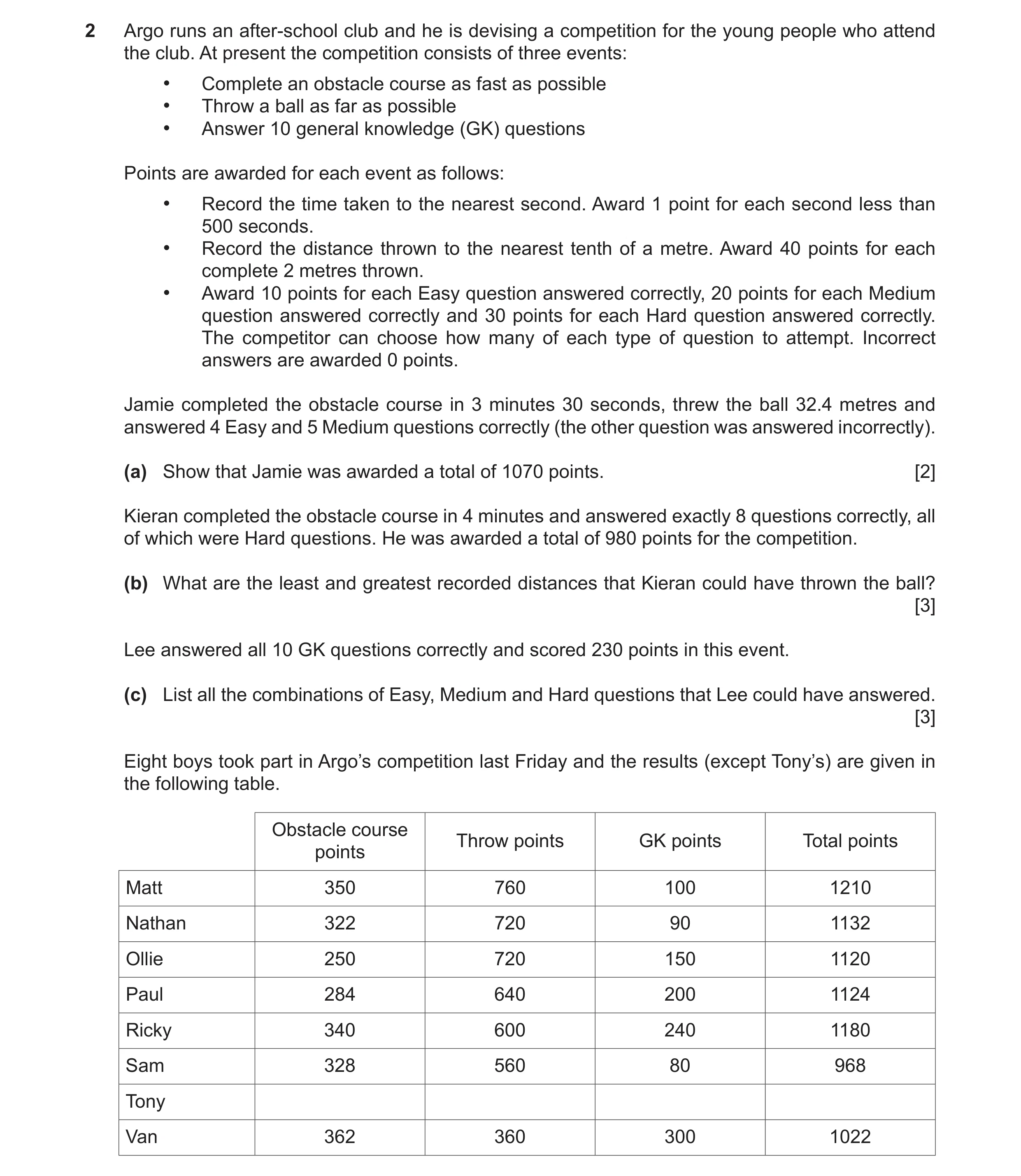 118 / 207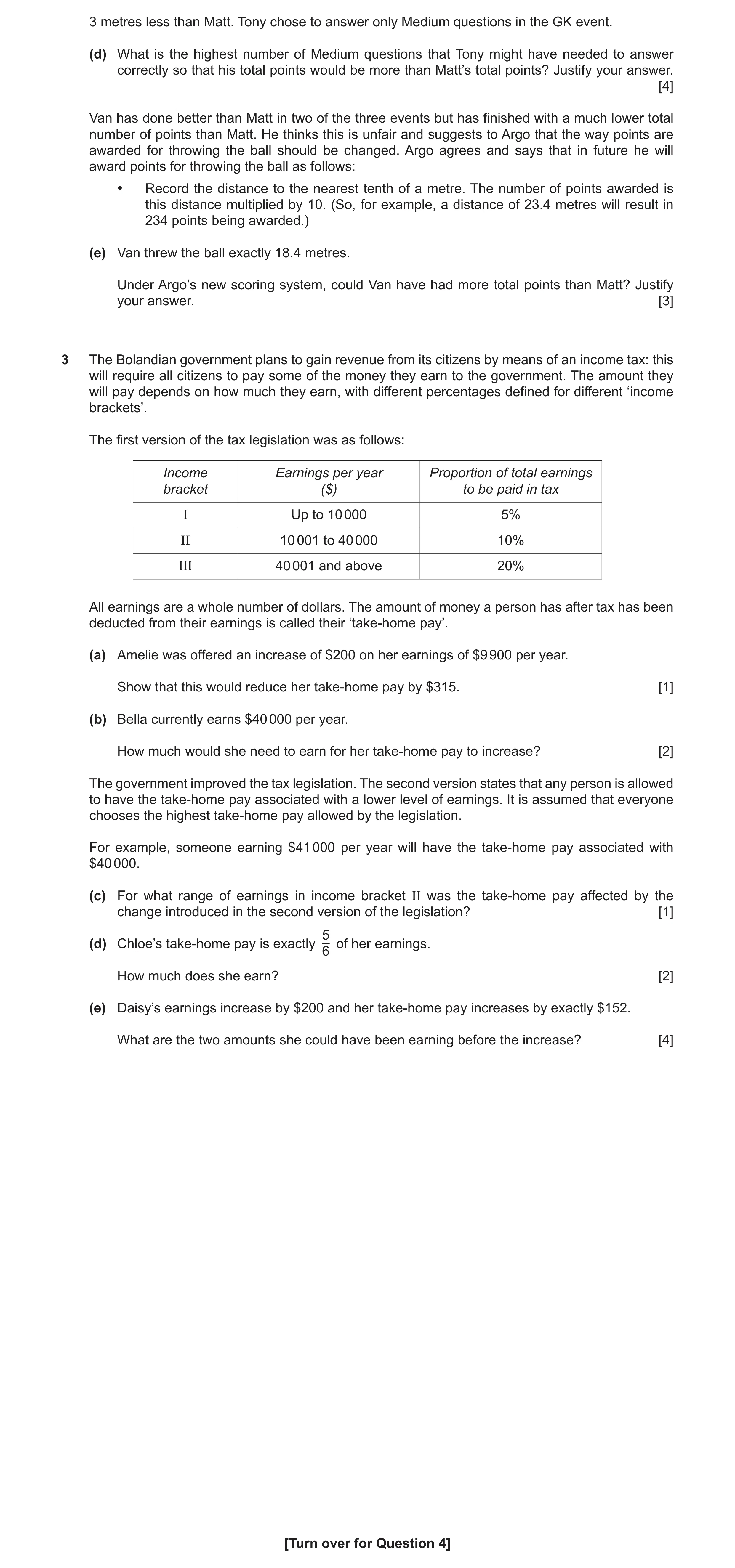
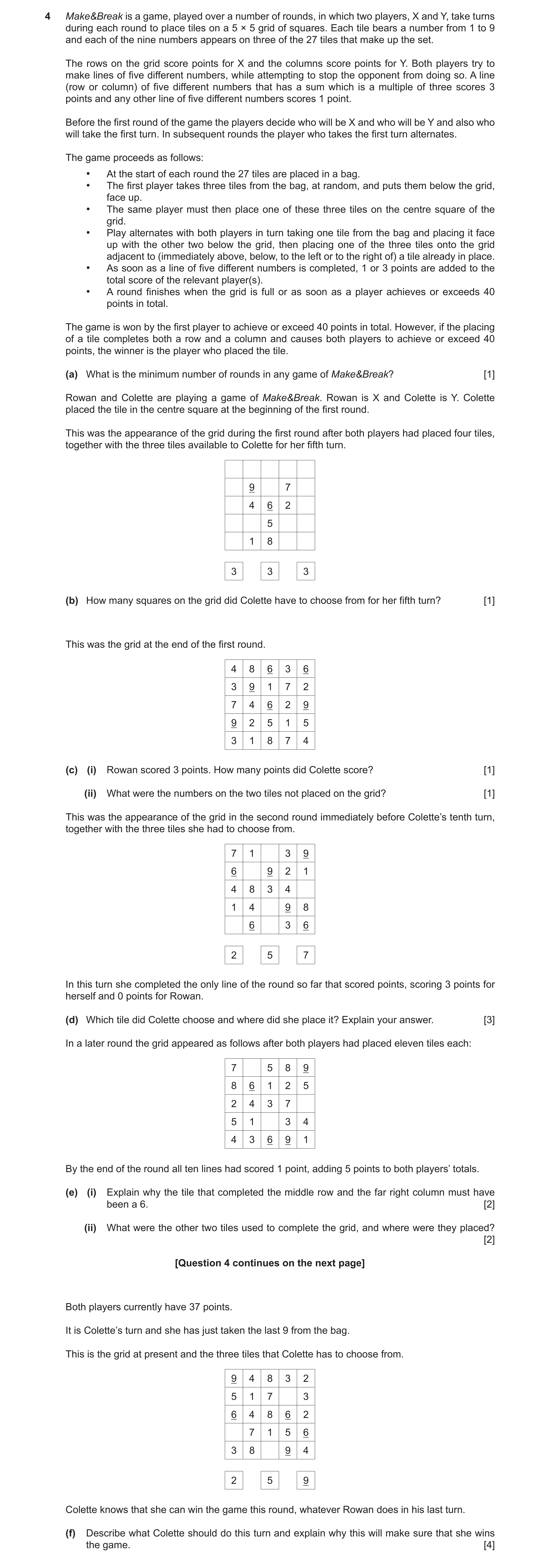
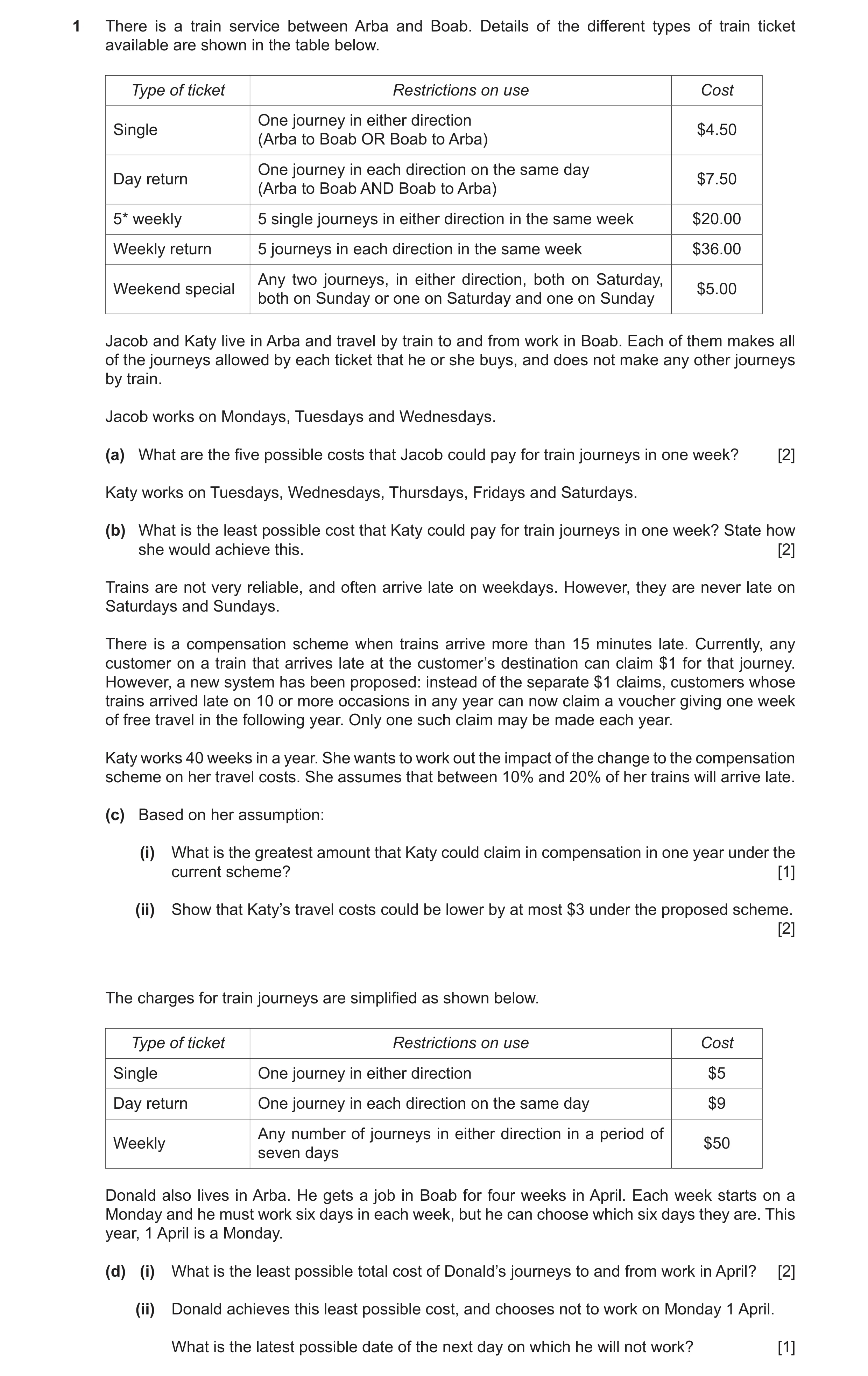
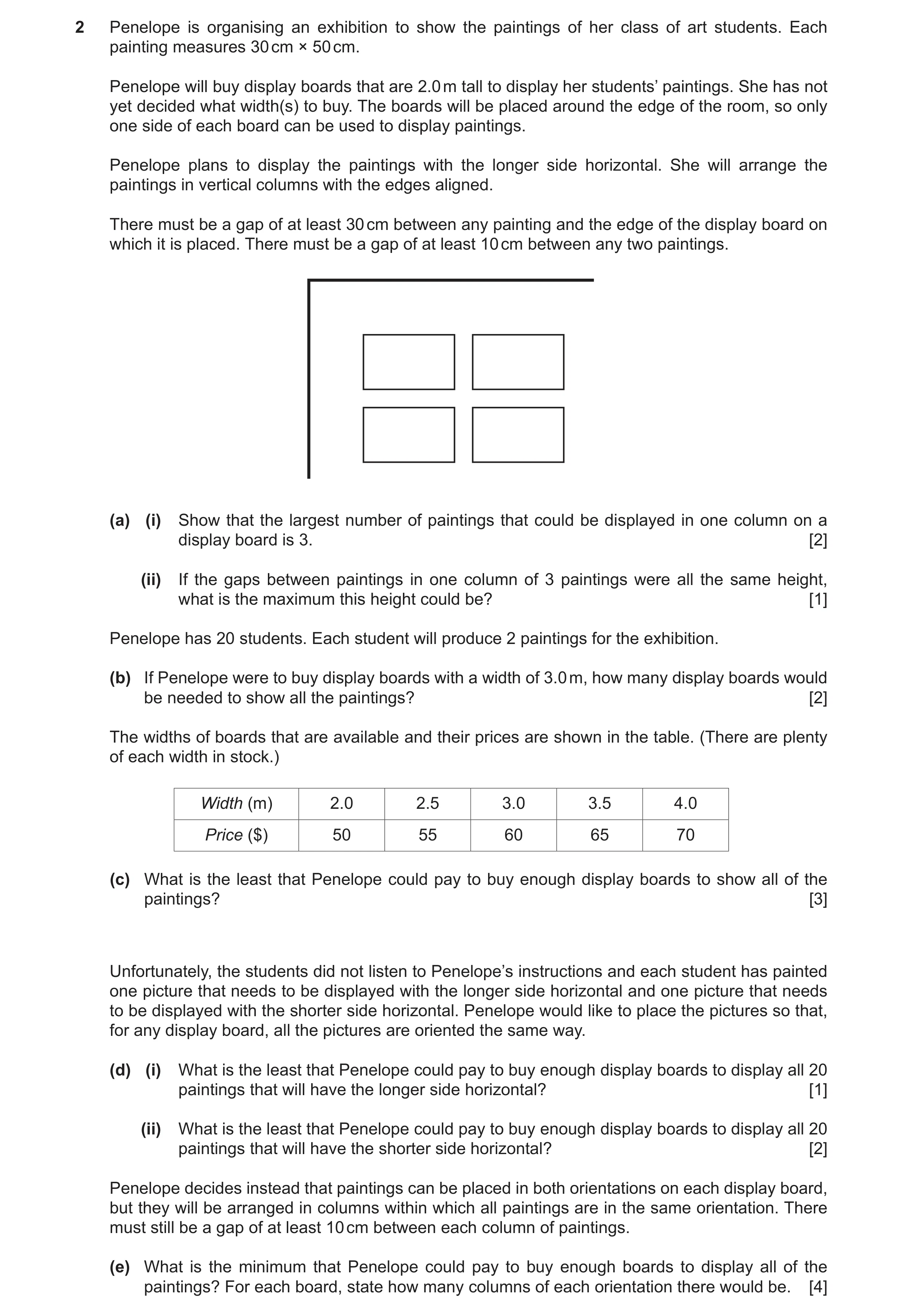
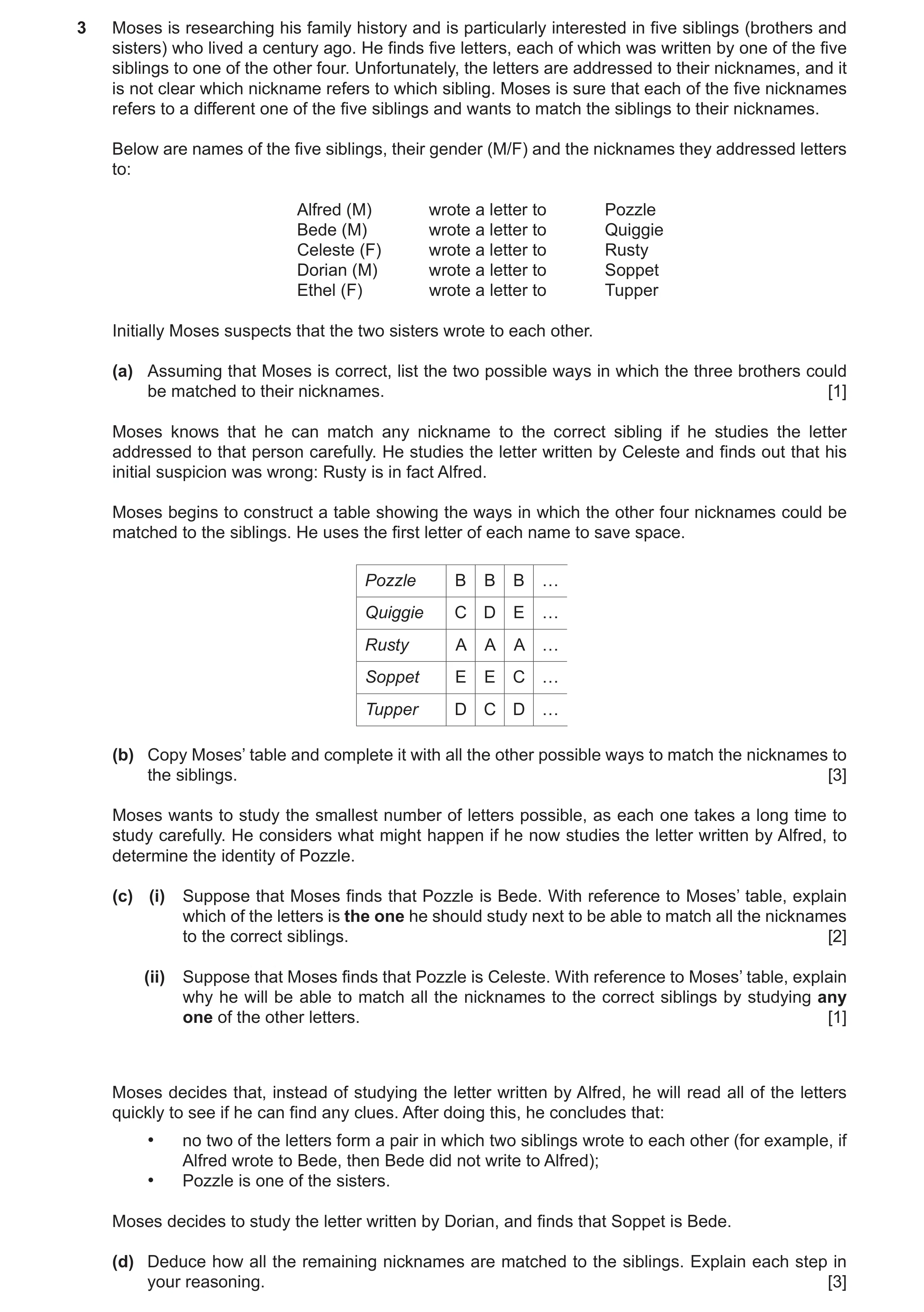 126 / 207
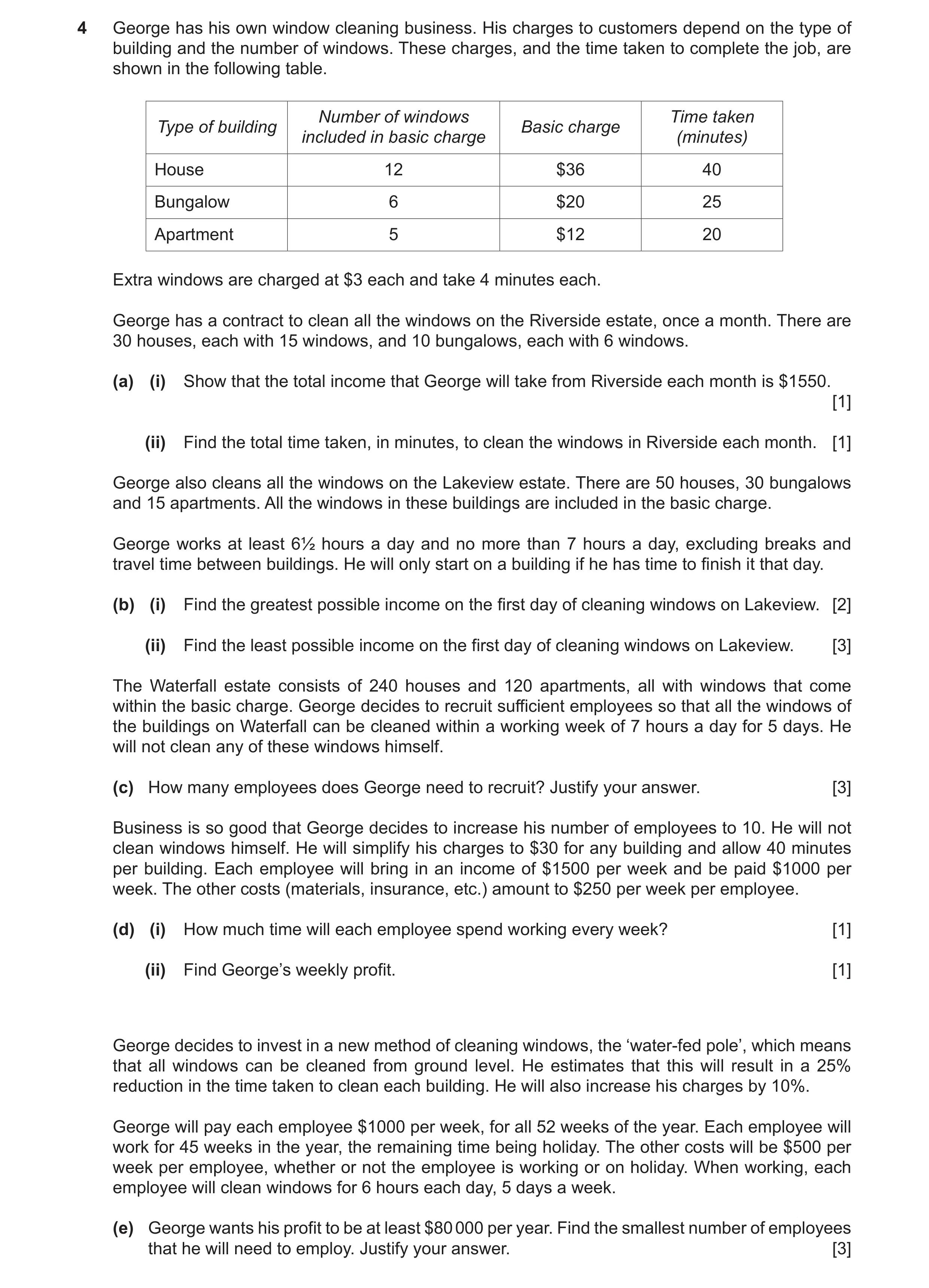 127 / 207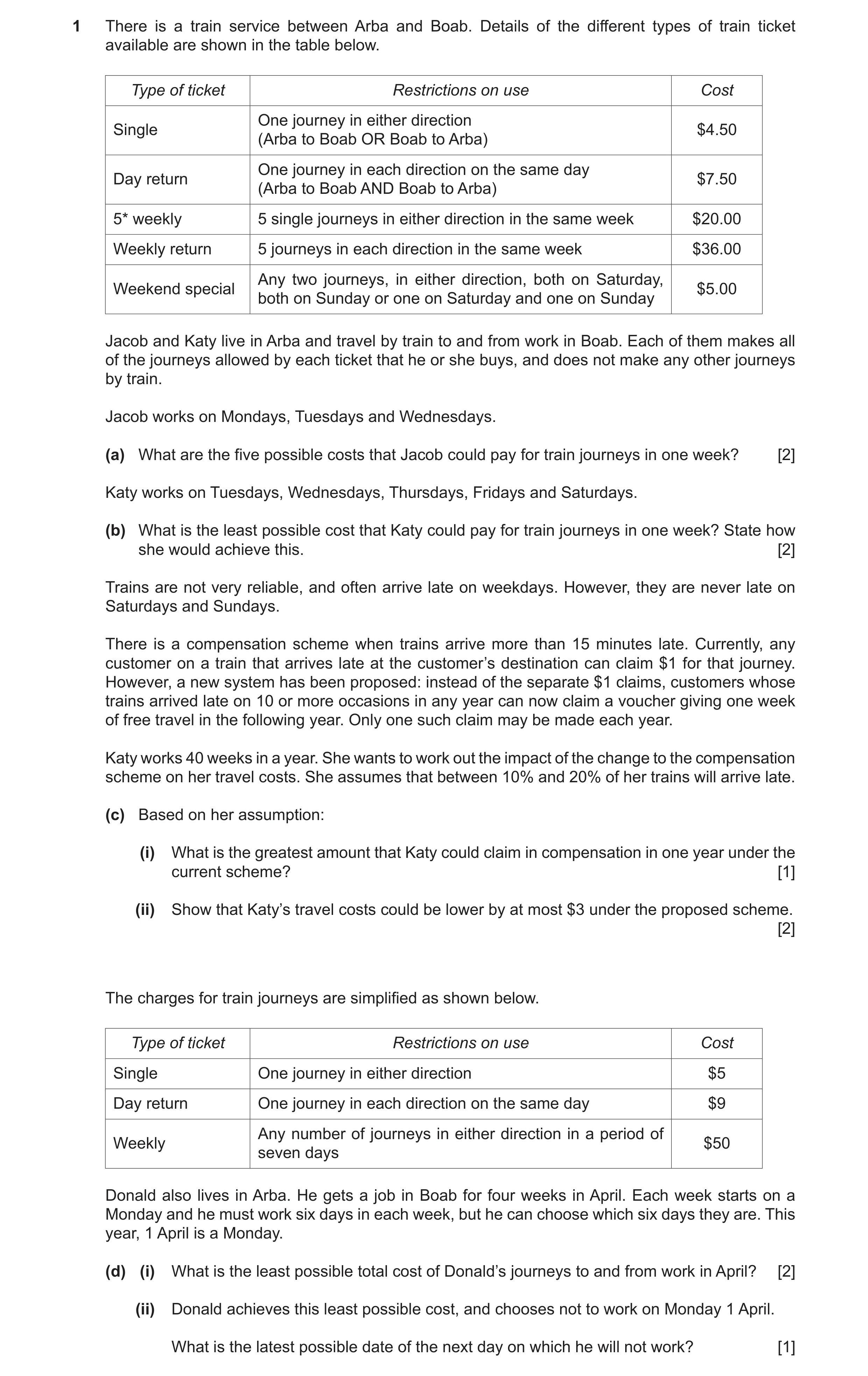
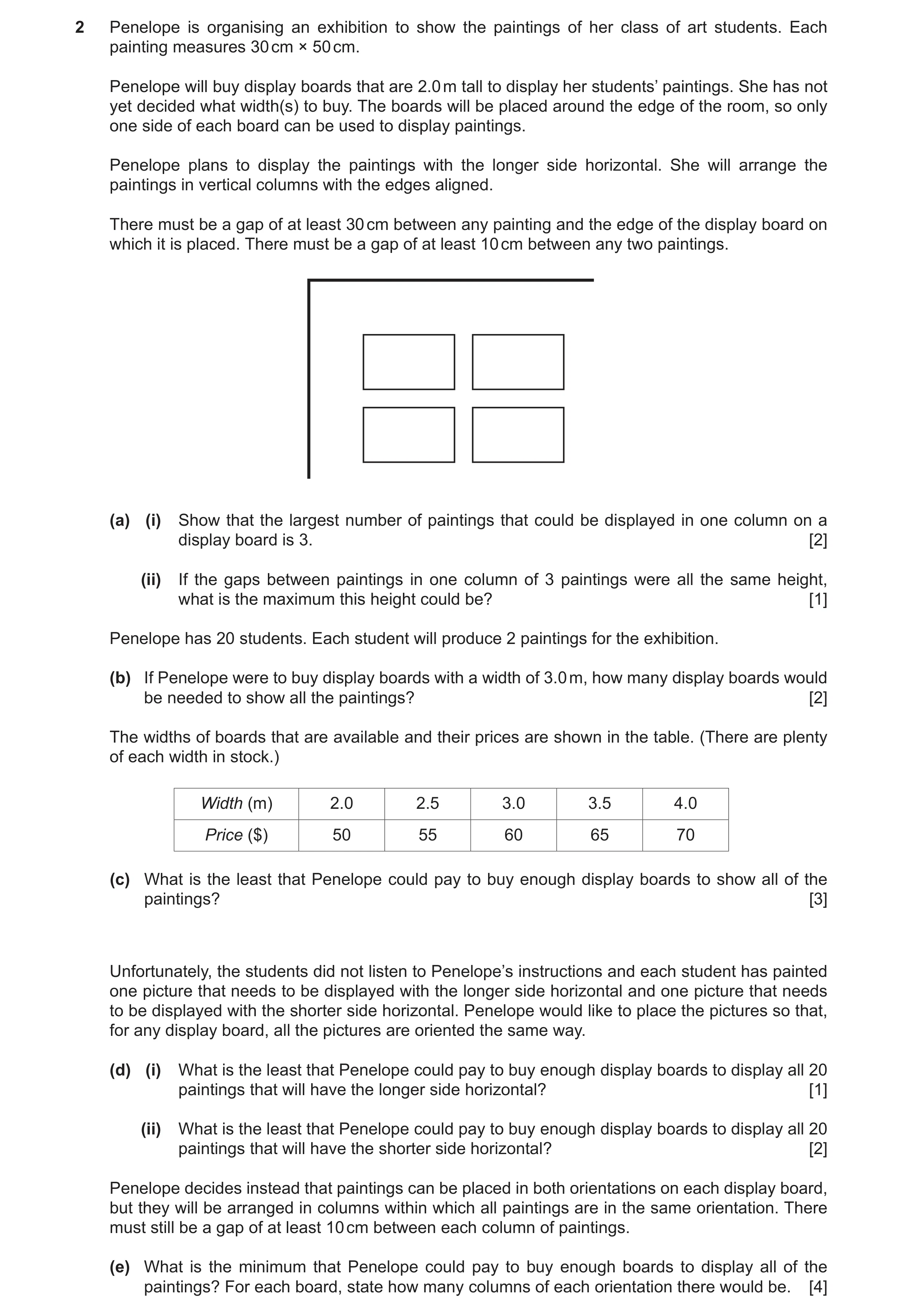
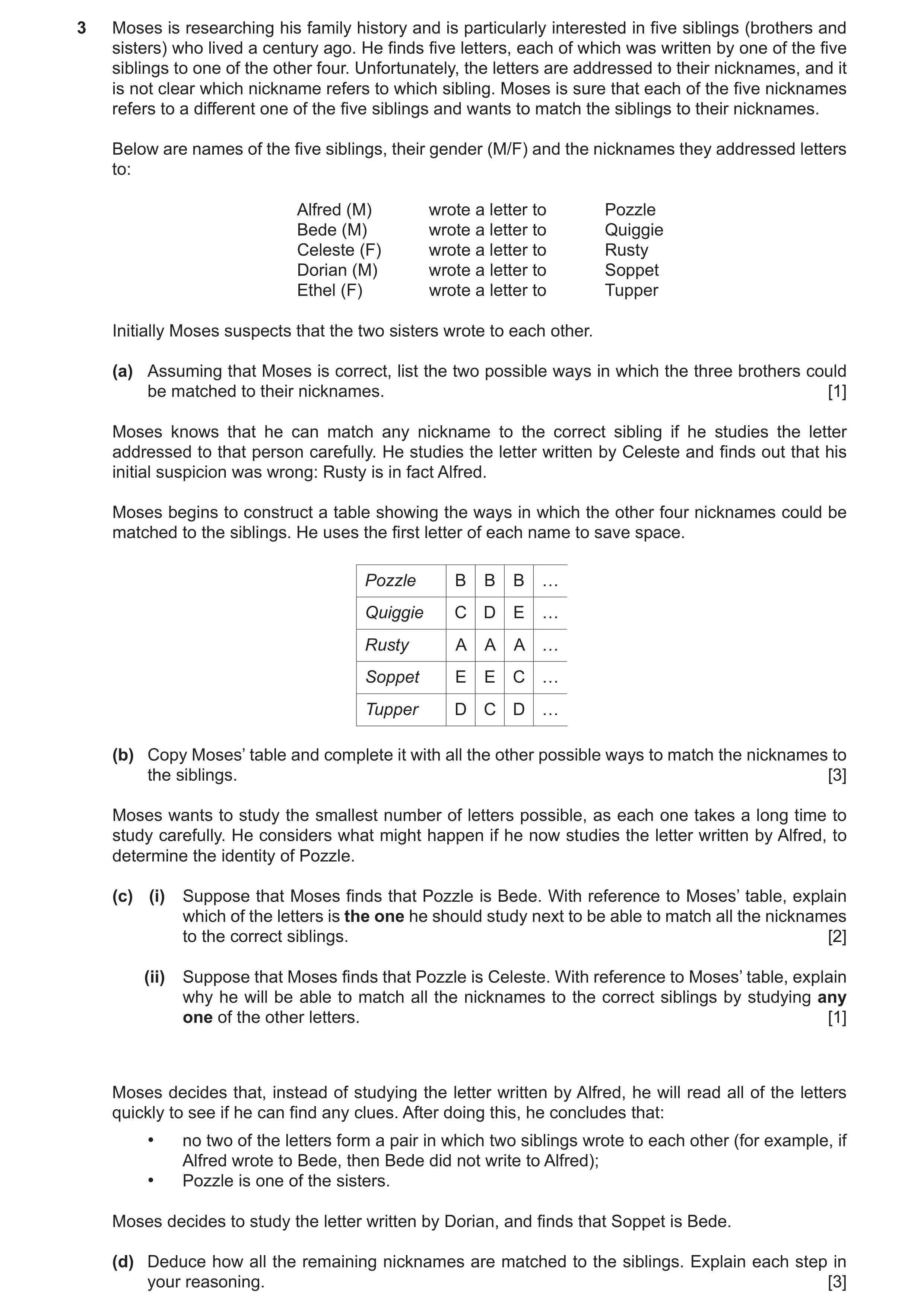 131 / 207
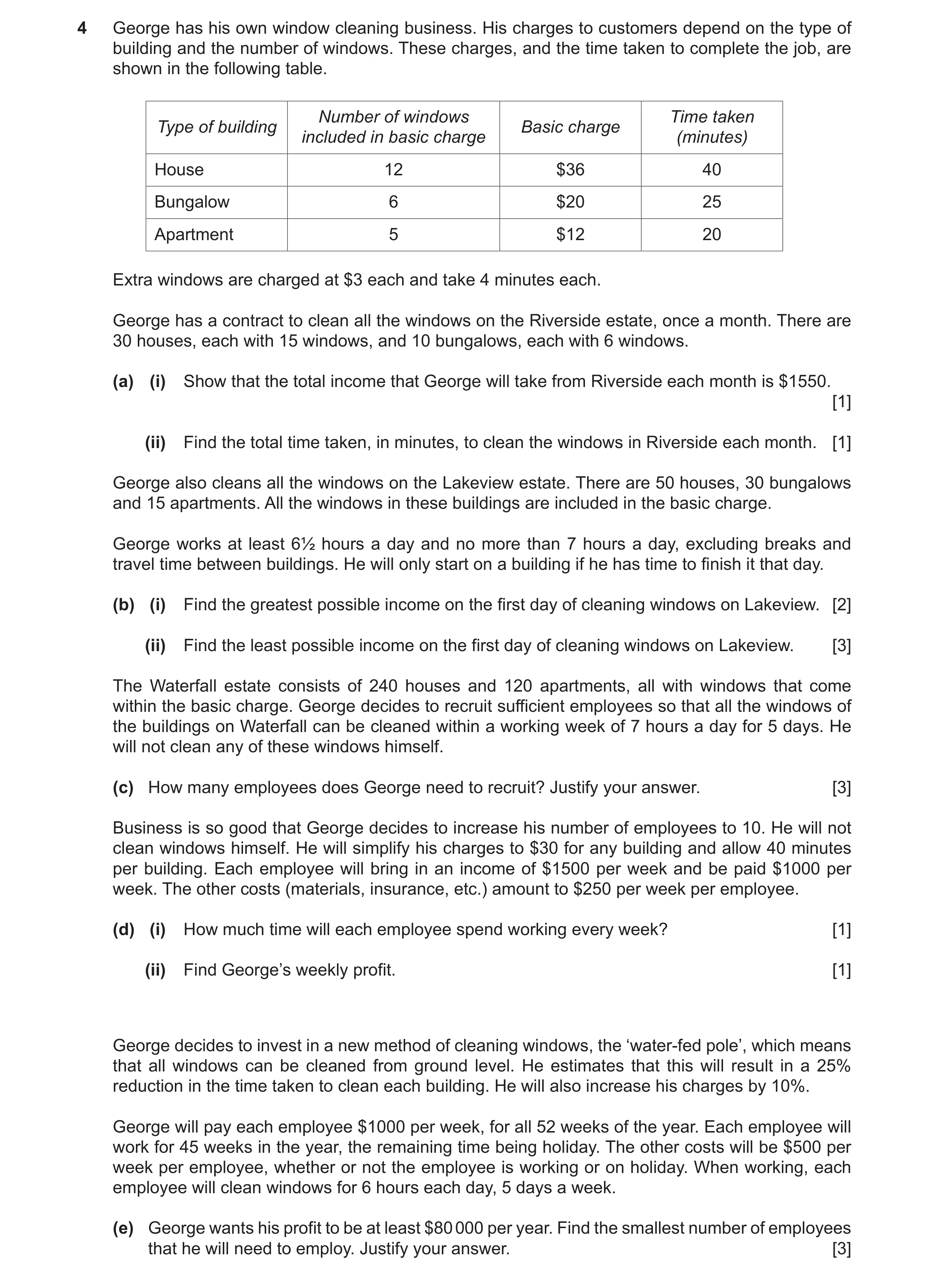 132 / 207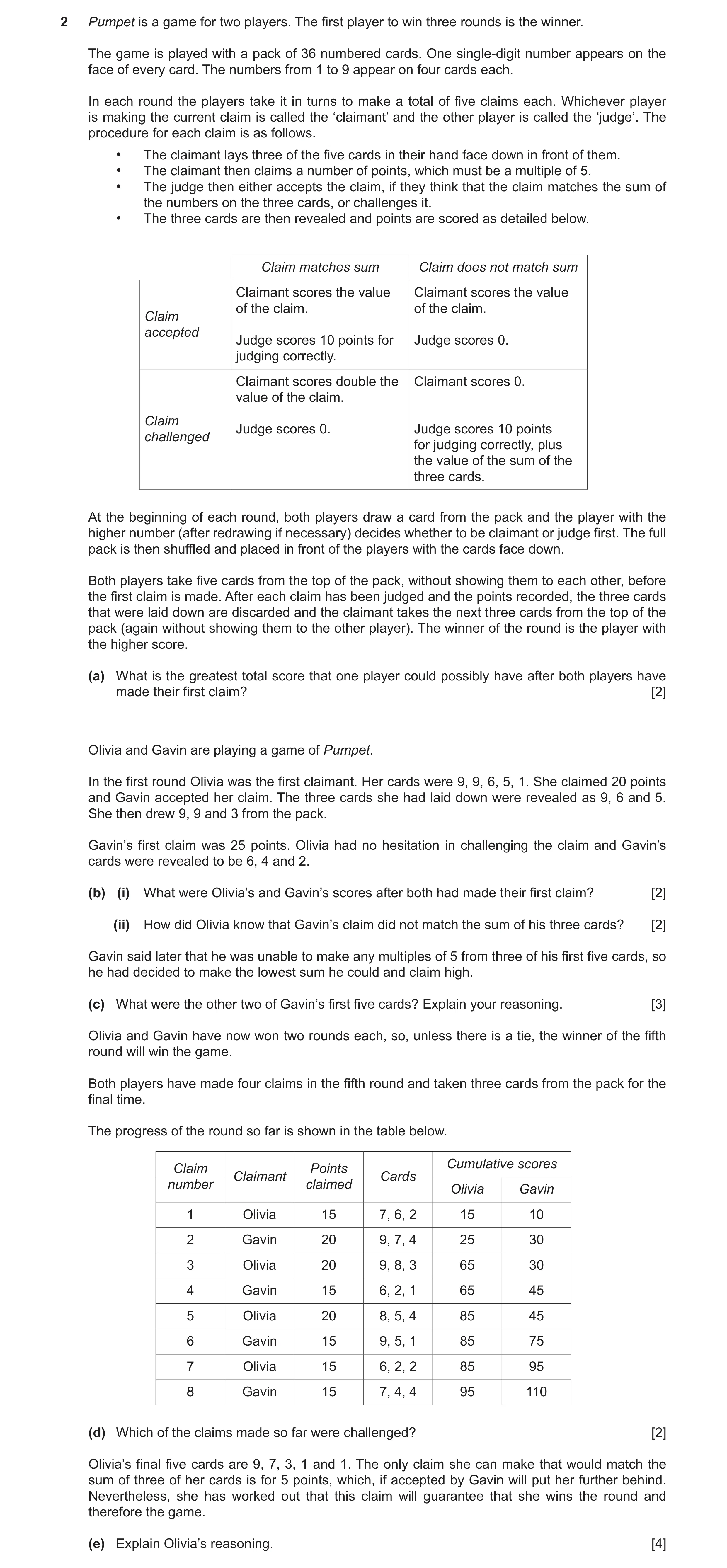
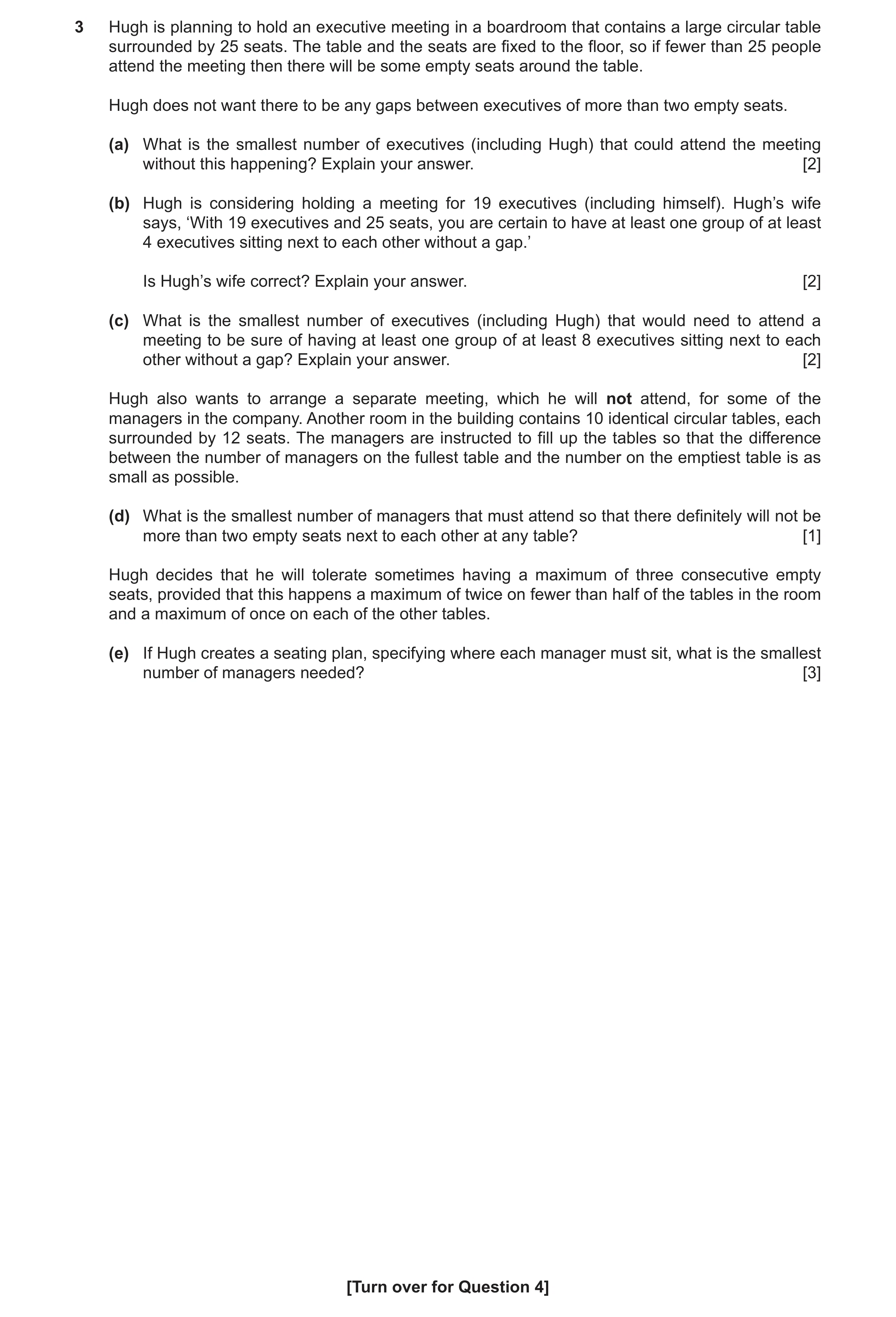
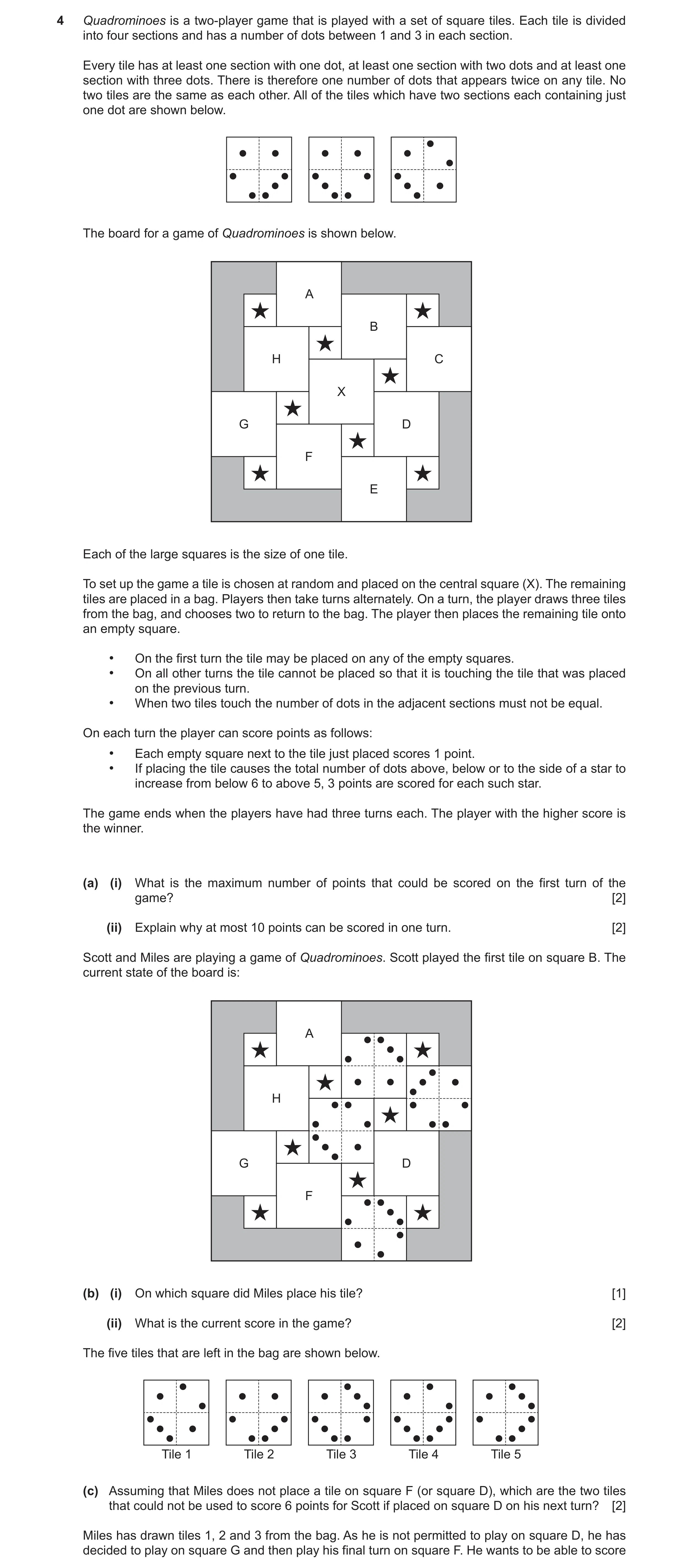
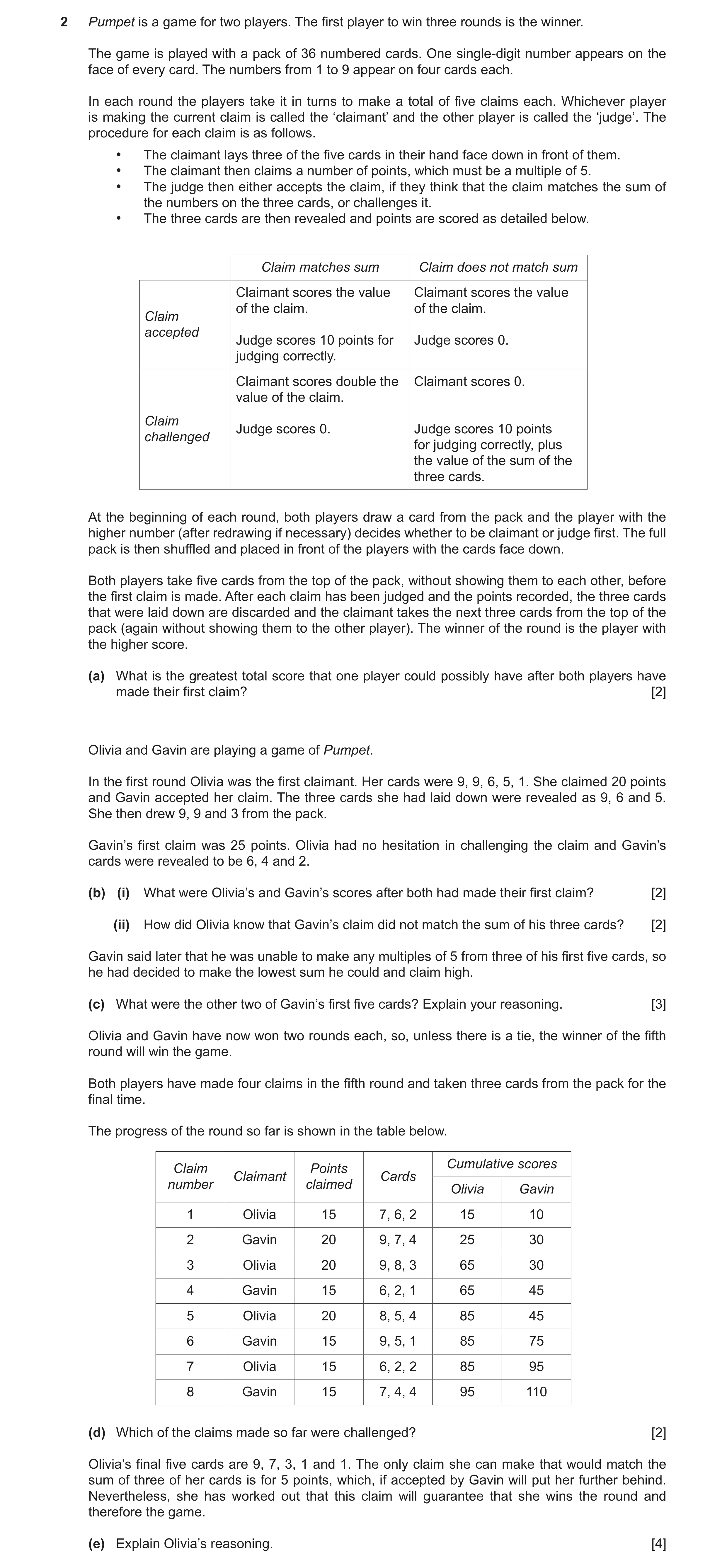
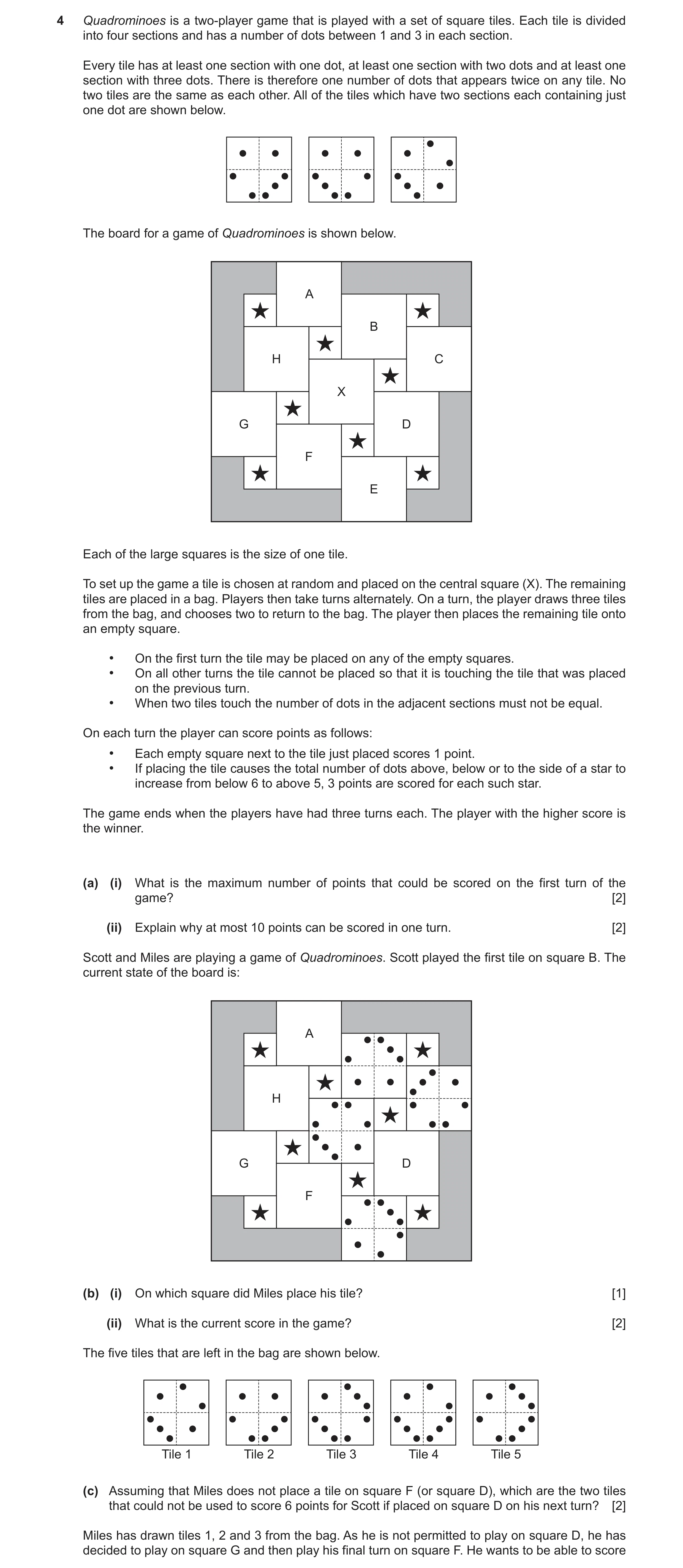
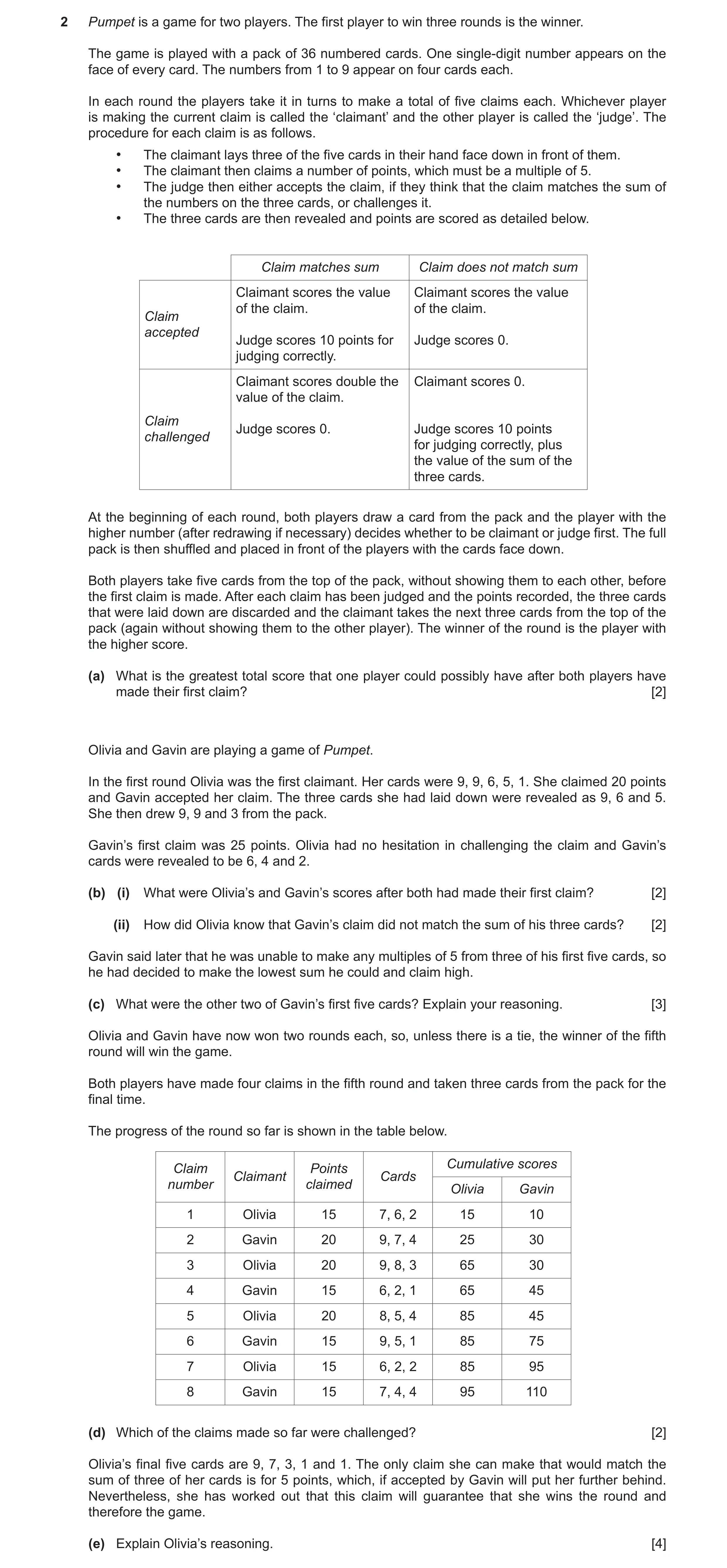
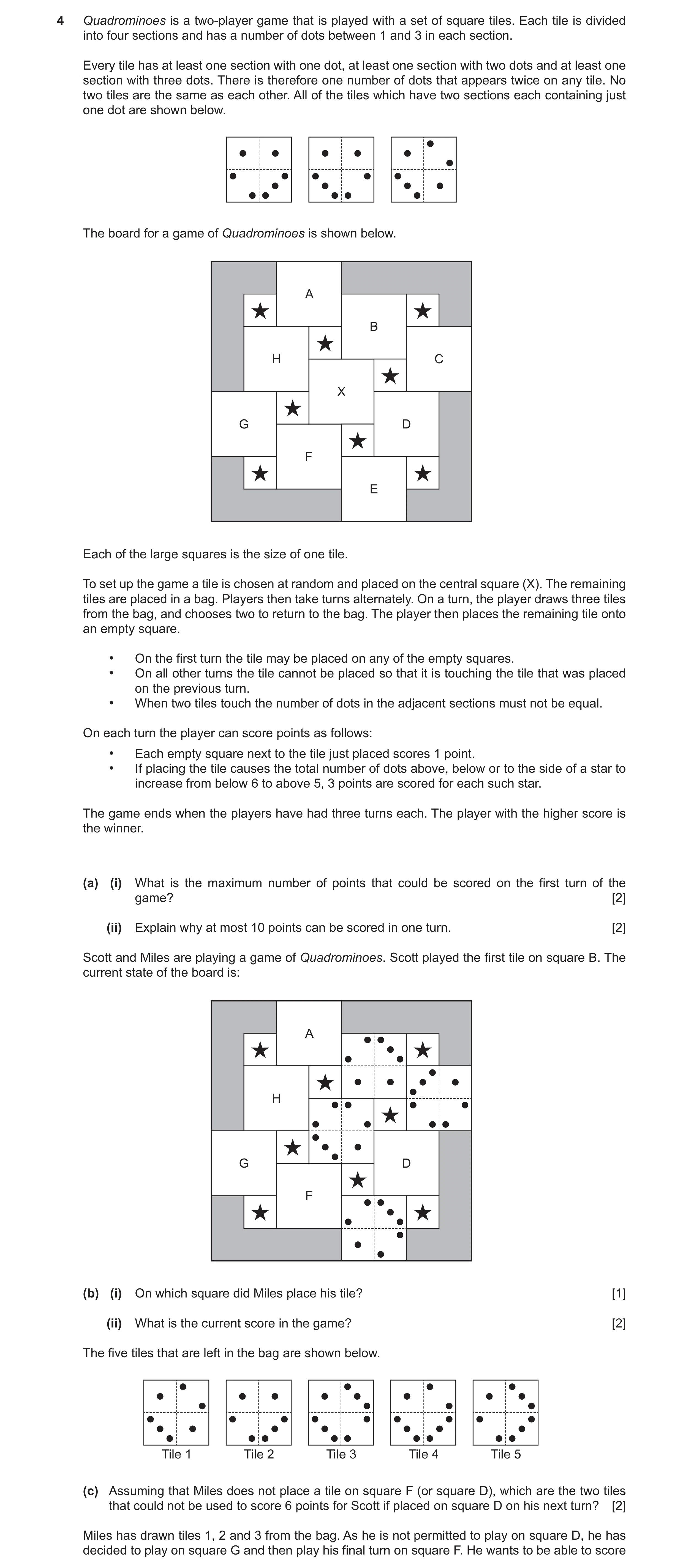
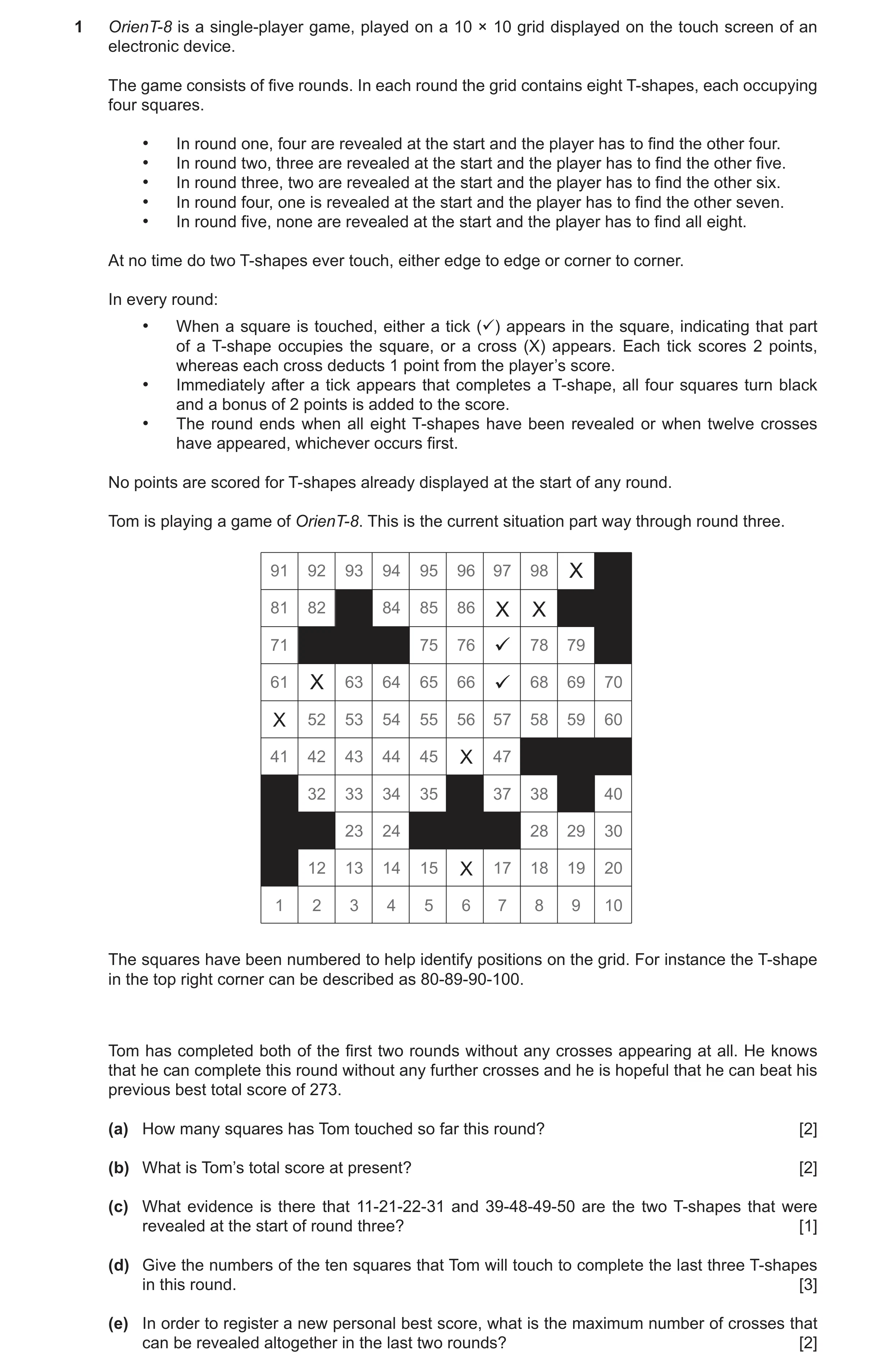
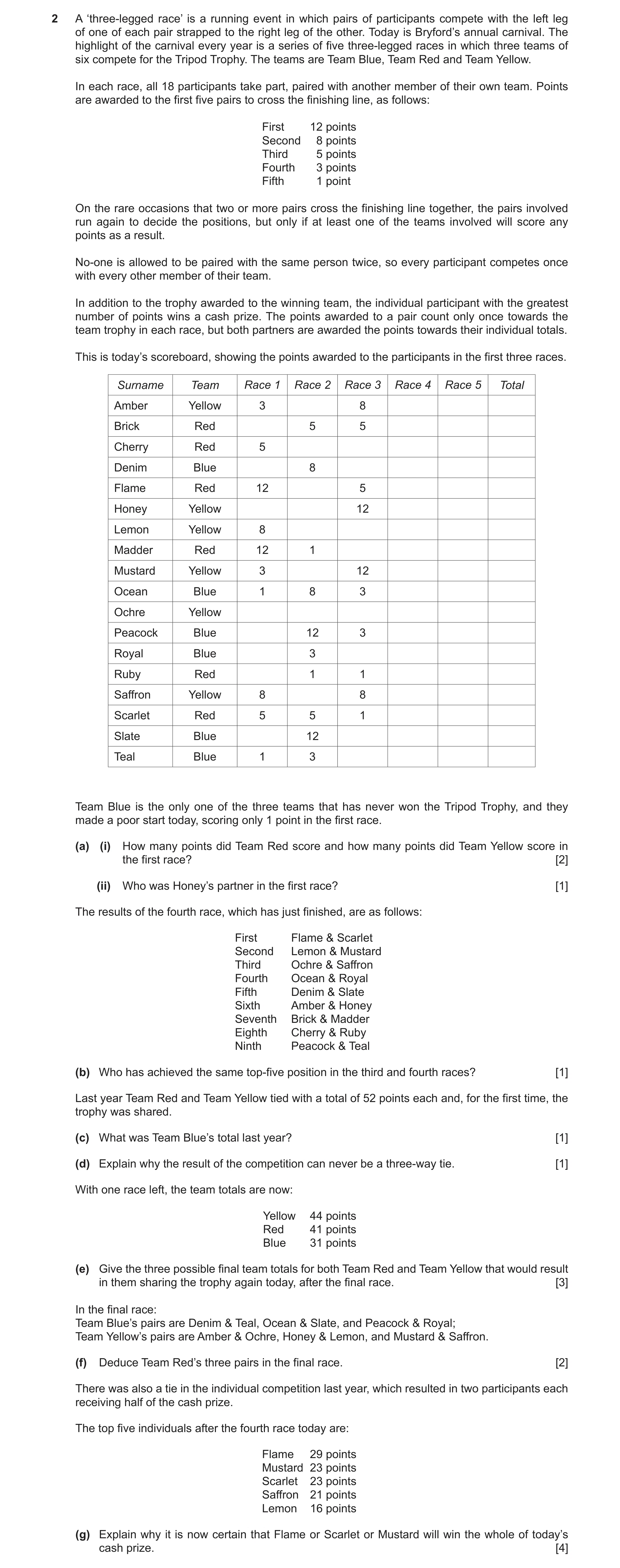
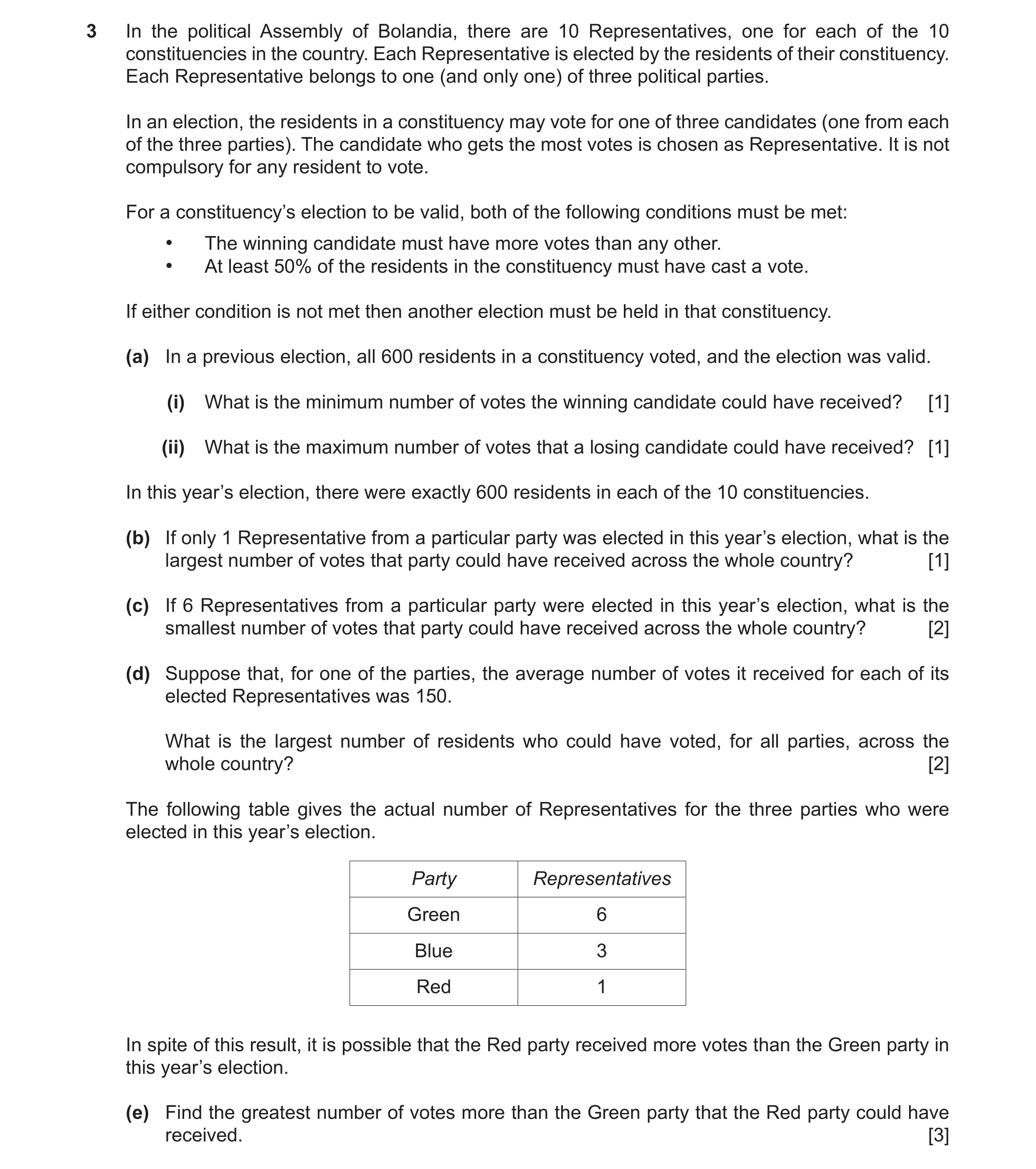 151 / 207
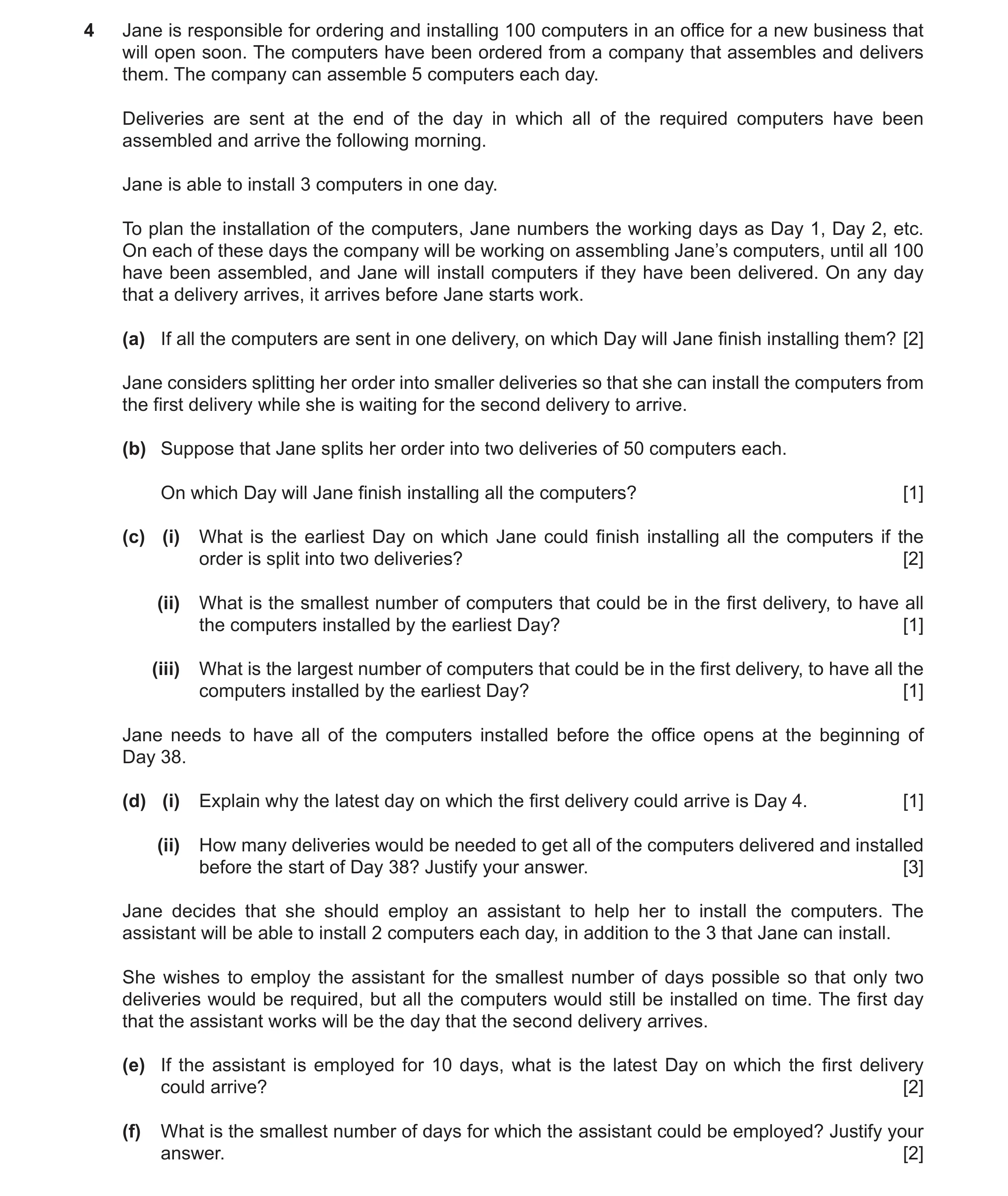 152 / 207
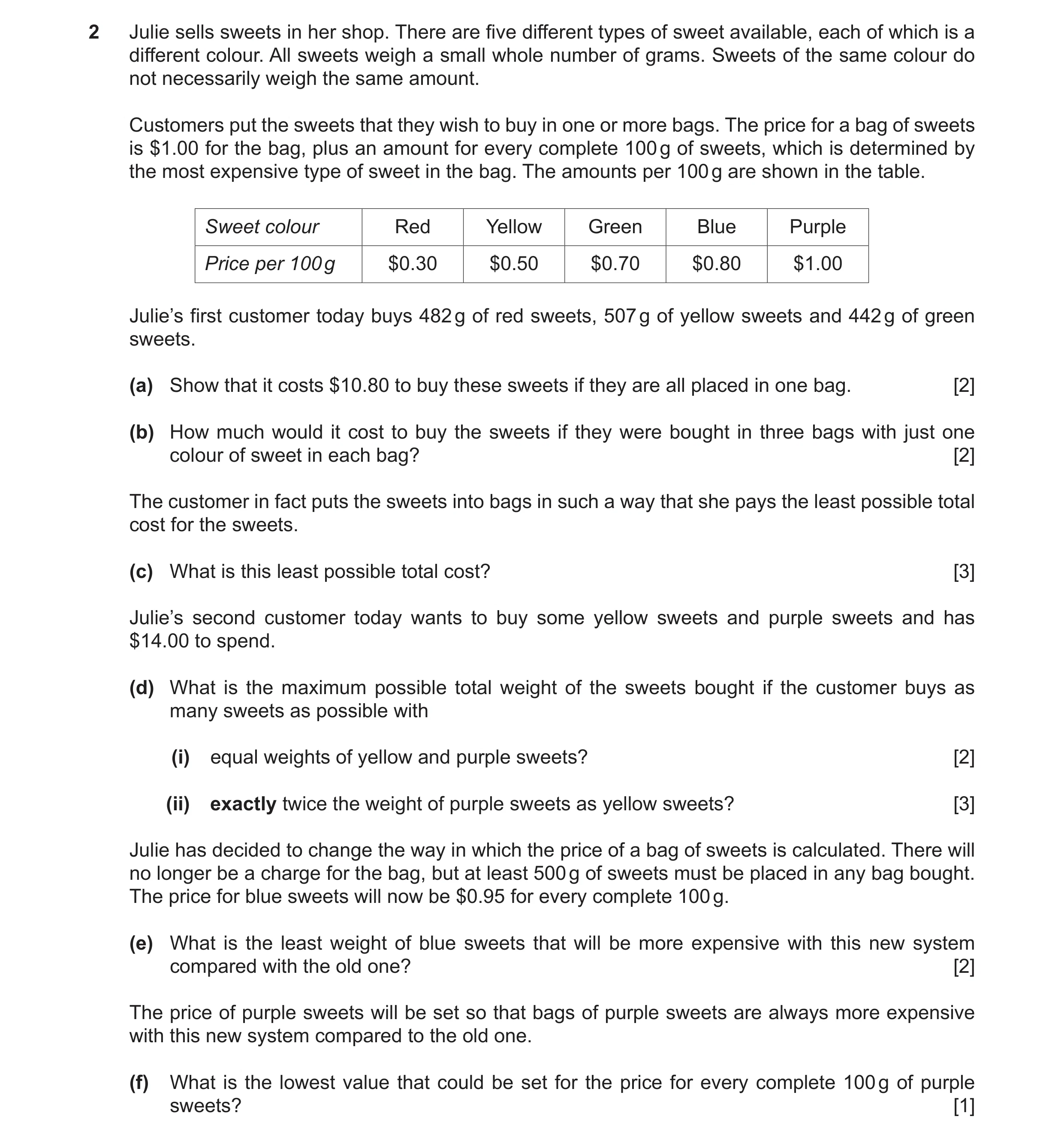 153 / 207
 154 / 207
 155 / 207
 156 / 207
 159 / 207
 162 / 207
 165 / 207
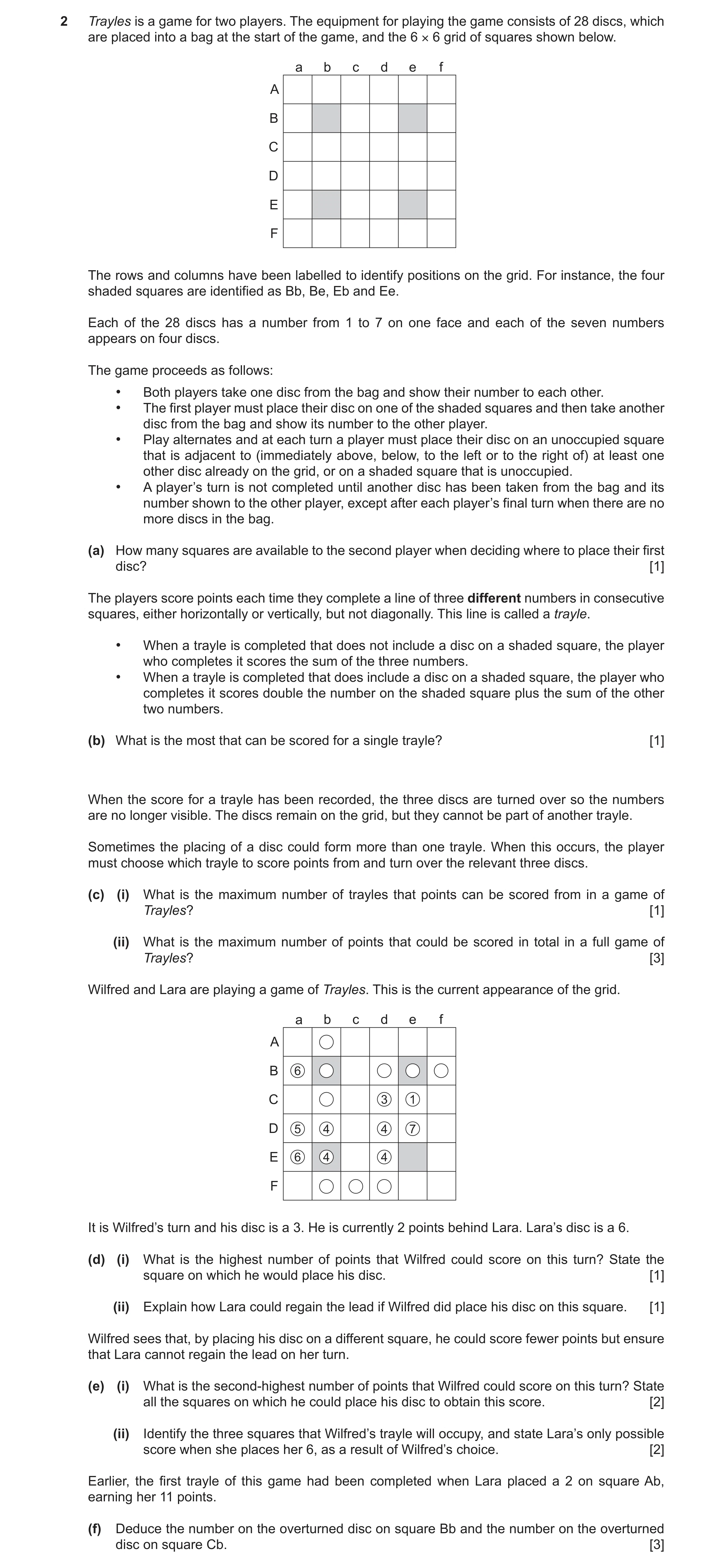
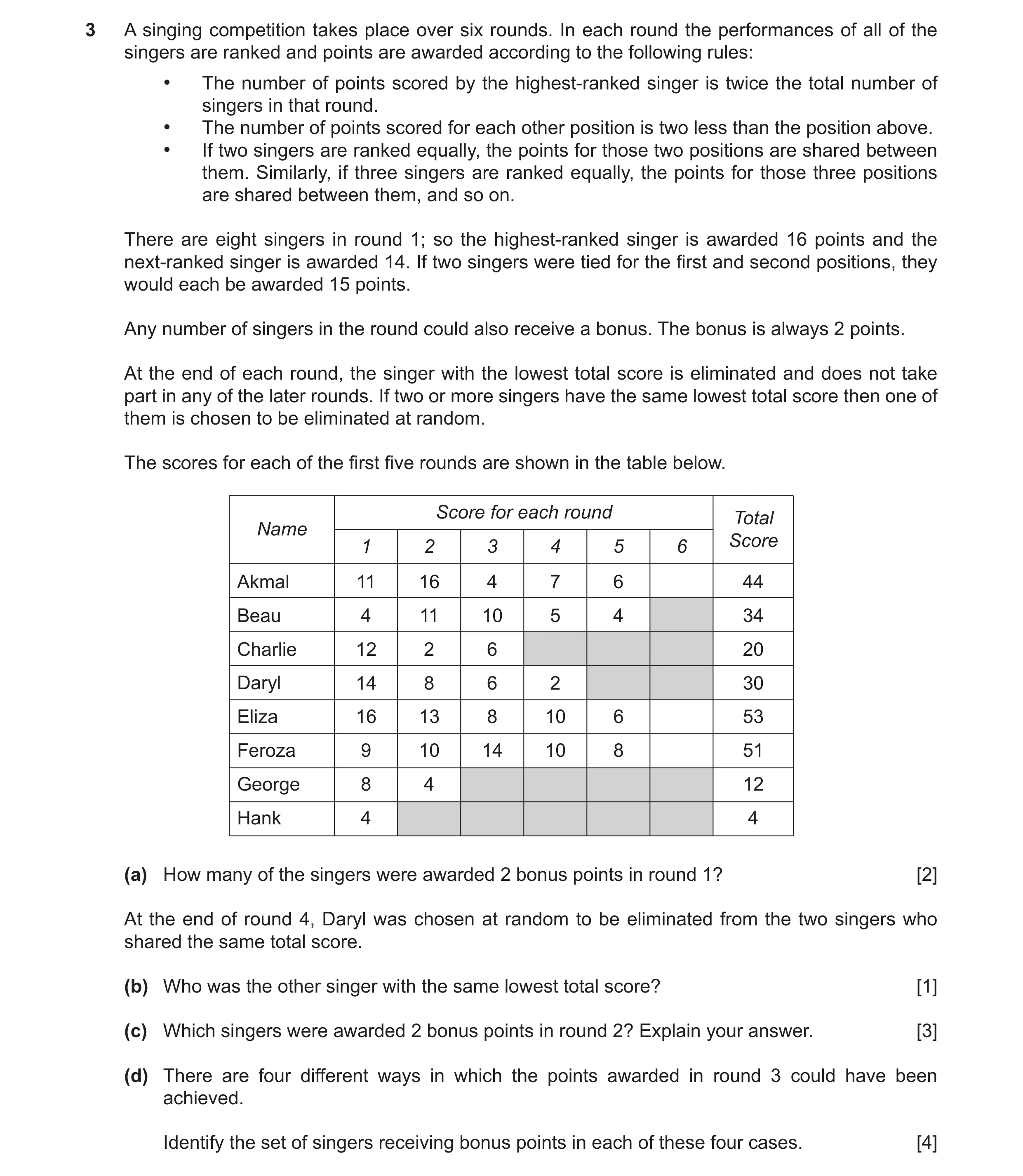 169 / 207
 170 / 207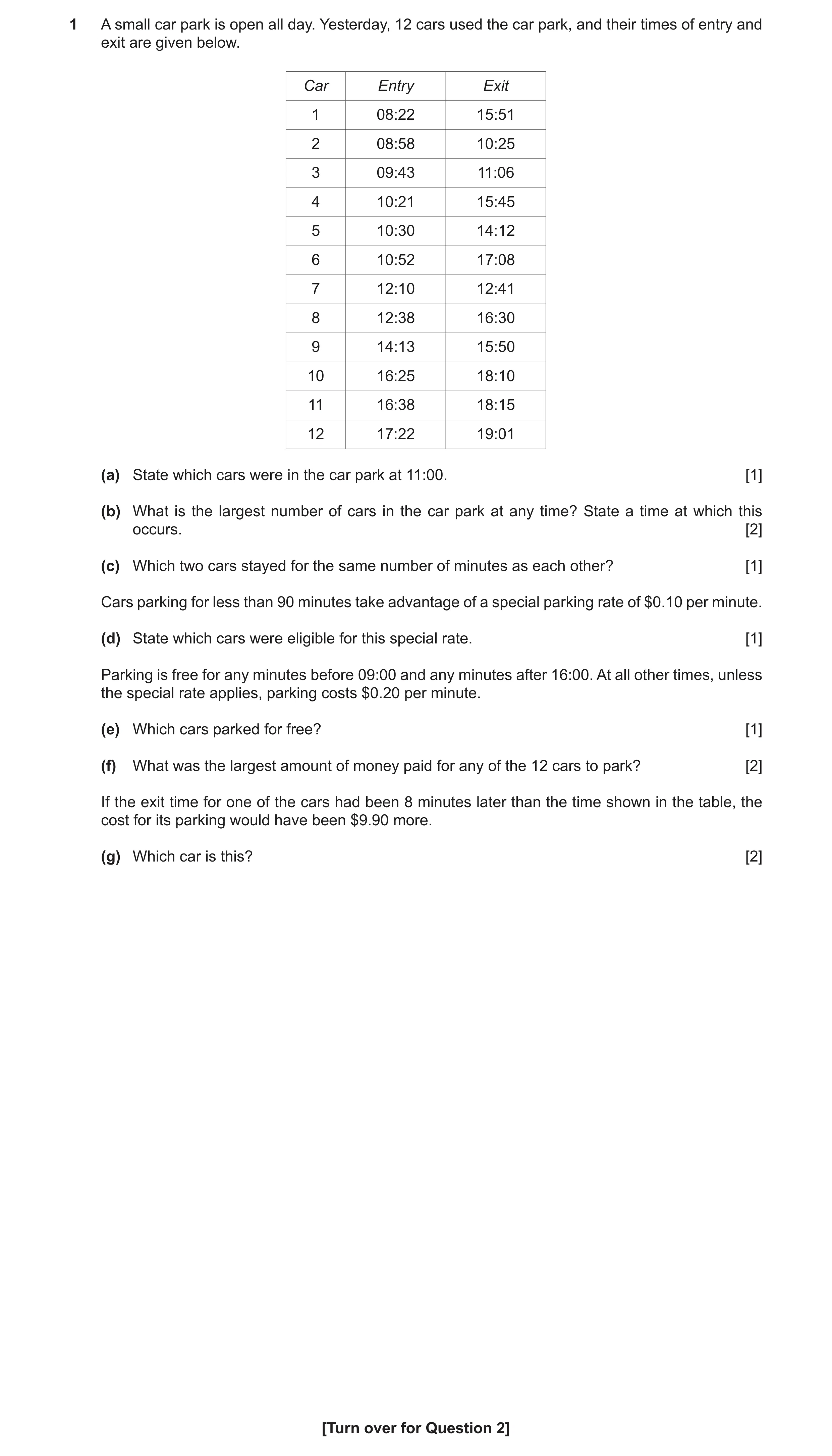
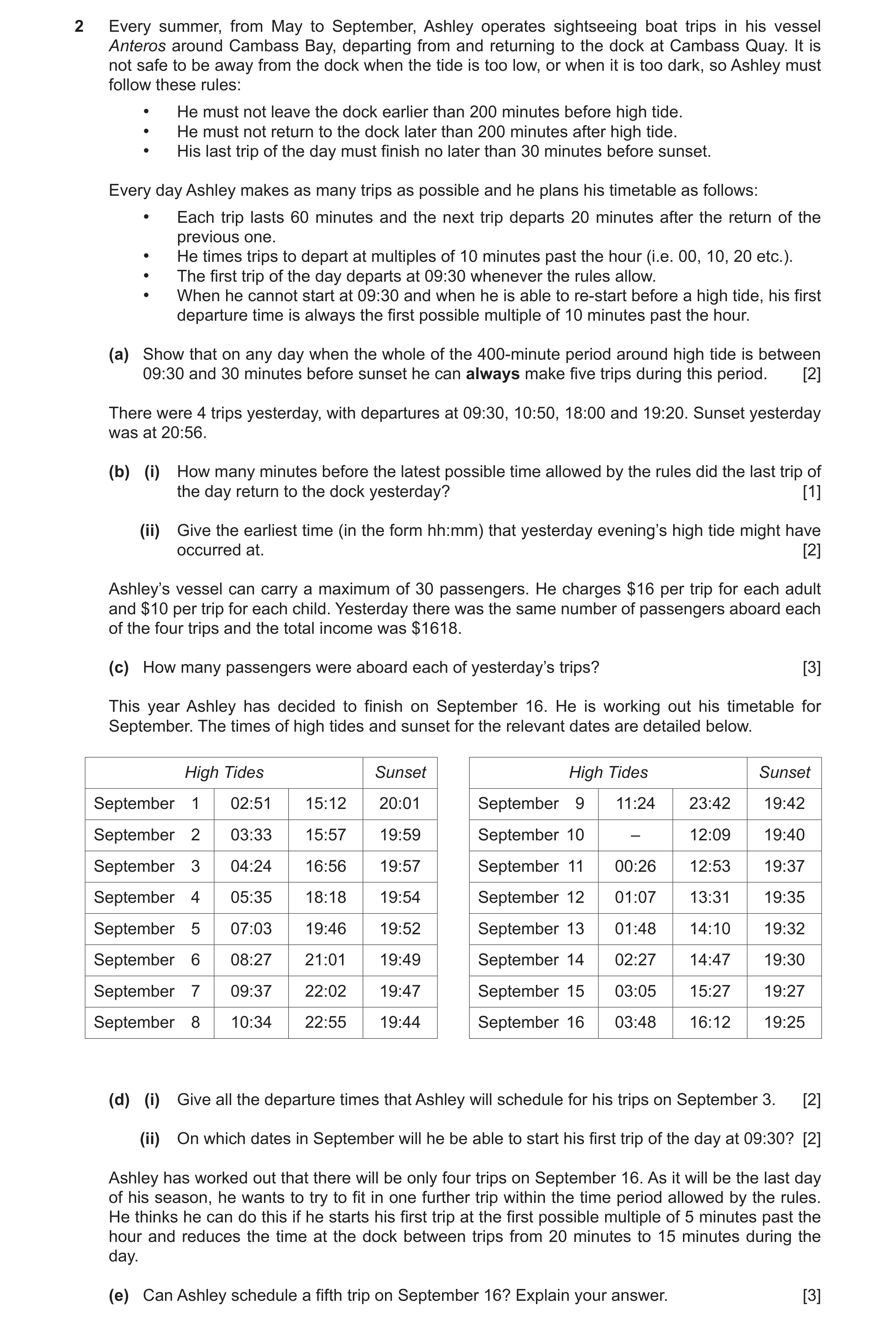
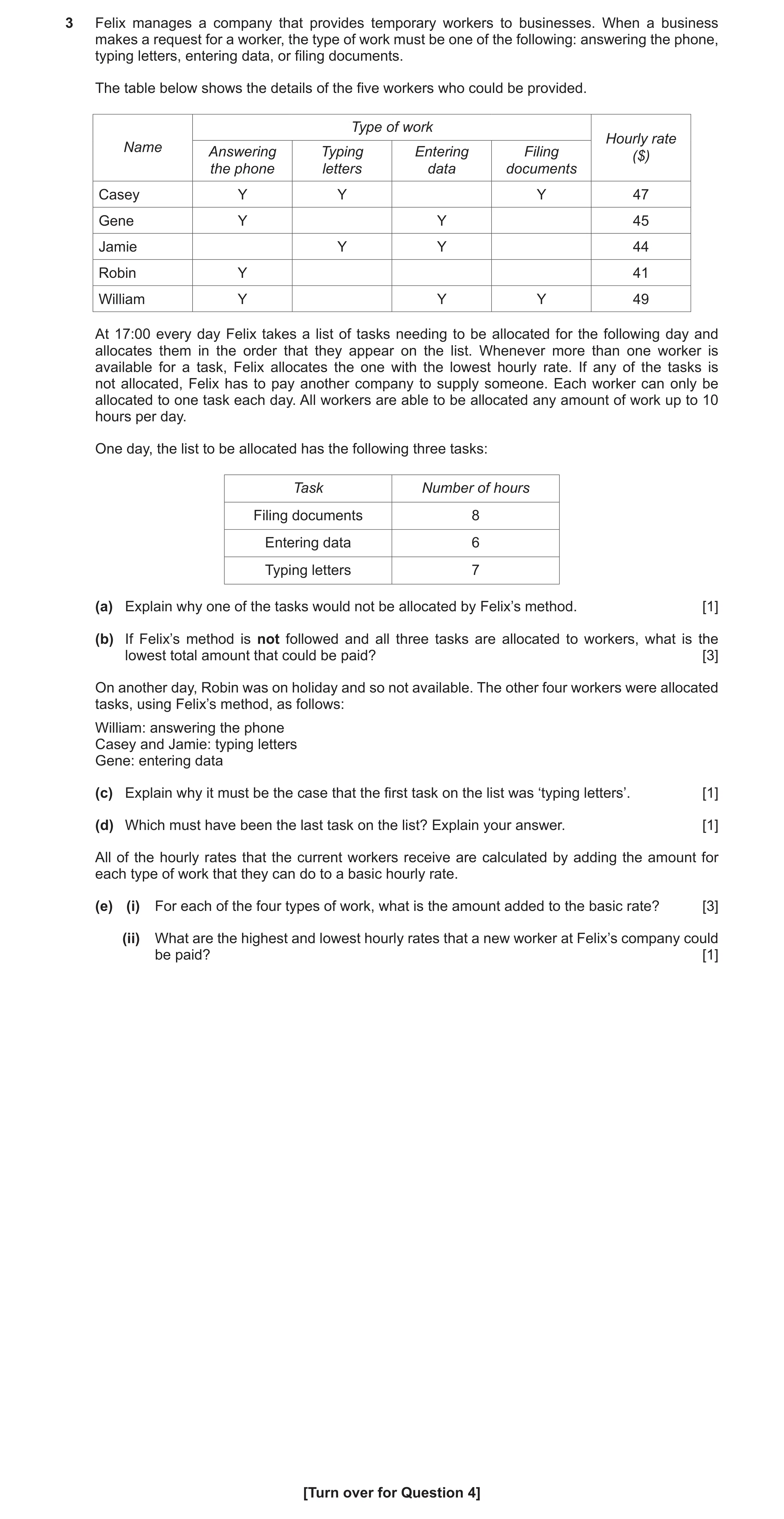
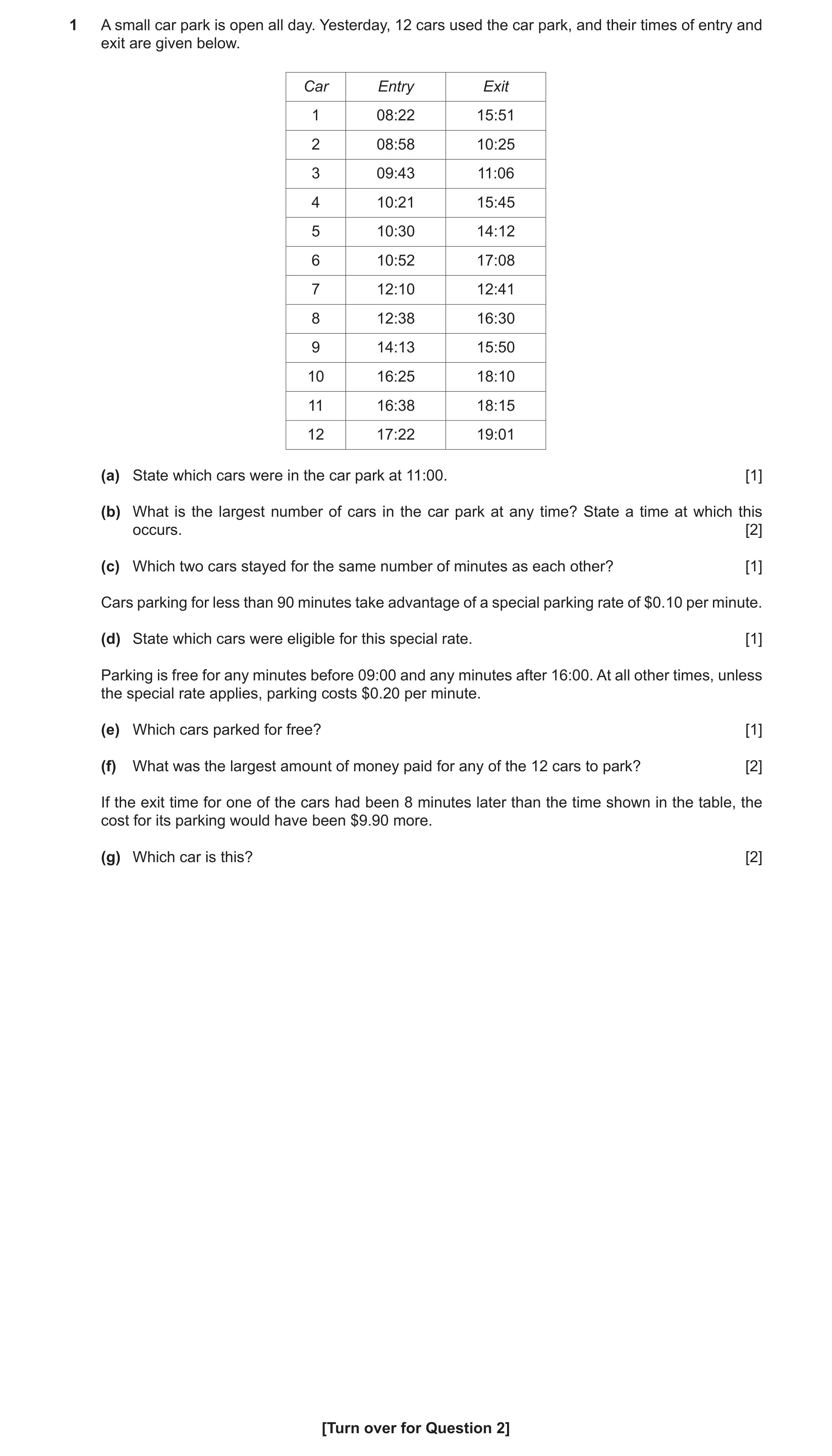
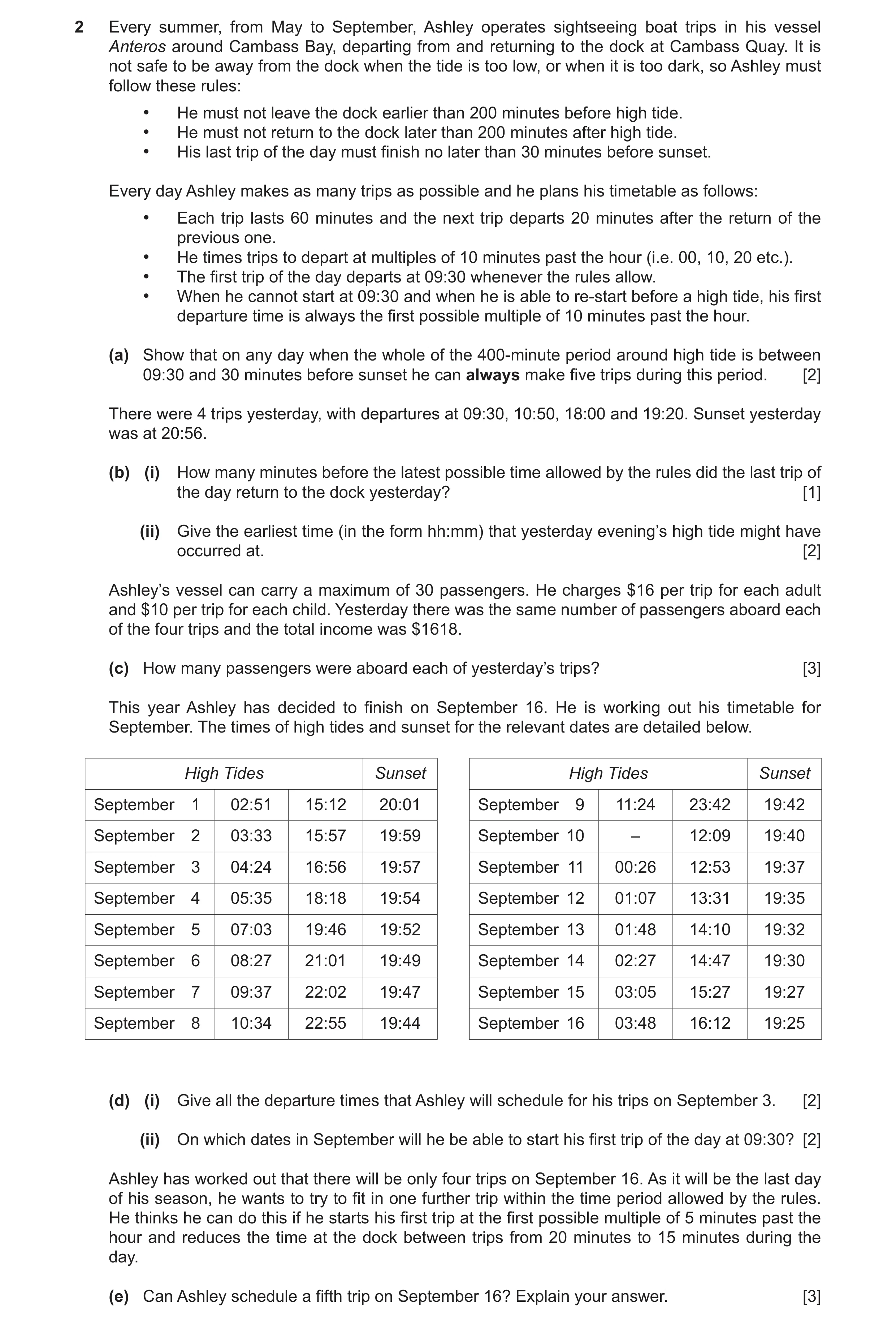
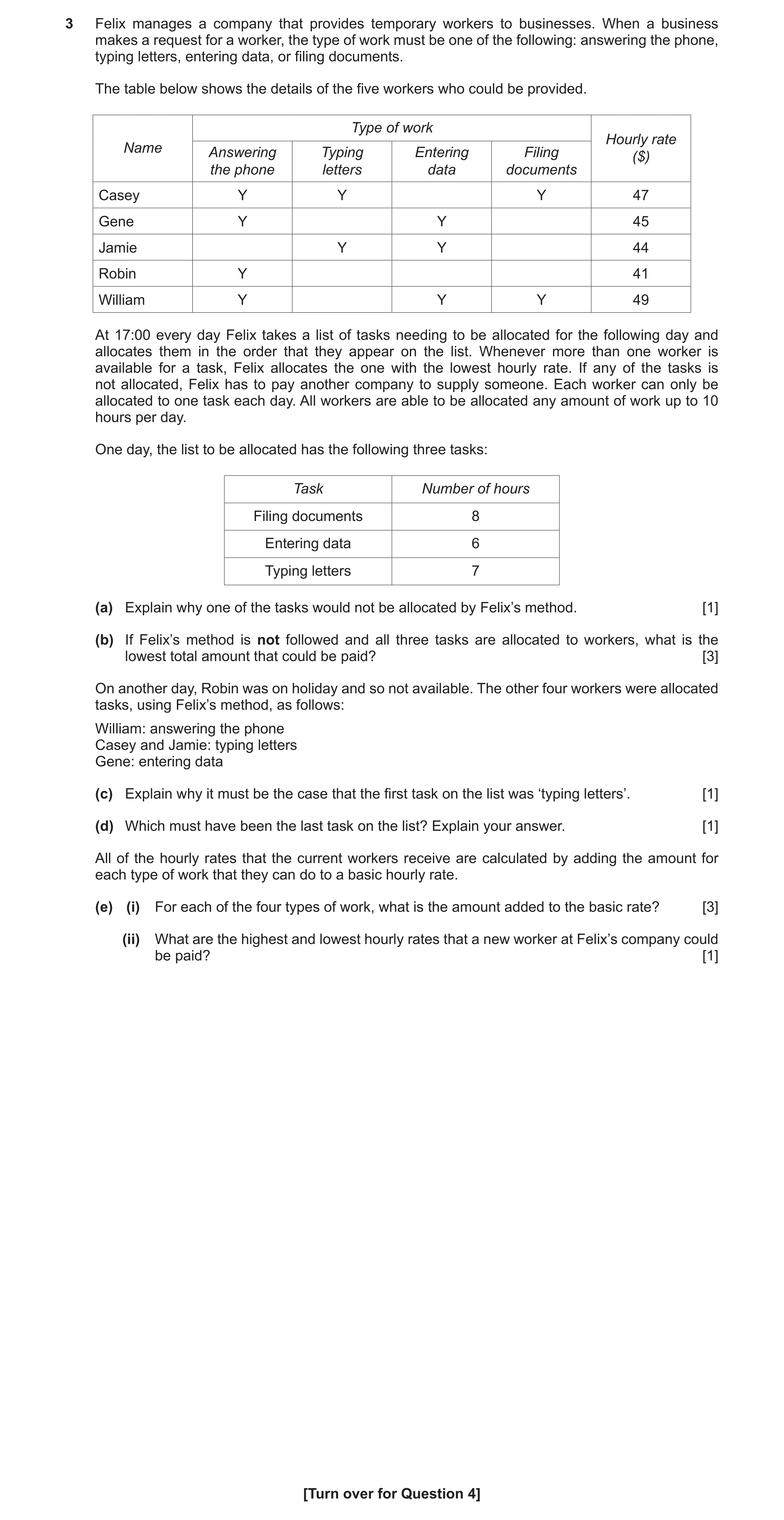
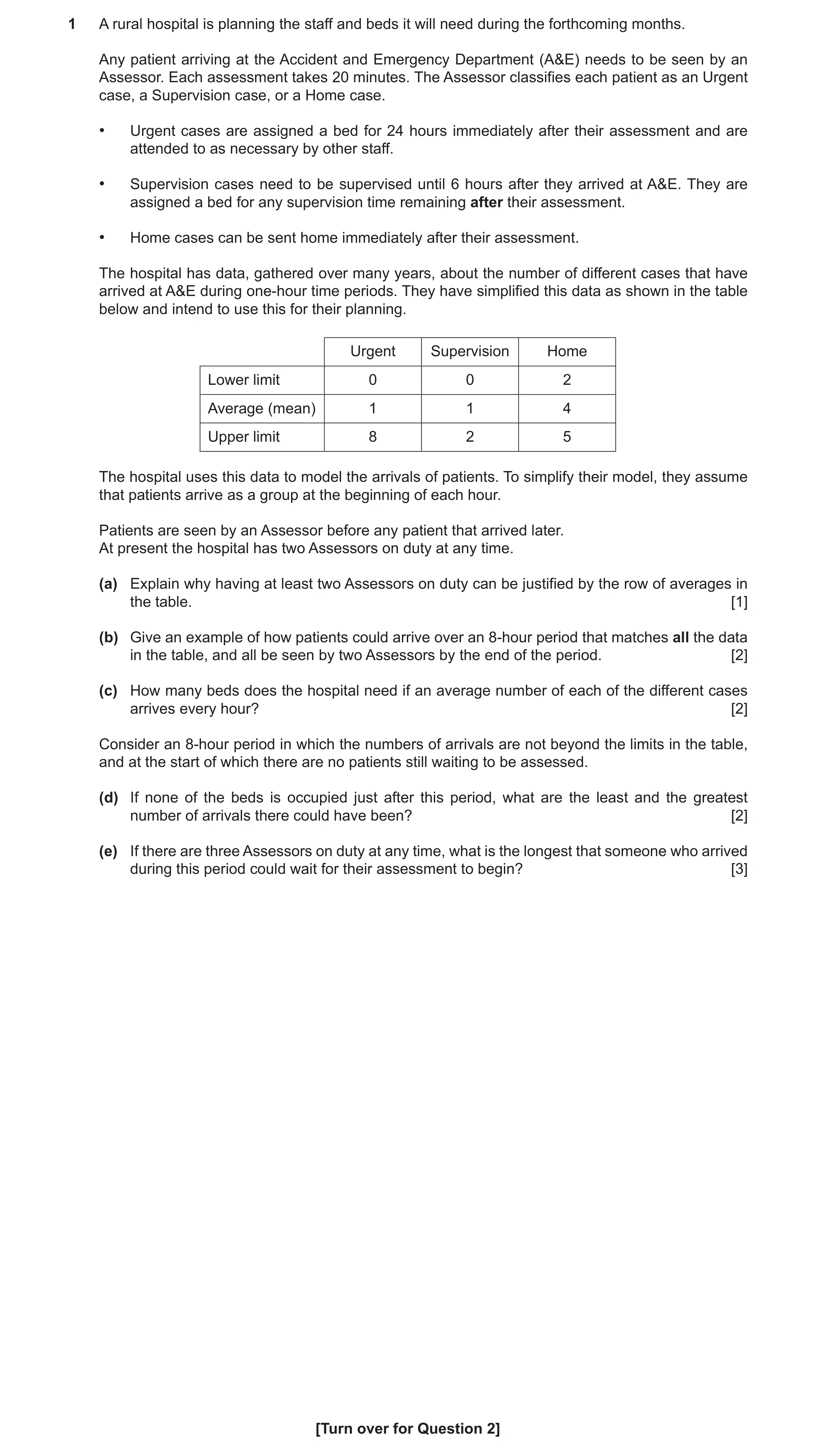
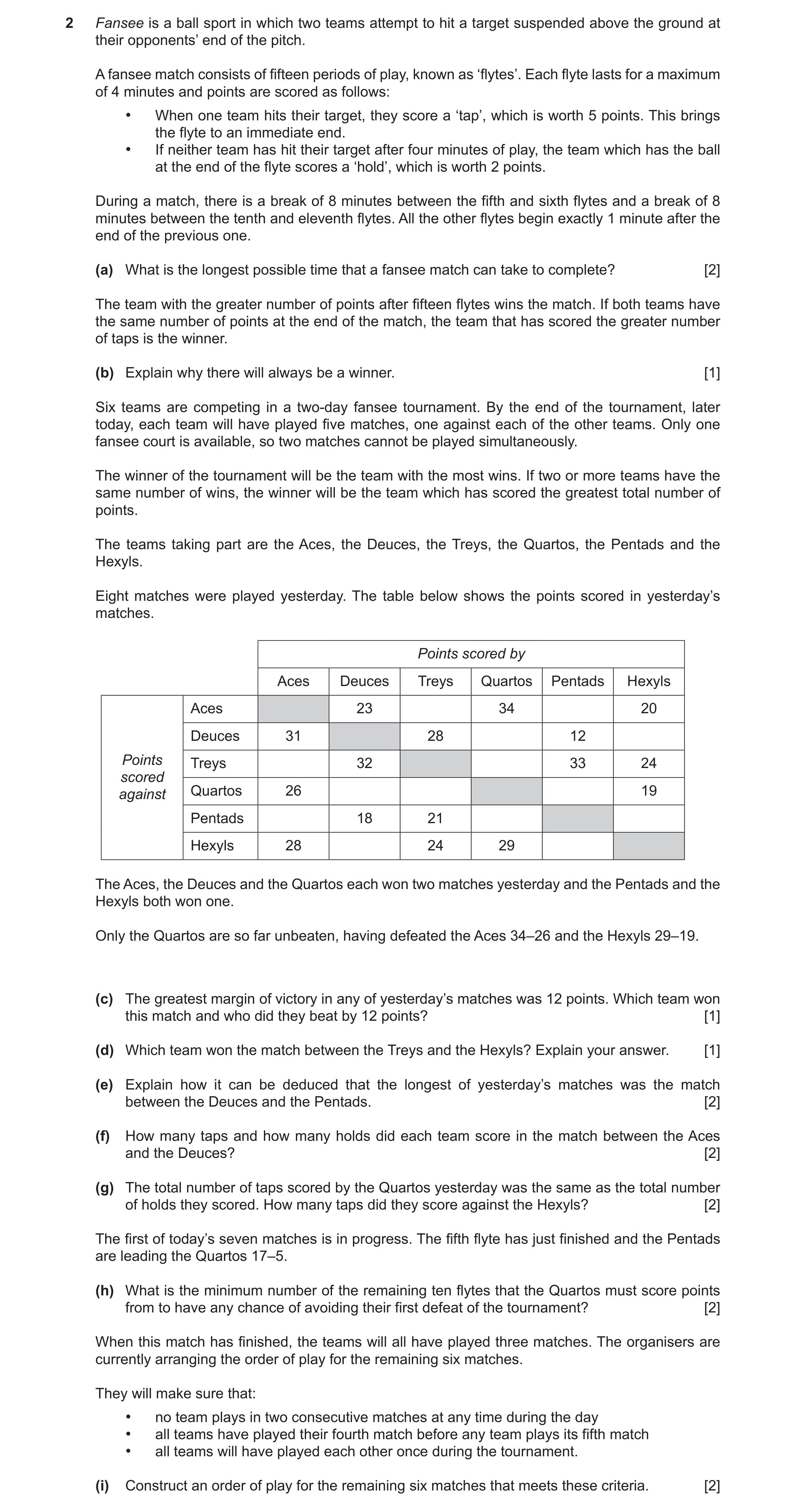
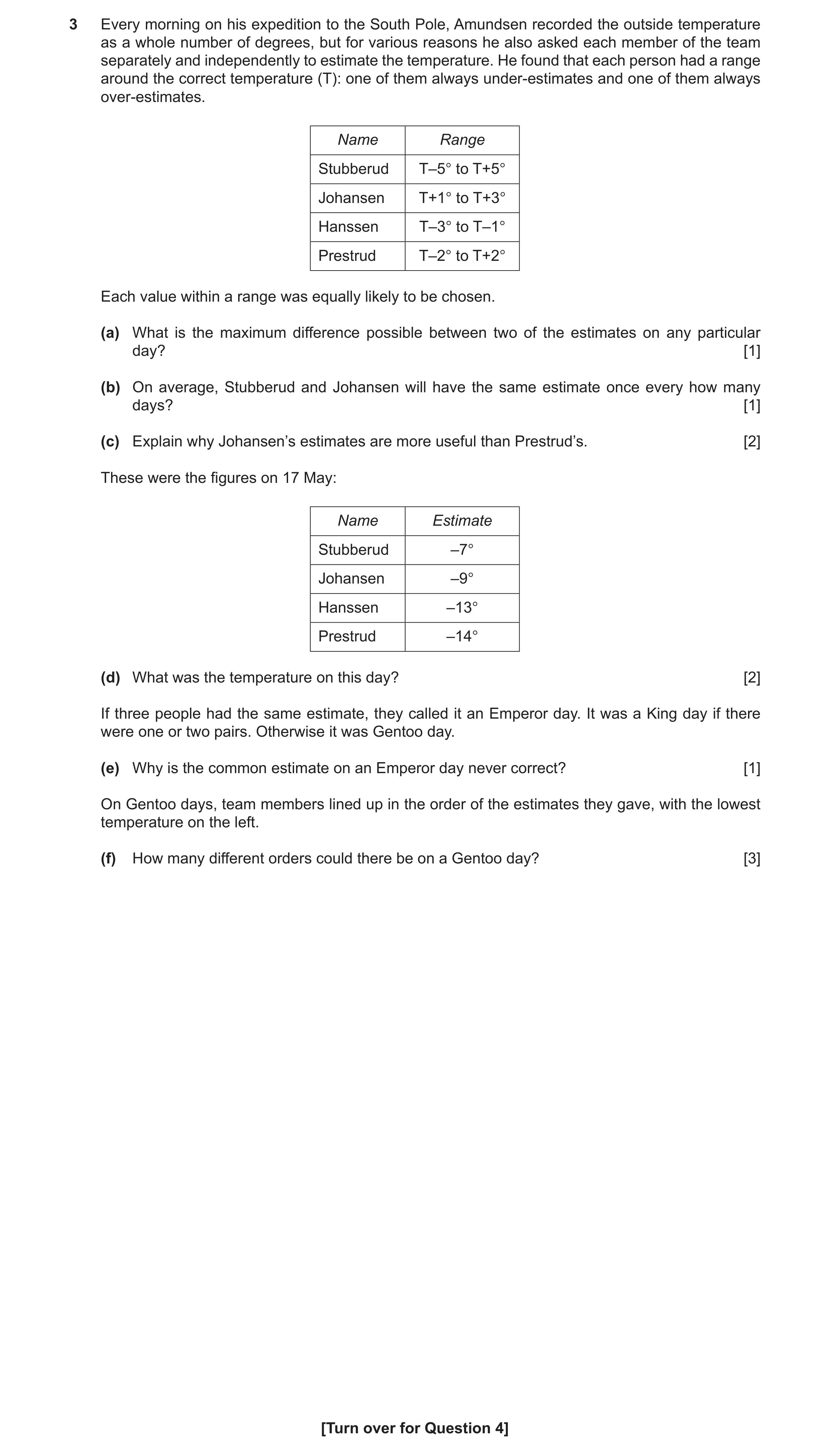
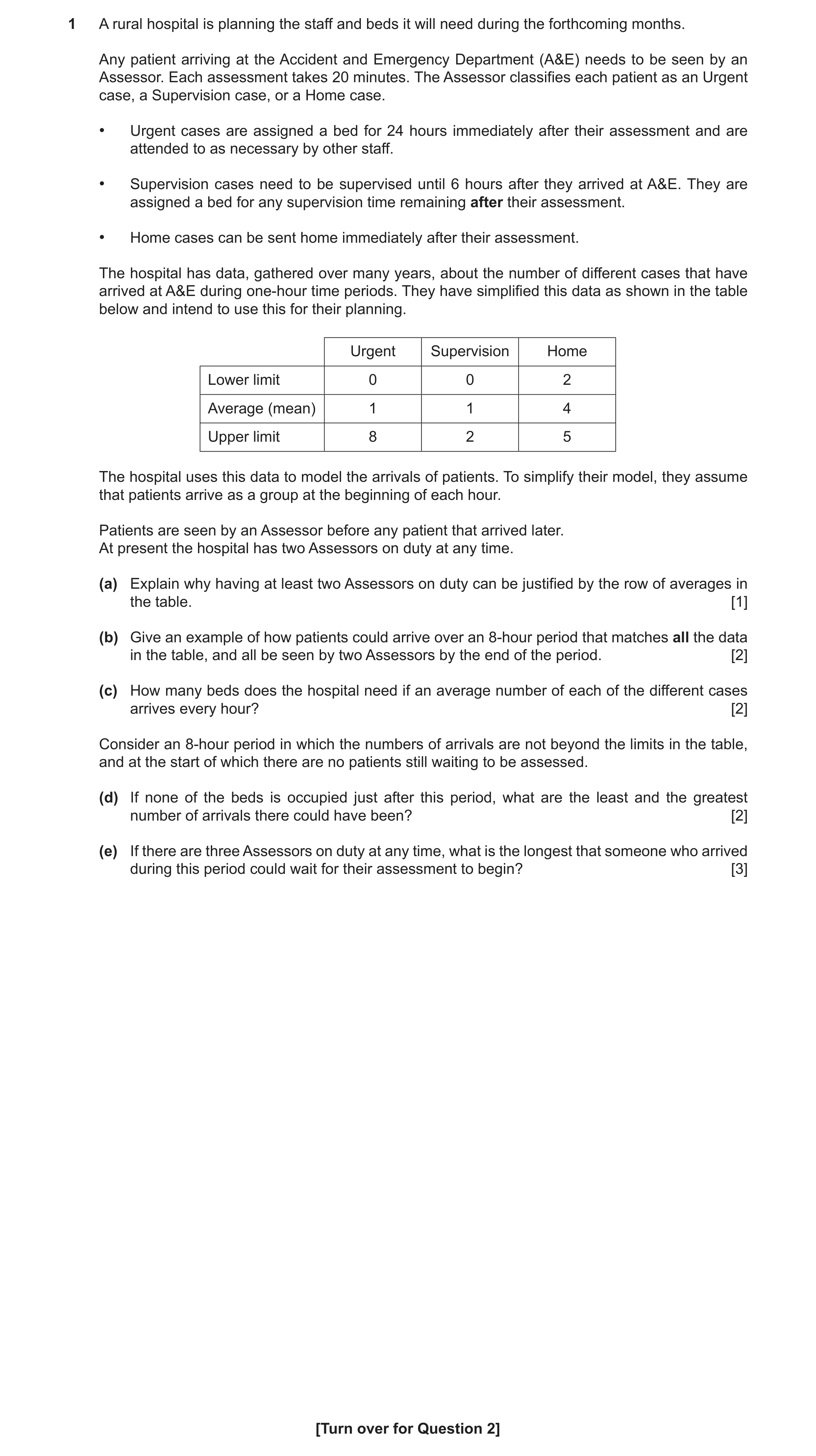
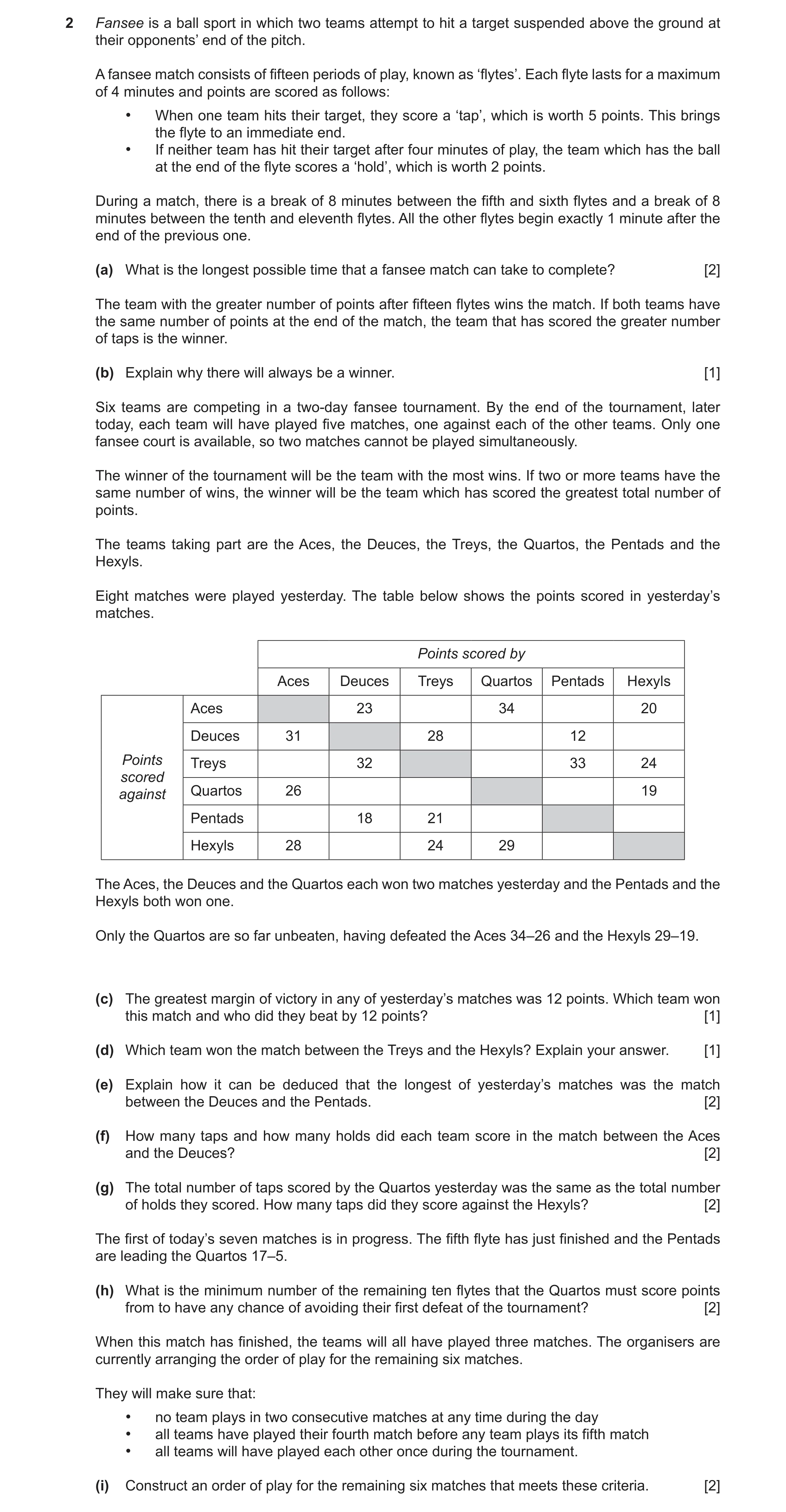
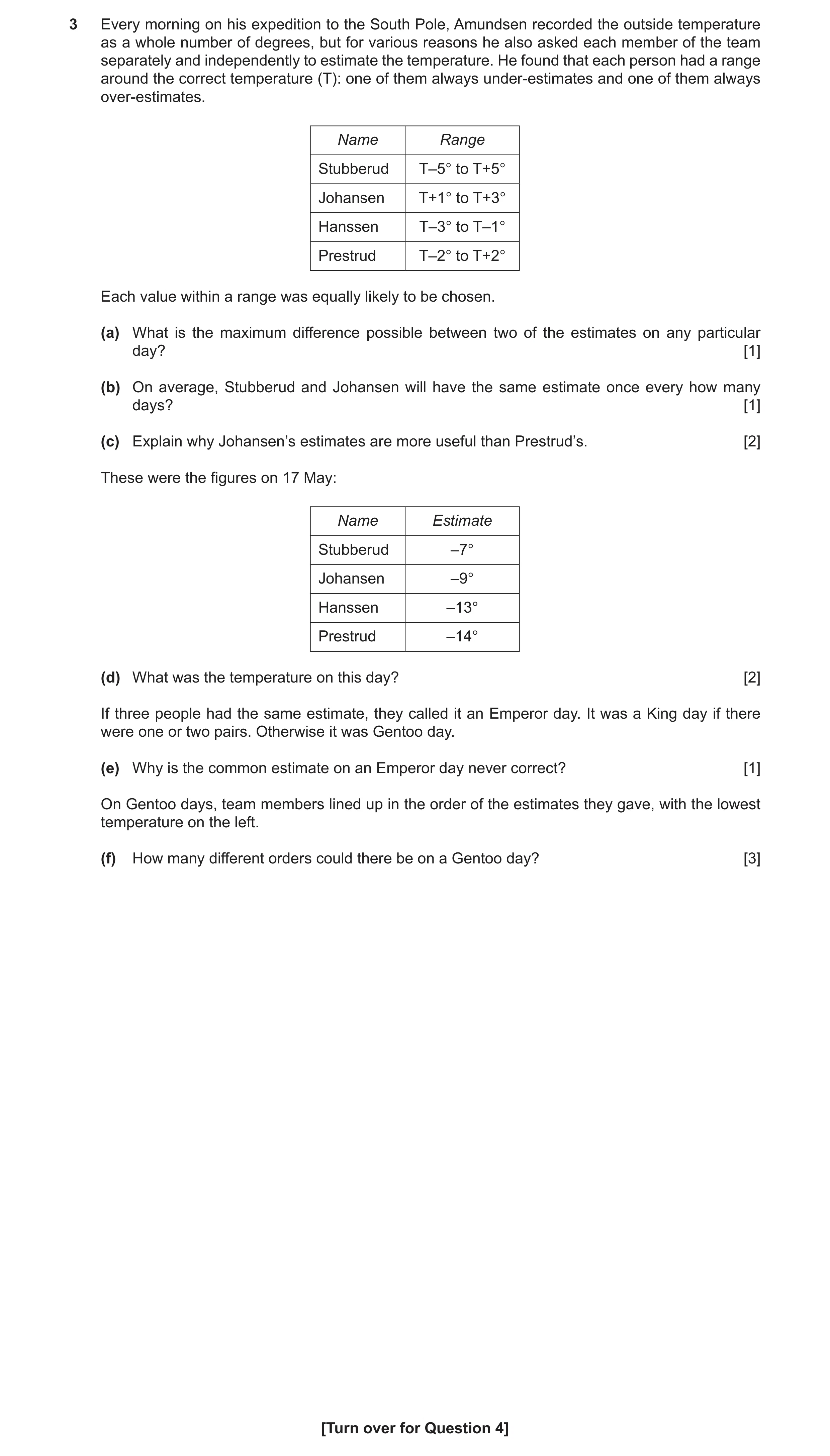
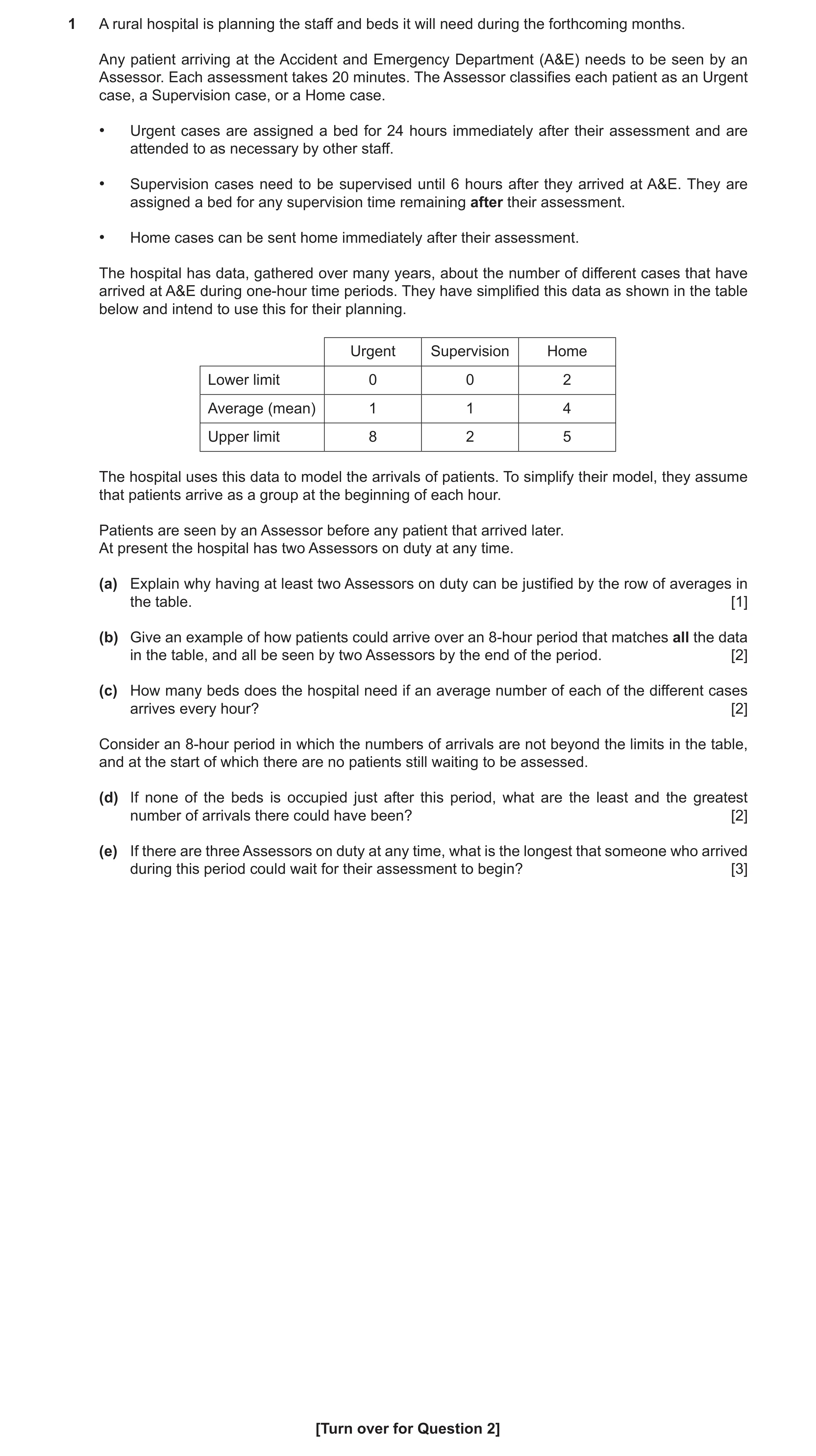
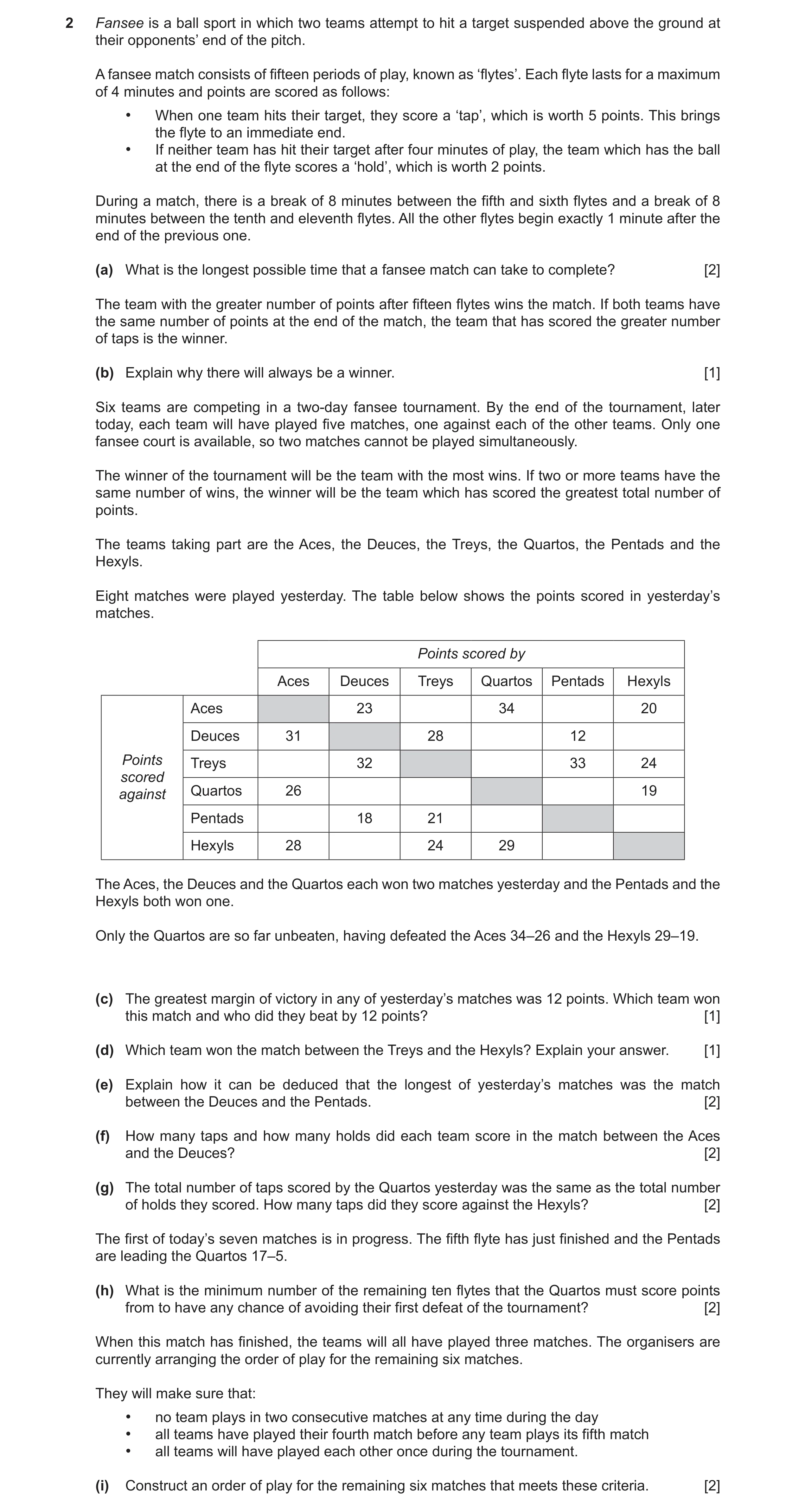
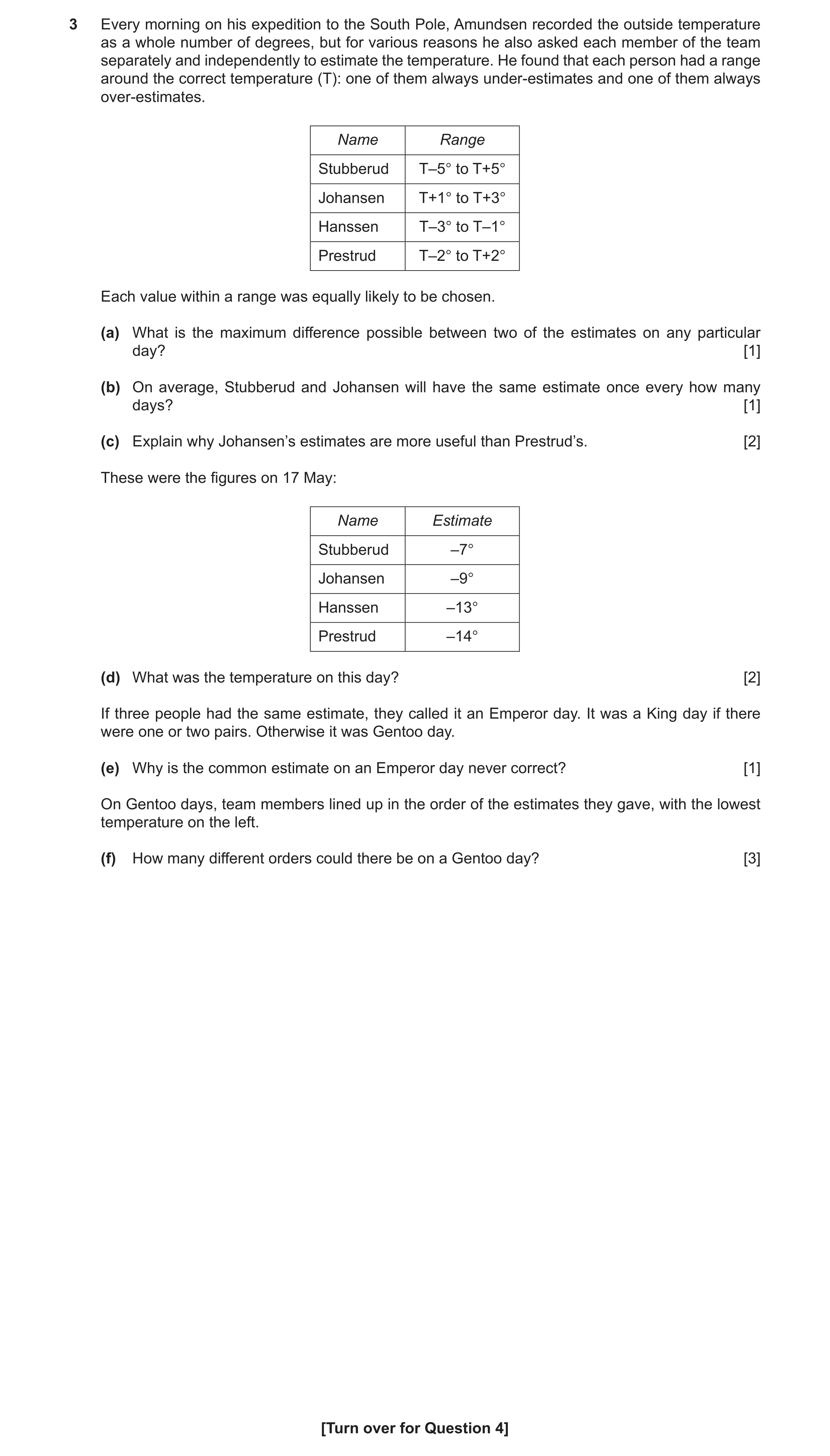
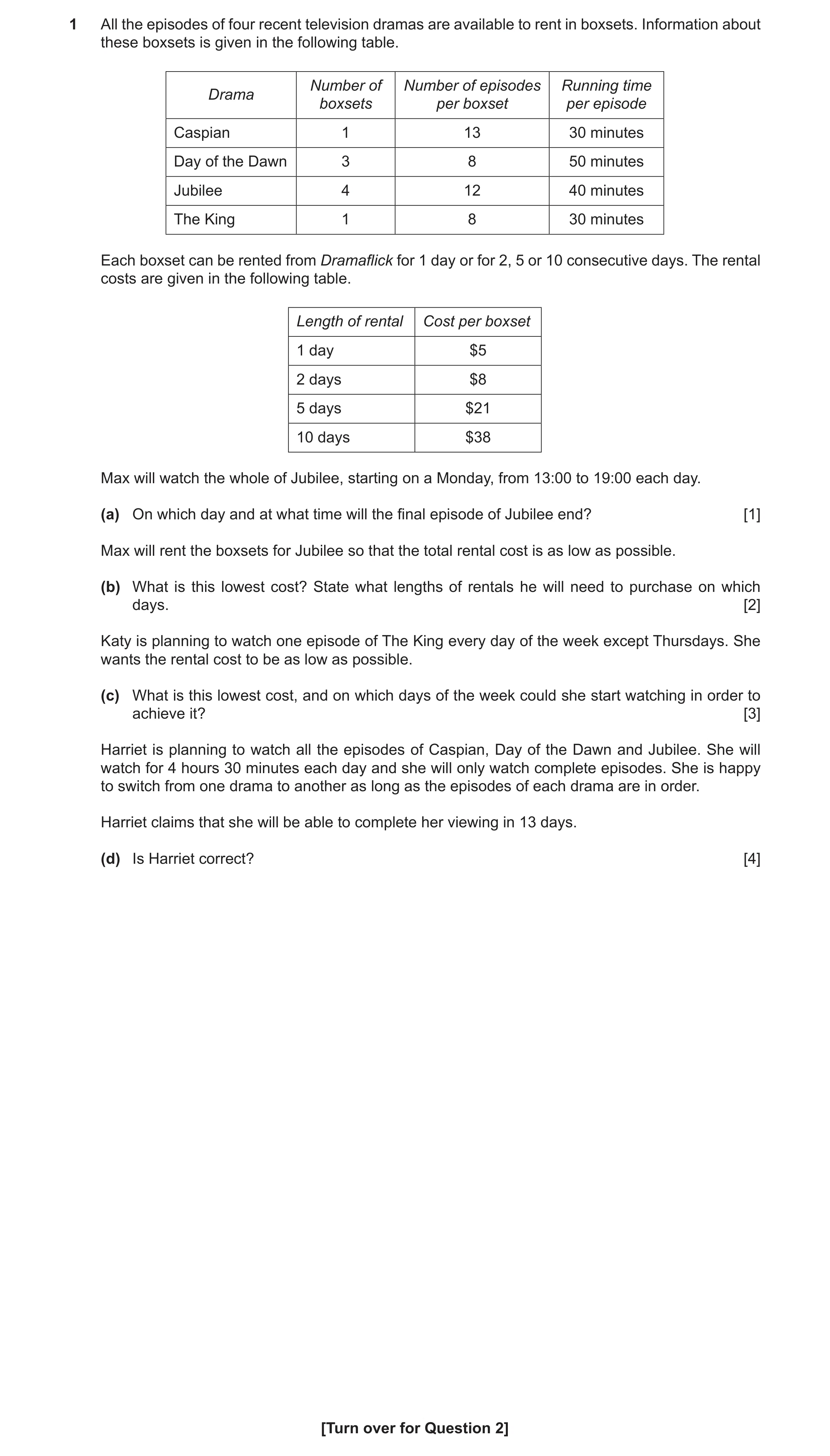
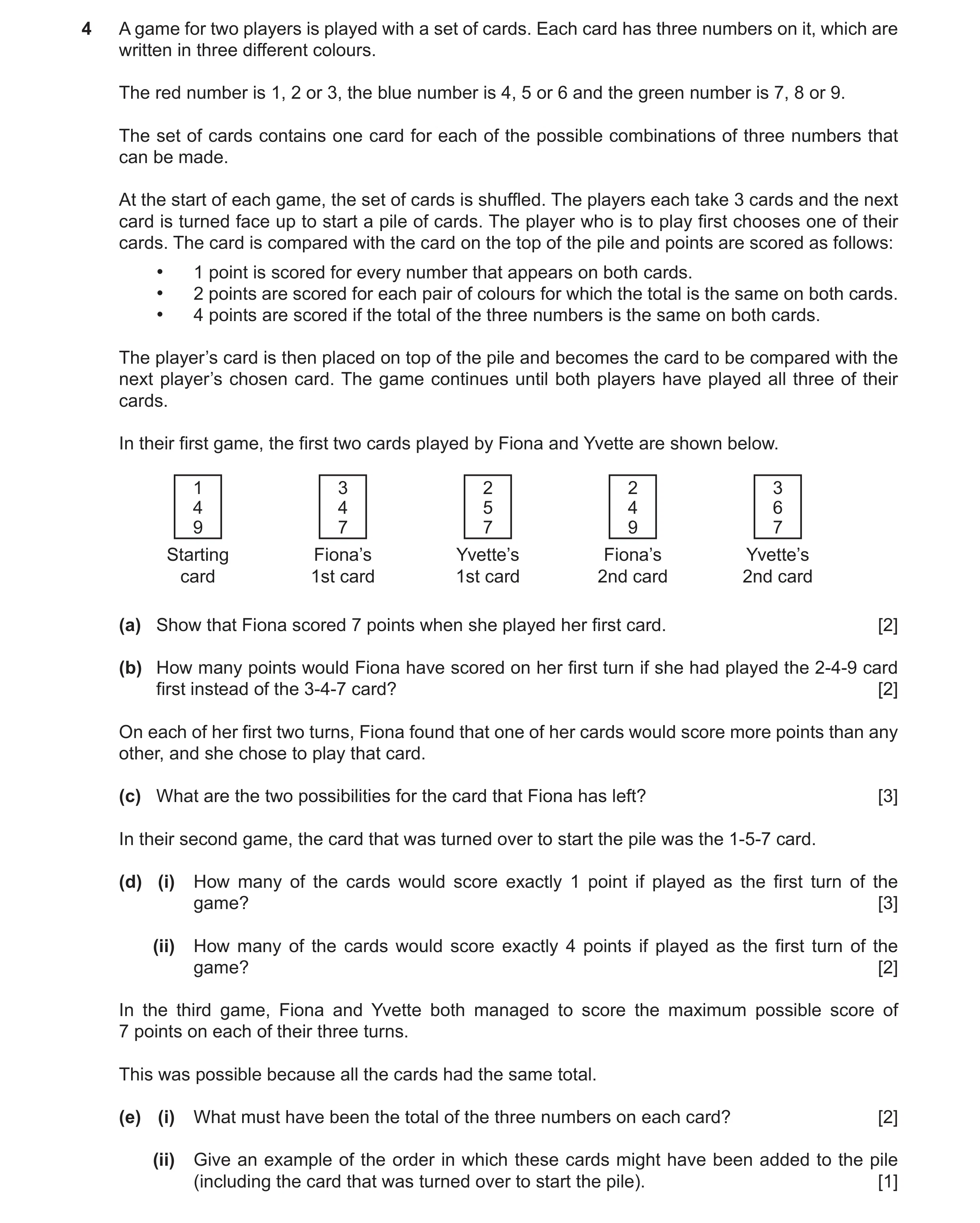 193 / 207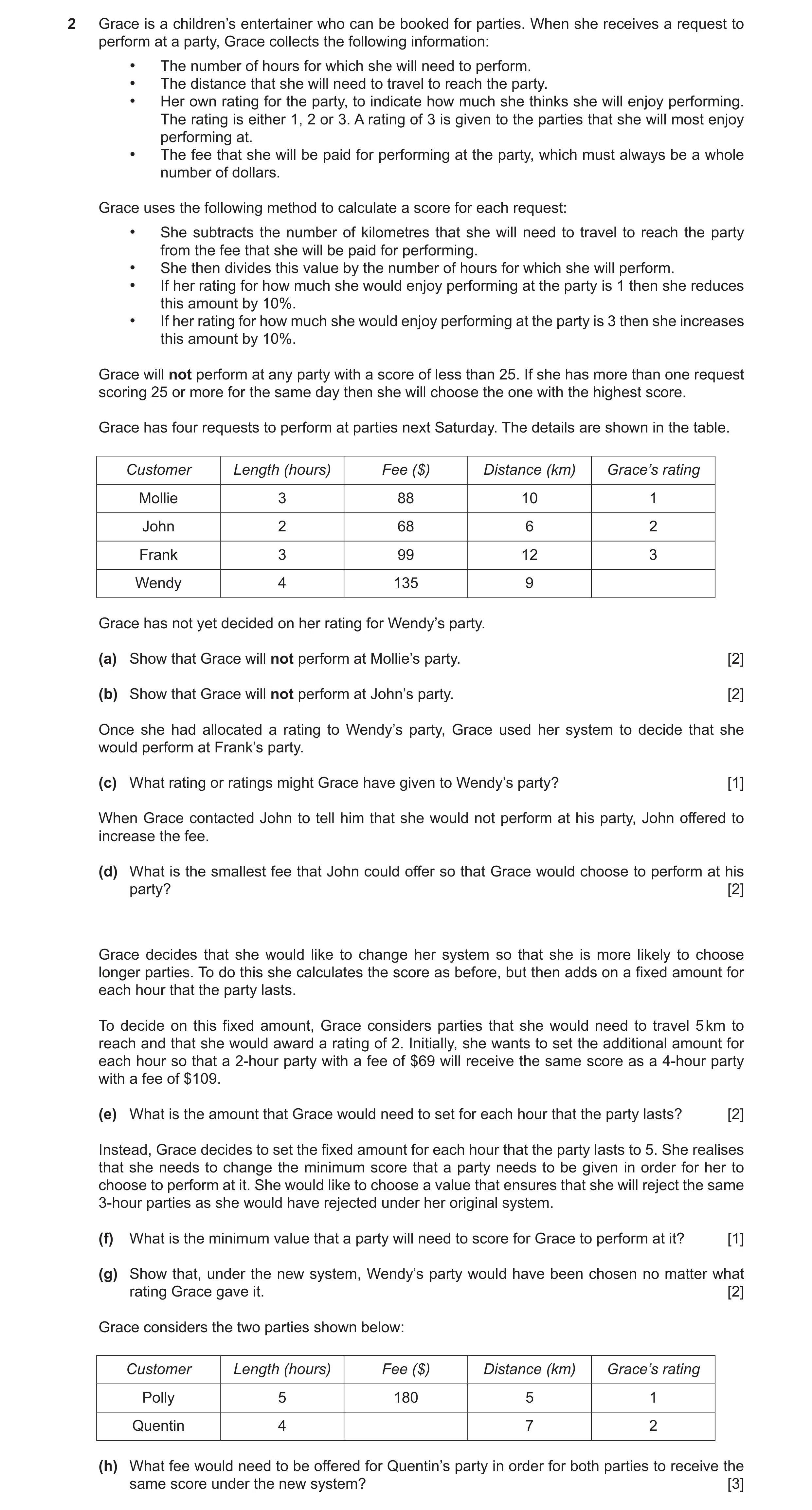
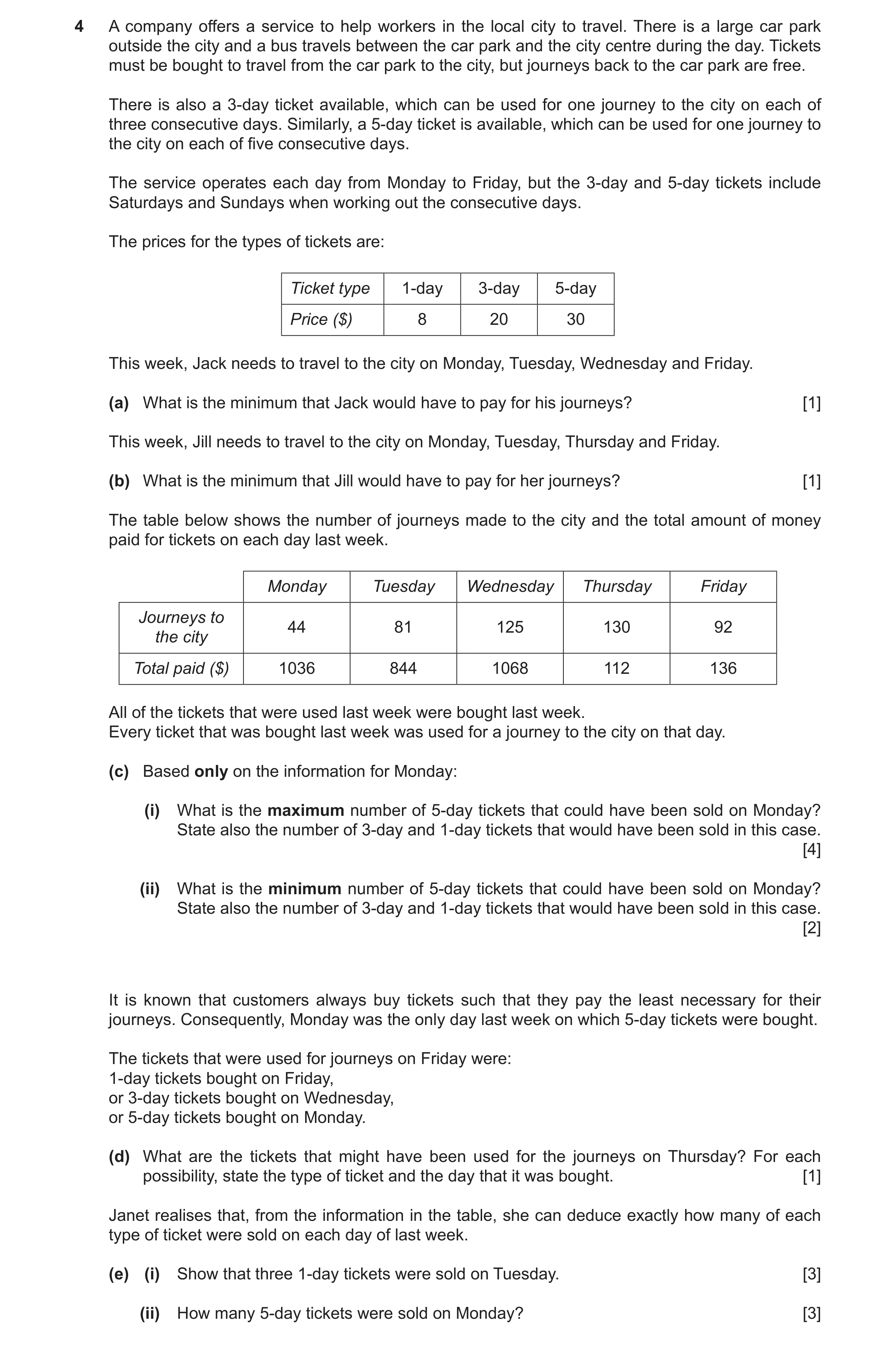
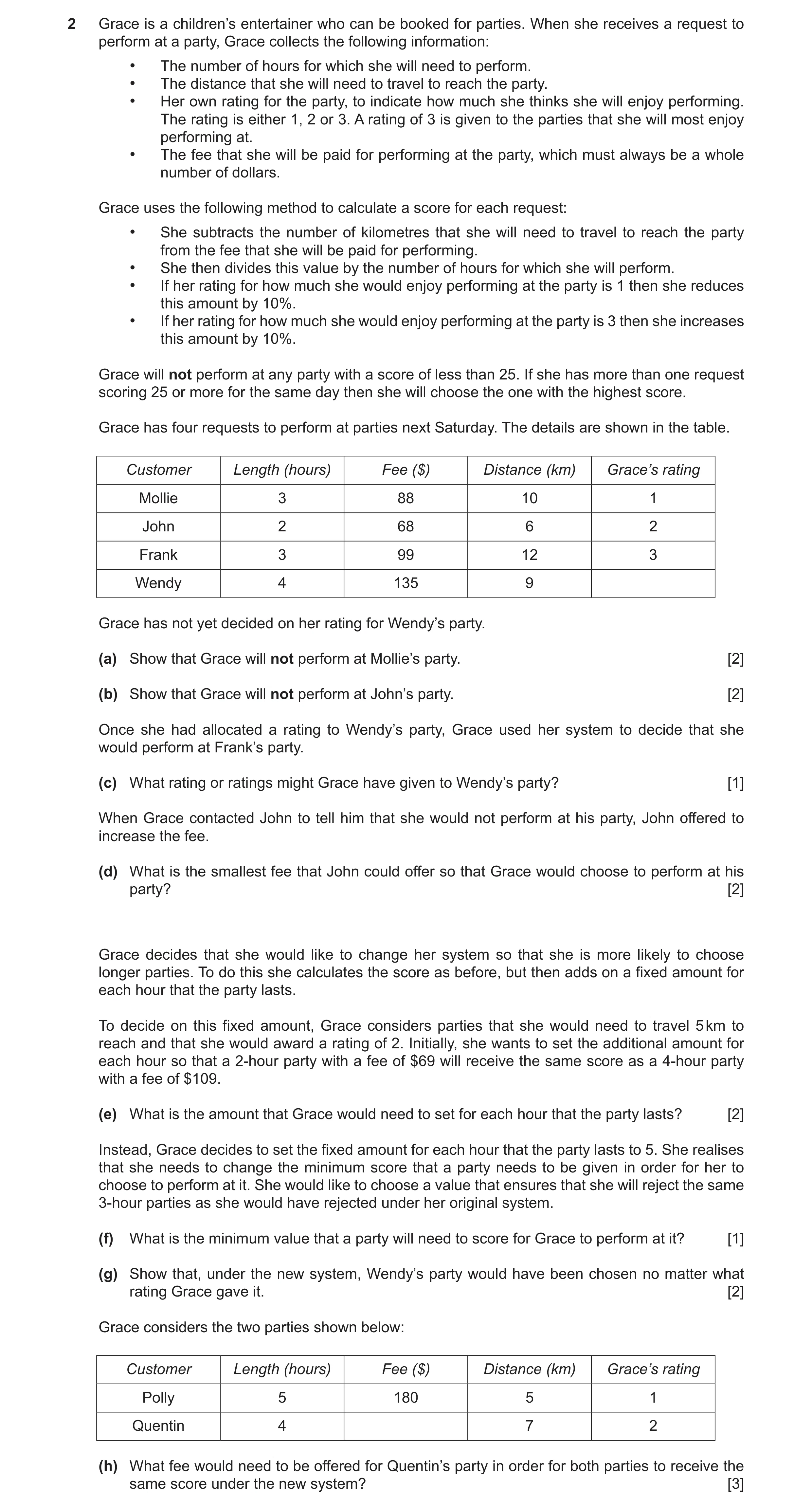
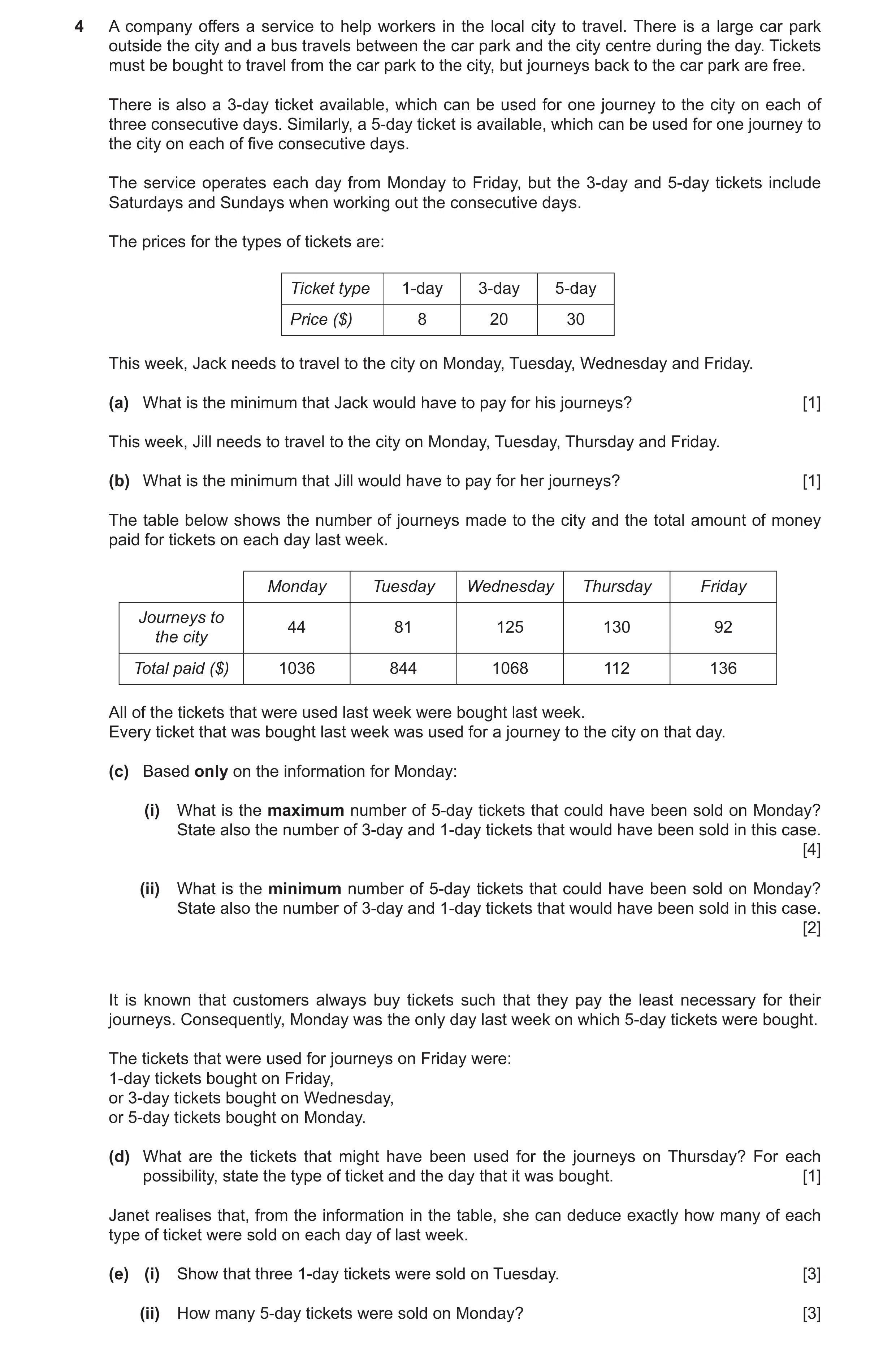
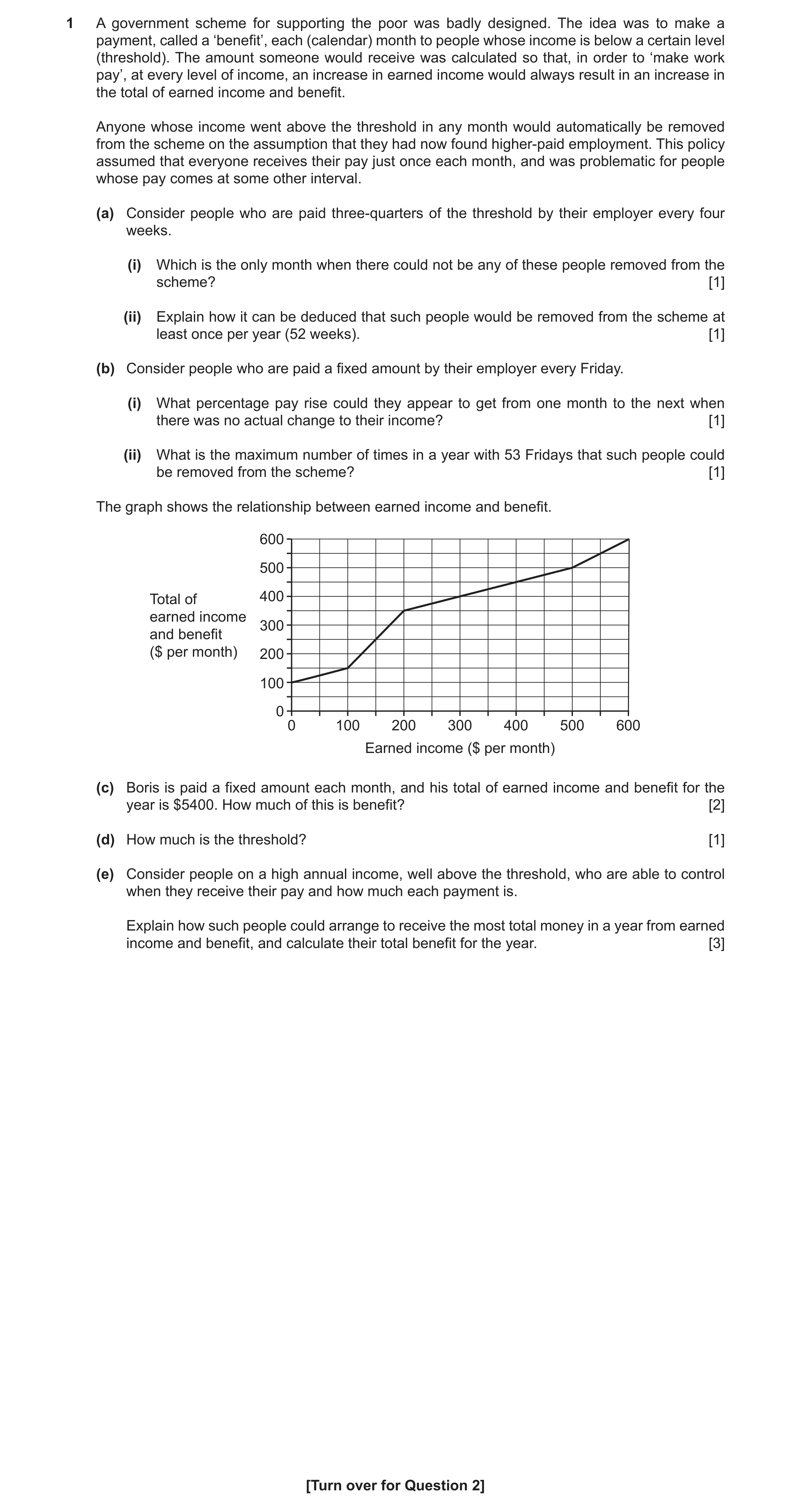
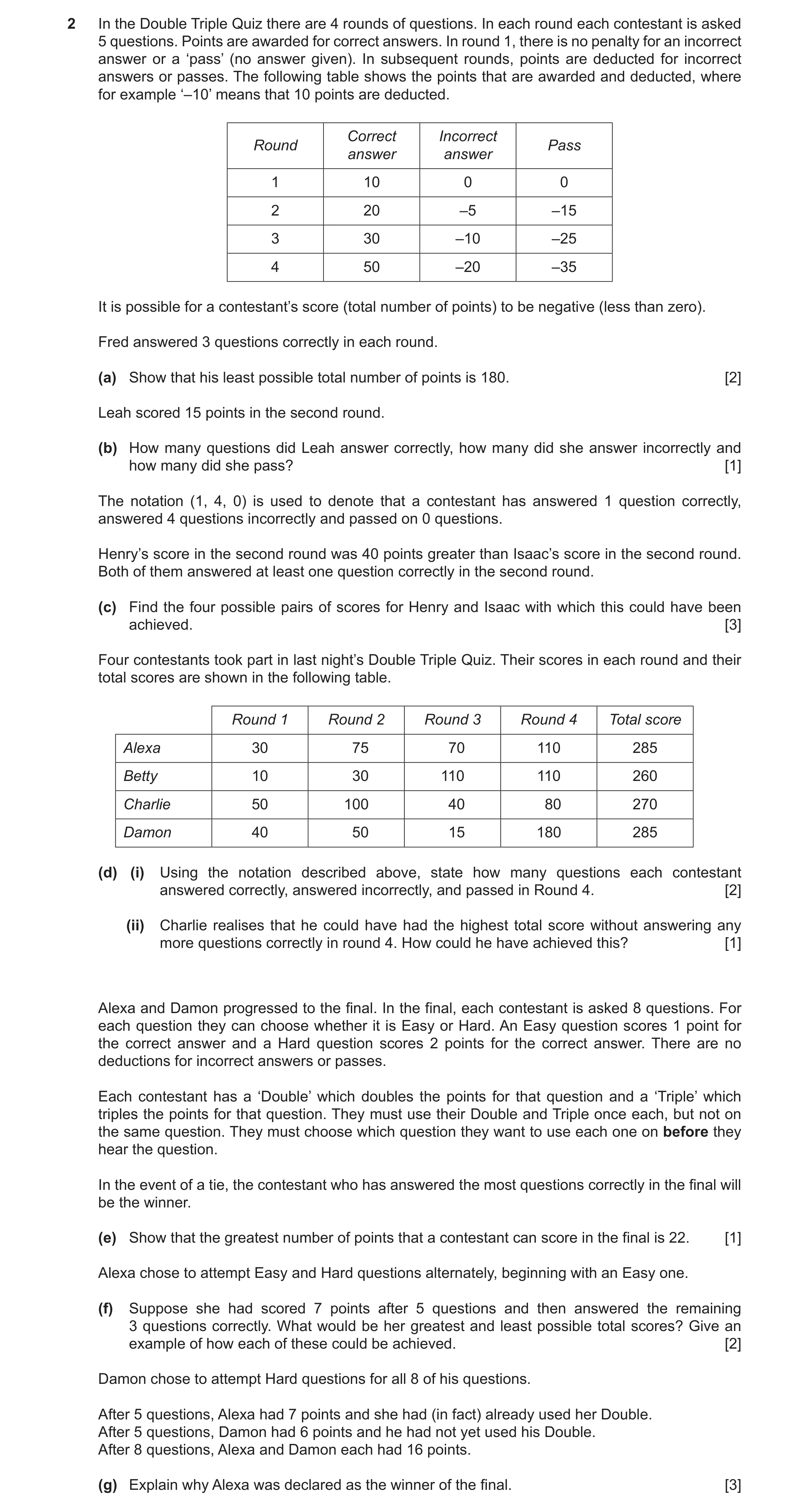
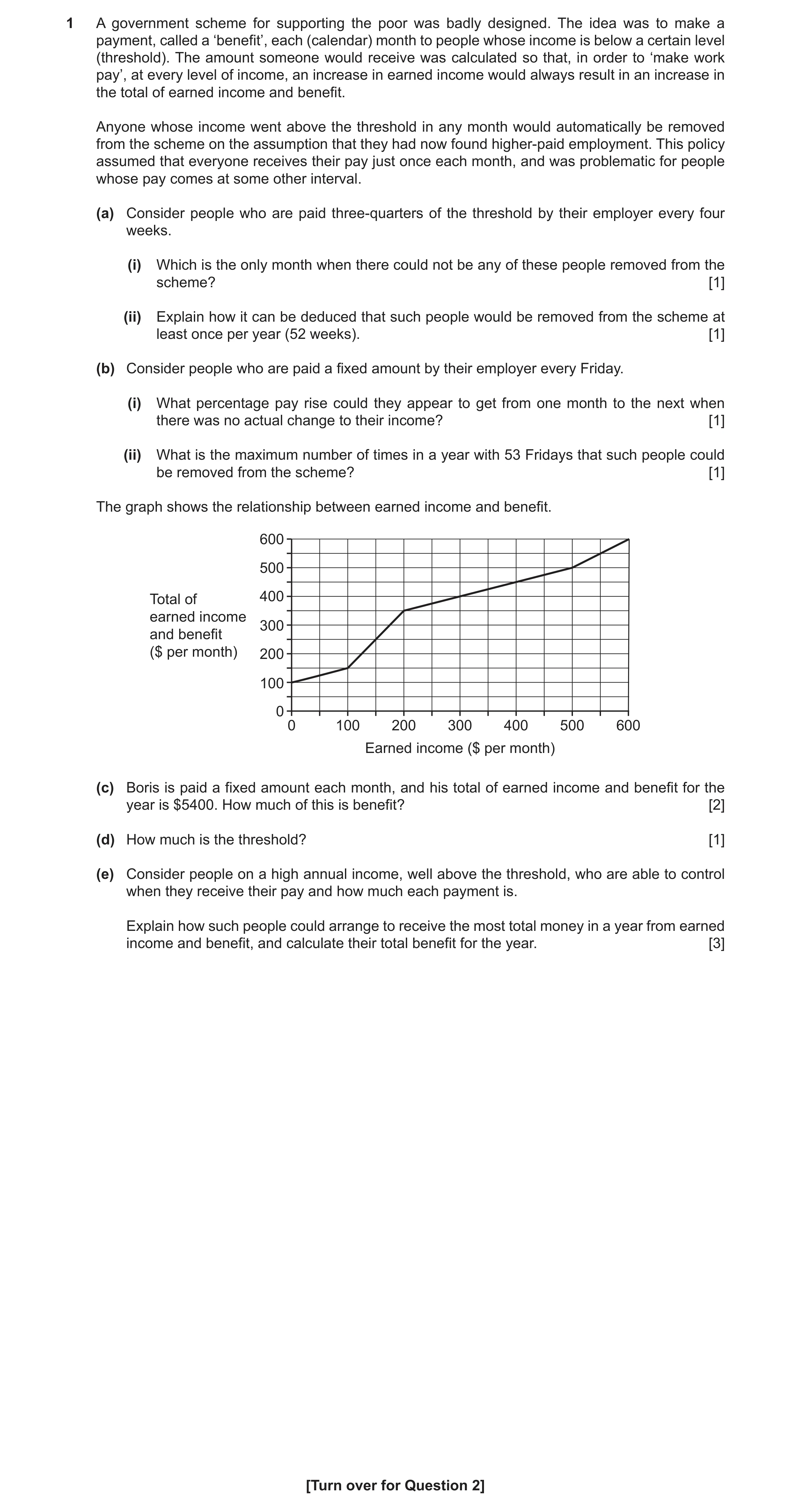
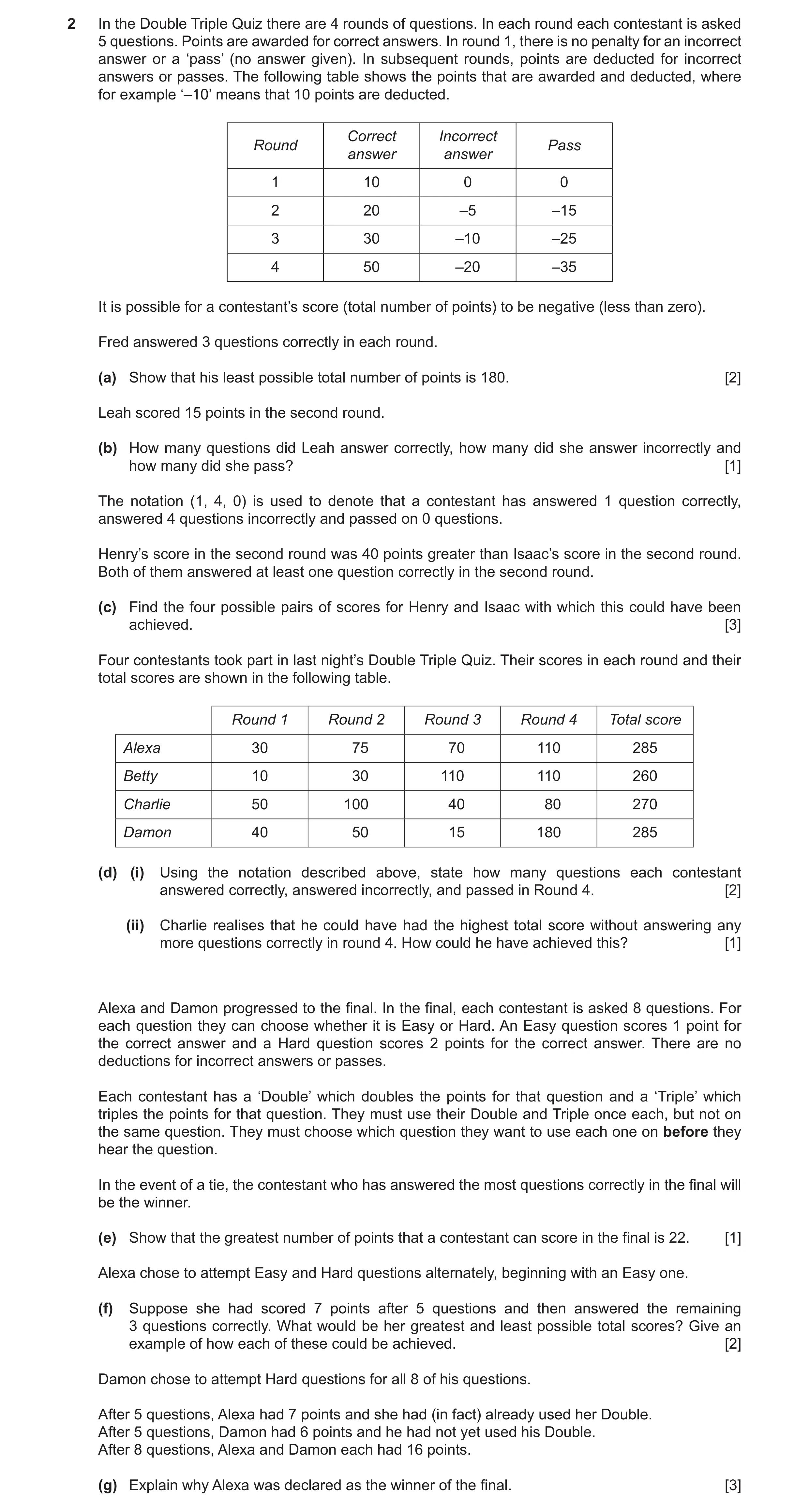
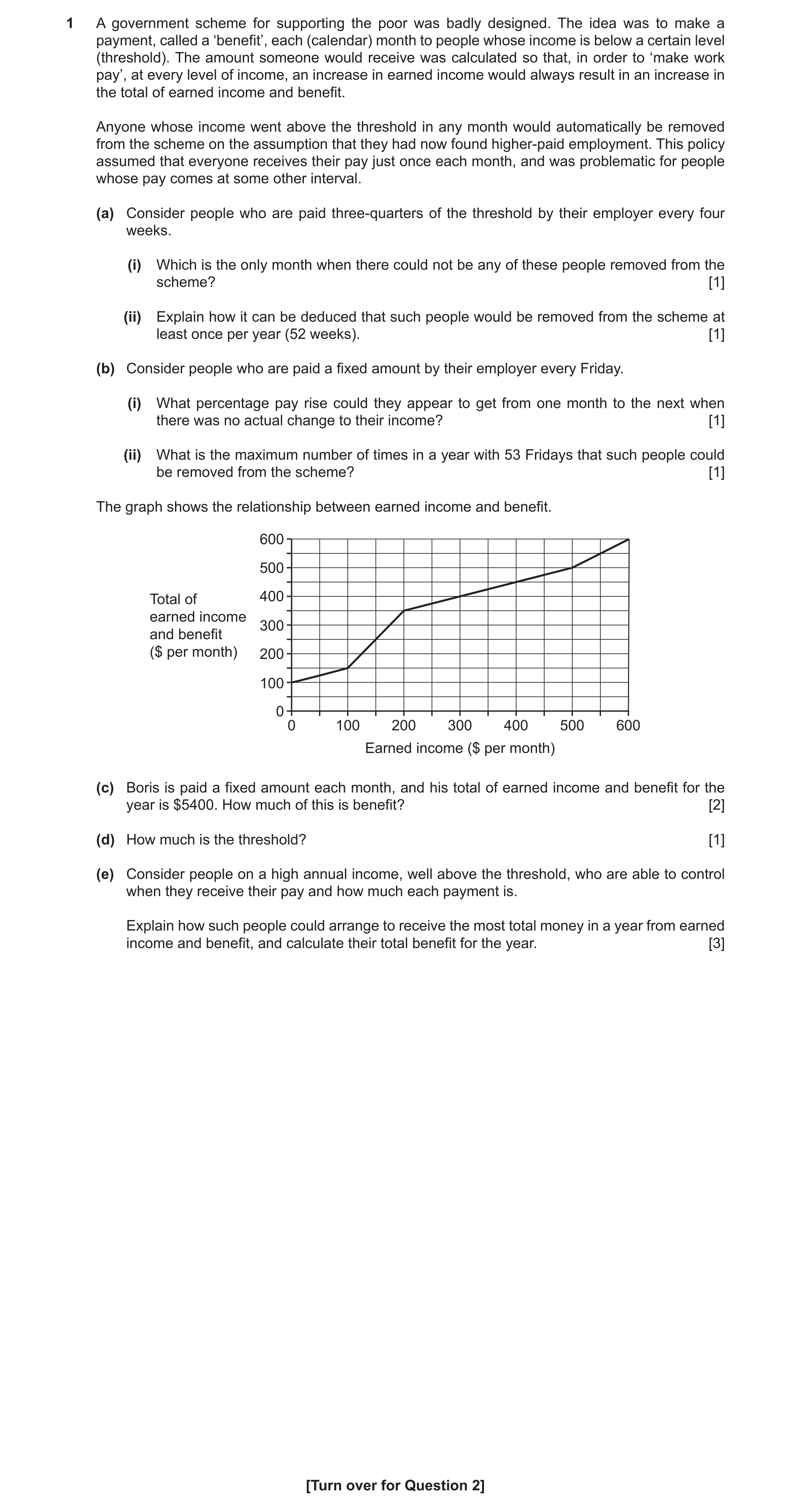
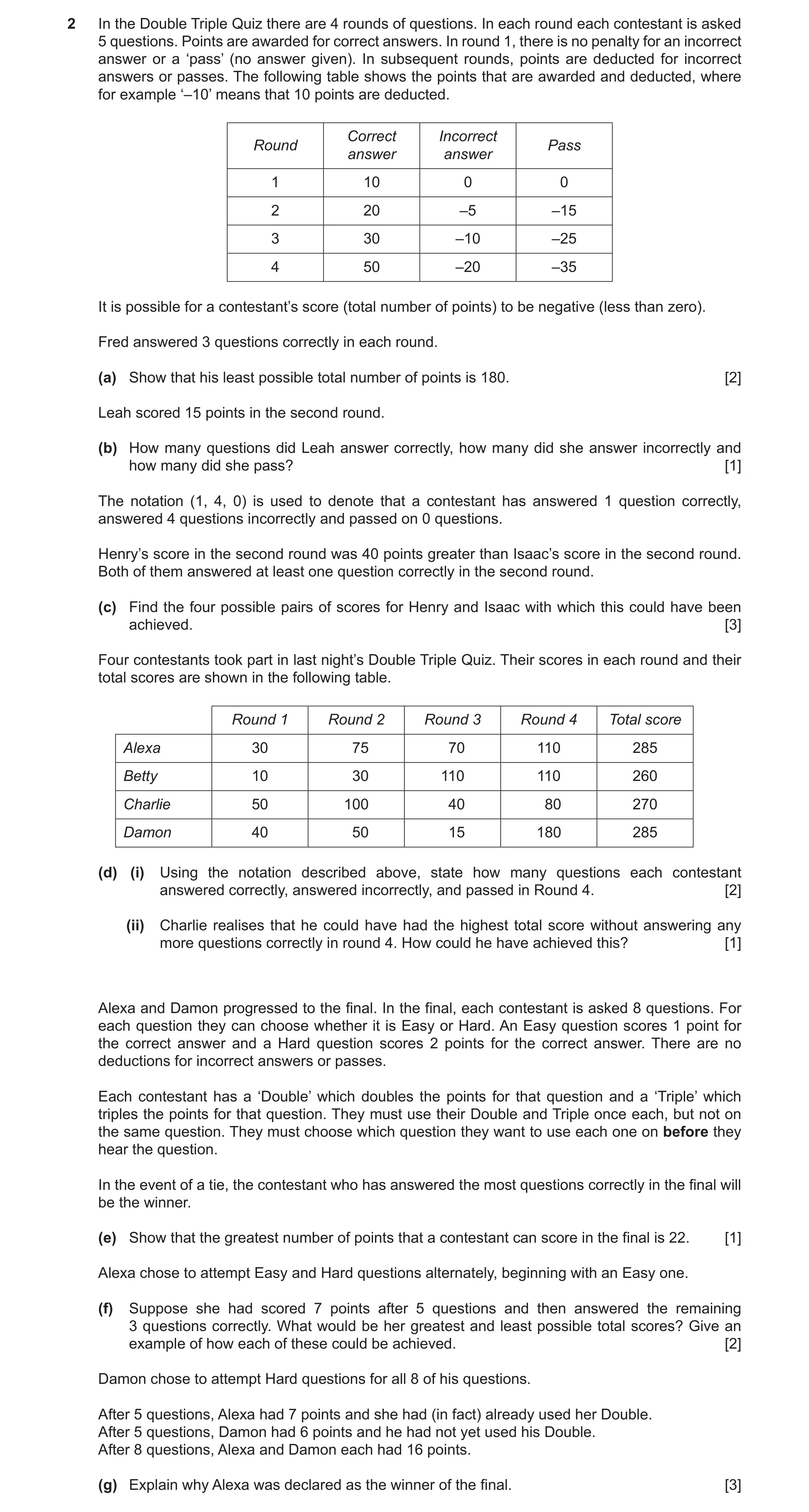
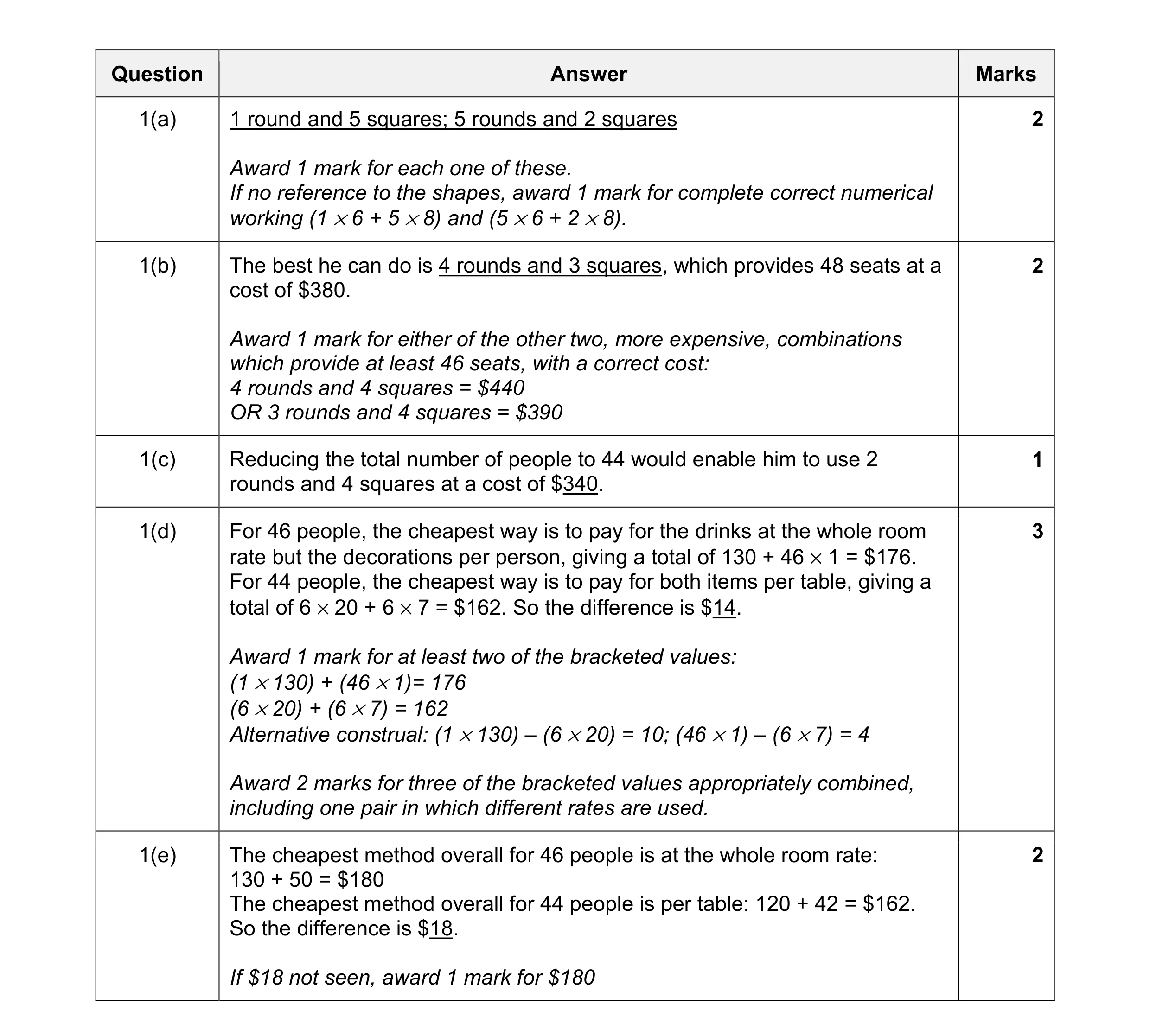 10
10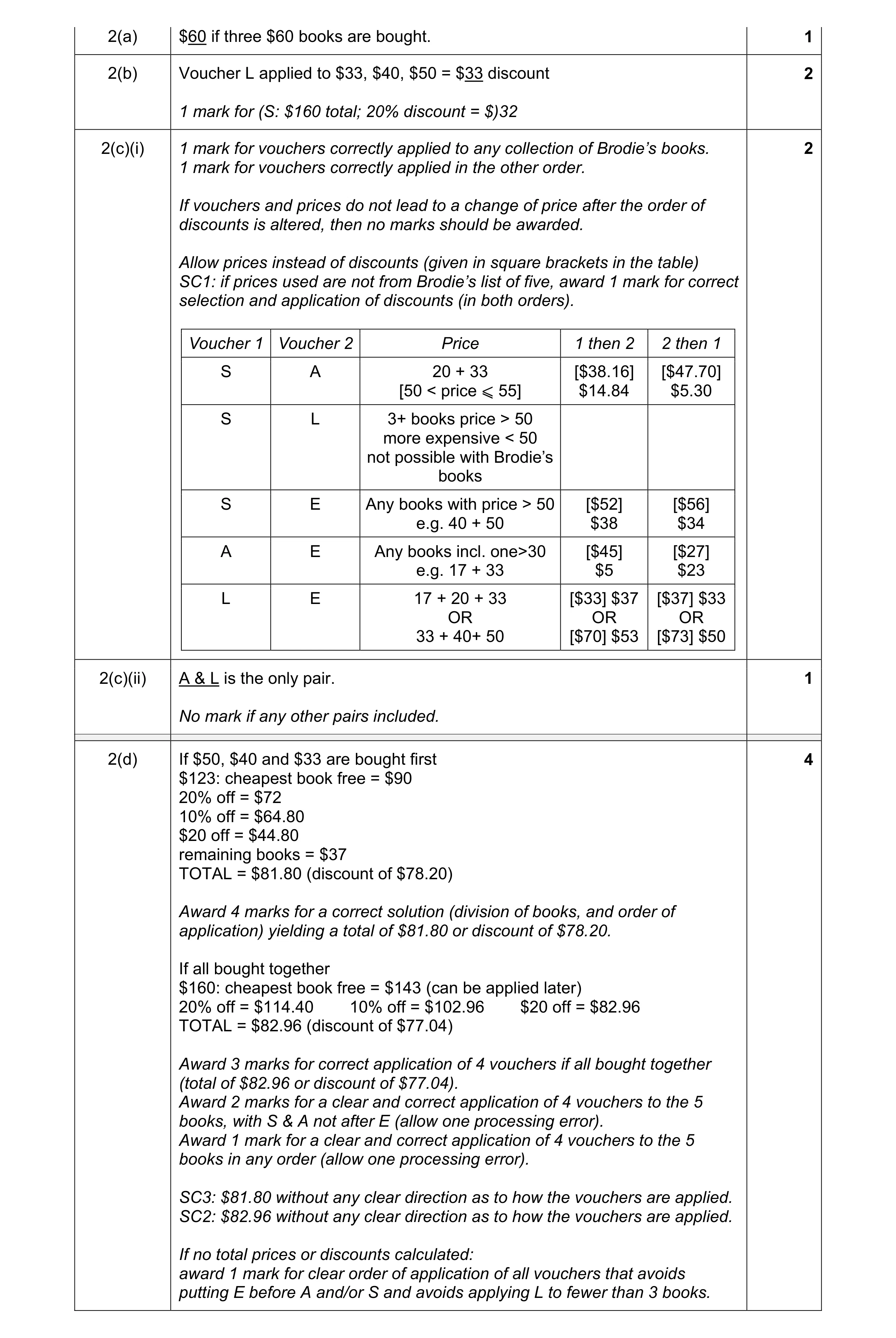 10
10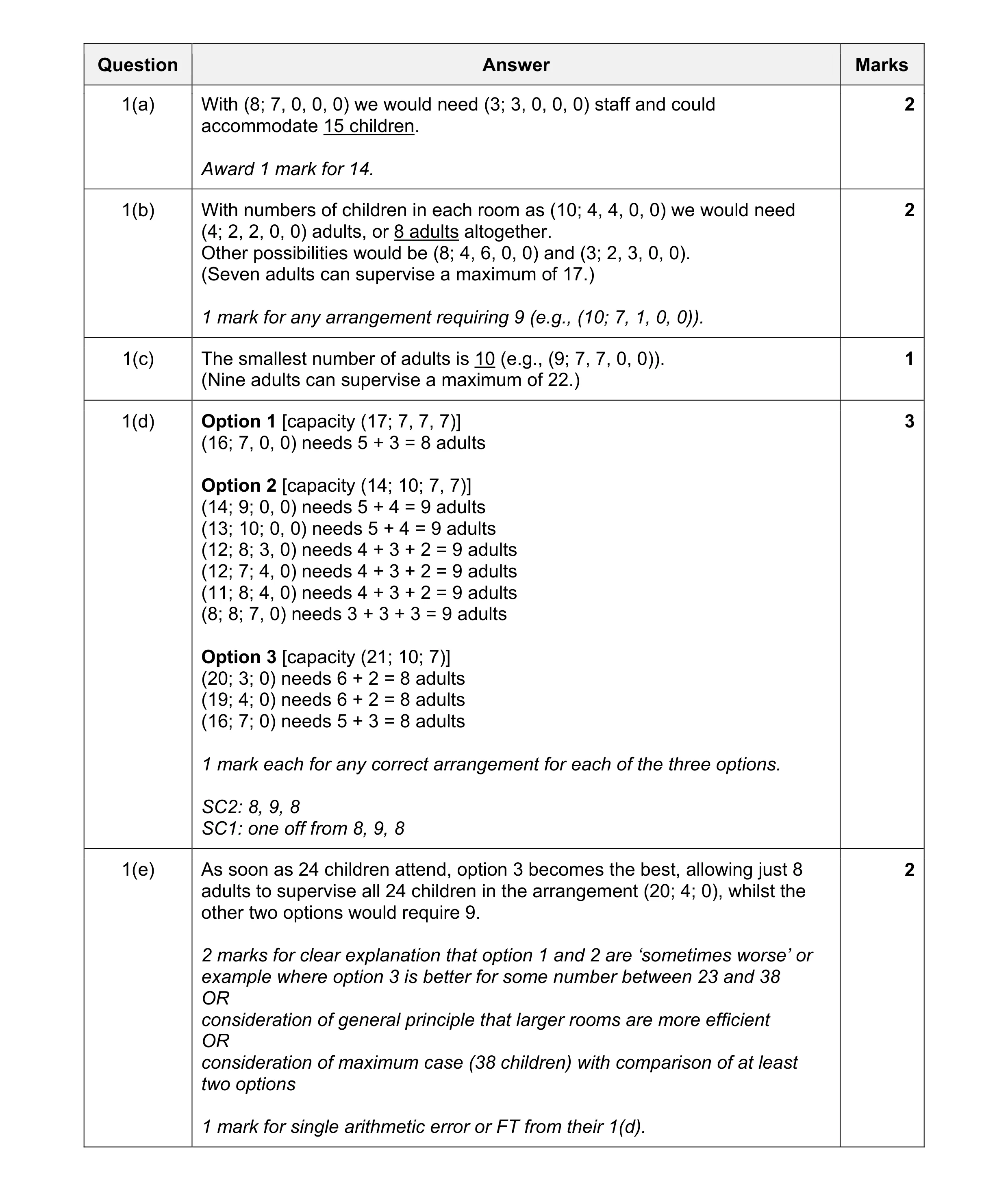 10
10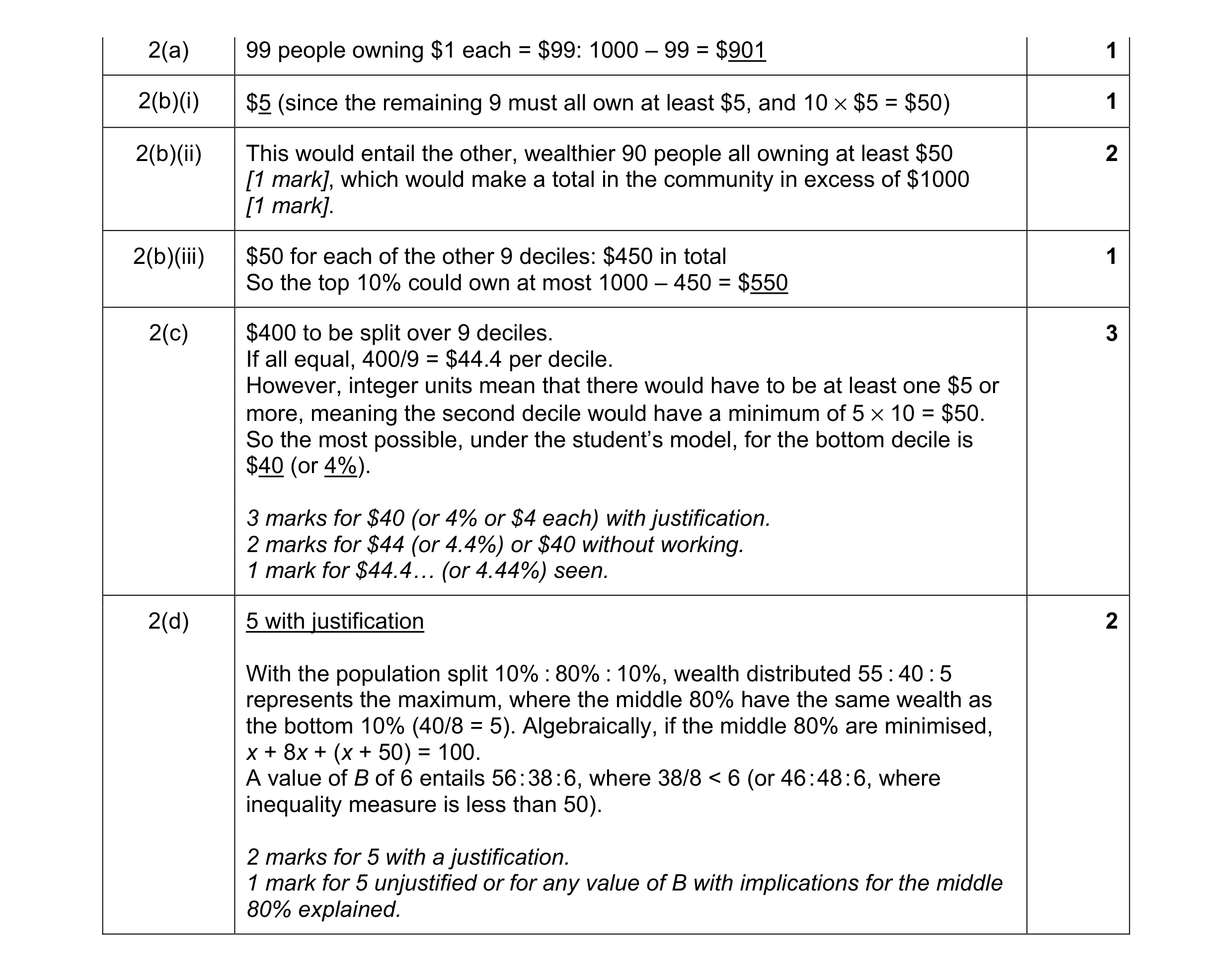 10
10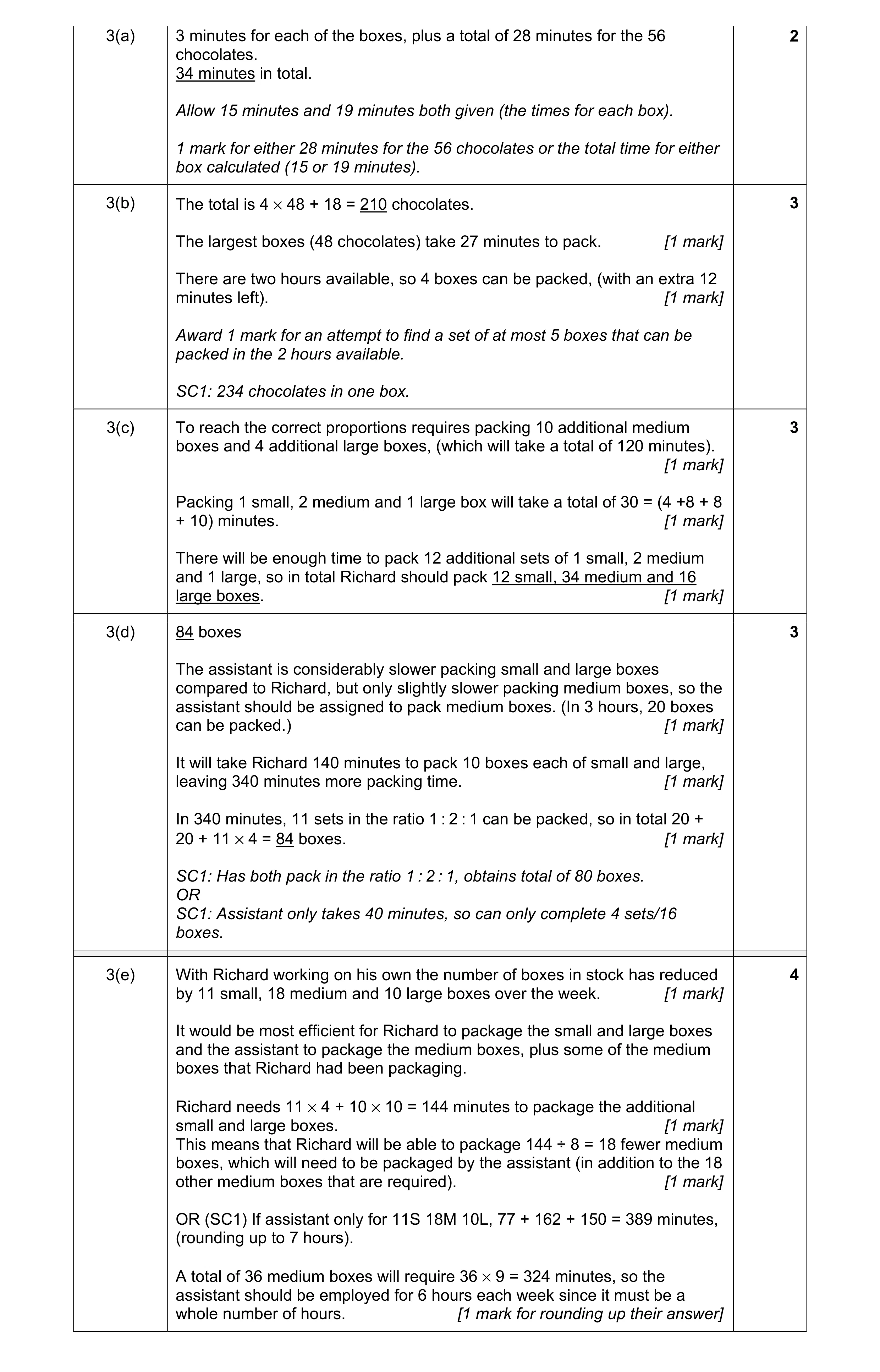 15
15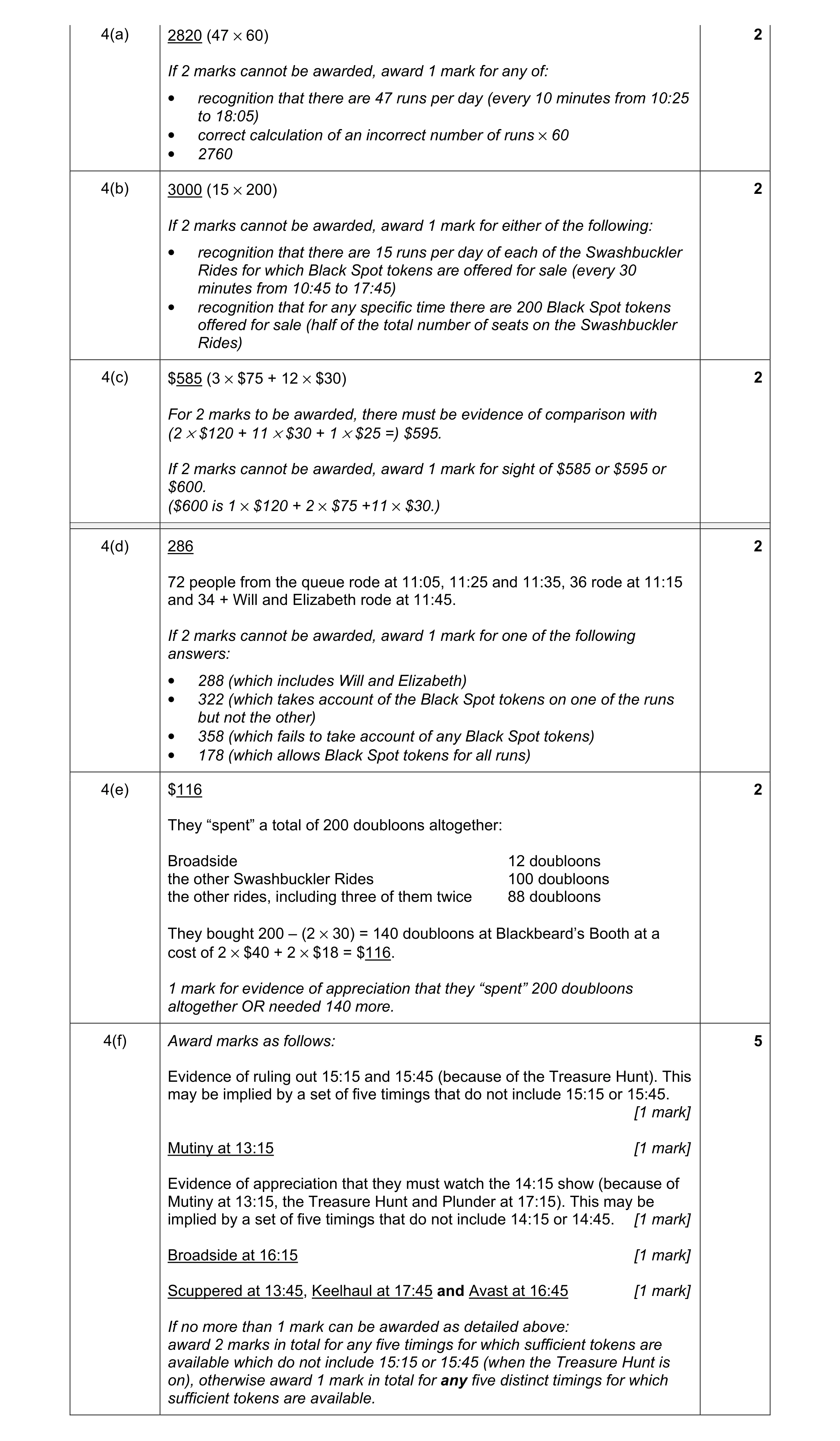 15
15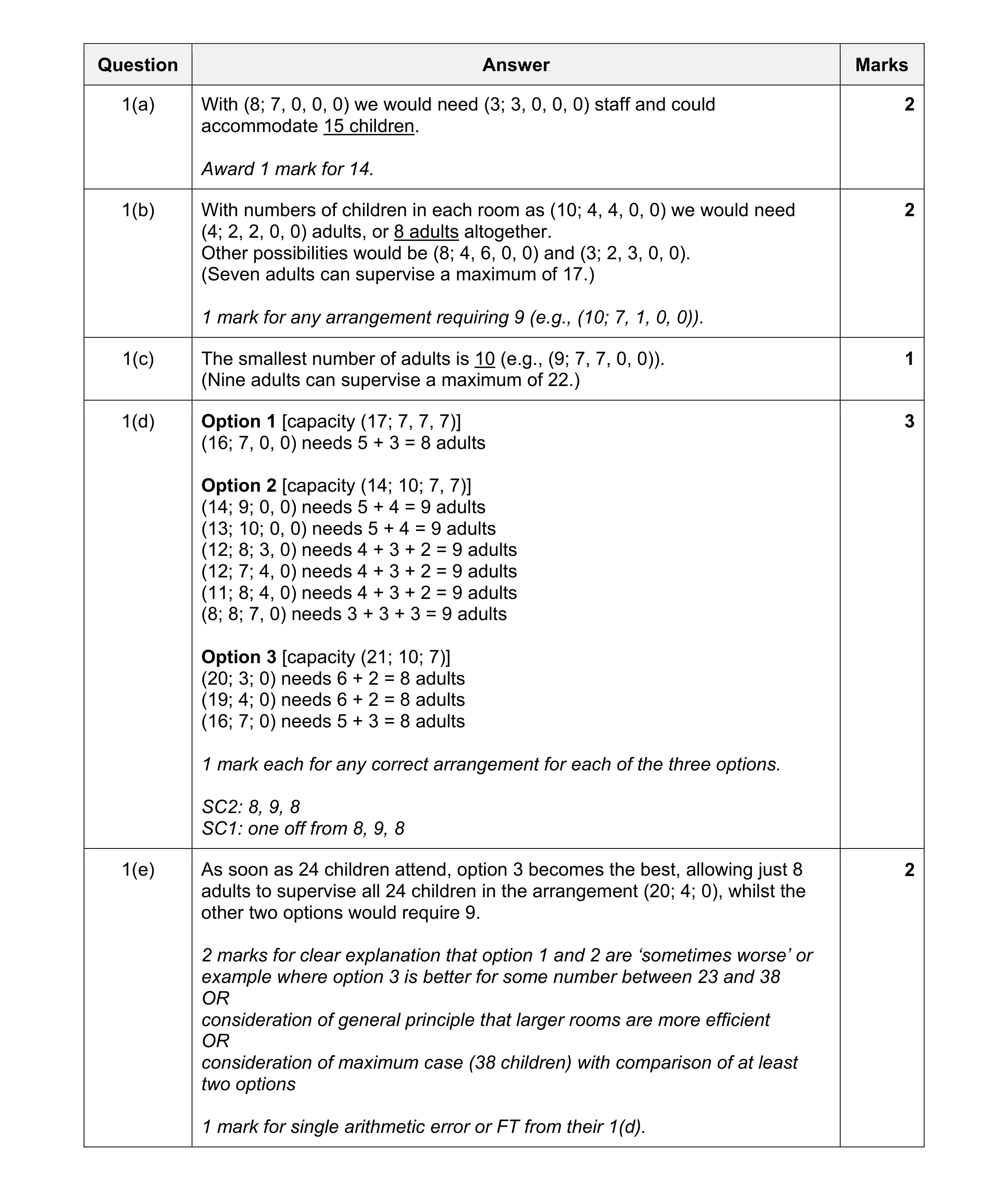 10
10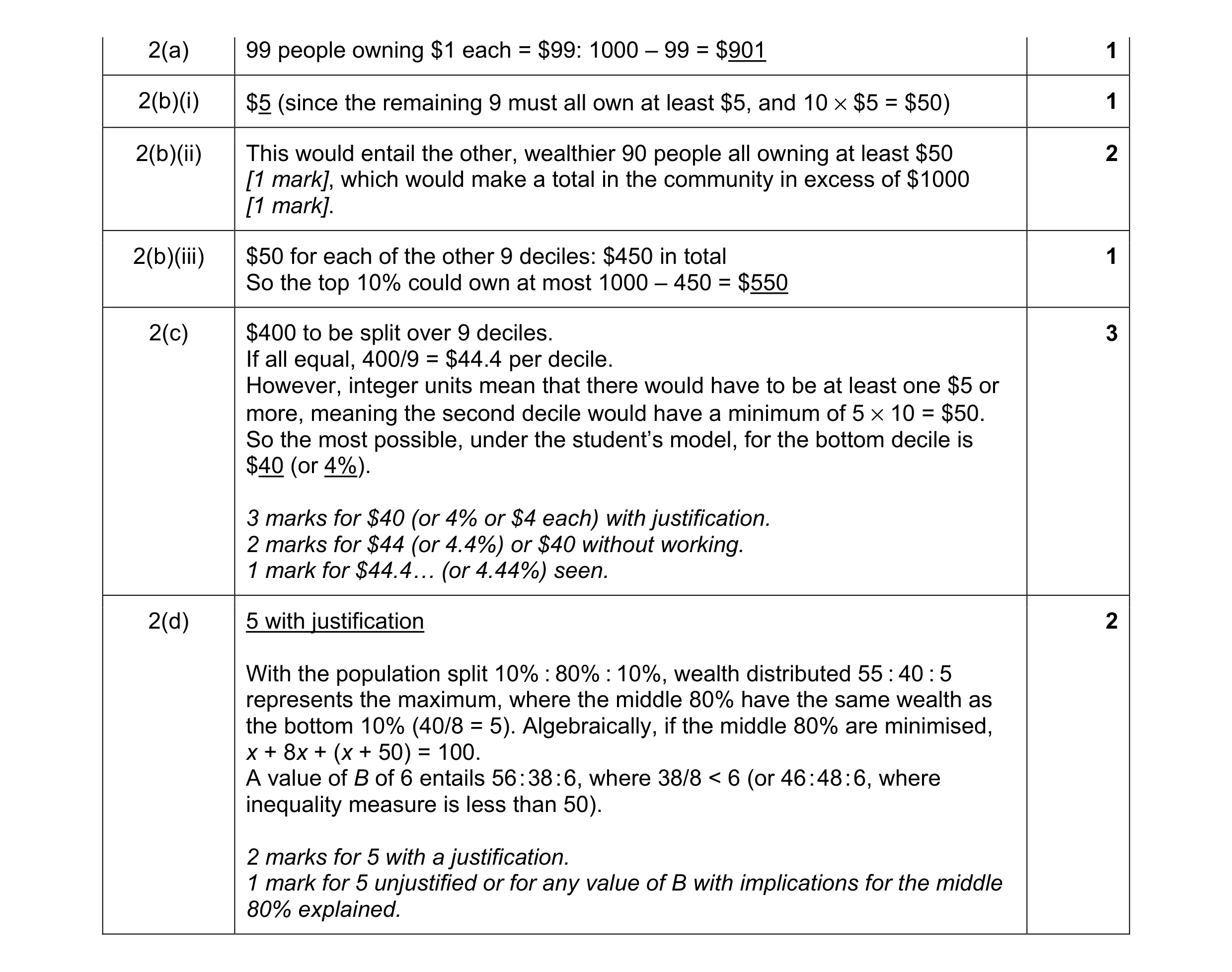 10
10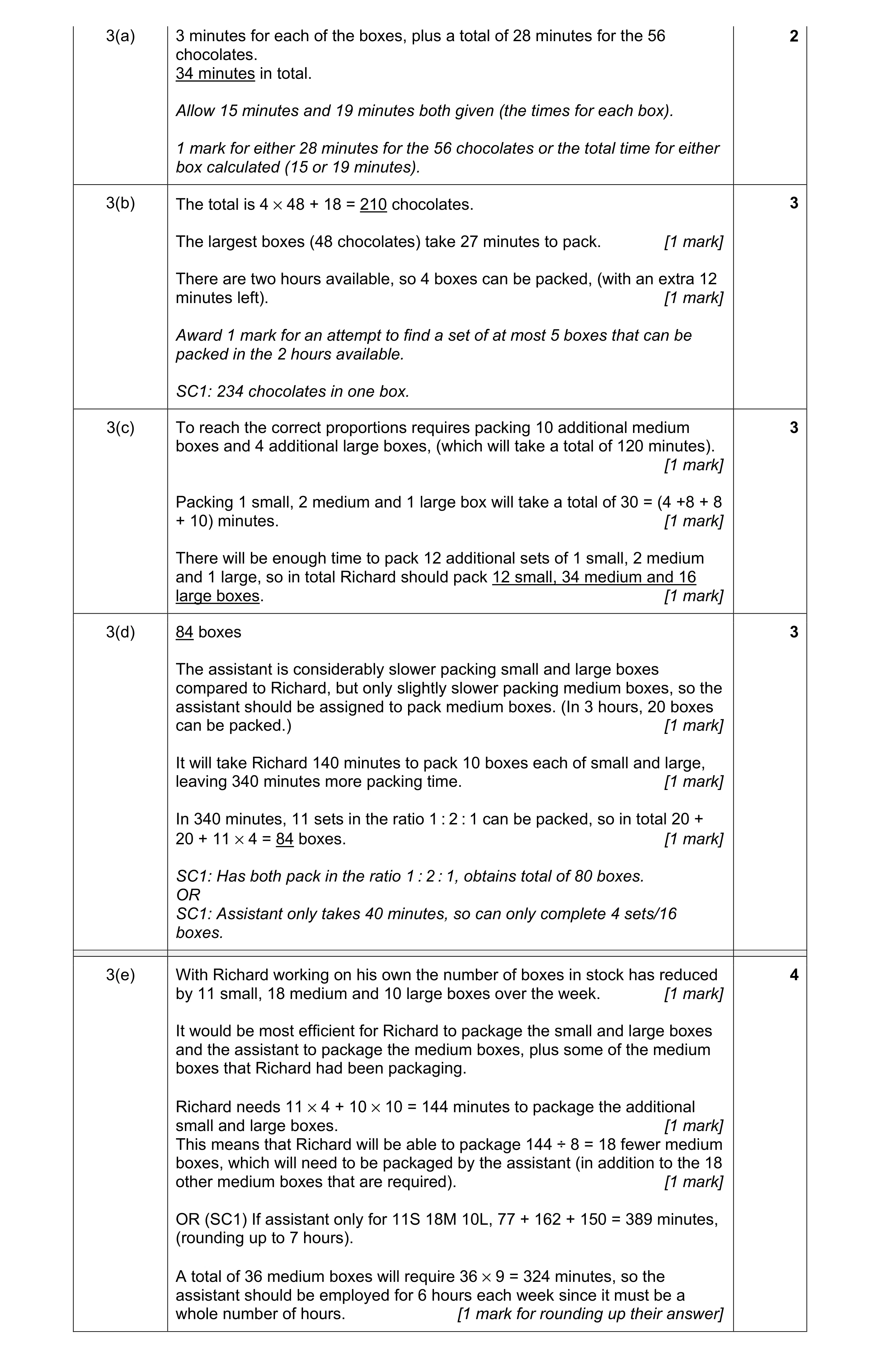 15
15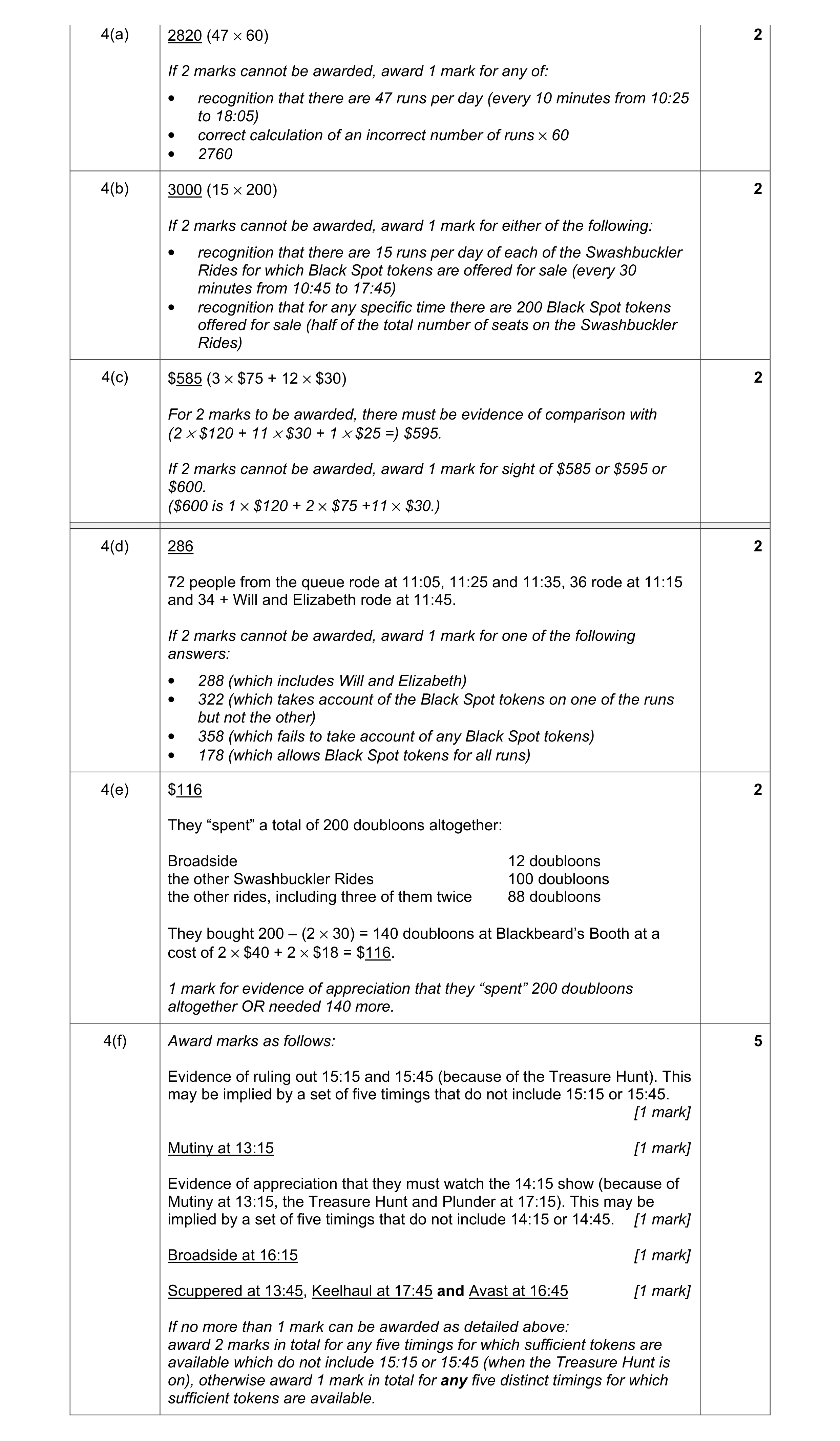 15
15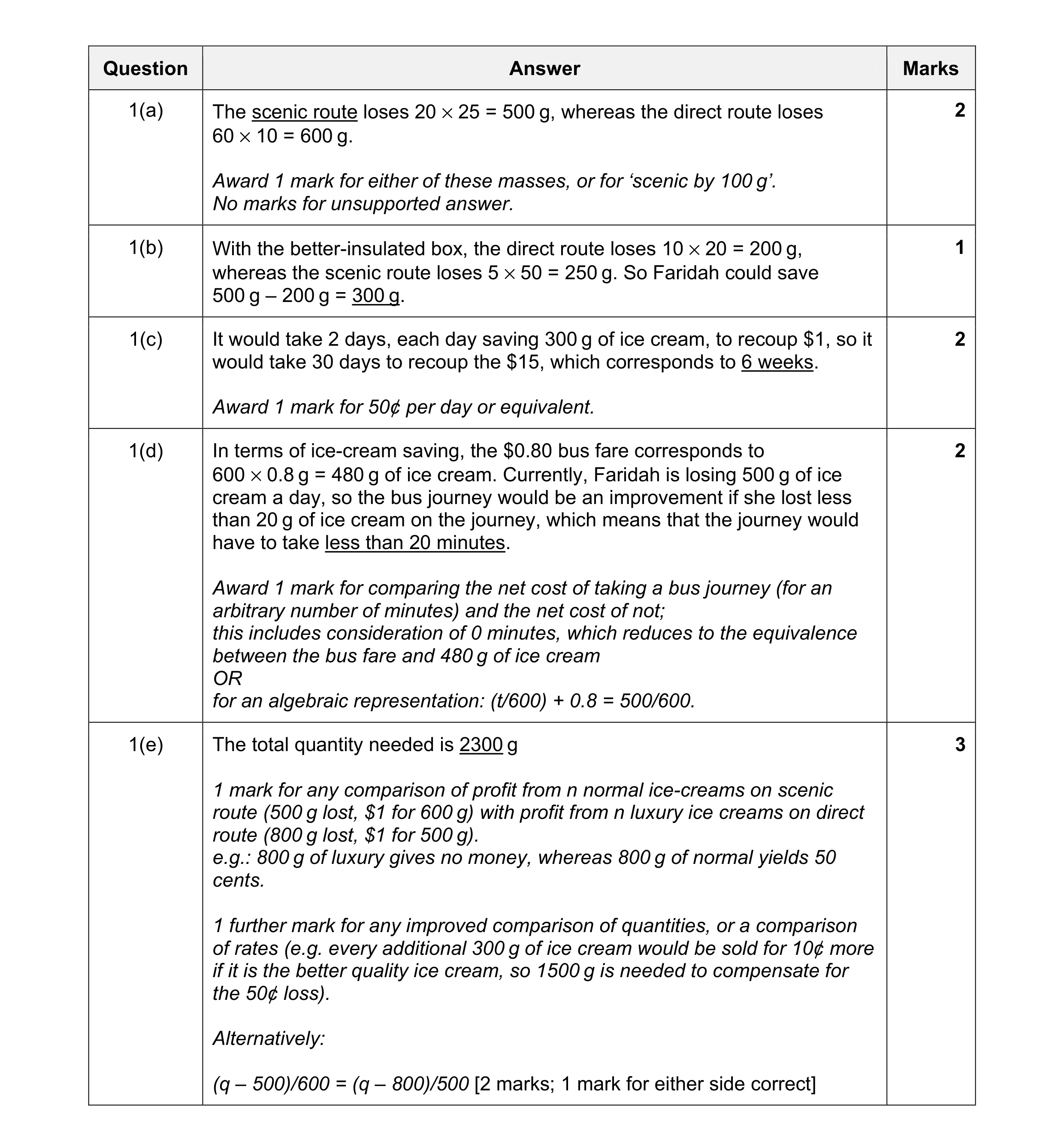 10
10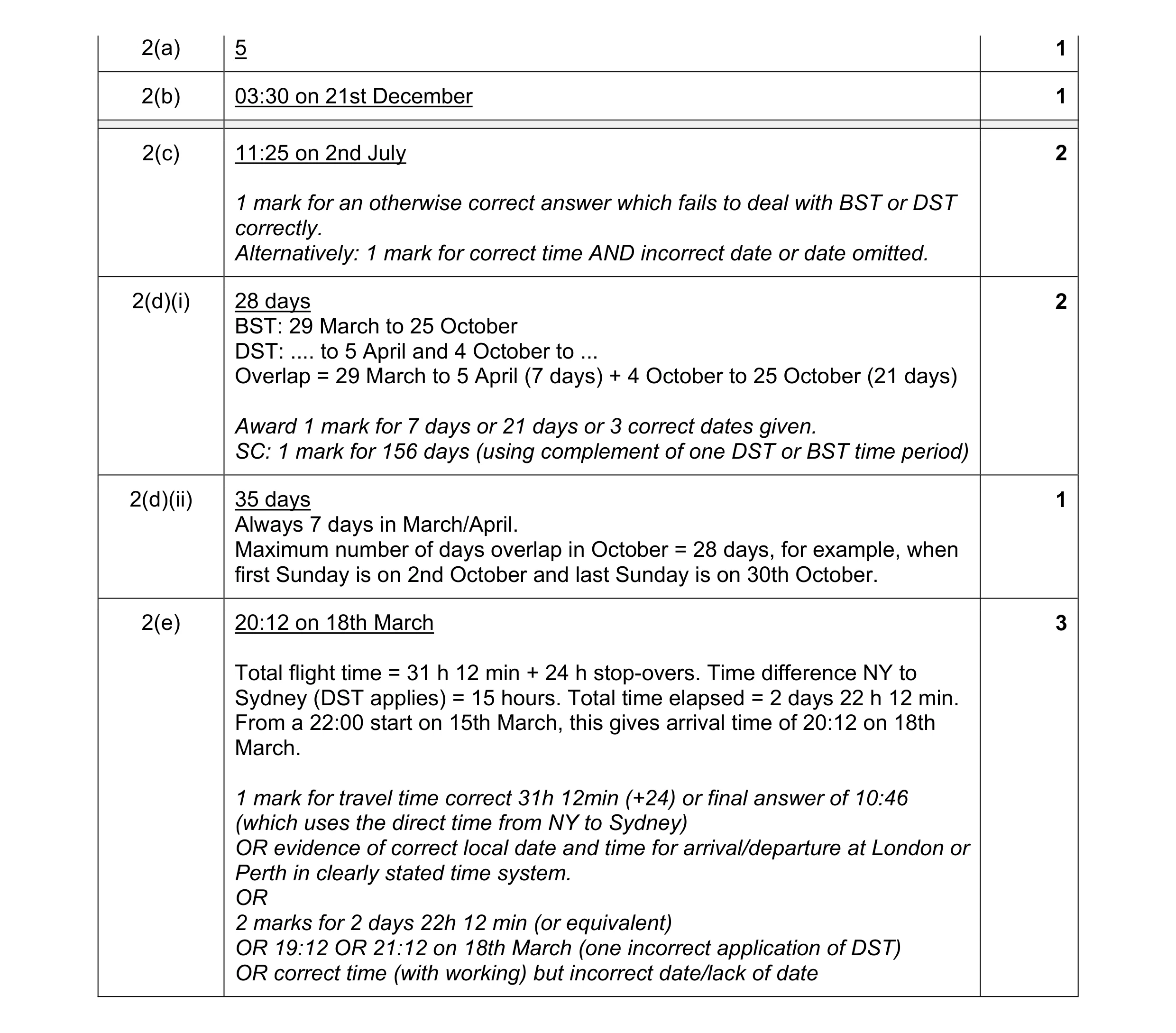 10
10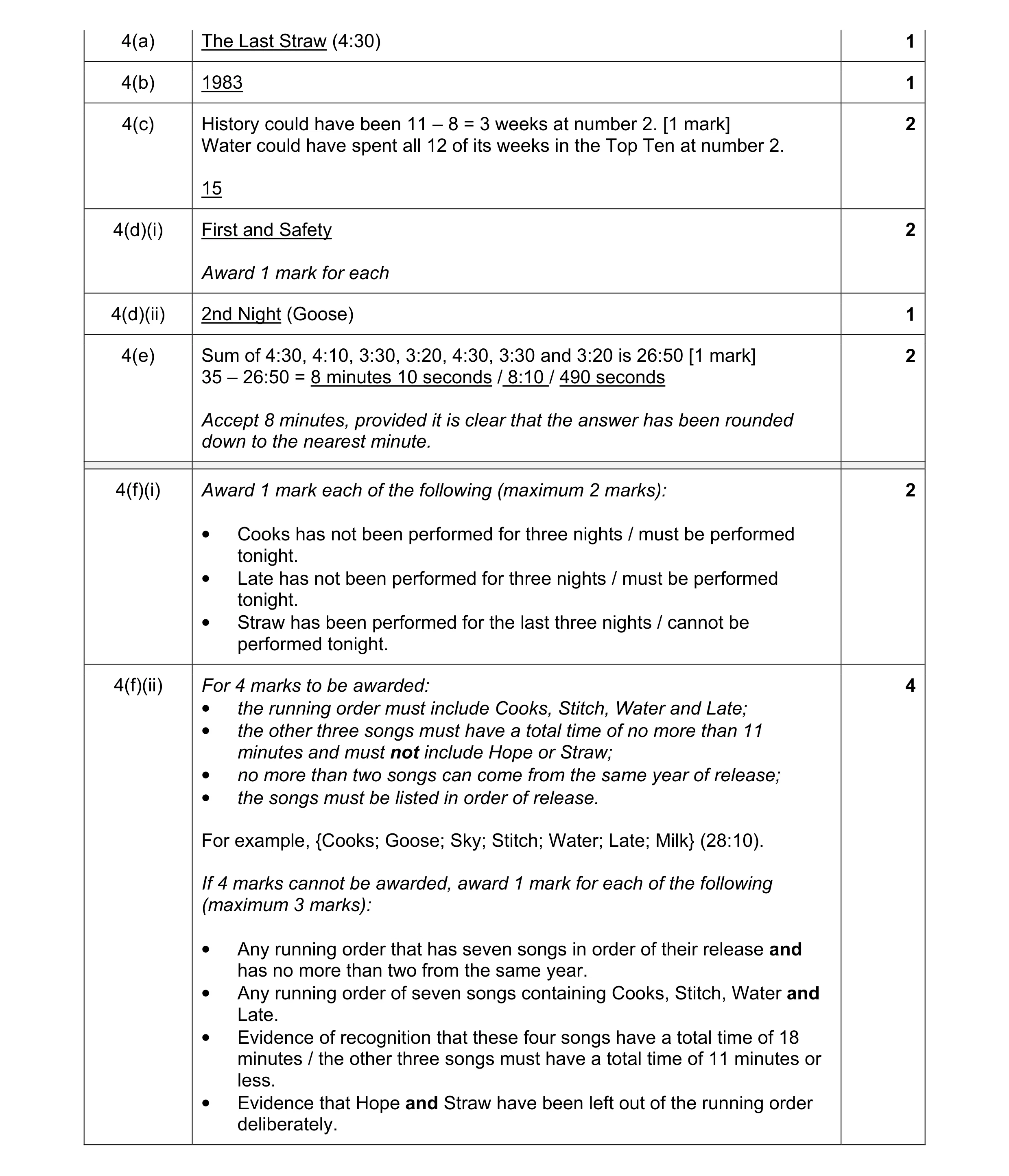 15
15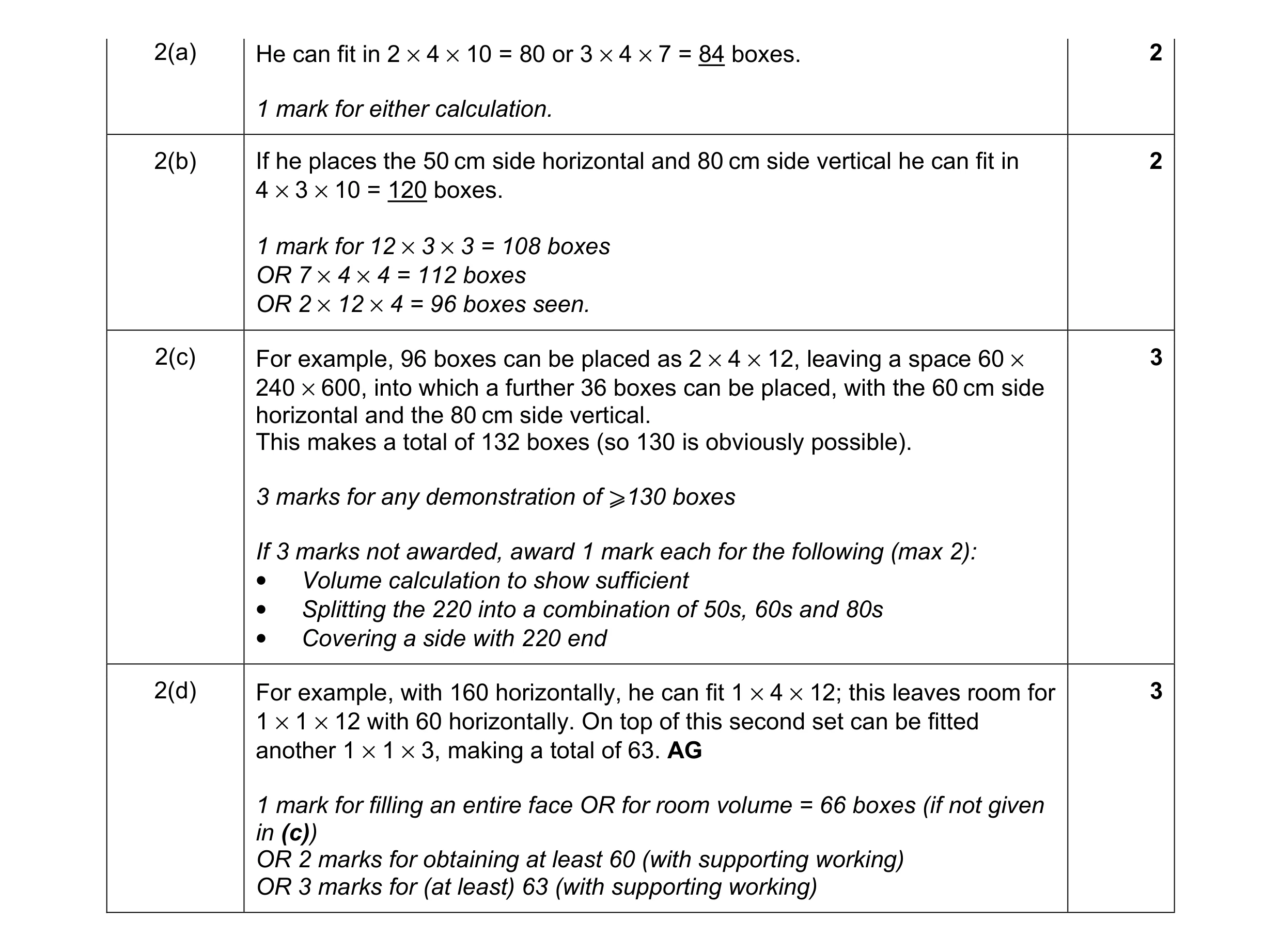 10
10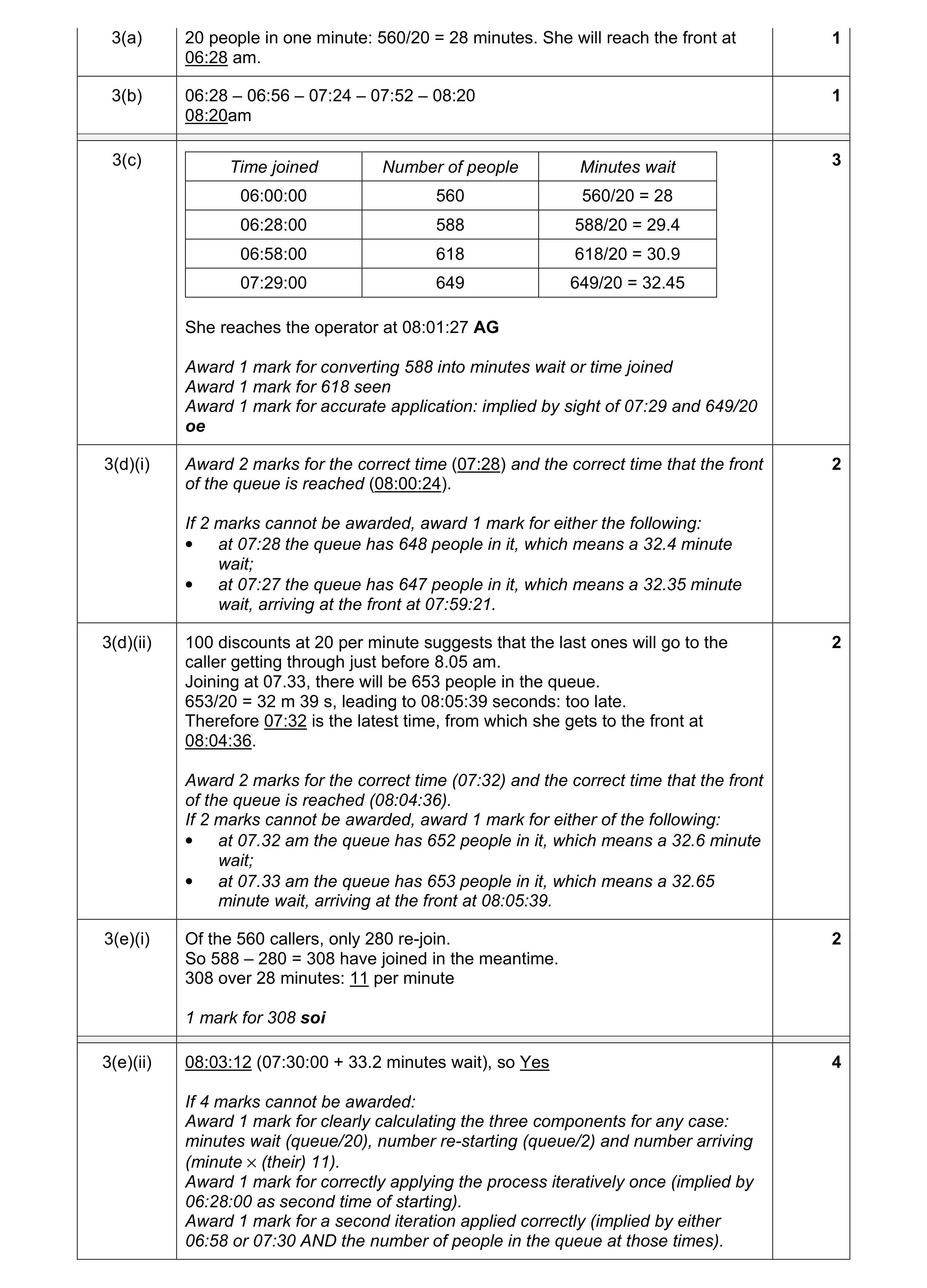 15
15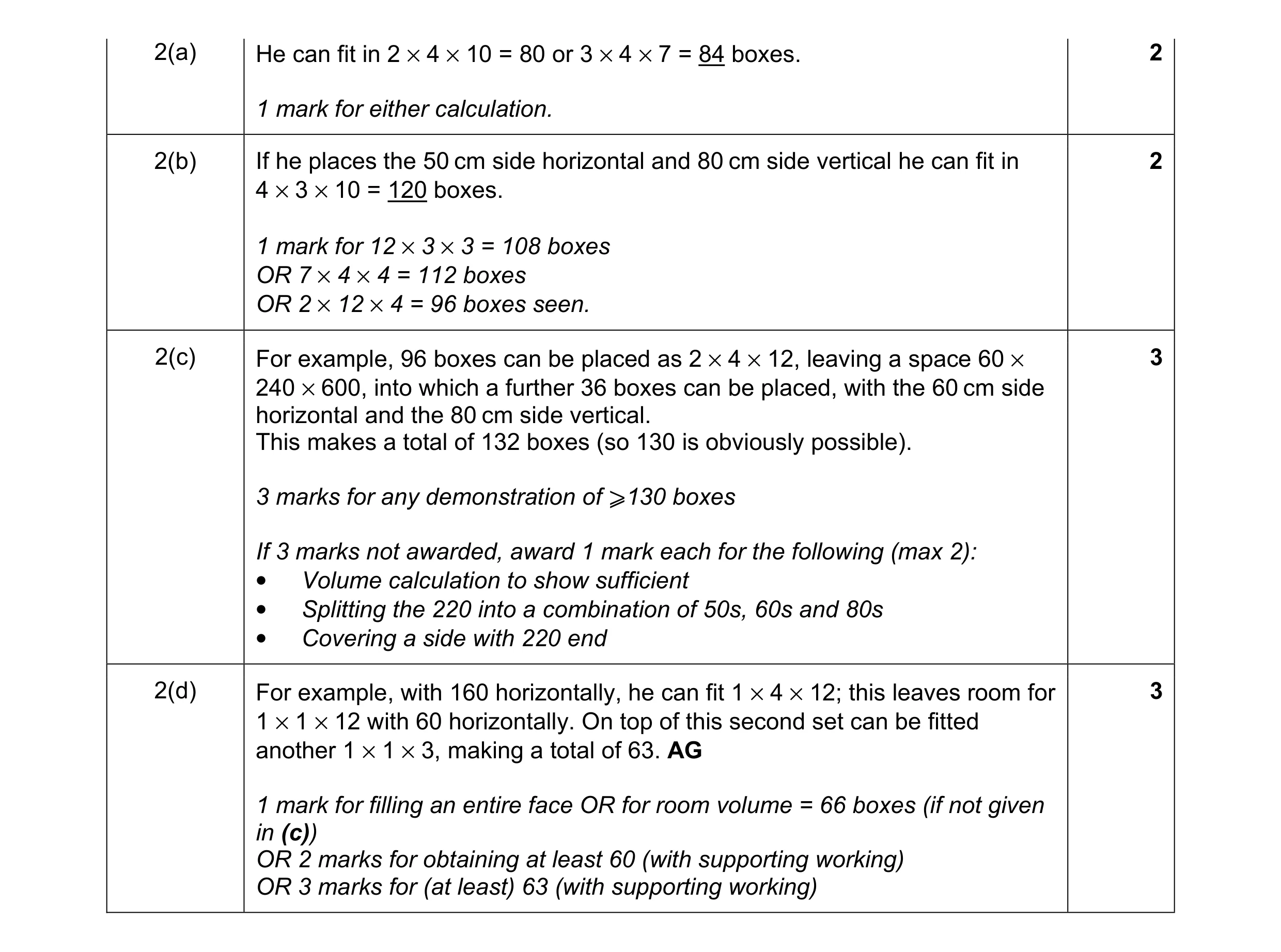 10
10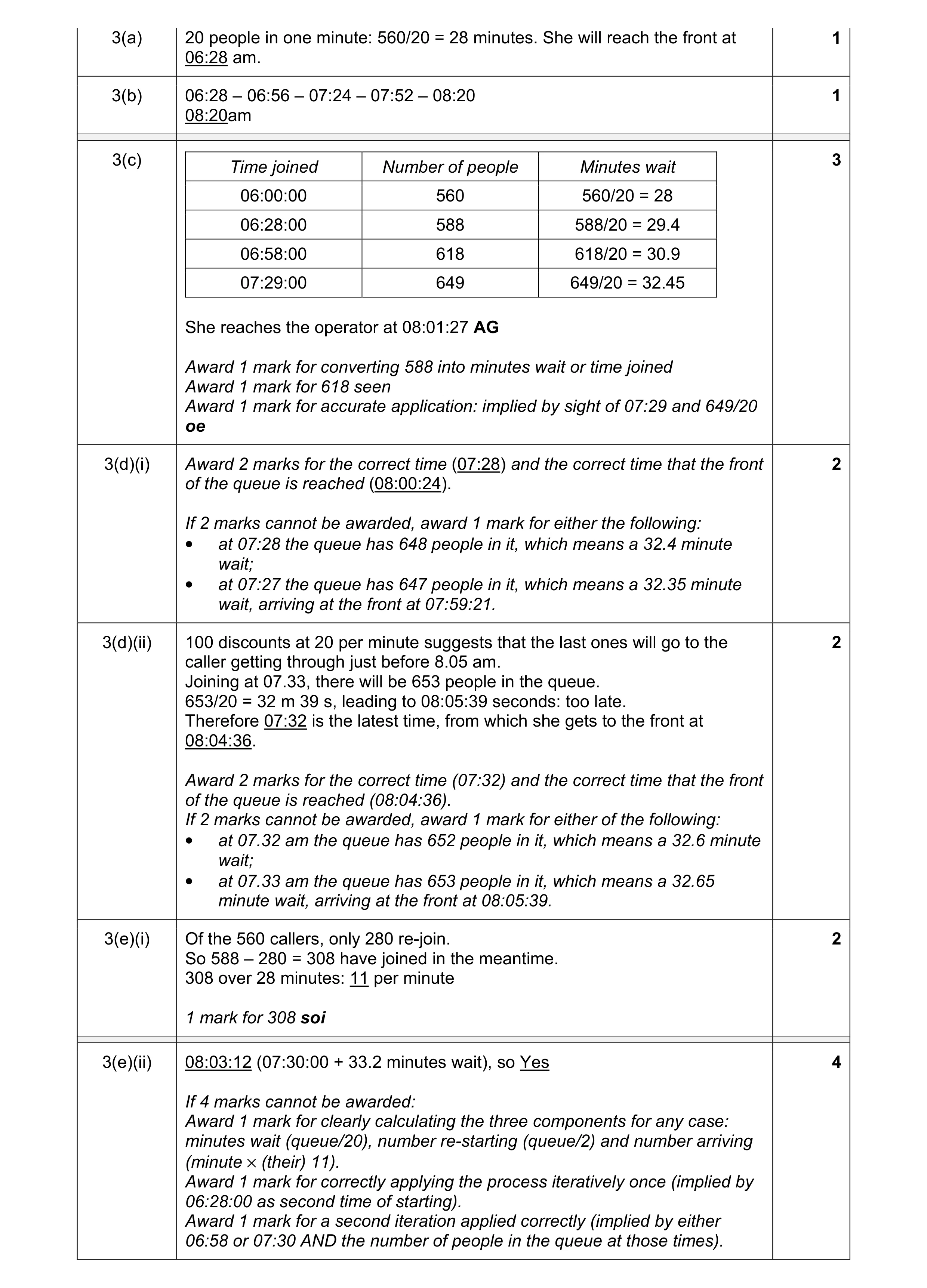 15
15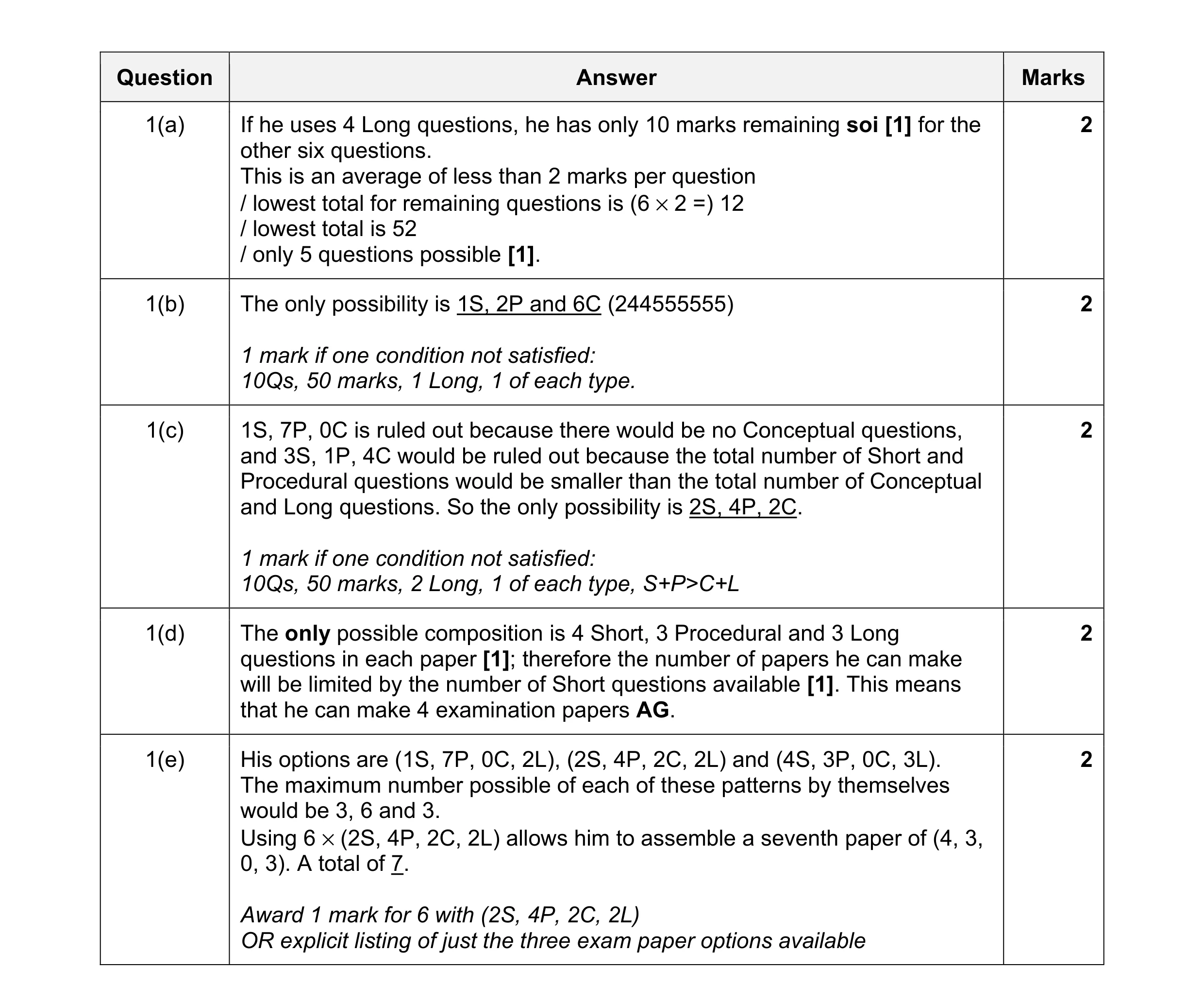 10
10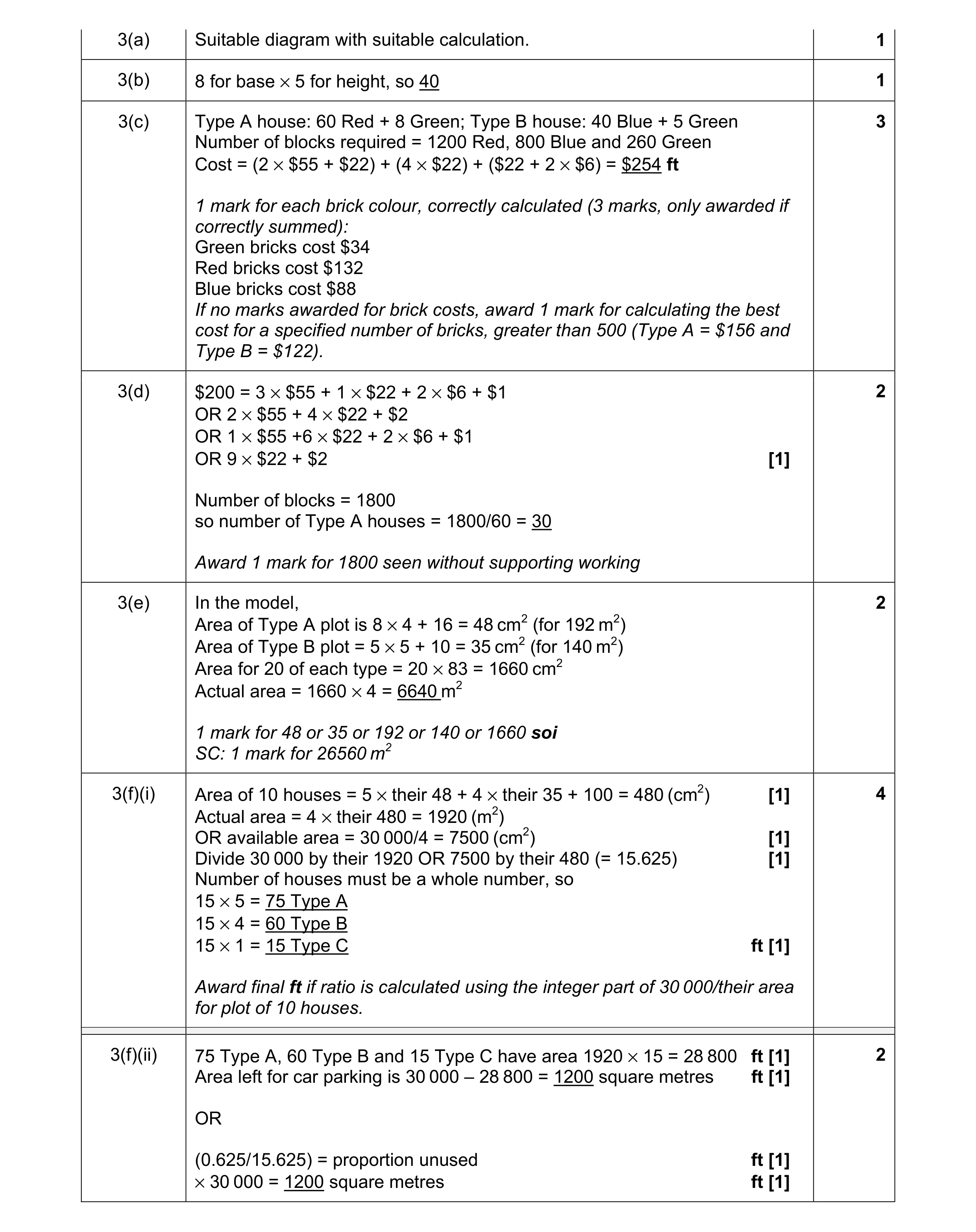 15
15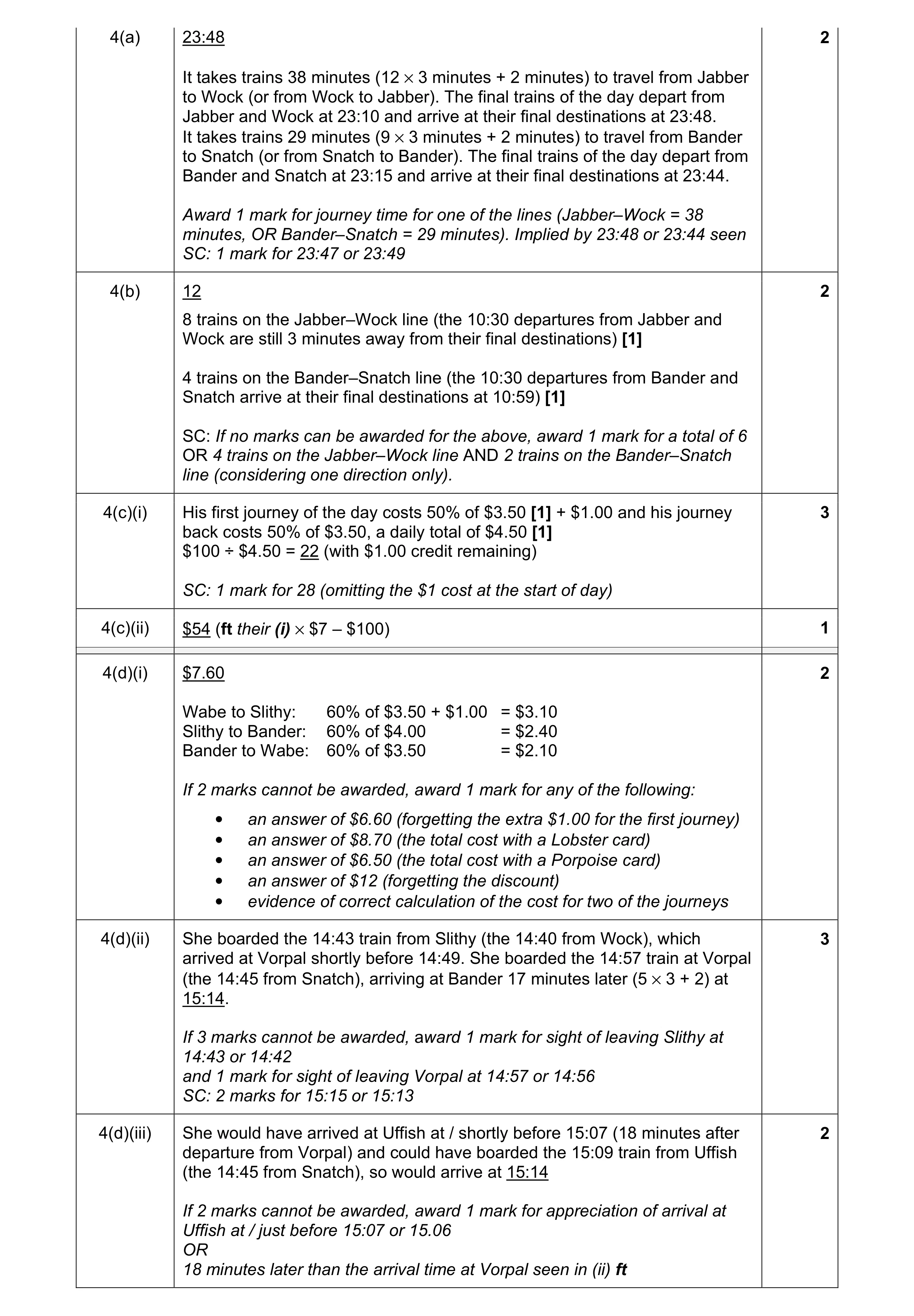 15
15 15
15 15
15 15
15 15
15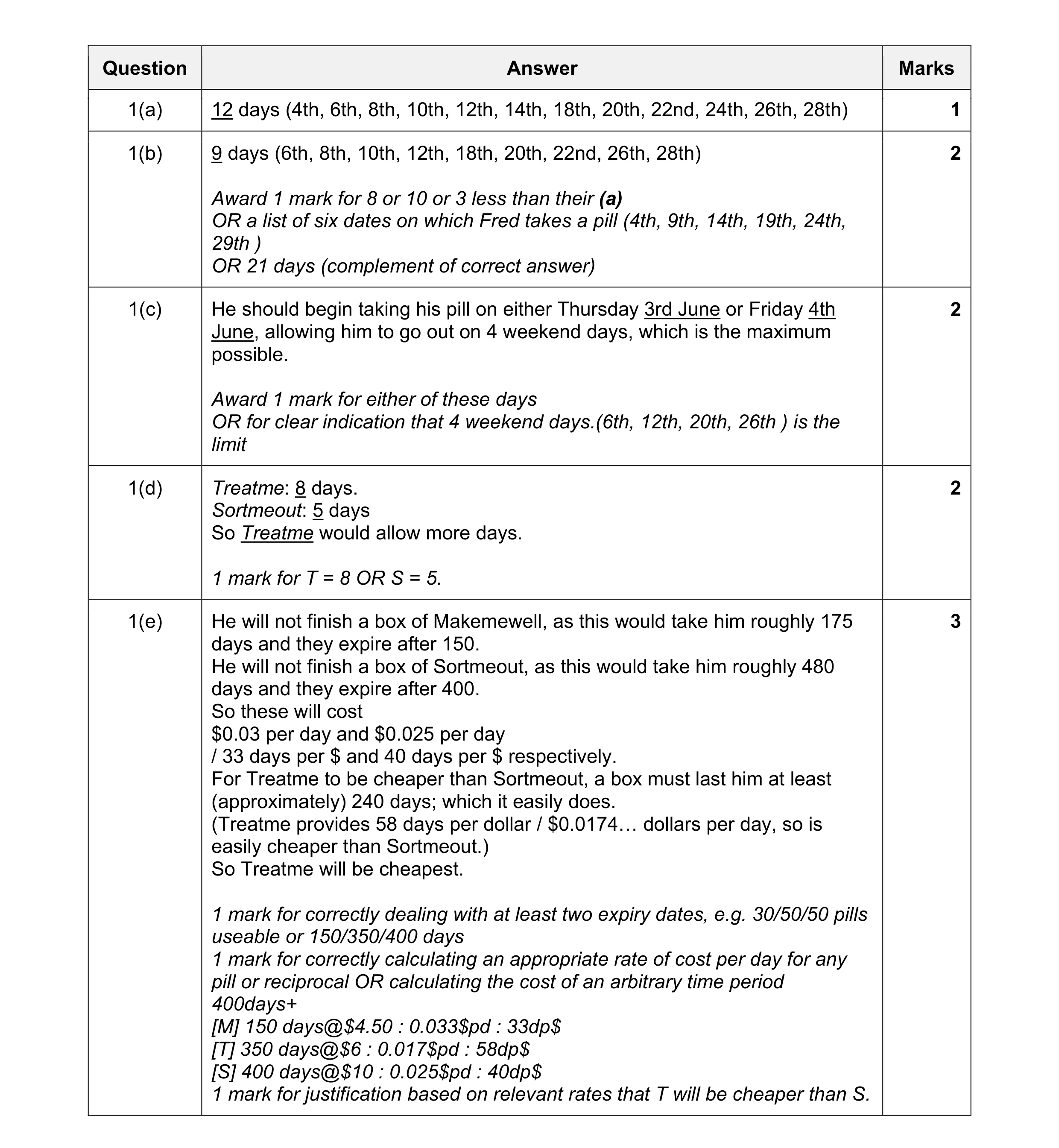 10
10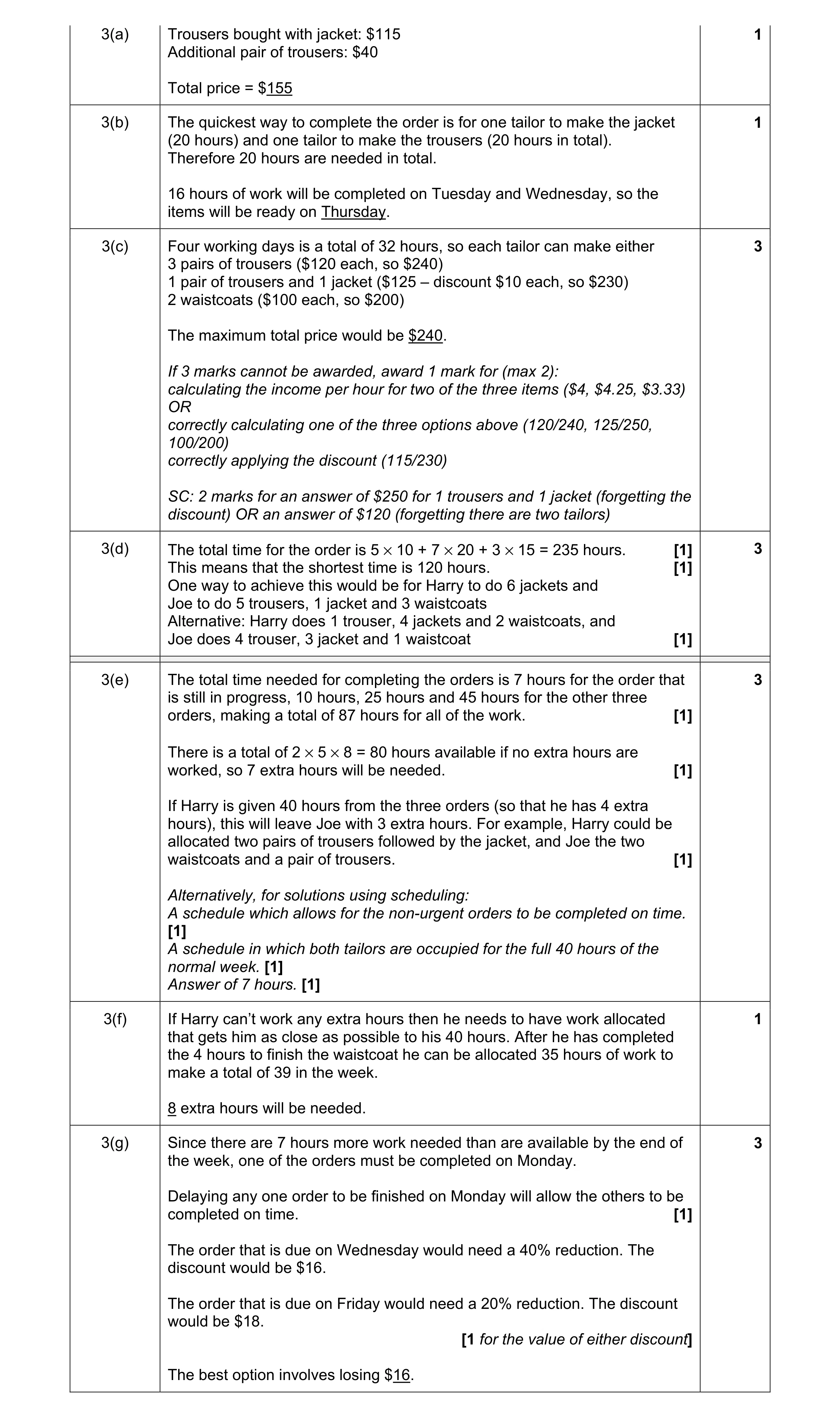 15
15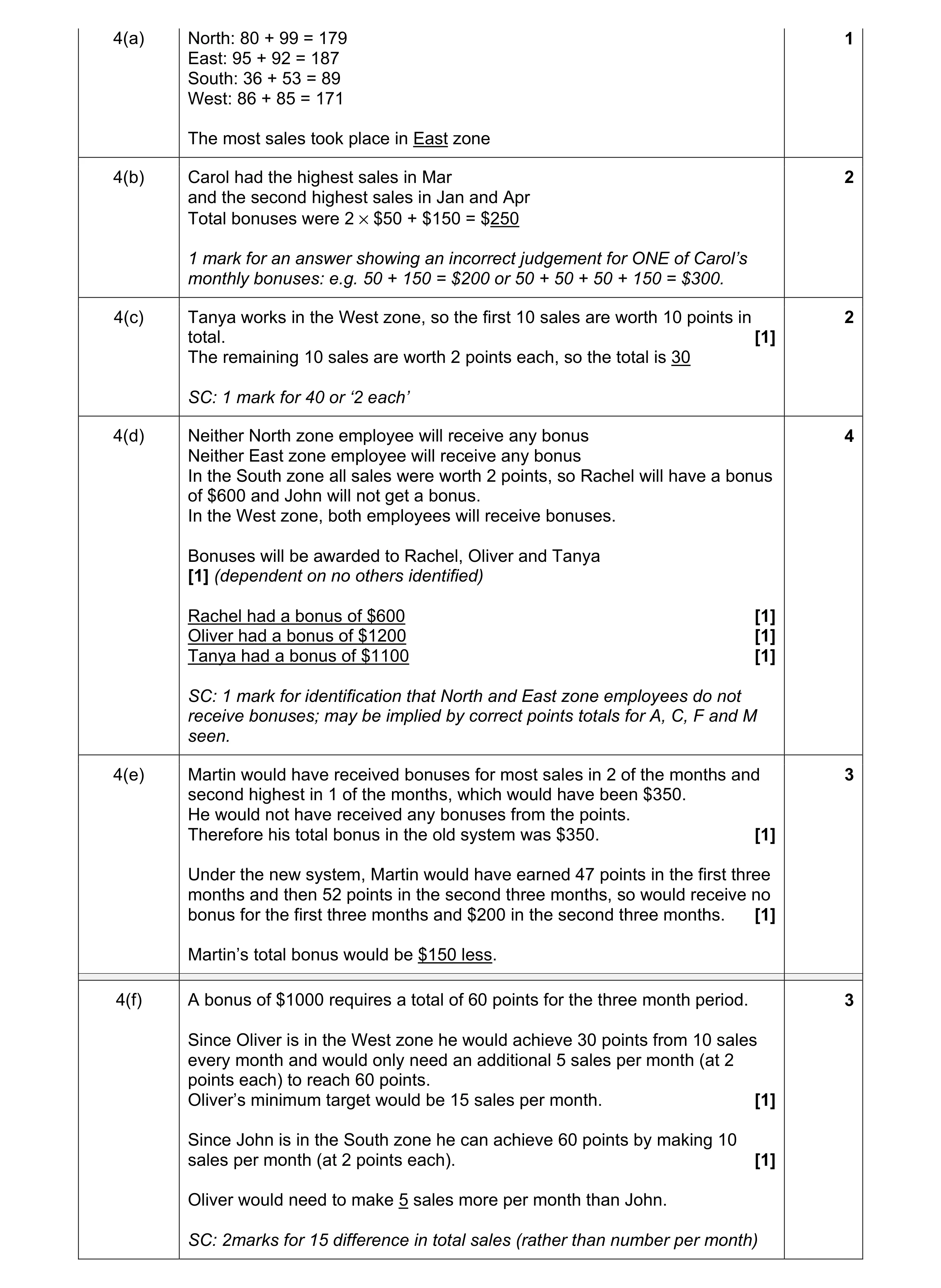 15
15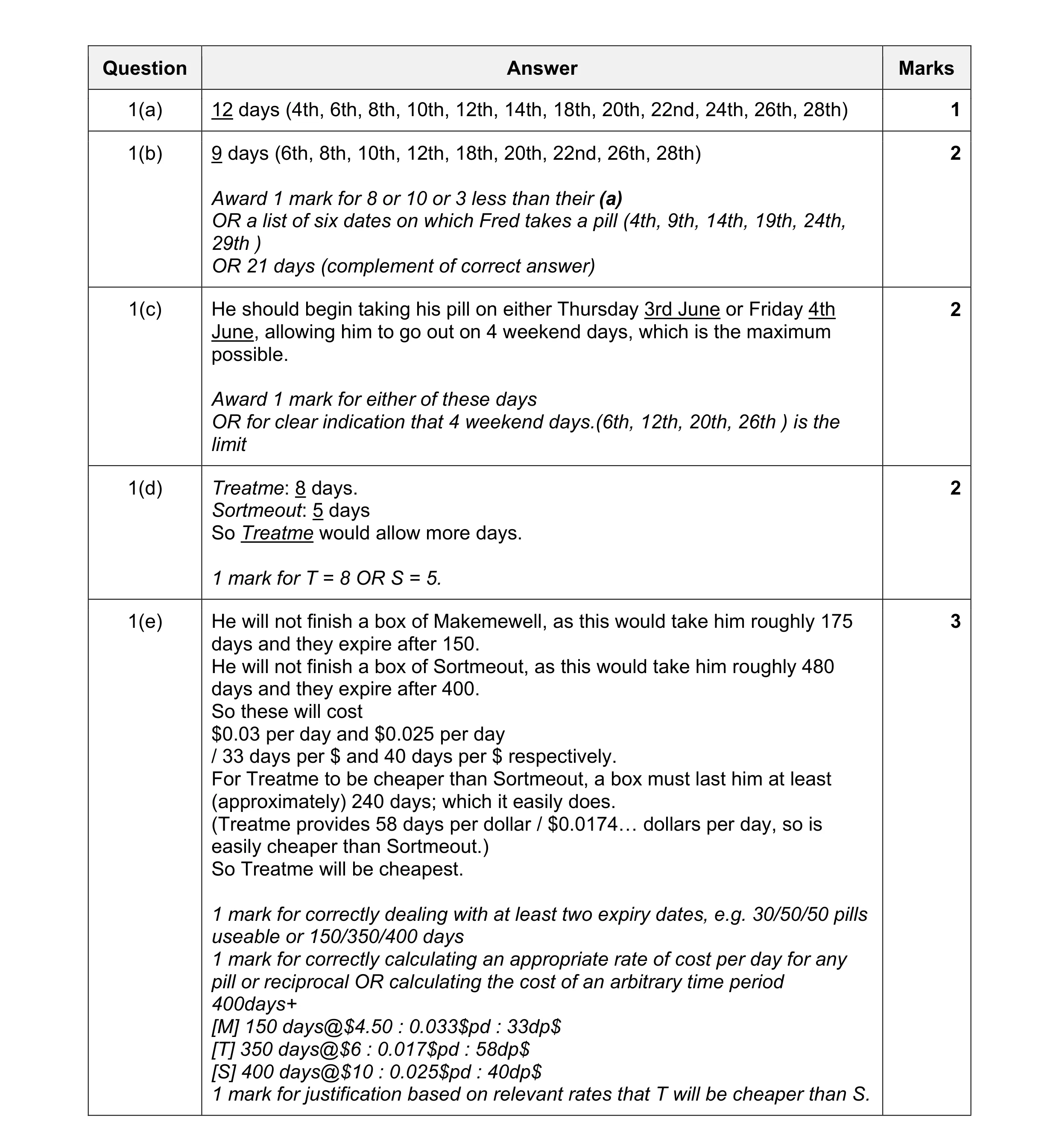 10
10 15
15 15
15 10
10 15
15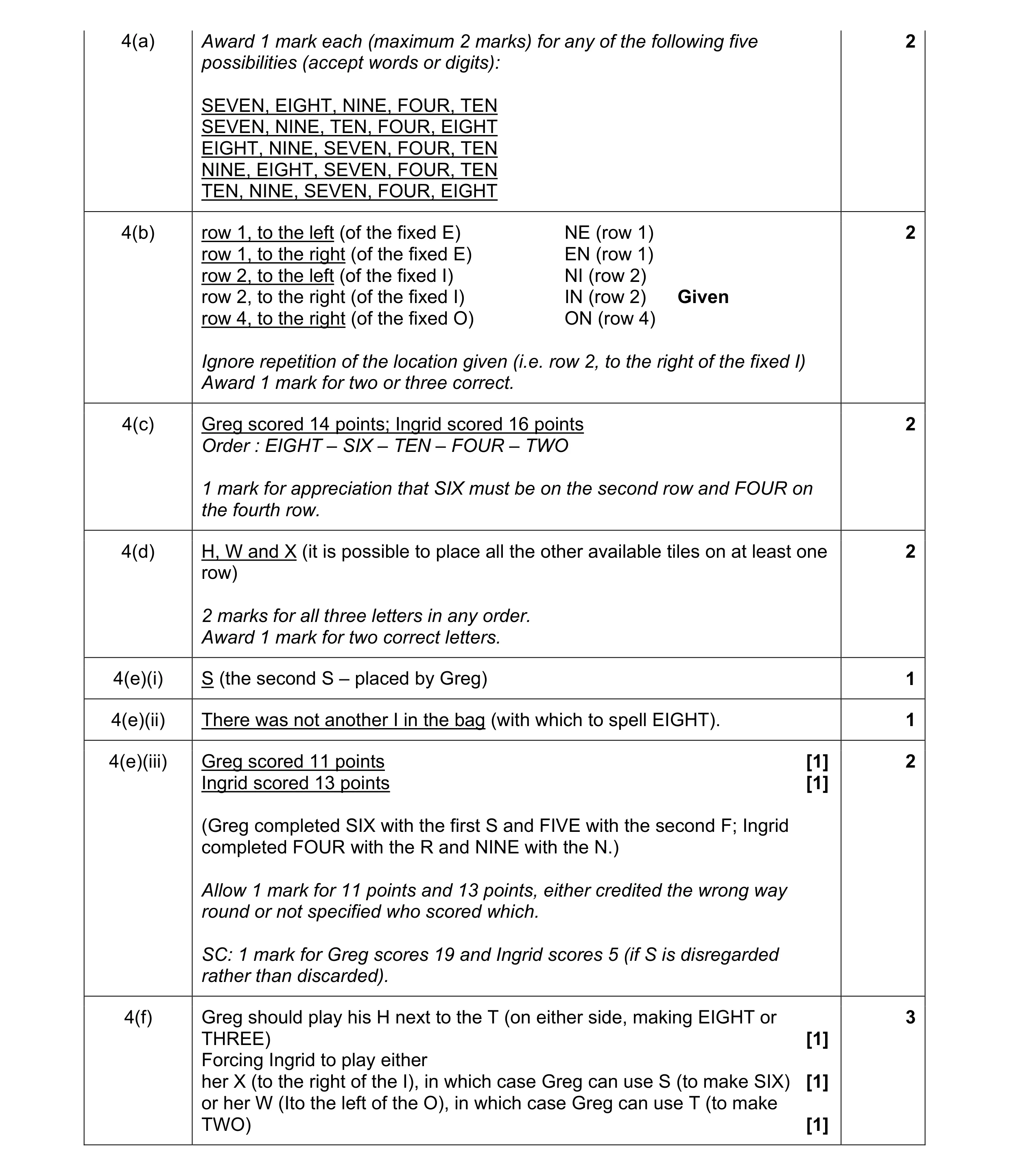 15
15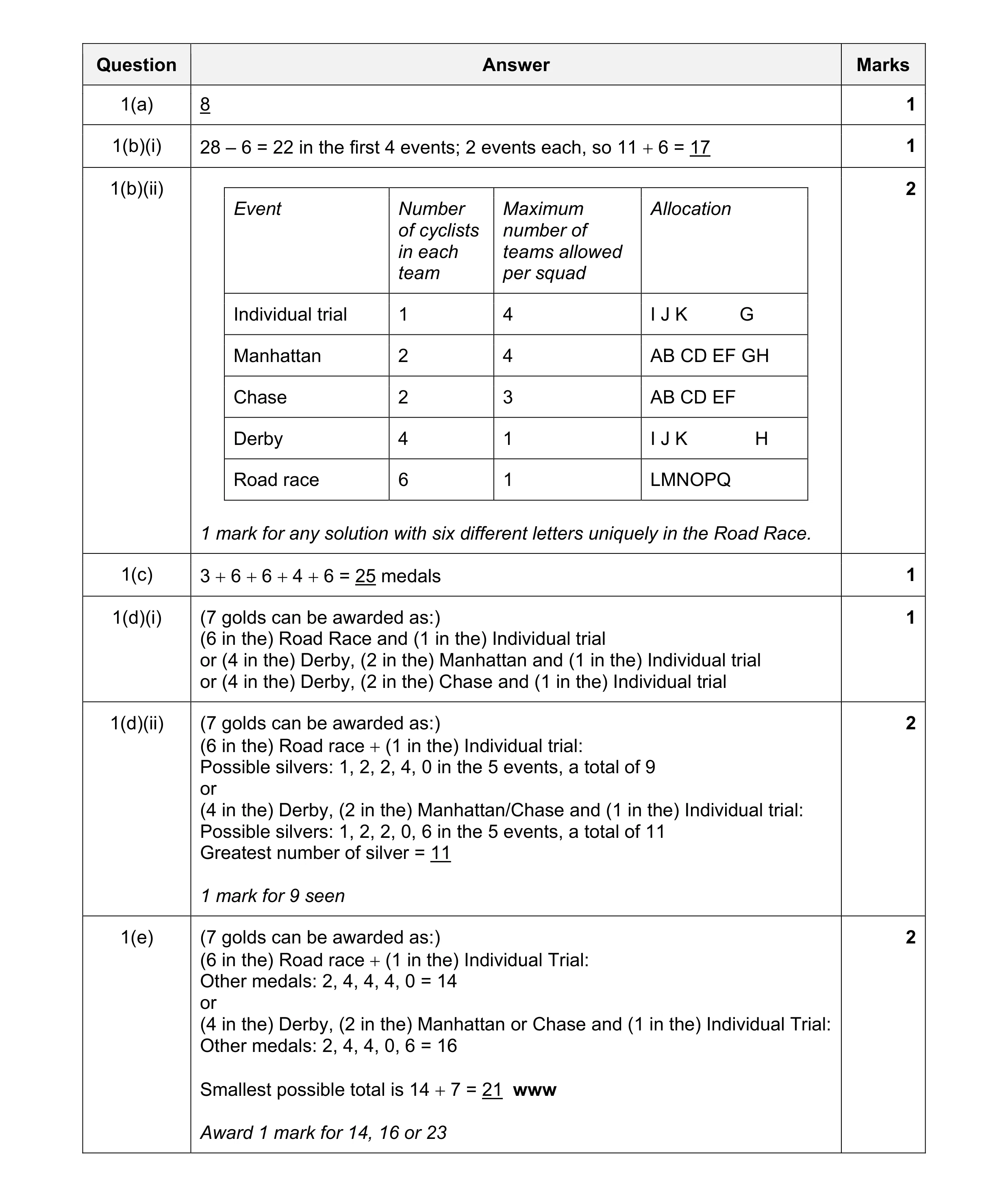 10
10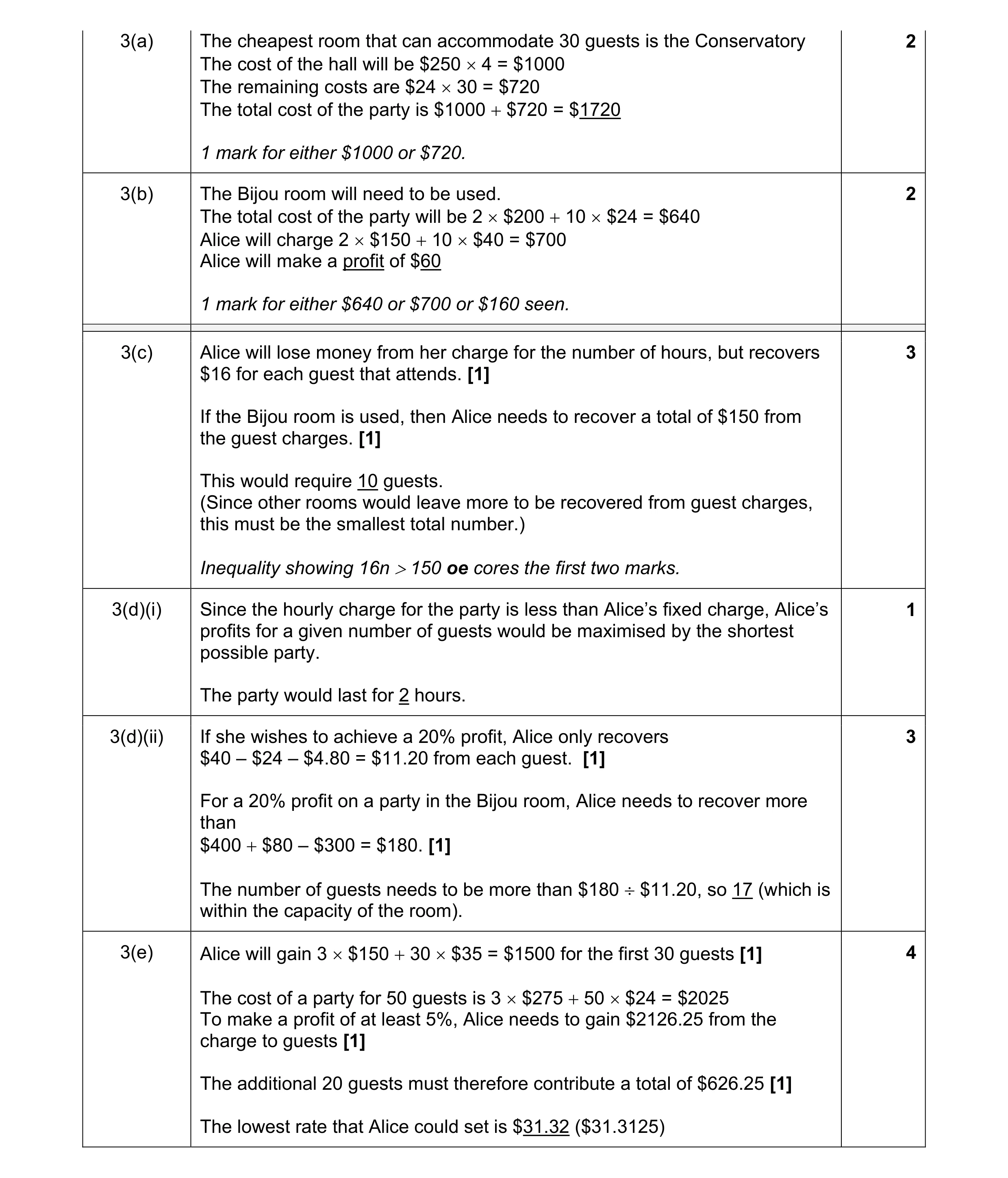 15
15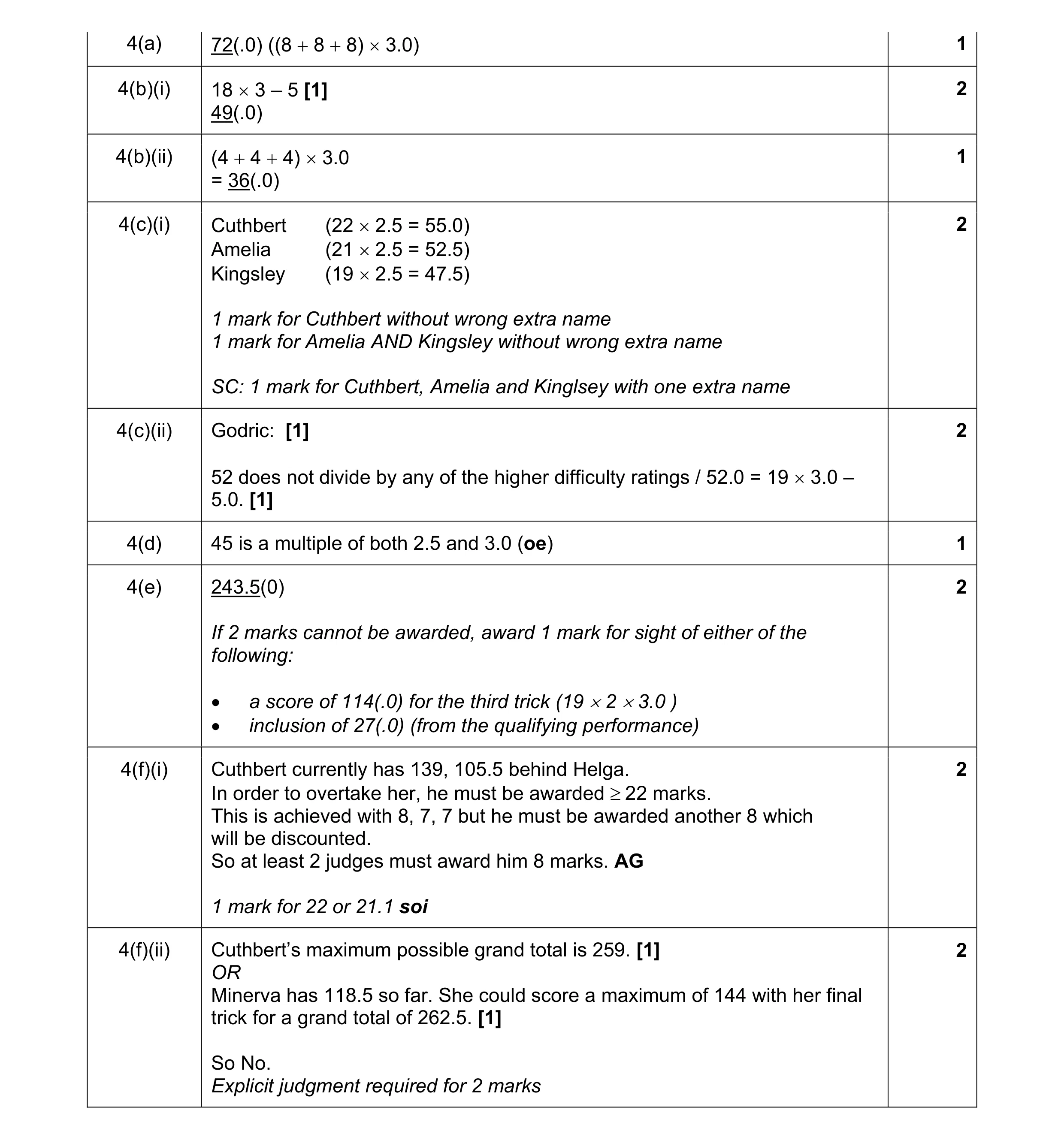 15
15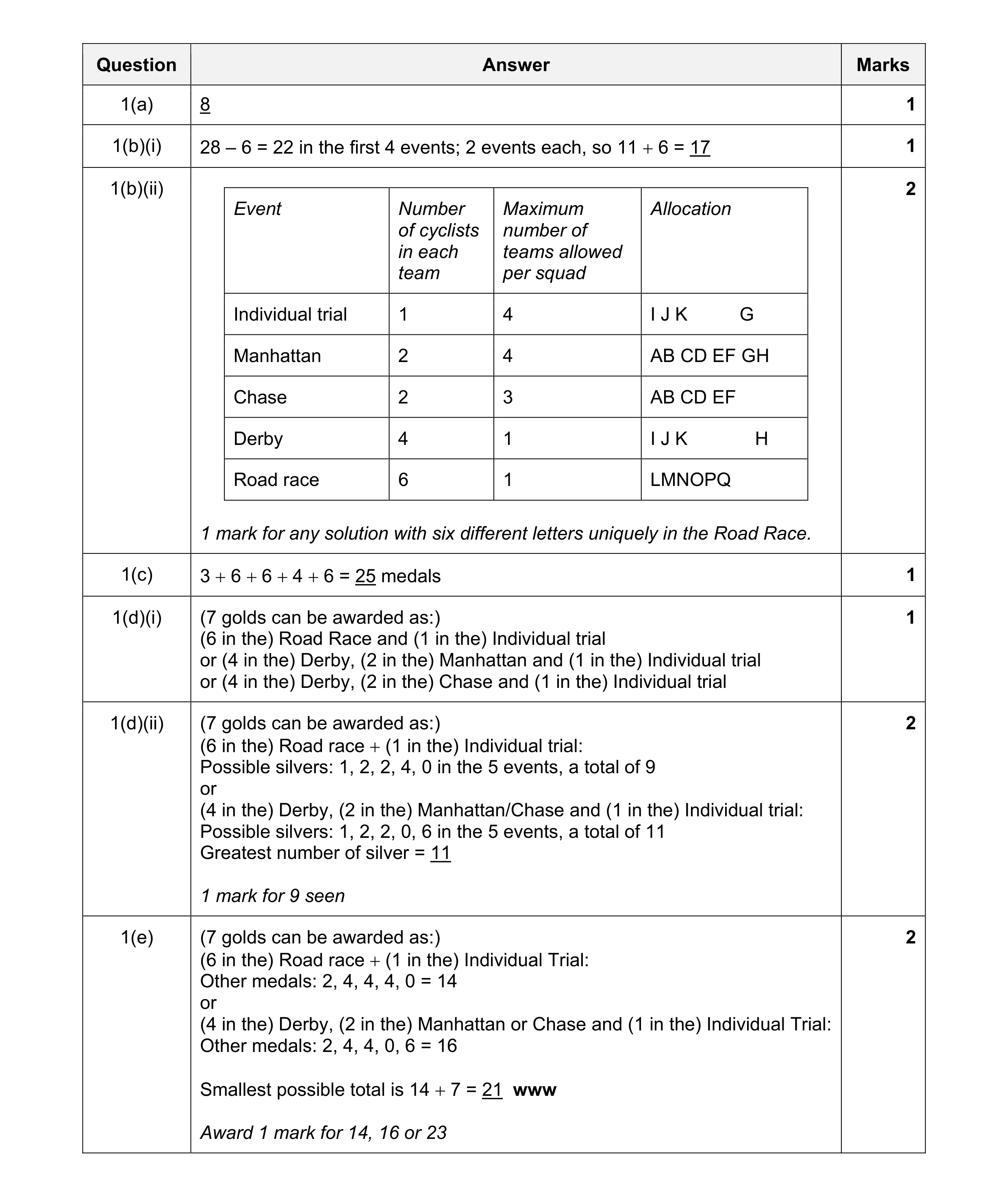 10
10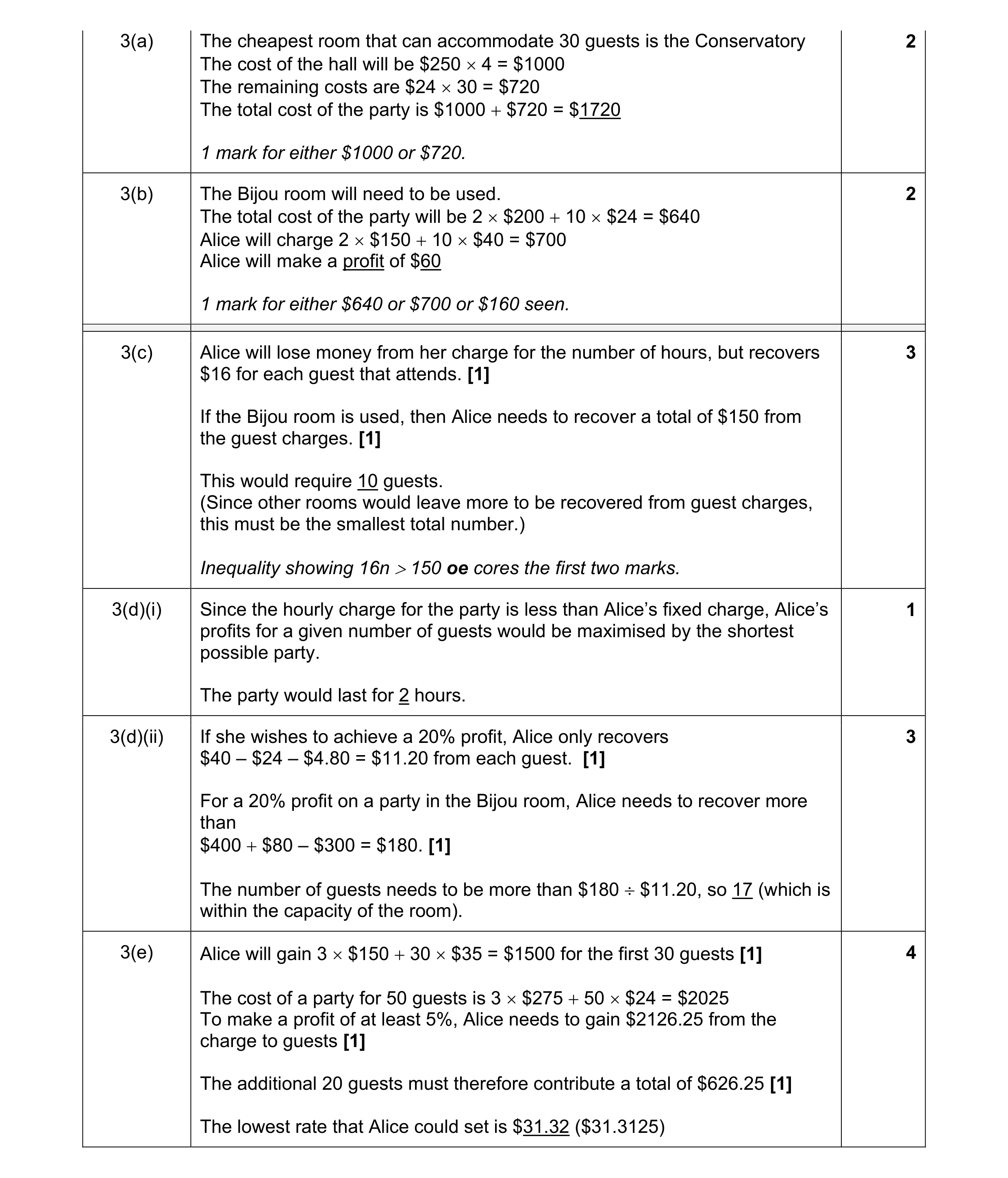 15
15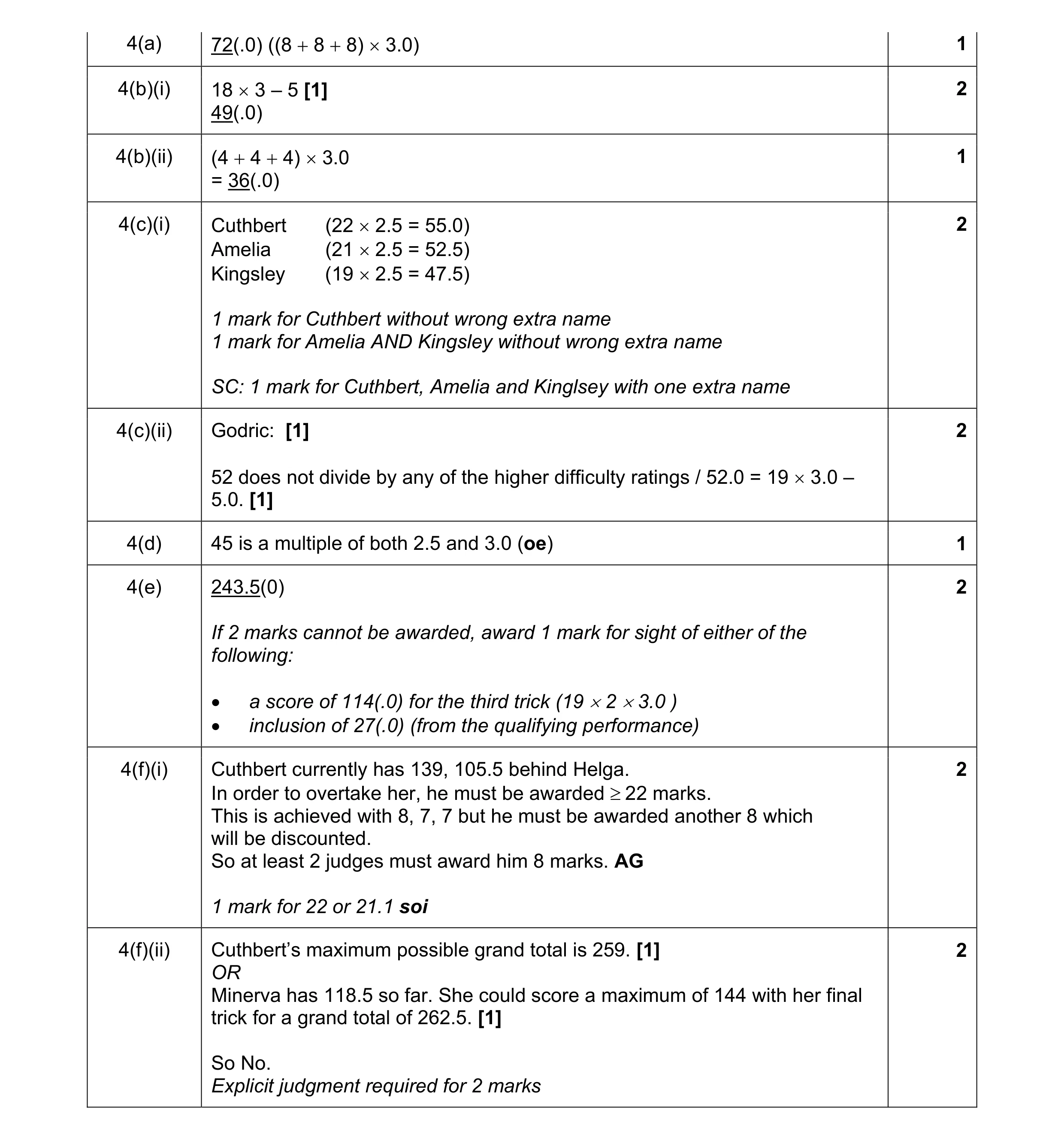 15
15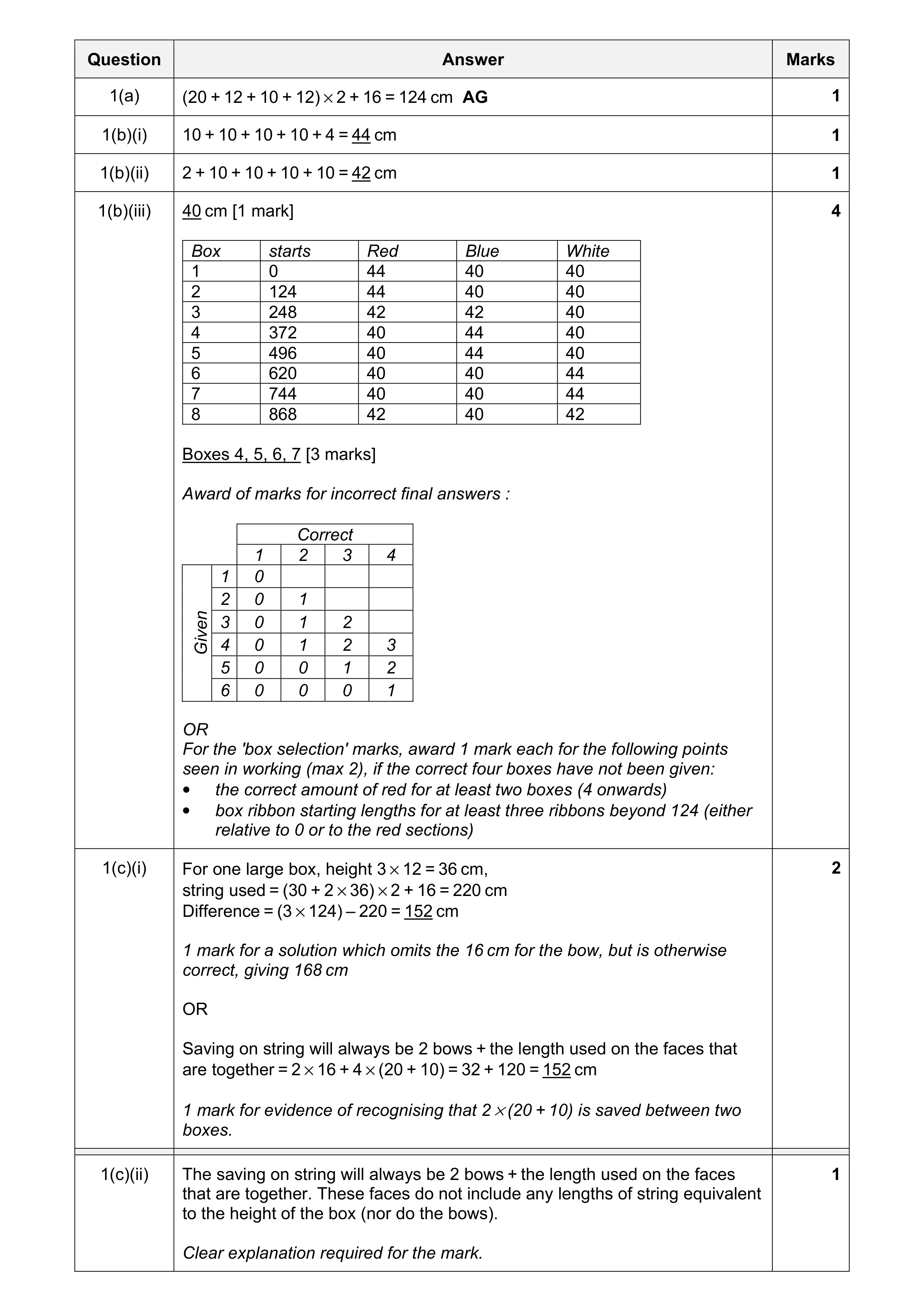 10
10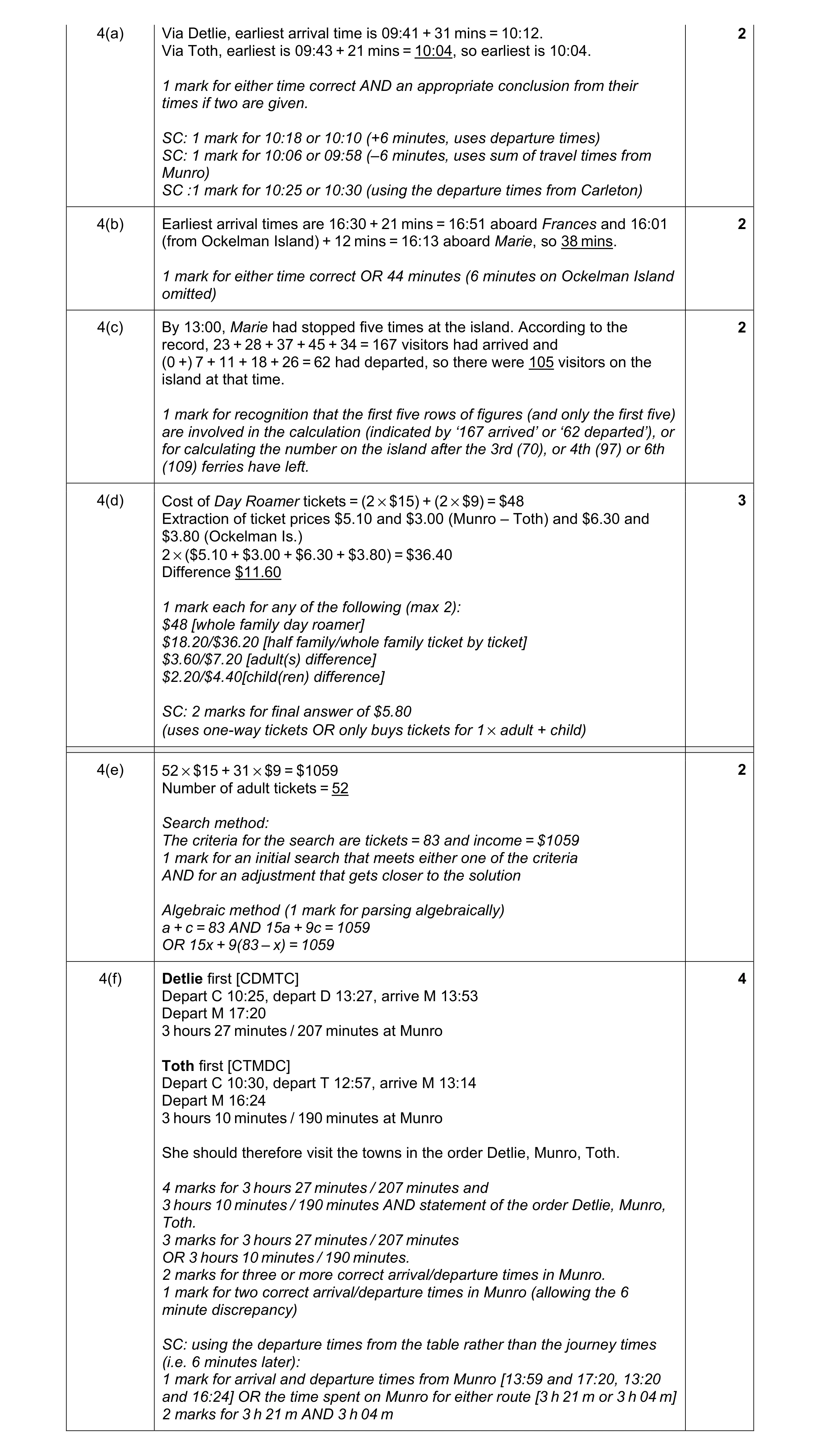 15
15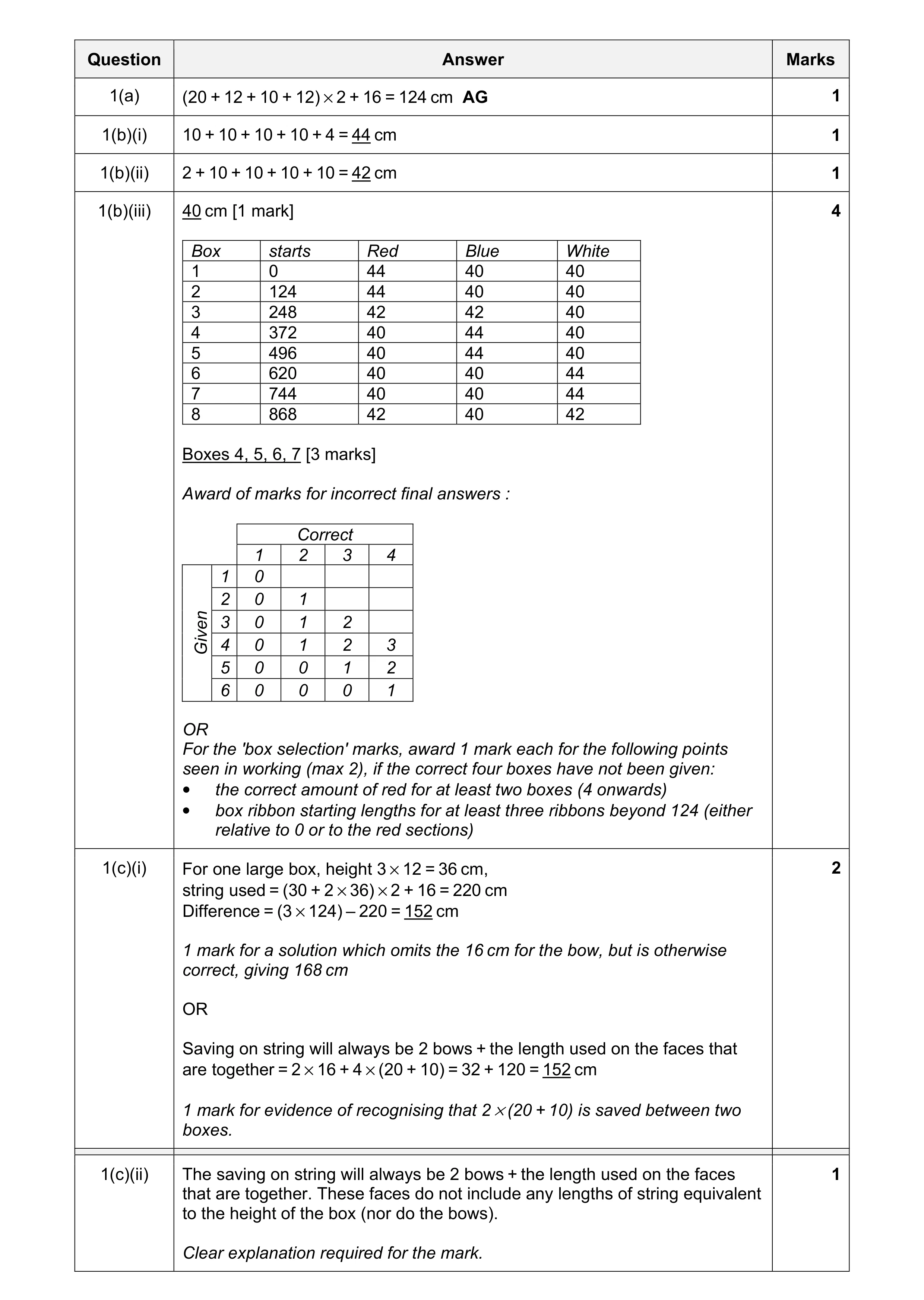 10
10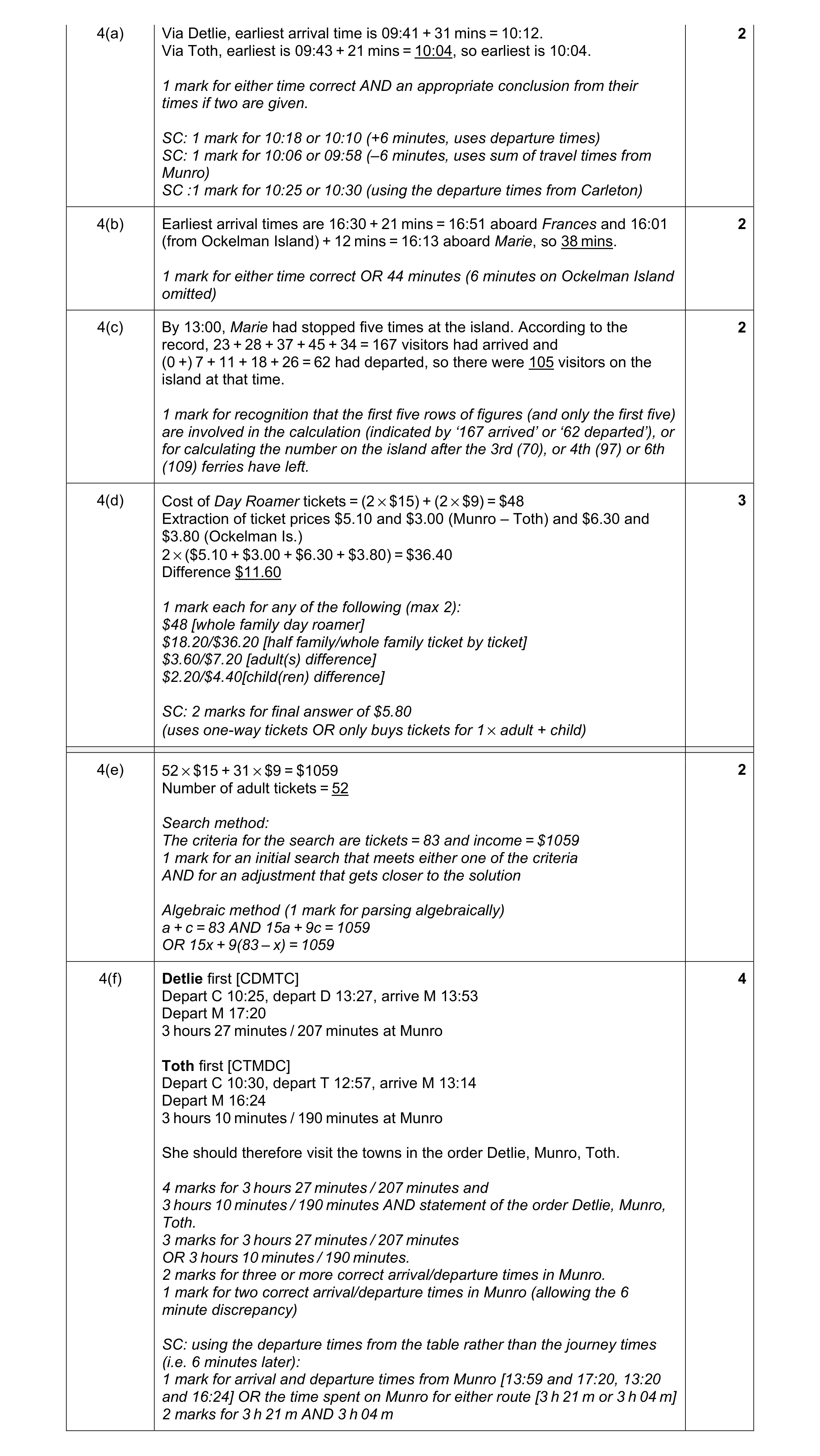 15
15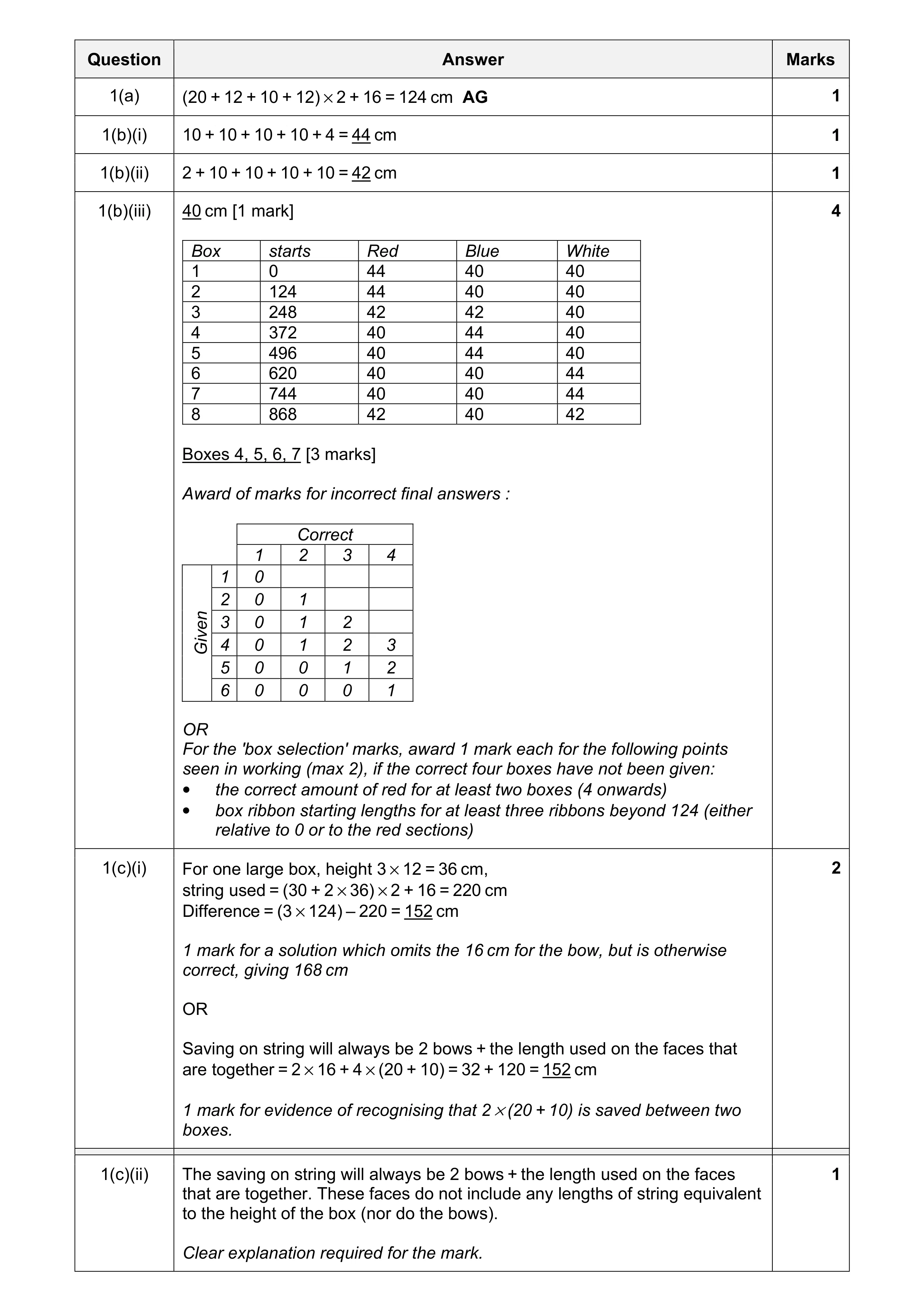 10
10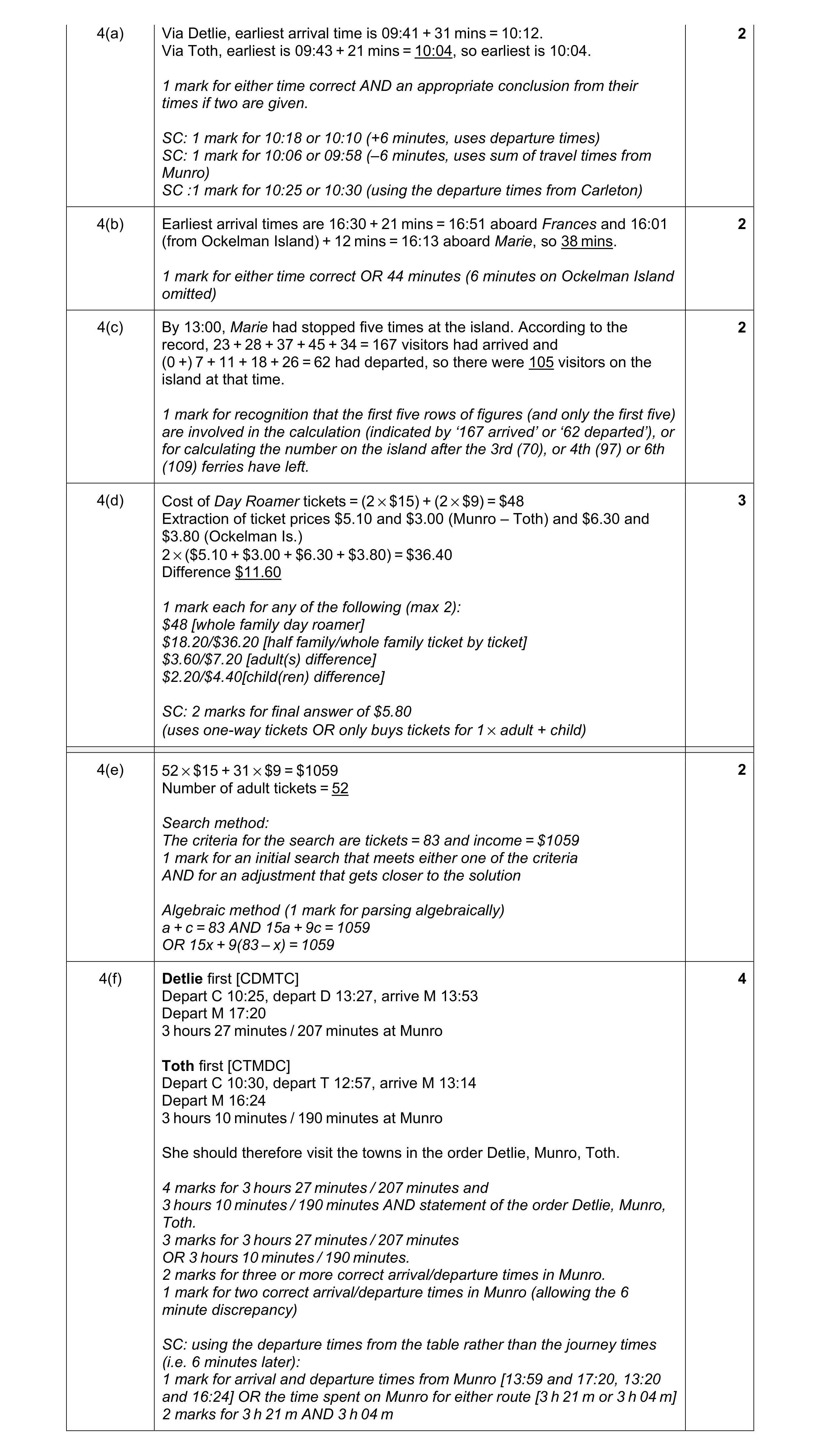 15
15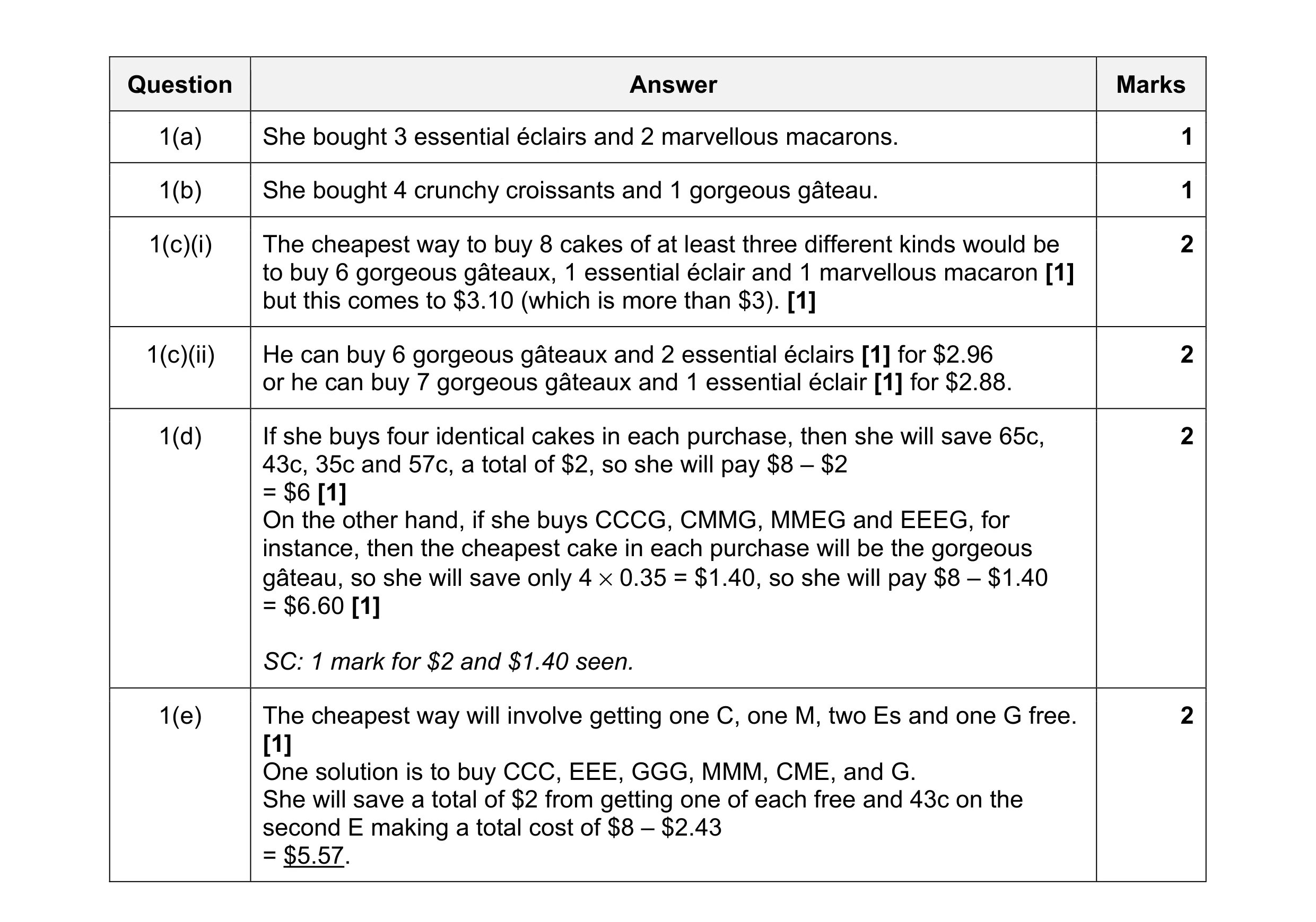 10
10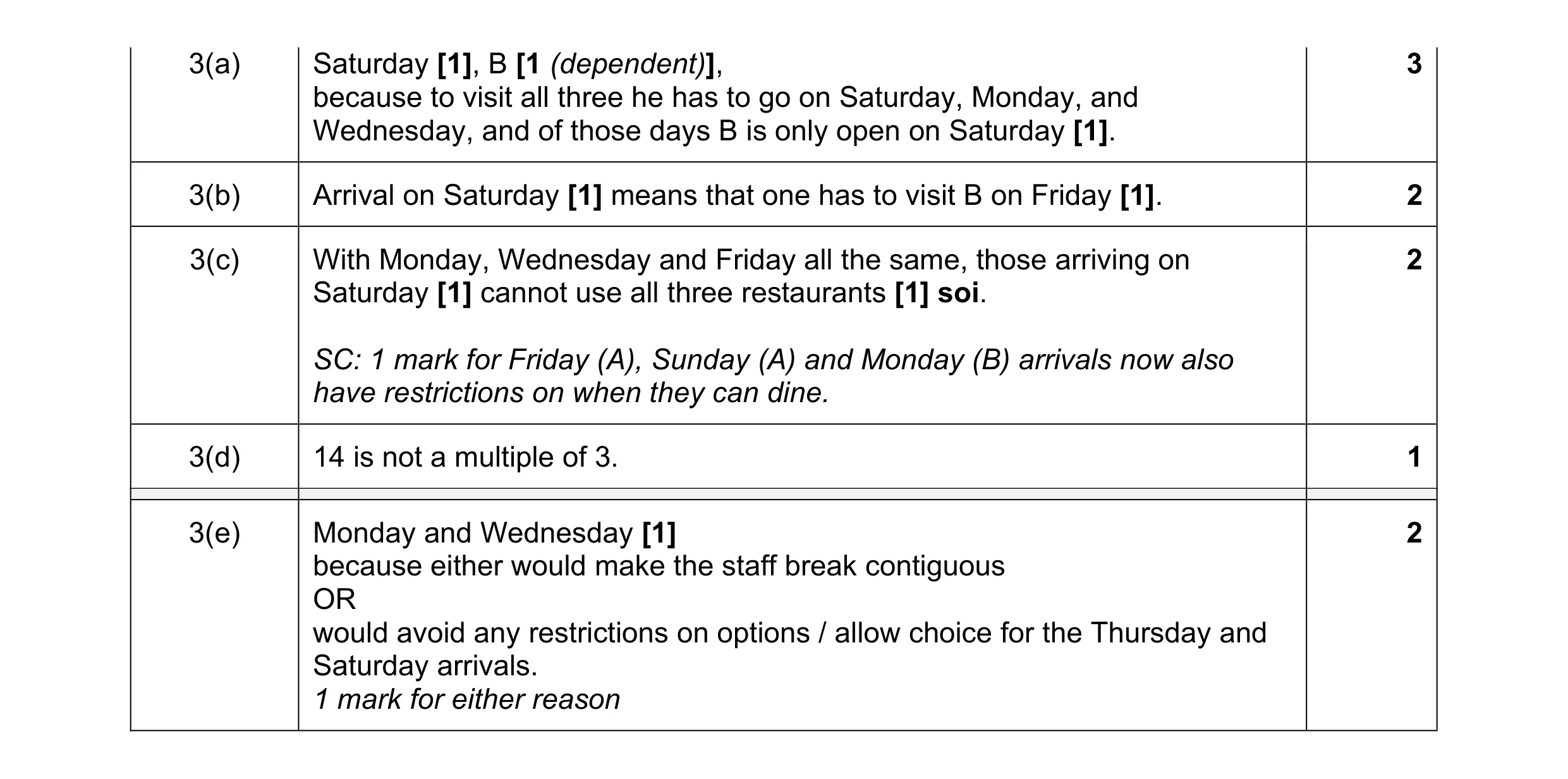 10
10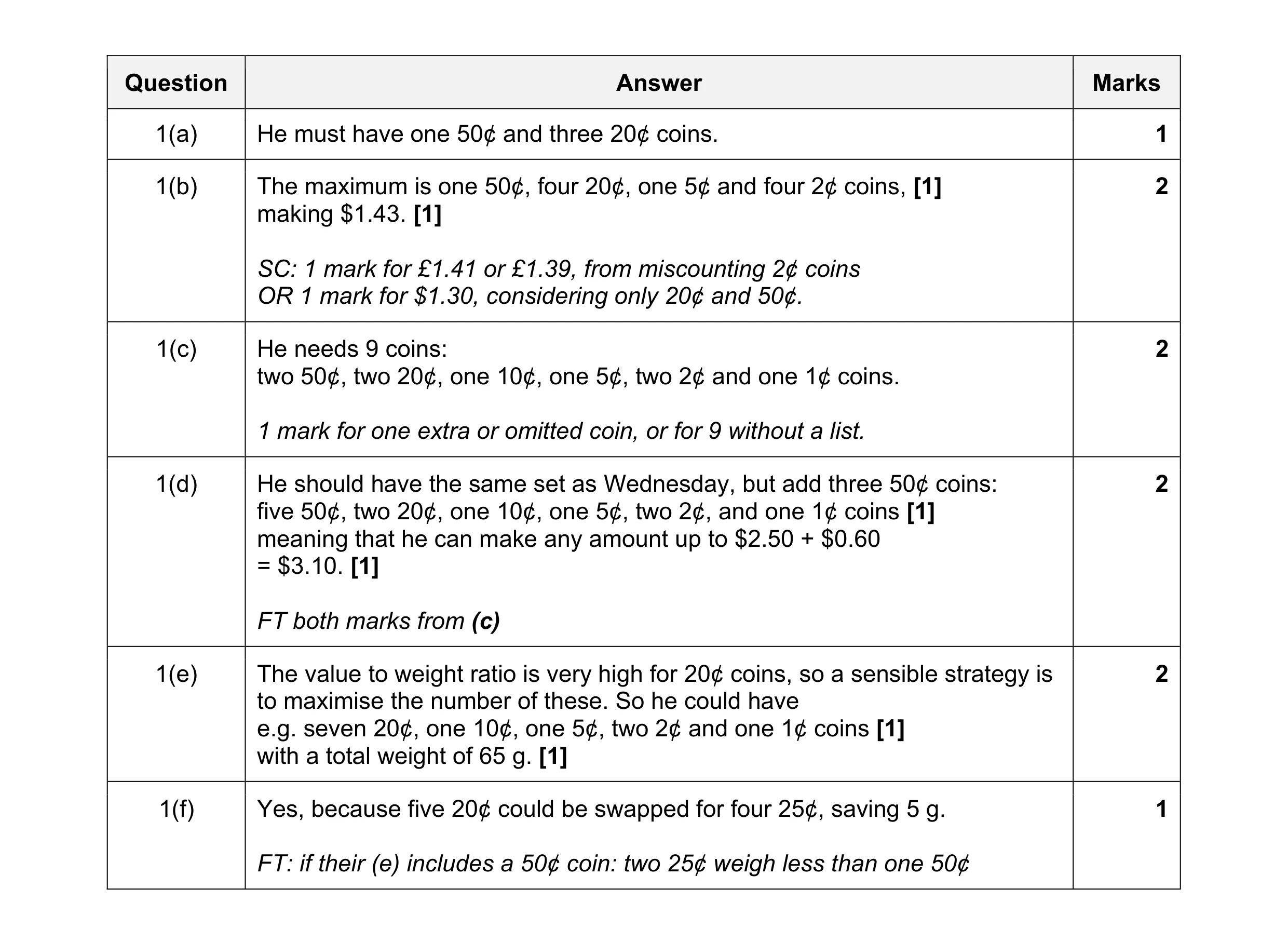 10
10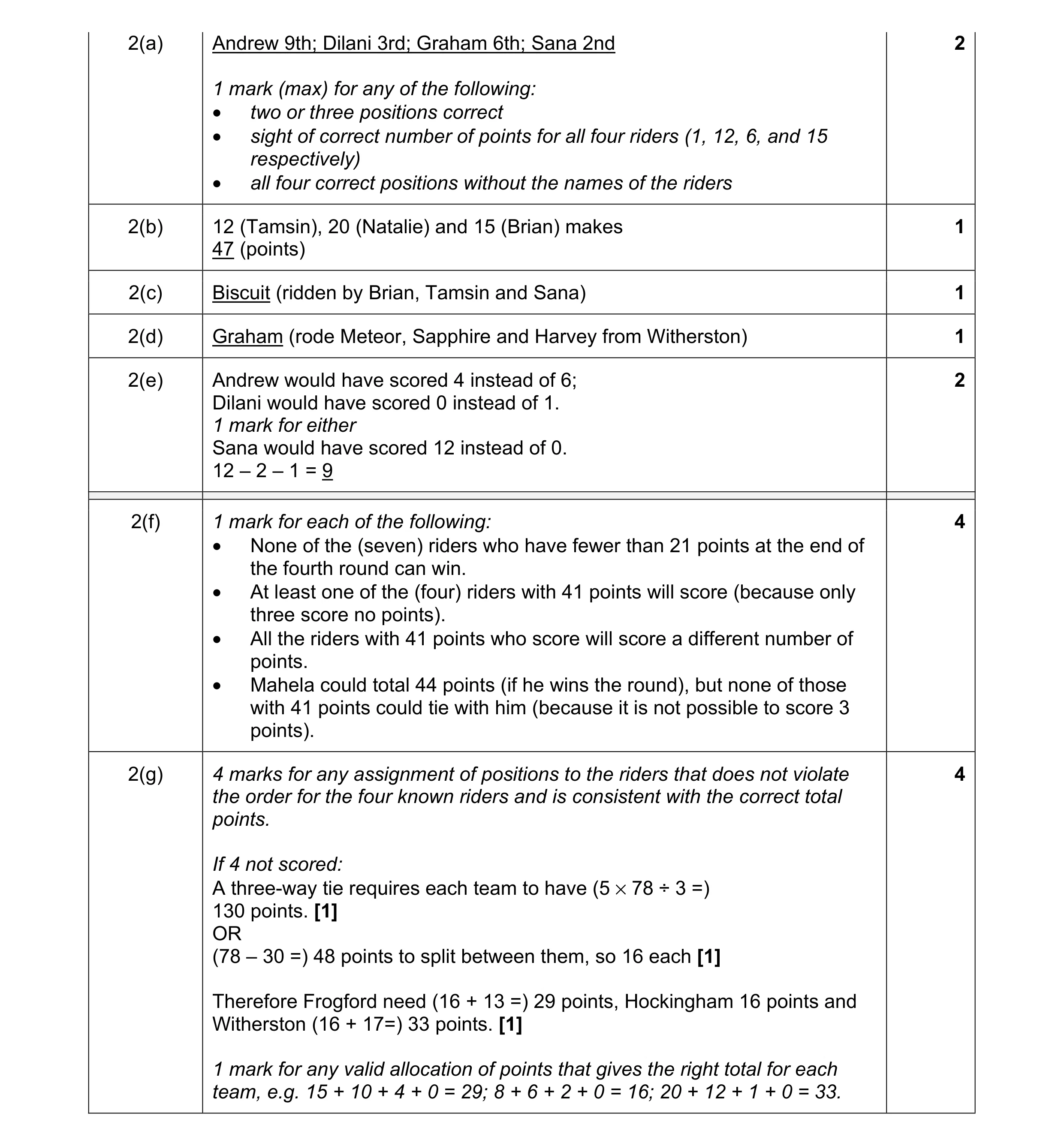 15
15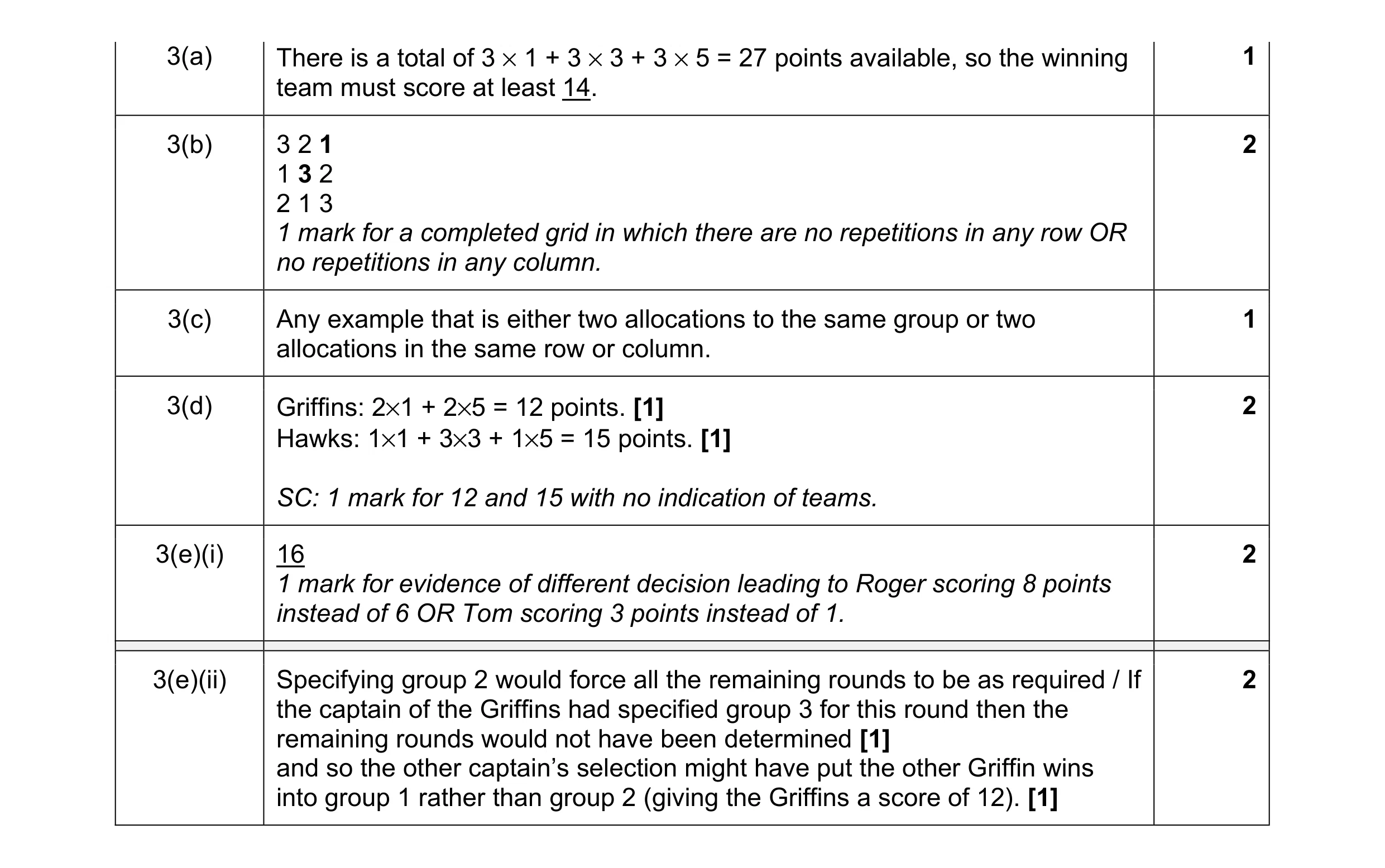 10
10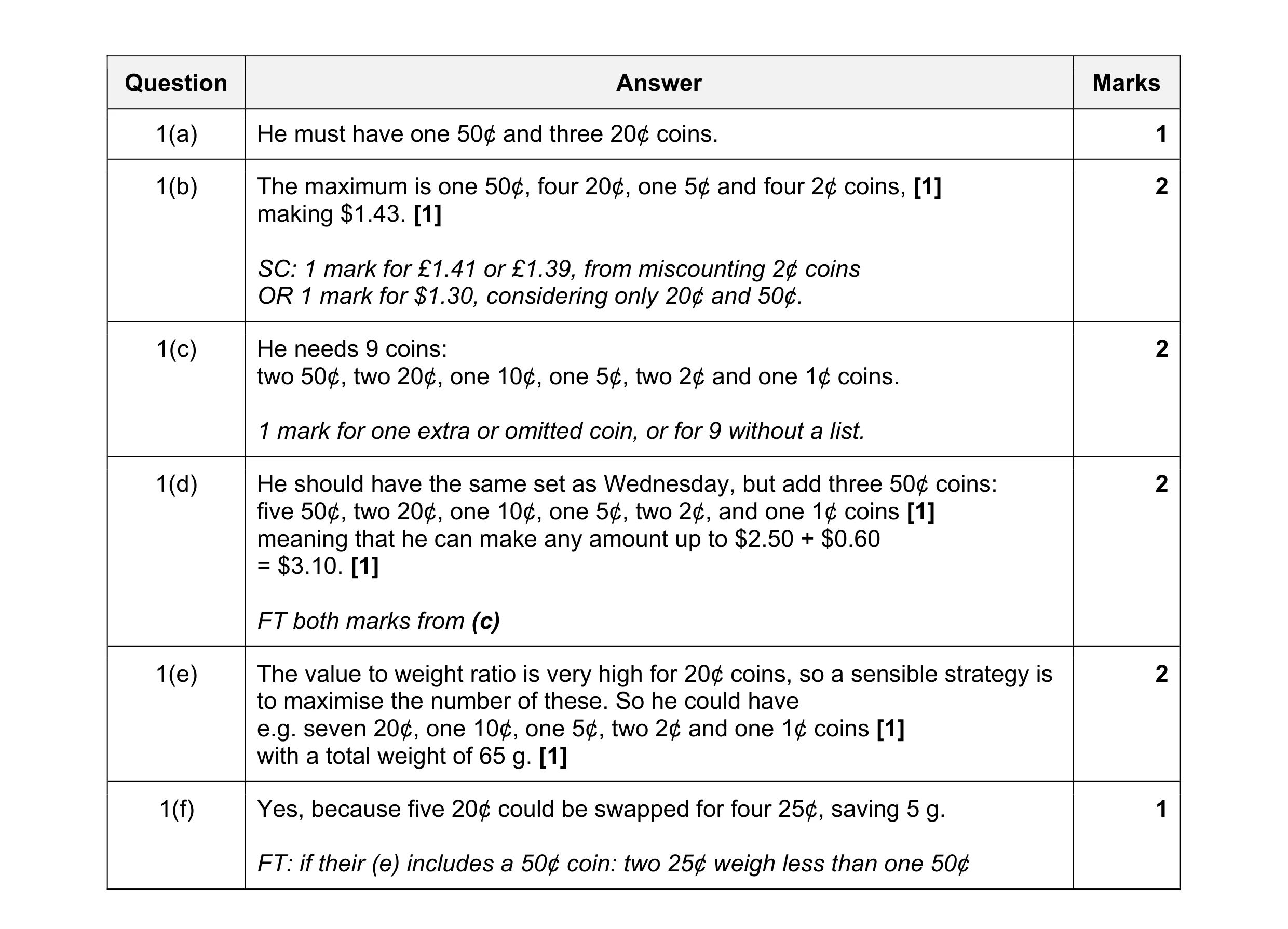 10
10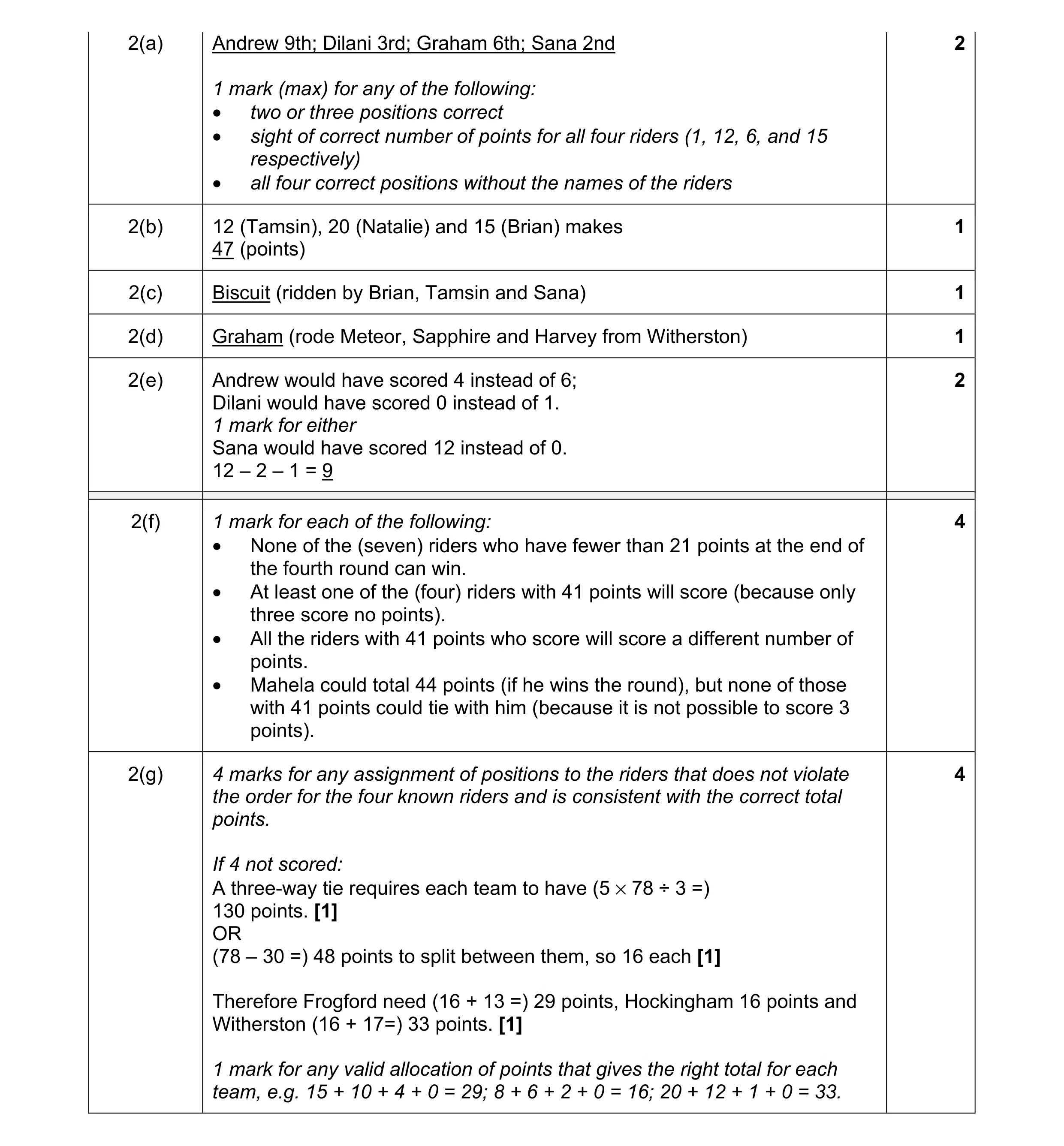 15
15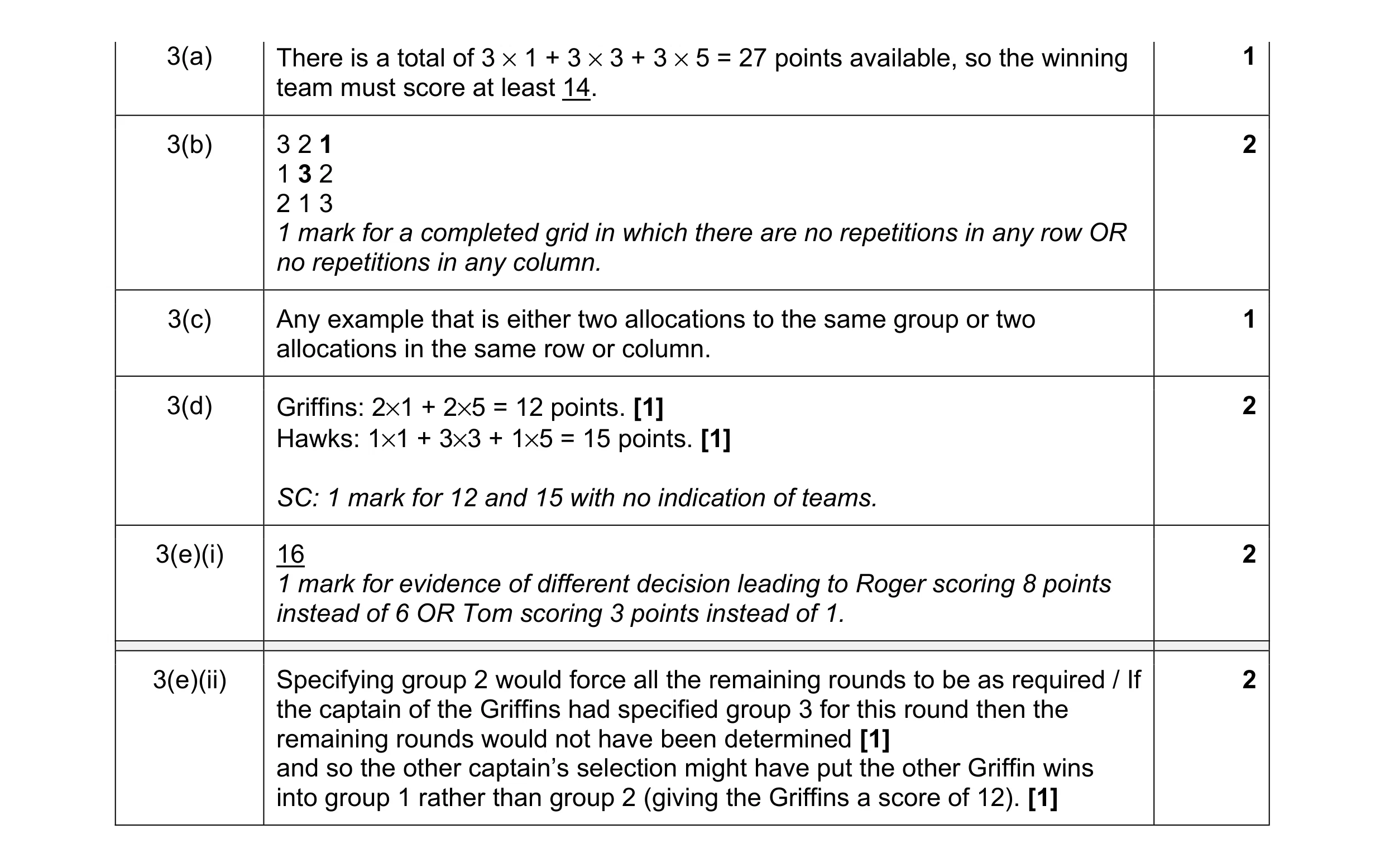 10
10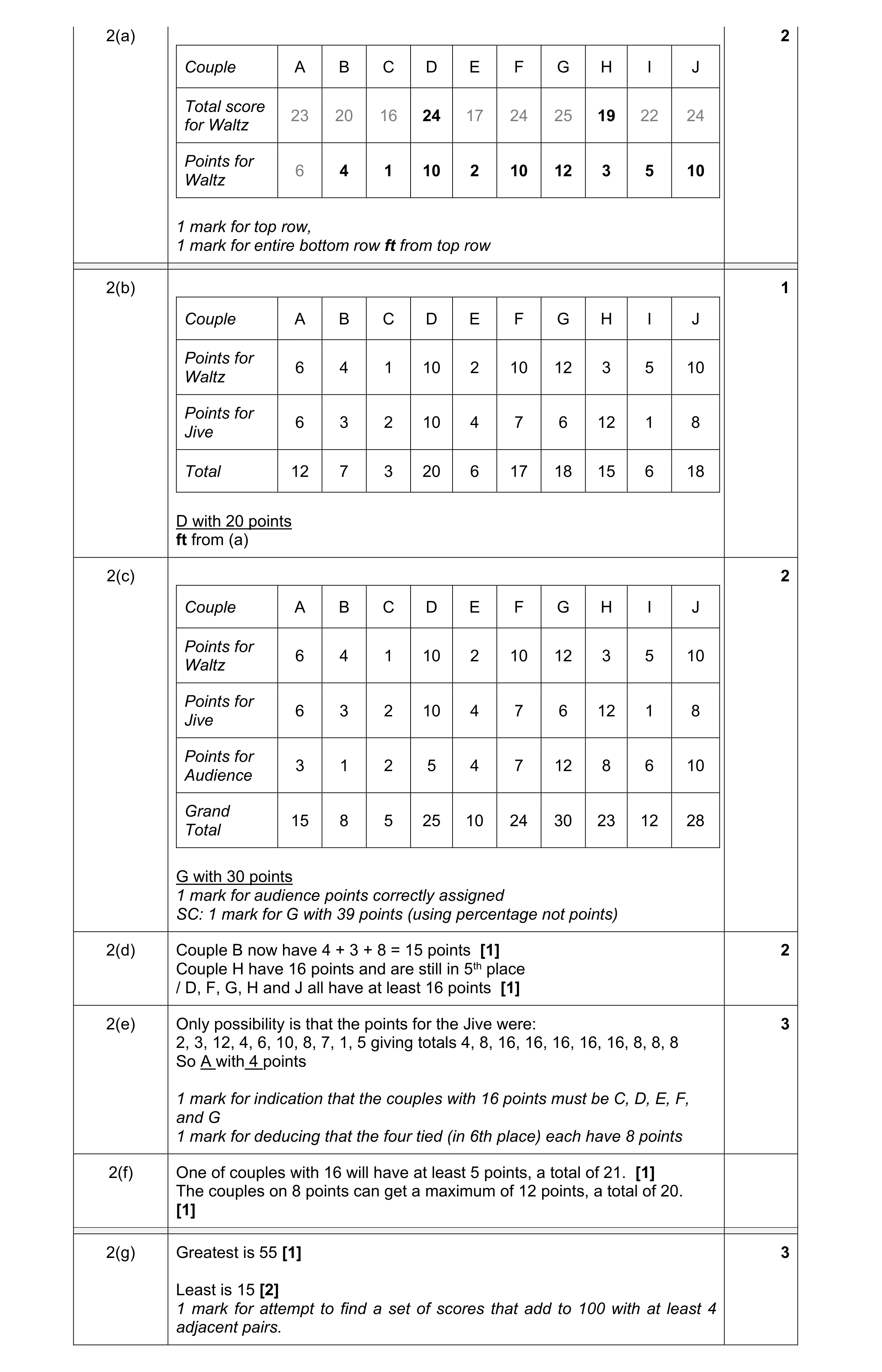 15
15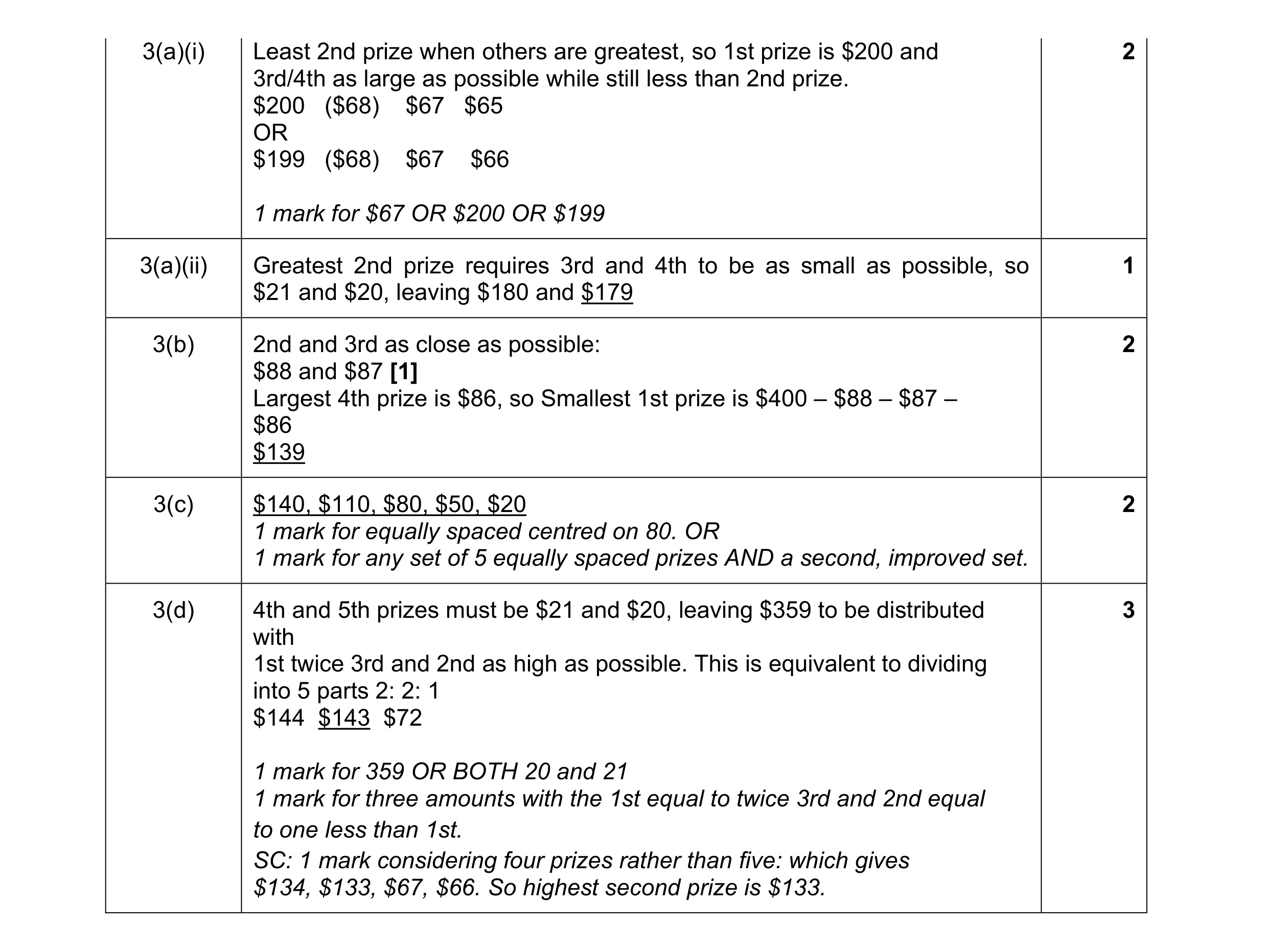 10
10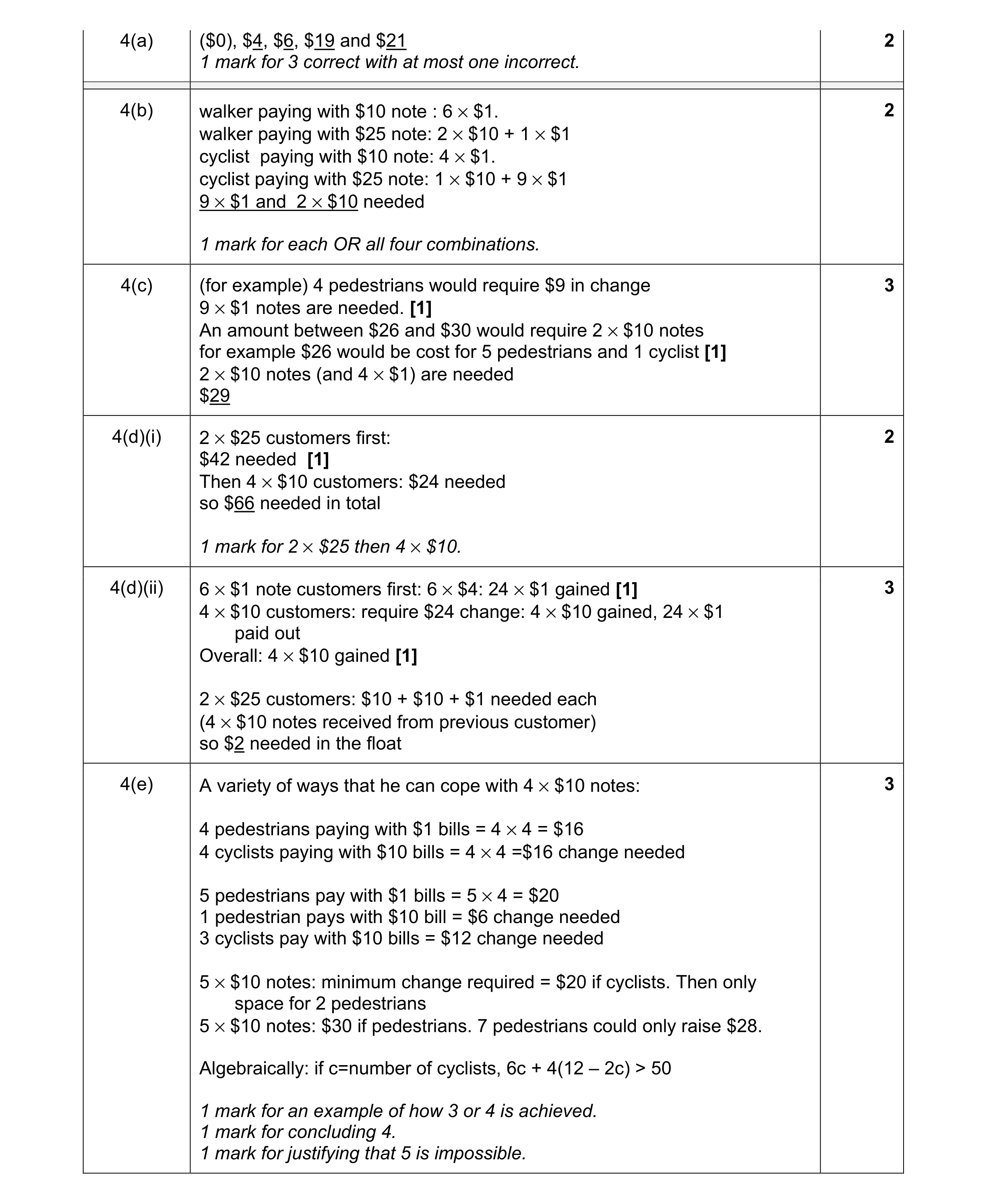 15
15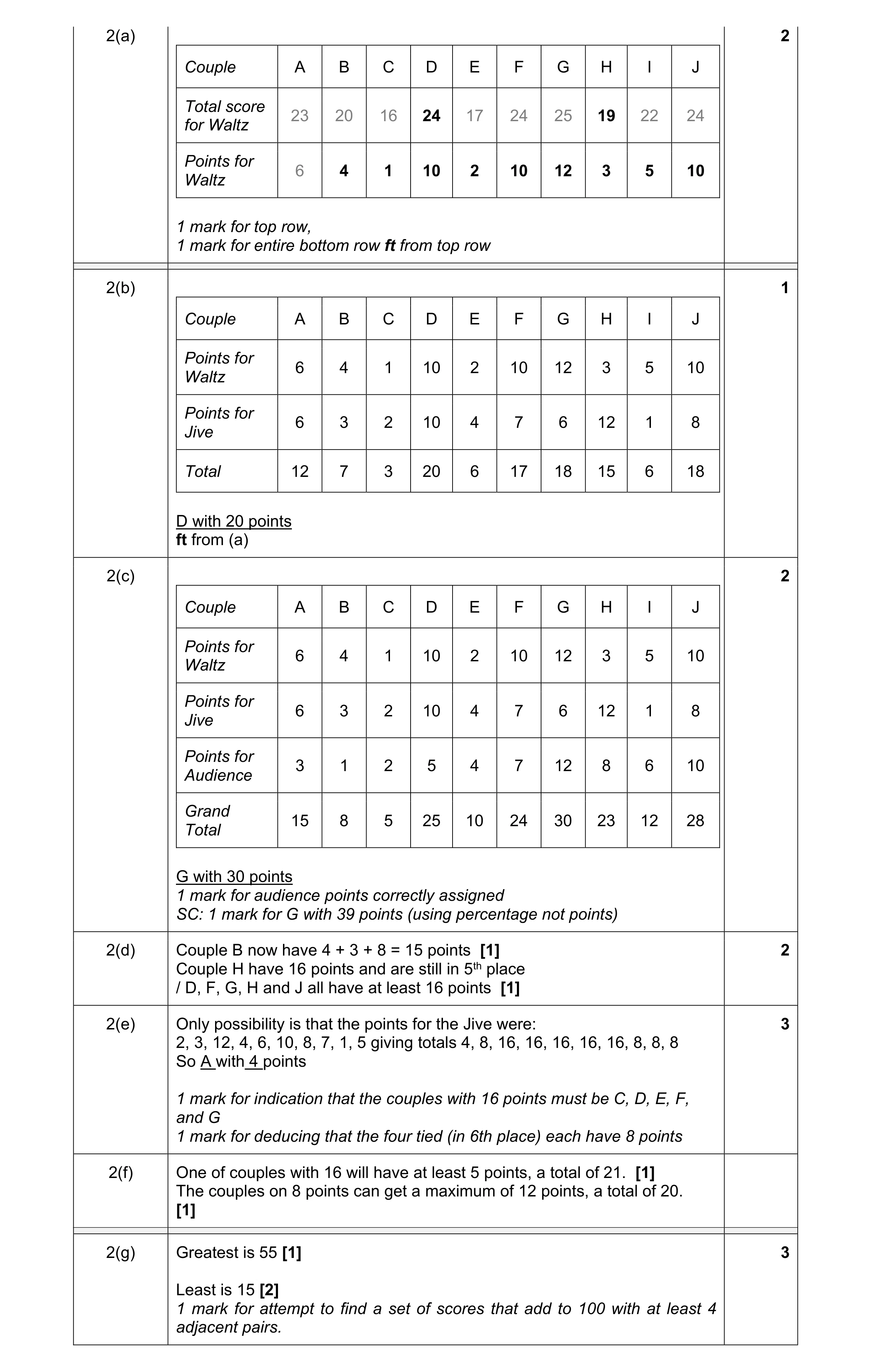 15
15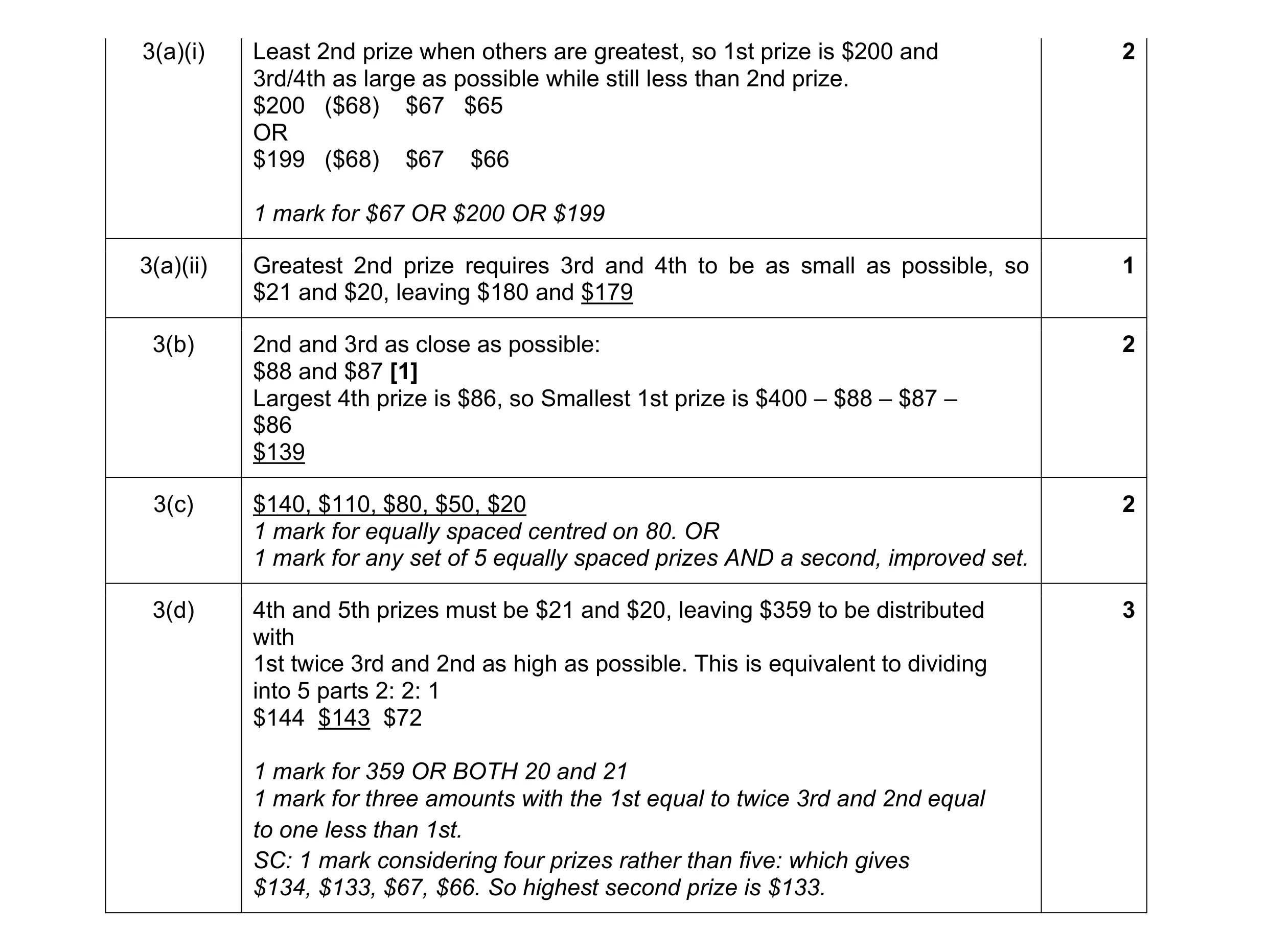 10
10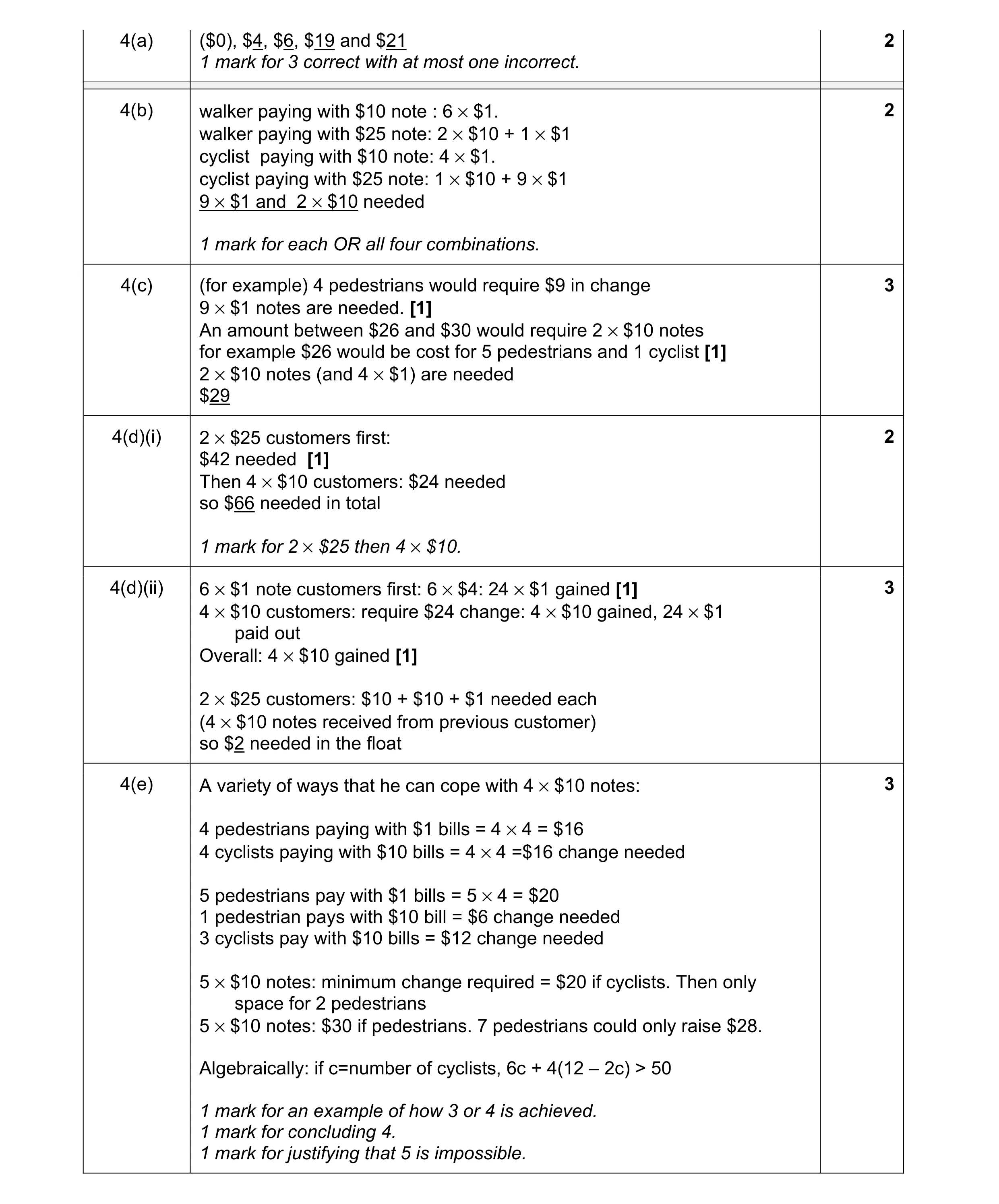 15
15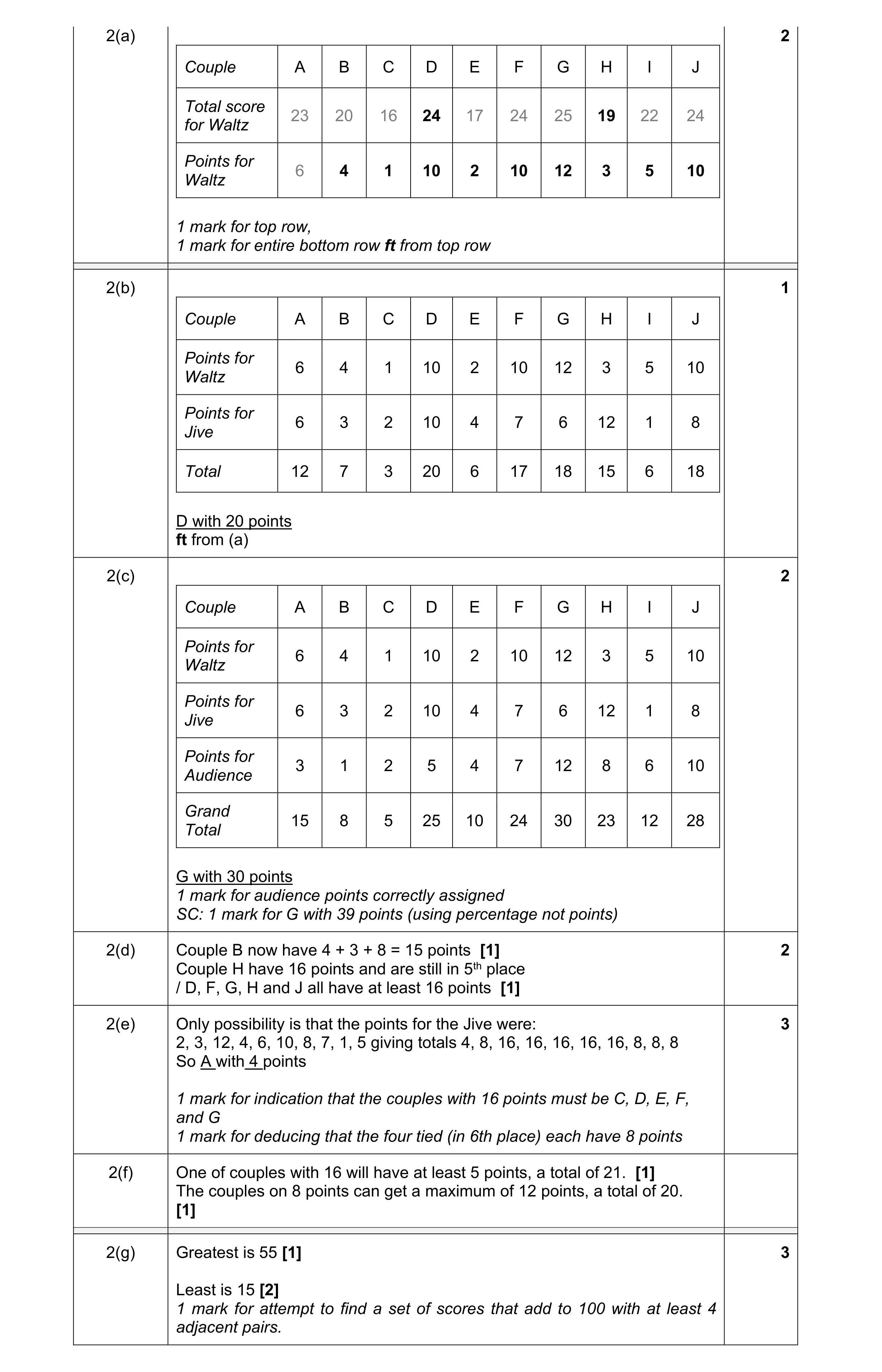 15
15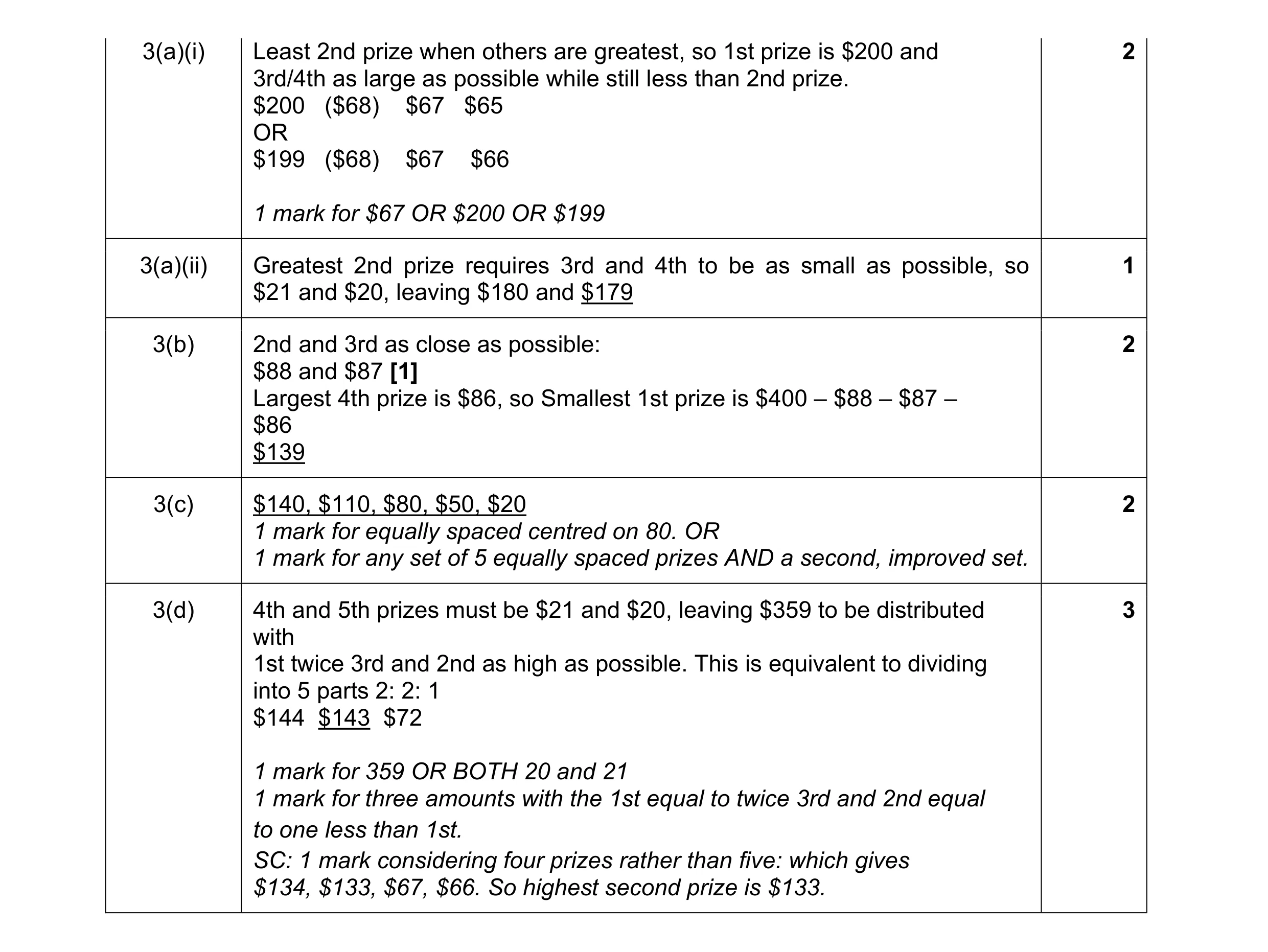 10
10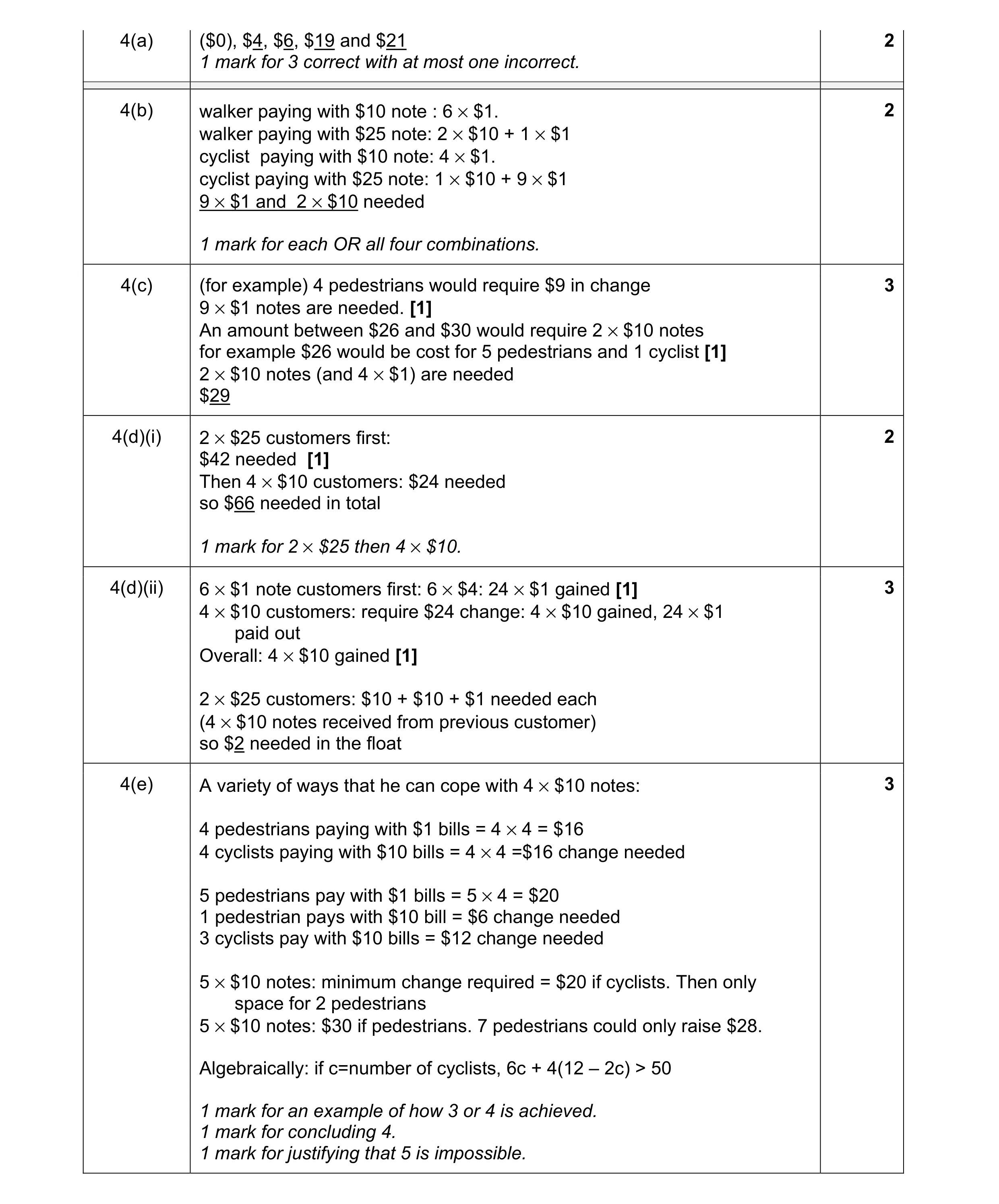 15
15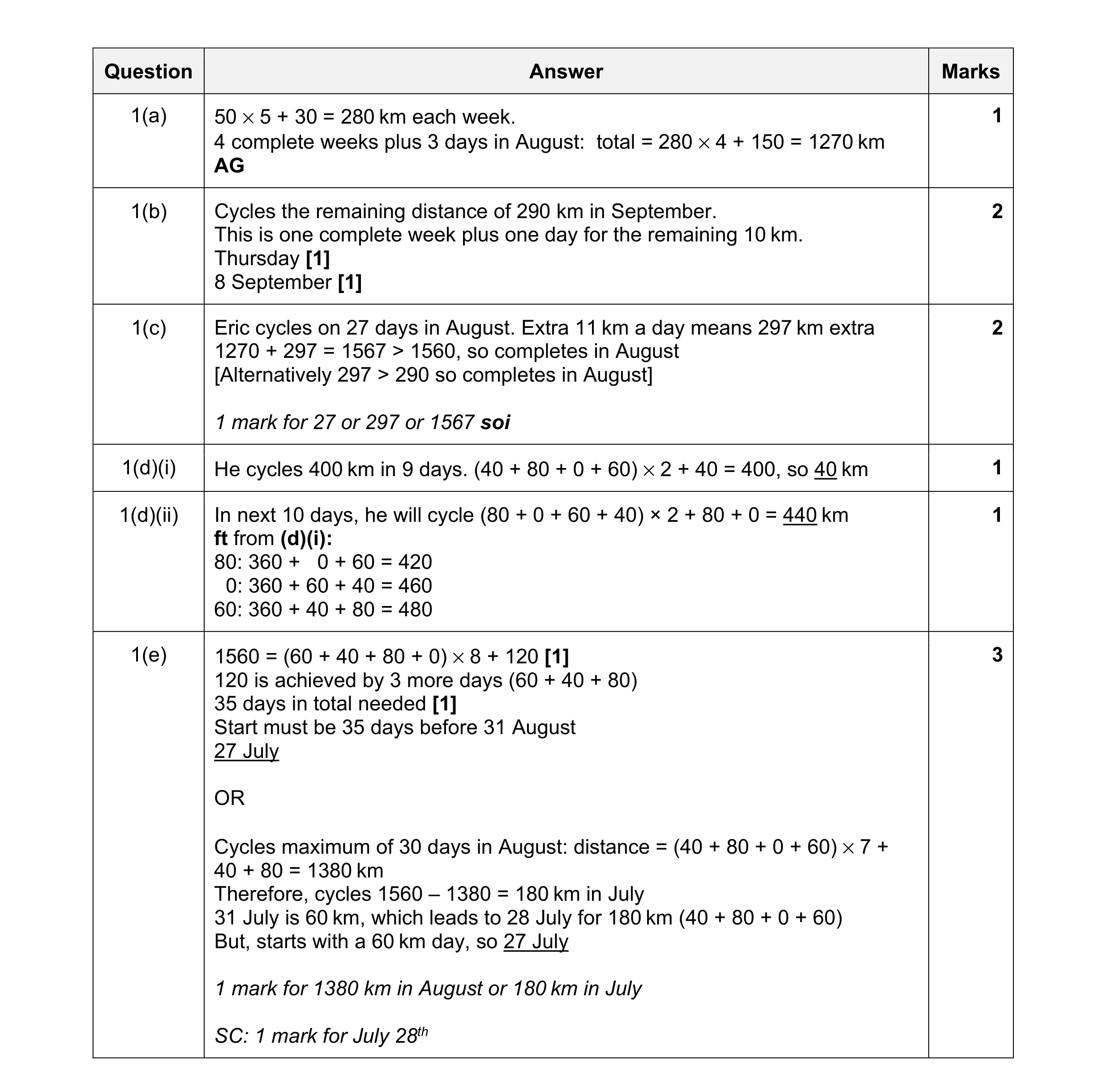 10
10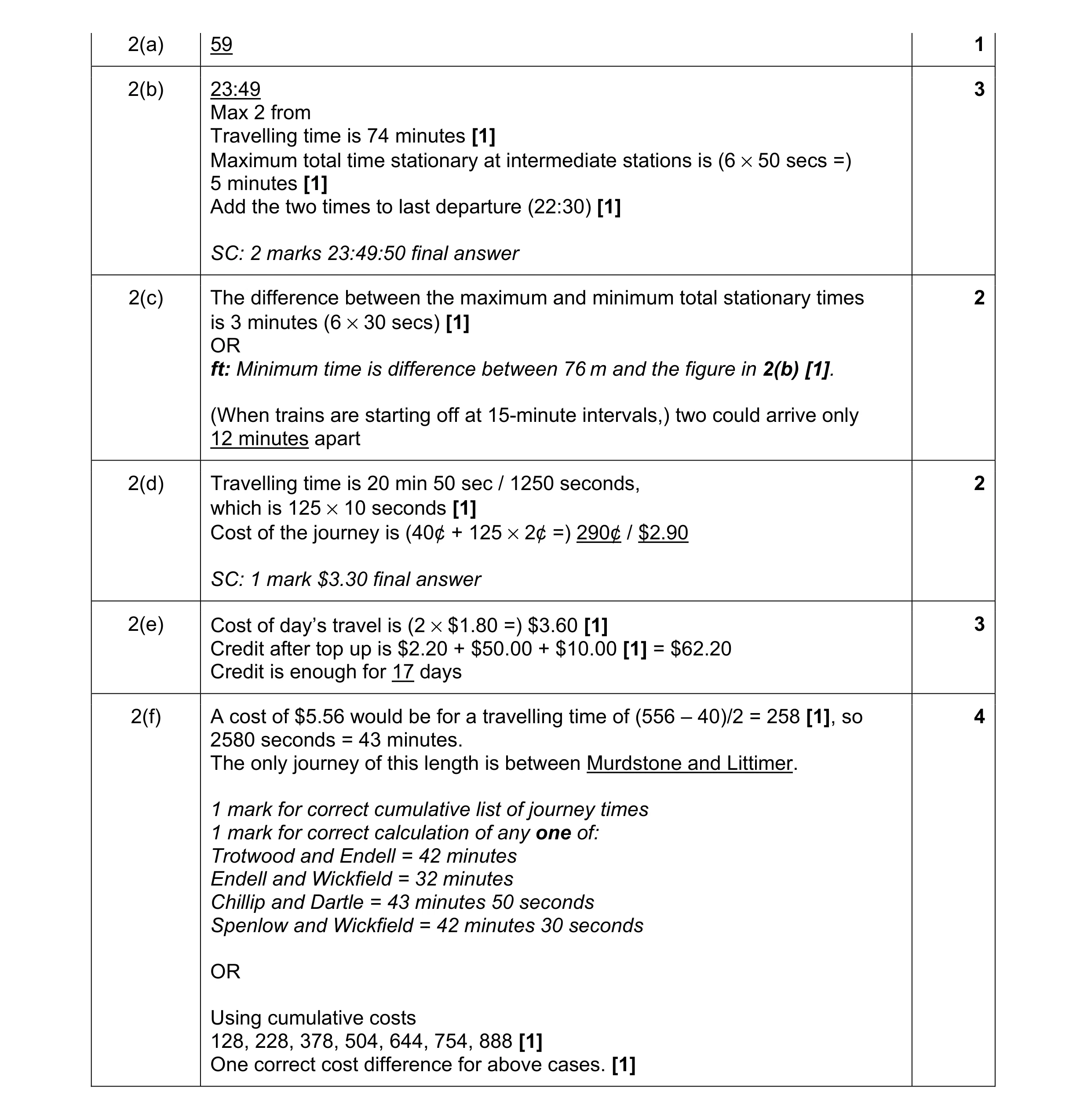 15
15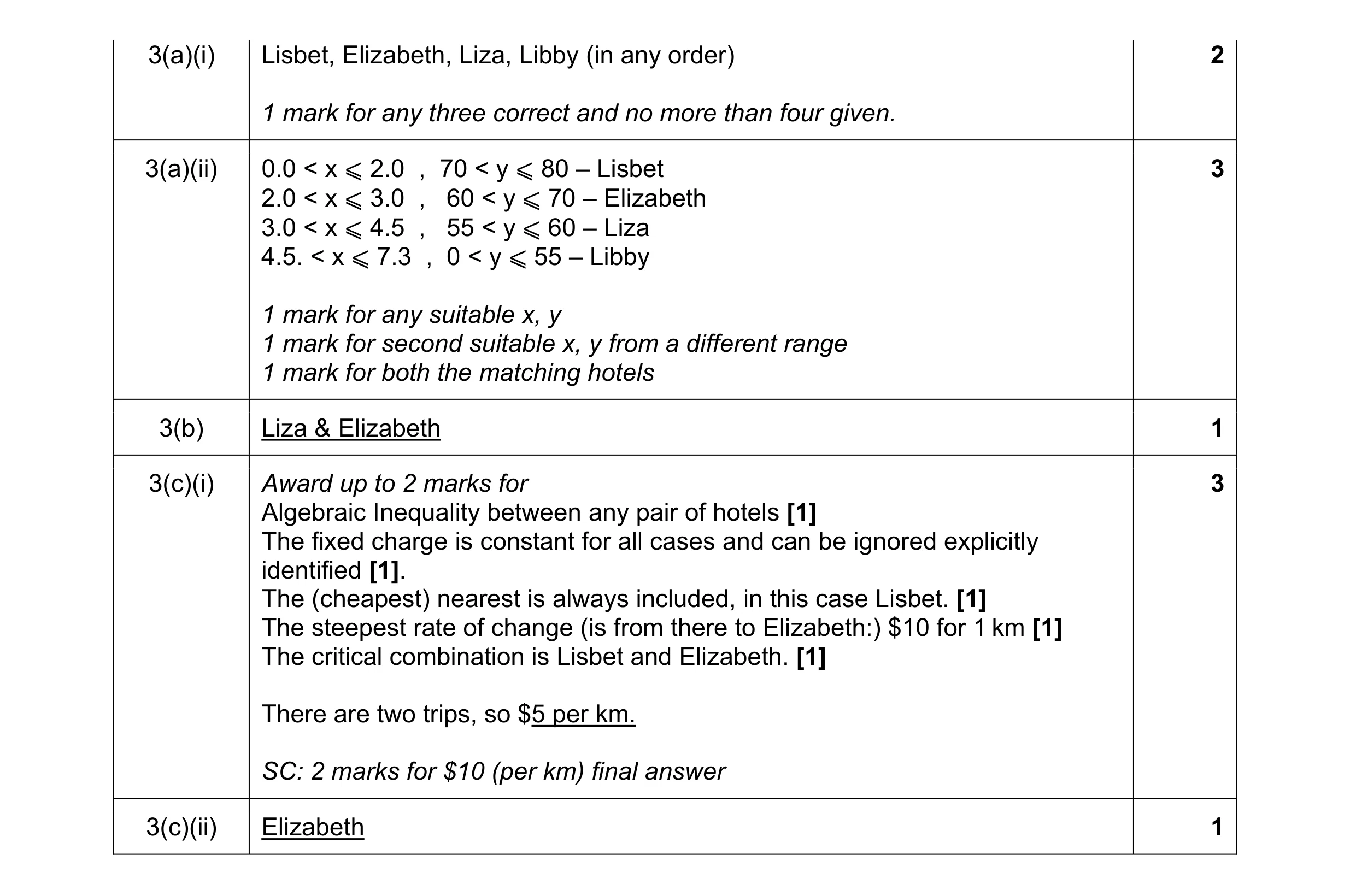 10
10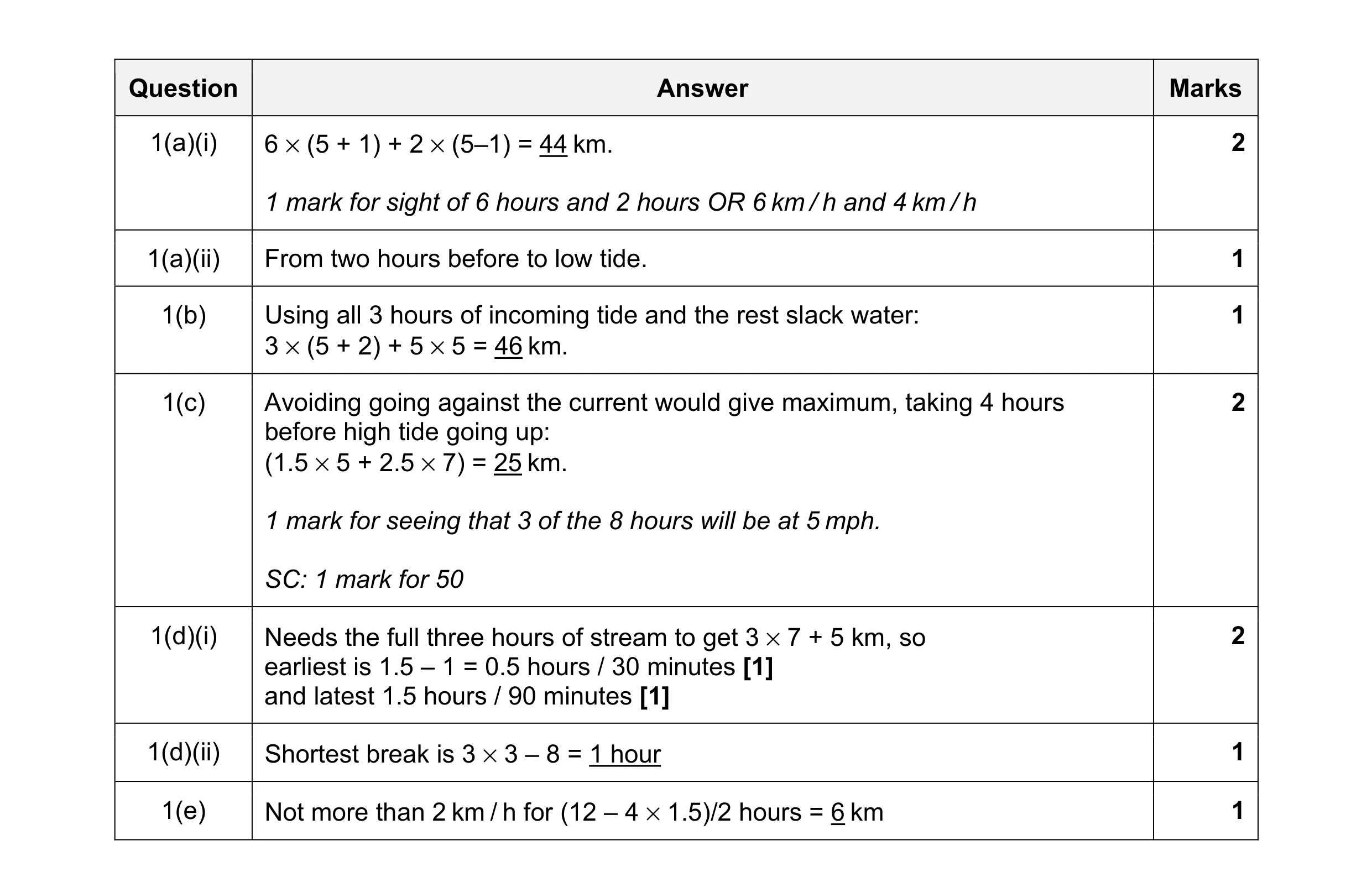 10
10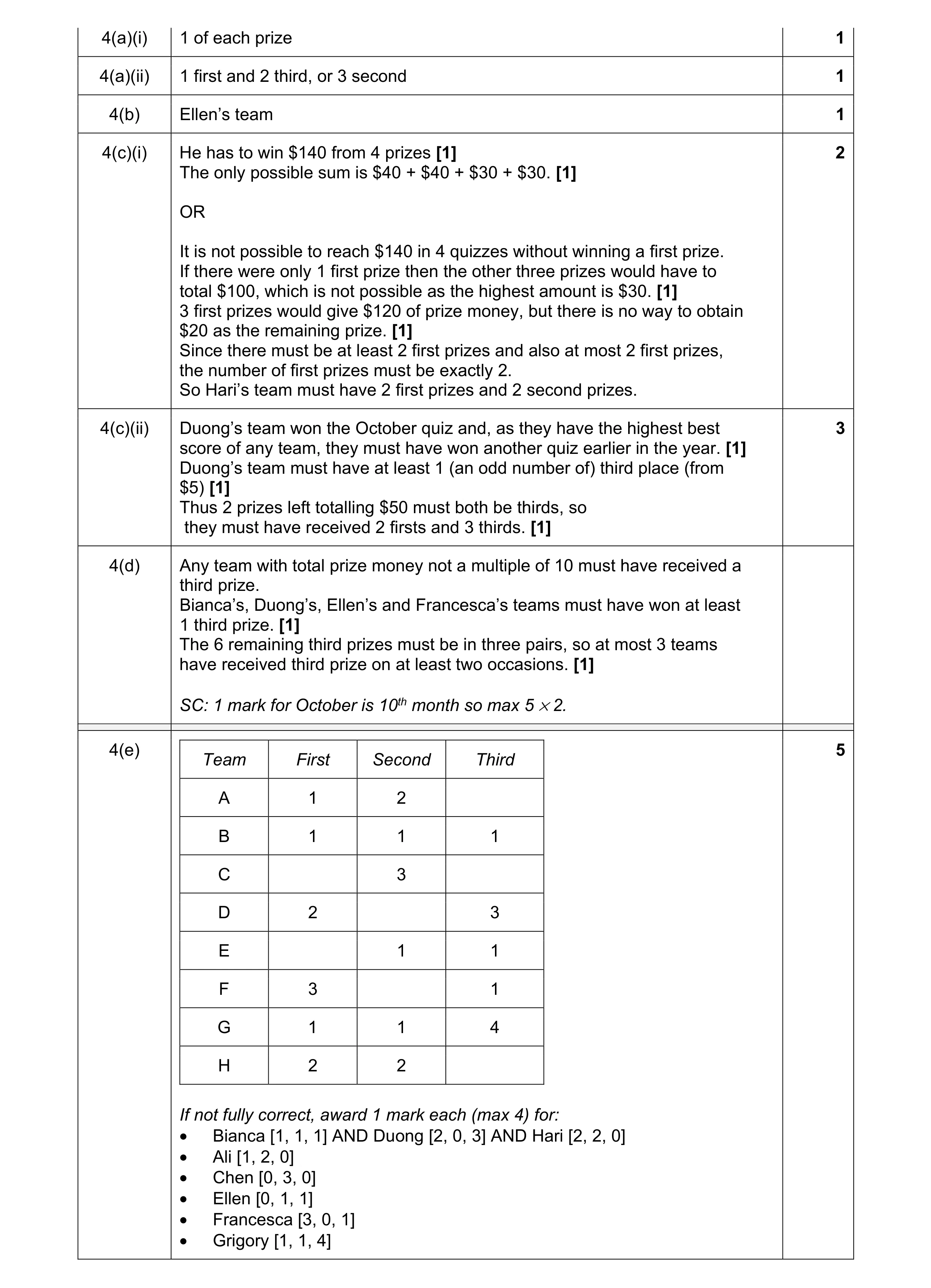 15
15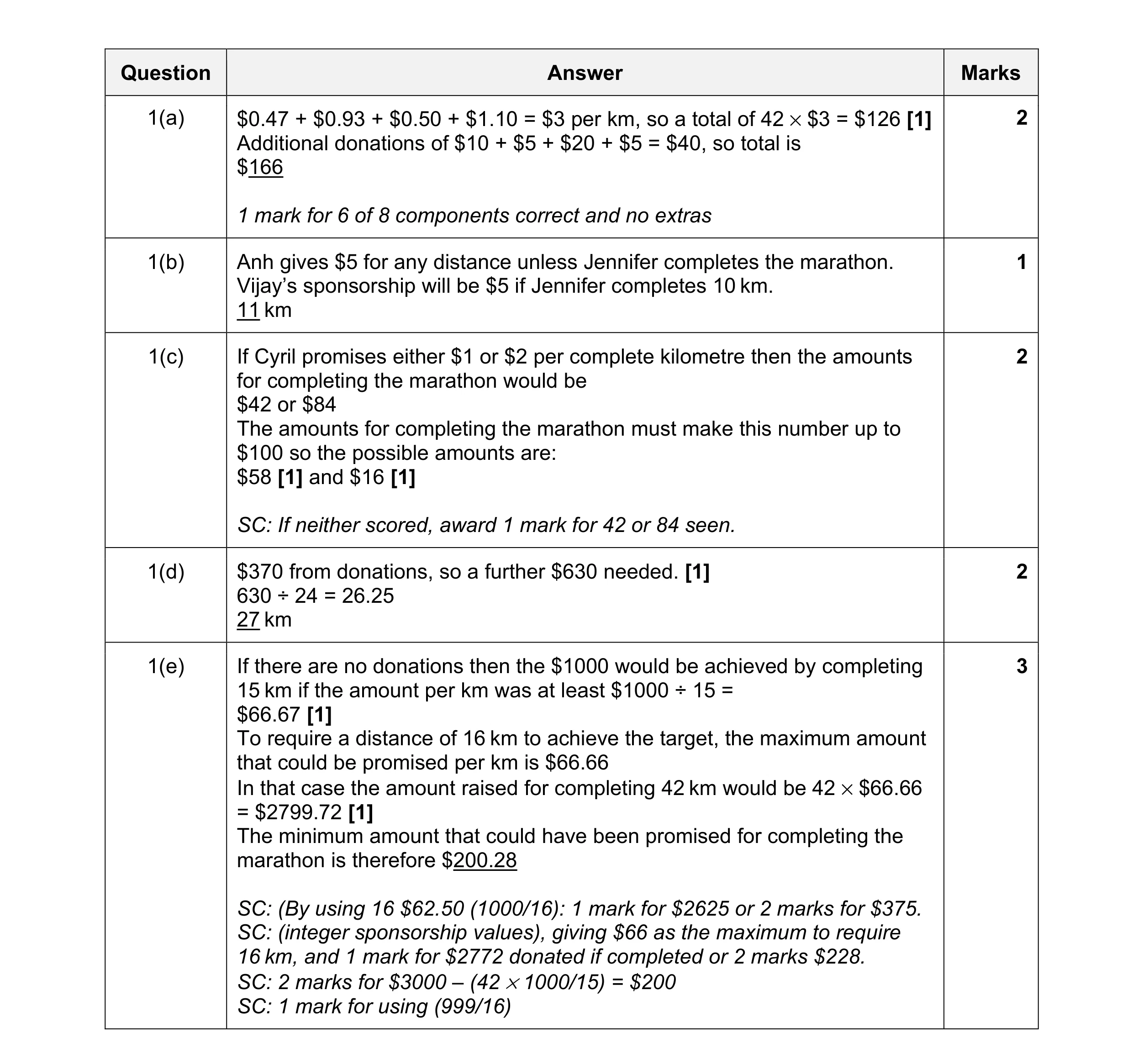 10
10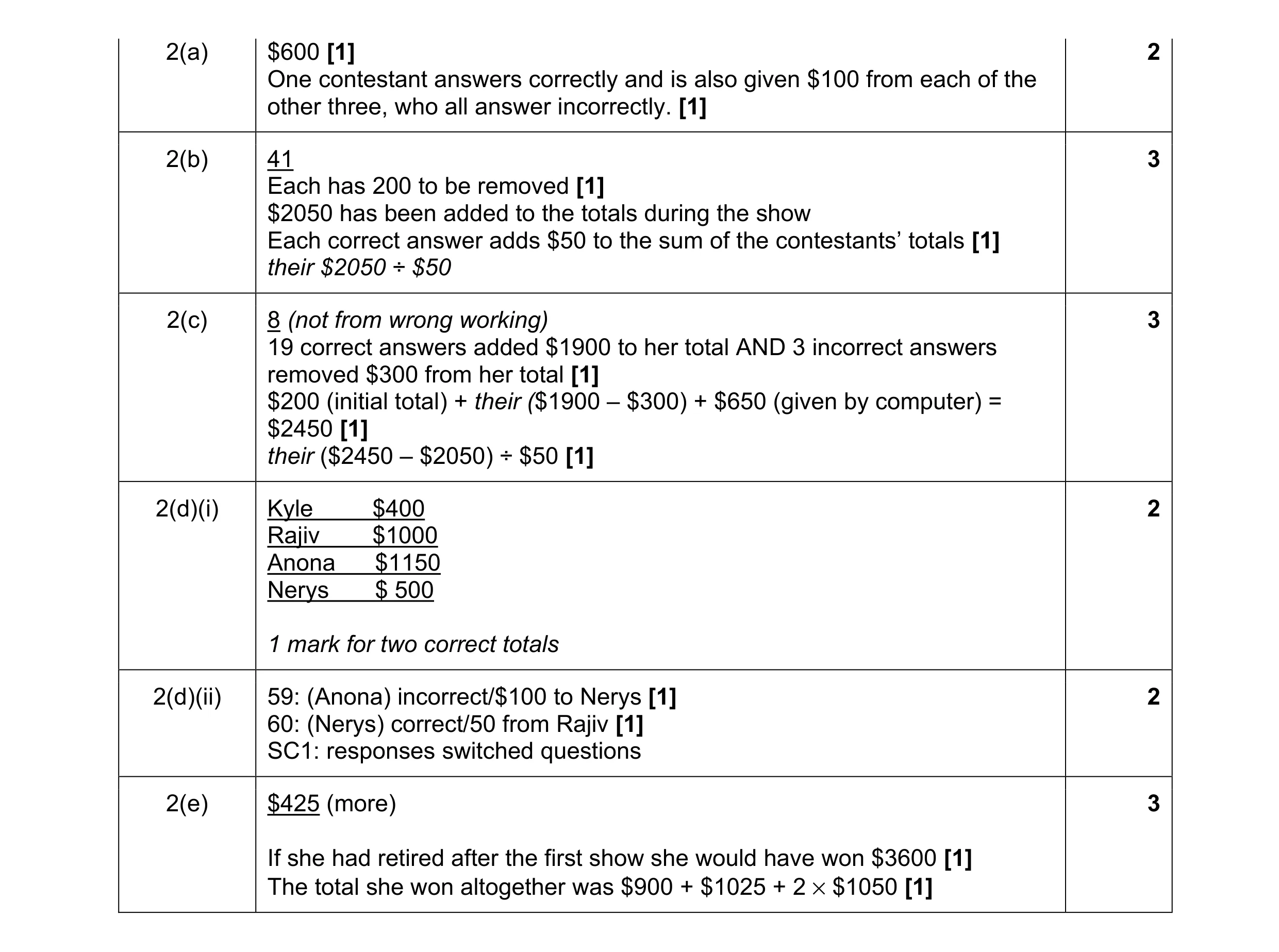 15
15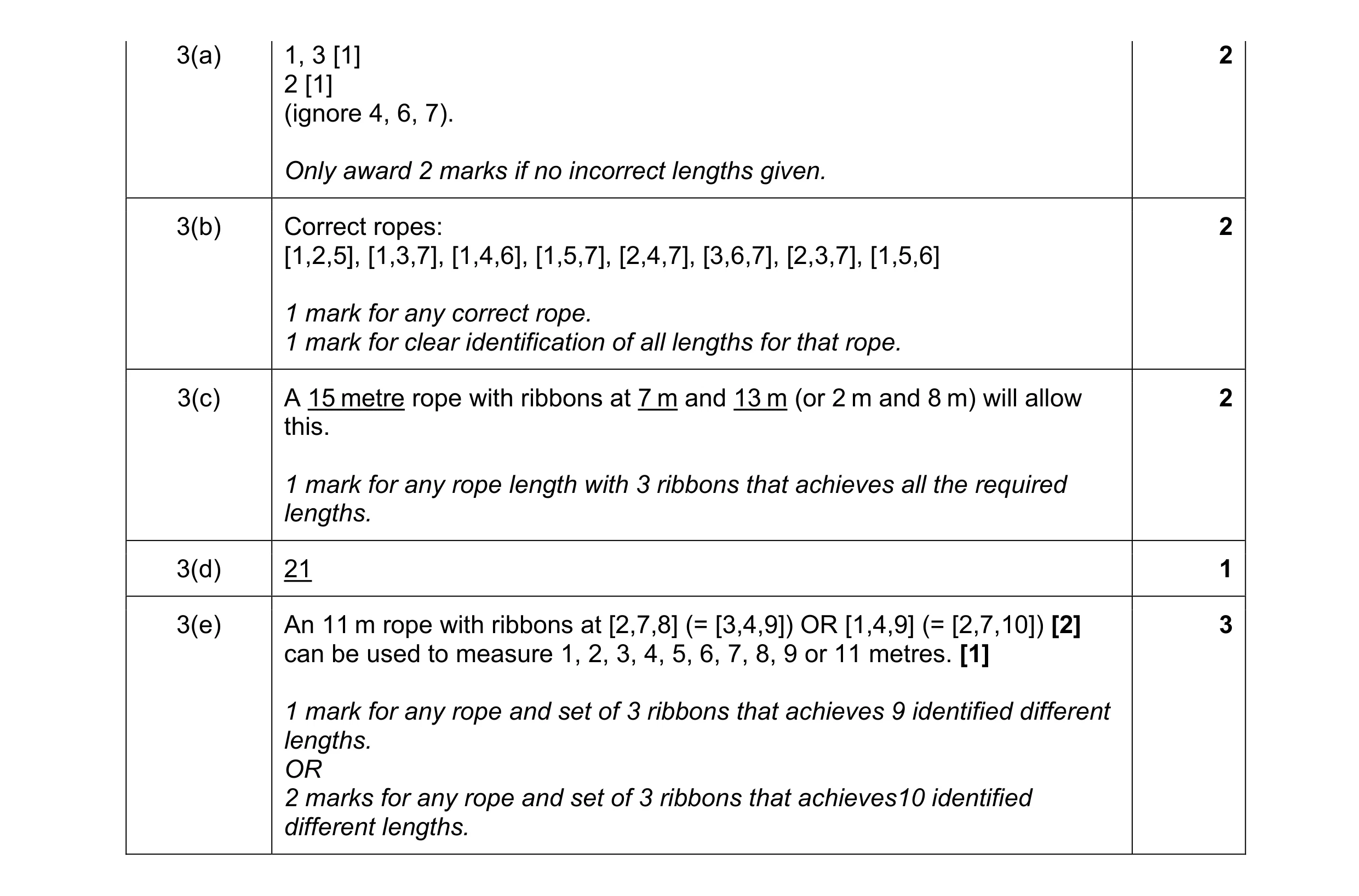 10
10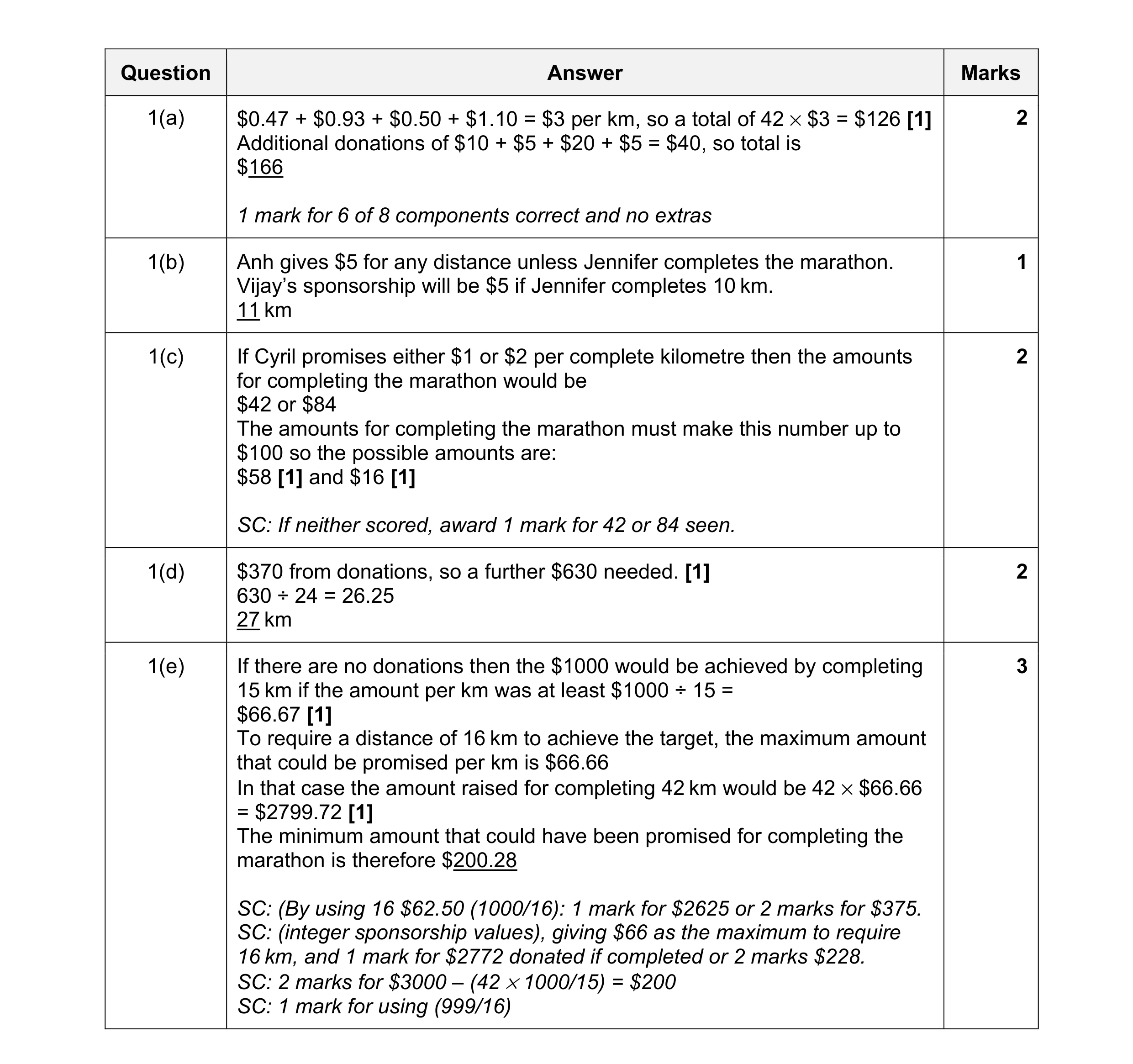 10
10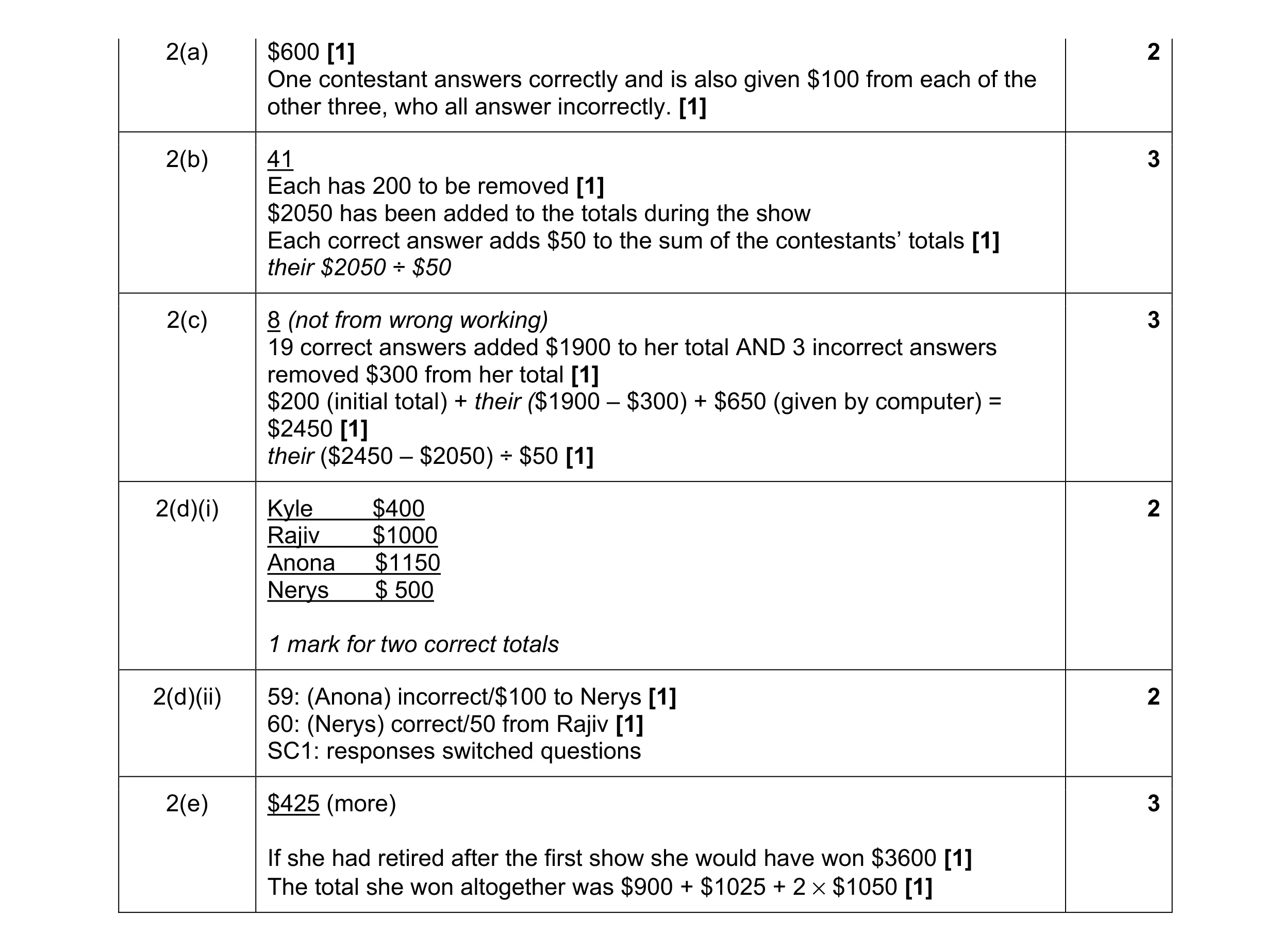 15
15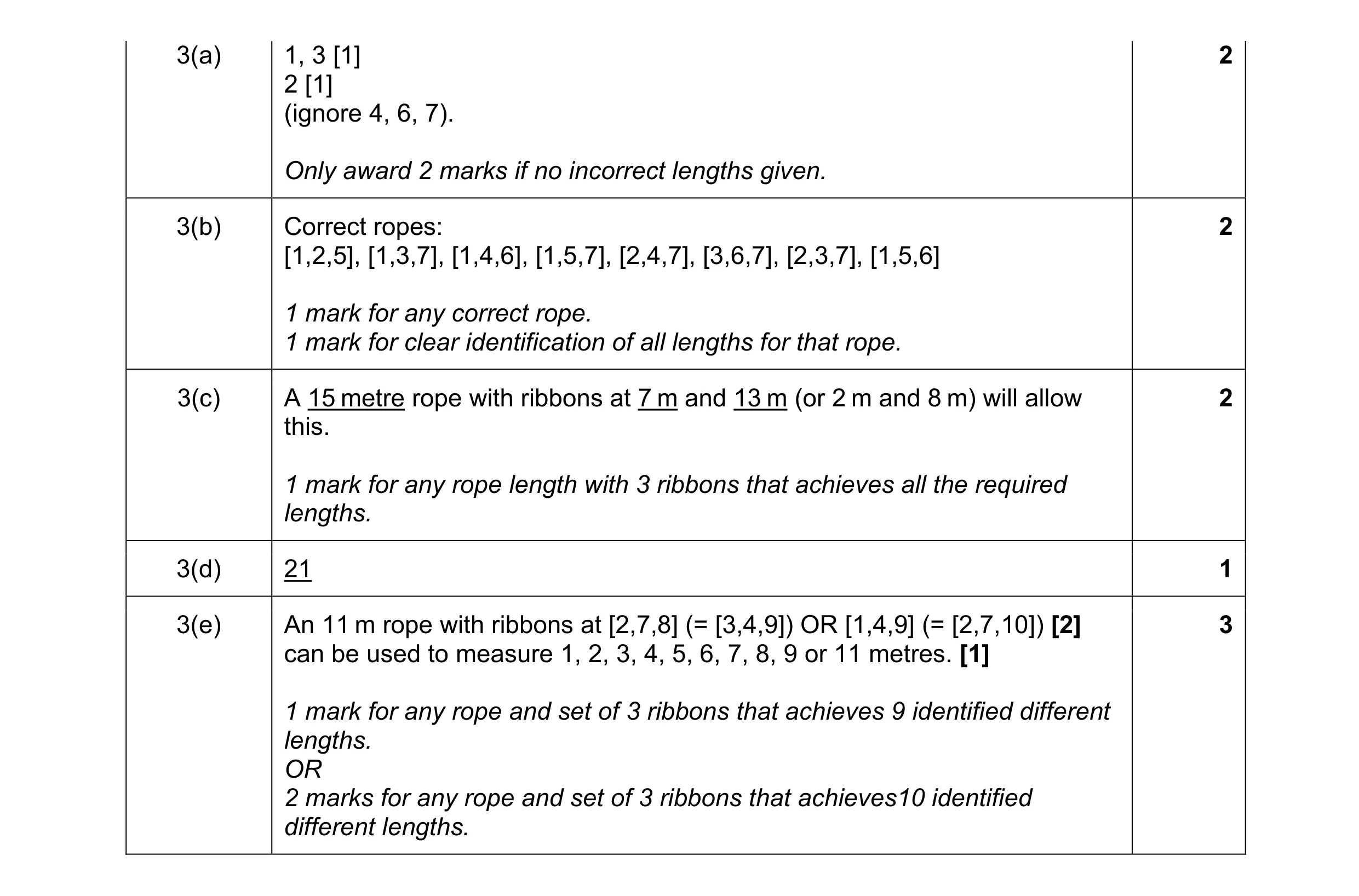 10
10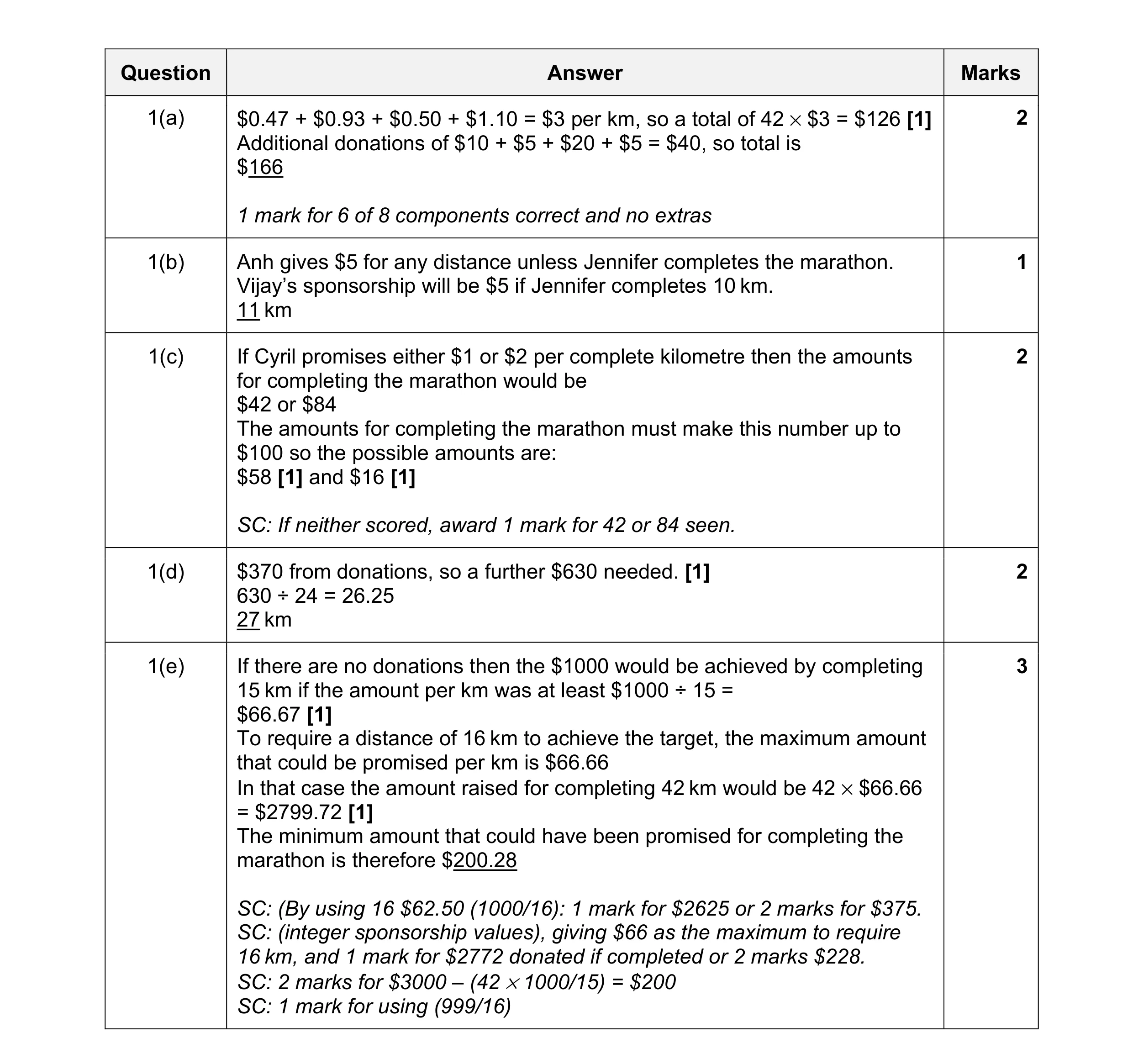 10
10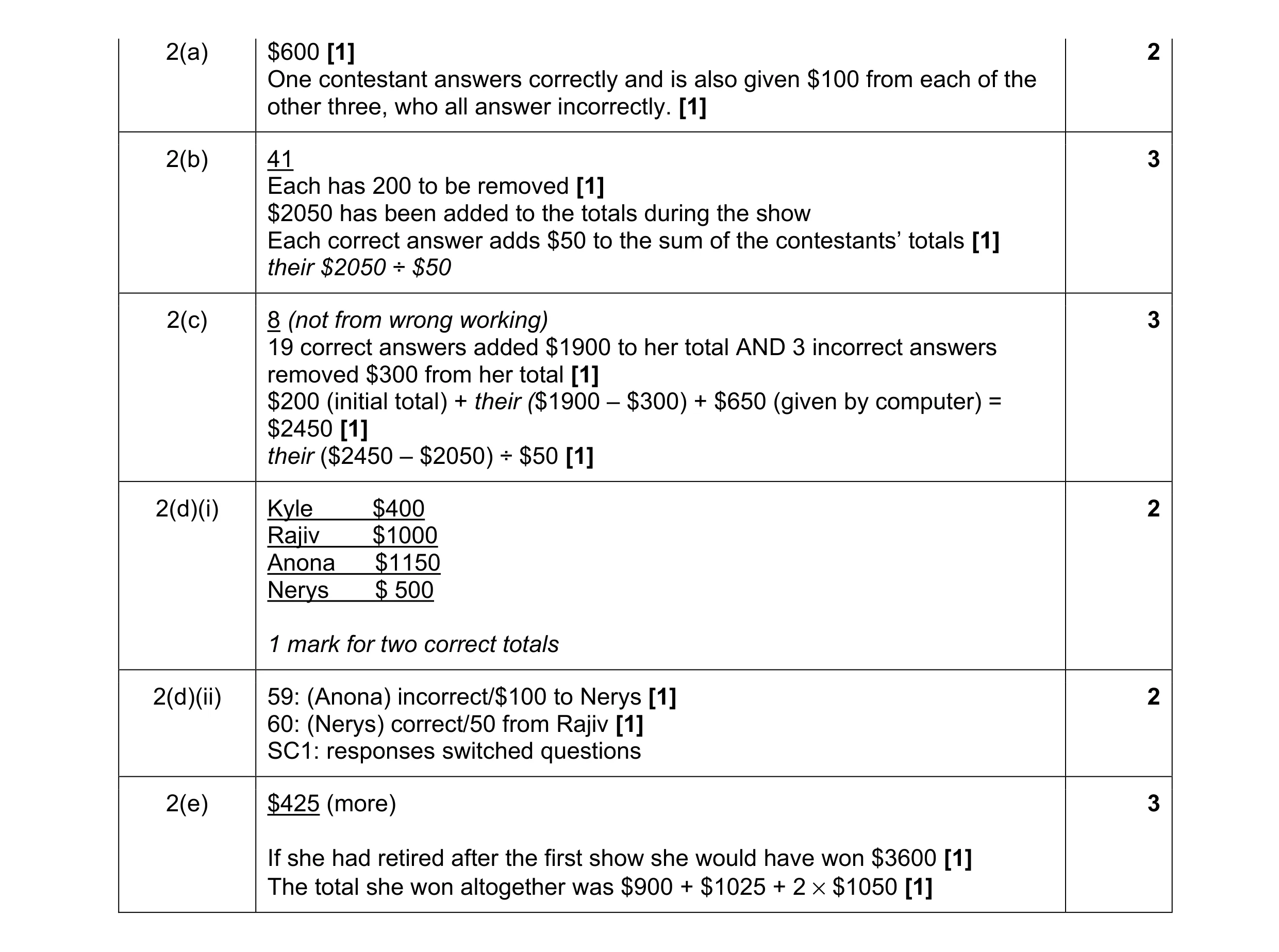 15
15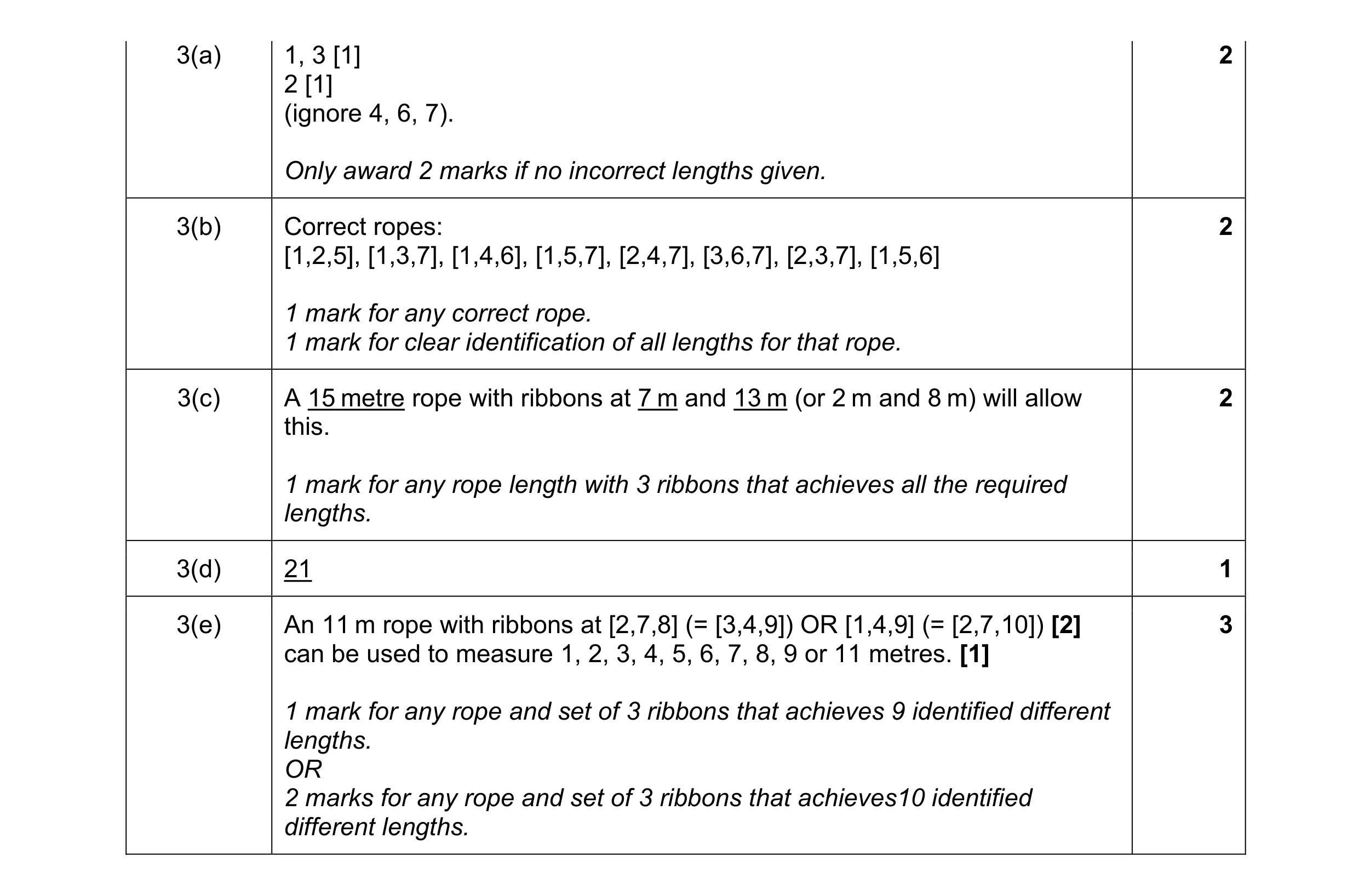 10
10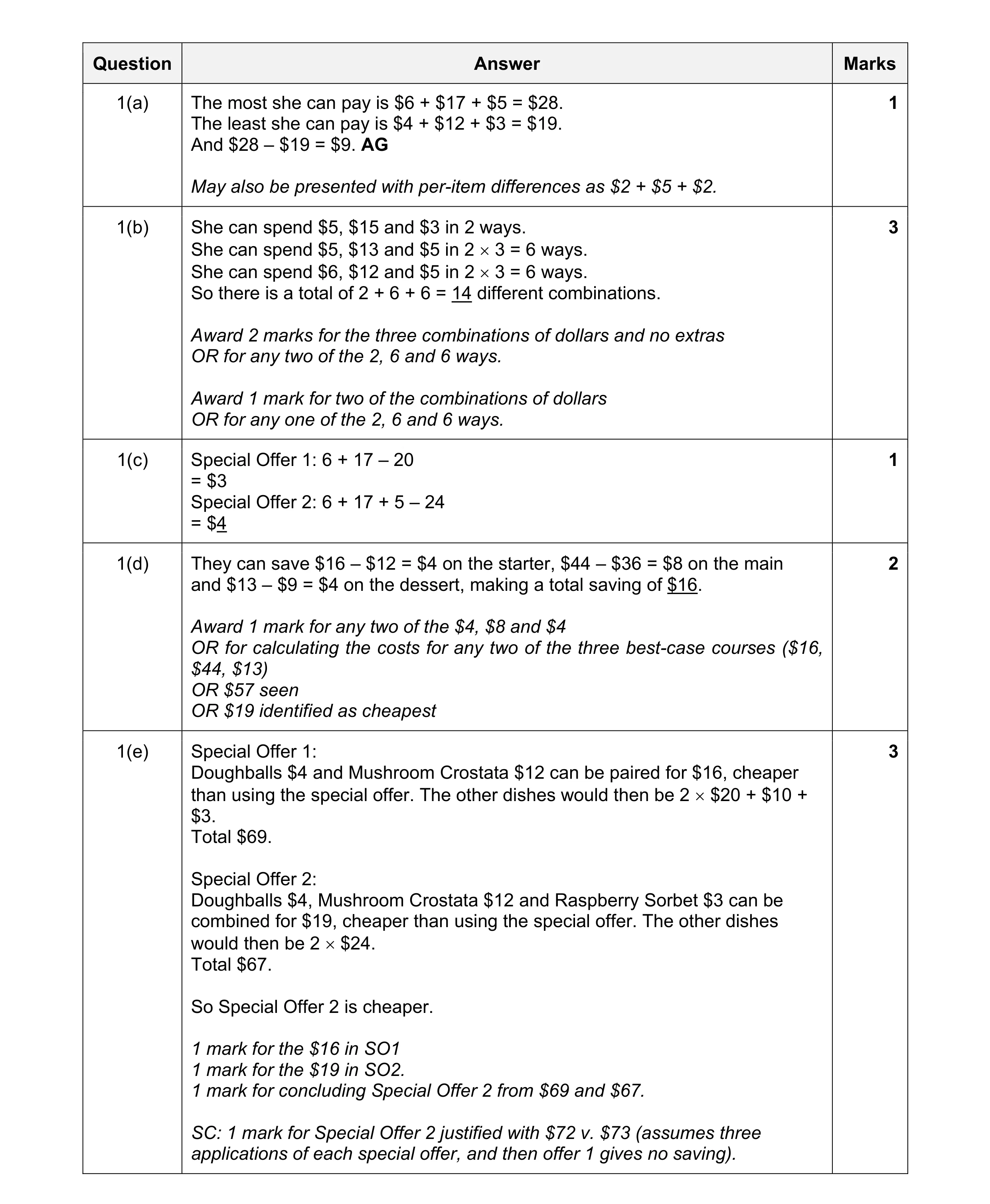 10
10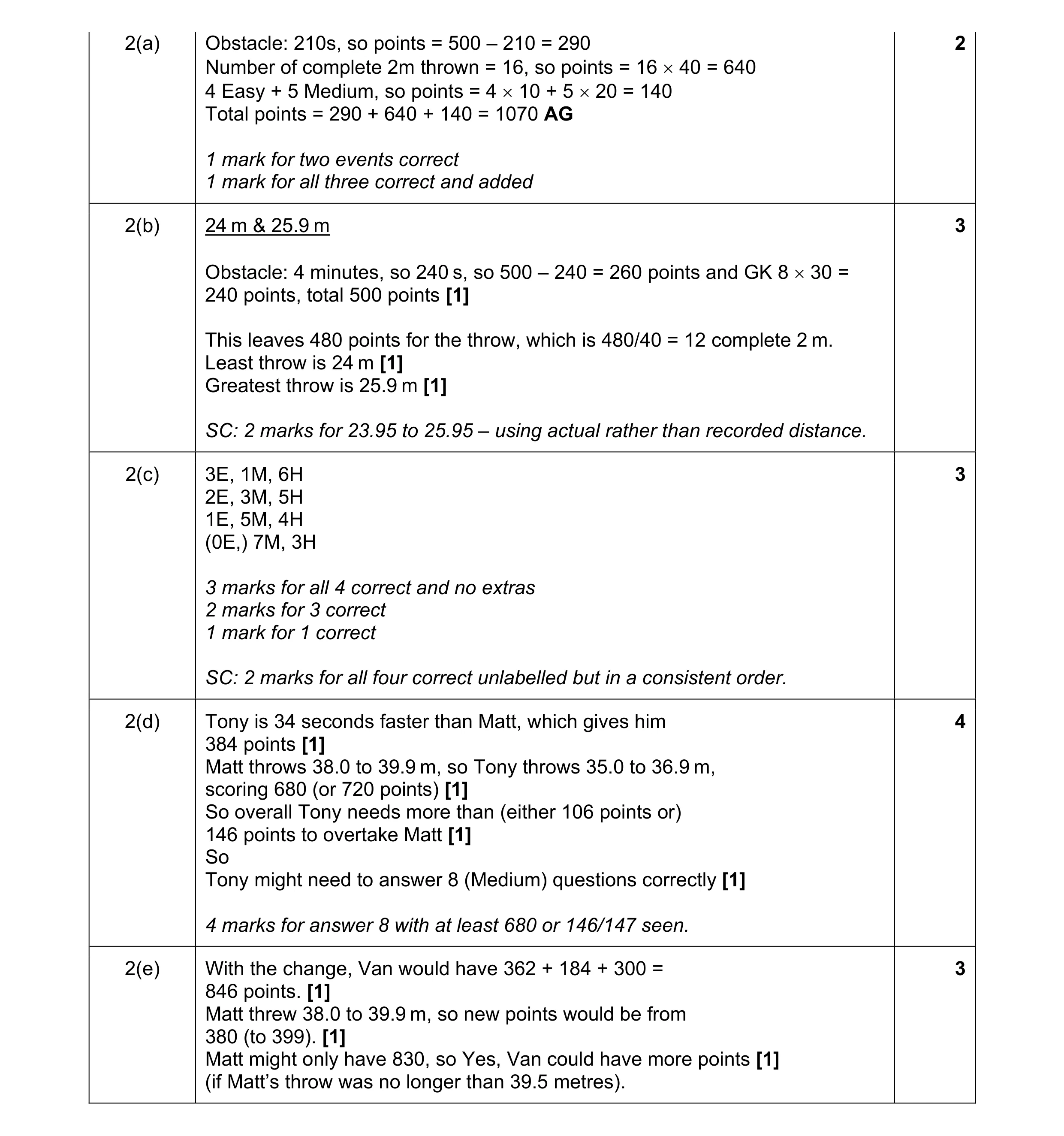 8
8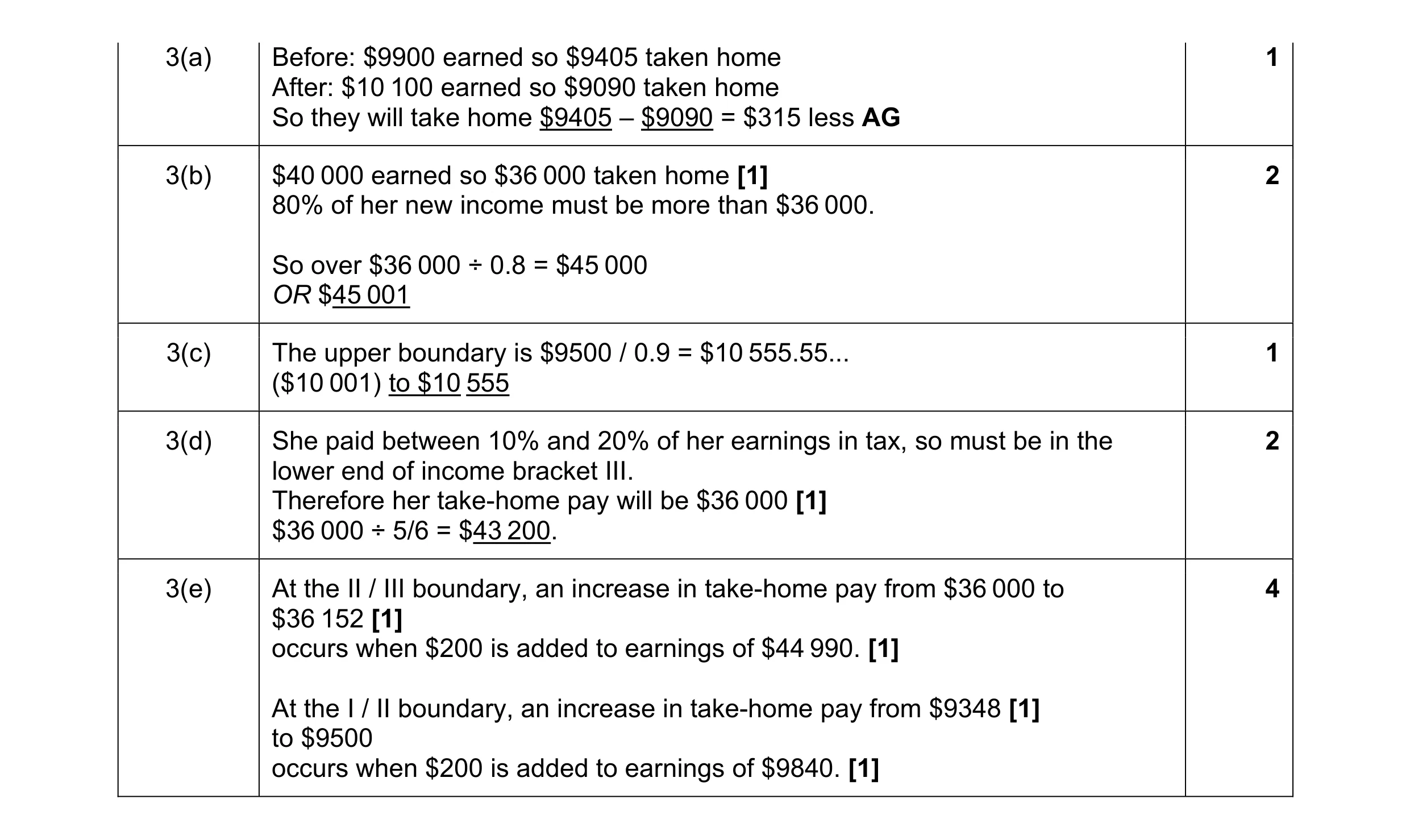 17
17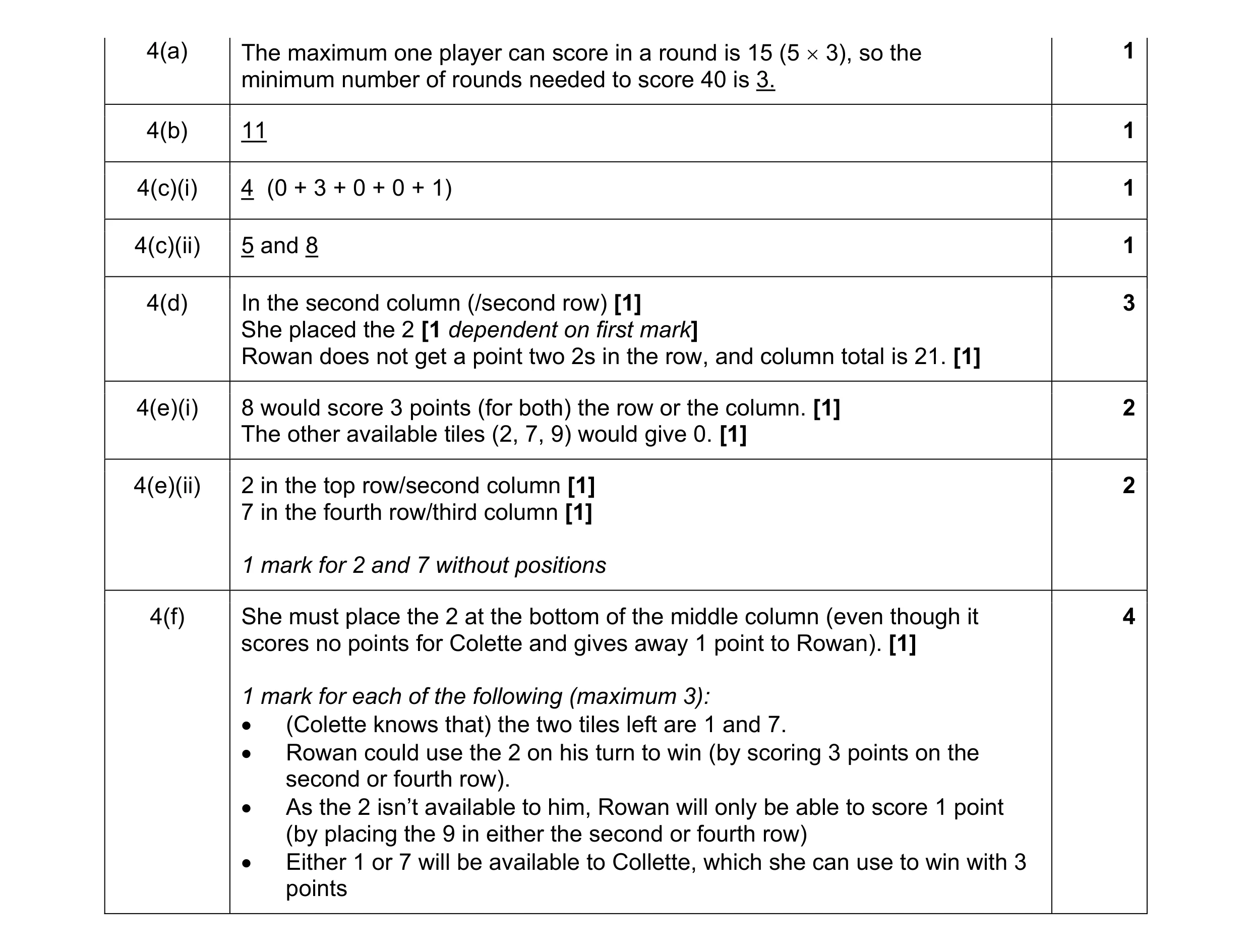 15
15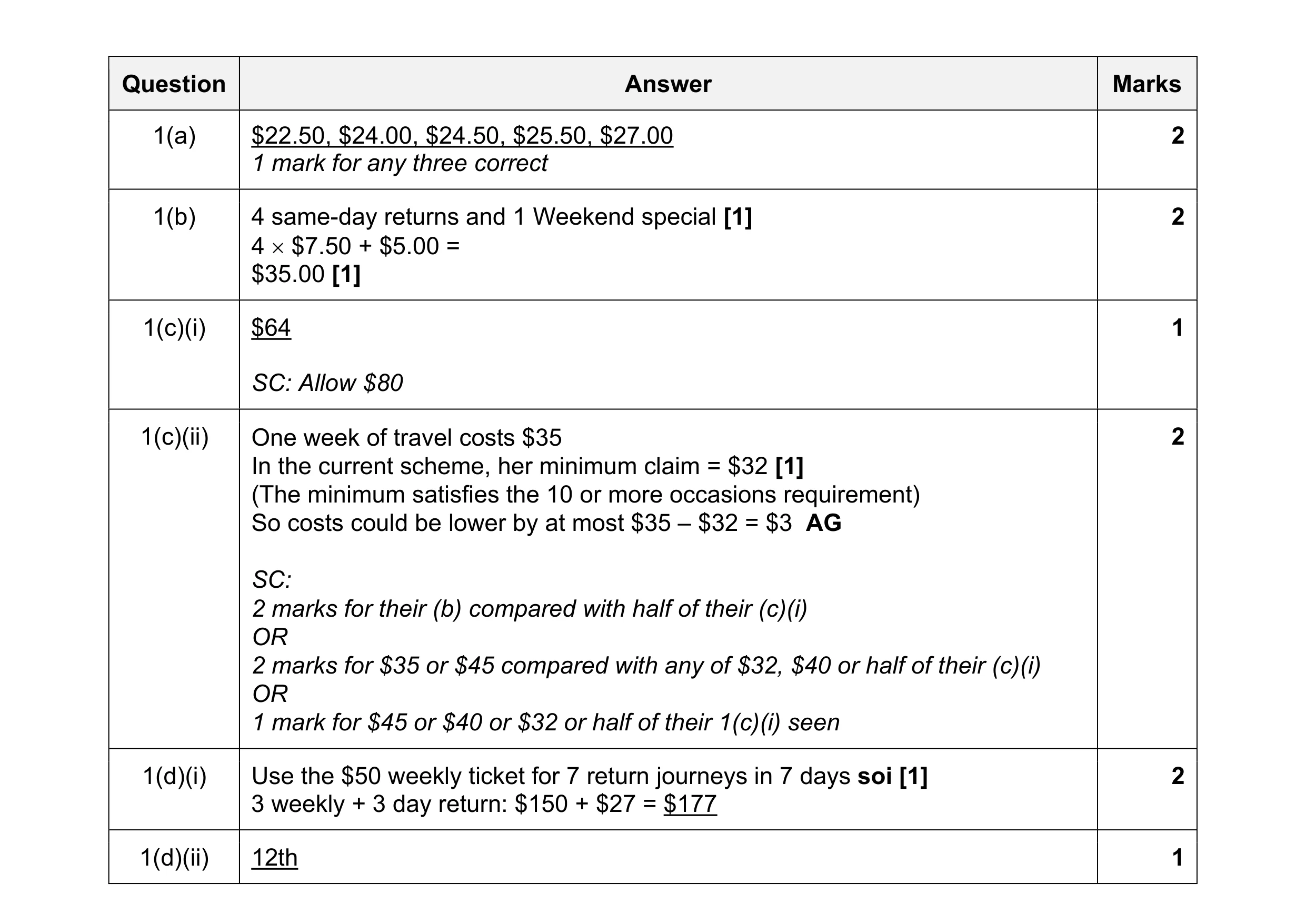 10
10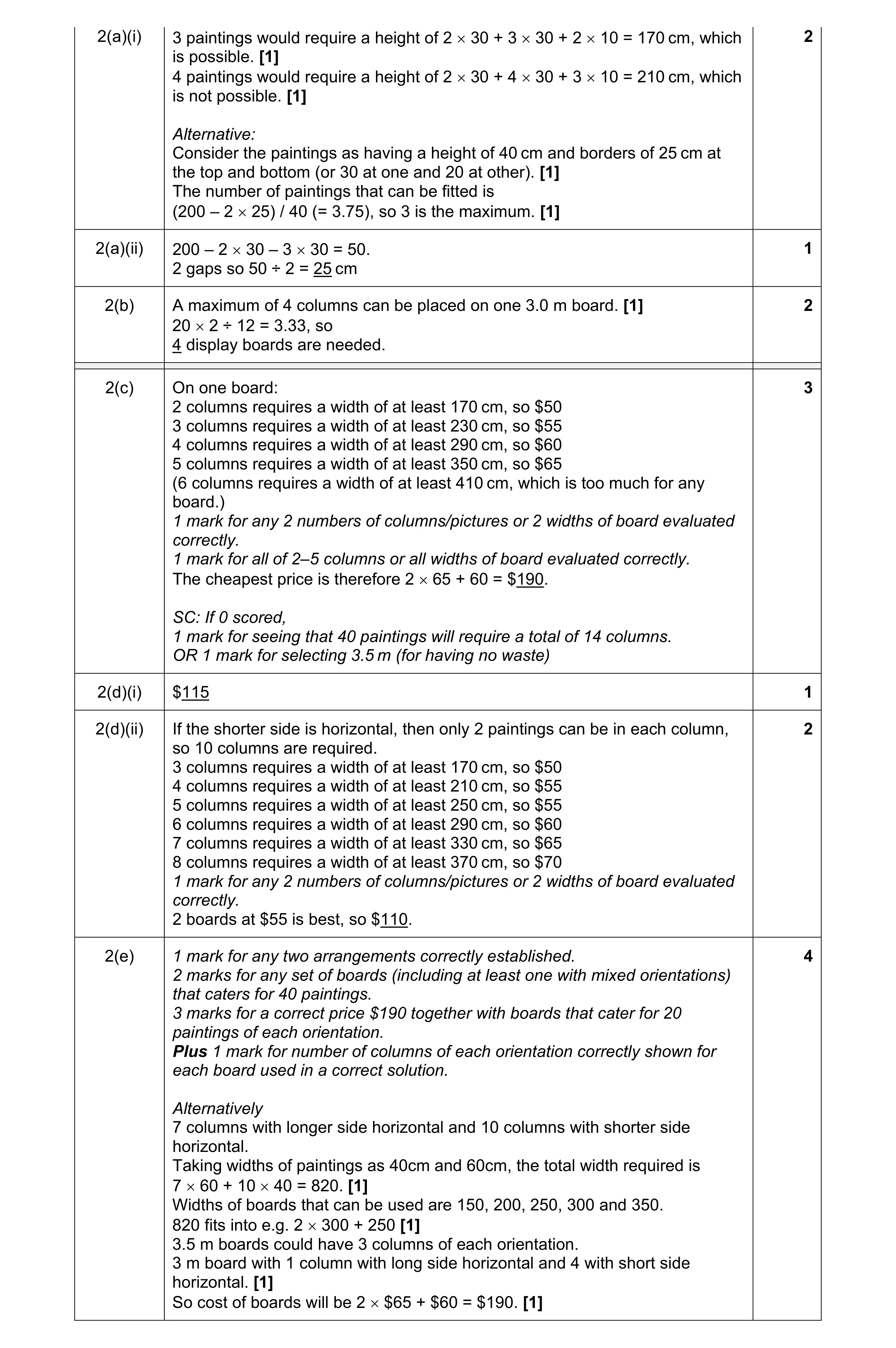 15
15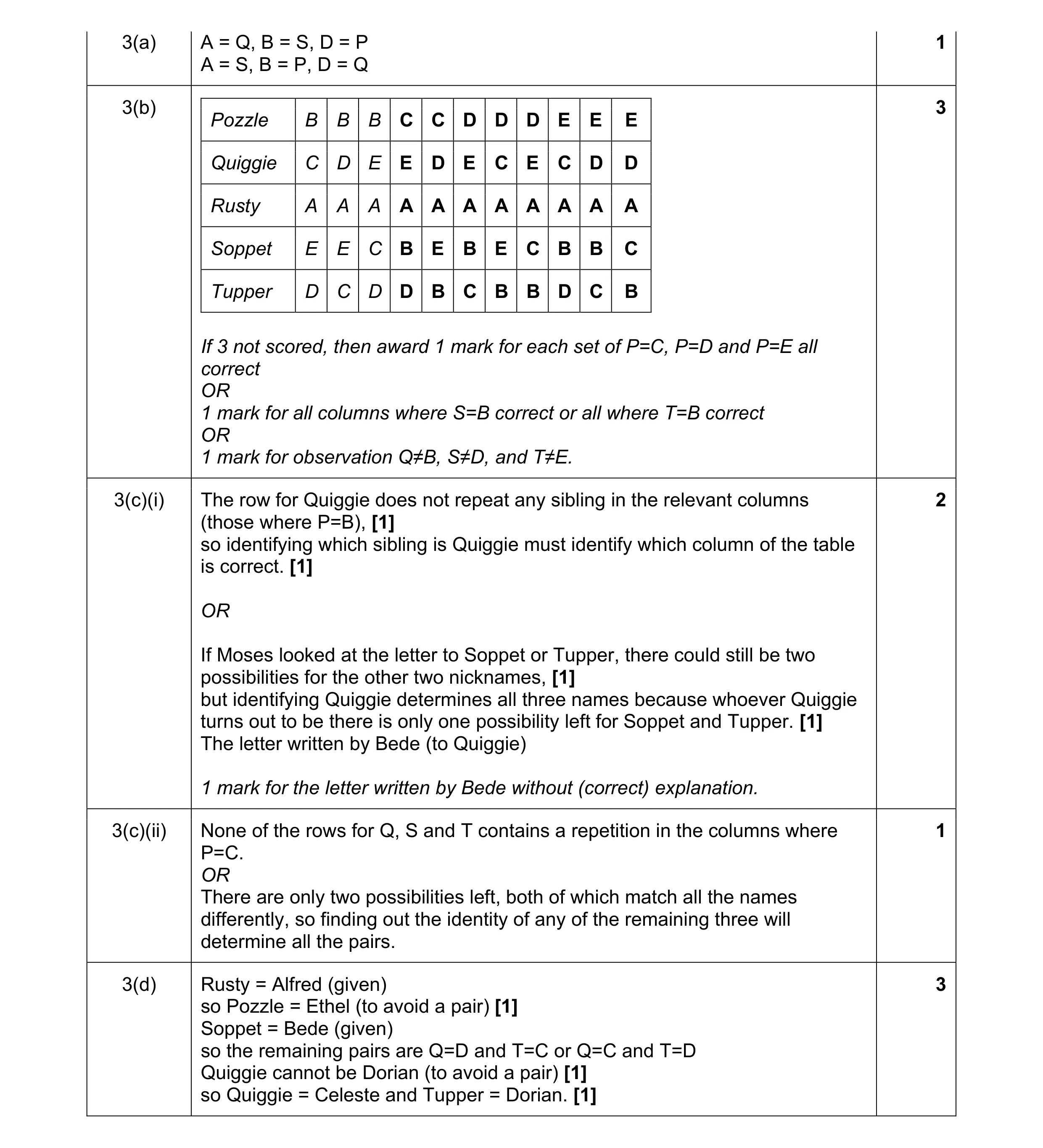 10
10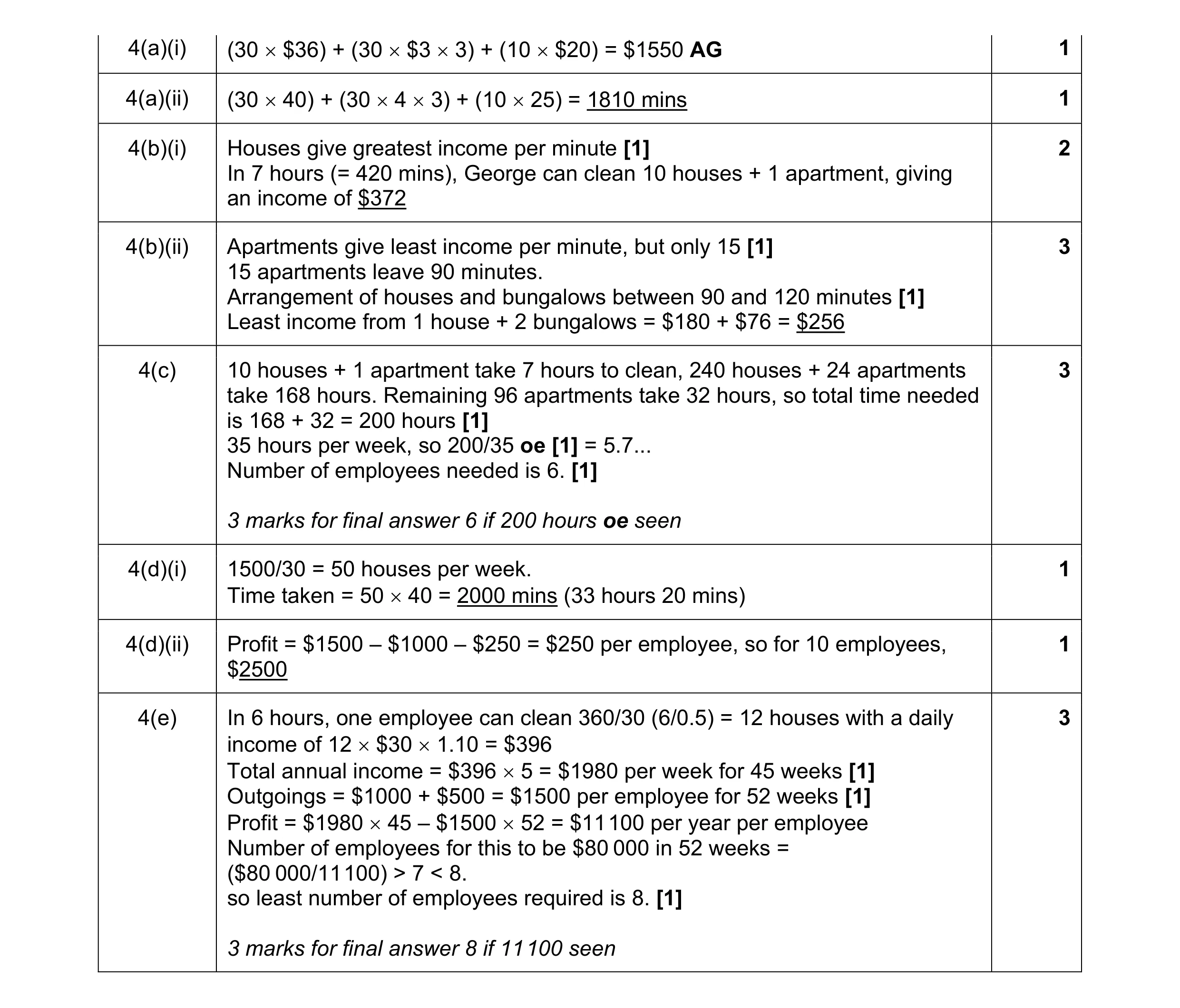 15
15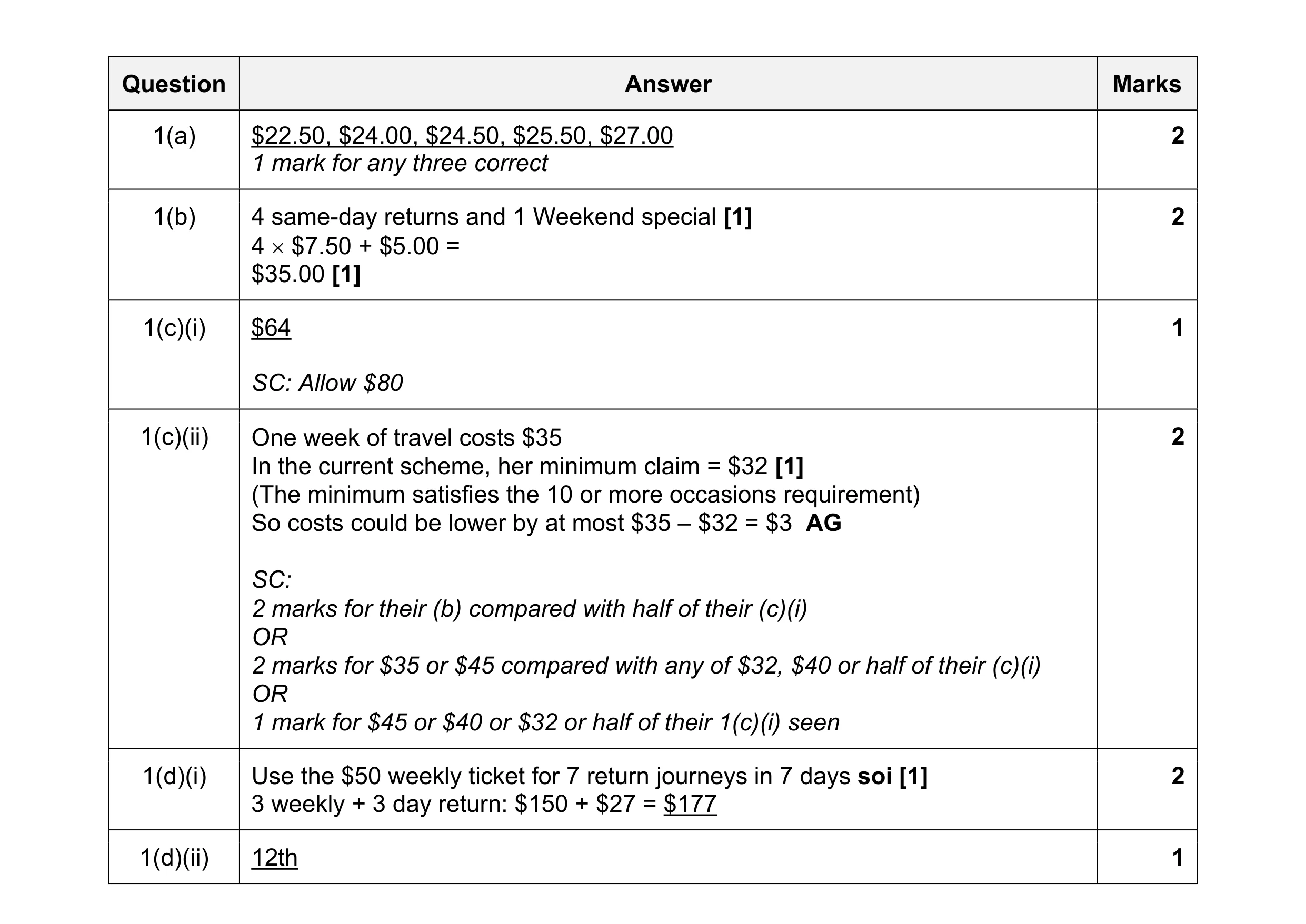 10
10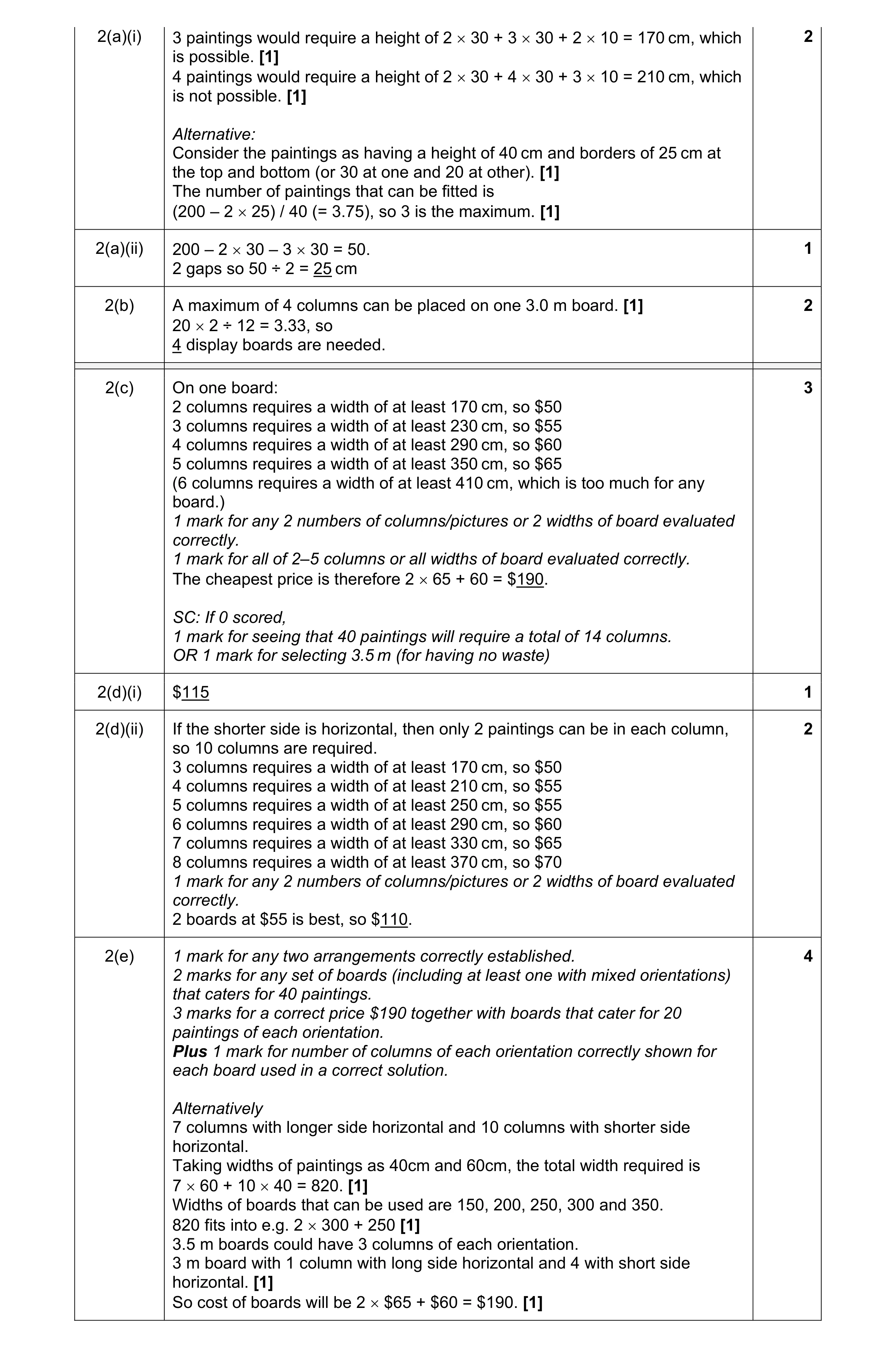 15
15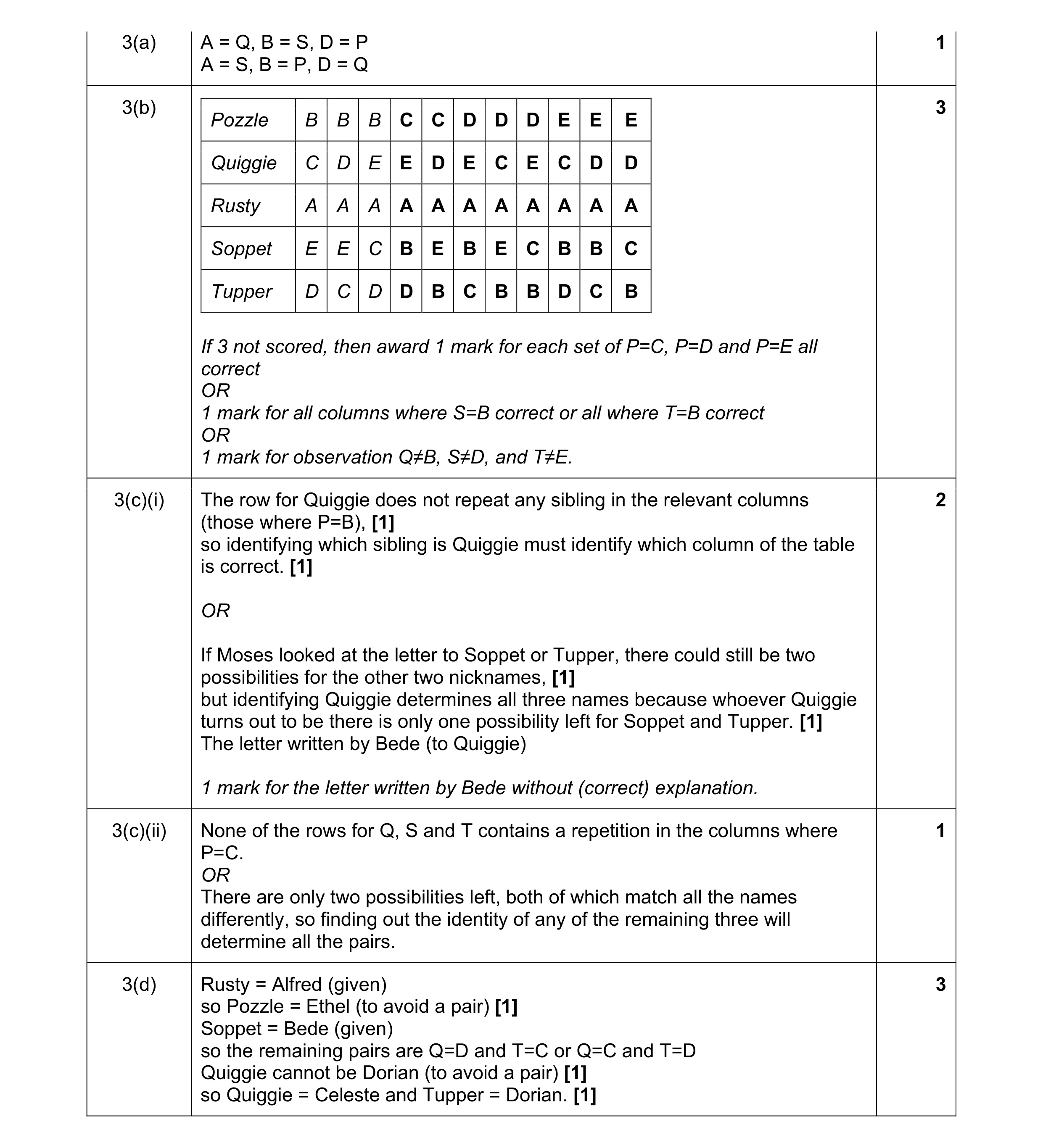 10
10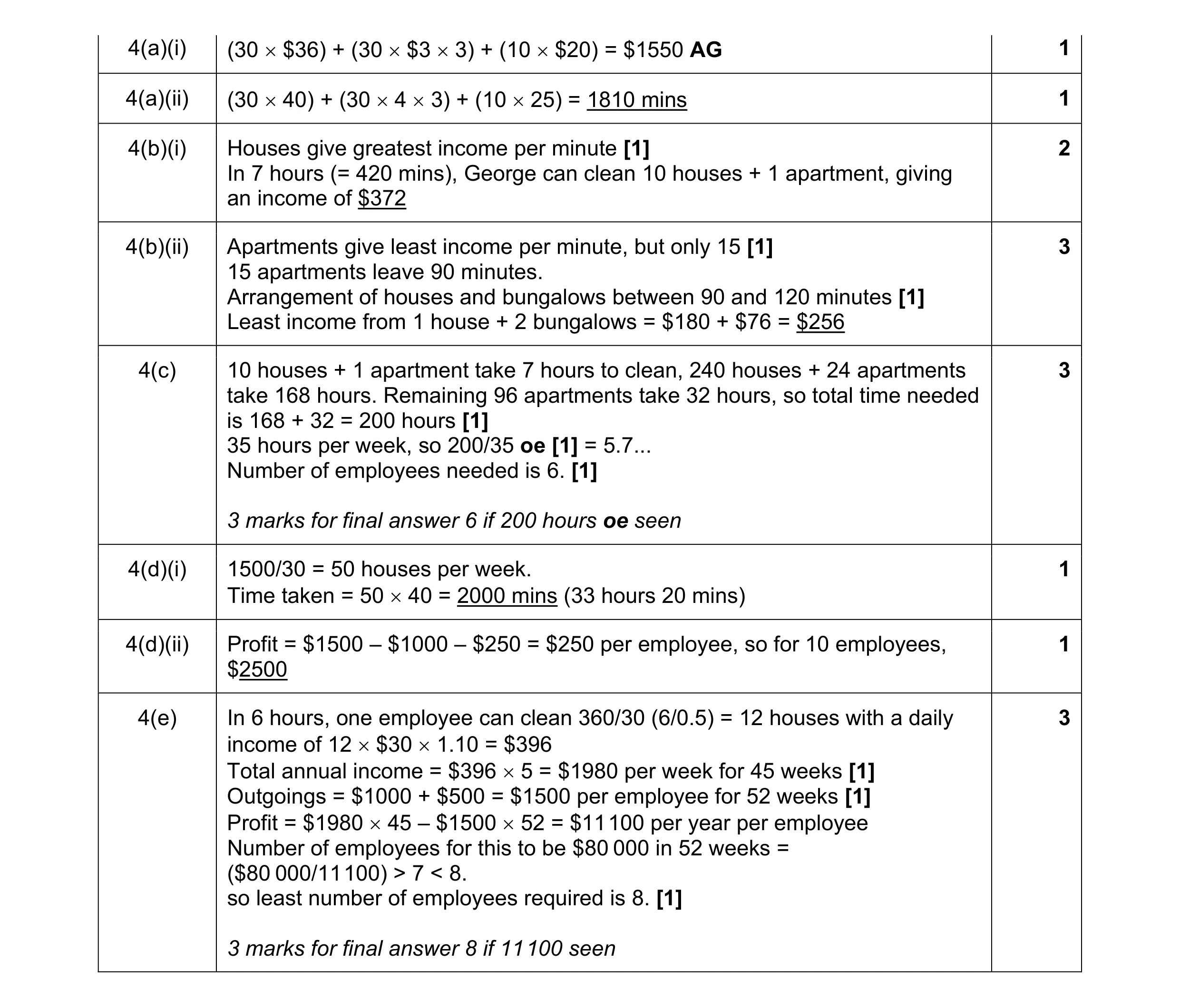 15
15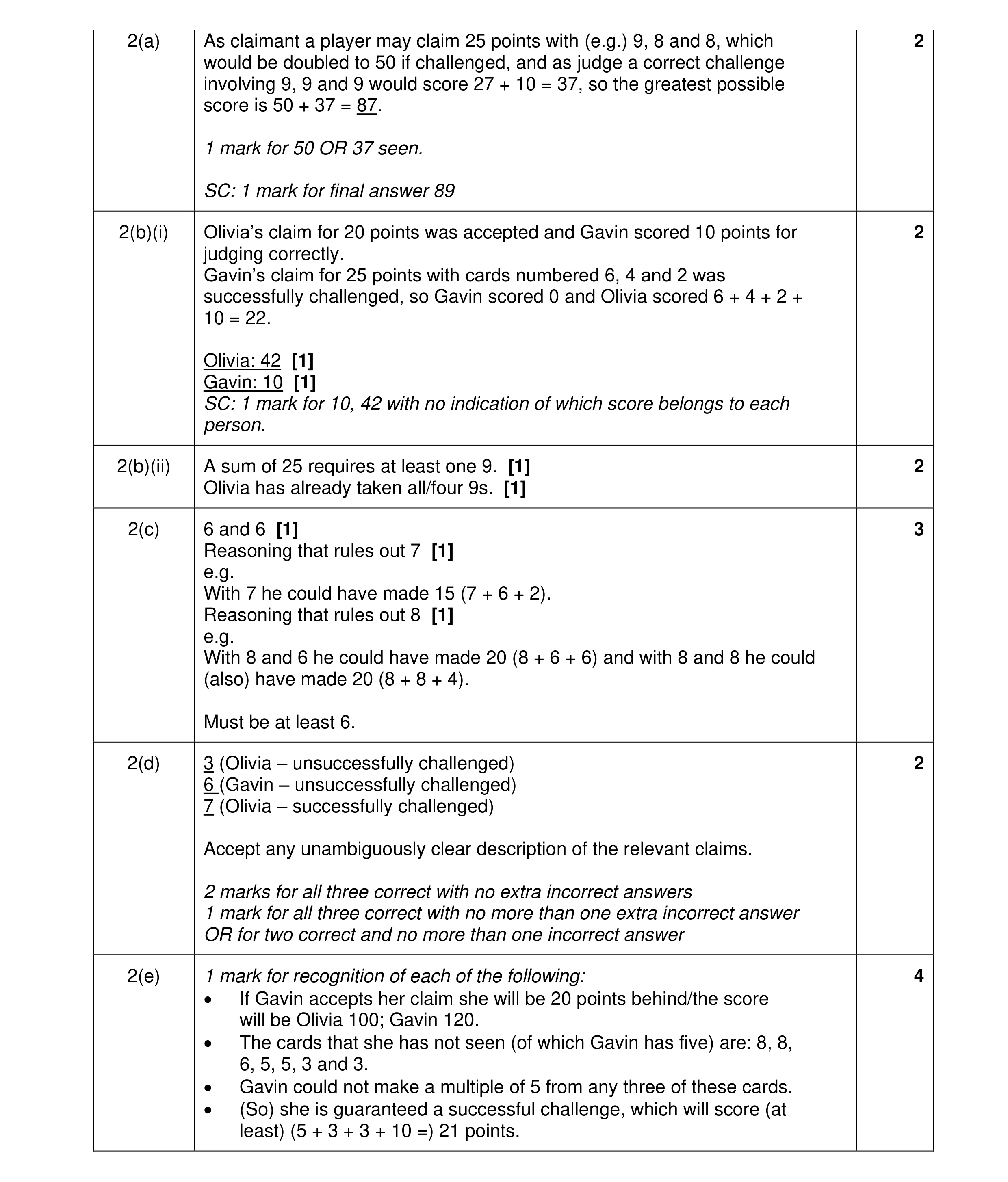 15
15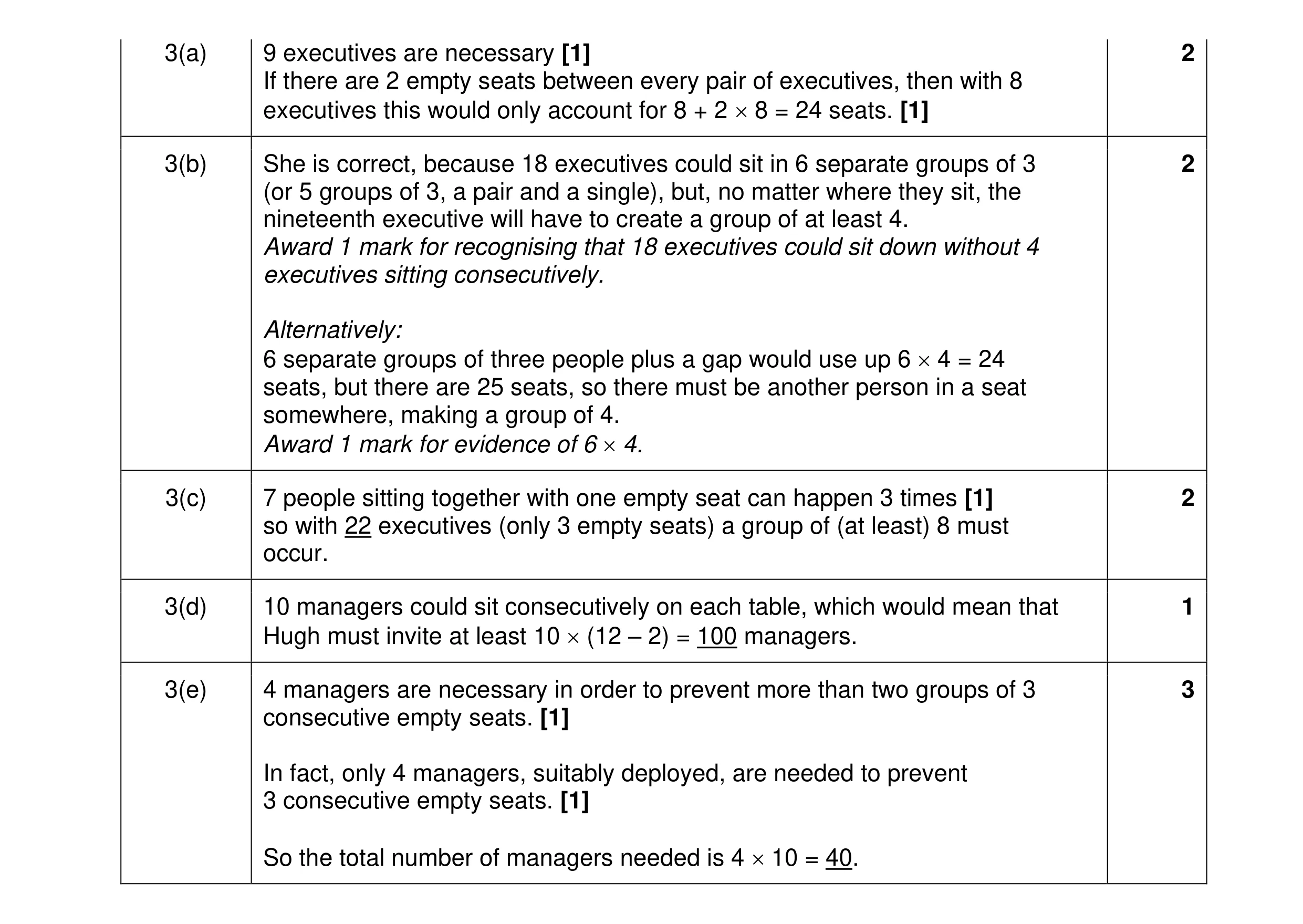 10
10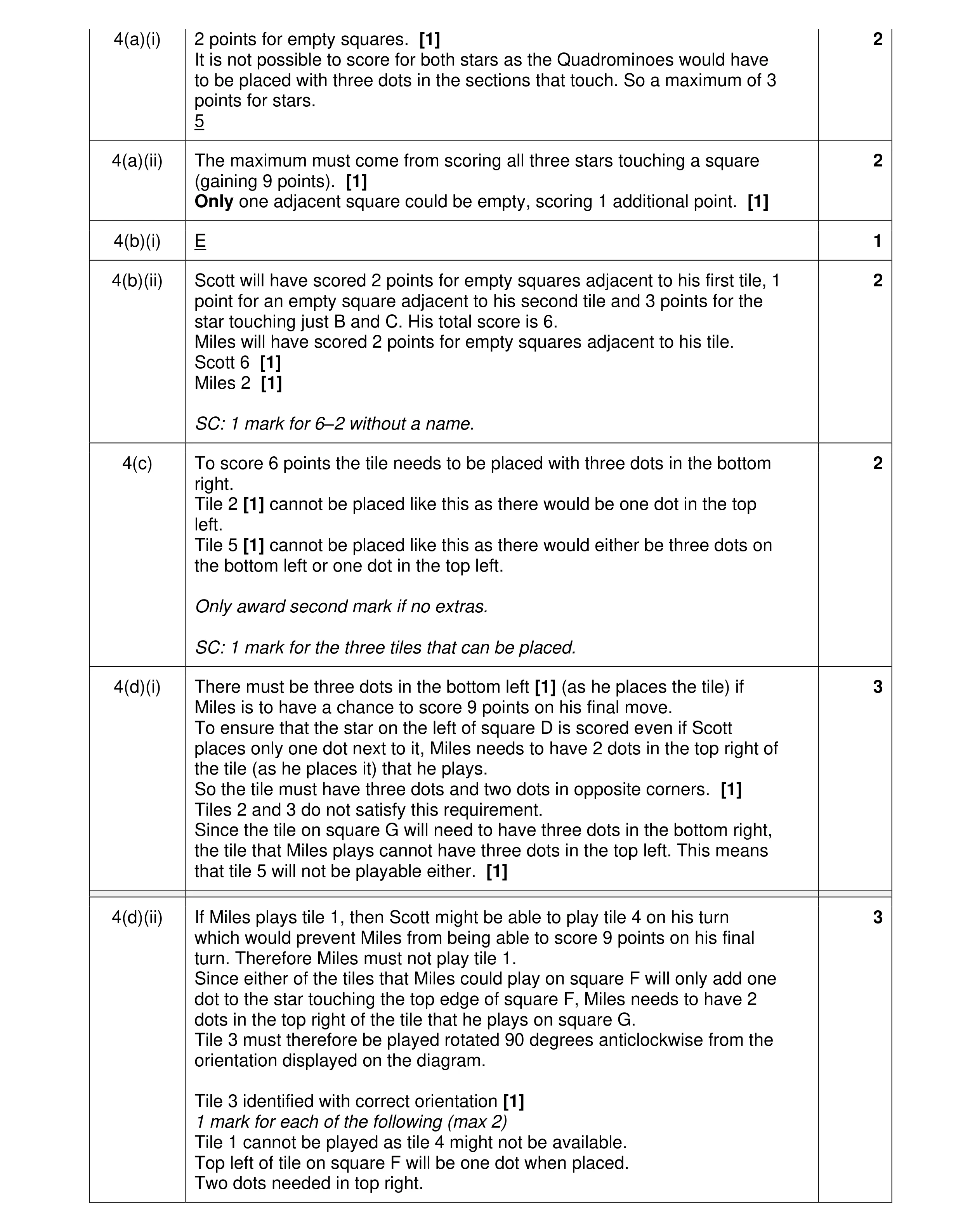 9
9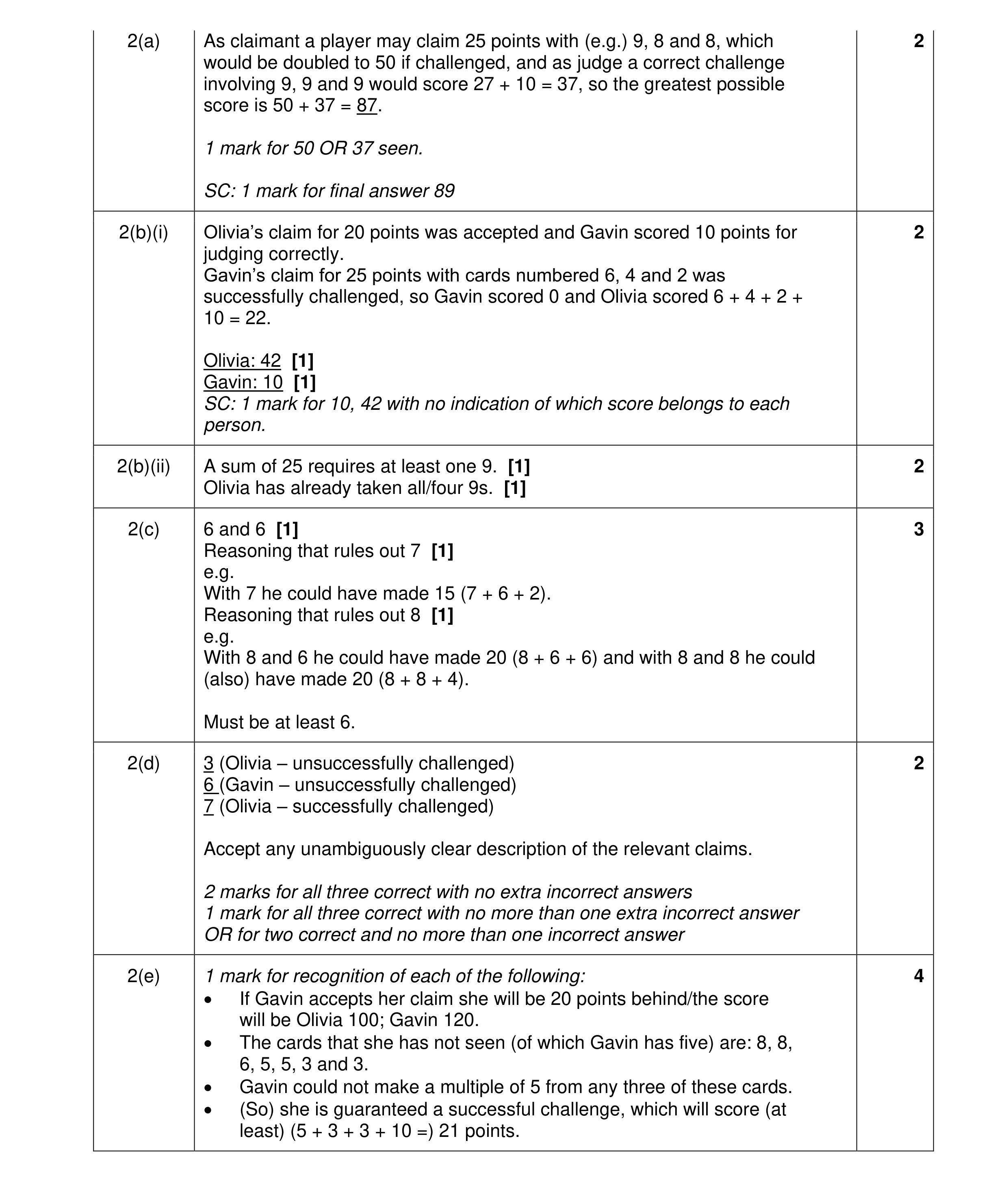 15
15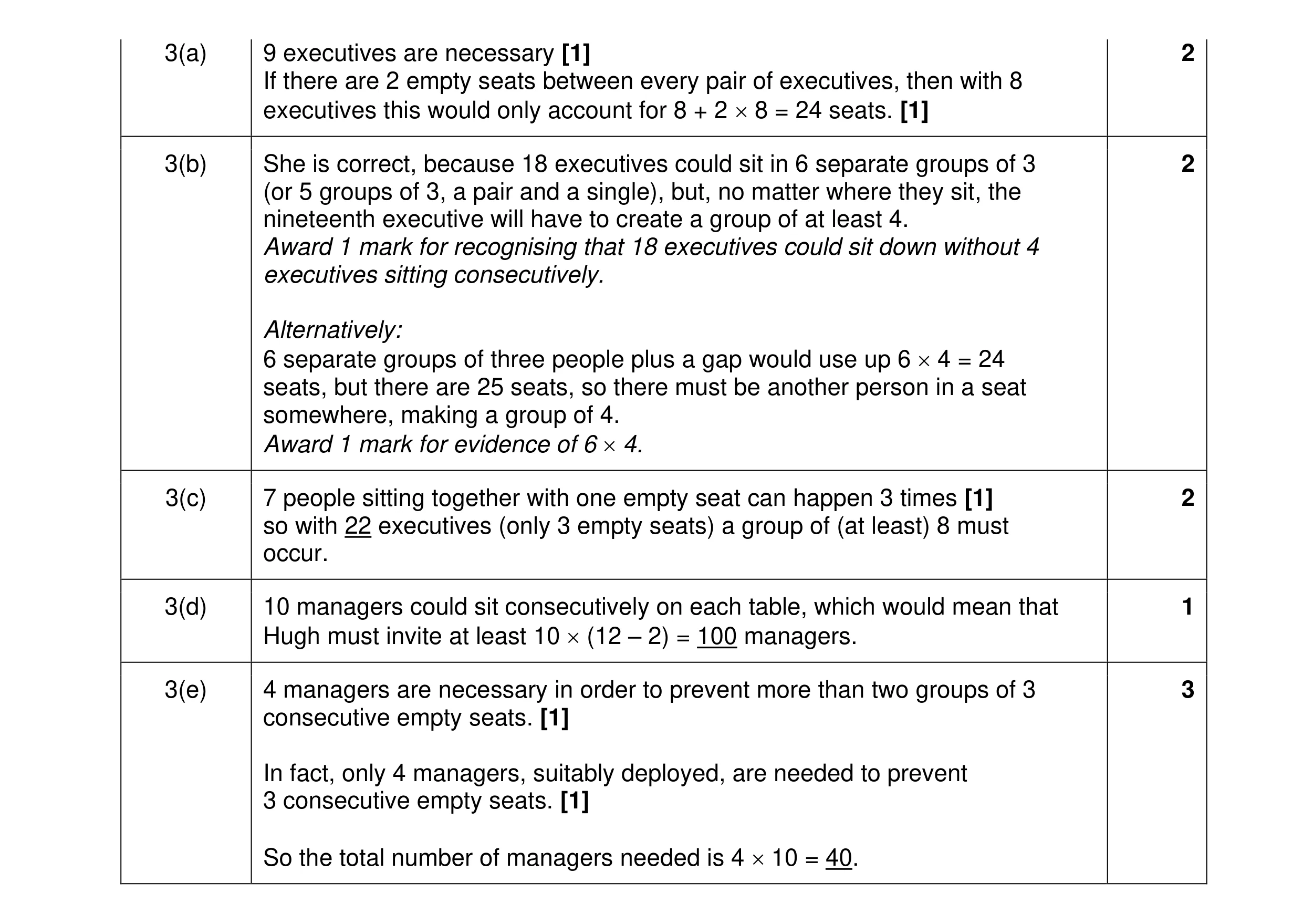 10
10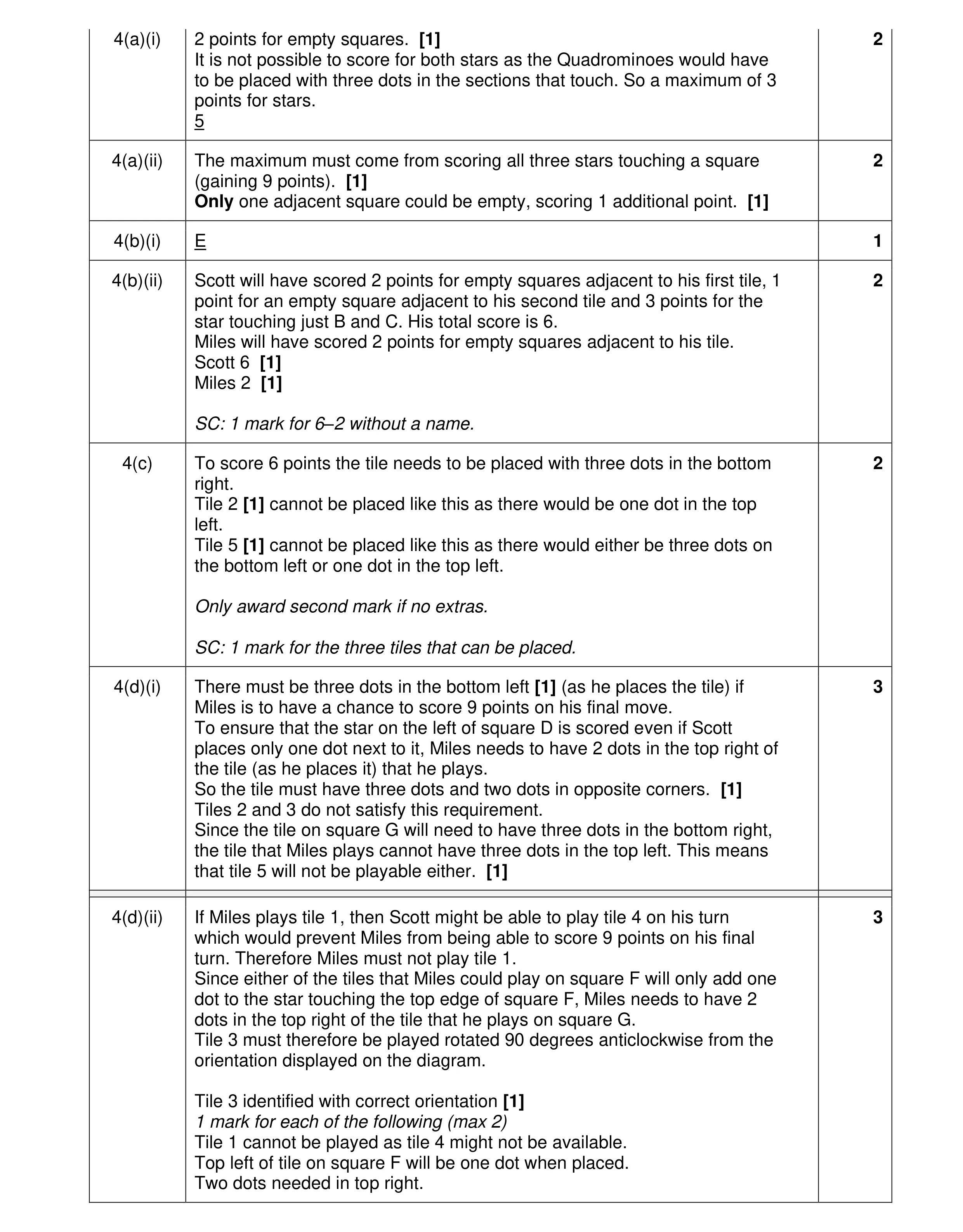 9
9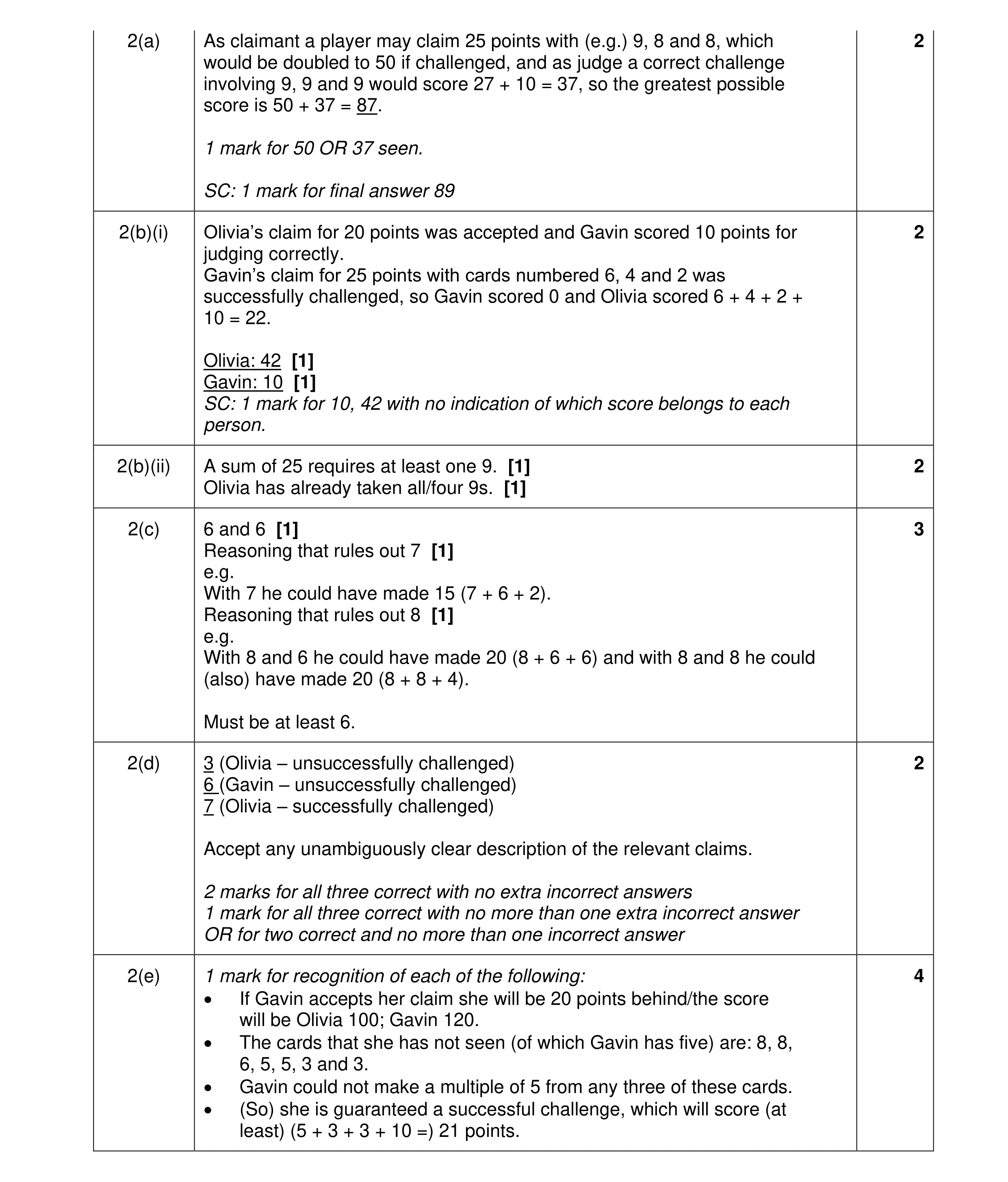 15
15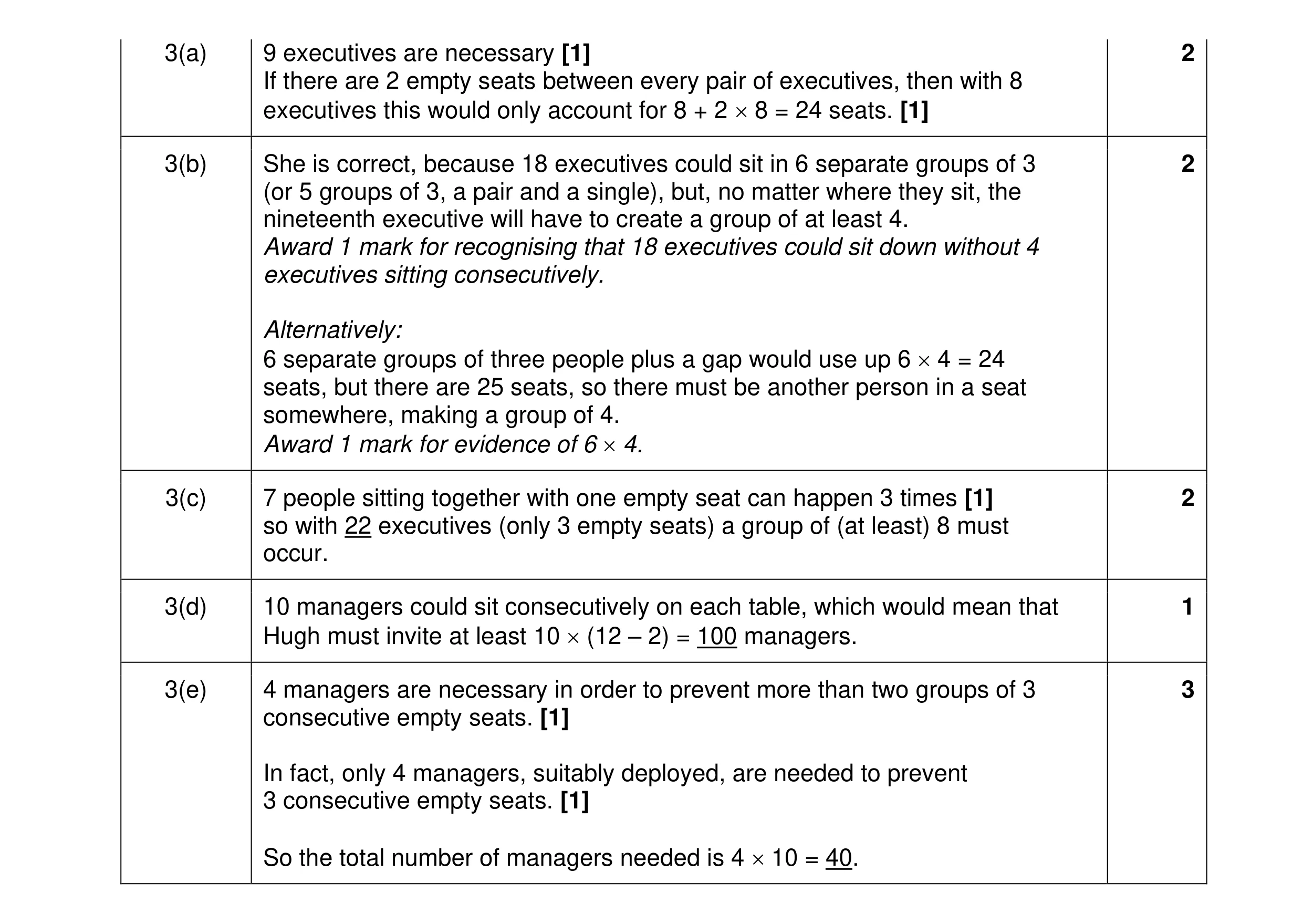 10
10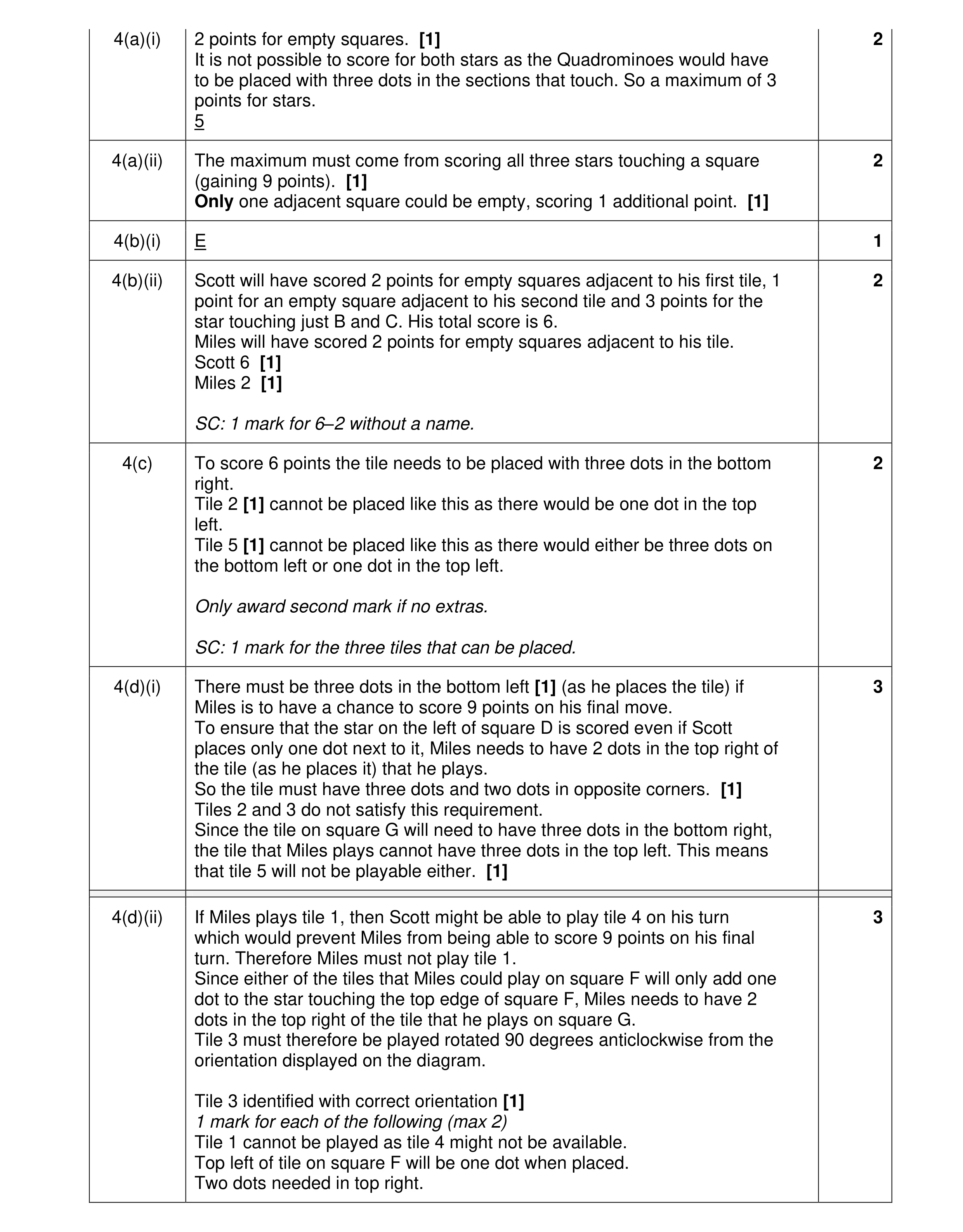 9
9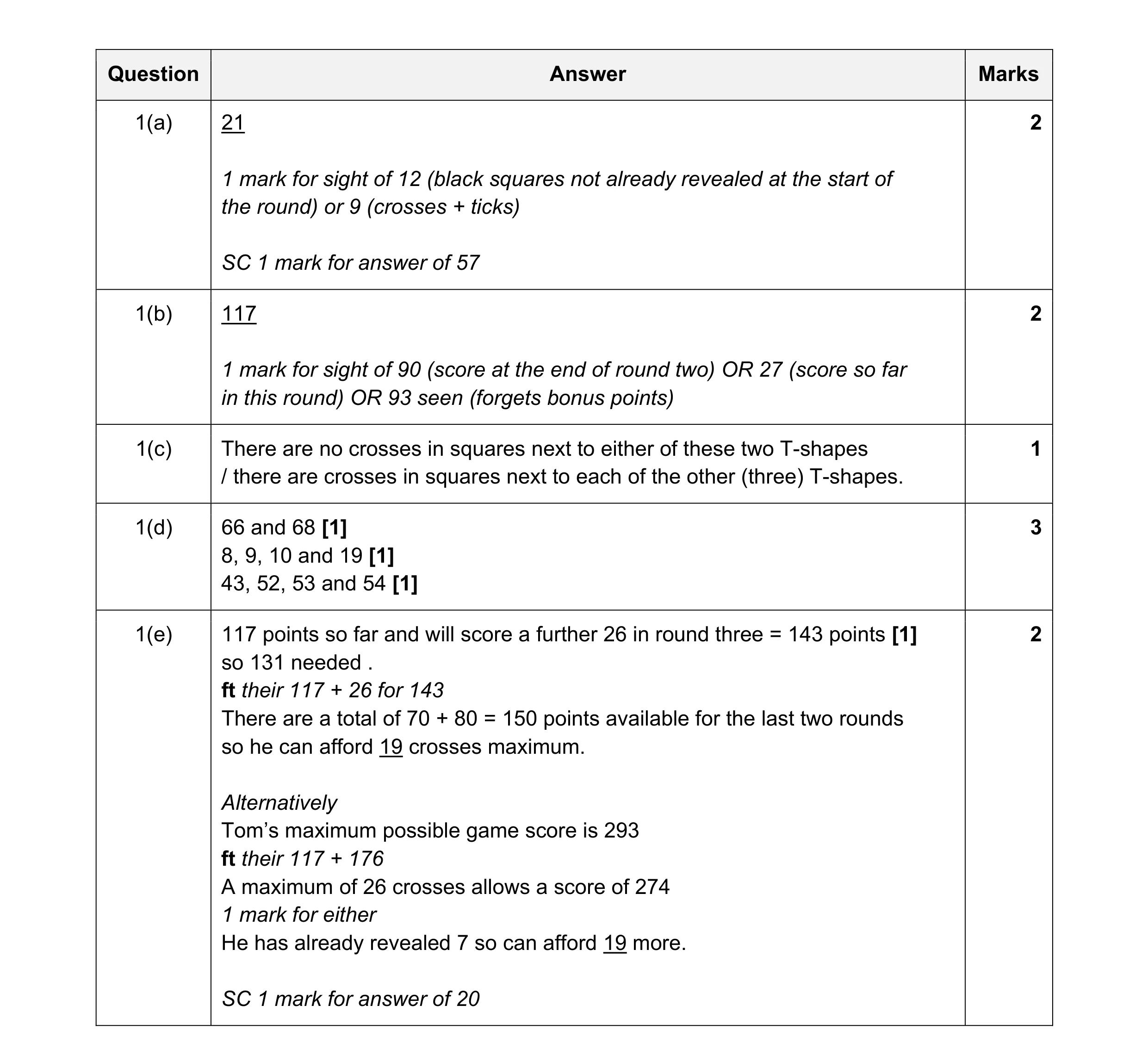 10
10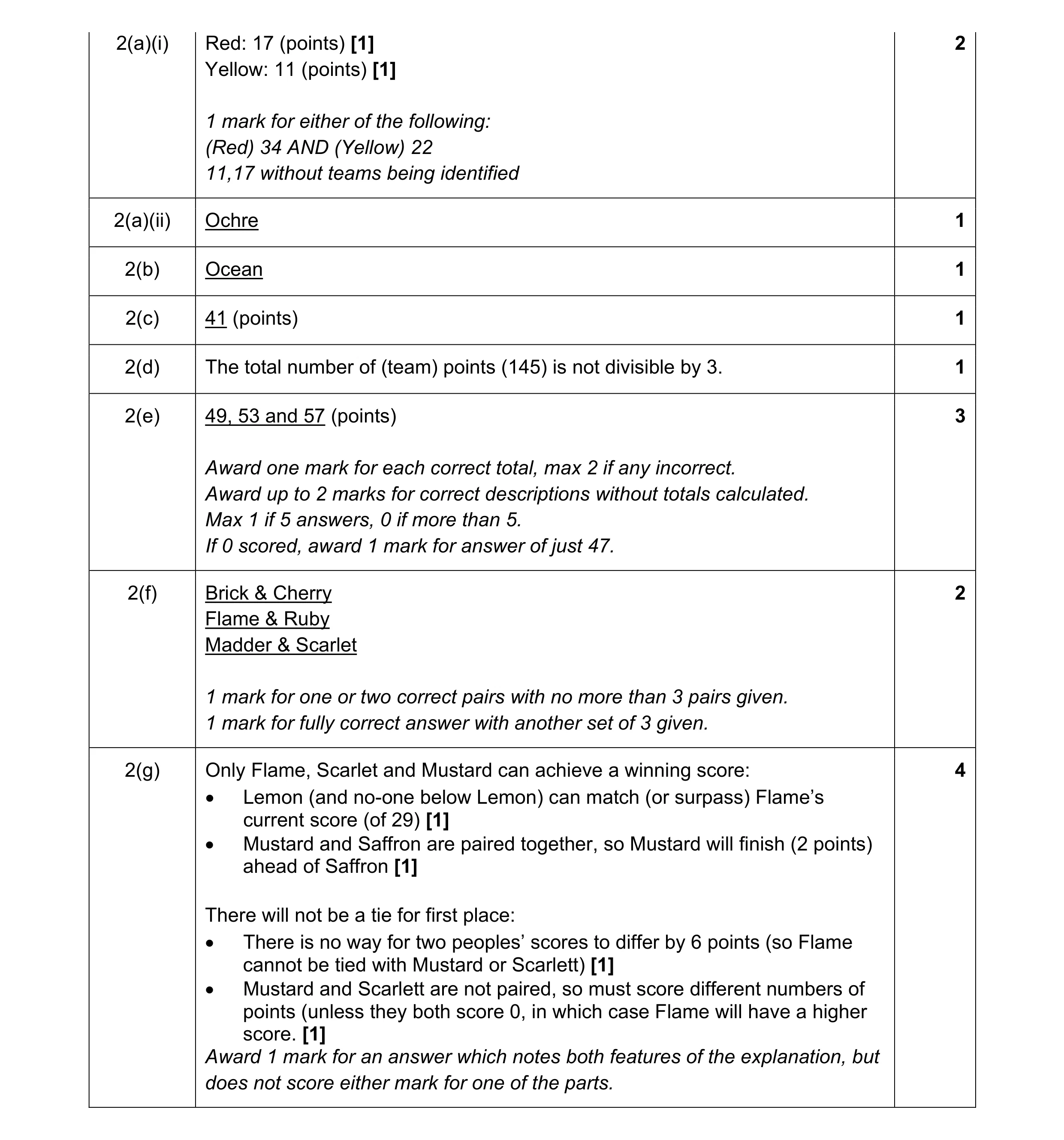 15
15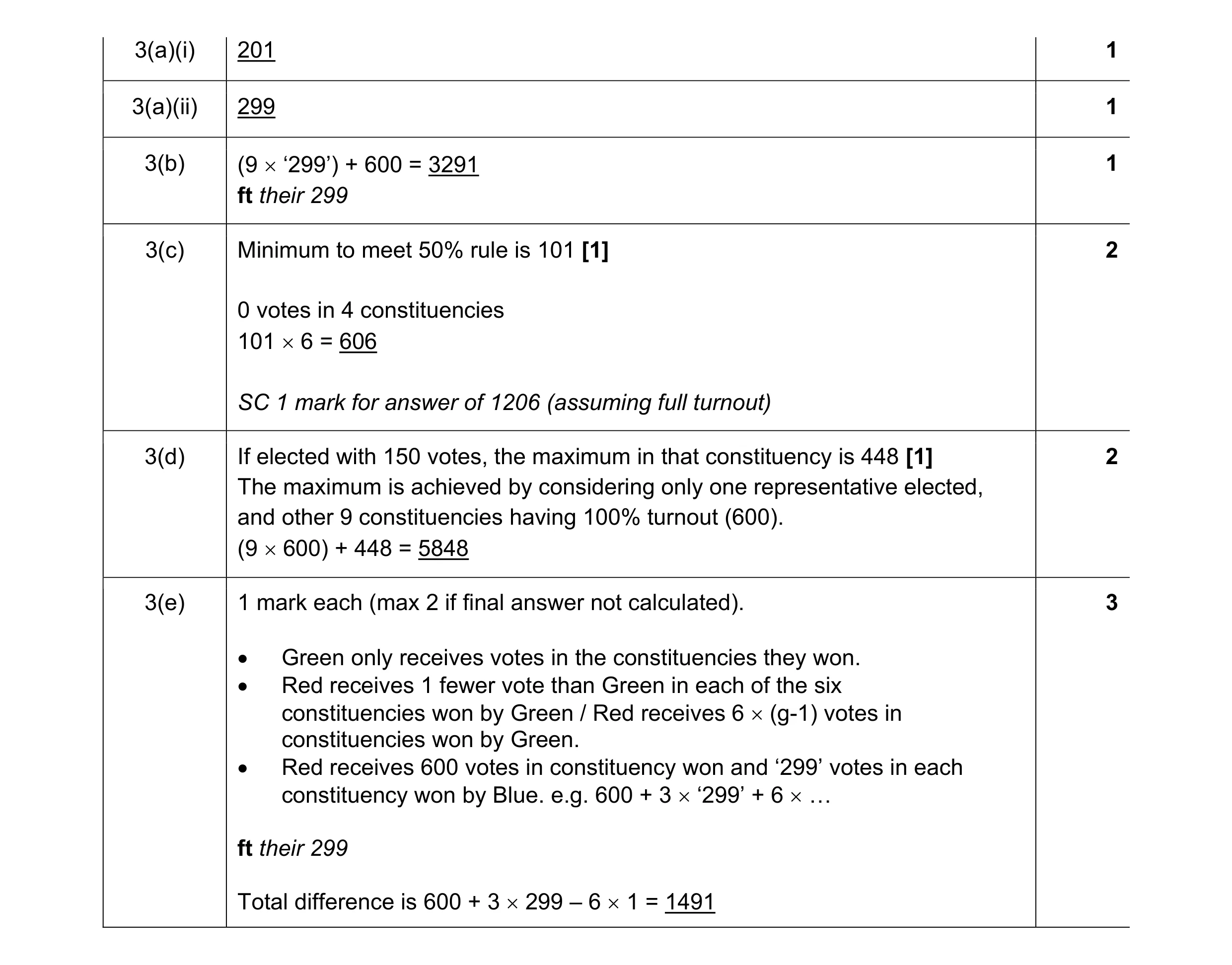 10
10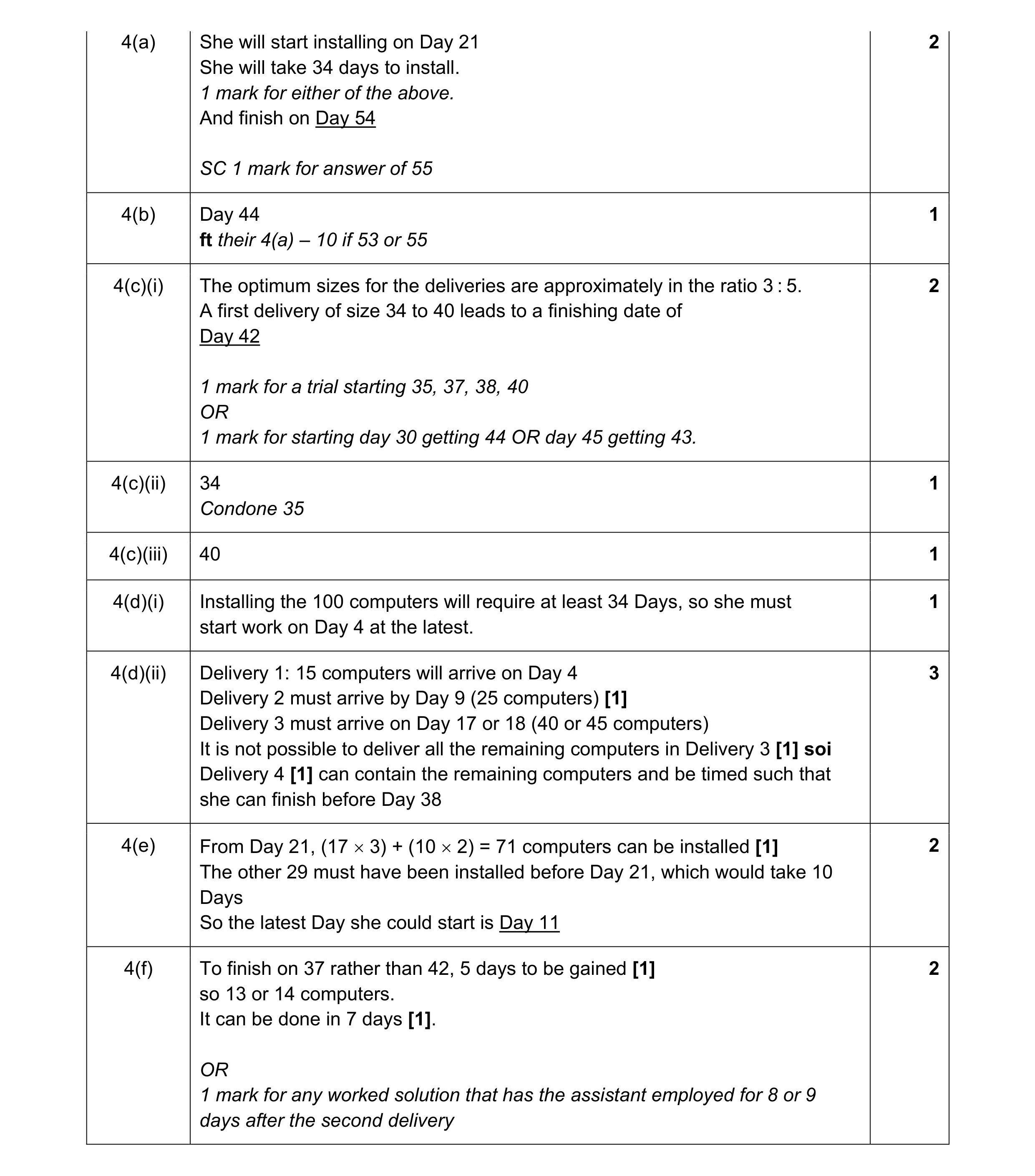 15
15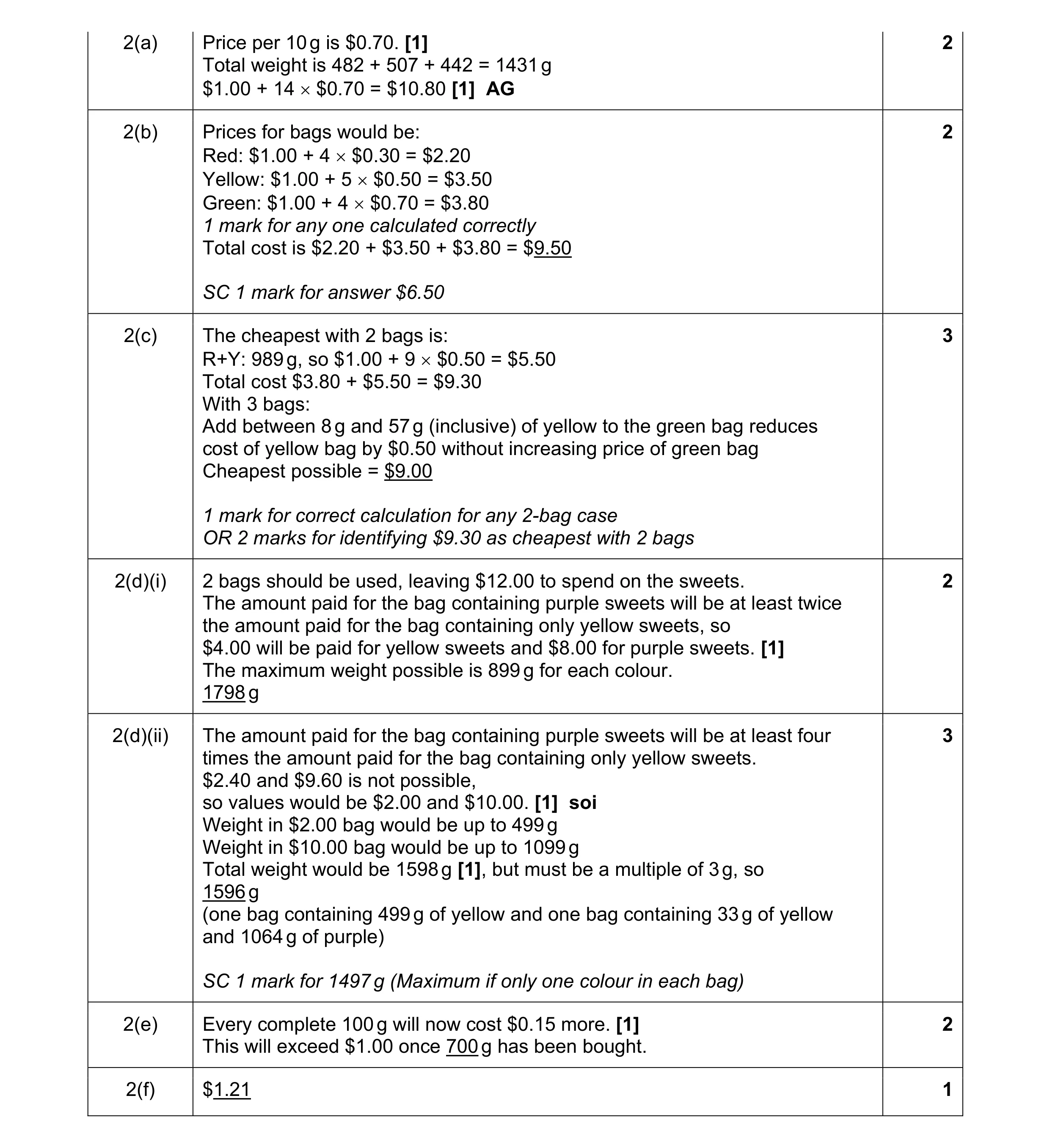 15
15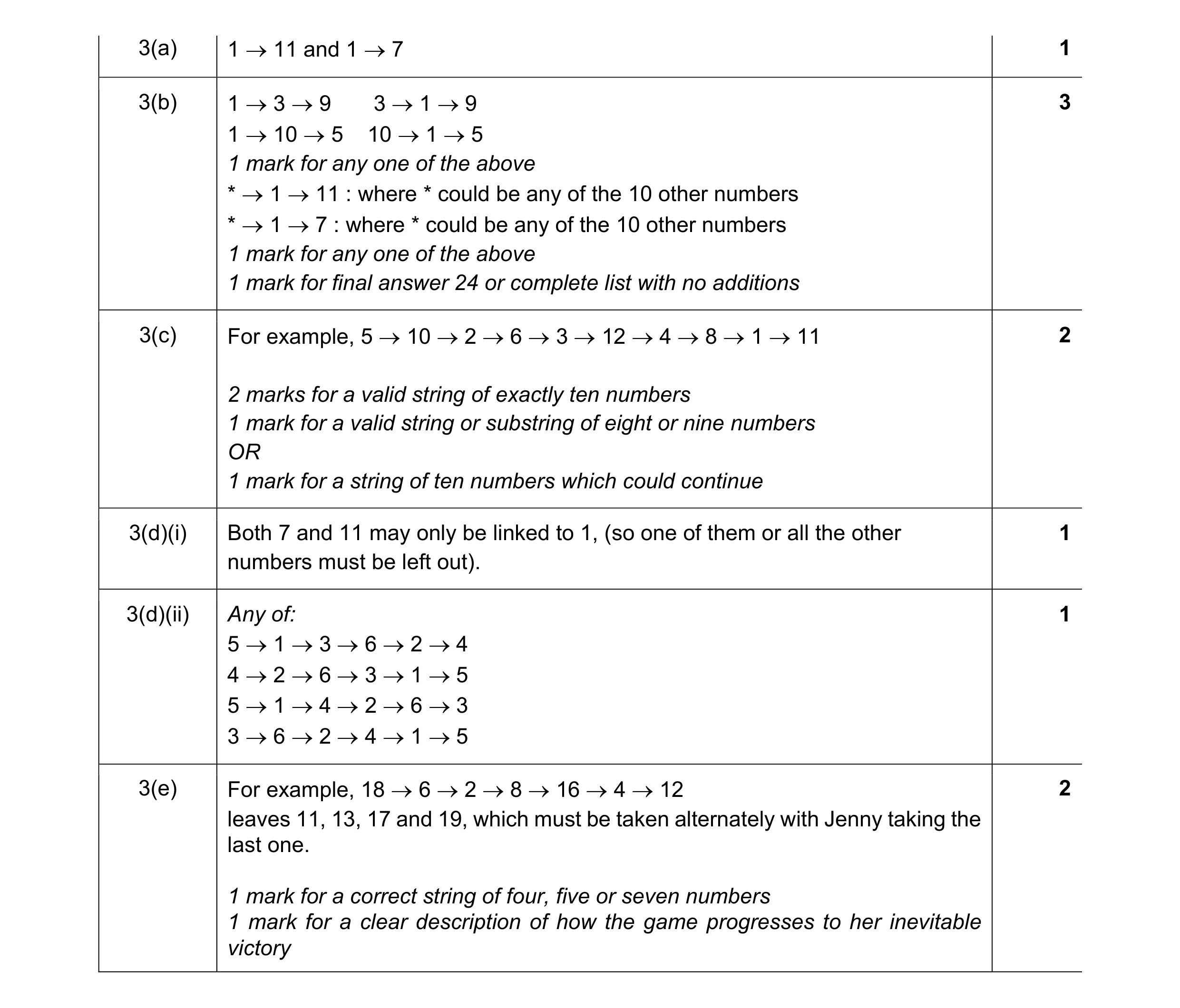 10
10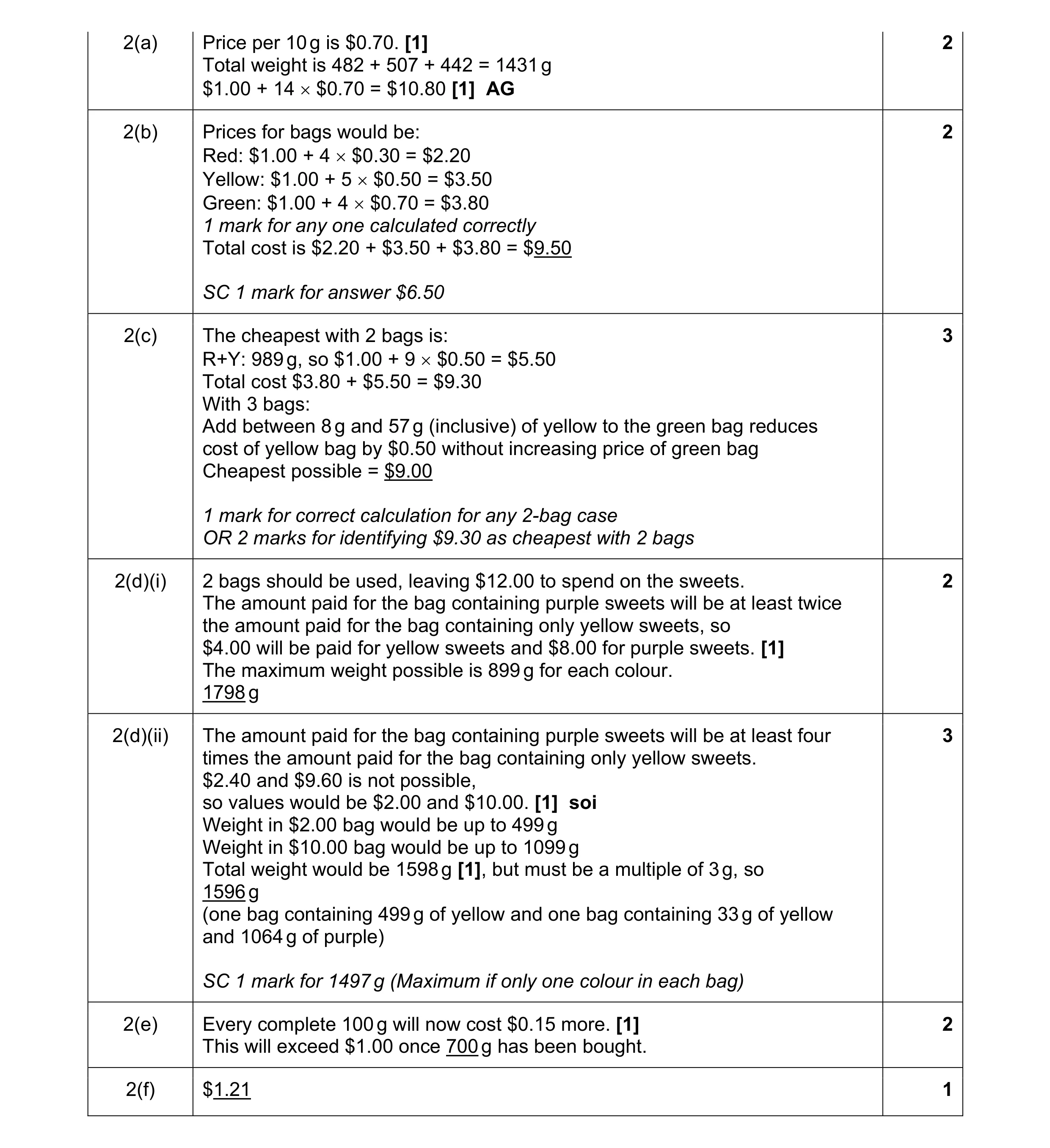 15
15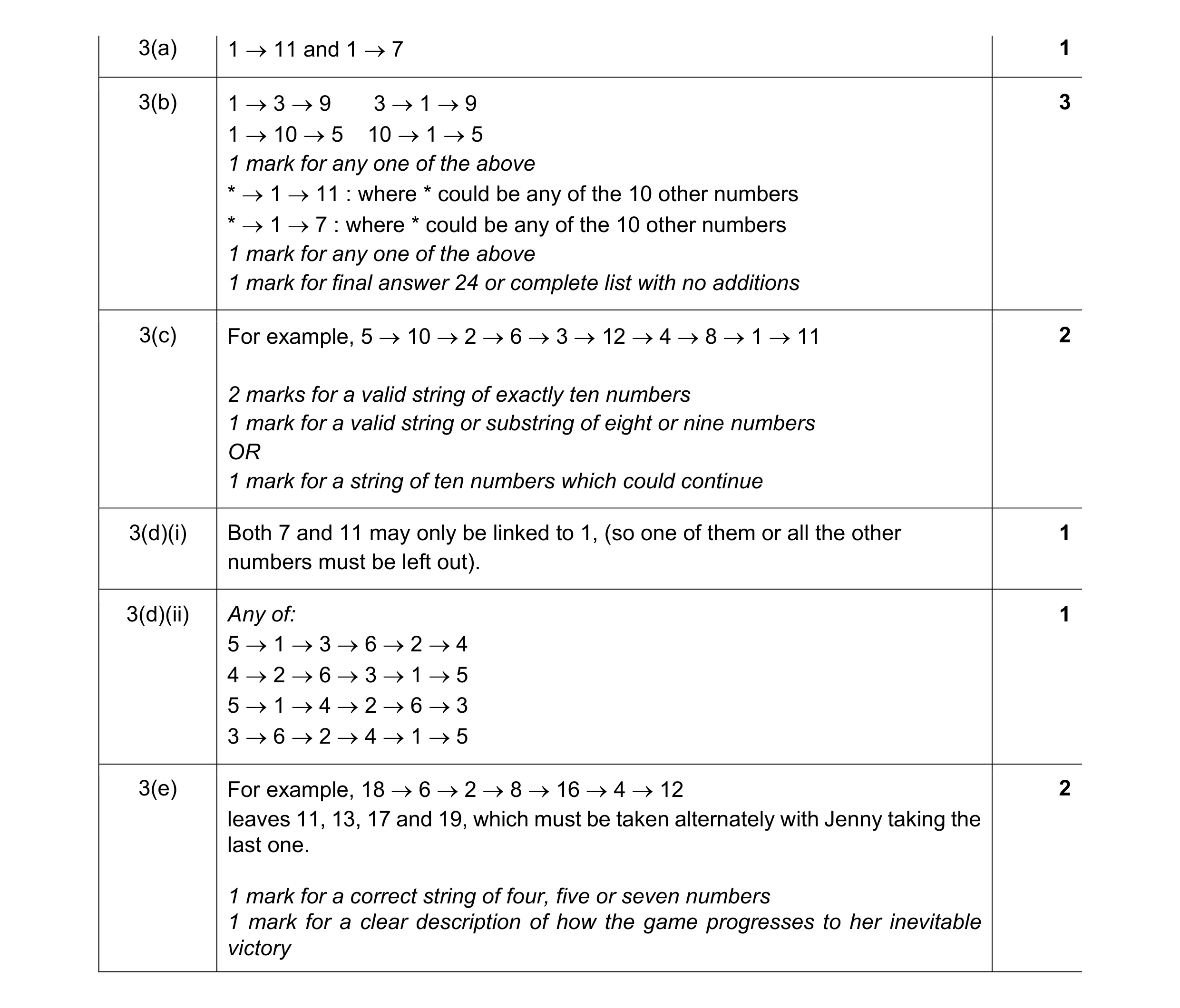 10
10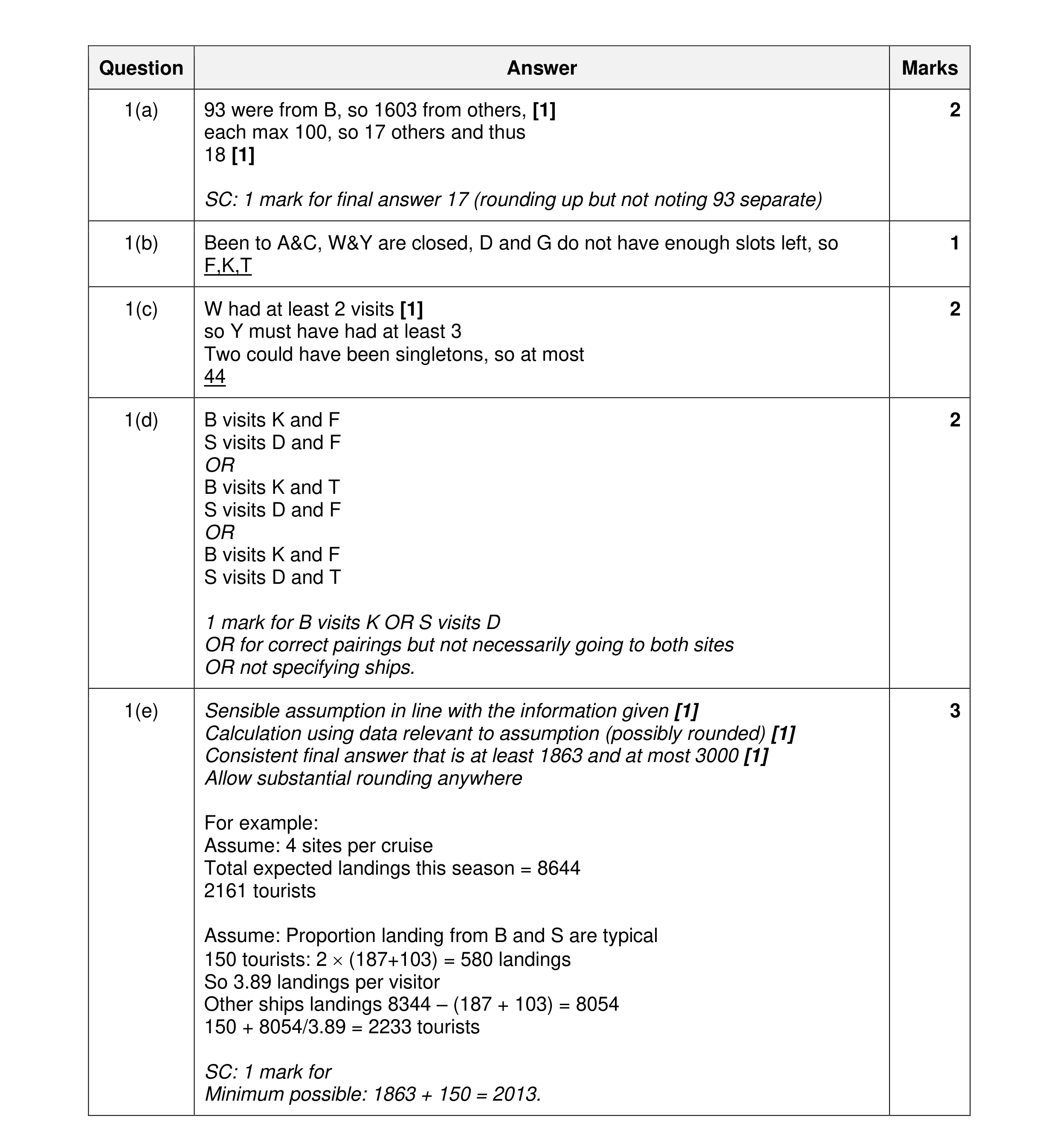 10
10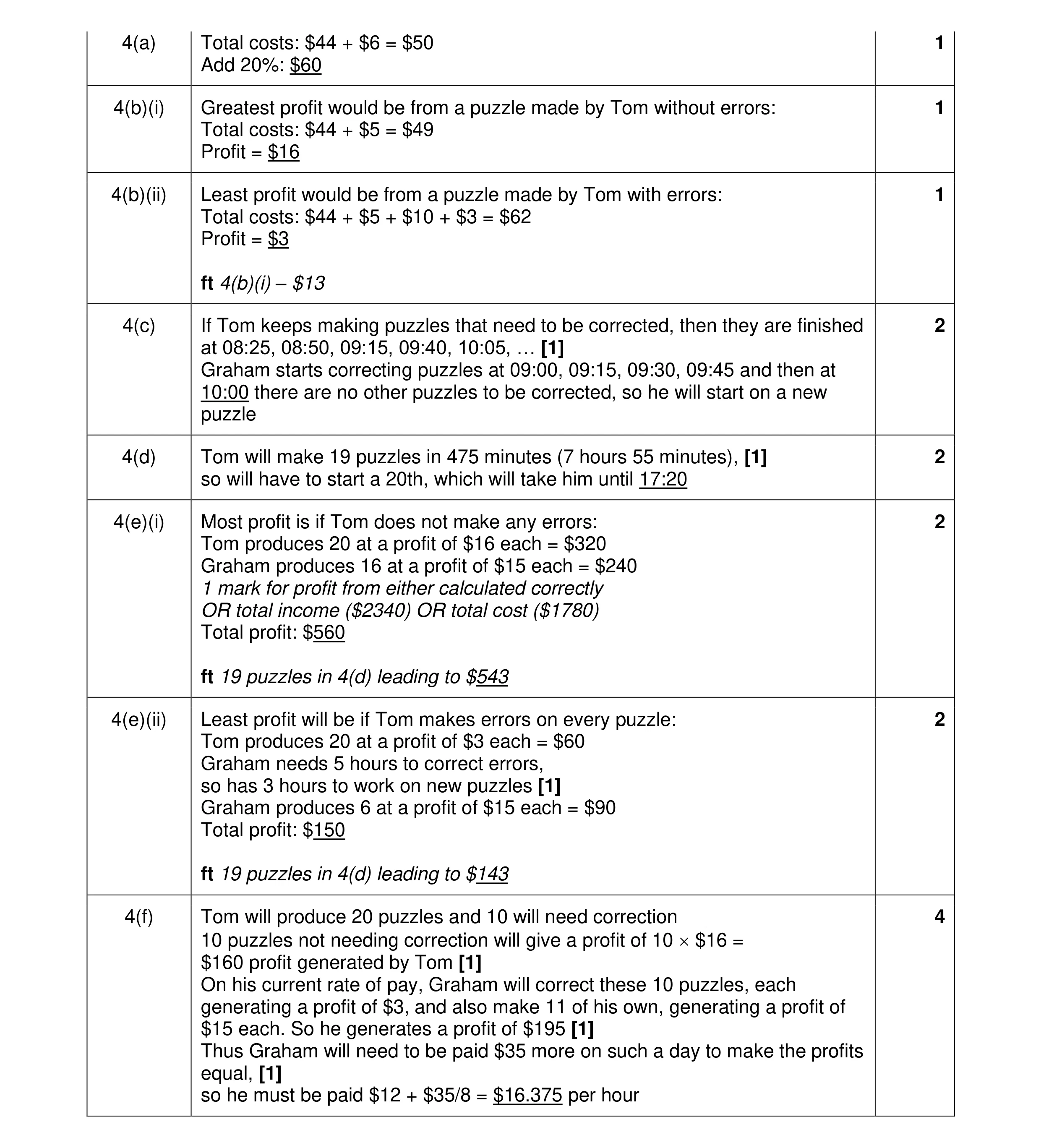 15
15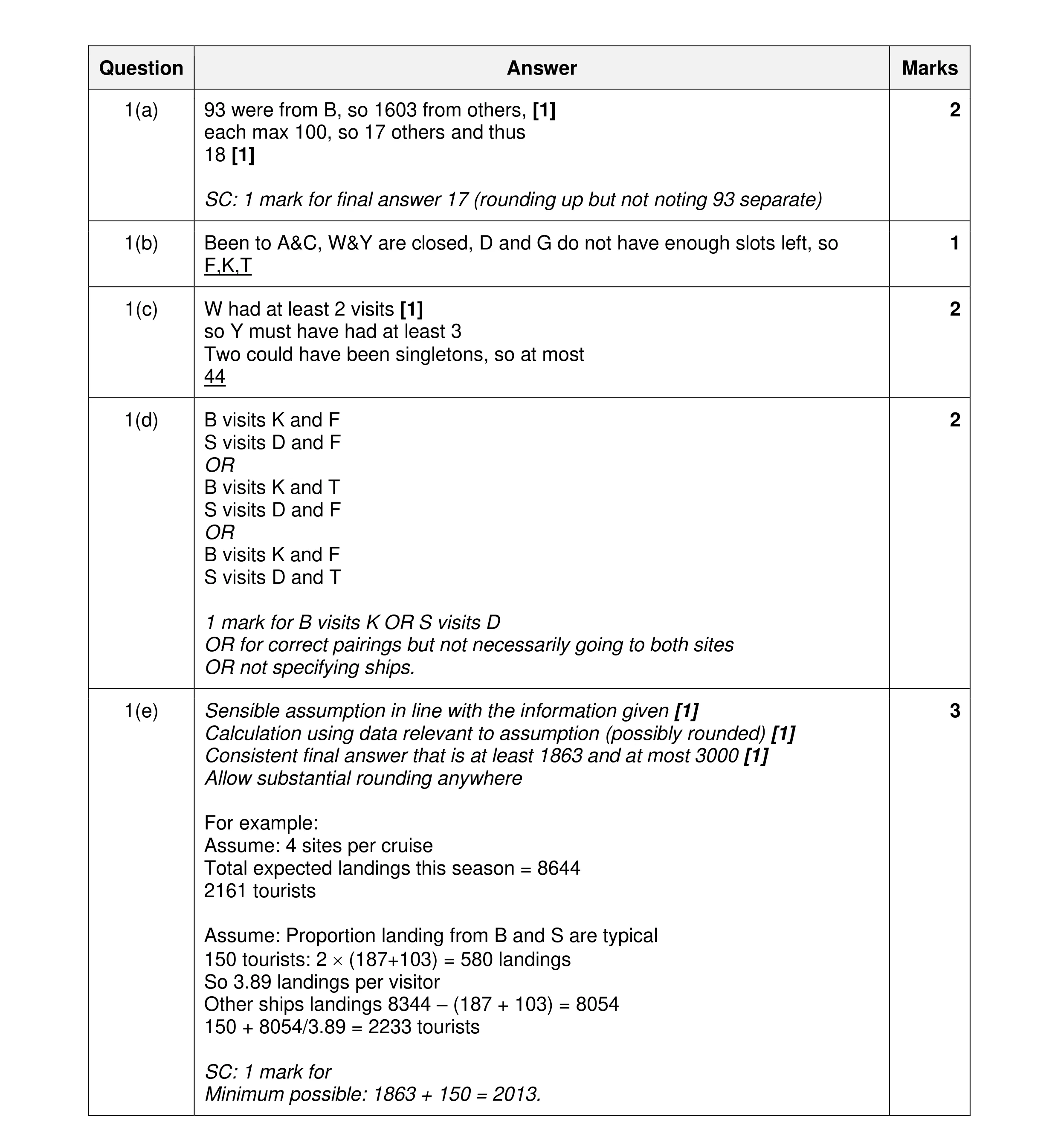 10
10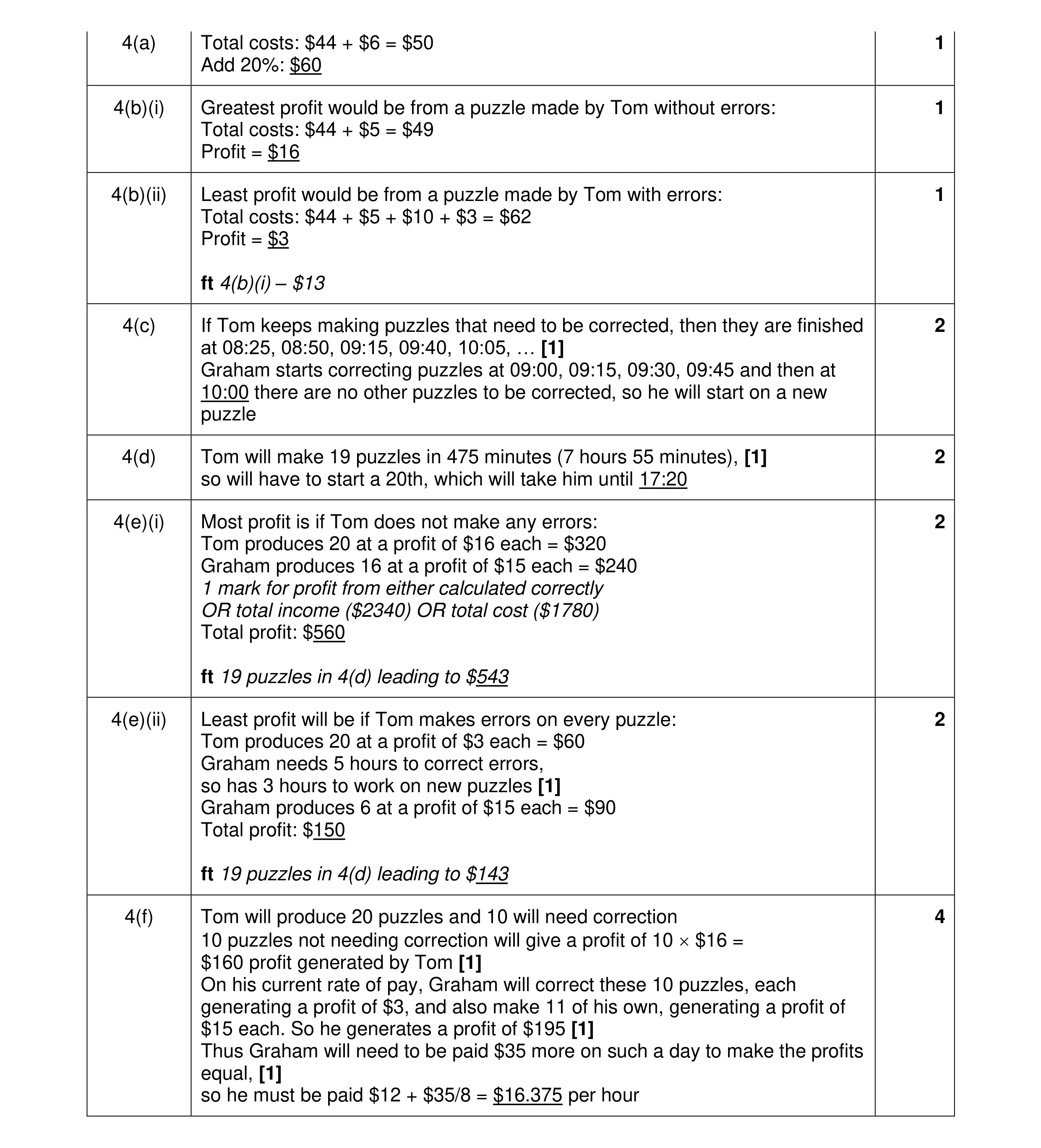 15
15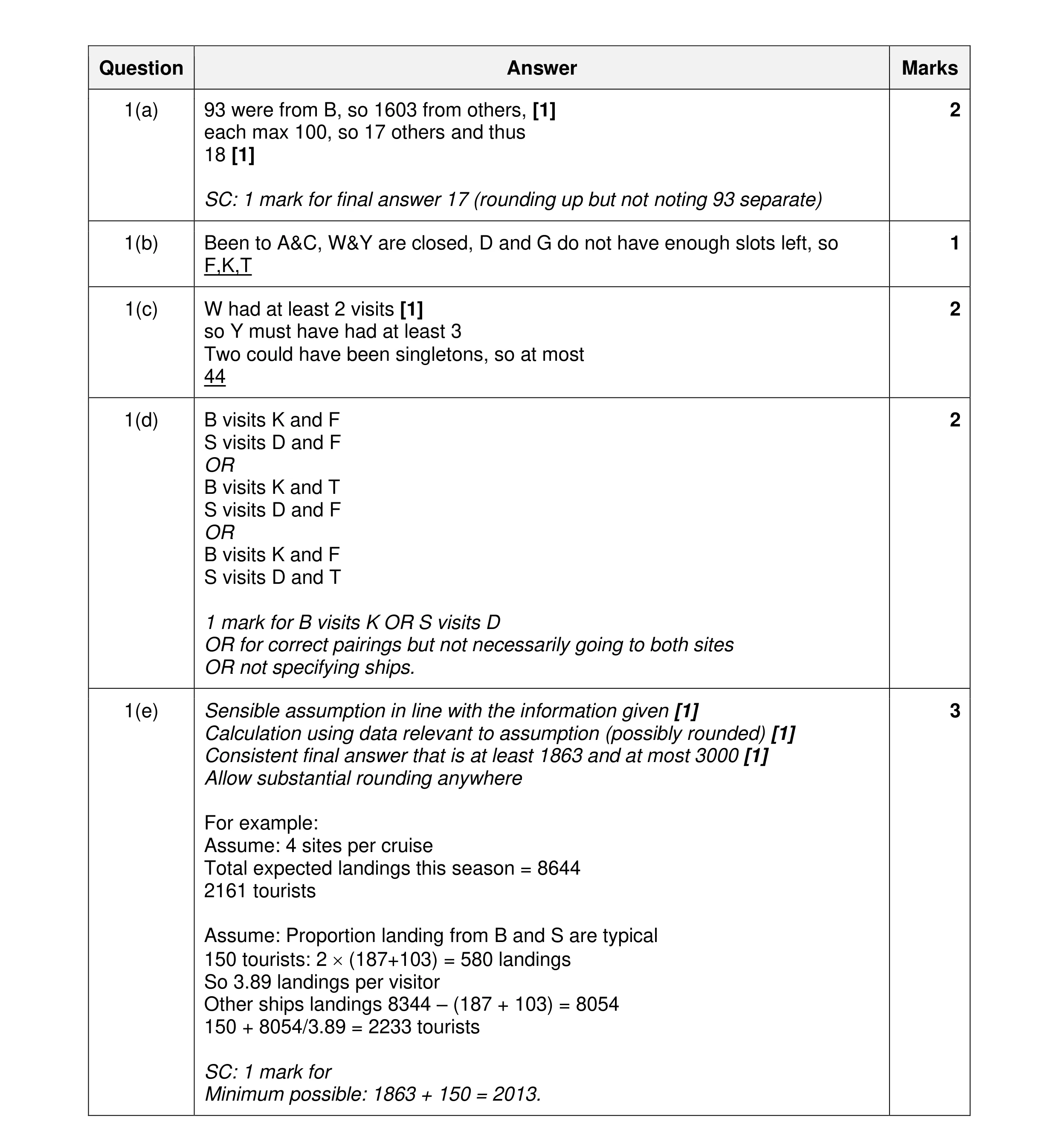 10
10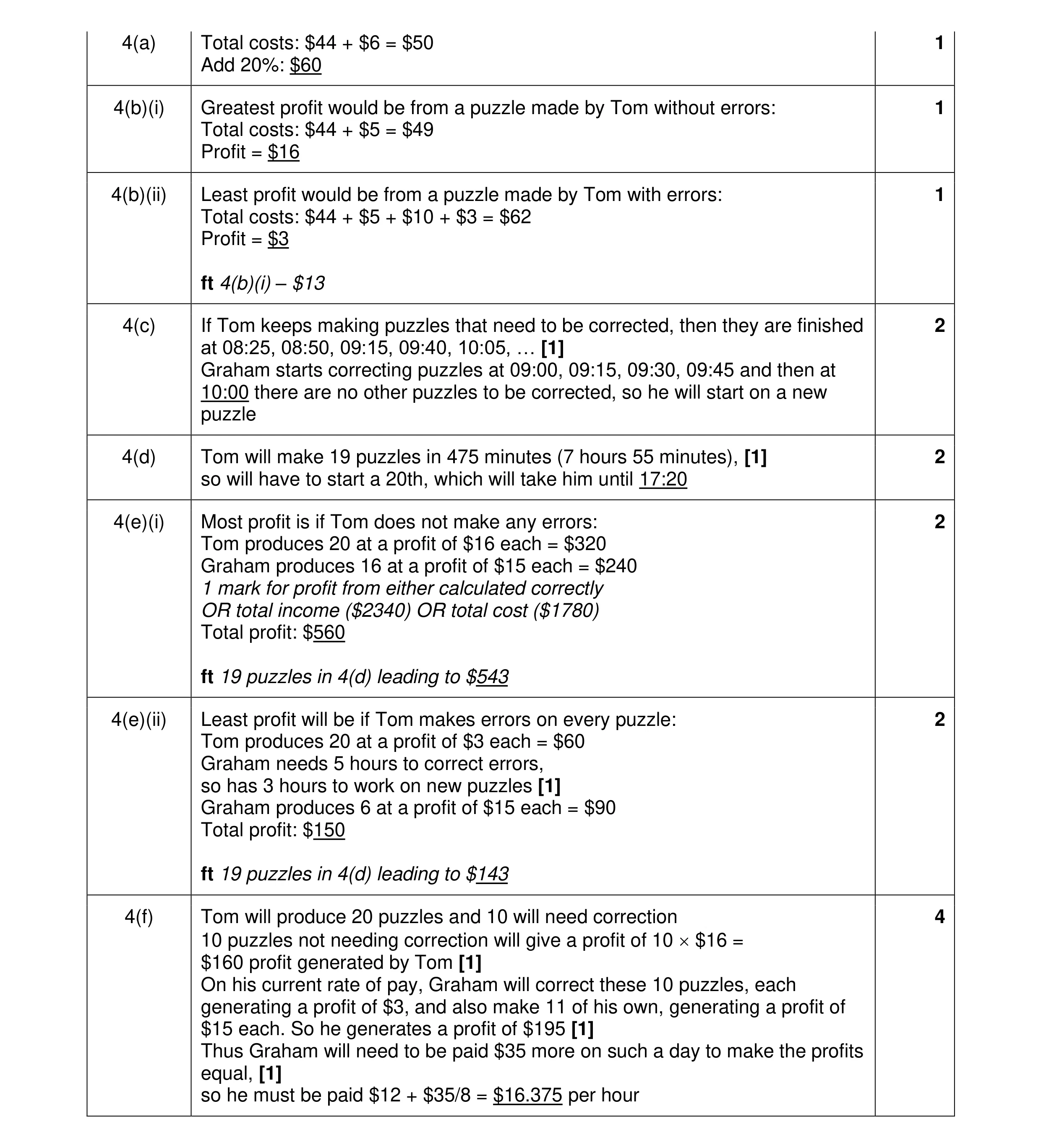 15
15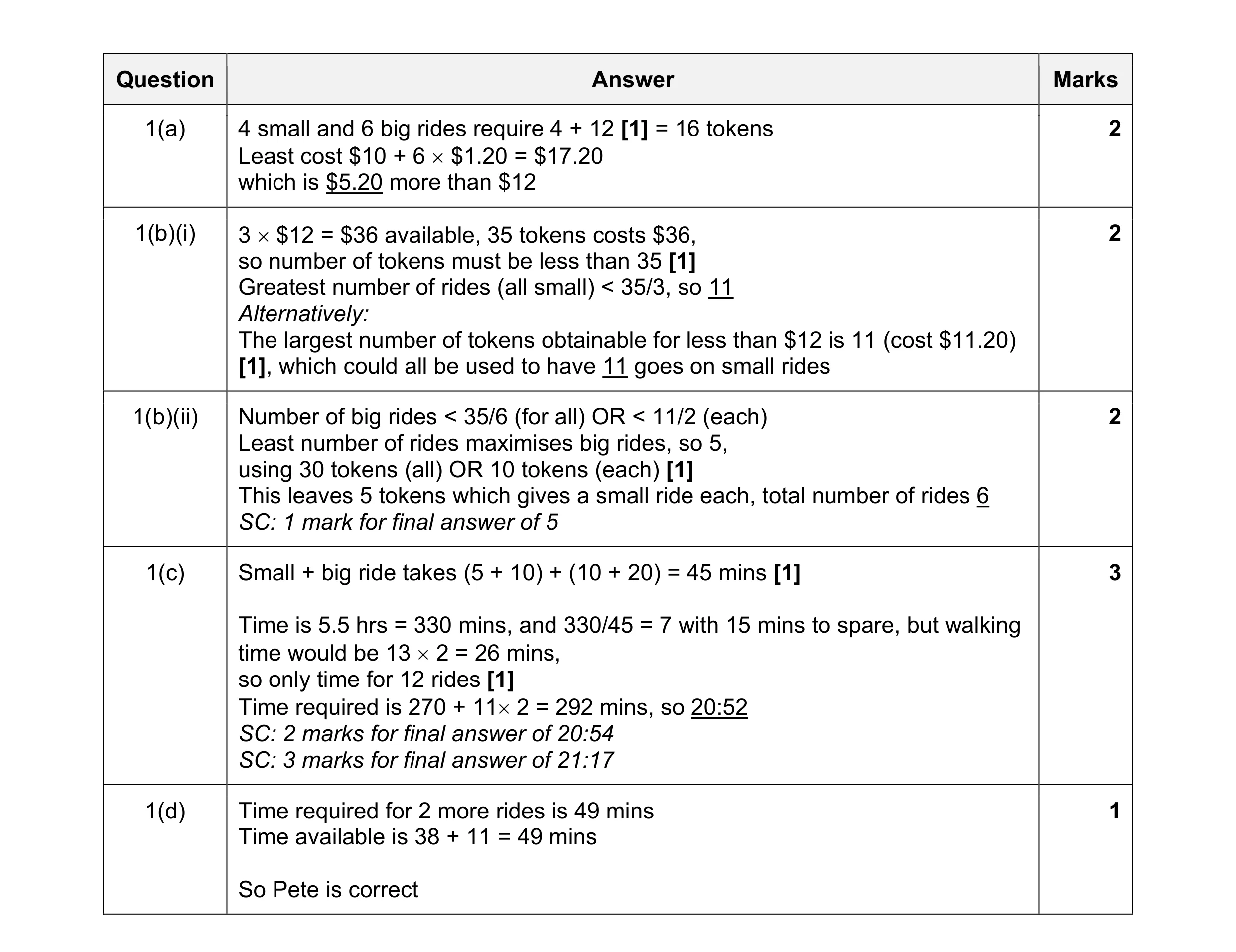 10
10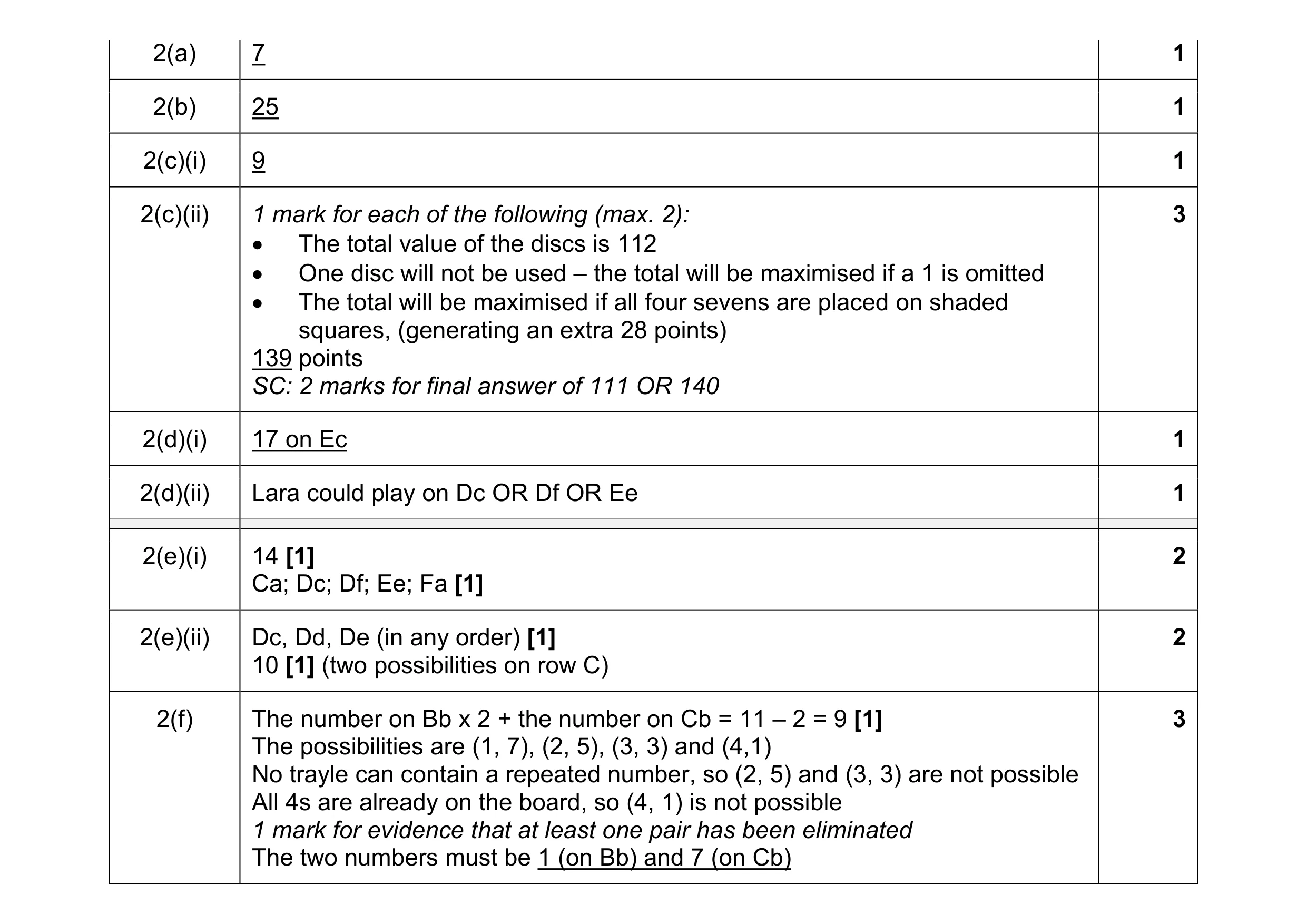 15
15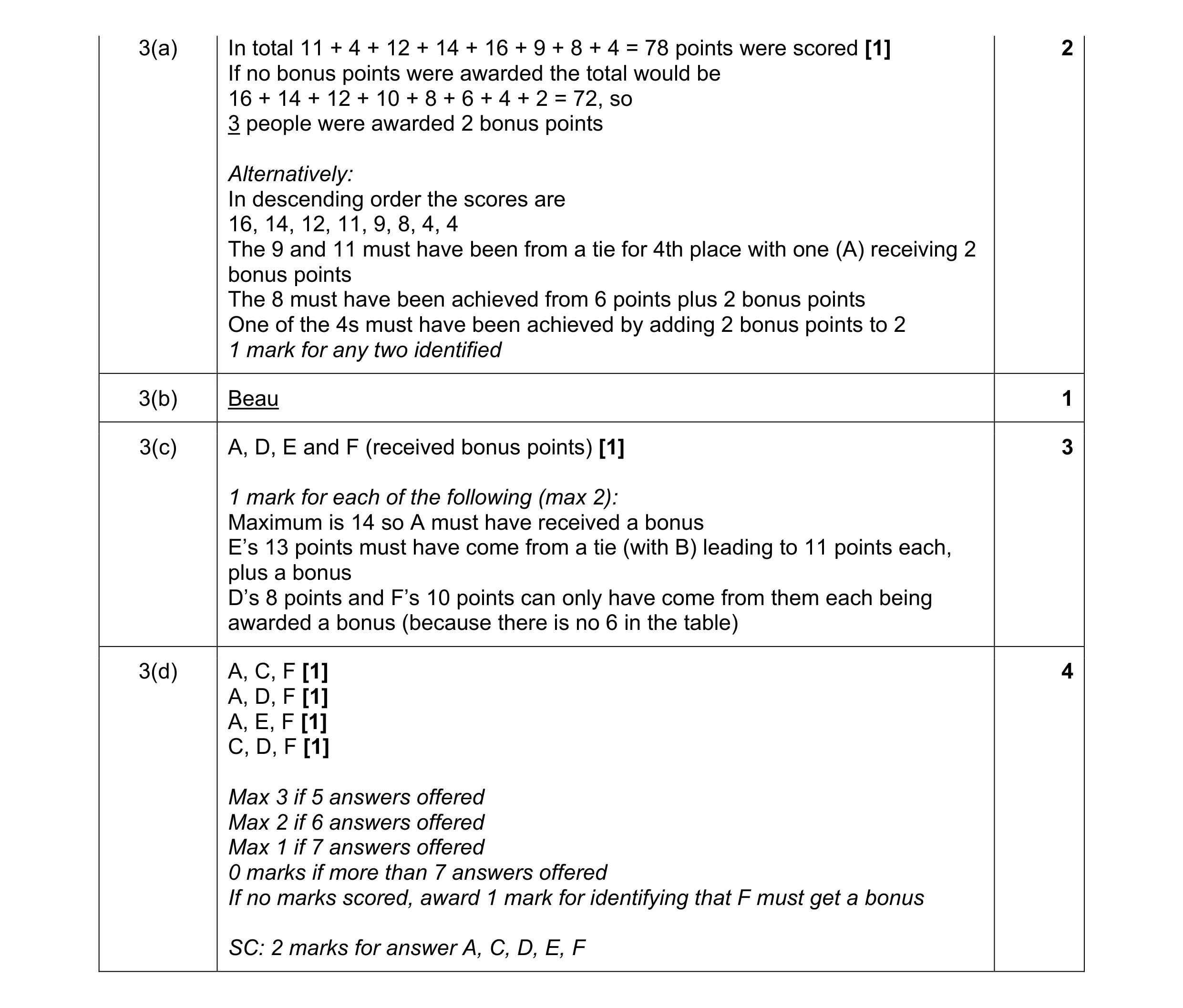 10
10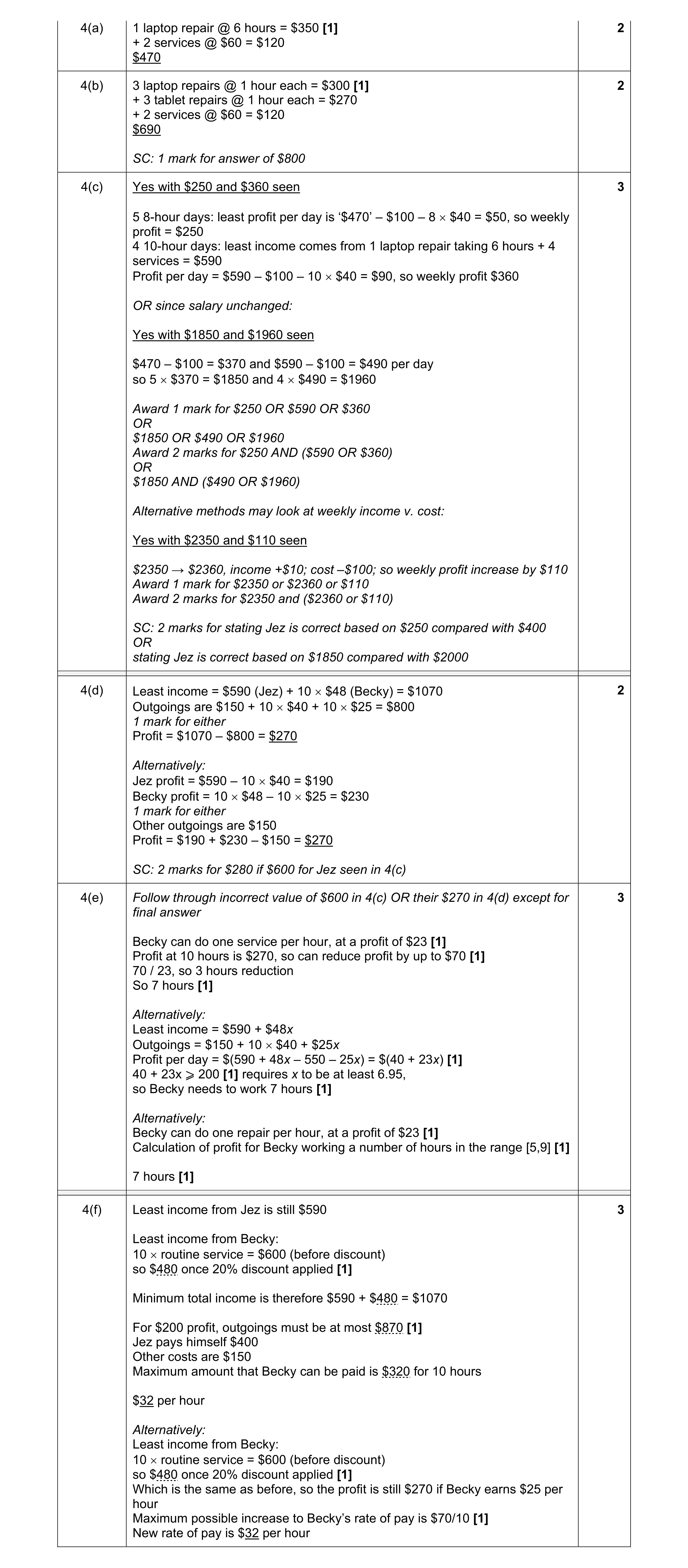 15
15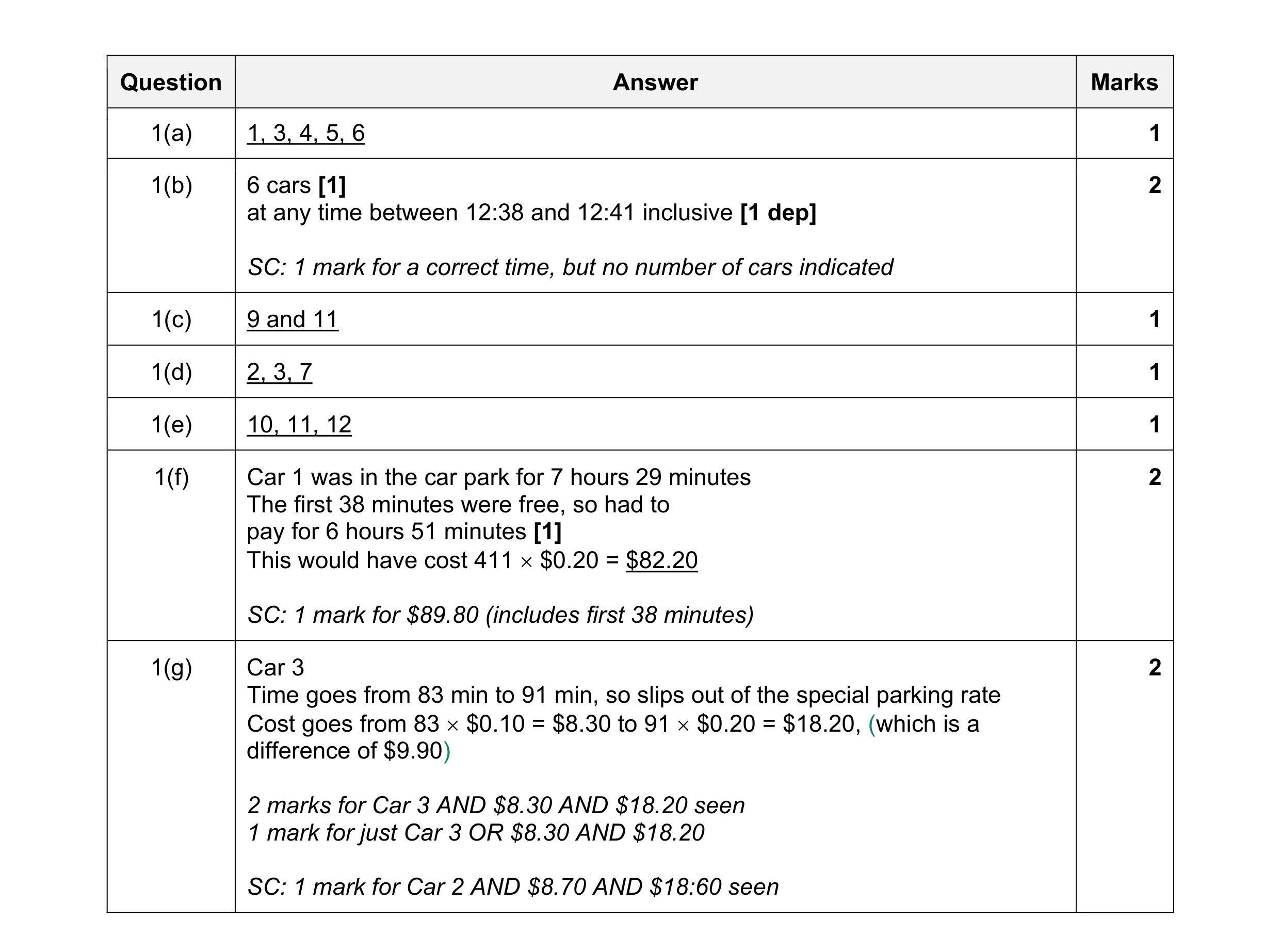 10
10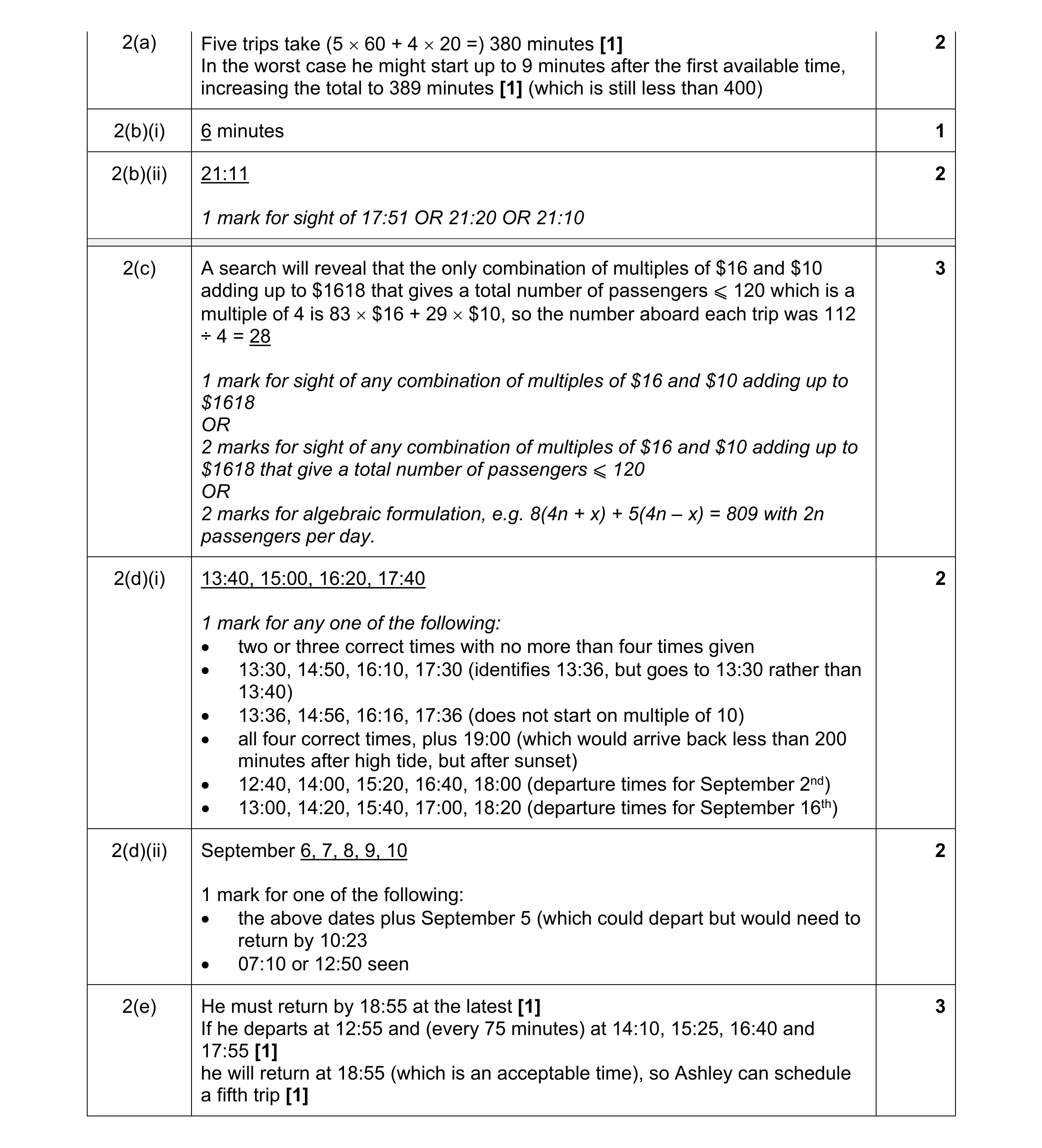 15
15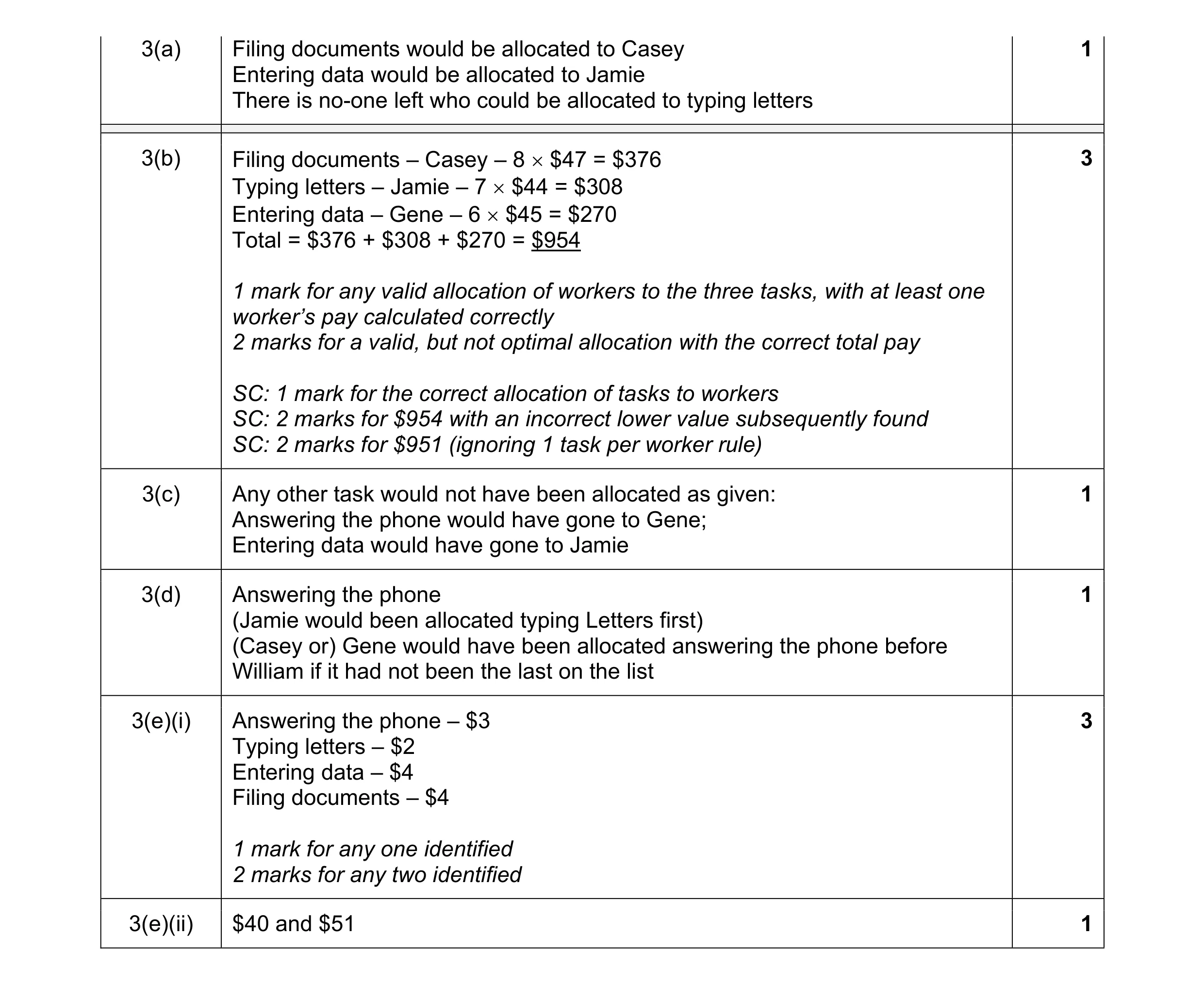 10
10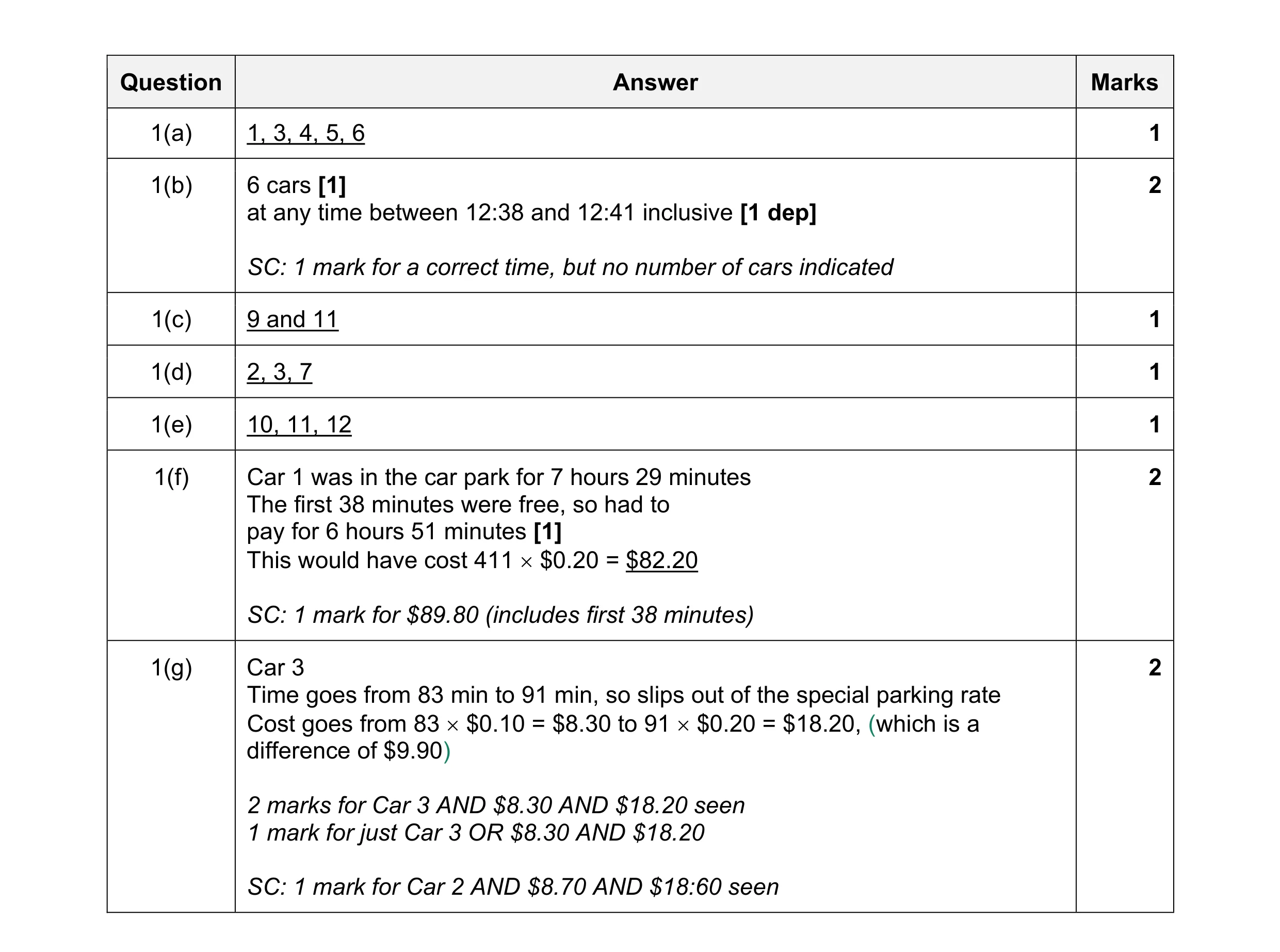 10
10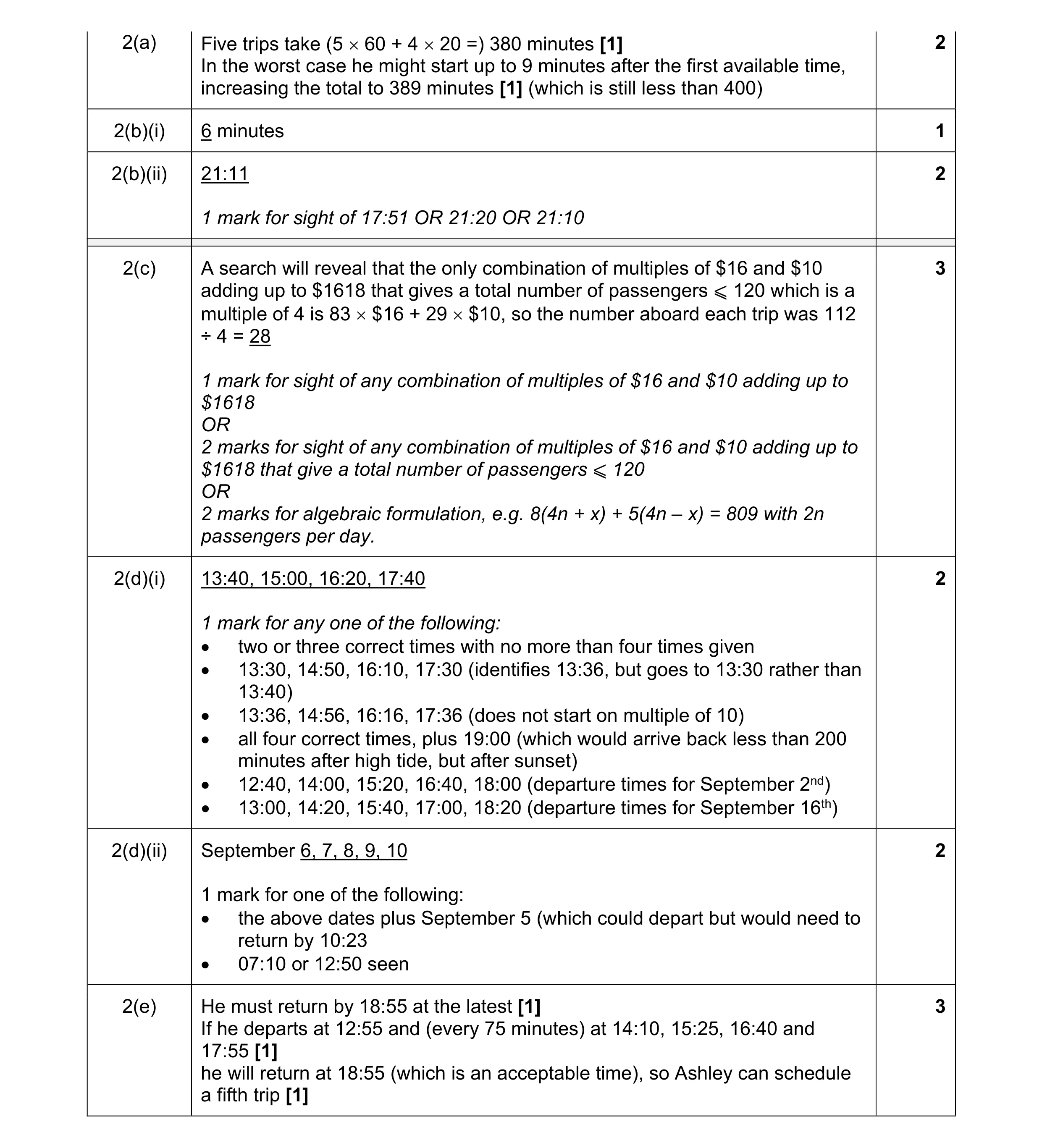 15
15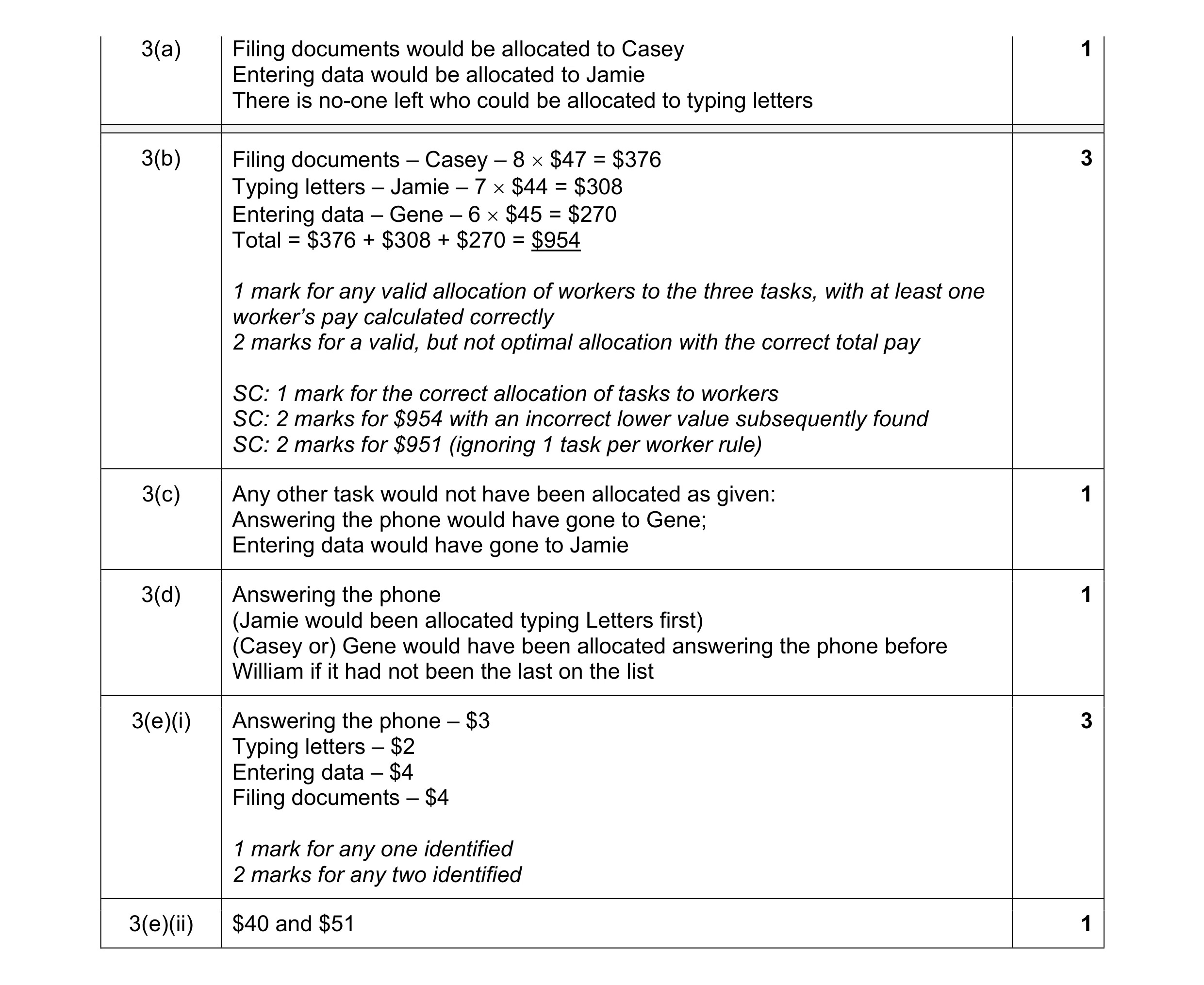 10
10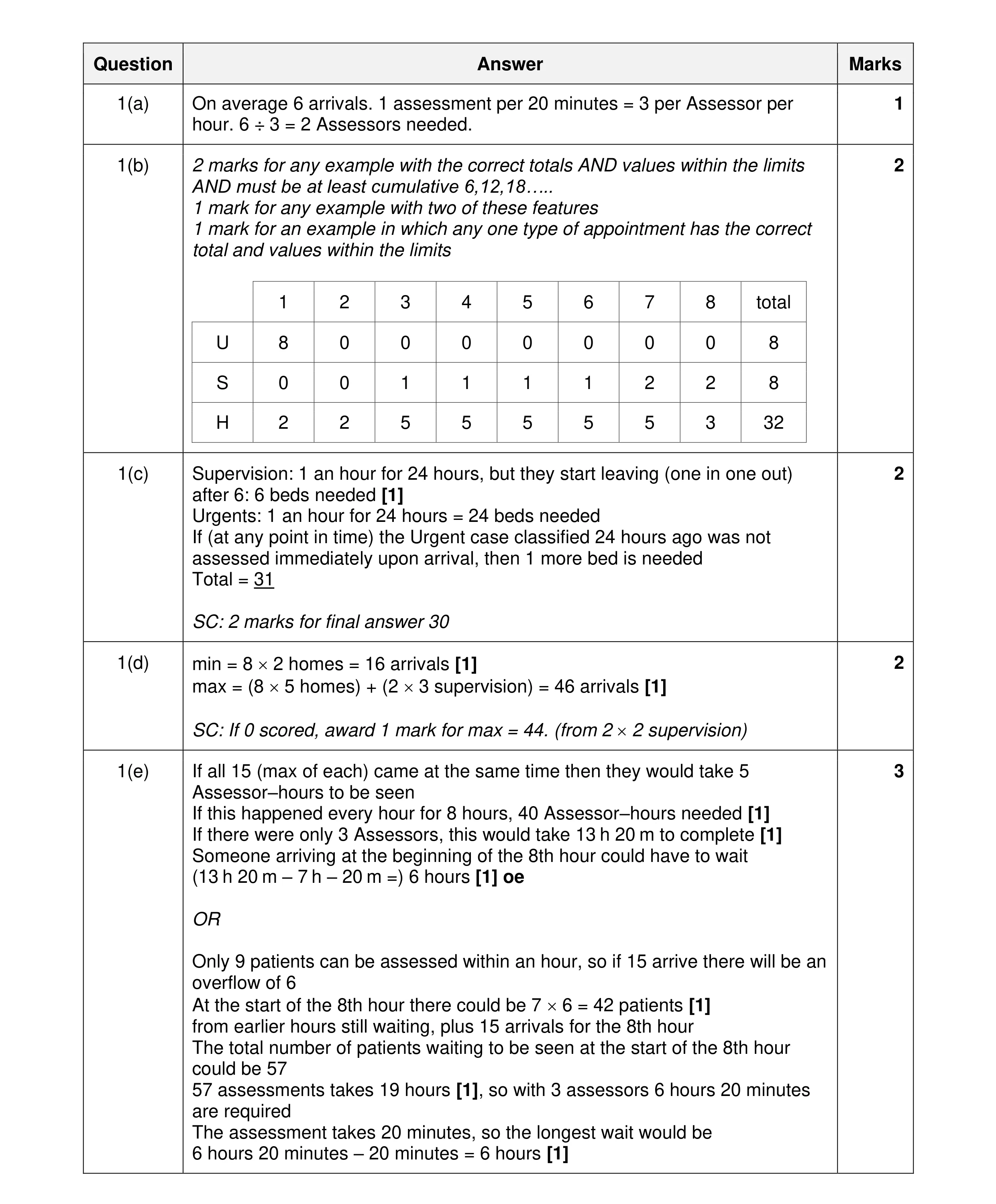 10
10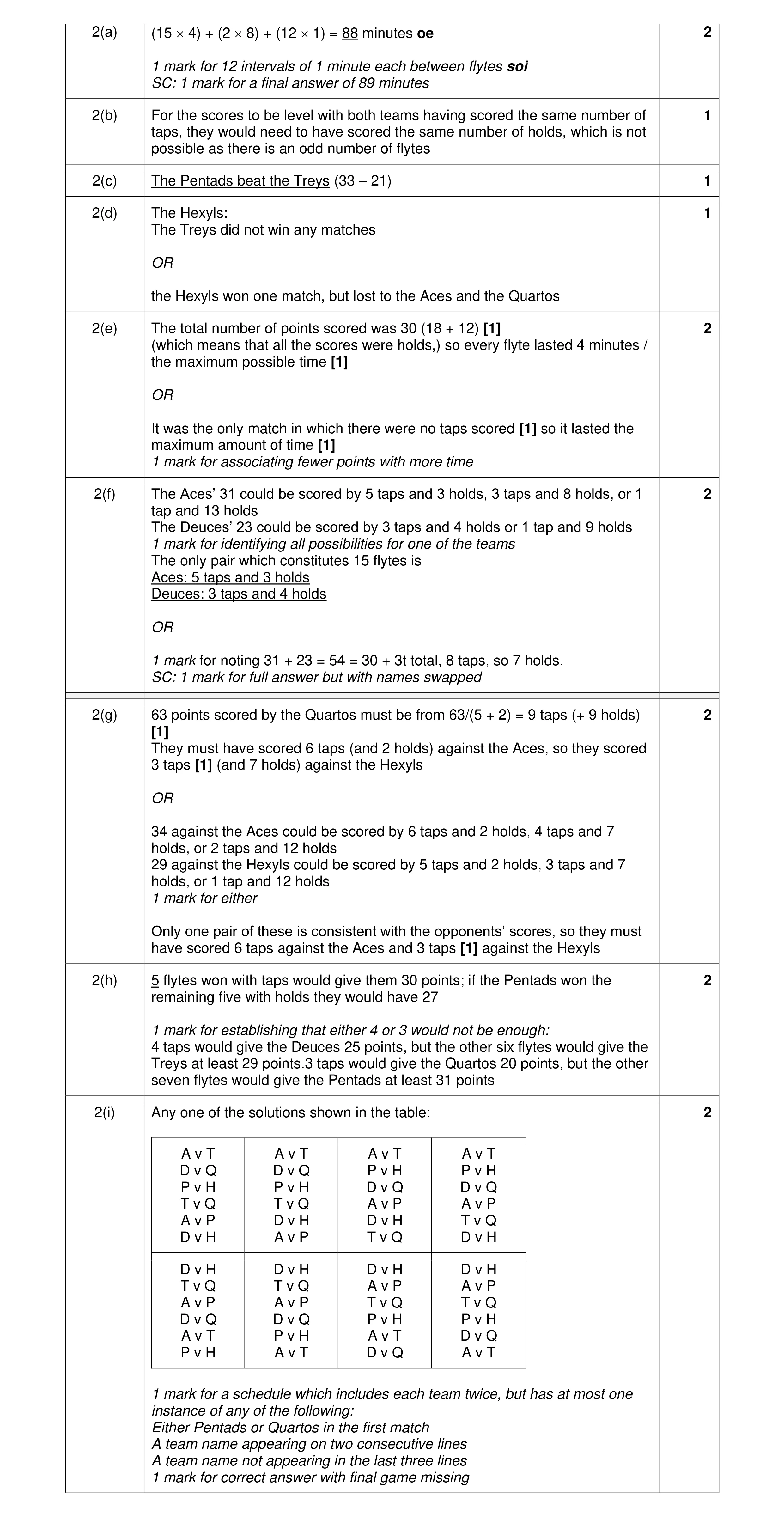 15
15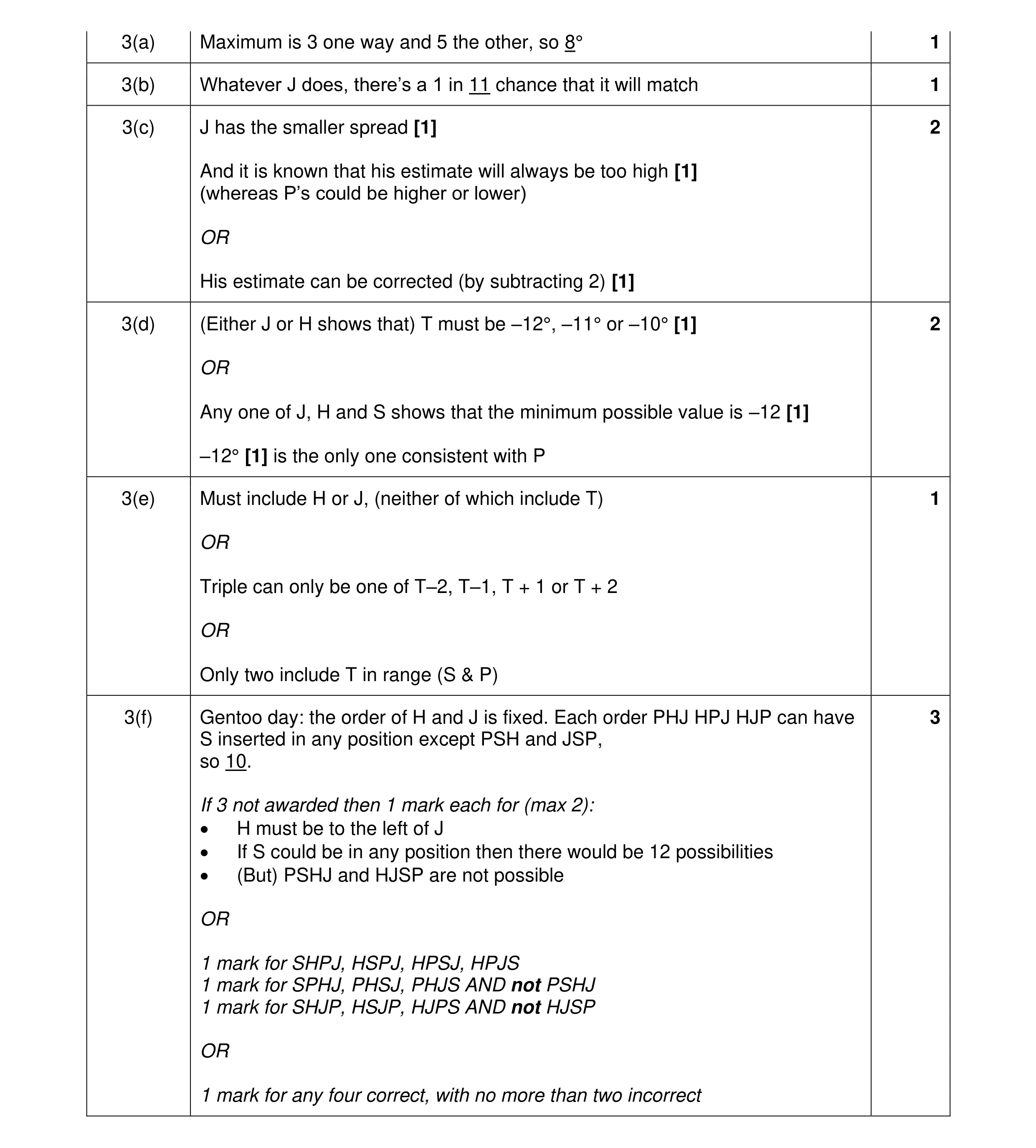 10
10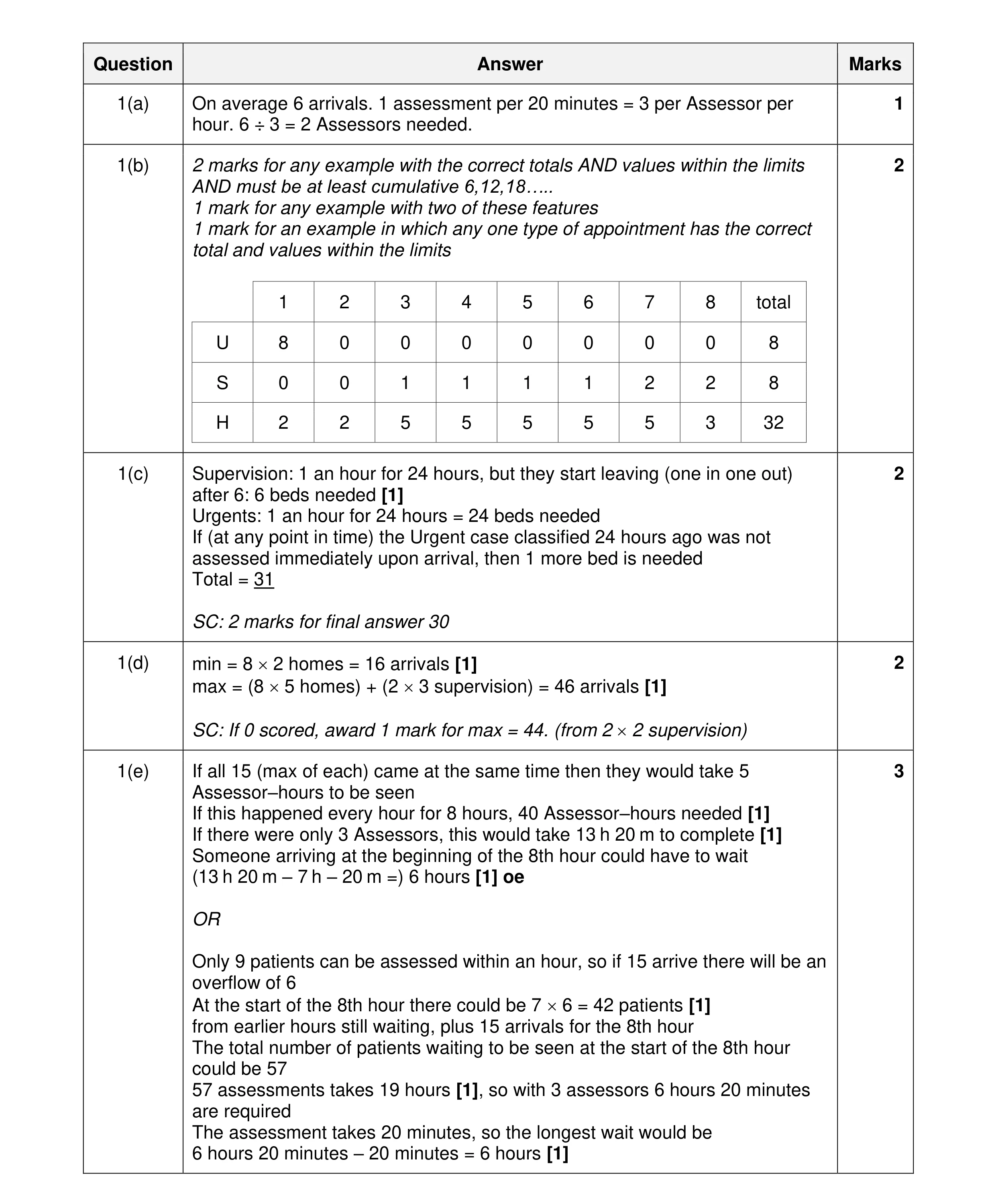 10
10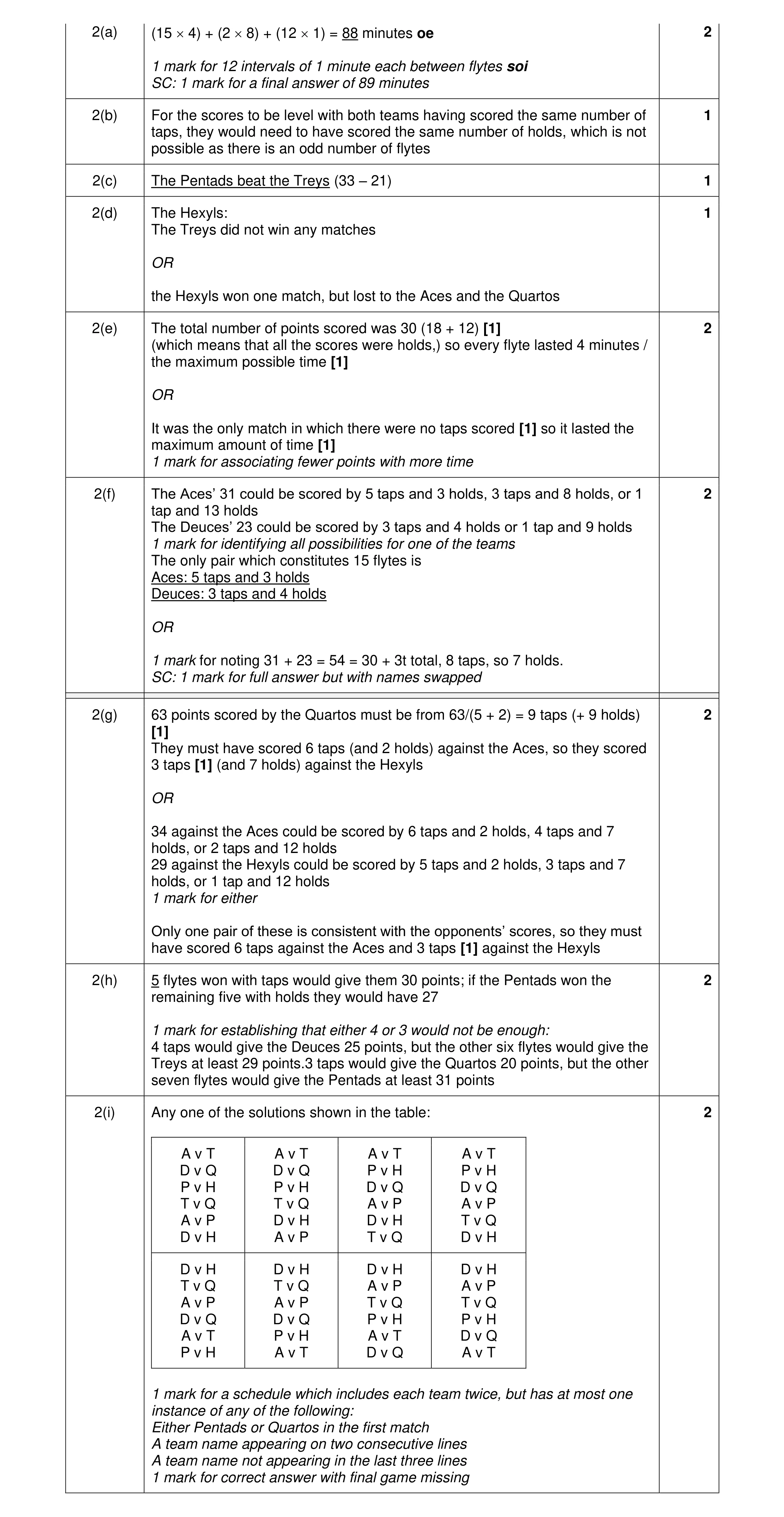 15
15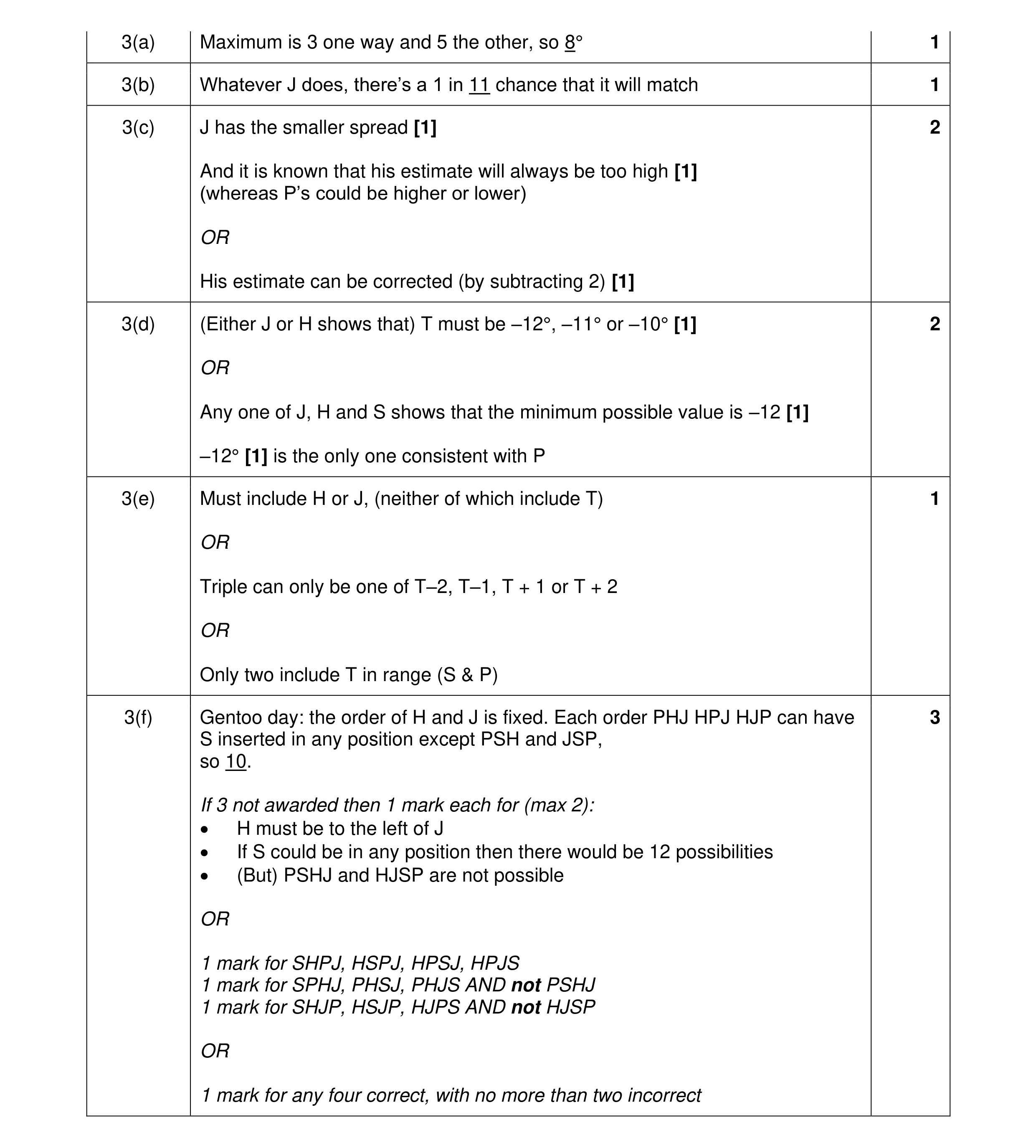 10
10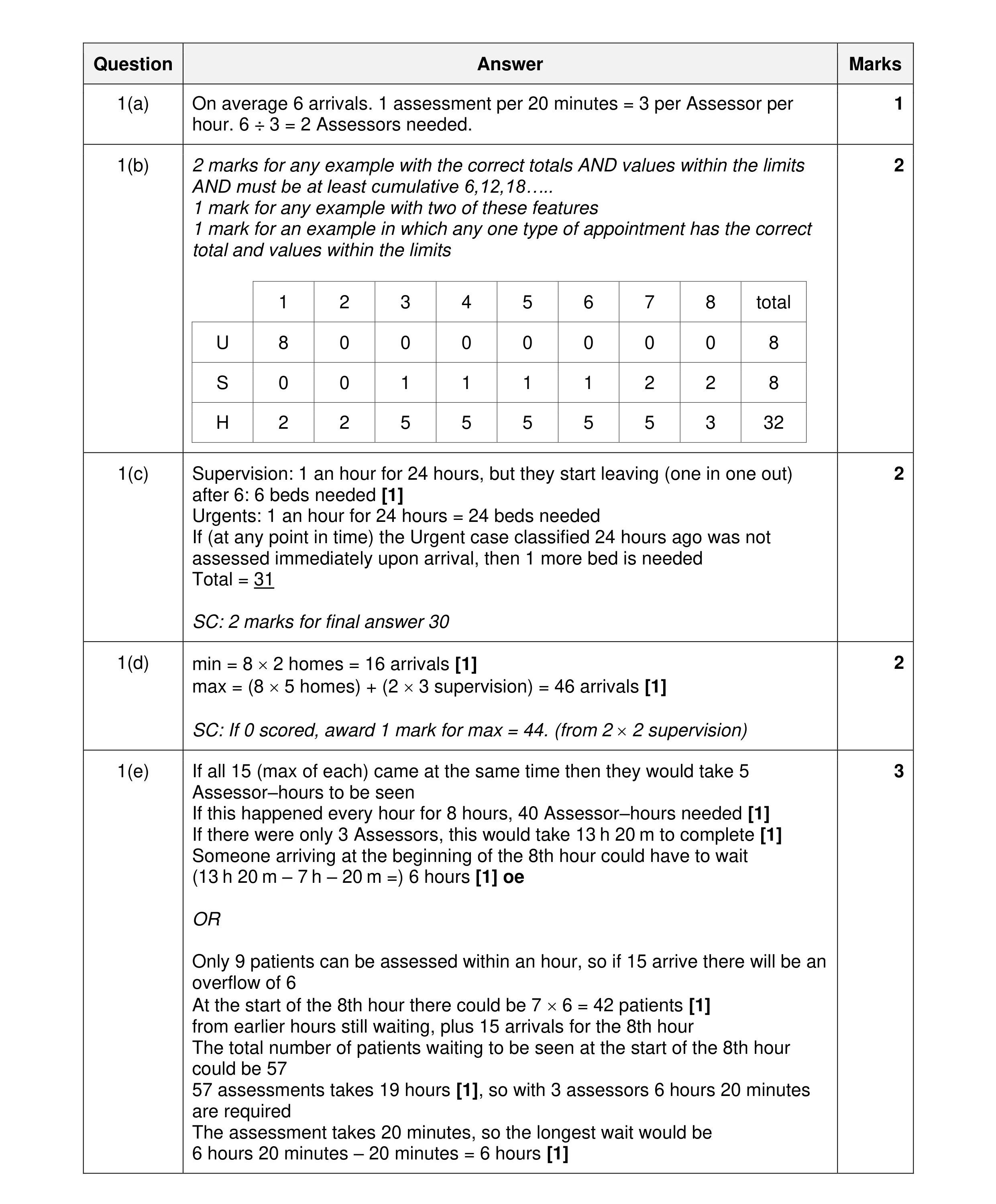 10
10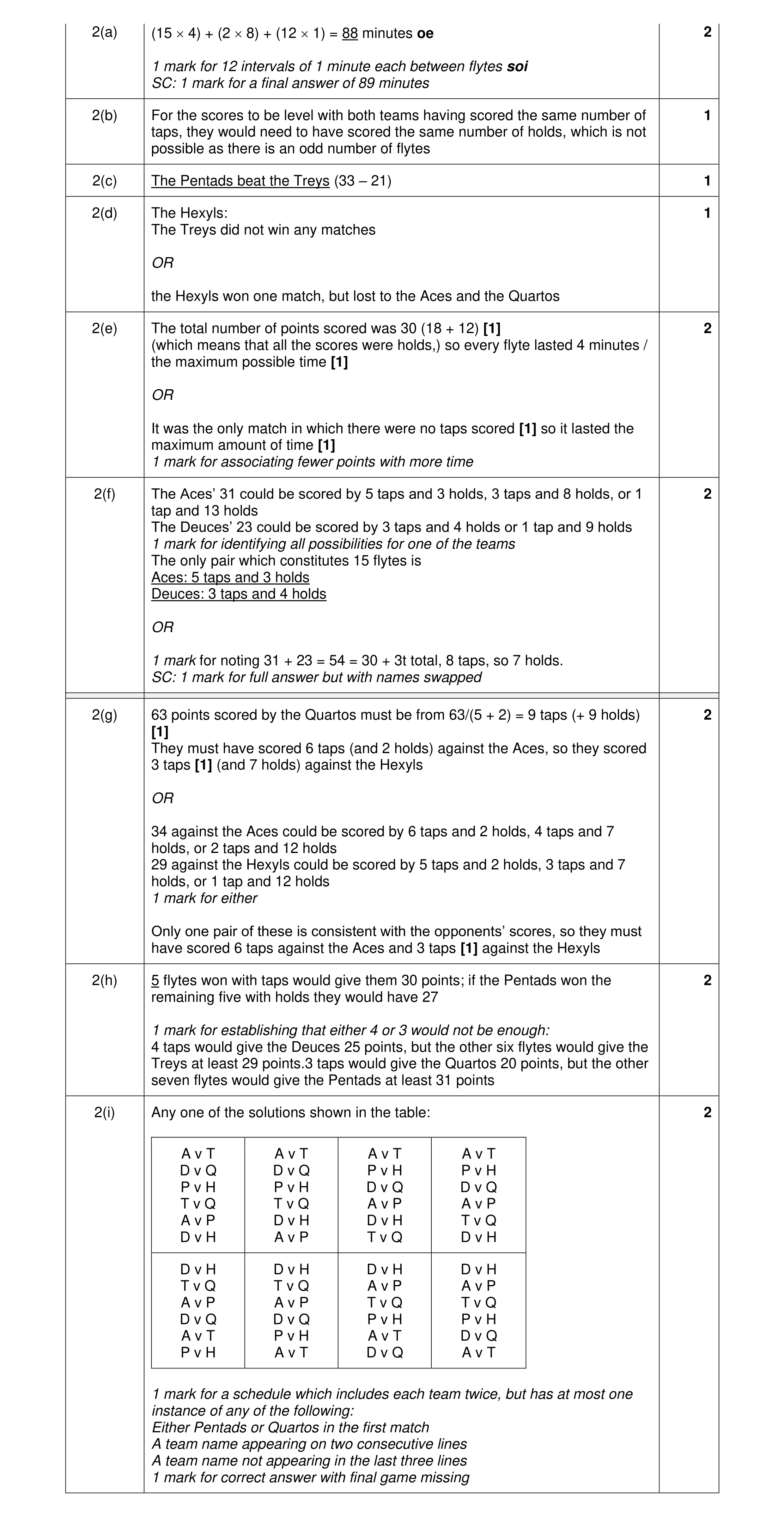 15
15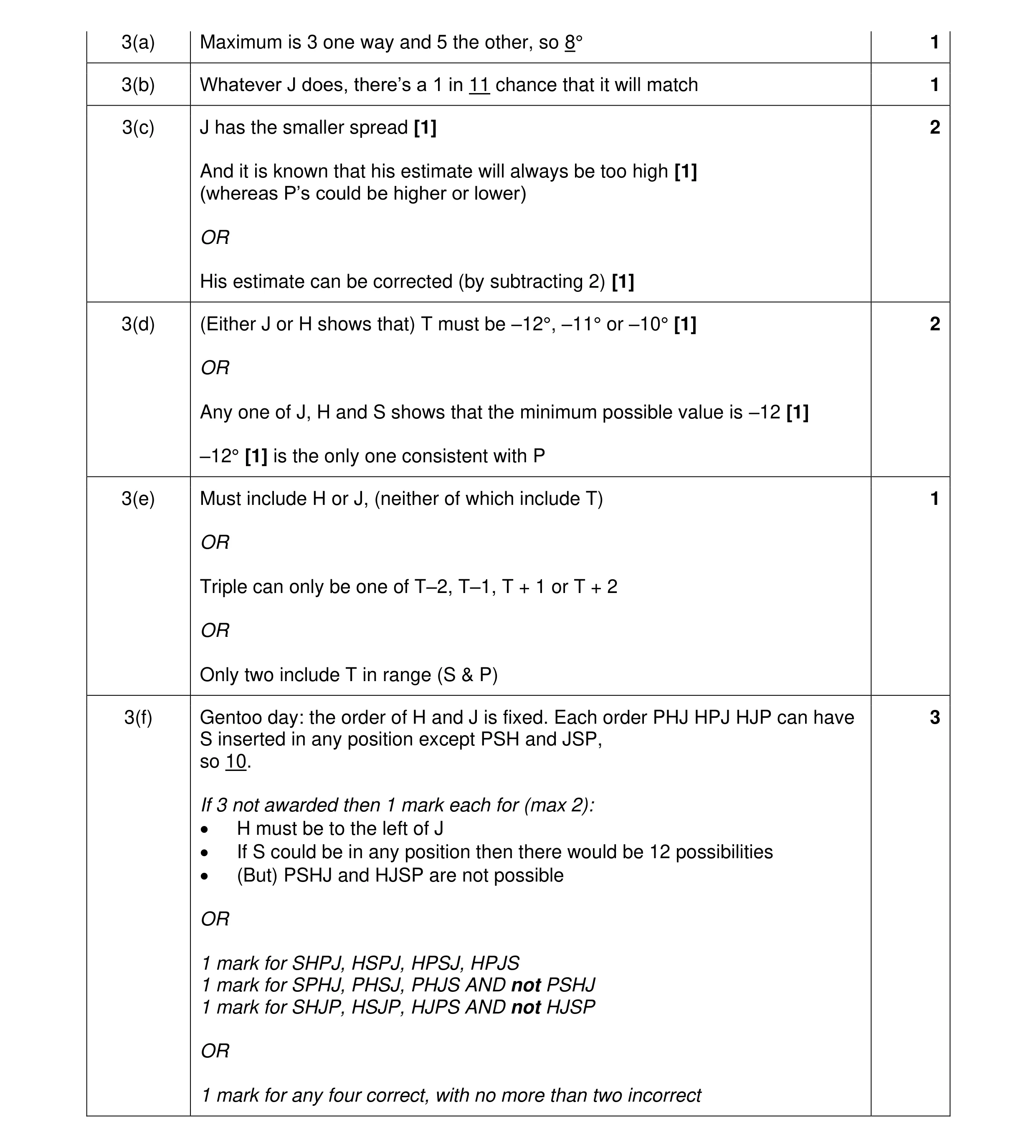 10
10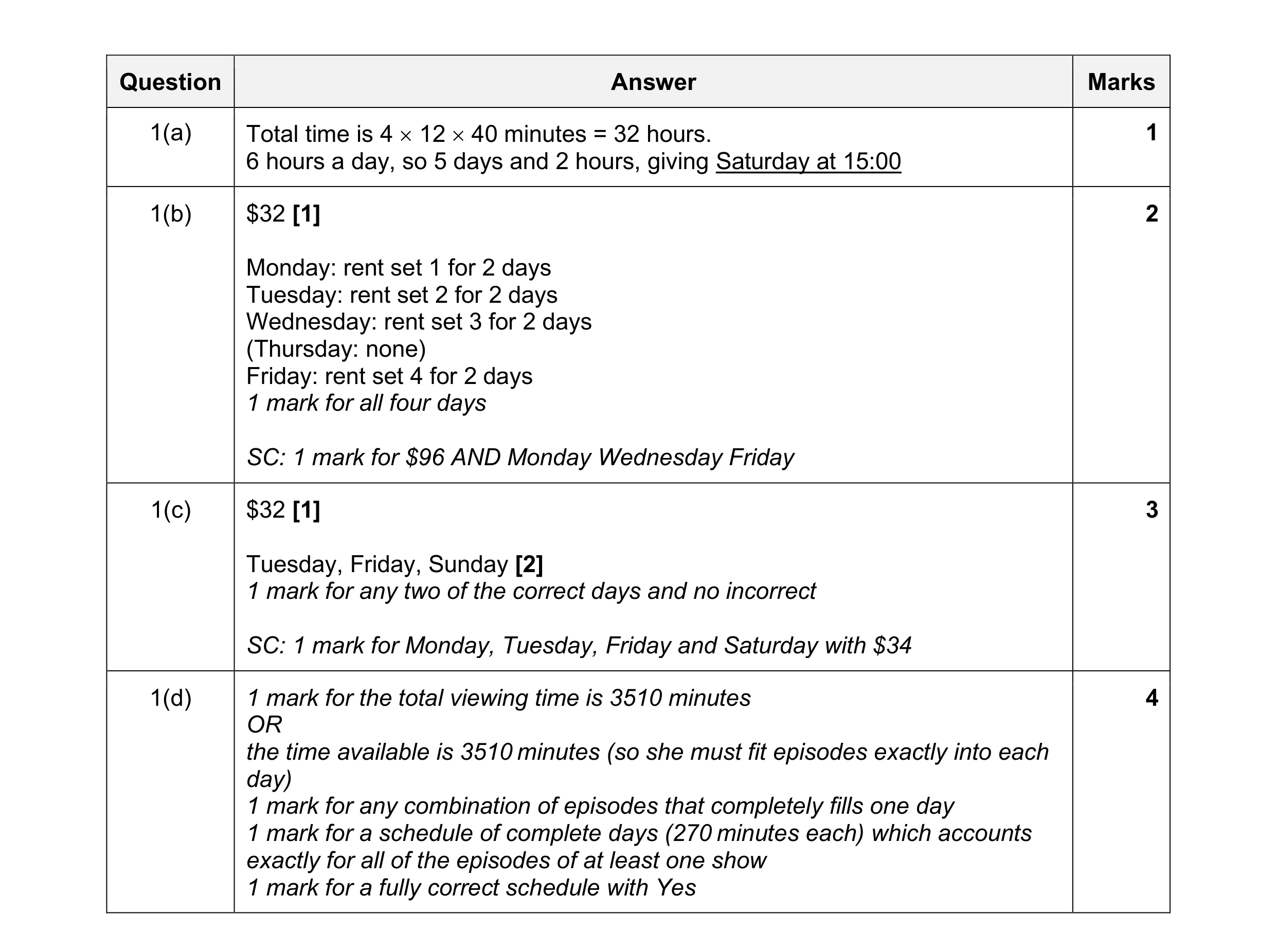 10
10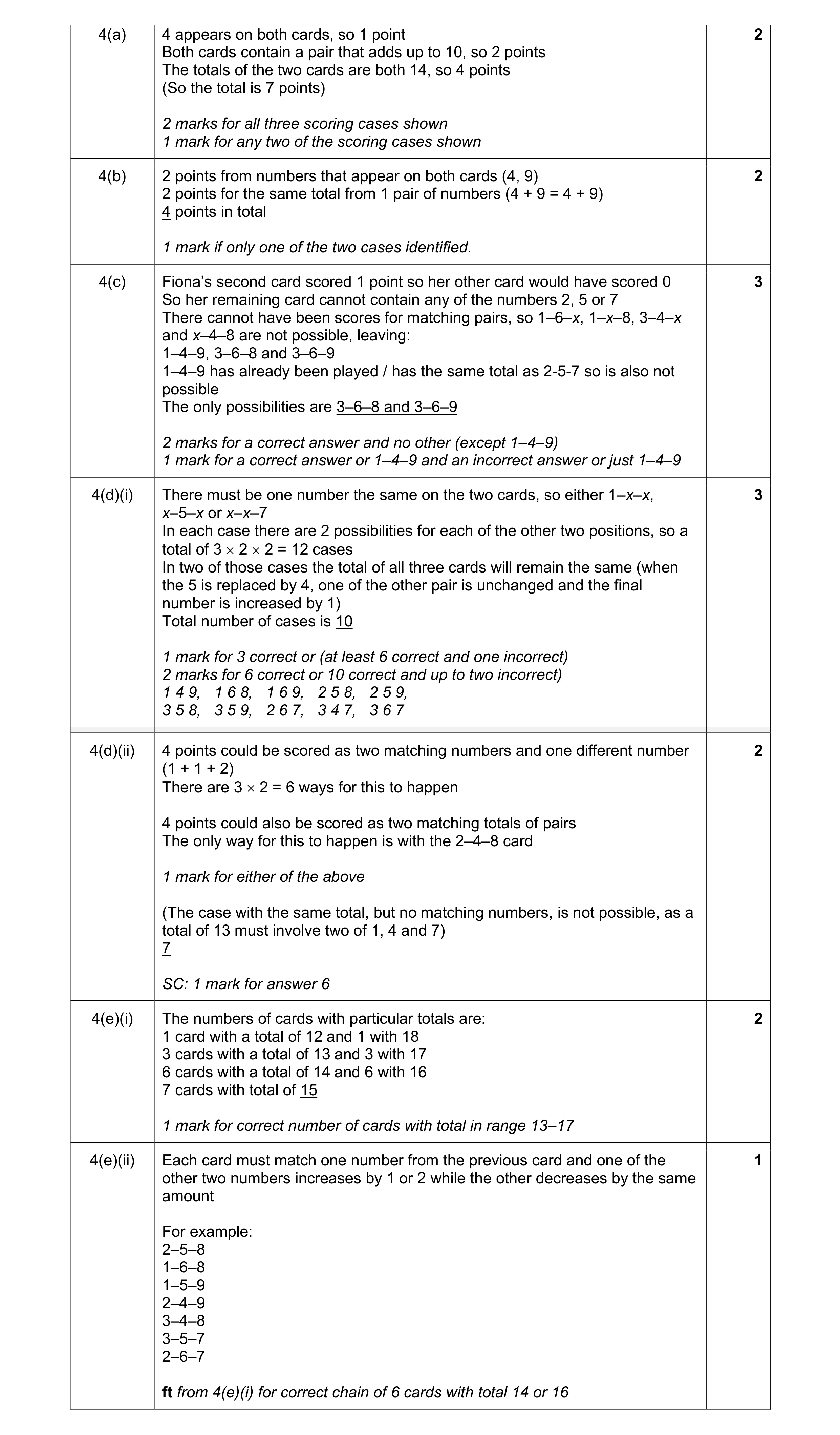 15
15 15
15 15
15 15
15 15
15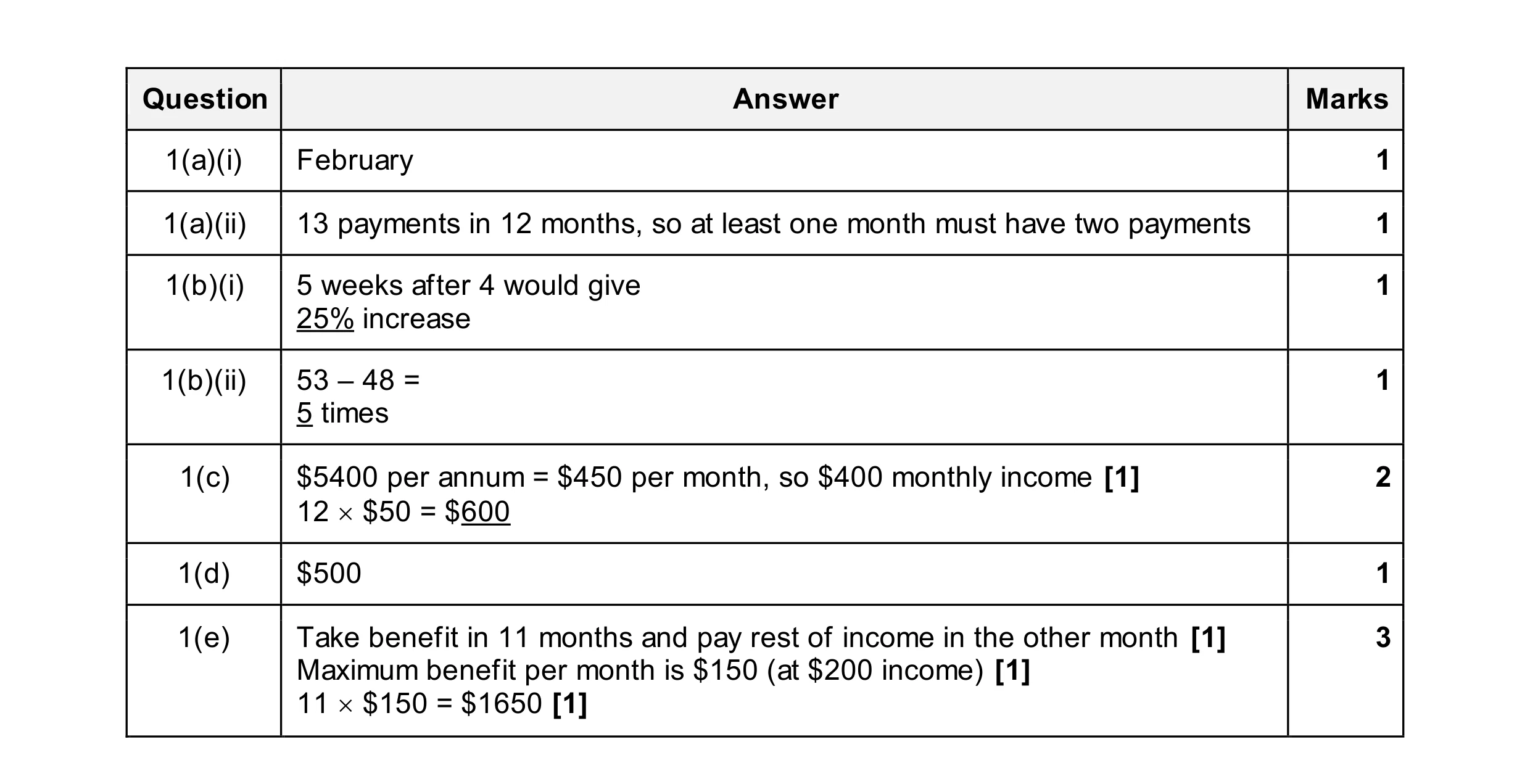 10
10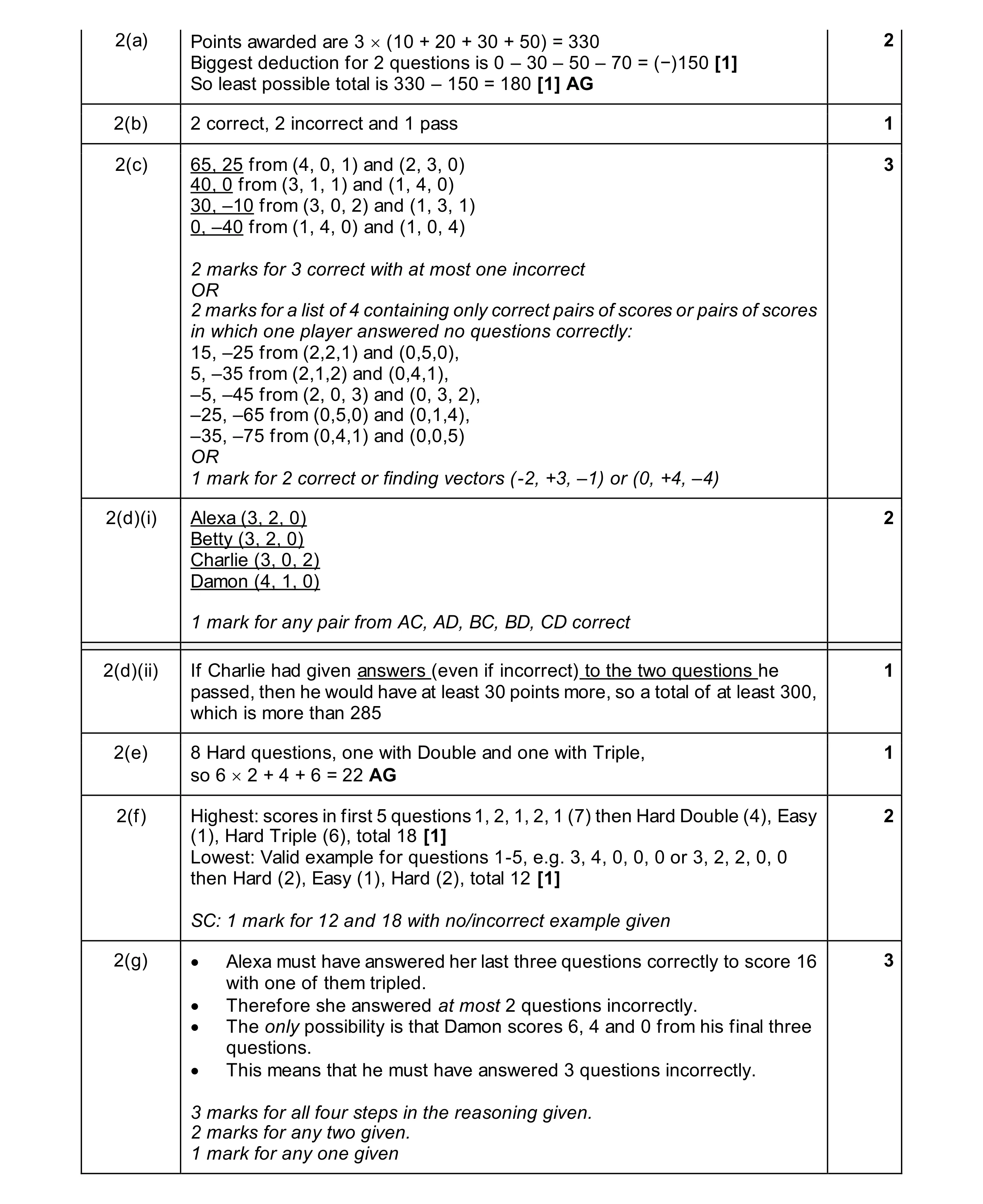 15
15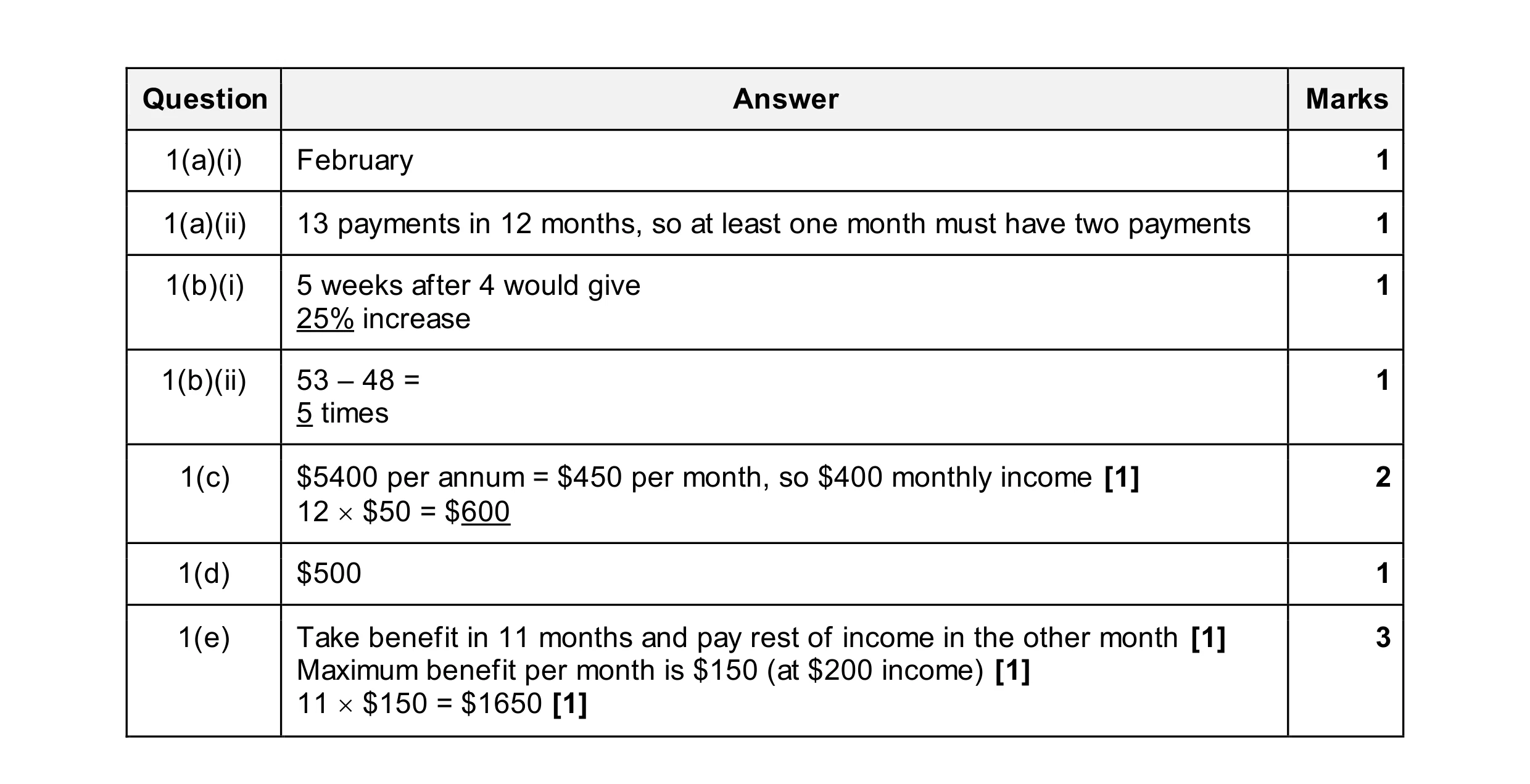 10
10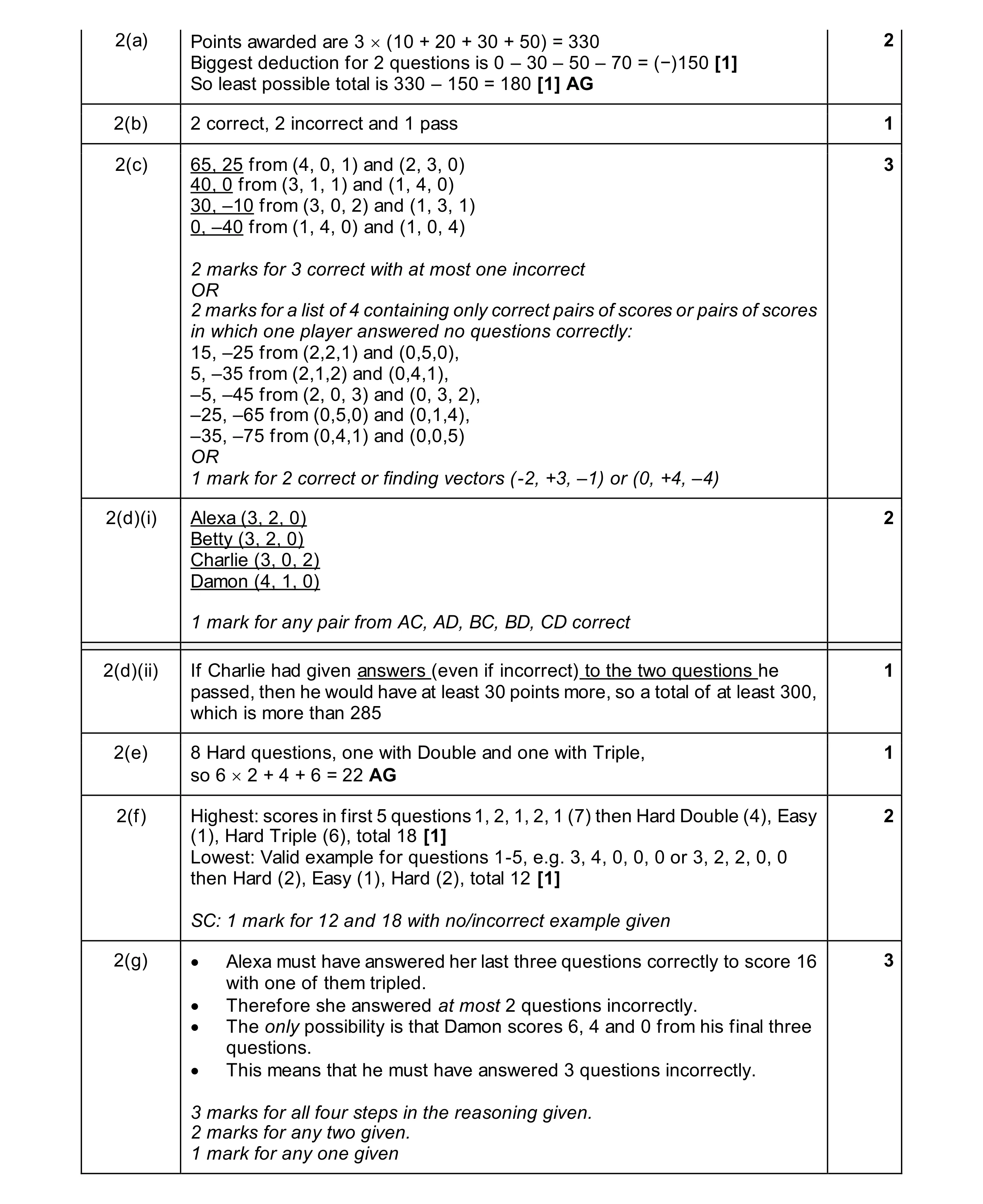 15
15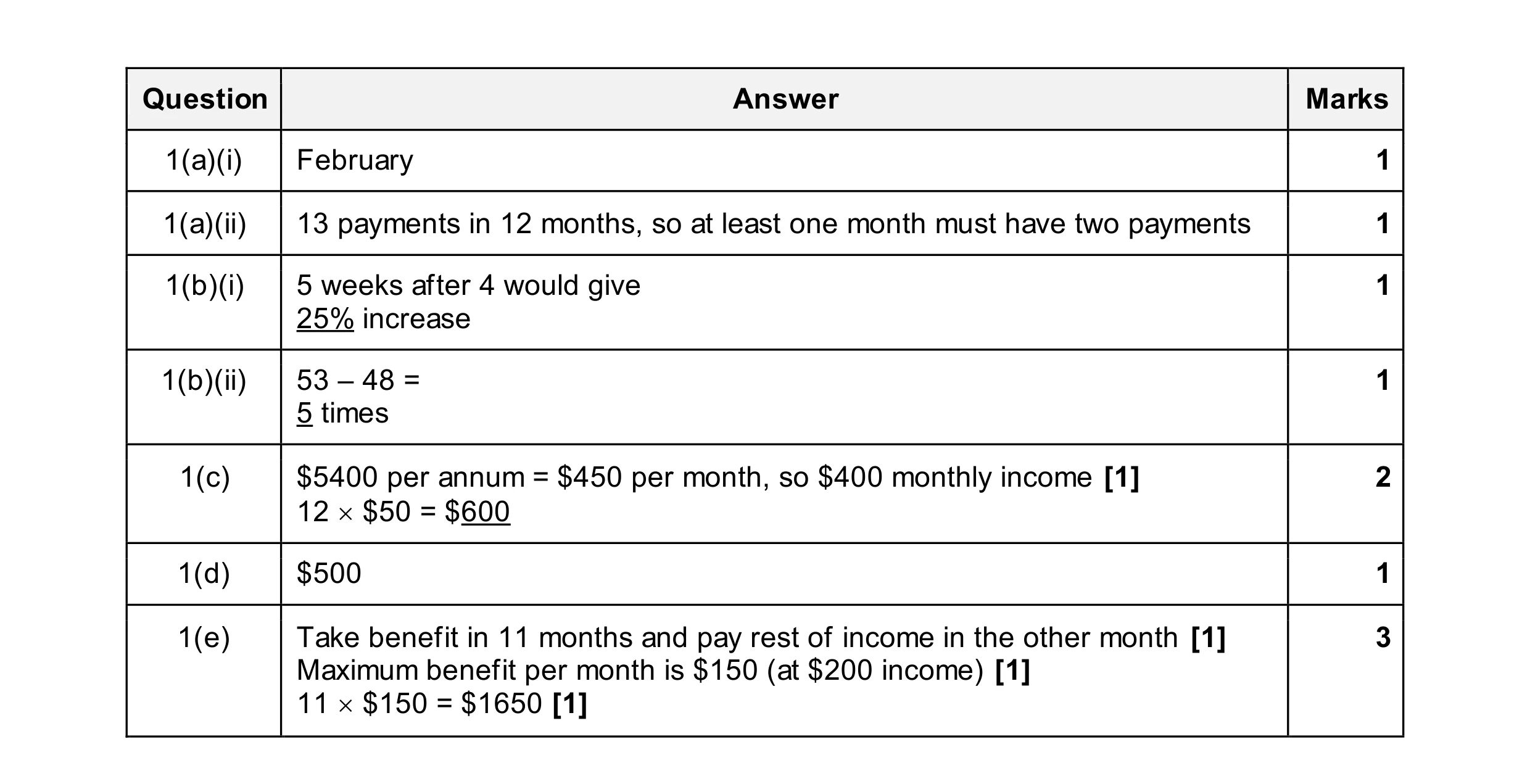 10
10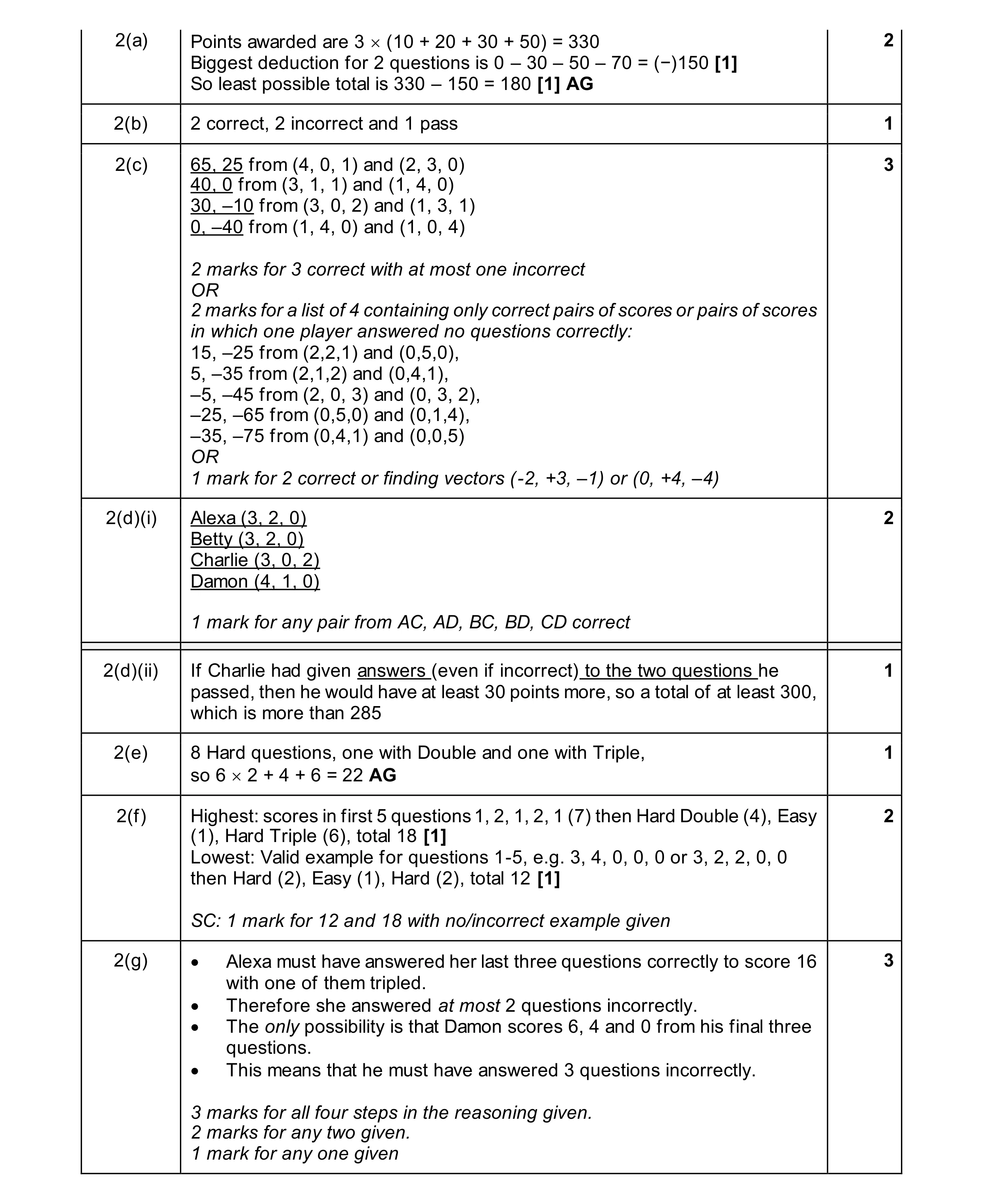 15
15