Questions as text
Q1 · Joe the Camel most easily recognised by children According to Paul Fischer, young… 9990/42 Feb/March 2018
2 Joe the Camel most easily recognised by children According to Paul Fischer, young children see, understand and remember advertising. Given the health consequences of smoking, the exposure of children to tobacco advertising (such as Joe the Camel) may be a health risk. (a) Outline what is meant by ‘brand recognition’. [2] (b) Explain two reasons why children are important targets for advertisers, according to Fischer et al. (1991). [4] (c) Suggest two reasons why the children in the Fischer et al. study recognised Camel cigarettes more than any other brand. [4] (d) Discuss advantages and disadvantages of using children as participants in psychological research. You should include a conclusion in your answer. [5] Psychology and health
15 marks
Mark scheme: 2(a) Outline what is meant by ‘brand recognition’. 2 Marks: 1 mark for basic answer e.g. identification. +1 mark for elaboration/example. Most likely answer (other appropriate responses to be credited): The extent to which people are able to identify a brand by its attributes such as a logo, slogan or colour. 2(b) Explain two reasons why children are important targets for 4 advertisers, according to Fischer et al. (1991). Marks: Question always requires two ‘things’ • 1 mark basic answer. 2 marks elaboration, twice. • Max 2 marks if only ‘one’ is answered. Most likely answer (other appropriate responses to be credited): • Children are major consumers from a young age: food, toys and games, etc. • Children influence household decisions, maybe what a family will eat, where a family will go, etc. • Children are consumers of the future, and brand awareness in children may transfer to adulthood. 2(c) Suggest two reasons why the children in the Fischer et al. study 4 recognised Camel cigarettes more than any other brand. Marks: 1 mark basic answer. 2 marks elaboration, twice. Most likely answer (other appropriate responses to be credited): • Joe the camel is a cartoon character and so is more child friendly; • Joe the camel suggests the package contents are for children rather than adults; • following Bandura et al. (1961) children observe adults with cigarettes and although they may not copy an adult smoking they will imitate ‘smoking behaviours’ to be like an adult. This is made worse when associated with a cartoon character. 2(d) Discuss advantages and disadvantages of using children as 5 participants in psychological research. You should include a conclusion in your answer. Question always plural of each argument. Question always requires conclusion. • 1 mark for each for/against argument up to 4 max. • 1 mark for conclusion. Note: If three (or more) arguments for one side, best two credited. If one argument only, max 2 marks. Most likely answer (other appropriate responses to be credited): Advantages • children are young and naïve and so are more likely to behave naturally, even in laboratory experiments. • children will not question what is happening. • children are consumers so studies involving children are as appropriate as adults as participants. Disadvantages • children may not understand complex instructions and if they do« • they may not be able to explain what they are thinking or how they feel. • children may not exercise the right to withdraw; they may not understand a debriefing. • children may be psychologically harmed by a study which may not be evident for many years. Conclusion: (a decision reached by reasoning) any appropriate conclusion drawn from the discussion that has been presented. Marks: 1 mark if appropriate. 0 marks if the conclusion repeats what has already been stated. Section A: Stimulus question psychology and health
This question in 9990/42 Feb/March 2018
Q2 · The field experiment by Savage and Armstrong (1990) investigated the effect of consulting… 9990/42 Feb/March 2018
3 The field experiment by Savage and Armstrong (1990) investigated the effect of consulting style on patients’ satisfaction using a random sample of 359 patients from one general practice in London as participants. (a) Explain why Savage and Armstrong used an independent measures design in their field experiment. [2] (b) Outline how Savage and Armstrong followed two ethical guidelines and give reasons why it was important to follow these guidelines. [4] (c) Suggest two alternative sampling techniques that could have been used to gather participants for this study. [4] (d) Discuss strengths and weaknesses of using a random sample in this study. You should include a conclusion in your answer. [5] Psychology and organisations
15 marks
Mark scheme: 3(a) Explain why Savage and Armstrong used an independent measures 2 design in their field experiment. Marks: 1 mark for basic answer e.g. identification. +1 mark for elaboration/example. Most likely answer (other appropriate responses to be credited): • participants would be unaware that they were involved in a study which would not be the case if a different style were to be used (i.e. repeated measures); • participants may not visit the surgery often so testing them twice may have been difficult; • records would not need to be kept about what patient did what condition (i.e. which they did first so the other style used second). 3(b) Outline how Savage and Armstrong followed two ethical guidelines 4 and give reasons why it was important to follow these guidelines. Marks: Question always requires two ‘things’ • 1 mark for each correct ethical guideline that was maintained, twice. • 1 mark for each associated reason, twice. • Note: no marks for identifying a guideline. Indicative content: • Informed consent – patients should not be studied without their agreement. ‘We obtained patients’ consent for the study by giving all patients attending each surgery a written request to allow audio tape recording of the consultation as part of a research project. If the patient refused to take part or was ineligible for the above reasons the next eligible patient to consult was selected.’ • Psychological harm – patients should leave a study in the same state as they were before starting – ‘Patients were also excluded if it was thought that they would be upset by taking part in the study or would be incapable of completing a part of it.’ 3(c) Suggest two alternative sampling techniques that could have been 4 used to gather participants for this study. Marks: Question requires knowledge of alternative sampling techniques and how they can be applied to this study. • 1 mark for each correct technique identified, twice • 1 mark for applying each suggested technique to ‘this study’, twice Most likely answer (other appropriate responses to be credited): • Self-selecting sample: advertisement placed in newspaper or in doctors’ surgery asking for participants; • Opportunity sample: asking people sitting in waiting room; asking people on the street to participate. • Snowball sample: asking people who have participated to ask their friends/people they know to be a participant. Note: 0 marks for ‘random sample’ as that was used in the Savage and Armstrong study, given in the question stem. 3(d) Discuss strengths and weaknesses of using a random sample in this 5 study. You should include a conclusion in your answer. Question always plural of each argument. Question always requires conclusion. • 1 mark for each for/against argument up to 4 max. • 1 mark for conclusion. • 0 marks for candidates who write about random allocation. Note: If three (or more) arguments for one side, best two credited. If one argument only, max 2 marks. Note: answers must be related to ‘this study’ as the question states. Most likely answer (other appropriate responses to be credited): Strengths • participants cannot chose to be in the study (they do not volunteer); • participants automatically drawn from a wide age range (range was 16–75); and varying illnesses. • anomalies are likely to be random rather than consistent; • there is no researcher (doctor) bias in selecting participants. Weaknesses • participants may not give consent (unlike volunteers); • participants may have to be excluded (if present with life threatening problem or is for administrative/repeat prescription); • patients may drop out (30 failed to complete initial assessment; 110 failed to complete the second assessment). Conclusion: (a decision reached by reasoning) any appropriate conclusion drawn from the discussion that has been presented. Marks: 1 mark if appropriate. 0 marks if the conclusion repeats what has already been stated. Section A: Stimulus question psychology and organisations
This question in 9990/42 Feb/March 2018
Q3 · ‘Some studies of patient-practitioner relationships only collect data about non-verbal… 9990/41 May/June 2018
11 ‘Some studies of patient-practitioner relationships only collect data about non-verbal communications. This is too reductionist to be of any value.’ To what extent do you agree with this statement? Use examples of research you have studied to support your answer. [12] Psychology and organisations
12 marks
Mark scheme: 11 ‘Some studies of patient-practitioner relationships only collect data 12 about non-verbal communications. This is too reductionist to be of any value.’ To what extent do you agree with this statement? Use examples of research you have studied to support your answer. Marks: use generic levels of response in table C. Syllabus: practitioner and patient interpersonal skills: non-verbal communications (McKinstry and Wang, 1991) Most likely (any other appropriate responses should be credited): For: • Isolating specific variables to be studied is of significant value (such as knowing preferred doctor dress style) • A range of different behaviours cannot all be studied at the same time. Against: • isolating specific variables results in any interaction between variables to be missed. • Specific aspects may not generalise. • One variable may appear relevant but it becomes much less important when paired with other variables. For example, doctor dress style is important in isolation but may be much less important when related to doctor-centred or patient-centred styles.
This question in 9990/41 May/June 2018
Q4 · ‘Some studies of patient-practitioner relationships only collect data about non-verbal… 9990/43 May/June 2018
11 ‘Some studies of patient-practitioner relationships only collect data about non-verbal communications. This is too reductionist to be of any value.’ To what extent do you agree with this statement? Use examples of research you have studied to support your answer. [12] Psychology and organisations
12 marks
Mark scheme: 11 ‘Some studies of patient-practitioner relationships only collect data 12 about non-verbal communications. This is too reductionist to be of any value.’ To what extent do you agree with this statement? Use examples of research you have studied to support your answer. Marks: use generic levels of response in table C. Syllabus: practitioner and patient interpersonal skills: non-verbal communications (McKinstry and Wang, 1991) Most likely (any other appropriate responses should be credited): For: • Isolating specific variables to be studied is of significant value (such as knowing preferred doctor dress style) • A range of different behaviours cannot all be studied at the same time. Against: • isolating specific variables results in any interaction between variables to be missed. • Specific aspects may not generalise. • One variable may appear relevant but it becomes much less important when paired with other variables. For example, doctor dress style is important in isolation but may be much less important when related to doctor-centred or patient-centred styles.
This question in 9990/43 May/June 2018
Q5 · According to Chung and Naya (2000), studies have shown that only one third of all… 9990/42 Oct/Nov 2018
3 According to Chung and Naya (2000), studies have shown that only one third of all patients and less than 50% of asthma patients take their pills as prescribed. Using TrackCapTM, the following results were obtained. Mean Median % % TrackCapTM compliance 80 89 (a) Explain the difference between a mean and a median. [2] (b) Suggest one way in which the Chung and Naya study was ethical and one way in which this study was unethical. [4] (c) Give two reasons why a TrackCapTM device may not be a valid measure of adherence. [4] (d) Discuss the advantages and disadvantages of using objective measures of adherence to medical requests. You should include a conclusion in your answer. [5] Psychology and organisations
15 marks
Mark scheme: 3(b) Suggest one way in which the Chung and Naya study was ethical and 4 one way in which this study was unethical. Marks: 1 mark basic answer. 2 marks elaboration, twice. Most likely answer (other appropriate responses to be credited): • Written informed consent was obtained after patients received a description of the trial's purpose and procedures. The informed consent form mentioned that compliance, pulmonary function and safety would be measured. • Patients, however, were not informed that compliance was under electronic surveillance so as not to introduce an unacceptable bias in favour of compliance. 3(c) Give two reasons why a TrackCapTM device may not be a valid 4 measure of adherence. Marks: 1 basic answer. 2 marks detailed answer/elaboration ×2 Most likely answer (other appropriate responses to be credited): Quote from study: • The device, however, was programmed to recognise, but not accumulate, multiple openings that occurred within 1 min of each other. • If the cap was left off for 15 min or more, the device recorded one additional event. • To prevent extraneous results, study personnel were asked not to open the bottles before, during, or after the study period. • Just because the device records one instance of usage it does not mean the person has taken the medication. • There is no indication that the medication has been taken at the right time i.e. at times prescribed. 3(d) Discuss the advantages and disadvantages of using objective 5 measures of adherence to medical requests. You should include a conclusion in your answer. Marks: Question requires discussion; always plural of each argument, and always requires conclusion. 1 mark for each advantage/disadvantage (however detailed) and related to the question up to 4 max. 1 mark for two strengths/weaknesses unrelated to the question. 1 mark for conclusion. Most likely answer (other appropriate responses to be credited): Advantages: • objective measures involve no subjective comment (which may be dishonest answers) from a patient. • objective measures provide quantitative data which can be statistically analysed. • objective measures may involve measuring physiological processes out of the control of a patient. Disadvantages: • a patient should be allowed to comment, subjectively, on their own medication and why they may not be taking it. • the objective measure may not be valid: the recording device only records the medication leaving the container (for example) • objective measures give numbers; it does not give explanations. Conclusion: any appropriate conclusion drawn from the discussion that has been presented. 1 mark if appropriate. A conclusion is a ‘decision reached by reasoning’ and so a summary of points already made scores 0 marks.
This question in 9990/42 Oct/Nov 2018
Q6 · Design a study using an observation to investigate the responses of ten people waiting in… 9990/41 May/June 2019
6 (a) Design a study using an observation to investigate the responses of ten people waiting in a queue when two males intrude into that queue. [10] (b) Explain the psychological and methodological evidence on which your study is based. [8] Psychology and health
18 marks
Mark scheme: 6(a) Design a study using an observation to investigate the responses of 10 ten people waiting in a queue when two males intrude into that queue. Marks: use generic levels of response, ‘Design a study’ question part (a). Additional: Candidates should design the study showing evidence of design features appropriate to the named method. The named method is: observation. Specific features: • Observations: type, setting, response categories, sampling frame, number of observers. • General features of research methodology: sampling technique & sample, type of data, ethics, reliability, validity, data analysis. 6(b) Explain the psychological and methodological evidence on which your 8 study is based. Marks: use generic levels of response, ‘Design a study’ question part (b). Note: If only methodological or psychological explanation is provided max. 5 marks. Candidates are expected to explain the reasons for the suggested design in part (a). Explanation should be both psychological and methodological. Psychological to include appropriate theory or research. Additional: candidates are expected to justify their decisions or evidence presented regarding the design made in answer to question part (a). Syllabus: defending place in a queue (Milgram et al., 1986) Psychological: Quote from Milgram study: Confederates intruded themselves into 129 naturally occurring waiting lines; the defensive reactions of the queuers were noted. Queuers following the point of intrusion were more likely to object than those who preceded it; two intruders provoked more reaction than a single intruder; and buffers (passive confederates standing in line) dampened the queue's response to the intruders. In the study by Milgram stooges ‘pushed-in’ to a queue and observers noted what happened. Those at the back of the queue complained more; there were more complaints when there were two stooges rather than one. Methodological: explanation of method using general and specific features as above. Note: 2 marks max. if psychological knowledge is not related to answer.
This question in 9990/41 May/June 2019
Q7 · The Generalised Anxiety Disorder assessment (GAD-7) was developed using questionnaires… 9990/42 May/June 2019
1 The Generalised Anxiety Disorder assessment (GAD-7) was developed using questionnaires with 2740 patients, followed by a telephone interview with 965 of these patients who were selected randomly. The GAD-7 asks 7 questions each scored from 0–3. A score of 15 or more indicates severe anxiety. (a) Explain what is meant by ‘generalised anxiety disorder’. [2] (b) Suggest two advantages of using quantitative data to assess anxiety. [4] (c) Outline two advantages of the sample used to develop the GAD-7. [4] (d) Discuss the strengths and weaknesses of using telephone interviews to assess anxiety. You should include a conclusion in your answer. [5] Psychology and consumer behaviour
15 marks
Mark scheme: Question Question Marks Section A: Psychology and abnormality 1 The Generalised Anxiety Disorder assessment (GAD-7) was developed using questionnaires with 2740 patients, followed by a telephone interview with 965 of these patients who were selected randomly. The GAD-7 asks 7 questions each scored from 0–3. A score of 15 or more indicates severe anxiety. 1(a) Explain what is meant by ‘generalised anxiety disorder’. 2 Most likely answer (other appropriate responses to be credited): • GAD is a long-term condition that causes feelings of anxiety about a wide range of situations and issues, (is general) rather than one specific event. • people with GAD feel anxious most days and often struggle to remember the last time they felt relaxed. As soon as one anxious thought is resolved, another may appear about a different issue. • GAD can cause both psychological (mental) and physical symptoms. These vary from person to person, but can include: feeling restless or worried, having trouble concentrating or sleeping, having dizziness or palpitations. Marks: 1 mark for basic answer e.g. one feature (bold above). 1 mark for elaboration (e.g. range of features/example/examples of symptoms. 1(b) Suggest two advantages of using quantitative data to assess anxiety. 4 Most likely answer (other appropriate responses to be credited): • responses from participants can be compared with responses from other participants on the same rating scale. • data can be compared with other studies done previously and in the future. • data can be analysed statistically • a number isn’t open to question by researchers and researcher bias doesn’t apply. Marks: 1 mark for advantage of quantitative but not related. 1 mark for advantage that is related. ×2 1(c) Outline two advantages of the sample used to develop the GAD-7. 4 Most likely answer (other appropriate responses to be credited): • random sample so no sampling bias. • 12 different states of the USA so more generalised/representative • large numbers (965) so less effect of anomalies. Marks: 1 mark for advantage of sample but not related. 1 mark for advantage that is related. ×2 1(d) Discuss the strengths and weaknesses of using telephone interviews 5 to assess anxiety. You should include a conclusion in your answer. Marks: Question requires discussion; always plural of each argument, and always requires conclusion. 1 mark for each advantage/disadvantage (however detailed) and related to the question up to 4 max. 2 marks max for two strengths/weaknesses unrelated to the question. 1 mark for conclusion. Most likely answer (other appropriate responses to be credited): Advantages • interviews allow people to present their side of the study in full detail (gather qualitative data); • interviews can be done in a safe and private environment (e.g. at home); • an Interview could be unstructured, allowing free interaction; it could be structured allowing ‘essential’ questions to be included with every participant (quantitative data). • The interview can be recorded providing evidence of what was said should it be needed. Disadvantages • people can more easily withdraw (put down telephone/hang-up) • people may get bored if interview is longer than 20 average call time. • people not understand rating scale/questions being asked and repeating takes time. • Any choice of responses needs to be simple/easy to compare options for respondents. Conclusion: any appropriate conclusion drawn from the discussion that has been presented. 1 mark if appropriate. A conclusion is a ‘decision reached by reasoning’ and so a summary of points already made scores 0 marks.
This question in 9990/42 May/June 2019
Q8 · Design a study using an observation to investigate the responses of ten people waiting in… 9990/43 May/June 2019
6 (a) Design a study using an observation to investigate the responses of ten people waiting in a queue when two males intrude into that queue. [10] (b) Explain the psychological and methodological evidence on which your study is based. [8] Psychology and health
18 marks
Mark scheme: 6(a) Design a study using an observation to investigate the responses of 10 ten people waiting in a queue when two males intrude into that queue. Marks: use generic levels of response, ‘Design a study’ question part (a). Additional: Candidates should design the study showing evidence of design features appropriate to the named method. The named method is: observation. Specific features: • Observations: type, setting, response categories, sampling frame, number of observers. • General features of research methodology: sampling technique & sample, type of data, ethics, reliability, validity, data analysis. 6(b) Explain the psychological and methodological evidence on which your 8 study is based. Marks: use generic levels of response, ‘Design a study’ question part (b). Note: If only methodological or psychological explanation is provided max. 5 marks. Candidates are expected to explain the reasons for the suggested design in part (a). Explanation should be both psychological and methodological. Psychological to include appropriate theory or research. Additional: candidates are expected to justify their decisions or evidence presented regarding the design made in answer to question part (a). Syllabus: defending place in a queue (Milgram et al., 1986) Psychological: Quote from Milgram study: Confederates intruded themselves into 129 naturally occurring waiting lines; the defensive reactions of the queuers were noted. Queuers following the point of intrusion were more likely to object than those who preceded it; two intruders provoked more reaction than a single intruder; and buffers (passive confederates standing in line) dampened the queue's response to the intruders. In the study by Milgram stooges ‘pushed-in’ to a queue and observers noted what happened. Those at the back of the queue complained more; there were more complaints when there were two stooges rather than one. Methodological: explanation of method using general and specific features as above. Note: 2 marks max. if psychological knowledge is not related to answer.
This question in 9990/43 May/June 2019
Q9 · In a study by Milgram et al 9990/41 Oct/Nov 2019
2 In a study by Milgram et al. (1986), a stooge (confederate) intruded into a line of people waiting in a queue. ‘Hey buddy, we’ve been waiting. Get off the line and go to the back!’ was one of the verbal responses to the intrusion. (a) Outline the research method used in this study. [2] (b) Outline two features of a queue, according to Milgram. [4] (c) The behaviour of the people in the queue during the intrusion was observed in three response categories. (i) Identify the two response categories used, other than verbal objections. [2] (ii) Give one example of an observed response from each of the two categories you have identified in (c)(i). [2] (d) Discuss the advantages and disadvantages of using a stooge (confederate) in studies of consumer behaviour. You should include a conclusion in your answer. [5] Psychology and health
15 marks
Mark scheme: 2(a) Outline the research method used in this study. 2 Most likely answers: • Field experiment: conducted in different locations in New York city. Two IVs: number of intruders (one or two), and number of buffers (zero, one, or two) yielding a complete crossing of variables by level, resulting in six experimental conditions. DVs: qualitative verbal comments and quantitative behaviours (physical actions and non-verbal behaviours. • Observation: naturalistic, covert, participant, structured (qualitative verbal comments and quantitative behaviours (physical actions and non-verbal behaviours). Marks: 1 mark for identification (2 marks if both identified). 1 mark for elaboration/how used ‘in this study’. 2(b) Outline two features of a queue, according to Milgram. 4 Most likely answer: Quote from study: the queue constitutes a small scale social system that possesses three distinguishing features: • it regulates the sequence in which people gain access to goods or services (first come first served) • the ordering (of people in a line) is given a distinctive spatial form • maintenance of the line depends on a shared knowledge of the standards of behaviour appropriate to this situation (i.e. people have a script for queuing) Note: 0 marks for ‘length/size’; people in a line, etc. Marks: 1 mark for basic answer. 1 mark for elaboration/example. ×2. Any feature not above = 0. 2(c) The behaviour of the people in the queue during the intrusion was observed in three response categories. 2(c)(i) Identify the two response categories used, other than verbal objections. 2 Answer: • physical action • nonverbal objections Marks: 1 mark for each correct identification. Allow ‘physical objections/aggression, etc.’ 2(c)(ii) Give one example of an observed response from each of the two 2 categories you have identified in (c)(i). Most likely answer: • physical action. laying on of hands; tugging at the sleeve; tapping the shoulder of the intruder; pushing the intruder firmly out of the line • nonverbal objections. dirty looks; hostile stares; (similar words) gestures to the intruder to get to end of the line Note: no other response is creditworthy; these are the examples listed in the study. Allow similar terms, e.g. ‘disgust facially’. Marks: 1 mark for each correct example. 0 marks for any example not above. 2(d) Discuss the advantages and disadvantages of using a stooge 5 (confederate) in studies of consumer behaviour. You should include a conclusion in your answer. Marks: Question requires discussion; always plural of each argument, and always requires conclusion. 1 mark for each advantage/disadvantage (however detailed) and related to the question up to 4 max. 2 marks max for two strengths/weaknesses unrelated to the question. 1 mark for conclusion. Most likely answer (other appropriate responses to be credited): Strengths: • people behave naturally because they believe that the stooge is just another participant (1 mark). In this study the participants thought the stooge intruding into the line was another member of the public (1 mark) • a stooge keeps participants naïve about the nature of the study • a stooge may be used as a model to suggest to participants how to behave • use of a stooge may prevent demand characteristics • a stooge may standardise a procedure Weaknesses: • partcipants are deceived (no informed consent to participate in a study) and this is unethical • participants may not behave naturally because of the influence of the stooge • a stooge may bias results because of their appearance, their manner, or because of some other feature • the stooge may not be good at acting out an experimenters’ instructions • a stooge may be instructed to act in ways in which people would not normally behave Conclusion: any appropriate conclusion drawn from the discussion that has been presented. 1 mark if appropriate. A conclusion is a ‘decision reached by reasoning’ and so a summary of points already made scores 0 marks.
This question in 9990/41 Oct/Nov 2019
Q10 · In a study by Milgram et al 9990/42 Oct/Nov 2019
2 In a study by Milgram et al. (1986), a stooge (confederate) intruded into a line of people waiting in a queue. ‘Hey buddy, we’ve been waiting. Get off the line and go to the back!’ was one of the verbal responses to the intrusion. (a) Outline the research method used in this study. [2] (b) Outline two features of a queue, according to Milgram. [4] (c) The behaviour of the people in the queue during the intrusion was observed in three response categories. (i) Identify the two response categories used, other than verbal objections. [2] (ii) Give one example of an observed response from each of the two categories you have identified in (c)(i). [2] (d) Discuss the advantages and disadvantages of using a stooge (confederate) in studies of consumer behaviour. You should include a conclusion in your answer. [5] Psychology and health
15 marks
Mark scheme: 2(a) Outline the research method used in this study. 2 Most likely answers: • Field experiment: conducted in different locations in New York city. Two IVs: number of intruders (one or two), and number of buffers (zero, one, or two) yielding a complete crossing of variables by level, resulting in six experimental conditions. DVs: qualitative verbal comments and quantitative behaviours (physical actions and non-verbal behaviours. • Observation: naturalistic, covert, participant, structured (qualitative verbal comments and quantitative behaviours (physical actions and non-verbal behaviours). Marks: 1 mark for identification (2 marks if both identified). 1 mark for elaboration/how used ‘in this study’. 2(b) Outline two features of a queue, according to Milgram. 4 Most likely answer: Quote from study: the queue constitutes a small scale social system that possesses three distinguishing features: • it regulates the sequence in which people gain access to goods or services (first come first served) • the ordering (of people in a line) is given a distinctive spatial form • maintenance of the line depends on a shared knowledge of the standards of behaviour appropriate to this situation (i.e. people have a script for queuing) Note: 0 marks for ‘length/size’; people in a line, etc. Marks: 1 mark for basic answer. 1 mark for elaboration/example. ×2. Any feature not above = 0. 2(c) The behaviour of the people in the queue during the intrusion was observed in three response categories. 2(c)(i) Identify the two response categories used, other than verbal objections. 2 Answer: • physical action • nonverbal objections Marks: 1 mark for each correct identification. Allow ‘physical objections/aggression, etc.’ 2(c)(ii) Give one example of an observed response from each of the two 2 categories you have identified in (c)(i). Most likely answer: • physical action. laying on of hands; tugging at the sleeve; tapping the shoulder of the intruder; pushing the intruder firmly out of the line • nonverbal objections. dirty looks; hostile stares; (similar words) gestures to the intruder to get to end of the line Note: no other response is creditworthy; these are the examples listed in the study. Allow similar terms, e.g. ‘disgust facially’. Marks: 1 mark for each correct example. 0 marks for any example not above. 2(d) Discuss the advantages and disadvantages of using a stooge 5 (confederate) in studies of consumer behaviour. You should include a conclusion in your answer. Marks: Question requires discussion; always plural of each argument, and always requires conclusion. 1 mark for each advantage/disadvantage (however detailed) and related to the question up to 4 max. 2 marks max for two strengths/weaknesses unrelated to the question. 1 mark for conclusion. Most likely answer (other appropriate responses to be credited): Strengths: • people behave naturally because they believe that the stooge is just another participant (1 mark). In this study the participants thought the stooge intruding into the line was another member of the public (1 mark) • a stooge keeps participants naïve about the nature of the study • a stooge may be used as a model to suggest to participants how to behave • use of a stooge may prevent demand characteristics • a stooge may standardise a procedure Weaknesses: • partcipants are deceived (no informed consent to participate in a study) and this is unethical • participants may not behave naturally because of the influence of the stooge • a stooge may bias results because of their appearance, their manner, or because of some other feature • the stooge may not be good at acting out an experimenters’ instructions • a stooge may be instructed to act in ways in which people would not normally behave Conclusion: any appropriate conclusion drawn from the discussion that has been presented. 1 mark if appropriate. A conclusion is a ‘decision reached by reasoning’ and so a summary of points already made scores 0 marks.
This question in 9990/42 Oct/Nov 2019
Q11 · In a study by Milgram et al 9990/43 Oct/Nov 2019
2 In a study by Milgram et al. (1986), a stooge (confederate) intruded into a line of people waiting in a queue. ‘Hey buddy, we’ve been waiting. Get off the line and go to the back!’ was one of the verbal responses to the intrusion. (a) Outline the research method used in this study. [2] (b) Outline two features of a queue, according to Milgram. [4] (c) The behaviour of the people in the queue during the intrusion was observed in three response categories. (i) Identify the two response categories used, other than verbal objections. [2] (ii) Give one example of an observed response from each of the two categories you have identified in (c)(i). [2] (d) Discuss the advantages and disadvantages of using a stooge (confederate) in studies of consumer behaviour. You should include a conclusion in your answer. [5] Psychology and health
15 marks
Mark scheme: 2(a) Outline the research method used in this study. 2 Most likely answers: • Field experiment: conducted in different locations in New York city. Two IVs: number of intruders (one or two), and number of buffers (zero, one, or two) yielding a complete crossing of variables by level, resulting in six experimental conditions. DVs: qualitative verbal comments and quantitative behaviours (physical actions and non-verbal behaviours. • Observation: naturalistic, covert, participant, structured (qualitative verbal comments and quantitative behaviours (physical actions and non-verbal behaviours). Marks: 1 mark for identification (2 marks if both identified). 1 mark for elaboration/how used ‘in this study’. 2(b) Outline two features of a queue, according to Milgram. 4 Most likely answer: Quote from study: the queue constitutes a small scale social system that possesses three distinguishing features: • it regulates the sequence in which people gain access to goods or services (first come first served) • the ordering (of people in a line) is given a distinctive spatial form • maintenance of the line depends on a shared knowledge of the standards of behaviour appropriate to this situation (i.e. people have a script for queuing) Note: 0 marks for ‘length/size’; people in a line, etc. Marks: 1 mark for basic answer. 1 mark for elaboration/example. ×2. Any feature not above = 0. 2(c) The behaviour of the people in the queue during the intrusion was observed in three response categories. 2(c)(i) Identify the two response categories used, other than verbal objections. 2 Answer: • physical action • nonverbal objections Marks: 1 mark for each correct identification. Allow ‘physical objections/aggression, etc.’ 2(c)(ii) Give one example of an observed response from each of the two 2 categories you have identified in (c)(i). Most likely answer: • physical action. laying on of hands; tugging at the sleeve; tapping the shoulder of the intruder; pushing the intruder firmly out of the line • nonverbal objections. dirty looks; hostile stares; (similar words) gestures to the intruder to get to end of the line Note: no other response is creditworthy; these are the examples listed in the study. Allow similar terms, e.g. ‘disgust facially’. Marks: 1 mark for each correct example. 0 marks for any example not above. 2(d) Discuss the advantages and disadvantages of using a stooge 5 (confederate) in studies of consumer behaviour. You should include a conclusion in your answer. Marks: Question requires discussion; always plural of each argument, and always requires conclusion. 1 mark for each advantage/disadvantage (however detailed) and related to the question up to 4 max. 2 marks max for two strengths/weaknesses unrelated to the question. 1 mark for conclusion. Most likely answer (other appropriate responses to be credited): Strengths: • people behave naturally because they believe that the stooge is just another participant (1 mark). In this study the participants thought the stooge intruding into the line was another member of the public (1 mark) • a stooge keeps participants naïve about the nature of the study • a stooge may be used as a model to suggest to participants how to behave • use of a stooge may prevent demand characteristics • a stooge may standardise a procedure Weaknesses: • partcipants are deceived (no informed consent to participate in a study) and this is unethical • participants may not behave naturally because of the influence of the stooge • a stooge may bias results because of their appearance, their manner, or because of some other feature • the stooge may not be good at acting out an experimenters’ instructions • a stooge may be instructed to act in ways in which people would not normally behave Conclusion: any appropriate conclusion drawn from the discussion that has been presented. 1 mark if appropriate. A conclusion is a ‘decision reached by reasoning’ and so a summary of points already made scores 0 marks.
This question in 9990/43 Oct/Nov 2019
Q12 · A company wants to increase sales of canned soup 9990/42 Feb/March 2020
2 A company wants to increase sales of canned soup. They want customers to buy 2, 3, 4 or even 10 cans, rather than buying only one. They apply some of the point of purchase promotion techniques, e.g. multiple unit pricing, suggested by Wansink et al. (1998). $0.50 per can 4 cans for $2 Fig. 2.1 (a) Explain what is meant by ‘multiple unit pricing’. [2] (b) Suggest two other point of purchase promotion techniques that increase sales, using examples to support your answer. [4] (c) Explain one strength and one weakness of using students as participants in research on purchase quantity decisions. [4] (d) Discuss the advantages and disadvantages of conducting laboratory experiments to investigate purchase quantity decisions. You should include a conclusion in your answer. [5] Psychology and health
15 marks
Mark scheme: 2 A company wants to increase sales of canned soup. They want customers to buy 2, 3, 4 or even 10 cans, rather than buying only one. They apply some of the point of purchase promotion techniques, e.g. multiple unit pricing, suggested by Wansink et al. (1998). Fig. 2.1 2(a) Explain what is meant by ‘multiple unit pricing’. 2 Most likely answer (other appropriate responses to be credited): multiple unit price promotions is where a price reduction is presented as a reduced total price for multiple units of the same item (e.g., an item regularly priced at $0.50 each is promoted as ‘4 for $2’). Marks: 1 mark basic answer (simple description), 2 marks detailed answer/elaboration/example. N.B.: 0 marks for discount if more items purchased such as buy one get one free. 2(b) Suggest two other point of purchase promotion techniques that 4 increase sales, using examples to support your answer. Quotes from study: • Purchase quantity limits is when customers react to the loss of freedom to buy more. It suggests stocks are limited at the ‘special low price’ and so six should be purchased immediately, e.g. limit of six cans per customer. • Suggestive selling is where the sales person asks the customer if they would like to include an additional purchase or recommends a product which might suit them/their needs/usage e.g. buy twelve for your freezer. It is also known as add-on selling, upselling and cross-selling. Marks: 1 mark basic answer (identification of term), 2 marks detailed answer/elaboration or use of example x2. Max 2 marks if only ‘one’ is answered. 2(c) Explain one strength and one weakness of using students as 4 participants in research on purchase quantity decisions. Most likely answer (other appropriate responses to be credited): Strengths: • students may have limited resources, like many other people and may purchase more items if it is a bargain. • students are readily available to researchers and they are consumers like anyone else. Students may have limited resources and be restricted in what they purchase. Weaknesses: • students may be single people with no dependents (children) and so purchase a limited range of items. • Students, being younger, may not be experienced shoppers and be less experienced with sales ‘tricks of the trade’. Marks: 1 mark basic answer, 2 marks detailed answer/elaboration or use of example x2. Max 2 marks if only ‘one’ is answered. 2(d) Discuss the advantages and disadvantages of conducting laboratory 5 experiments to investigate purchase quantity decisions. You should include a conclusion in your answer. Most likely answer (other appropriate responses to be credited, such as eye movement patterns): Advantages: • a laboratory experiment has an IV, DV and controls; • laboratory experiments are reductionist so one variable can be isolated and studied. • participants know they are taking part in a study (so give consent but not informed consent). • IV can be studied precisely using scientific equipment • Extraneous situational variables can be controlled Disadvantages: • Most consumer behaviour (e.g. shopping) takes place in the real world and so studies should be conducted in the real world (rather than in a laboratory). • It may be reductionist to isolate variables to study (i.e. the IV) when many other variables that are controlled may contribute to consumer behaviour as a whole. • Participants may respond to demand characteristics. Conclusion: any appropriate conclusion drawn from the discussion that has been presented. 1 mark if appropriate. A conclusion is a ‘decision reached by reasoning’ and so a summary of points already made scores 0 marks. Marks: Question requires discussion; always plural of each argument, and always requires conclusion. 1 mark for each advantage/disadvantage (however detailed) and related to the question up to 4 max. 2 marks max for two strengths/weaknesses unrelated to the question. 1 mark for conclusion.
This question in 9990/42 Feb/March 2020
Q13 · ‘Improving practitioner style will have no effect on adherence to medical advice.’ To… 9990/42 Feb/March 2020
11 ‘Improving practitioner style will have no effect on adherence to medical advice.’ To what extent do you agree with this statement? Use examples of research you have studied to support your answer. [12] Psychology and organisations
12 marks
Mark scheme: 11 ‘Improving practitioner style will have no effect on adherence to 12 medical advice.’ To what extent do you agree with this statement? Use examples of research you have studied to support your answer. Marks: use generic levels of response in table C. Syllabus: improving adherence: improve practitioner style (Ley, 1988) Most likely (any other appropriate responses should be credited): No effect: • Some people apply rational non-adherence, whatever the practitioner tells them • Some people have unrealistic optimism / illusion of invulnerability • Some people apply the health belief model with the practitioner, just one factor that determines their adherence. Has effect: • Some people listen to a medical practitioner and obey or comply with orders • Studies by Ley for example have shown that changing several features improves adherence (e.g. emphasising key information, simplifying instructions, etc) • Ley et al. found adherence improves with presentation techniques • Other studies have found changing practitioner style (doctor-centred to patient-centred) improves adherence.
This question in 9990/42 Feb/March 2020
Q14 · Newspaper headline: Treatment for schizophrenia is successful 9990/41 May/June 2020
1 Newspaper headline: Treatment for schizophrenia is successful. Sensky et al. (2000) conducted a longitudinal study and found that cognitive-behavioural therapy was effective. It treated both negative and positive symptoms in patients that were resistant to drug treatments for schizophrenia. (a) Explain what is meant by the term ‘baseline’ when gathering data. [2] (b) Suggest two weaknesses of the longitudinal method in the study by Sensky et al. (2000). [4] (c) A randomised controlled design was used by Sensky et al. (i) Identify the two therapies that this design compared. [2] (ii) Suggest why a randomised controlled design was used. [2] (d) Discuss the strengths and weaknesses of cognitive-behavioural therapy as an alternative to drug treatments for schizophrenia. You should include a conclusion in your answer. [5] Psychology and consumer behaviour
15 marks
Mark scheme: Question Answer Marks Section A: Stimulus question Psychology and abnormality 1 Newspaper headline: Treatment for schizophrenia is successful. Sensky et al. (2000) conducted a longitudinal study and found that cognitive-behavioural therapy was effective. It treated both negative and positive symptoms in patients that were resistant to drug treatments for schizophrenia. 1(a) Explain what is meant by the term ‘baseline’ when gathering data. 2 Most likely answer (other appropriate responses to be credited): Gathering baseline data at the outset of a programme allows a comparison with data gathered afterward, allowing changes to be tracked to determine whether any intervention has been effective. Marks: 1 mark basic answer (simple description), 2 marks detailed answer/elaboration. 1(b) Suggest two weaknesses of the longitudinal method in the study by 4 Sensky et al. (2000). Most likely answer (other appropriate responses to be credited): • Participants may drop out over the 9 months of therapy and 9 months of follow-up • Over time, participants may not follow the treatment programme exactly; may take other medications; may develop other symptoms and/or illnesses. Marks: 1 mark generic weakness, 2 marks weakness related to this study ×2 1(c) A randomised controlled design was used by Sensky et al. 1(c)(i) Identify the two therapies that this design compared. 2 Most likely answer (other appropriate responses to be credited): • ‘manualized cognitive behavioural therapy developed particularly for schizophrenia with that of a nonspecific befriending control intervention.’ Marks: 1 mark for each correctly identified therapy. 1(c)(ii) Suggest why a randomised controlled design was used. 2 Most likely answer (other appropriate responses to be credited): • Researchers do not allocate participants to conditions so there is no bias. Instead participants are allocated randomly, by chance, so reducing extraneous variables. Use of control group etc. Marks: 1 mark basic answer (identification), 2 marks detailed answer/elaboration 1(d) Discuss the strengths and weaknesses of cognitive-behavioural 5 therapy as an alternative to drug treatments for schizophrenia. You should include a conclusion in your answer. Most likely answer (other appropriate responses to be credited): Strengths: • no drugs are taken • the patient does not become addicted to drugs • the patient plays a more active role in their own treatment • a therapist is there to guide the patient through the treatment Weaknesses: • more effort is needed by the patient; it isn’t passive as is taking a drug • the cause of schizophrenia may be biochemical and so a drug treatment may be best • a therapist is needed, which costs more and consumes more time than does swallowing a pill Conclusion: any appropriate conclusion drawn from the discussion that has been presented. 1 mark if appropriate. A conclusion is a ‘decision reached by reasoning’ and so a summary of points already made scores 0 marks. Marks: Question requires discussion; always plural of each argument, and always requires conclusion. 1 mark for each advantage/disadvantage (however detailed) and related to the question up to 4 max. 2 marks max for two strengths/weaknesses unrelated to the question. 1 mark for conclusion.
This question in 9990/41 May/June 2020
Q15 · ‘There has been little attempt to understand the influence on children of branded… 9990/41 May/June 2020
2 ‘There has been little attempt to understand the influence on children of branded products that appear in television programs and movies. A study exposed children of two different age groups (6–7 and 11–12) in classrooms to a brief film clip. They were then individually asked to demonstrate their witness skills by describing in as much detail as possible what they had seen.’ Extract from the abstract from Auty and Lewis (2004) (a) Explain what is meant by ‘brand recognition’. [2] (b) Give the two conclusions from the study by Auty and Lewis (2004). [4] (c) (i) Give two examples of what Auty and Lewis did to ensure that the ethical guideline of informed consent was followed. [2] (ii) Suggest one way in which this study could be considered to be unethical. [2] (d) Discuss the advantages and disadvantages of using interviews to investigate brand recognition in children. You should include a conclusion in your answer. [5] Psychology and health
15 marks
Mark scheme: 2 ‘There has been little attempt to understand the influence on children of branded products that appear in television programs and movies. A study exposed children of two different age groups (6–7 and 11–12) in classrooms to a brief film clip. They were then individually asked to demonstrate their witness skills by describing in as much detail as possible what they had seen.’ Extract from the abstract from Auty and Lewis (2004) 2(a) Explain what is meant by ‘brand recognition’. 2 Most likely answer (other appropriate responses to be credited): Brand recognition is the consumer’s ability to recognise a firm from its distinctive logo, motto or artistic symbol. Marks: 1 mark for basic answer, 1 mark for elaboration/example. 2(b) Give the two conclusions from the study by Auty and Lewis (2004). 4 Most likely answer (other appropriate responses to be credited): Quote: ‘The responses to the interviews suggest 1 that it is not simply exposure to the film but rather previous exposure together with a reminder in the form of recent exposure that affects choice.’ 2 Age (and by implication processing skill) does not appear to be a mediating factor affecting choice, because implicit memory (mere exposure) seems to be more important than explicit recall. Marks: 1 mark basic answer, 2 marks detailed answer/elaboration × 2. 2(c)(i) Give two examples of what Auty and Lewis did to ensure that the 2 ethical guideline of informed consent was followed. Most likely answer (other appropriate responses to be credited): Quote: • ‘Within their classes, participants were randomly assigned by their teachers to groups alphabetically by last name’ [and so the teachers knew what the study involved]. • ‘Prior written permission to offer children a soft drink during a brief interview was obtained from parents.’ • ‘Parents and teachers were told that children would be asked questions about their observations after they viewed a film clip.’ Marks: 1 mark for each correct answer. 2(c)(ii) Suggest one way in which this study could be considered to be 2 unethical. Most likely answer (other appropriate responses to be credited): • Psychological harm: the children might have been uncomfortable being interviewed by a strange adult; • Right to withdraw: the children may not have understood this, or if they did, may have been afraid to exercise their right. • Debrief: no evidence that this was done: ‘Each interview took about 5 minutes after which the child was returned to the classroom and the next one called out’. Marks 0 marks for identifying a guideline. 1 mark for outline; 2 marks for identifying guideline and describing how the suggestion relates to this study. 2(d) Discuss the advantages and disadvantages of using interviews to 5 investigate brand recognition in children. You should include a conclusion in your answer. Most likely answer (other appropriate responses to be credited): Advantages: • interviews allow children to give their viewpoint of the study in full detail • interviews can be done individually, so no embarrassment, etc. • an interview could be unstructured, allowing free interaction; it could be structured allowing researchers to cover ‘essential’ questions • the interview can be recorded providing evidence of what was said should it be needed Disadvantages: • children may be reluctant to be interviewed but go ahead because it is what the adult wants • children may not tell the truth, hiding information or modifying it • children may misunderstand questions Conclusion: any appropriate conclusion drawn from the discussion that has been presented. 1 mark if appropriate. A conclusion is a ‘decision reached by reasoning’ and so a summary of points already made scores 0 marks. Marks: Question requires discussion; always plural of each argument, and always requires conclusion. 1 mark for each advantage/disadvantage (however detailed) and related to the question up to 4 max. 2 marks max for two strengths/weaknesses unrelated to the question. 1 mark for conclusion.
This question in 9990/41 May/June 2020
Q16 · Newspaper headline: Treatment for schizophrenia is successful 9990/43 May/June 2020
1 Newspaper headline: Treatment for schizophrenia is successful. Sensky et al. (2000) conducted a longitudinal study and found that cognitive-behavioural therapy was effective. It treated both negative and positive symptoms in patients that were resistant to drug treatments for schizophrenia. (a) Explain what is meant by the term ‘baseline’ when gathering data. [2] (b) Suggest two weaknesses of the longitudinal method in the study by Sensky et al. (2000). [4] (c) A randomised controlled design was used by Sensky et al. (i) Identify the two therapies that this design compared. [2] (ii) Suggest why a randomised controlled design was used. [2] (d) Discuss the strengths and weaknesses of cognitive-behavioural therapy as an alternative to drug treatments for schizophrenia. You should include a conclusion in your answer. [5] Psychology and consumer behaviour
15 marks
Mark scheme: Question Answer Marks Section A: Stimulus question Psychology and abnormality 1 Newspaper headline: Treatment for schizophrenia is successful. Sensky et al. (2000) conducted a longitudinal study and found that cognitive-behavioural therapy was effective. It treated both negative and positive symptoms in patients that were resistant to drug treatments for schizophrenia. 1(a) Explain what is meant by the term ‘baseline’ when gathering data. 2 Most likely answer (other appropriate responses to be credited): Gathering baseline data at the outset of a programme allows a comparison with data gathered afterward, allowing changes to be tracked to determine whether any intervention has been effective. Marks: 1 mark basic answer (simple description), 2 marks detailed answer/elaboration. 1(b) Suggest two weaknesses of the longitudinal method in the study by 4 Sensky et al. (2000). Most likely answer (other appropriate responses to be credited): • Participants may drop out over the 9 months of therapy and 9 months of follow-up • Over time, participants may not follow the treatment programme exactly; may take other medications; may develop other symptoms and/or illnesses. Marks: 1 mark generic weakness, 2 marks weakness related to this study ×2 1(c) A randomised controlled design was used by Sensky et al. 1(c)(i) Identify the two therapies that this design compared. 2 Most likely answer (other appropriate responses to be credited): • ‘manualized cognitive behavioural therapy developed particularly for schizophrenia with that of a nonspecific befriending control intervention.’ Marks: 1 mark for each correctly identified therapy. 1(c)(ii) Suggest why a randomised controlled design was used. 2 Most likely answer (other appropriate responses to be credited): • Researchers do not allocate participants to conditions so there is no bias. Instead participants are allocated randomly, by chance, so reducing extraneous variables. Use of control group etc. Marks: 1 mark basic answer (identification), 2 marks detailed answer/elaboration 1(d) Discuss the strengths and weaknesses of cognitive-behavioural 5 therapy as an alternative to drug treatments for schizophrenia. You should include a conclusion in your answer. Most likely answer (other appropriate responses to be credited): Strengths: • no drugs are taken • the patient does not become addicted to drugs • the patient plays a more active role in their own treatment • a therapist is there to guide the patient through the treatment Weaknesses: • more effort is needed by the patient; it isn’t passive as is taking a drug • the cause of schizophrenia may be biochemical and so a drug treatment may be best • a therapist is needed, which costs more and consumes more time than does swallowing a pill Conclusion: any appropriate conclusion drawn from the discussion that has been presented. 1 mark if appropriate. A conclusion is a ‘decision reached by reasoning’ and so a summary of points already made scores 0 marks. Marks: Question requires discussion; always plural of each argument, and always requires conclusion. 1 mark for each advantage/disadvantage (however detailed) and related to the question up to 4 max. 2 marks max for two strengths/weaknesses unrelated to the question. 1 mark for conclusion.
This question in 9990/43 May/June 2020
Q17 · ‘There has been little attempt to understand the influence on children of branded… 9990/43 May/June 2020
2 ‘There has been little attempt to understand the influence on children of branded products that appear in television programs and movies. A study exposed children of two different age groups (6–7 and 11–12) in classrooms to a brief film clip. They were then individually asked to demonstrate their witness skills by describing in as much detail as possible what they had seen.’ Extract from the abstract from Auty and Lewis (2004) (a) Explain what is meant by ‘brand recognition’. [2] (b) Give the two conclusions from the study by Auty and Lewis (2004). [4] (c) (i) Give two examples of what Auty and Lewis did to ensure that the ethical guideline of informed consent was followed. [2] (ii) Suggest one way in which this study could be considered to be unethical. [2] (d) Discuss the advantages and disadvantages of using interviews to investigate brand recognition in children. You should include a conclusion in your answer. [5] Psychology and health
15 marks
Mark scheme: 2 ‘There has been little attempt to understand the influence on children of branded products that appear in television programs and movies. A study exposed children of two different age groups (6–7 and 11–12) in classrooms to a brief film clip. They were then individually asked to demonstrate their witness skills by describing in as much detail as possible what they had seen.’ Extract from the abstract from Auty and Lewis (2004) 2(a) Explain what is meant by ‘brand recognition’. 2 Most likely answer (other appropriate responses to be credited): Brand recognition is the consumer’s ability to recognise a firm from its distinctive logo, motto or artistic symbol. Marks: 1 mark for basic answer, 1 mark for elaboration/example. 2(b) Give the two conclusions from the study by Auty and Lewis (2004). 4 Most likely answer (other appropriate responses to be credited): Quote: ‘The responses to the interviews suggest 1 that it is not simply exposure to the film but rather previous exposure together with a reminder in the form of recent exposure that affects choice.’ 2 Age (and by implication processing skill) does not appear to be a mediating factor affecting choice, because implicit memory (mere exposure) seems to be more important than explicit recall. Marks: 1 mark basic answer, 2 marks detailed answer/elaboration × 2. 2(c)(i) Give two examples of what Auty and Lewis did to ensure that the 2 ethical guideline of informed consent was followed. Most likely answer (other appropriate responses to be credited): Quote: • ‘Within their classes, participants were randomly assigned by their teachers to groups alphabetically by last name’ [and so the teachers knew what the study involved]. • ‘Prior written permission to offer children a soft drink during a brief interview was obtained from parents.’ • ‘Parents and teachers were told that children would be asked questions about their observations after they viewed a film clip.’ Marks: 1 mark for each correct answer. 2(c)(ii) Suggest one way in which this study could be considered to be 2 unethical. Most likely answer (other appropriate responses to be credited): • Psychological harm: the children might have been uncomfortable being interviewed by a strange adult; • Right to withdraw: the children may not have understood this, or if they did, may have been afraid to exercise their right. • Debrief: no evidence that this was done: ‘Each interview took about 5 minutes after which the child was returned to the classroom and the next one called out’. Marks 0 marks for identifying a guideline. 1 mark for outline; 2 marks for identifying guideline and describing how the suggestion relates to this study. 2(d) Discuss the advantages and disadvantages of using interviews to 5 investigate brand recognition in children. You should include a conclusion in your answer. Most likely answer (other appropriate responses to be credited): Advantages: • interviews allow children to give their viewpoint of the study in full detail • interviews can be done individually, so no embarrassment, etc. • an interview could be unstructured, allowing free interaction; it could be structured allowing researchers to cover ‘essential’ questions • the interview can be recorded providing evidence of what was said should it be needed Disadvantages: • children may be reluctant to be interviewed but go ahead because it is what the adult wants • children may not tell the truth, hiding information or modifying it • children may misunderstand questions Conclusion: any appropriate conclusion drawn from the discussion that has been presented. 1 mark if appropriate. A conclusion is a ‘decision reached by reasoning’ and so a summary of points already made scores 0 marks. Marks: Question requires discussion; always plural of each argument, and always requires conclusion. 1 mark for each advantage/disadvantage (however detailed) and related to the question up to 4 max. 2 marks max for two strengths/weaknesses unrelated to the question. 1 mark for conclusion.
This question in 9990/43 May/June 2020
Question 18 9990/41 May/June 2021
2 Porublev et al. (2009) gathered qualitative data to investigate whether a gift should be wrapped or not, because of the expectations surrounding the use of gift-wrapping. Fig. 2.1 Examples of wrapped gifts (a) Explain the two key expectations surrounding the use of gift-wrapping. [2] (b) Porublev et al. only collected qualitative data. Give two ways in which qualitative data was gathered in this study. [4] (c) (i) Explain what is meant by the term ‘reliability’. [2] (ii) Suggest how the reliability of the qualitative data gathered in this study could be assessed. [2] (d) Discuss the advantages and disadvantages of using qualitative data to assess gift-wrapping preference. You should include a conclusion in your answer. [5] Psychology and health
15 marks
Mark scheme: 2 Porublev et al. (2009) gathered qualitative data to investigate whether a gift should be wrapped or not, because of the expectations surrounding the use of gift-wrapping. 2(a) Explain the two key expectations surrounding the use of gift-wrapping. 2 Definitive answer: (Quoting study) There are two key expectations surrounding the use of gift wrapping. • the first expectation is that receivers prefer gifts to be wrapped and • that the gift meets individual and social expectations of what a gift should look like. Marks: 1 mark for ‘it is wrapped’ +1 mark for ‘it looks like a gift’ Note: 0 marks for ‘who it is for’; ‘where the gift is going’; ‘what the occasion is’ 2(b) Porublev et al. only collected qualitative data. 4 Give two ways in which qualitative data was gathered in this study. Definitive answer Quoting study Data was gathered using three qualitative techniques; • observation (1 mark) of a Christmas gift-wrap stall (2 marks) • interviews (1 mark) twenty in-depth interviews to reflect on gift- wrapping (2 marks) • projective workshops (1 mark) where, in pairs, participants were asked to wrap two gifts, one for someone they are close to and the other for an acquaintance, and have a discussion about gift wrapping whilst doing so (2 marks) Marks: 1 mark basic answer (identification), 2 marks detailed answer/elaboration or use of example (as in brackets above) X2. 2(c)(i) Explain what is meant by the term ‘reliability’. 2 Definitive answer (other appropriate responses to be credited): 1 mark basic answer e.g. reliability means consistency +1 mark: any elaboration or example e.g. reliability is the extent to which a procedure, task or measure produces the same results on different occasions. Alternatively, same measure is tested at a later date on same participant (i.e. test-retest); two or more independent observers are reliable (consistent) in giving the same score to the same behaviour Note: 0 marks for ‘being trustworthy’, repeating a study, or replication. 2(c)(ii) Suggest how the reliability of the qualitative data gathered in this 2 study could be assessed. Most likely answer (other appropriate responses to be credited): • inter-rater reliability, where two or more independent judges or raters assess what is said in the interview, or what is observed, for example. This could be done with predefined response categories and the extent of agreement recorded. Note: no marks for test-retest. Marks: 1 mark basic answer, 2 marks example from ‘this study’ See Q2(b) for examples of what the qualitative data might be. 2(d) Discuss the advantages and disadvantages of using qualitative data to 5 assess gift-wrapping preference. You should include a conclusion in your answer. Marks: 1 mark for each advantage/disadvantage (however basic/detailed) which is related/linked to the question (max 4 marks). 1 mark for conclusion. Conclusion: any appropriate conclusion drawn from the discussion that has been presented. 1 mark if appropriate. A conclusion is a ‘decision reached by reasoning’ and so a summary of points already made scores 0 marks. Most likely answer (other appropriate responses to be credited, such as eye movement patterns): Advantages • Asking people directly means that participants are given the opportunity to express their feelings and explain their experiences rather than the researcher trying to work out reasons for their behaviour from other methods • People can give as much information as they wish about their gift- wrapping preferences, but they can also say little or nothing if they wish. • Data can be qualitative, but may also be quantitative depending on type of question Disadvantages • Some participants may provide socially desirable responses about their gift-wrapping preferences; not give truthful answers; respond to demand characteristics. • Qualitative data tends not to lead to the calculation of statistics to allow comparison. • Researchers have to be careful about use of leading questions; it could affect the validity of the data collected.
This question in 9990/41 May/June 2021
Q19 · Newspaper headline: Doctors with a directing style give more satisfaction 9990/41 May/June 2021
3 Newspaper headline: Doctors with a directing style give more satisfaction. Savage and Armstrong (1990) studied patient satisfaction with different consultation styles. Patients who received a directing style consultation reported significantly higher levels of satisfaction on almost all measures, compared with those who received a sharing style consultation. (a) Explain what method was used to assess patient satisfaction in the study by Savage and Armstrong (1990). [2] (b) Explain two reasons why the number of participants used in the analysis of results was lower than the original number of participants. [4] (c) (i) Participants were randomly selected to participate in the study. Explain why this was important. [2] (ii) Participants were randomly allocated to a directing or a sharing style. Explain why this was important. [2] (d) Discuss the advantages and disadvantages of using postal questionnaires to gather data about health preferences. You should include a conclusion in your answer. [5] Psychology and organisations
15 marks
Mark scheme: 3 Newspaper headline: Doctors with a directing style give more satisfaction. Savage and Armstrong (1990) studied patient satisfaction with different consultation styles. Patients who received a directing style consultation reported significantly higher levels of satisfaction on almost all measures, compared with those who received a sharing style consultation. 3(a) Explain what method was used to assess patient satisfaction in the 2 study by Savage and Armstrong (1990). Most likely (quotes from study) • Patients’ satisfaction was measured by a questionnaire completed by the patients that asked about the quality of communication in the consultation and thoughts after the consultation was over. • The patient was asked to complete the questionnaire in the waiting room and give it to the receptionist before leaving the surgery. A second questionnaire with a stamped addressed envelope was then given to each patient with instructions to fill it in and post it after one week. Marks: 1 mark identification of questionnaire, 2 marks for elaboration/example (after the consultation was over/after one week) Note: 0 marks for interview or any other method. Do not credit ‘self-report’ as this is too vague. 3(b) Explain two reasons why the number of participants used in the 4 analysis of results was lower than the original number of participants. Most likely answer (other appropriate responses to be credited): Quoting from study Overall, 359 patients were invited to take part in the study. • 4 declined to participate (did not give consent or withdrew) • 5 were excluded (reasons included schizophrenia and manic depression) • 30 patients failed to complete the initial assessment (in the waiting room) • 120 failed to complete the assessment a week later (the postal questionnaire). Marks: 1 mark for: basic statement, 2 marks for elaboration/example Note: numbers not needed to score full marks; approximate numbers are acceptable when quoted. Note: withdrawal/consent are same point, so 1 mark if both identified. 3(c)(i) Participants were randomly selected to participate in the study. 2 Explain why this was important. Most likely answer Random selection ensures that all members of the target population have an equal chance of participating (1 mark) because ‘a random number generator was used to select, in advance, four patients for the study from each surgery held by one general practitioner (RS) over four months’ (+1 mark). There is no selection bias/everyone has an equal chance of participating (1 mark) by the doctor/researcher, or any link to this study. (+1 mark) Marks: 1 mark for importance, 1 mark for relating to study (however briefly). Note: makes it more generalisable (0 marks) but with explanation (1 mark) 3(c)(ii) Participants were randomly allocated to a directing or a sharing style. 2 Explain why this was important. Most likely answer Random allocation ensures that all participants have an equal chance of being allocated to either condition (1 mark) ‘A set of cards was produced to allocate randomly either a directing or a shared style, and these were kept face down on the doctor's desk. The card was turned over only when the patient had completed his or her description of the initial problem and had been identified as suitable for entry to the study’ (2 marks) There is no allocation bias (1 mark) by the doctor/researcher (+1 mark) or so the patients don’t know what style they will receive (+1 mark) Marks: 1 mark for importance, 1 mark for relating to study (however briefly). 3(d) Discuss the advantages and disadvantages of using postal 5 questionnaires to gather data about health preferences. You should include a conclusion in your answer. Marks: 1 mark for each advantage/disadvantage (however basic/detailed) which is related/linked to the question (max 4 marks). 1 mark for conclusion. Conclusion: any appropriate conclusion drawn from the discussion that has been presented. 1 mark if appropriate. A conclusion is a ‘decision reached by reasoning’ and so a summary of points already made scores 0 marks. Most likely answer (other appropriate responses to be credited): Advantages • Full information can be given so better than an interview • People can read and complete at their own leisure (in their own home), think about and then make decisions (without pressure from anyone) • People may prefer to write personal answers about health preferences rather than tell someone face-to-face Disadvantages • People may not receive the mailing, or receive it but never read it; • people read the information about health preferences but not act on it (or forget to act on it) • people may delay acting (appraisal delay etc. re Safer)
This question in 9990/41 May/June 2021
Q20 · ‘Studies like ‘defending a place in a queue’ (Milgram et al., 1986) should never be… 9990/41 May/June 2021
10 ‘Studies like ‘defending a place in a queue’ (Milgram et al., 1986) should never be conducted because they are unethical.’ To what extent do you agree with this statement? Use examples of research you have studied to support your answer. [12] Psychology and health
12 marks
Mark scheme: 10 ‘Studies like 'defending a place in a queue' (Milgram et al., 1986) 12 should never be conducted because they are unethical.’ To what extent do you agree with this statement? Use examples of research you have studied to support your answer. Marks: use generic levels of response in table C. Syllabus: defending place in a queue (Milgram et al., 1986) Most likely (any other appropriate responses should be credited): Should be done: • The ends justify the means: studies should be done even if ethical guidelines are broken • The ethical issues are minimal. No-one is hurt • If people are fully de-briefed then there is no problem conducting studies Should not be done • ‘innocent’ people should not be participants in this study without their informed consent. • People should not be subjected to the psychological ‘harm’ of the stress of another person pushing in. • A debrief does not justify unethical procedures.
This question in 9990/41 May/June 2021
Q21 · The style of a practitioner’s clothing, the way they dress, can influence what patients… 9990/42 May/June 2021
7 The style of a practitioner’s clothing, the way they dress, can influence what patients think of them. (a) Design a study gathering qualitative data to investigate why patients prefer one practitioner style of dress to another. [10] (b) Explain the psychological and methodological evidence on which your study is based. [8] Psychology and organisations
18 marks
Mark scheme: 7(a) The style of a practitioner’s clothing, the way they dress, can influence 10 what patients think of them. Design a study gathering qualitative data to investigate why patients prefer one practitioner style of dress to another. Marks: use generic levels of response Design a study question part (a). Additional: Candidates should design the study showing evidence of design features appropriate to the named method. The named method: must include qualitative data. Specific features: • Experiments: type, IV, DV, controls, experimental design. • Observations: type, setting, response categories, sampling frame, number of observers. • Questionnaires/Interviews: type, setting, example questions. Scoring/rating scale, analysis of responses. General features of research methodology: sampling technique and sample, type of data, ethics, reliability, validity, data analysis. 7(b) Explain the psychological and methodological evidence on which your 8 study is based. Candidates are expected to explain the reasons for the suggested design in part (a). Explanation should be both psychological and methodological. Psychological to include appropriate theory or research. Marks: use generic levels of response ‘Design a study’ question part (b). ‘Psychological’ = 4 marks; ‘methodological’ = 4 marks If only methodological or psychological explanation is provided max 5 marks If ‘psychological’ described and not related to part (a) max 2 marks. Syllabus: non-verbal communications (McKinstry and Wang, 1991) Psychological: Study by (McKinstry and Wang, 1991) on patient satisfaction determined by style of dress of practitioner. Methodological: explanation of method using general and specific features as above.
This question in 9990/42 May/June 2021
Question 22 9990/43 May/June 2021
2 Porublev et al. (2009) gathered qualitative data to investigate whether a gift should be wrapped or not, because of the expectations surrounding the use of gift-wrapping. Fig. 2.1 Examples of wrapped gifts (a) Explain the two key expectations surrounding the use of gift-wrapping. [2] (b) Porublev et al. only collected qualitative data. Give two ways in which qualitative data was gathered in this study. [4] (c) (i) Explain what is meant by the term ‘reliability’. [2] (ii) Suggest how the reliability of the qualitative data gathered in this study could be assessed. [2] (d) Discuss the advantages and disadvantages of using qualitative data to assess gift-wrapping preference. You should include a conclusion in your answer. [5] Psychology and health
15 marks
Mark scheme: 2 Porublev et al. (2009) gathered qualitative data to investigate whether a gift should be wrapped or not, because of the expectations surrounding the use of gift-wrapping. 2(a) Explain the two key expectations surrounding the use of gift-wrapping. 2 Definitive answer: (Quoting study) There are two key expectations surrounding the use of gift wrapping. • the first expectation is that receivers prefer gifts to be wrapped and • that the gift meets individual and social expectations of what a gift should look like. Marks: 1 mark for ‘it is wrapped’ +1 mark for ‘it looks like a gift’ Note: 0 marks for ‘who it is for’; ‘where the gift is going’; ‘what the occasion is’ 2(b) Porublev et al. only collected qualitative data. 4 Give two ways in which qualitative data was gathered in this study. Definitive answer Quoting study Data was gathered using three qualitative techniques; • observation (1 mark) of a Christmas gift-wrap stall (2 marks) • interviews (1 mark) twenty in-depth interviews to reflect on gift- wrapping (2 marks) • projective workshops (1 mark) where, in pairs, participants were asked to wrap two gifts, one for someone they are close to and the other for an acquaintance, and have a discussion about gift wrapping whilst doing so (2 marks) Marks: 1 mark basic answer (identification), 2 marks detailed answer/elaboration or use of example (as in brackets above) X2. 2(c)(i) Explain what is meant by the term ‘reliability’. 2 Definitive answer (other appropriate responses to be credited): 1 mark basic answer e.g. reliability means consistency +1 mark: any elaboration or example e.g. reliability is the extent to which a procedure, task or measure produces the same results on different occasions. Alternatively, same measure is tested at a later date on same participant (i.e. test-retest); two or more independent observers are reliable (consistent) in giving the same score to the same behaviour Note: 0 marks for ‘being trustworthy’, repeating a study, or replication. 2(c)(ii) Suggest how the reliability of the qualitative data gathered in this 2 study could be assessed. Most likely answer (other appropriate responses to be credited): • inter-rater reliability, where two or more independent judges or raters assess what is said in the interview, or what is observed, for example. This could be done with predefined response categories and the extent of agreement recorded. Note: no marks for test-retest. Marks: 1 mark basic answer, 2 marks example from ‘this study’ See Q2(b) for examples of what the qualitative data might be. 2(d) Discuss the advantages and disadvantages of using qualitative data to 5 assess gift-wrapping preference. You should include a conclusion in your answer. Marks: 1 mark for each advantage/disadvantage (however basic/detailed) which is related/linked to the question (max 4 marks). 1 mark for conclusion. Conclusion: any appropriate conclusion drawn from the discussion that has been presented. 1 mark if appropriate. A conclusion is a ‘decision reached by reasoning’ and so a summary of points already made scores 0 marks. Most likely answer (other appropriate responses to be credited, such as eye movement patterns): Advantages • Asking people directly means that participants are given the opportunity to express their feelings and explain their experiences rather than the researcher trying to work out reasons for their behaviour from other methods • People can give as much information as they wish about their gift- wrapping preferences, but they can also say little or nothing if they wish. • Data can be qualitative, but may also be quantitative depending on type of question Disadvantages • Some participants may provide socially desirable responses about their gift-wrapping preferences; not give truthful answers; respond to demand characteristics. • Qualitative data tends not to lead to the calculation of statistics to allow comparison. • Researchers have to be careful about use of leading questions; it could affect the validity of the data collected.
This question in 9990/43 May/June 2021
Q23 · Newspaper headline: Doctors with a directing style give more satisfaction 9990/43 May/June 2021
3 Newspaper headline: Doctors with a directing style give more satisfaction. Savage and Armstrong (1990) studied patient satisfaction with different consultation styles. Patients who received a directing style consultation reported significantly higher levels of satisfaction on almost all measures, compared with those who received a sharing style consultation. (a) Explain what method was used to assess patient satisfaction in the study by Savage and Armstrong (1990). [2] (b) Explain two reasons why the number of participants used in the analysis of results was lower than the original number of participants. [4] (c) (i) Participants were randomly selected to participate in the study. Explain why this was important. [2] (ii) Participants were randomly allocated to a directing or a sharing style. Explain why this was important. [2] (d) Discuss the advantages and disadvantages of using postal questionnaires to gather data about health preferences. You should include a conclusion in your answer. [5] Psychology and organisations
15 marks
Mark scheme: 3 Newspaper headline: Doctors with a directing style give more satisfaction. Savage and Armstrong (1990) studied patient satisfaction with different consultation styles. Patients who received a directing style consultation reported significantly higher levels of satisfaction on almost all measures, compared with those who received a sharing style consultation. 3(a) Explain what method was used to assess patient satisfaction in the 2 study by Savage and Armstrong (1990). Most likely (quotes from study) • Patients’ satisfaction was measured by a questionnaire completed by the patients that asked about the quality of communication in the consultation and thoughts after the consultation was over. • The patient was asked to complete the questionnaire in the waiting room and give it to the receptionist before leaving the surgery. A second questionnaire with a stamped addressed envelope was then given to each patient with instructions to fill it in and post it after one week. Marks: 1 mark identification of questionnaire, 2 marks for elaboration/example (after the consultation was over/after one week) Note: 0 marks for interview or any other method. Do not credit ‘self-report’ as this is too vague. 3(b) Explain two reasons why the number of participants used in the 4 analysis of results was lower than the original number of participants. Most likely answer (other appropriate responses to be credited): Quoting from study Overall, 359 patients were invited to take part in the study. • 4 declined to participate (did not give consent or withdrew) • 5 were excluded (reasons included schizophrenia and manic depression) • 30 patients failed to complete the initial assessment (in the waiting room) • 120 failed to complete the assessment a week later (the postal questionnaire). Marks: 1 mark for: basic statement, 2 marks for elaboration/example Note: numbers not needed to score full marks; approximate numbers are acceptable when quoted. Note: withdrawal/consent are same point, so 1 mark if both identified. 3(c)(i) Participants were randomly selected to participate in the study. 2 Explain why this was important. Most likely answer Random selection ensures that all members of the target population have an equal chance of participating (1 mark) because ‘a random number generator was used to select, in advance, four patients for the study from each surgery held by one general practitioner (RS) over four months’ (+1 mark). There is no selection bias/everyone has an equal chance of participating (1 mark) by the doctor/researcher, or any link to this study. (+1 mark) Marks: 1 mark for importance, 1 mark for relating to study (however briefly). Note: makes it more generalisable (0 marks) but with explanation (1 mark) 3(c)(ii) Participants were randomly allocated to a directing or a sharing style. 2 Explain why this was important. Most likely answer Random allocation ensures that all participants have an equal chance of being allocated to either condition (1 mark) ‘A set of cards was produced to allocate randomly either a directing or a shared style, and these were kept face down on the doctor's desk. The card was turned over only when the patient had completed his or her description of the initial problem and had been identified as suitable for entry to the study’ (2 marks) There is no allocation bias (1 mark) by the doctor/researcher (+1 mark) or so the patients don’t know what style they will receive (+1 mark) Marks: 1 mark for importance, 1 mark for relating to study (however briefly). 3(d) Discuss the advantages and disadvantages of using postal 5 questionnaires to gather data about health preferences. You should include a conclusion in your answer. Marks: 1 mark for each advantage/disadvantage (however basic/detailed) which is related/linked to the question (max 4 marks). 1 mark for conclusion. Conclusion: any appropriate conclusion drawn from the discussion that has been presented. 1 mark if appropriate. A conclusion is a ‘decision reached by reasoning’ and so a summary of points already made scores 0 marks. Most likely answer (other appropriate responses to be credited): Advantages • Full information can be given so better than an interview • People can read and complete at their own leisure (in their own home), think about and then make decisions (without pressure from anyone) • People may prefer to write personal answers about health preferences rather than tell someone face-to-face Disadvantages • People may not receive the mailing, or receive it but never read it; • people read the information about health preferences but not act on it (or forget to act on it) • people may delay acting (appraisal delay etc. re Safer)
This question in 9990/43 May/June 2021
Q24 · ‘Studies like ‘defending a place in a queue’ (Milgram et al., 1986) should never be… 9990/43 May/June 2021
10 ‘Studies like ‘defending a place in a queue’ (Milgram et al., 1986) should never be conducted because they are unethical.’ To what extent do you agree with this statement? Use examples of research you have studied to support your answer. [12] Psychology and health
12 marks
Mark scheme: 10 ‘Studies like 'defending a place in a queue' (Milgram et al., 1986) 12 should never be conducted because they are unethical.’ To what extent do you agree with this statement? Use examples of research you have studied to support your answer. Marks: use generic levels of response in table C. Syllabus: defending place in a queue (Milgram et al., 1986) Most likely (any other appropriate responses should be credited): Should be done: • The ends justify the means: studies should be done even if ethical guidelines are broken • The ethical issues are minimal. No-one is hurt • If people are fully de-briefed then there is no problem conducting studies Should not be done • ‘innocent’ people should not be participants in this study without their informed consent. • People should not be subjected to the psychological ‘harm’ of the stress of another person pushing in. • A debrief does not justify unethical procedures.
This question in 9990/43 May/June 2021
Q25 · The health belief model provides many reasons to explain why people do not adhere to… 9990/41 Oct/Nov 2021
7 The health belief model provides many reasons to explain why people do not adhere to medical requests. (a) Design a study to investigate which reasons for non-adherence are most common in people from different age groups. [10] (b) Explain the psychological and methodological evidence on which your study is based. [8] Psychology and organisations
18 marks
Mark scheme: 7(a) The health belief model provides many reasons to explain why people 10 do not adhere to medical requests. Design a study to investigate which reasons for non-adherence are most common in people from different age groups. Marks: use generic levels of response Design a study question part (a). Additional: Candidates should design the study showing evidence of design features appropriate to the named method. The named method: any appropriate method. Specific features: • Experiments: type, IV, DV, controls, experimental design. • Observations: type, setting, response categories, sampling frame, number of observers. • Questionnaires/Interviews: type, setting, example questions. Scoring/rating scale, analysis of responses. General features of research methodology: sampling technique & sample, type of data, ethics, reliability, validity, data analysis. 7(b) Explain the psychological and methodological evidence on which your 8 study is based. Marks: use generic levels of response ‘Design a study’ question part (b). Note: If only methodological or psychological explanation is provided max 5 marks Candidates are expected to explain the reasons for the suggested design in part (a). Explanation should be both psychological and methodological. Psychological to include appropriate theory or research. Additional: candidates are expected to justify their decisions or evidence presented regarding the design made in answer to question part (a). Syllabus: the health belief model (Becker and Rosenstock, 1974) Psychological: The health belief model is complex. Candidate could write about ‘individual perceptions’: perceived seriousness and perceived susceptibility. Alternatively about ‘modifying factors’ such as demographic variables, socio- psychological variables and cues to action. Alternatively about ‘cues to action’ such as media campaigns and advice from others. Methodological: explanation of method using general and specific features as above.
This question in 9990/41 Oct/Nov 2021
Q26 · Leisure environment design should serve two functions: to encourage the customer to spend… 9990/42 Oct/Nov 2021
2 Leisure environment design should serve two functions: to encourage the customer to spend more money, and to enable the customer to relax and enjoy the pleasant surroundings. Finlay et al. (2006) compared two casino designs, the Kranes ‘playground’ model and the Friedman design, to investigate which was preferred by customers. (a) Explain which design was preferred by customers. [2] (b) Give two differences between the casino designs suggested by Kranes and by Friedman. [4] (c) Finlay et al. (2006) gathered a sample of participants using opportunity sampling. (i) Outline the sample of participants in this study. [2] (ii) Give one disadvantage of recruiting participants using opportunity sampling. [2] (d) Discuss whether the findings of the study by Finlay et al. can be generalised. You should consider both sides of the argument and include a conclusion. [5] Psychology and health
15 marks
Mark scheme: 2 Leisure environment design should serve two functions: to encourage the customer to spend more money, and to enable the customer to relax and enjoy the pleasant surroundings. Finlay et al. (2006) compared two casino designs, the Kranes 'playground' model and the Friedman design, to investigate which was preferred by customers. 2(a) Explain which design was preferred by customers. 2 Most likely answer (other appropriate responses to be credited): Quoting study Measures of emotional reactions to the casinos were collected from 22 people who had gambled in all six casinos. Kranes-type casinos yielded significantly higher ratings than did Friedman type casinos on pleasure and restoration (relief from environmental stress). Marks: 1 mark basic answer (identification of Kranes design), 2 marks detailed answer/elaboration. 2(b) Give two differences between the casino designs suggested by Kranes 4 and by Friedman. Most likely answer: Kranes • Feeling of home; comfort; pleasant; crossing a threshold • Design is entertaining and immediately legible. High coherence • Sunlight; open space; high ceilings; vegetation (green space); water • Fantasy; playground; entertaining design • Intimacy, pleasure, freedom and vitality • Aims to maximise pleasure and restoration Friedman • No landing; no barn. • Low ceilings; nothing to draw eye above level of play • Initial view is machines; design is machines • Mazes create private space and encourage continuous play • Aims to reduce legibility and coherence (decrease restoration) Marks: 1 mark basic answer, 2 marks detailed answer/elaboration or use of example x2. 2(c)(i) Finlay et al. (2006) gathered a sample of participants using opportunity 2 sampling. Outline the sample of participants in this study. Most likely answer: • 22 people who had gambled in all six casinos • The participants were 48 individuals OR 26 males and 22 females Note: ‘Of the original pool of 48 participants who had rated 16 casinos, 22 provided ratings for each of the six critical exemplars’. 22 can be credited OR 48, but not both. • Mean age 28 years • Had attained at least high school degree. • Also credit ‘in Las Vegas’ • Also credit ‘adults’ Marks: 1 mark for each relevant feature to Max 2 marks. 2(c)(ii) Give one disadvantage of recruiting participants using opportunity 2 sampling. Most likely answer (other appropriate responses to be credited): Study ‘participants were recruited as they exited’ • experimenter bias: participants might be chosen because of the way they look. • sample may not be representative of population Marks: 1 mark basic answer, 2 marks detailed answer/elaboration, or use of example. Note: answer does not need to be related to the study to score full marks. 2(d) Discuss whether the findings of the study by Finlay et al. can be 5 generalised. You should consider both sides of the argument and include a conclusion. Marks: Question requires discussion; always plural of each argument, and always requires conclusion. 1 mark for each advantage/disadvantage (however basic/detailed) which is related to the question (max 4 marks). 1 mark for conclusion. 2 marks max for two strengths and two weaknesses unrelated to the question. Conclusion: any appropriate conclusion drawn from the discussion that has been presented. 1 mark if appropriate. A conclusion is a ‘decision reached by reasoning’ and so a summary of points already made scores 0 marks. Most likely answer (other appropriate responses to be credited, such as eye movement patterns): Advantages • 'Hard' gamblers only want to gamble so the Friedman (focus on machine) design can be generalised to such gamblers. • People who do not gamble but like a pleasant relaxing environment would like all the features of the Kranes design. • People who are exiting a casino are ideal to ask about casino design. They may be typical of all such people. Disadvantages • The study visited just four casinos (two of each type) which is a restricted sample • The study only sampled 48 participants, of restricted age and all from United States. • Only two designs were compared; there may be other types of design
This question in 9990/42 Oct/Nov 2021
Q27 · The health belief model provides many reasons to explain why people do not adhere to… 9990/43 Oct/Nov 2021
7 The health belief model provides many reasons to explain why people do not adhere to medical requests. (a) Design a study to investigate which reasons for non-adherence are most common in people from different age groups. [10] (b) Explain the psychological and methodological evidence on which your study is based. [8] Psychology and organisations
18 marks
Mark scheme: 7(a) The health belief model provides many reasons to explain why people 10 do not adhere to medical requests. Design a study to investigate which reasons for non-adherence are most common in people from different age groups. Marks: use generic levels of response Design a study question part (a). Additional: Candidates should design the study showing evidence of design features appropriate to the named method. The named method: any appropriate method. Specific features: • Experiments: type, IV, DV, controls, experimental design. • Observations: type, setting, response categories, sampling frame, number of observers. • Questionnaires/Interviews: type, setting, example questions. Scoring/rating scale, analysis of responses. General features of research methodology: sampling technique & sample, type of data, ethics, reliability, validity, data analysis. 7(b) Explain the psychological and methodological evidence on which your 8 study is based. Marks: use generic levels of response ‘Design a study’ question part (b). Note: If only methodological or psychological explanation is provided max 5 marks Candidates are expected to explain the reasons for the suggested design in part (a). Explanation should be both psychological and methodological. Psychological to include appropriate theory or research. Additional: candidates are expected to justify their decisions or evidence presented regarding the design made in answer to question part (a). Syllabus: the health belief model (Becker and Rosenstock, 1974) Psychological: The health belief model is complex. Candidate could write about ‘individual perceptions’: perceived seriousness and perceived susceptibility. Alternatively about ‘modifying factors’ such as demographic variables, socio- psychological variables and cues to action. Alternatively about ‘cues to action’ such as media campaigns and advice from others. Methodological: explanation of method using general and specific features as above.
This question in 9990/43 Oct/Nov 2021
Question 28 9990/42 Feb/March 2022
2 Woods et al. conducted two laboratory experiments into the effect of background noise on food perception. Participants ate different foods, such as crisps, cheese and flapjack, while listening through headphones to either: • no sound • quiet background white noise • loud background white noise. (a) Suggest two relevant participant variables that were not controlled in this study. [2] (b) (i) Explain how the dependent variables (DV) were measured in Experiment 1. [2] (ii) Give one finding from Experiment 1. [2] (c) (i) Explain how counterbalancing was used in this study. [2] (ii) Suggest one effect if counterbalancing had not been used in this study. [2] (d) Discuss the strengths and weaknesses of using controls in the study by Woods et al. You should include a conclusion in your answer. [5] Psychology and health
15 marks
Mark scheme: 2 Woods et al. conducted two laboratory experiments into the effect of background noise on food perception. Participants ate different foods, such as crisps, cheese and flapjack, while listening through headphones to either: • no sound • quiet background white noise • loud background white noise. 2(a) Suggest two relevant participant variables that were not controlled in 2 this study. Most likely answers (other appropriate responses to be credited): • not liking some of the foods, • being smokers, • having mild cold symptoms • participants may prefer salty to sweet foods (vice versa) • possible gender differences? • being more or less sensitive to different types of noise Marks: 1 mark for each correct answer 2(b)(i) Explain how the dependent variables (DV) were measured in Experiment 2 1. Quotes from study: The foods were rated in terms of sweetness, saltiness and liking (1 mark ) on a labelled magnitude scale (increase or decrease in intensity from baseline +7 through 0 to –7) +1 mark. Marks: 1 mark identification of measure, +1 mark for sweetness, saltiness and liking Marks: 0 marks for the IV (no sound, or quiet or loud background white noise) 2(b)(ii) Give one finding from Experiment 1. 2 Definitive answer: • Reported sweetness and saltiness was significantly lower in the loud compared to the quiet sound conditions. • Reported liking was lower in the loud condition, but not significantly. Marks: 1 mark for general comment, +1 mark for additional detail. Note: Accept results, findings and conclusions. 2(c)(i) Explain how counterbalancing was used in this study. 2 Definitive answer: Counterbalancing (ABBA). Participant 1: A, B, C. Participant 2: B, C, A. Participant 3: C, A, B. Where A, B and C are quiet, loud and no sound. Marks: 1 mark identifying design, +1 mark for explanation/example from study. Note: there are three conditions of the IV which might be confusing, so a reasonable attempt at applying to the study to be given credit. 2(c)(ii) Suggest one effect if counterbalancing had not been used in this study. 2 Most likely answer (other appropriate responses to be credited): Order effects would occur. As there are three conditions of the IV, participants may become bored; if participants experience loud sound first there may be carry-over effects to the other two conditions. Credit 1 mark for demand characteristics – these can happen with just one condition. Marks: 1 mark for suggestion with no example, +1 mark for example as above/applied to study. 2(d) Discuss the strengths and weaknesses of using controls in the study by 5 Woods et al. You should include a conclusion in your answer. Most likely answer (other appropriate responses to be credited, such as eye movement patterns): Strengths: • Reduces confounding variables. Control over types of noise (white noise v no noise), decibel levels (45–55dB and 75–85dB) • Controls situational variables. The same laboratory was used throughout, so the situation was always the same. • Including a control condition acts as a benchmark/baseline to which the two experimental conditions can be compared. Weaknesses: • No control of participants variables (one participant may prefer saltiness another not) • Controlling variables is reductionist – unlikely these variables would exist in isolation from others. Conclusion: any appropriate conclusion drawn from the discussion that has been presented. 1 mark if appropriate. A conclusion is a ‘decision reached by reasoning’ and so a summary of points already made scores 0 marks. Marks: Question requires discussion; always plural of each argument, and always requires conclusion. 1 mark for each advantage/disadvantage (however detailed) and related to the question up to 4 max. 2 marks max for two strengths/weaknesses unrelated to the question. 1 mark for conclusion.
This question in 9990/42 Feb/March 2022
Q29 · McKinstry and Wang (1991) investigated the way in which doctors’ clothing influenced… 9990/41 May/June 2022
3 McKinstry and Wang (1991) investigated the way in which doctors’ clothing influenced patients’ confidence in doctors. Patients were shown photographs of different styles of doctors’ clothing. Data was gathered by an interviewer asking closed questions in a structured interview. (a) Explain what is meant by a ‘structured interview’. [2] (b) Give one strength and one weakness of asking closed questions as used in this study. [4] (c) (i) Suggest how the quantitative data gathered for the styles in relation to confidence could be analysed. [2] (ii) Suggest how the quantitative data gathered for the styles in relation to confidence could be shown on a graph. [2] (d) Discuss the strengths and weaknesses of using photographs to gather information about a doctor’s clothing. You should include a conclusion in your answer. [5] Psychology and organisations
15 marks
Mark scheme: 3(a) McKinstry and Wang (1991) investigated the way in which doctors’ 2 clothing influenced patients' confidence in doctors. Patients were shown photographs of different styles of doctors’ clothing. Data was gathered by an interviewer asking closed questions in a structured interview. Explain what is meant by a ‘structured interview’. Most likely answer same questions asked to every participant (1 mark) in same order (1 mark) example: McKinstry & Wang asked every participant “Which doctor would you feel happiest about seeing for the first time” Marks: 1 mark for one feature, 2 marks for two features or detail / any example 3(b) Give one strength and one weakness of asking closed questions as 4 used in this study. Most likely answer (other appropriate responses to be credited): Strength participants all answer on the same scale (05) quantitative data means that the different conditions can be statistically compared Weakness participants cannot explain / give a reason their answer participants have no opportunity to provide any additional information Marks: 1 marks for each strength/weakness. 1 mark if related to study ×2 3(c)(i) Suggest how the quantitative data gathered for the styles in relation to 2 confidence could be analysed. Most likely answer (other appropriate responses to be credited): mean score for each style of dress hypothetical results table acceptable Marks: 1 mark for basic suggestion about analysis (not counting) 1 mark for detailed answer / elaboration (e.g. any measure of central tendency or range i.e. any analysis / descriptive statistic) OR 1 mark for relating to study. 3(c)(ii) Suggest how the quantitative data gathered for the styles in relation to confidence could be shown on a graph. Most likely answer (other appropriate responses to be credited): Bar chart plotting mean scores for each style of clothing (1 mark) axis bar for each style of clothing; Y axis for level of confidence (2 marks). Marks: 1 mark for suggestion (e.g. draw a bar chart) 1 mark for detailed related to study. 3(d) Discuss the strengths and weaknesses of using photographs to gather 5 information about a doctor’s clothing. You should include a conclusion in your answer. Most likely answer (other appropriate responses to be credited): Strengths: photographs are standardised: expression and dress remain constant the study can be replicated using the same photographs photographs can be presented in many different locations, not restricted to a laboratory Weaknesses: photographs are static; people in real life are not photographs need consent from the actors to be used in psychological studies Conclusion: any appropriate conclusion drawn from the discussion that has been presented. 1 mark if appropriate. Marks: Question requires discussion; always plural of each argument, and always requires conclusion. 1 mark for each strength/weakness (however detailed) and related to the question up to 4 max. 2 marks max for two strengths/weaknesses unrelated to the question. 1 mark for conclusion.
This question in 9990/41 May/June 2022
Q30 · Design a study to investigate whether doctor-centred or patient-centred practitioners are… 9990/41 May/June 2022
7 (a) Design a study to investigate whether doctor-centred or patient-centred practitioners are more likely to make incorrect diagnoses. [10] (b) Explain the psychological and methodological evidence on which your study is based. [8] Psychology and organisations
18 marks
Mark scheme: 7(a) Design a study to investigate whether doctor-centred or patient- 10 centred practitioners are more likely to make incorrect diagnoses. Marks: use generic levels of response Design a study question part (a). Additional: Candidates should design the study showing evidence of design features appropriate to the named method. The named method is: any appropriate method. Specific features: Experiments: type, IV, DV, controls, experimental design. Observations: type, setting, response categories, sampling frame, number of observers. Questionnaires/Interviews: type, setting, example questions. Scoring/rating scale, analysis of responses. General features of research methodology: sampling technique & sample, type of data, ethics, reliability, validity, data analysis. 7(b) Explain the psychological and methodological evidence on which your 8 study is based. Marks: use generic levels of response ‘Design a study’ question part (b). NB If only methodological or psychological explanation is provided max 5 marks Candidates are expected to explain the reasons for the suggested design in part (a). Explanation should be both psychological and methodological. Psychological to include appropriate theory or research. Additional: candidates are expected to justify their decisions or evidence presented regarding the design made in answer to question part (a). Syllabus: practitioner diagnosis: type I and type II errors Psychological: no specific studies are assigned to this sub-topic, so any knowledge about type 1 and type 2 errors can be credited. The study by Rosenhan ‘sane in insane places’ could feature. However, doctor and patient-centred (Byrne and Long, 1976, Savage and Armstrong, 1990) is apposite. Methodological: explanation of method using general and specific features as above.
This question in 9990/41 May/June 2022
Q31 · ‘A biochemical test is the only accurate way to know that a person has adhered to a… 9990/41 May/June 2022
11 ‘A biochemical test is the only accurate way to know that a person has adhered to a request to take their medication.’ To what extent do you agree with this statement? Use examples of research you have studied to support your answer. [12] Psychology and organisations
12 marks
Mark scheme: 11 ‘A biochemical test is the only accurate way to know that a person has 12 adhered to a request to take their medication.’ To what extent do you agree with this statement? Use examples of research you have studied to support your answer. Marks: use generic levels of response in table C. Syllabus: biochemical tests (Roth and Caron, 1978) Most likely (any other appropriate responses should be credited): For: biochemical testing is an objective measure resulting in quantitative data. many studies have used biochemical tests: Roth and Caron (1978) biochemical testing cannot be manipulated by the user: if a drug is not in the blood, then it has not been taken Against: measure may not be valid: drug could be taken once, before test measures are useful in theory, but in practice unlikely to be done due to costs and time. measures are invasive: involve blood test (even urine test not ideal) there are alternative ways of objectively measuring adherence, such as pill counting and using repeat prescriptions.
This question in 9990/41 May/June 2022
Question 32 9990/42 May/June 2022
2 Porublev et al. (2009) used interviews and observations in their investigation into gift-wrapping. In one semi-structured interview, a participant stated: ‘What’s the point of giving a gift if you are not going to wrap it?’ (a) Explain one way in which a gift can be wrapped, when it is presented to a receiver. [2] (b) Suggest two reasons why a semi-structured interview was used in this study. [4] (c) Suggest two features of the type of observation used in this study. [4] (d) Discuss the strengths and weaknesses of using observations to assess gift-wrapping preference. You should include a conclusion in your answer. [5] Psychology and health
15 marks
Mark scheme: 2 Porublev et al. (2009) used interviews and observations in their investigation into gift-wrapping. In one semi-structured interview, a participant stated: ‘What's the point of giving a gift if you are not going to wrap it?’ 2(a) Explain one way in which a gift can be wrapped, when it is presented 2 to a receiver. Most likely answer (other appropriate responses to be credited): (from the study) gifts can be presented two ways; wrapped in a non traditional manner (1 mark) where it may be difficult to determine that the gift is actually a gift, for example, through the use of plain brown paper (2 marks), or the final way is to wrap a gift is in a traditional manner (1 mark) where the gift meets expectations of looking like a gift (2 marks) Marks: 1 mark for identification; 2 marks for elaboration/explanation 0 marks for unwrapped gift 2(b) Suggest two reasons why a semi-structured interview was used in this 4 study. Most likely answer (other appropriate responses to be credited): using some set/fixed questions allows each participant to be asked the same thing (1 mark). For example they were asked ‘do you prefer to receive gifts that are wrapped or unwrapped?’ (2 marks) semi structured allows additional questions to be asked (1 mark) [which may be closed or open] such as ‘why do you prefer wrapped to unwrapped gifts?’ (2 marks). Similarly: if used, open ended questions allows participants to expand on their closed response (1 mark) for example ‘why do you prefer wrapped to unwrapped gifts?’ allows reason (2 marks) if used, closed questions can include quantitative data (1 mark). For example asking the above question (answer yes/no) means numbers of each can be seen (2 marks) Marks: 1 mark for reason, 2 marks for ‘in this study’ 2. 2(c) Suggest two features of the type of observation used in this study. 4 Most likely answer Covert or overt: it is not stated in the study. Candidates can justify either. 0 marks if not justified. Naturalistic as the observation is at a gift-wrap stall. Non-participant as the observer was not wrapping the gift. Structured as the observer was looking to see whether people paid to have their gifts wrapped or not. Marks: 1 mark for correct identification of feature, 2 marks for ‘in this study’ 2 Note: 1 mark for correct ‘in this study’ if feature of observation is not identified. 2(d) Discuss the strengths and weaknesses of using observations to 5 assess gift wrapping preference. You should include a conclusion in your answer. Most likely answer (other appropriate responses to be credited, such as eye movement patterns): Advantages: A covert observation means the person is unaware they are being observed and so behaves naturally Observation of the giving of a gift is real life (naturalistic) so genuine behaviour Observations can have more than one observer so reliability of observations can be checked. A structured observation means that observers know exactly what they are looking for Disadvantages: A covert observation may mean that an observer misses a behaviour (person being observed moves out of view) A structured observation may not account for new or unexpected behaviour A naturalistic observation does not require consent, but on receiving a gift a person may behave in a way they would not wish to be recorded (a hug, kiss?) If observing behaviour only what is said between giver and recipient is not recorded Conclusion: any appropriate conclusion drawn from the discussion that has been presented. 1 mark if appropriate. A conclusion is a ‘decision reached by reasoning’ and so a summary of points already made scores 0 marks. Marks: Question requires discussion; always plural of each argument, and always requires conclusion. 1 mark for each strength/weakness (however detailed) and related to the question up to 4 max. 2 marks max for two strengths/weaknesses unrelated to the question. 1 mark for conclusion.
This question in 9990/42 May/June 2022
Q33 · McKinstry and Wang (1991) investigated the way in which doctors’ clothing influenced… 9990/43 May/June 2022
3 McKinstry and Wang (1991) investigated the way in which doctors’ clothing influenced patients’ confidence in doctors. Patients were shown photographs of different styles of doctors’ clothing. Data was gathered by an interviewer asking closed questions in a structured interview. (a) Explain what is meant by a ‘structured interview’. [2] (b) Give one strength and one weakness of asking closed questions as used in this study. [4] (c) (i) Suggest how the quantitative data gathered for the styles in relation to confidence could be analysed. [2] (ii) Suggest how the quantitative data gathered for the styles in relation to confidence could be shown on a graph. [2] (d) Discuss the strengths and weaknesses of using photographs to gather information about a doctor’s clothing. You should include a conclusion in your answer. [5] Psychology and organisations
15 marks
Mark scheme: 3(a) McKinstry and Wang (1991) investigated the way in which doctors’ 2 clothing influenced patients' confidence in doctors. Patients were shown photographs of different styles of doctors’ clothing. Data was gathered by an interviewer asking closed questions in a structured interview. Explain what is meant by a ‘structured interview’. Most likely answer same questions asked to every participant (1 mark) in same order (1 mark) example: McKinstry & Wang asked every participant “Which doctor would you feel happiest about seeing for the first time” Marks: 1 mark for one feature, 2 marks for two features or detail / any example 3(b) Give one strength and one weakness of asking closed questions as 4 used in this study. Most likely answer (other appropriate responses to be credited): Strength participants all answer on the same scale (05) quantitative data means that the different conditions can be statistically compared Weakness participants cannot explain / give a reason their answer participants have no opportunity to provide any additional information Marks: 1 marks for each strength/weakness. 1 mark if related to study ×2 3(c)(i) Suggest how the quantitative data gathered for the styles in relation to 2 confidence could be analysed. Most likely answer (other appropriate responses to be credited): mean score for each style of dress hypothetical results table acceptable Marks: 1 mark for basic suggestion about analysis (not counting) 1 mark for detailed answer / elaboration (e.g. any measure of central tendency or range i.e. any analysis / descriptive statistic) OR 1 mark for relating to study. 3(c)(ii) Suggest how the quantitative data gathered for the styles in relation to confidence could be shown on a graph. Most likely answer (other appropriate responses to be credited): Bar chart plotting mean scores for each style of clothing (1 mark) axis bar for each style of clothing; Y axis for level of confidence (2 marks). Marks: 1 mark for suggestion (e.g. draw a bar chart) 1 mark for detailed related to study. 3(d) Discuss the strengths and weaknesses of using photographs to gather 5 information about a doctor’s clothing. You should include a conclusion in your answer. Most likely answer (other appropriate responses to be credited): Strengths: photographs are standardised: expression and dress remain constant the study can be replicated using the same photographs photographs can be presented in many different locations, not restricted to a laboratory Weaknesses: photographs are static; people in real life are not photographs need consent from the actors to be used in psychological studies Conclusion: any appropriate conclusion drawn from the discussion that has been presented. 1 mark if appropriate. Marks: Question requires discussion; always plural of each argument, and always requires conclusion. 1 mark for each strength/weakness (however detailed) and related to the question up to 4 max. 2 marks max for two strengths/weaknesses unrelated to the question. 1 mark for conclusion.
This question in 9990/43 May/June 2022
Q34 · Design a study to investigate whether doctor-centred or patient-centred practitioners are… 9990/43 May/June 2022
7 (a) Design a study to investigate whether doctor-centred or patient-centred practitioners are more likely to make incorrect diagnoses. [10] (b) Explain the psychological and methodological evidence on which your study is based. [8] Psychology and organisations
18 marks
Mark scheme: 7(a) Design a study to investigate whether doctor-centred or patient- 10 centred practitioners are more likely to make incorrect diagnoses. Marks: use generic levels of response Design a study question part (a). Additional: Candidates should design the study showing evidence of design features appropriate to the named method. The named method is: any appropriate method. Specific features: Experiments: type, IV, DV, controls, experimental design. Observations: type, setting, response categories, sampling frame, number of observers. Questionnaires/Interviews: type, setting, example questions. Scoring/rating scale, analysis of responses. General features of research methodology: sampling technique & sample, type of data, ethics, reliability, validity, data analysis. 7(b) Explain the psychological and methodological evidence on which your 8 study is based. Marks: use generic levels of response ‘Design a study’ question part (b). NB If only methodological or psychological explanation is provided max 5 marks Candidates are expected to explain the reasons for the suggested design in part (a). Explanation should be both psychological and methodological. Psychological to include appropriate theory or research. Additional: candidates are expected to justify their decisions or evidence presented regarding the design made in answer to question part (a). Syllabus: practitioner diagnosis: type I and type II errors Psychological: no specific studies are assigned to this sub-topic, so any knowledge about type 1 and type 2 errors can be credited. The study by Rosenhan ‘sane in insane places’ could feature. However, doctor and patient-centred (Byrne and Long, 1976, Savage and Armstrong, 1990) is apposite. Methodological: explanation of method using general and specific features as above.
This question in 9990/43 May/June 2022
Q35 · ‘A biochemical test is the only accurate way to know that a person has adhered to a… 9990/43 May/June 2022
11 ‘A biochemical test is the only accurate way to know that a person has adhered to a request to take their medication.’ To what extent do you agree with this statement? Use examples of research you have studied to support your answer. [12] Psychology and organisations
12 marks
Mark scheme: 11 ‘A biochemical test is the only accurate way to know that a person has 12 adhered to a request to take their medication.’ To what extent do you agree with this statement? Use examples of research you have studied to support your answer. Marks: use generic levels of response in table C. Syllabus: biochemical tests (Roth and Caron, 1978) Most likely (any other appropriate responses should be credited): For: biochemical testing is an objective measure resulting in quantitative data. many studies have used biochemical tests: Roth and Caron (1978) biochemical testing cannot be manipulated by the user: if a drug is not in the blood, then it has not been taken Against: measure may not be valid: drug could be taken once, before test measures are useful in theory, but in practice unlikely to be done due to costs and time. measures are invasive: involve blood test (even urine test not ideal) there are alternative ways of objectively measuring adherence, such as pill counting and using repeat prescriptions.
This question in 9990/43 May/June 2022
Q36 · In an attempt to understand non‑adherence to medical advice, Riekert and Drotar (1999)… 9990/41 Oct/Nov 2022
3 In an attempt to understand non‑adherence to medical advice, Riekert and Drotar (1999) tested adolescents aged 11–18 and their parents. The parents completed a questionnaire at the medical appointment. The adolescents and their parents completed further questionnaires at home, which were then returned by post. (a) Outline one conclusion from the study by Riekert and Drotar. [2] (b) (i) Suggest two examples of how ethical guidelines reduced the number of participants in this study. [2] (ii) Give two reasons why some participants were excluded from the study by the researchers. [2] (c) Explain two reasons why a patient might not adhere to medical advice. [4] (d) Discuss the strengths and weaknesses of gathering data about health using questionnaires to be returned by post. You should include a conclusion in your answer. [5] Psychology and organisations
15 marks
Mark scheme: 3 In an attempt to understand non-adherence to medical advice, Riekert and Drotar (1999) tested adolescents aged 11–18 and their parents. The parents completed a questionnaire at the medical appointment. The adolescents and their parents completed further questionnaires at home, which were then returned by post. 3(a) Outline one conclusion from the study by Riekert and Drotar. 2 Most likely answer (other appropriate responses to be credited): • that participants (52) who returned the questionnaires were more likely to adhere • those who did not return the questionnaires (non-returners 28) were less likely to adhere to medical requests Marks: 1 mark for partial answer, 2 marks detailed answer/elaboration/ example. 3(b)(i) Suggest two examples of how ethical guidelines reduced the number 2 of participants in this study. Most likely answer (other appropriate responses to be credited): • Informed consent: 80 of the 94 families (adolescent and parent) approached gave consent to participate • Right to withdraw: 28 non-returners did not return the postal questionnaire Marks: 1 mark for each correct answer. Note: identification of term such as ‘right to withdraw’ scores 0 marks. Some explanation/elaboration relating to the study is needed, although numbers are not needed for full marks. 3(b)(ii) Give two reasons why some participants were excluded from the study 2 by the researchers. Most likely answer: 1 They had been diagnosed with insulin-dependent diabetes mellitus 2 They had an additional chronic illness 3 They showed developmental delay e.g. Down’s Syndrome Marks: 1 mark for each correct answer. 3(c) Explain two reasons why a patient might not adhere to medical advice. 4 Most likely answer (other appropriate responses to be credited): • rational non-adherence • factors from the health belief model Marks: 1 mark for identification of reason +1 mark for psychological reason detailed answer/elaboration 2. Note: credit ‘cost of medications’ (1 mark). 3(d) Discuss the strengths and weaknesses of gathering data about health 5 using questionnaires to be returned by post. You should include a conclusion in your answer. Most likely answer (other appropriate responses to be credited): Strengths: • people have more time to think about answers so better than an interview • people can read and complete at their own leisure (in their own home), think about and then make decisions (without pressure from anyone) • people may prefer to write personal answers rather than tell someone face-to-face • people have time to think about being a participant and can withdraw Weaknesses: • people may not receive the mailing, or receive it but never read it • people read the information but not act on it (or forget to act on it) • people may delay acting Conclusion: any appropriate conclusion drawn from the discussion that has been presented. 1 mark if appropriate. A conclusion is a ‘decision reached by reasoning’ and so a summary of points already made scores 0 marks. Marks: Question requires discussion; always plural of each argument, and always requires conclusion. 1 mark for each strength/weakness (however detailed) and related to the question up to 4 max. 2 marks max for two strengths/weaknesses unrelated to the question. 1 mark for conclusion.
This question in 9990/41 Oct/Nov 2022
Q37 · In an attempt to understand non‑adherence to medical advice, Riekert and Drotar (1999)… 9990/43 Oct/Nov 2022
3 In an attempt to understand non‑adherence to medical advice, Riekert and Drotar (1999) tested adolescents aged 11–18 and their parents. The parents completed a questionnaire at the medical appointment. The adolescents and their parents completed further questionnaires at home, which were then returned by post. (a) Outline one conclusion from the study by Riekert and Drotar. [2] (b) (i) Suggest two examples of how ethical guidelines reduced the number of participants in this study. [2] (ii) Give two reasons why some participants were excluded from the study by the researchers. [2] (c) Explain two reasons why a patient might not adhere to medical advice. [4] (d) Discuss the strengths and weaknesses of gathering data about health using questionnaires to be returned by post. You should include a conclusion in your answer. [5] Psychology and organisations
15 marks
Mark scheme: 3 In an attempt to understand non-adherence to medical advice, Riekert and Drotar (1999) tested adolescents aged 11–18 and their parents. The parents completed a questionnaire at the medical appointment. The adolescents and their parents completed further questionnaires at home, which were then returned by post. 3(a) Outline one conclusion from the study by Riekert and Drotar. 2 Most likely answer (other appropriate responses to be credited): • that participants (52) who returned the questionnaires were more likely to adhere • those who did not return the questionnaires (non-returners 28) were less likely to adhere to medical requests Marks: 1 mark for partial answer, 2 marks detailed answer/elaboration/ example. 3(b)(i) Suggest two examples of how ethical guidelines reduced the number 2 of participants in this study. Most likely answer (other appropriate responses to be credited): • Informed consent: 80 of the 94 families (adolescent and parent) approached gave consent to participate • Right to withdraw: 28 non-returners did not return the postal questionnaire Marks: 1 mark for each correct answer. Note: identification of term such as ‘right to withdraw’ scores 0 marks. Some explanation/elaboration relating to the study is needed, although numbers are not needed for full marks. 3(b)(ii) Give two reasons why some participants were excluded from the study 2 by the researchers. Most likely answer: 1 They had been diagnosed with insulin-dependent diabetes mellitus 2 They had an additional chronic illness 3 They showed developmental delay e.g. Down’s Syndrome Marks: 1 mark for each correct answer. 3(c) Explain two reasons why a patient might not adhere to medical advice. 4 Most likely answer (other appropriate responses to be credited): • rational non-adherence • factors from the health belief model Marks: 1 mark for identification of reason +1 mark for psychological reason detailed answer/elaboration 2. Note: credit ‘cost of medications’ (1 mark). 3(d) Discuss the strengths and weaknesses of gathering data about health 5 using questionnaires to be returned by post. You should include a conclusion in your answer. Most likely answer (other appropriate responses to be credited): Strengths: • people have more time to think about answers so better than an interview • people can read and complete at their own leisure (in their own home), think about and then make decisions (without pressure from anyone) • people may prefer to write personal answers rather than tell someone face-to-face • people have time to think about being a participant and can withdraw Weaknesses: • people may not receive the mailing, or receive it but never read it • people read the information but not act on it (or forget to act on it) • people may delay acting Conclusion: any appropriate conclusion drawn from the discussion that has been presented. 1 mark if appropriate. A conclusion is a ‘decision reached by reasoning’ and so a summary of points already made scores 0 marks. Marks: Question requires discussion; always plural of each argument, and always requires conclusion. 1 mark for each strength/weakness (however detailed) and related to the question up to 4 max. 2 marks max for two strengths/weaknesses unrelated to the question. 1 mark for conclusion.
This question in 9990/43 Oct/Nov 2022
Q38 · Design a study to investigate the effectiveness of using pill counting compared to using… 9990/41 May/June 2023
7 (a) Design a study to investigate the effectiveness of using pill counting compared to using biochemical tests to measure adherence to medical advice. [10] (b) Explain the psychological and methodological evidence on which your study is based. [8] Psychology and organisations
18 marks
Mark scheme: 7(a) Design a study to investigate the effectiveness of using pill counting 10 compared to using biochemical tests to measure adherence to medical advice. Marks: use generic levels of response Design a study question part (a). Additional: Candidates should design the study showing evidence of design features appropriate to the named method. The named method is: any appropriate method. Specific features: Experiments: type, IV, DV, controls, experimental design. Observations: type, setting, response categories, sampling frame, number of observers. Questionnaires/Interviews: type, setting, example questions. scoring/rating scale, analysis of responses. General features of research methodology: sampling technique and sample, type of data, ethics, reliability, validity, data analysis. 7(b) Explain the psychological and methodological evidence on which your 8 study is based. Marks: use generic levels of response ‘Design a study’ question part (b). NB If only methodological or psychological explanation is provided max 5 marks Candidates are expected to explain the reasons for the suggested design in part (a). Explanation should be both psychological and methodological. Psychological to include appropriate theory or research. Additional: candidates are expected to justify their decisions or evidence presented regarding the design made in answer to question part (a). Syllabus: objective: pill counting (Chung and Naya, 2000) biochemical tests (Roth and Caron, 1978) Psychological: Pill counting: most likely Chung and Naya who developed track cap to record the number of pills leaving the pill dispenser. Candidates might simply suggest ‘counting pills’ and use anecdotal descriptions, or candidates may just use ‘biochemical tests’ without specifying what these are. Likely to describe some aspect of Roth and Caron, such as using blood and urine tests. Methodological: explanation of method using general and specific features as above.
This question in 9990/41 May/June 2023
Q39 · ‘A repeat prescription is the only accurate way to know that a person has adhered to a… 9990/42 May/June 2023
11 ‘A repeat prescription is the only accurate way to know that a person has adhered to a request to take their medication.’ To what extent do you agree with this statement? Use examples of research you have studied to support your answer. [12] Psychology and organisations
12 marks
Mark scheme: 11 ‘A repeat prescription is the only accurate way to know that a person 12 has adhered to a request to take their medication.’ To what extent do you agree with this statement? Use examples of research you have studied to support your answer. Marks: use generic levels of response in table C. Syllabus: measuring non-adherence: repeat prescriptions (Sherman et al., 2000) Most likely (any other appropriate responses should be credited): Agree collecting a repeat prescription means that the person will take the medicine (why else collect it?) collecting a repeat prescription means that the person has taken all the initial medicine and wants more. collecting a prescription is objective (fact) collecting a prescription involves no experimenter bias. The prescription is either collected or it is not. Disagree just because a person collects a prescription does not mean that they will take the medicine. collecting a repeat prescription does not mean that that the person has taken all the initial medicine; they might have thrown it away. subjective (qualitative) data is important and should not be ignored by researchers; the person can explain why they collected the prescription.
This question in 9990/42 May/June 2023
Q40 · Design a study to investigate the effectiveness of using pill counting compared to using… 9990/43 May/June 2023
7 (a) Design a study to investigate the effectiveness of using pill counting compared to using biochemical tests to measure adherence to medical advice. [10] (b) Explain the psychological and methodological evidence on which your study is based. [8] Psychology and organisations
18 marks
Mark scheme: 7(a) Design a study to investigate the effectiveness of using pill counting 10 compared to using biochemical tests to measure adherence to medical advice. Marks: use generic levels of response Design a study question part (a). Additional: Candidates should design the study showing evidence of design features appropriate to the named method. The named method is: any appropriate method. Specific features: Experiments: type, IV, DV, controls, experimental design. Observations: type, setting, response categories, sampling frame, number of observers. Questionnaires/Interviews: type, setting, example questions. scoring/rating scale, analysis of responses. General features of research methodology: sampling technique and sample, type of data, ethics, reliability, validity, data analysis. 7(b) Explain the psychological and methodological evidence on which your 8 study is based. Marks: use generic levels of response ‘Design a study’ question part (b). NB If only methodological or psychological explanation is provided max 5 marks Candidates are expected to explain the reasons for the suggested design in part (a). Explanation should be both psychological and methodological. Psychological to include appropriate theory or research. Additional: candidates are expected to justify their decisions or evidence presented regarding the design made in answer to question part (a). Syllabus: objective: pill counting (Chung and Naya, 2000) biochemical tests (Roth and Caron, 1978) Psychological: Pill counting: most likely Chung and Naya who developed track cap to record the number of pills leaving the pill dispenser. Candidates might simply suggest ‘counting pills’ and use anecdotal descriptions, or candidates may just use ‘biochemical tests’ without specifying what these are. Likely to describe some aspect of Roth and Caron, such as using blood and urine tests. Methodological: explanation of method using general and specific features as above.
This question in 9990/43 May/June 2023
Q41 · ‘Practitioner style (doctor or patient-centred) is irrelevant 9990/41 Oct/Nov 2023
11 ‘Practitioner style (doctor or patient-centred) is irrelevant. What is important is the way in which a practitioner is dressed.’ To what extent do you agree with this statement? Use examples of research you have studied to support your answer. [12] Psychology and organisations
12 marks
Mark scheme: 11 ‘Practitioner style (doctor or patient-centred) is irrelevant. What is 12 important is the way in which a practitioner is dressed.’ To what extent do you agree with this statement? Use examples of research you have studied to support your answer. Marks: use generic levels of response in table C. Syllabus: practitioner style: doctor and patient-centred (Byrne and Long, 1976, Savage and Armstrong, 1990). Also relevant: non-verbal communications (McKinstry and Wang, 1991) and verbal communications (McKinlay, 1975; Ley, 1988) Most likely (any other appropriate responses should be credited): Agree: • if the patient understands medical terminology then they understand their illness and their treatment programme. Practitioner style is irrelevant. • if the practitioner is dressed appropriately then the patient will have confidence in what is being said. Practitioner style is irrelevant. • a chatty practitioner style is unimportant. Present symptoms, get diagnosed, treatment and leave. Disagree: • studies have shown that some people prefer a patient-centred approach/ doctor-centred approach – dress and terminology are irrelevant. • the practitioner may use complex words and the patient may not understand. A patient-centred approach would help the patient to understand. • the way the doctor dresses is unimportant; their knowledge and skills are what is important and the way they interact with the patient. Style is crucial.
This question in 9990/41 Oct/Nov 2023
Q42 · It is possible that doctors use medical terminology that patients do not understand 9990/42 Oct/Nov 2023
3 It is possible that doctors use medical terminology that patients do not understand. McKinlay (1975) conducted a study into the words which the doctors used in a maternity hospital. Thirteen words that could be misunderstood were used in the study. Patients, categorised as ‘utiliser’ and ‘under-utiliser’, were interviewed and their qualitative answers were recorded. (a) Explain how the participants’ knowledge of these thirteen words was assessed in the interview. [2] (b) Outline two findings from this study. [4] (c) (i) Explain one strength of gathering qualitative data in this study. [2] (ii) Suggest how the reliability of the data in this study could be assessed. [2] (d) Discuss the strengths and weaknesses of using face-to-face interviews to gather data about patient medical knowledge. You should include a conclusion in your answer. [5] Psychology and organisations
15 marks
Mark scheme: 3 It is possible that doctors use medical terminology that patients do not understand. McKinlay (1975) conducted a study into the words which the doctors used in a maternity hospital. Thirteen words that could be misunderstood were used in the study. Patients, categorised as ‘utiliser’ and ‘under-utiliser’, were interviewed and their qualitative answers were recorded. 3(a) Explain how the participants’ knowledge of these thirteen words was 2 assessed in the interview. Most likely answer: • interviews were conducted in the home of the participant; interviews were face-to-face • each word was first sounded out and then used in the context of a sentence • answers were recorded verbatim on a standard form • ‘I would like to read you some words, some of them you may have come across before. I'd like you to tell me what you think each of them means. If you're not sure, just say what you think it might mean. This is not a test. We are trying to find out if doctors use words that patients can't understand, so it's really a test of them’. Marks: 1 mark each point (max 2) 3(b) Outline two findings from this study. 4 Most likely answer (other appropriate responses to be credited): • there was a consistently higher level of word comprehension among the utilisers, (1 mark) as rated blind and independently by two physicians (2 marks) • for the utilisers only, multiparous women appeared to have a slightly higher level of comprehension (1 mark) than the primiparae (2 marks) • the physicians included in the study consistently and markedly underestimated the level of word comprehension (1 mark) among the lower working-class respondents (2 marks) • the utiliser group scored a higher percentage for ‘adequate understanding’ (1 mark) than the under-utiliser group (2 marks) • people using medical services regularly have a better understanding of medical terminology (1 mark) than people who do not (2 marks) • the doctors consistently underestimated the level of medical terminology comprehension in their patients (1 mark) example of one or more words, such as umbilical (2 marks) Marks: 1 mark for basic statement, +1 mark for related to this study 2 3(c)(i) Explain one strength of gathering qualitative data in this study. 2 Most likely answer (other appropriate responses to be credited): • qualitative data is ‘words’ and this is what the study is about (1 mark) words such as umbilical, etc (2 marks) • a person can explain what they understand in more detail (1 mark) such as what they understand by the word umbilical, etc (2 marks) Marks: 1 mark for explanation, +1 mark for related to this study. 3(c)(ii) Suggest how the reliability of the data in this study could be assessed. 2 Most likely answer (other appropriate responses to be credited): • the use of a number of different judges can independently assess the responses of the participants (1 mark); so the description of what is meant by each participant about ‘umbilical’ can be judged as correct, adequate or incorrect (2 marks) Marks: 1 mark for suggestion, +1 mark for related to this study. Note: 0 marks for replicating the study or test-retest. Question is about reliability of words collected. 3(d) Discuss the strengths and weaknesses of using face-to-face interviews 5 to gather data about patient medical knowledge. You should include a conclusion in your answer. Most likely answer (other appropriate responses to be credited): Strengths: • using a face-to-face interview may make participants feel more comfortable • people may feel the ‘doctor-centred’ approach is more personal than any other method • using a structured interview means that the same questions can be asked of all participants Weaknesses: • using a face-to-face interview may make participants feel less comfortable • people may give brief answers because they don’t want to show their ignorance • using an interview may take too much time Conclusion: any appropriate conclusion drawn from the discussion that has been presented. 1 mark if appropriate. A conclusion is a ‘decision reached by reasoning’ and so a summary of points already made scores 0 marks. Marks: Question requires discussion; always plural of each argument, and always requires conclusion. 1 mark for each advantage/disadvantage (however detailed) and related to the question up to 4 max. 2 marks max for two strengths/weaknesses unrelated to the question. 1 mark for conclusion.
This question in 9990/42 Oct/Nov 2023
Q43 · ‘Practitioner style (doctor or patient-centred) is irrelevant 9990/43 Oct/Nov 2023
11 ‘Practitioner style (doctor or patient-centred) is irrelevant. What is important is the way in which a practitioner is dressed.’ To what extent do you agree with this statement? Use examples of research you have studied to support your answer. [12] Psychology and organisations
12 marks
Mark scheme: 11 ‘Practitioner style (doctor or patient-centred) is irrelevant. What is 12 important is the way in which a practitioner is dressed.’ To what extent do you agree with this statement? Use examples of research you have studied to support your answer. Marks: use generic levels of response in table C. Syllabus: practitioner style: doctor and patient-centred (Byrne and Long, 1976, Savage and Armstrong, 1990). Also relevant: non-verbal communications (McKinstry and Wang, 1991) and verbal communications (McKinlay, 1975; Ley, 1988) Most likely (any other appropriate responses should be credited): Agree: • if the patient understands medical terminology then they understand their illness and their treatment programme. Practitioner style is irrelevant. • if the practitioner is dressed appropriately then the patient will have confidence in what is being said. Practitioner style is irrelevant. • a chatty practitioner style is unimportant. Present symptoms, get diagnosed, treatment and leave. Disagree: • studies have shown that some people prefer a patient-centred approach/ doctor-centred approach – dress and terminology are irrelevant. • the practitioner may use complex words and the patient may not understand. A patient-centred approach would help the patient to understand. • the way the doctor dresses is unimportant; their knowledge and skills are what is important and the way they interact with the patient. Style is crucial.
This question in 9990/43 Oct/Nov 2023
Q44 · From the key study by Savage and Armstrong (1990) on the effect of practitioner style on… 9990/41 Oct/Nov 2024
5 From the key study by Savage and Armstrong (1990) on the effect of practitioner style on patient satisfaction: (a) (i) Outline how participants were recruited for the study. [2] (ii) Outline how participants were randomly allocated to the conditions of the study. [2] (b) Suggest one problem if participants had not been randomly allocated to the conditions of the study. [2] (c) Explain two strengths of the use of random allocation in this study. [4]
10 marks
Mark scheme: 5 From the key study by Savage and Armstrong (1990) on the effect of practitioner style on patient satisfaction: 5(a)(i) Outline how participants were recruited for the study. 2 Syllabus: 3.1.2 key study for the effect of practitioner style on patient satisfaction: Savage and Armstrong (1990). Marks: Award 1 mark each feature (max 2 marks). Definitive answer: NB: Question is how, not identification of sampling technique. • use of a random number generator (essential for 2 marks) • select four patients from each surgery of one doctor • from an inner London general practice • over a four-month period. 5(a)(ii) Outline how participants were randomly allocated to the conditions of 2 the study. Marks: Award 2 marks for a detailed outline. Award 1 mark for a partial outline. Definitive answer: • cards used to randomly allocate directing or sharing style (done by doctor). • done after doctor had confirmed patient was suitable for participation in study. 5(b) Suggest one problem if participants had not been randomly allocated to 2 the conditions of the study. Marks: Award 2 marks for an appropriate effect stated and applied to study with detail / elaboration / example. Award 1 mark for an appropriate effect identified but not applied. Answers may include (other appropriate responses to be credited). • the results might not be valid (1 mark) because: certain personality types may be in the sharing group or vice versa. (+1 mark). the doctors or experimenters might manipulate allocation to show that a sharing style is better (+1 mark) 5(c) Explain two strengths of the use of random allocation in this study. 4 Marks: Up to 2 marks for each strength 2 Award 2 marks for an appropriate strength stated and applied as required by the question with detail / elaboration / example. Award 1 mark for an appropriate strength stated but not applied. Answers may include (other appropriate responses to be credited): Strengths: • no participant bias: The participant does not choose which condition they are in and so they cannot bias the study (1 mark) the participant is randomly put into a directing or sharing condition. (2 marks) • no doctor bias: The doctor presenting the style cannot bias the study (1 mark) because the doctor does not know whether a directing or sharing style is the next card to appear (2 marks).
This question in 9990/41 Oct/Nov 2024
Q45 · Plan a study using a face-to-face interview to investigate patients’ preference for the… 9990/41 Oct/Nov 2024
11 (a) Plan a study using a face-to-face interview to investigate patients’ preference for the clothing their doctors wear. Your plan must include details about: • question scoring/interpretation • interview format. [10] (b) For one piece of psychological knowledge on which your plan is based: (i) Describe this psychological knowledge. [4] (ii) Explain how you used two features of this psychological knowledge to plan your study. [4] (c) (i) Explain one reason for your choice of question scoring/interpretation. [2] (ii) Explain one weakness of using a face-to-face interview in your study. [2] (iii) Explain one reason for your choice of interview format. [2] Organisational Psychology
24 marks
Mark scheme: 11(a) Plan a study using a face-to-face interview to investigate patients’ 10 preference for the clothing their doctors’ wear. Your plan must include details about: • question scoring/interpretation • interview format. Use Table A: AO2 Application to mark candidate responses to this question. Credit both general features and specific features of the plan. The specific features of the plan The general features of the plan should include: should include (if appropriate): • interview technique (telephone • sample and sampling technique or face-to-face) • ethical guidelines • interview format (structured, • a procedure unstructured, semi-structured). • type of data, analysis of data, • question format (open and/or use of descriptive statistics closed) • an aim or hypothesis • examples of questions (directional or non- • question directional)/null hypothesis scoring/interpretation • steps for making the study valid • number of questions and reliable Credit other elements of the plan as appropriate using the marking grid. 11(b) For one piece of psychological knowledge on which your plan is based: 11(b)(i) Describe this psychological knowledge. 4 Syllabus: 3.1.1 non-verbal communications with a focus on practitioner clothing, including a study, e.g. McKinstry and Wang (1991). Description: McKinstry and Wang for example, compared five styles of a doctor’s dress, including a white coat. Participants were shown photographs of the same male or female and participants had to indicate their preference. Results: most acceptable was the male and female doctor wearing a white coat. They may have included details of a different study as McKinstry and Wang is an example study or of other relevant theory. Marks Description 3–4 The knowledge is appropriate. Relevant points are correctly described in good detail. 1–2 Basic points are identified with some elaboration and understanding. The answer lacks detail (a sentence or two). 0 No creditable response 11(b)(ii) Explain how you used two features of this psychological knowledge to 4 plan your study. Candidates should explain how the psychological knowledge described in (b)(i) has informed their plan in part (a). For each feature: Marks Description 2 Suitable answer that relates a feature and explains how the feature was used, expanded or modified to make it appropriate to the plan. The knowledge has clearly been applied to the plan. 1 Basic answer that identifies a feature 0 No creditable response NB 1 mark for explanation of follow on from (b)i; 1 mark for explanation appearing in (a) 2 Example: Face-to-face interviews conducted as patients leave a consultation. Structured interviews to all get the same questions in the same order. Open questions used e.g. ‘Describe why you prefer the doctor to wear a white coat’. Answers recorded later categorised and judged for agreement/reliability. 11(c)(i) Explain one reason for your choice of question scoring/interpretation. 2 Candidates should use the question scoring/interpretation stated in (a). Award 2 marks if an appropriate reason is given and justified. Award 1 mark if an appropriate reason is given but not justified. Example: • a (5-point) scale (or whatever) was used because each participant’s score could be compared to other participants (1 mark) related to plan (2 marks) • quantitative data was gathered because it allowed statistical analysis (1 mark) related to plan (2 marks) • a 4-point scale was chosen so a participant could not ‘opt-out’ and give a neutral answer (if a 5-point or 7-point scale was used) (1 mark) related to plan (2 marks) 11(c)(ii) Explain one weakness of using a face-to-face interview in your study. 2 Candidates should use the face-to-face interview stated in (a). Award 2 marks if weakness is given and justified. Award 1 mark if a weakness is given but not justified. Example: • face-to-face might result in answers which are not truthful because the interviewer can see the interviewee (1 mark) related to plan (2 marks) • participants need to travel or the interviewer needs to travel for the interview to take place which takes time and increases costs (1 mark) related to plan (2 marks) 11(c)(iii) Explain one reason for your choice of interview format. 2 Candidates should use the interview format stated in (a). Award 2 marks if an appropriate reason is given and justified. Award 1 mark if an appropriate reason is given but not justified. Example: Answers may include structured, unstructured of semi-structured interviews. • a structured interview was used so all participants received the same questions in the same order (1 mark) related to plan (2 marks) • a semi structured interview was used so although there were fixed questions there was also the option to ask questions that might arise during the interview (1 mark) related to plan (2 marks) • an unstructured interview was used so participants had the flexibility so answer in any way they pleased (1 mark) related to plan (2 marks)
This question in 9990/41 Oct/Nov 2024
Q46 · From the key study by Savage and Armstrong (1990) on the effect of practitioner style on… 9990/43 Oct/Nov 2024
5 From the key study by Savage and Armstrong (1990) on the effect of practitioner style on patient satisfaction: (a) (i) Outline how participants were recruited for the study. [2] (ii) Outline how participants were randomly allocated to the conditions of the study. [2] (b) Suggest one problem if participants had not been randomly allocated to the conditions of the study. [2] (c) Explain two strengths of the use of random allocation in this study. [4]
10 marks
Mark scheme: 5 From the key study by Savage and Armstrong (1990) on the effect of practitioner style on patient satisfaction: 5(a)(i) Outline how participants were recruited for the study. 2 Syllabus: 3.1.2 key study for the effect of practitioner style on patient satisfaction: Savage and Armstrong (1990). Marks: Award 1 mark each feature (max 2 marks). Definitive answer: NB: Question is how, not identification of sampling technique. • use of a random number generator (essential for 2 marks) • select four patients from each surgery of one doctor • from an inner London general practice • over a four-month period. 5(a)(ii) Outline how participants were randomly allocated to the conditions of 2 the study. Marks: Award 2 marks for a detailed outline. Award 1 mark for a partial outline. Definitive answer: • cards used to randomly allocate directing or sharing style (done by doctor). • done after doctor had confirmed patient was suitable for participation in study. 5(b) Suggest one problem if participants had not been randomly allocated to 2 the conditions of the study. Marks: Award 2 marks for an appropriate effect stated and applied to study with detail / elaboration / example. Award 1 mark for an appropriate effect identified but not applied. Answers may include (other appropriate responses to be credited). • the results might not be valid (1 mark) because: certain personality types may be in the sharing group or vice versa. (+1 mark). the doctors or experimenters might manipulate allocation to show that a sharing style is better (+1 mark) 5(c) Explain two strengths of the use of random allocation in this study. 4 Marks: Up to 2 marks for each strength 2 Award 2 marks for an appropriate strength stated and applied as required by the question with detail / elaboration / example. Award 1 mark for an appropriate strength stated but not applied. Answers may include (other appropriate responses to be credited): Strengths: • no participant bias: The participant does not choose which condition they are in and so they cannot bias the study (1 mark) the participant is randomly put into a directing or sharing condition. (2 marks) • no doctor bias: The doctor presenting the style cannot bias the study (1 mark) because the doctor does not know whether a directing or sharing style is the next card to appear (2 marks).
This question in 9990/43 Oct/Nov 2024
Q47 · Plan a study using a face-to-face interview to investigate patients’ preference for the… 9990/43 Oct/Nov 2024
11 (a) Plan a study using a face-to-face interview to investigate patients’ preference for the clothing their doctors wear. Your plan must include details about: • question scoring/interpretation • interview format. [10] (b) For one piece of psychological knowledge on which your plan is based: (i) Describe this psychological knowledge. [4] (ii) Explain how you used two features of this psychological knowledge to plan your study. [4] (c) (i) Explain one reason for your choice of question scoring/interpretation. [2] (ii) Explain one weakness of using a face-to-face interview in your study. [2] (iii) Explain one reason for your choice of interview format. [2] Organisational Psychology
24 marks
Mark scheme: 11(a) Plan a study using a face-to-face interview to investigate patients’ 10 preference for the clothing their doctors’ wear. Your plan must include details about: • question scoring/interpretation • interview format. Use Table A: AO2 Application to mark candidate responses to this question. Credit both general features and specific features of the plan. The specific features of the plan The general features of the plan should include: should include (if appropriate): • interview technique (telephone • sample and sampling technique or face-to-face) • ethical guidelines • interview format (structured, • a procedure unstructured, semi-structured). • type of data, analysis of data, • question format (open and/or use of descriptive statistics closed) • an aim or hypothesis • examples of questions (directional or non- • question directional)/null hypothesis scoring/interpretation • steps for making the study valid • number of questions and reliable Credit other elements of the plan as appropriate using the marking grid. 11(b) For one piece of psychological knowledge on which your plan is based: 11(b)(i) Describe this psychological knowledge. 4 Syllabus: 3.1.1 non-verbal communications with a focus on practitioner clothing, including a study, e.g. McKinstry and Wang (1991). Description: McKinstry and Wang for example, compared five styles of a doctor’s dress, including a white coat. Participants were shown photographs of the same male or female and participants had to indicate their preference. Results: most acceptable was the male and female doctor wearing a white coat. They may have included details of a different study as McKinstry and Wang is an example study or of other relevant theory. Marks Description 3–4 The knowledge is appropriate. Relevant points are correctly described in good detail. 1–2 Basic points are identified with some elaboration and understanding. The answer lacks detail (a sentence or two). 0 No creditable response 11(b)(ii) Explain how you used two features of this psychological knowledge to 4 plan your study. Candidates should explain how the psychological knowledge described in (b)(i) has informed their plan in part (a). For each feature: Marks Description 2 Suitable answer that relates a feature and explains how the feature was used, expanded or modified to make it appropriate to the plan. The knowledge has clearly been applied to the plan. 1 Basic answer that identifies a feature 0 No creditable response NB 1 mark for explanation of follow on from (b)i; 1 mark for explanation appearing in (a) 2 Example: Face-to-face interviews conducted as patients leave a consultation. Structured interviews to all get the same questions in the same order. Open questions used e.g. ‘Describe why you prefer the doctor to wear a white coat’. Answers recorded later categorised and judged for agreement/reliability. 11(c)(i) Explain one reason for your choice of question scoring/interpretation. 2 Candidates should use the question scoring/interpretation stated in (a). Award 2 marks if an appropriate reason is given and justified. Award 1 mark if an appropriate reason is given but not justified. Example: • a (5-point) scale (or whatever) was used because each participant’s score could be compared to other participants (1 mark) related to plan (2 marks) • quantitative data was gathered because it allowed statistical analysis (1 mark) related to plan (2 marks) • a 4-point scale was chosen so a participant could not ‘opt-out’ and give a neutral answer (if a 5-point or 7-point scale was used) (1 mark) related to plan (2 marks) 11(c)(ii) Explain one weakness of using a face-to-face interview in your study. 2 Candidates should use the face-to-face interview stated in (a). Award 2 marks if weakness is given and justified. Award 1 mark if a weakness is given but not justified. Example: • face-to-face might result in answers which are not truthful because the interviewer can see the interviewee (1 mark) related to plan (2 marks) • participants need to travel or the interviewer needs to travel for the interview to take place which takes time and increases costs (1 mark) related to plan (2 marks) 11(c)(iii) Explain one reason for your choice of interview format. 2 Candidates should use the interview format stated in (a). Award 2 marks if an appropriate reason is given and justified. Award 1 mark if an appropriate reason is given but not justified. Example: Answers may include structured, unstructured of semi-structured interviews. • a structured interview was used so all participants received the same questions in the same order (1 mark) related to plan (2 marks) • a semi structured interview was used so although there were fixed questions there was also the option to ask questions that might arise during the interview (1 mark) related to plan (2 marks) • an unstructured interview was used so participants had the flexibility so answer in any way they pleased (1 mark) related to plan (2 marks)
This question in 9990/43 Oct/Nov 2024
Q48 · Outline two ways in which a gift can be wrapped 9990/42 Feb/March 2025
4 (a) Outline two ways in which a gift can be wrapped. [2] (b) Suggest how an unstructured observation can be used to investigate gift-wrapping behaviour. [2] (c) Explain two strengths of using different features of observation to measure gift-wrapping behaviour. [4] Health Psychology Answer all questions if you have studied this option.
8 marks
Mark scheme: 4(a) Outline two ways in which a gift can be wrapped. 2 AO1 Syllabus: 2.4.1 gift-wrapping including beliefs of giver and recipient: why gifts are wrapped, types of wrapping. Marks: Award 1 marks for ‘way’ or type plus 1 mark for elaboration/example Most likely answer: • wrapped in a traditional manner where the gift meets expectations of looking like a gift with ribbons, bows, etc. (1 mark) • wrapped in a non-traditional manner where it may be difficult to determine that the gift is actually a gift, for example, through the use of plain brown paper (1 mark) Note: award 1 mark if both types are identified only. 4(b) Suggest how an unstructured observation can be used to investigate 2 gift-wrapping behaviour. AO2 Marks: Award 2 marks for an appropriate suggestion and applied to study with detail / elaboration / example. Award 1 mark for an appropriate suggestion but not applied. Answers may include (other appropriate responses to be credited). • an unstructured observation would have no pre-determined response categories (1 mark) and the observer lists gift-wrapping behaviours as they are performed (2 marks) • an unstructured observation could be done in different locations (1 mark) such as in a gift shop compared to at home wrapping a gift for a friend (2 marks) 4(c) Explain two strengths of using different features of observation to 4 measure gift-wrapping behaviour. AO3 Marks: Up to 2 marks for each strength X2 Award 2 marks for an appropriate strength stated and applied as required by the question with detail / elaboration / example. Award 1 mark for an appropriate strength stated but not applied. Answers may include (other appropriate responses to be credited): Strengths: • a covert observation means the person is unaware they are being observed and so behaves naturally (1 mark) wrapping a gift as they usually would (2 marks) • observations can have more than one observer, so reliability of an observation can be checked (1 mark) perhaps all agreeing that a gift is non-traditional (2 marks) • a structured observation means that observers know exactly what they are looking for (1 mark) to see what features are included in a traditional wrapping, such as a bow (2 marks). • A naturalistic observation means that the participant is in a natural environment and unaware (1 mark) that their gift-wrapping behaviour is being observed (2 marks)
This question in 9990/42 Feb/March 2025
Q49 · In the key study by Freeman et al 9990/42 May/June 2025
1 In the key study by Freeman et al. (2003) using virtual reality (VR) to investigate persecutory ideation, comments were made by the participants about the avatars. (a) Give one positive and one negative comment made by the participants about the avatars. [4] (b) Suggest how the comments about avatars could be analysed. [2] (c) Explain one strength and one weakness of collecting qualitative data in this study. [4]
10 marks
Mark scheme: Question Answer Marks 1 In the key study by Freeman (2003) using virtual reality (VR) to investigate persecutory ideation, comments were made by the participants about the avatars. 1(a) Give one positive and one negative comment made by the participants 4 about the avatars. Syllabus: 1.1.1 Key study using virtual reality to investigate persecutory ideation: Freeman et al. (2003). Marks: Award 2 marks for each appropriate answer (exact words or very close to). 1 mark partial answer (‘half’ an answer such as ‘They were ignorant’ missing ‘an unfriendly’) Definitive answers: Note: 1 mark for ‘they (looked/seemed/were/appeared) friendly’ Note: do not credit ‘opposites’. e.g. they looked friendly (is 1 mark) but they looked unfriendly (=0 not 2) 1(b) Suggest how the comments about avatars could be analysed. 2 Marks: Award 2 marks for an appropriate suggestion stated and applied to study with detail / elaboration / example. Award 1 mark for an appropriate suggestion identified but not applied. Answers may include (other appropriate responses to be credited). • content analysis (transforming qualitative data into quantitative data (1 mark) so the number of each type of positive and negative comment can be categorized (2 marks) • categories could be decided by a panel of judges (1 mark) and then each comment made about the avatar by a participant allocated to a category (2 marks) • the number of times the same comment about an avatar was made could be tallied (1 mark) and descriptive statistics applied to this data (2 marks) • could count the number of specific words (1 mark) such as ‘friendly’ (2 marks) Note: 0 marks for ‘positive and negative’ with no elaboration or example. 1(c) Explain one strength and one weakness of collecting qualitative data to 4 investigate schizophrenia using avatars in VR. Marks: Up to 2 marks for each strength and up to 2 marks for each weakness: Award 2 marks for an appropriate strength/weakness stated and applied as required by the question with detail / elaboration / example. Award 1 mark for an appropriate strength/weakness stated but not applied. Answers may include (other appropriate responses to be credited): Strengths: • allows participants to express their view not just give a number (1 mark) such as when making comments about avatars such as ‘I smiled and chuckled’ (2 marks) • provides a wide range of views from participants that researchers may not have thought about (1 mark) such as the range shown in Table 2. (2 marks) Weaknesses: • qualitative data does not allow for comparisons to be made easily with other participants (1 mark) so when positive or negative comments are made about avatars these cannot be easily compared (2 marks) • qualitative data might need judges to assess words for meaning (1 mark) because without this, conclusions about the use of avatars might be ambiguous (2 marks)
This question in 9990/42 May/June 2025
Q50 · From the key study by Snyder and DeBono (1985) on consumer personality and advertising… 9990/42 Oct/Nov 2025
3 From the key study by Snyder and DeBono (1985) on consumer personality and advertising: (a) Outline the two types of message that were presented to the participants in study 3. [4] (b) Suggest how one feature of the design of a telephone interview could have been applied in this study. [2] (c) Explain one strength and one weakness of using university students as participants in this study on consumer personality and advertising. [4]
10 marks
Mark scheme: 3 From the key study by Snyder and DeBono (1985) on consumer personality and advertising: 3(a) Outline the two types of message that were presented to the participants 4 in study 3. Syllabus: 2.5.2 Key study on consumer personality and advertising: Snyder and DeBono (1985), focus on study 3, specifics of methodology for study 1 and study 2 will not be needed. Marks: Award 2 marks for a detailed outline (identification plus detail) 2 Award 1 mark for a partial outline (identification and basic sentence) 2 Award 1 mark for correct identification of both terms. 0 marks for identification of only one. Definitive answers: • image message: appearance (‘the image associated with the use’) The results of tests have indicated this brand usually rates about average in how it cleans your hair, it consistently rates above average in how good it makes your hair look. • quality message: quality (‘the claim about the quality of the product’) The results of tests have indicated this brand usually rates about average in how good it makes your hair look, it consistently rates above average in how clean it gets your hair. 3(b) Suggest how one feature of the design of a telephone interview could 2 have been applied in this study. Marks: Award 2 marks for an appropriate suggestion and applied to study with detail / elaboration / example. Award 1 mark for an appropriate suggestion identified but not applied. Answers may include (other appropriate responses to be credited): • questions should be as simple as possible (as nothing is written/seen) (1 mark) participants were asked ‘how much they’d like to try the shampoo?’ (2 marks) • the number of questions is minimal (1 mark) only one main question was asked e.g. as above (2 marks) • the time taken to complete the questionnaire should be short (e.g. 20 mins for total interview) (1 mark) only one main question was asked (2 marks) • answers to questions should be uncomplicated, otherwise people forget what the first answer is (1 mark) participants used a five-point scale from ‘definitely not’ to ‘definitely, yes’ (+1 mark) or asked a percentage (+1 mark) 3(c) Explain one strength and one weakness of using university students as 4 participants in this study on consumer personality and advertising. Marks: Up to 2 marks for each strength and up to 2 marks for each weakness. Award 2 marks for an appropriate strength/weakness stated and applied as required by the question with detail / elaboration / example. Award 1 mark for an appropriate strength/weakness stated but not applied. Answers may include (other appropriate responses to be credited): Strengths: • students may be readily available; sample is standardised as all participants are students (1 mark) and students are consumers and have a personality just like any other age group (2 marks) • conducting a study on students can be a pilot study to test for strengths/weaknesses (1 mark) before rolling it out to people of all ages to investigate consumer personality and advertising (2 marks) Weaknesses: • students may respond to demand characteristics because they know they are participating in a study (1 mark) about consumer personality and advertising (2 marks). • students may have very little or no experience in ‘real’ work environments (1 mark) and so any results may not be generalised to ‘real’ people (2 marks).
This question in 9990/42 Oct/Nov 2025
Q51 · From the key study by Savage and Armstrong (1990) on the effect of practitioner style on… 9990/42 Oct/Nov 2025
5 From the key study by Savage and Armstrong (1990) on the effect of practitioner style on patient satisfaction: (a) Describe two ways that ethical guidelines were followed in this study. [4] (b) Suggest one way that data about satisfaction with the doctor could have been collected, other than by postal questionnaire. [2] (c) Explain one strength and one weakness of collecting data on patient satisfaction one week after the consultation, as done in this study. [4]
10 marks
Mark scheme: 5 From the key study by Savage and Armstrong (1990) on the effect of practitioner style on patient satisfaction: 5(a) Describe two ways that ethical guidelines were followed in this study. 4 Syllabus 3.1.2 Key study for the effect of practitioner style on patient satisfaction: Savage and Armstrong (1990). Marks: Award 2 marks for correct description. Award 1 mark for a partial description 2 Award 1 mark for identification of any two appropriate guidelines. Definitive answers: • informed consent: patients should not be studied without their agreement (1 mark). ‘We obtained patients' consent for the study by giving all patients attending each surgery a written request to allow audio tape recording of the consultation as part of a research project. If the patient refused to take part or was ineligible for the above reasons the next eligible patient to consult was selected.’ (2 marks) • psychological harm: patients should leave a study in the same state as they were before starting (1 mark) (i) ‘Patients were also excluded if it was thought that they would be upset by taking part in the study or would be incapable of completing a part of it.’ (ii) ‘they were excluded if they presented with a life threatening condition or for administrative or preventive measures only’. (2 marks) • right to withdraw (1 mark) ‘30 failed to complete the initial assessment; 110 failed to complete the assessment one week later’. (2 marks) NB: alternative answers can be credited if the ethical guideline followed is supported with a legitimate example from the study. 5(b) Suggest one way that data about satisfaction with the doctor could have 2 been collected, other than by postal questionnaire. Marks: Award 2 marks for an appropriate suggestion and applied to study with detail / elaboration / example. Award 1 mark for an appropriate suggestion identified but not applied. Answers may include (other appropriate responses to be credited): • participants could have participated in a telephone interview (1 mark) which could ask exactly the same questions as the postal questionnaire (2 marks). • participants could have returned to the surgery to complete the questionnaire (1 mark) so more likely data about consulting style would be gathered rather than not returning a postal questionnaire (2 marks). 5(c) Explain one strength and one weakness of collecting data on patient 4 satisfaction one week after the consultation, as done in this study. Marks: up to 2 marks for each strength and up to 2 marks for each weakness. Award 2 marks for an appropriate strength/weakness stated and applied as required by the question with detail / elaboration / example. Award 1 mark for an appropriate strength/weakness stated but not applied. Answers may include (other appropriate responses to be credited): Strengths: • one week is sufficiently close enough to the event for people to remember details of what happened (1 mark). This means that data gathered will be appropriate to consulting style (2 marks). • one week is appropriate for people to reflect on their experiences; respond with thought not knee-jerk emotional response (1 mark). This means that data gathered will be appropriate to consulting style (2 marks). Weaknesses: • one week is perhaps too long and people might have forgotten important details (1 mark) this means that data gathered regarding consulting style will be flawed (2 marks). • a week is a long time and things may happen to the person to prevent them from responding; perhaps they drop out or are not available (1 mark) this means that data gathered regarding consulting style will be flawed (2 marks).
This question in 9990/42 Oct/Nov 2025
 1 / 18
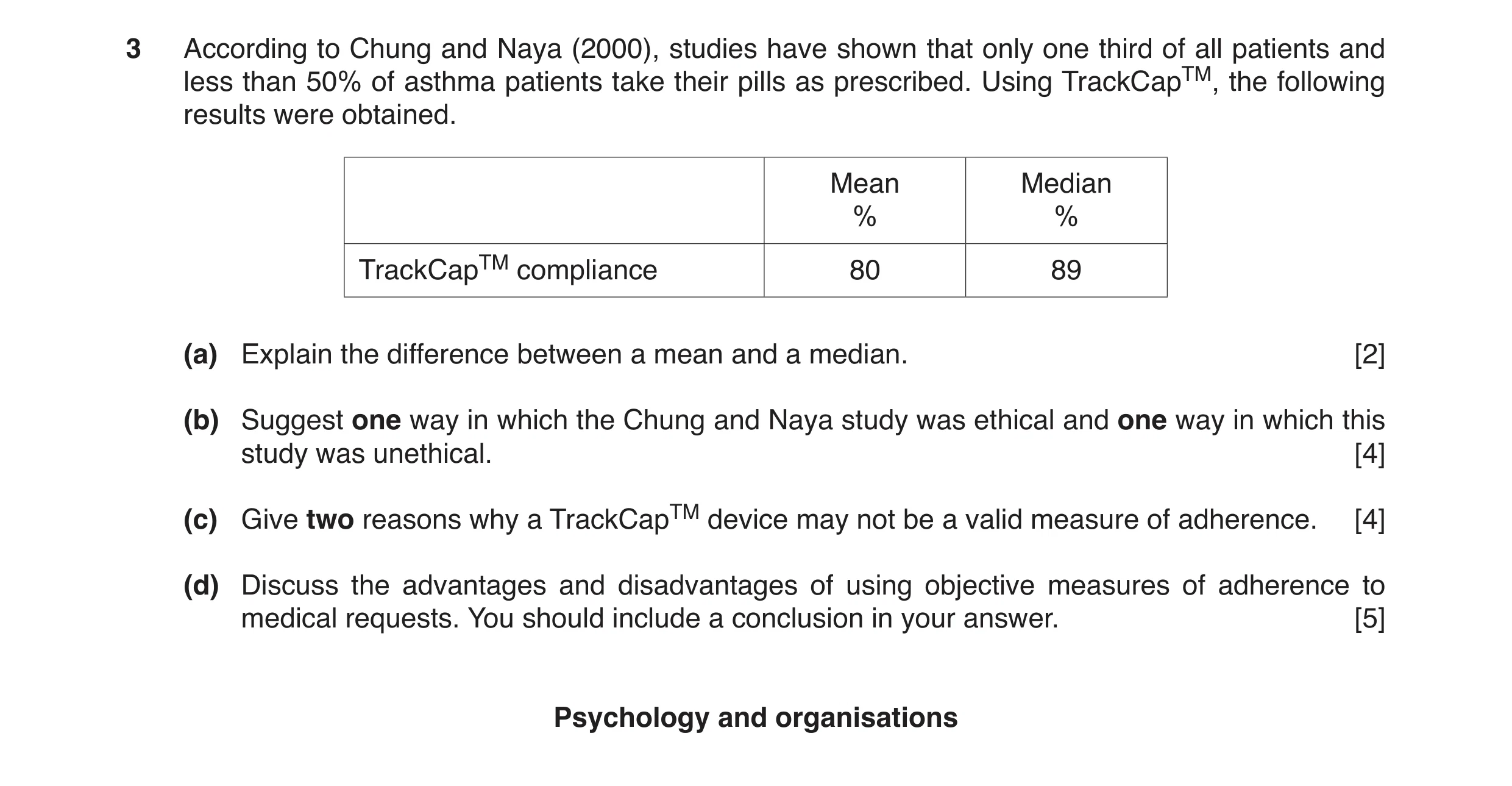
 2 / 18
 3 / 18
 4 / 18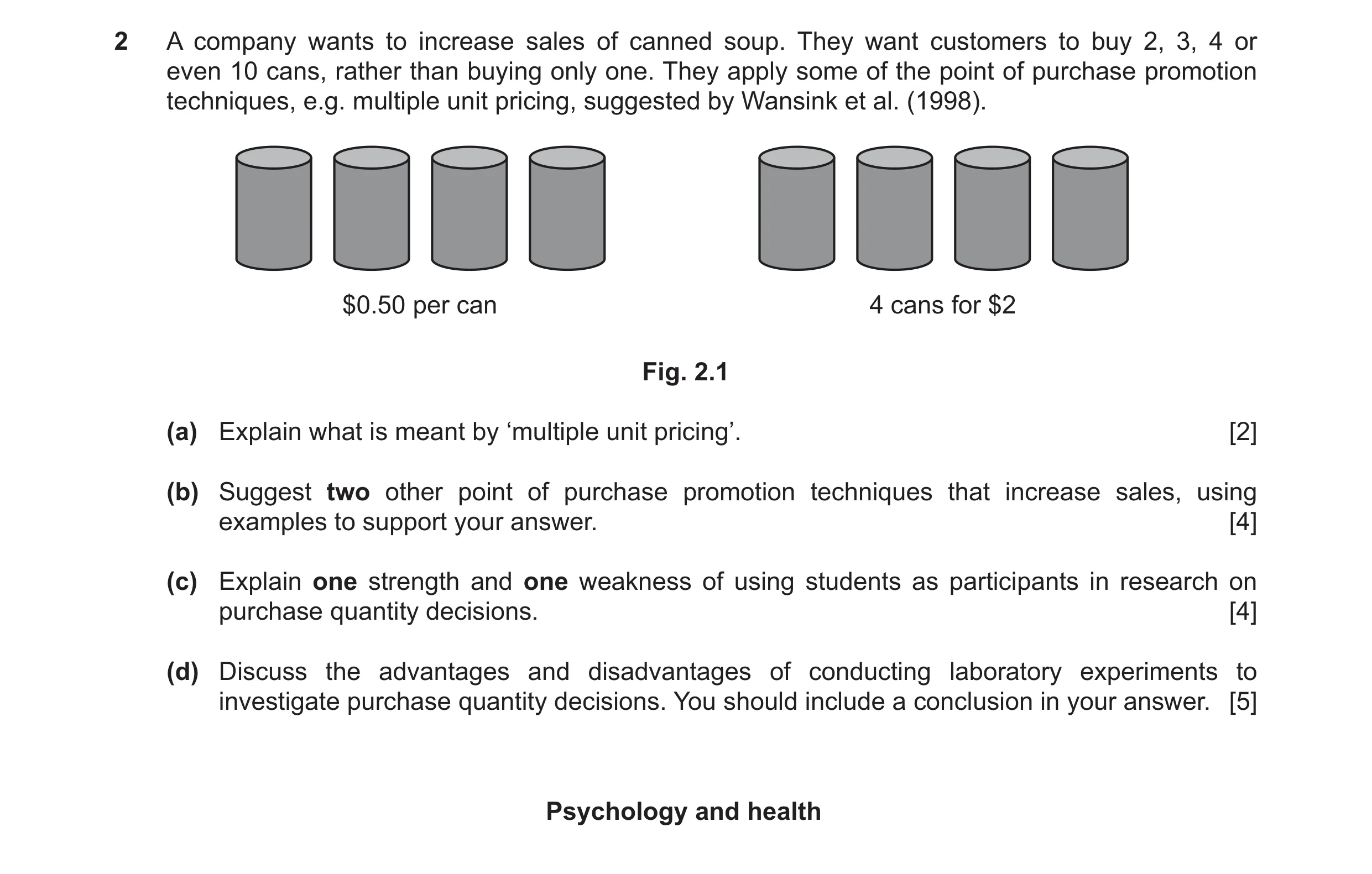
 5 / 18
 6 / 18
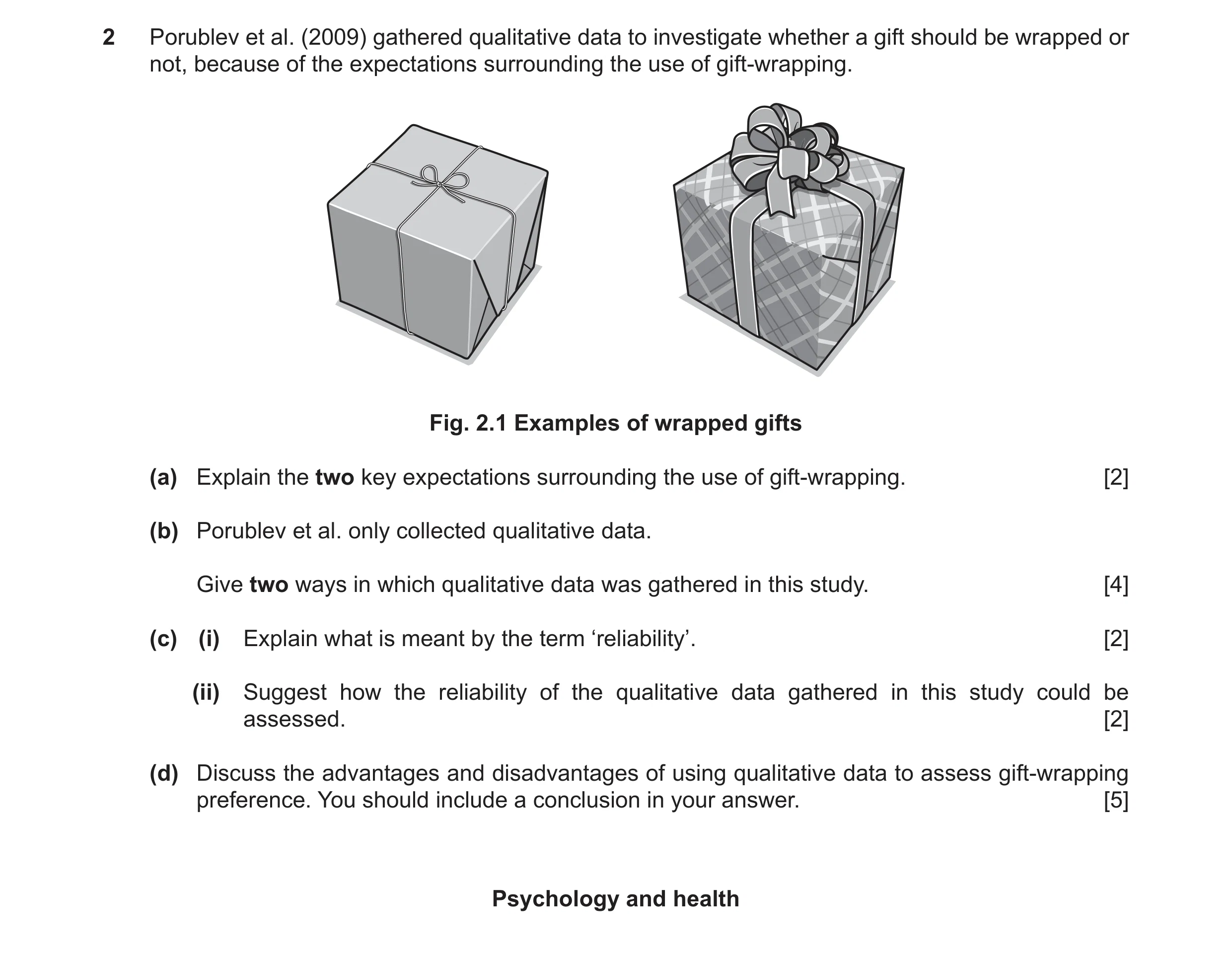 7 / 18
 8 / 18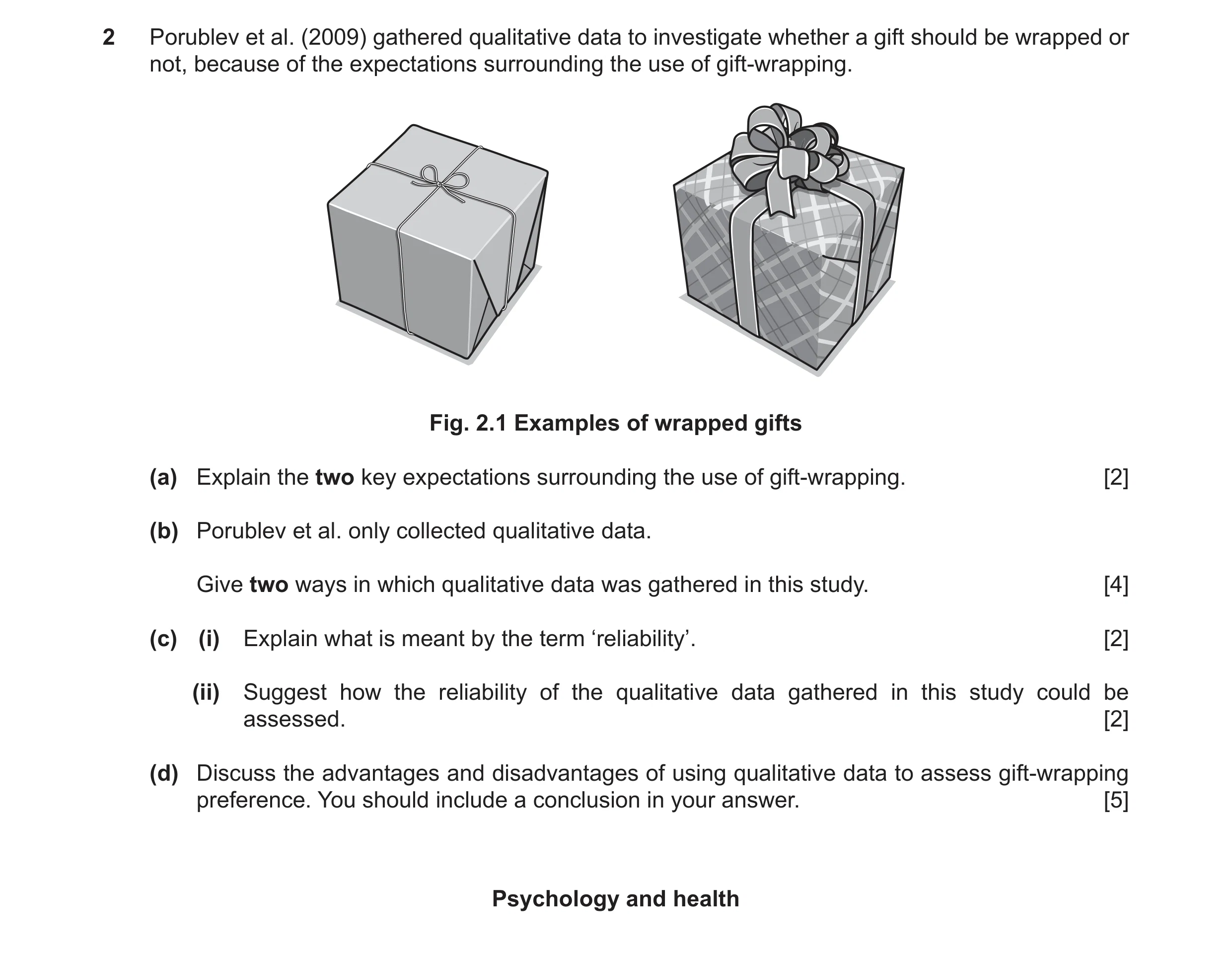
 9 / 18
 10 / 18
![Question 30: (a) Design a study to investigate whether doctor-centred or patient-centred practitioners are more likely to make incorrect diagnoses. [10]…](https://img.pastlit.com/crops/2d7f7187-b9f0-4dd2-a35a-693d574a90b7/q7.webp) 11 / 18
11 / 18
![Question 34: (a) Design a study to investigate whether doctor-centred or patient-centred practitioners are more likely to make incorrect diagnoses. [10]…](https://img.pastlit.com/crops/80021244-75c0-4761-863b-a2115c87d250/q7.webp) 12 / 18
12 / 18
 13 / 18
 14 / 18
 15 / 18
 16 / 18
![Question 48: (a) Outline two ways in which a gift can be wrapped. [2] (b) Suggest how an unstructured observation can be used to investigate gift-wrappi…](https://img.pastlit.com/crops/498fd2b9-779d-498b-91aa-540a4ef65650/q4.webp)
 17 / 18
 18 / 18
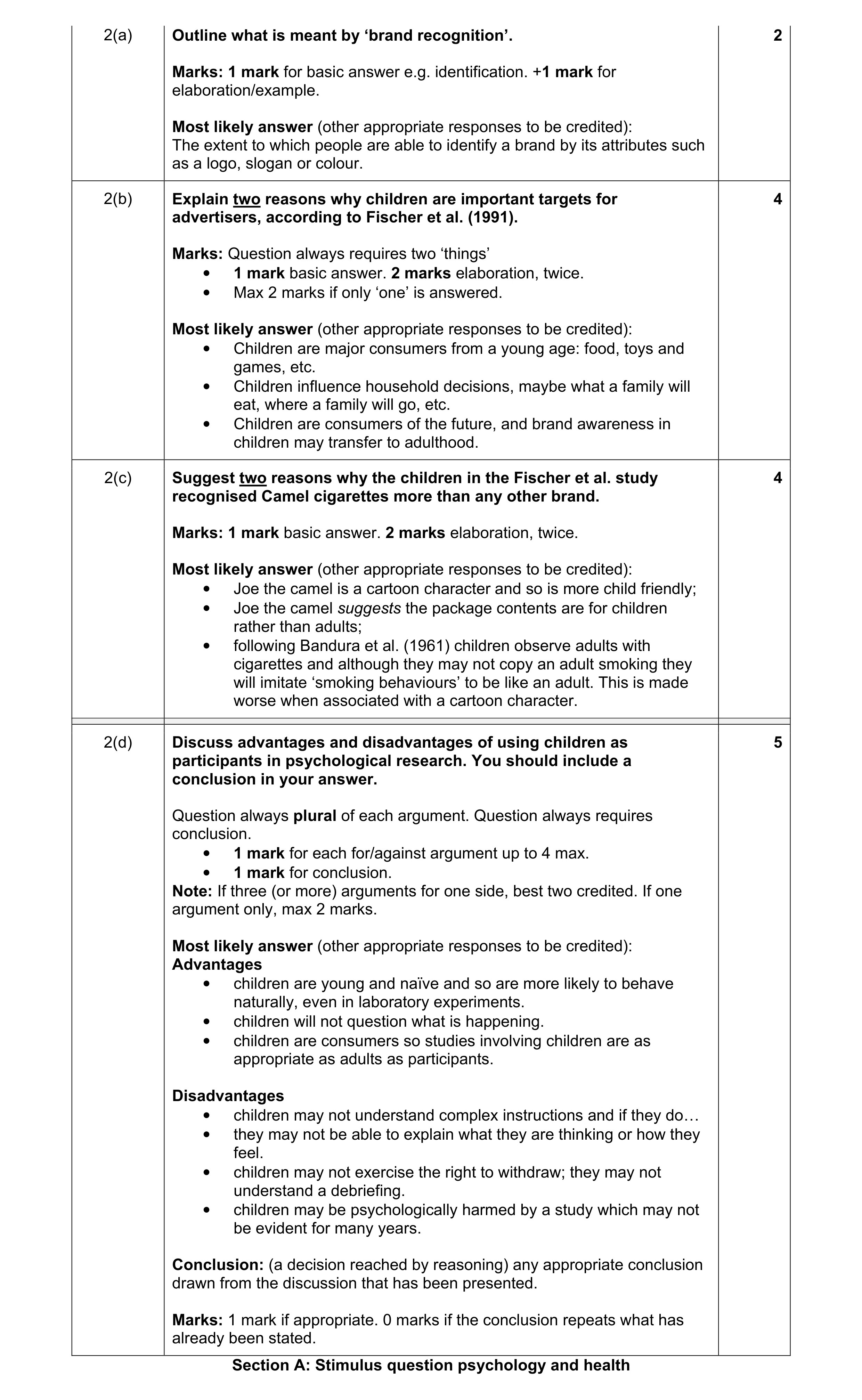 15
15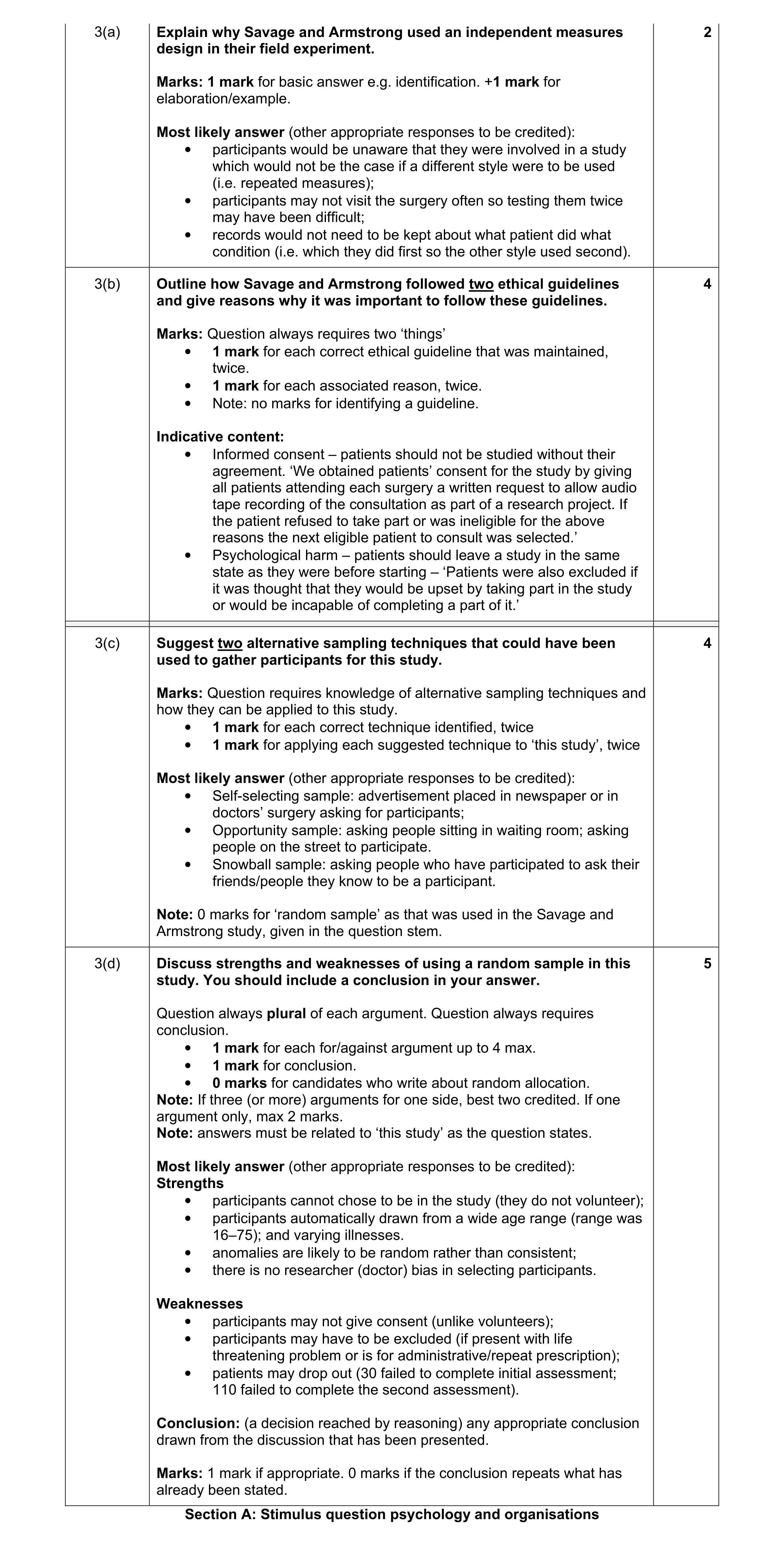 15
15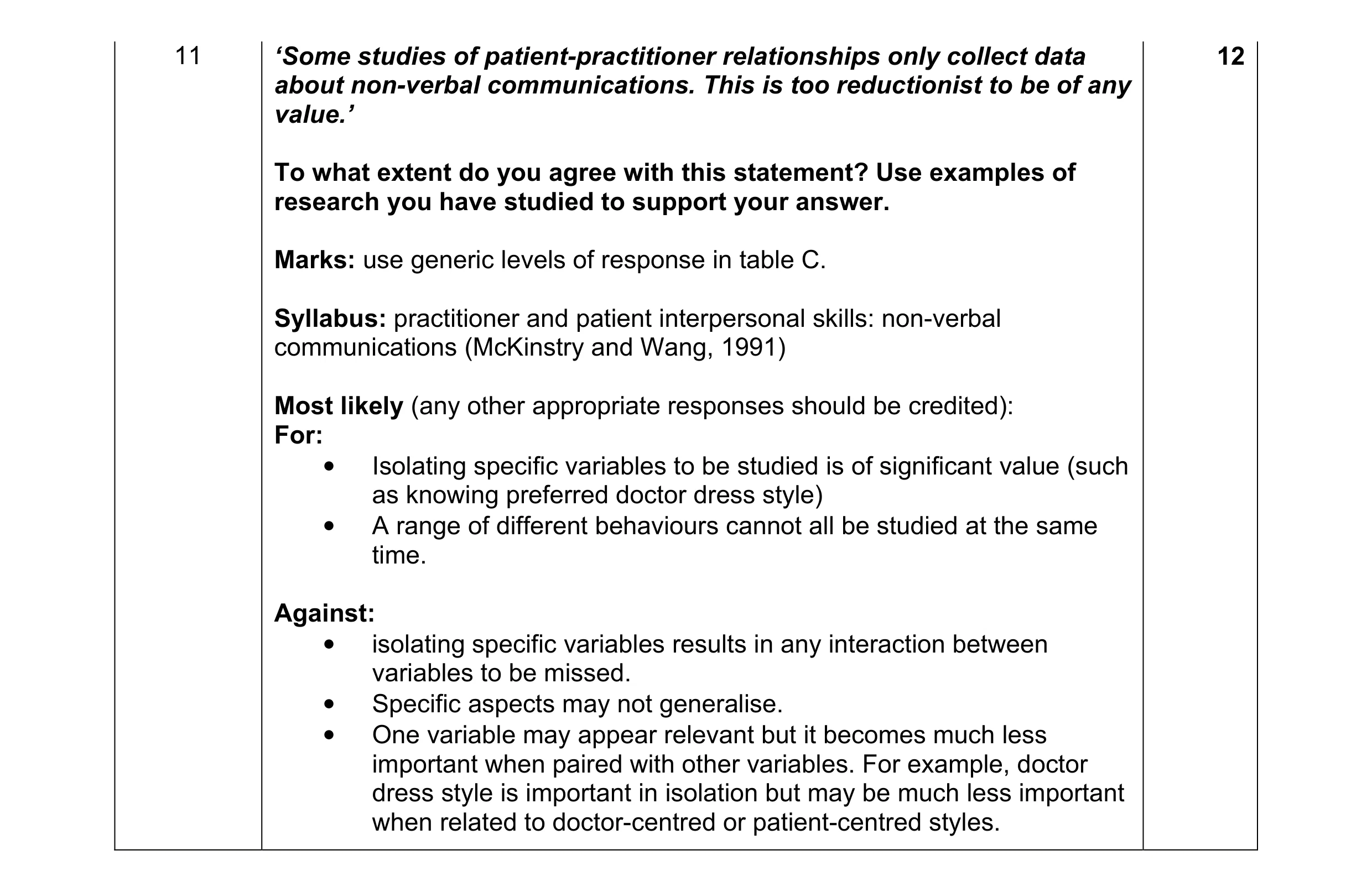 12
12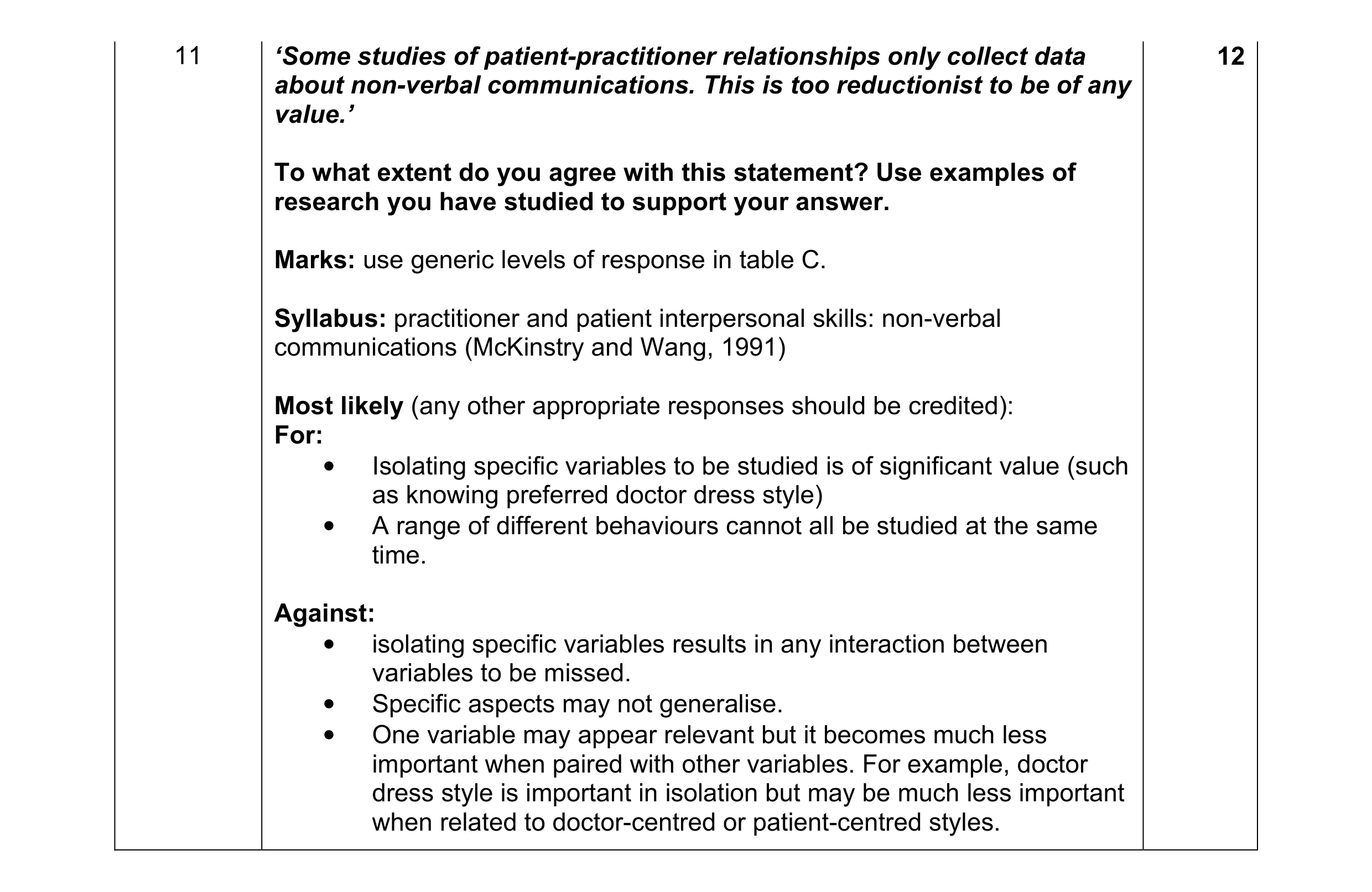 12
12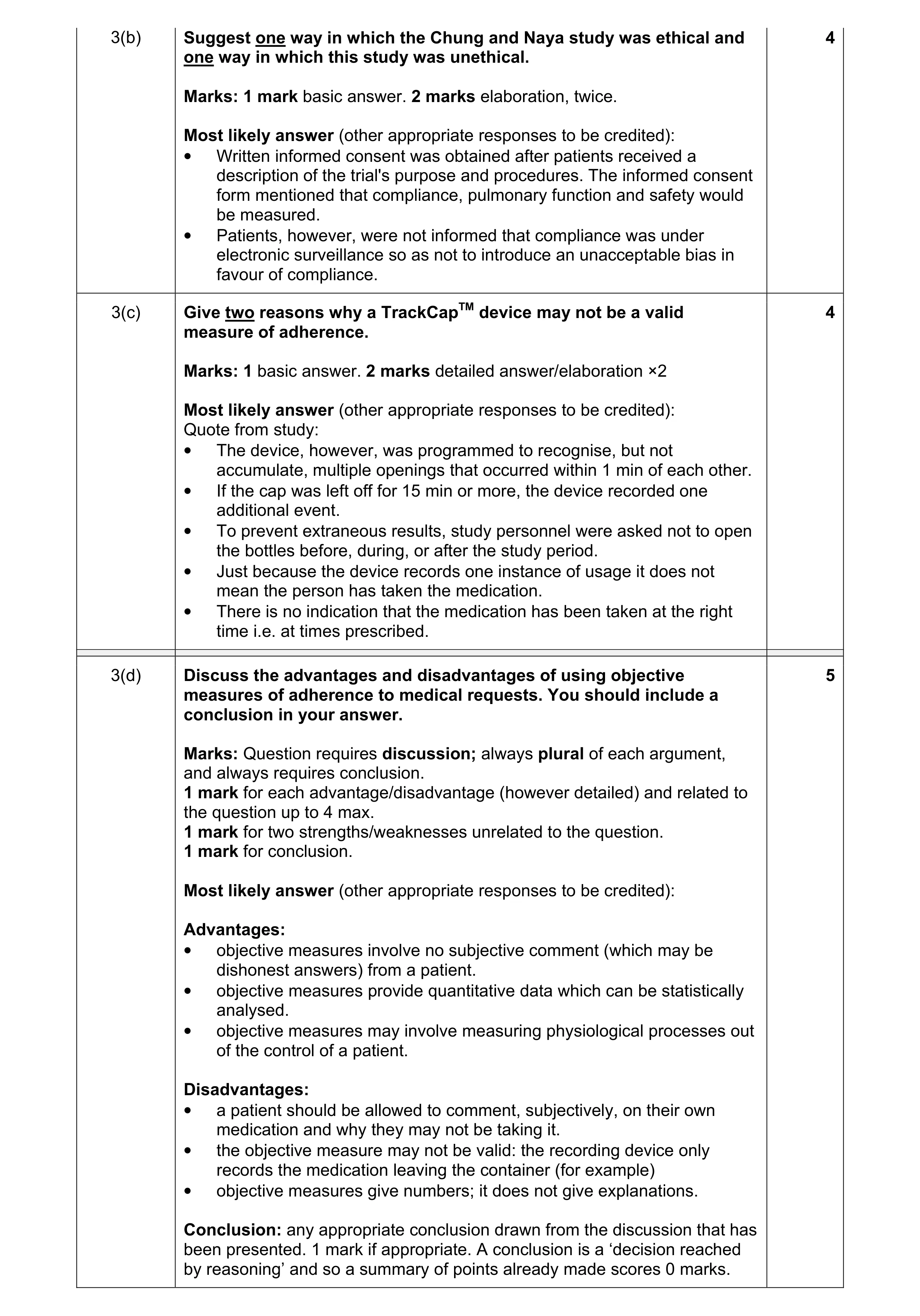 15
15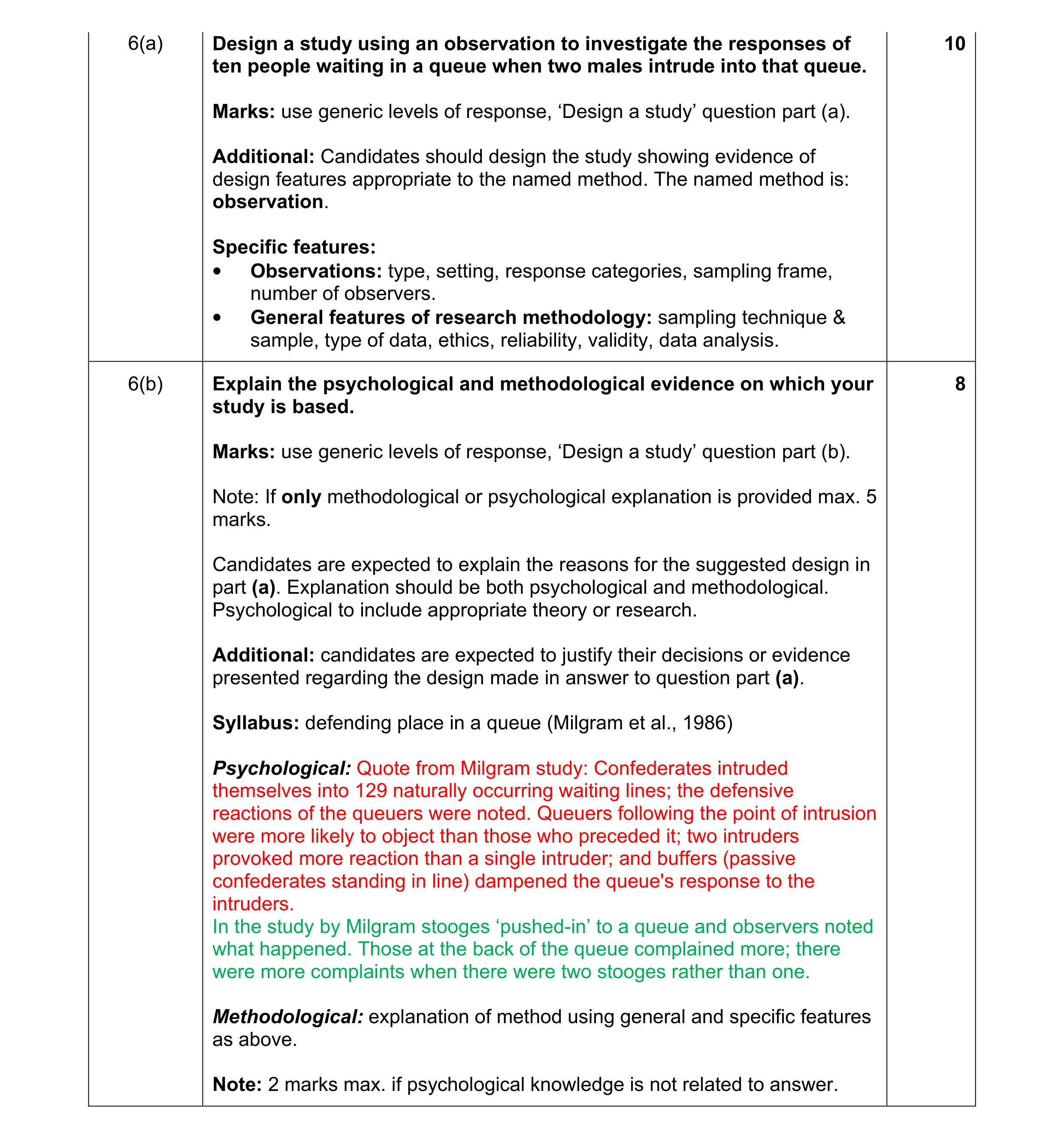 18
18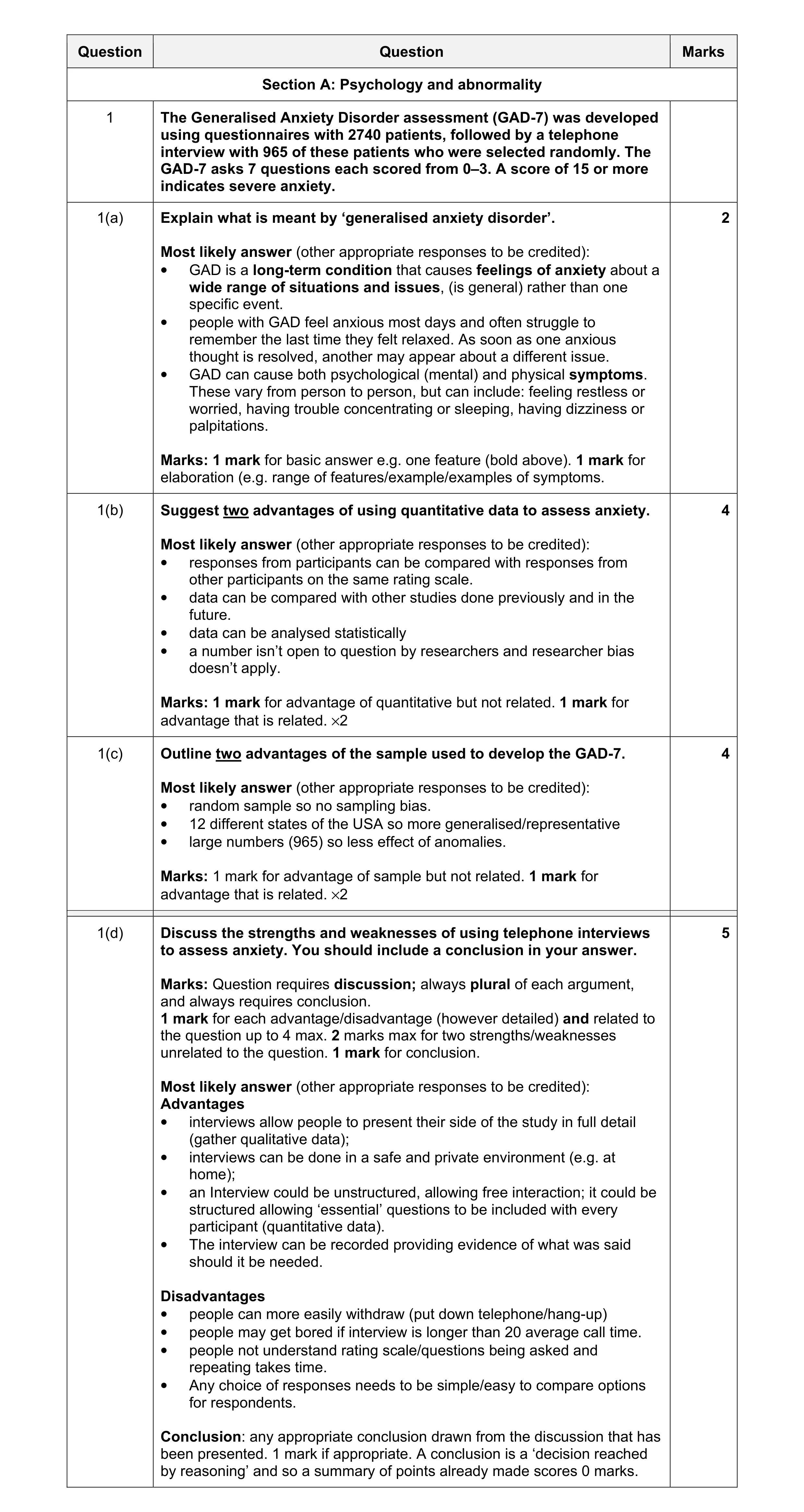 15
15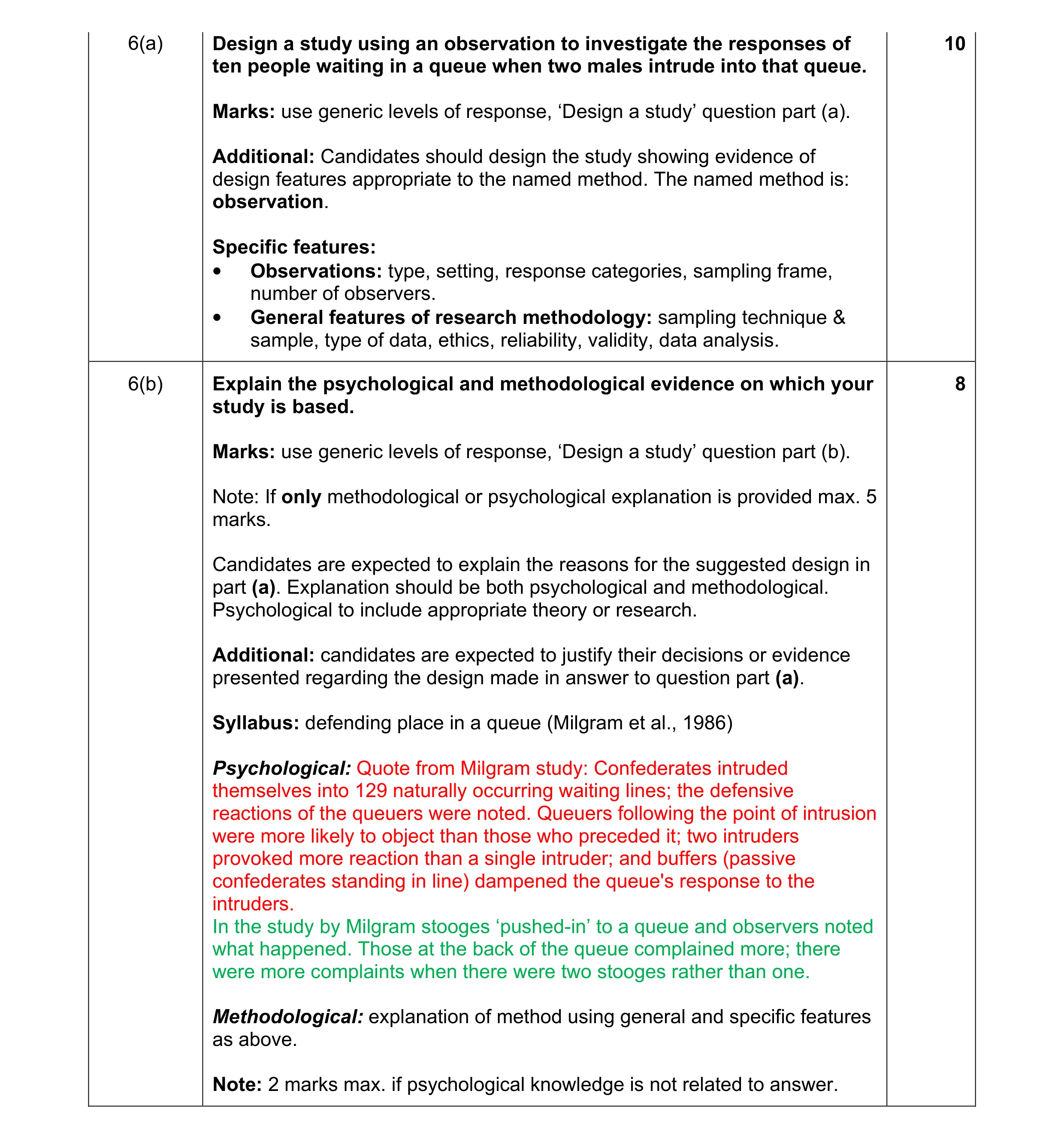 18
18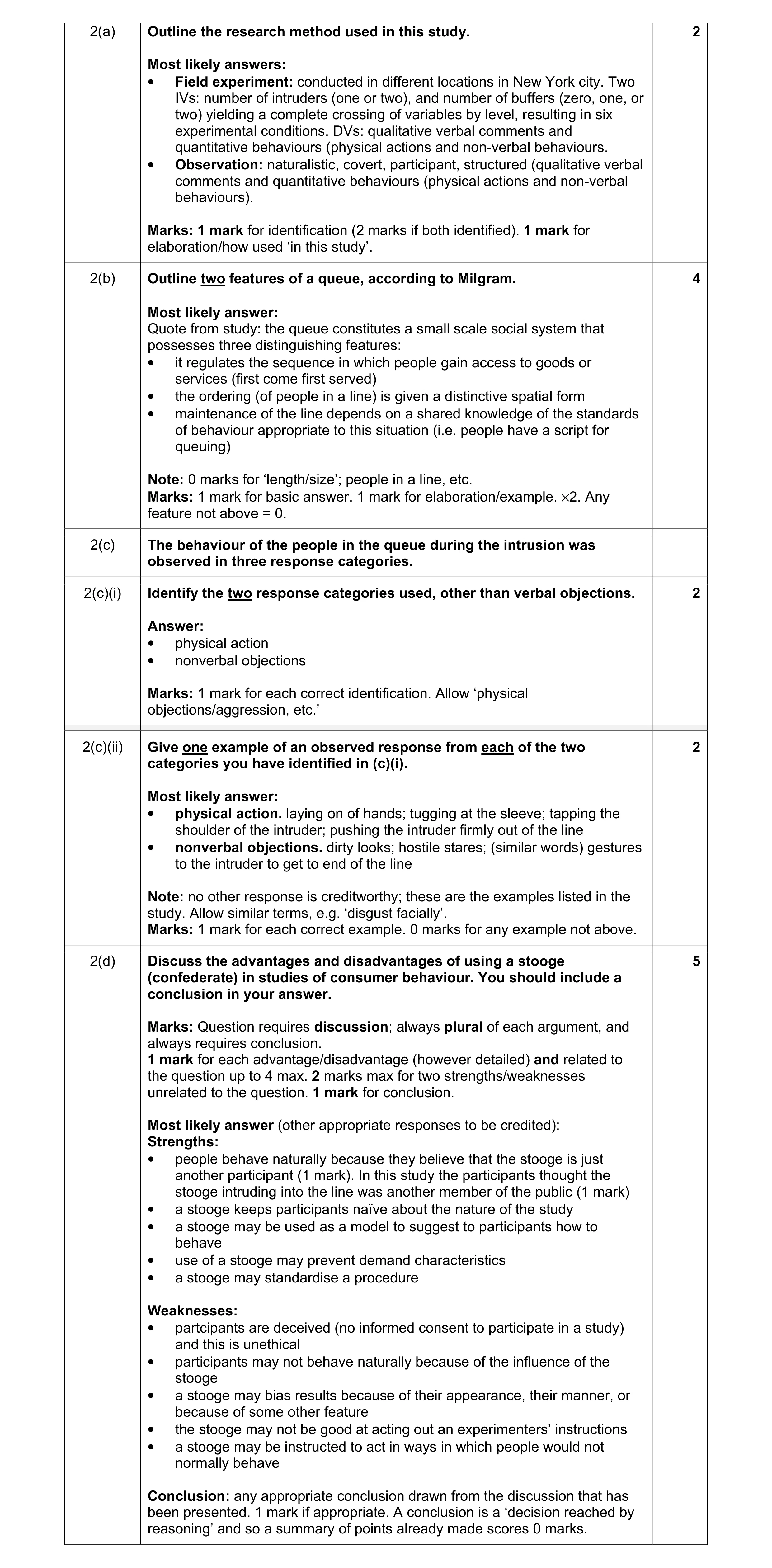 15
15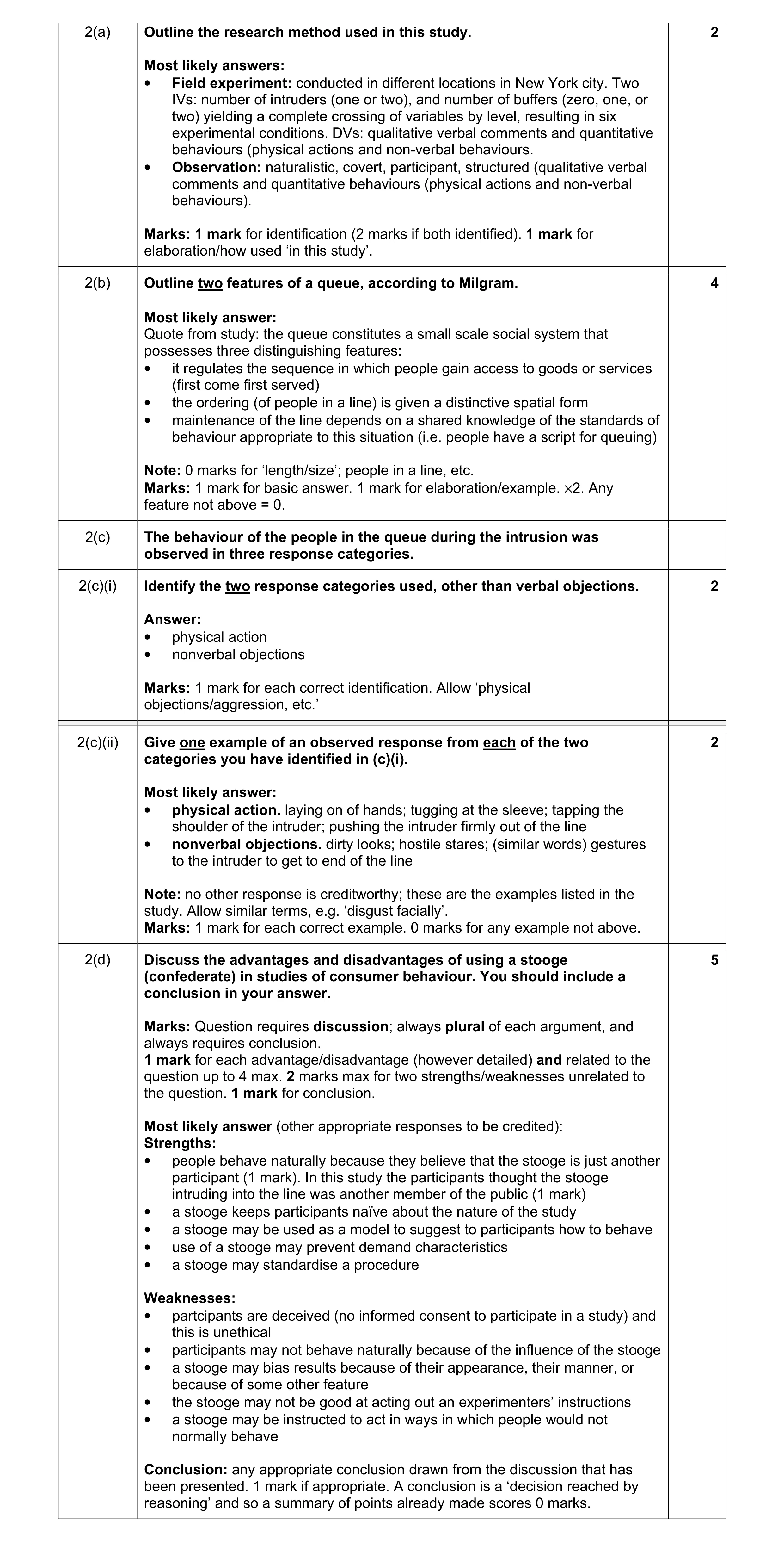 15
15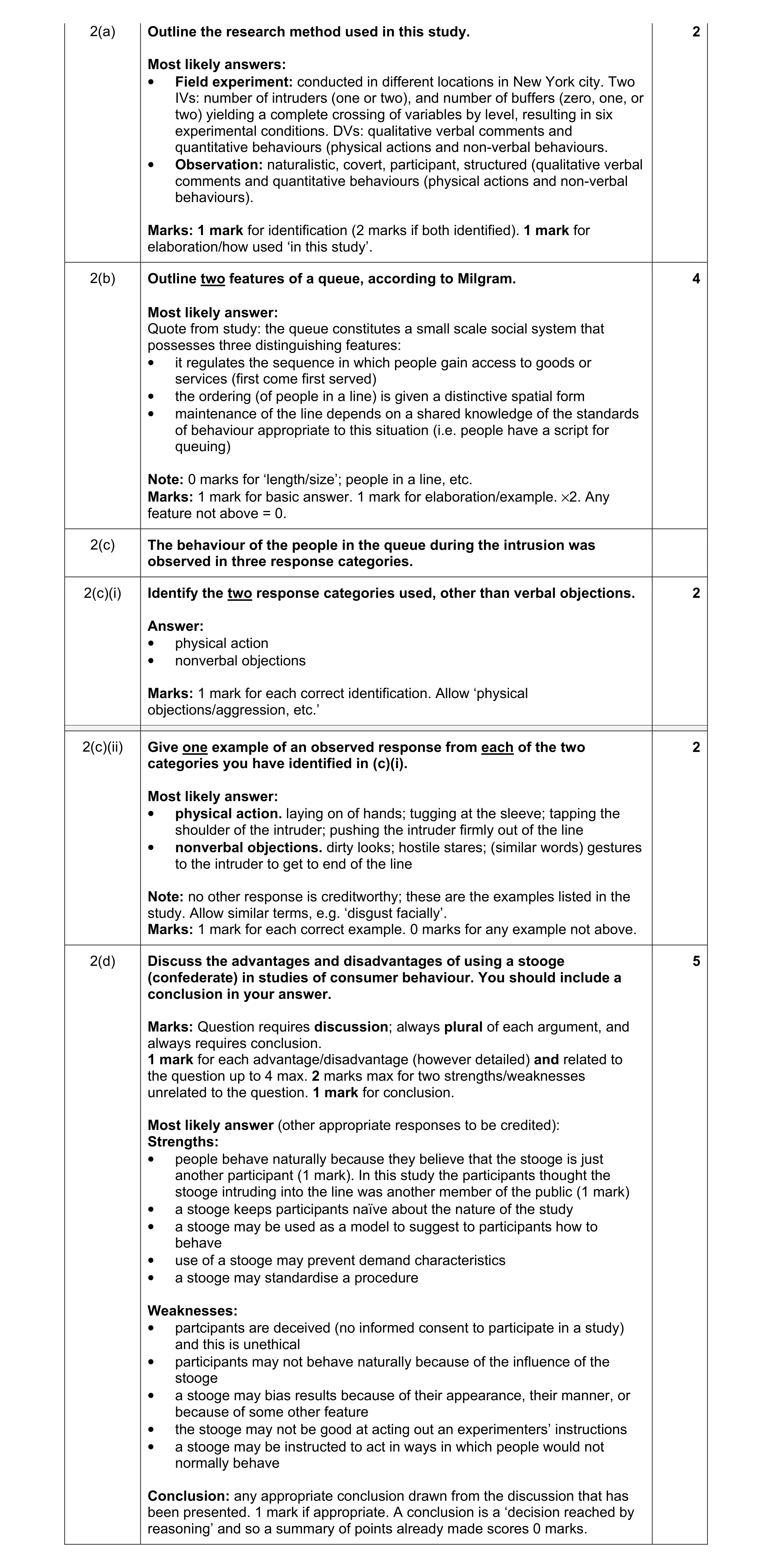 15
15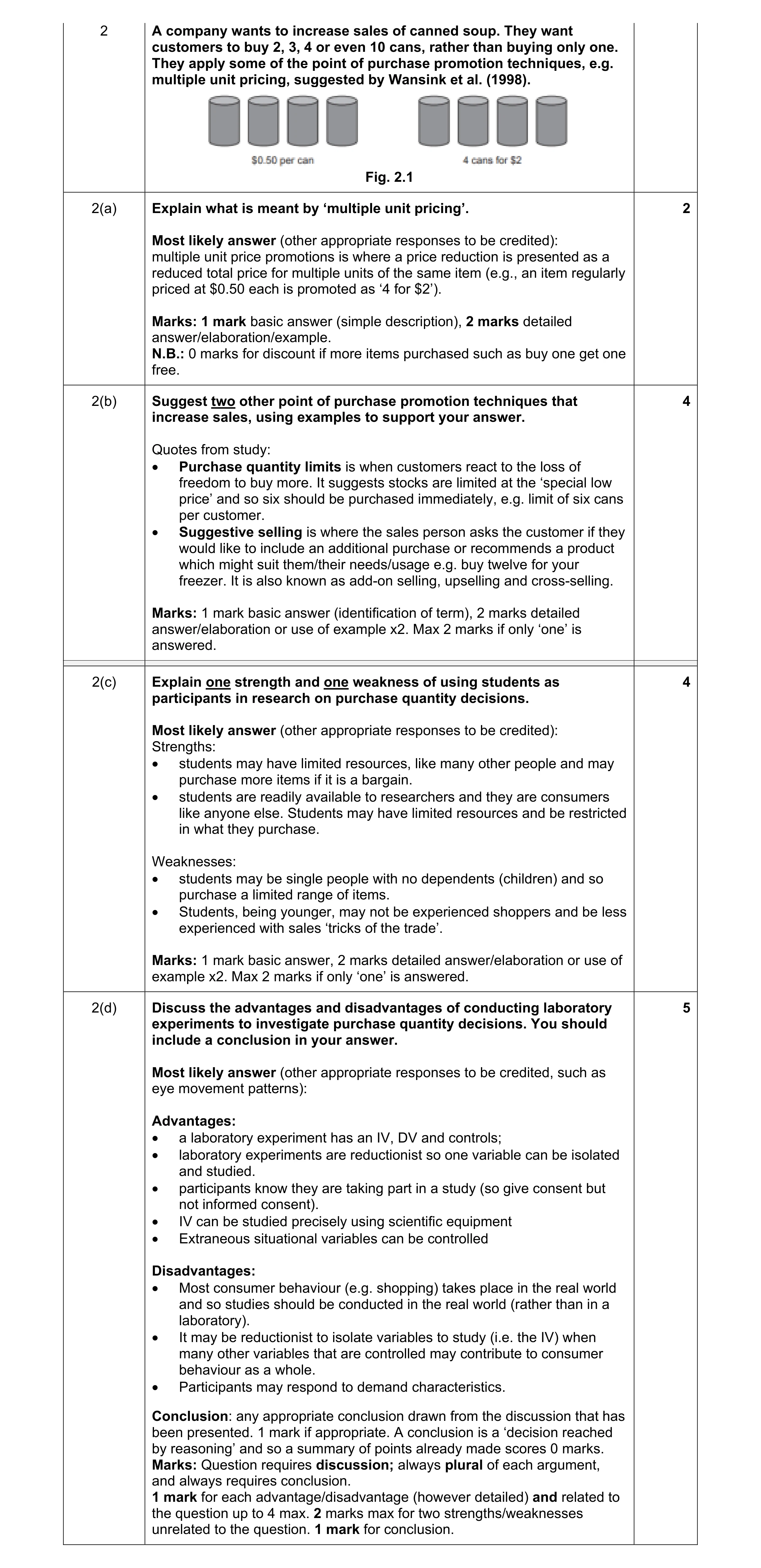 15
15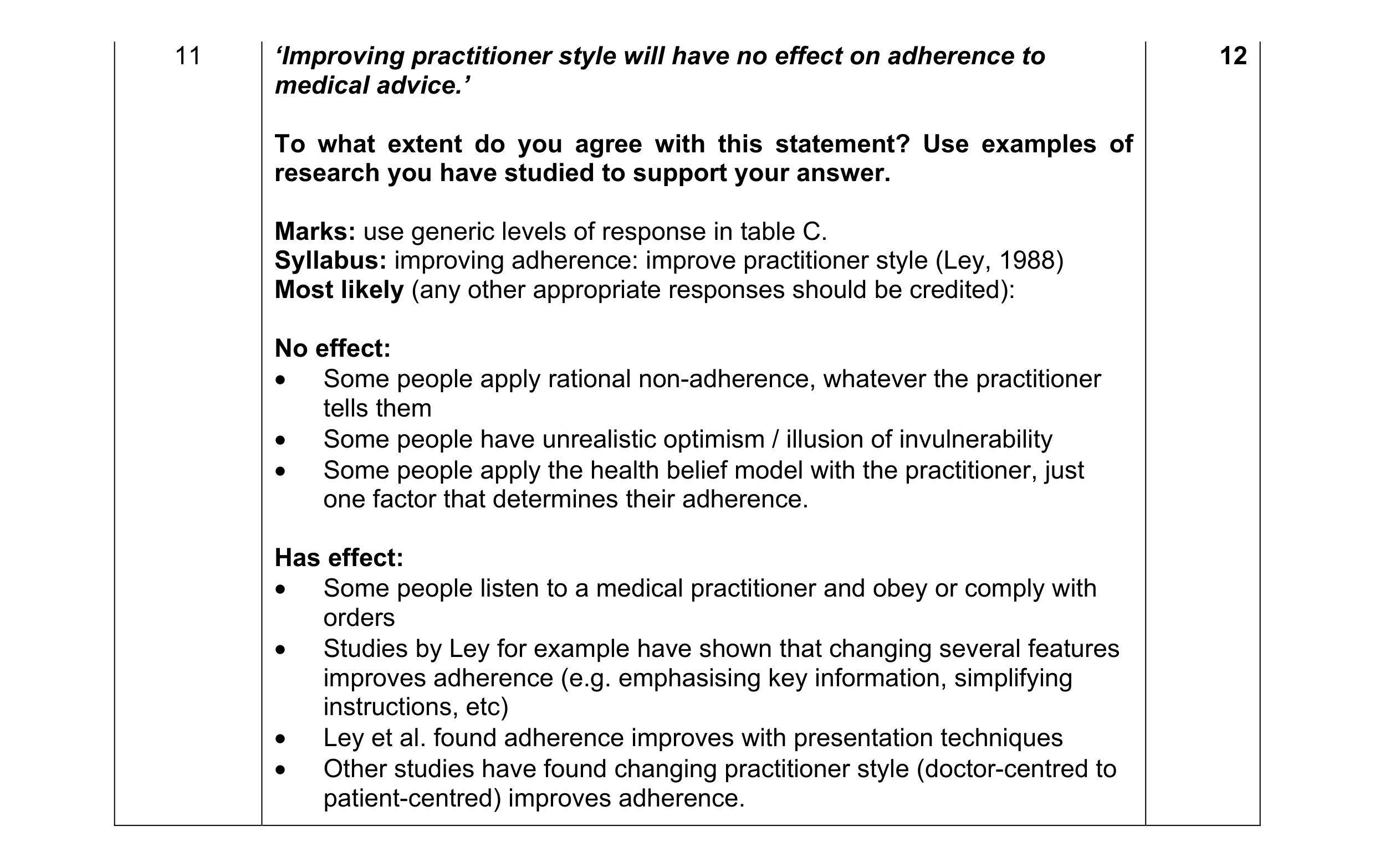 12
12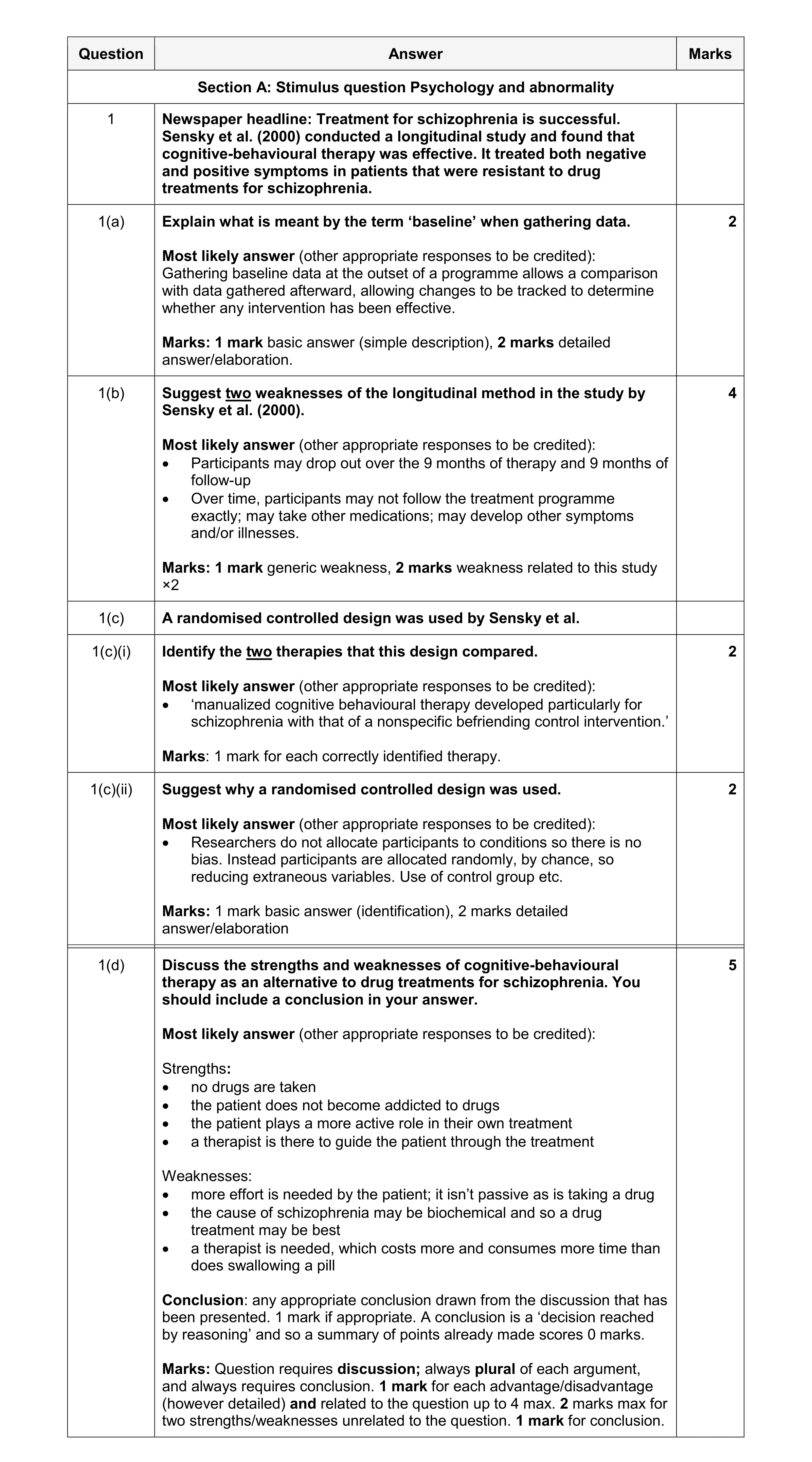 15
15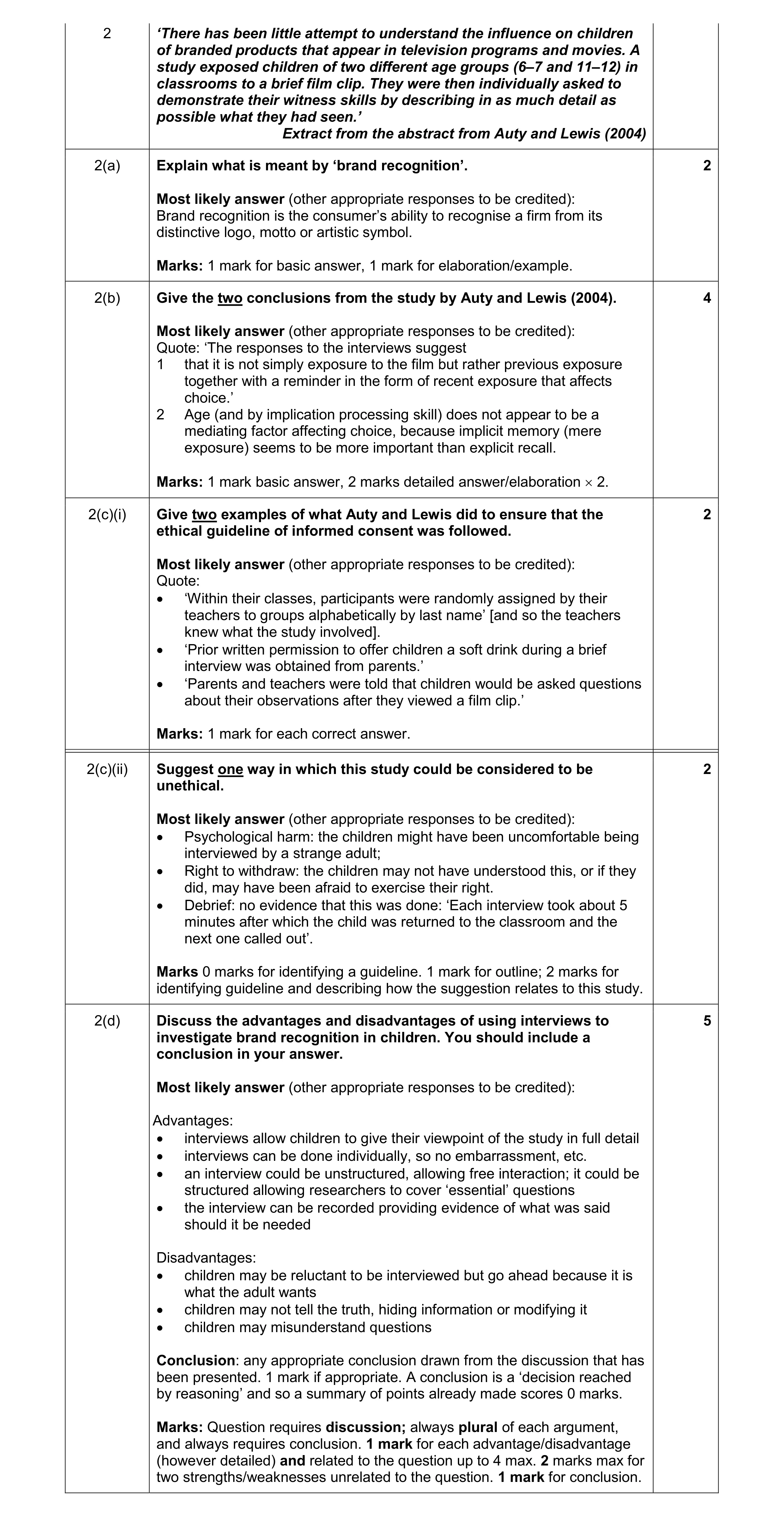 15
15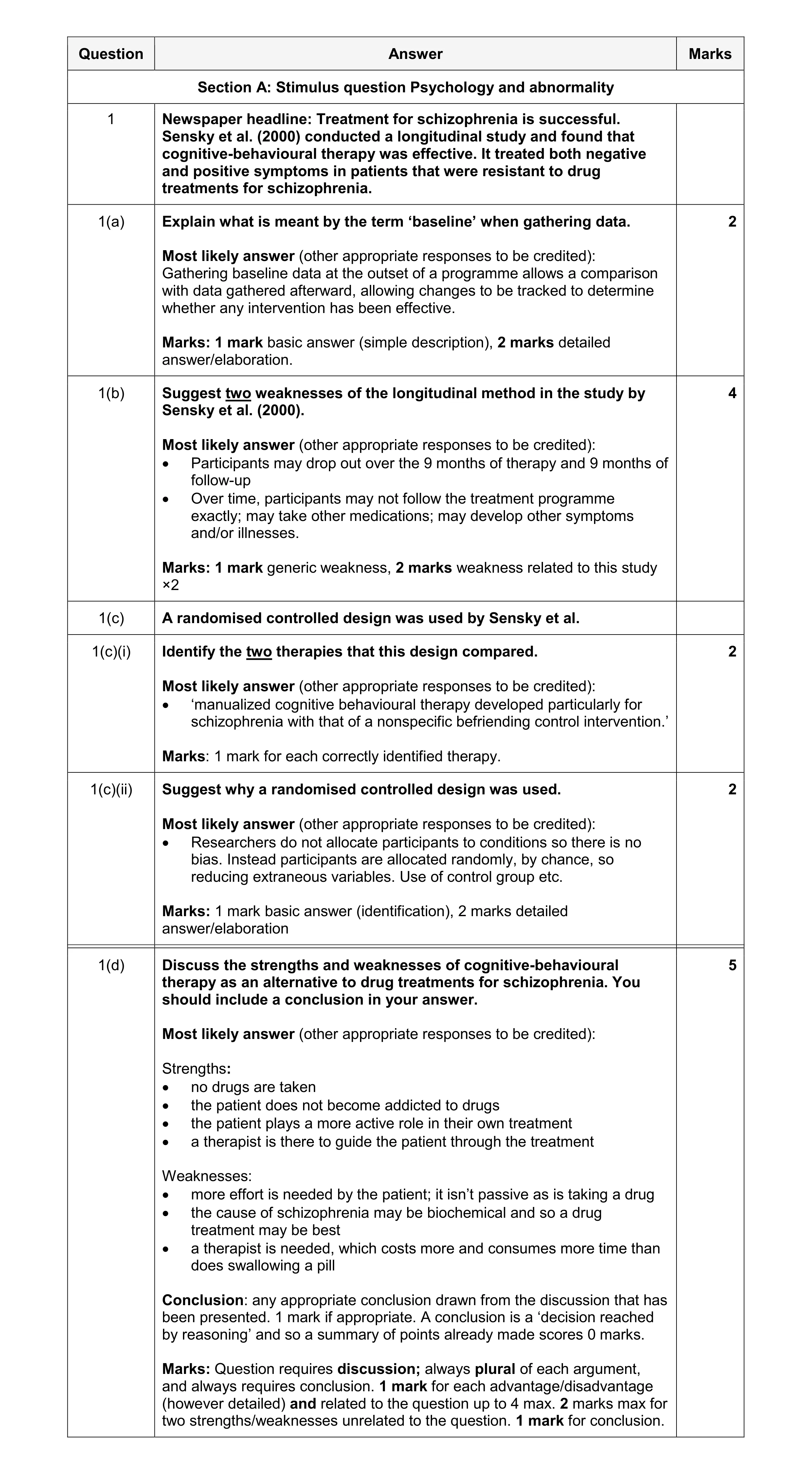 15
15 15
15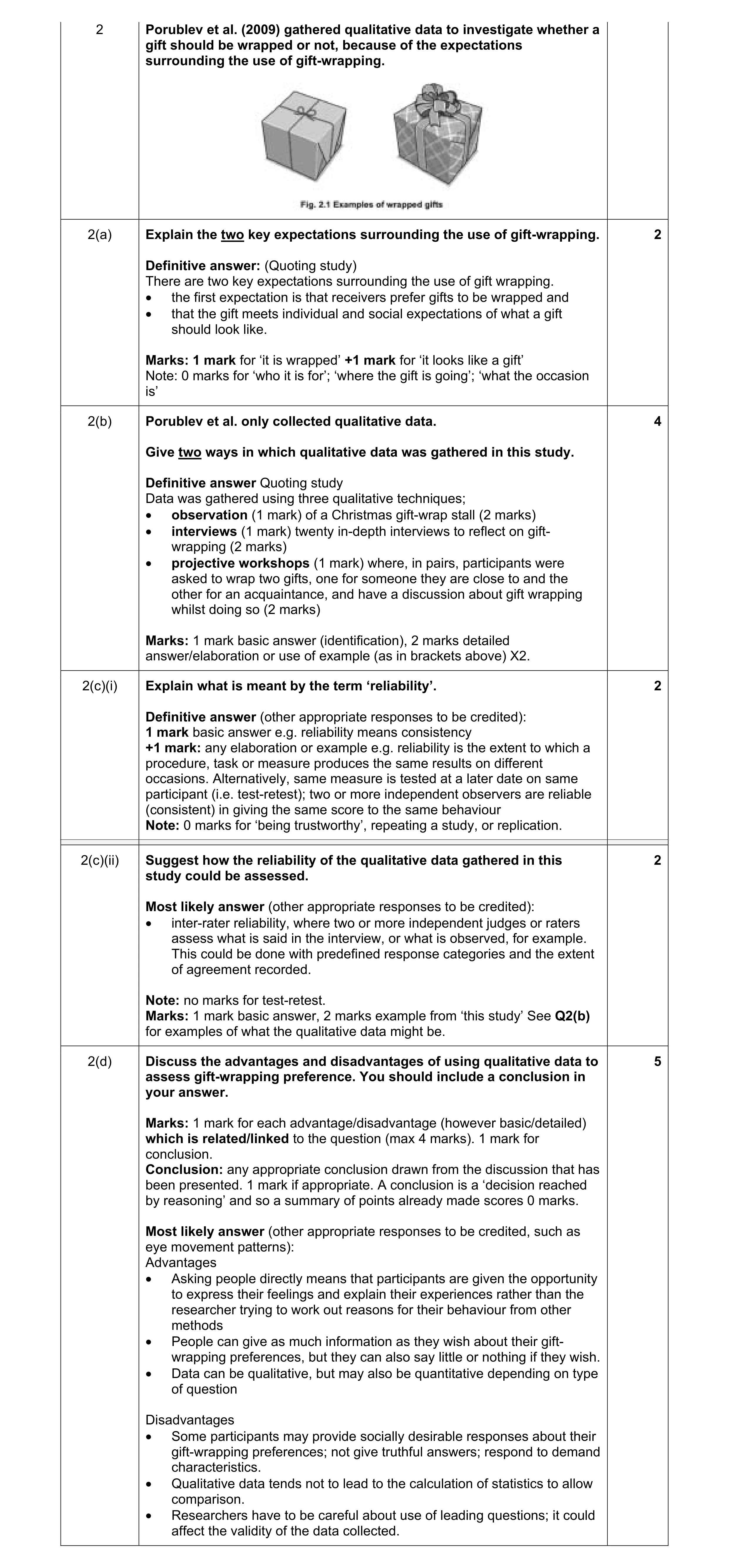 15
15 15
15 12
12 18
18 15
15 15
15 12
12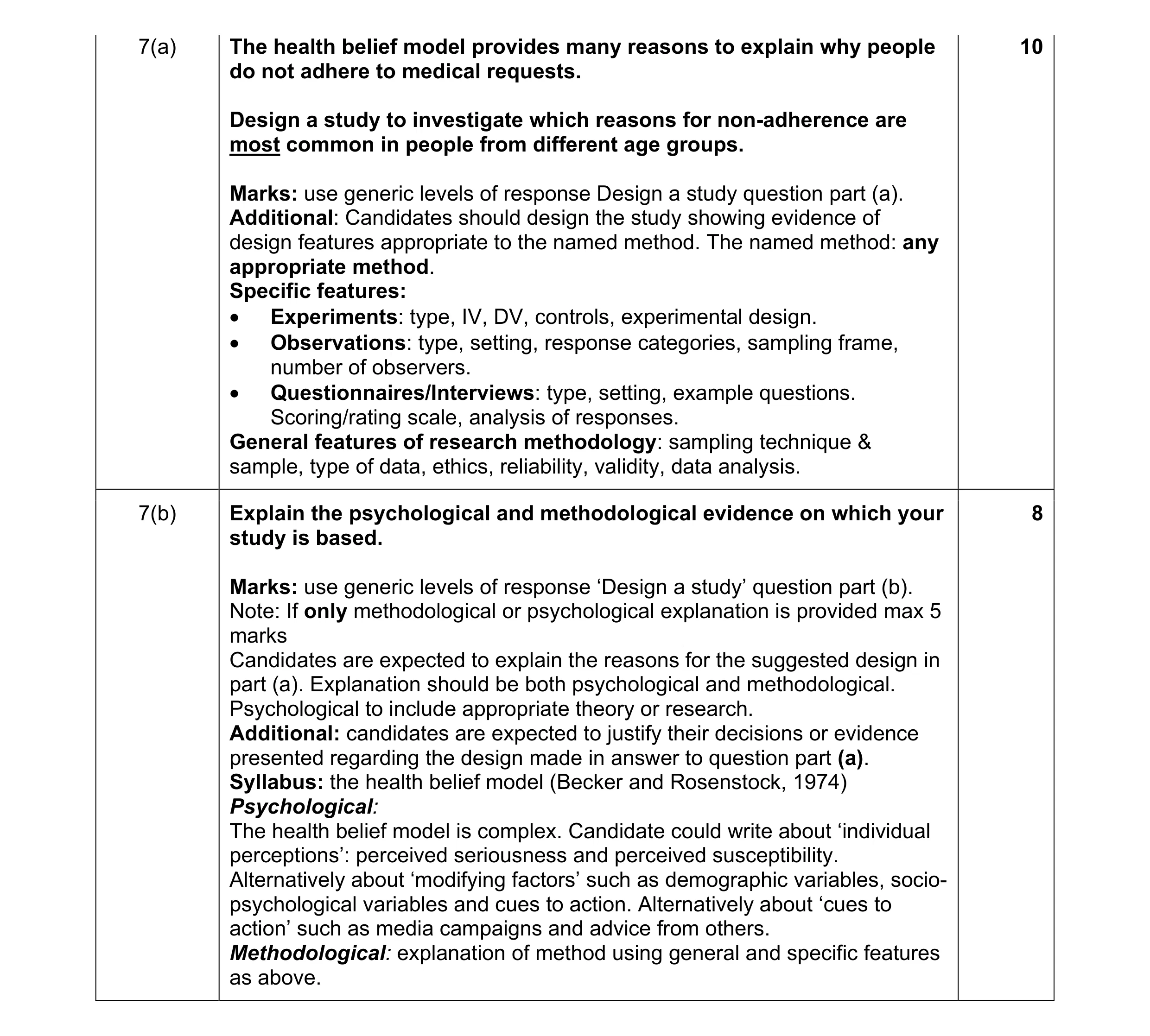 18
18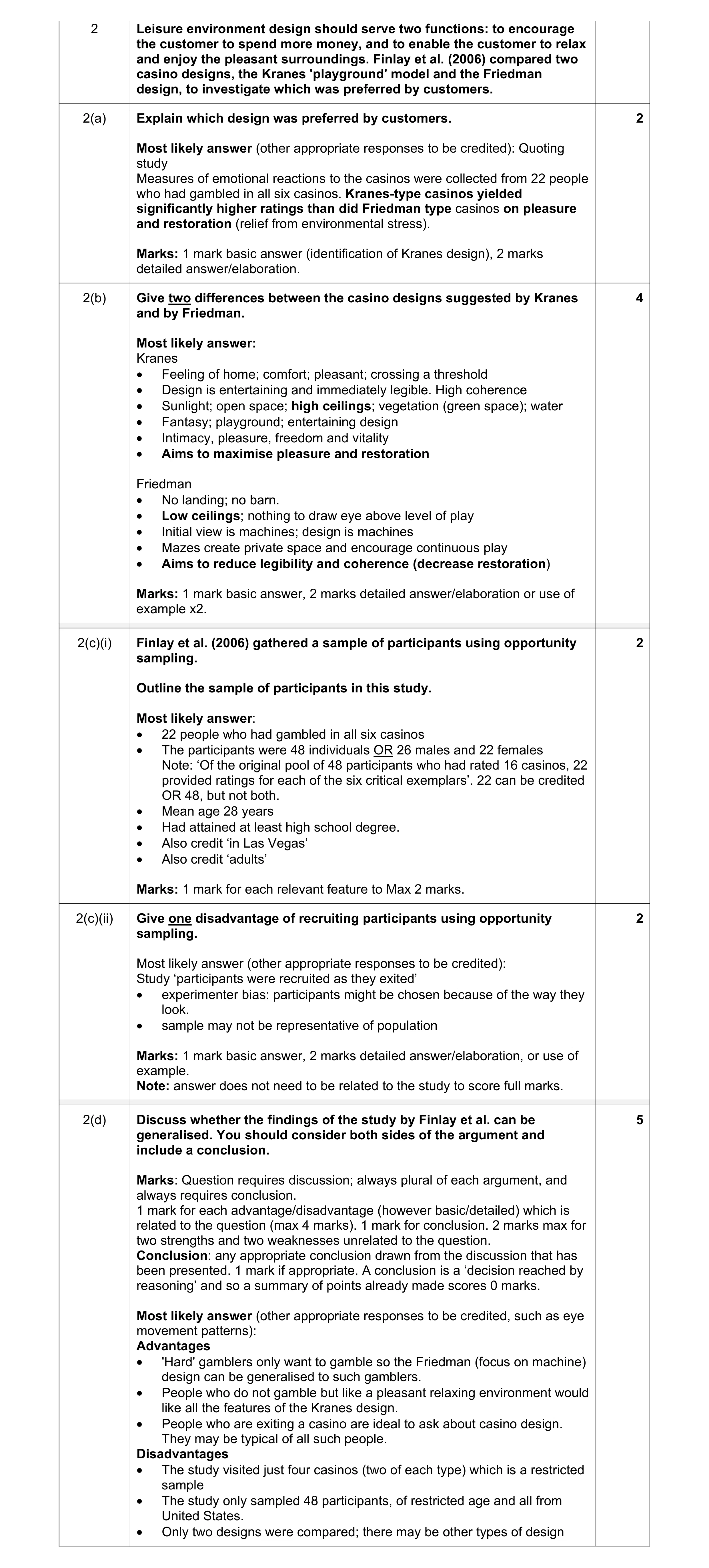 15
15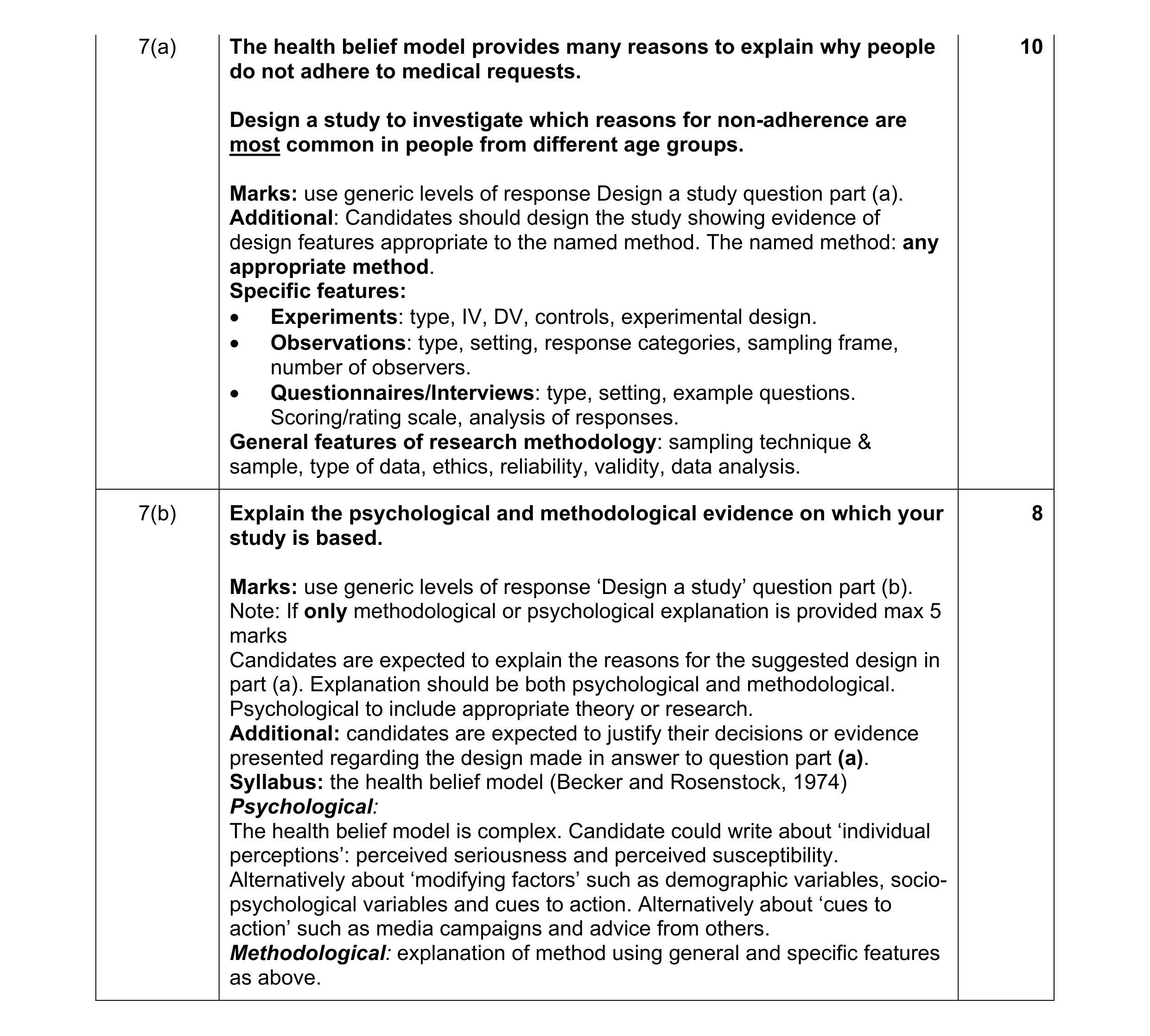 18
18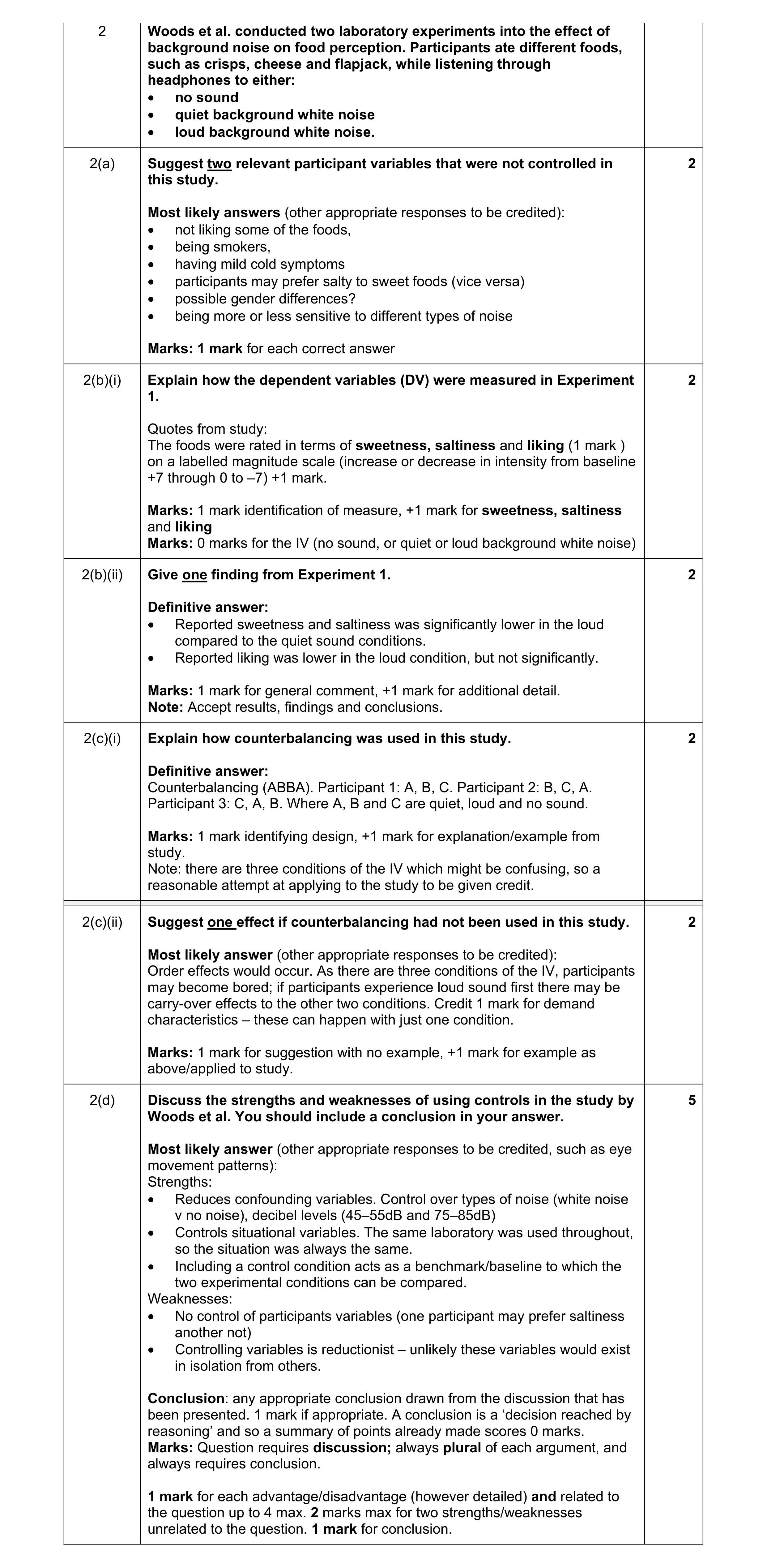 15
15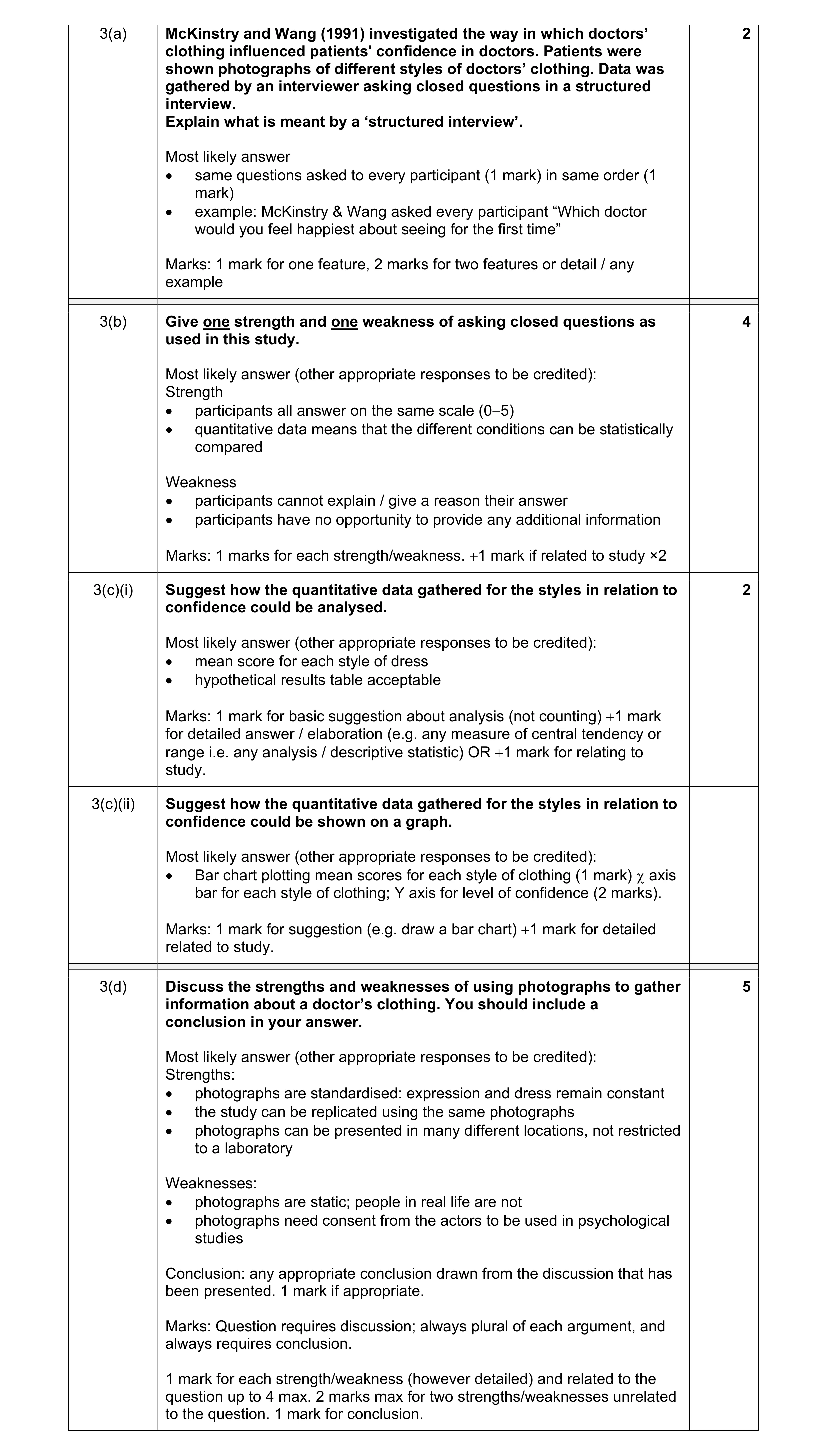 15
15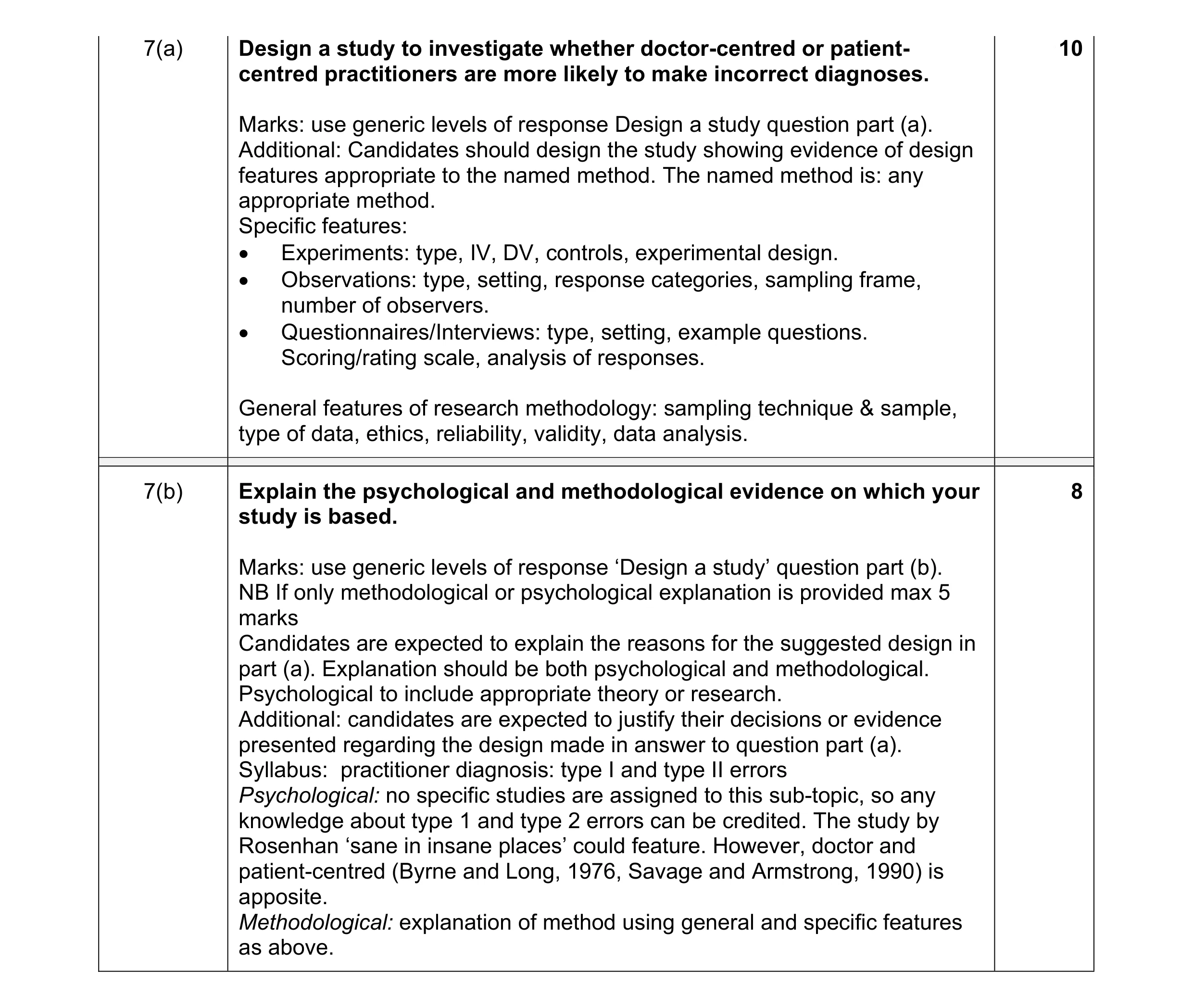 18
18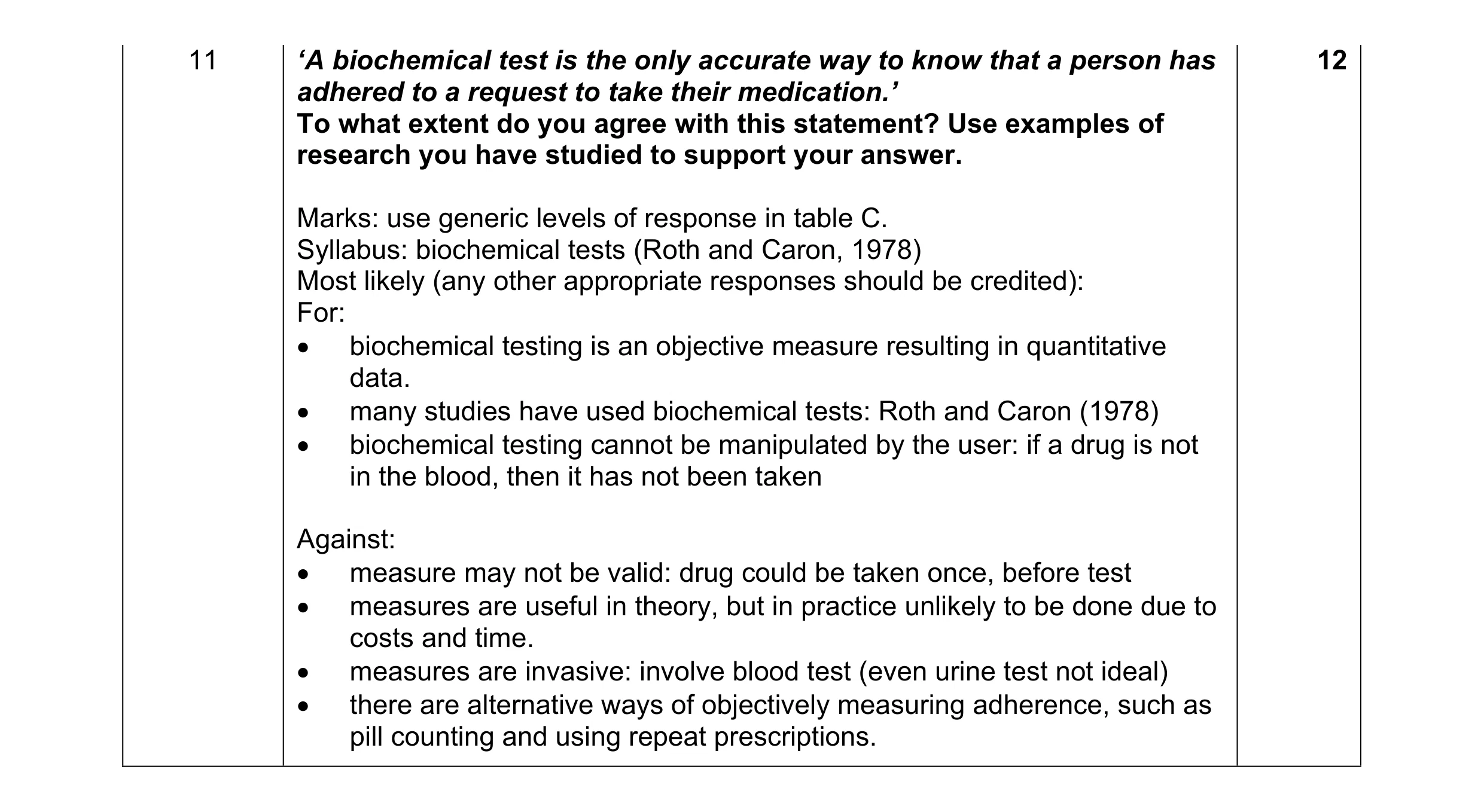 12
12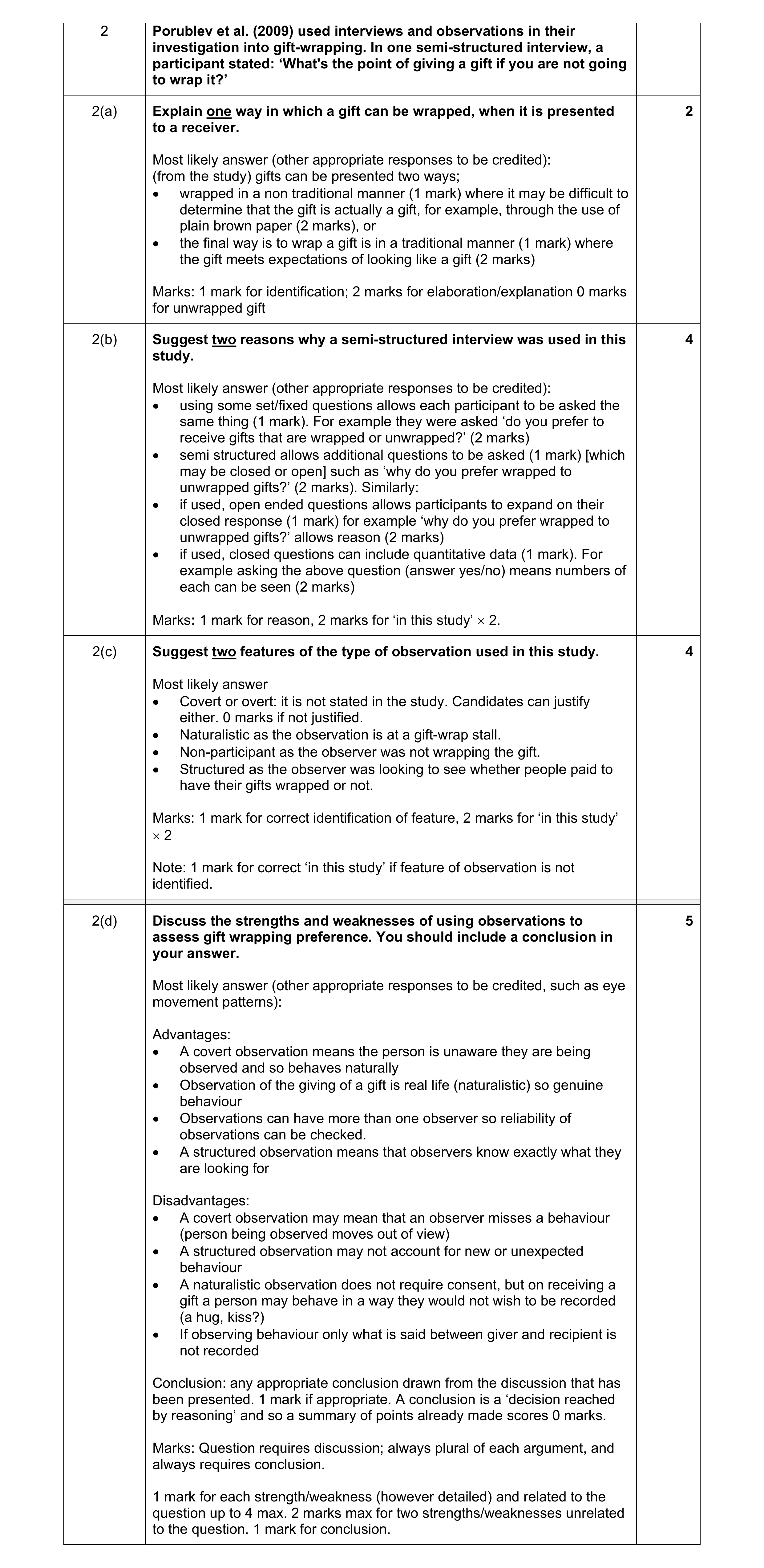 15
15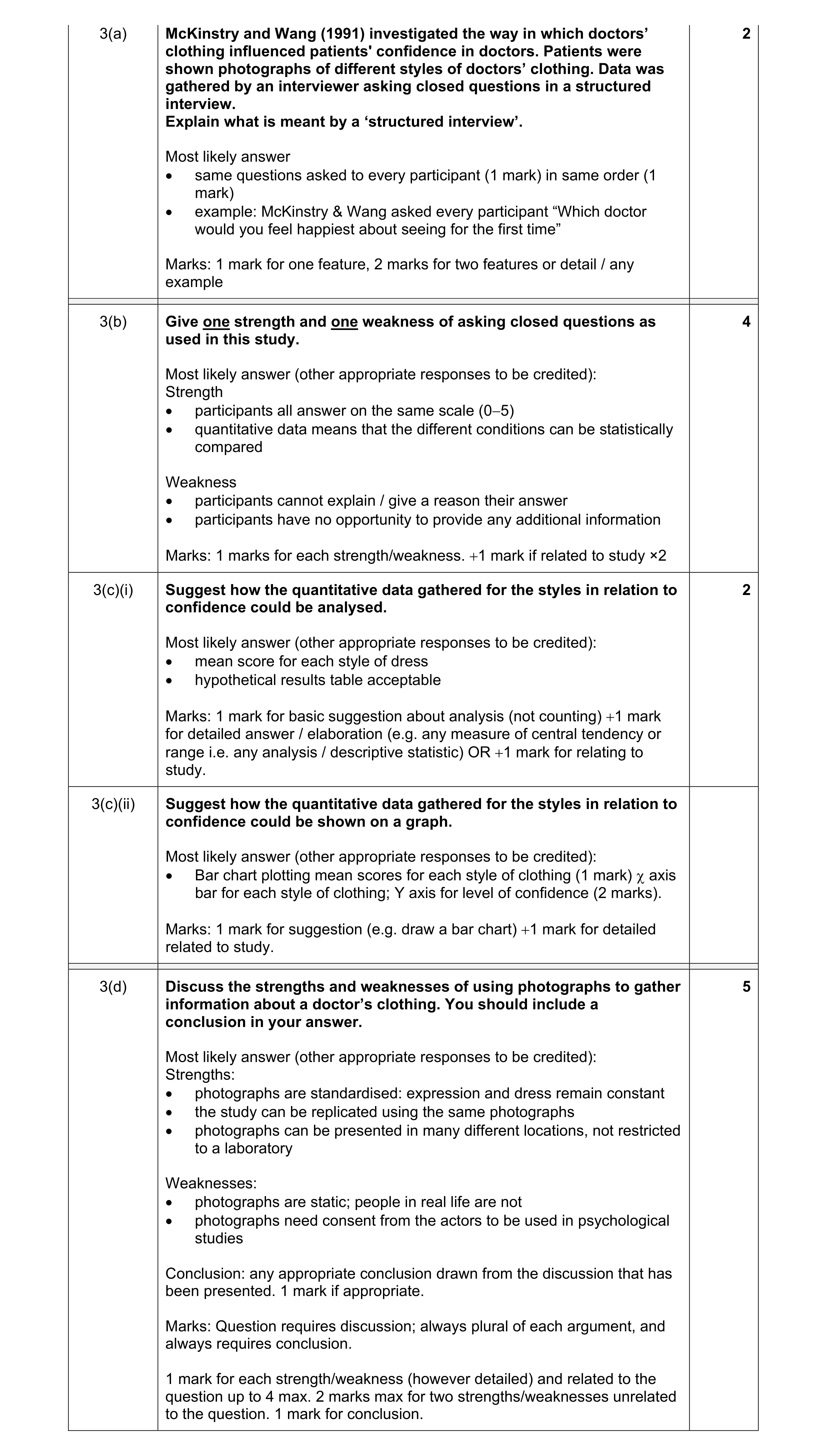 15
15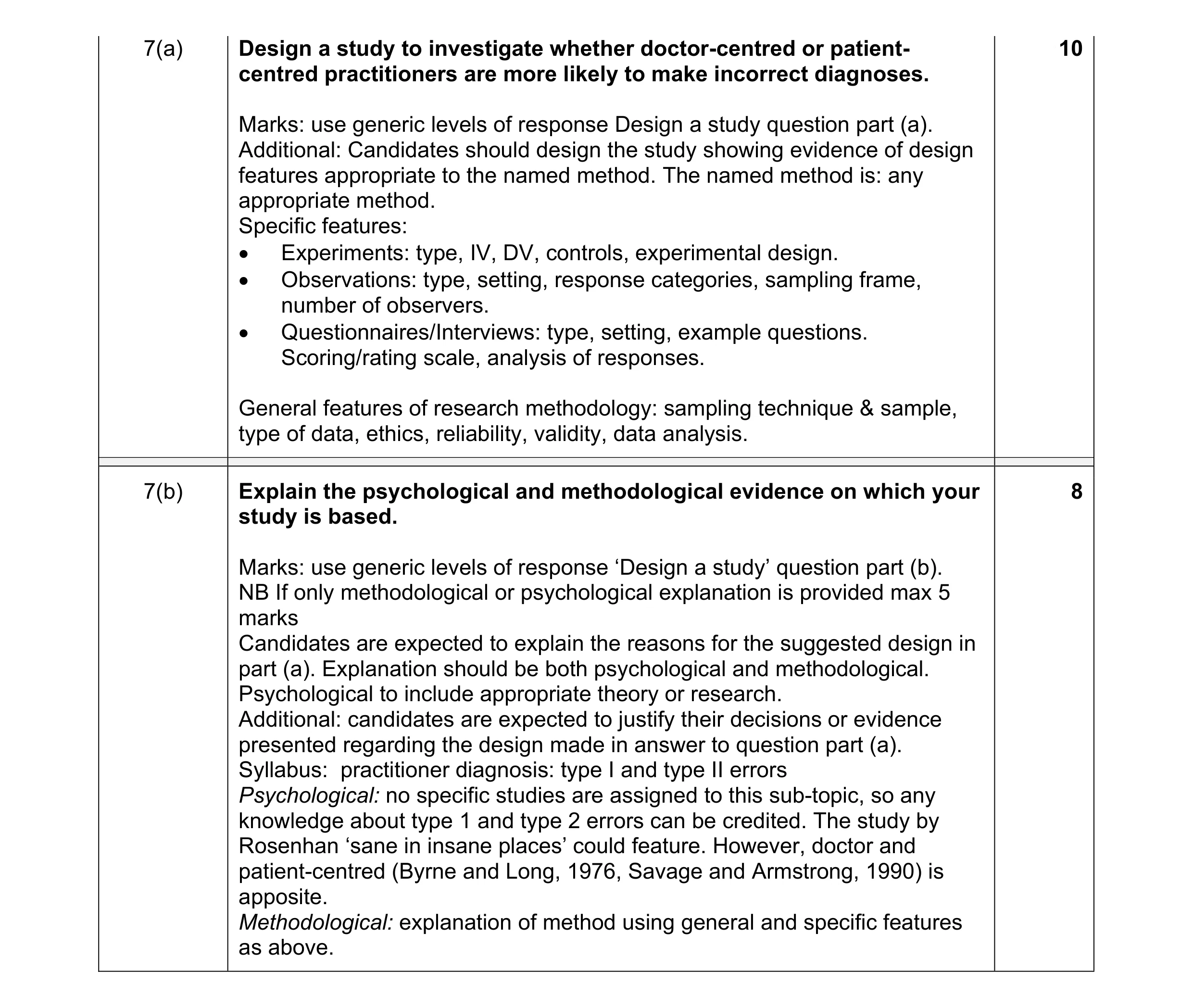 18
18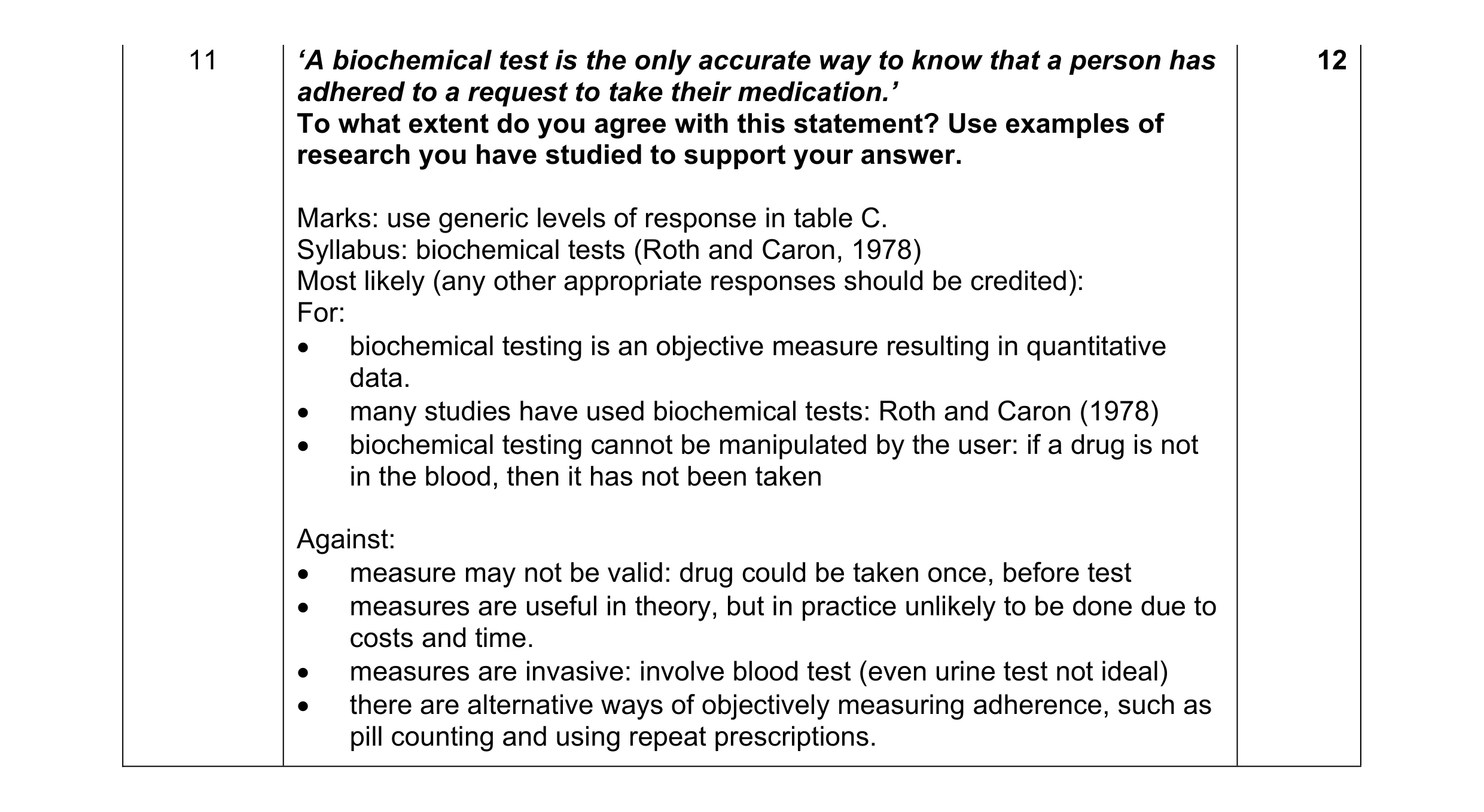 12
12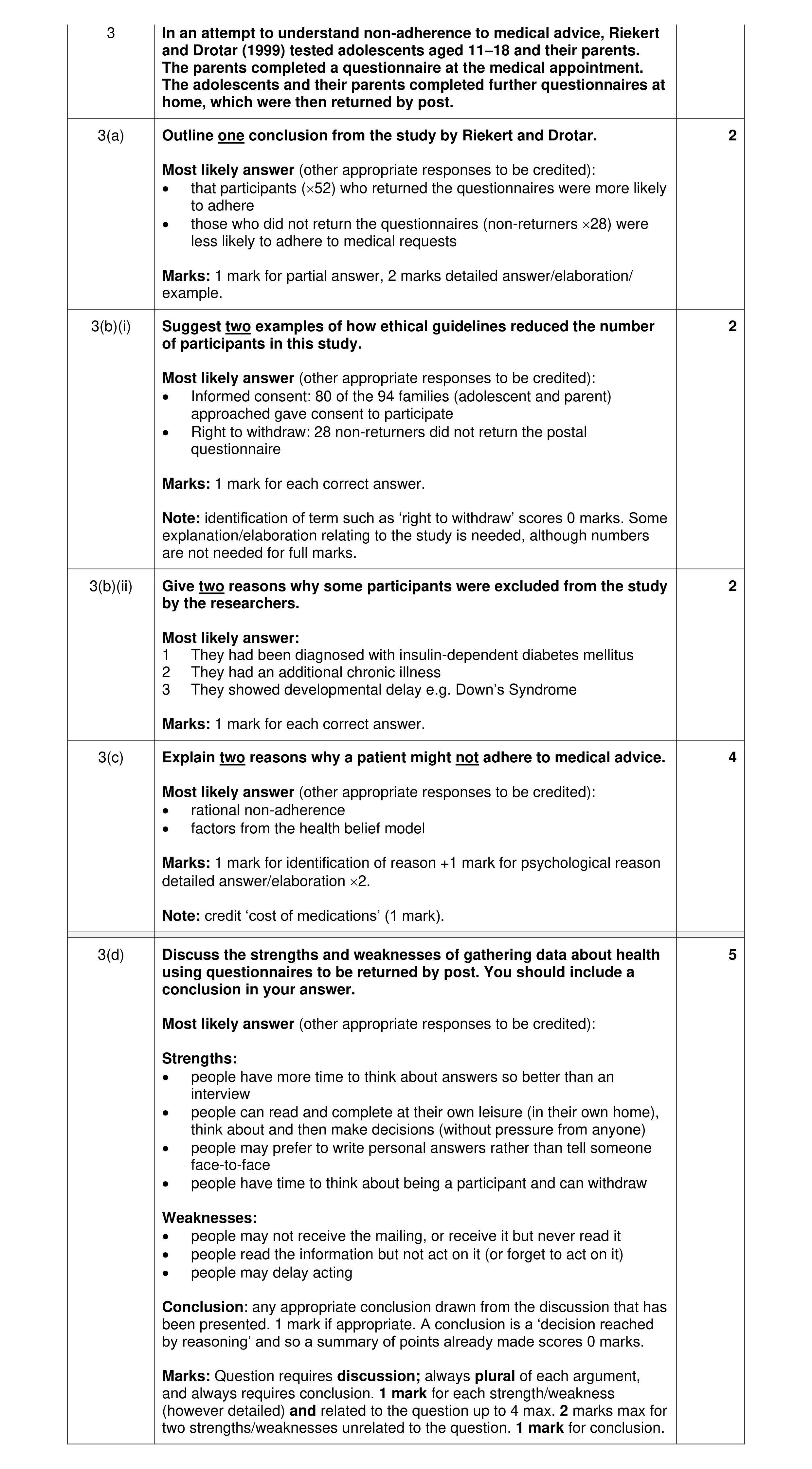 15
15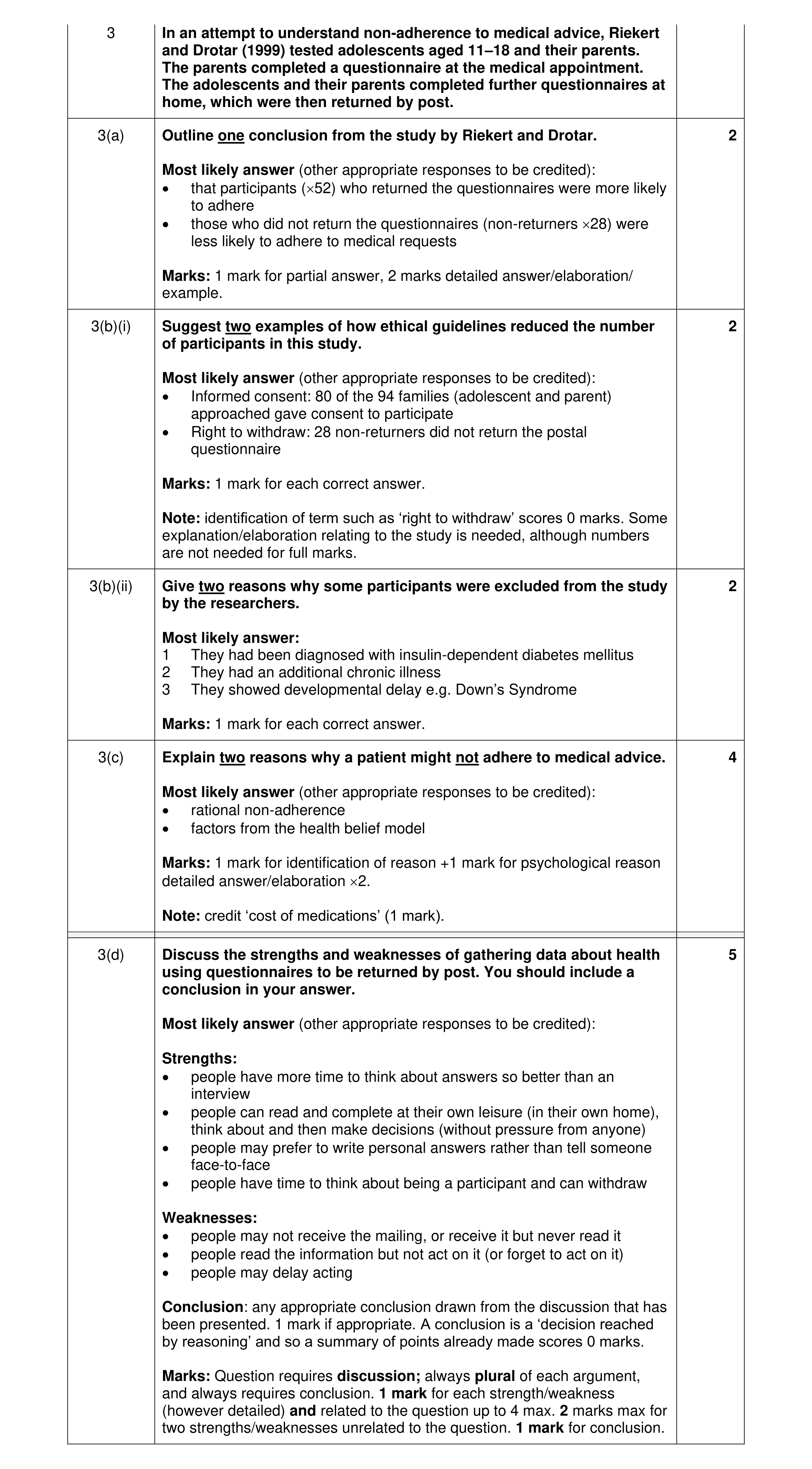 15
15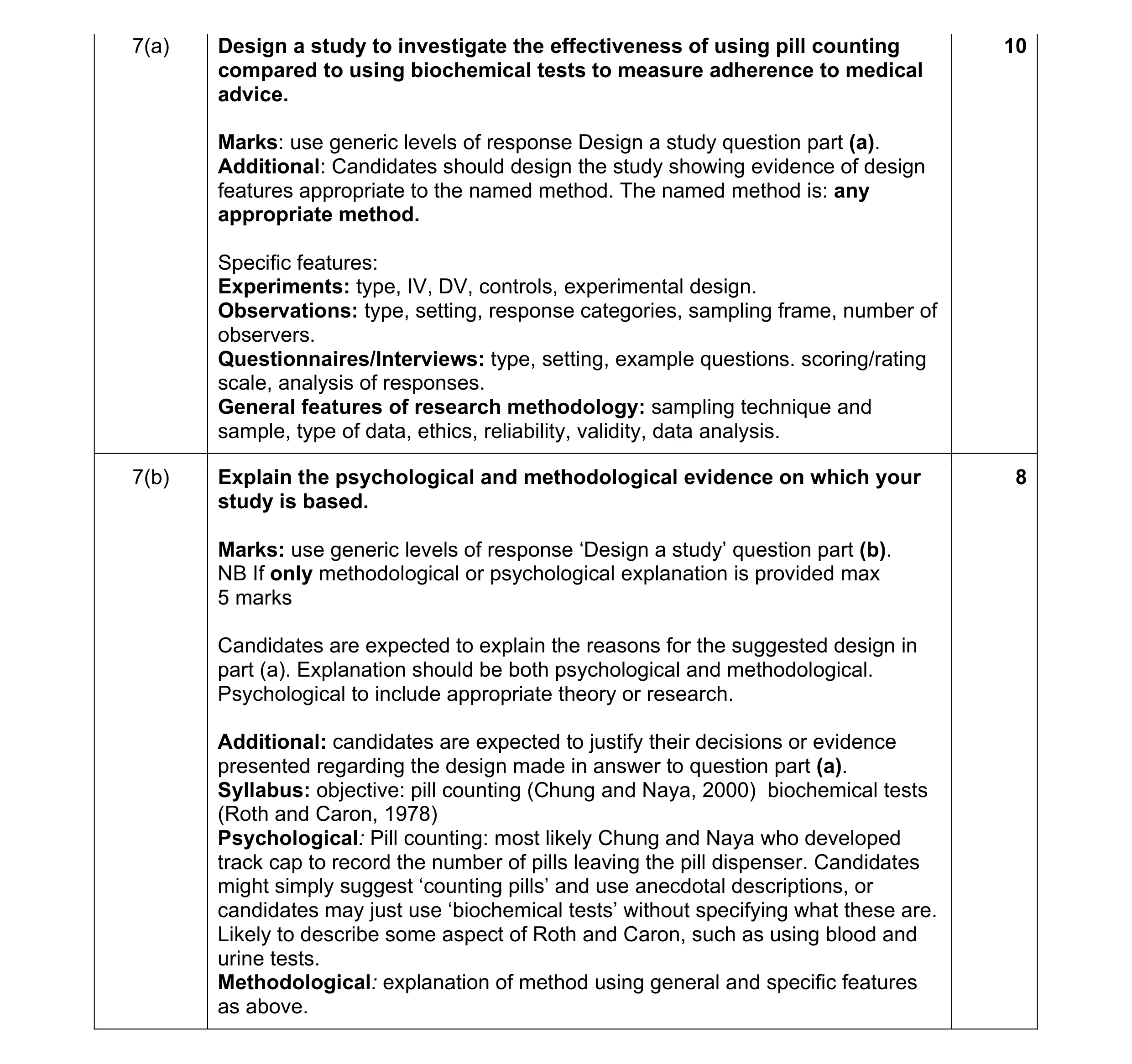 18
18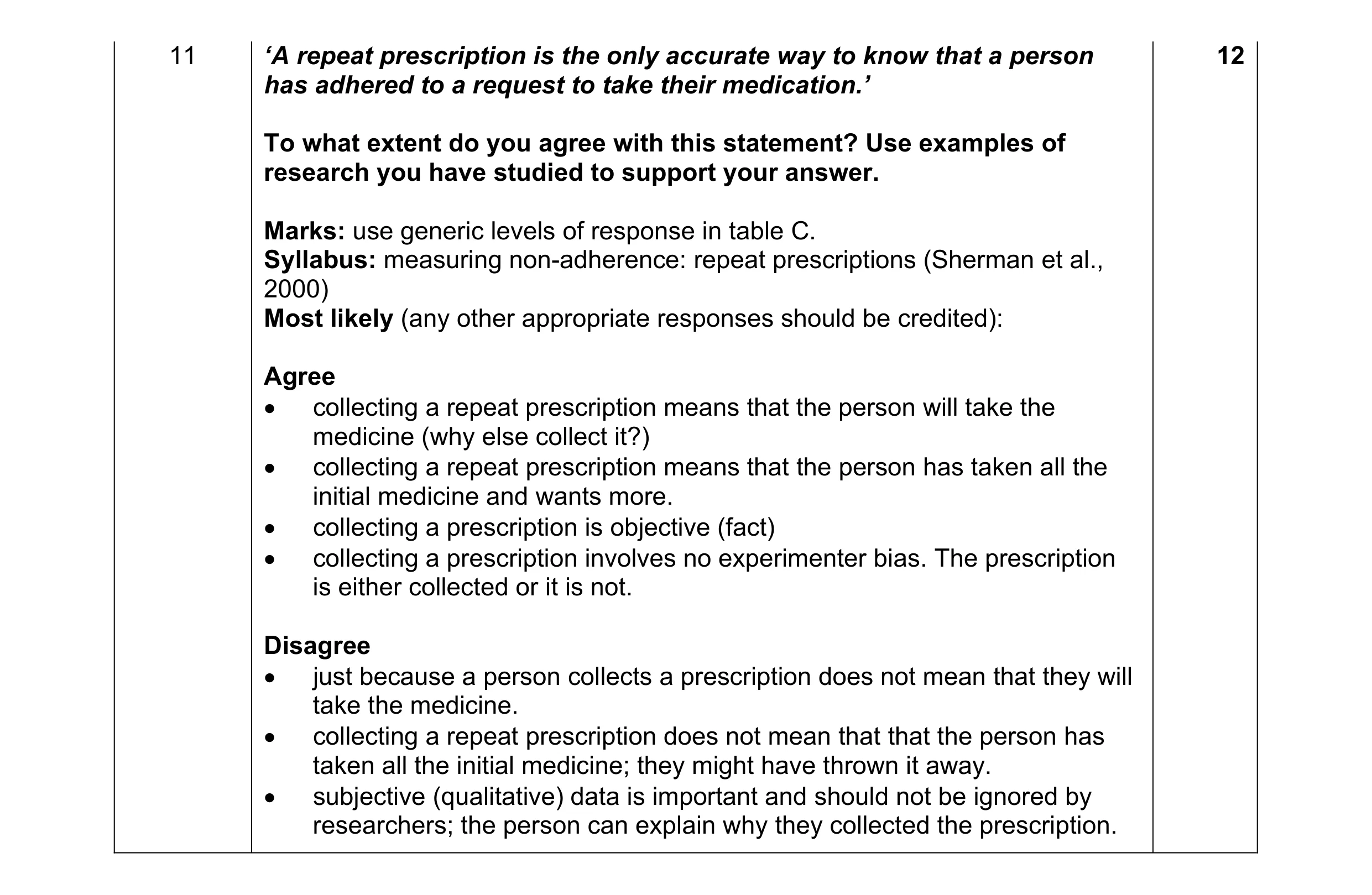 12
12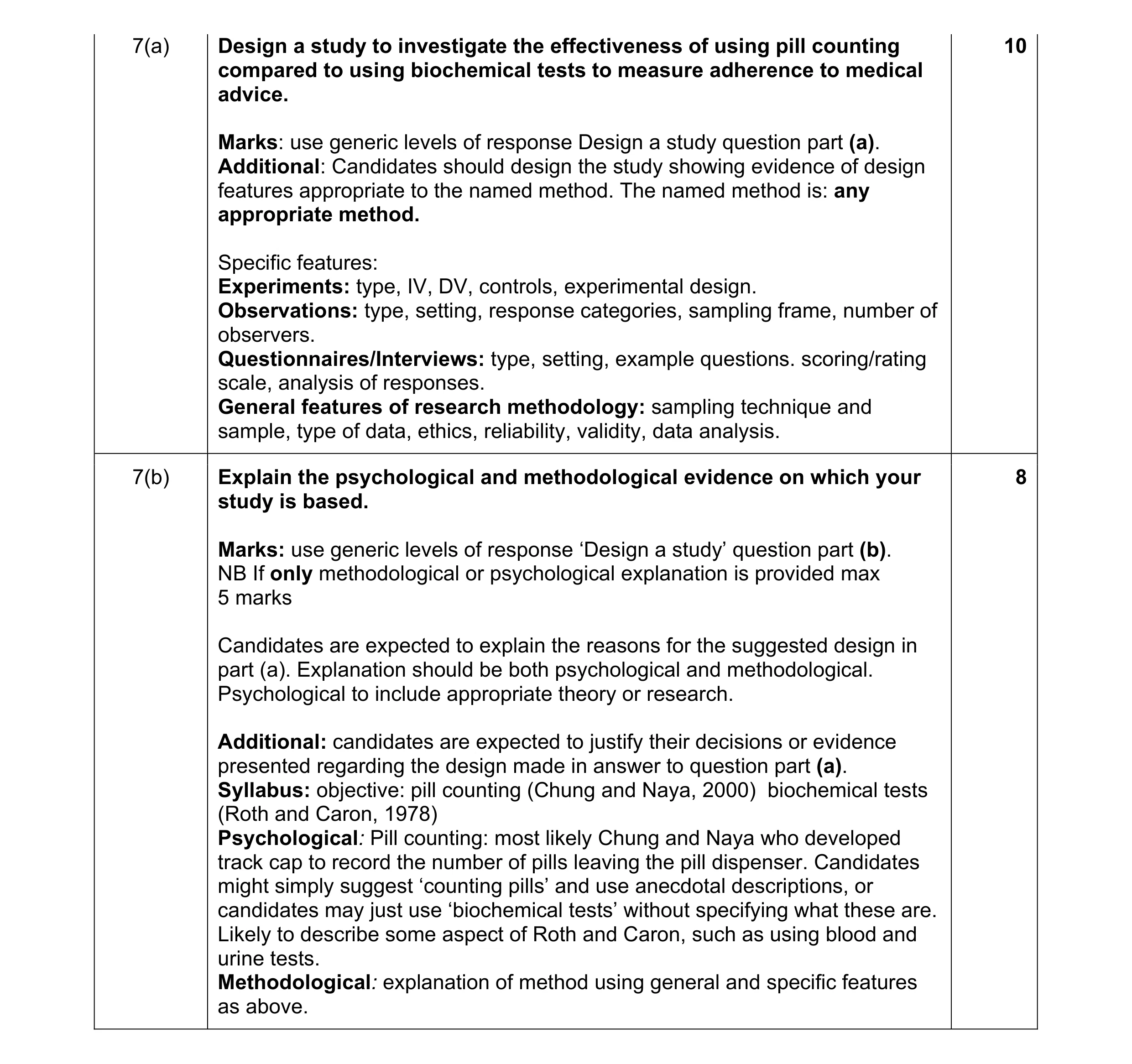 18
18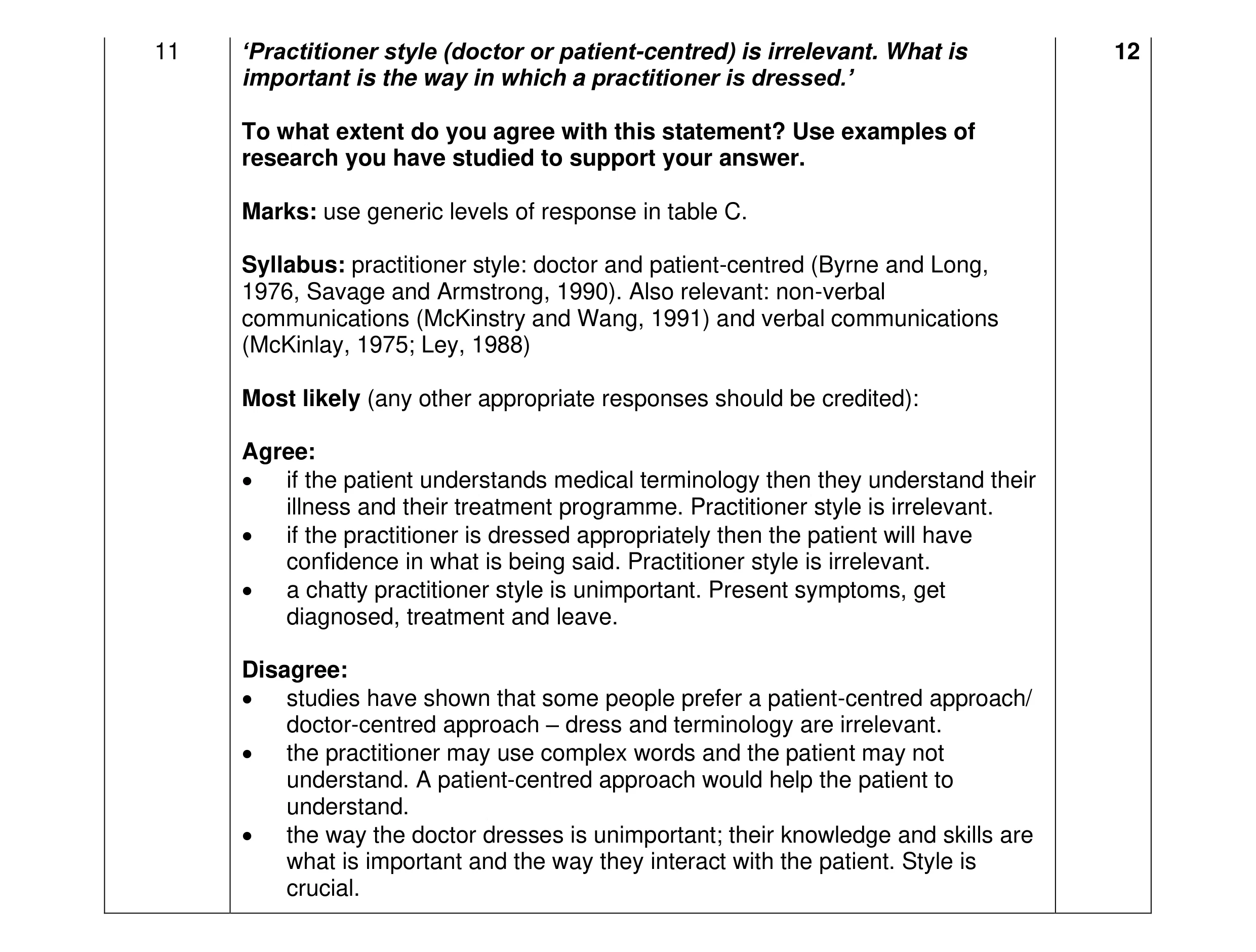 12
12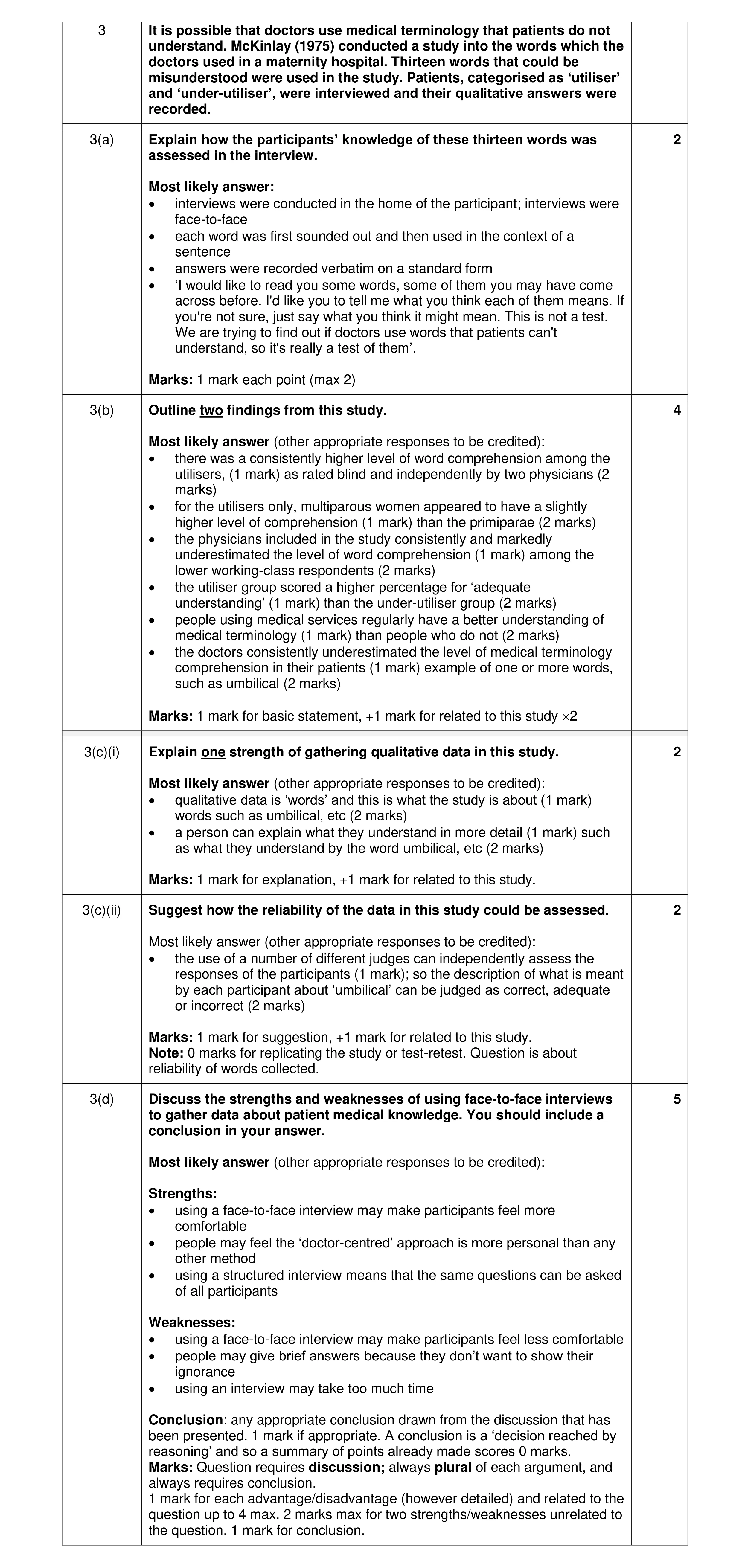 15
15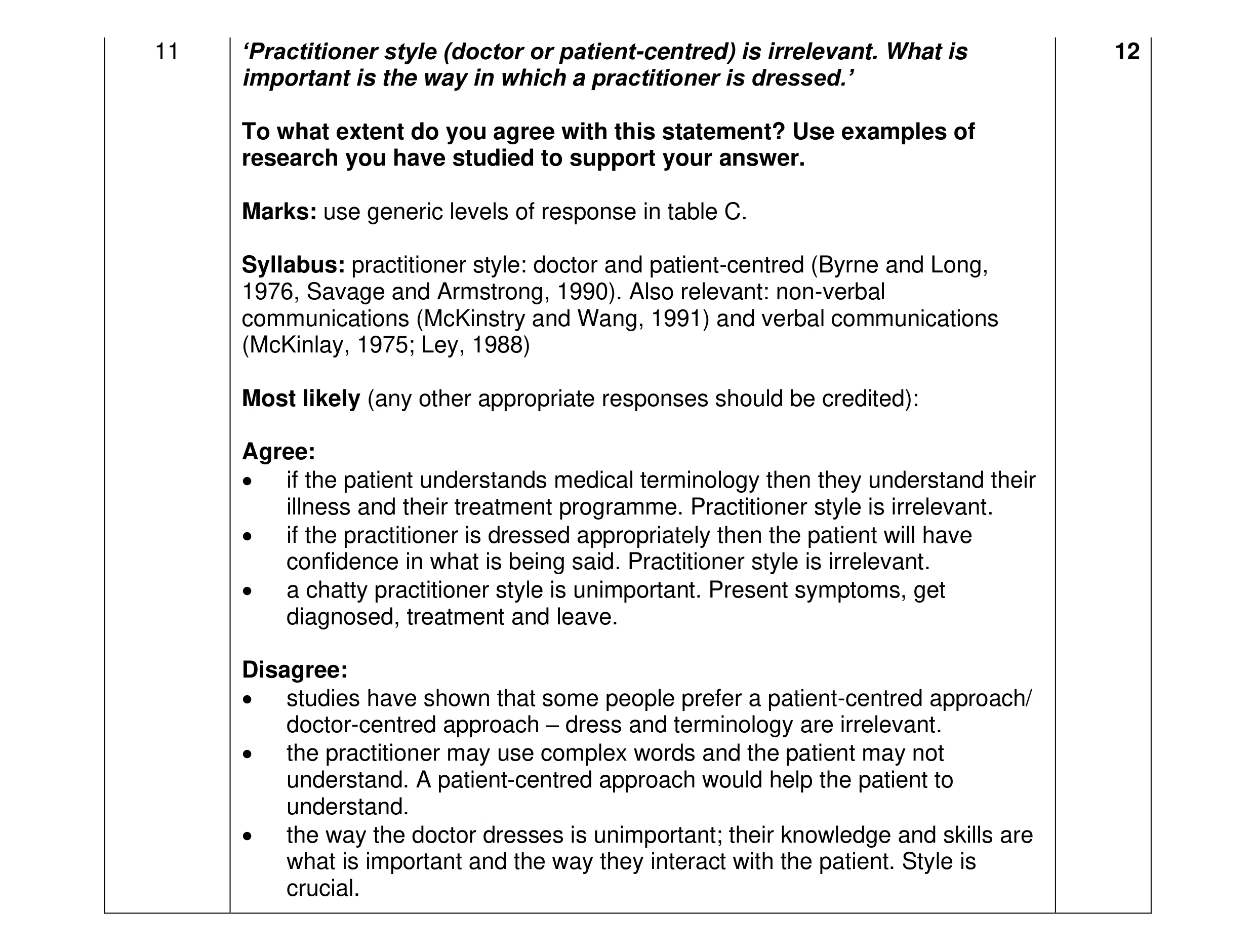 12
12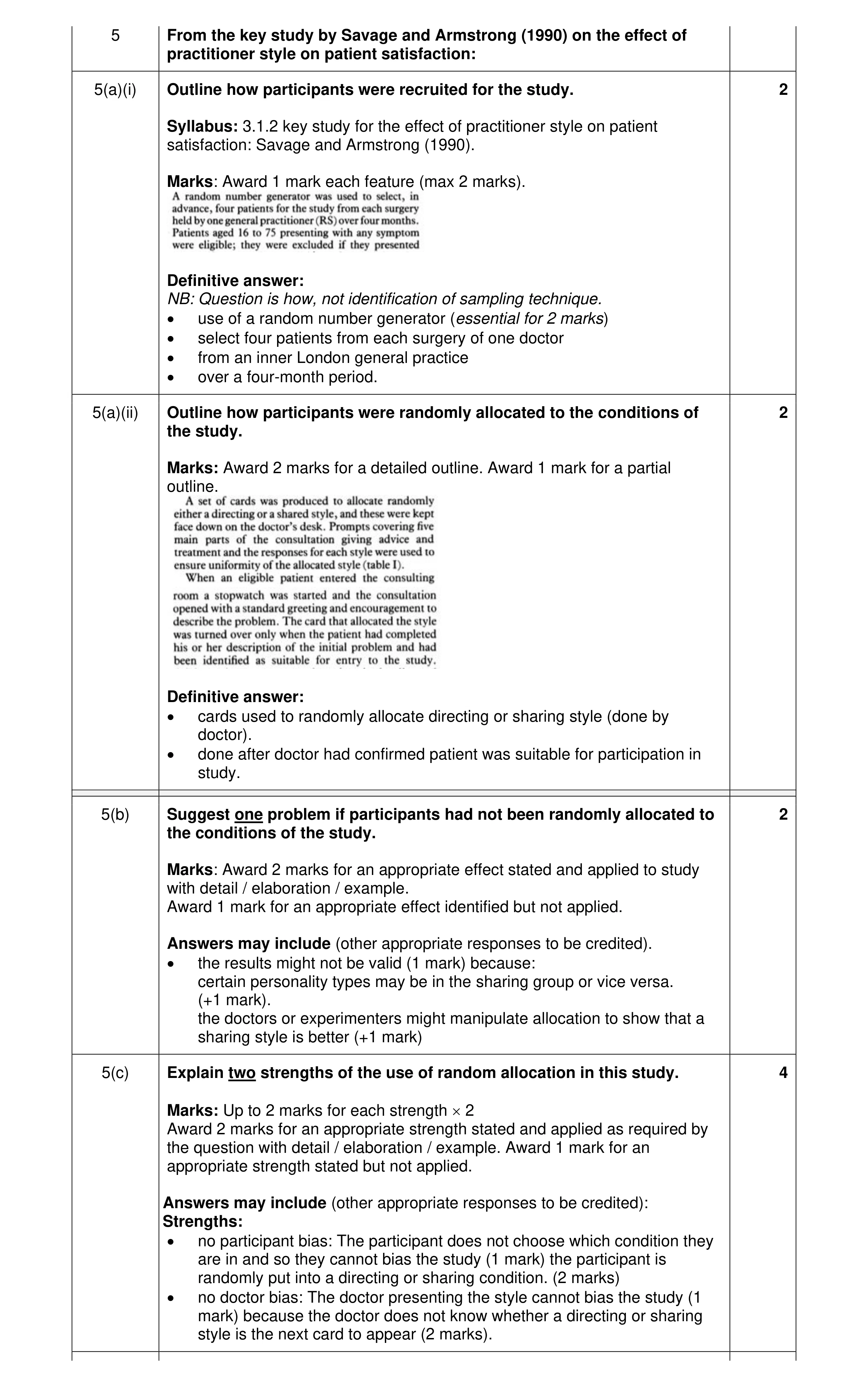 10
10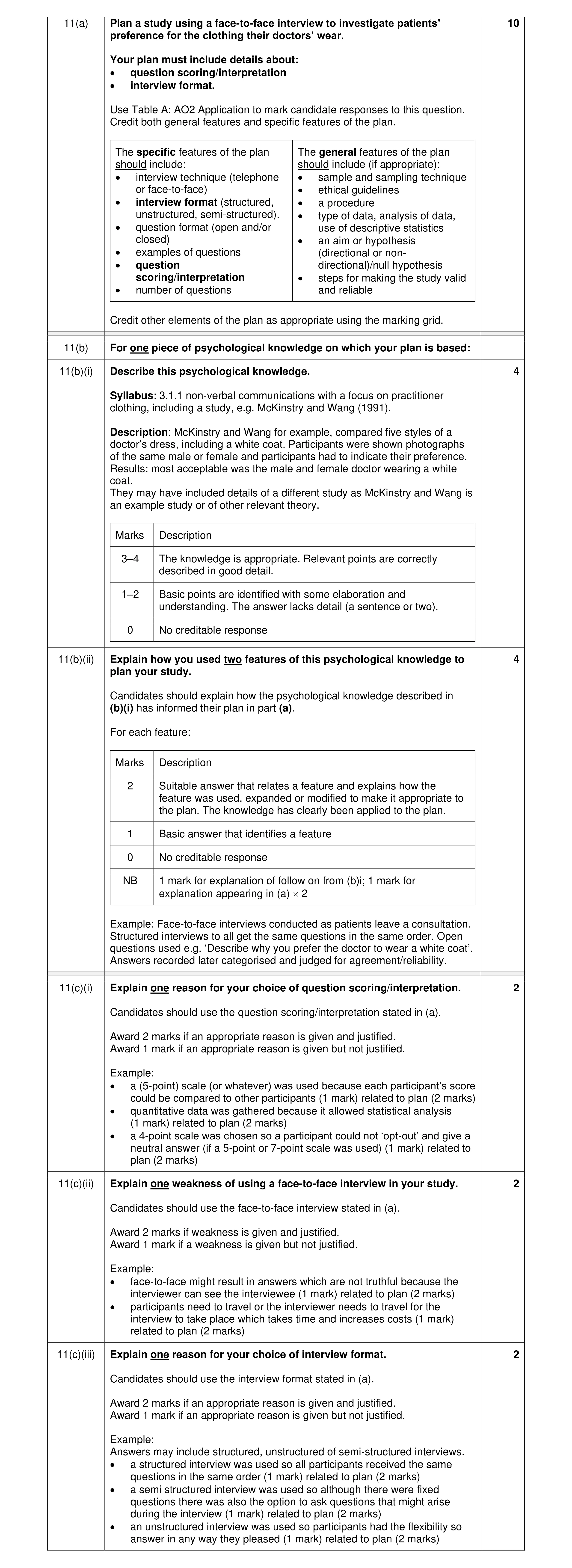 24
24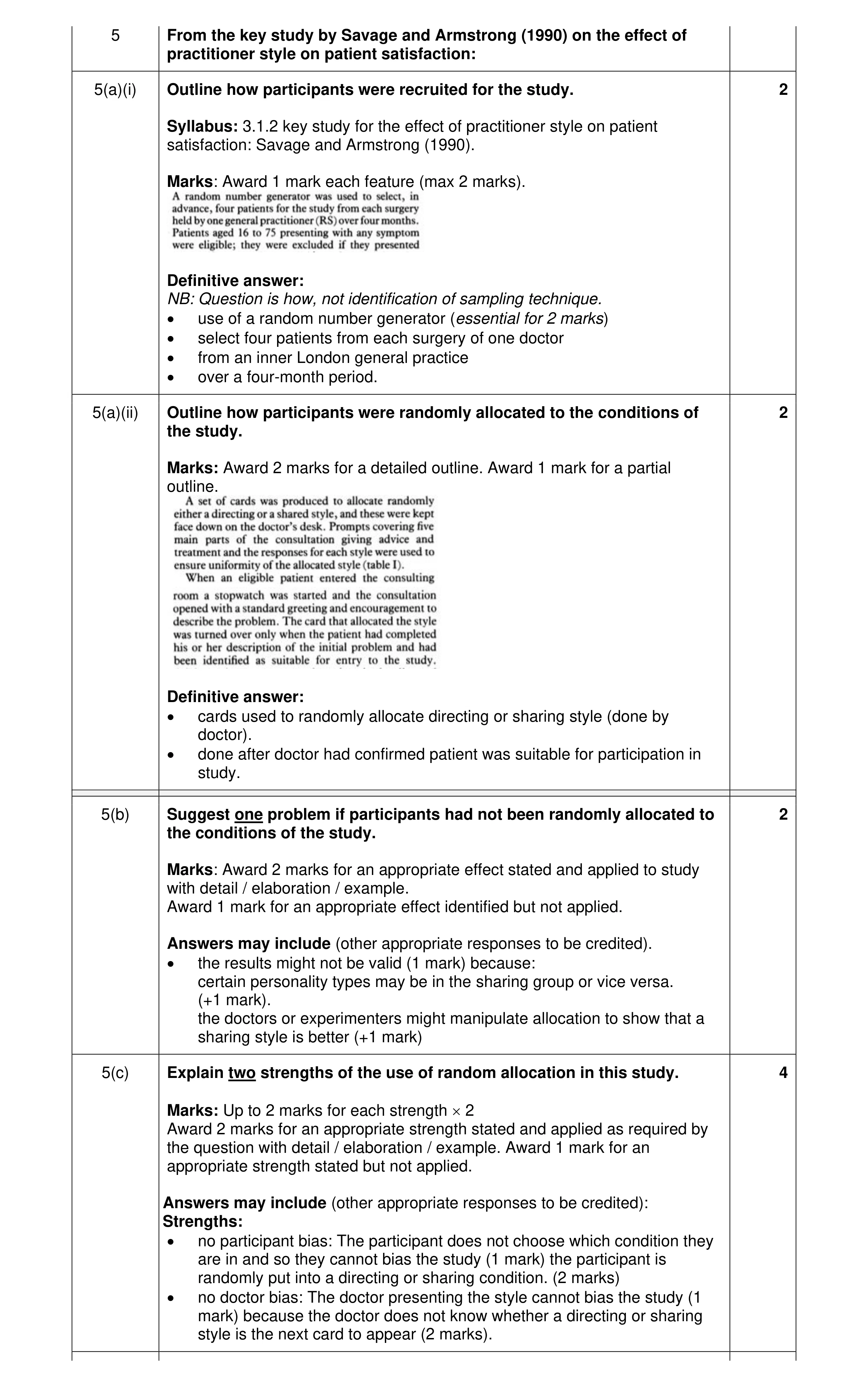 10
10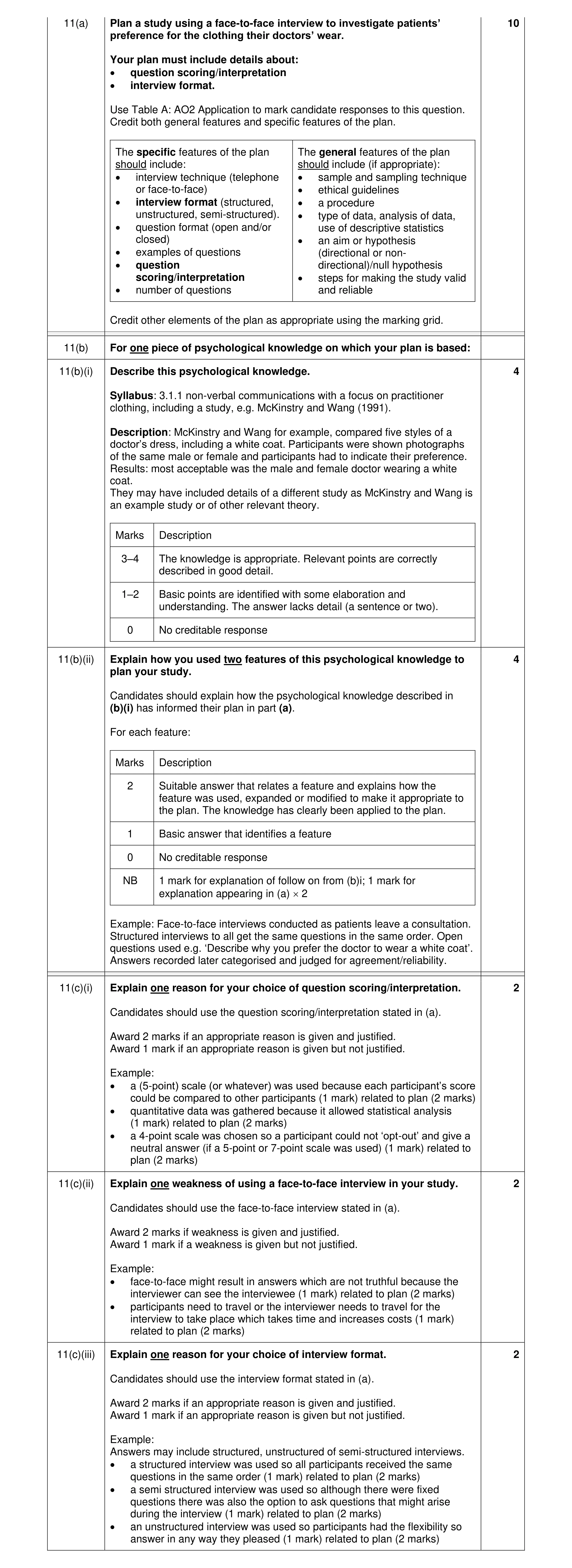 24
24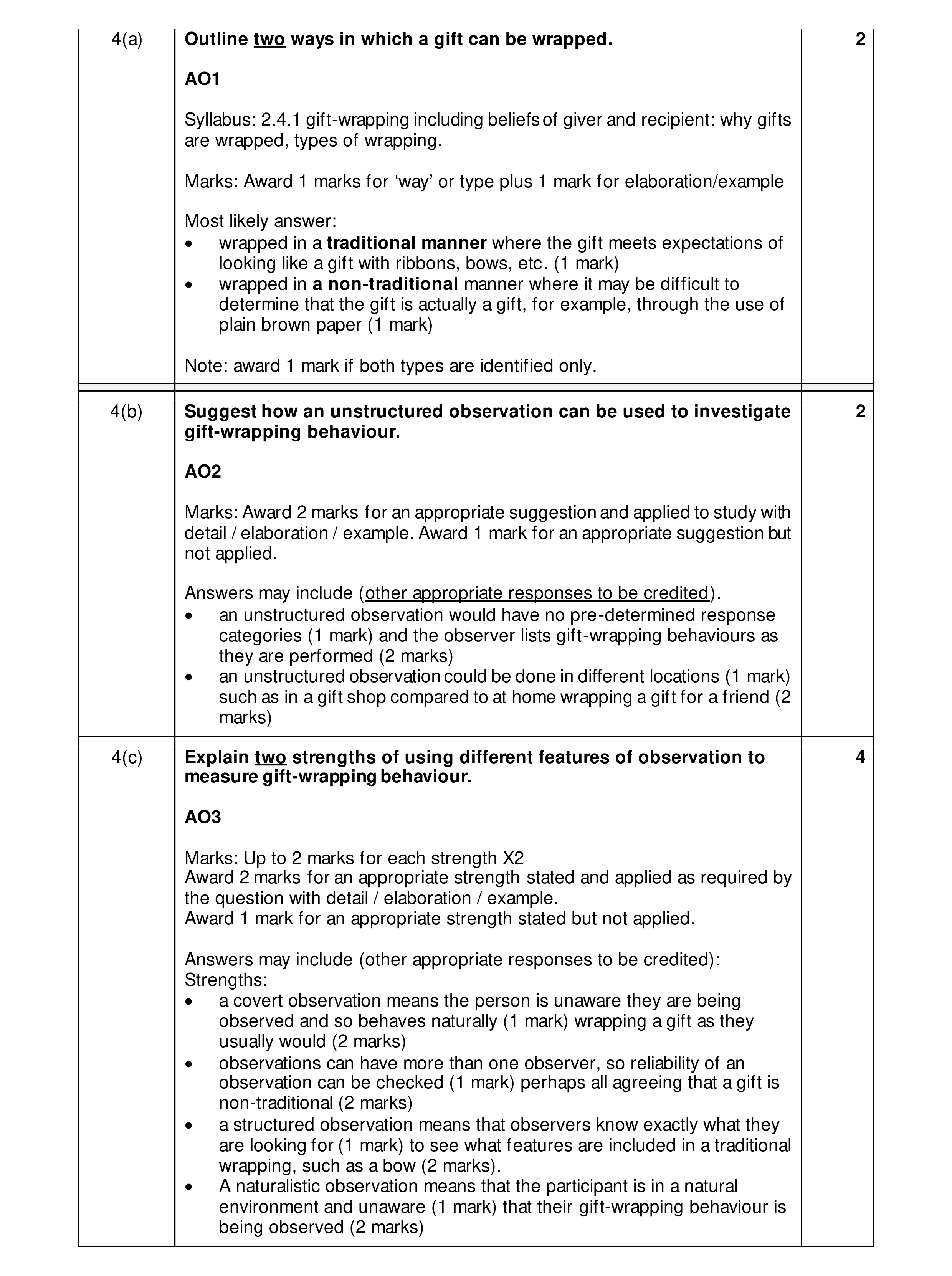 8
8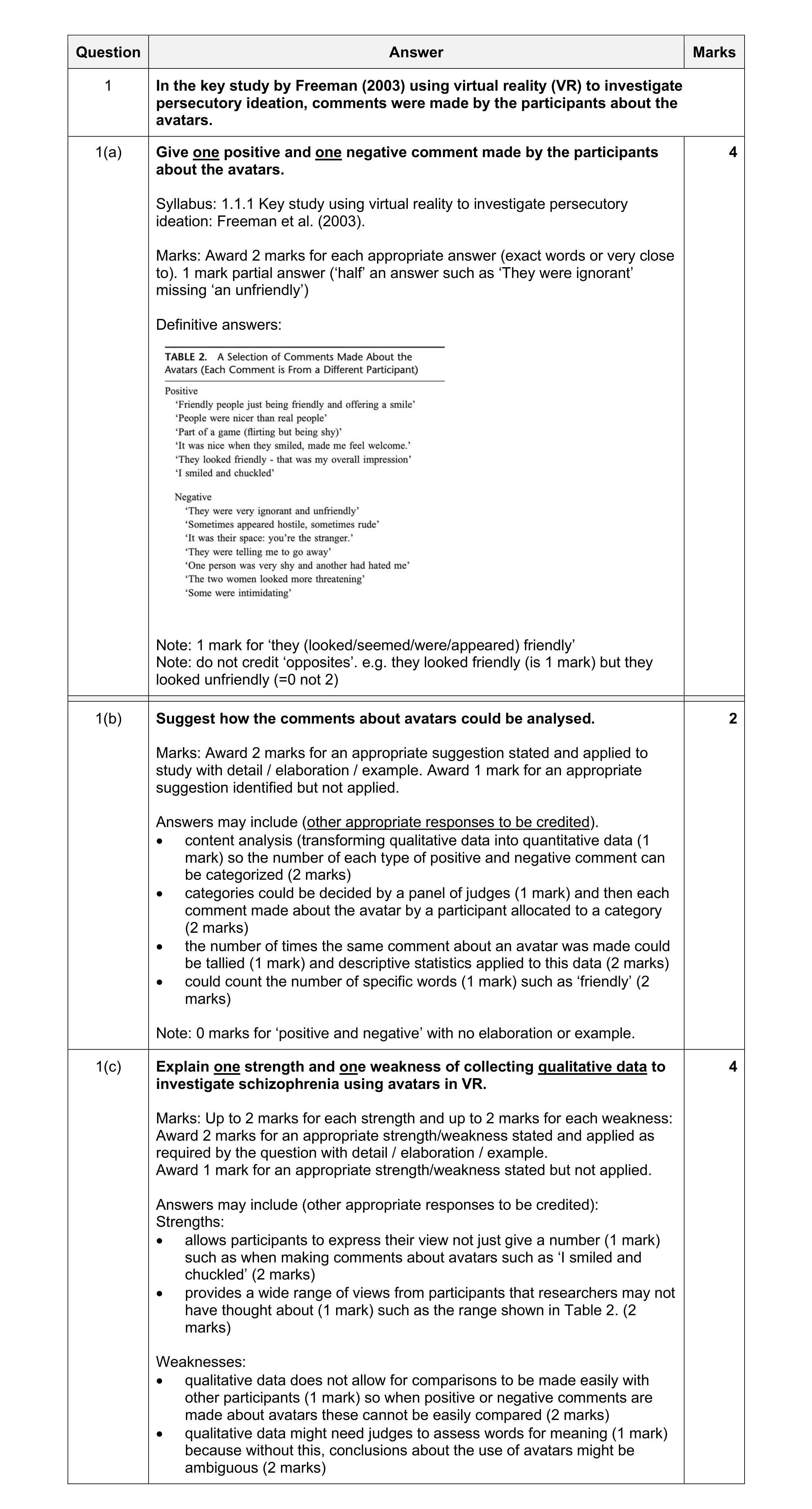 10
10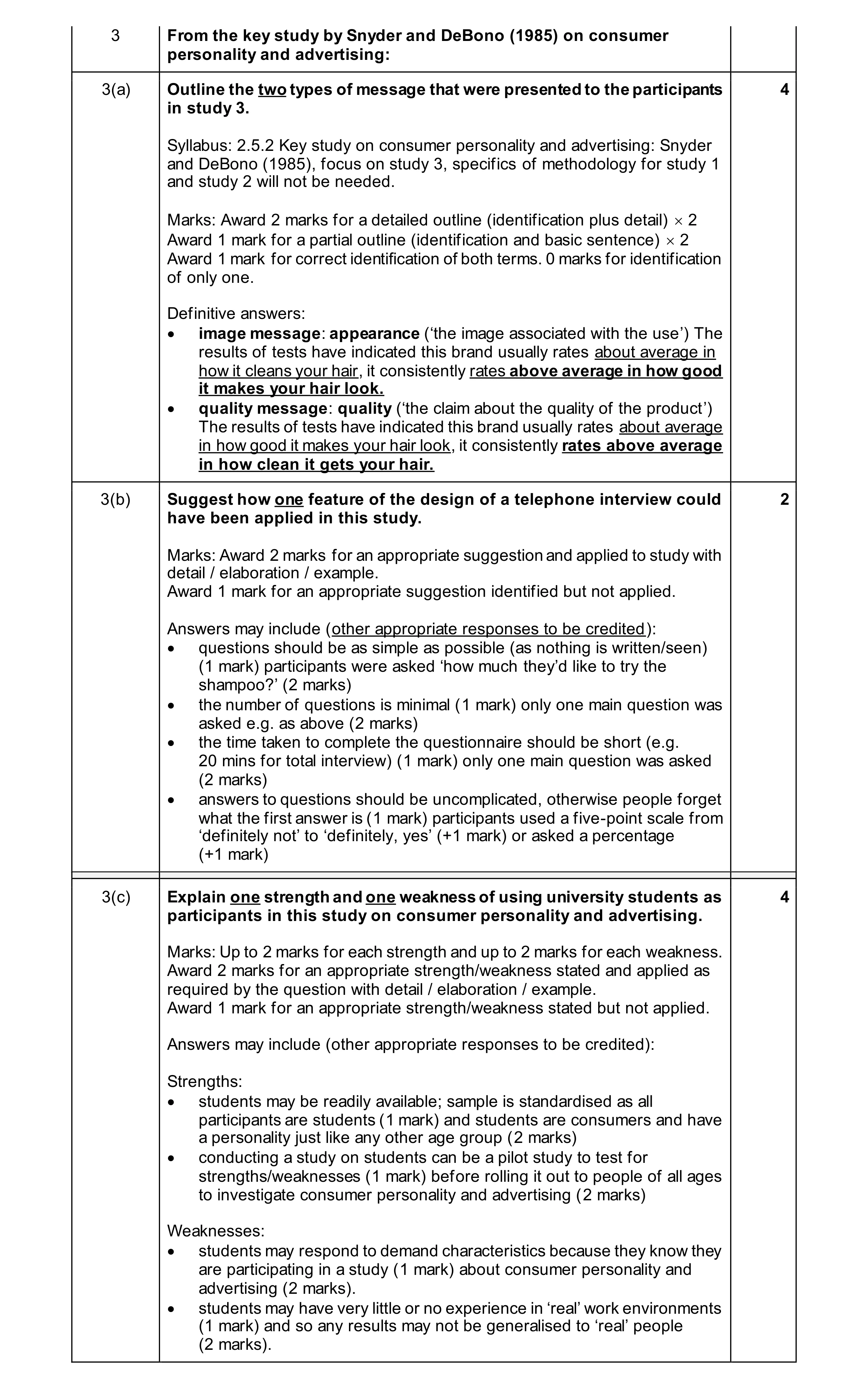 10
10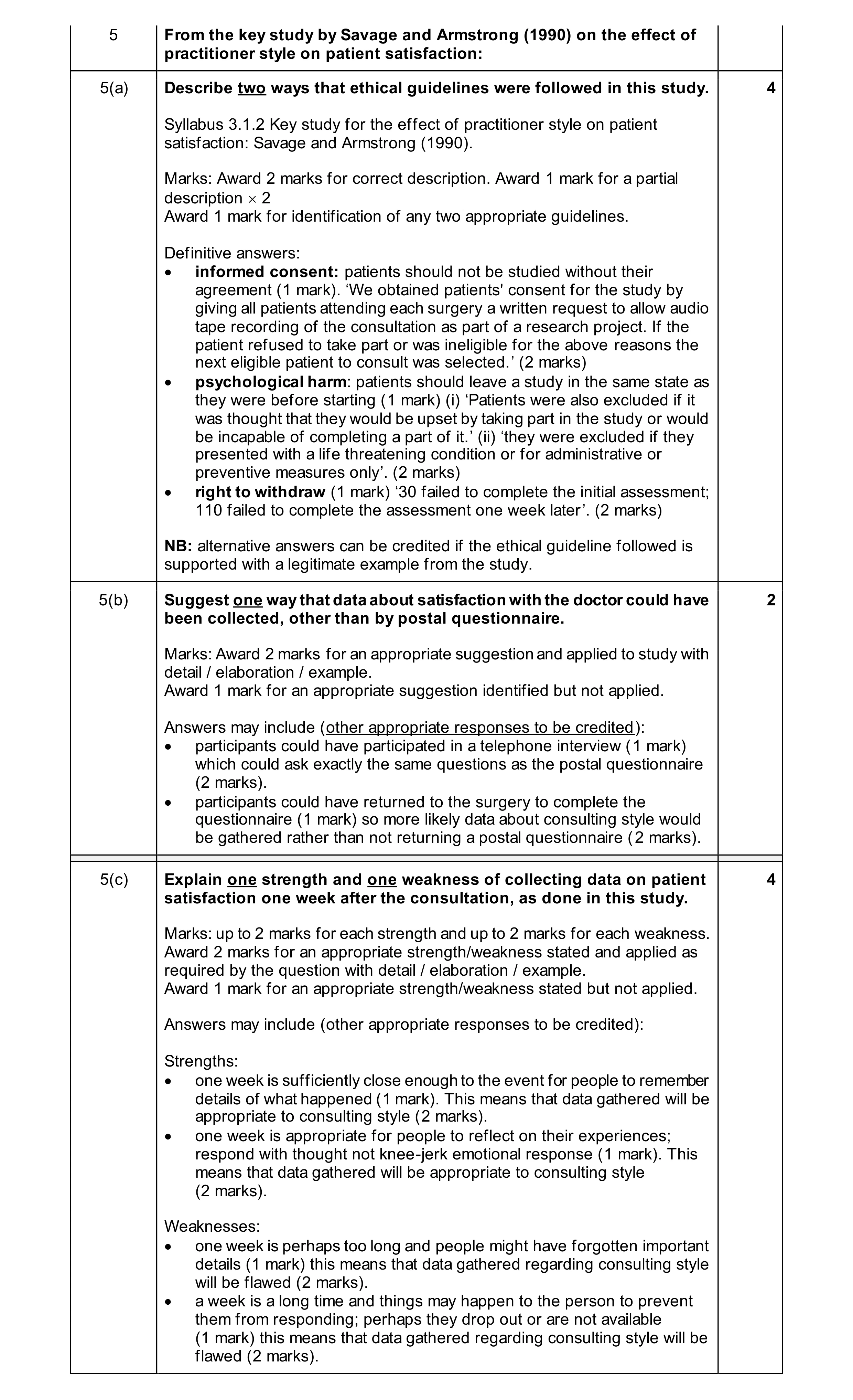 10
10