Questions as text
Q1 · A petrochemical molecule undergoes the chemical change shown 0654/11 Oct/Nov 2007
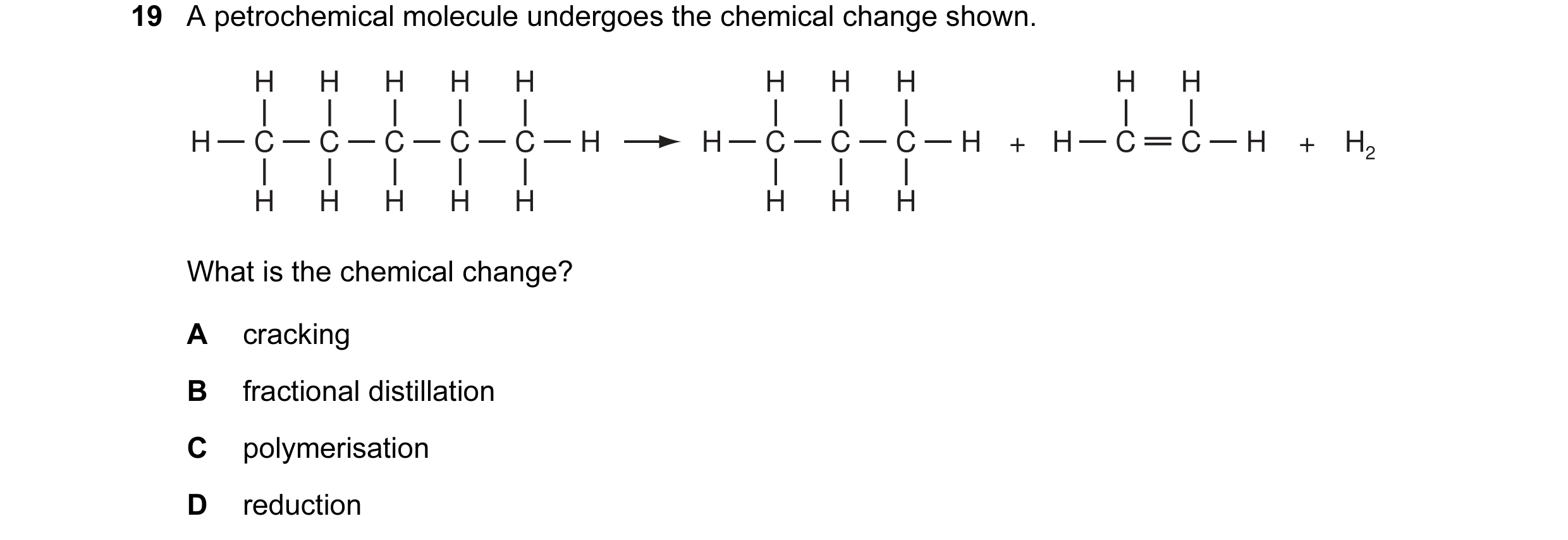
19 A petrochemical molecule undergoes the chemical change shown. H H H H H H H H H H H C C C C C H H C C C H + H C C H + H2 H H H H H H H H What is the chemical change? A cracking B fractional distillation C polymerisation D reduction
1 marks
Answer: A
This question in 0654/11 Oct/Nov 2007
Q2 · Large hydrocarbons can be ..….1….. 0654/11 Oct/Nov 2008
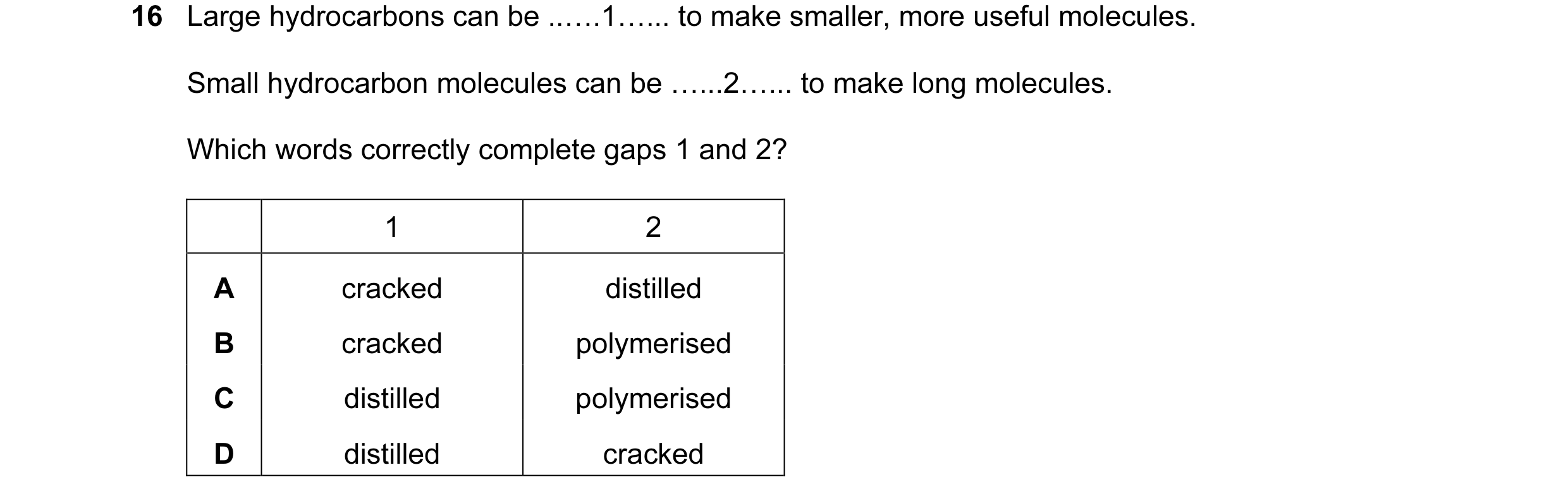
16 Large hydrocarbons can be ..….1…... to make smaller, more useful molecules. Small hydrocarbon molecules can be …...2…... to make long molecules. Which words correctly complete gaps 1 and 2? 1 2 A cracked distilled B cracked polymerised C distilled polymerised D distilled cracked
1 marks
Answer: B
This question in 0654/11 Oct/Nov 2008
Q3 · Which process produces molecules with longer chains? 0654/11 May/June 2009
16 Which process produces molecules with longer chains? A combustion of hydrocarbon B cracking C fractional distillation of crude oil D polymerisation
1 marks
Answer: D
This question in 0654/11 May/June 2009
Q4 · Catalytic cracking is useful in the petrochemical industry 0654/11 Oct/Nov 2009
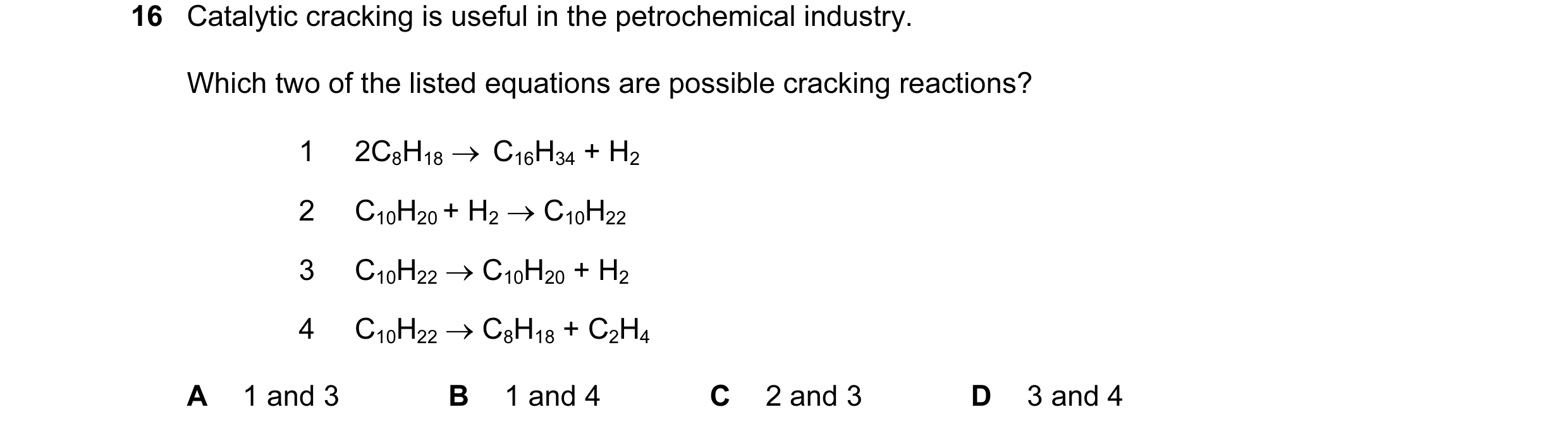
16 Catalytic cracking is useful in the petrochemical industry. Which two of the listed equations are possible cracking reactions? 1 2C8H18 → C16H34 + H2 2 C10H20 + H2 → C10H22 3 C10H22 → C10H20 + H2 4 C10H22 → C8H18 + C2H4 A 1 and 3 B 1 and 4 C 2 and 3 D 3 and 4
1 marks
Answer: D
This question in 0654/11 Oct/Nov 2009
Q5 · Large hydrocarbons can be ..….1….. 0654/12 May/June 2011
18 Large hydrocarbons can be ..….1…... to make smaller, more useful molecules. Small hydrocarbon molecules can be …...2…... to make long molecules. Which words correctly complete gaps 1 and 2? 1 2 A cracked distilled B cracked polymerised C distilled polymerised D distilled cracked
1 marks
Answer: B
This question in 0654/12 May/June 2011
Q6 · Ethanol can be made by reacting steam with a hydrocarbon 0654/11 Oct/Nov 2013
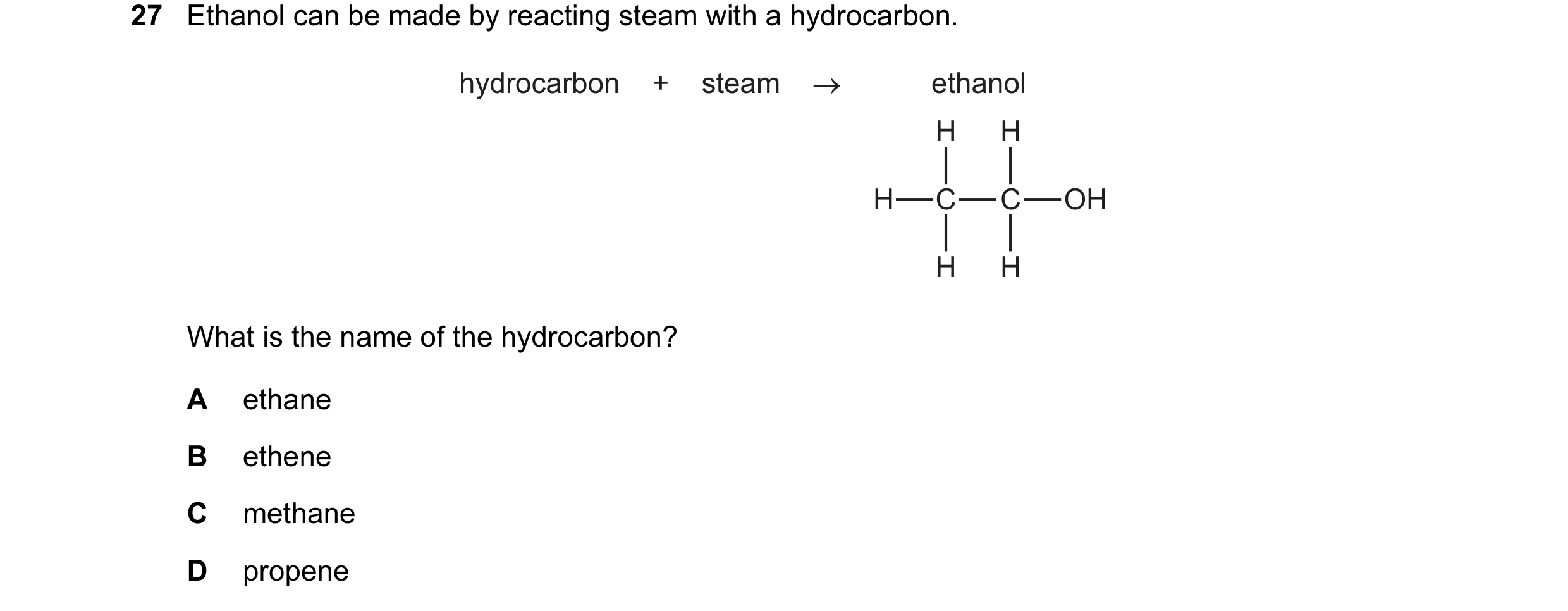
27 Ethanol can be made by reacting steam with a hydrocarbon. hydrocarbon + steam → ethanol H H H C C OH H H What is the name of the hydrocarbon? A ethane B ethene C methane D propene
1 marks
Answer: B
This question in 0654/11 Oct/Nov 2013
Q7 · Ethanol can be made by reacting steam with a hydrocarbon 0654/12 Oct/Nov 2013
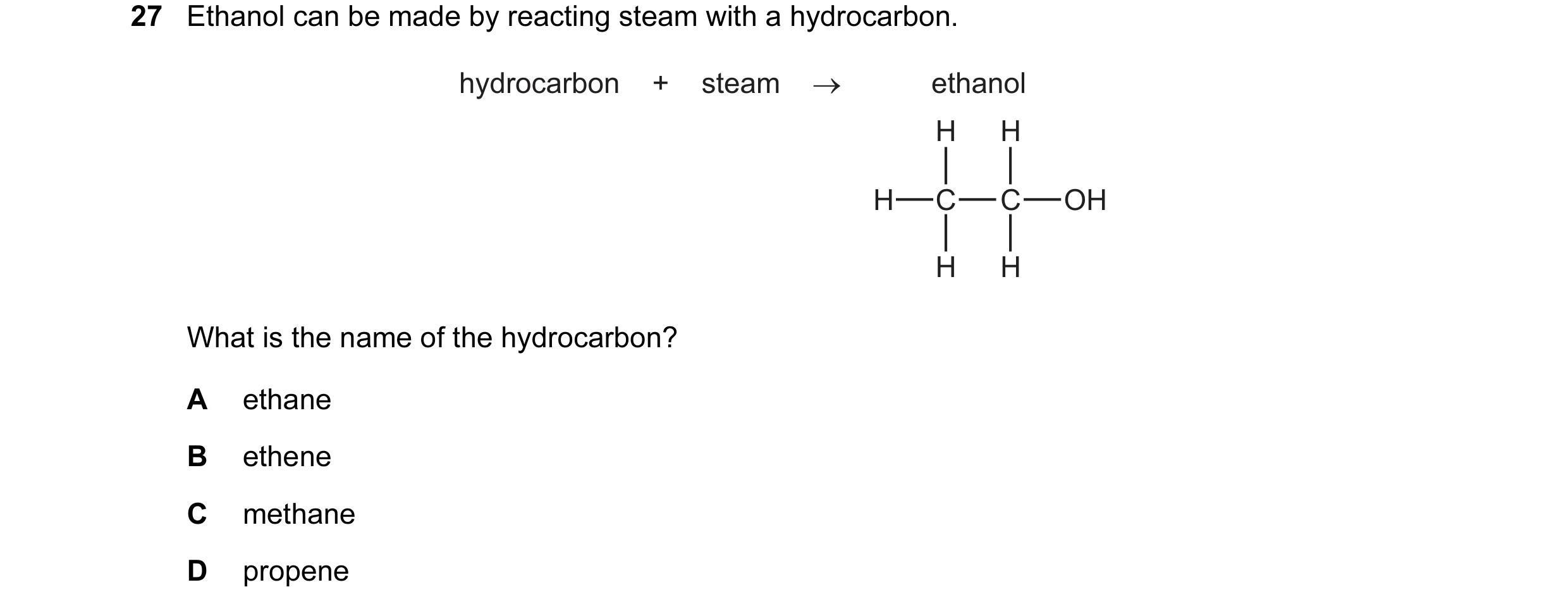
27 Ethanol can be made by reacting steam with a hydrocarbon. hydrocarbon + steam → ethanol H H H C C OH H H What is the name of the hydrocarbon? A ethane B ethene C methane D propene
1 marks
Answer: B
This question in 0654/12 Oct/Nov 2013
Q8 · An alkane molecule undergoes the chemical change shown: H H H H H H H H H H H C C C C C H… 0654/13 May/June 2014
27 An alkane molecule undergoes the chemical change shown: H H H H H H H H H H H C C C C C H H C C C H + H C C H H H H H H H H H What is the name of the chemical change? A cracking B fractional distillation C polymerisation D reduction
1 marks
Answer: A
This question in 0654/13 May/June 2014
Q9 · The structures of compounds X and Y are shown 0654/11 Oct/Nov 2014
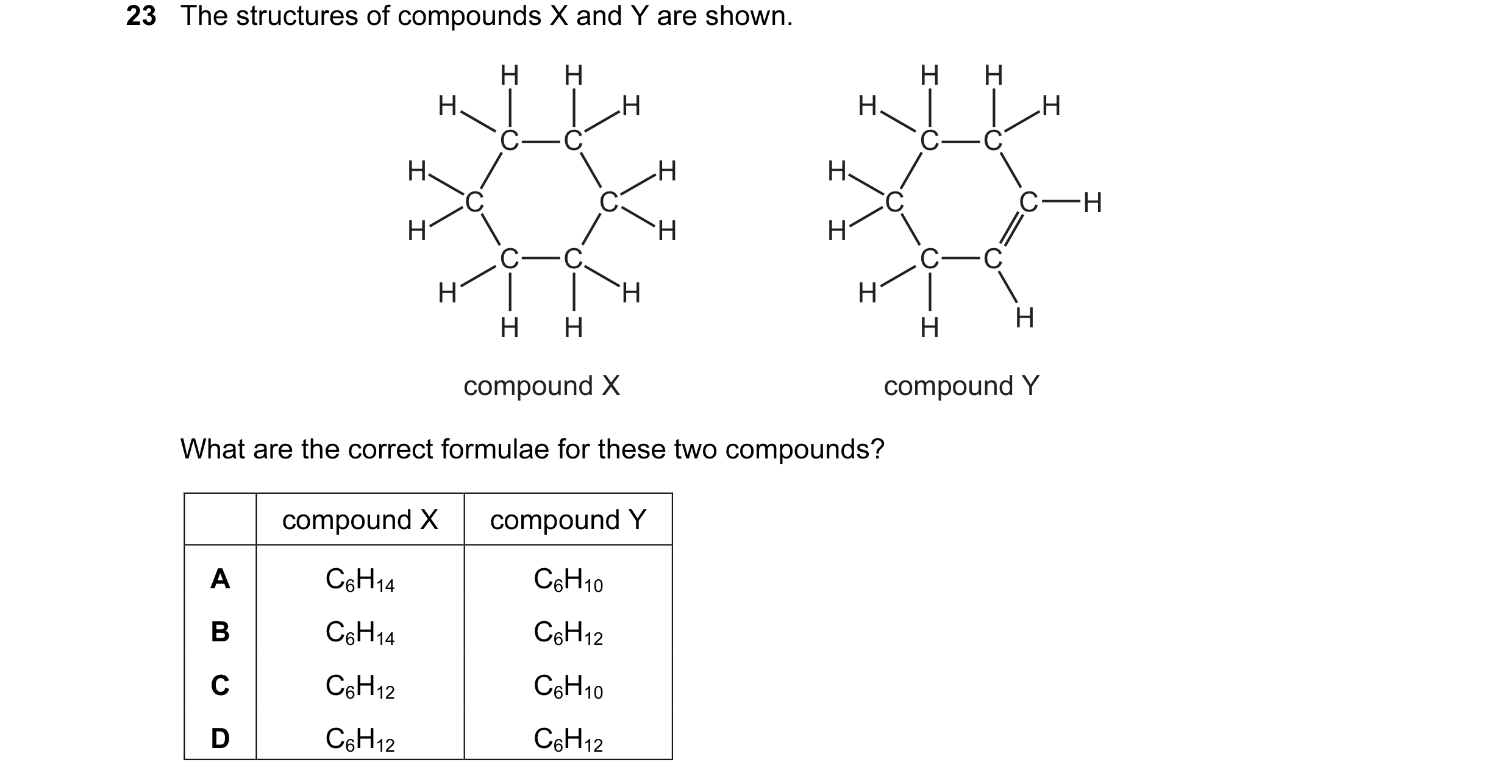
23 The structures of compounds X and Y are shown. H H H H H H H H C C C C H H H C C C C H H H H C C C C H H H H H H H compound X compound Y What are the correct formulae for these two compounds? compound X compound Y A C6H14 C6H10 B C6H14 C6H12 C C6H12 C6H10 D C6H12 C6H12
1 marks
Answer: C
This question in 0654/11 Oct/Nov 2014
Q10 · In which pair are both molecules unsaturated? 0654/11 Oct/Nov 2014
26 In which pair are both molecules unsaturated? H O H A H C C H C O H H O H H H H H H H B H C C C C C H H H H H H H C H C C H H C H H H H H H H H D H C C C H C H H H H
1 marks
Answer: B
This question in 0654/11 Oct/Nov 2014
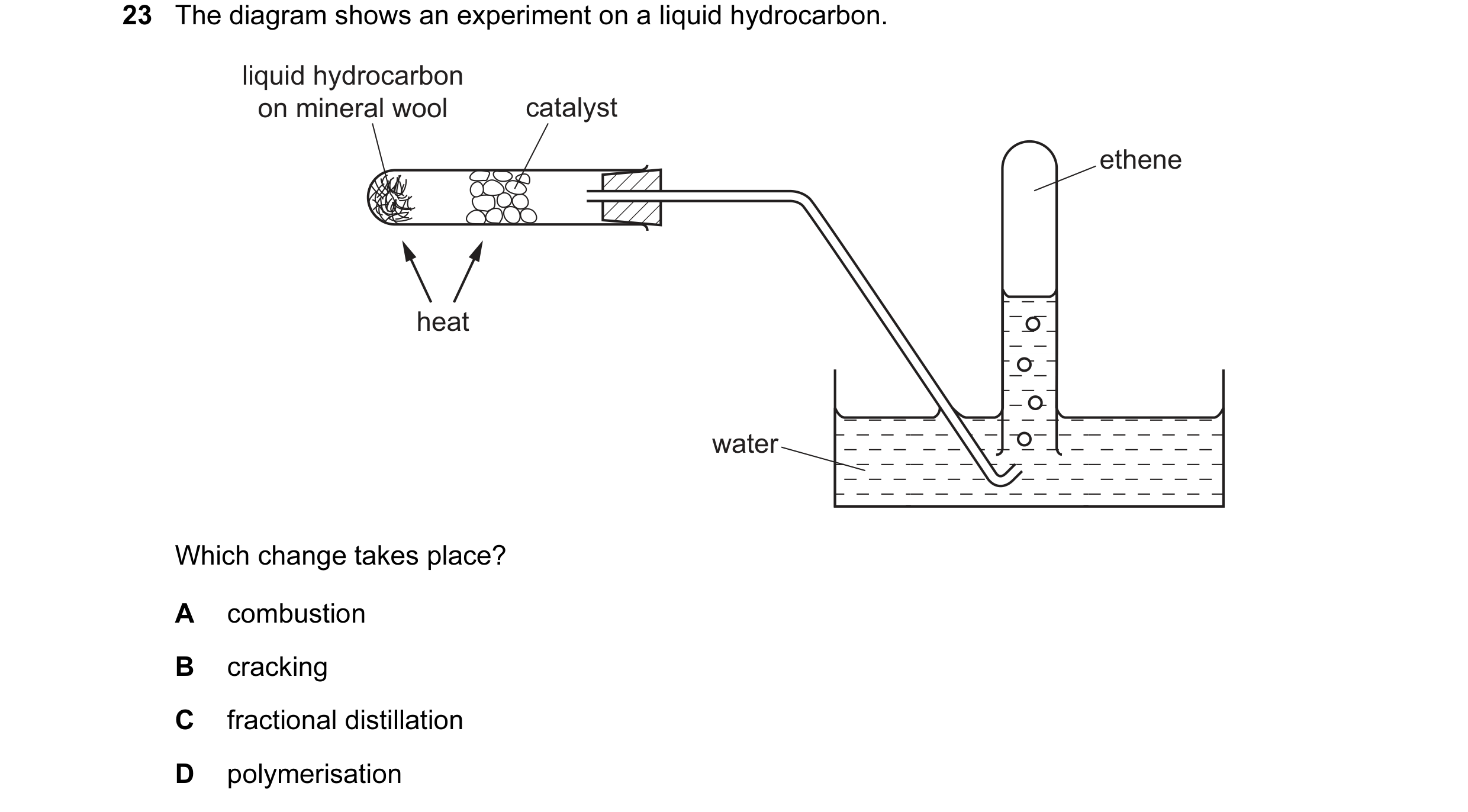
Q11 · The diagram shows an experiment on a liquid hydrocarbon 0654/12 Oct/Nov 2014
23 The diagram shows an experiment on a liquid hydrocarbon. liquid hydrocarbon on mineral wool catalyst ethene heat water Which change takes place? A combustion B cracking C fractional distillation D polymerisation
1 marks
Answer: B
This question in 0654/12 Oct/Nov 2014
Q12 · In which pair are both molecules unsaturated? 0654/12 Oct/Nov 2014
27 In which pair are both molecules unsaturated? H O H A H C C H C O H H O H H H H H H H B H C C C C C H H H H H H H C H C C H H C H H H H H H H H D H C C C H C H H H H
1 marks
Answer: B
This question in 0654/12 Oct/Nov 2014
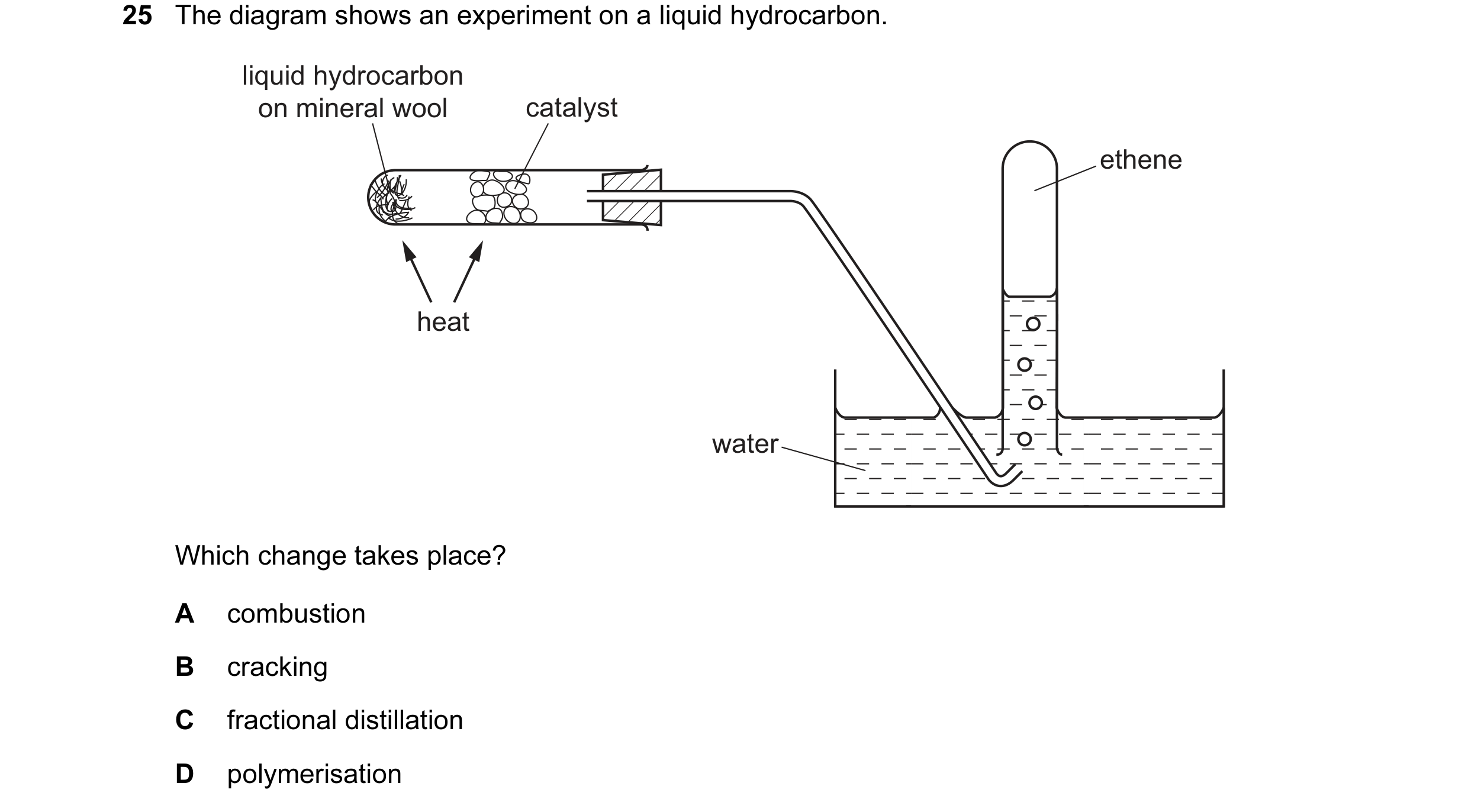
Q13 · The diagram shows an experiment on a liquid hydrocarbon 0654/13 Oct/Nov 2014
25 The diagram shows an experiment on a liquid hydrocarbon. liquid hydrocarbon on mineral wool catalyst ethene heat water Which change takes place? A combustion B cracking C fractional distillation D polymerisation
1 marks
Answer: B
This question in 0654/13 Oct/Nov 2014
Q14 · In which pair are both molecules unsaturated? 0654/13 Oct/Nov 2014
26 In which pair are both molecules unsaturated? H O H A H C C H C O H H O H H H H H H H B H C C C C C H H H H H H H C H C C H H C H H H H H H H H D H C C C H C H H H H
1 marks
Answer: B
This question in 0654/13 Oct/Nov 2014
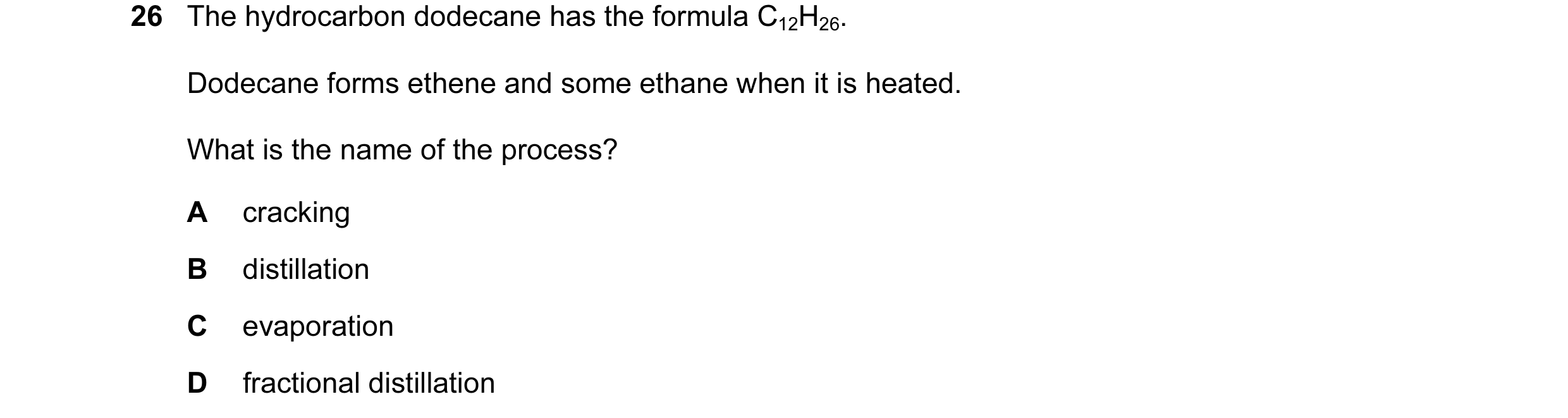
Q15 · The hydrocarbon dodecane has the formula C12H26 0654/12 May/June 2015
26 The hydrocarbon dodecane has the formula C12H26. Dodecane forms ethene and some ethane when it is heated. What is the name of the process? A cracking B distillation C evaporation D fractional distillation
1 marks
Answer: A
This question in 0654/12 May/June 2015
Q16 · Ethanol is formed when steam reacts with compound Y 0654/13 Oct/Nov 2015
27 Ethanol is formed when steam reacts with compound Y. What is the name and what is the structure of compound Y? name structure H H A ethane C C H H H H B ethane H C C H H H H H C ethene C C H H H H D ethene H C C H H H
1 marks
Answer: C
This question in 0654/13 Oct/Nov 2015
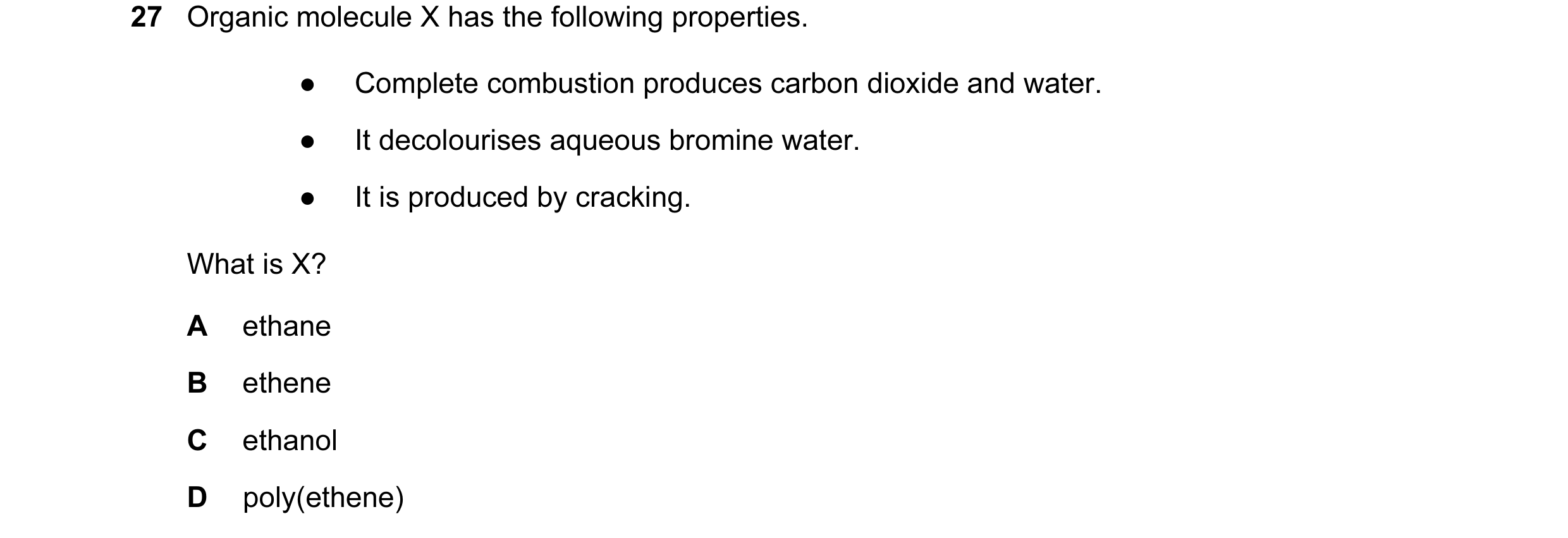
Q17 · Organic molecule X has the following properties 0654/11 May/June 2016
27 Organic molecule X has the following properties. ● Complete combustion produces carbon dioxide and water. ● It decolourises aqueous bromine water. ● It is produced by cracking. What is X? A ethane B ethene C ethanol D poly(ethene)
1 marks
Answer: B
This question in 0654/11 May/June 2016
Q18 · Poly(ethene) and ethene are both hydrocarbons 0654/12 May/June 2016
27 Poly(ethene) and ethene are both hydrocarbons. Poly(ethene) is formed from ethene. Ethene turns aqueous bromine colourless, but poly(ethene) does not. Which statement is correct? A Ethene is a saturated hydrocarbon. B Ethene molecules are monomer units. C Only a few molecules of ethene are used to make poly(ethene). D Poly(ethene) is an unsaturated hydrocarbon.
1 marks
Answer: B
This question in 0654/12 May/June 2016
Q19 · Ethene is formed when decane, C10H22, is passed over hot aluminium oxide 0654/11 Oct/Nov 2016
27 Ethene is formed when decane, C10H22, is passed over hot aluminium oxide. The aluminium oxide is unchanged in this process. decane on ceramic wool aluminium oxide ethene heat water Which terms describe the type of reaction and the role of the aluminium oxide? type of reaction role of aluminium oxide A cracking catalyst B cracking compound C fractional distillation catalyst D fractional distillation compound
1 marks
Answer: A
This question in 0654/11 Oct/Nov 2016
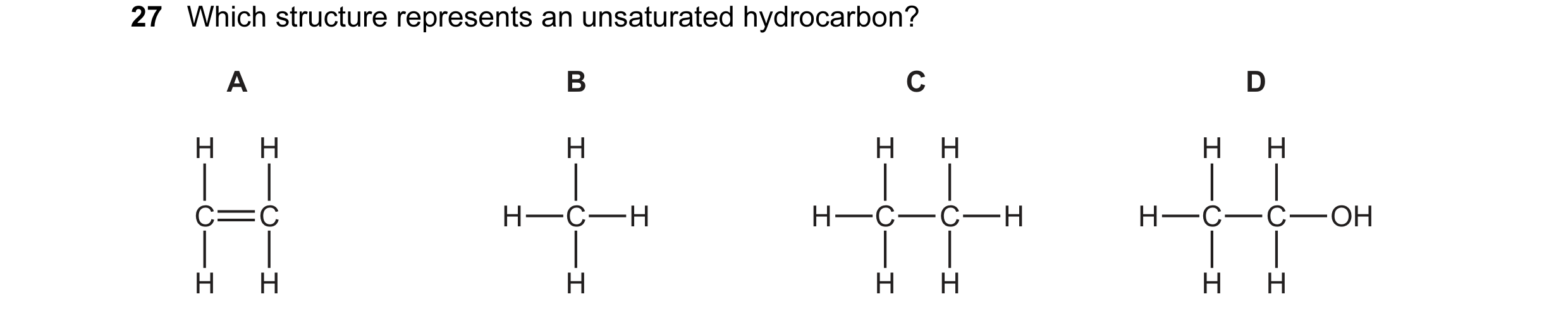
Q20 · Which structure represents an unsaturated hydrocarbon? 0654/13 Oct/Nov 2016
27 Which structure represents an unsaturated hydrocarbon? A B C D H H H H H H H C C H C H H C C H H C C OH H H H H H H H
1 marks
Answer: A
This question in 0654/13 Oct/Nov 2016
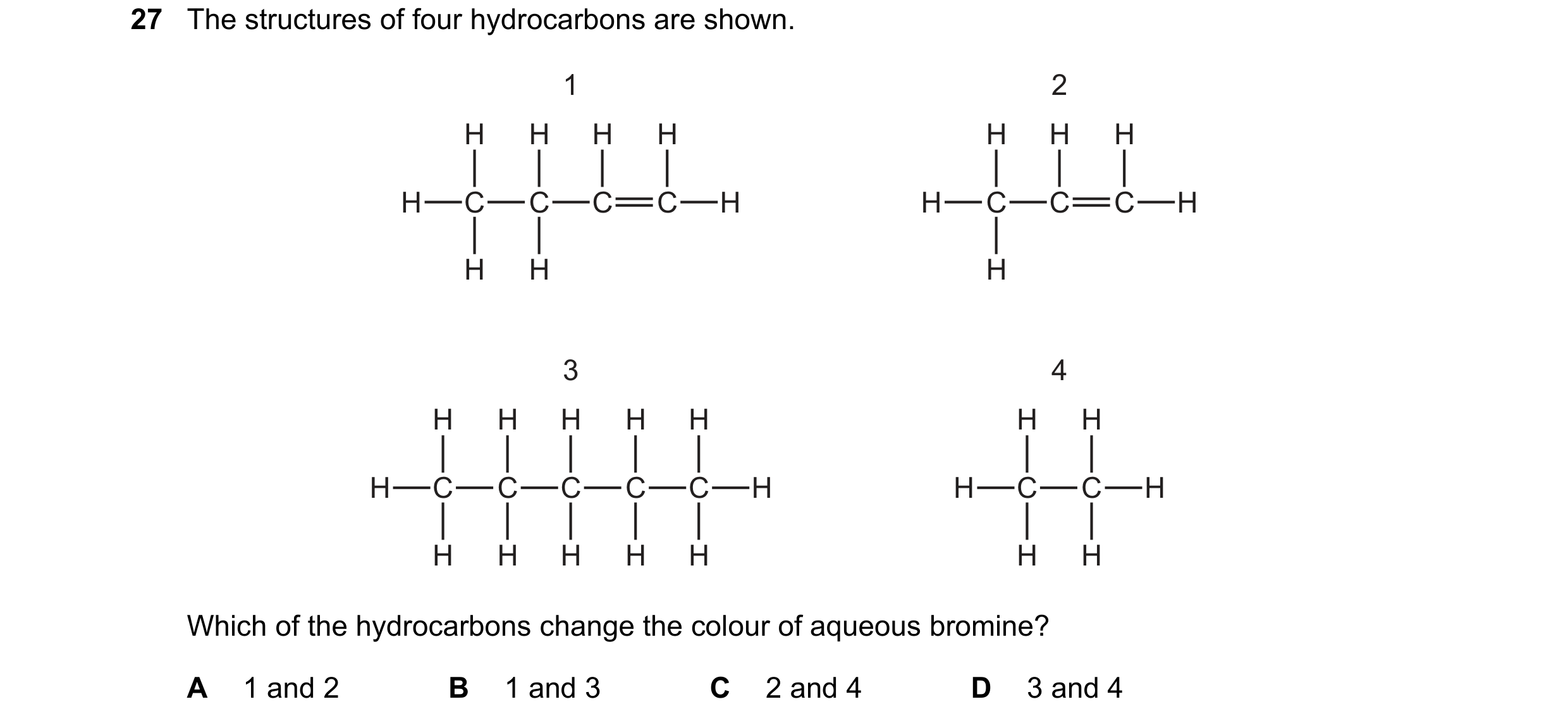
Q21 · The structures of four hydrocarbons are shown 0654/12 Oct/Nov 2017
27 The structures of four hydrocarbons are shown. 1 2 H H H H H H H H C C C C H H C C C H H H H 3 4 H H H H H H H H C C C C C H H C C H H H H H H H H Which of the hydrocarbons change the colour of aqueous bromine? A 1 and 2 B 1 and 3 C 2 and 4 D 3 and 4
1 marks
Answer: A
This question in 0654/12 Oct/Nov 2017
Q22 · A hydrocarbon contains twice as many hydrogen atoms as carbon atoms 0654/11 May/June 2019
15 A hydrocarbon contains twice as many hydrogen atoms as carbon atoms. What is the formula of this compound? A C3H6 B C4H10 C C2H6O D C3H6O
1 marks
Answer: A
This question in 0654/11 May/June 2019
Q23 · The flow diagram shows the manufacture of ethanol from alkanes 0654/12 Oct/Nov 2019
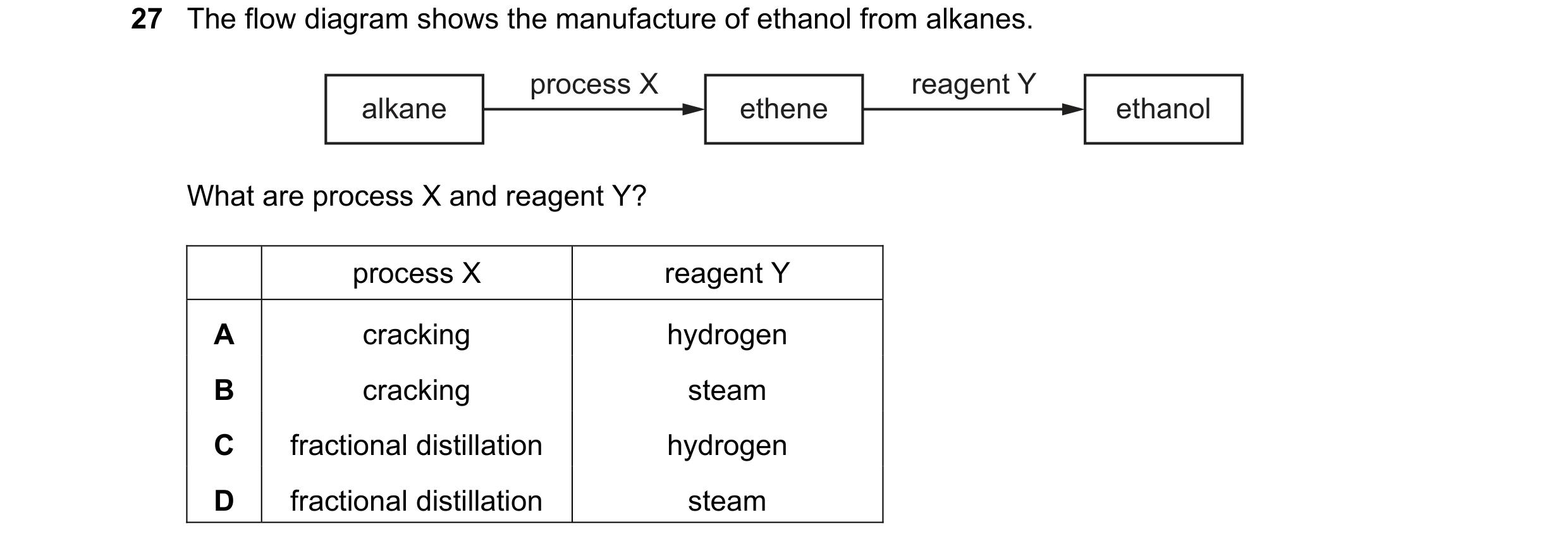
27 The flow diagram shows the manufacture of ethanol from alkanes. process X reagent Y alkane ethene ethanol What are process X and reagent Y? process X reagent Y A cracking hydrogen B cracking steam C fractional distillation hydrogen D fractional distillation steam
1 marks
Answer: B
This question in 0654/12 Oct/Nov 2019
Q24 · Which row describes properties of alkenes? 0654/12 May/June 2020
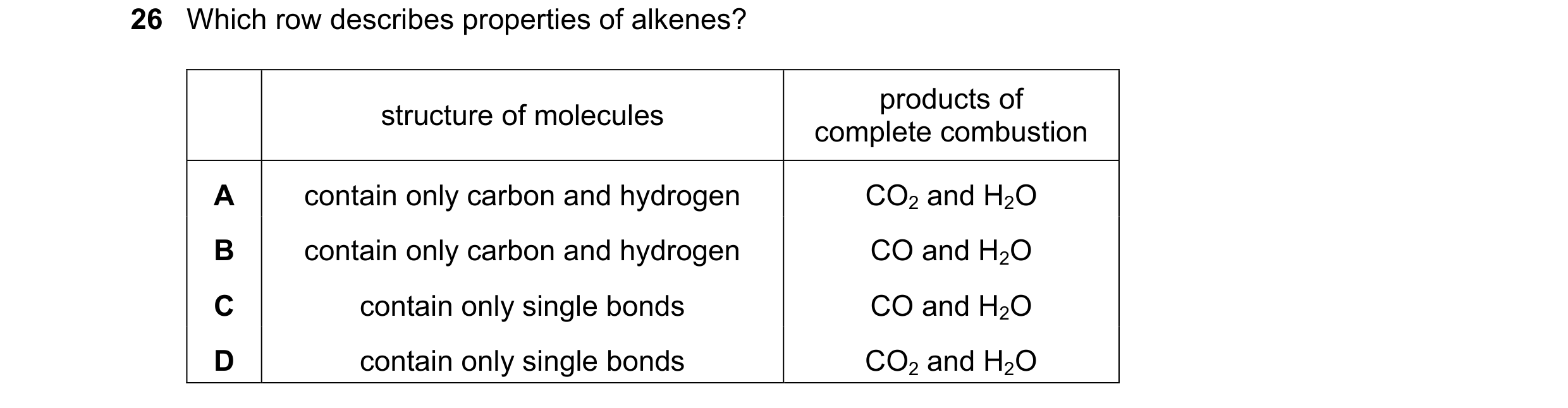
26 Which row describes properties of alkenes? products of structure of molecules complete combustion A contain only carbon and hydrogen CO2 and H2O B contain only carbon and hydrogen CO and H2O C contain only single bonds CO and H2O D contain only single bonds CO2 and H2O
1 marks
Answer: A
This question in 0654/12 May/June 2020
Q25 · Poly(ethene) is a saturated hydrocarbon 0654/12 May/June 2021
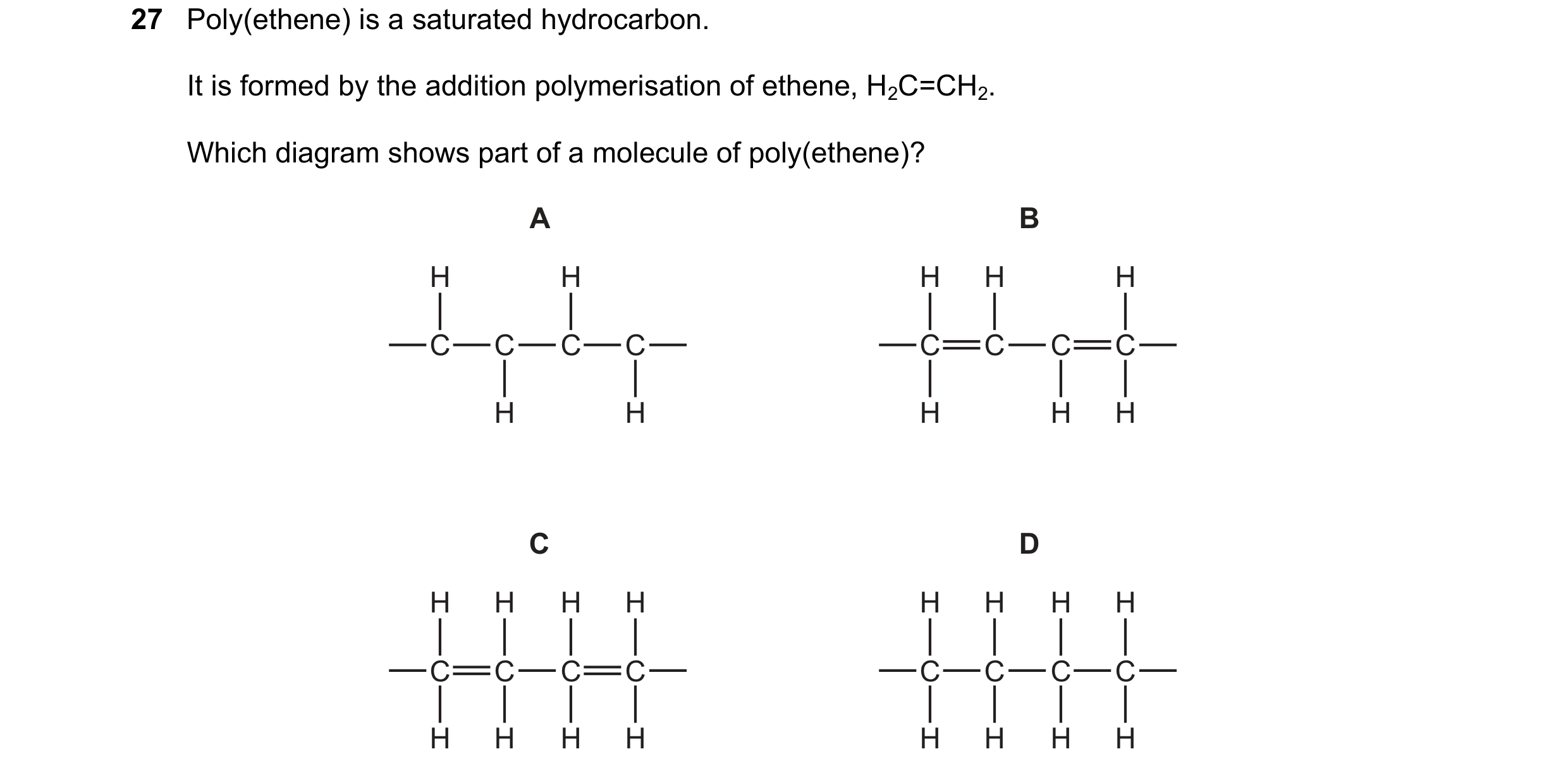
27 Poly(ethene) is a saturated hydrocarbon. It is formed by the addition polymerisation of ethene, H2C=CH2. Which diagram shows part of a molecule of poly(ethene)? A B H H H H H C C C C C C C C H H H H H C D H H H H H H H H C C C C C C C C H H H H H H H H
1 marks
Answer: D
This question in 0654/12 May/June 2021
Q26 · Poly(ethene) is a saturated hydrocarbon 0654/13 May/June 2021
27 Poly(ethene) is a saturated hydrocarbon. It is formed by the addition polymerisation of ethene, H2C=CH2. Which diagram shows part of a molecule of poly(ethene)? A B H H H H H C C C C C C C C H H H H H C D H H H H H H H H C C C C C C C C H H H H H H H H
1 marks
Answer: D
This question in 0654/13 May/June 2021
Q27 · Which substance rapidly decolourises aqueous bromine? 0654/11 Oct/Nov 2021
27 Which substance rapidly decolourises aqueous bromine? A ethane B ethanol C ethene D poly(ethene)
1 marks
Answer: C
This question in 0654/11 Oct/Nov 2021
Q28 · Which process produces alkenes from alkanes? 0654/12 Oct/Nov 2021
27 Which process produces alkenes from alkanes? A combustion B cracking C oxidation D reduction
1 marks
Answer: B
This question in 0654/12 Oct/Nov 2021
Q29 · Which statement about ethene, C2H4, is not correct? 0654/13 Oct/Nov 2021
27 Which statement about ethene, C2H4, is not correct? A It is an unsaturated hydrocarbon. B It is produced by cracking. C It is used to make a polymer. D It turns aqueous bromine brown.
1 marks
Answer: D
This question in 0654/13 Oct/Nov 2021
Q30 · Which substance is an unsaturated compound? 0654/12 Feb/March 2023
27 Which substance is an unsaturated compound? A ethane B ethanol C ethene D methane
1 marks
Answer: C
This question in 0654/12 Feb/March 2023
Q31 · Which substance reacts with ethene to produce ethanol? 0654/12 Feb/March 2024
27 Which substance reacts with ethene to produce ethanol? A bromine B hydrogen C oxygen D steam
1 marks
Answer: D
This question in 0654/12 Feb/March 2024
Q32 · Which molecule reacts with aqueous bromine? 0654/11 May/June 2024
27 Which molecule reacts with aqueous bromine? A B C D H H H H H H H H H H C H C C C H H C C H H C C C H H H H H H H H H
1 marks
Answer: B
This question in 0654/11 May/June 2024
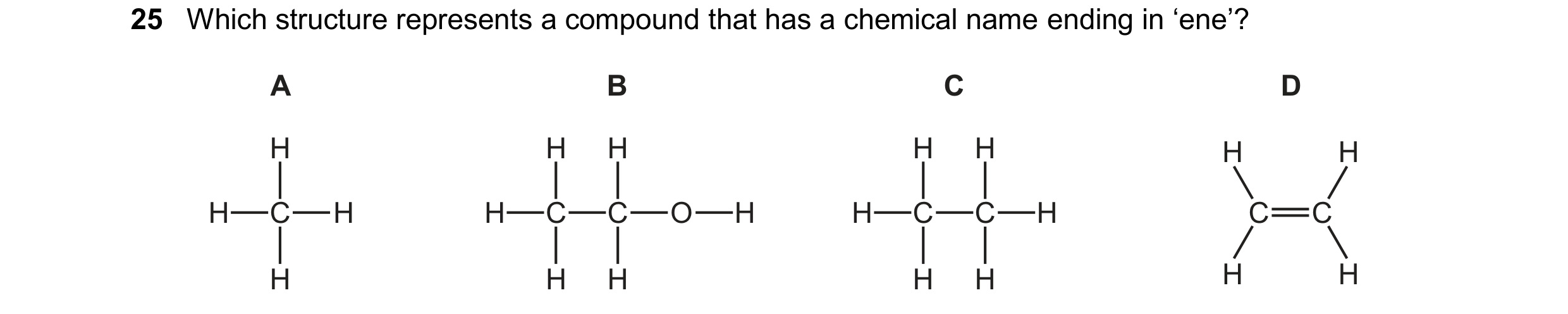
Q33 · Which structure represents a compound that has a chemical name ending in ‘ene’? 0654/12 Feb/March 2025
25 Which structure represents a compound that has a chemical name ending in ‘ene’? A B C D H H H H H H H H C H H C C O H H C C H C C H H H H H H H
1 marks
Answer: D
This question in 0654/12 Feb/March 2025
Q34 · Which compound is an alkene? 0654/11 May/June 2025
24 Which compound is an alkene? A B C D H H H H H H H H H C C H H C C O H C C C H H C H H H H H H H H
1 marks
Answer: C
This question in 0654/11 May/June 2025
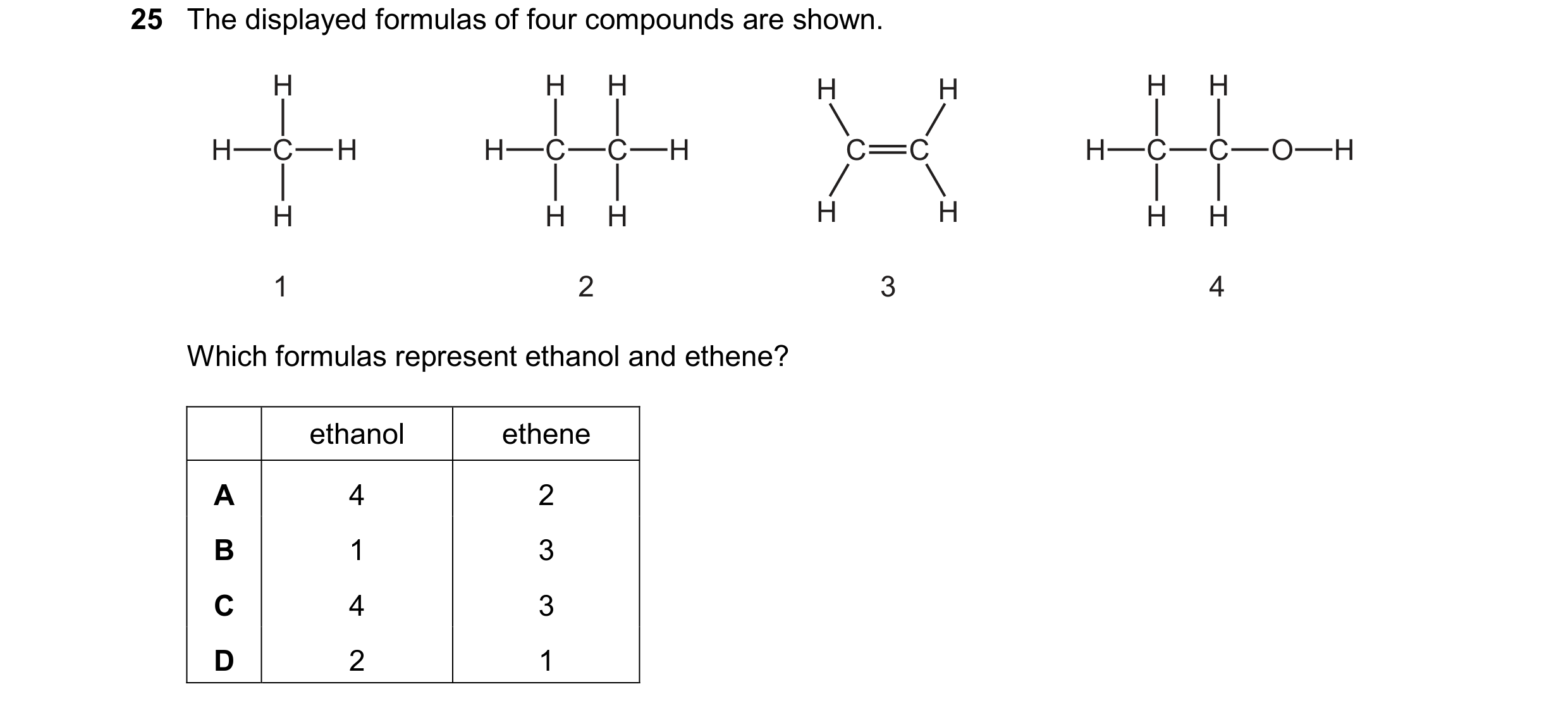
Q35 · The displayed formulas of four compounds are shown 0654/12 Oct/Nov 2025
25 The displayed formulas of four compounds are shown. H H H H H H H H C H H C C H C C H C C O H H H H H H H H 1 2 3 4 Which formulas represent ethanol and ethene? ethanol ethene A 4 2 B 1 3 C 4 3 D 2 1
1 marks
Answer: C
This question in 0654/12 Oct/Nov 2025
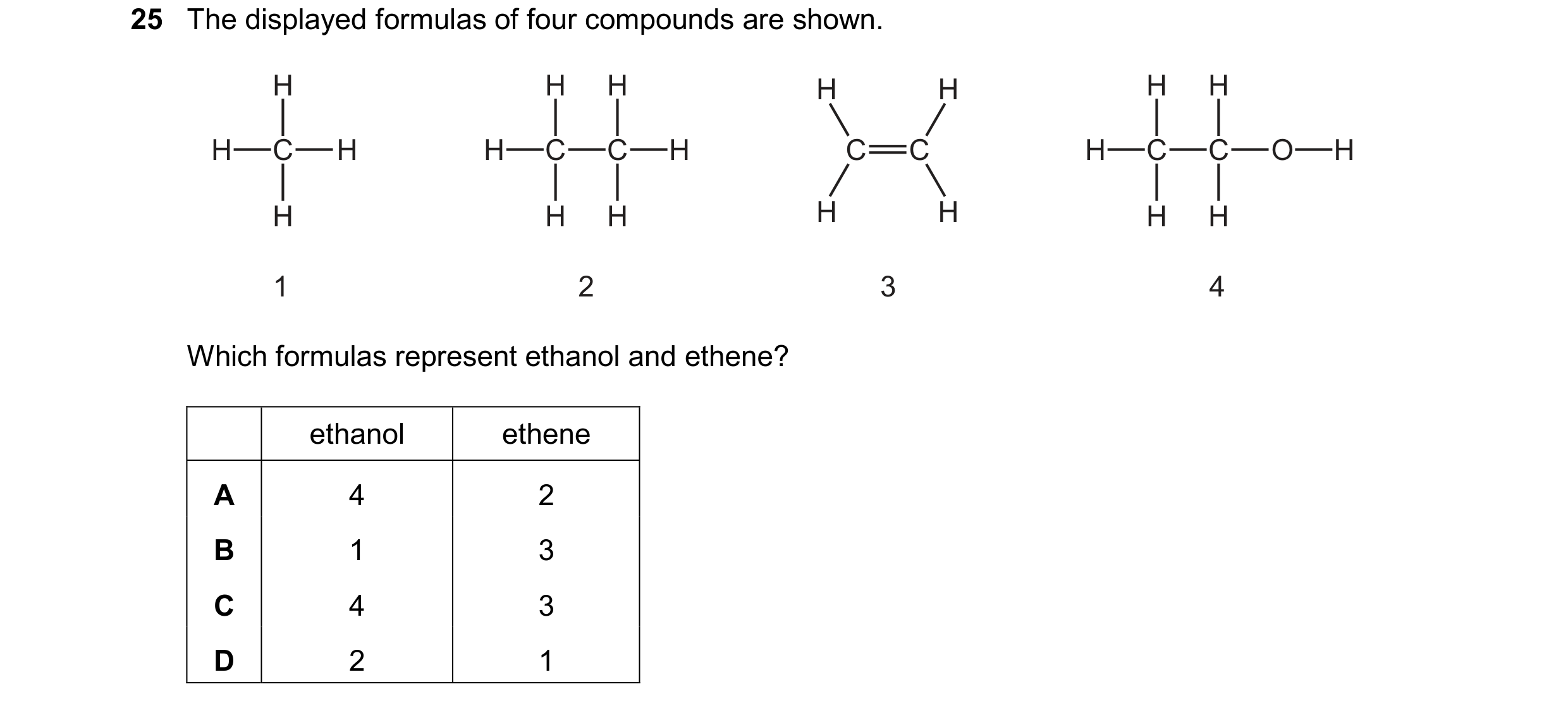
Q36 · The displayed formulas of four compounds are shown 0654/13 Oct/Nov 2025
25 The displayed formulas of four compounds are shown. H H H H H H H H C H H C C H C C H C C O H H H H H H H H 1 2 3 4 Which formulas represent ethanol and ethene? ethanol ethene A 4 2 B 1 3 C 4 3 D 2 1
1 marks
Answer: C
This question in 0654/13 Oct/Nov 2025

 1 / 12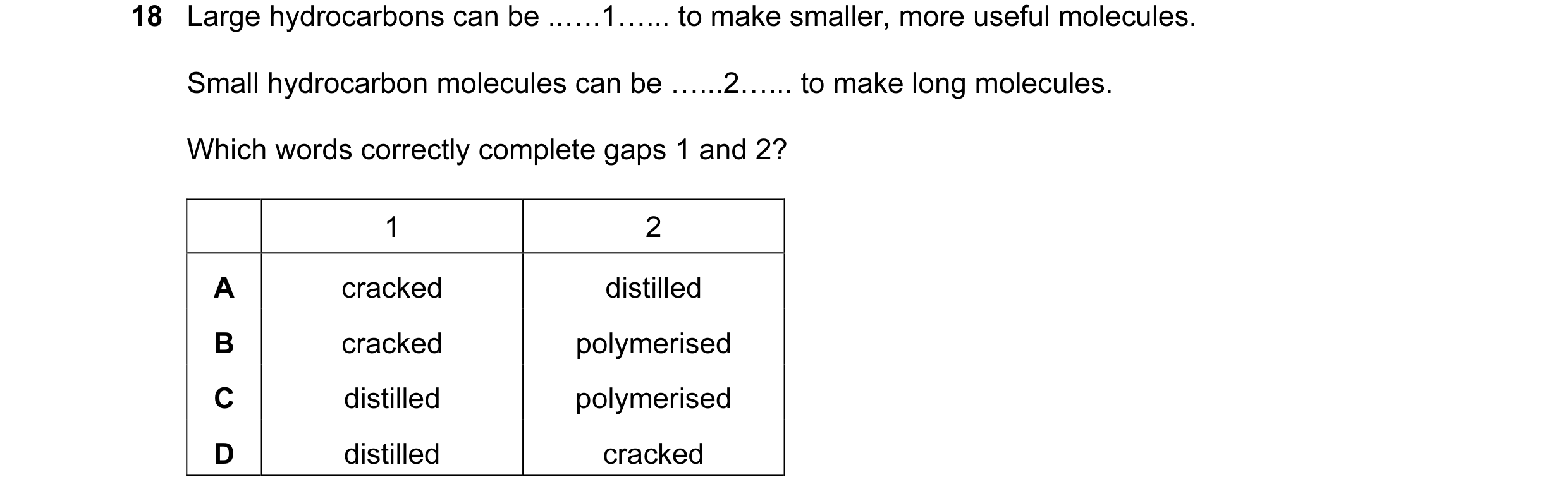
 2 / 12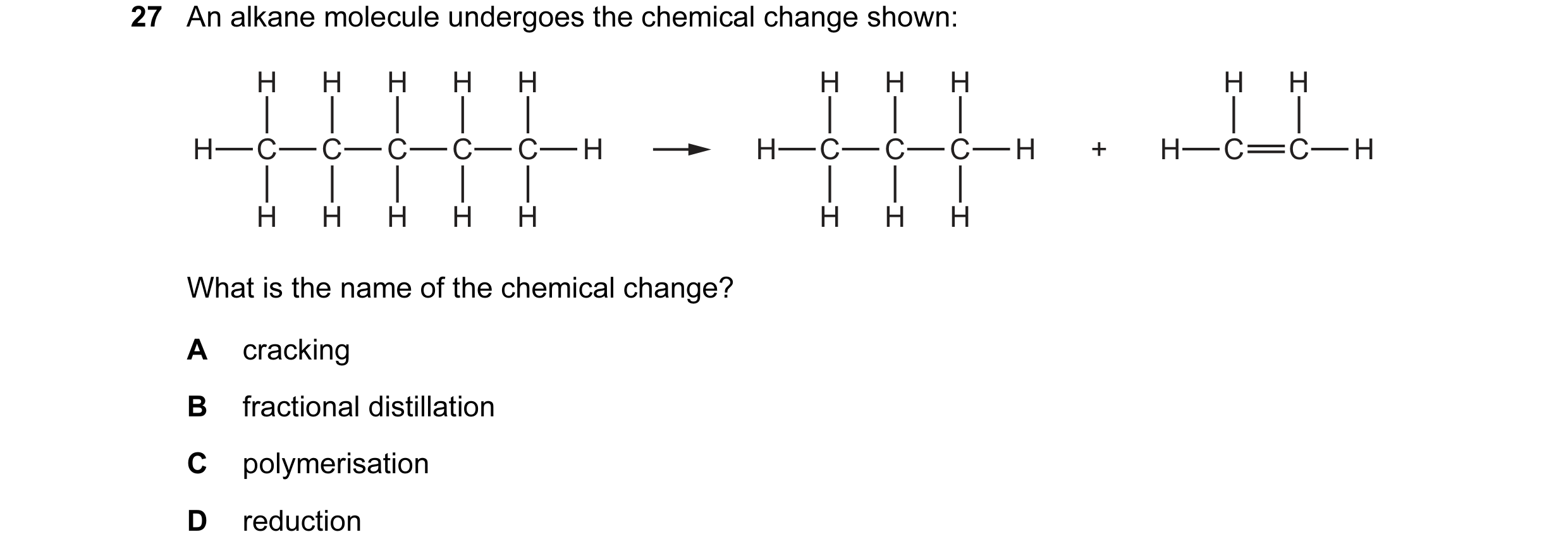
 3 / 12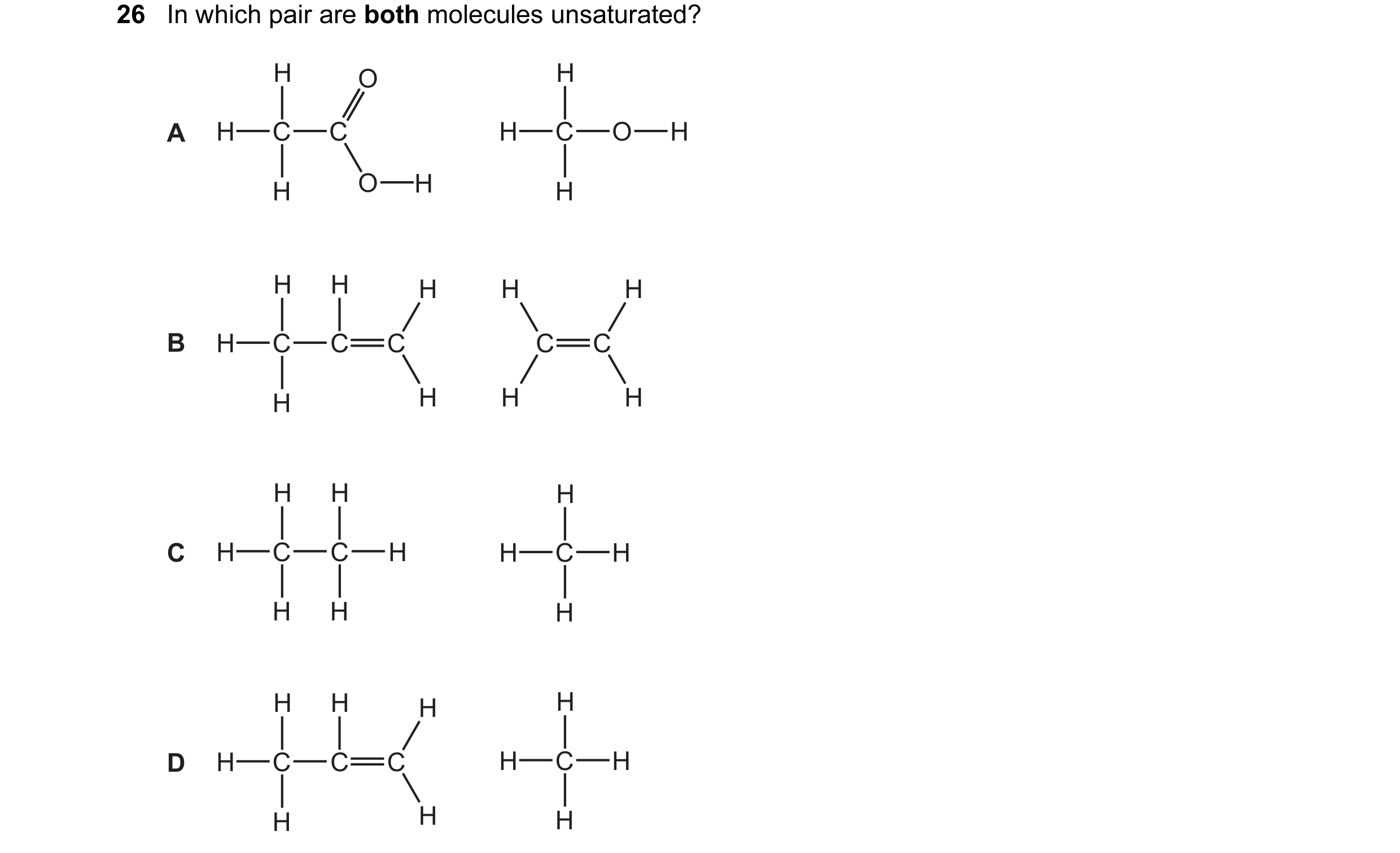
 4 / 12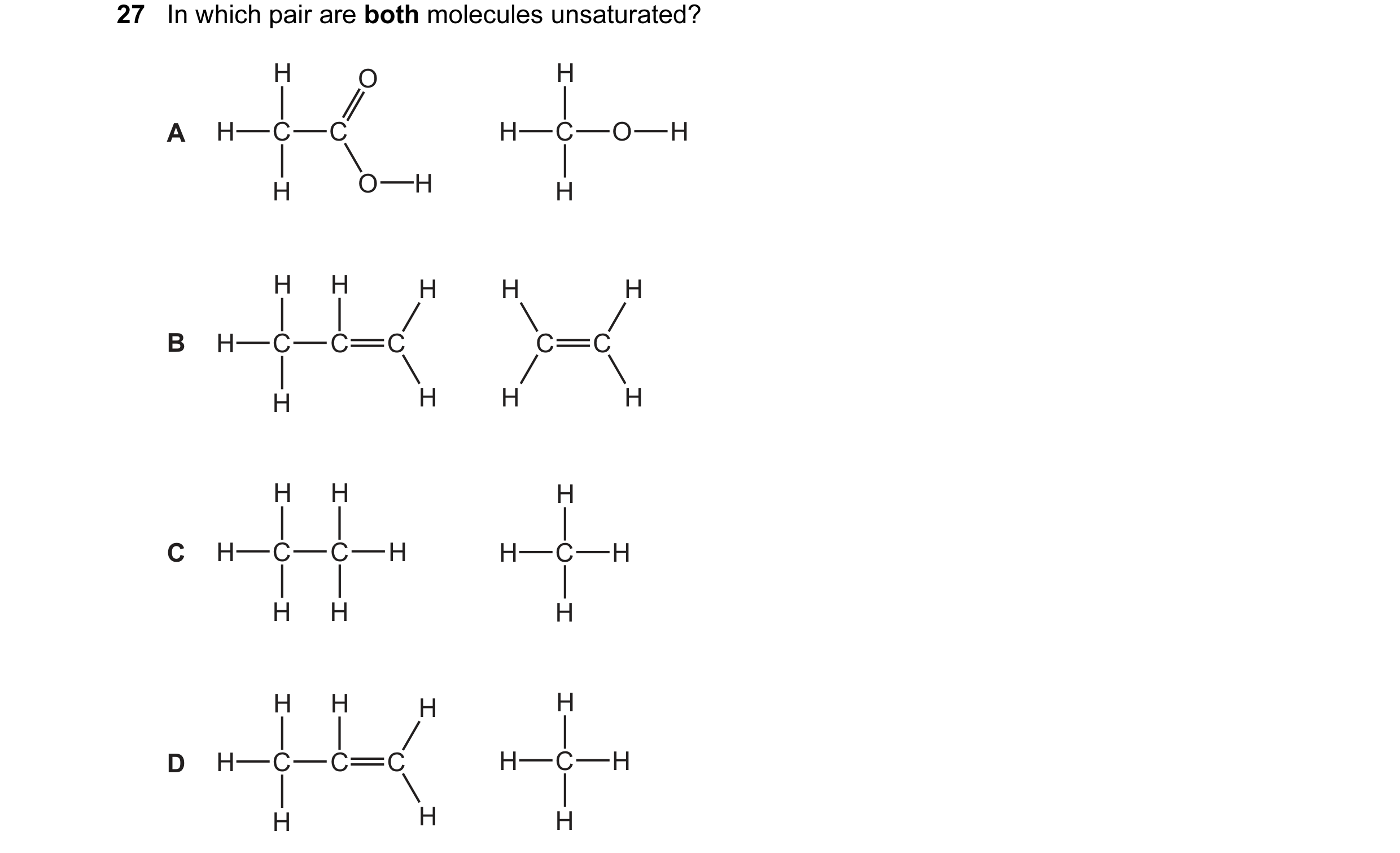
 5 / 12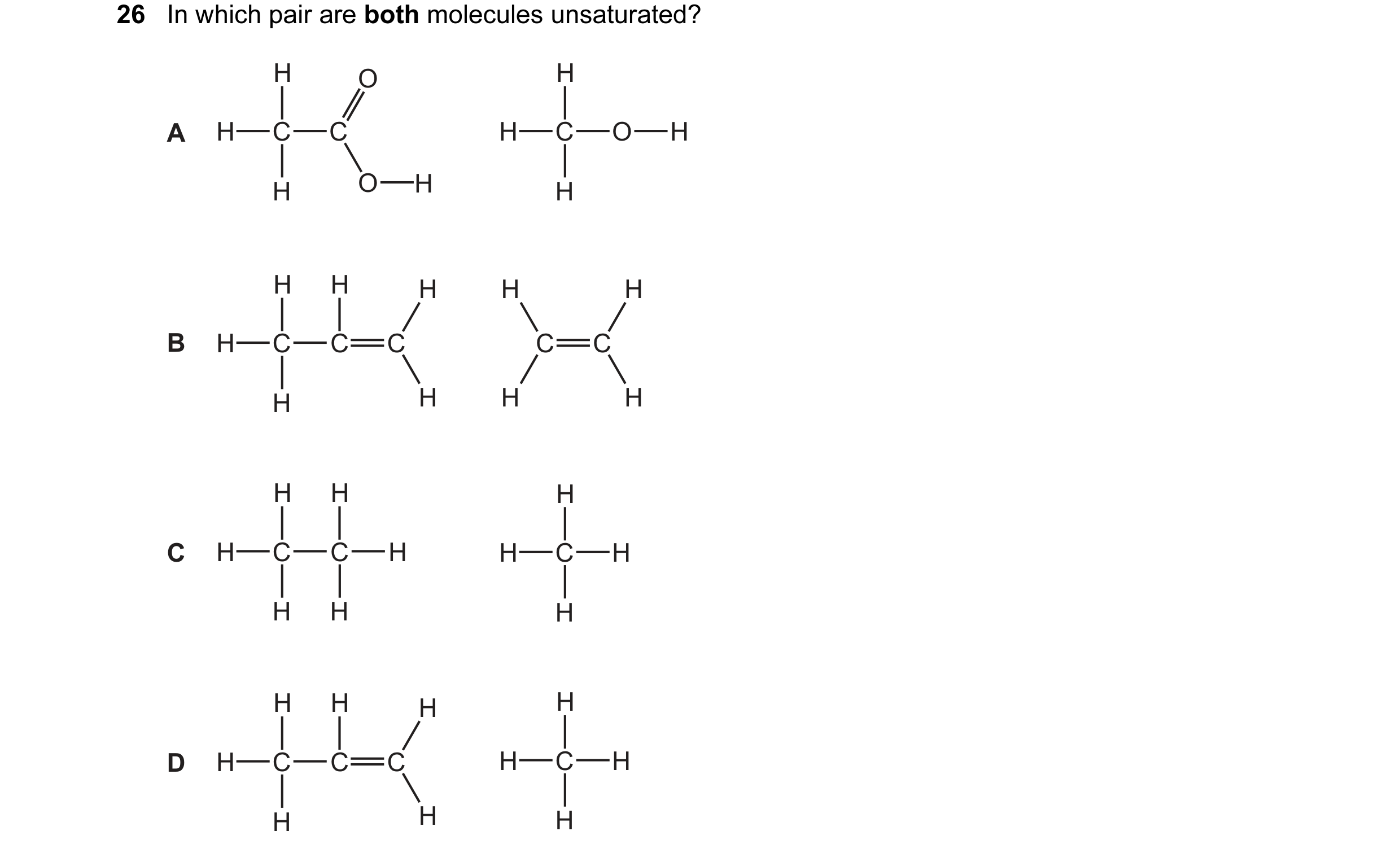
 6 / 12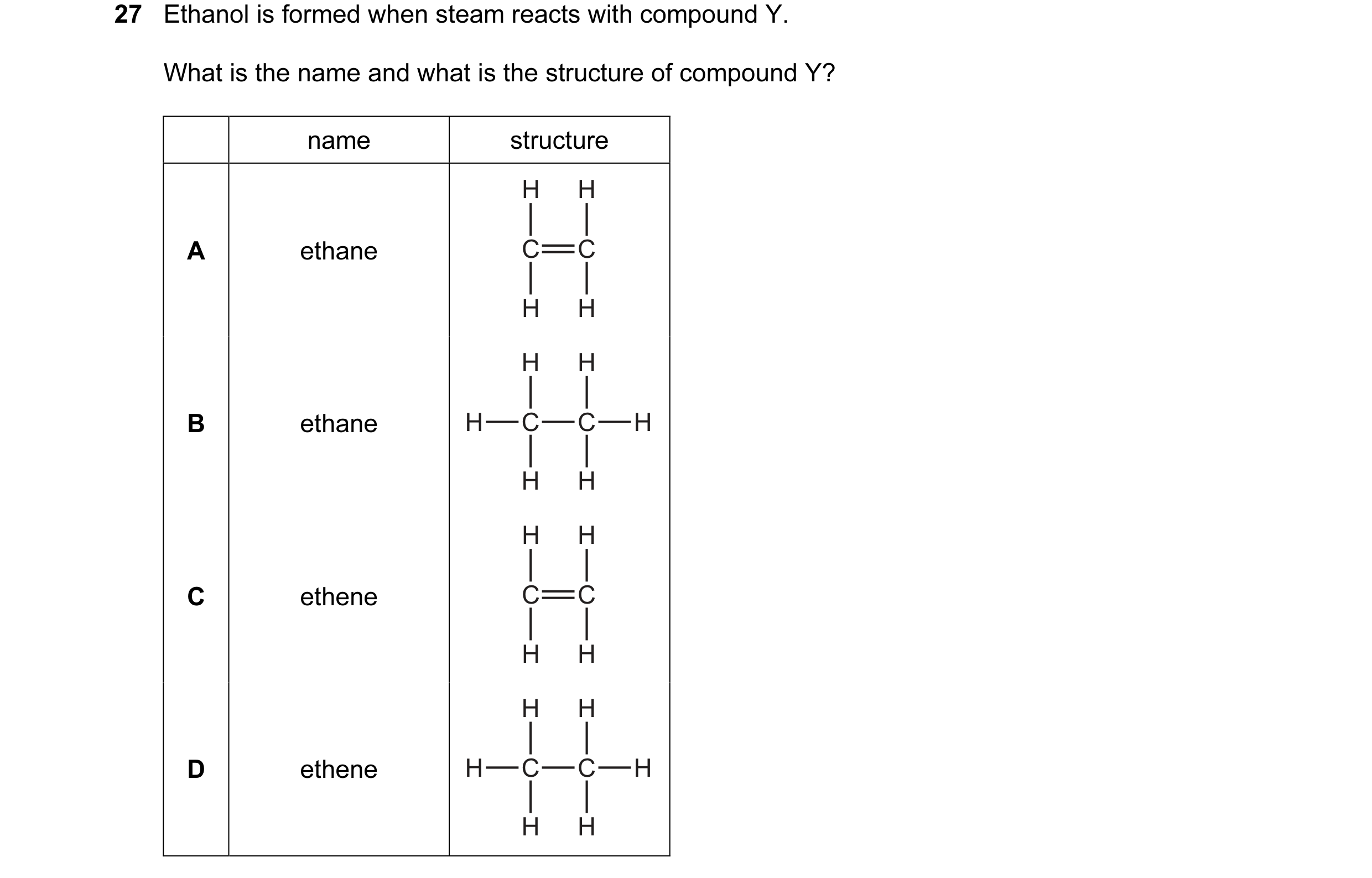
 7 / 12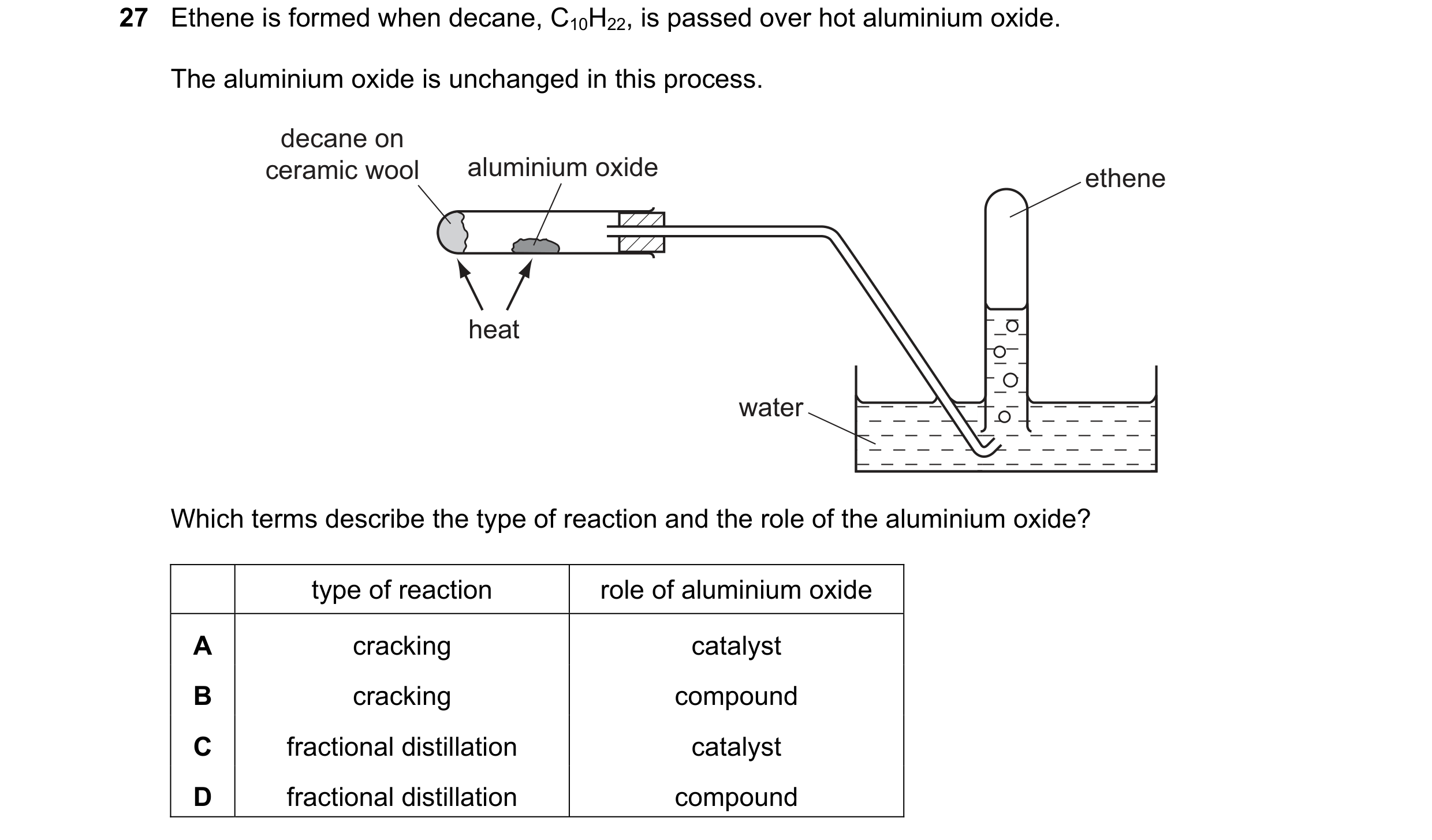
 8 / 12
 9 / 12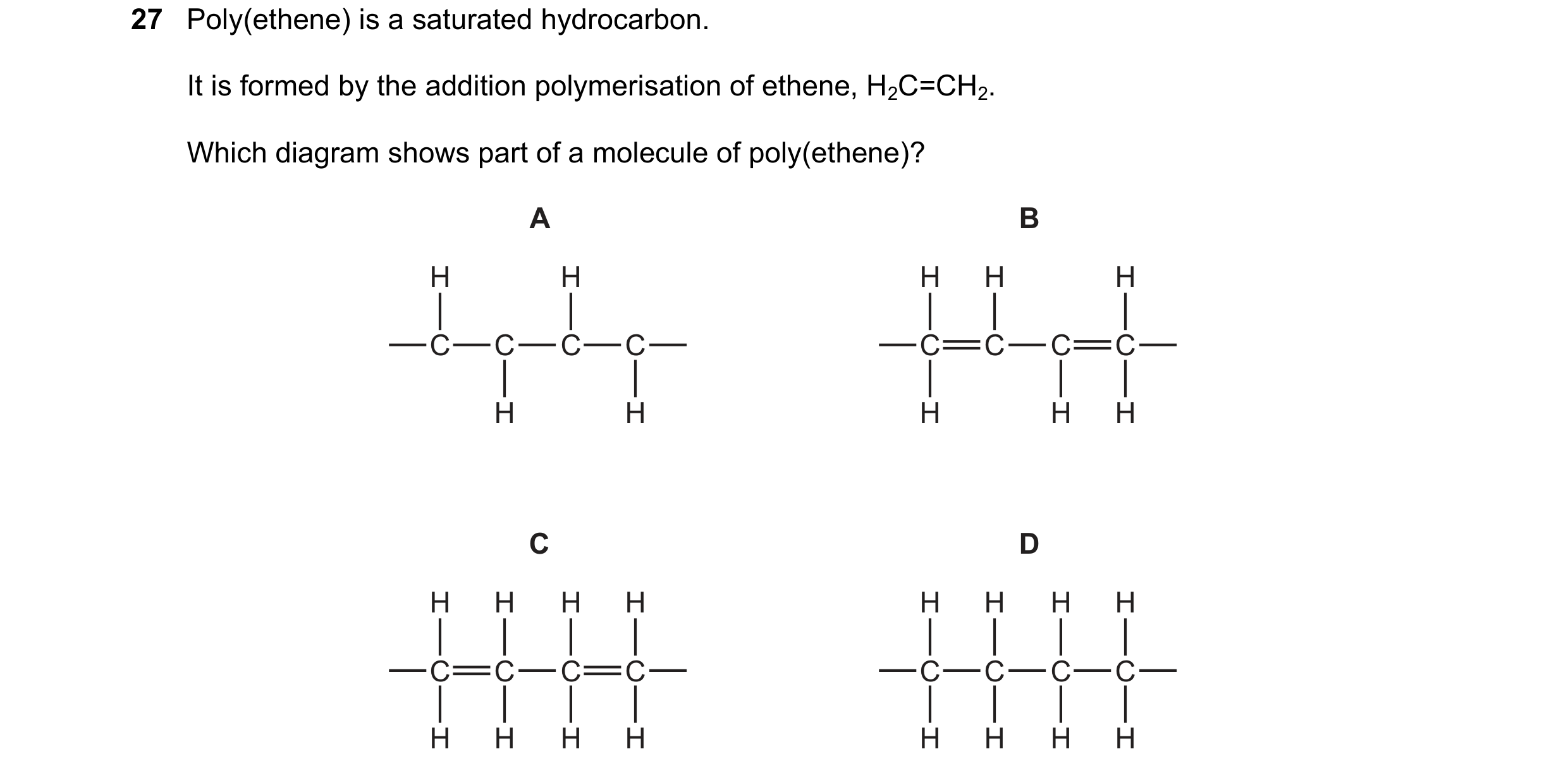



 10 / 12


 11 / 12
 12 / 12