Questions as text
Q1 · Design a study using a questionnaire to investigate the reasons why men delay seeking… 9990/42 Feb/March 2018
7 (a) Design a study using a questionnaire to investigate the reasons why men delay seeking medical help more than women. [10] (b) Explain the psychological and methodological evidence on which your questionnaire is based. [8] Psychology and organisations
18 marks
Mark scheme: 7(a) Design a study using a questionnaire to investigate the reasons why 10 men delay seeking medical help more than women. Marks: use generic levels of response ‘Design a study’ question part (a). Additional: Candidates should design the study showing evidence of design features appropriate to the named method. The named method is: questionnaire. Typical features: • Questionnaires/Interviews: type, setting, example questions. Scoring/rating scale, analysis of responses. Typical features of research methodology: sampling technique and sample, type of data, ethics, reliability, validity, data analysis. 7(b) Explain the psychological and methodological evidence on which your 8 questionnaire is based. Marks: use generic levels of response ‘Design a study’ question part (b). Note: If only methodological or psychological explanation is provided max 5 marks Candidates are expected to explain the reasons for the suggested design in part (a). Explanation should be both psychological and methodological. Psychological to include appropriate theory or research. Syllabus: misusing health services: delay in seeking treatment (Safer, 1979) Additional: candidates are expected to justify their decisions or evidence presented regarding the design made in answer to question part (a). Psychological: • Specifically, from the study by Safer (1979) although Safer did not distinguish between male and female participants. Safer used interviews to gather data. • From the sub-topic area of misusing health services. • From any appropriate methodological feature as outlined in question part (a). • Any additional evidence that is appropriate is to receive credit. Methodological: explanation of method using typical features as above.
This question in 9990/42 Feb/March 2018
Q2 · ‘Counting pills is the only valid way to measure adherence to medical advice.’ To what… 9990/42 Feb/March 2018
11 ‘Counting pills is the only valid way to measure adherence to medical advice.’ To what extent do you agree with this statement? Use examples of research you have studied to support your answer. [12] Psychology and organisations
12 marks
Mark scheme: 11 ‘Counting pills is the only valid way to measure adherence to medical 12 advice.’ To what extent do you agree with this statement? Use examples of research you have studied to support your answer. Marks: use generic levels of response in table C. Syllabus: Measuring non-adherence: objective: pill counting (Chung and Naya, 2000) Most likely (any other appropriate responses should be credited): For: • Pill counting is an objective measure resulting in quantitative data. • Many studies have used pill counts: Chung and Naya (TrackCap). • Pill counts cannot be manipulated by the user: use recorded every time pill has left container. • Measure has face validity. • Said to be more accurate than asking user whether medicine has been taken. Against: • Measure is not valid: just because pill has left container, doesn’t mean it has been taken. • Trackcap has flaws: ‘The device was programmed to recognise, but not accumulate, multiple openings that occurred within 1 min of each other. If the cap was left off for 15 min or more, the device recorded one additional event.’ (Chung and Naya, 2000). • Valid: biochemical tests (e.g. Roth and Caron, 1978); possibly repeat prescriptions (Sherman et al., 2000)
This question in 9990/42 Feb/March 2018
Q3 · ‘Using observation to measure pain will never be as accurate as a self-report.’ To what… 9990/42 May/June 2018
11 ‘Using observation to measure pain will never be as accurate as a self-report.’ To what extent do you agree with this statement? Use examples of research you have studied to support your answer. [12] Psychology and organisations
12 marks
Mark scheme: 11 ‘Using observation to measure pain will never be as effective as a self- 12 report.’ To what extent do you agree with this statement? Use examples of research you have studied to support your answer. Marks: use generic levels of response in table C. Syllabus: measuring pain: behavioural/observational measures (UAB pain behavior scale). Most likely (any other appropriate responses should be credited): For observation: • the patient does not know he or she is being observed, so pain behaviour is natural. • The patient will exhibit typical pain behaviours: ambulation of posture, distorted facial expression, etc. • The observer can use response categories and record quantitative data. • Inter-rater reliability can be tested to determine the extent of reliability of the observations. • Vague descriptions of pain are eliminated ‘it hurts a lot’. Against: • The patient plays no part in recording his or her pain, no record of the experience of the pain. • The observations may not collect qualitative data; observation cannot record thoughts. • The assumption that all people show the same pain behaviours may not be true.
This question in 9990/42 May/June 2018
Q4 · Zahir has broken his leg 9990/42 Oct/Nov 2018
7 Zahir has broken his leg. You want to know if Zahir’s leg is hurting less over time. (a) Design a study using observation to measure Zahir’s pain over time. [10] (b) Explain the psychological and methodological evidence on which your observation is based. [8] Psychology and organisations
18 marks
Mark scheme: 7(a) Design a study using observation to measure Zahir’s pain over time. 10 Marks: use generic levels of response Design a study question part (a). Additional: Candidates should design the study showing evidence of design features appropriate to the named method. The named method is: observations. Typical features: • Observations: type of observation in relation to participants, observers, setting and data. Also response categories, sampling frame, number of observers. • Typical features of research methodology: sampling technique and sample, type of data, ethics, reliability, validity, data analysis. 7(b) Explain the psychological and methodological evidence on which your 8 observation is based. Marks: use generic levels of response ‘Design a study’ question part (b). Note: If only methodological or psychological explanation is provided max 5 marks. Candidates are expected to explain the reasons for the suggested design in part (a). Explanation should be both psychological and methodological. Psychological to include appropriate theory or research. Additional: candidates are expected to justify their decisions or evidence presented regarding the design made in answer to question part (a). Syllabus: measuring pain: behavioural/observational measures (UAB pain behavior scale). Psychological: • The UAB (University of Alabama at Birmingham) pain scale is designed to observe levels of pain over time. A nurse/health worker observes behavioural expressions of pain at different times during a day (or night) and records on a daily chart. A total score can be recorded each day and compared with the next to determine whether the pain is reducing over time. • Turk (1985) identifies four pain behaviours: facial/audible expression of distress; distorted ambulation or posture; negative affect; avoidance of activity. Methodological: explanation of method using typical features as above.
This question in 9990/42 Oct/Nov 2018
Q5 · ‘Failure to attend a medical appointment should be punished.’ To what extent do you agree… 9990/42 Oct/Nov 2018
11 ‘Failure to attend a medical appointment should be punished.’ To what extent do you agree with this statement? Use examples of research you have studied to support your answer. [12] Psychology and organisations
12 marks
Mark scheme: 11 ‘Failure to attend a medical appointment should be punished.’ 12 To what extent do you agree with this statement? Use examples of research you have studied to support your answer. Marks: use generic levels of response in table C. Syllabus: types of non-adherence and reasons why patients don’t adhere; why patients don’t adhere: rational non-adherence (Bulpitt, 1994) Most likely (any other appropriate responses should be credited): For: • If a punishment is threatened, people are much more likely to adhere to avoid the punishment. • If people are punished behaviourist principles suggest that the person will not want to miss an appointment again. • Missing an appointment may be bad for the person’s health; attending would help. Punishment may force people to take medication and avoid long-term ill health. Against • punishments which are automatically applied do not take into account a legitimate reason for failure to attend. • People are more likely to respond to ‘cognitive explanations’ for adherence rather than behavioural punishments. • It depends what the punishment is: if money, some people will still ignore the punishment; others will pay because the fine is minimal; others will not be able to afford a fine.
This question in 9990/42 Oct/Nov 2018
Q6 · Newspaper headline: What I say is not what I do 9990/41 May/June 2019
3 Newspaper headline: What I say is not what I do. Health research suggests that what people say they do, does not match what they actually do. This could negatively affect recovery from illness. Roth and Caron (1978) found that objective biochemical tests revealed that people were taking medicine less often than they said they were. (a) Explain what is meant by the term ‘objective measure of adherence’. [2] (b) Outline two examples of biochemical tests of adherence. [4] (c) Suggest two ways to measure adherence objectively, other than biochemical tests. [4] (d) Discuss the advantages and disadvantages of using biochemical tests to measure adherence. You should include a conclusion in your answer. [5] Psychology and organisations
15 marks
Mark scheme: 3(a) Explain what is meant the term ‘objective measure of adherence’. 2 Most likely answer (other appropriate responses to be credited): • Objective is fact, a measure that cannot be disputed; subjective is more anecdotal (e.g. where people say they have taken medicine) • For example, if a drug is detected in blood or urine then it is an objective fact. Marks: 1 mark for basic answer. 1 mark for elaboration / example. Note: 1 mark max. if ‘objective’ is defined without reference to adherence. 3(b) Outline two examples of biochemical tests of adherence. 4 Most likely answer (other appropriate responses to be credited): • Urine sample: e.g. Gordis et al. found that of 103 children who should have been taking penicillin a urine test revealed only 42% were compliant despite 73% of mothers claiming they had given it to their children. Willcox et al. found when analysing a urine sample only 31% were taking medication as prescribed. • Blood test: e.g. analysis of a blood sample can reveal objectively whether any medication has been taken or not. This could be any form of pill, etc. Marks: 1 mark identification 2 marks detail of test OR detail of relevant study × 2. Note: ‘salivary cortisol’ = 0 marks. Cortisol is a stress-related hormone. 3(c) Suggest two ways to measure adherence objectively, other than 4 biochemical tests. Most likely answer (other appropriate responses to be credited): • Repeat prescriptions (Sherman et al., 2000) obtaining repeat prescriptions and analysing without patient’s knowledge. Assumption is that if prescription repeated the original must have been used. • Pill counting (Chung and Naya, 2000) using trackcap or other devise to record number of pills (assumed to have been taken). Marks: 1 mark basic answer (e.g. identification of measure), 2 marks detailed answer / elaboration × 2. Note: biochemical tests (Roth and Caron, 1978) scores zero marks (see stem) 3(d) Discuss the advantages and disadvantages of using biochemical tests 5 to measure adherence. You should include a conclusion in your answer. Marks: Question requires discussion; always plural of each argument, and always requires conclusion. 1 mark for each advantage / disadvantage (however detailed) and related to the question up to 4 max. 2 marks max. for two strengths / weaknesses unrelated to the question. 1 mark for conclusion. Most likely answer (other appropriate responses to be credited): Advantages: • Provides objective (‘factual’) data. • Test is reliable (same test repeated on every person) • Test is valid (measures substance ‘x’) Disadvantages: • Biochemical methods do not measure the degree of adherence; the presence of a drug or drug marker merely reveals that the patient ingested some amount of the drug at some time and does not indicate that the patient took the proper amount at the proper time. • There are individual differences in the absorption and metabolism of drugs and this can lead to variations in recordings of people who are equally compliant. • Biomedical checks are much more expensive than any other method so why would expensive tests be conducted to determine levels of non- adherence Conclusion: any appropriate conclusion drawn from the discussion that has been presented. 1 mark if appropriate. A conclusion is a ‘decision reached by reasoning’ and so a summary of points already made scores 0 marks.
This question in 9990/41 May/June 2019
Q7 · Design a study using a questionnaire to investigate the characteristics of people who… 9990/41 May/June 2019
7 (a) Design a study using a questionnaire to investigate the characteristics of people who attend or fail to attend appointments with a medical practitioner. [10] (b) Explain the psychological and methodological evidence on which your study is based. [8] Psychology and organisations
18 marks
Mark scheme: 7(a) Design a study using a questionnaire to investigate the characteristics 10 of people who attend or fail to attend appointments with a medical practitioner. Marks: use generic levels of response, ‘Design a study question’ part (a). Additional: Candidates should design the study showing evidence of design features appropriate to the named method. The named method is: questionnaire. Specific features: • Questionnaires: type, setting, example questions. Scoring / rating scale, analysis of responses. • General features of research methodology: sampling technique & sample, type of data, ethics, reliability, validity, data analysis. 7(b) Explain the psychological and methodological evidence on which your 8 study is based. Marks: use generic levels of response ‘Design a study’ question part (b). Note: If only methodological or psychological explanation is provided max. 5 marks Candidates are expected to explain the reasons for the suggested design in part (a). Explanation should be both psychological and methodological. Psychological to include appropriate theory or research. Additional: candidates are expected to justify their decisions or evidence presented regarding the design made in answer to question part (a). Syllabus: types of non-adherence (failure to follow treatment; failure to attend appointment) & problems caused by non-adherence Psychological: Answers could be wide-ranging and include (i) people who apply rational adherence and attend or don’t attend for good reason. (ii) people who don’t attend because they are delaying treatment (e.g. Safer et al.). (iii) people who avoid ‘medical things’ because they may have a blood or injection phobia. Any appropriate answer to receive credit. Methodological: explanation of method using general and specific features as above. Note: 2 marks max. if psychological knowledge is not related to answer.
This question in 9990/41 May/June 2019
Q8 · Model of decisions to seek or delay medical treatment (Safer et al., 1979) notices Am I… 9990/42 May/June 2019
3 Model of decisions to seek or delay medical treatment (Safer et al., 1979) notices Am I yes Do I need yes Is that care yes enters symptoms ill? professional worth the treatment care? costs? no no no delay delay delay appraisal illness utilisation delay delay delay total delay Fig. 3.1 (a) Explain what Safer et al. (1979) meant by ‘appraisal delay’ in seeking medical treatment. [2] (b) Suggest two limitations of the study by Safer et al. (1979). [4] (c) Describe one other model that explains why people might delay seeking medical treatment. [4] (d) Discuss the advantages and disadvantages of using interviews to gather data from people who are in a medical practitioner’s waiting room. You should include a conclusion in your answer. [5] Psychology and organisations
15 marks
Mark scheme: 3(a) Explain what Safer et al. (1979) meant by ‘appraisal delay’ in seeking 2 medical treatment. Most likely answer (other appropriate responses to be credited): • quote “The first stage of delay, defined as the number of days (ie time) that elapsed from the day the patient first noticed his symptom up to the day he concluded he was ill.”(takes action). • quote “«Appraisal delay, the patient was asked, "What was your very first symptom or sign that you were (might be) sick? And when did it first occur?" Marks: 1 mark for basic answer e.g. ‘time taken’. 1 mark for ‘concluded was ill’ or any aspect of above 3(b) Suggest two limitations of the study by Safer et al. (1979). 4 Most likely answer (other appropriate responses to be credited): • First, the study used persons who actually came to the clinics, so there is no way to generalize conclusions concerning delay to those persons who had a symptom but never came. This is a particularly important limitation concerning utilization delay, when not knowing where to go can be an insurmountable barrier to treatment or alternatively, can lead to inappropriate use of the emergency room facilities. • Second, the patients in the study presented a wide variety of complaints to a number of different clinics. Undoubtedly we would have obtained somewhat different results, particularly for total delay, if we had limited our sample to a group of patients with homogeneous complaints. (ie can’t generalise) • A third limitation of the present study is its use of retrospective data. This is a particularly important limitation since patients were asked to specify the time when they first noticed the symptom, when they first felt they were ill, and when they decided to see a physician. Marks: 1 mark basic answer. 2 marks detail/elaboration ×2. Generic unrelated =1; generic related =2 3(c) Describe one other model to explain why people might delay seeking 4 medical treatment. Most likely answer (other appropriate responses to be credited): The Health belief model. • delay because of perceived vulnerability, perceived severity or self- efficacy beliefs. • delay because of Modifying factors: perceived benefits (get well) and perceived barriers (hurt; cost) • Accept non-models eg optimistic bias; rational choice. 2 marks max if related (1 if unrelated) Marks: 1–2 marks identification and outline. 3–4 marks detailed answer/elaboration. 3(d) Discuss the advantages and disadvantages of using interviews to 5 gather data from people who are in a medical practitioner’s waiting room. You should include a conclusion in your answer. Marks: Question requires discussion; always plural of each argument, and always requires conclusion. 1 mark for each advantage/disadvantage (however detailed) and related to the question up to 4 max. 2 marks max for two strengths/weaknesses unrelated to the question. 1 mark for conclusion. Most likely answer (other appropriate responses to be credited): Advantages • if people are ill they may want to discuss their illness. • people may want something to do to distract them from the nervousness they might have before the consultation. • people are in a consultation waiting room, so ecological validity is high. Disadvantages • people may not want to participate in any psychological research • people may give brief answers because they don’t want to concentrate on questions • people may be nervous and not focus on questions Conclusion: any appropriate conclusion drawn from the discussion that has been presented. 1 mark if appropriate. A conclusion is a ‘decision reached by reasoning’ and so a summary of points already made scores 0 marks.
This question in 9990/42 May/June 2019
Q9 · Design a study using an interview of people suffering from phantom limb pain to compare… 9990/42 May/June 2019
7 (a) Design a study using an interview of people suffering from phantom limb pain to compare their current pain with their previous experience of pain in that limb. [10] (b) Explain the psychological and methodological evidence on which your study is based. [8] Psychology and organisations
18 marks
Mark scheme: 7(a) Design a study using an interview of people suffering from phantom 10 limb pain to compare their current pain with their previous experience of pain in that limb. Marks: use generic levels of response Design a study question part (a). Additional: Candidates should design the study showing evidence of design features appropriate to the named method. The named method is: interview. Specific features: Questionnaires/Interviews: type, setting, example questions. Scoring/rating scale, analysis of responses. General features of research methodology: sampling technique and sample, type of data, ethics, reliability, validity, data analysis. 7(b) Explain the psychological and methodological evidence on which your 8 study is based. Marks: use generic levels of response ‘Design a study’ question part (b). Note: If only methodological or psychological explanation is provided max 5 marks Candidates are expected to explain the reasons for the suggested design in part (a). Explanation should be both psychological and methodological. Psychological to include appropriate theory or research. Additional: candidates are expected to justify their decisions or evidence presented regarding the design made in answer to question part (a). Syllabus: definitions of pain: acute and chronic organic pain; psychogenic pain (phantom limb pain) Psychological: More detail to be added here. Methodological: explanation of method using general and specific features as above. Note: 2 marks max if psychological knowledge is not related to answer.
This question in 9990/42 May/June 2019
Q10 · ‘A clinical interview will always reveal more about pain than any psychometric measure.’… 9990/42 May/June 2019
11 ‘A clinical interview will always reveal more about pain than any psychometric measure.’ To what extent do you agree with this statement? Use examples of research you have studied to support your answer. [12] Psychology and organisations
12 marks
Mark scheme: 11 ‘A clinical interview will always reveal more about pain than any 12 psychometric measure.’ To what extent do you agree with this statement? Use examples of research you have studied to support your answer. Marks: use generic levels of response in table C. Syllabus: measuring pain: a self-report measures (clinical interview) Most likely (any other appropriate responses should be credited): For: • the patient knows how intense the pain is and the patient knows the type of pain they are experiencing. • the patient can explain and answer any question that may be asked. • any pain measure e.g. a visual analogue scale is vague and reduces pain intensity to a number. Against: • the patient uses vague terms “its really bad” and may not use words understood by a practitioner • a psychometric measure would be argued to be valid and realiable (such as the MPQ) • a psychometric measure can include different sections (e.g. MPQ) including more than a patient would describe or a practitioner ask questions about. • A pain observation e.g. UAB done reliably by a medical practitioner.
This question in 9990/42 May/June 2019
Q11 · Newspaper headline: What I say is not what I do 9990/43 May/June 2019
3 Newspaper headline: What I say is not what I do. Health research suggests that what people say they do, does not match what they actually do. This could negatively affect recovery from illness. Roth and Caron (1978) found that objective biochemical tests revealed that people were taking medicine less often than they said they were. (a) Explain what is meant by the term ‘objective measure of adherence’. [2] (b) Outline two examples of biochemical tests of adherence. [4] (c) Suggest two ways to measure adherence objectively, other than biochemical tests. [4] (d) Discuss the advantages and disadvantages of using biochemical tests to measure adherence. You should include a conclusion in your answer. [5] Psychology and organisations
15 marks
Mark scheme: 3(a) Explain what is meant the term ‘objective measure of adherence’. 2 Most likely answer (other appropriate responses to be credited): • Objective is fact, a measure that cannot be disputed; subjective is more anecdotal (e.g. where people say they have taken medicine) • For example, if a drug is detected in blood or urine then it is an objective fact. Marks: 1 mark for basic answer. 1 mark for elaboration / example. Note: 1 mark max. if ‘objective’ is defined without reference to adherence. 3(b) Outline two examples of biochemical tests of adherence. 4 Most likely answer (other appropriate responses to be credited): • Urine sample: e.g. Gordis et al. found that of 103 children who should have been taking penicillin a urine test revealed only 42% were compliant despite 73% of mothers claiming they had given it to their children. Willcox et al. found when analysing a urine sample only 31% were taking medication as prescribed. • Blood test: e.g. analysis of a blood sample can reveal objectively whether any medication has been taken or not. This could be any form of pill, etc. Marks: 1 mark identification 2 marks detail of test OR detail of relevant study × 2. Note: ‘salivary cortisol’ = 0 marks. Cortisol is a stress-related hormone. 3(c) Suggest two ways to measure adherence objectively, other than 4 biochemical tests. Most likely answer (other appropriate responses to be credited): • Repeat prescriptions (Sherman et al., 2000) obtaining repeat prescriptions and analysing without patient’s knowledge. Assumption is that if prescription repeated the original must have been used. • Pill counting (Chung and Naya, 2000) using trackcap or other devise to record number of pills (assumed to have been taken). Marks: 1 mark basic answer (e.g. identification of measure), 2 marks detailed answer / elaboration × 2. Note: biochemical tests (Roth and Caron, 1978) scores zero marks (see stem) 3(d) Discuss the advantages and disadvantages of using biochemical tests 5 to measure adherence. You should include a conclusion in your answer. Marks: Question requires discussion; always plural of each argument, and always requires conclusion. 1 mark for each advantage / disadvantage (however detailed) and related to the question up to 4 max. 2 marks max. for two strengths / weaknesses unrelated to the question. 1 mark for conclusion. Most likely answer (other appropriate responses to be credited): Advantages: • Provides objective (‘factual’) data. • Test is reliable (same test repeated on every person) • Test is valid (measures substance ‘x’) Disadvantages: • Biochemical methods do not measure the degree of adherence; the presence of a drug or drug marker merely reveals that the patient ingested some amount of the drug at some time and does not indicate that the patient took the proper amount at the proper time. • There are individual differences in the absorption and metabolism of drugs and this can lead to variations in recordings of people who are equally compliant. • Biomedical checks are much more expensive than any other method so why would expensive tests be conducted to determine levels of non- adherence Conclusion: any appropriate conclusion drawn from the discussion that has been presented. 1 mark if appropriate. A conclusion is a ‘decision reached by reasoning’ and so a summary of points already made scores 0 marks.
This question in 9990/43 May/June 2019
Q12 · Design a study using a questionnaire to investigate the characteristics of people who… 9990/43 May/June 2019
7 (a) Design a study using a questionnaire to investigate the characteristics of people who attend or fail to attend appointments with a medical practitioner. [10] (b) Explain the psychological and methodological evidence on which your study is based. [8] Psychology and organisations
18 marks
Mark scheme: 7(a) Design a study using a questionnaire to investigate the characteristics 10 of people who attend or fail to attend appointments with a medical practitioner. Marks: use generic levels of response, ‘Design a study question’ part (a). Additional: Candidates should design the study showing evidence of design features appropriate to the named method. The named method is: questionnaire. Specific features: • Questionnaires: type, setting, example questions. Scoring / rating scale, analysis of responses. • General features of research methodology: sampling technique & sample, type of data, ethics, reliability, validity, data analysis. 7(b) Explain the psychological and methodological evidence on which your 8 study is based. Marks: use generic levels of response ‘Design a study’ question part (b). Note: If only methodological or psychological explanation is provided max. 5 marks Candidates are expected to explain the reasons for the suggested design in part (a). Explanation should be both psychological and methodological. Psychological to include appropriate theory or research. Additional: candidates are expected to justify their decisions or evidence presented regarding the design made in answer to question part (a). Syllabus: types of non-adherence (failure to follow treatment; failure to attend appointment) & problems caused by non-adherence Psychological: Answers could be wide-ranging and include (i) people who apply rational adherence and attend or don’t attend for good reason. (ii) people who don’t attend because they are delaying treatment (e.g. Safer et al.). (iii) people who avoid ‘medical things’ because they may have a blood or injection phobia. Any appropriate answer to receive credit. Methodological: explanation of method using general and specific features as above. Note: 2 marks max. if psychological knowledge is not related to answer.
This question in 9990/43 May/June 2019
Q13 · Design an experiment to investigate the effectiveness of ‘attention diversion’ for… 9990/41 Oct/Nov 2019
7 (a) Design an experiment to investigate the effectiveness of ‘attention diversion’ for patients during a painful medical procedure. [10] (b) Explain the psychological and methodological evidence on which your experiment is based. [8] Psychology and organisations
18 marks
Mark scheme: 7(a) Design an experiment to investigate the effectiveness of ‘attention 10 diversion’ for patients during a painful medical procedure. Marks: use generic levels of response Design a study question part (a). Additional: Candidates should design the study showing evidence of design features appropriate to the named method. The named method: experiment. Specific features: Experiments: type, IV, DV, controls, experimental design. General features of research methodology: sampling technique and sample, type of data, ethics, reliability, validity, data analysis. 7(b) Explain the psychological and methodological evidence on which your 8 study is based. Marks: use generic levels of response ‘Design a study’ question part (b). Note: If only methodological or psychological explanation is provided max 5 marks Candidates are expected to explain the reasons for the suggested design in part (a). Explanation should be both psychological and methodological. Psychological to include appropriate theory or research. Additional: candidates are expected to justify their decisions or evidence presented regarding the design made in answer to question part (a). Syllabus: psychological techniques: cognitive strategies (attention diversion, non-pain imagery and cognitive redefinition) Psychological: Attention diversion is the process of diverting the attention of a person from the source of potential discomfort thereby reducing its impact. Attention can be diverted in a number of different ways, such as simply not looking, talking about something else, watching television, listening to music, etc. Non-pain imagery could also divert attention, where person tries to alleviate discomfort by creating or imagining a mental scene that is unrelated to or incompatible with the pain. As the question involves a laboratory experiment then a candidate could use these as conditions of the IV. Note: non-pain imagery is different from attention diversion, as is cognitive redefinition. Methodological: explanation of method using general and specific features as above.
This question in 9990/41 Oct/Nov 2019
Q14 · ‘There is no need to have different measures of pain specifically for children.’ To what… 9990/41 Oct/Nov 2019
11 ‘There is no need to have different measures of pain specifically for children.’ To what extent do you agree with this statement? Use examples of research you have studied to support your answer. [12] Psychology and organisations
12 marks
Mark scheme: 11 ‘There is no need to have different measures of pain specifically for 12 children.’ To what extent do you agree with this statement? Use examples of research you have studied to support your answer. Marks: use generic levels of response in table C. Syllabus: measuring pain: pain measures for children (paediatric pain questionnaire, Varni and Thompson, 1976; Wong-Baker scale, 1987) Most likely (any other appropriate responses should be credited): No need: • a practioner (or any person) can observe a child and make a judgement about their pain • some adult visual analogue scales are the same as scales for children (point to a number on scale) • colouring in areas of the body where the pain is irrelevant, a child can point to the painful area • some children are too young to complete a child-specific measure Is a need: • the child may not be able to describe their pain or understand an adult scale (a child cannot do the MPQ) • the use of ‘pain faces’ (e.g. Wong-Baker) may be more child friendly – like ‘playing a game’ • more detailed measures (e.g. Paediatric Pain Questionnaire) are child friendly, less detailed than the MPQ
This question in 9990/41 Oct/Nov 2019
Q15 · Design an experiment to investigate the effectiveness of ‘attention diversion’ for… 9990/42 Oct/Nov 2019
7 (a) Design an experiment to investigate the effectiveness of ‘attention diversion’ for patients during a painful medical procedure. [10] (b) Explain the psychological and methodological evidence on which your experiment is based. [8] Psychology and organisations
18 marks
Mark scheme: 7(a) Design an experiment to investigate the effectiveness of ‘attention 10 diversion’ for patients during a painful medical procedure. Marks: use generic levels of response Design a study question part (a). Additional: Candidates should design the study showing evidence of design features appropriate to the named method. The named method: experiment. Specific features: Experiments: type, IV, DV, controls, experimental design. General features of research methodology: sampling technique and sample, type of data, ethics, reliability, validity, data analysis. 7(b) Explain the psychological and methodological evidence on which your 8 study is based. Marks: use generic levels of response ‘Design a study’ question part (b). Note: If only methodological or psychological explanation is provided max 5 marks Candidates are expected to explain the reasons for the suggested design in part (a). Explanation should be both psychological and methodological. Psychological to include appropriate theory or research. Additional: candidates are expected to justify their decisions or evidence presented regarding the design made in answer to question part (a). Syllabus: psychological techniques: cognitive strategies (attention diversion, non-pain imagery and cognitive redefinition) Psychological: Attention diversion is the process of diverting the attention of a person from the source of potential discomfort thereby reducing its impact. Attention can be diverted in a number of different ways, such as simply not looking, talking about something else, watching television, listening to music, etc. Non-pain imagery could also divert attention, where person tries to alleviate discomfort by creating or imagining a mental scene that is unrelated to or incompatible with the pain. As the question involves a laboratory experiment then a candidate could use these as conditions of the IV. Note: non-pain imagery is different from attention diversion, as is cognitive redefinition. Methodological: explanation of method using general and specific features as above.
This question in 9990/42 Oct/Nov 2019
Q16 · ‘There is no need to have different measures of pain specifically for children.’ To what… 9990/42 Oct/Nov 2019
11 ‘There is no need to have different measures of pain specifically for children.’ To what extent do you agree with this statement? Use examples of research you have studied to support your answer. [12] Psychology and organisations
12 marks
Mark scheme: 11 ‘There is no need to have different measures of pain specifically for 12 children.’ To what extent do you agree with this statement? Use examples of research you have studied to support your answer. Marks: use generic levels of response in table C. Syllabus: measuring pain: pain measures for children (paediatric pain questionnaire, Varni and Thompson, 1976; Wong-Baker scale, 1987) Most likely (any other appropriate responses should be credited): No need: • a practioner (or any person) can observe a child and make a judgement about their pain • some adult visual analogue scales are the same as scales for children (point to a number on scale) • colouring in areas of the body where the pain is irrelevant, a child can point to the painful area • some children are too young to complete a child-specific measure Is a need: • the child may not be able to describe their pain or understand an adult scale (a child cannot do the MPQ) • the use of ‘pain faces’ (e.g. Wong-Baker) may be more child friendly – like ‘playing a game’ • more detailed measures (e.g. Paediatric Pain Questionnaire) are child friendly, less detailed than the MPQ
This question in 9990/42 Oct/Nov 2019
Q17 · Design an experiment to investigate the effectiveness of ‘attention diversion’ for… 9990/43 Oct/Nov 2019
7 (a) Design an experiment to investigate the effectiveness of ‘attention diversion’ for patients during a painful medical procedure. [10] (b) Explain the psychological and methodological evidence on which your experiment is based. [8] Psychology and organisations
18 marks
Mark scheme: 7(a) Design an experiment to investigate the effectiveness of ‘attention 10 diversion’ for patients during a painful medical procedure. Marks: use generic levels of response Design a study question part (a). Additional: Candidates should design the study showing evidence of design features appropriate to the named method. The named method: experiment. Specific features: Experiments: type, IV, DV, controls, experimental design. General features of research methodology: sampling technique and sample, type of data, ethics, reliability, validity, data analysis. 7(b) Explain the psychological and methodological evidence on which your 8 study is based. Marks: use generic levels of response ‘Design a study’ question part (b). Note: If only methodological or psychological explanation is provided max 5 marks Candidates are expected to explain the reasons for the suggested design in part (a). Explanation should be both psychological and methodological. Psychological to include appropriate theory or research. Additional: candidates are expected to justify their decisions or evidence presented regarding the design made in answer to question part (a). Syllabus: psychological techniques: cognitive strategies (attention diversion, non-pain imagery and cognitive redefinition) Psychological: Attention diversion is the process of diverting the attention of a person from the source of potential discomfort thereby reducing its impact. Attention can be diverted in a number of different ways, such as simply not looking, talking about something else, watching television, listening to music, etc. Non-pain imagery could also divert attention, where person tries to alleviate discomfort by creating or imagining a mental scene that is unrelated to or incompatible with the pain. As the question involves a laboratory experiment then a candidate could use these as conditions of the IV. Note: non-pain imagery is different from attention diversion, as is cognitive redefinition. Methodological: explanation of method using general and specific features as above.
This question in 9990/43 Oct/Nov 2019
Q18 · ‘There is no need to have different measures of pain specifically for children.’ To what… 9990/43 Oct/Nov 2019
11 ‘There is no need to have different measures of pain specifically for children.’ To what extent do you agree with this statement? Use examples of research you have studied to support your answer. [12] Psychology and organisations
12 marks
Mark scheme: 11 ‘There is no need to have different measures of pain specifically for 12 children.’ To what extent do you agree with this statement? Use examples of research you have studied to support your answer. Marks: use generic levels of response in table C. Syllabus: measuring pain: pain measures for children (paediatric pain questionnaire, Varni and Thompson, 1976; Wong-Baker scale, 1987) Most likely (any other appropriate responses should be credited): No need: • a practioner (or any person) can observe a child and make a judgement about their pain • some adult visual analogue scales are the same as scales for children (point to a number on scale) • colouring in areas of the body where the pain is irrelevant, a child can point to the painful area • some children are too young to complete a child-specific measure Is a need: • the child may not be able to describe their pain or understand an adult scale (a child cannot do the MPQ) • the use of ‘pain faces’ (e.g. Wong-Baker) may be more child friendly – like ‘playing a game’ • more detailed measures (e.g. Paediatric Pain Questionnaire) are child friendly, less detailed than the MPQ
This question in 9990/43 Oct/Nov 2019
Q19 · Describe your pain Fig 9990/42 Feb/March 2020
3 describe your pain Fig. 3.1 (a) Explain what is meant by a ‘psychometric test’. [2] (b) Explain the difference between ‘acute pain’ and ‘chronic pain’, using an example of each. [4] (c) Suggest one advantage and one disadvantage of using a clinical interview to measure pain. Use an example in your answer. [4] (d) Discuss the strengths and weaknesses of using psychometric tests to measure pain. You should include a conclusion in your answer. [5] Psychology and organisations
15 marks
Mark scheme: 3 3(a) Explain what is meant by the term ‘psychometric test’. 2 Most likely answer (other appropriate responses to be credited): A psychometric test is a ‘measure of the mind’; more importantly it is both valid and reliable. Psychometric tests are standardised, and so comparable with a sample of results already obtained. Marks: 1 mark for ‘measure of mind’; 2 marks detailed answer/elaboration/ example e.g. MPQ. 3(b) Explain the difference between ‘acute pain’ and ‘chronic pain’, using 4 an example of each. Most likely answer (other appropriate responses to be credited): • Acute pain: short-term, temporary (e.g. finger trapped in a door) • Chronic pain: long term (3 months or more) e.g. arthritis. Marks: 2 marks for acute versus chronic difference; 2 marks for example of each. 3(c) Suggest one advantage and one disadvantage of using a clinical 4 interview to measure pain. Use an example in your answer. Marks: 1 mark for identification of each control group. Advantage • Patient can explain in detail how their pain feels • Practitioner can hear from the patient themselves • Patient is part of the assessment process. It is their pain. Disadvantage • Patient may not be able to adequately describe their pain (limited terminology) • Practitioner may misinterpret description if non-medical terminology is used. • Pain experience is not comparable if no psychometric measure is used. Marks: 1 mark for advantage and 1 mark for example; 1 mark for disadvantage and 1 mark for example. 2 marks for one example if detailed and appropriate. 3(d) Discuss the strengths and weaknesses of using psychometric tests to 5 measure pain. You should include a conclusion in your answer. Most likely answer (other appropriate responses to be credited): Strengths: • quantitative data allows comparison between one person and another • subjectivity of a clinical interview is said to be removed. • person can complete the questionnaire/scale in their own time Weaknesses: • quantitative data results from subjective estimation by person • person may exaggerate extent of pain to receive more medication or be treated faster. • person may not understand terminology used, such as ‘lancinating’. • person cannot express how they really feel or are experiencing the pain. • completing a questionnaire may not be appropriate for a person in severe pain. Conclusion: any appropriate conclusion drawn from the discussion that has been presented. 1 mark if appropriate. A conclusion is a ‘decision reached by reasoning’ and so a summary of points already made scores 0 marks. N.B.: credit MPQ, PPQ as examples and alternative measures for examples, such as clinical interview. No credit for qualitative data as this is not a psychometric measure. Marks: Question requires discussion; always plural of each argument, and always requires conclusion. 1 mark for each advantage/disadvantage (however detailed) and related to the question up to 4 max. 2 marks max for two strengths/weaknesses unrelated to the question. 1 mark for conclusion.
This question in 9990/42 Feb/March 2020
Q20 · Design a study using a questionnaire to investigate gender differences in rational… 9990/42 Feb/March 2020
7 (a) Design a study using a questionnaire to investigate gender differences in rational non-adherence to medical requests. [10] (b) Explain the psychological and methodological evidence on which your study is based. [8] Psychology and organisations
18 marks
Mark scheme: 7(a) Design a study using a questionnaire to investigate gender differences 10 in rational non-adherence to medical requests. Marks: use generic levels of response Design a study question part (a). Additional: Candidates should design the study showing evidence of design features appropriate to the named method. The named method is: questionnaire. Specific features: Questionnaires/Interviews: type, setting, example questions. Scoring/rating scale, analysis of responses. General features of research methodology: sampling technique and sample, type of data, ethics, reliability, validity, data analysis. Logically candidates will construct a questionnaire asking about rational non-adherence and give it to a sample of males and of females. Age could be controlled. 7(b) Explain the psychological and methodological evidence on which your 8 study is based. Marks: use generic levels of response ‘Design a study’ question part (b). N.B. If only methodological or psychological explanation is provided max 5 marks Candidates are expected to explain the reasons for the suggested design in part (a). Explanation should be both psychological and methodological. Psychological to include appropriate theory or research. Additional: candidates are expected to justify their decisions or evidence presented regarding the design made in answer to question part (a). Syllabus: why patients don’t adhere: rational non-adherence (Bulpitt, 1994) Psychological: Patients make a rational decision not to adhere (they are exercising their free will). They might believe that the treatment will cause more problems than it solves. Bulpitt (1998) studied male participants taking a drug for hypertension (high blood pressure). Because of side effects many of the men made the rational decision to stop taking the medicine. N.B. 2 marks max if psychological knowledge is not related to answer. Methodological: explanation of method using general and specific features as above.
This question in 9990/42 Feb/March 2020
Q21 · The Wong-Baker faces pain rating scale for children 9990/41 May/June 2020
3 The Wong-Baker faces pain rating scale for children. Fig. 3.1 (a) Explain how the Wong-Baker scale is used to measure pain in children. [2] (b) (i) Explain how the test-retest reliability of this scale could be tested. [2] (ii) Suggest one reason why this scale might be less useful with older children than with younger children. [2] (c) Suggest two ways in which pain can be measured in children without using a pain rating scale. [4] (d) Discuss the advantages and disadvantages of having pain measures specifically for use with children. You should include a conclusion in your answer. [5] Psychology and organisations
15 marks
Mark scheme: 3 The Wong-Baker faces pain rating scale for children. Fig. 3.1 3(a) Explain how the Wong-Baker scale is used to measure pain in 2 children. Most likely answer: Wong-Baker scale is shown to children; children point to the face that reflects their level of pain. Marks: 1 mark basic answer (identification), 2 marks detailed answer/elaboration 3(b)(i) Explain how the test-retest reliability of this scale could be tested. 2 Most likely answer (other appropriate responses to be credited): Repeating the test after a period of time and comparing the results. Quote from study: ‘Retesting occurred the day after the initial test except in a few instances when it was done 2 to 4 days later.’ Marks: 0 marks for ‘doing the test again’. 1 mark for ‘repeating again after a period of time’, 2 marks for link to study i.e. 2–4 days, or what was tested i.e. 6 different scales, colours and painful events. 3(b)(ii) Suggest one reason why this scale might be less useful with older 2 children than with younger children. Most likely answer (other appropriate responses to be credited): Quote from study: ‘the decrease in reliability at age 12 is puzzling. • One possible explanation may be related to the investigators' perception that the interest of older children decreased during the retest. Therefore, the older subjects may have been less motivated to rate the pain accurately than young children who enthusiastically enjoyed the testing procedure (and so the measure is less useful). • It may also be that young children remembered the pain more acutely than older children children (and so the measure is less useful). Obviously, more research is needed to answer the question of declining reliability with age beyond 12 years.’ Marks: 1 mark basic answer (identification), 2 marks detailed answer/elaboration. 3(c) Suggest two ways in which pain can be measured in children without 4 using a pain rating scale. Most likely answer (other appropriate responses to be credited): • McGill pain Questionnaire (MPQ) – this has some rating scales e.g. Section 4: ‘How strong is your pain? (no credit for this aspect), but Section 1 ‘Where is your pain?’ is where patients mark on a drawing where their pain is. Section 2: ‘What does your pain feel like?’ where patients use descriptor words and Section 3: ‘How does your pain change with time?’ can all be credited. • Behavioural/observational measures can involve simply observing a child: facial or audible expression; distorted ambulation; crying, etc. UAB is a rating scale and so scores no marks. • Clinical interview is creditworthy. • The Paediatric Pain Questionnaire (Varni and Thompson, 1976) gets children to pick colours and then colour a box, but the boxes are on a rating scale, so no credit. • No credit for any visual rating scale such as visual analogue scale, box scale, etc. Marks: 1 mark basic answer (e.g. identification of measure), 2 marks detailed answer/elaboration × 2. 3(d) Discuss the advantages and disadvantages of having pain measures 5 specifically for use with children. You should include a conclusion in your answer. Most likely answer (other appropriate responses to be credited): Advantages: • children may be too young to explain their pain/take part in an ‘adult’ clinical interview • children may not understand the questions that are being asked by a medical practitioner (e.g complex language) • children may be nervous about the practitioner or what procedure they have to undergo and so a ‘child-friendly’ colouring task, or row of faces to choose from, may put them at ease. Disadvantages: • the ‘smiley face’ may not translate into actual pain or the type of pain the child is experiencing. It might not be valid. • the smiley face may not be reliable: as the study showed. • the study may not be valid: In the Wong and Baker study children were not in pain when the measures were taken. Taking the measures when the children are in pain may be very different. Conclusion: any appropriate conclusion drawn from the discussion that has been presented. 1 mark if appropriate. A conclusion is a ‘decision reached by reasoning’ and so a summary of points already made scores 0 marks. Marks: Question requires discussion; always plural of each argument, and always requires conclusion. 1 mark for each advantage/disadvantage (however detailed) and related to the question up to 4 max. 2 marks max for two strengths/weaknesses unrelated to the question. 1 mark for conclusion.
This question in 9990/41 May/June 2020
Q22 · Design a study using an interview to investigate what the students in a school understand… 9990/41 May/June 2020
7 (a) Design a study using an interview to investigate what the students in a school understand by the terms ‘acute pain’ and ‘chronic pain’. [10] (b) Explain the psychological and methodological evidence on which your study is based. [8] Psychology and organisations
18 marks
Mark scheme: 7(a) Design a study using an interview to investigate what the students in a 10 school understand by the terms ‘acute pain’ and ‘chronic pain’. Marks: use generic levels of response Design a study question part (a). Additional: Candidates should design the study showing evidence of design features appropriate to the named method. The named method is: interview. Specific features: Interviews: type, setting, example questions. Scoring/rating scale, analysis of responses. General features of research methodology: sampling technique & sample, type of data, ethics, reliability, validity, data analysis. 7(b) Explain the psychological and methodological evidence on which your 8 study is based. Marks: use generic levels of response ‘Design a study’ question part (b). NB If only methodological or psychological explanation is provided max 5 marks Candidates are expected to explain the reasons for the suggested design in part (a). Explanation should be both psychological and methodological. Psychological to include appropriate theory or research. Additional: candidates are expected to justify their decisions or evidence presented regarding the design made in answer to question part (a). Syllabus: types and theories of pain: definitions of pain: acute and chronic organic pain; psychogenic pain (phantom limb pain) Psychological: • Acute pain: short-term, temporary (e.g. finger trapped in a door) • Chronic pain: long term (3 months or more) e.g. arthritis. NB 2 marks max if psychological knowledge is not related to answer. Methodological: explanation of method using general and specific features as above.
This question in 9990/41 May/June 2020
Q23 · The Wong-Baker faces pain rating scale for children 9990/43 May/June 2020
3 The Wong-Baker faces pain rating scale for children. Fig. 3.1 (a) Explain how the Wong-Baker scale is used to measure pain in children. [2] (b) (i) Explain how the test-retest reliability of this scale could be tested. [2] (ii) Suggest one reason why this scale might be less useful with older children than with younger children. [2] (c) Suggest two ways in which pain can be measured in children without using a pain rating scale. [4] (d) Discuss the advantages and disadvantages of having pain measures specifically for use with children. You should include a conclusion in your answer. [5] Psychology and organisations
15 marks
Mark scheme: 3 The Wong-Baker faces pain rating scale for children. Fig. 3.1 3(a) Explain how the Wong-Baker scale is used to measure pain in 2 children. Most likely answer: Wong-Baker scale is shown to children; children point to the face that reflects their level of pain. Marks: 1 mark basic answer (identification), 2 marks detailed answer/elaboration 3(b)(i) Explain how the test-retest reliability of this scale could be tested. 2 Most likely answer (other appropriate responses to be credited): Repeating the test after a period of time and comparing the results. Quote from study: ‘Retesting occurred the day after the initial test except in a few instances when it was done 2 to 4 days later.’ Marks: 0 marks for ‘doing the test again’. 1 mark for ‘repeating again after a period of time’, 2 marks for link to study i.e. 2–4 days, or what was tested i.e. 6 different scales, colours and painful events. 3(b)(ii) Suggest one reason why this scale might be less useful with older 2 children than with younger children. Most likely answer (other appropriate responses to be credited): Quote from study: ‘the decrease in reliability at age 12 is puzzling. • One possible explanation may be related to the investigators' perception that the interest of older children decreased during the retest. Therefore, the older subjects may have been less motivated to rate the pain accurately than young children who enthusiastically enjoyed the testing procedure (and so the measure is less useful). • It may also be that young children remembered the pain more acutely than older children children (and so the measure is less useful). Obviously, more research is needed to answer the question of declining reliability with age beyond 12 years.’ Marks: 1 mark basic answer (identification), 2 marks detailed answer/elaboration. 3(c) Suggest two ways in which pain can be measured in children without 4 using a pain rating scale. Most likely answer (other appropriate responses to be credited): • McGill pain Questionnaire (MPQ) – this has some rating scales e.g. Section 4: ‘How strong is your pain? (no credit for this aspect), but Section 1 ‘Where is your pain?’ is where patients mark on a drawing where their pain is. Section 2: ‘What does your pain feel like?’ where patients use descriptor words and Section 3: ‘How does your pain change with time?’ can all be credited. • Behavioural/observational measures can involve simply observing a child: facial or audible expression; distorted ambulation; crying, etc. UAB is a rating scale and so scores no marks. • Clinical interview is creditworthy. • The Paediatric Pain Questionnaire (Varni and Thompson, 1976) gets children to pick colours and then colour a box, but the boxes are on a rating scale, so no credit. • No credit for any visual rating scale such as visual analogue scale, box scale, etc. Marks: 1 mark basic answer (e.g. identification of measure), 2 marks detailed answer/elaboration × 2. 3(d) Discuss the advantages and disadvantages of having pain measures 5 specifically for use with children. You should include a conclusion in your answer. Most likely answer (other appropriate responses to be credited): Advantages: • children may be too young to explain their pain/take part in an ‘adult’ clinical interview • children may not understand the questions that are being asked by a medical practitioner (e.g complex language) • children may be nervous about the practitioner or what procedure they have to undergo and so a ‘child-friendly’ colouring task, or row of faces to choose from, may put them at ease. Disadvantages: • the ‘smiley face’ may not translate into actual pain or the type of pain the child is experiencing. It might not be valid. • the smiley face may not be reliable: as the study showed. • the study may not be valid: In the Wong and Baker study children were not in pain when the measures were taken. Taking the measures when the children are in pain may be very different. Conclusion: any appropriate conclusion drawn from the discussion that has been presented. 1 mark if appropriate. A conclusion is a ‘decision reached by reasoning’ and so a summary of points already made scores 0 marks. Marks: Question requires discussion; always plural of each argument, and always requires conclusion. 1 mark for each advantage/disadvantage (however detailed) and related to the question up to 4 max. 2 marks max for two strengths/weaknesses unrelated to the question. 1 mark for conclusion.
This question in 9990/43 May/June 2020
Q24 · Design a study using an interview to investigate what the students in a school understand… 9990/43 May/June 2020
7 (a) Design a study using an interview to investigate what the students in a school understand by the terms ‘acute pain’ and ‘chronic pain’. [10] (b) Explain the psychological and methodological evidence on which your study is based. [8] Psychology and organisations
18 marks
Mark scheme: 7(a) Design a study using an interview to investigate what the students in a 10 school understand by the terms ‘acute pain’ and ‘chronic pain’. Marks: use generic levels of response Design a study question part (a). Additional: Candidates should design the study showing evidence of design features appropriate to the named method. The named method is: interview. Specific features: Interviews: type, setting, example questions. Scoring/rating scale, analysis of responses. General features of research methodology: sampling technique & sample, type of data, ethics, reliability, validity, data analysis. 7(b) Explain the psychological and methodological evidence on which your 8 study is based. Marks: use generic levels of response ‘Design a study’ question part (b). NB If only methodological or psychological explanation is provided max 5 marks Candidates are expected to explain the reasons for the suggested design in part (a). Explanation should be both psychological and methodological. Psychological to include appropriate theory or research. Additional: candidates are expected to justify their decisions or evidence presented regarding the design made in answer to question part (a). Syllabus: types and theories of pain: definitions of pain: acute and chronic organic pain; psychogenic pain (phantom limb pain) Psychological: • Acute pain: short-term, temporary (e.g. finger trapped in a door) • Chronic pain: long term (3 months or more) e.g. arthritis. NB 2 marks max if psychological knowledge is not related to answer. Methodological: explanation of method using general and specific features as above.
This question in 9990/43 May/June 2020
Q25 · Design a study using an interview to investigate what important information patients need… 9990/42 Feb/March 2021
7 (a) Design a study using an interview to investigate what important information patients need from a practitioner to help them improve their adherence. [10] (b) Explain the psychological and methodological evidence on which your study is based. [8] Psychology and organisations
18 marks
Mark scheme: 7(a) Design a study using an interview to investigate what important 10 information patients need from a practitioner to help them improve their adherence. Marks: use generic levels of response Design a study question part (a). Additional: Candidates should design the study showing evidence of design features appropriate to the named method. The named method is: interview Specific features: Questionnaires/Interviews: type, setting, example questions. Scoring/rating scale, analysis of responses. General features of research methodology: sampling technique & sample, type of data, ethics, reliability, validity, data analysis. 7(b) Explain the psychological and methodological evidence on which your 8 study is based. Marks: use generic levels of response ‘Design a study’ question part (b). Note: If only methodological or psychological explanation is provided max 5 marks Candidates are expected to explain the reasons for the suggested design in part (a). Explanation should be both psychological and methodological. Psychological to include appropriate theory or research. Additional: candidates are expected to justify their decisions or evidence presented regarding the design made in answer to question part (a). Syllabus: Improving adherence improve practitioner style (Ley, 1988) Psychological: Ley (1988) investigated verbal communication including what people remember about a consultation after consulting with a practitioner. Ley found that patients remembered about 55% of what was said. Methodological: explanation of method using general and specific features as above.
This question in 9990/42 Feb/March 2021
Q26 · ‘The use of postal questionnaires is the best way to assess improvements in adherence to… 9990/42 Feb/March 2021
11 ‘The use of postal questionnaires is the best way to assess improvements in adherence to medical requests.’ To what extent do you agree with this statement? Use examples of research you have studied to support your answer. [12] Psychology and organisations
12 marks
Mark scheme: 11 ‘The use of postal questionnaires is the best way to assess 12 improvements in adherence to medical requests.’ To what extent do you agree with this statement? Use examples of research you have studied to support your answer. Marks: use generic levels of response in table C. Syllabus: improving adherence (Yokley and Glenwick (1984) Also relevant is the study by Riekart and Drotar who also used postal questionnaires. Most likely (any other appropriate responses should be credited): For: • people can read at their own leisure (in their own home), think about and then make decisions (without pressure from anyone) • questionnaires can provide quantitative data which may allow comparisons; Questionnaires can provide qualitative data through open ended questions allowing a worker to report in detail. • questionnaires can be completed anonymously and so honest answers are more likely. • postal questionnaire can be more detailed than an interview, or a ‘do-it- now’ questionnaire Against: • People may not receive the mailing; receive it but never read it; • people read the information but not act on it (or forget to act on it) • people may forget to return it. Approx 10% of postal questionnaires are returned • Costs of postage sending out and returning; cost of printing and envelopes.
This question in 9990/42 Feb/March 2021
Q27 · The UAB pain behaviour scale This pain scale is administered by an observer of a person… 9990/42 May/June 2021
3 The UAB pain behaviour scale This pain scale is administered by an observer of a person who is experiencing pain. One of the categories used by the observer is shown in Fig. 3.1. Name: Rater: DATE: M T W T F S S M T W T F S S M T W T F S S 1. Vocal Complaints: Verbal None 0 0 0 0 0 0 0 0 0 0 0 0 0 0 0 0 0 0 0 0 0 Occasional ½ ½ ½ ½ ½ ½ ½ ½ ½ ½ ½ ½ ½ ½ ½ ½ ½ ½ ½ ½ ½ Frequent 1 1 1 1 1 1 1 1 1 1 1 1 1 1 1 1 1 1 1 1 1 Fig. 3.1 An extract from a version of the UAB scale (a) Identify two categories included in the UAB scale, other than ‘vocal complaints: verbal’. [2] (b) (i) Explain what makes the UAB scale in Fig. 3.1 a longitudinal measure. [2] (ii) Explain the usefulness of a longitudinal measure in relation to pain. [2] (c) Suggest two ways in which pain can be assessed using a self-report questionnaire. [4] (d) Discuss the advantages and disadvantages of pain measures that are observed independently of the person who is experiencing the pain. You should include a conclusion in your answer. [5] Psychology and organisations
15 marks
Mark scheme: 3 This pain scale is administered by an observer of a person who is experiencing pain. One of the categories used by the observer is shown in Fig. 3.1. Fig. 3.1 An extract from a version of the UAB scale 3(a)(i) Identify two categories included in the UAB scale, other than ‘vocal 2 complaints: verbal’. Definitive answers (from study): • non-verbal vocal (0 marks) non-verbal vocal complaints (1 mark) or with groans moans gasps etc. (1 mark) • down time (time spent lying down because of pain per day from 8 AM to 8 PM) • facial expressions (0 marks) facial grimaces or similar (1 mark) • standing posture (1 mark) but ‘body posture’ (0 marks) • mobility (0 marks) but ‘moves to try to reduce pain’, or ‘relaxes a limb’ (1 mark) • body language (0 marks) with example e.g. clutching rubbing site (1 mark) • use of visible support equipment (braces crutches cane leaning on furniture TENS etc.) • stationary movement (ability to stay still) • medication use/needed Marks: 1 mark for correct identification ×2 Note: don’t credit ‘general responses’ unless they are listed above. ‘facial expression’ = 0; body posture = 0 3(b)(i) Explain what makes the UAB scale in Fig. 3.1 a longitudinal measure. 2 Most likely answer (other appropriate responses to be credited): • chronic pain is recorded over a period of time and tracks the pain change (or not) for an individual for up to three weeks (another sheet can be used for longer periods). • Stimulus has measure: ‘days of the week / three weeks’ which can be credited Marks: 1 mark basic (e.g. tracks pain over time; administered over time) 2 marks elaboration (e.g. it is chronic pain; pain in same individual; some aspect of UAB included) 3(b)(ii) Explain the usefulness of a longitudinal measure in relation to pain. 2 Most likely answer (other appropriate responses to be credited): • can see improvement (or not) in treatment (1 mark); that the patient is recovering (1 mark) which would not be possible with any other measure unless the measure was repeated (e.g. give MPQ on two different occasions) (+1 mark); any appropriate example in relation to pain (+ 1 mark) Marks: 1 mark basic answer, 2 marks detailed answer/elaboration, or use of example. Note: Q is ‘a longitudinal measure’ so other measures are creditworthy. 0 marks for anecdotal. 3(c) Suggest two ways in which pain can be assessed using a self-report 4 questionnaire. Most likely answer (other appropriate responses to be credited): • self-report assessment questionnaire (clinical interview) • psychometric measures (McGill pain questionnaire MPQ) • psychometric measures (paediatric pain questionnaire PPQ) Marks: 1 mark basic answer (identification e.g. MPQ), 2 marks detail/ elaboration/example. Note: 1 mark max for Wong-Baker ‘faces’ scale and any visual rating scale because not strictly questionnaires but are self-report measures. Note: ‘anecdotal’ questionnaires can receive full credit, but only 1 mark if visual rating type. 3(d) Discuss the advantages and disadvantages of pain measures that are 5 observed independently of the person who is experiencing the pain. You should include a conclusion in your answer. Marks: 1 mark for each advantage/disadvantage (however basic/detailed) which is related/linked to the question (max 4 marks). 1 mark for conclusion. Conclusion: any appropriate conclusion drawn from the discussion that has been presented. 1 mark if appropriate. A conclusion is a ‘decision reached by reasoning’ and so a summary of points already made scores 0 marks. Most likely answer (other appropriate responses to be credited): Advantages • Person observing will be a medical specialist • Person observing will observe many people (an expert in pain observation) • Person observing will know categories and apply them consistently and objectively Disadvantages • Person observing is not experiencing the pain of the person being observed. • Person observing does not ask the person experiencing pain about their pain • Observations are done without the person’s knowledge
This question in 9990/42 May/June 2021
Q28 · Design an experiment to investigate whether pain treatment using medical techniques… 9990/42 Oct/Nov 2021
7 (a) Design an experiment to investigate whether pain treatment using medical techniques (biochemical) is more effective than alternative techniques (acupuncture, stimulation therapy/ TENS) for treating chronic pain. [10] (b) Explain the psychological and methodological evidence on which your experiment is based. [8] Psychology and organisations
18 marks
Mark scheme: 7(a) Design an experiment to investigate whether pain treatment using 10 medical techniques (biochemical) is more effective than alternative techniques (acupuncture, stimulation therapy/TENS) for treating chronic pain. Marks: use generic levels of response Design a study question part (a). Additional: Candidates should design the study showing evidence of design features appropriate to the named method. The named method: experiment Specific features: Experiments: type, IV, DV, controls, experimental design. General features of research methodology: sampling technique and sample, type of data, ethics, reliability, validity, data analysis. 7(b) Explain the psychological and methodological evidence on which your 8 study is based. Marks: use generic levels of response ‘Design a study’ question part (b). NB If only methodological or psychological explanation is provided max 5 marks Candidates are expected to explain the reasons for the suggested design in part (a). Explanation should be both psychological and methodological. Psychological to include appropriate theory or research. Additional: candidates are expected to justify their decisions or evidence presented regarding the design made in answer to question part (a). Syllabus: managing and controlling pain: medical techniques (biochemical); alternative techniques (acupuncture, stimulation therapy/TENS) Psychological: Must be chronic pain rather than acute. Straight contrasts between biochemical (various types of pain medication) and one or more alternatives. Methodological: explanation of method using general and specific features as above.
This question in 9990/42 Oct/Nov 2021
Q29 · A child is in pain; the parent takes the child to the hospital so that a practitioner can… 9990/41 Oct/Nov 2022
7 A child is in pain; the parent takes the child to the hospital so that a practitioner can assess the child’s pain. (a) Design a study to investigate whether there is a correlation between the parent’s rating of the child’s pain and the practitioner’s rating of the child’s pain. [10] (b) Explain the psychological and methodological evidence on which your study is based. [8] Psychology and organisations
18 marks
Mark scheme: 7(a) A child is in pain; the parent takes the child to the hospital so that a 10 practitioner can assess the child’s pain. Design a study to investigate whether there is a correlation between the parent’s rating of the child’s pain and the practitioner’s rating of the child’s pain. Marks: use generic levels of response Design a study question part (a). Additional: Candidates should design the study showing evidence of design features appropriate to the named method. The named method is any, but data must be correlation (i.e. able to be plotted on a scatter graph) Typical features: • Observations: type, setting, response categories, sampling frame, number of observers • Questionnaires/Interviews: type, setting, example questions. Scoring/ rating scale, analysis of responses General features of research methodology: • sampling technique and sample, type of data, ethics, reliability, validity, data analysis • Could use observation and what is observed rated on some scale (as in UAB) • Could use visual analogue scale and compare numbers (or any similar scale) • Quantitative data must be collected and an explanation of how the data will be correlated 7(b) Explain the psychological and methodological evidence on which your 8 study is based. Marks: use generic levels of response ‘Design a study’ question part (b). Note: If only methodological or psychological explanation is provided max 5 marks. Candidates are expected to explain the reasons for the suggested design in part (a). Explanation should be both psychological and methodological. Psychological to include appropriate theory or research. Additional: candidates are expected to justify their decisions or evidence presented regarding the design made in answer to question part (a). Syllabus: Measuring pain: psychometric measures and visual rating scales (MPQ, visual analogue scale). Behavioural/observational measures (UAB). Psychological: Use of Turk’s behavioural features may appear: • facial/audible indication of distress; distorted ambulation or posture; negative affect; avoidance of activity Use of rating scales (by adults to rate child’s pain): • visual analogue, box scale, etc. Use of faces e.g. Wong-Baker (with a numerical scale) • use of MPQ, paediatric pain questionnaire receives no credit. The child would not complete these Methodological: explanation of method using general and specific features as above.
This question in 9990/41 Oct/Nov 2022
Q30 · ‘Alternative techniques are more effective for managing pain, such as chronic pain, than… 9990/41 Oct/Nov 2022
11 ‘Alternative techniques are more effective for managing pain, such as chronic pain, than biochemical pain techniques.’ To what extent do you agree with this statement? Use examples of research you have studied to support your answer. [12] Psychology and organisations
12 marks
Mark scheme: 11 ‘Alternative techniques are more effective for managing pain, such as 12 chronic pain, than biochemical pain techniques.’ To what extent do you agree with this statement? Use examples of research you have studied to support your answer. Marks: use generic levels of response in table C. Syllabus: alternative techniques (acupuncture, stimulation therapy/TENS). Most likely (any other appropriate responses should be credited): Are more effective: • does not require a consultation or prescription from a qualified medical practitioner • may be possible to apply at home by the patient themselves (e.g. TENS) • does not require medicine to be taken (ingested) • no possibly addictive drugs are taken, so no withdrawal symptoms Are not more effective: • alternative therapies may not be as effective as medical treatments • many people do not believe that alternatives will work and never consider them • many societies have been conditioned to only accept medical techniques
This question in 9990/41 Oct/Nov 2022
Q31 · Psychologists have developed their understanding of pain and how to manage it 9990/42 Oct/Nov 2022
3 Psychologists have developed their understanding of pain and how to manage it. Three different techniques to manage pain are: • ‘alternative techniques’ • ‘psychological techniques’ • ‘medical techniques’. There is a debate about which technique is most effective in managing pain. (a) Explain what is meant by the term ‘pain’. [2] (b) Outline two ‘alternative techniques’ that can be used to manage pain. [4] (c) (i) Outline how one ‘psychological technique’ can be used to manage pain. [2] (ii) Give one difference between ‘psychological techniques’ and ‘alternative techniques’ to manage pain. [2] (d) Discuss the strengths and weaknesses of using ‘medical techniques’ to manage pain. You should include a conclusion in your answer. [5] Psychology and organisations
15 marks
Mark scheme: 3 Psychologists have developed their understanding of pain and how to manage it. Three different techniques to manage pain are: • ‘alternative techniques’ • ‘psychological techniques’ • ‘medical techniques’. There is a debate about which technique is most effective in managing pain. 3(a) Explain what is meant by the term ‘pain’. 2 Most likely (quote from study) An unpleasant sensory and emotional experience (sensory and/or emotional discomfort) associated with actual or potential tissue damage, or described in terms of tissue damage, or both. Marks: 1 mark for basic explanation +1 mark for elaboration/example. 3(b) Outline two ‘alternative techniques’ that can be used to manage pain. 4 Most likely answer (other appropriate responses to be credited): • Acupuncture involves inserting between five and twenty fine stainless steel needles which are left in place for between ten to twenty minutes. The needle is inserted along a meridian line through which life energy or ‘qi’ is said to flow. • Stimulation therapy (TENS) involves electrodes placed on the skin causing stimulation (mild pain) which distracts the person from the original (worse) pain. Marks: 1 mark for identification of term, +1 mark for detailed answer/ elaboration ×2 3(c)(i) Outline how one ‘psychological technique’ can be used to manage 2 pain. Most likely (quote from study) Any one from: • attention diversion (1 mark) focusing on a non-pain related stimulus to be distracted from the pain. Can be active or passive. (+1 mark) • non-pain imagery (1 mark) tries to reduce pain by thinking about a pleasant mental scene (+1 mark) • cognitive redefinition (1 mark) where a person replaces negative thoughts (‘it hurts’) with positive thoughts (‘it will soon be over’). Marks: 1 mark for identification of technique +1 mark for elaboration/ example. 3(c)(ii) Give one difference between ‘psychological techniques’ and 2 ‘alternative techniques’ to manage pain. Most likely answer (other appropriate responses to be credited): Quoting from study • psychological techniques are active; alternative are more passive (TENS and acupuncture) • psychological techniques, when learned, last a lifetime. Alternative techniques need to be applied on each occasion (e.g. TENS or acupuncture). • psychological techniques can be done by the patient; alternative techniques need to be applied by a practitioner (e.g. acupuncture) Marks: 1 mark for each side i.e., 1 mark for ‘psychological’ statement and 1 mark for ‘alternative’ statement. 1 mark max if description for one side with ‘the other doesn’t’. ‘mental v physical’ = 1 mark if no elaboration. 3(d) Discuss the strengths and weaknesses of using ‘medical techniques’ 5 to manage pain. You should include a conclusion in your answer. Most likely answer (other appropriate responses to be credited): Strengths: • it is ‘legitimate’: requires a consultation or prescription from a qualified medical practitioner. • often easy to do, perhaps just swallow a pill. • works ‘biologically’, blocking receptors etc. depending on technique Weaknesses: • patient is passive in their own treatment • requires a consultation or prescription from a qualified medical practitioner. • psychological and alternative therapies may be as effective as medical treatments • requires medicine to be taken (ingested) • may be addictive (such as painkillers) Conclusion: any appropriate conclusion drawn from the discussion that has been presented. 1 mark if appropriate. A conclusion is a ‘decision reached by reasoning’ and so a summary of points already made scores 0 marks. Marks: Question requires discussion; always plural of each argument, and always requires conclusion. 1 mark for each strength/weakness (however detailed) and related to the question up to 4 max. 2 marks max for two strengths/weaknesses unrelated to the question. 1 mark for conclusion.
This question in 9990/42 Oct/Nov 2022
Q32 · A child is in pain; the parent takes the child to the hospital so that a practitioner can… 9990/43 Oct/Nov 2022
7 A child is in pain; the parent takes the child to the hospital so that a practitioner can assess the child’s pain. (a) Design a study to investigate whether there is a correlation between the parent’s rating of the child’s pain and the practitioner’s rating of the child’s pain. [10] (b) Explain the psychological and methodological evidence on which your study is based. [8] Psychology and organisations
18 marks
Mark scheme: 7(a) A child is in pain; the parent takes the child to the hospital so that a 10 practitioner can assess the child’s pain. Design a study to investigate whether there is a correlation between the parent’s rating of the child’s pain and the practitioner’s rating of the child’s pain. Marks: use generic levels of response Design a study question part (a). Additional: Candidates should design the study showing evidence of design features appropriate to the named method. The named method is any, but data must be correlation (i.e. able to be plotted on a scatter graph) Typical features: • Observations: type, setting, response categories, sampling frame, number of observers • Questionnaires/Interviews: type, setting, example questions. Scoring/ rating scale, analysis of responses General features of research methodology: • sampling technique and sample, type of data, ethics, reliability, validity, data analysis • Could use observation and what is observed rated on some scale (as in UAB) • Could use visual analogue scale and compare numbers (or any similar scale) • Quantitative data must be collected and an explanation of how the data will be correlated 7(b) Explain the psychological and methodological evidence on which your 8 study is based. Marks: use generic levels of response ‘Design a study’ question part (b). Note: If only methodological or psychological explanation is provided max 5 marks. Candidates are expected to explain the reasons for the suggested design in part (a). Explanation should be both psychological and methodological. Psychological to include appropriate theory or research. Additional: candidates are expected to justify their decisions or evidence presented regarding the design made in answer to question part (a). Syllabus: Measuring pain: psychometric measures and visual rating scales (MPQ, visual analogue scale). Behavioural/observational measures (UAB). Psychological: Use of Turk’s behavioural features may appear: • facial/audible indication of distress; distorted ambulation or posture; negative affect; avoidance of activity Use of rating scales (by adults to rate child’s pain): • visual analogue, box scale, etc. Use of faces e.g. Wong-Baker (with a numerical scale) • use of MPQ, paediatric pain questionnaire receives no credit. The child would not complete these Methodological: explanation of method using general and specific features as above.
This question in 9990/43 Oct/Nov 2022
Q33 · ‘Alternative techniques are more effective for managing pain, such as chronic pain, than… 9990/43 Oct/Nov 2022
11 ‘Alternative techniques are more effective for managing pain, such as chronic pain, than biochemical pain techniques.’ To what extent do you agree with this statement? Use examples of research you have studied to support your answer. [12] Psychology and organisations
12 marks
Mark scheme: 11 ‘Alternative techniques are more effective for managing pain, such as 12 chronic pain, than biochemical pain techniques.’ To what extent do you agree with this statement? Use examples of research you have studied to support your answer. Marks: use generic levels of response in table C. Syllabus: alternative techniques (acupuncture, stimulation therapy/TENS). Most likely (any other appropriate responses should be credited): Are more effective: • does not require a consultation or prescription from a qualified medical practitioner • may be possible to apply at home by the patient themselves (e.g. TENS) • does not require medicine to be taken (ingested) • no possibly addictive drugs are taken, so no withdrawal symptoms Are not more effective: • alternative therapies may not be as effective as medical treatments • many people do not believe that alternatives will work and never consider them • many societies have been conditioned to only accept medical techniques
This question in 9990/43 Oct/Nov 2022
Q34 · Doctor: Where is your pain? 9990/42 Feb/March 2023
3 Doctor: Where is your pain? Patient: In my stomach. Doctor: How painful is your pain? Patient: It’s really bad when it hurts. Doctor: Can you describe how the pain feels, for example sharp or aching? Patient: I don’t know. It just feels really bad. (a) Explain what is meant by a clinical interview. [2] (b) Explain two communication skills that could be used during a clinical interview about pain. [4] (c) Explain two pain measures for children, other than a clinical interview. [4] (d) Discuss the strengths and weaknesses of using a clinical interview to measure pain. You should include a conclusion in your answer. [5] Psychology and organisations
15 marks
Mark scheme: 3 Doctor: Where is your pain? Patient: In my stomach. Doctor: How painful is your pain? Patient: It’s really bad when it hurts. Doctor: Can you describe how the pain feels, for example sharp or aching? Patient: I don’t know. It just feels really bad. 3(a) Explain what is meant by a clinical interview. 2 Most likely answer (other appropriate responses to be credited): An interview between a medical practitioner and a person/patient (1 mark) Essential for 2 marks face-to-face or telephone or online (+1 mark) verbal and non-verbal exchange (+1 mark) in a medical setting (+1 mark) designed to diagnose symptoms, prescribe or assess treatment (1 mark) Marks: 1 mark: any one from list A. 2 marks: any from list A plus list B. 3(b) Explain two communication skills that could be used during a clinical 4 interview about pain. Most likely answer (other appropriate responses to be credited): • verbal anything the practitioner says to the patient and anything the patient says to the practitioner (1 mark) about their stomach pain (2 marks) • non-verbal any behaviour exhibited by the patient indicating the pain (1 mark) they are in e.g. facial expression of distress, distorted ambulation, (rubbing or holding) their stomach (2 marks) • patient-centred style with doctor listening to patient and answering their questions (1 mark) related to their stomach pain (2 marks) • communication skill based on psychological evidence such as McKinlay or Ley. For example Ley suggesting how knowledge should be structured so patient can remember important instructions. Marks: 1 mark for identification as indicated above; 2 marks for example X2 3(c) Explain two pain measures for children, other than a clinical interview. 4 Most likely answer (other appropriate responses to be credited): pain measures for children: • the Paediatric Pain Questionnaire (Varni and Thompson, 1976) gets children to pick colours and then colour a box – ‘no hurt’, ‘a little hurt’, ‘more hurt’ and ‘a lot of hurt’ – with a coloured pencil or crayon. The child then chooses the colour from the ‘hurt boxes’ to colour the part of the body that is hurting. • the Wong-Baker scale (1987) and the children’s comprehensive pain questionnaire (McGrath, 1987) uses pictures of smiley and sad faces. The child points to which face is most like theirs. • any measure such as a visual rating scale example of box scale, verbal rating scale, or anything similar / can be used with children. Marks: 1 mark for identification of measure, +1 mark for detailed answer/ elaboration X2 Note: 0 marks for MPQ (McGill Pain Questionnaire) because this is too complex for children. 3(d) Discuss the strengths and weaknesses of using a clinical interview to 5 measure pain. You should include a conclusion in your answer. Most likely answer (other appropriate responses to be credited): Strengths: • the patient knows how intense the pain is and the patient knows the type of pain they are experiencing, the practitioner does not • the patient can explain and answer any question that may be asked • the practitioner can use verbal and non-verbal skills to help diagnosis Weaknesses: • the patient uses vague terms such as ‘it’s really bad’ and may not use words understood by a practitioner • a clinical interview gives no precise indicator of the level of pain which a psychometric measure would (such as the MPQ) • a patient may not know sufficient terminology to describe symptoms or have enough knowledge about where body parts are (heart attack mistaken for indigestion) Conclusion: any appropriate conclusion drawn from the discussion that has been presented. 1 mark if appropriate. A conclusion is a ‘decision reached by reasoning’ and so a summary of points already made scores 0 marks. Marks: Question requires discussion; always plural of each argument, and always requires conclusion. 1 mark for each advantage/disadvantage (however detailed) and related to the question up to 4 max. 2 marks max for two strengths/weaknesses unrelated to the question. 1 mark for conclusion.
This question in 9990/42 Feb/March 2023
Q35 · Design an experiment to investigate whether acupuncture is more effective than non‑pain… 9990/42 Feb/March 2023
7 (a) Design an experiment to investigate whether acupuncture is more effective than non‑pain imagery for managing acute pain. [10] (b) Explain the psychological and methodological evidence on which your experiment is based. [8] Psychology and organisations
18 marks
Mark scheme: 7(a) Design an experiment to investigate whether acupuncture is more 10 effective than non-pain imagery for managing acute pain. Marks: use generic levels of response Design a study question part (a). Additional: Candidates should design the study showing evidence of design features appropriate to the named method. The named method is: experiment. Specific features: Experiments: type, IV, DV, controls, experimental design. General features of research methodology: sampling technique and sample, type of data, ethics, reliability, validity, data analysis. 7(b) Explain the psychological and methodological evidence on which your 8 experiment is based. Marks: use generic levels of response ‘Design a study’ question part (b). NB If only methodological or psychological explanation is provided max 5 marks Candidates are expected to explain the reasons for the suggested design in part (a). Explanation should be both psychological and methodological. Psychological to include appropriate theory or research. Additional: candidates are expected to justify their decisions or evidence presented regarding the design made in answer to question part (a). Syllabus: alternative techniques (acupuncture, stimulation therapy/TENS) Psychological: Acupuncture involves inserting into the skin a number of very fine stainless steel needles to stimulate the body’s major meridians to increase the release of neurotransmitters called endorphins, which block pain. Non-pain imagery, where a person tries to alleviate discomfort by creating or imagining a mental scene that is unrelated to or incompatible with the pain Methodological: explanation of method using general and specific features as above.
This question in 9990/42 Feb/March 2023
Q36 · Many people experience chronic pain 9990/41 Oct/Nov 2023
3 Many people experience chronic pain. Some people use medical techniques (biochemical) such as drugs, psychological techniques, or alternative techniques to manage (and/or control) their pain. Medical techniques can also be used to control acute pain. (a) Explain what is meant by chronic pain, using an example. [2] (b) Outline two ways in which medical techniques can be used to control acute pain. [4] (c) Suggest two differences between acupuncture and stimulation therapy/TENS used to manage pain. [4] (d) Discuss the strengths and weaknesses of using ‘psychological techniques’ to manage pain. You should include a conclusion in your answer. [5] Psychology and organisations
15 marks
Mark scheme: 3 Many people experience chronic pain. Some people use medical techniques (biochemical) such as drugs, psychological techniques, or alternative techniques to manage (and/or control) their pain. Medical techniques can also be used to control acute pain. 3(a) Explain what is meant by chronic pain, using an example. 2 Most likely answer (other appropriate responses to be credited): Explanation: chronic pain is long lasting / months to years e.g. 3 months or more (1 mark) Example: identification of a correct example such as arthritis (+ 1 mark) Marks: 1 mark for explanation, 1 mark for example. 3(b) Outline two ways in which medical techniques can be used to control 4 acute pain. Most likely answer (other appropriate responses to be credited): • peripherally acting analgesics (1 mark): aspirin, paracetamol ‘over the counter’ medicines for headache, etc. (2 marks) • local anaesthetics: (1 mark) (i) mild such as rubbing in cream at painful site; (ii) strong such as injection into local area (for stitching a wound, extracting a tooth). (2 marks) • general anaesthetics: (1 mark) work directly on the nervous system, such as morphine resulting in ‘unconsciousness’ in the patient (2 marks) Marks: 1 mark for identification. 2 marks for detailed answer/elaboration/ example 2. 0 marks for ways to control chronic pain. 0 marks for any non-medical technique. NOTE: credit can also be given to answers explaining how these analgesics/ anaesthetics work. 3(c) Suggest two differences between acupuncture and stimulation therapy/ 4 TENS used to manage pain. Most likely answer (other appropriate responses to be credited): • acupuncture is usually administered by a qualified practitioner who knows where to insert the needles. TENS can be administered by the person themselves, not needing anyone with experience. • acupuncture relieves pain, TENS distracts the person from the original pain. • acupuncture can be used to prevent pain (as an alternative to anaesthetic). TENS would never be used for this purpose. Marks: 1 mark for one side, + 1 mark for alternative side 2 3(d) Discuss the strengths and weaknesses of using ‘psychological 5 techniques’ to manage pain. You should include a conclusion in your answer. Most likely answer (other appropriate responses to be credited): Strengths • people control the treatment themselves; people can choose when to apply attention diversion for example • people can apply psychological techniques any place, any time anywhere. Weaknesses • people may prefer to have a medical treatment; a medically qualified person treating them • people may not be ‘good’ at applying psychological techniques. They have to be active for the procedure to work and they may prefer to be passive • psychological techniques need time to become proficient; they are not a quick ‘take a drug’ solution Conclusion: any appropriate conclusion drawn from the discussion that has been presented. 1 mark if appropriate. A conclusion is a ‘decision reached by reasoning’ and so a summary of points already made scores 0 marks. Marks: Question requires discussion; always plural of each argument, and always requires conclusion. 1 mark for each advantage/disadvantage (however detailed) and related to the question up to 4 max. 2 marks max. for two strengths/weaknesses unrelated to the question. 1 mark for conclusion.
This question in 9990/41 Oct/Nov 2023
Q37 · Design a study to investigate age differences in stages of delay, as proposed by Safer… 9990/41 Oct/Nov 2023
7 (a) Design a study to investigate age differences in stages of delay, as proposed by Safer, before seeking medical treatment. [10] (b) Explain the psychological and methodological evidence on which your study is based. [8] Psychology and organisations
18 marks
Mark scheme: 7(a) Design a study to investigate age differences in stages of delay, as 10 proposed by Safer, before seeking medical treatment. Marks: use generic levels of response Design a study question part (a). Additional: Candidates should design the study showing evidence of design features appropriate to the named method. The named method is: any appropriate method Specific features: • Experiments: type, IV, DV, controls, experimental design. • Observations: type, setting, response categories, sampling frame, number of observers. • Questionnaires/Interviews: type, setting, example questions. Scoring/rating scale, analysis of responses. General features of research methodology: sampling technique and sample, type of data, ethics, reliability, validity, data analysis. 7(b) Explain the psychological and methodological evidence on which your 8 study is based. Marks: use generic levels of response ‘Design a study’ question part (b). NOTE: If only methodological or psychological explanation is provided max. 5 marks Candidates are expected to explain the reasons for the suggested design in part (a). Explanation should be both psychological and methodological. Psychological to include appropriate theory or research. Additional: candidates are expected to justify their decisions or evidence presented regarding the design made in answer to question part (a). Syllabus: misusing health services: delay in seeking treatment (Safer et al.,1979) Psychological: Safer (1979) interviewed patient about delay in seeking help. Three delay reasons were identified: (i) appraisal delay – number of days from the first symptom to the patient deciding they were ill (ii) illness delay – number of days from deciding they were ill until deciding to seek medical attention (iii) utilisation delay – number of days from deciding to seek medical attention until actual appointment. Methodological: explanation of method using general and specific features as above.
This question in 9990/41 Oct/Nov 2023
Q38 · Many people experience chronic pain 9990/43 Oct/Nov 2023
3 Many people experience chronic pain. Some people use medical techniques (biochemical) such as drugs, psychological techniques, or alternative techniques to manage (and/or control) their pain. Medical techniques can also be used to control acute pain. (a) Explain what is meant by chronic pain, using an example. [2] (b) Outline two ways in which medical techniques can be used to control acute pain. [4] (c) Suggest two differences between acupuncture and stimulation therapy/TENS used to manage pain. [4] (d) Discuss the strengths and weaknesses of using ‘psychological techniques’ to manage pain. You should include a conclusion in your answer. [5] Psychology and organisations
15 marks
Mark scheme: 3 Many people experience chronic pain. Some people use medical techniques (biochemical) such as drugs, psychological techniques, or alternative techniques to manage (and/or control) their pain. Medical techniques can also be used to control acute pain. 3(a) Explain what is meant by chronic pain, using an example. 2 Most likely answer (other appropriate responses to be credited): Explanation: chronic pain is long lasting / months to years e.g. 3 months or more (1 mark) Example: identification of a correct example such as arthritis (+ 1 mark) Marks: 1 mark for explanation, 1 mark for example. 3(b) Outline two ways in which medical techniques can be used to control 4 acute pain. Most likely answer (other appropriate responses to be credited): • peripherally acting analgesics (1 mark): aspirin, paracetamol ‘over the counter’ medicines for headache, etc. (2 marks) • local anaesthetics: (1 mark) (i) mild such as rubbing in cream at painful site; (ii) strong such as injection into local area (for stitching a wound, extracting a tooth). (2 marks) • general anaesthetics: (1 mark) work directly on the nervous system, such as morphine resulting in ‘unconsciousness’ in the patient (2 marks) Marks: 1 mark for identification. 2 marks for detailed answer/elaboration/ example 2. 0 marks for ways to control chronic pain. 0 marks for any non-medical technique. NOTE: credit can also be given to answers explaining how these analgesics/ anaesthetics work. 3(c) Suggest two differences between acupuncture and stimulation therapy/ 4 TENS used to manage pain. Most likely answer (other appropriate responses to be credited): • acupuncture is usually administered by a qualified practitioner who knows where to insert the needles. TENS can be administered by the person themselves, not needing anyone with experience. • acupuncture relieves pain, TENS distracts the person from the original pain. • acupuncture can be used to prevent pain (as an alternative to anaesthetic). TENS would never be used for this purpose. Marks: 1 mark for one side, + 1 mark for alternative side 2 3(d) Discuss the strengths and weaknesses of using ‘psychological 5 techniques’ to manage pain. You should include a conclusion in your answer. Most likely answer (other appropriate responses to be credited): Strengths • people control the treatment themselves; people can choose when to apply attention diversion for example • people can apply psychological techniques any place, any time anywhere. Weaknesses • people may prefer to have a medical treatment; a medically qualified person treating them • people may not be ‘good’ at applying psychological techniques. They have to be active for the procedure to work and they may prefer to be passive • psychological techniques need time to become proficient; they are not a quick ‘take a drug’ solution Conclusion: any appropriate conclusion drawn from the discussion that has been presented. 1 mark if appropriate. A conclusion is a ‘decision reached by reasoning’ and so a summary of points already made scores 0 marks. Marks: Question requires discussion; always plural of each argument, and always requires conclusion. 1 mark for each advantage/disadvantage (however detailed) and related to the question up to 4 max. 2 marks max. for two strengths/weaknesses unrelated to the question. 1 mark for conclusion.
This question in 9990/43 Oct/Nov 2023
Q39 · Design a study to investigate age differences in stages of delay, as proposed by Safer… 9990/43 Oct/Nov 2023
7 (a) Design a study to investigate age differences in stages of delay, as proposed by Safer, before seeking medical treatment. [10] (b) Explain the psychological and methodological evidence on which your study is based. [8] Psychology and organisations
18 marks
Mark scheme: 7(a) Design a study to investigate age differences in stages of delay, as 10 proposed by Safer, before seeking medical treatment. Marks: use generic levels of response Design a study question part (a). Additional: Candidates should design the study showing evidence of design features appropriate to the named method. The named method is: any appropriate method Specific features: • Experiments: type, IV, DV, controls, experimental design. • Observations: type, setting, response categories, sampling frame, number of observers. • Questionnaires/Interviews: type, setting, example questions. Scoring/rating scale, analysis of responses. General features of research methodology: sampling technique and sample, type of data, ethics, reliability, validity, data analysis. 7(b) Explain the psychological and methodological evidence on which your 8 study is based. Marks: use generic levels of response ‘Design a study’ question part (b). NOTE: If only methodological or psychological explanation is provided max. 5 marks Candidates are expected to explain the reasons for the suggested design in part (a). Explanation should be both psychological and methodological. Psychological to include appropriate theory or research. Additional: candidates are expected to justify their decisions or evidence presented regarding the design made in answer to question part (a). Syllabus: misusing health services: delay in seeking treatment (Safer et al.,1979) Psychological: Safer (1979) interviewed patient about delay in seeking help. Three delay reasons were identified: (i) appraisal delay – number of days from the first symptom to the patient deciding they were ill (ii) illness delay – number of days from deciding they were ill until deciding to seek medical attention (iii) utilisation delay – number of days from deciding to seek medical attention until actual appointment. Methodological: explanation of method using general and specific features as above.
This question in 9990/43 Oct/Nov 2023
Q40 · Explain what is meant by ‘mirror treatment’ for phantom limb pain 9990/42 Feb/March 2024
6 (a) Explain what is meant by ‘mirror treatment’ for phantom limb pain. [2] (b) Suggest one biological/biochemical way in which phantom limb pain can be treated. [2] (c) Explain two strengths of mirror treatment for phantom limb pain. [4] Organisational Psychology Answer all questions if you have studied this option.
8 marks
Mark scheme: 6(a) Explain what is meant by 'mirror treatment' for phantom limb pain. 2 Syllabus: 3.3.1 functions of pain; types of pain: acute and chronic pain. Focus on phantom limb pain and mirror treatment to include a case study, e.g. MacLachlan et al. (2004). Marks: Award 2 marks for a detailed explanation. Award 1 mark for a partial explanation. Answers may include (other appropriate responses to be credited): Note: answers may be general, or they may involve a description of the case of Alan (MacLachlan et al.) • it involves the use of a mirror (mirror box). The patient moves the good limb and observes the reflection. As the patient sees the good hand/leg moving it appears as if the phantom limb is also moving. If there is no pain in the good limb, there is no pain in the phantom limb. • Alan sits in front of a mirror and performs various exercises, such as bending his legs. The exercises are repeated. Over time the process is repeated without a mirror. 6(b) Suggest one biological/biochemical way in which phantom limb pain 2 can be treated. Marks: Award 2 marks for an appropriate suggestion stated and applied to study with detail / elaboration / example. Award 1 mark for an appropriate suggestion identified but not applied. Answers may include (other appropriate responses to be credited). • biochemical: the use of biochemical treatments (drugs) to relieve pain (1 mark). Neurontin is a medication used where there is nerve damage (can help manage certain epileptic seizures and relieve pain for some conditions) (2 marks). • alternative: TENS (transcutaneous electrical nerve stimulation) (1 mark). TENS therapy involves the use of low-voltage electric currents to the skin which release endorphins (‘biological’) which help to manage pain (2 marks). Note: 0 marks psychological: attention diversion, non-pain imagery or cognitive redefinition. 6(c) Explain two strengths of mirror treatment for phantom limb pain. 4 Marks: Up to 2 marks for each strength 2 Award 2 marks for an appropriate strength stated and applied as required by the question with detail / elaboration / example. Award 1 mark for an appropriate strength stated but not applied. Answers may include (other appropriate responses to be credited): Strengths: • the treatment does not have side effects / addiction (1 mark) as might occur with biochemical treatments (2 mark) • the treatment does not involve creating pain (1 mark) as might occur with stimulation therapies such as TENS (2 marks) • mirror treatment has been shown to be effective (1 mark) e.g. in the study by MacLachlan et al (2004) on Alan; also in the study by Ramachandran (1998) (2 marks) • the treatment can be applied by the person with phantom limb pain at home (1 mark) and so can be applied actively by the person whenever they with relief from their phantom limb pain (2 marks).
This question in 9990/42 Feb/March 2024
Q41 · Plan a field experiment to investigate which psychological treatment is the most… 9990/42 Feb/March 2024
11 (a) Plan a field experiment to investigate which psychological treatment is the most effective for managing pain. Your plan must include details about: • experimental design • directional or non-directional hypothesis. [10] (b) For one piece of psychological knowledge on which your plan is based: (i) Describe this psychological knowledge. [4] (ii) Explain how you used two features of this psychological knowledge to plan your experiment. [4] (c) (i) Explain one reason for your choice of experimental design. [2] (ii) Explain one weakness of your choice of experimental design. [2] (iii) Explain one reason for your choice of directional or non-directional hypothesis. [2] Organisational Psychology
24 marks
Mark scheme: 11(a) Plan a field experiment to investigate which psychological treatment is 10 the most effective for managing pain. Your plan must include details about: • experimental design • directional or non-directional hypothesis. Use Table A: AO2 Application to mark candidate responses to this question. Credit both general features and specific features of the plan. The specific features of the plan The general features of the plan should include: should include (if appropriate): • type of experiment • sample and sampling technique • independent variable • ethical guidelines • dependent variable • a procedure • controls • type of data, analysis of data, • choice of experimental use of descriptive statistics design. • an aim or hypothesis If appropriate: (directional or non- • counterbalancing, random directional)/null hypothesis allocation (RCT) • steps for making the study valid • single blind/double blind and reliable • other appropriate features 11(b) For one piece of psychological knowledge on which your plan is based: 11(b)(i) Describe this psychological knowledge. 4 Syllabus: 3.3.3 psychological treatments: cognitive strategies (attention diversion, non-pain imagery and cognitive redefinition). Answers are likely to include (other appropriate responses to be credited): Psychological treatments include: (1) Attention diversion where a person focuses on a non-related stimulus in order to be distracted from the discomfort. It can be passive (e.g. looking at a picture) or active (e.g. singing a song). Even watching television can distract the patient. (2) Non-pain imagery, where a person tries to alleviate discomfort by creating or imagining a mental scene that is unrelated to or incompatible with the pain. (3) Cognitive redefinition, where a person replaces negative thoughts about pain with constructive (positive) thoughts. For example, a person can think ‘it’s not the worst thing that could happen to me’. Marks Description 3–4 The knowledge is appropriate. Relevant points are correctly described in good detail. 1–2 Basic points are identified with some elaboration and understanding. The answer lacks detail (a sentence or two). 0 No creditable response 11(b)(ii) Explain how you used two features of this psychological knowledge to 4 plan your experiment. Candidates should explain how the psychological knowledge described in (b)(i) has informed their plan in part (a). For each feature: Marks Description 2 Suitable answer that relates a feature and explains how the feature was used, expanded or modified to make it appropriate to the plan. The knowledge has clearly been applied to the plan. 1 Basic answer that identifies a feature 0 No creditable response 11(c)(i) Explain one reason for your choice of experimental design. 2 Candidates must use the choice of experimental design stated in (a). Award 2 marks if an appropriate reason is given and justified. Award 1 mark if an appropriate reason is given but not justified. Example: • an independent design was chosen because it allows an experimental group to be compared directly to a control group or one treatment group with another (1 mark) related to plan (2 marks) • a repeated design would control participant variables (1 mark) related to plan (2 marks) 11(c)(ii) Explain one weakness of your choice of experimental design. 2 Candidates must use the design stated in (c)(i) Marks Description 2 Weakness is given and applied to the plan 1 Weakness is given without being applied to the plan 0 No creditable response Example • with an independent design there is no control over participant variables (1 mark) related to study (2 marks) • a related design would not work because the same participant would do two (or more) conditions and the effect of the first might influence the second (and third) (1 mark) related to study (2 marks) • with a repeated measures design there is the possibility of order effects (1 mark) related to study (2 marks) • with a repeated measures design there is the possibility that the participant is more likely to work out the aim of the experiment (1 mark) related to study (2 marks) 11(c)(iii) Explain one reason for your choice of directional or non-directional 2 hypothesis. Candidates must use the directional/non-directional hypothesis stated in (a). Award 2 marks if an appropriate reason is given and justified. Award 1 mark if an appropriate reason is given but not justified. Award 0 marks if it is not a directional or non-directional hypothesis or it does apply to the plan. Example: • A directional hypothesis was chosen because it was predicted that X would score more/be better/etc. than Y (1 mark) reason related to plan (2 marks) • A non-directional hypothesis was chosen because it was predicted that there would be a difference between X and Y (1 mark) X reason related to study (2 marks).
This question in 9990/42 Feb/March 2024
Q42 · Explain what is meant by an ‘objective measure of adherence’, in relation to medical… 9990/41 May/June 2024
6 (a) Explain what is meant by an ‘objective measure of adherence’, in relation to medical advice. Include a biological measure as an example. [2] (b) Suggest how adherence can be measured objectively, other than using a biological measure. [2] (c) Explain two weaknesses of using biological measures of adherence to medical advice. [4] Organisational Psychology Answer all questions if you have studied this option.
8 marks
Mark scheme: 6(a) Explain what is meant by an ‘objective measure of adherence’, in 2 relation to medical advice. Include a biological measure as an example. Syllabus 3.2.2 objective measures focusing on pill counting and medication dispensers, including a study, e.g. Chung and Naya (2000). biological measures including blood and urine samples. Award 1 mark explanation. Award 1 mark for example. Answers may include: objective is fact, a measure that cannot be disputed (1) for example, if a drug is detected in blood or urine then it is an objective fact (+1) Other appropriate responses to be credited. 6(b) Suggest how adherence can be measured objectively, other than using 2 a biological measure. Award 2 marks for an appropriate suggestion stated and applied to study with detail / elaboration / example. Award 1 mark for an appropriate suggestion identified but not applied. Answers may include: pill counting (Chung and Naya, 2000) (1) (e.g. Chung and Naya, 2000) used trackcap to record the number of pills (assumed to have been taken) (2) repeat prescriptions (1) (e.g. Sherman et al., 2000) obtaining repeat prescriptions and analysing without patients’ knowledge. Assumption is that if prescription repeated the original must have been used (2). Other appropriate responses to be credited. 6(c) Explain two weaknesses of using biological measures of adherence to 4 medical advice. Up to 2 marks for each weakness 2. Award 2 marks for an appropriate weakness stated and applied as required by the question with detail / elaboration / example. Award 1 mark for an appropriate weakness stated but not applied. Answers may include: Data needs to be collected and this may be invasive for the participant (1) such as collecting blood (2). Data collection may be embarrassing for the participant (1) such as giving a urine sample or spitting into a salivette (2). A participant may not give informed consent to the data collection method (1) so biological data is not collected about adherence (2). Other appropriate responses to be credited.
This question in 9990/41 May/June 2024
Q43 · Plan a study using a postal questionnaire to investigate the reasons why people attend or… 9990/41 May/June 2024
11 (a) Plan a study using a postal questionnaire to investigate the reasons why people attend or fail to attend appointments with a medical practitioner. Your plan must include details about: • question format • sampling technique. [10] (b) For one piece of psychological knowledge on which your plan is based: (i) Describe this psychological knowledge. [4] (ii) Explain how you used two features of this psychological knowledge to plan your study. [4] (c) (i) Explain one reason for your choice of question format. [2] (ii) Explain one weakness with conducting postal questionnaires in your study. [2] (iii) Explain one reason for your choice of sampling technique. [2] Organisational Psychology
24 marks
Mark scheme: 11(a) Plan a study using a postal questionnaire to investigate the reasons why 10 people attend or fail to attend appointments with a medical practitioner. Your plan must include details about: question format sampling technique. Use Table A: AO2 Application to mark candidate responses to this question. Credit both general features and specific features of the plan. The specific features of the plan The general features of the plan should include: should include (if appropriate): technique (paper/pencil, online, sample and sampling postal) technique format (open and/or closed) ethical guidelines examples of questions a procedure question scoring/interpretation the location number of questions type of data, analysis of data, use of descriptive statistics an aim or hypothesis (directional or non- directional)/null hypothesis steps for making the study valid and reliable Credit other elements of the plan as appropriate using the marking grid. 11(b) For one piece of psychological knowledge on which your plan is based: 11(b)(i) Describe this psychological knowledge. 4 Syllabus: 3.2.1 types of non-adherence (failure to follow treatments and failure to attend appointments) and problems caused by non-adherence. explanations of why patients do not adhere: rational non-adherence, including a study, e.g. Laba et al. (2012) Health Belief Model. Description: 1 Likely to include rational non-adherence. May include details from Bulpitt (included on ‘old’ syllabus of from Laba ‘this’ syllabus. These are logical reasons why people do not take medication. Could also include one or more details from the Health belief Model. 2 Likely to use information from the Yokley and Glenwick study which also used postal questionnaires. Marks Description 3-4 The knowledge is appropriate. Relevant points are correctly described in good detail. 1-2 Basic points are identified with some elaboration and understanding. The answer lacks detail (a sentence or two). 0 No creditable response. 11(b)(ii) Explain how you used two features of this psychological knowledge to 4 plan your study. Candidates should explain how the psychological knowledge described in (b)(i) has informed their plan in part (a). For each feature: Marks Description 2 Suitable answer that relates a feature and explains how the feature was used, expanded or modified to make it appropriate to the plan. The knowledge has clearly been applied to the plan. 1 Basic answer that identifies a feature. 0 No creditable response. Example: Postal questionnaire – short and simple so closed questions. Ask: ‘Do you ever not attend an appointment because you think that the treatment will be more painful than your illness?’ OR ‘Do you think that your perceived seriousness of the problem is too low for an appointment?” 11(c)(i) Explain one reason for your choice of question format. 2 Candidates must use the question format stated in (a). Award 2 marks if an appropriate reason is given and justified. Award 1 mark if an appropriate reason is given but not justified. Example: open questions: the data gathered may be ‘rich’ and detailed (1) related to plan (2) it allows participants the opportunity to express a range of feelings and explain their behaviour (1) related to plan (2) closed questions: answers are in the same format for all participants (1) related to plan (2) answers may be easy to score/analyse (1) related to plan (2) relatively large numbers of participants can be questioned relatively quickly (1) related to plan (2) 11(c)(ii) Explain one weakness with conducting postal questionnaires in your 2 study. Candidates must use the postal questionnaire stated in (a). Marks Description 2 Weakness is given and applied to the plan. 1 Weakness is given without being applied to the plan. 0 No creditable response. Example Postal means that the questionnaire can be treated like ‘junk-mail’ and thrown away (1) related to plan (2) it could be started and then forgotten (1) related to plan (2) it may not be returned because that may incur costs for the participant (1) related to plan (2). 11(c)(iii) Explain one reason for your choice of sampling technique. 2 Candidates must use the sampling technique stated in (a). Award 2 marks if an appropriate reason is given and justified. Award 1 mark if an appropriate reason is given but not justified. Example: a random sample was chosen so everyone in the target population has an equal chance of participating (1) related to plan (2) an opportunity sample was chosen because large numbers can be obtained relatively more easily than other methods (1) related to plan (2) a volunteer sample was chosen because people are willing and more likely to participate (1) related to plan (2).
This question in 9990/41 May/June 2024
Q44 · From the key study by Brudvik et al 9990/42 May/June 2024
5 From the key study by Brudvik et al. (2016) on pain assessments by doctors, parents and children: (a) (i) Outline one rating scale completed by the 3–8-year-old children. [2] (ii) Outline one rating scale completed by the 9–15-year-old children. [2] (b) Suggest one way in which a child’s pain can be assessed, other than using a rating scale. [2] (c) Explain two weaknesses with the rating scales used by the 3–8-year-old children. [4]
10 marks
Mark scheme: 5(a)(i) Outline one rating scale completed by the 3–8-year-old children. 2 Syllabus: 3.3.2 Key Study on comparing pain assessments by doctors, parents and children: Brudvik et al. (2016). Marks: Award 2 marks for a detailed outline. Award 1 mark for a partial outline. Definitive answers: the Wong-Baker Faces Pain Rating Scale (1) which has 6 faces showing 0–10 increasing levels of pain (2) the Faces Pain Scale (FPS-R) (1) which also has 6 faces with a 0–10 scale (0, 2, 4, 6, 8, 10) (2). 5(a)(ii) Outline one rating scale completed by the 9–15-year-old children. 2 Award 2 marks for a detailed outline. Award 1 mark for a partial outline. Definitive answers: the Visual Analogue Scale (VAS) (1) often a line drawn on paper with a severity scale. Like the ‘Coloured’ below, but without colours (2) the Coloured Analogue Scale (CAS) (1) which has a line on a piece of paper with pain severity ranging from 0 (green) to 100 (red) (2) 5(b) Suggest one way in which a child's pain can be assessed, other than 2 using a rating scale. Award 2 marks for an appropriate suggestion stated and applied to study with detail / elaboration / example. Award 1 mark for an appropriate suggestion identified but not applied. Answers may include: by using a clinical interview (1) the child can be asked questions (at a young child’s level) such as ‘point to where it hurts’ (2) by observing the child’s behaviour (1) such as whether they are crying, limping, holding an area (2). NOTE: 0 marks for MPQ (because it is for adults); 0 marks for PPQ (which is for children but uses a rating scale). Other appropriate responses to be credited. 5(c) Explain two weaknesses with the rating scales used by the 3–8-year-old 4 children. Up to 2 marks for each weakness 2. Award 2 marks for an appropriate weakness stated and applied as required by the question with detail / elaboration / example. Award 1 mark for an appropriate weakness stated but not applied. Answers may include: children might be in too much pain (1) to want to complete a rating scale such as the Wong-Baker faces scale (2) children may not understand what they are required to do (1) the measure is not valid (1) the ‘smiley face’ may not translate into actual pain or the type of pain the child is experiencing (2) the smiley face may not be reliable (1), but then again, the level of pain can also change (2). NOTE: 0 marks for response bias/social desirability (participant bias, not rating scale) Other appropriate responses to be credited.
This question in 9990/42 May/June 2024
Q45 · Explain what is meant by an ‘objective measure of adherence’, in relation to medical… 9990/43 May/June 2024
6 (a) Explain what is meant by an ‘objective measure of adherence’, in relation to medical advice. Include a biological measure as an example. [2] (b) Suggest how adherence can be measured objectively, other than using a biological measure. [2] (c) Explain two weaknesses of using biological measures of adherence to medical advice. [4] Organisational Psychology Answer all questions if you have studied this option.
8 marks
Mark scheme: 6(a) Explain what is meant by an ‘objective measure of adherence’, in 2 relation to medical advice. Include a biological measure as an example. Syllabus 3.2.2 objective measures focusing on pill counting and medication dispensers, including a study, e.g. Chung and Naya (2000). biological measures including blood and urine samples. Award 1 mark explanation. Award 1 mark for example. Answers may include: objective is fact, a measure that cannot be disputed (1) for example, if a drug is detected in blood or urine then it is an objective fact (+1) Other appropriate responses to be credited. 6(b) Suggest how adherence can be measured objectively, other than using 2 a biological measure. Award 2 marks for an appropriate suggestion stated and applied to study with detail / elaboration / example. Award 1 mark for an appropriate suggestion identified but not applied. Answers may include: pill counting (Chung and Naya, 2000) (1) (e.g. Chung and Naya, 2000) used trackcap to record the number of pills (assumed to have been taken) (2) repeat prescriptions (1) (e.g. Sherman et al., 2000) obtaining repeat prescriptions and analysing without patients’ knowledge. Assumption is that if prescription repeated the original must have been used (2). Other appropriate responses to be credited. 6(c) Explain two weaknesses of using biological measures of adherence to 4 medical advice. Up to 2 marks for each weakness 2. Award 2 marks for an appropriate weakness stated and applied as required by the question with detail / elaboration / example. Award 1 mark for an appropriate weakness stated but not applied. Answers may include: Data needs to be collected and this may be invasive for the participant (1) such as collecting blood (2). Data collection may be embarrassing for the participant (1) such as giving a urine sample or spitting into a salivette (2). A participant may not give informed consent to the data collection method (1) so biological data is not collected about adherence (2). Other appropriate responses to be credited.
This question in 9990/43 May/June 2024
Q46 · Plan a study using a postal questionnaire to investigate the reasons why people attend or… 9990/43 May/June 2024
11 (a) Plan a study using a postal questionnaire to investigate the reasons why people attend or fail to attend appointments with a medical practitioner. Your plan must include details about: • question format • sampling technique. [10] (b) For one piece of psychological knowledge on which your plan is based: (i) Describe this psychological knowledge. [4] (ii) Explain how you used two features of this psychological knowledge to plan your study. [4] (c) (i) Explain one reason for your choice of question format. [2] (ii) Explain one weakness with conducting postal questionnaires in your study. [2] (iii) Explain one reason for your choice of sampling technique. [2] Organisational Psychology
24 marks
Mark scheme: 11(a) Plan a study using a postal questionnaire to investigate the reasons why 10 people attend or fail to attend appointments with a medical practitioner. Your plan must include details about: question format sampling technique. Use Table A: AO2 Application to mark candidate responses to this question. Credit both general features and specific features of the plan. The specific features of the plan The general features of the plan should include: should include (if appropriate): technique (paper/pencil, online, sample and sampling postal) technique format (open and/or closed) ethical guidelines examples of questions a procedure question scoring/interpretation the location number of questions type of data, analysis of data, use of descriptive statistics an aim or hypothesis (directional or non- directional)/null hypothesis steps for making the study valid and reliable Credit other elements of the plan as appropriate using the marking grid. 11(b) For one piece of psychological knowledge on which your plan is based: 11(b)(i) Describe this psychological knowledge. 4 Syllabus: 3.2.1 types of non-adherence (failure to follow treatments and failure to attend appointments) and problems caused by non-adherence. explanations of why patients do not adhere: rational non-adherence, including a study, e.g. Laba et al. (2012) Health Belief Model. Description: 1 Likely to include rational non-adherence. May include details from Bulpitt (included on ‘old’ syllabus of from Laba ‘this’ syllabus. These are logical reasons why people do not take medication. Could also include one or more details from the Health belief Model. 2 Likely to use information from the Yokley and Glenwick study which also used postal questionnaires. Marks Description 3-4 The knowledge is appropriate. Relevant points are correctly described in good detail. 1-2 Basic points are identified with some elaboration and understanding. The answer lacks detail (a sentence or two). 0 No creditable response. 11(b)(ii) Explain how you used two features of this psychological knowledge to 4 plan your study. Candidates should explain how the psychological knowledge described in (b)(i) has informed their plan in part (a). For each feature: Marks Description 2 Suitable answer that relates a feature and explains how the feature was used, expanded or modified to make it appropriate to the plan. The knowledge has clearly been applied to the plan. 1 Basic answer that identifies a feature. 0 No creditable response. Example: Postal questionnaire – short and simple so closed questions. Ask: ‘Do you ever not attend an appointment because you think that the treatment will be more painful than your illness?’ OR ‘Do you think that your perceived seriousness of the problem is too low for an appointment?” 11(c)(i) Explain one reason for your choice of question format. 2 Candidates must use the question format stated in (a). Award 2 marks if an appropriate reason is given and justified. Award 1 mark if an appropriate reason is given but not justified. Example: open questions: the data gathered may be ‘rich’ and detailed (1) related to plan (2) it allows participants the opportunity to express a range of feelings and explain their behaviour (1) related to plan (2) closed questions: answers are in the same format for all participants (1) related to plan (2) answers may be easy to score/analyse (1) related to plan (2) relatively large numbers of participants can be questioned relatively quickly (1) related to plan (2) 11(c)(ii) Explain one weakness with conducting postal questionnaires in your 2 study. Candidates must use the postal questionnaire stated in (a). Marks Description 2 Weakness is given and applied to the plan. 1 Weakness is given without being applied to the plan. 0 No creditable response. Example Postal means that the questionnaire can be treated like ‘junk-mail’ and thrown away (1) related to plan (2) it could be started and then forgotten (1) related to plan (2) it may not be returned because that may incur costs for the participant (1) related to plan (2). 11(c)(iii) Explain one reason for your choice of sampling technique. 2 Candidates must use the sampling technique stated in (a). Award 2 marks if an appropriate reason is given and justified. Award 1 mark if an appropriate reason is given but not justified. Example: a random sample was chosen so everyone in the target population has an equal chance of participating (1) related to plan (2) an opportunity sample was chosen because large numbers can be obtained relatively more easily than other methods (1) related to plan (2) a volunteer sample was chosen because people are willing and more likely to participate (1) related to plan (2).
This question in 9990/43 May/June 2024
Q47 · Outline the psychological treatment of ‘attention diversion’ to manage and control pain 9990/41 Oct/Nov 2024
6 (a) Outline the psychological treatment of ‘attention diversion’ to manage and control pain. [2] (b) Suggest one alternative treatment that could be used for managing and controlling shoulder pain, other than a biological or psychological treatment. [2] (c) Explain one strength and one weakness of using attention diversion to manage pain. [4] Organisational Psychology Answer all questions if you have studied this option.
8 marks
Mark scheme: 6(a) Outline the psychological treatment of attention diversion to manage 2 and control pain. Syllabus 3.3.3 psychological treatments: cognitive strategies (attention diversion, non-pain imagery and cognitive redefinition). Marks: Award 2 marks for a detailed outline. Award 1 mark for a partial outline. Answers may include (other appropriate responses to be credited): • Attention diversion where a person focuses on a non-related stimulus in order to be distracted from the discomfort (1 mark). It can be passive (e.g. looking at a picture) or active (e.g. singing a song). Even watching television can distract the patient (2 marks). 6(b) Suggest one alternative treatment that could be used for managing and 2 controlling shoulder pain, other than a biological or psychological treatment. Marks: Award 2 marks for an appropriate suggestion applied to context with detail / elaboration / example. Award 1 mark for an appropriate effect identified but not applied. Answers may include (other appropriate responses to be credited). • acupuncture involves inserting between five and twenty fine stainless steel needles which are left in place for between ten to twenty minutes. The needle is inserted along a meridian line through which life energy or ‘qi’ is said to flow (1 mark) related to shoulder pain (2 marks). • stimulation therapy (TENS) involves electrodes placed on the skin causing stimulation (mild pain) which distracts the person from the original (worse) pain (1 mark) related to shoulder pain (2 marks). 6(c) Explain one strength and one weakness of using attention diversion to 4 manage pain. Marks: Up to 2 marks for each strength and up to 2 marks for each weakness. Award 2 marks for an appropriate strength/weakness stated and applied as required by the question with detail / elaboration / example. Award 1 mark for an appropriate strength/weakness stated but not applied. Answers may include (other appropriate responses to be credited): Strengths • the person is an active participant (1 mark) in the management of their own pain (2 marks). • the person can use the technique wherever they are (1 mark) and whenever they are in pain (2 marks) Weaknesses • the person may struggle to concentrate sufficiently on a non-related stimulus, especially when they are in pain (1 mark) and so any pain will not be eased (2 marks). • the person may not want a psychological treatment preferring to take a pill (1 mark) to reduce pain (2 marks).
This question in 9990/41 Oct/Nov 2024
Q48 · Explain what is meant by a clinical interview 9990/42 Oct/Nov 2024
6 (a) Explain what is meant by a clinical interview. Do not refer to observing patients’ behaviour in your answer. [2] (b) Suggest how observing the pain behaviour of a patient can help assess their level of pain during a clinical interview. [2] (c) Explain two weaknesses of using a clinical interview to measure pain. [4] Organisational Psychology Answer all questions if you have studied this option.
8 marks
Mark scheme: 6(a) Explain what is meant by a clinical interview. 2 Do not refer to observing patients’ behaviour in your answer. Syllabus 3.3.2 subjective measures including clinical interview. Marks: Award 2 marks for a detailed explanation. Award 1 mark for a partial explanation. Answers may include (other appropriate responses to be credited). • a face-to-face (or telephone) interview (1 mark) • between a medical practitioner and a person/patient (1 mark) • involving verbal and non-verbal exchange (1 mark) • in a medical setting (1 mark) • designed to diagnose symptoms, prescribe or assess treatment (1 mark) 6(b) Suggest how observing the pain behaviour of a patient can help assess 2 their level of pain during a clinical interview. Marks: Award 2 marks for an appropriate suggestion stated and applied to study with detail / elaboration / example. Award 1 mark for an appropriate suggestion identified but not applied. Answers may include (other appropriate responses to be credited). • non-verbal: any behaviour exhibited by the patient indicating the pain (1 mark) they are in e.g. facial expression of distress, distorted ambulation (rubbing or holding) (2 marks) • parts of UAB can be used (with a modified time scale) (1 mark) e.g. facial grimaces, standing posture, mobility, stationary movement, body language (2 marks) with a modified scale of none/occasional/frequent. 6(c) Explain two weaknesses of using a clinical interview to measure pain. 4 Marks: Up to 2 marks for each weakness. Award 2 marks for an appropriate weakness stated and applied as required by the question with detail / elaboration / example. Award 1 mark for an appropriate weakness stated but not applied. Answers may include (other appropriate responses to be credited): Weaknesses: • a clinical interview gives no precise indicator of the level of pain (1 mark) which a psychometric measure would (such as the MPQ) (2 marks) • a patient may not know sufficient terminology to describe symptoms or have enough knowledge about where body parts are (1 mark) such as pain from indigestion mistaken for a heart attack (2 marks) NB: credit ‘social desirability’ and/or ‘researcher/doctor bias’. People can exaggerate symptoms of pain; doctors underestimate pain e.g. Brudvik et al.
This question in 9990/42 Oct/Nov 2024
Q49 · Outline the psychological treatment of ‘attention diversion’ to manage and control pain 9990/43 Oct/Nov 2024
6 (a) Outline the psychological treatment of ‘attention diversion’ to manage and control pain. [2] (b) Suggest one alternative treatment that could be used for managing and controlling shoulder pain, other than a biological or psychological treatment. [2] (c) Explain one strength and one weakness of using attention diversion to manage pain. [4] Organisational Psychology Answer all questions if you have studied this option.
8 marks
Mark scheme: 6(a) Outline the psychological treatment of attention diversion to manage 2 and control pain. Syllabus 3.3.3 psychological treatments: cognitive strategies (attention diversion, non-pain imagery and cognitive redefinition). Marks: Award 2 marks for a detailed outline. Award 1 mark for a partial outline. Answers may include (other appropriate responses to be credited): • Attention diversion where a person focuses on a non-related stimulus in order to be distracted from the discomfort (1 mark). It can be passive (e.g. looking at a picture) or active (e.g. singing a song). Even watching television can distract the patient (2 marks). 6(b) Suggest one alternative treatment that could be used for managing and 2 controlling shoulder pain, other than a biological or psychological treatment. Marks: Award 2 marks for an appropriate suggestion applied to context with detail / elaboration / example. Award 1 mark for an appropriate effect identified but not applied. Answers may include (other appropriate responses to be credited). • acupuncture involves inserting between five and twenty fine stainless steel needles which are left in place for between ten to twenty minutes. The needle is inserted along a meridian line through which life energy or ‘qi’ is said to flow (1 mark) related to shoulder pain (2 marks). • stimulation therapy (TENS) involves electrodes placed on the skin causing stimulation (mild pain) which distracts the person from the original (worse) pain (1 mark) related to shoulder pain (2 marks). 6(c) Explain one strength and one weakness of using attention diversion to 4 manage pain. Marks: Up to 2 marks for each strength and up to 2 marks for each weakness. Award 2 marks for an appropriate strength/weakness stated and applied as required by the question with detail / elaboration / example. Award 1 mark for an appropriate strength/weakness stated but not applied. Answers may include (other appropriate responses to be credited): Strengths • the person is an active participant (1 mark) in the management of their own pain (2 marks). • the person can use the technique wherever they are (1 mark) and whenever they are in pain (2 marks) Weaknesses • the person may struggle to concentrate sufficiently on a non-related stimulus, especially when they are in pain (1 mark) and so any pain will not be eased (2 marks). • the person may not want a psychological treatment preferring to take a pill (1 mark) to reduce pain (2 marks).
This question in 9990/43 Oct/Nov 2024
Q50 · From the key study by Brudvik et al 9990/42 Feb/March 2025
5 From the key study by Brudvik et al. on pain assessments by doctors, parents and children: (a) Outline two conclusions from the study that add to the understanding of children’s pain. [4] (b) Suggest one way pain in children could be measured without using self-report pain rating scales. [2] (c) Explain two weaknesses of conducting research on pain using children as participants. [4]
10 marks
Mark scheme: 5 From the key study by Brudvik et al. (2016) on pain assessments by doctors, parents and children: 5(a) Outline two conclusions from the study that add to the understanding of 4 children’s pain. AO1 Syllabus: 3.3.2: Key Study on comparing pain assessments by doctors, parents and children: Brudvik et al. (2016). Marks: Award 2 marks for a detailed outline. Award 1 mark for a partial outline. Definitive answers (from the study): • emergency department physicians significantly underestimate pain (1 mark) from all medical conditions in paediatric patients ≥3 years old, especially from wounds, infections and soft tissue injuries, but less from fractures (2 marks). • physicians’ pain assessments improve with increasing levels of pain (1 mark), but still, hardly half of the children with severe pain receive pain relief (2 marks). • physicians should be cognizant that they are likely to underestimate children’s pain (1 mark) children’s self-reports through age-appropriate pain scales and parents’ assessments are important in order to improve pain management in the emergency department (2 marks). Note: Answers must be those from the study, not candidate suggestions. Note: findings (results) can only support a conclusion 5(b) Suggest one way pain in children could be measured without using self- 2 report pain rating scales. AO2 Marks: Award 2 marks for an appropriate suggestion stated and applied to study with detail / elaboration / example. Award 1 mark for an appropriate suggestion but not applied. Answers may include (other appropriate responses to be credited). • observation of non-verbal cues (1 mark) such as grimaces, rubbing, limping (+1 mark). • observation of audible expressions (1 mark) groans, ‘ahhh’s’, crying (+1 mark) • observation of negative affect (1 mark) irritable, bad mood, misbehaving, not sitting still, etc (+1 mark) • self-report by the child (1 mark) expressing how much it hurts (+1 mark) (which is not a rating scale) • clinical interview by physician giving subjective estimate of child’s pain (1 mark) e.g. child is asked to describe their pain (2 marks). Note: UAB although a rating scale, is not a self-report and so is creditworthy. Note: MPQ and PPQ use rating scales. All visual analogue scales use rating scales (as do ‘smiley faces’) 5(c) Explain two weaknesses of conducting research on pain using children 4 as participants. AO3 Marks: Up to 2 marks for each weakness X2 Award 2 marks for an appropriate weakness stated and applied as required by the question with detail / elaboration / example. Award 1 mark for an appropriate weakness stated but not applied. Answers may include (other appropriate responses to be credited): Weaknesses • children may not understand complex instructions (1 mark) • children may not be able to explain what they are thinking or how they feel (1 mark) • …and not describe their pain accurately (+1 mark) • children may not exercise the right to withdraw; they may not understand a debriefing (1 mark) • it may be difficult to judge the reaction of children; lack language skills (1 mark) • …if they are asked questions about pain (+1 mark) Note: question is ‘research on children (in general) so wide range of points can apply.
This question in 9990/42 Feb/March 2025
Q51 · Malingering and Munchausen syndrome are both explanations of the misuse of health services 9990/42 Feb/March 2025
6 Malingering and Munchausen syndrome are both explanations of the misuse of health services. (a) Explain what is meant by the term ‘malingering’. [2] (b) Suggest one way in which malingering could be identified by a doctor. [2] (c) Explain two strengths of using case studies to research Munchausen syndrome. [4] Organisational Psychology Answer all questions if you have studied this option.
8 marks
Mark scheme: 6 Malingering and Munchausen syndrome are both explanations of the misuse of health services. 6(a) Explain what is meant by the term ‘malingering’. 2 AO1 Syllabus: 3.1.3 Misusing health services. Munchausen syndrome versus malingering. Diagnostic features of Munchausen (essential and supporting features), including a study, e.g. Aleem and Ajarim (1995). Marks: Award 2 marks for a detailed explanation. Award 1 mark for a partial explanation. Answers may include (other appropriate responses to be credited): • it is when a person deliberately makes themselves unwell, or • it is when a person pretends to be unwell (fakes an illness) • it is for personal gain… • for an obvious incentive (being ill to miss swimming lessons) • to gain attention (attention-seeking) 6(b) Suggest one way in which malingering could be identified by a doctor. 2 AO2 Marks: Award 2 marks for an appropriate suggestion and applied to study with detail / elaboration / example. Award 1 mark for an appropriate suggestion but not applied. Answers may include (other appropriate responses to be credited). • clinical interview details of case history could be revealed (1 mark) such as previous hospital visits, etc (2 marks) • observation over a short period OR features of observation included (1 mark) if admitted to hospital ward doctors, nurses, etc can observe progress/lack of it or any unusual behaviour (2 marks) • use biological tests such as blood test or any other (1 mark) to investigate whether claim of ‘illness’ is confirmed or not (2 marks) • by matching a person’s behaviour with the known behaviours of a person with Munchausen syndrome (1 mark) related to Munchausen (2 marks) • by identifying what the person aims to gain from their malingering behaviours (1 mark) related to Munchausen (2 marks) 6(c) Explain two strengths of using case studies to research Munchausen 4 syndrome. AO3 Marks: Up to 2 marks for each strength X2 Award 2 marks for an appropriate strength stated and applied as required by the question with detail / elaboration / example. Award 1 mark for an appropriate strength stated but not applied. Answers may include (other appropriate responses to be credited): Strengths: • using a case study can offer insight into rare disorders (1 mark) e.g. the case study by Aleem & Ajarim (1995) on Munchausen syndrome (2 marks) • using a case study provides practitioners with more information about the disorder and reasons for it occurring (1 mark) e.g. Jacab et al. (2006) discussed key symptoms perhaps present in all malingerers/Munchausen syndrome (2 marks) • using a case study of a person with the disorder is perhaps the only way it can be studied (1 mark) because an experiment would be impossible (contrast) (2 marks)
This question in 9990/42 Feb/March 2025
Q52 · Plan a study using an experiment to investigate whether biochemical treatments are more… 9990/42 Feb/March 2025
11 (a) Plan a study using an experiment to investigate whether biochemical treatments are more effective than stimulation therapy/TENS for chronic pain. Your plan must include details about: • experimental design • ethical guidelines. [10] (b) For one piece of psychological knowledge on which your plan is based: (i) Describe this psychological knowledge. [4] (ii) Explain how you used two features of this psychological knowledge to plan your study. [4] (c) (i) Explain one reason for your choice of experimental design. [2] (ii) Explain one weakness of your choice of experimental design. [2] (iii) Explain one reason for your choice of an ethical guideline that you followed. [2] Organisational Psychology
24 marks
Mark scheme: 11(a) Plan a study using an experiment to investigate whether biochemical 10 treatments are more effective than stimulation therapy/TENS for chronic pain. AO2 Your plan must include details about: • experimental design • ethical guidelines. Use Table A: AO2 Application to mark candidate responses to this question. Credit both general features and specific features of the plan. The specific features of the plan The general features of the plan should include: should include (if appropriate): • type of experiment • sample and sampling • independent variable technique • dependent variable • ethical guidelines • controls • a procedure • choice of experimental • the location design • type of data, analysis of data, • If appropriate: use of descriptive statistics • counterbalancing, random • an aim or hypothesis allocation (RCT) (directional or non- • single blind/double blind directional)/null hypothesis • other appropriate features • steps for making the study valid and reliable Credit other elements of the plan as appropriate using the marking grid. 11(b) For one piece of psychological knowledge on which your plan is based: 11(b)(i) Describe this psychological knowledge. 4 AO2 Syllabus: 3.3.3 Managing and controlling pain: biological treatment: biochemical. Alternative treatments: acupuncture; stimulation therapy/TENS. Description: Note: question is chronic pain NOT acute pain. biochemical techniques: • peripherally acting analgesics act on the peripheral nervous system (e.g. aspirin, ibuprofen, paracetamol). • centrally acting analgesics work directly on the central nervous system (e.g. morphine). • local anesthetics can work when ‘rubbed in’ but are more effective when injected into a site (e.g. tooth extraction, epidural). Simulation/TENS: • stimulation therapy uses counter-irritation that directs attention away from the stronger pain. Transcutaneous electrical nerve stimulation (TENS) is self-administered. Electrodes are placed on the skin near where the patient feels pain and very mild electric shocks are given, causing distraction. Marks Description 3–4 The knowledge is appropriate. Relevant points are correctly described in good detail. 1–2 Basic points are identified with some elaboration and understanding. The answer lacks detail (a sentence or two). 0 No creditable response 11(b)(ii) Explain how you used two features of this psychological knowledge to 4 plan your experiment. AO2 Candidates should explain how the psychological knowledge described in (b)(i) has informed their plan in part (a). For each feature: Marks Description 2 Suitable answer that relates a feature and explains how the feature was used, expanded or modified to make it appropriate to the plan. The knowledge has clearly been applied to the plan. 1 Basic answer that identifies a feature 0 No creditable response Note: 1 mark for explanation of follow on from (b)i; 1 mark for explanation appearing in (a) 2 Example: For the biochemical treatment group I used a peripherally acting local anaesthetics that numbed the area when ‘rubbed in’ so that participants were not injected (invasive) or given orally given any drug. This would make the treatment similar to stimulating the skin with TENS. 11(c)(i) Explain one reason for your choice of experimental design. 2 AO2 Candidates must use the experimental design stated in (a). Award 2 marks: appropriate independent or related design is given, applied to the plan and worded correctly. Award 1 mark: appropriate independent or related design is given, with an attempt to apply to the plan. Partial answer. Award 0 mark: no creditable response. The design is incorrect or there is no attempt to apply it to the plan to the plan (only definition provided). Examples: • an independent design was chosen because it allows an experimental group to be compared directly to a control group or one treatment group with another (1 mark) related to plan (2 marks) • a repeated design would control participant variables (1 mark) related to plan (2 marks) 11(c)(ii) Explain one weakness of your choice of experimental design. 2 AO3 Candidates must use the design stated in (c)i Award 2 marks: weakness is given and applied to the plan Award 1 mark: weakness is given without being applied to the plan Example: • with an independent design there is no control over participant variables (1 mark) related to study (2 marks) • a repeated measures design would not work because the same participant would do two (or more) conditions and the effect of the first might influence the second (and third) (1 mark) related to study (2 marks) • with a repeated measures design there is the possibility of order effects (1 mark) related to study (2 marks) • with a repeated measures design there is the possibility that the participant is more likely to work out the aim of the experiment (1 mark) related to study (2 marks) • with an independent design more participants are needed (1 mark) related to study (2 marks) 11(c)(iii) Explain one reason for your choice of an ethical guideline that you 2 followed. AO2 Candidates must use the ethical guideline stated in (a). Award 2 marks: reason is given and applied to the plan Award 1 mark: reason is given without being applied to the plan Example: Any appropriate guideline receives credit • participants were given the right to withdraw from the study because… (1 mark) related to plan (2 marks) • participants gave informed consent because… (1 mark) related to plan (2 marks) • confidentiality was maintained because… (1 mark) related to plan (2 marks) • there was no deception, because…(1 mark) related to plan (2 marks)
This question in 9990/42 Feb/March 2025
Q53 · Identify two behavioural categories included in the UAB pain behaviour scale 9990/41 May/June 2025
6 (a) Identify two behavioural categories included in the UAB pain behaviour scale. [2] (b) Suggest one way in which acute pain can be managed using a psychological treatment. [2] (c) Explain two weaknesses of pain measures that use observation to collect data. [4] Organisational Psychology Answer all questions if you have studied this option.
8 marks
Mark scheme: 6(a) Identify two behavioural categories included in the UAB pain behaviour 2 scale. Syllabus 3.3.2 behavioural/observational measures: UAB pain behaviour scale. Marks: Award 1 mark for each correct category. Definitive answers (from UAB): • vocal complaints verbal • vocal complaints non-verbal (groans moans gasps etc.) • down time (time spent lying down because of pain per day from 8 AM to 8 PM) • facial grimaces • standing posture • mobility • body language (clutching rubbing site) • use of visible support equipment (braces, crutches, cane, leaning on furniture etc.) • stationary movement (ability to stay still) • medication use Note: can credit examples (from above) without category e.g. rubbing but no alternative word. 6(b) Suggest one way in which acute pain can be managed using a 2 psychological treatment. Marks: Award 2 marks for an appropriate suggestion stated and applied to study with detail / elaboration / example. Award 1 mark for an appropriate suggestion identified but not applied. Answers may include (other appropriate responses to be credited): • outline of how attention diversion /non-pain imagery /cognitive redefinition works (1 mark) with outline related to acute pain (example probably included) (2 marks) Note: needs more than merely ‘acute pain’. Answer should use an example of acute pain, such as a headache. 6(c) Explain two weaknesses of pain measures that use observation to 4 collect data. Marks: Up to 2 marks for each weakness Award 2 marks for an appropriate weakness stated and applied as required by the question with detail / elaboration / example. Award 1 mark for an appropriate weakness stated but not applied. Answers may include (other appropriate responses to be credited): Weaknesses: • the observer may misinterpret the pain behaviour of the patient (1 mark) incorrect interpretation could lead to too much or too little medication being prescribed (2 marks) • the observer does not ask the person experiencing pain about their pain (1 mark) so perhaps missing essential detail about whether the person thinks their pain is easing (2 marks) • observations can be done without the person’s knowledge (1 mark) so perhaps missing essential detail about whether the person thinks their pain is easing (2 marks) • the observer is not experiencing the pain of the person being observed (1 mark) related to pain (2 marks) • the observer may miss important pain behaviours (1 mark) related to pain (2 marks)
This question in 9990/41 May/June 2025
Q54 · Plan a study using a face-to-face interview to investigate the effectiveness of… 9990/41 May/June 2025
11 (a) Plan a study using a face-to-face interview to investigate the effectiveness of stimulation therapy/TENS for managing acute pain. Your plan must include details about • interview format • sampling technique. [10] (b) For one piece of psychological knowledge on which your plan is based: (i) Describe this psychological knowledge. [4] (ii) Explain how you used two features of this psychological knowledge to plan your study. [4] (c) (i) Explain one reason for your choice of interview format. [2] (ii) Explain one weakness with conducting a face-to-face interview in your study. [2] (iii) Explain one reason for your choice of sampling technique. [2] Organisational Psychology
24 marks
Mark scheme: 11(a) Plan a study using a face-to-face interview to investigate the 10 effectiveness of stimulation therapy/TENS for managing acute pain. Your plan must include details about: • interview format • sampling technique. Use Table A: AO2 Application to mark candidate responses to this question. Credit both general features and specific features of the plan. The specific features of the The general features of the plan plan should include: should include (if appropriate): • interview technique • sample and sampling (telephone or face-to- technique face) • ethical guidelines • interview format • a procedure (structured, • a location unstructured, semi- • type of data, analysis of data, structured). use of descriptive statistics • question format (open • an aim or hypothesis (directional and/or closed) or non-directional)/null • examples of questions hypothesis • question • steps for making the study valid scoring/interpretation and reliable • number of questions 11(b) For one piece of psychological knowledge on which your plan is based: 11(b)(i) Describe this psychological knowledge. 4 Syllabus: 3.3.3 Managing and controlling pain. Alternative treatments: acupuncture; stimulation therapy/TENS. Description: stimulation therapy is a ‘counter-irritation’ or distraction that directs attention away from the stronger pain to the milder pain. One example is transcutaneous electrical nerve stimulation (TENS) which is self- administered. Electrodes are placed on the skin near where the patient feels pain and mild electric shocks are given, causing distraction. TENS increases specific types of endorphin production and release. Also reduces neuron excitation and sensitisation in the spinal cord. Marks Description 3–4 The knowledge is appropriate. Relevant points are correctly described in good detail. 1–2 Basic points are identified with some elaboration and understanding. The answer lacks detail (a sentence or two). 0 No creditable response 11(b)(ii) Explain how you used two features of this psychological knowledge to 4 plan your study. Candidates should explain how the psychological knowledge described in (b)(i) has informed their plan in part (a). For each feature: Marks Description 2 Suitable answer that relates a feature and explains how the feature was used, expanded or modified to make it appropriate to the plan. The knowledge has clearly been applied to the plan. 1 Basic answer that identifies a feature 0 No creditable response Note 1 mark for explanation of follow on from (b)(i); 1 mark for explanation appearing in (a) 2 Example: Structured interviews can be created asking participants closed questions about the technique being used, how effective it was in reducing their acute pain and how invasive it was (such as the insertion of needles). 11(c)(i) Explain one reason for your choice of interview format. 2 Candidates must use the interview format stated in (a). Award 2 marks: reason is given and applied to the plan Award 1 mark: reason is given without being applied to the plan. Example: • a structured interview was used so all participants received the same questions (1 mark) in the same order (1 mark) related to plan (2 marks). • a semi structured interview was used so although there were fixed questions there was also the option to ask questions that might arise during the interview (1 mark) related to plan (2 marks) • an unstructured interview was used so participants had the flexibility so answer in any way they pleased (1 mark) related to plan (2 marks). 11(c)(ii) Explain one weakness with conducting face-to-face interviews in your 2 study. Candidates must use the face-to-face interview technique stated in (a). Award 2 marks: weakness is given and applied to the plan Award 1 mark: weakness is given without being applied to the plan Example • face-to-face might result in answers which are not truthful because the interviewer can see the interviewee (1 mark) related to plan (2 marks) • participants need to travel or the interviewer needs to travel for the interview to take place which takes time and increases costs (1 mark) related to plan (2 marks) 11(c)(iii) Explain one reason for your choice of sampling technique. 2 Candidates must use the sampling technique stated in (a) Award 2 marks: reason is given and applied to the plan Award 1 mark: reason is given without being applied to the plan Example: • a random sample was chosen so everyone in the target population has an equal chance of participating (1 mark) related to plan (2 marks) • an opportunity sample was chosen because large numbers can be obtained relatively more easily than other methods (1 mark) related to plan (2 marks) • a volunteer sample was chosen because people are willing and more likely to participate; (1 mark) related to plan (2 marks).
This question in 9990/41 May/June 2025
Q55 · Outline what is meant by a visual analogue scale to measure pain 9990/42 May/June 2025
6 (a) Outline what is meant by a visual analogue scale to measure pain. [2] (b) Suggest one way the validity of a visual analogue scale could be tested. [2] (c) Explain two strengths of using a visual analogue scale to measure acute pain. [4] Organisational Psychology Answer all questions if you have studied this option.
8 marks
Mark scheme: 6(a) Outline what is meant by a visual analogue scale to measure pain. 2 Syllabus 3.3.2 psychometric measures and visual rating scales: • McGill pain questionnaire • visual analogue scale Marks: Award 2 marks for a detailed outline. Award 1 mark for a partial outline. Answers may include (other appropriate responses to be credited): • an instrument used to measure pain on a continuum from no pain to extreme pain (1 mark). • the patient marks on a line or points to the place which best represents their pain (+1 mark) • many variations (e.g. ‘box scale’) with and without numbers included on the scale- outlined (+1 mark) • ‘smiley faces’ is also a visual analogue scale (so +1 for description) 6(b) Suggest one way in which the validity of a visual analogue scale could 2 be tested. Marks: Award 2 marks for an appropriate suggestion and applied to study with detail / elaboration / example. Award 1 mark for an appropriate suggestion but not applied. Answers may include (other appropriate responses to be credited). • criterion validity by comparing a VAS to other measures of pain (1 mark) and if the two scores have a strong correlation the VAS could be said to be valid (2 marks) • construct validity by seeing if the VAS matches up with theoretical ideas about what it is supposed to be measuring (1 mark) and if it does the VAS could be said to be valid (2 marks). • ecological validity: does the VAS scale apply to real life (1 mark) does the scale (on paper) reflect real life experiences of people with pain (2 marks) Note: no marks for identification of term only. (c) Explain two strengths of using a visual analogue scale to measure acute 4 pain. Marks: Up to 2 marks for each strength 2 Award 2 marks for an appropriate strength stated and applied as required by the question with detail / elaboration / example. Award 1 mark for an appropriate strength stated but not applied. Answers may include (other appropriate responses to be credited): Strengths: • it collects quantitative data allowing analysis and comparisons (1 mark) • it can detect change in pain over time being more sensitive to small changes if the VAS used has a 0-100 scale (1 mark) • it is more valid because patients feel that their pain is represented on a scale (1 mark) • answer related to acute pain such as headache, broken bone, trapped finger, cut, etc. (+1 mark)
This question in 9990/42 May/June 2025
Q56 · Plan a study using an online questionnaire to investigate differences between adult males… 9990/42 May/June 2025
11 (a) Plan a study using an online questionnaire to investigate differences between adult males and adult females in rational non-adherence to medical advice. Your plan must include details about: • closed questions • sampling technique. [10] (b) For one piece of psychological knowledge on which your plan is based: (i) Describe this psychological knowledge. [4] (ii) Explain how you used two features of this psychological knowledge to plan your study. [4] (c) (i) Explain one reason for your choice of closed questions. [2] (ii) Explain one weakness of your choice of closed questions. [2] (iii) Explain one reason for your choice of sampling technique. [2] Organisational Psychology
24 marks
Mark scheme: 11(a) Plan a study using an online questionnaire to investigate differences 10 between adult males and adult females in rational non‑adherence to medical requests. Your plan must include details about: • closed questions • sampling technique Use Table A: AO2 Application to mark candidate responses to this question. Credit both general features and specific features of the plan. The specific features of the The general features of the plan should plan should include: include (if appropriate): • technique (paper/pencil, • sample and sampling technique online, postal) • ethical guidelines • format (open and/or • a procedure closed) • a location • examples of questions • type of data, analysis of data, use of • question descriptive statistics scoring/interpretation • an aim or hypothesis (directional or • number of questions non-directional)/null hypothesis • steps for making the study valid and reliable Credit other elements of the plan as appropriate using the marking grid. 11(b) For one piece of psychological knowledge on which your plan is based: 11(b)(i) Describe this psychological knowledge. 4 Syllabus: 3.2.1 Types of non-adherence and reasons why patients do not adhere. explanations of why patients do not adhere: – rational non-adherence, including a study, e.g. Laba et al. (2012) Description: Patients make a rational decision not to adhere. They might believe that the treatment will cause more problems than it solves. Two studies likely: (1) Bulpitt (1998) studied male participants taking a drug for hypertension. Because of side effects many men made the rational decision to stop taking the medicine. (2) Laba et al. (2012) list 6 factors affecting the decision to continue medication: immediate and long-term medication harms and benefits, cost, and regimen had a significant influence on medication choice. Respondents with private health insurance appeared less sensitive to cost then those without private health insurance. Marks Description 3–4 The knowledge is appropriate. Relevant points are correctly described in good detail. 1–2 Basic points are identified with some elaboration and understanding. The answer lacks detail (a sentence or two). 0 No creditable response 11(b)(ii) Explain how you used two features of this psychological knowledge to 4 plan your study. Candidates should explain how the psychological knowledge described in (b)(i) has informed their plan in part (a). For each feature: Marks Description 2 Suitable answer that relates a feature and explains how the feature was used, expanded or modified to make it appropriate to the plan. The knowledge has clearly been applied to the plan. 1 Basic answer that identifies a feature 0 No creditable response Note 1 mark for explanation of follow on from (b)(i); 1 mark for explanation appearing in (a) 2 Example: An online questionnaire would be given to adult male and adult female participants. One closed question could be “Do you take your prescribed medicine: always/ often/sometimes/never”. One open question could be “Have you ever stopped taking a prescribed medicine? If so, please explain your reasons for doing this”. 11(c)(i) Explain one reason for your choice of closed questions. 2 Candidates must use the choice of closed questions stated in (a). Award 2 marks: reason is given and applied to the plan Award 1 mark: reason is given without being applied to the plan Example: • answers are in the same format for all participants (1 mark) related to plan (2 marks) • answers may be easy to score/analyse (1 mark) related to plan (2 marks) • relatively large numbers of participants can be questioned relatively quickly (1 mark) related to plan (2 marks) 11(c)(ii) Explain one weakness with your choice of closed questions. 2 Candidates must use the choice of closed questions stated in (c)(i). Award 2 marks: weakness is given and applied to the plan Award 1 mark: weakness is given without being applied to the plan Example: • participants have no opportunity to express a range of feelings or explain their behaviour stating ‘yes’ for example, does not allow participants to explain how they feel (1 mark) related to plan (2 marks) • participants can only respond with the answer options they have which might be forced (4-point scale) • limited (5-point scale) (1 mark) related to plan (2 marks) 11(c)(iii) Explain one reason for your choice of sampling technique. 2 Candidates must use the choice of sampling technique stated in (c)(i). Award 2 marks: reason is given and applied to the plan Award 1 mark: reason is given without being applied to the plan Example: • a random sample was chosen so everyone in the target population has an equal chance of participating (1 mark) related to plan (2 marks) • an opportunity sample was chosen because large numbers can be obtained relatively more easily than other methods. (1 mark) related to plan (2 marks) • a volunteer sample was chosen because people are willing and more likely to participate; (1 mark) related to plan (2 marks)
This question in 9990/42 May/June 2025
Q57 · Identify two behavioural categories included in the UAB pain behaviour scale 9990/43 May/June 2025
6 (a) Identify two behavioural categories included in the UAB pain behaviour scale. [2] (b) Suggest one way in which acute pain can be managed using a psychological treatment. [2] (c) Explain two weaknesses of pain measures that use observation to collect data. [4] Organisational Psychology Answer all questions if you have studied this option.
8 marks
Mark scheme: 6(a) Identify two behavioural categories included in the UAB pain behaviour 2 scale. Syllabus 3.3.2 behavioural/observational measures: UAB pain behaviour scale. Marks: Award 1 mark for each correct category. Definitive answers (from UAB): • vocal complaints verbal • vocal complaints non-verbal (groans moans gasps etc.) • down time (time spent lying down because of pain per day from 8 AM to 8 PM) • facial grimaces • standing posture • mobility • body language (clutching rubbing site) • use of visible support equipment (braces, crutches, cane, leaning on furniture etc.) • stationary movement (ability to stay still) • medication use Note: can credit examples (from above) without category e.g. rubbing but no alternative word. 6(b) Suggest one way in which acute pain can be managed using a 2 psychological treatment. Marks: Award 2 marks for an appropriate suggestion stated and applied to study with detail / elaboration / example. Award 1 mark for an appropriate suggestion identified but not applied. Answers may include (other appropriate responses to be credited): • outline of how attention diversion /non-pain imagery /cognitive redefinition works (1 mark) with outline related to acute pain (example probably included) (2 marks) Note: needs more than merely ‘acute pain’. Answer should use an example of acute pain, such as a headache. 6(c) Explain two weaknesses of pain measures that use observation to 4 collect data. Marks: Up to 2 marks for each weakness Award 2 marks for an appropriate weakness stated and applied as required by the question with detail / elaboration / example. Award 1 mark for an appropriate weakness stated but not applied. Answers may include (other appropriate responses to be credited): Weaknesses: • the observer may misinterpret the pain behaviour of the patient (1 mark) incorrect interpretation could lead to too much or too little medication being prescribed (2 marks) • the observer does not ask the person experiencing pain about their pain (1 mark) so perhaps missing essential detail about whether the person thinks their pain is easing (2 marks) • observations can be done without the person’s knowledge (1 mark) so perhaps missing essential detail about whether the person thinks their pain is easing (2 marks) • the observer is not experiencing the pain of the person being observed (1 mark) related to pain (2 marks) • the observer may miss important pain behaviours (1 mark) related to pain (2 marks)
This question in 9990/43 May/June 2025
Q58 · Plan a study using a face-to-face interview to investigate the effectiveness of… 9990/43 May/June 2025
11 (a) Plan a study using a face-to-face interview to investigate the effectiveness of stimulation therapy/TENS for managing acute pain. Your plan must include details about • interview format • sampling technique. [10] (b) For one piece of psychological knowledge on which your plan is based: (i) Describe this psychological knowledge. [4] (ii) Explain how you used two features of this psychological knowledge to plan your study. [4] (c) (i) Explain one reason for your choice of interview format. [2] (ii) Explain one weakness with conducting a face-to-face interview in your study. [2] (iii) Explain one reason for your choice of sampling technique. [2] Organisational Psychology
24 marks
Mark scheme: 11(a) Plan a study using a face-to-face interview to investigate the 10 effectiveness of stimulation therapy/TENS for managing acute pain. Your plan must include details about: • interview format • sampling technique. Use Table A: AO2 Application to mark candidate responses to this question. Credit both general features and specific features of the plan. The specific features of the The general features of the plan plan should include: should include (if appropriate): • interview technique • sample and sampling (telephone or face-to- technique face) • ethical guidelines • interview format • a procedure (structured, • a location unstructured, semi- • type of data, analysis of data, structured). use of descriptive statistics • question format (open • an aim or hypothesis (directional and/or closed) or non-directional)/null • examples of questions hypothesis • question • steps for making the study valid scoring/interpretation and reliable • number of questions 11(b) For one piece of psychological knowledge on which your plan is based: 11(b)(i) Describe this psychological knowledge. 4 Syllabus: 3.3.3 Managing and controlling pain. Alternative treatments: acupuncture; stimulation therapy/TENS. Description: stimulation therapy is a ‘counter-irritation’ or distraction that directs attention away from the stronger pain to the milder pain. One example is transcutaneous electrical nerve stimulation (TENS) which is self- administered. Electrodes are placed on the skin near where the patient feels pain and mild electric shocks are given, causing distraction. TENS increases specific types of endorphin production and release. Also reduces neuron excitation and sensitisation in the spinal cord. Marks Description 3–4 The knowledge is appropriate. Relevant points are correctly described in good detail. 1–2 Basic points are identified with some elaboration and understanding. The answer lacks detail (a sentence or two). 0 No creditable response 11(b)(ii) Explain how you used two features of this psychological knowledge to 4 plan your study. Candidates should explain how the psychological knowledge described in (b)(i) has informed their plan in part (a). For each feature: Marks Description 2 Suitable answer that relates a feature and explains how the feature was used, expanded or modified to make it appropriate to the plan. The knowledge has clearly been applied to the plan. 1 Basic answer that identifies a feature 0 No creditable response Note 1 mark for explanation of follow on from (b)(i); 1 mark for explanation appearing in (a) 2 Example: Structured interviews can be created asking participants closed questions about the technique being used, how effective it was in reducing their acute pain and how invasive it was (such as the insertion of needles). 11(c)(i) Explain one reason for your choice of interview format. 2 Candidates must use the interview format stated in (a). Award 2 marks: reason is given and applied to the plan Award 1 mark: reason is given without being applied to the plan. Example: • a structured interview was used so all participants received the same questions (1 mark) in the same order (1 mark) related to plan (2 marks). • a semi structured interview was used so although there were fixed questions there was also the option to ask questions that might arise during the interview (1 mark) related to plan (2 marks) • an unstructured interview was used so participants had the flexibility so answer in any way they pleased (1 mark) related to plan (2 marks). 11(c)(ii) Explain one weakness with conducting face-to-face interviews in your 2 study. Candidates must use the face-to-face interview technique stated in (a). Award 2 marks: weakness is given and applied to the plan Award 1 mark: weakness is given without being applied to the plan Example • face-to-face might result in answers which are not truthful because the interviewer can see the interviewee (1 mark) related to plan (2 marks) • participants need to travel or the interviewer needs to travel for the interview to take place which takes time and increases costs (1 mark) related to plan (2 marks) 11(c)(iii) Explain one reason for your choice of sampling technique. 2 Candidates must use the sampling technique stated in (a) Award 2 marks: reason is given and applied to the plan Award 1 mark: reason is given without being applied to the plan Example: • a random sample was chosen so everyone in the target population has an equal chance of participating (1 mark) related to plan (2 marks) • an opportunity sample was chosen because large numbers can be obtained relatively more easily than other methods (1 mark) related to plan (2 marks) • a volunteer sample was chosen because people are willing and more likely to participate; (1 mark) related to plan (2 marks).
This question in 9990/43 May/June 2025
Q59 · Outline the methodology used in one study on improving adherence in children (e.g 9990/41 Oct/Nov 2025
6 (a) Outline the methodology used in one study on improving adherence in children (e.g. Chaney et al. 2004). [2] (b) Suggest one ethical guideline that applies to the children in the study you outlined in part (a). [2] (c) Explain two weaknesses of using parents/guardians to collect data about improving the adherence of children in their care. Do not refer to ethics in your answer. [4] Organisational Psychology Answer all questions if you have studied this option.
8 marks
Mark scheme: 6(a) Outline the methodology used in one study on improving adherence in 2 children (e.g. Chaney et al. 2004). Syllabus 3.2.3 improving adherence. Improving adherence in children including a study, e.g. Chaney et al. (2004). Marks: Award for each correct feature (2 marks max) Answers may include (other appropriate responses to be credited): From the Chaney et al. study: • a matched questionnaire-based survey (1 mark) • two interviews in the child/parents’ home conducted by the same person (1 mark) • telephone interviews (at random) to check on medication from previous day (1 mark) NB: this is an ‘e.g.’ study so any appropriate alternative can receive credit. Watt et al’s ‘funhaler’ is a likely alternative (old syllabus). 6(b) Suggest one ethical guideline that applies to the children in the study 2 you outlined in part (a). Marks: Award 2 marks for an appropriate suggestion stated and applied to study with detail / elaboration / example. Award 1 mark for an appropriate suggestion identified but not applied. Answers may include (other appropriate responses to be credited): • children cannot give informed consent (1 mark) in the Chaney et al. study the children were aged 1.5 to 6 years (2 marks) • children do not understand they have the right to withdraw, or will do so, even if it is explained to them (1 mark) which would apply to anyone under 16 years undergoing trials for a new adherence technique (2 marks) 6(c) Explain two weaknesses of using parents/guardians to collect data 4 about improving adherence in the children in their care. Do not refer to ethics in your answer. Marks: Up to 2 marks for each weakness 2 Award 2 marks for an appropriate weakness stated and applied as required by the question with detail / elaboration / example. Award 1 mark for an appropriate weakness stated but not applied. Answers may include (other appropriate responses to be credited): Weaknesses: • a parent may not know whether the child is taking medication or not (they think they do, but …) (1 mark) which means that any data gathered on using the funhaler (or whatever example used) is not valid (2 marks) • a parent may want their child to be seen in a good light/ a parent may not be honest in their answers (1 mark) and so they may say that the child is using the (e.g. funhaler) when the child is not (2 marks)
This question in 9990/41 Oct/Nov 2025
Q60 · Outline the methodology used in one study on improving adherence in children (e.g 9990/43 Oct/Nov 2025
6 (a) Outline the methodology used in one study on improving adherence in children (e.g. Chaney et al. 2004). [2] (b) Suggest one ethical guideline that applies to the children in the study you outlined in part (a). [2] (c) Explain two weaknesses of using parents/guardians to collect data about improving the adherence of children in their care. Do not refer to ethics in your answer. [4] Organisational Psychology Answer all questions if you have studied this option.
8 marks
Mark scheme: 6(a) Outline the methodology used in one study on improving adherence in 2 children (e.g. Chaney et al. 2004). Syllabus 3.2.3 improving adherence. Improving adherence in children including a study, e.g. Chaney et al. (2004). Marks: Award for each correct feature (2 marks max) Answers may include (other appropriate responses to be credited): From the Chaney et al. study: • a matched questionnaire-based survey (1 mark) • two interviews in the child/parents’ home conducted by the same person (1 mark) • telephone interviews (at random) to check on medication from previous day (1 mark) NB: this is an ‘e.g.’ study so any appropriate alternative can receive credit. Watt et al’s ‘funhaler’ is a likely alternative (old syllabus). 6(b) Suggest one ethical guideline that applies to the children in the study 2 you outlined in part (a). Marks: Award 2 marks for an appropriate suggestion stated and applied to study with detail / elaboration / example. Award 1 mark for an appropriate suggestion identified but not applied. Answers may include (other appropriate responses to be credited): • children cannot give informed consent (1 mark) in the Chaney et al. study the children were aged 1.5 to 6 years (2 marks) • children do not understand they have the right to withdraw, or will do so, even if it is explained to them (1 mark) which would apply to anyone under 16 years undergoing trials for a new adherence technique (2 marks) 6(c) Explain two weaknesses of using parents/guardians to collect data 4 about improving adherence in the children in their care. Do not refer to ethics in your answer. Marks: Up to 2 marks for each weakness 2 Award 2 marks for an appropriate weakness stated and applied as required by the question with detail / elaboration / example. Award 1 mark for an appropriate weakness stated but not applied. Answers may include (other appropriate responses to be credited): Weaknesses: • a parent may not know whether the child is taking medication or not (they think they do, but …) (1 mark) which means that any data gathered on using the funhaler (or whatever example used) is not valid (2 marks) • a parent may want their child to be seen in a good light/ a parent may not be honest in their answers (1 mark) and so they may say that the child is using the (e.g. funhaler) when the child is not (2 marks)
This question in 9990/43 Oct/Nov 2025
![Question 1: (a) Design a study using a questionnaire to investigate the reasons why men delay seeking medical help more than women. [10] (b) Explain th…](https://img.pastlit.com/crops/9f246b7f-14d0-404b-aaaa-a354d3727fcc/q7.webp)
 1 / 18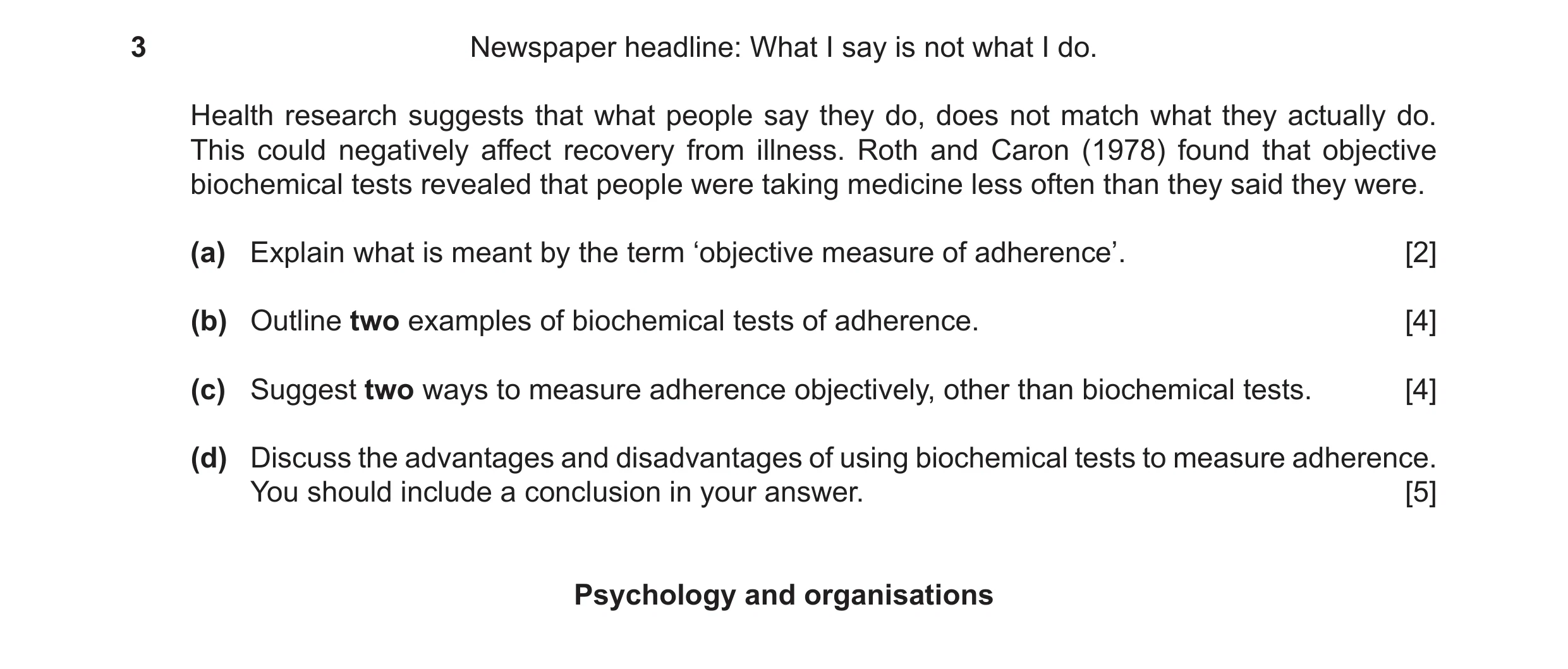
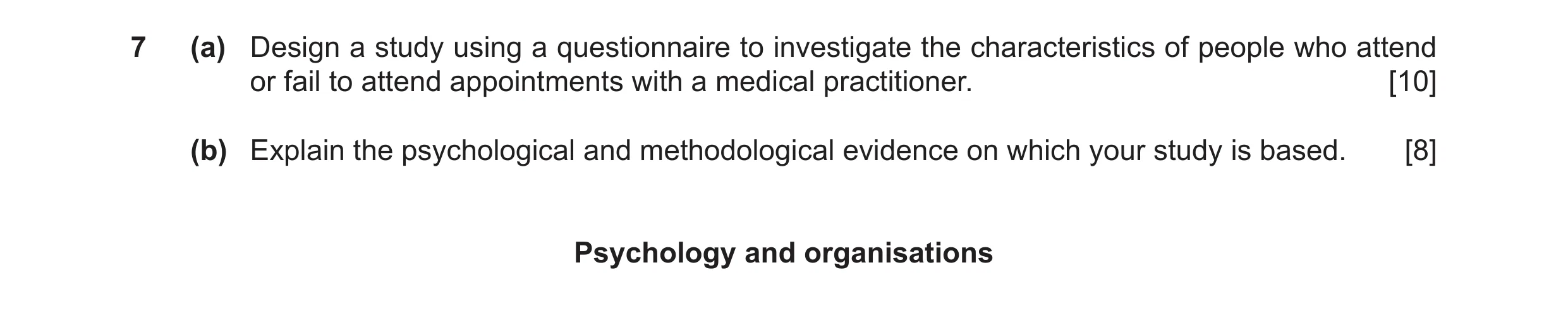 2 / 18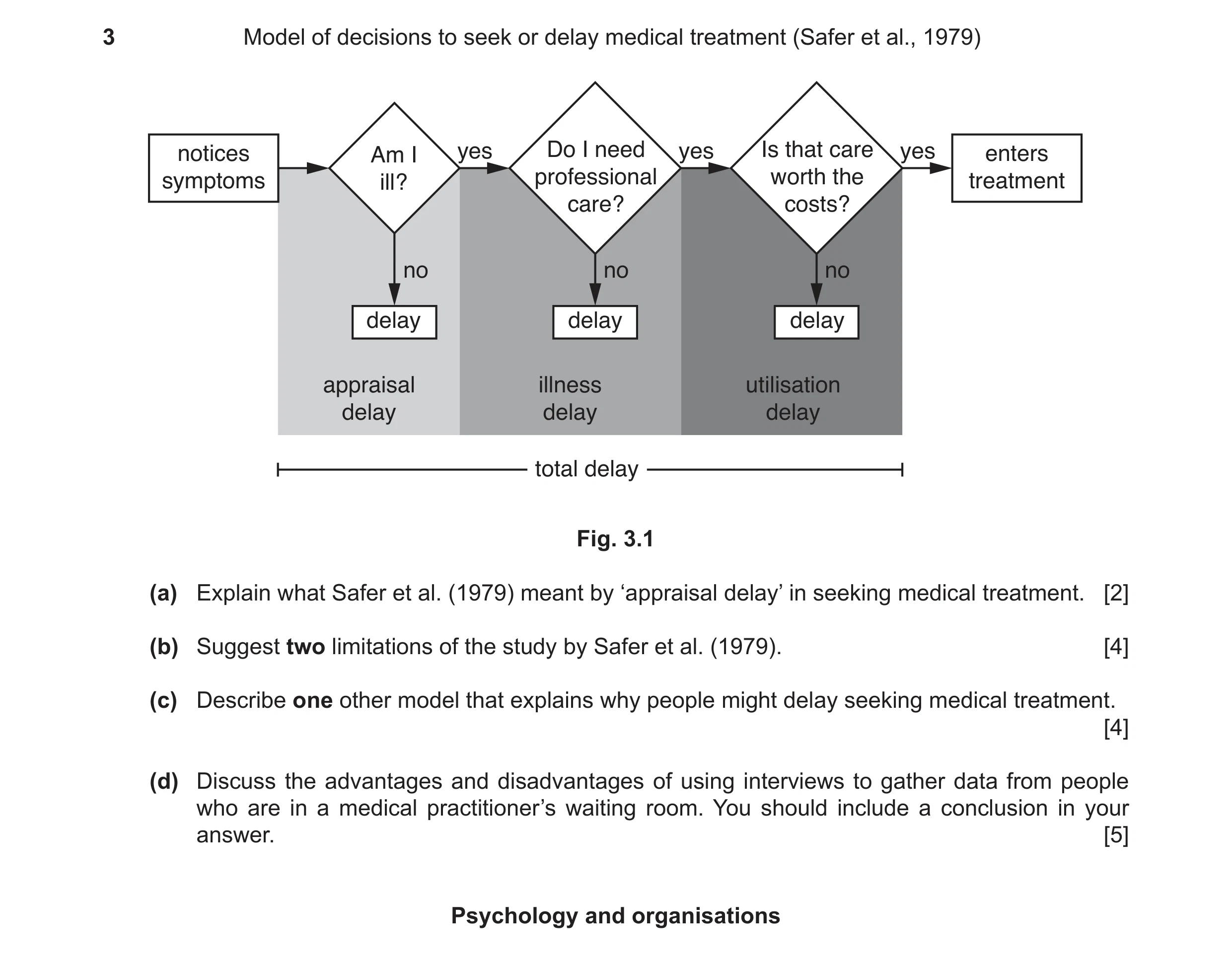
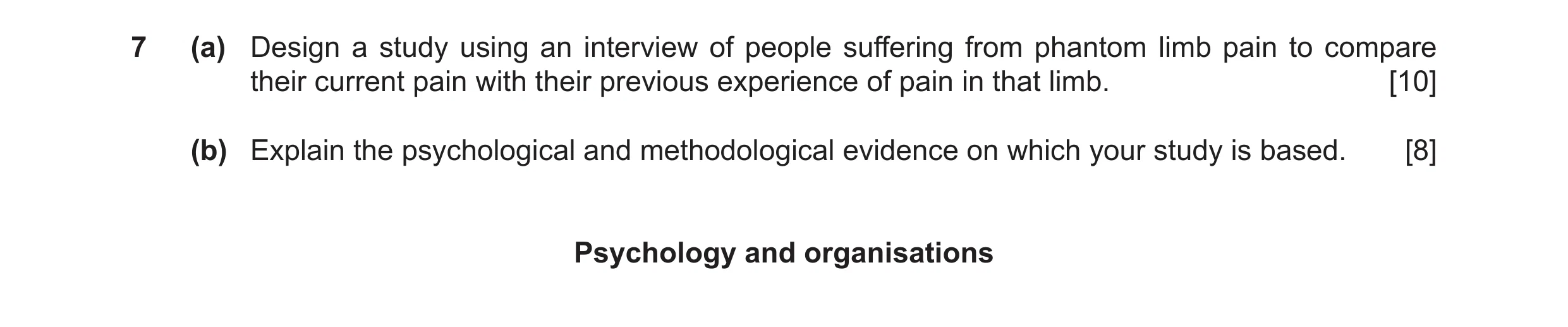
 3 / 18
![Question 13: (a) Design an experiment to investigate the effectiveness of ‘attention diversion’ for patients during a painful medical procedure. [10] (b…](https://img.pastlit.com/crops/178b47bf-da0e-4d15-82b8-0a5cf3e108e1/q7.webp)
![Question 15: (a) Design an experiment to investigate the effectiveness of ‘attention diversion’ for patients during a painful medical procedure. [10] (b…](https://img.pastlit.com/crops/529fc217-7a95-431d-8324-507488bd5b24/q7.webp) 4 / 18
4 / 18
![Question 17: (a) Design an experiment to investigate the effectiveness of ‘attention diversion’ for patients during a painful medical procedure. [10] (b…](https://img.pastlit.com/crops/9db307fb-eda0-428e-9224-e78f31d7bc5c/q7.webp)
![Question 19: describe your pain Fig. 3.1 (a) Explain what is meant by a ‘psychometric test’. [2] (b) Explain the difference between ‘acute pain’ and ‘ch…](https://img.pastlit.com/crops/11560810-75b8-4e27-9544-e6c67d2cefca/q3.webp) 5 / 18
5 / 18![Question 20: (a) Design a study using a questionnaire to investigate gender differences in rational non-adherence to medical requests. [10] (b) Explain …](https://img.pastlit.com/crops/11560810-75b8-4e27-9544-e6c67d2cefca/q7.webp)
![Question 21: The Wong-Baker faces pain rating scale for children. Fig. 3.1 (a) Explain how the Wong-Baker scale is used to measure pain in children. [2]…](https://img.pastlit.com/crops/56acf742-01d1-4aed-b161-01be180ea042/q3.webp)
 6 / 18
![Question 23: The Wong-Baker faces pain rating scale for children. Fig. 3.1 (a) Explain how the Wong-Baker scale is used to measure pain in children. [2]…](https://img.pastlit.com/crops/0ac81e9d-7681-4b6a-9a79-e879d454d328/q3.webp)
 7 / 18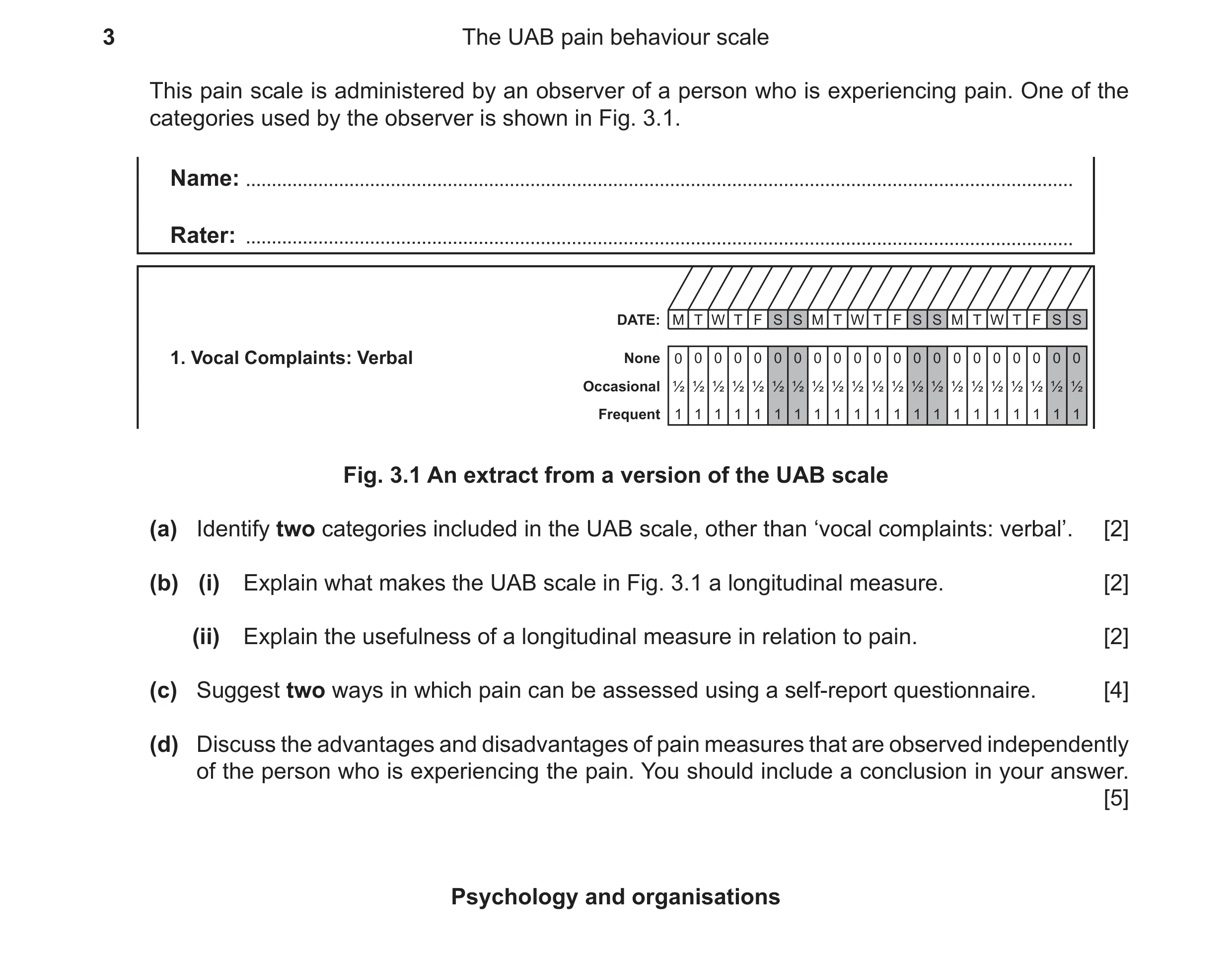
 8 / 18
 9 / 18
![Question 35: (a) Design an experiment to investigate whether acupuncture is more effective than non‑pain imagery for managing acute pain. [10] (b) Expla…](https://img.pastlit.com/crops/17576289-6c1b-4fc4-ae14-229c9023ac86/q7.webp)
![Question 37: (a) Design a study to investigate age differences in stages of delay, as proposed by Safer, before seeking medical treatment. [10] (b) Expl…](https://img.pastlit.com/crops/25ad80ee-306e-4bd0-a6a4-0718502286de/q7.webp) 10 / 18
10 / 18
![Question 39: (a) Design a study to investigate age differences in stages of delay, as proposed by Safer, before seeking medical treatment. [10] (b) Expl…](https://img.pastlit.com/crops/84b20a3f-be1a-42da-9eaa-f6d3604d18c2/q7.webp)
![Question 40: (a) Explain what is meant by ‘mirror treatment’ for phantom limb pain. [2] (b) Suggest one biological/biochemical way in which phantom limb…](https://img.pastlit.com/crops/8bc76506-f784-48eb-bc92-7728316e6459/q6.webp) 11 / 18
11 / 18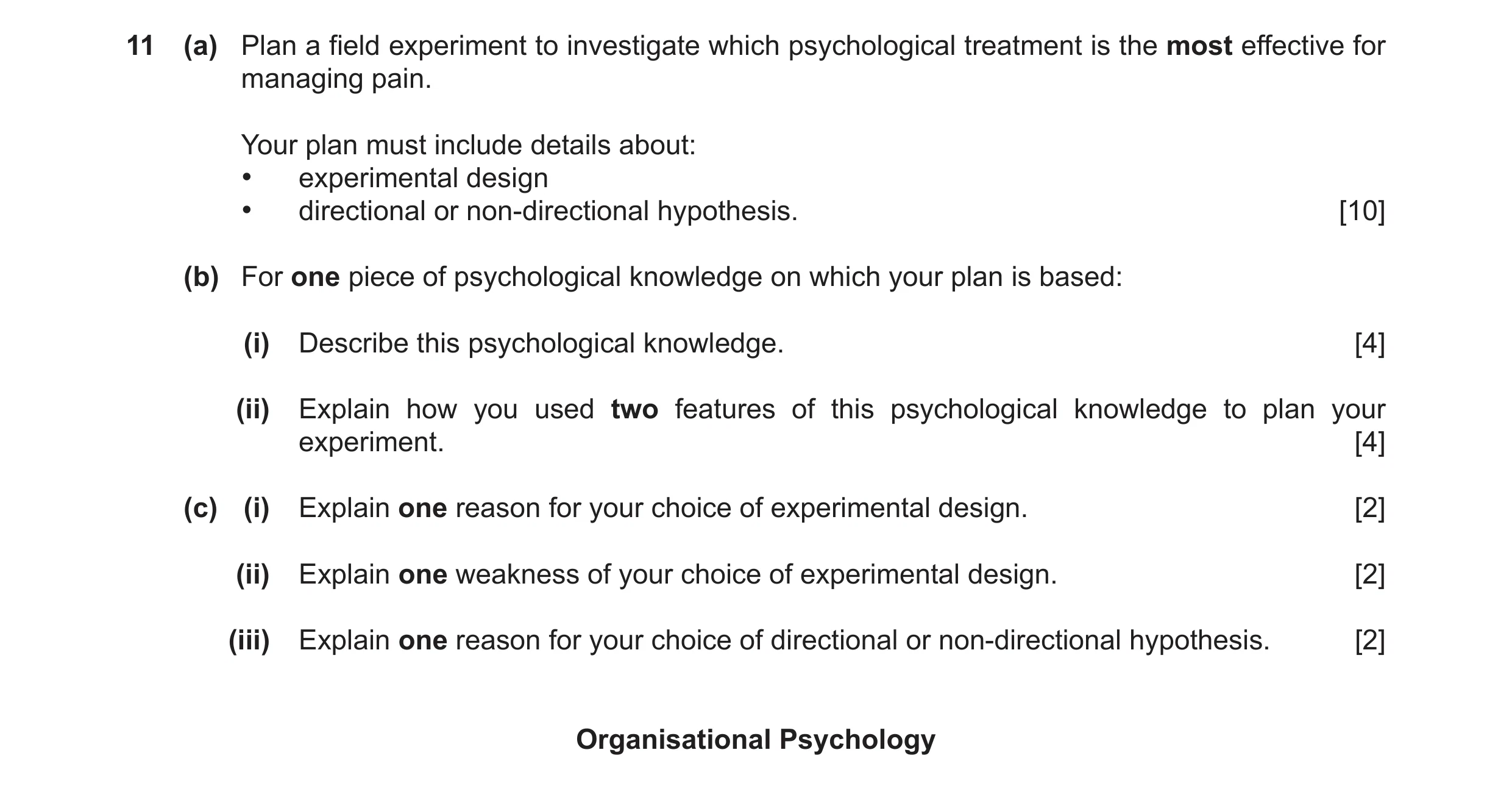
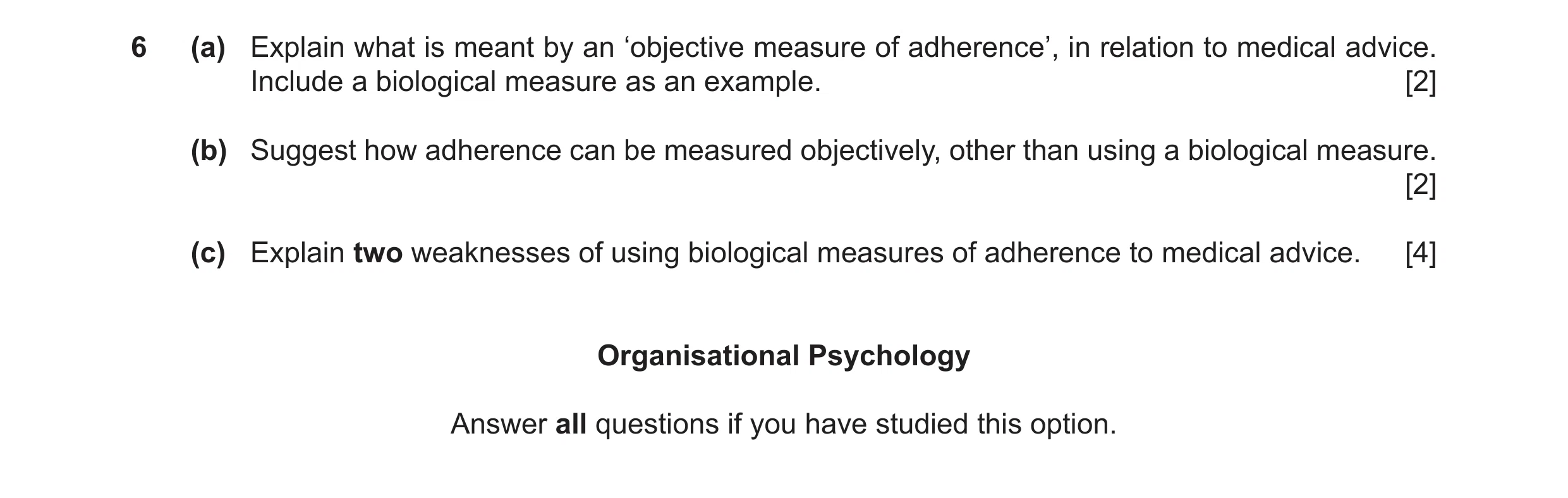 12 / 18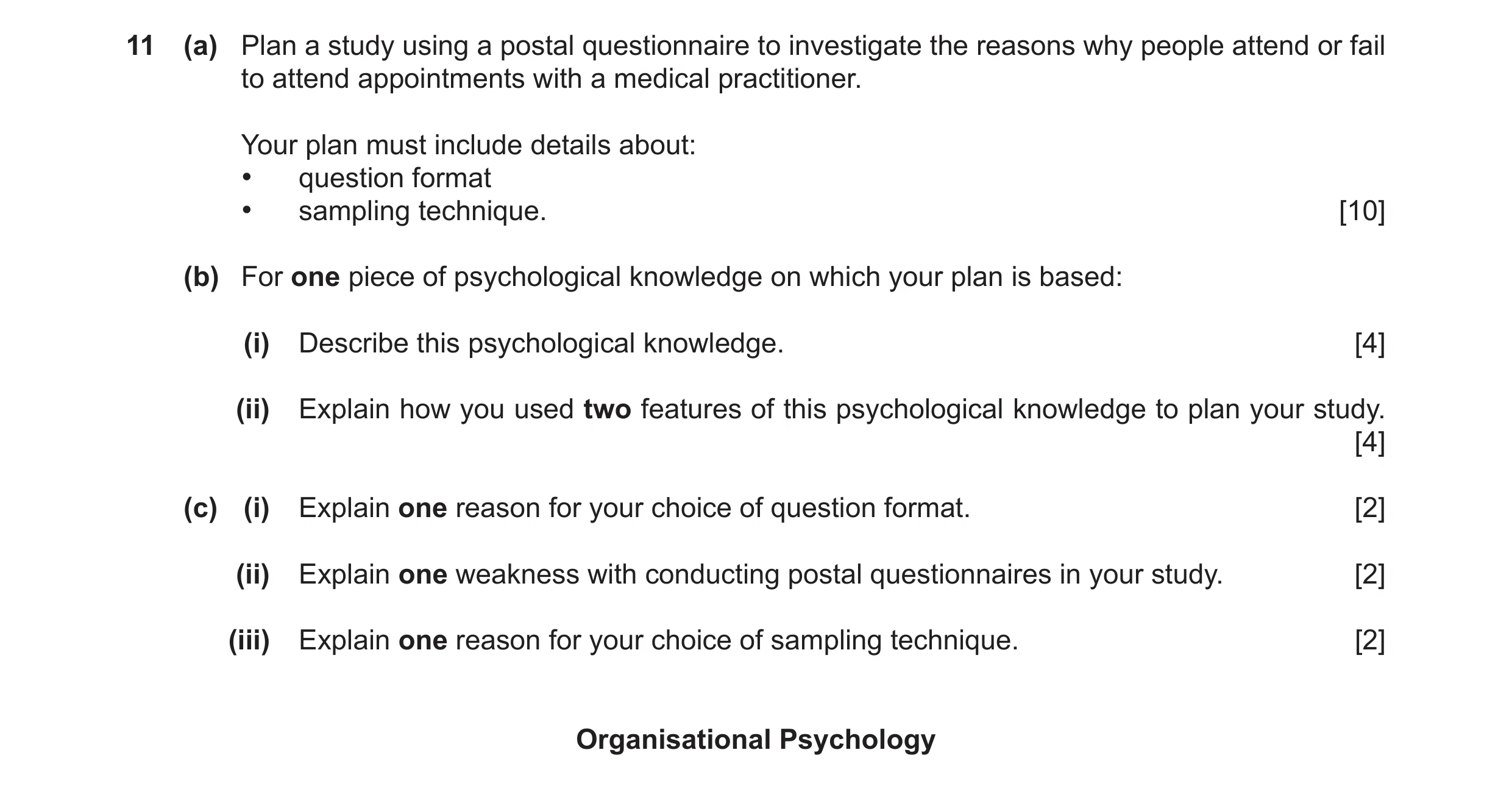
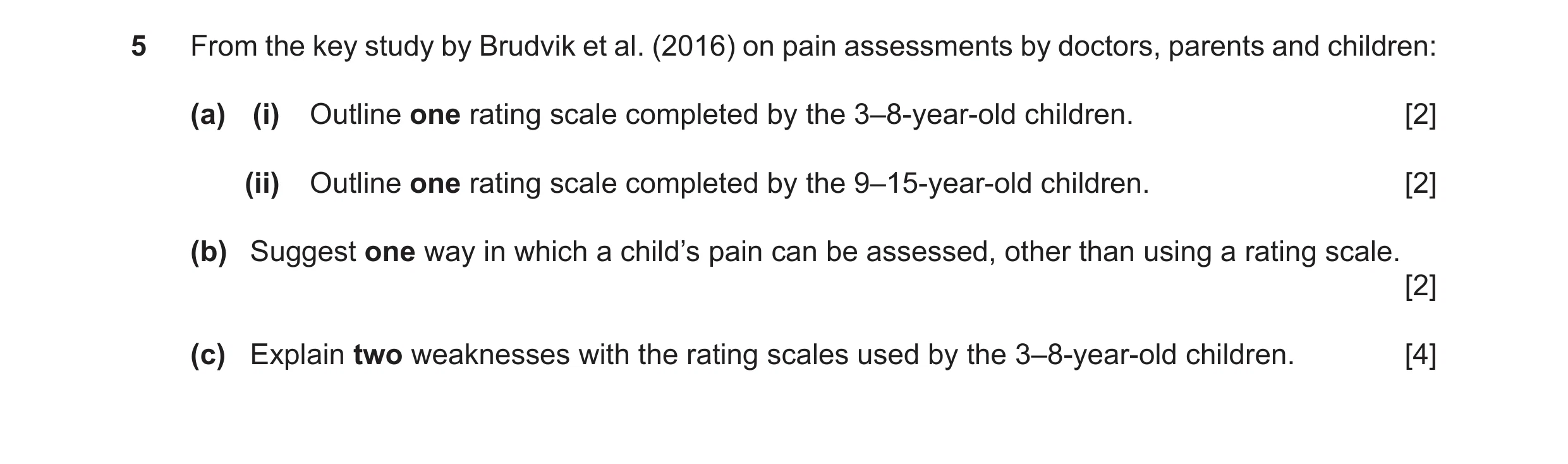
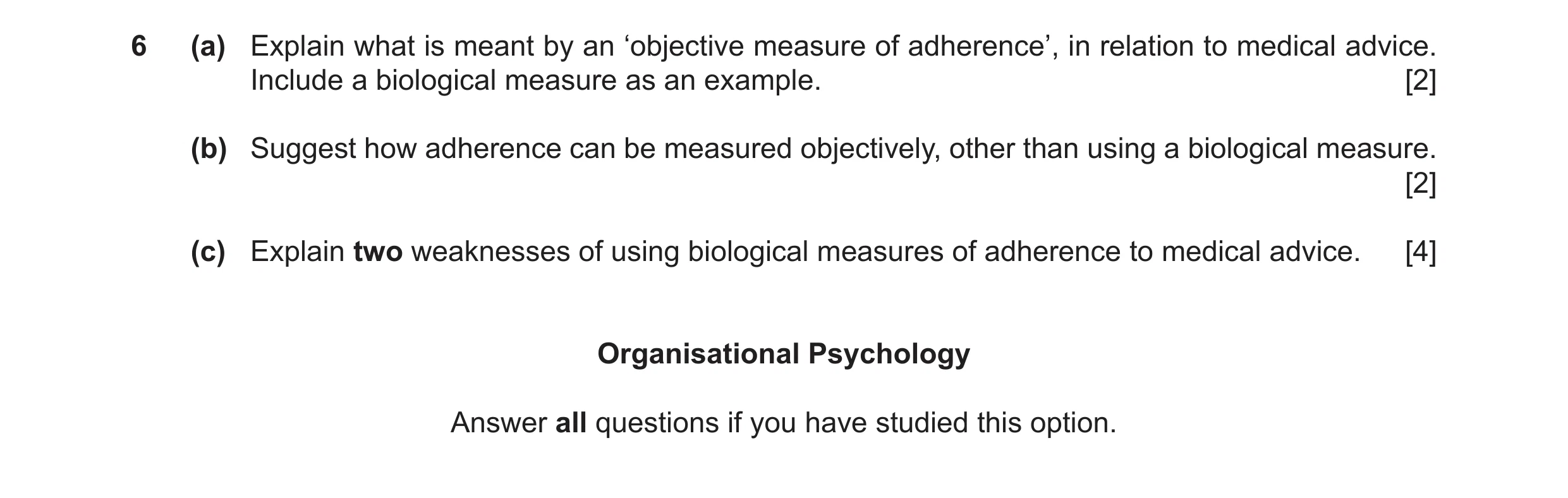 13 / 18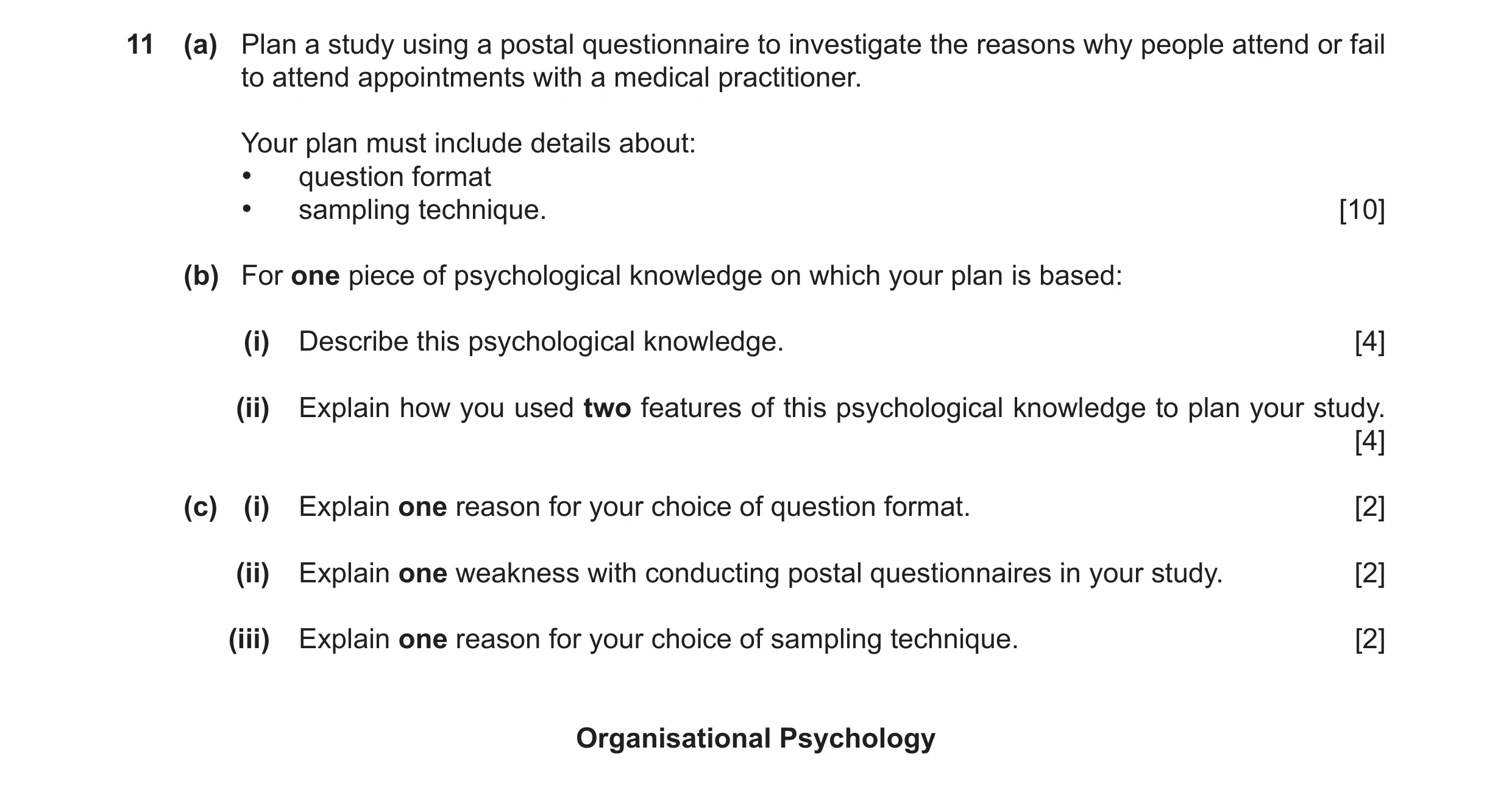
![Question 47: (a) Outline the psychological treatment of ‘attention diversion’ to manage and control pain. [2] (b) Suggest one alternative treatment that…](https://img.pastlit.com/crops/2734b90a-26d9-408b-8b4a-d7c96815e311/q6.webp)
![Question 48: (a) Explain what is meant by a clinical interview. Do not refer to observing patients’ behaviour in your answer. [2] (b) Suggest how observ…](https://img.pastlit.com/crops/35352820-aa09-42f1-a101-bb35e03ec960/q6.webp) 14 / 18
14 / 18![Question 49: (a) Outline the psychological treatment of ‘attention diversion’ to manage and control pain. [2] (b) Suggest one alternative treatment that…](https://img.pastlit.com/crops/951ad258-22d0-4a4f-a741-9291c20187c9/q6.webp)
 15 / 18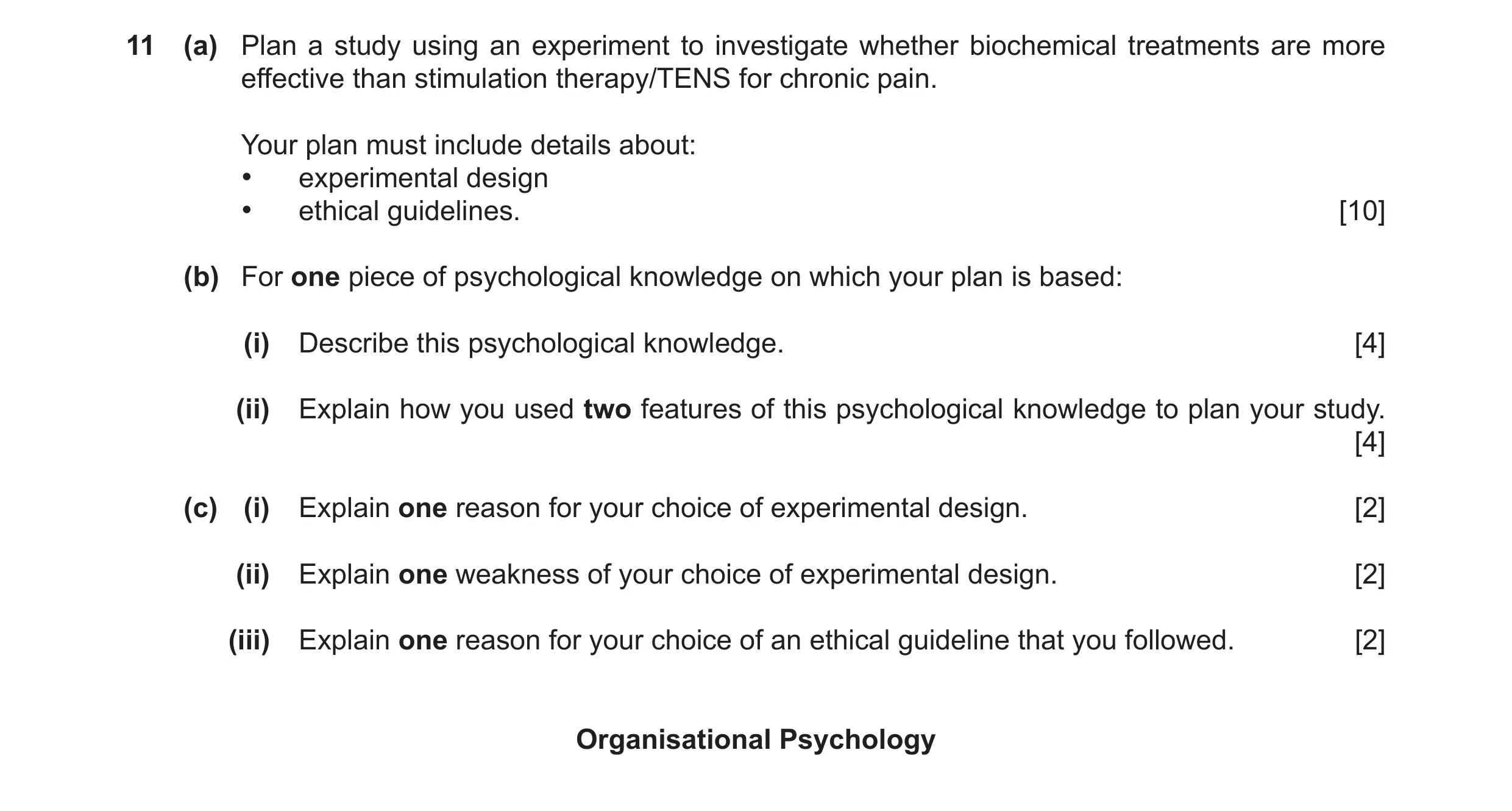
![Question 53: (a) Identify two behavioural categories included in the UAB pain behaviour scale. [2] (b) Suggest one way in which acute pain can be manage…](https://img.pastlit.com/crops/50b4fd2a-8101-434e-95f5-673b15ac8cef/q6.webp)
 16 / 18
![Question 55: (a) Outline what is meant by a visual analogue scale to measure pain. [2] (b) Suggest one way the validity of a visual analogue scale could…](https://img.pastlit.com/crops/f59b906e-bcf7-464d-b2e7-fc2d6a79428f/q6.webp)
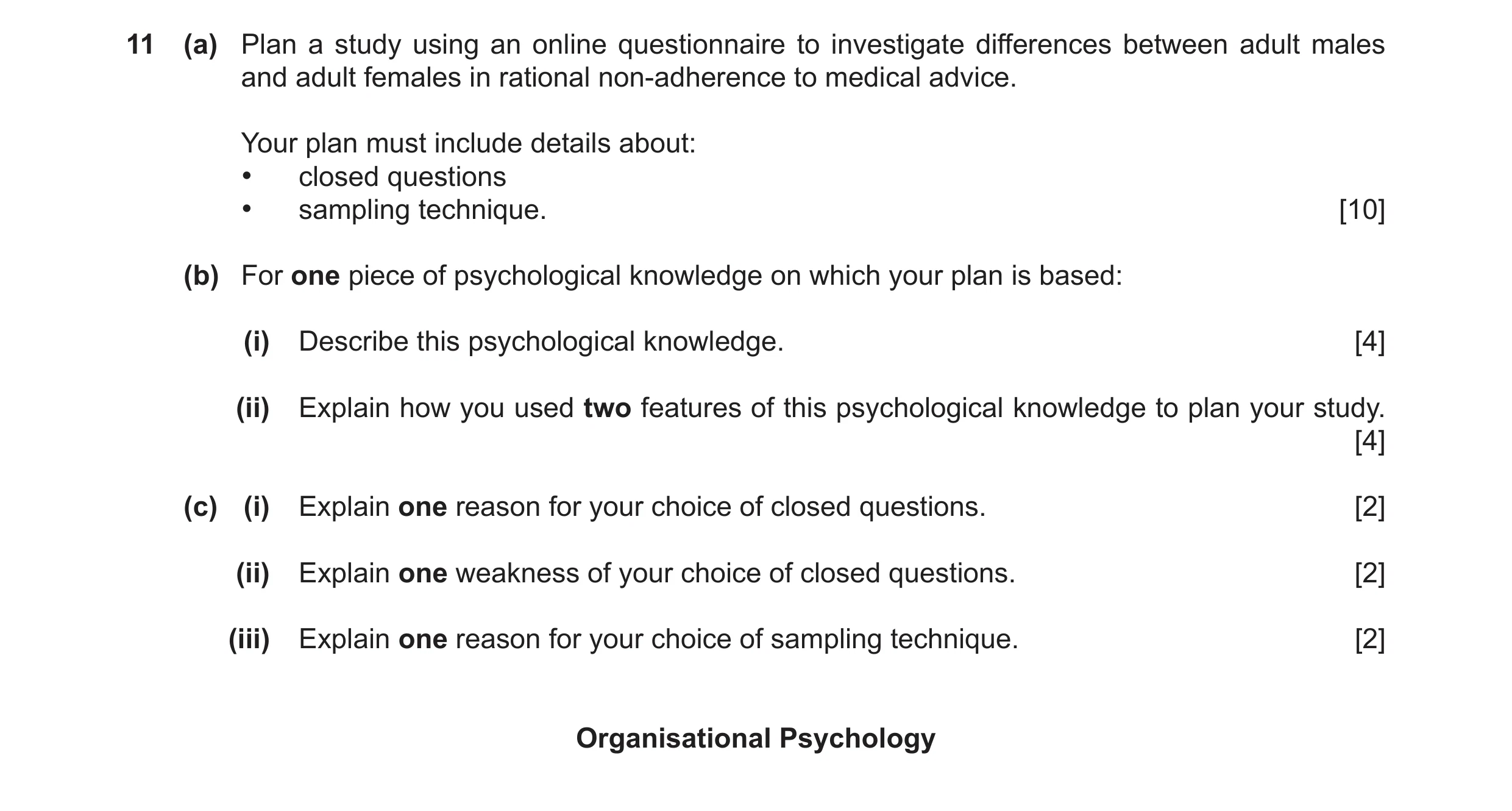
![Question 57: (a) Identify two behavioural categories included in the UAB pain behaviour scale. [2] (b) Suggest one way in which acute pain can be manage…](https://img.pastlit.com/crops/175c06c6-f891-4afe-b8e9-7c043f168c2b/q6.webp) 17 / 18
17 / 18
![Question 59: (a) Outline the methodology used in one study on improving adherence in children (e.g. Chaney et al. 2004). [2] (b) Suggest one ethical gui…](https://img.pastlit.com/crops/e3cfb09b-8ac0-4758-9aae-063f7dc507b4/q6.webp)
![Question 60: (a) Outline the methodology used in one study on improving adherence in children (e.g. Chaney et al. 2004). [2] (b) Suggest one ethical gui…](https://img.pastlit.com/crops/1c762dad-dc75-48a8-b63b-ccf98441d2e5/q6.webp) 18 / 18
18 / 18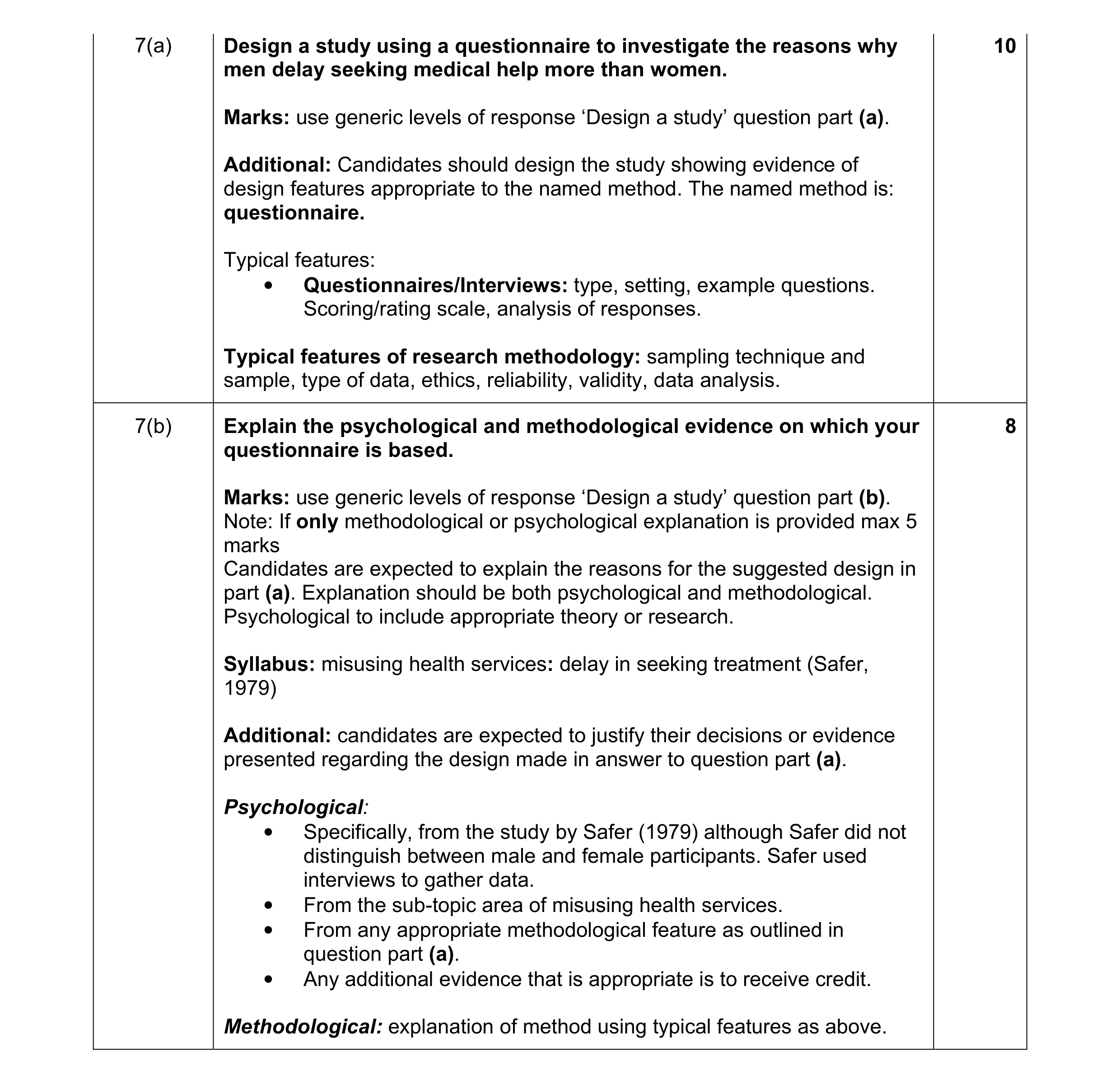 18
18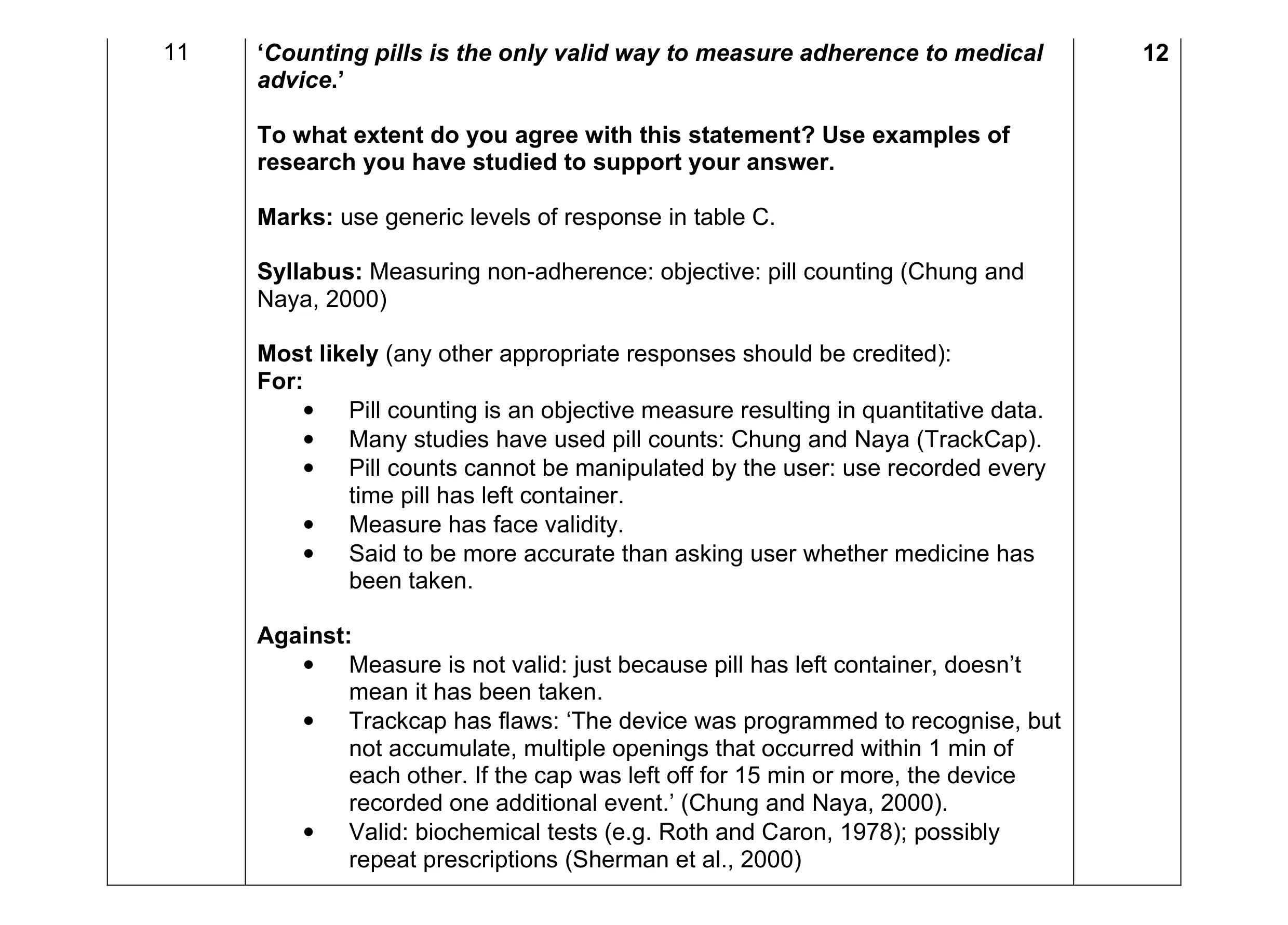 12
12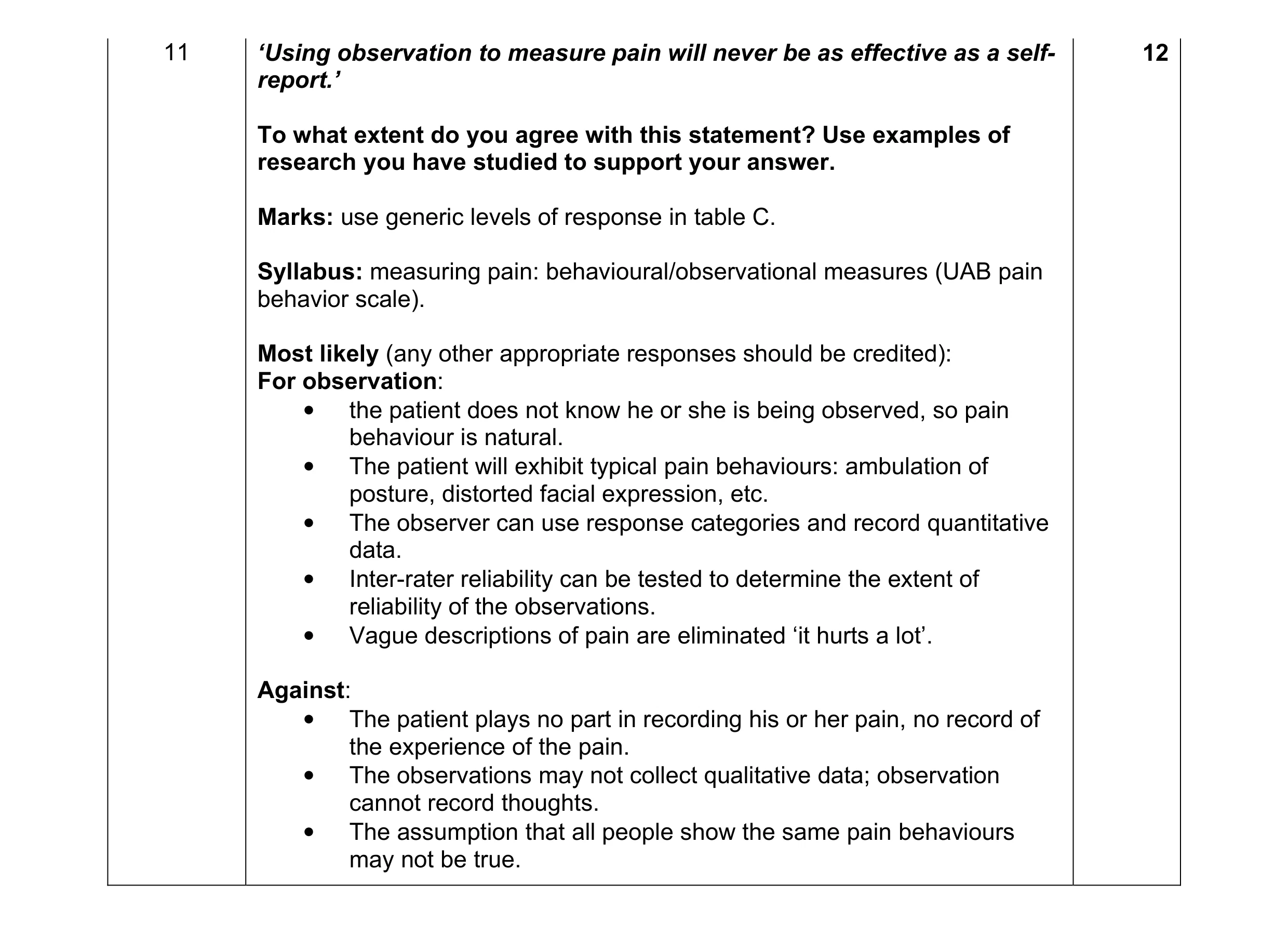 12
12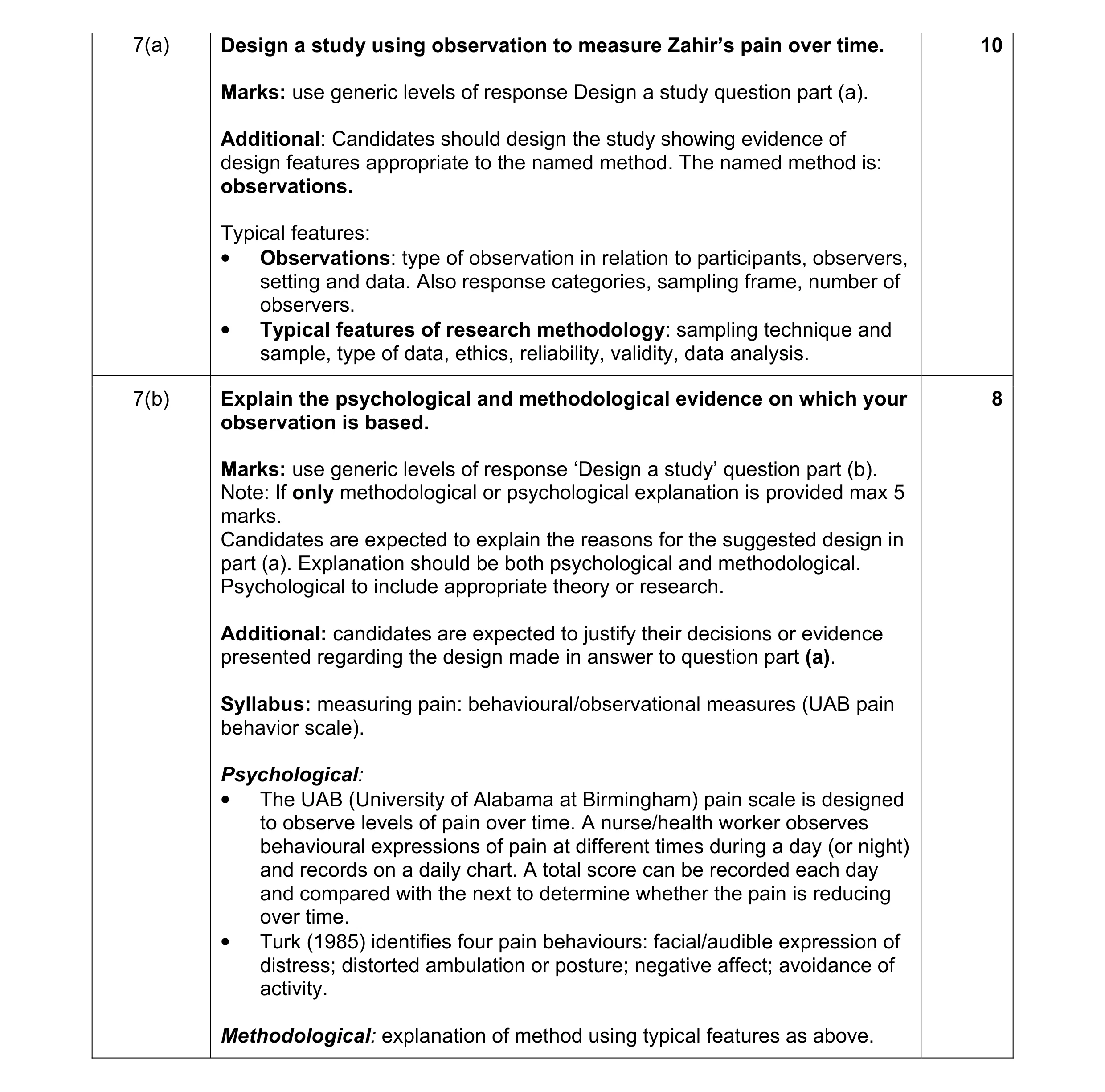 18
18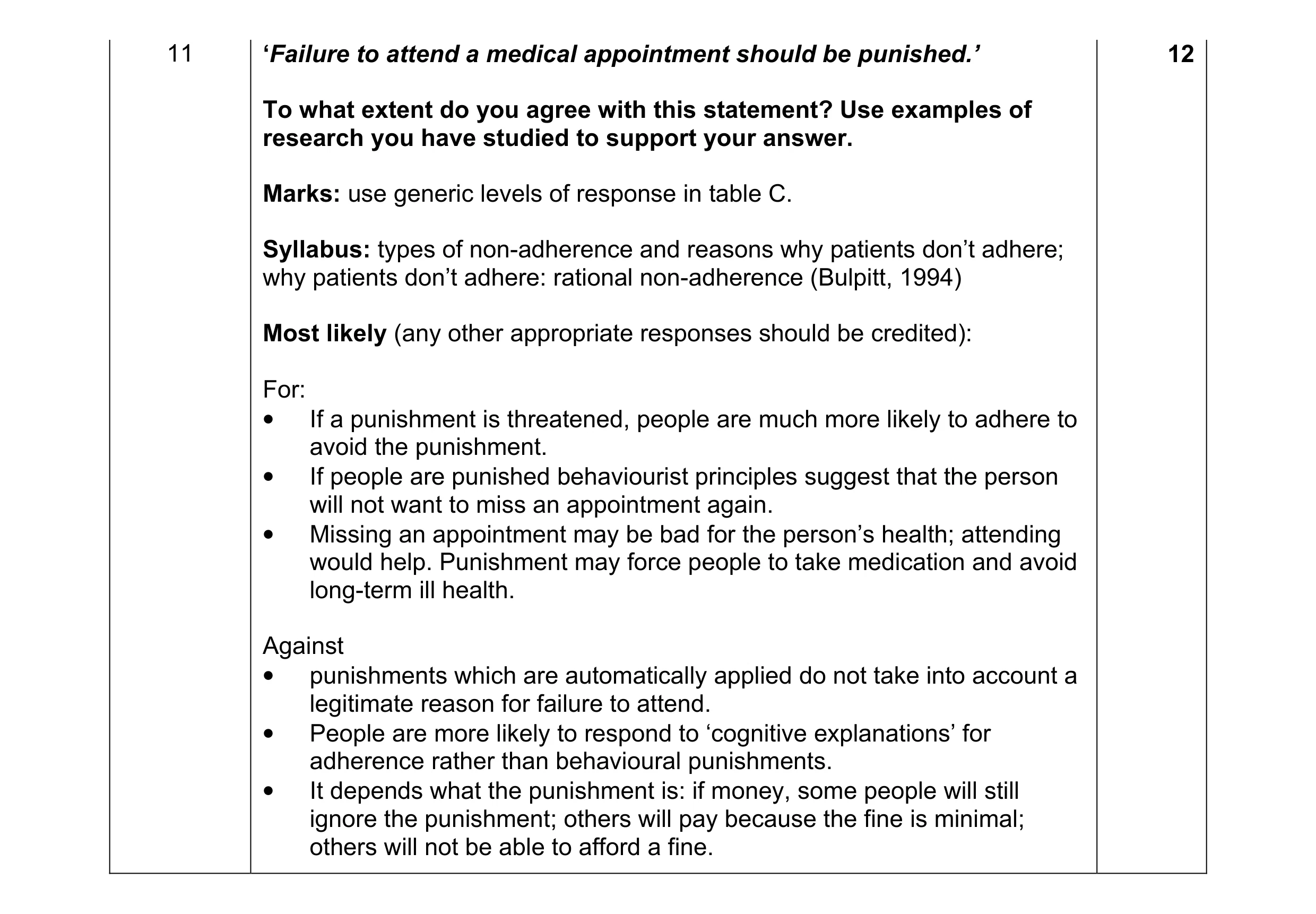 12
12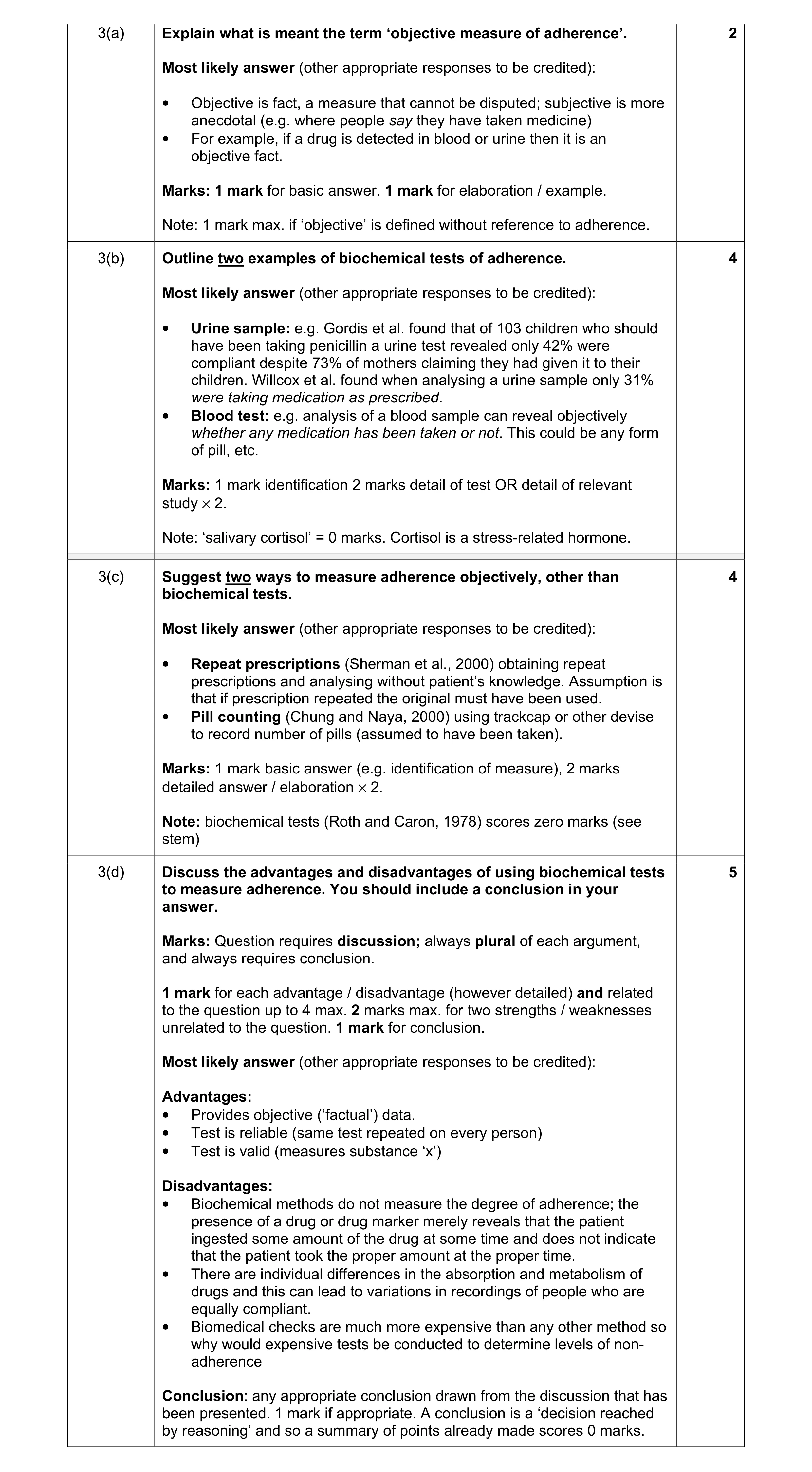 15
15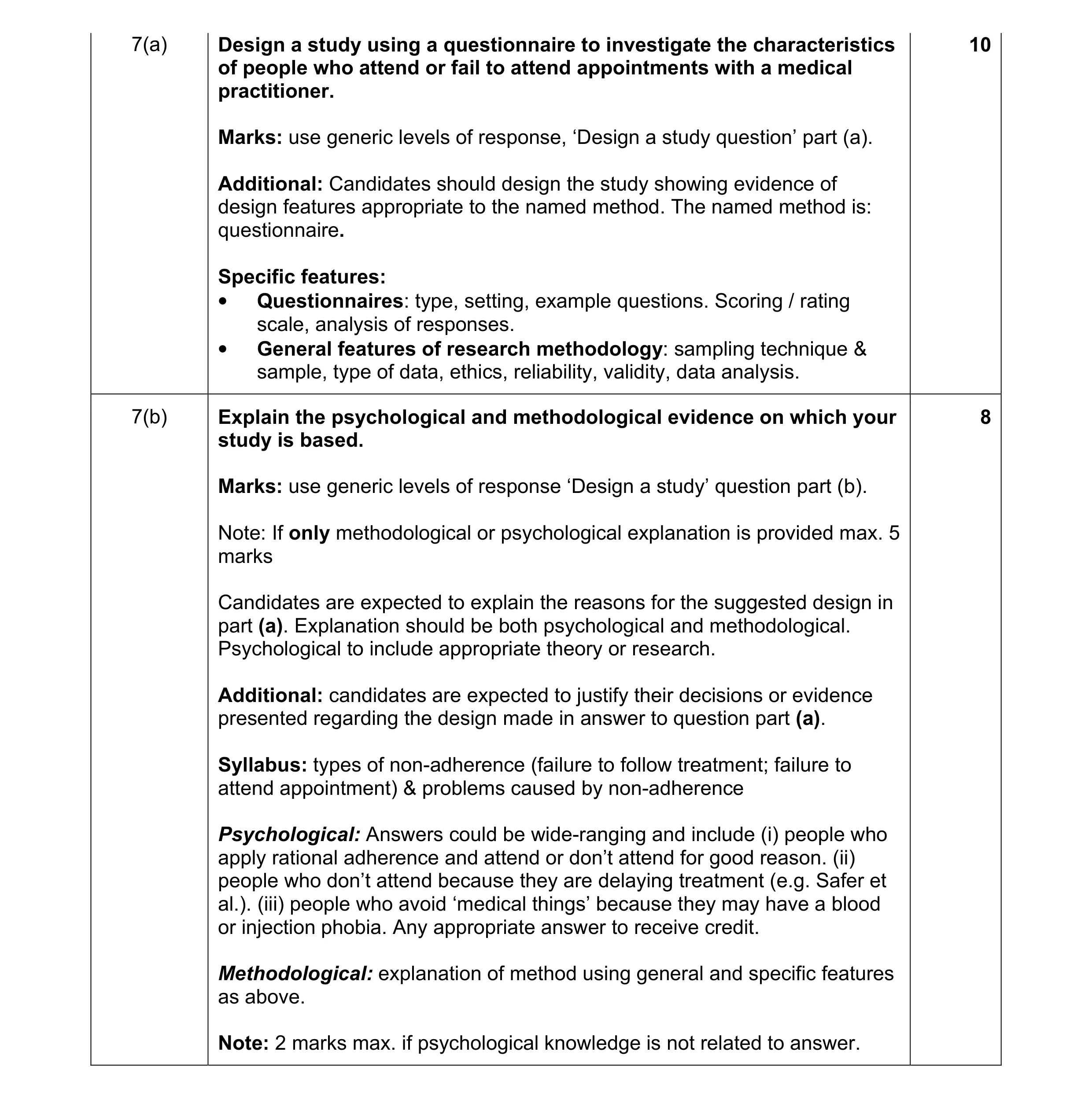 18
18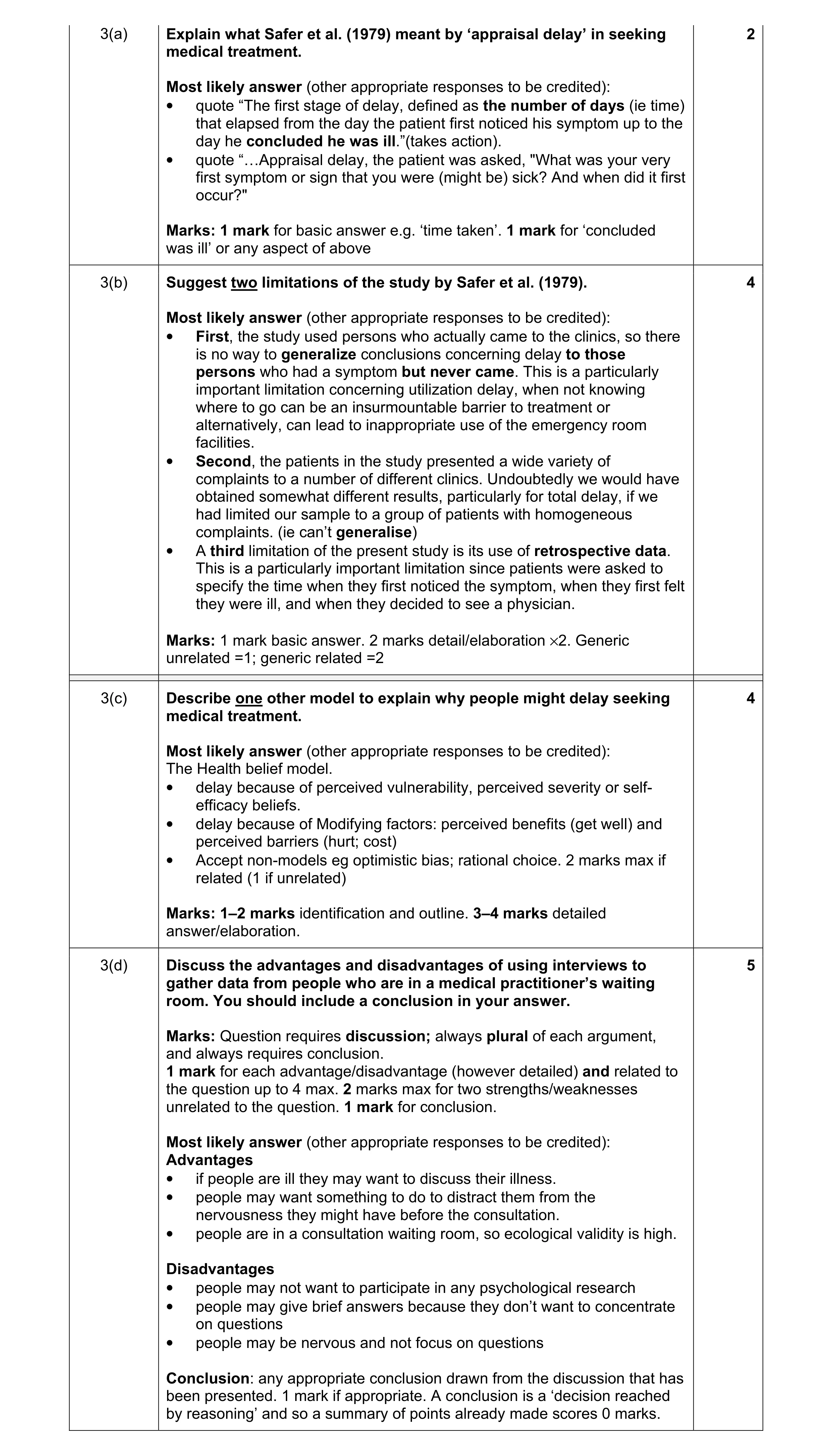 15
15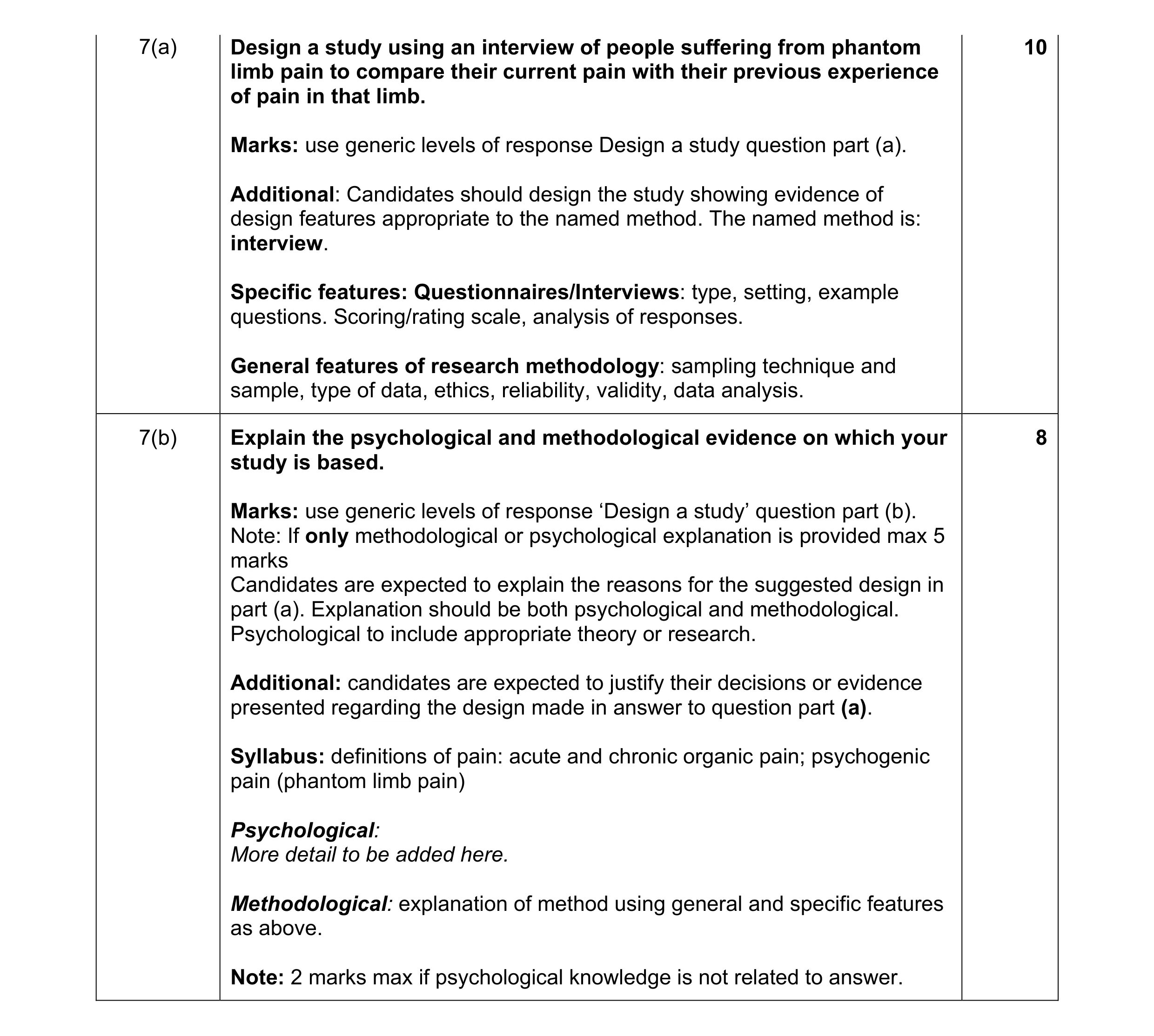 18
18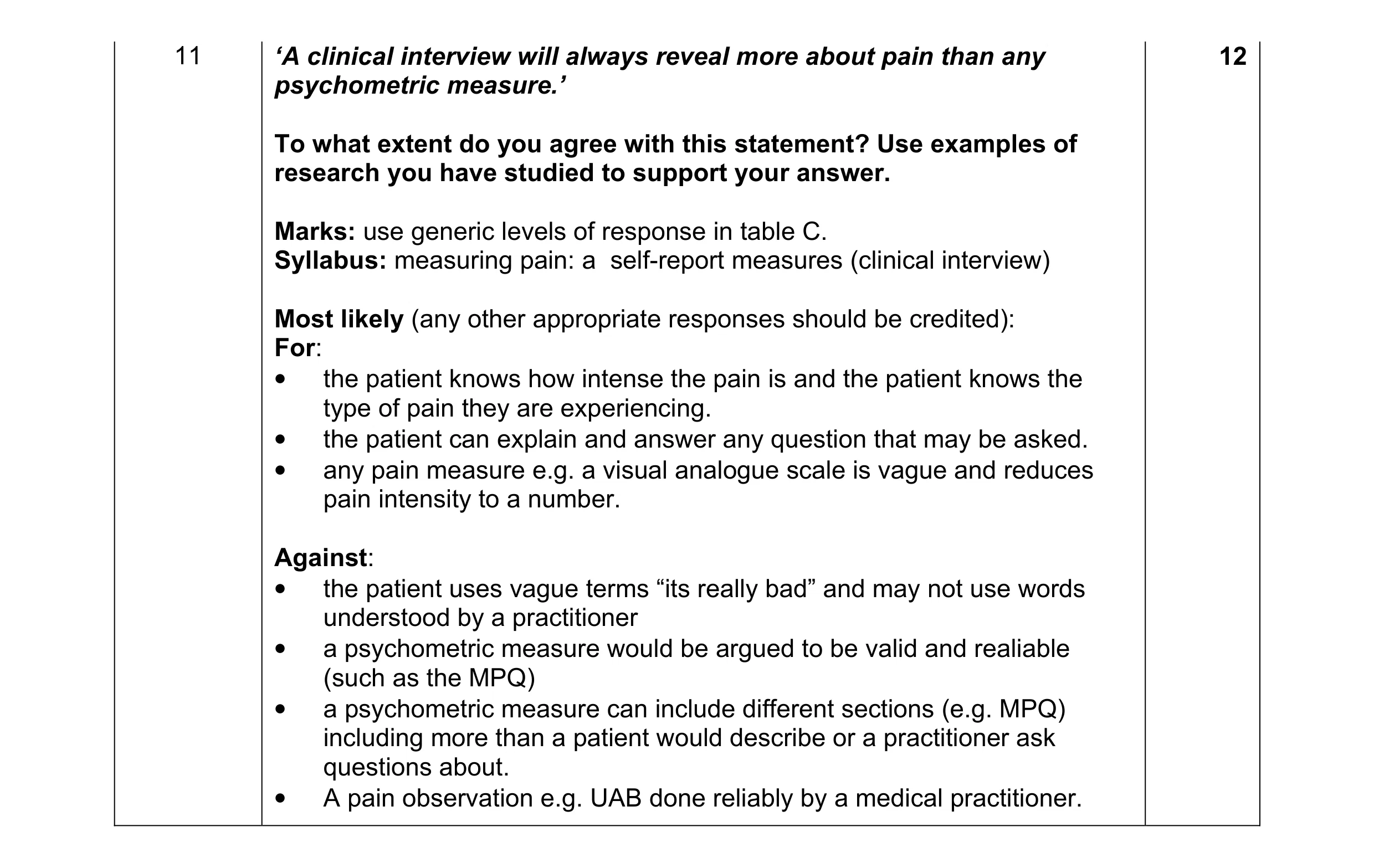 12
12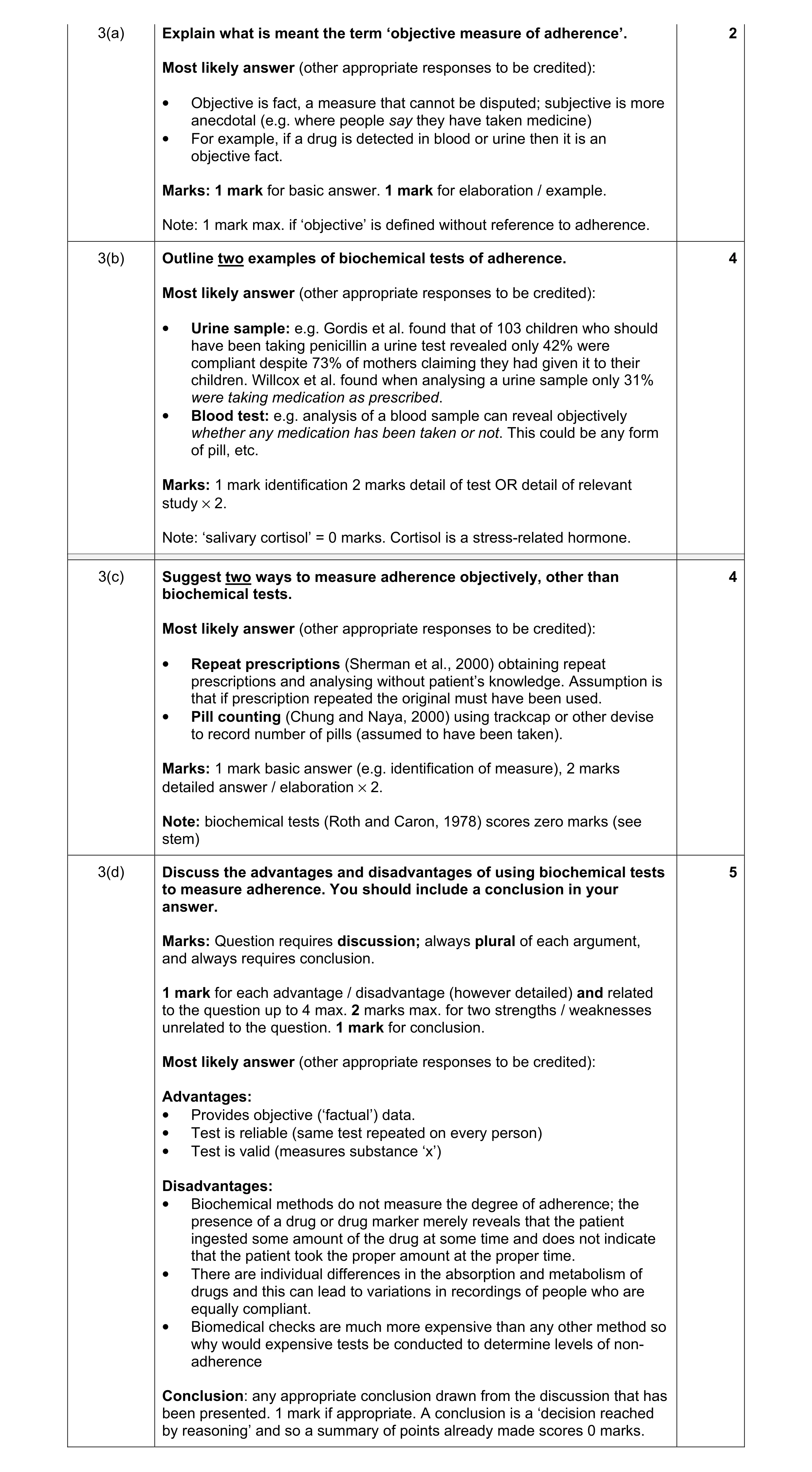 15
15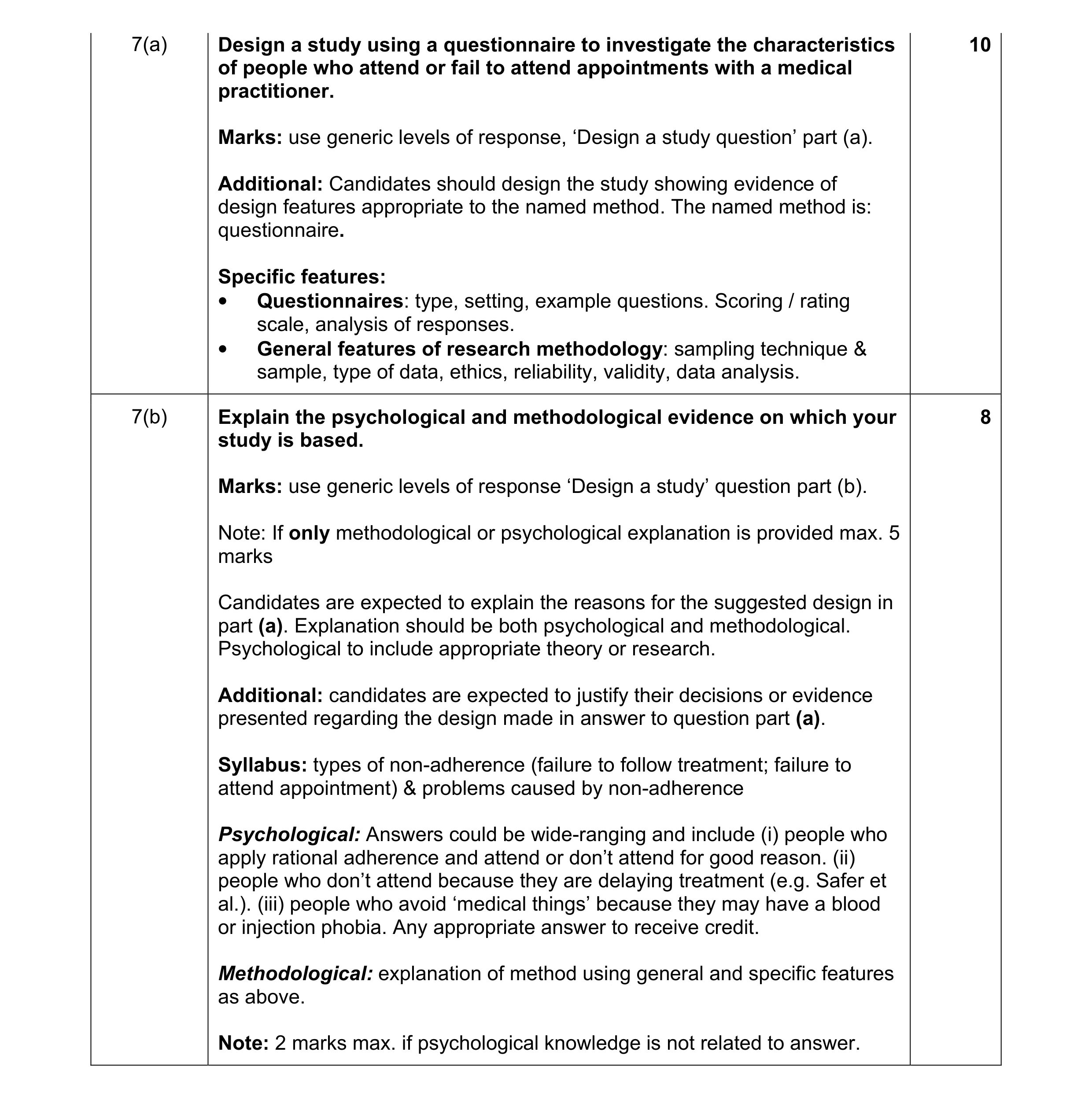 18
18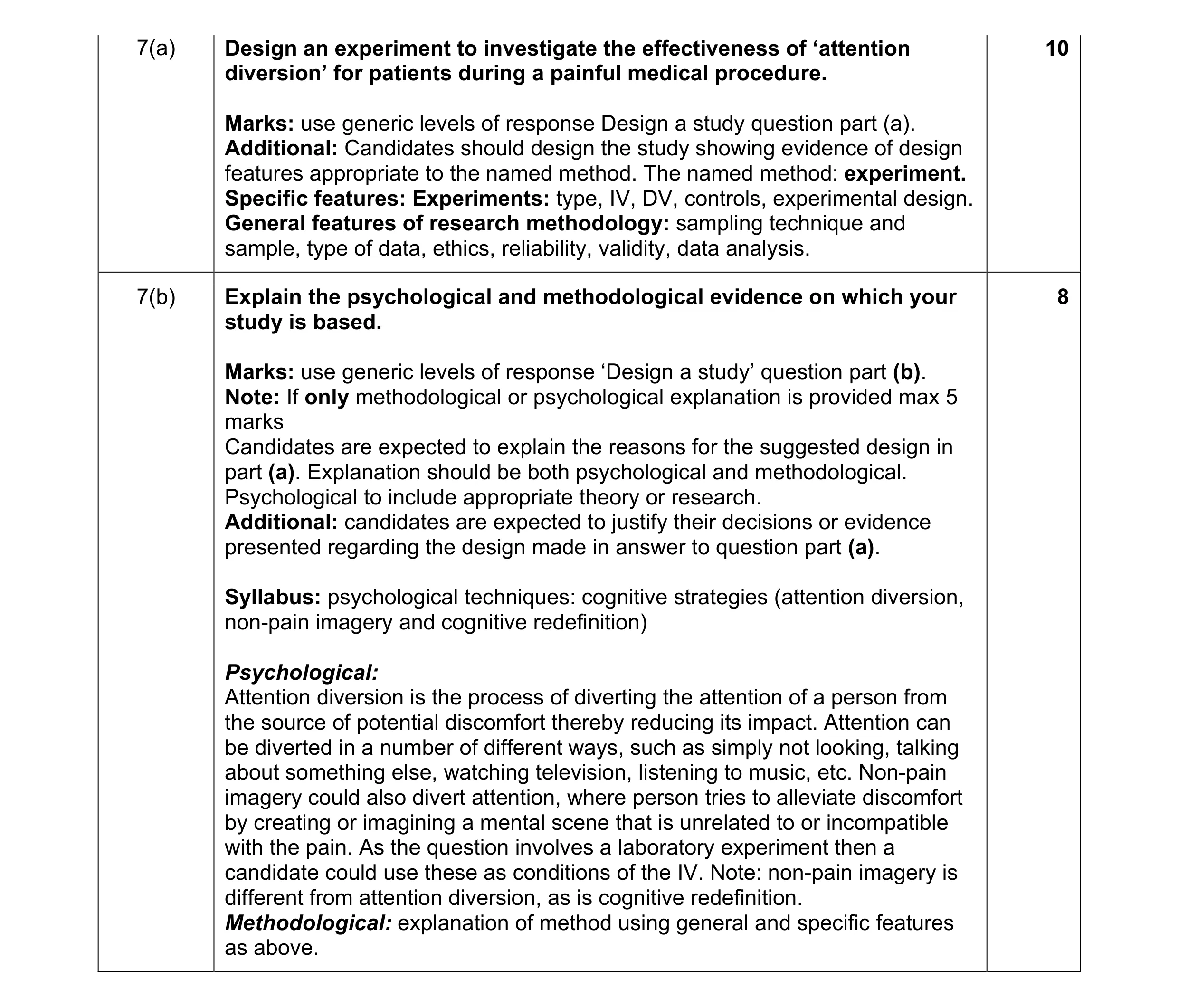 18
18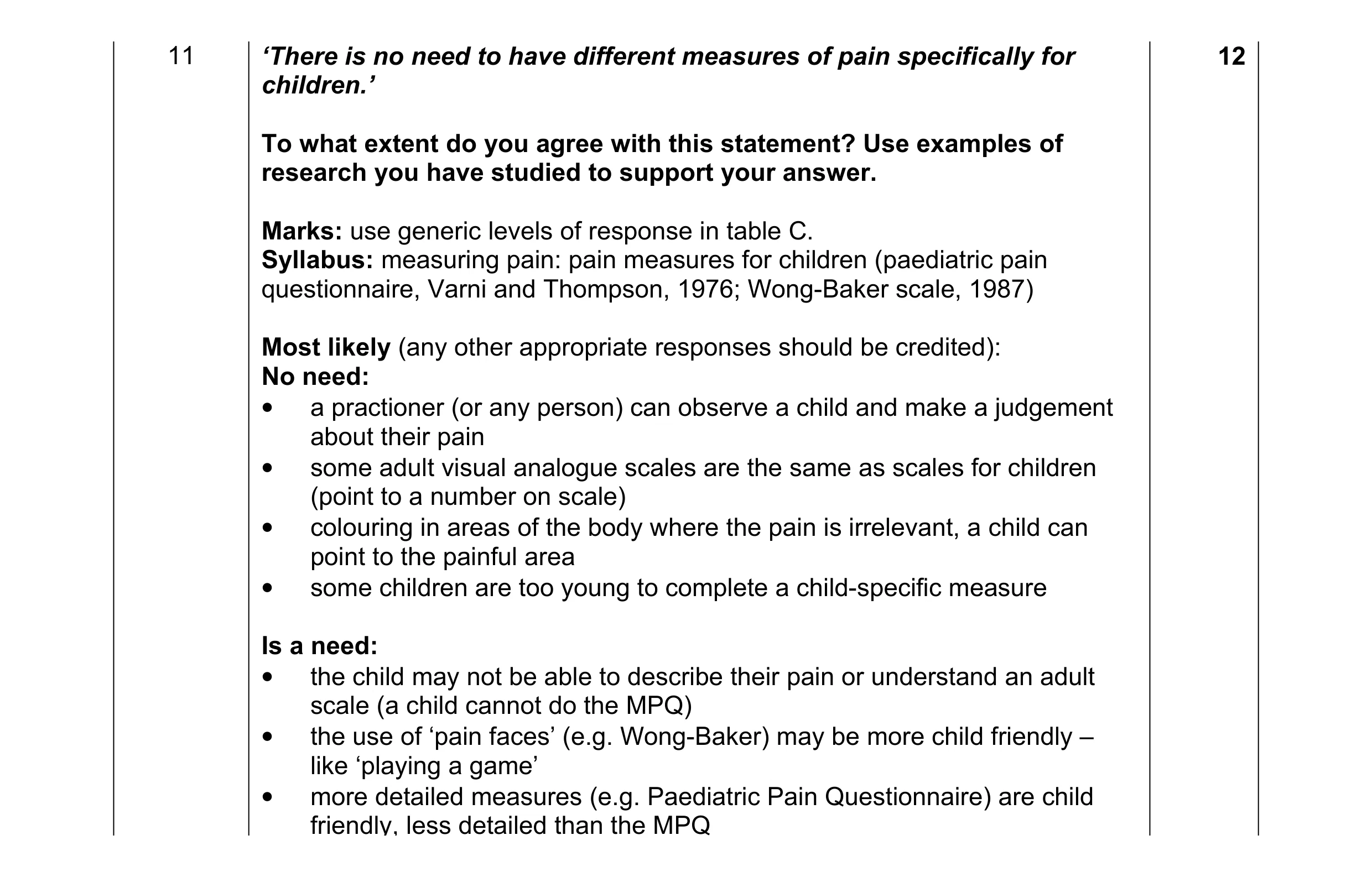 12
12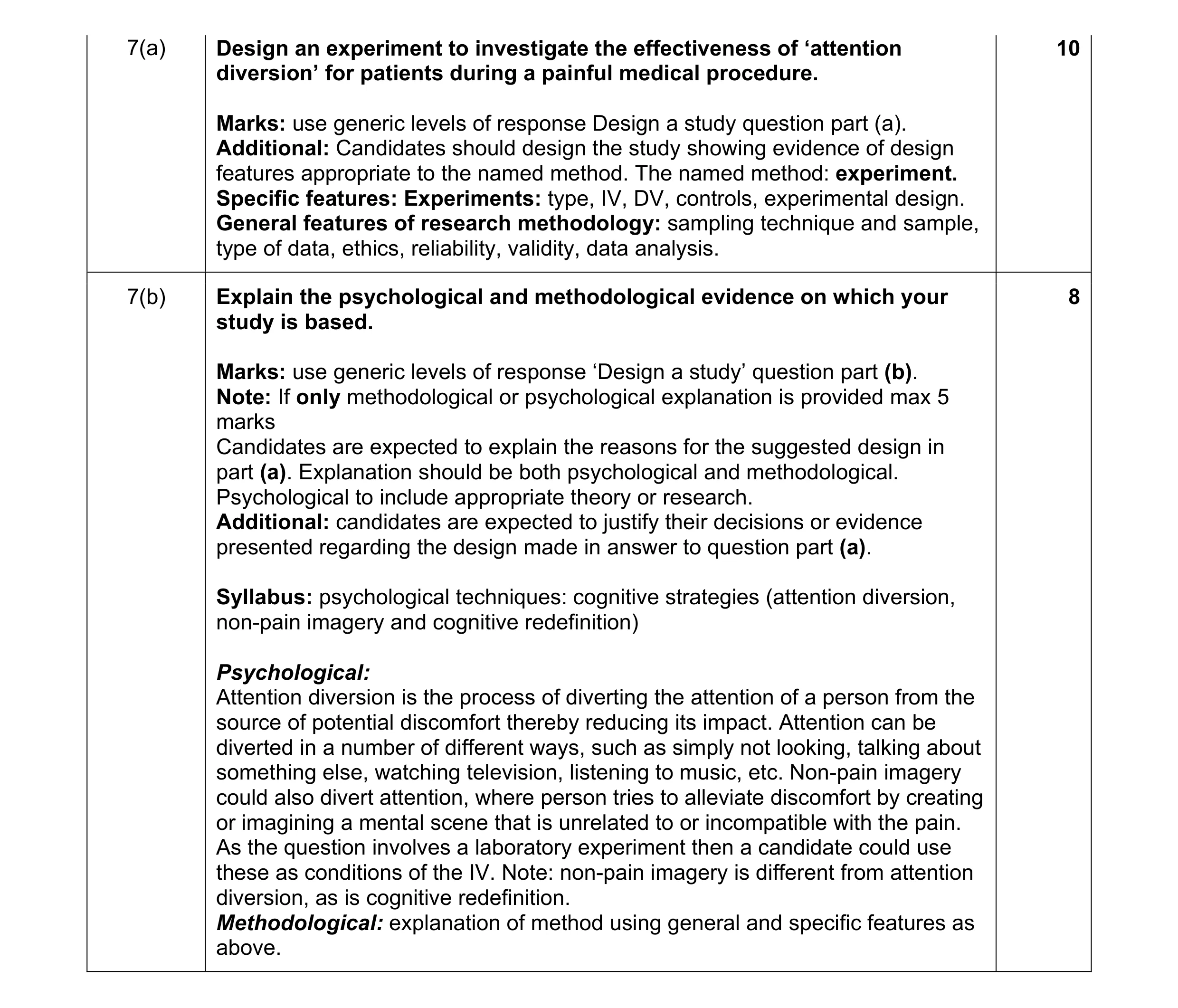 18
18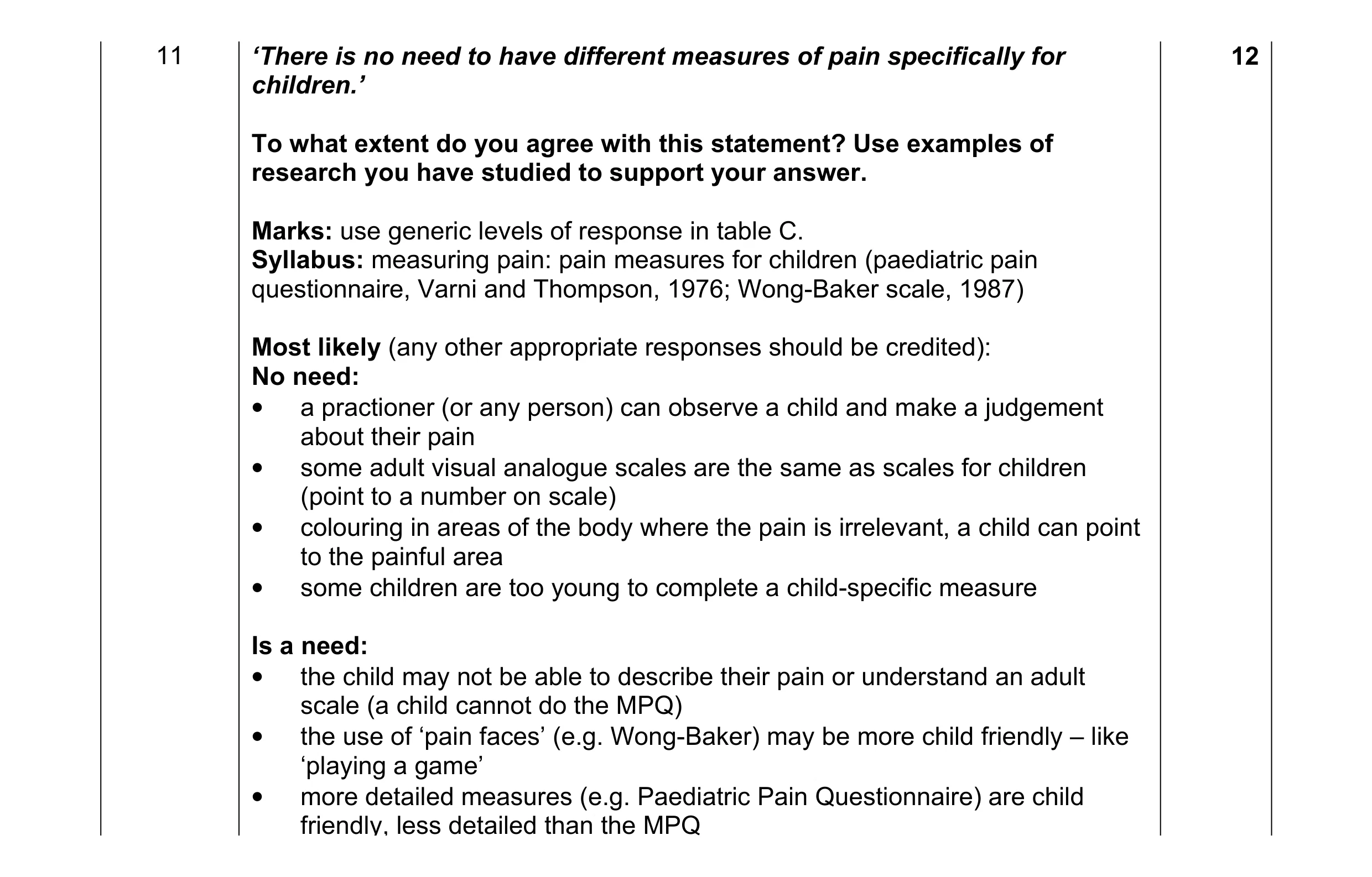 12
12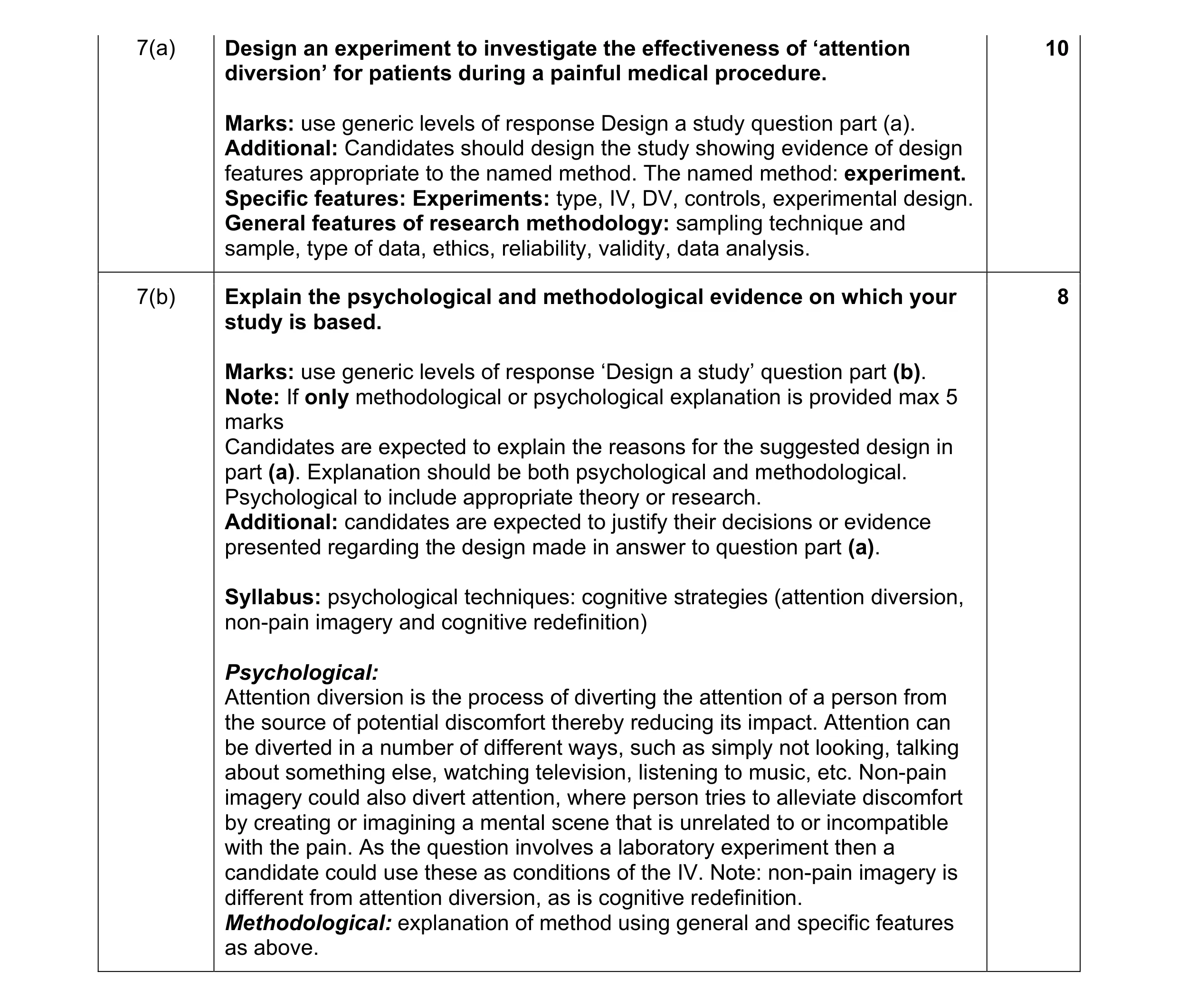 18
18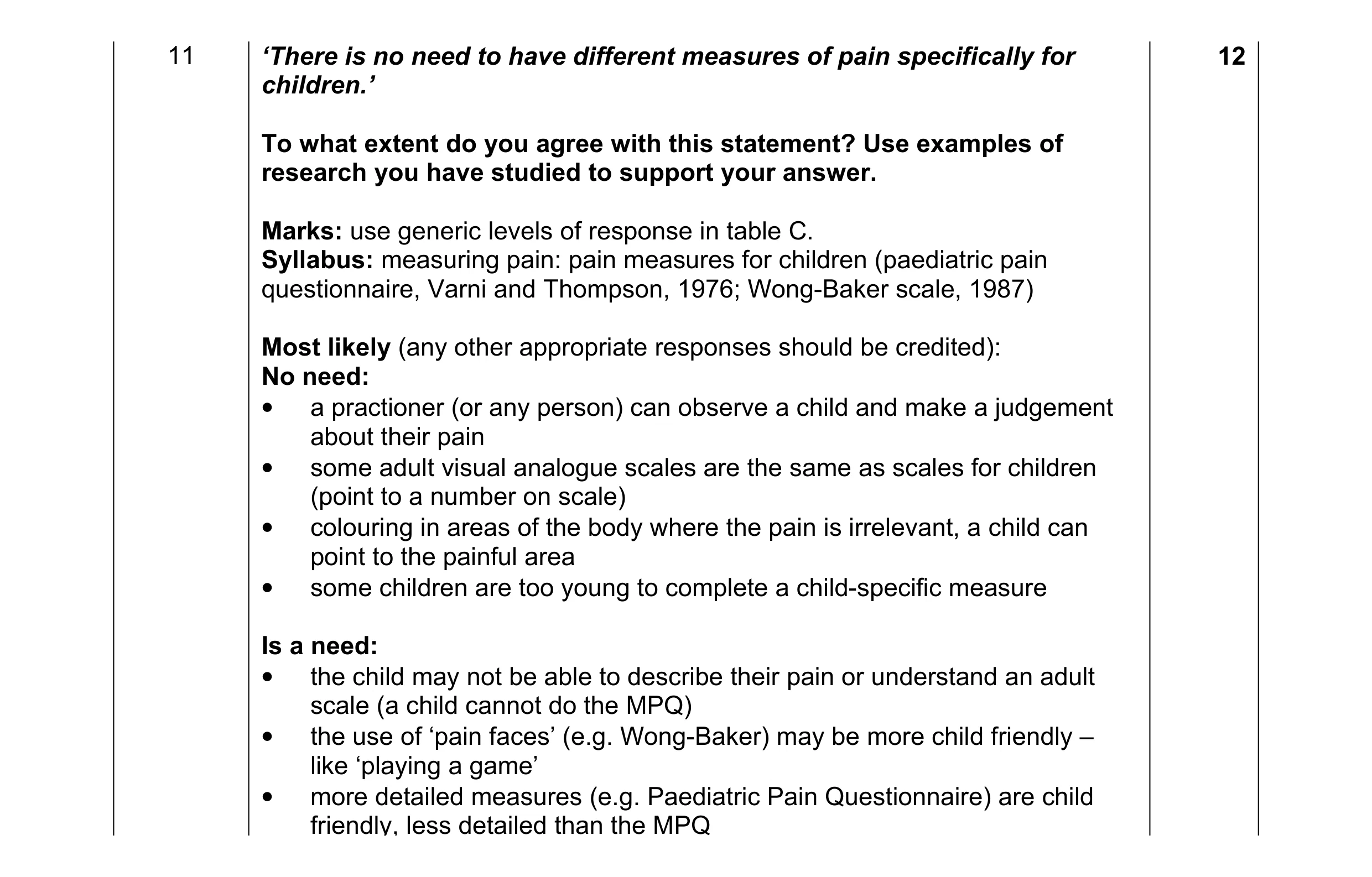 12
12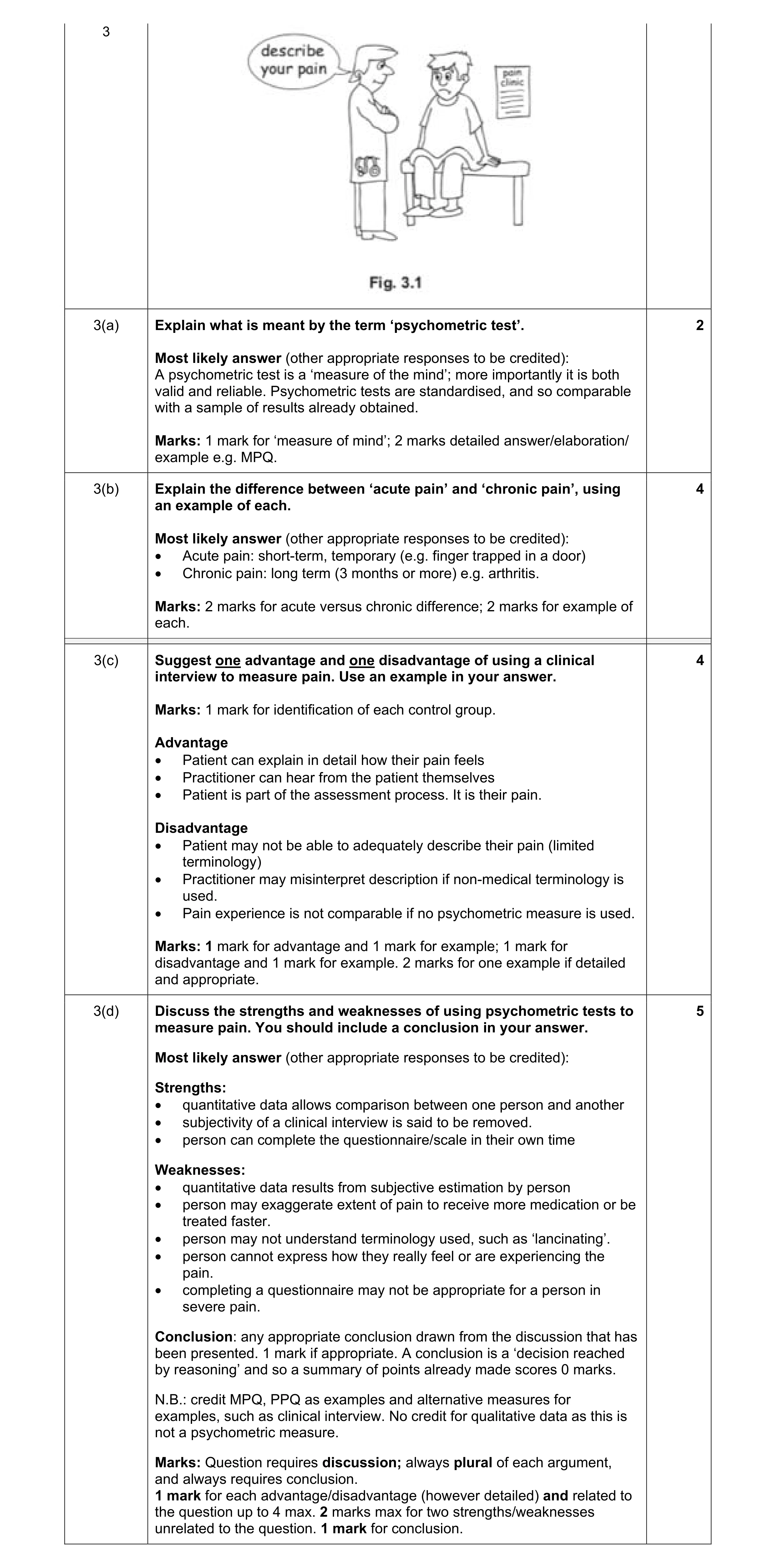 15
15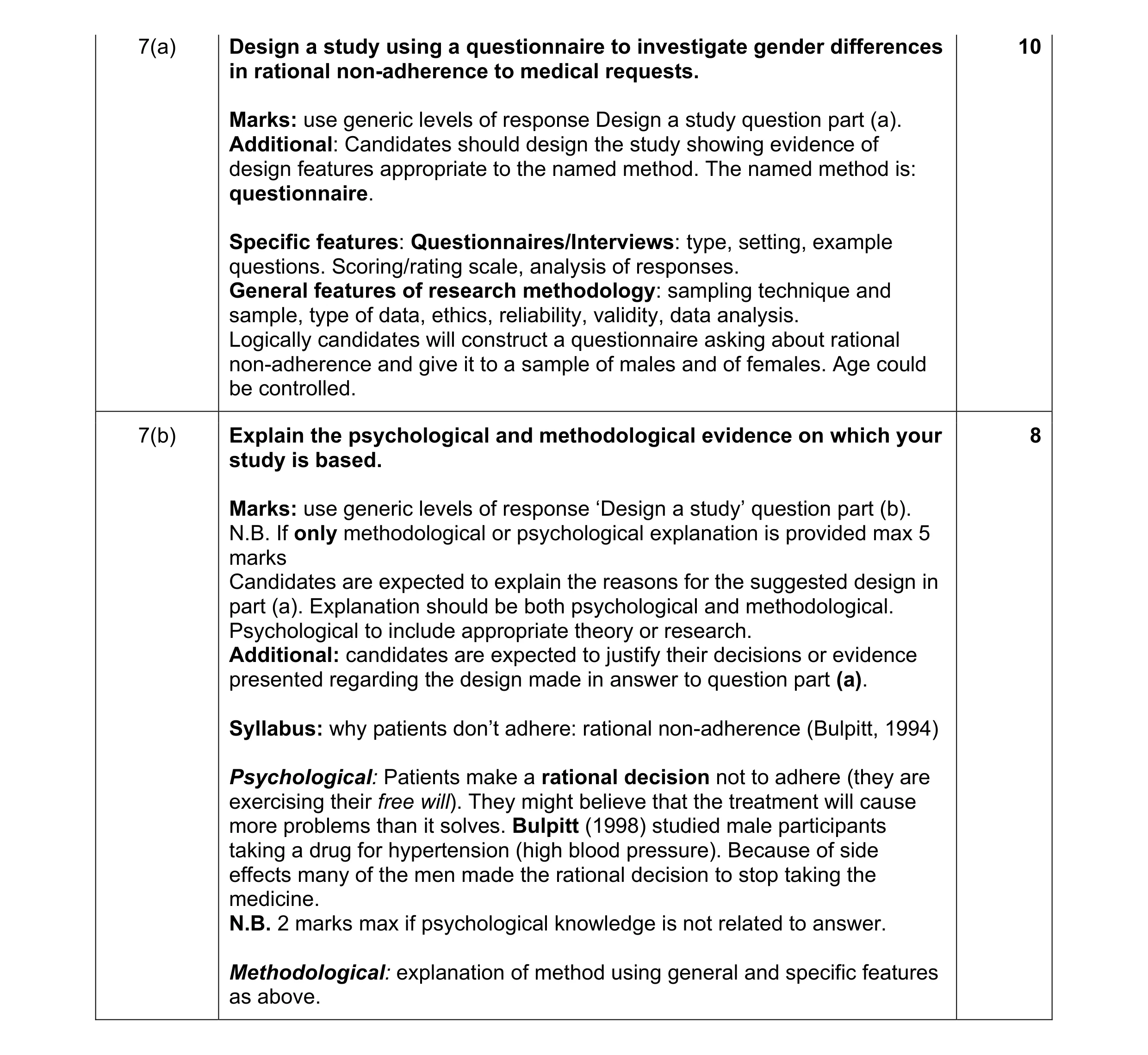 18
18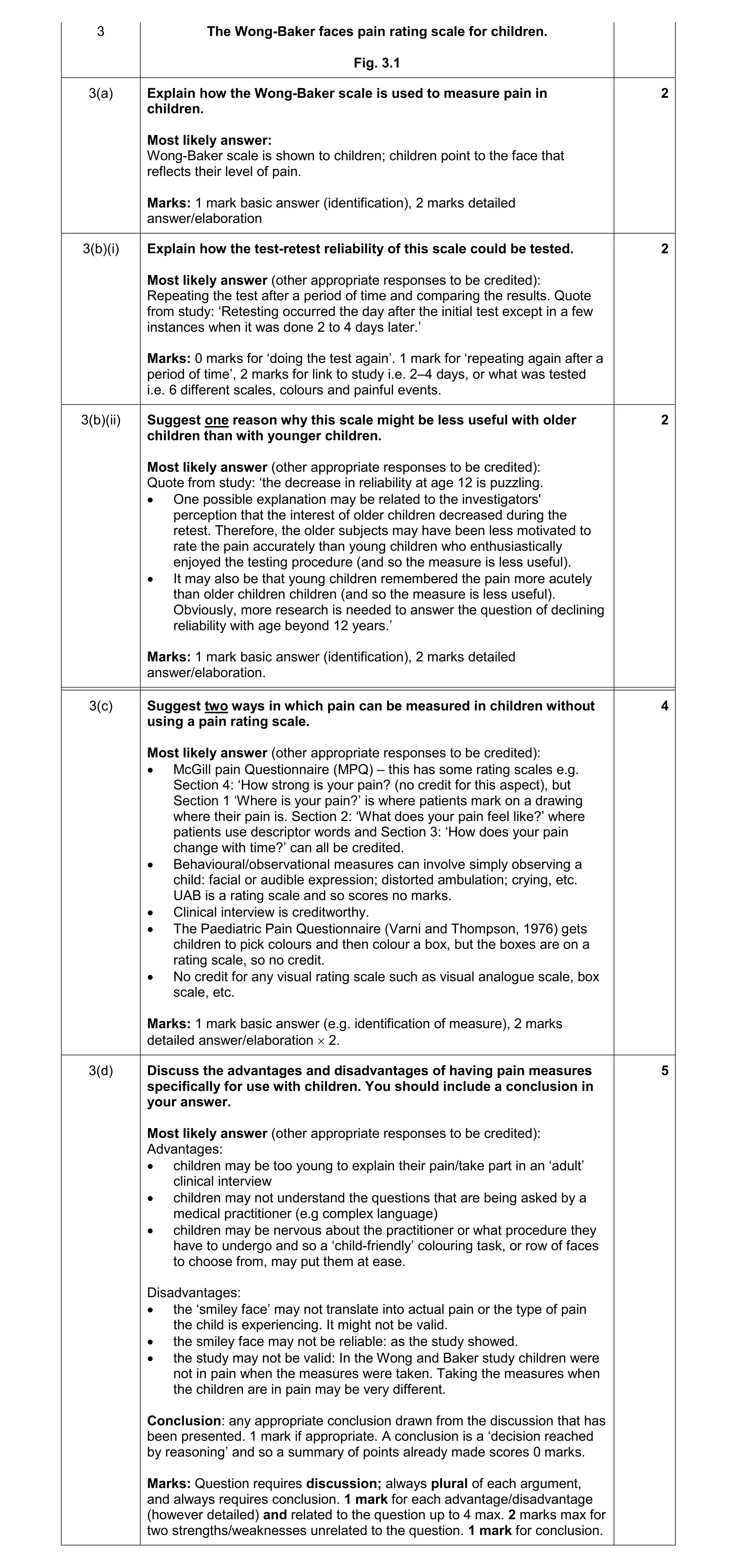 15
15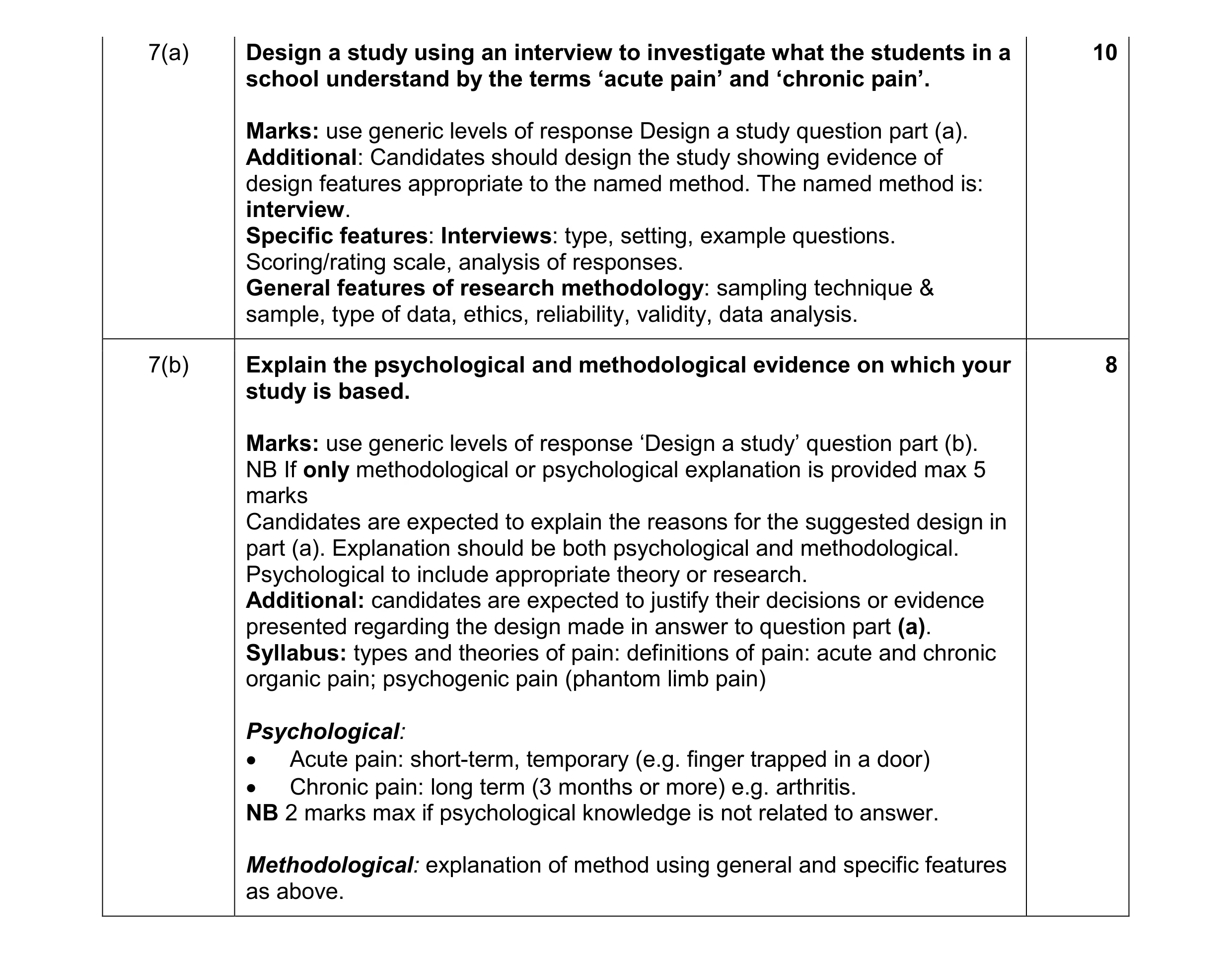 18
18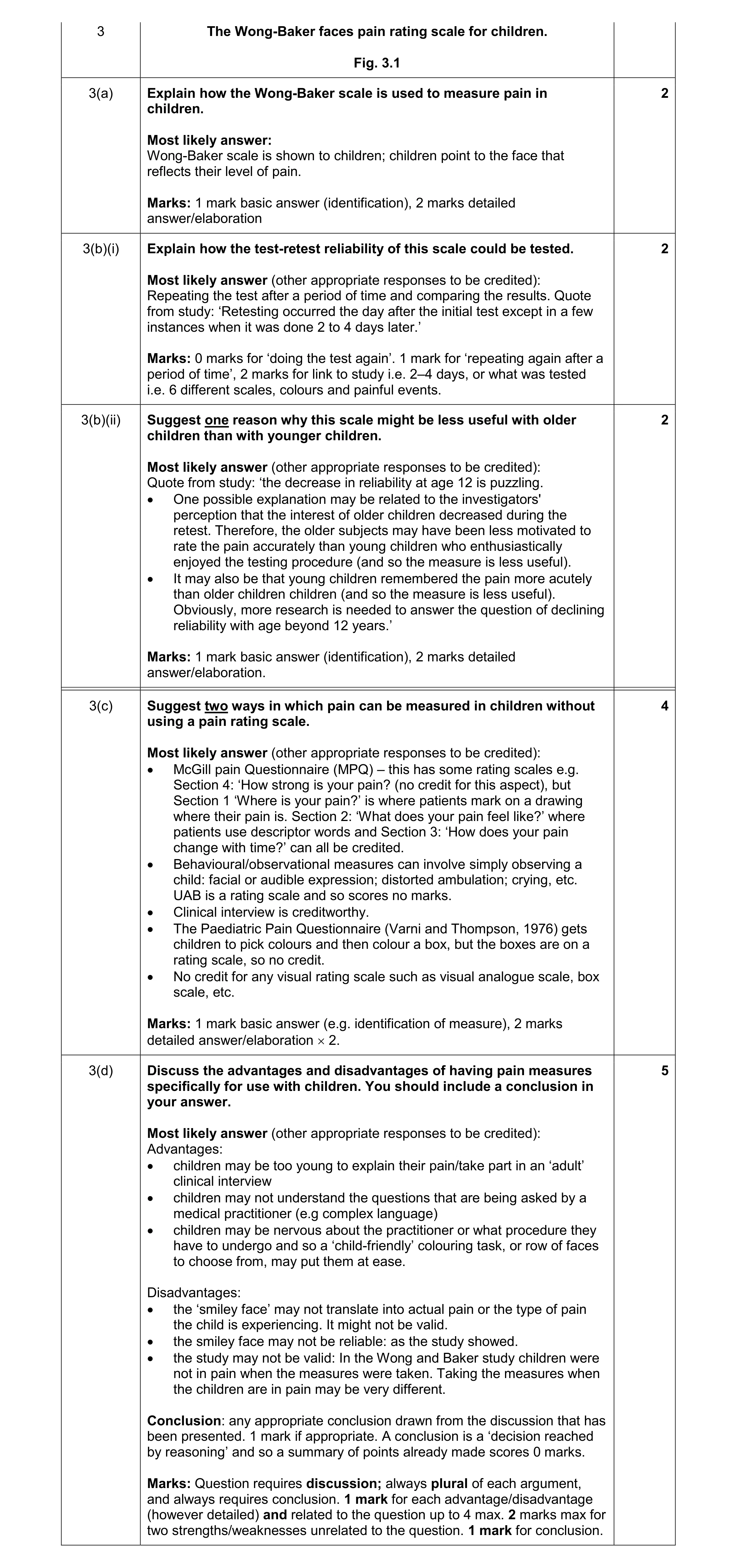 15
15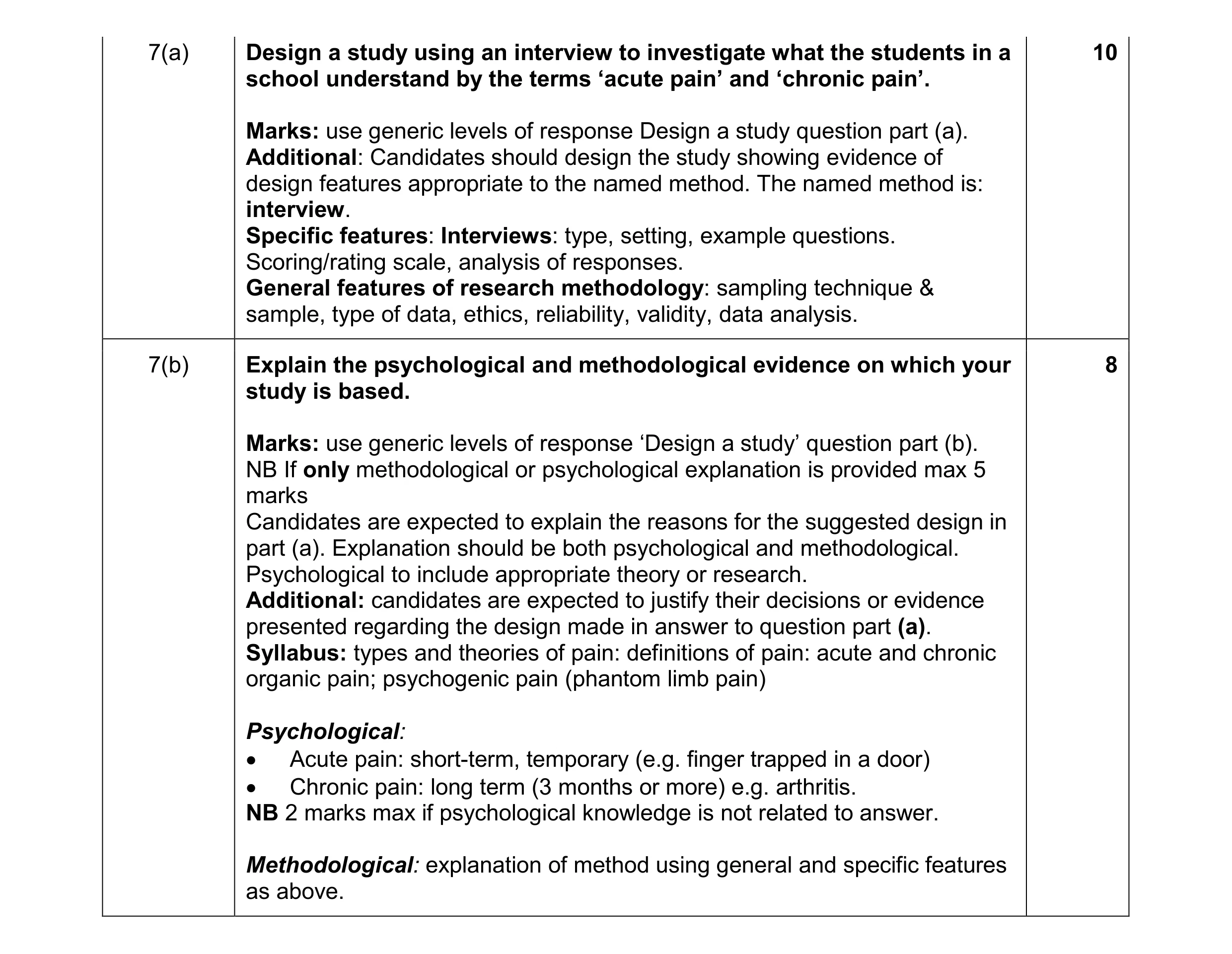 18
18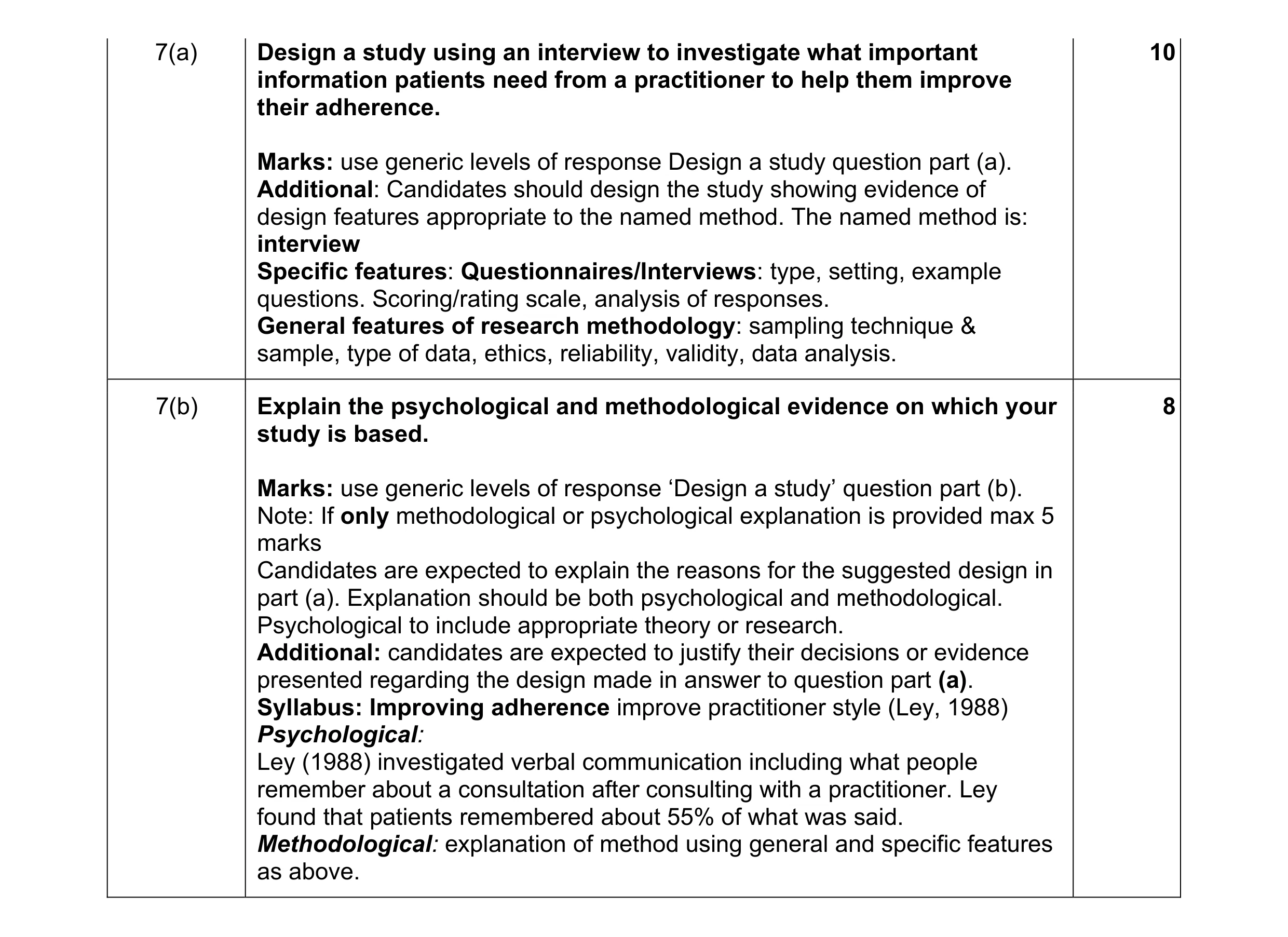 18
18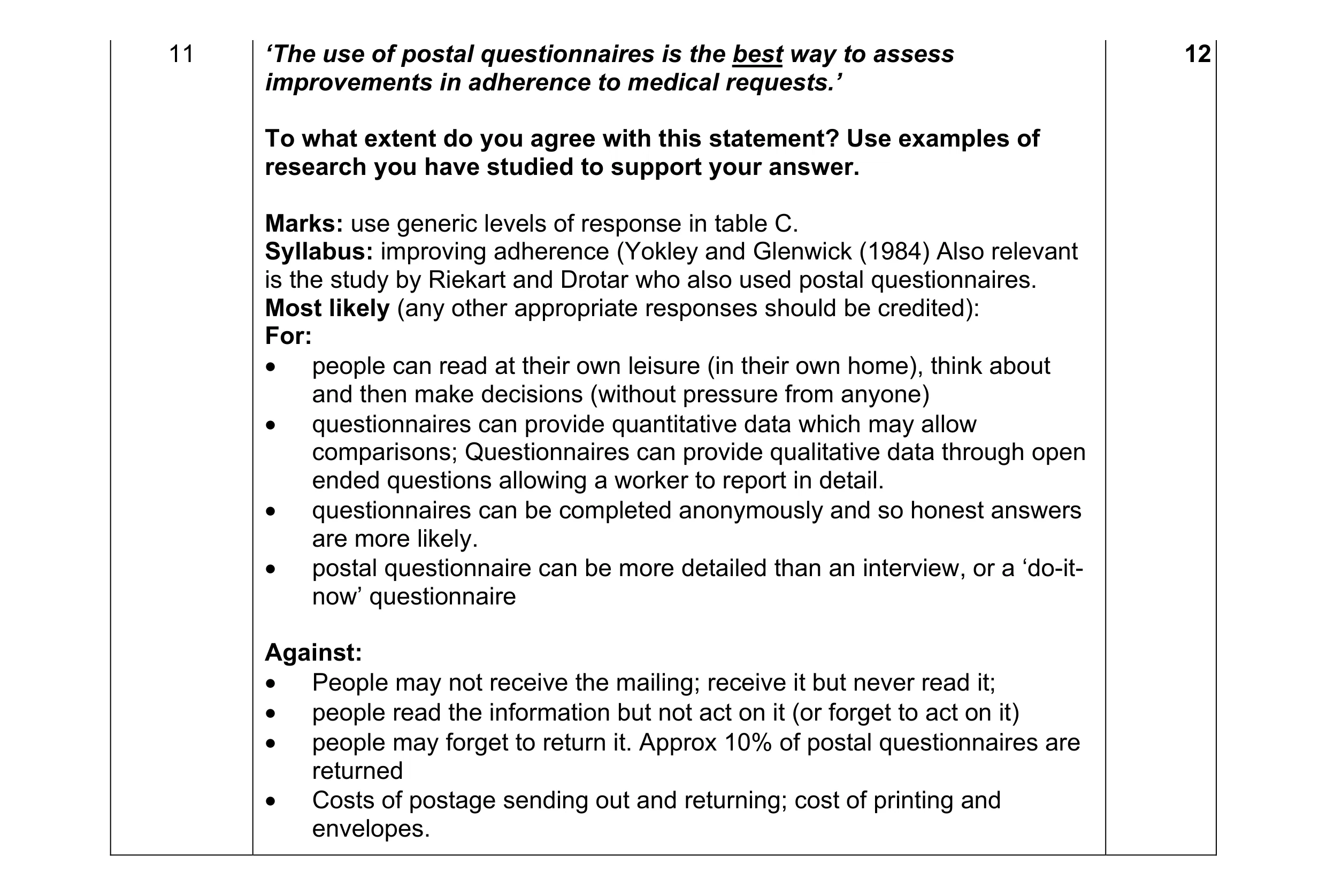 12
12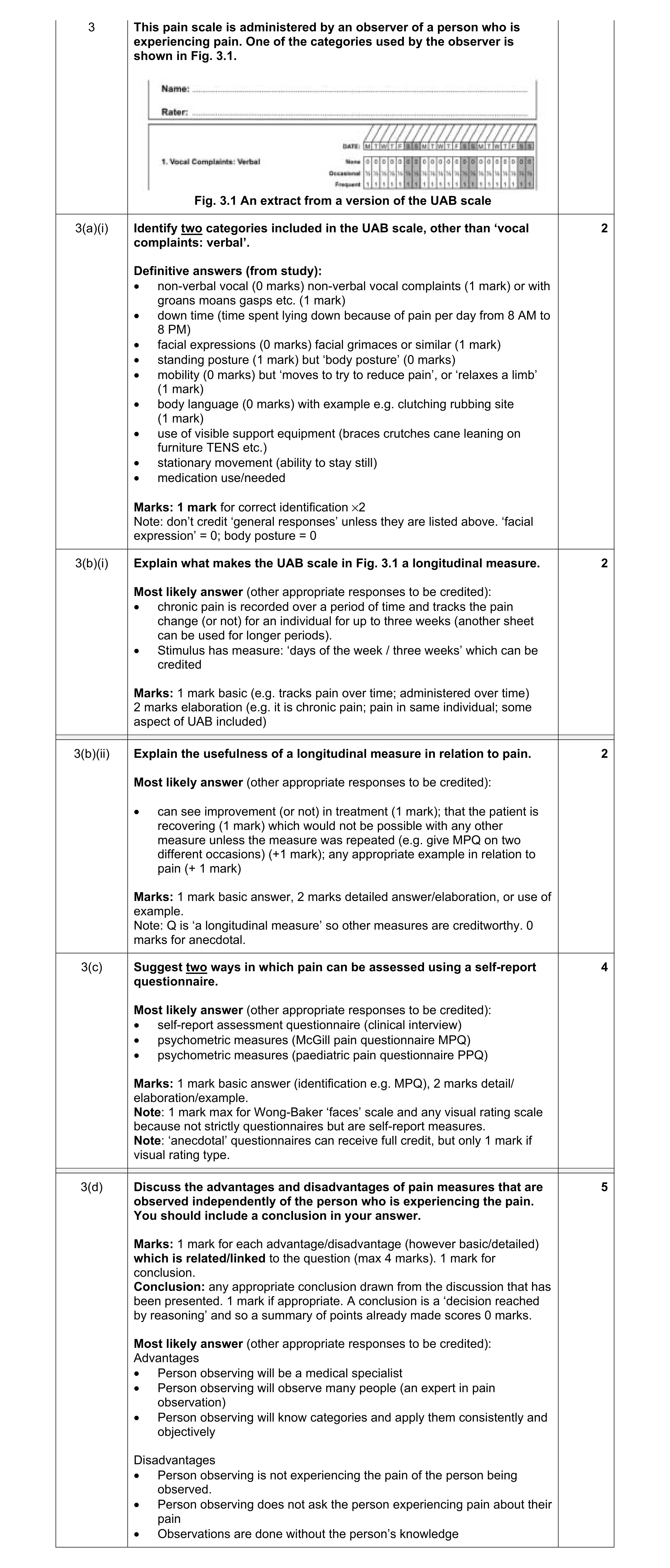 15
15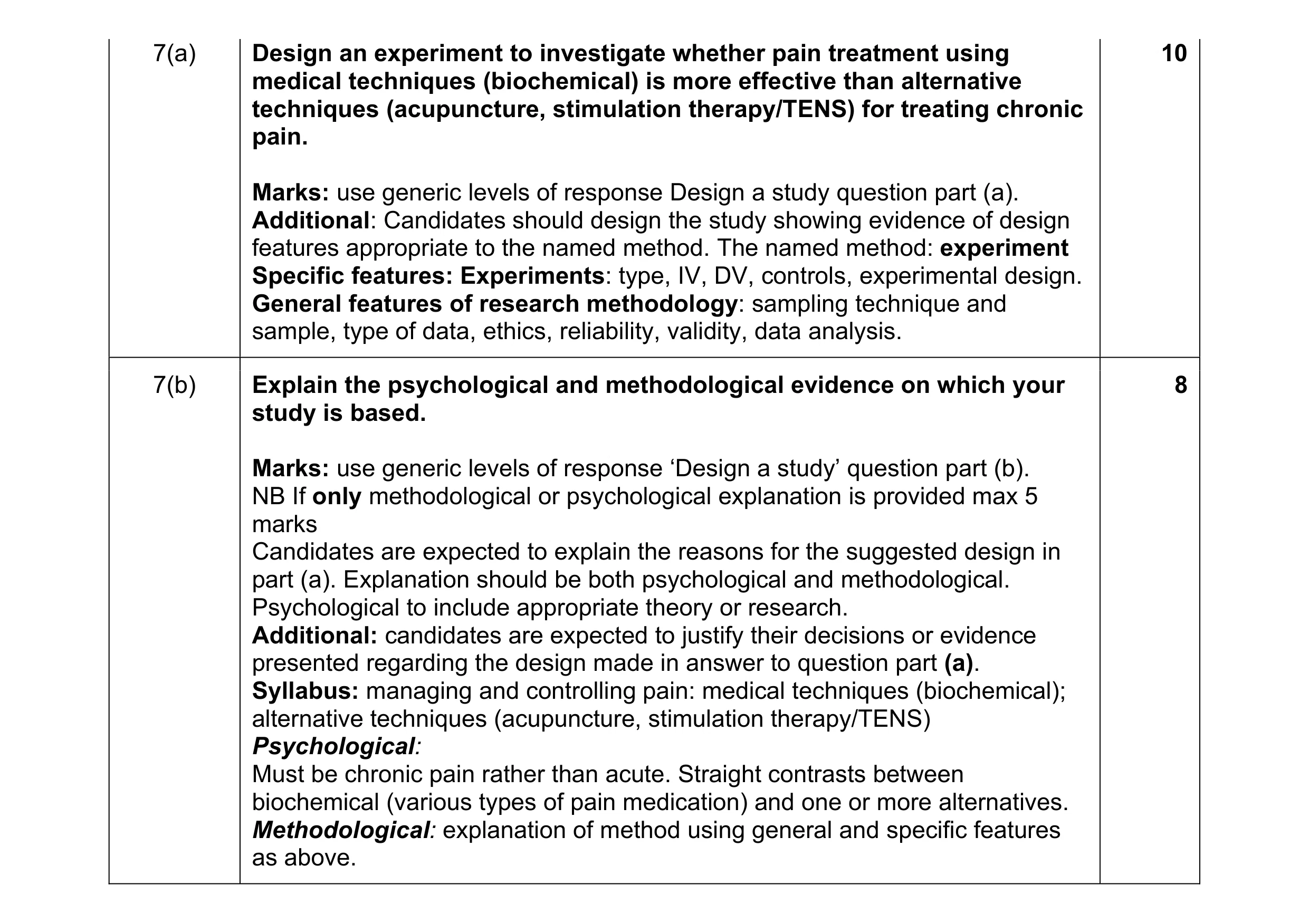 18
18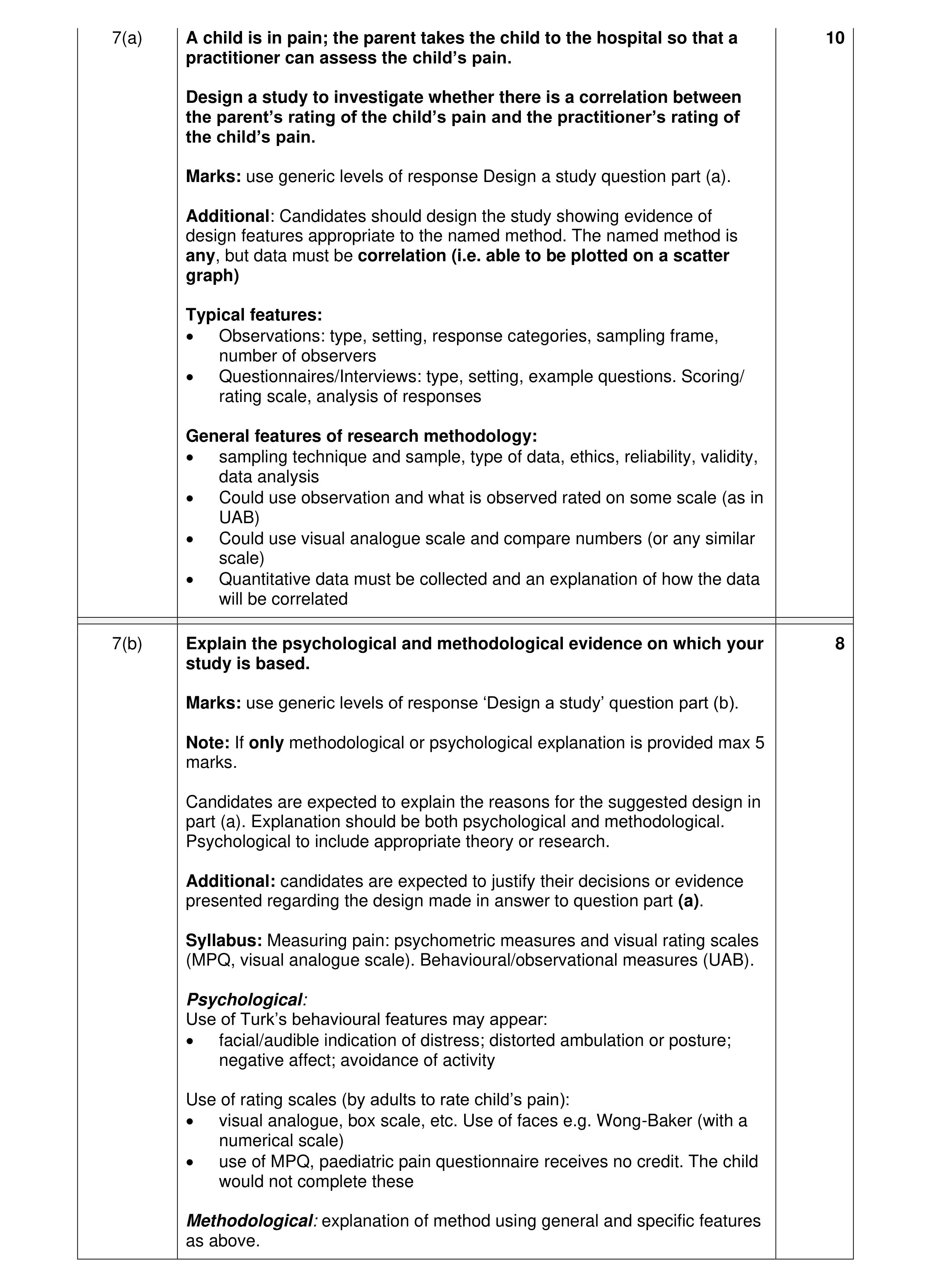 18
18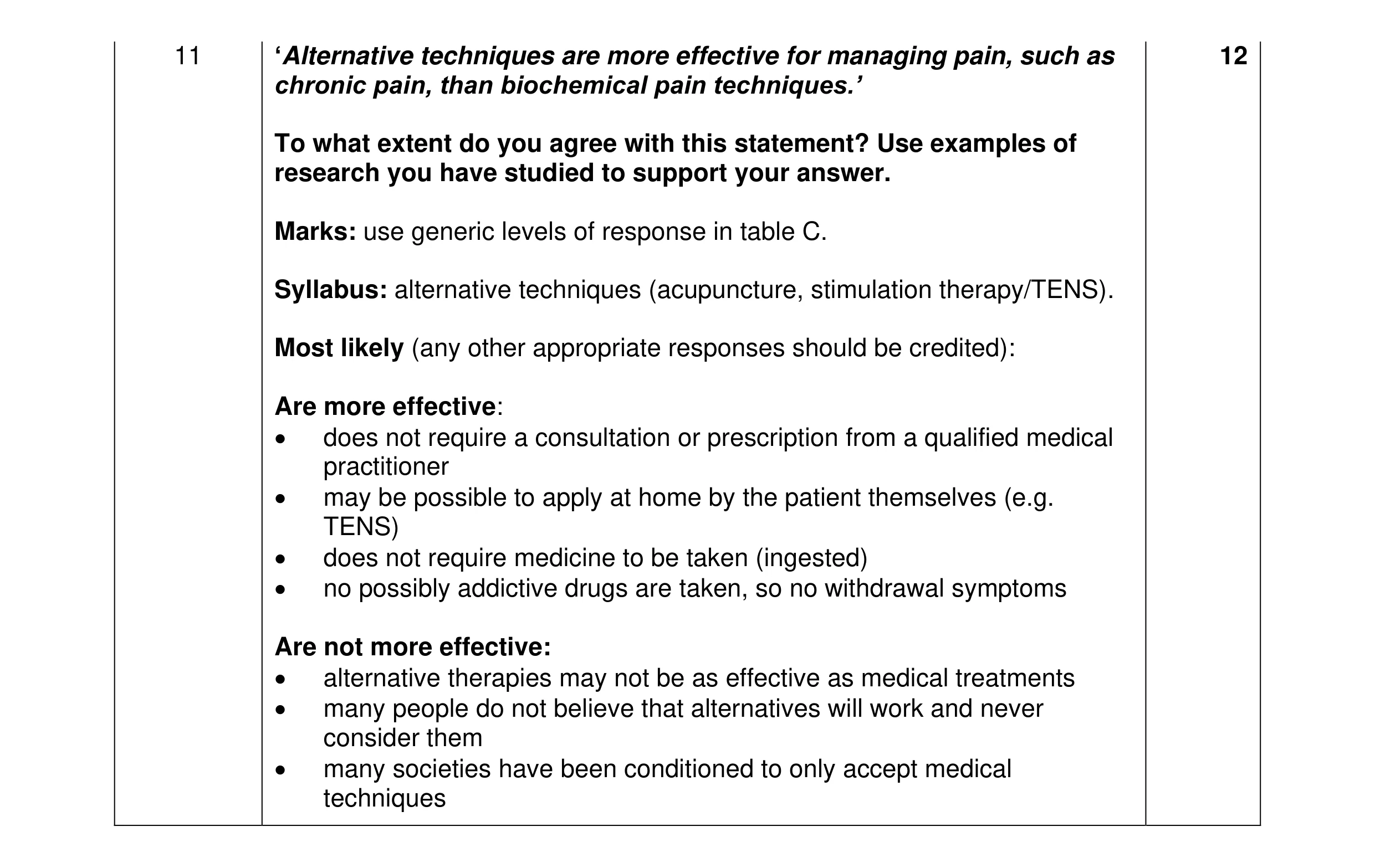 12
12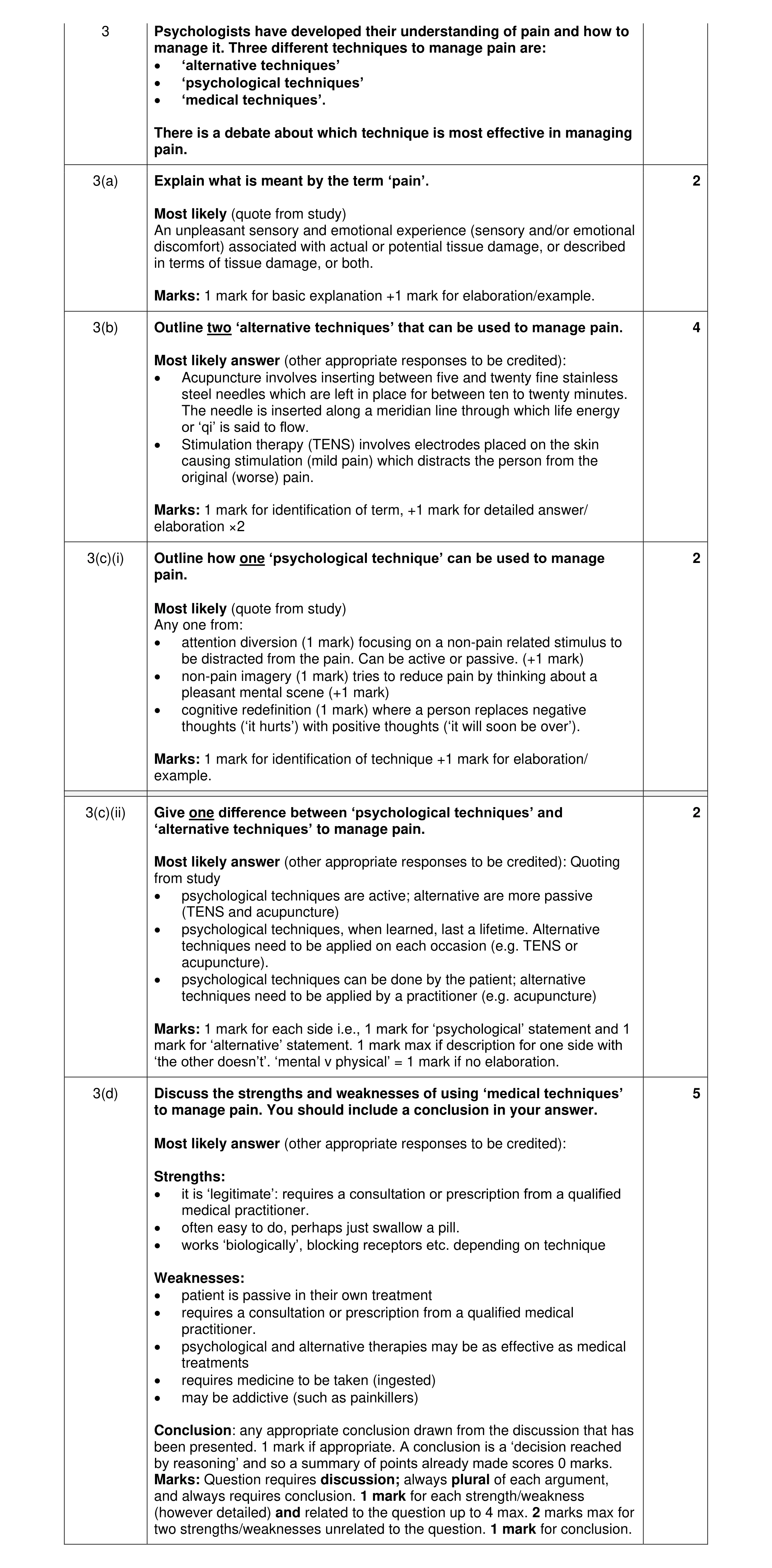 15
15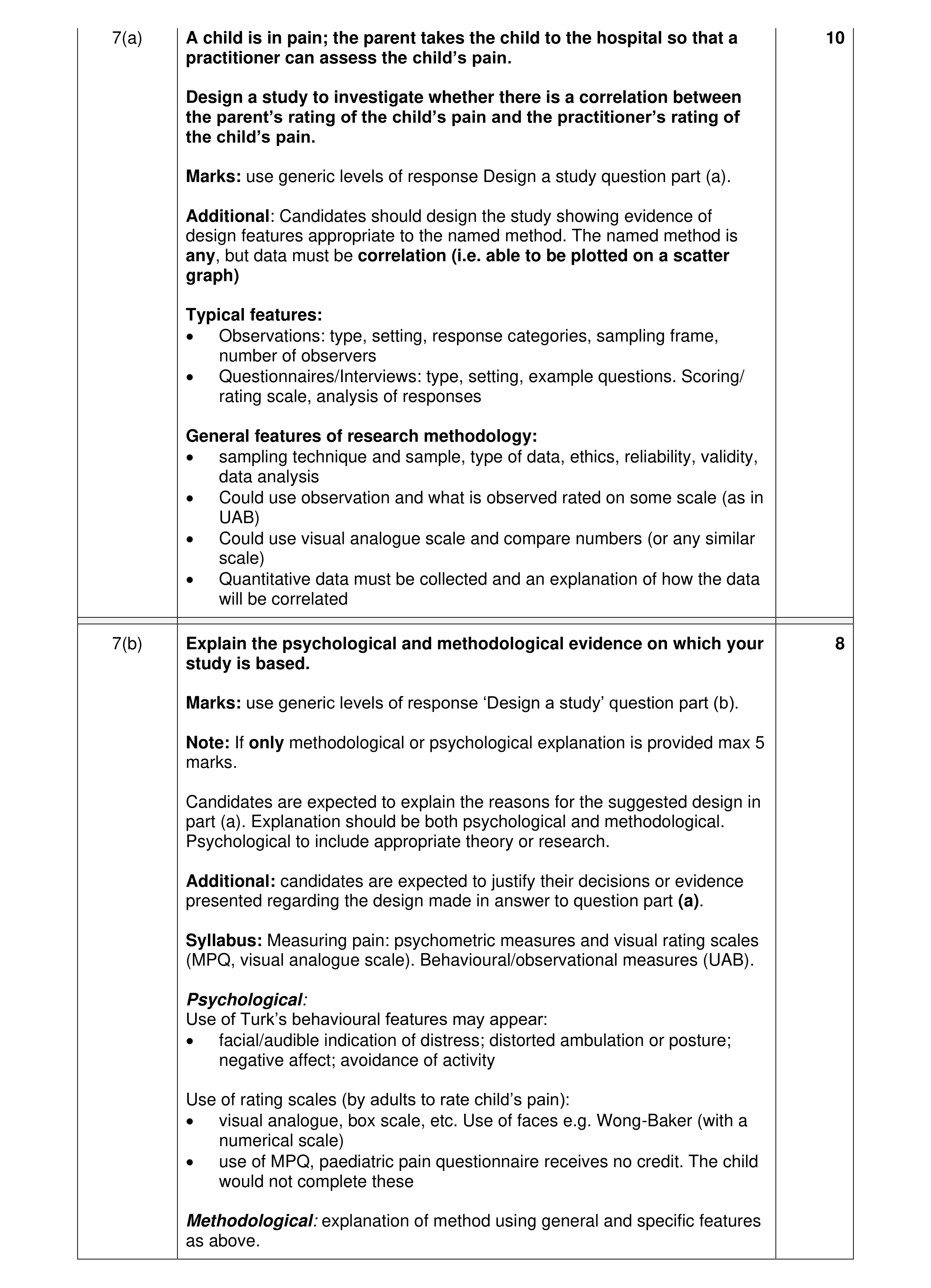 18
18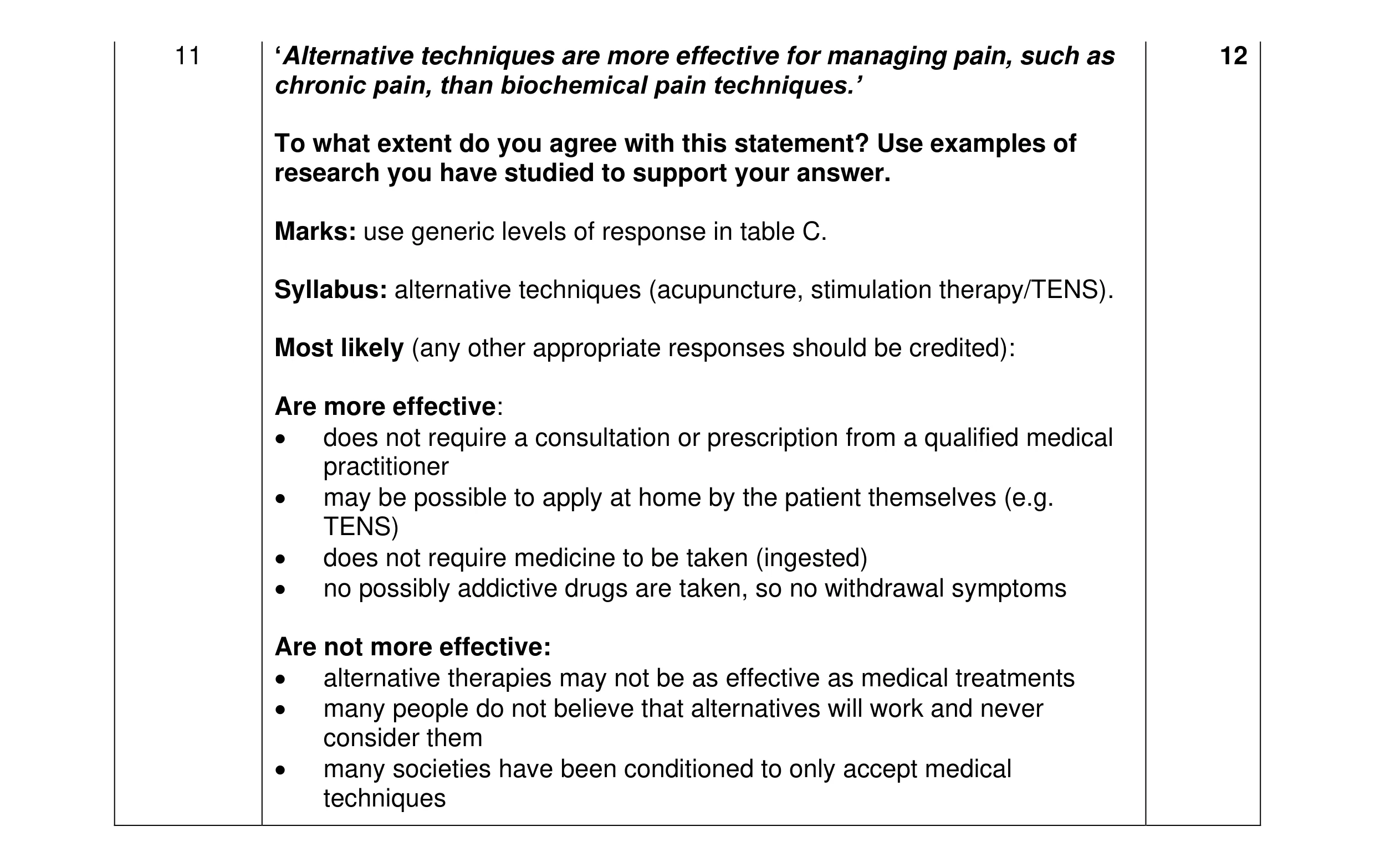 12
12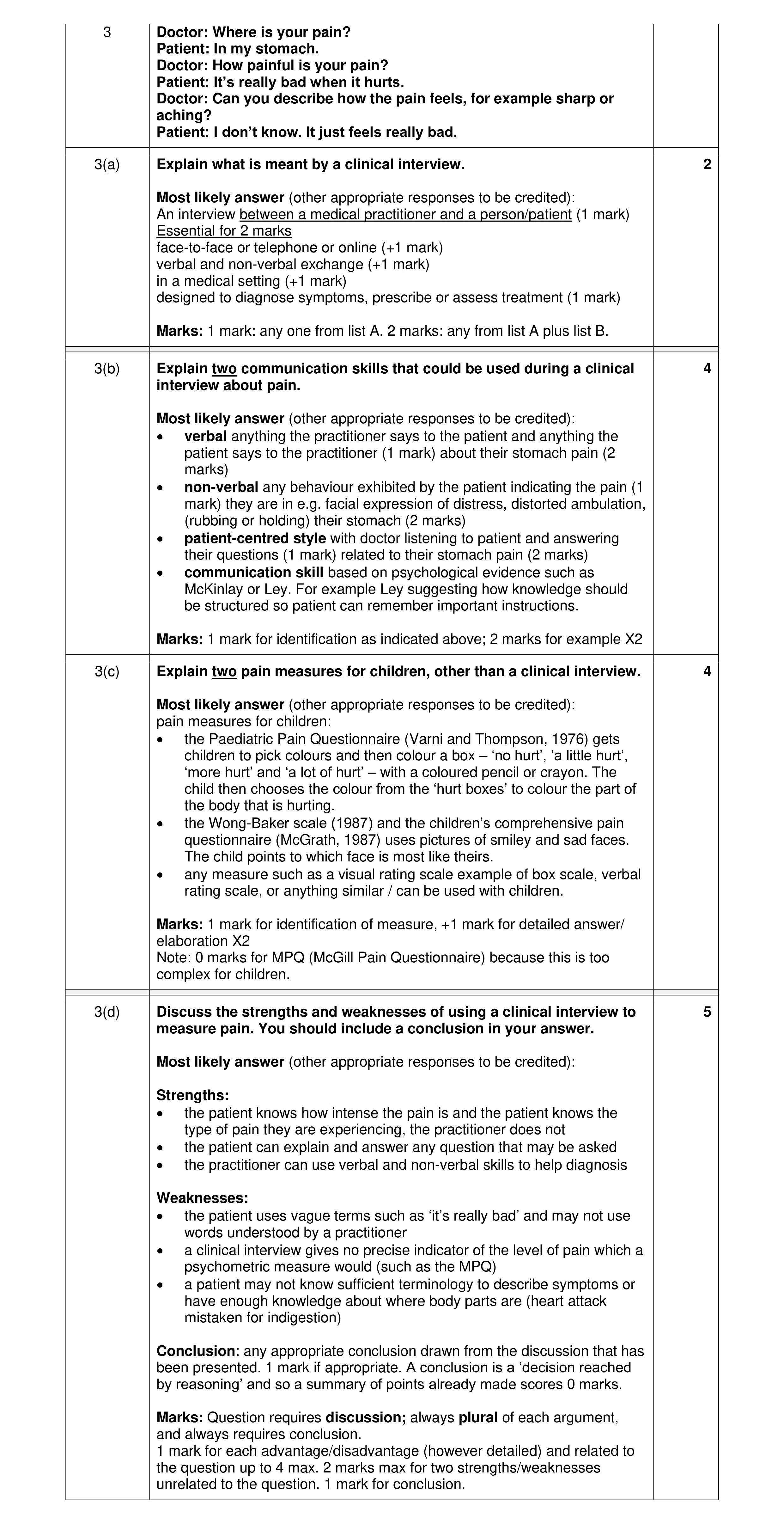 15
15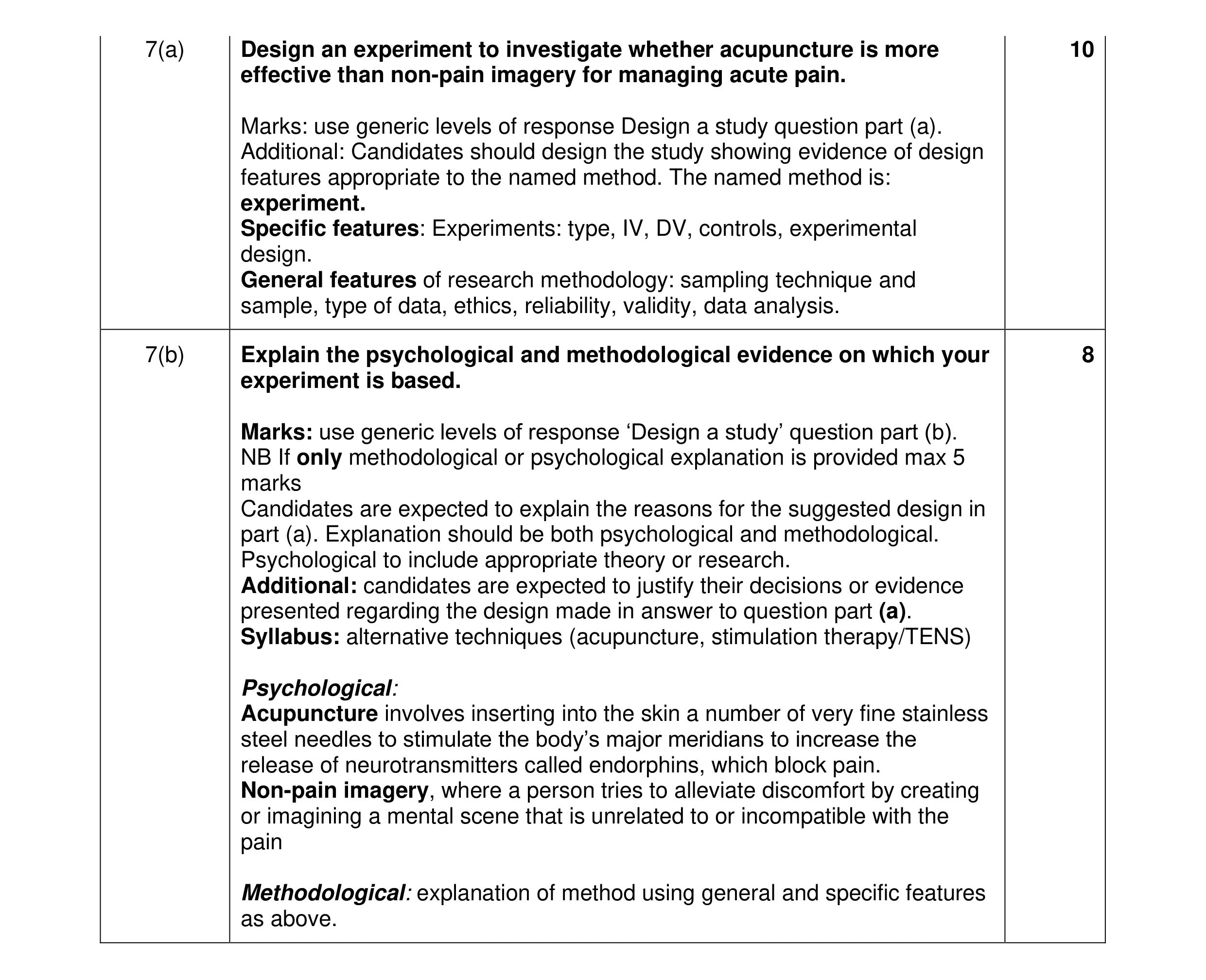 18
18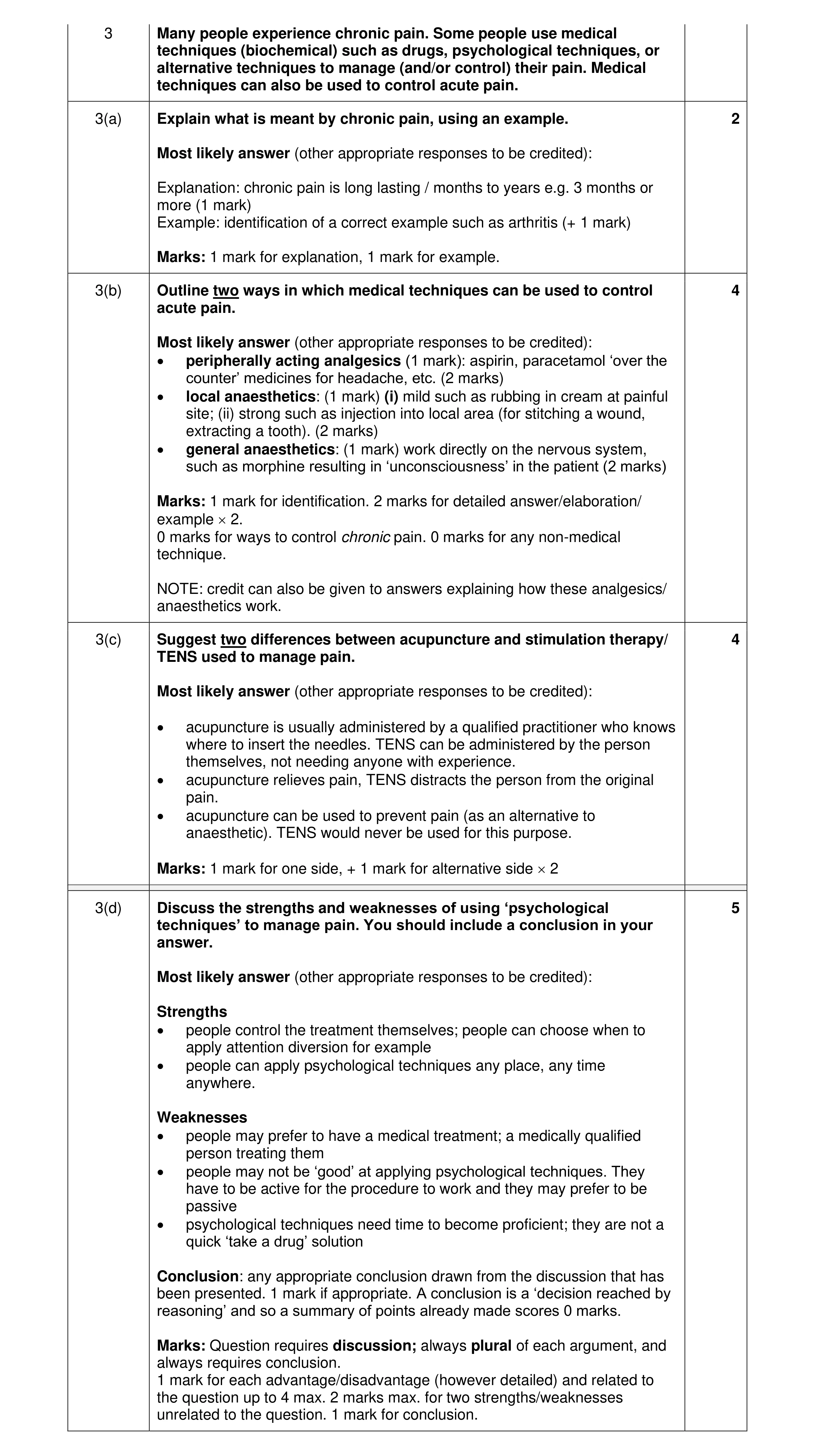 15
15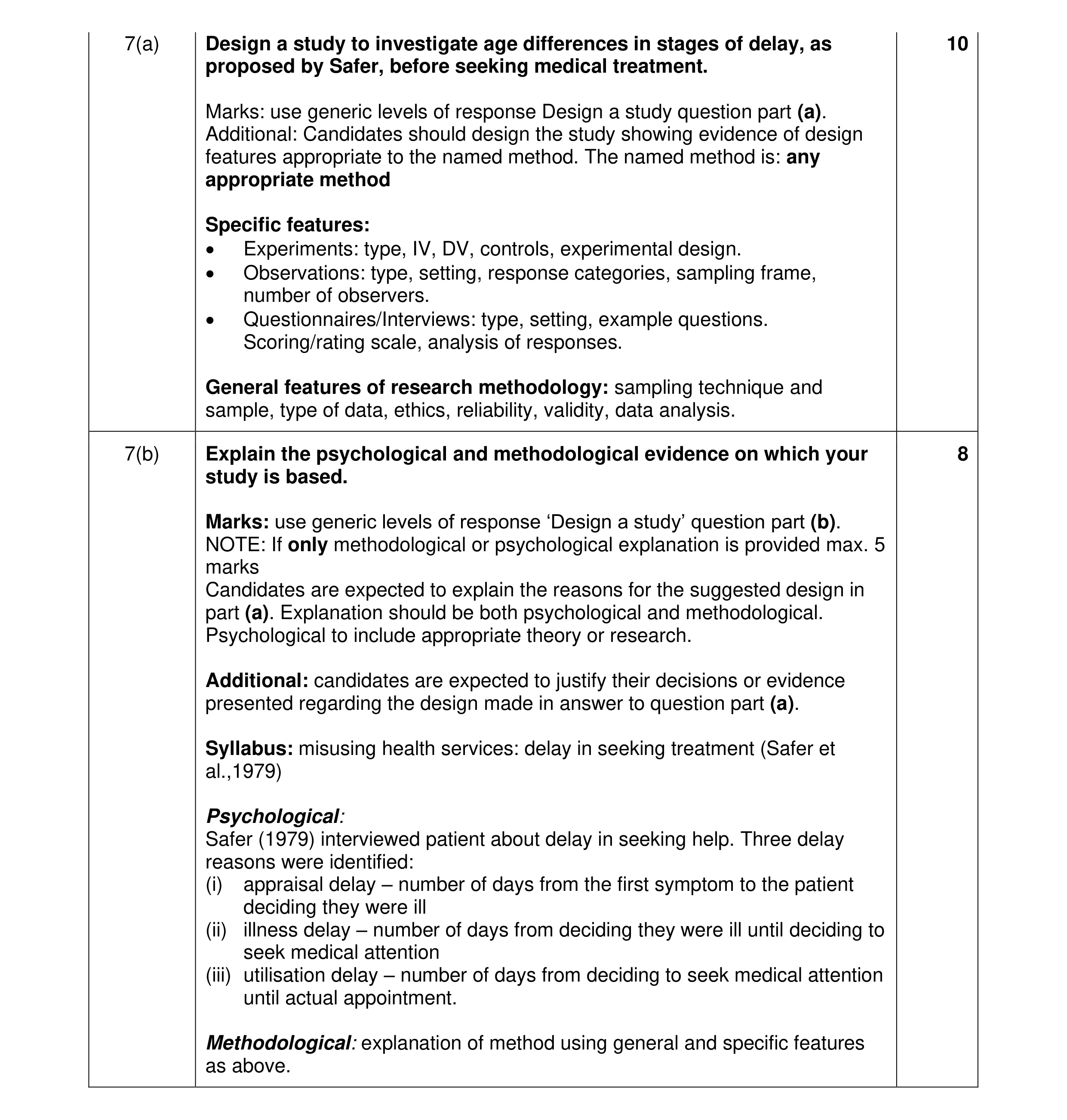 18
18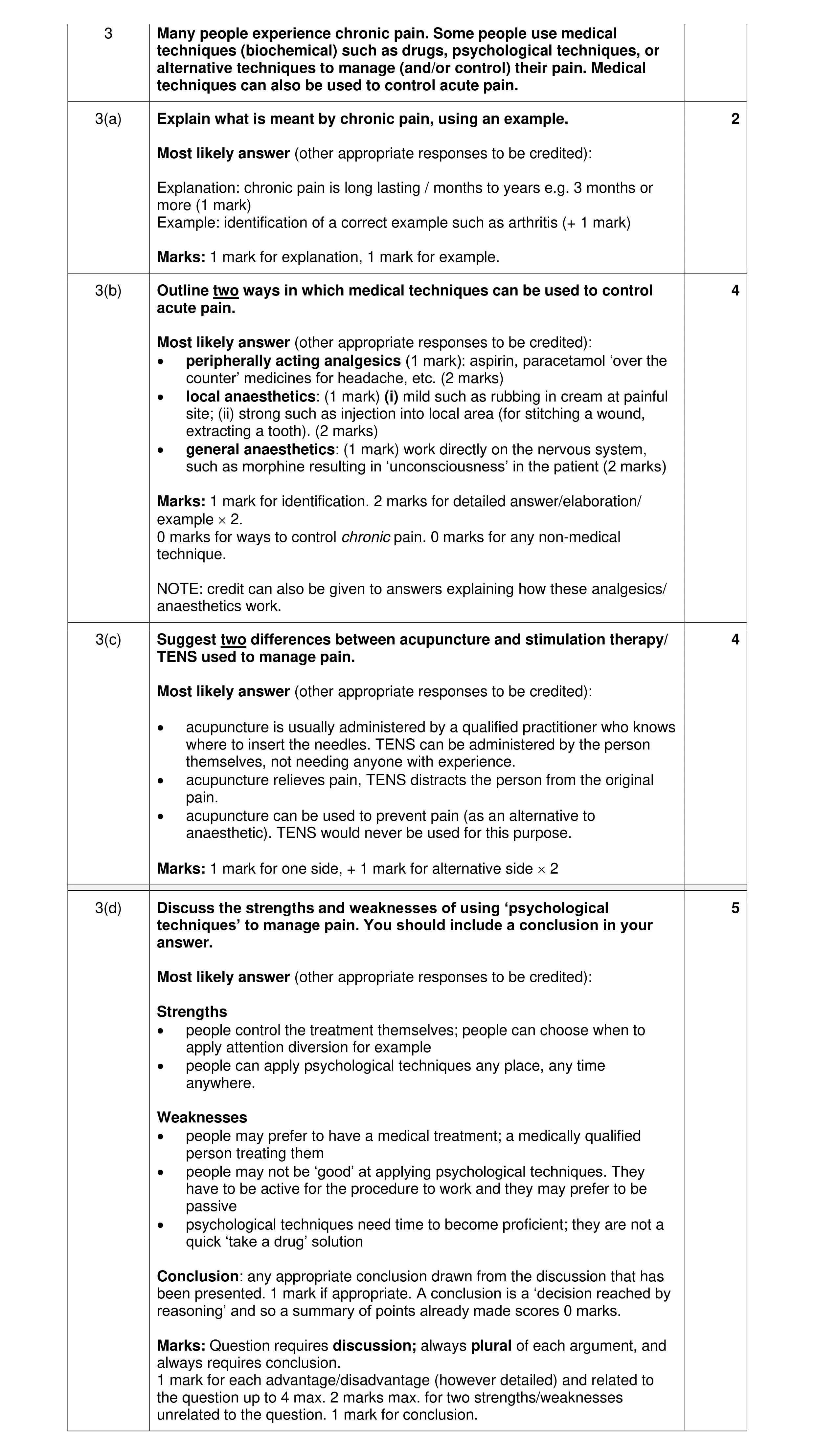 15
15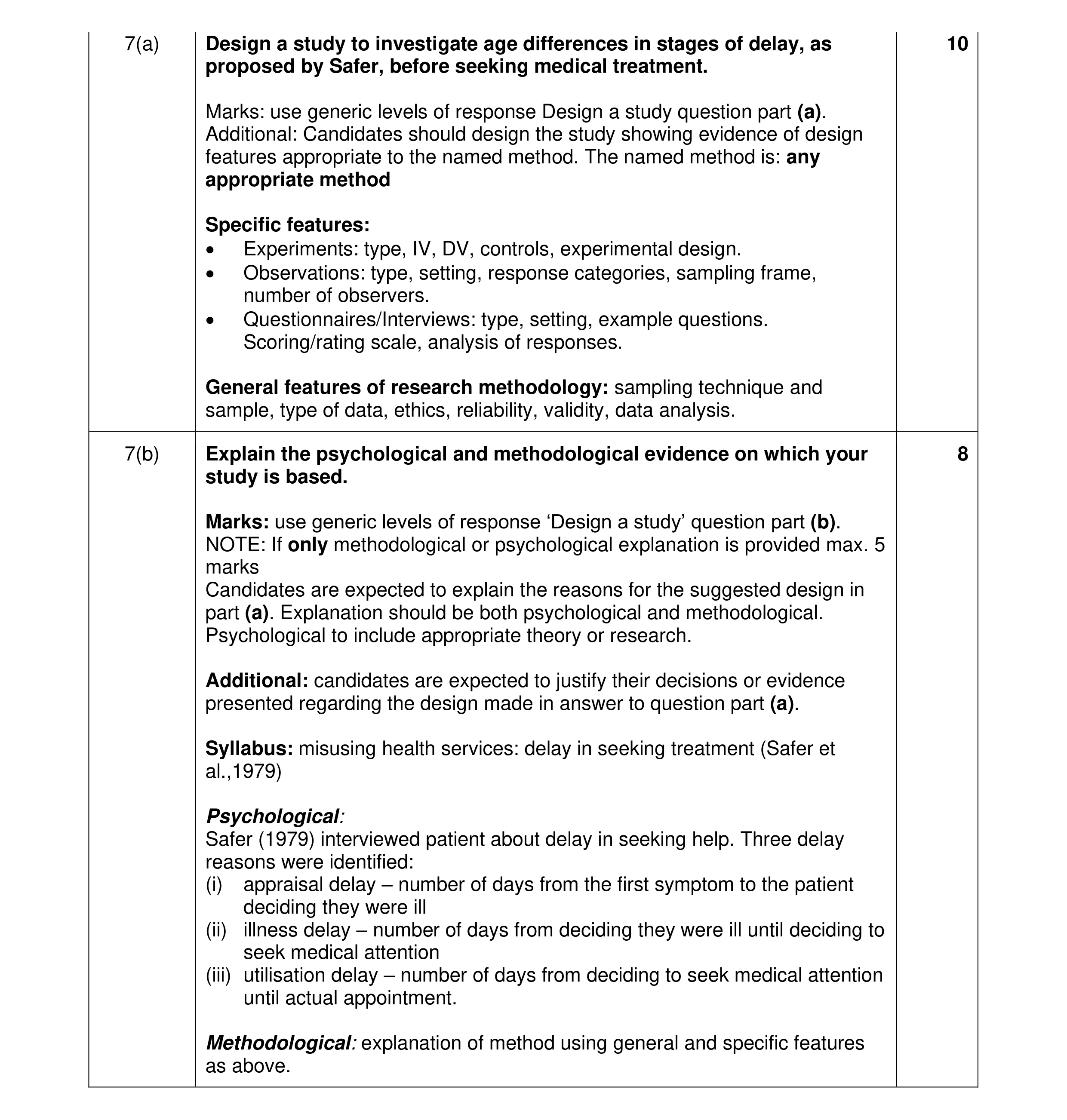 18
18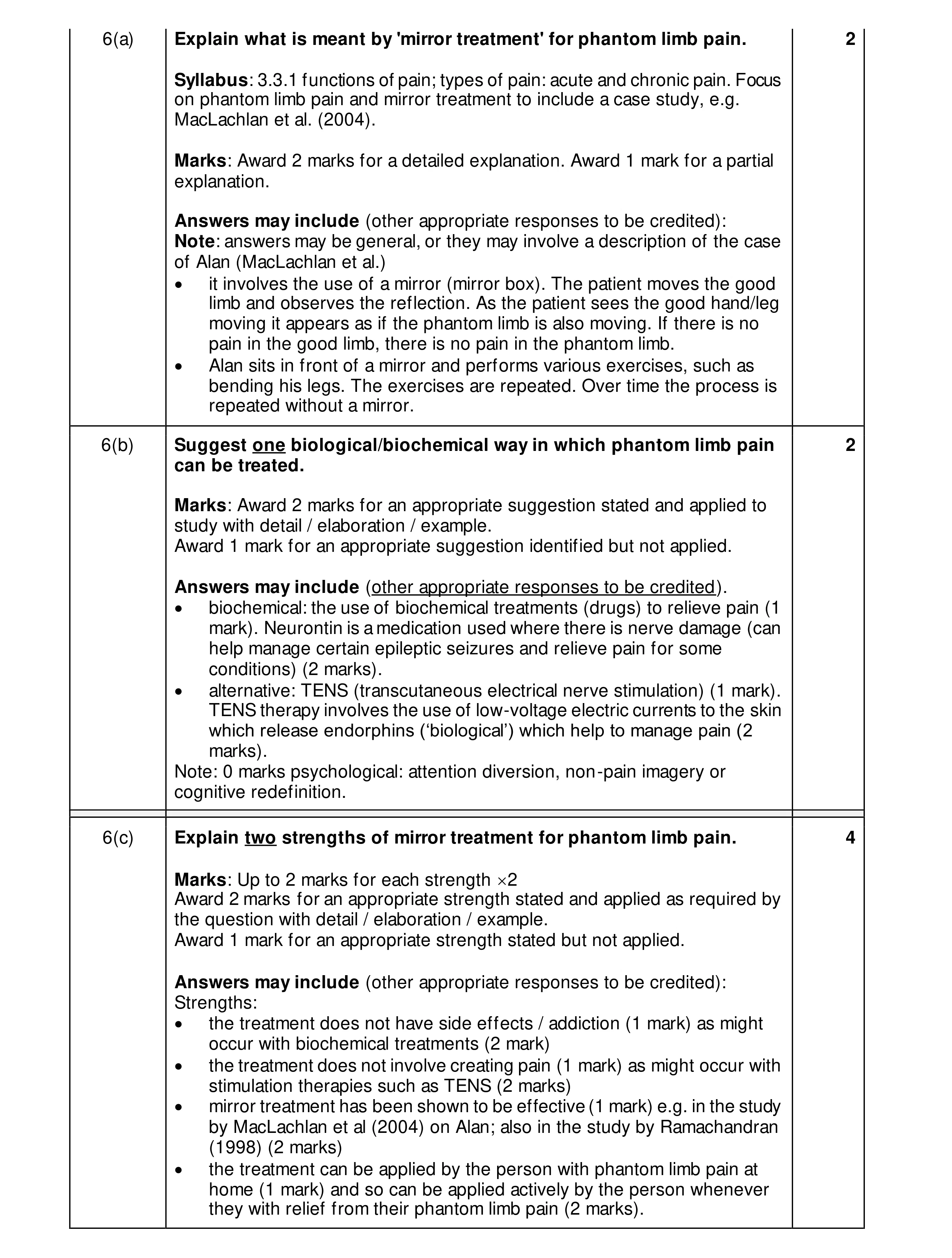 8
8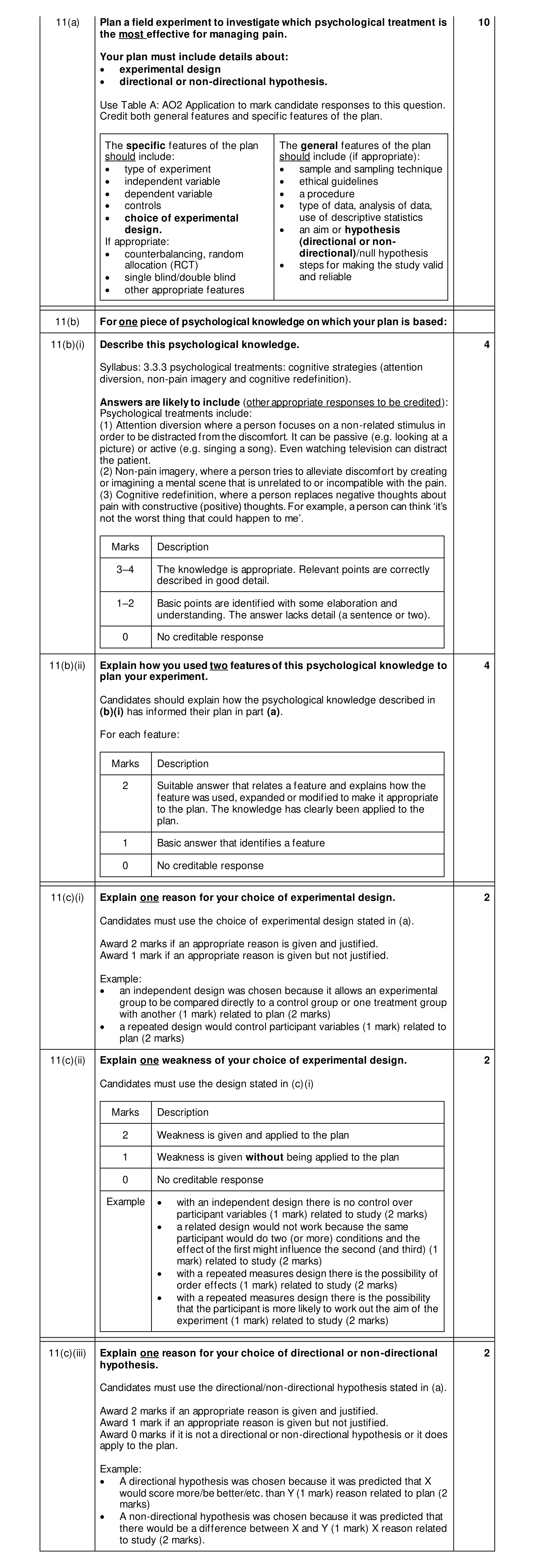 24
24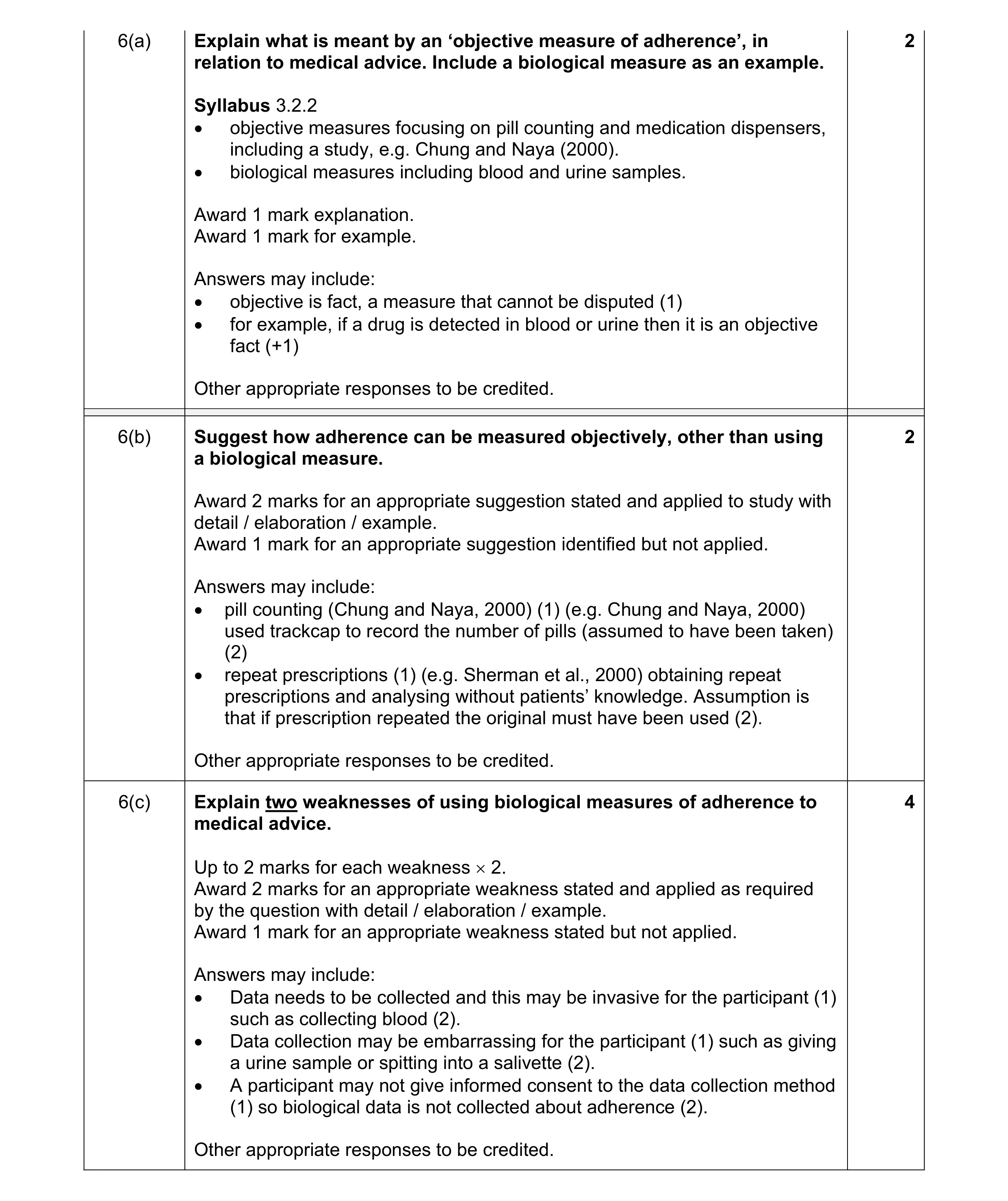 8
8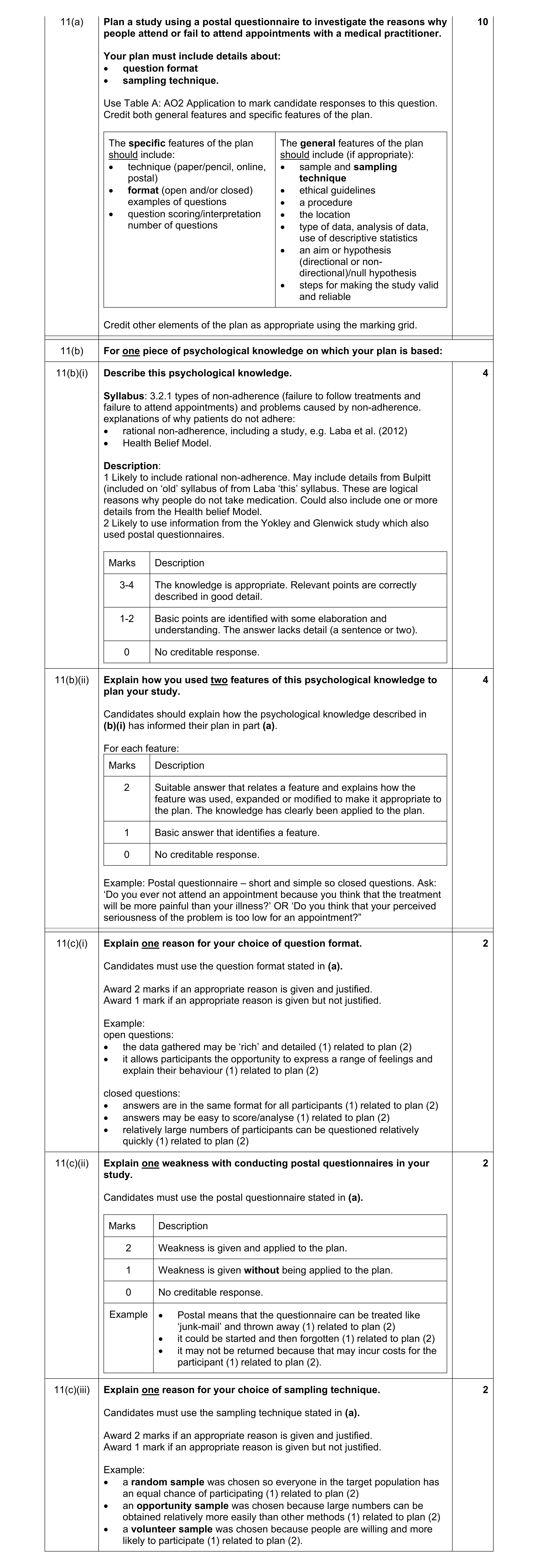 24
24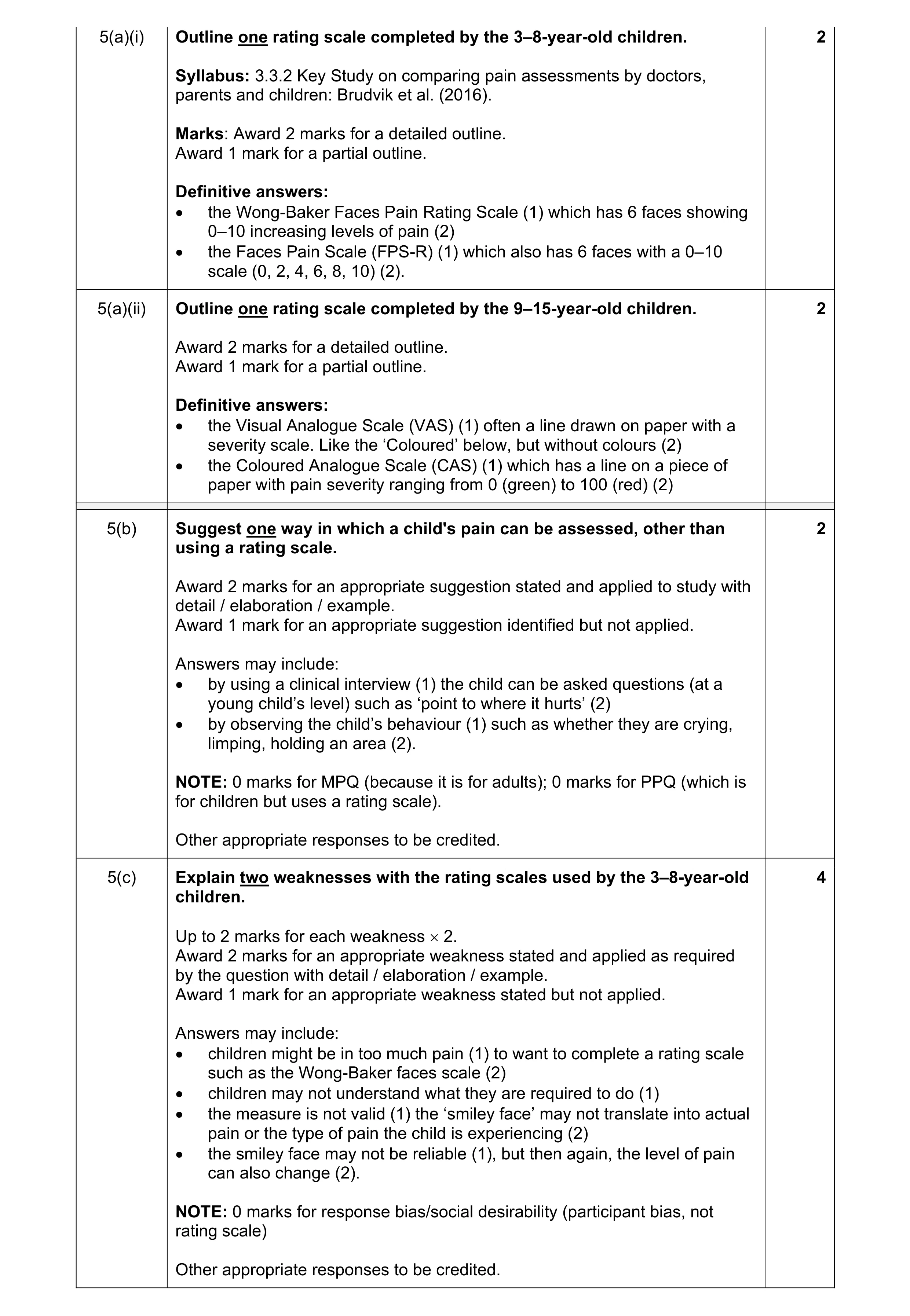 10
10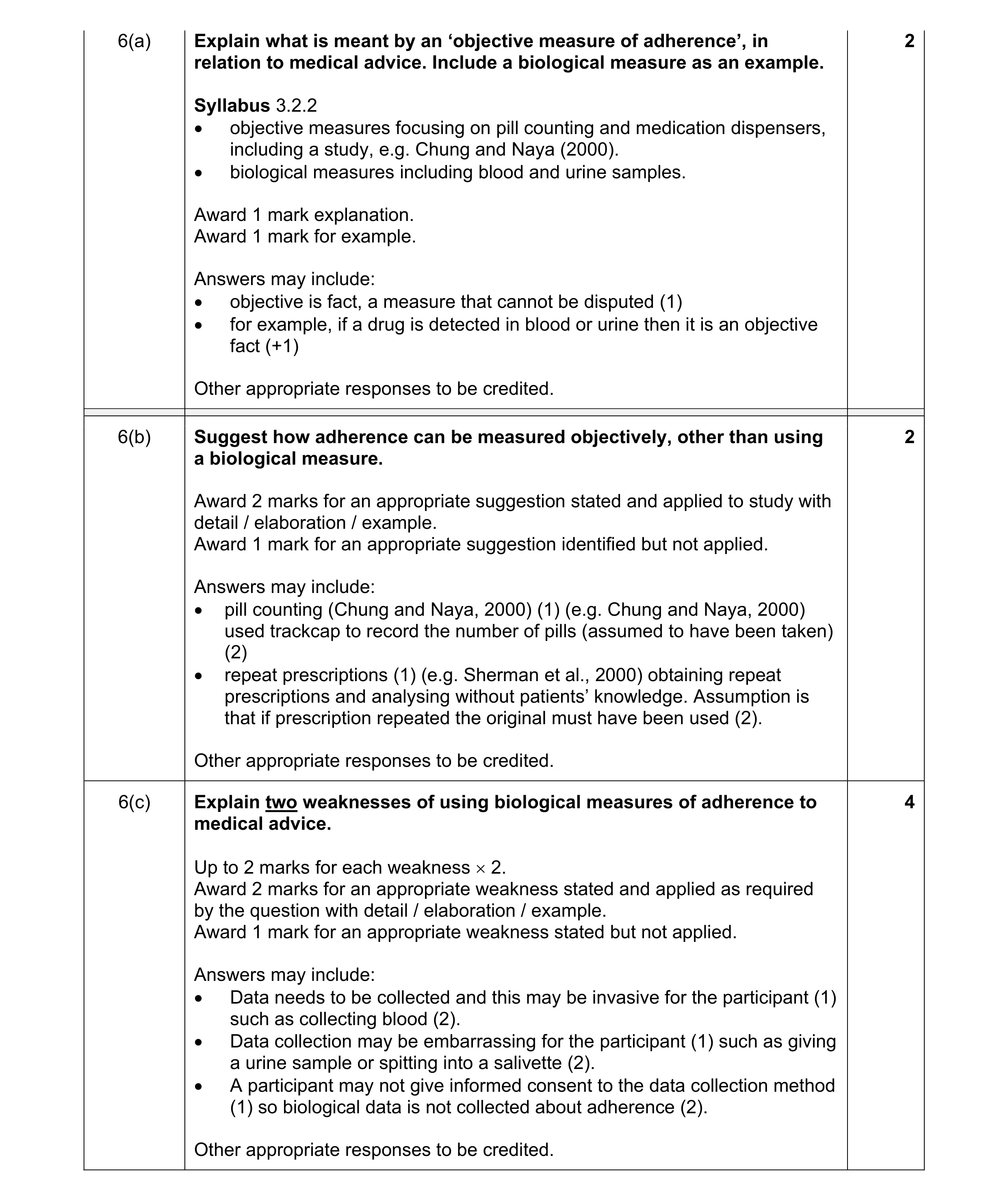 8
8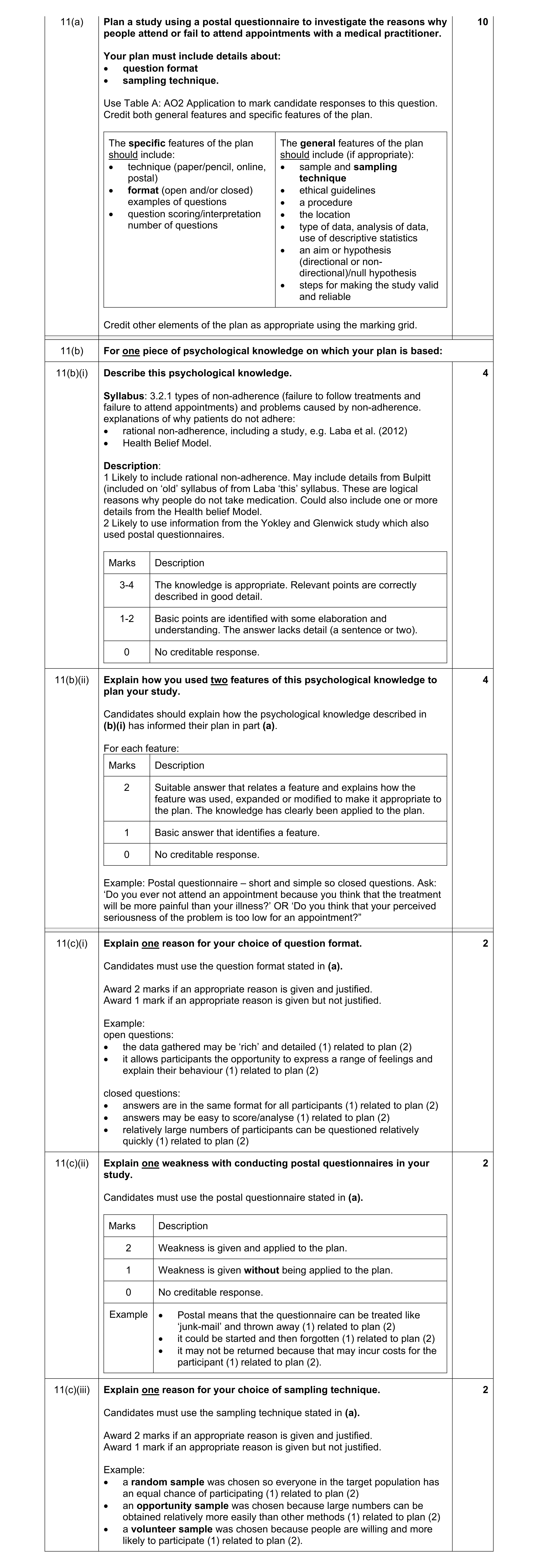 24
24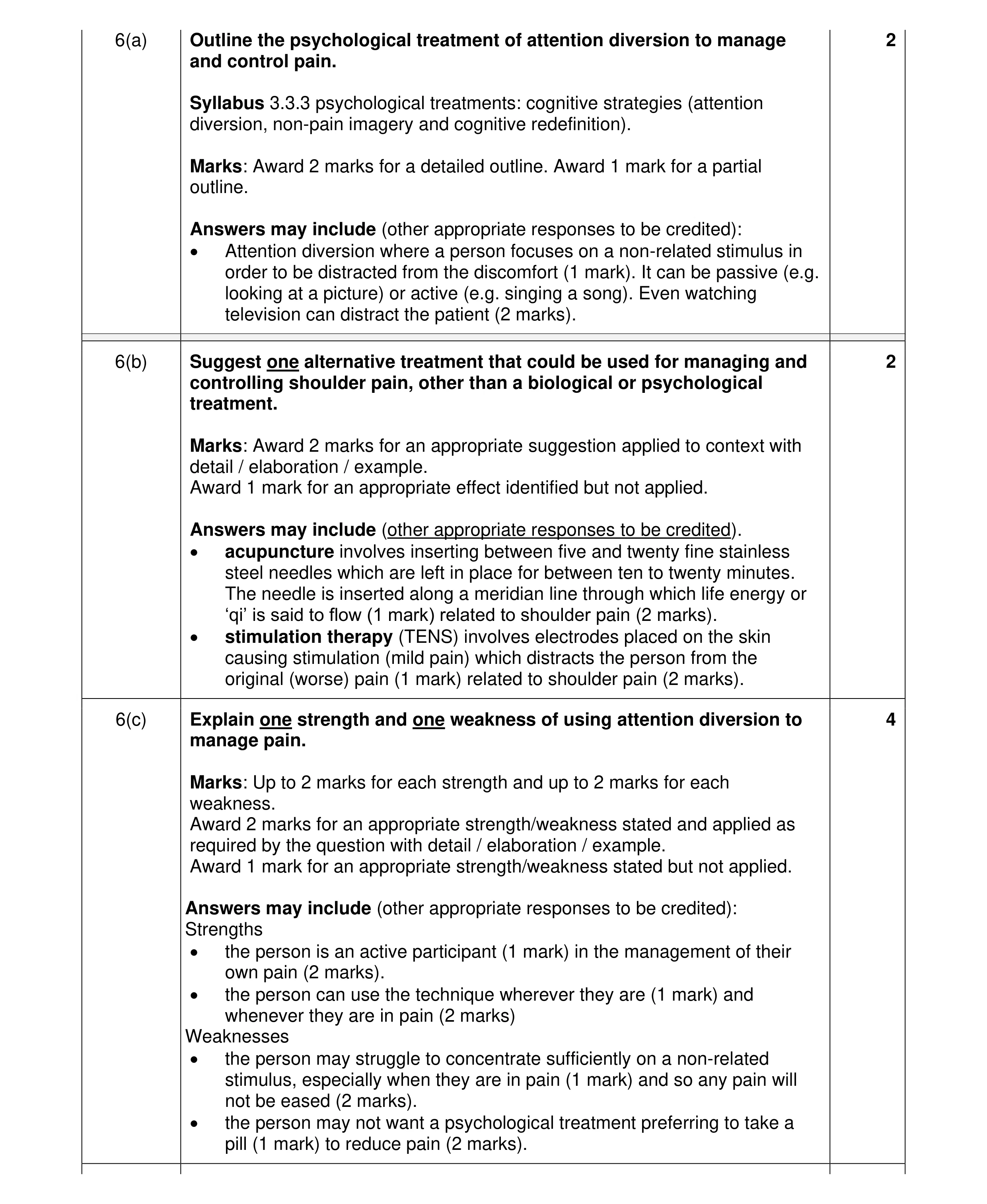 8
8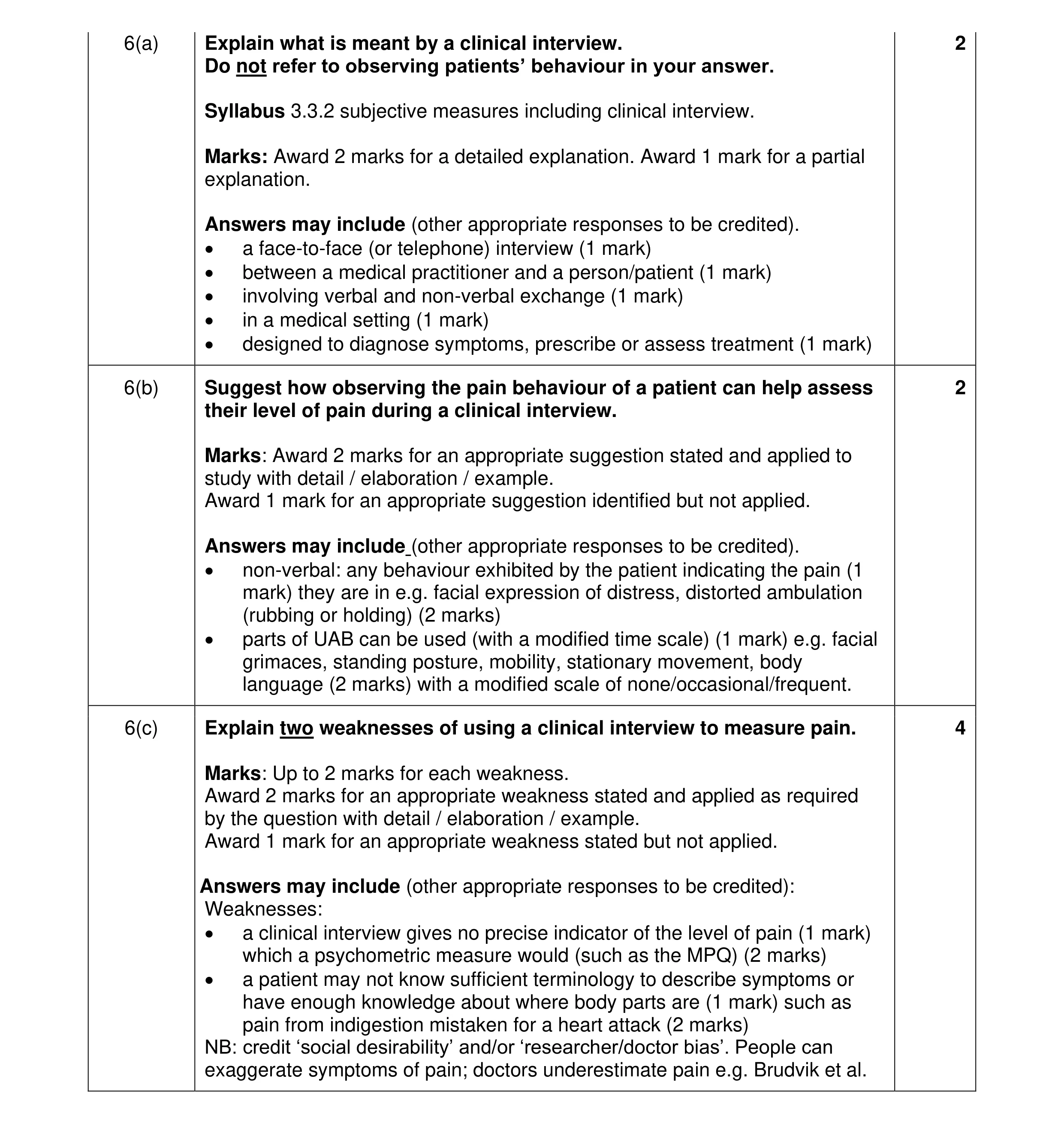 8
8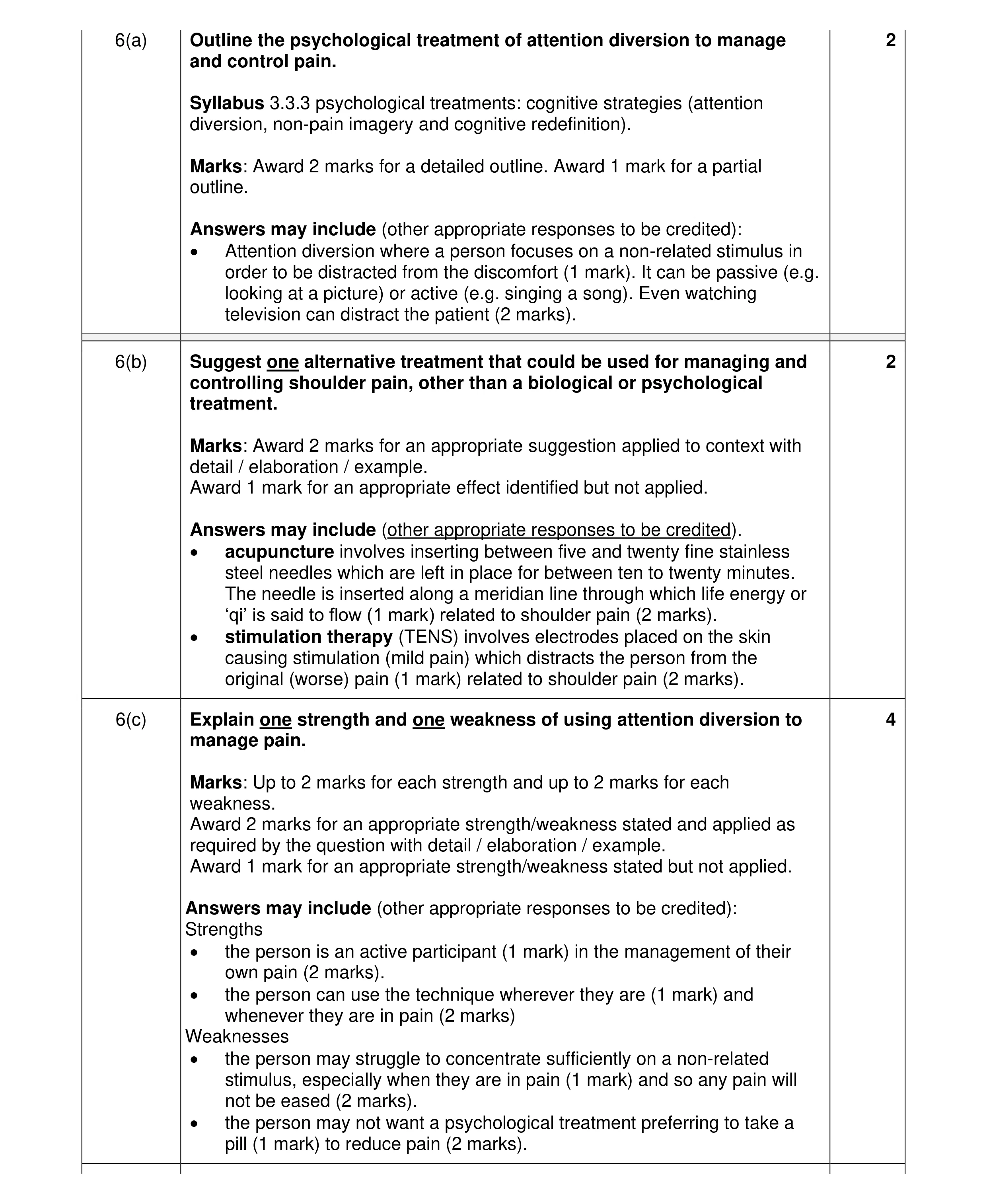 8
8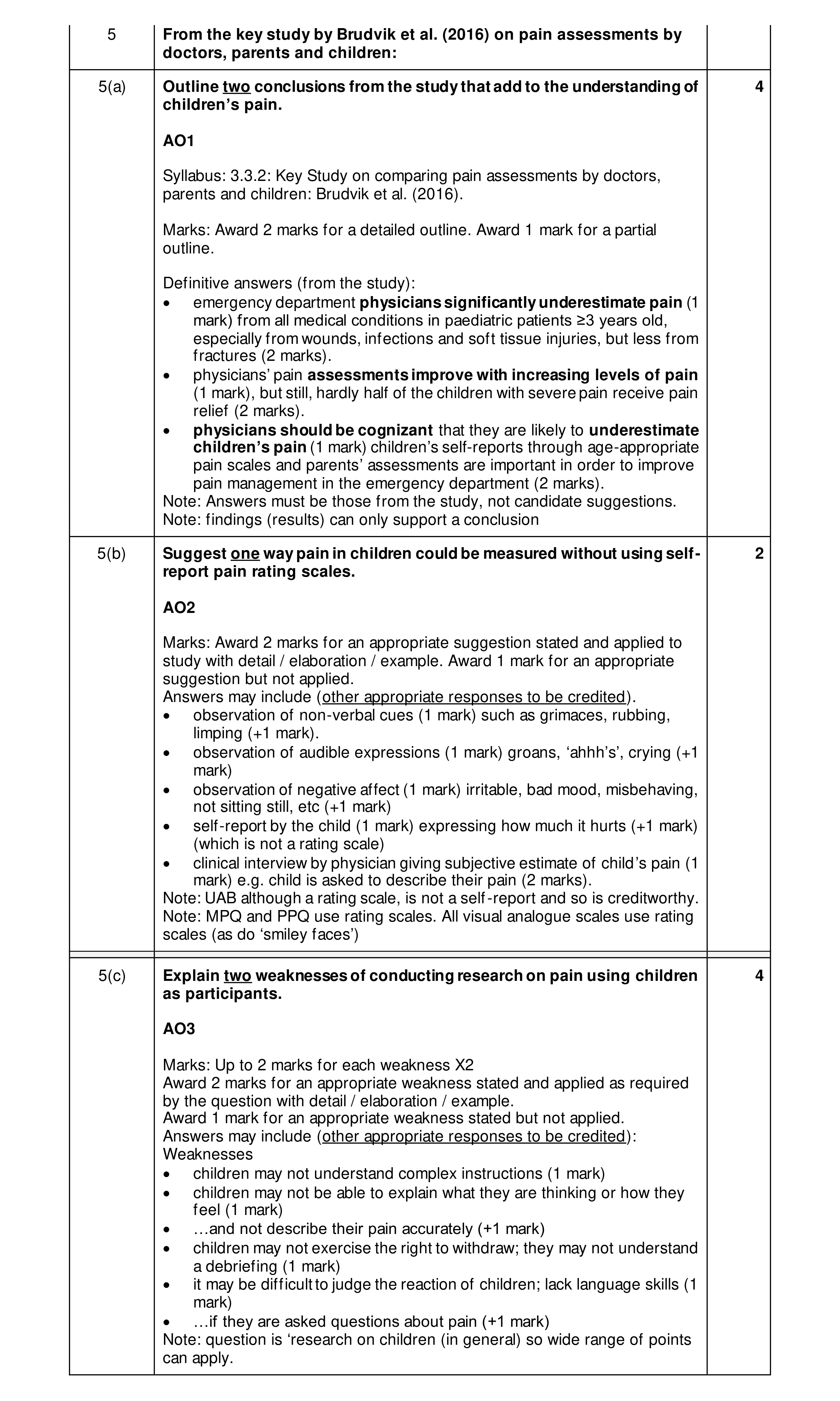 10
10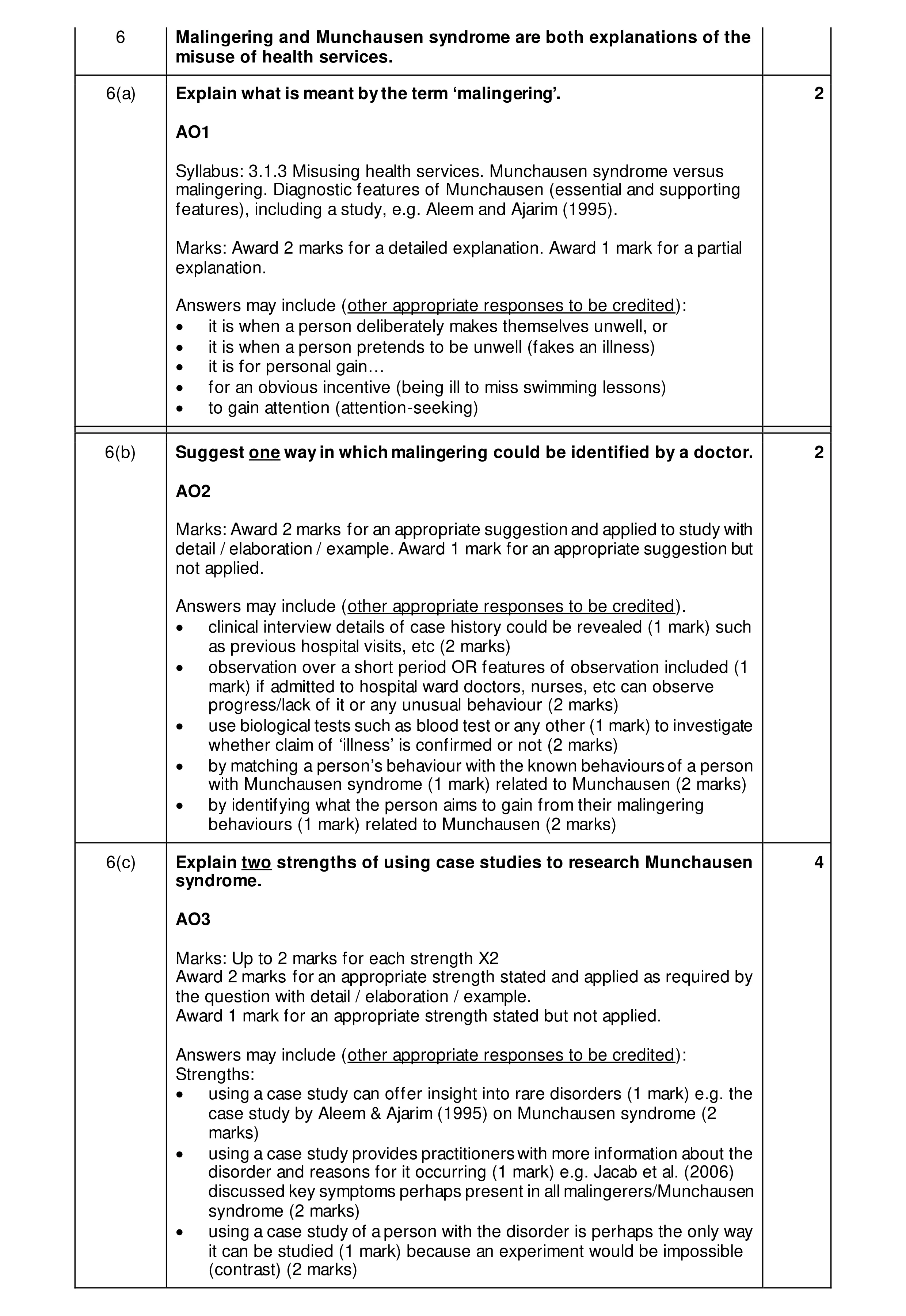 8
8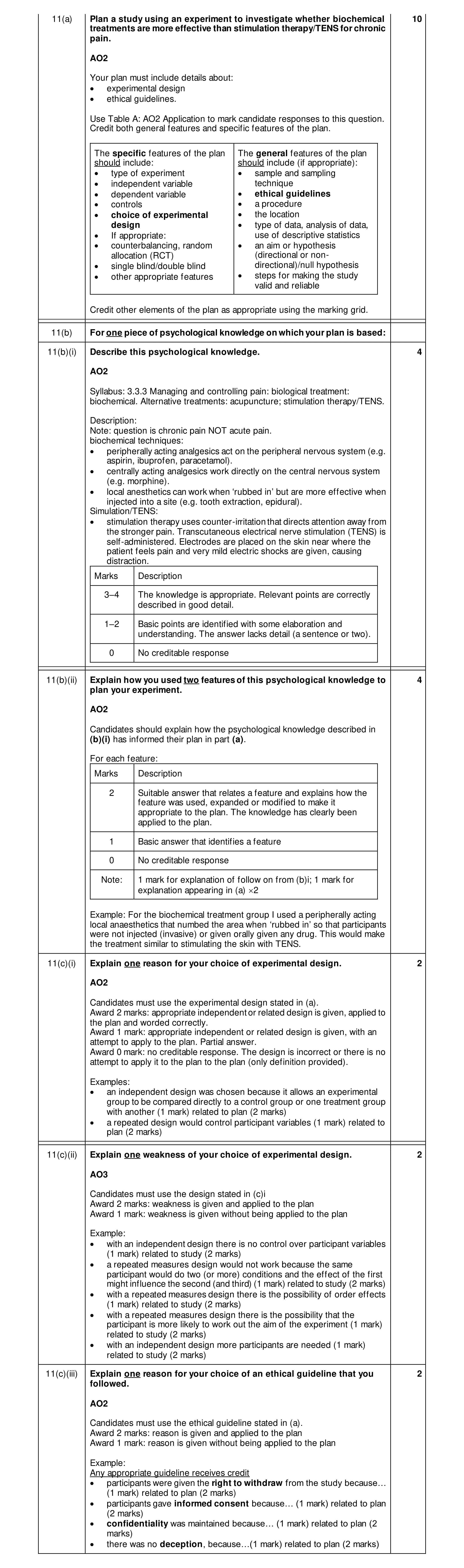 24
24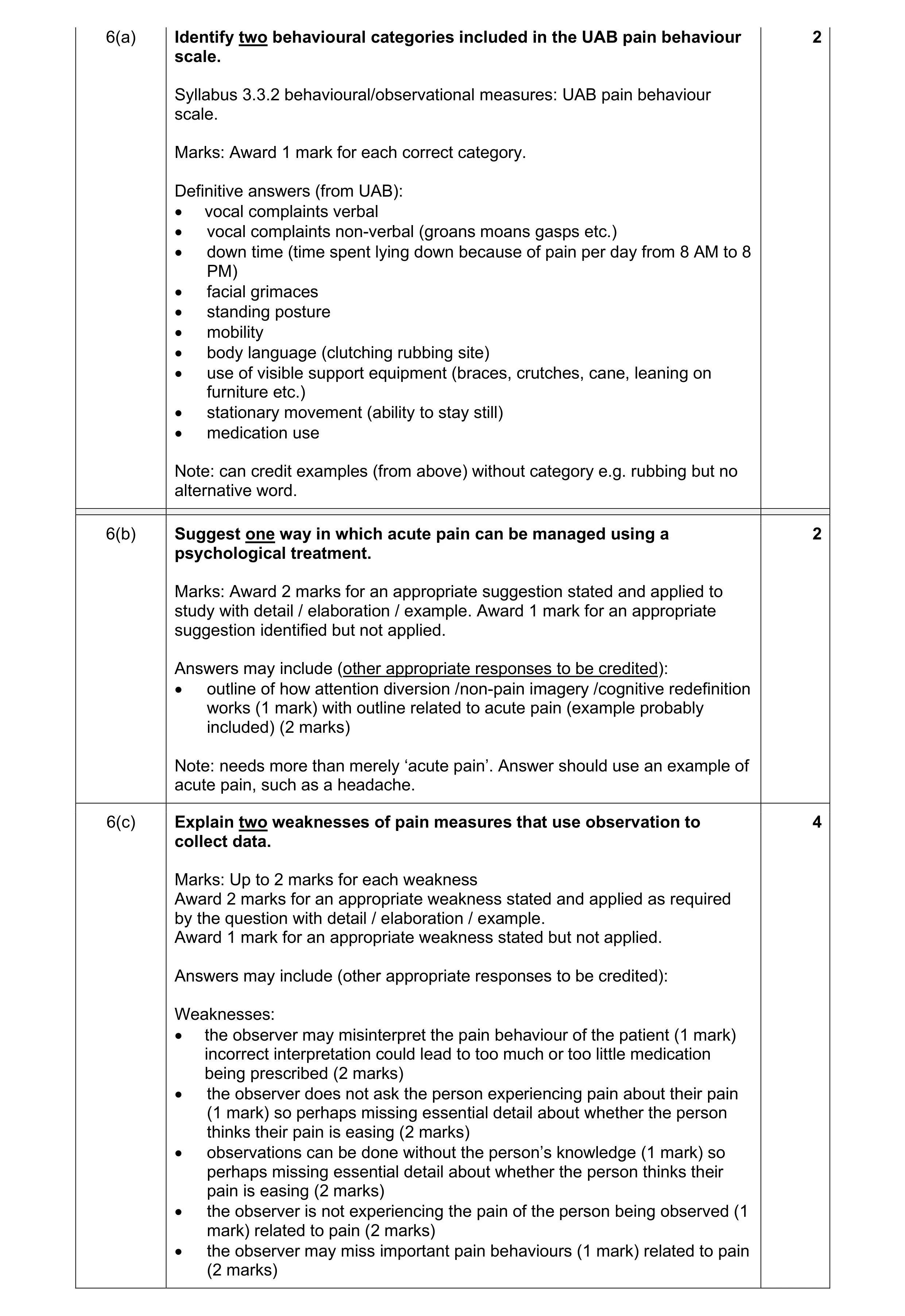 8
8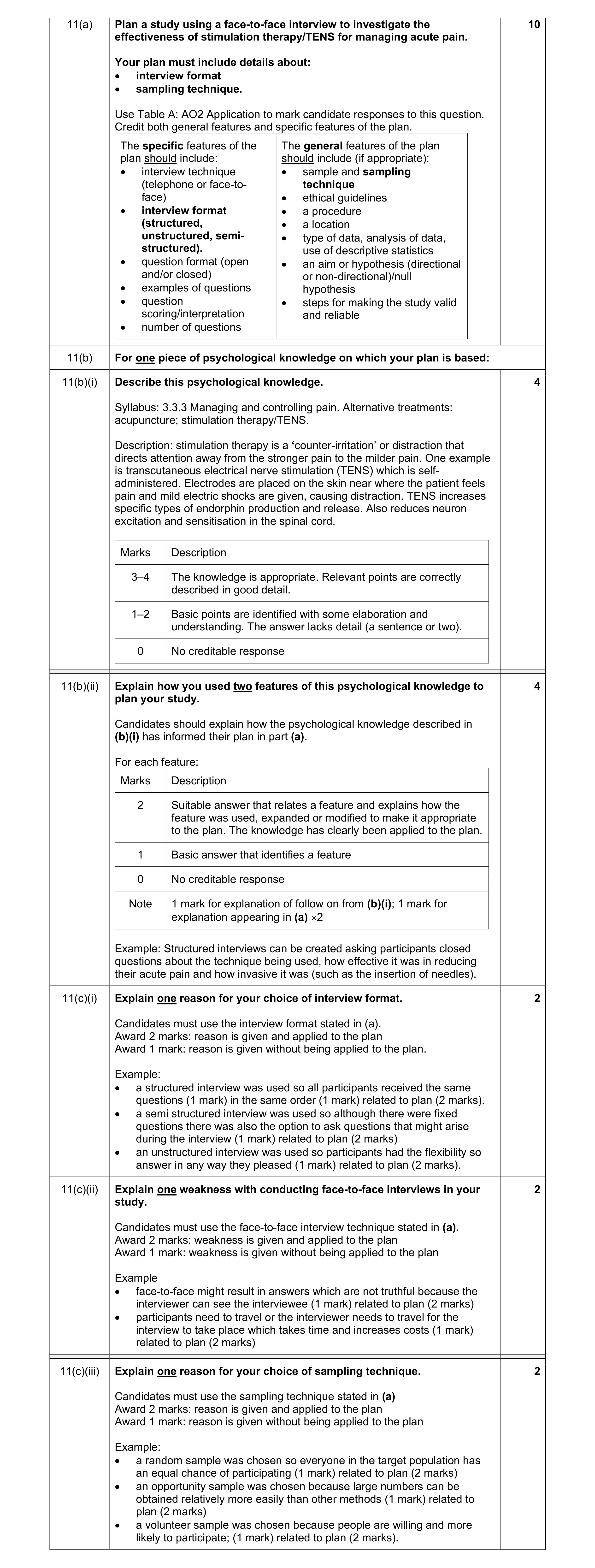 24
24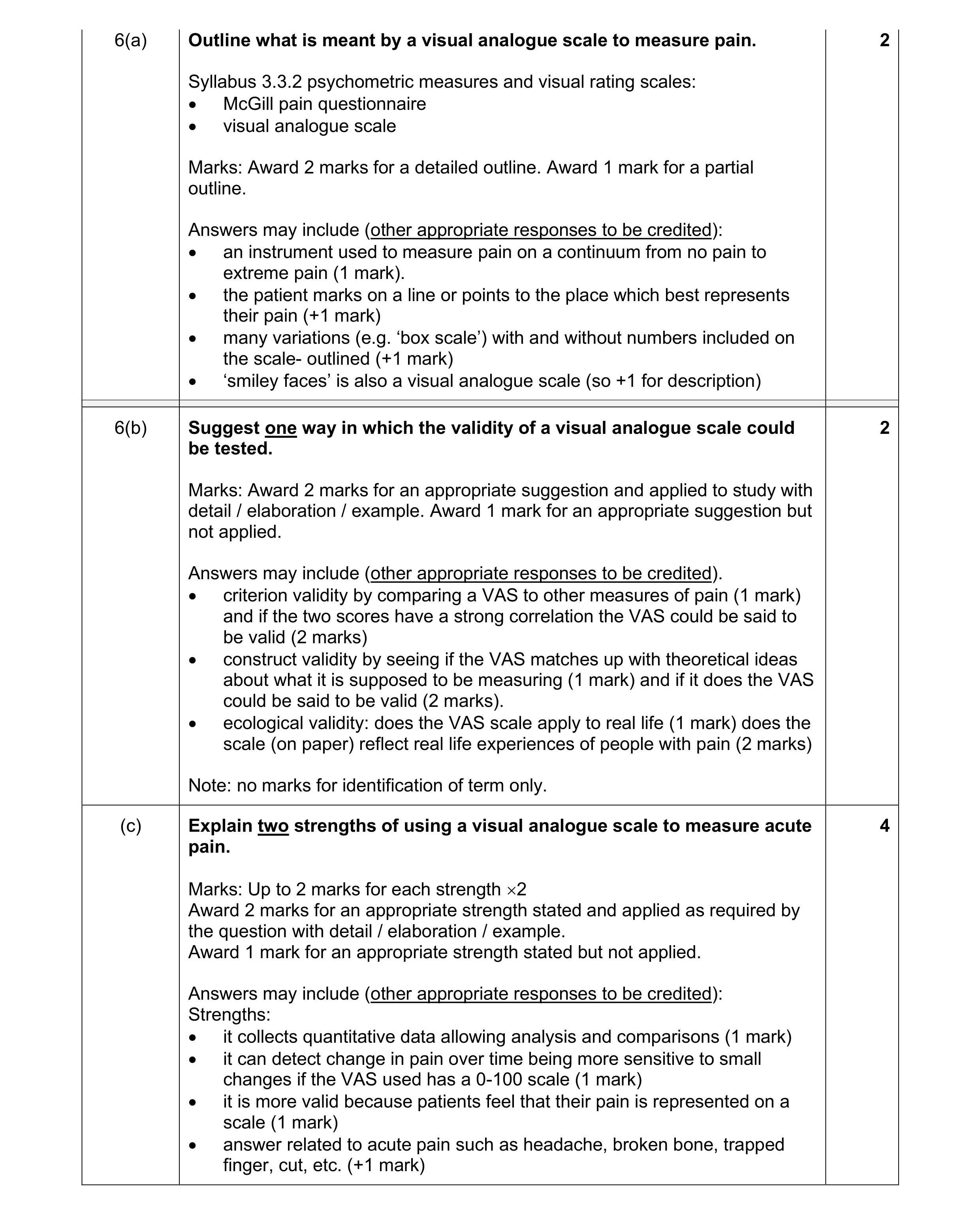 8
8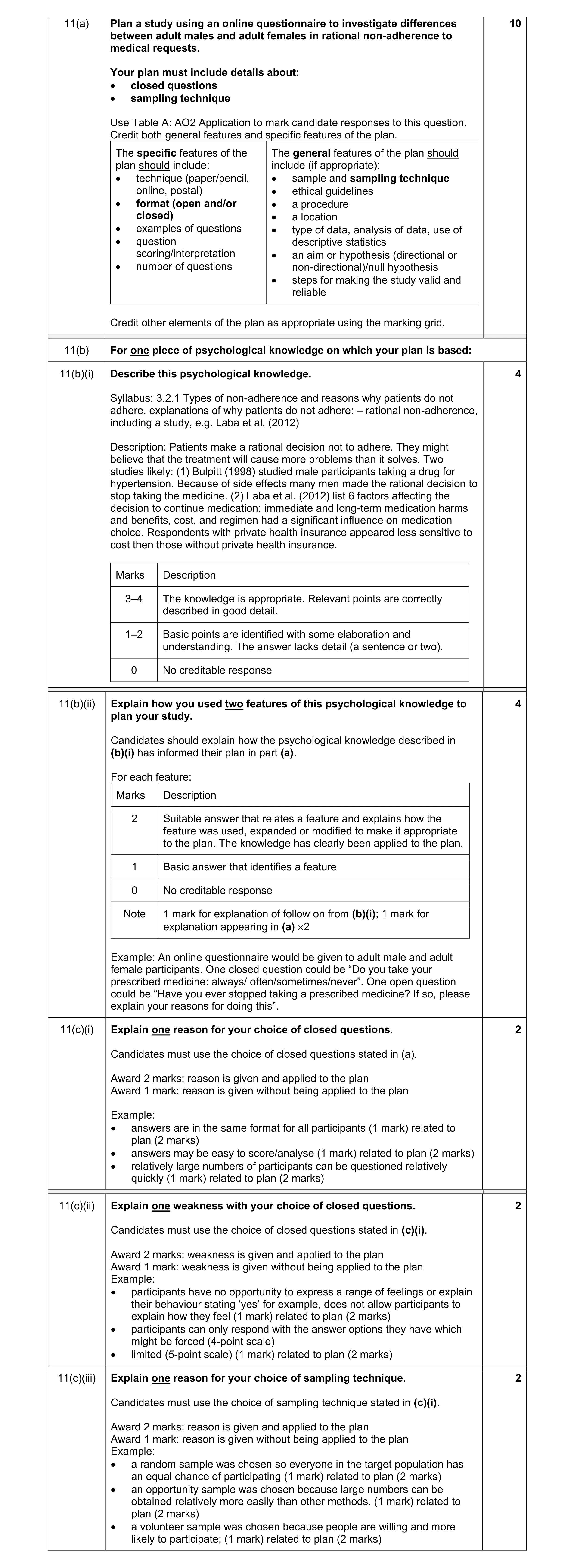 24
24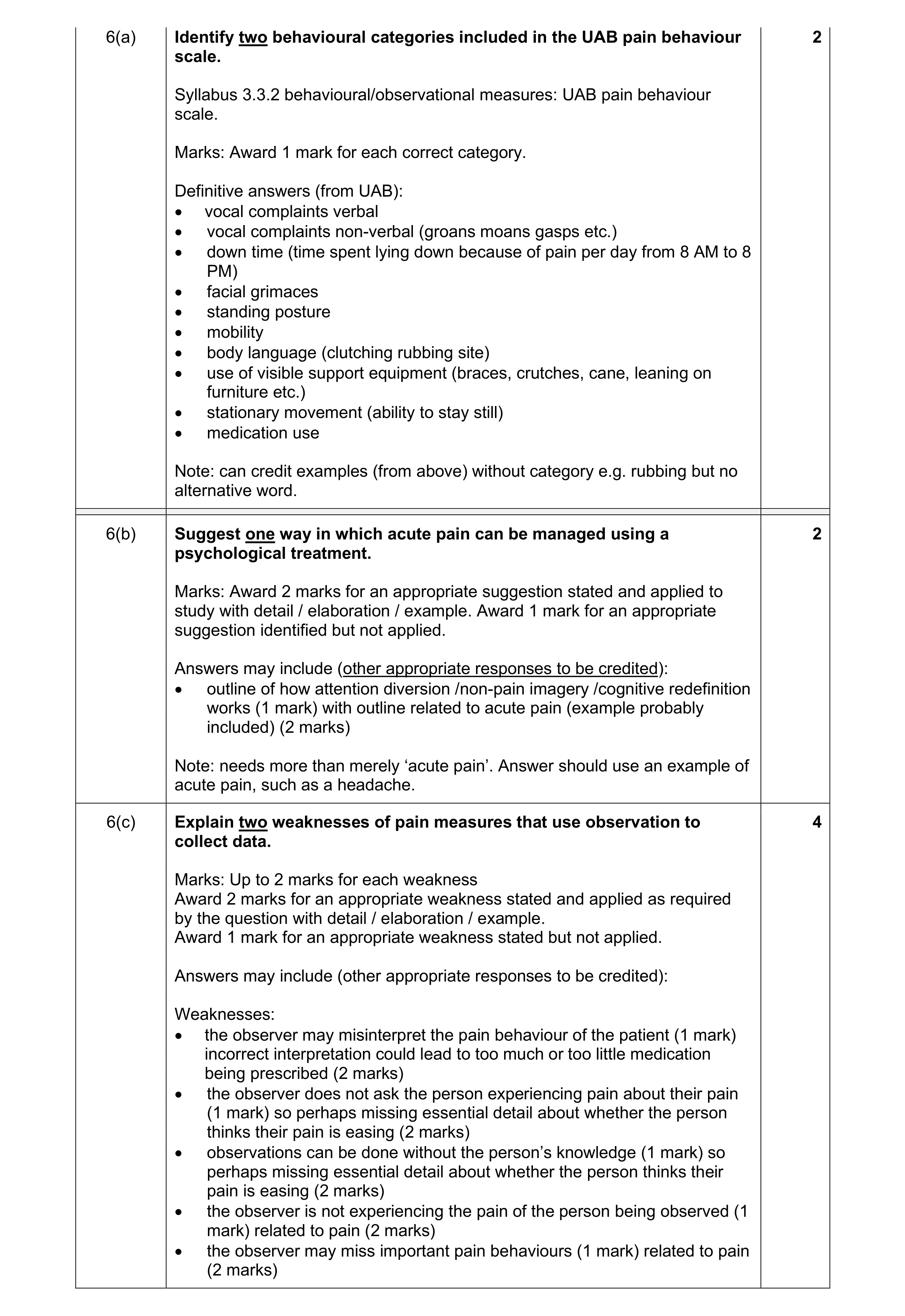 8
8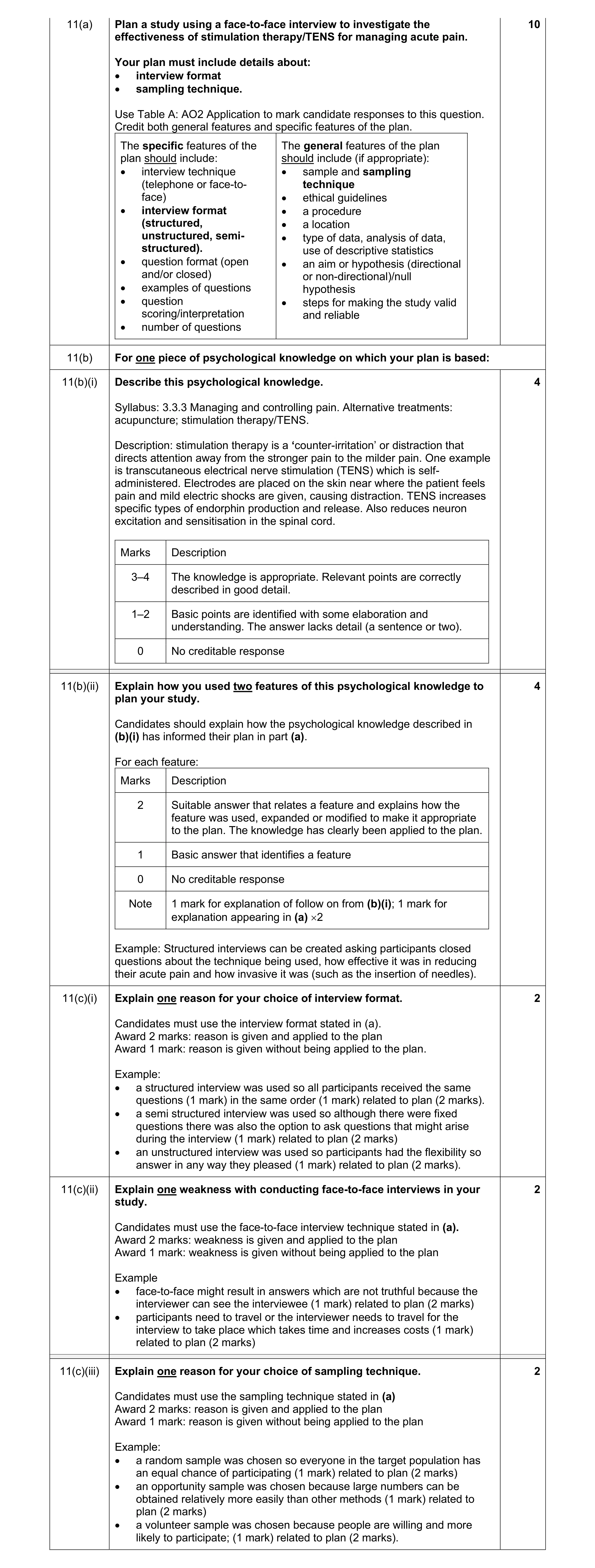 24
24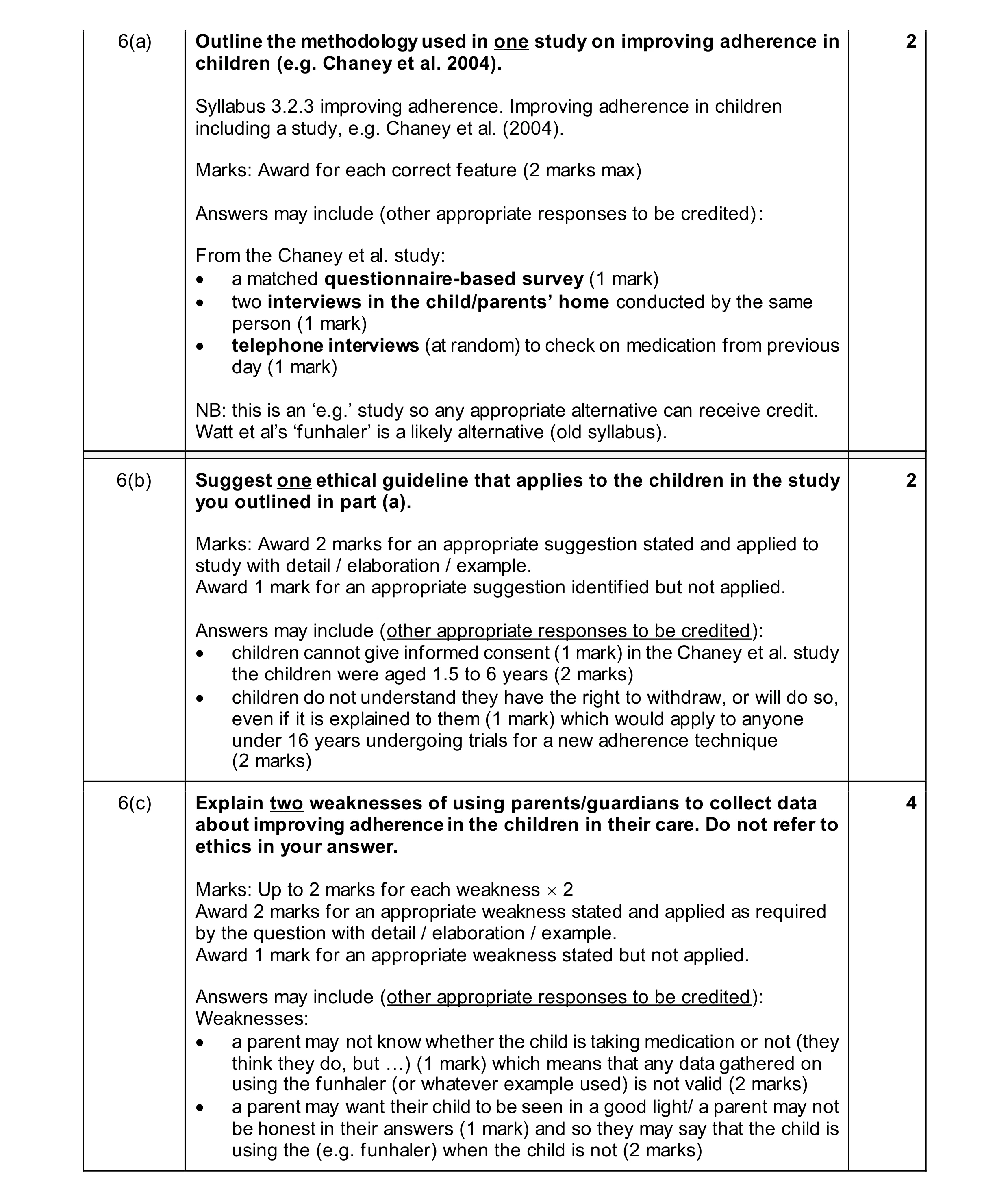 8
8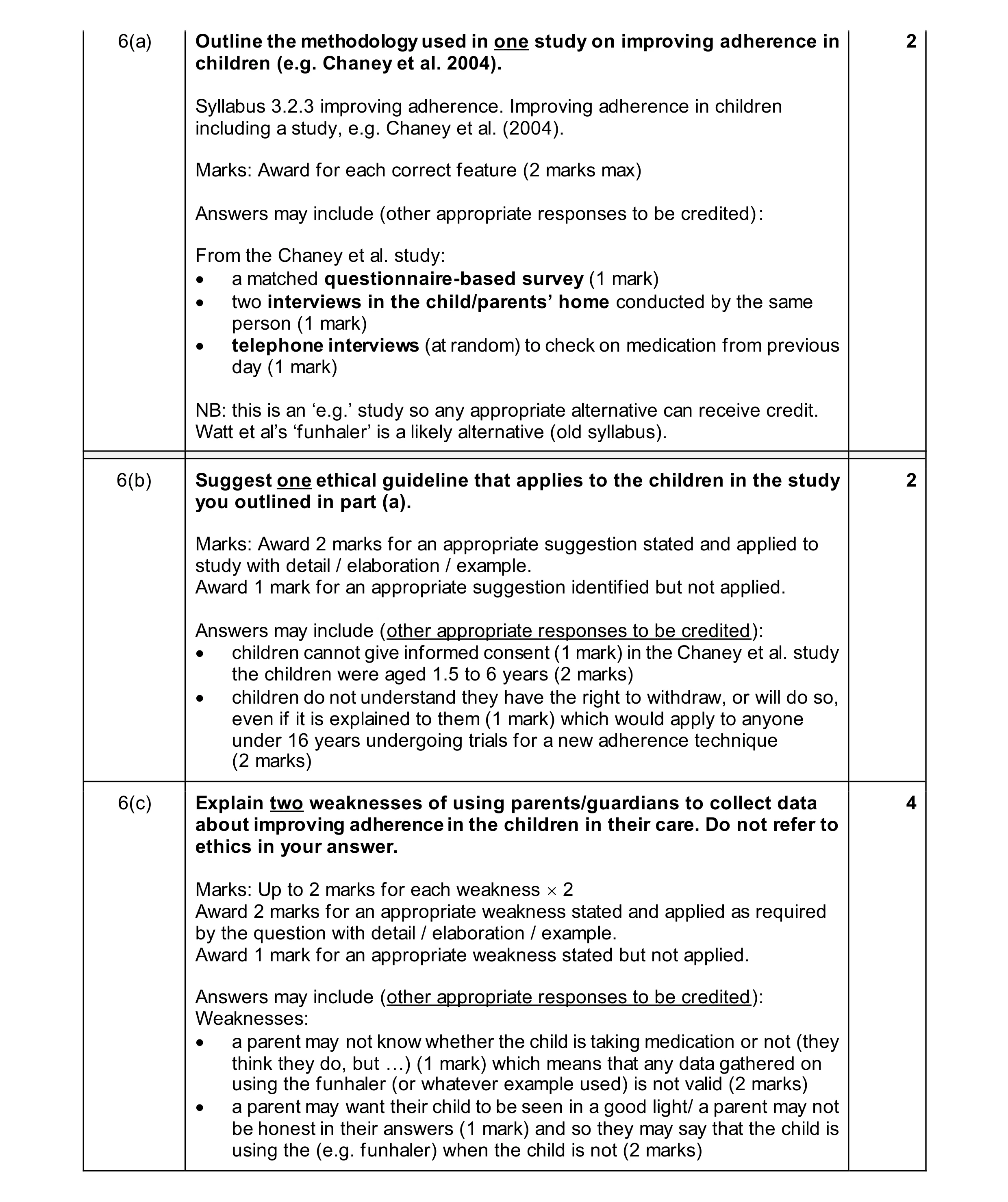 8
8