Questions as text
Q1 · Empire and the emergence of world powers, 1870–1919 (a) Explain why Africa was the focus… 9489/22 Feb/March 2021
7 Empire and the emergence of world powers, 1870–1919 (a) Explain why Africa was the focus of an international conference in Berlin in 1884. [10] (b) ‘The signing of a Treaty of Alliance with Britain in 1902 marked Japan’s emergence as a significant power.’ How far do you agree? [20]
30 marks
Mark scheme: 7(a) Explain why Africa was the focus of an international conference in 10 Berlin in 1884. In 1880 only around 20% of the African continent was colonised by European Powers but: • The African continent was rich in resources that were in demand in by European industrialists. • Many countries saw Africa as an opportunity to increase their power and prestige. • Bismarck, who organised the conference was under pressure to expand Germany’s spheres of influence. • To avoid disrupting the stability in Europe the conference was called to divide up Africa, in a purely arbitrary way, into areas for development by the different colonial powers. Accept other valid responses. 7(b) The signing of a Treaty of Alliance with Britain in 1902 marked Japan’s 20 emergence as a significant world power.’ How far do you agree? To respond fully to his question answers will need to look not only at event leading to the Treaty but at what happened afterwards. Following the Meiji Restoration, 1868, Japan transformed itself into a modernised industrial country following western examples. Japan built itself a modern military force with a strong well-equipped navy. The first Sino- Japanese war saw Japanese expansion gaining concessions in Korea and in China itself and confirmed Japan as the major power of East Asia. The Treaty was the first major international treaty signed with a western power and offered mutual support for their interests in China and Korea. Treaty with Britain was renewed in 1905 and 1911 following significant further successes for Japan Britain was increasingly concerned about its isolation especially in the wake of the Boer War and was looking for support in the Far East to ease the burden on maintaining its empire. Though Japan went on to beat Russia in1905, it was due more to Russian weaknesses than to Japan being a world power. Even as late is Versailles in 1918 Japan was not really treated as an equal by the western powers. Accept other valid responses.
This question in 9489/22 Feb/March 2021
Q2 · Empire and the emergence of world powers, 1870–1919 (a) Explain why Germany was… 9489/21 May/June 2021
7 Empire and the emergence of world powers, 1870–1919 (a) Explain why Germany was increasingly interested in having an overseas empire after 1880. [10] (b) To what extent had Japan become a world power by the end of the First World War? [20]
30 marks
Mark scheme: 7(a) Explain why Germany was increasingly interested in having an overseas 10 empire after 1880. Whilst the accession of Wilhelm Ⅱ in 1888 will probably be the most obvious factor other key points might include: • The general rise of imperialistic rivalry in Europe culminating in the Berlin Conference 1884–1885. • Pressure from German businesses for more overseas trade opportunities that shifted Bismarck’s stance even before 1888. • Bismarck’s supporters, the National Liberals, favoured colonial acquisitions. Bismarck saw getting colonies as an electoral advantage for the upcoming 1884 election. • The dismissal of Bismarck in 1890. He saw Germany’s role as that of a continental, not colonial, power. • The development of Weltpolitik and the idea of ‘a place in the sun’. Accept any other valid responses. 7(b) To what extent had Japan become a world power by the end of the First 20 World War? There should be a combination of long, and shorter, term factors that might be included. Support The Anglo-Japanese Alliance of 1902 represents the first recognition of Japan as a possible equal to European powers. The Japanese defeat of Russia 1904–1905 was the first defeat of a major European power by a non- European nation. The rapid Japanese modernisation of armed forces, especially naval, made Japan a significant power. From 1914, the Japanese were members of the Grand Alliance and played an important role in securing the sea lanes in the West Pacific and Indian Oceans against the German Imperial Navy. A Japanese delegation was at the Versailles conference where they made territorial gains including German island colonies in the Pacific. Challenge Japan was a world power by the end of the First World War the following could be considered. The defeat of Russia (1905) was at a low point in Russian capability – Russian forces out of date and badly organised – logistical difficulties for Russia in Far East. Japan was not included in major decisions by ‘Big Three’ at Versailles. Japan’s Racial Equality Proposal for the Versailles treaty, which affirmed the equality of all nations regardless of race and was designed to have Japanese immigrants to USA treated the same as white Europeans, came to nothing due to Wilson’s ‘unanimity ruling’, something which had not been insisted upon until now. Japan was still basically not treated on an equal basis by the other powers. A top-level answer will need to consider the relative strengths and weaknesses of both alternatives and make a reasoned judgement about which is better. Accept any other valid responses.
This question in 9489/21 May/June 2021
Q3 · China and Japan, 1912–45 (a) Explain why Japan attacked Pearl Harbor in December 1941 9489/21 May/June 2021
9 China and Japan, 1912–45 (a) Explain why Japan attacked Pearl Harbor in December 1941. [10] (b) ‘The most important outcome of the Long March was the emergence of Mao Zedong as leader of the Chinese Communist Party.’ How far do you agree? [20]
30 marks
Mark scheme: 9(a) Explain why Japan attacked Pearl Harbor in December 1941. 10 Answers should focus on Japanese plans for expansion of influence in the Far East and the effects of the European War. • The Greater East Asia Co-prosperity Zone plans – a self-sufficient bloc of Asian countries under Japan’s leadership and free from the rule of Western powers. • Japan’s economic difficulties in 1930s. • Rise of militarism; public support for aggressive expansionism • European Powers were involved in a European War, so they were less able to defend East Asian territories. The Nazi-Soviet pact of August 1939 meant Japan would receive no help from Germany if she struck north against USSR. Also, the resources in the south were more numerous than those in the Soviet Far East. In April 1941, Japan and USSR signed a five-year neutrality pact which meant Japan’s northern flank was secured. • Only US Pacific Fleet could seriously impede Japanese plans. FDR had moved the Pacific fleet to Hawaii in mid-1940. • Steady increase of US-Japanese antagonism – from 1938 USA adopted a series of increasingly restrictive trade policies against Japan. The oil embargo of August 1941 was particularly severe as more than 80% of Japan’s oil came from USA at the time. Accept any other valid responses. 9(b) ‘The most important outcome of the Long March was the emergence of 20 Mao Zedong as leader of the Chinese Communist Party.’ How far do you agree? This essay is not about the Long March as such; it requires a consideration of Mao’s position before, during, and after the Long March as well as other outcomes of the Long March. Key issues in Mao’s rise Mao’s position had been weakened in 1933, as Zhou Enlai, Otto Braun and Bo Gu became the CCP decision makers. This raises the question, how central was Mao’s role in leading resistance to the 5th encirclement campaign which began against Jiangxi Soviet in September 1933? In July 1934, Mao had been briefly placed under house arrest and replaced by Zhou Enlai, as leader of the military commission. The Long March began in October 1934, and it was Zhou, not Mao, who was consulted about abandoning Jiangxi. The Long March, however, sealed the personal prestige of Mao, for example, the Zunyi Conference (1935) where Mao won the power struggle with Bo Gu, the 28 Bolsheviks and Otto Braun, taking control of the military command and became the undisputed leader of the CCP. The influence of the Comintern in CCP affairs was reduced significantly. The establishment of the Yan’an Soviet was a result of the Long March, and this haven allowed for the growth of Mao’s control of policy. In 1941, the Rectification Movement was initiated allowing Mao to purge party members over the next three years. Other outcomes The Long March ensured the basic survival of the CCP, which had almost been destroyed by the encirclement campaigns. Its consolidation of a base in a relatively inaccessible area of China allowed the CCP to develop its strength and become a viable alternative to the KMT. The Long March and survival of the CCP, also, provided a heroic narrative and won the CCP admiration and support, especially amongst peasants. The new base, also, put the CCP in a better position to directly oppose the incursions of the Japanese thereby strengthening their popular support. Accept any other valid responses.
This question in 9489/21 May/June 2021
Q4 · China and Japan, 1912–45 (a) Explain why there were massacres in Shanghai in 1927 9489/22 May/June 2021
9 China and Japan, 1912–45 (a) Explain why there were massacres in Shanghai in 1927. [10] (b) How successful was the Kuomintang under the leadership of Sun Yat-sen? [20]
30 marks
Mark scheme: 9(a) Explain why there were massacres in Shanghai in 1927. 10 Historians argue that the Shanghai massacres in 1927 were a bid by Chiang Kai-shek for undisputed leadership of the KMT and of China, and that there are several factors to consider. • In Shanghai, the communists had just activated local workers and led the overthrow of the local warlord; Chiang feared that further success would strengthen the communists. • The success of the Northern Expedition in 1926–1927 put the KMT in a strong position and Chiang wanted to remove the threat of the communists. • The KMT leadership was split between right and left. The latter had a positive relationship with communists, so this weakened them. • Chiang wanted to end links with USSR, despite the considerable help he had received from Russian over the past 4 years. Accept any other valid responses. 9(b) How successful was the Kuomintang under the leadership of Sun Yat- 20 sen? A successful response will demonstrate an understanding of the successes and failures of Sun and the balance between them. Successful In 1912, Kuomintang established the Chinese Republic, with himself as the nominal president. In 1920, he established an official government of China in Canton. He won support from the USSR, who helped establish a military college for KMT leaders’ training. He formed the First United Front with communists and allowed leading communists to join the KMT, including Mao Tse-tung. He adopted an appealing set of policies under the Three Principles of the People. Unsuccessful Attempts to co-operate with Yuan Shi-kai in building a new republican government failed because of Yuan’s own ambitions. Except for Russia, he was unable to gain foreign support for KMT. He was could not deal with warlords. When Sun died in 1925, the KMT still only controlled a small area of China. Overall, judgements may concentrate on the lack of real progress under Sun’s leadership, or they may argue that the KMT was on the verge of making real progress to the next phase of its rise to control by the time Sun died. Accept any other valid responses.
This question in 9489/22 May/June 2021
Q5 · China and Japan, 1912–45 (a) Explain why war broke out between Japan and China in 1937 9489/23 May/June 2021
9 China and Japan, 1912–45 (a) Explain why war broke out between Japan and China in 1937. [10] (b) How important was militarism in the failure of democracy in Japan in the 1930s? [20]
30 marks
Mark scheme: 9(a) Explain why war broke out between Japan and China in 1937. 10 Relevant factors might include: • long term causes – Japanese economic and military expansion • Japan seizure of Manchuria • Japanese incursions into Northern China (inner Mongolia etc) • Chiang Kai-shek obsession with communists • Xian Bridge incident • Marco Polo Bridge clash • Attack on Japanese area of the Shanghai International Settlement Accept other valid responses. 9(b) How important was militarism in the failure of democracy in Japan in 20 the 1930s? There is a clear requirement here to look at the role of the military in the organisation and effectiveness of democratic government in Japan setting this alongside other factors that also served to undermine democracy. The activity of the Cherry Blossom Society and support for the ‘Showa Restoration’. There was popular support for seizure of Manchuria, an action taken by the army without reference to the government. Prime minister Inukai was assassinated by 11 young naval officers (League of Blood). There was significant public support for ‘secret’ military societies. Other factors that were significant include Japan’s lack of democratic tradition. The failure of government to stand up to perceived discriminatory attitudes of overseas powers especially USA also played a significant role if disillusionment with democratic government. The Great Depression had a big impact on Japanese economy – seen as another failure of democratic government. Traditional values and support for Emperor were strong and anti-democratic. The government faced (not unfounded) accusations of weakness and corruption. Accept other valid responses.
This question in 9489/23 May/June 2021
Q6 · Empire and the emergence of world powers, 1870–1919 (a) Explain why Japan succeeded in… 9489/22 Oct/Nov 2021
7 Empire and the emergence of world powers, 1870–1919 (a) Explain why Japan succeeded in defeating Russia in the Russo–Japanese War of 1904–05. [10] (b) How important was the Spanish–American War of 1898 in changing the focus of US foreign policy? [20]
30 marks
Mark scheme: 7(a) Explain why Japan succeeded in defeating Russia in the Russo‒ 10 Japanese War of 1904‒05. Factors might cover both the strengths of the Japanese and the weaknesses of the Russians and include: • Japan had a modern and well-equipped fleet. • Japanese were fighting close to their home base and had easy lines of communication and support. • Japan launched a surprise attack on poorly equipped and numerically inferior Russian forces in Port Arthur. • Trans-Siberian Railway was not adequate to transfer sufficient support to troops in Port Arthur. • British impeded Russian attempts to transfer Baltic Fleet to Far East. • Baltic fleet sunk ignominiously at Battle of Tsushima. Accept any other valid responses. 7(b) How important was the Spanish‒American War of 1898 in changing the 20 focus of US foreign policy? Well-constructed responses will include a consideration of the effects of the Spanish-American War, setting these against other possible influences on the direction of US policy. Spanish American War: It was a major step outside the continental boundaries of the US. It gave the US an overseas Empire which they then needed to defend and maintain. It led to further steps like Open Door Policy in China. It re-focusses the US public from internal expansion to overseas growth. Other factors: There was concern over European imperialist expansion, as seen in the Scramble for Africa and a potential threat to the Monroe doctrine. There was pressure from industrialists for development of overseas trade. The presidential leadership of McKinley and then Roosevelt (Roosevelt Corollary) was also significant. It had the support of the ‘yellow’ press. The US became involved in the Panama Canal Project. Accept any other valid responses.
This question in 9489/22 Oct/Nov 2021
Q7 · China and Japan, 1912–45 (a) Explain why there was an outbreak of protests in China… 9489/22 Oct/Nov 2021
9 China and Japan, 1912–45 (a) Explain why there was an outbreak of protests in China beginning on 4 May 1919. [10] (b) To what extent did Japanese plans for a Greater East Asia Co-prosperity Sphere explain the attack on Pearl Harbor? [20]
30 marks
Mark scheme: 9(a) Explain why there was an outbreak of protests in China beginning on 4 10 May 1919. Though most responses will probably focus on immediate causes, there is some scope for mentioning longer term issues, so factors that might be discussed include: • The failure of the democratic government in the wake of the abdication of the Emperor. • The rise of warlordism and the ineffectiveness of the Beijing government. • The New Culture Movement: rejection of Confucian ideals as being responsible for Chinese weakness. • Anger over treatment of China at Versailles. • Anger over transfer of German ‘sphere of influence’ in Shandong to Japan. Accept any other valid responses. 9(b) To what extent did Japanese plans for a Greater East Asia Co-prosperity 20 Sphere explain the attack on Pearl Harbor? There is an opportunity here for a basic comparison between the importance of Japan’s economic ambitions and other factors. Significance of GEACS This requires some explanation of what Japan hoped to achieve in expansion of interests. This clearly conflicted with US interests in Far East: Philippines and China. Strength and significance of US Fleet presented a potential challenge to the policy of expansion. All these need linking to the objectives of Japan in attacking Pearl Harbor. Other factors: Japanese held a long-term resentment of US policies towards Japanese migrants. There was also resentment of US support for Chinese KMT government in Sino-Japanese war. Trade restrictions imposed on Japan in 1939‒40, particularly in military supplies and oil products such as aviation fuel, as well as the cancellation of a trade treaty which led to trade embargo all increased tensions. The war in Europe left the US as the only obstacle to Japanese expansion. The strategic significance of Pearl Harbour was also a factor. Accept any other valid responses.
This question in 9489/22 Oct/Nov 2021
Q8 · China and Japan, 1912–45 (a) Explain why Japan joined the Anti-Comintern Pact 9489/23 Oct/Nov 2021
9 China and Japan, 1912–45 (a) Explain why Japan joined the Anti-Comintern Pact. [10] (b) How important was the war against Japan in strengthening the position of the Chinese Communist Party by 1945? [20]
30 marks
Mark scheme: 9(a) Explain why Japan joined the Anti-Comintern Pact. 10 A number of linked factors might be explored including: • Basic distrust of Soviet Union. • Fear of communism. • Hitler was enthusiastic about treaty with Japan as part of an overtly anti- communist foreign policy. • Japanese isolation following the Manchurian crisis; German recognition of Manchukuo. • Japanese military leaders hoped for German war with either Russia or Western Powers that would allow them to pursue their own East Asian ambitions. Accept any other valid responses. 9(b) How important was the war against Japan in strengthening the position 20 of the Chinese Communist Party by 1945? There is sufficient evidence on both sides of this argument for the development of a balanced analysis and judgement. The Chinese Communist Party (CCP) organised peasant resistance and thus build their own support base. By end of war Red Army had grown to over 1.3 million. CCP guerrilla tactics were generally successful and less costly in terms of loss of manpower. As the official government of China, the KMT was expected to undertake direct action against the Japanese which was more costly in terms of manpower. Russia overran Manchuria and handed over much of captured equipment to Communists. There was limited Russian co- operation with KMT over occupation of former Japanese occupied territories. However, the KMT retained support of United States as the legitimate government of China. The United States flew KMT forces into major cities within Japanese held areas. The Breakdown of Second United Front in 1942 risked both sides losing out to Japanese. The KMT still retained control of most of China with communist control restricted to North-East China. It was other factors related to social and economic policies that lost KMT support and added to the appeal of the CCP. The comparative strengths of leadership of Mao and Chiang was also a factor. Accept any other valid responses.
This question in 9489/23 Oct/Nov 2021
Q9 · Empire and the emergence of world powers, 1870–1919 (a) Explain why Japan’s military… 9489/21 May/June 2022
7 Empire and the emergence of world powers, 1870–1919 (a) Explain why Japan’s military strength developed rapidly in the later nineteenth century. [10] (b) ‘Imperial expansion created more cooperation than conflict between the Great Powers before 1914.’ How far do you agree? [20]
30 marks
Mark scheme: 7(a) Explain why Japan’s military strength developed rapidly in the later 10 nineteenth century. Indicative content Candidates are not expected to know specific detail of the Meiji restoration, just the changes that happened in the late 19th century that brought the Japanese military into the modern world including: Restored the emperor and centralised government, uniting the country. Led to desire to reduce influence of foreign powers by building up Japanese strength. Development of industry and technology enabled modernisation of army. Rapid development of fleet to counter overseas influences. Accept any other valid responses. 7(b) ‘Imperial expansion created more cooperation than conflict between 20 the Great Powers before 1914.’ How far do you agree? Indicative content The response to this should demonstrate a balance between conflict and cooperation with regards to overseas expansion with a reasoned judgement to conclude. Conflict: Anglo-French competition produced tension between the two throughout most of the late nineteenth century especially over Egypt and their competing plans to link territories across or down the continent culminating in confrontation at Fashoda. The British also came into conflict with Germany over German support for the Boers especially the Kaisers Kruger telegram. German under Wilhelm II set out in search for a ‘place in the sun’ which led to tension with existing colonial powers. This led to 2 Moroccan crises which also raised tensions by crystallising the two sides in the European alliance system. Cooperation: Berlin Conference and Treaty 1884–5 settled a number of issues and set out clear parameters for future claims on territory on the African continent. Despite earlier conflict the British and French reached a settlement at Fashoda which paved the way for closer cooperation and the eventual Entente Cordiale. The powers were able to cooperate in China especially in response to the Boxer rebellion. The two confrontations in Morocco were both solved by negotiation. Candidates might also refer to the Anglo Japanese Treaty of 1902 Accept any other valid responses.
This question in 9489/21 May/June 2022
Q10 · Empire and the emergence of world powers, 1870–1919 (a) Explain why the Boxer Rebellion… 9489/22 May/June 2022
7 Empire and the emergence of world powers, 1870–1919 (a) Explain why the Boxer Rebellion occurred in China between 1899 and 1901. [10] (b) To what extent was tension over South Africa between Britain and Germany a result of economic rivalry? [20]
30 marks
Mark scheme: 7(a) Explain why the Boxer Rising occurred in China between 1899 and 10 1901. Any explanations are expected to develop from the basic idea of a ‘grass roots’ rising against the effect of foreign imperialism including: Anti-Christian feeling – concern over number of missionaries and converts led to formation of secret society I Ho Chuan (Righteous Harmony Fists) Western Imperialism placed China in a series of 'unequal treaties', foreigners treated local people as inferiors Sino-Japanese war in 1894 – Japan acquired 4 treaty ports from the Chinese British control over Hong Kong during the 'scramble for concessions' Foreign devils perceived as sabotaging the Chinese people- series of Harvest failures and a mixture of droughts and floods Accept any other valid responses. 7(b) To what extent was tension over South Africa between Britain and 20 Germany a result of economic rivalry? Indicative content This requires a balanced analysis of the factors that led to a shift in the focus of British foreign policy at the turn of the century. Economic factors: following unification German economic growth was very rapid and by the 1890s Germany was the main challenge to British economic dominance. German began to challenge British economic expansion in Africa and the Far East in search of new markets and resources. Support for the Boers increased with the growing discovery of mineral deposits and especially the gold rush following the discovery of gold in the Transvaal in the 1880s. Britain also controlled the major trade routes to the east through Suez and via the Cape which was a threat to German global economic expansion. Other factors to be considered include German naval development following the Navy Laws of 1898 which challenged the British naval policy (two power standard). Kaiser Wilhelm’s ambition to win a ‘place in the sun’ was partly economic but also about international prestige. It added to the concern cause by the naval development (question of why Germany with such a small empire needed such a large fleet). Also, the settlement of outstanding imperial disputes with France enabled the development of a closer relationship between the two countries. Closer links with France also offered a solution to Germanys naval challenge. Some concern about Russian challenge in Asia might also be included. Accept any other valid responses.
This question in 9489/22 May/June 2022
Q11 · Empire and the emergence of world powers, 1870–1919 (a) Explain why the United States… 9489/21 Oct/Nov 2022
7 Empire and the emergence of world powers, 1870–1919 (a) Explain why the United States became involved in the Cuban War of Independence. [10] (b) ‘Trade was the main reason for international involvement in China in the late nineteenth century.’ How far do you agree? [20]
30 marks
Mark scheme: 7(a) Explain why the United States became involved in the Cuban War of 10 Independence. Indicative content A number of political and economic factors could be developed to explain the intervention of the US in Cuba including: • Monroe Doctrine. • A sense of its own history – a colonial people struggling against a European power to achieve independence and democracy. • Cuba Libre’ movement had offices in Florida that held fundraising events and mounted a large and successful propaganda campaign across the US. • US business domination of the Cuban sugar industry – by the 1890’s 90% of Cuba’s production went to the US. • US businesses also supplied 40% of Cuba’s imports. • Role of the ‘yellow press’ which agitated public opinion with reports of Spanish atrocities. • Aggressive support of T Roosevelt as Assistant Secretary of the Navy. • Sinking of the Maine was the trigger for war. Accept any other valid responses. 7(b) ‘Trade was the main reason for international involvement in China in 20 the late nineteenth century.’ How far do you agree? Indicative content Economic issues were undoubtably important, but a number of other factors may be identified as contributing to the growing interest in China in the late nineteenth century. Trade: In the mid-nineteenth century the weak Chinese government of the Qing dynasty had been forced into a series of concessions to European countries that included the granting of treaty ports or trading centres for the great powers (Hong Kong, Shanghai etc.) This included legalising trade in opium from which western traders made huge profits and removing all internal barriers to European trade. This was reinforced when the USA joined the imperialist race for control and proposed the Open-Door Policy to regulate foreign trading in China Other factors: Whilst trade was the primary focus, governments saw supporting trade as a matter of international status so European rivalry played a part. USA became more involved because acquisition of the Philippines turned US enterprise toward the possibility of developing trade with China where Europeans were already making large profits. Japan, having carried our extensive modernisation was interested in establishing itself as a world power and as the strongest indigenous power in East Asia and so wanted to seize control of Chinese territory, especially control of Korea (First Sino– Japanese War 1894–95 & Treaty of Shimonoseki). Role of missionaries might also be included, and all factors can be drawn together in the response to the Boxer rising (1900–01). Accept any other valid responses.
This question in 9489/21 Oct/Nov 2022
Q12 · Empire and the emergence of world powers, 1870–1919 (a) Explain why economic pressures… 9489/23 Oct/Nov 2022
7 Empire and the emergence of world powers, 1870–1919 (a) Explain why economic pressures led to changes in US foreign policy in the late nineteenth century. [10] (b) To what extent had Japan been transformed into a world power by 1905? [20]
30 marks
Mark scheme: 7(a) Explain why economic pressures led to changes in US foreign policy 10 in the late nineteenth century. Indicative content ‘Economic pressures’ covers the general growth of the economy and the pressures it created and might include: • Rapid expansion of the economy during the Gilded Age – search for new markets. • Closing of the frontier. With no further internal territorial expansion possible the opportunity for developing internal trade and resources were reduced. • The Panics of 1893 and 1896. • Involvement in Cuba was largely a response to US economic interests. • Acquisition of remnants of the Spanish Empire in Central America and The Pacific provided opportunities for economic expansion into new fields. Accept any other valid responses. 7(b) To what extent had Japan been transformed into a world power by 20 1905? Indicative content This offers the possibility of alternative interpretations of the international achievements of Japan in the late nineteenth and early twentieth centuries from which a balanced judgement should be possible. Answers may identify a significant difference between potential and acceptance. In support of the argument: It might be suggested that as a result of the Meiji Restoration the country had undergone a rapid industrial and military transformation that brought its economy and armed forces up to the standard of the Western powers. This was demonstrated in its gains from the First Sino-Japanese War (Treaty of Shimonoseki) which also confirmed Japan as a more significant regional power than China. In 1902 it signed its first major international treaty with a western power – the Anglo-Japanese Treaty and it was also successful in the Russo-Japanese War culminating in an international conference and the Treaty of Portsmouth in which it made significant gains. The way they were treated by western powers convinced the military elite in Japan that rather than seeking economic advantage they should develop a more imperialistic policy. Against the argument: The three western powers (Britain, France and Russia) were unhappy with some of the provisions of the Treaty of Shimonoseki and staged the ‘triple intervention’ in which they forced Japan to return the Liaodong peninsula to China. Their treatment did not even rate Japan as a regional power. The Treaty with Britain was a purely regional arrangement to help the British deal with the threat of other powers, especially Russia, to their Asian empire – it did not really constitute recognition of Japan as an equal power. Finally, the defeat of Russia was seen largely as a sign of Russian weakness and disorganisation rather than a success that placed Japan on equal terms with the western powers. Note: the question is about Japan in 1905 – comparison with Japan in 1918 is NOT a valid response. Accept any other valid responses.
This question in 9489/23 Oct/Nov 2022
Q13 · China and Japan, 1912–45 (a) Explain why Japan became involved in the Second World War in… 9489/22 Feb/March 2023
9 China and Japan, 1912–45 (a) Explain why Japan became involved in the Second World War in 1941. [10] (b) To what extent was the decline in support for the Kuomintang caused by the war against Japan? [20]
30 marks
Mark scheme: 9(a) Explain why Japan became involved in the Second World War in 1941. 10 Indicative content • Alliance with Germany and Italy – anti-Comintern pact; hoped to make gains from Soviet Union in Far East, but Hitler ignored this is in 1939 and 1941 through its dealings with the Soviet Union. • Effect of war in Europe. European nations unable to defend territories in Far East; Dutch and French overrun and Britain fighting for survival. • Japanese desire to establish Greater East Asia Co-prosperity Zone. • Only serious threat to Japanese plans was US so needed to remove threat of US Pacific fleet – hence Pearl Harbor. Accept any other valid responses. 9(b) To what extent was the decline in support for the Kuomintang caused 20 by the war against Japan? Indicative content Candidates will need to consider the impact of the Sino Japanese War on one hand and the effect of other factors that caused a decline in support of the KMT on the other and reach a reasoned judgement about relative importance. Effects of the war Chiang Kai-shek was reluctant to challenge Japanese aggression in the 1930s, preferring to concentrate on his campaign against the CCP. Only after the Xi’an Bridge incident did he reluctantly join forces with the communists (Second United Front) and begin offensive action. 1937 KMT forces strongly defended Shanghai but lost it to Japan followed by loss of KMT capital at Nanking; forced into retreat into south and west of China – temporary capital at Chongqing. Thereafter fought a largely defensive campaign. Mao however activated peasant resistance in the North and fought a more successful guerrilla war against the enemy, winning increasing popular support. Nevertheless, at the end of the war the KMT still controlled the majority of China. Other factors played a part in the decline in KMT support. Once Chiang Kai-shek had established his overall control of much of China he abandoned the Three Principles of Sun Yat-sen which had been one of the strong attractions for many ordinary Chinese. His campaign against the CCP which began with the Shanghai massacres provided a strong opposition force and his failure to destroy the communists allowed them to establish a strong base amongst the peasant population from which to undermine the KMT. Chiang’s preference for wealthy business owners lost him wider support as the KMT was seen as the party of big business not for the ordinary people and there was widespread corruption within the government so even before the war broke out the support for the KMT was already in decline. Accept any other valid responses.
This question in 9489/22 Feb/March 2023
Q14 · China and Japan, 1912–45 (a) Explain why the Chinese Communist Party was able to build a… 9489/21 May/June 2023
9 China and Japan, 1912–45 (a) Explain why the Chinese Communist Party was able to build a strong base in Yan’an. [10] (b) ‘Economic problems were the main cause of Japanese expansionism in the 1930s.’ How far do you agree? [20]
30 marks
Mark scheme: 9(a) Explain why the Chinese Communist Party was able to build a strong 10 base in Yan’an. Indicative content Remote from centre of KMT government. Already a communist base before Long March arrived. Hardened veterans of Long March provided a strong base for building support. Once war with Japan broke out KMT were distracted. After the Long March the CCP spent months examining alternative bases in Shaanxi province. In 1936, they chose the town of Yan’an, as the heart of the new Soviet where the Communists hoped to fight the Japanese invaders and earn the respect of China’s masses. Mao Zedong ended the Long March in charge of the Red Army but the leadership of the party was still in question. Mao’s had rivals, e.g. Wang Ming, sent from Moscow in 1937 to bring the CCP into line and there was also a clique of pro-Western liberals, the ideological children of the May Fourth movement. Mao sought to win over both factions with his own ideas, which later evolved into a broader political philosophy known as ‘Mao Zedong Thought’. Mao argued that Marxist-Leninist theory must be adapted to suit Chinese conditions, to win the hearts and minds of the peasantry so they might become the driving force of the revolution. The good habits Mao had taught the Red Army back in Jiangxi helped gain the support of the peasantry. This stood in contrast to the corruption, lack of empathy and occasional brutality of the Nationalists. Mao encouraged party leaders and intellectuals to live and work among the peasants. At Yan’an Mao was able to establish a safe base which gave him time to rebuild his army. He emerged as the unopposed leader of the Chinese Communist Party. Once the march was over, the Chinese Communist Party had a base to work on and it was mostly unmolested by the KMT. This allowed their movement to survive until the Japanese invaded, and this helped the Communists solidify their hold in Northwest China while the KMT were preoccupied fending off the invading Japanese in 1937. Based in Yan’an from 1936–1949, the CCP was able to change from an orthodox Soviet-style party based in the cities and led by intellectuals and urban workers to a rural-based Maoist revolutionary party composed primarily of peasants and soldiers. The CCP gained the support of many rural peasants by carrying out land reform which redistributed land from landlords. Accept any other valid responses. 9(b) ‘Economic problems were the main cause of Japanese expansionism in 20 the 1930s.’ How far do you agree? Indicative content Discussion of economic difficulties may consider how industrial Japan favoured the expansion of the country’s empire because of the availability of raw materials. When the Great Depression hit the world this caused countries to no longer be able to import products from Japan, which is how Japan made up their economy from. These actions led Japan to fall into and economic crisis. With the industrial expansion goal in mind, Japan established plantations in its colonial territories including those growing sugar in Taiwan, soybeans in Manchuria, and rice in Korea. These commodities helped develop the commercial side of Japan’s economy through trading with the United States and Europe. Eventually, international trade would draw Japan into the Second World War when the United States threatened to cut off oil supplies in 1941. Japan was lacking in natural resources and building space, so their military invaded Manchuria in 1931. Japan then started gaining control in Korea and Taiwan. Japan took these actions because more than 40% of their food and raw materials were imported from these places. As a result of the Great Depression, half of all of Japan’s factories were closed by 1931 because no one was in a position to buy imported products from them. With half of the factories in Japan closing, it left many people without jobs and a way to get food for their family. In desperate moments, children were begging for food to passengers on passing trains and farmers had no choice but to eat tree bark to stay alive. Discussion may also include the role of militarism. Japan’s imperial expansion in the 1930s was due to the long-term view taken by the country’s military elite, argues Louise Young, author of ‘Japan’s Total Empire’. Japanese military leaders believed that seizing control of areas like Korea was vital to securing Japan’s security in the East Asia region. In addition, the reputation of the military was largely based on battlefield successes, meaning imperial expansion boosted military prestige. The move towards imperialism began far earlier in 1868 with the Meiji restoration. The nation began a march towards imperialism and the inherent need for wealth, prestige and reputation that Japan equated with being an imperialistic military power. Then in May 1932 a group of army officers murdered the current prime minister and attacked key government and banking officials. Japan’s military and economic leaders decided to press for further conquests as they were close to going into the Second World War in search to consolidate political control and interests in rich resources that were in other parts of Asia. The military then started organising a Japanese military dictatorship which wasn’t led by a specific leader. Japan became more like a dictatorship but with a group of leaders and not a single person. Accept any other valid responses.
This question in 9489/21 May/June 2023
Q15 · China and Japan, 1912–45 (a) Explain why Yuan Shih-kai failed to establish a stable… 9489/22 May/June 2023
9 China and Japan, 1912–45 (a) Explain why Yuan Shih-kai failed to establish a stable government in China. [10] (b) ‘Japan’s status as a Great Power was confirmed by the Paris Peace Settlement.’ How far do you agree? [20]
30 marks
Mark scheme: 9(a) Explain why Yuan Shih-kai failed to establish a stable government in 10 China. Indicative content Yuan was chosen as the first president of the newly declared Republic of China by both conservative and liberal leaders but: The treasury then was empty; the provinces were in the hands of local war lords and a permanent constitution was still in the making. When his plan for a gigantic foreign loan was obstructed by the Kuomintang in the National Assembly, he ruthlessly murdered the chairman of the party and undermined the Assembly, thus bringing about a revolt against him in 1913 and losing Nationalist support by ending hopes of a new democratic constitution. In 1915–16 he announced a new imperial dynasty with himself as emperor. This created opposition even among the conservative civilian and military forces that had supported him. Widespread opposition, backed by Japan, forced him to abolish the newly announced monarchy in March 1916 and died three months later leaving division and chaos with no widely accepted central authority. Accept any other valid responses. 9(b) ‘Japan’s status as a Great Power was confirmed by the Paris Peace 20 Settlement.’ How far do you agree? Indicative content In support of the view responses might discuss how the First World War permitted Japan, which fought on the side of the victorious Allied Powers, to expand its influence in Asia and its territorial holdings in the north equatorial Pacific. Japan declared war on Germany on August 23, 1914, and quickly occupied German-leased territories. Towards the end of the war, Japan increasingly filled orders for its European allies' needed war material, thus helping to diversify the country's industry, increase its exports, and transform Japan from a debtor to a creditor nation for the first time. Japan also went to the peace conference at Paris in 1919 as one of the great military and industrial powers of the world and received official recognition as one of the ‘Big Five’ nations of the new international order. Tokyo was granted a permanent seat on the Council of the League of Nations and the peace treaty confirmed the transfer to Japan of Germany's rights in China and some Pacific islands. Japan’s central role in the Washington Naval conference was recognition of Japan’s status. In challenging this view responses might consider how negotiations at Versailles were largely conducted by the ‘Big Three’ – Japan was not included. Rejection of ‘racial equality clause’ in Treaty of Versailles. Though it was broadly supported, the proposal did not become part of the Treaty, largely because of opposition by Australia and the United States. Its rejection was a cause for Japan's alienation from the other great powers and its increased nationalism and militarism that would lead up to the Second World War. At the Washington Naval Conference Japan had to accept a lower allocation of capital ships than USA and Britain and in the nine Power Treaty had to agree to withdraw its troops from Shandong and Siberia (where it had been part of the international force opposing the Bolshevik Revolution). While these both had short term advantages for Japan in the long run, they fuelled the feeling that western powers were treating Japan as an inferior nation. NB arguments about whether Japan had achieved great power status before 1919 are not relevant to this question – it is specifically about whether they were treated as a great power in the negotiations and the outcomes. Accept any other valid responses.
This question in 9489/22 May/June 2023
Q16 · The League of Nations and international relations in the 1920s (a) Explain why the… 9489/23 May/June 2023
7 The League of Nations and international relations in the 1920s (a) Explain why the Japanese were unhappy with the outcome of the Washington Naval Conference in 1922. [10] (b) ‘The League’s difficulties in dealing with international disputes in the 1920s were caused by the absence of the USA.’ How far do you agree? [20]
30 marks
Mark scheme: 7(a) Explain why the Japanese were unhappy with the outcome of the 10 Washington Naval Conference in 1922. Indicative content At the Washington Naval Conference Japan had to accept a lower allocation of capital ships than USA and Britain. In the Nine Power Treaty had to agree to withdraw its troops from Shandong Province which had been under German control but was captured by the Japanese in the First World War. At the Treaty of Versailles, it had been granted to the Japanese, but they were now forced to give it up. Japan had to withdraw troops from Siberia where it had been part of the international force opposing the Bolshevik Revolution and had established a foothold. In the long run these concessions fuelled the feeling that western powers were treating Japan as an inferior nation. Accept any other valid responses. 7(b) ‘The League’s difficulties in dealing with international disputes in the 20 1920s were caused by the absence of the USA.’ How far do you agree? Indicative content Discussion about the importance of the USA’s absence might include how the idea of the League had been heavily promoted by Woodrow Wilson and it was on his insistence that it was incorporated into all the Treaties that ended the war, so the absence of the US left a big gap in the League structure from the very start. Without the backing of the USA the British were less willing to back the French who in turn became increasingly antagonistic toward the Germans over the issue of reparations leading to the Ruhr Crisis. Without the US the only significant powers were GB and France who were not in a position to enforce any significant actions in cases of international conflict. Major conferences in which the US were involved happened outside the League thus reducing its significance in international affairs (e.g., Washington Naval Conference, Locarno etc.). Discussion of other factors might consider how, even without the loss of the US, the structure of the League was cumbersome and slow to respond to any significant incidents. One of the big early tests of the League was the Corfu Incident where Mussolini openly defied the League and the outcome seemed to demonstrate that ‘big power’ interests would be favoured over those of smaller nations. The league was always weakened by the fact that it had no military capacity to respond to conflicts and countries could just ignore its mediation e.g., in the issue of Vilnius the League mediators awarded Vilnius to Lithuania. Accept any other valid responses.
This question in 9489/23 May/June 2023
Q17 · China and Japan, 1912–45 (a) Explain why the Xi’an Incident was important in the Chinese… 9489/23 May/June 2023
9 China and Japan, 1912–45 (a) Explain why the Xi’an Incident was important in the Chinese war against Japan. [10] (b) How important was support for the Three Principles of Sun Yat-sen in the success of the Northern Expedition? [20]
30 marks
Mark scheme: 9(a) Explain why the Xi’an Incident was important in the Chinese war 10 against Japan. Indicative content Motivated by their concern over the growing Japanese threat, two KMT generals imprisoned Chiang in Dec 1936 and demanded the ending of the civil war between Nationalists and Communists. This led to the establishment of a United Front to oppose the Japanese. This meant that when the Japanese launched a further offensive following the Marco Polo Bridge incident the communists were able to concentrate all their efforts on organising guerrilla resistance. The Nationalists were able to focus on resistance to the Japanese at Shanghai before defeat forced them back into the south and west where Chiang was increasingly able to draw on US aid to fight the Japanese especially once the US began their embargo on certain goods supplied to the Japanese. Accept any other valid responses. 9(b) How important was support for the Three Principles of Sun Yat-sen in 20 the success of the Northern Expedition? Indicative content This provides the opportunity to consider the nature of Sun’s Three Principles and their appeal in winning support for the KMT. This can be measured against other factors that contributed to the success of the Northern Expedition in loosening the grip of the Warlords and re- establishing a national government for China. Simply translated the Tree Principles meant nationalism (or self- determination), democracy and people’s livelihood. They appealed to Chinese resentment of historical foreign interference and continued presence in ‘treaty ports’ like Shanghai, to those who opposed the dictatorial regimes of the various warlords and to the predominant rural peasant population to whom they represented the promise of fairer land distribution. They provided the basis for co-operation with the CCP and for a positive relationship with the Soviet Union who even offered training to military leaders including Chiang Kai-shek. Thus, the KMT were able to build a firm base of control and had enough support to plan positive actions. Discussion of other factors might consider how, after two failed attempts to establish a unified KMT based government by 1922, Sun realised that the revolution needed its own military strength. With the help of the Soviet Union and the alliance with the Communist Party of China, Sun retook the Guangzhou government for the third time in 1923. However, protecting the provisional government was not its purpose. Instead, building a strong military base centred on the Whampoa Military Academy and creating a one-party state to defeat the warlords was its goal. This was behind the success of the Northern Expedition that led to the reunification of China. The warlord were themselves extremely unpopular. Their mercenary armies preyed on the peasants to earn their rewards, rather than receiving regular pay. the peasants who therefore welcomed the liberating forces of the Fist United Front. On 20 March 1926, Chiang launched a bloodless purge of hard-line communists within the KMT who were opposed to the proposed expedition (the Canton Coup) At the same time, Chiang made conciliatory moves toward the Soviet Union by removing hard-line members of the rightist faction from their posts in compensation for the purged leftists. By doing so, Chiang was able to prove his usefulness to the CCP and their Soviet sponsor, Joseph Stalin. Soviet aid to the KMT government would continue, as would co-operation with the CCP. A fragile coalition between KMT rightists, centrists led by Chiang, KMT leftists, and the CCP managed to hold together, laying the groundwork for the Northern Expedition. Accept any other valid responses.
This question in 9489/23 May/June 2023
Q18 · China and Japan, 1912–45 (a) Explain why Japan became an expansionist power in the 1930s 9489/21 Oct/Nov 2023
9 China and Japan, 1912–45 (a) Explain why Japan became an expansionist power in the 1930s. [10] (b) To what extent had the Kuomintang succeeded in establishing control over China by 1928? [20]
30 marks
Mark scheme: 9(a) Explain why Japan became an expansionist power in the 1930s. 10 Indicative content • Failure of democratic government with assassination of Prime Minister Inukai by extreme nationalist. • Replacement by a militaristic dictatorship with expansionist intentions. • Continuing resentment about treatment of Japan at Versailles and in the Washington Naval Conference. • Economic hardships caused by Great Depression. • Need for new sources of raw materials. • Rise of ultra-nationalist organisations e.g. Cherry Blossom Society. Accept any other valid responses. 9(b) To what extent had the Kuomintang succeeded in establishing control 20 over China by 1928? The most effective responses will need to establish a comparison between the successes and failures of the KMT in this period. Indicative content Discussion of the successes might include how Sun Yat-sen led the revolution of 1911, which overthrew the Qing dynasty and was appointed to serve as provisional president of the Republic of China but resigned and fled abroad when relations with Yuan Shi-kai broke down. He returned to China in 1917 to advocate Chinese reunification. In 1921 he started a self-proclaimed military government in Guangzhou and was elected Grand Marshal. He brokered a fragile alliance between the Communist Party of China and the KMT in the 1920s. And the two parties worked together in a Northern Expedition against the warlords in an effort to unify the country. Sun was a uniting figure in a post-imperial China and developed his three principles of the people – nationalism, democracy, and people's livelihood. He advocated for revitalising the Chinese nation and both the KMT and the CCP honour his memory. After his death Chiang continued with the organisation of the Northern Expedition which proved successful in capturing Shanghai in 1927 and with the aid of several local warlords captured Beijing in 1928. Chiang then establishing a Chinese national government with Nanking as its capital. Discussion of the problems may consider how, after the fall of Shanghai, Chiang turned on the CCP massacring communists in the city and breaking the alliance between them thus losing significant support. Western powers like Britain and France still retained significant control over the key coastal cities and Chinese trade. There was still a significant Japanese presence in Manchuria. The warlords who had supported the Northern Expedition (Feng remained largely independent as Chiang had no way of controlling him). So, the government had no authority over the vast area of western China, and even regions in eastern China were under the rule of independent regimes that had lately been part of the Nationalist coalition. The country remained de facto divided into five realms controlled by military leaders. Accept any other valid responses.
This question in 9489/21 Oct/Nov 2023
Q19 · China and Japan, 1912–45 (a) Explain why democratic government failed in Japan in the… 9489/22 Oct/Nov 2023
9 China and Japan, 1912–45 (a) Explain why democratic government failed in Japan in the 1930s. [10] (b) How important was the Rectification Campaign in establishing Mao Zedong’s control over the Chinese Communist Party? [20]
30 marks
Mark scheme: 9(a) Explain why democratic government failed in Japan in the 1930s. 10 • Limited experience of democratic rule • Failure to deal effectively with the effects of the Great Depression which undermined support for democratic government. • There were accusations of significant corruption in the governments of the early 1930s. • Rise of extreme nationalist groups like the Cherry Blossom Society. • Role of the army especially in the seizure of Manchuria which was done without any consultation with the government and simply accepted as a fait accompli. Accept any other valid responses. 9(b) How important was the Rectification Campaign in establishing Mao 20 Zedong’s control over the Chinese Communist Party? Indicative content Candidates may consider Mao’s position in 1941. Mao established himself as a significant leader by successfully managing the Long March and leading the setting up of the Ya’nan Soviet. The collaboration with Chiang consolidated his position as it increased his prestige amongst the peasant masses who he was now mobilising for the struggle against Japan. However, there was strong Soviet faction within the leadership hierarchy centred around Mao’s most powerful rival, Wang Ming. A popular and respected Politburo member, Wang differed from Mao on questions of tactics and ideology. Along with the other ’28 Bolsheviks’, Wang Ming advocated a Soviet-style proletarian revolution, driven by the urban working class. He criticised Mao’s theory of peasant- driven revolution as deviationist. This group had the backing of Stalin and the Soviet leadership. Discussion of the effects of the Rectification Campaign may include how, on the surface, the purpose of rectification was to educate the masses and purify CCP ideology. It began as a series of reflective study sessions, where individual party members studied the writings of Mao Zedong and engaged in reflection and criticism of their own attitudes. In reality, Rectification was a campaign to identify, marginalise, intimidate, and remove party members opposed to Mao’s leadership and policies. Through this process, Mao was able to establish himself as the undisputed leader and figurehead of the CCP. Rectification cemented the party’s ideological direction for years to come. Mao’s own theories became the official ideology of the CCP. Though on the surface a political and intellectual movement, Rectification utilised terror tactics and produced violent outcomes. Though estimates vary, the purges carried out during Rectification caused as many as 10 000 deaths. Understanding Rectification is pivotal to understanding the development of the CCP and the leadership of Mao Zedong. It also provides a counterbalance to communist propaganda about the Yan’an Soviet, which is depicted as a period of optimism, cooperation, and unity. Accept any other valid responses.
This question in 9489/22 Oct/Nov 2023
Q20 · China and Japan, 1912–45 (a) Explain why the Japanese army occupied Manchuria in 1931 9489/23 Oct/Nov 2023
9 China and Japan, 1912–45 (a) Explain why the Japanese army occupied Manchuria in 1931. [10] (b) To what extent was the increasing support for the Chinese Communist Party in the 1930s a result of the policies of Chiang Kai-shek? [20]
30 marks
Mark scheme: 9(a) Explain why the Japanese army occupied Manchuria in 1931. 10 Indicative content • Their actions were designed to place the civilian government in an untenable position and to force its hand. • Need for more resources in the wake of the Wall Street Crash/Great Depression. • Chance to expand at the expense of a weak and divided China. • Part of their anti-western strategy in the face of perceived maltreatment at the hands of the western powers. Accept any other valid responses. 9(b) To what extent was the increasing support for the Chinese Communist 20 Party in the 1930s a result of the policies of Chiang Kai-shek? Indicative content Discussion of Chiang’s policies might how Chiang, as head of the new Nationalist government, stood committed to a program of social reform, but most of it remained on paper, partly because his control of the country remained precarious. provincial warlords, whom he had neutralized rather than crushed, still disputed his authority. Corruption and lack of direction within the government prevented any significant reforms from taking place. A series of wars took place in western China, including the Kumul Rebellion, the Sino-Tibetan War, and the Soviet Invasion of Xinjiang. Although the central government was nominally in control of the entire country during this period, large areas of China remained under the semi-autonomous rule of local warlord. There continued to be foot-dragging and even outright defiance, as in the Fujian Rebellion of 1933–34. All of these provided opportunities for the CCP to build support as the major alternative to the KMT Discussion of other factors might consider the communists posed a major threat, having withdrawn to rural strongholds and formed their own army and government. This put them in a strong position to take advantage of the failures of Chiang’s government especially amongst the rural peasantry. The war against Japan saw a further erosion of support and the communist use or guerrilla tactics won support as it was seen as a postie response to the Japanese that kept their influence confined to the cities and coastal regions. the KMT was seen as having retreated from confrontation having been defeated in the early campaigns of 1937/8. After 1940, conflicts between the Kuomintang and Communists became more frequent in the areas not under Japanese control. The Communists expanded their influence wherever opportunities presented themselves through mass organizations, administrative reforms and the land–and tax-reform measures favouring the peasants and through the spread of their organizational network. Accept any other valid responses.
This question in 9489/23 Oct/Nov 2023
Q21 · China and Japan, 1912–45 (a) Explain why attempts to form a stable government in China… 9489/22 Feb/March 2024
9 China and Japan, 1912–45 (a) Explain why attempts to form a stable government in China between 1912 and 1916 were unsuccessful. [10] (b) How far was the failure of democracy in Japan a result of the Great Depression? [20]
30 marks
Mark scheme: 9(a) Explain why attempts to form a stable government in China between 10 1912 and 1916 were unsuccessful. Indicative content Attempts to form a stable government revolved largely around two key figures Sun Yat-sen and Yuan Shi-kai. The death of Empress Tzu-Hsi in 1908 and accession of 3-year-old Pu-Yi finally destabilised the Manchu dynasty. In 1911 revolution began among the soldiers in Wuchang and the Manchu government asked Yuan Shi-kai to become prime minister and take command of the army. At the same time, following the uprising, Sun Yat-Sen returned to China to unite the political parties opposing the Manchu government. • January 1912 Sun announced the formation of the Republic of China with an elected government based in Nanking. Meanwhile the Manchu government led by Yuan still controlled the north of the country from Beijing. To avoid Civil war Sun and Yuan met and agreed that Pu Yi would abdicate leaving Yuan as president. • This was to be followed by elections for an assembly in which Sun’s Kuomintang party won a majority and chose its chairman Sung Chiao-jen as prime minister. • Yuan promptly seized control, Sung was assassinated and the KMT was banned. Sun, fearing for his life, fled to Japan but continued to encouraged rebellion against Yuan, but this marked the failure of the democratic experiment. • Yuan exercised dictatorial powers as president with complete control over all aspects of government, but many provinces still opposed the central government and were increasingly controlled by local warlords. • With his credibility further damaged by acceptance of Japan’s Twenty- one demands in 1915 Yuan tried to reassert his authority by ending the Republic and declaring himself Emperor in December 1915. • This led to widespread revolution, Yuan was forced to resign as Emperor after just 83 days and he died shortly afterwards. • So, by 1916 centrally organised government in China was virtually non- existent. Accept any other valid responses. 9(b) How far was the failure of democracy in Japan a result of the Great 20 Depression? Indicative content There is a range of factors involved in the failure of democracy some of which are to do with the nature of Japanese society and its recent history and others that are a direct result of the economic impact of the Great Depression. Candidates will need to explain both using relevant detail and hopefully present a reasoned judgment on the relative importance of different factors. The whole concept of democracy was alien to Japan where people were accustomed to the unquestioned authority of the emperor. The creation of an electoral system led to the development of many relatively small political parties which meant that governments were the result of weak alliances between a number of different groups. It quickly became apparent that many politicians were corrupt and open to bribery and that the parties paid greater attention to the demands of the large industrial companies that funded them rather than the needs of the Japanese people as a whole. Failures in international affairs added to general mistrust of democracy due to the perception that it had led to the acceptance of terms in international agreements that were not advantageous to the Japanese. In the Paris Peace Conference and at the Washington Naval Conference agreements were made that were seen as not being in the best interests of Japan (Loss of Shantung Province in 1919 and acceptance of unfavourable shipping ratios in 1922). The US passing of the Japanese Exclusion Act in 1924 seemed to represent further evidence of this view of the Japanese as inferior and created increasing resentment and dissatisfaction with the democratic system. This resentment led to the rise of ultra-nationalist groups like the Cherry Blossom Society who were determined to undermine democracy and restore the authority of the Emperor. Economic problems. After the First World War the Japanese economy, which had boomed on the back of wartime exports, collapsed and though government aid led to recovery in the later 1920s the Wall Street Crash plunged the economy into further crisis. Rural poverty increased rapidly as did unemployment in key industries like textiles where exports fell by over 50% between 1929 and 1931. The democratic government proved unable to provide solutions which increase support for extremist groups and for the army where there was a strong belief that Japan should aim to become more self-sufficient, so support grew for the idea of seizing Manchuria which was rich in the natural resources that Japan itself lacked. The democratic leaders opposed this but in 1931 there was an assassination attempt on the Prime Minister. Although this attempt failed, the politician died of his wounds 9 months later and the Kwantung Army seized control of Manchuria, establishing the puppet state of Manchukuo. This spelled the end of Japan’s democratic experiment. Judgement might be based around the idea that there were a range of underlying issues with democratic government in Japan but that the economic crisis caused by the Wall Street Crash and Great Depression was the trigger that caused the final collapse of support for democratic government. Accept any other valid responses.
This question in 9489/22 Feb/March 2024
Q22 · China and Japan, 1912–45 (a) Explain why Chiang Kai-shek was placed under arrest by his… 9489/21 May/June 2024
9 China and Japan, 1912–45 (a) Explain why Chiang Kai-shek was placed under arrest by his own generals in 1936. [10] (b) ‘The Paris Peace Conference saw Japan accepted as one of the Great Powers.’ How far do you agree? [20]
30 marks
Mark scheme: 9(a) Explain why Chiang Kai–shek was placed under arrest by his own 10 generals in 1936. Indicative content This answer requires an understanding of both the actions of Japan in the early 1930s and Chiang’s attitude towards the Communists. And might include some of the following points: In 1931 Japan seized Manchuria and created the puppet kingdom of Manchukuo. In response Chiang decided to adopt a policy of no resistance so when the Japanese continued to push into northern China and inner Mongolia Chiang signed further treaties ceding territory to Japan. This was partly because KMT control of Northern China was limited but it created an impression of weakness. After escaping Chiang on the Long March, the communists were establishing a successful soviet base in Ya’nan. Chiang appointed generals Zhang and Yuan to lead an attack of the region but instead they urged Chiang to change tactics and join the CCP in attacking Japan. in Dec 1936 Chiang travelled to Xi’an to take control but was promptly arrested by the generals who demanded an end to the war against the CCP and an immediate joint campaign against Japan. The result was the formation of the Second United Front in 1937. Accept any other valid responses. 9(b) ‘The Paris Peace Conference saw Japan accepted as one of the Great 20 Powers.’ How far do you agree? Indicative content In support of the argument there may be a consideration of the role Japan had played in supporting the western allies in the war in the Pacific and Far East and the extent to which Japanese industry had contributed significantly, turning Japan into a wealthy nation with a modern industrial sector and one of the world’s most modern and efficient navies. At the conference Japan was accepted as one of the five great powers – US Britain France Italy and Japan and initially Japan succeeded in securing control of the former German territory of Shantung on mainland China and some of their Pacific Island territories. In challenging this, much of the negotiation at the Conference was in the hands of ‘the Big Three’ Britain France and the USA. Japan and Italy were largely excluded from these discussions. Following protests from China, which was also technically part of the Grand Alliance the granting of Shantung to Japan was revoked creating great anger in Japan that they were not being treated on equal terms by the ‘Big Three’ and they had been promised this as one of the benefits of their contribution to the war. The Japanese attempt to include a racial equality statement in the terms of the Treaty alongside Wilsons 14 points was vetoed by a number of states including Australia who was worried that is would lead to increased immigration from Japan and China and undermine their ‘White Australia’ policy. Subsequent dealings with the other powers at the Washington Naval Conference in 1921–22 seemed to confirm to many Japanese that the western powers viewed them as an inferior nation as demonstrated in the Five Power Treaty that set a ratio of ships the navies of the world major powers and gave Japan only 5 to every 9 ships in the forces of the US and Great Britain. Accept any other valid responses.
This question in 9489/21 May/June 2024
Q23 · China and Japan, 1912–45 (a) Explain why Japan believed it was treated as an inferior… 9489/22 May/June 2024
9 China and Japan, 1912–45 (a) Explain why Japan believed it was treated as an inferior power in international negotiations during the period 1919–22. [10] (b) How far does the war against Japan explain the failure of the Kuomintang to limit support for the Communists after 1937? [20]
30 marks
Mark scheme: 9(a) Explain why Japan believed it was treated as an inferior power in 10 international negotiations during the period 1919–22. Indicative content The primary focus will probably be on how Japan was treated at the Versailles Peace Conference, but candidates should consider the subsequent developments at the Washington Naval Conference since this was a direct offshoot of the Versailles Conference commitment to disarmament. Though officially one of the major powers Japan was largely excluded from the major decision making of the ‘Big Three’. Initially awarded the former German concession on the Shandong peninsula this was subsequently taken away by the ‘Big Three’ after protests from China. Japanese attempts to add a racial equality clause to the Treaties was vetoed by white colonial interests. At the Washington Naval Conference, the Japanese were expected to accept a naval size significantly smaller that their major naval rivals US and GB (Five Power Treaty 9:9:5) Japanese people blamed democratic governments for accepting this treaty and resentment of western powers grew. Accept any other valid responses. 9(b) How far does the war against Japan explain the failure of the 20 Kuomintang to limit support for the Communists after 1937? Indicative content In July 1937, following the Marco Polo Bridge incident, the Japanese launched a full-scale invasion of the remaining Chinese territory they did not yet control. Months earlier at the Xi’an Bridge incident the KMT and the CCP had formed the Second United Front to challenge Japanese aggression. But the war against Japan had a significant effect in changing the balance between the two parties in the struggle for control of China. The main Japanese thrust was south to take control of the large coastal cities and their trading facilities. As the CCP were isolated in Yan’an in the northeast of China it was left to the KMT to deal with the brunt of this attack. By the end of 1937 the government had been forced out of the KMT headquarters in Nanking. Ruthless Japanese scorched earth policy left hundreds of thousands without food or shelter. In June 1938, in a desperate attempt to stop Japanese advances, Chiang ordered destruction of the Yellow River flood control system and though the subsequent flooding stopped Japanese advance it also resulted in the death of up to one million peasants. Despite stopping Japan’s advance, the government incurred significant damage to its support because of the terrible consequences for its own population. In the meantime, Chiang established his wartime capital at Chungking from where it appeared that he did very little to pursue an active campaign against the Japanese thereby steadily losing the initiative in his struggle against the CCP. At the same time other factors led to a loss of support for the KMT. Its general failure to deliver on three basic principles of Sun Yat-sen and Chiang’s focus on big business had already alienated significant sections of the population even before the war began. The Chungking government did nothing to alleviate the impression of underlying corruption and inefficiency. American aid for the war against Japan was often diverted to other causes and Chiang’s demands increasingly alienated the US government. Equally it might be argued that the war weakened Chiang in that it gave real impetus to the expansion of Communist control from its stronghold in Yan ‘an. Whilst the Republican army was being defeated in traditional warfare, the communists organised increasingly successful guerrilla activities, using and expanding its influence amongst the rural peasantry. Mao employed an effective propaganda campaign to present hid forces as the successful defenders of China against the incursions of the Japanese, able to portray the KMT government as distant and uninvolved whilst his fighters were on the front line of resistance. The best responses will need to make a comparative judgement about the role of different factors in the changing relative strengths of the two sides and provide relevant support for such a judgement. Accept any other valid responses.
This question in 9489/22 May/June 2024
Q24 · Empire and the emergence of world powers, 1870–1919 (a) Explain why increasing contact… 9489/23 May/June 2024
7 Empire and the emergence of world powers, 1870–1919 (a) Explain why increasing contact with foreign powers led to significant changes within Japan in the late nineteenth century. [10] (b) ‘It was popular support that encouraged European governments to pursue imperialist policies.’ How far do you agree? [20]
30 marks
Mark scheme: 7(a) Explain why increasing contact with foreign powers led to significant 10 changes within Japan in the late nineteenth century. Indicative content Commodore Perry was sent by the US president to demand the opening of Japan to US trade and under threat of large-scale violence using all US modern weaponry Japan gave in and signed a treaty in 1854 allowing access to 2 Japanese ports. In 1858 they were forced to sign a second treaty allowing wider access for foreigners to more ports. This led to a radical change in Japan. Perry’s success demonstrated the ineffectiveness of the Japanese miliary rulers (the Shogunate) as samurai swords were no match for modern western weapons. This led to the Meiji Restoration in 1868 when, after a brief civil war, the central power was returned to the ruling emperor and Japan began a process of rapid modernisation. This was based on the realisation that, in order to retain independence, Japan needed to adopt western ways. Japan established a new system of education and government based on western models with a centralised administration and a constitution modelled on Germany. Industrial development was prioritised with the development of mines and factories. These were initiated by the government and then handed over to private enterprise. Developing export markets was prioritised especially textiles. Increased wealth was channelled into developing military strength with one third of the national budget spent on the army and navy and compulsory military service was eventually introduced. Accept any other valid responses. 7(b) ‘It was popular support that encouraged European governments to 20 pursue imperialist policies.’ How far do you agree? Indicative content A range of factors encouraged the expansion of European Empires in Africa and other parts of the world. Public support - In Britain, as the possessor of the largest overseas Empire, public pride in this achievement played a significant part in public support for imperial expansion. With the introduction of state education, in 1870, knowledge of Empire became a part of the school curriculum alongside the basics of reading writing and arithmetic. As literacy increased demand for newspapers expanded rapidly and wealthy pro-imperialists like Lord Northcliffe used them to promote overseas expansion. Popular literature also painted an exciting and exotic picture of empire that enhanced its appeal to the general population. In France this also became closely linked to patriotism and the restoration of national pride following the disasters of 1870, whilst in Germany the popular press was used to promote imperialism as a way of achieving national unity and reducing continuing internal divisions. In the 1890s Kaiser Wilhelm’s demand for a place in the sun had widespread popular backing. On the other hand, other factors encouraged imperial expansion. Exploration of the interior led by people like Livingstone and Stanley increased awareness of the potential for exploitation of the vast resources available. As the industrial revolution transformed European states the search by businesses for new resources and markets provided a significant impetus to the establishing of new colonies in Africa and Asia where large profits might be possible. Colonial expansion was also a matter of prestige when European powers were seeking to avoid conflict in Europe but still sought to establish their superiority. So, for example for France following the disaster of 1870 and for Germany with no colonial history, quick results were important, hence the ‘Scramble for Africa’. For some the moral obligation to end slavery, which was still in existence in some parts of Africa, was an incentive as was the idea of basic Christian duty to spread the word of God. Imperial expansion was also helped by advances in medicine and technology which reduced the risk of travelling deep into more difficult environments and gave Europeans a technological advantage over indigenous populations. Accept any other valid responses.
This question in 9489/23 May/June 2024
Q25 · China and Japan, 1912–45 (a) Explain why the attempt to establish parliamentary democracy… 9489/23 May/June 2024
9 China and Japan, 1912–45 (a) Explain why the attempt to establish parliamentary democracy in Japan failed. [10] (b) To what extent does dissatisfaction with the outcome of the First World War explain the May Fourth Movement? [20]
30 marks
Mark scheme: 9(a) Explain why the attempt to establish parliamentary democracy in Japan 10 failed. Indicative content Accustomed to the direct exercise of imperial power the concept of democracy was alien to the Japanese and the exercise of democracy after the end of World War One did nothing to increase support. The large number of political parties made government slow and inefficient because of the amount on discussion needed to reach any consensus between the governing parties. Because of the constant infighting the government did little to solve Japan’s post-war economic problems or the need for reform in the key areas like education. The democratic government bore the brunt of the dissatisfaction with the way Japan had been treated at the Versailles Peace Conference The main political parties were heavily funded by big businesses like Mitsui and Mitsubishi and the polices they adopted were often more reflective of the needs of those companies than the best interests of the Japanese people. Dissatisfaction with the outcome of the Washington Naval Conference further weakened support for democratic government. Public opinion was generally more aligned with the army and military perspective that Japan should be exploiting China’s weaknesses rather than seeking to co-operate with western powers. The Wall Street Crash and Great Depression simply brought all these problems to a head. Accept any other valid responses. 9(b) To what extent does dissatisfaction with the outcome of the First World 20 War explain the May Fourth Movement? Indicative content Essentially the May Fourth Movement was a student protest against the way in which China had been treated at the treaty negotiations in Paris in 1919. As well as protesting at the decision of the Big Three to allow Japanese claims to Shandong Province the protest was about rejecting traditional values and attitudes of deference. In essence the protest was nationalistic and anti- imperialistic. However, it also reflected the failure to restore ordered government to China following the end of Imperial rule. In 1914 when war broke out in Europe the Chinese government took control of the administration of Shandong Province which had been under German Control. However, a year later the Japanese issued the infamous 21 demands which included control of Shandong. The government of the time agreed to this but in 1917 when China officially joined the war it was on the specific understanding the Shandong, which had particular significance to many Chinese as the birthplace of Confucius, would be returned to China at the end of the war. However, at Versailles this agreement was ignored, and the Chinese delegation were forced to agree to terms that incorporated Japan’s Twenty-one Demands. This was the reason for the outbreak of student protests on May 4th which spread rapidly to other Chinese cities. However long-term difficulties in China were responsible for the situation that arose. Following the abdication of the last Emperor Pu Yi’s attempts to establish a democratic republic led by Sun Yat-sen were thwarted by Yuan Shi-kai’s ambitions. The failure of his attempt to make himself emperor and his death in 1916 led to the disintegration of Chinese central government and the rise of regional warlords each of which had their own agendas and negotiated their own arrangements with the nominal government in Beijing and with relevant foreign powers. By 1915 Chinese intellectuals had formed the New Culture movement with the objective of promoting western values and institutions as a way of restoring and reuniting China. This movement appealed particularly to the more educated and to students who were particularly critical of traditional Chinese culture which they believed was preventing modernisation which would allow China to become a more powerful member of the international community. Western culture, they said, would promote industrialisation, help end foreign interference and undermine the power of the warlords who rested their authority on traditional values of hierarchy and deference. This movement was the basis of the May 4th Movement. Accept any other valid responses.
This question in 9489/23 May/June 2024
Q26 · Empire and the emergence of world powers, 1870–1919 (a) Explain why Japan was able to… 9489/21 Oct/Nov 2024
7 Empire and the emergence of world powers, 1870–1919 (a) Explain why Japan was able to improve its international status by 1900. [10] (b) How far do economic factors explain the Scramble for Africa? [20]
30 marks
Mark scheme: 7(a) Explain why Japan was able to improve its international status by 1900. 10 Indicative content Commodore Perry arrived in Japan in 1853 to force Japan to open its markets to US traders and it was subsequently forced to accept other western trading powers as well. This led to the realisation that to retain its independence and achieve international recognition Japan needed to reform. • In 1868 modernising elements overthrew the Tokugawa shogunate and brought to an end the medieval feudal system, restoring practical power to the emperor. • Japanese workers were allowed to go abroad to earn vital foreign currency. • Craftsmen were encouraged to abandon medieval traditional skills and swich to more practical and useful occupations. • Large-scale industrialisation was begun. Western technology was widely adopted and used to develop export industries. • Military reform was begun to modernise the army and end the traditional role of the Samurai class and Japan began building a modern western stye navy. • The effectiveness of the reform was demonstrated in the First Sino- Japanese war in 1894. Accept any other valid responses. 7(b) How far do economic factors explain the Scramble for Africa? 20 Indicative content Discussion of economic factors might include how Africa offered access to a wide range of raw materials that were useful to growing European businesses. This was enhanced as exploration revealed sources of metal ores, especially gold, and diamonds in Southern Africa from the 1860s onwards. Africa also offered a market for cheaply produced goods from the growing industrial cities of Europe. The continent was important in controlling the trade routes to the Far East. Firstly, for Britain, around the Cape and later through the Suez Canal trade with India was a major source of wealth. The French had interests in Indo China and the Dutch and Portuguese also had colonies for which the trade routes were an important economic factor. Discussion of other factors might include how, after the unification of Italy and Germany and the Franco–Prussian War, the boundaries of Europe seemed increasingly fixed and there was a reluctance to challenge the new European order so expansionist urges were channelled into other parts of the world where tension would hopefully not lead to major European conflict. This was why the Congress of Berlin was held in 1884 to set out rules for claiming and colonising the lands of Africa. Some Europeans also felt they had a duty to spread European culture and impose superior European values on the less fortunate people of Africa. Social Darwinism was a factor often alongside the basic Christian intention to spread the faith. Science and technology helped also. Advances in weaponry made it possible for relatively small European armies to take control of large indigenous populations. Improvements in medicine also meant that it was now safer for Europeans to travel into the African interior without risk of serious illness and death. Furthermore, countries also saw empire as a matter of international prestige. This was particularly true of Germany which was a late arrival in the acquisition of overseas empire and, especially after the accession of Wilhelm II, was determined to gain its rightful ‘place in the sun’. The rise of the popular press in all countries led to a rise of highly nationalistic ‘jingoism’. Accept any other valid responses.
This question in 9489/21 Oct/Nov 2024
Q27 · China and Japan, 1912–45 (a) Explain why the First United Front was ended in 1927 9489/21 Oct/Nov 2024
9 China and Japan, 1912–45 (a) Explain why the First United Front was ended in 1927. [10] (b) How far does the war against Japan explain why the Kuomintang was in a weak position by 1945? [20]
30 marks
Mark scheme: 9(a) Explain why the First United Front was ended in 1927. 10 Indicative content The First United Front was formed between the KMT under Sun Yat-sen and the Communists in 1923 to suppress the influence of the warlords. Sun’s Three Principles provided political appeal and the Communists’ strong base amongst the peasants provided the bulk of the army that formed the basis of the successful Northern Expedition. By 1927 this had made significant progress. In 1927 however, this cooperation was brought to an abrupt end by Chiang Kai-shek. • The leadership of the KMT had split and there were two rival groups for the leadership of the party, that of Chiang in Nanchang and that of Wang Ching-wei in Wuhan. • Wang was sympathetic to the Communists and was happy to co-operate with them, but Chiang was fiercely anti-communist and wanted to break the links with them. • In early 1927, led by Chou El-lai, the Communists took control of Shanghai, but Chiang had not been advised of their campaign and was furious. Wang congratulated Chou on their success, but for Chiang this was the final straw. • Chiang ordered the closure of CCP offices in Shanghai and declared martial law in the city. He then ordered the KMT leaders in Shanghai to begin a purge of communists there. Leading communists and trade unionists were murdered, and striking workers arrested. • On Chiang’s orders this ‘White Terror’ was then spread to other areas of China. Wang’s rival government in Wuhan was crushed and the co- operation with the CCP was ended. • The Expedition had been largely successful in increasing control over the warlords and Chiang was anxious that the Communists should not profit from this and become even stronger. Accept any other valid responses. 9(b) How far does the war against Japan explain why the Kuomintang was in 20 a weak position by 1945? Indicative content In 1937 after the formation of the Second United Front, the Marco Polo Bridge incident led to the outbreak of the Second Sino-Japanese war though in fact it had been fought intermittently since the invasion of Manchuria in 1931. Though both CCP and KMT were engaged in the war they had very different experiences of the war and it may seem that the CCP made significant advances during this period. However, the KMT still retained substantial advantages when the war ended in 1945. Discussion of the impact of war might consider how the CCP were not able to establish a large formal army and relied instead on small, well trained groups employing guerrilla tactics against the Japanese. This was far more successful than the formal battles that the KMT armies fought. Mao also employed very effective propaganda to highlight the successes of the Communists and the weaknesses of the KMT. The war enabled the establishment of total control by Mao – purification movement gave him the chance to finally remove significant opposition so that he emerged from the war in a much stronger position. Meanwhile the KMT were weakened by the failure of traditional warfare to make any great impact on the Japanese. Chiang still continued to devote resources to his personal campaign against communism rather than fully focusing on the war against Japan. It is also possible to argue that it was not the failure in the war against Japan but the overall failure to make significant social and economic reforms that left the KMT in such a weak position by 1945. From the start Chiang had abandoned the original Three Principles that had won the KMT much of its initial support. The success of the KMT in the 1920s and 1930s had been largely an illusion because in reality they had never been fully in control of the whole of China. Corruption also continued to be a significant feature of the KMT government with foreign aid sent to help with the war diverted into personal projects. Discussion might also include the appeal of communism to the masses. Mao was unchallenged in the countryside because of the war and able to appeal particularly to the rural peasants offering land distributions that the KMT had promised but not delivered. Accept any other valid responses.
This question in 9489/21 Oct/Nov 2024
Q28 · Empire and the emergence of world powers, 1870–1919 (a) Explain why Russia was unable to… 9489/22 Oct/Nov 2024
7 Empire and the emergence of world powers, 1870–1919 (a) Explain why Russia was unable to defeat Japan in the war of 1904–05. [10] (b) To what extent was colonial rivalry in Africa the cause of a decline in Anglo-German relations? [20]
30 marks
Mark scheme: 7(a) Explain why Russia was unable to defeat Japan in the war of 1904–05. 10 Indicative content The defeat of Russia in the war of 1904–5 was a major disaster for the Tsarist regime and marked the emergence of Japan as a significant power. Though it seemed at the time unexpected, there were significant underlying reasons why Russia was unable to defeat Japan. • Russia expected to win and was not well prepared for the strength of the Japanese forces. • Russian forces had less modern equipment. Especially their navy was out of date and dilapidated compared to the modern Japanese navy. • Russian had long lines of communication, and the trans-Siberian railway was barely started so it was not possible to move fresh troops quickly to the front after initial defeats by the surprise attack of the Japanese. • When its Pacific Fleet was destroyed in the initial engagements the only alternative Russia had was to move its Baltic fleet to the Far East. Problems with Britain compounded the problem as the fleet was banned from using the Suez Canal and when it arrived it fared no better than the Pacific Fleet and was destroyed by the superior Japanese navy at the Battle of Tsushima • The Japanese had modern weapons well-trained and committed forces and short lines of communication. Accept any other valid responses. 7(b) To what extent was colonial rivalry in Africa the cause of a decline in 20 Anglo–German relations? Indicative content From the 1890s onwards relations between the two powers became increasingly strained. Partly this was due to the growing demand from Kaiser Wilhelm for ‘a place in the sun’. This highlighted potential conflicts that were further compounded by the situation in South Africa and the Kaiser’s overt support for the Boers. It also led to other challenges by the Germans to the British overall colonial position. In support of colonial rivalry discussion might consider how following the unification of Germany in 1870 Bismarck steered Germany along a path that was more concerned with isolating France than with overseas expansion. However, by the 1880s thriving German businesses were pressing for a more expansionist policy and it was in this context that the Congress of Berlin was organised, in 1884, to draw up a set of agreed conditions for imperial expansion in Africa. However, when Wilhelm II took over the throne of Germany and quickly dismissed Bismarck, he began to express his dissatisfaction with the territories Germany had been able to secure directing his complaints particularly again the British whose control of large areas of territory and their control of the Suez Canal, which provided access to far easter markets, was a cause of great resentment. In the early 1900s this rivalry was exacerbated by the Moroccan crises and the Kaiser was deeply dissatisfied with the Algeciras Conference where everyone, but Austria supported the British and French proposals. In considering other factors discussion might include Naval rivalry. The German Naval Laws of 1898 and 1900 which set out targets to increase the German navy to put it more on a par with the British caused increased tensions. The Kaiser claimed that as a great power it was necessary to make this increase, but the British were suspicious of his motives given that Germany had nowhere near the same worldwide commitments that Britain had. Additionally, after the Fashoda Crisis was resolved peacefully in 1898, Britain and France had largely settled their colonial differences and become closer. In 1904 they signed the Entente Cordiale and in 1907 when the Germans challenged the French grip on Morocco in the hope of splitting this link as well as gaining more influence themselves, the two sides became even closer. The Kaiser’s telegram to Paul Kruger following the repelling of the Jameson Raid also created deep resentment and distrust in Britain and the Kaiser’s continued backing of the Boers in their struggle against the British in South Africa exacerbated the decline in relations. Accept any other valid responses.
This question in 9489/22 Oct/Nov 2024
Q29 · China and Japan, 1912–45 (a) Explain why Japanese military leaders thought war with the… 9489/22 Oct/Nov 2024
9 China and Japan, 1912–45 (a) Explain why Japanese military leaders thought war with the USA was inevitable by 1941. [10] (b) How important was Chinese Communist Party support to the success of the Northern Expedition? [20]
30 marks
Mark scheme: 9(a) Explain why Japanese military leaders thought war with the USA was 10 inevitable by 1941. Indicative content Japan, in the 1930s, was dominated by an expansionist military regime. One of its objects was the reshaping of the economic landscape of Southeast Asia, something that would inevitably bring them into conflict with other powers. The US was seen as particularly critical because: • Developing an area of Japanese control across the western Pacific zone depended on effective naval communications and the US was the other major sea power of the Pacific. The Washington Naval Treaty had given it an advantage, but the Japanese had repudiated this treaty and believed it would be necessary to challenge the US for naval superiority. • Japan was initially worried about response of western colonial powers, but by the summer of 1940 they had either fallen to Nazi control (Netherlands and France) or were fully engaged in defending themselves in Europe (Britain) and so were no longer a threat. • Even after the start of the war in Europe Japan still remained worried about the possibility of the Soviet Union attacking as they had avoided involvement in Europe but in July 1940 Hitler launched operation Barbarossa which removed any immediate Soviet threat to Japan. • This left the only serious threat to Japanese ambitions as the US Pacific Fleet based at Pearl Harbor. The only way to neutralise this threat was to launch a surprise attack when the bulk of the fleet was in port and thus cripple US capacity to prevent Japan taking over the western colonies it had its eyes on. Accept any other valid responses. 9(b) How important was Chinese Communist Party support to the success of 20 the Northern Expedition? Indicative content The Northern Expedition began in July 1926, having been four years in the planning. It was led by Chiang Kai-shek who, as effective head of the National Revolutionary army had taken over as de facto leader of the KMT following the death of Sun. Under Sun’s leadership, leading communists had been integrated into leading roles in the KMT and one of Chiang’s first acts was to remove these (the Canton Purge 1926), but communist forces remained a substantial part of the NRA (National Revolutionary Army) when it launched the Northern expedition. Communists had been actively recruiting and much of the success of the Northern Expedition was due to the large numbers of peasant and workers who joined the KMT forces as their success became increasingly apparent. Many of these recruits were attracted by the Communist promises of land redistribution and creation of industrial co- operatives. This expansion of the army with Communist supporters gave the KMT the advantage thy needed to push forward with the expedition as planned. Wang, the leader of the KMT left-wing faction, who headed a government in Wuhan, was happy to cooperate with the communists and valued their contribution. However, Chiang, leading the right wing, was not happy to be dependent on the communists and ended their cooperation with the Shanghai massacres in 1927. Despite this the KMT went on to capture major cities of the North including Beijing in 1928. From an early stage the KMT success also owed a considerable debt to the USSR. They perceived an advantage in supporting the KMT in order to create a friendlier ally on their eastern frontier and so provide military training to officers like Chiang before the establishment of the Whampoa Military Academy in 1924. They also supplied advisors and modern weapons to support the KMT in their campaign against the warlords. Weaknesses of the warlords was also an influence. Compared to the NRA the warlord armies were badly organised and poorly equipped. They were sufficient to control each warlord area but not for operations on a larger scale. Many of the soldiers were mercenaries who utilised their position to terrorise local populations to extract further rewards in addition to the pay they received Additionally, the warlords themselves tended to jealously guard their own positions so there was limited cooperation between them meaning they did not have the strength to resist a well-equipped and organised army like the NRA. Accept any other valid responses.
This question in 9489/22 Oct/Nov 2024
Q30 · China and Japan, 1912–45 (a) Explain why Chiang Kai-shek’s Extermination Campaigns failed… 9489/23 Oct/Nov 2024
9 China and Japan, 1912–45 (a) Explain why Chiang Kai-shek’s Extermination Campaigns failed to destroy the Communist Party. [10] (b) To what extent was the Kwantung Army’s invasion of Manchuria a result of the weakness of democracy in Japan? [20]
30 marks
Mark scheme: 9(a) Explain why Chiang Kai-shek’s Extermination Campaigns failed to 10 destroy the Communist Party. Indicative content Between 1930 and 1934 Chiang launched five extermination campaign to try and take control of Kiangsi Province form the Communists and destroy the Chinese Communist Party, but these failed because: • In the first four Chiang tried to use traditional methods of armed conflict but the communists resorted to guerrilla tactics so that final victory eluded Chiang. • As part of his anti-communist strategy Chiang broke his links with the Soviet Union. This had been a vital source of weapons and advice that made the Northern Expedition a success and without it Chiang’s forces were significantly weakened. • In 1932 in the midst of the campaign the Japanese launched an attack against Shanghai and bombarded Nanking forcing Chiang to divert resources from the campaign against the Communists. • In the final campaign Chiang changed his tactics and tried to encircle the communist enclave in order to crush them. The CCP leadership decided to organise a retreat from Kiangsi, and this became the Long March which eventually took the CCP under Mao to the relative safety of Yenan. • The increase of Japanese aggression following the seizure of Manchuria increasingly diverted attention from internal conflict to combatting Japanese aggression. Accept any other valid responses. 9(b) To what extent was the Kwantung Army’s invasion of Manchuria a result 20 of the weakness of democracy in Japan? Indicative content Democratic principles were not strongly rooted in Japan and the experience of democratic government did not improve this. By the 1930 democratic government was largely seen as corrupt, inefficient, and in the pockets of big business. In response the Japanese people turned increasingly to the idea of the emperor’s total control and of the army as an instrument of imperial power. The government’s proposals to cut funding to the army and navy as a measure to help economic recovery pushed the army to active opposition. The army saw the resources of Manchuria as vital to the continuing independence of the army from restrictions by outside powers like the USA and so were determined to ignore the government and seize any opportunity to extend their control of Manchuria. Oher factors might include the Great Depression which simply highlighted the failure of government. The economic collapse in Japan was particularly severe as their external trade depended heavily on luxury goods. Widespread unemployment increased support for ultranationalist groups who supported the Kwantung army’s desire to secure vital resources by taking control of the whole of Manchuria on the excuse of protecting their interests in the Mukden railway. The army as particularly concerned about Japan’s vulnerability in the event of a future war and securing the resources of Manchuria would ease these worries. The Great Depression also limited possible response by the other Great Powers. Internal weaknesses of China were also a consideration. China was divided and Chiang was engaged in his ongoing attacks on the CCP. The local warlord had begun taking increasingly hostile measures against the Japanese and his assassination by a Japanese army officer in 1928 only increased anti-Japanese sentiments. Taking control allowed the army to further moves like this. Additionally, the charter of the League of Nations required all members to come to the aid of any member who was attacked, but the weakness of the League, which had been exposed by earlier failures, allowed the Japanese to ignore any attempt that the League might make to prevent their takeover of Manchuria. Accept any other valid responses.
This question in 9489/23 Oct/Nov 2024
Q31 · Empire and the emergence of world powers, 1870–1919 (a) Explain why the Treaty of… 9489/22 Feb/March 2025
7 Empire and the emergence of world powers, 1870–1919 (a) Explain why the Treaty of Shimonoseki led to the Triple Intervention. [10] (b) ‘The Fashoda Incident of 1898 represented a turning point in relations between France and Britain.’ How far do you agree? [20]
30 marks
Mark scheme: 7(a) Explain why the Treaty of Shimonoseki led to the Triple Intervention. 10 The Treaty ended the First Sino Japanese war and by it Japan gained control of Korea, Taiwan and Port Arthur which also gave them control over the Liaodong Peninsula. • This alarmed Russia because they were seeking control of Port Arthur in order to gain an ice-free port in the Pacific in order to expand its own trading activities and so they objected to the Treaty on the grounds that it undermined existing European interests and would create instability in China. France and Germany supported their objection. • France had only recently signed a Treaty with Russia to end its isolation within Europe and so supported its ally. • Germany hoped for Russian support for its own imperial ambitions across the globe. Therefore, the three joined forces to force Japan to surrender some of its gains, most notable Port Arthur. Outcome is not a necessary part of the answer to this question. Accept any other valid responses. 7(b) The Fashoda Incident of 1898 represented a turning point in relations 20 between France and Britain.’ How far do you agree? Before 1898 Britain and France had been in competition over African Territories. Conflict over control of Egypt and the control of the Suez Canal had worsened relations and both sought to increase their territories to link their colonies into a stronger unit. Britain followed the mission of Cecil Rhodes to link Cairo to the Cape whilst France sought to connect their West African territories with the east coast and this led to confrontation over control of the Sudan when the two forces met at Fashoda. However, while both mobilised their fleets and made threatening gestures neither was prepared to go to war over African territory and so the whole incident was resolved by negotiation. France recognised British control in Egypt and the Sudan whilst Britain agreed to accept the French presence in Morocco. This effectively ended Anglo French territorial conflict over colonial expansion in Africa and thus might be considered a turning point in their relationship. However, this did not necessarily represent a change in relations as the Treaty of Berlin had established a framework for negotiated settlement of disputes. Additionally, the French joined other European nations in condemning British actions and tactics in the Second Boer War which began in 1899. It is also possible to argue that both countries were by 1898 sharing a common concern about the growing threat of Germany and specifically of Kaiser Wilhelm’s bid for ‘a place in the sun’ which threatened both their interests. And that is what really prompted the change in relations between France and Britain. The year 1898 was a turning point because it saw the introduction of the first of the German Naval Laws aimed at rapidly increasing the size and strength of the German navy. This was a growing threat to Britain’s naval superiority which was seen as essential to maintaining the Empire. This vulnerability was further emphasised by the isolation of Britain during the Boer War and led ultimately to the signing of the Entente Cordiale in 1904. Thus whilst the year 1898 might be characterised as a turning point in relations between Britain and France it was not necessarily because of the Fashoda incident that this came about. Accept any other valid responses.
This question in 9489/22 Feb/March 2025
Q32 · China and Japan, 1912–45 (a) Explain why the puppet state of Manchukuo was created in 1932 9489/22 Feb/March 2025
9 China and Japan, 1912–45 (a) Explain why the puppet state of Manchukuo was created in 1932. [10] (b) How successful was the Northern Expedition in establishing Kuomintang control in China? [20]
30 marks
Mark scheme: 9(a) Explain why the puppet state of Manchukuo was created in 1932. 10 Japan had strong economic interests in Manchuria and already had an armed force in place to protect those interests, especially the railway built to improve trade. • In1931 following the Mukden railway incident the Japanese Kwantung Army launched a full-scale invasion of Manchuria. • The purpose of this was to secure control of the valuable resources, especially iron ore and coal, that were vital to the economy of Japan. • The nominal installation of Puyi, the child emperor deposed in 1911 as head of state, was a way of appearing to legitimise the Japanese move as a restoration of imperial rule and a way for pacifying the local Chinese population. Accept any other valid responses. 9(b) How successful was the Northern Expedition in establishing 20 Kuomintang control in China? On the face of it the outcome of the expedition was a success but there were aspects of the way in which it was achieved that made it less successful than it might initially appear. Success In 1926 KMT control was restricted to the Kwangtung Province with the rest of China controlled by warlords and their private armies but by July 1926 KMT was in a position to challenge this control with the help of communist support in the National Revolutionary Army (NRA) which was also backed by support from the USSR. By the end of 1926 the NRA had defeated 2 warlord armies and taken control of all of China south of the Yangtse. This was largely because the NRA was well organised and equipped whilst the warlord armies were disorganised and designed to intimidate local populations, not fight a full-scale war against a well organised force. Because of this initial success support for the KMT grew rapidly and by 1927 the NRA had grown from 100 000 to 250 000. Splits in the KMT leadership did not stop the continuing advance taking major cities of the North including Nanking and Shanghai in 1927 and reaching Beijing by 1928 giving the KMT control of much of China. Chiang also broke with the communists in the Shanghai massacres and confirmed his control of the KMT by destroying the alternative government established by Wang Ching-wei. By 1928 the KMT government in Beijing was also recognised as the legitimate government by major overseas powers who had an interest in China. Challenge Not all the warlords were willing to accept defeat and several joined together with some of Chiang’s opponents within the KMT army and established a rival government leading to the Central Plains War which lasted until 1930. The Shanghai massacres irrevocably spilt the communists from the KMT and they established their own communities in Kiangsi Provinces from where they were eventually forced to retreat to Yenan (Long March) where they finally established a base safe from the KMT. During the advance the Beijing the NRA clashed Japanese Imperial Army in the Jinan incident in Shantung province where the Japanese were concerned about a KMT threat to their interest there. Though the Japanese eventually withdrew, it was clear that this represented a significant challenge to KMT control of north-east China, especially Manchuria. Finally, the split with the CCP led to the end of Soviet support, both advisory and logistical which had played a significant part in the success of the Northern Expedition. All of these represented significant continuing problems for Chiang Kai-shek and call into question the extent of the success of the Northern expedition. The successful response should weigh the effect of these and reach a reasoned judgment about the extent to which they diminished the success of the Northern Expedition. Accept any other valid responses.
This question in 9489/22 Feb/March 2025
Q33 · China and Japan, 1912–45 (a) Explain why the Manchu dynasty was removed from power in 1912 9489/21 May/June 2025
9 China and Japan, 1912–45 (a) Explain why the Manchu dynasty was removed from power in 1912. [10] (b) ‘The Nanjing Decade (1928–37) was a period of success for the Kuomintang.’ How far do you agree? [20]
30 marks
Mark scheme: 9(a) Explain why the Manchu dynasty was removed from power in 1912. 10 Indicative content In 1911 soldiers in Wuchang, angry at continuing payments to the western powers in compensation for the Boxer risings, rebelled against the Manchu government which was nominally led by the child emperor Pu Yi. • Unpopularity of the dynasty due to lack of modernisation, weak government shown by failure to resist foreign powers, for example during the Boxer Rebellion. • To restore order the warlord Yuan Shi-kai was asked to take control as Prime Minister which gave him control of the imperial army. • Following this rising Sun Yat-sen returned to China and with the backing of a group of republican parties declared China a republic in January 1912. In practice however he had little control over the country and little means to improve that, with Yuan still heading the Manchu government in Beijing. • However, negotiation between Sun and Yuan led to an agreement in which Pu Yi was deposed, and China was unified as a republic with Yuan as President. • The end of the Manchu dynasty was formally declared with Pu Yi’s abdication in March 1912. • Yuan seized this opportunity to further his own ambitions and soon declared a military dictatorship. Accept any other valid responses. 9(b) ‘The Nanjing Decade (1928–37) was a period of success for the 20 Kuomintang’ How far do you agree? Indicative content The Nanking Decade refers to the period in Chinese history from the completion of the Northern Expedition in 1928 to the outbreak of the Second Sino-Japanese War in 1937. Discussion of success might include how, having established some sort of control over much of China, the objective of the Kuomintang government was to create a stable government by introducing a substantial raft of reforms including in 1928, the creation of the Central Bank of China and the introduction of a national currency along with negotiated improvement in control of trade and access to foreign loans. A programme of economic reconstruction was also begun to develop transport and communications infrastructure. Public health measures to improve water storage and sewerage were also initiated in major cities. The Kuomintang government also introduced a new Land Law in 1930 which gave greater protection to tenant farmers, and legal reforms were started including the creation of a Supreme Court in 1931. Education was also targeted with the creation of a central education administration to develop national programme and improve access to education by providing more schools. Discussion of failure may consider how, in reality and despite good intentions, they had limited impact on China. Several warlords who had supported the KMT objected to these reforms and in 1930 demanded Chiang’s resignation leading to the Central Plains War which was an expensive drain on resources. Chiang’s campaign against the CCP continued throughout the period causing a further drain on resources and gradual waning of support as many of the peasants felt more affinity for the CCP than the KMT. The government also lacked the political will and the authority to follow through its legislation by enforcing the new policies. Many leaders of the KMT opposed the sort of reforms that the wider population had hoped for and Chiang failed to implement Sun’s Three Principles, relying instead on the support of the industrial and military elite. Japanese aggression from 1931 onwards was a further distraction, and the loss of Manchuria represented a serious loss of resources, while the Great Depression ended any hope of foreign loans to help re-build the Chinese economy. Accept any other valid responses.
This question in 9489/21 May/June 2025
Q34 · China and Japan, 1912–45 (a) Explain why Chiang Kai-shek became leader of the Kuomintang… 9489/22 May/June 2025
9 China and Japan, 1912–45 (a) Explain why Chiang Kai-shek became leader of the Kuomintang following the death of Sun Yat-sen. [10] (b) To what extent did the Long March represent a defeat for the Chinese Communist Party? [20]
30 marks
Mark scheme: 9(a) Explain why Chiang Kai-shek became leader of the Kuomintang 10 following the death of Sun Yat-sen. Indicative content He was not seen by everyone as the automatic successor to Sun and had to work to establish his control: • He was leader of the KMT army and as such the most powerful member of the KMT after Sun. He also had the support of the Soviet Union having completed his training in Russia. • CCP influence was destroyed in the Shanghai Massacre. Under Sun the communists had been able to take up key roles within the KMT organisation but in a purge known as the ‘White Terror’, Chiang cut all ties between the KMT and the Communist party. This also lost him the support of the Soviet Union’s political and military advisors. • A warlord who supported Chiang crushed the rival Wuhan government. The leader of this, Wang Ching-wei and his supporters had argued that Chiang was a power-mad soldier seeking to create a military dictatorship. This left Chiang in complete control Accept any other valid responses. 9(b) To what extent did the Long March represent a defeat for the Chinese 20 Communist Party? Indicative content By the time that the survivors of the Long March reached Yan’an in Shensi Province, in 1935 they had barely survived, and it did not seem like a particularly successful manoeuvre – more like a defeat than a victory. However, in the years that followed this perspective changed. Discussion of defeat might consider how, in the short term, the Communists were driven from their base in Kiangsi Province and abandoned thousands of supporters there. Over 100 000 set out on the journey but it took a month to break out of the encircling KMT forces. They were subjected to repeated attacks by KMT forces and in a major battle at Xiang lost over 45 000 men – over half their army. Early problems were blamed on leadership and the leaders were replaced by Mao. Mao split his remaining followers into smaller groups and sent them off on circuitous routes towards their eventual goal at Yan’an but they still suffered hardships in crossing the difficult terrain and facing attack from local populations (e.g. the Tibetans) and warlords that had remained beyond the reach of the KMT. Ultimately only between 10 000 and 20 000 survivors reached Yan’an. However, for Mao it was a personal success, and it confirmed his leading position in the CCP. Along with some of his strongest supporters like Zhou Enlai, he began to develop his own interpretation of what the party stood for and dealt ruthlessly with anyone who disagreed with him. The surviving group were able to link up with other local communist groups and begin rebuilding the party. Mao concentrated particularly on winning the support of the peasant population who had played such a critical part in the success of the Northern Expedition 10 years earlier. Soviet propaganda was widely employed to paint an idyllic picture of life in the Yan’an Soviet. Furthermore, since Yan’an was so isolated it was difficult for the KMT to continue their attacks. The KMT were already under pressure for their failure to respond more actively to the Japanese seizure of Manchuria. The Xi’an incident and creation of the Second United Front further strengthened the position of Mao and the Communists. Accept any other valid responses.
This question in 9489/22 May/June 2025
Q35 · China and Japan, 1912–45 (a) Explain why Japan’s international policies during the 1930s… 9489/23 May/June 2025
9 China and Japan, 1912–45 (a) Explain why Japan’s international policies during the 1930s became increasingly aggressive. [10] (b) To what extent was Yuan Shih-kai responsible for the failure to establish a strong central government in China after the 1911 Revolution? [20]
30 marks
Mark scheme: 9(a) Explain why Japan’s international policies during the 1930s became 10 increasingly aggressive. Indicative content The invasion of Manchuria by the Kwantung Army in September 1931, in defiance of the orders of the democratic Government demonstrated the failure of democracy and The Emperor dismissed the Prime minister an appointed a National Unity government under the leadership of Admiral Saito. • The military government proceeded to reject the objections of the League of Nations and consolidate its position in Manchuria, appointing a puppet Chinese government in Manchukuo. • The Japanese withdrew from the League of Nations • The military pressed on with further incursions into Chinese territory culminating in the Second Sino Japanese War in 1937. • One major concern in some military circles was the threat of the Soviet Union seeking to expand in East Asia at the expense of China and Japan. As a result, they signed the anti-Comintern Pact with Germany in November 1936 (subsequently joined by Italy in 1937). • With the outbreak of WW2 there was strong pressure from some in the military to take advantage of this by seizing European colonies in the Far East. Others were reluctant to do this until the German invasion of Russia in June 1941 removed that threat from Japan and left them free to pursue a more aggressive expansionist policy. Accept any other valid responses. 9(b) To what extent was Yuan Shih-kai responsible for the failure to establish 20 a strong central government in China after the 1911 revolution? Indicative content In 1911 the Xinhai Revolution, caused by army discontent over continued payment of compensation to foreign powers for the effects of the Boxer Rebellion, brought the Chinese imperial government to an end and the child emperor Pu Yi abdicated in January 1912. Discussion about establishing a strong government might consider how Sun Yat-sen, who had been in exile in Europe returned to China and gathered various political parties together to form the KMT. They elected Sun as Provisional President of United Provinces of China and in January 1912 Sun formally announce the formation of the Republic of China with a base in Nanking. However, he had little real control with no constitution, no money and no army. Meanwhile the Manchu government, now headed by Yuan was still in control in Beijing. In order to avoid civil war negotiations between the two led to an agreement whereby Yuan arranged the abdication of Pu Yi and was named the first President of the Republic of China. Elections followed which were won by the KMT who planned to appoint their chairman Sung Chiao-yen as prime minister. However, the assassination of Sung (probably on Yuan’s orders) ended the possibility of developing democratic government and Sun fled to Japan, Yuan quickly crushed resistance and used the army to take over complete control of government banning the KMT, dismissing parliament and issuing a new constitution giving the president complete power. Thus, it seemed that, whilst clearly a dictatorship, Yuan had set up a stable government in China. However, despite having the strongest army in China, the size of the country and remoteness of some provinces meant the resistance in the provinces continued and local war lords had more control of their regions than the central government. Yuan’s control was further undermined when he was forced accept Japan’s Twenty-One Demands in 1915, which gave Japan considerable control over Chinese affairs and made Yuan appear as weak and inadequate as the last Manchu rulers. His final mistake, in December 1915 was to cancel the Republican constitution and declare himself Emperor. He had badly miscalculated his popularity, especially in the army. Several provinces refused to recognise him as Emperor and declared their independence and after just 83 days he resigned as Emperor and died shortly afterwards. As a result of these events in 1915, the country disintegrated. The national army split into regional groups and went off to support local warlords and China slipped into the chaos of the Warlord Era. Accept any other valid responses.
This question in 9489/23 May/June 2025
Q36 · China and Japan, 1912–45 (a) Explain why Yuan Shih-kai was forced from power in 1916 9489/21 Oct/Nov 2025
9 China and Japan, 1912–45 (a) Explain why Yuan Shih-kai was forced from power in 1916. [10] (b) How important were problems with the USA in the Japanese decision to go to war in 1941? [20]
30 marks
Mark scheme: 9(a) Explain why Yuan Shih-kai was forced from power in 1916. 10 Indicative content There are some longer-term factors that weakened his position that contributed to the overall circumstance of his fall as well as specific actions which undermined his position. • His control over China was always limited by the persistence of regionalism and the rising power of local warlords. • As part of its role in the First World War Japan attacked and seized the German controlled regions of Shantung Province and issued the 21 demands to the Chinese government. when China initial refused the Japanese issued an ultimatum. Under this pressure Yuan gave way and accepted the demands. This seriously undermined his position and roused considerable opposition. • In December 1915, Yuan, believing his position as leader of China to be secure, declared himself Emperor. Almost immediately a number of key provinces rejected his claim and declared themselves independent. • The army rejected his plan and Yuan was forced to resign the position after just 83 days as Emperor. Accept any other valid responses. 9(b) How important were problems with the USA in the Japanese decision to 20 go to war in 1941? Indicative content There will always be a case for saying that issues involving the US were highly significant since it was Japan’s attack on the American base of Pearl Harbor that launched the Japanese entry into the war. Long term issues with the USA and western powers in general go back to the Treaty of Versailles, where the Japanese felt they were treated as second class citizens, especially with the rejection of the clause on racial equality. This was emphasised again at the Washington Naval Conference where many Japanese felt they had been forced to accept limitations on their fleet development by the western nations led by the US. These limitations meant that Japan would always remain less powerful in the Pacific region. Equally the US was increasingly suspicious of Japanese motives in the Far East especially after the seizure of Manchuria and Japan’s withdrawal from the League. and from 1937 with the start of the Second Sino Japanese War they began supporting the KMT with arms to aid their resistance to Japan. In 1938, the U.S. began to adopt a succession of increasingly restrictive trade restrictions with Japan, including terminating its 1911 commercial treaty in 1939, which was further tightened by the Export Control Act of 1940. These efforts failed to deter Japan from continuing its war in China but further deteriorated the relationship between the two. Consideration of other factors might involve the military government which took control in in Japan in 1931, and which was keen to develop greater control over the resources it needed to pursue an expansionist policy and which Japan itself did not have in quantity. Their ambition was to create a Greater East Asian Co-prosperity Zone. Many of the resources they wished to control were part of the European empires and with the development of the war in Europe taking the full attention of these countries, their empires were vulnerable to Japanese aggression. Japan had also already signed the anti- Comintern Pact with Germany in 1936 joined by Italy in 1937. This was extended in 1940 to become the Tripartite Pact, officially creating the Axis powers, but Japan was still reluctant to take action because of the fear of an attack by the USSR on Japanese territories. In June 1941 Hitler invaded the Soviet Union which removed the threat to Japan as Russia was fully engaged in the war in the West. The only obstacle to Japanese ambitions was now the USA and the attack on Pearl Harbor was intended of disable the US Pacific Fleet, leaving Japan free to pursue their planned expansion. Accept any other valid responses.
This question in 9489/21 Oct/Nov 2025
Q37 · Empire and the emergence of world powers, 1870–1919 (a) Explain why the Second Boer War… 9489/22 Oct/Nov 2025
7 Empire and the emergence of world powers, 1870–1919 (a) Explain why the Second Boer War led to heavy criticism of Britain. [10] (b) To what extent did the Anglo-Japanese Alliance contribute to the Japanese victory over Russia in 1905? [20]
30 marks
Mark scheme: 7(a) Explain why the Second Boer War led to heavy criticism of Britain. 10 Indicative content • Germany in particular, and other European nations in general, saw this as an attempt by the British to bully a small independent nation for their own gain. • It also breached the agreement on the right to claim territory that was part of the Treaty signed at the end of the Berlin Conference in 1885. • The ‘scorched earth’ tactics – destroying farms crops and livestock so that the guerrilla fighters would not be able to make use of local supplies, were heavily criticised. • To undermine the Boers morale the British also set up ‘concentration camps’ where they imprisoned the wives and children of Boer fighters. These were originally meant to be refugee centres for those displaced by the fighting, but they soon became effectively prisons in which the poor hygiene and lack of food led to the death of around 30,000 civilians as a result of the war. This caused even greater international condemnation of the British Note: this question is about international responses and not about internal criticism of the government. Accept any other valid responses. 7(b) To what extent did the Anglo-Japanese Alliance contribute to the 20 Japanese victory over Russia in 1905? Indicative content In support of the statement responses may consider how, f aced with similar concerns about Russian expansion in the Far East, negotiations began in 1901 to agree on a common policy, and this was confirmed in the Anglo- Japanese Alliance signed in 1902. In it the two agreed to remain neutral if either country was involved in a war but to come to each other’s aid if faced with a war against two or more opponents. This gave Japan the confidence to seek settlement of outstanding issues over their respective rights in Chinese territory in Manchuria and Korea, but the Russian refused to negotiate and instead invaded Korea. After the initial stunning success of the Japanese attack on Port Arthur the Russians were left with only their Baltic fleet to continue the war but made the mistake of accidentally firing on the British North Sea fishing fleet enroute. As a result of this and their alliance with the Japanese the British refused Russia access to the Suez Canal so they were forced to take the long route round South Africa. By the time they reached Japan the Japanese had had time to consolidate the position and prepare, and the exhausted Russian Fleet stood little chance against them in the Battle of the Tsushima Straits. Consideration of other factors might include Russian overconfidence. Russia was convinced that against a minor regional power they would have no trouble in winning a quick victory. They also failed to account for the fact that Japan had been taking time to build up modern and efficient navy which was more than a match for the slow and outdated Russian fleets. The Russians were unprepared for the surprise Japanese attack on Port Arthur. The warships in port at the time had no opportunity to respond. Once the war had started the Russians were hampered by the lack of reinforcements and long slow lines of communication. The Japanese, who had short lines of communication and supply, overran their position in Manchuria and after a 3- month siege forced the surrender of the final Russian forces in Mukden. The Russians were hampered from taking further action by the growing unrest leading to the 1905 Revolution. They were left with no choice but to seek a settlement with Japan. Accept any other valid responses.
This question in 9489/22 Oct/Nov 2025
Q38 · China and Japan, 1912–45 (a) Explain why the appointment of General Tojo as Japanese… 9489/22 Oct/Nov 2025
9 China and Japan, 1912–45 (a) Explain why the appointment of General Tojo as Japanese Prime Minister was significant in the Japanese decision to go to war in 1941. [10] (b) How important was the support of the USSR in the success of the Northern Expedition? [20]
30 marks
Mark scheme: 9(a) Explain why the appointment of General Tojo as Japanese Prime 10 Minister was significant in the Japanese decision to go to war in 1941. Indicative content When the war in Europe broke out in 1939 it appeared to provide an opportunity for the Japanese to take advantage of the European imperial powers distraction to continue their expansionist plans. However, initially moderate elements were able to pursue a more cautious policy. • With the invasion of the USSR the way was clear for the expansionists to take control of policy and Tojo was the leading advocate of this policy. • He renewed the advance of Japanese forces into French Indochina and when US expressed concern he claimed it was no threat to them • However, in July 1941 the US ended its oil exports to Japan in hope of curbing Japan’s ambitions since they depended on oil imports. • Tojo pursued negotiations with US, claiming to want a peaceful settlement whilst continuing build-up of military forces. • On December 7th launched attack on Pearl Harbor and the following day launched multiple attacks across south-east Asia. Accept any other valid responses. 9(b) How important was the support of the USSR in the success of the 20 Northern Expedition? Indicative content Consideration pf Soviet support might consider how planning for the expedition began in 1922 under the Leadership of Sun Yat-sen. Sun had a close relationship with the Chinese communists and had effectively integrated them into the KMT. So cooperation with the Communist government of the USSR seemed like a reasonable choice. They provided advisors who helped to develop the KMT’s political and military strength. In 1923 Sun sent Chiang Kai-shek, his military commander, to Moscow to study Soviet military and political organisation. The Russian leadership believed that helping China was an important way of ending their international isolation and Chiang, even though he did not believe communism was the way forward for China, did recognise the value of their military advice and assistance. Some officers of the growing NRA were sent for additional training to Moscow having passed through the Whampoa Academy. The USSR also helped supply the NRA with weapons and equipment. As a result of Soviet aid, the NRA was a better organised and equipped organisation with well trained- officers and well-disciplined troops. Other factors Consideration of other factors might include how the warlord armies were disorganised and poorly equipped by comparison to the NRA, sufficient to control local peasant populations but a poor match for a well organised trained and equipped force. They relied on mercenaries whose pay depended on the exploitation of the local populations. Some warlords even joined the KMT in the hope of retaining some control over their local areas. Many Chinese were tired and resentful of the warlord armies and their bullying tactics and thus welcomed the NRA an as a liberating force. The Three Principles of Sun Yat-sen appealed to the more educated population whilst the simpler teachings of the Chinese communists attracted many peasants to supporting the NRA. The communists had been focusing on building support amongst the peasant population as well as the workers in the big towns and cities and had a strong base of support. As the Northern Expedition advanced, therefore, its forces grew rapidly from 100 000 in July 2026 to over 250 000 by the end of the year. Accept any other valid responses.
This question in 9489/22 Oct/Nov 2025
Q39 · Empire and the emergence of world powers, 1870–1919 (a) Explain why the USA became… 9489/23 Oct/Nov 2025
7 Empire and the emergence of world powers, 1870–1919 (a) Explain why the USA became involved in Panama from 1902 onwards. [10] (b) To what extent was internal reform responsible for the emergence of Japan as a world power? [20]
30 marks
Mark scheme: 7(a) Explain why the USA became involved in Panama from 1902 onwards. 10 Indicative content There had for some time been American interest in building a canal to link the Atlantic and Pacific and thus avoid the long sea journey round South America. A previous plan in the nineteenth century had failed to meet senate approval. • By 1902 following the Spanish War, the US had become an imperial nation with land in both the Caribbean and the Pacific. • After the assassination of McKinley, Roosevelt, an enthusiastic expansionist, became president. • In 1902 the Spooner Act, with presidential support, was passed authorising the purchase by the US government of the assets of a French company that had been unsuccessfully trying to build a canal in Panama. • Panama was under the control Columbia but when they showed no interest in the US proposal the US threw their support behind Panamanian nationalist and in 1903 helped them win their independence. • the US then purchased a strip of land, 16 miles wide, across the Isthmus of Panama and commenced construction of the canal which was opened in 1914. • The Canal Zone became a de facto territory of the US until 1979 when it was returned to Panama. • The Monroe Doctrine had defined an American sphere of influence and the Roosevelt Corollary allowed for active intervention to restore order in central and southern America to protect the interests of US business. Accept any other valid responses. 7(b) To what extent was internal reform responsible for the emergence of 20 Japan as a world power? Indicative content Consideration of the influence of internal reforms might discuss how, in the 1850s, the US and several European nations forced Japan to sign a series of agreements giving them access to Japanese ports for trading purpose with the obvious risk of further incursions. The response of the Japanese was to demand a return to imperial rule to replace the samurai dominated shogunate. The Meiji restoration in 1867 marked the beginning of intense change for Japan. By 1869 a centralised administration was established with a national capital to replace all the previously independent regional governments Following on from this a new constitution was established based on that being set up by Bismarck for the united Germany. To build up and modernise their defensive capacity they needed industries that could supply modern weapons. Using western style technology, the government set up the basics of modern heavy industry, some of which was then released into private ownership. They adopted western infrastructure, building railways and telegraph lines. They also developed their export trade, especially in textiles and used the income from these to further fund their military development. One third of the national budget was spent on the army and navy and military service was made compulsory. Discussion of other factors might consider how, by the late nineteenth century, these reforms had converted Japan into a modernised industrial country with its own imperial ambitions that stemmed from its lack of natural resources. Its first target was China and the first Sino-Japanese war that broke out in 1894 the result was a substantial victory ending with the Tray of Shimonoseki. However, Japan was prevented from keeping all its gains by the Triple intervention. Japan was now concerned about Russian expansion into north-eastern China after they seized Port Arthur. Britain, isolated after the Boer war, was also feeling threatened by Russia in India and in 1902 proposed a treaty of mutual defence. This saw recognition of Japan as a regionally significant power. Finally in 1904–5 the Japanese crushed Russian forces in the Russo-Japanese firmly establishing their regional importance and emerging onto the world stage. Accept any other valid responses.
This question in 9489/23 Oct/Nov 2025
Q40 · China and Japan, 1912–45 (a) Explain why the Xi’an incident was important 9489/23 Oct/Nov 2025
9 China and Japan, 1912–45 (a) Explain why the Xi’an incident was important. [10] (b) To what extent were economic factors responsible for the decline of democracy in Japan? [20]
30 marks
Mark scheme: 9(a) Explain why of the Xi’an incident was important. 10 Indicative content After the Japanese invasion of Manchuria, Chiang opted for a policy of non- resistance, partly because KMT control of the rest of China was incomplete and partly because he wanted to focus on his campaigns to destroy communism. • Chiang’s own generals were increasingly dissatisfied with the policy and when Chiang arrived in Xi’an in December 1936, to personally supervise the campaign against the communists, two of them arrested and imprisoned him and demanded a change in policy by the government in Nanking. • As a result, after conflicting proposals from the government in Nanking, Chiang himself settled the matter by agreeing to end his campaign against the Communists and concentrate instead on increasing resistance against the growing Japanese incursions into Chinese territory. • A Second United Front was formed between the KMT and the CCP to begin this fight back against the Japanese. • The increasingly tense situation led to the Marco Polo Bridge incident which in turn triggered the Second Sino-Japanese War. • It allowed the CCP to regroup and rebuild its strength under Mao’s leadership Accept any other valid responses. 9(b) To what extent were economic factors responsible for the decline of 20 democracy in Japan? Indicative content Consideration of economic factors might include how, after the First World War, Japan’s thriving economy went into serious decline. This was caused by the return of European producers to the international market, reducing Japan’s competitive advantage and causing an economic collapse. The democratic government was unable to deal with the wider issues involved here and simply provided loans to businesses to see them through their difficulties and help begin the rebuilding of the economy. The Wall Street Crash revealed the inadequacy of this policy as industry once again collapsed with rapidly rising unemployment and consequent social difficulties. In the next two years textile exports fell by 50% causing widespread unemployment, poverty and hunger. The democratic government proved unable to find any solutions to these problems and people began to turn to more radical political groups like the extreme military secret societies. Other factors that might be considered include how the popularity of democratic government was always limited as there was no history of democracy in Japan. Democracy was also linked to the western powers, especially the USA with whom the Japanese had a rather troubled relationship -not helped by the outcome of the Washington Naval Treaty (1922) and the Japanese Exclusion Act (1924). The rise of militarism led to the formation of secret military societies like the Sakurakai (Cherry Blossom Society) and in 1932, the prime Minister who had criticised the Kwantung army action was assassinated by a group of young naval officers. As a result, the emperor’s advisors suggested that democracy was failing and he appointed a National Unity Government led by Admiral Saito, making Japan effectively a military dictatorship. Even without the economic crises Japan had always suffered from a scarcity of resources in Japan. This led to expansionist ambitions especially the prosect of further gains form a weak and divided China. The army had aspirations in Manchuria and when the Kwantung army, ignoring the democratic government, decided to take full control of the province in 1931, this marked the death knell of democracy. Accept any other valid responses.
This question in 9489/23 Oct/Nov 2025
![Question 3: China and Japan, 1912–45 (a) Explain why Japan attacked Pearl Harbor in December 1941. [10] (b) ‘The most important outcome of the Long Mar…](https://img.pastlit.com/crops/13d46c47-39fa-4683-9180-45eba3203b62/q9.webp)
![Question 4: China and Japan, 1912–45 (a) Explain why there were massacres in Shanghai in 1927. [10] (b) How successful was the Kuomintang under the lea…](https://img.pastlit.com/crops/6c7ef1dc-7c08-460e-b4bd-4c71c646eae8/q9.webp)
![Question 5: China and Japan, 1912–45 (a) Explain why war broke out between Japan and China in 1937. [10] (b) How important was militarism in the failur…](https://img.pastlit.com/crops/a2dd7a46-f840-4e99-a1a1-4c55cac6aff6/q9.webp)
 1 / 7
1 / 7![Question 7: China and Japan, 1912–45 (a) Explain why there was an outbreak of protests in China beginning on 4 May 1919. [10] (b) To what extent did Ja…](https://img.pastlit.com/crops/7b934edf-2381-45da-a7bc-e9de705ac1d2/q9.webp)
![Question 8: China and Japan, 1912–45 (a) Explain why Japan joined the Anti-Comintern Pact. [10] (b) How important was the war against Japan in strength…](https://img.pastlit.com/crops/3be512a5-fff3-4f44-ae8e-2b50e93415e8/q9.webp)
![Question 10: Empire and the emergence of world powers, 1870–1919 (a) Explain why the Boxer Rebellion occurred in China between 1899 and 1901. [10] (b) T…](https://img.pastlit.com/crops/add952c7-e96d-4797-b251-f72e907439e5/q7.webp)
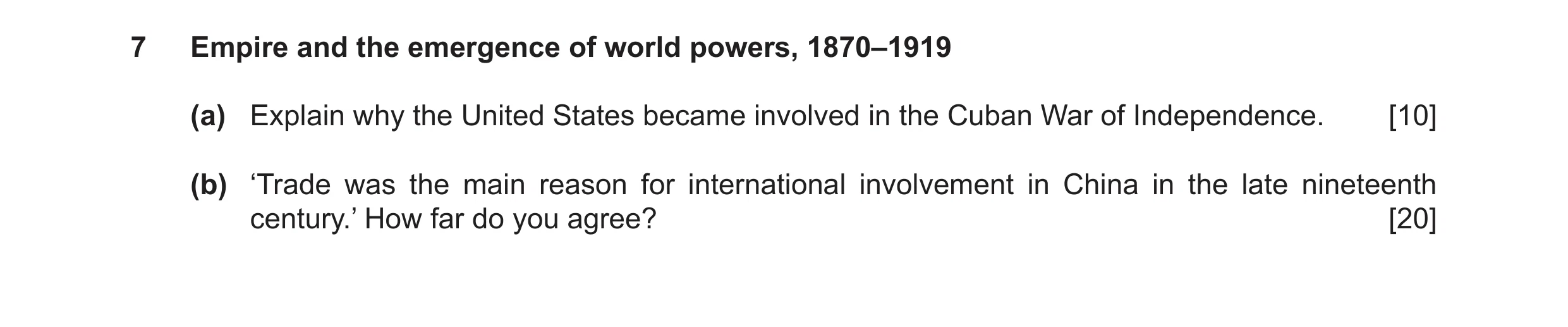
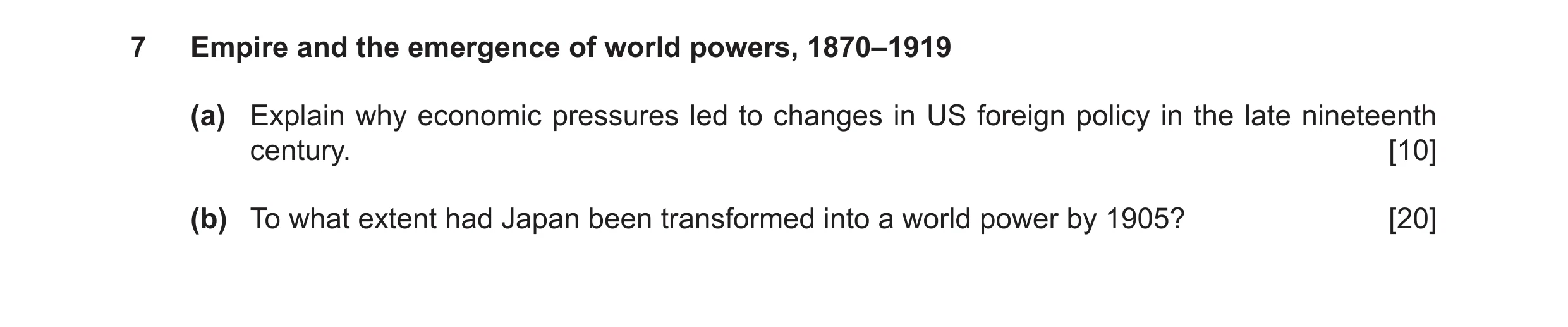 2 / 7
2 / 7![Question 13: China and Japan, 1912–45 (a) Explain why Japan became involved in the Second World War in 1941. [10] (b) To what extent was the decline in …](https://img.pastlit.com/crops/1e81c614-eec2-4b3f-926b-ab8f6c37216e/q9.webp)
![Question 14: China and Japan, 1912–45 (a) Explain why the Chinese Communist Party was able to build a strong base in Yan’an. [10] (b) ‘Economic problems…](https://img.pastlit.com/crops/918b9df9-a753-48e6-b28a-da3c8235de60/q9.webp)
![Question 15: China and Japan, 1912–45 (a) Explain why Yuan Shih-kai failed to establish a stable government in China. [10] (b) ‘Japan’s status as a Grea…](https://img.pastlit.com/crops/dce248f2-057e-4c78-b534-71f14c735ad1/q9.webp)
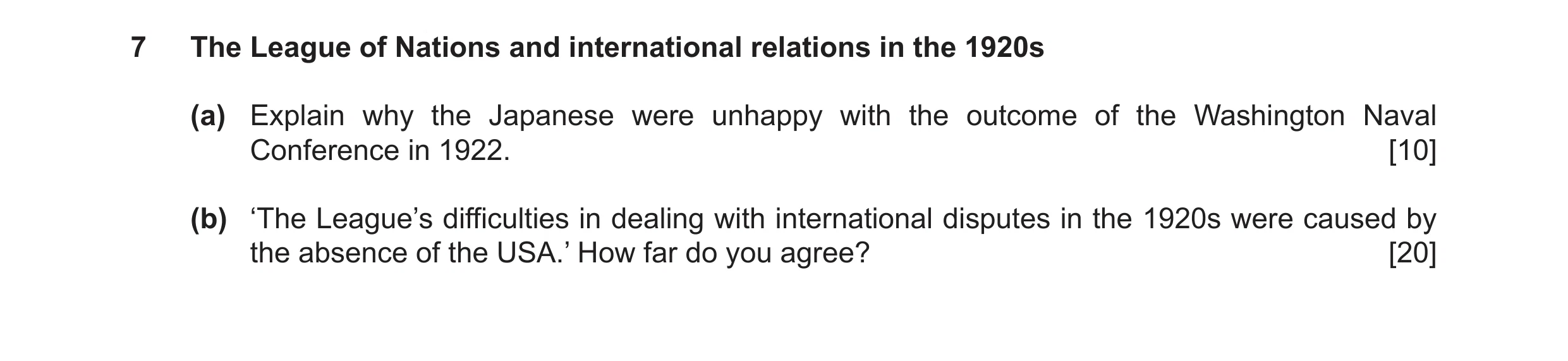
![Question 17: China and Japan, 1912–45 (a) Explain why the Xi’an Incident was important in the Chinese war against Japan. [10] (b) How important was supp…](https://img.pastlit.com/crops/890a2614-fc34-4d5c-8514-677039bca9fe/q9.webp)
![Question 18: China and Japan, 1912–45 (a) Explain why Japan became an expansionist power in the 1930s. [10] (b) To what extent had the Kuomintang succee…](https://img.pastlit.com/crops/4a6fbc05-ebbe-451a-9492-81fbb9cb1648/q9.webp) 3 / 7
3 / 7![Question 19: China and Japan, 1912–45 (a) Explain why democratic government failed in Japan in the 1930s. [10] (b) How important was the Rectification C…](https://img.pastlit.com/crops/1c0289c9-3e5f-4d38-a85a-0247ebc67c41/q9.webp)
![Question 20: China and Japan, 1912–45 (a) Explain why the Japanese army occupied Manchuria in 1931. [10] (b) To what extent was the increasing support f…](https://img.pastlit.com/crops/4e9a4013-918d-4de7-8097-ec79c6b04326/q9.webp)
![Question 21: China and Japan, 1912–45 (a) Explain why attempts to form a stable government in China between 1912 and 1916 were unsuccessful. [10] (b) Ho…](https://img.pastlit.com/crops/fe40b30a-a626-4555-9a8e-9c296cf5d55d/q9.webp)
![Question 22: China and Japan, 1912–45 (a) Explain why Chiang Kai-shek was placed under arrest by his own generals in 1936. [10] (b) ‘The Paris Peace Con…](https://img.pastlit.com/crops/1e9768d7-c225-4abe-a9c2-55fadd798beb/q9.webp)
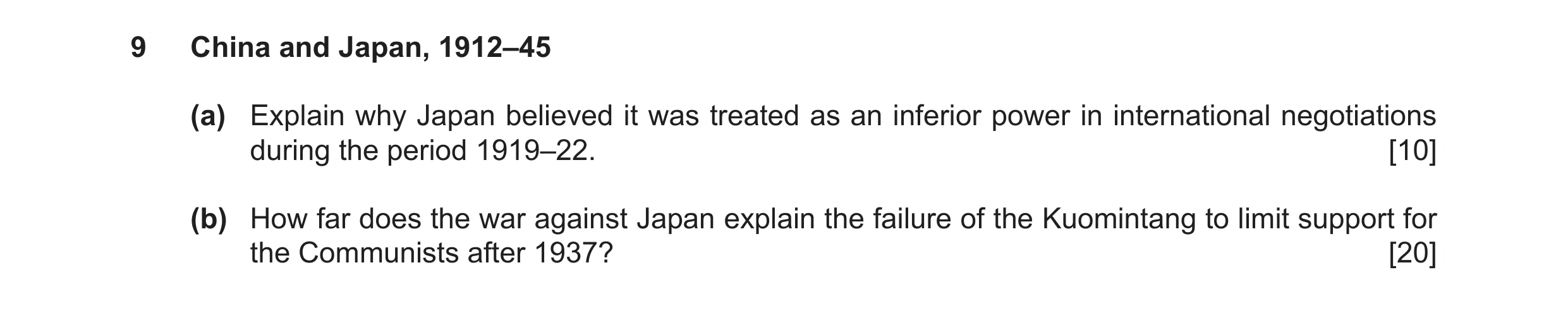
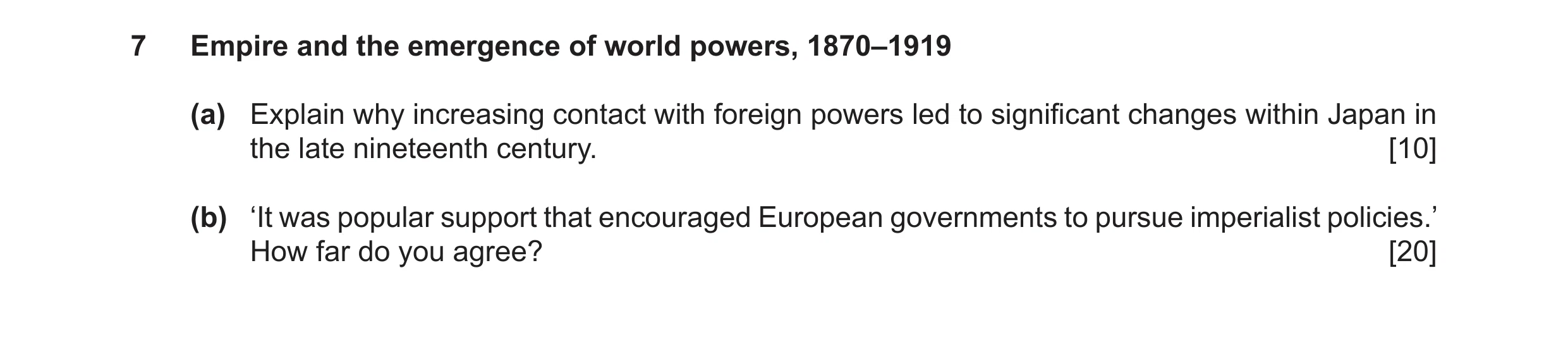 4 / 7
4 / 7![Question 25: China and Japan, 1912–45 (a) Explain why the attempt to establish parliamentary democracy in Japan failed. [10] (b) To what extent does dis…](https://img.pastlit.com/crops/1ba80a66-7d3b-4183-b897-f2a4e68305f3/q9.webp)
![Question 26: Empire and the emergence of world powers, 1870–1919 (a) Explain why Japan was able to improve its international status by 1900. [10] (b) Ho…](https://img.pastlit.com/crops/5a216cca-6ede-4d0a-8b84-12a4d3c58783/q7.webp)
![Question 27: China and Japan, 1912–45 (a) Explain why the First United Front was ended in 1927. [10] (b) How far does the war against Japan explain why …](https://img.pastlit.com/crops/5a216cca-6ede-4d0a-8b84-12a4d3c58783/q9.webp)
![Question 28: Empire and the emergence of world powers, 1870–1919 (a) Explain why Russia was unable to defeat Japan in the war of 1904–05. [10] (b) To wh…](https://img.pastlit.com/crops/3cd171d1-0ecf-44fa-ae60-c8f47acabfd0/q7.webp)
![Question 29: China and Japan, 1912–45 (a) Explain why Japanese military leaders thought war with the USA was inevitable by 1941. [10] (b) How important …](https://img.pastlit.com/crops/3cd171d1-0ecf-44fa-ae60-c8f47acabfd0/q9.webp)
![Question 30: China and Japan, 1912–45 (a) Explain why Chiang Kai-shek’s Extermination Campaigns failed to destroy the Communist Party. [10] (b) To what …](https://img.pastlit.com/crops/6f253293-5518-447c-bfd7-2df728a3c945/q9.webp) 5 / 7
5 / 7![Question 31: Empire and the emergence of world powers, 1870–1919 (a) Explain why the Treaty of Shimonoseki led to the Triple Intervention. [10] (b) ‘The…](https://img.pastlit.com/crops/e770a01d-6907-4b7f-a733-2f53128fb283/q7.webp)
![Question 32: China and Japan, 1912–45 (a) Explain why the puppet state of Manchukuo was created in 1932. [10] (b) How successful was the Northern Expedi…](https://img.pastlit.com/crops/e770a01d-6907-4b7f-a733-2f53128fb283/q9.webp)
![Question 33: China and Japan, 1912–45 (a) Explain why the Manchu dynasty was removed from power in 1912. [10] (b) ‘The Nanjing Decade (1928–37) was a pe…](https://img.pastlit.com/crops/437c8215-73eb-4aff-b91b-9fe5da52cbf3/q9.webp)
![Question 34: China and Japan, 1912–45 (a) Explain why Chiang Kai-shek became leader of the Kuomintang following the death of Sun Yat-sen. [10] (b) To wh…](https://img.pastlit.com/crops/f0ed21d0-0f48-4734-a6b3-a4cb32722fc7/q9.webp)
![Question 35: China and Japan, 1912–45 (a) Explain why Japan’s international policies during the 1930s became increasingly aggressive. [10] (b) To what e…](https://img.pastlit.com/crops/90cfefd7-83ab-449c-94e6-73ab8c94737d/q9.webp)
![Question 36: China and Japan, 1912–45 (a) Explain why Yuan Shih-kai was forced from power in 1916. [10] (b) How important were problems with the USA in …](https://img.pastlit.com/crops/d36e5e01-5f31-44db-8a06-5ba1e1926efd/q9.webp) 6 / 7
6 / 7![Question 37: Empire and the emergence of world powers, 1870–1919 (a) Explain why the Second Boer War led to heavy criticism of Britain. [10] (b) To what…](https://img.pastlit.com/crops/f34ff3ad-4811-4297-b0bb-1f9e0c2c9aee/q7.webp)

![Question 39: Empire and the emergence of world powers, 1870–1919 (a) Explain why the USA became involved in Panama from 1902 onwards. [10] (b) To what e…](https://img.pastlit.com/crops/2b5bfc49-c8bb-4041-b0c0-cf9d22e3808b/q7.webp)
![Question 40: China and Japan, 1912–45 (a) Explain why the Xi’an incident was important. [10] (b) To what extent were economic factors responsible for th…](https://img.pastlit.com/crops/2b5bfc49-c8bb-4041-b0c0-cf9d22e3808b/q9.webp) 7 / 7
7 / 7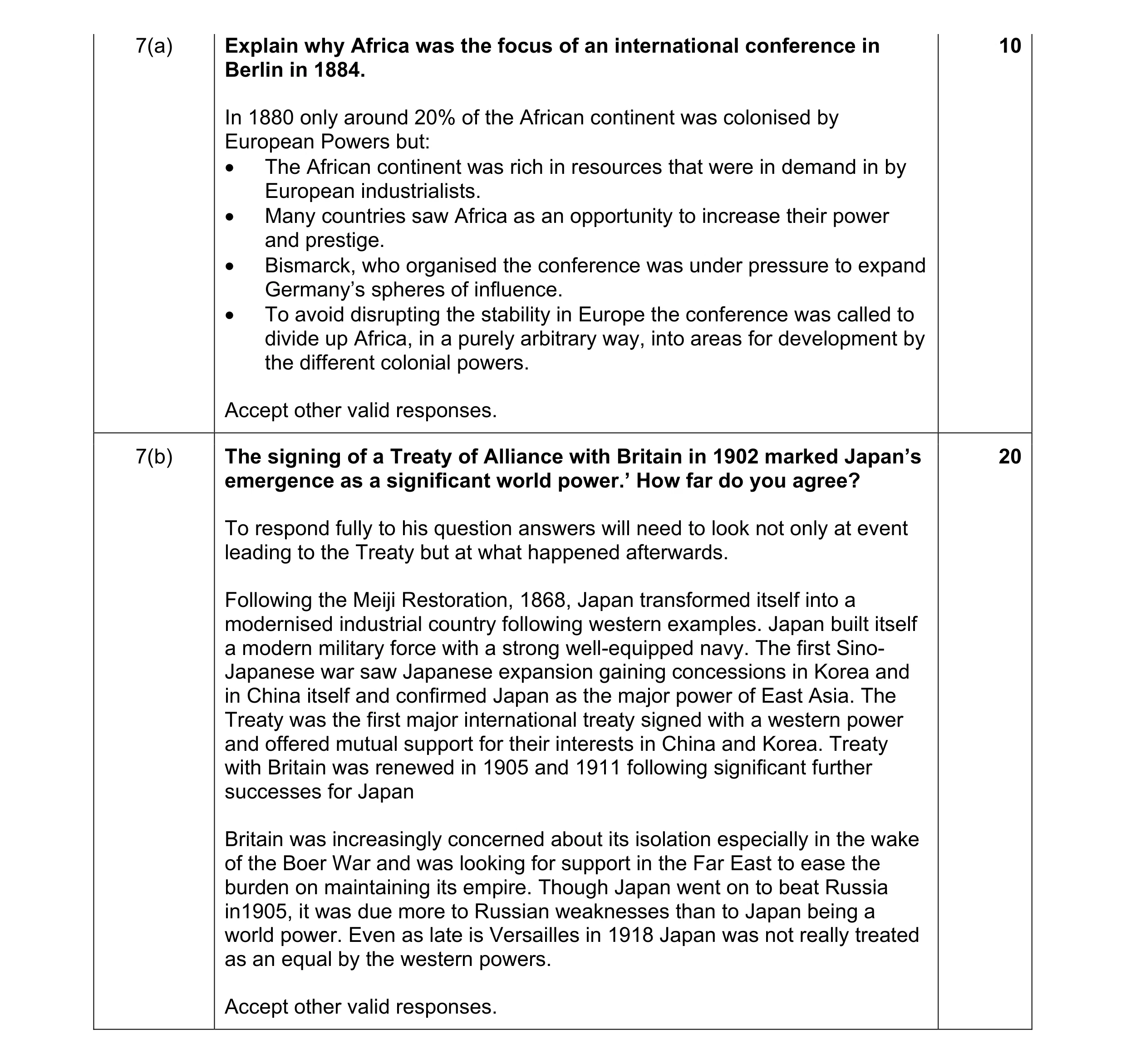 30
30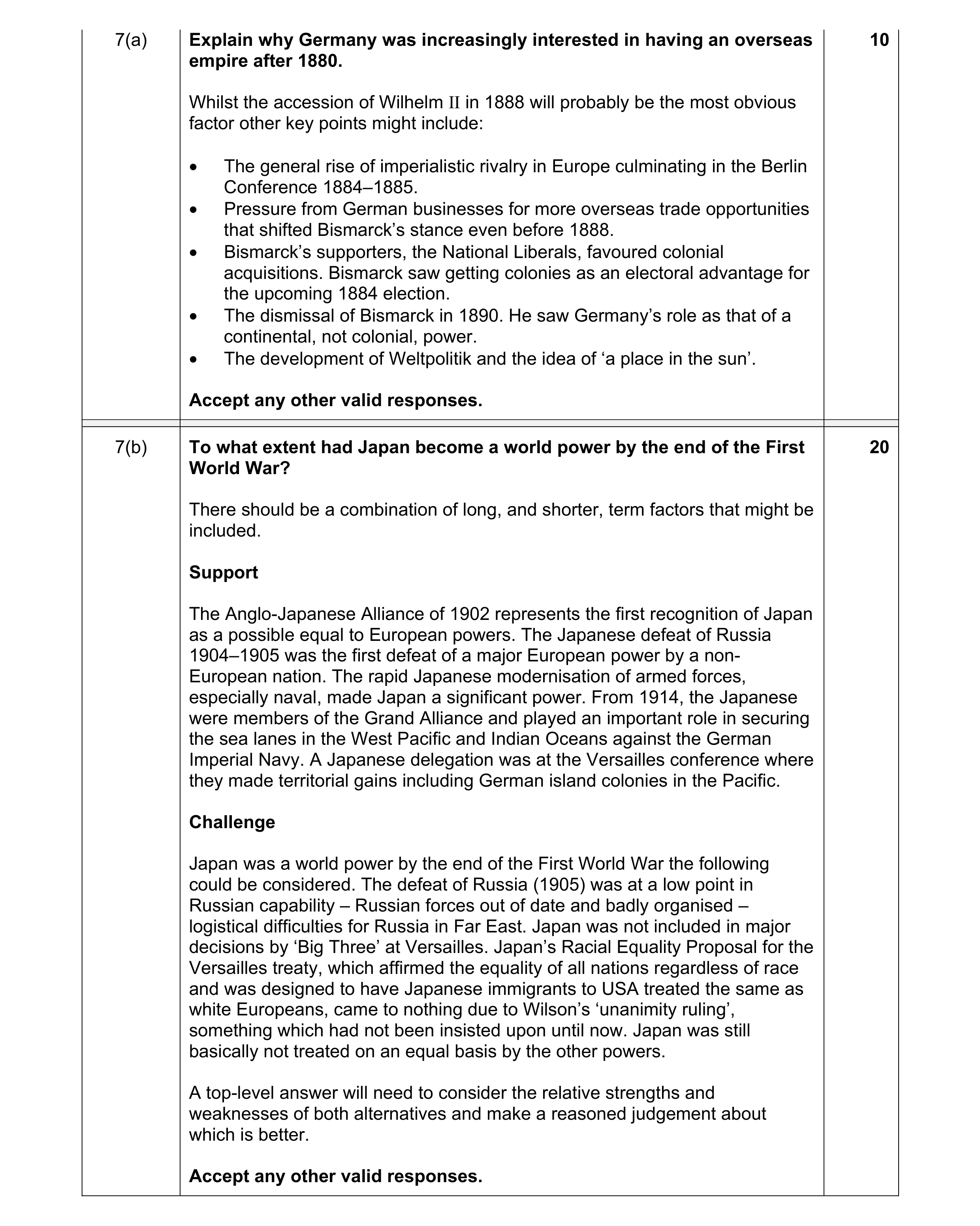 30
30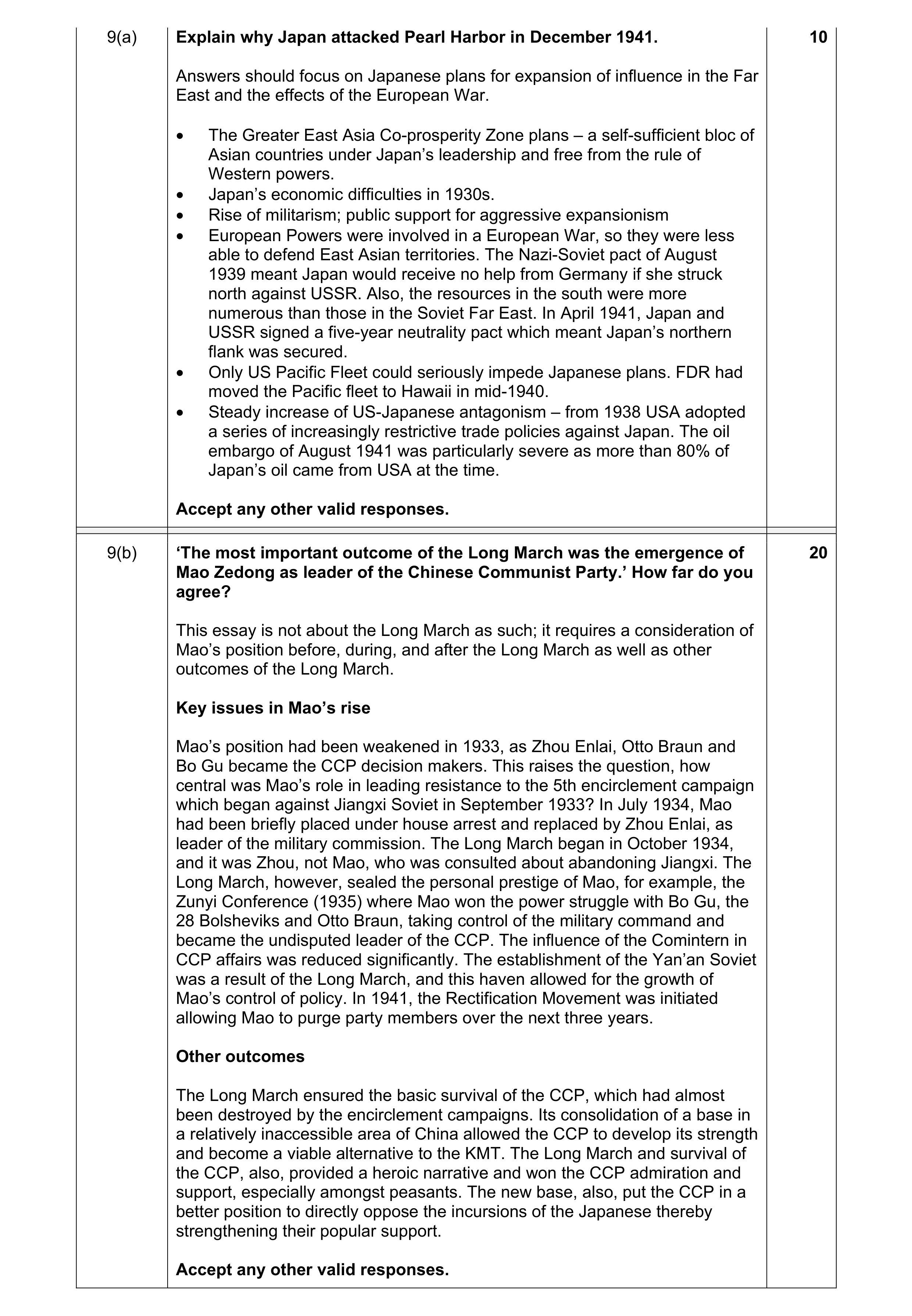 30
30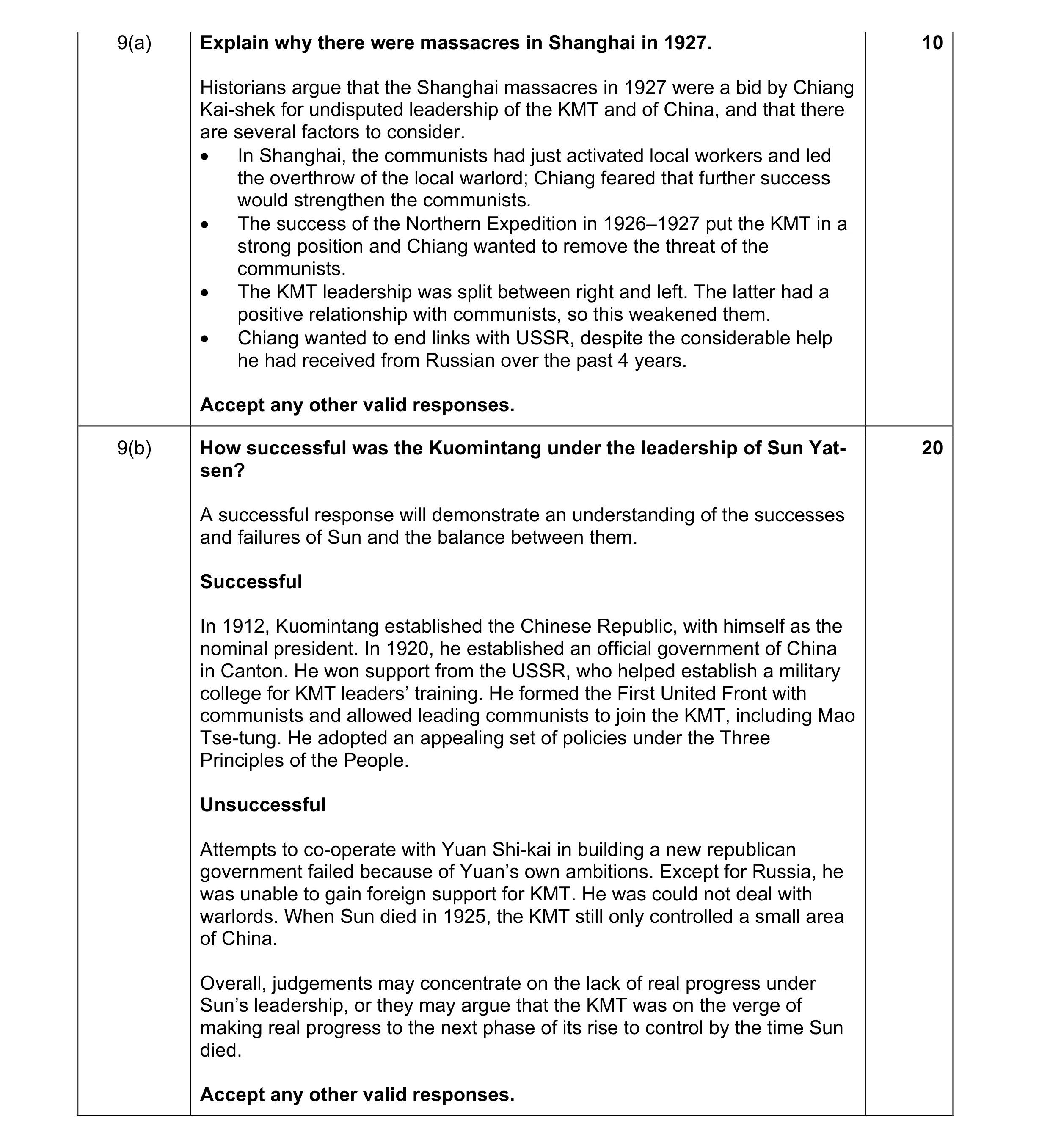 30
30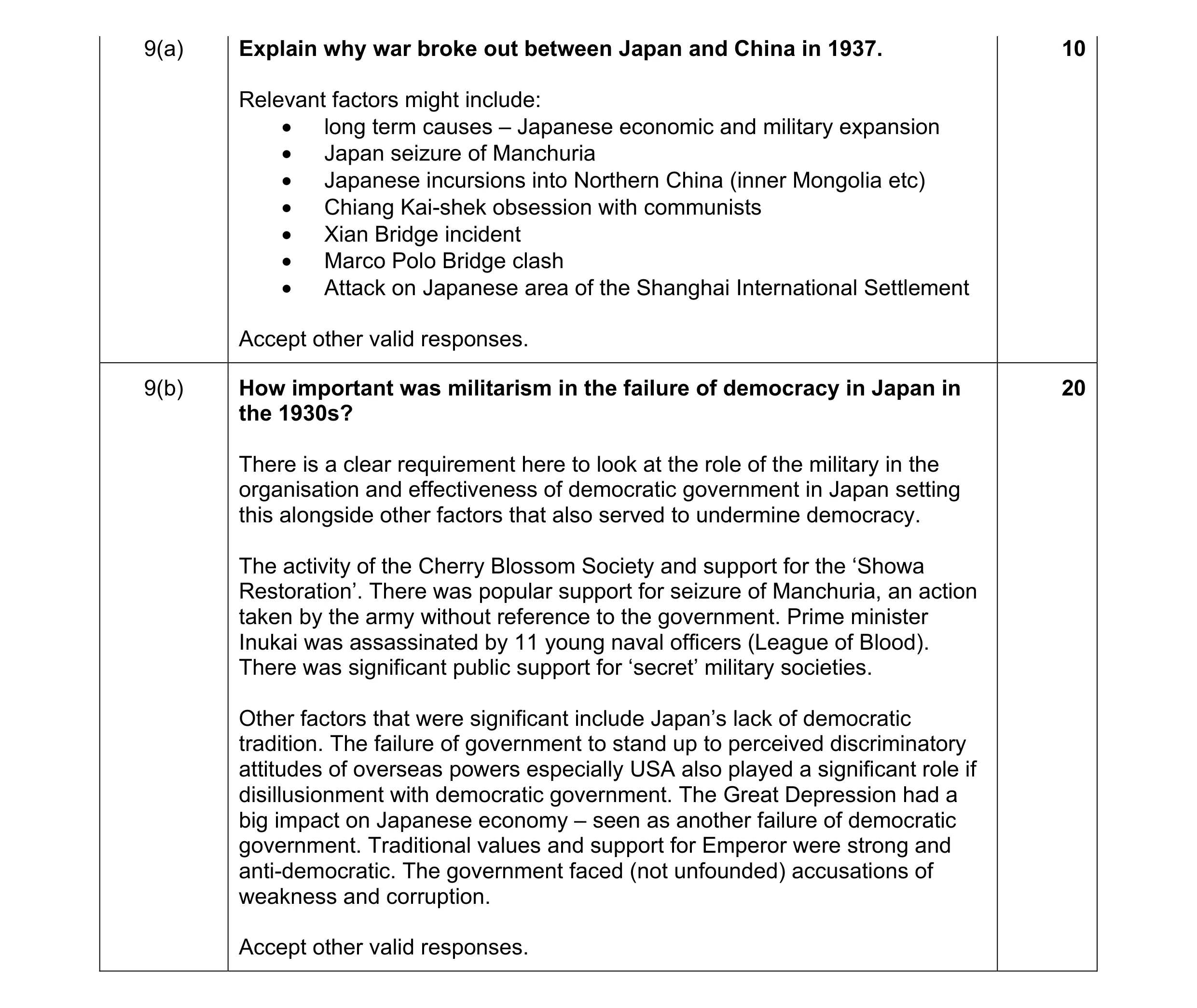 30
30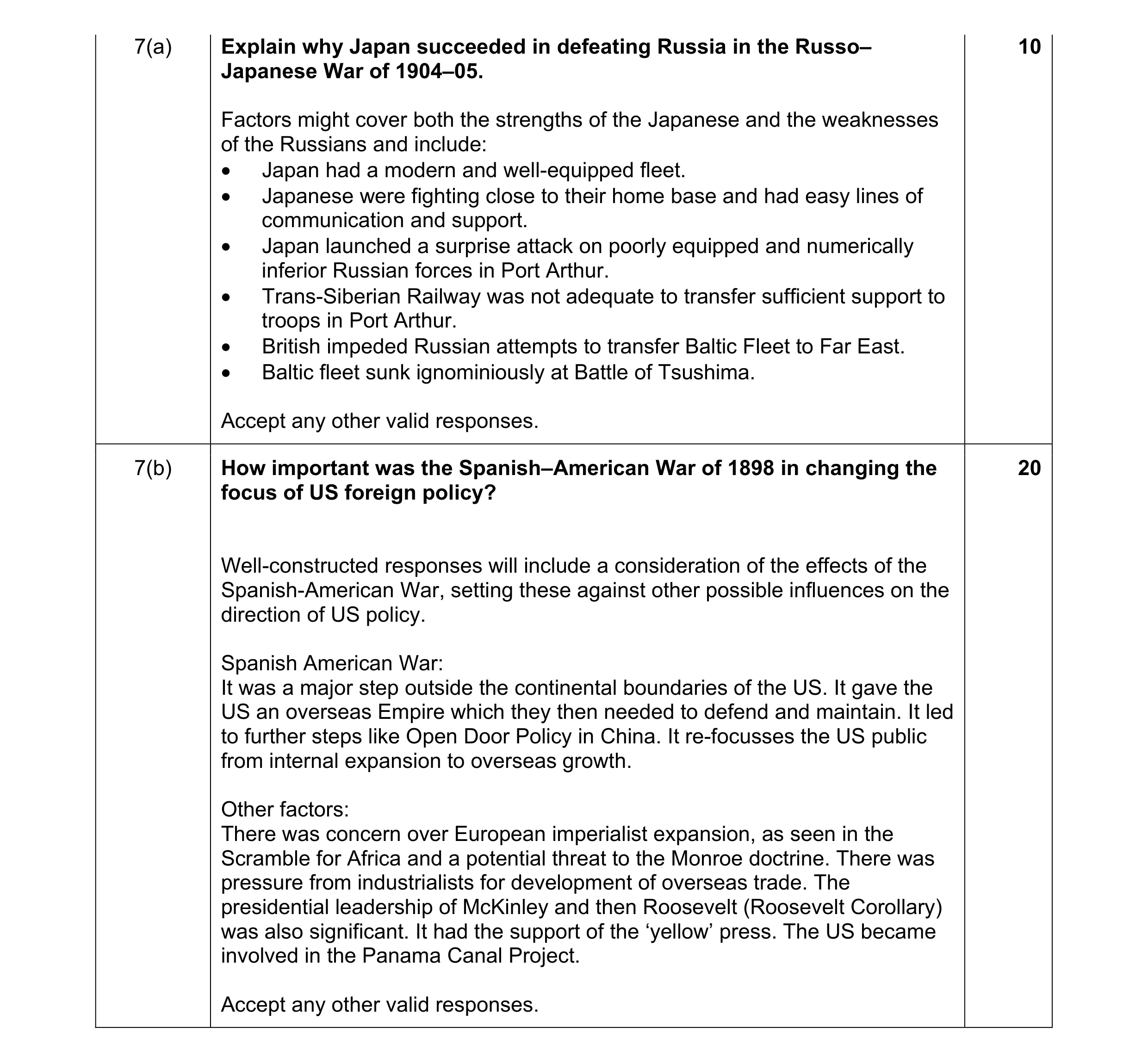 30
30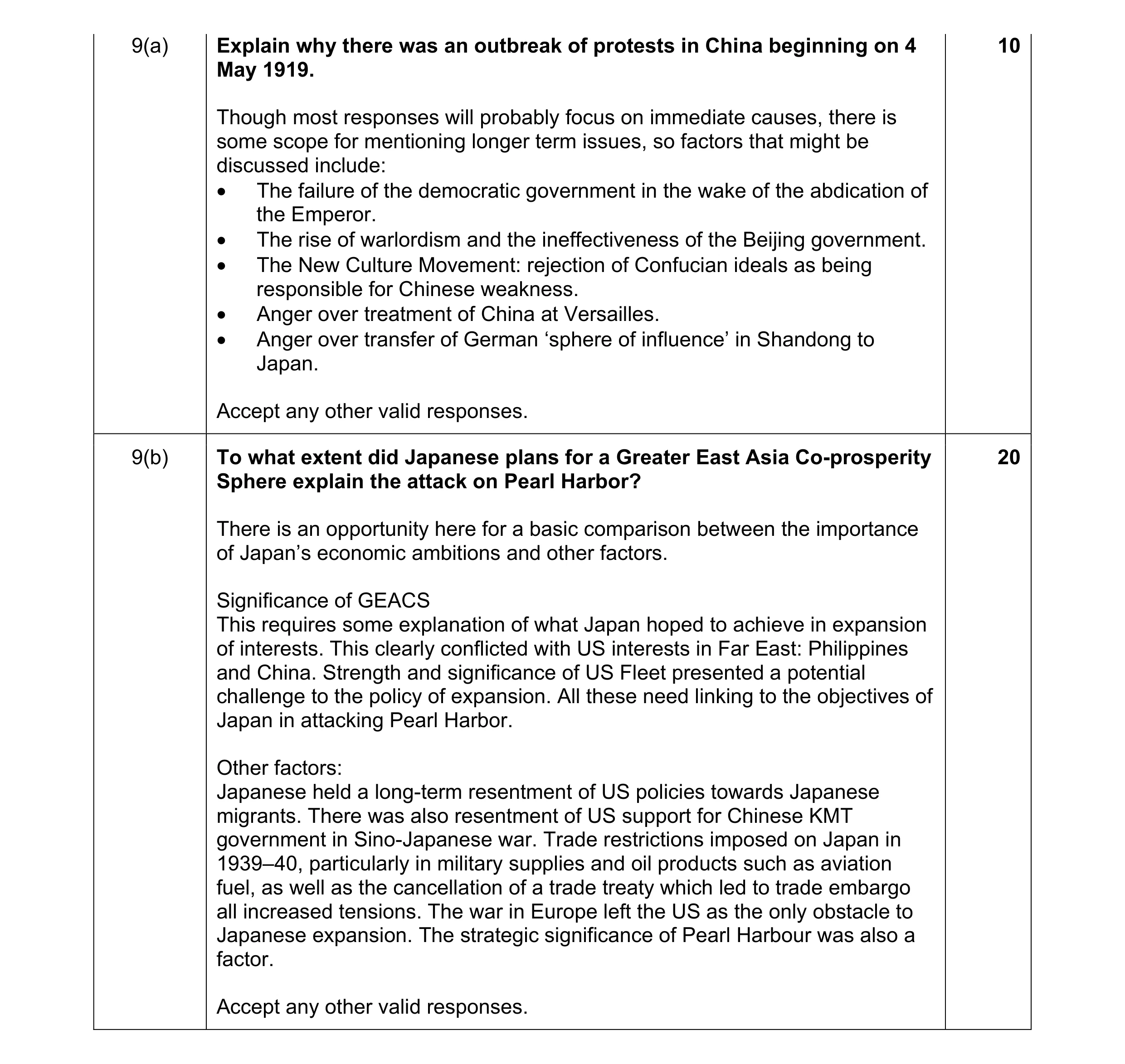 30
30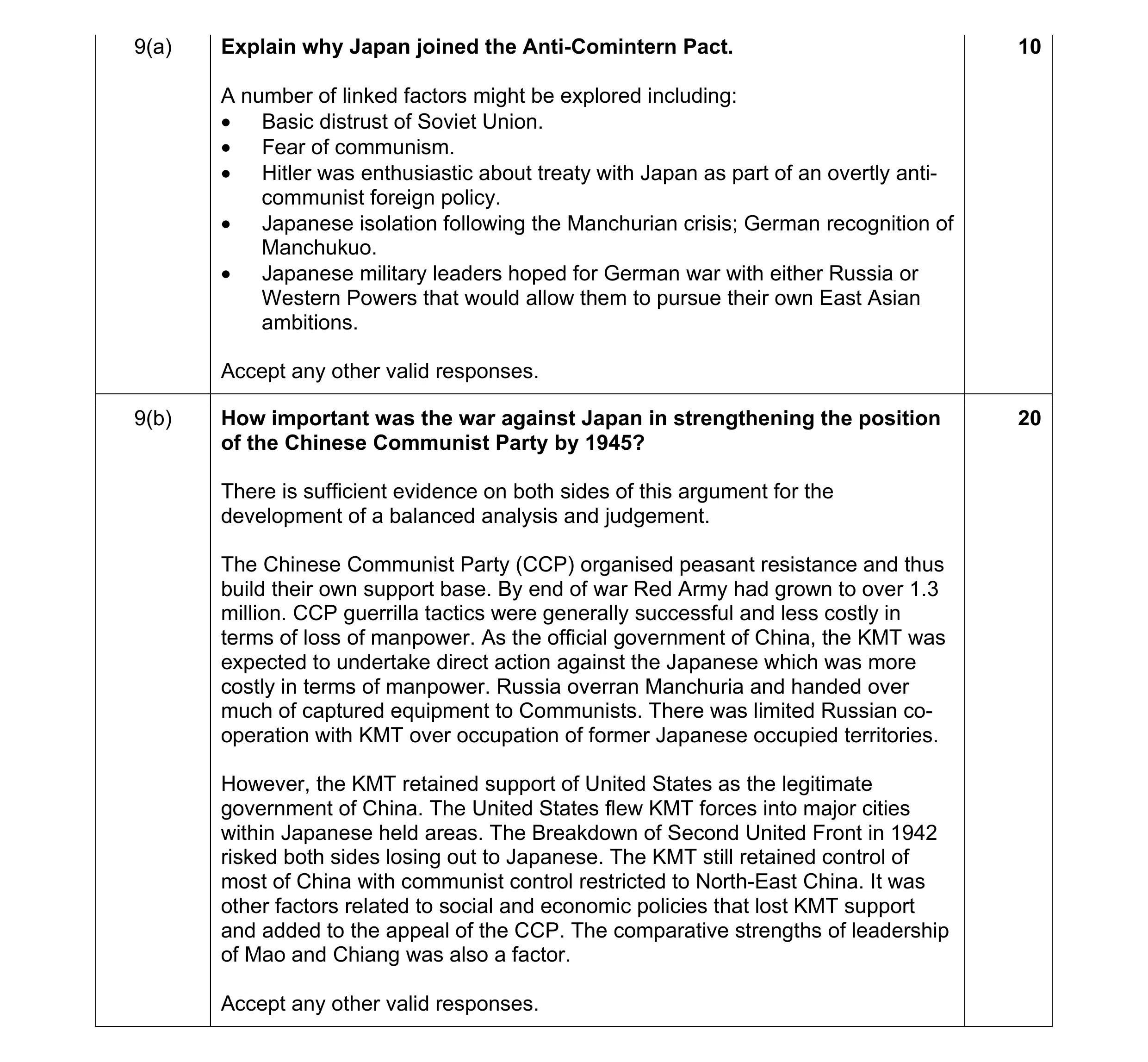 30
30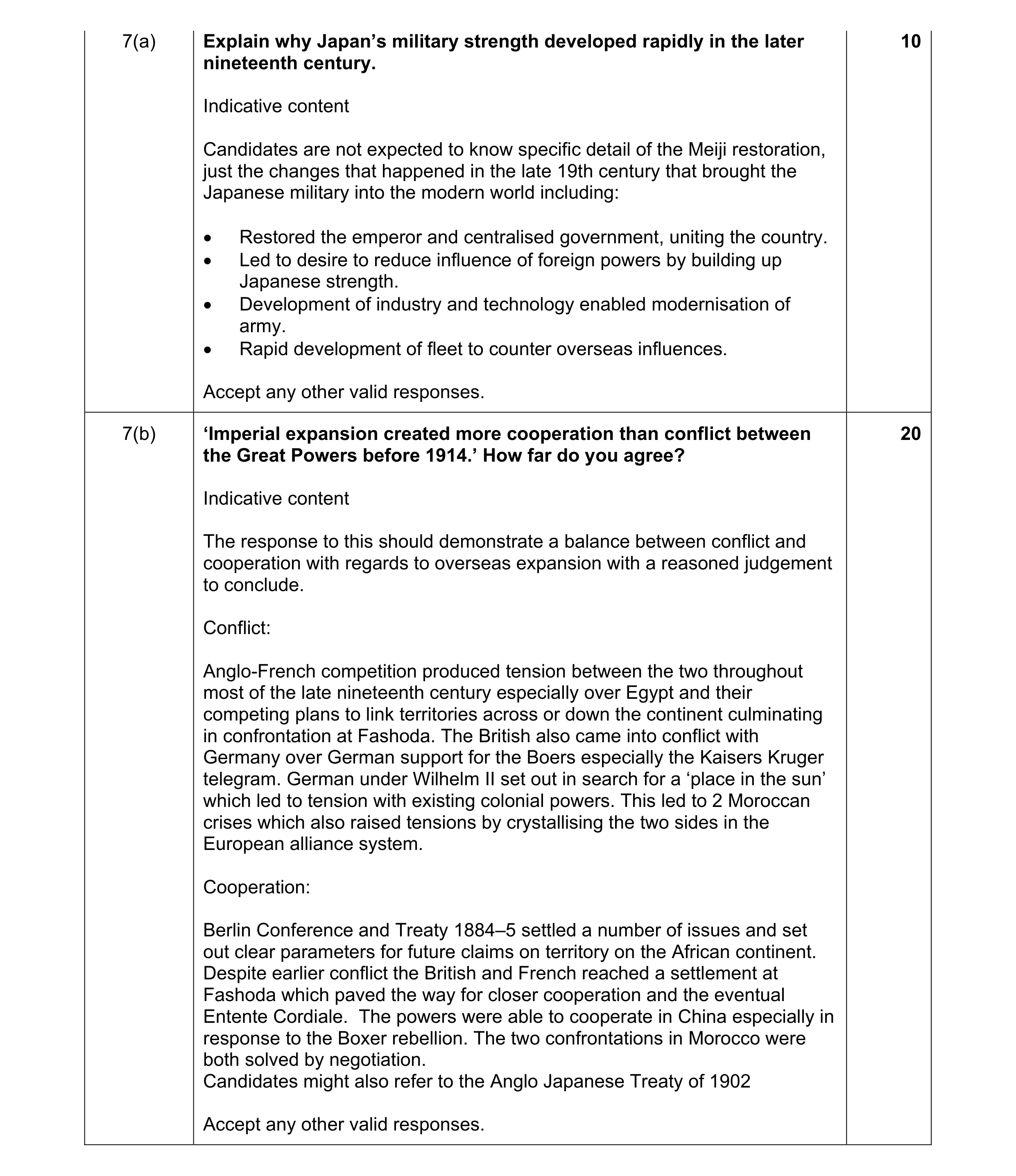 30
30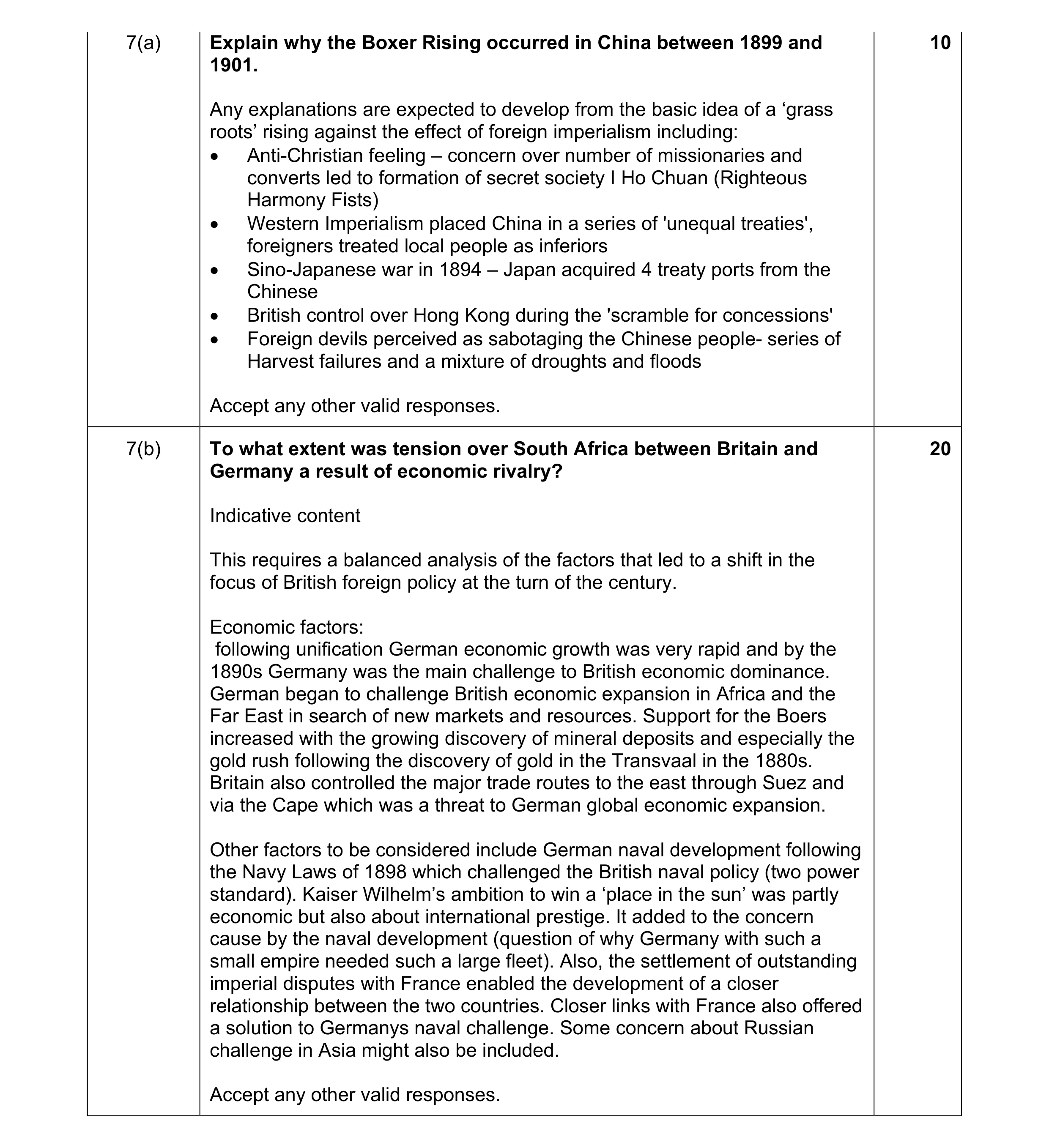 30
30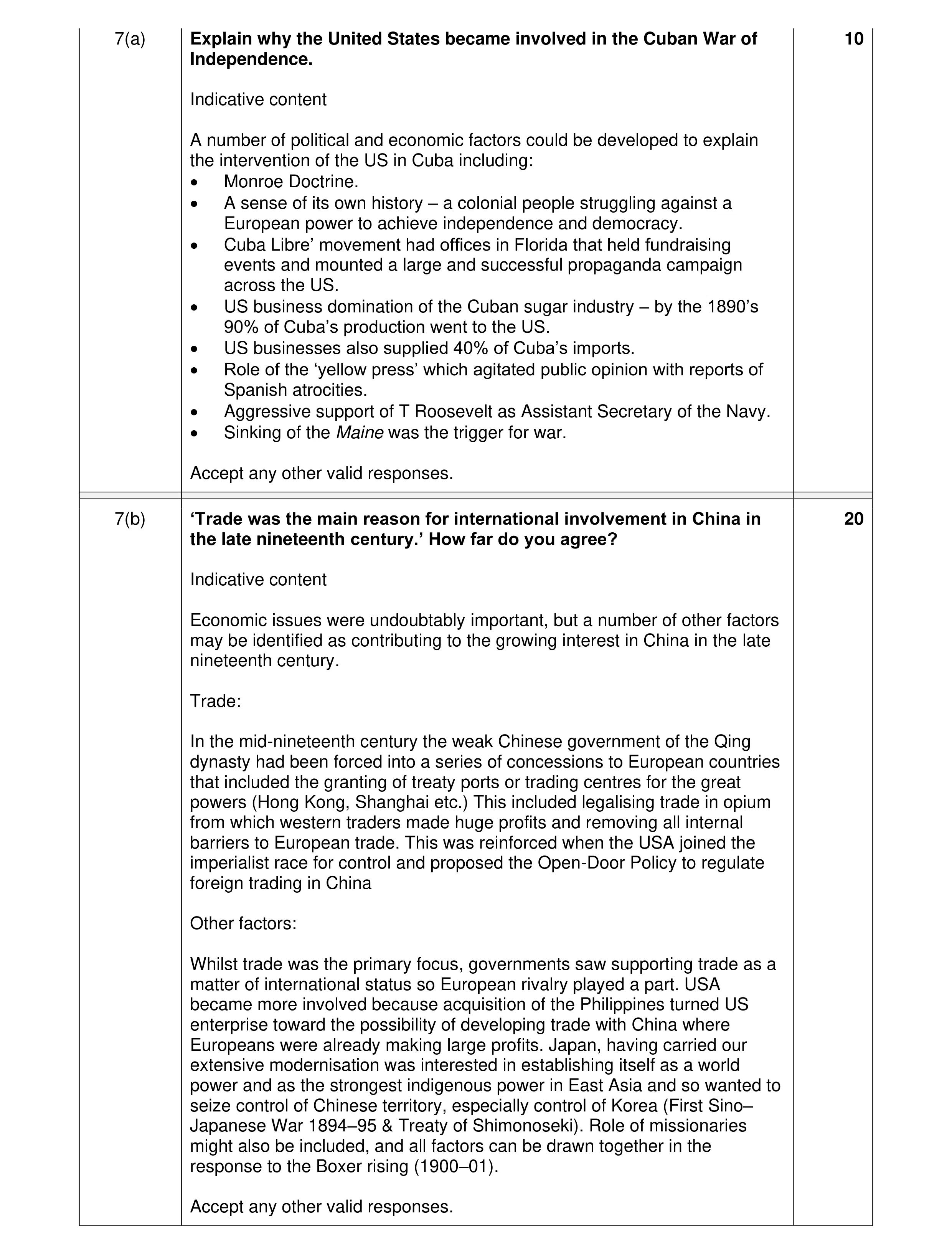 30
30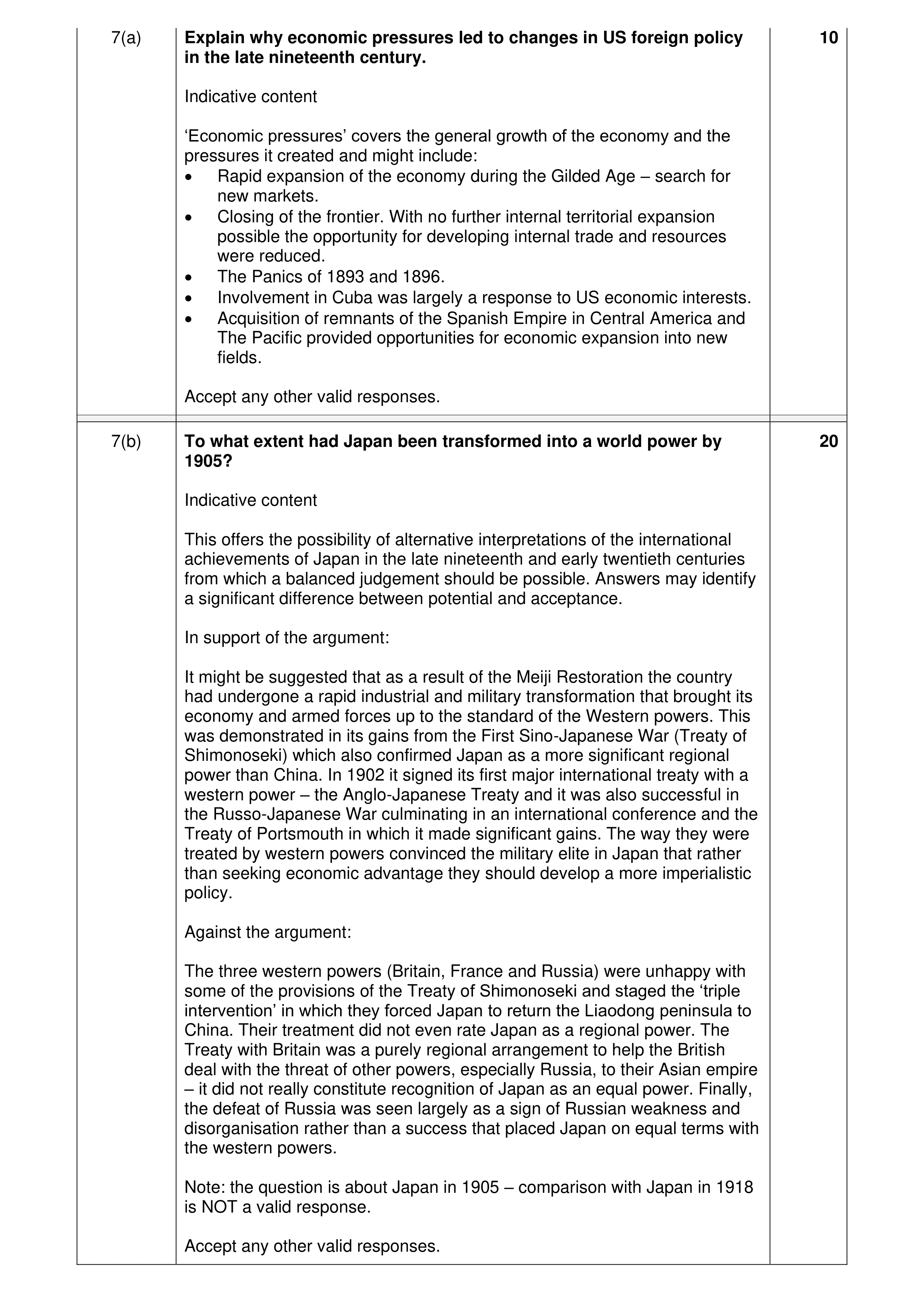 30
30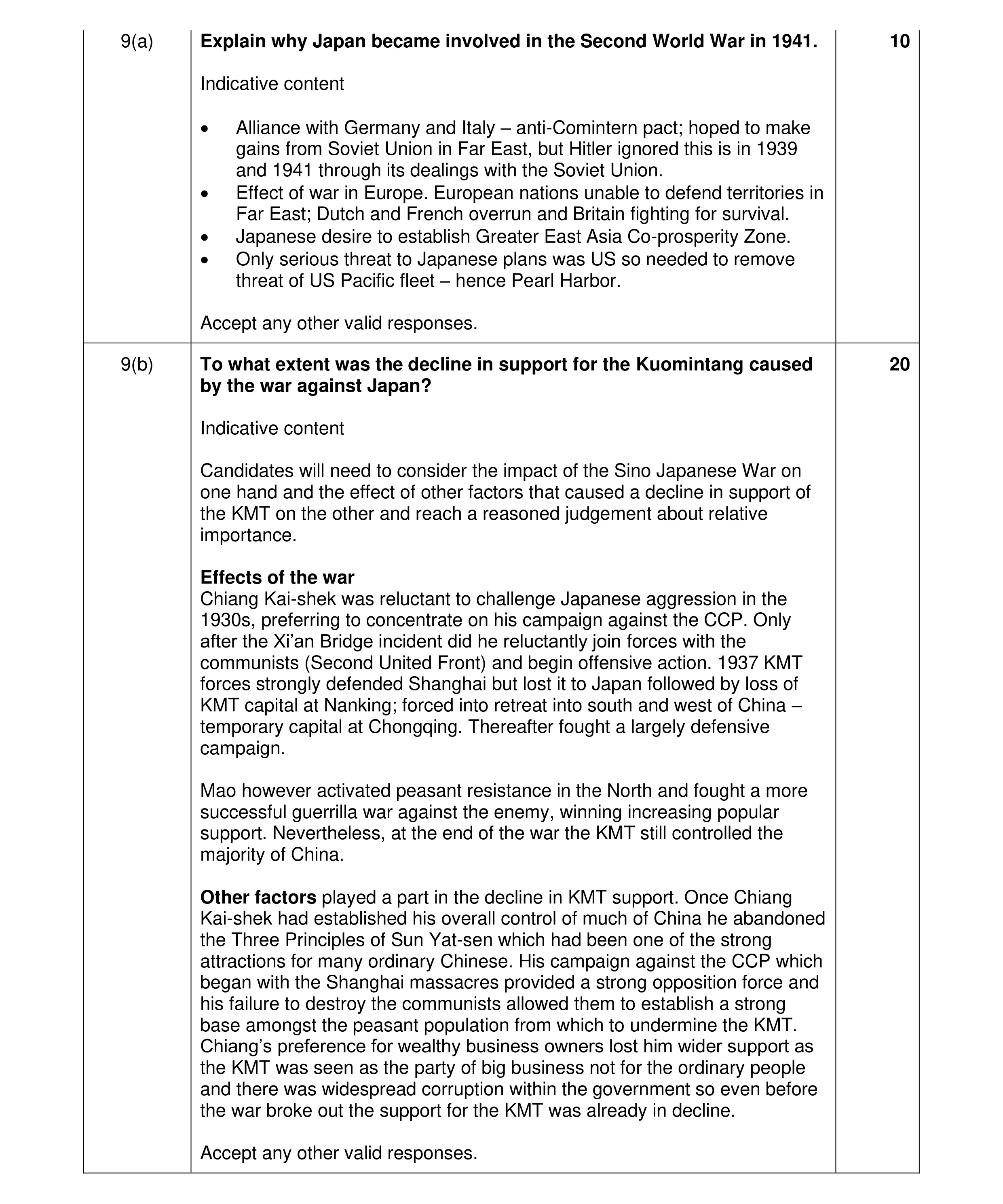 30
30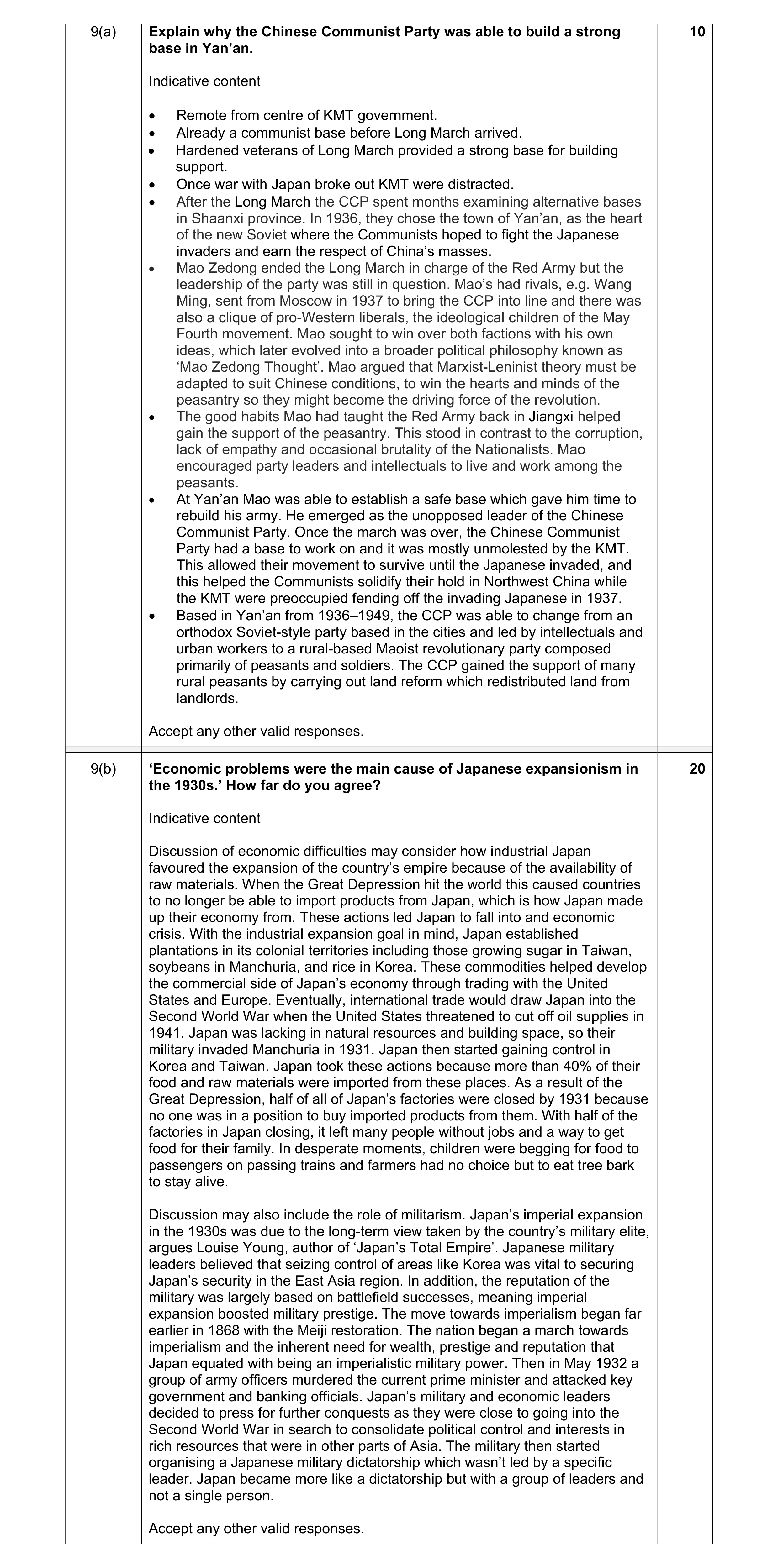 30
30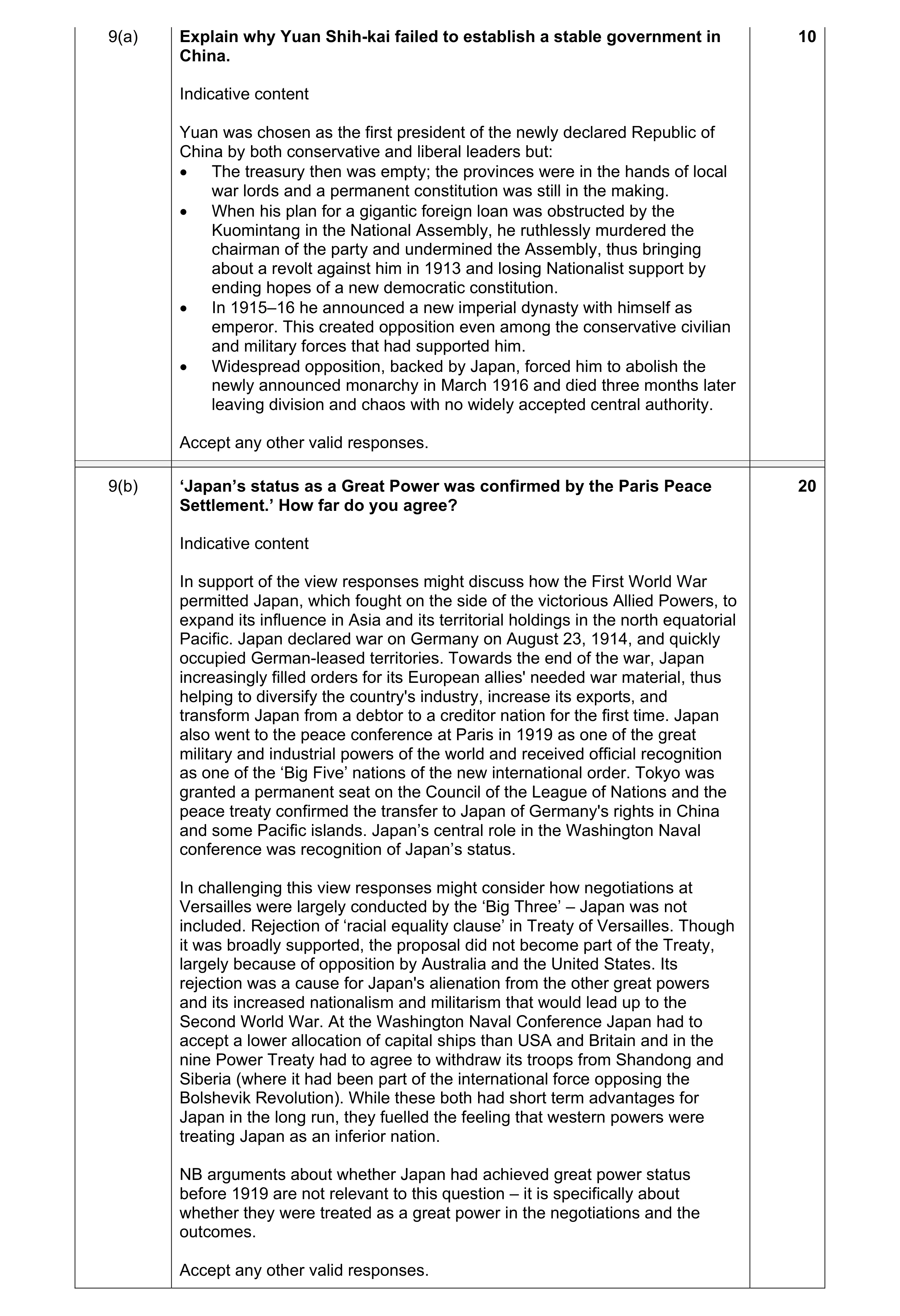 30
30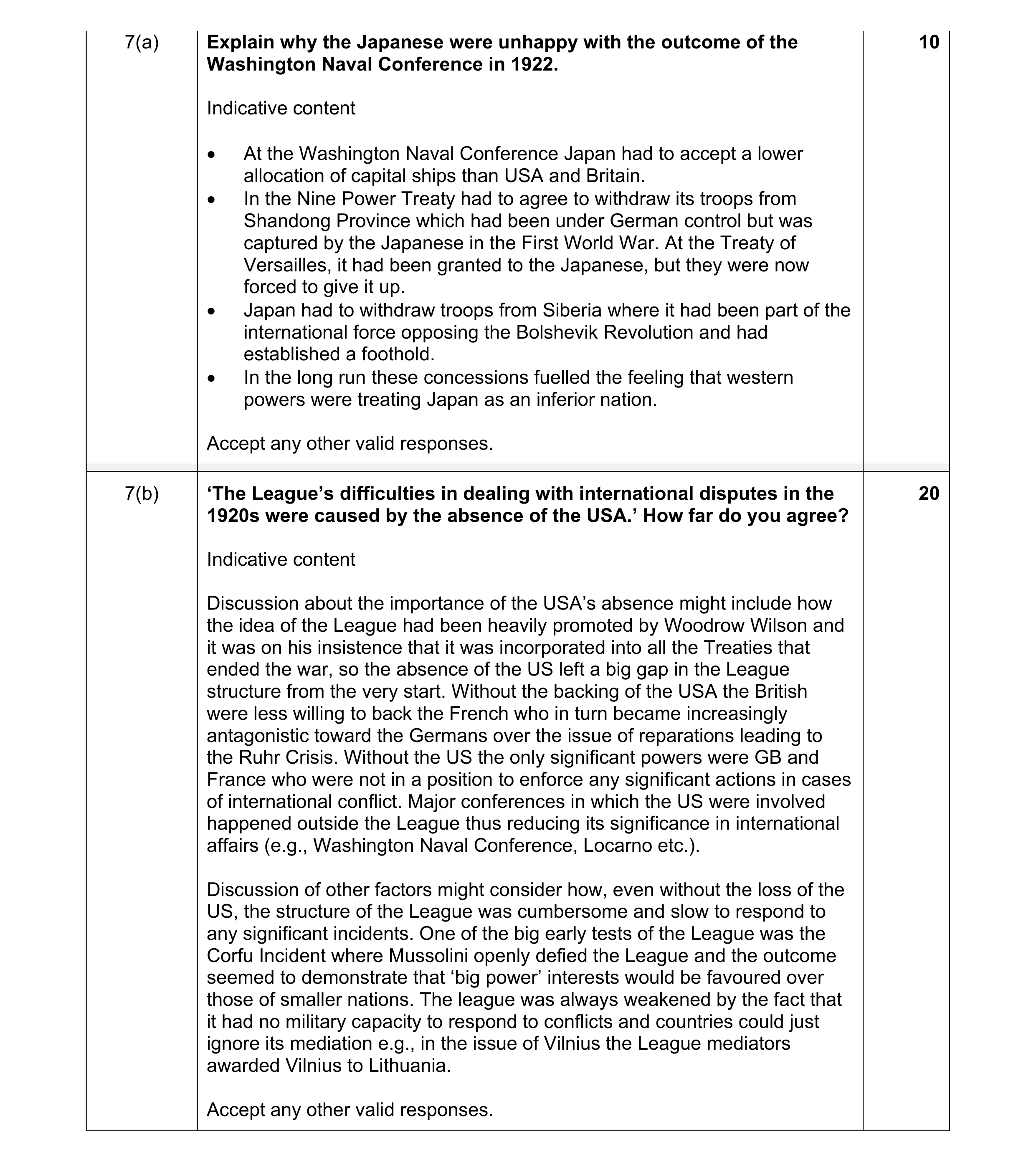 30
30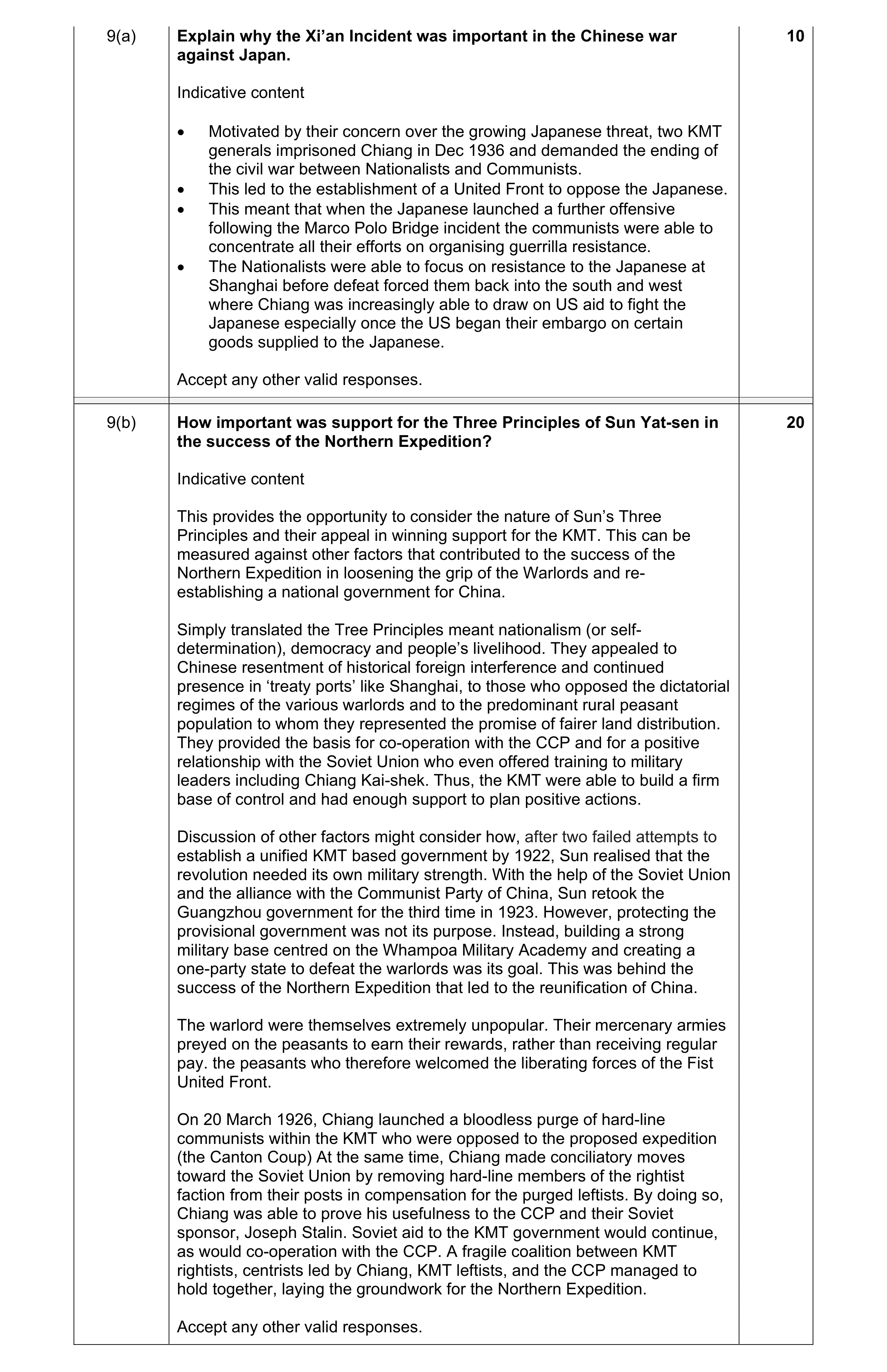 30
30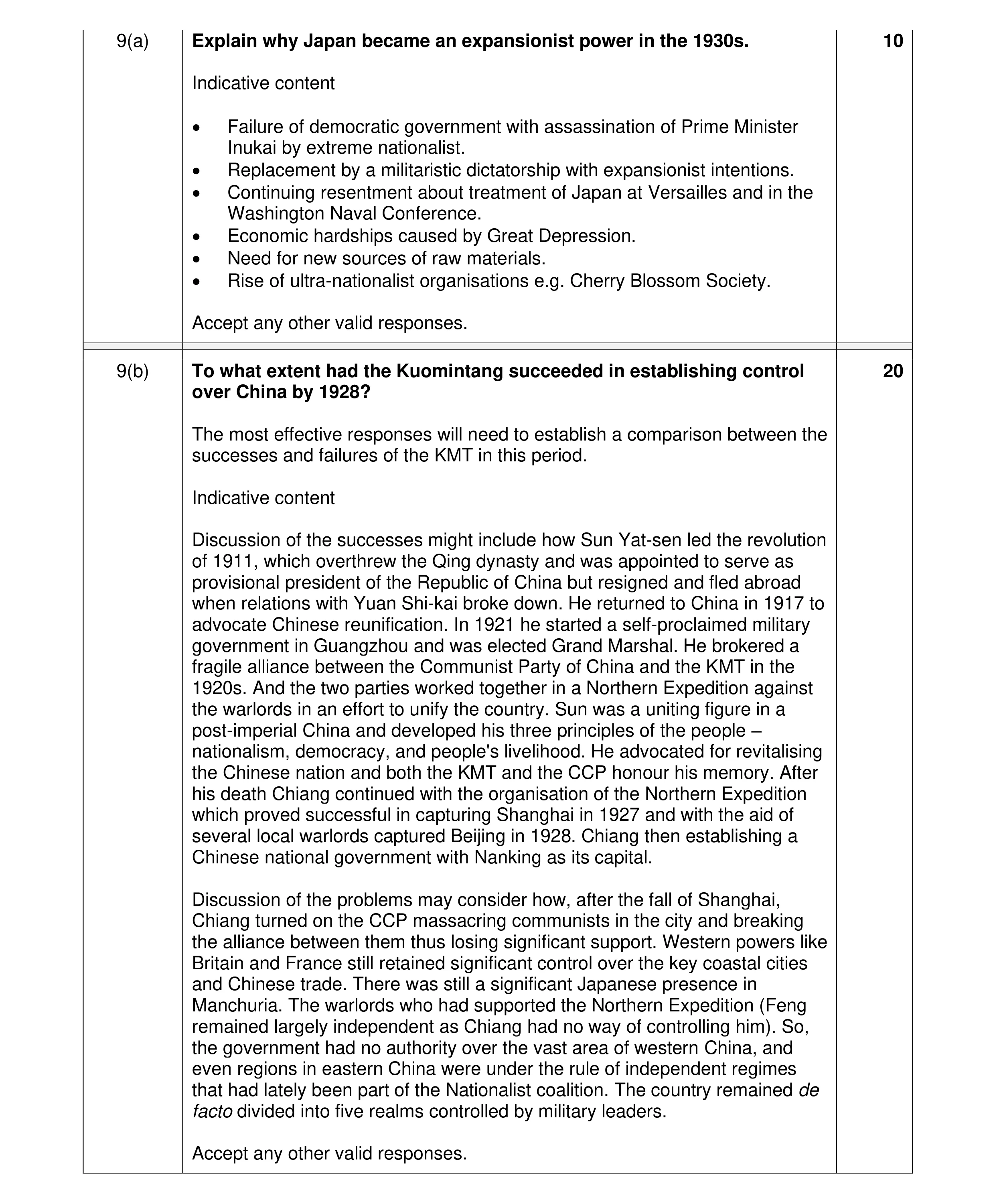 30
30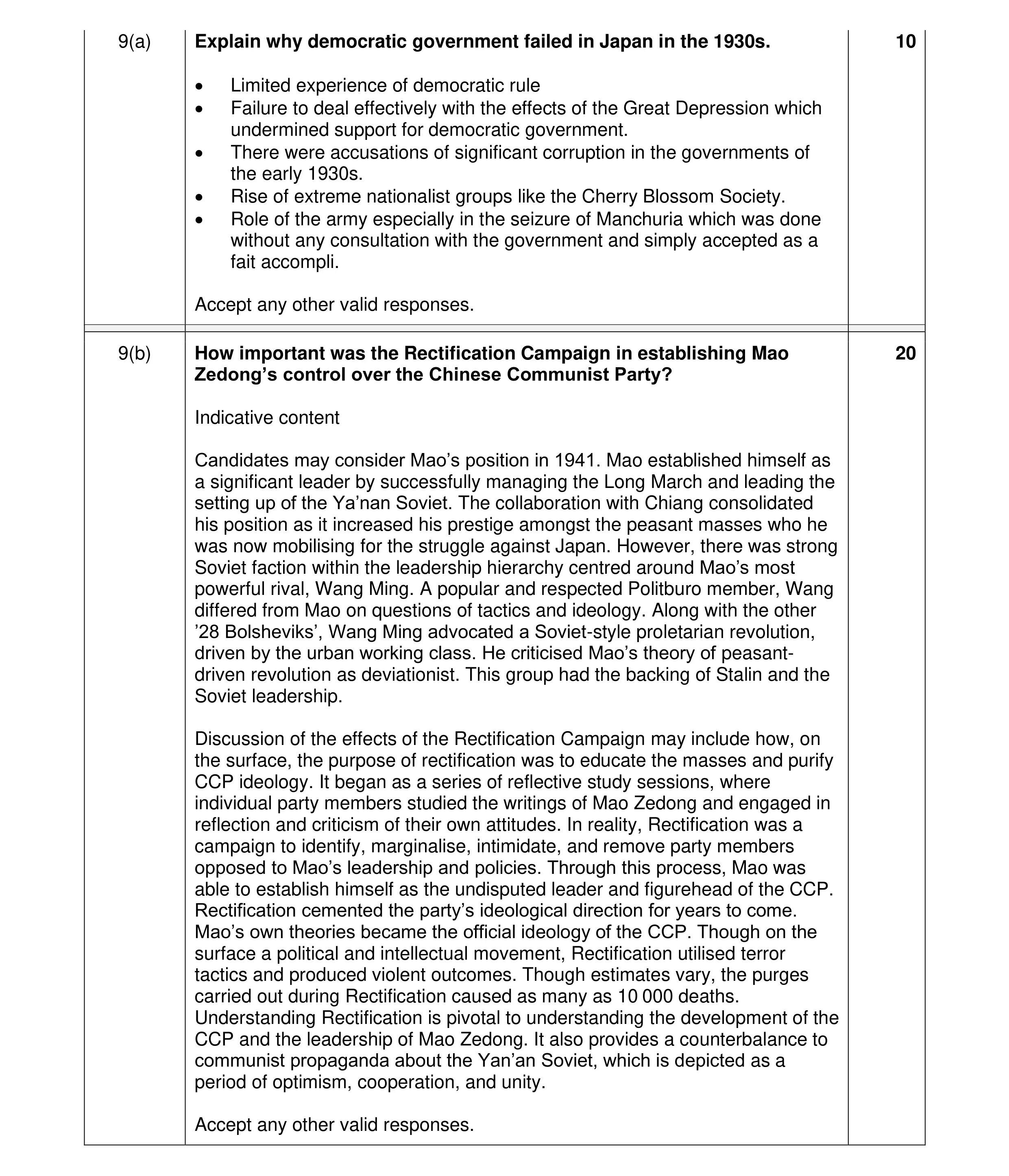 30
30 30
30 30
30 30
30 30
30 30
30 30
30 30
30 30
30 30
30 30
30 30
30 30
30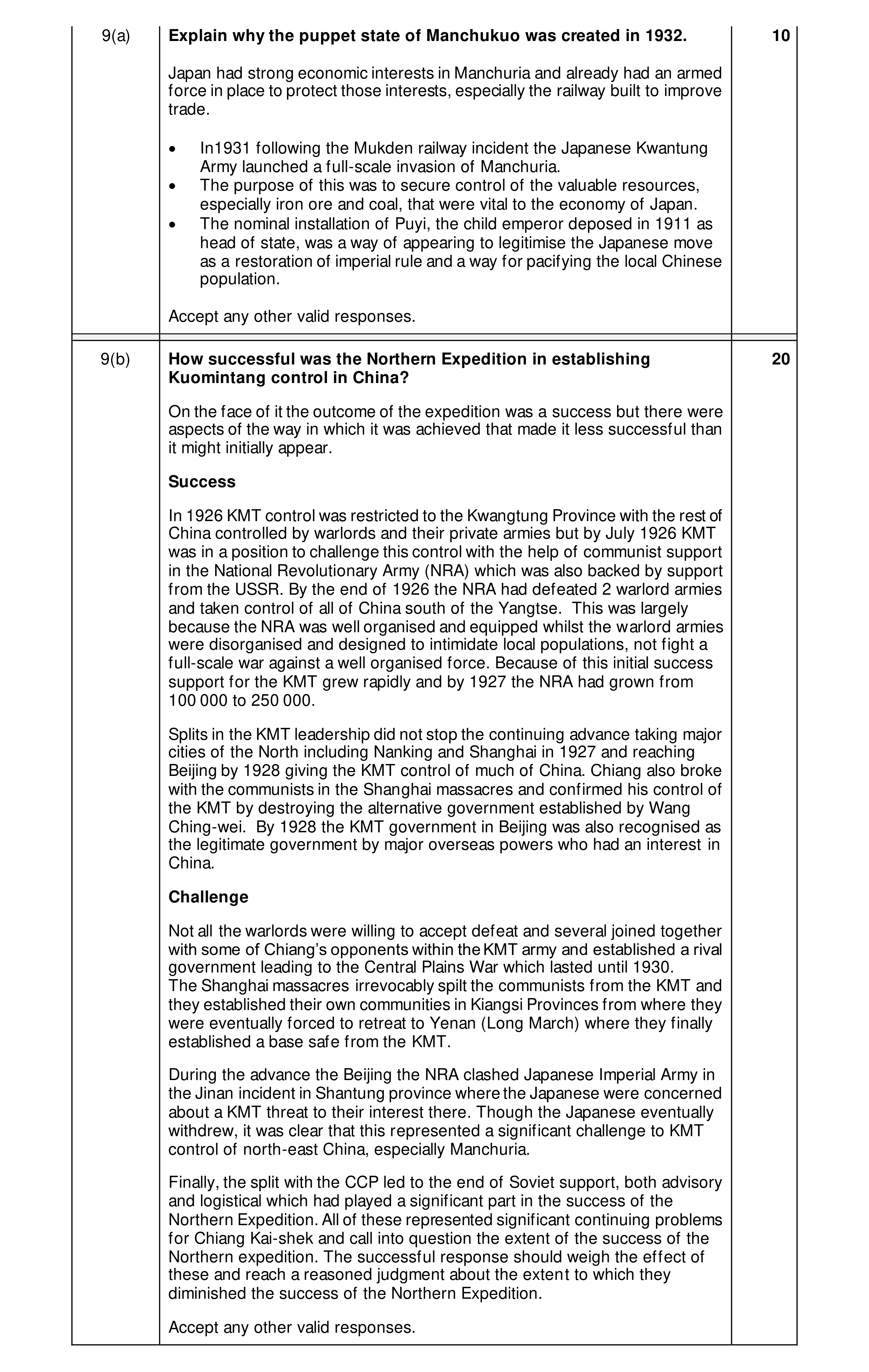 30
30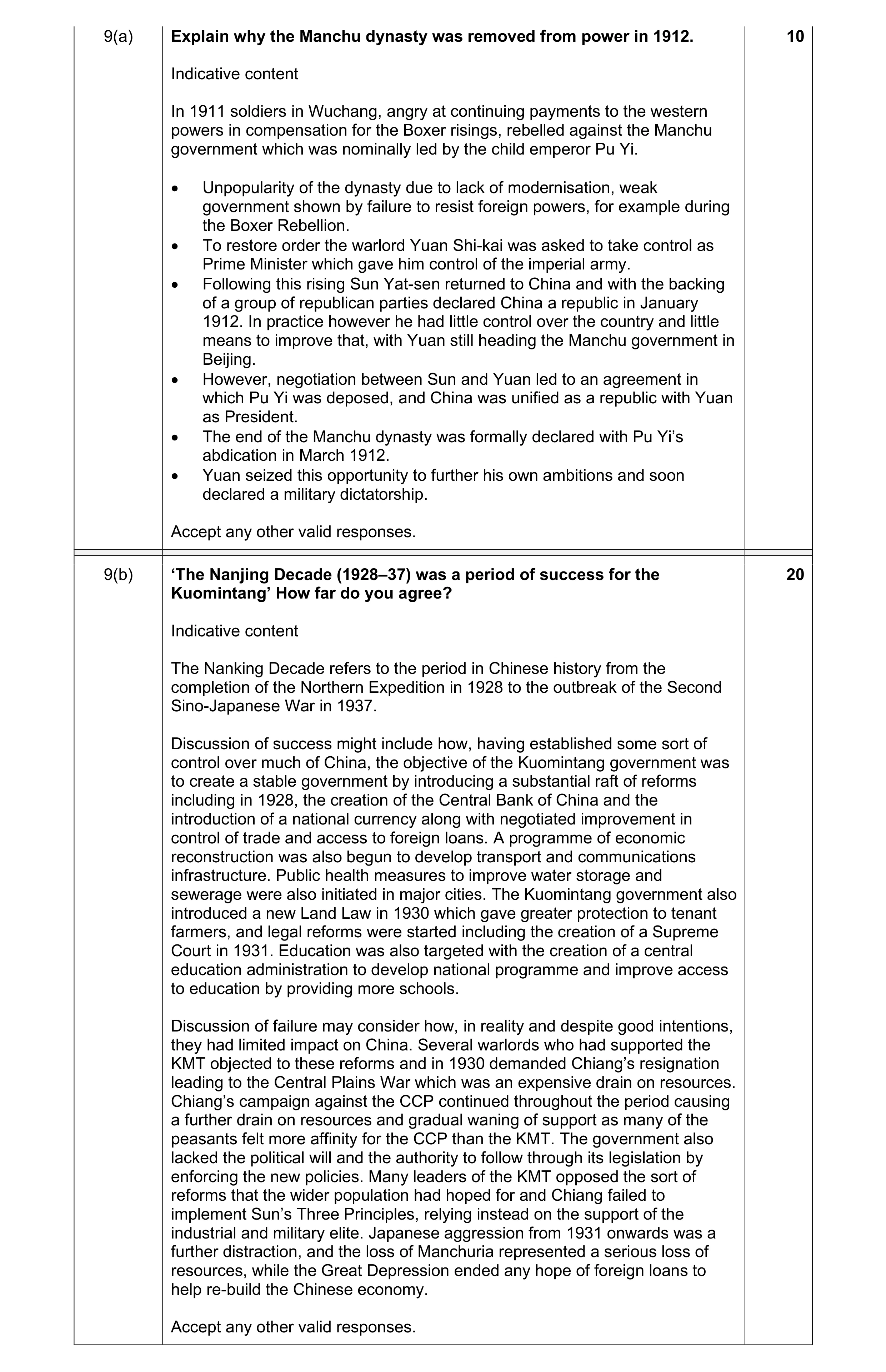 30
30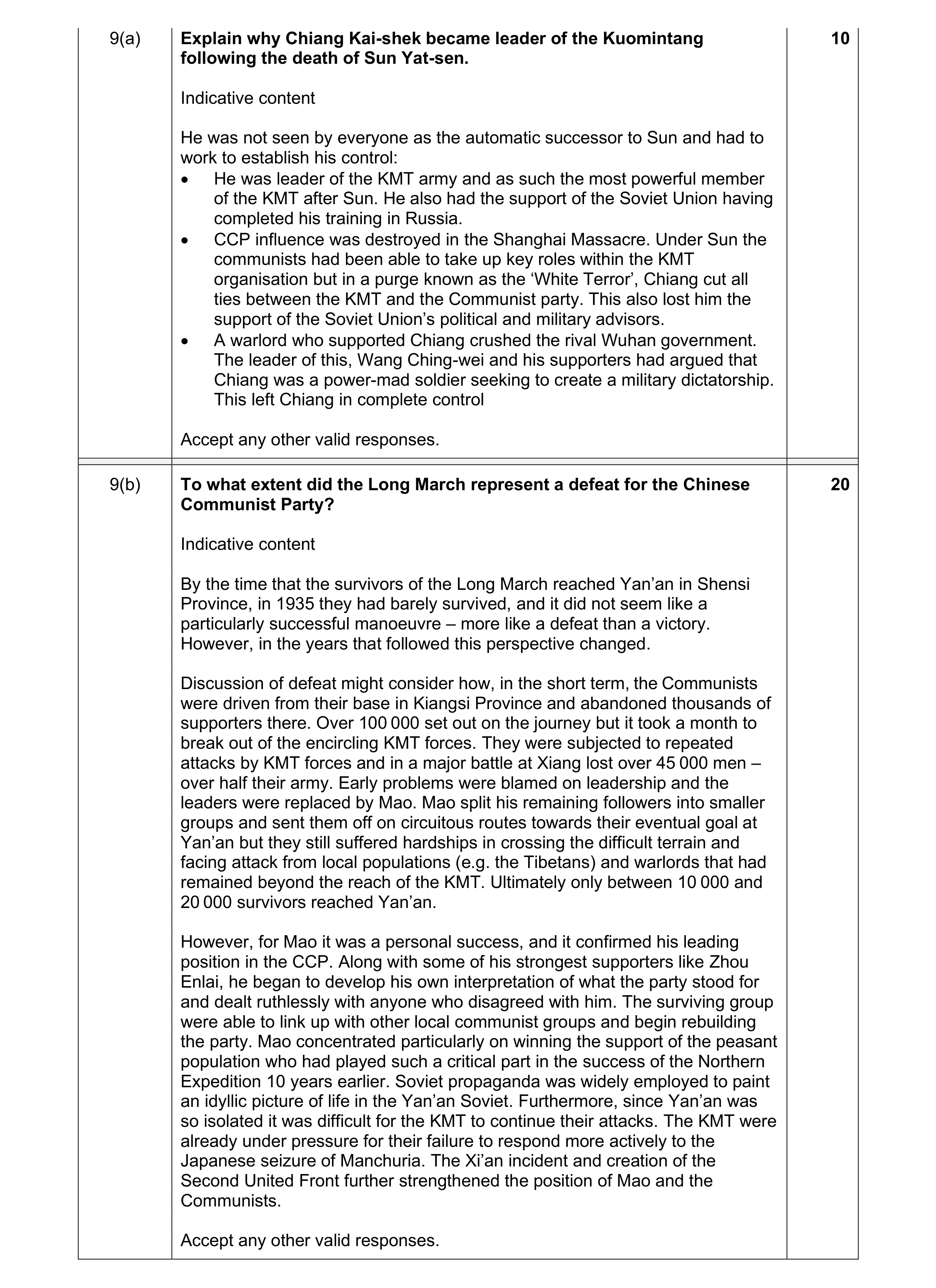 30
30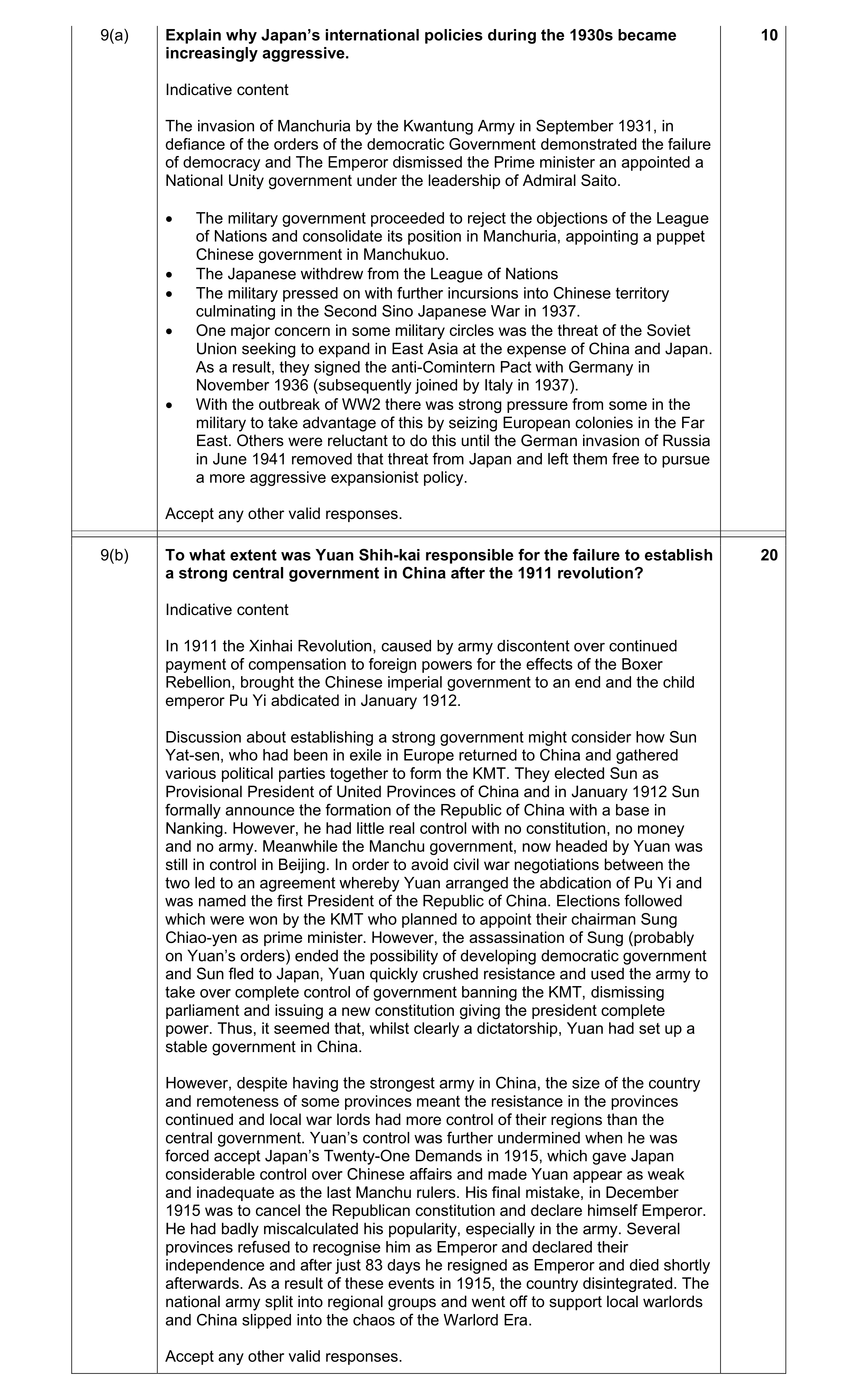 30
30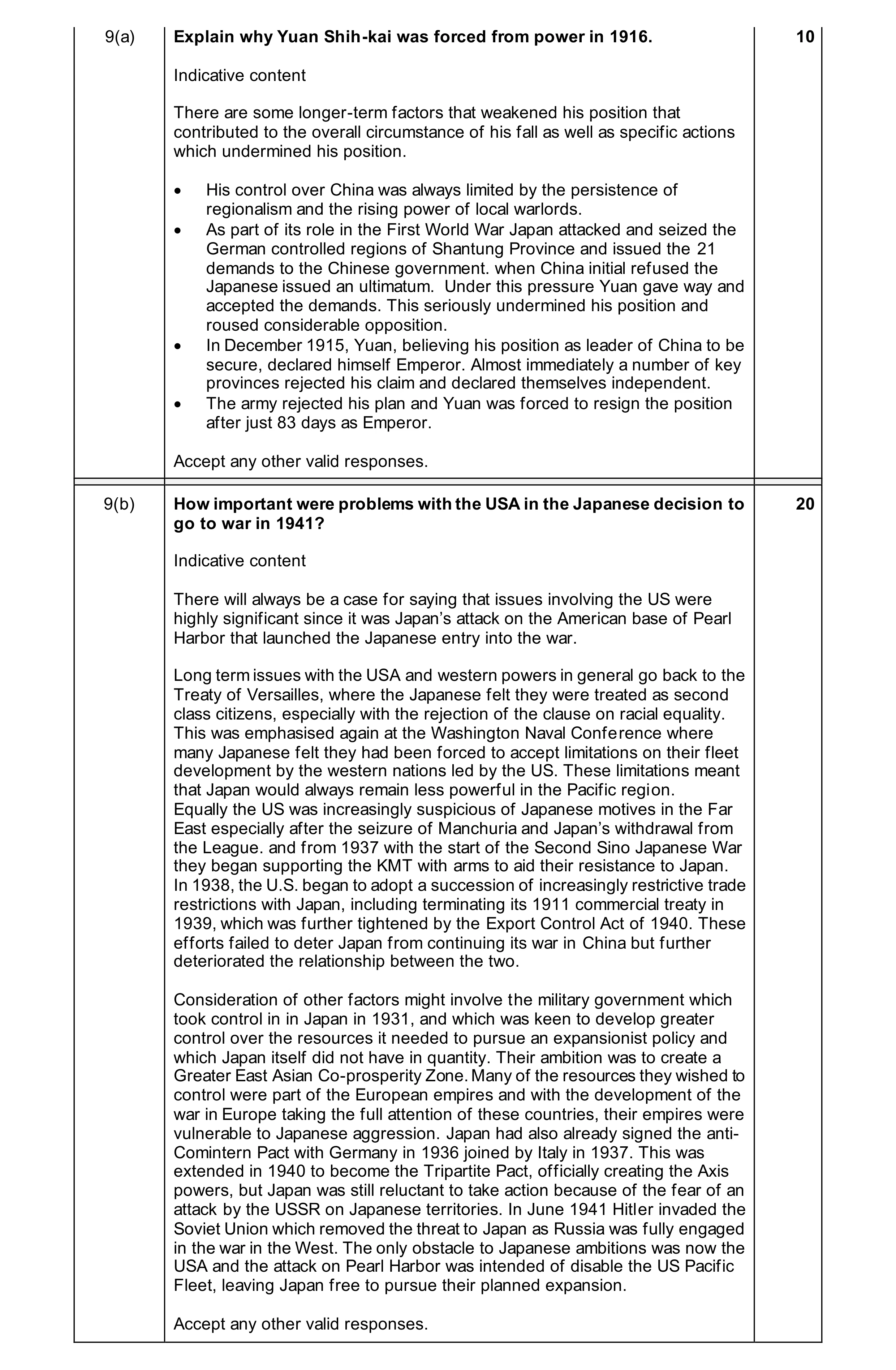 30
30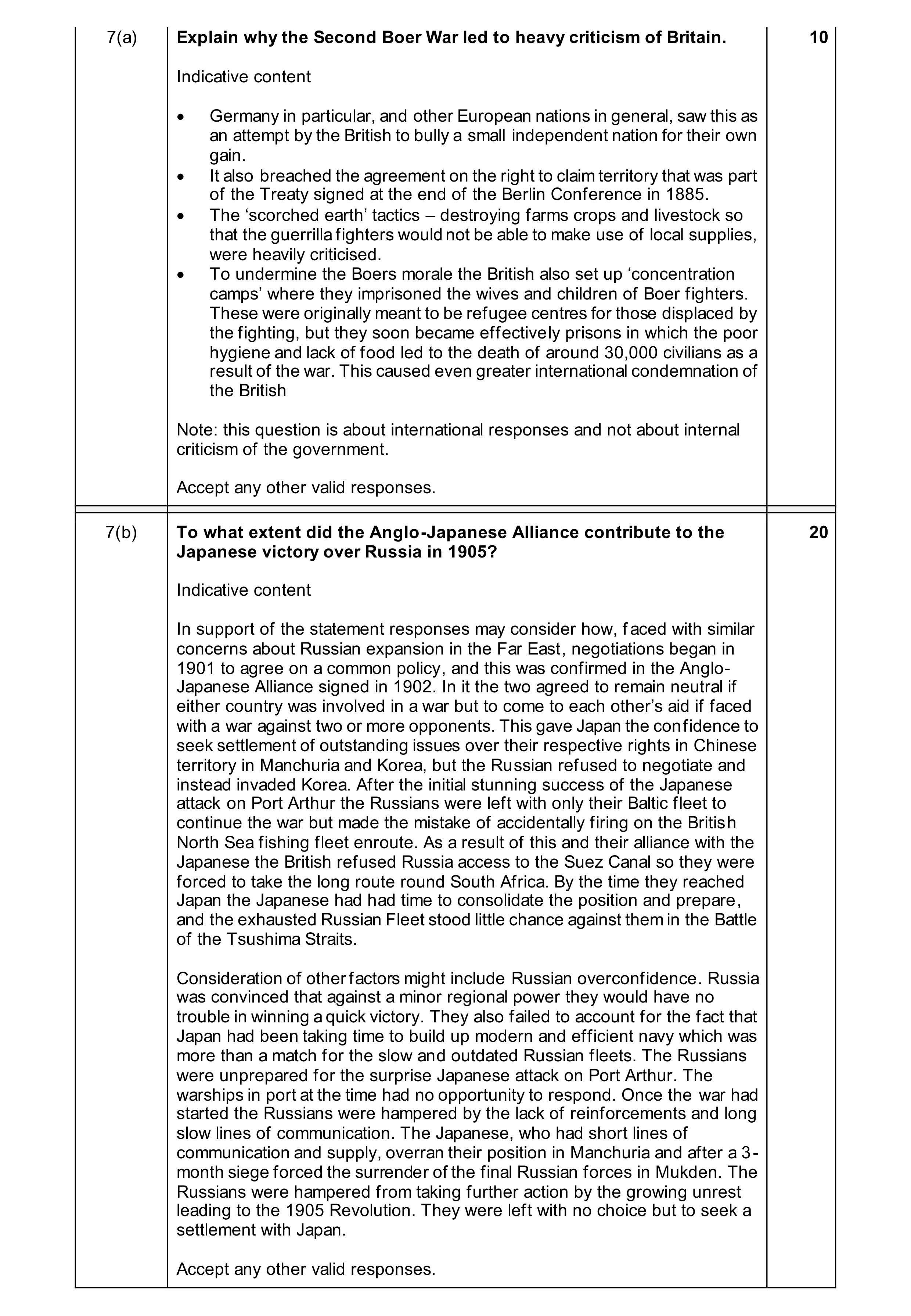 30
30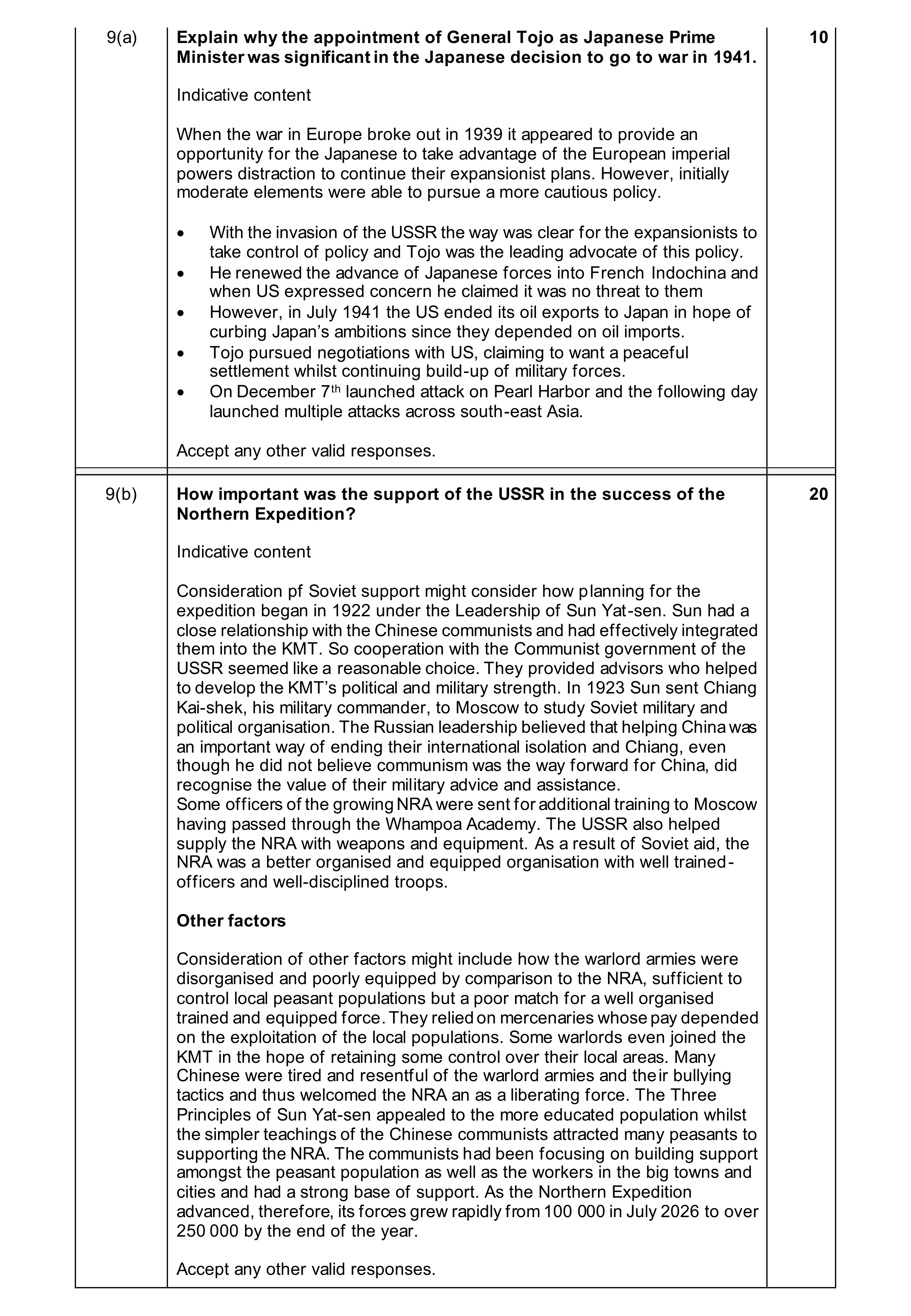 30
30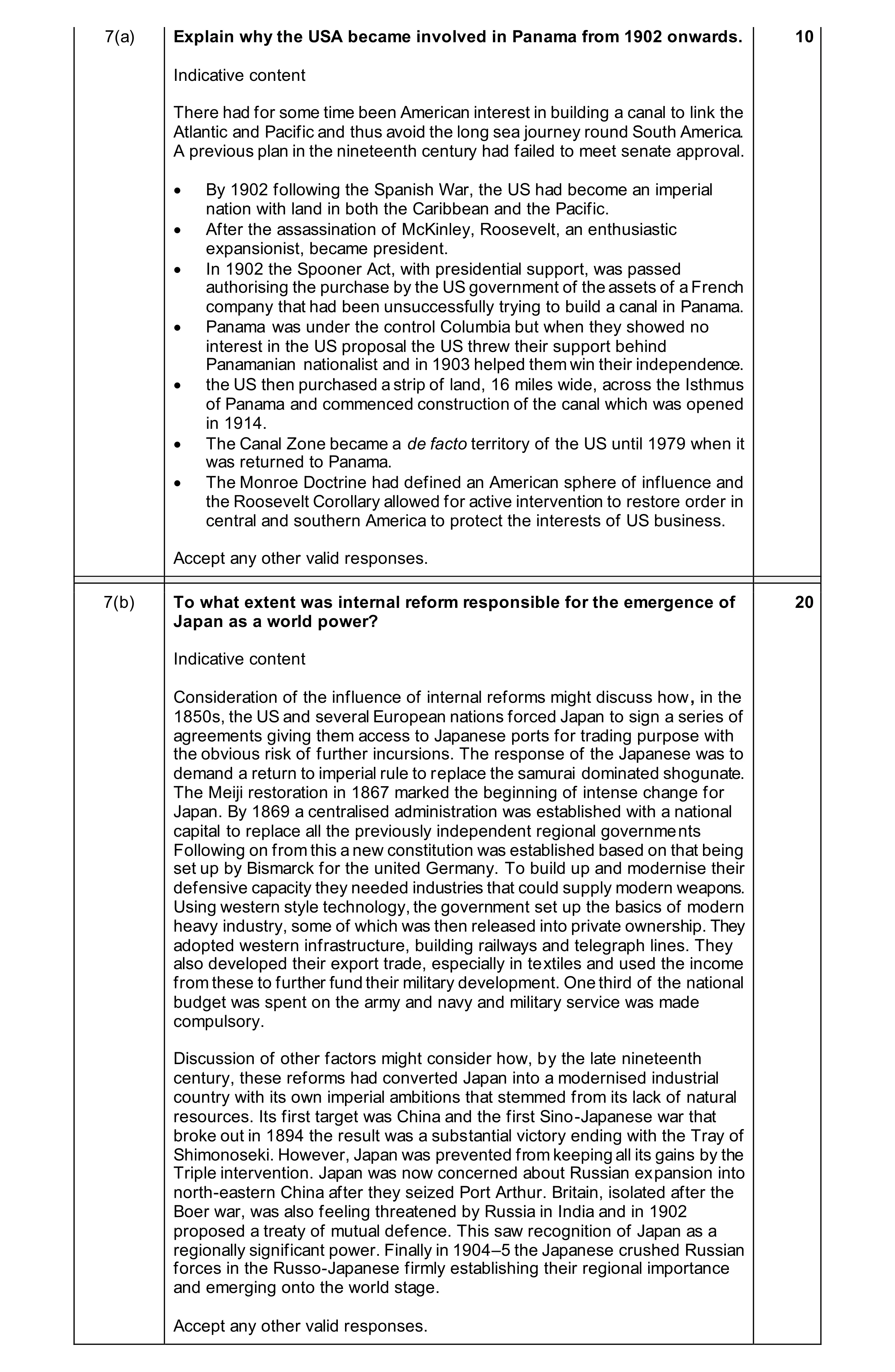 30
30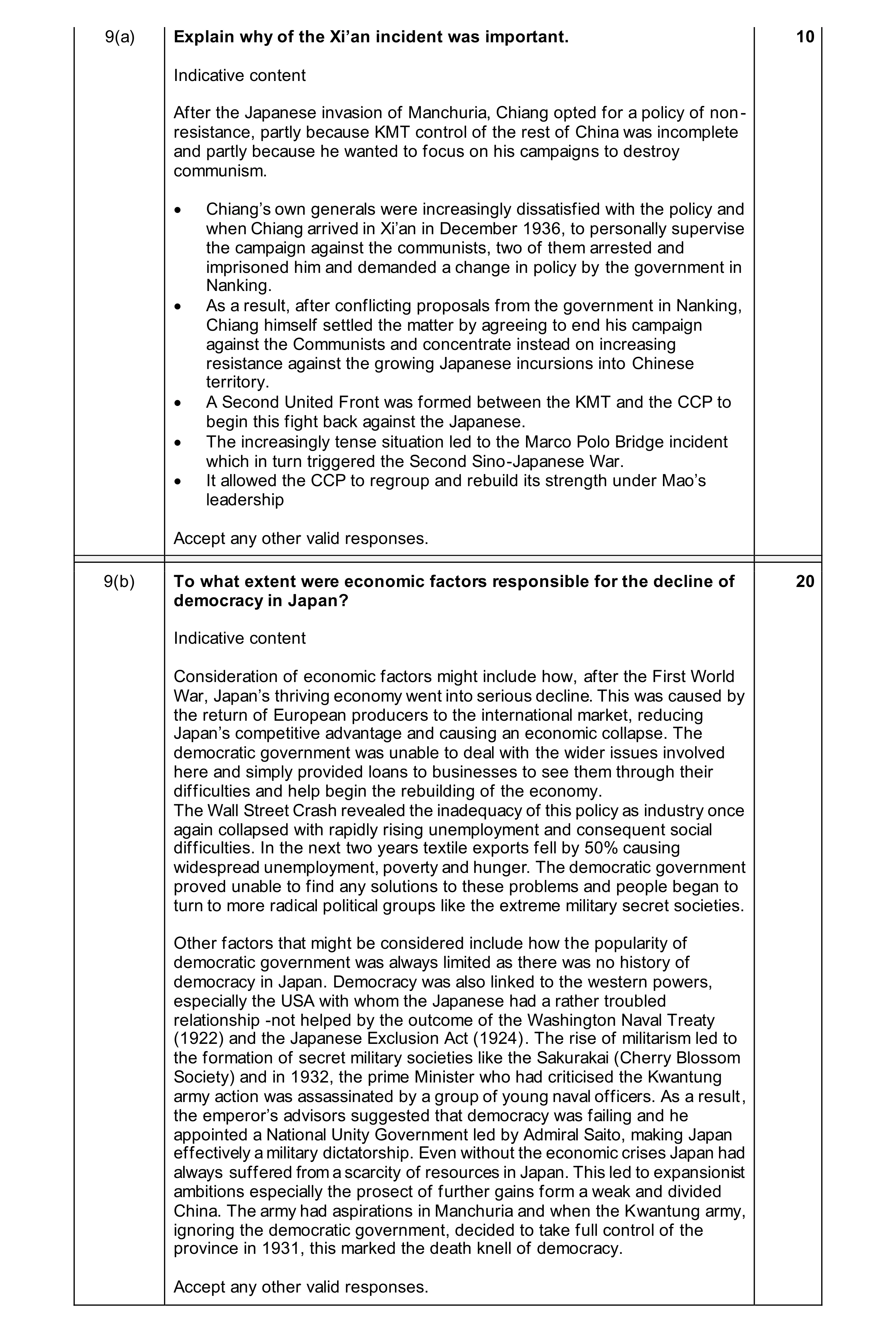 30
30