Questions as text
Q1 · Which statements about elements in the Periodic Table are correct? 0653/22 Feb/March 2017
22 Which statements about elements in the Periodic Table are correct? 1 The higher the group number, the more metallic an element is. 2 The group number is equal to the number of electrons in the outer shell. 3 Elements on the left of the Periodic Table form ions by losing electrons. A 1 only B 1 and 2 C 1 and 3 D 2 and 3
1 marks
Answer: D
This question in 0653/22 Feb/March 2017
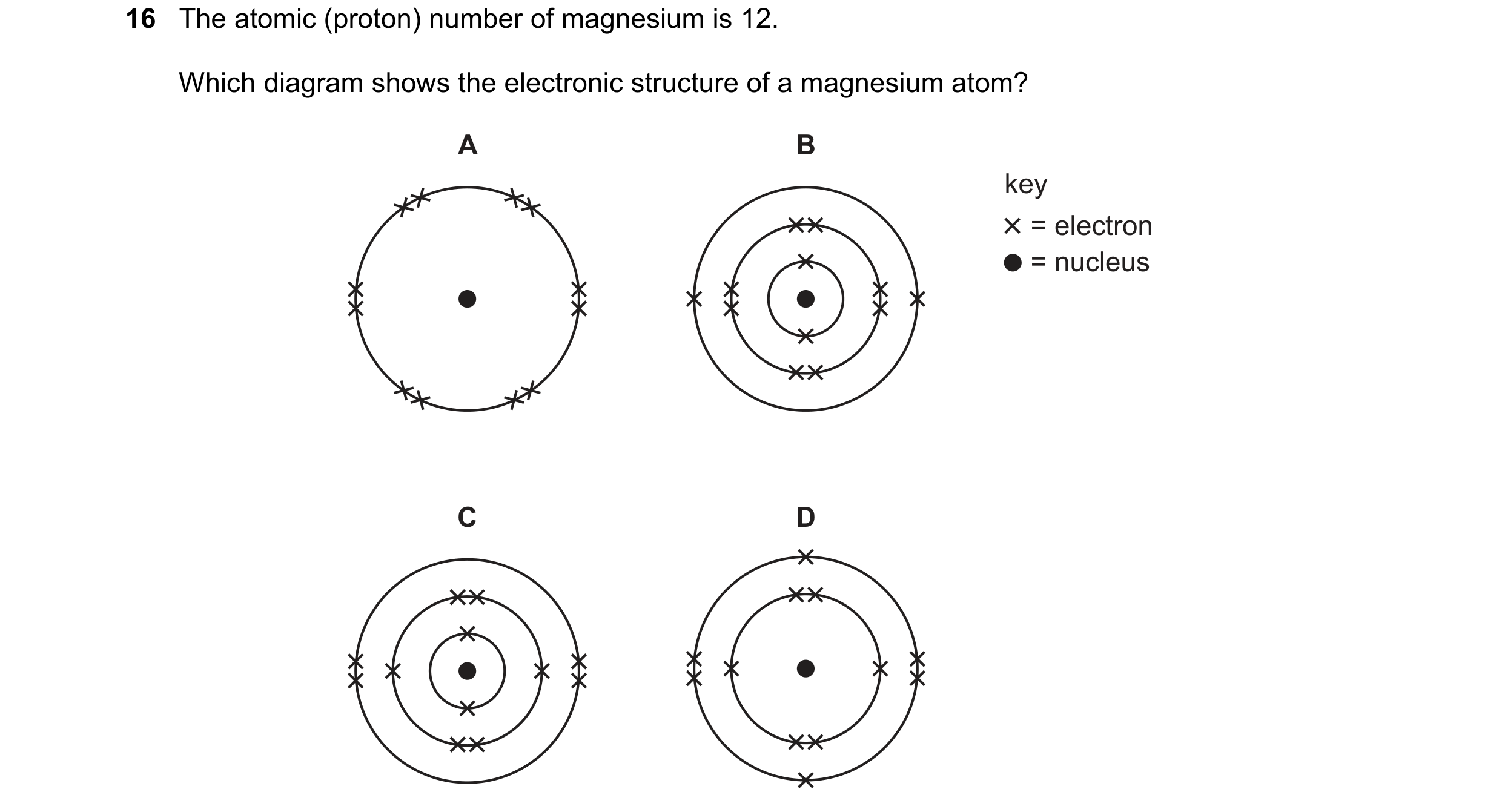
Q2 · The atomic (proton) number of magnesium is 12 0653/21 May/June 2017
16 The atomic (proton) number of magnesium is 12. Which diagram shows the electronic structure of a magnesium atom? A B key = electron = nucleus C D
1 marks
Answer: B
This question in 0653/21 May/June 2017
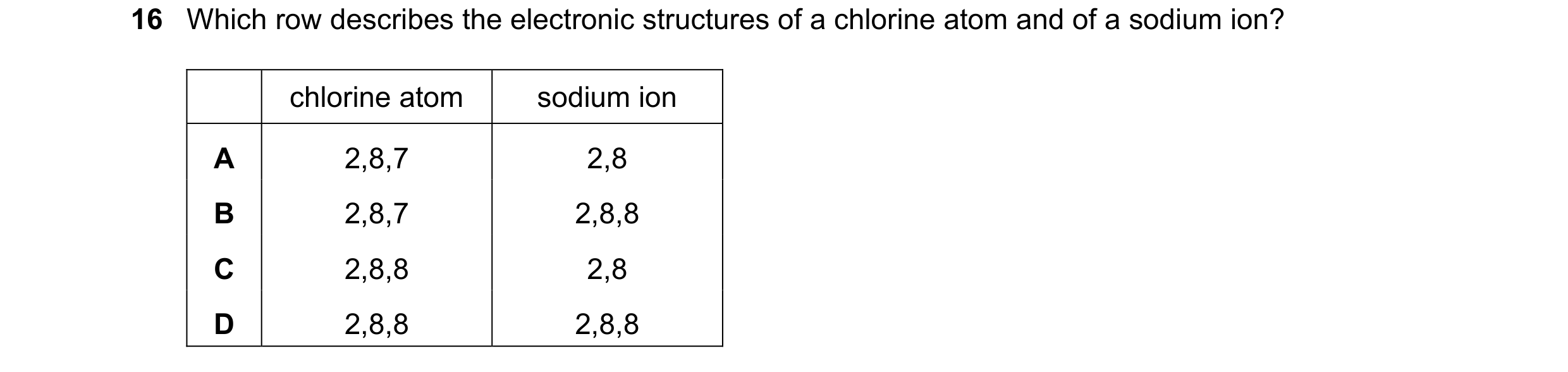
Q3 · Which row describes the electronic structures of a chlorine atom and of a sodium ion? 0653/22 May/June 2017
16 Which row describes the electronic structures of a chlorine atom and of a sodium ion? chlorine atom sodium ion A 2,8,7 2,8 B 2,8,7 2,8,8 C 2,8,8 2,8 D 2,8,8 2,8,8
1 marks
Answer: A
This question in 0653/22 May/June 2017
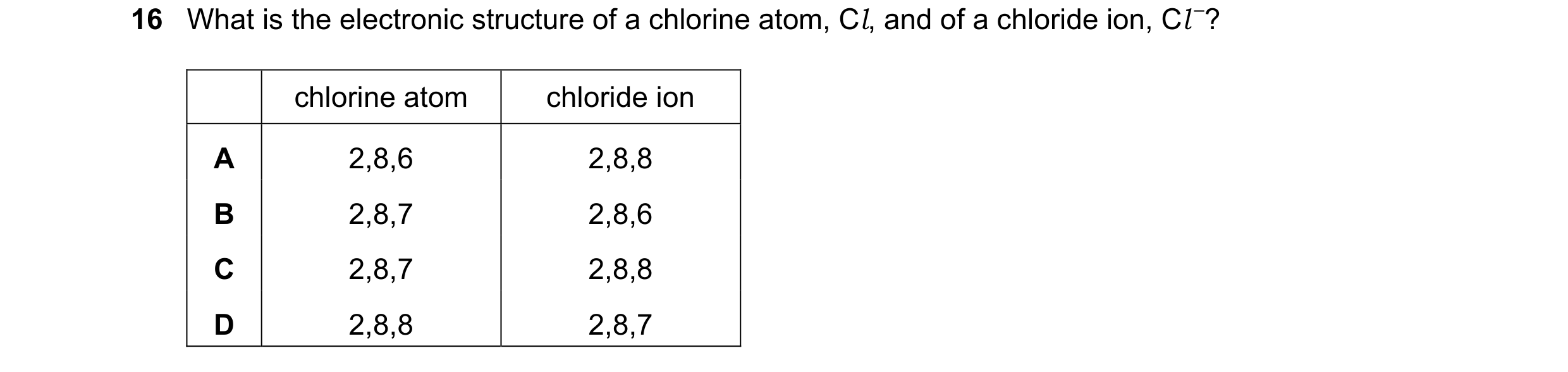
Q4 · What is the electronic structure of a chlorine atom, Cl, and of a chloride ion, Cl –? 0653/21 Oct/Nov 2017
16 What is the electronic structure of a chlorine atom, Cl, and of a chloride ion, Cl –? chlorine atom chloride ion A 2,8,6 2,8,8 B 2,8,7 2,8,6 C 2,8,7 2,8,8 D 2,8,8 2,8,7
1 marks
Answer: C
This question in 0653/21 Oct/Nov 2017
Q5 · The electronic structure of a sodium atom is 2,8,1 0653/22 Oct/Nov 2017
17 The electronic structure of a sodium atom is 2,8,1. The electronic structure of a sodium ion is 2,8. Which statement is not correct? A Sodium ions form metallic bonds. B The electronic structure of a sodium ion is more stable than that of a sodium atom. C The sodium atom loses one electron to become an ion. D The sodium ion has a noble gas electronic structure.
1 marks
Answer: A
This question in 0653/22 Oct/Nov 2017
Q6 · Which statement about atoms and ions is not correct? 0653/22 Feb/March 2018
16 Which statement about atoms and ions is not correct? A A chlorine atom loses one electron to obtain a noble gas electronic structure. B A magnesium atom has two valency electrons. C A sodium ion, Na+, has eight electrons in its outer shell. D Oxygen atoms and oxide ions each have two occupied electron shells.
1 marks
Answer: A
This question in 0653/22 Feb/March 2018
Q7 · Which is the electronic structure of a noble gas? 0653/23 Oct/Nov 2018
16 Which is the electronic structure of a noble gas? A 2,6 B 2,8 C 2,8,1 D 2,8,7
1 marks
Answer: B
This question in 0653/23 Oct/Nov 2018
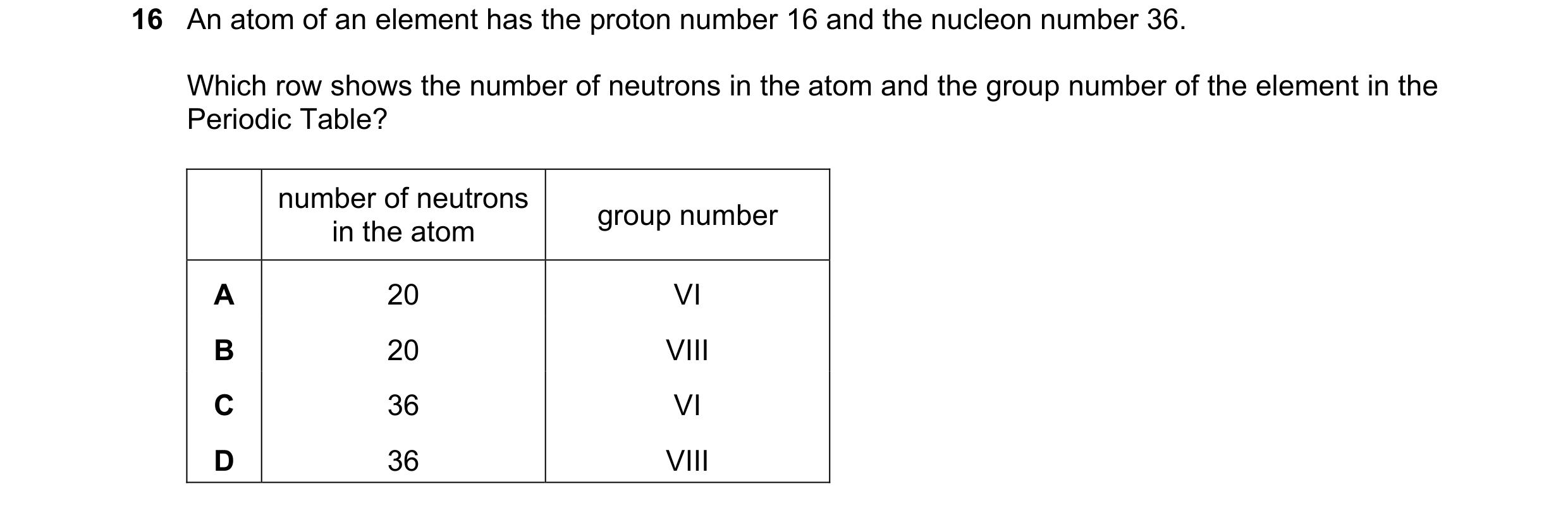
Q8 · An atom of an element has the proton number 16 and the nucleon number 36 0653/22 May/June 2019
16 An atom of an element has the proton number 16 and the nucleon number 36. Which row shows the number of neutrons in the atom and the group number of the element in the Periodic Table? number of neutrons group number in the atom A 20 VI B 20 VIII C 36 VI D 36 VIII
1 marks
Answer: A
This question in 0653/22 May/June 2019
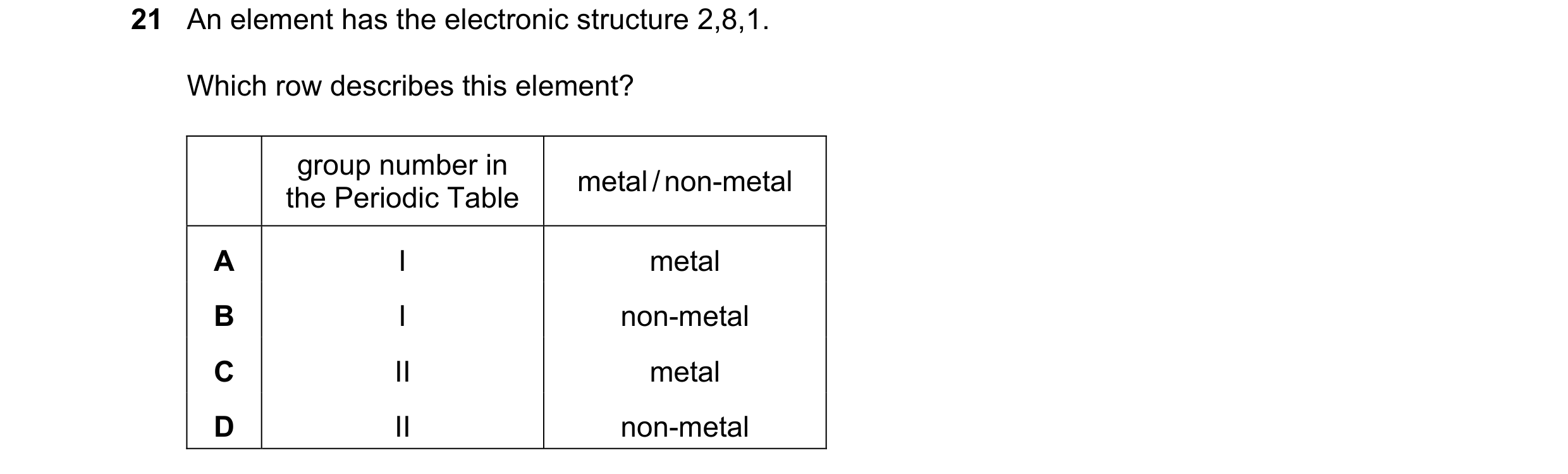
Q9 · An element has the electronic structure 2,8,1 0653/23 May/June 2019
21 An element has the electronic structure 2,8,1. Which row describes this element? group number in metal / non-metal the Periodic Table A I metal B I non-metal C II metal D II non-metal
1 marks
Answer: A
This question in 0653/23 May/June 2019
Q10 · Some information about a sodium ion is shown 0653/22 Feb/March 2020
17 Some information about a sodium ion is shown. proton nucleon number of number of number of particle number number protons neutrons electrons Na+ 11 23 11 X Y What are the values of X and Y? X Y A 11 10 B 11 11 C 12 10 D 12 11
1 marks
Answer: C
This question in 0653/22 Feb/March 2020
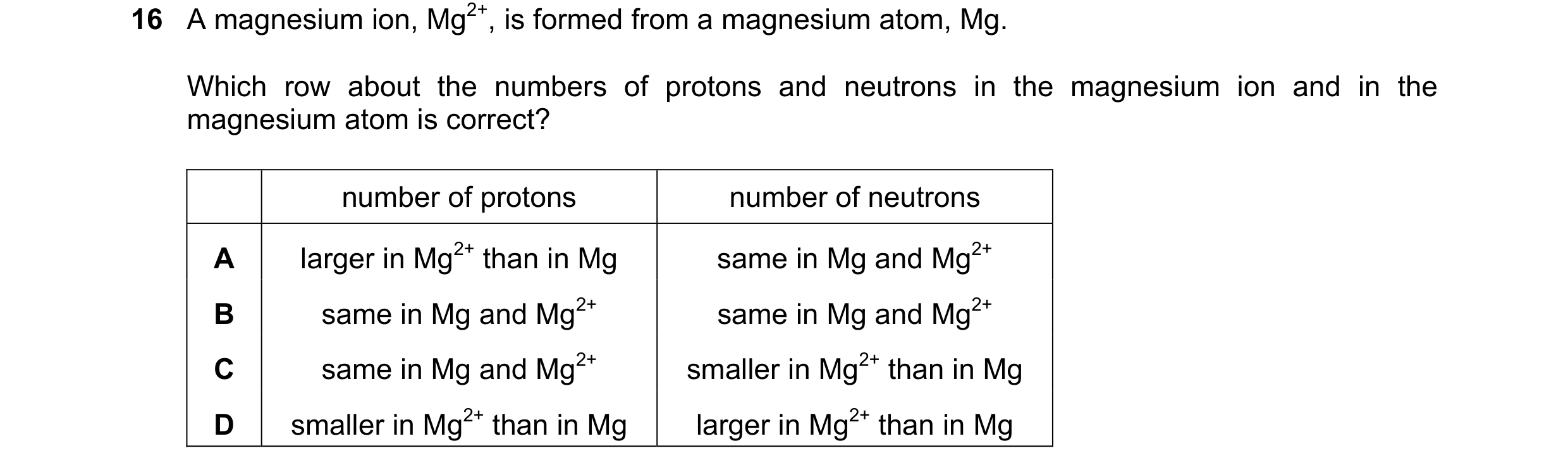
Q11 · A magnesium ion, Mg2+, is formed from a magnesium atom, Mg 0653/22 May/June 2020
16 A magnesium ion, Mg2+, is formed from a magnesium atom, Mg. Which row about the numbers of protons and neutrons in the magnesium ion and in the magnesium atom is correct? number of protons number of neutrons A larger in Mg2+ than in Mg same in Mg and Mg2+ B same in Mg and Mg2+ same in Mg and Mg2+ C same in Mg and Mg2+ smaller in Mg2+ than in Mg D smaller in Mg2+ than in Mg larger in Mg2+ than in Mg
1 marks
Answer: B
This question in 0653/22 May/June 2020
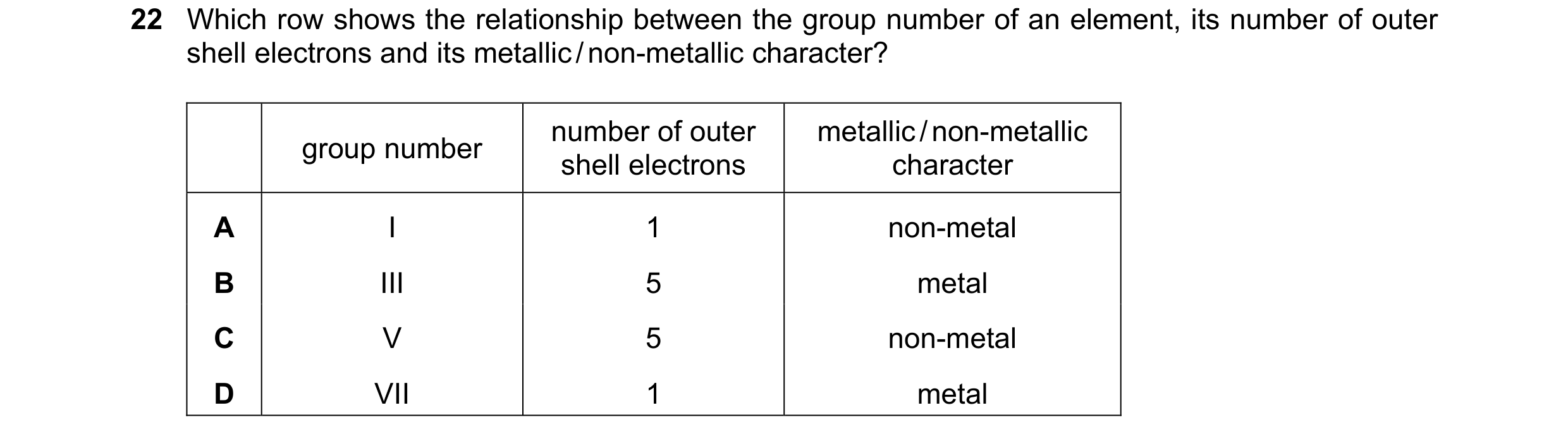
Q12 · Which row shows the relationship between the group number of an element, its number of… 0653/22 May/June 2020
22 Which row shows the relationship between the group number of an element, its number of outer shell electrons and its metallic / non-metallic character? number of outer metallic / non-metallic group number shell electrons character A I 1 non-metal B III 5 metal C V 5 non-metal D VII 1 metal
1 marks
Answer: C
This question in 0653/22 May/June 2020
Q13 · Which statement about the particles is correct? 0653/22 May/June 2021
14 Which statement about the particles is correct? A 1 1H has the same number of protons as neutrons. B 2 H + has the same number of electrons as neutrons. 1 C OH– contains more protons than electrons. D NH3 has the same number of protons as electrons.
1 marks
Answer: D
This question in 0653/22 May/June 2021
Q14 · The atomic number of argon is 18 0653/22 Feb/March 2022
16 The atomic number of argon is 18. The mass number of argon is 40. How many protons, neutrons and electrons are in an argon atom? protons neutrons electrons A 18 22 18 B 18 22 22 C 22 18 18 D 22 18 22
1 marks
Answer: A
This question in 0653/22 Feb/March 2022
Q15 · Which particles are present in the nuclei of hydrogen atoms, H? 0653/21 Oct/Nov 2022
14 Which particles are present in the nuclei of hydrogen atoms, H? 1 1 A electrons and neutrons B electrons only C protons and neutrons D protons only
1 marks
Answer: D
This question in 0653/21 Oct/Nov 2022
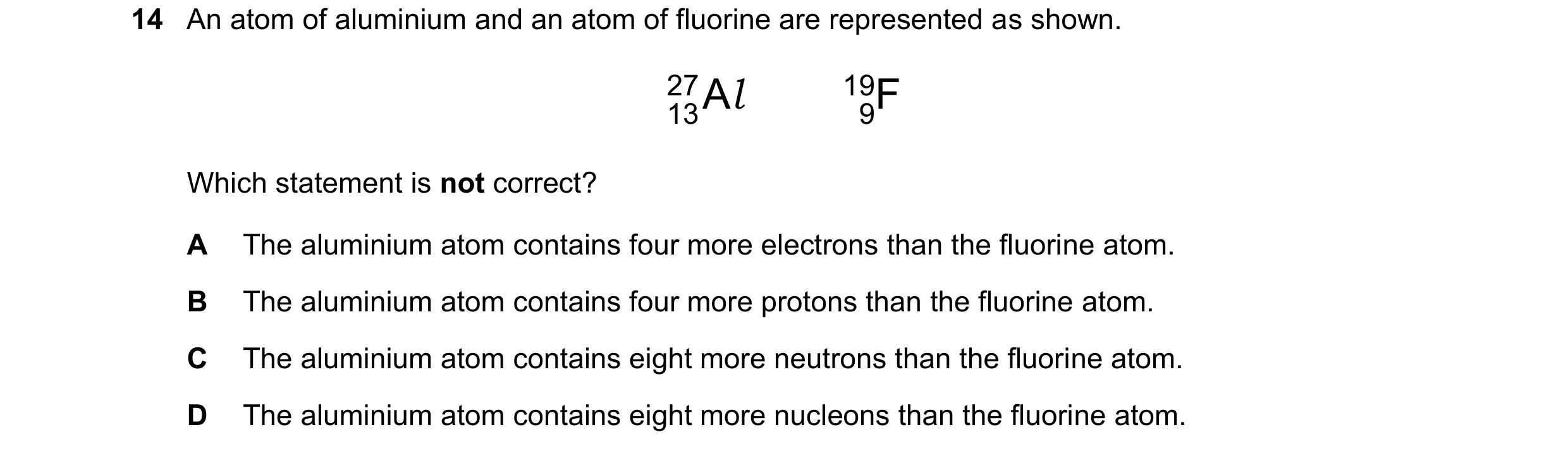
Q16 · An atom of aluminium and an atom of fluorine are represented as shown 0653/22 Oct/Nov 2022
14 An atom of aluminium and an atom of fluorine are represented as shown. 13Al 19 27 9F Which statement is not correct? A The aluminium atom contains four more electrons than the fluorine atom. B The aluminium atom contains four more protons than the fluorine atom. C The aluminium atom contains eight more neutrons than the fluorine atom. D The aluminium atom contains eight more nucleons than the fluorine atom.
1 marks
Answer: C
This question in 0653/22 Oct/Nov 2022
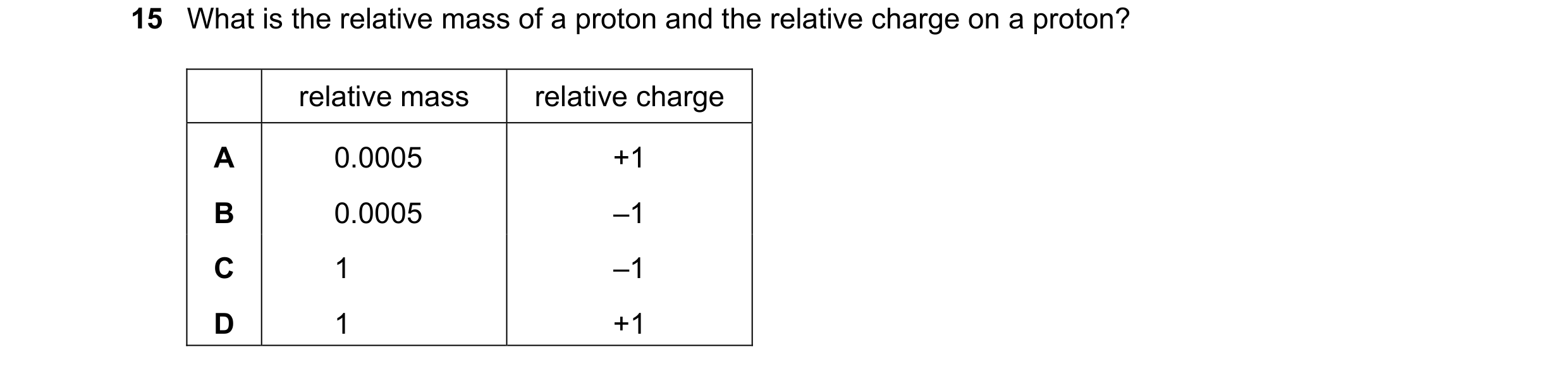
Q17 · What is the relative mass of a proton and the relative charge on a proton? 0653/21 May/June 2023
15 What is the relative mass of a proton and the relative charge on a proton? relative mass relative charge A 0.0005 +1 B 0.0005 –1 C 1 –1 D 1 +1
1 marks
Answer: D
This question in 0653/21 May/June 2023
Q18 · What is the definition of nucleon number? 0653/22 May/June 2023
15 What is the definition of nucleon number? A the number of protons in an atom B the number of electrons in an atom C the total number of electrons and neutrons in an atom D the total number of neutrons and protons in an atom
1 marks
Answer: D
This question in 0653/22 May/June 2023
Q19 · The nucleon number of an atom of chlorine is 35 0653/23 May/June 2023
15 The nucleon number of an atom of chlorine is 35. Which statement about this atom is correct? A It contains the same number of neutrons as electrons. B It contains the same number of protons as neutrons. C It contains the same number of protons as electrons. D The numbers of protons, neutrons and electrons are all different from each other.
1 marks
Answer: C
This question in 0653/23 May/June 2023
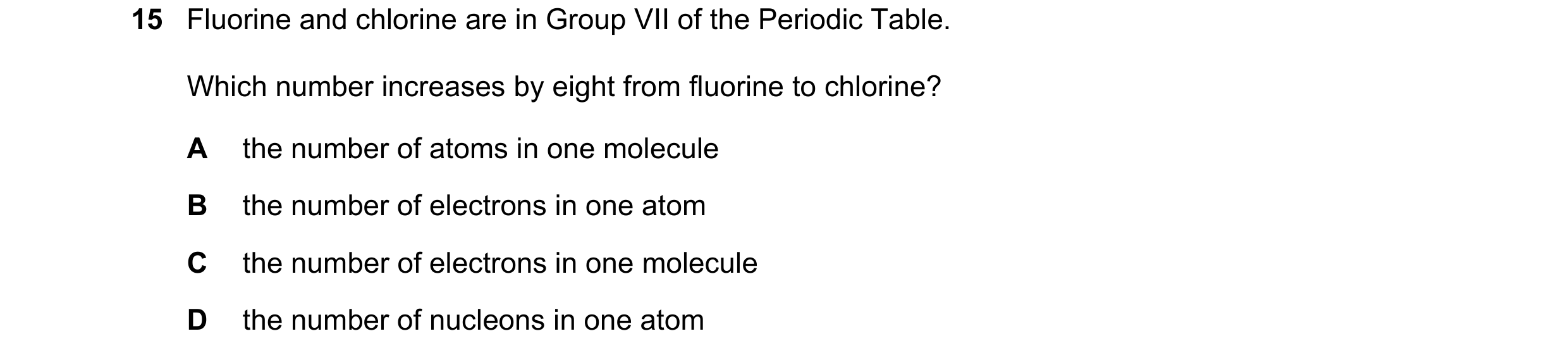
Q20 · Fluorine and chlorine are in Group VII of the Periodic Table 0653/22 Feb/March 2024
15 Fluorine and chlorine are in Group VII of the Periodic Table. Which number increases by eight from fluorine to chlorine? A the number of atoms in one molecule B the number of electrons in one atom C the number of electrons in one molecule D the number of nucleons in one atom
1 marks
Answer: B
This question in 0653/22 Feb/March 2024
Q21 · Which statement defines the nucleon number of an atom? 0653/21 May/June 2024
16 Which statement defines the nucleon number of an atom? A It is the total number of neutrons and protons in the atom. B It is the total number of neutrons and electrons in the atom. C It is the total number of neutrons, protons and electrons in the atom. D It is the total number of neutrons in the atom.
1 marks
Answer: A
This question in 0653/21 May/June 2024
Q22 · Which statement about the properties of the elements in Period 3 of the Periodic Table is… 0653/21 May/June 2024
24 Which statement about the properties of the elements in Period 3 of the Periodic Table is correct? A The elements on the left lose electrons more readily. B The elements on the left are less malleable. C The elements on the right are metallic. D The elements on the right form cations.
1 marks
Answer: A
This question in 0653/21 May/June 2024
Q23 · Which particle has the smallest mass? 0653/23 Oct/Nov 2024
15 Which particle has the smallest mass? A atom B electron C neutron D proton
1 marks
Answer: B
This question in 0653/23 Oct/Nov 2024
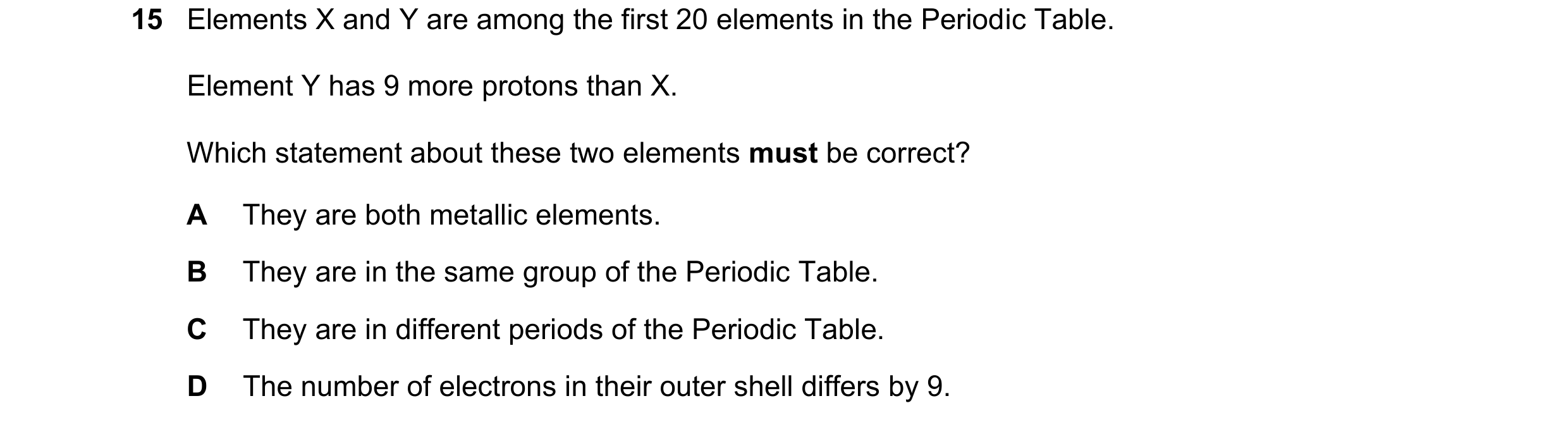
Q24 · Elements X and Y are among the first 20 elements in the Periodic Table 0653/22 Feb/March 2025
15 Elements X and Y are among the first 20 elements in the Periodic Table. Element Y has 9 more protons than X. Which statement about these two elements must be correct? A They are both metallic elements. B They are in the same group of the Periodic Table. C They are in different periods of the Periodic Table. D The number of electrons in their outer shell differs by 9.
1 marks
Answer: C
This question in 0653/22 Feb/March 2025
Q25 · A neutral atom of chlorine contains 17 electrons and 18 neutrons 0653/21 May/June 2025
15 A neutral atom of chlorine contains 17 electrons and 18 neutrons. What is the atomic number and what is the mass number of this atom? atomic number mass number A 17 35 B 17 52 C 18 35 D 18 52
1 marks
Answer: A
This question in 0653/21 May/June 2025
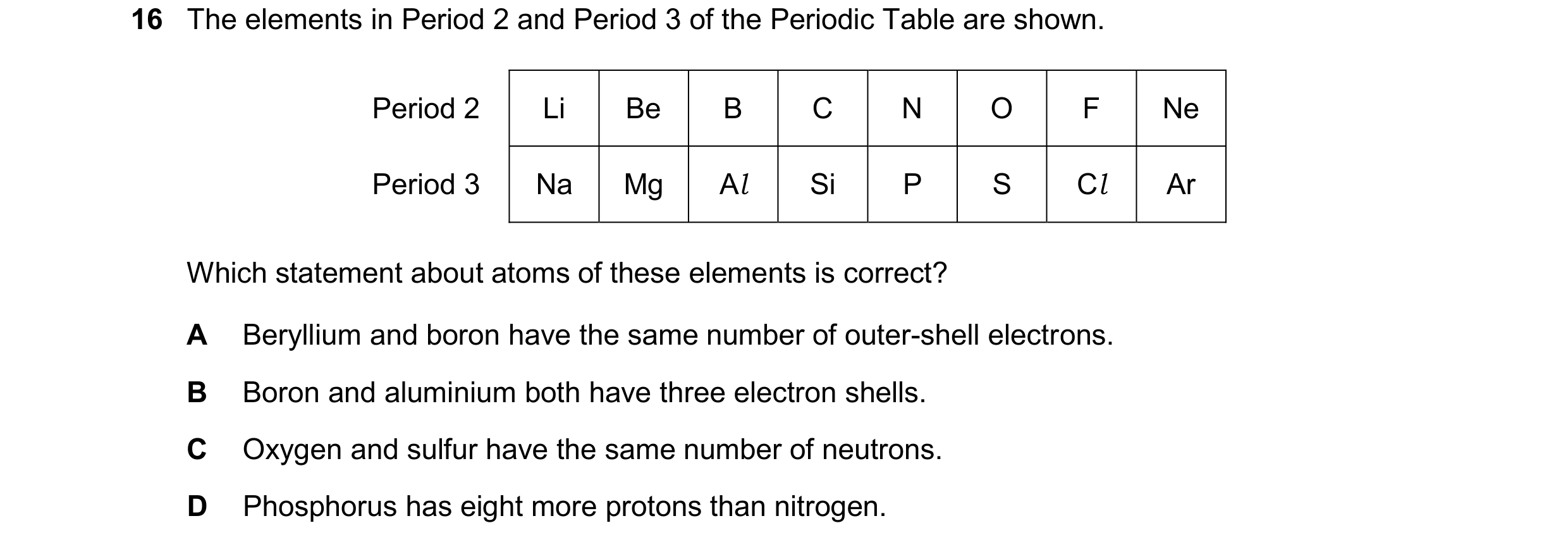
Q26 · The elements in Period 2 and Period 3 of the Periodic Table are shown 0653/21 May/June 2025
16 The elements in Period 2 and Period 3 of the Periodic Table are shown. Period 2 Li Be B C N O F Ne Period 3 Na Mg Al Si P S Cl Ar Which statement about atoms of these elements is correct? A Beryllium and boron have the same number of outer-shell electrons. B Boron and aluminium both have three electron shells. C Oxygen and sulfur have the same number of neutrons. D Phosphorus has eight more protons than nitrogen.
1 marks
Answer: D
This question in 0653/21 May/June 2025
Q27 · An element is in Period 3 of the Periodic Table 0653/21 Oct/Nov 2025
17 An element is in Period 3 of the Periodic Table. Which information is given by the period number of this element? A its proton number B its metallic character C the number of electrons in the outer shell of an atom of the element D the number of electron shells in an atom of the element
1 marks
Answer: D
This question in 0653/21 Oct/Nov 2025
Q28 · What is the method by which elements are arranged in the Periodic Table? 0653/22 Oct/Nov 2025
21 What is the method by which elements are arranged in the Periodic Table? A by nucleon number B by number of electrons C by number of neutrons D by number of protons
1 marks
Answer: D
This question in 0653/22 Oct/Nov 2025

 1 / 6
1 / 6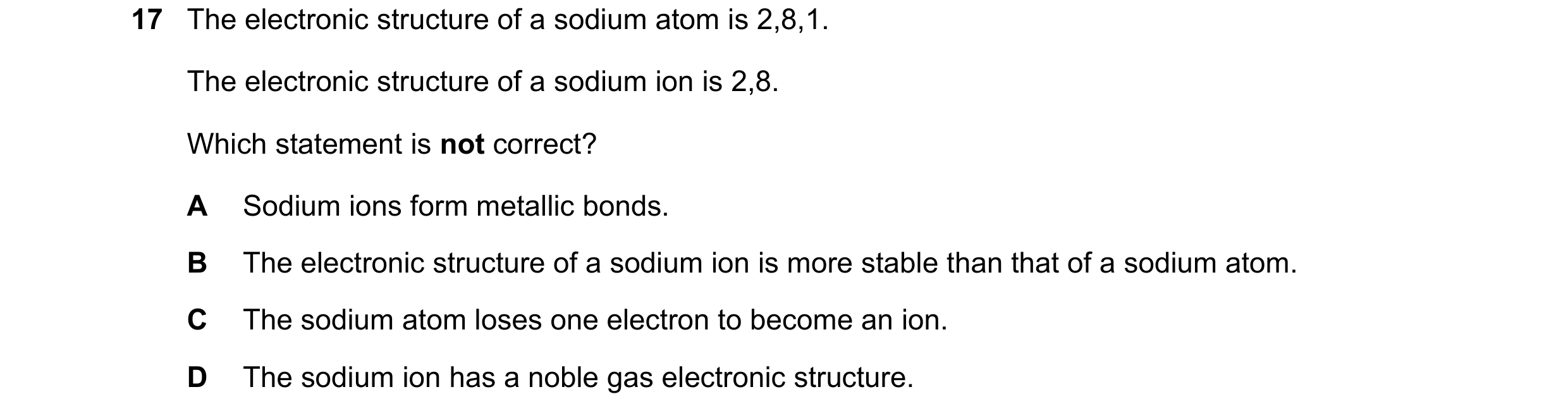


 2 / 6
2 / 6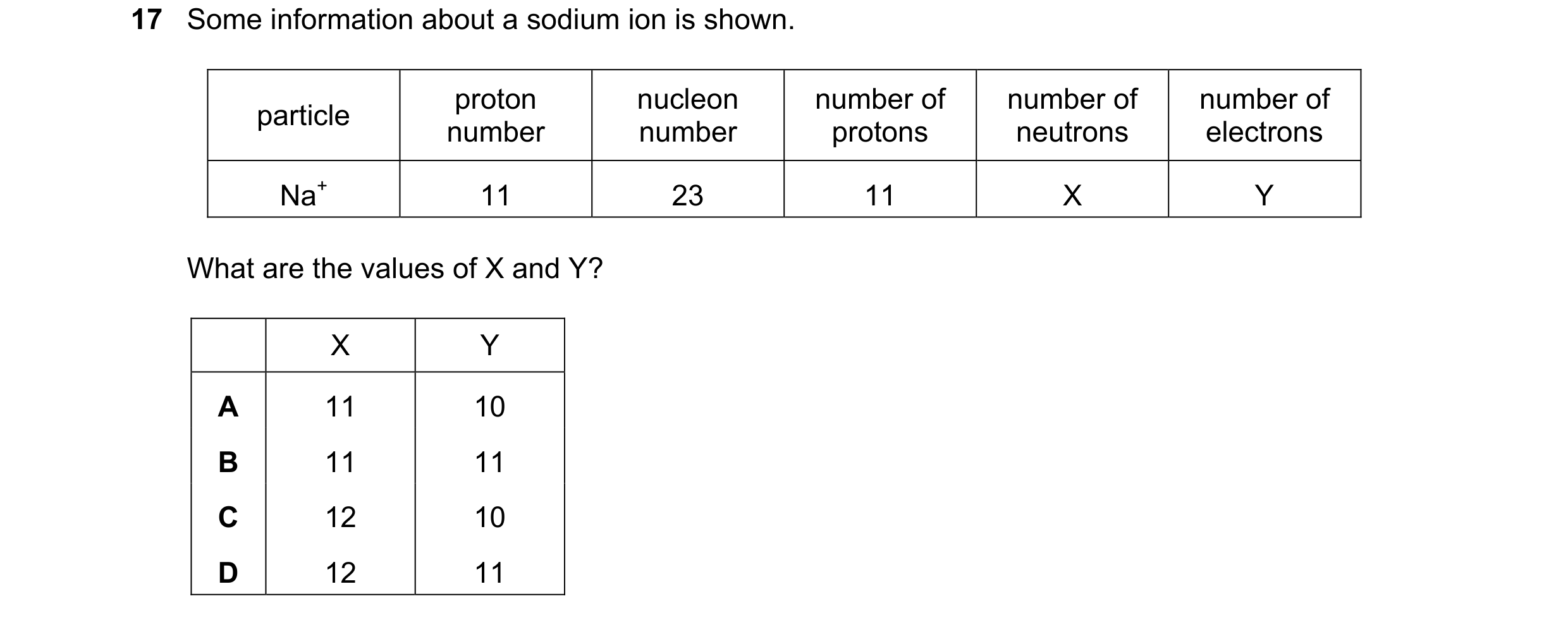
 3 / 6
3 / 6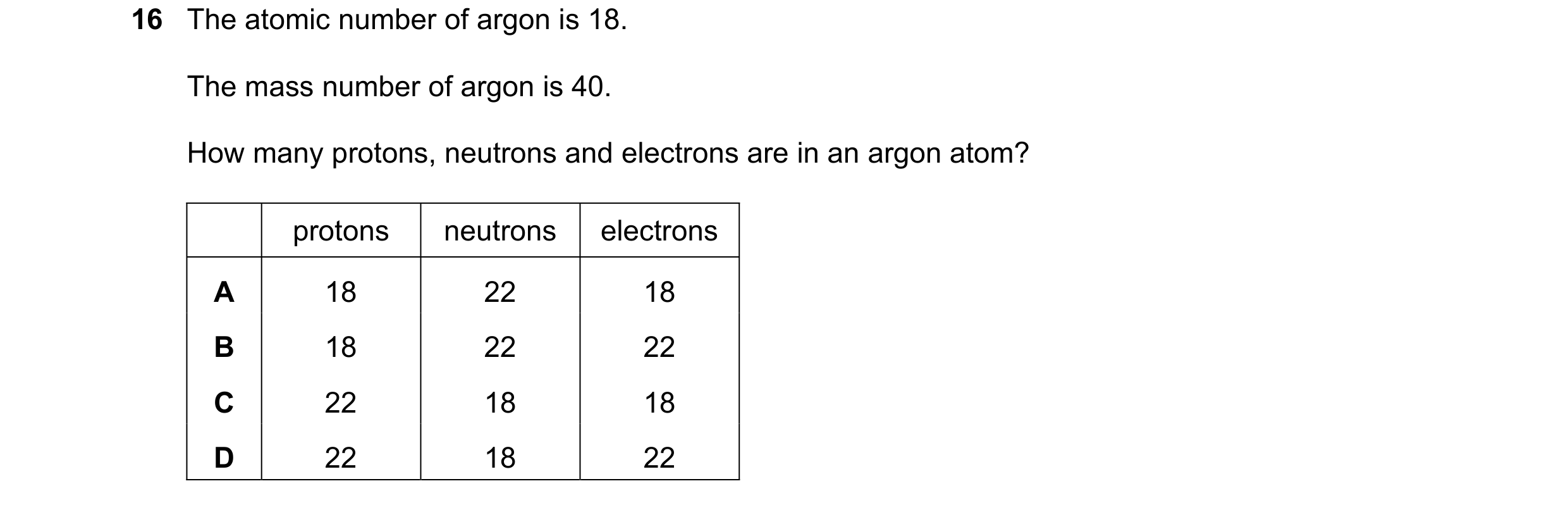

 4 / 6
4 / 6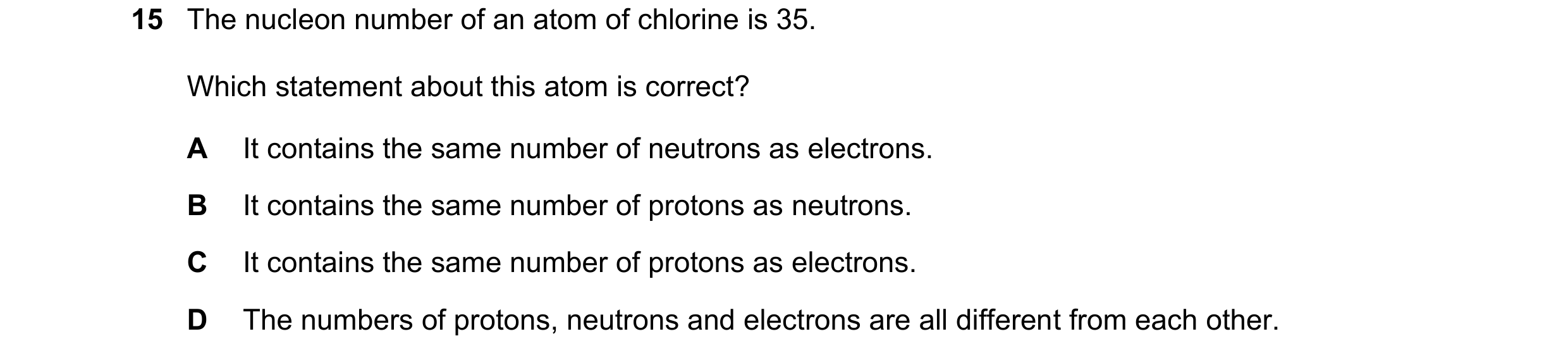



 5 / 6
5 / 6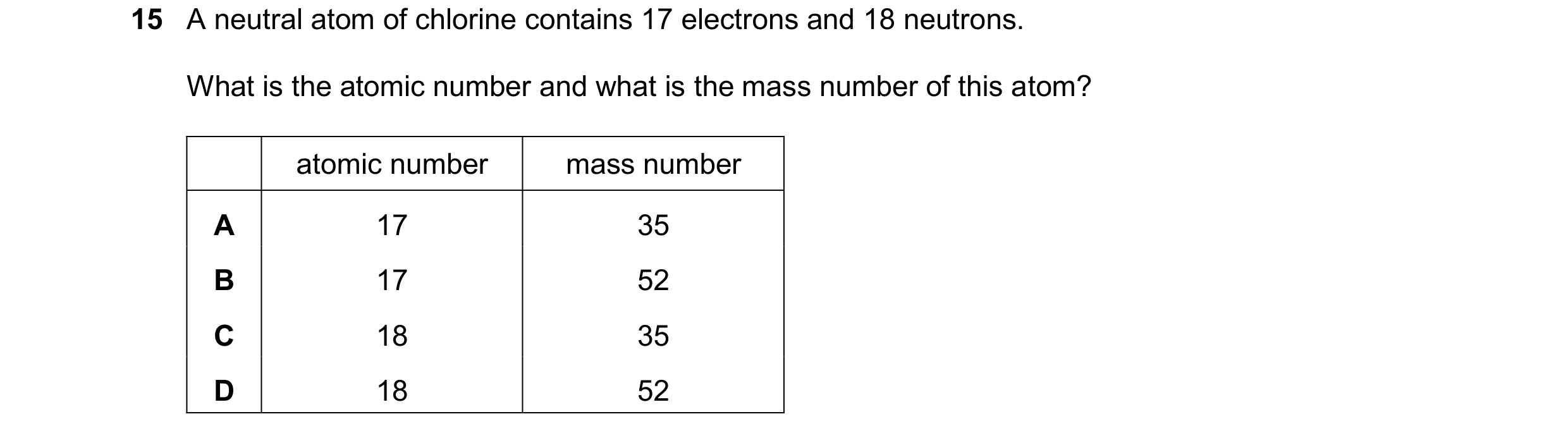
 6 / 6
6 / 6