Questions as text
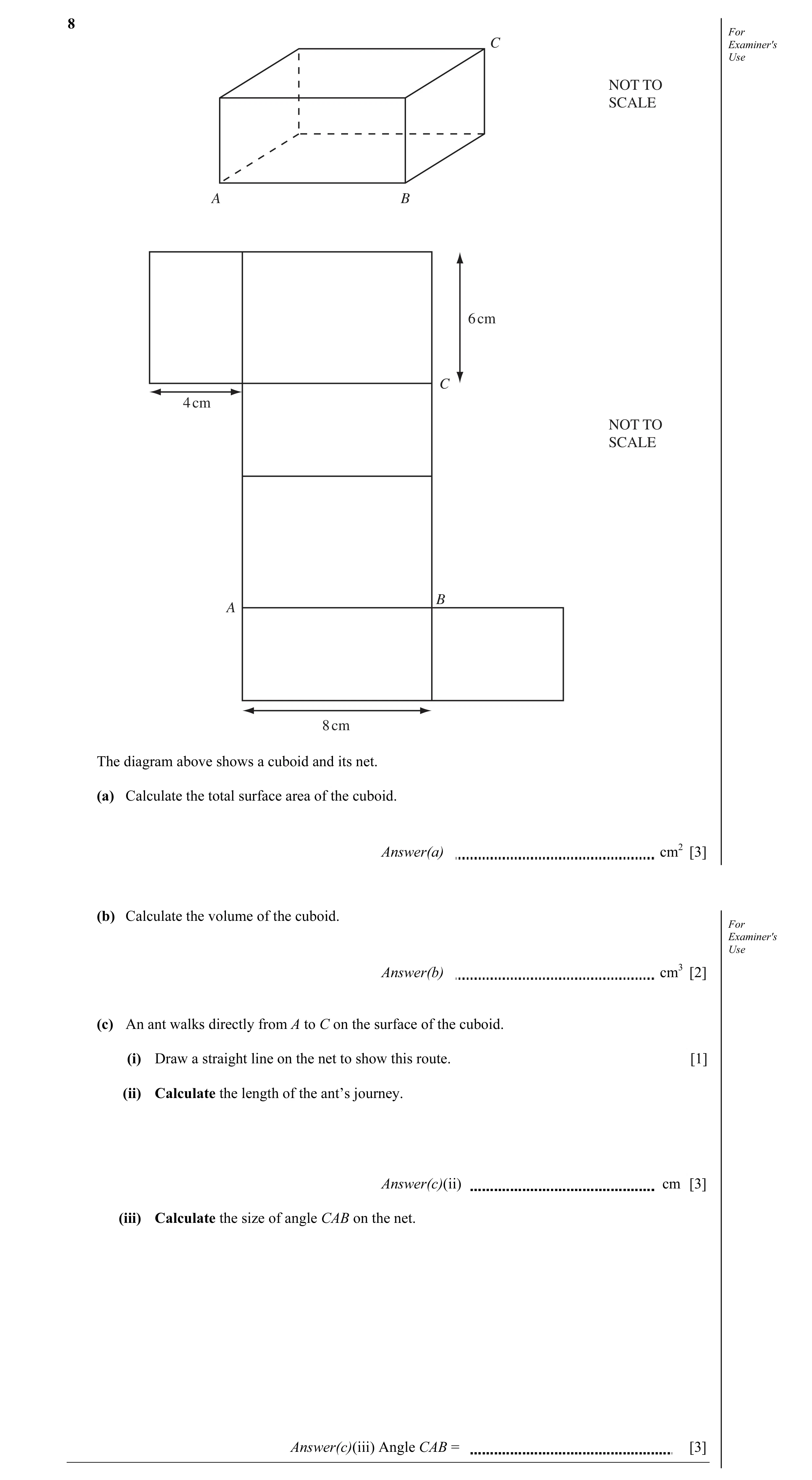
Q1 · For C Examiner's Use NOT TO SCALE A B 6 cm C 4 cm NOT TO SCALE B A 8 cm The diagram above… 0580/31 May/June 2005
8 For C Examiner's Use NOT TO SCALE A B 6 cm C 4 cm NOT TO SCALE B A 8 cm The diagram above shows a cuboid and its net. (a) Calculate the total surface area of the cuboid. Answer(a) cm2 [3] (b) Calculate the volume of the cuboid. For Examiner's Use Answer(b) cm3 [2] (c) An ant walks directly from A to C on the surface of the cuboid. (i) Draw a straight line on the net to show this route. [1] (ii) Calculate the length of the ant’s journey. Answer(c)(ii) cm [3] (iii) Calculate the size of angle CAB on the net. Answer(c)(iii) Angle CAB = [3]
12 marks
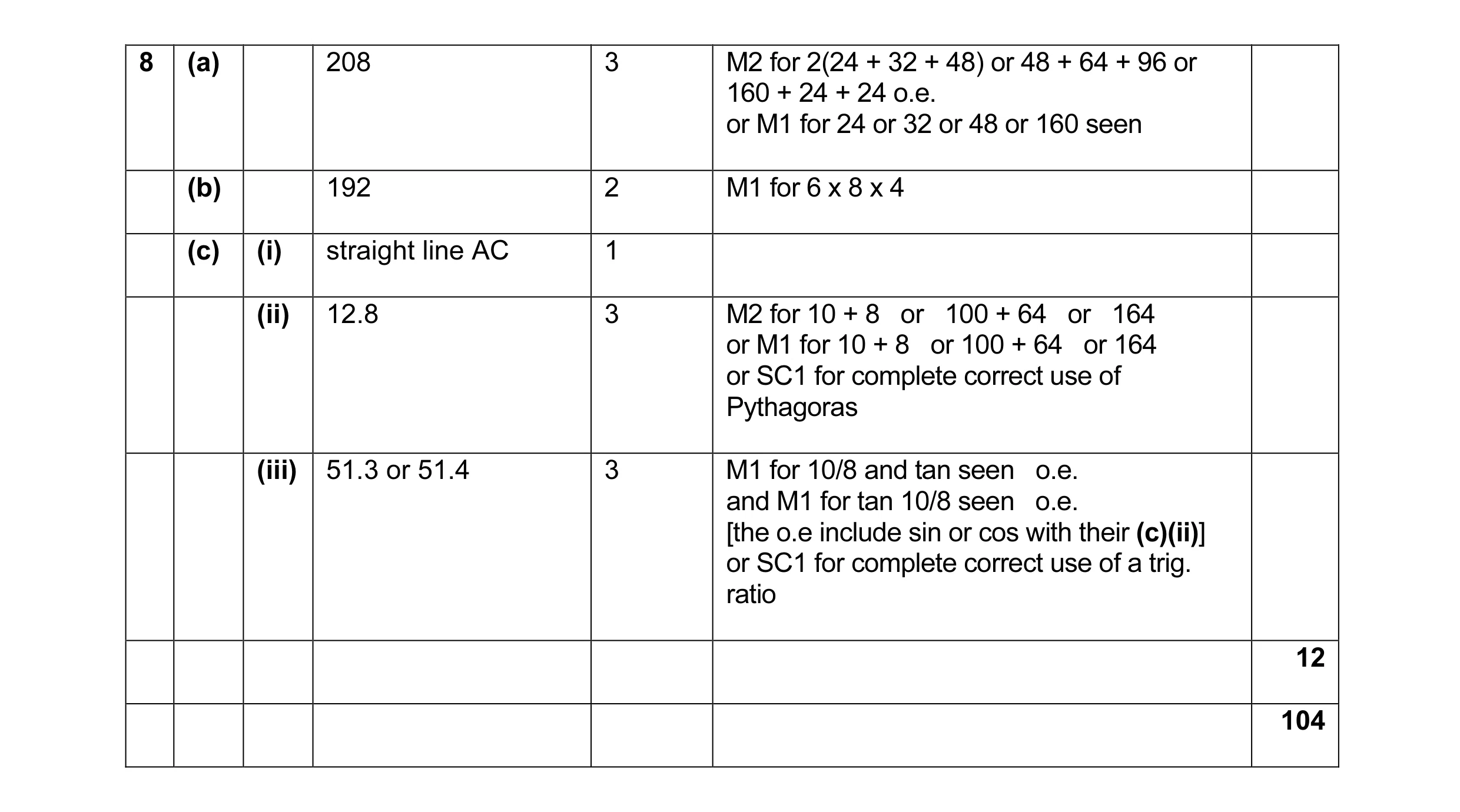
Mark scheme: 8 (a) 208 3 M2 for 2(24 + 32 + 48) or 48 + 64 + 96 or 160 + 24 + 24 o.e. or M1 for 24 or 32 or 48 or 160 seen (b) 192 2 M1 for 6 x 8 x 4 (c) (i) straight line AC 1 (ii) 12.8 3 M2 for 10 + 8 or 100 + 64 or 164 or M1 for 10 + 8 or 100 + 64 or 164 or SC1 for complete correct use of Pythagoras (iii) 51.3 or 51.4 3 M1 for 10/8 and tan seen o.e. and M1 for tan 10/8 seen o.e. [the o.e include sin or cos with their (c)(ii)] or SC1 for complete correct use of a trig. ratio 12 104
This question in 0580/31 May/June 2005
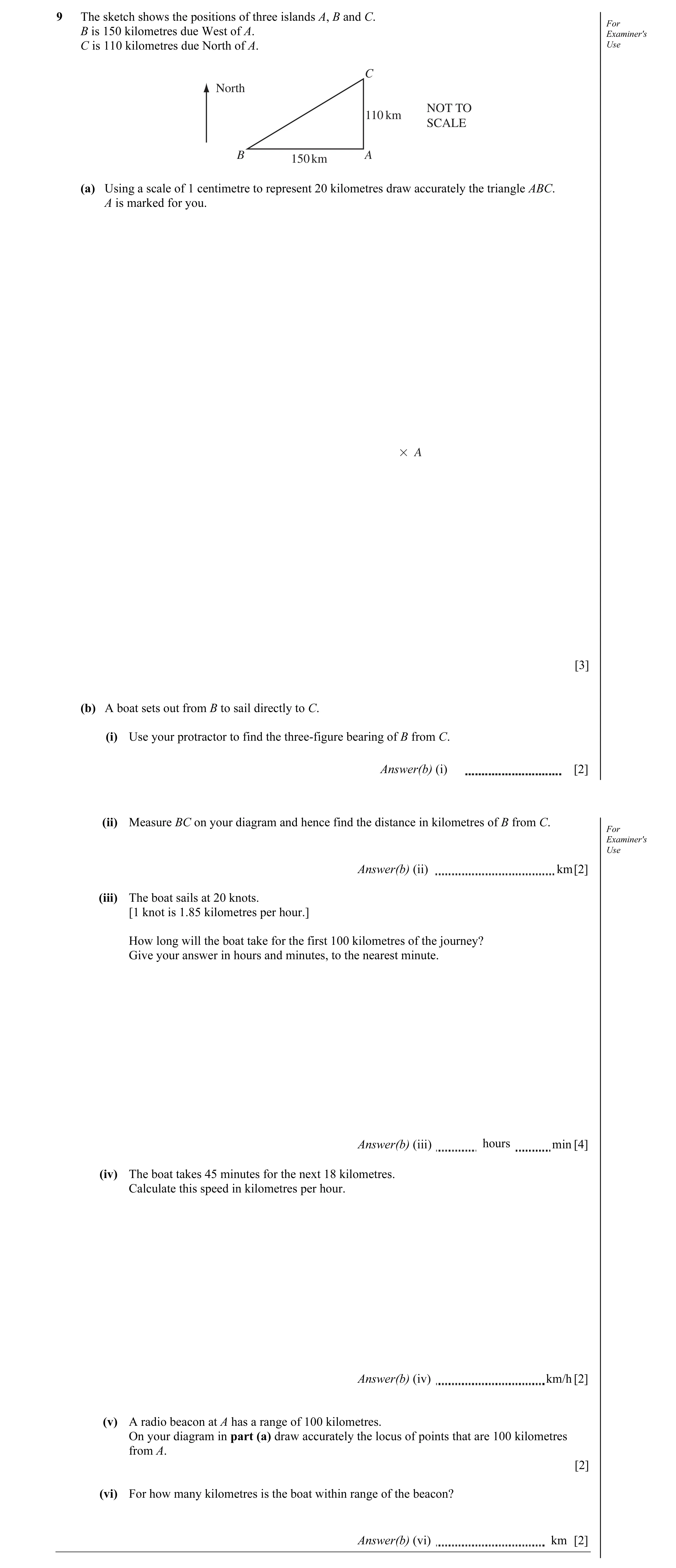
Q2 · The sketch shows the positions of three islands A, B and C 0580/31 Oct/Nov 2006
9 The sketch shows the positions of three islands A, B and C. For B is 150 kilometres due West of A. Examiner's C is 110 kilometres due North of A. Use C North NOT TO 110 km SCALE B A 150 km (a) Using a scale of 1 centimetre to represent 20 kilometres draw accurately the triangle ABC. A is marked for you. A [3] (b) A boat sets out from B to sail directly to C. (i) Use your protractor to find the three-figure bearing of B from C. Answer(b) (i) [2] (ii) Measure BC on your diagram and hence find the distance in kilometres of B from C. For Examiner's Use Answer(b) (ii) km [2] (iii) The boat sails at 20 knots. [1 knot is 1.85 kilometres per hour.] How long will the boat take for the first 100 kilometres of the journey? Give your answer in hours and minutes, to the nearest minute. Answer(b) (iii) hours min [4] (iv) The boat takes 45 minutes for the next 18 kilometres. Calculate this speed in kilometres per hour. Answer(b) (iv) km/h [2] (v) A radio beacon at A has a range of 100 kilometres. On your diagram in part (a) draw accurately the locus of points that are 100 kilometres from A. [2] (vi) For how many kilometres is the boat within range of the beacon? Answer(b) (vi) km [2]
17 marks
Mark scheme: 9 (a) Correct accurate drawing. 3 M1 for angle = 90° = BAC. (lengths ± 0.2 cm, angles ± 1°) M1 for AB = 7.5cm and AC = 5.5 cm. A1 for completed triangle. (Dependent on at least one M) (b) (i) 233° to 235° 2ft From their diagram. M1 for their angle BCA measured correctly (± 1°) (ii) 182 to 190 2ft Their BC × 20. M1 for their BC (correct is 9.1 cm to 9.5 cm) (iii) 2 (hours) 42 (mins) 4 SC3 for 2.7(0….) M1 for 20 × 1.85 M1 for 100 ÷ their 37 SC2 for 2 hr 7 mins with no method. B1 for their time correctly changed to hours and minutes. (iv) 24 2 M1 for 18 ÷ 0.75 oe (v) Correct circle drawn 2 M1 for partial circle (crossing AB and AC) (vi) 84 to 100 2ft M1 for 4.2 to 5.0 Follow through their diagram, dependent on intersections seen on BC 17 Total marks 104
This question in 0580/31 Oct/Nov 2006
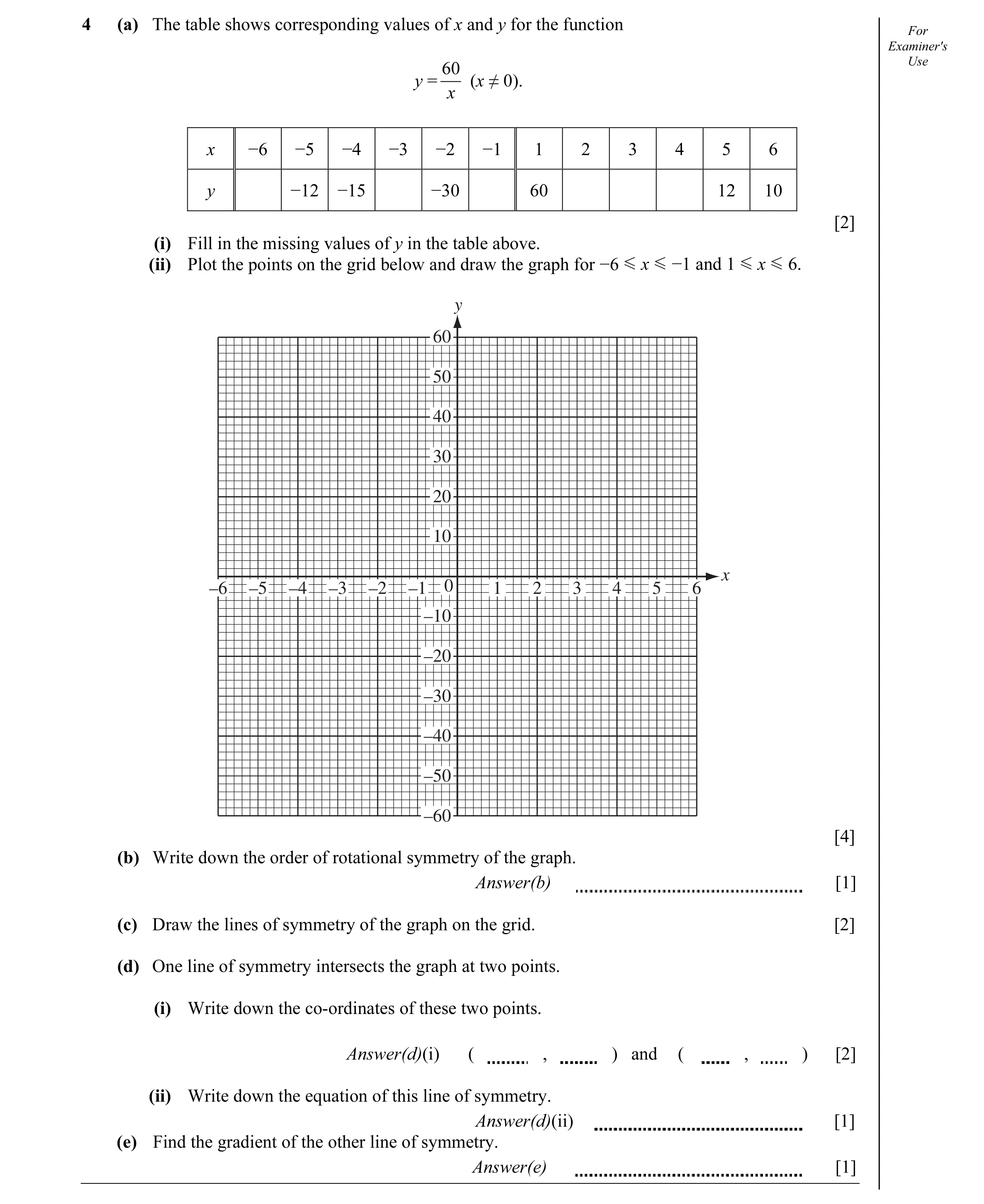
Q3 · The table shows corresponding values of x and y for the function For Examiner's 60 Use y… 0580/31 May/June 2007
4 (a) The table shows corresponding values of x and y for the function For Examiner's 60 Use y = (x ≠ 0). x x −6 −5 −4 −3 −2 −1 1 2 3 4 5 6 y −12 −15 −30 60 12 10 [2] (i) Fill in the missing values of y in the table above. (ii) Plot the points on the grid below and draw the graph for −6 x −1 and 1 x 6. y 60 50 40 30 20 10 x –6 –5 –4 –3 –2 –1 0 1 2 3 4 5 6 –10 –20 –30 –40 –50 –60 [4] (b) Write down the order of rotational symmetry of the graph. Answer(b) [1] (c) Draw the lines of symmetry of the graph on the grid. [2] (d) One line of symmetry intersects the graph at two points. (i) Write down the co-ordinates of these two points. Answer(d)(i) ( , ) and ( , ) [2] (ii) Write down the equation of this line of symmetry. Answer(d)(ii) [1] (e) Find the gradient of the other line of symmetry. Answer(e) [1]
13 marks
Mark scheme: 4 (a) (i) −10, −20, −60, 30, 20, 15 B2 B1 for –20 (x = –3) or 20 (x = 3) (ii) Their 12 points plotted correctly. P3ft P2ft for 10 or 11 points correct. P1ft for 8 or 9 points or 1 quadrant correct. Smooth curves through all points. C1 Two distinct curves; no part of curves between x = –1 and x = 1 (b) 2 B1 (c) Correct lines ruled B1,B1 Minimum length from x = –3 to x = 3. (d) (i) (2.4 to 2.5, 24 to 25) B1ft ft their points of intersection (−2.4 to −2.5, −24 to −25) B1ft ft their points of intersection (ii) y = 10x oe B1 cao (e) −10 B1 cao [13] IGCSE – May/June 2007 0580/0581 03
This question in 0580/31 May/June 2007
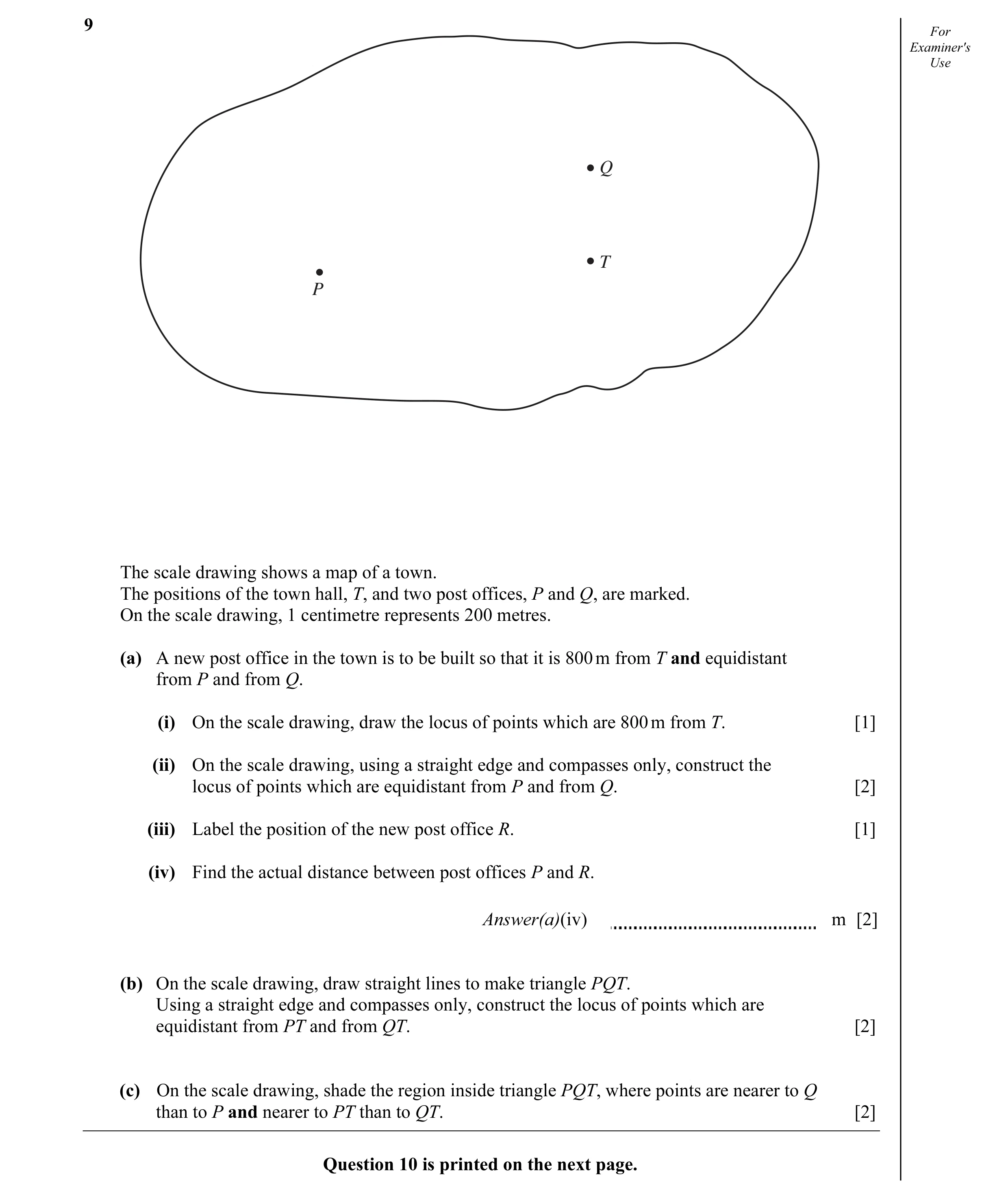
Q4 · For Examiner's Use Q T P The scale drawing shows a map of a town 0580/31 Oct/Nov 2007
9 For Examiner's Use Q T P The scale drawing shows a map of a town. The positions of the town hall, T, and two post offices, P and Q, are marked. On the scale drawing, 1 centimetre represents 200 metres. (a) A new post office in the town is to be built so that it is 800 m from T and equidistant from P and from Q. (i) On the scale drawing, draw the locus of points which are 800 m from T. [1] (ii) On the scale drawing, using a straight edge and compasses only, construct the locus of points which are equidistant from P and from Q. [2] (iii) Label the position of the new post office R. [1] (iv) Find the actual distance between post offices P and R. Answer(a)(iv) m [2] (b) On the scale drawing, draw straight lines to make triangle PQT. Using a straight edge and compasses only, construct the locus of points which are equidistant from PT and from QT. [2] (c) On the scale drawing, shade the region inside triangle PQT, where points are nearer to Q than to P and nearer to PT than to QT. [2] Question 10 is printed on the next page.
10 marks
Mark scheme: 9 (a) (i) arc B1 full arc, centre T, radius 4 cm, must cover whole of town (ii) locus B2 must be accurate perpendicular bisector of PQ must show 2 pairs of arcs SC1 for accurate without arcs or with 2 arcs just oor (iii) R labelled B1 ft if possible (iv) 640 to 700 m B2 ft SC1 for 3.2 to 3.5 cm (ft) (b) locus B2 must be accurate bisector of angle T must show all arcs SC1 for accurate without arcs or with all arcs just oor (c) correct shading B2 must be a quadrilateral dependent on at least SC1 in (a)(ii) and (b) [10]
This question in 0580/31 Oct/Nov 2007
Q5 · For y Examiner's Use 6 5 4 3 C 2 1 B x –6 –5 –4 –3 –2 –1 0 1 2 3 4 5 6 –1 –2 A –3 –4 –5… 0580/31 Oct/Nov 2008
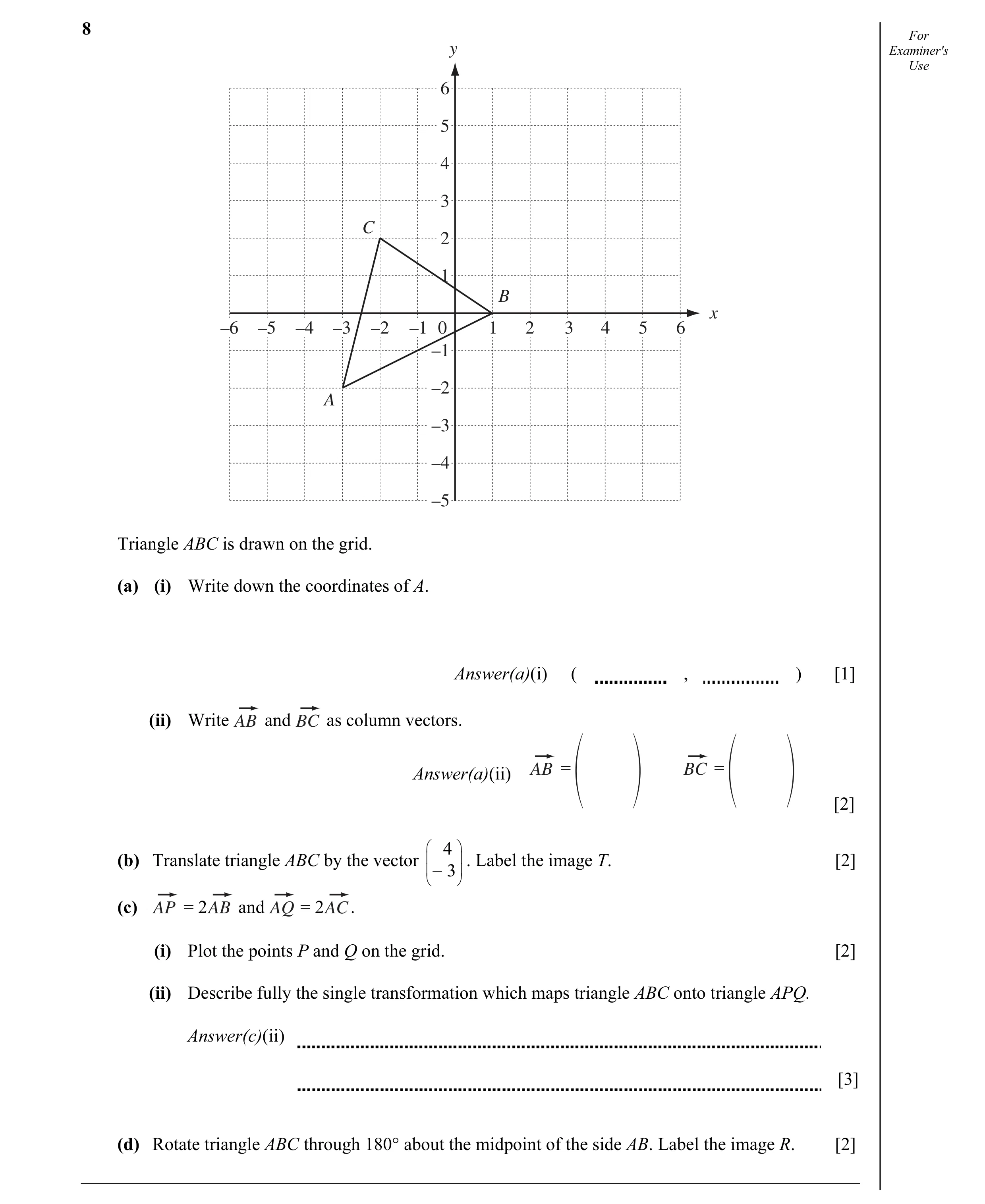
8 For y Examiner's Use 6 5 4 3 C 2 1 B x –6 –5 –4 –3 –2 –1 0 1 2 3 4 5 6 –1 –2 A –3 –4 –5 Triangle ABC is drawn on the grid. (a) (i) Write down the coordinates of A. Answer(a)(i) ( , ) [1] (ii) Write AB and BC as column vectors. Answer(a)(ii) AB = BC = [2] 4 (b) Translate triangle ABC by the vector _ . Label the image T. [2] 3 (c) AP = 2AB and AQ = 2AC. (i) Plot the points P and Q on the grid. [2] (ii) Describe fully the single transformation which maps triangle ABC onto triangle APQ. Answer(c)(ii) [3] (d) Rotate triangle ABC through 180° about the midpoint of the side AB. Label the image R. [2]
12 marks
Mark scheme: 8 (a) (i) (−3, −2) W1 (ii) 2 2 4 − 3 (AB =) , (BC =) SC1 for and W1, 4 −3 2 2 W1 (b) (1, −5), (5, −3), (2, −1) W2 W1 for 2 correct points plotted Must join points, with straight lines, for both marks. (c) (i) P( 5, 2), Q( −1, 6) W1, W1 (ii) Enlargement W1 (Scale factor) 2 W1 (Centre ) A or (−3, −2) W1ft Ft their (a)(i) Zero if not a single transformation (d) ( 0, −4) marked W1 Joined to A and B W1ft Their image of C joined to A and B.
This question in 0580/31 Oct/Nov 2008
Q6 · For y Examiner's Use 12 10 8 6 A 4 2 x –12 –10 –8 –6 –4 –2 0 2 4 6 8 10 12 –2 –4 B –6 –8… 0580/32 Oct/Nov 2010
5 For y Examiner's Use 12 10 8 6 A 4 2 x –12 –10 –8 –6 –4 –2 0 2 4 6 8 10 12 –2 –4 B –6 –8 –10 –12 A graph is drawn on the grid. Points A and B are marked on the curves. (a) (i) Write down the co-ordinates of the points A and B. Answer(a)(i) A( , ) and B( , ) [2] (ii) The equation of the graph is xy = n. Write down the value of n. Answer(a)(ii) n = [1] (b) (i) Write down the order of rotational symmetry of the graph. For Examiner's Use Answer(b)(i) [1] (ii) On the grid, draw the lines of symmetry of the graph. [2] (iii) Write down the equation of each line of symmetry. Answer(b)(iii) and [2] (c) (i) One line of symmetry crosses both curves. Write down the x co-ordinates of the points where this line meets each curve. Give your answers to 1 decimal place. Answer(c)(i) x = and x = [2] (ii) On the grid, draw the line which passes through the point (0, 4) and is parallel to the line of symmetry in part (c)(i). [1] (iii) Write down the equation of this line in the form y = mx + c. Answer(c)(iii) y = [2]
13 marks
Mark scheme: 5 (a) (i) (2, 6) and (–3, –4) 2 B1 for one pair correct (ii) (n =) 12 cao 1 (b) (i) 2 cao 1 (ii) Lines of symmetry drawn 1, 1 (iii) y = x oe and y = –x oe cao 1, 1 (c) (i) (x =) 3.3 to 3.7 and 1ft ft their graph (x =) –3.3 to –3.7 1ft (ii) Line parallel to line in (c)(i) 1ft (c)(i) line must be linear through (0, 4) (iii) y = x + 4 oe 2ft B1 for y = mx + 4 (m ≠ 0) or for y = x + k (k ≠ 0) B1ft for y = mx + ‘4’ (m ≠ 0) or for y = ‘m’x + k (k ≠ 0) IGCSE – October/November 2010 0580 32
This question in 0580/32 Oct/Nov 2010
Q7 · For y Examiner's Use B 6 4 2 A E C x –4 –2 0 2 4 6 8 10 12 –2 –4 –6 Triangle ABC is drawn… 0580/31 May/June 2012
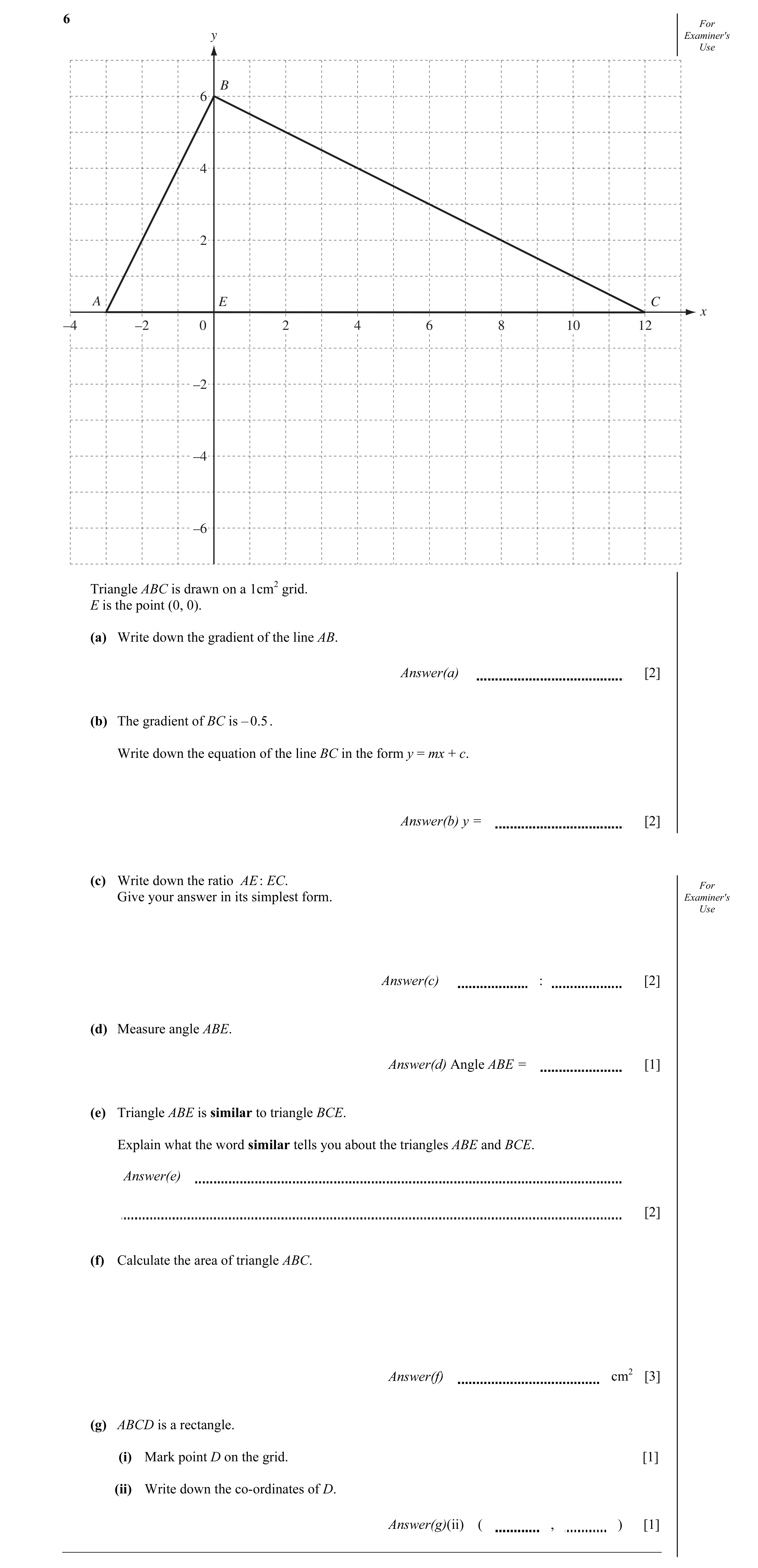
6 For y Examiner's Use B 6 4 2 A E C x –4 –2 0 2 4 6 8 10 12 –2 –4 –6 Triangle ABC is drawn on a 1cm2 grid. E is the point (0, 0). (a) Write down the gradient of the line AB. Answer(a) [2] (b) The gradient of BC is – 0.5 . Write down the equation of the line BC in the form y = mx + c. Answer(b) y = [2] (c) Write down the ratio AE : EC. For Give your answer in its simplest form. Examiner's Use Answer(c) : [2] (d) Measure angle ABE. Answer(d) Angle ABE = [1] (e) Triangle ABE is similar to triangle BCE. Explain what the word similar tells you about the triangles ABE and BCE. Answer(e) [2] (f) Calculate the area of triangle ABC. Answer(f) cm2 [3] (g) ABCD is a rectangle. (i) Mark point D on the grid. [1] (ii) Write down the co-ordinates of D. Answer(g)(ii) ( , ) [1]
14 marks
Mark scheme: (e) 6 × 10⁻³ 4 M1 ‘50’ × ‘120’ figs seen in area calculation A1 for 6000 seen (implied by 0.006 later) M1 for dividing by 1000², 0.05 & 0.12 seen or ×10–6 oe somewhere B1 ft from ‘their 0.006’ provided SF power is –ve Or SC1 for 0.6 × 10⁻² oe 9 (a) (i) 226 to 226.224 cm³ 3 M1 π × 3² × 8 B1 for units : cm³ (ii) 8 cao www 4 B1 1500 used M1ft 3 × their (a)(i) 4 their 1500 M1ft 3 × their (a)(i) 4 16 (b) 5.09 (5.092 to 5.10) 2 M1 π (c) 148 cm² 3 M2 for 2 × 4 × 5 + 2 × 4 × 6 + 2 × 5 × 6 SC1 for 2 × 4 × 5 oe or 4 × 5 + 4 × 6 + 5 × 6 implied by 40, 48, 60 or 74, or list of 20, 20, 24, 24, 30, 30 (d) (i) mv oe 1 (ii) msv oe 1ft Ft (d)(i) × s (iii) 1000 msv oe 1ft Ft (d)(ii) × 1000
This question in 0580/31 May/June 2012
Q8 · Draw all the lines of symmetry on this rectangle 0580/33 May/June 2012
5 (a) Draw all the lines of symmetry on this rectangle. For Examiner's Use [2] (b) Shade one square so that the shaded shape has rotational symmetry of order 2. [1] (c) On the grid below, draw an enlargement of the triangle with a scale factor of 2. [2] (d) For y Examiner's Use 6 5 4 3 A 2 1 x –6 –5 –4 –3 –2 –1 0 1 2 3 4 5 6 –1 –2 D –3 –4 P –5 –6 (i) Write down the co-ordinates of the point P. Answer(d)(i) ( , ) [1] (ii) Reflect triangle A in the y-axis. Label the image B. [1] 1 (iii) Translate triangle A by the vector . −3 Label the image C. [2] (iv) Describe the single transformation that maps triangle A onto triangle D. Answer(d)(iv) [3]
12 marks
Mark scheme: 5 (a) two correct ruled lines 1,1 SC1 correct but freehand or fully correct with one extra line (b) correct square shaded 1 (c) correct enlargement 2 1 for a correct side (d) (i) 1, –5 1 (ii) correct reflection 1 (iii) correct translation 2 B1 for either direction e.g. 1 to the right or 3 down SC1 for complete correct 3 left and 1 up triangle (iv) rotation, (centre) (0,0) 3 1 for rotation, 1 for (centre) (0,0), 1 for angle 180 angle 180 IGCSE – May/June 2012 0580 33
This question in 0580/33 May/June 2012
Q9 · The diagram shows the plan of a field QRST 0580/32 Oct/Nov 2012
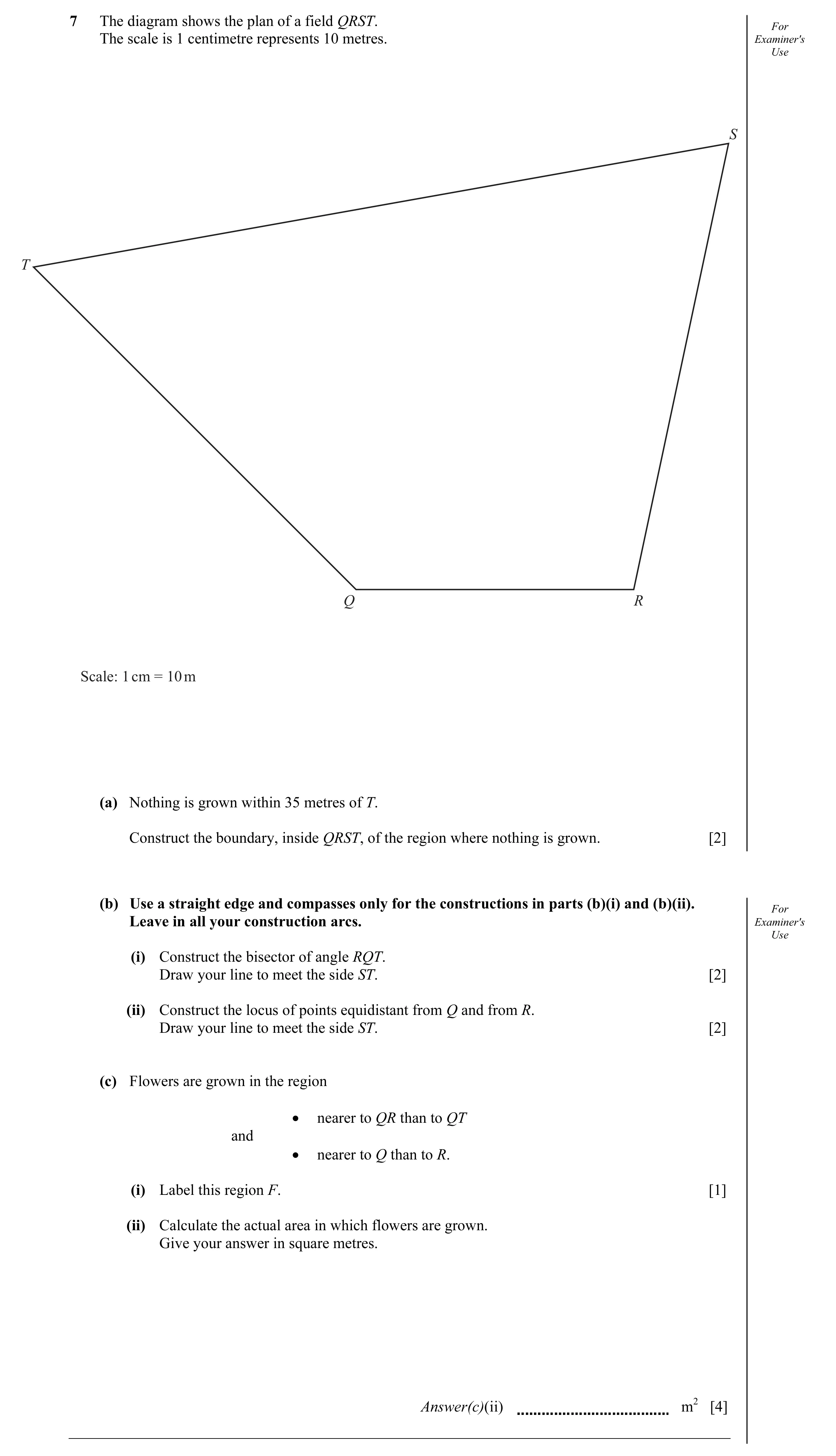
7 The diagram shows the plan of a field QRST. For The scale is 1 centimetre represents 10 metres. Examiner's Use S T Q R Scale: 1 cm = 10 m (a) Nothing is grown within 35 metres of T. Construct the boundary, inside QRST, of the region where nothing is grown. [2] (b) Use a straight edge and compasses only for the constructions in parts (b)(i) and (b)(ii). For Leave in all your construction arcs. Examiner's Use (i) Construct the bisector of angle RQT. Draw your line to meet the side ST. [2] (ii) Construct the locus of points equidistant from Q and from R. Draw your line to meet the side ST. [2] (c) Flowers are grown in the region • nearer to QR than to QT and • nearer to Q than to R. (i) Label this region F. [1] (ii) Calculate the actual area in which flowers are grown. Give your answer in square metres. Answer(c)(ii) m2 [4]
11 marks
Mark scheme: 7 (a) Arc of circle 3.5 cm from T. 2 M1 for any arc, centre T. (b) (i) Correct construction with 4 2 B1 for correct but without 4 arcs correct arcs (ii) Bisector of QR with 2 pairs of 2 B1 for correct but without 2 pairs of arcs arcs. (c) (i) F in correct region 1dep Dependent on at least B1 and B1 in (b) IGCSE – October/November 2012 0580 32 (ii) 1200 to 1700 (m2) 4dep Dependent on at least B1 and B1 in (b) If at least B1 and B1 in (b) then B1 for base 33 Y b Y 37(m) or 3.3 Y b Y 3.7(cm) B1 for height 70 Y h Y 96(m) or 7.0 Y h Y 9.6(cm) M1 for ½ × their base × their height If B0 in either (b)(i) or (b)(ii) but F marked in any triangle SC1 for their base ± 2(m) or ± 0.2(cm) SC1 for their perpendicular height ± 2(m) or ± 0.2(cm) SC1 for ½ × their base × their height
This question in 0580/32 Oct/Nov 2012
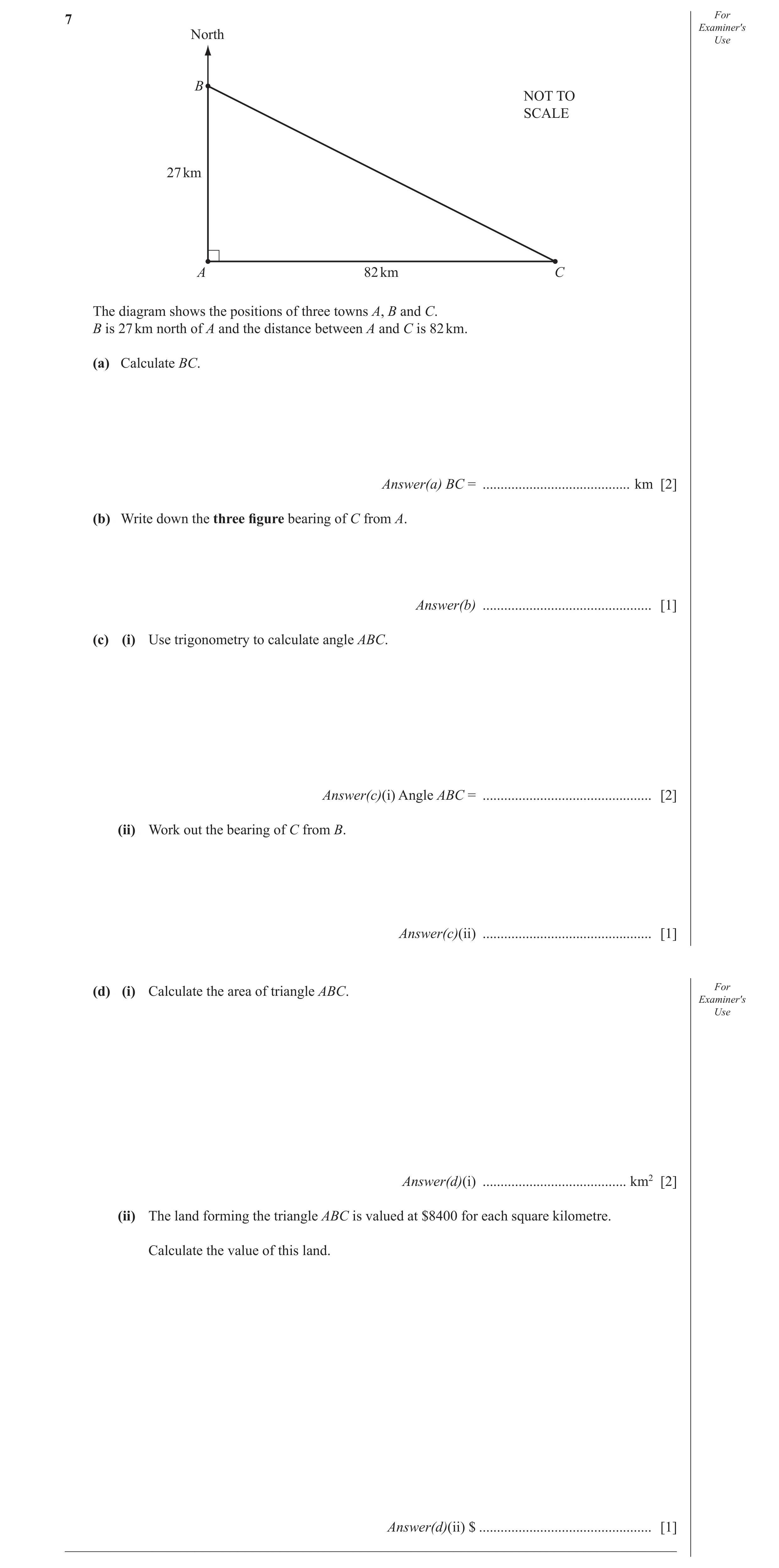
Q10 · For Examiner′s North Use B NOT TO SCALE 27 km A 82 km C The diagram shows the positions… 0580/31 May/June 2013
7 For Examiner′s North Use B NOT TO SCALE 27 km A 82 km C The diagram shows the positions of three towns A, B and C. B is 27 km north of A and the distance between A and C is 82 km. (a) Calculate BC. Answer(a) BC = … km [2] (b) Write down the three fi gure bearing of C from A. Answer(b) … [1] (c) (i) Use trigonometry to calculate angle ABC. Answer(c)(i) Angle ABC = … [2] (ii) Work out the bearing of C from B. Answer(c)(ii) … [1] (d) (i) Calculate the area of triangle ABC. For Examiner′s Use Answer(d)(i) … km2 [2] (ii) The land forming the triangle ABC is valued at $8400 for each square kilometre. Calculate the value of this land. Answer(d)(ii) $ … [1] _____________________________________________________________________________________
9 marks
Mark scheme: 7 (a) 86.3 or 86.33075….. 2 M1 for [BC =] 27 2 + 82 2 or 729+ 6724 or 7453 (b) 090 cao 1 (c) (i) 71.8 or 71.77492….. 2 M1 for tan [x=] (82÷27) or better oe (ii) 108.2 or 108 1ft (d) (i) 1107 2 M1 for 27×82÷2 or better, imp by 1110 (ii) 9 298 800 1ft
This question in 0580/31 May/June 2013
Q11 · Examiner′s5 (a) Complete the table of values for y = 0580/32 Oct/Nov 2013
5 Examiner′s5 (a) Complete the table of values for y = . x Use x –5 –4 –3 –2 –1 1 2 3 4 5 y –1.67 –2.5 –5 5 1.67 1.25 [2] 5 (b) On the grid, draw the graph of y = for –5 Y x Y –1 and 1 Y x Y 5. x y 6 5 4 3 2 1 x –6 –5 –4 –3 –2 –1 0 1 2 3 4 5 6 –1 –2 –3 –4 –5 –6 [4] 5 (c) Use your graph to solve the equation = 4 . x Answer(c) x = … [1] (d) (i) On the grid, draw the line x = –3.5 . [1] (ii) On the grid, plot the point (5, –3) and label it P. [1] (iii) Draw the line that passes through P and is perpendicular to x = –3.5 . [1] _____________________________________________________________________________________
10 marks
Mark scheme: 5 (a) –1 –1.25 2.5 1 2 B1 for two correct (b) 10 correctly plotted points P3FT P2FT for 8 or 9 correctly plotted P1FT for 6 or 7 correctly plotted Two correct smooth curves through C1 all correct points and not across y-axis (c) 1.15 to 1.35 1FT (d) (i) Line x = –3.5 ruled 1 (ii) (5, –3) plotted 1 (iii) line y = –3 ruled 1FT IGCSE – October/November 2013 0580 32
This question in 0580/32 Oct/Nov 2013
Q12 · Y 6 5 4 3 2 1 x –6 –5 –4 –3 –2 –1 0 1 2 3 4 5 6 –1 –2 –3 –4 –5 –6 (a) On the grid, draw… 0580/33 May/June 2014
6 y 6 5 4 3 2 1 x –6 –5 –4 –3 –2 –1 0 1 2 3 4 5 6 –1 –2 –3 –4 –5 –6 (a) On the grid, draw the graphs of (i) y = 5, [1] (ii) x = –3. [1] (b) (i) Write down the co-ordinates of the point of intersection of y = 5 and x = –3. Answer(b)(i) ( … , … ) [1] (ii) Write down the equation of a line parallel to y = 5. Answer(b)(ii) … [1] (c) (i) Complete the table of values for the function y = x2 – 3x . x –2 –1 0 1 2 3 4 5 y 4 0 0 4 [2] (ii) On the grid, draw the graph of y = x2 – 3x for –2 Y x Y 5 . y 11 10 9 8 7 6 5 4 3 2 1 x –3 –2 –1 0 1 2 3 4 5 6 –1 –2 –3 –4 [4] (iii) Write down the co-ordinates of the lowest point of the graph. Answer(c)(iii) ( … , … ) [1] __________________________________________________________________________________________
11 marks
Mark scheme: 6 (a) (i) y = 5 drawn 1 (ii) x = –3 drawn 1 (b) (i) (–3, 5) cao 1 (ii) y = k oe 1 k ≠ 5 (c) (i) 10, –2 –2, 10 2 B1 for 3 correct (ii) 8 correct points plotted 3FT B2 FT for 6 or 7 correctly plotted points or B1 FT for 4 or 5 correctly plotted points correct curve drawn 1 For smooth correct curve, going below y = –2 (iii) (1.5 cao, k ) 1 where –2.5 < k < –2 IGCSE – May/June 2014 0580 33
This question in 0580/33 May/June 2014
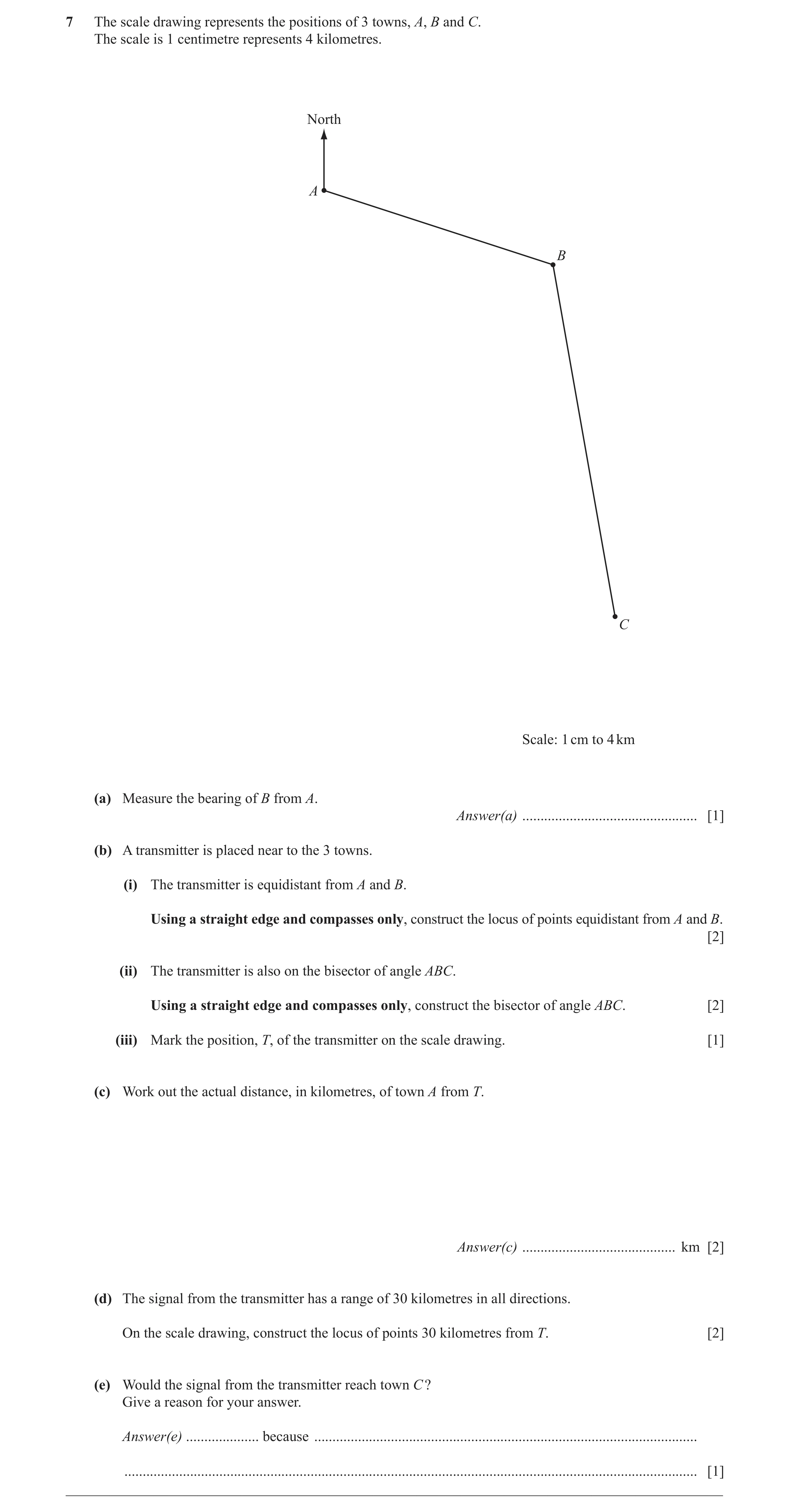
Q13 · The scale drawing represents the positions of 3 towns, A, B and C 0580/31 Oct/Nov 2014
7 The scale drawing represents the positions of 3 towns, A, B and C. The scale is 1 centimetre represents 4 kilometres. North A B C Scale: 1 cm to 4 km (a) Measure the bearing of B from A. Answer(a) … [1] (b) A transmitter is placed near to the 3 towns. (i) The transmitter is equidistant from A and B. Using a straight edge and compasses only, construct the locus of points equidistant from A and B. [2] (ii) The transmitter is also on the bisector of angle ABC. Using a straight edge and compasses only, construct the bisector of angle ABC. [2] (iii) Mark the position, T, of the transmitter on the scale drawing. [1] (c) Work out the actual distance, in kilometres, of town A from T. Answer(c) … km [2] (d) The signal from the transmitter has a range of 30 kilometres in all directions. On the scale drawing, construct the locus of points 30 kilometres from T. [2] (e) Would the signal from the transmitter reach town C ? Give a reason for your answer. Answer(e) … because … … [1] __________________________________________________________________________________________
11 marks
Mark scheme: 7 (a) 106 to 110 1 (b) (i) Correct bisector of AB constructed with 2 2 B1 for correct bisector pairs of arcs. (ii) Correct bisector of angle ABC with arcs 2 B1 for correct bisector without arcs (iii) T marked at intersection of their bisectors 1FT (c) 24.4[km] to 26.0[km] 2FT FT their AT B1 for their AT correctly measured. (d) Circle, radius 7.5(±0.2)cm centre T. 2FT FT their intersection SC1 for circle centre T, incorrect radius. (e) No It is outside the circle. oe 1FT FT their circle.
This question in 0580/31 Oct/Nov 2014
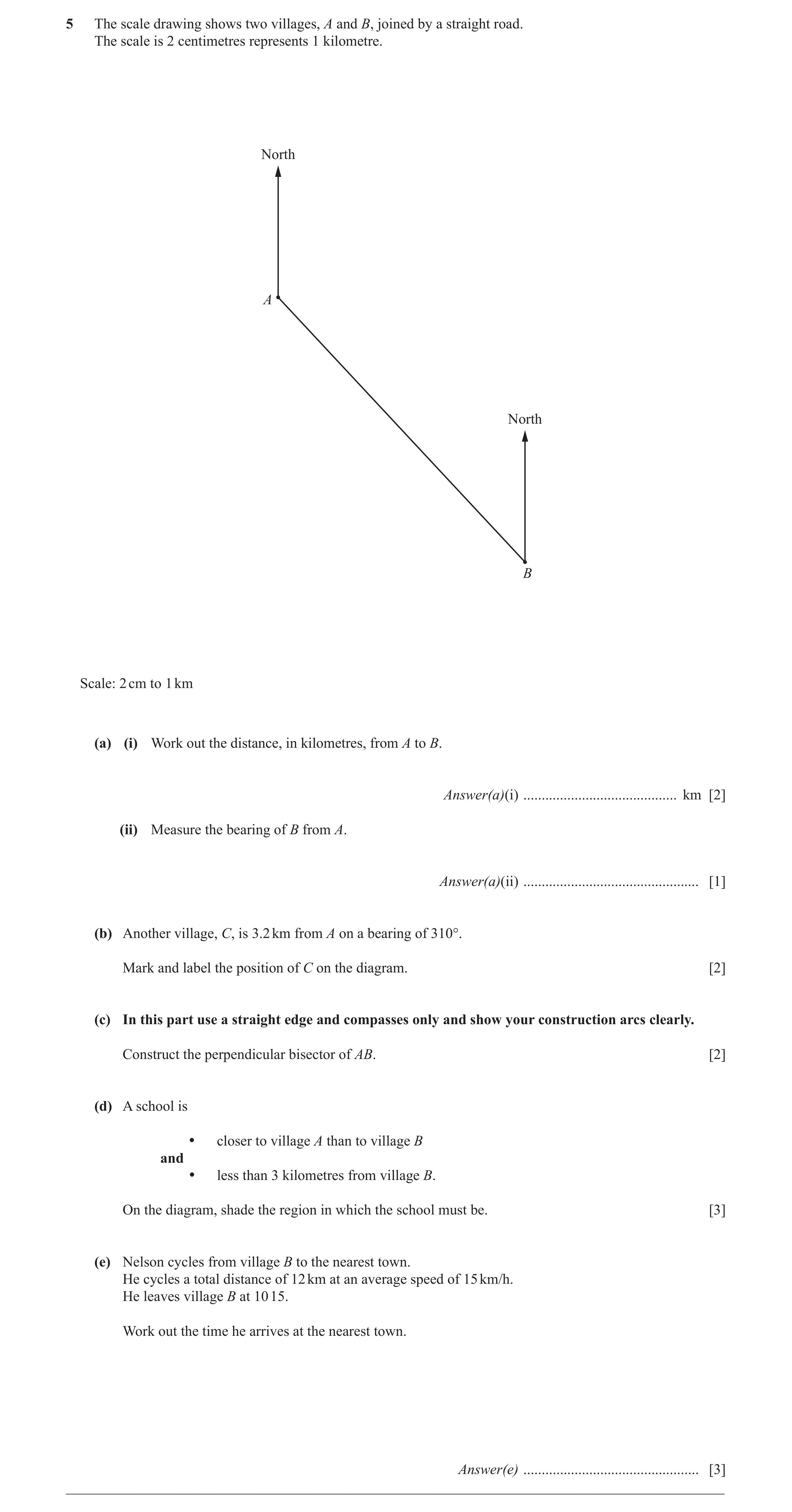
Q14 · The scale drawing shows two villages, A and B, joined by a straight road 0580/31 Oct/Nov 2015
5 The scale drawing shows two villages, A and B, joined by a straight road. The scale is 2 centimetres represents 1 kilometre. North A North B Scale: 2 cm to 1 km (a) (i) Work out the distance, in kilometres, from A to B. Answer(a)(i) … km [2] (ii) Measure the bearing of B from A. Answer(a)(ii) … [1] (b) Another village, C, is 3.2 km from A on a bearing of 310°. Mark and label the position of C on the diagram. [2] (c) In this part use a straight edge and compasses only and show your construction arcs clearly. Construct the perpendicular bisector of AB. [2] (d) A school is • closer to village A than to village B and • less than 3 kilometres from village B. On the diagram, shade the region in which the school must be. [3] (e) Nelson cycles from village B to the nearest town. He cycles a total distance of 12 km at an average speed of 15 km/h. He leaves village B at 10 15. Work out the time he arrives at the nearest town. Answer(e) … [3] __________________________________________________________________________________________
13 marks
Mark scheme: 5 (a) (i) 4.8 2 B1 for 9.6 seen (ii) 137 1 (b) Correct length and bearing 2 B1 for AC = 6.4 cm B1 for correct bearing 310° (c) Perpendicular bisector with 2 sets 2 B1 for correct line with some or no or incorrect of correct arcs arcs or B1 for 2 sets of correct arcs (d) Correct area shaded 3 B2 for arc centre B radius 6 cm touching their bisector twice or B1 for arc centre B, with radius 6 cm but incorrect length or for arc centre B, with incorrect radius (e) 11 03 3 M2 for 12 ÷ 15 × 60 or M1 for 12 ÷ 15 soi If zero scored, SC1 for their time added to 10 15 correctly
This question in 0580/31 Oct/Nov 2015
Q15 · Complete the table of values for y = 0580/32 Feb/March 2017
89 (a) Complete the table of values for y = . x x –8 –6 –4 –2 –1 1 2 4 6 8 y –1 –1.3 –8 2 1.3 1 [2] 8 (b) On the grid, draw the graph of y = for - 8 G x G - 1 and 1 G x G 8 . x y 8 7 6 5 4 3 2 1 x –8 –7–7 –6 –5 –4 –3 –2 –1 0 1 2 3 4 5 6 7 8 –1 –2 –3 –4 –5 –6 –7 –8 [4] 8 (c) The graph of y = has two lines of symmetry. x Write down the equation of each of these lines. … and … [2] 8 (d) Mark a point, P, on the graph of y = where the x and y co-ordinates are equal. [1] x
9 marks
Mark scheme: 9 (a) −2, −4, 8, 4 2 B1 for any 2 correct (b) completely correct curve 4 B3FT for 9 or 10 correct plots B2FT for 7 or 8 correct plots B1FT for 5 or 6 correct plots (c) y = x , y = − x oe 1,1 (d) point at (2.8, 2.8) or ( −2.8, − 2.8) 1FT FT a point on their curve lying on y = x
This question in 0580/32 Feb/March 2017
Q16 · Y 4 3 2 B 1 x –5 –4 –3 –2 –1 0 1 2 3 4 5 –1 –2 A –3 –4 (i) Plot point C at (–4, 2) 0580/31 Oct/Nov 2017
4 (a) y 4 3 2 B 1 x –5 –4 –3 –2 –1 0 1 2 3 4 5 –1 –2 A –3 –4 (i) Plot point C at (–4, 2). [1] (ii) Write down the mathematical name of the triangle formed by joining the points A, B and C. … [1] (iii) Write down the vector AB. AB = [1] f p (iv) (a) Find the gradient of the line AB. … [2] (b) Write down the equation of the line AB. y = … [1] (b) (i) Complete the table of values for y = x 2 + x - 5 . x –4 –3 –2 –1 0 1 2 3 4 y 7 –3 –3 7 [3] (ii) On the grid below, draw the graph of y = x 2 + x - 5 for - 4 G x G 4 . y 16 14 12 10 8 6 4 2 x –4 –3 –2 –1 0 1 2 3 4 –2 –4 –6 [4] (iii) Use your graph to solve the equation x 2 + x - 5 = 0 . x = … or x = … [2]
15 marks
Mark scheme: 4(a)(i) Correct point plotted 1 4(a)(ii) Right-angled or scalene 1 4(a)(iii) 8 1 4 4(a)(iv)(a) 0.5 oe 2 M1 for attempt at rise ÷ run 4(a)(iv)(b) [y =] 0.5x oe 1FT Correct or FT their (iv)(a) 4(b)(i) …1 …–5 –5…1 15 3 B2 for 3 or 4 correct or B1 for 1 or 2 correct 4(b)(ii) Correct curve 4 B3FT for 8 or 9 points correctly plotted or B2FT for 6 or 7 points correctly plotted or B1FT for 4 or 5 points correctly plotted 4(b)(iii) –2.8 1.8 2FT B1FT for each
This question in 0580/31 Oct/Nov 2017
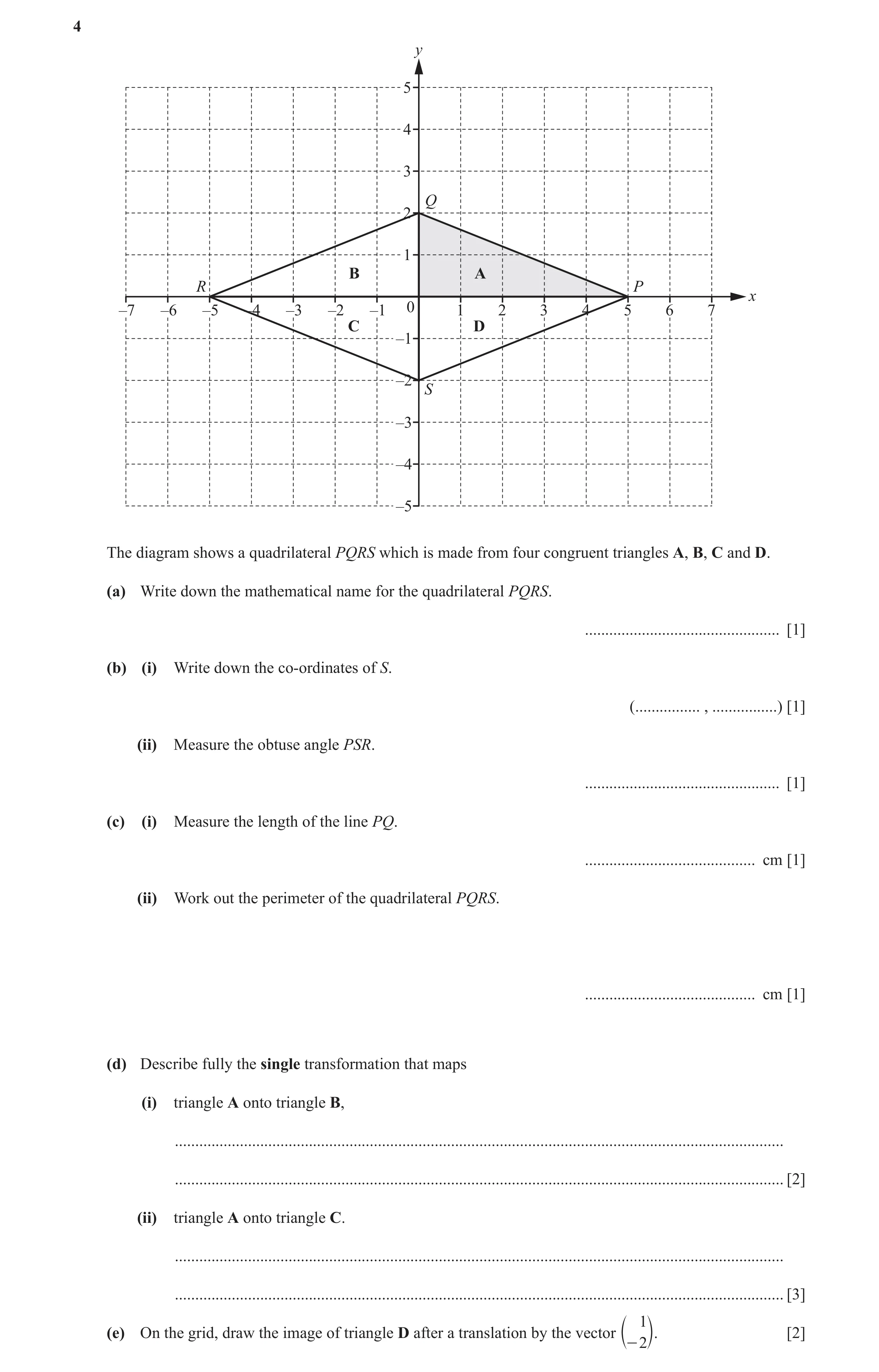
Q17 · Y 5 4 3 Q 2 1 B A R P x –7 –6 –5 –4 –3 –2 –1 0 1 2 3 4 5 6 7 C D –1 –2 S –3 –4 –5 The… 0580/31 May/June 2018
4 y 5 4 3 Q 2 1 B A R P x –7 –6 –5 –4 –3 –2 –1 0 1 2 3 4 5 6 7 C D –1 –2 S –3 –4 –5 The diagram shows a quadrilateral PQRS which is made from four congruent triangles A, B, C and D. (a) Write down the mathematical name for the quadrilateral PQRS. … [1] (b) (i) Write down the co-ordinates of S. ( … , … ) [1] (ii) Measure the obtuse angle PSR. … [1] (c) (i) Measure the length of the line PQ. … cm [1] (ii) Work out the perimeter of the quadrilateral PQRS. … cm [1] (d) Describe fully the single transformation that maps (i) triangle A onto triangle B, … … [2] (ii) triangle A onto triangle C. … … [3] 1 (e) On the grid, draw the image of triangle D after a translation by the vector [2] c- 2m.
12 marks
Mark scheme: 4(a) Rhombus 1 4(b)(i) (0, –2) 1 4(b)(ii) 136 1 4(c)(i) 5.4 1 4(c)(ii) 21.5 or 21.6 1 FT their (c)(i) × 4 4(d)(i) Reflection 2 B1 for each y-axis oe 4(d)(ii) Rotation 3 B1 for each 180 oe (0, 0) oe 4(e) Triangle (1, –2) (1, –4) (6, –2) 2 1 k B1 for or k −2
This question in 0580/31 May/June 2018
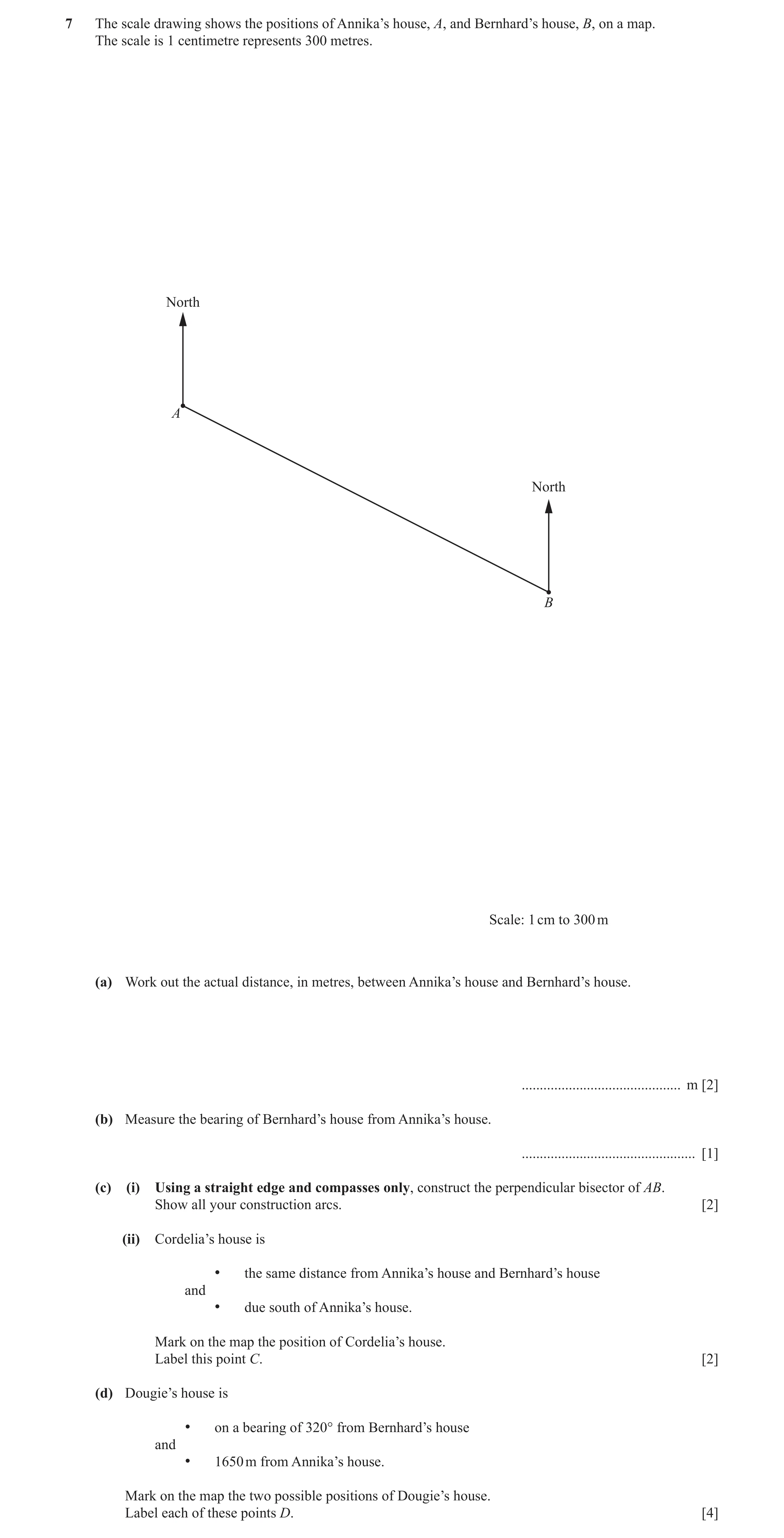
Q18 · The scale drawing shows the positions of Annika’s house, A, and Bernhard’s house, B, on a… 0580/31 May/June 2018
7 The scale drawing shows the positions of Annika’s house, A, and Bernhard’s house, B, on a map. The scale is 1 centimetre represents 300 metres. North A North B Scale: 1 cm to 300 m (a) Work out the actual distance, in metres, between Annika’s house and Bernhard’s house. … m [2] (b) Measure the bearing of Bernhard’s house from Annika’s house. … [1] (c) (i) Using a straight edge and compasses only, construct the perpendicular bisector of AB. Show all your construction arcs. [2] (ii) Cordelia’s house is • the same distance from Annika’s house and Bernhard’s house and • due south of Annika’s house. Mark on the map the position of Cordelia’s house. Label this point C. [2] (d) Dougie’s house is • on a bearing of 320° from Bernhard’s house and • 1650 m from Annika’s house. Mark on the map the two possible positions of Dougie’s house. Label each of these points D. [4]
11 marks
Mark scheme: 7(a) 3300 2 B1 for 11 cm seen 7(b) 117 1 7(c)(i) Correct ruled perpendicular bisector 2 B1 for correct bisector drawn without arcs or with 2 pairs of arcs for two pairs of correct arcs 7(c)(ii) C marked correctly 2 M1 for clear attempt at a line south from A 7(d) D marked correctly twice with 4 B1 for line indicating correct bearing of 320 correct arc(s) and line seen measured B2 for an arc radius 5.5, centre A, [meeting their bearing line at least once], or B1 for an arc any radius, centre A, with D marked on it [meeting their bearing line at least once], or B1 for a complete circle centre A of any radius, or M1 for 1650 ÷ 300 If 0 scored SC2 for D marked correctly within tolerance at least once with incorrect/no arc(s) and incorrect/no line seen
This question in 0580/31 May/June 2018
Q19 · Y 8 7 6 P 5 4 3 2 Q 1 x –4 –3 –2 –1 0 1 2 3 4 5 6 (i) Write down the co-ordinates of… 0580/31 Oct/Nov 2018
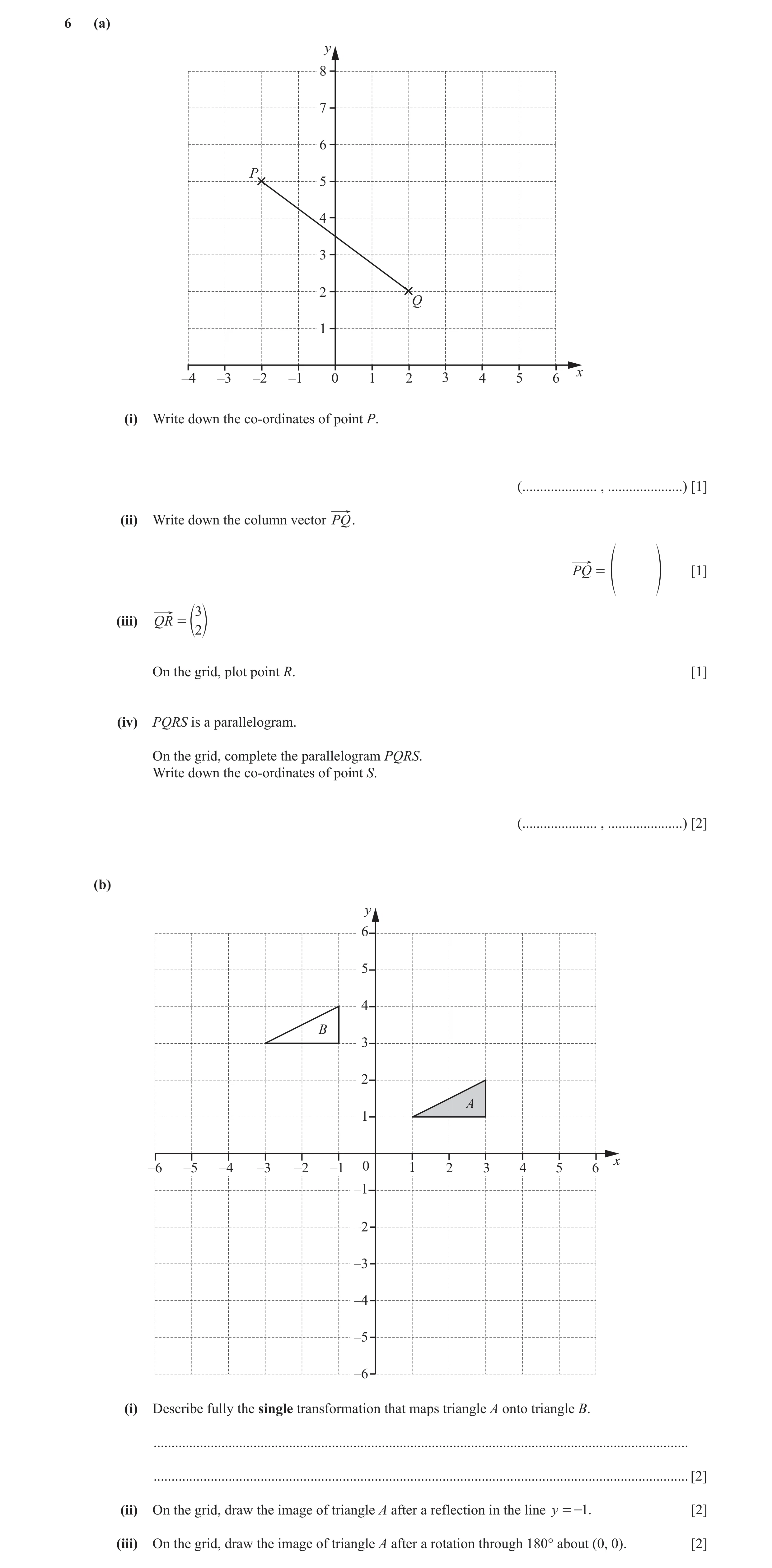
6 (a) y 8 7 6 P 5 4 3 2 Q 1 x –4 –3 –2 –1 0 1 2 3 4 5 6 (i) Write down the co-ordinates of point P. ( … , … ) [1] (ii) Write down the column vector PQ. PQ = [1] f p 3 (iii) QR = e2o On the grid, plot point R. [1] (iv) PQRS is a parallelogram. On the grid, complete the parallelogram PQRS. Write down the co-ordinates of point S. ( … , … ) [2] (b) y 6 5 4 B 3 2 A 1 x –6 –5 –4 –3 –2 –1 0 1 2 3 4 5 6 –1 –2 –3 –4 –5 –6 (i) Describe fully the single transformation that maps triangle A onto triangle B. … … [2] (ii) On the grid, draw the image of triangle A after a reflection in the line y =-1. [2] (iii) On the grid, draw the image of triangle A after a rotation through 180° about (0, 0). [2]
11 marks
Mark scheme: 6(a)(i) (–2, 5) 1 6(a)(ii) 4 1 −3 6(a)(iii) (5, 4) plotted 1 6(a)(iv) Parallelogram PQRS correctly B1 FT their R drawn (1, 7) B1 FT their S dep on first B1 6(b)(i) Translation 2 B1 for each −4 2 6(b)(ii) Correct reflection 2 B1 for reflection in line x = –1 or y = k vertices (3, –3), (1, –3), (3, –4) 6(b)(iii) Correct rotation 2 B1 for correct orientation but wrong position vertices (–3, –1), (–1, –1), (–3, –2)
This question in 0580/31 Oct/Nov 2018
Q20 · The diagram shows four shapes A, B, C and D and a point P on a 1 cm2 grid 0580/32 May/June 2019
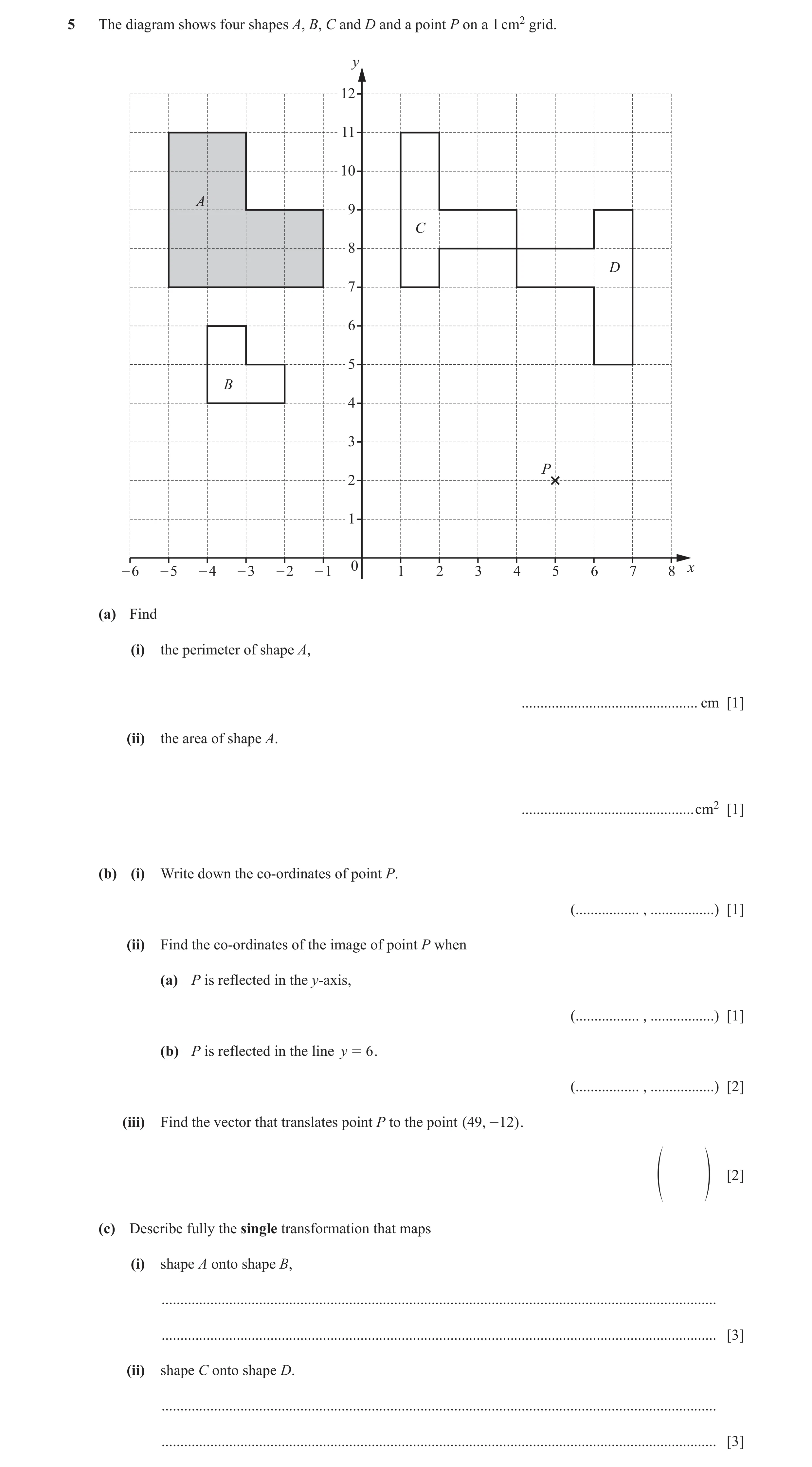
5 The diagram shows four shapes A, B, C and D and a point P on a 1 cm2 grid. y 12 11 10 A 9 C 8 D 7 6 5 B 4 3 P 2 1 0 – 6 – 5 – 4 – 3 – 2 – 1 1 2 3 4 5 6 7 8 x (a) Find (i) the perimeter of shape A, … cm [1] (ii) the area of shape A. … cm2 [1] (b) (i) Write down the co-ordinates of point P. ( … , … ) [1] (ii) Find the co-ordinates of the image of point P when (a) P is reflected in the y-axis, ( … , … ) [1] (b) P is reflected in the line y = 6 . ( … , … ) [2] (iii) Find the vector that translates point P to the point (49, - 12) . [2] f p (c) Describe fully the single transformation that maps (i) shape A onto shape B, … … [3] (ii) shape C onto shape D. … … [3]
14 marks
Mark scheme: 5(a)(i) 16 1 5(a)(ii) 12 1 5(b)(i) (5, 2) 1 5(b)(ii)(a) (−5, 2) 1 5(b)(ii)(b) (5, 10) 2 B1 for (5, k) or (7, 2) 5(b)(iii) 44 2 FT their (b)(i) −14 44 49 − their 5 B1 for or k k k k or or −14 −12 − their 2 5(c)(i) Enlargement 3 B1 for each (SF) 0.5 oe (centre) (−3, 1) 5(c)(ii) Rotation 3 B1 for each 180° (centre) (4, 8)
This question in 0580/32 May/June 2019
Q21 · The line L is shown on the grid 0580/31 Oct/Nov 2019
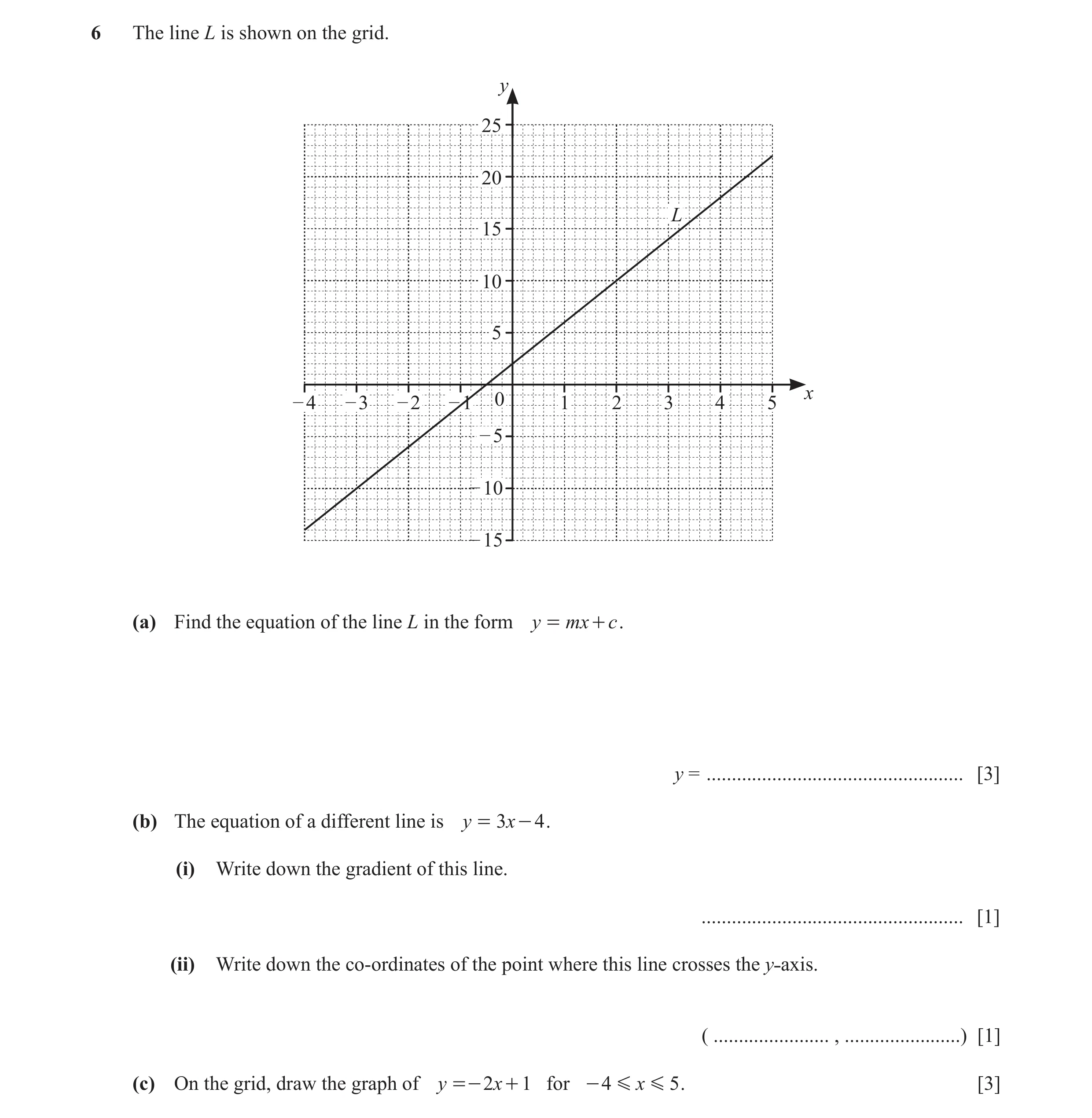
6 The line L is shown on the grid. y 25 20 L 15 10 5 x – 4 – 3 – 2 – 1 0 1 2 3 4 5 – 5 – 10 – 15 (a) Find the equation of the line L in the form y = mx + c . y = … [3] (b) The equation of a different line is y = 3x - 4 . (i) Write down the gradient of this line. … [1] (ii) Write down the co-ordinates of the point where this line crosses the y˗axis. ( … , … ) [1] (c) On the grid, draw the graph of y =- 2x + 1 for - 4 G x G 5 . [3]
8 marks
Mark scheme: 6(a) 4x + 2 3 B2 for 4x + c or B1 for mx + 2, m ≠ 0 4k and M1 for rise/run of k 6(b)(i) 3 1 6(b)(ii) (0, –4) 1 6(c) Correct ruled line 3 B2 for 2 correct points plotted from x = –4 to x = 5 or B1 for one correct point plotted soi or M1 for line with gradient –2 If B0 or M0 scored, SC1 for a correct table with a minimum of 3 correct coordinates
This question in 0580/31 Oct/Nov 2019
Q22 · The diagram shows two triangles, A and B, and two points P and Q 0580/32 Oct/Nov 2019
8 The diagram shows two triangles, A and B, and two points P and Q. y 6 5 4 3 B A 2 1 x – 7 – 6 – 5 – 4 – 3 – 2 – 1 0 1 2 3 4 5 6 7 – 1 – 2 Q – 3 – 4 P – 5 – 6 (a) (i) Write down the co-ordinates of point P. ( … , … ) [1] (ii) Write down the column vector PQ. PQ = [1] f p (b) (i) Describe fully the single transformation that maps triangle A onto triangle B. … … [3] 4 (ii) On the grid, draw the image of triangle A after a translation by the vector [2] e- 2o. (iii) On the grid, draw the image of triangle A after a rotation through 90° clockwise about (0, 0). [2] Question 9 is printed on the next page.
9 marks
Mark scheme: 8(a)(i) (–2, –5) 1 8(a)(ii) − 3 1 2 8(b)(i) Enlargement 3 B1 for each [SF] 2 [Centre] (5, 3) 8(b)(ii) Correct translation 2 4 k Vertices (5, 2), (5, –1), (6, 1) B1 for translation by or k − 2 8(b)(iii) Correct rotation 2 B1 for correct orientation, incorrect Vertices (1, –1), (4, –1), (3, –2) position or for 90° anticlockwise rotation about (0, 0)
This question in 0580/32 Oct/Nov 2019
Q23 · The diagram shows a line AB on a 1 cm2 grid 0580/33 May/June 2020
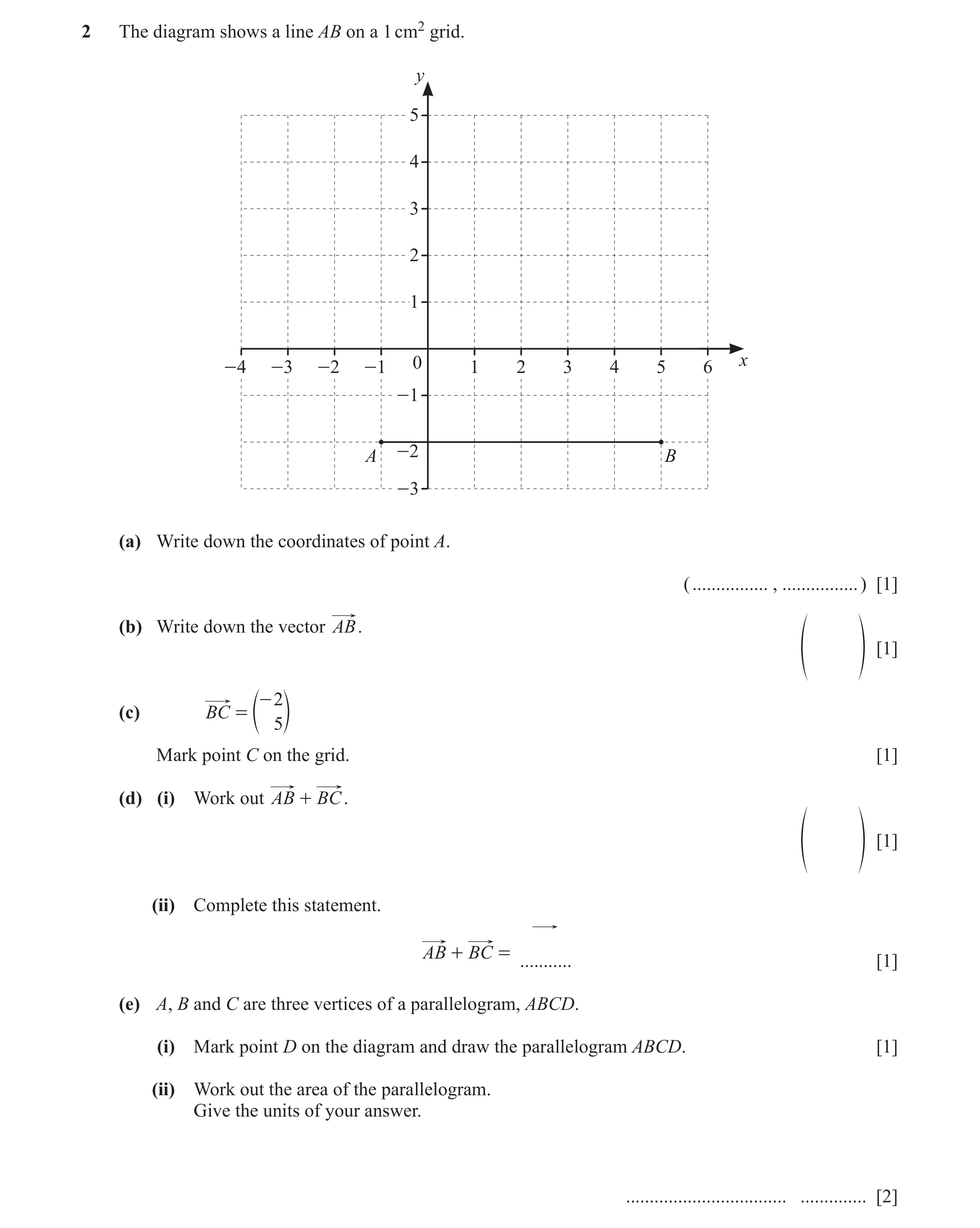
2 The diagram shows a line AB on a 1 cm2 grid. y 5 4 3 2 1 -4 -3 -2 -1 0 1 2 3 4 5 6 x -1 A -2 B -3 (a) Write down the coordinates of point A. ( … , … ) [1] (b) Write down the vector AB. [1] f p - 2 (c) BC = e 5o Mark point C on the grid. [1] (d) (i) Work out AB + BC . [1] f p (ii) Complete this statement. AB + BC = … [1] (e) A, B and C are three vertices of a parallelogram, ABCD. (i) Mark point D on the diagram and draw the parallelogram ABCD. [1] (ii) Work out the area of the parallelogram. Give the units of your answer. … … [2]
8 marks
Mark scheme: 2(a) ( −−1, 2 ) 1 2(b) 6 1 0 2(c) C marked at ( 3,3 ) 1 2(d)(i) 4 1 −2 FT their (b) + 5 5 2(d)(ii) AC 1 2(e)(i) Correct parallelogram drawn 1 FT their (c) provided ABCD forms a parallelogram 2(e)(ii) 30 2 FT the area of their ABCD provided it is a cm2 parallelogram. B1 for each Question Answer Marks Partial Marks
This question in 0580/33 May/June 2020
Q24 · The diagram shows a point P, a shape S and lines A and B on a 1cm2 grid 0580/32 Feb/March 2021
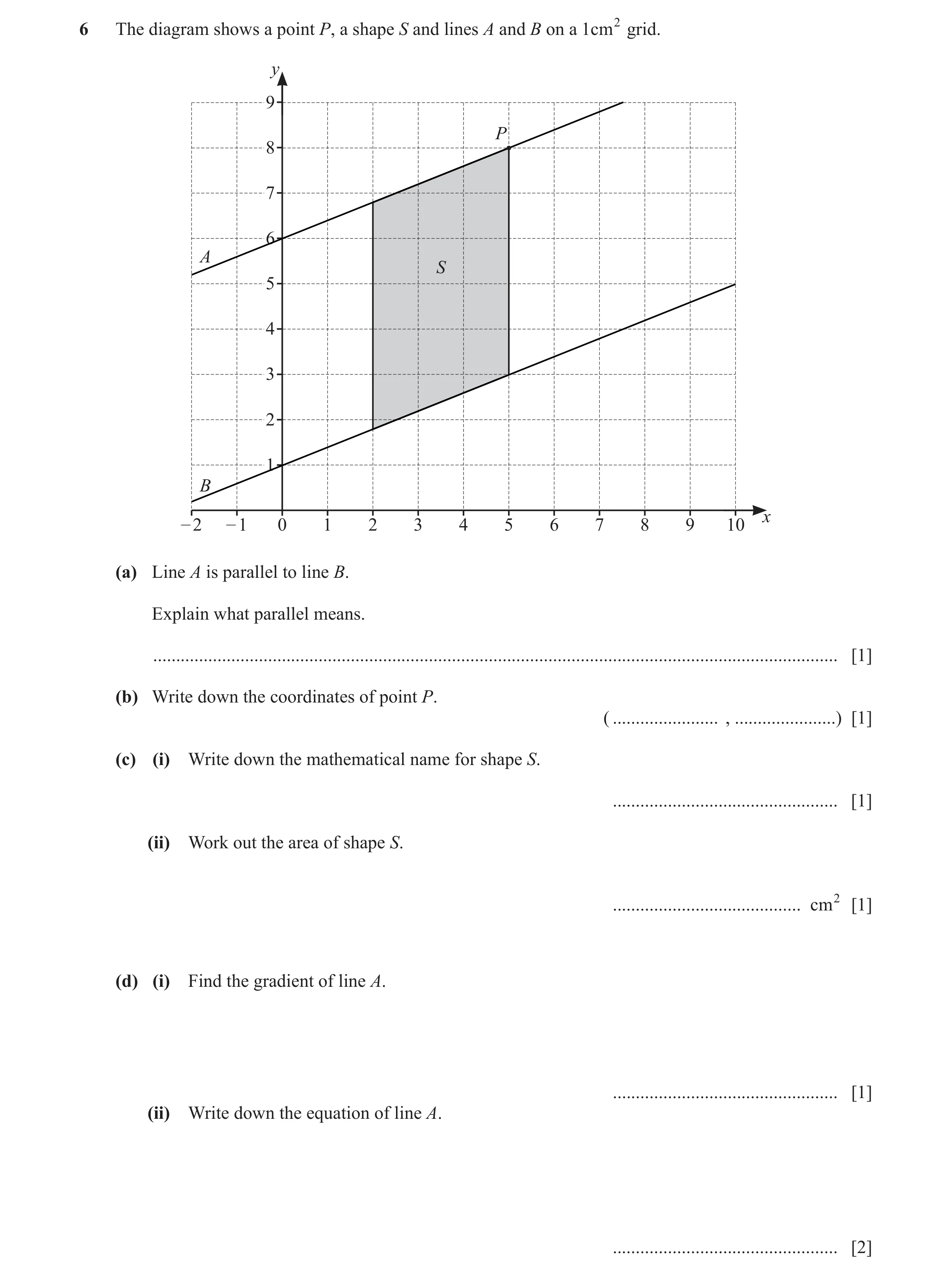
6 The diagram shows a point P, a shape S and lines A and B on a 1cm2 grid. y 9 P 8 7 6 A S 5 4 3 2 1 B x – 2 – 1 0 1 2 3 4 5 6 7 8 9 10 (a) Line A is parallel to line B. Explain what parallel means. … [1] (b) Write down the coordinates of point P. ( … , … ) [1] (c) (i) Write down the mathematical name for shape S. … [1] (ii) Work out the area of shape S. … cm2 [1] (d) (i) Find the gradient of line A. … [1] (ii) Write down the equation of line A. … [2]
7 marks
Mark scheme: 6(a) Correct explanation 1 6(b) (5,8) 1 6(c)(i) Parallelogram 1 6(c)(ii) 15 1 6(d)(i) 2 1 oe 5 6(d)(ii) 2 2 2 y = their x + 6 oe B1 for their x + 6 5 5 final answer 2 or y = their x + c , c ≠ 6 5 or y = mx + 6, m ≠ 0
This question in 0580/32 Feb/March 2021
Q25 · The diagram shows a line L and two points, A and B, on a grid 0580/31 May/June 2021
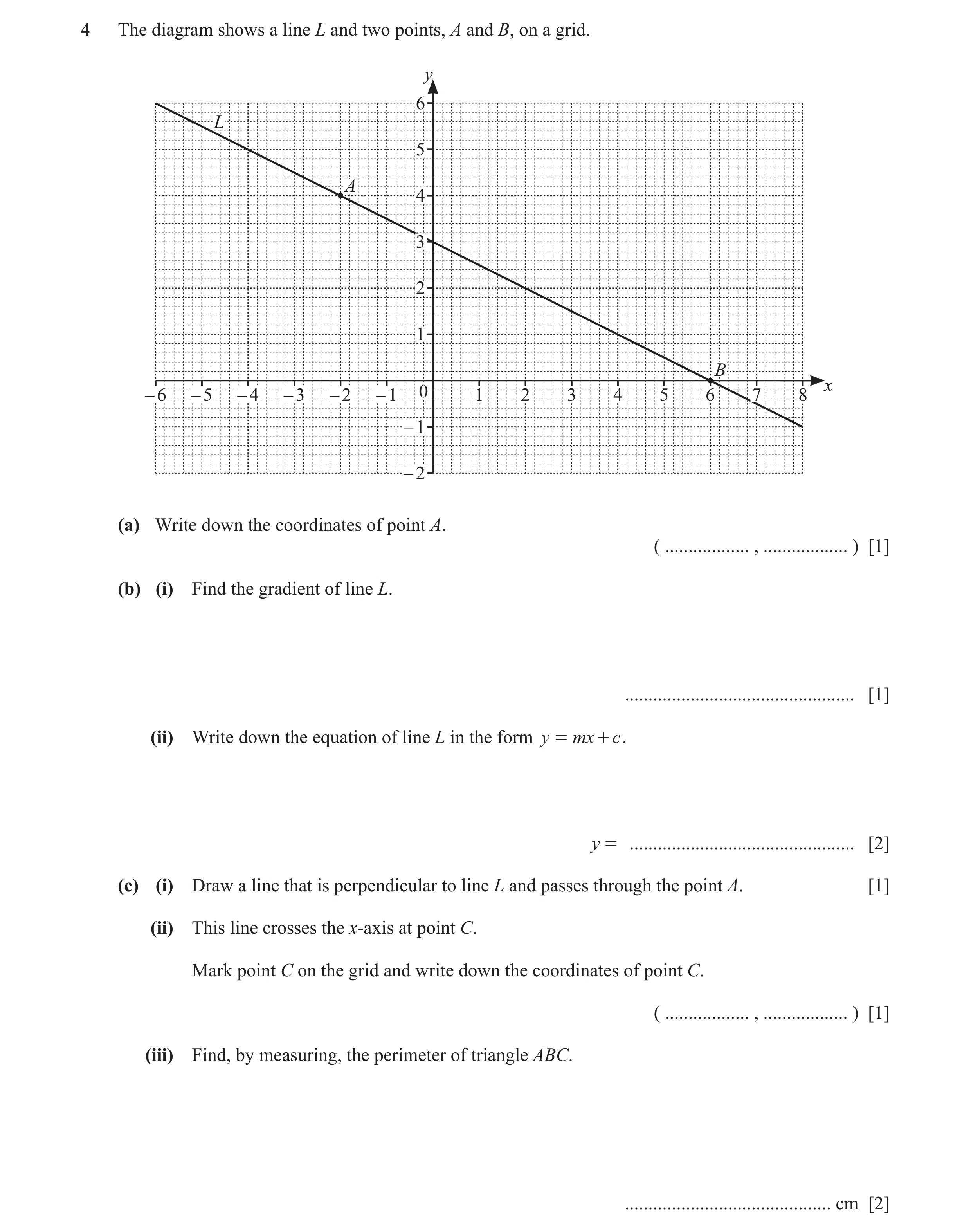
4 The diagram shows a line L and two points, A and B, on a grid. y 66 L 5 A 44 3 2 1 B x – 6 – 5 – 4 – 3 – 2 – 1 00 1 2 3 4 5 6 7 88 – 1 – 2 (a) Write down the coordinates of point A. ( … , … ) [1] (b) (i) Find the gradient of line L. … [1] (ii) Write down the equation of line L in the form y = mx + c . y = … [2] (c) (i) Draw a line that is perpendicular to line L and passes through the point A. [1] (ii) This line crosses the x-axis at point C. Mark point C on the grid and write down the coordinates of point C. ( … , … ) [1] (iii) Find, by measuring, the perimeter of triangle ABC. … cm [2]
8 marks
Mark scheme: 4(a) ( −2,4) 1 4(b)(i) −0.5 oe 1 4(b)(ii) [ y =] − 0.5x + 3 2 FT their (b)(i) B1FT for [ y =] − 0.5x + c or for [ y =] their (b)(i)x + c or for [ y =] mx + 3 4(c)(i) Correct ruled line drawn 1 4(c)(ii) (–4, 0) 1 FT their (c)(i) for x-coord 4(c)(iii) 23.0 to 23.8 2 FT provided their 3 lengths seen M1 for AB + AC + BC soi or B1FT for AB = 8.7 to 9.1 or BC = 10 or AC = 4.3 to 4.7
This question in 0580/31 May/June 2021
Q26 · 5 (a) Complete the table of values for y = 0580/32 May/June 2021
185 (a) Complete the table of values for y = . x x -8 -6 -4 -3 -2 2 3 4 6 8 y -3 -6 6 3 [3] 18 (b) On the grid, draw the graph of y = for -8 G x G - 2 and 2 G x G 8 . x y 1010 88 66 44 22 x –– 88 –– 66 –– 44 – 2 0 22 44 66 88 – 2 – 4 – 6 – 8 – 10 (c) Write down the order of rotational symmetry of the graph. … [1] (d) (i) On the grid, plot and join the points (-8, -3) and (6, 4). [2] 18 (ii) Write down the values of x where this line intersects the graph of y = . x x = … and x = … [2] (iii) Find the equation of this line in the form y = mx + c . y = … [2]
14 marks
Mark scheme: 5(a) −2.25 −4.5 −9 9 4.5 2.25 3 B2 for 4 or 5 correct or B1 for 2 or 3 correct 5(b) Correct curve 4 B3FT for 9 or 10 points correctly plotted or B2FT for 7 or 8 points correctly plotted or B1FT for 5 or 6 points correctly plotted 5(c) 2 1 5(d)(i) (−8, −3) and (6, 4) plotted and joined in a 2 B1 for one point correctly plotted or both ruled line correctly plotted but not joined, or ruled 5(d)(ii) −7.3 to −6.9 and 4.9 to 5.3 2 B1FT for each 5(d)(iii) 1 2 1 [y =] x + 1 oe final answer B1 for x + c (c ≠ +1) or 2 2 1 kx + 1 k ≠ 0 or 2 or B1FT for (their m)x + c or kx + their intercept (k ≠ 0)
This question in 0580/32 May/June 2021
Q27 · The grid shows a point A 0580/31 May/June 2022
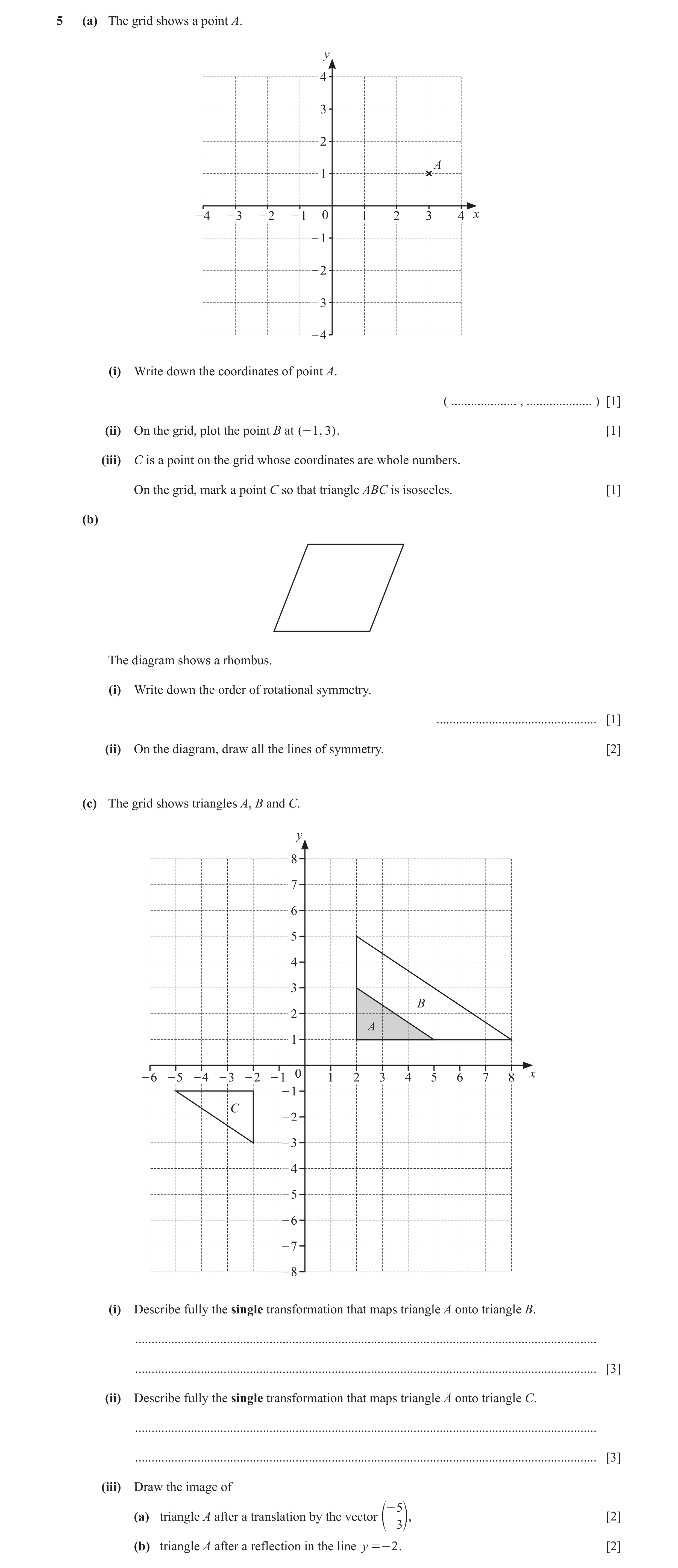
5 (a) The grid shows a point A. y 4 3 2 A 1 – 4 – 3 – 2 – 1 0 1 2 3 4 x – 1 – 2 – 3 – 4 (i) Write down the coordinates of point A. ( … , … ) [1] (ii) On the grid, plot the point B at ( - 1, 3) . [1] (iii) C is a point on the grid whose coordinates are whole numbers. On the grid, mark a point C so that triangle ABC is isosceles. [1] (b) The diagram shows a rhombus. (i) Write down the order of rotational symmetry. … [1] (ii) On the diagram, draw all the lines of symmetry. [2] (c) The grid shows triangles A, B and C. y 8 7 6 5 4 3 B 2 A 1 – 6 – 5 – 4 – 3 – 2 – 1 0 1 2 3 4 5 6 7 8 x – 1 C – 2 – 3 – 4 – 5 – 6 – 7 – 8 (i) Describe fully the single transformation that maps triangle A onto triangle B. … … [3] (ii) Describe fully the single transformation that maps triangle A onto triangle C. … … [3] (iii) Draw the image of - 5 (a) triangle A after a translation by the vector [2] e 3o, (b) triangle A after a reflection in the line y =- 2 . [2]
16 marks
Mark scheme: 5(a)(i) 3, 1 1 5(a)(ii) Correct point plotted 1 5(a)(iii) C plotted such that ABC is isosceles 1 5(b)(i) 2 1 5(b)(ii) 2 correct lines and no extras 2 B1 for 1 correct line and no extras or for 2 correct lines and one extra 5(c)(i) Enlargement 3 B1 for each [centre] (2, 1) [sf] 2 5(c)(ii) Rotation 3 B1 for each [centre] (0, 0) 180° 5(c)(iii)(a) Triangle at (–3, 4) (0, 4) (–3, 6) 2 5 k B1 for translation by or k 3 5(c)(iii)(b) Triangle at (2, –5) (5, –5) (2, –7) 2 B1 for reflection in y = k (k ≠ −2)
This question in 0580/31 May/June 2022
Q28 · - 3 7 8 (a) a = b = e 5o e- 4o Work out 0580/31 Oct/Nov 2022
- 3 7 8 (a) a = b = e 5o e- 4o Work out. (i) 4a [1] f p (ii) 2a - b [2] f p (b) y 4 3 2 P 1 - 6 - 5 - 4 - 3 - 2 - 1 0 1 2 3 4 5 6 x - 1 - 2 - 3 - 4 (i) Write down the coordinates of point P. ( … , … ) [1] (ii) On the grid, plot point Q at ( - 4, 2) . [1] - 2 (iii) PR = e 1o On the grid, plot point R. [1] (iv) On the grid, draw the line y = 3 . [1] (c) y L 3 2 1 - 1 0 1 2 3 x - 1 - 2 - 3 - 4 - 5 Line L is shown on the grid. (i) Find the equation of line L in the form y = mx + c . y = … [2] (ii) Write down the equation of a line parallel to line L. y = … [1] Question 9 is printed on the next page.
10 marks
Mark scheme: 8(a)(i) –12 1 20 8(a)(ii) –13 2 –13 k B1 for or 14 j 14 8(b)(i) (3, 1) 1 8(b)(ii) Q plotted at (–4, 2) 1 8(b)(iii) R plotted at (1, 2) 1 8(b)(iv) Line y = 3 drawn 1 8(c)(i) [y =] 2x – 3 2 B1 for 2x + c or mx – 3 (m ≠ 0 or 2) 8(c)(ii) y = 2x + k 1 FT their gradient (not zero) with different intercept than in (c)(i)
This question in 0580/31 Oct/Nov 2022
Q29 · Y 10 L 9 8 7 6 5 4 3 2 1 – 6 – 5 – 4 – 3 – 2 – 1 0 1 2 x – 1 – 2 – 3 – 4 (a) Find the… 0580/32 Feb/March 2023
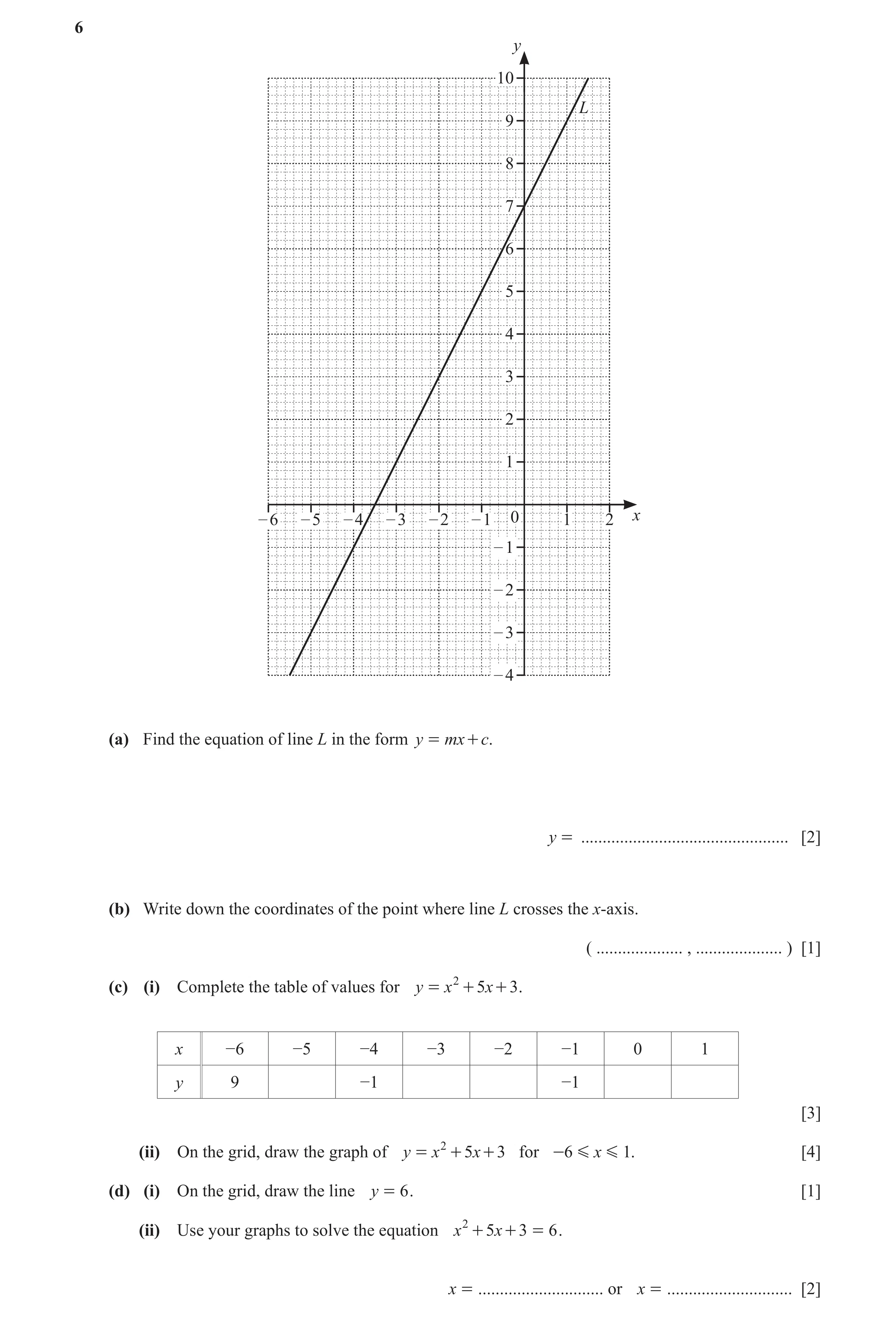
6 y 10 L 9 8 7 6 5 4 3 2 1 – 6 – 5 – 4 – 3 – 2 – 1 0 1 2 x – 1 – 2 – 3 – 4 (a) Find the equation of line L in the form y = mx + c. y = … [2] (b) Write down the coordinates of the point where line L crosses the x-axis. ( … , … ) [1] (c) (i) Complete the table of values for y = x 2 + 5x + 3 . x −6 −5 −4 −3 −2 −1 0 1 y 9 −1 −1 [3] (ii) On the grid, draw the graph of y = x 2 + 5x + 3 for -6 G x G 1. [4] (d) (i) On the grid, draw the line y = 6 . [1] (ii) Use your graphs to solve the equation x 2 + 5x + 3 = 6 . x = … or x = … [2]
13 marks
Mark scheme: 6(a) y = 2 x + 7 2 B1 for 2 x + c, c 7 or B1 for mx + 7 where m is their gradient and m 2 6(b) ( −3.5, 0 ) 1 6(c)(i) 3, −3, −,3 3, 9 3 B2 for 3 or 4 correct or B1 for 1 or 2 correct 6(c)(ii) Completely correct curve 4 B3FT for 7 or 8 correctly plotted points or B2FT for 5 or 6 correctly plotted points or B1FT for 3 or 4 correctly plotted points 6(d)(i) Correct ruled line drawn 1 6(d)(ii) 0.4 to 0.7, −5.7 to −5.4 2 FT their graph and their line B1FT for each
This question in 0580/32 Feb/March 2023
Q30 · Y L 6 5 4 3 2 1 x - 3 - 2 - 1 0 1 2 3 4 5 6 - 1 - 2 - 3 - 4 - 5 - 6 - 7 - 8 - 9 - 10 (a)… 0580/31 Oct/Nov 2023
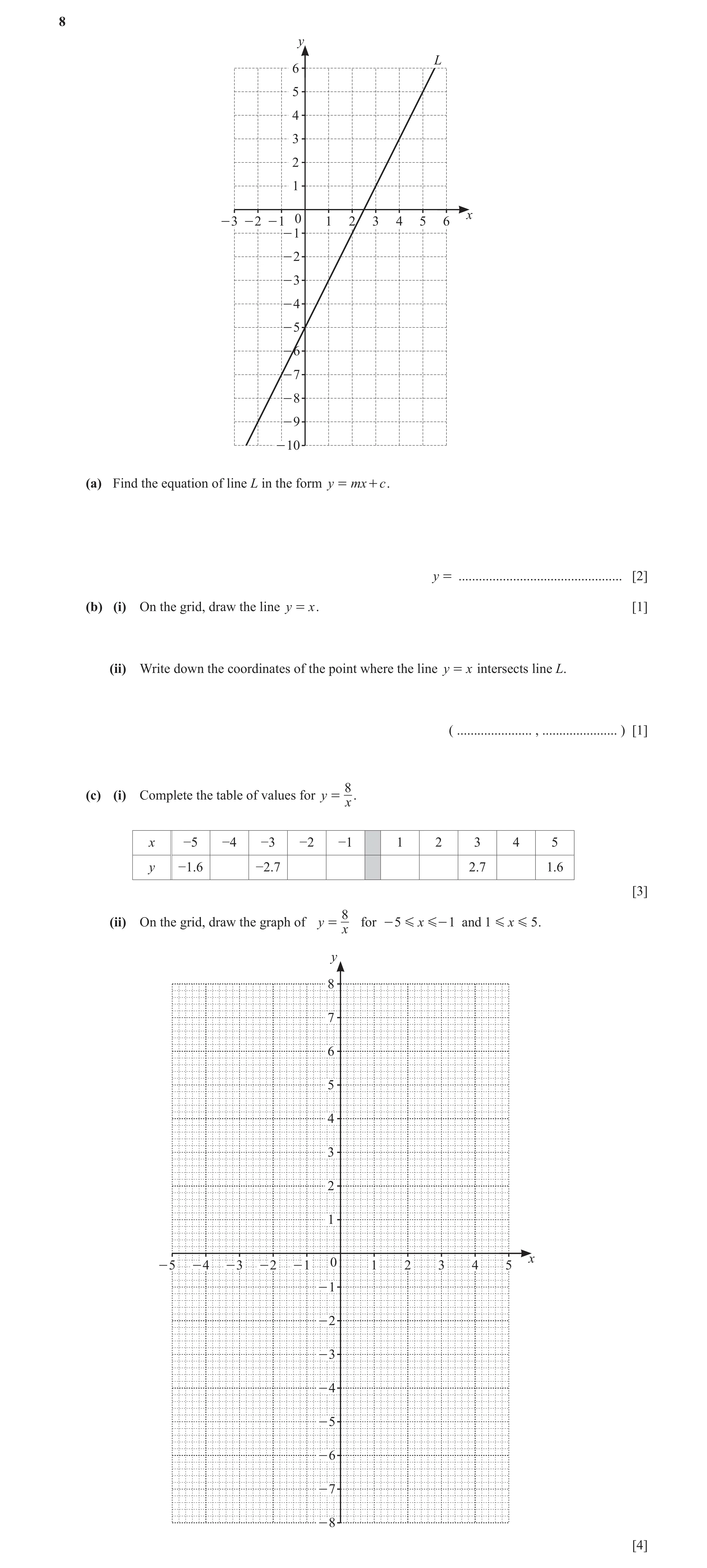
8 y L 6 5 4 3 2 1 x - 3 - 2 - 1 0 1 2 3 4 5 6 - 1 - 2 - 3 - 4 - 5 - 6 - 7 - 8 - 9 - 10 (a) Find the equation of line L in the form y = mx + c . y = … [2] (b) (i) On the grid, draw the line y = x . [1] (ii) Write down the coordinates of the point where the line y = x intersects line L. ( … , … ) [1] 8(c) (i) Complete the table of values for y = . x x −5 −4 −3 −2 −1 1 2 3 4 5 y −1.6 −2.7 2.7 1.6 [3] 8 (ii) On the grid, draw the graph of y = for - 5 G x G - 1 and 1 G x G 5 . x y 8 7 6 5 4 3 2 1 x - 5 - 4 - 3 - 2 - 1 0 1 2 3 4 5 - 1 - 2 - 3 - 4 - 5 - 6 - 7 - 8 [4]
11 marks
Mark scheme: 8(a) [y =] 2x − 5 final answer 2 B1 for answer of 2x + c or mx – 5 (m ≠ 0) 8(b)(i) Correct ruled line 1 8(b)(ii) (5, 5) 1 FT their ruled y = x 8(c)(i) −2 −4 −8 8 4 2 3 B2 for 3, 4 or 5 correct or B1 for 1 or 2 correct 8(c)(ii) Correct curve 4 B3FT for 9 or 10 points correctly plotted or B2FT for 7 or 8 points correctly plotted or B1FT for 5 or 6 points correctly plotted
This question in 0580/31 Oct/Nov 2023
Q31 · The diagram shows a point, P, three triangles, A, B and C, and part of triangle D on a 1… 0580/31 May/June 2024
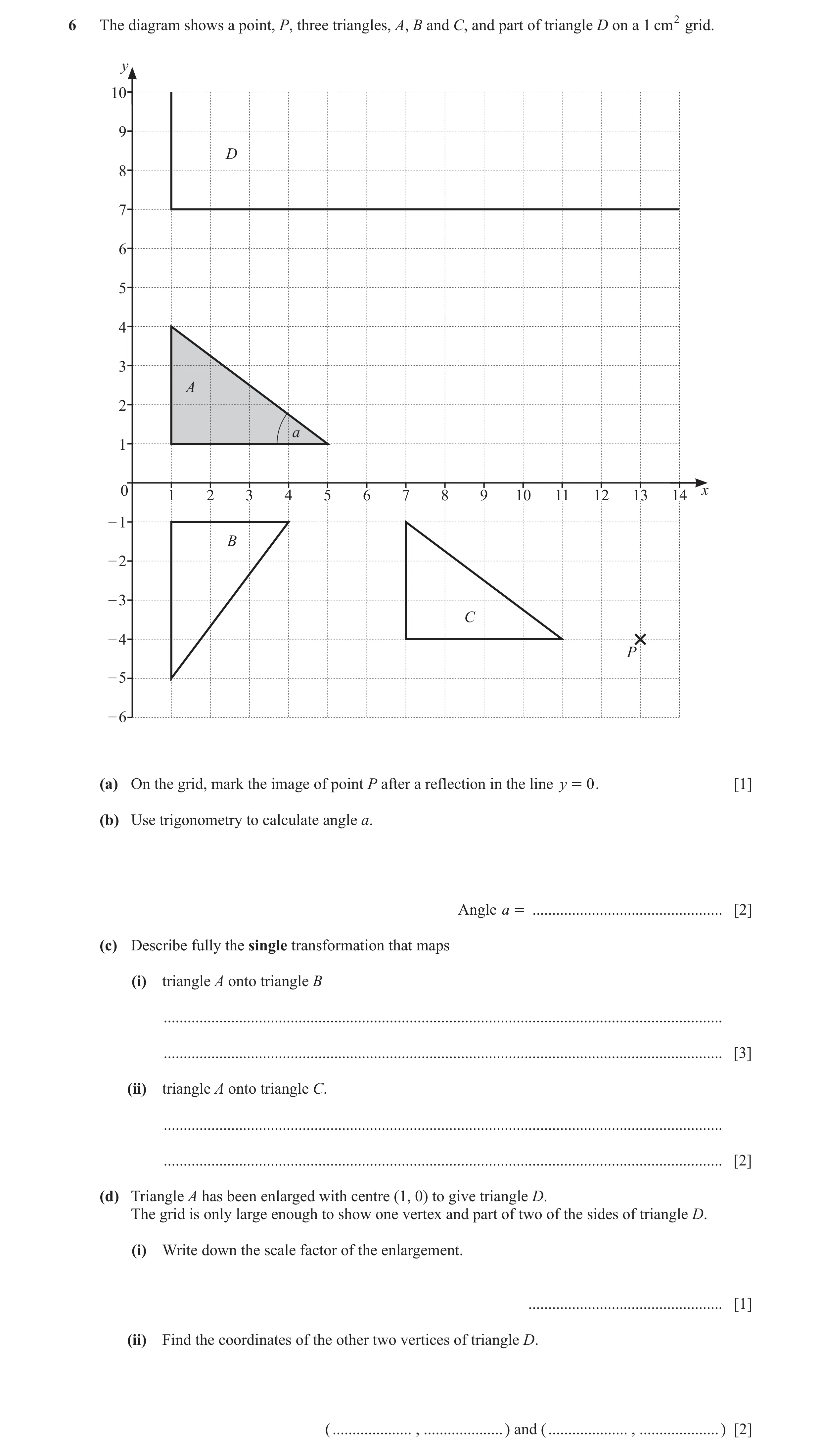
6 The diagram shows a point, P, three triangles, A, B and C, and part of triangle D on a 1 cm2 grid. y 10 9 D 8 7 6 5 4 3 A 2 a 1 0 x 1 2 3 4 5 6 7 8 9 10 11 12 13 14 – 1 B – 2 – 3 C –– 34 P – 5 – 6 (a) On the grid, mark the image of point P after a reflection in the line y = 0 . [1] (b) Use trigonometry to calculate angle a. Angle a = … [2] (c) Describe fully the single transformation that maps (i) triangle A onto triangle B … … [3] (ii) triangle A onto triangle C. … … [2] (d) Triangle A has been enlarged with centre (1, 0) to give triangle D. The grid is only large enough to show one vertex and part of two of the sides of triangle D. (i) Write down the scale factor of the enlargement. … [1] (ii) Find the coordinates of the other two vertices of triangle D. ( … , … ) and ( … , … ) [2]
11 marks
Mark scheme: 6(a) P plotted at (13,4) 1 6(b) 36.9 or 36.86 to36.87 2 M1 for tan a 3 oe 4 or sin a 3 or cos a 4 oe 5 5 6(c)(i) Rotation 3 B1 for each [centre] (0,0) 90° clockwise 6(c)(ii) Translation 2 B1 for each 6 5 6(d)(i) 7 1 6(d)(ii) (1,28), (29,7) 2 B1FT for each
This question in 0580/31 May/June 2024
Q32 · The grid shows a trapezium 0580/33 May/June 2024
3 (a) The grid shows a trapezium. On the grid, draw an enlargement of the trapezium with scale factor 3. [2] (b) The diagram shows four triangles, A, B, C and T, and a point P on a grid. y 5 4 P 3 2 A T 1 – 8 – 7 – 6 – 5 – 4 – 3 – 2 – 1 0 1 2 3 4 5 6 7 8 x – 1 C – 2 – 3 B – 4 – 5 (i) Write down the coordinates of point P. ( … , … ) [1] (ii) Describe fully the single transformation that maps (a) triangle T onto triangle A … … [2] (b) triangle T onto triangle B … … [2] (c) triangle T onto triangle C. … … [3]
10 marks
Mark scheme: 3(a) Correct enlargement 2 B1 for 2 sides correct length 3(b)(i) 4,3 1 3(b)(ii)(a) Reflection 2 B1 for each x = −1 oe 3(b)(ii)(b) Translation 2 B1 for each 3 5 3(b)(ii)(c) Rotation 3 B1 for each (0,0) 180°
This question in 0580/33 May/June 2024
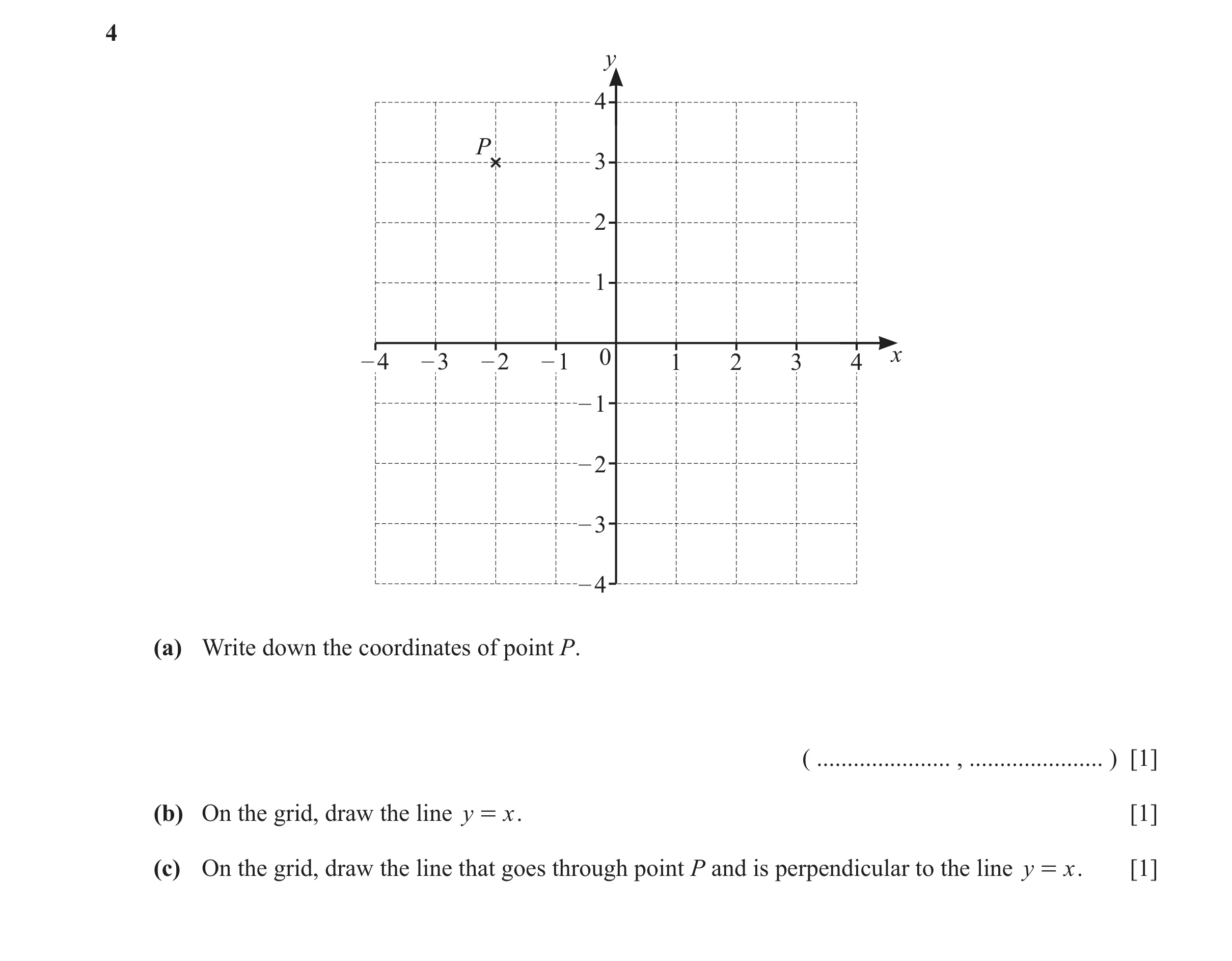
Q33 · Y 4 P 3 2 1 – 4 – 3 – 2 – 1 0 1 2 3 4 x – 1 – 2 – 3 – 4 (a) Write down the coordinates of… 0580/32 Oct/Nov 2025
4 y 4 P 3 2 1 – 4 – 3 – 2 – 1 0 1 2 3 4 x – 1 – 2 – 3 – 4 (a) Write down the coordinates of point P. ( … , … ) [1] (b) On the grid, draw the line y = x . [1] (c) On the grid, draw the line that goes through point P and is perpendicular to the line y = x . [1]
3 marks
Mark scheme: 4(a) –2, 3 1 4(b) correct ruled line y = x 1 4(c) correct ruled line y =−+x 1 1 FT their straight y = x
This question in 0580/32 Oct/Nov 2025
 5 / 51
 6 / 51
 7 / 51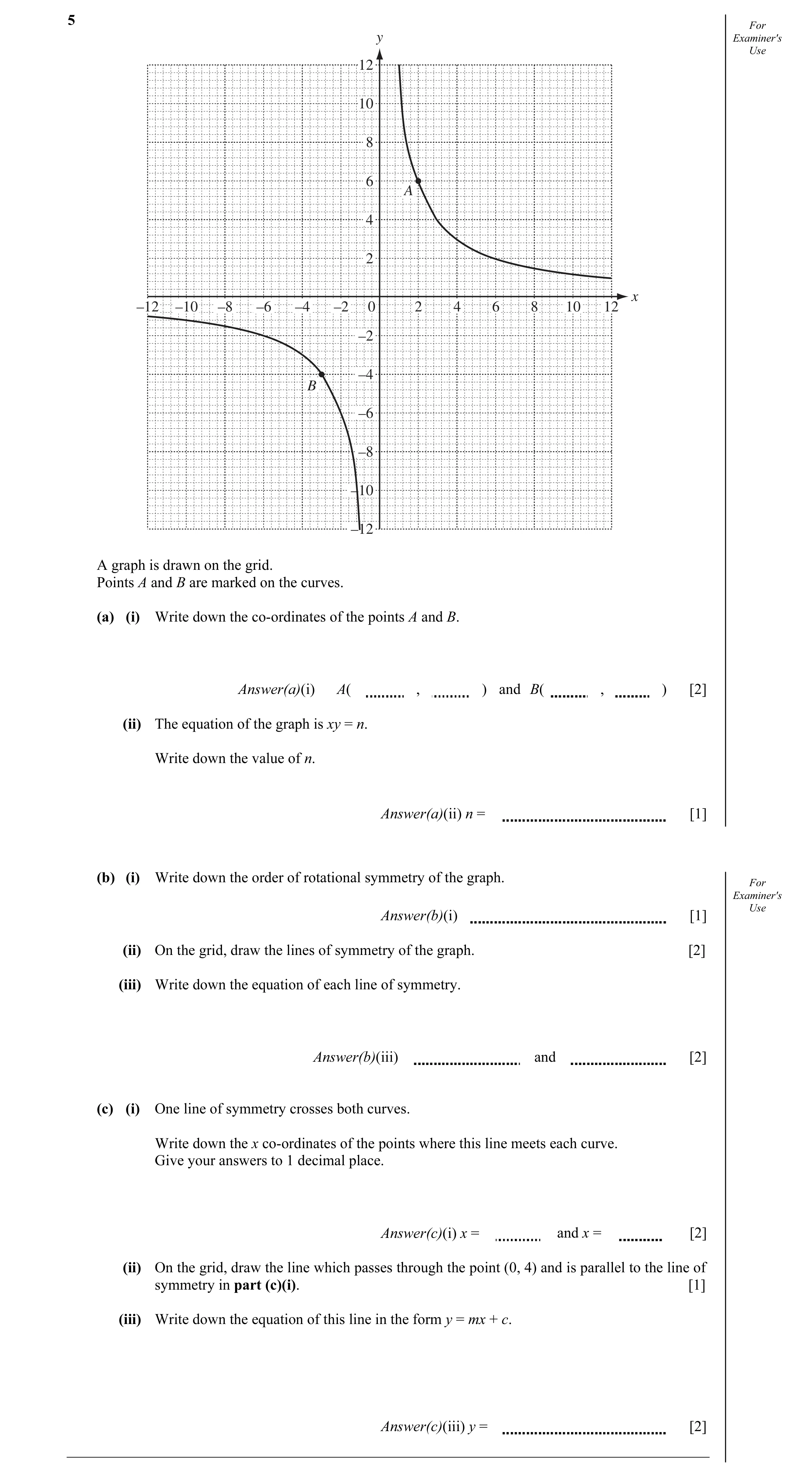
![Question 8: (a) Draw all the lines of symmetry on this rectangle. For Examiner's Use [2] (b) Shade one square so that the shaded shape has rotational s…](https://img.pastlit.com/crops/d231724f-1a92-4cda-abe4-d37dbe391c0d/q5.webp)
![Question 11: Examiner′s5 (a) Complete the table of values for y = . x Use x –5 –4 –3 –2 –1 1 2 3 4 5 y –1.67 –2.5 –5 5 1.67 1.25 [2] 5 (b) On the grid, …](https://img.pastlit.com/crops/e4393281-7574-4be6-8250-a43a1837622b/q5.webp) 18 / 51
18 / 51![Question 12: y 6 5 4 3 2 1 x –6 –5 –4 –3 –2 –1 0 1 2 3 4 5 6 –1 –2 –3 –4 –5 –6 (a) On the grid, draw the graphs of (i) y = 5, [1] (ii) x = –3. [1] (b) (…](https://img.pastlit.com/crops/06511daf-929d-40b7-9397-846e5288cbec/q6.webp)
![Question 15: (a) Complete the table of values for y = . x x –8 –6 –4 –2 –1 1 2 4 6 8 y –1 –1.3 –8 2 1.3 1 [2] 8 (b) On the grid, draw the graph of y = f…](https://img.pastlit.com/crops/02f75533-14f1-4840-a433-be63793ab2e4/q9.webp) 24 / 51
24 / 51![Question 16: (a) y 4 3 2 B 1 x –5 –4 –3 –2 –1 0 1 2 3 4 5 –1 –2 A –3 –4 (i) Plot point C at (–4, 2). [1] (ii) Write down the mathematical name of the tr…](https://img.pastlit.com/crops/43c56002-14ed-403f-be73-7f519e6c0974/q4.webp)
 34 / 51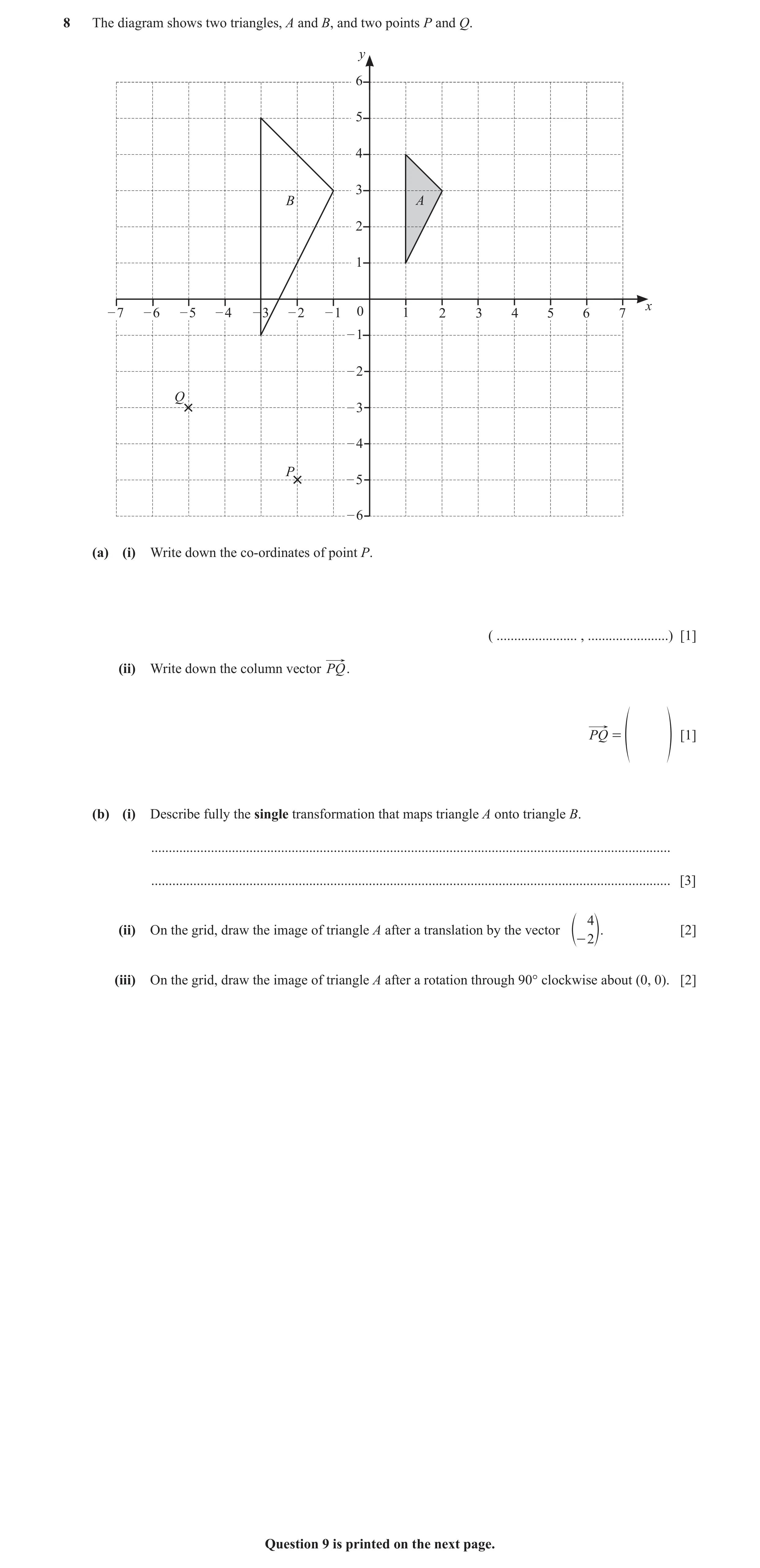
 37 / 51
 38 / 51
 39 / 51
![Question 26: 5 (a) Complete the table of values for y = . x x -8 -6 -4 -3 -2 2 3 4 6 8 y -3 -6 6 3 [3] 18 (b) On the grid, draw the graph of y = for -8 …](https://img.pastlit.com/crops/6d9fdb3e-3a7d-48f4-903d-ba4f3a2ac825/q5.webp)
![Question 28: - 3 7 8 (a) a = b = e 5o e- 4o Work out. (i) 4a [1] f p (ii) 2a - b [2] f p (b) y 4 3 2 P 1 - 6 - 5 - 4 - 3 - 2 - 1 0 1 2 3 4 5 6 x - 1 - 2…](https://img.pastlit.com/crops/c8e6e169-266e-4899-ac71-feaa008981a3/q8.webp)
![Question 32: (a) The grid shows a trapezium. On the grid, draw an enlargement of the trapezium with scale factor 3. [2] (b) The diagram shows four trian…](https://img.pastlit.com/crops/1bd61d0c-6088-4f43-8d54-52471b277ec4/q3.webp)
 51 / 51
 12
12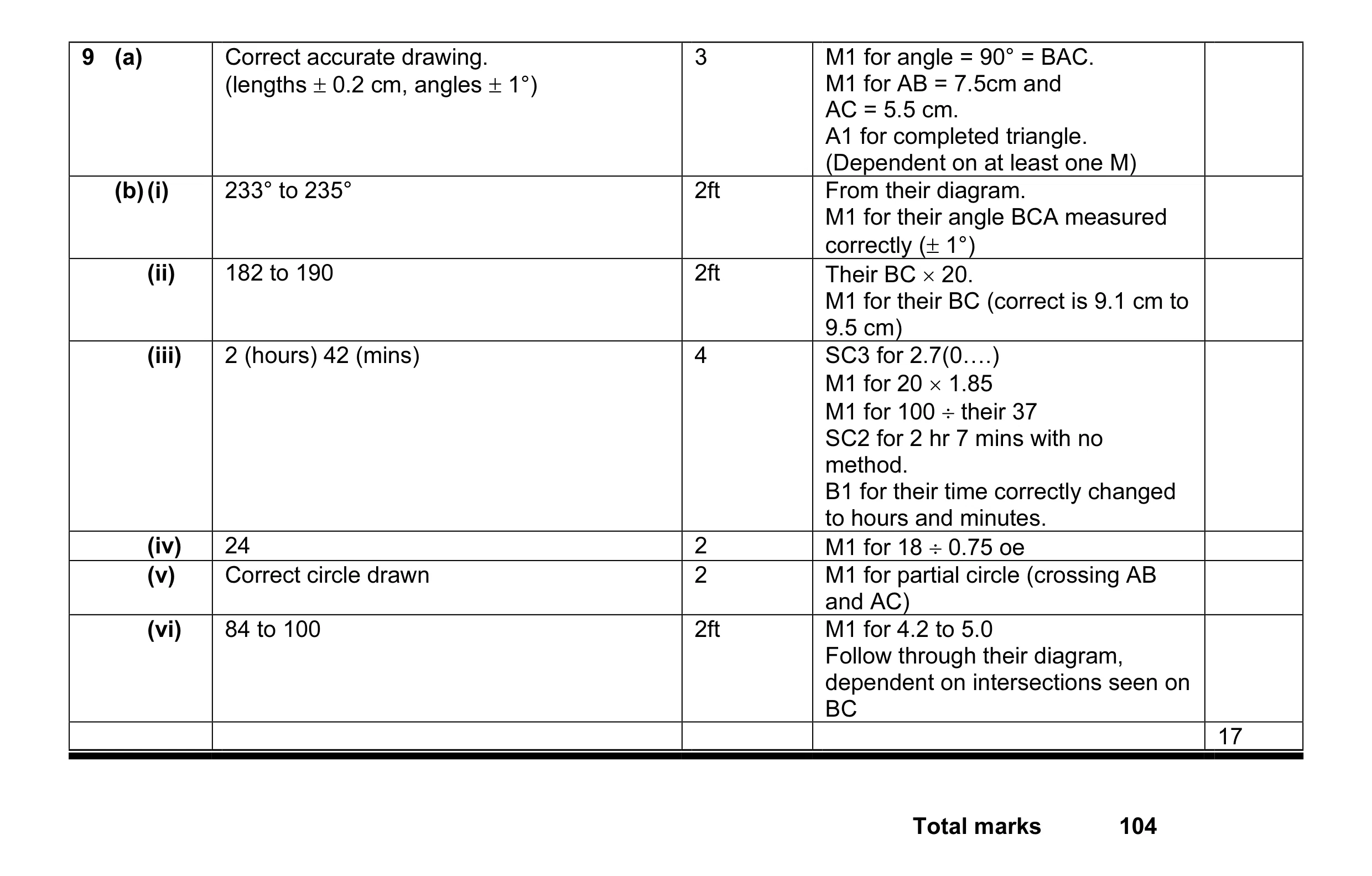 17
17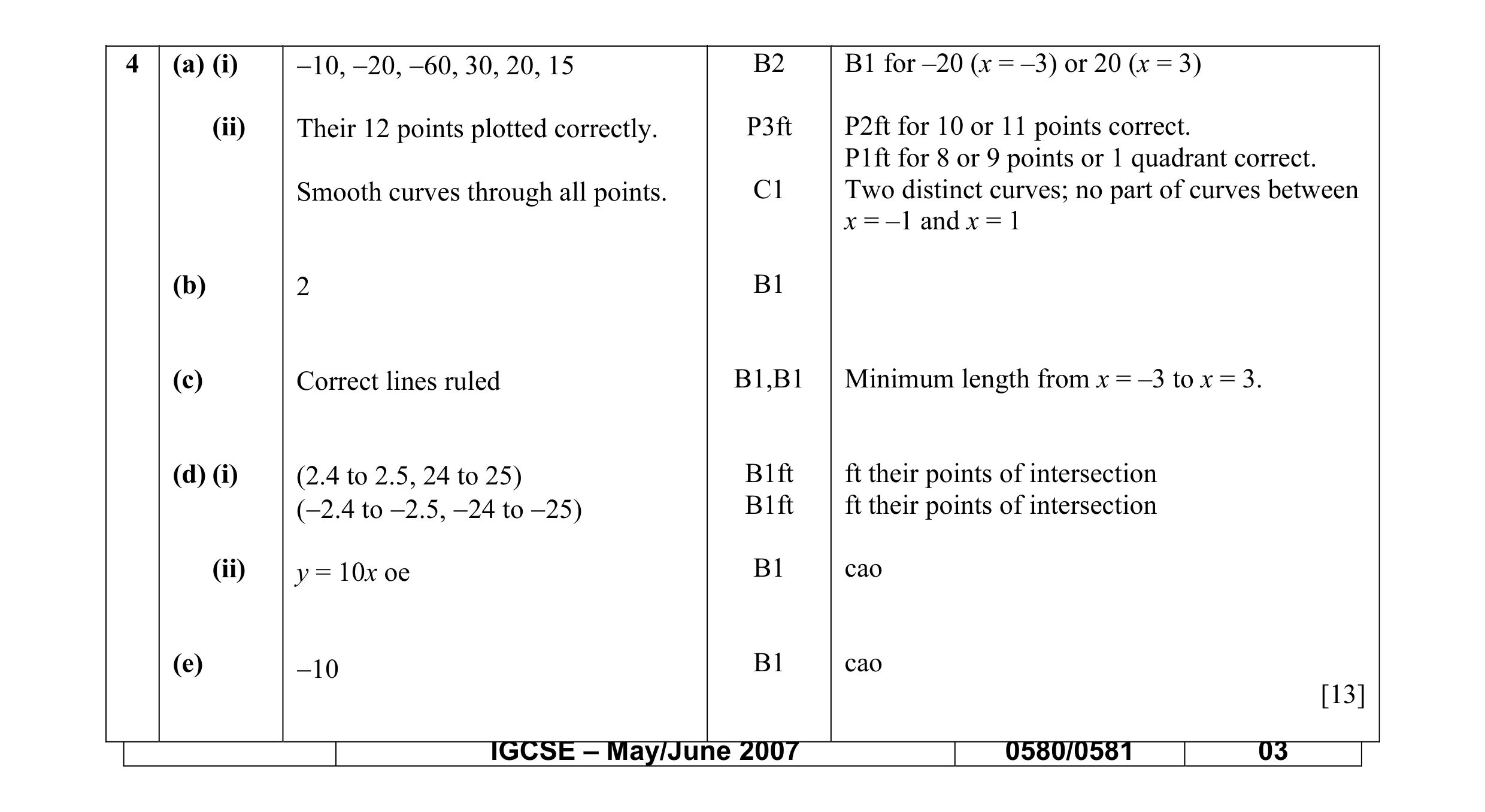 13
13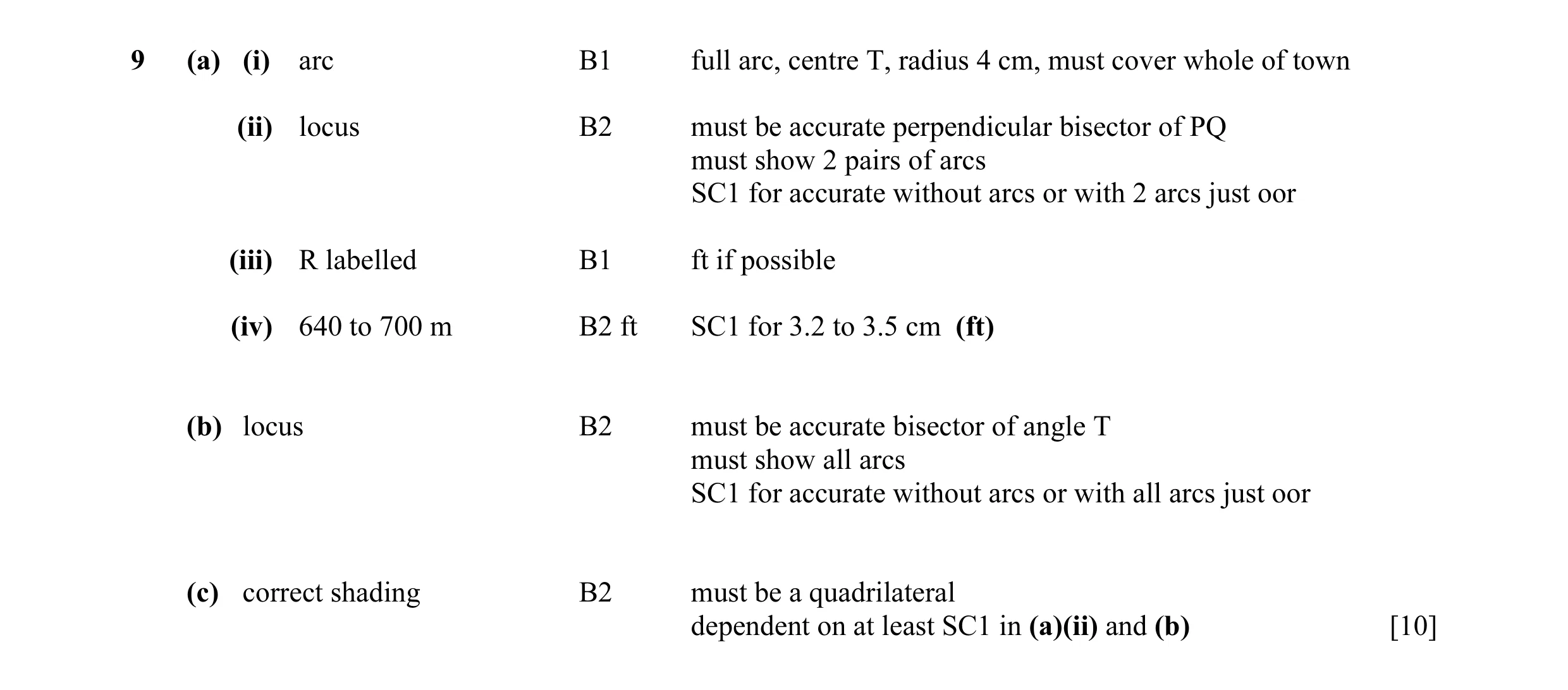 10
10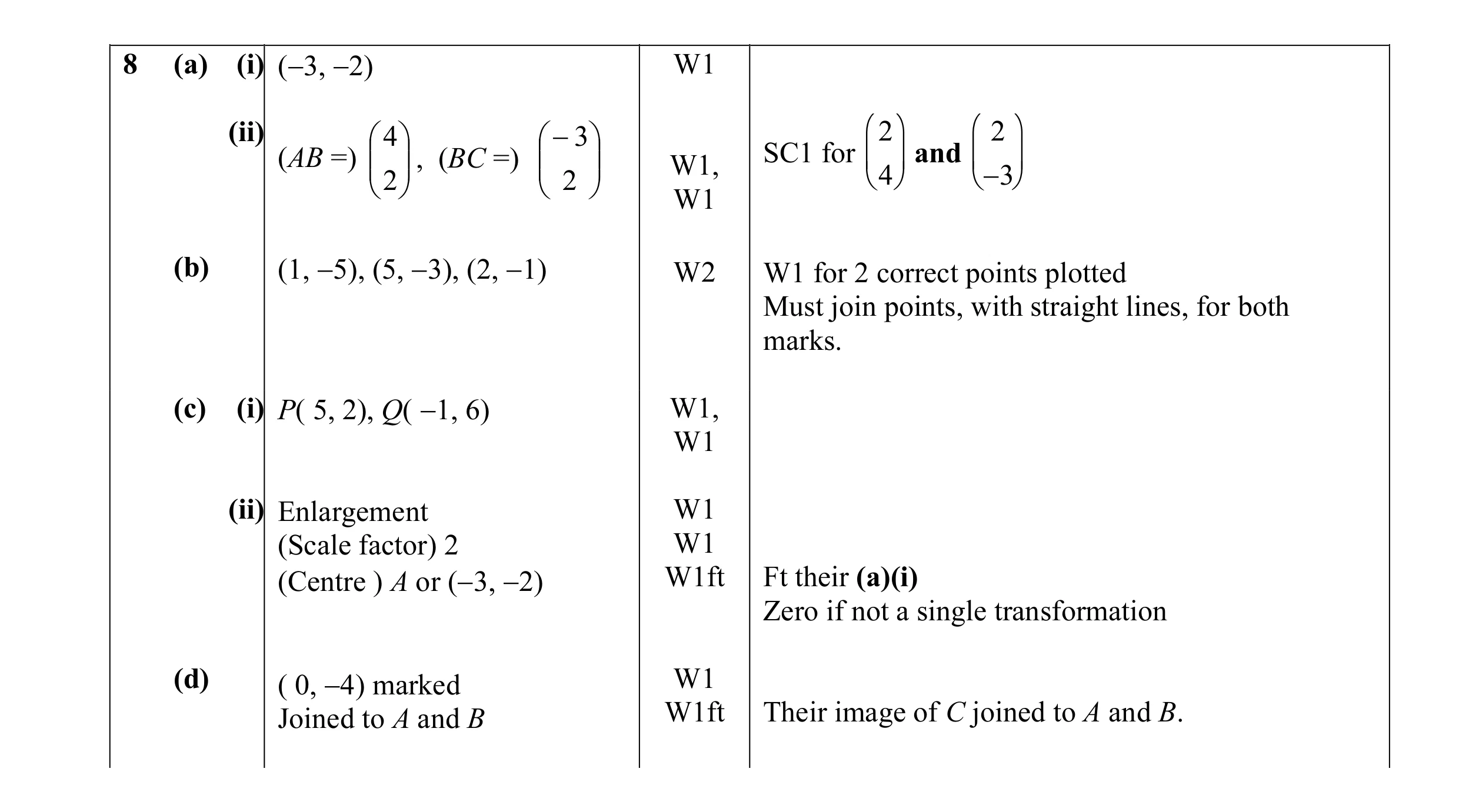 12
12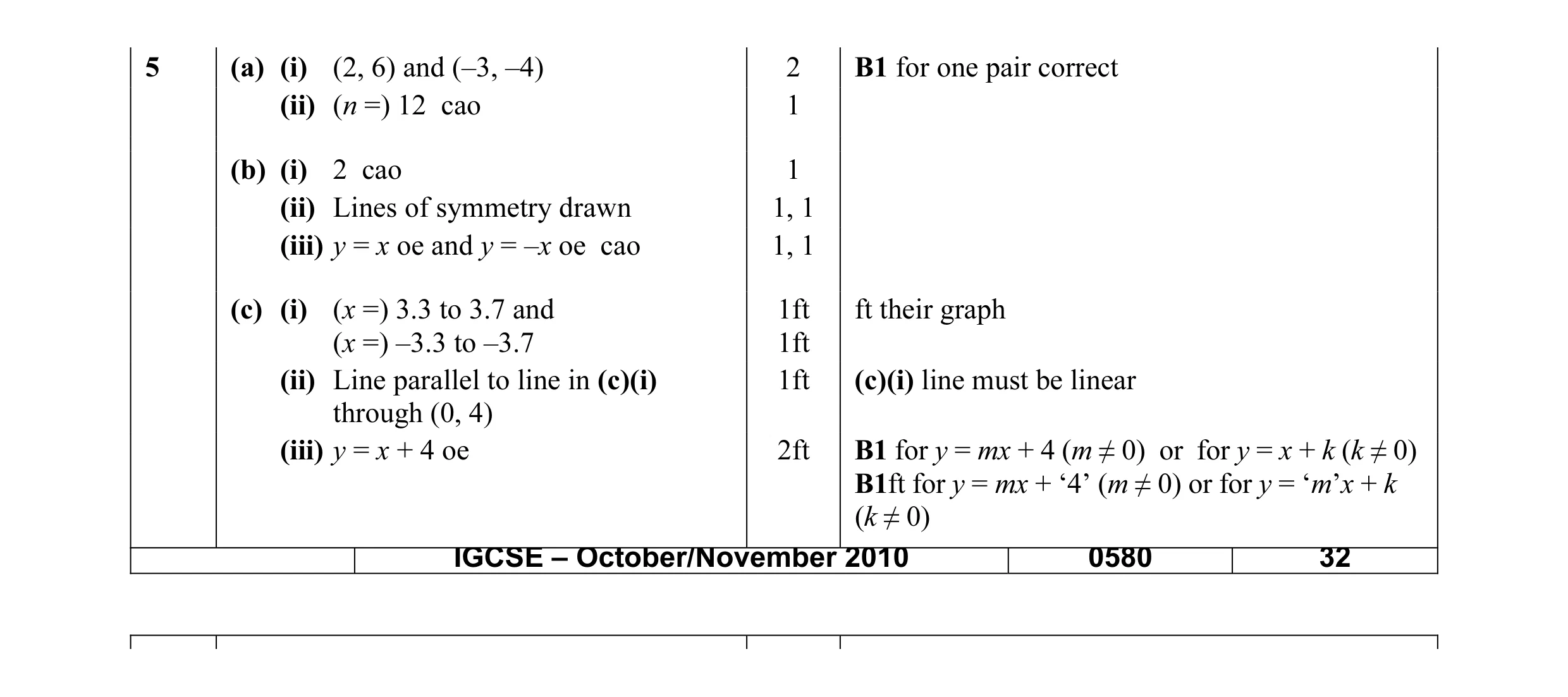 13
13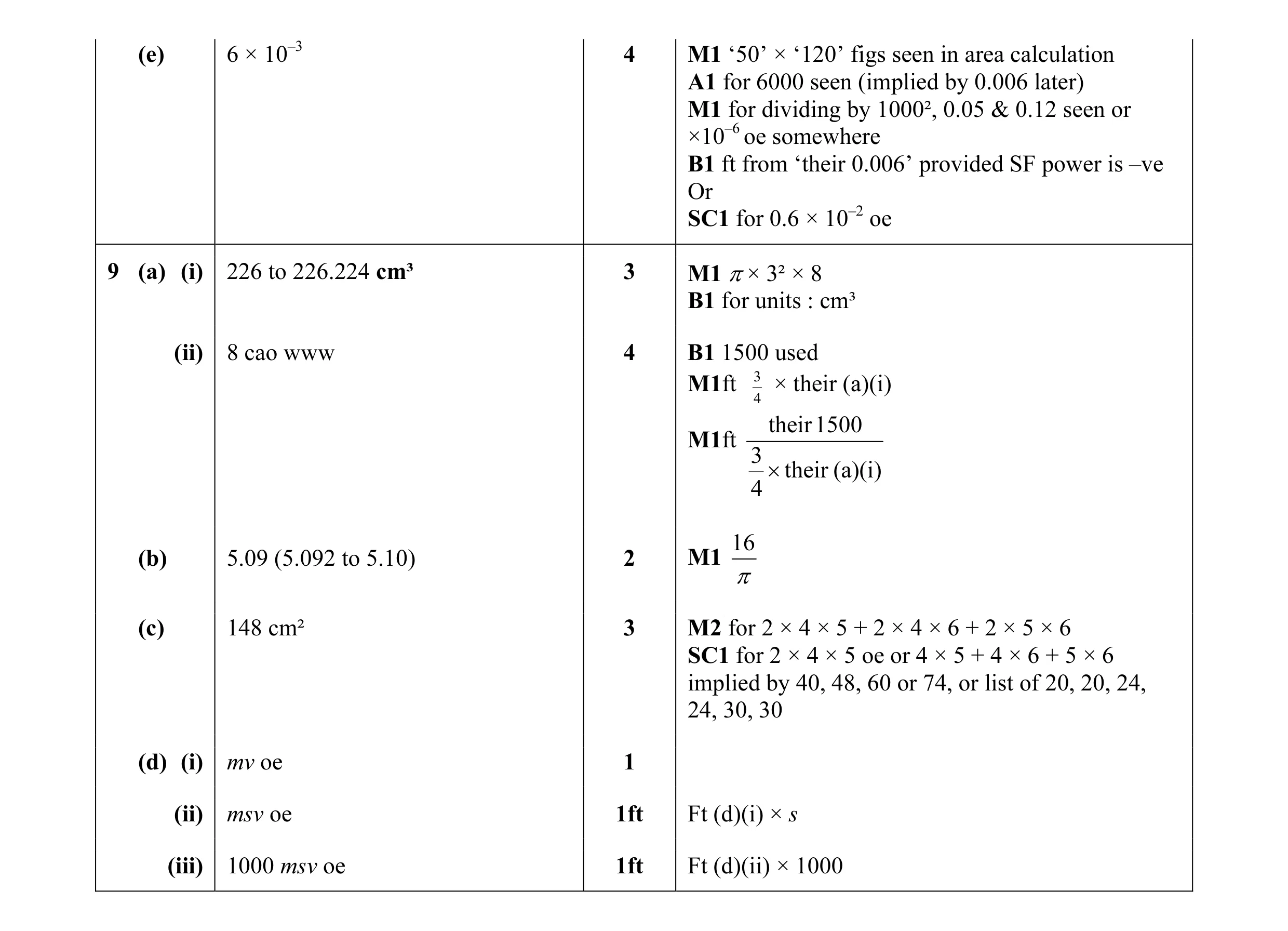 14
14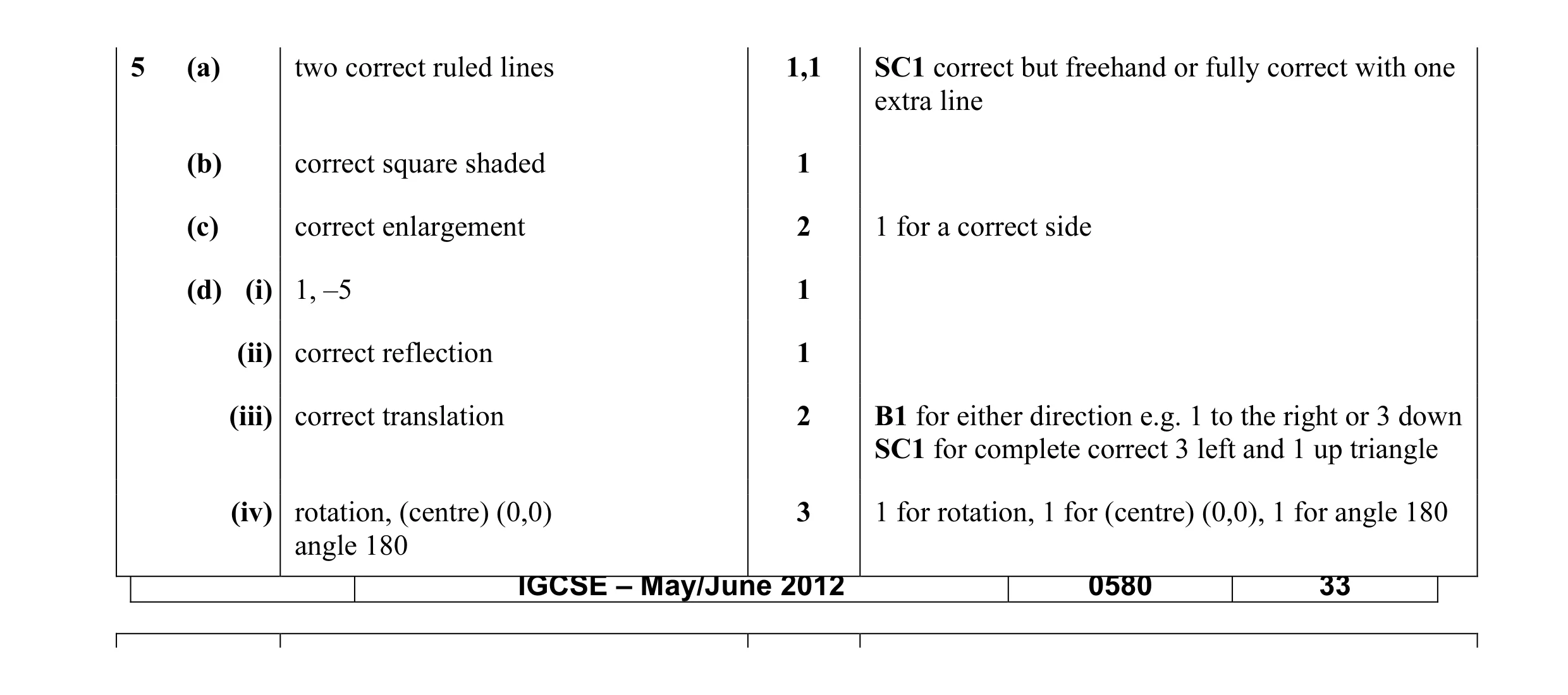 12
12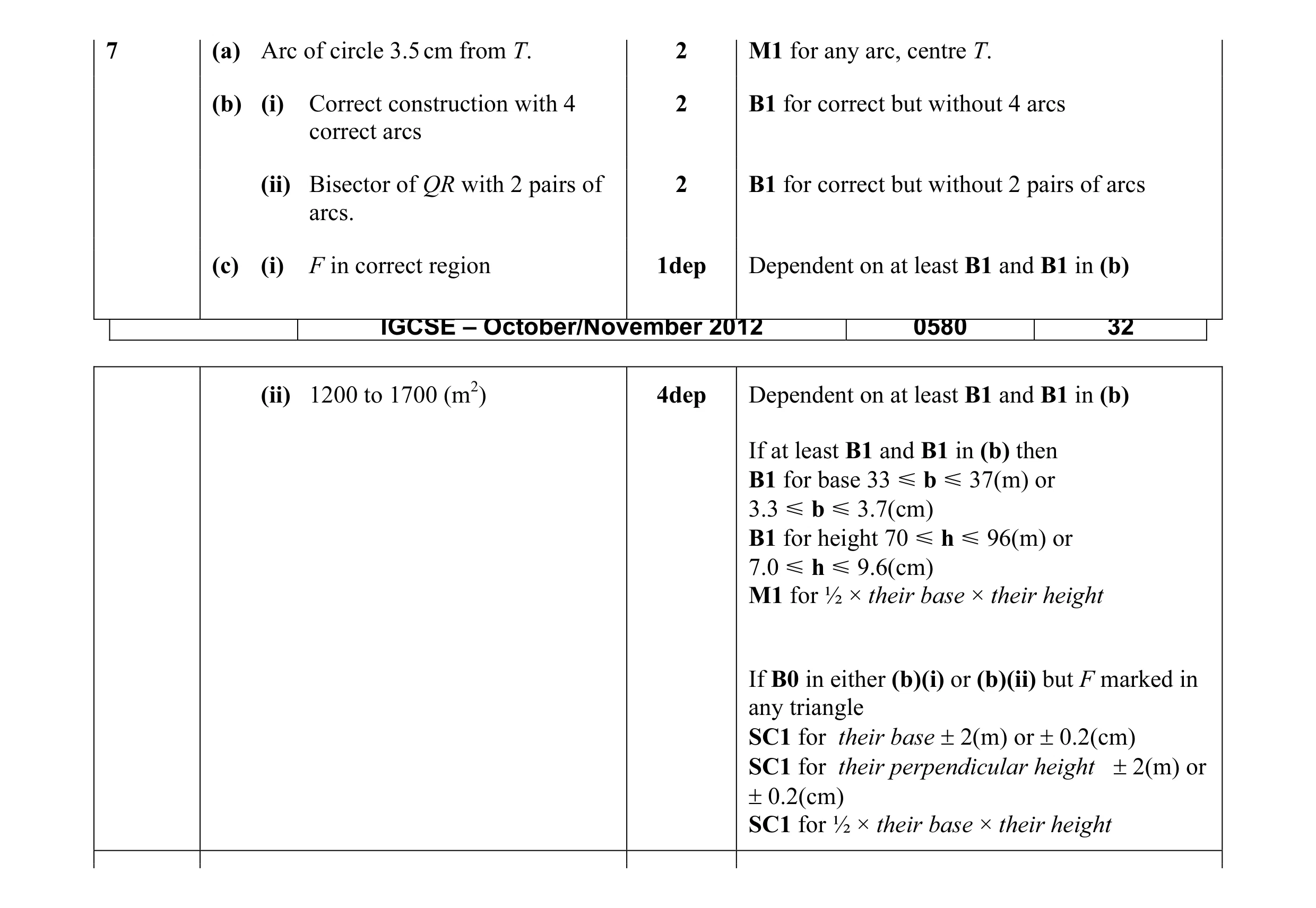 11
11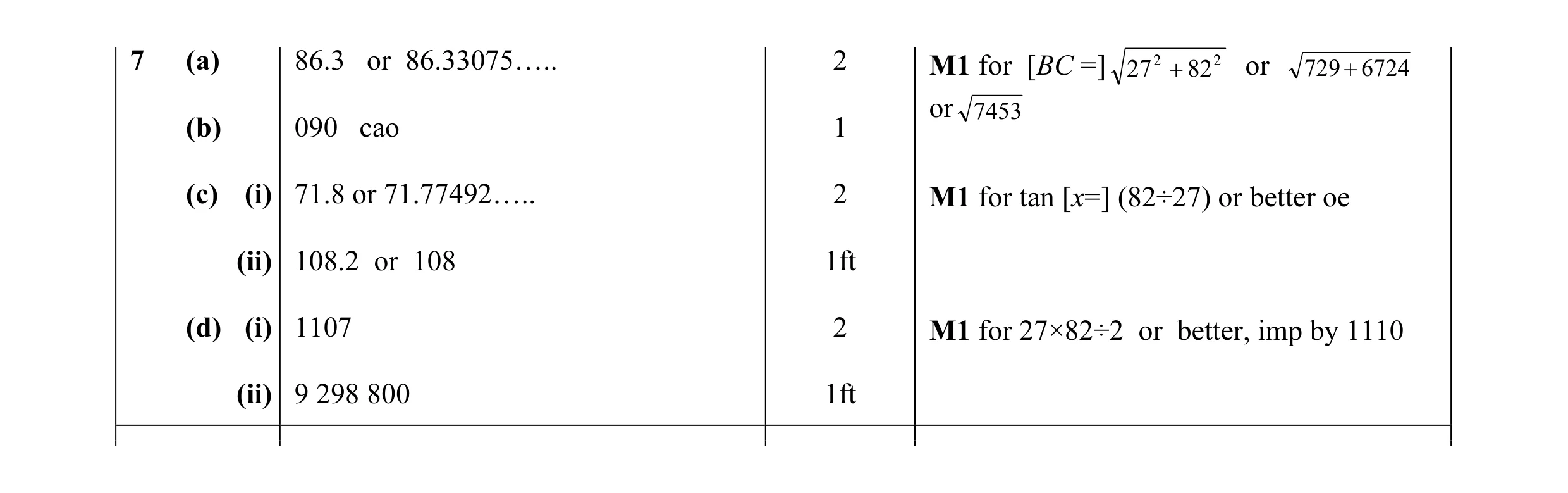 9
9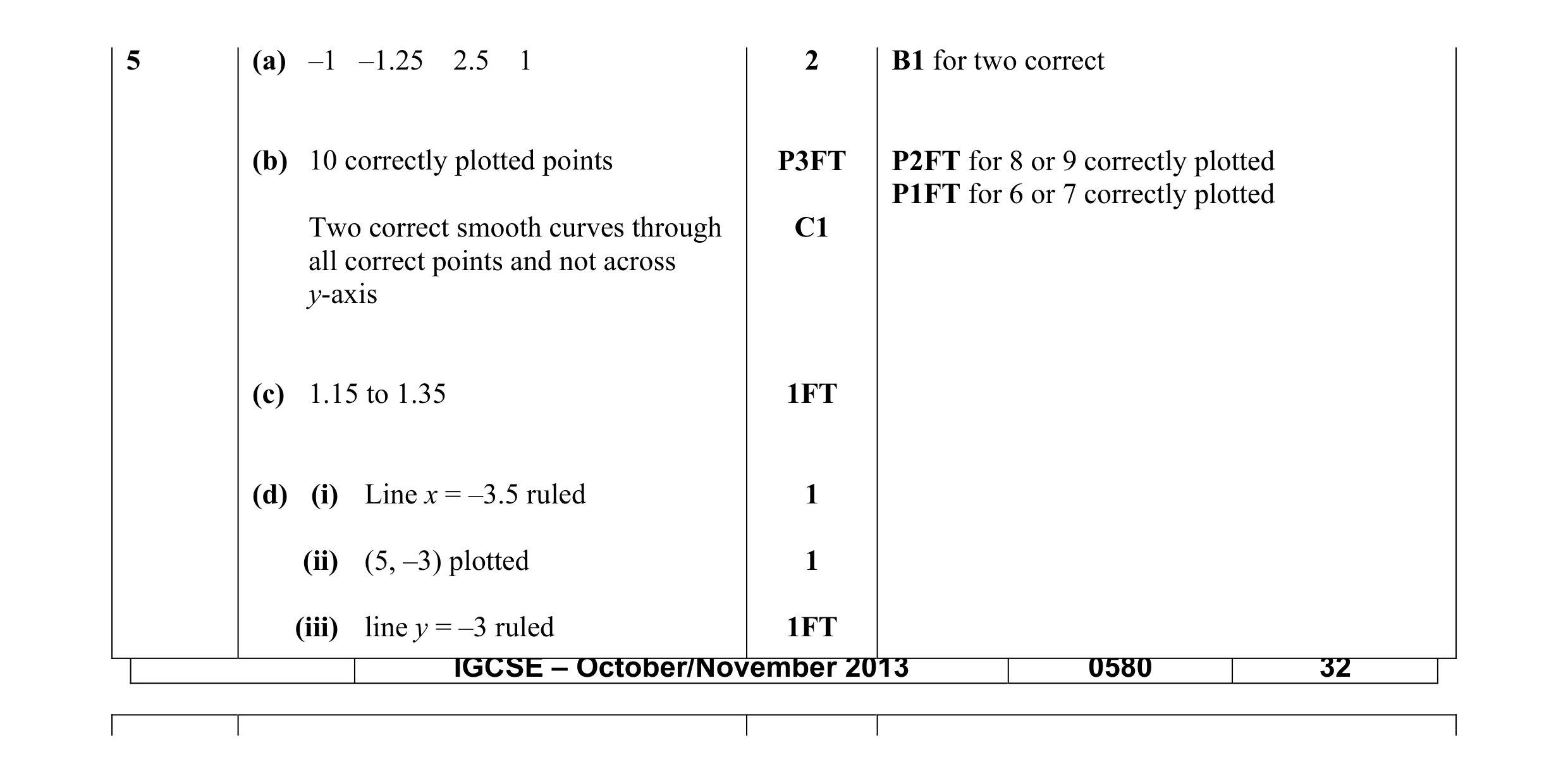 10
10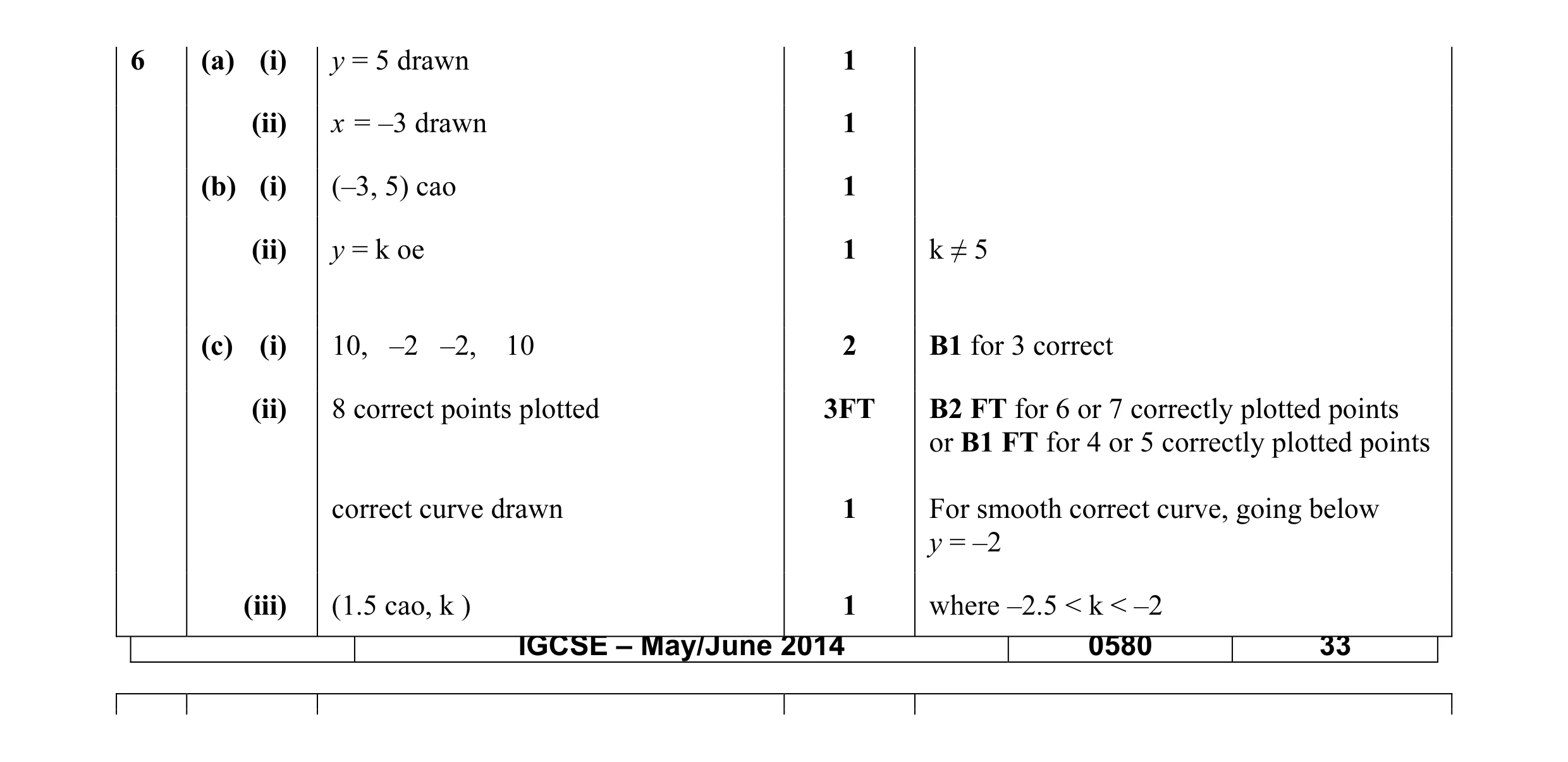 11
11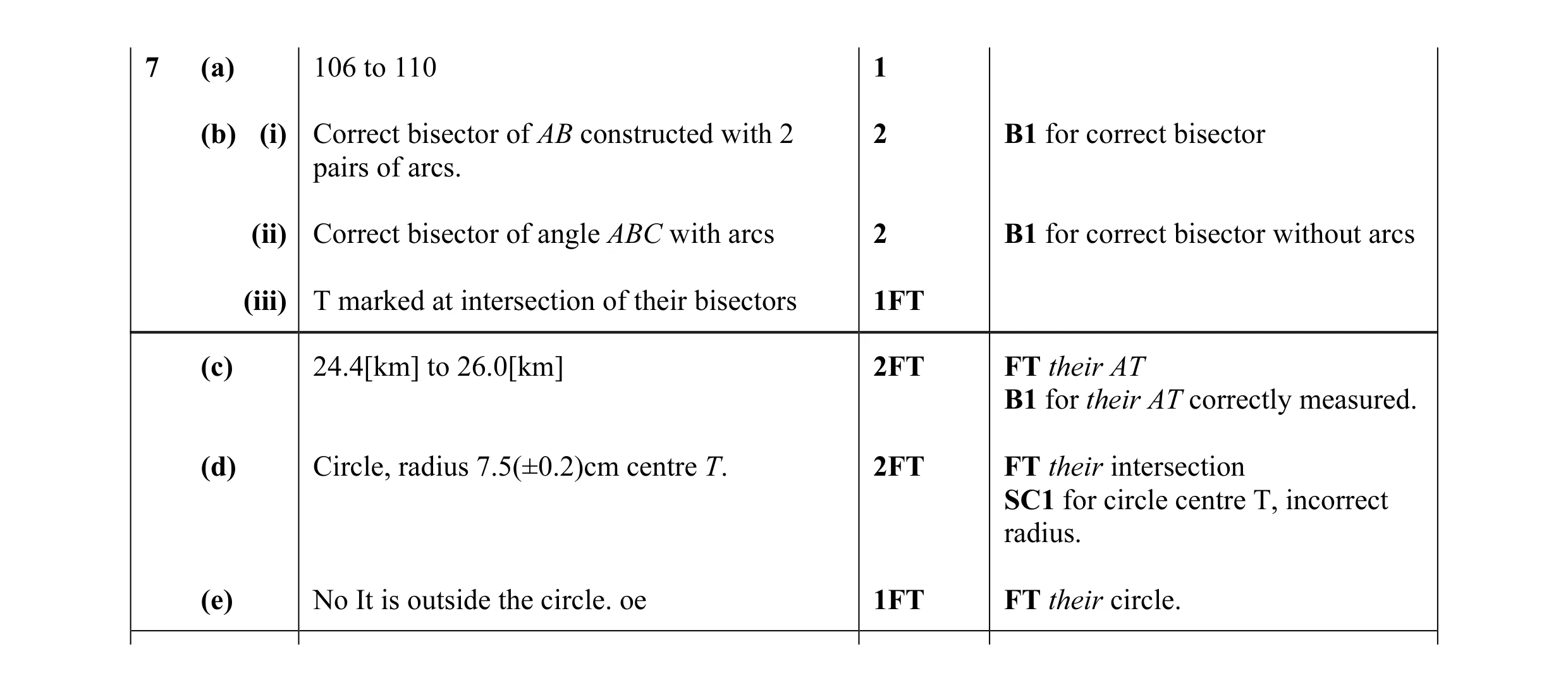 11
11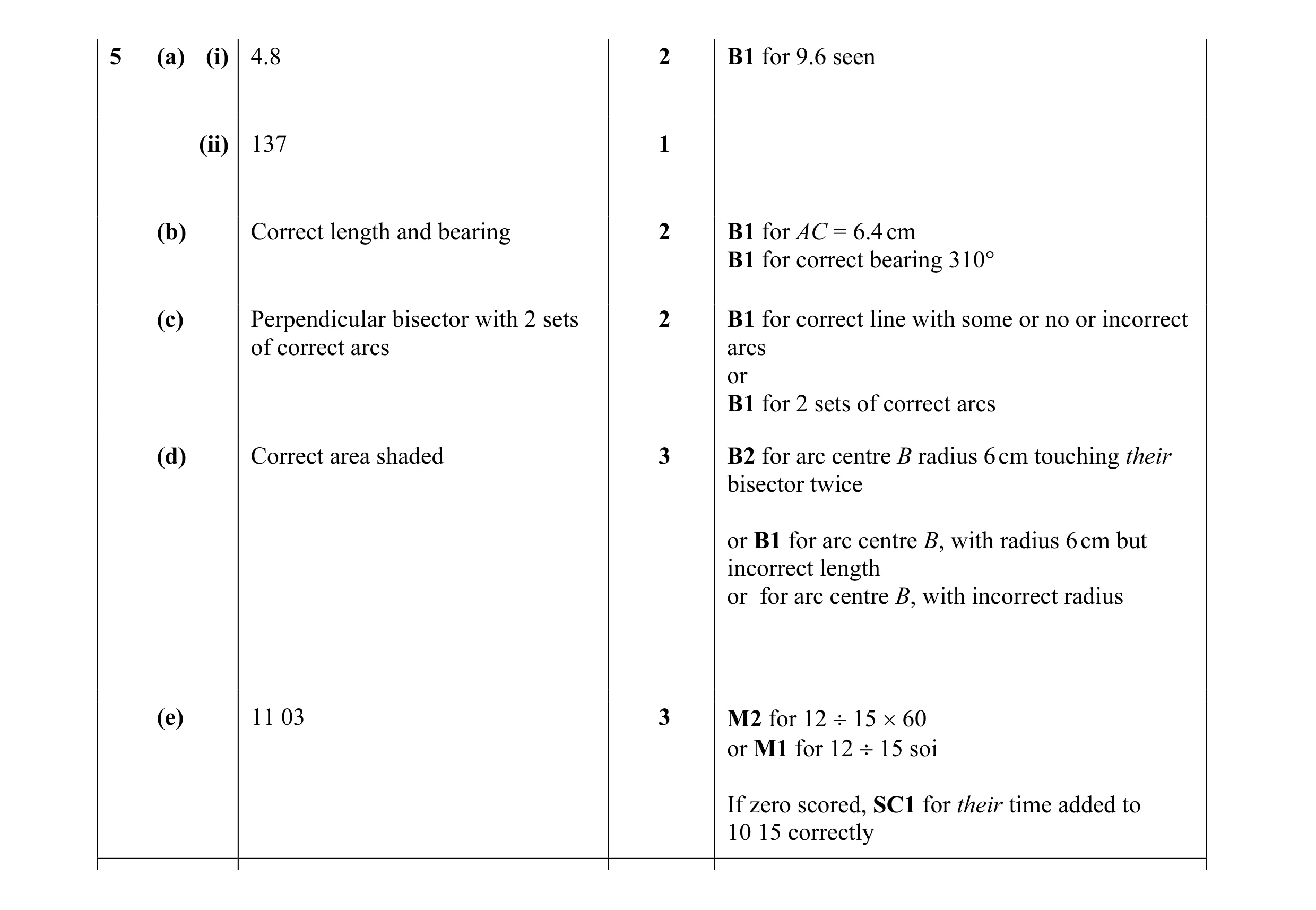 13
13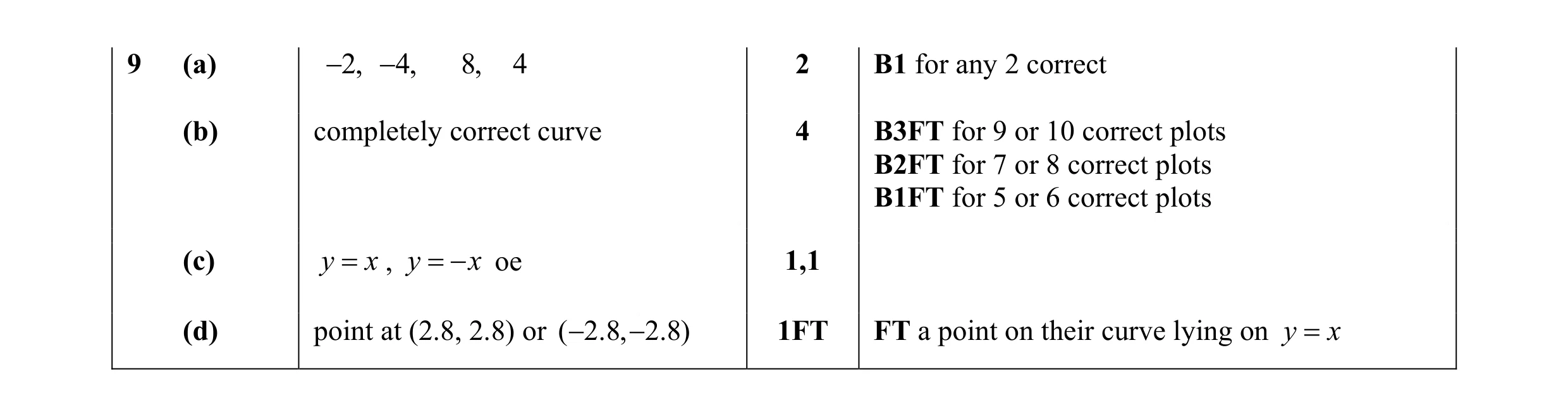 9
9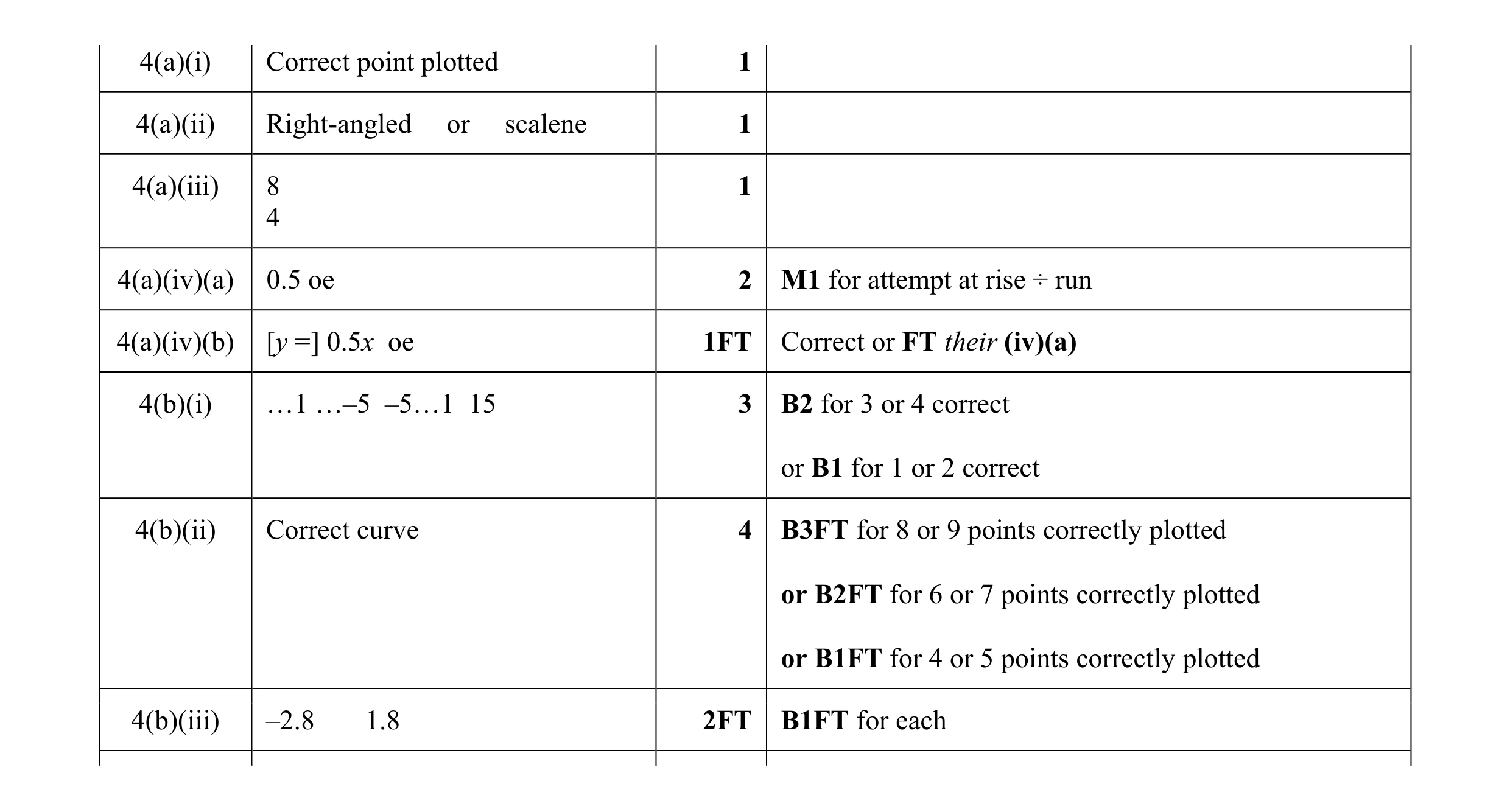 15
15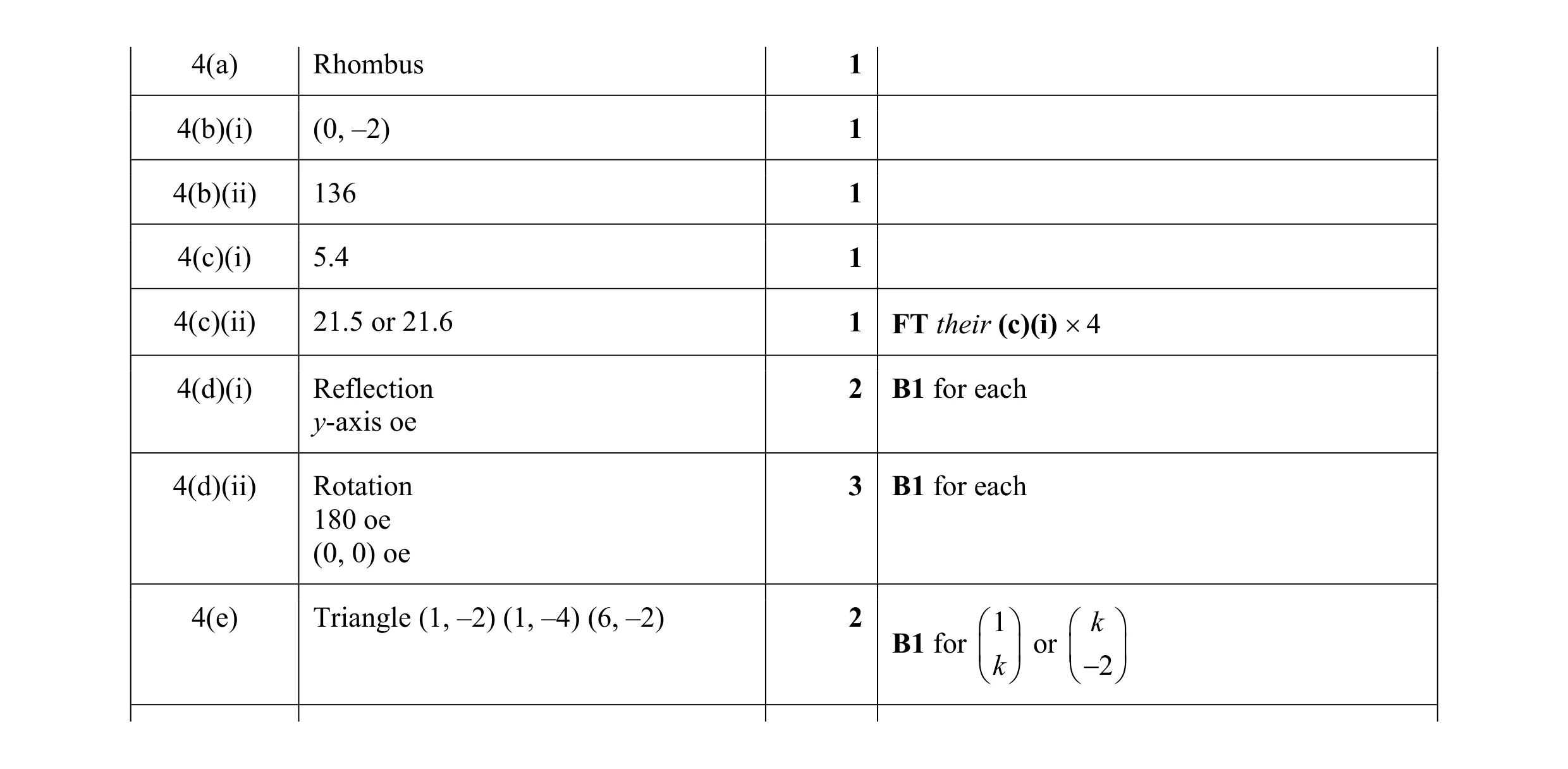 12
12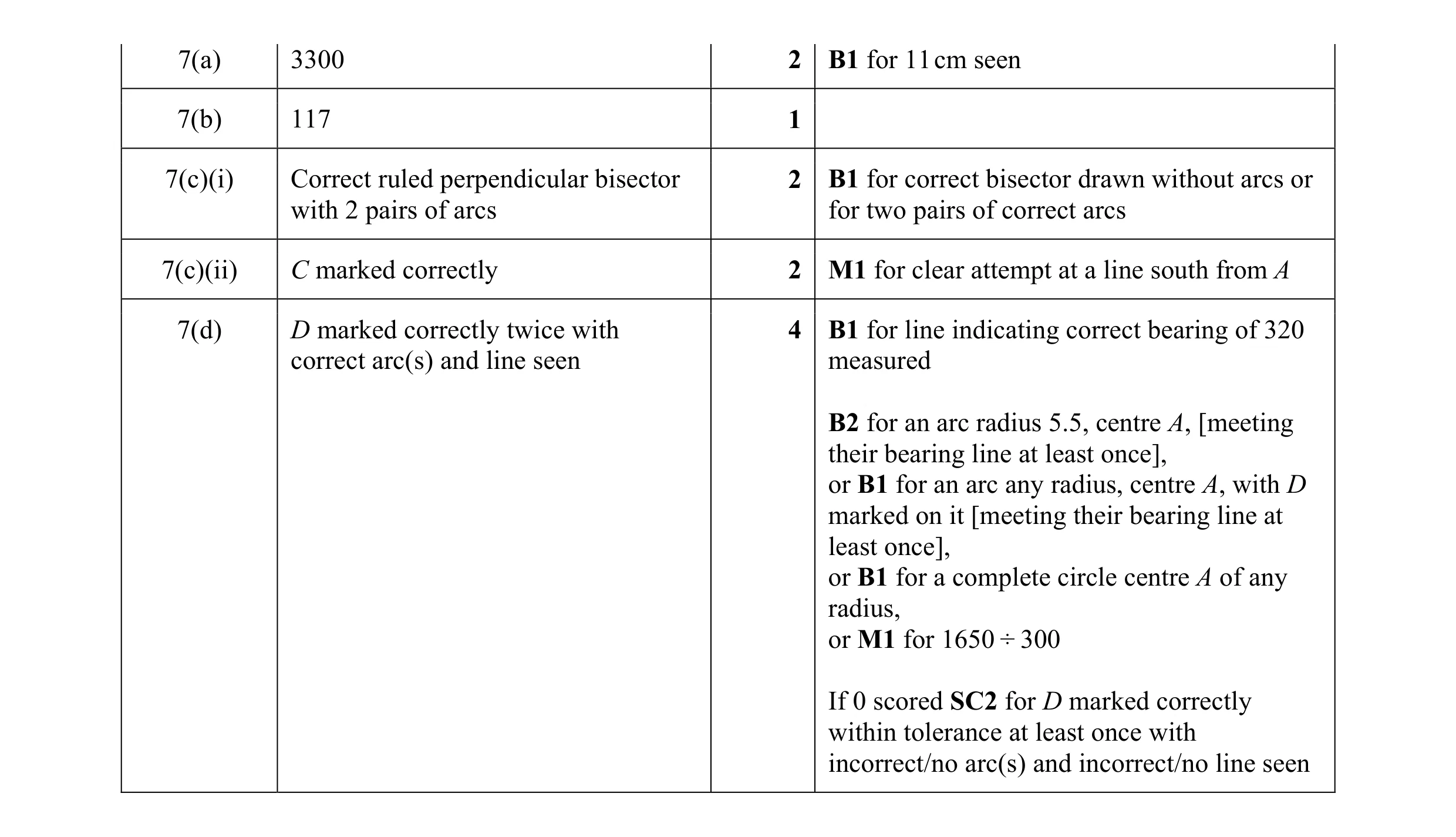 11
11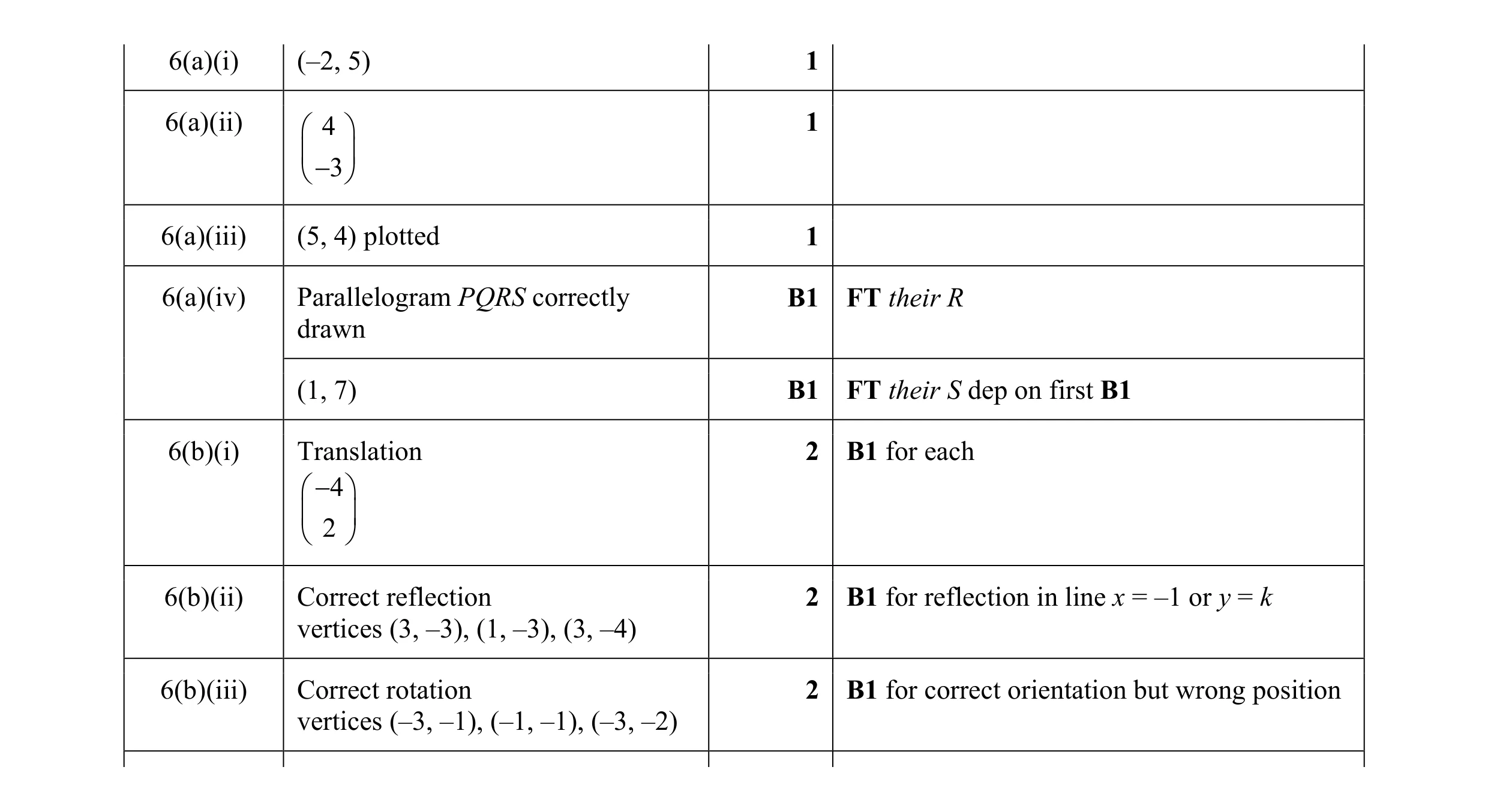 11
11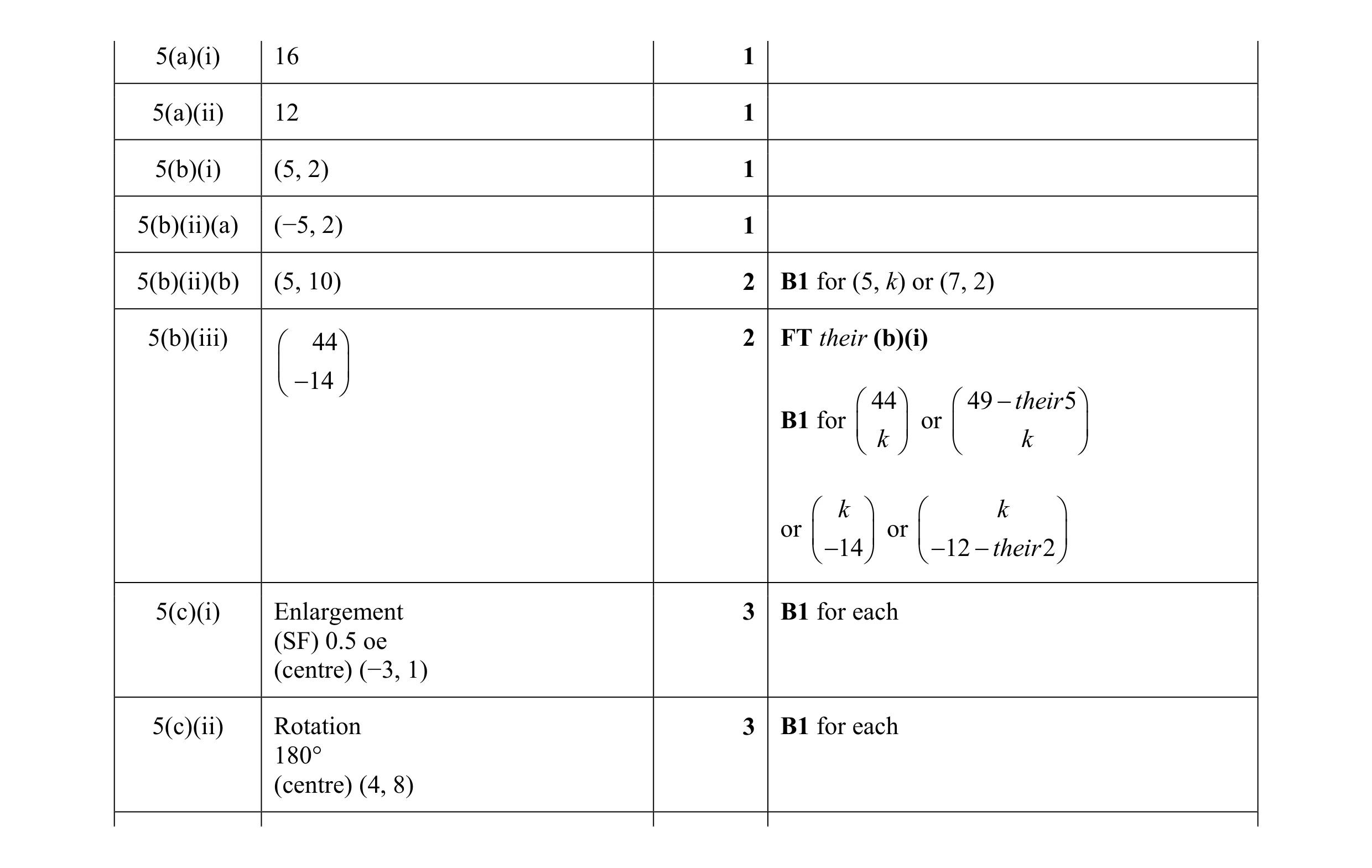 14
14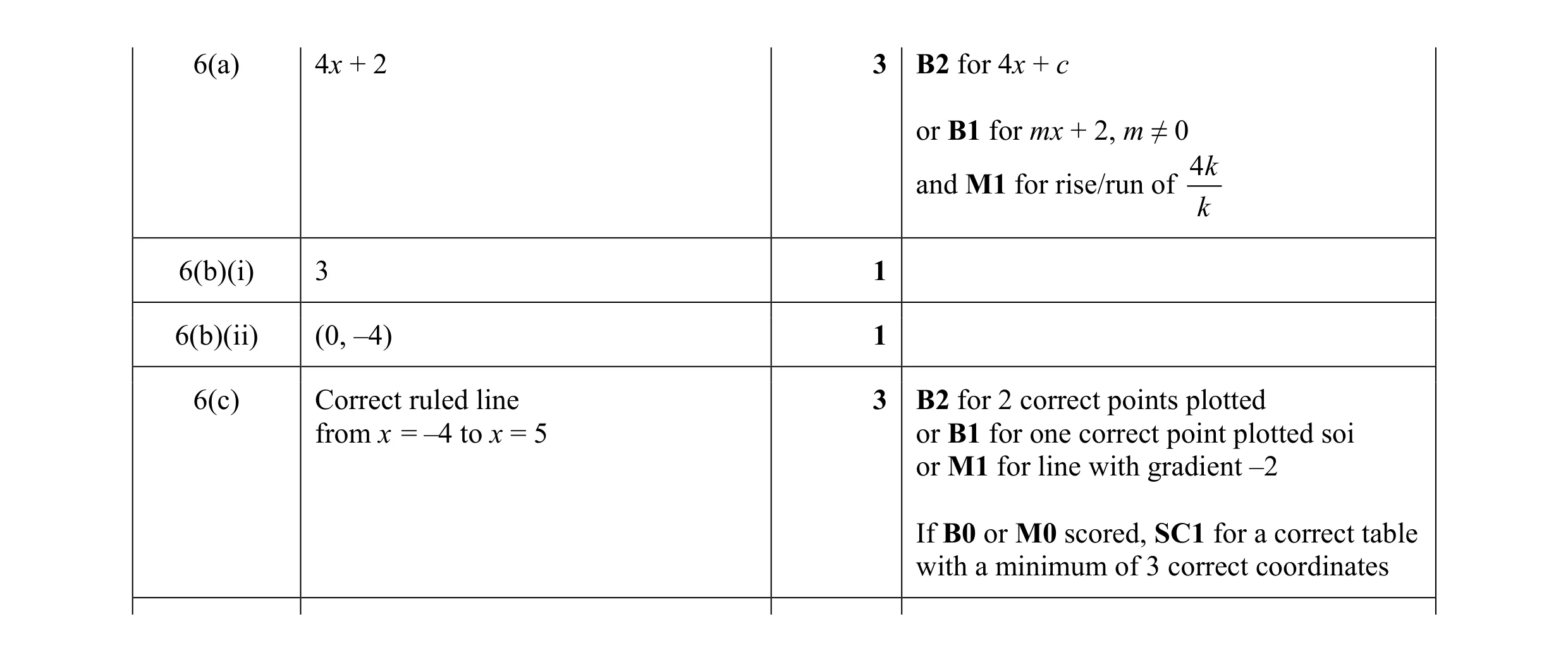 8
8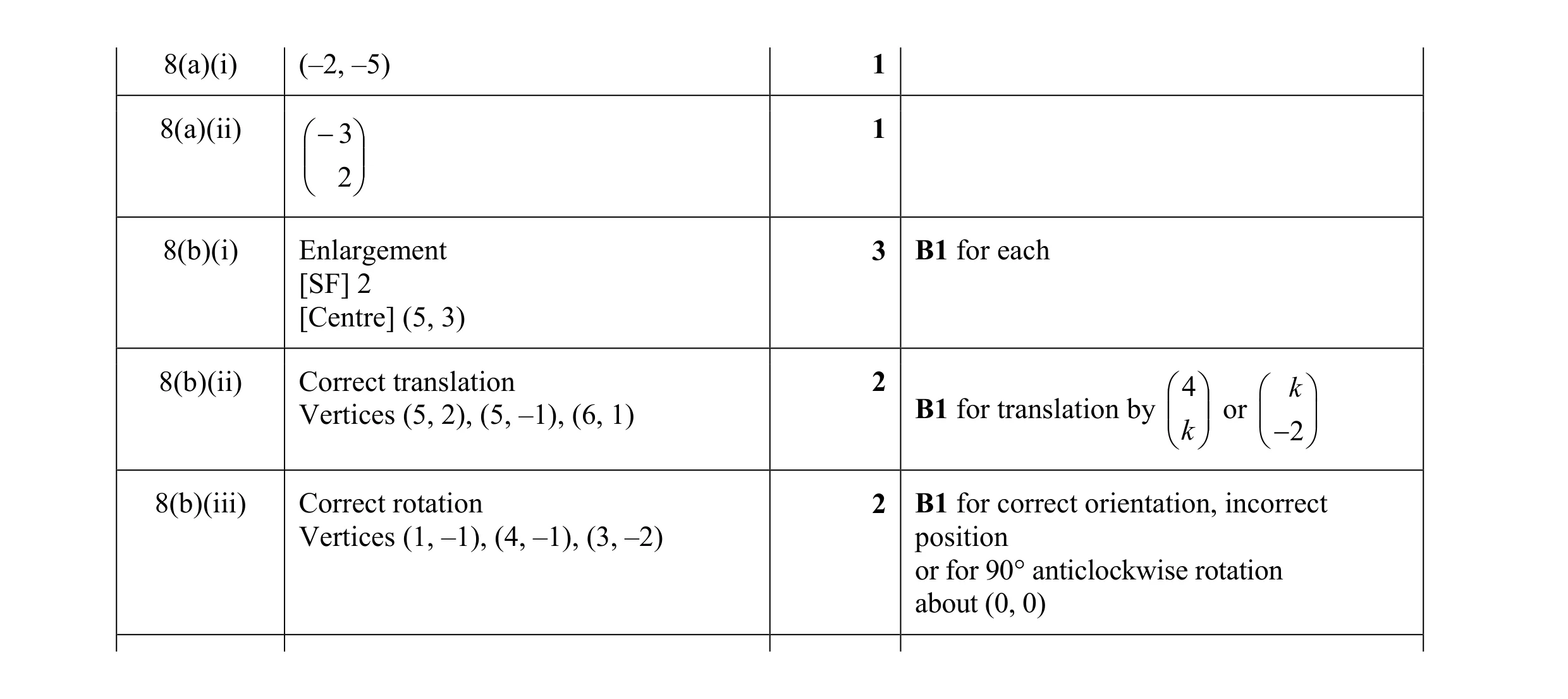 9
9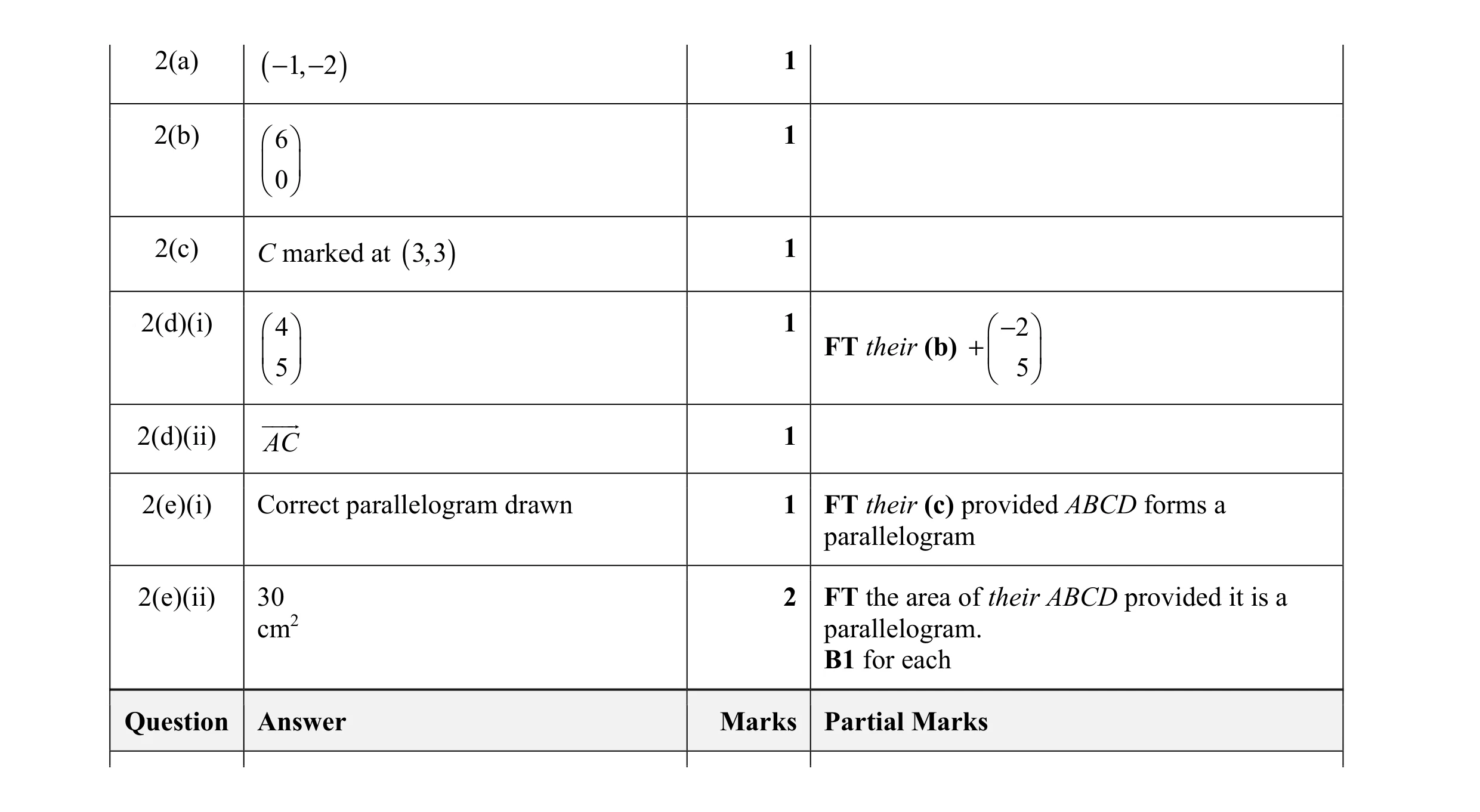 8
8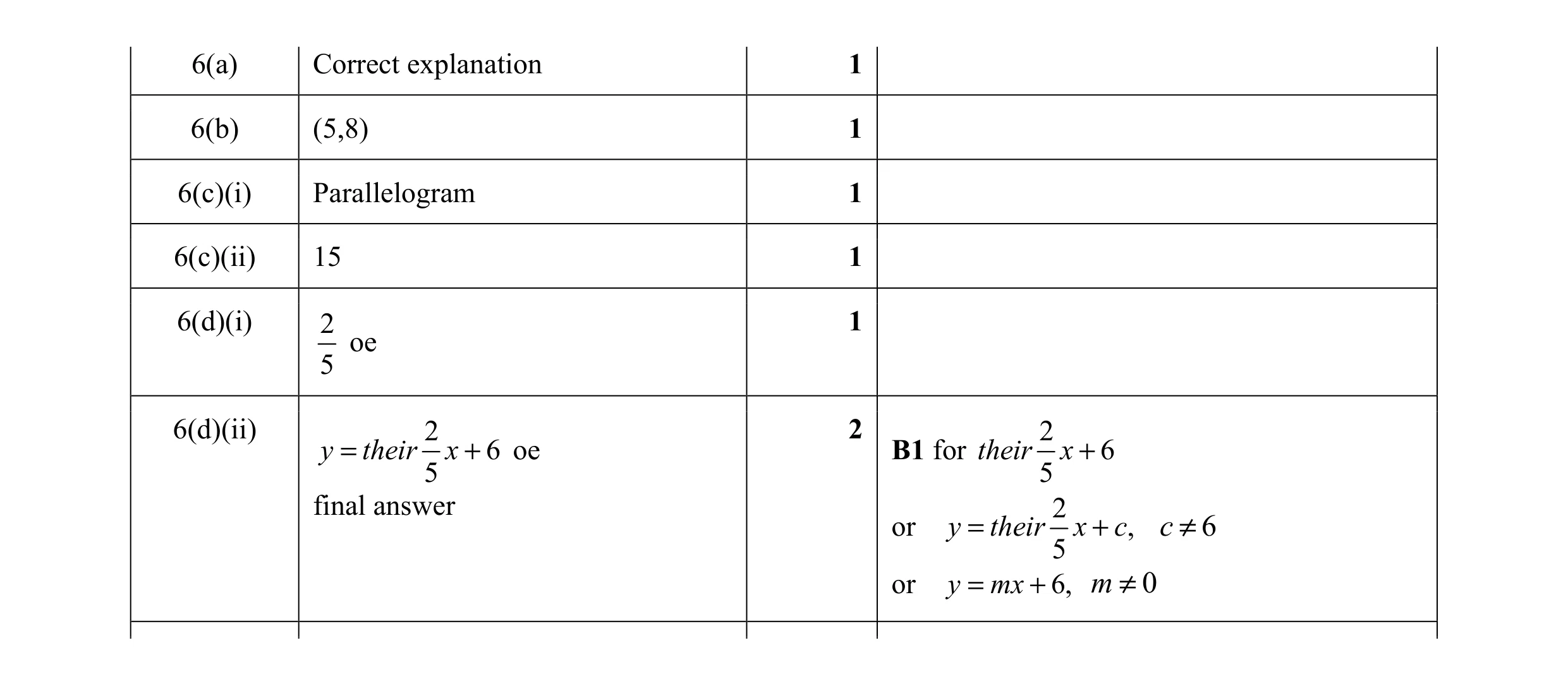 7
7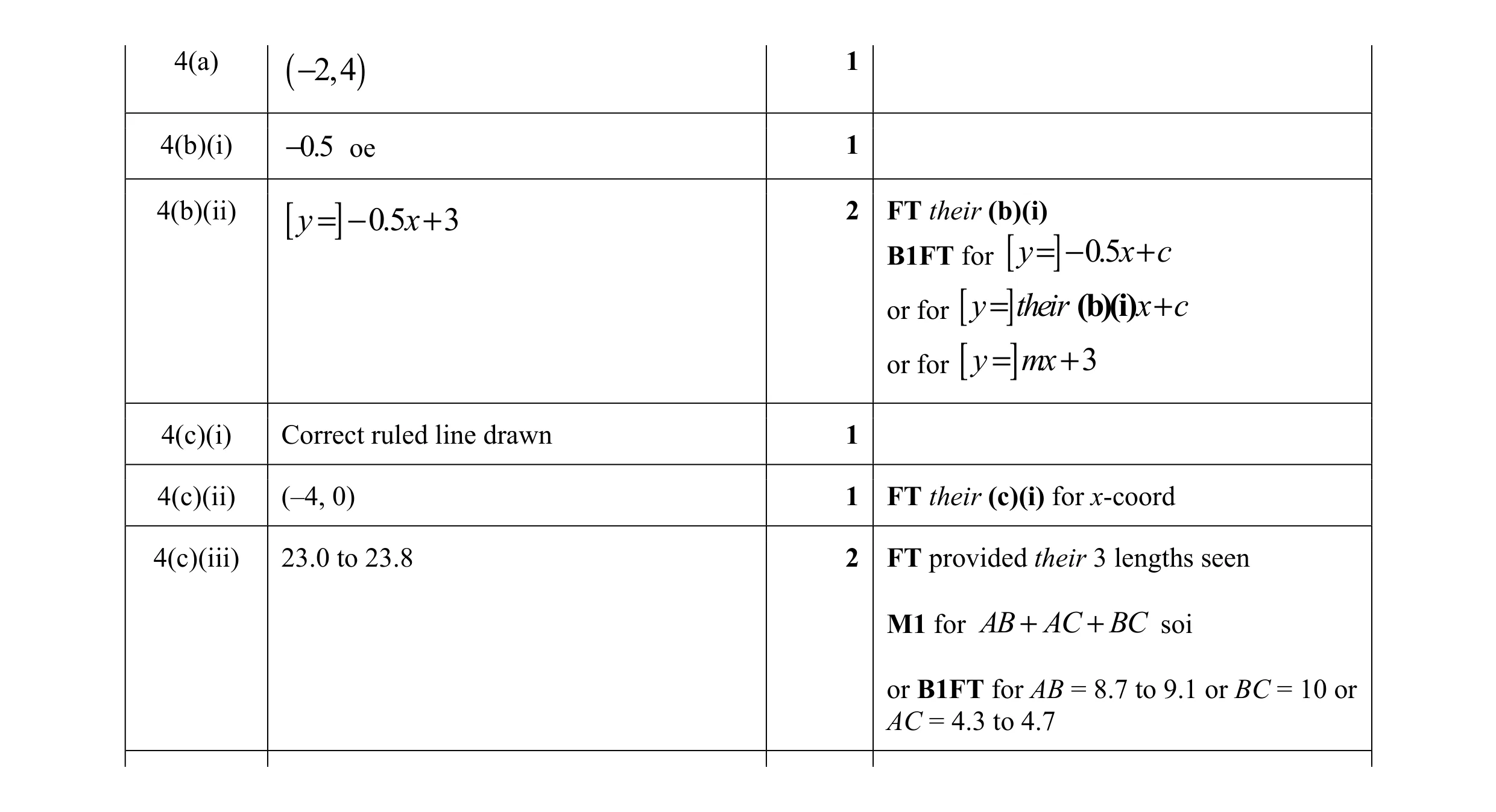 8
8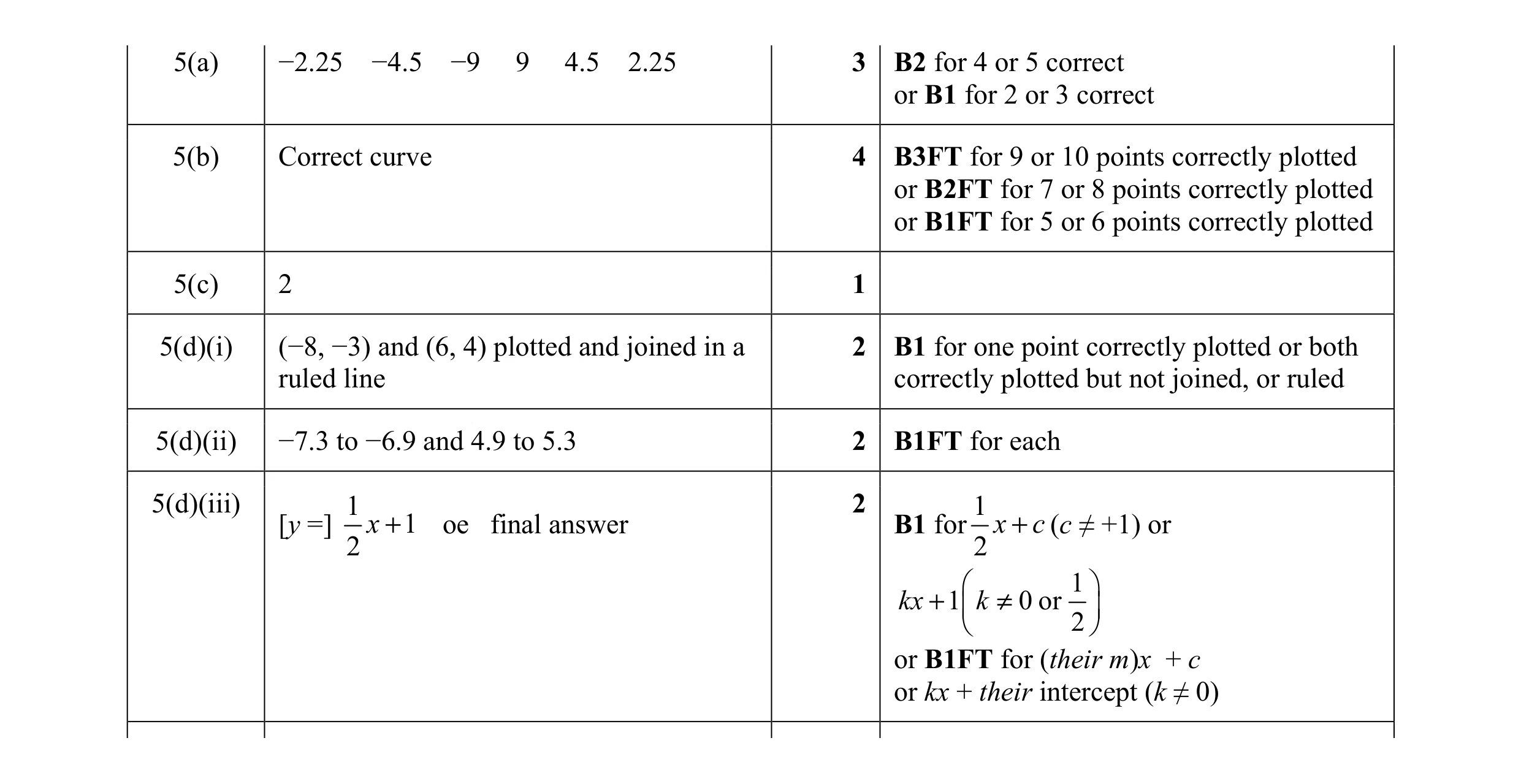 14
14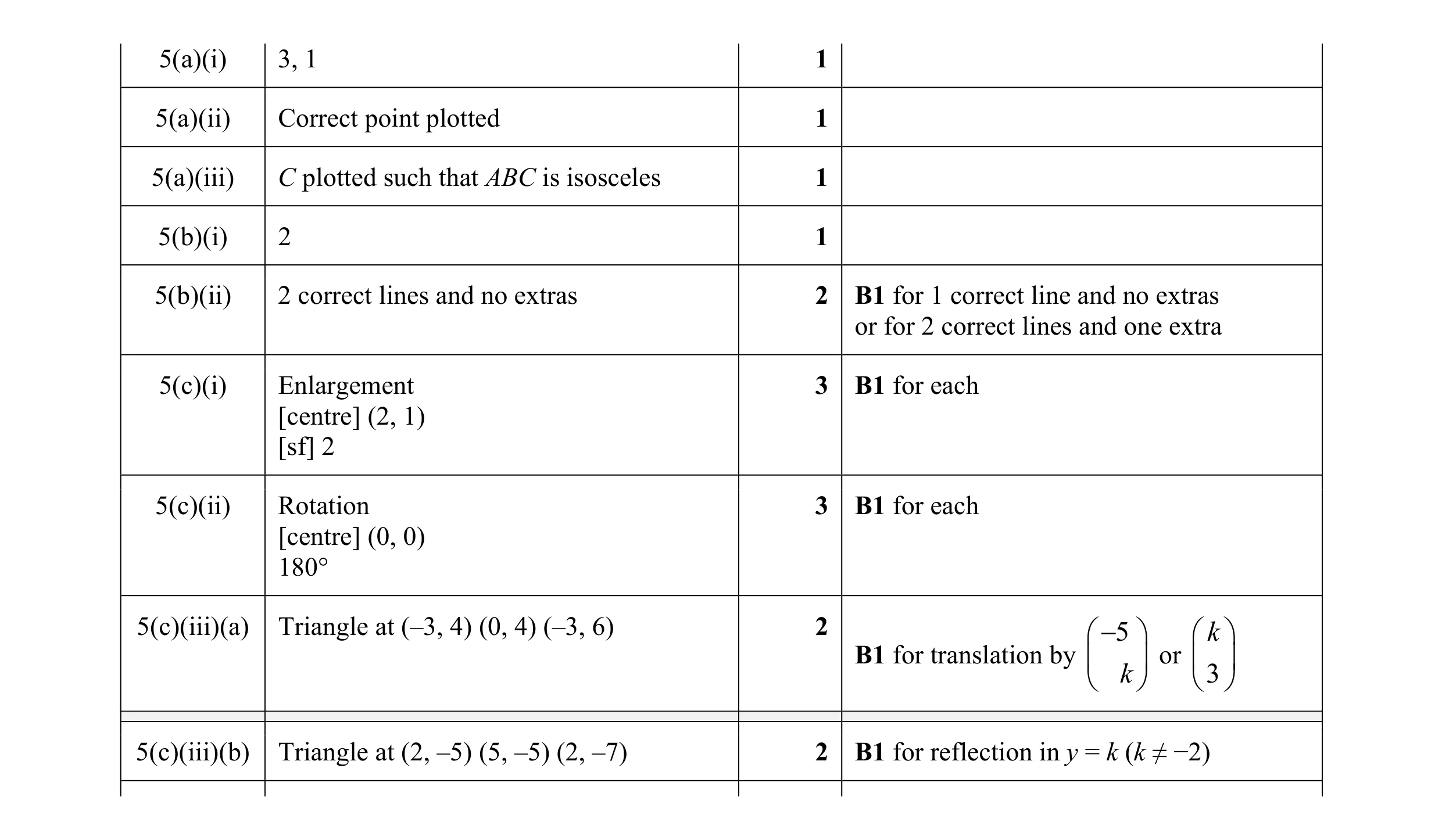 16
16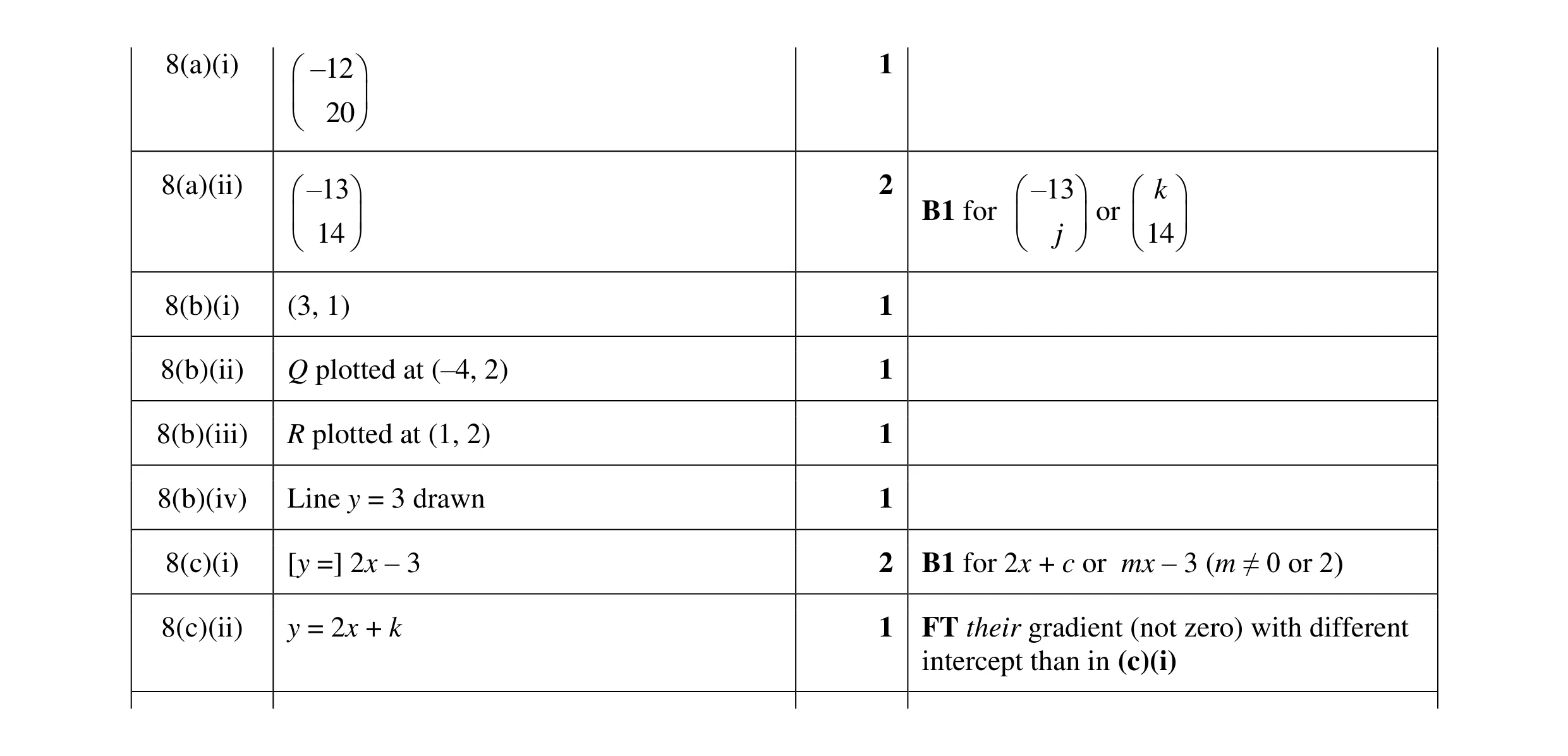 10
10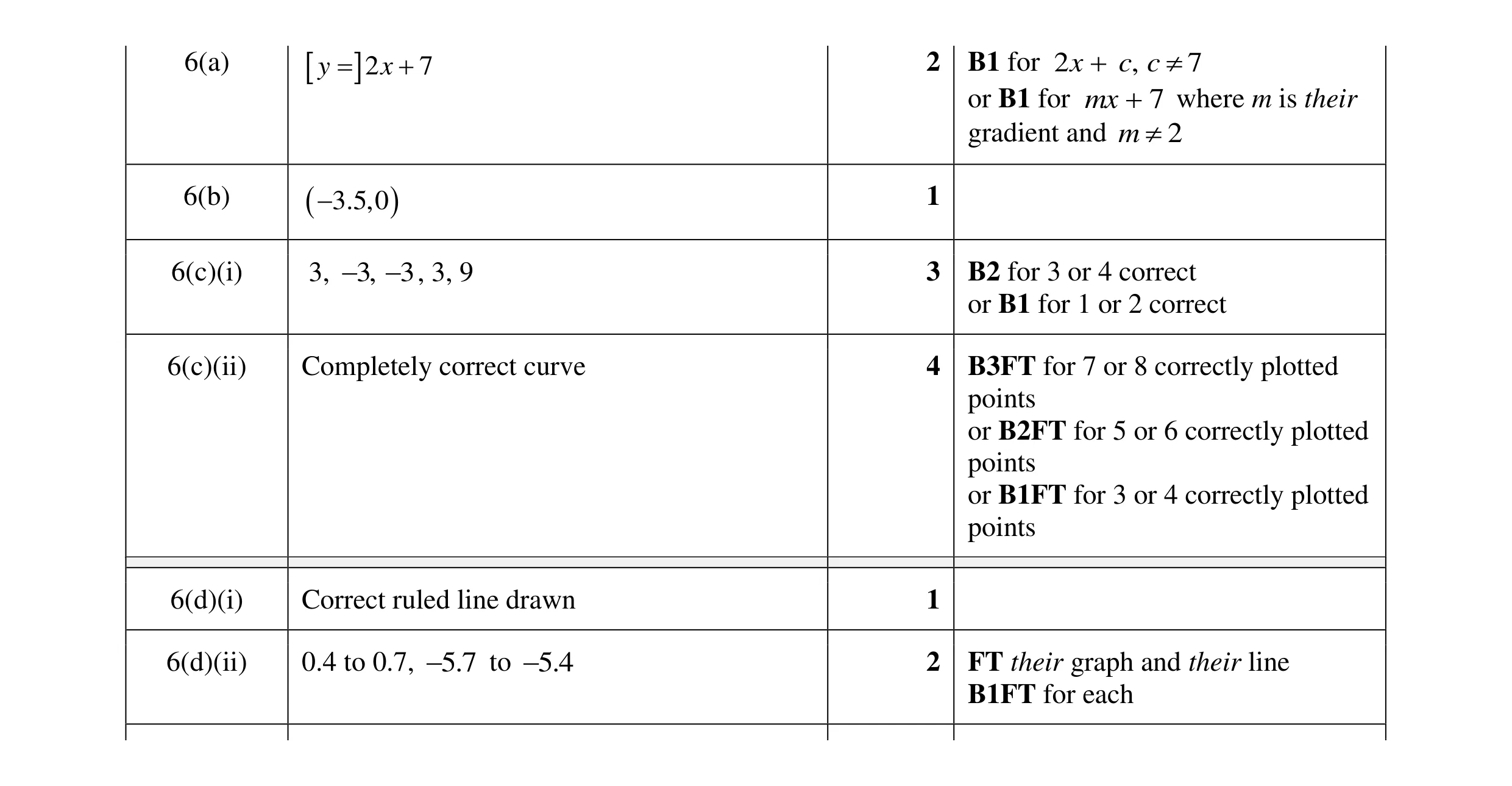 13
13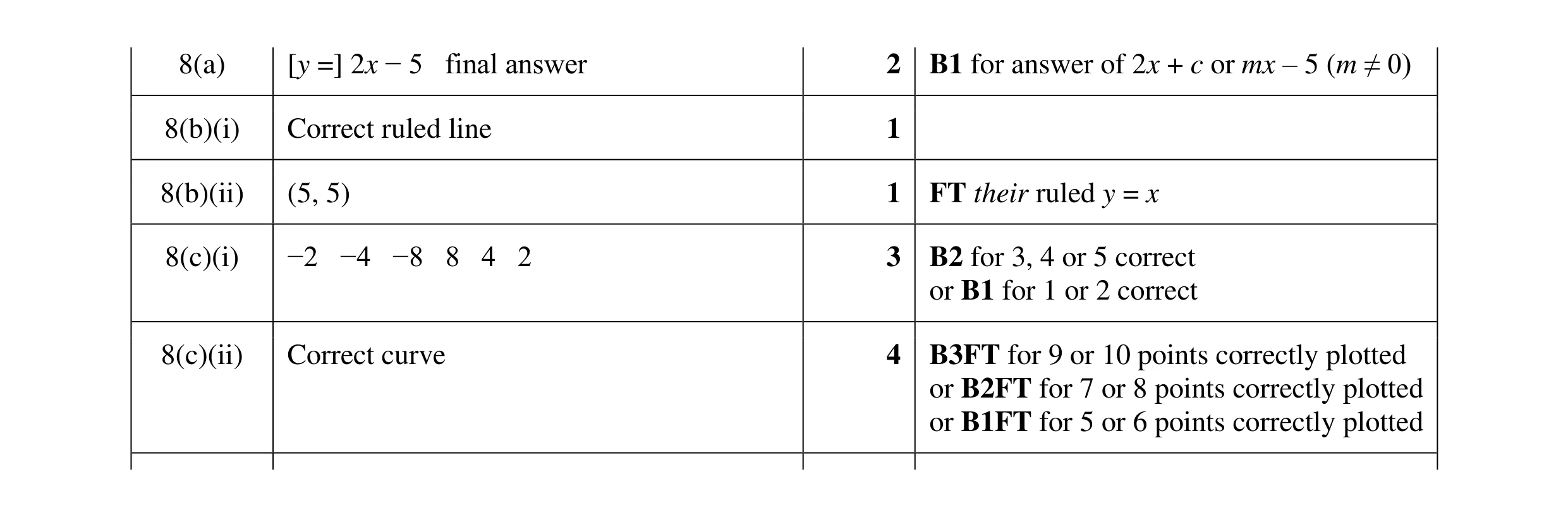 11
11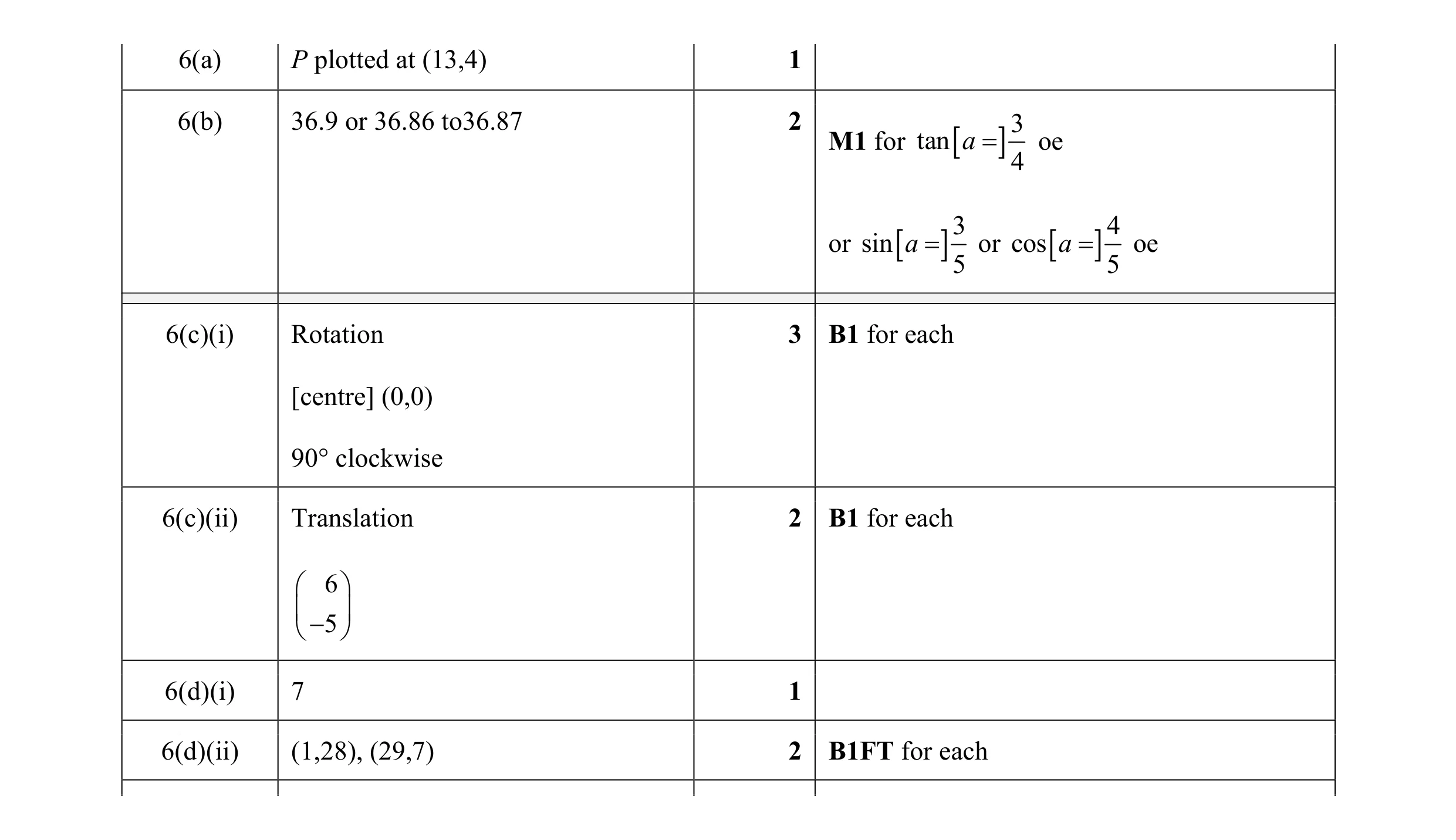 11
11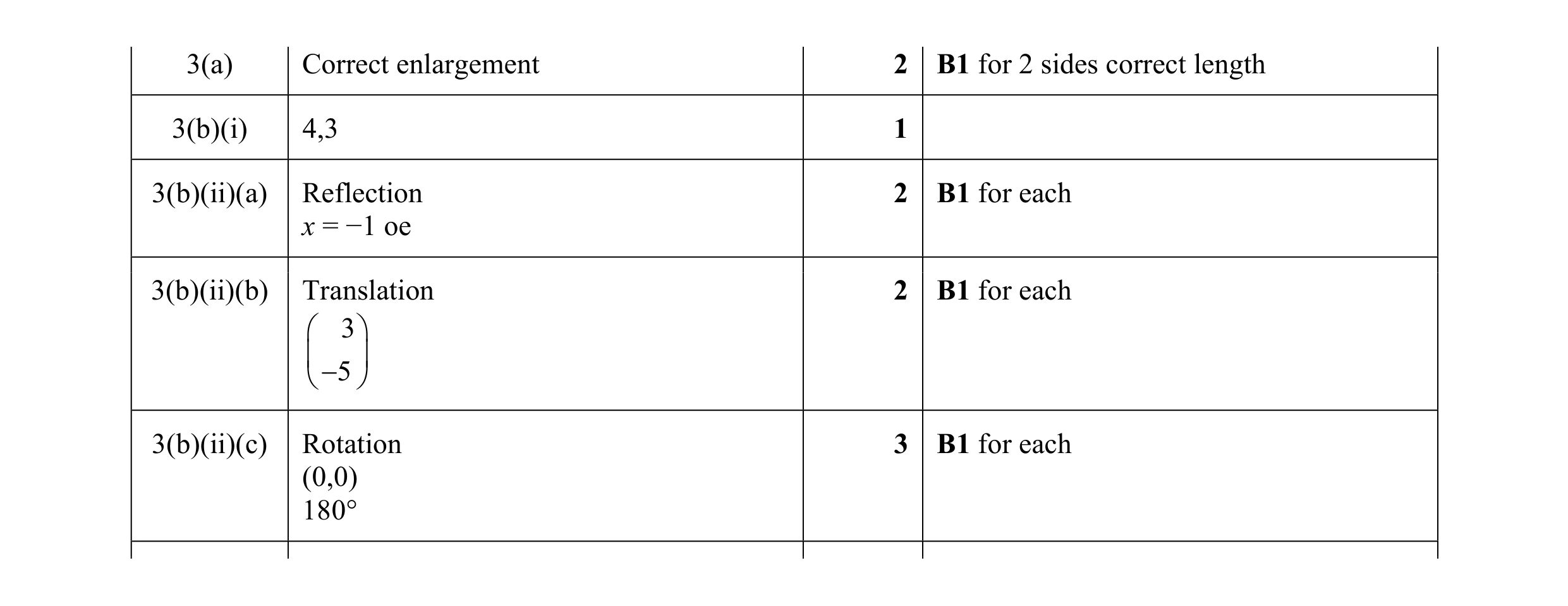 10
10 3
3