Questions as text
Q1 · Describe what psychologists have discovered about retail/leisure environmental design 9990/32 Feb/March 2018
4 (a) Describe what psychologists have discovered about retail/leisure environmental design. [8] (b) Evaluate what psychologists have discovered about retail/leisure environmental design, including a discussion about self reports. [10] Psychology and health Answer all questions.
18 marks
Mark scheme: 4(a) Describe what psychologists have discovered about retail/leisure 8 environment design. The syllabus covers the study by Turley and Milliman (2000) on retail store architecture, the study by Finlay et al. (2006) into leisure environments and the study by Vrechopoulos (2004) on store interior layout. Turley and Milliman Reviewed 60 studies about atmospheric effects on buyer/shopper behaviour – found it is possible to create atmospheres which influence consumer spending. Variables included – human, point of purchase and decoration, external variables, internal variables and layout and design variables. Finlay et al. An investigation into the emotion and gambling behaviour effected by different casino designs. Two designs were investigated – the playground design (high ceilings, spacious layout, the inclusion of elements of nature) and the gaming design (low ceilings, maze layout of machines, no extraneous décor). 1 A quasi experimental method was conducted with 275 participants. It measured a number of décor variables in combination. Results confirmed that the propensity to gamble beyond planned levels and the level of restoration experienced are both higher for a playground casino than for a gaming casino; higher gambling was reported when travel distance to a casino was shorter; higher levels of restoration when a music soundtrack was played. 2 Focus group research (n = 24) provided rich descriptions of gambling settings. They found the playground design was rated more positively on pleasure and restoration compared to the gaming design. 3 Finally a study (n = 445) was conducted using virtual reality technology, a 360° Panoscope, which immersed participants in a casino settings varying in their overall macro design (playground versus gaming), the type of emotion (arousal versus pleasure) induced by a landing strip (entrance setting) and the inclusion of restorative images in the gambling setting. The findings were particularly dramatic for females exposed to a playground setting: gambling by females was more conservative in a playground setting, with positively-valenced restorative images and with a pleasure-inducing landing strip. For both males and females exposed to a gaming design, at-risk gambling intentions were not influenced by landing strip and restorative image interventions. 4(a) Vrechopoulos Aim was to investigate different layouts in virtual reality stores to investigate which virtual layouts would have the most positive effects on consumers. The paper reports on an experimental investigation into the use of three different layouts in online grocery retailing: freeform, grid, and racetrack. 120 participants in Greece and the UK participated in a laboratory experiment: they were given a planned shopping task with money to spend, and performed their shopping through a virtual store with layout as the manipulated variable. The results show that layout significantly affects online consumer behaviour: • Free-form was easiest to find items from list and most entertaining to use • Grid was the easiest to use • Racetrack and freeform engaged the consumer for the longest Mark according to the levels of response descriptors in Table A. Other appropriate responses should also be credited. 4(b) Evaluate what psychologists have discovered about retail/leisure 10 environmental design, including a discussion about self reports. A range of issues could be used for evaluation here. These include: • Named issue – self reports – the study by Finlay et al. uses a self report to find out the emotional reactions of people who gambled in the casinos they investigated. They were asked to rate the casinos and rating scales can have issues such as being biased toward the middle score as well as not being able to make direct comparisons between participants’ scores (as what is one person’s 7 is another’s 10). In addition, the study by Vrechopoulos also used a self report and asked its participants to report on how entertaining they found each layout of the various stores. As this was a lab experiment, the responses to the self reports could be open to demand characteristics. In addition, the researcher would have to analyse these qualitative responses and it would be difficult to summarise each individual participant’s responses. • sampling and generalisations – excellent in Turley and Milliman as 60 studies, Finlay et al. had a very large sample size, Vrechopoulos used participants in both UK and Greece. • usefulness/practical applications – all very practical to improve the physical layout to increase sales. Should give specific examples of this. • situational/individual explanations – all situational e.g. Turley and Milliman is situational as it suggests atmospheric factors can be used to change consumer behaviour. • ethics – not an issue in Turley and Milliman as a review study so no direct participants, Vrechopoulos did a lab study where consent would have been gained and the participants were not asked to do anything harmful. Mark according to the levels of response descriptors in Table B. Other appropriate responses should also be credited. Psychology and health
This question in 9990/32 Feb/March 2018
Q2 · Describe what psychologists have discovered about sound and consumer behaviour 9990/31 Oct/Nov 2018
4 (a) Describe what psychologists have discovered about sound and consumer behaviour. [8] (b) Evaluate what psychologists have discovered about sound and consumer behaviour, including a discussion on ecological validity. [10] Psychology and health Answer all questions.
18 marks
Mark scheme: 4(a) Describe what psychologists have discovered about sound and 8 consumer behaviour. The syllabus covers the studies by North et al. (2003) on music in restaurants, Guéguen et al. (2007) on music in open air markets and Woods et al. (2010) on background noise and food perception. North et al. (2003) Field study in a British restaurant. Classical, pop and no music were played over 18 evenings. Mean spend per table was calculated and compared as well as the total time spent in the restaurant. Found people spent more and were prepared to spend more when classical music was being played. Guéguen et al. (2007) Field study in an open air market selling toys and knick-knacks. When popular music was being played customers stayed longer at the stalls and some higher spend was reported (near-significant). Woods et al. (2010) Lab study. Participants were blindfolded and given different foods to eat while either listening to no sound, quiet or loud background white noise. Foods rated in terms of sweetness, saltiness and liking. Reports of sweetness and saltiness were rated lower in the loud compared to the quiet sound condition but crunchiness was reported to being more intense. A correlation between the ratings of the liking of background noise and the liking of the food was also found. Mark according to the levels of response descriptors in Table A. Other appropriate responses should also be credited. 4(b) Evaluate what psychologists have discovered about sound and 10 consumer behaviour, including a discussion on ecological validity. A range of issues could be used for evaluation here. These include: • Named issue – to discuss the ecological validity of one or more of the studies in the syllabus. For example, the Guéguen study has good ecological validity as it is conducted in the natural environment, as a field experiment in an open air market, so the shopping behaviour would be natural and it is typical to have music being played when you are shopping. However, this does mean it has less control of extraneous variables (e.g. whether the market is busy on one day and relatively quiet on another). Also often does not get informed consent. • Strengths and weaknesses of the methods used in research – could mention issues such as reliability, demand characteristics, etc. • Sampling and generalisations – all of the studies were done in one type of venue with one type of sample group so lacks generalisability. • Usefulness/practical applications – can be used by companies to improve the music they use in their place of business and hopefully the eventual sales will increase. • Reliability/validity of research • Ethics – all unethical to an extent as field studies, however, nothing harmful was done to the participants. Mark according to the levels of response descriptors in Table B. Other appropriate responses should also be credited. Psychology and health
This question in 9990/31 Oct/Nov 2018
Q3 · Explain what is meant by the term ‘personal space’ 9990/32 Feb/March 2019
3 (a) Explain what is meant by the term ‘personal space’. [2] (b) Describe two findings of the study by Milgram et al. (1986) on defending a place in a queue. [4] (c) Explain one strength and one weakness of the study by Milgram et al. (1986). [6]
12 marks
Mark scheme: 3(a) Explain what is meant by ‘personal space’. 2 Award 1 mark for a basic explanation of the term/concept. Award 2 marks for a detailed explanation of the term/concept. For example: Personal space is a portable, invisible boundary surrounding us, into which others may not trespass.(1) It regulates how closely we interact with others, moves with us, and expands and contracts according to the situation in which we find ourselves.(1) Other appropriate responses should also be credited 3(b) Describe two findings of the study by Milgram et al. (1986) on 4 defending a place in a queue. Award 1–2 marks for a basic answer with some understanding of the topic area. Award 3–4 marks for a detailed answer with clear understanding of the topic area. For example: 2 marks each • Defensive reactions of queuers were noted in 129 naturally occurring waiting lines. • Queuers following the point of intrusion were more likely to object than those who preceded it; • Two intruders provoked more reaction than a single intruder; • Buffers (passive confederates standing in line) dampened the queue’s response to intruders. • Physical actions such as putting hands on shoulders occurred in 10% of queues; • Verbal objections such as “No way! The line’s back there. We’ve all been waiting and have trains to catch” occurred in 22% of queues; • Non-verbal objections such as stares and hostile gestures occurred in 15% of queues. Other appropriate responses should also be credited. 3(c) Explain one strength and one weaknesses of the study by Milgram 6 et al. (1986). Strengths may include: Standardised procedure Multiple factors considered (where intrusion occurs in line, number of intruders, use of buffers, different types of queue) Large sample size and types of queues – 129 queues (high generalisability) Field study so high in ecological validity Both male and female intruders used (lack of gender bias) Both qualitative and quantitative data collected Weaknesses may include Cultural bias – only USA considered, not carried out in collectivist cultures. Field study so potential problems with control of extraneous variables Independent measures design so participant variables could have been an issue Mark according to the levels of response criteria below: Level 3 (5–6 marks) • Candidates will show a clear understanding of the question and will discuss one appropriate strength and one appropriate weaknesses. • Candidates will provide a good explanation with clear detail. Level 2 (3–4 marks) • Candidates will show an understanding of the question and will discuss one appropriate strength or weakness in detail or both a strength and a weakness in less detail. • Candidates will provide a good explanation. Level 1 (1–2 marks) • Candidates will show a basic understanding of the question and will attempt a discussion of one strength or one weakness. • Candidates will provide a limited explanation. Level 0 (0 marks) No response worthy of credit. Other appropriate responses should also be credited.
This question in 9990/32 Feb/March 2019
Q4 · Describe what psychologists have discovered about lighting, colour and smell in the… 9990/32 Feb/March 2019
4 (a) Describe what psychologists have discovered about lighting, colour and smell in the physical environment. [8] (b) Evaluate what psychologists have discovered about lighting, colour, and smell in the physical environment, including a discussion of ecological validity. [10] Psychology and health Answer all questions.
18 marks
Mark scheme: 4(a) Describe what psychologists have discovered about lighting, colour 8 and smell in the physical environment. Could include the following: • Models of the effects of ambience: pleasure-arousal and cognition- emotion • Lighting and colour in retail stores (Kutlu et al, 2013) • Effects of colour on shopper arousal and emotion (Chebat & Michon, 2003) Models of the effects of ambience: pleasure-arousal and cognition- emotion. Pleasure arousal model – Mood is a mediating factor between environmental cues and behaviour. We react to environment with approach or avoidance. A positive response to music, smell, etc. increase length of time a consumer spends in a shop, increasing the amount of money spent. Cognition-emotion model – Zajonc & Markus (1984) propose emotion can be generated by biological, sensory, and cognitive events. So cognition may produce emotion but does not necessarily cause emotion. Lazarus (1966) suggests that cognitions are necessary but not sufficient precursor to emotions. Lighting and colour in retail stores (Kutlu et al, 2013) 121 participants in a questionnaire on the influence of colour and light on perception of retail design. They answered questions which evaluated the store’s image. 75% thought lighting had an effect on brand image, 31% found the lighting relaxing. Concluded perceive image and identity of the store/brand influenced by both lighting and colour scheme with light coloured and highly reflective colour scheme contributed to the ‘exclusive’ brand image. Effects of colour on shopper arousal and emotion (Chebat & Michon, 2003) Field experient in a shopping mall in Cananda over two weeks. In the second week a pleasing scent(citrus) was put into the mall’s main corridor. 145 participants during the scent week (447 in the control week). Found a more favourable perception of the product quality and shopping environment was reported. Mark according to the levels of response descriptors in Table A. Other appropriate responses should also be credited. 4(b) Evaluate what psychologists have discovered about lighting, colour, 10 and smell in the physical environment, including a discussion of ecological validity. A range of issues could be used for evaluation here. These include: • Named issue – Ecological validity. Chebat & Michon (2003) and Kutlu et al. (2013) both carried out in real stores; Chebat & Michon in Canada and Kutlu et al. in Istanbul, so high ecological validity. Kutlu et al. did not manipulate variables, though Chebat & Michon did (field experiment). However, both measures were customer surveys. • Research support – Chebat & Michon tested models of cognition and emotion systematically. • Problems with control of variables in research. • Problems with self-reports (of customer satisfaction). • Models could be said to be reductionist. Need to test lighting, colour and smell all together to come to more holistic conclusion. • Ethics – customers given consent though do not always know exactly what is happening (Chebat & Michon). Mark according to the levels of response descriptors in Table B. Other appropriate responses should also be credited. Psychology and health
This question in 9990/32 Feb/March 2019
Question 5 9990/31 May/June 2019
3 (a) Finlay et al. (2006) studied the Kranes playground design of leisure environments. Explain what is meant by ‘playground design’ as a casino design. [2] (b) Describe the pleasure-arousal model and the cognition-emotion model of the effects of ambience. [4] (c) Explain two weaknesses of one of these models of the effects of ambience. [6]
12 marks
Mark scheme: 3(a) Finlay et al. (2006) studied the Kranes playground design of leisure 2 environments. Explain what is meant by ‘playground design’ as a casino design. Award 1 mark for a basic explanation of the term/concept. Award 2 marks for a detailed explanation of the term/concept. For example: High ceilings, spacious layout, the inclusion of elements of nature (vegetation, water, sky design). Other appropriate responses should also be credited. 3(b) Describe the pleasure-arousal model and the cognition-emotion model 4 of the effects of ambience. Award 1–2 marks for a basic answer with some understanding of the topic area. Award 3–4 marks for a detailed answer with clear understanding of the topic area. For example: Pleasure-arousal = This is anything in the environment that improves the mood of the consumer (makes them feel pleasure) and therefore the consumer will wish to stay and look further at the product. This could include music, smell, décor, etc. Cognition-emotion = Cognitions can produce emotions in the consumer. The environment of the store, for example, could lead the consumer to feel lost and therefore angry. This might then lead them to leave the store. Alternatively, finding a product on a special offer could lead the consumer to feel happy and therefore would purchase a number of items of that product. Other appropriate responses should also be credited. 3(c) Explain two weaknesses of one of these models of the effects of 6 ambience. Likely weaknesses will be: • Can be said to ignore individual differences • Reductionism • Determinism • Cost of introducing features to the shop could be high. • Issues with the research that supports the models (e.g. generalisability/ethnocentrism, self-report data) Mark according to the levels of response criteria below: Level 3 (5–6 marks) • Candidates will show a clear understanding of the question and will discuss two appropriate weaknesses. • Candidates will provide a good explanation with clear detail. Level 2 (3–4 marks) • Candidates will show an understanding of the question and will discuss one appropriate weakness in detail or two less detail. • Candidates will provide a good explanation. Level 1 (1–2 marks) • Candidates will show a basic understanding of the question and will attempt a discussion of one or more weaknesses. This could include two but just as an attempt. • Candidates will provide a limited explanation. Level 0 (0 marks) • No response worthy of credit. Other appropriate responses should also be credited.
This question in 9990/31 May/June 2019
Q6 · Describe what psychologists have discovered about physical and psychological work… 9990/31 May/June 2019
8 (a) Describe what psychologists have discovered about physical and psychological work conditions in organisations. [8] (b) Evaluate what psychologists have discovered about physical and psychological work conditions in organisations, including a discussion of individual and situational explanations. [10]
18 marks
Mark scheme: 8(a) Describe what psychologists have discovered about the physical and 8 psychological work conditions in organisations. Physical and psychological work conditions in organisations, including the following: • Physical: the Hawthorne studies (Wikstrom and Bendix, 2000) • Psychological: bullying at work (Einarsen, 1999) • Open plan offices (Oldham and Brass, 1979) Hawthorne studies (Wikstrom and Bendix, 2000) – This study reviews the Hawthorne studies conducted in the 1920s. The original was done at the Hawthorne Plant in Chicago to test the effect of changes in the environment on productivity. Researchers changed many aspects of the working environment (e.g. lighting and work structures) but found regardless of what they did the productivity increased in both the experimental group where changes were made as well as a control group which had no changes. It was concluded that it could be due to the special privileges received by those involved in the study as well as the improved relationships the workers formed with each other and management. They also found that further research has not replicated these findings and this could be due to a number of factors including that the workers in the Hawthorne Plant may have received higher income, positive attention from their work, etc. Bullying at work (Einarsen, 1999) This is a review article of many pieces of previous research. A summary of these pieces of research can also be given credit. Four stages are also identified in the article including – aggressive behaviour, bullying, stigmatisation and finally severe trauma. Five types of bullying behaviour identified – physical, verbal, social isolation, personal attack (e.g. ridicule/gossip), work-related (e.g. making tasks harder to perform) Open plan offices (Oldham and Brass, 1979) Employees of a newspaper in the Midwest, USA. 123 Ps. 76 in experimental group who experienced all three waves of the move to the open plan office design. 5 were a control group (office design did not change) and 26 experienced two of the waves. Three questionnaire items were used to measure each of the following job characteristics: autonomy, skill variety, task identity, task significance, and task feedback. Also asked questions about how easy it was to interact with others, perception of conflict, concentration, etc. Found employees’ internal motivation and satisfaction with work and colleagues decreased after the move to the open plan office. Found it difficult to concentrate/complete tasks. Mark according to the levels of response descriptors in Table A. Other appropriate responses should also be credited. 8(b) Evaluate what psychologists have discovered about the physical and 10 psychological work conditions in organisations, including a discussion of individual and situational explanations. A range of issues could be used for evaluation here. These include: • Named issue – individual and situational explanations, e.g. Oldham and Brass offer a situational explanation as they are suggesting that it is the office design that has influenced the employee satisfaction. The Hawthorne study also suggests a situational explanation as it is the changes that are made (or the attention paid in the case of the control group) that may have led to the increase in productivity. Einarsen suggests that the bullying (which is also the situation) leads to the negative effects on the employee. This review does also consider some individual explanations as it recognises that it is a subjective experience of the individual that must occur for it to be labelled as bullying. • Validity • Any research methods issues that are applied to the Hawthorne study and/or Oldham and Brass study (e.g. generalisability, ecological validity, type of data). • Reductionist (or holistic) nature of explanations. • Deterministic nature of the conclusions. • Usefulness/application to everyday life. Mark according to the levels of response descriptors in Table B. Other appropriate responses should also be credited.
This question in 9990/31 May/June 2019
Question 7 9990/33 May/June 2019
3 (a) Finlay et al. (2006) studied the Kranes playground design of leisure environments. Explain what is meant by ‘playground design’ as a casino design. [2] (b) Describe the pleasure-arousal model and the cognition-emotion model of the effects of ambience. [4] (c) Explain two weaknesses of one of these models of the effects of ambience. [6]
12 marks
Mark scheme: 3(a) Finlay et al. (2006) studied the Kranes playground design of leisure 2 environments. Explain what is meant by ‘playground design’ as a casino design. Award 1 mark for a basic explanation of the term/concept. Award 2 marks for a detailed explanation of the term/concept. For example: High ceilings, spacious layout, the inclusion of elements of nature (vegetation, water, sky design). Other appropriate responses should also be credited. 3(b) Describe the pleasure-arousal model and the cognition-emotion model 4 of the effects of ambience. Award 1–2 marks for a basic answer with some understanding of the topic area. Award 3–4 marks for a detailed answer with clear understanding of the topic area. For example: Pleasure-arousal = This is anything in the environment that improves the mood of the consumer (makes them feel pleasure) and therefore the consumer will wish to stay and look further at the product. This could include music, smell, décor, etc. Cognition-emotion = Cognitions can produce emotions in the consumer. The environment of the store, for example, could lead the consumer to feel lost and therefore angry. This might then lead them to leave the store. Alternatively, finding a product on a special offer could lead the consumer to feel happy and therefore would purchase a number of items of that product. Other appropriate responses should also be credited. 3(c) Explain two weaknesses of one of these models of the effects of 6 ambience. Likely weaknesses will be: • Can be said to ignore individual differences • Reductionism • Determinism • Cost of introducing features to the shop could be high. • Issues with the research that supports the models (e.g. generalisability/ethnocentrism, self-report data) Mark according to the levels of response criteria below: Level 3 (5–6 marks) • Candidates will show a clear understanding of the question and will discuss two appropriate weaknesses. • Candidates will provide a good explanation with clear detail. Level 2 (3–4 marks) • Candidates will show an understanding of the question and will discuss one appropriate weakness in detail or two less detail. • Candidates will provide a good explanation. Level 1 (1–2 marks) • Candidates will show a basic understanding of the question and will attempt a discussion of one or more weaknesses. This could include two but just as an attempt. • Candidates will provide a limited explanation. Level 0 (0 marks) • No response worthy of credit. Other appropriate responses should also be credited.
This question in 9990/33 May/June 2019
Q8 · Describe what psychologists have discovered about physical and psychological work… 9990/33 May/June 2019
8 (a) Describe what psychologists have discovered about physical and psychological work conditions in organisations. [8] (b) Evaluate what psychologists have discovered about physical and psychological work conditions in organisations, including a discussion of individual and situational explanations. [10]
18 marks
Mark scheme: 8(a) Describe what psychologists have discovered about the physical and 8 psychological work conditions in organisations. Physical and psychological work conditions in organisations, including the following: • Physical: the Hawthorne studies (Wikstrom and Bendix, 2000) • Psychological: bullying at work (Einarsen, 1999) • Open plan offices (Oldham and Brass, 1979) Hawthorne studies (Wikstrom and Bendix, 2000) – This study reviews the Hawthorne studies conducted in the 1920s. The original was done at the Hawthorne Plant in Chicago to test the effect of changes in the environment on productivity. Researchers changed many aspects of the working environment (e.g. lighting and work structures) but found regardless of what they did the productivity increased in both the experimental group where changes were made as well as a control group which had no changes. It was concluded that it could be due to the special privileges received by those involved in the study as well as the improved relationships the workers formed with each other and management. They also found that further research has not replicated these findings and this could be due to a number of factors including that the workers in the Hawthorne Plant may have received higher income, positive attention from their work, etc. Bullying at work (Einarsen, 1999) This is a review article of many pieces of previous research. A summary of these pieces of research can also be given credit. Four stages are also identified in the article including – aggressive behaviour, bullying, stigmatisation and finally severe trauma. Five types of bullying behaviour identified – physical, verbal, social isolation, personal attack (e.g. ridicule/gossip), work-related (e.g. making tasks harder to perform) Open plan offices (Oldham and Brass, 1979) Employees of a newspaper in the Midwest, USA. 123 Ps. 76 in experimental group who experienced all three waves of the move to the open plan office design. 5 were a control group (office design did not change) and 26 experienced two of the waves. Three questionnaire items were used to measure each of the following job characteristics: autonomy, skill variety, task identity, task significance, and task feedback. Also asked questions about how easy it was to interact with others, perception of conflict, concentration, etc. Found employees’ internal motivation and satisfaction with work and colleagues decreased after the move to the open plan office. Found it difficult to concentrate/complete tasks. Mark according to the levels of response descriptors in Table A. Other appropriate responses should also be credited. 8(b) Evaluate what psychologists have discovered about the physical and 10 psychological work conditions in organisations, including a discussion of individual and situational explanations. A range of issues could be used for evaluation here. These include: • Named issue – individual and situational explanations, e.g. Oldham and Brass offer a situational explanation as they are suggesting that it is the office design that has influenced the employee satisfaction. The Hawthorne study also suggests a situational explanation as it is the changes that are made (or the attention paid in the case of the control group) that may have led to the increase in productivity. Einarsen suggests that the bullying (which is also the situation) leads to the negative effects on the employee. This review does also consider some individual explanations as it recognises that it is a subjective experience of the individual that must occur for it to be labelled as bullying. • Validity • Any research methods issues that are applied to the Hawthorne study and/or Oldham and Brass study (e.g. generalisability, ecological validity, type of data). • Reductionist (or holistic) nature of explanations. • Deterministic nature of the conclusions. • Usefulness/application to everyday life. Mark according to the levels of response descriptors in Table B. Other appropriate responses should also be credited.
This question in 9990/33 May/June 2019
Q9 · Explain what is meant by ‘open plan offices’ 9990/31 Oct/Nov 2019
7 (a) Explain what is meant by ‘open plan offices’. [2] (b) Describe the findings of the study by Cowpe (1989) of a safety promotion campaign to avoid chip pan fires. [4] (c) Explain one strength and one weakness of the study by Cowpe (1989) of a safety promotion campaign to avoid chip pan fires. [6]
12 marks
Mark scheme: 7(a) Explain what is meant by ‘open plan offices’. 2 Award 1 mark for a basic explanation of the term/concept. Award 2 marks for a detailed explanation of the term/concept. For example: An office with no interior walls or low partitions (1), with no separate rooms or offices (1). Other appropriate responses should also be credited. 7(b) Describe the findings of the study by Cowpe (1989) of a safety promotion 4 campaign to avoid chip pan fires. Award 1–2 marks for a basic answer with some understanding of the topic area. Award 3–4 marks for a detailed answer with clear understanding of the topic area. For example: The results of the campaigns show 'net' declines in each area where the safety advertisements were shown of between 7 and 25% over a twelve-month period (2). The largest reduction in chip-pan fires was during the campaign (1). Questionnaires showed a significant increase in awareness of chip pan fires and safety measures to be taken – confidence in ability to cope with a chip-pan fire improved (1). The greatest change in chip-pan fire was reported during and immediately following the advertising campaign and this did reduce once the campaign had finished (1). Other appropriate responses should also be credited. 7(c) Explain one strength and one weakness of the study by Cowpe (1989) of a 6 safety promotion campaign to avoid chip pan fires. Strengths • Useful (applications to everyday life) as it shows the effectiveness of advertising campaigns and also the reduction in terms of cost to human life as well as the cost to the state for emergency services. • Good ecological validity as the advertisements were released as normal. • Good sample size – 5 regions in the UK. • Longitudinal so can investigate change in behaviour over time. • Quantitative data – can make comparisons between before and after the safety promotion campaign. • Data is from government/fire service statistics of chip pan fires reported so is free from experimenter bias. Weaknesses • Poor temporal validity as it was done in 1970s–1980s and in the modern day we have a lot more access to different types of media (also chip pans are not really used today). • Ethnocentric to the UK, there could have been other factors that led to the reduction in chip pan fires other than the advertising campaign (e.g. improvements in the safety features on the chip pan or less use of gas stoves). • Quantitative data – do not know the full reasoning behind the reduction in chip pan fires. • Some chip pan fires may not have been reported. Mark according to the levels of response criteria below: Level 3 (5–6 marks) • Candidates will show a clear understanding of the question and will discuss one strength and one weakness. • Candidates will provide a good explanation with clear detail. Level 2 (3–4 marks) • Candidates will show an understanding of the question and will discuss one appropriate weakness in detail or one appropriate strength in detail. OR one weakness and one strength in less detail. • Candidates will provide a good explanation. Level 1 (1–2 marks) • Candidates will show a basic understanding of the question and will attempt a discussion of either a strength or a weakness. There could also be a discussion of both a strength and a weakness but just as an attempt. • Candidates will provide a limited explanation. Level 0 (0 marks) No response worthy of credit. Other appropriate responses should also be credited.
This question in 9990/31 Oct/Nov 2019
Q10 · Explain what is meant by ‘open plan offices’ 9990/32 Oct/Nov 2019
7 (a) Explain what is meant by ‘open plan offices’. [2] (b) Describe the findings of the study by Cowpe (1989) of a safety promotion campaign to avoid chip pan fires. [4] (c) Explain one strength and one weakness of the study by Cowpe (1989) of a safety promotion campaign to avoid chip pan fires. [6]
12 marks
Mark scheme: 7(a) Explain what is meant by ‘open plan offices’. 2 Award 1 mark for a basic explanation of the term/concept. Award 2 marks for a detailed explanation of the term/concept. For example: An office with no interior walls or low partitions (1), with no separate rooms or offices (1). Other appropriate responses should also be credited. 7(b) Describe the findings of the study by Cowpe (1989) of a safety promotion 4 campaign to avoid chip pan fires. Award 1–2 marks for a basic answer with some understanding of the topic area. Award 3–4 marks for a detailed answer with clear understanding of the topic area. For example: The results of the campaigns show 'net' declines in each area where the safety advertisements were shown of between 7 and 25% over a twelve-month period (2). The largest reduction in chip-pan fires was during the campaign (1). Questionnaires showed a significant increase in awareness of chip pan fires and safety measures to be taken – confidence in ability to cope with a chip- pan fire improved (1). The greatest change in chip-pan fire was reported during and immediately following the advertising campaign and this did reduce once the campaign had finished (1). Other appropriate responses should also be credited. 7(c) Explain one strength and one weakness of the study by Cowpe (1989) of 6 a safety promotion campaign to avoid chip pan fires. Strengths • Useful (applications to everyday life) as it shows the effectiveness of advertising campaigns and also the reduction in terms of cost to human life as well as the cost to the state for emergency services. • Good ecological validity as the advertisements were released as normal. • Good sample size – 5 regions in the UK. • Longitudinal so can investigate change in behaviour over time. • Quantitative data – can make comparisons between before and after the safety promotion campaign. • Data is from government/fire service statistics of chip pan fires reported so is free from experimenter bias. Weaknesses • Poor temporal validity as it was done in 1970s–1980s and in the modern day we have a lot more access to different types of media (also chip pans are not really used today). • Ethnocentric to the UK, there could have been other factors that led to the reduction in chip pan fires other than the advertising campaign (e.g. improvements in the safety features on the chip pan or less use of gas stoves). • Quantitative data – do not know the full reasoning behind the reduction in chip pan fires. • Some chip pan fires may not have been reported. Mark according to the levels of response criteria below: Level 3 (5–6 marks) • Candidates will show a clear understanding of the question and will discuss one strength and one weakness. • Candidates will provide a good explanation with clear detail. Level 2 (3–4 marks) • Candidates will show an understanding of the question and will discuss one appropriate weakness in detail or one appropriate strength in detail. OR one weakness and one strength in less detail. • Candidates will provide a good explanation. Level 1 (1–2 marks) • Candidates will show a basic understanding of the question and will attempt a discussion of either a strength or a weakness. There could also be a discussion of both a strength and a weakness but just as an attempt. • Candidates will provide a limited explanation. Level 0 (0 marks) No response worthy of credit. Other appropriate responses should also be credited.
This question in 9990/32 Oct/Nov 2019
Q11 · Explain what is meant by ‘open plan offices’ 9990/33 Oct/Nov 2019
7 (a) Explain what is meant by ‘open plan offices’. [2] (b) Describe the findings of the study by Cowpe (1989) of a safety promotion campaign to avoid chip pan fires. [4] (c) Explain one strength and one weakness of the study by Cowpe (1989) of a safety promotion campaign to avoid chip pan fires. [6]
12 marks
Mark scheme: 7(a) Explain what is meant by ‘open plan offices’. 2 Award 1 mark for a basic explanation of the term/concept. Award 2 marks for a detailed explanation of the term/concept. For example: An office with no interior walls or low partitions (1), with no separate rooms or offices (1). Other appropriate responses should also be credited. 7(b) Describe the findings of the study by Cowpe (1989) of a safety promotion 4 campaign to avoid chip pan fires. Award 1–2 marks for a basic answer with some understanding of the topic area. Award 3–4 marks for a detailed answer with clear understanding of the topic area. For example: The results of the campaigns show 'net' declines in each area where the safety advertisements were shown of between 7 and 25% over a twelve-month period (2). The largest reduction in chip-pan fires was during the campaign (1). Questionnaires showed a significant increase in awareness of chip pan fires and safety measures to be taken – confidence in ability to cope with a chip- pan fire improved (1). The greatest change in chip-pan fire was reported during and immediately following the advertising campaign and this did reduce once the campaign had finished (1). Other appropriate responses should also be credited. 7(c) Explain one strength and one weakness of the study by Cowpe (1989) of 6 a safety promotion campaign to avoid chip pan fires. Strengths • Useful (applications to everyday life) as it shows the effectiveness of advertising campaigns and also the reduction in terms of cost to human life as well as the cost to the state for emergency services. • Good ecological validity as the advertisements were released as normal. • Good sample size – 5 regions in the UK. • Longitudinal so can investigate change in behaviour over time. • Quantitative data – can make comparisons between before and after the safety promotion campaign. • Data is from government/fire service statistics of chip pan fires reported so is free from experimenter bias. Weaknesses • Poor temporal validity as it was done in 1970s–1980s and in the modern day we have a lot more access to different types of media (also chip pans are not really used today). • Ethnocentric to the UK, there could have been other factors that led to the reduction in chip pan fires other than the advertising campaign (e.g. improvements in the safety features on the chip pan or less use of gas stoves). • Quantitative data – do not know the full reasoning behind the reduction in chip pan fires. • Some chip pan fires may not have been reported. Mark according to the levels of response criteria below: Level 3 (5–6 marks) • Candidates will show a clear understanding of the question and will discuss one strength and one weakness. • Candidates will provide a good explanation with clear detail. Level 2 (3–4 marks) • Candidates will show an understanding of the question and will discuss one appropriate weakness in detail or one appropriate strength in detail. OR one weakness and one strength in less detail. • Candidates will provide a good explanation. Level 1 (1–2 marks) • Candidates will show a basic understanding of the question and will attempt a discussion of either a strength or a weakness. There could also be a discussion of both a strength and a weakness but just as an attempt. • Candidates will provide a limited explanation. Level 0 (0 marks) No response worthy of credit. Other appropriate responses should also be credited.
This question in 9990/33 Oct/Nov 2019
Q12 · Describe what psychologists have discovered about environmental influences on consumers… 9990/32 Feb/March 2020
4 (a) Describe what psychologists have discovered about environmental influences on consumers (cognitive maps of retail locations, crowding in retail environments, shopper movement patterns). [8] (b) Evaluate what psychologists have discovered about environmental influences on consumers (cognitive maps of retail locations, crowding in retail environments, shopper movement patterns), including a discussion about reliability. [10] Psychology and health Answer all questions.
18 marks
Mark scheme: 4(a) Describe what psychologists have discovered about environmental 8 influences on consumers (cognitive maps of retail locations, crowding in retail environments, shopper movement patterns). The syllabus covers • cognitive maps of retail locations (Mackay and Olshavsky, 1975) • crowding in retail environments (Machleit et al., 2000) • shopper movement patterns (Gil et al., 2009) Cognitive maps of retail locations (Mackay and Olshavsky, 1975) A cognitive map (mental map) is a type of mental representation where an individual codes, stores and recalls relative locations in order to wayfind. In relation to a retail environment, this would involve the location of various shops as well as products within a specific shop (for example). 78 opportunity selected supermarket shoppers from 8 supermarkets in Indiana, USA. Self-reports taken of preference for the supermarkets and the reasons for this choice (e.g. price, quality of products, etc.). Asked to draw a map from their departure point to each of the 8 supermarkets. Then a questionnaire was used to collect information such as length of time living in the area, marital status, employment status, etc. Found the cognitive maps (rather than actual maps) correlated to the preferences for the supermarkets. Crowding in retail environments (Machleit et al., 2000) Study 1 – 722 marketing students were asked to complete the questionnaire after their next shopping trip. They had to name the store, shopping centre or mall that they had visited. Questions were asked about purchases, purpose of the trip and their perceptions about crowding, satisfaction and the outcome of the shopping trip. They were also asked about emotions, crowding tolerance questions and demographic questions. They were finally asked to recall and rate a recent shopping trip. Perceived crowding was on an 8 point scale. Satisfaction on a 7 point scale. Emotion – Izard’s 10 emotion types were measured on a 1 to 5 scale Prior expectations of crowding 7 point scale Found the more crowded the shops, the lower the positive experience of shopping/lower arousal(excitement) Study 2 – Adult sample replicated study 1 and confirmed the results. Study 3 – Lab study. 231 participants given information to read about a bookstore (either discount or upmarket). Four 55 second videos (with different levels of crowding) and imagined themselves shopping for a book in the store. Same questions given as study 1 and 2. Found decrease in shopping satisfaction mediated by expectations of crowding and personal tolerance for crowding. Both types of stores received lower satisfaction ratings as crowding levels increased. 4(a) Shopper movement patterns (Gil et al., 2009) 480 shoppers interviewed. Given demographic information to complete. Given a coloured tag to be followed in the store via CCTV. Interviewed again when they left the store. Asked questions about purpose of trip, use of shopping list, satisfaction with shopping, amount spent. They were able to measure the duration of the trip, average walking speed, duration of interaction with products, % of store section visited more than once, which areas of the store visited and how far into the store they go. Shopping behaviour affected by- Location of products Some areas more popular than other (e.g. baby products not popular). Identified four patterns of movement: short trip, round trip, central trip and wave trip. Didn’t find any type of person engages in one pattern of movement more than any other. Also found five patterns – native, tourist, raider, explorer and specialist. Males are more likely to be a raider and females shopping alone are most frequently an explorer. Mark according to the levels of response descriptors in Table A. Other appropriate responses should also be credited. 4(b) Evaluate what psychologists have discovered about environmental 10 influences on consumers (cognitive maps of retail locations, crowding in retail environments, shopper movement patterns), including a discussion about reliability. A range of issues could be used for evaluation here. These include: • Named issue – reliability Strengths – Mackay and Machleit were both lab studies with controlled, standardised procedures (e.g. asking all participants to draw a map from their departure point to a supermarket in MacKay) that could be replicated on other participants. In addition, all participants experienced the same procedures and were asked the same questions. Computer software analysed the maps drawn by the participants in MacKay and this is highly reliable. Machleit showed all the participants the same films and read them the same passages in study 3. Machleit also completed two field studies but the questionnaires given to the participants were the same in the study. Weaknesses – however, due to the controlled conditions the studies are less realistic/ecologically valid. In addition, the participants could be more likely to show demand characteristics due to the artificial nature of the study. The Gil study was an observation and self report study so was somewhat less reliable as the shoppers used different stores and each shopping trip was unique to that shopper so less easy to replicate each individual shopping experience. But the procedures were the same and the measurements were quantitative and taken in the same way from each participant. • Self reports • Observational data • Generalisability • Ecological validity • Usefulness/practical applications • Ethics • Quantitative/Qualitative data • Validity Mark according to the levels of response descriptors in Table B. Other appropriate responses should also be credited. Psychology and health
This question in 9990/32 Feb/March 2020
Q13 · Explain the purpose of background music played in consumer environments 9990/33 May/June 2020
3 (a) Explain the purpose of background music played in consumer environments. [2] (b) Describe the study by North et al. (2003) on music in restaurants. [4] (c) Explain one strength and one weakness of the study by North et al. [6]
12 marks
Mark scheme: 3(a) Explain the purpose of background music played in consumer 2 environments. Award 1 mark for a basic explanation of the term/concept. Award 2 marks for a detailed explanation of the term/concept. For example: This is music that is played in the ‘background’ which means it is played while a person engages in a different behaviour. (1) or The music is not meant to be paid attention to, as the person’s attention is elsewhere. (1) In a retail or leisure environment this could be on purchasing something in a shop, swimming, or eating a meal in a restaurant. (1) Other appropriate responses should also be credited. 3(b) Describe the study by North et al. (2003) on music in restaurants. 4 Award 1–2 marks for a basic answer with some understanding of the topic area. Award 3–4 marks for a detailed answer with clear understanding of the topic area. For example: Field study in a British restaurant. (1) Classical, pop and no music were played over 18 evenings. (1) Mean spend per table was calculated and compared as well as the total time spent in the restaurant. (1) Found people spent more and were prepared to spend more when classical music was being played. (1) Other appropriate responses should also be credited. 3(c) Explain one strength and one weakness of the study by North et al. 6 Likely strengths include: • Ecological validity • Generalisability • Strengths of quantitative data • Over a number of days so different days could be compared (e.g. weekday vs weekend) over a two-month period in 2002 • A control group (no music) was used as a baseline comparison • Controls used • Counterbalancing of conditions was used over weekdays and weekends • Ethical issues • Low demand characteristics • None of the participants ate at the restaurant more than once (those that did were excluded from the results). Likely weaknesses include: • Generalisability • Weaknesses of quantitative data • Lack of qualitative data • Ethics. Mark according to the levels of response criteria below: Level 3 (5–6 marks) • Candidates will show a clear understanding of the question and will discuss one strength and one weakness. • Candidates will provide a good explanation with clear detail. Level 2 (3–4 marks) • Candidates will show an understanding of the question and will discuss one appropriate weakness in detail or one appropriate strength in detail. OR one weakness and one strength in less detail. Level 1 (1–2 marks) • Candidates will show a basic understanding of the question and will attempt a discussion of either a strength or a weakness. They could include both but just as an attempt. • Candidates will provide a limited explanation. Level 0 (0 marks) No response worthy of credit. Other appropriate responses should also be credited.
This question in 9990/33 May/June 2020
Q14 · Describe what psychologists have discovered about temporal conditions of work environments 9990/31 Oct/Nov 2020
8 (a) Describe what psychologists have discovered about temporal conditions of work environments. [8] (b) Evaluate what psychologists have discovered about temporal conditions of work environments, including a discussion of demand characteristics. [10]
18 marks
Mark scheme: 8(a) Describe what psychologists have discovered about temporal conditions of work environments. Temporal conditions of work environments, including the following: • Shiftwork: rapid rotation theory (metropolitan rota and continental rota); slow rotation theory (Pheasant, 1991) • Effects of shiftwork on health (Knutsson, 2003) • Shiftwork and accidents (Gold et al., 1992) Shiftwork When a worker does not do the same work pattern each week then this is called shiftwork, e.g. working 6am to 2pm for a week, followed by working 2pm to 10pm the following week. Rapid rotation refers to frequent shift changes and takes the form of a metropolitan rota (2 day shifts, 2 twilight shifts, then 2 night shifts, 2 days off) and continental rota (2 day shifts, 2 twilight shifts, 3 night shifts, 2 days off, 2 day shifts, 3 twilight shifts, 2 night shifts, 3 days off). Slow rotation is when changes of shift happen infrequently e.g. working twilight shifts for 3 weeks, 3 days off then nights for 3 weeks. Pheasant (1991) asserts that companies use slow rotation because, from a physiological perspective it takes time to adjust to shift pattern changes so they should happen rarely. Permanent night shift, for example, is better than a continental shift pattern as there is less disruption to circadian rhythms. Knutsson A review of articles examining the relationship between shiftwork and a variety of health issues. • Mortality – based on 2 studies, one in UK and one in Denmark, little or no correlation was found between mortality rates and shiftwork. • Gastrointestinal disease – this is significantly more common in shiftworkers compared to day workers. Peptic and duodenal ulcers are more common in shiftworkers (including printers, taxi drivers, truck drivers, and factory workers). • Cardiovascular disease – Studies from a variety of countries found a significant relationship between shiftwork and cardiovascular disease. • Cancer – Studies with nurses, flight attendants, and telegraph operators have shown an increased risk of breast cancer in women working night shifts. However, increase risk to carcinogens could not be controlled for in these studies. • Diabetes and metabolic disturbances – Evidence of a relationship with shiftwork is lacking. There is some evidence of increased BMI in shiftworkers, raising the risk of diabetes. • Pregnancy – studies have shown relationships between shiftwork and both premature birth and low birth weight. A further study showed an increase risk of miscarriage. 8 Question Answer Marks 8(a) Gold et al. A hospital-based survey on shift work, sleep, and accidents was carried out among 635 Massachusetts nurses (all female). In comparison to nurses who worked only day/evening shifts, rotators had more sleep/wake cycle disruption and nodded off more at work. Rotators had twice the odds of nodding off while driving to or from work and twice the odds of a reported accident or error related to sleepiness. Application of circadian principles to the design of hospital work schedules may result in improved health and safety for nurses and patients. Mark according to the levels of response descriptors in Table A. Other appropriate responses should also be credited. 8(b) Evaluate what psychologists have discovered about temporal conditions of work environments, including a discussion of demand characteristics. A range of issues could be used including: • Named issue – demand characteristics – DC quite high in Gold et al., because of self reports being used to find out hours of sleep, nodding off at work, etc. DC low in Knutsson as review article and furthermore research is based on incidence of various conditions/illnesses that could not be faked. • Reductionism • Determinism • Correlation • Individual/situational • Sampling/generalisability • Nature/Nurture • Usefulness Mark according to the levels of response descriptors in Table B. Other appropriate responses should also be credited. 10
This question in 9990/31 Oct/Nov 2020
Q15 · Describe what psychologists have discovered about temporal conditions of work environments 9990/33 Oct/Nov 2020
8 (a) Describe what psychologists have discovered about temporal conditions of work environments. [8] (b) Evaluate what psychologists have discovered about temporal conditions of work environments, including a discussion of demand characteristics. [10]
18 marks
Mark scheme: 8(a) Describe what psychologists have discovered about temporal conditions of work environments. Temporal conditions of work environments, including the following: • Shiftwork: rapid rotation theory (metropolitan rota and continental rota); slow rotation theory (Pheasant, 1991) • Effects of shiftwork on health (Knutsson, 2003) • Shiftwork and accidents (Gold et al., 1992) Shiftwork When a worker does not do the same work pattern each week then this is called shiftwork, e.g. working 6am to 2pm for a week, followed by working 2pm to 10pm the following week. Rapid rotation refers to frequent shift changes and takes the form of a metropolitan rota (2 day shifts, 2 twilight shifts, then 2 night shifts, 2 days off) and continental rota (2 day shifts, 2 twilight shifts, 3 night shifts, 2 days off, 2 day shifts, 3 twilight shifts, 2 night shifts, 3 days off). Slow rotation is when changes of shift happen infrequently e.g. working twilight shifts for 3 weeks, 3 days off then nights for 3 weeks. Pheasant (1991) asserts that companies use slow rotation because, from a physiological perspective it takes time to adjust to shift pattern changes so they should happen rarely. Permanent night shift, for example, is better than a continental shift pattern as there is less disruption to circadian rhythms. Knutsson A review of articles examining the relationship between shiftwork and a variety of health issues. • Mortality – based on 2 studies, one in UK and one in Denmark, little or no correlation was found between mortality rates and shiftwork. • Gastrointestinal disease – this is significantly more common in shiftworkers compared to day workers. Peptic and duodenal ulcers are more common in shiftworkers (including printers, taxi drivers, truck drivers, and factory workers). • Cardiovascular disease – Studies from a variety of countries found a significant relationship between shiftwork and cardiovascular disease. • Cancer – Studies with nurses, flight attendants, and telegraph operators have shown an increased risk of breast cancer in women working night shifts. However, increase risk to carcinogens could not be controlled for in these studies. • Diabetes and metabolic disturbances – Evidence of a relationship with shiftwork is lacking. There is some evidence of increased BMI in shiftworkers, raising the risk of diabetes. • Pregnancy – studies have shown relationships between shiftwork and both premature birth and low birth weight. A further study showed an increase risk of miscarriage. 8 Question Answer Marks 8(a) Gold et al. A hospital-based survey on shift work, sleep, and accidents was carried out among 635 Massachusetts nurses (all female). In comparison to nurses who worked only day/evening shifts, rotators had more sleep/wake cycle disruption and nodded off more at work. Rotators had twice the odds of nodding off while driving to or from work and twice the odds of a reported accident or error related to sleepiness. Application of circadian principles to the design of hospital work schedules may result in improved health and safety for nurses and patients. Mark according to the levels of response descriptors in Table A. Other appropriate responses should also be credited. 8(b) Evaluate what psychologists have discovered about temporal conditions of work environments, including a discussion of demand characteristics. A range of issues could be used including: • Named issue – demand characteristics – DC quite high in Gold et al., because of self reports being used to find out hours of sleep, nodding off at work, etc. DC low in Knutsson as review article and furthermore research is based on incidence of various conditions/illnesses that could not be faked. • Reductionism • Determinism • Correlation • Individual/situational • Sampling/generalisability • Nature/Nurture • Usefulness Mark according to the levels of response descriptors in Table B. Other appropriate responses should also be credited. 10
This question in 9990/33 Oct/Nov 2020
Q16 · Describe what psychologists have discovered about personal space and consumer behaviour 9990/32 Feb/March 2021
4 (a) Describe what psychologists have discovered about personal space and consumer behaviour. [8] (b) Evaluate what psychologists have discovered about personal space and consumer behaviour, including a discussion about generalisability. [10] Psychology and health Answer all questions.
18 marks
Mark scheme: 4(a) Describe what psychologists have discovered about personal space 8 and consumer behaviour. The syllabus covers • theories of personal space: overload, arousal and behaviour constraint • space at restaurant tables (Robson et al., 2011) • defending place in a queue (Milgram et al., 1986) Theories of personal space: overload, arousal and behaviour constraint Personal space is an invisible boundary surrounding us into which others may not enter. For consumers, this is the area around the shopper that they would not like others (other shoppers, the salesperson) to enter. Overload – personal space is maintained to reduce the amount of information we have to attend to. Shops are busy places with lots of information needing to be attended to (other shoppers, the products, prices, navigating the store, etc.). Therefore, shoppers will want to maintain their distance from the other people in the shop. Arousal – when personal space is invaded we will feel heightened alertness/arousal levels. We may see the interaction with the invader as being negative due to this invasion. For a consumer, they may feel anger toward the sales person who has got too close while speaking to the customer and therefore the customer feels annoyed and leaves the shop without buying anything. Behaviour constraint – Many behaviours are not possible if others are invading one’s personal space. This could lead to aggressive behaviour. It has been known during times of sales that customers may behave aggressively toward each other. The store is very busy when the sale begins and the lack of personal space could lead to some of this increase in aggressive behaviour. Space at restaurant tables (Robson et al., 2011) Survey of over 1000 American participants over the web. Given a scenario where they are in a restaurant where the tables are placed 6,12,24 inches apart. Participants gave their details first (e.g. age, ethnicity, residence, etc.). They were asked how often they visit restaurants and if they have ever worked in the restaurant industry. 3 dining scenarios given – romantic, with a friend and a business lunch. Randomly assigned to one of nine table situations. Given thirty-two statements that solicited their emotional and behavioural responses to specific distances. The 6 inch space led to the participants reporting feeling more crowded, less private, more dissatisfied with the table and having a less positive experience of the meal. Women reported disliking the 6 inch space less than men. 4(a) Defending place in a queue (Milgram et al., 1986) Investigating invasion of personal space in a queue at various locations in New York City – train station, betting shops, etc. Investigated 129 naturally occurring queues. Confederate invaded the queue between the 3rd and 4th person. Milgram also had other variations of these conditions – where there was a second intruder, where there was a buffer (a confederate acting as a person waiting in the queue) between the invading confederate and the participant. Observers coded the behaviour of the participants as well as noting down anything that was said to the intruders or the buffer. Physical objections occurred 10% of the time and verbal occurred 21.7%. Non-verbal objections occurred 14.7% of the time. Two intruders provoked more of a reaction than a single intruder. Buffers lessened the response. Milgram concluded that queues are social systems and within this system the closer the person is to the point of intrusion and when the intrusion is in front of the person the more likely it is they will defend their place in the queue. Mark according to the levels of response descriptors in Table A. Other appropriate responses should also be credited. 4(b) Evaluate what psychologists have discovered about personal space 10 and consumer behaviour, including a discussion about generalisability. A range of issues could be used for evaluation here. These include: • Named issue – generalisability – Very large sample in the Robson study but all from USA – good variety as selected over the web – but just people who have access to the internet. Milgram study also done in USA and just from one train station. People from America will have different personal space than people in other countries. There are also differences in social norms in relation to behaviours such as queuing. • Data collection • Ecological validity • Ethics • Quantitative/Qualitative data • Reliability Mark according to the levels of response descriptors in Table B. Other appropriate responses should also be credited.
This question in 9990/32 Feb/March 2021
Q17 · Explain what is meant by the ‘cognition-emotion model’ of the effects of ambience 9990/32 May/June 2021
3 (a) Explain what is meant by the ‘cognition-emotion model’ of the effects of ambience. [2] (b) Describe the study by Chebat and Michon (2003) on the effects of odour on shopper arousal and emotion. [4] (c) Explain two strengths of the study by Chebat and Michon. [6]
12 marks
Mark scheme: 3(a) Explain what is meant by the ‘cognition-emotion model’ of the effects 2 of ambience. Award 1 mark for a basic explanation of the term/concept. Award 2 marks for a detailed explanation of the term/concept. For example: Zajonc & Markus (1984) propose emotion can be generated by biological, sensory, and cognitive events.(1) So cognition may produce emotion but does not necessarily cause emotion. (1) Therefore, the ambience of a retail environment/shop can produce cognitions that lead to emotions in the consumer. (1) For example, a light colour may produce the cognition of ‘expensive’ which make the consumer feel good when they purchase a product.(1) Other appropriate responses should also be credited. 3(b) Describe the study by Chebat and Michon (2003) on the effects of 4 odour on shopper arousal and emotion. Award 1–2 marks for a basic answer with some understanding of the topic area. Award 3–4 marks for a detailed answer with clear understanding of the topic area. For example: Field experiment in a shopping mall in Canada over two weeks. (1) Week 1 was a control week/group where no scent was put into the mall. In the second week a pleasing scent (citrus) was put into the mall’s main corridor.(1) 145 participants during the scent week (447 in the control week). (1) Self-administered questionnaire given to participants by graduate marketing students not wearing any perfume. (1) This questionnaire asked the participants about their shopping trip on product quality, the shopping environment, and the pleasure and arousal felt while shopping.(1) Found a more favourable perception of the product quality and shopping environment was reported.(1) Other appropriate responses should also be credited. 3(c) Explain two strengths of the study by Chebat and Michon. 6 Likely strengths include – • Good ecological validity as takes place in a shopping mall and some shops/malls do have a scent so this is a realistic situation that the customers are experiencing. They are also going about their normal shopping and do not know they are in a study until questioned at the end. • Quantitative data collected about product quality, shopping environment, pleasure and arousal so comparisons can be made between the control and experimental groups. • Control of variables (levels of citrus smell) – 10 diffusers released a citrus scent every 3 seconds for 10 minutes. • Reliability – the same questionnaire was used with all participants, all of the graduate marketing students did not wear any perfume, etc. • Ethical – got consent from customers who completed the questionnaire. Mark according to the levels of response criteria below: Level 3 (5–6 marks) • Candidates will show a clear understanding of the question and will explain two strengths. • Candidates will provide a good explanation with clear detail. Level 2 (3–4 marks) • Candidates will show an understanding of the question and will explain one appropriate strength in detail. OR two strengths in less detail. Level 1 (1–2 marks) • Candidates will show a basic understanding of the question and will attempt an explanation of a strength. They could include two strengths but just as an attempt. • Candidates will provide a limited explanation. Level 0 (0 marks) No response worthy of credit. Other appropriate responses should also be credited
This question in 9990/32 May/June 2021
Q18 · Describe what psychologists have discovered about physical and psychological work… 9990/32 May/June 2021
8 (a) Describe what psychologists have discovered about physical and psychological work conditions in organisations. [8] (b) Evaluate what psychologists have discovered about physical and psychological work conditions in organisations, including a discussion about validity. [10]
18 marks
Mark scheme: 8(a) Describe what psychologists have discovered about physical and 8 psychological work conditions in organisations. Physical and psychological work conditions in organisations, including the following: • Physical: the Hawthorne studies (Wikstrom and Bendix, 2000) • Psychological: bullying at work (Einarsen, 1999) • Open plan offices (Oldham and Brass, 1979) Hawthorne studies (Wikstrom and Bendix, 2000) – This study reviews the Hawthorne studies conducted in the 1920s. The original was done at the Hawthorne Plant in Chicago to test the effect of changes in the environment on productivity. Researchers changed many aspects of the working environment (e.g. lighting and work structures) but found regardless of what they did the productivity increased in both the experimental group where changes were made as well as a control group which had no changes. It was concluded that it could be due to the special privileges received by those involved in the study as well as the improved relationships the workers formed with each other and management. They also found that further research has not replicated these findings and this could be due to a number of factors including that the workers in the Hawthorne Plant may have received higher income, positive attention from their work, etc. Bullying at work (Einarsen, 1999) This is a review article of many pieces of previous research. A summary of these pieces of research can also be given credit. Four stages are also identified in the article including – aggressive behaviour, bullying, stigmatisation and finally severe trauma. Five types of bullying behaviour identified – physical, verbal, social isolation, personal attack (e.g. ridicule/gossip), work-related (e.g. making tasks harder to perform) Open plan offices (Oldham and Brass, 1979) Employees of a newspaper in the Midwest, USA. 123 participants. 76 in experimental group who experienced all three waves of the move to the open plan office design. 5 were a control group (office design did not change) and 26 experienced two of the waves. Three questionnaire items were used to measure each of the following job characteristics: autonomy, skill variety, task identity, task significance, and task feedback. Also asked questions about how easy it was to interact with others, perception of conflict, concentration, etc. Found employees’ internal motivation and satisfaction with work and colleagues decreased after the move to the open plan office. Found it difficult to concentrate/complete tasks. Mark according to the levels of response descriptors in Table A. Other appropriate responses should also be credited. 8(b) Evaluate what psychologists have discovered about physical and 10 psychological work conditions in organisations, including a discussion about validity. A range of issues could be used for evaluation here. These include: • Named issue – validity – e.g. temporal validity due to the studies being developed a long time ago 1920s, 1979, 1999. Population validity (Hawthorne studies in a factory, Oldham and Brass in a newspaper in Midwest USA). Validity of measures (e.g. quantitative data collected from self-reports in Oldham and Brass which allow comparisons but might lack validity due to social desirability). Good ecological validity in the studies as they are investigating employees in their normal jobs. However, the Hawthorne studies did put the workers into a separate part of the factory when they were doing the study and some argue that this attention that these workers received could have led to the increases in productivity. • Individual and situational explanations • Any research methods issues that are applied to the Hawthorne study and/or Oldham and Brass study (e.g. generalisability, ecological validity, type of data) • Reductionist or holistic nature of explanations. • Deterministic nature of the conclusions. • Usefulness/application to everyday life. Mark according to the levels of response descriptors in Table B. Other appropriate responses should also be credited.
This question in 9990/32 May/June 2021
Q19 · Describe what psychologists have discovered about lighting, colour and smell in the… 9990/31 Oct/Nov 2021
4 (a) Describe what psychologists have discovered about lighting, colour and smell in the physical environment. [8] (b) Evaluate what psychologists have discovered about lighting, colour and smell in the physical environment, including a discussion about control of variables. [10] Psychology and health Answer all questions.
18 marks
Mark scheme: 4(a) Describe what psychologists have discovered about lighting, colour, 8 and smell in the physical environment. Could include the following: • Models of the effects of ambience: pleasure-arousal and cognition- emotion • Lighting and colour in retail stores (Kutlu et al, 2013) • Effects of colour on shopper arousal and emotion (Chebat & Michon, 2003) Models of the effects of ambience: pleasure-arousal and cognition- emotion Pleasure arousal model – Mood is a mediating factor between environmental cues and behaviour. We react to environment with approach or avoidance. A positive response to music, smell, etc. increase length of time a consumer spends in a shop, increasing the amount of money spent. Cognition-emotion model – Zajonc & Markus (1984) propose emotion can be generated by biological, sensory, and cognitive events. So cognition may produce emotion but does not necessarily cause emotion. Lazarus (1966) suggests that cognitions are necessary but not sufficient precursor to emotions. Lighting and colour in retail stores (Kutlu et al, 2013) 121 (15-60, 15% male, 85% female) participants in an 8-question questionnaire on the influence of colour and light on perception of retail design in 4 retail stores in Istanbul, Turkey. They answered questions which evaluated the store’s image. 75% thought lighting had an effect on brand image, 31% found the lighting relaxing. Concluded perceived image and identity of the store/brand influenced by both lighting and colour scheme with light coloured and highly reflective colour scheme contributed to the ‘exclusive’ brand image. Effects of odour on shopper arousal and emotion (Chebat & Michon, 2003) Field experient in a shopping mall in Canada over two weeks. Week 1 was a control week/group where no scent was put into the mall. In the second week a pleasing scent (citrus) was put into the mall’s main corridor. 145 participants during the scent week (447 in the control week). Self-administered questionnaire given to participants by graduate marketing students not wearing any perfume. This questionnaire asked the participants about their shopping trip on product quality, the shopping environment, and the pleasure and arousal felt while shopping. Found a more favourable perception of the product quality and shopping environment was reported. Mark according to the levels of response descriptors in Table A. 4(b) Evaluate what psychologists have discovered about lighting, colour, 10 and smell in the physical environment, including a discussion about control of variables. A range of issues could be used for evaluation here. These include: • Named issue – Control of variables Both Kutlu et al. and Chebat and Michon’s studies were conducted in real environments (actual stores) so giving rise to problems with controlling variables. Kutlu et al. did not manipulate variables so arguably is subject to less control. Chebat and Michon did control some of the environmental factors including shopping mall director cancelling any special promotions during the two weeks of the study. There was a control condition of the first week when no odours were changed. When the odour was used during week two the scent was produced for a controlled amount (3 seconds every 6 minutes) to keep scent at constant intensity. When variables are controlled it allows us to be more confident of the cause and effect as extraneous variables rules out. However, it creates a somewhat artificial situation that may not reflect real life and lack practicality. • Ecological validity • Validity • Research support • Problems with self-reports (of customer satisfaction). • Models could be said to be reductionist. • Ethics • Generalisability Mark according to the levels of response descriptors in Table B. Other appropriate responses should also be credited. Psychology and health
This question in 9990/31 Oct/Nov 2021
Q20 · Describe what psychologists have discovered about lighting, colour and smell in the… 9990/33 Oct/Nov 2021
4 (a) Describe what psychologists have discovered about lighting, colour and smell in the physical environment. [8] (b) Evaluate what psychologists have discovered about lighting, colour and smell in the physical environment, including a discussion about control of variables. [10] Psychology and health Answer all questions.
18 marks
Mark scheme: 4(a) Describe what psychologists have discovered about lighting, colour, 8 and smell in the physical environment. Could include the following: • Models of the effects of ambience: pleasure-arousal and cognition- emotion • Lighting and colour in retail stores (Kutlu et al, 2013) • Effects of colour on shopper arousal and emotion (Chebat & Michon, 2003) Models of the effects of ambience: pleasure-arousal and cognition- emotion Pleasure arousal model – Mood is a mediating factor between environmental cues and behaviour. We react to environment with approach or avoidance. A positive response to music, smell, etc. increase length of time a consumer spends in a shop, increasing the amount of money spent. Cognition-emotion model – Zajonc & Markus (1984) propose emotion can be generated by biological, sensory, and cognitive events. So cognition may produce emotion but does not necessarily cause emotion. Lazarus (1966) suggests that cognitions are necessary but not sufficient precursor to emotions. Lighting and colour in retail stores (Kutlu et al, 2013) 121 (15-60, 15% male, 85% female) participants in an 8-question questionnaire on the influence of colour and light on perception of retail design in 4 retail stores in Istanbul, Turkey. They answered questions which evaluated the store’s image. 75% thought lighting had an effect on brand image, 31% found the lighting relaxing. Concluded perceived image and identity of the store/brand influenced by both lighting and colour scheme with light coloured and highly reflective colour scheme contributed to the ‘exclusive’ brand image. Effects of odour on shopper arousal and emotion (Chebat & Michon, 2003) Field experient in a shopping mall in Canada over two weeks. Week 1 was a control week/group where no scent was put into the mall. In the second week a pleasing scent (citrus) was put into the mall’s main corridor. 145 participants during the scent week (447 in the control week). Self-administered questionnaire given to participants by graduate marketing students not wearing any perfume. This questionnaire asked the participants about their shopping trip on product quality, the shopping environment, and the pleasure and arousal felt while shopping. Found a more favourable perception of the product quality and shopping environment was reported. Mark according to the levels of response descriptors in Table A. 4(b) Evaluate what psychologists have discovered about lighting, colour, 10 and smell in the physical environment, including a discussion about control of variables. A range of issues could be used for evaluation here. These include: • Named issue – Control of variables Both Kutlu et al. and Chebat and Michon’s studies were conducted in real environments (actual stores) so giving rise to problems with controlling variables. Kutlu et al. did not manipulate variables so arguably is subject to less control. Chebat and Michon did control some of the environmental factors including shopping mall director cancelling any special promotions during the two weeks of the study. There was a control condition of the first week when no odours were changed. When the odour was used during week two the scent was produced for a controlled amount (3 seconds every 6 minutes) to keep scent at constant intensity. When variables are controlled it allows us to be more confident of the cause and effect as extraneous variables rules out. However, it creates a somewhat artificial situation that may not reflect real life and lack practicality. • Ecological validity • Validity • Research support • Problems with self-reports (of customer satisfaction). • Models could be said to be reductionist. • Ethics • Generalisability Mark according to the levels of response descriptors in Table B. Other appropriate responses should also be credited. Psychology and health
This question in 9990/33 Oct/Nov 2021
Q21 · Outline the overload theory of personal space, using shoppers as an example 9990/32 Feb/March 2022
3 (a) Outline the overload theory of personal space, using shoppers as an example. [2] (b) Describe the study by Robson et al. (2011) about table spacing in restaurants. [4] (c) Explain one strength and one weakness of the study by Robson et al. [6]
12 marks
Mark scheme: 3(a) Outline the overload theory of personal space, using shoppers as an example. Award 1 mark for a basic explanation of the term/concept. Award 2 marks for a detailed explanation of the term/concept in the context of shoppers. For example: We maintain personal space in order to avoid overloading our information processing system. (1) As shops are busy places with lots of information being attended to, shoppers will want to maintain their distance to reduce the amount of information that they need to process. (1) Other appropriate responses should also be credited. 3(b) Describe the study by Robson et al. (2011) about table spacing in restaurants. Award 1–2 marks for a basic answer with some understanding of the topic area. Award 3–4 marks for a detailed answer with clear understanding of the topic area. For example: Over 1000 American participants surveyed. (1) Participants gave their details first (e.g. age, restaurant used frequently, ethnicity). (1) The second part of the survey measured emotional, intentional, and anticipated behavioural reactions, in 32 statements (1) to one of three images of tables for two placed at a distance of 6, 12, or 24 inches away from each other. (1) 3 dining scenarios given – romantic, with friend, business lunch. (1) The 6 inch space led to the participants reporting feeling more crowded, less private, more dissatisfied with the table and having a less positive experience of the meal. (2) Women reported being more uncomfortable than men in all three distances. (1) Other appropriate responses should also be credited. 4 Question Answer Marks 3(c) Explain one strength and one weakness of the study by Robson et al. Likely strengths include – • Good sample size (over 1000) and well balanced by gender and area of residence. • Good validity – randomly assigned to the conditions • Collected quantitative data which means comparisons can be made and statistical testing can be done between the distance/dining scenario conditions. • Ethical study as informed consent was obtained and no harm was caused by asking questions about reactions to changes in personal space at restaurant tables. • Practical applications to restaurants about spacing their tables. Likely weaknesses include – • Generalisability (America and notable imbalances across age groups, ethnicities, and dining frequency) • Ecological validity – the participants were imagining how they would feel and react by looking at photographs of table spacing rather than experiencing it in a real restaurant. • As an independent measures design was used it is possible that individual differences such as personal space preferences could have affected the results and lower the validity of the study. • No qualitative data was collected and therefore no detail was given about the reasons for the participants’ answers to the questions on table spacing in restaurants. Mark according to the levels of response criteria below: Level 3 (5–6 marks) • Candidates will show a clear understanding of the question and will explain one strength and one weakness. • Candidates will provide a good explanation with clear detail. 6 Question Answer Marks 3(c) Level 2 (3–4 marks) • Candidates will show an understanding of the question and will explain one appropriate weakness in detail or one appropriate strength in detail. OR one weakness and one strength in less detail. Level 1 (1–2 marks) • Candidates will show a basic understanding of the question and will attempt an explanation of either a strength or a weakness. They could include both but just as an attempt. • Candidates will provide a limited explanation. Level 0 (0 marks) No response worthy of credit. Other appropriate responses should also be credited
This question in 9990/32 Feb/March 2022
Q22 · Describe what psychologists have discovered about sound and consumer behaviour 9990/31 May/June 2022
4 (a) Describe what psychologists have discovered about sound and consumer behaviour. [8] (b) Evaluate what psychologists have discovered about sound and consumer behaviour, including a discussion about experiments. [10] Psychology and health Answer all questions.
18 marks
Mark scheme: 4(a) Describe what psychologists have discovered about sound and consumer behaviour. The syllabus covers the studies by North et al. (2003) on music in restaurants, Guéguen et al. (2007) on music in open air markets and Woods et al. (2010) on background noise and food perception. North et al. (2003) Field study in a British restaurant. Classical, pop and no music were played over 18 evening, 393 participants. Mean spend per table was calculated and compared as well as the total time spent in the restaurant. Found people spent more and were prepared to spend more when classical music was being played. More likely to have starters and coffee when classical music played. Guéguen et al. (2007) Field study in an open-air market selling toys and knick-knacks. 154 men and 86 women were randomly selected when visiting a stall. Study took place in France on two days. Participants were randomly assigned to either the music or no music condition. When popular music was being played, customers stayed longer at the stalls (5.27 min music and 3.72 no music), bought more items (18% music and 10% no music – near-significant) and some higher spend was reported (6.3 euros music and 5.67 euros no music) (but not statistically significant). Woods et al. (2010) Lab study. 58 undergraduate and post grad students from Manchester university volunteered. Participants were given headphones, blindfolded, and given different foods to eat (crunchy and soft food) while either listening to no sound, quiet or loud background white noise. Foods rated in terms of sweetness, saltiness, and liking. Reports of sweetness and saltiness were rated lower in the loud compared to the quiet sound condition, but crunchiness was reported to being more intense. A second study was done which was identical (34 students) but also asked how much they liked the background noise. A correlation between the ratings of the liking of background noise and the liking of the food was also found. Mark according to the levels of response descriptors in Table A. Other appropriate responses should also be credited. Question Answer Marks 4(b) Evaluate what psychologists have discovered about sound and consumer behaviour, including a discussion about experiments. A range of issues could be used for evaluation here. These include: Named issue – experiments. Geuguen study and North et al.’s studies are field experiments Strengths – good ecological validity, some control of variables, fewer demand characteristics as usually the participants do not know they are in a study. Weaknesses – lack of control, less standardised procedures over the course of the study, could be unethical. Woods et al.’s study was a lab study Strengths – good control of variables, can be more ethical as consent can be gained. Weaknesses – lower ecological validity, demand characteristics Strengths and weaknesses of the way the data was collected in the research sampling and generalisations usefulness/practical applications reliability/validity of research Ethics Mark according to the levels of response descriptors in Table B. Other appropriate responses should also be credited. 10
This question in 9990/31 May/June 2022
Q23 · Describe what psychologists have discovered about sound and consumer behaviour 9990/33 May/June 2022
4 (a) Describe what psychologists have discovered about sound and consumer behaviour. [8] (b) Evaluate what psychologists have discovered about sound and consumer behaviour, including a discussion about experiments. [10] Psychology and health Answer all questions.
18 marks
Mark scheme: 4(a) Describe what psychologists have discovered about sound and consumer behaviour. The syllabus covers the studies by North et al. (2003) on music in restaurants, Guéguen et al. (2007) on music in open air markets and Woods et al. (2010) on background noise and food perception. North et al. (2003) Field study in a British restaurant. Classical, pop and no music were played over 18 evening, 393 participants. Mean spend per table was calculated and compared as well as the total time spent in the restaurant. Found people spent more and were prepared to spend more when classical music was being played. More likely to have starters and coffee when classical music played. Guéguen et al. (2007) Field study in an open-air market selling toys and knick-knacks. 154 men and 86 women were randomly selected when visiting a stall. Study took place in France on two days. Participants were randomly assigned to either the music or no music condition. When popular music was being played, customers stayed longer at the stalls (5.27 min music and 3.72 no music), bought more items (18% music and 10% no music – near-significant) and some higher spend was reported (6.3 euros music and 5.67 euros no music) (but not statistically significant). Woods et al. (2010) Lab study. 58 undergraduate and post grad students from Manchester university volunteered. Participants were given headphones, blindfolded, and given different foods to eat (crunchy and soft food) while either listening to no sound, quiet or loud background white noise. Foods rated in terms of sweetness, saltiness, and liking. Reports of sweetness and saltiness were rated lower in the loud compared to the quiet sound condition, but crunchiness was reported to being more intense. A second study was done which was identical (34 students) but also asked how much they liked the background noise. A correlation between the ratings of the liking of background noise and the liking of the food was also found. Mark according to the levels of response descriptors in Table A. Other appropriate responses should also be credited. Question Answer Marks 4(b) Evaluate what psychologists have discovered about sound and consumer behaviour, including a discussion about experiments. A range of issues could be used for evaluation here. These include: Named issue – experiments. Geuguen study and North et al.’s studies are field experiments Strengths – good ecological validity, some control of variables, fewer demand characteristics as usually the participants do not know they are in a study. Weaknesses – lack of control, less standardised procedures over the course of the study, could be unethical. Woods et al.’s study was a lab study Strengths – good control of variables, can be more ethical as consent can be gained. Weaknesses – lower ecological validity, demand characteristics Strengths and weaknesses of the way the data was collected in the research sampling and generalisations usefulness/practical applications reliability/validity of research Ethics Mark according to the levels of response descriptors in Table B. Other appropriate responses should also be credited. 10
This question in 9990/33 May/June 2022
Q24 · Describe what psychologists have discovered about environmental influences on consumers… 9990/31 Oct/Nov 2022
4 (a) Describe what psychologists have discovered about environmental influences on consumers (cognitive maps of retail locations, crowding in retail environments, shopper movement patterns). [8] (b) Evaluate what psychologists have discovered about environmental influences on consumers (cognitive maps of retail locations, crowding in retail environments, shopper movement patterns), including a discussion of cultural bias. [10] Psychology and health Answer all questions.
18 marks
Mark scheme: 4(a) Describe what psychologists have discovered about environmental 8 influences on consumers (cognitive maps of retail locations, crowding in retail environments, shopper movement patterns). The syllabus covers: • cognitive maps of retail locations (Mackay and Olshavsky, 1975) • crowding in retail environments (Machleit et al., 2000) • shopper movement patterns (Gil et al., 2009) Cognitive maps of retail locations (Mackay and Olshavsky, 1975) A cognitive map (mental map) is a type of mental representation where an individual codes, stores and recalls relative locations in order to way find. In relation to a retail environment, this would involve the location of various shops as well as products within a specific shop (for example). 78 opportunity selected supermarket shoppers from 8 supermarkets in Indiana, USA. Self-reports taken of preference for the supermarkets and the reasons for this choice (e.g. price, quality of products, etc.). Asked to draw a map from their departure point to each of the 8 supermarkets. Then a questionnaire was used to collect information such as length of time living in the area, marital status, employment status, etc. Found the cognitive maps (rather than actual maps) correlated to the preferences for the supermarkets. Crowding in retail environments (Machleit et al., 2000) Study 1 – 722 marketing students and were asked to complete the questionnaire after their next shopping trip. They had to name the store, shopping centre or mall that they had visited. Questions were asked about purchases, purpose of the trip and their perceptions about crowding, satisfaction and the outcome of the shopping trip. They were also asked about emotions, crowding tolerance questions and demographic questions. They were finally asked to recall and rate a recent shopping trip. Perceived crowding was on an 8-point scale. Satisfaction on a 7-point scale. Emotion – Izard’s 10 emotion types were measured on a 1 to 5 scale. Prior expectations of crowding 7-point scale. Found the more crowded the shops the lower the positive experience of shopping / lower arousal (excitement). Study 2 – Adult sample replicated study 1 and confirmed the results. Study 3 – Lab study. 231 participants given information to read about a bookstore (either discount or upmarket). 4 55 second videos (with different levels of crowding) and imagined themselves shopping for a book in the store. Same questions given as study 1 and 2. Found decrease in shopping satisfaction mediated by expectations of crowding and personal tolerance for crowding. Both types of stores received lower satisfaction ratings as crowding levels increased. 4(a) Shopper movement patterns (Gil et al., 2009) 480 shoppers interviewed. Given demographic information to complete. Given a coloured tag to be followed in the store via CCTV. Interviewed again when they left the store. Asked questions about purpose of trip, use of shopping list, satisfaction with shopping, amount spent. They were able to measure the duration of the trip, average walking speed, duration of interaction with products, % of store section visited more than once, which areas of the store visited and how far into the store they go. Shopping behaviour affected by: Location of products. Some areas more popular than other (e.g. baby products not popular). Identified four patterns of movement – short trip, round trip, central trip and wave trip. Didn’t find any type of person engages in one pattern of movement more than any other. Also found five patterns – native, tourist, raider, explorer and specialist. Males are more likely to be a raider and females shopping alone are most frequently an explorer. Mark according to the levels of response descriptors in Table A. Other appropriate responses should also be credited. 4(b) Evaluate what psychologists have discovered about environmental 10 influences on consumers (cognitive maps of retail locations, crowding in retail environments, shopper movement patterns), including a discussion of cultural bias. A range of issues could be used for evaluation here. These include: • Named issue – cultural bias. Mackay study took place in Indiana, USA; Machleit study took place in USA and Gil study took place in UK. All were taking place in Western society where people tend to shop in large supermarkets. Results may not be the same in other cultures due to different shopping patterns e.g. in many cultures shopping is done in a market at a variety of stall, where experiences could be quite different or in a various small stores. They may not experience the same conditions so we cannot apply results from Western studies to other cultures. If no supermarkets encountered then results of Gil’s study can only be applied cautiously to other societies. In addition, tolerance of crowding, for example, may vary considerably from culture to culture depending on rural or urban living. • Self-reports • Observational data • Generalisability • Ecological validity • Usefulness / practical applications • Ethics • Quantitative/Qualitative data • Validity Mark according to the levels of response descriptors in Table B. Other appropriate responses should also be credited. Psychology and health
This question in 9990/31 Oct/Nov 2022
Q25 · Describe what psychologists have discovered about environmental influences on consumers… 9990/33 Oct/Nov 2022
4 (a) Describe what psychologists have discovered about environmental influences on consumers (cognitive maps of retail locations, crowding in retail environments, shopper movement patterns). [8] (b) Evaluate what psychologists have discovered about environmental influences on consumers (cognitive maps of retail locations, crowding in retail environments, shopper movement patterns), including a discussion of cultural bias. [10] Psychology and health Answer all questions.
18 marks
Mark scheme: 4(a) Describe what psychologists have discovered about environmental 8 influences on consumers (cognitive maps of retail locations, crowding in retail environments, shopper movement patterns). The syllabus covers: • cognitive maps of retail locations (Mackay and Olshavsky, 1975) • crowding in retail environments (Machleit et al., 2000) • shopper movement patterns (Gil et al., 2009) Cognitive maps of retail locations (Mackay and Olshavsky, 1975) A cognitive map (mental map) is a type of mental representation where an individual codes, stores and recalls relative locations in order to way find. In relation to a retail environment, this would involve the location of various shops as well as products within a specific shop (for example). 78 opportunity selected supermarket shoppers from 8 supermarkets in Indiana, USA. Self-reports taken of preference for the supermarkets and the reasons for this choice (e.g. price, quality of products, etc.). Asked to draw a map from their departure point to each of the 8 supermarkets. Then a questionnaire was used to collect information such as length of time living in the area, marital status, employment status, etc. Found the cognitive maps (rather than actual maps) correlated to the preferences for the supermarkets. Crowding in retail environments (Machleit et al., 2000) Study 1 – 722 marketing students and were asked to complete the questionnaire after their next shopping trip. They had to name the store, shopping centre or mall that they had visited. Questions were asked about purchases, purpose of the trip and their perceptions about crowding, satisfaction and the outcome of the shopping trip. They were also asked about emotions, crowding tolerance questions and demographic questions. They were finally asked to recall and rate a recent shopping trip. Perceived crowding was on an 8-point scale. Satisfaction on a 7-point scale. Emotion – Izard’s 10 emotion types were measured on a 1 to 5 scale. Prior expectations of crowding 7-point scale. Found the more crowded the shops the lower the positive experience of shopping / lower arousal (excitement). Study 2 – Adult sample replicated study 1 and confirmed the results. Study 3 – Lab study. 231 participants given information to read about a bookstore (either discount or upmarket). 4 55 second videos (with different levels of crowding) and imagined themselves shopping for a book in the store. Same questions given as study 1 and 2. Found decrease in shopping satisfaction mediated by expectations of crowding and personal tolerance for crowding. Both types of stores received lower satisfaction ratings as crowding levels increased. 4(a) Shopper movement patterns (Gil et al., 2009) 480 shoppers interviewed. Given demographic information to complete. Given a coloured tag to be followed in the store via CCTV. Interviewed again when they left the store. Asked questions about purpose of trip, use of shopping list, satisfaction with shopping, amount spent. They were able to measure the duration of the trip, average walking speed, duration of interaction with products, % of store section visited more than once, which areas of the store visited and how far into the store they go. Shopping behaviour affected by: Location of products. Some areas more popular than other (e.g. baby products not popular). Identified four patterns of movement – short trip, round trip, central trip and wave trip. Didn’t find any type of person engages in one pattern of movement more than any other. Also found five patterns – native, tourist, raider, explorer and specialist. Males are more likely to be a raider and females shopping alone are most frequently an explorer. Mark according to the levels of response descriptors in Table A. Other appropriate responses should also be credited. 4(b) Evaluate what psychologists have discovered about environmental 10 influences on consumers (cognitive maps of retail locations, crowding in retail environments, shopper movement patterns), including a discussion of cultural bias. A range of issues could be used for evaluation here. These include: • Named issue – cultural bias. Mackay study took place in Indiana, USA; Machleit study took place in USA and Gil study took place in UK. All were taking place in Western society where people tend to shop in large supermarkets. Results may not be the same in other cultures due to different shopping patterns e.g. in many cultures shopping is done in a market at a variety of stall, where experiences could be quite different or in a various small stores. They may not experience the same conditions so we cannot apply results from Western studies to other cultures. If no supermarkets encountered then results of Gil’s study can only be applied cautiously to other societies. In addition, tolerance of crowding, for example, may vary considerably from culture to culture depending on rural or urban living. • Self-reports • Observational data • Generalisability • Ecological validity • Usefulness / practical applications • Ethics • Quantitative/Qualitative data • Validity Mark according to the levels of response descriptors in Table B. Other appropriate responses should also be credited. Psychology and health
This question in 9990/33 Oct/Nov 2022
Q26 · Describe what psychologists have discovered about retail/leisure environment design… 9990/31 May/June 2023
4 (a) Describe what psychologists have discovered about retail/leisure environment design (retail store architecture, leisure environments, store interior layout). [8] (b) Evaluate what psychologists have discovered about retail/leisure environment design (retail store architecture, leisure environments, store interior layout), including a discussion about generalisability. [10] Psychology and health Answer all questions.
18 marks
Mark scheme: 4(a) Describe what psychologists have discovered about retail/leisure 8 environment design (retail store architecture, leisure environments, store interior layout). Retail/leisure environmental design, including the following: retail store architecture (Turley and Milliman, 2000) leisure environments (Finlay et al., 2006) store interior layout (Vrechopoulos, 2004) Turley and Milliman Reviewed 60 studies about atmospheric effects on buyer/shopper behaviour – found it is possible to create atmospheres which influence consumer spending. Variables included – human, point of purchase and decoration, external variables, internal variables and layout and design variables. Credit examples of each of these or descriptions that may not include the exact wording from the study. Finlay et al. Two casino designs were investigated: the Krane's playground model and the Friedman model. Measures of emotional reactions to the casinos were collected from 22 participants who had gambled in all six casinos. The Kranes-type casinos had significantly higher ratings that the Friedman-type casinos on pleasure and restoration. Vrechopoulos Aim was to investigate different layouts in virtual reality stores to investigate which virtual layouts would have the most positive effects on consumers. The paper reports on an experimental investigation into the use of three different layouts in online grocery retailing: freeform, grid, and racetrack. 120 participants in Greece and the UK participated in a laboratory experiment: they were given a planned shopping task with money to spend, and performed their shopping through a virtual store with layout as the manipulated variable. The results show that layout significantly affects online consumer behaviour: Free-form was easiest to find items from list and most entertaining to use Grid was the easiest to use Racetrack and freeform engaged the consumer for the longest Mark according to the levels of response descriptors in Table A. Other appropriate responses should also be credited. 4(b) Evaluate what psychologists have discovered about retail/leisure 10 environment design (retail store architecture, leisure environments, store interior layout), including a discussion about generalisability. A range of issues could be used for evaluation here. These include: Named issue – Generalisability – Excellent in Turley and Milliman as 60 studies, Finlay et al. had a very large sample size, Vrechopoulos used participants in both UK and Greece – good that it is two cultures but not generalisable beyond this. Good generalisability to everyday life in Turley and Milliman and Finlay (both used real casinos). Vrechopoulos used a virtual reality store – some generalisability to everyday life due to online shopping but not the same as a real store. Demand characteristics Strengths and weaknesses of self-reports. Usefulness / practical applications Situational/individual explanations Ethics Mark according to the levels of response descriptors in Table B. Other appropriate responses should also be credited. Psychology and health
This question in 9990/31 May/June 2023
Q27 · Outline how a token economy can be used to reduce accidents at work 9990/31 May/June 2023
7 (a) Outline how a token economy can be used to reduce accidents at work. [2] (b) Describe the study by Oldham and Brass (1979) on open plan offices. [4] (c) Explain one strength and one weakness of the study by Oldham and Brass. [6]
12 marks
Mark scheme: 7(a) Outline how a token economy can be used to reduce accidents at work. 2 Award 1 mark for a basic outline of the term/concept. Award 2 marks for a detailed outline of the term/concept. For example Uses operant conditioning to reward employees for no lost time / medically treated injury. (1) Stamps/tokens are given which can be exchanged for goods in a shop. (1) OR Tokens are given to an employee who follows safety guidelines to reduce accidents. (1) Tokens can be saved and then exchanged for goods in a shop. (1) OR A target of reducing accidents over a time period (e.g. one month) is set for the organisation. (1) If this target is reached a token is given to the employees which can be exchanged for goods in a shop. (1) Other appropriate responses should also be credited. 7(b) Describe the study by Oldham and Brass (1979) on open plan offices. 4 Award 1–2 marks for a basic answer with some understanding of the topic area. Award 3–4 marks for a detailed answer with clear understanding of the topic area. For example 128 employees of a newspaper in the midwest, USA were moved from traditional to open-plan office. (1) Questionnaires were given before and after the move and measured job characteristics (1), various questions on satisfaction with work and interpersonal relationships at work (1). Found employees’ internal motivation and satisfaction with work and colleagues decreased after the move to the open plan office. (1) Found it difficult to concentrate / complete tasks. (1) Described open plan office as being like a ‘fishbowl’ and it was impossible to have private conversations. (1) Other appropriate responses should also be credited. 7(c) Explain one strength and one weakness of the study by Oldham and 6 Brass. Likely strengths include – In depth – study collected quantitative data on a wide variety of measures (e.g. work satisfaction, motivation and interpersonal satisfaction) as well as qualitative data. Can make comparisons between different employees as well as track changes over time and the qualitative data allowed the employees to explain how they felt about the open-plan office. Ethical – although names were given on questionnaires to enable follow- up, the participants were reassured it would be confidential. No harm was caused as the move was not done by Oldham and Brass but decided by the newspaper. Practical applications – shows that traditional offices are preferred over open-plan offices. Good sample size from a wide variety of employees at the newspaper Good validity as the measures were taken at three different time periods. It is good that the questionnaires were taken a while after the move as the employees may have found the move disruptive and stressful. 18 weeks does given enough time for the employees to settle into their new offices. Good ecological validity as the move was decided by the newspaper and employees do experience office moves in everyday life. Likely weaknesses include – Poor generalisability as one newspaper from one city in USA. Also no part-time or supervisory staff were included who could have shown a preference for the open-plan offices. Poor temporal validity as study / move to open-plan office was done in 1979. Work has changed considerably since then – more women working, more part-time work, more temporary contracts, change in newspapers with a move to online news reporting. Poor validity of measures due to social desirability / demand characteristics (e.g. participants had to put their name so this could increase social desirability) Lack of control over extraneous variables as some employees work may have been much more disrupted than others due to the move. The control group just had 5 participants which makes comparisons less valid as this is such a small group. No measures were taken of productivity or efficiency which could have shown improvements. No long term follow up beyond the 18 weeks. The newspaper employees might have changed their opinions on the open-plan offices after a year or two which would have given more time for the employees to adjust and get over the stress and disruption of the move. 7(c) Mark according to the levels of response criteria below: Level 3 (5–6 marks) Candidates will show a clear understanding of the question and will explain one strength and one weakness. Candidates will provide a good explanation with clear detail. Level 2 (3–4 marks) Candidates will show an understanding of the question and will explain one appropriate weakness in detail or one appropriate strength in detail. OR one weakness and one strength in less detail. Level 1 (1–2 marks) Candidates will show a basic understanding of the question and will attempt an explanation of either a strength or a weakness. They could include both but just as an attempt. Candidates will provide a limited explanation. Level 0 (0 marks) No response worthy of credit.
This question in 9990/31 May/June 2023
Q28 · Describe what psychologists have discovered about retail/leisure environment design… 9990/33 May/June 2023
4 (a) Describe what psychologists have discovered about retail/leisure environment design (retail store architecture, leisure environments, store interior layout). [8] (b) Evaluate what psychologists have discovered about retail/leisure environment design (retail store architecture, leisure environments, store interior layout), including a discussion about generalisability. [10] Psychology and health Answer all questions.
18 marks
Mark scheme: 4(a) Describe what psychologists have discovered about retail/leisure 8 environment design (retail store architecture, leisure environments, store interior layout). Retail/leisure environmental design, including the following: retail store architecture (Turley and Milliman, 2000) leisure environments (Finlay et al., 2006) store interior layout (Vrechopoulos, 2004) Turley and Milliman Reviewed 60 studies about atmospheric effects on buyer/shopper behaviour – found it is possible to create atmospheres which influence consumer spending. Variables included – human, point of purchase and decoration, external variables, internal variables and layout and design variables. Credit examples of each of these or descriptions that may not include the exact wording from the study. Finlay et al. Two casino designs were investigated: the Krane's playground model and the Friedman model. Measures of emotional reactions to the casinos were collected from 22 participants who had gambled in all six casinos. The Kranes-type casinos had significantly higher ratings that the Friedman-type casinos on pleasure and restoration. Vrechopoulos Aim was to investigate different layouts in virtual reality stores to investigate which virtual layouts would have the most positive effects on consumers. The paper reports on an experimental investigation into the use of three different layouts in online grocery retailing: freeform, grid, and racetrack. 120 participants in Greece and the UK participated in a laboratory experiment: they were given a planned shopping task with money to spend, and performed their shopping through a virtual store with layout as the manipulated variable. The results show that layout significantly affects online consumer behaviour: Free-form was easiest to find items from list and most entertaining to use Grid was the easiest to use Racetrack and freeform engaged the consumer for the longest Mark according to the levels of response descriptors in Table A. Other appropriate responses should also be credited. 4(b) Evaluate what psychologists have discovered about retail/leisure 10 environment design (retail store architecture, leisure environments, store interior layout), including a discussion about generalisability. A range of issues could be used for evaluation here. These include: Named issue – Generalisability – Excellent in Turley and Milliman as 60 studies, Finlay et al. had a very large sample size, Vrechopoulos used participants in both UK and Greece – good that it is two cultures but not generalisable beyond this. Good generalisability to everyday life in Turley and Milliman and Finlay (both used real casinos). Vrechopoulos used a virtual reality store – some generalisability to everyday life due to online shopping but not the same as a real store. Demand characteristics Strengths and weaknesses of self-reports. Usefulness / practical applications Situational/individual explanations Ethics Mark according to the levels of response descriptors in Table B. Other appropriate responses should also be credited. Psychology and health
This question in 9990/33 May/June 2023
Q29 · Outline how a token economy can be used to reduce accidents at work 9990/33 May/June 2023
7 (a) Outline how a token economy can be used to reduce accidents at work. [2] (b) Describe the study by Oldham and Brass (1979) on open plan offices. [4] (c) Explain one strength and one weakness of the study by Oldham and Brass. [6]
12 marks
Mark scheme: 7(a) Outline how a token economy can be used to reduce accidents at work. 2 Award 1 mark for a basic outline of the term/concept. Award 2 marks for a detailed outline of the term/concept. For example Uses operant conditioning to reward employees for no lost time / medically treated injury. (1) Stamps/tokens are given which can be exchanged for goods in a shop. (1) OR Tokens are given to an employee who follows safety guidelines to reduce accidents. (1) Tokens can be saved and then exchanged for goods in a shop. (1) OR A target of reducing accidents over a time period (e.g. one month) is set for the organisation. (1) If this target is reached a token is given to the employees which can be exchanged for goods in a shop. (1) Other appropriate responses should also be credited. 7(b) Describe the study by Oldham and Brass (1979) on open plan offices. 4 Award 1–2 marks for a basic answer with some understanding of the topic area. Award 3–4 marks for a detailed answer with clear understanding of the topic area. For example 128 employees of a newspaper in the midwest, USA were moved from traditional to open-plan office. (1) Questionnaires were given before and after the move and measured job characteristics (1), various questions on satisfaction with work and interpersonal relationships at work (1). Found employees’ internal motivation and satisfaction with work and colleagues decreased after the move to the open plan office. (1) Found it difficult to concentrate / complete tasks. (1) Described open plan office as being like a ‘fishbowl’ and it was impossible to have private conversations. (1) Other appropriate responses should also be credited. 7(c) Explain one strength and one weakness of the study by Oldham and 6 Brass. Likely strengths include – In depth – study collected quantitative data on a wide variety of measures (e.g. work satisfaction, motivation and interpersonal satisfaction) as well as qualitative data. Can make comparisons between different employees as well as track changes over time and the qualitative data allowed the employees to explain how they felt about the open-plan office. Ethical – although names were given on questionnaires to enable follow- up, the participants were reassured it would be confidential. No harm was caused as the move was not done by Oldham and Brass but decided by the newspaper. Practical applications – shows that traditional offices are preferred over open-plan offices. Good sample size from a wide variety of employees at the newspaper Good validity as the measures were taken at three different time periods. It is good that the questionnaires were taken a while after the move as the employees may have found the move disruptive and stressful. 18 weeks does given enough time for the employees to settle into their new offices. Good ecological validity as the move was decided by the newspaper and employees do experience office moves in everyday life. Likely weaknesses include – Poor generalisability as one newspaper from one city in USA. Also no part-time or supervisory staff were included who could have shown a preference for the open-plan offices. Poor temporal validity as study / move to open-plan office was done in 1979. Work has changed considerably since then – more women working, more part-time work, more temporary contracts, change in newspapers with a move to online news reporting. Poor validity of measures due to social desirability / demand characteristics (e.g. participants had to put their name so this could increase social desirability) Lack of control over extraneous variables as some employees work may have been much more disrupted than others due to the move. The control group just had 5 participants which makes comparisons less valid as this is such a small group. No measures were taken of productivity or efficiency which could have shown improvements. No long term follow up beyond the 18 weeks. The newspaper employees might have changed their opinions on the open-plan offices after a year or two which would have given more time for the employees to adjust and get over the stress and disruption of the move. 7(c) Mark according to the levels of response criteria below: Level 3 (5–6 marks) Candidates will show a clear understanding of the question and will explain one strength and one weakness. Candidates will provide a good explanation with clear detail. Level 2 (3–4 marks) Candidates will show an understanding of the question and will explain one appropriate weakness in detail or one appropriate strength in detail. OR one weakness and one strength in less detail. Level 1 (1–2 marks) Candidates will show a basic understanding of the question and will attempt an explanation of either a strength or a weakness. They could include both but just as an attempt. Candidates will provide a limited explanation. Level 0 (0 marks) No response worthy of credit.
This question in 9990/33 May/June 2023
Q30 · Outline ‘behaviour constraint’ in consumer theories of personal space 9990/31 Oct/Nov 2023
3 (a) Outline ‘behaviour constraint’ in consumer theories of personal space. [2] (b) Describe Study 2 (the field experiment) by Dayan and Bar-Hillel (2011) about primacy, recency and menu item position. [4] (c) Explain two strengths of the study by Dayan and Bar-Hillel. [6]
12 marks
Mark scheme: 3(a) Outline ‘behaviour constraint’ in consumer theories of 2 For full marks candidate must relate to consumer behaviour personal space. Behaviour constraints could include inability to browse so as Award 1 mark for a basic outline of the term/concept. to make careful choices, lack of access to items, leaving the Award 2 marks for a detailed outline of the term/concept. shop. For example: 1 mark to what is causing the behavioural constraint – invasion of personal space. Behaviour constraint allows people to protect themselves from the stress caused by crowding (1). Many behaviours are not possible if others are invading one’s personal space (ease of movement, browsing, etc.) (1). This could lead to aggressive behaviour (1) such as those seen in store ‘sales’ (large discounts) when the store is very busy when the sale begins and the lack of personal space could lead to some of this increase in aggressive behaviour (1). Other appropriate responses should also be credited. 3(b) Describe Study 2 (the field experiment) by Dayan and 4 1 mark for the location/sample Bar-Hillel (2011) about primacy, recency and menu item 2 marks for procedure – length of study, types of menus and position. DV 1 mark for results Award 1–2 marks for a basic answer with some understanding of the topic area. For full marks must state the result. Award 3–4 marks for a detailed answer with clear understanding of the topic area. No mark for just stating ‘field experiment’ • A field experiment in small café in Tel Aviv catering to No credit for the aim. students and young professionals). • IV was type of menu varied over 15 days. The base No difference between popular and unpopular items in terms menu and ‘inside-out’ menu (where items within a of choice – still preferred if at beginning/end of menu category were changed from extremes to middle positions and vice versa) were applied to 20 items in 56% advantage for items on beginning/end of menu 3 categories – Coffee with alcohol, soft drinks and desserts. • DV was number of orders placed from each menu type (recorded by the waiters). • Approx the same number of orders were made from each menu (459 from base and 492 from ‘inside-out’). • Results found that items placed at the beginning or the end of the list (primacy and recency) were up to twice as popular as when they were in the centre of the list. This supported the results from Study 1. 3(c) Explain two strengths of the study by Dayan and Bar- 6 If more than two strengths are given, credit the best two. Hillel. The response could refer to Study 1 or Study 2 or both studies. Likely strengths could include: • High levels of control (items on menu identical) (studies 1 and 2) • Generalisable as large amount of data collected (140 participants in study 1, over 900 items chosen in study 2) • Data gathered by waiters not researchers (less biased) (study 2) • High levels of ecological validity as real customers (study 2) • Baseline menu was the regular menu of the café (study 2) • Good agreement between the two studies as results supported one another (studies 1 and 2) Mark according to the levels of response criteria below: Level 3 (5–6 marks) • Candidates will show a clear understanding of the question and will explain two strengths. • Candidates will provide a good explanation with clear detail. 3(c) Level 2 (3–4 marks) • Candidates will show an understanding of the question and will explain one strength in detail. OR two strengths in less detail. Level 1 (1–2 marks) • Candidates will show a basic understanding of the question and will attempt an explanation of one strength. They could include two but just as an attempt. • Candidates will provide a limited explanation. Level 0 (0 marks) No response worthy of credit. Other appropriate responses should also be credited.
This question in 9990/31 Oct/Nov 2023
Q31 · Describe what psychologists have discovered about physical and psychological work… 9990/32 Oct/Nov 2023
8 (a) Describe what psychologists have discovered about physical and psychological work conditions (the Hawthorne studies, bullying at work, open plan offices). [8] (b) Evaluate what psychologists have discovered about physical and psychological work conditions (the Hawthorne studies, bullying at work, open plan offices), including a discussion of experiments. [10]
18 marks
Mark scheme: 8(a) Describe what psychologists have discovered about 8 physical and psychological work conditions (the Hawthorne studies, bullying at work, open plan offices). Physical and psychological work conditions in organisations, including the following: • Physical: the Hawthorne studies (Wikstrom and Bendix, 2000) • Psychological: bullying at work (Einarsen, 1999) • Open plan offices (Oldham and Brass, 1979) Hawthorne studies (Wikstrom and Bendix, 2000) This study reviews the Hawthorne studies conducted in the 1920s. The original was done at the Hawthorne Plant in Chicago to test the effect of changes in the environment on productivity. Researchers changed many aspects of the working environment (e.g. lighting and work structures) but found regardless of what they did the productivity increased in both the experimental group where changes were made as well as a control group which had no changes. It was concluded that it could be due to the special privileges received by those involved in the study as well as the improved relationships the workers formed with each other and management. They also found that further research has not replicated these findings and this could be due to a number of factors including that the workers in the Hawthorne Plant may have received higher income, positive attention from their work, etc. 8(a) Bullying at work (Einarsen, 1999) This is a review article of many pieces of previous research. A summary of one or more of these pieces of research can also be given credit. Four stages are also identified in the article including – aggressive behaviour, bullying, stigmatisation and finally severe trauma. Five types of bullying behaviour identified – physical, verbal, social isolation, personal attack (e.g. ridicule/gossip), work- related (e.g. making tasks harder to perform) Open plan offices (Oldham and Brass, 1979) Employees of a newspaper in the Midwest, USA. 123 Participants. 76 in experimental group who experienced all three waves of the move to the open plan office design. 5 were a control group (office design did not change) and 26 experienced two of the waves. Three questionnaire items were used to measure each of the following job characteristics: autonomy, skill variety, task identity, task significance, and task feedback. Also asked questions about how easy it was to interact with others, perception of conflict, concentration, etc. Found employees’ internal motivation and satisfaction with work and colleagues decreased after the move to the open plan office. Found it difficult to concentrate/complete tasks. Mark according to the levels of response descriptors in Table A. Other appropriate responses should also be credited. 8(b) Evaluate what psychologists have discovered about 10 physical and psychological work conditions (the Hawthorne studies, bullying at work, open plan offices), including a discussion of experiments. A range of issues could be used for evaluation here. These include: • Named issue – experiments: Experiments can be high in validity due controls including control group. Oldham and Brass could be described as a quasi experiment (even a natural experiment) so open to issues of lack of randomisation to conditions (those left behind could have been more satisfied people in the first place rather than due to staying in the original office). Both the Hawthorne studies and the Oldham and Brass studies are field experiments. Field experiments have high ecological validity as they are carried out in the participants working environment, lending results application to the real world. However, this means controls are less likely to have occurred. In particular the Hawthorne studies are prone to validity issues (see validity evaluation). Einarsen did not carry out an experiment so validity is in question with the lack of controls. • Validity • Reductionism and holism • Individual and situational explanations • Any research methods issues that are applied to the Hawthorne study and/or Oldham and Brass study (e.g. generalisability, ecological validity, type of data) • Deterministic nature of the conclusions. • Usefulness/application to everyday life. 8(b) Mark according to the levels of response descriptors in Table B. Other appropriate responses should also be credited.
This question in 9990/32 Oct/Nov 2023
Q32 · Outline ‘behaviour constraint’ in consumer theories of personal space 9990/33 Oct/Nov 2023
3 (a) Outline ‘behaviour constraint’ in consumer theories of personal space. [2] (b) Describe Study 2 (the field experiment) by Dayan and Bar-Hillel (2011) about primacy, recency and menu item position. [4] (c) Explain two strengths of the study by Dayan and Bar-Hillel. [6]
12 marks
Mark scheme: 3(a) Outline ‘behaviour constraint’ in consumer theories of 2 For full marks candidate must relate to consumer behaviour personal space. Behaviour constraints could include inability to browse so as Award 1 mark for a basic outline of the term/concept. to make careful choices, lack of access to items, leaving the Award 2 marks for a detailed outline of the term/concept. shop. For example: 1 mark to what is causing the behavioural constraint – invasion of personal space. Behaviour constraint allows people to protect themselves from the stress caused by crowding (1). Many behaviours are not possible if others are invading one’s personal space (ease of movement, browsing, etc.) (1). This could lead to aggressive behaviour (1) such as those seen in store ‘sales’ (large discounts) when the store is very busy when the sale begins and the lack of personal space could lead to some of this increase in aggressive behaviour (1). Other appropriate responses should also be credited. 3(b) Describe Study 2 (the field experiment) by Dayan and 4 1 mark for the location/sample Bar-Hillel (2011) about primacy, recency and menu item 2 marks for procedure – length of study, types of menus and position. DV 1 mark for results Award 1–2 marks for a basic answer with some understanding of the topic area. For full marks must state the result. Award 3–4 marks for a detailed answer with clear understanding of the topic area. No mark for just stating ‘field experiment’ • A field experiment in small café in Tel Aviv catering to No credit for the aim. students and young professionals). • IV was type of menu varied over 15 days. The base No difference between popular and unpopular items in terms menu and ‘inside-out’ menu (where items within a of choice – still preferred if at beginning/end of menu category were changed from extremes to middle positions and vice versa) were applied to 20 items in 56% advantage for items on beginning/end of menu 3 categories – Coffee with alcohol, soft drinks and desserts. • DV was number of orders placed from each menu type (recorded by the waiters). • Approx the same number of orders were made from each menu (459 from base and 492 from ‘inside-out’). • Results found that items placed at the beginning or the end of the list (primacy and recency) were up to twice as popular as when they were in the centre of the list. This supported the results from Study 1. 3(c) Explain two strengths of the study by Dayan and Bar- 6 If more than two strengths are given, credit the best two. Hillel. The response could refer to Study 1 or Study 2 or both studies. Likely strengths could include: • High levels of control (items on menu identical) (studies 1 and 2) • Generalisable as large amount of data collected (140 participants in study 1, over 900 items chosen in study 2) • Data gathered by waiters not researchers (less biased) (study 2) • High levels of ecological validity as real customers (study 2) • Baseline menu was the regular menu of the café (study 2) • Good agreement between the two studies as results supported one another (studies 1 and 2) Mark according to the levels of response criteria below: Level 3 (5–6 marks) • Candidates will show a clear understanding of the question and will explain two strengths. • Candidates will provide a good explanation with clear detail. 3(c) Level 2 (3–4 marks) • Candidates will show an understanding of the question and will explain one strength in detail. OR two strengths in less detail. Level 1 (1–2 marks) • Candidates will show a basic understanding of the question and will attempt an explanation of one strength. They could include two but just as an attempt. • Candidates will provide a limited explanation. Level 0 (0 marks) No response worthy of credit. Other appropriate responses should also be credited.
This question in 9990/33 Oct/Nov 2023
Q33 · Kabir is setting up a store selling clothing in a shopping mall 9990/32 Feb/March 2024
5 Kabir is setting up a store selling clothing in a shopping mall. He wants to encourage people to enter his store and purchase clothing. Suggest two ways that Kabir can encourage people to enter his store, using your knowledge of store choice, including demographics (e.g. age and gender). [4]
4 marks
Mark scheme: 5 Kabir is setting up a store selling clothing in a shopping mall. He wants 4 Any demographic acceptable. Both to encourage people to enter his store and purchase clothing. suggestions can refer to one demographic (e.g. both suggestions to attract men to the Suggest two ways that Kabir can encourage people to enter his store, store). using your knowledge of store choice, including demographics (e.g. age and gender). Do not credit features of the store that would appeal to any age group or gender. For each way: Award 2 marks for a detailed outline of the application linked to the context. Example reference for age and gender Award 1 mark for a basic outline of the application. Sinha et al. (2002) Likely suggestions Reference for social class – Age: Albert Loudon and David Della 30–40 and 41–50 – convenience important (near mall entrance) Britta, Consumer Behavior : Concepts and 25–40 – merchandising important (good variety, price and quality; high levels Applications of stock) 25–40 – appealing (good lighting, attractive displays, comfortable) 30–40 – good service (short queues, gives credit, home delivery, good manners) Middle age (not younger or 50+) preference for patronised stores (loyalty programme, mailing list to keep in contact with regular customers to send special offers, events, etc.) Gender – Men prefer Convenience (close to entrance of shopping mall) Layout of store – Have similar items grouped together so that it easy for a male customer to quickly find the item they wish to purchase. Put popular items at front of store so that men can quickly find the item of clothing, pay and leave Have the area to pay clearly signposted. 5 Women prefer Merchandise (good variety, price and quality; high levels of stock) – variety of products as women like to compare brands Patronised stores/stores they regularly shop in (loyalty programme, mailing list to keep in contact with regular customers to send special offers, events, etc.) Credit given to any demographic – Alternatives could include social class Customers prefer to shop at stores that ‘fit’ their social class. Store should advertise to indicate their social-class status of the store. A greater percentage of lower-class women favoured discount stores than did women in the middle or upper classes. The attraction to high-fashion stores was directly related to social class. Broad-appeal stores were more attractive to the middle class Age examples – 30–40 year olds are attracted to stores that they patronise frequently. (1) Kabir could have a loyalty programme that offers discounts to repeat customers or have a mailing list where events such as a fashion show could be held at the store to attract customers to return. (1) Having a member of staff at the entrance to the store to greet customers and keeping queues for changing rooms and payment short (1) will also help to attract 30–40 year olds who rate level of customer service highly when choosing a store. (1) Examples for gender: To attract men to the store, Kabir could design the layout of his store so that similar items are grouped together. (1) This will make it easier for men to quickly find what they are looking for as men want to ‘grab and go’ when shopping. (1) 5 To attract women to the store, Kabir needs to offer a wide range of women’s clothing with a lot of stock of various sizes and styles. (1) This is because women will be attracted to a clothing store with a good selection of merchandise. (1) Example for social class – If Kabir wishes to attract working class women he should hire staff from the local area and train them to be friendly with the customers. (1) This is because working class women value personal relationships and shop along known, friendship lines. (1) Other appropriate responses should also be credited.
This question in 9990/32 Feb/March 2024
Q34 · Outline what is meant by ‘individual and situational explanations’ 9990/32 May/June 2024
6 (a) Outline what is meant by ‘individual and situational explanations’. [2] (b) Explain one reason why ‘overload’ in relation to personal space supports the situational side of the debate about individual and situational explanations. [2]
4 marks
Mark scheme: 6(a) Outline what is meant by ‘individual and situational explanations’. Award 1 mark for each outline of the terms/concepts. Example: An individual explanation is the view that behaviour is caused by an innate trait / due to personality. (1) Situational explanation is the view that behaviour is caused by the environment the person is in. (1) Other appropriate responses should also be credited. the situation = 0 marks. Individual – behaviour due to specific features/personal choices of the person. 6(b) Explain one reason why ‘overload’ in relation to personal space supports the situational side of the debate about individual and situational explanations. Award 2 marks for an explanation of why overload supports situational side. Award 1 mark for a basic explanation of why overload supports situational side. Example: Overload occurs when personal space is invaded, and it causes stress. (1) The behaviour (stress) is caused by factors in the environment/situation such as the smell, touch and body heat of other people who invade our personal space. (1) Other appropriate responses should also be credited. 2 What is overload = 1 mark Why it is situational = 1 mark Overload is where personal space is invaded due to too much information coming in/leads to stress/anxiety/desire to leave. No credit for PS is invaded on its own.
This question in 9990/32 May/June 2024
Q35 · Describe the study by North et al 9990/32 May/June 2024
8 (a) Describe the study by North et al. (2003) on musical style and restaurant customers’ spending. [6] (b) Evaluate this study by North et al., including a discussion about ecological validity. Evaluation in your answer can include strengths, weaknesses and a discussion of issues and debates. [10] Section C: Health Psychology Answer all questions.
16 marks
Mark scheme: 8(a) Describe the study by North et al. (2003) on musical style and restaurant customers’ spending. Use Table A: AO1 Knowledge and understanding to mark candidate responses to this question. The response must describe the key study. Details may include: Aim: To investigate the effect different types of music might have on restaurant customer spending. Sample: Opportunity sampling – 393 people, approximately equal numbers of male and female. 142 were exposed to the pop music condition, 120 to the classical and 131 to no music. Method – Field experiment in upmarket/expensive British restaurant with independent measures design. Procedure – Classical, pop and no music were played over 3 weeks/18 evenings (closed on Sundays). Each conditioned counter-balanced by the day of the week. Each type of music played on six different days over the 3 weeks. Mean spend per table was calculated and compared as well as the total time spent in the restaurant. Time spent in restaurant was taken into account/controlled for when calculating the results for the three conditions as the longer the customer is in the restaurant, it is likely their spend will increase. Sample or detail of the restaurant 3 Conditions Result about customer spending with reference to type of music. Question Answer Marks Guidance 8(a) Results: total spend: classical music £32.51; pop music £29.46; no music £29.73. Therefore, playing background classical music leads to increased spending on food and drink. Additionally: (i) There was very little difference in the amount spent on main course or dessert. (ii) The no music condition resulted in greatest spending on wine alone (not what was expected) but if ‘bar’ (all drinks) and ‘wine’ are put together, then spending is the greatest for classical music. (iii) The greatest difference was spending on coffee: classical £1.06, pop £0.80 and no music £0.53. (iv) Also, significant difference in spending on starters: classical £4.92, pop £4.04 and no music £3.93. Conclusion: the playing of background music influences customer spending in a restaurant with classical music resulting in the greatest amount spent per person. Example: Opportunity sample (393) 3 conditions (pop, classical, no music) 3 weeks at upmarket British restaurant Measured amount spent and time in restaurant Classical music had higher spend than pop music/no music Greatest spend in classical for all drinks Greatest spend in classical for coffee Other appropriate responses should also be credited. Question Answer Marks Guidance 8(b) Evaluate this study by North et al., including a discussion about ecological validity. Evaluation in your answer can include strengths, weaknesses and a discussion of issues and debates. Use Table B: AO3 Analysis and evaluation to mark candidate responses to this question. A range of issues could be used for evaluation. These include: Named issue – ecological validity The North et al. study has good ecological validity as it is conducted in the natural environment as a field experiment in a restaurant so the purchasing behaviour by the customers would be natural and it is typical to have music being played when you are eating dinner. In addition, classical/pop music/no music are played in restaurants, so this is an everyday life experience. However, this does mean it has less control of extraneous variables (e.g. whether the restaurant is busy on one day and relatively quiet on another). If the restaurant is very busy, service may be slower and therefore diners might not order dessert. Also they did not appear to get consent or debrief the participants. However, this is not a harmful study as the participants are just being monitored on how much they have spent, and confidentiality is maintained. Individual and situational explanations The findings would suggest the specific situation the person is in (classical music resulting in more spending than pop music or no music) rather than something that is ‘individual’. However, each individual diner will choose the food based on their preferences, budget for the meal, whether it is a special occasion, etc. Therefore, the study does show the situational factor (music) that is influencing the participant, but it is not suggesting that individual factors are irrelevant. 10 Question Answer Marks Guidance 8(b) Reductionism versus holism The study/conclusions reached can be considered to be holistic as North et al. outlines three explanations for the behaviour of the diners (synergy, classical music preferred, classical music promoting upmarket atmosphere – this third conclusion is considered to be the most likely based on previous research). It could also be considered somewhat reductionist as very little qualitative data which could have shed some light on the conclusions reached by North et al. (e.g. if classical music was preferred). Determinism versus free-will The findings of the study suggest that increased spending behaviour determined by the music playing in the background in the environment (environmental determinism). The findings of this study suggest that it is. However, clearly the diners have free-will as they choose their food based on preferences, budget, etc. It is likely that music influenced consumer spending but was not at the exclusion of free-will (i.e. soft, not hard determinism). Generalisations from findings A large number of participants with a mix of genders means the results can be generalised. However, as it was an expensive restaurant it is likely the diners have a high disposable income. It was one restaurant in one city in the UK which limits generalisability of the findings. Validity Good validity as the participants were unaware they were in a study, so their spending was natural. The data collected was mainly quantitative (amount spent) which is objective and improves validity. However, very little qualitative data was collected which lowers validity due to the lack of depth in the results to find out other reasons for the participants spending. Question Answer Marks Guidance 8(b) Additional issues candidates may include: Reliability Ethics Quantitative and qualitative data Controls Objective data Note – only credit these evaluation points if not discussed elsewhere in the response. Other appropriate responses should also be credited.
This question in 9990/32 May/June 2024
Q36 · An online grocery retailer currently uses a grid layout in its virtual store 9990/31 Oct/Nov 2024
5 An online grocery retailer currently uses a grid layout in its virtual store. Suggest two effects on customers if the store changes to a freeform layout in its virtual store. [4]
4 marks
Mark scheme: 5 An online grocery retailer currently uses a grid layout in its virtual store. 4 Context – online grocery store, virtual store, online, Suggest two effects on customers if the store changes to a freeform layout in its virtual store. Allow 1 mark for any effect on customer due to the change of For each suggestion: layout. Award 2 marks for an outline of the application linked to the context. Award 1 mark for a basic outline of the application. Reference to physical store not Syllabus reference: creditworthy as the context. The Types of store interior design including grid, freeform and racetrack layouts; use of effect of the freeform (e.g. more virtual store layouts, including a study, e.g., Vrechopoulos et al. (2004) useful) can be awarded 1 mark. Likely content: For information • Freeform more useful (in finding items from a shopping list) than grid Grid: Customers visiting the grid • Freeform more entertaining to use layout navigate through a • Freeform more difficult to use than grid hierarchical structure (i.e., • Freeform engages customers for longer product category ↔ product subcategory ↔ end-product) in Examples: order to reach their desired Customers will find it more difficult to use the freeform layout than the grid layout (1) products. because the grid layout translates to navigation through a hierarchical structure (produce category to product subcategory to end product) to reach their desired product (1) Freeform: Customers visiting the freeform layout can reach their Customers will be engaged for longer with the freeform layout compared to the grid desired products at once, either layout when shopping at the virtual store. (1) and this means customers are likely to through the use of a search spend more money (1) engine or by selecting any of the items permanently displayed on Other appropriate responses should also be credited. every page of this version.
This question in 9990/31 Oct/Nov 2024
Q37 · Priya is the new manager of a restaurant 9990/31 Oct/Nov 2024
7 Priya is the new manager of a restaurant. She believes that the introduction of background music at the restaurant will improve the atmosphere. (a) Suggest two features of the background music that Priya should choose to improve the atmosphere in her restaurant. [4] (b) Explain one problem of introducing background music in her restaurant. [2]
6 marks
Mark scheme: 7 Priya is the new manager of a restaurant. She believes that the introduction of background music at the restaurant will improve the atmosphere. 7(a) Suggest two features of the background music that Priya should choose to 4 1 mark = feature of background improve the atmosphere in her restaurant. music AND For each feature 1 mark = why this would affect Award 2 marks for an outline of the application with relation to the context. the atmosphere Award 1 mark for a basic outline of the application. OR 1 mark = research has shown Syllabus content: (e.g. North et al.) classical • music in restaurants focusing on how background music influences the amount increases spending so the same spent on food and drink (exemplified by the following Key Study). would happen in Priya’s Key study on musical style and restaurant customers’ spending: North et al. (2003). restaurant. OR Possible features: 1 mark = effect on customer with • Genre of music (North et al found classical music led to more spending than pop or a brief reason why the music no music) would lead to this change. • Whether the feature of the music increases number of customers or amount each customer spends – e.g., how long customers typically spend at a table • Affluence of clientele (North et al found an upmarket restaurant favoured classical music, so Priya should consider the neighbourhood) • Synergy – does the music ‘match’ the existing atmosphere • Whether the feature of the music keeps existing customers – or attracts new ones. Will lots of changes alienate existing customers? • Volume of music • Length of soundtrack Example: One feature Priya could consider would be the genre of music. (1) In the North study customers spent more money on food when the background music was classical music rather than pop music. (1) If Priya makes a soundtrack of classical music this could increase the sales at her restaurant. (1) 7(a) Another feature Priya should consider is whether or not she is keen to keep existing customers (or to focus on building up a new customer base) (1). The introduction of something like background music will change the atmosphere (as Priya believes) and the new atmosphere may be one that is not favoured by her existing customers so that they no longer come to the restaurant (1). Other appropriate responses should also be credited. 7(b) Explain one problem of introducing background music in her restaurant. 2 Award 2 marks for an explanation of the problem with reference to the background music at the restaurant. Award 1 mark for a basic explanation of the problem. Likely problems: • Genre of music – does the genre reflect the taste of the customers? • Drive existing customers away • People spend less time in the restaurant reducing sales • Lack of synergy – does the music ‘match’ the existing atmosphere • Volume of music too loud • Soundtrack too short so customers get bored hearing the same tracks. Examples: One problem with introducing background music is that it could include a variety of genre. (1) For example, if it has a mixture of classical and pop tracks it will be very noticeable (rather than ‘background’) and this may be annoying to customers (1) as a result of this they spend less time and money at the restaurant (1) One problem with the background music is the volume is too loud (1). This would mean customers could not enjoy a conversation properly and this would reduce their dining experience (1) as a result they may not return and Priya will have lost customers and future sales (1). Other appropriate responses should also be credited.
This question in 9990/31 Oct/Nov 2024
Q38 · Describe what psychologists have discovered about consumer behaviour and personal space… 9990/31 Oct/Nov 2024
8 (a) Describe what psychologists have discovered about consumer behaviour and personal space: • personal space at restaurant tables (including Hall’s four zones), and • overload, arousal and behaviour constraint. [6] (b) Evaluate what psychologists have discovered about consumer behaviour and personal space: • personal space at restaurant tables (including Hall’s four zones), and • overload, arousal and behaviour constraint, including a discussion of cultural differences. Evaluation in your answer can include strengths, weaknesses and a discussion of issues and debates. [10] Section C: Health Psychology Answer all questions.
16 marks
Mark scheme: 8(a) Describe what psychologists have discovered about consumer behaviour and 6 Award up to 4 marks where the personal space: response has described only • personal space at restaurant tables (including Hall’s four zones), and part of the question even if the • overload, arousal and behaviour constraint. response otherwise meets the criteria for level 3. Use Table A: AO1 Knowledge and understanding to mark candidate responses to this question. Candidates should describe Hall’s four zones of personal space, concepts of overload, arousal and behaviour constraint and the study by Robson et al, although clearly not in the detail required for a complete key study essay. Full marks can be obtained without including a study. The personal space zones must be linked to restaurant tables for L3. Syllabus content • personal space at restaurant tables including Hall’s four zones; functions such as overload, arousal and behaviour constraint (exemplified by Robson et al. (2011). Hall’s four zones Hall describes four zones or interpersonal distances of humans: 1 Intimate space – distance for embracing, touching or whispering and used with intimate relationships. This may be as close as 1–2 cm (1 inch) and up to 46 cm (18 inches) 2 Personal space – distance for interactions with family or close friends. This is likely to be between 46 cm (18 inches) and 122 cm (4 feet). 3 Social space – for interactions with acquaintances. This is likely to be 1.2 m (4 feet) and up to 3.7 m (12 feet). 4 Public distance – used for public speaking and ranging between 3.7 m (12 feet) to over 8 m (25 feet). Functions such as overload, arousal and behaviour constraint Maintaining our personal space allows us to avoid becoming stressed or even threatened by people coming too close. Responses to the invasion of our personal space can include 3 issues: overload, arousal, and behaviour constraint: 8(a) 1 Overload – we maintain personal space in order to reduce the amount of information needing to be dealt with. When people are too close, we have to process information relating to their features such as their smell and possibly even their touch and have no choice in this. This means we are overloaded with information to process. Together with a lack of control of the information we process this produces stress. 2 Arousal – when personal space is invaded, we may feel a heightened sense of arousal. This can be context-dependent so in some settings this is positive (at a party). The same behaviour and sense of arousal is likely to be interpreted differently in an intimate dining experience. In a restaurant, if the atmosphere is that of a celebration, then this arousal may be positive but being too close to a stranger when eating out with a spouse will be seen more negatively. 3 Behaviour constraint – this is allied to the sense of control we have as to our freedom to move when we feel uncomfortable. Crowds will act differently to an individual as when we are in a crowd, we may not have the ability to move into a more comfortable personal freedom zone. If we are seated very closely to someone and unable to move away in a restaurant, we may feel anger, resentment and certainly uncomfortable. Robson et al. (2011). Survey of over 1000 American participants over the web. Given a scenario where they are in a restaurant where the tables are placed 6, 12, 24 inches apart. Participants gave their details first (e.g., age, ethnicity, residence, etc.). They were asked how often they visit restaurants and if they have ever worked in the restaurant industry. 3 dining scenarios given – romantic, with a friend and a business lunch. Randomly assigned to one of nine table situations. Given thirty-two statements that solicited their emotional and behavioural responses to specific distances. The 6-inch space led to the participants reporting feeling more crowded, less private, more dissatisfied with the table and having a less positive experience of the meal. Strongest responses given for romantic scenario to 6-inch space, with a friend second and business was least. Women reported being more uncomfortable than men at all three distances (more stress, less control, and greater discomfort. Men expressed more arousal than women in all three distances. Other appropriate responses should also be credited. 8(b) Evaluate what psychologists have discovered about consumer behaviour and 10 personal space: • personal space at restaurant tables (including Hall’s four zones), and • overload, arousal and behaviour constraint, including a discussion of cultural differences. Use Table B: AO3 Analysis and evaluation to mark candidate responses to this question. Depending on the examples studied by candidates their answers may vary. A range of issues could be used for evaluation. These include: • Named issue – cultural differences – Hall acknowledged that the personal space zones will differ in terms of specific physical difference. However, the existence of the zones and their positions will not be culturally dependent. Overload, arousal and behaviour constraint are also likely to exist universally. In the Robson study, the table spacing used was within a Western culture (USA). There may be significant difference in how comfortable people from other cultures will feel with the spacings of 6, 12 and 18 inches. For example, in India, it is more common practice for people to sit closer together when eating. Although it is worth noting that this is more likely when the people you are eating with are close friends and family. In a more business setting, in many cases the distance may need to be further apart • Individual and situational explanations – Clearly the concepts of zones and the majority of the issues raised in the Robson study come from situational explanations of personal space. However, there will be individual influences that may depend on individual cultural background, personality, confidence etc. that could influence both the way overload, arousal etc. are experienced and the sense of personal space. • Observations – (not really relevant to this bullet point) – candidates could discuss how observations could be made of people’s personal space and their behaviours in it. Not relevant to Robson study. • Quantitative and Qualitative data – Robson study collected a great deal of quantitative data allowing a lot of statistical analysis. However, participants did not give any qualitative responses so researchers cannot be completely sure of all potential reasons for responses. 8(b) • Ethics – Robson study seems to be ethical. This is because by carrying out an online survey, participants are not actually physically exposed to being seated close to people. However, there could be ethical issues with research into personal space if participants are forced into spaces with which they feel uncomfortable. In order to receive information from participants about their feelings of overload, arousal and behaviour constraint informed consent would need to be obtained and they need to feel comfortable withdrawing from the research if they wish to. This could be tackled with sensitive briefing. Additional issues candidates may include: • Ecological validity • Generalisations • Individual differences • Independent measures design Other appropriate responses should also be credited. Section C: Health Psychology
This question in 9990/31 Oct/Nov 2024
Q39 · Describe what psychologists have discovered about retail atmospherics: • model of effects… 9990/32 Oct/Nov 2024
8 (a) Describe what psychologists have discovered about retail atmospherics: • model of effects of ambience: Mehrabian and Russell’s pleasure‑arousal‑dominance (PAD) model, and • the effects of odour on shopper pleasure‑arousal‑dominance. [6] (b) Evaluate what psychologists have discovered about retail atmospherics: • model of effects of ambience: Mehrabian and Russell’s pleasure‑arousal‑dominance (PAD) model, and • the effects of odour on shopper pleasure‑arousal‑dominance, including a discussion of quantitative and qualitative data. Evaluation in your answer can include strengths, weaknesses and a discussion of issues and debates. [10] Section C: Health Psychology Answer all questions.
16 marks
Mark scheme: 8(a) Describe what psychologists have found out about retail atmospherics: 6 Award up to 4 marks where the response • model of effects of ambience: Mehrabian and Russell’s pleasure- has described only part of the question arousal-dominance (PAD) model, and even if the response otherwise meets the • the effects of odour on shopper pleasure-arousal-dominance. criteria for Level 3. Use Table A: AO1 Knowledge and understanding to mark candidate responses to this question. Candidates must discuss the Mehrabian and Russell pleasure-arousal- dominance (PAD) model and the effects of odour on shopper pleasure- arousal-dominance. A mention of a study does not need to be Chebat and Michon (2003) Syllabus content Retail atmospherics • Model of effects of ambience: Mehrabian and Russell’s pleasure-arousal- dominance (PAD) model. • The effects of odour on shopper pleasure-arousal-dominance, including a study, e.g., Chebat and Michon (2003) Possible content: The Pleasure-Arousal-Dominance (PAD) model The Pleasure-Arousal-Dominance model by Mehrabian and Russell is a model developed to describe and measure emotional states. PAD uses 3 numerical dimensions – Pleasure, Arousal and Dominance to represent all emotions. The theory was originally developed for physical environments but has been widely applied elsewhere. The core idea is that physical environments influence people through their emotional impact. 8(a) All emotions can be reduced down to 3 dimensions and measured on a scale. The Pleasure-Displeasure scale measures how pleasant or unpleasant someone feels. For example, anger is an unpleasant emotion, scoring on the displeasure side, but joy is a pleasant emotion. The Arousal-Nonarousal Scale measures how energised someone feels. For example, both rage and euphoria would score highly for arousal but boredom would mean nonarousal. The Dominance-Submissiveness Scale represents how controlling and dominant versus controlled or submissive one feels. For instance, while both fear and anger are unpleasant emotions, anger is a dominant emotion, while fear is a submissive emotion. When applied to the effects of ambience, the PAD model means that emotion or mood is a mediating factor between environmental cues and behaviour (Mehrabian & Russell, 1974). We react to the environment with approach or avoidance. Our emotional response can be measured according to the 3 dimensions. A positive response to music, smell, etc. increase length of time a consumer spends in a shop, increasing the amount of money spent. Effects of odour on shopper pleasure-arousal-dominance Environmental psychologists propose that individuals react to their environment with two contrasting forms of behaviour: approach and avoidance, where approach is a desire to stay, and explore. Much of the research on store atmospherics has presumed a mediating effect of mood on customer behaviour. This would support the PAD model. Chebat and Michon (2003) The researchers aimed to investigate if the PAD model accounted for the behaviour of participants or whether a cognition-arousal model better accounted for their behaviour. 8(a) Field experiment in a shopping mall in Canada over two weeks. Week 1 was a control week/group where no scent was put into the mall. In the second week a pleasing scent (citrus) was put into the mall’s main corridor. 145 participants during the scent week (447 in the control week). Self-administered questionnaire given to participants by graduate marketing students not wearing any perfume. This questionnaire asked the participants about their shopping trip on product quality, the shopping environment, and the pleasure and arousal felt while shopping. Found a more favourable perception of the product quality and shopping environment when citrus scent in mall. Results seemed to suggest more support for the cognition-arousal model than pleasure-arousal-dominance model. Other appropriate responses should also be credited. 8(b) Evaluate what psychologists have found out about retail atmospherics: 10 • model of effects of ambience Mehrabian and Russell’s pleasure- arousal dominance (PAD) model • the effects of odour on shopper pleasure-arousal-dominance including a discussion of quantitative and qualitative data. Evaluation in your answer can include strengths, weaknesses and a discussion of issues and debates. Use Table B: AO3 Analysis and evaluation to mark candidate responses to this question. Depending on the examples studied by candidates their answers may vary. A range of issues could be used for evaluation. • Named issue – quantitative and qualitative data – PAD model does include the measurement of the emotions on the Pleasure-displeasure, arousal-nonarousal and Dominance-submissiveness dimensions. Although a number of scales are available, all will be quantitative. Chebat and Michon collected a lot of quantitative data including product quality, shopping environment, pleasure and arousal. Quantitative data allows comparisons to be drawn and results analysed easily to make conclusions about control and experimental groups (conditions) in research. No qualitative data collected so there is a lack of highly valid data where participants can express views in their own words. • Application to everyday life – PAD model can be applied to situations where effect of ambience on behaviour can be investigated. Chebat and Michon found that the PAD model is not supported and suggested that the process is more compatible with a cognition-arousal model. This has potential useful applications when environmental researchers are making predictions for how ambient characteristics may affect shopper behaviour. • Cultural differences – the PAD model was developed in the West but it could be applied to other cultural groups. The dimensions of emotion could be universal. However, the way the specific emotions are viewed 8(b) may be culturally diverse e.g., anger may not be viewed so negatively in some cultures. Chebat and Michon was carried out in a shopping mall in Canada. Cultures that shop in different ways e.g., open air markets typically, may find that the results do not apply. Views of different fragrances as appealing may also be culturally diverse. • Questionnaires – Chebat and Michon collected data via questionnaire. A variety of items were asked and often on forced choice scales. Such items will tend to be reliable so questionnaires can be repeated with different conditions. Questionnaires can be subject to demand characteristics and question items need to be worded carefully to avoid leading questions in order to make sure that the responses are valid. However, they also lend themselves to a large collection of data as they can be administered quickly. Use of questionnaire also meant that consent could be gathered easily. • Objective and subjective data – Chebat and Michon collected data that can be seen as objective (gender, age) and subjective (product quality, arousal). Objective data can be seen as more scientific as not left to interpretation. Subjective data is personal as it is the view of the individual participant. Additional issues candidates may use include: • Ecological validity • Generalisations • Control of variables • Reliability • Ethics Other appropriate responses should also be credited. Many of the above issues have been applied to the Chebat and Michon study. It is important to remember that candidates do not have to use this study but they will need to refer to a study. Section C: Health Psychology
This question in 9990/32 Oct/Nov 2024
Q40 · An online grocery retailer currently uses a grid layout in its virtual store 9990/33 Oct/Nov 2024
5 An online grocery retailer currently uses a grid layout in its virtual store. Suggest two effects on customers if the store changes to a freeform layout in its virtual store. [4]
4 marks
Mark scheme: 5 An online grocery retailer currently uses a grid layout in its virtual store. 4 Context – online grocery store, virtual store, online, Suggest two effects on customers if the store changes to a freeform layout in its virtual store. Allow 1 mark for any effect on customer due to the change of For each suggestion: layout. Award 2 marks for an outline of the application linked to the context. Award 1 mark for a basic outline of the application. Reference to physical store not Syllabus reference: creditworthy as the context. The Types of store interior design including grid, freeform and racetrack layouts; use of effect of the freeform (e.g. more virtual store layouts, including a study, e.g., Vrechopoulos et al. (2004) useful) can be awarded 1 mark. Likely content: For information • Freeform more useful (in finding items from a shopping list) than grid Grid: Customers visiting the grid • Freeform more entertaining to use layout navigate through a • Freeform more difficult to use than grid hierarchical structure (i.e., • Freeform engages customers for longer product category ↔ product subcategory ↔ end-product) in Examples: order to reach their desired Customers will find it more difficult to use the freeform layout than the grid layout (1) products. because the grid layout translates to navigation through a hierarchical structure (produce category to product subcategory to end product) to reach their desired product (1) Freeform: Customers visiting the freeform layout can reach their Customers will be engaged for longer with the freeform layout compared to the grid desired products at once, either layout when shopping at the virtual store. (1) and this means customers are likely to through the use of a search spend more money (1) engine or by selecting any of the items permanently displayed on Other appropriate responses should also be credited. every page of this version.
This question in 9990/33 Oct/Nov 2024
Q41 · Priya is the new manager of a restaurant 9990/33 Oct/Nov 2024
7 Priya is the new manager of a restaurant. She believes that the introduction of background music at the restaurant will improve the atmosphere. (a) Suggest two features of the background music that Priya should choose to improve the atmosphere in her restaurant. [4] (b) Explain one problem of introducing background music in her restaurant. [2]
6 marks
Mark scheme: 7 Priya is the new manager of a restaurant. She believes that the introduction of background music at the restaurant will improve the atmosphere. 7(a) Suggest two features of the background music that Priya should choose to 4 1 mark = feature of background improve the atmosphere in her restaurant. music AND For each feature 1 mark = why this would affect Award 2 marks for an outline of the application with relation to the context. the atmosphere Award 1 mark for a basic outline of the application. OR 1 mark = research has shown Syllabus content: (e.g. North et al.) classical • music in restaurants focusing on how background music influences the amount increases spending so the same spent on food and drink (exemplified by the following Key Study). would happen in Priya’s Key study on musical style and restaurant customers’ spending: North et al. (2003). restaurant. OR Possible features: 1 mark = effect on customer with • Genre of music (North et al found classical music led to more spending than pop or a brief reason why the music no music) would lead to this change. • Whether the feature of the music increases number of customers or amount each customer spends – e.g., how long customers typically spend at a table • Affluence of clientele (North et al found an upmarket restaurant favoured classical music, so Priya should consider the neighbourhood) • Synergy – does the music ‘match’ the existing atmosphere • Whether the feature of the music keeps existing customers – or attracts new ones. Will lots of changes alienate existing customers? • Volume of music • Length of soundtrack Example: One feature Priya could consider would be the genre of music. (1) In the North study customers spent more money on food when the background music was classical music rather than pop music. (1) If Priya makes a soundtrack of classical music this could increase the sales at her restaurant. (1) 7(a) Another feature Priya should consider is whether or not she is keen to keep existing customers (or to focus on building up a new customer base) (1). The introduction of something like background music will change the atmosphere (as Priya believes) and the new atmosphere may be one that is not favoured by her existing customers so that they no longer come to the restaurant (1). Other appropriate responses should also be credited. 7(b) Explain one problem of introducing background music in her restaurant. 2 Award 2 marks for an explanation of the problem with reference to the background music at the restaurant. Award 1 mark for a basic explanation of the problem. Likely problems: • Genre of music – does the genre reflect the taste of the customers? • Drive existing customers away • People spend less time in the restaurant reducing sales • Lack of synergy – does the music ‘match’ the existing atmosphere • Volume of music too loud • Soundtrack too short so customers get bored hearing the same tracks. Examples: One problem with introducing background music is that it could include a variety of genre. (1) For example, if it has a mixture of classical and pop tracks it will be very noticeable (rather than ‘background’) and this may be annoying to customers (1) as a result of this they spend less time and money at the restaurant (1) One problem with the background music is the volume is too loud (1). This would mean customers could not enjoy a conversation properly and this would reduce their dining experience (1) as a result they may not return and Priya will have lost customers and future sales (1). Other appropriate responses should also be credited.
This question in 9990/33 Oct/Nov 2024
Q42 · Describe what psychologists have discovered about consumer behaviour and personal space… 9990/33 Oct/Nov 2024
8 (a) Describe what psychologists have discovered about consumer behaviour and personal space: • personal space at restaurant tables (including Hall’s four zones), and • overload, arousal and behaviour constraint. [6] (b) Evaluate what psychologists have discovered about consumer behaviour and personal space: • personal space at restaurant tables (including Hall’s four zones), and • overload, arousal and behaviour constraint, including a discussion of cultural differences. Evaluation in your answer can include strengths, weaknesses and a discussion of issues and debates. [10] Section C: Health Psychology Answer all questions.
16 marks
Mark scheme: 8(a) Describe what psychologists have discovered about consumer behaviour and 6 Award up to 4 marks where the personal space: response has described only • personal space at restaurant tables (including Hall’s four zones), and part of the question even if the • overload, arousal and behaviour constraint. response otherwise meets the criteria for level 3. Use Table A: AO1 Knowledge and understanding to mark candidate responses to this question. Candidates should describe Hall’s four zones of personal space, concepts of overload, arousal and behaviour constraint and the study by Robson et al, although clearly not in the detail required for a complete key study essay. Full marks can be obtained without including a study. The personal space zones must be linked to restaurant tables for L3. Syllabus content • personal space at restaurant tables including Hall’s four zones; functions such as overload, arousal and behaviour constraint (exemplified by Robson et al. (2011). Hall’s four zones Hall describes four zones or interpersonal distances of humans: 1 Intimate space – distance for embracing, touching or whispering and used with intimate relationships. This may be as close as 1–2 cm (1 inch) and up to 46 cm (18 inches) 2 Personal space – distance for interactions with family or close friends. This is likely to be between 46 cm (18 inches) and 122 cm (4 feet). 3 Social space – for interactions with acquaintances. This is likely to be 1.2 m (4 feet) and up to 3.7 m (12 feet). 4 Public distance – used for public speaking and ranging between 3.7 m (12 feet) to over 8 m (25 feet). Functions such as overload, arousal and behaviour constraint Maintaining our personal space allows us to avoid becoming stressed or even threatened by people coming too close. Responses to the invasion of our personal space can include 3 issues: overload, arousal, and behaviour constraint: 8(a) 1 Overload – we maintain personal space in order to reduce the amount of information needing to be dealt with. When people are too close, we have to process information relating to their features such as their smell and possibly even their touch and have no choice in this. This means we are overloaded with information to process. Together with a lack of control of the information we process this produces stress. 2 Arousal – when personal space is invaded, we may feel a heightened sense of arousal. This can be context-dependent so in some settings this is positive (at a party). The same behaviour and sense of arousal is likely to be interpreted differently in an intimate dining experience. In a restaurant, if the atmosphere is that of a celebration, then this arousal may be positive but being too close to a stranger when eating out with a spouse will be seen more negatively. 3 Behaviour constraint – this is allied to the sense of control we have as to our freedom to move when we feel uncomfortable. Crowds will act differently to an individual as when we are in a crowd, we may not have the ability to move into a more comfortable personal freedom zone. If we are seated very closely to someone and unable to move away in a restaurant, we may feel anger, resentment and certainly uncomfortable. Robson et al. (2011). Survey of over 1000 American participants over the web. Given a scenario where they are in a restaurant where the tables are placed 6, 12, 24 inches apart. Participants gave their details first (e.g., age, ethnicity, residence, etc.). They were asked how often they visit restaurants and if they have ever worked in the restaurant industry. 3 dining scenarios given – romantic, with a friend and a business lunch. Randomly assigned to one of nine table situations. Given thirty-two statements that solicited their emotional and behavioural responses to specific distances. The 6-inch space led to the participants reporting feeling more crowded, less private, more dissatisfied with the table and having a less positive experience of the meal. Strongest responses given for romantic scenario to 6-inch space, with a friend second and business was least. Women reported being more uncomfortable than men at all three distances (more stress, less control, and greater discomfort. Men expressed more arousal than women in all three distances. Other appropriate responses should also be credited. 8(b) Evaluate what psychologists have discovered about consumer behaviour and 10 personal space: • personal space at restaurant tables (including Hall’s four zones), and • overload, arousal and behaviour constraint, including a discussion of cultural differences. Use Table B: AO3 Analysis and evaluation to mark candidate responses to this question. Depending on the examples studied by candidates their answers may vary. A range of issues could be used for evaluation. These include: • Named issue – cultural differences – Hall acknowledged that the personal space zones will differ in terms of specific physical difference. However, the existence of the zones and their positions will not be culturally dependent. Overload, arousal and behaviour constraint are also likely to exist universally. In the Robson study, the table spacing used was within a Western culture (USA). There may be significant difference in how comfortable people from other cultures will feel with the spacings of 6, 12 and 18 inches. For example, in India, it is more common practice for people to sit closer together when eating. Although it is worth noting that this is more likely when the people you are eating with are close friends and family. In a more business setting, in many cases the distance may need to be further apart • Individual and situational explanations – Clearly the concepts of zones and the majority of the issues raised in the Robson study come from situational explanations of personal space. However, there will be individual influences that may depend on individual cultural background, personality, confidence etc. that could influence both the way overload, arousal etc. are experienced and the sense of personal space. • Observations – (not really relevant to this bullet point) – candidates could discuss how observations could be made of people’s personal space and their behaviours in it. Not relevant to Robson study. • Quantitative and Qualitative data – Robson study collected a great deal of quantitative data allowing a lot of statistical analysis. However, participants did not give any qualitative responses so researchers cannot be completely sure of all potential reasons for responses. 8(b) • Ethics – Robson study seems to be ethical. This is because by carrying out an online survey, participants are not actually physically exposed to being seated close to people. However, there could be ethical issues with research into personal space if participants are forced into spaces with which they feel uncomfortable. In order to receive information from participants about their feelings of overload, arousal and behaviour constraint informed consent would need to be obtained and they need to feel comfortable withdrawing from the research if they wish to. This could be tackled with sensitive briefing. Additional issues candidates may include: • Ecological validity • Generalisations • Individual differences • Independent measures design Other appropriate responses should also be credited. Section C: Health Psychology
This question in 9990/33 Oct/Nov 2024
Q43 · A restaurant has a noisy kitchen, which can be heard by the customers 9990/32 Feb/March 2025
5 A restaurant has a noisy kitchen, which can be heard by the customers. Suggest how the noise from the kitchen may affect perception of food by the customers. [4]
4 marks
Mark scheme: 5 A restaurant has a noisy kitchen, which can be heard by the customers. 4 Do not credit odour or music Suggest how the noise from the kitchen may affect perception of food by the Summary of Woods study: customers. Participants were given headphones, blindfolded, and Award 3–4 marks for a detailed answer with clear understanding of how noise from the given different foods to eat kitchen may affect perception of food by the customers. (crunchy and soft food) while Award 1–2 marks for a basic answer with some understanding of how noise from the either listening to no sound, kitchen may affect perception of food by the customers. quiet or loud background white noise. Foods rated in terms of • More crunchy sweetness, saltiness, and liking. • Less sweet Reports of sweetness and • Less salty saltiness were rated lower in the • Don’t like the food (perceive the food as less tasty) loud compared to the quiet • Less intense flavour sound condition, but crunchiness was reported to being more intense. A second Example – study was done which was The customers in the restaurant will report the food as more crunchy. (1) They will also identical (34 students) but also experience less sweetness (the desserts won’t be as tasty). (1) They will experience asked how much they liked the less saltiness in the food. (1) The customers may also say they don’t like the food as background noise. A correlation much (it is less tasty). (1) between the ratings of the liking of background noise and the Example with reference to a study: liking of the food was also The customers in the restaurant will report the food as more crunchy. (1) This is found. because in the study by Woods et al. the participants stated the food was more crunchy If the restaurant reduces the when exposed to white noise and the kitchen will be producing noise similar to white noise through insulation/ playing noise. (1) music Customers may spend more on starters and coffee – therefore they like this food better (it is more tasty) when exposed to this type of music
This question in 9990/32 Feb/March 2025
Q44 · Describe the study by Robson et al 9990/32 Feb/March 2025
8 (a) Describe the study by Robson et al. (2011) on consumers’ responses to table spacing in restaurants. [6] (b) Evaluate the study by Robson et al. (2011), including a discussion about self-reports. Evaluation in your answer can include strengths, weaknesses and a discussion of issues and debates. [10] Section C: Health Psychology Answer all questions.
16 marks
Mark scheme: 8(a) Describe the study by Robson et al. (2011) on consumers’ responses to table 6 Aim(1) spacing in restaurants. Sample (2) Questionnaire detail(2) Use Table A: AO1 Knowledge and understanding to mark candidate responses to this Spacing of tables (6, 12, question. 24inches or15, 30 or 50cm) = 1 The response must describe the key study. Details may include: Purpose of meal (romantic, business, friend) = 1 (at least Aim – To investigate how guests perceive specific table distances during particular two) dining occasions, and how those perceptions translate into attitudes and preferences. Results (2) Conclusion (1) Sample – over 1000 (1013) American participants. 461 male, 537 female, 15 no response to gender question. 81% Caucasian. Wide age range and balance of Essential for full marks participants from rural, suburban and urban). Volunteer sampling. Feature of the sample Spacing of table Procedure – web-based questionnaire. (web-based) Questionnaire detail Participants gave their details first (e.g. age, ethnicity, residence, etc.). They were asked Result how often they visit restaurants and if they have ever worked in the restaurant industry. Plus two other details Given a scenario where they are in a restaurant where the tables are placed 6,12,24 If it says field experiment – cap inches apart. 3 dining scenarios given – romantic, with a friend and a business lunch. at 5. Randomly assigned to one of nine table situations. Given thirty-two statements with Likert-type scales (1 to 7) that solicited their emotional and behavioural responses to specific distances. Stress levels were assessed via questions taken from Stress Arousal Checklist Results - The 6 inch space led to the participants reporting feeling more crowded, less private, more dissatisfied with the table and having a less positive experience of the meal. 6-inch space were concerned about being overheard or disturbing others. Women reported disliking the 6 inch space less than men. Romantic setting showed highest stress, more discomfort and least control for 6 inch space than 12 and 24 inch. Business scenario wasn’t affected by distance except for reporting less comfort in the 6 inch space. Friend scenario reported moderate stress and discomfort in the 6 inch space. 8(a) Conclusion – overall negative feelings about tight table spacing. Participants reported they would feel uncomfortable, negative about restaurant and overcrowded. Other appropriate responses should also be credited. 8(b) Evaluate the study by Robson et al. (2011), including a discussion about self- 10 reports. Evaluation in your answer can include strengths, weaknesses and a discussion of issues and debates. Use Table B: AO3 Analysis and evaluation to mark candidate responses to this question. A range of issues could be used for evaluation. These include: Named issue – Self-reports Used online questionnaires with participants. Strengths • Can find out what the participant thinks and feels • Easy to complete and able to get a large group of participants as the study was done online so it was easy for each person to participate • Quantitative data collected (see below) – • As study was done online participants will complete it without the researcher present which can encourage honesty. • Many of the questions are very clear and likely got valid responses – such as sitting at this table I am likely to be overheard. – counterpoint given below. Weaknesses • Some of the statements may be difficult to respond to - for example, ‘Sitting at this table, I would have an exciting meal experience’. It isn’t clear what they mean by exciting meal experience • There were a lot of questions asked and the participants may not have given their full attention to their responses – 32 statements in the questionnaire – lowers validity • How a person says they feel may not be reflected in their behaviour. People may be happy to go to a restaurant where the tables are close together because the food is delicious at a good price. 8(b) • Individual and situational – This study can be seen to explain the responses of participants as being due to the situation as it is the distance between the tables (and the type of meal it was such as romantic, business or friend) that is affecting the participants feelings about eating in the restaurant, feeling exposed, feeling like a VIP, etc. However, there were gender differences with women feeling more stressed and in less control in the close distance which is more of an individual explanation. • Cultural differences – The participants were all from the USA. It is likely to be generalisable to Western countries although personal space zones do vary between cultures. If the study had been done in South America they may have found that the participants liked the closer distances. • Ethics – All ethical guidelines were met. The participants volunteered to be in the study. It was kept confidential. The questions were not intrusive, upsetting or overly personal. • Quantitative and qualitative data– Quantitative data collected as the participants gave a 0 to 7 rating for each of the 32 statements. This meant comparisons could be made and statistical tests done. However, lacked qualitative data. Participants may also tend to give a middle score so that they don’t seem extreme in their responses. Other issues could include: • Reliability • Validity (including ecological validity) • Application to everyday life Other appropriate responses should also be credited. Section C: Health Psychology
This question in 9990/32 Feb/March 2025
Q45 · A shop has been receiving complaints about their virtual store layout 9990/31 May/June 2025
5 A shop has been receiving complaints about their virtual store layout. The shop currently has a racetrack layout. Suggest two ways that the shop could change their virtual store layout that could reduce complaints. [4]
4 marks
Mark scheme: 5 A shop has been receiving complaints about their 4 Need to refer to reduction in complaints at least once for full virtual store layout. The shop currently has a racetrack marks. layout. Suggest two ways that the shop could change their 1 mark = identification and effect on customer (e.g. grid is virtual store layout that could reduce easier) complaints. 1 mark = context (complaints) or more detailed effect on customer (can easily find their items on their list). Award 2 marks for each suggestion/way that the shop could change their virtual store layout to reduce complaints. Award 1 mark for a suggestion/way that the shop could change their virtual store layout to reduce complaints. Likely suggestions – • Change to freeform as this is viewed as useful to find items (from list). It is the most useful for conducting planned purchases. • Change to freeform as this is viewed as the most entertaining to use. • Use grid as this is the easiest to use. • Grid is the least engaging so therefore is the fastest to use so customers will complain less as can find the products they want. For example, The shop could change their virtual store layout to freeform as this has been seen as the most useful by customers. (1) They can easily find items on their list so feel they have purchased what they wanted so will complain less. (1) The shop could change their virtual store layout to grid as it was the least engaging of the layouts and therefore would be faster than racetrack. (1). Customers will complain less as they can find the products that they want quickly. (1) Other appropriate responses should also be credited.
This question in 9990/31 May/June 2025
Q46 · A shop has been receiving complaints about their virtual store layout 9990/33 May/June 2025
5 A shop has been receiving complaints about their virtual store layout. The shop currently has a racetrack layout. Suggest two ways that the shop could change their virtual store layout that could reduce complaints. [4]
4 marks
Mark scheme: 5 A shop has been receiving complaints about their 4 Need to refer to reduction in complaints at least once for full virtual store layout. The shop currently has a racetrack marks. layout. Suggest two ways that the shop could change their 1 mark = identification and effect on customer (e.g. grid is virtual store layout that could reduce easier) complaints. 1 mark = context (complaints) or more detailed effect on customer (can easily find their items on their list). Award 2 marks for each suggestion/way that the shop could change their virtual store layout to reduce complaints. Award 1 mark for a suggestion/way that the shop could change their virtual store layout to reduce complaints. Likely suggestions – • Change to freeform as this is viewed as useful to find items (from list). It is the most useful for conducting planned purchases. • Change to freeform as this is viewed as the most entertaining to use. • Use grid as this is the easiest to use. • Grid is the least engaging so therefore is the fastest to use so customers will complain less as can find the products they want. For example, The shop could change their virtual store layout to freeform as this has been seen as the most useful by customers. (1) They can easily find items on their list so feel they have purchased what they wanted so will complain less. (1) The shop could change their virtual store layout to grid as it was the least engaging of the layouts and therefore would be faster than racetrack. (1). Customers will complain less as they can find the products that they want quickly. (1) Other appropriate responses should also be credited.
This question in 9990/33 May/June 2025
Q47 · Clive is the manager of a shopping mall 9990/32 Oct/Nov 2025
5 Clive is the manager of a shopping mall. He is aware of the pleasure-arousal-dominance (PAD) model. Clive wants to use a pleasant odour in the mall. Suggest two effects this pleasant odour could have on shoppers. [4]
4 marks
Mark scheme: 5 Clive is the manager of a shopping mall. He is aware of the pleasure-arousal- 4 Max 3 marks if the response dominance (PAD) model. Clive wants to use a pleasant odour in the mall. does not make it clear that there are two effects. Suggest two effects this pleasant odour could have on shoppers. No marks for the effect that For each suggestion: odour is pleasant (this is in 1 mark for effect the Q), however can state 1 mark for link to study or detail of effect on shoppers. pleasant odour will lead to the shopper buying more (1) or Syllabus reference: spending longer in the mall Retail atmospherics – the effects of odour on shopper pleasure-arousal-dominance, (1). including a study, e.g., Chebat and Michon (2003). Likely suggestions (do not have to agree with findings from Chebat and Michon): • Shoppers like the smell, causing arousal and spend longer in the mall (than without the odour) • Shoppers spend more money • Shoppers will feel happier and more satisfied • Shoppers visit more outlets • Shoppers feel happier • Shoppers rate the shops in the mall as higher quality (than without odour) Examples: As customers will find the odour pleasant, this would lead to them spending a greater amount of time at the mall (1) than without the odour. Leading to them visiting more outlets and spending more money (1). Customers will find the smell arousing and enjoy their shopping experience more (1). This could lead to them coming back sooner than if there was no odour (1) and this could increase profits due to a greater number of customers in the mall (1). Other appropriate responses should also be credited.
This question in 9990/32 Oct/Nov 2025
Q48 · A mobile phone company has a large number of workers in a noisy open plan office 9990/32 Oct/Nov 2025
13 A mobile phone company has a large number of workers in a noisy open plan office. They are moving to a new building with a different office layout. The new building has an office for each worker separated by internal walls. Suggest two effects on the workers of working in the new building, compared to the open plan office. [4]
4 marks
Mark scheme: 13 A mobile phone company has a large number of workers in a noisy open plan office. They are moving to a new building with a different office layout. The new building has an office for each worker separated by internal walls. 13(a) Suggest two effects on the workers when they are working in the new building, 4 compared to the open plan office. For each suggestion: 1 mark for effect on workers of the move 1 mark for detail (e.g. explanation of the effect or detailed example) Syllabus content: Physical work conditions – impact of the design of the work environment focusing on open plan offices, including a study, e.g., Oldham and Brass (1979). Likely suggestions (can be positive or negative): • Reduced communications between individuals and departments • Poorer working relationships • Increase in internal motivation • Increase in satisfaction at work • Feeling less overlooked and scrutinised • Better feedback to workers Suggestions do not need to agree with the findings of Oldham and Brass (optional study). Any reasonable suggested change is creditworthy. 13(a) Examples: The workers will feel that they are able to give better feedback to one another (1) because they now have private space in which to do that (1) rather than feeling they are in a ‘fishbowl’ (1). The workers may find that they experience greater motivation (1) because they feel a greater sense of autonomy than before (1) when they felt their work was constantly being scrutinised by others (1). Communication between departments may decrease (1) because of having to move from one office to another in order to talk to the relevant people (1). This could result in the workers feeling less part of a team than in the open-plan space. (1) Other appropriate responses should also be credited.
This question in 9990/32 Oct/Nov 2025
![Question 1: (a) Describe what psychologists have discovered about retail/leisure environmental design. [8] (b) Evaluate what psychologists have discove…](https://img.pastlit.com/crops/ba3d9c64-bd76-453a-8df5-a53f7b912b01/q4.webp)
![Question 2: (a) Describe what psychologists have discovered about sound and consumer behaviour. [8] (b) Evaluate what psychologists have discovered abo…](https://img.pastlit.com/crops/62730e4c-5a1b-4b06-9ee3-d43b07cd82dc/q4.webp)
![Question 3: (a) Explain what is meant by the term ‘personal space’. [2] (b) Describe two findings of the study by Milgram et al. (1986) on defending a …](https://img.pastlit.com/crops/5e875e8a-07bc-4ad9-a9b0-07d874711d31/q3.webp)
![Question 4: (a) Describe what psychologists have discovered about lighting, colour and smell in the physical environment. [8] (b) Evaluate what psychol…](https://img.pastlit.com/crops/5e875e8a-07bc-4ad9-a9b0-07d874711d31/q4.webp) 1 / 11
1 / 11
![Question 6: (a) Describe what psychologists have discovered about physical and psychological work conditions in organisations. [8] (b) Evaluate what ps…](https://img.pastlit.com/crops/9953a42d-3ac9-460d-99ab-27c587b21805/q8.webp)
![Question 8: (a) Describe what psychologists have discovered about physical and psychological work conditions in organisations. [8] (b) Evaluate what ps…](https://img.pastlit.com/crops/398a879f-5e82-437b-a0a2-9db66df21eed/q8.webp)
![Question 9: (a) Explain what is meant by ‘open plan offices’. [2] (b) Describe the findings of the study by Cowpe (1989) of a safety promotion campaign…](https://img.pastlit.com/crops/1bc7412b-5971-4418-ba9c-ca2ebf58cd56/q7.webp) 2 / 11
2 / 11![Question 10: (a) Explain what is meant by ‘open plan offices’. [2] (b) Describe the findings of the study by Cowpe (1989) of a safety promotion campaign…](https://img.pastlit.com/crops/f06d084c-dc4a-4a2b-a19f-83c4e6d34f37/q7.webp)
![Question 11: (a) Explain what is meant by ‘open plan offices’. [2] (b) Describe the findings of the study by Cowpe (1989) of a safety promotion campaign…](https://img.pastlit.com/crops/aba1a7ed-7ac2-4fc3-8e0b-e6dde8e1bedd/q7.webp)
![Question 13: (a) Explain the purpose of background music played in consumer environments. [2] (b) Describe the study by North et al. (2003) on music in …](https://img.pastlit.com/crops/7671860a-c1d7-4671-9abd-a9de315310b5/q3.webp)
![Question 14: (a) Describe what psychologists have discovered about temporal conditions of work environments. [8] (b) Evaluate what psychologists have di…](https://img.pastlit.com/crops/bff6ef9b-ac44-4ea0-9f85-9d4854e7ca38/q8.webp) 3 / 11
3 / 11![Question 15: (a) Describe what psychologists have discovered about temporal conditions of work environments. [8] (b) Evaluate what psychologists have di…](https://img.pastlit.com/crops/b59fd7b2-138f-475b-b96f-77dbf50cba87/q8.webp)
![Question 16: (a) Describe what psychologists have discovered about personal space and consumer behaviour. [8] (b) Evaluate what psychologists have disco…](https://img.pastlit.com/crops/9cb3996e-22c0-4c6f-8e9c-9c299ef2d5dd/q4.webp)
![Question 17: (a) Explain what is meant by the ‘cognition-emotion model’ of the effects of ambience. [2] (b) Describe the study by Chebat and Michon (200…](https://img.pastlit.com/crops/b5af6e2c-c779-4476-88e2-0d78de262ad6/q3.webp)
![Question 18: (a) Describe what psychologists have discovered about physical and psychological work conditions in organisations. [8] (b) Evaluate what ps…](https://img.pastlit.com/crops/b5af6e2c-c779-4476-88e2-0d78de262ad6/q8.webp)
![Question 19: (a) Describe what psychologists have discovered about lighting, colour and smell in the physical environment. [8] (b) Evaluate what psychol…](https://img.pastlit.com/crops/a6cb62e1-f7bc-4d38-bca3-01aae3268654/q4.webp) 4 / 11
4 / 11![Question 20: (a) Describe what psychologists have discovered about lighting, colour and smell in the physical environment. [8] (b) Evaluate what psychol…](https://img.pastlit.com/crops/a234d26d-5e12-4ea2-b903-12fa652f0d6d/q4.webp)
![Question 21: (a) Outline the overload theory of personal space, using shoppers as an example. [2] (b) Describe the study by Robson et al. (2011) about t…](https://img.pastlit.com/crops/e46975dd-1463-4eae-b66d-32ce4279c892/q3.webp)
![Question 22: (a) Describe what psychologists have discovered about sound and consumer behaviour. [8] (b) Evaluate what psychologists have discovered abo…](https://img.pastlit.com/crops/6865d89a-7a93-405c-997e-aff25650e868/q4.webp)
![Question 23: (a) Describe what psychologists have discovered about sound and consumer behaviour. [8] (b) Evaluate what psychologists have discovered abo…](https://img.pastlit.com/crops/daa169cb-aec6-42cd-86d8-a413cf226300/q4.webp) 5 / 11
5 / 11
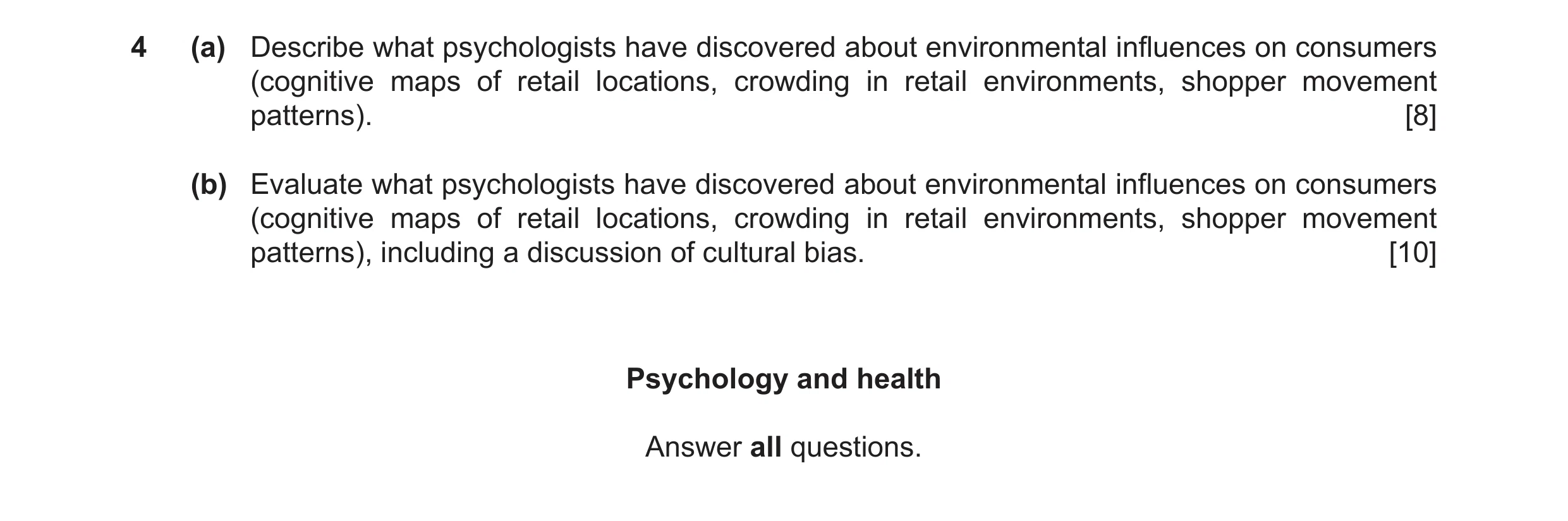
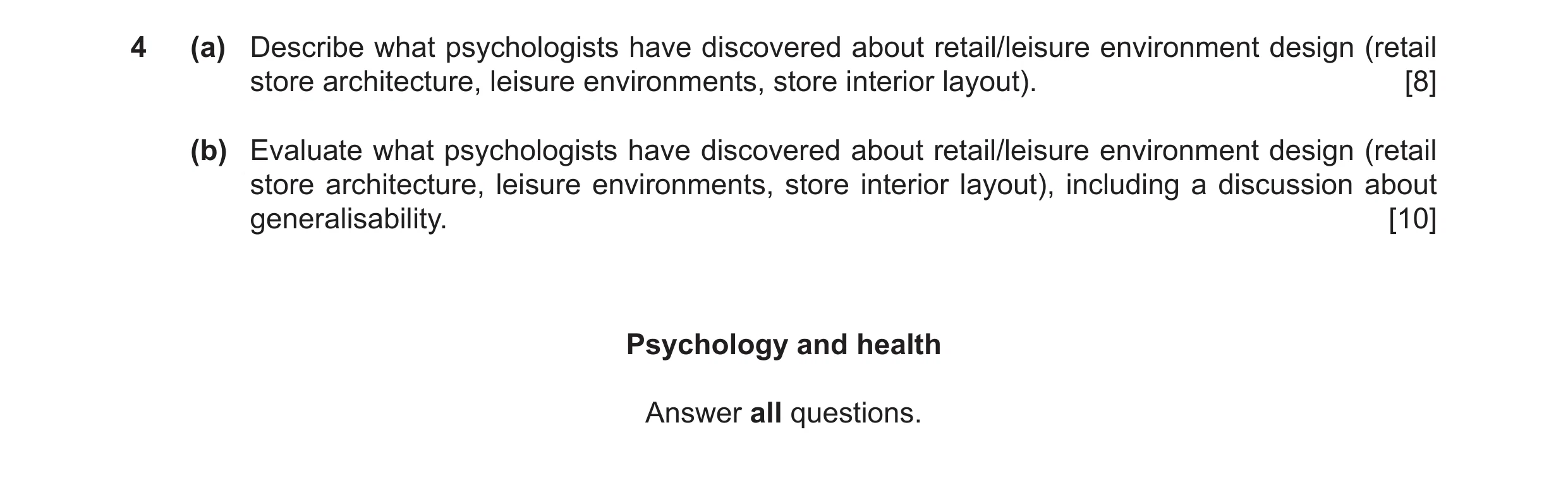
![Question 27: (a) Outline how a token economy can be used to reduce accidents at work. [2] (b) Describe the study by Oldham and Brass (1979) on open plan…](https://img.pastlit.com/crops/680ef6f6-f37a-40a7-9847-297dcb67ed92/q7.webp) 6 / 11
6 / 11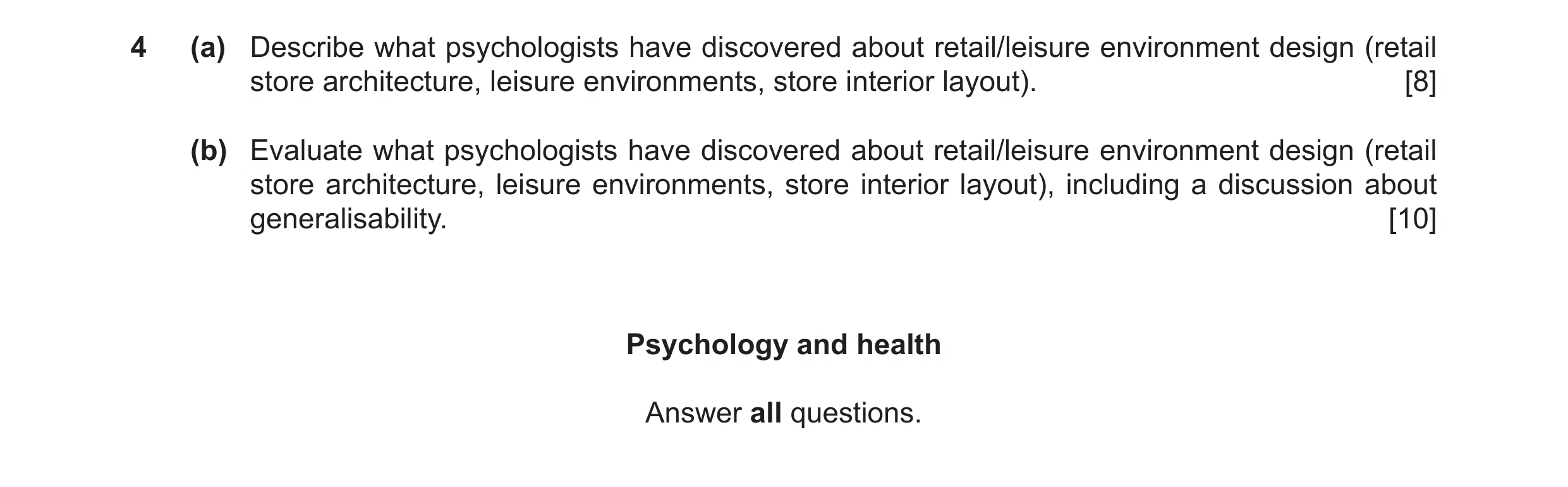
![Question 29: (a) Outline how a token economy can be used to reduce accidents at work. [2] (b) Describe the study by Oldham and Brass (1979) on open plan…](https://img.pastlit.com/crops/9bde9cac-0ab1-4445-a8c8-2674d259fc9e/q7.webp)
![Question 30: (a) Outline ‘behaviour constraint’ in consumer theories of personal space. [2] (b) Describe Study 2 (the field experiment) by Dayan and Bar…](https://img.pastlit.com/crops/20d2edb4-804e-4a56-9f2c-f3265321c37c/q3.webp)

![Question 32: (a) Outline ‘behaviour constraint’ in consumer theories of personal space. [2] (b) Describe Study 2 (the field experiment) by Dayan and Bar…](https://img.pastlit.com/crops/13012a5c-542b-44d3-ba37-20bbfdb80e5d/q3.webp)
 7 / 11
![Question 34: (a) Outline what is meant by ‘individual and situational explanations’. [2] (b) Explain one reason why ‘overload’ in relation to personal s…](https://img.pastlit.com/crops/9f47f029-0ba4-49d7-b5ca-31bbe632d30e/q6.webp)
![Question 35: (a) Describe the study by North et al. (2003) on musical style and restaurant customers’ spending. [6] (b) Evaluate this study by North et …](https://img.pastlit.com/crops/9f47f029-0ba4-49d7-b5ca-31bbe632d30e/q8.webp)

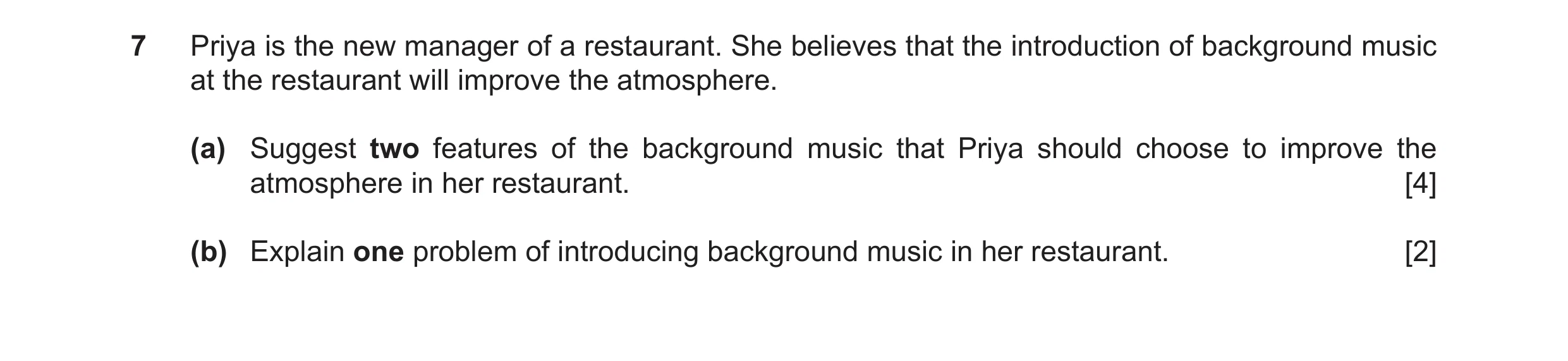 8 / 11

 9 / 11

![Question 44: (a) Describe the study by Robson et al. (2011) on consumers’ responses to table spacing in restaurants. [6] (b) Evaluate the study by Robso…](https://img.pastlit.com/crops/fd272d35-be54-4559-950f-83ab5103f98c/q8.webp)

 10 / 11
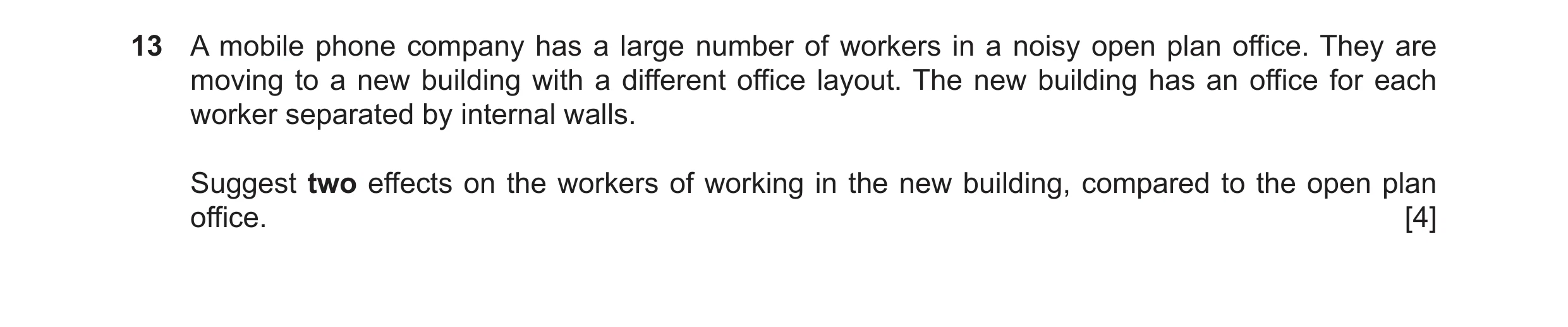 11 / 11
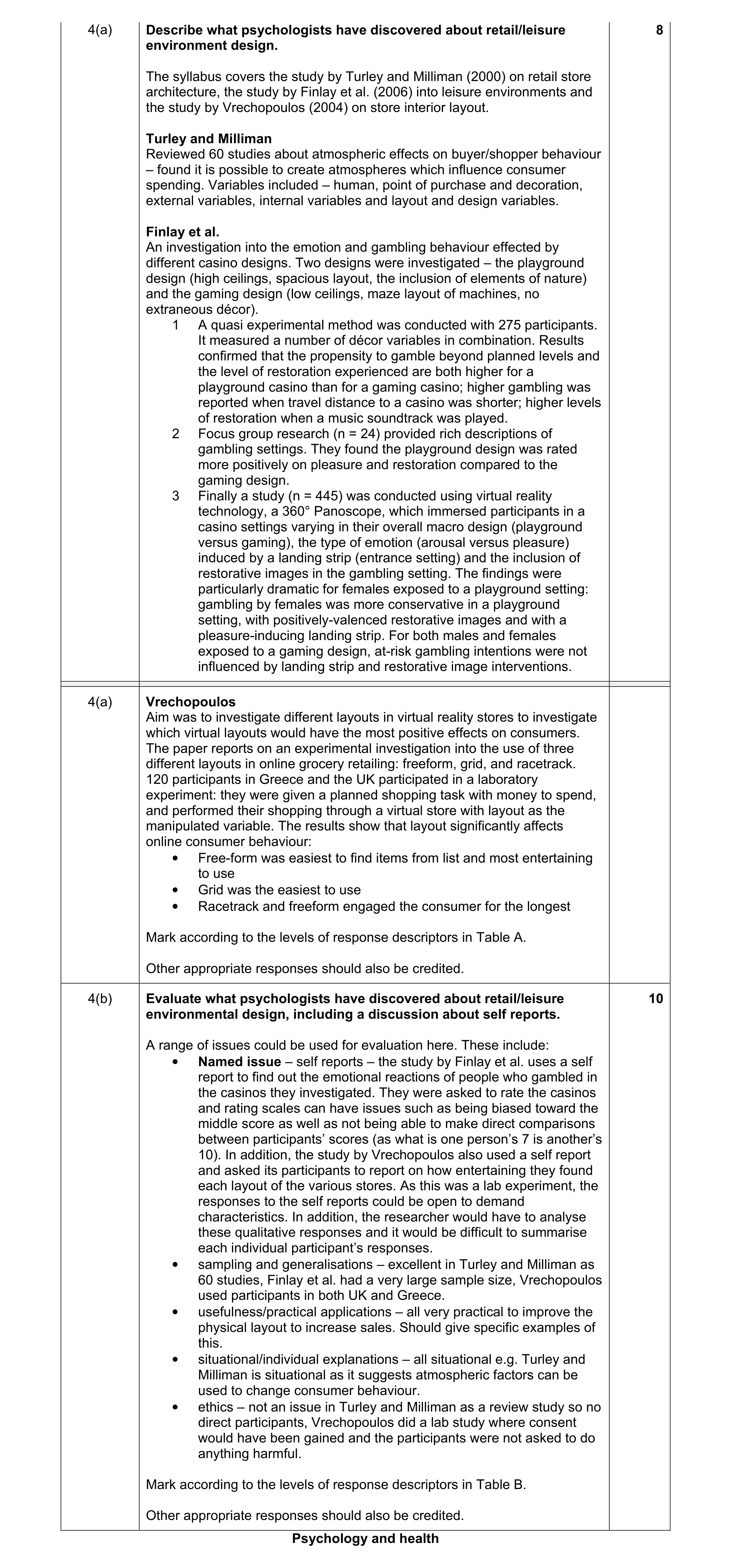 18
18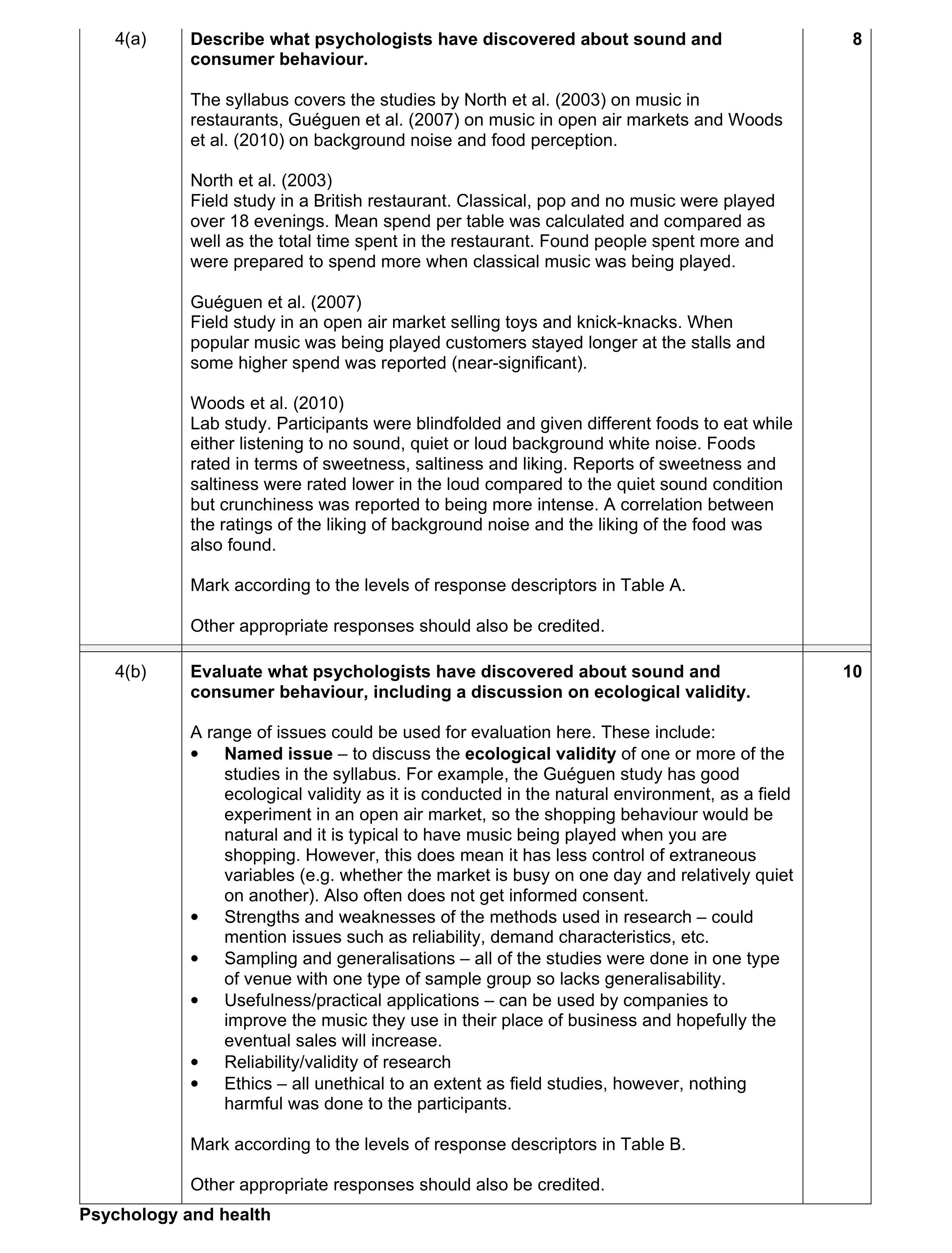 18
18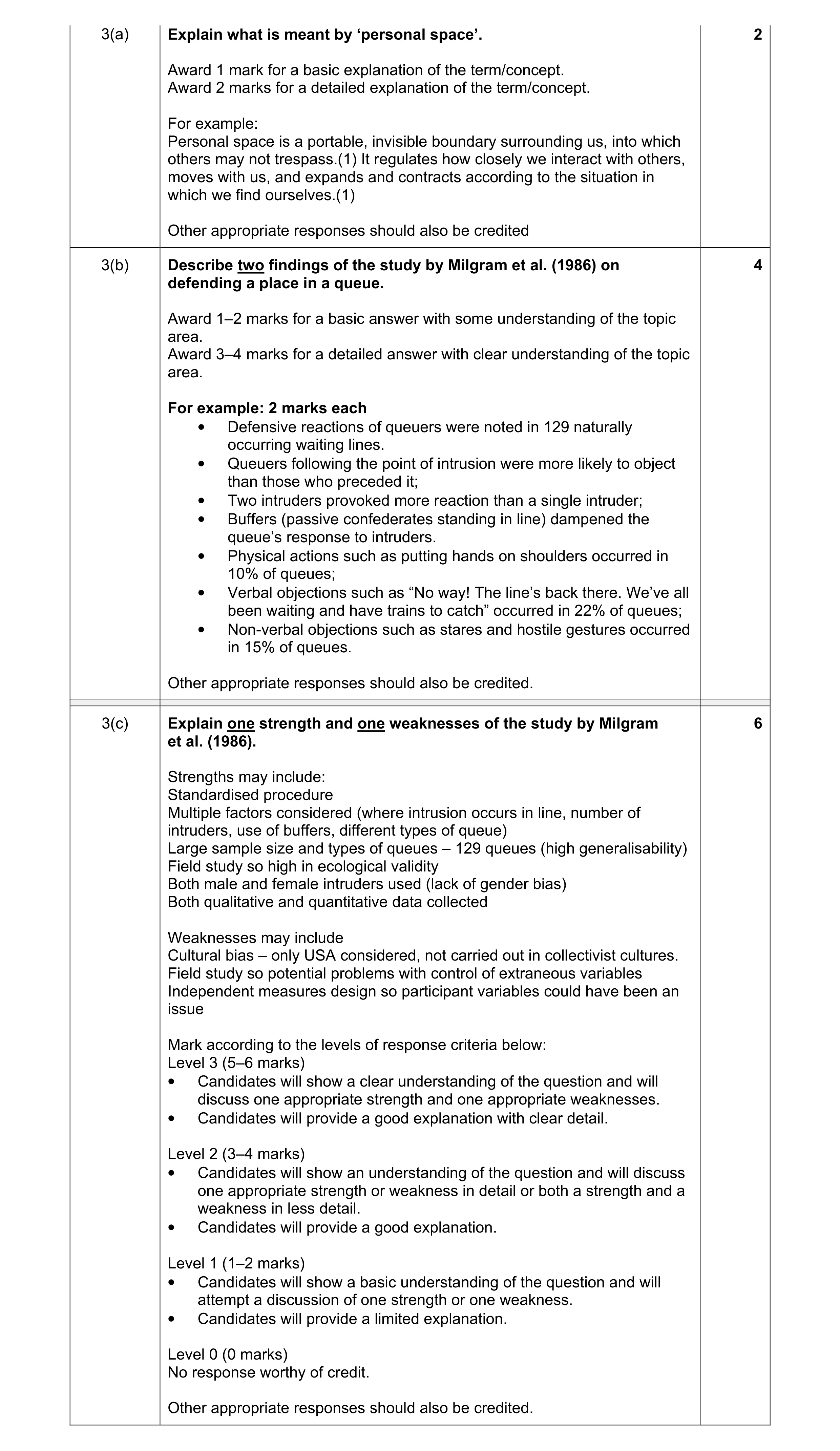 12
12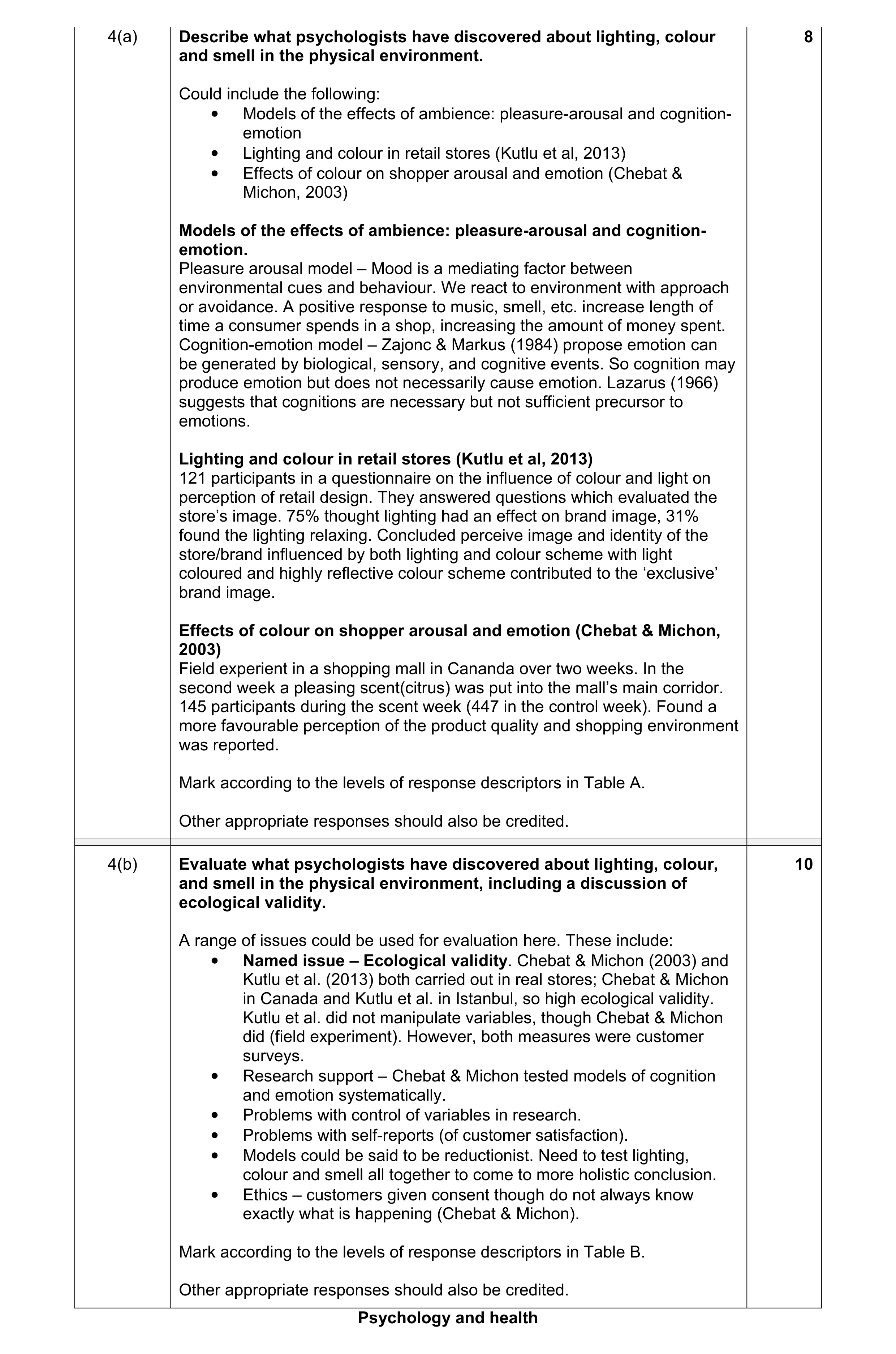 18
18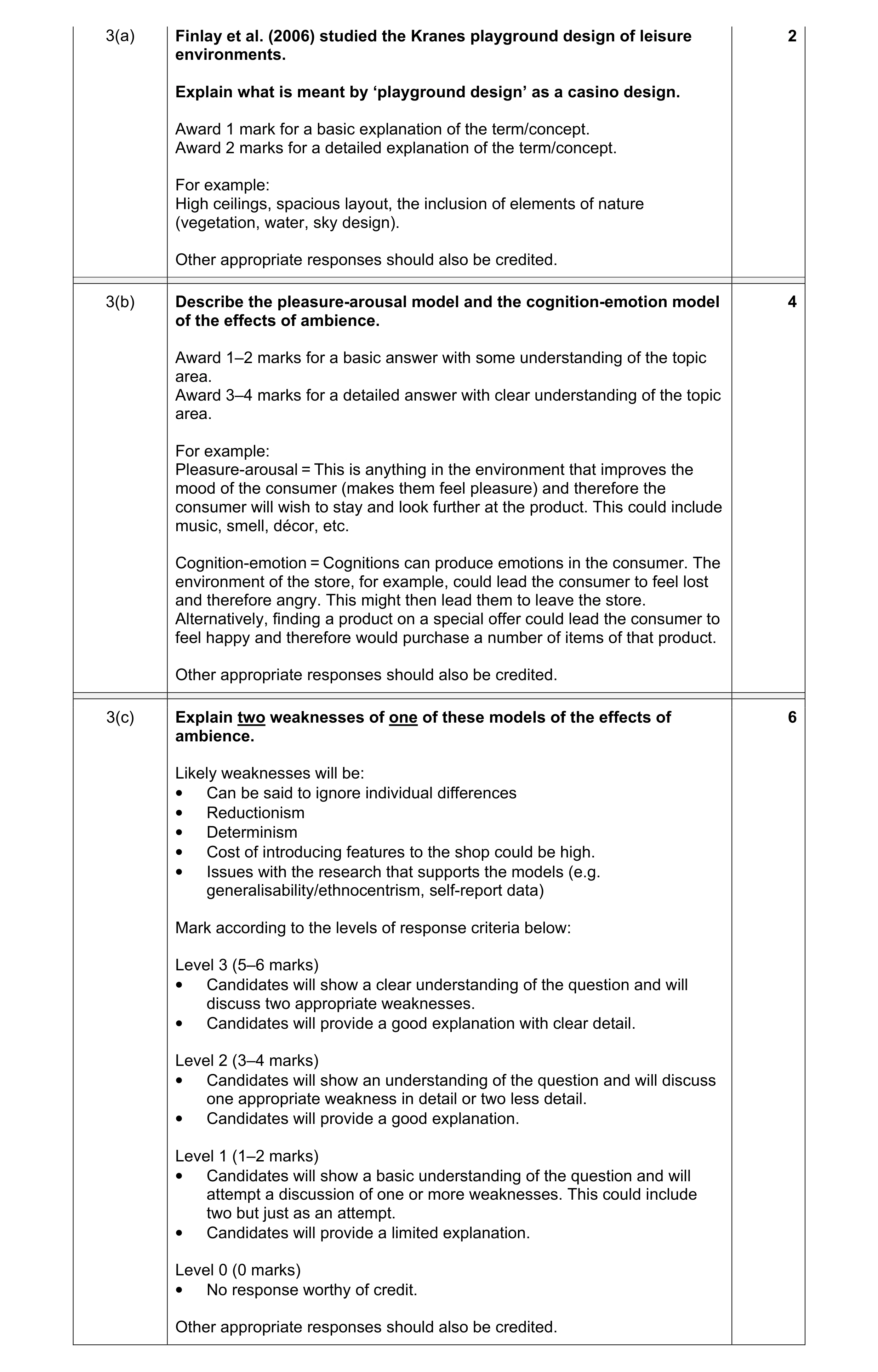 12
12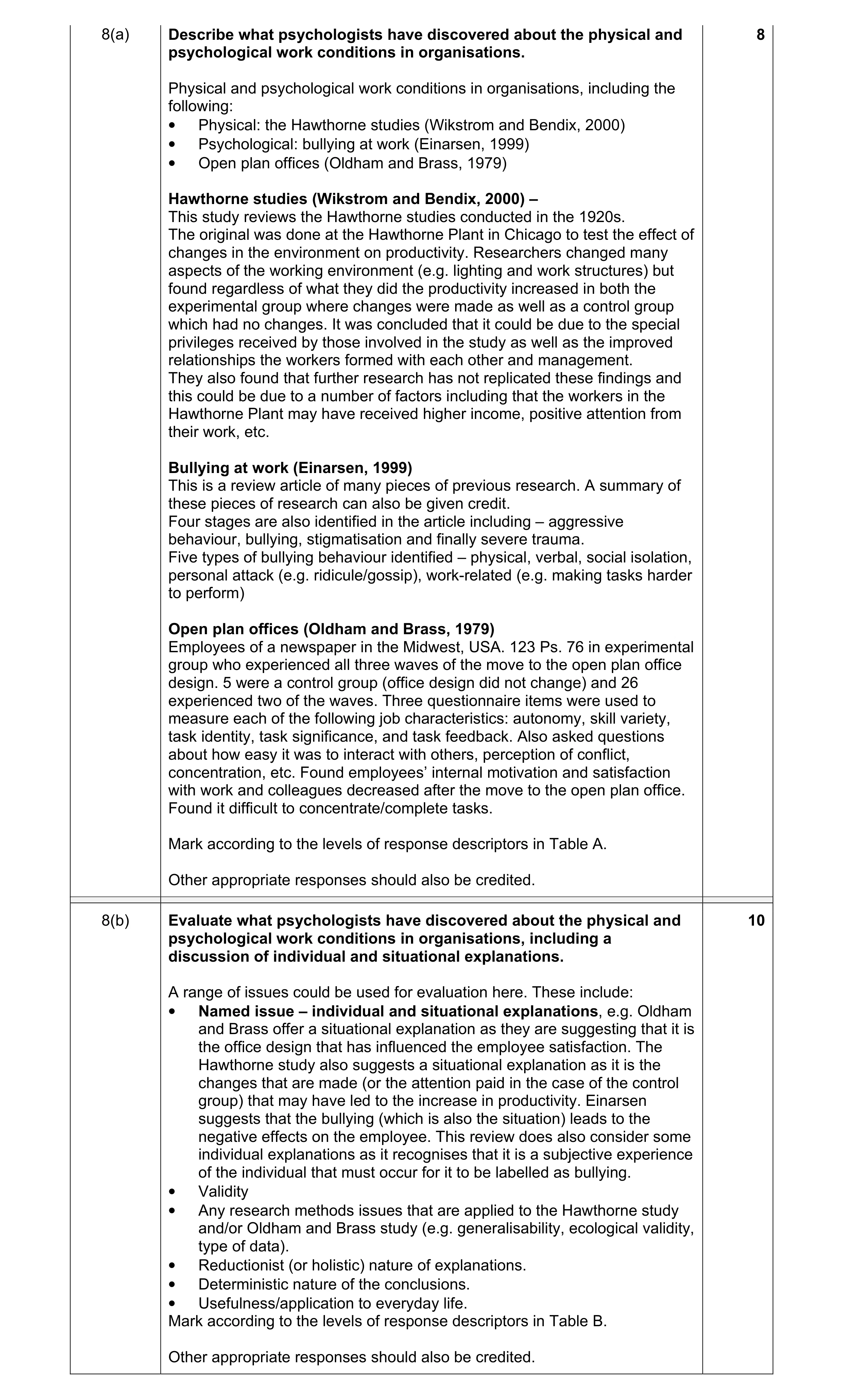 18
18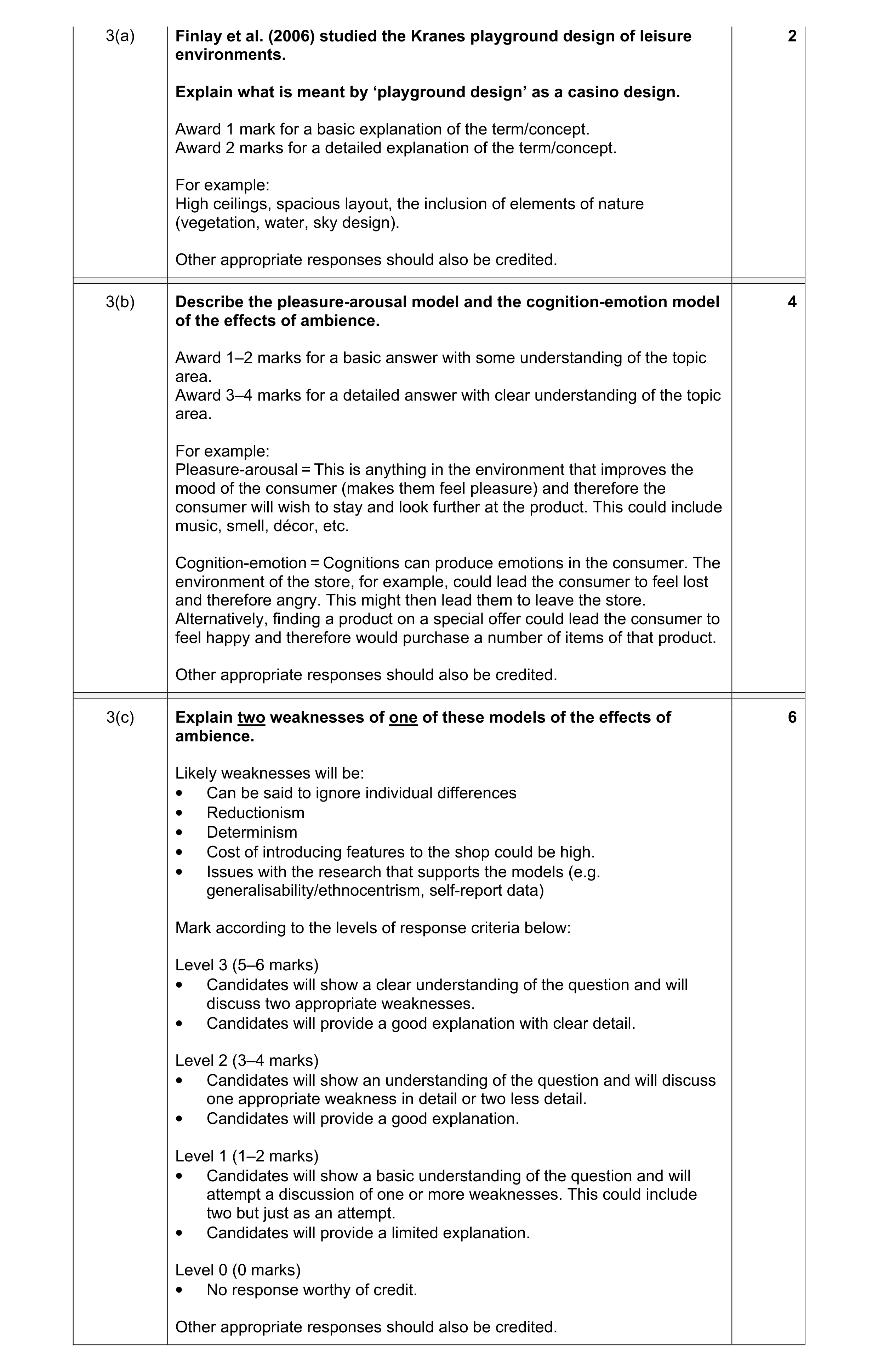 12
12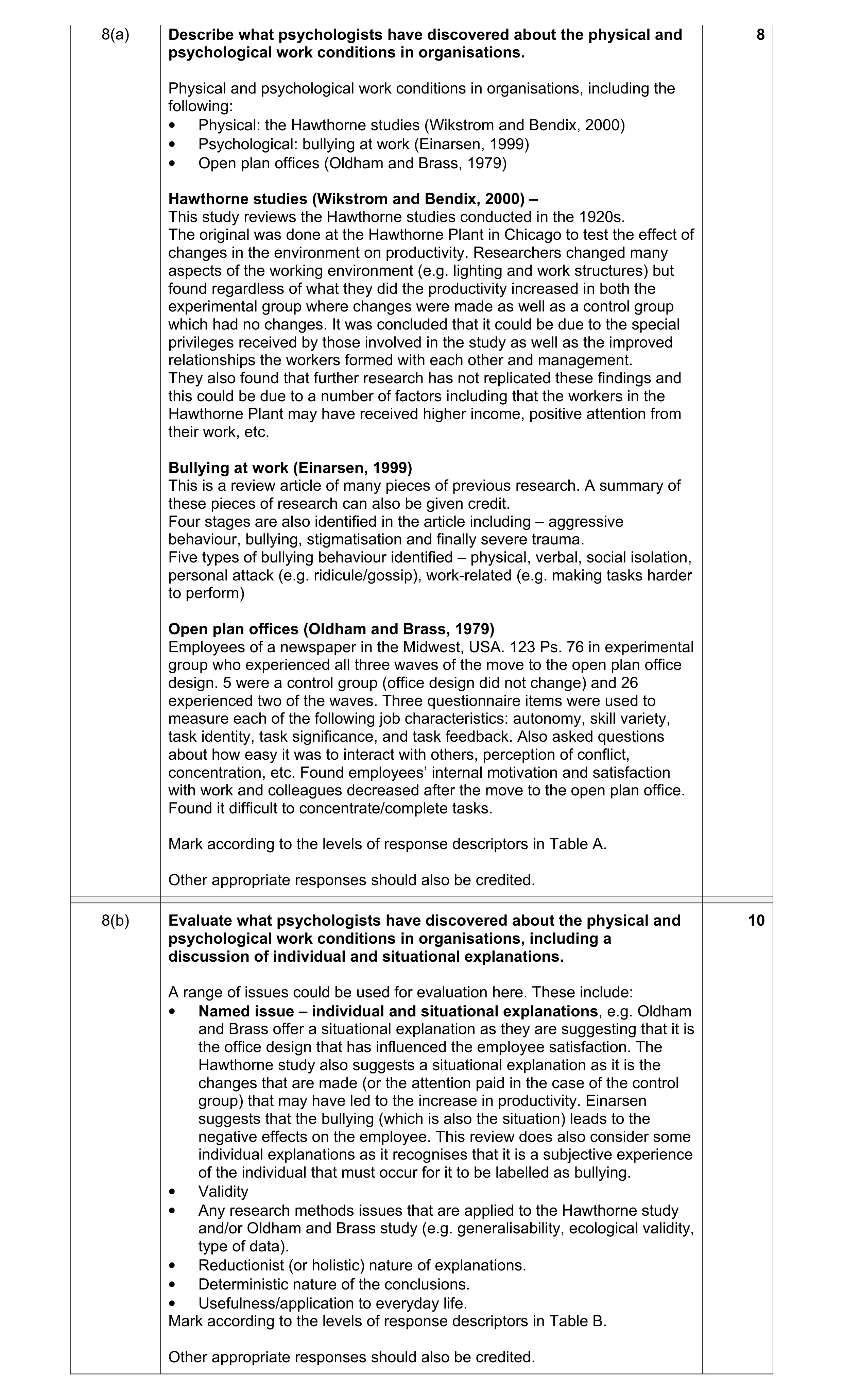 18
18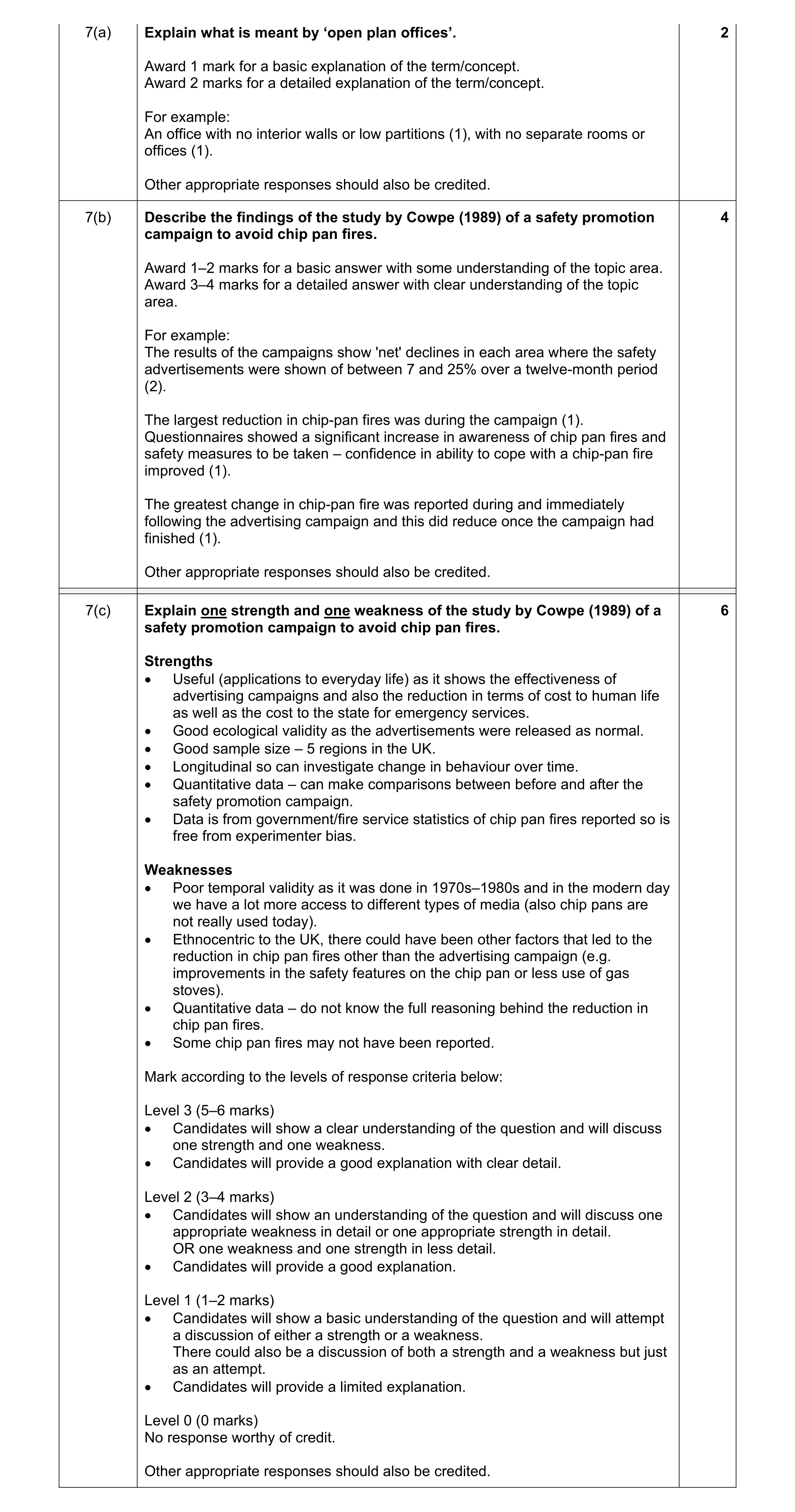 12
12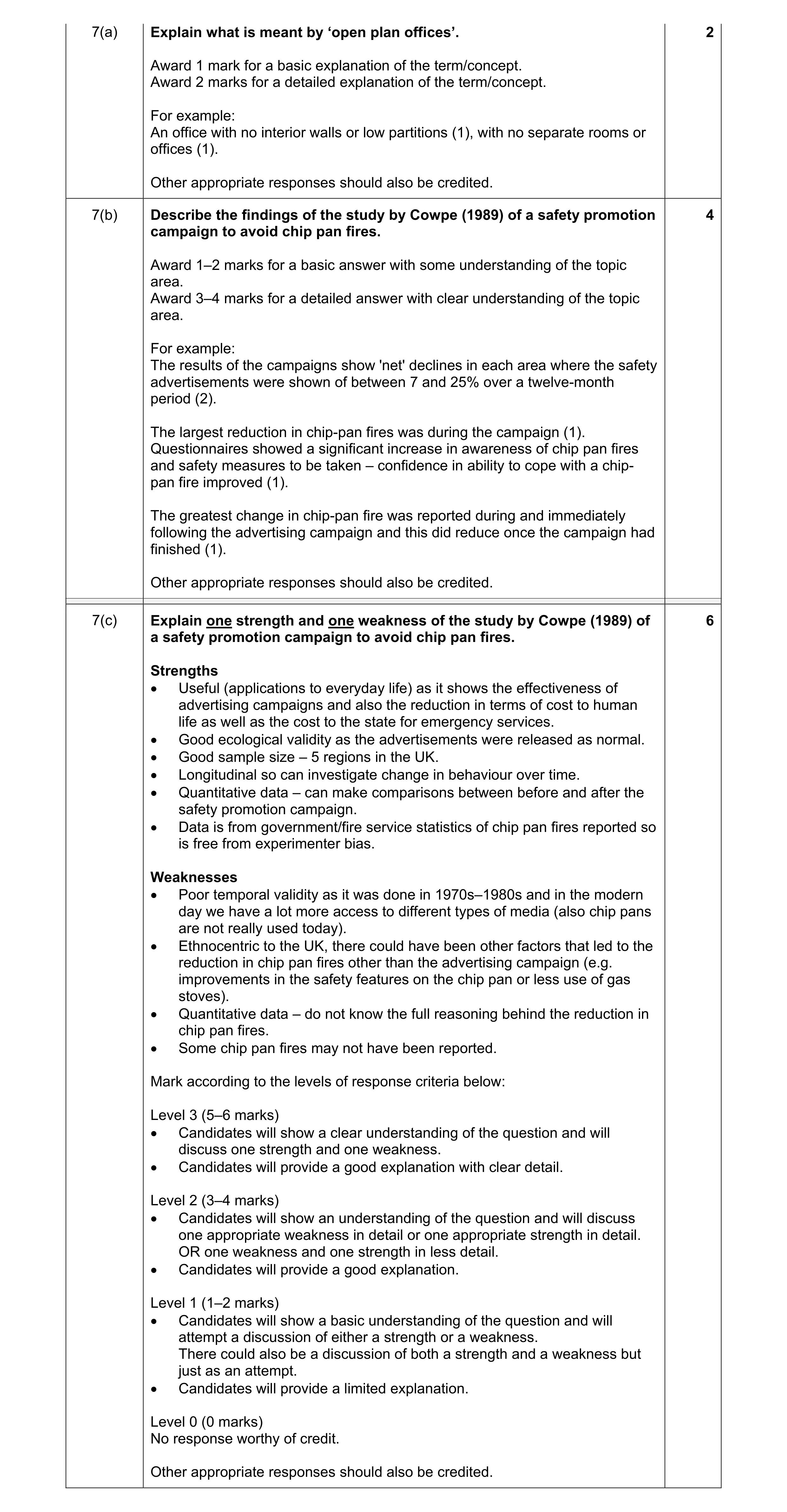 12
12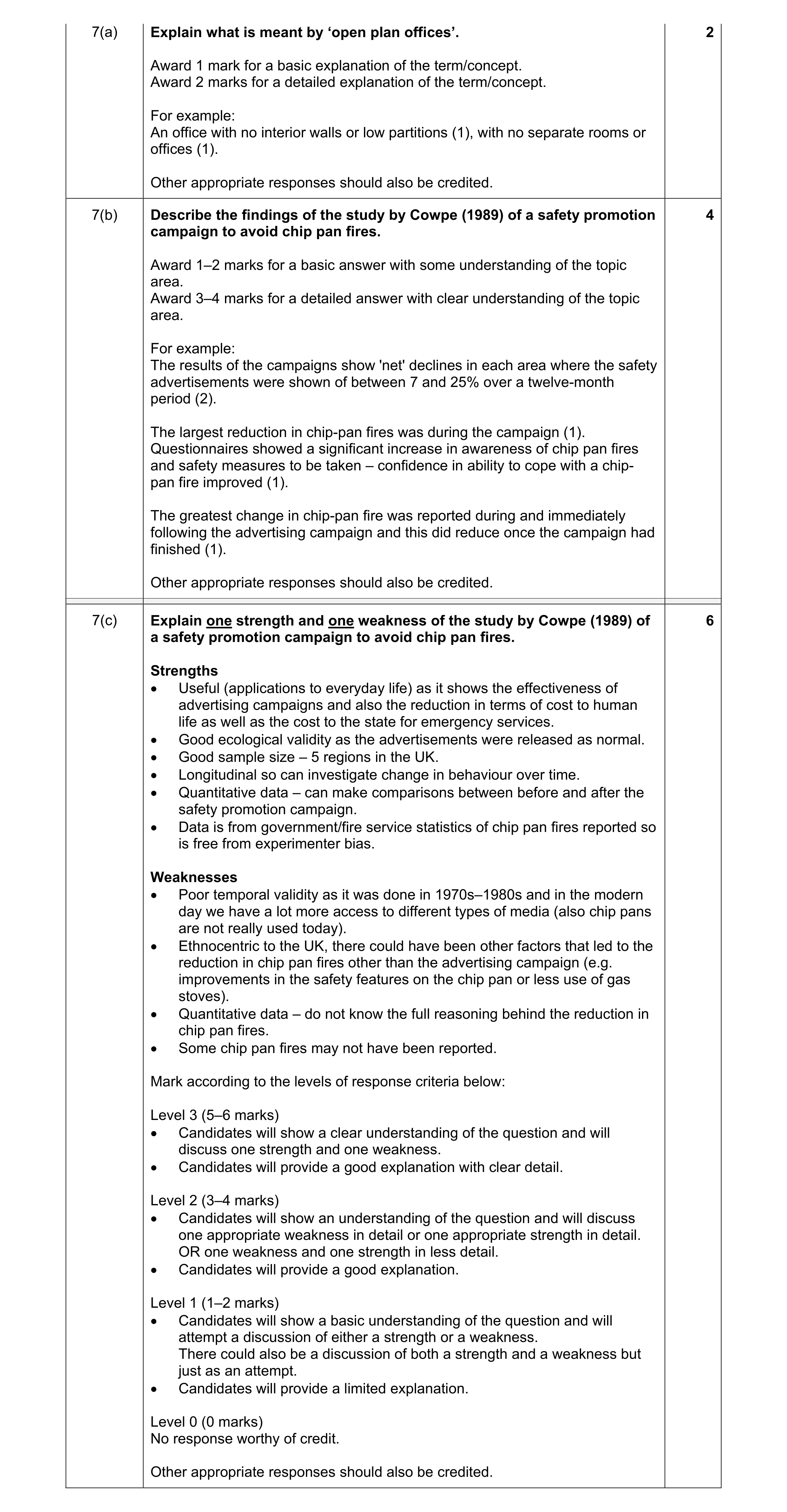 12
12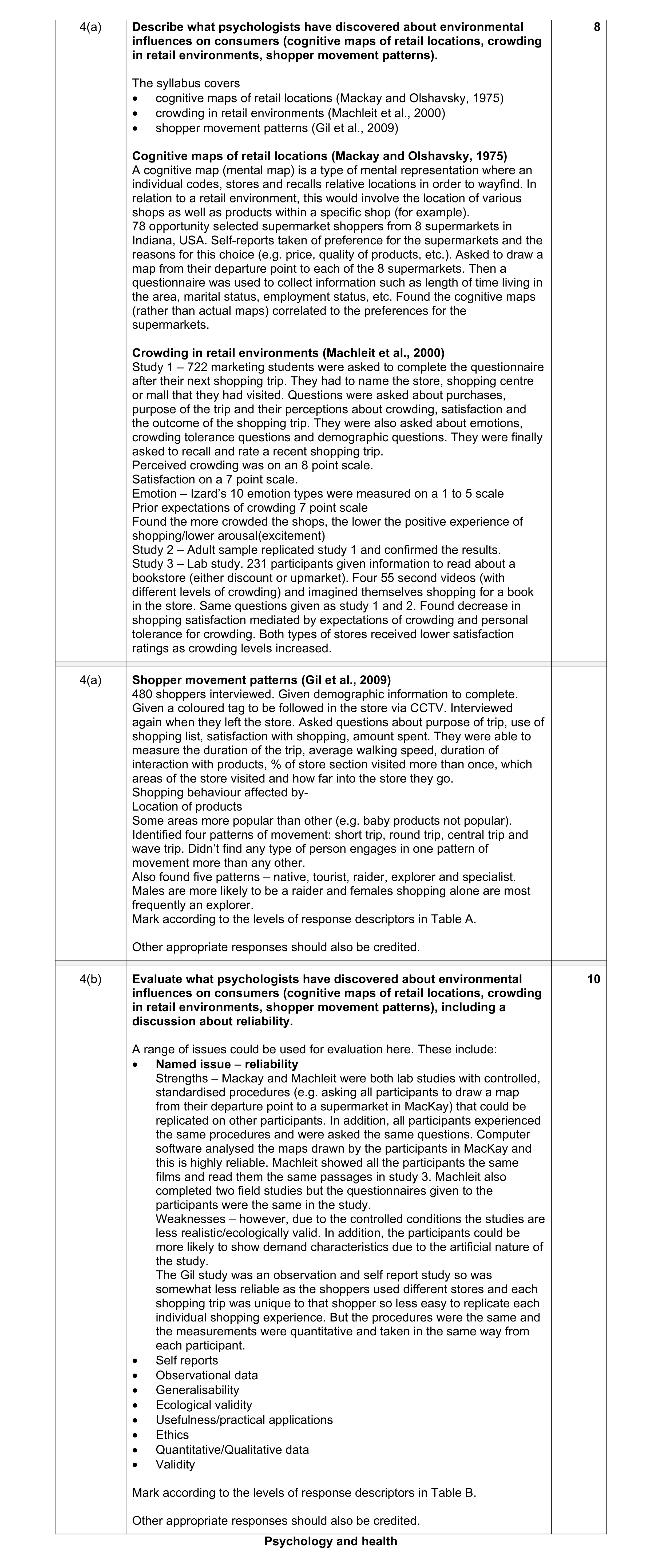 18
18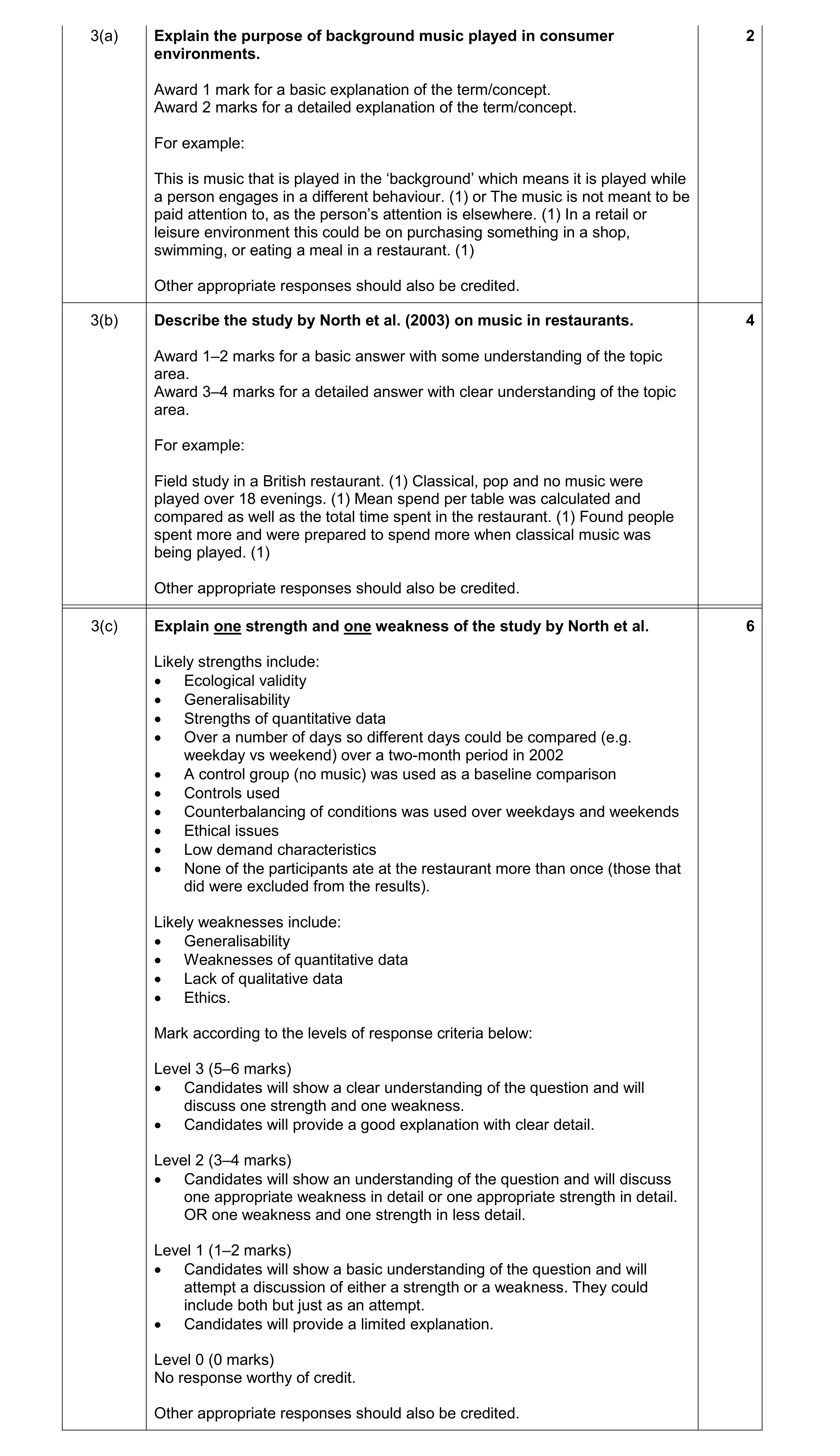 12
12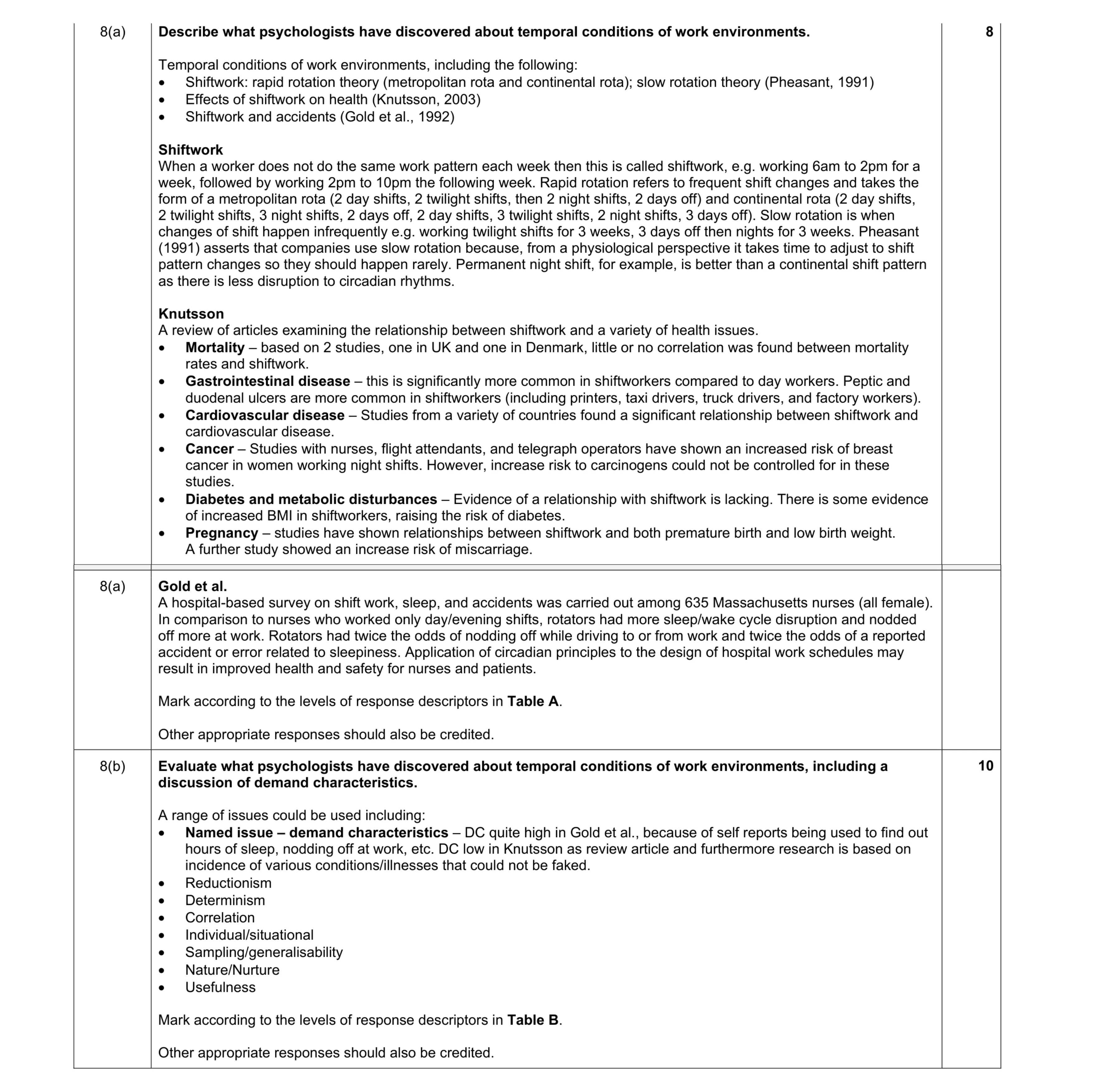 18
18 18
18 18
18 12
12 18
18 18
18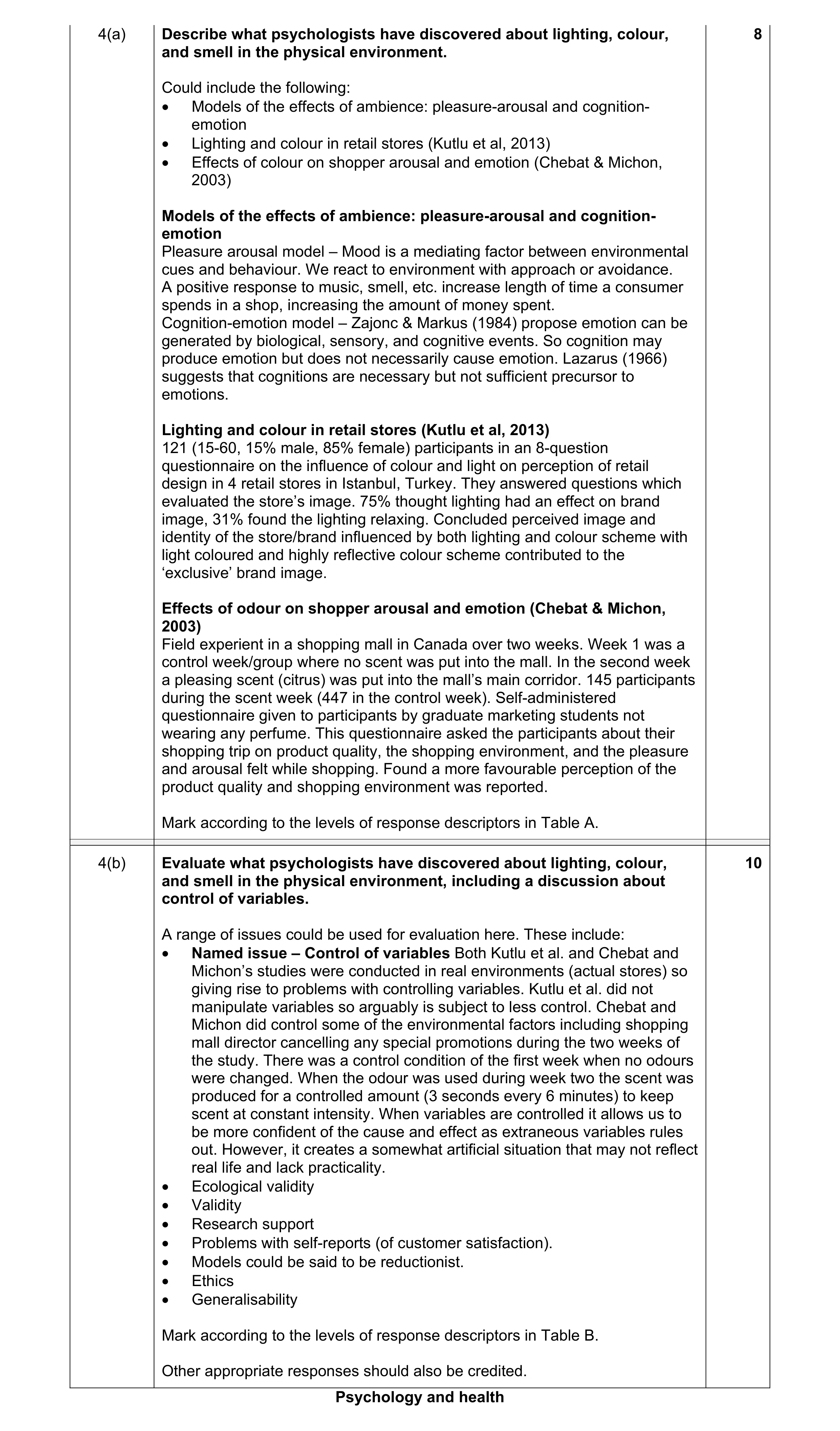 18
18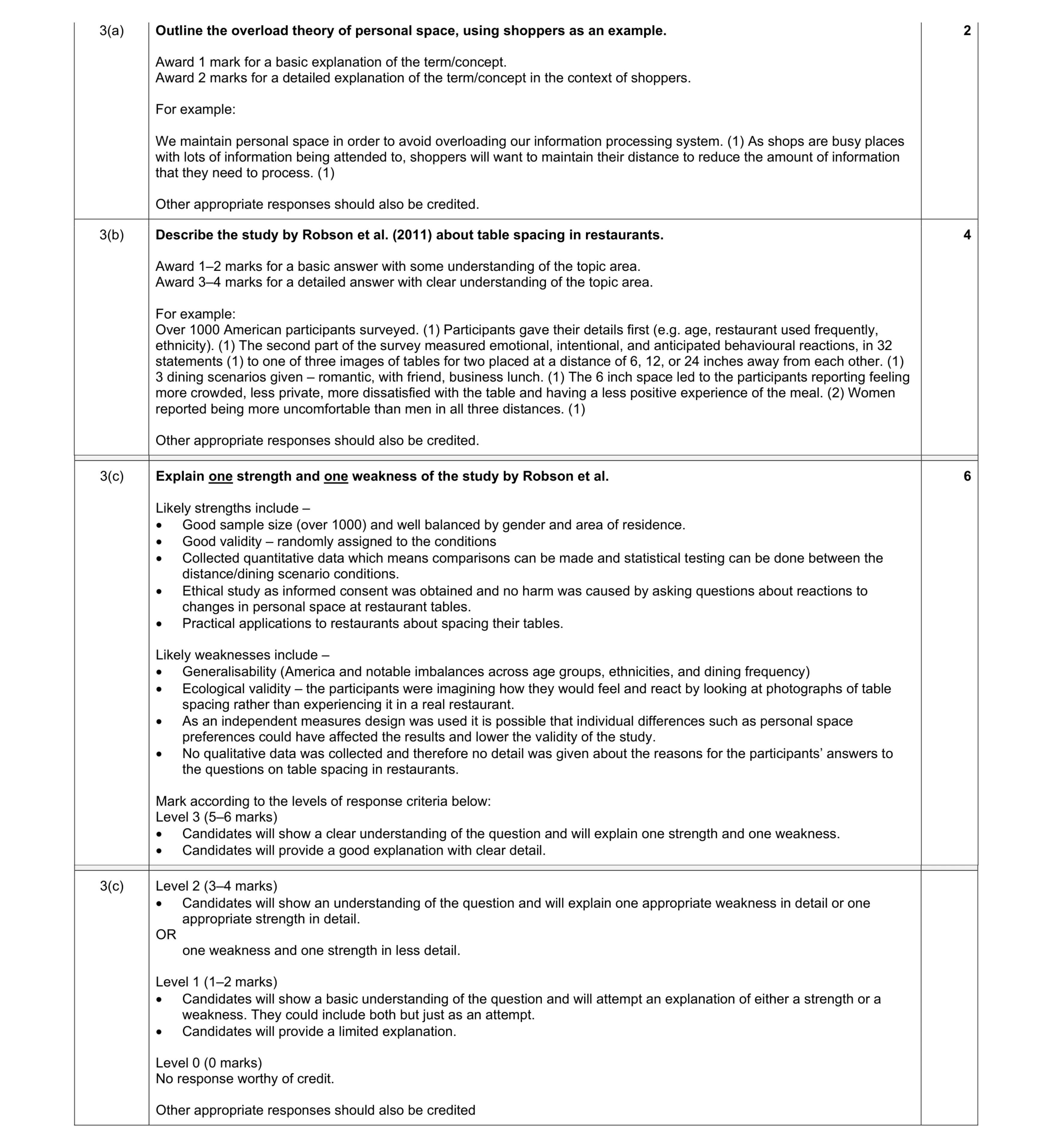 12
12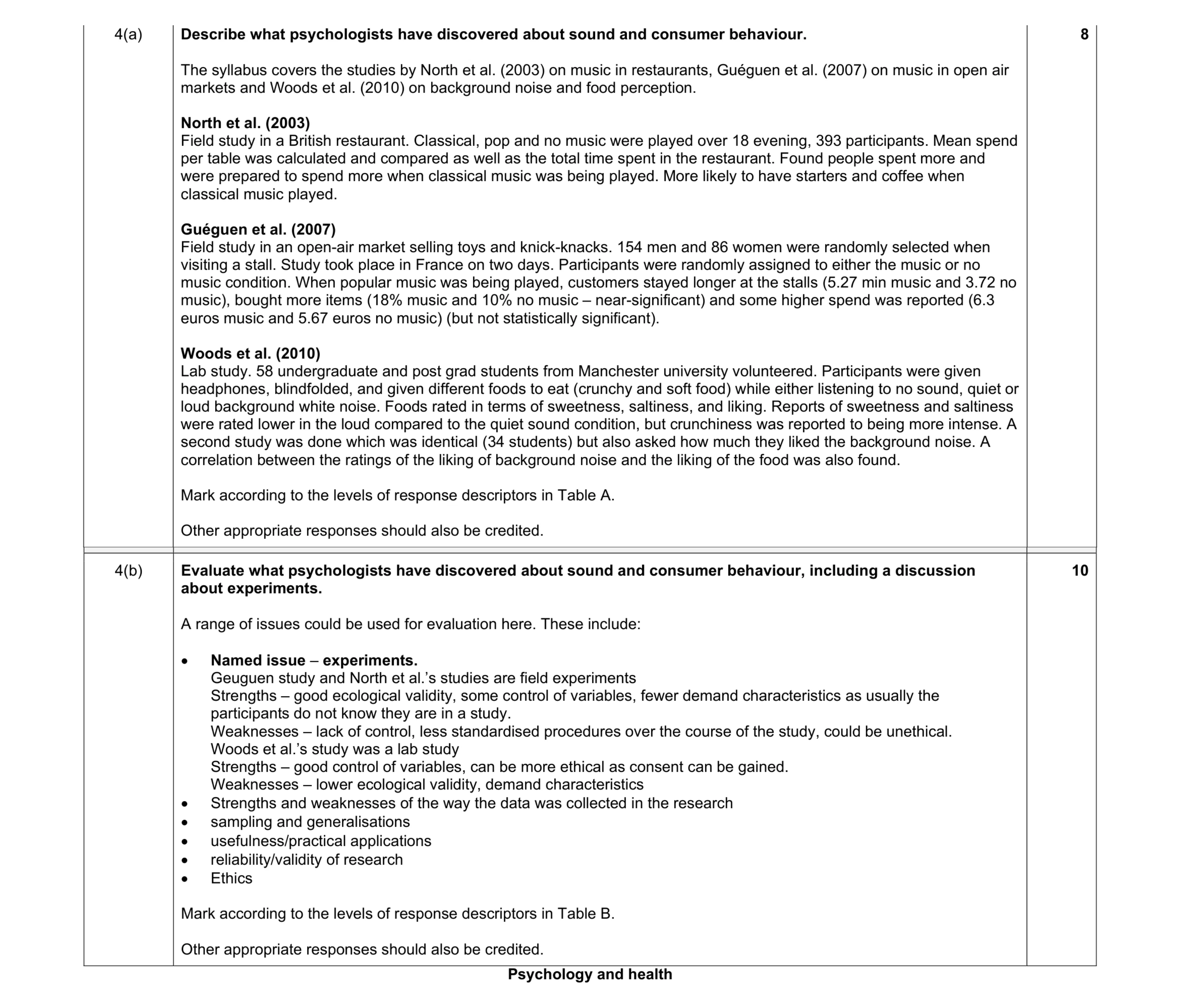 18
18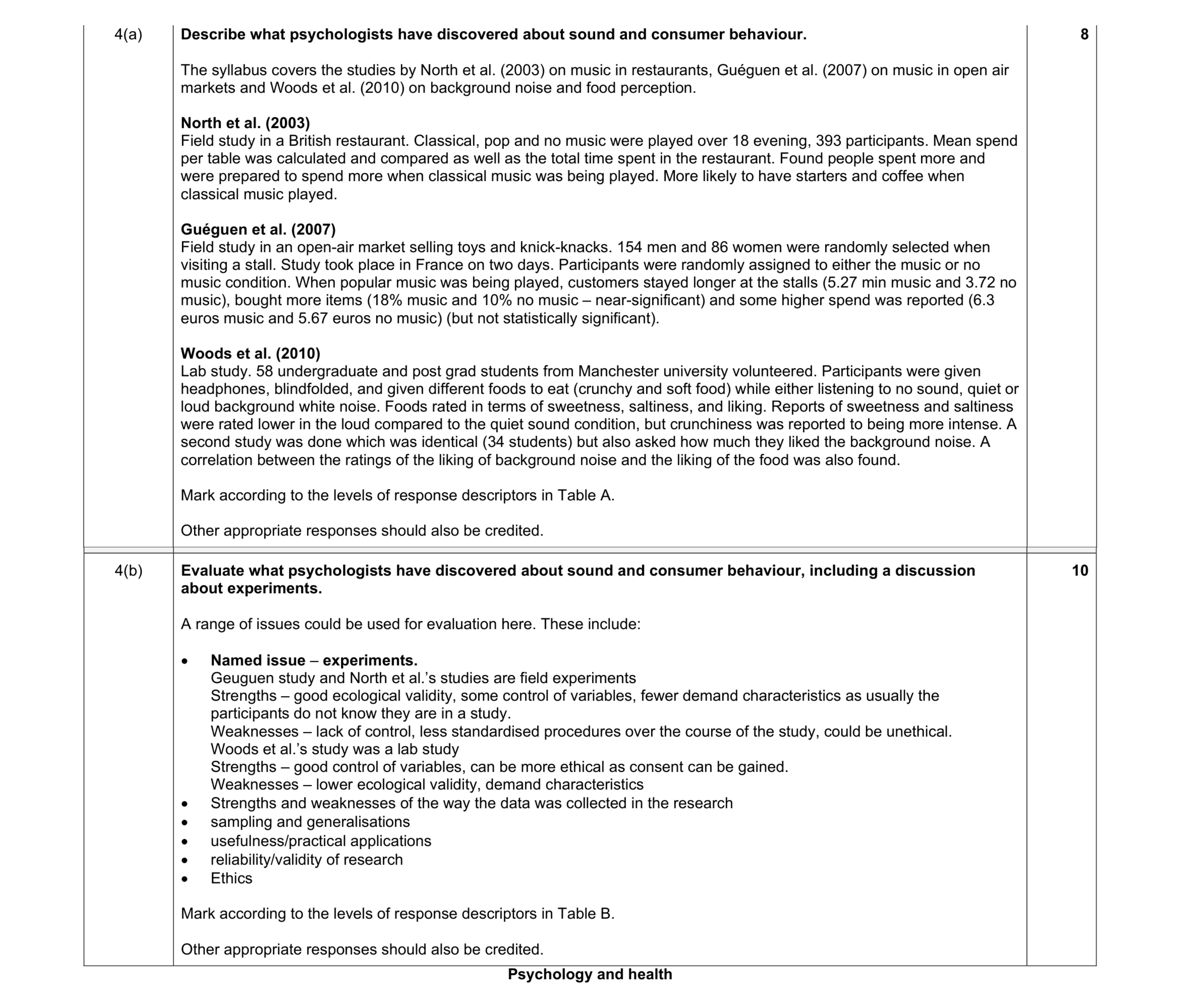 18
18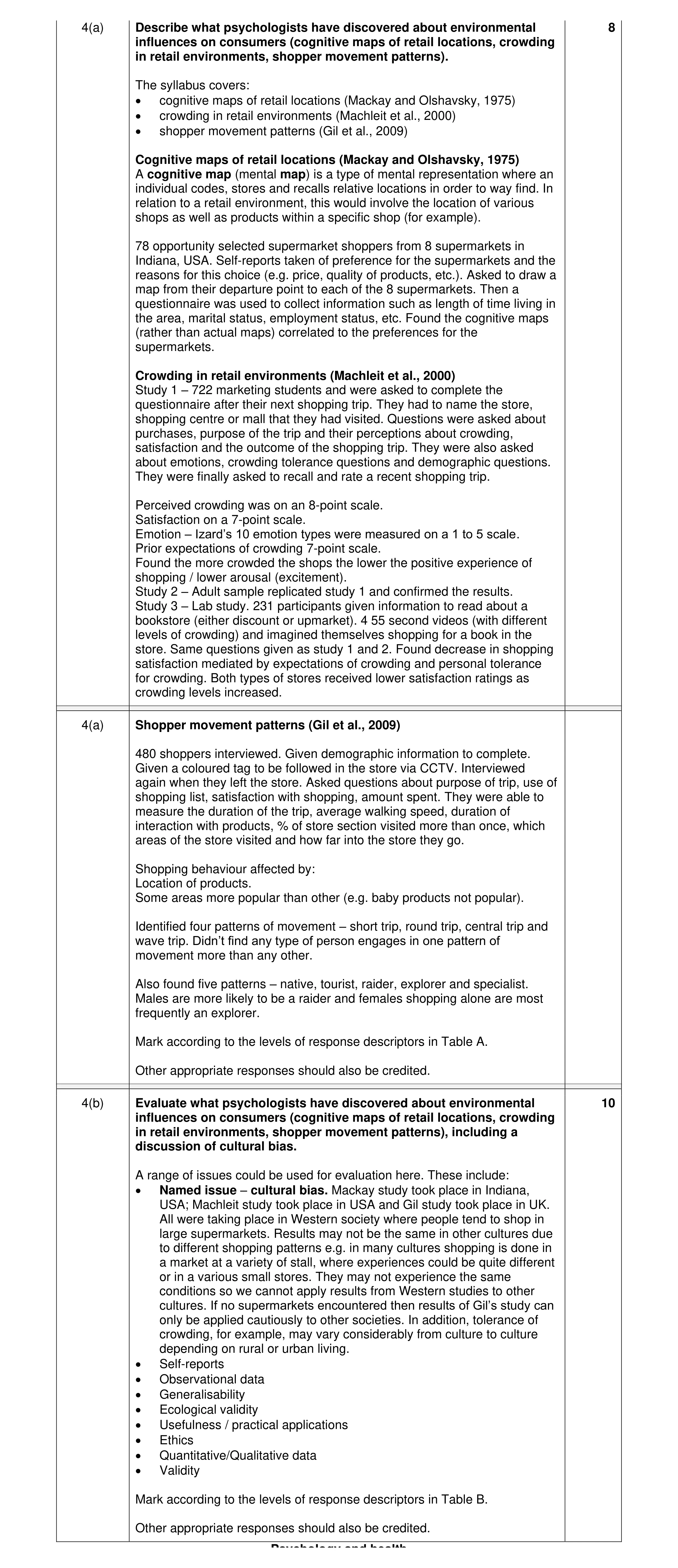 18
18 18
18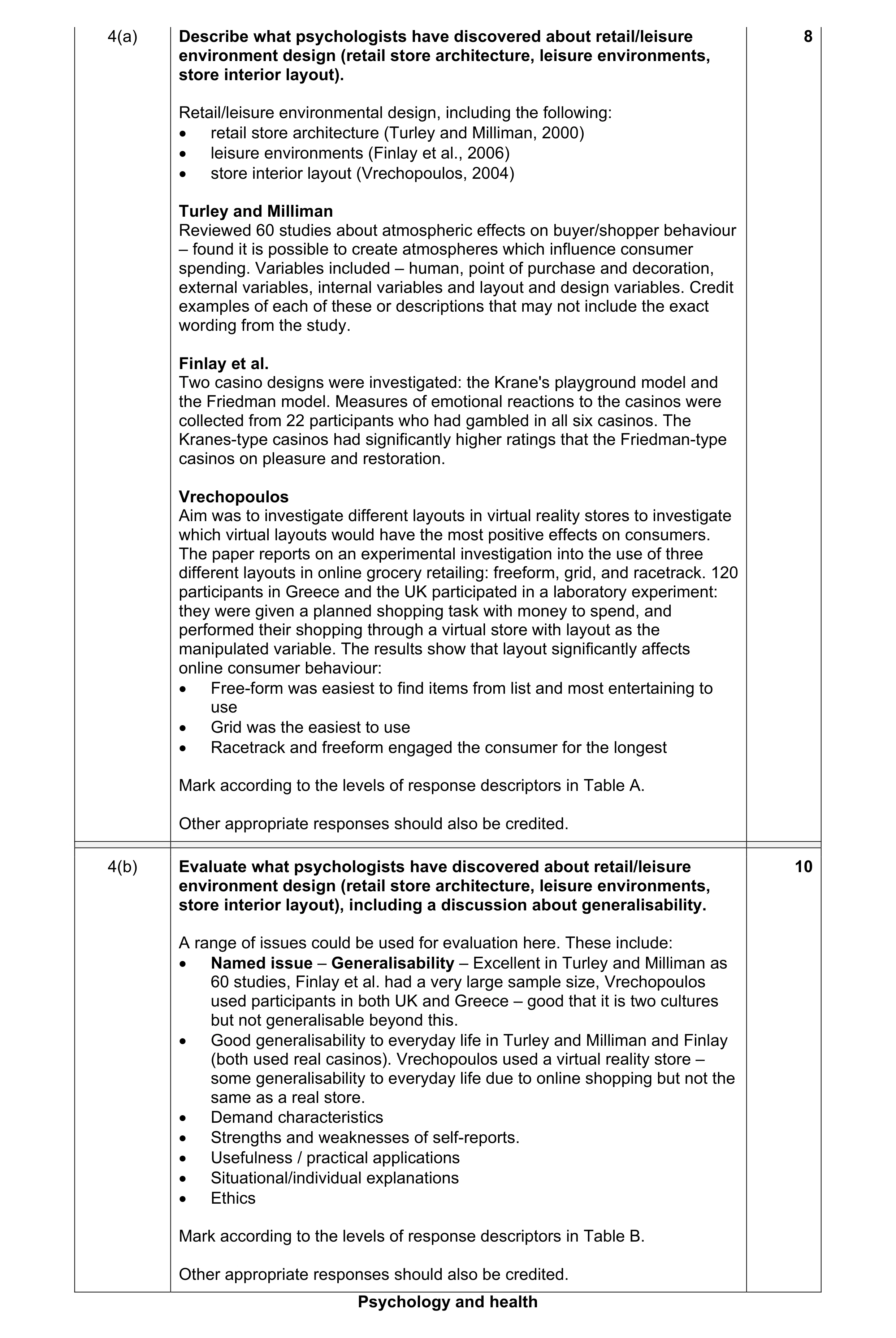 18
18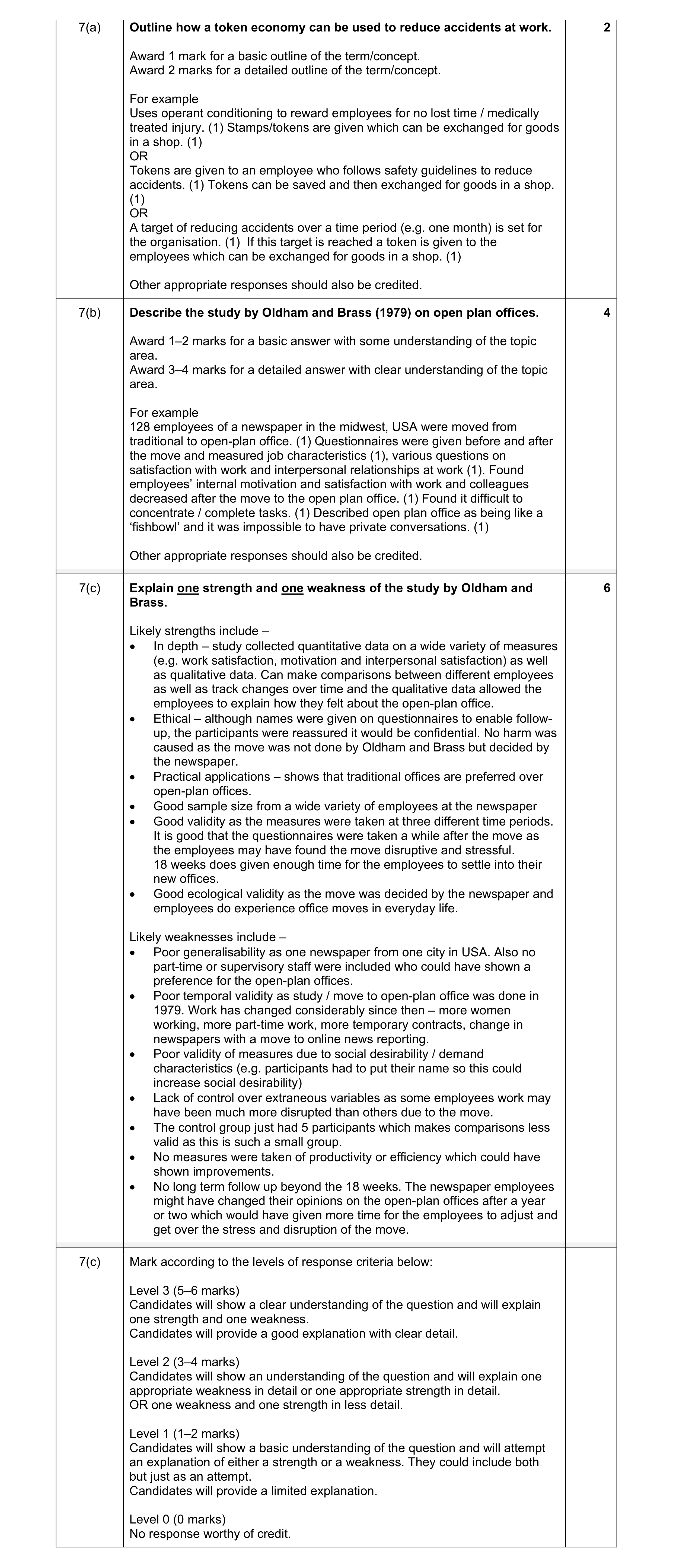 12
12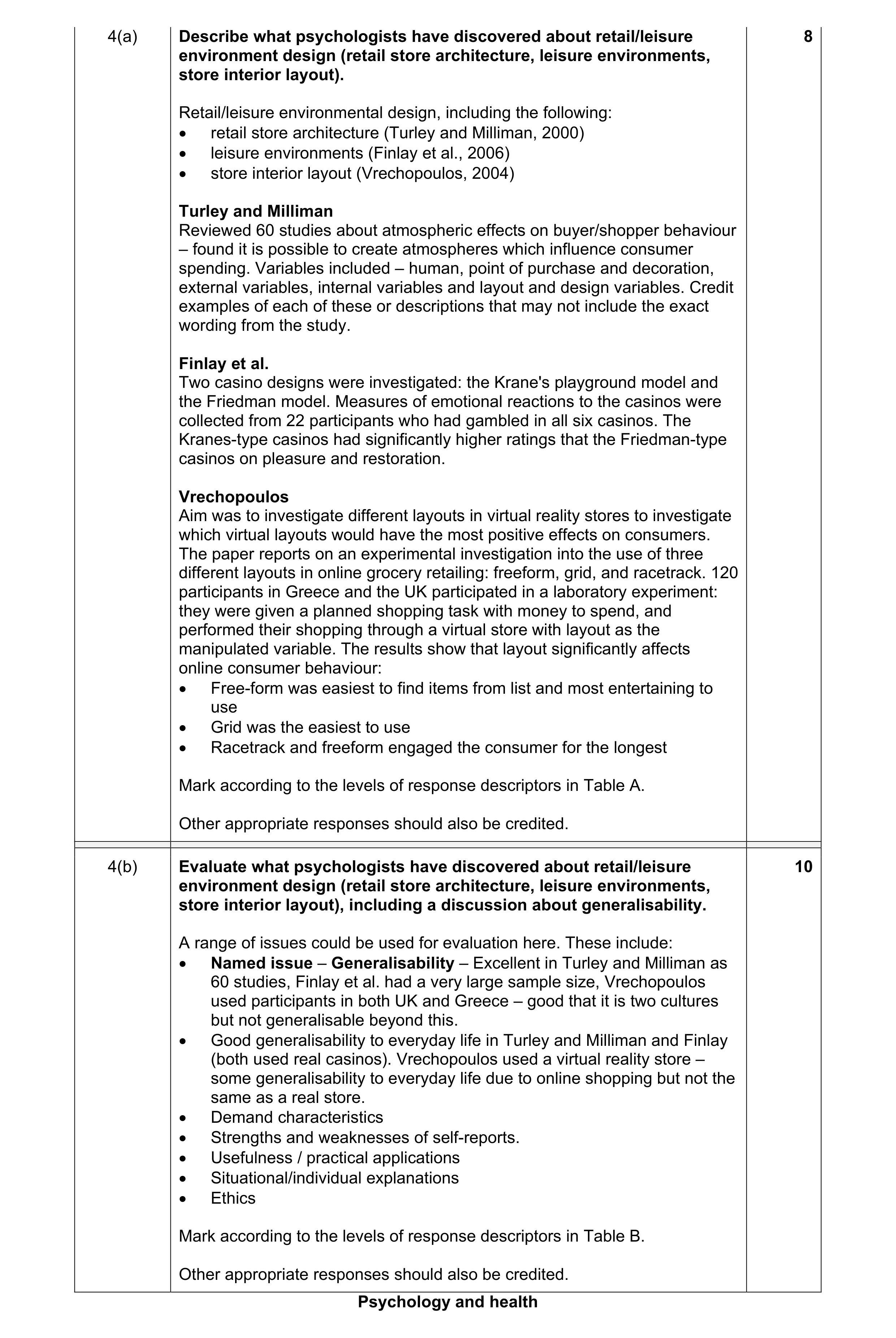 18
18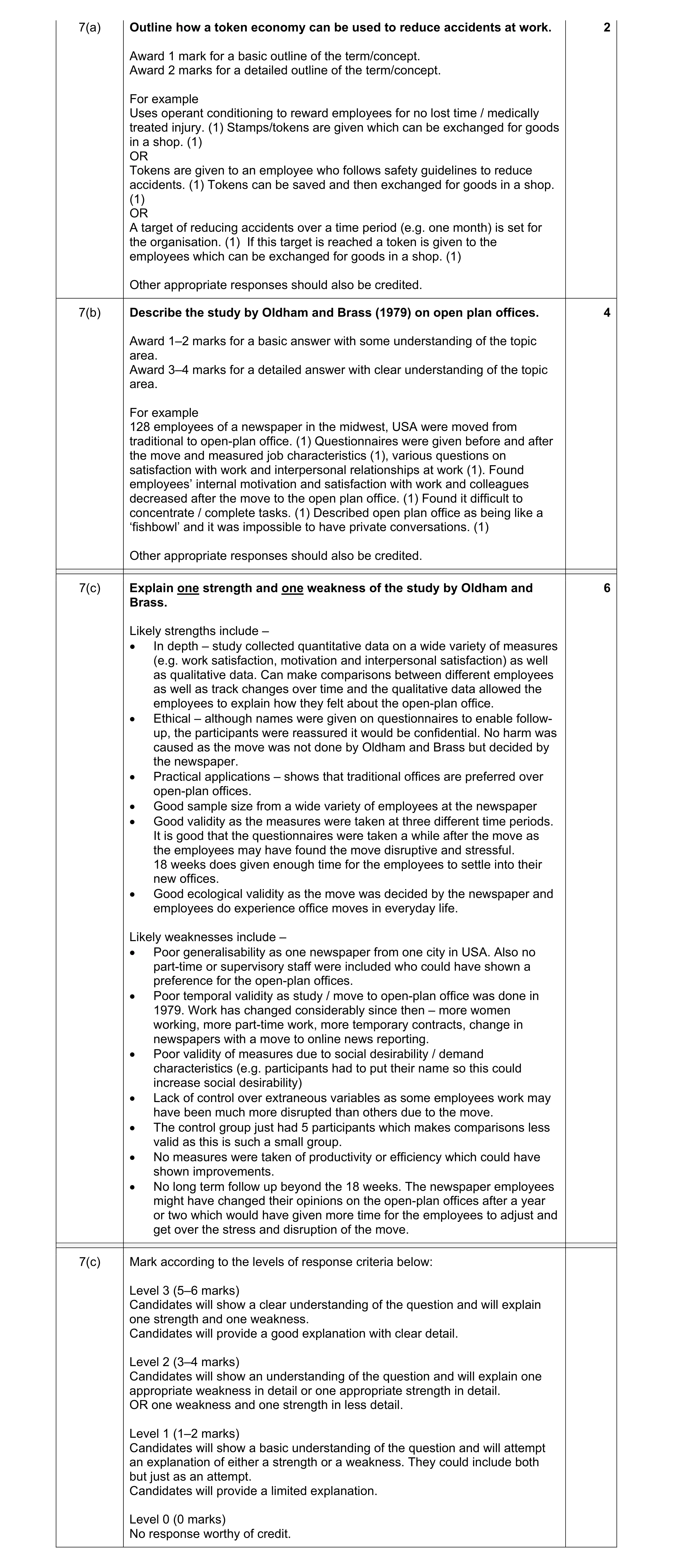 12
12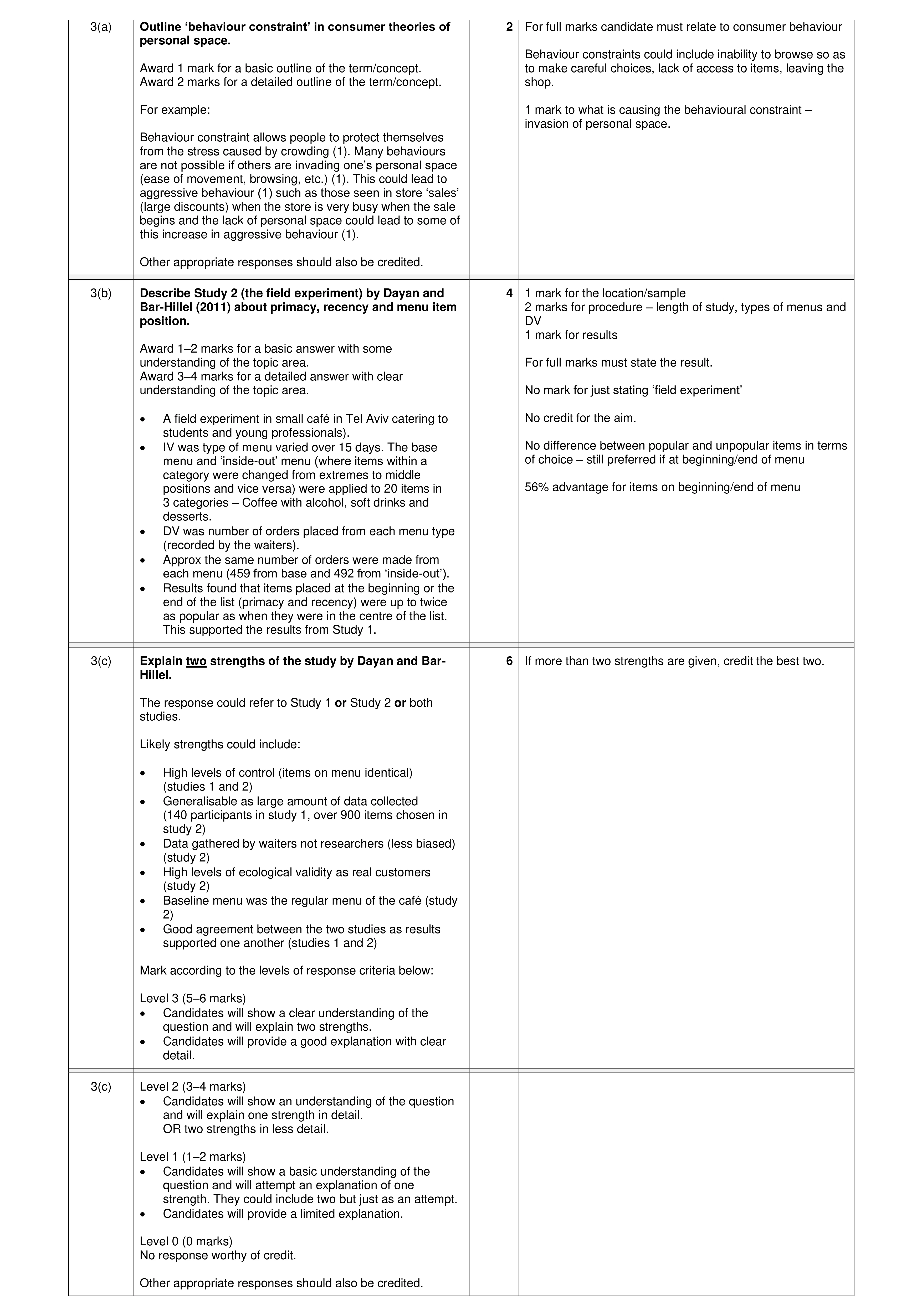 12
12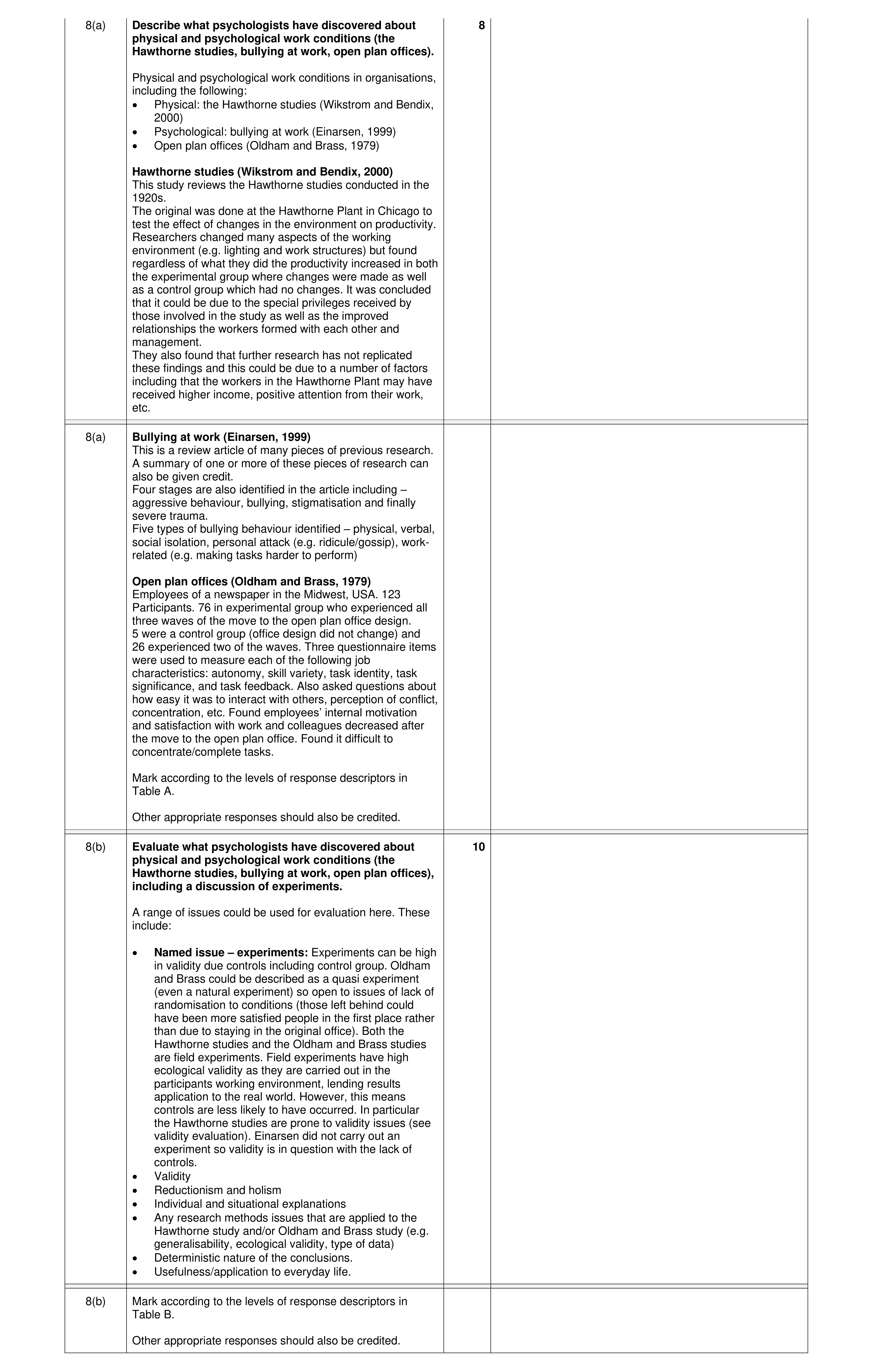 18
18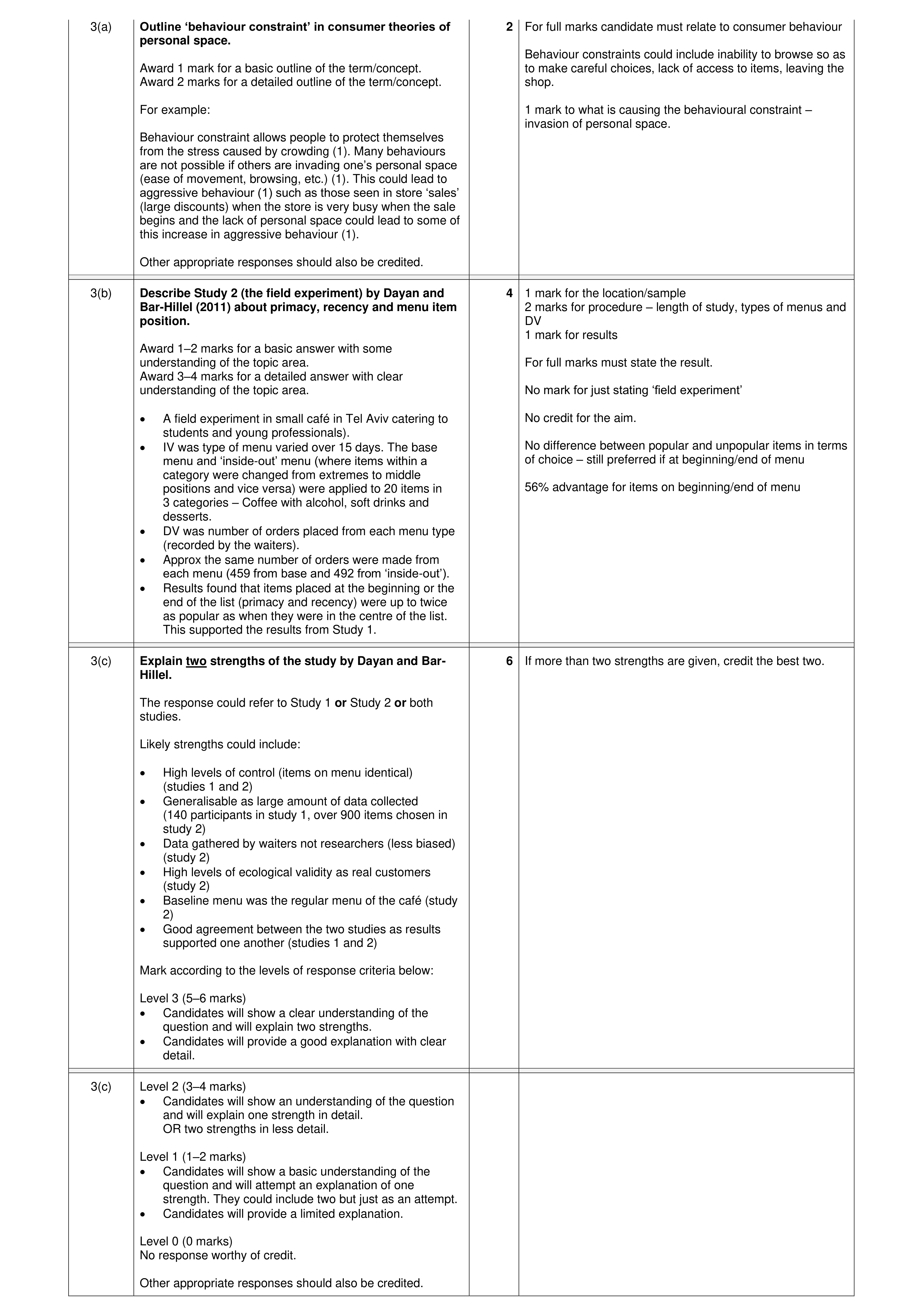 12
12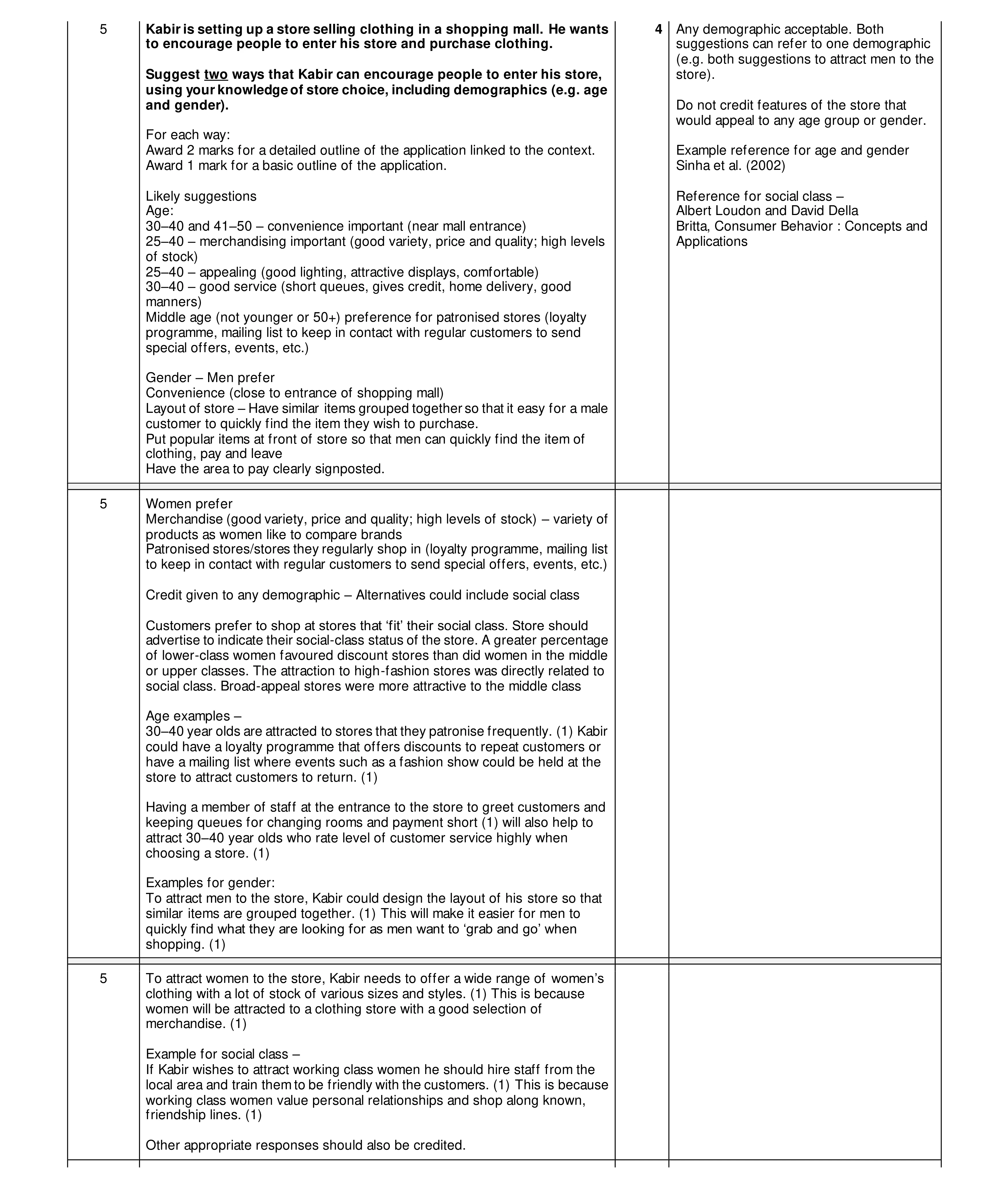 4
4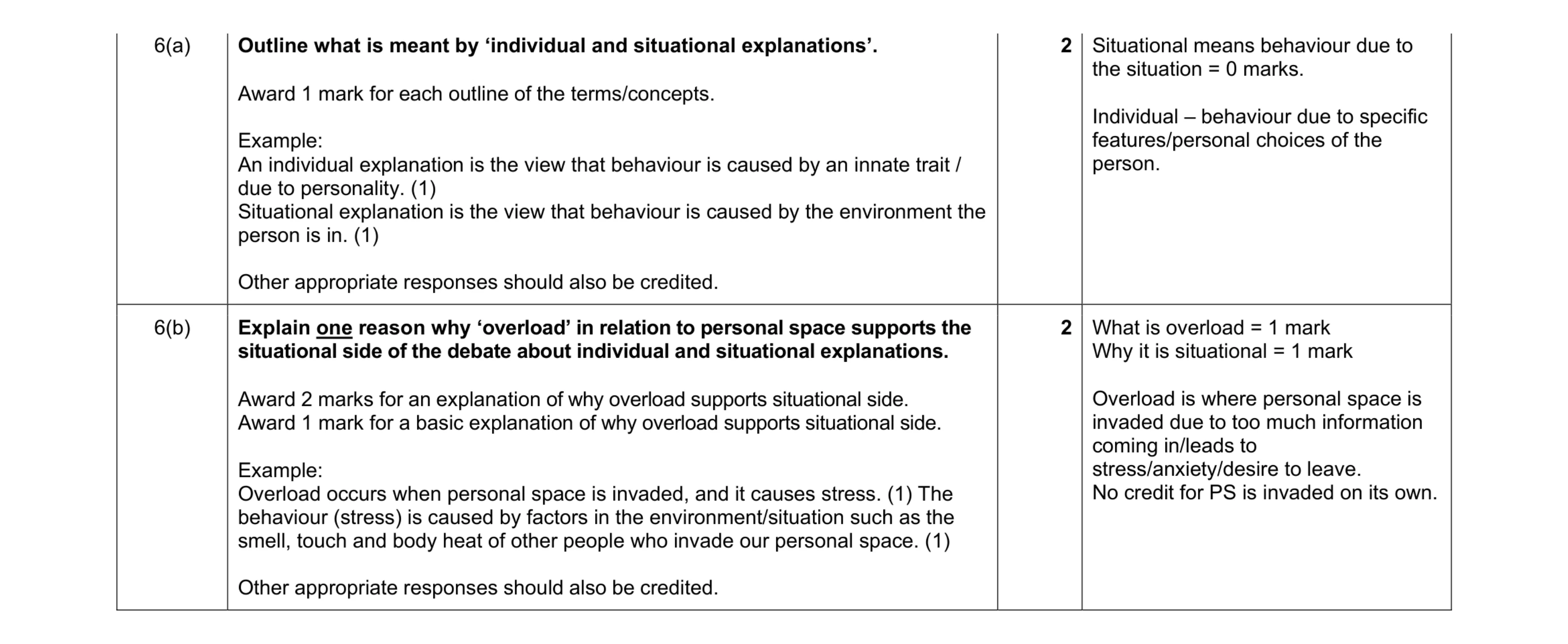 4
4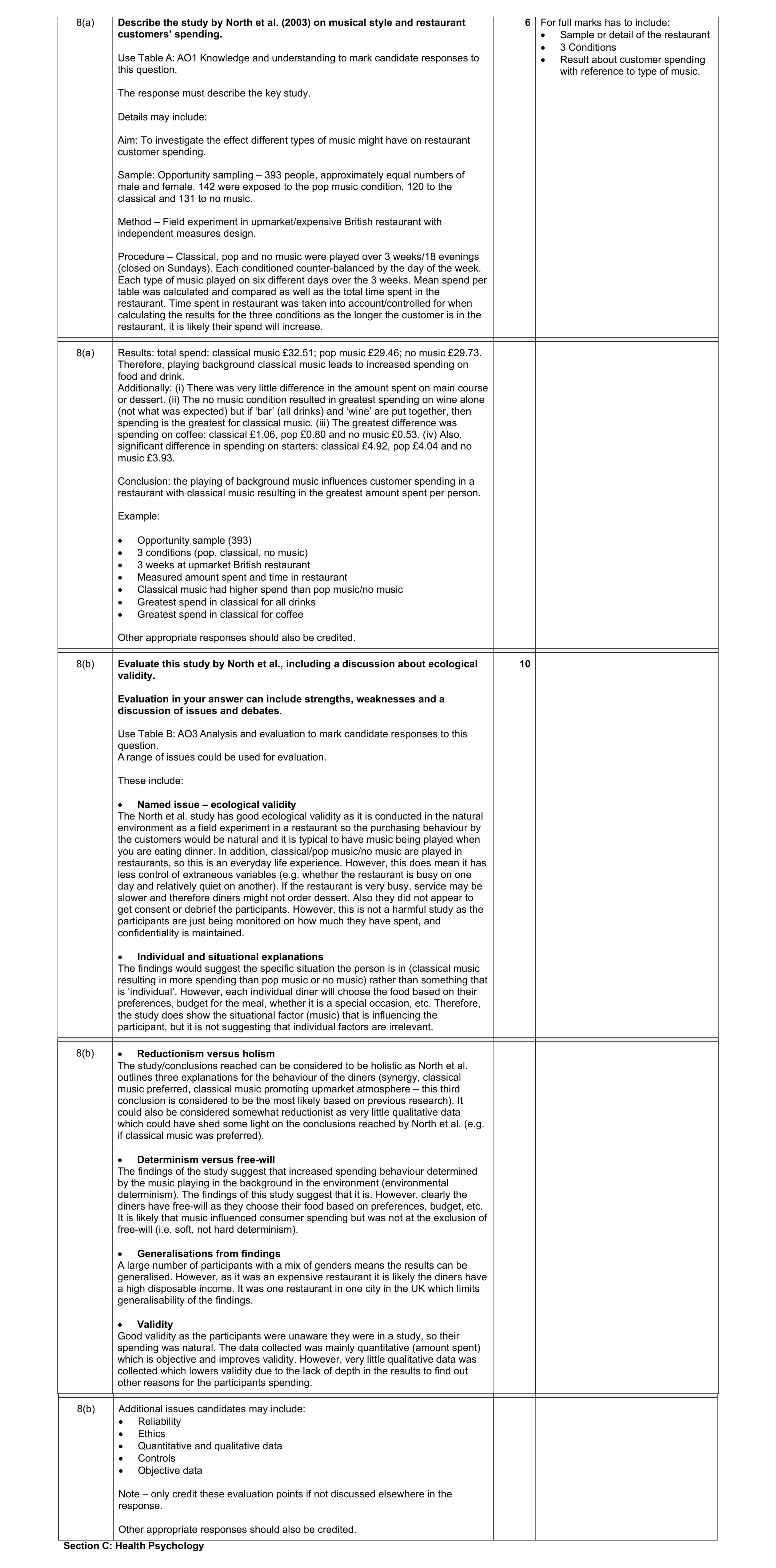 16
16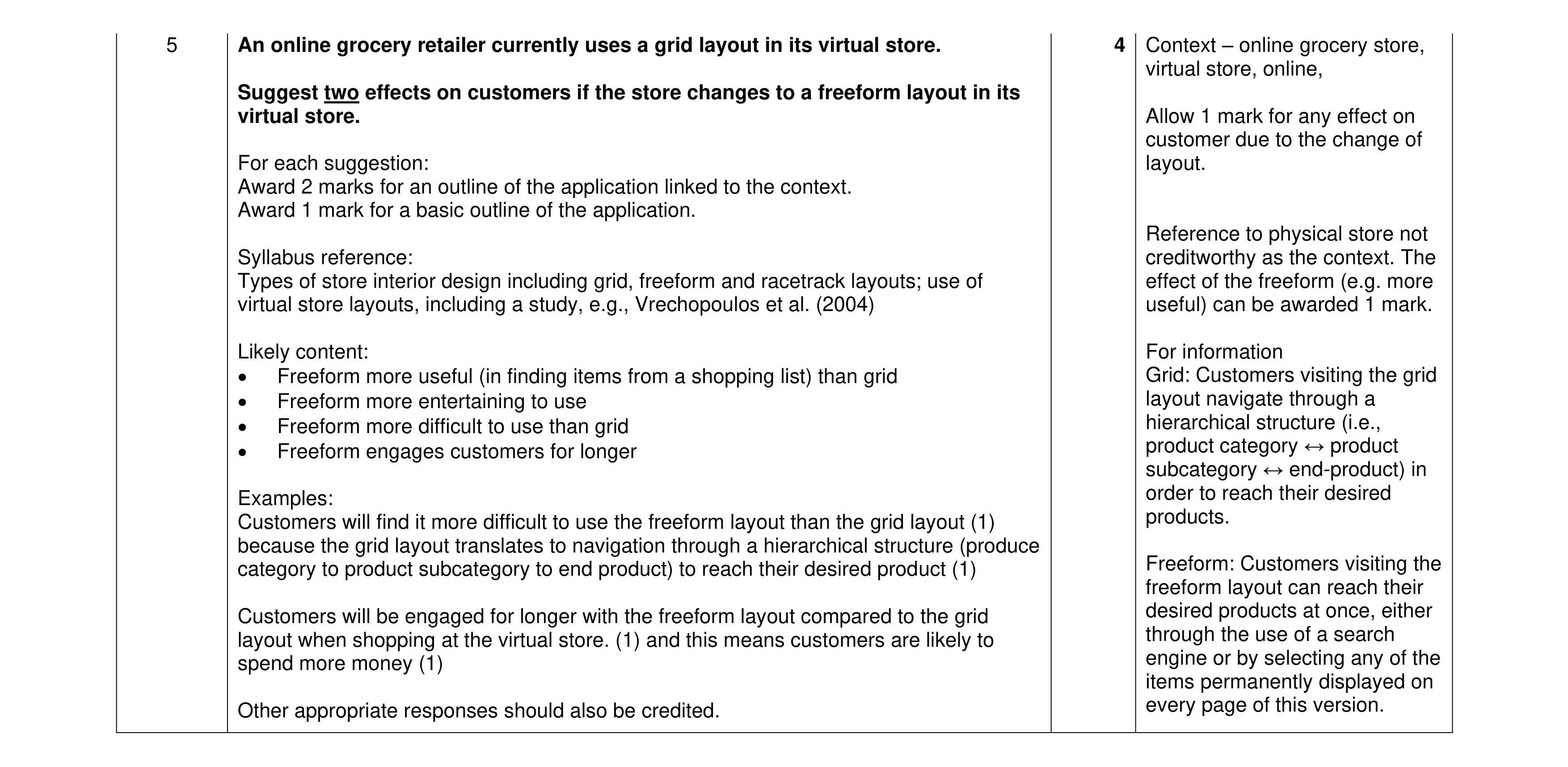 4
4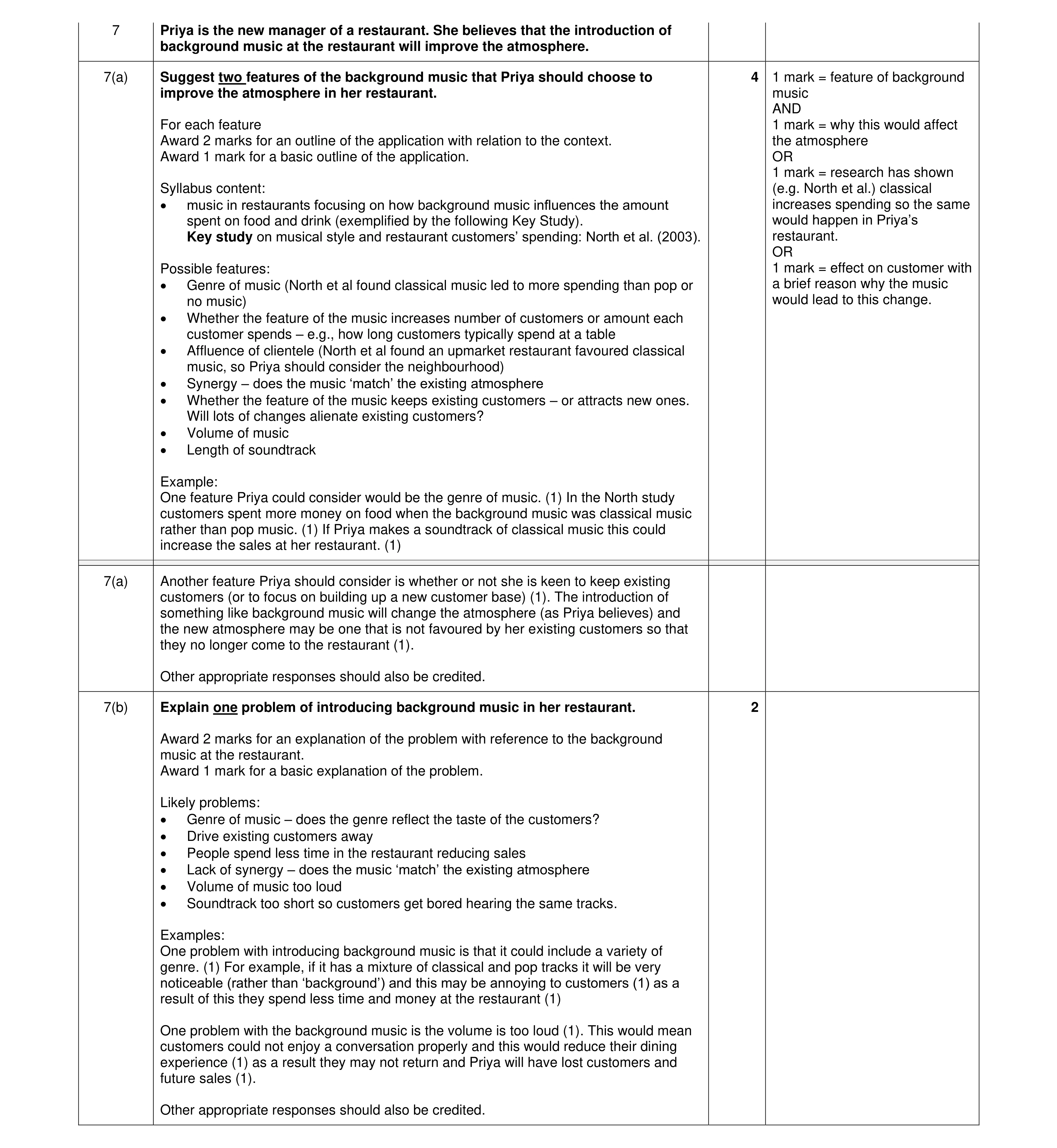 6
6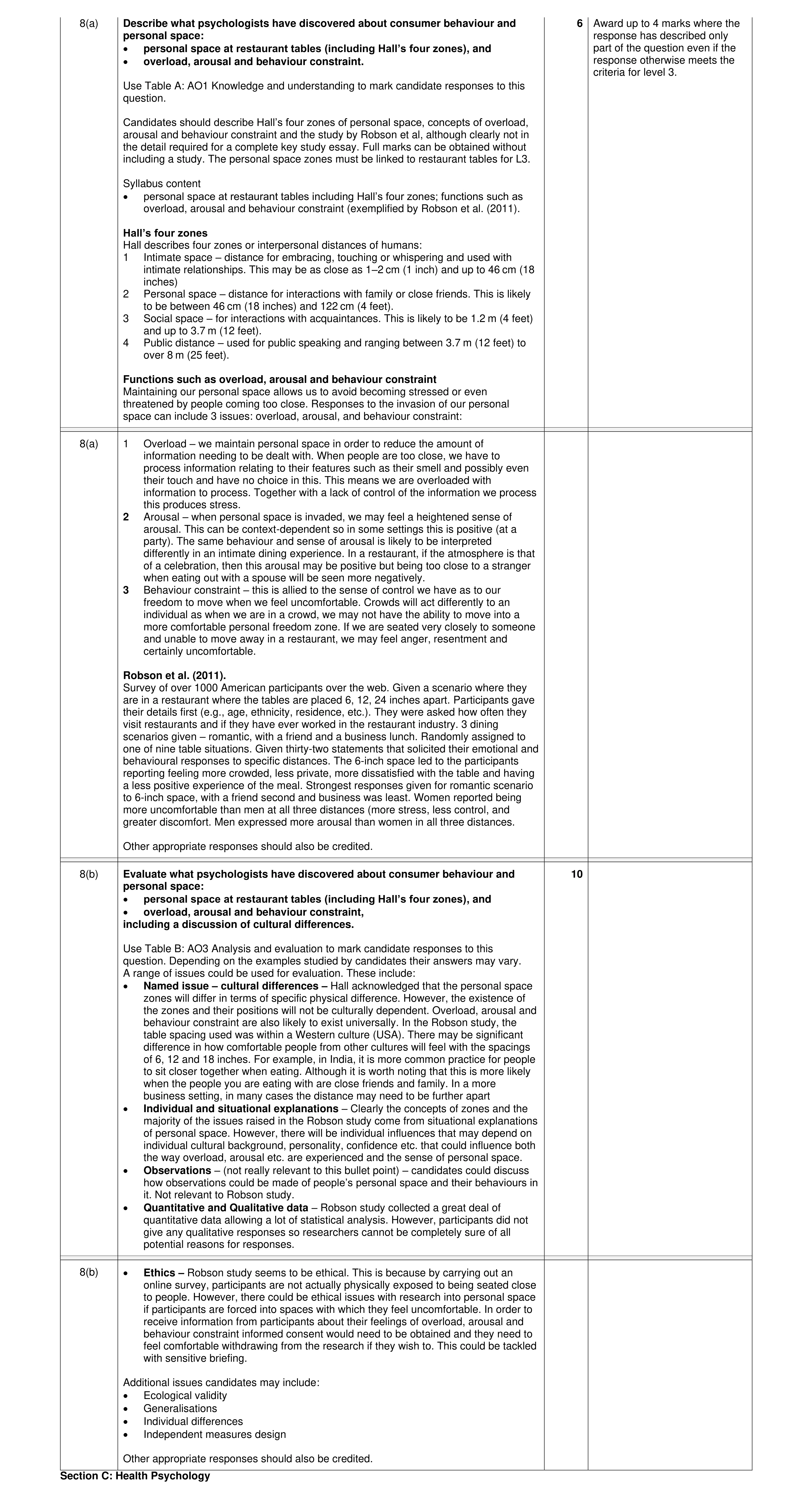 16
16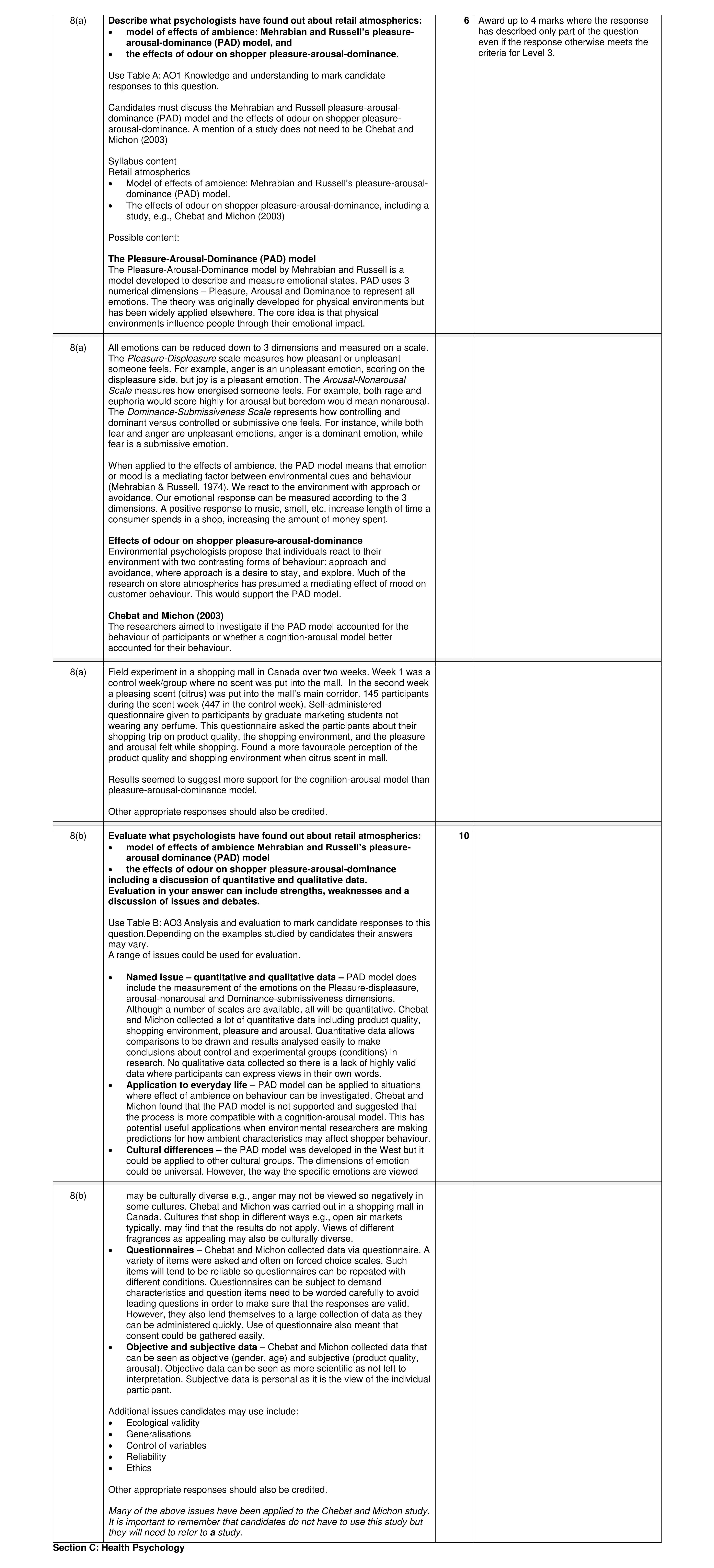 16
16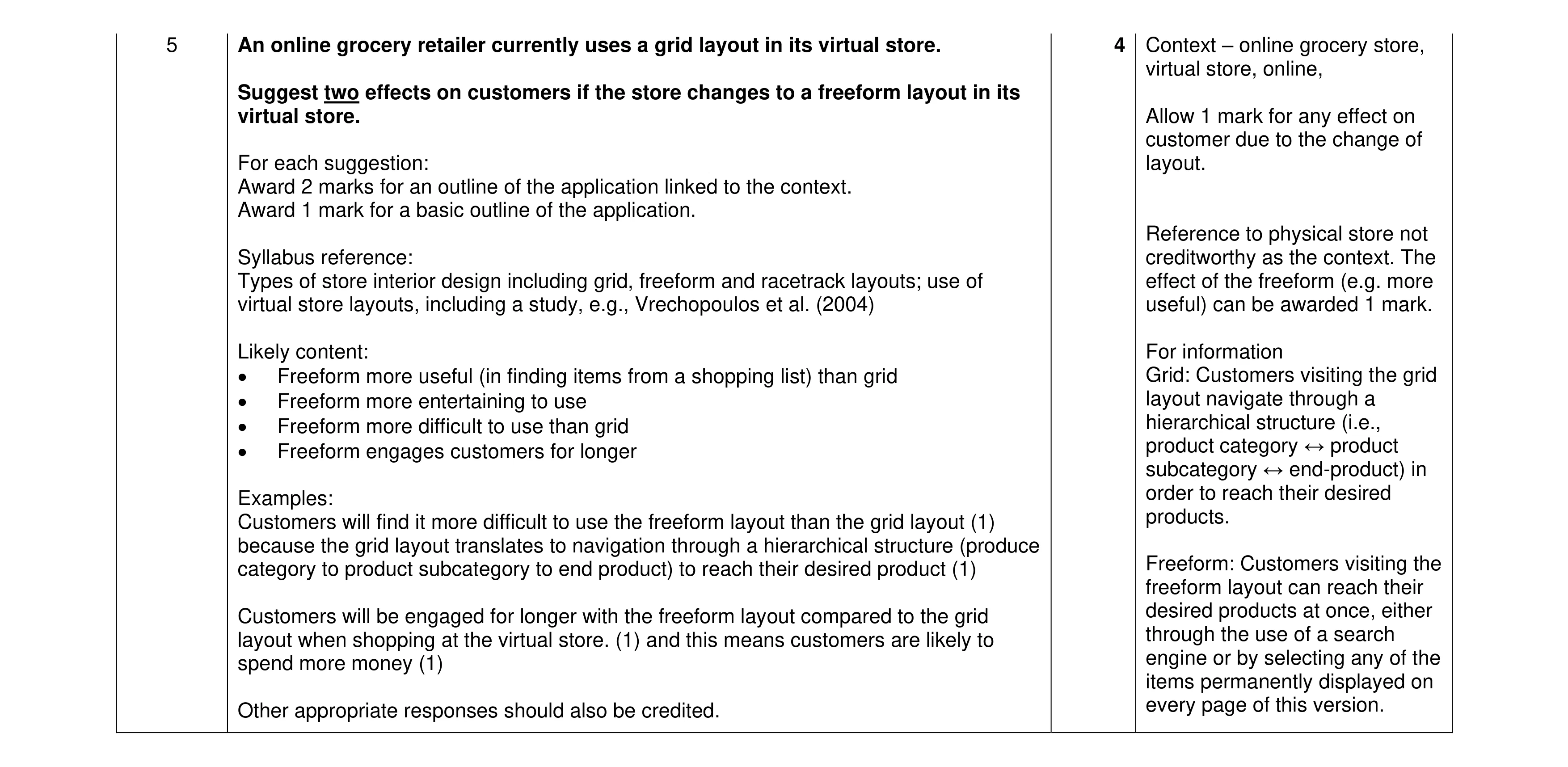 4
4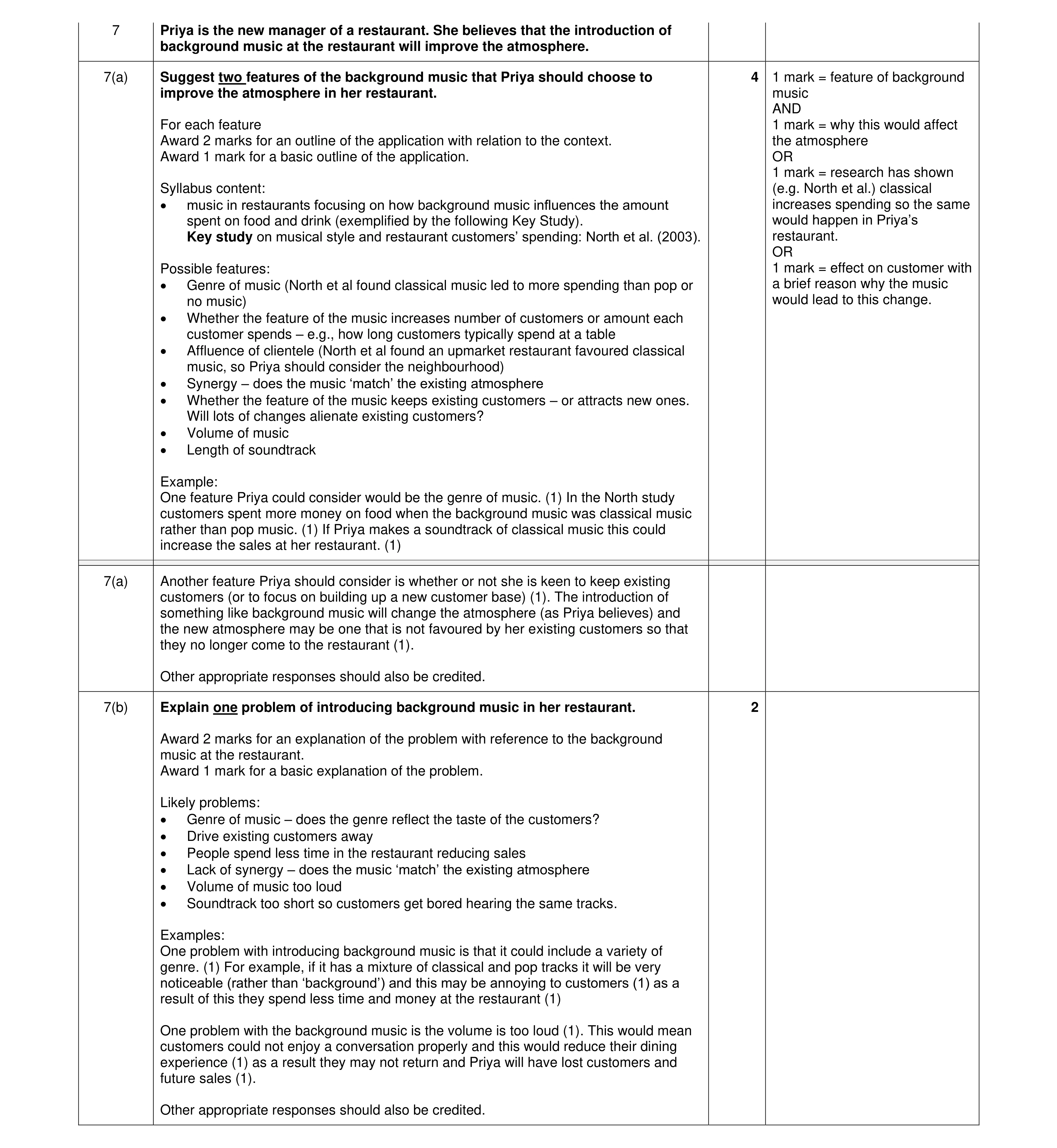 6
6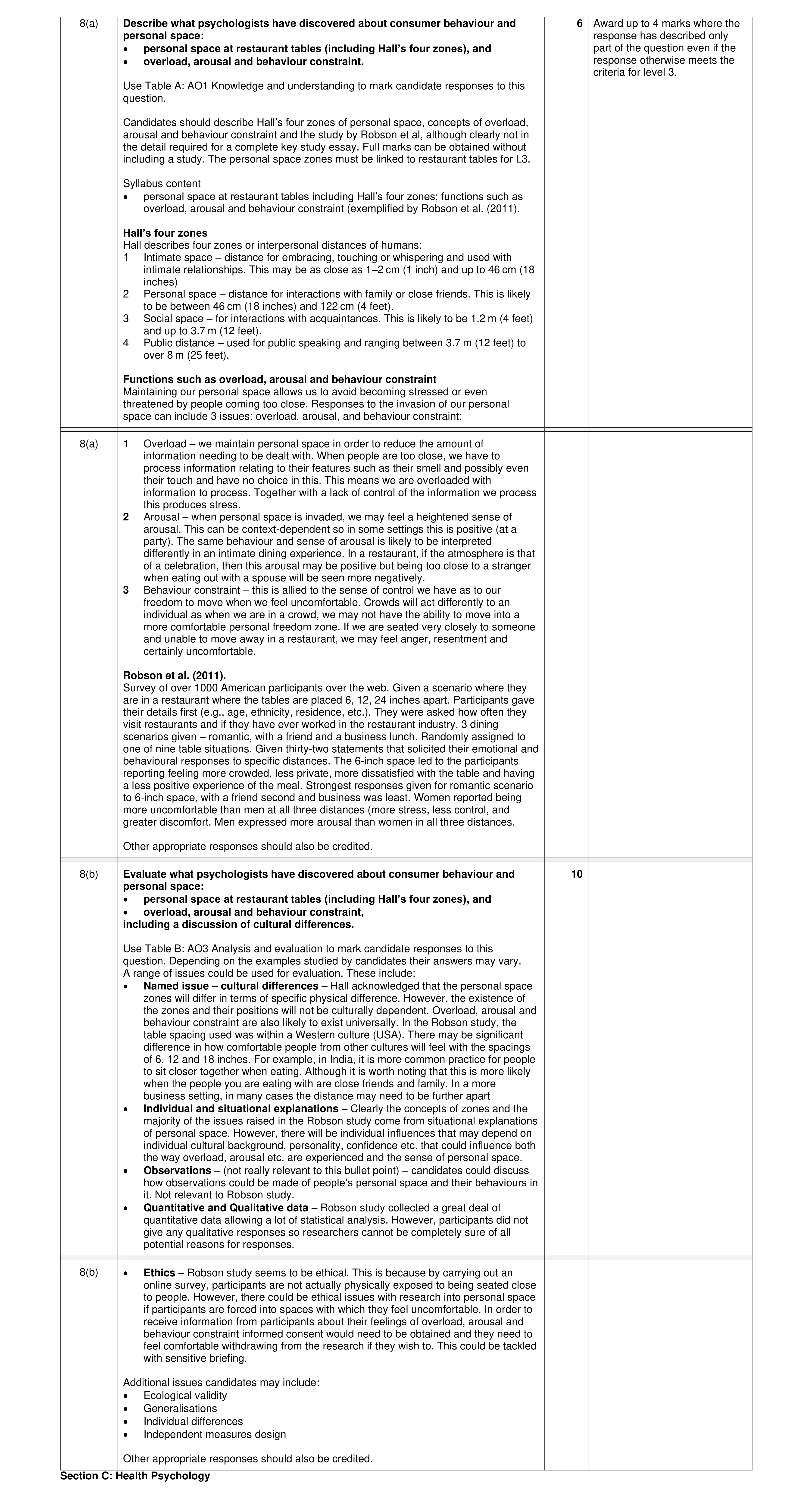 16
16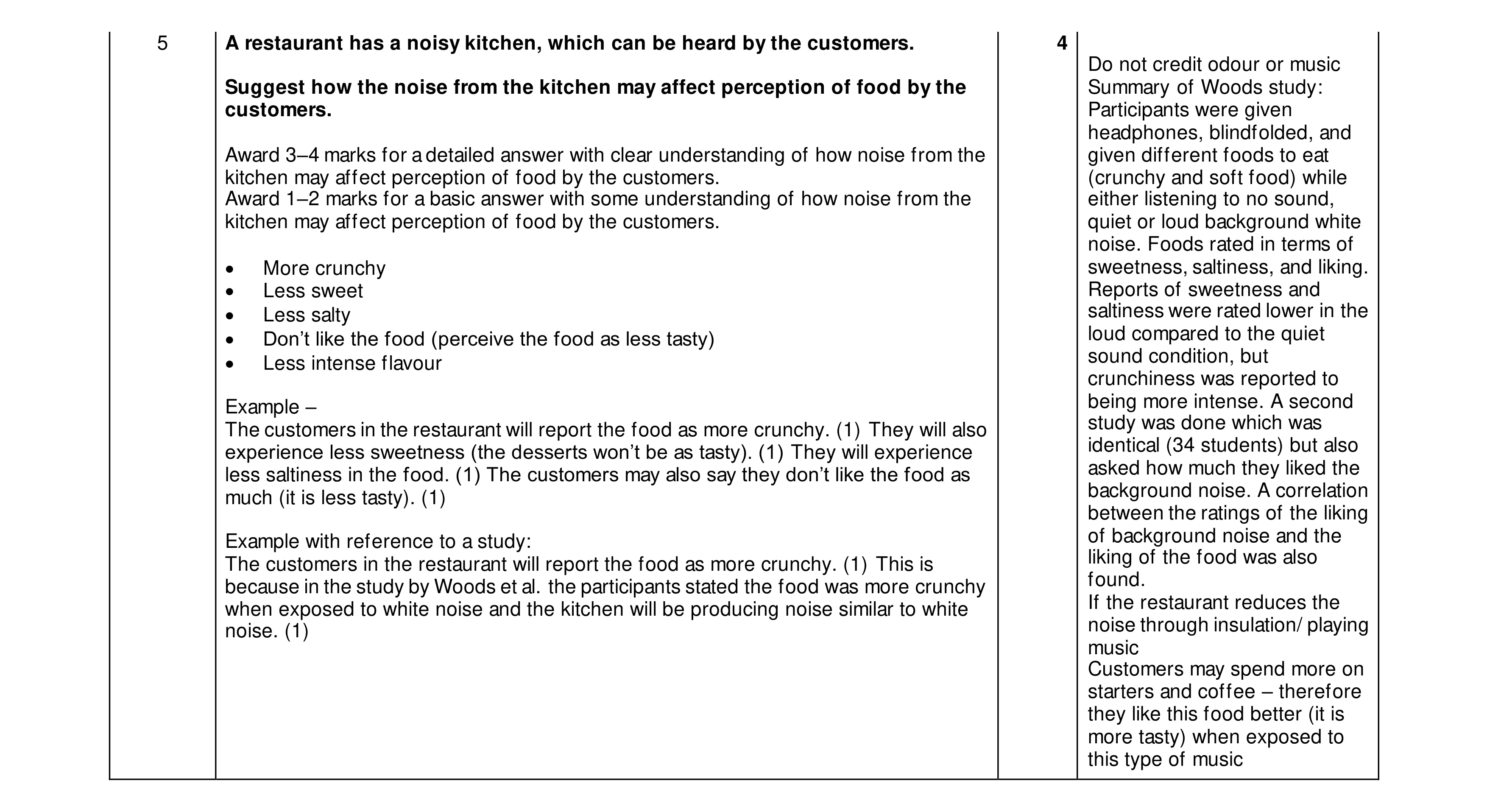 4
4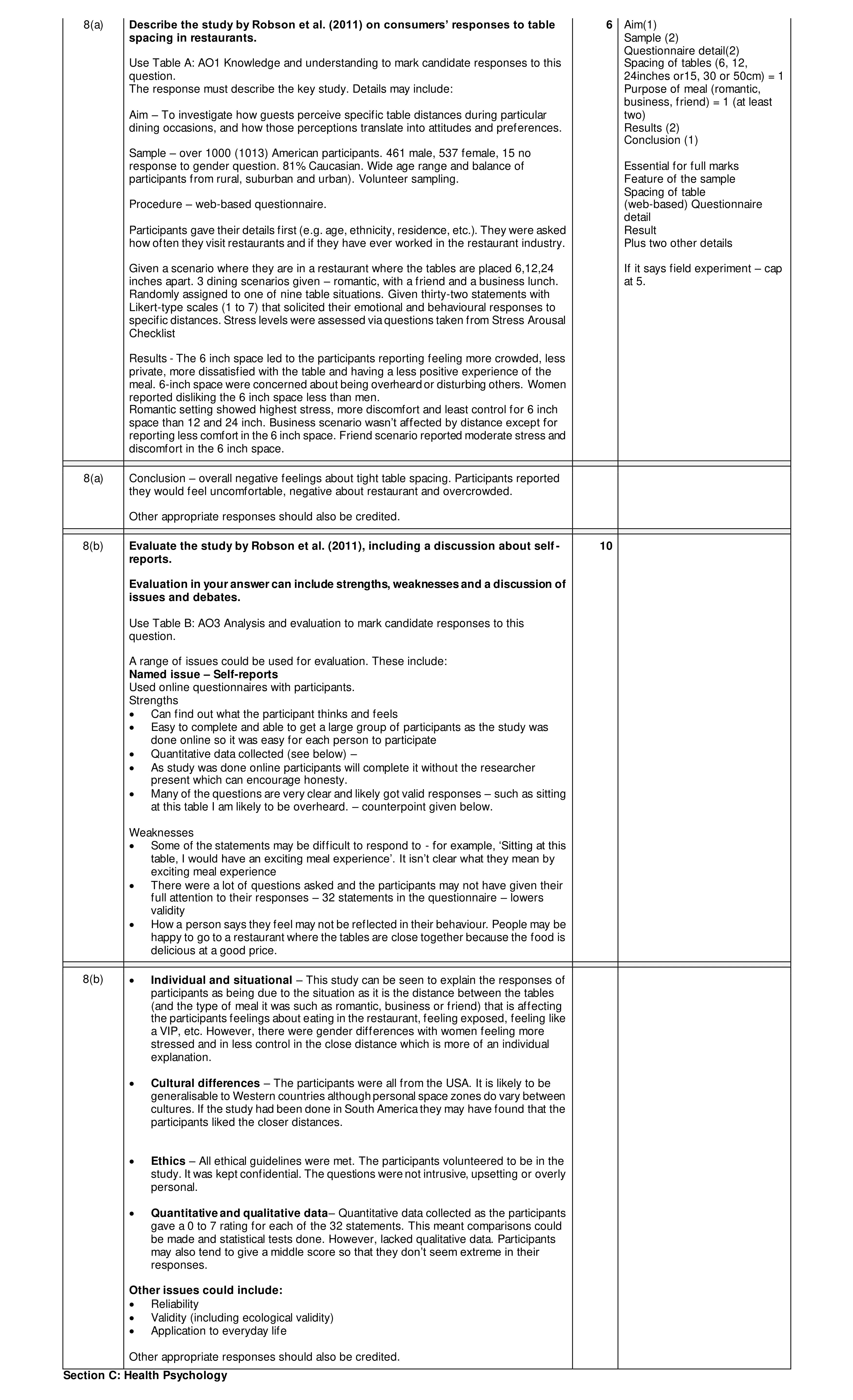 16
16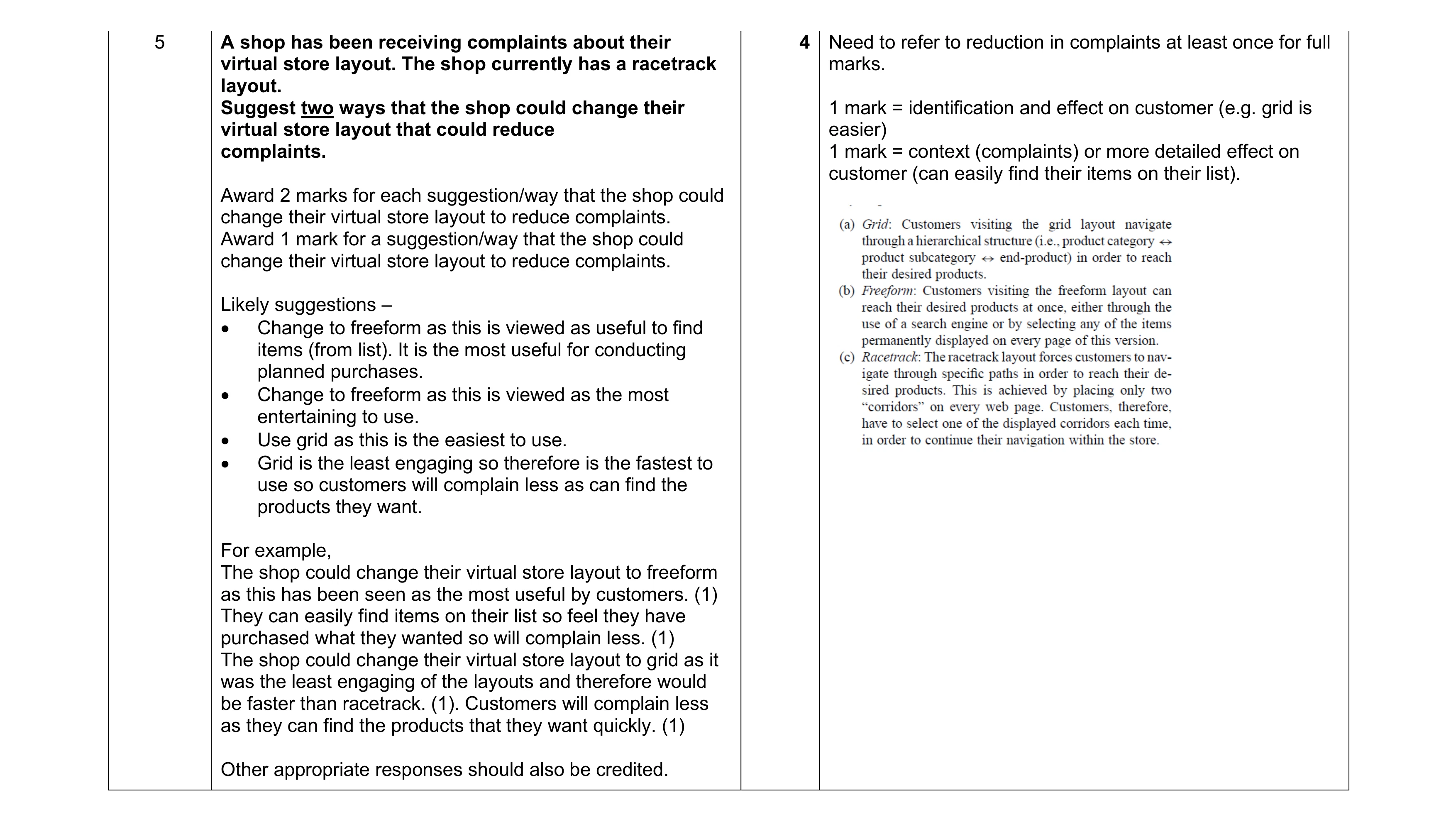 4
4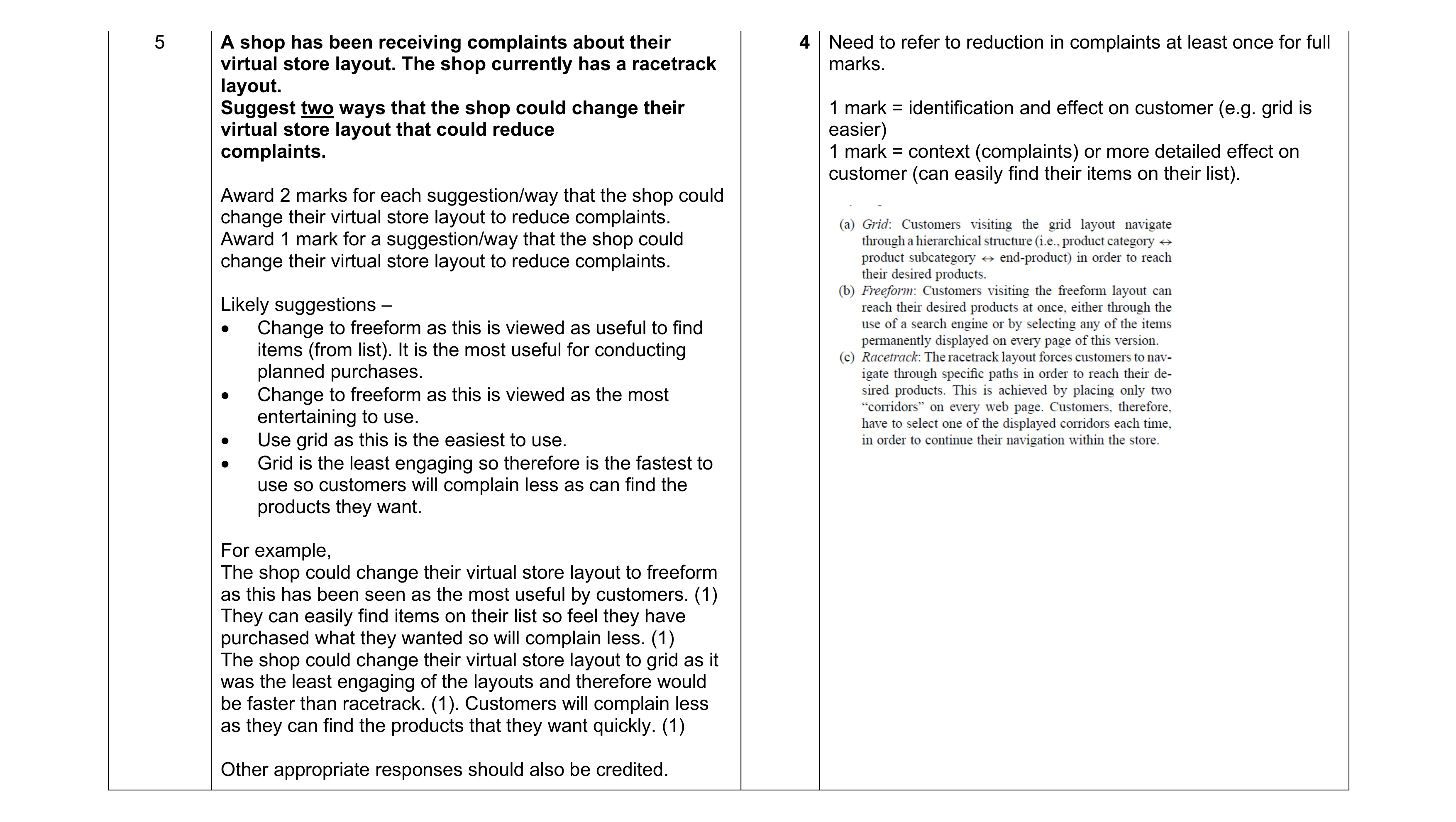 4
4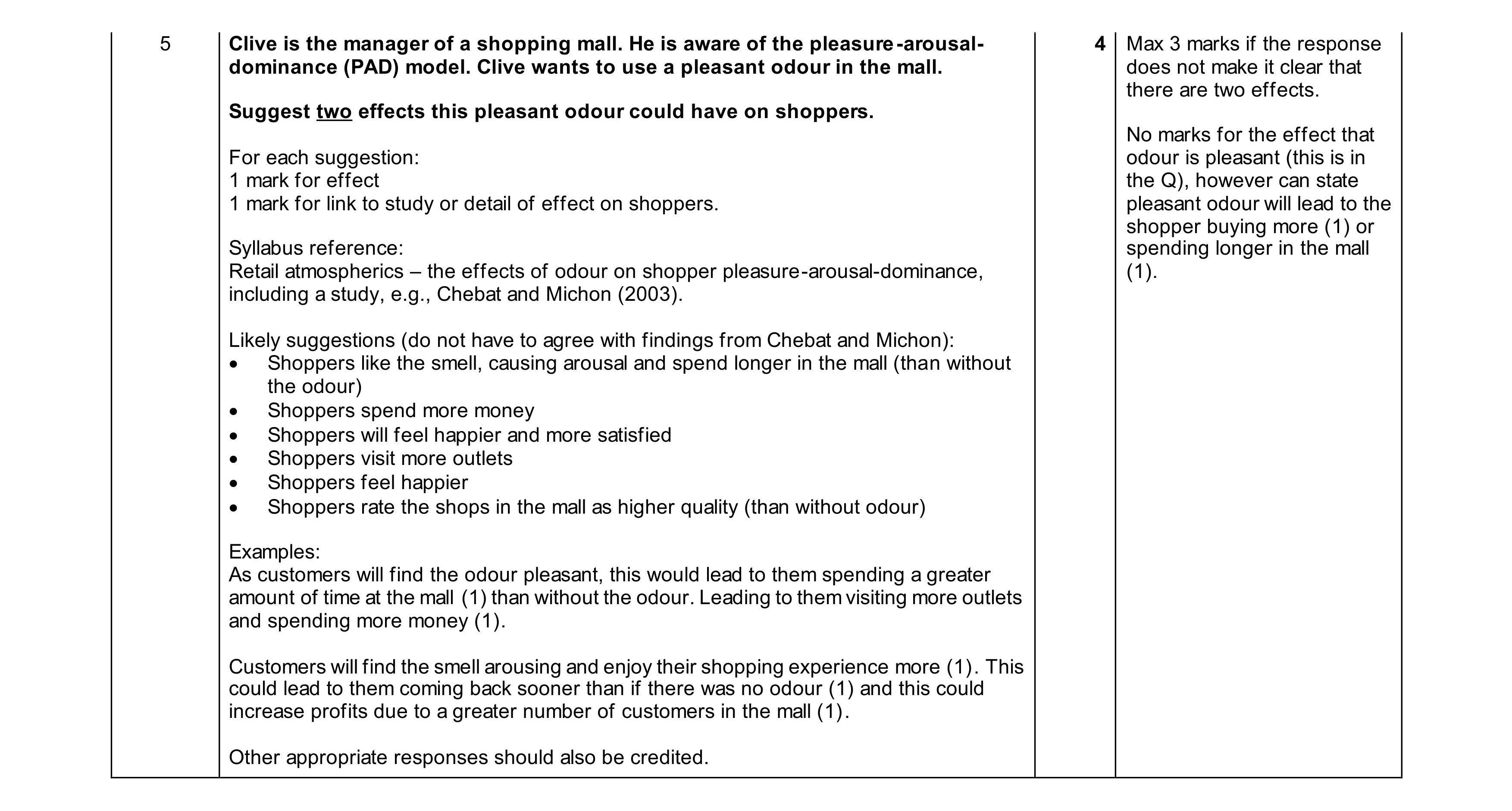 4
4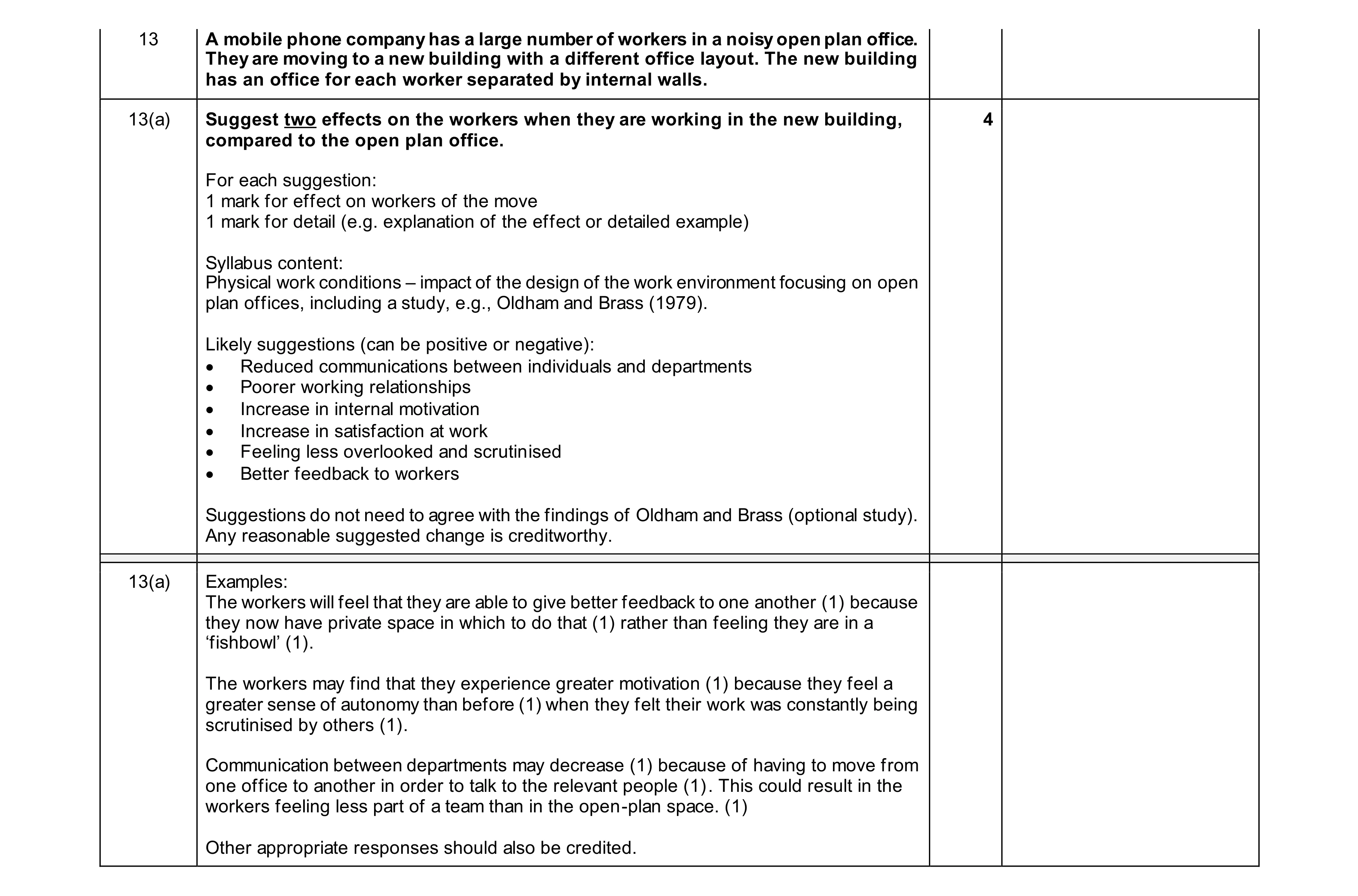 4
4