Cambridge A Level Psychology (from 2018) 9990 — 2023 Oct/Nov Paper 3 · Variant 2
9990/32/O/N/23 · 8 questions · 60 marks · ≈68 min
The question paper and its mark scheme, free to read here and free to download. This is Cambridge’s own paper, exactly as it was sat.
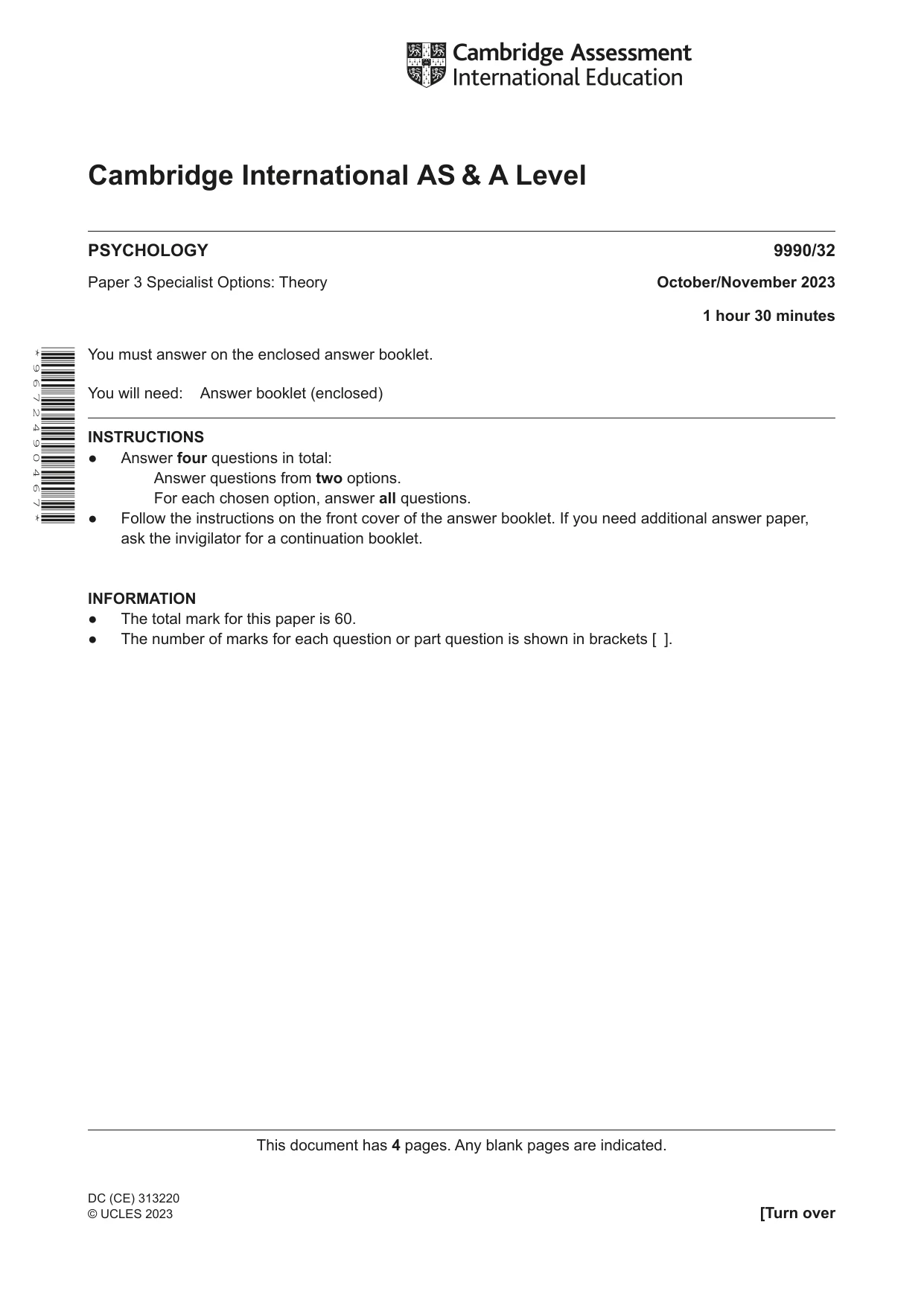
Question paper4 pages

Mark scheme39 pages
Answers below. Sit the paper first if you are practising.












Questions as text
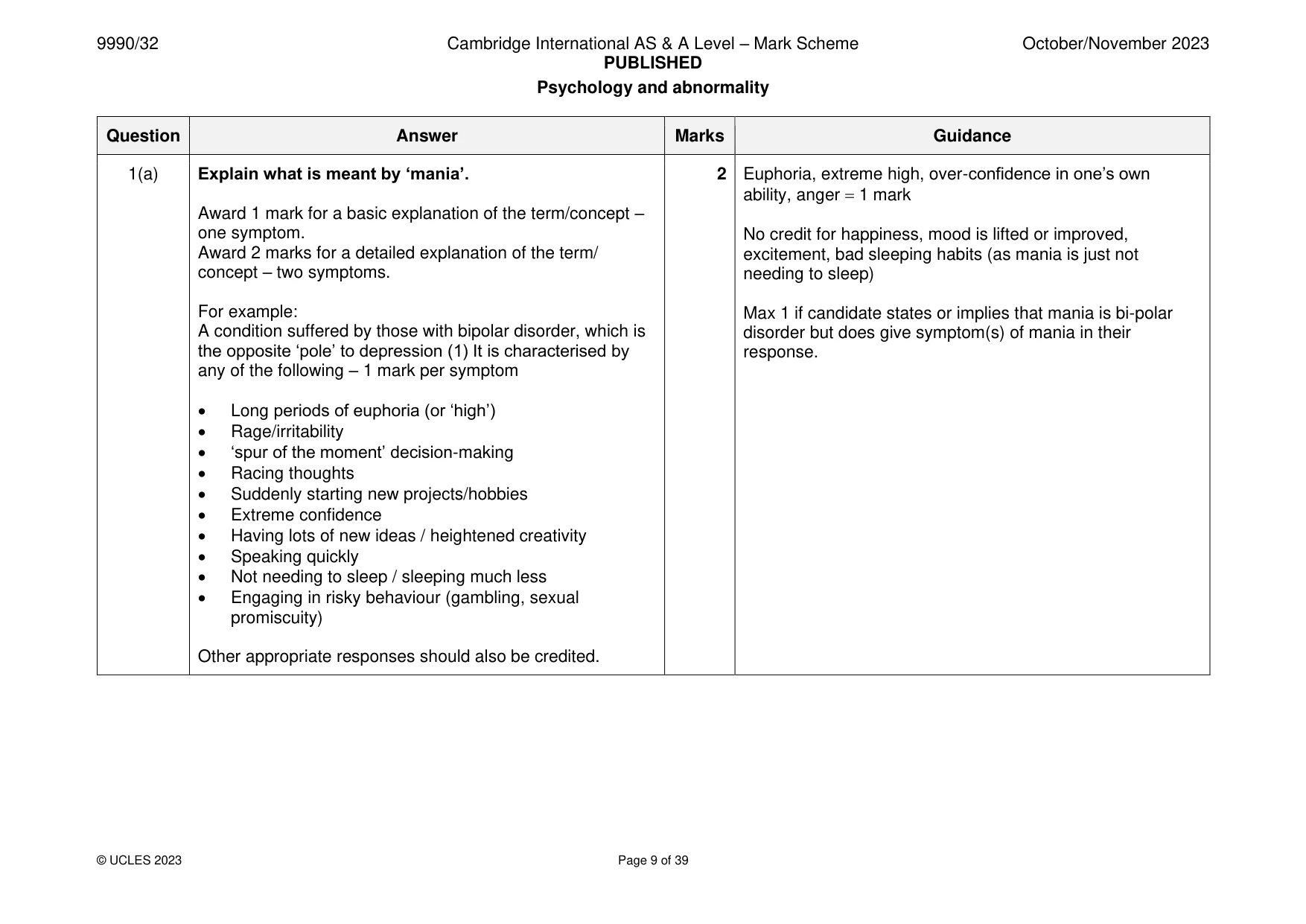
Q1 · Explain what is meant by ‘mania’
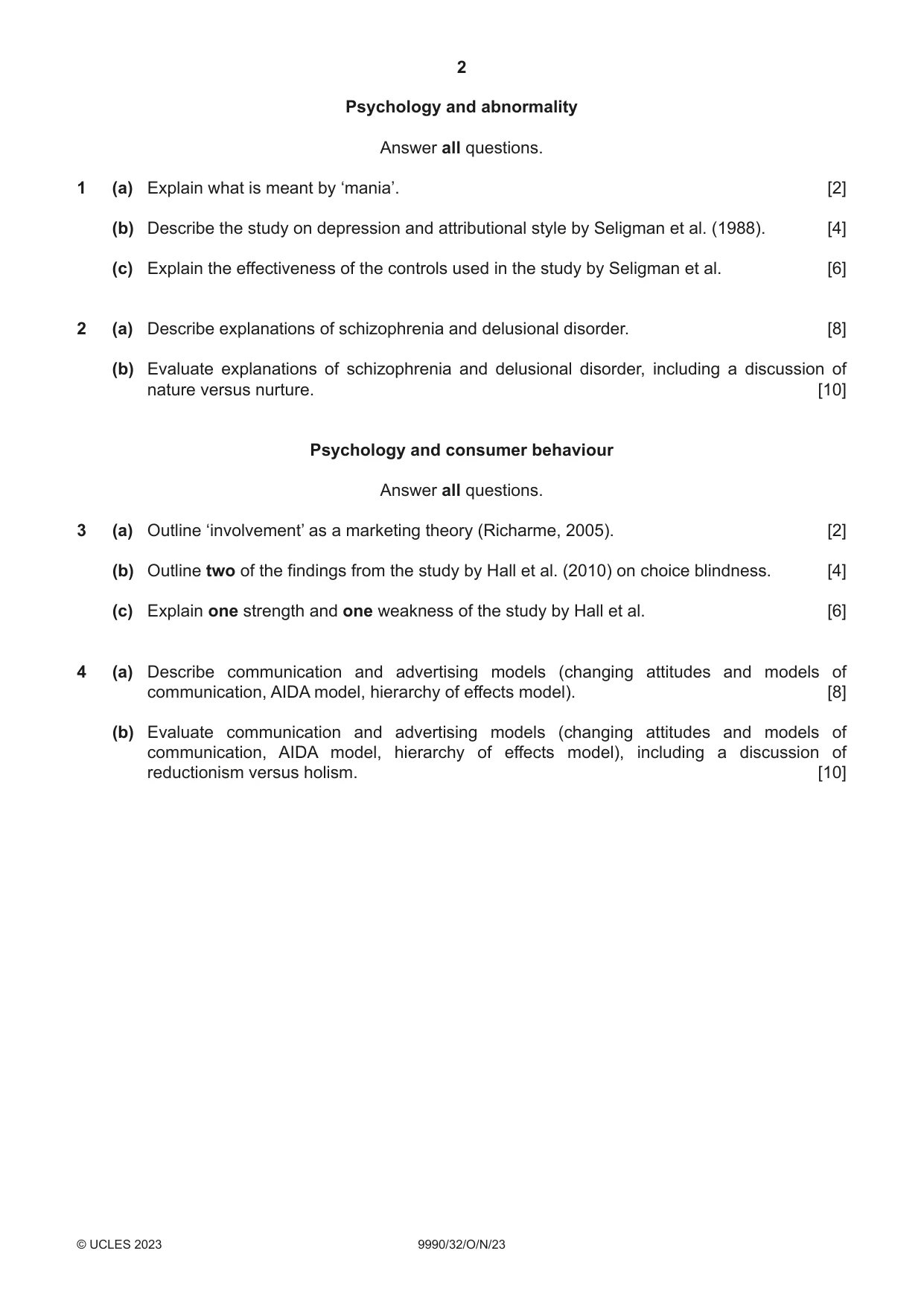
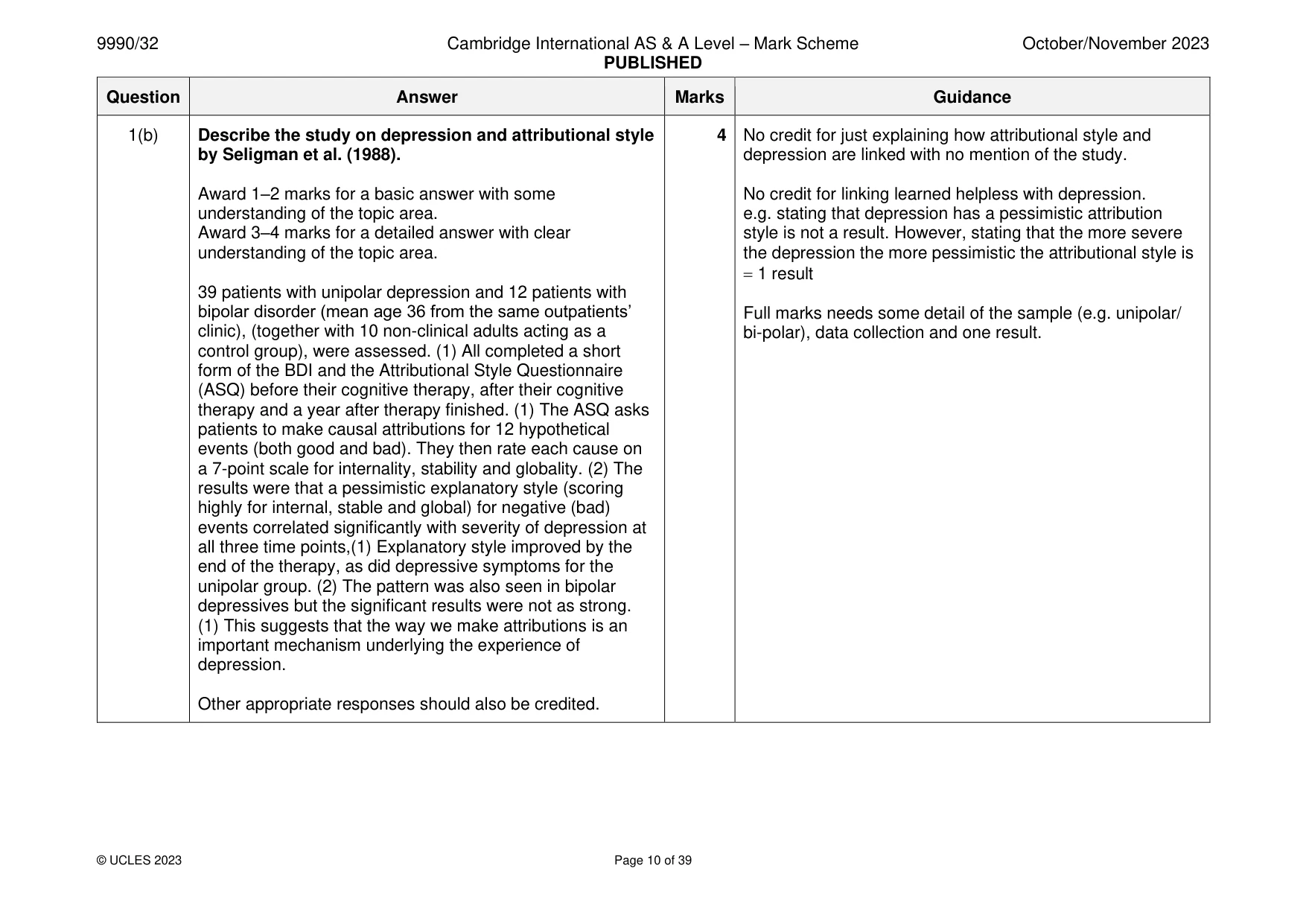
1 (a) Explain what is meant by ‘mania’. [2] (b) Describe the study on depression and attributional style by Seligman et al. (1988). [4] (c) Explain the effectiveness of the controls used in the study by Seligman et al. [6]
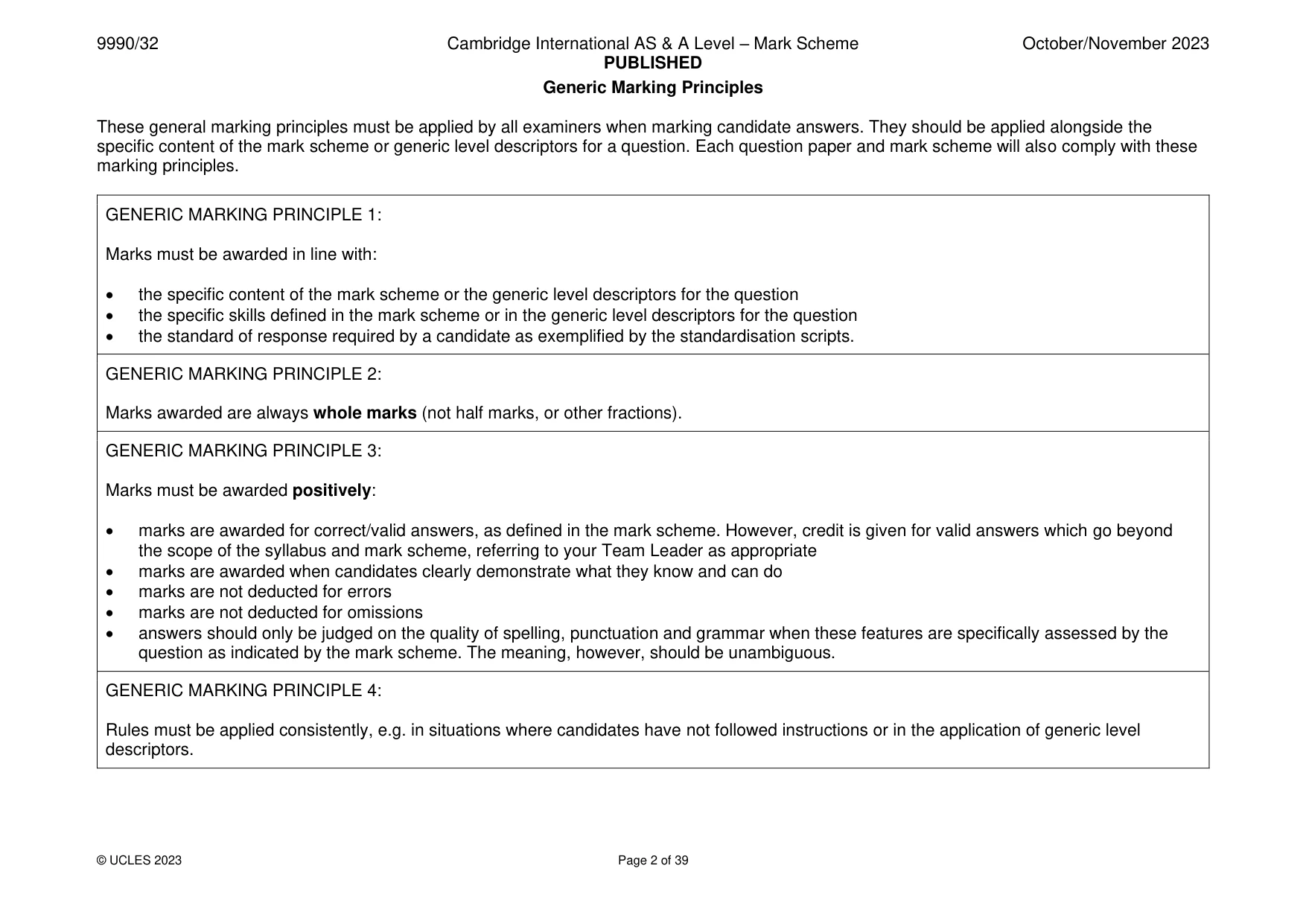
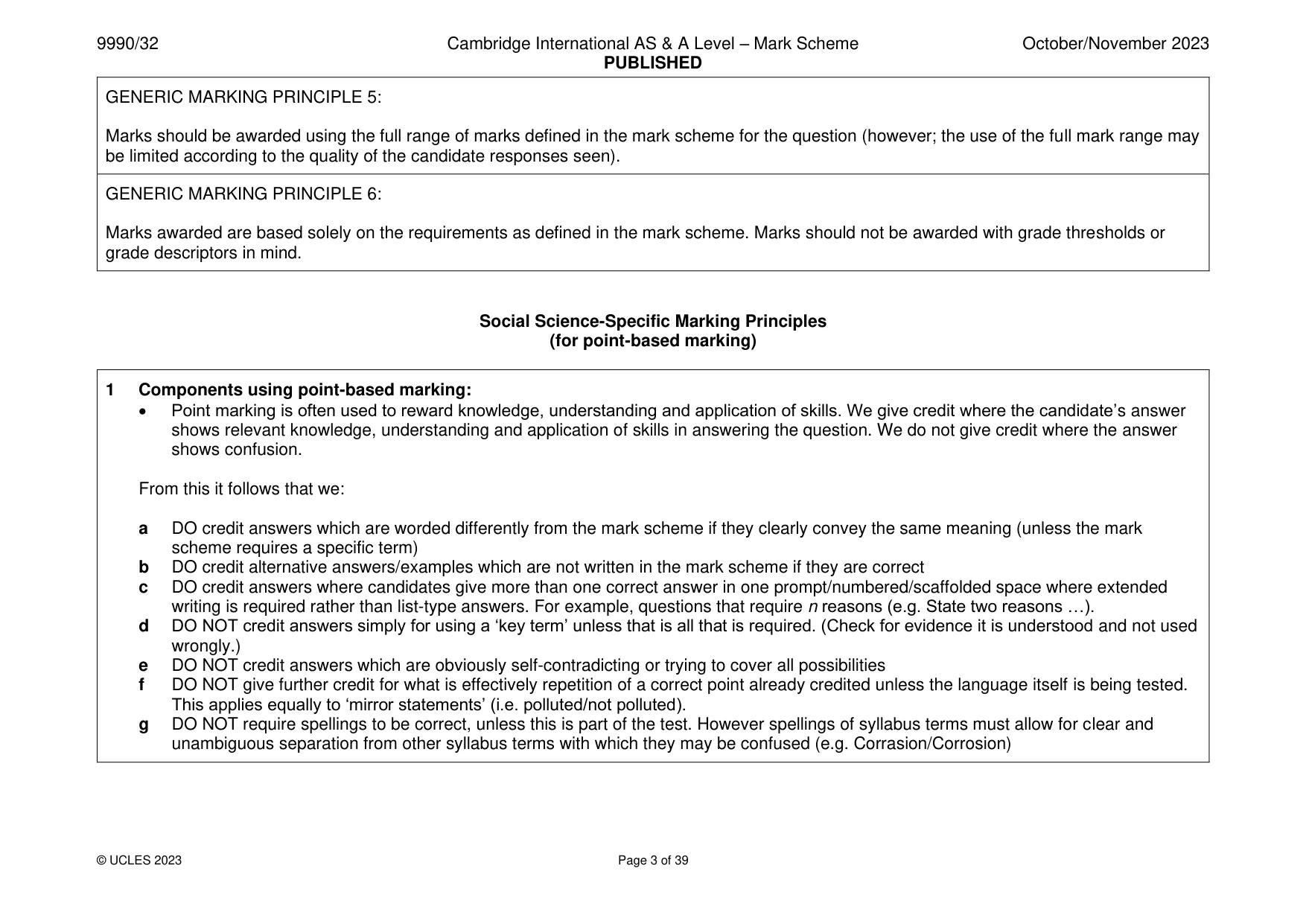
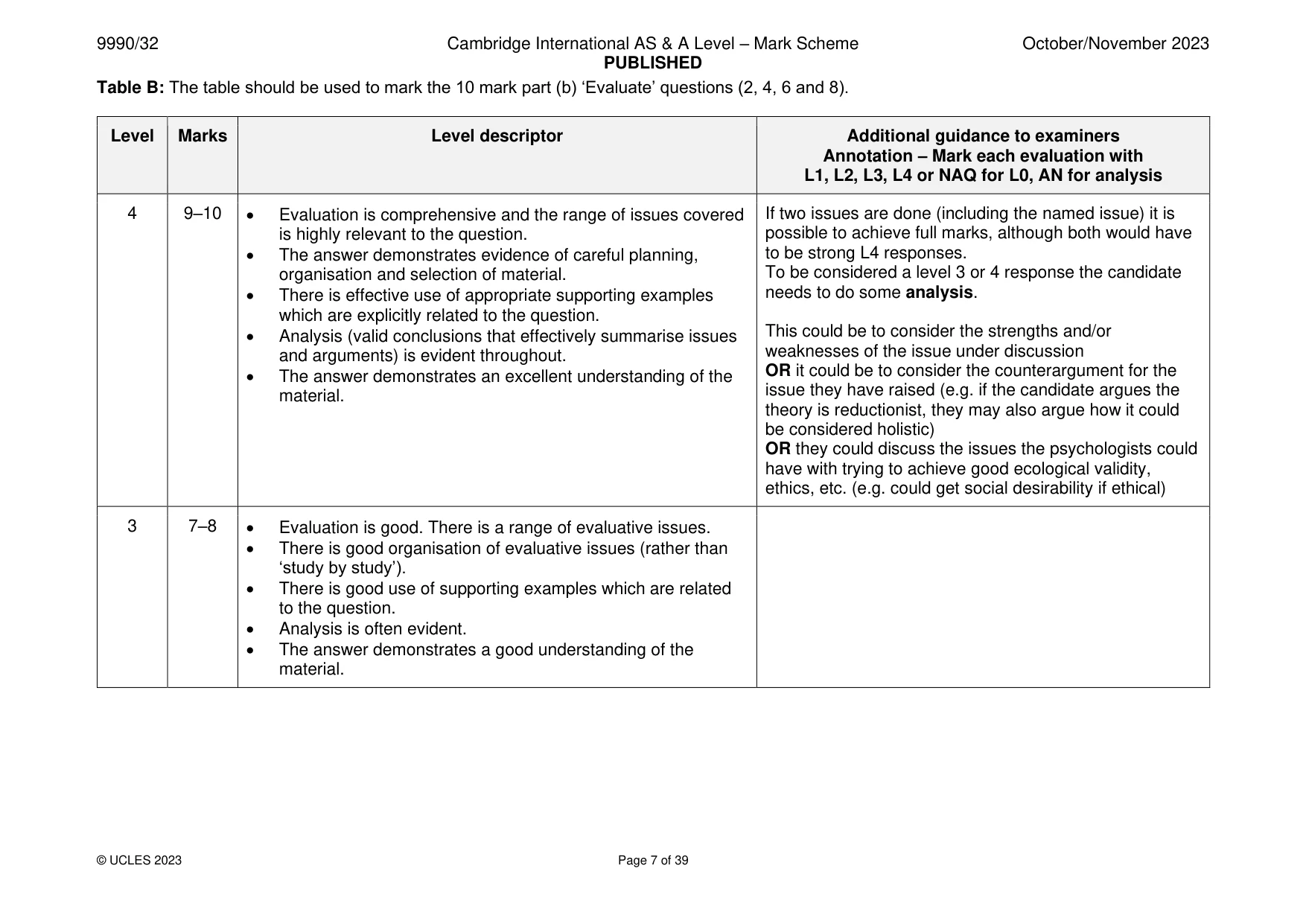
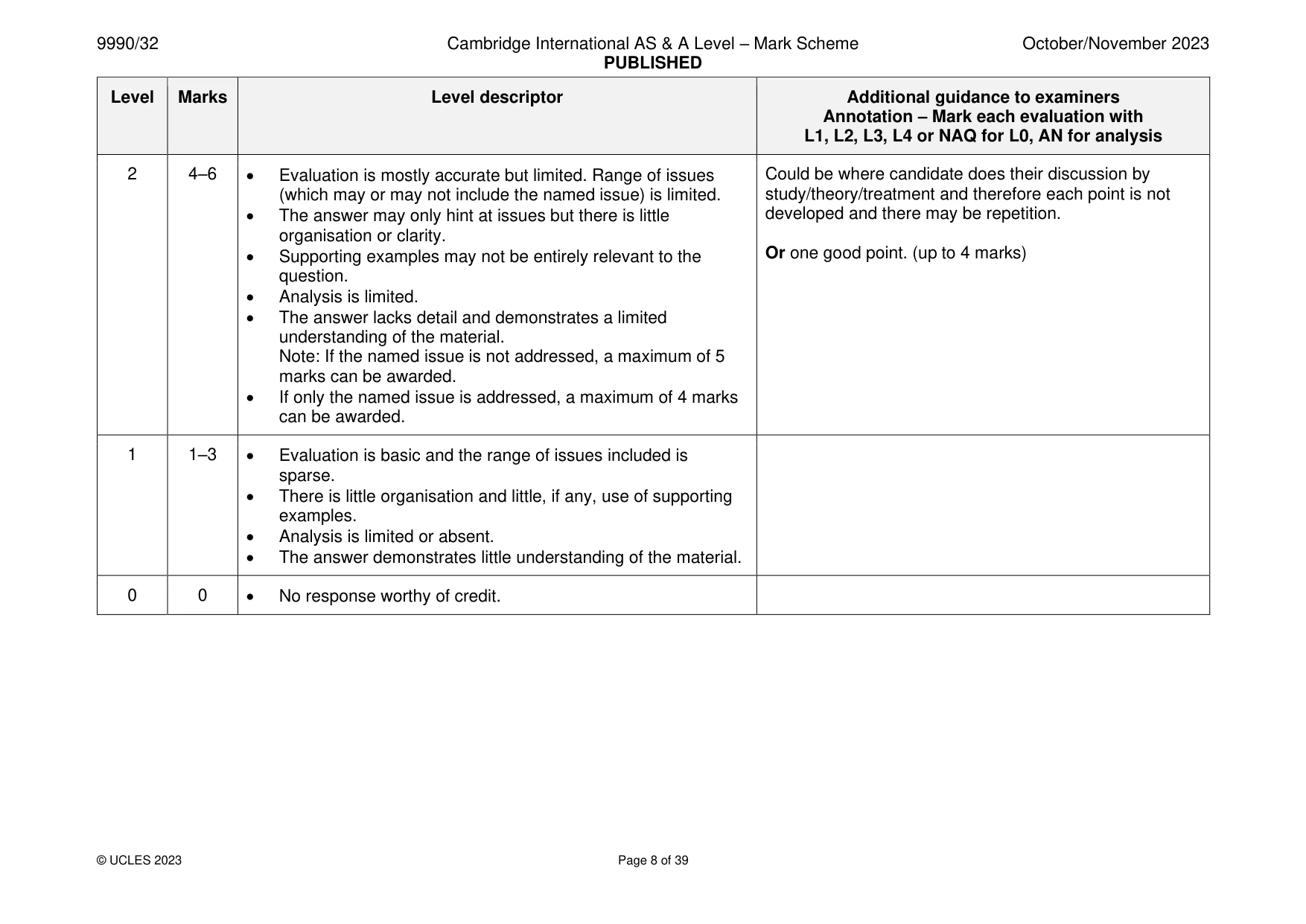
Mark scheme: Question Answer Marks Guidance 1(a) Explain what is meant by ‘mania’. 2 Euphoria, extreme high, over-confidence in one’s own ability, anger = 1 mark Award 1 mark for a basic explanation of the term/concept – one symptom. No credit for happiness, mood is lifted or improved, Award 2 marks for a detailed explanation of the term/ excitement, bad sleeping habits (as mania is just not concept – two symptoms. needing to sleep) For example: Max 1 if candidate states or implies that mania is bi-polar A condition suffered by those with bipolar disorder, which is disorder but does give symptom(s) of mania in their the opposite ‘pole’ to depression (1) It is characterised by response. any of the following – 1 mark per symptom • Long periods of euphoria (or ‘high’) • Rage/irritability • ‘spur of the moment’ decision-making • Racing thoughts • Suddenly starting new projects/hobbies • Extreme confidence • Having lots of new ideas / heightened creativity • Speaking quickly • Not needing to sleep / sleeping much less • Engaging in risky behaviour (gambling, sexual promiscuity) Other appropriate responses should also be credited. 1(b) Describe the study on depression and attributional style 4 No credit for just explaining how attributional style and by Seligman et al. (1988). depression are linked with no mention of the study. Award 1–2 marks for a basic answer with some No credit for linking learned helpless with depression. understanding of the topic area. e.g. stating that depression has a pessimistic attribution Award 3–4 marks for a detailed answer with clear style is not a result. However, stating that the more severe understanding of the topic area. the depression the more pessimistic the attributional style is = 1 result 39 patients with unipolar depression and 12 patients with bipolar disorder (mean age 36 from the same outpatients’ Full marks needs some detail of the sample (e.g. unipolar/ clinic), (together with 10 non-clinical adults acting as a bi-polar), data collection and one result. control group), were assessed. (1) All completed a short form of the BDI and the Attributional Style Questionnaire (ASQ) before their cognitive therapy, after their cognitive therapy and a year after therapy finished. (1) The ASQ asks patients to make causal attributions for 12 hypothetical events (both good and bad). They then rate each cause on a 7-point scale for internality, stability and globality. (2) The results were that a pessimistic explanatory style (scoring highly for internal, stable and global) for negative (bad) events correlated significantly with severity of depression at all three time points,(1) Explanatory style improved by the end of the therapy, as did depressive symptoms for the unipolar group. (2) The pattern was also seen in bipolar depressives but the significant results were not as strong. (1) This suggests that the way we make attributions is an important mechanism underlying the experience of depression. Other appropriate responses should also be credited. 1(c) Explain the effectiveness of the controls used in the 6 Annotate with levels study by Seligman et al. Credit can be given to demand characteristics with reference Points could include to BDI/ASQ • Make the study more reliable. The same procedure/ treatment was done for all participants in the study. This meant all experienced exactly the same thing during the study. • Reduces individual differences acts as a control as the study includes both unipolar and bi-polar patients. • The control group is not a very effective control in the study as they were just used as a baseline comparison for BDI and ASQ as the control group did not experience any therapy (as they had no psychiatric disorder). • Increases validity and reliability as scores of depression and attributional style were administered before and after treatment so that changes in these could be clearly measured. • Enables more objective data rather than reliance on subjective interpretations (use of same procedure/tests before and after treatment) • Relationships are not cause and effect but only correlational as participants cannot be randomly assigned to groups (quasi experiment). • Validity of the DNA collected using automated equipment in a lab-removes researcher bias. 1(c) Mark according to the levels of response criteria below: Level 3 (5–6 marks) • Candidates will show a clear understanding of the question and will explain at least two points regarding controls. • Candidates will provide a good explanation with clear detail. Level 2 (3–4 marks) • Candidates will show an understanding of the question and will explain one point about control in detail or two (or more) in less detail. • Candidates will provide a good explanation. Level 1 (1–2 marks) • Candidates will show a basic understanding of the question and will attempt an explanation about controls. • Candidates will provide a limited explanation. Level 0 (0 marks) No response worthy of credit. Other appropriate responses should also be credited.
More questions on Mood (affective) disorders: depressive disorder (unipolar) and bipolar disorder
Q2 · Describe explanations of schizophrenia and delusional disorder
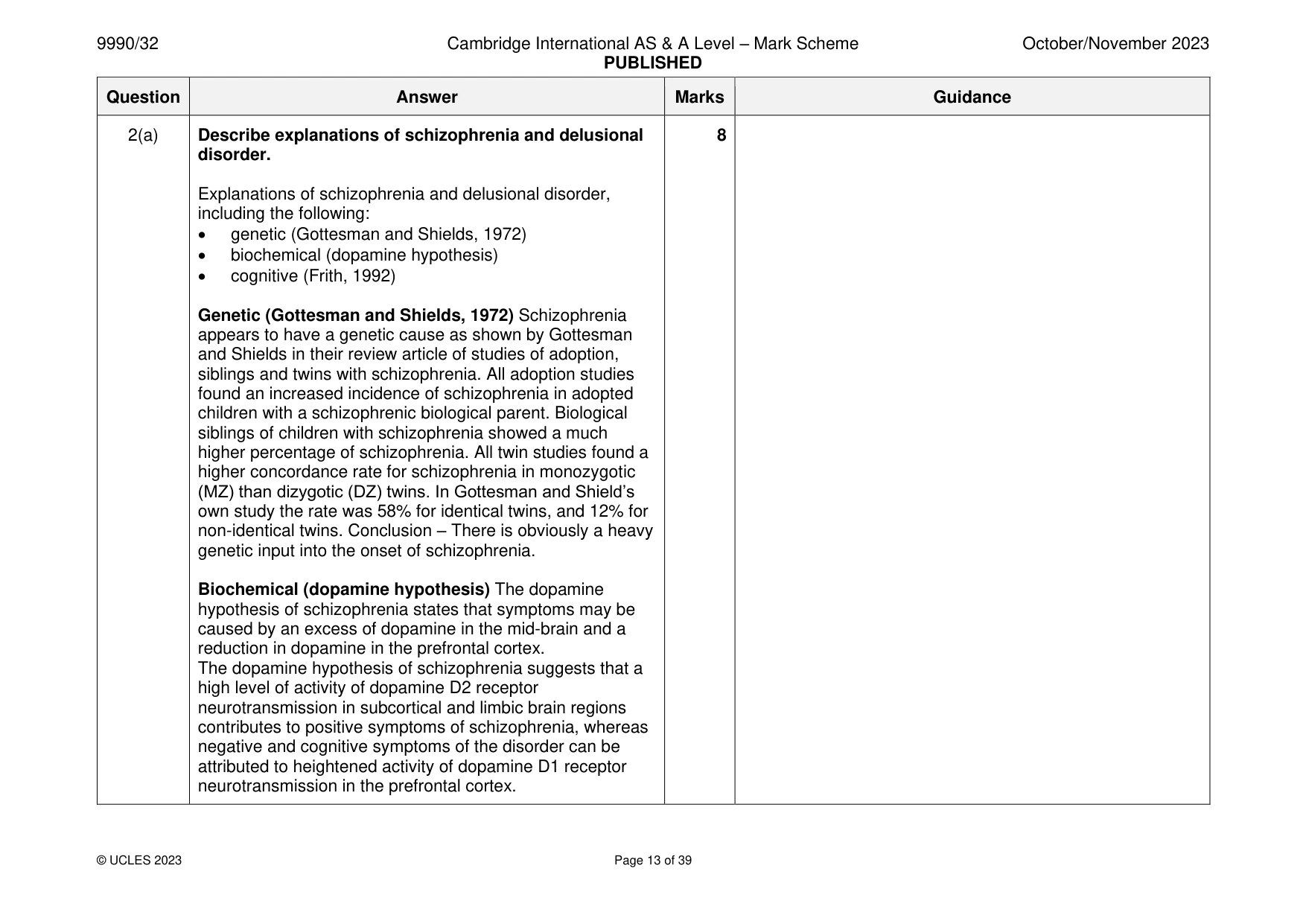
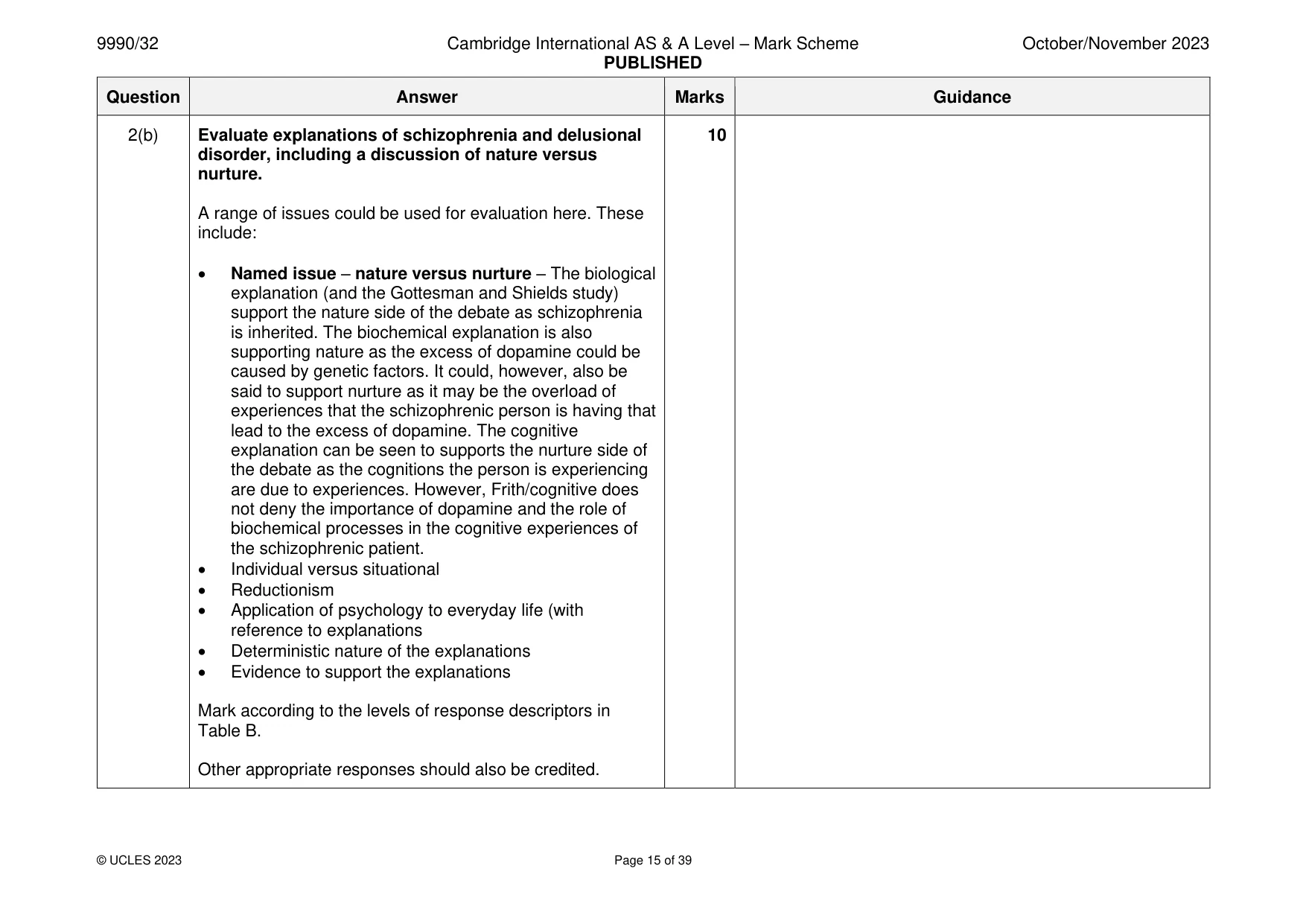
2 (a) Describe explanations of schizophrenia and delusional disorder. [8] (b) Evaluate explanations of schizophrenia and delusional disorder, including a discussion of nature versus nurture. [10] Psychology and consumer behaviour Answer all questions.
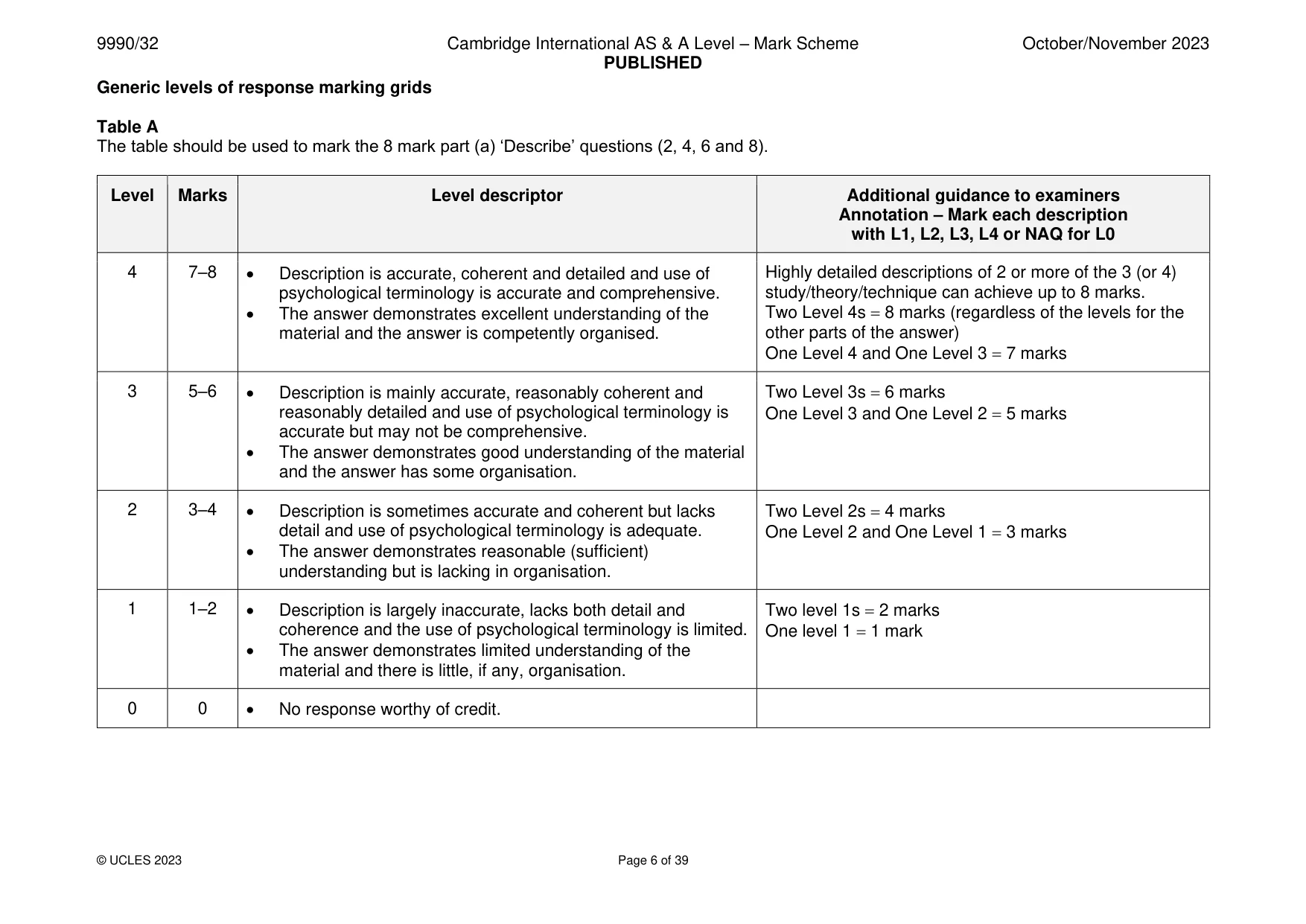
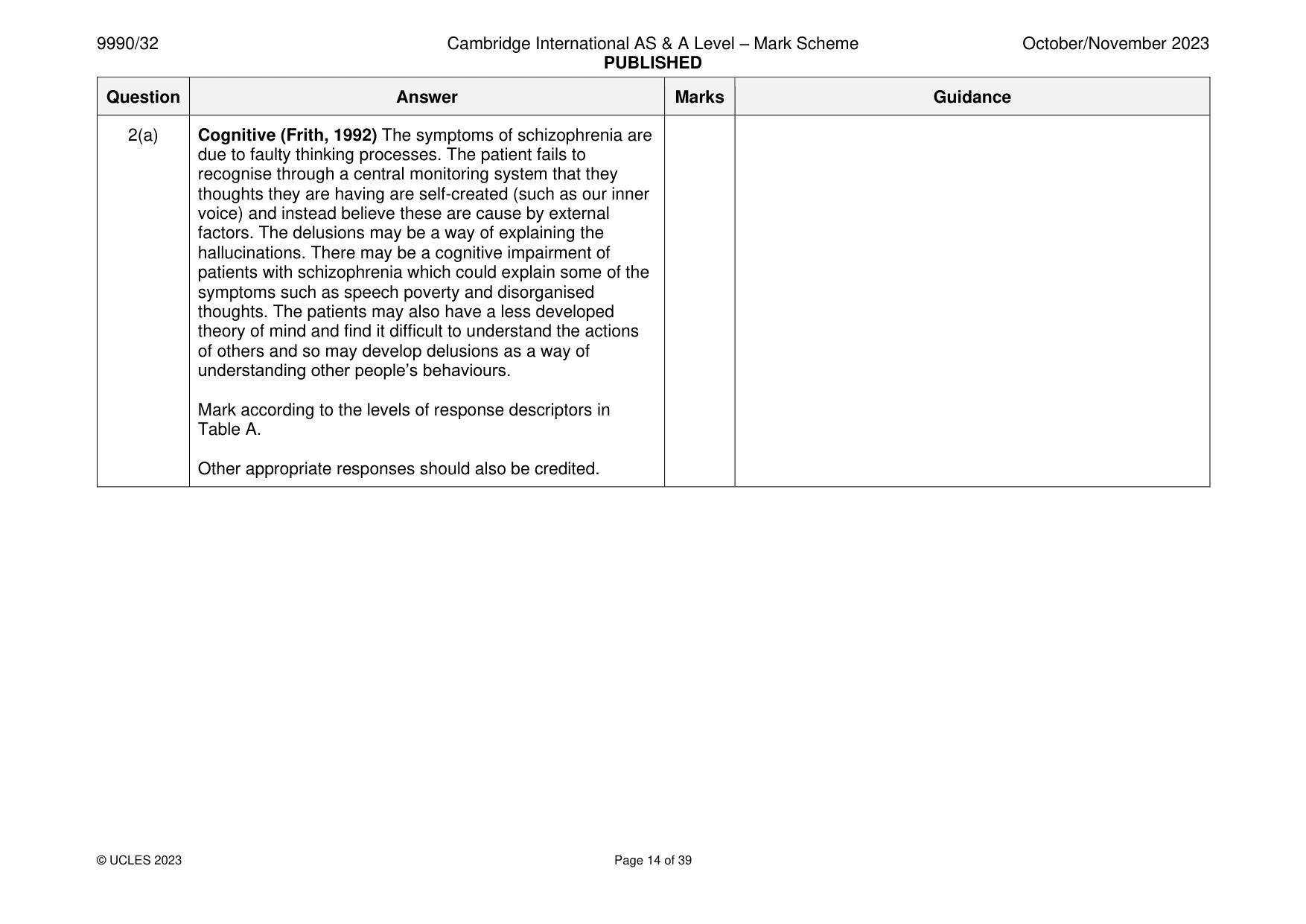
Mark scheme: 2(a) Describe explanations of schizophrenia and delusional 8 disorder. Explanations of schizophrenia and delusional disorder, including the following: • genetic (Gottesman and Shields, 1972) • biochemical (dopamine hypothesis) • cognitive (Frith, 1992) Genetic (Gottesman and Shields, 1972) Schizophrenia appears to have a genetic cause as shown by Gottesman and Shields in their review article of studies of adoption, siblings and twins with schizophrenia. All adoption studies found an increased incidence of schizophrenia in adopted children with a schizophrenic biological parent. Biological siblings of children with schizophrenia showed a much higher percentage of schizophrenia. All twin studies found a higher concordance rate for schizophrenia in monozygotic (MZ) than dizygotic (DZ) twins. In Gottesman and Shield’s own study the rate was 58% for identical twins, and 12% for non-identical twins. Conclusion – There is obviously a heavy genetic input into the onset of schizophrenia. Biochemical (dopamine hypothesis) The dopamine hypothesis of schizophrenia states that symptoms may be caused by an excess of dopamine in the mid-brain and a reduction in dopamine in the prefrontal cortex. The dopamine hypothesis of schizophrenia suggests that a high level of activity of dopamine D2 receptor neurotransmission in subcortical and limbic brain regions contributes to positive symptoms of schizophrenia, whereas negative and cognitive symptoms of the disorder can be attributed to heightened activity of dopamine D1 receptor neurotransmission in the prefrontal cortex. 2(a) Cognitive (Frith, 1992) The symptoms of schizophrenia are due to faulty thinking processes. The patient fails to recognise through a central monitoring system that they thoughts they are having are self-created (such as our inner voice) and instead believe these are cause by external factors. The delusions may be a way of explaining the hallucinations. There may be a cognitive impairment of patients with schizophrenia which could explain some of the symptoms such as speech poverty and disorganised thoughts. The patients may also have a less developed theory of mind and find it difficult to understand the actions of others and so may develop delusions as a way of understanding other people’s behaviours. Mark according to the levels of response descriptors in Table A. Other appropriate responses should also be credited. 2(b) Evaluate explanations of schizophrenia and delusional 10 disorder, including a discussion of nature versus nurture. A range of issues could be used for evaluation here. These include: • Named issue – nature versus nurture – The biological explanation (and the Gottesman and Shields study) support the nature side of the debate as schizophrenia is inherited. The biochemical explanation is also supporting nature as the excess of dopamine could be caused by genetic factors. It could, however, also be said to support nurture as it may be the overload of experiences that the schizophrenic person is having that lead to the excess of dopamine. The cognitive explanation can be seen to supports the nurture side of the debate as the cognitions the person is experiencing are due to experiences. However, Frith/cognitive does not deny the importance of dopamine and the role of biochemical processes in the cognitive experiences of the schizophrenic patient. • Individual versus situational • Reductionism • Application of psychology to everyday life (with reference to explanations • Deterministic nature of the explanations • Evidence to support the explanations Mark according to the levels of response descriptors in Table B. Other appropriate responses should also be credited. Psychology and consumer behaviour
Q3 · Outline ‘involvement’ as a marketing theory (Richarme, 2005)
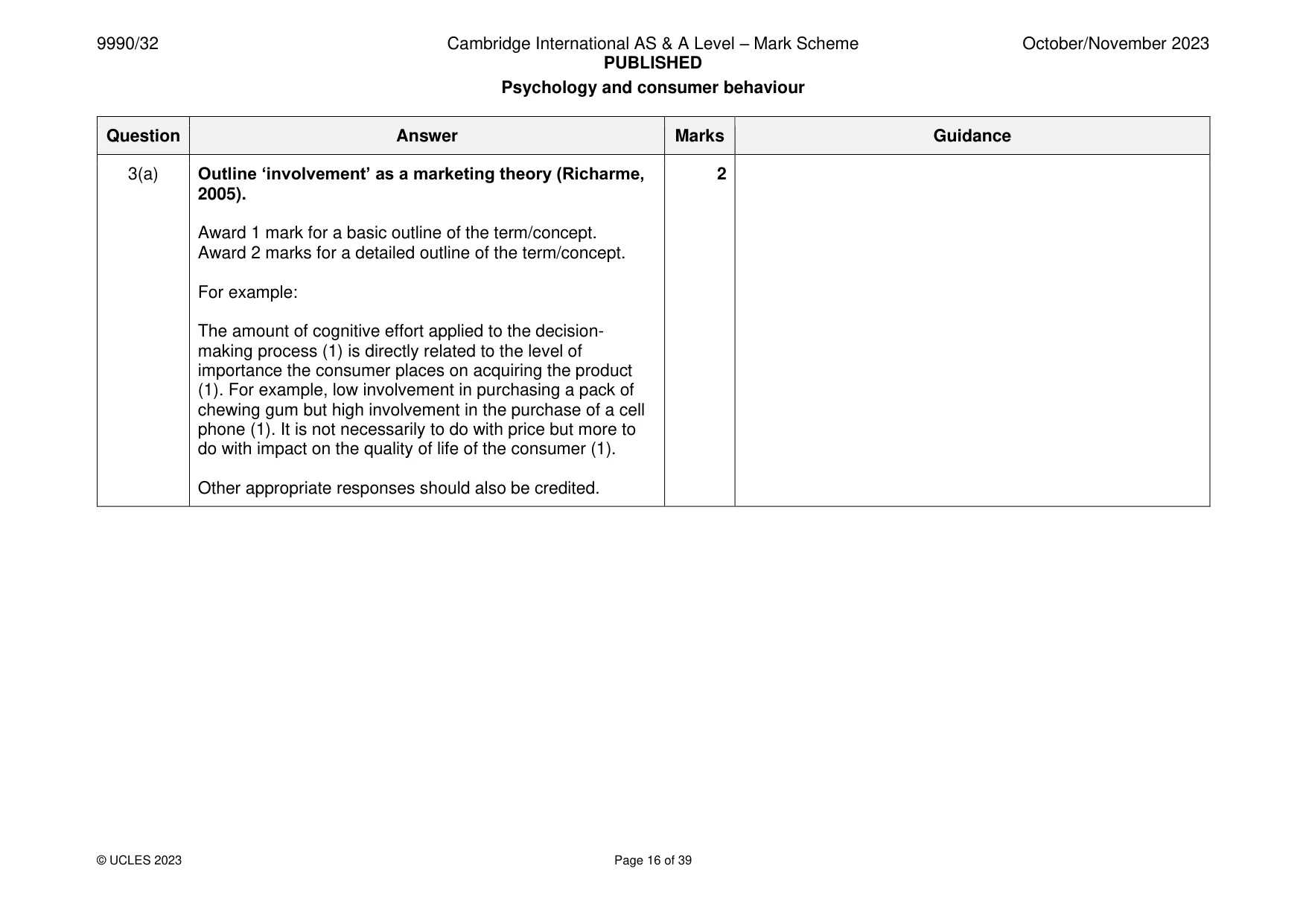
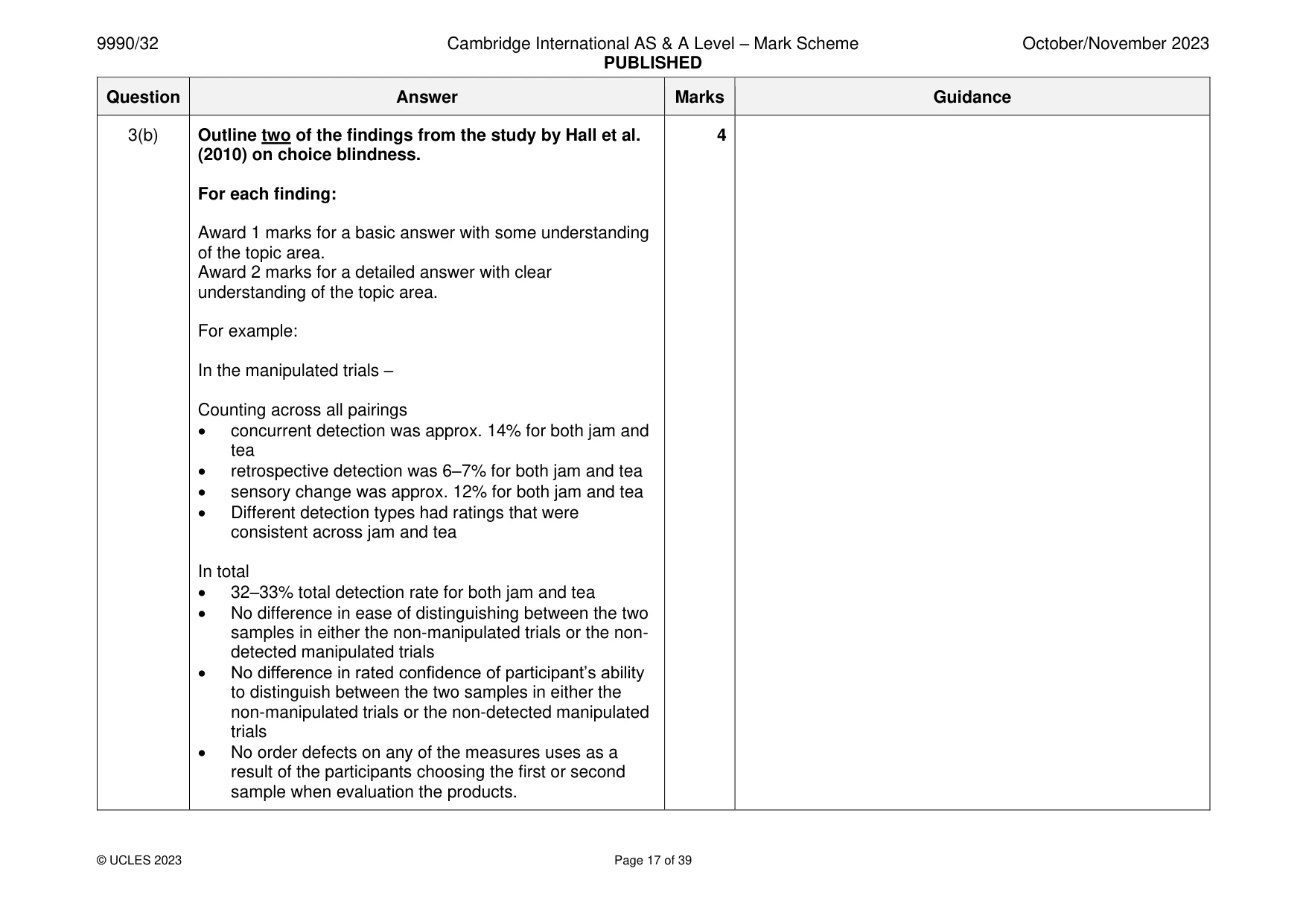
3 (a) Outline ‘involvement’ as a marketing theory (Richarme, 2005). [2] (b) Outline two of the findings from the study by Hall et al. (2010) on choice blindness. [4] (c) Explain one strength and one weakness of the study by Hall et al. [6]
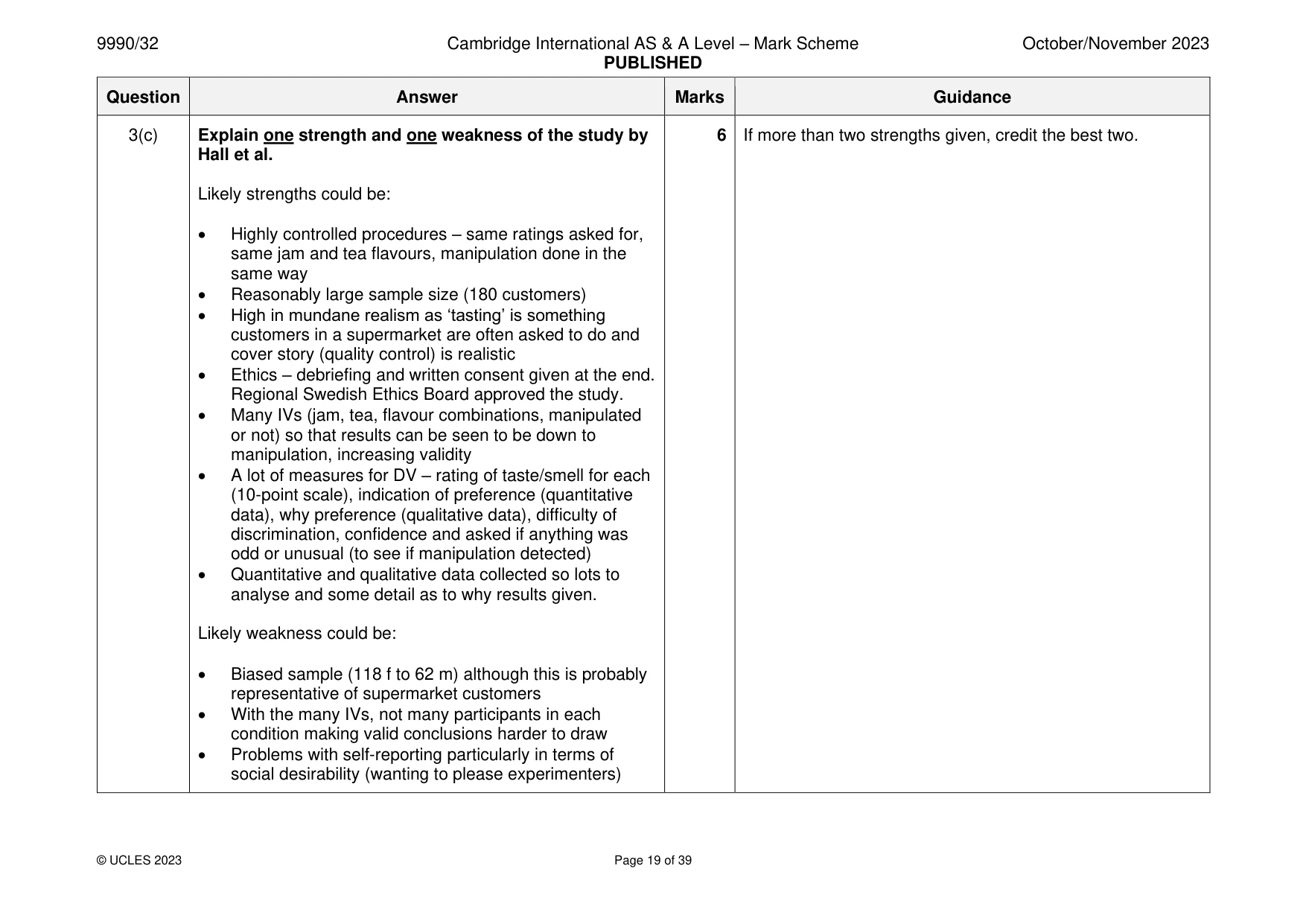
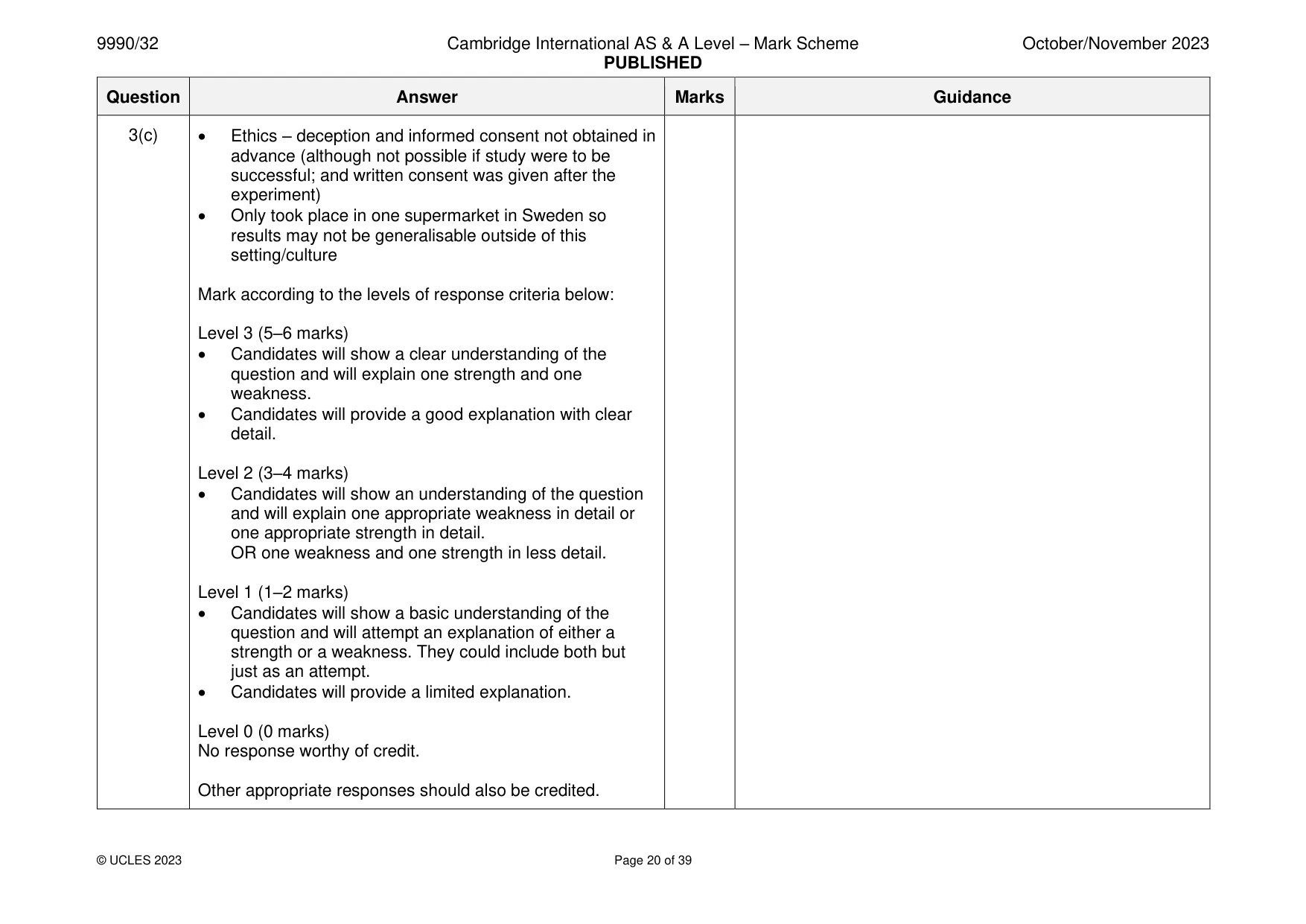
Mark scheme: 3(a) Outline ‘involvement’ as a marketing theory (Richarme, 2 2005). Award 1 mark for a basic outline of the term/concept. Award 2 marks for a detailed outline of the term/concept. For example: The amount of cognitive effort applied to the decision- making process (1) is directly related to the level of importance the consumer places on acquiring the product (1). For example, low involvement in purchasing a pack of chewing gum but high involvement in the purchase of a cell phone (1). It is not necessarily to do with price but more to do with impact on the quality of life of the consumer (1). Other appropriate responses should also be credited. 3(b) Outline two of the findings from the study by Hall et al. 4 (2010) on choice blindness. For each finding: Award 1 marks for a basic answer with some understanding of the topic area. Award 2 marks for a detailed answer with clear understanding of the topic area. For example: In the manipulated trials – Counting across all pairings • concurrent detection was approx. 14% for both jam and tea • retrospective detection was 6–7% for both jam and tea • sensory change was approx. 12% for both jam and tea • Different detection types had ratings that were consistent across jam and tea In total • 32–33% total detection rate for both jam and tea • No difference in ease of distinguishing between the two samples in either the non-manipulated trials or the non- detected manipulated trials • No difference in rated confidence of participant’s ability to distinguish between the two samples in either the non-manipulated trials or the non-detected manipulated trials • No order defects on any of the measures uses as a result of the participants choosing the first or second sample when evaluation the products. 3(b) Differences • Significant differences in detection rate between the most and least similar jam and tea pairs but no differences between other pairs • Rated discrepancy of preference within a pair was higher for detected (as opposed to undetected) jam trials but not the case for detected tea trials • Lower detection rate (20%) in those with gift incentive compared to those without (46%) in tea condition but not in jam condition Other appropriate responses should also be credited. 3(c) Explain one strength and one weakness of the study by 6 If more than two strengths given, credit the best two. Hall et al. Likely strengths could be: • Highly controlled procedures – same ratings asked for, same jam and tea flavours, manipulation done in the same way • Reasonably large sample size (180 customers) • High in mundane realism as ‘tasting’ is something customers in a supermarket are often asked to do and cover story (quality control) is realistic • Ethics – debriefing and written consent given at the end. Regional Swedish Ethics Board approved the study. • Many IVs (jam, tea, flavour combinations, manipulated or not) so that results can be seen to be down to manipulation, increasing validity • A lot of measures for DV – rating of taste/smell for each (10-point scale), indication of preference (quantitative data), why preference (qualitative data), difficulty of discrimination, confidence and asked if anything was odd or unusual (to see if manipulation detected) • Quantitative and qualitative data collected so lots to analyse and some detail as to why results given. Likely weakness could be: • Biased sample (118 f to 62 m) although this is probably representative of supermarket customers • With the many IVs, not many participants in each condition making valid conclusions harder to draw • Problems with self-reporting particularly in terms of social desirability (wanting to please experimenters) 3(c) • Ethics – deception and informed consent not obtained in advance (although not possible if study were to be successful; and written consent was given after the experiment) • Only took place in one supermarket in Sweden so results may not be generalisable outside of this setting/culture Mark according to the levels of response criteria below: Level 3 (5–6 marks) • Candidates will show a clear understanding of the question and will explain one strength and one weakness. • Candidates will provide a good explanation with clear detail. Level 2 (3–4 marks) • Candidates will show an understanding of the question and will explain one appropriate weakness in detail or one appropriate strength in detail. OR one weakness and one strength in less detail. Level 1 (1–2 marks) • Candidates will show a basic understanding of the question and will attempt an explanation of either a strength or a weakness. They could include both but just as an attempt. • Candidates will provide a limited explanation. Level 0 (0 marks) No response worthy of credit. Other appropriate responses should also be credited.
Q4 · Describe communication and advertising models (changing attitudes and models of…
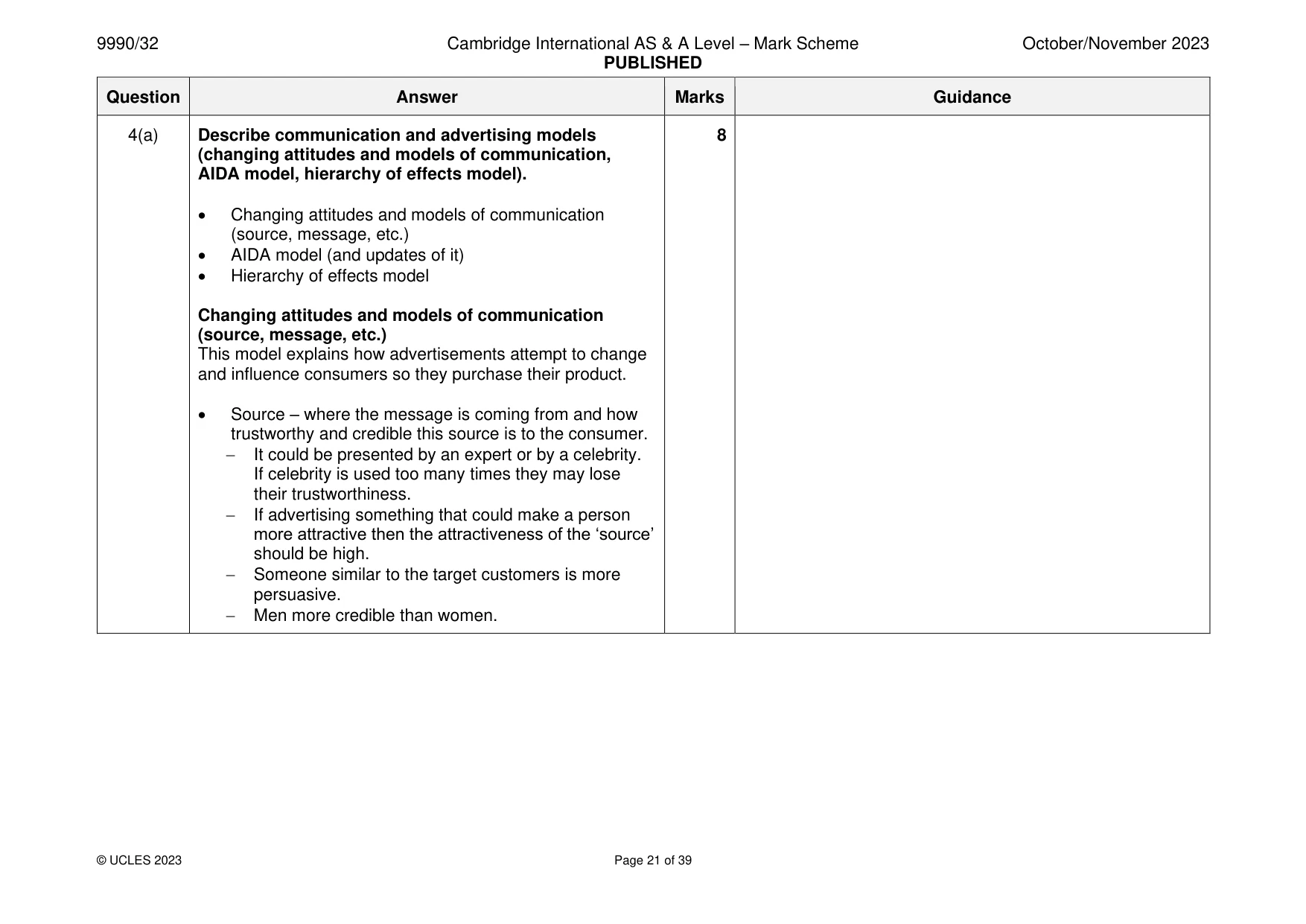
4 (a) Describe communication and advertising models (changing attitudes and models of communication, AIDA model, hierarchy of effects model). [8] (b) Evaluate communication and advertising models (changing attitudes and models of communication, AIDA model, hierarchy of effects model), including a discussion of reductionism versus holism. [10] Psychology and health Answer all questions.
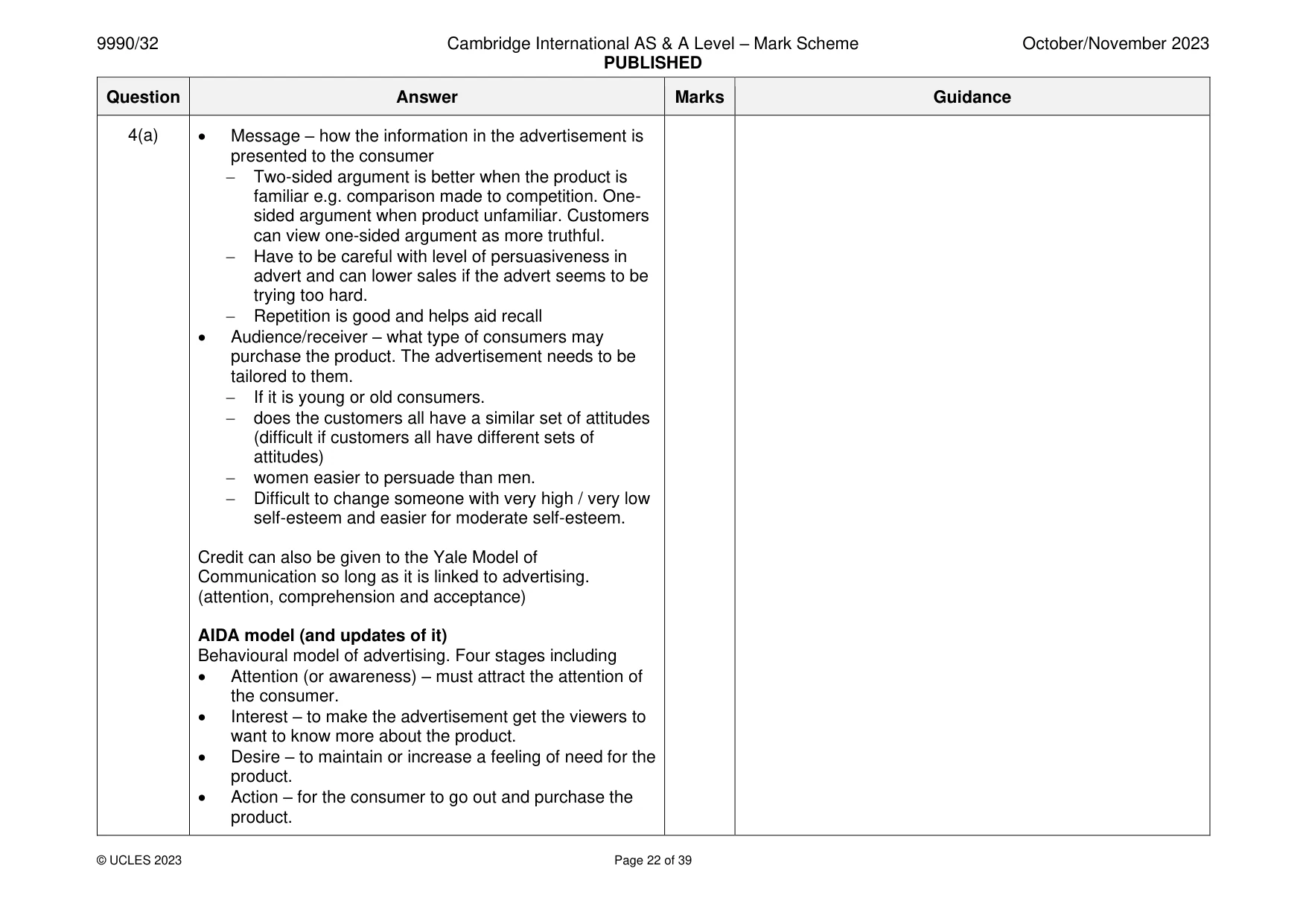
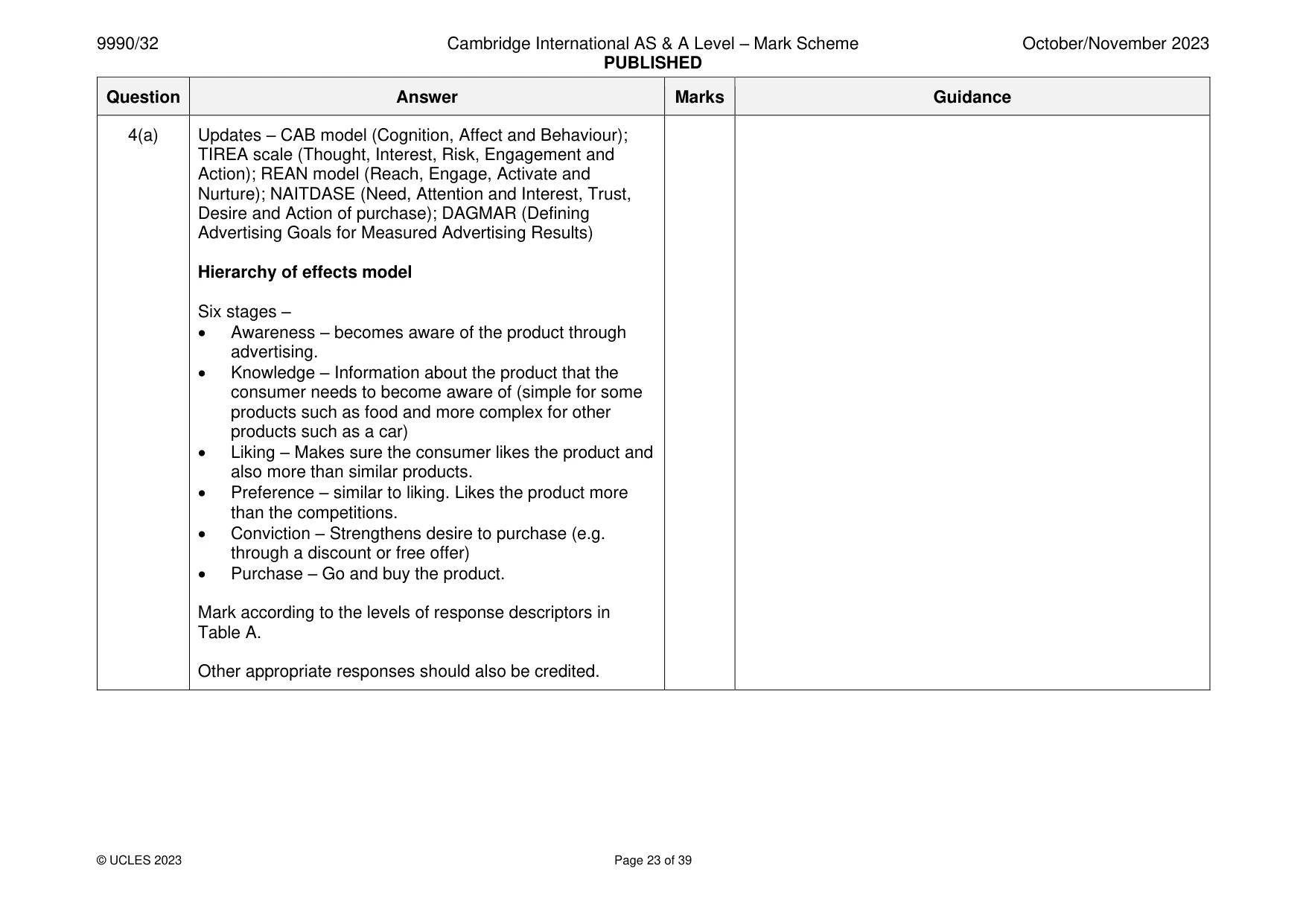
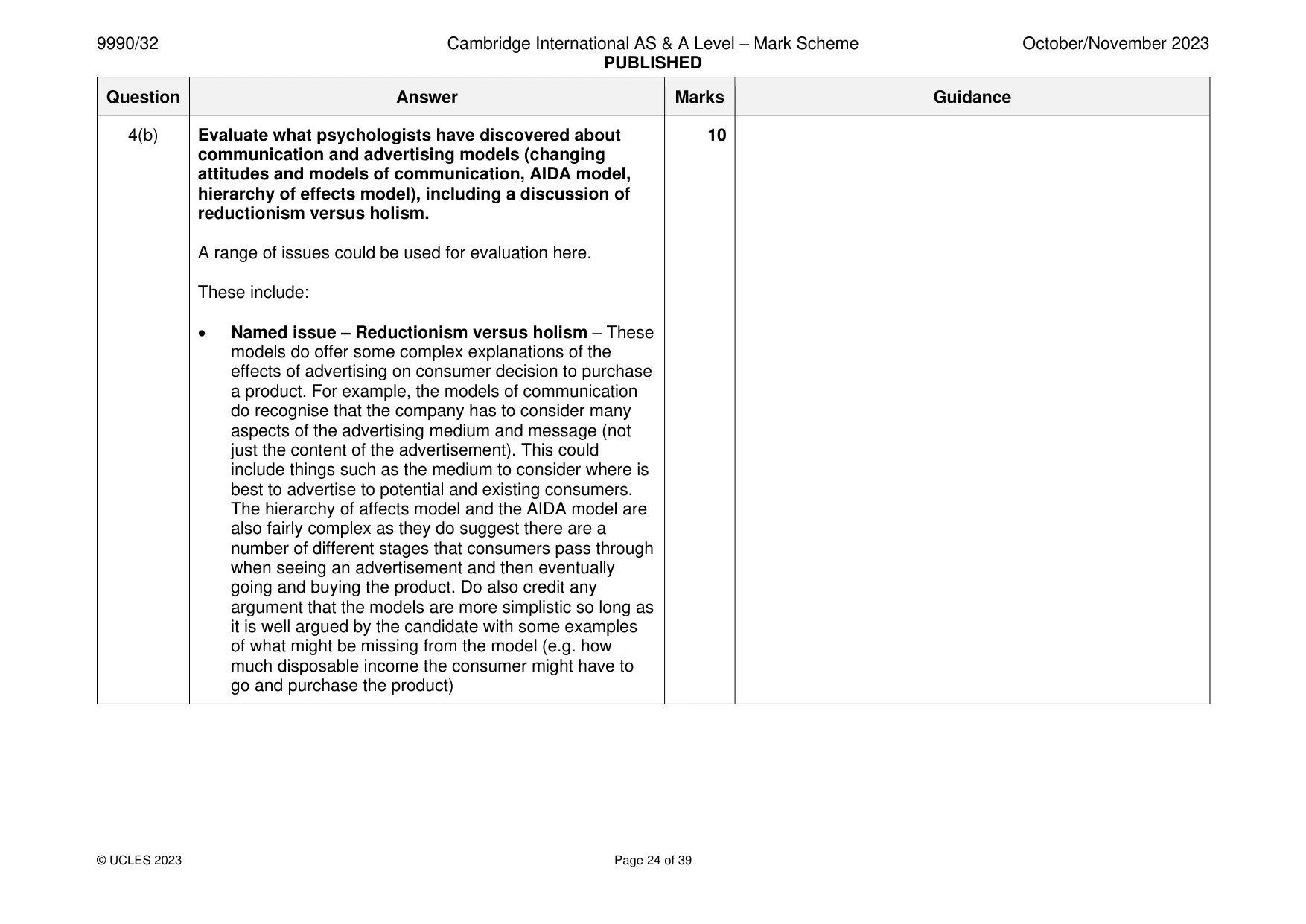
Mark scheme: 4(a) Describe communication and advertising models 8 (changing attitudes and models of communication, AIDA model, hierarchy of effects model). • Changing attitudes and models of communication (source, message, etc.) • AIDA model (and updates of it) • Hierarchy of effects model Changing attitudes and models of communication (source, message, etc.) This model explains how advertisements attempt to change and influence consumers so they purchase their product. • Source – where the message is coming from and how trustworthy and credible this source is to the consumer. − It could be presented by an expert or by a celebrity. If celebrity is used too many times they may lose their trustworthiness. − If advertising something that could make a person more attractive then the attractiveness of the ‘source’ should be high. − Someone similar to the target customers is more persuasive. − Men more credible than women. 4(a) • Message – how the information in the advertisement is presented to the consumer − Two-sided argument is better when the product is familiar e.g. comparison made to competition. One- sided argument when product unfamiliar. Customers can view one-sided argument as more truthful. − Have to be careful with level of persuasiveness in advert and can lower sales if the advert seems to be trying too hard. − Repetition is good and helps aid recall • Audience/receiver – what type of consumers may purchase the product. The advertisement needs to be tailored to them. − If it is young or old consumers. − does the customers all have a similar set of attitudes (difficult if customers all have different sets of attitudes) − women easier to persuade than men. − Difficult to change someone with very high / very low self-esteem and easier for moderate self-esteem. Credit can also be given to the Yale Model of Communication so long as it is linked to advertising. (attention, comprehension and acceptance) AIDA model (and updates of it) Behavioural model of advertising. Four stages including • Attention (or awareness) – must attract the attention of the consumer. • Interest – to make the advertisement get the viewers to want to know more about the product. • Desire – to maintain or increase a feeling of need for the product. • Action – for the consumer to go out and purchase the product. 4(a) Updates – CAB model (Cognition, Affect and Behaviour); TIREA scale (Thought, Interest, Risk, Engagement and Action); REAN model (Reach, Engage, Activate and Nurture); NAITDASE (Need, Attention and Interest, Trust, Desire and Action of purchase); DAGMAR (Defining Advertising Goals for Measured Advertising Results) Hierarchy of effects model Six stages – • Awareness – becomes aware of the product through advertising. • Knowledge – Information about the product that the consumer needs to become aware of (simple for some products such as food and more complex for other products such as a car) • Liking – Makes sure the consumer likes the product and also more than similar products. • Preference – similar to liking. Likes the product more than the competitions. • Conviction – Strengthens desire to purchase (e.g. through a discount or free offer) • Purchase – Go and buy the product. Mark according to the levels of response descriptors in Table A. Other appropriate responses should also be credited. 4(b) Evaluate what psychologists have discovered about 10 communication and advertising models (changing attitudes and models of communication, AIDA model, hierarchy of effects model), including a discussion of reductionism versus holism. A range of issues could be used for evaluation here. These include: • Named issue – Reductionism versus holism – These models do offer some complex explanations of the effects of advertising on consumer decision to purchase a product. For example, the models of communication do recognise that the company has to consider many aspects of the advertising medium and message (not just the content of the advertisement). This could include things such as the medium to consider where is best to advertise to potential and existing consumers. The hierarchy of affects model and the AIDA model are also fairly complex as they do suggest there are a number of different stages that consumers pass through when seeing an advertisement and then eventually going and buying the product. Do also credit any argument that the models are more simplistic so long as it is well argued by the candidate with some examples of what might be missing from the model (e.g. how much disposable income the consumer might have to go and purchase the product) 4(b) • Applications to everyday life • Cultural bias • Reductionism • Theoretical/lack of research support • Determinism • Individual differences Mark according to the levels of response descriptors in Table B. Other appropriate responses should also be credited. Psychology and health
Q5 · Outline one behavioural technique used to improve adherence to medical advice
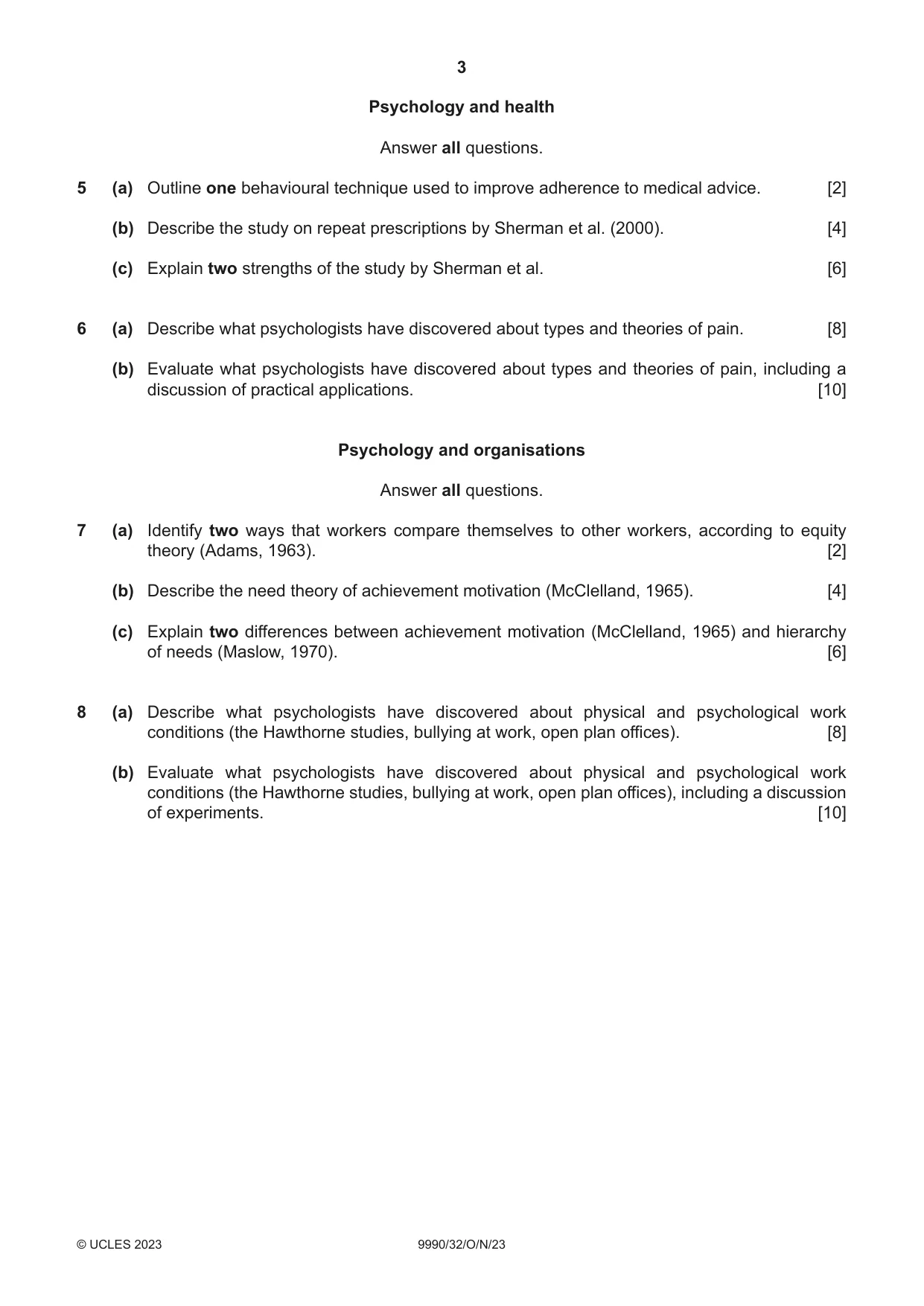
5 (a) Outline one behavioural technique used to improve adherence to medical advice. [2] (b) Describe the study on repeat prescriptions by Sherman et al. (2000). [4] (c) Explain two strengths of the study by Sherman et al. [6]
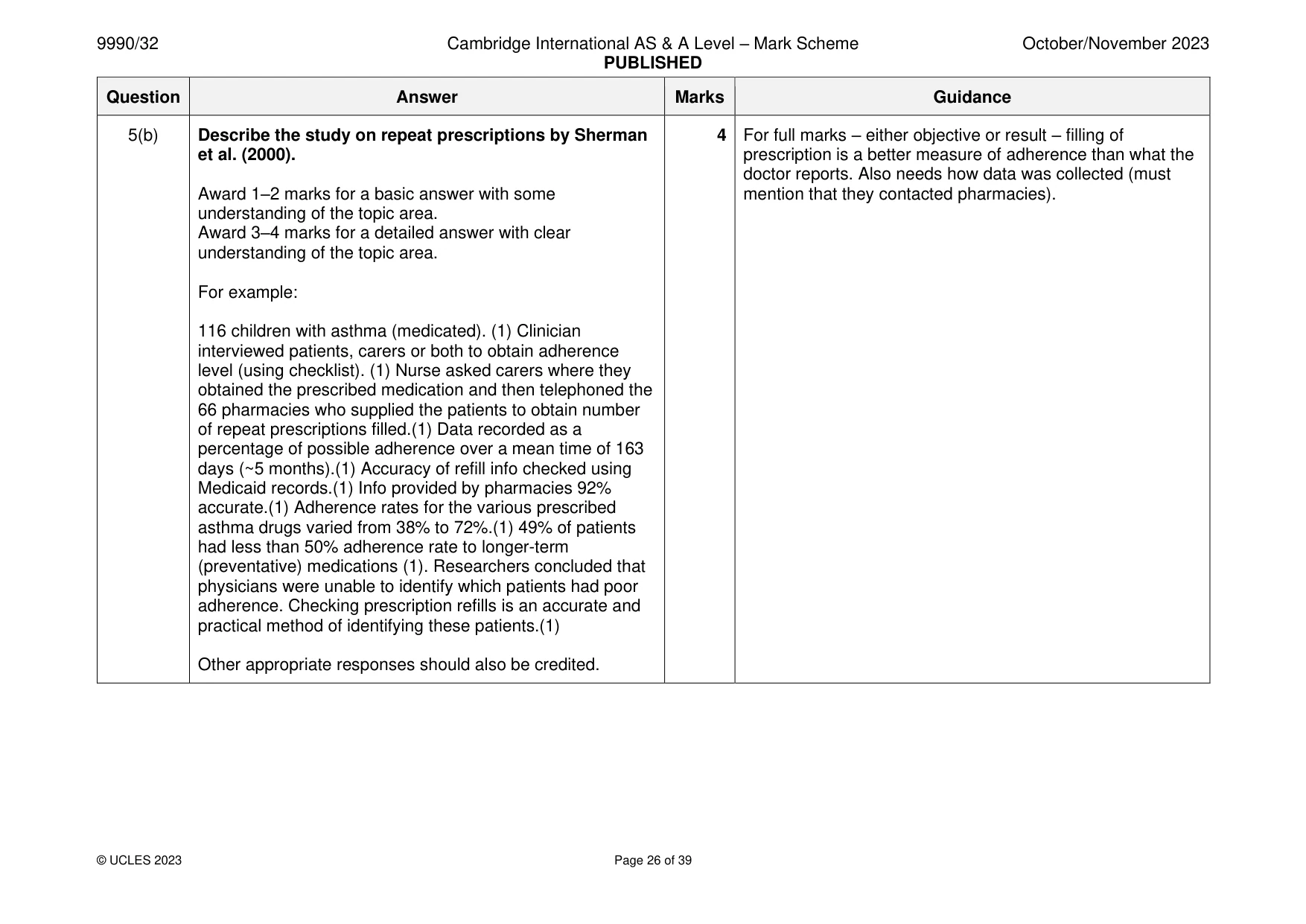
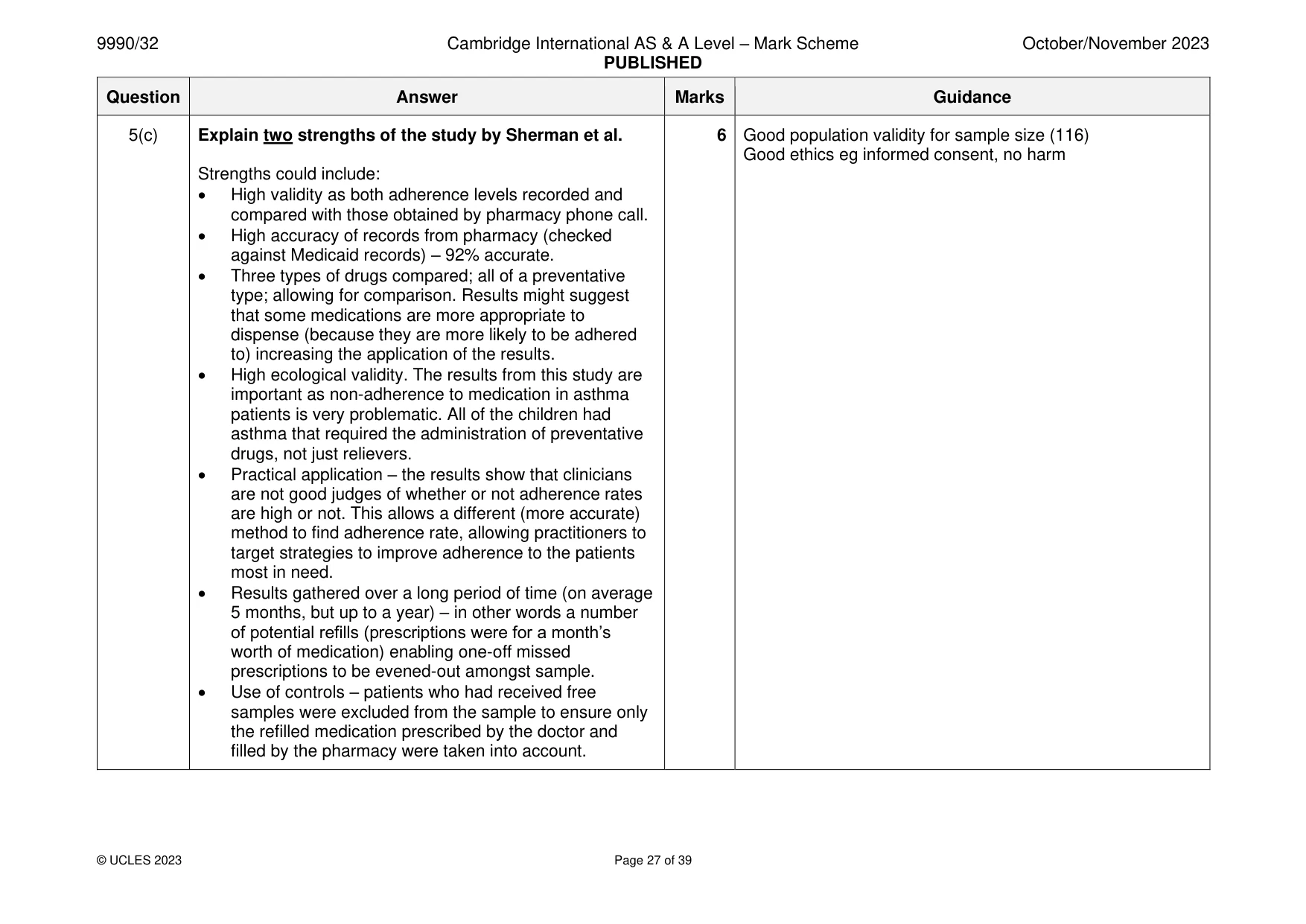
Mark scheme: 5(a) Outline one behavioural technique used to improve 2 1 mark for technique, 1 mark for reference to adherence adherence to medical advice. Names of researchers not needed Award 1 mark for a basic outline of the term/concept. Award 2 marks for a detailed outline of the term/concept. Any appropriate behavioural technique is creditworthy so long as it (a) is practical (b) would improve adherence to Most likely answers: medication. It does not need to be in the syllabus but needs to be clearly behavioural (e.g. a reward is given to • Use of positive reinforcement in whistle and/or spinner encourage adherence). for correct use of Funhaler (Watt et al). Improved uptake of asthma medication in children. Do not credit • Mail prompt for immunisation in children in addition to Formal attire either free clinic access or childcare during additional Avoid jargon clinic time enabling parents to go out or monetary incentive (entering into lottery to win a possible £175 prize or telephone call reminder (Yokley and Glenwick) Other appropriate responses should also be credited. 5(b) Describe the study on repeat prescriptions by Sherman 4 For full marks – either objective or result – filling of et al. (2000). prescription is a better measure of adherence than what the doctor reports. Also needs how data was collected (must Award 1–2 marks for a basic answer with some mention that they contacted pharmacies). understanding of the topic area. Award 3–4 marks for a detailed answer with clear understanding of the topic area. For example: 116 children with asthma (medicated). (1) Clinician interviewed patients, carers or both to obtain adherence level (using checklist). (1) Nurse asked carers where they obtained the prescribed medication and then telephoned the 66 pharmacies who supplied the patients to obtain number of repeat prescriptions filled.(1) Data recorded as a percentage of possible adherence over a mean time of 163 days (~5 months).(1) Accuracy of refill info checked using Medicaid records.(1) Info provided by pharmacies 92% accurate.(1) Adherence rates for the various prescribed asthma drugs varied from 38% to 72%.(1) 49% of patients had less than 50% adherence rate to longer-term (preventative) medications (1). Researchers concluded that physicians were unable to identify which patients had poor adherence. Checking prescription refills is an accurate and practical method of identifying these patients.(1) Other appropriate responses should also be credited. 5(c) Explain two strengths of the study by Sherman et al. 6 Good population validity for sample size (116) Good ethics eg informed consent, no harm Strengths could include: • High validity as both adherence levels recorded and compared with those obtained by pharmacy phone call. • High accuracy of records from pharmacy (checked against Medicaid records) – 92% accurate. • Three types of drugs compared; all of a preventative type; allowing for comparison. Results might suggest that some medications are more appropriate to dispense (because they are more likely to be adhered to) increasing the application of the results. • High ecological validity. The results from this study are important as non-adherence to medication in asthma patients is very problematic. All of the children had asthma that required the administration of preventative drugs, not just relievers. • Practical application – the results show that clinicians are not good judges of whether or not adherence rates are high or not. This allows a different (more accurate) method to find adherence rate, allowing practitioners to target strategies to improve adherence to the patients most in need. • Results gathered over a long period of time (on average 5 months, but up to a year) – in other words a number of potential refills (prescriptions were for a month’s worth of medication) enabling one-off missed prescriptions to be evened-out amongst sample. • Use of controls – patients who had received free samples were excluded from the sample to ensure only the refilled medication prescribed by the doctor and filled by the pharmacy were taken into account. 5(c) Mark according to the levels of response criteria below: Level 3 (5–6 marks) • Candidates will show a clear understanding of the question and will explain two strengths. • Candidates will provide a good explanation with clear detail. Level 2 (3–4 marks) • Candidates will show an understanding of the question and will explain one appropriate strength in detail. OR two strengths in less detail. Level 1 (1–2 marks) • Candidates will show a basic understanding of the question and will attempt an explanation of a strength. They could include two strengths but just as an attempt. • Candidates will provide a limited explanation. Level 0 (0 marks) No response worthy of credit. Other appropriate responses should also be credited.
Q6 · Describe what psychologists have discovered about types and theories of pain
6 (a) Describe what psychologists have discovered about types and theories of pain. [8] (b) Evaluate what psychologists have discovered about types and theories of pain, including a discussion of practical applications. [10] Psychology and organisations Answer all questions.
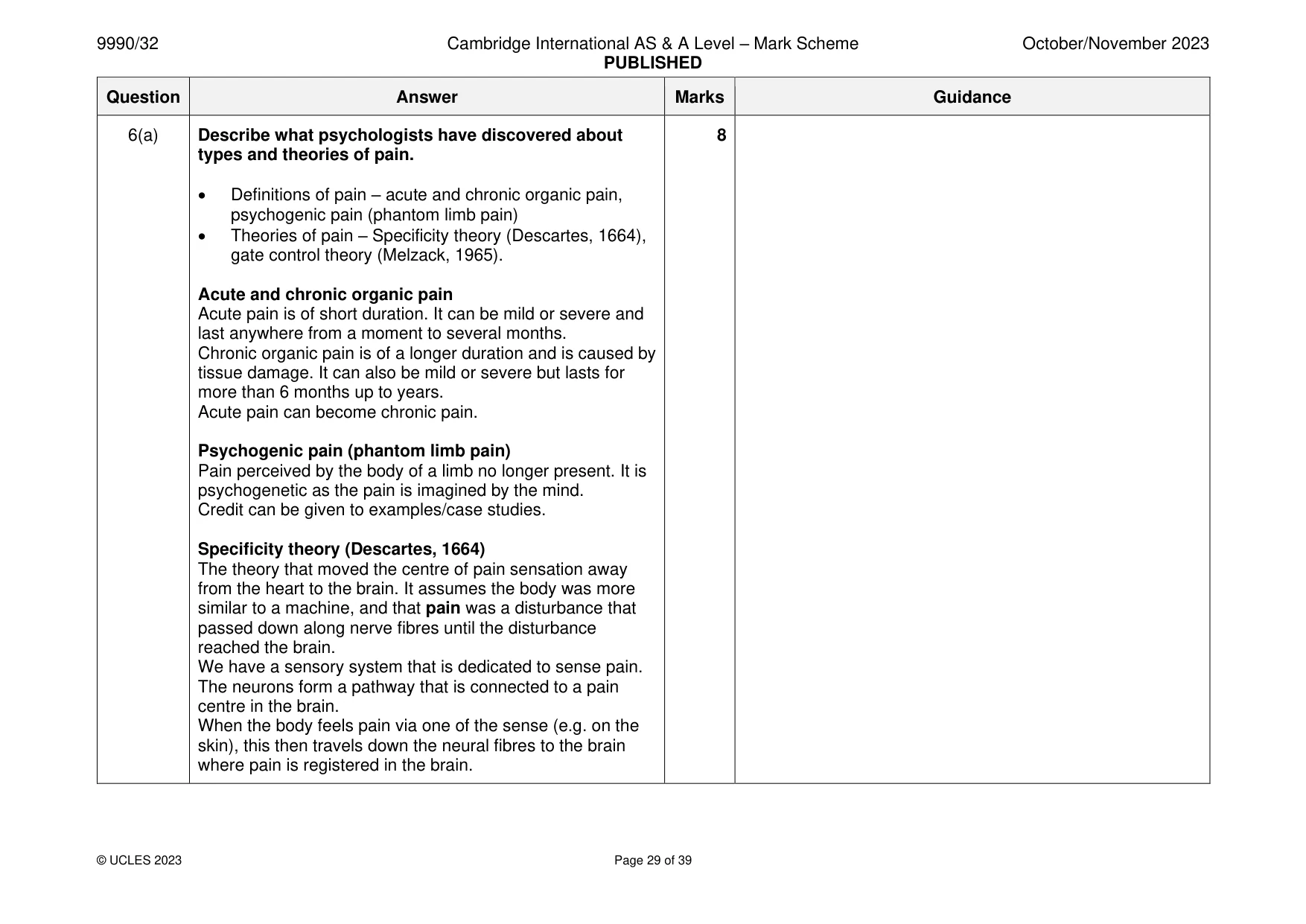
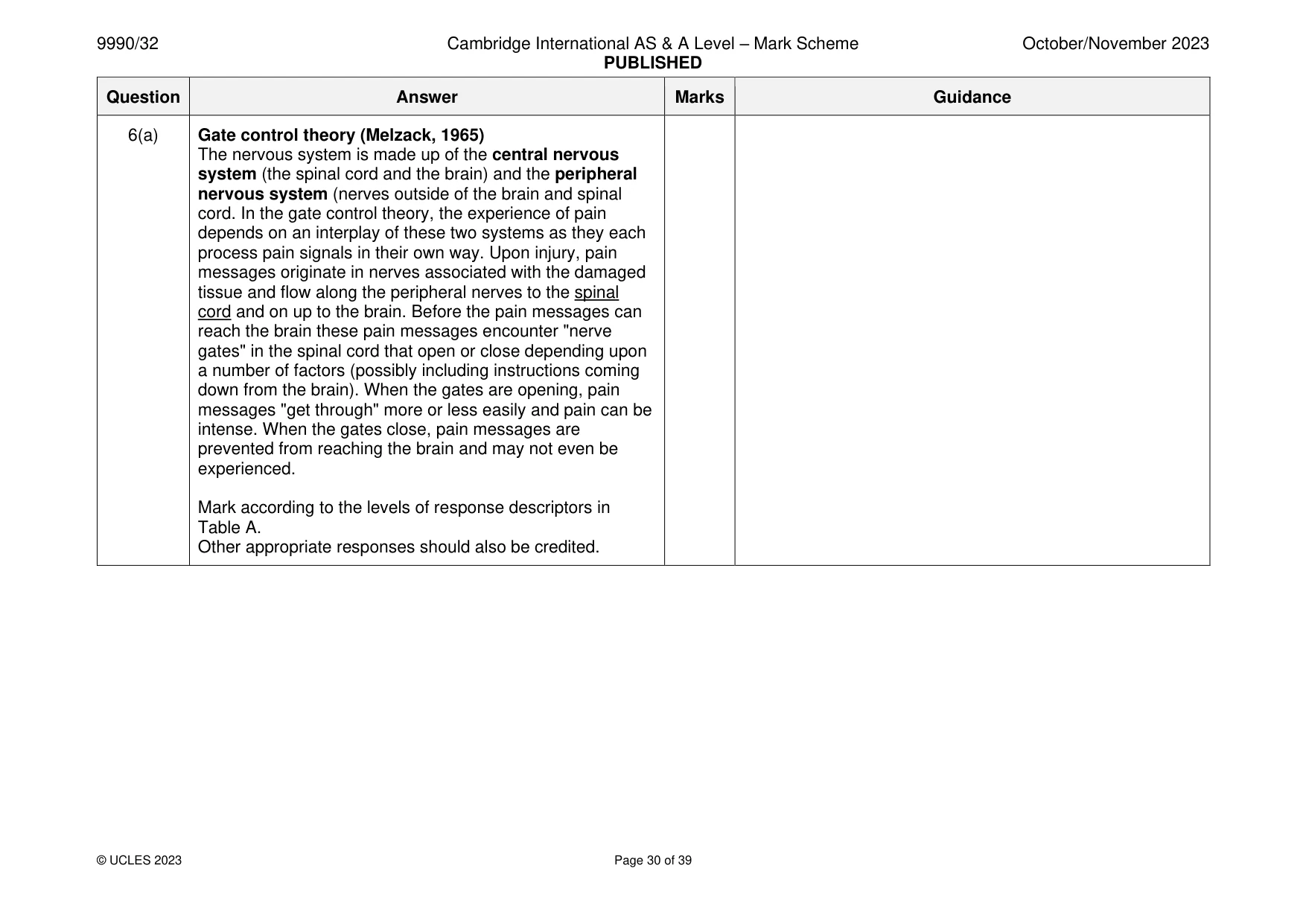
Mark scheme: 6(a) Describe what psychologists have discovered about 8 types and theories of pain. • Definitions of pain – acute and chronic organic pain, psychogenic pain (phantom limb pain) • Theories of pain – Specificity theory (Descartes, 1664), gate control theory (Melzack, 1965). Acute and chronic organic pain Acute pain is of short duration. It can be mild or severe and last anywhere from a moment to several months. Chronic organic pain is of a longer duration and is caused by tissue damage. It can also be mild or severe but lasts for more than 6 months up to years. Acute pain can become chronic pain. Psychogenic pain (phantom limb pain) Pain perceived by the body of a limb no longer present. It is psychogenetic as the pain is imagined by the mind. Credit can be given to examples/case studies. Specificity theory (Descartes, 1664) The theory that moved the centre of pain sensation away from the heart to the brain. It assumes the body was more similar to a machine, and that pain was a disturbance that passed down along nerve fibres until the disturbance reached the brain. We have a sensory system that is dedicated to sense pain. The neurons form a pathway that is connected to a pain centre in the brain. When the body feels pain via one of the sense (e.g. on the skin), this then travels down the neural fibres to the brain where pain is registered in the brain. 6(a) Gate control theory (Melzack, 1965) The nervous system is made up of the central nervous system (the spinal cord and the brain) and the peripheral nervous system (nerves outside of the brain and spinal cord. In the gate control theory, the experience of pain depends on an interplay of these two systems as they each process pain signals in their own way. Upon injury, pain messages originate in nerves associated with the damaged tissue and flow along the peripheral nerves to the spinal cord and on up to the brain. Before the pain messages can reach the brain these pain messages encounter "nerve gates" in the spinal cord that open or close depending upon a number of factors (possibly including instructions coming down from the brain). When the gates are opening, pain messages "get through" more or less easily and pain can be intense. When the gates close, pain messages are prevented from reaching the brain and may not even be experienced. Mark according to the levels of response descriptors in Table A. Other appropriate responses should also be credited. 6(b) Evaluate what psychologists have discovered about 10 types and theories of pain, including a discussion of practical applications. A range of issues could be used for evaluation here. These include: • Named issue – practical applications – it is useful for doctors, patients and anyone working with people in pain to understand the types of pain and also the theories of pain in order to better explain the pain to the patients. However, nothing is mentioned about how to reduce pain in these theories, which makes them less practical. Candidates could provide specific applications e.g. it may help those experiencing pain to have the mechanism explained to them. This knowledge could make the experience of pain easier to deal with. It may also inform potential pain-killing solutions. • Reductionism • Individual Differences • Generalisability/cultural bias • Comparison of the two theories • Free will and determinism Other appropriate responses should also be credited. Mark according to the levels of response descriptors in Table B. Psychology and organisations
Q7 · Identify two ways that workers compare themselves to other workers, according to equity…
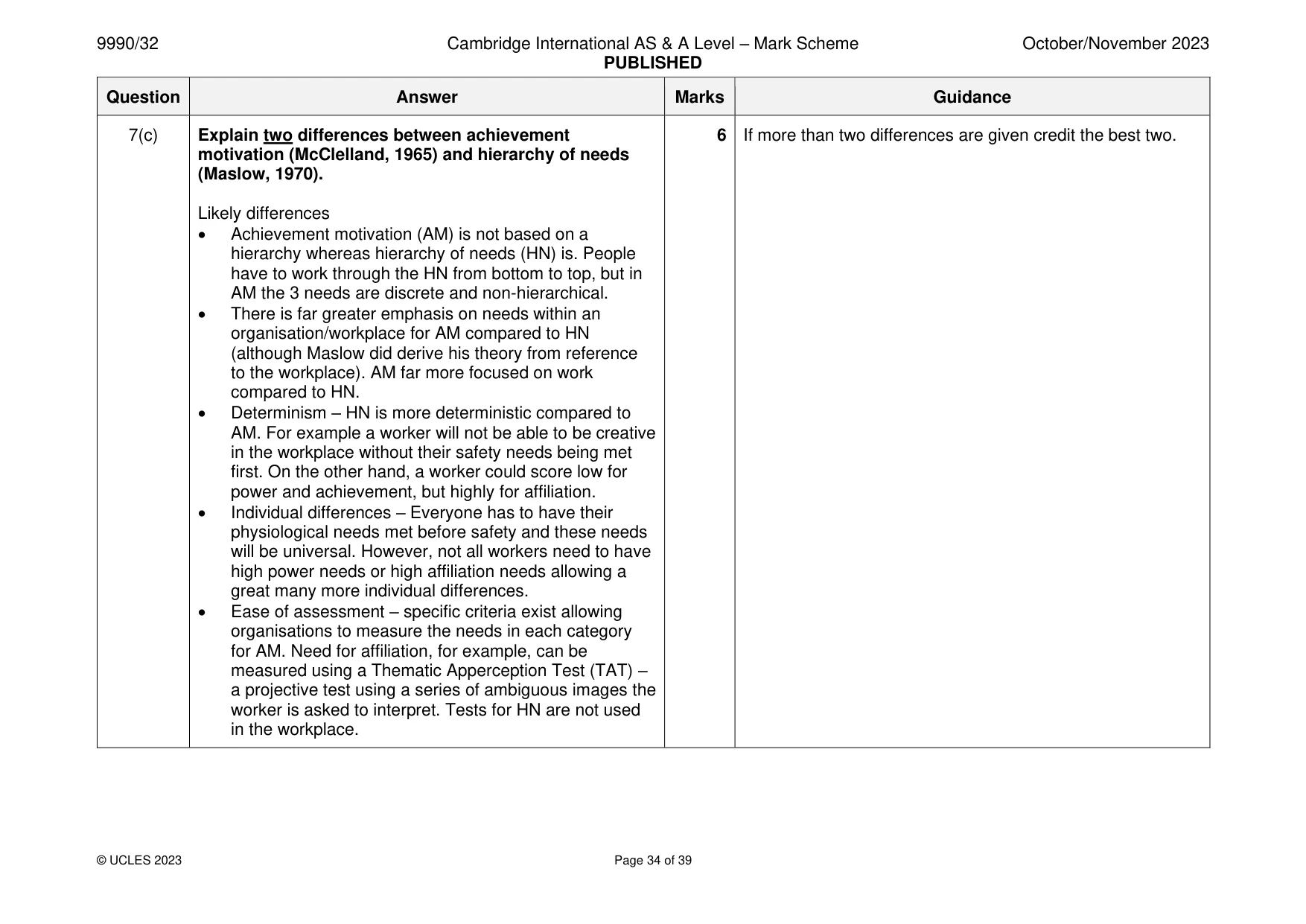
7 (a) Identify two ways that workers compare themselves to other workers, according to equity theory (Adams, 1963). [2] (b) Describe the need theory of achievement motivation (McClelland, 1965). [4] (c) Explain two differences between achievement motivation (McClelland, 1965) and hierarchy of needs (Maslow, 1970). [6]
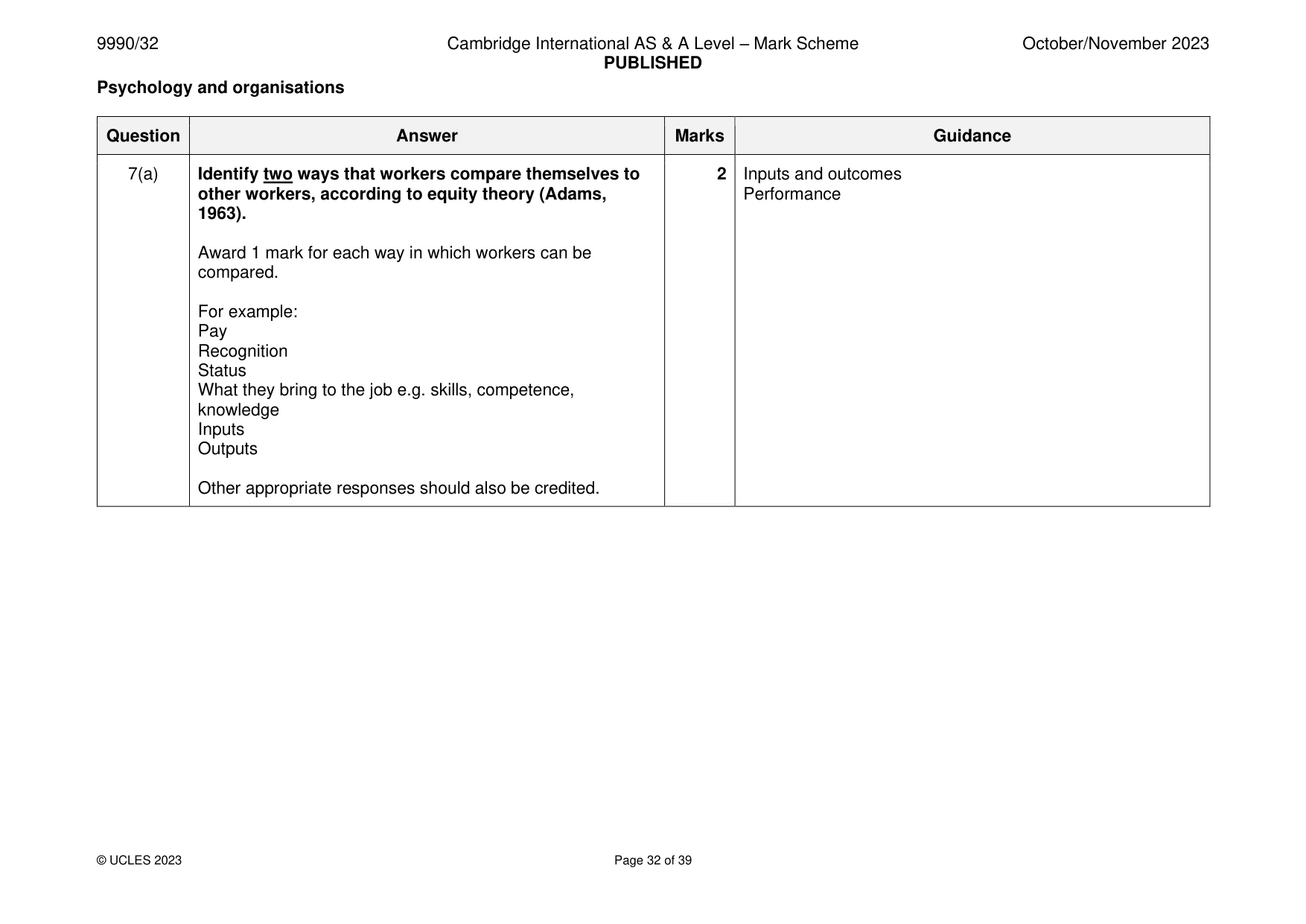
Mark scheme: 7(a) Identify two ways that workers compare themselves to 2 Inputs and outcomes other workers, according to equity theory (Adams, Performance 1963). Award 1 mark for each way in which workers can be compared. For example: Pay Recognition Status What they bring to the job e.g. skills, competence, knowledge Inputs Outputs Other appropriate responses should also be credited. 7(b) Describe the need theory of achievement motivation 4 (McClelland, 1965). Award 1–2 marks for a basic answer with some understanding of the topic area. Award 3–4 marks for a detailed answer with clear understanding of the topic area. Example 4 mark response. This theory has three needs – need for achievement, affiliation and power. (2) The need for achievement is where the workers want to be successful based on their hard work rather than on the basis of luck. (1) The need for affiliation is the need to be liked and accepted by others / to be a part of a group of workers. (1) Other appropriate responses should also be credited. 7(c) Explain two differences between achievement 6 If more than two differences are given credit the best two. motivation (McClelland, 1965) and hierarchy of needs (Maslow, 1970). Likely differences • Achievement motivation (AM) is not based on a hierarchy whereas hierarchy of needs (HN) is. People have to work through the HN from bottom to top, but in AM the 3 needs are discrete and non-hierarchical. • There is far greater emphasis on needs within an organisation/workplace for AM compared to HN (although Maslow did derive his theory from reference to the workplace). AM far more focused on work compared to HN. • Determinism – HN is more deterministic compared to AM. For example a worker will not be able to be creative in the workplace without their safety needs being met first. On the other hand, a worker could score low for power and achievement, but highly for affiliation. • Individual differences – Everyone has to have their physiological needs met before safety and these needs will be universal. However, not all workers need to have high power needs or high affiliation needs allowing a great many more individual differences. • Ease of assessment – specific criteria exist allowing organisations to measure the needs in each category for AM. Need for affiliation, for example, can be measured using a Thematic Apperception Test (TAT) – a projective test using a series of ambiguous images the worker is asked to interpret. Tests for HN are not used in the workplace. 7(c) Mark according to the levels of response criteria below: Level 3 (5–6 marks) • Candidates will show a clear understanding of the question and will explain two differences. • Candidates will provide a good explanation with clear detail. Level 2 (3–4 marks) • Candidates will show an understanding of the question and will explain one difference in detail. • OR two differences in less detail. Level 1 (1–2 marks) • Candidates will show a basic understanding of the question and will attempt an explanation of a difference. They could include both but just as an attempt. • Candidates will provide a limited explanation. Level 0 (0 marks) No response worthy of credit. Other appropriate responses should also be credited.
Q8 · Describe what psychologists have discovered about physical and psychological work…
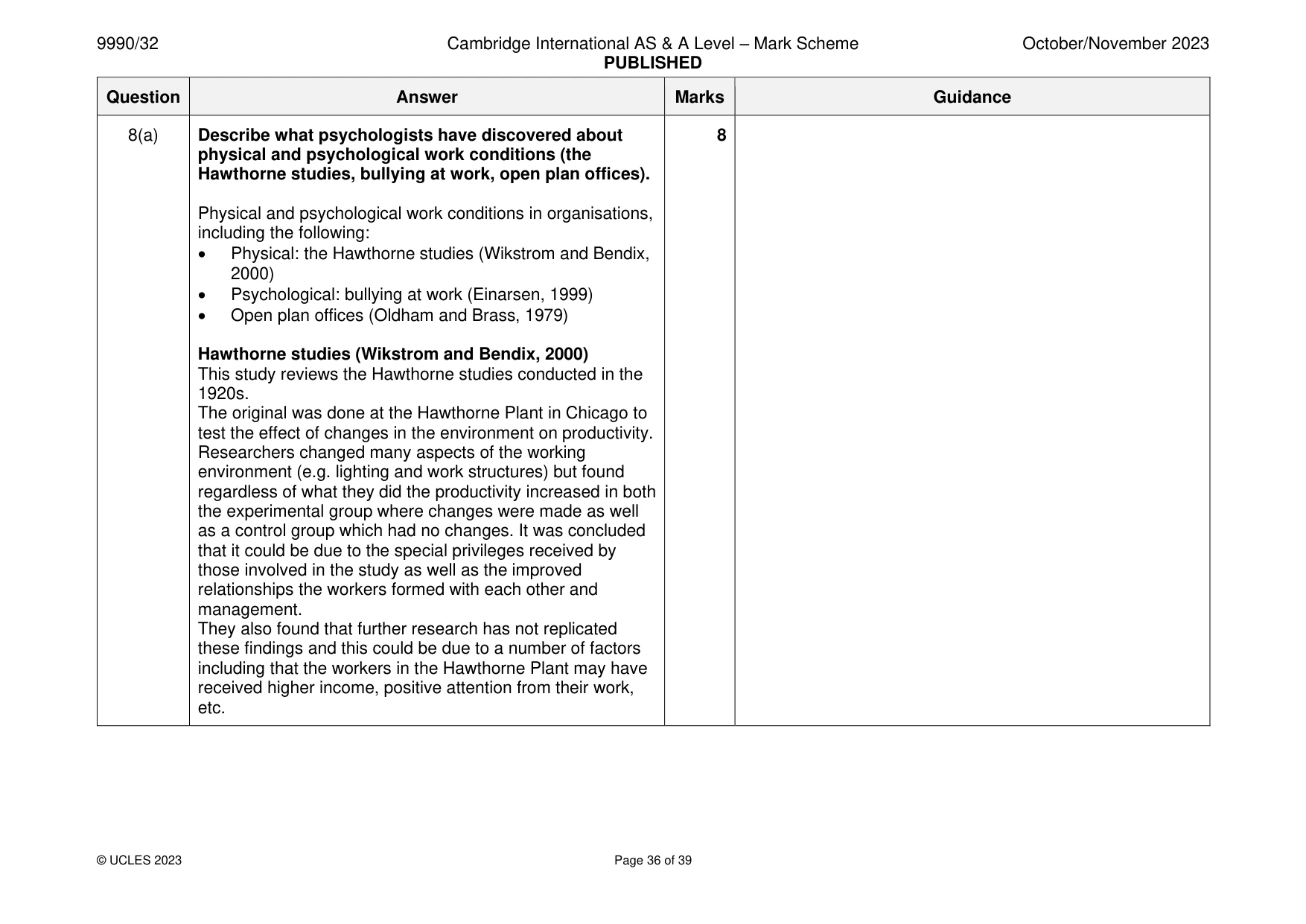
8 (a) Describe what psychologists have discovered about physical and psychological work conditions (the Hawthorne studies, bullying at work, open plan offices). [8] (b) Evaluate what psychologists have discovered about physical and psychological work conditions (the Hawthorne studies, bullying at work, open plan offices), including a discussion of experiments. [10]
Mark scheme: 8(a) Describe what psychologists have discovered about 8 physical and psychological work conditions (the Hawthorne studies, bullying at work, open plan offices). Physical and psychological work conditions in organisations, including the following: • Physical: the Hawthorne studies (Wikstrom and Bendix, 2000) • Psychological: bullying at work (Einarsen, 1999) • Open plan offices (Oldham and Brass, 1979) Hawthorne studies (Wikstrom and Bendix, 2000) This study reviews the Hawthorne studies conducted in the 1920s. The original was done at the Hawthorne Plant in Chicago to test the effect of changes in the environment on productivity. Researchers changed many aspects of the working environment (e.g. lighting and work structures) but found regardless of what they did the productivity increased in both the experimental group where changes were made as well as a control group which had no changes. It was concluded that it could be due to the special privileges received by those involved in the study as well as the improved relationships the workers formed with each other and management. They also found that further research has not replicated these findings and this could be due to a number of factors including that the workers in the Hawthorne Plant may have received higher income, positive attention from their work, etc. 8(a) Bullying at work (Einarsen, 1999) This is a review article of many pieces of previous research. A summary of one or more of these pieces of research can also be given credit. Four stages are also identified in the article including – aggressive behaviour, bullying, stigmatisation and finally severe trauma. Five types of bullying behaviour identified – physical, verbal, social isolation, personal attack (e.g. ridicule/gossip), work- related (e.g. making tasks harder to perform) Open plan offices (Oldham and Brass, 1979) Employees of a newspaper in the Midwest, USA. 123 Participants. 76 in experimental group who experienced all three waves of the move to the open plan office design. 5 were a control group (office design did not change) and 26 experienced two of the waves. Three questionnaire items were used to measure each of the following job characteristics: autonomy, skill variety, task identity, task significance, and task feedback. Also asked questions about how easy it was to interact with others, perception of conflict, concentration, etc. Found employees’ internal motivation and satisfaction with work and colleagues decreased after the move to the open plan office. Found it difficult to concentrate/complete tasks. Mark according to the levels of response descriptors in Table A. Other appropriate responses should also be credited. 8(b) Evaluate what psychologists have discovered about 10 physical and psychological work conditions (the Hawthorne studies, bullying at work, open plan offices), including a discussion of experiments. A range of issues could be used for evaluation here. These include: • Named issue – experiments: Experiments can be high in validity due controls including control group. Oldham and Brass could be described as a quasi experiment (even a natural experiment) so open to issues of lack of randomisation to conditions (those left behind could have been more satisfied people in the first place rather than due to staying in the original office). Both the Hawthorne studies and the Oldham and Brass studies are field experiments. Field experiments have high ecological validity as they are carried out in the participants working environment, lending results application to the real world. However, this means controls are less likely to have occurred. In particular the Hawthorne studies are prone to validity issues (see validity evaluation). Einarsen did not carry out an experiment so validity is in question with the lack of controls. • Validity • Reductionism and holism • Individual and situational explanations • Any research methods issues that are applied to the Hawthorne study and/or Oldham and Brass study (e.g. generalisability, ecological validity, type of data) • Deterministic nature of the conclusions. • Usefulness/application to everyday life. 8(b) Mark according to the levels of response descriptors in Table B. Other appropriate responses should also be credited.
What was in this paper
The subtopics covered by these 8 questions, and how many questions each got. Open one in a new tab to see every Cambridge question on it.
What you needed in this session
Cambridge’s own grade thresholds for 2023 Oct/Nov, Paper 3 · Variant 2. A higher threshold means an easier paper — the bar moves with how the cohort did.