Questions as text
Q1 · In their laboratory experiment Mackay and Olshavsky (1975) state ‘A number of methods can… 9990/41 May/June 2018
2 In their laboratory experiment Mackay and Olshavsky (1975) state ‘A number of methods can be used for externally measuring a cognitive map.’ The most popular method has been the ‘draw-a- map’ technique. (a) Explain the ‘draw-a-map’ technique. [2] (b) Describe two ways in which cognitive maps can be measured, other than using the ‘draw-a- map’ technique. [4] (c) Suggest how ‘draw-a-map’ data could be analysed. [4] (d) Discuss the strengths and weaknesses of data gathered by the ‘draw-a-map’ technique. You should include a conclusion in your answer. [5] Psychology and health
15 marks
Mark scheme: 2(a) Explain the ‘draw-a-map’ technique. 2 Marks: 1 mark for basic answer, 1 mark for elaboration/example (e.g. drawing of cognitive map). Most likely answer (other appropriate responses to be credited): • Participants draw the map in their head; • The drawing will likely include features such as landmarks, paths, nodes, districts and edges (after Lynch) • The drawing will contain errors (e.g. Euclidean bias) • The drawing will be a traditional ‘sketch map’ 2(b) Describe two ways in which cognitive maps can be measured, other 4 than using the ‘draw-a-map’ technique. Marks: 1 mark basic answer, e.g. identification, 2 marks elaboration × 2 Most likely answer (other appropriate responses to be credited): From Mackay and Olshavsky: • Another graphic approach has been to ask subjects to draw lines indicating the distance between pairs of points on a map (Lowrey, 1970). These distances can be used directly to estimate a one dimensional cognitive map, or they can be transformed into a ratio judgment matrix and then scaled to produce a one dimensional map (Torgerson, 1958). • multidimensional scaling uses proximity data to estimate multidimensional maps. There is an extensive multidimensional scaling (MDS) literature in psychology (Nerlove, Romney, Shepard, 1972). The configuration of spatial stimuli are often used as an estimator for a subject's internal image or cognitive map. 2(c) Suggest how ‘draw-a-map’ data could be analysed. 4 Marks: 1–2 marks basic answer. 3–4 marks detailed answer/elaboration. Most likely answer (other appropriate responses to be credited): • Sketch maps are not numbers or words but drawings. • Drawings are qualitative data and so relevant analysis aspects apply. • Drawings could be analysed for the items included (such as Lynch’s 5 common elements). • Drawings could be categorised by a number of judges and agreement recorded. 2(d) Discuss the strengths and weaknesses of data gathered by the ‘draw- 5 a-map’ technique. You should include a conclusion in your answer. Marks: Question requires discussion; always plural of each argument, and always requires conclusion. 1 mark for each advantage/disadvantage up to 4 max. 1 mark for conclusion. Most likely answer (other appropriate responses to be credited): Strengths • it gives an indication of what is in the mind of the participant, however poorly it is drawn. • it is easy to do, requires little equipment, and takes very little time. • Sketches can be compared at a glance. Weaknesses • analysing sketch maps is difficult. There are no numbers or words, just drawings. • sketch maps are prone to many typical sketch map errors such as super-ordinate scale bias. • A sketch map is not a cognitive map. Conclusion: any appropriate conclusion drawn from the discussion that has been presented.
This question in 9990/41 May/June 2018
Q2 · Most people do not like to queue in a fast-food restaurant 9990/41 May/June 2018
6 Most people do not like to queue in a fast-food restaurant. (a) Design a field experiment to investigate which layout design option for a fast-food restaurant produces the least queueing. [10] (b) Explain the psychological and methodological evidence on which your experiment is based. [8] Psychology and health
18 marks
Mark scheme: 6(a) Design a field experiment to investigate which layout design option for 10 a fast-food restaurant produces the least queueing. Marks: use generic levels of response Design a study question part (a). Additional: Candidates should design the study showing evidence of design features appropriate to the named method. The named method is: field experiment. Typical features: • Experiments: type, IV, DV, controls, experimental design. • Typical features of research methodology: sampling technique and sample, type of data, ethics, reliability, validity, data analysis. 6(b) Explain the psychological and methodological evidence on which your 8 study is based. Marks: use generic levels of response ‘Design a study’ question part (b). Note: If only methodological or psychological explanation is provided max 5 marks. Candidates are expected to explain the reasons for the suggested design in part (a). Explanation should be both psychological and methodological. Psychological to include appropriate theory or research. Additional: candidates are expected to justify their decisions or evidence presented regarding the design made in answer to question part (a). Syllabus: Personal space: defending place in a queue (Milgram et al., 1986); retail/leisure environment design: store interior layout (Vrechopoulos, 2004) Psychological: Fast food restaurants, for example, have several different layout options. Some use queues where consumers funnel down into service personnel from a single line (i.e., Wendy’s) while others have multiple waiting lines that form in front of whichever cash registers are in use at that time (i.e., McDonald’s). The same number of consumers waiting to be served will result in a longer line in the first situation then in the second. A research question that could be addressed is, do these alternative waiting strategies influence perceptions of crowding and/or approach-avoidance behaviour? This is also an area that service researchers could investigate since the layout designs used by services are often vastly different from those used by merchandise oriented retailers. Methodological: explanation of method using typical features as above.
This question in 9990/41 May/June 2018
Q3 · ‘To gather data about table spacing in restaurants, online questionnaires are more… 9990/41 May/June 2018
10 ‘To gather data about table spacing in restaurants, online questionnaires are more effective than studying participants in actual restaurants.’ To what extent do you agree with this statement? Use examples of research you have studied to support your answer. [12] Psychology and health
12 marks
Mark scheme: 10 ‘To gather data about table spacing in restaurants, online 12 questionnaires are more effective than studying participants in actual restaurants.’ To what extent do you agree with this statement? Use examples of research you have studied to support your answer. Marks: use generic levels of response in table C. Syllabus: personal space: space at restaurant tables (Robson et al., 2011) Most likely (any other appropriate responses should be credited): Robson et al. (2011) used a web-based questionnaire. For: • sample size can be very large and so the findings would be more representative (Robson et al. had ‘more than 1000 participants’) • there is no restaurant needed (so effective for people who do not like going to restaurants); no tables to be moved; no participants to be experimented on or observed. • Data gathered can be quantitative (closed questions / specific type of rating scale) and so statistically analysed; data could also be qualitative with open-ended questions. Against: • sample is self-selecting/volunteers and may not be generalised. • There is no guarantee that participants will provide honest answers; may respond to demand characteristics. • A questionnaire is ‘artificial’ in that estimations of distance may be inaccurate. Sitting at actual tables spaced at different distances is real and will produce valid data.
This question in 9990/41 May/June 2018
Q4 · The layout of any store can increase sales and many designs have been proposed, such as… 9990/42 May/June 2018
2 The layout of any store can increase sales and many designs have been proposed, such as the grid layout below. (a) Give one advantage of a ‘racetrack’/‘boutique’ store layout. [2] (b) Give two differences between a ‘grid’ and a ‘freeform’ store layout. [4] (c) Suggest how one method, other than virtual reality, could be used to gather data about customer behaviour. [4] (d) Discuss the advantages and disadvantages of research on store layout using virtual reality. You should include a conclusion in your answer. [5] Psychology and health
15 marks
Mark scheme: 2(a) Give one advantage of a ‘racetrack’/’boutique’ store layout. 2 Marks: 1 mark for basic answer; 1 mark for elaboration/example. Most likely answer (other appropriate responses to be credited): Advantage: the shopper sees more of the goods available for sale. Elaboration (reason) the sales floor is organised into individual, semi- separate areas, each built around a particular shopping theme. It leads the customer along specific paths to visit as many store sections as possible. 2(b) Give two differences between a ‘grid’ and a ‘freeform’ store layout. 4 Marks: 1 mark basic answer, 2 marks elaboration, × 2 Most likely answer (other appropriate responses to be credited): • The grid layout facilitates routine and planned shopping behaviour, the free-form encourages browsing. • The grid layout reduces shopping time, the free-form increases browsing time. • The grid layout uses long aisles running parallel, the free-form is free-flowing and asymmetric. 2(c) Suggest how one method, other than virtual reality, could be used to 4 gather data about customer behaviour. Marks: 1–2 marks basic answer. 3–4 marks elaboration (e.g. inclusion of methodological detail). Most likely answer (other appropriate responses to be credited): • Conduct a field experiment: participants can be exposed to different layouts (IV) and complete various tasks (DV) or are then asked about their experiences and/or feelings/satisfaction. • Give a questionnaire or interview to determine shopping experiences based on what people think about different layout options. • Conduct an observation in various layout options and record time taken to find an item/negotiate the store (this would be most difficult of the three) but no data on experiences/satisfaction. 2(d) Discuss the advantages and disadvantages of research on store 5 layout using virtual reality. You should include a conclusion in your answer. Marks: Question requires discussion; always plural of each argument, and always requires conclusion. 1 mark for each advantage/disadvantage up to 4 max. 1 mark for conclusion. Most likely answer (other appropriate responses to be credited): Strengths • VR controls the environment allowing a range of extraneous variables, such as other people, to be controlled. • IV can be manipulated more easily and is exactly the same for each participant. • participants do not need to move from the same place for each condition. Weaknesses • may have side effects such as simulator sickness – dizziness, nausea, headache and eyestrain • VR isn’t real. To what extent can studies using VR be generalised? • VR excludes idiothetic input and other variables such as smell. Conclusion: any appropriate conclusion drawn from the discussion that has been presented.
This question in 9990/42 May/June 2018
Q5 · In their laboratory experiment Mackay and Olshavsky (1975) state ‘A number of methods can… 9990/43 May/June 2018
2 In their laboratory experiment Mackay and Olshavsky (1975) state ‘A number of methods can be used for externally measuring a cognitive map.’ The most popular method has been the ‘draw-a- map’ technique. (a) Explain the ‘draw-a-map’ technique. [2] (b) Describe two ways in which cognitive maps can be measured, other than using the ‘draw-a- map’ technique. [4] (c) Suggest how ‘draw-a-map’ data could be analysed. [4] (d) Discuss the strengths and weaknesses of data gathered by the ‘draw-a-map’ technique. You should include a conclusion in your answer. [5] Psychology and health
15 marks
Mark scheme: 2(a) Explain the ‘draw-a-map’ technique. 2 Marks: 1 mark for basic answer, 1 mark for elaboration/example (e.g. drawing of cognitive map). Most likely answer (other appropriate responses to be credited): • Participants draw the map in their head; • The drawing will likely include features such as landmarks, paths, nodes, districts and edges (after Lynch) • The drawing will contain errors (e.g. Euclidean bias) • The drawing will be a traditional ‘sketch map’ 2(b) Describe two ways in which cognitive maps can be measured, other 4 than using the ‘draw-a-map’ technique. Marks: 1 mark basic answer, e.g. identification, 2 marks elaboration × 2 Most likely answer (other appropriate responses to be credited): From Mackay and Olshavsky: • Another graphic approach has been to ask subjects to draw lines indicating the distance between pairs of points on a map (Lowrey, 1970). These distances can be used directly to estimate a one dimensional cognitive map, or they can be transformed into a ratio judgment matrix and then scaled to produce a one dimensional map (Torgerson, 1958). • multidimensional scaling uses proximity data to estimate multidimensional maps. There is an extensive multidimensional scaling (MDS) literature in psychology (Nerlove, Romney, Shepard, 1972). The configuration of spatial stimuli are often used as an estimator for a subject's internal image or cognitive map. 2(c) Suggest how ‘draw-a-map’ data could be analysed. 4 Marks: 1–2 marks basic answer. 3–4 marks detailed answer/elaboration. Most likely answer (other appropriate responses to be credited): • Sketch maps are not numbers or words but drawings. • Drawings are qualitative data and so relevant analysis aspects apply. • Drawings could be analysed for the items included (such as Lynch’s 5 common elements). • Drawings could be categorised by a number of judges and agreement recorded. 2(d) Discuss the strengths and weaknesses of data gathered by the ‘draw- 5 a-map’ technique. You should include a conclusion in your answer. Marks: Question requires discussion; always plural of each argument, and always requires conclusion. 1 mark for each advantage/disadvantage up to 4 max. 1 mark for conclusion. Most likely answer (other appropriate responses to be credited): Strengths • it gives an indication of what is in the mind of the participant, however poorly it is drawn. • it is easy to do, requires little equipment, and takes very little time. • Sketches can be compared at a glance. Weaknesses • analysing sketch maps is difficult. There are no numbers or words, just drawings. • sketch maps are prone to many typical sketch map errors such as super-ordinate scale bias. • A sketch map is not a cognitive map. Conclusion: any appropriate conclusion drawn from the discussion that has been presented.
This question in 9990/43 May/June 2018
Q6 · Most people do not like to queue in a fast-food restaurant 9990/43 May/June 2018
6 Most people do not like to queue in a fast-food restaurant. (a) Design a field experiment to investigate which layout design option for a fast-food restaurant produces the least queueing. [10] (b) Explain the psychological and methodological evidence on which your experiment is based. [8] Psychology and health
18 marks
Mark scheme: 6(a) Design a field experiment to investigate which layout design option for 10 a fast-food restaurant produces the least queueing. Marks: use generic levels of response Design a study question part (a). Additional: Candidates should design the study showing evidence of design features appropriate to the named method. The named method is: field experiment. Typical features: • Experiments: type, IV, DV, controls, experimental design. • Typical features of research methodology: sampling technique and sample, type of data, ethics, reliability, validity, data analysis. 6(b) Explain the psychological and methodological evidence on which your 8 study is based. Marks: use generic levels of response ‘Design a study’ question part (b). Note: If only methodological or psychological explanation is provided max 5 marks. Candidates are expected to explain the reasons for the suggested design in part (a). Explanation should be both psychological and methodological. Psychological to include appropriate theory or research. Additional: candidates are expected to justify their decisions or evidence presented regarding the design made in answer to question part (a). Syllabus: Personal space: defending place in a queue (Milgram et al., 1986); retail/leisure environment design: store interior layout (Vrechopoulos, 2004) Psychological: Fast food restaurants, for example, have several different layout options. Some use queues where consumers funnel down into service personnel from a single line (i.e., Wendy’s) while others have multiple waiting lines that form in front of whichever cash registers are in use at that time (i.e., McDonald’s). The same number of consumers waiting to be served will result in a longer line in the first situation then in the second. A research question that could be addressed is, do these alternative waiting strategies influence perceptions of crowding and/or approach-avoidance behaviour? This is also an area that service researchers could investigate since the layout designs used by services are often vastly different from those used by merchandise oriented retailers. Methodological: explanation of method using typical features as above.
This question in 9990/43 May/June 2018
Q7 · ‘To gather data about table spacing in restaurants, online questionnaires are more… 9990/43 May/June 2018
10 ‘To gather data about table spacing in restaurants, online questionnaires are more effective than studying participants in actual restaurants.’ To what extent do you agree with this statement? Use examples of research you have studied to support your answer. [12] Psychology and health
12 marks
Mark scheme: 10 ‘To gather data about table spacing in restaurants, online 12 questionnaires are more effective than studying participants in actual restaurants.’ To what extent do you agree with this statement? Use examples of research you have studied to support your answer. Marks: use generic levels of response in table C. Syllabus: personal space: space at restaurant tables (Robson et al., 2011) Most likely (any other appropriate responses should be credited): Robson et al. (2011) used a web-based questionnaire. For: • sample size can be very large and so the findings would be more representative (Robson et al. had ‘more than 1000 participants’) • there is no restaurant needed (so effective for people who do not like going to restaurants); no tables to be moved; no participants to be experimented on or observed. • Data gathered can be quantitative (closed questions / specific type of rating scale) and so statistically analysed; data could also be qualitative with open-ended questions. Against: • sample is self-selecting/volunteers and may not be generalised. • There is no guarantee that participants will provide honest answers; may respond to demand characteristics. • A questionnaire is ‘artificial’ in that estimations of distance may be inaccurate. Sitting at actual tables spaced at different distances is real and will produce valid data.
This question in 9990/43 May/June 2018
Q8 · Diners want enough personal space in a restaurant to enjoy their food 9990/41 Oct/Nov 2018
6 Diners want enough personal space in a restaurant to enjoy their food. Psychologists want to know how much space is enough. (a) Design an experiment using observation to gather data to investigate how much personal space is enough when dining in a restaurant. [10] (b) Explain the psychological and methodological evidence on which your experiment is based. [8] Psychology and health
18 marks
Mark scheme: 6(a) Design an experiment using observation to gather data to investigate 10 how much personal space is enough when dining in a restaurant. Marks: use generic levels of response Design a study question part (a). Additional: Candidates should design the study showing evidence of design features appropriate to the named method. The named method is: experiment using observation Typical features: • Experiments: type, IV, DV, controls, experimental design. • Observations: type of observation in relation to participants, observers, setting and data. Also response categories, sampling frame, number of observers. • Typical features of research methodology: sampling technique & sample, type of data, ethics, reliability, validity, data analysis. 6(b) Explain the psychological and methodological evidence on which your 8 experiment is based. Marks: use generic levels of response ‘Design a study’ question part (b). Note: If only methodological or psychological explanation is provided max 5 marks Candidates are expected to explain the reasons for the suggested design in part (a). Explanation should be both psychological and methodological. Psychological to include appropriate theory or research. Additional: candidates are expected to justify their decisions or evidence presented regarding the design made in answer to question part (a). Syllabus: personal space: space at restaurant tables (Robson et al., 2011). Psychological: Quote from Robson et al. (2011): Having adequate personal space is an important aspect of users’ comfort with their environment. In a restaurant, for instance, spatial intrusion by others can lead to avoidance responses such as early departure or a disinclination to spend. The Robson et al. study was a web-based questionnaire and not observation. There was no manipulation of conditions of the IV either. Robson et al. did suggest 6, 12 and 24 inch spacing. Methodological: explanation of method using typical features as above.
This question in 9990/41 Oct/Nov 2018
Q9 · The study by Atalay et al 9990/42 Feb/March 2019
2 The study by Atalay et al. (2012) used several different ways to investigate which product on a shelf in a shop customers were more likely to choose. D rin k A D r in k B D r in k C Fig. 2.1 (a) Explain what is meant by the term ‘planogram’. [2] (b) Outline two findings from this study. [4] (c) Suggest how each of these findings is useful. [4] (d) Discuss the advantages and disadvantages of using eye-tracking techniques to gather data on consumer behaviour. You should include a conclusion in your answer. [5] Psychology and health
15 marks
Mark scheme: 2(a) Explain what is meant by the term ‘planogram’. 2 Most likely answer (other appropriate responses to be credited): • A visual diagram or drawing that provides detail of where every product in a retail store should be placed. • It can be specific (items on one shelf) in a specific aisle (or section) or be general (the whole store). • It has two functions: product placement and improved sales. Marks: 1 mark basic answer (simple description), 2 marks detailed answer/elaboration. 2(b) Outline two findings from this study. 4 Quotes from study: • a centrally located brand within a product category is chosen more often even when it is not placed in the centre of the shelf or the visual field. • horizontal centrality on choice was found across three different studies and product categories (vitamins, meal replacement bars, and energy drinks). • brands in the horizontal centre receive more visual attention. • There is an initial central fixation bias, a tendency to look first at the central option, and a central gaze cascade effect, progressively increasing attention focused on the central option right prior to decision. • A product is more likely to sell if it is placed centrally on a shelf. Marks: 1 mark basic answer (simple description of finding), 2 marks detailed answer/elaboration or use of example ×2. 2(c) Suggest how each of these findings is useful. 4 Most likely answer (other appropriate responses to be credited): • Useful to seller: A product is more likely to sell if it is placed centrally on a shelf. • Useful to seller: ‘centrality’ applies to different products; possibly all products • Useful to seller: Products on promotion can be specifically placed to sell (maybe use multiple-pricing, etc.) • Useful to seller: Products which provide higher profit margins for the retailer/seller can be placed in a central position. • Useful methodology: eye tracking software is a useful tool in consumer research. Marks: 1 mark basic answer (simple use), 2 marks detailed answer/elaboration, or use of example ×2. 2(d) Discuss the advantages and disadvantages of using eye tracking 5 techniques to gather data on consumer behaviour. You should include a conclusion in your answer. Most likely answer (other appropriate responses to be credited, such as eye movement patterns): Advantages • Eye tracking is scientific equipment which is reliable. • Data recorded is objective: where the person looks is clear and unambiguous. • Data is quantitative and so comparisons can be made between participants and between studies. • It provides immediate feedback. • It is easy to use requiring no training. Disadvantages • Participants can choose to look in whatever direction they wish – they know their eve movements are being tracked. • There may be cultural differences in where people are socialised to look. • Data is where the participant has looked but it does not provide an explanation of why that person has looked in a particular direction. • Eye tracking is reductionist – product purchase isn’t just based on vision; some products smell and touch may be important. • It cannot be used with every participant, people with contact lenses or have long eye lashes • Eye movement may be subconscious and difficult to control at all times. Data may not be accurate Conclusion: any appropriate conclusion drawn from the discussion that has been presented. 1 mark if appropriate. Marks: Question requires discussion. Question always plural of each argument. Question always requires conclusion. • 1 mark for each strength/weakness (however detailed) and related to the question up to 4 max. • 1 mark for two strengths unrelated to the question. 1 mark for two weaknesses unrelated to the question. • 1 mark for conclusion. Note: If three (or more) arguments for one side, best two credited. If strength or weakness only, max 2 marks.
This question in 9990/42 Feb/March 2019
Q10 · Design a field experiment to investigate the effect of different odours in a clothes shop 9990/42 May/June 2019
6 (a) Design a field experiment to investigate the effect of different odours in a clothes shop. [10] (b) Explain the psychological and methodological evidence on which your experiment is based. [8] Psychology and health
18 marks
Mark scheme: 6(a) Design a field experiment to investigate the effect of different odours 10 in a clothes shop. Marks: use generic levels of response Design a study question part (a). Additional: Candidates should design the study showing evidence of design features appropriate to the named method. The named method is: field experiment. Specific features: Experiments: type, IV, DV, controls, experimental design. General features of research methodology: sampling technique and sample, type of data, ethics, reliability, validity, data analysis. 6(b) Explain the psychological and methodological evidence on which your 8 experiment is based. Marks: use generic levels of response ‘Design a study’ question part (b). Note: If only methodological or psychological explanation is provided max 5 marks Candidates are expected to explain the reasons for the suggested design in part (a). Explanation should be both psychological and methodological. Psychological to include appropriate theory or research. Additional: candidates are expected to justify their decisions or evidence presented regarding the design made in answer to question part (a). Syllabus: effects of odour on shopper arousal and emotion (Chebat & Michon, 2003) Psychological: Chebat and Michon (2003) tested the effect of ambient scents in a shopping mall environment. In the control wave, the shopping mall ambient olfactory atmosphere was not modified. During the second wave, a light pleasing scent was vaporized in the mall’s main corridor. The ambient scent was diffused in the shopping mall’s main corridor located between two major retailers. Anecdotally, Hollister releases a fragrance in their stores and the clothes often smell of this scent. Methodological: explanation of method using general and specific features as above. Note: 2 marks max if psychological knowledge is not related to answer.
This question in 9990/42 May/June 2019
Q11 · ‘Situational factors affect behaviour in retail/leisure environments; individual factors… 9990/42 May/June 2019
10 ‘Situational factors affect behaviour in retail/leisure environments; individual factors do not.’ To what extent do you agree with this statement? Use examples of research you have studied to support your answer. [12] Psychology and health
12 marks
Mark scheme: 10 ‘Situational factors affect behaviour in retail/leisure environments; 12 individual factors do not.’ To what extent do you agree with this statement? Use examples of research you have studied to support your answer. Marks: use generic levels of response in table C. Syllabus: retail/leisure environment design b leisure environments (Finlay et al., 2006) Most likely (any other appropriate responses should be credited): Situation/agree: • according to Kranes’s playground model, casinos should include environmental elements designed to induce pleasure, legibility, and restoration. • Finlay et al. write “emotional reactions to the casinos were collected from 22 people who had gambled in all six casinos. Kranes-type casinos yielded significantly higher ratings than did Friedman type casinos on pleasure and restoration (relief from environmental stress). • future research should focus on design variations that can be built into a Friedman-type setting to enhance restoration. • research by Turley and Milliman also show many ‘atmospherics’ influence shopper behaviour. • this is environmental determinism Individual/disagree: • the ‘situation’ does not automatically influence all people (it isn’t 100% effect). Some people remain an ‘individual’ seeing a leisure environment as fulfilling a function and nothing more. • the Friedman design of gambling environments support the above comment: people go to gamble and nothing more. • to study just situational variables is reductionist. Holistic approaches need to take into account structural and individual explanations also.
This question in 9990/42 May/June 2019
Q12 · Oldham and Brass (1979) studied open plan offices, such as shown in Fig 9990/42 Feb/March 2020
4 Oldham and Brass (1979) studied open plan offices, such as shown in Fig. 4.1. Fig. 4.1 (a) Explain what is meant by an ‘open plan office’. [2] (b) Suggest two job characteristics that may be affected by office design. [4] (c) Outline two of the dependent variables (outcome measures) in the study by Oldham and Brass. [4] (d) Discuss the advantages and disadvantages of gathering qualitative data using interviews to study workers’ views of open plan offices. You should include a conclusion in your answer. [5]
15 marks
Mark scheme: 4 Oldham and Brass (1979) studied open plan offices, such as shown in Fig. 4.1. Fig. 4.1. 4(a) Explain what is meant by an ‘open plan office’. 2 Most likely answer (other appropriate responses to be credited): Open plan places worker desks in large, open spaces, to create the feeling of space and minimizes the use of small, enclosed rooms such as private offices. Marks: 1 mark basic answer (simple description), 2 marks detailed answer/elaboration. 4(b) Suggest two job characteristics that may be affected by office design. 4 Most likely answer (other appropriate responses to be credited): e.g. Oldham and Brass From study: • Autonomy: the degree to which a job provides substantial freedom, independence, and discretion to the individual in scheduling the work and in determining the procedures to be used in carrying it out • Task identity: the degree to which a job requires completion of a ‘whole’ and identifiable piece of work, that is, doing a job from beginning to end with a visible outcome • Supervisor and co-worker feedback refer to the degree to which supervisors and co-workers provide performance feedback to employees. • Friendship opportunities this refers to the degree to which employees have the opportunity to develop close friendships at work Marks: 1 mark basic answer, 2 marks detailed answer/elaboration for each X2 4(c) Outline two of the dependent variables (outcome measures) in the 4 study by Oldham and Brass. Most likely answer (other appropriate responses to be credited): The outcome measures are as follows: • Work satisfaction is the degree to which an employee is satisfied and happy with the job. This variable was measured with nine items from the JDS, which were designed to tap ‘general’ and ‘growth’ satisfactions at work. The nine items were averaged to form a work satisfaction index. • Interpersonal satisfaction is the degree to which an employee is satisfied with co-workers and supervisors at work. Six items from the ‘social’ and ‘supervisory’ satisfaction sections of the JDS were averaged to form the measure of interpersonal satisfaction. • Internal work motivation is the degree to which an individual experiences positive internal feelings when performing effectively on the job. Six items were averaged to form the measure of internal motivation. This measure has been found to relate substantially to measures of employees' work performance Marks: 1 mark basic answer, 2 marks detailed answer/elaboration x2. 4(d) Discuss the advantages and disadvantages of gathering qualitative 5 data using interviews to study workers’ views of open plan offices. You should include a conclusion in your answer. Most likely answer (other appropriate responses to be credited): Self-reports can include questionnaires and interviews. Advantages • Asking people directly means that participants are given the opportunity to express their feelings and explain their experiences rather than the researcher trying to work out reasons for their behaviour from other methods • People can give as much information as they wish, but they can also say little or nothing if they wish. • Data can be qualitative, but may also be quantitative depending on type of question Disadvantages • Some participants may provide socially desirable responses; not give truthful answers; respond to demand characteristics. • Qualitative data tends not to lead to the calculation of statistics to allow comparison. • Researchers have to be careful about use of leading questions; it could affect the validity of the data collected. Conclusion: any appropriate conclusion drawn from the discussion that has been presented. 1 mark if appropriate. A conclusion is a ‘decision reached by reasoning’ and so a summary of points already made scores 0 marks. Marks: Question requires discussion; always plural of each argument, and always requires conclusion. 1 mark for each advantage/disadvantage (however detailed) and related to the question up to 4 max. 2 marks max for two strengths/weaknesses unrelated to the question. 1 mark for conclusion.
This question in 9990/42 Feb/March 2020
Q13 · Variables, such as lighting, colour and smell, affect pleasure arousal in retail… 9990/42 Feb/March 2021
6 (a) Variables, such as lighting, colour and smell, affect pleasure arousal in retail environments. Design a study using a questionnaire to investigate which of these variables is most likely to create a positive emotional response in a shopper. [10] (b) Explain the psychological and methodological evidence on which your study is based. [8] Psychology and health
18 marks
Mark scheme: 6(a) Variables, such as lighting, colour and smell, affect pleasure arousal in 10 retail environments. Design a study using a questionnaire to investigate which of these variables is most likely to create a positive emotional response in a shopper. Marks: use generic levels of response Design a study question part (a). Additional: Candidates should design the study showing evidence of design features appropriate to the named method. The named method is: questionnaire. Specific features: Questionnaires/Interviews: type, setting, example questions. Scoring/rating scale, analysis of responses. General features of research methodology: sampling technique & sample, type of data, ethics, reliability, validity, data analysis. 6(b) Explain the psychological and methodological evidence on which your 8 study is based. Marks: use generic levels of response ‘Design a study’ question part (b). Note: If only methodological or psychological explanation is provided max 5 marks Candidates are expected to explain the reasons for the suggested design in part (a). Explanation should be both psychological and methodological. Psychological to include appropriate theory or research. Additional: candidates are expected to justify their decisions or evidence presented regarding the design made in answer to question part (a). Syllabus: models of effects of ambience: pleasure-arousal and cognition- emotion Psychological: Candidates could focus on different retail atmospherics, including lighting and colour in retail stores (Kutlu et al., 2013); effects of odour on shopper arousal and emotion (Chebat & Michon, 2003). Candidates could also focus on the Mehrabian and Russell (1974) pleasure/arousal/dominance (PAD) model. Includes pleasure, arousal and dominance, a common measure of retail atmospherics. Methodological: explanation of method using general and specific features as above.
This question in 9990/42 Feb/March 2021
Q14 · People often experience discomfort when their personal space is invaded 9990/41 May/June 2021
6 People often experience discomfort when their personal space is invaded. (a) Design a study using a questionnaire to investigate which theory of personal space best explains people’s discomfort in a crowded shop. [10] (b) Explain the psychological and methodological evidence on which your study is based. [8] Psychology and health
18 marks
Mark scheme: 6(a) People often experience discomfort when their personal space is 10 invaded. Design a study using a questionnaire to investigate which theory of personal space best explains people’s discomfort in a crowded shop. Marks: use generic levels of response Design a study question part (a). Additional: Candidates should design the study showing evidence of design features appropriate to the named method. The named method: questionnaire. Specific features: Questionnaires/Interviews: type, setting, example questions. Scoring/rating scale, analysis of responses. General features of research methodology: sampling technique & sample, type of data, ethics, reliability, validity, data analysis. 6(b) Explain the psychological and methodological evidence on which your 8 study is based. Candidates are expected to explain the reasons for the suggested design in part (a). Explanation should be both psychological and methodological. Psychological to include appropriate theory or research. Marks: use generic levels of response ‘Design a study’ question part (b). ‘Psychological’ = 4 marks; ‘methodological’ = 4 marks If only methodological or psychological explanation is provided max 5 marks If ‘psychological’ described and not related to part (a) max 2 marks. Syllabus: theories of personal space: overload, arousal and behaviour constraint Psychological: Overload: are others in a shop coming too close and overstimulating us with sensory experience Arousal: when others invade our space we are aroused. We may be happy with this, or we may move away/take flight/escape. Behaviour constraint: if others are too close we may feel crowded because we cannot move about the store freely. Methodological: explanation of method using general and specific features as above.
This question in 9990/41 May/June 2021
Q15 · People often experience discomfort when their personal space is invaded 9990/43 May/June 2021
6 People often experience discomfort when their personal space is invaded. (a) Design a study using a questionnaire to investigate which theory of personal space best explains people’s discomfort in a crowded shop. [10] (b) Explain the psychological and methodological evidence on which your study is based. [8] Psychology and health
18 marks
Mark scheme: 6(a) People often experience discomfort when their personal space is 10 invaded. Design a study using a questionnaire to investigate which theory of personal space best explains people’s discomfort in a crowded shop. Marks: use generic levels of response Design a study question part (a). Additional: Candidates should design the study showing evidence of design features appropriate to the named method. The named method: questionnaire. Specific features: Questionnaires/Interviews: type, setting, example questions. Scoring/rating scale, analysis of responses. General features of research methodology: sampling technique & sample, type of data, ethics, reliability, validity, data analysis. 6(b) Explain the psychological and methodological evidence on which your 8 study is based. Candidates are expected to explain the reasons for the suggested design in part (a). Explanation should be both psychological and methodological. Psychological to include appropriate theory or research. Marks: use generic levels of response ‘Design a study’ question part (b). ‘Psychological’ = 4 marks; ‘methodological’ = 4 marks If only methodological or psychological explanation is provided max 5 marks If ‘psychological’ described and not related to part (a) max 2 marks. Syllabus: theories of personal space: overload, arousal and behaviour constraint Psychological: Overload: are others in a shop coming too close and overstimulating us with sensory experience Arousal: when others invade our space we are aroused. We may be happy with this, or we may move away/take flight/escape. Behaviour constraint: if others are too close we may feel crowded because we cannot move about the store freely. Methodological: explanation of method using general and specific features as above.
This question in 9990/43 May/June 2021
Question 16 9990/41 Oct/Nov 2021
2 Machleit et al. (2000) found that perceived crowding in shops, created by manipulating either human (social) density or spatial density, changed levels of pleasure and satisfaction. (a) Explain what is meant by ‘perceived crowding’. [2] (b) (i) Explain the difference between ‘human density’ and ‘spatial density’. [2] (ii) Outline the questionnaire that Machleit et al. (2000) used to measure perceived crowding. [2] (c) Suggest how one model of the ‘effects of ambience’ explains how perceived crowding can make the ambience of a shop less pleasant. [4] (d) Discuss the strengths and weaknesses of using questionnaires to investigate the effect of crowding when shopping in a retail store. You should include a conclusion in your answer. [5] Psychology and health
15 marks
Mark scheme: 2 Machleit et al. (2000) found that perceived crowding in shops, created by manipulating either human (social) density or spatial density, changed levels of pleasure and satisfaction. 2(a) Explain what is meant by ‘perceived crowding’. 2 Most likely answer: Quoting study Perceived crowding is a result of physical, social, and personal factors that sensitize the individual to actual or potential problems arising from scarce space (Stokols, 1972). Crowding is a psychological state (density is a physical state) and so any answer must acknowledge the psychological component. The implication of this is that there are individual differences where one person might feel crowded and another person might not in the same circumstances. Marks: 1 mark for answer, 2 marks for elaboration/example. 2(b)(i) Explain the difference between ‘human density’ and ‘spatial density’. 2 Most likely answer Quoting study Spatial density: Within the retailing context, for example, the amount of merchandise and fixtures as well as their configuration within the store could enhance or suppress perceived crowding associated with physical stimuli. Human density: The social (or human) dimension of crowding, on the other hand, concerns the number of individuals as well as the rate and extent of social interaction among people in a given environmental setting. Marks: 1 mark basic difference, 2 marks detailed answer/elaboration or use of example. 2(b)(ii) Outline the questionnaire that Machleit et al. (2000) used to measure 2 perceived crowding. Most likely answer Quoting study Perceived crowding (not density) was measured via the eight-item, two- dimensional Likert-type scale validated by Machleit et al. (1994). The four items in the human crowding dimension were ‘The store seemed very crowded to me,’ ‘The store was a little too busy,’ ‘There wasn’t much traffic in the store during my shopping trip’ (reverse coded), ‘There were a lot of shoppers in the store.’ (examples of questions) Note: Any aspect related to the store, for example ‘The store seemed very spacious’ scores 0 marks as it is spatial, not human. Marks: 1 mark for each feature, features as highlighted above. 2(c) Suggest how one model of the ‘effects of ambience’ explains how 4 perceived crowding can make the ambience of a shop less pleasant. Most likely answer (other appropriate responses to be credited): The Mehrabian and Russell (1974) pleasure/arousal/dominance (PAD) Model proposes that emotions can be measured along three dimensions: • Pleasure the degree to which a person is contented, happy, satisfied, pleased, relaxed, important, cares, hopeful. • Arousal the degree to which a person is stimulated, excited, jittery, aroused, frenzied, autonomous, wide-awake, controlling. • Dominance the extent to which a person feels in control of the situation (rather than being controlled) and is able to act freely. This leads to approach (like) or avoidance (dislike). Also possible is the cognition-emotion model. Marks: 1–2 marks for outline of model, 1–2 marks for application of above model to crowding. 2(d) Discuss the strengths and weaknesses of using questionnaires to 5 investigate the effect of crowding when shopping in a retail store. You should include a conclusion in your answer. Marks: Question requires discussion; always plural of each argument, and always requires conclusion. 1 mark for each advantage/disadvantage (however basic/detailed) which is related to the question (max 4 marks). 1 mark for conclusion. 2 marks max for two strengths and two weaknesses unrelated to the question. Conclusion: any appropriate conclusion drawn from the discussion that has been presented. 1 mark if appropriate. A conclusion is a ‘decision reached by reasoning’ and so a summary of points already made scores 0 marks. Most likely answer (other appropriate responses to be credited, such as eye movement patterns): Strengths: • Asking people directly means that participants are given the opportunity to express their feelings and explain their shopping behaviour rather than the researcher trying to work out reasons for their behaviour from other methods. • Relatively large numbers of participants can be involved relatively easily. Questionnaires are easy to replicate. • Data can be qualitative, but may also be quantitative depending on type of question. Weaknesses: • Some participants may provide socially desirable responses about the effect of crowding; not give truthful answers; respond to demand characteristics. • Closed/fixed choice questions may force people into choosing answers that do not reflect their true opinion and therefore may lower validity. • Researchers have to be careful about use of leading questions; it could affect the validity of the data collected.
This question in 9990/41 Oct/Nov 2021
Q17 · Leisure environment design should serve two functions: to encourage the customer to spend… 9990/42 Oct/Nov 2021
2 Leisure environment design should serve two functions: to encourage the customer to spend more money, and to enable the customer to relax and enjoy the pleasant surroundings. Finlay et al. (2006) compared two casino designs, the Kranes ‘playground’ model and the Friedman design, to investigate which was preferred by customers. (a) Explain which design was preferred by customers. [2] (b) Give two differences between the casino designs suggested by Kranes and by Friedman. [4] (c) Finlay et al. (2006) gathered a sample of participants using opportunity sampling. (i) Outline the sample of participants in this study. [2] (ii) Give one disadvantage of recruiting participants using opportunity sampling. [2] (d) Discuss whether the findings of the study by Finlay et al. can be generalised. You should consider both sides of the argument and include a conclusion. [5] Psychology and health
15 marks
Mark scheme: 2 Leisure environment design should serve two functions: to encourage the customer to spend more money, and to enable the customer to relax and enjoy the pleasant surroundings. Finlay et al. (2006) compared two casino designs, the Kranes 'playground' model and the Friedman design, to investigate which was preferred by customers. 2(a) Explain which design was preferred by customers. 2 Most likely answer (other appropriate responses to be credited): Quoting study Measures of emotional reactions to the casinos were collected from 22 people who had gambled in all six casinos. Kranes-type casinos yielded significantly higher ratings than did Friedman type casinos on pleasure and restoration (relief from environmental stress). Marks: 1 mark basic answer (identification of Kranes design), 2 marks detailed answer/elaboration. 2(b) Give two differences between the casino designs suggested by Kranes 4 and by Friedman. Most likely answer: Kranes • Feeling of home; comfort; pleasant; crossing a threshold • Design is entertaining and immediately legible. High coherence • Sunlight; open space; high ceilings; vegetation (green space); water • Fantasy; playground; entertaining design • Intimacy, pleasure, freedom and vitality • Aims to maximise pleasure and restoration Friedman • No landing; no barn. • Low ceilings; nothing to draw eye above level of play • Initial view is machines; design is machines • Mazes create private space and encourage continuous play • Aims to reduce legibility and coherence (decrease restoration) Marks: 1 mark basic answer, 2 marks detailed answer/elaboration or use of example x2. 2(c)(i) Finlay et al. (2006) gathered a sample of participants using opportunity 2 sampling. Outline the sample of participants in this study. Most likely answer: • 22 people who had gambled in all six casinos • The participants were 48 individuals OR 26 males and 22 females Note: ‘Of the original pool of 48 participants who had rated 16 casinos, 22 provided ratings for each of the six critical exemplars’. 22 can be credited OR 48, but not both. • Mean age 28 years • Had attained at least high school degree. • Also credit ‘in Las Vegas’ • Also credit ‘adults’ Marks: 1 mark for each relevant feature to Max 2 marks. 2(c)(ii) Give one disadvantage of recruiting participants using opportunity 2 sampling. Most likely answer (other appropriate responses to be credited): Study ‘participants were recruited as they exited’ • experimenter bias: participants might be chosen because of the way they look. • sample may not be representative of population Marks: 1 mark basic answer, 2 marks detailed answer/elaboration, or use of example. Note: answer does not need to be related to the study to score full marks. 2(d) Discuss whether the findings of the study by Finlay et al. can be 5 generalised. You should consider both sides of the argument and include a conclusion. Marks: Question requires discussion; always plural of each argument, and always requires conclusion. 1 mark for each advantage/disadvantage (however basic/detailed) which is related to the question (max 4 marks). 1 mark for conclusion. 2 marks max for two strengths and two weaknesses unrelated to the question. Conclusion: any appropriate conclusion drawn from the discussion that has been presented. 1 mark if appropriate. A conclusion is a ‘decision reached by reasoning’ and so a summary of points already made scores 0 marks. Most likely answer (other appropriate responses to be credited, such as eye movement patterns): Advantages • 'Hard' gamblers only want to gamble so the Friedman (focus on machine) design can be generalised to such gamblers. • People who do not gamble but like a pleasant relaxing environment would like all the features of the Kranes design. • People who are exiting a casino are ideal to ask about casino design. They may be typical of all such people. Disadvantages • The study visited just four casinos (two of each type) which is a restricted sample • The study only sampled 48 participants, of restricted age and all from United States. • Only two designs were compared; there may be other types of design
This question in 9990/42 Oct/Nov 2021
Q18 · Design a field experiment to investigate which ambient odour customers prefer in a shop… 9990/42 Oct/Nov 2021
6 (a) Design a field experiment to investigate which ambient odour customers prefer in a shop selling clothes. [10] (b) Explain the psychological and methodological evidence on which your experiment is based. [8] Psychology and health
18 marks
Mark scheme: 6(a) Design a field experiment to investigate which ambient odour customers 10 prefer in a shop selling clothes. Marks: use generic levels of response Design a study question part (a). Additional: Candidates should design the study showing evidence of design features appropriate to the named method. The named method is: field experiment. Typical features: • Experiments: type, IV, DV, controls, experimental design. • Typical features of research methodology: sampling technique and sample, type of data, ethics, reliability, validity, data analysis. 6(b) Explain the psychological and methodological evidence on which your 8 experiment is based. Marks: use generic levels of response ‘Design a study’ question part (b). NB If only methodological or psychological explanation is provided max 5 marks Candidates are expected to explain the reasons for the suggested design in part (a). Explanation should be both psychological and methodological. Psychological to include appropriate theory or research. Additional: candidates are expected to justify their decisions or evidence presented regarding the design made in answer to question part (a). Syllabus: effects of odour on shopper arousal and emotion (Chebat & Michon, 2003) Psychological: Chebat and Michon tested ambient odour (citrus scent) compared with a control of no scent in a shopping mall. This question invites candidates to consider a clothes shop. They may refer to the clothes store Hollister who have their own scent. Methodological: explanation of method using general and specific features as above.
This question in 9990/42 Oct/Nov 2021
Question 19 9990/43 Oct/Nov 2021
2 Machleit et al. (2000) found that perceived crowding in shops, created by manipulating either human (social) density or spatial density, changed levels of pleasure and satisfaction. (a) Explain what is meant by ‘perceived crowding’. [2] (b) (i) Explain the difference between ‘human density’ and ‘spatial density’. [2] (ii) Outline the questionnaire that Machleit et al. (2000) used to measure perceived crowding. [2] (c) Suggest how one model of the ‘effects of ambience’ explains how perceived crowding can make the ambience of a shop less pleasant. [4] (d) Discuss the strengths and weaknesses of using questionnaires to investigate the effect of crowding when shopping in a retail store. You should include a conclusion in your answer. [5] Psychology and health
15 marks
Mark scheme: 2 Machleit et al. (2000) found that perceived crowding in shops, created by manipulating either human (social) density or spatial density, changed levels of pleasure and satisfaction. 2(a) Explain what is meant by ‘perceived crowding’. 2 Most likely answer: Quoting study Perceived crowding is a result of physical, social, and personal factors that sensitize the individual to actual or potential problems arising from scarce space (Stokols, 1972). Crowding is a psychological state (density is a physical state) and so any answer must acknowledge the psychological component. The implication of this is that there are individual differences where one person might feel crowded and another person might not in the same circumstances. Marks: 1 mark for answer, 2 marks for elaboration/example. 2(b)(i) Explain the difference between ‘human density’ and ‘spatial density’. 2 Most likely answer Quoting study Spatial density: Within the retailing context, for example, the amount of merchandise and fixtures as well as their configuration within the store could enhance or suppress perceived crowding associated with physical stimuli. Human density: The social (or human) dimension of crowding, on the other hand, concerns the number of individuals as well as the rate and extent of social interaction among people in a given environmental setting. Marks: 1 mark basic difference, 2 marks detailed answer/elaboration or use of example. 2(b)(ii) Outline the questionnaire that Machleit et al. (2000) used to measure 2 perceived crowding. Most likely answer Quoting study Perceived crowding (not density) was measured via the eight-item, two- dimensional Likert-type scale validated by Machleit et al. (1994). The four items in the human crowding dimension were ‘The store seemed very crowded to me,’ ‘The store was a little too busy,’ ‘There wasn’t much traffic in the store during my shopping trip’ (reverse coded), ‘There were a lot of shoppers in the store.’ (examples of questions) Note: Any aspect related to the store, for example ‘The store seemed very spacious’ scores 0 marks as it is spatial, not human. Marks: 1 mark for each feature, features as highlighted above. 2(c) Suggest how one model of the ‘effects of ambience’ explains how 4 perceived crowding can make the ambience of a shop less pleasant. Most likely answer (other appropriate responses to be credited): The Mehrabian and Russell (1974) pleasure/arousal/dominance (PAD) Model proposes that emotions can be measured along three dimensions: • Pleasure the degree to which a person is contented, happy, satisfied, pleased, relaxed, important, cares, hopeful. • Arousal the degree to which a person is stimulated, excited, jittery, aroused, frenzied, autonomous, wide-awake, controlling. • Dominance the extent to which a person feels in control of the situation (rather than being controlled) and is able to act freely. This leads to approach (like) or avoidance (dislike). Also possible is the cognition-emotion model. Marks: 1–2 marks for outline of model, 1–2 marks for application of above model to crowding. 2(d) Discuss the strengths and weaknesses of using questionnaires to 5 investigate the effect of crowding when shopping in a retail store. You should include a conclusion in your answer. Marks: Question requires discussion; always plural of each argument, and always requires conclusion. 1 mark for each advantage/disadvantage (however basic/detailed) which is related to the question (max 4 marks). 1 mark for conclusion. 2 marks max for two strengths and two weaknesses unrelated to the question. Conclusion: any appropriate conclusion drawn from the discussion that has been presented. 1 mark if appropriate. A conclusion is a ‘decision reached by reasoning’ and so a summary of points already made scores 0 marks. Most likely answer (other appropriate responses to be credited, such as eye movement patterns): Strengths: • Asking people directly means that participants are given the opportunity to express their feelings and explain their shopping behaviour rather than the researcher trying to work out reasons for their behaviour from other methods. • Relatively large numbers of participants can be involved relatively easily. Questionnaires are easy to replicate. • Data can be qualitative, but may also be quantitative depending on type of question. Weaknesses: • Some participants may provide socially desirable responses about the effect of crowding; not give truthful answers; respond to demand characteristics. • Closed/fixed choice questions may force people into choosing answers that do not reflect their true opinion and therefore may lower validity. • Researchers have to be careful about use of leading questions; it could affect the validity of the data collected.
This question in 9990/43 Oct/Nov 2021
Q20 · Results of Experiment 1 by Woods et al 9990/42 Oct/Nov 2022
2 Results of Experiment 1 by Woods et al. on the effect of background noise on food perception are shown in Fig. 2.1: increase 2 sweetness saltiness liking differences in 1 intensity of taste 0 compared to baseline –1 –2 –3 Sound volume quiet –4 decrease loud Fig. 2.1 (a) Identify the conditions (levels) of the independent variable from the data in Fig. 2.1. [2] (b) Give two findings from the data in Fig. 2.1. [4] (c) (i) Explain the experimental design that was used by Woods et al. in Experiment 1. [2] (ii) Suggest one problem if an alternative experimental design had been used. [2] (d) Discuss the strengths and weaknesses of using laboratory experiments to investigate the effect of background noise on consumer behaviour. You should include a conclusion in your answer. [5] Psychology and health
15 marks
Mark scheme: 2 Results of Experiment 1 by Woods et al. on the effect of background noise on food perception are shown in Fig. 2.1: 2(a) Identify the conditions (levels) of the independent variable from the 2 data in Fig. 2.1. Most likely answer (other appropriate responses to be credited): • The quiet condition (1 mark) and the loud condition (1 mark) Note: the study actually had three IVs, the third being ‘no sound’ which receives credit if mentioned. Marks: 1 mark for each correctly identified condition. 2(b) Outline two findings from the data in Fig. 2.1. 4 Most likely answer (other appropriate responses to be credited): • Sweetness is rated as being significantly lower in the loud condition (1 mark) than the quiet condition (+1 mark) or Sweetness rating loud –3 and quiet –0.2 (+1 mark) • Saltiness is rated as being significantly lower in the loud condition (1 mark) than the quiet condition (+1 mark) or saltiness loud –1.8 quiet +1 (credit approx. numbers) • Food liked more in the quiet condition (1 mark) than in the loud (+1 mark) or quiet +0.8, loud –0.6 (+1 mark) Note: any appropriate findings to be credited. Marks: 1 mark statement of finding. 1 mark for comparison or supporting data. ×2 2(c)(i) Explain the experimental design that was used by Woods et al. in 2 Experiment 1. Most likely answer (other appropriate responses to be credited): A repeated-measures design was used (1 mark) with Sound (Baseline, Quiet, Loud), as variables done by all participants (+1 mark). Marks: 1 mark identifying repeated measures, +1 mark for link to study. 2(c)(ii) Suggest one problem if an alternative experimental design had been 2 used. Most likely answer (other appropriate responses to be credited): Answer must be independent groups and so: • individual differences between participants might confound the result (1 mark) e.g. one participant may prefer saltiness another not (+1 mark) • both conditions are totally different so can’t compare (1 mark) loud with quiet. Individual preferences/effects (+1 mark) • accept ‘twice as many participants are needed’ (1 mark) because there are two IV conditions (+1 mark) Marks: 1 mark identifying problem, +1 mark for link to study. 2(d) Discuss the strengths and weaknesses of using laboratory 5 experiments to investigate the effect of background noise on consumer behaviour. You should include a conclusion in your answer. Most likely answer (other appropriate responses to be credited, such as eye movement patterns): Strengths: • a laboratory experiment has an IV, DV and controls; • laboratory experiments are reductionist so one variable can be isolated and studied. • participants know they are taking part in a study (so give consent but not informed consent). • IV can be studied precisely using scientific equipment • extraneous situational variables can be controlled Weaknesses: • most consumer behaviour takes place in the real world and so studies should be conducted in the real world (rather than in a laboratory). • It may be reductionist to isolate variables to study (i.e. the IV) when many other variables that are controlled may contribute to consumer behaviour as a whole. • participants may respond to demand characteristics. Conclusion: any appropriate conclusion drawn from the discussion that has been presented. 1 mark if appropriate. A conclusion is a ‘decision reached by reasoning’ and so a summary of points already made scores 0 marks. Marks: Question requires discussion; always plural of each argument, and always requires conclusion. 1 mark for each strength/weakness (however detailed) and related to the question up to 4 max. 2 marks max for two strengths/weaknesses unrelated to the question. 1 mark for conclusion.
This question in 9990/42 Oct/Nov 2022
Q21 · A clothes company uses a pleasant odour in all their stores which is ‘clean, subtle… 9990/42 Feb/March 2023
2 A clothes company uses a pleasant odour in all their stores which is ‘clean, subtle, simple and memorable’. Chebat and Michon (2003) conducted an experiment to investigate the effect of pleasant odour on shoppers, gathering data using questionnaires. (a) Identify the conditions (levels) of the independent variable in the study by Chebat and Michon (2003). [2] (b) (i) Outline one variable that was controlled in this study. [2] (ii) Suggest one relevant variable that was not controlled in this study. [2] (c) Explain how one model of the ‘effects of ambience’ can explain the findings of this study. [4] (d) Discuss the strengths and weaknesses of using questionnaires to assess the effects of odour on shoppers. You should include a conclusion in your answer. [5] Psychology and health
15 marks
Mark scheme: 2 A clothes company uses a pleasant odour in all their stores which is ‘clean, subtle, simple and memorable’. Chebat and Michon (2003) conducted an experiment to investigate the effect of pleasant odour on shoppers, gathering data using questionnaires. 2(a) Identify the conditions (levels) of the independent variable in the study 2 by Chebat and Michon (2003). Definitive answer: • scent condition (pleasant scent released every six minutes for 1 week) • non-scent condition (where the shopping malls ambient olfactory atmosphere was not modified in any way). Marks: 1 mark for identification of both conditions (scent and non-scent); 2 marks for elaboration/explanation of one (or both) of these. 2(b)(i) Outline one variable that was controlled in this study. 2 Most likely answer (other appropriate responses to be credited): • duration of study (1 mark) the study was conducted over two consecutive weeks: week 1 no ambient odour, week 2 pleasant citrus odour (2 marks) • timing of study (1 mark) last week February, first week March (2 marks) • situational variables (1 mark) all special promotions, etc. were cancelled for two weeks (2 marks). • procedure: the citrus scent (1 mark) was released for 3 seconds every six minutes (2 marks) • scent intensity (1 mark) odour intensity reached perceptual thresholds without bothering people (2 marks) • students giving questionnaires instructed not to wear perfume (1 mark) Marks: 1 mark for identification of control, 2 marks for elaboration/example 2(b)(ii) Suggest one relevant variable that was not controlled in this study. 2 Most likely answer (other appropriate responses to be credited): Note: allow anything that might not have been controlled • the weather (1 mark) such as temperature might have affected the effectiveness/dispersal of the scent. (2marks) • number of people in the mall (1 mark) more people may have masked the effectiveness of the scent (2 marks) Marks: 1 mark for identification, 2 marks for elaboration/example. 2(c) Explain how one model of the ‘effects of ambience’ can explain the 4 findings of this study. The two main models are as follows: • The Mehrabian and Russell (1974) pleasure/arousal/dominance (PAD) model: pleasure (the degree to which a person felt happy or satisfied in a place), arousal (the degree of stimulation caused by an atmosphere), and dominance (the degree to which a person feels in control in a situation) (1 mark for brief description) Related: how the model relates to the findings: the pleasant odour/scent creates pleasure whereas the non-scent condition does not. (+1 mark) OR the pleasant odour/scent arouses whereas the non- scent condition does not (+1 mark). • The cognition–emotion model Lazarus (1991). Our appraisal of a situation (any aspect of the display) causes an emotional response. A stimulus in the environment/situation can be consciously or unconsciously processed and this leads us to be aroused and experience emotion (which both happen at the same time). (1 mark for brief description) Related: how the model relates to the findings: the pleasant odour/ scent causes an emotional response which arouses whereas the non- scent condition does not (+1 mark). Marks: 1 mark outline of model, +1 mark for relating the findings to the model. 2(d) Discuss the strengths and weaknesses of using questionnaires to 5 assess the effects of odour on shoppers. You should include a conclusion in your answer. Most likely answer (other appropriate responses to be credited): Strengths • questionnaires can include a wide range of pertinent items can be given to a potentially large number of participants • questionnaires can provide quantitative data which may allow comparisons to be made with stores of the same type or other types • questionnaires can provide qualitative data through open ended questions allowing a shopper to report in detail their experiences Weaknesses • shoppers may not answer the questions truthfully if the questionnaire is conducted in the store itself • shoppers may respond to demand characteristics if completing the questionnaire in front of the store manager/worker • questionnaires may only give quantitative data Conclusion: any appropriate conclusion drawn from the discussion that has been presented. 1 mark if appropriate. A conclusion is a ‘decision reached by reasoning’ and so a summary of points already made scores 0 marks. Marks: Question requires discussion; always plural of each argument, and always requires conclusion. 1 mark for each advantage/disadvantage (however detailed) and related to the question up to 4 max. 2 marks max for two strengths/weaknesses unrelated to the question. 1 mark for conclusion.
This question in 9990/42 Feb/March 2023
Q22 · Design a study to investigate the effect of different store interior layouts on customer… 9990/42 Feb/March 2023
6 (a) Design a study to investigate the effect of different store interior layouts on customer satisfaction. [10] (b) Explain the psychological and methodological evidence on which your study is based. [8] Psychology and health
18 marks
Mark scheme: 6(a) Design a study to investigate the effect of different store interior 10 layouts on customer satisfaction. Marks: use generic levels of response Design a study question part (a). Additional: Candidates should design the study showing evidence of design features appropriate to the named method. The named method is: any appropriate method. Specific features: • Experiments: type, IV, DV, controls, experimental design. • Observations: type, setting, response categories, sampling frame, number of observers. • Questionnaires/Interviews: type, setting, example questions. Scoring/rating scale, analysis of responses. General features of research methodology: sampling technique & sample, type of data, ethics, reliability, validity, data analysis. 6(b) Explain the psychological and methodological evidence on which your 8 study is based. Marks: use generic levels of response ‘Design a study’ question part (b). NB If only methodological or psychological explanation is provided max 5 marks Candidates are expected to explain the reasons for the suggested design in part (a). Explanation should be both psychological and methodological. Psychological to include appropriate theory or research. Additional: candidates are expected to justify their decisions or evidence presented regarding the design made in answer to question part (a). Syllabus: store interior layout (Vrechopoulos, 2004) Psychological: Vrechopoulos (2004) identified 3 types of interior store layout: Grid: a rectangular arrangement of displays with long aisles that run parallel to one another. Free form: arranges displays and aisles in a free-flowing and asymmetric pattern using different sizes, shapes, and styles of displays. Racetrack/boutique: arrangement is in individual, semi-separate areas, each built around a theme to create an unusual, interesting and entertaining shopping experience. Methodological: explanation of method using general and specific features as above.
This question in 9990/42 Feb/March 2023
Q23 · To investigate the topic of retail store architecture, Turley and Milliman (2000)… 9990/41 Oct/Nov 2023
2 To investigate the topic of retail store architecture, Turley and Milliman (2000) reviewed sixty studies of atmospheric effects on shoppers. They referred to five ‘atmospheric variables’, including layout and design variables, and point-of-purchase and decoration variables. (a) Explain what is meant by a ‘review of studies’ as conducted by Turley and Milliman. [2] (b) (i) Suggest one ‘point-of-purchase’ variable. [2] (ii) Explain how the variable you suggested in (b)(i) relates to one model of the effects of ambience. [2] (c) Suggest two ways in which the effect of atmospheric variables on shoppers could be measured. [4] (d) Discuss the strengths and weaknesses of using field experiments to investigate the effect of atmospheric variables on shoppers. You should include a conclusion in your answer. [5] Psychology and health
15 marks
Mark scheme: 2 To investigate the topic of retail store architecture, Turley and Milliman (2000) reviewed sixty studies of atmospheric effects on shoppers. They referred to five ‘atmospheric variables’, including layout and design variables, and point-of-purchase and decoration variables. 2(a) Explain what is meant by a 'review of studies' as conducted by Turley 2 and Milliman. Most likely answer (other appropriate responses to be credited) (from the study): NOTE: A systematic review attempts to gather all available empirical research by using clearly defined, systematic methods to obtain answers to a specific question. A meta-analysis is the statistical process of analyzing and combining results from several similar studies. • a review collects and analyses multiple research studies or papers (1 mark) related to atmospheric effects on shopping behaviour (2 marks) • Turley and Milliman (2000): We review the pertinent literature by constructing a comprehensive table of the empirical studies in this area that focuses on the various findings associated with these investigations (2 marks) Marks: 1 mark for partial explanation; 2 marks for elaboration/explanation NOTE: including 60 studies and 5 categories receives no credit as it is repeating the stem. NOTE: explaining a meta-analysis can be awarded 1 mark max. 2(b)(i) Suggest one ‘point-of-purchase’ variable. 2 Most likely answers (Turley and Milliman): a Point-of-purchase displays b Signs and cards (1 mark) signs combined with sale price information displayed at the point of purchase are effective (2 marks) c Wall decorations d Degrees and certificates (1 mark) shows the quality of the establishment/service and so give people/shoppers confidence (2 marks) e Pictures f Artwork g Product displays h Usage instructions i Price displays j Teletext Marks: 1 mark identification of any one of the above, 2 marks for explanation of the identified variable. NOTE: question does not state ‘Turley and Milliman’ so any appropriate variable receives credit. 2(b)(ii) Explain how the variable you suggested in (b)(i) relates to one model of 2 the effects of ambience. The two main models are as follows: • The Mehrabian and Russell (1974) pleasure/arousal/dominance (PAD) model: pleasure (the degree to which a person felt happy or satisfied in a place), arousal (the degree of stimulation caused by an atmosphere), and dominance (the degree to which a person feels in control in a situation) (1 mark for brief explanation) how the variable in (i) relates to this (2 marks) • The cognition-emotion model Lazarus (1991). Our appraisal of a situation (any aspect of the display) causes an emotional response. A stimulus in the environment/situation can be consciously or unconsciously processed and this leads us to be aroused and experience emotion (which both happen at the same time). (1 mark for brief explanation) how the variable in (i) relates to this (2 marks) Marks: 1 mark brief explanation of model, 2 marks for explanation of how model and point-of-purchase variable relate. 2(c) Suggest two ways in which the effect of atmospheric variables on 4 shoppers could be measured. Most likely answer: • Observation e.g. covert (1 mark) of the increase or decrease in number of shoppers entering the store or remaining in the store (2 marks) • Field experiment conducted in a store (1 mark) with IV of variable v control of no variable, DV of time in store, number of purchases, etc. (2 marks) • Questionnaire e.g. with closed questions (1 mark) asking about variables and how they affect responses such as pleasure, arousal, dominance (PAD) (2 marks) • Interview e.g. semi-structured (1 mark) asking about variables and how they affect responses such as pleasure, arousal, dominance (PAD) (2 marks) • Also credit ‘sales/purchase behaviour’ (1 mark) in 25/28 studies atmospheric variables affected consumer sales (2 marks) Marks: 1 mark outline of method, 2 marks detailed answer/elaboration/use of example 2. NOTE: variable does not need to be identified, emphasis is ‘way’/method. NOTE: identification of method is insufficient for 1 mark (needs to be technique or format) 2(d) Discuss the strengths and weaknesses of using field experiments to 5 investigate the effect of atmospheric variables on shoppers. You should include a conclusion in your answer. Most likely answer (other appropriate responses to be credited): Strengths: • a field experiment has an IV, DV and controls = cause and effect • often participants do not know they are taking part in a study and so behave more naturally • most consumer behaviour (e.g. shopping) takes place in the real world and so studies should be conducted in the real world (rather than in a laboratory) Weaknesses: • a field experiment may have variables that are more difficult to control than a laboratory experiment • field experiments may gather quantitative data but other methods used in conjunction may give reason for decision to purchase or not • It may be reductionist to isolate variables to study (i.e. the IV) when many other variables that are controlled may contribute to consumer behaviour as a whole Conclusion: any appropriate conclusion drawn from the discussion that has been presented. 1 mark if appropriate. A conclusion is a ‘decision reached by reasoning’ and so a summary of points already made scores 0 marks. Marks: Question requires discussion; always plural of each argument, and always requires conclusion. 1 mark for each advantage/disadvantage (however detailed) and related to the question up to 4 max. 2 marks max. for two strengths/weaknesses unrelated to the question. 1 mark for conclusion.
This question in 9990/41 Oct/Nov 2023
Q24 · Design an experiment to investigate levels of concentration in workers in different types… 9990/41 Oct/Nov 2023
8 (a) Design an experiment to investigate levels of concentration in workers in different types of office design. [10] (b) Explain the psychological and methodological evidence on which your experiment is based. [8] Section C You must answer one question from this section. Psychology and abnormality
18 marks
Mark scheme: 8(a) Design an experiment to investigate levels of concentration in workers 10 in different types of office design. Marks: use generic levels of response Design a study question part (a). Additional: Candidates should design the study showing evidence of design features appropriate to the named method. The named method is: experiment. Specific features: Experiments: type, IV, DV, controls, experimental design. General features of research methodology: sampling technique and sample, type of data, ethics, reliability, validity, data analysis. 8(b) Explain the psychological and methodological evidence on which your 8 experiment is based. Marks: use generic levels of response ‘Design a study’ question part (b). NOTE: If only methodological or psychological explanation is provided max. 5 marks Candidates are expected to explain the reasons for the suggested design in part (a). Explanation should be both psychological and methodological. Psychological to include appropriate theory or research. Additional: candidates are expected to justify their decisions or evidence presented regarding the design made in answer to question part (a). Syllabus: Physical and psychological work conditions: open plan offices (Oldham and Brass, 1979) Psychological: Oldham and Brass (1979) looked at a number of measures when moving to a different type of office. Findings: there was a decrease in work satisfaction, interpersonal satisfaction and internal work motivation. Also, participants were interviewed. The new office was described as a ‘fishbowl,’ ‘cage,’ or ‘warehouse’, reflecting on an inability to concentrate, to develop close friendships, and to complete a job. Methodological: explanation of method using general and specific features as above.
This question in 9990/41 Oct/Nov 2023
Q25 · ‘If playing one type of music at one open air market stall increases the amount of money… 9990/41 Oct/Nov 2023
10 ‘If playing one type of music at one open air market stall increases the amount of money spent, this finding can be generalised to all open air market stalls.’ To what extent do you agree with this statement? Use examples of research you have studied to support your answer. [12] Psychology and health
12 marks
Mark scheme: 10 ‘If playing one type of music at one open air market stall increases the 12 amount of money spent, this finding can be generalised to all open air market stalls.’ To what extent do you agree with this statement? Use examples of research you have studied to support your answer. Marks: use generic levels of response in table C. Syllabus: sound and consumer behaviour: music in open air markets (Guéguen et al., 2007) Most likely (any other appropriate responses should be credited): Can generalise: • large numbers of people shop at a large number of open-air markets where music is played. • playing music is a common way to relax people, to entertain them and to advertise – all over the world. • the findings of field experiments, being experiments have manipulated and controlled variables; such studies can be replicated anywhere. • other evidence shows playing music increases sales: North et al. found that classical music increased spending. Cannot generalise: • the location of the study (e.g. a town in France) might not generalise to all other locations. • the type of music (joyful, samba) played might also be specific to that location and not liked in other places/countries. • the type of music was ‘used for its appropriateness for sale of toys and trinkets’ and so would not generalise to sales of other items.
This question in 9990/41 Oct/Nov 2023
Q26 · ‘If space between restaurant tables is too small it will always cause overload, arousal… 9990/42 Oct/Nov 2023
10 ‘If space between restaurant tables is too small it will always cause overload, arousal and behaviour constraint in customers.’ To what extent do you agree with this statement? Use examples of research you have studied to support your answer. [12] Psychology and health
12 marks
Mark scheme: 10 ‘If space between restaurant tables is too small it will always cause 12 overload, arousal and behaviour constraint in customers.’ To what extent do you agree with this statement? Use examples of research you have studied to support your answer. Marks: use generic levels of response in table C. Syllabus: space at restaurant tables (Robson et al., 2011); theories of personal space: overload, arousal and behaviour constraint Most likely (any other appropriate responses should be credited): Agree • being too close can invade intimate personal space boundaries (Edward Hall) • being too close could cause stimulus overload which could lead to escape behaviour such as leaving the restaurant or just feeling uncomfortable • being too close can cause behaviour constraint – changing behaviour to adapt – such as not staying to have a coffee after a meal. Disagree • some people prefer close tables to make the setting more intimate • some people are in close relationships and prefer closeness; some sit next to each other to increase intimacy. • whilst close table space may cause overload and arousal, it can be tolerated; other factors (delicious food) outweigh potential discomfort
This question in 9990/42 Oct/Nov 2023
Q27 · To investigate the topic of retail store architecture, Turley and Milliman (2000)… 9990/43 Oct/Nov 2023
2 To investigate the topic of retail store architecture, Turley and Milliman (2000) reviewed sixty studies of atmospheric effects on shoppers. They referred to five ‘atmospheric variables’, including layout and design variables, and point-of-purchase and decoration variables. (a) Explain what is meant by a ‘review of studies’ as conducted by Turley and Milliman. [2] (b) (i) Suggest one ‘point-of-purchase’ variable. [2] (ii) Explain how the variable you suggested in (b)(i) relates to one model of the effects of ambience. [2] (c) Suggest two ways in which the effect of atmospheric variables on shoppers could be measured. [4] (d) Discuss the strengths and weaknesses of using field experiments to investigate the effect of atmospheric variables on shoppers. You should include a conclusion in your answer. [5] Psychology and health
15 marks
Mark scheme: 2 To investigate the topic of retail store architecture, Turley and Milliman (2000) reviewed sixty studies of atmospheric effects on shoppers. They referred to five ‘atmospheric variables’, including layout and design variables, and point-of-purchase and decoration variables. 2(a) Explain what is meant by a 'review of studies' as conducted by Turley 2 and Milliman. Most likely answer (other appropriate responses to be credited) (from the study): NOTE: A systematic review attempts to gather all available empirical research by using clearly defined, systematic methods to obtain answers to a specific question. A meta-analysis is the statistical process of analyzing and combining results from several similar studies. • a review collects and analyses multiple research studies or papers (1 mark) related to atmospheric effects on shopping behaviour (2 marks) • Turley and Milliman (2000): We review the pertinent literature by constructing a comprehensive table of the empirical studies in this area that focuses on the various findings associated with these investigations (2 marks) Marks: 1 mark for partial explanation; 2 marks for elaboration/explanation NOTE: including 60 studies and 5 categories receives no credit as it is repeating the stem. NOTE: explaining a meta-analysis can be awarded 1 mark max. 2(b)(i) Suggest one ‘point-of-purchase’ variable. 2 Most likely answers (Turley and Milliman): a Point-of-purchase displays b Signs and cards (1 mark) signs combined with sale price information displayed at the point of purchase are effective (2 marks) c Wall decorations d Degrees and certificates (1 mark) shows the quality of the establishment/service and so give people/shoppers confidence (2 marks) e Pictures f Artwork g Product displays h Usage instructions i Price displays j Teletext Marks: 1 mark identification of any one of the above, 2 marks for explanation of the identified variable. NOTE: question does not state ‘Turley and Milliman’ so any appropriate variable receives credit. 2(b)(ii) Explain how the variable you suggested in (b)(i) relates to one model of 2 the effects of ambience. The two main models are as follows: • The Mehrabian and Russell (1974) pleasure/arousal/dominance (PAD) model: pleasure (the degree to which a person felt happy or satisfied in a place), arousal (the degree of stimulation caused by an atmosphere), and dominance (the degree to which a person feels in control in a situation) (1 mark for brief explanation) how the variable in (i) relates to this (2 marks) • The cognition-emotion model Lazarus (1991). Our appraisal of a situation (any aspect of the display) causes an emotional response. A stimulus in the environment/situation can be consciously or unconsciously processed and this leads us to be aroused and experience emotion (which both happen at the same time). (1 mark for brief explanation) how the variable in (i) relates to this (2 marks) Marks: 1 mark brief explanation of model, 2 marks for explanation of how model and point-of-purchase variable relate. 2(c) Suggest two ways in which the effect of atmospheric variables on 4 shoppers could be measured. Most likely answer: • Observation e.g. covert (1 mark) of the increase or decrease in number of shoppers entering the store or remaining in the store (2 marks) • Field experiment conducted in a store (1 mark) with IV of variable v control of no variable, DV of time in store, number of purchases, etc. (2 marks) • Questionnaire e.g. with closed questions (1 mark) asking about variables and how they affect responses such as pleasure, arousal, dominance (PAD) (2 marks) • Interview e.g. semi-structured (1 mark) asking about variables and how they affect responses such as pleasure, arousal, dominance (PAD) (2 marks) • Also credit ‘sales/purchase behaviour’ (1 mark) in 25/28 studies atmospheric variables affected consumer sales (2 marks) Marks: 1 mark outline of method, 2 marks detailed answer/elaboration/use of example 2. NOTE: variable does not need to be identified, emphasis is ‘way’/method. NOTE: identification of method is insufficient for 1 mark (needs to be technique or format) 2(d) Discuss the strengths and weaknesses of using field experiments to 5 investigate the effect of atmospheric variables on shoppers. You should include a conclusion in your answer. Most likely answer (other appropriate responses to be credited): Strengths: • a field experiment has an IV, DV and controls = cause and effect • often participants do not know they are taking part in a study and so behave more naturally • most consumer behaviour (e.g. shopping) takes place in the real world and so studies should be conducted in the real world (rather than in a laboratory) Weaknesses: • a field experiment may have variables that are more difficult to control than a laboratory experiment • field experiments may gather quantitative data but other methods used in conjunction may give reason for decision to purchase or not • It may be reductionist to isolate variables to study (i.e. the IV) when many other variables that are controlled may contribute to consumer behaviour as a whole Conclusion: any appropriate conclusion drawn from the discussion that has been presented. 1 mark if appropriate. A conclusion is a ‘decision reached by reasoning’ and so a summary of points already made scores 0 marks. Marks: Question requires discussion; always plural of each argument, and always requires conclusion. 1 mark for each advantage/disadvantage (however detailed) and related to the question up to 4 max. 2 marks max. for two strengths/weaknesses unrelated to the question. 1 mark for conclusion.
This question in 9990/43 Oct/Nov 2023
Q28 · Design an experiment to investigate levels of concentration in workers in different types… 9990/43 Oct/Nov 2023
8 (a) Design an experiment to investigate levels of concentration in workers in different types of office design. [10] (b) Explain the psychological and methodological evidence on which your experiment is based. [8] Section C You must answer one question from this section. Psychology and abnormality
18 marks
Mark scheme: 8(a) Design an experiment to investigate levels of concentration in workers 10 in different types of office design. Marks: use generic levels of response Design a study question part (a). Additional: Candidates should design the study showing evidence of design features appropriate to the named method. The named method is: experiment. Specific features: Experiments: type, IV, DV, controls, experimental design. General features of research methodology: sampling technique and sample, type of data, ethics, reliability, validity, data analysis. 8(b) Explain the psychological and methodological evidence on which your 8 experiment is based. Marks: use generic levels of response ‘Design a study’ question part (b). NOTE: If only methodological or psychological explanation is provided max. 5 marks Candidates are expected to explain the reasons for the suggested design in part (a). Explanation should be both psychological and methodological. Psychological to include appropriate theory or research. Additional: candidates are expected to justify their decisions or evidence presented regarding the design made in answer to question part (a). Syllabus: Physical and psychological work conditions: open plan offices (Oldham and Brass, 1979) Psychological: Oldham and Brass (1979) looked at a number of measures when moving to a different type of office. Findings: there was a decrease in work satisfaction, interpersonal satisfaction and internal work motivation. Also, participants were interviewed. The new office was described as a ‘fishbowl,’ ‘cage,’ or ‘warehouse’, reflecting on an inability to concentrate, to develop close friendships, and to complete a job. Methodological: explanation of method using general and specific features as above.
This question in 9990/43 Oct/Nov 2023
Q29 · ‘If playing one type of music at one open air market stall increases the amount of money… 9990/43 Oct/Nov 2023
10 ‘If playing one type of music at one open air market stall increases the amount of money spent, this finding can be generalised to all open air market stalls.’ To what extent do you agree with this statement? Use examples of research you have studied to support your answer. [12] Psychology and health
12 marks
Mark scheme: 10 ‘If playing one type of music at one open air market stall increases the 12 amount of money spent, this finding can be generalised to all open air market stalls.’ To what extent do you agree with this statement? Use examples of research you have studied to support your answer. Marks: use generic levels of response in table C. Syllabus: sound and consumer behaviour: music in open air markets (Guéguen et al., 2007) Most likely (any other appropriate responses should be credited): Can generalise: • large numbers of people shop at a large number of open-air markets where music is played. • playing music is a common way to relax people, to entertain them and to advertise – all over the world. • the findings of field experiments, being experiments have manipulated and controlled variables; such studies can be replicated anywhere. • other evidence shows playing music increases sales: North et al. found that classical music increased spending. Cannot generalise: • the location of the study (e.g. a town in France) might not generalise to all other locations. • the type of music (joyful, samba) played might also be specific to that location and not liked in other places/countries. • the type of music was ‘used for its appropriateness for sale of toys and trinkets’ and so would not generalise to sales of other items.
This question in 9990/43 Oct/Nov 2023
Q30 · From the key study by North et al 9990/42 Feb/March 2024
3 From the key study by North et al. (2003) on musical style and restaurant customers’ spending: (a) (i) Outline two variables within the restaurant that were controlled, other than the music CDs. [2] (ii) Describe how counterbalancing was used in this study. [2] (b) Suggest one effect if counterbalancing had not been used in this study. [2] (c) Explain two strengths of controlling the music CDs. [4]
10 marks
Mark scheme: 3 From the key study by North et al. (2003) on musical style and restaurant customers' spending: 3(a)(i) Outline two variables within restaurant that were controlled, other than 2 the music CDs. Syllabus: 2.1.2 Key study on musical style and restaurant customers’ spending: North et al. (2003). Marks: Award 1 mark for each outline. Definitive answers: • lighting (was kept at the same levels throughout the study) • decoration (was not changed) • temperature (was maintained at a constant temperature) • menu (was not changed, such as an increase in prices, or items) • the waitress, gathering data, was always the same Note: any other aspect scores no marks (especially music). 3(a)(ii) Describe how counterbalancing was used in this study. 2 Marks: Award 2 marks for a detailed explanation. Award 1 mark for a partial explanation Definitive answer: • a ‘Latin square design’ was used (1 mark) • each type of music was presented on each day of the week (1 mark) with any aspect/explanation about the table opposite (2 marks) • each week in the year was equivalent (e.g. no holidays) (1 mark) with any aspect/explanation about the table opposite (2 marks) Note: independent measures design is incorrect. Question is counterbalancing. 3(b) Suggest one effect if counterbalancing had not been used in this study. 2 Marks: Award 2 marks for an appropriate suggestion stated and applied to study with detail / elaboration / example. Award 1 mark for an appropriate suggestion identified but not applied. Answers may include (other appropriate responses to be credited): • the day of the week might have been associated with a particular type of music and the result confounded (1 mark). Customers may have spent more money if classical music was always played on Saturday or Sunday rather than midweek (2 marks) • the day of the week might result in different spending amounts (1 mark) such as more spending at weekend and less on Monday or Tuesday (may only apply to UK). 3(c) Explain two strengths of controlling the music CDs. 4 Marks: Up to 2 marks for each strength X2 Award 2 marks for an appropriate strength stated and applied as required by the question with detail / elaboration / example. Award 1 mark for an appropriate strength stated but not applied. Answers may include (other appropriate responses to be credited): Strengths: • controlling variables increases validity (1 mark) • DV is more likely to be due to the IV (1 mark) • no customer heard the same piece of music twice when in the restaurant. Two 76-minute CDs were prepared for each music condition, ensuring that no single piece of music was repeated for any single customer (+1 mark). • the volume of the music was kept constant so loudness could not attract attention. The music was played at a constant background volume on the restaurant’s usual CD system (+1 mark) • the order of the music tracks was randomised. The restaurant’s usual CD system, which held two CDs played them on a continuous, random program (+1 mark)
This question in 9990/42 Feb/March 2024
Q31 · Describe how data was collected in one study about the impact of the design of the work… 9990/42 Feb/March 2024
8 (a) Describe how data was collected in one study about the impact of the design of the work environment on people who work in open plan offices (e.g. Oldham and Brass, 1979). [2] (b) Suggest how one job characteristic might be affected by a move to a different type of office. [2] (c) Explain one strength and one weakness of the way that data was collected in the study you described in part (a). [4]
8 marks
Mark scheme: 8(a) Describe how data was collected in one study about the impact of the 2 design of the work environment on open plan offices (e.g. Oldham and Brass, 1979). Syllabus: 4.4.1 impact of the design of the work environment focusing on open plan offices, including a study, e.g. Oldham and Brass (1979). Marks: Award 2 marks for a detailed description. Award 1 mark for a partial description. Answers may include (other appropriate responses to be credited): • a longitudinal study taking measures over time (1 mark) which could be baseline (pre-move), one week after move, six weeks after move (2 marks). • closed questionnaires with a 7-point scale (1 mark) to assess differences in autonomy, skills variety or any other job characteristic (2 marks) • participants were interviewed. Employees described the new office space as a ‘fishbowl,’ ‘cage,’ or ‘warehouse’, reflecting on an inability to concentrate, to develop close friendships, and to complete a job. It was impossible in the open office to engage in a private conversation either with co-workers or with supervisors. 8(b) Suggest how one job characteristic that might be affected by a move to 2 a different type of office. Marks: Award 2 marks for an appropriate suggestion and applied to study with detail / elaboration / example. Award 1 mark for an appropriate suggestion identified but not applied. Answers may include (other appropriate responses to be credited): Hackman and Oldham (1976) list the following job characteristics: • skills variety • task identity • task significance • responsibility (autonomy) • knowledge of outcome (feedback) Can add: • concentration • friendship opportunities (social relations) 8(c) Explain one strength and one weakness with the way that data was 4 collected in the study you described in part (a). Marks: Up to 2 marks for each strength and up to 2 marks for each weakness. Award 2 marks for an appropriate strength/weakness stated and applied as required by the question with detail / elaboration / example. Award 1 mark for an appropriate strength/weakness stated but not applied. Answers may include (other appropriate responses to be credited): Strengths: • the same participants might be measured over time (1 mark) measures can be taken in the same participants before the office move, just after the move and again after a longer period of time (2 marks) • the same measures could be repeated with the same participants which makes the study reliable. (1 mark) Weaknesses: • participants may begin the study but drop out (1 mark) a worker might be measured before the move, but leave the company before the other two measures can be taken because they don’t like open-plan offices (2 marks) • once the study has started changes to the design cannot be made (1 mark) so if a new variable appears after the move it cannot be included as no baseline was taken before the move (2 marks)
This question in 9990/42 Feb/March 2024
Q32 · Wayfinding is affected by factors such as signs and ‘you are here’ maps 9990/42 Feb/March 2024
10 Wayfinding is affected by factors such as signs and ‘you are here’ maps. (a) Plan a study using a questionnaire to investigate whether the use of signs is more effective than ‘you are here’ maps when wayfinding in a shopping mall. Your plan must include details about: • sampling technique • question format. [10] (b) For one piece of psychological knowledge on which your plan is based: (i) Describe this psychological knowledge. [4] (ii) Explain how you used two features of this psychological knowledge to plan your study. [4] (c) (i) Explain one reason for your choice of sampling technique. [2] (ii) Explain one weakness of your choice of sampling technique. [2] (iii) Explain one reason for your choice of question format. [2] Health Psychology
24 marks
Mark scheme: 10 Wayfinding is affected by factors such as signs and ‘you are here’ maps. 10(a) Plan a study using a questionnaire to investigate whether the use signs 10 is more effective than 'you are here' maps when wayfinding in a shopping mall. Your plan must include details about: • sampling technique • question format. Use Table A: AO2 Application to mark candidate responses to this question. Credit both general features and specific features of the plan. The specific features of the plan The general features of the plan should include: should include (if appropriate): • technique (paper/pencil, online, • sample and sampling postal) technique • format (open and/or closed) • ethical guidelines • examples of questions • a procedure • question scoring/interpretation • type of data, analysis of data, • number of questions use of descriptive statistics • an aim or hypothesis (directional or non- directional)/null hypothesis • steps for making the study valid and reliable 10(b) For one piece of psychological knowledge on which your plan is based: 10(b)(i) Describe this psychological knowledge. 4 Syllabus: 2.2.1 wayfinding in shopping malls; factors affecting wayfinding such as signs and you are here maps, including a study, e.g. Dogu and Erkip (2000). Answers are likely to include (other appropriate responses to be credited): Note: The study by Dogu and Erkip (2000) was a case study conducted in Turkey. This article examines the factors that affect wayfinding behaviour of individuals in a shopping mall and explains how their behaviours are influenced by factors such as building configuration, visual accessibility, circulation systems, and signage. ‘You are here’ maps are said to affect wayfinding. Participants in the mall completed questionnaires with closed questions such as ‘Every time I turn a corner, I know which direction I am facing. Answer choices included: always/sometimes/never. The results show that people did not find the signage system sufficient. Although they found the mall an easy setting from a wayfinding point of view, they still required better solutions to find specific destinations such as telephone booths, restrooms, or stores located in parts of the building that were not visually accessible. Marks Description 3–4 The knowledge is appropriate. Relevant points are correctly described in good detail. 1–2 Basic points are identified with some elaboration and understanding. The answer lacks detail (a sentence or two). 0 No creditable response 10(b)(ii) Explain how you used two features of this psychological knowledge to 4 plan your study. Candidates should explain how the psychological knowledge described in (b)(i) has informed their plan in part (a). For each feature: Marks Description 2 Suitable answer that relates a feature and explains how the feature was used, expanded or modified to make it appropriate to the plan. The knowledge has clearly been applied to the plan. 1 Basic answer that identifies a feature 0 No creditable response 10(c)(i) Explain one reason for your choice of sampling technique. 2 Candidates must use the sampling technique stated in (a) Award 2 marks if an appropriate reason is given and justified. Award 1 mark if an appropriate reason is given but not justified. Example: • a random sample was chosen so everyone in the target population has an equal chance of participating (1 mark) related to plan (2 marks) • an opportunity sample was chosen because large numbers can be obtained relatively more easily than other methods (1 mark) related to plan (2 marks) • a volunteer sample was chosen because people are willing and more likely to participate; (1 mark) related to plan (2 marks). 10(c)(ii) Explain one weakness of your choice of sampling technique. 2 Candidates must use the sampling technique stated in (c)(i). Marks Description 2 Weakness is given and applied to the plan 1 Weakness is given without being applied to the plan 0 No creditable response Example • a random sample means that people have to be known to ‘choose them from a hat’ and then they may not agree to participate (1 mark) related to plan (2 marks) • an opportunity sample might result in researcher bias, where participants who ‘look appropriate’ are selected (1 mark) related to plan (2 marks) • a volunteer sample might be biased because they volunteered; perhaps more likely to respond to demand characteristics (1 mark) related to plan (2 marks). 10(c)(iii) Explain one reason for your choice of question format. 2 Candidates must use the choice of question format stated in (a). Award 2 marks if an appropriate reason is given and justified. Award 1 mark if an appropriate reason is given but not justified. Example: open questions: • the data gathered may be ‘rich’ and detailed (1 mark) related to plan (2 marks) • it allows participants the opportunity to express a range of feelings and explain their behaviour (1 mark) related to plan (2 marks) • closed questions: • answers are in the same format for all participants (1 mark) related to plan (2 marks) • answers may be easy to score/analyse (1 mark) related to plan (2 marks) • relatively large numbers of participants can be questioned relatively quickly (1 mark) related to plan (2 marks)
This question in 9990/42 Feb/March 2024
Q33 · Outline one type of store interior design 9990/41 May/June 2024
4 (a) Outline one type of store interior design. [2] (b) Suggest how store interior design can be investigated, other than by using virtual store layouts. [2] (c) Explain two weaknesses of using virtual store layouts to study store interior design. [4] Health Psychology Answer all questions if you have studied this option.
8 marks
Mark scheme: 4(a) Outline one type of store interior design. 2 Syllabus: 2.1.1 types of store interior design including grid, freeform and racetrack layouts; Award 2 marks for a detailed outline. Award 1 mark for a partial outline. Definitive answer: Grid: a rectangular arrangement of displays with long aisles that run parallel to one another (1). This makes efficient use of selling space with increased product display space. Shopping is simplified with clear, distinct traffic aisles. However, the customer is forced to follow a certain path in the store (2). Free form: arranges displays and aisles in a free-flowing and asymmetric pattern (1) using different sizes, shapes, and styles of displays. It is used by large department stores to increase the time spent in the store (2). Racetrack/boutique: arrangement is in individual, semi-separate areas, each built around a theme to create an unusual, interesting and entertaining shopping experience (1). The design leads customers through specific paths to visit as many sections as possible. It encourages impulse purchasing (2). 4(b) Suggest how store interior design can be investigated, other than by 2 using virtual store layouts. Syllabus: 2.1.1 use of virtual store layouts, including a study, e.g. Vrechopoulos et al. (2004). Award 2 marks for an appropriate suggestion stated and applied to study with detail / elaboration / example. Award 1 mark for an appropriate suggestion identified but not applied. Answers may include: Conduct a field experiment: participants can be exposed to different layouts (IV) and complete various tasks (DV) or are then asked about their experiences and/or feelings/satisfaction. Give a questionnaire or interview to determine shopping experiences based on what people think about different layout options. Conduct an observation in various layout options and record time taken to find an item/negotiate the store (this would be most difficult of the three) but no data on experiences/satisfaction. Other appropriate responses to be credited. 4(c) Explain two weaknesses of using virtual store layouts to study store 4 interior design. Up to 2 marks for each weakness 2. Award 2 marks for an appropriate weakness stated and applied as required by the question with detail / elaboration / example. Award 1 mark for an appropriate weakness stated but not applied. Answers may include: VR may have side effects such as simulator sickness - dizziness, nausea, headache and eyestrain (1) which does not happen in a real store (2). VR isn’t real. To what extent can studies using VR be generalised? (1) A real store provides real feedback regarding shape, size – can walk around in ‘real space’ (2). VR excludes idiothetic input and other variables such as smell (1) which are all present in a real store, whatever the layout (2). Other appropriate responses to be credited.
This question in 9990/41 May/June 2024
Q34 · Outline one type of store interior design 9990/43 May/June 2024
4 (a) Outline one type of store interior design. [2] (b) Suggest how store interior design can be investigated, other than by using virtual store layouts. [2] (c) Explain two weaknesses of using virtual store layouts to study store interior design. [4] Health Psychology Answer all questions if you have studied this option.
8 marks
Mark scheme: 4(a) Outline one type of store interior design. 2 Syllabus: 2.1.1 types of store interior design including grid, freeform and racetrack layouts; Award 2 marks for a detailed outline. Award 1 mark for a partial outline. Definitive answer: Grid: a rectangular arrangement of displays with long aisles that run parallel to one another (1). This makes efficient use of selling space with increased product display space. Shopping is simplified with clear, distinct traffic aisles. However, the customer is forced to follow a certain path in the store (2). Free form: arranges displays and aisles in a free-flowing and asymmetric pattern (1) using different sizes, shapes, and styles of displays. It is used by large department stores to increase the time spent in the store (2). Racetrack/boutique: arrangement is in individual, semi-separate areas, each built around a theme to create an unusual, interesting and entertaining shopping experience (1). The design leads customers through specific paths to visit as many sections as possible. It encourages impulse purchasing (2). 4(b) Suggest how store interior design can be investigated, other than by 2 using virtual store layouts. Syllabus: 2.1.1 use of virtual store layouts, including a study, e.g. Vrechopoulos et al. (2004). Award 2 marks for an appropriate suggestion stated and applied to study with detail / elaboration / example. Award 1 mark for an appropriate suggestion identified but not applied. Answers may include: Conduct a field experiment: participants can be exposed to different layouts (IV) and complete various tasks (DV) or are then asked about their experiences and/or feelings/satisfaction. Give a questionnaire or interview to determine shopping experiences based on what people think about different layout options. Conduct an observation in various layout options and record time taken to find an item/negotiate the store (this would be most difficult of the three) but no data on experiences/satisfaction. Other appropriate responses to be credited. 4(c) Explain two weaknesses of using virtual store layouts to study store 4 interior design. Up to 2 marks for each weakness 2. Award 2 marks for an appropriate weakness stated and applied as required by the question with detail / elaboration / example. Award 1 mark for an appropriate weakness stated but not applied. Answers may include: VR may have side effects such as simulator sickness - dizziness, nausea, headache and eyestrain (1) which does not happen in a real store (2). VR isn’t real. To what extent can studies using VR be generalised? (1) A real store provides real feedback regarding shape, size – can walk around in ‘real space’ (2). VR excludes idiothetic input and other variables such as smell (1) which are all present in a real store, whatever the layout (2). Other appropriate responses to be credited.
This question in 9990/43 May/June 2024
Q35 · Plan an experiment to investigate the effect of one physical work condition, other than… 9990/41 Oct/Nov 2024
12 (a) Plan an experiment to investigate the effect of one physical work condition, other than temperature, on the productivity of workers. Your plan must include details about: • dependent variable • ethical guidelines. [10] (b) For one piece of psychological knowledge on which your plan is based: (i) Describe this psychological knowledge. [4] (ii) Explain how you used two features of this psychological knowledge to plan your experiment. [4] (c) (i) Explain one reason for your choice of dependent variable. [2] (ii) Explain one weakness with your choice of type of experiment. [2] (iii) Explain one reason for your choice of an ethical guideline that you followed. [2]
24 marks
Mark scheme: 12(a) Plan an experiment to investigate the effect of one physical work 10 condition, other than temperature, on the productivity of workers. Your plan must include details about: • dependent variable • ethical guidelines Use Table A: AO2 Application to mark candidate responses to this question. Credit both general features and specific features of the plan. The specific features of the plan The general features of the plan should include: should include (if appropriate): • type of experiment • sample and sampling technique • independent variable • ethical guidelines • dependent variable • a procedure • controls • type of data, analysis of data, • choice of experimental design. use of descriptive statistics • If appropriate: • an aim or hypothesis • counterbalancing, random (directional or non- allocation (RCT) directional)/null hypothesis • single blind/double blind ▪ steps for making the study valid • other appropriate features and reliable Credit other elements of the plan as appropriate using the marking grid. NB: candidates can choose any variable to investigate except for temperature. Possibilities: lighting, noise, humidity, etc. NB: reproductions/descriptions of the Hawthorne study cannot be awarded more than Level 1 (1–2 marks). 12(b) For one piece of psychological knowledge on which your plan is based: 12(b)(i) Describe this psychological knowledge. 4 Syllabus: 4.4.1 impact of physical work conditions on productivity and the Hawthorne effect, e.g. Kompier (2006). Description: physical working conditions include illumination, temperature and noise. The Hawthorne studies looked at illumination, but that could have easily been substituted for temperature, humidity or noise. For most work conditions there is an optimal level (baby bear’s porridge) not too hot or too cold, same for nose etc. Hawthorne studies procedure may well feature. Marks Description 3–4 The knowledge is appropriate. Relevant points are correctly described in good detail. 1–2 Basic points are identified with some elaboration and understanding. The answer lacks detail (a sentence or two). 0 No creditable response 12(b)(ii) Explain how you used two features of this psychological knowledge to 4 plan your study. Candidates should explain how the psychological knowledge described in (b)(i) has informed their plan in part (a). For each feature: Marks Description 2 Suitable answer that relates a feature and explains how the feature was used, expanded or modified to make it appropriate to the plan. The knowledge has clearly been applied to the plan. 1 Basic answer that identifies a feature 0 No creditable response NB 1 mark for explanation of follow on from (b)i; 1 mark for explanation appearing in (a) x2 Example: Field experiment with four IV conditions: <40 dB (no talking), 50–60 dB (normal conversation) 60–80 dB and 80–100 dB. Nothing over 100 dB which might cause harm. Workers in office completing admin tasks (or whatever). Repeated design with same workers. Control: exposed for 8 hours per day for one week. DV: number of tasks over or under average weekly number. 12(c)(i) Explain one reason for your choice of dependent variable. 2 Candidates should use the dependent variable stated in (a). Award 2 marks if an appropriate reason is given and justified. Award 1 mark if an appropriate reason is given but not justified. Example: • explanation of why the specific DV was chosen (1 mark) related to study i.e. actual DV (2 marks) e.g. the highest and lowest noise levels (decibels, dB) was chosen to determine what workers can cope with to complete their job effectively e.g. the time (hours/mins) each worker can cope with a high (or low) noise levels and still complete their job effectively. 12(c)(ii) Explain one weakness with your choice of type of experiment. 2 Candidates should use the type of experiment stated in (a). Award 2 marks if a weakness is given and justified. Award 1 mark if a weakness is given but not justified. Example: • laboratory experiments have low ecological validity and behaviour may be different from that in real life (1 mark) related to plan (2 marks) • field experiments are perhaps more difficult to control but possible to have high levels of ecological validity (1 mark) related to plan (2 marks) 12(c)(iii) Explain one reason for your choice of an ethical guideline that you 2 followed. Candidates should use the ethical guideline stated in (a). Award 2 marks if an appropriate reason is given and justified. Award 1 mark if an appropriate reason is given but not justified. NB: Any appropriate guideline applies Example: • Workers have the right to withdraw from the study (1 mark) related to plan e.g. if the noise is too much (2 marks) • Workers have the right to be protected from harm (1 mark) related to plan (2 marks) • Workers may not withdraw for fear of losing their job so Management/ Experimenters need a statement to workers.
This question in 9990/41 Oct/Nov 2024
Q36 · From the key study by Robson et al 9990/42 Oct/Nov 2024
3 From the key study by Robson et al. (2011) on consumers’ responses to table spacing: (a) Describe the two parts of the online questionnaire used in this study. [4] (b) Suggest how an observation could be used to gather data on consumers’ responses to table spacing. [2] (c) Explain two weaknesses of using online questionnaires to assess personal space in restaurants. [4]
10 marks
Mark scheme: 3 From the Key study by Robson et al. (2010) on consumers’ responses to table spacing: 3(a) Describe the two parts of the online questionnaire used in this study. 4 Syllabus: 2.2.3 Key study on consumers responses to table spacing: Robson et al. (2011). Marks: Award 2 marks for a detailed description. Award 1 mark for a partial description 2 Definitive answers: • Part 1: general participant characteristics (1 mark): age, gender, ethnicity, place of residence, restaurant use frequency and whether they have restaurant work experience (2 marks). • Part 2: measures of emotional, intentional, and anticipated behavioural reactions (1 mark) to one of three images of tables for two placed at a distance of 6, 12, or 24 inches away from each other (2 marks). 3(b) Suggest how an observation could be used to gather data on 2 consumers’ responses to table spacing. Marks: Award 2 marks for an appropriate suggestion stated and applied to study with detail / elaboration / example. Award 1 mark for an appropriate suggestion identified but not applied. Answers may include (other appropriate responses to be credited): • covert, non-participant, controlled, structured observation with two observers using behavioural categories (1 mark) assessing the three distances to see whether people ‘behave comfortably, as normal or uncomfortably’ (2 marks) • observation applying any one feature (of the 9 permutations in the study: 6’, 12’, 24’/ business/fried/romantic date) (1 mark) applied to study (2 marks) NB: ‘conduct an observation’ receives no credit; HOW it could be used is the question. 3(c) Explain two weaknesses of using online questionnaires to assess 4 personal space in restaurants. Marks: Up to 2 marks for each weakness: Award 2 marks for an appropriate weakness stated and applied as required by the question with detail / elaboration / example. Award 1 mark for an appropriate weakness stated but not applied. Answers may include (other appropriate responses to be credited): Weaknesses: • if a participant is not face-to-face they may be more likely to be dishonest in their answers (1 mark) and so data about table spacing preferences may be inaccurate (2 marks) • a participant might to lose concentration, pay less attention / get bored more quickly than when face-to-face (1 mark) to one of three images of tables for two placed at a distance of 6, 12, or 24 inches away from each other (2 marks) • the sample would only consist of people who can access the internet (1 mark) it therefore is a sample that is not representative of people and their behaviour with regard to restaurant seating (2 marks) • the person answering the questions may not be who they say they are (1 mark) and so data about table spacing preferences may not be valid (2 marks)
This question in 9990/42 Oct/Nov 2024
Q37 · Plan a study using a postal questionnaire to investigate the ‘explorer’ type of spatial… 9990/42 Oct/Nov 2024
10 (a) Plan a study using a postal questionnaire to investigate the ‘explorer’ type of spatial behaviour pattern of shoppers. Your plan must include details about: • sampling technique • type(s) of data. [10] (b) For one piece of psychological knowledge on which your plan is based: (i) Describe this psychological knowledge. [4] (ii) Explain how you used two features of this psychological knowledge to plan your study. [4] (c) (i) Explain one reason for your choice of sampling technique. [2] (ii) Explain one weakness of your choice of sampling technique. [2] (iii) Explain one reason for your choice of type(s) of data. [2] Health Psychology
24 marks
Mark scheme: 10(a) Plan a study using a postal questionnaire to investigate the ‘explorer’ 10 type of spatial behaviour pattern of shoppers. Your plan must include details about: • sampling technique • type(s) of data. Use Table A: AO2 Application to mark candidate responses to this question. Credit both general features and specific features of the plan. The specific features of the plan The general features of the plan should include: should include (if appropriate): • technique (paper/pencil, online, • sample and sampling postal) technique • format (open and/or closed) • ethical guidelines • examples of questions • a procedure • question scoring/interpretation • a location • number of questions • type of data, analysis of data, use of descriptive statistics • an aim or hypothesis (directional or non- directional)/null hypothesis • steps for making the study valid and reliable Credit other elements of the plan as appropriate using the marking grid. 10(b) For one piece of psychological knowledge on which your plan is based: 10(b)(i) Describe this psychological knowledge. 4 Syllabus: 2.2.1 shopper behaviour focusing on spatial movement patterns including types of trip (short, round, central and wave) and the five types of spatial behaviour patterns (specialist, native, tourist, explorer, raider); the use of CCTV tracking, including a study, e.g. Gil et al. (2009). NB: the Gil et al. (2009) study is an ‘e.g.’ study and an alternative may be used. Description: Research by Gil et al. (2009) studied 480 participants in a supermarket They used CCTV and followed participants’ movement around the store. From the results, Gil et al. identified five types of shopper behaviour patterns. The explorer: shoppers making the longest trips, going everywhere more than once, slowly, with long interactions with the products and buying a lot. They cover all the aisles in the store and 82% are on a main mission. 62% are female alone; 87% take a trolley. Marks Description 3–4 The knowledge is appropriate. Relevant points are correctly described in good detail. 1–2 Basic points are identified with some elaboration and understanding. The answer lacks detail (a sentence or two). 0 No creditable response 10(b)(ii) Explain how you used two features of this psychological knowledge to 4 plan your study. Candidates should explain how the psychological knowledge described in (b)(i) has informed their plan in part (a). For each feature: Marks Description 2 Suitable answer that relates a feature and explains how the feature was used, expanded or modified to make it appropriate to the plan. The knowledge has clearly been applied to the plan. 1 Basic answer that identifies a feature 0 No creditable response NB 1 mark for explanation of follow on from (b)i; 1 mark for explanation appearing in (a) x2 Example: postal questionnaire using closed questions to gather quantitative data. Questions: ‘Are your trips relatively short or long?’ When shopping do you visit all the aisles? How often do you take a trolley: always/often/never.’ 10(c)(i) Explain one reason for your choice of sampling technique. 2 Candidates should use the choice of sampling technique stated in (a). Award 2 marks if an appropriate reason is given and justified. Award 1 mark if an appropriate reason is given but not justified. Example: • a random sample was chosen so everyone in the target population has an equal chance of participating (1 mark) related to plan (2 marks) • an opportunity sample was chosen because large numbers can be obtained relatively more easily than other methods. (1 mark) related to plan (2 marks) • a volunteer sample was chosen because people are willing and more likely to participate; (1 mark) related to plan (2 marks). 10(c)(ii) Explain one weakness of your choice of sampling technique. 2 Candidates should use the choice of sampling technique stated in (c)(i). Award 2 marks if a weakness is given and justified. Award 1 mark if a weakness is given but not justified. • a random sample means that people have to be known to ‘choose them from a hat’ and then they may not agree to participate (1 mark) related to plan (2 marks) • an opportunity sample might result in researcher bias, where participants who ‘look appropriate’ are selected (1 mark) related to plan (2 marks) • a volunteer sample might be biased because they volunteered; perhaps more likely to respond to demand characteristics (1 mark) related to plan (2 marks). 10(c)(iii) Explain one reason for your choice of type(s) of data. 2 Candidates should use the type(s) of data stated in (a). Award 2 marks if an appropriate reason is given and justified. Award 1 mark if an appropriate reason is given but not justified. Example: • quantitative data can be statistically analysed by researchers (1 mark) related to plan (2 marks) • qualitative data can allow participants to provide reasons for their answer (1 mark) related to plan (2 marks) • both quantitative and qualitative data can be gathered to provide ‘best of both worlds’ (1 mark) related to plan (2 marks)
This question in 9990/42 Oct/Nov 2024
Q38 · Plan an experiment to investigate the effect of one physical work condition, other than… 9990/43 Oct/Nov 2024
12 (a) Plan an experiment to investigate the effect of one physical work condition, other than temperature, on the productivity of workers. Your plan must include details about: • dependent variable • ethical guidelines. [10] (b) For one piece of psychological knowledge on which your plan is based: (i) Describe this psychological knowledge. [4] (ii) Explain how you used two features of this psychological knowledge to plan your experiment. [4] (c) (i) Explain one reason for your choice of dependent variable. [2] (ii) Explain one weakness with your choice of type of experiment. [2] (iii) Explain one reason for your choice of an ethical guideline that you followed. [2]
24 marks
Mark scheme: 12(a) Plan an experiment to investigate the effect of one physical work 10 condition, other than temperature, on the productivity of workers. Your plan must include details about: • dependent variable • ethical guidelines Use Table A: AO2 Application to mark candidate responses to this question. Credit both general features and specific features of the plan. The specific features of the plan The general features of the plan should include: should include (if appropriate): • type of experiment • sample and sampling technique • independent variable • ethical guidelines • dependent variable • a procedure • controls • type of data, analysis of data, • choice of experimental design. use of descriptive statistics • If appropriate: • an aim or hypothesis • counterbalancing, random (directional or non- allocation (RCT) directional)/null hypothesis • single blind/double blind ▪ steps for making the study valid • other appropriate features and reliable Credit other elements of the plan as appropriate using the marking grid. NB: candidates can choose any variable to investigate except for temperature. Possibilities: lighting, noise, humidity, etc. NB: reproductions/descriptions of the Hawthorne study cannot be awarded more than Level 1 (1–2 marks). 12(b) For one piece of psychological knowledge on which your plan is based: 12(b)(i) Describe this psychological knowledge. 4 Syllabus: 4.4.1 impact of physical work conditions on productivity and the Hawthorne effect, e.g. Kompier (2006). Description: physical working conditions include illumination, temperature and noise. The Hawthorne studies looked at illumination, but that could have easily been substituted for temperature, humidity or noise. For most work conditions there is an optimal level (baby bear’s porridge) not too hot or too cold, same for nose etc. Hawthorne studies procedure may well feature. Marks Description 3–4 The knowledge is appropriate. Relevant points are correctly described in good detail. 1–2 Basic points are identified with some elaboration and understanding. The answer lacks detail (a sentence or two). 0 No creditable response 12(b)(ii) Explain how you used two features of this psychological knowledge to 4 plan your study. Candidates should explain how the psychological knowledge described in (b)(i) has informed their plan in part (a). For each feature: Marks Description 2 Suitable answer that relates a feature and explains how the feature was used, expanded or modified to make it appropriate to the plan. The knowledge has clearly been applied to the plan. 1 Basic answer that identifies a feature 0 No creditable response NB 1 mark for explanation of follow on from (b)i; 1 mark for explanation appearing in (a) x2 Example: Field experiment with four IV conditions: <40 dB (no talking), 50–60 dB (normal conversation) 60–80 dB and 80–100 dB. Nothing over 100 dB which might cause harm. Workers in office completing admin tasks (or whatever). Repeated design with same workers. Control: exposed for 8 hours per day for one week. DV: number of tasks over or under average weekly number. 12(c)(i) Explain one reason for your choice of dependent variable. 2 Candidates should use the dependent variable stated in (a). Award 2 marks if an appropriate reason is given and justified. Award 1 mark if an appropriate reason is given but not justified. Example: • explanation of why the specific DV was chosen (1 mark) related to study i.e. actual DV (2 marks) e.g. the highest and lowest noise levels (decibels, dB) was chosen to determine what workers can cope with to complete their job effectively e.g. the time (hours/mins) each worker can cope with a high (or low) noise levels and still complete their job effectively. 12(c)(ii) Explain one weakness with your choice of type of experiment. 2 Candidates should use the type of experiment stated in (a). Award 2 marks if a weakness is given and justified. Award 1 mark if a weakness is given but not justified. Example: • laboratory experiments have low ecological validity and behaviour may be different from that in real life (1 mark) related to plan (2 marks) • field experiments are perhaps more difficult to control but possible to have high levels of ecological validity (1 mark) related to plan (2 marks) 12(c)(iii) Explain one reason for your choice of an ethical guideline that you 2 followed. Candidates should use the ethical guideline stated in (a). Award 2 marks if an appropriate reason is given and justified. Award 1 mark if an appropriate reason is given but not justified. NB: Any appropriate guideline applies Example: • Workers have the right to withdraw from the study (1 mark) related to plan e.g. if the noise is too much (2 marks) • Workers have the right to be protected from harm (1 mark) related to plan (2 marks) • Workers may not withdraw for fear of losing their job so Management/ Experimenters need a statement to workers.
This question in 9990/43 Oct/Nov 2024
Q39 · Explain what is meant by the term ‘wayfinding’ when in a shopping mall 9990/42 May/June 2025
4 (a) Explain what is meant by the term ‘wayfinding’ when in a shopping mall. [2] (b) Suggest how wayfinding could be investigated, other than in a shopping mall. [2] (c) Explain two strengths of conducting research on wayfinding in shopping malls. [4] Health Psychology Answer all questions if you have studied this option.
8 marks
Mark scheme: 4(a) Explain what is meant by the term ‘wayfinding’ when in a shopping mall. 2 Syllabus: 2.2.1 wayfinding in shopping malls; factors affecting wayfinding such as signs and you are here maps, including a study, e.g. Dogu and Erkip (2000). Marks: Award 1 mark for each correct explanation. Answers may include (other appropriate responses to be credited): • wayfinding is finding one’s way around (1 mark) • wayfinding is the ability to know where we are (1 mark) • plan a route/navigate correctly to where we are going (1 mark) Note: answers do not need to be related to a shopping mall 4(b) Suggest how wayfinding could be investigated, other than in a shopping 2 mall. Marks: Award 2 marks for an appropriate suggestion stated and with detail / elaboration / example. Award 1 mark for an appropriate suggestion identified but no detail / elaboration / example. Answers may include (other appropriate responses to be credited): • conduct a field experiment in a maze (1 mark) and ask participants to find their way out as quickly as possible, using their cognitive map of the maze (2 marks). • conduct a field experiment where participants do not know where they are and they have to find their way to an end point that might be 10 miles away (2 marks). Note: 0 mark for identifying a location; needs a reason (‘in a park’ with no reason why =0) 4(c) Explain two strengths of conducting research on wayfinding in shopping 4 malls. Marks: Up to 2 marks for each strength X2 Award 2 marks for an appropriate strength stated and applied as required by the question with detail / elaboration / example. Award 1 mark for an appropriate strength stated but not applied. Answers may include (other appropriate responses to be credited): Strengths • location in mall is where people shop (1 mark) and so a shopping mall is the best place to ask them questions about that mall (2 marks) • information can be gathered about the use of existing signage (1 mark) which can then be improved if it does not assist wayfinding (2 marks) • information can be gathered from people about ease or difficulty in wayfinding (1 mark) to inform future mall design (2 marks)
This question in 9990/42 May/June 2025
Q40 · Plan a study using an interview to investigate the effect of background noise on the… 9990/42 May/June 2025
10 (a) Plan a study using an interview to investigate the effect of background noise on the taste of food eaten at an outdoor market. Your plan must include details about: • interview format • sampling technique. [10] (b) For one piece of psychological knowledge on which your plan is based: (i) Describe this psychological knowledge. [4] (ii) Explain how you used two features of this psychological knowledge to plan your study. [4] (c) (i) Explain one reason for your choice of interview format. [2] (ii) Explain one weakness of your choice of interview format. [2] (iii) Explain one reason for your choice of sampling technique. [2] Health Psychology
24 marks
Mark scheme: 10(a) Plan a study using an interview to investigate the effect of background 10 noise on the taste of food eaten at an outdoor market. Your plan must include details about: • interview format • sampling technique Use Table A: AO2 Application to mark candidate responses to this question. Credit both general features and specific features of the plan. The specific features of the The general features of the plan plan should include: should include (if appropriate): • interview technique • sample and sampling technique (telephone or face-to-face) • ethical guidelines • interview format • a procedure (structured, unstructured, • a location semi-structured). • type of data, analysis of data, use • question format (open of descriptive statistics and/or closed) • an aim or hypothesis (directional • examples of questions or non-directional)/null hypothesis • question • steps for making the study valid scoring/interpretation and reliable • number of questions Credit other elements of the plan as appropriate using the marking grid. 10(b) For one piece of psychological knowledge on which your plan is based: 10(b)(i) Describe this psychological knowledge. 4 Syllabus: 2.1.2. Sound and consumer behaviour. background noise focusing on how sound and noise affect the perception of food taste including reasons why sound influences taste, including a study, e.g. Woods et al. (2011) study 1 or study 2. Abstract: Woods et al. (2010): We investigated the effects of auditory background noise on the perception of gustatory food properties (sugar level, salt level), food crunchiness and food liking. Participants blindly consumed different foods whilst passively listening to either no sound, or quiet or loud background white noise. The foods were then rated in terms of sweetness, saltiness and liking (Experiment 1) or in terms of overall flavour, crunchiness and liking (Experiment 2). Reported sweetness and saltiness was significantly lower in the loud compared to the quiet sound conditions (Experiment 1), but crunchiness was reported to be more intense (Experiment 2). This suggests that food properties unrelated to sound (sweetness, saltiness) and those conveyed via auditory channels (crunchiness) are differentially affected by background noise. A relationship between ratings of the liking of background noise and ratings of the liking of the food was also found (Experiment 2). We conclude that background sound unrelated to food diminishes gustatory food properties (saltiness, sweetness) which is suggestive of a cross-modal contrasting or attentional effect, whilst enhancing food crunchiness. Marks Description 3–4 The knowledge is appropriate. Relevant points are correctly described in good detail. 1–2 Basic points are identified with some elaboration and understanding. The answer lacks detail (a sentence or two). 0 No creditable response 10(b)(ii) Explain how you used two features of this psychological knowledge to 4 plan your study. Candidates should explain how the psychological knowledge described in (b)(i) has informed their plan in part (a). For each feature: Marks Description 2 Suitable answer that relates a feature and explains how the feature was used, expanded or modified to make it appropriate to the plan. The knowledge has clearly been applied to the plan. 1 Basic answer that identifies a feature 0 No creditable response Note 1 mark for explanation of follow on from (b)(i); 1 mark for explanation appearing in (a) 2 Example: I would choose a food stall and then play different types of background noise whilst participants were eating their food. I would then use a structured interview to ask them about the saltiness, sweetness and crunchiness of their food. These could be compared according to the type of noise. 10(c)(i) Explain one reason for your choice of interview format. 2 Candidates must use the interview format stated in (a). Award 2 marks: reason is given and applied to the plan Award 1 mark: reason is given without being applied to the plan Example: • a structured interview was used so all participants received the same questions in the same order (1 mark) related to plan (2 marks). • a semi structured interview was used so although there were fixed questions there was also the option to ask questions that might arise during the interview (1 mark) related to plan (2 marks) • an unstructured interview was used so participants had the flexibility so answer in any way they pleased (1 mark) related to plan (2 marks). 10(c)(ii) Explain one weakness of your choice of interview format. 2 Candidates must use the interview format stated in (c)(i). Award 2 marks: weakness is given and applied to the plan Award 1 mark: weakness is given without being applied to the plan Example (depends on choice of format): • the use of unstructured interview meant that answers could not be compared easily (1 mark) related to study (2 marks) • the use of a structured interview means there is no opportunity to ask ad hoc questions or explore answers in more detail (1 mark) related to study (2 marks) • the use of a semi-structured interview – might mean the time taken to complete the interview is too long if many ad hoc questions are asked (1 mark) related to study (2 marks) 10(c)(iii) Explain one reason for your choice of sampling technique. 2 Candidates must use the sampling technique stated in (a) Award 2 marks: reason is given and applied to the plan Award 1 mark: reason is given without being applied to the plan Example: • a random sample was chosen so everyone in the target population has an equal chance of participating (1 mark) related to plan (2 marks) • an opportunity sample was chosen because large numbers can be obtained relatively more easily than other methods (1 mark) related to plan (2 marks) • a volunteer sample was chosen because people are willing and more likely to participate; (1 mark) related to plan (2 marks).
This question in 9990/42 May/June 2025
Q41 · Explain what is meant by the term ‘retail atmospherics’ 9990/41 Oct/Nov 2025
4 (a) Explain what is meant by the term ‘retail atmospherics’. [2] (b) Suggest the effect one retail atmospheric might have on shopper ambience. [2] (c) Explain two strengths of studying retail atmospherics for the seller (retailer). [4] Health Psychology Answer all questions if you have studied this option.
8 marks
Mark scheme: 4(a) Explain what is meant by the term 'retail atmospherics'. 2 Syllabus: 2.1.3 retail atmospherics. Marks: Award 2 marks for a detailed explanation. Award 1 mark for a partial explanation. Answers may include (other appropriate responses to be credited): • retail atmospherics are the controllable characteristics of retail space which entice customers to enter the store, shop, and point of purchase (1 mark) examples include: • store interior design such as grid, freeform and racetrack layouts (+1 mark) • store exterior design such as window displays and landscaping (+1 mark) • music which can be interior, e.g. North et al (2003) or it can be background • odour as shown by Chebat and Michon (2003) 4(b) Suggest the effect one retail atmospheric might have on shopper 2 ambience. Marks: Award 2 marks for an appropriate suggestion stated and applied to study with detail / elaboration / example. Award 1 mark for an appropriate suggestion identified but not applied. Answers may include (other appropriate responses to be credited). • a retail atmospheric (e.g. background music) might cause arousal or pleasure (PAD) (1 mark) which would attract a certain type of customer to the store (2 marks). • the same retail atmospheric might cause the opposite effect (1 mark) and put people off entering a particular store (2 marks) • credit any retail atmospheric which is outlined (1 mark) which is related to the PAD or emotion-cognition model (2 marks) 4(c) Explain two strengths of studying retail atmospherics for the seller 4 (retailer). Marks: up to 2 marks for each strength: Award 2 marks for an appropriate strength stated and applied as required by the question with detail/elaboration/example. Award 1 mark for an appropriate strength stated but not applied. Answers may include (other appropriate responses to be credited): Strengths • what is known about retail atmospherics can be used to attract customers and increase sales (1 mark) e.g. playing classical music led diners to purchase more coffee (2 marks) • applying what is known will create feelings of arousal and customers will visit the store even without making a purchase (1 mark) if the store is known to play X type of music (or ‘Z’ smell) people who like that type of music/smell (e.g. fresh bread) are more likely to go to that store (2 marks)
This question in 9990/41 Oct/Nov 2025
Q42 · Explain what is meant by the term ‘retail atmospherics’ 9990/43 Oct/Nov 2025
4 (a) Explain what is meant by the term ‘retail atmospherics’. [2] (b) Suggest the effect one retail atmospheric might have on shopper ambience. [2] (c) Explain two strengths of studying retail atmospherics for the seller (retailer). [4] Health Psychology Answer all questions if you have studied this option.
8 marks
Mark scheme: 4(a) Explain what is meant by the term 'retail atmospherics'. 2 Syllabus: 2.1.3 retail atmospherics. Marks: Award 2 marks for a detailed explanation. Award 1 mark for a partial explanation. Answers may include (other appropriate responses to be credited): • retail atmospherics are the controllable characteristics of retail space which entice customers to enter the store, shop, and point of purchase (1 mark) examples include: • store interior design such as grid, freeform and racetrack layouts (+1 mark) • store exterior design such as window displays and landscaping (+1 mark) • music which can be interior, e.g. North et al (2003) or it can be background • odour as shown by Chebat and Michon (2003) 4(b) Suggest the effect one retail atmospheric might have on shopper 2 ambience. Marks: Award 2 marks for an appropriate suggestion stated and applied to study with detail / elaboration / example. Award 1 mark for an appropriate suggestion identified but not applied. Answers may include (other appropriate responses to be credited). • a retail atmospheric (e.g. background music) might cause arousal or pleasure (PAD) (1 mark) which would attract a certain type of customer to the store (2 marks). • the same retail atmospheric might cause the opposite effect (1 mark) and put people off entering a particular store (2 marks) • credit any retail atmospheric which is outlined (1 mark) which is related to the PAD or emotion-cognition model (2 marks) 4(c) Explain two strengths of studying retail atmospherics for the seller 4 (retailer). Marks: up to 2 marks for each strength: Award 2 marks for an appropriate strength stated and applied as required by the question with detail/elaboration/example. Award 1 mark for an appropriate strength stated but not applied. Answers may include (other appropriate responses to be credited): Strengths • what is known about retail atmospherics can be used to attract customers and increase sales (1 mark) e.g. playing classical music led diners to purchase more coffee (2 marks) • applying what is known will create feelings of arousal and customers will visit the store even without making a purchase (1 mark) if the store is known to play X type of music (or ‘Z’ smell) people who like that type of music/smell (e.g. fresh bread) are more likely to go to that store (2 marks)
This question in 9990/43 Oct/Nov 2025
 1 / 14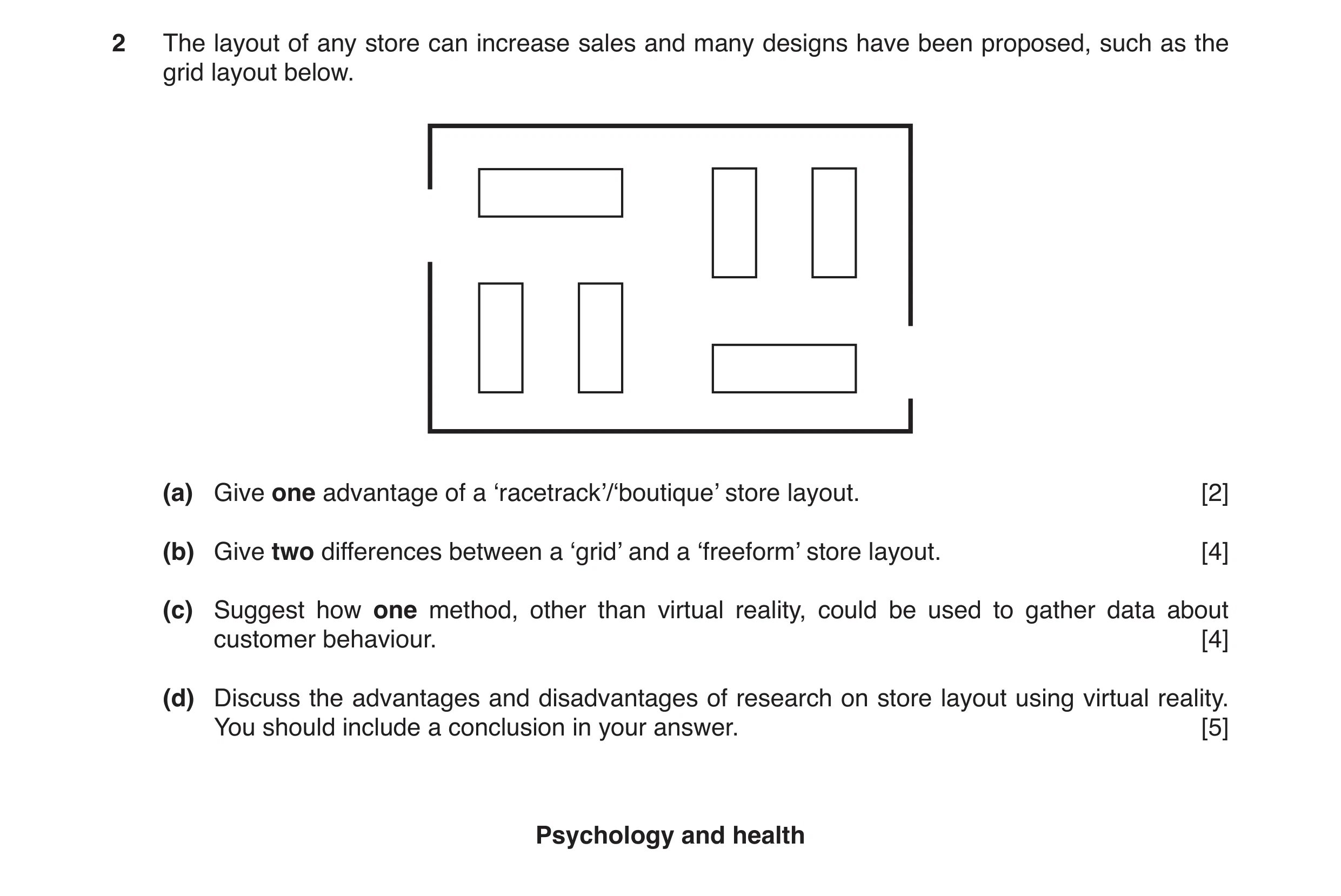
 2 / 14
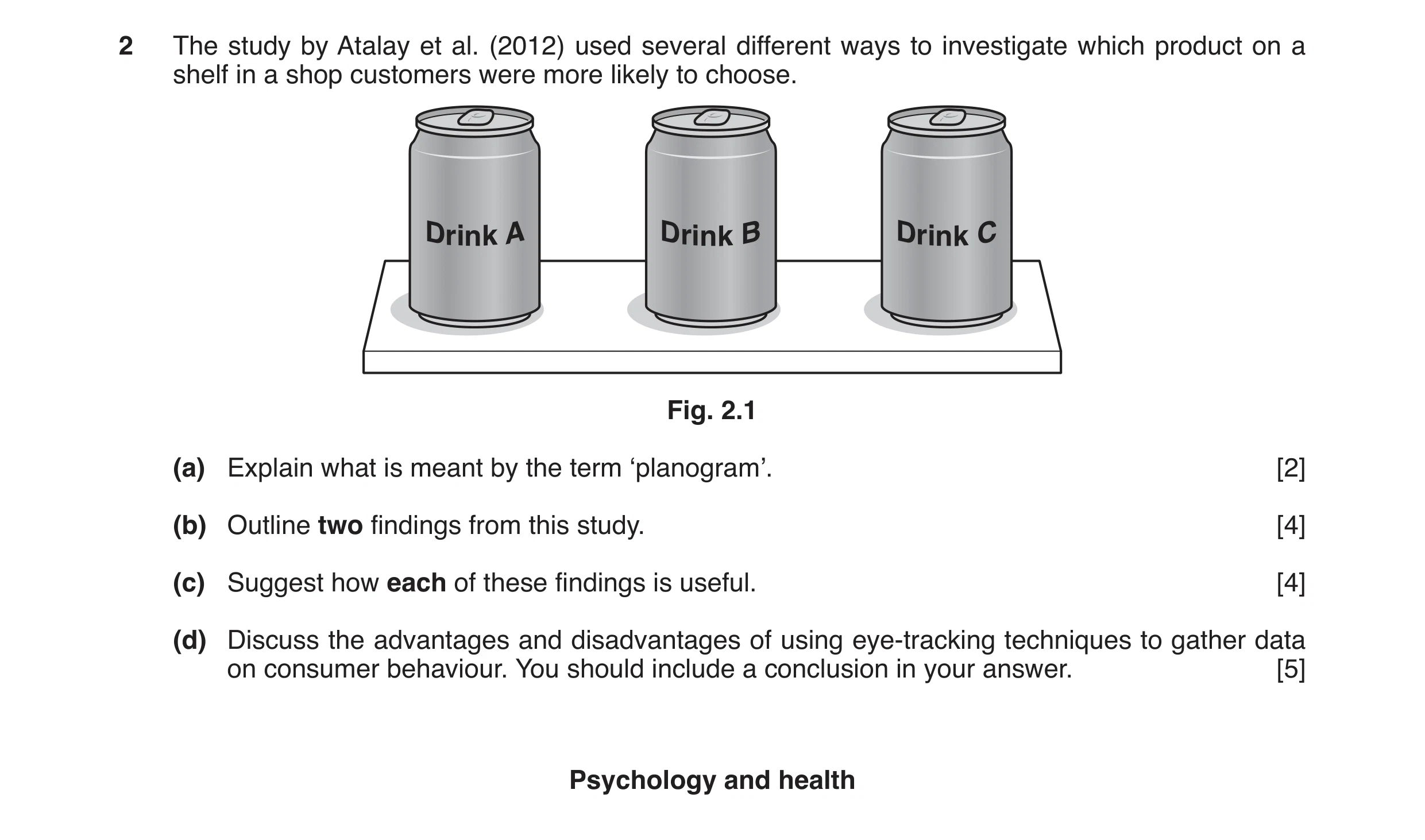
![Question 10: (a) Design a field experiment to investigate the effect of different odours in a clothes shop. [10] (b) Explain the psychological and metho…](https://img.pastlit.com/crops/8d3684d4-0af1-494d-abab-13d7e4e5556f/q6.webp) 3 / 14
3 / 14
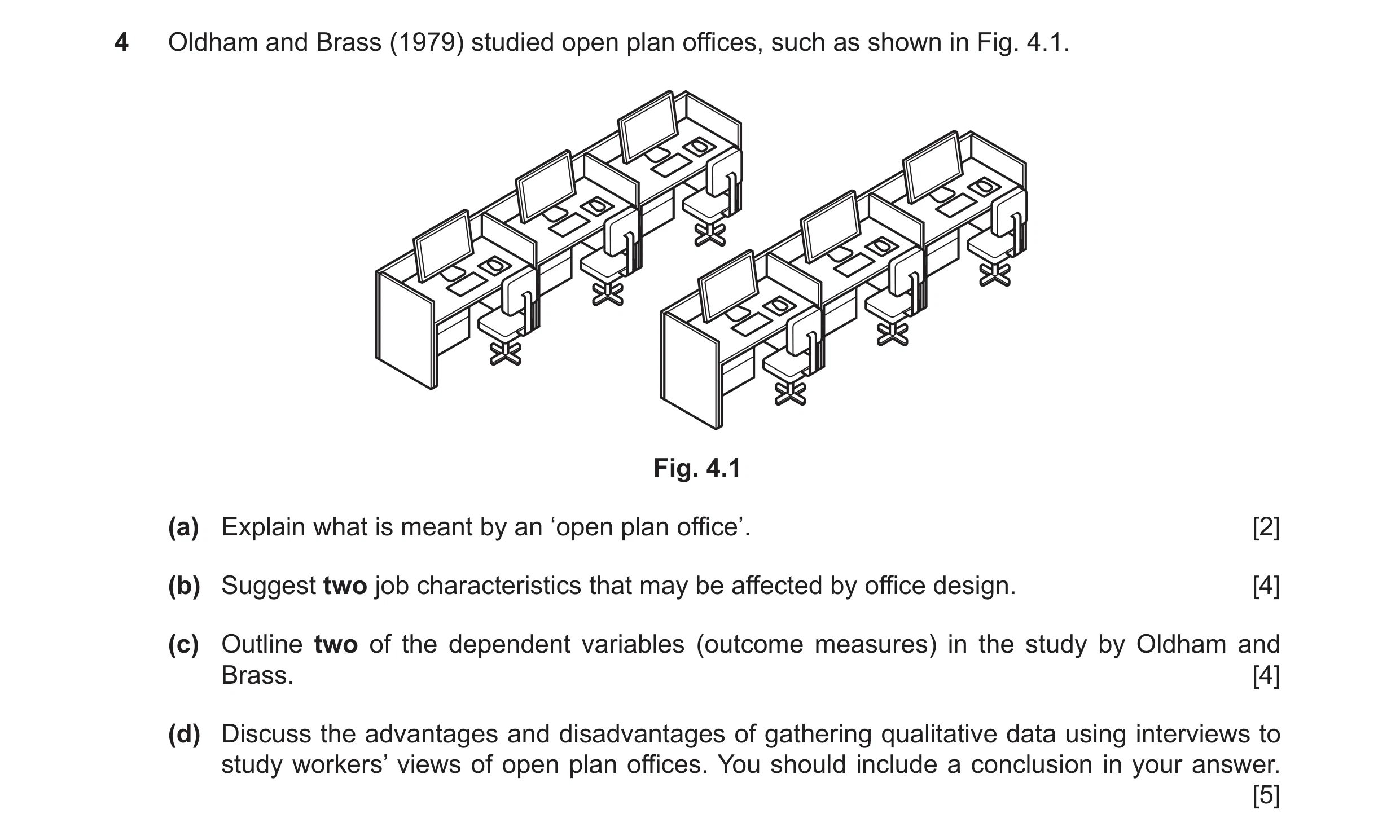
 4 / 14
 5 / 14
![Question 18: (a) Design a field experiment to investigate which ambient odour customers prefer in a shop selling clothes. [10] (b) Explain the psycholog…](https://img.pastlit.com/crops/d66490fd-52e6-48e4-aa48-3c1701941b9e/q6.webp)
 6 / 14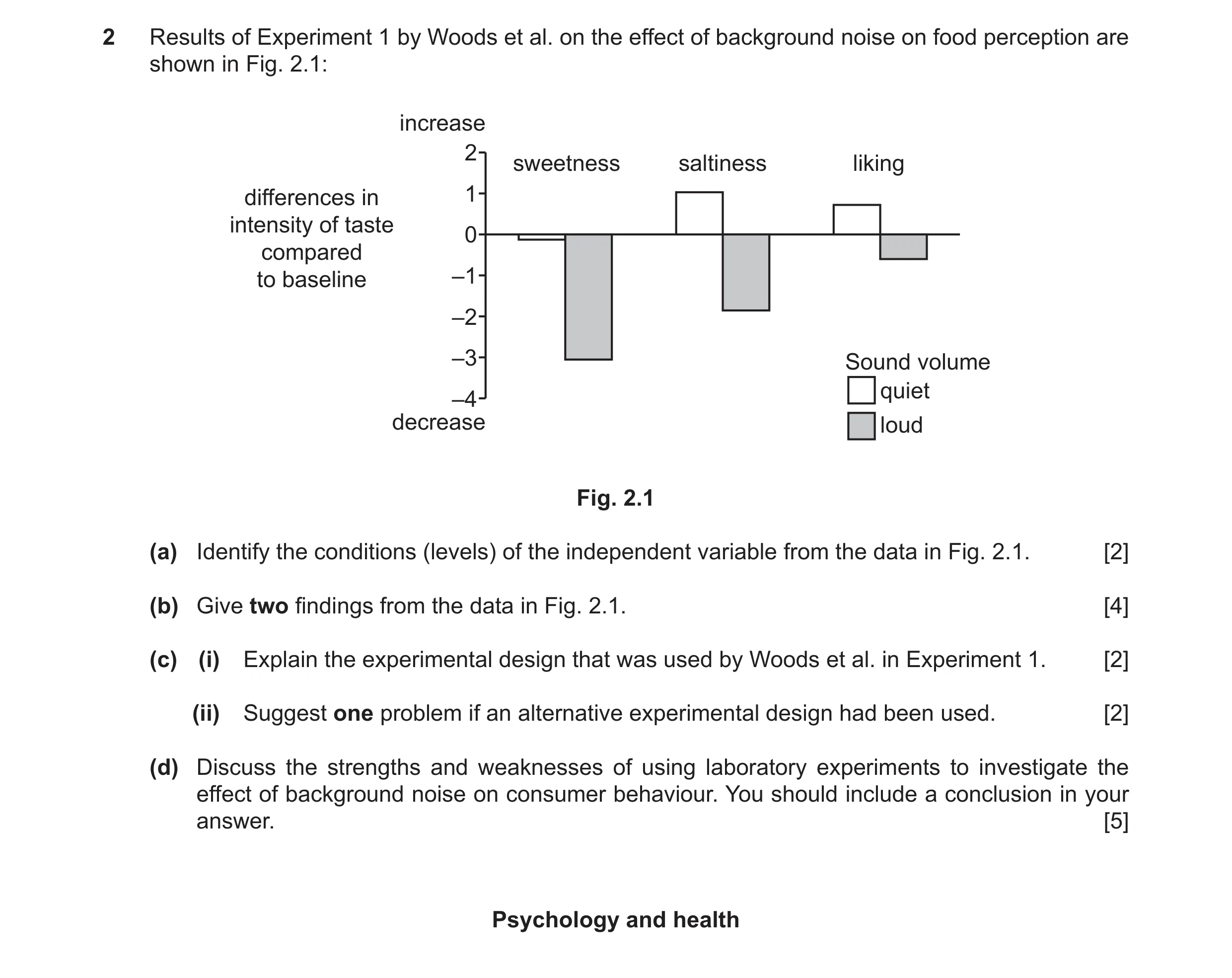
 7 / 14
![Question 22: (a) Design a study to investigate the effect of different store interior layouts on customer satisfaction. [10] (b) Explain the psychologic…](https://img.pastlit.com/crops/17576289-6c1b-4fc4-ae14-229c9023ac86/q6.webp)
![Question 24: (a) Design an experiment to investigate levels of concentration in workers in different types of office design. [10] (b) Explain the psycho…](https://img.pastlit.com/crops/25ad80ee-306e-4bd0-a6a4-0718502286de/q8.webp)
 8 / 14
![Question 28: (a) Design an experiment to investigate levels of concentration in workers in different types of office design. [10] (b) Explain the psycho…](https://img.pastlit.com/crops/84b20a3f-be1a-42da-9eaa-f6d3604d18c2/q8.webp)
 9 / 14
 10 / 14
![Question 33: (a) Outline one type of store interior design. [2] (b) Suggest how store interior design can be investigated, other than by using virtual s…](https://img.pastlit.com/crops/fb362ec3-a787-4fc0-a4ff-b935dbdfebba/q4.webp)
![Question 34: (a) Outline one type of store interior design. [2] (b) Suggest how store interior design can be investigated, other than by using virtual s…](https://img.pastlit.com/crops/6f46166b-89b0-45c4-b73a-1051e98f85ba/q4.webp)
 11 / 14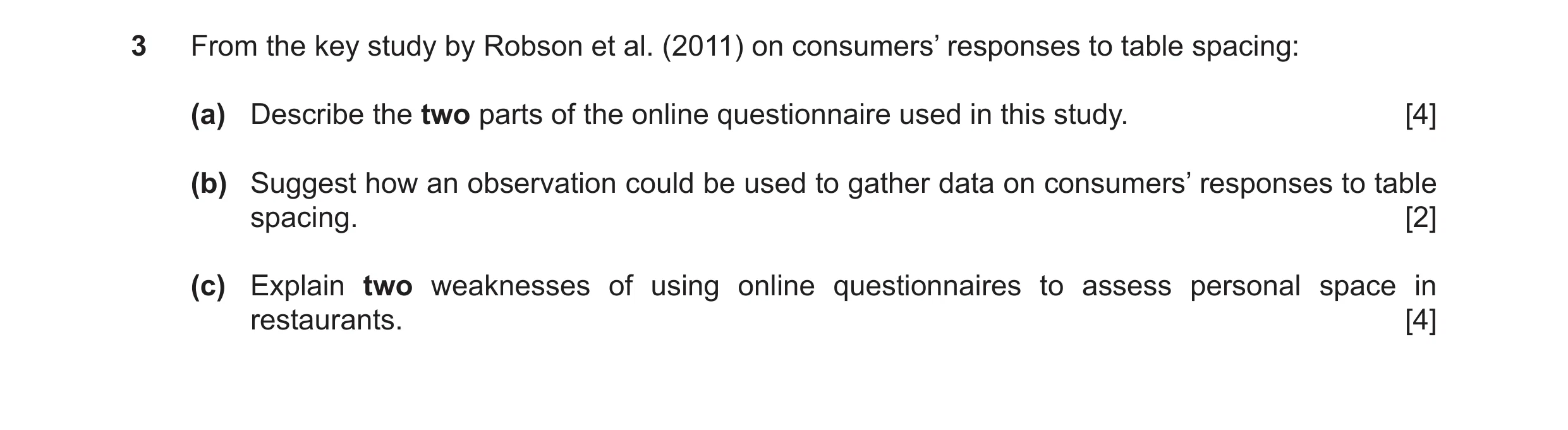
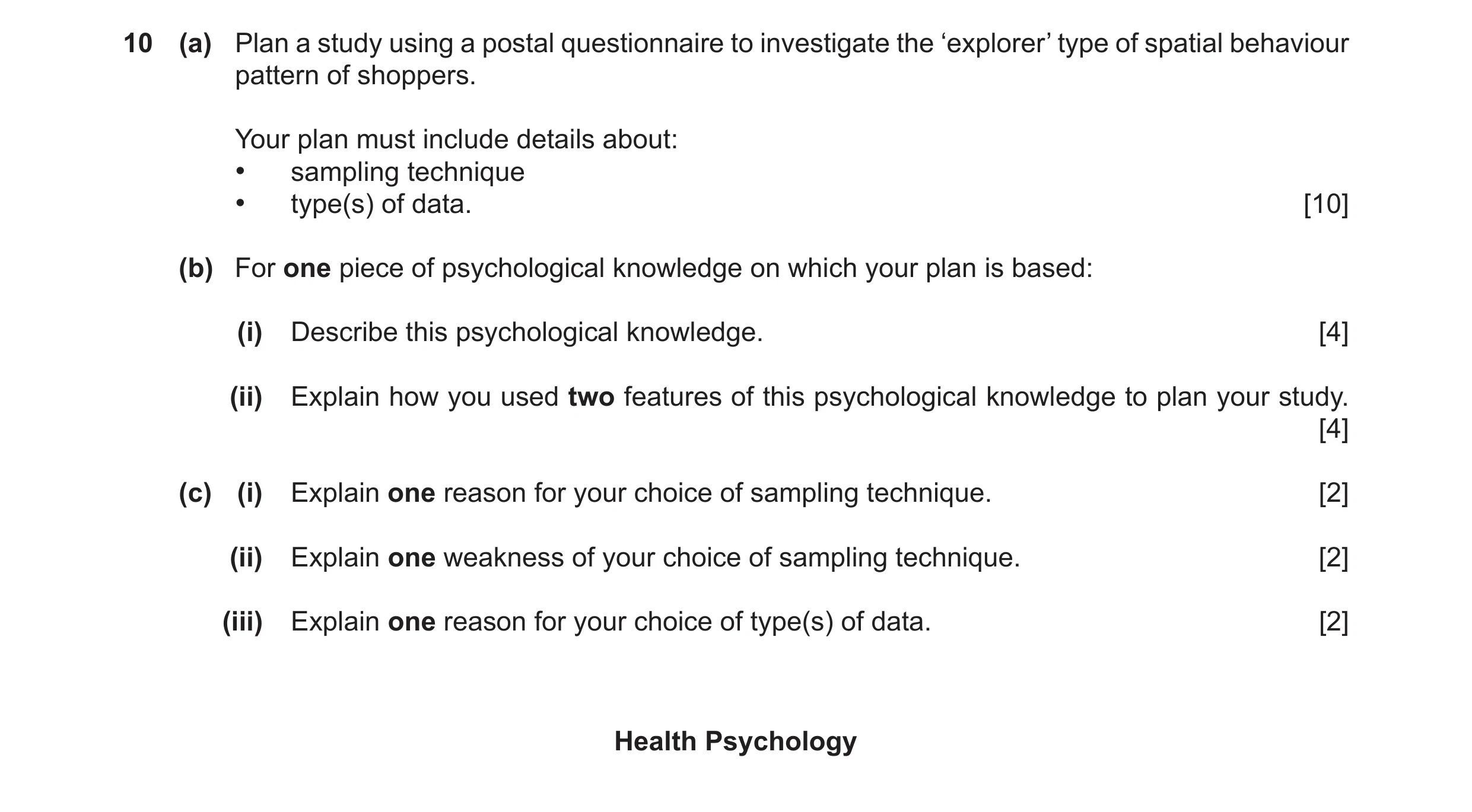
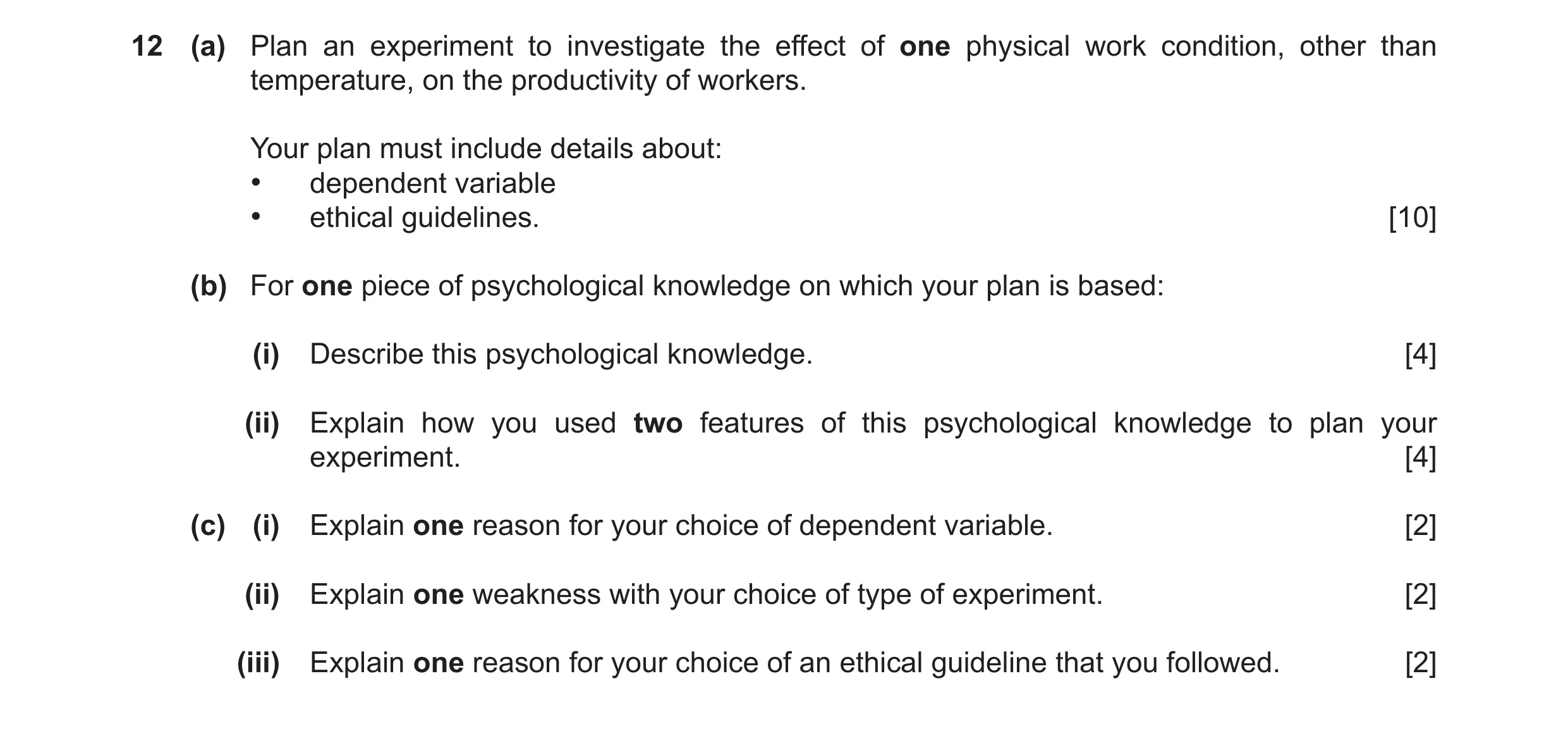 12 / 14
![Question 39: (a) Explain what is meant by the term ‘wayfinding’ when in a shopping mall. [2] (b) Suggest how wayfinding could be investigated, other tha…](https://img.pastlit.com/crops/f59b906e-bcf7-464d-b2e7-fc2d6a79428f/q4.webp)
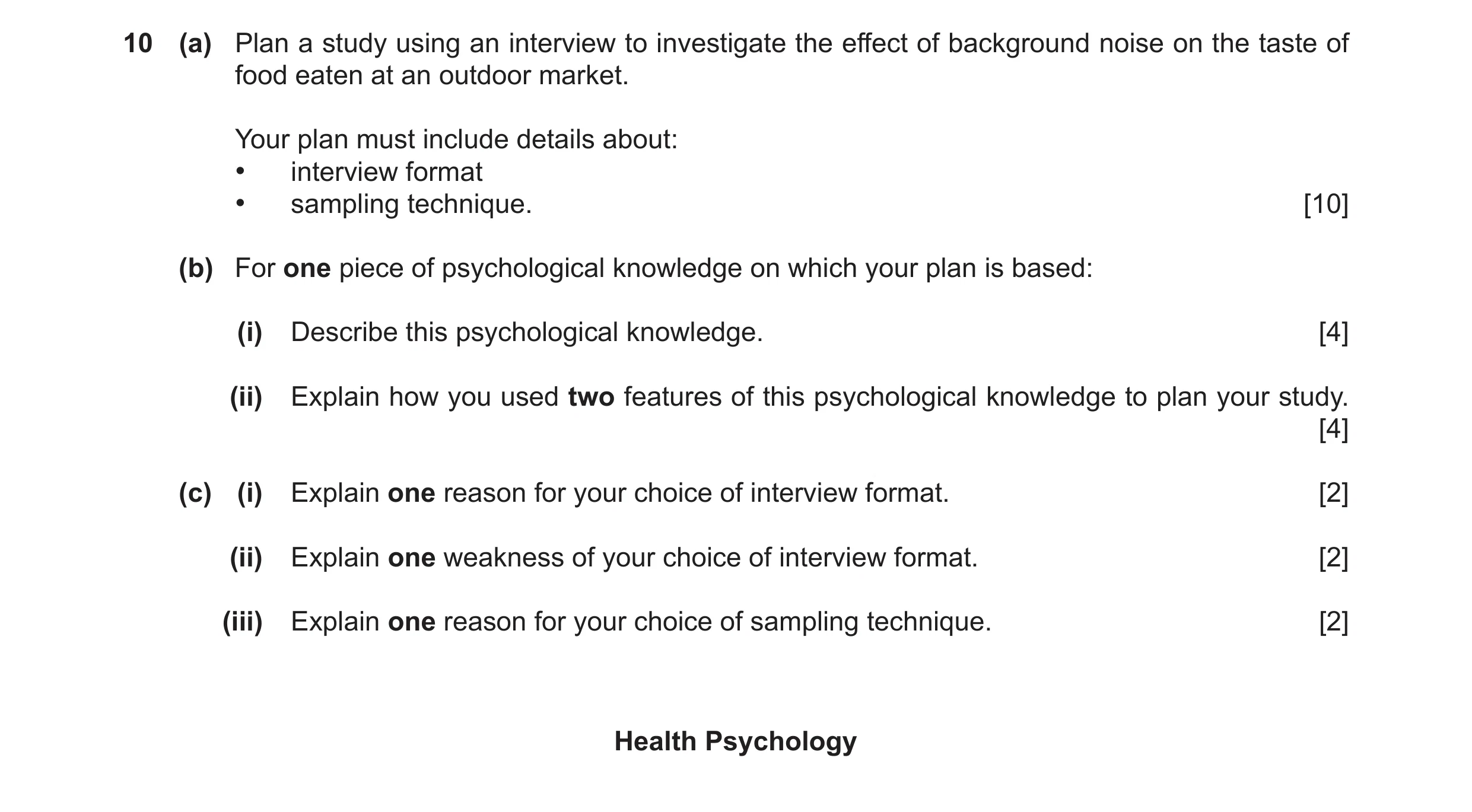
![Question 41: (a) Explain what is meant by the term ‘retail atmospherics’. [2] (b) Suggest the effect one retail atmospheric might have on shopper ambien…](https://img.pastlit.com/crops/e3cfb09b-8ac0-4758-9aae-063f7dc507b4/q4.webp) 13 / 14
13 / 14![Question 42: (a) Explain what is meant by the term ‘retail atmospherics’. [2] (b) Suggest the effect one retail atmospheric might have on shopper ambien…](https://img.pastlit.com/crops/1c762dad-dc75-48a8-b63b-ccf98441d2e5/q4.webp) 14 / 14
14 / 14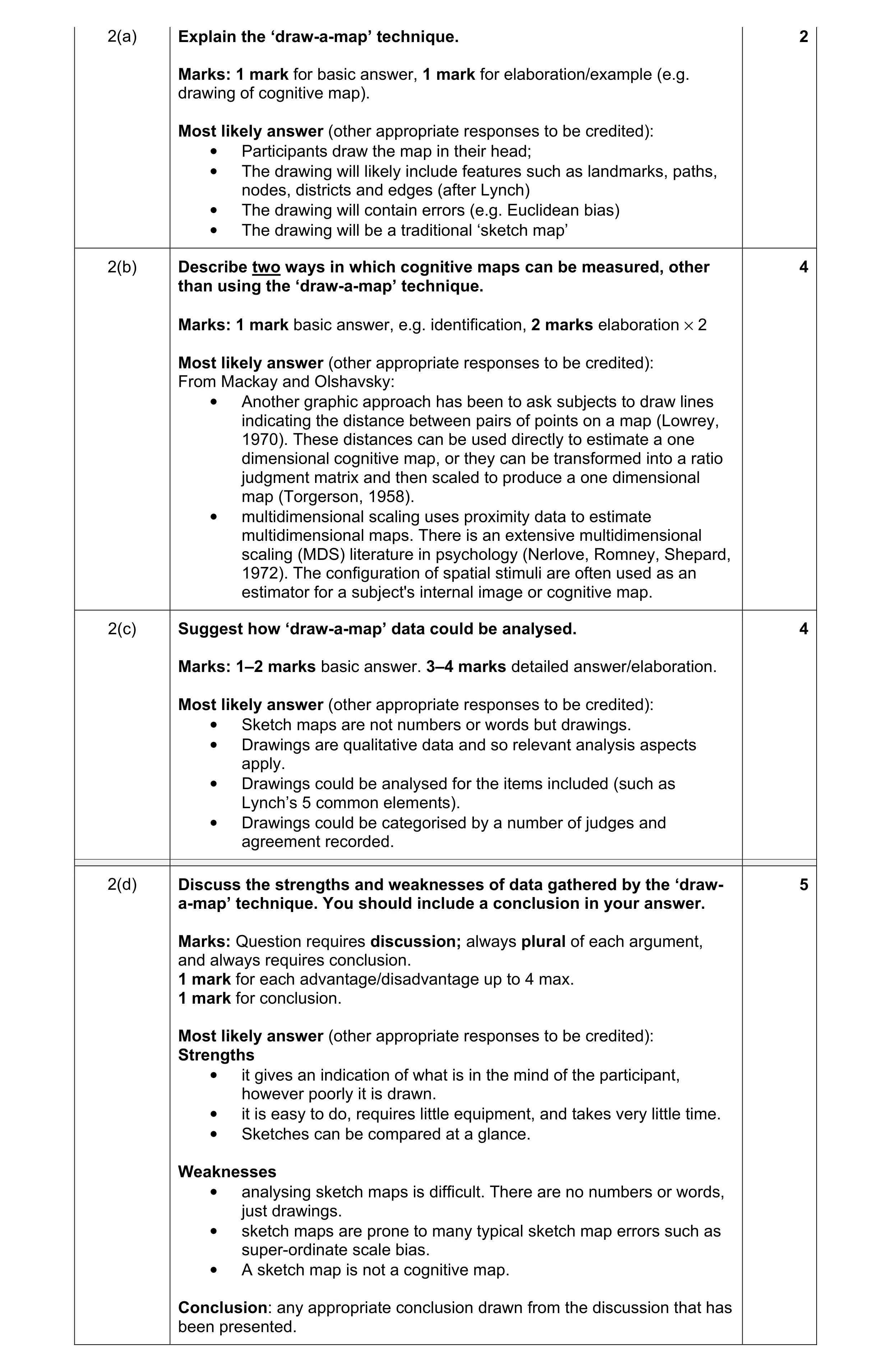 15
15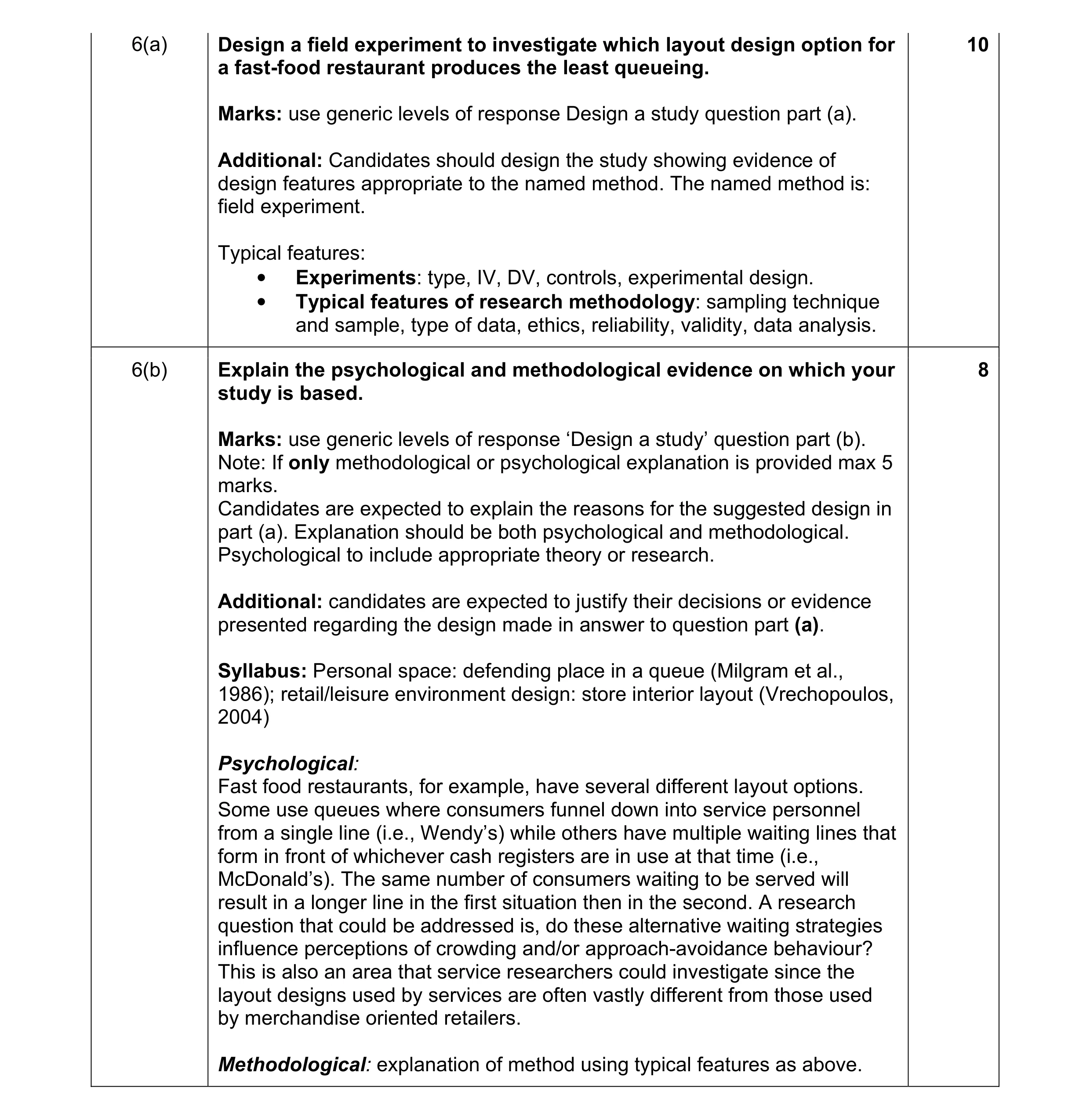 18
18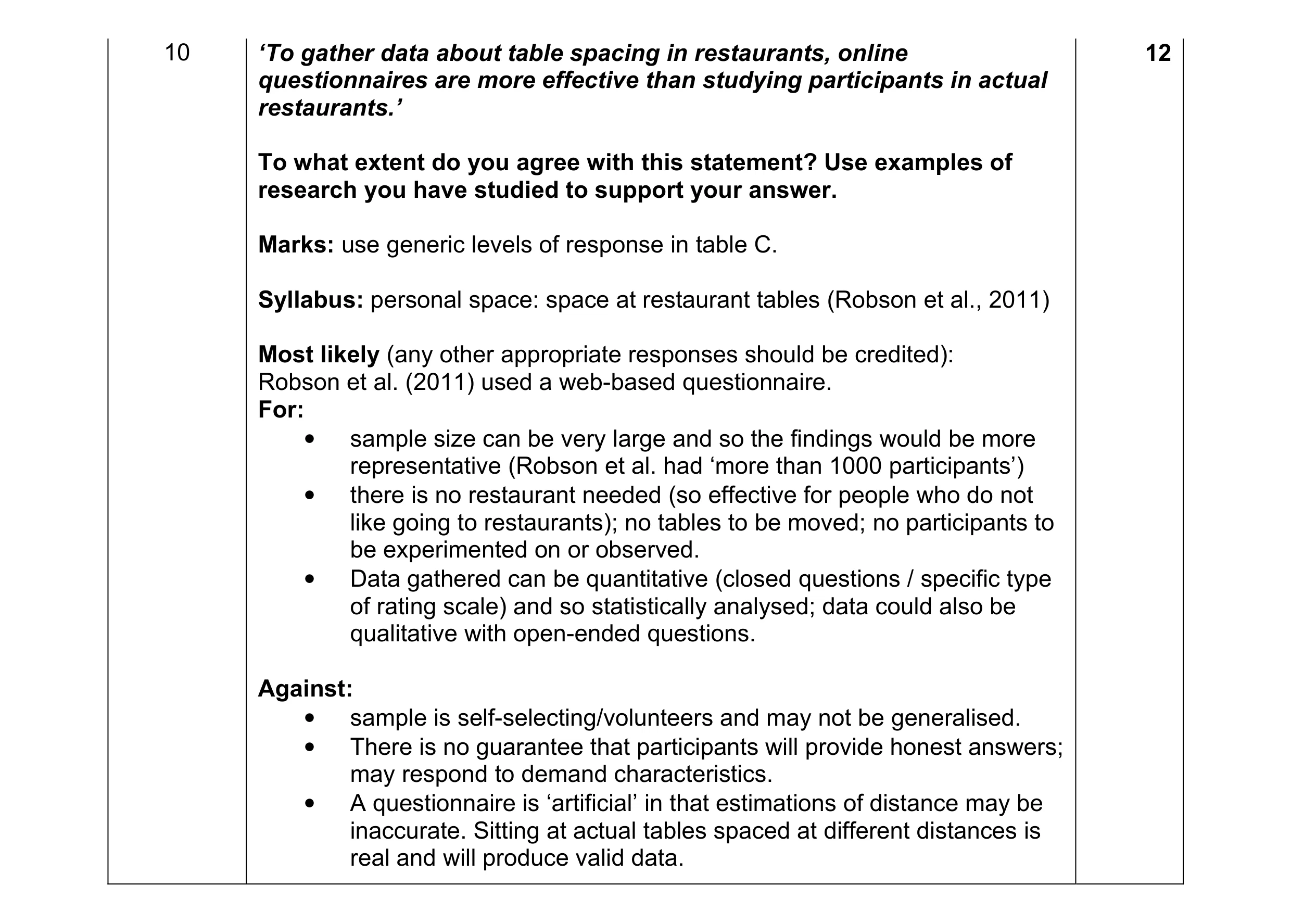 12
12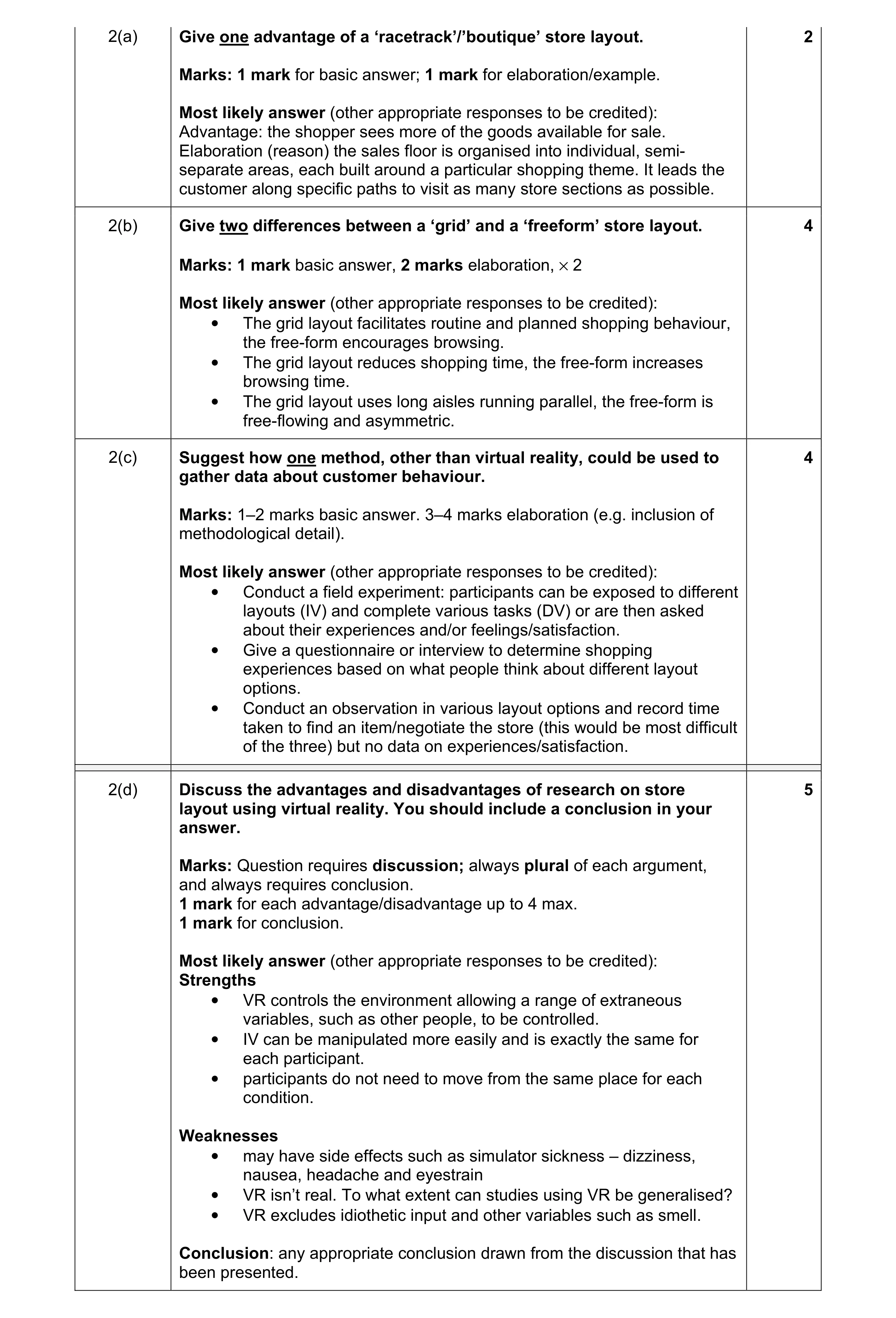 15
15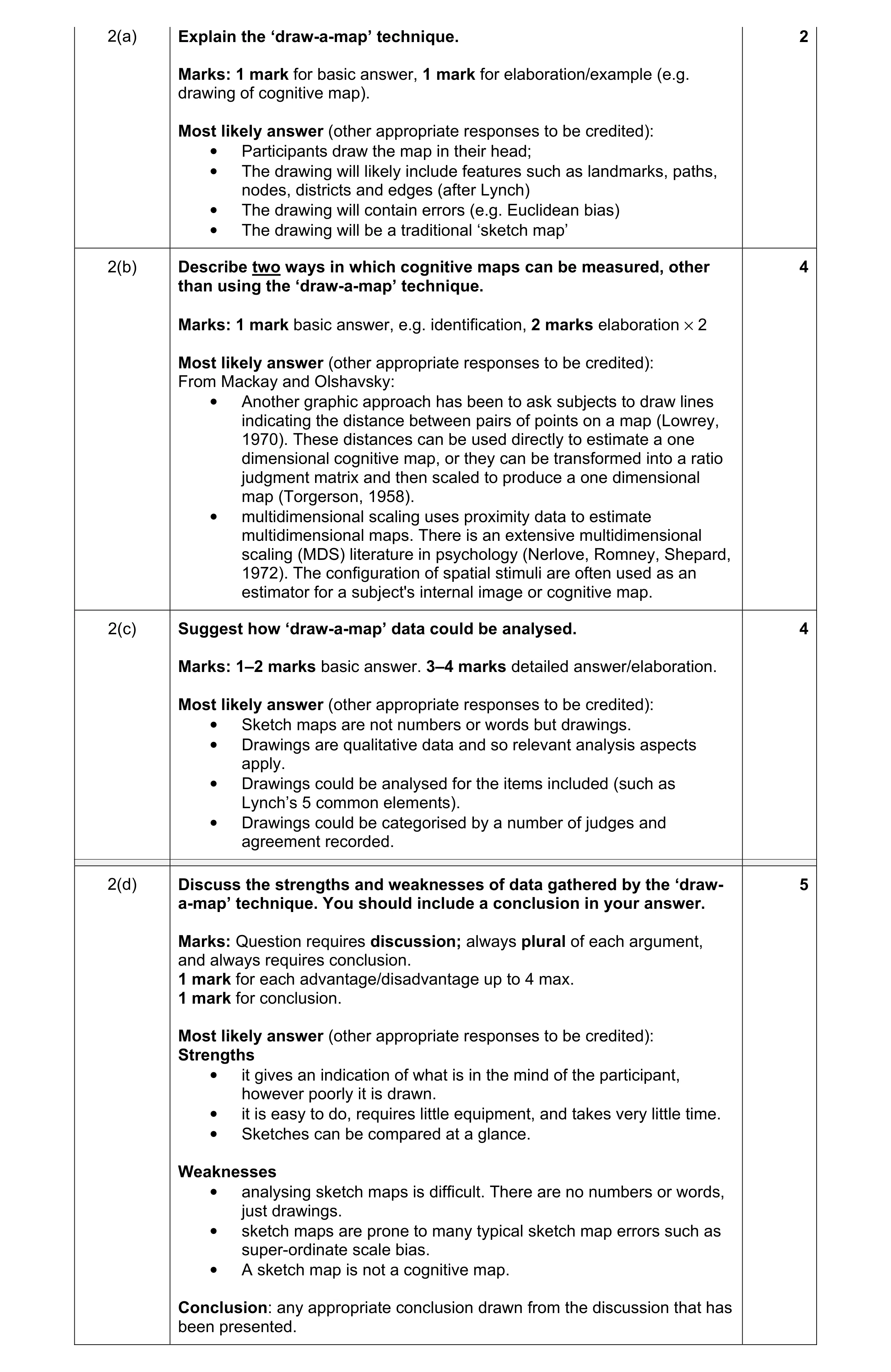 15
15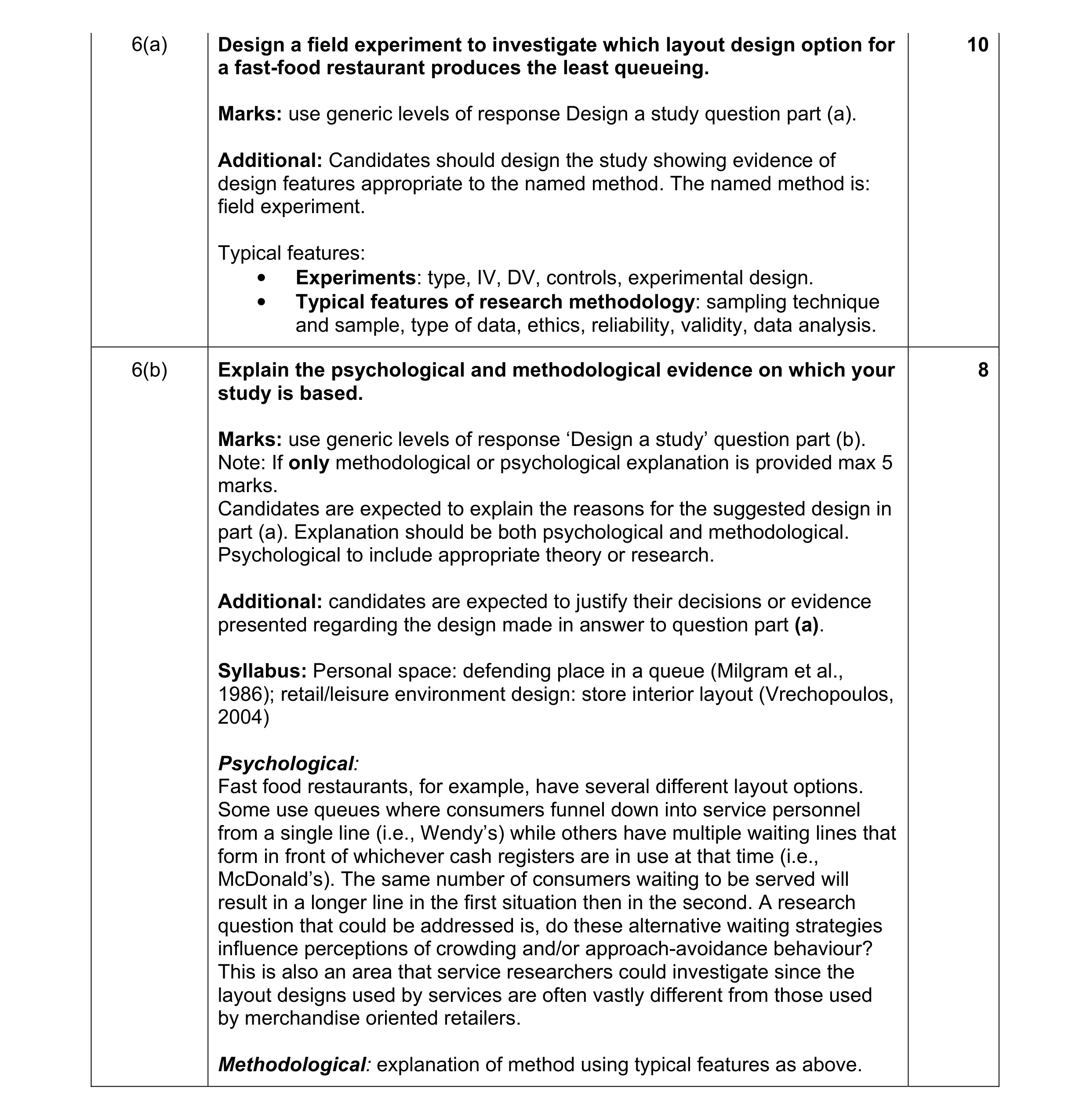 18
18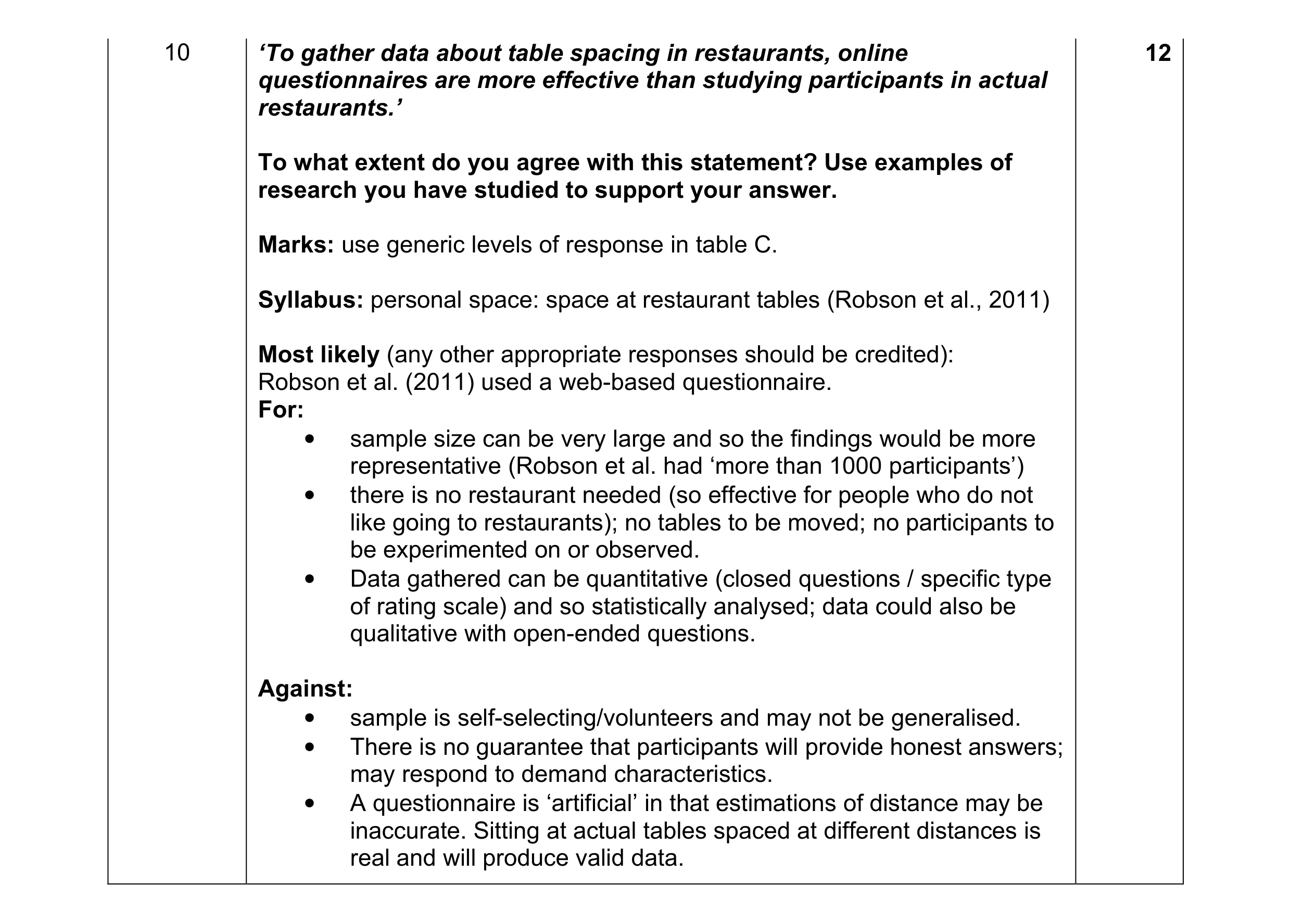 12
12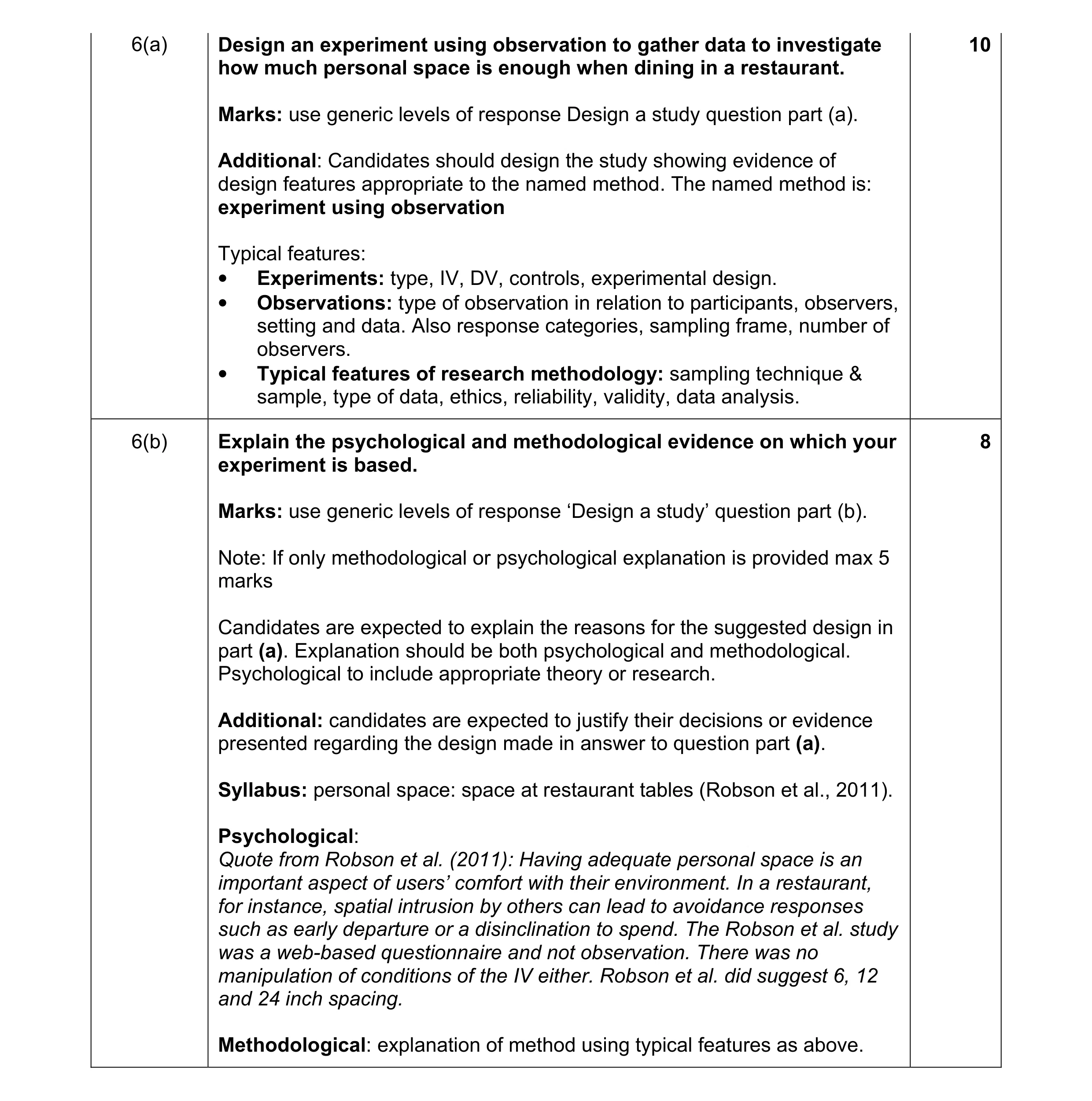 18
18 15
15 18
18 12
12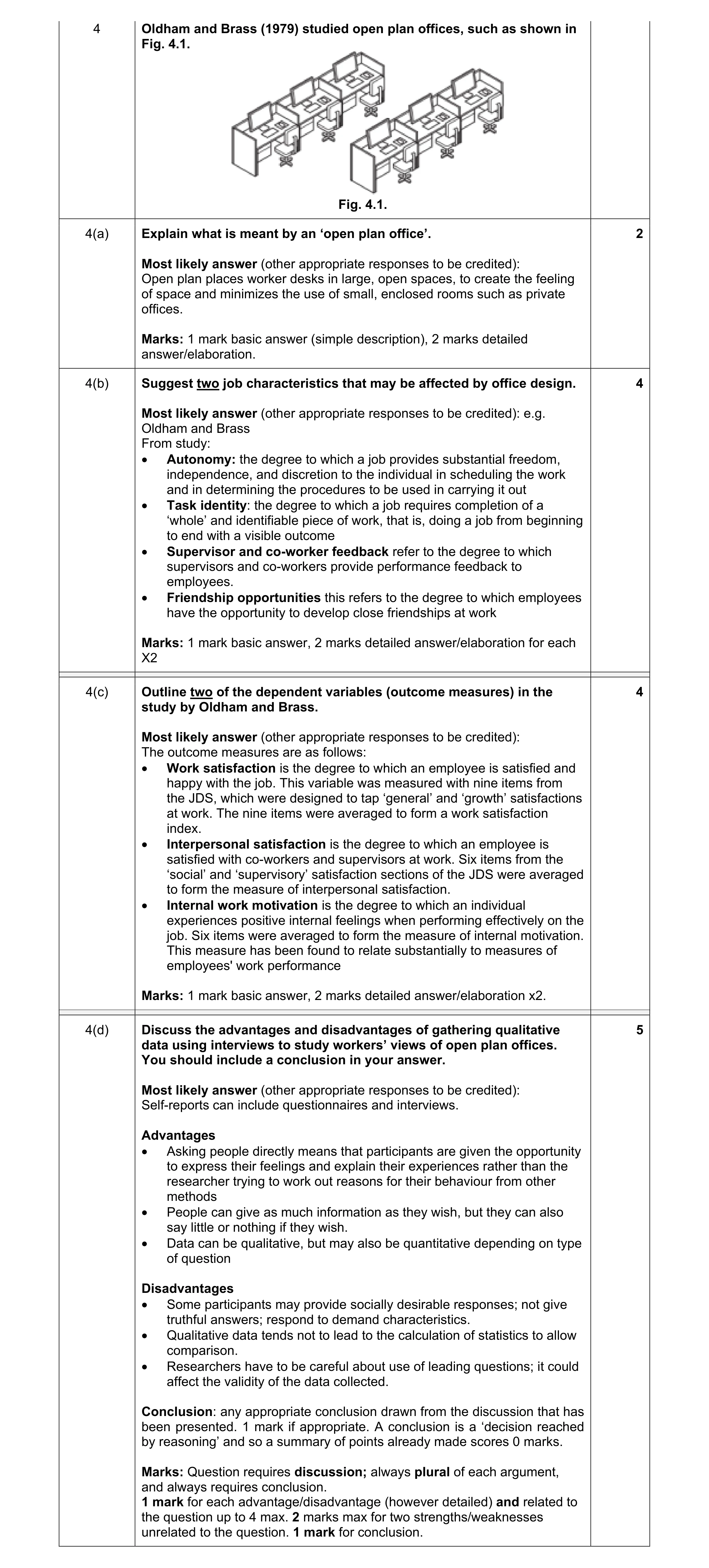 15
15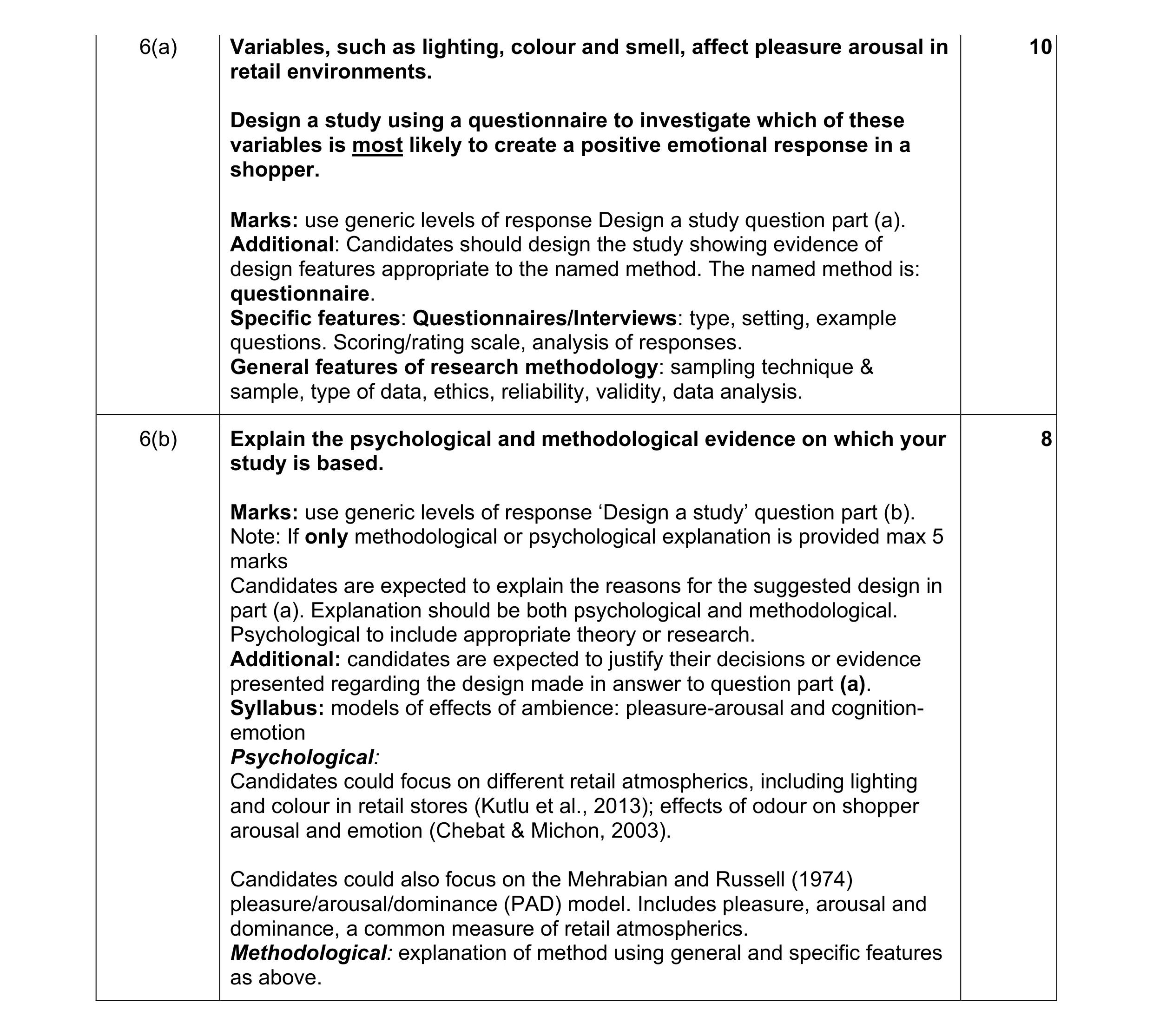 18
18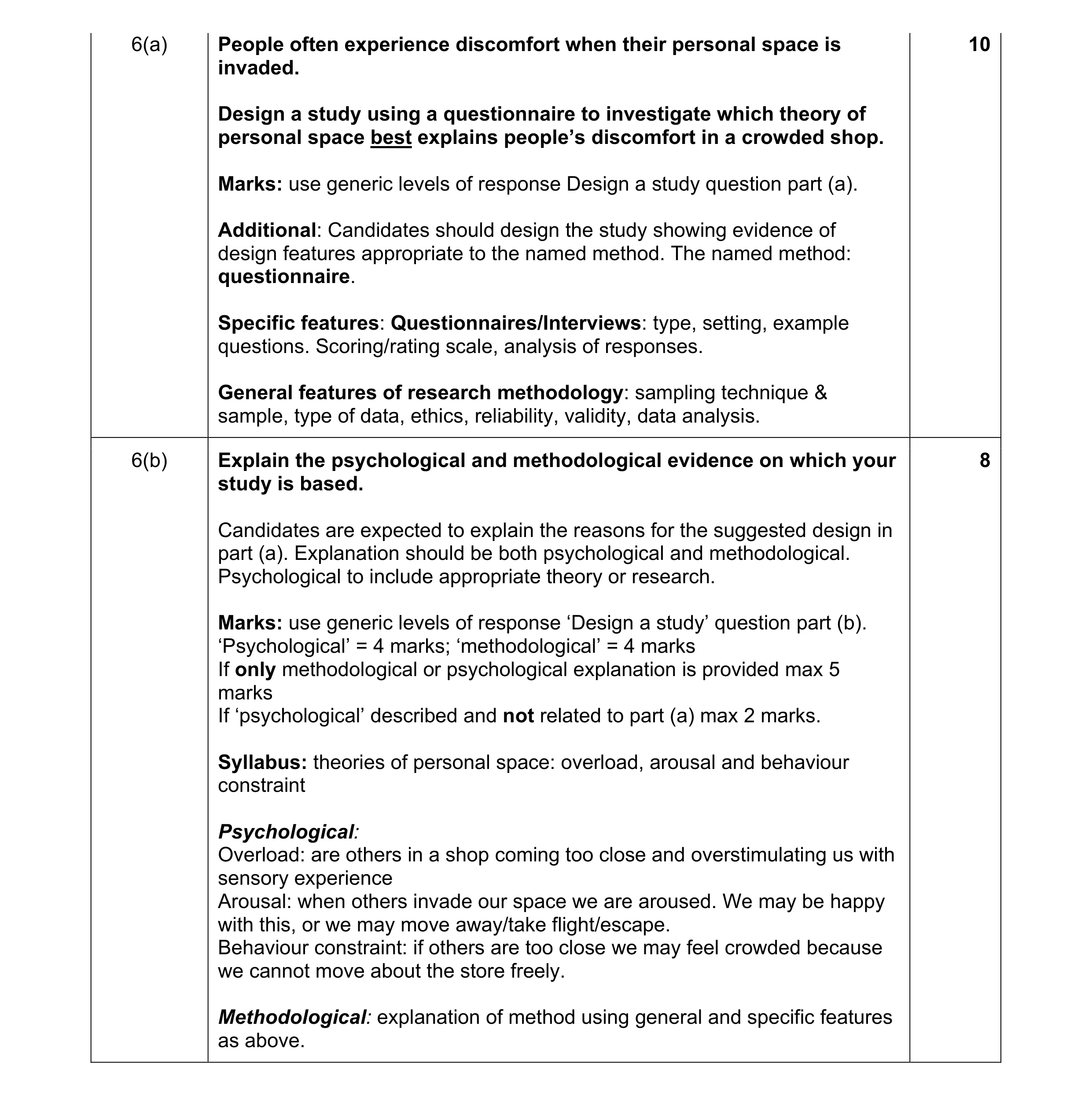 18
18 18
18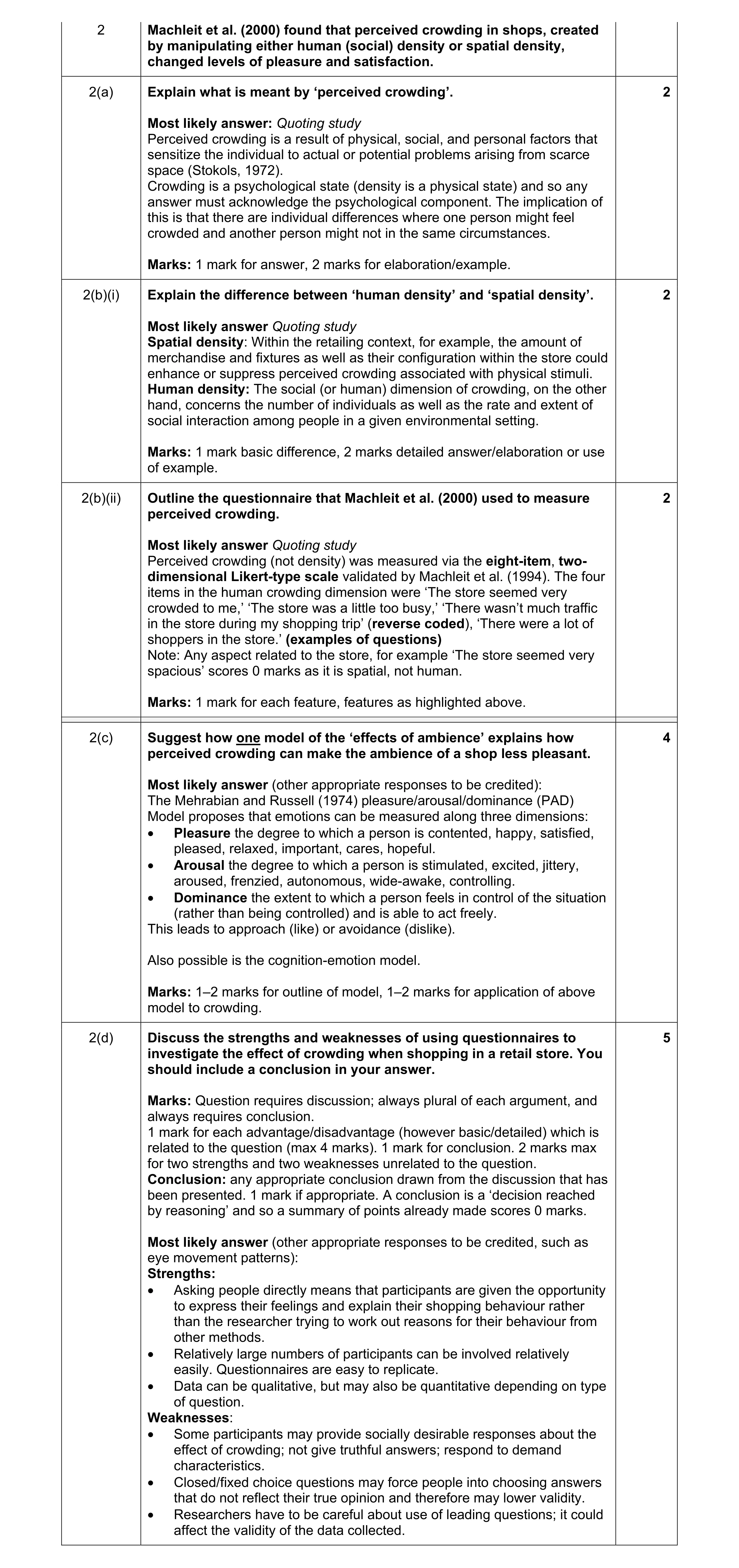 15
15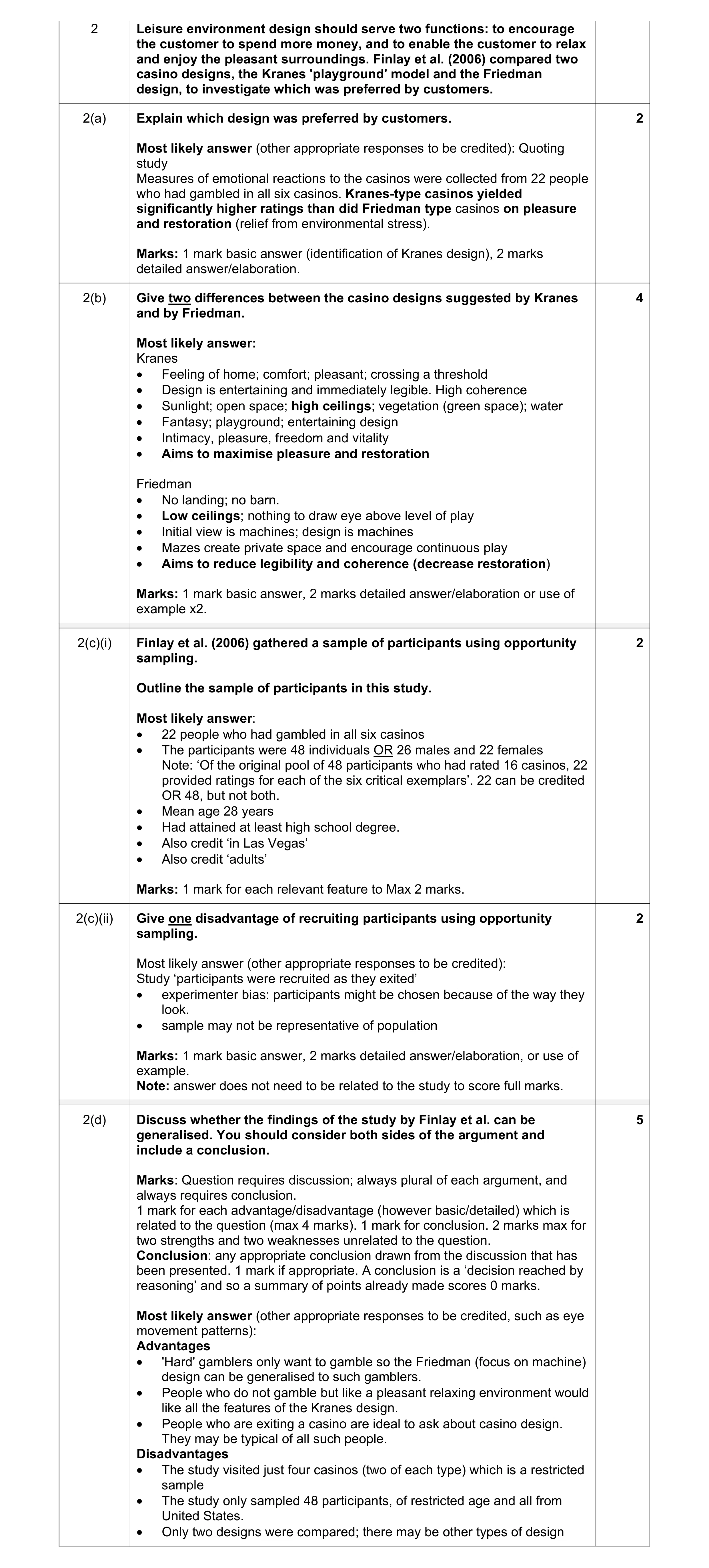 15
15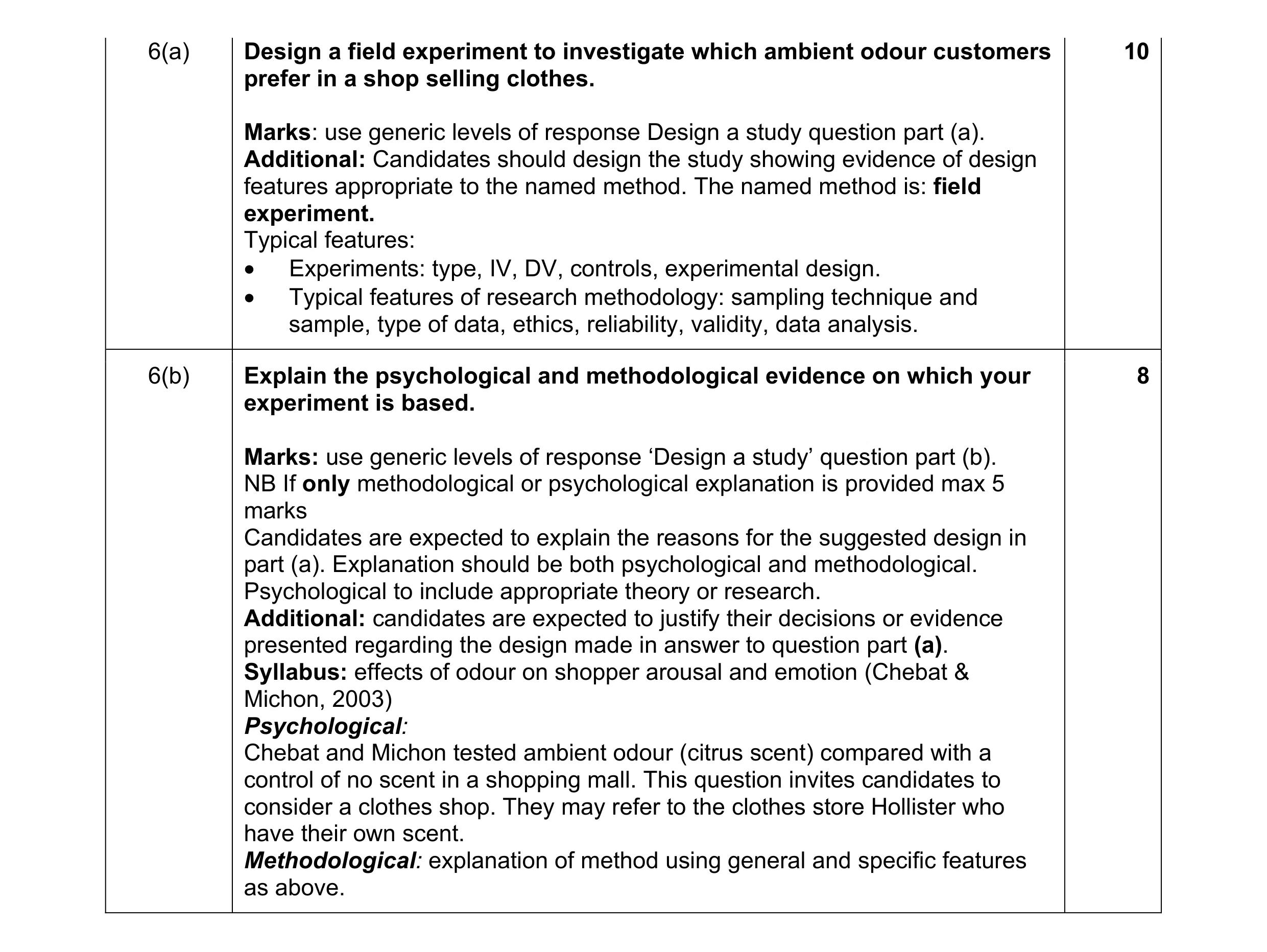 18
18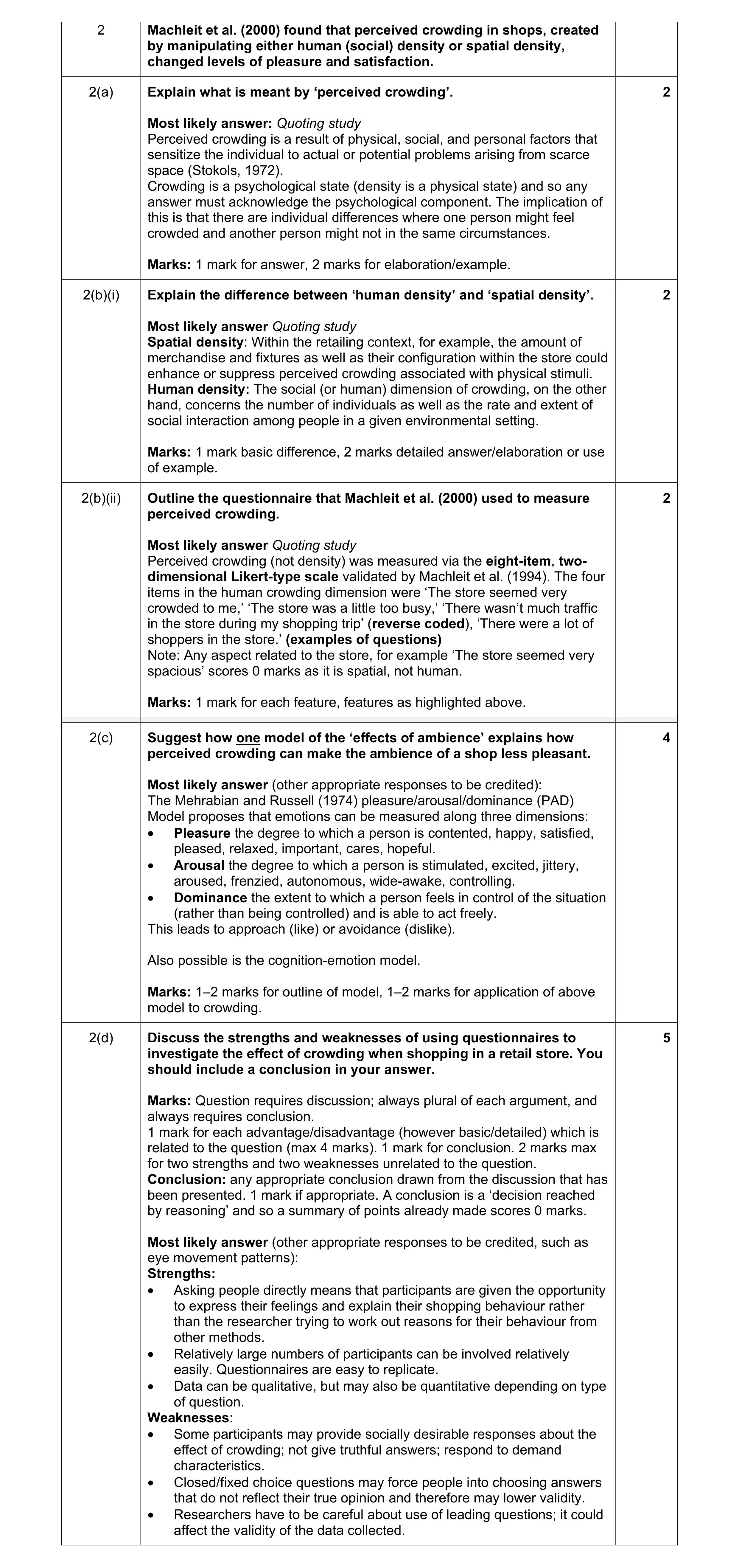 15
15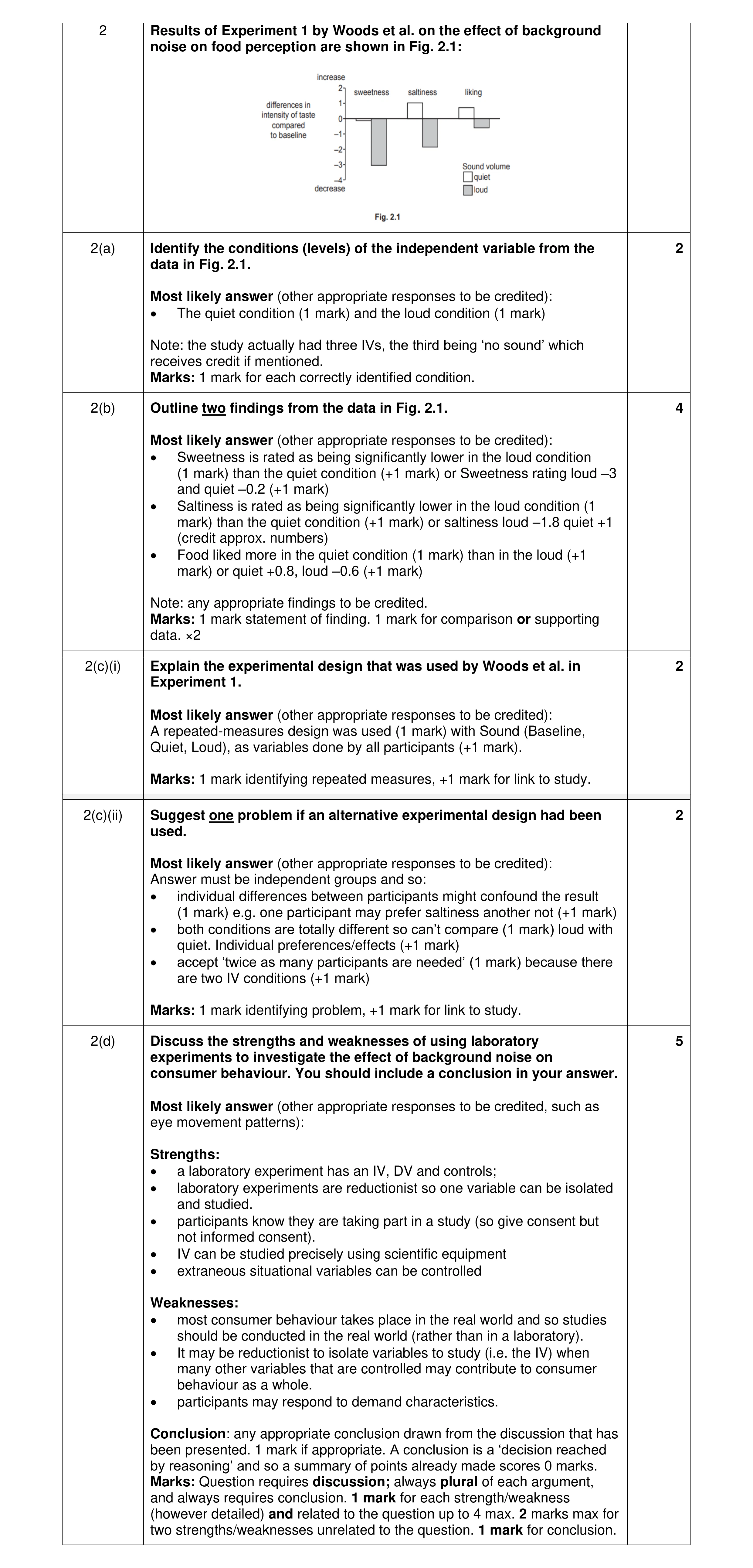 15
15 15
15 18
18 15
15 18
18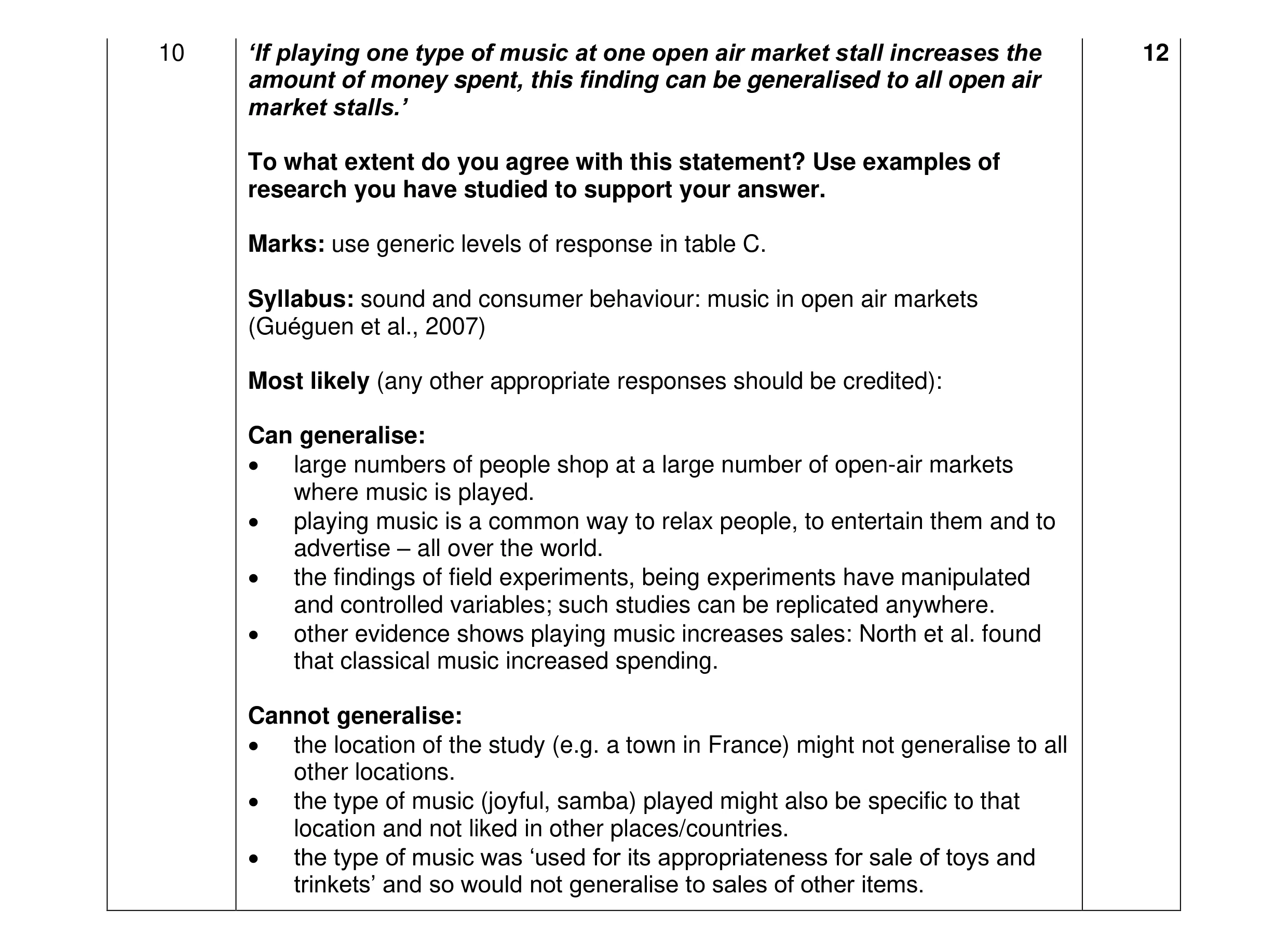 12
12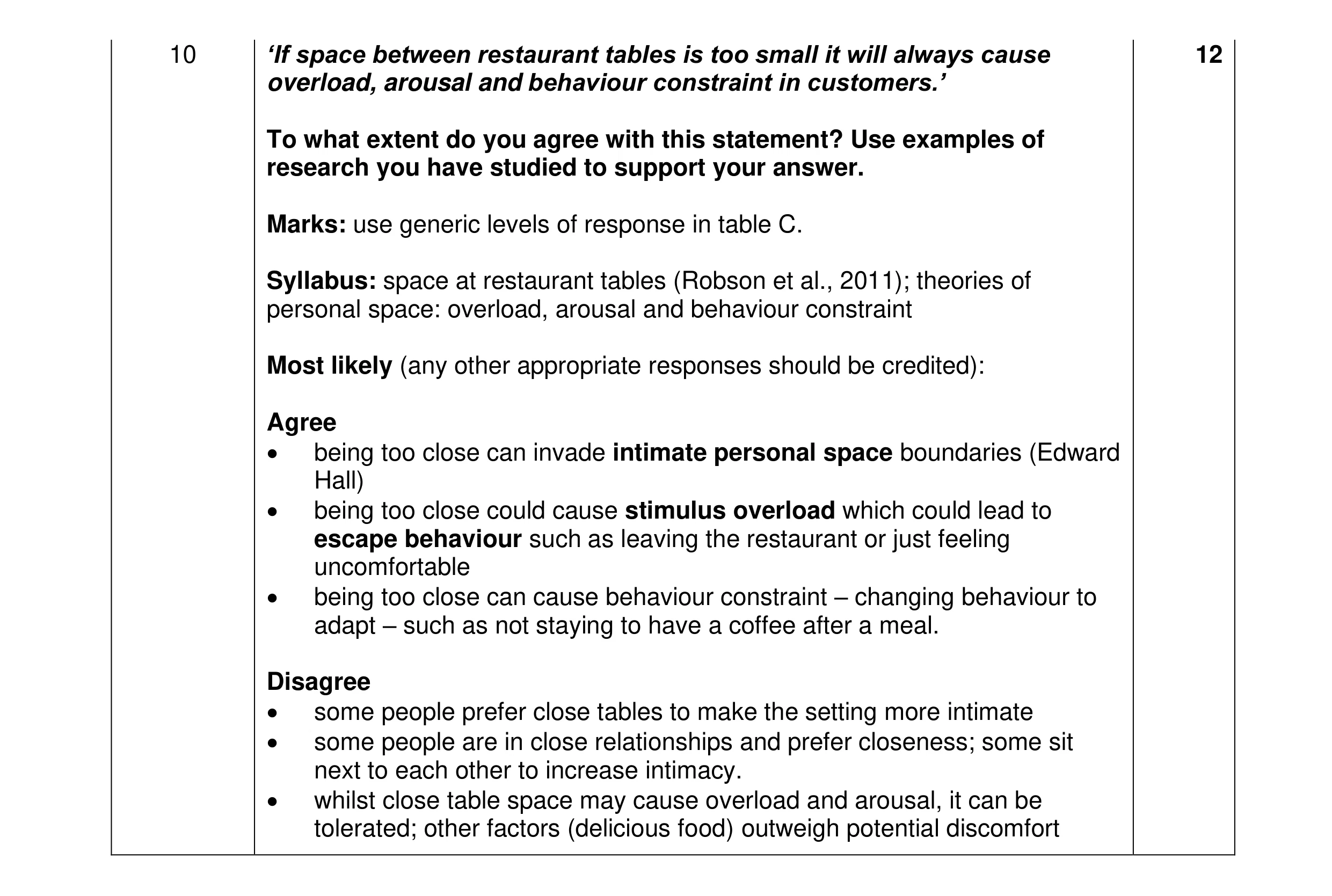 12
12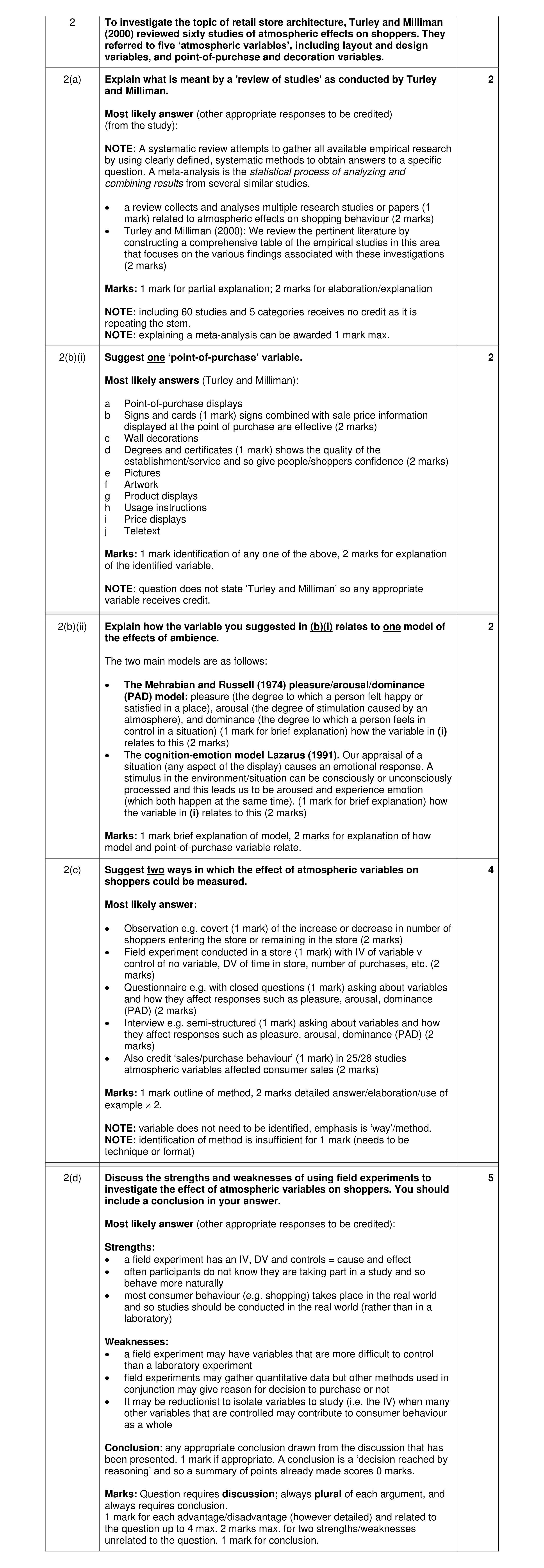 15
15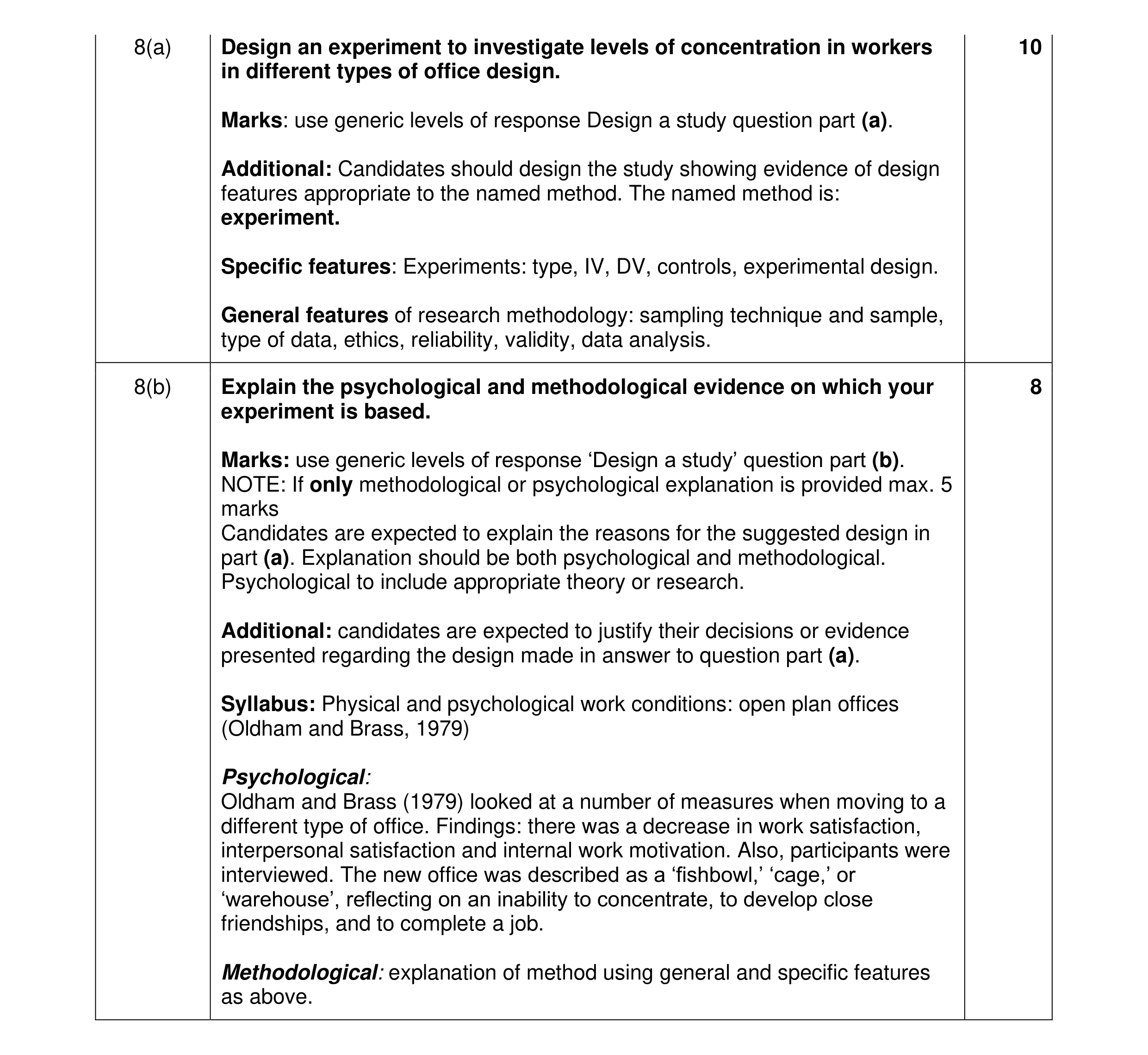 18
18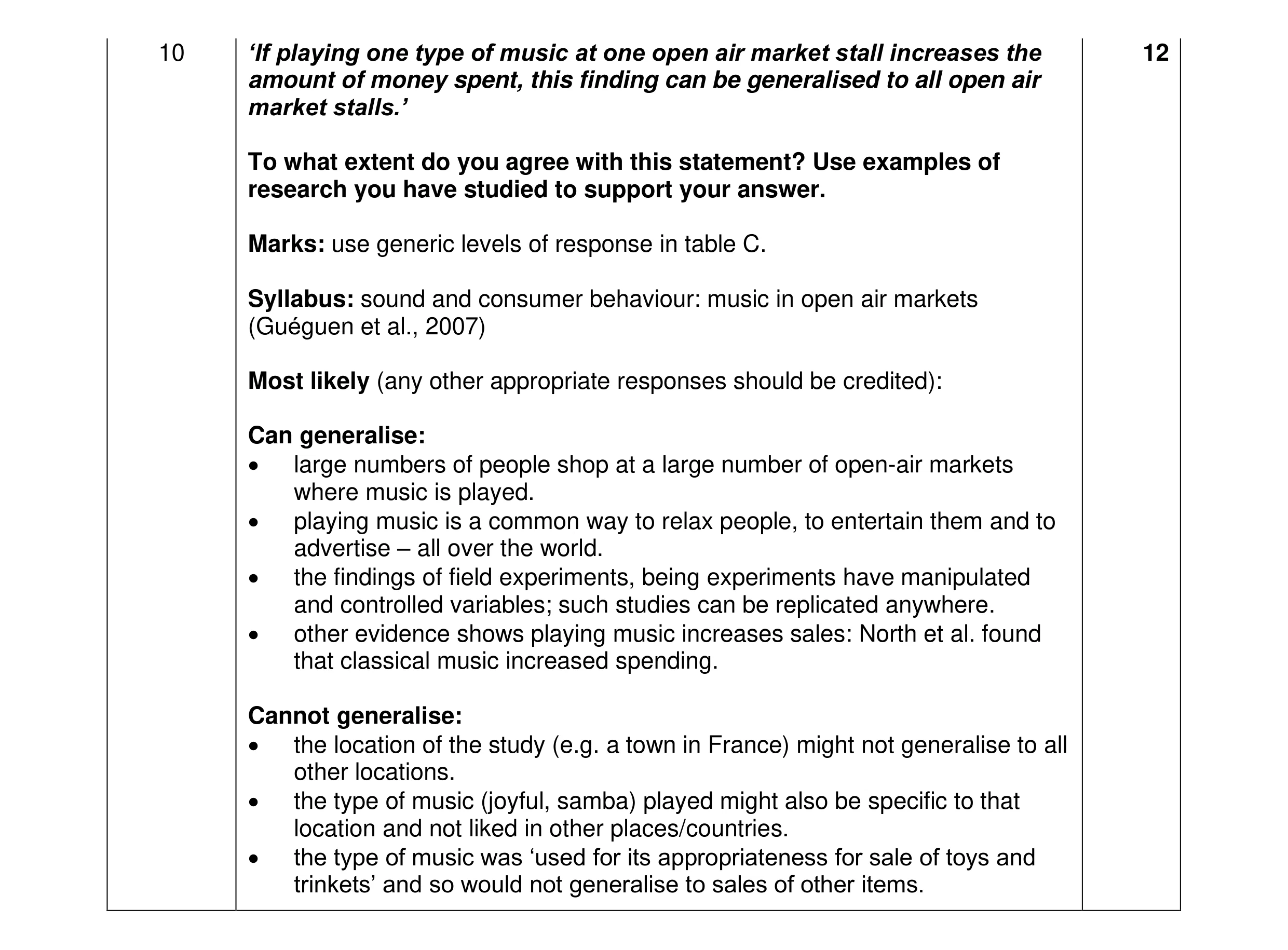 12
12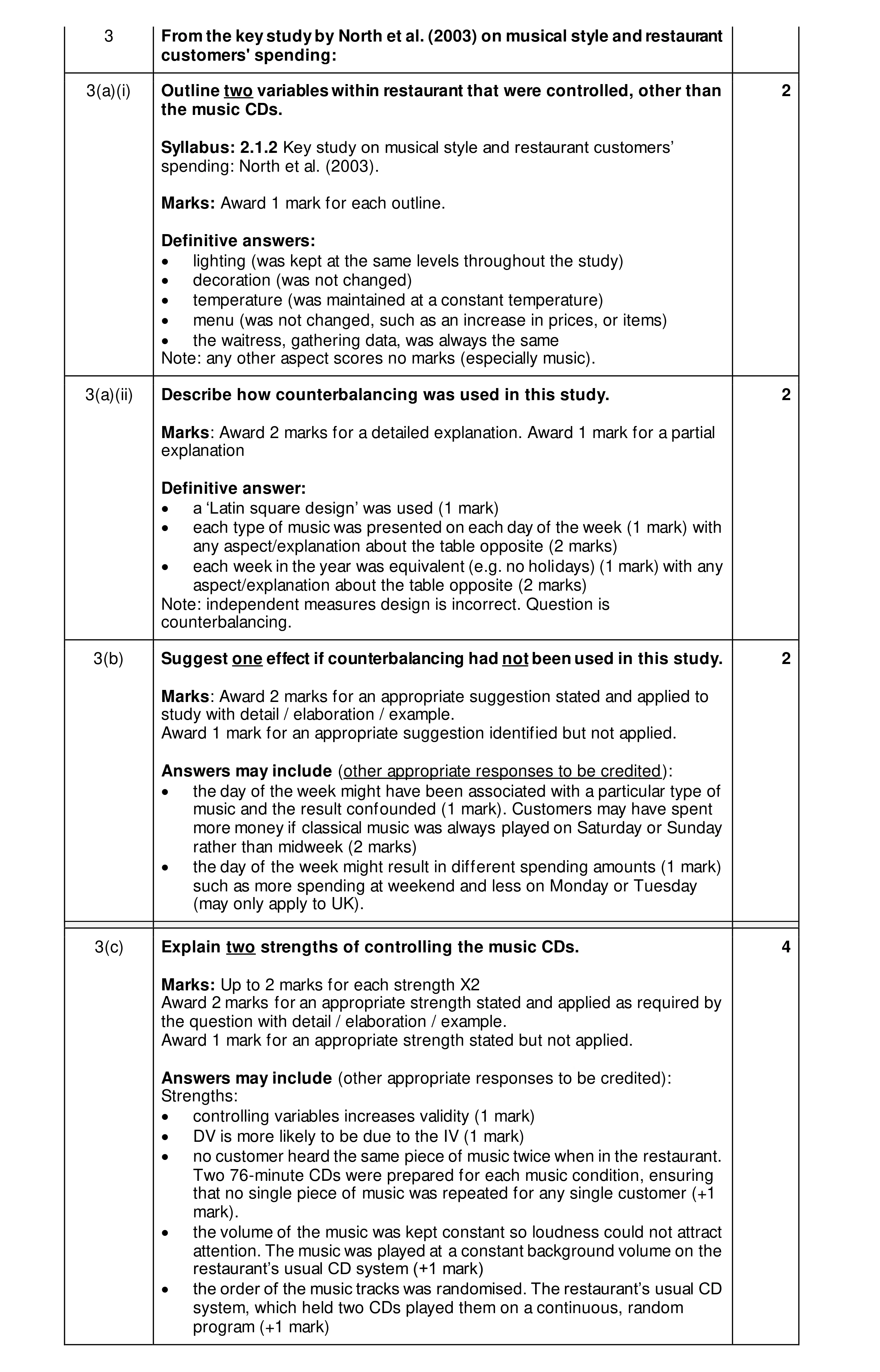 10
10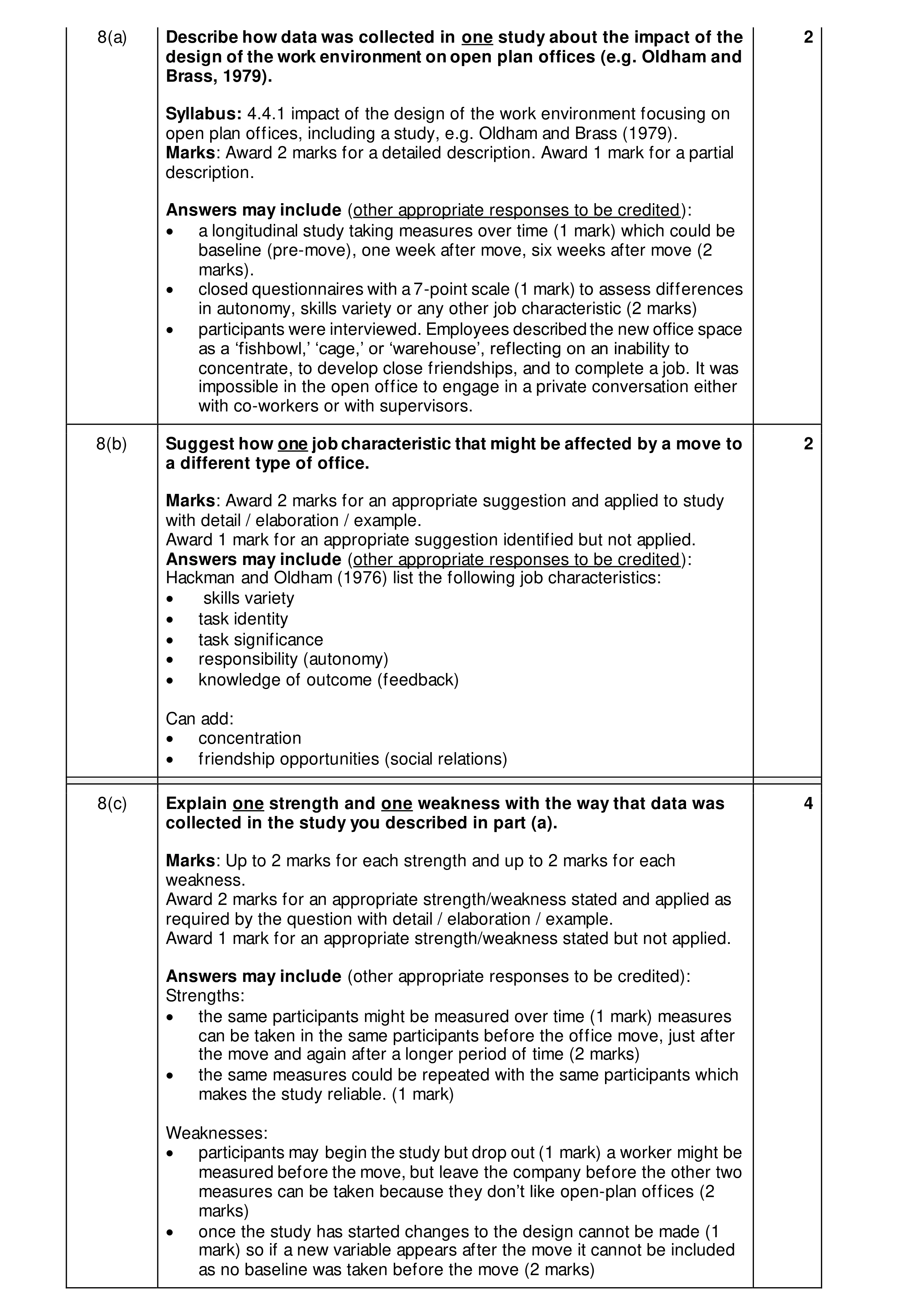 8
8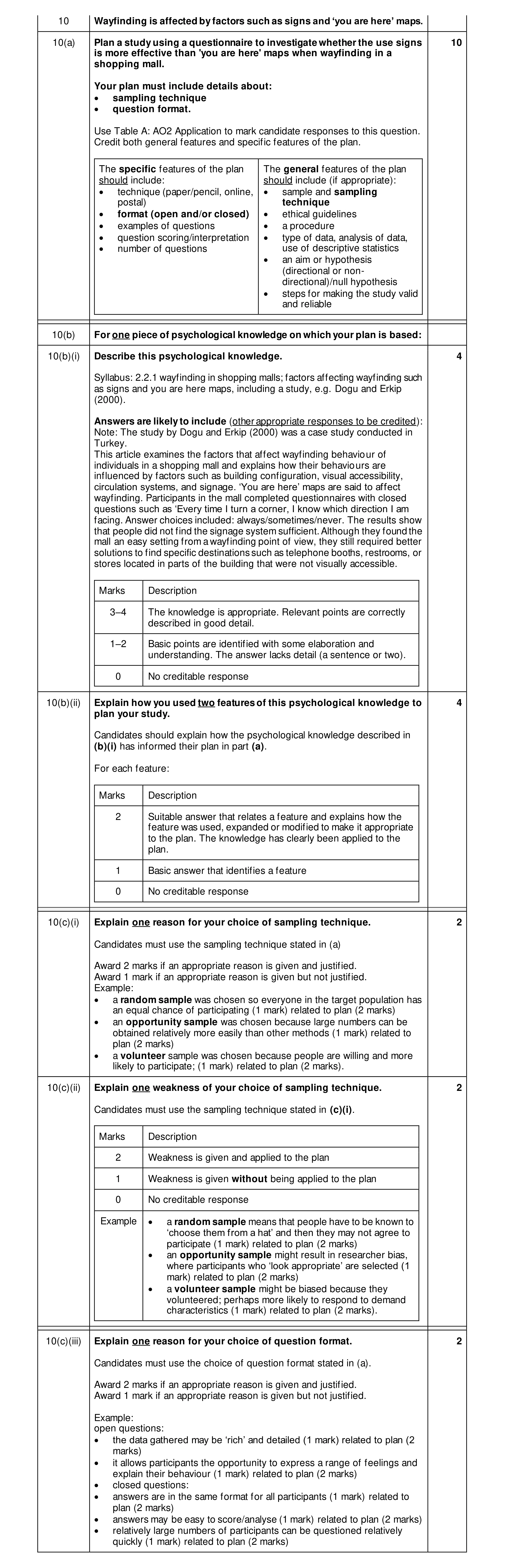 24
24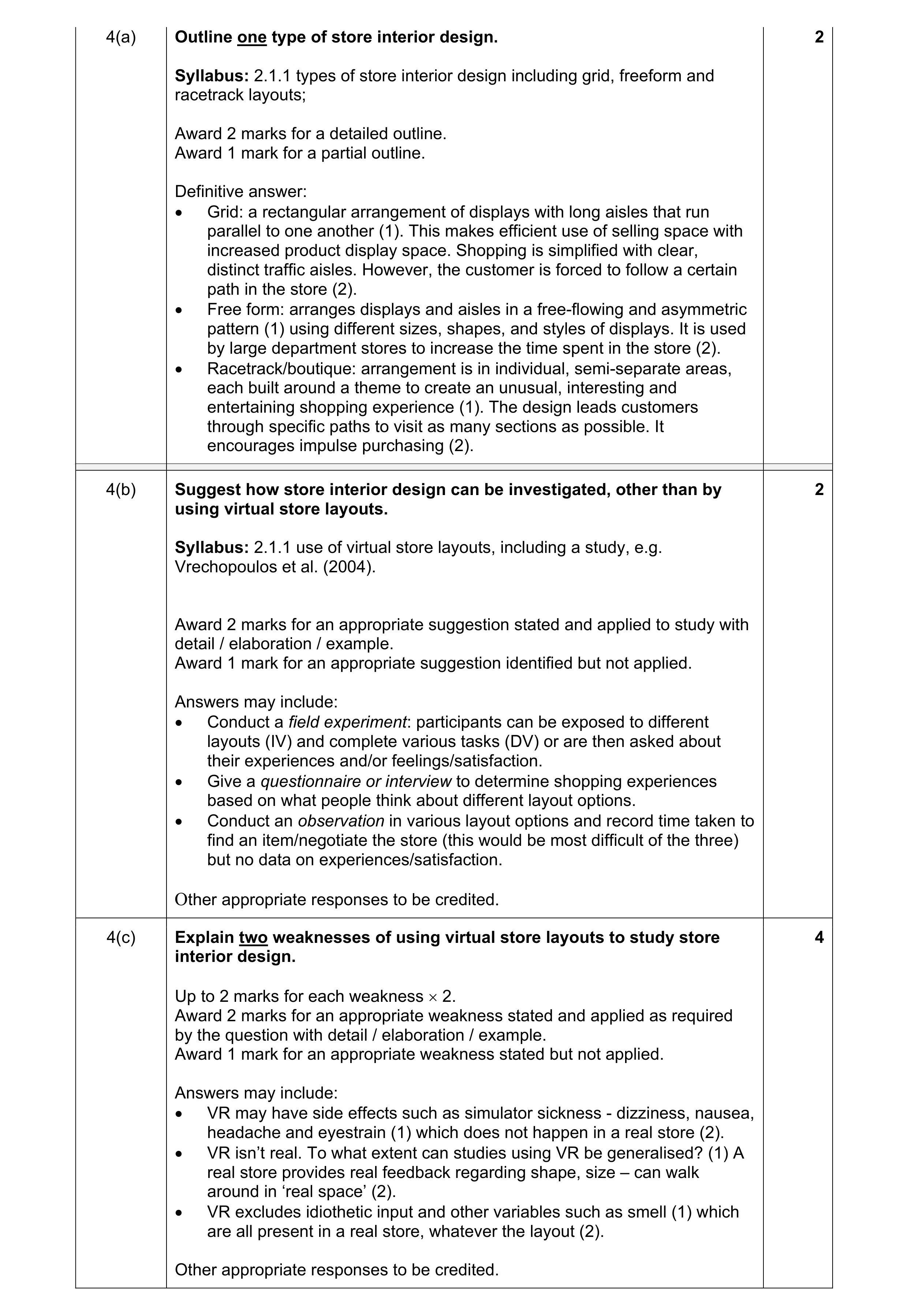 8
8 8
8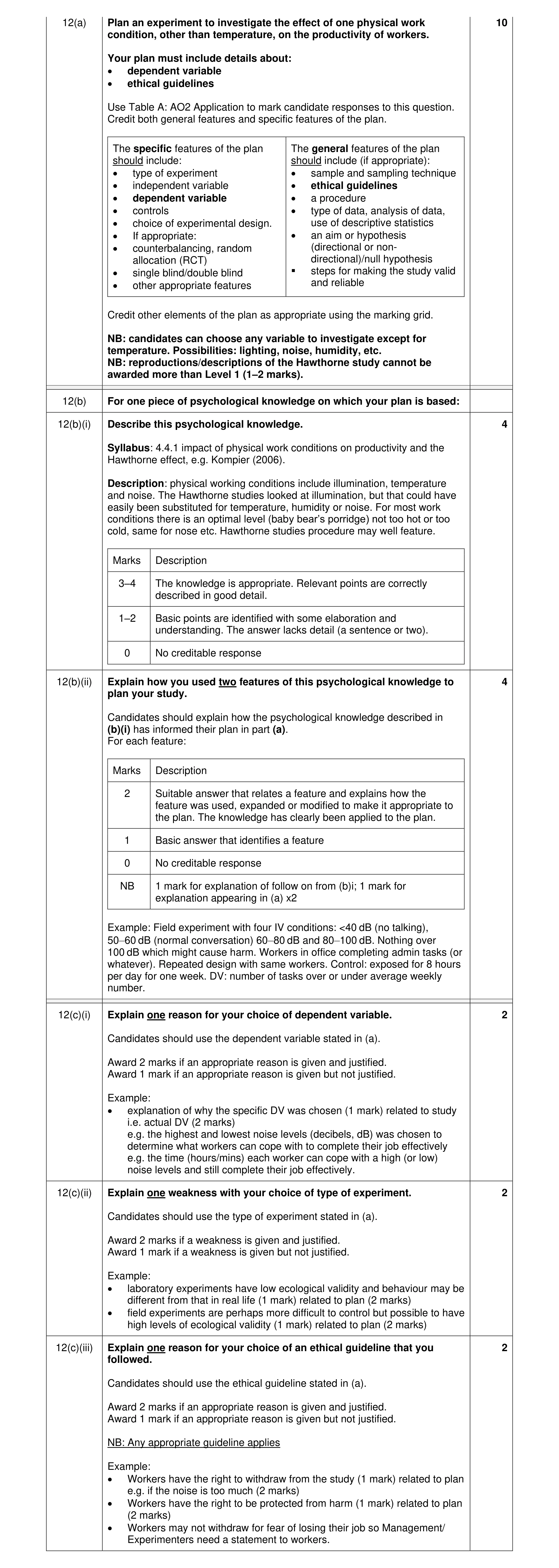 24
24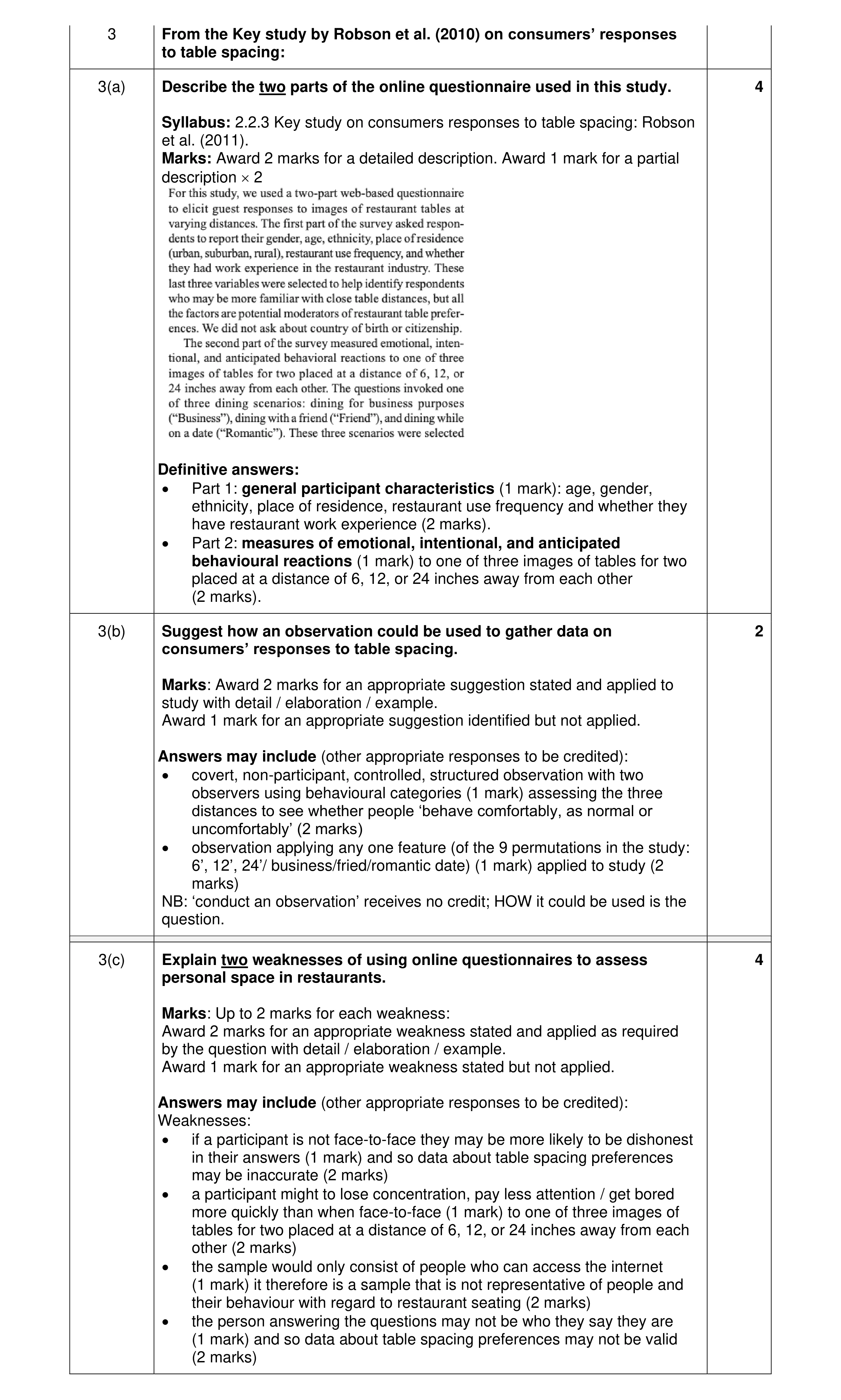 10
10 24
24 24
24 8
8 24
24 8
8 8
8