Questions as text
Q1 · Ethanol, hydrogen and methane are used as fuels 0653/11 Oct/Nov 2007
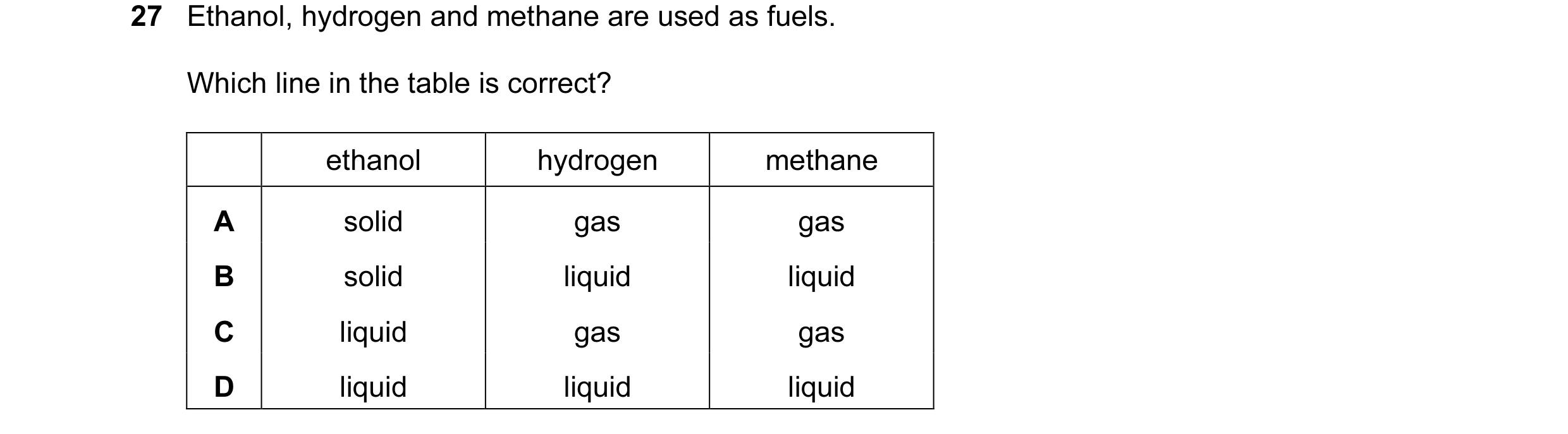
27 Ethanol, hydrogen and methane are used as fuels. Which line in the table is correct? ethanol hydrogen methane A solid gas gas B solid liquid liquid C liquid gas gas D liquid liquid liquid
1 marks
Answer: C
This question in 0653/11 Oct/Nov 2007
Q2 · The apparatus shown is set up 0653/11 May/June 2008
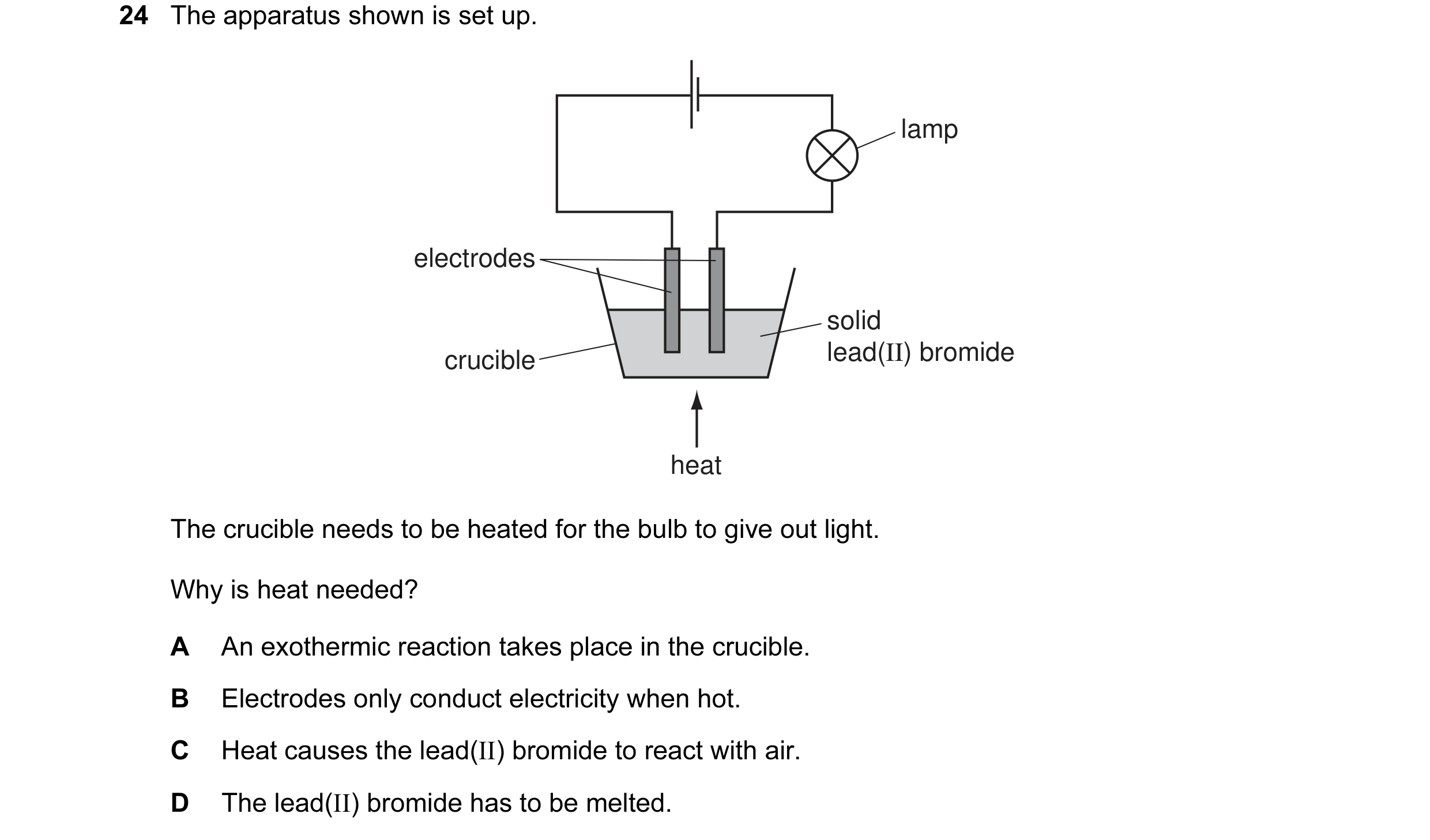
24 The apparatus shown is set up. lamp electrodes solid crucible lead(II) bromide heat The crucible needs to be heated for the bulb to give out light. Why is heat needed? A An exothermic reaction takes place in the crucible. B Electrodes only conduct electricity when hot. C Heat causes the lead(II) bromide to react with air. D The lead(II) bromide has to be melted.
1 marks
Answer: D
This question in 0653/11 May/June 2008
Q3 · Coal, hydrogen, methane and gasoline (petrol) are commonly used as fuels 0653/11 May/June 2010
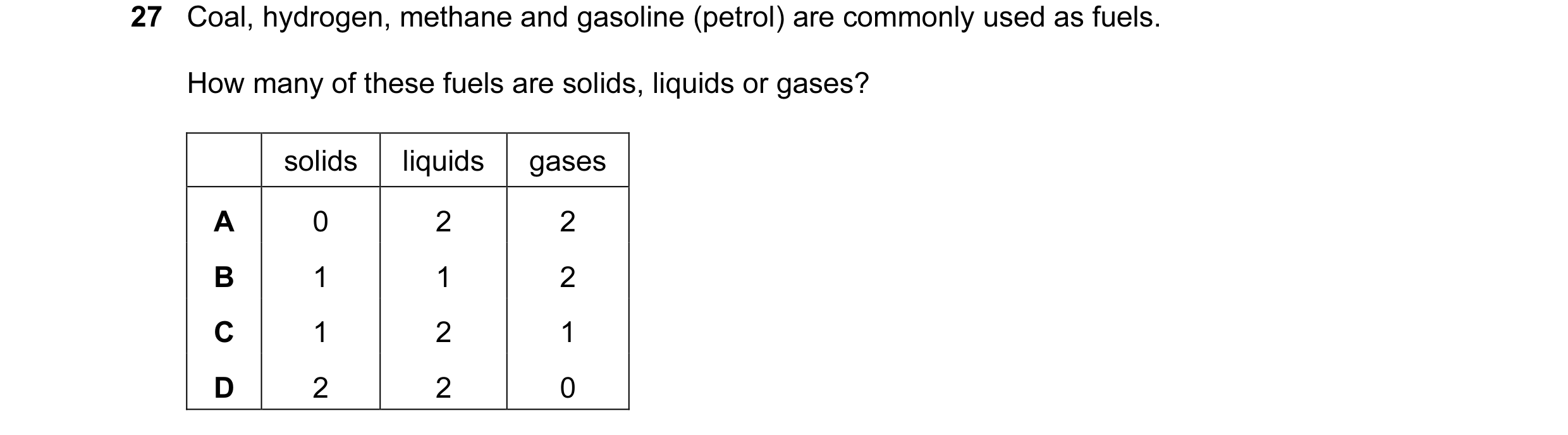
27 Coal, hydrogen, methane and gasoline (petrol) are commonly used as fuels. How many of these fuels are solids, liquids or gases? solids liquids gases A 0 2 2 B 1 1 2 C 1 2 1 D 2 2 0
1 marks
Answer: B
This question in 0653/11 May/June 2010
Q4 · Water spilled on the ground on a hot day evaporates 0653/11 May/June 2010
36 Water spilled on the ground on a hot day evaporates. Which diagram represents the change in arrangement of the particles in the water as it evaporates? A B C D
1 marks
Answer: C
This question in 0653/11 May/June 2010
Q5 · Coal, hydrogen, methane and gasoline (petrol) are commonly used as fuels 0653/12 May/June 2010
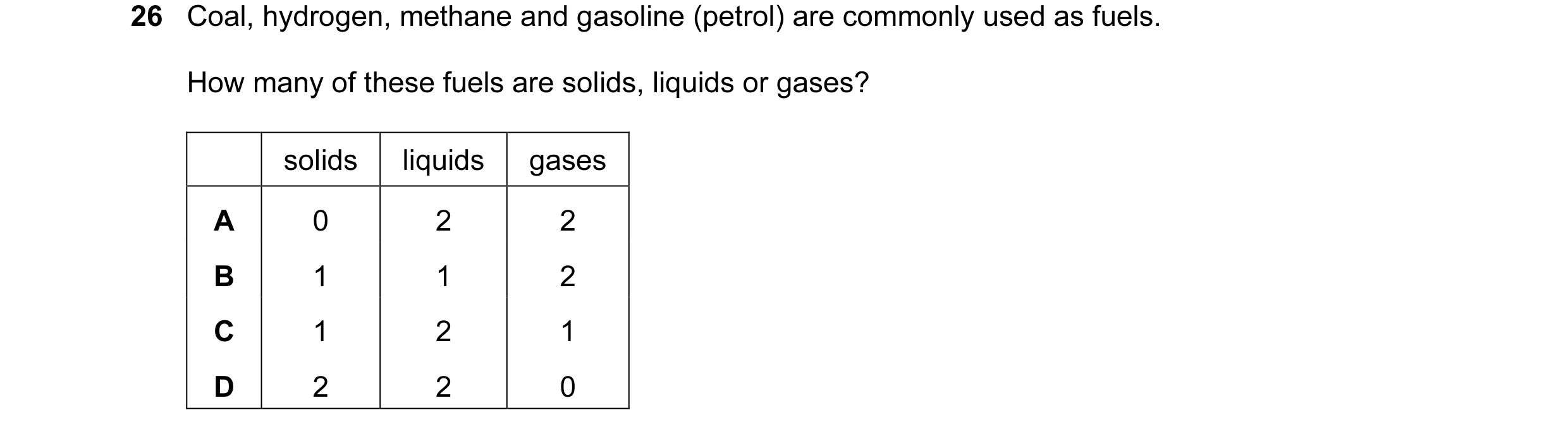
26 Coal, hydrogen, methane and gasoline (petrol) are commonly used as fuels. How many of these fuels are solids, liquids or gases? solids liquids gases A 0 2 2 B 1 1 2 C 1 2 1 D 2 2 0
1 marks
Answer: B
This question in 0653/12 May/June 2010
Q6 · Water spilled on the ground on a hot day evaporates 0653/12 May/June 2010
28 Water spilled on the ground on a hot day evaporates. Which diagram represents the change in arrangement of the particles in the water as it evaporates? A B C D
1 marks
Answer: C
This question in 0653/12 May/June 2010
Q7 · Coal, hydrogen, methane and gasoline (petrol) are commonly used as fuels 0653/13 May/June 2010
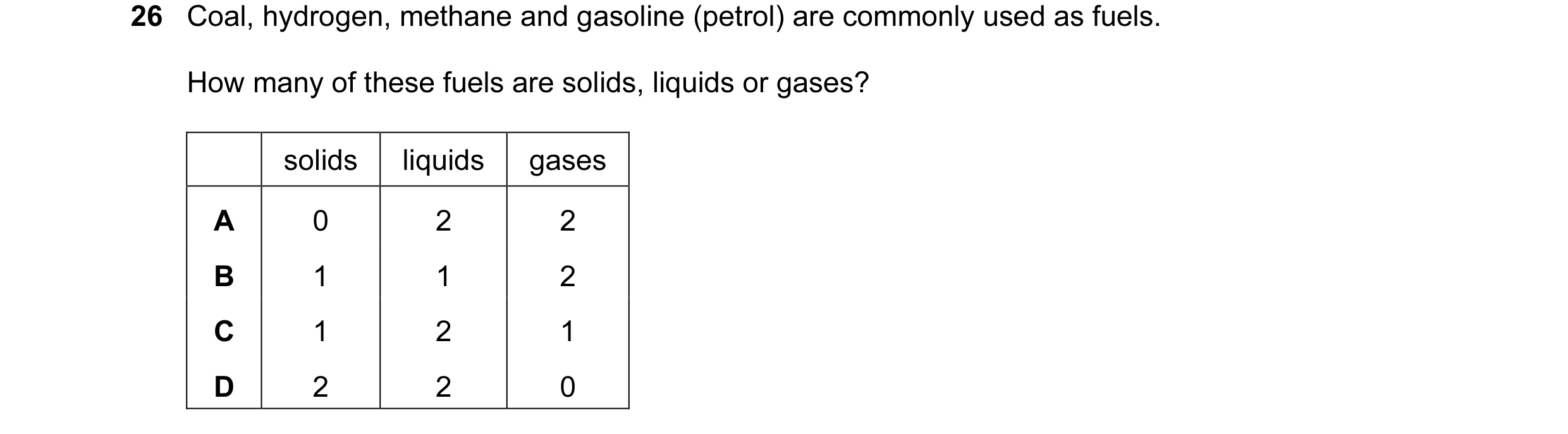
26 Coal, hydrogen, methane and gasoline (petrol) are commonly used as fuels. How many of these fuels are solids, liquids or gases? solids liquids gases A 0 2 2 B 1 1 2 C 1 2 1 D 2 2 0
1 marks
Answer: B
This question in 0653/13 May/June 2010
Q8 · Water spilled on the ground on a hot day evaporates 0653/13 May/June 2010
28 Water spilled on the ground on a hot day evaporates. Which diagram represents the change in arrangement of the particles in the water as it evaporates? A B C D
1 marks
Answer: C
This question in 0653/13 May/June 2010
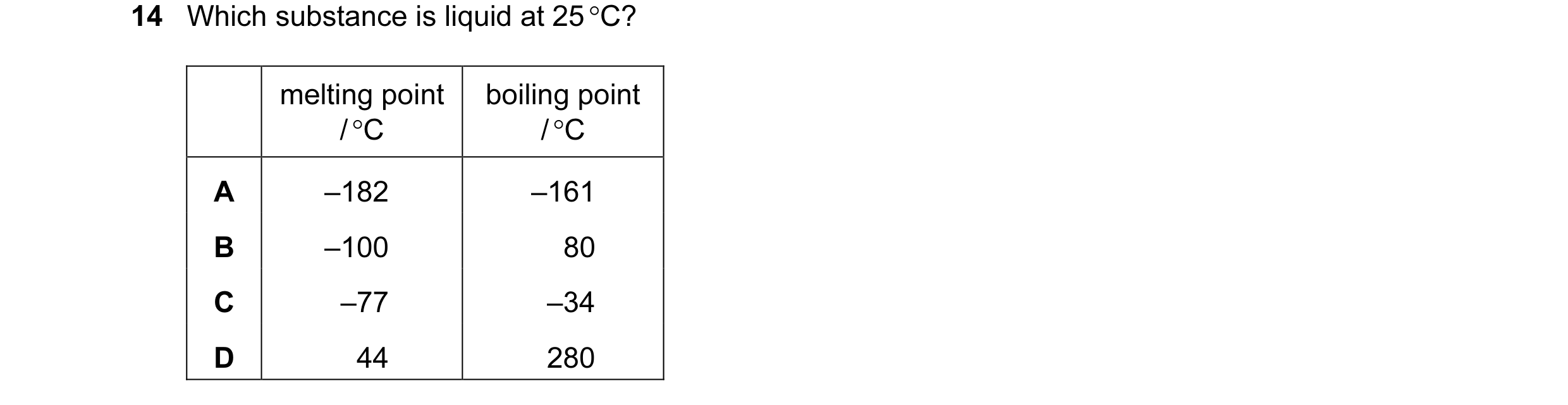
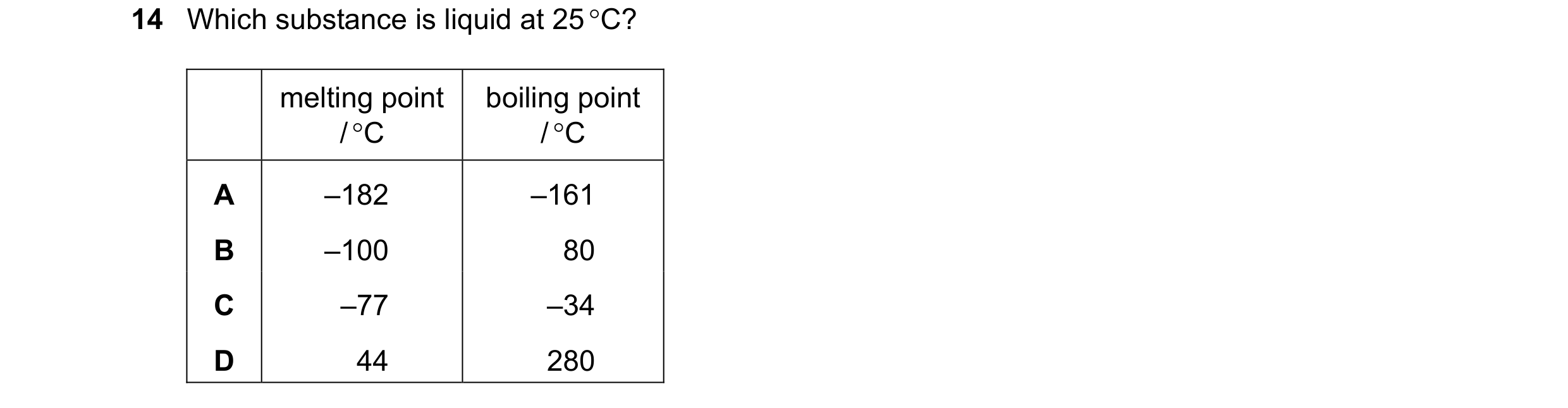
Q9 · Which substance is liquid at 25 °C? 0653/11 May/June 2012
14 Which substance is liquid at 25 °C? melting point boiling point / °C / °C A –182 –161 B –100 80 C –77 –34 D 44 280
1 marks
This question in 0653/11 May/June 2012
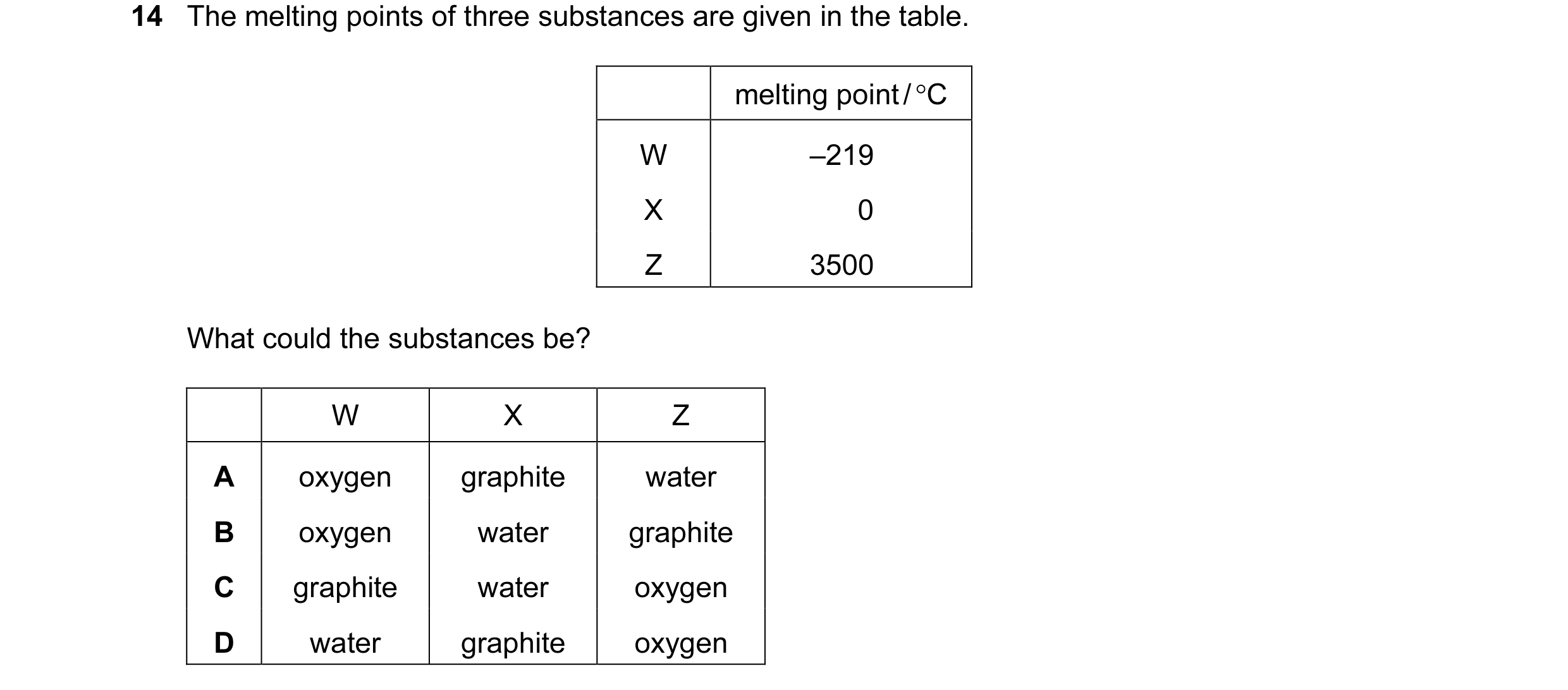
Q10 · The melting points of three substances are given in the table 0653/12 May/June 2012
14 The melting points of three substances are given in the table. melting point / °C W –219 X 0 Z 3500 What could the substances be? W X Z A oxygen graphite water B oxygen water graphite C graphite water oxygen D water graphite oxygen
1 marks
Answer: B
This question in 0653/12 May/June 2012
Q11 · The melting points of three substances are given in the table 0653/13 May/June 2012
14 The melting points of three substances are given in the table. melting point / °C W –219 X 0 Z 3500 What could the substances be? W X Z A oxygen graphite water B oxygen water graphite C graphite water oxygen D water graphite oxygen
1 marks
Answer: B
This question in 0653/13 May/June 2012
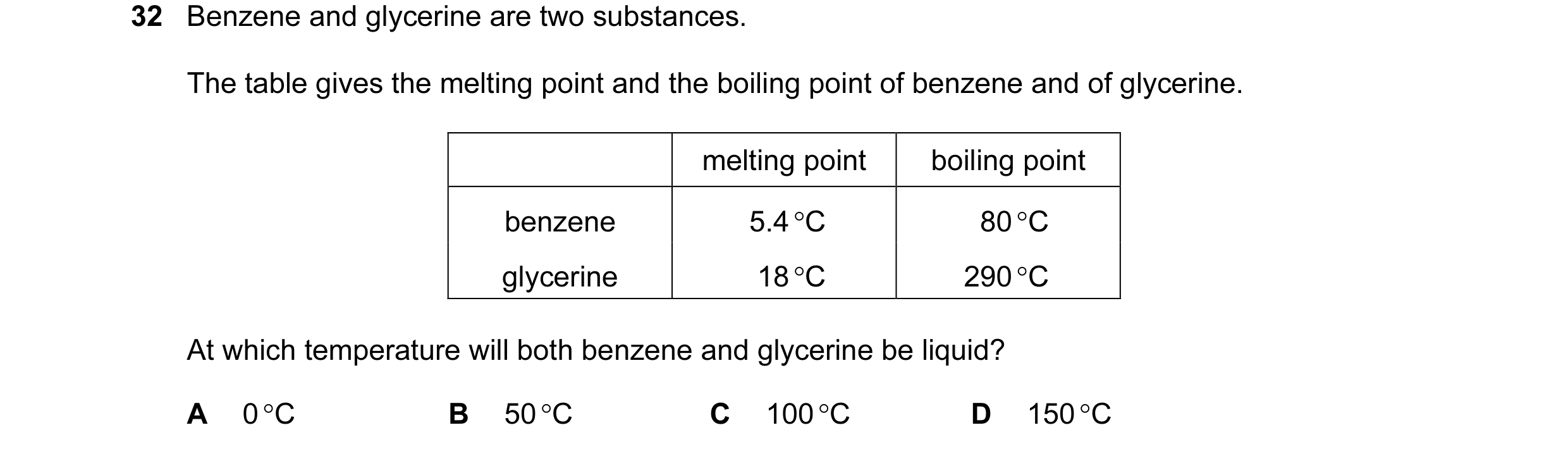
Q12 · Benzene and glycerine are two substances 0653/11 Oct/Nov 2013
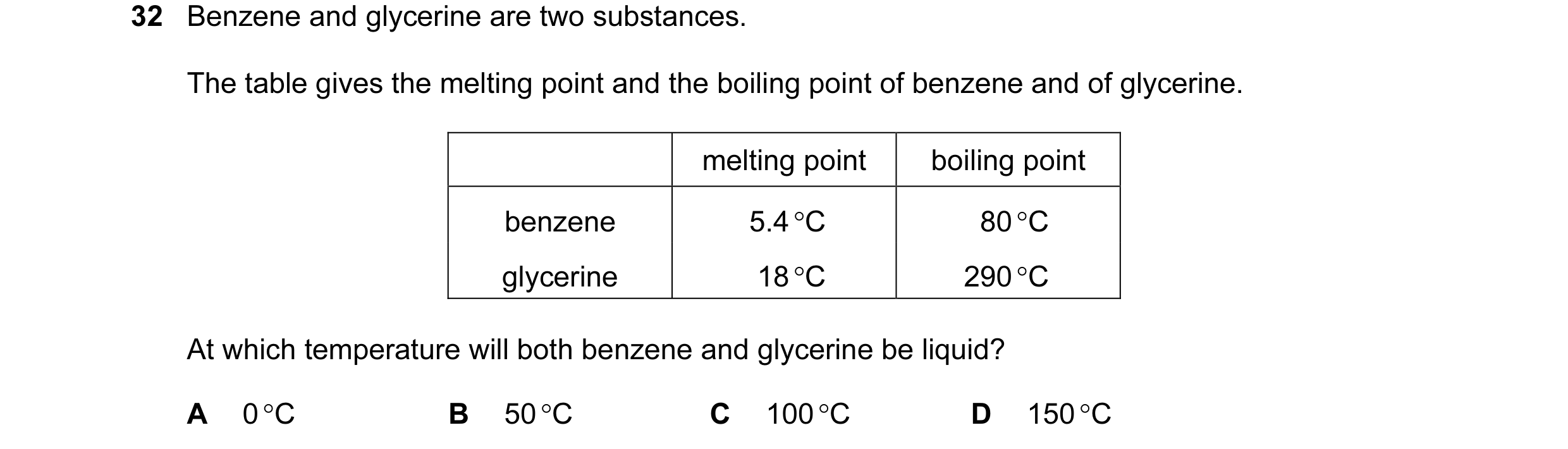
32 Benzene and glycerine are two substances. The table gives the melting point and the boiling point of benzene and of glycerine. melting point boiling point benzene 5.4 °C 80 °C glycerine 18 °C 290 °C At which temperature will both benzene and glycerine be liquid? A 0 °C B 50 °C C 100 °C D 150 °C
1 marks
Answer: B
This question in 0653/11 Oct/Nov 2013
Q13 · Benzene and glycerine are two substances 0653/13 Oct/Nov 2013
32 Benzene and glycerine are two substances. The table gives the melting point and the boiling point of benzene and of glycerine. melting point boiling point benzene 5.4 °C 80 °C glycerine 18 °C 290 °C At which temperature will both benzene and glycerine be liquid? A 0 °C B 50 °C C 100 °C D 150 °C
1 marks
Answer: B
This question in 0653/13 Oct/Nov 2013
Q14 · The diagram shows how the arrangement of the atoms in a substance changes during a change… 0653/11 May/June 2014
31 The diagram shows how the arrangement of the atoms in a substance changes during a change of state. Which change of state is shown? A gas to liquid B liquid to gas C liquid to solid D solid to liquid
1 marks
Answer: B
This question in 0653/11 May/June 2014
Q15 · A substance has a melting point of -114 °C and a boiling point of 79 °C 0653/11 May/June 2014
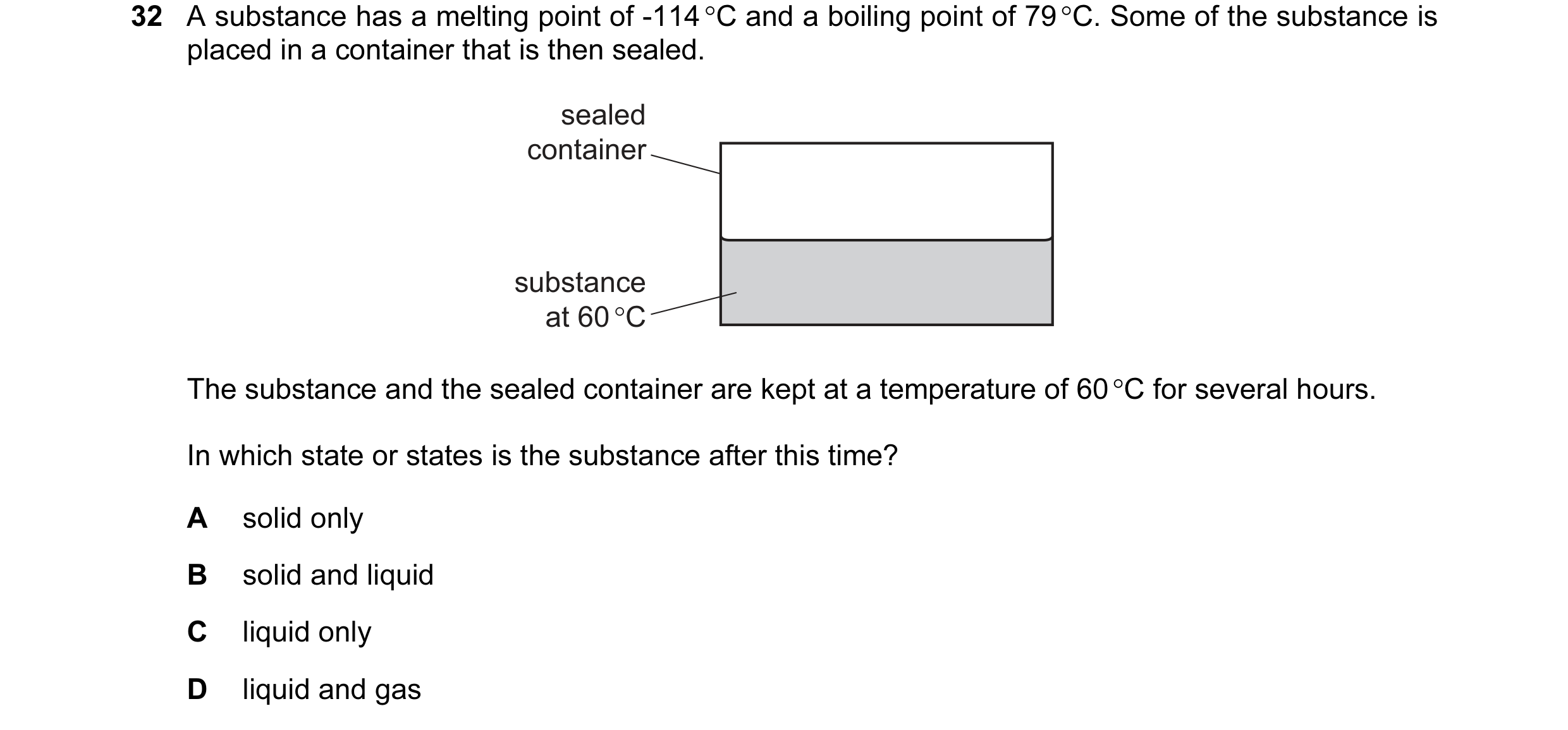
32 A substance has a melting point of -114 °C and a boiling point of 79 °C. Some of the substance is placed in a container that is then sealed. sealed container substance at 60 °C The substance and the sealed container are kept at a temperature of 60 °C for several hours. In which state or states is the substance after this time? A solid only B solid and liquid C liquid only D liquid and gas
1 marks
Answer: D
This question in 0653/11 May/June 2014
Q16 · A substance has a melting point of -114 °C and a boiling point of 79 °C 0653/13 May/June 2014
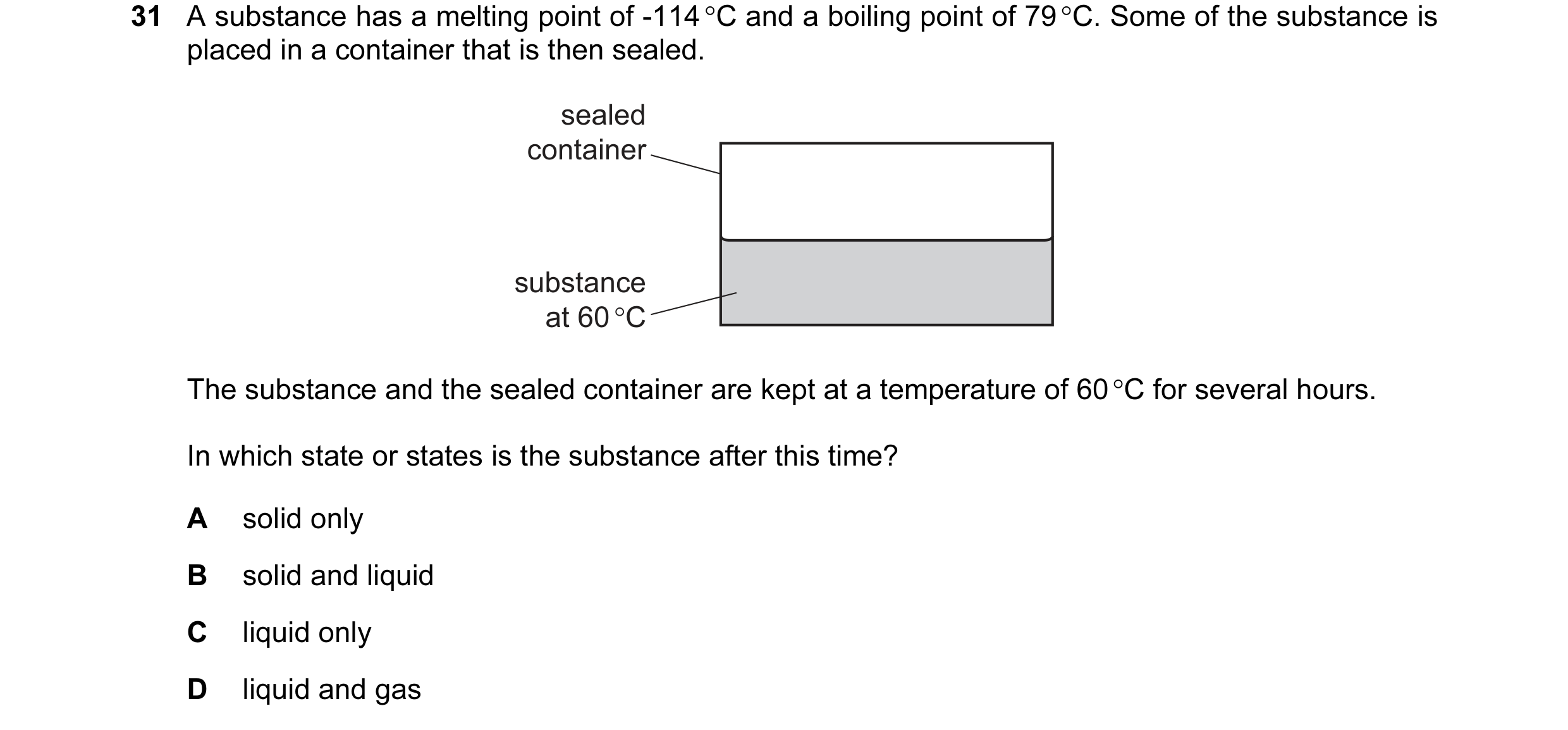
31 A substance has a melting point of -114 °C and a boiling point of 79 °C. Some of the substance is placed in a container that is then sealed. sealed container substance at 60 °C The substance and the sealed container are kept at a temperature of 60 °C for several hours. In which state or states is the substance after this time? A solid only B solid and liquid C liquid only D liquid and gas
1 marks
Answer: D
This question in 0653/13 May/June 2014
Q17 · The diagram shows how the arrangement of the atoms in a substance changes during a change… 0653/13 May/June 2014
33 The diagram shows how the arrangement of the atoms in a substance changes during a change of state. Which change of state is shown? A gas to liquid B liquid to gas C liquid to solid D solid to liquid
1 marks
Answer: B
This question in 0653/13 May/June 2014
Q18 · Which diagram represents gaseous molecules? 0653/13 Oct/Nov 2014
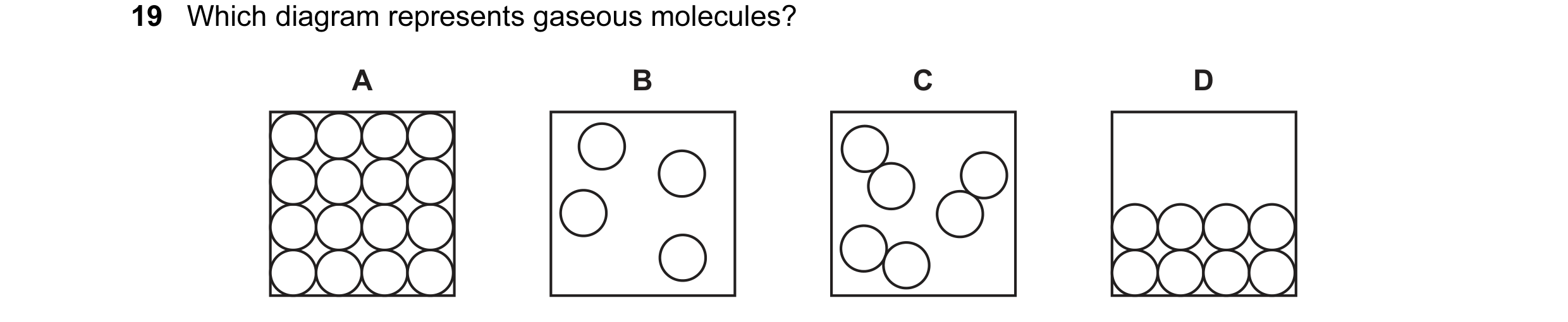
19 Which diagram represents gaseous molecules? A B C D
1 marks
Answer: C
This question in 0653/13 Oct/Nov 2014
Q19 · The table shows the melting points and boiling points of four substances 0653/11 May/June 2015
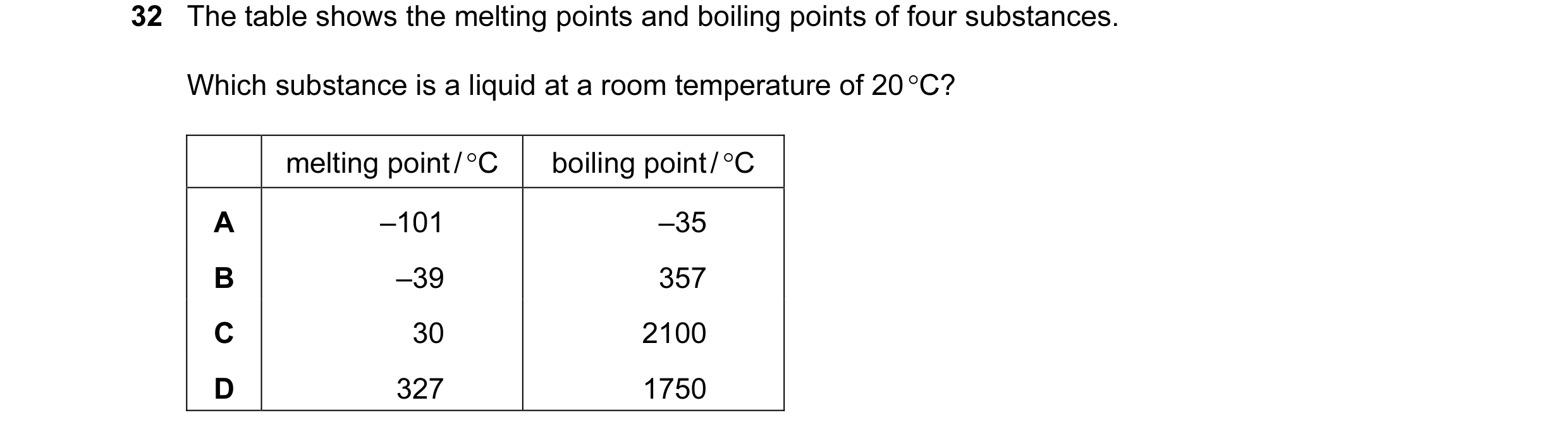
32 The table shows the melting points and boiling points of four substances. Which substance is a liquid at a room temperature of 20 °C? melting point / °C boiling point / °C A –101 –35 B –39 357 C 30 2100 D 327 1750
1 marks
Answer: B
This question in 0653/11 May/June 2015
Q20 · A pure solid is heated until it all becomes a liquid, and is then heated further 0653/13 May/June 2015
32 A pure solid is heated until it all becomes a liquid, and is then heated further. Which graph shows how its temperature changes with time? A B temperature temperature 0 0 0 time 0 time C D temperature temperature 0 0 0 time 0 time
1 marks
Answer: D
This question in 0653/13 May/June 2015
Q21 · Which statement about the molecules of a gas at 0 °C is correct? 0653/12 Oct/Nov 2015
33 Which statement about the molecules of a gas at 0 °C is correct? A They do not move. B They move about randomly. C They move around each other in circular orbits. D They vibrate about fixed positions.
1 marks
Answer: B
This question in 0653/12 Oct/Nov 2015
Q22 · Which statement describes oxygen molecules at room temperature and pressure? 0653/12 Feb/March 2019
14 Which statement describes oxygen molecules at room temperature and pressure? A They are closely packed and move around slowly. B They are closely packed and vibrate about a fixed point. C They are loosely packed and move around rapidly. D They are loosely packed and vibrate about a fixed point.
1 marks
Answer: C
This question in 0653/12 Feb/March 2019
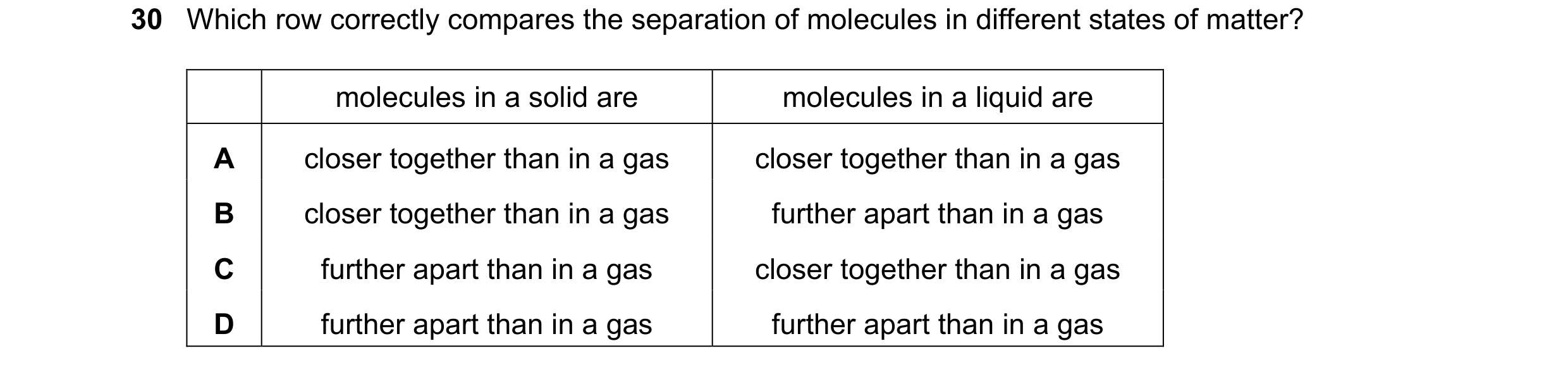
Q23 · Which row correctly compares the separation of molecules in different states of matter? 0653/12 Feb/March 2019
30 Which row correctly compares the separation of molecules in different states of matter? molecules in a solid are molecules in a liquid are A closer together than in a gas closer together than in a gas B closer together than in a gas further apart than in a gas C further apart than in a gas closer together than in a gas D further apart than in a gas further apart than in a gas
1 marks
Answer: A
This question in 0653/12 Feb/March 2019
Q24 · The molecules in a substance are close together but free to change positions with each… 0653/11 May/June 2020
33 The molecules in a substance are close together but free to change positions with each other. Which substance at 20 °C matches this description? A air B copper C iron D water
1 marks
Answer: D
This question in 0653/11 May/June 2020
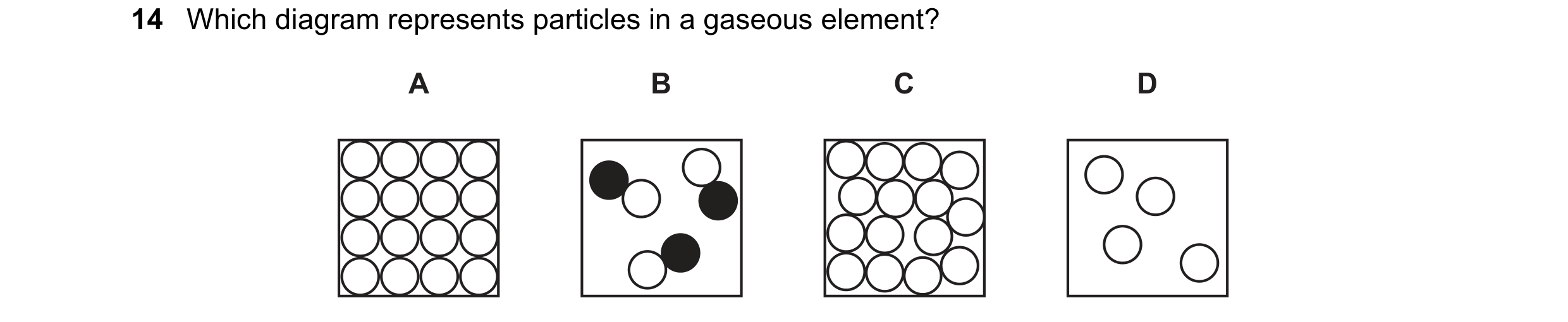
Q25 · Which diagram represents particles in a gaseous element? 0653/12 Oct/Nov 2020
14 Which diagram represents particles in a gaseous element? A B C D
1 marks
Answer: D
This question in 0653/12 Oct/Nov 2020
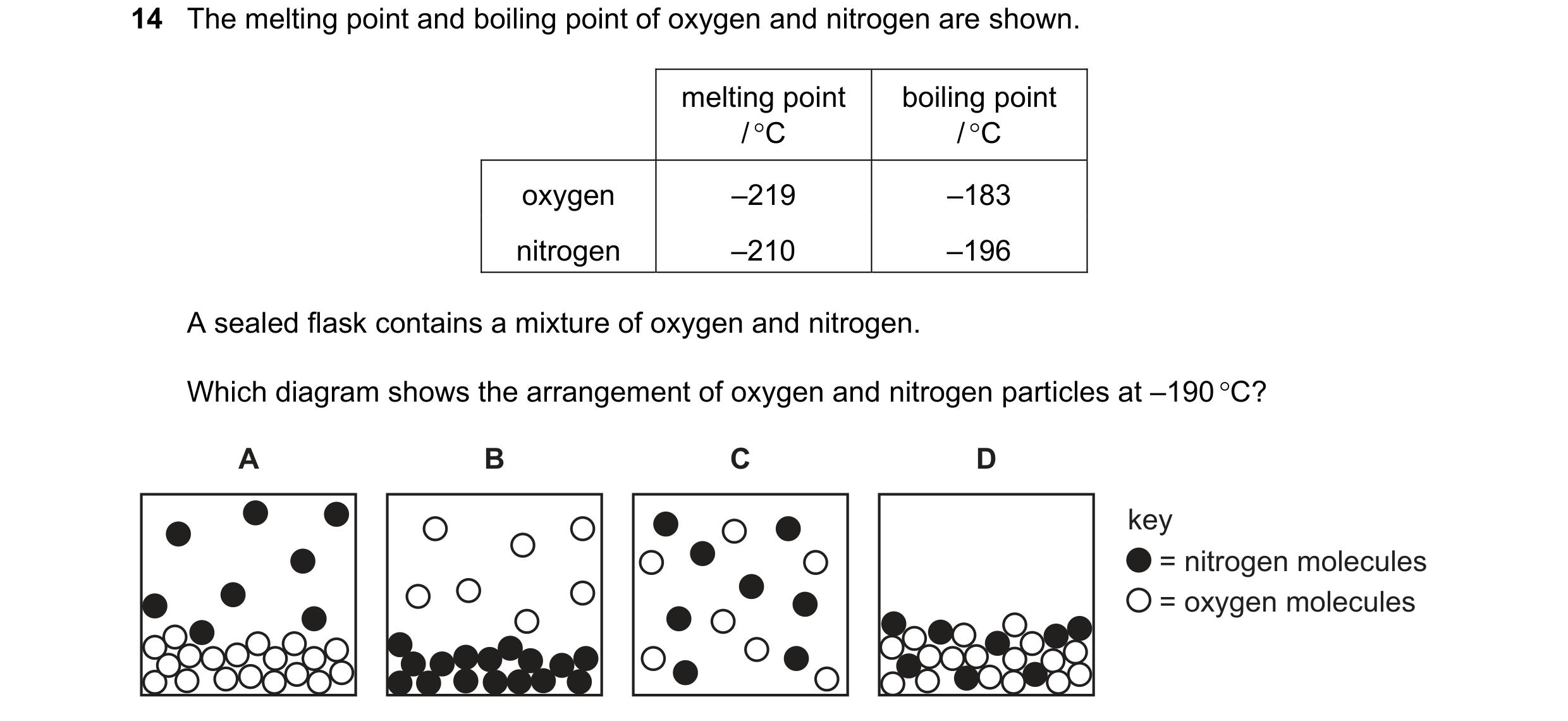
Q26 · The melting point and boiling point of oxygen and nitrogen are shown 0653/13 May/June 2021
14 The melting point and boiling point of oxygen and nitrogen are shown. melting point boiling point / C / C oxygen –219 –183 nitrogen –210 –196 A sealed flask contains a mixture of oxygen and nitrogen. Which diagram shows the arrangement of oxygen and nitrogen particles at –190 C? A B C D key = nitrogen molecules = oxygen molecules
1 marks
Answer: A
This question in 0653/13 May/June 2021
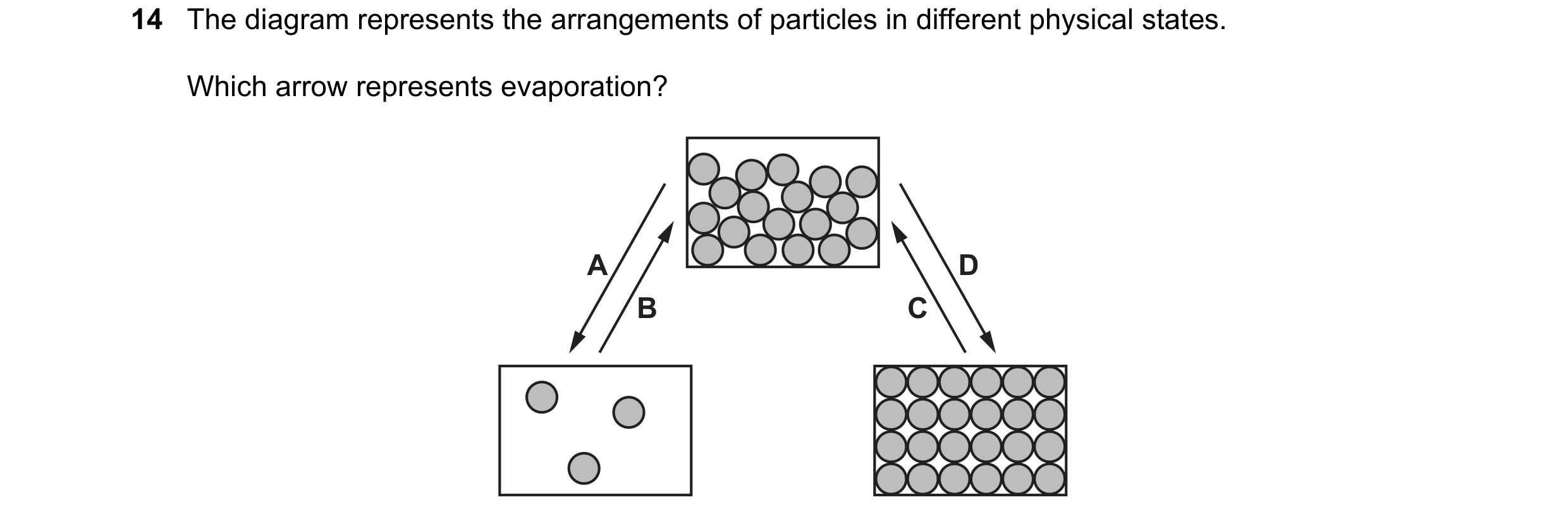
Q27 · The diagram represents the arrangements of particles in different physical states 0653/11 Oct/Nov 2021
14 The diagram represents the arrangements of particles in different physical states. Which arrow represents evaporation? A D B C
1 marks
Answer: A
This question in 0653/11 Oct/Nov 2021
Q28 · What happens to water molecules when water freezes? 0653/11 May/June 2022
14 What happens to water molecules when water freezes? A They become arranged more regularly. B They become smaller. C They move much closer together. D They move faster.
1 marks
Answer: A
This question in 0653/11 May/June 2022
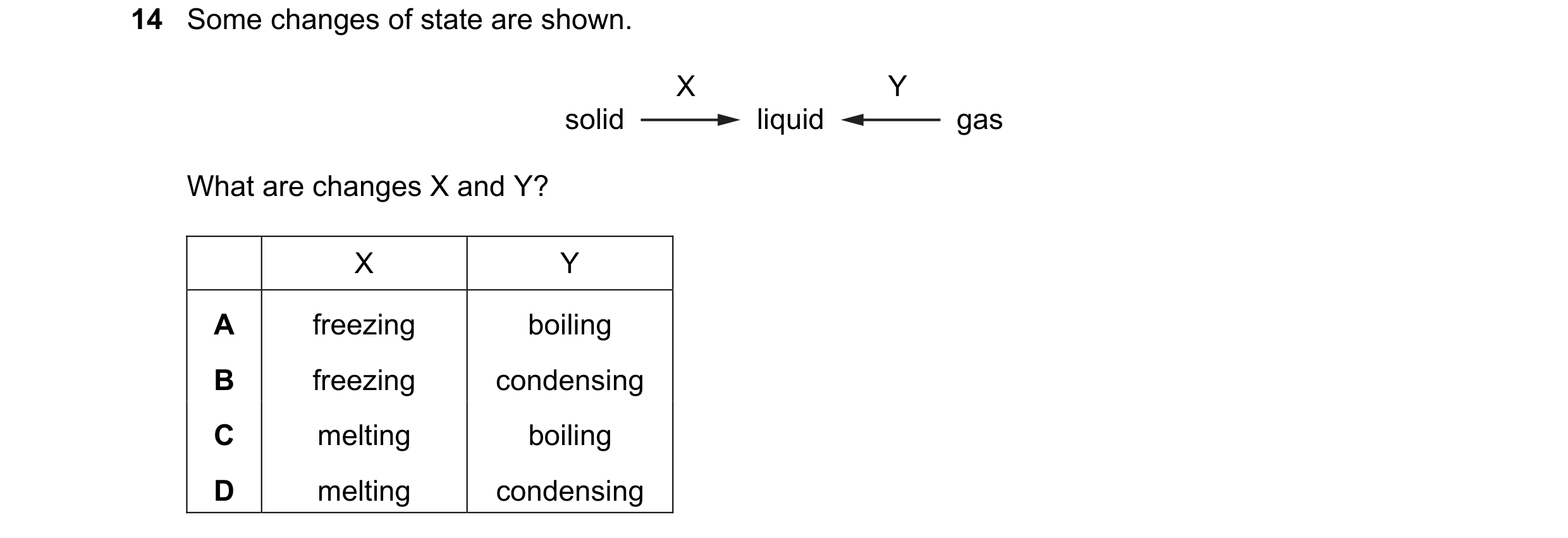
Q29 · Some changes of state are shown 0653/12 May/June 2022
14 Some changes of state are shown. X Y solid liquid gas What are changes X and Y? X Y A freezing boiling B freezing condensing C melting boiling D melting condensing
1 marks
Answer: D
This question in 0653/12 May/June 2022
Q30 · Which statement about non-metallic elements is correct? 0653/13 May/June 2022
16 Which statement about non-metallic elements is correct? A They are hard. B They are malleable. C They conduct electricity. D They have low densities.
1 marks
Answer: D
This question in 0653/13 May/June 2022
Q31 · Which diagram represents particles in a gaseous element? 0653/11 May/June 2023
14 Which diagram represents particles in a gaseous element? A B C D
1 marks
Answer: D
This question in 0653/11 May/June 2023
Q32 · Which substance is liquid at 25 C? 0653/11 Oct/Nov 2023
14 Which substance is liquid at 25 C? melting point boiling point / C / C A –182 –161 B –100 80 C –77 –34 D 44 280
1 marks
Answer: B
This question in 0653/11 Oct/Nov 2023
Q33 · Which diagram shows a gas made up of molecules? 0653/12 Feb/March 2025
14 Which diagram shows a gas made up of molecules? A B C D
1 marks
Answer: D
This question in 0653/12 Feb/March 2025
Q34 · What is a property of a liquid? 0653/11 Oct/Nov 2025
31 What is a property of a liquid? A It always fills the container it is in. B It is always more dense than a solid. C It has a fixed volume. D It has a fixed shape.
1 marks
Answer: C
This question in 0653/11 Oct/Nov 2025
Q35 · The particles of a substance are far apart and move in straight lines until they hit… 0653/12 Oct/Nov 2025
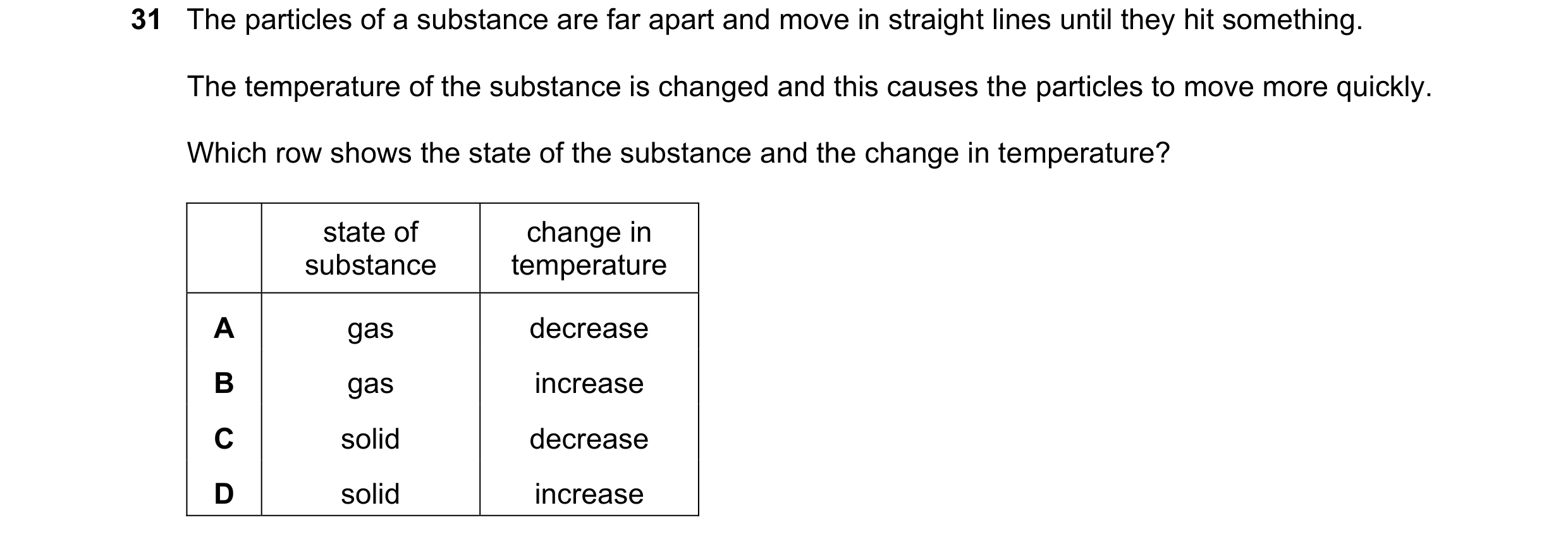
31 The particles of a substance are far apart and move in straight lines until they hit something. The temperature of the substance is changed and this causes the particles to move more quickly. Which row shows the state of the substance and the change in temperature? state of change in substance temperature A gas decrease B gas increase C solid decrease D solid increase
1 marks
Answer: B
This question in 0653/12 Oct/Nov 2025
Q36 · The particles of a substance are far apart and move in straight lines until they hit… 0653/13 Oct/Nov 2025
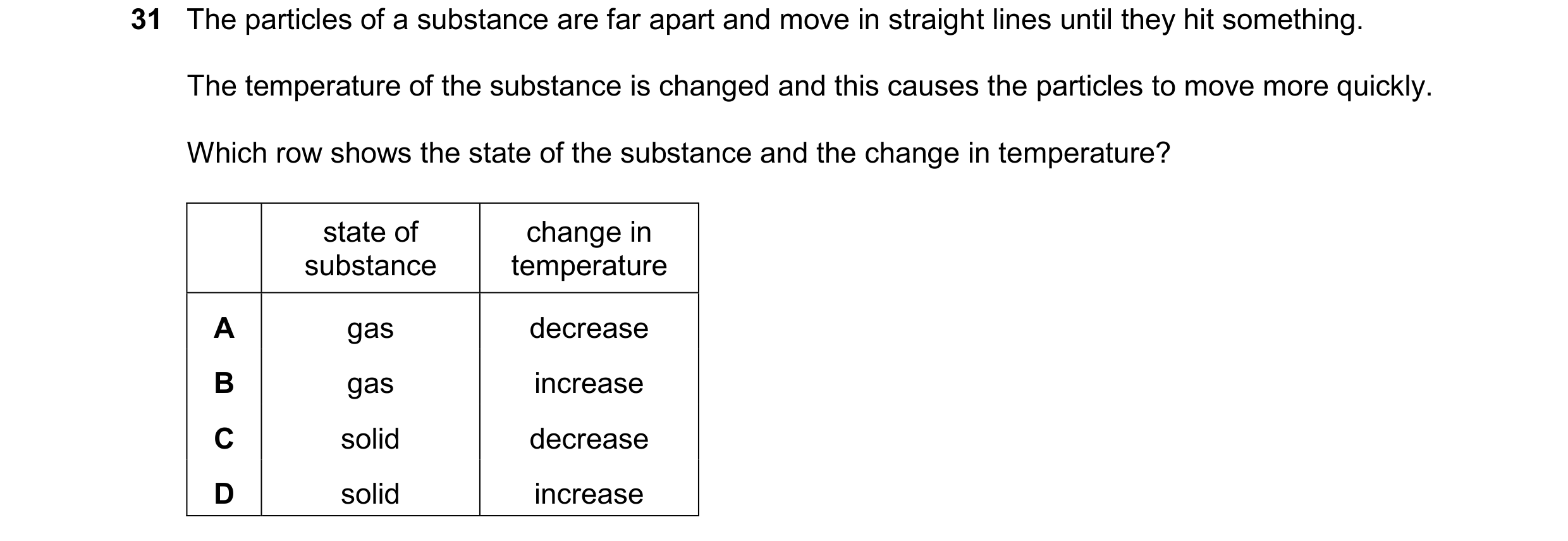
31 The particles of a substance are far apart and move in straight lines until they hit something. The temperature of the substance is changed and this causes the particles to move more quickly. Which row shows the state of the substance and the change in temperature? state of change in substance temperature A gas decrease B gas increase C solid decrease D solid increase
1 marks
Answer: B
This question in 0653/13 Oct/Nov 2025
 1 / 11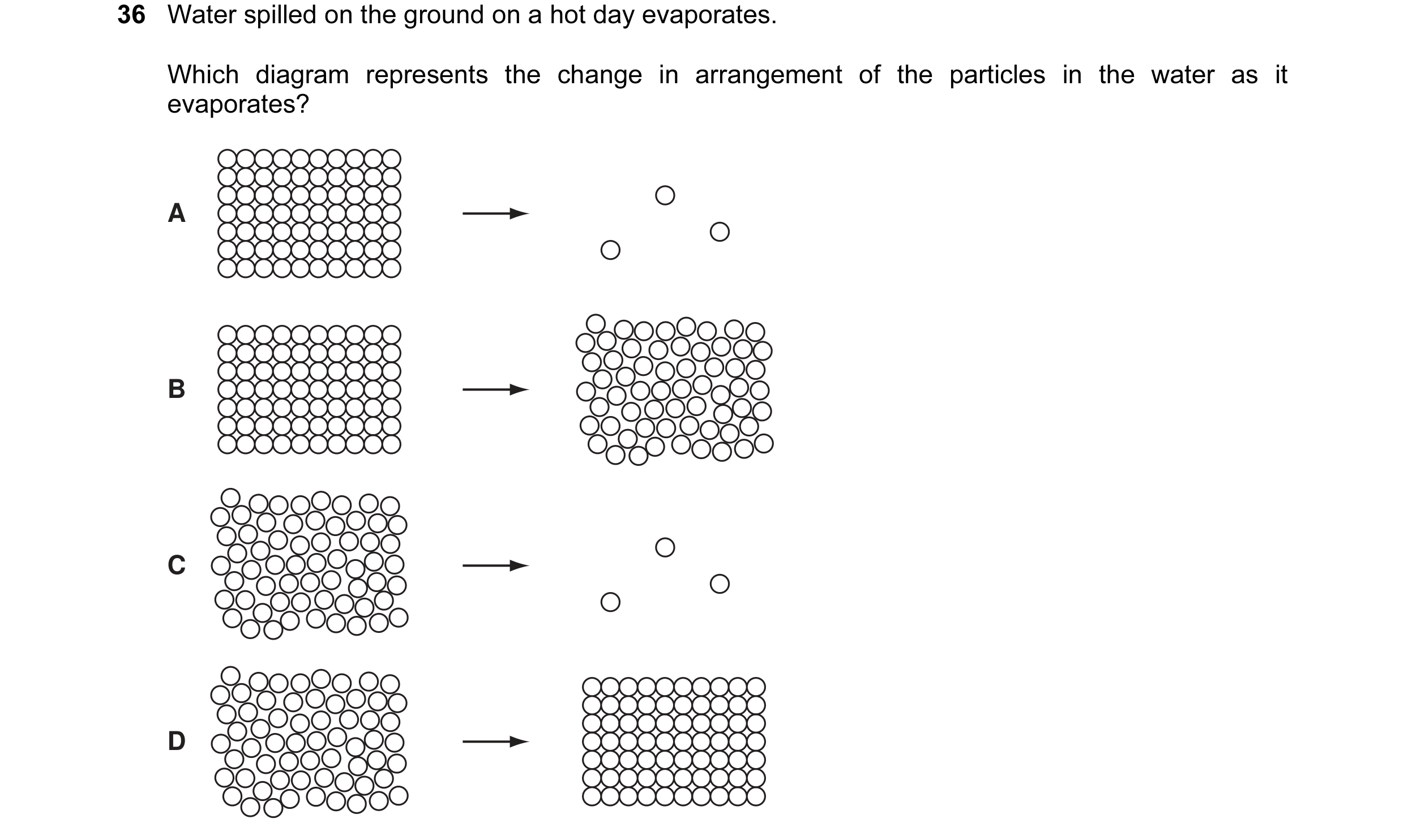
 2 / 11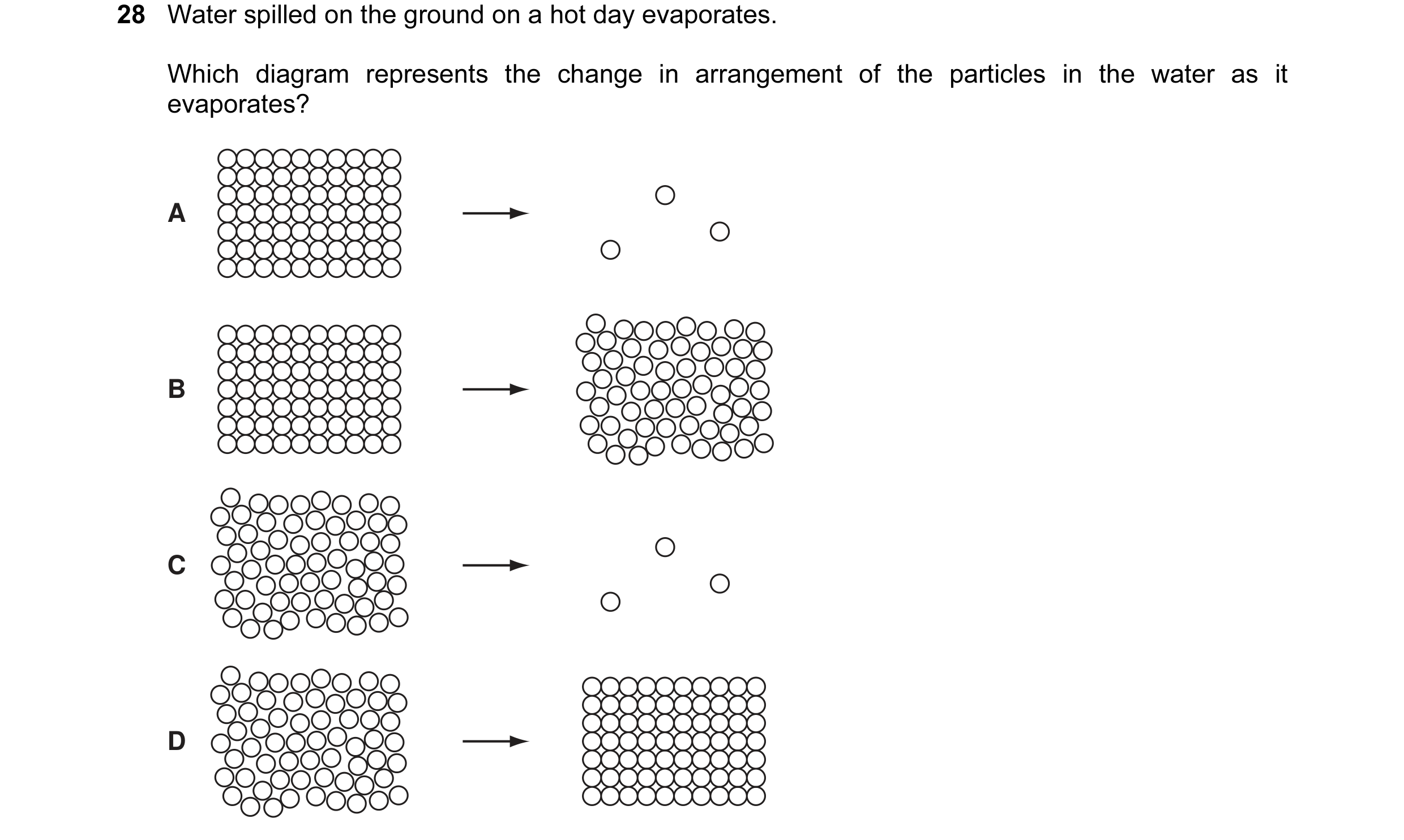
 3 / 11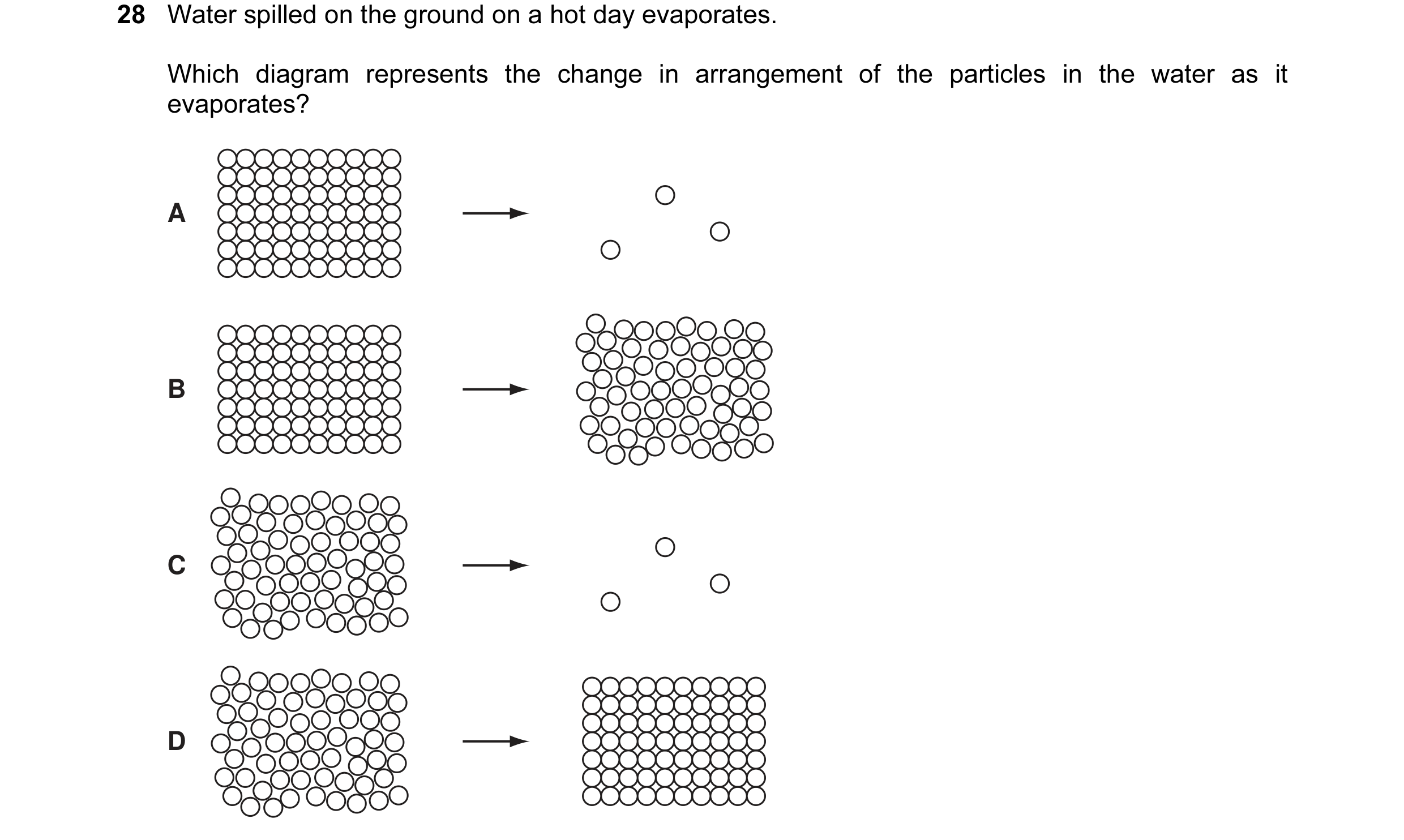
 4 / 11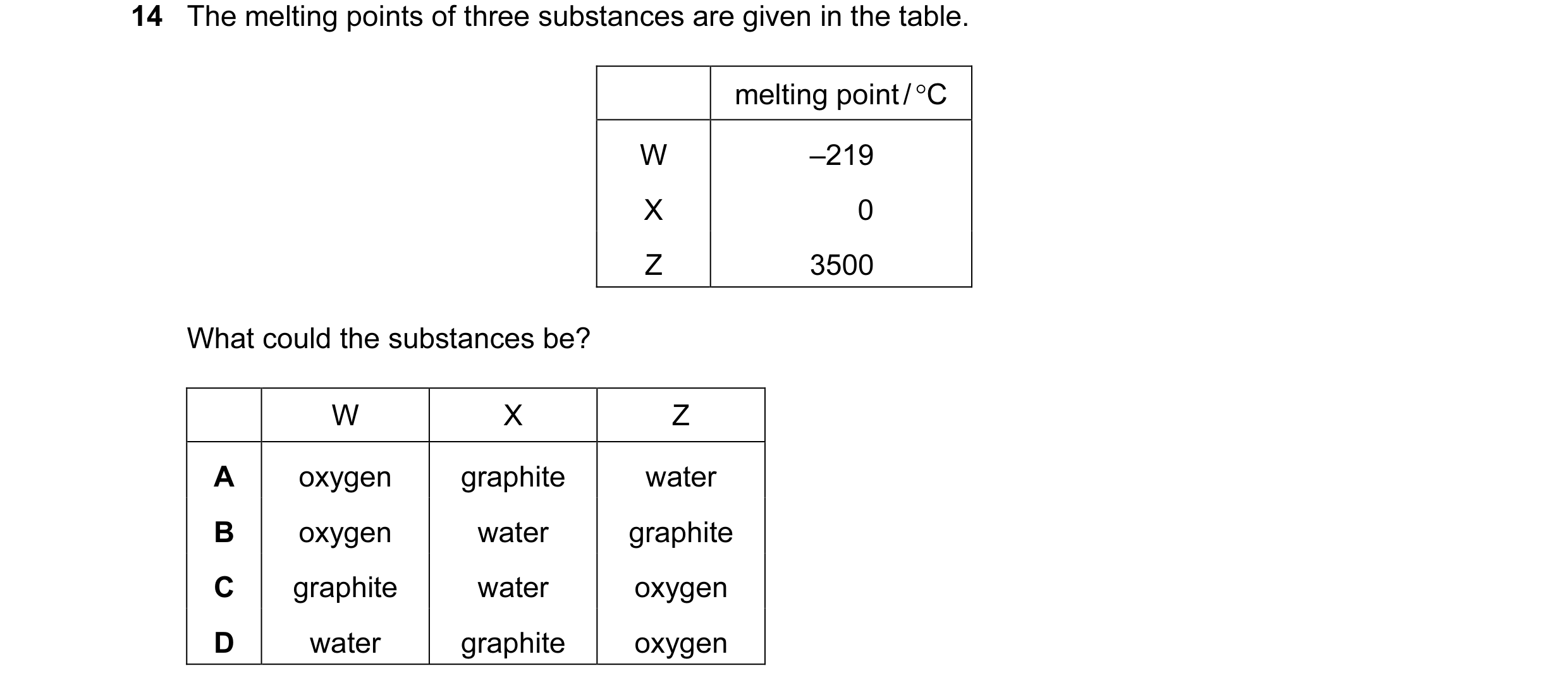
 5 / 11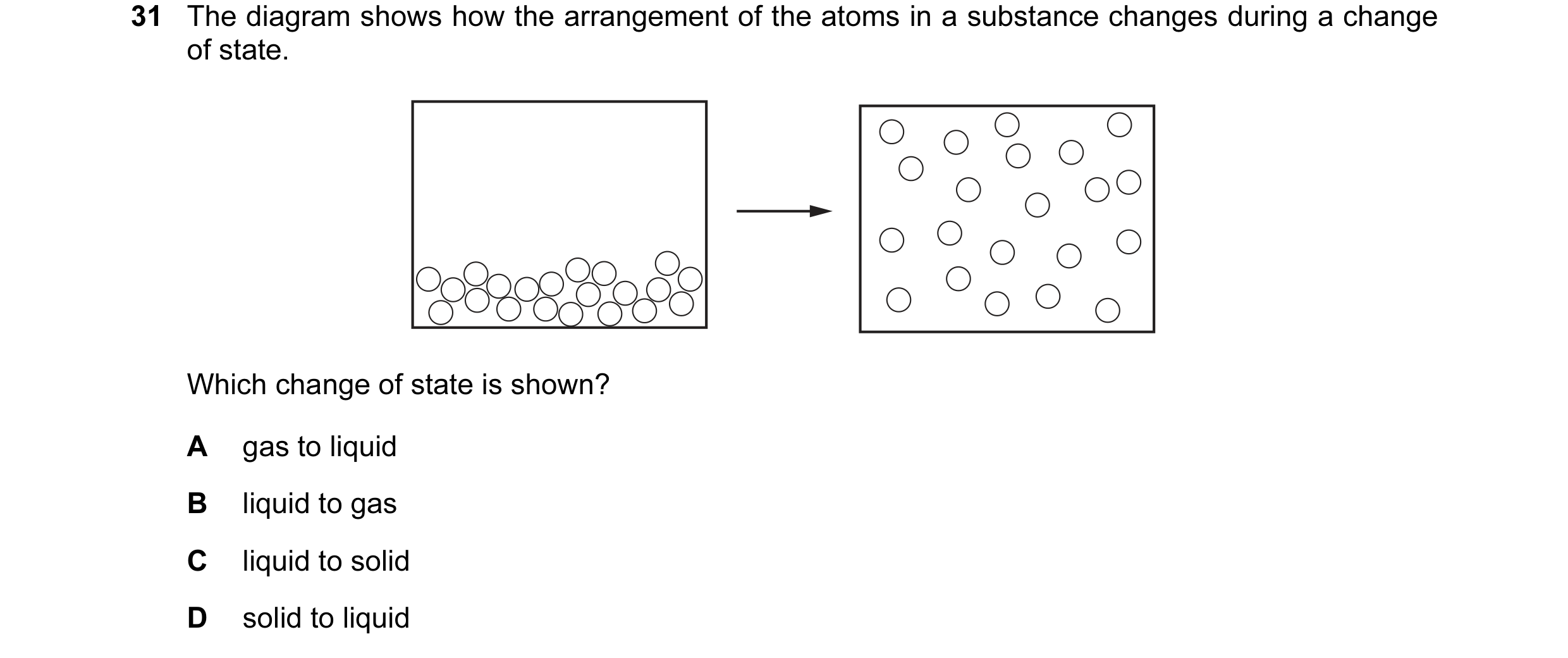
 6 / 11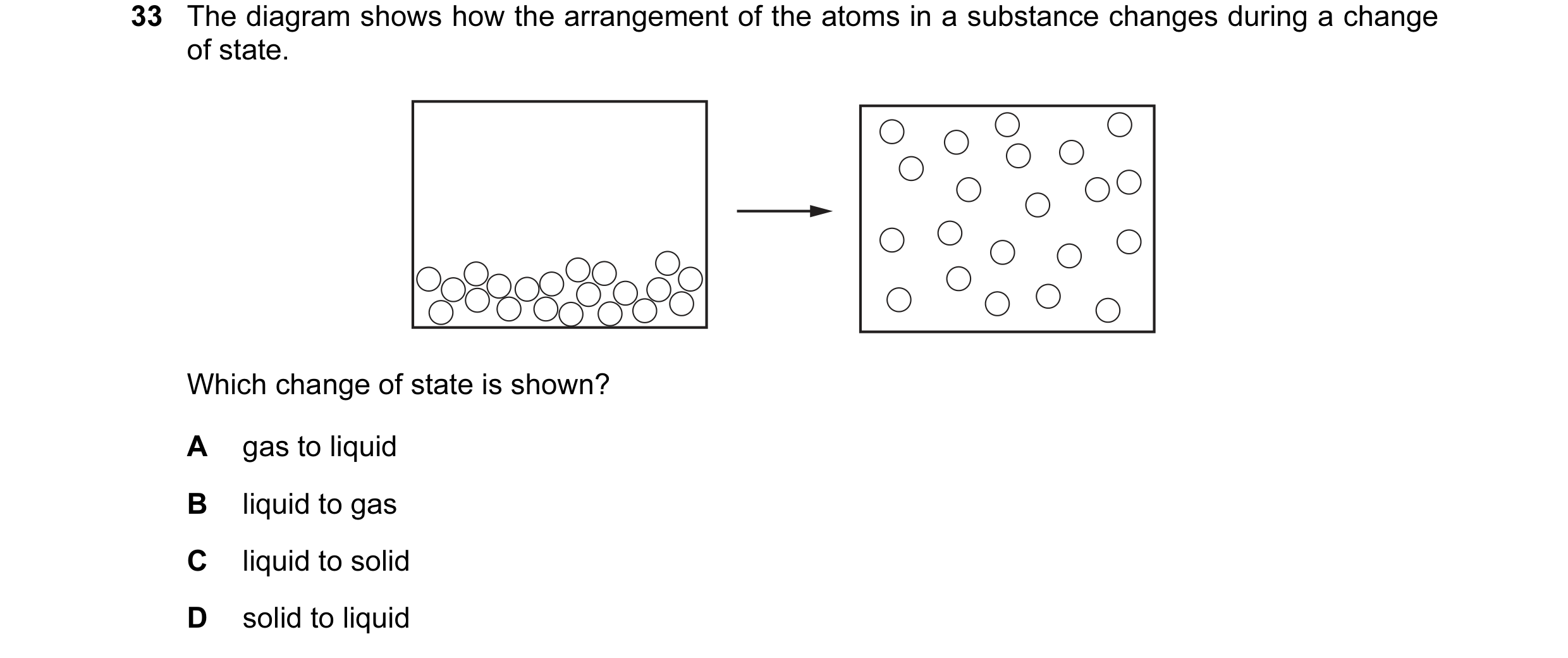
 7 / 11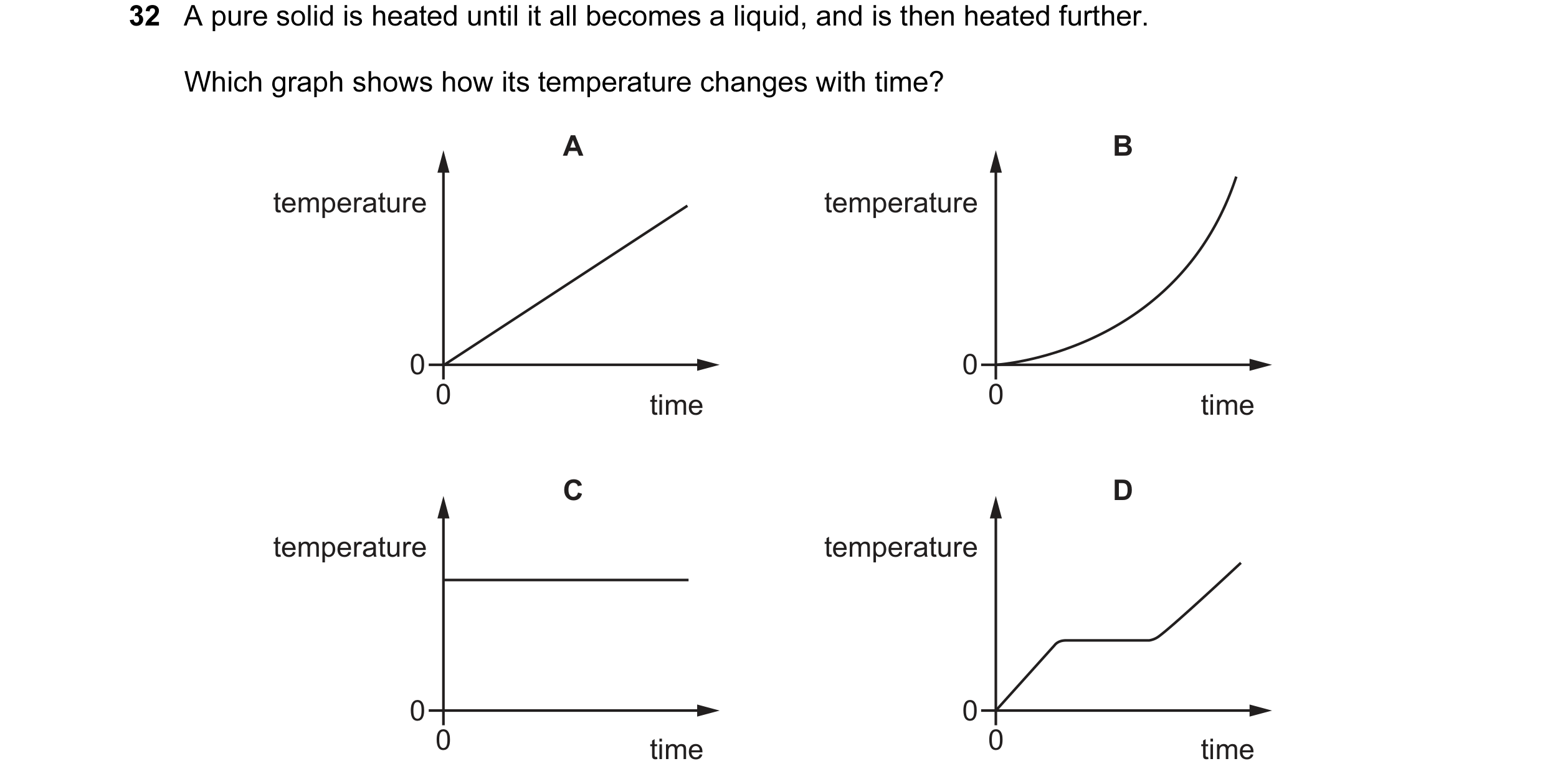


 8 / 11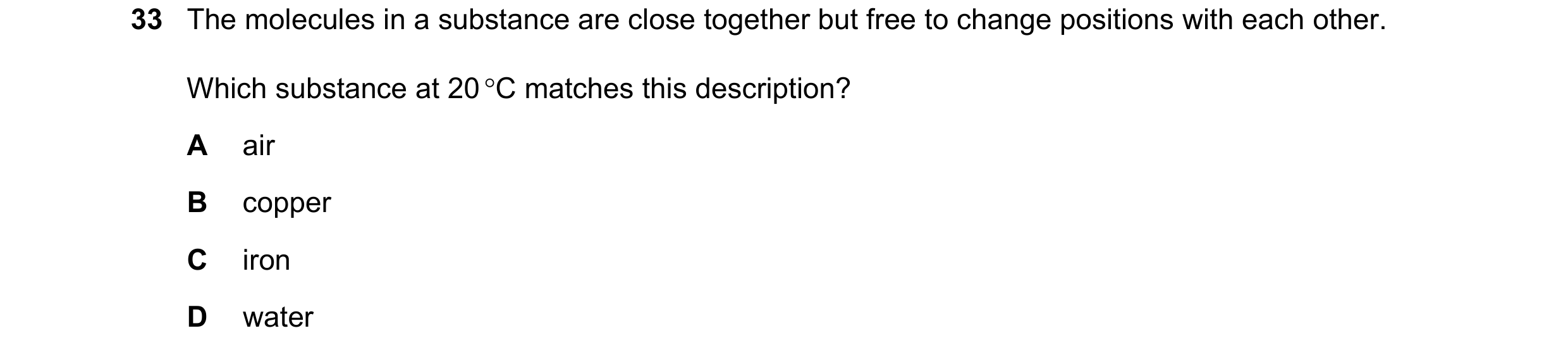
 9 / 11


 10 / 11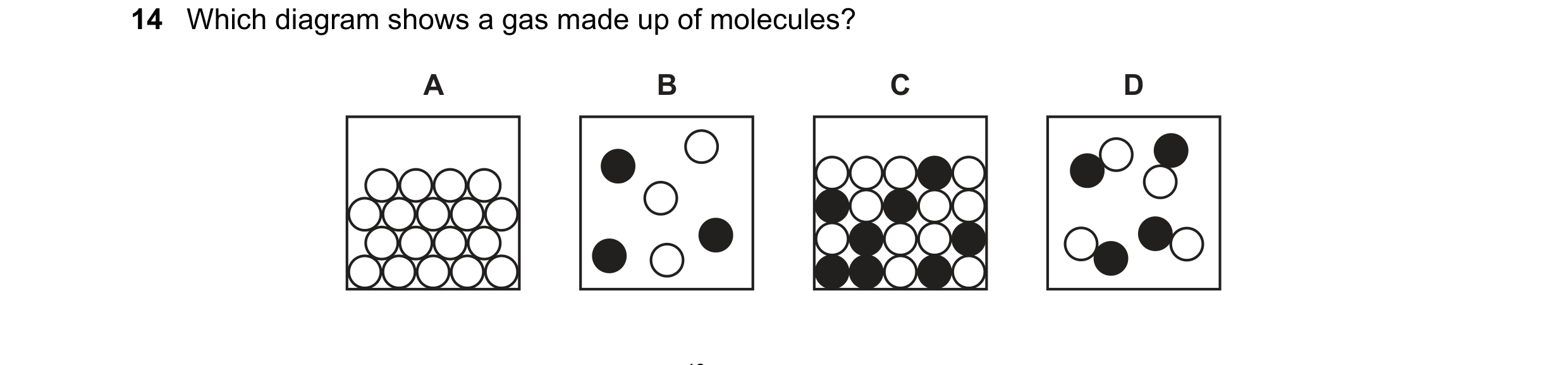

 11 / 11