Questions as text
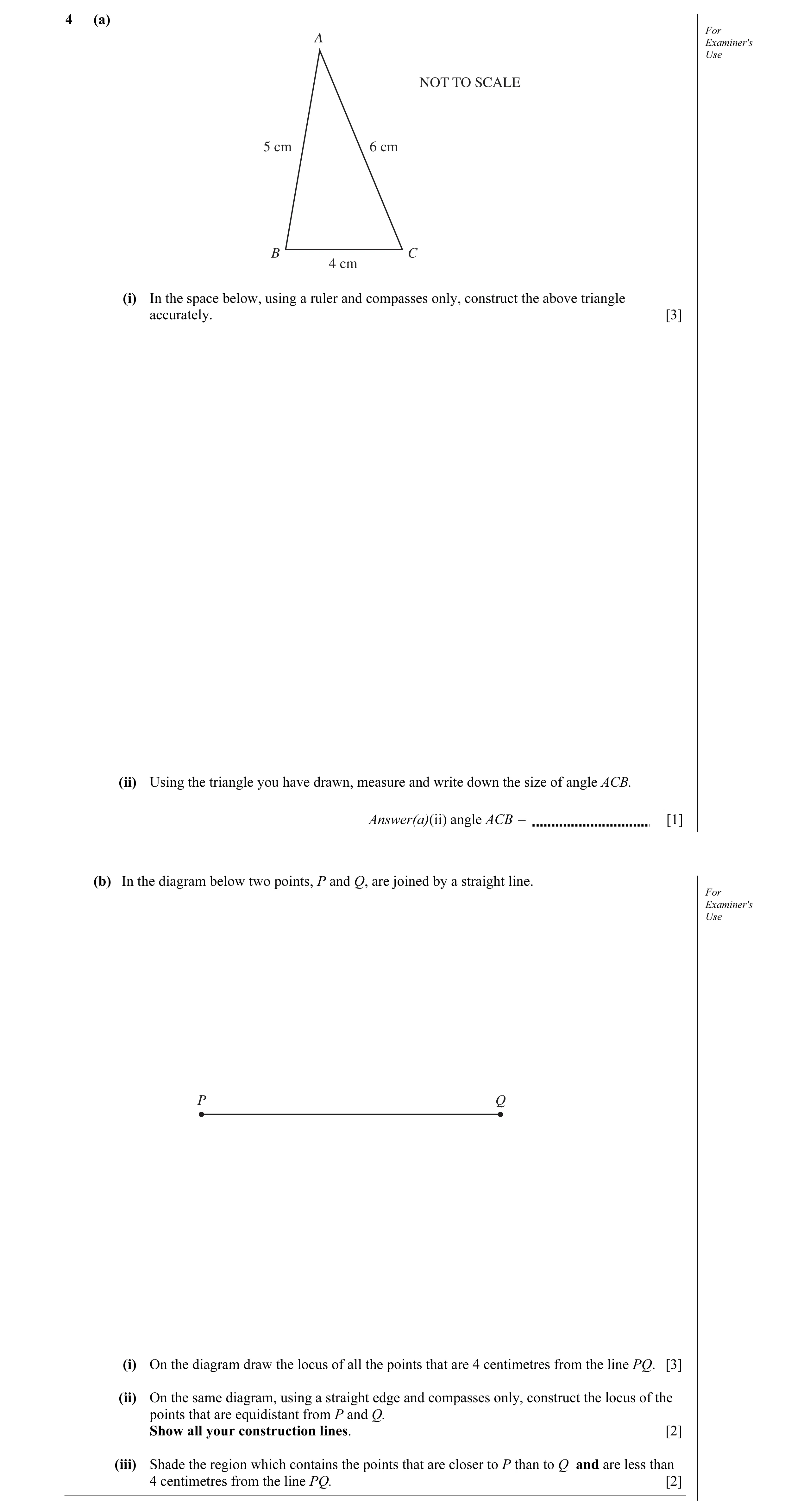
Q1 · For A Examiner's Use NOT TO SCALE 5 cm 6 cm B C 4 cm (i) In the space below, using a… 0580/31 Oct/Nov 2004
4 (a) For A Examiner's Use NOT TO SCALE 5 cm 6 cm B C 4 cm (i) In the space below, using a ruler and compasses only, construct the above triangle accurately. [3] (ii) Using the triangle you have drawn, measure and write down the size of angle ACB. Answer(a)(ii) angle ACB = [1] (b) In the diagram below two points, P and Q, are joined by a straight line. For Examiner's Use P Q (i) On the diagram draw the locus of all the points that are 4 centimetres from the line PQ. [3] (ii) On the same diagram, using a straight edge and compasses only, construct the locus of the points that are equidistant from P and Q. Show all your construction lines. [2] (iii) Shade the region which contains the points that are closer to P than to Q and are less than 4 centimetres from the line PQ. [2]
11 marks
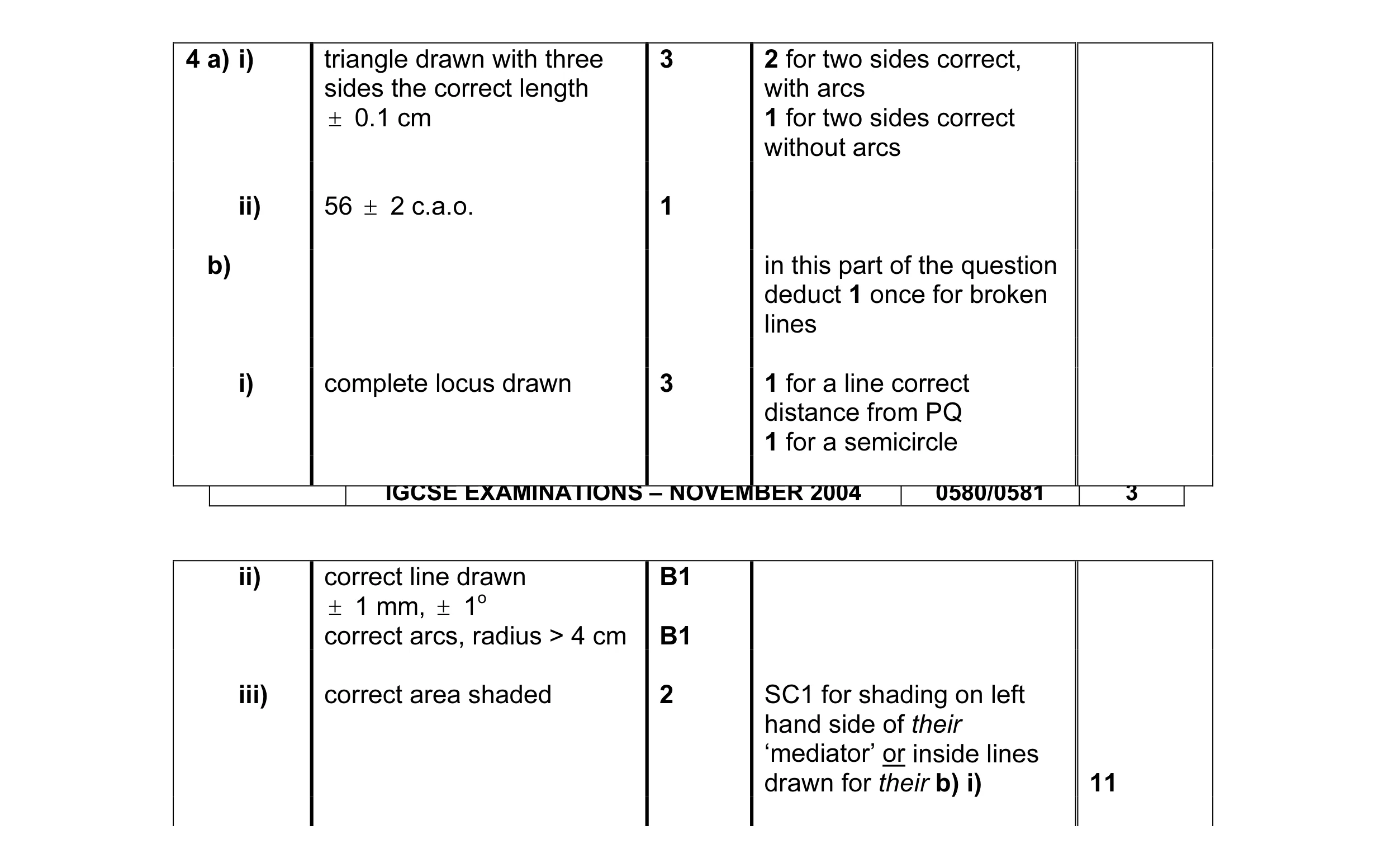
Mark scheme: 4 a) i) triangle drawn with three 3 2 for two sides correct, sides the correct length with arcs ± 0.1 cm 1 for two sides correct without arcs ii) 56 ± 2 c.a.o. 1 b) in this part of the question deduct 1 once for broken lines i) complete locus drawn 3 1 for a line correct distance from PQ 1 for a semicircle IGCSE EXAMINATIONS – NOVEMBER 2004 0580/0581 3 ii) correct line drawn B1 ± 1 mm, ± 1o correct arcs, radius > 4 cm B1 iii) correct area shaded 2 SC1 for shading on left hand side of their ‘mediator’ or inside lines drawn for their b) i) 11
This question in 0580/31 Oct/Nov 2004
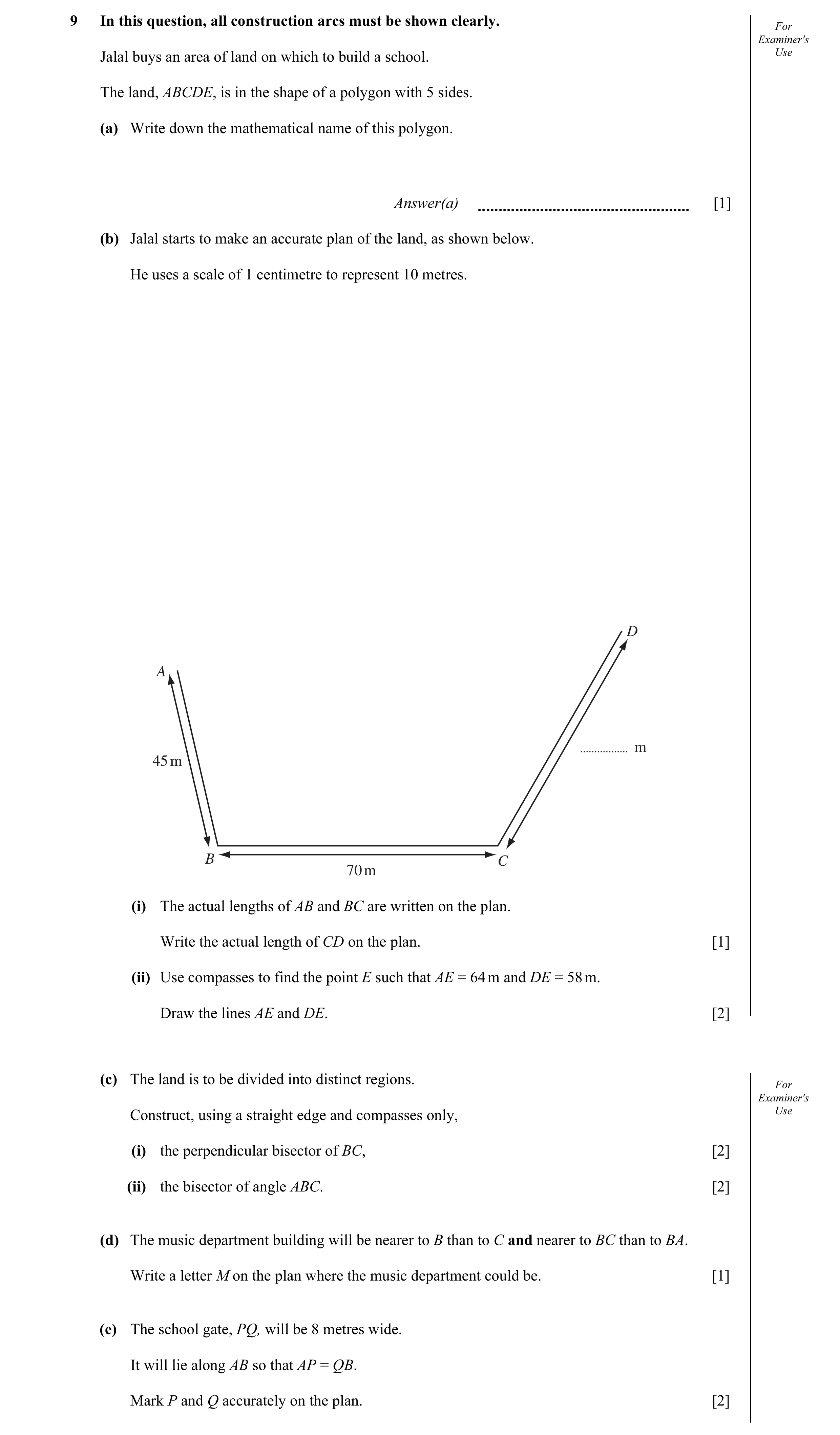
Q2 · In this question, all construction arcs must be shown clearly 0580/31 May/June 2008
9 In this question, all construction arcs must be shown clearly. For Examiner's Jalal buys an area of land on which to build a school. Use The land, ABCDE, is in the shape of a polygon with 5 sides. (a) Write down the mathematical name of this polygon. Answer(a) [1] (b) Jalal starts to make an accurate plan of the land, as shown below. He uses a scale of 1 centimetre to represent 10 metres. D A m 45 m B C 70 m (i) The actual lengths of AB and BC are written on the plan. Write the actual length of CD on the plan. [1] (ii) Use compasses to find the point E such that AE = 64 m and DE = 58 m. Draw the lines AE and DE. [2] (c) The land is to be divided into distinct regions. For Examiner's Construct, using a straight edge and compasses only, Use (i) the perpendicular bisector of BC, [2] (ii) the bisector of angle ABC. [2] (d) The music department building will be nearer to B than to C and nearer to BC than to BA. Write a letter M on the plan where the music department could be. [1] (e) The school gate, PQ, will be 8 metres wide. It will lie along AB so that AP = QB. Mark P and Q accurately on the plan. [2]
11 marks
Mark scheme: 9 (a) Pentagon B1 (b) (i) 61 to 63 B1 (ii) AE = 6.3 to 6.5 cm and DE = 5.7 to 5.9 cm B1 correct arcs seen B1 accept concave polygon SC1 if lengths reversed and with arcs (c) (i) perpen.bisector of BC B1 +/- 1mm and +/- 1 degree accuracy correct arcs seen B1 (ii) bisector of angle ABC B1 +/- 1 degree accuracy correct arcs seen B1 (d) "M" correctly marked B1 dep. on at least first B1 in each part of (c) (e) 2 marks 0.8 (+/-0.1) apart B1 1.85 (+/-0.1) from A and B B1 [11]
This question in 0580/31 May/June 2008
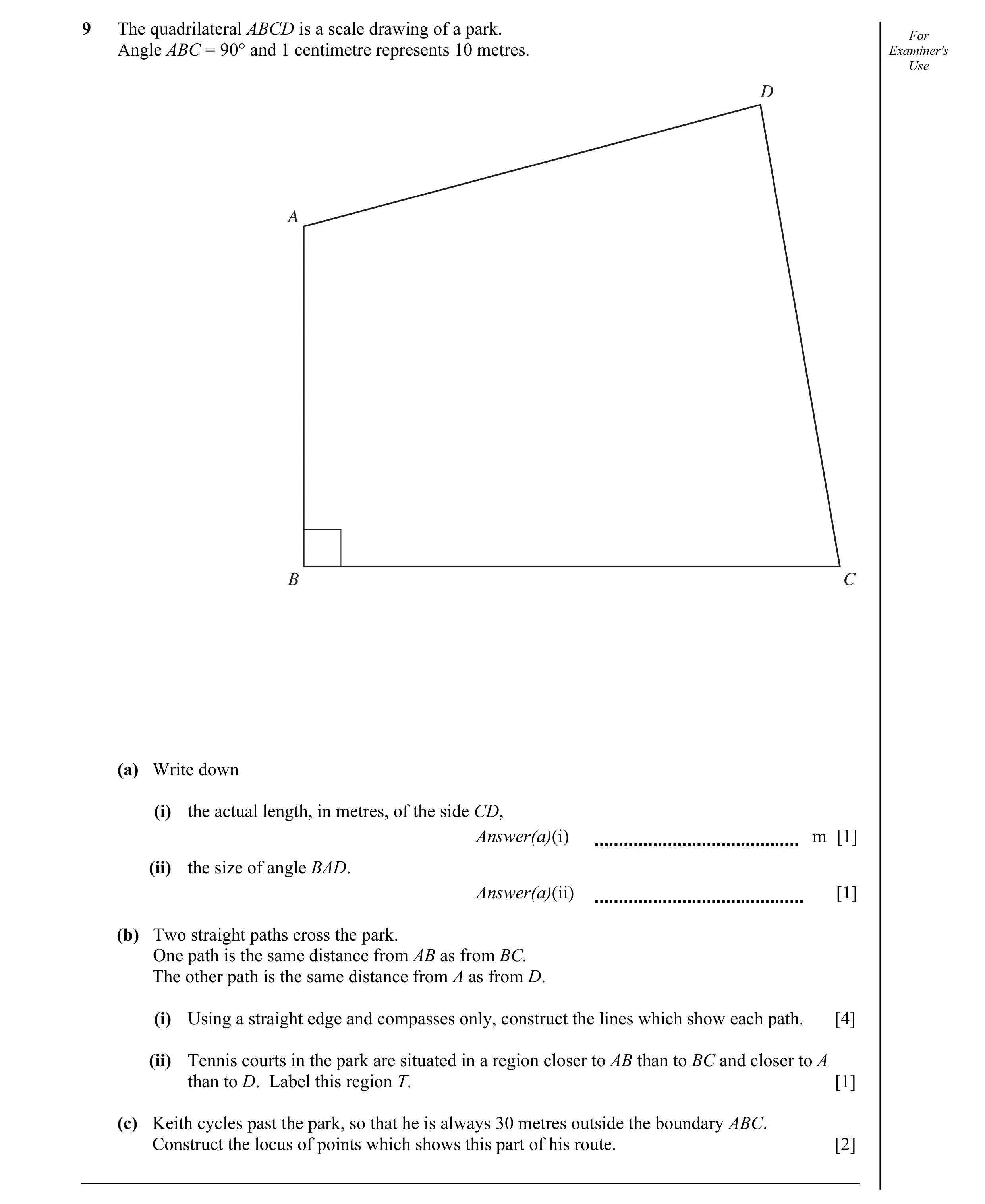
Q3 · The quadrilateral ABCD is a scale drawing of a park 0580/31 Oct/Nov 2008
9 The quadrilateral ABCD is a scale drawing of a park. For Angle ABC = 90° and 1 centimetre represents 10 metres. Examiner's Use D A B C (a) Write down (i) the actual length, in metres, of the side CD, Answer(a)(i) m [1] (ii) the size of angle BAD. Answer(a)(ii) [1] (b) Two straight paths cross the park. One path is the same distance from AB as from BC. The other path is the same distance from A as from D. (i) Using a straight edge and compasses only, construct the lines which show each path. [4] (ii) Tennis courts in the park are situated in a region closer to AB than to BC and closer to A than to D. Label this region T. [1] (c) Keith cycles past the park, so that he is always 30 metres outside the boundary ABC. Construct the locus of points which shows this part of his route. [2]
9 marks
Mark scheme: 9 (a) (i) 99 to 101 (metres) W1 (ii) 103° to 105° W1 (b) (i) Bisector of angle ABC W2 W1 correct bisector without arcs (45 ± 1 to BC) with arcs Bisector of AD with arcs W2 W1 correct bisector without arcs. Bisector about ±1mm from centre of AD 89° to 91° to AD by eye and centre within 2mm by and 89° to 91° to AD. eye. (ii) Closed region T indicated W1 Dependent on at least W1 for each bisector. Allow T omitted if region is clear. IGCSE – October/November 2008 0580 and 0581 03
This question in 0580/31 Oct/Nov 2008
Q4 · Examiner's Use C A B Triangle ABC is drawn accurately 0580/31 May/June 2010
9 Examiner's Use C A B Triangle ABC is drawn accurately. (a) Measure and write down (i) the length of AC, Answer(a)(i) AC = cm [1] (ii) the size of angle CAB. Answer(a)(ii) Angle CAB = [1] (b) Construct accurately the locus of all the points 7 cm from C. [2] (c) The point X lies outside the triangle ABC, with CX = 7 cm and angle BCX= 67°. Draw accurately the line CX. [2] (d) Draw the line BX. Measure and write down the length of this line. Answer(d) BX = cm [1] (e) Using a straight edge and compasses only, construct the locus of points equidistant from BC and from BX. [2] Question 10 is printed on the next page.
9 marks
Mark scheme: 9 (a) (i) 9 or 8.9 to 9.1 1 (ii) 53 – 55 1 (b) compass drawn circle centre C radius 2 SC1 incomplete accurate circle 7 cm SC1 any complete circle centre C (c) correct line drawn with angle BCX = 2ft SC1 for BCX = 113° or BCX = 67° inside 67° triangle or BCX = 67°, CX not = 7 (d) in range 9.3 – 9.9 1ft Strict ft from (c) (e) ruled accurate angle bisector of their 2ft SC1 if accurate but without arcs CBX with 2 pairs of arcs or M1 for 2 pairs of arcs IGCSE – May/June 2010 0580 31
This question in 0580/31 May/June 2010
Q5 · An accurate scale drawing of three sides of a garden, AB, BC, and CD is shown on the… 0580/32 Oct/Nov 2010
4 An accurate scale drawing of three sides of a garden, AB, BC, and CD is shown on the opposite page. For A is due north of B and C is due east of B. Examiner's Use (a) A vegetable area is to be constructed in the garden. Parts (i) and (iii) must be completed using a straight edge and compasses only. On the scale drawing (i) construct the perpendicular bisector of BC, [2] (ii) mark the point S at the midpoint of BC, [1] (iii) construct the bisector of angle ABC, [2] (iv) mark the point R where this line crosses the perpendicular bisector of BC, [1] (v) mark the point Q on BA where BQ = SR, [1] (vi) draw the vegetable area, quadrilateral BQRS. [1] (b) On the scale drawing, 1 centimetre represents 6 metres. Calculate the vegetable area in square metres. Answer(b) m2 [3] (c) A tree, T, is on a bearing of 070° from A and 345° from C. On the scale drawing, mark the position of T. [2] (d) Draw accurately the locus of points which are 24 metres from the tree, T. [2] For Examiner's Use North A D North B C Scale: 1 cm = 6 m
15 marks
Mark scheme: 4 (a) (i) Perpendicular bisector of BC with 2 B1 correct without arcs 2 pairs of arcs (ii) S at midpoint of BC 1 Independent (iii) Bisector of angle ABC with two 2 B1 correct without arcs pairs of arcs (iv) R clearly marked 1 ft their (a)(i) and (a)(iii) (v) Q marked on BA 1 ft their marked R and their marked S (vi) BQRS drawn 1 ft their Q, R and S (b) 829 to 974 cao 3 For square or rectangle (if their BQRS is approximately a M2 their length × their width × 36 square) or M1 for their length or width to metres or M1ind for their length × their width (c) Line from A at 070° 1 Line from C at 345° 1 (d) Circle radius 4 cm centre their T 2ft SC1 for any circle centre their T or SC1 for any circle radius 4 cm
This question in 0580/32 Oct/Nov 2010
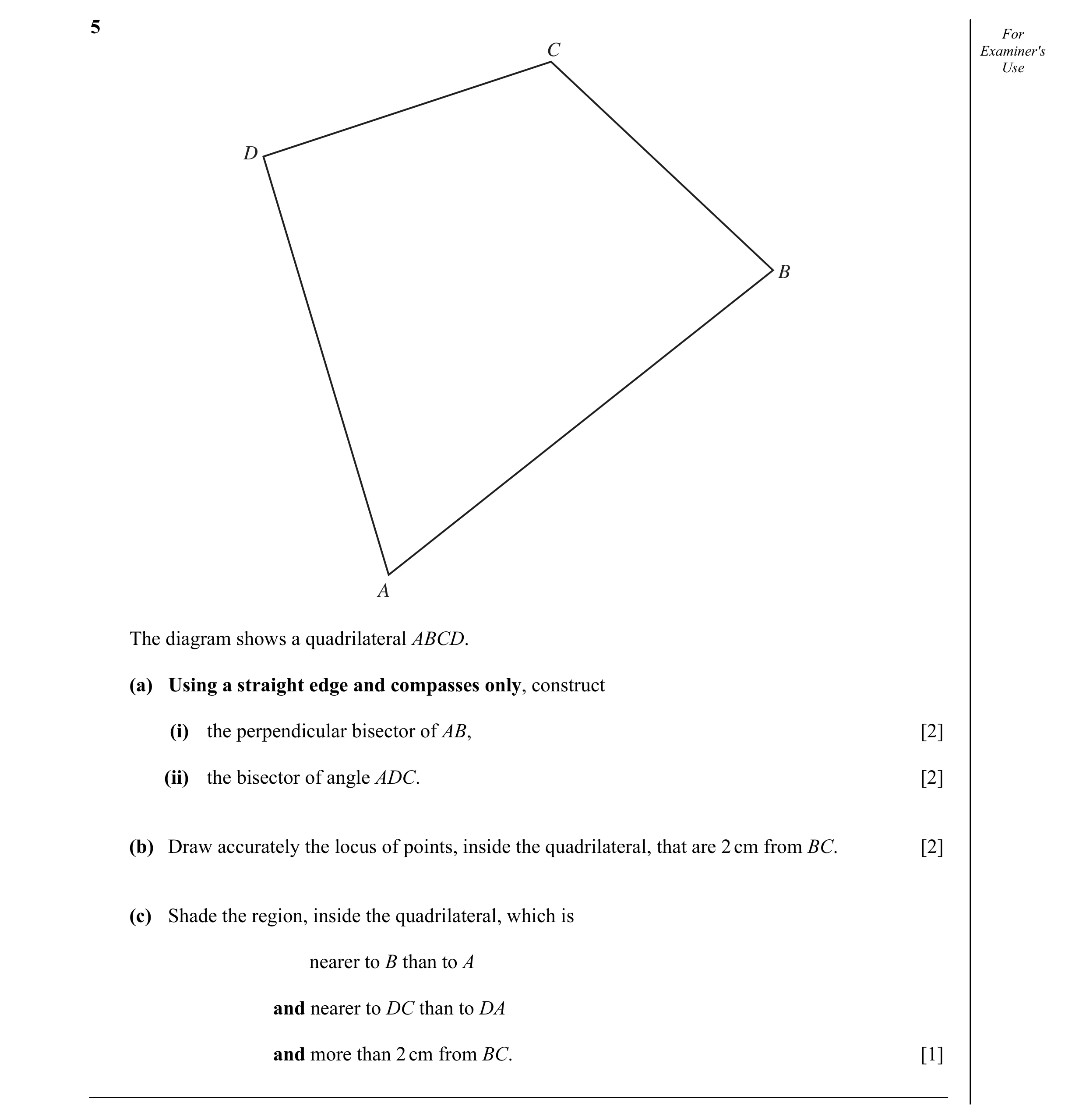
Q6 · For C Examiner's Use D B A The diagram shows a quadrilateral ABCD 0580/33 Oct/Nov 2010
5 For C Examiner's Use D B A The diagram shows a quadrilateral ABCD. (a) Using a straight edge and compasses only, construct (i) the perpendicular bisector of AB, [2] (ii) the bisector of angle ADC. [2] (b) Draw accurately the locus of points, inside the quadrilateral, that are 2 cm from BC. [2] (c) Shade the region, inside the quadrilateral, which is nearer to B than to A and nearer to DC than to DA and more than 2 cm from BC. [1]
7 marks
Mark scheme: 5 (a) (i) Accurate perpendicular bisector 2 SC1 if accurate without arcs or of AB with arcs accurate bisector of wrong side with arcs (ii) Accurate bisector of angle ADC 2 SC1 if accurate without arcs or accurate bisector of wrong angle with arcs (b) Ruled line 2 cm from and parallel to BC 2 SC1 if not ruled (c) Correct region shaded cao 1 Dependent on at least SC1 in (a)(i), (a)(ii) and (b)
This question in 0580/33 Oct/Nov 2010
Q7 · For Examiner's Use A B The line AB is drawn above 0580/31 Oct/Nov 2011
6 (a) For Examiner's Use A B The line AB is drawn above. Parts (i), (iii), and (v) must be completed using a ruler and compasses only. All construction arcs must be clearly shown. (i) Construct triangle ABC with AC = 7 cm and BC = 6 cm. [2] (ii) Measure angle BAC. Answer(a)(ii) Angle BAC = [1] (iii) Construct the bisector of angle ABC. [2] (iv) The bisector of angle ABC meets AC at T. Measure the length of AT. Answer(a)(iv) AT = cm [1] (v) Construct the perpendicular bisector of the line BC. [2] (vi) Shade the region that is • nearer to B than to C and • nearer to BC than to AB. [1] (b) A ship sails 40 km on a bearing of 040° from P to Q. For Examiner's (i) Using a scale of 1 centimetre to represent 5 kilometres, make a scale drawing of the path of Use the ship. Mark the point Q. North P Scale: 1 cm = 5 km [2] (ii) At Q the ship changes direction and sails 30 km on a bearing of 160° to the point R. Draw the path of the ship. [2] (iii) Find how far, in kilometres, the ship is from the starting position P. Answer(b)(iii) km [1] (iv) Measure the bearing of P from R. Answer(b)(iv) [1]
15 marks
Mark scheme: 6 (a) (i) Correct construction 2 B1 for two lines or B1 for accurate arcs seen or B1 for one correct line with two arcs SC1 for AC = 6 and BC = 7 with arcs (ii) 47° (45 – 49) 1ft Strict ft their (a)(i) (iii) Correct construction 2ft Their (a)(i) B1 for accurate arcs no line or B1 for accurate line drawn no arcs or B1 for accurate line with arcs bisecting another angle (iv) 4 (3.8 – 4.2) 1ft Strict ft their (iii) with intersection on opposite side of triangle (v) Correct construction 2ft B1 for accurate arcs no line or B1 for accurate line drawn no arcs or B1 for accurate line with arcs, bisecting AB or AC (vi) Correct region shaded 1ft ft is for boundaries of correct perpendicular bisector of their BC and correct angle bisector of their ABC, with or without arcs (b) (i) Correct scale drawing of PQ 2 B1 for accurate angle 40o, B1 for PQ 8cm (ii) Correct scale drawing of their QR 2 B1 for accurate angle 160o, B1 for QR 6cm (iii) 35 to 37 1ft Measure × 5 ± 1km (iv) 264 to 268 1ft IGCSE – October/November 2011 0580 31
This question in 0580/31 Oct/Nov 2011
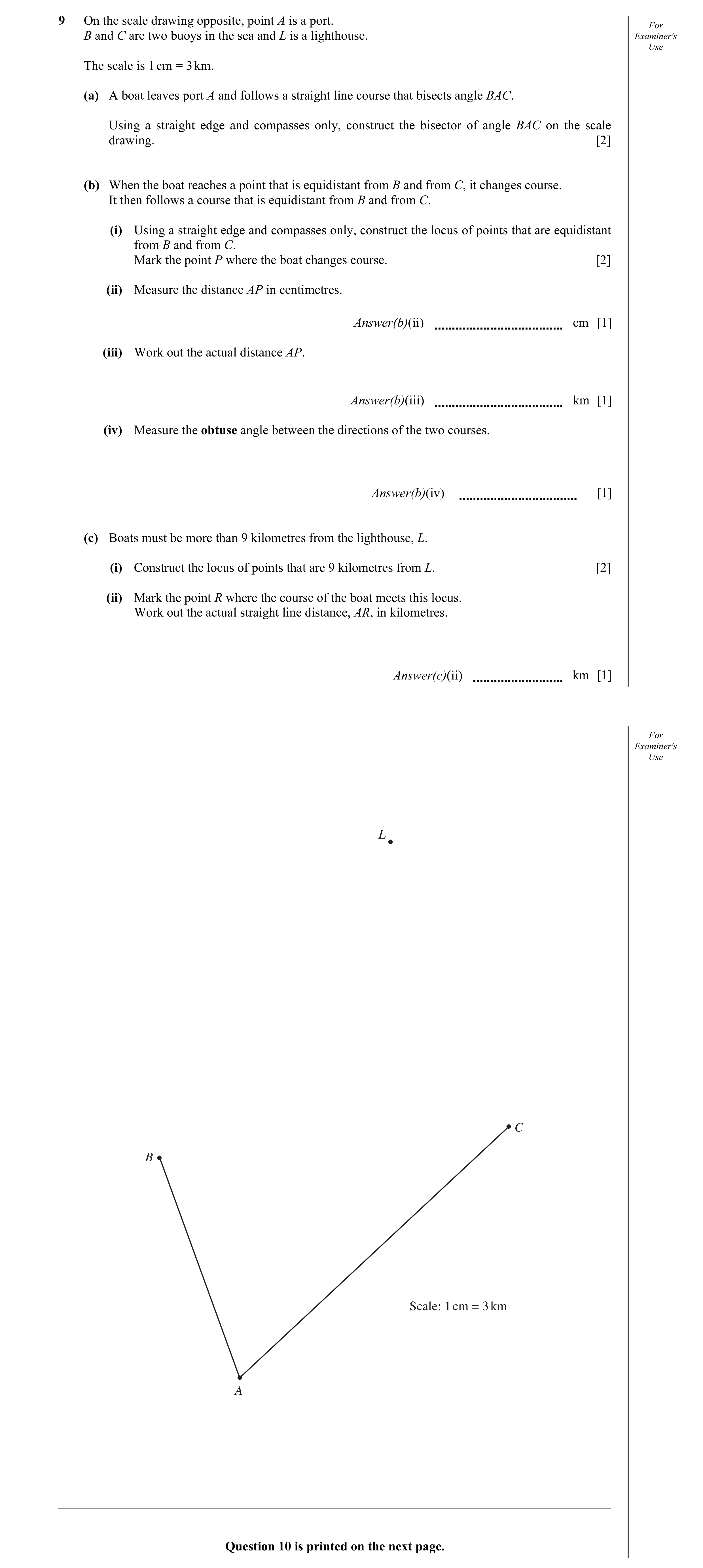
Q8 · On the scale drawing opposite, point A is a port 0580/32 Oct/Nov 2011
9 On the scale drawing opposite, point A is a port. For B and C are two buoys in the sea and L is a lighthouse. Examiner's Use The scale is 1 cm = 3 km. (a) A boat leaves port A and follows a straight line course that bisects angle BAC. Using a straight edge and compasses only, construct the bisector of angle BAC on the scale drawing. [2] (b) When the boat reaches a point that is equidistant from B and from C, it changes course. It then follows a course that is equidistant from B and from C. (i) Using a straight edge and compasses only, construct the locus of points that are equidistant from B and from C. Mark the point P where the boat changes course. [2] (ii) Measure the distance AP in centimetres. Answer(b)(ii) cm [1] (iii) Work out the actual distance AP. Answer(b)(iii) km [1] (iv) Measure the obtuse angle between the directions of the two courses. Answer(b)(iv) [1] (c) Boats must be more than 9 kilometres from the lighthouse, L. (i) Construct the locus of points that are 9 kilometres from L. [2] (ii) Mark the point R where the course of the boat meets this locus. Work out the actual straight line distance, AR, in kilometres. Answer(c)(ii) km [1] For Examiner's Use L C B Scale: 1 cm = 3 km A Question 10 is printed on the next page.
10 marks
Mark scheme: 9 (a) Bisector of angle BAC with correct 2 Either B1 correct without arcs arcs or B1 for 2 pairs of accurate arcs seen (b) (i) Bisector of BC with 2 pairs of 2 Either B1 correct without arcs correct arcs or B1 for 2 pairs of accurate arcs seen (ii) 10.8 to 11.2 (cm) cao 1 (iii) 32.4 to 33.6 1ft Their (b)(ii) × 3 (iv) 155° to 165° cao 1 (c) (i) Circle centre L, radius 3cm 2 B1 circle centre L, incorrect radius or SC1 for part circle with correct radius (ii) 41km to 44km cao 1
This question in 0580/32 Oct/Nov 2011
Q9 · For Examiner's Use A B (a) Construct triangle ABC accurately, with AC = 10 cm and BC = 8… 0580/33 Oct/Nov 2011
8 For Examiner's Use A B (a) Construct triangle ABC accurately, with AC = 10 cm and BC = 8 cm. The line AB has been drawn for you. [2] (b) (i) Using a straight edge and compasses only, construct the bisector of angle A. [2] (ii) The bisector of angle A meets BC at X. Measure the length of BX. Answer(b)(ii) BX = cm [1] (c) (i) Using a straight edge and compasses only, construct the perpendicular bisector of AB. [2] (ii) The perpendicular bisector of AB meets AC at Y and AX at Z. Measure angle CYZ. Answer(c)(ii) Angle CYZ = [1] (d) Shade the region inside triangle ABC which is • nearer to AB than to AC and • nearer to B than to A. [1]
9 marks
Mark scheme: 8 (a) Correct construction with arcs 2 B1 for two correct lines without arcs or B1 for accurate arcs seen or B1 for 1 correct line with 2 arcs seen SC1 for AC = 8 and BC = 10 correct with arcs (b) (i) Correct construction with arcs 2ft ft their (a) B1ft for accurate line drawn without arcs or B1ft for accurate arcs seen or B1ft for accurate line with arcs bisecting another angle (ii) 4.2 to 4.5 1ft Strict ft their b(i) with intersection on opposite side of triangle (c) (i) Correct construction with arcs 2ft ft their (a) B1ft for accurate line drawn without arcs or B1ft for two pairs of accurate arcs seen or B1ft for accurate line with arcs, bisecting AB or AC (ii) 129° to 133° 1ft Strict ft from their C on triangle, their Y on one side of triangle and their Z on their intersection of b(i) and c(i) (d) Correct quadrilateral shaded 1 From their triangle
This question in 0580/33 Oct/Nov 2011
Q10 · Here is a scale drawing of a shop floor, EFGH 0580/33 May/June 2012
3 Here is a scale drawing of a shop floor, EFGH. For The scale is 1 centimetre represents 2 metres. Examiner's Use F G H Scale: 1 cm to 2 m E (a) What is the mathematical name of the shape EFGH? Answer(a) [1] (b) What type of angle is angle EFG? Answer(b) [1] (c) Find the actual length, in metres, of the side EH. Answer(c) m [2] (d) Measure angle FEH. Answer(d) Angle FEH = [1] (e) Complete this part using ruler and compasses only. All construction arcs must be clearly shown. A table is placed • nearer to E than to H and • less than 14 m from H. By constructing two loci on the scale drawing, find and label the region R, where the table is placed. [5] (f) The shop sells shoes which are packed in boxes. Each box is a cuboid 33.2 cm long, 16.8 cm wide and 11 cm high. Calculate the volume of one of these shoe boxes. Answer(f) cm3 [2]
12 marks
Mark scheme: 3 (a) quadrilateral 1 (b) obtuse 1 (c) 23.6–24.4 2 M1 for 11.8 – 12.2 (d) 31–35 1 (e) construction of perpendicular 5 B1 for two pairs of arcs, same radius, centres E bisector of EH and H part circle centre H radius 7 cm B1 for bisector within 2mm of correct one, ± 2° of indication of region correct angle B1 for part circle centre H B1 for radius 7 cm B1ft for an indication of the region, ft dependent on at least B2 from above (f) 6135.36 or 6135.4 or 6135 or 6140 2 M1 for 33.2 × 16.8 × 11
This question in 0580/33 May/June 2012
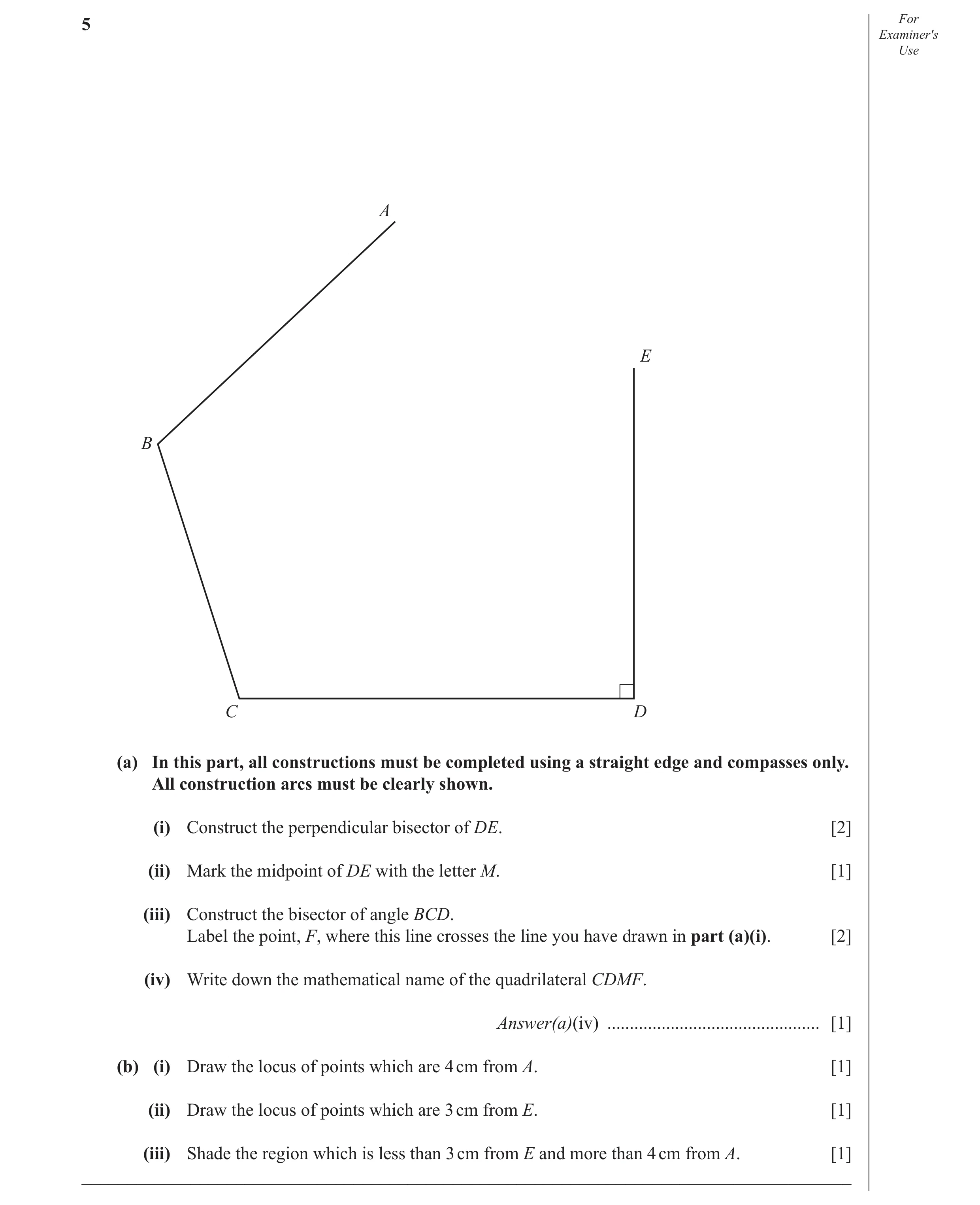
Q11 · For Examiner′s Use A E B C D (a) In this part, all constructions must be completed using… 0580/32 May/June 2013
5 For Examiner′s Use A E B C D (a) In this part, all constructions must be completed using a straight edge and compasses only. All construction arcs must be clearly shown. (i) Construct the perpendicular bisector of DE. [2] (ii) Mark the midpoint of DE with the letter M. [1] (iii) Construct the bisector of angle BCD. Label the point, F, where this line crosses the line you have drawn in part (a)(i). [2] (iv) Write down the mathematical name of the quadrilateral CDMF. Answer(a)(iv) … [1] (b) (i) Draw the locus of points which are 4 cm from A. [1] (ii) Draw the locus of points which are 3 cm from E. [1] (iii) Shade the region which is less than 3 cm from E and more than 4 cm from A. [1] _____________________________________________________________________________________
9 marks
Mark scheme: 5 (a) (i) Perpendicular bisector with 2 sets of 2 B1 correct line with some or no arcs correct arcs (ii) M labelled 1ft Ft is intersection of their bisector with DE (iii) Angle bisector with 2 sets of correct arcs 2 B1 correct line with some or no arcs (iv) Trapezium 1 (b) (i) Circle centre A radius 4 cm ± 0.2 cm 1 (ii) Circle centre E radius 3 cm ± 0.2 cm 1 (iii) Correct region shaded cao 1 2 2 2 2 2 2
This question in 0580/32 May/June 2013
Q12 · For Examiner′s D Use E C NOT TO SCALE 2.25 m 1.5 m A B 1.0 m The diagram shows a… 0580/33 Oct/Nov 2013
7 For Examiner′s D Use E C NOT TO SCALE 2.25 m 1.5 m A B 1.0 m The diagram shows a trapezium ABCD. AB = 1.0 m, AD = 2.25 m, BC = 1.5 m and angle DEC = 90°. (a) Using trigonometry, calculate angle DCE. Answer(a) Angle DCE = … [3] (b) Calculate the area of the trapezium ABCD. Answer(b) … m2 [2] (c) ABCD is the cross-section of a box. The box is 2 m long. Calculate the volume of the box. D C 2 m B A Answer(c) … m3 [1] (d) On the grid, complete the net of the box. For Examiner′s The base and one face of the box have been drawn for you. Use The scale is 2 cm to 1 m. [4] _____________________________________________________________________________________
10 marks
Mark scheme: 7 (a) [Angle DCE =] 36.9 or 36.8699 to 36.9 3 B1 for [DE =] 0.75 soi their DE M1 for than DCE = 0.1 (b) 1.875 or 1.88 2 M1 for 0.5 × (1.5 + 2.25) × 1.0 oe (c) 3.75 1FT their (b) × 2 IGCSE – October/November 2013 0580 33 (d) 3 rectangles and 1 trapezium correctly 4 B1 for rectangle to right 6 by 8 squares placed on the grid with correct scale and B1 for an accurate and correctly placed size. trapezium B1 for a rectangle to left 9 by 8 squares B1 for rectangle 5 by 8 squares and further to the left
This question in 0580/33 Oct/Nov 2013
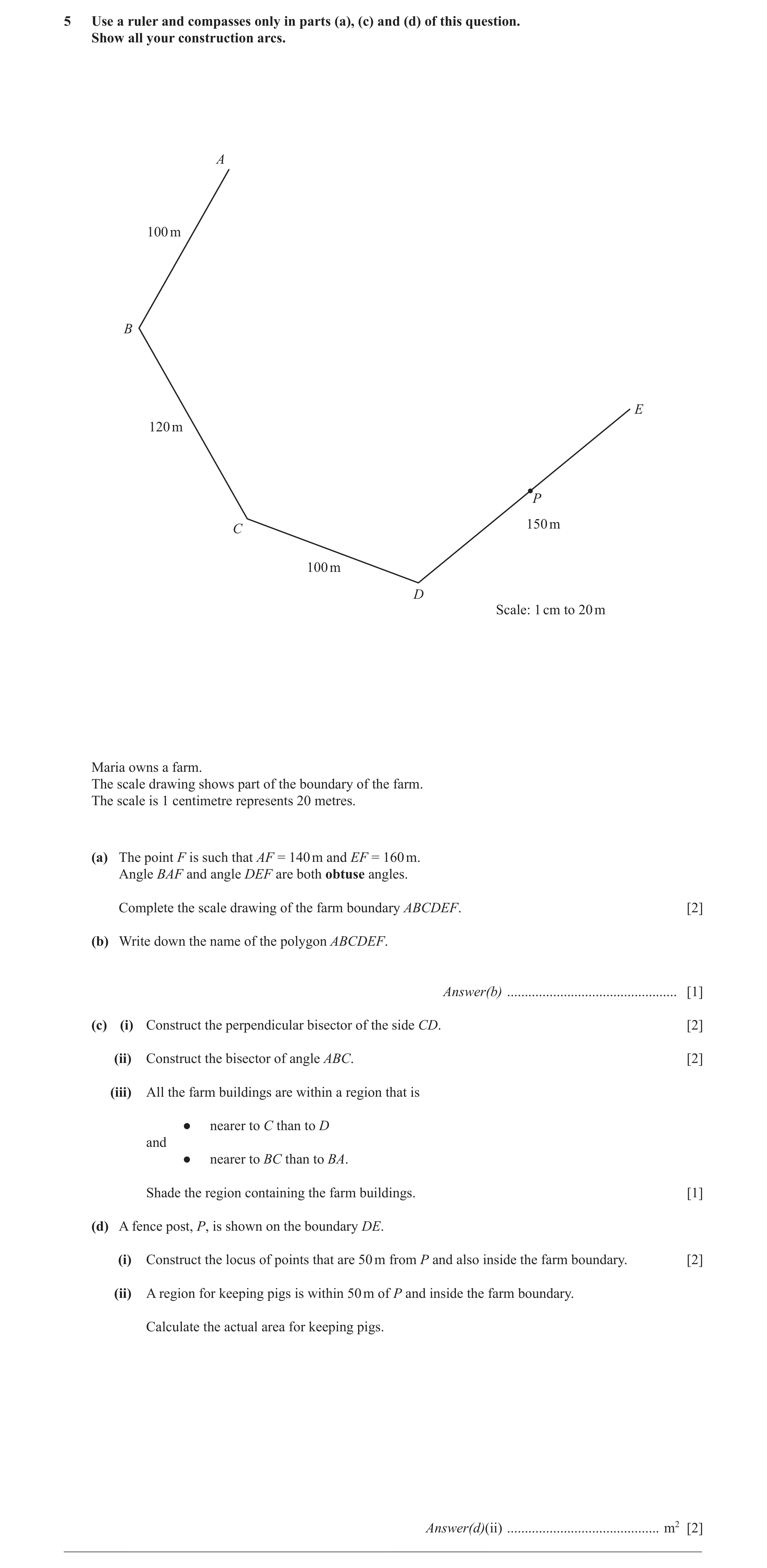
Q13 · Use a ruler and compasses only in parts (a), (c) and (d) of this question 0580/31 May/June 2014
5 Use a ruler and compasses only in parts (a), (c) and (d) of this question. Show all your construction arcs. A 100 m B E 120 m P 150 m C 100 m D Scale: 1 cm to 20 m Maria owns a farm. The scale drawing shows part of the boundary of the farm. The scale is 1 centimetre represents 20 metres. (a) The point F is such that AF = 140 m and EF = 160 m. Angle BAF and angle DEF are both obtuse angles. Complete the scale drawing of the farm boundary ABCDEF. [2] (b) Write down the name of the polygon ABCDEF. Answer(b) … [1] (c) (i) Construct the perpendicular bisector of the side CD. [2] (ii) Construct the bisector of angle ABC. [2] (iii) All the farm buildings are within a region that is ● nearer to C than to D and ● nearer to BC than to BA. Shade the region containing the farm buildings. [1] (d) A fence post, P, is shown on the boundary DE. (i) Construct the locus of points that are 50 m from P and also inside the farm boundary. [2] (ii) A region for keeping pigs is within 50 m of P and inside the farm boundary. Calculate the actual area for keeping pigs. Answer(d)(ii) … m2 [2] __________________________________________________________________________________________
12 marks
Mark scheme: 5 (a) Hexagon correct with arcs. 2 B1 for correct hexagon without arcs AF = 7 cm (±2mm) EF = 8 cm (±2mm) or one length correct with arcs. Or B1 for two correct arcs (b) Hexagon 1 (c) (i) Bisector of CD with 2 pairs of arcs 2 B1 for correct bisector with one pair or no arcs (ii) Bisector of angle ABC with 2 pairs of correct 2 B1 for bisector without 2 pairs of arcs. arcs (iii) Correct enclosed region shaded 1FT Their enclosed region provided at least 1 mark in each of parts (i) and (ii) (d) (i) Semi-circle radius 2.5cm (±2mm) from P and 2 SC1 for arc centre P radius 2.5cm inside polygon Or for arc inside polygon centre P touching boundaries twice or any circle centre P. (ii) 3930 or 3926 to 3928 2 M1 for (π × 50²) ÷ 2 oe
This question in 0580/31 May/June 2014
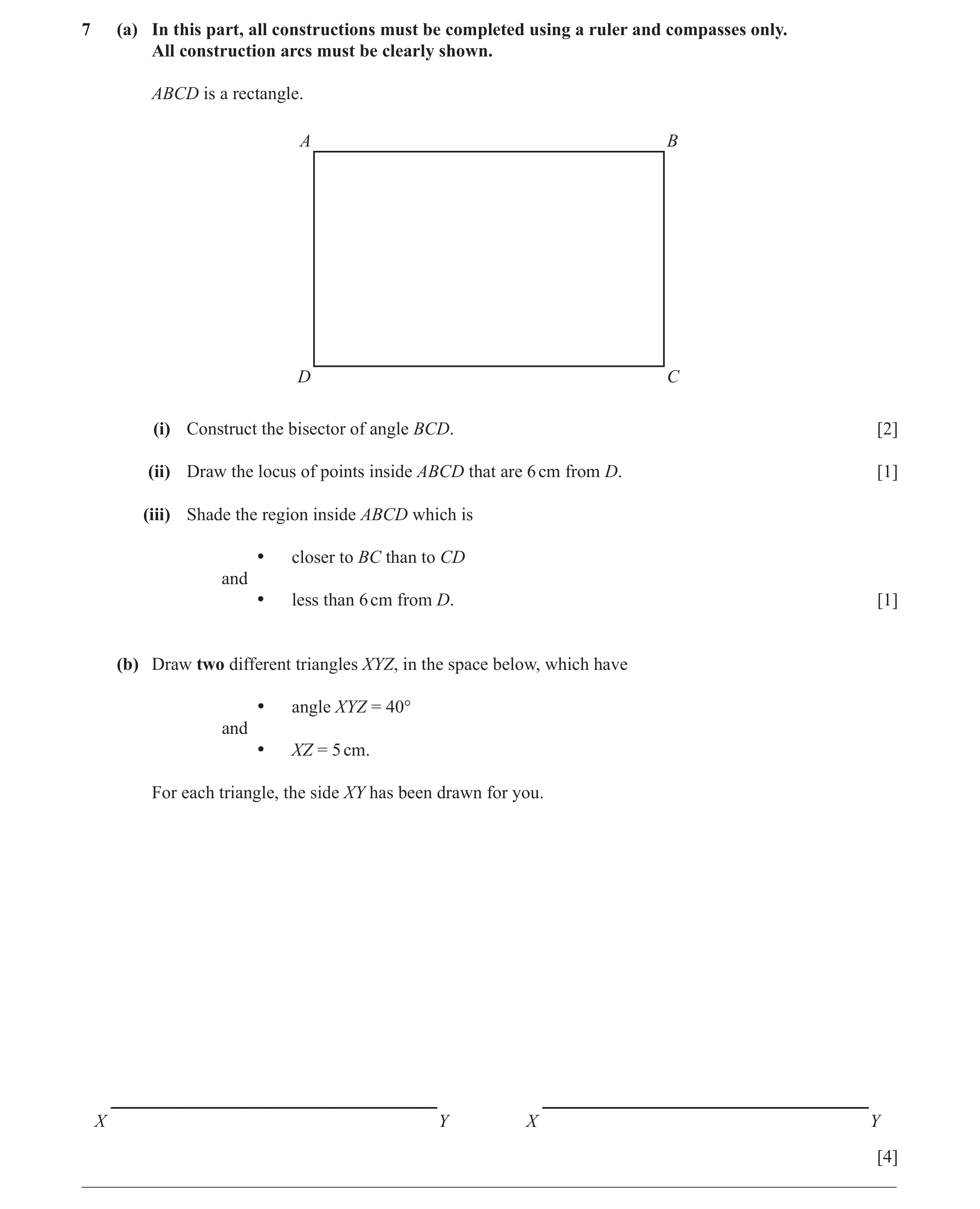
Q14 · In this part, all constructions must be completed using a ruler and compasses only 0580/32 Feb/March 2015
7 (a) In this part, all constructions must be completed using a ruler and compasses only. All construction arcs must be clearly shown. ABCD is a rectangle. A B D C (i) Construct the bisector of angle BCD. [2] (ii) Draw the locus of points inside ABCD that are 6 cm from D. [1] (iii) Shade the region inside ABCD which is • closer to BC than to CD and • less than 6 cm from D. [1] (b) Draw two different triangles XYZ, in the space below, which have • angle XYZ = 40° and • XZ = 5 cm. For each triangle, the side XY has been drawn for you. X Y X Y [4] __________________________________________________________________________________________
8 marks
Mark scheme: 7 (a) (i) Correct bisector drawn with 2 pairs of 2 B1 for correct bisector without arcs arcs (ii) Correct arc radius 6 cm centre D 1 (iii) Correct shaded region 1 (b) Two different correct triangles drawn 4 B1, B1 for 40° angle at each Y B1 for one XZ = 5 cm drawn B1dep on previous 3 marks for a different correct XZ = 5 cm drawn resulting in a second correct triangle If zero scored, SC1 SC1 available for triangles drawn with 40° at X
This question in 0580/32 Feb/March 2015
Q15 · In triangle ABC, AC = 10 cm and BC = 9 cm 0580/33 May/June 2015
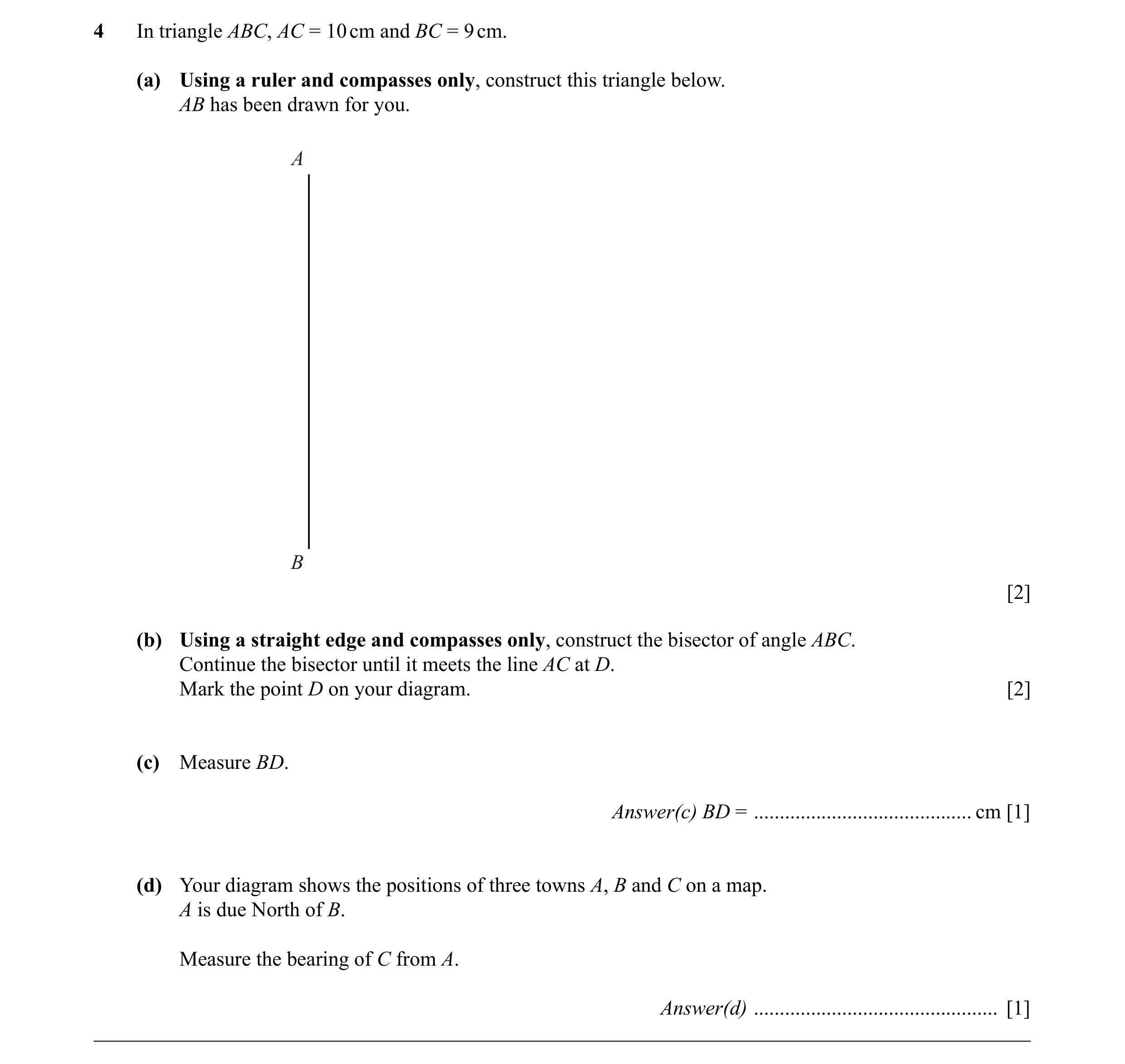
4 In triangle ABC, AC = 10 cm and BC = 9 cm. (a) Using a ruler and compasses only, construct this triangle below. AB has been drawn for you. A B [2] (b) Using a straight edge and compasses only, construct the bisector of angle ABC. Continue the bisector until it meets the line AC at D. Mark the point D on your diagram. [2] (c) Measure BD. Answer(c) BD = … cm [1] (d) Your diagram shows the positions of three towns A, B and C on a map. A is due North of B. Measure the bearing of C from A. Answer(d) … [1]
6 marks
Mark scheme: 4 (a) lines AC and BC correct 2 B1 for one of their lines the correct length and with correct arcs or correct triangle no arcs (b) correct bisector with two pairs of 2FT M1FT for correct line without arcs or two pairs correct arcs of correct arcs (c) 5.9 to 6.3 1FT (d) 119 to 123 1FT 40 000 × 3 6 × 5
This question in 0580/33 May/June 2015
Q16 · The scale drawing shows two villages, A and B, joined by a straight road 0580/31 Oct/Nov 2015
5 The scale drawing shows two villages, A and B, joined by a straight road. The scale is 2 centimetres represents 1 kilometre. North A North B Scale: 2 cm to 1 km (a) (i) Work out the distance, in kilometres, from A to B. Answer(a)(i) … km [2] (ii) Measure the bearing of B from A. Answer(a)(ii) … [1] (b) Another village, C, is 3.2 km from A on a bearing of 310°. Mark and label the position of C on the diagram. [2] (c) In this part use a straight edge and compasses only and show your construction arcs clearly. Construct the perpendicular bisector of AB. [2] (d) A school is • closer to village A than to village B and • less than 3 kilometres from village B. On the diagram, shade the region in which the school must be. [3] (e) Nelson cycles from village B to the nearest town. He cycles a total distance of 12 km at an average speed of 15 km/h. He leaves village B at 10 15. Work out the time he arrives at the nearest town. Answer(e) … [3] __________________________________________________________________________________________
13 marks
Mark scheme: 5 (a) (i) 4.8 2 B1 for 9.6 seen (ii) 137 1 (b) Correct length and bearing 2 B1 for AC = 6.4 cm B1 for correct bearing 310° (c) Perpendicular bisector with 2 sets 2 B1 for correct line with some or no or incorrect of correct arcs arcs or B1 for 2 sets of correct arcs (d) Correct area shaded 3 B2 for arc centre B radius 6 cm touching their bisector twice or B1 for arc centre B, with radius 6 cm but incorrect length or for arc centre B, with incorrect radius (e) 11 03 3 M2 for 12 ÷ 15 × 60 or M1 for 12 ÷ 15 soi If zero scored, SC1 for their time added to 10 15 correctly
This question in 0580/31 Oct/Nov 2015
Q17 · A F B E C D (a) Complete this part of the question using a straight edge and compasses… 0580/32 Oct/Nov 2015
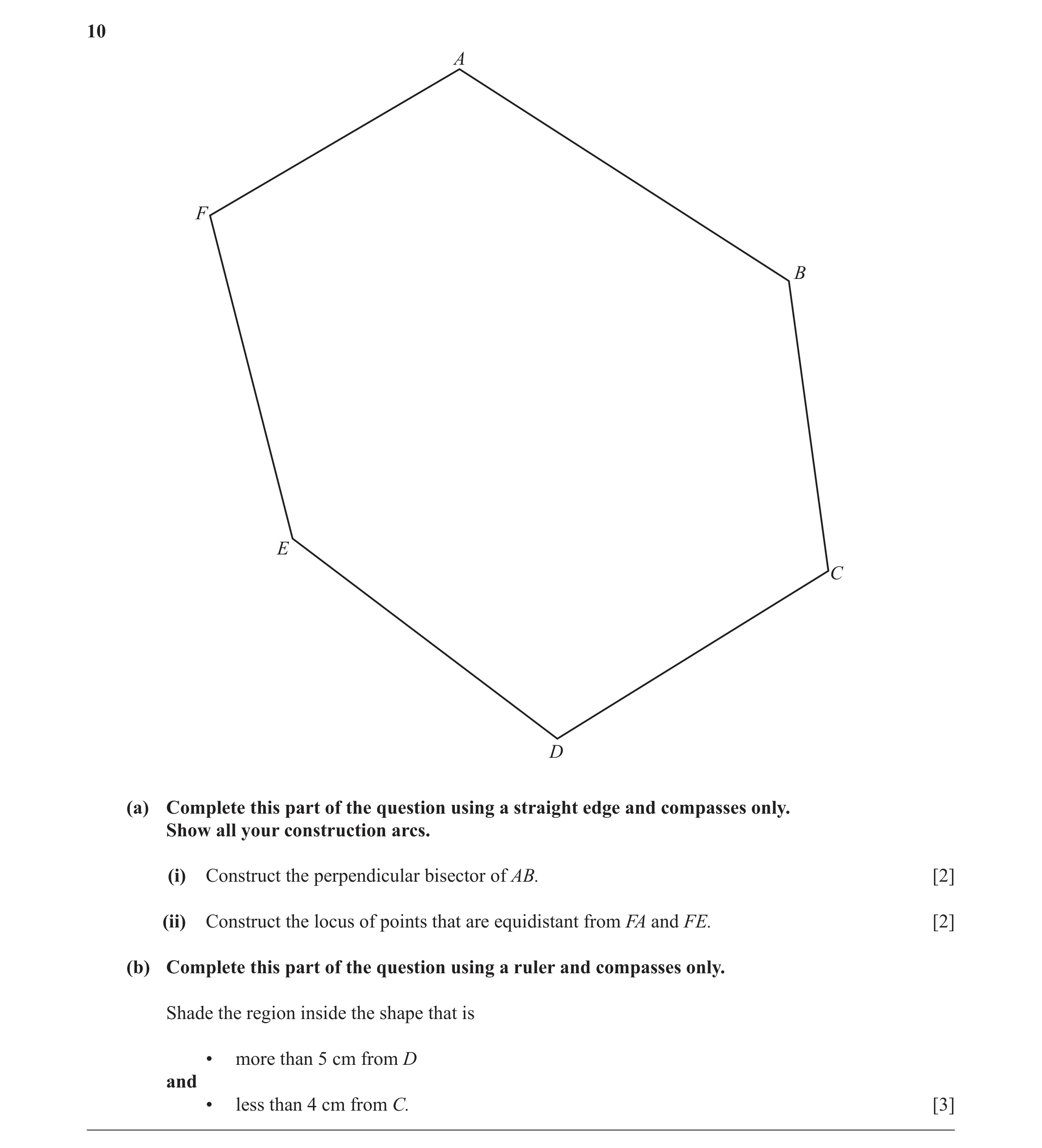
10 A F B E C D (a) Complete this part of the question using a straight edge and compasses only. Show all your construction arcs. (i) Construct the perpendicular bisector of AB. [2] (ii) Construct the locus of points that are equidistant from FA and FE. [2] (b) Complete this part of the question using a ruler and compasses only. Shade the region inside the shape that is • more than 5 cm from D and • less than 4 cm from C. [3]
7 marks
Mark scheme: 10 (a) (i) Correct ruled perpendicular bisector 2 B1for correct ruled line drawn with some drawn with 2 pairs of arcs or no or incorrect arcs or B1 for 2 correct pairs of arcs (ii) Correct ruled angle bisector drawn with 2 B1 for correct ruled line drawn with some 2 pairs of arcs or no or incorrect arcs or B1 for 2 correct pairs of arcs (b) Arc 5 cm from D 1 Arcs must be continuous and fit for Arc 4 cm from C 1 purpose If 0, 0 scored, SC1 for either 5 cm arc from D at least touching DC and DE or for 4 cm arc from C at least touching DC and BC Correct region shaded 1FT 1FT dep on an attempt to draw 2 arcs
This question in 0580/32 Oct/Nov 2015
Q18 · Complete part (a) and part (b) using a straight edge and compasses only 0580/32 Feb/March 2016
8 Complete part (a) and part (b) using a straight edge and compasses only. Show all your construction arcs. (a) Construct the locus of points that are equidistant from the points X and Y. X Y [2] (b) (i) Construct the locus of points that are equidistant from line AB and line AC. A B C [2] (ii) Shade the region, inside the triangle, which is closer to AB than to AC. [1] (c) Complete this part using a ruler and compasses only. Show all your construction arcs. Construct the locus of points that are 4 cm from the line MN. N M [3] Question 9 is printed on the next page.
8 marks
Mark scheme: 8 (a) correct perpendicular bisector 2 B1 for correct bisector drawn without arcs drawn with 2 pairs of arcs or 2 pairs of correct arcs drawn (b) (i) correct angle bisector drawn 2 B1 for correct bisector drawn without arcs with 2 pairs of arcs or 2 pairs of correct arcs drawn (ii) correct region shaded 1 dependent on a line drawn from A to BC (c) correct loci drawn 3 B1 two 4 cm arcs drawn centres M and N B1 two straight lines drawn parallel to MN and 4 cm from MN, one on each side of MN B1 completely correct loci drawn within tolerance throughout
This question in 0580/32 Feb/March 2016
Q19 · The scale drawing shows a park, ABCDE 0580/33 May/June 2016
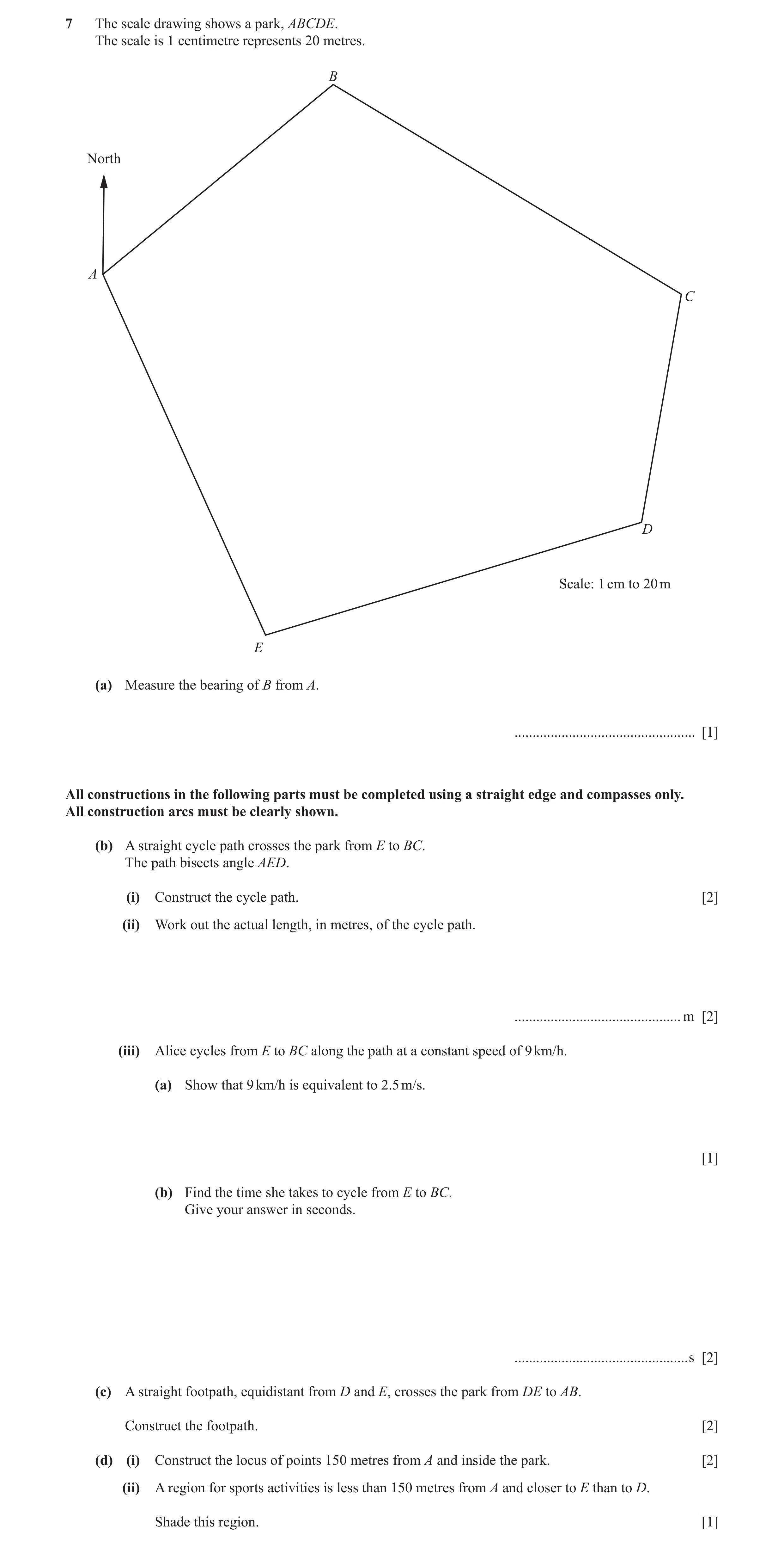
7 The scale drawing shows a park, ABCDE. The scale is 1 centimetre represents 20 metres. B North A C D Scale: 1 cm to 20 m E (a) Measure the bearing of B from A. … [1] All constructions in the following parts must be completed using a straight edge and compasses only. All construction arcs must be clearly shown. (b) A straight cycle path crosses the park from E to BC. The path bisects angle AED. (i) Construct the cycle path. [2] (ii) Work out the actual length, in metres, of the cycle path. … m [2] (iii) Alice cycles from E to BC along the path at a constant speed of 9 km/h. (a) Show that 9 km/h is equivalent to 2.5 m/s. [1] (b) Find the time she takes to cycle from E to BC. Give your answer in seconds. … s [2] (c) A straight footpath, equidistant from D and E, crosses the park from DE to AB. Construct the footpath. [2] (d) (i) Construct the locus of points 150 metres from A and inside the park. [2] (ii) A region for sports activities is less than 150 metres from A and closer to E than to D. Shade this region. [1]
13 marks
Mark scheme: 7 (a) 48 to 52 1 (b) (i) Correct ruled angle bisector with 2 B1 for accurate with no / one pair of arcs 2 pairs of correct arcs or M1 for 2 pairs of correct arcs with no / wrong line (ii) 270 to 278 2FT B1 for 13.5 ± 0.2 [cm] seen in working or B1FT for their line from E ± 0.2cm to outside (iii)(a) 9 × 1000 ÷ ( 60 × 60 ) 1 (iii)(b) 108 to 111.2 2FT M1FT for their (b)(ii) ÷ 2.5 (c) Correct ruled perpendicular 2 B1 for accurate with no / one pair of arcs bisector of DE with 2 pairs of or arcs M1 for correct intersecting arcs with no / wrong line (d) (i) Arc centre A, radius 7.5 2 B1 for centre A, incorrect radius from AB to AE or correct arc too short (ii) Correct region shaded 1FT follow through provided an area is possible
This question in 0580/33 May/June 2016
Q20 · Complete parts (a)(i) and (b)(i) of this question using a straight edge and compasses only 0580/32 Feb/March 2017
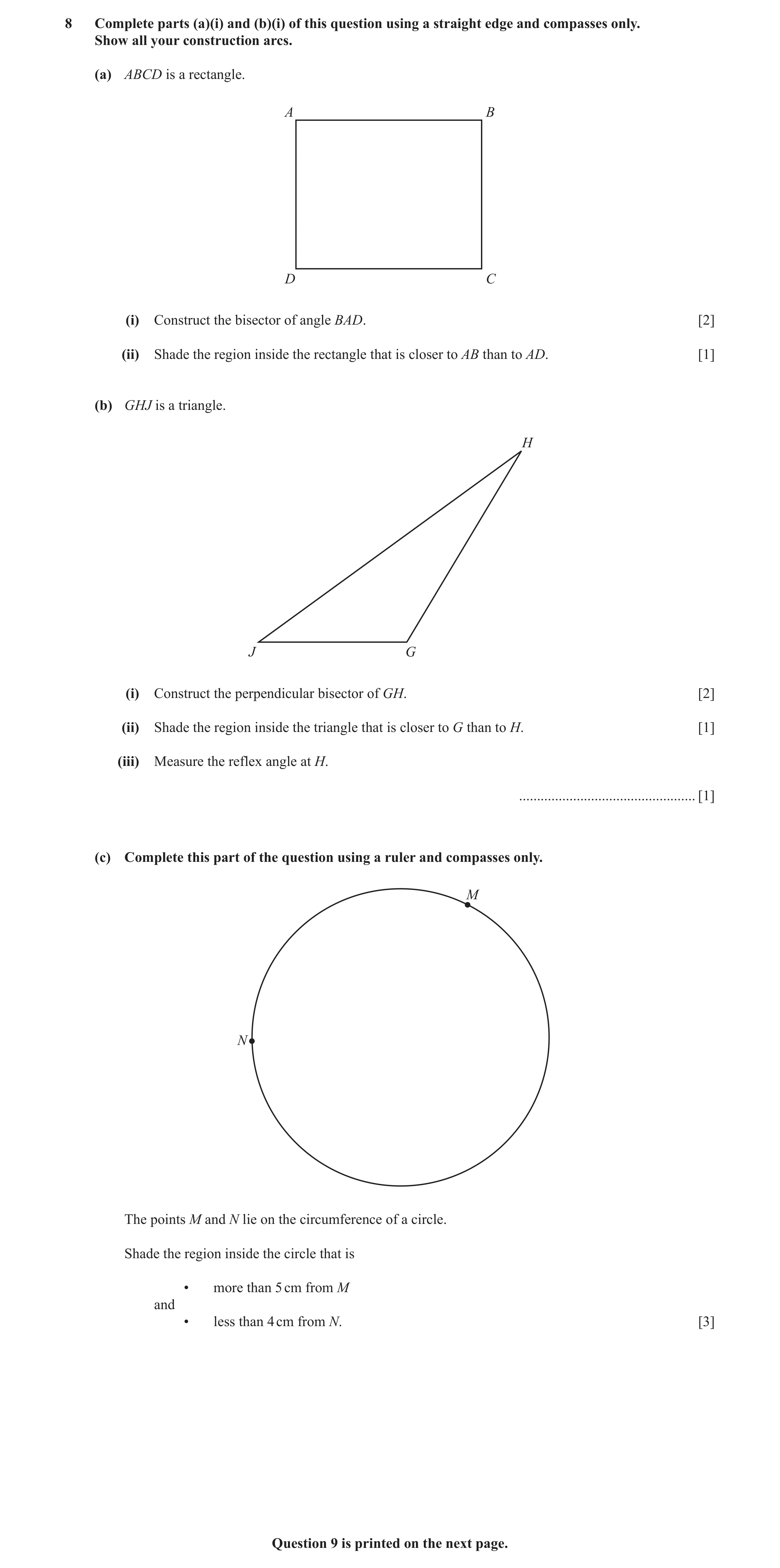
8 Complete parts (a)(i) and (b)(i) of this question using a straight edge and compasses only. Show all your construction arcs. (a) ABCD is a rectangle. A B D C (i) Construct the bisector of angle BAD. [2] (ii) Shade the region inside the rectangle that is closer to AB than to AD. [1] (b) GHJ is a triangle. H J G (i) Construct the perpendicular bisector of GH. [2] (ii) Shade the region inside the triangle that is closer to G than to H. [1] (iii) Measure the reflex angle at H. … [1] (c) Complete this part of the question using a ruler and compasses only. M N The points M and N lie on the circumference of a circle. Shade the region inside the circle that is • more than 5 cm from M and • less than 4 cm from N. [3] Question 9 is printed on the next page.
10 marks
Mark scheme: 8 (a) (i) correct angle bisector drawn with 2 2 B1 for correct bisector drawn without arcs pairs of arcs or for two pairs of correct arcs (ii) correct shading 1FT (b) (i) correct perpendicular bisector 2 B1 for correct bisector drawn without arcs drawn with 2 pairs of arcs or for two pairs of correct arcs (ii) correct shading 1FT (iii) 337° 1 (c) correct arcs drawn and correct 3 B1 5 cm arc drawn centre M region shaded inside circle B1 4 cm arc drawn centre N If zero scored, SC1 for arcs drawn wrong way round
This question in 0580/32 Feb/March 2017
Q21 · The scale drawing shows one side, AB, of a triangular field, ABC 0580/32 May/June 2017
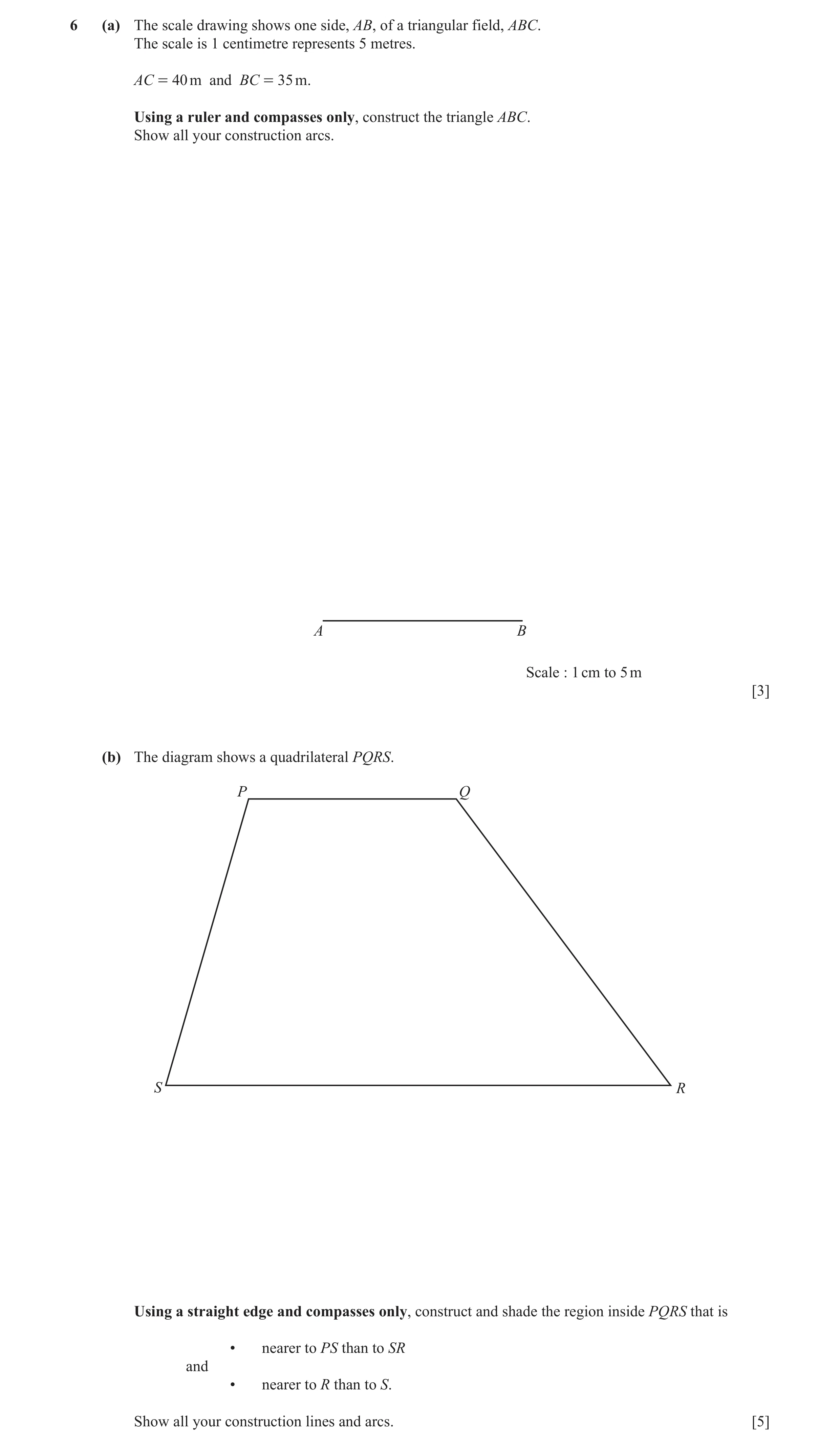
6 (a) The scale drawing shows one side, AB, of a triangular field, ABC. The scale is 1 centimetre represents 5 metres. AC = 40 m and BC = 35 m. Using a ruler and compasses only, construct the triangle ABC. Show all your construction arcs. A B Scale : 1 cm to 5 m [3] (b) The diagram shows a quadrilateral PQRS. P Q S R Using a straight edge and compasses only, construct and shade the region inside PQRS that is • nearer to PS than to SR and • nearer to R than to S. Show all your construction lines and arcs. [5]
8 marks
Mark scheme: 6(a) Completely correct ruled triangle 3 B1 for AC of length 8 cm with arcs B1 for BC of length 7 cm or if zero scored, M1 for two correct intersecting arcs If zero scored, SC1 for ruled triangle with arcs with AC of length 7 cm and BC of length 8 cm 6(b) Accurate ruled bisector of angle S B2 B1 for correct ruled bisector of angle S which with two correct pairs of arcs and reaches QR drawn without arcs or with wrong reaching side QR arcs or correct short line with arcs or 2 pairs of correct arcs with no line Accurate ruled bisector of side SR B2 B1 for correct ruled bisector of SR which with two correct pairs of arcs and reaches PQ drawn without arcs or with wrong reaching side PQ arcs or correct short line with arcs or 2 pairs of correct arcs with no line correct region shaded B1dep Dep. on a ruled line through angle S and a ruled line through side SR
This question in 0580/32 May/June 2017
Q22 · The scale drawing shows the positions of three towns A, B and C 0580/31 Oct/Nov 2017
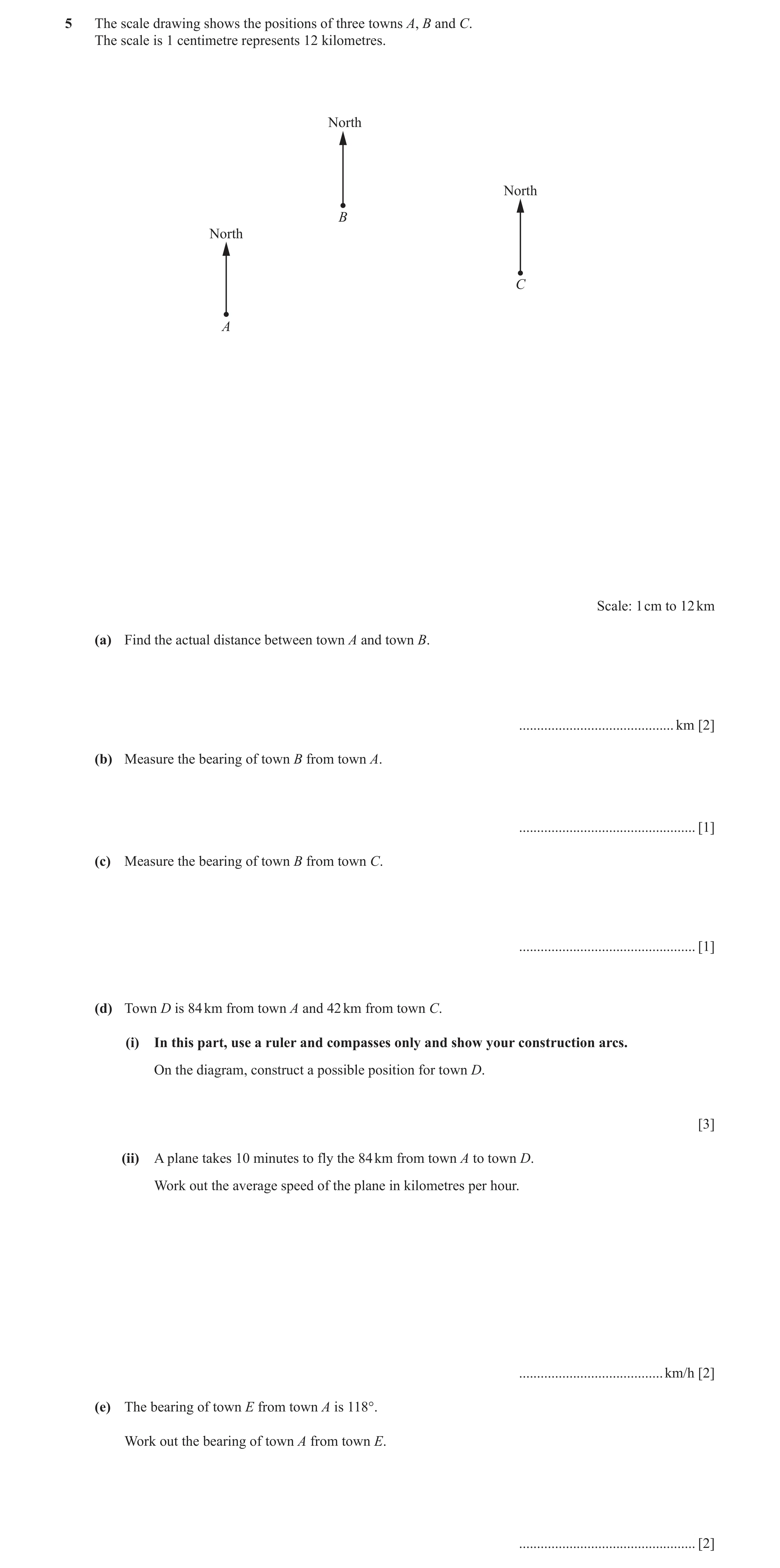
5 The scale drawing shows the positions of three towns A, B and C. The scale is 1 centimetre represents 12 kilometres. North North B North C A Scale: 1 cm to 12 km (a) Find the actual distance between town A and town B. … km [2] (b) Measure the bearing of town B from town A. … [1] (c) Measure the bearing of town B from town C. … [1] (d) Town D is 84 km from town A and 42 km from town C. (i) In this part, use a ruler and compasses only and show your construction arcs. On the diagram, construct a possible position for town D. [3] (ii) A plane takes 10 minutes to fly the 84 km from town A to town D. Work out the average speed of the plane in kilometres per hour. … km/h [2] (e) The bearing of town E from town A is 118°. Work out the bearing of town A from town E. … [2]
11 marks
Mark scheme: 5(a) 51.6 2 B1 for 4.3[cm] 5(b) [0]47 1 5(c) 292 1 5(d)(i) Arc centre A radius 7 cm 1 Arc centre C radius 3.5 cm 1 One point marked at intersection 1 If zero scored, SC1 for any arc centred on A or C, of correct arcs or correct point marked with no arcs 5(d)(ii) 504 2 M1 for 84 ÷ their time or 84 × 6 5(e) 298 2 M1 for 118 + 180 oe
This question in 0580/31 Oct/Nov 2017
Q23 · The scale drawing shows the positions of Annika’s house, A, and Bernhard’s house, B, on a… 0580/31 May/June 2018
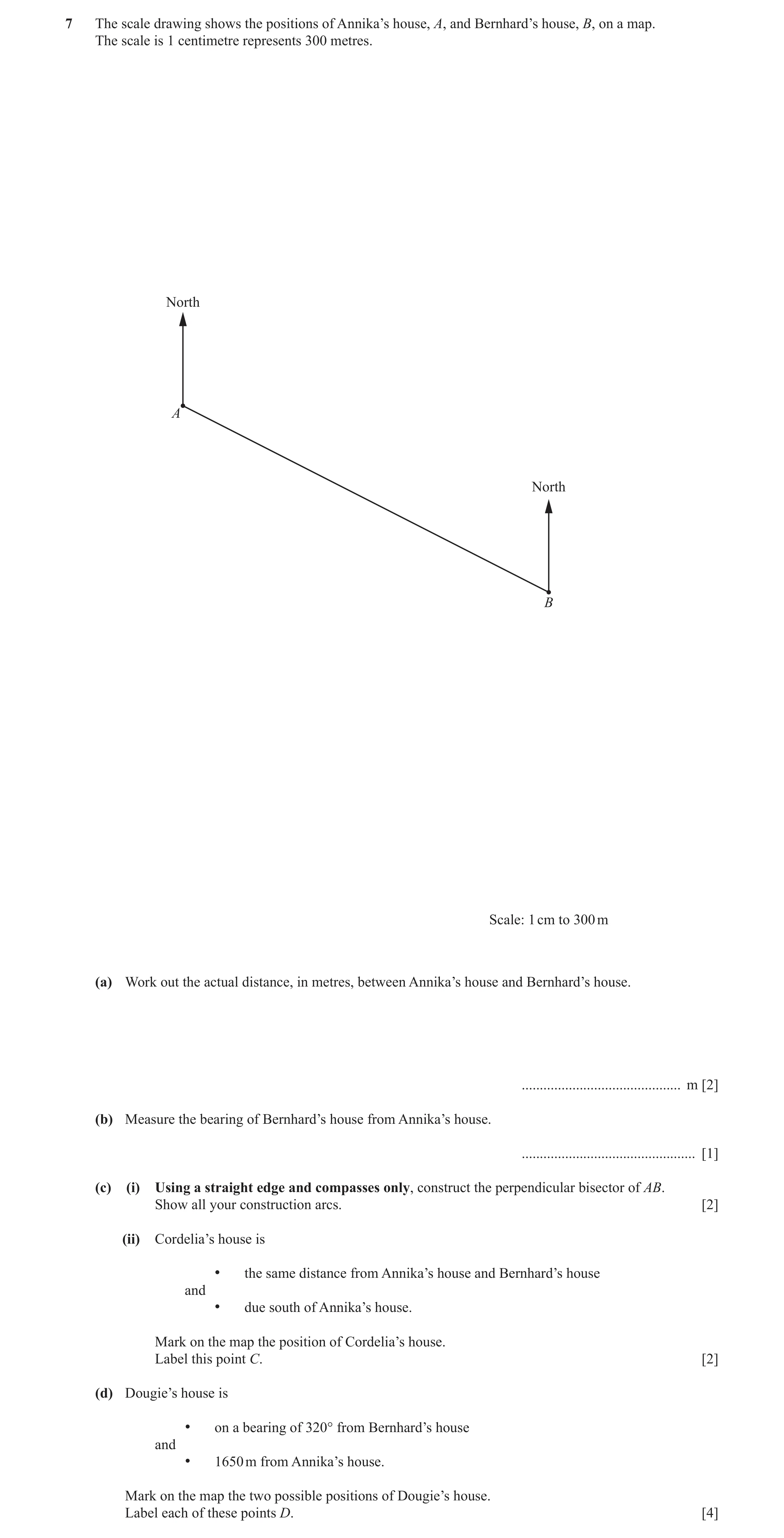
7 The scale drawing shows the positions of Annika’s house, A, and Bernhard’s house, B, on a map. The scale is 1 centimetre represents 300 metres. North A North B Scale: 1 cm to 300 m (a) Work out the actual distance, in metres, between Annika’s house and Bernhard’s house. … m [2] (b) Measure the bearing of Bernhard’s house from Annika’s house. … [1] (c) (i) Using a straight edge and compasses only, construct the perpendicular bisector of AB. Show all your construction arcs. [2] (ii) Cordelia’s house is • the same distance from Annika’s house and Bernhard’s house and • due south of Annika’s house. Mark on the map the position of Cordelia’s house. Label this point C. [2] (d) Dougie’s house is • on a bearing of 320° from Bernhard’s house and • 1650 m from Annika’s house. Mark on the map the two possible positions of Dougie’s house. Label each of these points D. [4]
11 marks
Mark scheme: 7(a) 3300 2 B1 for 11 cm seen 7(b) 117 1 7(c)(i) Correct ruled perpendicular bisector 2 B1 for correct bisector drawn without arcs or with 2 pairs of arcs for two pairs of correct arcs 7(c)(ii) C marked correctly 2 M1 for clear attempt at a line south from A 7(d) D marked correctly twice with 4 B1 for line indicating correct bearing of 320 correct arc(s) and line seen measured B2 for an arc radius 5.5, centre A, [meeting their bearing line at least once], or B1 for an arc any radius, centre A, with D marked on it [meeting their bearing line at least once], or B1 for a complete circle centre A of any radius, or M1 for 1650 ÷ 300 If 0 scored SC2 for D marked correctly within tolerance at least once with incorrect/no arc(s) and incorrect/no line seen
This question in 0580/31 May/June 2018
Q24 · The scale drawing represents three sides, AB, BC and CD, of a wildlife park 0580/32 May/June 2018
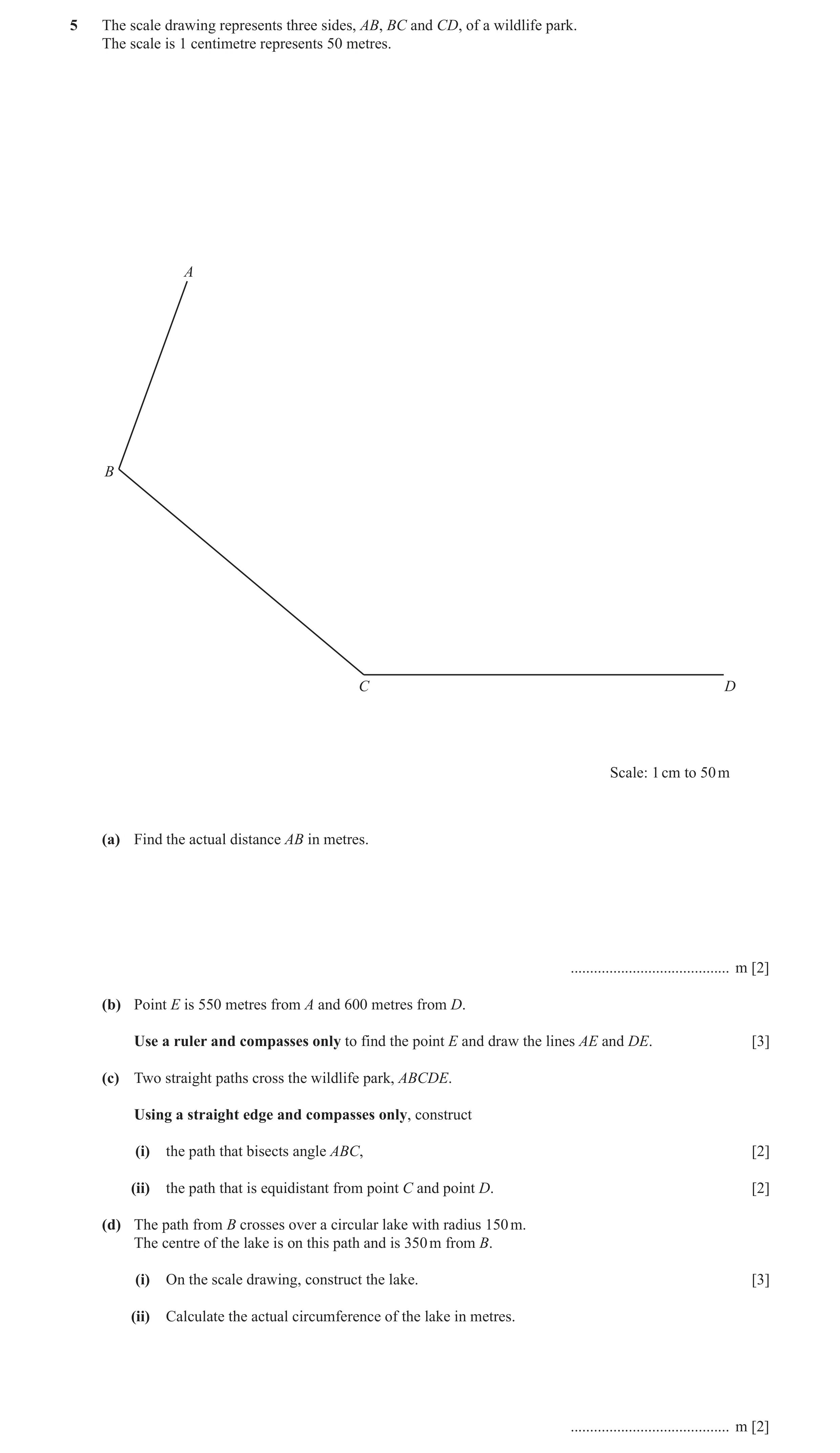
5 The scale drawing represents three sides, AB, BC and CD, of a wildlife park. The scale is 1 centimetre represents 50 metres. A B C D Scale: 1 cm to 50 m (a) Find the actual distance AB in metres. … m [2] (b) Point E is 550 metres from A and 600 metres from D. Use a ruler and compasses only to find the point E and draw the lines AE and DE. [3] (c) Two straight paths cross the wildlife park, ABCDE. Using a straight edge and compasses only, construct (i) the path that bisects angle ABC, [2] (ii) the path that is equidistant from point C and point D. [2] (d) The path from B crosses over a circular lake with radius 150 m. The centre of the lake is on this path and is 350 m from B. (i) On the scale drawing, construct the lake. [3] (ii) Calculate the actual circumference of the lake in metres. … m [2]
14 marks
Mark scheme: 5(a) 250 2 B1 for 5 [ cm] oe 5(b) Correct point E joined to A and D 3 B2 for correct point E with arcs without with ruled lines and with arcs lines or correct ruled shape without arcs or B1 for drawing AE = 11 cm or drawing DE = 12 cm or correct point E without arcs and lines 5(c)(i) Correct ruled bisector of angle ABC B2 B1 for a correct ruled angle bisector with which reaches DE with two correct no/wrong arcs or two correct pairs of arcs pairs of arcs 5(c)(ii) Correct ruled perpendicular bisector B2 B1 for a correct ruled perpendicular of side CD which reaches AE with bisector with no/wrong arcs or two correct two correct pairs of arcs pairs of arcs 5(d)(i) Constructed circle, centre 7 cm from 3 3FT along their (c)(i) B along bisector of ABC, with radius B1 for a circle, centre 7 cm from B, any 3 cm radius M1 for a circle, radius 3 cm seen anywhere 5(d)(ii) 942 or 943 or 942.4 to 942.6 2 M1 for (2 × 150)π or 300π soi
This question in 0580/32 May/June 2018
Q25 · The scale drawing shows the positions of an airport (A) and a train station (T) on a map 0580/32 Feb/March 2019
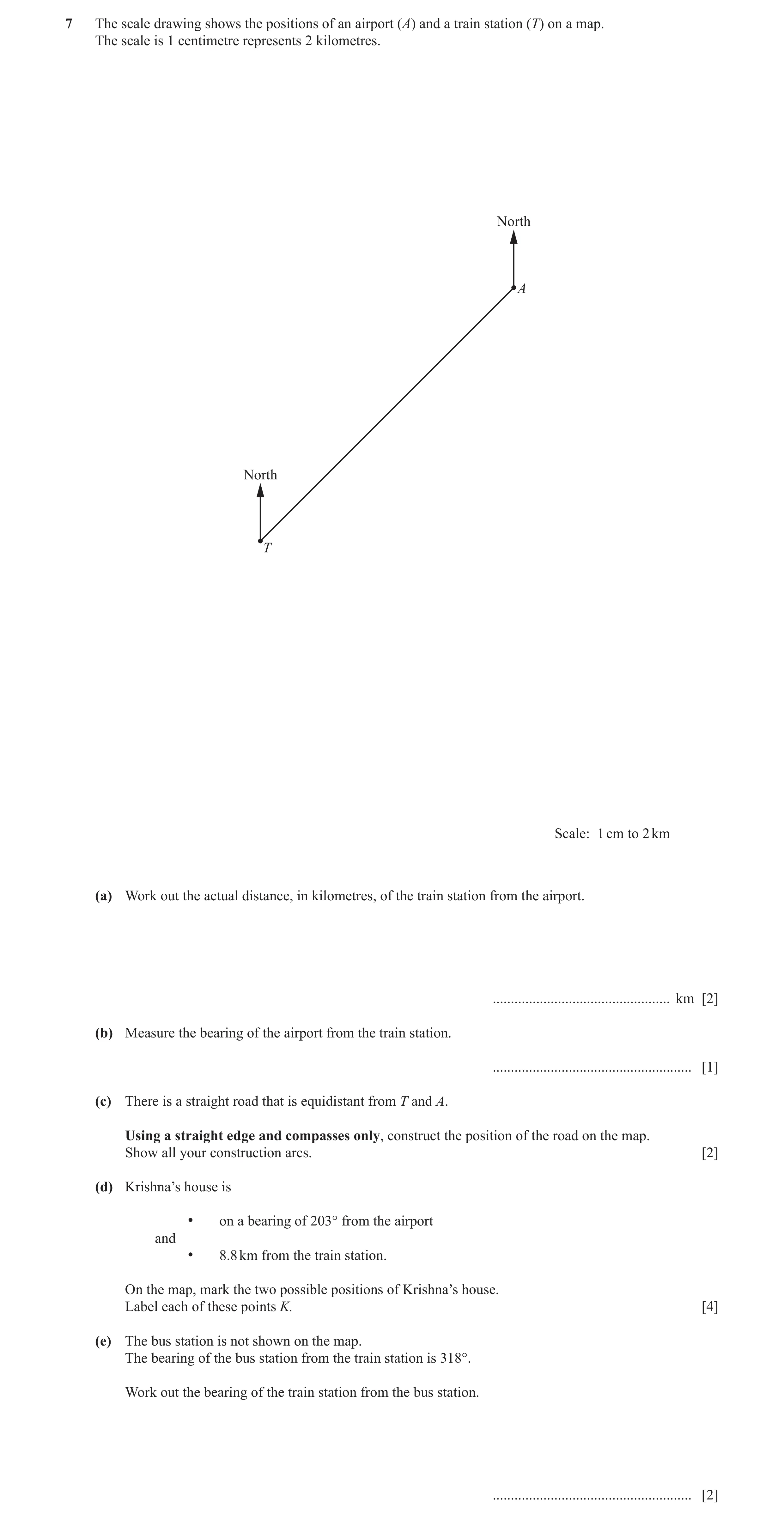
7 The scale drawing shows the positions of an airport (A) and a train station (T) on a map. The scale is 1 centimetre represents 2 kilometres. North A North T Scale: 1 cm to 2 km (a) Work out the actual distance, in kilometres, of the train station from the airport. … km [2] (b) Measure the bearing of the airport from the train station. … [1] (c) There is a straight road that is equidistant from T and A. Using a straight edge and compasses only, construct the position of the road on the map. Show all your construction arcs. [2] (d) Krishna’s house is • on a bearing of 203° from the airport and • 8.8 km from the train station. On the map, mark the two possible positions of Krishna’s house. Label each of these points K. [4] (e) The bus station is not shown on the map. The bearing of the bus station from the train station is 318°. Work out the bearing of the train station from the bus station. … [2]
11 marks
Mark scheme: 7(a) 19.2 2 B1 for 9.6 cm seen 7(b) [0]45 1 7(c) Correct ruled perpendicular bisector 2 B1 for correct bisector drawn without arcs with 2 pairs of arcs or for two pairs of correct arcs 7(d) K marked correctly twice 4 B1 for line indicating correct bearing of 203° measured B2 for an arc radius 4.4 cm, centre T, the arc length being fit for purpose or B1 for an arc of any radius, centre T or M1 for 8.8 ÷ 2 soi by 4.4 K marked correctly once implies 3 marks 7(e) 138 2 M1 for 318 − 180 or a correct diagram seen
This question in 0580/32 Feb/March 2019
Q26 · Using a straight edge and compasses only, construct the equilateral triangle ABC 0580/32 Feb/March 2019
10 (a) Using a straight edge and compasses only, construct the equilateral triangle ABC. The base AB has been drawn for you. A B [2] (b) 16 m NOT TO SCALE 14 m 24 m Calculate the area of this trapezium. … m2 [2] (c) Each interior angle of a regular polygon is 162°. Calculate the number of sides of the polygon. … [3] (d) NOT TO SCALE h cm 6h cm The area of this triangle is 363 cm2. Calculate the value of h. h = … [3] (e) NOT TO SCALE This shape is drawn using two semicircles that have the same centre. The large semicircle has radius 7 cm. The small semicircle has radius 3 cm. Calculate the area of the shape. … cm2 [3]
13 marks
Mark scheme: 10(a) correct triangle drawn with arcs 2 B1 for correct triangle without arcs or for correct arcs 10(b) 280 2 1 M1 for ( 24 + 16 ) × 14 oe 2 10(c) 20 3 360 M2 for or better 180 − 162 or M1 for 180 − 162 or ( n − 2 ) × 180 = 162 n or better 10(d) 11 3 2 363 M2 for h = or better 3 1 or M1 for × h × 6 h = 363 oe 2 10(e) 62.8 or 62.83 to 62.84 3 1 2 1 2 M2 for π × 7 − π × 3 oe 2 2 1 2 1 2 or M1 for × π × 7 or × π × 3 2 2
This question in 0580/32 Feb/March 2019
Q27 · The scale drawing shows a rectangle ABCD 0580/31 May/June 2019
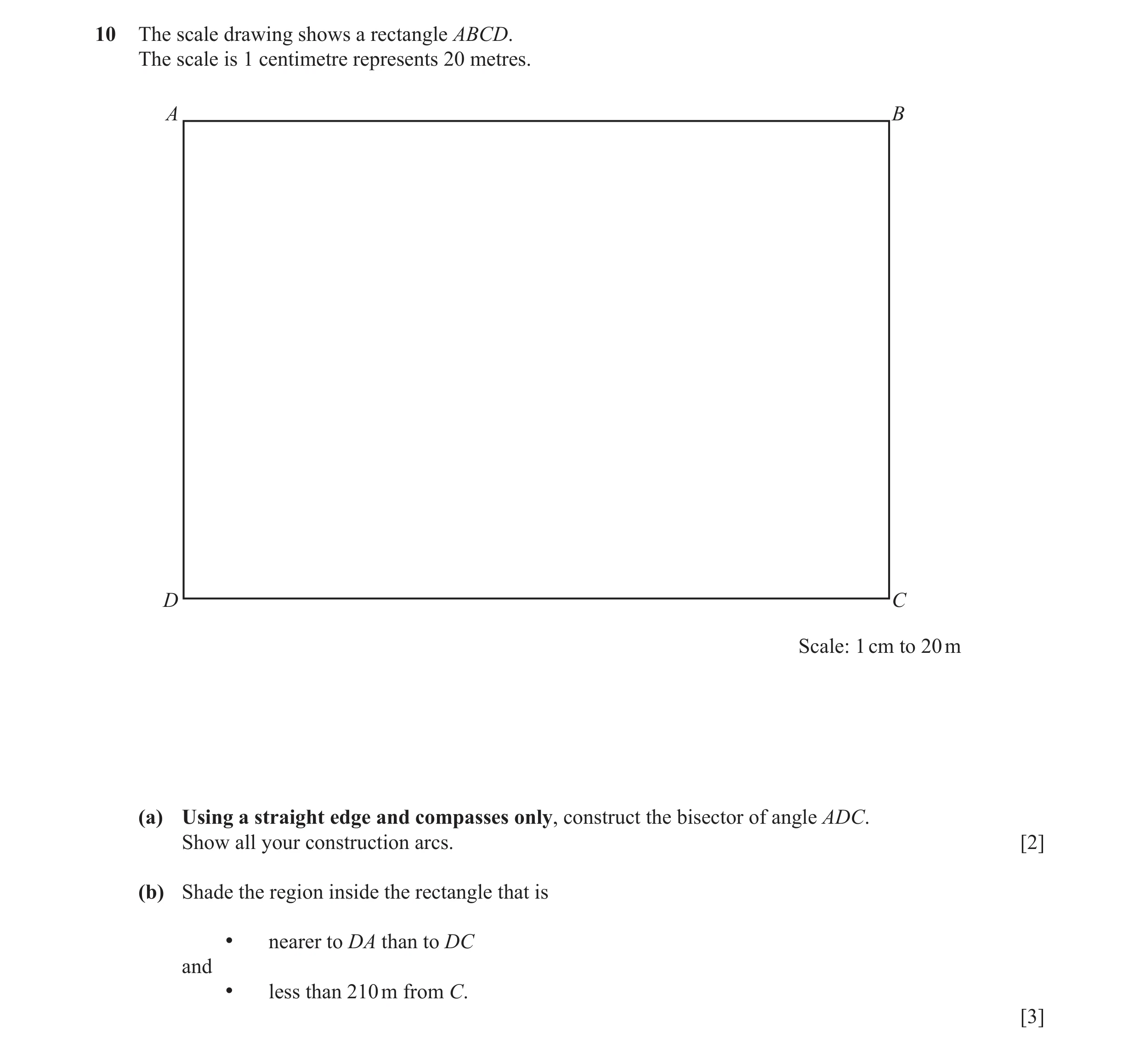
10 The scale drawing shows a rectangle ABCD. The scale is 1 centimetre represents 20 metres. A B D C Scale: 1 cm to 20 m (a) Using a straight edge and compasses only, construct the bisector of angle ADC. Show all your construction arcs. [2] (b) Shade the region inside the rectangle that is • nearer to DA than to DC and • less than 210 m from C. [3]
5 marks
Mark scheme: 10(a) Correct angle bisector with two 2 B1 for correct angle bisector with pairs of correct arcs no/incorrect arcs or two pairs of correct arcs with no line 10(b) Correct arc with radius 10.5 cm 3 B2 for correct arc centre C or B1 for any arc centre C or 10.5 seen and correct region shaded B1dep for shading correct region dep on at least (a) B1(b) B1
This question in 0580/31 May/June 2019
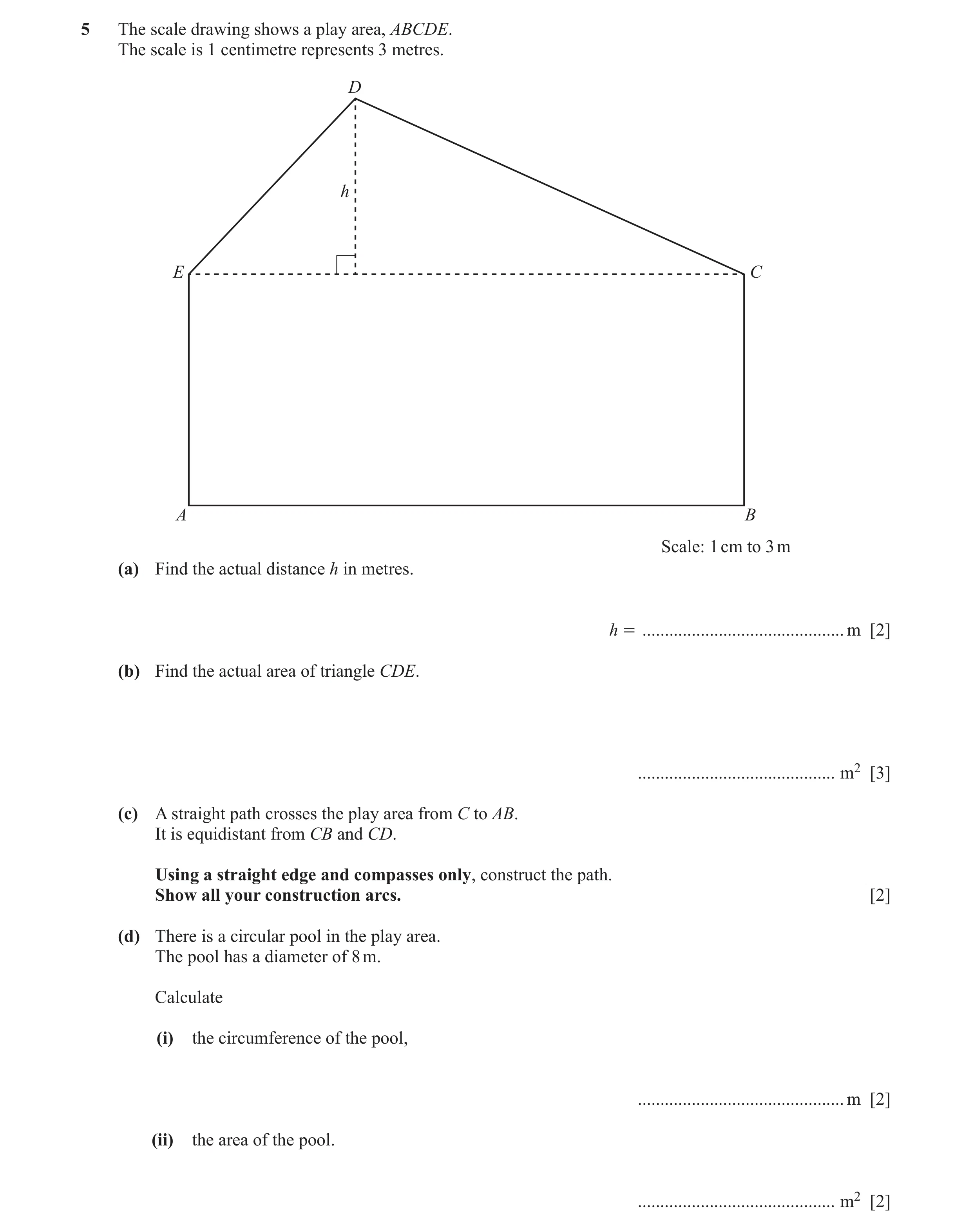
Q28 · The scale drawing shows a play area, ABCDE 0580/33 May/June 2019
5 The scale drawing shows a play area, ABCDE. The scale is 1 centimetre represents 3 metres. D h E C A B Scale: 1 cm to 3 m (a) Find the actual distance h in metres. h = … m [2] (b) Find the actual area of triangle CDE. … m2 [3] (c) A straight path crosses the play area from C to AB. It is equidistant from CB and CD. Using a straight edge and compasses only, construct the path. Show all your construction arcs. [2] (d) There is a circular pool in the play area. The pool has a diameter of 8 m. Calculate (i) the circumference of the pool, … m [2] (ii) the area of the pool. … m2 [2]
11 marks
Mark scheme: 5(a) 10.8 to 12 2 B1 for 3.6 cm to 4.0 cm measured 5(b) 191 to 220 3 B1 for 11.8 to 12.2 measured or 35.4 to 36.6 M1 for 0.5 × their (a) × their actual EC oe 5(c) Correct ruled bisector of angle BCD 2 B1 for correct angle bisector with with correct arcs no/incorrect arcs, or two pairs of supporting arcs or correct line short of AB with or without arcs 5(d)(i) 25.1 or 25.13 to 25.14 2 M1 for 8 × π oe 5(d)(ii) 50.3 or 50.26 to 50.272 2 M1 for π (0.5 × 8)2 oe
This question in 0580/33 May/June 2019
Q29 · The scale drawing shows the positions of two buoys, A and B, in the sea 0580/31 Oct/Nov 2019
8 (a) The scale drawing shows the positions of two buoys, A and B, in the sea. The scale is 1 centimetre represents 20 kilometres. North North B Land A Sea Scale : 1 cm to 20 km Land (i) Work out the actual distance between buoy A and buoy B. … km [2] (ii) Measure the bearing of buoy B from buoy A. … [1] (iii) Buoy C is 120 km from buoy B on a bearing of 300°. On the scale drawing, mark the position of buoy C. [2] (iv) Marco sails his boat so that he is always equidistant from buoy A and buoy B. On the scale drawing, use a straight edge and compasses only to construct the path of the boat. Show all your construction arcs. [2] (b) The amount of fuel, t litres, in the boat’s fuel tank is 135 litres, correct to the nearest litre. Complete the statement about the value of t. … G t 1 … [2] (c) Marco has ropes of four different colours. He takes a rope at random. Colour Brown White Red Green Probability 0.35 0.04 0.2 Complete the table. [2] (d) When Marco arrives at a port the temperature is 5 °C. At midnight the temperature has fallen by 7 °C. Find the temperature at midnight. … °C [1] (e) Last year the cost to keep a boat at the port was $14 per night. This year the cost has increased by 12%. Calculate the cost this year. $ … [2] (f) Marco watched 25 boats enter the port, of which 9 had a mast. There are a total of 200 boats in the port. Calculate an estimate of the number of boats in the port that have a mast. … [2] Question 9 is printed on the next page.
16 marks
Mark scheme: 8(a)(i) 220 2 M1 for 11 8(a)(ii) [0]80° 1 8(a)(iii) C in correct position 2 B1 for correct distance of 6 cm or bearing of 300° from B 8(a)(iv) Correct line drawn with 2 pairs of 2 B1 for correct line with no or incorrect arcs correct arcs or correct arcs but no line 8(b) 134.5, 135.5 2 B1 for one correct or both correct but reversed 8(c) 0.41 2 M1 for 1 – (0.35 + 0.04 + 0.2) 8(d) –2 1 8(e) 15.68 cao 2 12 M1 for (1+ ) ×14 oe 100 8(f) 72 2 9 M1 for × 200 oe 25
This question in 0580/31 Oct/Nov 2019
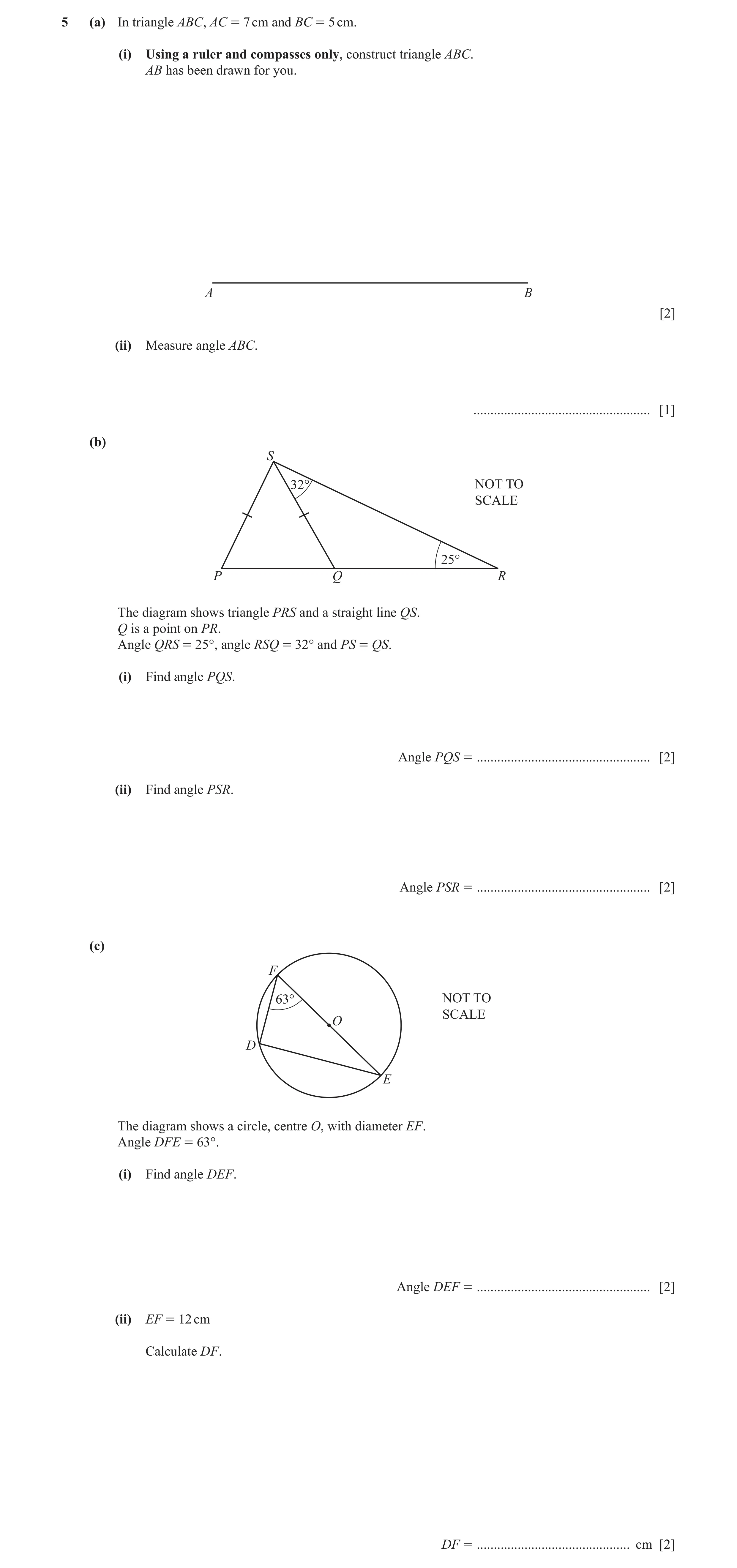
Q30 · In triangle ABC, AC = 7 cm and BC = 5 cm 0580/32 Oct/Nov 2019
5 (a) In triangle ABC, AC = 7 cm and BC = 5 cm. (i) Using a ruler and compasses only, construct triangle ABC. AB has been drawn for you. A B [2] (ii) Measure angle ABC. … [1] (b) S 32° NOT TO SCALE 25° P Q R The diagram shows triangle PRS and a straight line QS. Q is a point on PR. Angle QRS = 25°, angle RSQ = 32° and PS = QS. (i) Find angle PQS. Angle PQS = … [2] (ii) Find angle PSR. Angle PSR = … [2] (c) F 63° NOT TO SCALE O D E The diagram shows a circle, centre O, with diameter EF. Angle DFE = 63°. (i) Find angle DEF. Angle DEF = … [2] (ii) EF = 12 cm Calculate DF. DF = … cm [2]
11 marks
Mark scheme: 5(a)(i) Correct triangle with correct arcs 2 B1 for correct triangle with incorrect/no arcs or for two correct arcs seen If 0 scored, SC1 for triangle with arcs but with AC = 5 cm and BC = 7 cm 5(a)(ii) Angle ABC measured correctly 1 STRICT FT their angle ABC 5(b)(i) 57 2 M1 for 180 – 32 – 25 oe or 123 5(b)(ii) 98 2 M1 for 180 – 25 – their (b)(i) oe or 180 – 2 × their (b)(i) + 32 or B1 for angle PSQ = 66 5(c)(i) 27 2 M1 for 180 − 90 − 63 oe or B1 for angle FDE = 90 soi 5(c)(ii) 5.45 or 5.447 to 5.448 2 DF DF M1 for cos 63 = or sin 27 = oe 12 12
This question in 0580/32 Oct/Nov 2019
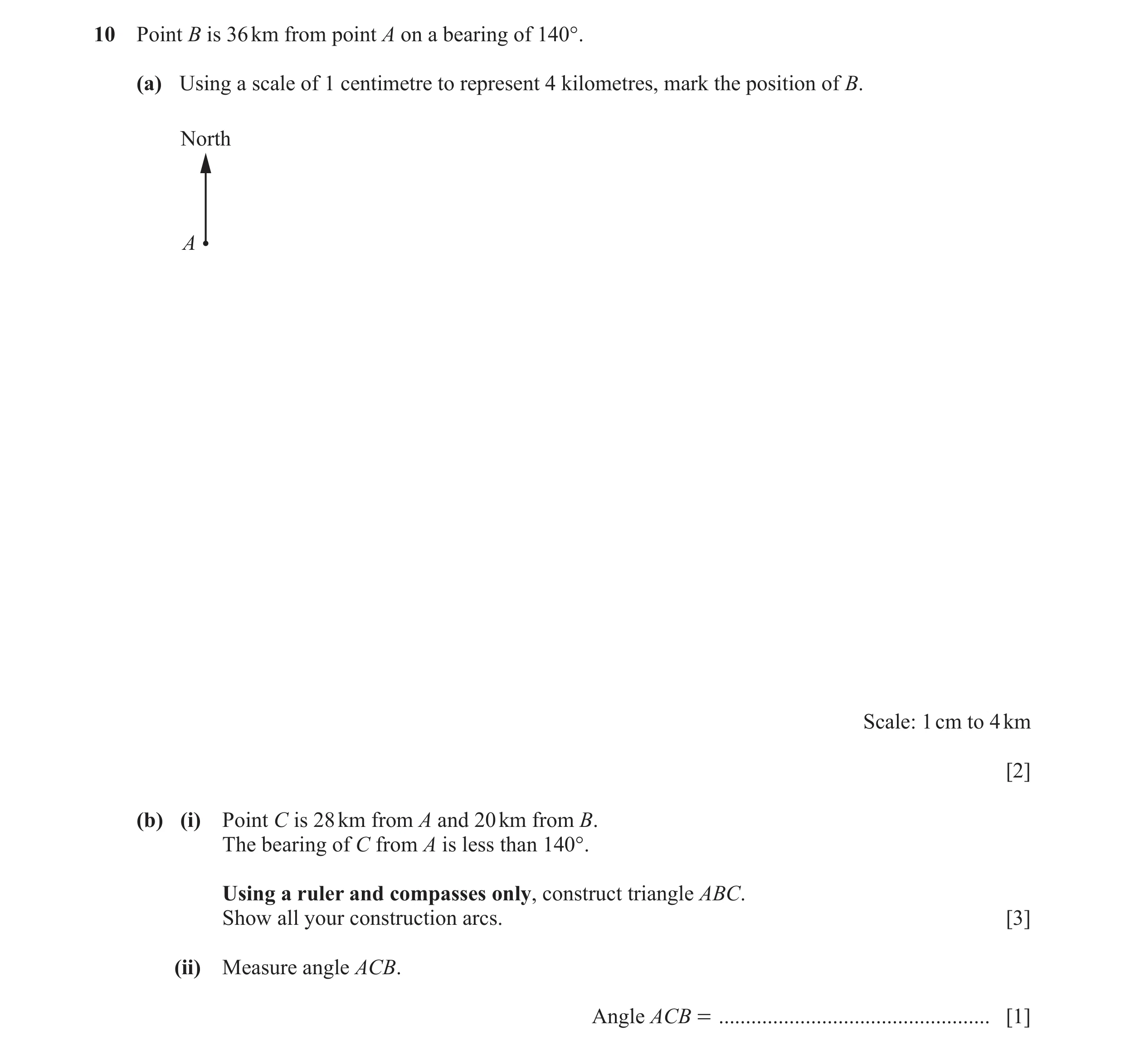
Q31 · Point B is 36 km from point A on a bearing of 140° 0580/31 May/June 2020
10 Point B is 36 km from point A on a bearing of 140°. (a) Using a scale of 1 centimetre to represent 4 kilometres, mark the position of B. North A Scale: 1 cm to 4 km [2] (b) (i) Point C is 28 km from A and 20 km from B. The bearing of C from A is less than 140°. Using a ruler and compasses only, construct triangle ABC. Show all your construction arcs. [3] (ii) Measure angle ACB. Angle ACB = … [1]
6 marks
Mark scheme: 10(a) Correct position of town B 2 B1 for correct bearing B1 for correct distance 10(b)(i) Correct triangle drawn 3 B2 for correct triangle with no or wrong arcs or correct position of C with arcs (no triangle) or B1 for one line correct length drawn or 7 and 5 seen 10(b)(ii) 38 to 42 1 FT their measured angle at C
This question in 0580/31 May/June 2020
Q32 · A sequence of patterns is made using rectangular blocks 0580/32 May/June 2021
9 A sequence of patterns is made using rectangular blocks. Pattern 1 Pattern 2 Pattern 3 Pattern 4 (a) Draw Pattern 4. [1] (b) Complete the table. Pattern number 1 2 3 4 5 Number of blocks 1 4 7 [2] (c) Find an expression, in terms of n, for the number of blocks in Pattern n. … [2] (d) Tara wants to make one pattern in this sequence. She has 84 blocks. Work out the largest pattern number she can make and the number of blocks remaining. Pattern number … Number of blocks remaining … [4]
9 marks
Mark scheme: 9(a) Correct pattern 4 1 9(b) 10 13 2 B1 for each If 0 scored, SC1 for Pattern 5 three more than their Pattern 4 9(c) 3n – 2 oe final answer 2 B1 for 3n + j (j ≠ −2) or kn – 2 (k ≠ 0 or 3) or 3n – 2 oe seen then spoilt 9(d) 28 nfww 4 FT 2 B3 for 28 nfww as answer or B3FT for their n correctly truncated or B2 for 28.6 to 28.7 ( 84 − their (b) ) or B2FT for n = correctly their (a) evaluated or M1 for their (c) = 84 or 3 × 28 – 2 = 82 or for adding up in threes up to 82 or 85
This question in 0580/32 May/June 2021
Q33 · In triangle RST, RT = 7 cm and ST = 4 cm 0580/32 Oct/Nov 2023
8 (a) In triangle RST, RT = 7 cm and ST = 4 cm. (i) Using a ruler and compasses only, construct triangle RST. Leave in your construction arcs. The line RS has been drawn for you. R S [2] (ii) Measure the distance from S to the midpoint of RT. Give your answer in millimetres. … mm [1] (b) Town A is 8.5 cm from town B on a map. The scale of the map is 1 : 50 000. Calculate the actual distance from town A to town B. Give your answer in kilometres. … km [2] (c) E x° NOT TO SCALE 118° A B C D The diagram shows triangle BCE and a straight line ABCD. BE = CE and angle DCE = 118°. Find the value of x. x = … [2] (d) A NOT TO 8.9 cm SCALE 4.8 cm C B The diagram shows a right-angled triangle ABC. Show that BC is 7.5 cm, correct to 2 significant figures. [3] Question 9 is printed on the next page.
10 marks
Mark scheme: 8(a)(i) Correct triangle with correct arcs 2 B1 for correct triangle with incorrect or no arcs or for two correct arcs If 0 scored, SC1 for triangle with arcs but lines interchanged 8(a)(ii) 52 1 FT their complete triangle 8(b) 4.25 2 B1 for figs 425 as answer or 1 cm = 0.5 km seen or M1 for 8.5 50 000 oe 8(c) 56 2 M1 for 180 – 2 (180 – 118) oe or B1 for [angle] ECB or EBC = 62 8(d) 8.92 – 4.82 M2 M1 for 4.82 + BC2 = 8.92 2 2 A1 8.9 − 4.8 = 7.49… or 56.17 = 7.49…
This question in 0580/32 Oct/Nov 2023
Q34 · L P Draw a line through point P that is perpendicular to line l 0580/32 Feb/March 2024
1 (a) l P Draw a line through point P that is perpendicular to line l. [1] (b) Write down the mathematical names for two different quadrilaterals with • two lines of symmetry and • rotational symmetry of order two. … and … [2] (c) The diagram shows a quadrilateral on a 1 cm2 grid. Find the area of this quadrilateral. … cm2 [1] (d) H G x° F 143° 103° NOT TO SCALE 82° E y° D The diagram shows a quadrilateral DEFG and a straight line FGH. (i) Angle DEF = 82° . Write down the mathematical name for this type of angle. … [1] (ii) Work out the value of x. Give a geometrical reason for your answer. x = … because … … [2] (iii) Work out the value of y. Give a geometrical reason for your answer. y = … because … … [2]
9 marks
Mark scheme: Question Answer Marks Partial Marks 1(a) Ruled line drawn through P, 1 perpendicular to l. 1(b) rectangle rhombus 2 B1 for each 1(c) 11 1 1(d)(i) acute 1 1(d)(ii) 37 1 Angles on a straight line add to 180 1 1(d)(iii) 32 1 Angles in a quadrilateral add to 360 1
This question in 0580/32 Feb/March 2024
Q35 · In triangle DEF, DE = 6 cm and DF = 4 0580/32 Feb/March 2024
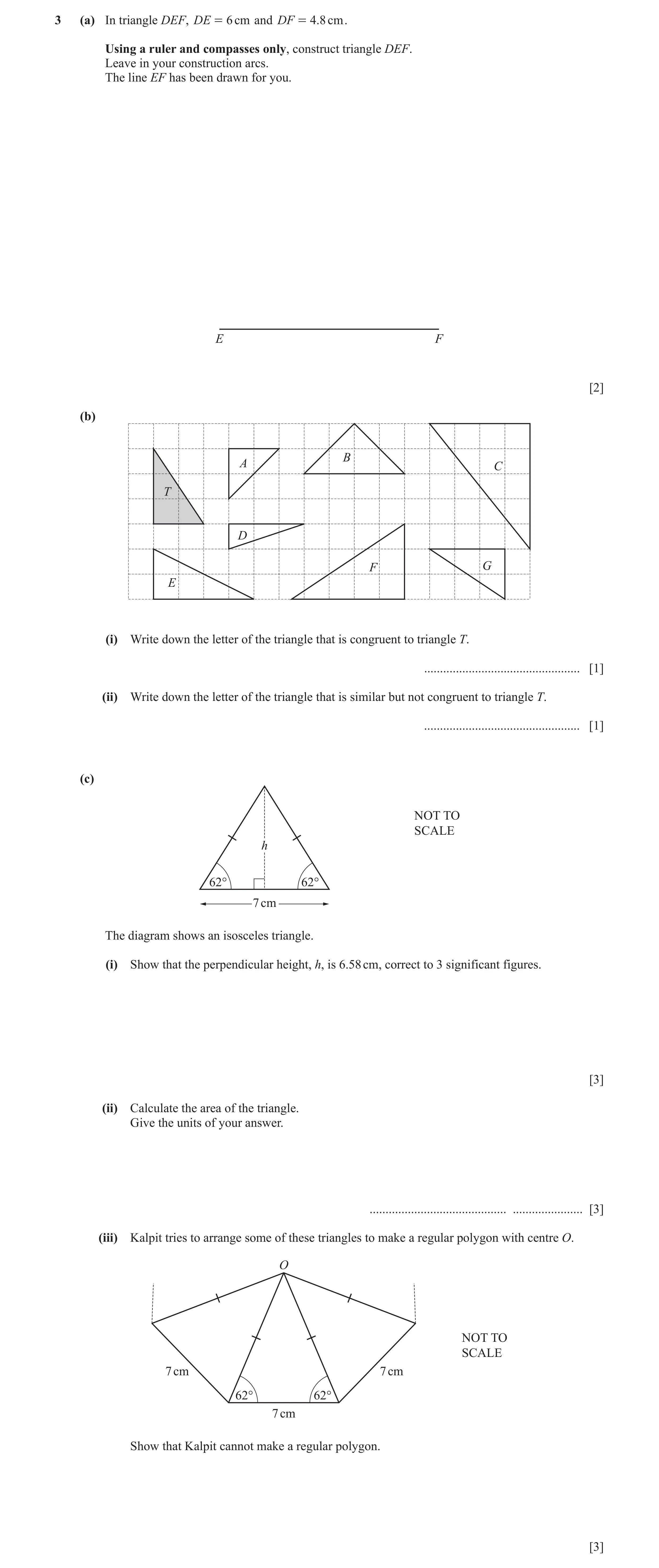
3 (a) In triangle DEF, DE = 6 cm and DF = 4. 8 cm . Using a ruler and compasses only, construct triangle DEF. Leave in your construction arcs. The line EF has been drawn for you. E F [2] (b) B A C T D F G E (i) Write down the letter of the triangle that is congruent to triangle T. … [1] (ii) Write down the letter of the triangle that is similar but not congruent to triangle T. … [1] (c) NOT TO SCALE h 62° 62° 7 cm The diagram shows an isosceles triangle. (i) Show that the perpendicular height, h, is 6.58 cm, correct to 3 significant figures. [3] (ii) Calculate the area of the triangle. Give the units of your answer. … … [3] (iii) Kalpit tries to arrange some of these triangles to make a regular polygon with centre O. O NOT TO SCALE 7 cm 7 cm 62° 62° 7 cm Show that Kalpit cannot make a regular polygon. [3]
13 marks
Mark scheme: 3(a) Correct triangle drawn with construction 2 B1 for correct triangle drawn with arcs. incorrect or no arcs or for 2 correct arcs drawn If 0 scored, SC1 for reversed triangle with arcs. 3(b)(i) G 1 3(b)(ii) F 1 3(c)(i) 7 M2 h [h=] tan 62 oe M1 for tan62 = oe 2 7 2 6.582 to 6.583 A1 3(c)(ii) 23[.0] or 23.03 to 23.04… 2 1 M1 for 7 6.58 oe 2 cm2 1 3(c)(iii) 360 M2 M1 for 180 −2 62 oe 180 −2 62 6.4… which is not integer oe A1
This question in 0580/32 Feb/March 2024
Q36 · A parallelogram ABCD has sides 8 cm and 6 cm 0580/31 Oct/Nov 2024
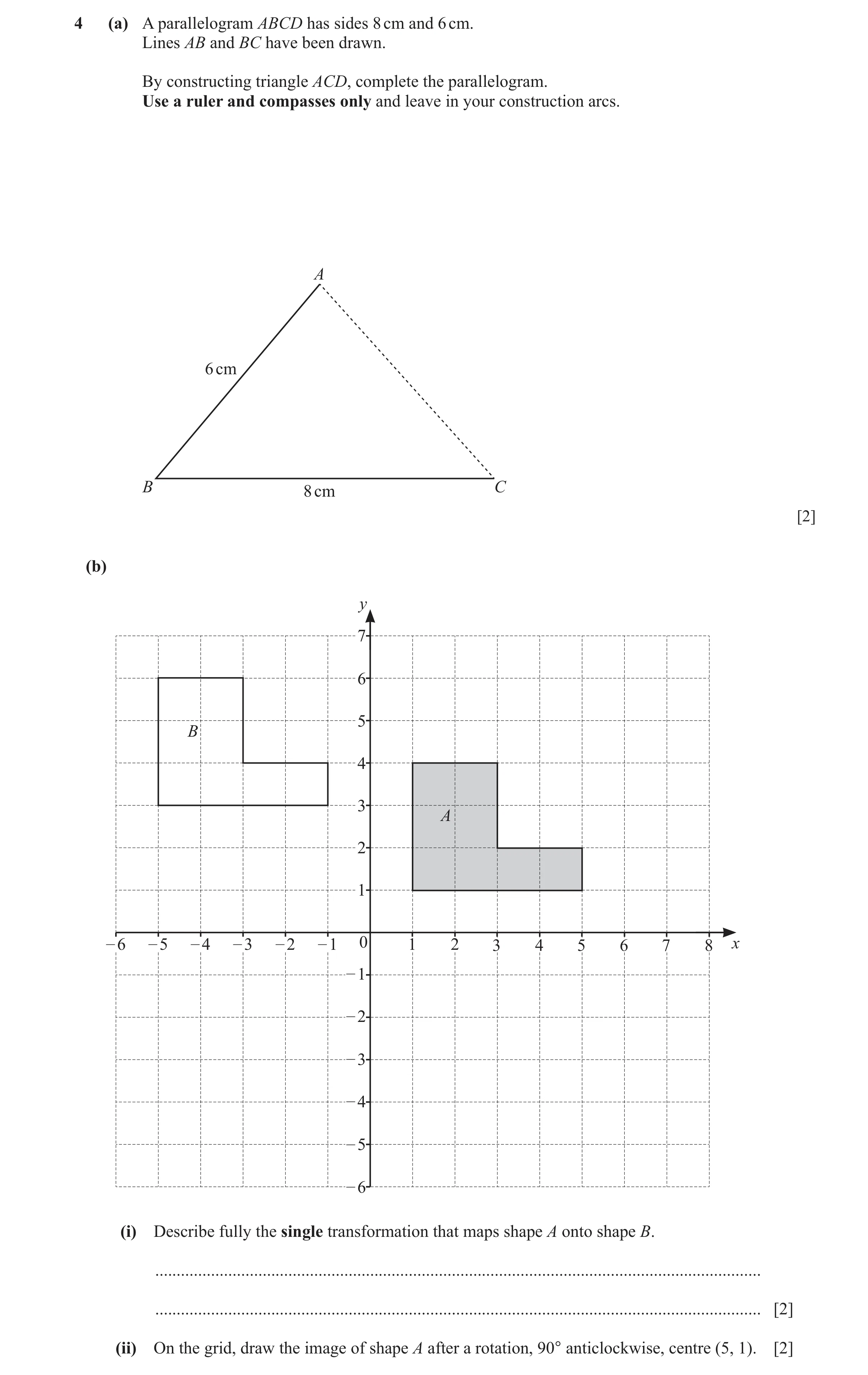
4 (a) A parallelogram ABCD has sides 8 cm and 6 cm. Lines AB and BC have been drawn. By constructing triangle ACD, complete the parallelogram. Use a ruler and compasses only and leave in your construction arcs. A 6 cm B 8 cm C [2] (b) y 7 6 5 B 4 3 A 2 1 – 6 – 5 – 4 – 3 – 2 – 1 0 1 2 3 4 5 6 7 8 x – 1 – 2 – 3 – 4 – 5 – 6 (i) Describe fully the single transformation that maps shape A onto shape B. … … [2] (ii) On the grid, draw the image of shape A after a rotation, 90° anticlockwise, centre (5, 1). [2]
6 marks
Mark scheme: 4(a) Correct parallelogram 2 B1 for triangle constructed onto given pair of lines with one correct and one incorrect arc or correct triangle with no arcs or for no triangle but two correct arcs only. If 0 scored SC1 for triangle constructed onto given pair of lines with arcs but lines interchanged 4(b)(i) Translation 2 B1 for each −6 2 4(b)(ii) Correct shape with coordinates 2 B1 for correct 90 clockwise rotation (5, 1) (5, –3) (2, –3) (2, –1) (4, –1) (4, 1) about (5, 1) or correct orientation, wrong centre
This question in 0580/31 Oct/Nov 2024
Q37 · In triangle ABC, AC = 6 .4 cm and BC = 5.3 cm 0580/31 May/June 2025
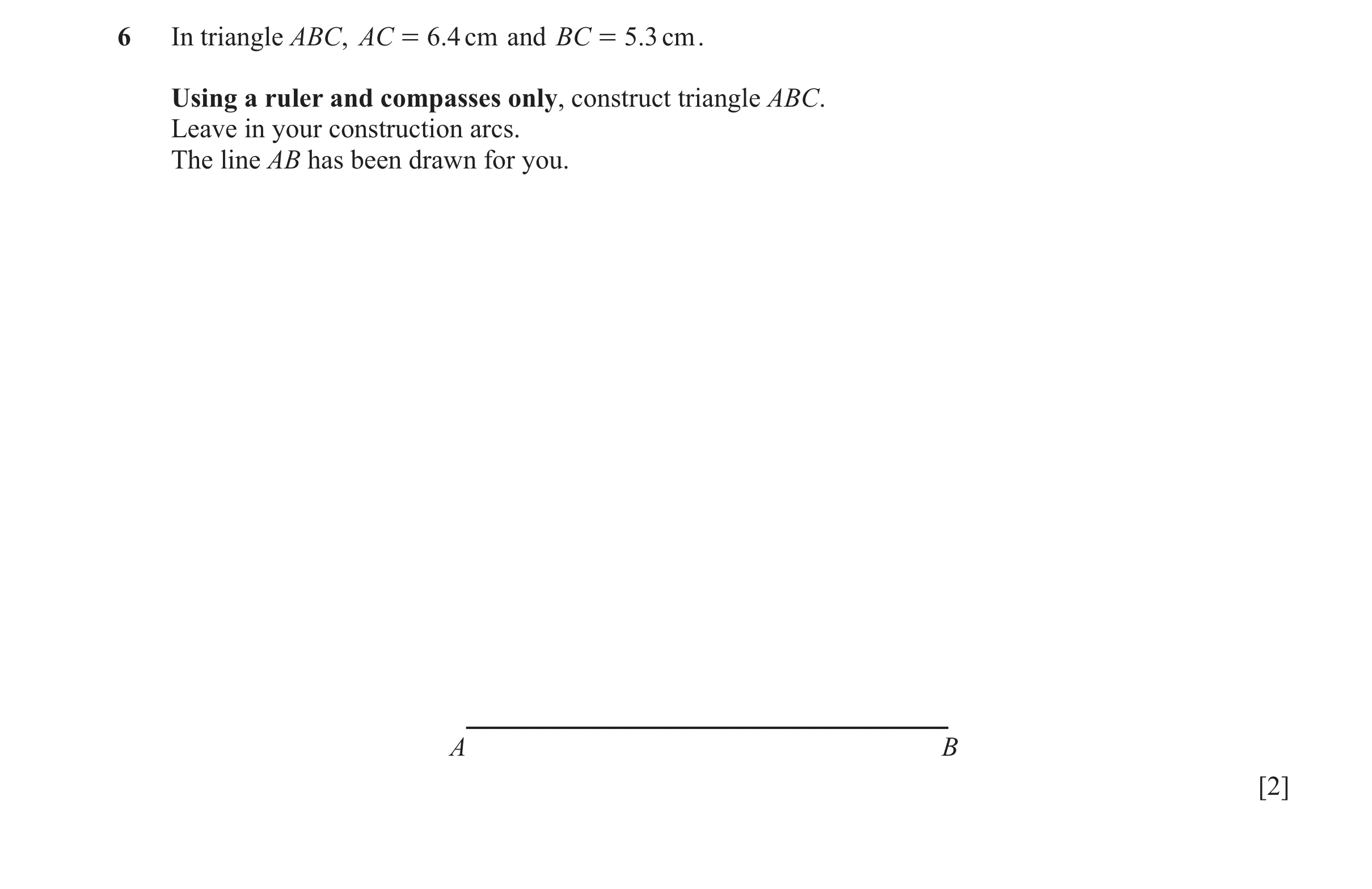
6 In triangle ABC, AC = 6 .4 cm and BC = 5.3 cm . Using a ruler and compasses only, construct triangle ABC. Leave in your construction arcs. The line AB has been drawn for you. A B [2]
2 marks
Mark scheme: 6 Correct triangle with correct arcs 2 B1 for correct triangle with no/insufficient arcs or 2 correct arcs with no or incorrect lines If 0 scored SC1 for triangle with two arcs but lines interchanged
This question in 0580/31 May/June 2025
 5 / 55
![Question 4: Examiner's Use C A B Triangle ABC is drawn accurately. (a) Measure and write down (i) the length of AC, Answer(a)(i) AC = cm [1] (ii) the s…](https://img.pastlit.com/crops/aae614f4-2852-481f-9715-1c0dc4297315/q9.webp) 6 / 55
6 / 55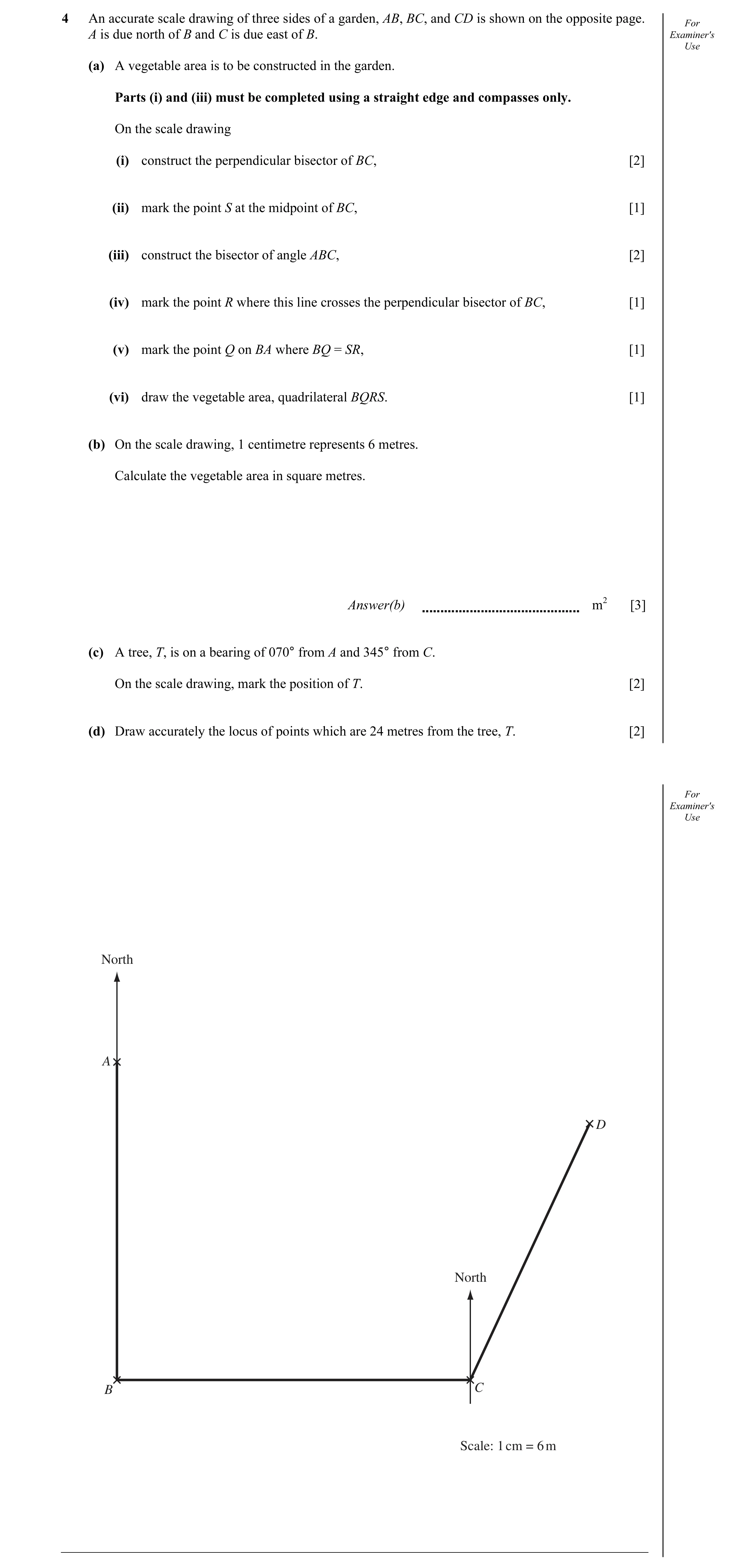
 9 / 55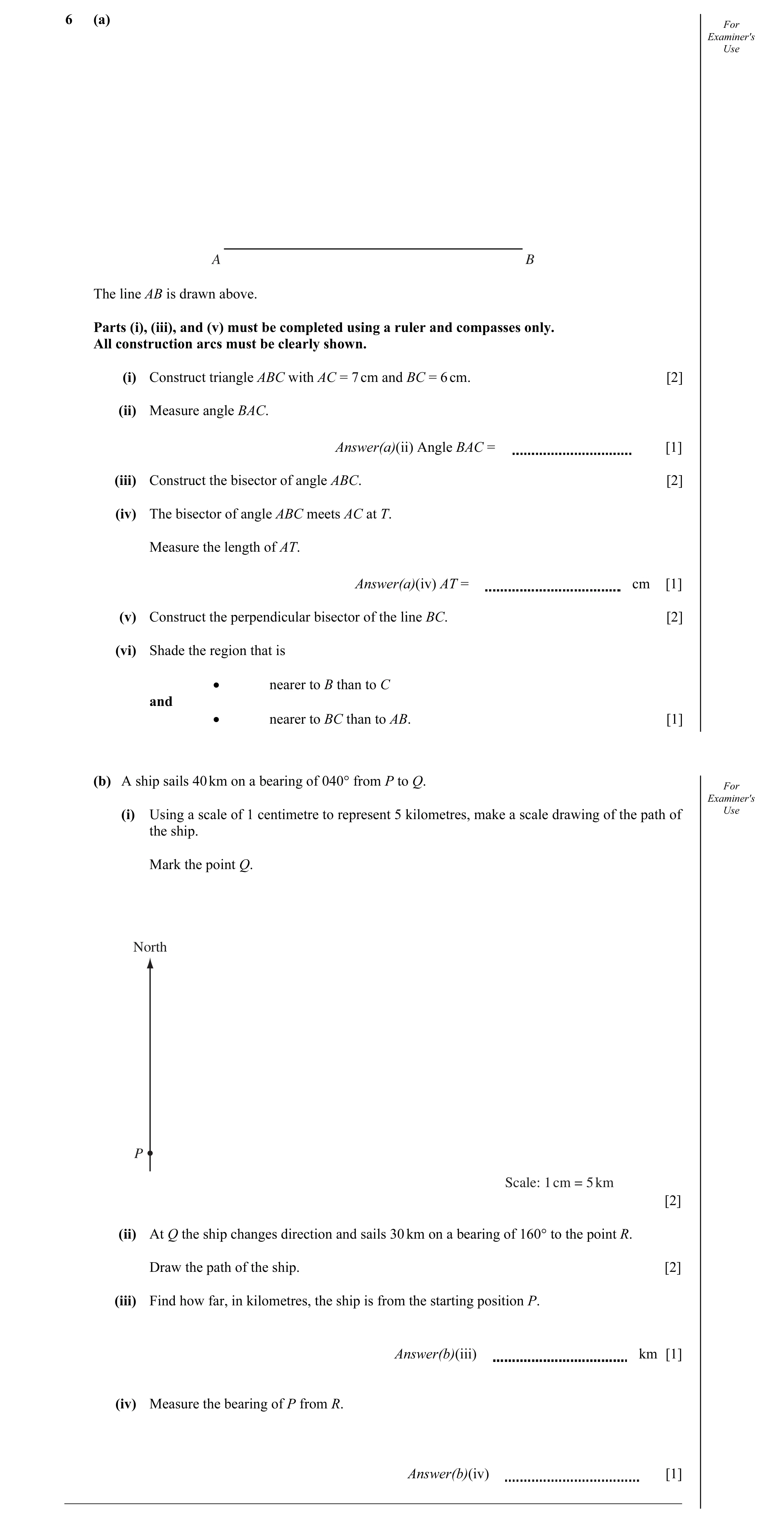
![Question 9: For Examiner's Use A B (a) Construct triangle ABC accurately, with AC = 10 cm and BC = 8 cm. The line AB has been drawn for you. [2] (b) (i…](https://img.pastlit.com/crops/58b77b12-f225-4208-94e9-35104d68f7c8/q8.webp) 14 / 55
14 / 55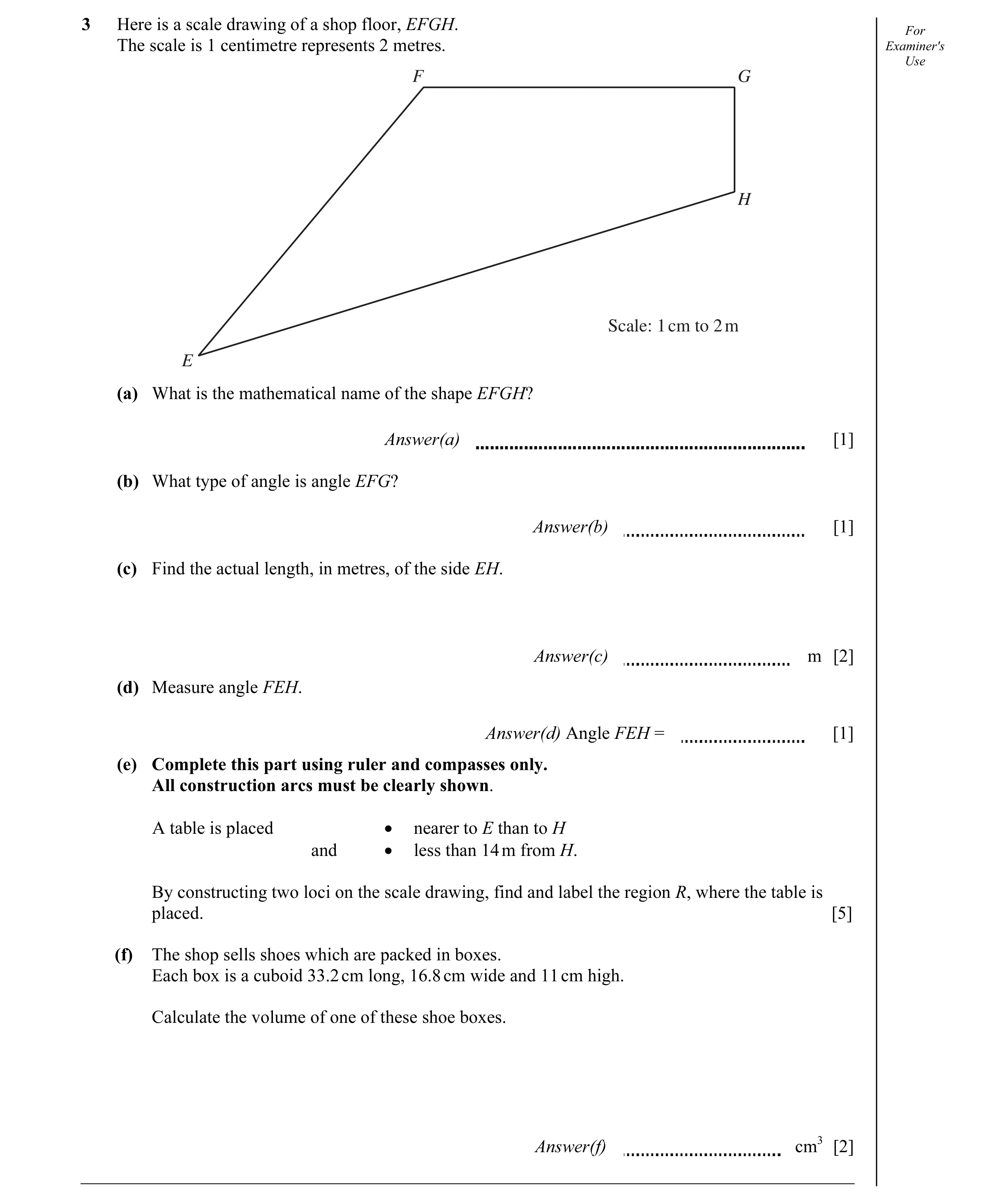 15 / 55
 16 / 55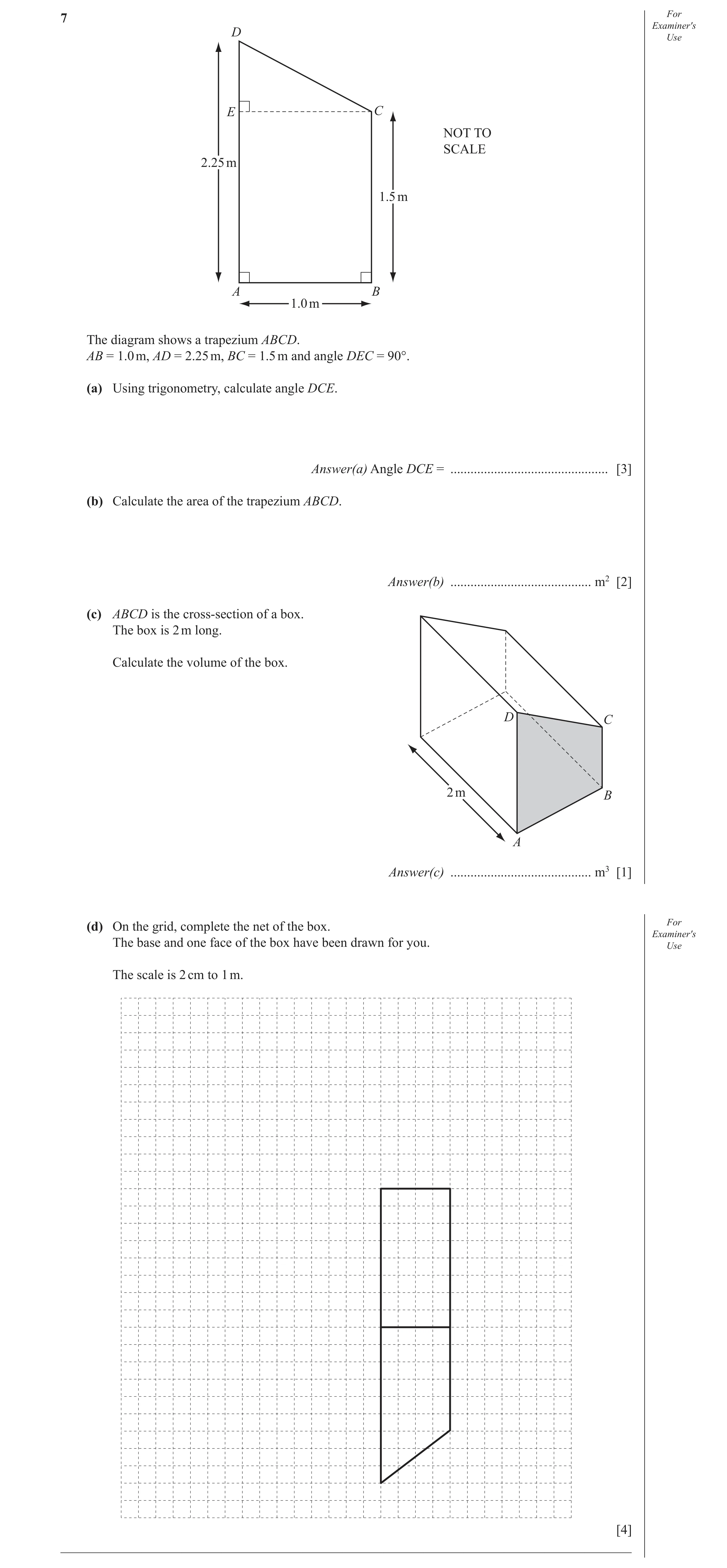
 21 / 55
 22 / 55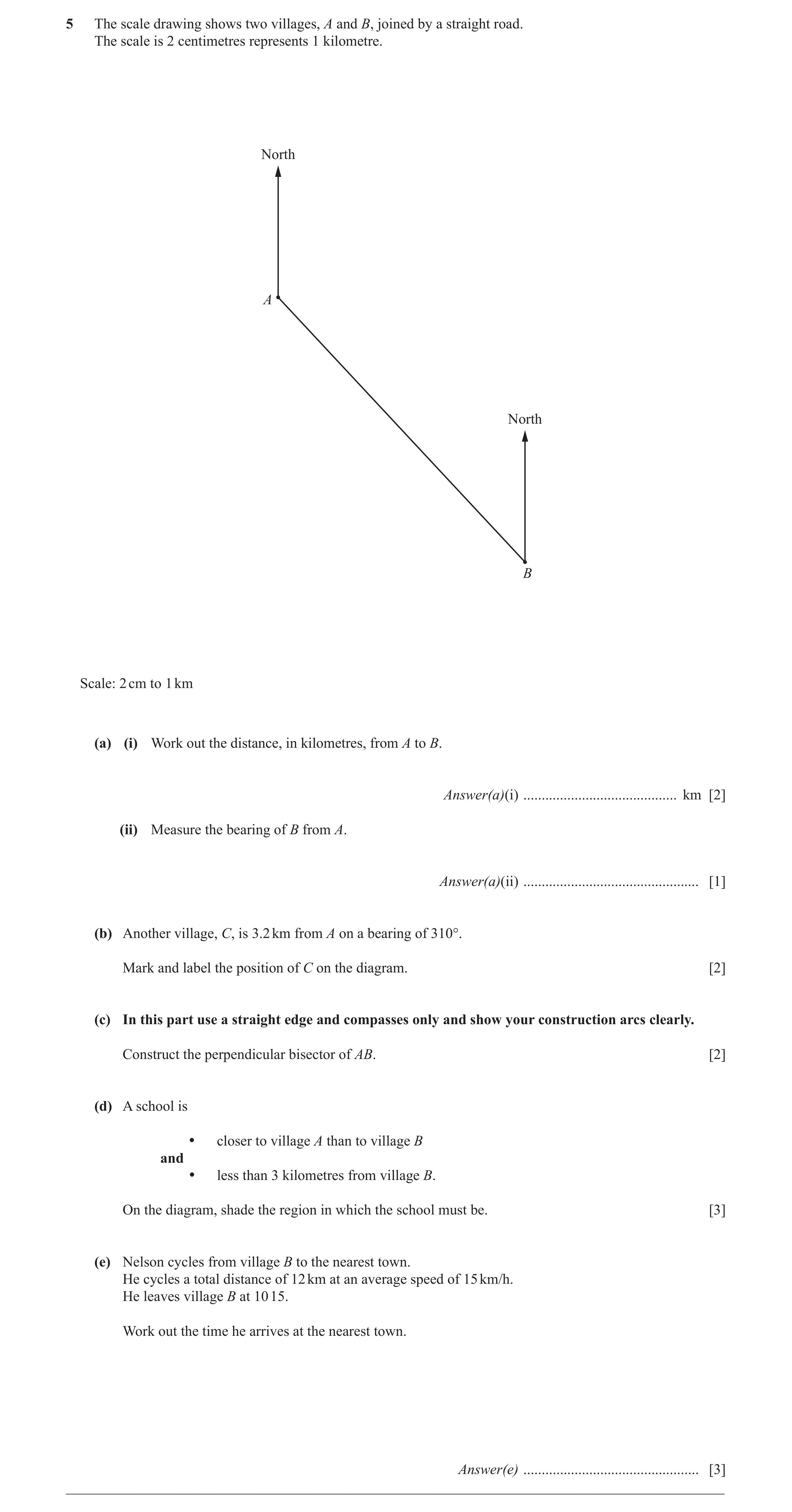
 25 / 55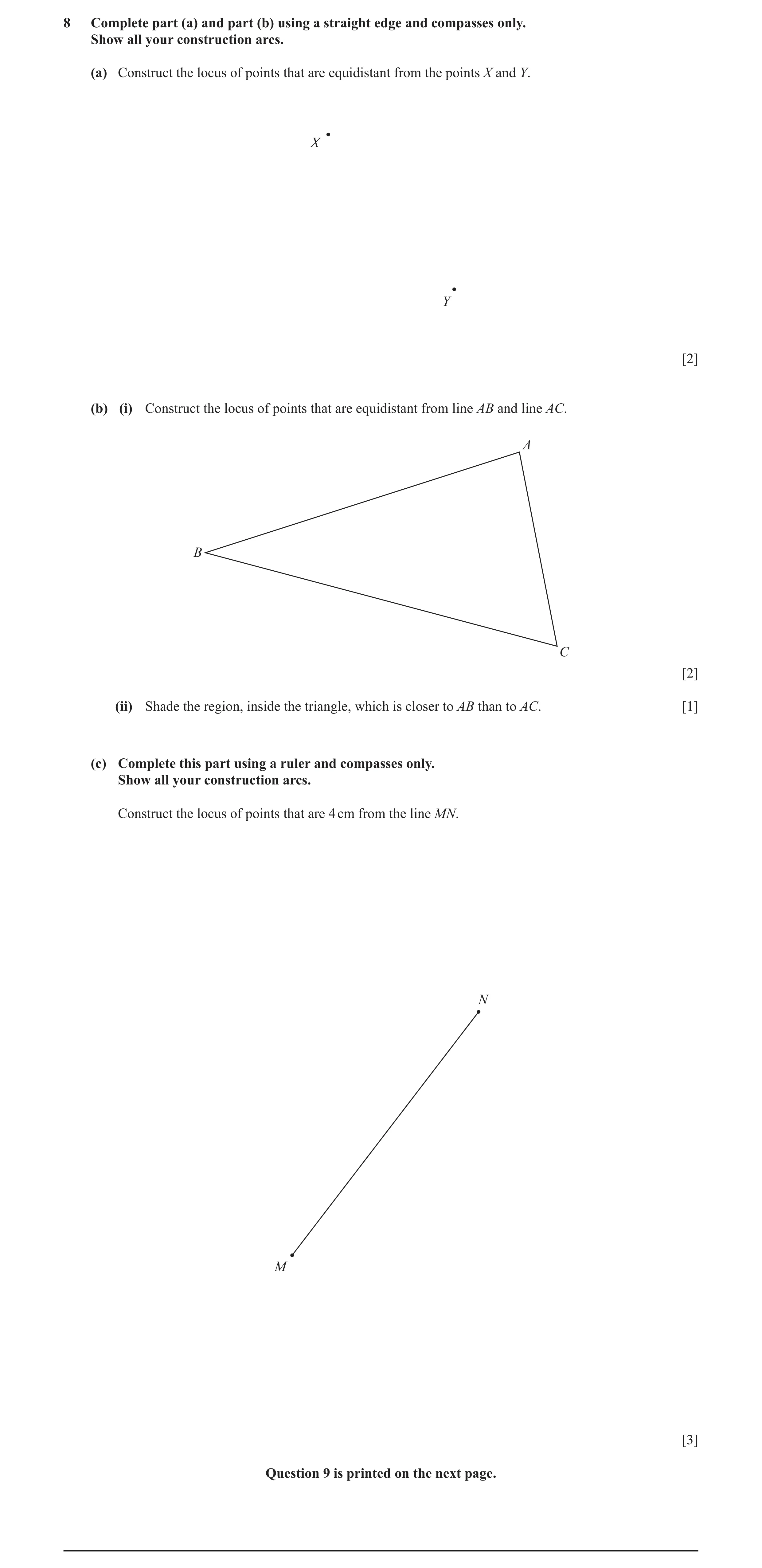
![Question 26: (a) Using a straight edge and compasses only, construct the equilateral triangle ABC. The base AB has been drawn for you. A B [2] (b) 16 m …](https://img.pastlit.com/crops/24d2ac9a-4f39-438c-94a1-1266c01e85ba/q10.webp)
 41 / 55
 42 / 55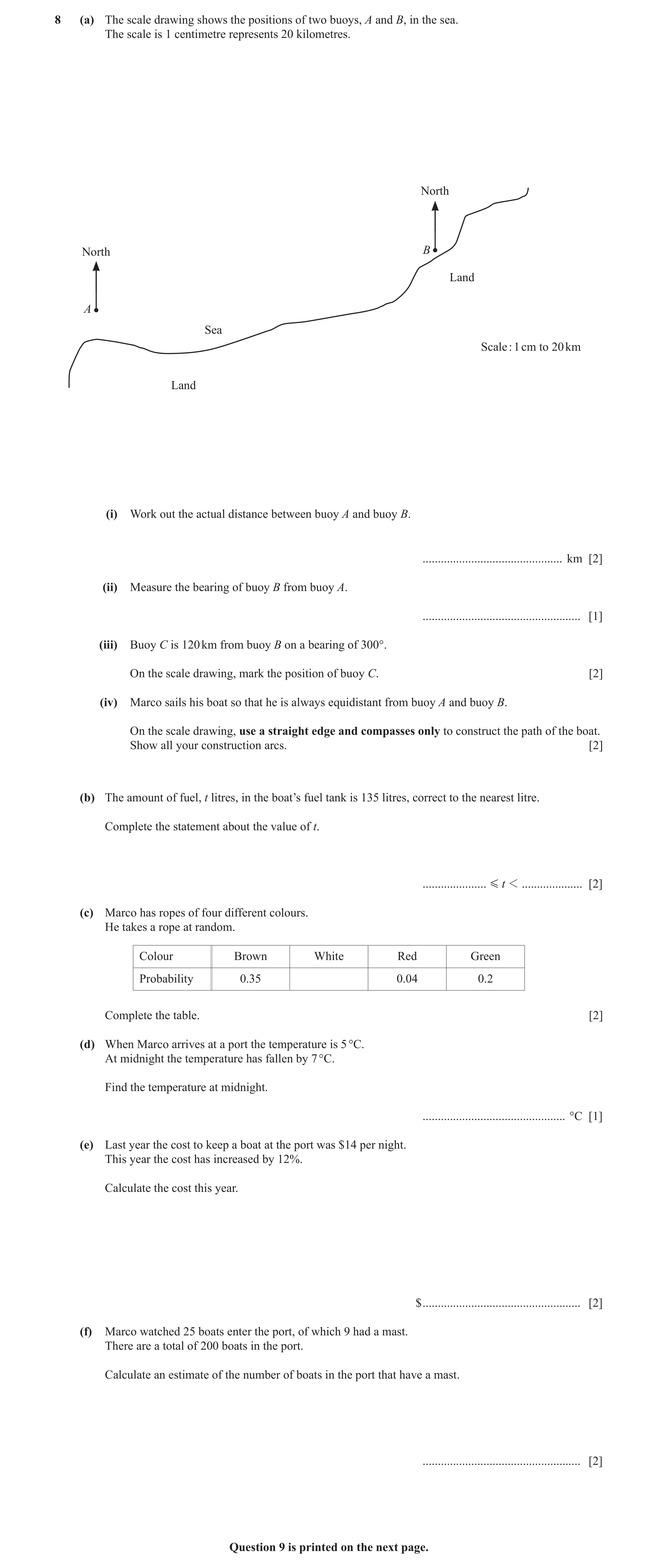
 46 / 55
![Question 32: A sequence of patterns is made using rectangular blocks. Pattern 1 Pattern 2 Pattern 3 Pattern 4 (a) Draw Pattern 4. [1] (b) Complete the t…](https://img.pastlit.com/crops/6d9fdb3e-3a7d-48f4-903d-ba4f3a2ac825/q9.webp) 47 / 55
47 / 55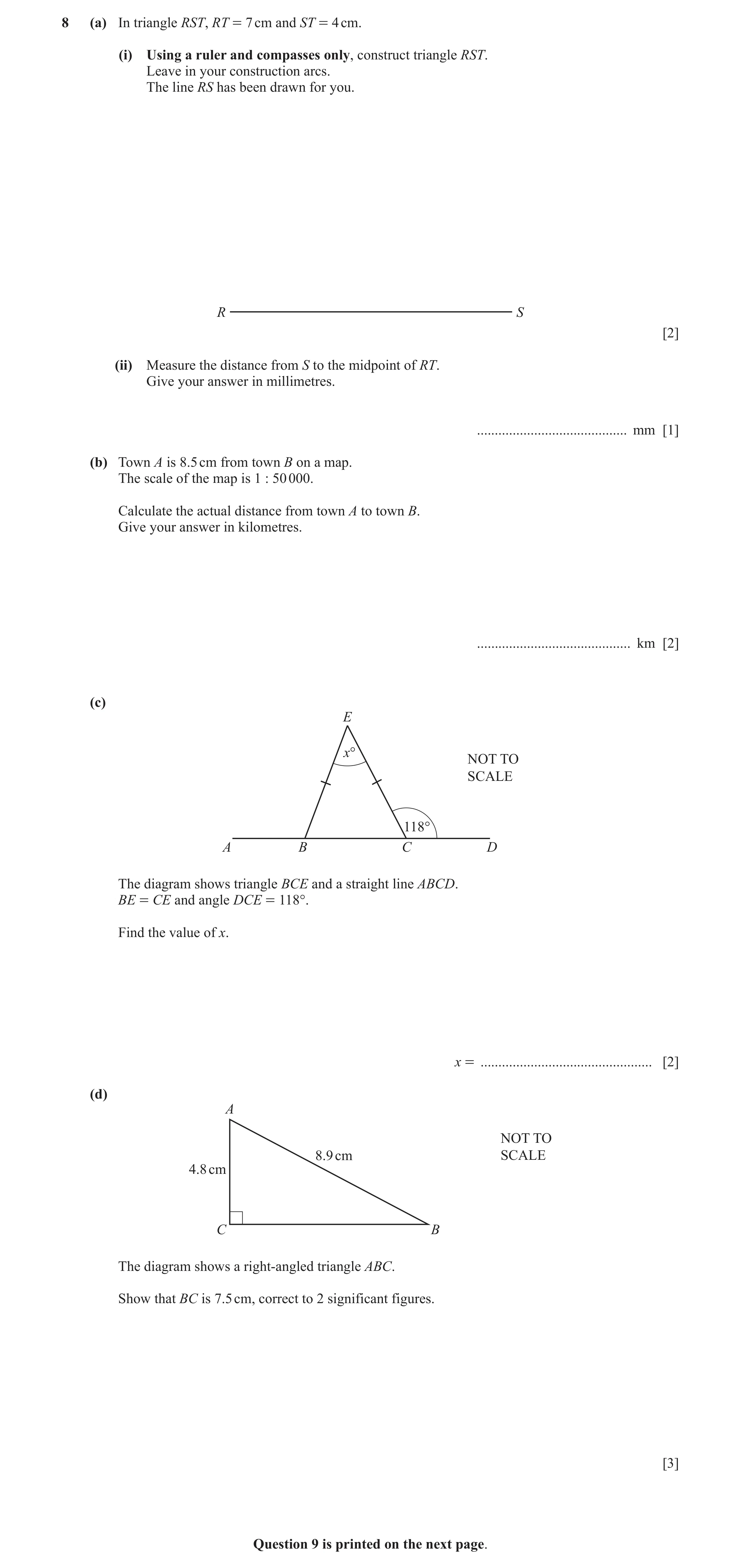
![Question 34: (a) l P Draw a line through point P that is perpendicular to line l. [1] (b) Write down the mathematical names for two different quadrilate…](https://img.pastlit.com/crops/a0b6e752-92f3-4adb-be25-0e4cc9591f81/q1.webp)
 55 / 55
 11
11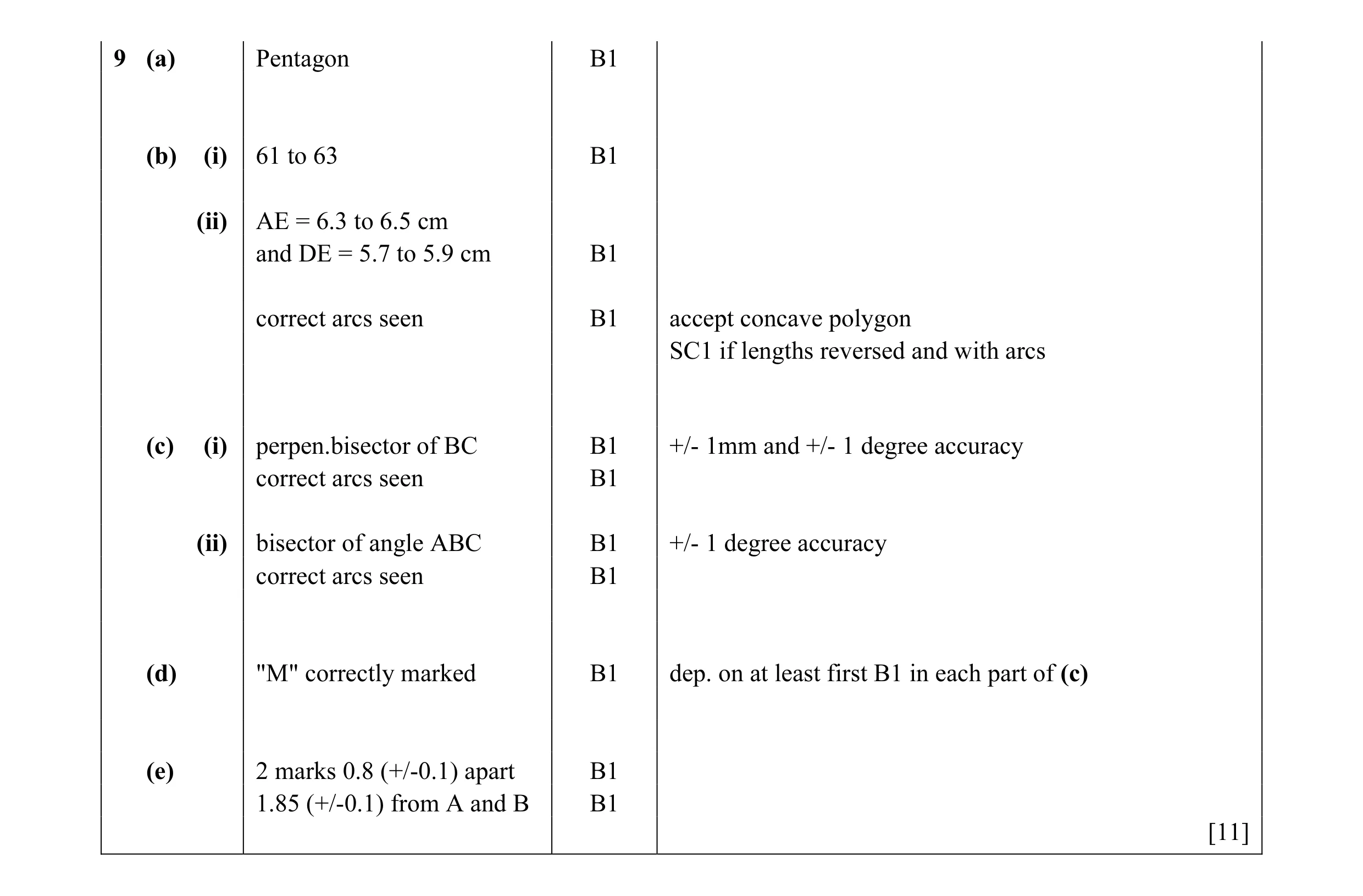 11
11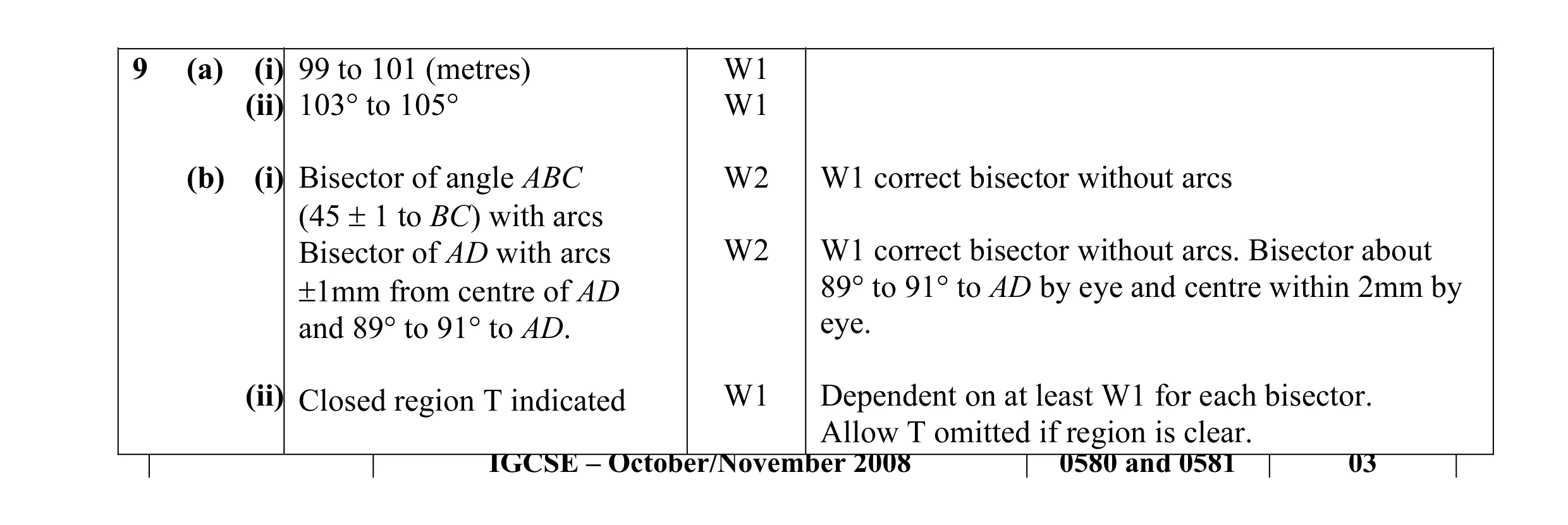 9
9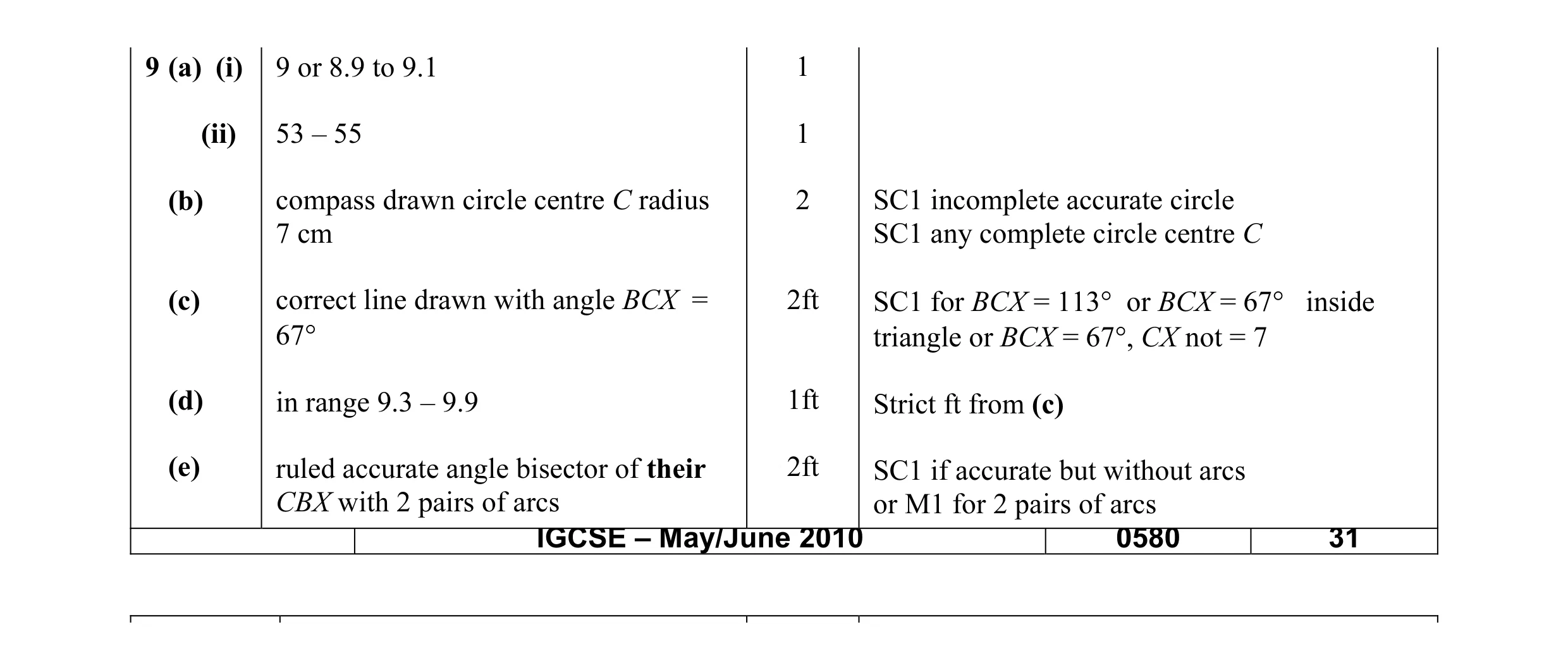 9
9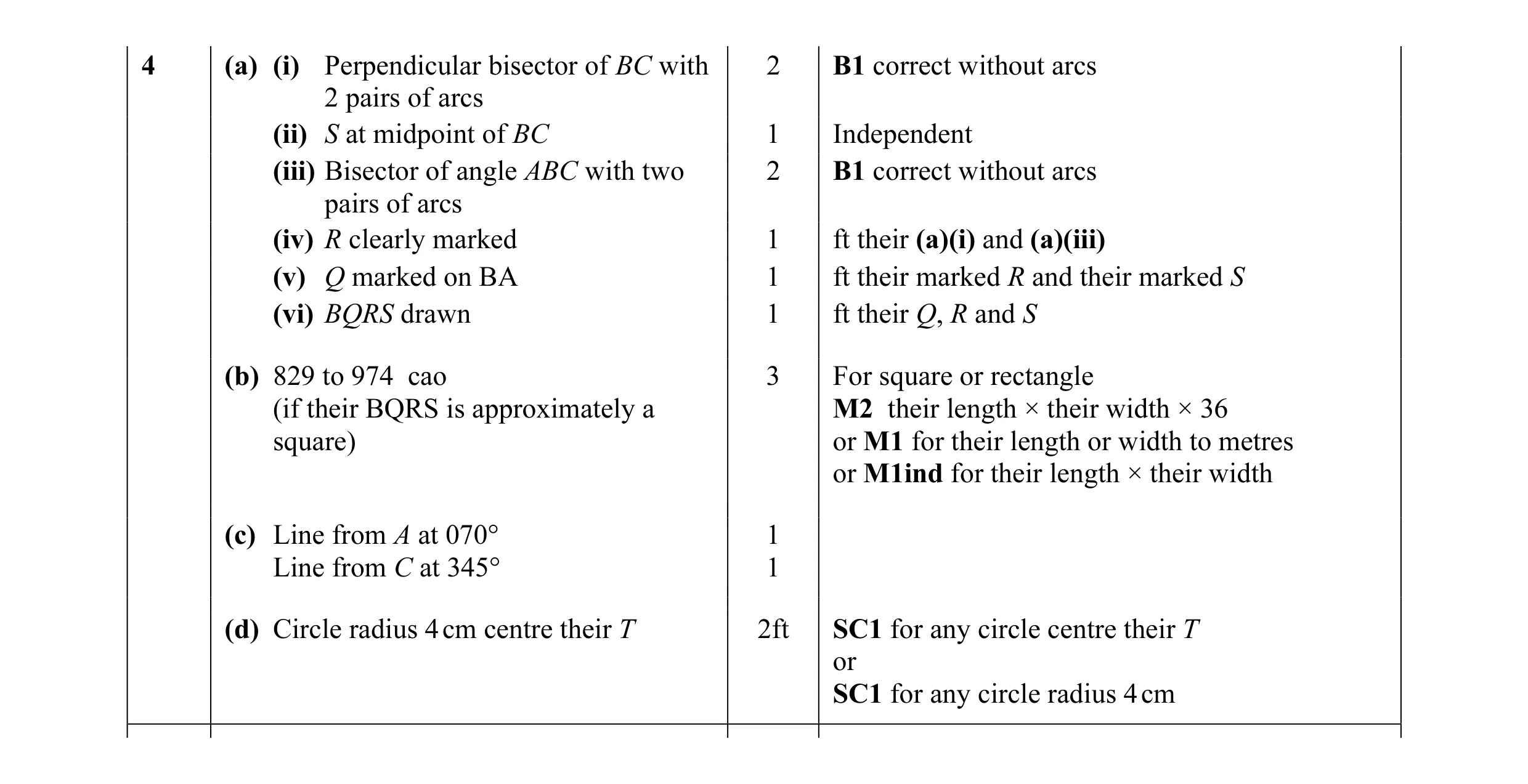 15
15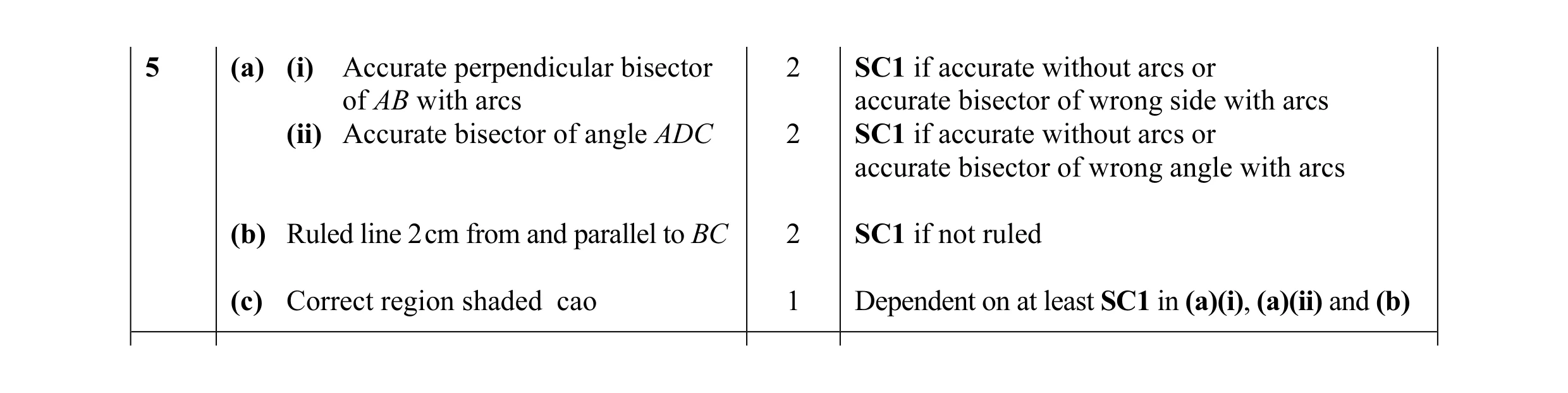 7
7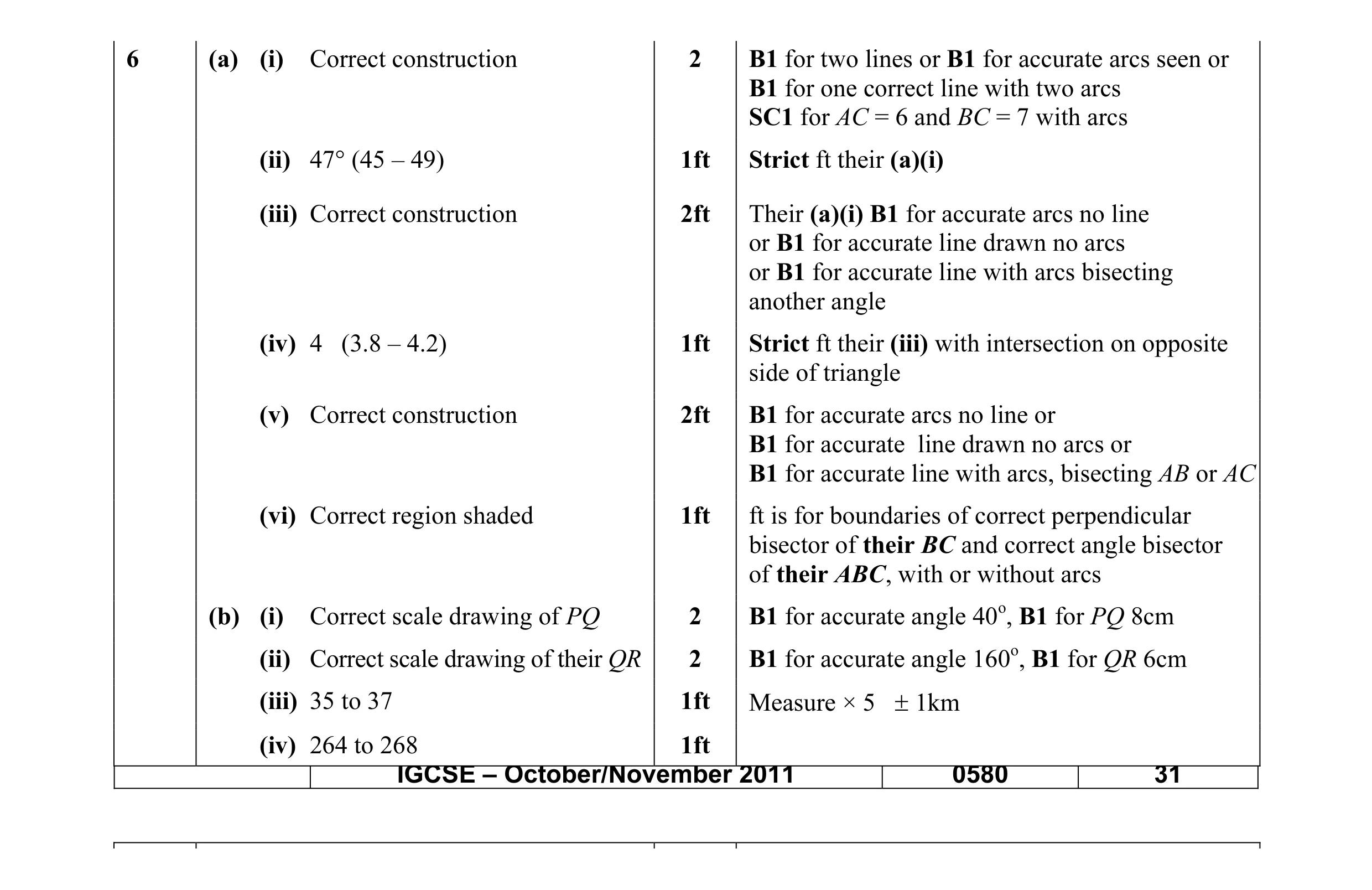 15
15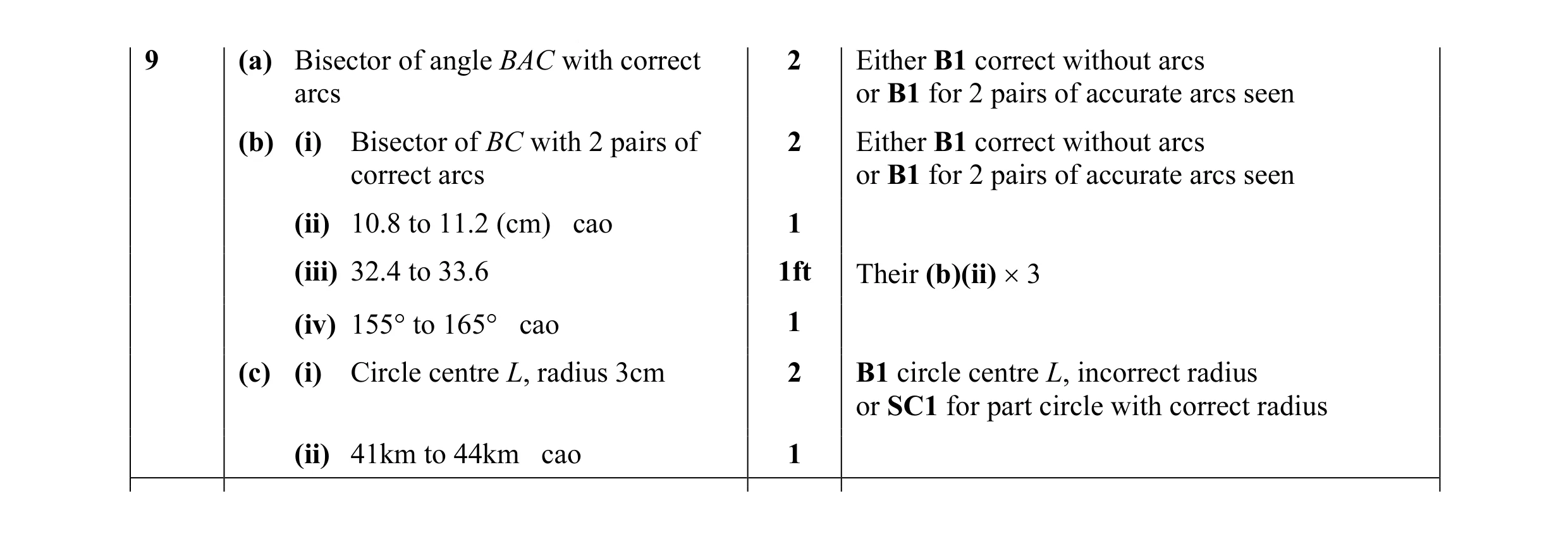 10
10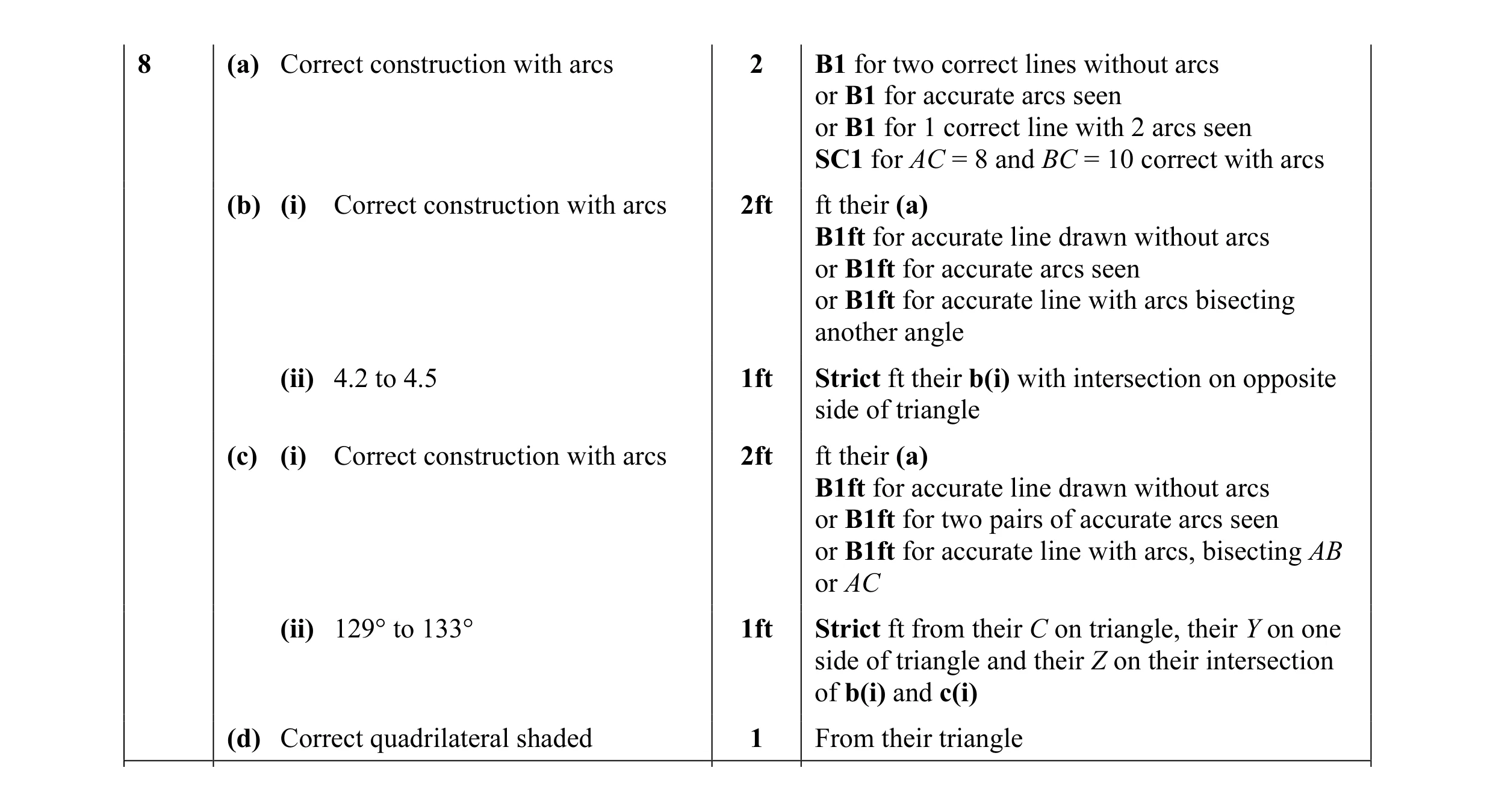 9
9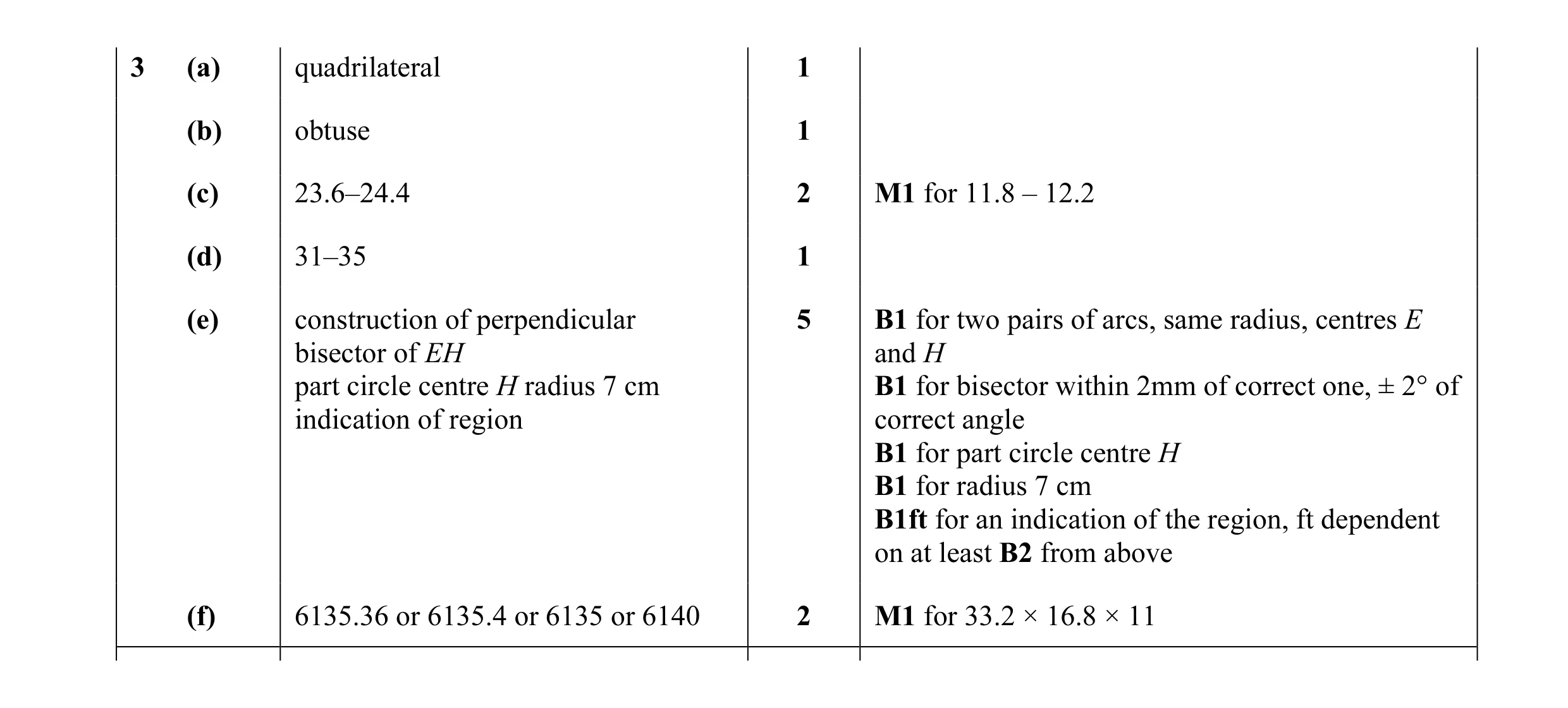 12
12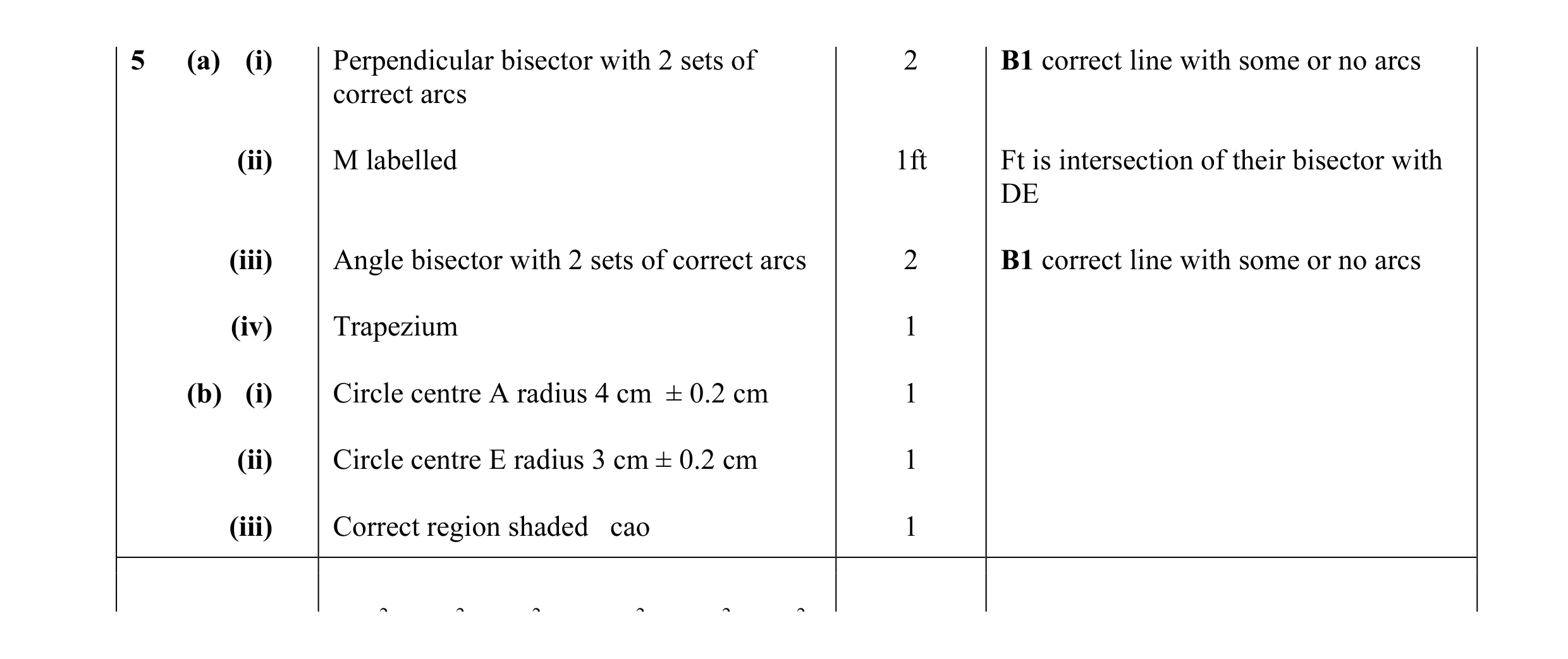 9
9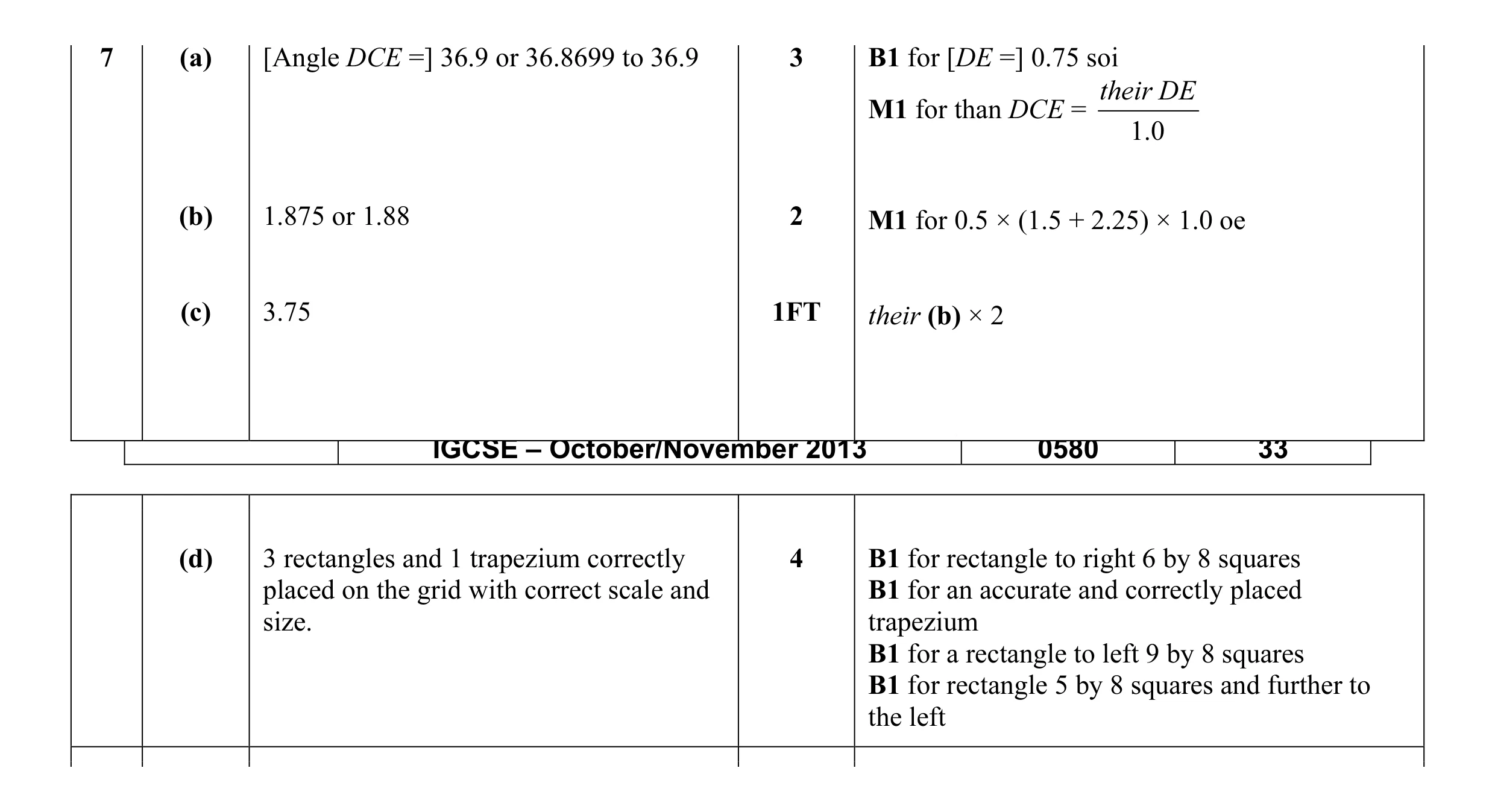 10
10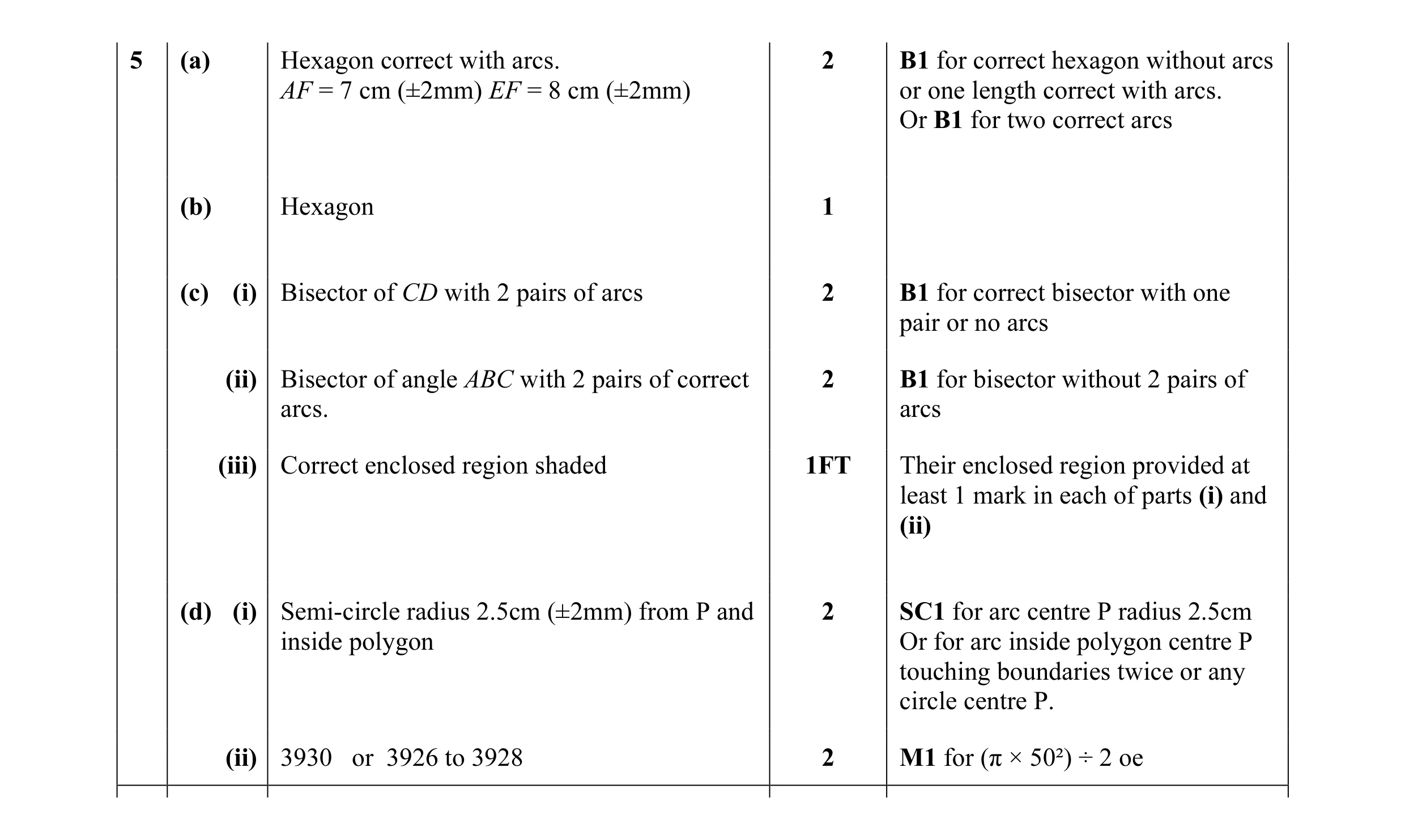 12
12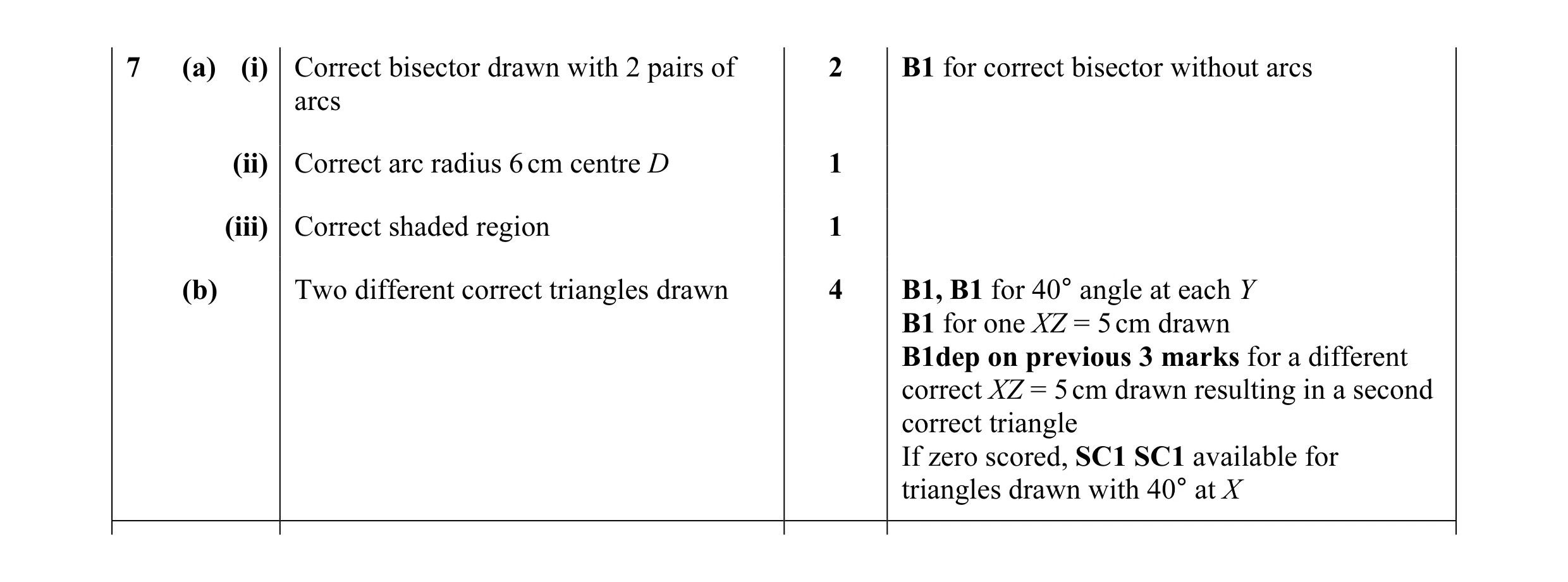 8
8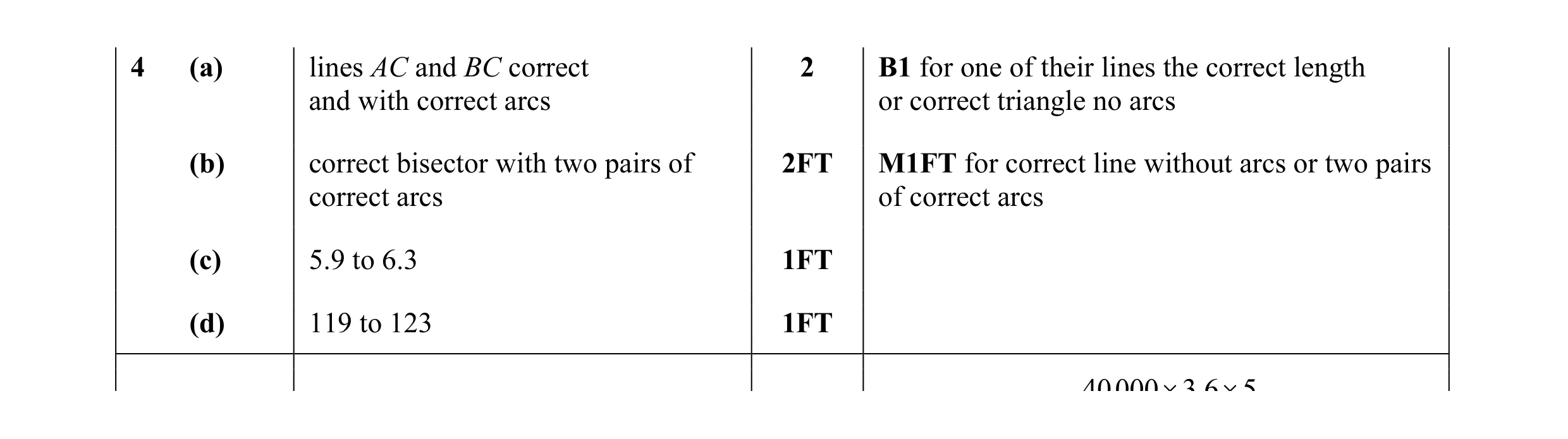 6
6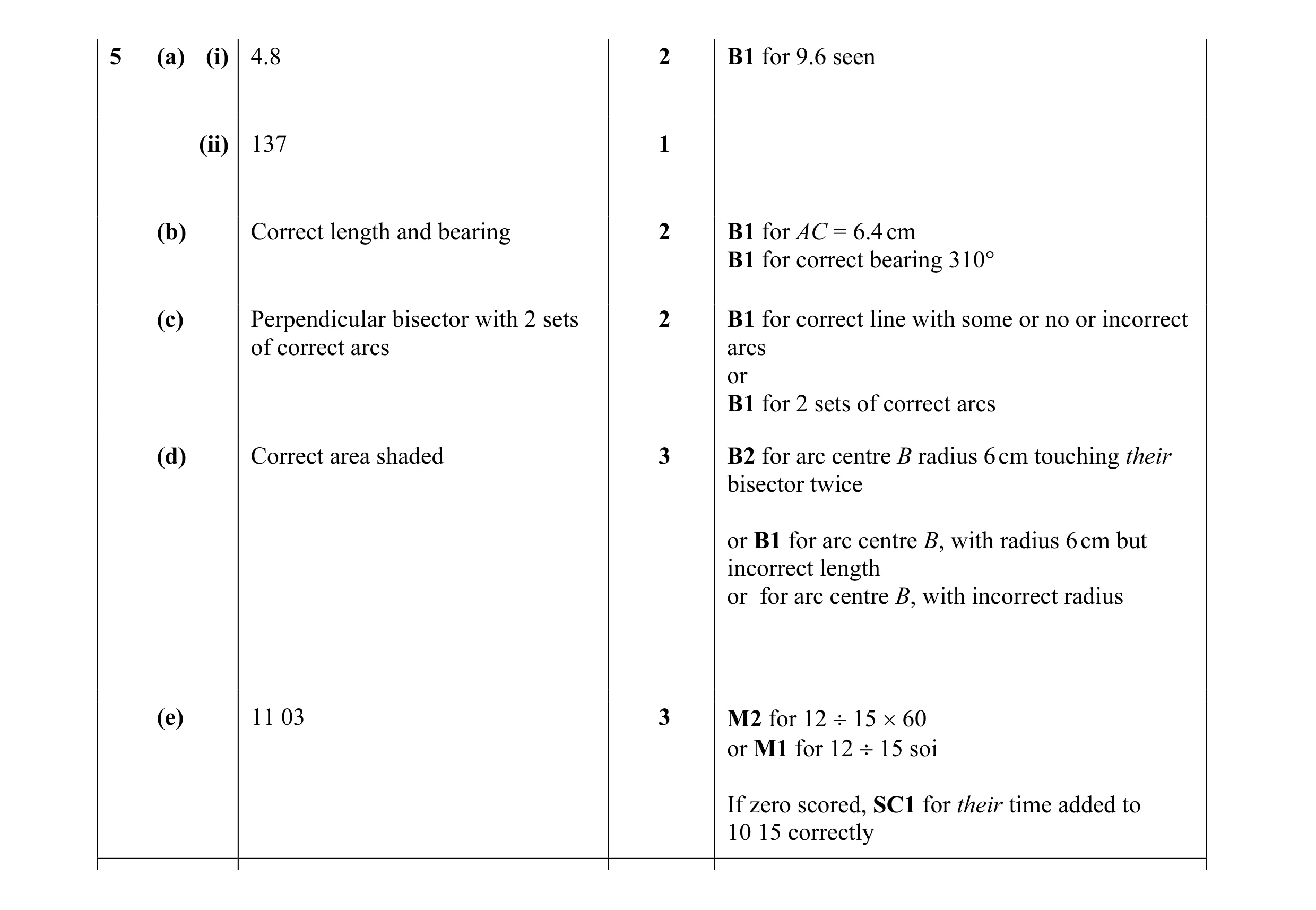 13
13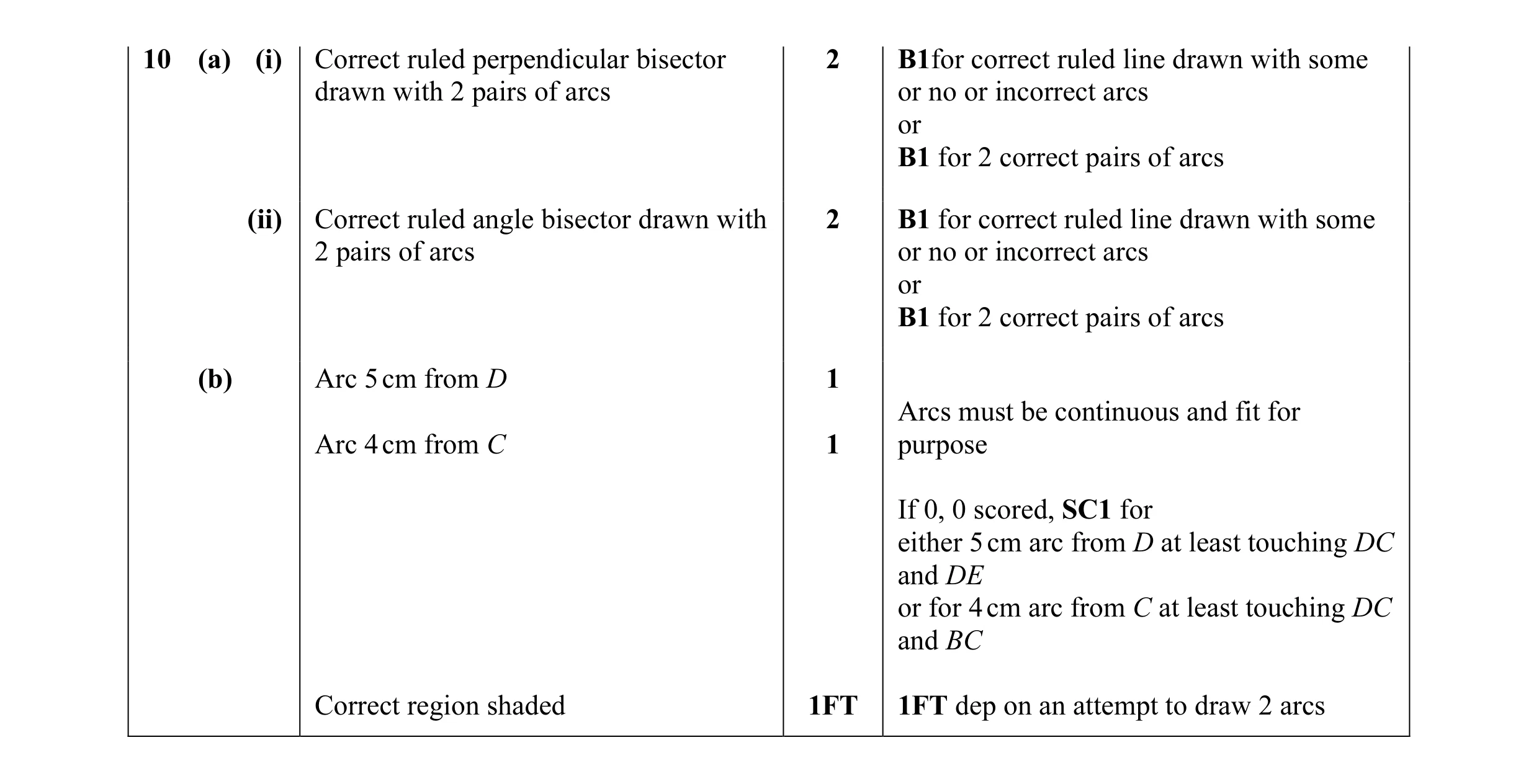 7
7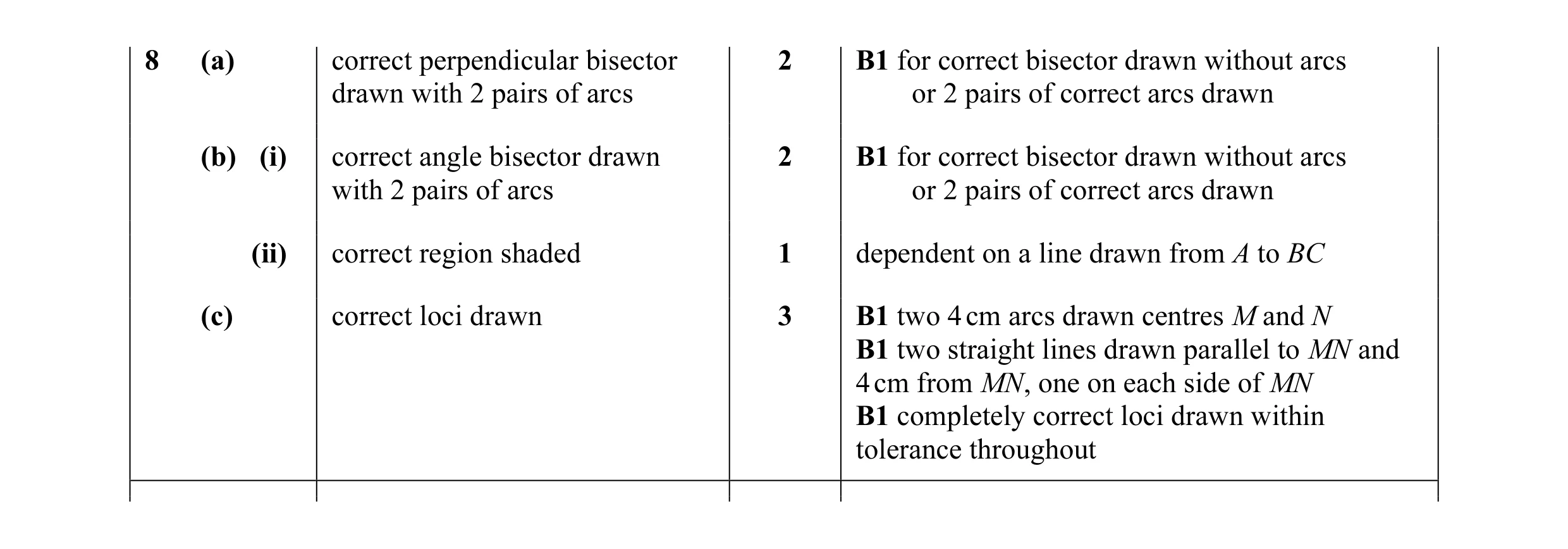 8
8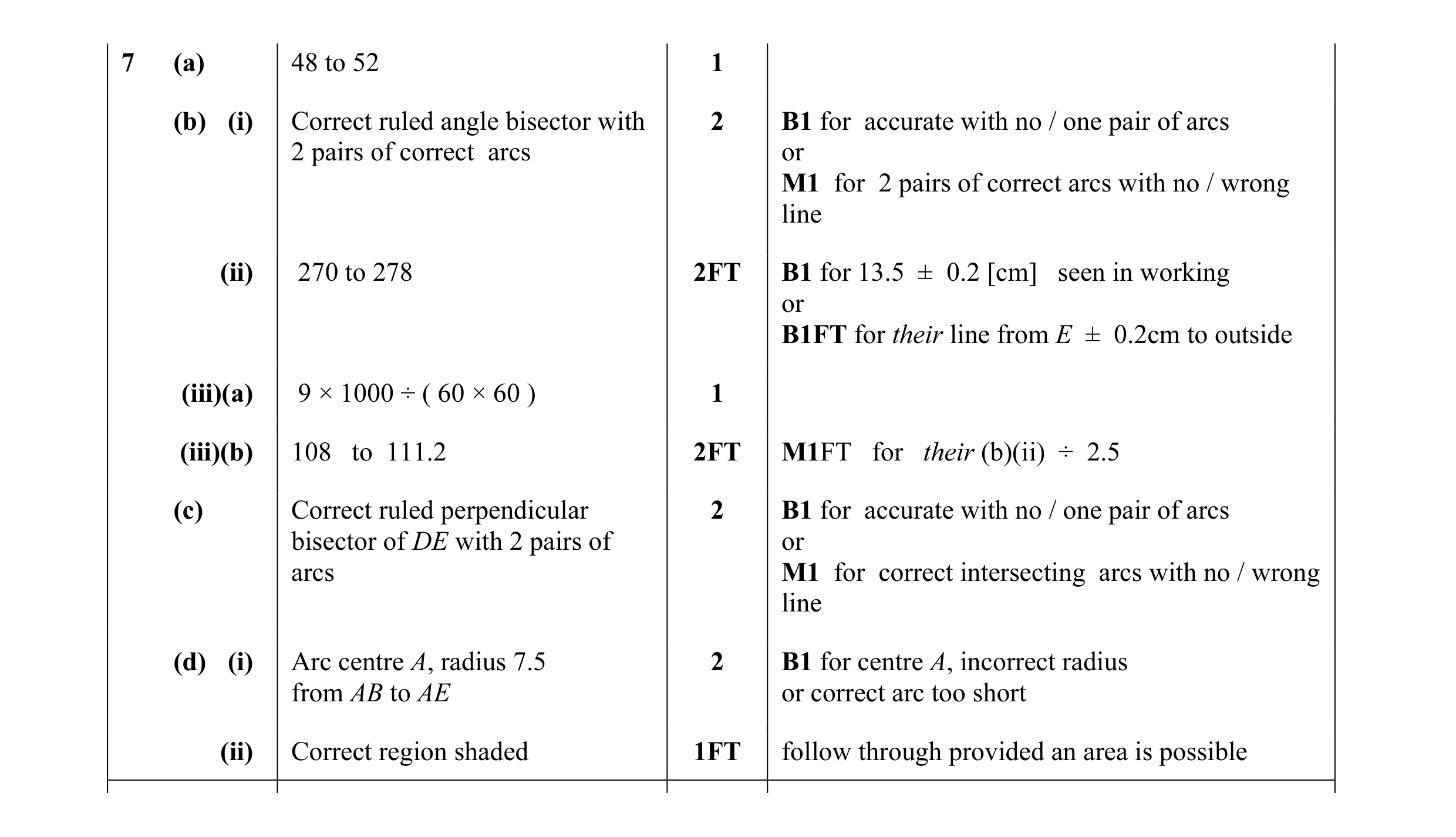 13
13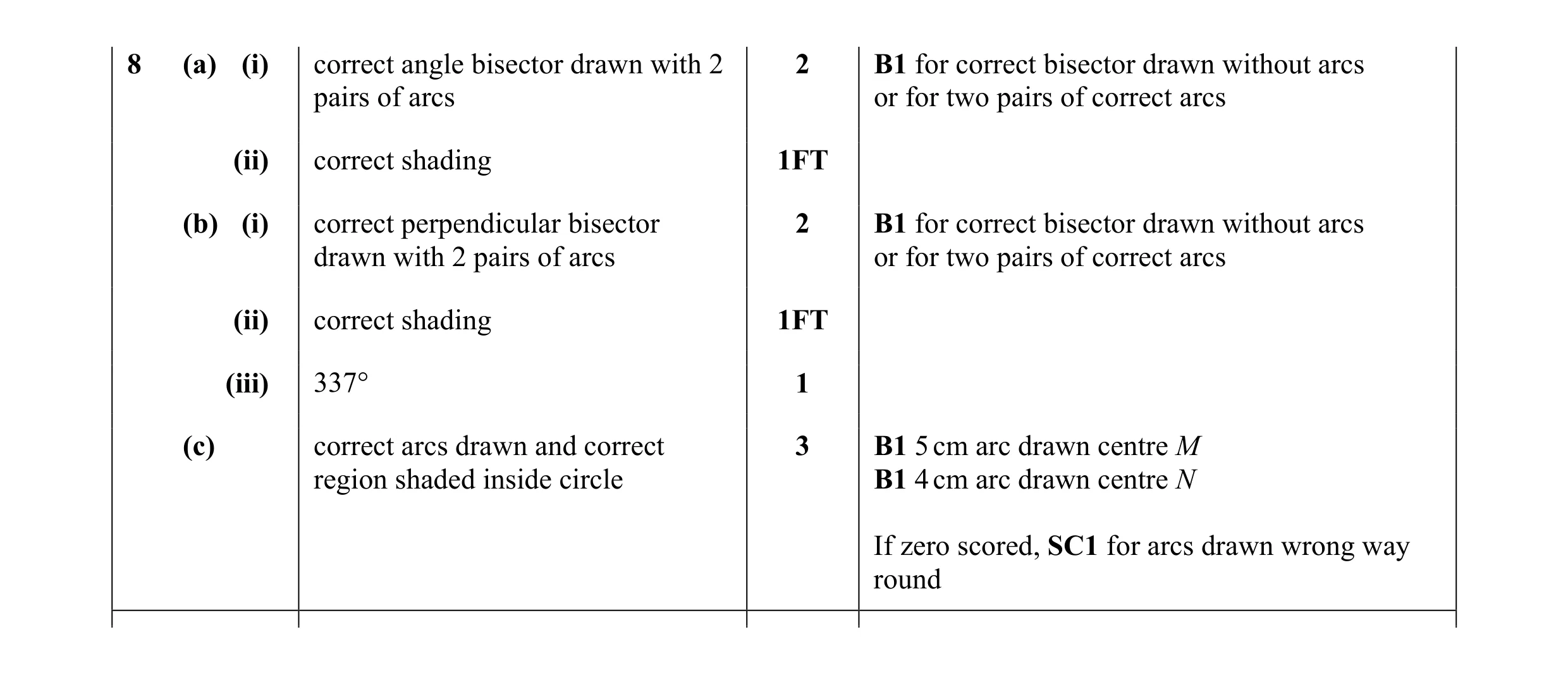 10
10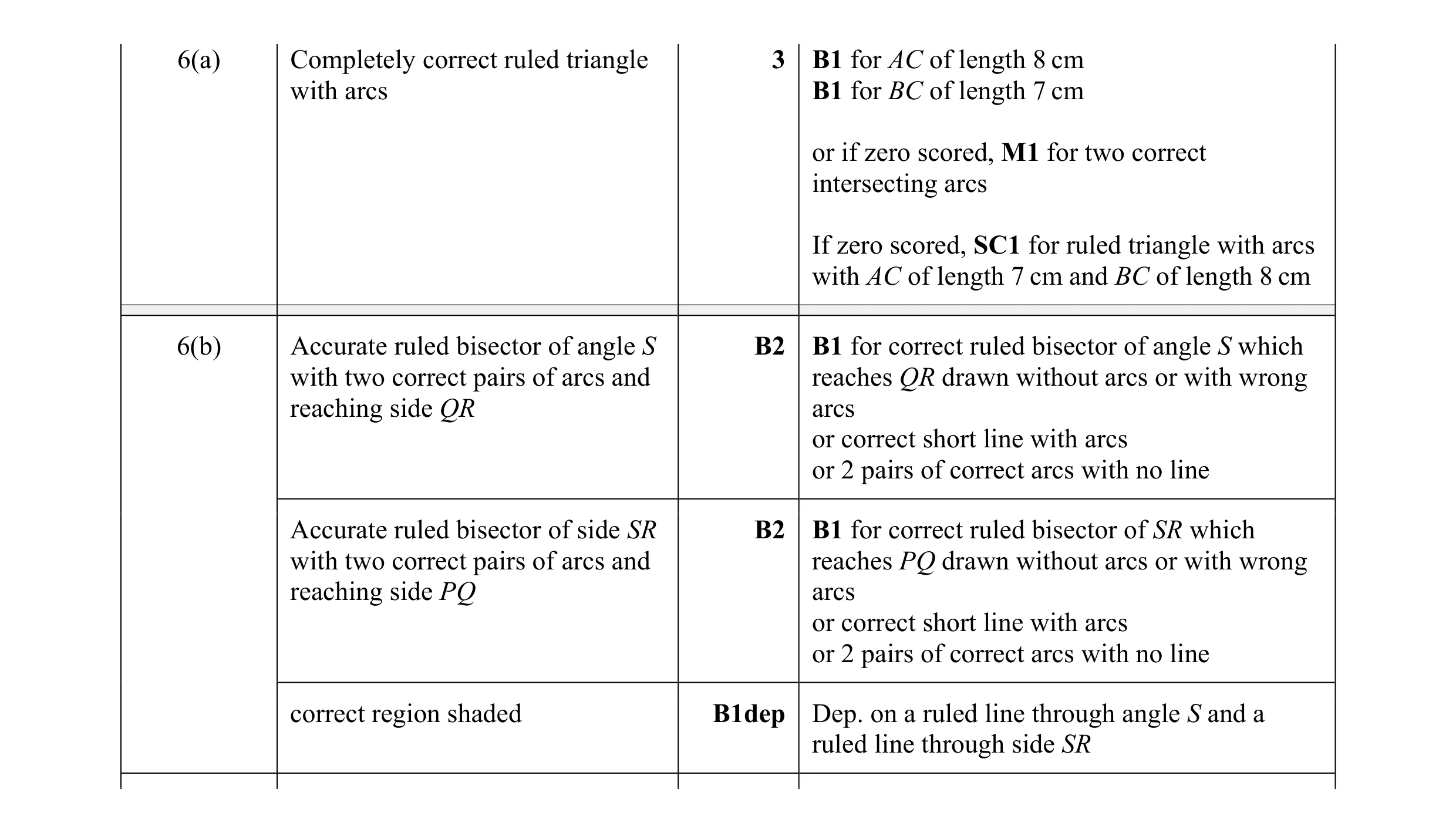 8
8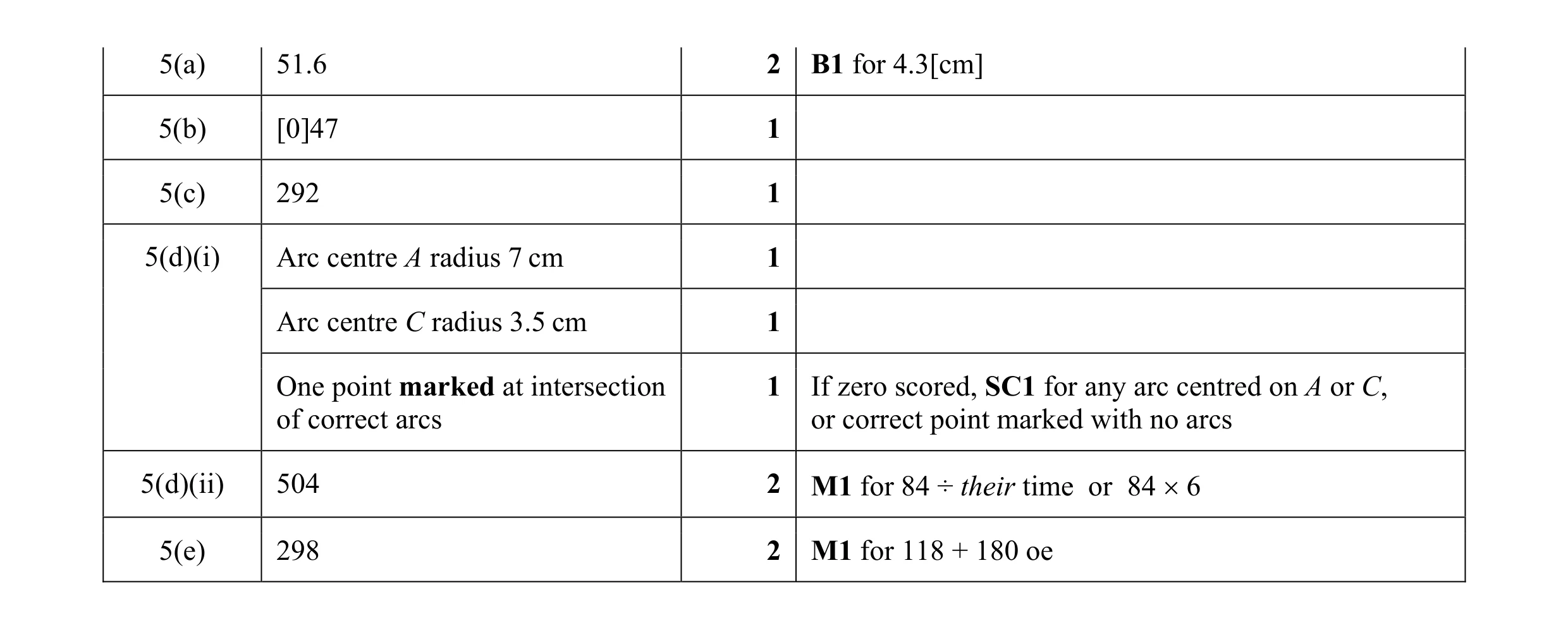 11
11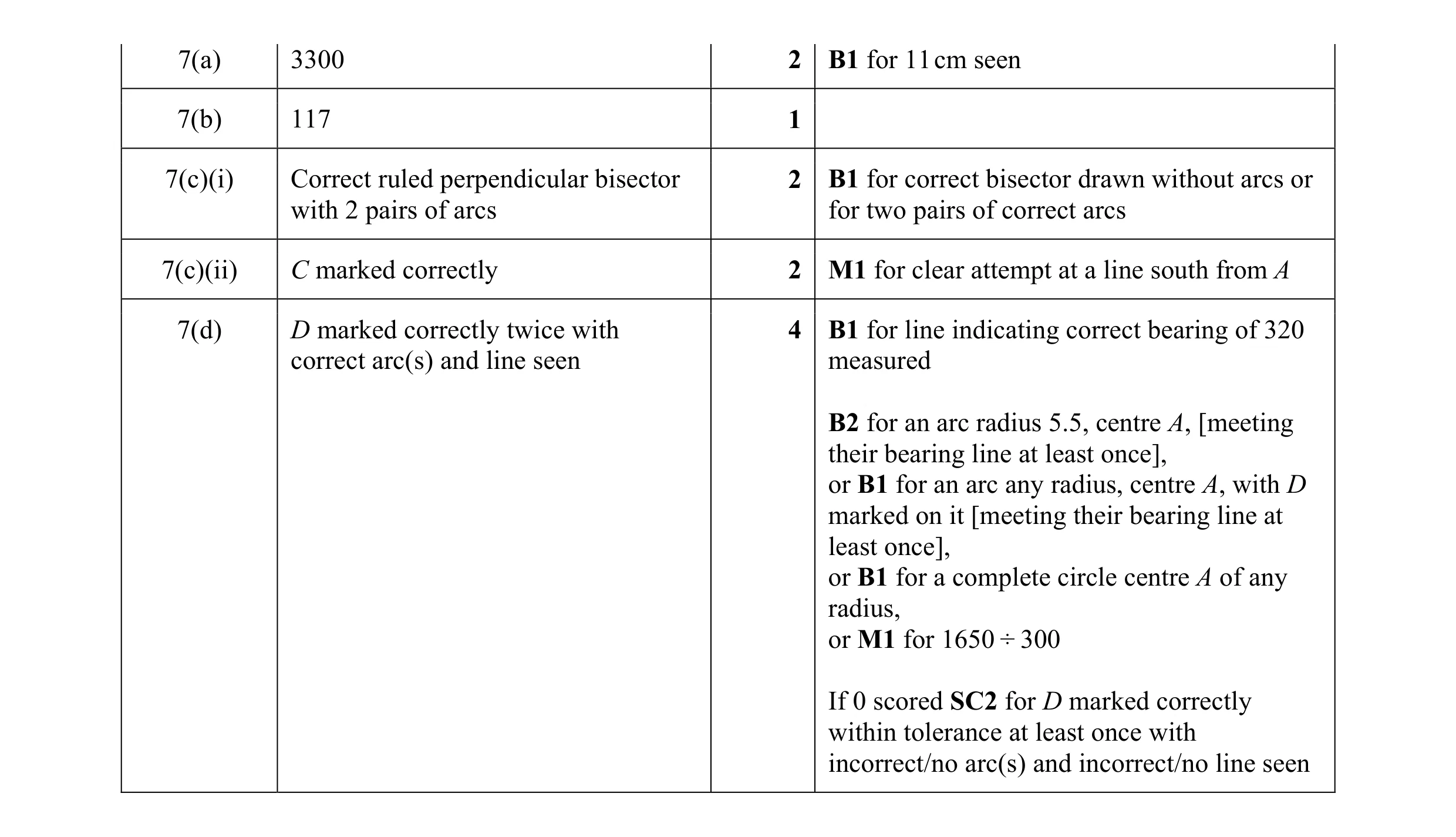 11
11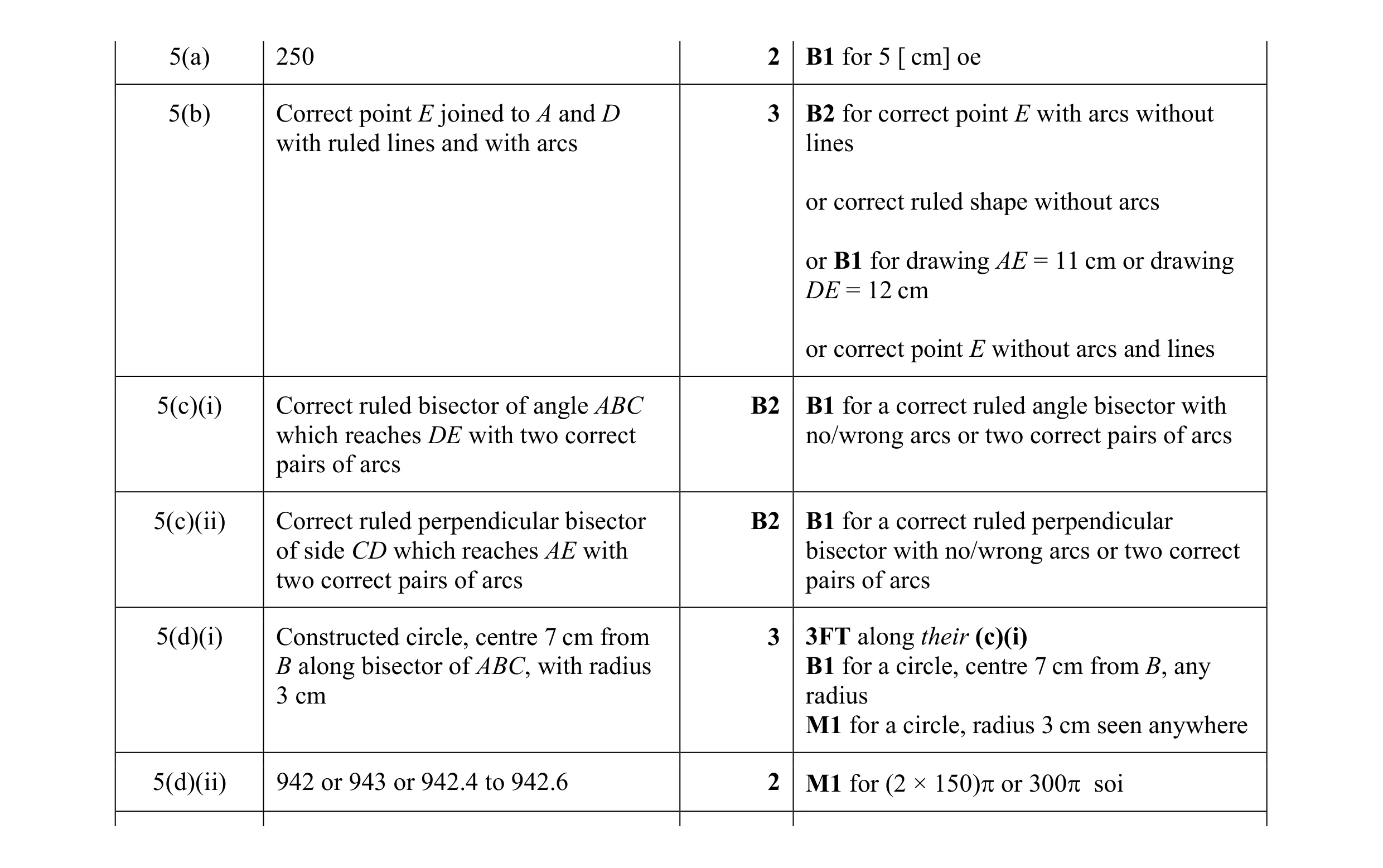 14
14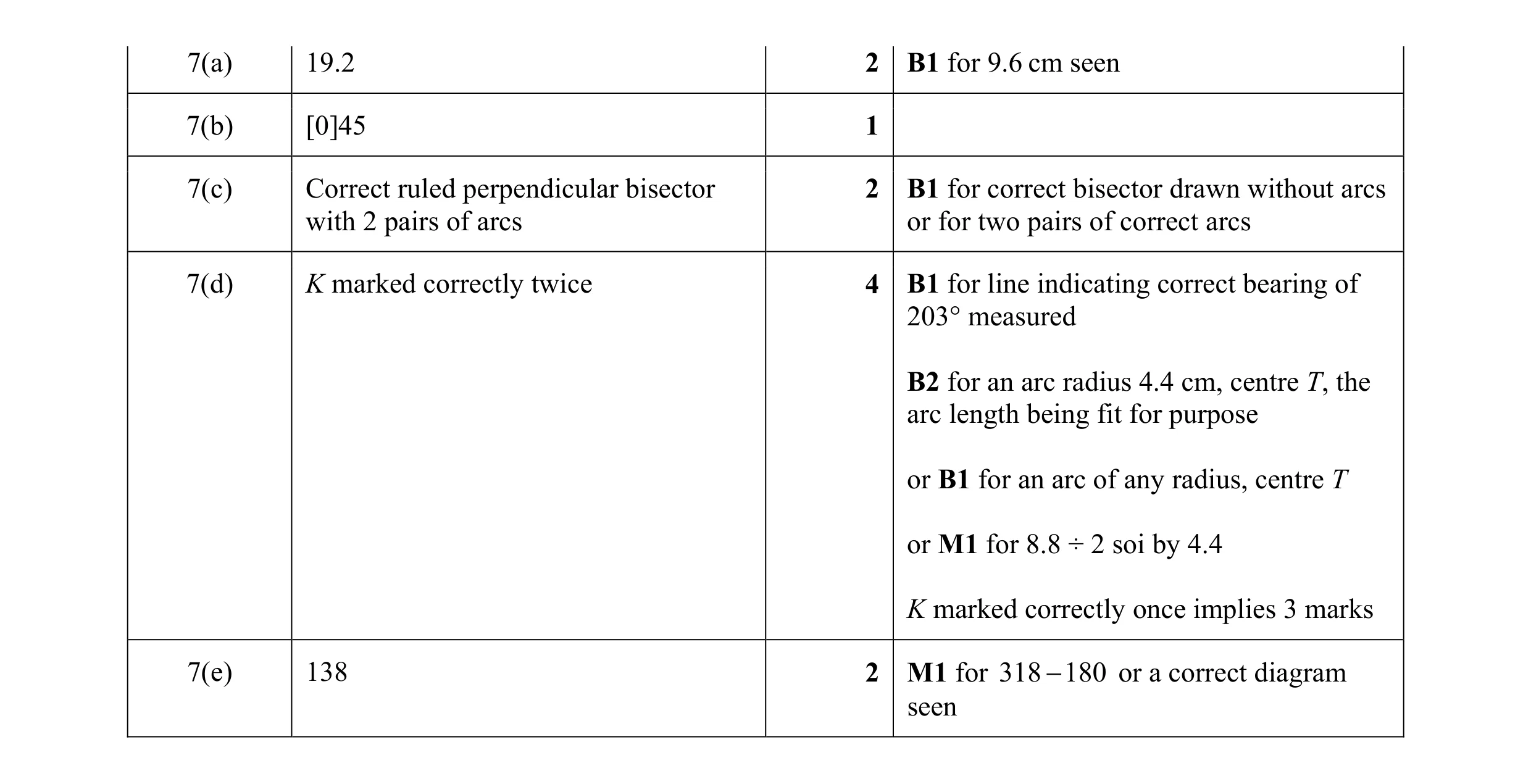 11
11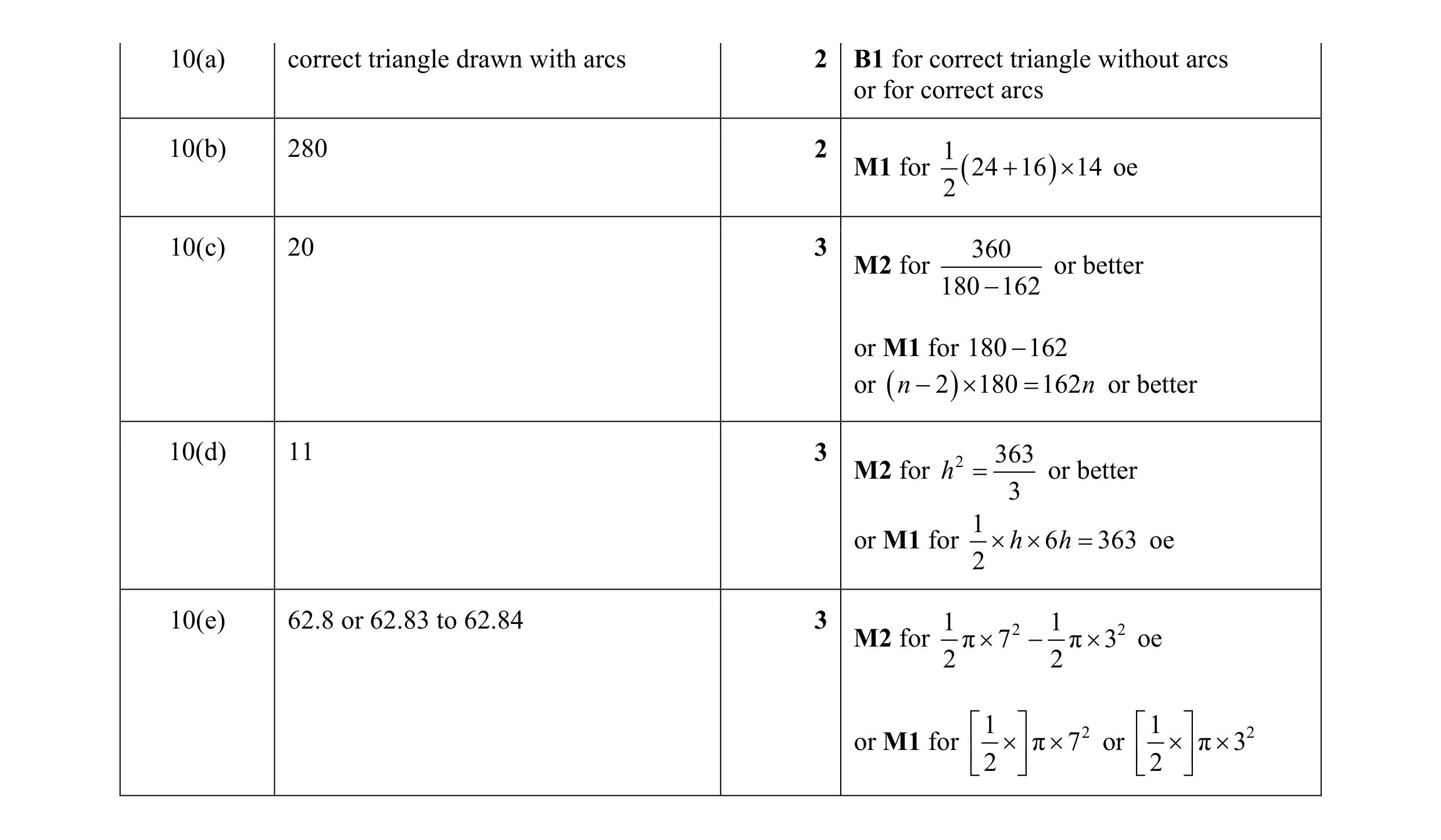 13
13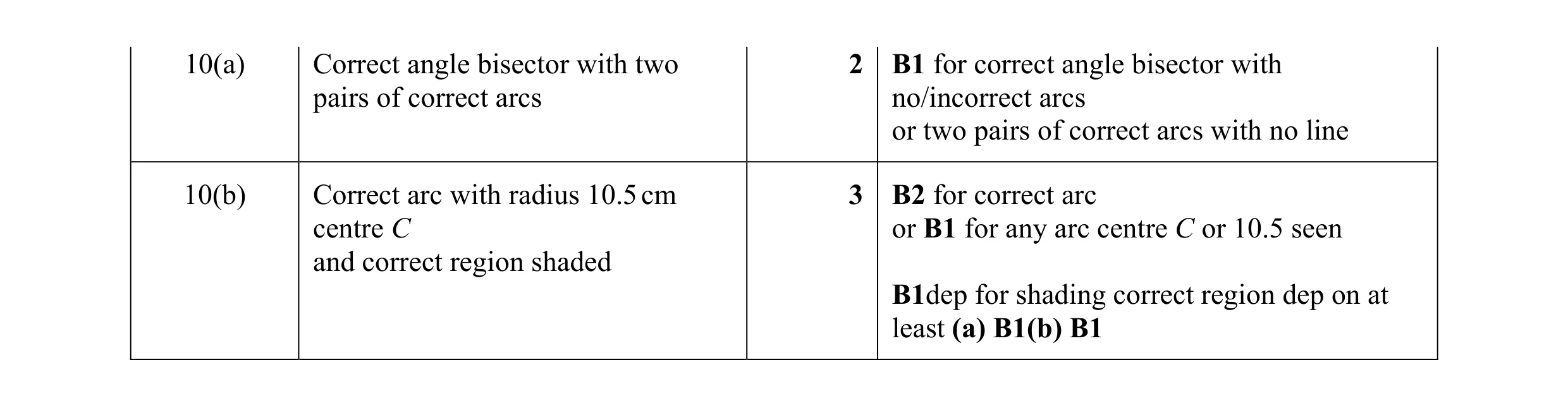 5
5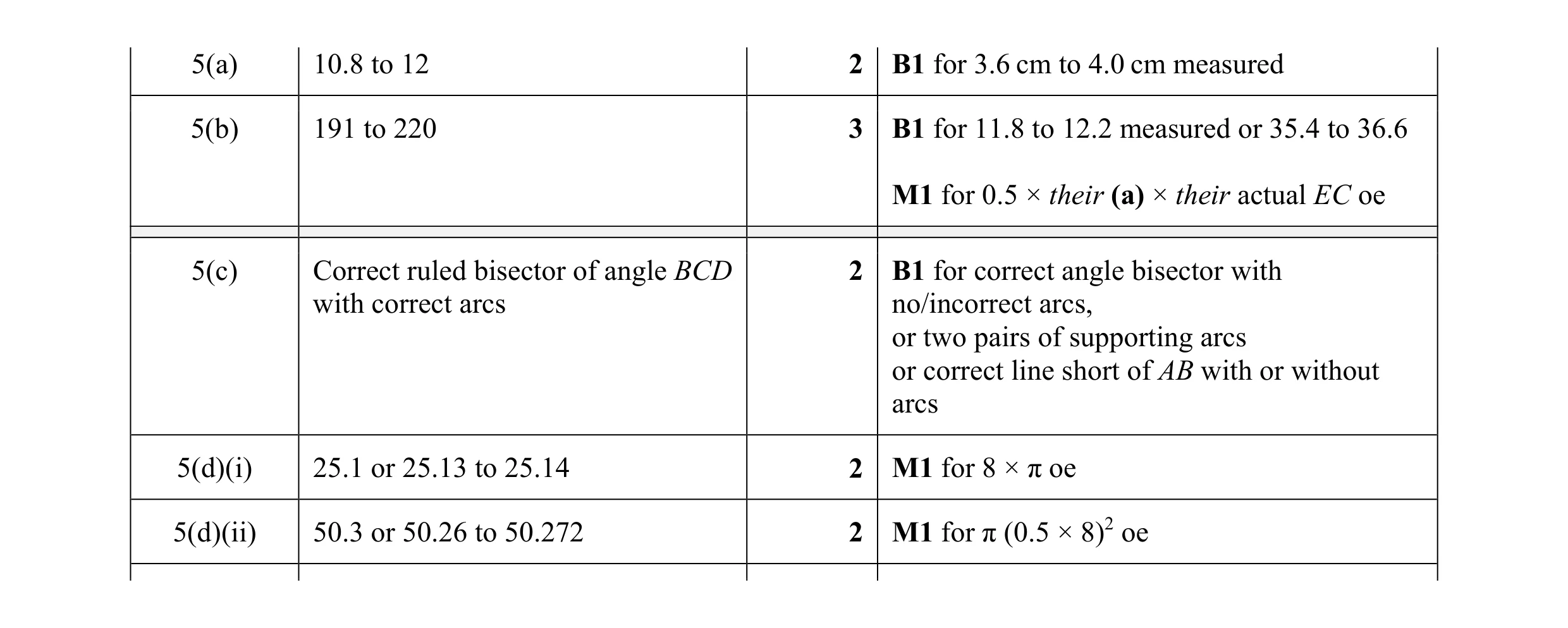 11
11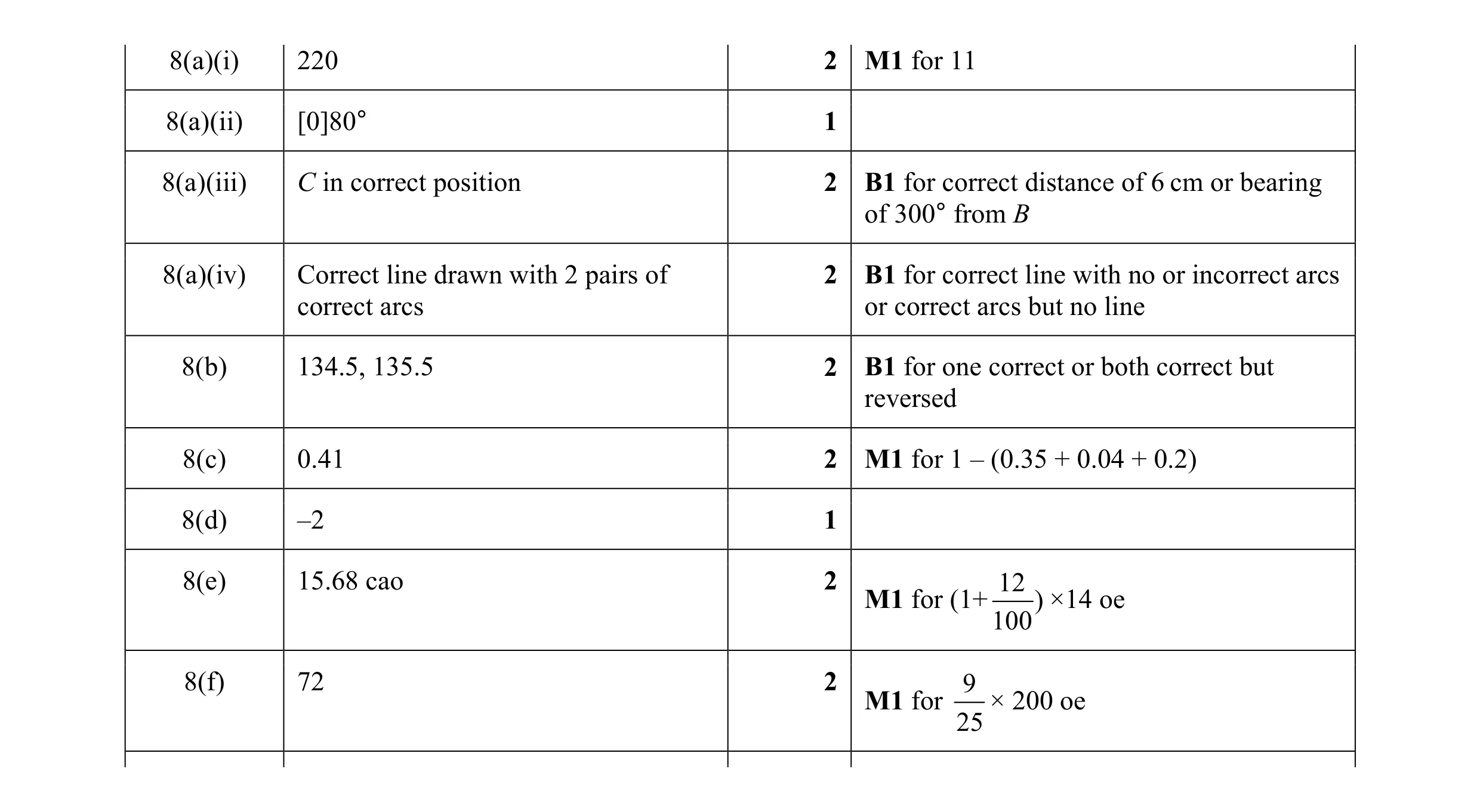 16
16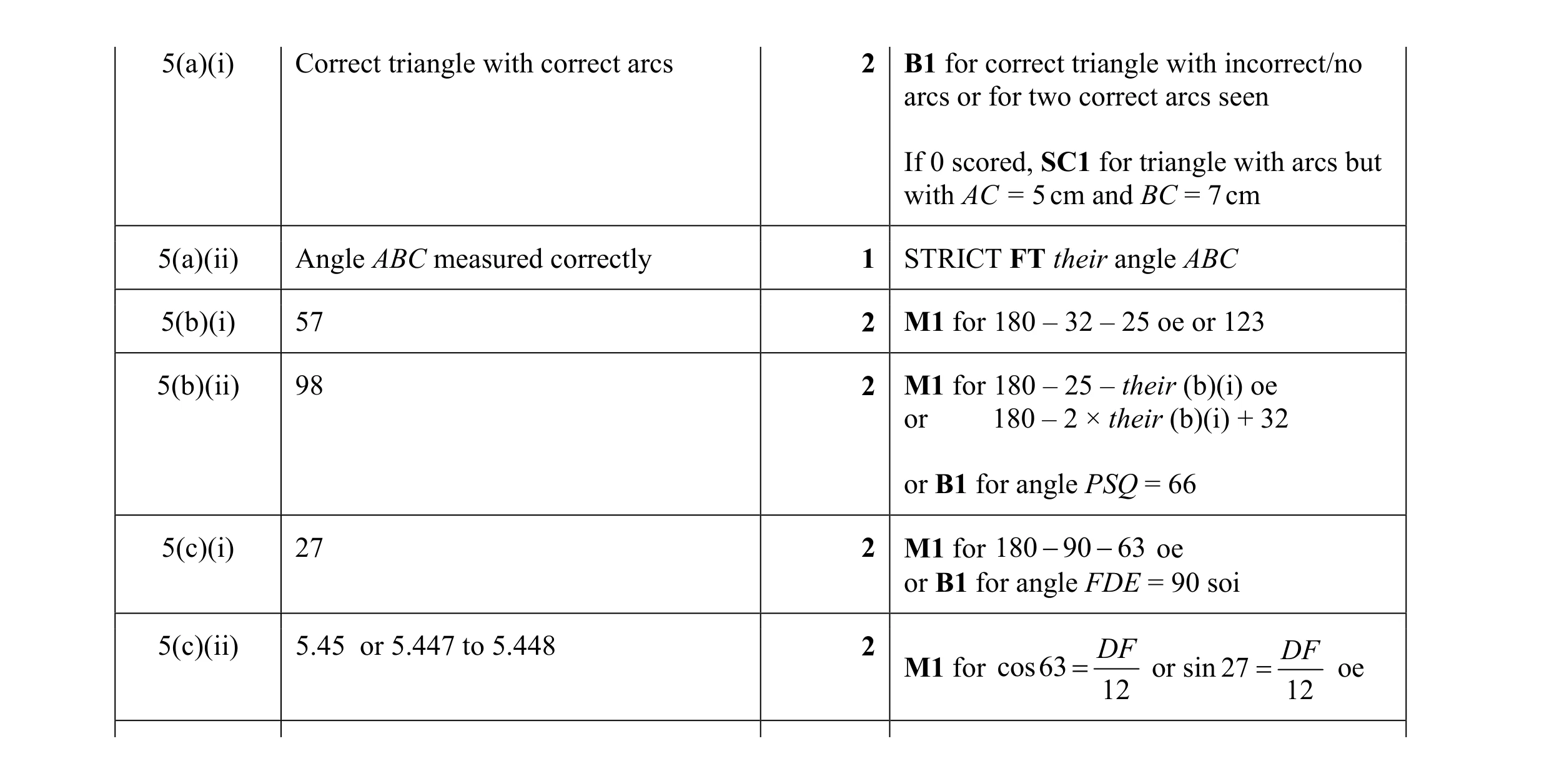 11
11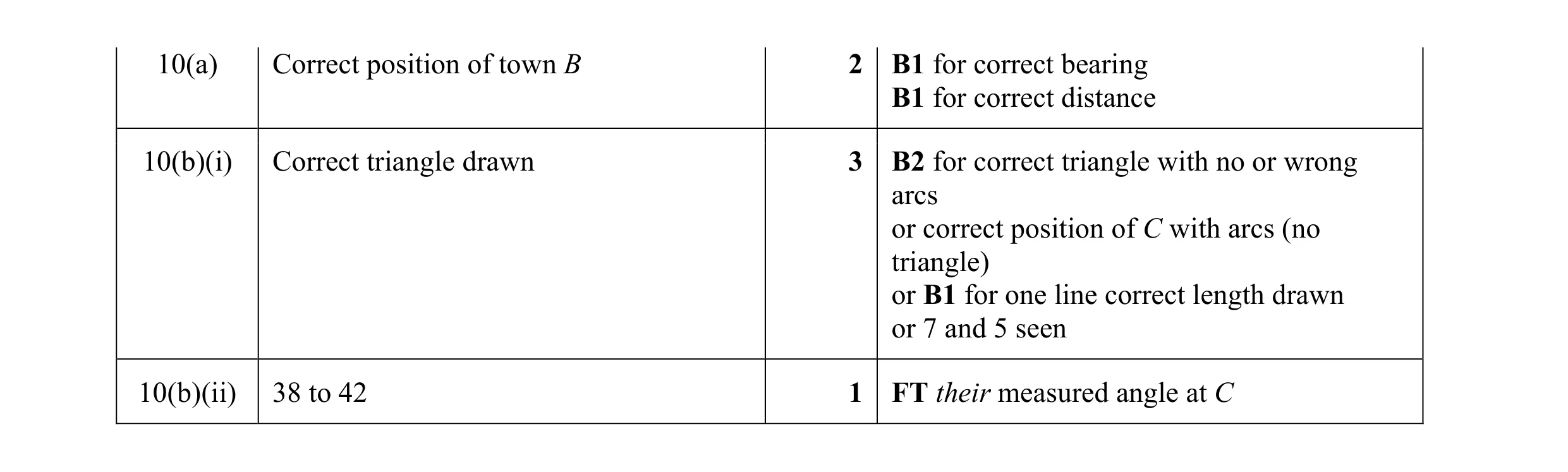 6
6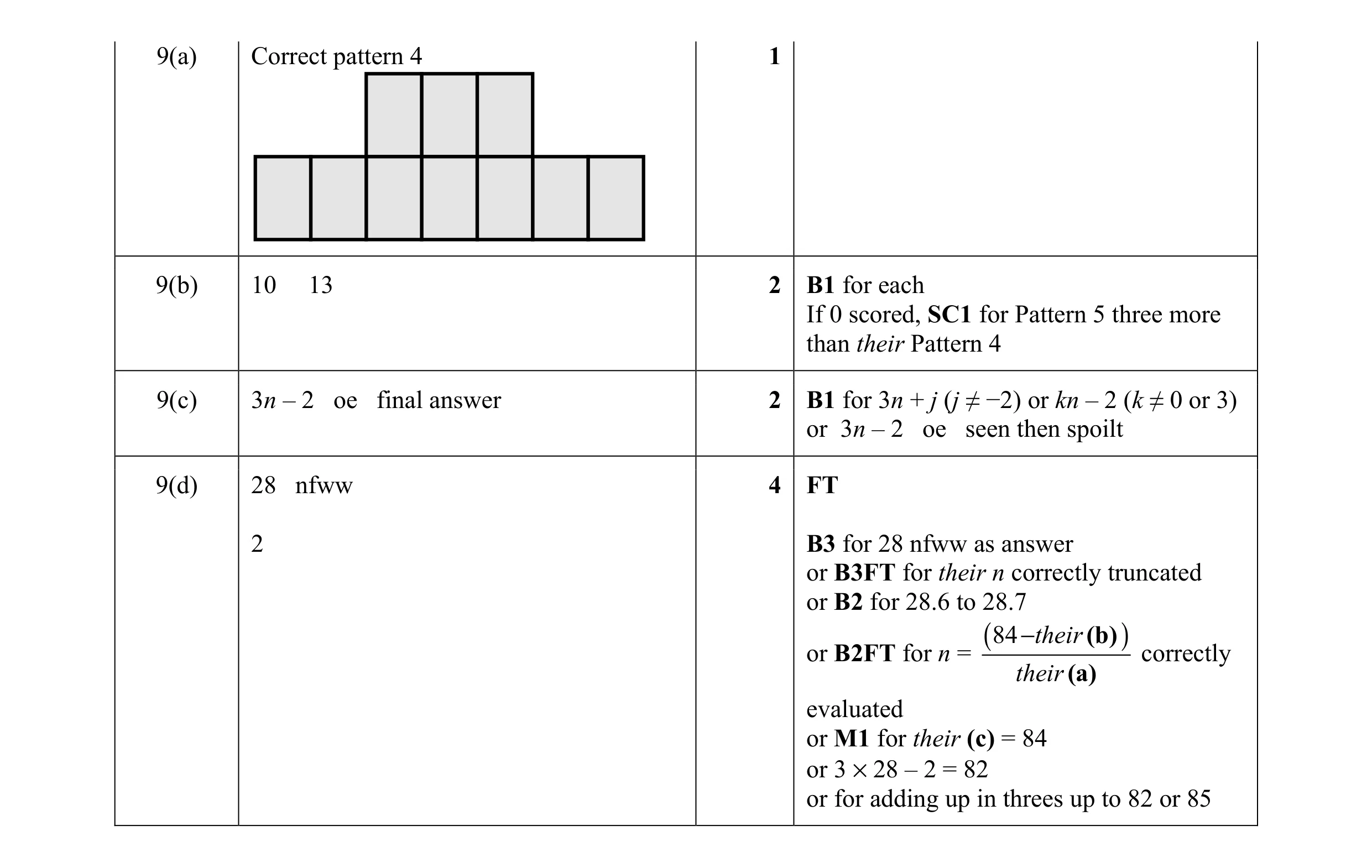 9
9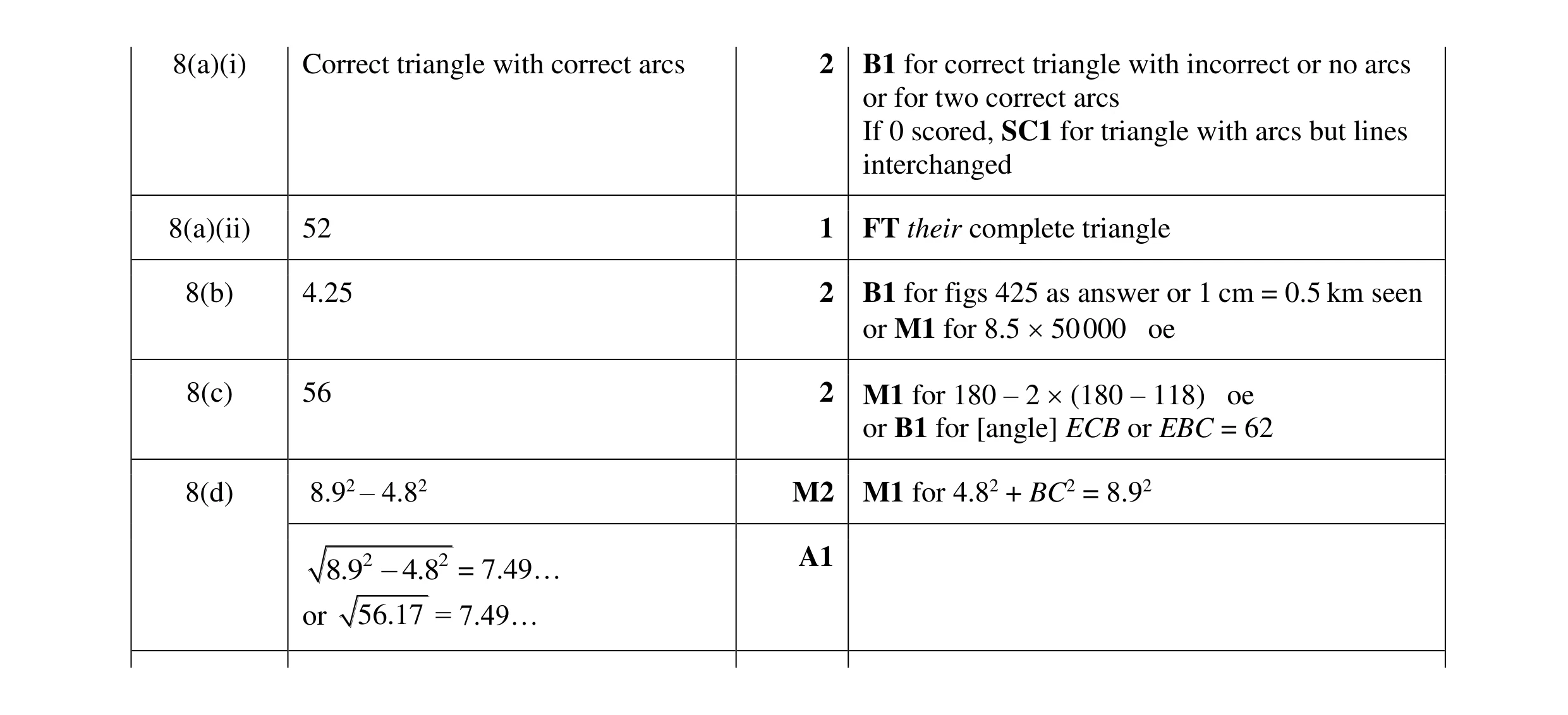 10
10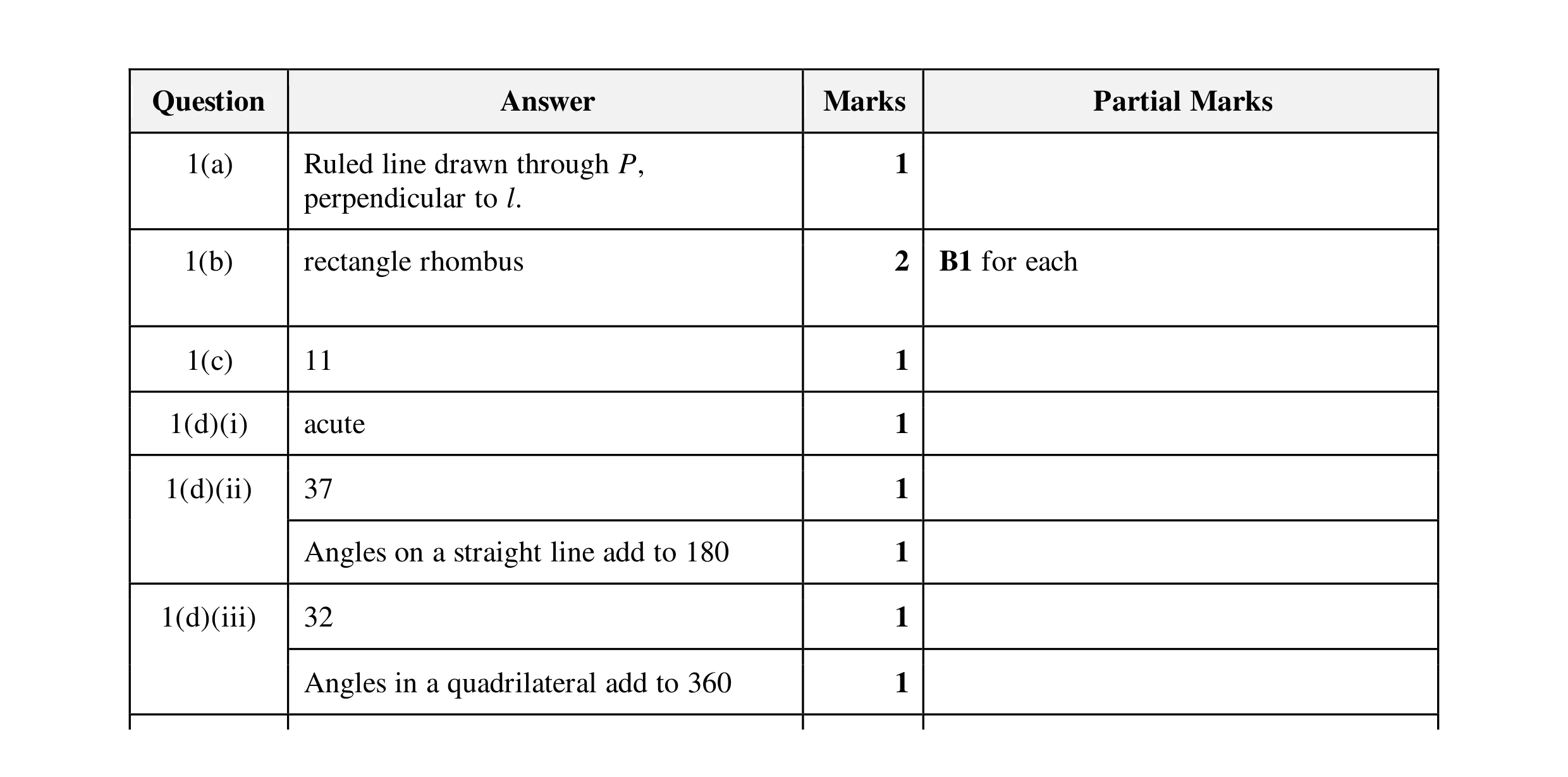 9
9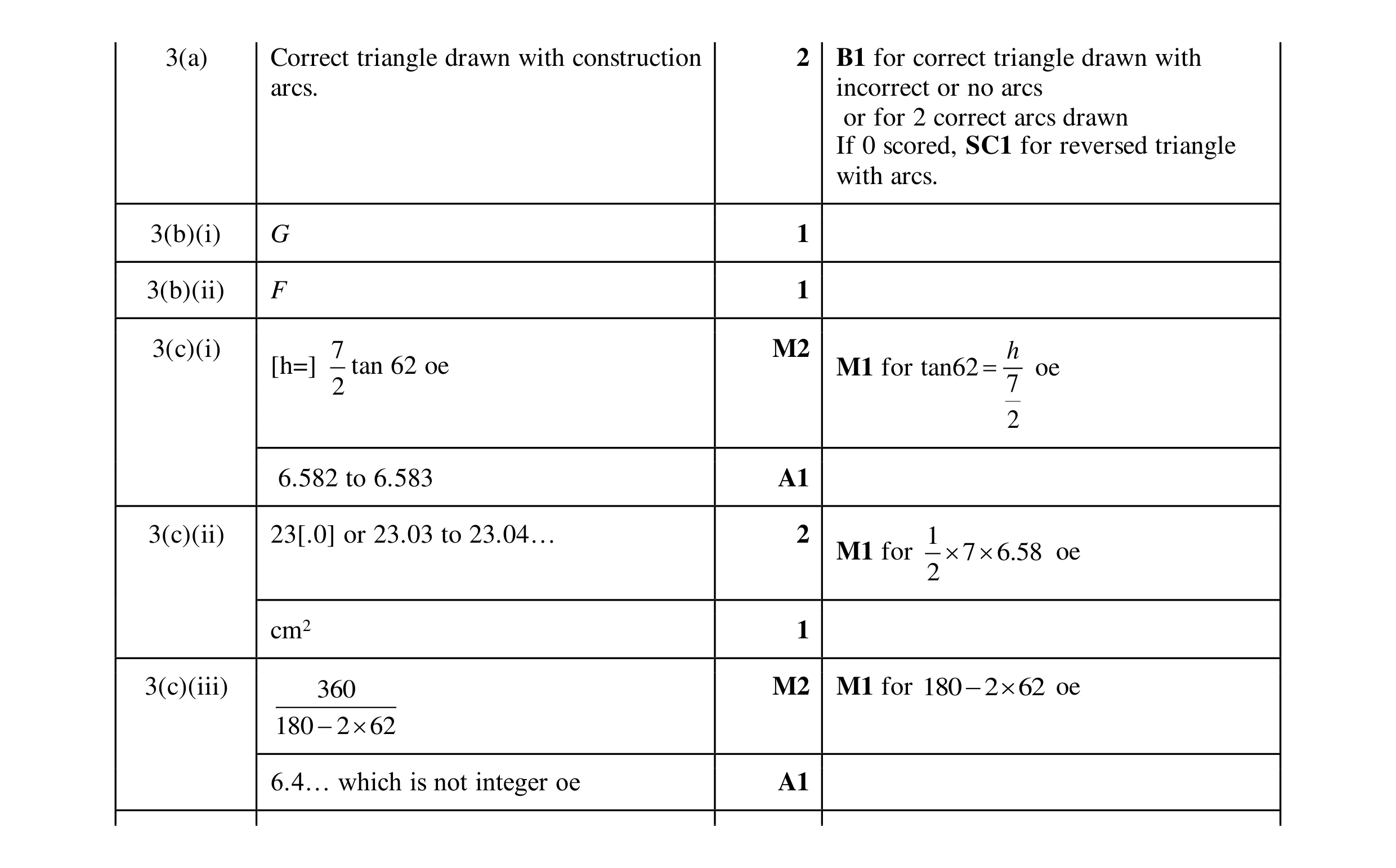 13
13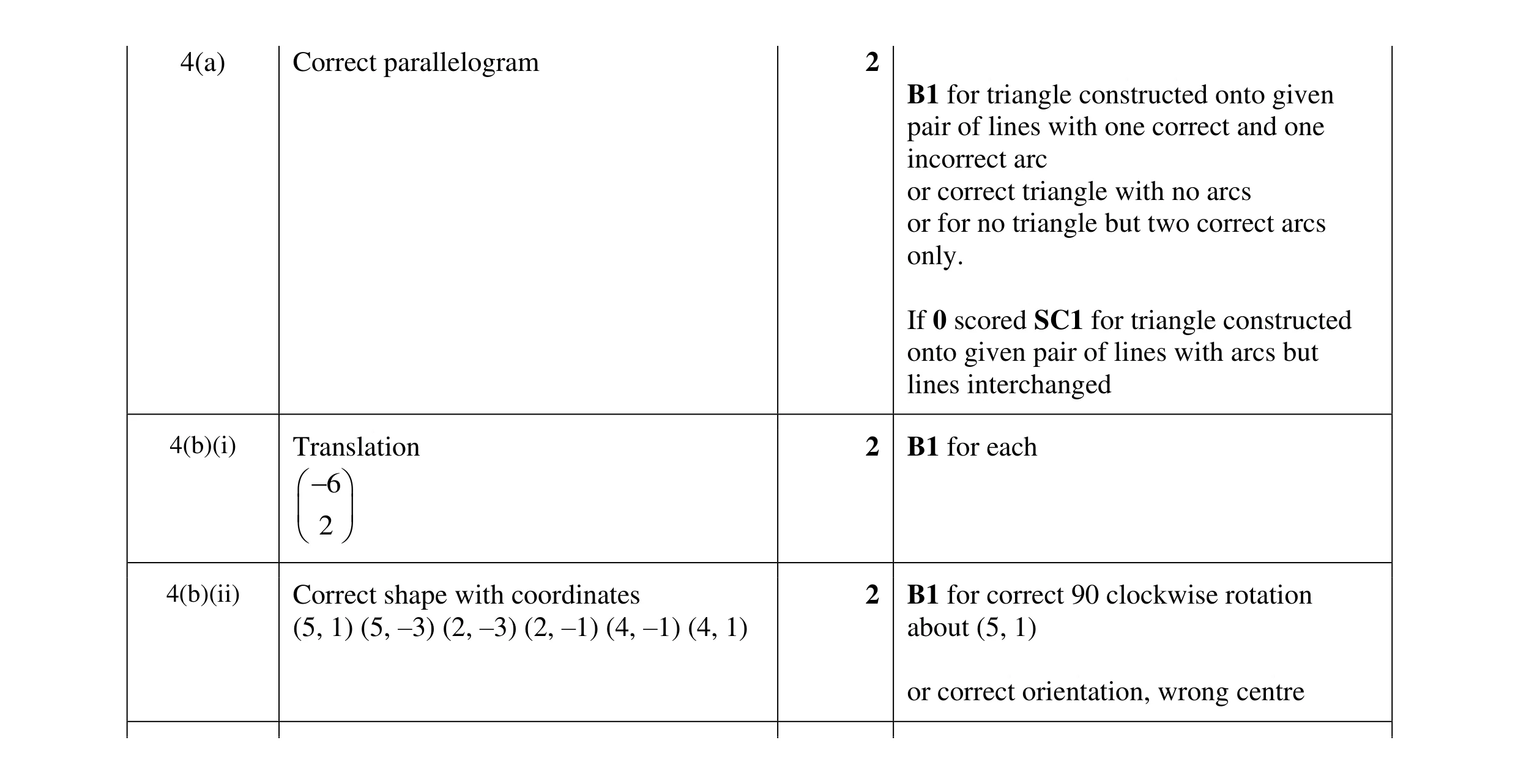 6
6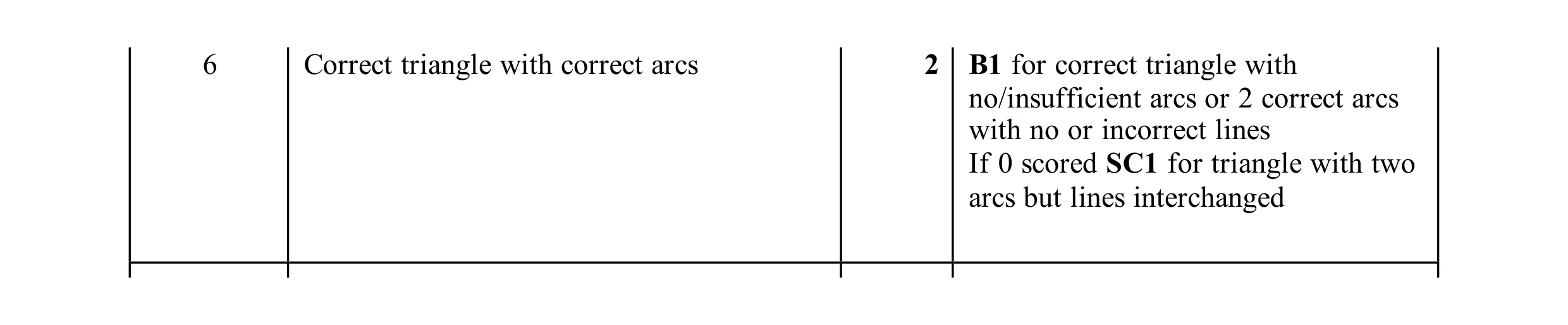 2
2