Questions as text
Q1 · 1 The diagram shows the curve y = 3x 4 9709/11 May/June 2007
2 1 The diagram shows the curve y = 3x 4. The shaded region is bounded by the curve, the x-axis and the lines x = 1 and x = 4. Find the volume of the solid obtained when this shaded region is rotated completely about the x-axis, giving your answer in terms of π. [4]
4 marks
Mark scheme: 2 V = π ∫9√xdx M1 For integral of y² (ignore π here) 3 2 A1 All correct (ignoring π here) 9x = π 3 2 DM1 Correct use of correct limits. [ ] at 4 − [ ] at 1 → 42π A1 co. [4]
This question in 9709/11 May/June 2007
Q2 · 10 The equation of a curve is y = 2x + x2 9709/11 May/June 2007
8 10 The equation of a curve is y = 2x + x2. dy d2y (i) Obtain expressions for and . [3] dx dx2 (ii) Find the coordinates of the stationary point on the curve and determine the nature of the stationary point. [3] (iii) Show that the normal to the curve at the point (−2, −2) intersects the x-axis at the point (−10, 0). [3] (iv) Find the area of the region enclosed by the curve, the x-axis and the lines x = 1 and x = 2. [3]
12 marks
Mark scheme: dy 16 −16/x3.10 (i) = 2 − 3 B1 For dx x d 2 y 48 B1 For “2” and for “0”. 2 = 4 B1√ For d/dx of his −16/x3 providing −ve dx x [3] power differentiated. dy (ii) =0 → x = 2, y = 6. M1 Sets dy/dx to 0 + attempt at x. dx A1 Needs both coordinates. d 2 y 2 is +ve Minimum. A1√ Looks at sign. Correct conclusion for dx [3] his x and his 2nd differential. (iii) x = −2 m = 4 Perp gradient = −¼ M1 Uses m1m2 = −1 with dy/dx. y + 2 = − 14 ( x + 2) DM1 Correct form of equation (not for tan) Sets y to 0 → x = −10 A1 Co nb answer given. [3] 2 8 (iv) Area = x −x B1 B1 For each term Evaluated from 1 to 2 → 7 B1 Co. (−7 ⇒ 7 gets B0) [3] 2
This question in 9709/11 May/June 2007
Q3 · Y A C D y = x 3 – 6x 2 + 9x x O B The diagram shows the curve y = x3 −6x2 + 9x for x ≥0 9709/11 May/June 2009
11 y A C D y = x 3 – 6x 2 + 9x x O B The diagram shows the curve y = x3 −6x2 + 9x for x ≥0. The curve has a maximum point at A and a minimum point on the x-axis at B. The normal to the curve at C (2, 2) meets the normal to the curve at B at the point D. (i) Find the coordinates of A and B. [3] (ii) Find the equation of the normal to the curve at C. [3] (iii) Find the area of the shaded region. [5]
11 marks
Mark scheme: dy 11 (i) = 3x2 – 12x + 9 B1 co (can be given in part (ii)) dx dy Solves = 0 M1 Attempt to solve dy/dx = 0. dx → A (1, 4), B (3, 0). A1 Both needed. [3] (ii) If x = 2, m = −3 Normal has m = 1 M1 Use of m1m2 = −1. needs calculus. 3 Eqn y −2 = 1 (x − 2) or 3y = x + 4. M1 A1 Correct form of equation – needs calculus. 3 [3] A1 any form. (iii) area under curve – integrate y. x2 → 1 x4 − 2x3 + 9 B2,1 For the 3 terms. −1 for each error. 4 2 Limits 2 to “his 3” → ¾ (0.75) M1 Using 2 to “his 3” with integration. Area of trapezium = ½ × 1 × (2 + 2⅓) M1 Any correct method for trapezium. = 2 1 6 Subtract → shaded area of 1 5 A1 co 12 [5]
This question in 9709/11 May/June 2009
Q4 · 8 The function f is such that f(x) = 2x 5 for x ∈>, x ≠−2.5 9709/12 Oct/Nov 2009
3 8 The function f is such that f(x) = 2x 5 for x ∈>, x ≠−2.5. + (i) Obtain an expression for f ′(x) and explain why f is a decreasing function. [3] (ii) Obtain an expression for f −1(x). [2] (iii) A curve has the equation y = f(x). Find the volume obtained when the region bounded by the curve, the coordinate axes and the line x = 2 is rotated through 360◦about the x-axis. [4]
9 marks
Mark scheme: 3 8 x a 2 x + 5 (i) fV(x) = –3(2x + 5)–2 × 2 B1 B1 B1 for –3(2x + 5)–2. B1 for ×2 fV(x) is negative → decreasing B1√ √ providing bracket is squared. [3] (using value or values only B0) 3 3 (ii) y = → 2 x + 5 = M1 Attempt at making x the subject. 2 x + 5 y –1 1 3 3− 5 x → f (x) = −5 or A1 co including f(x) not f(y) 2 x 2 x [2] 9 2 (iii) ∫ π ( 2 x + 5) dx B1 For –9(2x + 5)–1 = (–9π(2x + 5)–1 ÷ 2) B1 For ÷ 2 in ∫ of y2 Limits 0 to 2 → π (−½ − −0.9) M1 Use of correct limits with ∫ of y2. → = 0.4π (or 1.26) A1 co [4]
This question in 9709/12 Oct/Nov 2009
Q5 · Y a y = x x O 1 3 a The diagram shows part of the curve y = x, where a is a positive… 9709/12 May/June 2010
2 y a y = x x O 1 3 a The diagram shows part of the curve y = x, where a is a positive constant. Given that the volume obtained when the shaded region is rotated through 360◦about the x-axis is 24π, find the value of a. [4]
4 marks
Mark scheme: 1 (i) 3( 2 sin x − cos x ) = 2 (sin x − 3 cos x ) M1 E di ll i f
This question in 9709/12 May/June 2010
Q6 · Dy 6 5 The equation of a curve is such that dx = √(3x −2) 9709/13 May/June 2010
dy 6 5 The equation of a curve is such that dx = √(3x −2). Given that the curve passes through the point P (2, 11), find (i) the equation of the normal to the curve at P, [3] (ii) the equation of the curve. [4]
7 marks
Mark scheme: dy 6 5 = dx 3 x − 2 (i) x = 2, tangent has gradient 3 M1 Use of mlm2 = –1 with dy/dx 1 → normal has gradient − M1 A1 Correct form of line eqn. for normal 3 1 → y − 11 = − ( x − 2 ) [3] 3 3 x − 2 B1 Without the ÷3 ÷ 3 (ii) Integrate → 6 B1 For ÷3, even if B0 above 1 2 → y = 4 3 x − 2 + c through (2,11) M1 Using (2, 11) for c A1 co → y = 4 3 x − 2 + 3 [4]
This question in 9709/13 May/June 2010
Q7 · Y 4 y = x + x y = 5 A B M x O 4 The diagram shows part of the curve y = x + x which has a… 9709/13 May/June 2010
9 y 4 y = x + x y = 5 A B M x O 4 The diagram shows part of the curve y = x + x which has a minimum point at M. The line y = 5 intersects the curve at the points A and B. (i) Find the coordinates of A, B and M. [5] (ii) Find the volume obtained when the shaded region is rotated through 360◦about the x-axis. [6]
11 marks
Mark scheme: 4 9 y = x + x 4 (i) x + = 5 → A (1, 5), B(4, 5) B1 B1 co. co. x dy 4 = 1 − 2 M1 Differentiates. dx x = 0 when x = 2, M (2, 4). DM1 A1 Setting to 0. co. [5] (ii) Vol of cylinder = π52.3 B1 Any valid method. Vol under curve = π y 2 dx M1 Attempt at integrating y2 ∫ x 3 16 Integral = − + 8 x A2, 1, 0 Allow if no π present. 3 x Uses his limits “1 to 4” DM1 Using his limits. → 75π − 57π = 18π A1 co. [6] 2
This question in 9709/13 May/June 2010
Q8 · Y x = 5 A 1 y = 1 B 4 (3x + 1) x O 1 1 The diagram shows part of the curve y = 9709/12 Oct/Nov 2010
11 y x = 5 A 1 y = 1 B 4 (3x + 1) x O 1 1 The diagram shows part of the curve y = . The curve cuts the y-axis at A and the line x = 5 4 (3x + 1) at B. (i) Show that the equation of the line AB is y = −110x + 1. [4] (ii) Find the volume obtained when the shaded region is rotated through 360◦about the x-axis. [9]
13 marks
Mark scheme: 11 (i) A = (0, 1) B1 B = (5, ½) B1 1 y − 1 = − ( x − 0) M1 ft their A,B 10 1 y = − x + 1 A1 AG 10 [4] 5 −1 / 2 5 2 (ii) Curve: (π)∫ 0 (3 x + )1 dx M1 Attempt ∫ 0 y dx (π not vital) 2π 1 2 5 [(3 x + )1 ] 0 A1A1 (π not vital). 2nd A mark is for ÷ 3. 3 2π [ 4 − ]1 DM1 Application of limits to their integral 3 (in either integral). Limits 0 to 5 only. [2π] 5 1 2 1 5 2 M1 Attempt ∫ 0 y dx (π not vital) Line: (π ) ∫ 0 ( 100 x − 5 x + )1 dx 1 3 1 2 5 10 1 (π )[ x − x + x ]0 A2,1 Also directly − ( − x + 3)1 300 10 3 10 125 25 10 1 3 3 (π )[ − + 5] or − ( − + )1 − 1 (π not vital) 300 10 3 2 35π – applying limits to their integral [ ] 12 35π 11π Volume = – 2π = DM1 Subtraction of their volumes 12 12 A1 co [9]
This question in 9709/12 Oct/Nov 2010
Q9 · A curve has equation y = f(x) 9709/13 Oct/Nov 2010
6 A curve has equation y = f(x). It is given that f ′(x) = 3x2 + 2x −5. (i) Find the set of values of x for which f is an increasing function. [3] (ii) Given that the curve passes through (1, 3), find f(x). [4]
7 marks
Mark scheme: 6 (i) (3x + 5)(x – 1)(> 0) M1 Attempt at factorisation –5/3, 1 A1 Both required x < –5/3, x > 1 A1 Ignore any words between answers Condone < > [3] (ii) f(x) = x3 + x2 – 5x (+ c) M1 Attempt at integration A1 Any unsimplified expression ok 3 = 1 + 1 – 5 + c M1 Sub. (1, 3) f(x) = x3 + x2 – 5x + 6 A1 Accept c = 6 [4]
This question in 9709/13 Oct/Nov 2010
Q10 · Y P y = 9 – x3 8 Q y = x3 x O a b 8 The diagram shows parts of the curves y = 9 −x3 and y… 9709/13 Oct/Nov 2010
11 y P y = 9 – x3 8 Q y = x3 x O a b 8 The diagram shows parts of the curves y = 9 −x3 and y = and their points of intersection P and Q. x3 The x-coordinates of P and Q are a and b respectively. (i) Show that x = a and x = b are roots of the equation x6 −9x3 + 8 = 0. Solve this equation and hence state the value of a and the value of b. [4] (ii) Find the area of the shaded region between the two curves. [5] (iii) The tangents to the two curves at x = c (where a < c < b) are parallel to each other. Find the value of c. [4]
13 marks
Mark scheme: 3 8 11 (i) 9 − x = 3 M1 Together with attempt to mult by x3 x x6 – 9x3 + 8 = 0 A1 AG completely correct working (X – 1)(X – 8) = 0 → X = 1 or 8 M1 Attempt to solve quadratic in X or x3 a = 1, b = 2 A1 [4] 2 3 8 dx M1 Intention to integrate the difference ( 9 − x ) − 3 (ii) ∫1 x y1 – y2 not π(y1 – y2) x 4 − 4 B1 9 x − ⋅ 2 B1 4 x 1 18 − 4 + 1 − (9 − + 4 ) M1 Correct use of their limits once 4 1 2 A1 4 [5] dy − 24 dy (iii) = , = –3x2 B1, B1 cao dx dx x 4 − 24 = –3c2 c 4 c6 = 8 M1 Equating and solution c = 2 or 81/6 or 1.41(4...) A1 Accept x or c [4]
This question in 9709/13 Oct/Nov 2010
Q11 · Sketch the curve y = (x −2)2 9709/11 May/June 2011
3 (i) Sketch the curve y = (x −2)2. [1] (ii) The region enclosed by the curve, the x-axis and the y-axis is rotated through 360◦about the x-axis. Find the volume obtained, giving your answer in terms of π. [4]
5 marks
Mark scheme: 3 (i) Correct shape – touching positive x-axis B1 Ignore intersections with axes [1] (ii) (π ) ∫ ( x − 2 ) 4 d x M1 Use (π ) ∫ y 2 d x & attempt integrate but expansion before integn needs 5 terms ( x − 2) 5 (π ) A1 5 (π )[0 − ( −32/) 5]) M1 Use of limits 0, 2 on their (π ) y ∫ 2 dx 32π or 6.4π A1 cao Rotation about y-axis max 1/5 5 [4] B1
This question in 9709/11 May/June 2011
Q12 · Dy 3 17 A curve is such that dx = and the point (1, 2) lies on the curve 9709/11 May/June 2011
dy 3 17 A curve is such that dx = and the point (1, 2) lies on the curve. (1 + 2x)2 (i) Find the equation of the curve. [4] (ii) Find the set of values of x for which the gradient of the curve is less than 3.1 [3]
7 marks
Mark scheme: 31( + 2 x ) 7 (i) + ( c ) B1 − 1 31( + 2 x ) −1 y = + ( c ) B1(indep) Division by 2 y = necessary − 2 Sub (1, (1/2)) M1 Dependent on c present 1 3 = + c ⇒ c = 1 A1 Use of y = mx + c etc. gets 0/4 2 − 6 [4] (ii) (1 + 2x)2(>)9 or 4x2 + 4x – 8(>)0 OE M1 1, ‒2 A1 x > 1, x < –2 ISW A1 [3]
This question in 9709/11 May/June 2011
Q13 · Y y = Ö(1 + 2x ) C B x A O meeting the x-axis at A and the y-axis at B 9709/11 Oct/Nov 2011
10 y y = Ö(1 + 2x ) C B x A O meeting the x-axis at A and the y-axis at B. The The diagram shows the curve y = √(1 + 2x) y-coordinate of the point C on the curve is 3. (i) Find the coordinates of B and C. [2] (ii) Find the equation of the normal to the curve at C. [4] (iii) Find the volume obtained when the shaded region is rotated through 360◦about the y-axis. [5]
11 marks
Mark scheme: If B0B0 then SCB1 for both y 1 & 10 (i) B = ()1,0 C = (3,4) B1, B1 [2] x = 4 1 δy 1 − 1 − 2 required & at least one of 1 × 2 (ii) = × 2(1 + 2 x ) 2 M1A1 2 δx 2 for M1 Grad. of normal = −3 B1 y − 3 = −3( x − 4 ) or y = −3 x + 15 oe B1√ [4] Ft only from their C 2 1 2 2 1 x δy , square ( y − )1 & attempt ∫ (iii) y = 1 + 2 x ⇒ x = SOI B1 2 2 2 ( y − )1 n int 1 4 2 (π ) × × ( y − 2 y + 1)δy M1 ∫ 4 1 y 5 2 y 3 Apply limits 0 → their 1 (from their (π ) × − + y A1 B) 4 5 3 2 π 2 1 1 − + 1 (π ) × DM1 cao SCB1 for ∫ y δx →4 (scores 4 5 3 1/5) 2 π A1 [5] 15 ( ) 2 B 1 B1
This question in 9709/11 Oct/Nov 2011
Q14 · Dy 7 A curve is such that 9709/12 Oct/Nov 2011
dy 7 A curve is such that . The line 3y + x = 17 is the normal to the curve at the point P on the dx = 5 −8x2 curve. Given that the x-coordinate of P is positive, find (i) the coordinates of P, [4] (ii) the equation of the curve. [4]
8 marks
Mark scheme: dy 8 7 = 5 − 2 , Normal 3 y + x = 17 dx x (i) Gradient of line = −⅓ B1 co dy M1 Use of m1m2 = − 1 = 3 → x = 2, y = 5 DM1 DM1 solution. A1 co. dx A1 [4] (ii) y = 5 x + 8 x −1 (+ c ) B1 B1 co.co. doesn’t need +c. Uses (2, 5) → c = −9 M1 A1 Use of +c following integration. co. [4] GCE AS/A LEVEL – October/November 2011 9709 12 2
This question in 9709/12 Oct/Nov 2011
Q15 · Find8 The equation of a curve is y = √(8x −x2) 9709/12 Oct/Nov 2011
Find8 The equation of a curve is y = √(8x −x2). dy (i) an expression for dx, and the coordinates of the stationary point on the curve, [4] (ii) the volume obtained when the region bounded by the curve and the x-axis is rotated through 360◦about the x-axis. [4] [Questions 9 and 10 are printed on the next page.]
8 marks
Mark scheme: 8 y = 8 x − x 2 dy (i) 2 × (8 − 2 x ) B1 B1 for everything but ×(8-2x) = 12 (8 x − x 2 ) − 1 dx B1 B1 for × (8−2x), even if B0 = 0 when x = 4. M1 Sets to 0 + attempt at solution. → (4, 4) A1 Co – A0 if fortuitous because of B0 [4] earlier. (ii) y = 0 when x = 0 or 8 B1 Vol = π ∫ (8 x − x 2 d)x Anywhere 2 x 3 B2,1 = π 4 x −1 for each error (not including π) −3 256π B1 → 3 [4] co
This question in 9709/12 Oct/Nov 2011
Q16 · Y 2 y = Ö(x + 1) y = 1 x O 2 The diagram shows the line y 1 and part of the curve y = =… 9709/11 May/June 2012
11 y 2 y = Ö(x + 1) y = 1 x O 2 The diagram shows the line y 1 and part of the curve y = = √(x + 1). 2 4 (i) Show that the equation y can be written in the form x [1] y2 −1. = √(x + 1) = 4 (ii) Find dy. Hence find the area of the shaded region. [5] ä y2 −1 (iii) The shaded region is rotated through 360◦about the y-axis. Find the exact value of the volume of revolution obtained. [5]
11 marks
Mark scheme: B1 AG At least 1 step of working needed 4 11 (i) x = − 1 [1] 2 y 4 4 B1B1 (ii) ∫ − 1 dy = − − y y 2 y 4 B1 For − , –y Upper limit = 2 y 4 − − 2 − (− 4 − 1 M1 Apply limits 1 and their 2 ‘correctly’ 2 ) 2 d x − 3 → 1 SC B2 for 2( x + 1)− 1 1 A1 ∫ [5] 16 8 dy B1B1 − + 1 2 (iii) (π )∫ x 2 dy = (π )∫ y 4 y − 16 8 (π ) 3 B1 3 y + y + y − 16 − 16 (π ) + 4 + 2 − + 8 + 1 M1 Apply limits 1 and their 2 ‘correctly’ 24 3 5π A1 3 [5]
This question in 9709/11 May/June 2012
Q17 · Y A y = – x2 + 8x –10 B x O The diagram shows part of the curve y 8x which passes through… 9709/12 May/June 2012
9 y A y = – x2 + 8x –10 B x O The diagram shows part of the curve y 8x which passes through the points A and B. The = −x2 + −10 curve has a maximum point at A and the gradient of the line BA is 2. (i) Find the coordinates of A and B. [7] (ii) Find y dx and hence evaluate the area of the shaded region. [4] ã
11 marks
Mark scheme: 9 y = − x 2 + 8 x − 10 dy (i) = −2x + 8 B1 co dx = 0 when x = 4, A is (4, 6) M1A1 Sets to 0 and attempt to solve for x. co. Equation of AB is y − 6 = 2 ( x − 4 ) M1 Correct form of equation. Sim eqns with eqn of curve M1 Eliminates x or y completely → x 2 −x6 + 8 = 0 or y 2 −y8 + 12 = 0 A1 Method for quadratic eqn = 0. → B (2, 2) A1 co (Must not be guessed from diagram) [7] 2 x 3 2 (ii) ∫ − x + 8 x − 10 dx = − 3 + 4 x − 10 x B2,1 3 terms, loses 1 for each error Uses his x limits 2 to 4 M1 Uses x limits correctly – allow ± → 9⅓ A1 co – allow ± (2 must have been [4] correctly found, not guessed) GCE AS/A LEVEL – May/June 2012 9709 12 8 10 f : x a 2 x + 5 g : x a x − 3 –1 B1 co (i) f = ½(x − 5) M1 A1 Attempt at x the subject. co but (f(x) 1 8
This question in 9709/12 May/June 2012
Q18 · Y B (0, 3) 9 y = 2 x + 3 C A (3, 1) x O 9 The diagram shows part of the curve y =… 9709/12 Oct/Nov 2012
9 y B (0, 3) 9 y = 2 x + 3 C A (3, 1) x O 9 The diagram shows part of the curve y = crossing the y-axis at the point B (0, 3). The point 2x + 3, A on the curve has coordinates (3, 1) and the tangent to the curve at A crosses the y-axis at C. (i) Find the equation of the tangent to the curve at A. [4] (ii) Determine, showing all necessary working, whether C is nearer to B or to O. [1] (iii) Find, showing all necessary working, the exact volume obtained when the shaded region is rotated through 360◦about the x-axis. [4]
9 marks
Mark scheme: → y 1 = 9 ( x )3 [4] (normal →max 2/4, no calculus 0/4) (ii) Meets the y-axis when x = 0, y = 1⅔ B1 Sets x to 0 in his tangent. This is nearer to B than to O. [1] The 1⅔ and part (i) must be correct.
This question in 9709/12 Oct/Nov 2012
Q19 · Y y = (3 – 2 x )3 2(1 , 8) x O The diagram shows the curve y = 3 −2x 3 and the tangent to… 9709/11 Oct/Nov 2013
10 y y = (3 – 2 x )3 2(1 , 8) x O The diagram shows the curve y = 3 −2x 3 and the tangent to the curve at the point 12, 8 . (i) Find the equation of this tangent, giving your answer in the form y = mx + c. [5] (ii) Find the area of the shaded region. [6]
11 marks
Mark scheme: dy 2 2 2 ] B1B1 OR − 54 + 72 x − 24 x B2,1,010 (i) = [ 3(3 − 2 x ) ]× [− dx 1 dy At x = , = −24 M1 2 dx 1 y − 8 = −24 x − DM1 2 y = −24 x + 20 A1 [5] (3 − 2 x )4 1 2 3 4 (ii) Area under curve = × − B1B1 OR 27 x − 27 x + 12 x − 2 x B2,1,0 2 4 81 − 2 − − M1 Limits 0→ ½ applied to integral with 8 intention of subtraction shown − 24x + 20 ) M1 or area trap =½(20 + 8) × ½ Area under tangent = ∫ ( = − 12 x 2 + 20 x or 7 (from trap) A1 Could be implied 9 or 1.125 A1 Dep on both M marks 8 [6]
This question in 9709/11 Oct/Nov 2013
Q20 · Y y = 2x + 1 y = −x2 + 12x −20 x O The diagram shows the curve y = −x2 + 12x −20 and the… 9709/13 May/June 2014
10 y y = 2x + 1 y = −x2 + 12x −20 x O The diagram shows the curve y = −x2 + 12x −20 and the line y = 2x + 1. Find, showing all necessary working, the area of the shaded region. [8] [Question 11 is printed on the next page.]
8 marks
Mark scheme: 10 pts of intersection 2 x + 1= −x² + 12x − 20 M1A1 Attempt at soln of sim eqns. co → x = 3, 7 1 Area of trapezium = (4)(7 + 15) = 44 M1A1 Either method ok. co 2 (or ∫ (2x+1) dx from 3 to 7 = 44) 1 B2,1 −1 each term incorrect Area under curve = −3 x³ + 6x² − 20x 2 Uses 3 to 7 → (54 ) DM1 Correct use of limits (Dep 1st M1) 3 2 Shaded area = 10 A1 co 3 [8] OR 7 2 x 3 2 Functions subtracted before integration ∫ 3 − x + 10 x − 21) = − 3 + 5 x − 21x M1 subtraction, A1A1A1 for integrated terms, Subtraction reversed allow A3A0. DM1 correct use of limits, A1 Limits reversed allow DM1A0
This question in 9709/13 May/June 2014
Q21 · The function f is defined for x > 0 and is such that f ′ x = 2x −2 9709/11 Oct/Nov 2014
9 The function f is defined for x > 0 and is such that f ′ x = 2x −2 . The curve y = f x passes through x2 the point P 2, 6 . (i) Find the equation of the normal to the curve at P. [3] (ii) Find the equation of the curve. [4] (iii) Find the x-coordinate of the stationary point and state with a reason whether this point is a maximum or a minimum. [4]
11 marks
Mark scheme: 9 (i) f ′( 2) = 4 − 12 = 72 → gradient of normal = − 72 B1M1 y − 6 = − 2 ( x − 2) AEF A1 Ft from their f ′(2 ) 7 [3] (ii) f ( x ) = x 2 + 2 ( + c ) B1B1 x 6 = 4 + 1 + c ⇒ c = 1 M1A1 Sub (2, 6) – dependent on c being present [4] (iii) 2 x − 2 = 0 ⇒ 2 x 3 − 2 = 0 M1 Put f ′( x ) = 0 and attempt to solve x 2 x = 1 A1 Not necessary for last A mark as x > 0 given 4 f ′′ ( x ) = 2 + or any valid method M1 x 3 f ′′(1) = 6 OR > 0 hence minimum A1 Dependent on everything correct [4] 2
This question in 9709/11 Oct/Nov 2014
Q22 · Y 2, 5 y = x2 + 1 0, 1 x O The diagram shows part of the curve y = x2 + 1 9709/12 Oct/Nov 2014
1 y 2, 5 y = x2 + 1 0, 1 x O The diagram shows part of the curve y = x2 + 1. Find the volume obtained when the shaded region is rotated through 360 about the y-axis. [4]
4 marks
Mark scheme: 1 Vol = ( π) ∫x²dy = (π) ∫ (y − 1) dy M1 Use of ∫x ² – not ∫y² – ignore π 2 A1 co 1 2 ( y − 1) Integral is y − y or B1 Sight of an integral sign with 1 and 5 2 2 Limits for y are 1 to 5 → 8π or 25.1(AWRT) A1 co [4] (no π max 3/4) 5
This question in 9709/12 Oct/Nov 2014
Q23 · Y B y = 3 x y = x + 2 A x O The diagram shows parts of the graphs of y = x + 2 and y = 3… 9709/13 Oct/Nov 2014
9 y B y = 3 x y = x + 2 A x O The diagram shows parts of the graphs of y = x + 2 and y = 3 x intersecting at points A and B. (i) Write down an equation satisfied by the x-coordinates of A and B. Solve this equation and hence find the coordinates of A and B. [4] (ii) Find by integration the area of the shaded region. [6] [Question 10 is printed on the next page.]
10 marks
Mark scheme: 2 9 (i) x − 3 x + 2 or k 2 − 3k + 2 or (3 x ) = ( x + 2 )2 M1 OR attempt to eliminate x eg sub y 2 x = 9 x = 1 or 2 or k = 1 or 2 or x 2 −x5 + 4 (= 0 ) A1 y 2 − 9 y + 18 = 0 y = 3 or 6 x = 1 or 4 A1 x = 1 or 4 y = 3 or 6 A1 [4] 1 dx – M1DM1 Attempt to integrate. Subtract at (ii) ∫ 3 x ∫ ( x + 2 ) dx or attempt at trapezium 2 some stage 3 1 2 1 2x − x + 2 x or ( y 2 + y1 )( x 2 − x1 A1A1 Where ( x1 , y 1 ), ( x 2 , y 2 ) is their 2 2 2 ) (1, 3), (4, 6) 1 1 (16 − 2) – (8 + 8 ) − + 2 or their × 9 × 3 DM1 Apply their 1→4 limits correctly 2 2 to curve 1 A1 For A mark allow reverse subtn→ 2 −1 →1 but not reversed limits [6] 2 2 OR y 2 M1DM1 ∫ ( y − 2 ) d y or attempt at trap − ∫ 9 d y 1 2 1 y 3 y − 2 y or ( x1 + x 2 )( y 2 − y1 ) − A1A1 2 2 27 1 1 (18 − 12 ) − 4 − 6 or × 5 × 3 − [8 − ]1 DM1 Apply their 3→6 limits correctly 2 2 to curve 1 A1 2 1 2
This question in 9709/13 Oct/Nov 2014
Q24 · Y A 2, 9 y = 9 + 6x −3x2 x O B C 3, 0 Points A 2, 9 and B 3, 0 lie on the curve y = 9 +… 9709/13 May/June 2015
10 y A 2, 9 y = 9 + 6x −3x2 x O B C 3, 0 Points A 2, 9 and B 3, 0 lie on the curve y = 9 + 6x −3x2, as shown in the diagram. The tangent at A intersects the x-axis at C. Showing all necessary working, (i) find the equation of the tangent AC and hence find the x-coordinate of C, [4] (ii) find the area of the shaded region ABC. [5] [Question 11 is printed on the next page.]
9 marks
Mark scheme: d y10 (i) = 6 − 6 x B1 d x At x = 2 , gradient = −6 soi B1 y − 9 = −6 ( x − 2 ) oe Expect y = −6 x + 21 M1 Line through (2, 9) and with gradient their −6 When y = ,0 x = 3 12 cao A1 [4] (ii) Area under curve: ∫ 9 + 6 x − 3 x 2 dx = 9 x + 3 x 2 − x 3 B2,1,0 Allow unsimplified terms ( 27 + 27 − 27 ) − (18 + 12 − 8) M1 Apply limits 2,3. Expect 5 27 3 27 1 × × 9 ( = Area under tangent: 2 ( −6 x + 21) dx ( → ). Ft on their ) B1 OR ∫ 2 7 2 2 4 4 −x6 + 21 and/or their 7/2. 27 7 Area required − 5 = A1 4 4 [5]
This question in 9709/13 May/June 2015
Q25 · Y Q 3, 4 y = 161 3x −1 2 x O P R The diagram shows part of the curve y = 1 3x −1 2, which… 9709/12 Feb/March 2016
10 y Q 3, 4 y = 161 3x −1 2 x O P R The diagram shows part of the curve y = 1 3x −1 2, which touches the x-axis at the point P. The 16 point Q 3, 4 lies on the curve and the tangent to the curve at Q crosses the x-axis at R. (i) State the x-coordinate of P. [1] Showing all necessary working, find by calculation (ii) the x-coordinate of R, [5] (iii) the area of the shaded region PQR. [6]
12 marks
Mark scheme: 10 (i) x = 1/ 3 B1 [1] dy 2 = (ii) [ 3] B1B1 ( 3 x − 1) 16 dx dy When x = 3 = 3 soi M1 dx Equation of QR is y − 4 = 3 ( x − 3 ) M1 When y = 0 x = 5 / 3 A1 [5] 1 3 1 (iii) Area under curve = ( 3 x − 1) × B1B1 16 × 3 3 1 3 32 1 8 − 0 = M1A1 Apply limits: their and 3 16 × 9 9 3 Area of ∆= 8 / 3 B1 32 8 8 Shaded area = − = (or 0.889) A1 9 3 9 [6]
This question in 9709/12 Feb/March 2016
Q26 · Y 8 y = + 2x x M x O 8 The diagram shows the part of the curve y 2x for x 0, and the… 9709/12 May/June 2016
10 y 8 y = + 2x x M x O 8 The diagram shows the part of the curve y 2x for x 0, and the minimum point M. = x + > dy d2y (i) Find expressions for dx, dx2 and Ó y2 dx. [5] (ii) Find the coordinates of M and determine the coordinates and nature of the stationary point on the part of the curve for which x 0. [5] < (iii) Find the volume obtained when the region bounded by the curve, the x-axis and the lines x 1 = and x 2 is rotated through about the x-axis. [2] = 360Å
12 marks
Mark scheme: ff(x) = 10 − 3 (10 − 3x ) B1 Correct unsimplified expression 10 gf(2) = (= −2) B1 Correct unsimplified expression ( ( ) )
This question in 9709/12 May/June 2016
Q27 · Dy k 3 A curve is such that = 6x2 + and passes through the point P 1, 9 9709/13 May/June 2016
dy k 3 A curve is such that = 6x2 + and passes through the point P 1, 9 . The gradient of the curve dx x3 at P is 2. (i) Find the value of the constant k. [1] (ii) Find the equation of the curve. [4]
5 marks
Mark scheme: 3 (i) 6 + k = 2 → k = −4 B1 [1] 6 x 3 4 2 k 2 (ii) ( y ) = x− (+c) B1B1 ft on their k. Accept + x− 3 −−2 − 2 9 = 2 + 2 + c c must be present M1 Sub (1,9) with numerical k. Dep on attempt ∫ ( y ) = 2 x 3 + 2 x−2 + 5 A1 Equation needs to be seen [4] Sub (2, 3) →c = –13½ scores M1A0 3 + 2 d 3 + 12 d 2 3 + 12 d
This question in 9709/13 May/June 2016
Q28 · Y y = 2x −1 2 B x O A y2 = 1 −2x The diagram shows parts of the curves y = 2x −1 2 and y2… 9709/11 Oct/Nov 2016
7 y y = 2x −1 2 B x O A y2 = 1 −2x The diagram shows parts of the curves y = 2x −1 2 and y2 = 1 −2x, intersecting at points A and B. (i) State the coordinates of A. [1] (ii) Find, showing all necessary working, the area of the shaded region. [6]
7 marks
Mark scheme: 7 (i) A = (½, 0) B1 Accept x = 0 at y = 0 [1] 3/2 1 (1 − 2 x ) 2 d x = ÷ B1B1 May be seen in a single (ii) ∫ (1 −x2 ) ( − 2 ) 3 / 2 expression 2 ( 2 x − 1) 3 1 ÷ x dy , may expand ∫ ( 2 x − 1) d x = [ 2 ] B1B1 May use ∫ 3 a [ 0 −−( 1/ 3) ] − [ 0 −−( 1/ 6) ] M1 ( 2 x − 1) 2 1/6 A1 Correct use of their limits [6]
This question in 9709/11 Oct/Nov 2016
Q29 · Y 4 y = 5 −3x x O 1 4 The diagram shows part of the curve y = 5 −3x 9709/11 May/June 2017
10 y 4 y = 5 −3x x O 1 4 The diagram shows part of the curve y = 5 −3x. (i) Find the equation of the normal to the curve at the point where x = 1 in the form y = mx + c, where m and c are constants. [5] … … … … … … … … … … … … … … … … … The shaded region is bounded by the curve, the coordinate axes and the line x = 1. (ii) Find, showing all necessary working, the volume obtained when this shaded region is rotated through 360Å about the x-axis. [5] … … … … … … … … … … … … … … … … … … … … … … … …
10 marks
Mark scheme: 10(i) ( ) d 4 d 5 3 ² y x x = − × (−3) B1 B1 B1 without ×(−3) B1 For ×(−3) Gradient of tangent = 3, Gradient of normal – ⅓ *M1 Use of m1m2 = −1 after calculus → eqn: ( ) 1 2 1 3 y x − = − − DM1 Correct form of equation, with (1, their y), not (1,0) → 1 7 3 3 y x = − + A1 This mark needs to have come from y = 2, y must be subject Total: 5 10(ii) Vol = π ( ) 1 0 16 d 5 3 ² x x − ∫ M1 Use of ²d V y x π = ∫ with an attempt at integration π ( ) 16 3 5 3x − ÷ − − A1 A1 A1 without( ÷ −3), A1 for (÷ −3) = ( π 16 16 6 15 − ) = 8 5 π (if limits switched must show – to +) M1 A1 Use of both correct limits M1 Total: 5
This question in 9709/11 May/June 2017
Q30 · Y y = h y = x2 −1 x O Fig 9709/13 May/June 2017
10 (a) y y = h y = x2 −1 x O Fig. 1 Fig. 1 shows part of the curve y = x2 −1 and the line y = h, where h is a constant. (i) The shaded region is rotated through 360Å about the y-axis. Show that the volume of revolution, V, is given by V = 0 12h2 + h . [3] … … … … … … … … … (ii) Find, showing all necessary working, the area of the shaded region when h = 3. [4] … … … … … … … … … … … … … … … (b) h Fig. 2 Fig. 2 shows a cross-section of a bowl containing water. When the height of the water level is h cm, the volume, V cm3, of water is given by V = 0 12h2 + h . Water is poured into the bowl at a constant rate of 2 cm3 s−1. Find the rate, in cm s−1, at which the height of the water level is increasing when the height of the water level is 3 cm. [4] … … … … … … … … … …
11 marks
Mark scheme: 10(a)(i) Attempt to integrate 1 d V y y π = ∫ + M1 2 1 ½ h h h ∫ + = + is M0. Use of 2d y x ∫ is M0 ( ) 2 2 y y π = + A1 2 2 h h π = + A1 AG. Must be from clear use of limits 0→ h somewhere. Total: 3 10(ii) ( ) 1/2 1 d y y ∫ + ALT 6 ‒ ( ) 2 1 d x x ∫ − M1 Correct variable and attempt to integrate ( ) 3/2 1 y + ⅔ oe ALT 6 ‒ ( 3x x − ⅓ ) CAO *A1 Result of integration must be shown [ ] 8 1 − ⅔ ALT 8 1 6 [ 1 1 3 3 − − − − ] DM1 Calculation seen with limits 0→3 for y. For ALT, limits are 1→2 and rectangle. 14/3 ALT 6 ‒ 4/3 = 14/3 A1 16/3 from 8 × ⅔ gets DM1A0 provided work is correct up to applying limits. Total: 4 Question Answer Marks Guidance 10(b) Clear attempt to differentiate wrt h M1 Expect ( ) d 1 d V h h π = + . Allow h + 1. Allow h. Derivative = 4π SOI *A1 2 derivative their . Can be in terms of h DM1 2 1 or or 0.159 4 2 π π A1 Total: 4
This question in 9709/13 May/June 2017
Q31 · Y y = 12 x4 −1 x O 1 −1 2 The diagram shows part of the curve y = 1 x4 −1 , defined for x… 9709/11 Oct/Nov 2017
10 y y = 12 x4 −1 x O 1 −1 2 The diagram shows part of the curve y = 1 x4 −1 , defined for x ≥0. 2 (i) Find, showing all necessary working, the area of the shaded region. [3] … … … … … … … … (ii) Find, showing all necessary working, the volume obtained when the shaded region is rotated through 360Å about the x-axis. [4] … … … … … … … … … … … … … … … … … (iii) Find, showing all necessary working, the volume obtained when the shaded region is rotated through 360Å about the y-axis. [5] … … … … … … … … … … … … … … … …
12 marks
Mark scheme: 10(i) Area ( ) 5 4 ½ 1 d ½ 5 = ∫ − = − x x x x *B1 ( ) 1 2 ½ 1 0 5 5 − − = − DM1A1 Apply limits 0→1 3 10(ii) Vol ( ) ( ) 2 8 4 d ¼ 2 1 d π π = ∫ = ∫ − + y x x x x M1 (If middle term missed out can only gain the M marks) ( ) 9 5 2 ¼ 9 5 π − + x x x *A1 ( ) 1 2 ¼ [ 1 0 9 5 π − + − DM1 8 45 π or 0.559 A1 4 Question Answer Marks Guidance 10(iii) Vol ( ) ( ) 1/2 2d 2 1 d π π = ∫ = ∫ + x y y y M1 Condone use of x if integral is correct ( ) ( ) [ ] 3/2 2 1 2 3 / 2 π + ÷ y *A1A1 Expect ( ) ( ) 3/2 2 1 3 π + y ( ) 1 0 3 π − DM1 3 π or 1.05 A1 Apply 1 0 2 − → 5
This question in 9709/11 Oct/Nov 2017
Q32 · Y y = 5x −1 P 2, 3 Q x O The diagram shows part of the curve y = 5x −1 and the normal to… 9709/12 Oct/Nov 2017
10 y y = 5x −1 P 2, 3 Q x O The diagram shows part of the curve y = 5x −1 and the normal to the curve at the point P 2, 3 . This normal meets the x-axis at Q. (i) Find the equation of the normal at P. [4] … … … … … … … … … … … … … … … … … (ii) Find, showing all necessary working, the area of the shaded region. [7] … … … … … … … … … … … … … … … … … … … … … … … … …
11 marks
Mark scheme: 10(i) ( ) 1 2 d 1 5 1 d 2 − = × − y x x × 5 ( = 5 6 ) of normal = m 6 5 − M1 Uses m1m2 = −1 with their numeric value from their dy/dx Equation of normal ( ) 6 3 2 5 − = − − y x OE or 5y + 6x = 27 or 6 27 5 5 − = + y x A1 Unsimplified. Can use = + y mx c to get 5.4 = c ISW Question Answer Marks Guidance 10(ii) EITHER: For the curve ( ) 5 1d ∫ − x x = ( ) 3 2 5 1 3 2 − x ÷ 5 (B1 Correct expression without ÷5 B1 For dividing an attempt at integration of y by 5 Limits from 1 5 to 2 used → 3.6 or 18 5 OE M1 A1 Using 1 5 and 2 to evaluate an integrand ( ) 2 may be ∫y Normal crosses x-axis when y = 0, → x= (4½) M1 Uses their equation of normal, NOT tangent Area of triangle = 3.75 or 15 4 OE A1 This can be obtained by integration Total area=3.6 + 3.75 = 7.35, 147 20 OE A1) OR: For the curve: ( ) ( ) 2 1 1 d 5 ∫ + y y = 3 1 5 3 + y y (B2, 1, 0 –1 each error or omission. Limits from 0 to 3 used → 2.4 or 12 5 OE M1 A1 Using 0 and 3 to evaluate an integrand Uses their equation of normal, NOT tangent. M1 Either to find side length for trapezium or attempt at integrating between 0 and 3 Area of trapezium = ( ) 1 39 3 2 4½ 3 9 2 4 4 + × = or A1 This can be obtained by integration Shaded area = 39 12 147 7.35, 4 5 20 − = OE A1) Question Answer Marks Guidance 7
This question in 9709/12 Oct/Nov 2017
Q33 · Y A y = 3 −2x B y = 4 −3 x x O The diagram shows parts of the graphs of y = 3 −2x and y =… 9709/13 Oct/Nov 2017
8 y A y = 3 −2x B y = 4 −3 x x O The diagram shows parts of the graphs of y = 3 −2x and y = 4 −3 x intersecting at points A and B. (i) Find by calculation the x-coordinates of A and B. [3] … … … … … … … … … … … … … … … … … … (ii) Find, showing all necessary working, the area of the shaded region. [5] … … … … … … … … … … … … … … … … … … … … … … … … …
8 marks
Mark scheme: 8(i) EITHER: 4 ‒ 3√x = 3 ‒ 2x → 2x ‒ 3√x + 1 (=0) or e.g. 2k2‒3k + 1 (=0) ½, 1 x = A1 Or ½ or 1 = k (where k = √x). ¼, 1 = x A1) OR1: ( ) 2 2 (3 ) 1 2 = + x x (M1 2 4 5 1 ( − + x x =0) A1 ¼, 1 = x A1) OR2: 2 3 4 2 3 − − = y y ( ) ( ) 2 2 7 5 0 → − + = y y (M1 Eliminate x y = 5 2 , 1 A1 ¼, 1 = x A1) 3 Question Answer Marks Guidance 8(ii) EITHER: Area under line = ( ) 2 3 2 d 3 ∫ − = − x x x x (B1 ( ) 3 1 3 1 4 16 = − − − M1 Apply their limits (e.g. ¼ → 1) after integn. Area under curve ( ) 1/2 3/2 4 3 d 4 2 x x x x = ∫ − = − B1 ( ) ( ) 4 2 1 ¼ − − − M1 Apply their limits (e.g. ¼ → 1) after integration. Required area = 21 16 ‒ 5 4 = 1 16 (or 0.0625) A1) OR: +/‒ ( ) 1 1 2 2 3 2 4 3 / ( 1 2 3 ) ∫ − − − = + −∫−− + x x x x (*M1 Subtract functions and then attempt integration +/‒ 3/2 2 3 3 / 2 −− + x x x A2, 1, 0 FT FT on their subtraction. Deduct 1 mark for each term incorrect +/‒ 1 1 1 1 1 1 2 4 16 8 16 −−+ −− + + = (or 0.0625) DM1 A1) Apply their limits ¼ → 1 5
This question in 9709/13 Oct/Nov 2017
Q34 · The curve with equation y = x3 −2x2 + 5x passes through the origin 9709/11 May/June 2018
10 The curve with equation y = x3 −2x2 + 5x passes through the origin. (i) Show that the curve has no stationary points. [3] … … … … … … … … … … … … … … (ii) Denoting the gradient of the curve by m, find the stationary value of m and determine its nature. [5] … … … … … … … … … … … … … … (iii) Showing all necessary working, find the area of the region enclosed by the curve, the x-axis and the line x = 6. [4] … … … … … … … … … … … … … … … … … …
12 marks
Mark scheme: 10 y = x³ − 2x² + 5x 10(i) d d y x = 3x² − 4x + 5 B1 CAO Using ² 4 b ac − → 16 – 60 → negative → some explanation or completed square and explanation M1 A1 Uses discriminant on equation (set to 0). CAO 3 10(ii) m = 3x² − 4x + 5 d d m x = 6x – 4 (= 0) (must identify as d d m x ) B1FT FT providing differentiation is equivalent → x = 2 3 , m = 11 3 or 11 3 dy dx = Alt1: 2 2 11 3 3 3 m x = − + , 11 3 m = Alt2: 2 2 11 3 4 5 0, 4 0, 3 x x m b ac m − + − = − = = M1 A1 Sets to 0 and solves. A1 for correct m. Alt1: B1 for completing square, M1A1 for ans Alt2: B1 for coefficients, M1A1 for ans d²m d ²x = 6 +ve → Minimum value or refer to sketch of curve or check values of m either side of x = 2 3 , M1 A1 M1 correct method. A1 (no errors anywhere) 5 Question Answer Marks Guidance 10(iii) Integrate → 4 2 ³ 5 ² 4 3 2 x x x − + B2,1 Loses a mark for each incorrect term Uses limits 0 to 6 → 270 (may not see use of lower limit) M1 A1 Use of limits on an integral. CAO Answer only 0/4 4
This question in 9709/11 May/June 2018
Q35 · Y x 6 y = + 2 x P Q y = 4 x O x 6 The diagram shows part of the curve y = + 9709/12 May/June 2018
11 y x 6 y = + 2 x P Q y = 4 x O x 6 The diagram shows part of the curve y = + . The line y = 4 intersects the curve at the points P 2 x and Q. (i) Show that the tangents to the curve at P and Q meet at a point on the line y = x. [6] … … … … … … … … … … … … … … … … (ii) Find, showing all necessary working, the volume obtained when the shaded region is rotated through 360Å about the x-axis. Give your answer in terms of 0. [6] … … … … … … … … … … … … … … … … … … … … … … … … …
12 marks
Mark scheme: 11(i) 6 2 x y x = + = 4 → x = 2 or 6 2 d 1 6 d 2 y x x = − B1 Unsimplified OK When x = 2, m = ─1 → x + y = 6 When x = 6, m = 1 3 → y = 1 3 x + 2 *M1 Correct method for either tangent Attempt to solve simultaneous equations DM1 Could solve BOTH equations separately with y = x and get x = 3 both times. (3,3) A1 Statement about y = x not required. 6 Question Answer Marks Guidance 11(ii) V = (π) ² 36 6 4 ² x x ∫ + + (dx) *M1 Integrate using π ²d y x ∫ (doesn’t need π or dx). Allow incorrect squaring. Not awarded for π 2 6 4 d . 2 x x x ∫ − + Integration indicated by increase in any power by 1. Integration → x³ 36 6 12 x x + ─ A2,1 3 things wanted —1 each error, allow + C. (Doesn’t need π) Using limits ‘their 2’ to ‘their 6’ (53 1 3 π, 160 , 1 68 3 π awrt) DM1 Evidence of their values 6 and 2 from (i) substituted into their integrand and then subtracted. 48 ─ 16 3 − is enough. Vol for line: integration or cylinder (→ 64π) M1 Use of πr²h or integration of 42 (could be from 2 6 4 2 x x − + ) Subtracts → 10 2 3 π oe 32 e.g. , 33.5 awrt 3 π A1 Question Answer Marks Guidance 11(ii) OR V = (π) 2 2 6 4 2 x x ∫ − + (dx) M1 *M1 Integrate using π ²d y x ∫ (doesn’t need π or dx) Integration indicated by increase in any power by 1. = (π) ² 36 16 6 4 ² x x ∫ − + + (dx) = (π) 3 36 16 6 12 x x x x − + − (dx) A2,1 Or 3 36 10 12 x x x − + = (π) ( 48 - 37⅓) DM1 Evidence of their values 6 and 2 from (i) substituted = 10 2 3 π oe 32 eg , 33.5 awrt 3 π A1 6
This question in 9709/12 May/June 2018
Q36 · Y y = x A 2, 2 y = k x3 −7x2 + 12x O x The diagram shows part of the curve with equation… 9709/11 Oct/Nov 2018
7 y y = x A 2, 2 y = k x3 −7x2 + 12x O x The diagram shows part of the curve with equation y = k x3 −7x2 + 12x for some constant k. The curve intersects the line y = x at the origin O and at the point A 2, 2 . (i) Find the value of k. [1] … … … … … … (ii) Verify that the curve meets the line y = x again when x = 5. [2] … … … … … … … … … … (iii) Find, showing all necessary working, the area of the shaded region. [5] … … … … … … … … … … … … … … … … … … … … … … … … …
8 marks
Mark scheme: 7(i) 2 = k(8 ‒ 28 + 24) → k = 1/2 B1 1 7(ii) When x = 5, y = [½](125 ‒ 175 + 60) = 5 M1 Or solve [ ]( ) [ ] 3 2 ½ 7 12 5 0, 2 − + = ⇒ = = x x x x x x Which lies on y = x, oe A1 2 7(iii) 3 2 1 [ ( 7 12 ) ] 2 x x x x dx − + − ∫ . M1 Expect 3 2 1 7 5 2 2 ∫ − + x x x 4 3 2 1 7 5 8 6 2 − + x x x B2,1,0FT Ft on their k 2 ‒ 28/3 +10 DM1 Apply limits 0 → 2 8/3 A1 OR 4 3 2 1 7 3 8 6 − + x x x B2,1,0FT Integrate to find area under curve, Ft on their k 2 ‒ 28/3 +12 M1 Apply limits 0 → 2. Dep on integration attempted Area ∆ = ½ × 2 × 2 or 2 2 0 d ½ 2 = = ∫x x x M1 8/3 A1 5
This question in 9709/11 Oct/Nov 2018
Q37 · @ A 2 2 Showing all necessary working, find x dx 9709/12 Oct/Nov 2018
4 @ A 2 2 Showing all necessary working, find x dx. [4] x Ô1 + … … … … … … … … … … … … … … … … … … … … … … … …
4 marks
Mark scheme: 2 Integrate → 3 2 3 2 x + 2 1 2 1 2 x (+C) B1 B1 required. 4 3 1 2 2 1 2 3 1 2 2 x x + → 40 14 3 3 − M1 Evidence of 4 and 1 used correctly in their integrand ie at least one power increased by 1. = 26 3 oe A1 Allow 8.67 awrt. No integrand implies use of integration function on calculator 0/4. Beware a correct answer from wrong working. 4
This question in 9709/12 Oct/Nov 2018
Q38 · Y M y = 3 4x + 1 −2x A x O The diagram shows part of the curve y 3 4x 1 The curve crosses… 9709/12 Oct/Nov 2018
11 y M y = 3 4x + 1 −2x A x O The diagram shows part of the curve y 3 4x 1 The curve crosses the y-axis at A and the stationary point on the curve is M. = + −2x. dy (i) Obtain expressions for and y dx. [5] dx Ó … … … … … … … … … … … … … … … (ii) Find the coordinates of M. [3] … … … … … … … … … (iii) Find, showing all necessary working, the area of the shaded region. [4] … … … … … … … … … … … … … … …
12 marks
Mark scheme: 11(i) d d y x = ( ) 1 2 3 4 1 2 x − × + [×4] [− 2] 6 2 4 1 x − + B2,1,0 d y x ∫ = ( ) 3 2 3 3 4 1 2 x + ÷ [ ÷ 4 ] [ − 2 ² 2 x ] (+ C) ( ) 3 2 2 4 1 2 x x + = − B1 B1 B1 B1 for ( ) 3 2 3 3 4 1 2 x + ÷ B1 for ‘÷4’. B1 for ‘− 2 2 2 x ’. Ignore omission of + C. If included isw any attempt at evaluating. 5 11(ii) At M, d d y x = 0 → 6 4 1 x + = 2 M1 Sets their 2 term d d y x to 0 and attempts to solve (as far as x = k) x = 2, y = 5 A1 A1 3 Question Answer Marks Guidance 11(iii) Area under the curve = ( ) 2 3 2 0 1 4 1 ² 2 x x + − M1 Uses their integral and their ‘2’ and 0 correctly (13.5 – 4) – 0.5 or 9.5 – 0.5 = 9 A1 No working implies use of integration function on calculator M0A0. Area under the chord = trapezium = ½ × 2 × (3 + 5) = 8 Or 2 2 0 3 8 2 x x + = M1 Either using the area of a trapezium with their 2, 3 and 5 or ( ) 3 their x dx ∫ + using their ‘2’ and 0 correctly. (Shaded area = 9 – 8) = 1 A1 Dependent on both method marks, OR Area between the chord and the curve is: ( ) 2 0 3 4 1 2 3 x x x dx + − − + ∫ 2 0 3 4 1 3 3 x x dx = + − − ∫ M1 Subtracts their line from given curve and uses their ‘2’ and 0 correctly. ( ) 2 2 3 2 0 1 3 4 1 6 2 x x x = + − − A1 All integration correct and limits 2 and 0. 27 1 3 2 2 6 6 = − − − M1 Evidence of substituting their ‘2’ and 0 into their integral. 1 1 1 3 3 1 2 6 3 = − = = A1 No working implies use of a calculator M0A0. [4]
This question in 9709/12 Oct/Nov 2018
Q39 · Y x = 32 A 3 x = 3 y = 2 3x −1 −1 x O 1 2 3 −1 The diagram shows part of the curve y = 2… 9709/13 Oct/Nov 2018
10 y x = 32 A 3 x = 3 y = 2 3x −1 −1 x O 1 2 3 −1 The diagram shows part of the curve y = 2 3x −1 3 and the lines x = 2 and x = 3. The curve and the 3 line x = 2 intersect at the point A. 3 (i) Find, showing all necessary working, the volume obtained when the shaded region is rotated through 360Å about the x-axis. [5] … … … … … … … … … … … … … … … (ii) Find the equation of the normal to the curve at A, giving your answer in the form y = mx + c. [5] … … … … … … … … … … … … … … … … … … … … … … … … …
10 marks
Mark scheme: 10(i) ( ) ( ) ( ) ( ) [ ] 1/3 2/3 3 1 4 3 1 d 4 3 1/ 3 x V x x π π − − = ∫ − = ÷ for [ ] [ ] ( )[ ] 4 2 1 π − DM1 Expect ( )( ) 13 4 3 1 x π − 4π or 12.6 A1 Apply limits ⅔ → 3. Some working must be shown. 5 Question Answer Marks Guidance 10(ii) ( ) 4/3 d / d ( 2 / 3) 3 1 3 y x x − = − − × B1 Expect ( ) 4/3 2 3 1 x − − − When 2 / 3, 2 x y = = soi d / d 2 y x = − B1B1 2nd B1 dep. on correct expression for dy//dx Equation of normal is ( ) 23 2 ½ y x − = − M1 Line through (⅔, their 2) and with grad ‒1/m. Dep on m from diffn 1 5 2 3 y x = + A1 5
This question in 9709/13 Oct/Nov 2018
Q40 · Y y = x3 + x2 P x O 3 The diagram shows part of the curve with equation y = x3 + x2 9709/12 Feb/March 2019
9 y y = x3 + x2 P x O 3 The diagram shows part of the curve with equation y = x3 + x2 . The shaded region is bounded by the curve, the x-axis and the line x = 3. (i) Find, showing all necessary working, the volume obtained when the shaded region is rotated through 360Å about the x-axis. [4] … … … … … … … … … … … … … … … … (ii) P is the point on the curve with x-coordinate 3. Find the y-coordinate of the point where the normal to the curve at P crosses the y-axis. [6] … … … … … … … … … … … … … … … … … … … … … … … … …
10 marks
Mark scheme: 9(i) 3 2 d π = ∫ + V x x x M1 Attempt 2d ∫y x ( ) 3 4 3 0 4 3 x x π + A1 ( ) ( ) 81 9 0 4 π + − DM1 May be implied by a correct answer 117 4 π oe A1 Accept 91.9 If additional areas rotated about x-axis, maximum of M1A0DM1A0 4 Question Answer Marks Guidance 9(ii) ( ) ( ) 1/2 3 2 2 d 1 3 2 d 2 − = + × + y x x x x x B2,1,0 Omission of 2 3 2 + x x is one error (At x = 3,) y = 6 B1 At x = 3, 1 1 11 33 2 6 4 = × × = m soi DB1ft Ft on their dy / dx providing differentiation attempted Equation of normal is ( ) 4 6 3 11 − = − − y x DM1 Equation through (3, their 6) and with gradient ‒1/their m When x = 0, y = 7 1 11 oe A1 6
This question in 9709/12 Feb/March 2019
Q41 · Y 3 y = 1 + 4x P 2, 1 x O Q 3 The diagram shows part of the curve y = and a point P 2, 1… 9709/11 May/June 2019
11 y 3 y = 1 + 4x P 2, 1 x O Q 3 The diagram shows part of the curve y = and a point P 2, 1 lying on the curve. The 1 + 4x normal to the curve at P intersects the x-axis at Q. (i) Show that the x-coordinate of Q is 16 . [5] 9 … … … … … … … … … … … … … … … (ii) Find, showing all necessary working, the area of the shaded region. [6] … … … … … … … … … … … … … … … … … … … … … … … … …
11 marks
Mark scheme: 11(i) 3 × −½ × ( ) 3 2 1 4x − + d d y x = 3 × −½ × ( ) 3 2 1 4x − + × 4 B1 Must have ‘× 4’ If x = 2, m = 2 9 − , Perpendicular gradient = 9 2 M1 Use of m1.m₂ = − 1 Equation of normal is ( ) 9 1 2 2 y x −= − M1 Correct use of line eqn (could use y=0 here) Put y = 0 or on the line before → 16 9 A1 AG 5 Question Answer Marks Guidance 11(ii) Area under the curve = 2 0 3 1 4x + ∫ dx = 3 1 4 1 2 x + ÷ 4 B1 B1 Correct without ‘÷4’. For 2nd B1, ÷4’. Use of limits 0 to 2 → 4½ − 1½ M1 Use of correct limits in an integral. 3 A1 Area of the triangle = ½ × 1 × 2 9 = 1 9 or attempt to find 2 16/9 9 8 2 x dx − ∫ M1 Any correct method. Shaded area = 3 − 1 9 = 2 8 9 A1 6
This question in 9709/11 May/June 2019
Q42 · Dy 3 A curve is such that x3 9709/12 May/June 2019
dy 3 A curve is such that x3 . The point P 2, 9 lies on the curve. dx = −4x2 (i) A point moves on the curve in such a way that the x-coordinate is decreasing at a constant rate of 0.05 units per second. Find the rate of change of the y-coordinate when the point is at P. [2] … … … … … … … … (ii) Find the equation of the curve. [3] … … … … … … … … … … … … … …
5 marks
Mark scheme: 3(i) d d d d d d = × y y x t x t = 7 × – 0.05 M1 −0.35 (units/s) or Decreasing at a rate of (+) 0.35 A1 Ignore notation and omission of units 2 3(ii) ( ) 4 4 4 = + x y x (+c) oe B1 Accept unsimplified Uses (2, 9) in an integral to find c. M1 The power of at least one term increase by 1. c = 3 or ( ) 4 4 4 y x x = + + 3 oe A1 A0 if candidate continues to a final equation that is a straight line. 3
This question in 9709/12 May/June 2019
Q43 · Y A 1 2 y = 3x + 4 x O 4 1 The diagram shows part of the curve with equation y = 3x + 4 2… 9709/13 May/June 2019
10 y A 1 2 y = 3x + 4 x O 4 1 The diagram shows part of the curve with equation y = 3x + 4 2 and the tangent to the curve at the point A. The x-coordinate of A is 4. (i) Find the equation of the tangent to the curve at A. [5] … … … … … … … … … … … … … … … … (ii) Find, showing all necessary working, the area of the shaded region. [5] … … … … … … … … … … … … … … … … … … … … … … … … [Question 10 (iii) is printed on the next page.] (iii) A point is moving along the curve. At the point P the y-coordinate is increasing at half the rate at which the x-coordinate is increasing. Find the x-coordinate of P. [3] … … … … … … … … … … … … … … … … … … … … … … … … …
13 marks
Mark scheme: 10(i) ( ) 1 2 1 3 4 2 x − + ( ) 1 2 d 1 3 4 3 d 2 y x x − = + × B1 Must have ‘ 3 × ’ At x = 4, d 3 d 8 y x = soi B1 Line through (4, their4) with gradient their 3 8 M1 If y ≠ 4 is used then clear evidence of substitution of x = 4 is needed Equation of tangent is ( ) 3 4 4 8 y x − = − or 3 5 8 2 y x = + A1 oe 5 Question Answer Marks Guidance 10(ii) Area under line 1 5 4 4 13 2 2 = + × = B1 OR [ ] 4 2 0 3 5 3 5 3 10 13 8 2 16 2 x x x + = + = + = ∫ Area under curve: ( ) ( ) [ ] 3/2 1 2 3 4 3 4 3 3 / 2 x x + ∫ + = ÷ B1B1 Allow if seen as part of the difference of 2 integrals First B1 for integral without [ ] 3 ÷ Second B1 must have [ ] 3 ÷ 128 16 112 4 12 9 9 9 9 − = = M1 Apply limits 0 → 4 to an integrated expression Area = 13 ‒ 4 12 9 = 5 9 (or 0.556) A1 Alternative method for question 10(ii) Area for line = 1/2 × 4 × 3/2 = 3 B1 OR ( ) [ ] 4 2 5/2 1 1 1 8 20 4 20 16 25 3 3 3 3 y y − = − = − + = ∫ Area for curve = 3 2 4 ( 4) 9 3 y y y ∫ − = − ⅓ B1B1 64 16 8 8 32 9 3 9 3 9 − − − = M1 Apply limits 2 → 4 to an integrated expression for curve Area = 32 3 9 − = 5 9 (or 0.556) A1 5 Question Answer Marks Guidance 10(iii) d 1 d 2 y x = B1 ( ) 1 2 3 3 4 2 x − + = 1 2 M1 Allow M1 for ( ) 1 2 3 3 4 2 x − + = 2. ( ) 1 2 3 4 3 x + = →3 4 9 x x + = → 5 = 3 oe A1 3
This question in 9709/13 May/June 2019
Q44 · Dy 1 9 A curve for which = 5x −1 2 −2 passes through the point 2, 3 9709/11 Oct/Nov 2019
dy 1 9 A curve for which = 5x −1 2 −2 passes through the point 2, 3 . dx (i) Find the equation of the curve. [4] … … … … … … … … … … … … … … … … … … … … … … … … d2y (ii) Find . [2] dx2 … … … … (iii) Find the coordinates of the stationary point on the curve and, showing all necessary working, determine the nature of this stationary point. [4] … … … … … … … … … … … … … … … … … … …
10 marks
Mark scheme: 9(i) 1/2 3 2 [ 5 1 5 2 ] x x − ÷ ÷ − B1 B1 ( ) 27 3 4 3 / 2 5 = − + × c M1 Substitute x = 2, y = 3 ( ) 3 2 2 5 1 18 17 17 7 2 5 5 15 5 − = − = → = − + x c y x A1 9(ii) ( ) [ ] 1/2 2 2 d / d ½ 5 1 5 − = − × y x x B1 B1 9(iii) ( ) 1/2 5 1 2 0 5 1 4 1 x x x − − = → −= = M1A1 Set d 0 d y x = and attempt solution (M1) 16 17 37 2 25 5 15 y = − + = A1 Or 2.47 or 37 1, 15 2 d 5 1 5 2 2 4 d x y x = × = (> 0) hence minimum A1 OE
This question in 9709/11 Oct/Nov 2019
Q45 · Y 4 y = 1 − 2 2x + 1 B x O A 4 The diagram shows part of the curve y 1 9709/12 Oct/Nov 2019
10 y 4 y = 1 − 2 2x + 1 B x O A 4 The diagram shows part of the curve y 1 . The curve intersects the x-axis at A. The 2 = − 2x 1 + normal to the curve at A intersects the y-axis at B. dy (i) Obtain expressions for and y dx. [4] dx Ó … … … … … … … … … … … … (ii) Find the coordinates of B. [4] … … … … … … … … … … … … (iii) Find, showing all necessary working, the area of the shaded region. [4] … … … … … … … … … … … …
12 marks
Mark scheme: 10(i) [ ] 3 d 0 (2 1) d y x x − = + + × [+ 16] B2,1,0 OE. Full marks for 3 correct components. Withhold one mark for each error or omission. ∫ydx = [ ] [ ] 1 (2 1) 2 − + + × + x x (+c) B2,1,0 OE. Full marks for 3 correct components. Withhold one mark for each error or omission. 4 10(ii) At A, x = ½. B1 Ignore extra answer x = −1.5 d d y x = 2 → Gradient of normal ( ) ½ =− *M1 With their positive value of x at A and their dy dx , uses m₁m₂ = −1 Equation of normal: ( ) 0 ½ ½ − = − − y x or y − 0 = −½ (0 – ½) or 0 = −½×½ + c DM1 Use of their x at A and their normal gradient. B (0, ¼) A1 4 Question Answer Marks Guidance 10(iii) ( ) ( ) 1 2 2 0 4 1 d 2 1 − + ∫ x x *M1 d y x ∫ SOI with 0 and their positive x coordinate of A. [½ + 1] – [0 + 2] = (−½) DM1 Substitutes both 0 and their ½ into their ∫ydx and subtracts. Area of triangle above x-axis = ½ × ½ × ¼ 1 16 = B1 Total area of shaded region = 9 16 A1 OE (including AWRT 0.563) Alternative method for question 10(iii) ( ) 0 1 3 2 1 1 d 2 (1 ) − − − ∫ y y *M1 d ∫x y SOI. Where x is of the form 1 2 1 ) − − + k y c with 0 and their negative y intercept of curve. [ ] 3 2 4 2 − −−+ = (½) DM1 Substitutes both 0 and their –3 into their ∫xdy and subtracts. Area of triangle above x-axis = ½ × ½ × ¼ 1 16 = B1 Total area of shaded region = 9 16 A1 OE (including AWRT 0.563) Question Answer Marks Guidance Alternative method for question 10(iii) 1 2 0 1 1 d 2 4 − + − ∫ x y x *M1 ∫(their normal curve) with 0 and their positive x coordinate of A. Curve [½ + 1] – [0 + 2] = (−½) DM1 Substitutes both 0 and their ½ into their ∫ydx and subtracts. 1 2 0 1 1 d 2 4 − + ∫ x x = 2 4 4 − + x x = [ ] 1 1 – 0 16 8 − + 1 16 = B1 Substitutes both 0 and ½ into the correct integral and subtracts. Total area of shaded region = 9 16 A1 OE (including AWRT 0.563) 4
This question in 9709/12 Oct/Nov 2019
Q46 · Y A 2, 3 B y = x −1 −2 + 2 x O 1 3 The diagram shows part of the curve y = x −1 −2 + 2… 9709/13 Oct/Nov 2019
11 y A 2, 3 B y = x −1 −2 + 2 x O 1 3 The diagram shows part of the curve y = x −1 −2 + 2, and the lines x = 1 and x = 3. The point A on the curve has coordinates 2, 3 . The normal to the curve at A crosses the line x = 1 at B. (i) Show that the normal AB has equation y = 12x + 2. [3] … … … … … … … … … … … … … (ii) Find, showing all necessary working, the volume of revolution obtained when the shaded region is rotated through 360Å about the x-axis. [8] … … … … … … … … … … … … … … … … … … … … … … … … …
11 marks
Mark scheme: 11(i) ( ) 3 d 2 1 d y x x − = − − B1 When x = 2, m = ‒2 → gradient of normal = 1 m − M1 m must come from differentiation Equation of normal is ( ) 3 ½ 2 ½ 2 y x y x − = − → = + A1 AG Through (2, 3) with gradient 1 m − . Simplify to AG 3 Question Answer Marks Guidance 11(ii) ( ( ) ( ) ( ) 2 2 1 2 π) d , π d y x y x ∫ ∫ *M1 Attempt to integrate 2 y for at least one of the functions ( ) ( ) ( ) ( ) ( ) ( ) ( ) 2 2 1 1 2 4 4 2 π 2 or 2 4 π 1 4 1 4 x x x x x − − + + + − + − + ∫ ∫ A1A1 A1 for ( ) 2 1 2 2 x + depends on an attempt to integrate this form later ( ) ( ) ( ) ( ) ( ) 3 3 2 2 1 1 3 2 12 3 1 π 2 or 4 1 4 1 π 4 3 1 x x x x x x x − − + + + − − + + − − A1A1 Must have at least 2 terms correct for each integral (π) 125 2 1 18 4 8 1 4 12 3 12 or − + + − + + 1 1 2 12 4 8 24 3 − − − + − − + DM1 Apply limits to at least 1 integrated expansion Attempt to add 2 volume integrals (or 1 volume integral + frustum) π{ } 7 7 7 6 12 24 + DM1 13 7 8 π or 111π 8 or 13.9π or 43.6 A1 2 1 4 8 1 4 3 12 + + − + + 1 1 2 12 4 8 24 3 − − − + − − + 8
This question in 9709/13 Oct/Nov 2019
Q47 · Y 5 y = x2 + 1 1 x O The diagram shows part of the curve with equation y = x2 + 1 9709/12 Feb/March 2020
3 y 5 y = x2 + 1 1 x O The diagram shows part of the curve with equation y = x2 + 1. The shaded region enclosed by the curve, the y-axis and the line y = 5 is rotated through 360Å about the y-axis. Find the volume obtained. [4] … … … … … … … … … … … … … … …
4 marks
Mark scheme: 3 ( ) ( ) π 1 d y y − *M1 SOI Attempt to integrate x2 or ( ) 1 y − ( ) 2 π 2 y y − A1 ( ) 25 1 π 5 1 2 2 − − − DM1 Apply limits 1 → 5 to an integrated expression 8π or AWRT 25.1 A1 4
This question in 9709/12 Feb/March 2020
Q48 · Dy 1 10 The gradient of a curve at the point x, y is given by = 2 x + 3 2 −x 9709/12 Feb/March 2020
dy 1 10 The gradient of a curve at the point x, y is given by = 2 x + 3 2 −x. The curve has a stationary dx point at a, 14 , where a is a positive constant. (a) Find the value of a. [3] … … … … … … … … … … … … (b) Determine the nature of the stationary point. [3] … … … … … … … … … … (c) Find the equation of the curve. [4] … … … … … … … … … … … … … … … … … … … … … … … … …
10 marks
Mark scheme: 10(a) ( ) 1 2 2 3 0 a a + − = M1 SOI. Set d d y x = 0 when x = a. Can be implied by an answer in terms of a ( ) 2 4 3 a a + = 2 4 12 0 a a → − − = M1 Take a to RHS and square. Form 3-term quadratic ( )( ) 6 2 6 a a a − + → = A1 Must show factors, or formula or completing square. Ignore a = ‒2 SC If a is never used maximum of M1A1 for 6 x = ,with visible solution 3 10(b) ( ) 1 2 2 2 d 3 1 d y x x − = + − B1 Sub their a → 2 2 d 1 2 1 ( 0) 3 3 d y or x = −= − < →MAX M1A1 A mark only if completely correct If the second differential is not 2 3 − correct conclusion must be drawn to award the M1 3 10(c) ( ) ( ) ( ) 3 2 2 3 2 2 3 1 2 x y x c + = − + B1B1 Sub x = their a and y = 14 ( ) 3 2 4 1 4 9 18 3 c → = − + M1 Substitute into an integrated expression. c must be present. Expect c = ‒4 ( ) 3 2 2 4 1 3 4 3 2 y x x = + − − A1 Allow ( ) . f x =… 4
This question in 9709/12 Feb/March 2020
Q49 · Y A 2y + x = 8 C B 8 y = x + 2 x O 8 The diagram shows part of the curve y = and the line… 9709/11 May/June 2020
11 y A 2y + x = 8 C B 8 y = x + 2 x O 8 The diagram shows part of the curve y = and the line 2y + x = 8, intersecting at points A and B. x + 2 The point C lies on the curve and the tangent to the curve at C is parallel to AB. (a) Find, by calculation, the coordinates of A, B and C. [6] … … … … … … … … … … … … … … … … (b) Find the volume generated when the shaded region, bounded by the curve and the line, is rotated through 360Å about the x-axis. [6] … … … … … … … … … … … … … … … … … … … … … … … … …
12 marks
Mark scheme: 11(a) Simultaneous equations 8 2 + x = 4 − ½x M1 x = 0 or x = 6 → A (0, 4) and B (6, 1) B1A1 At C ( ) 8 1 2 ² 2 − = − + x → C (2, 2) (B1 for the differentiation. M1 for equating and solving) B1 M1A1 6 11(b) Volume under line = π ( ) 1 2 4 ²d x x − + = π ³ 2 ² 16 12 − + x x x = (42π) (M1 for volume formula. A2,1 for integration) M1 A2,1 Volume under curve = 2 8 π d 2 x x + = π 64 2 − + x = (24π) A1 Subtracts and uses 0 to 6 → 18π M1A1 6
This question in 9709/11 May/June 2020
Q50 · Y A y = x3 −2bx2 + b2x x O a b The diagram shows part of the curve with equation y = x3… 9709/13 May/June 2020
11 y A y = x3 −2bx2 + b2x x O a b The diagram shows part of the curve with equation y = x3 −2bx2 + b2x and the line OA, where A is the maximum point on the curve. The x-coordinate of A is a and the curve has a minimum point at b, 0 , where a and b are positive constants. (a) Show that b = 3a. [4] … … … … … … … … … … … … … … … … … … (b) Show that the area of the shaded region between the line and the curve is ka4, where k is a fraction to be found. [7] … … … … … … … … … … … … … … … … … … … … … … … … …
11 marks
Mark scheme: 11(a) 2 2 d 3 4 d y x bx b x = − + B1 ( )( ) ( ) 2 2 3 4 0 3 0 − + = → − − = x bx b x b x b M1 or 3 b x b = A1 3 3 b a b a = → = AG A1 Alternative method for question 11(a) 2 2 d 3 4 d y x bx b x = − + B1 Sub b = 3a & obtain d 0 d y x = when x = a and when x = 3a M1 2 2 d 6 12 d y x a x = − A1 < 0 Max at x = a and > 0 Min at x = 3a. Hence ܾ= 3ܽ AG A1 4 Question Answer Marks 11(b) Area under curve = ( ) 3 2 2 6 9 d − + x ax a x x M1 4 2 2 3 9 2 4 2 − + x a x ax B2,1,0 4 4 4 4 9 11 2 4 2 4 − + = a a a a (M1 for applying limits 0 → a) M1 When x = a, 3 3 3 3 6 9 4 = − + = y a a a a B1 Area under line = 3 1 4 2 × a their a M1 Shaded area = 4 4 4 11 3 2 4 4 − = a a a A1 7
This question in 9709/13 May/June 2020
Q51 · Y B A 4, 0 O x 1 2 −2x y = 4x y = 3 −x C 1 The diagram shows a curve with equation y = 4x… 9709/11 Oct/Nov 2020
12 y B A 4, 0 O x 1 2 −2x y = 4x y = 3 −x C 1 The diagram shows a curve with equation y = 4x 2 −2x for x ≥0, and a straight line with equation y = 3 −x. The curve crosses the x-axis at A 4, 0 and crosses the straight line at B and C. (a) Find, by calculation, the x-coordinates of B and C. [4] … … … … … … … … … (b) Show that B is a stationary point on the curve. [2] … … … … … … (c) Find the area of the shaded region. [6] … … … … … … … … … … … … … … … … … … … … … … … … …
12 marks
Mark scheme: 12(a) ( ) 1 1 2 2 4 2 3 4 3 0 − = − → − + = x x x x x *M1 3-term quadratic. Can be expressed as e.g. 2 4 3 − + u u (=0) ( ) ( )( )( ) 1 1 2 2 1 3 0 or 1 3 0 x x u u − − = − − = DM1 Or quadratic formula or completing square 1 2 1 , 3 = x A1 SOI 1, 9 x = A1 Alternative method for question 12(a) ( ) 2 1 2 2 4 3 = + x x *M1 Isolate 1 2 x ( ) 2 2 16 9 6 10 9 0 = + + → − + = x x x x x A1 3-term quadratic ( )( ) ( ) 1 9 0 − − = x x DM1 Or formula or completing square on a quadratic obtained by a correct method 1, 9 = x A1 4 12(b) 1/2 d 2 2 d = − y x x *B1 1/2 d or 2 2 0 d y x x − = when x =1 hence B is a stationary point DB1 2 Question Answer Marks Guidance 12(c) Area of correct triangle = 1 2 (9 ‒ 3) × 6 M1 or ( )( ) 9 2 3 1 3 d 3 18 2 x x x x − = − →− ( ) 3 1 2 2 2 4 (4 2 ) d 3 2 − = − x x x x x B1 B1 ( ) 64 72 81 16 3 − − − M1 Apply limits 4 → their 9 to an integrated expression 1 3 14 − A1 OE Shaded region = 1 2 3 3 18 14 3 − = A1 OE 6
This question in 9709/11 Oct/Nov 2020
Q52 · 7 The point 4, 7 lies on the curve y 2 = f x and it is given that f ′ x = 6x−1 −4x−3 (a)… 9709/12 Oct/Nov 2020
2.7 The point 4, 7 lies on the curve y 2 = f x and it is given that f ′ x = 6x−1 −4x−3 (a) A point moves along the curve in such a way that the x-coordinate is increasing at a constant rate of 0.12 units per second. Find the rate of increase of the y-coordinate when x 4. [3] = … … … … … … … … … … (b) Find the equation of the curve. [4] … … … … … … … … … … …
7 marks
Mark scheme: 7(a) ( ) f ' 4 5 2 = *M1 Substituting 4 into ( ) f ' x d d d d d d y y x t x t = × → d d y t = 5 2 × 0.12 DM1 Multiplies their ( ) f ' 4 by 0.12 d d = y t 0.3 A1 OE 3 7(b) ( ) 1 1 2 2 6 4 1 1 2 2 x x c − − + − B1 B1 B1 for each unsimplified integral. Uses (4, 7) leading to c = (-21) M1 Uses (4, 7) to find a c value ( ) 1 1 2 2 8 or f 12 8 21 or 1 2 21 y x x x x x − = + − + − A1 Need to see y or f(x) = somewhere in their solution and 12 and 8 4
This question in 9709/12 Oct/Nov 2020
Q53 · 1 1 2 where x 0 and k is a positive constant.10 A curve has equation y x 2 x−1 k = + + k2… 9709/13 Oct/Nov 2020
1 1 1 2 where x 0 and k is a positive constant.10 A curve has equation y x 2 x−1 k = + + k2 > (a) It is given that when x 14, the gradient of the curve is 3. = Find the value of k. [4] … … … … … … … … … … … … … … … … … … … … … … … k2 @1 1 A 1 13 2 2(b) It is given instead that Ô 1 k x + x−1 + k2 dx = 12. 4k2 Find the value of k. [5] … … … … … … … … … … … … … … … … … … … … … … …
9 marks
Mark scheme: 10(a) [ ] ( ) 1/2 3/2 d 0 d 2 2 − − = − + y x x x k B2, 1, 0 [ ] ( ) 0 implies that more than 2 terms counts as an error Sub d 3 d = y x when 1 1 Expect 3 4 4 = = − x k M1 k = 1 7 (or 0.143) A1 4 Question Answer Marks Guidance 10(b) 3/2 1/2 1/2 1/2 2 2 1 1 2 2 3 − + + = + + x x x x x k k k k B2, 1, 0 OE 2 2 2 1 2 1 3 12 4 + + − + + k k k k M1 Apply limits 2 2 4 → k k to an integrated expression. Expect 2 7 3 12 4 + + k k 2 7 3 13 12 4 12 k k + + = M1 Equate to 13 12 and simplify to quadratic. OE, ( ) 2 expect 7 12 4 0 k k + − = k = 2 7 only (or 0.286) A1 Dependent on ( )( ) ( ) 7 2 2 0 − + = k k or formula or completing square. 5
This question in 9709/13 Oct/Nov 2020
Q54 · Dy 6 6 A curve is such that = and A 1, −3 lies on the curve 9709/12 Feb/March 2021
dy 6 6 A curve is such that = and A 1, −3 lies on the curve. A point is moving along the curve dx 3x −2 3 and at A the y-coordinate of the point is increasing at 3 units per second. (a) Find the rate of increase at A of the x-coordinate of the point. [3] … … … … … … … … … … … … … … … … … … … … … … … (b) Find the equation of the curve. [4] … … … … … … … … … … … … … … … … … … … … … … … … …
7 marks
Mark scheme: 6(a) At x = 1, d 6 d = y x B1 d d d 1 1 3 d d d 6 2 x x y t y t = × = × = M1 A1 Chain rule used correctly. Allow alternative and minimal notation. 3 Question Answer Marks Guidance 6(b) [ ] ( ) ( ) [ ] 2 6 3 2 3 2 x y c − − = ÷ + − B1 B1 3 1 c −= −+ M1 Substitute 1, 3. x y = = − c must be present. ( ) 2 3 2 2 y x − = − − − A1 OE. Allow f(x)= 4
This question in 9709/12 Feb/March 2021
Q55 · Y A x O 2 The diagram shows the curve with equation y = 9 x−1 −4x−3 2 9709/12 Feb/March 2021
11 y A x O 2 The diagram shows the curve with equation y = 9 x−1 −4x−3 2 . The curve crosses the x-axis at the point A. (a) Find the x-coordinate of A. [2] … … … … … … … (b) Find the equation of the tangent to the curve at A. [4] … … … … … … … … … (c) Find the x-coordinate of the maximum point of the curve. [2] … … … … … … (d) Find the area of the region bounded by the curve, the x-axis and the line x = 9. [4] … … … … … … … … … … … … … … … … … …
12 marks
Mark scheme: 11(a) 1 3 2 2 9 4 0 x x − − − = leading to ( ) 3 2 9 4 0 x x − − = M1 OE. Set y to zero and attempt to solve. 4 x = only A1 From use of a correct method. 2 11(b) 3 5 2 2 d 1 9 6 d 2 − − = − + y x x x B2, 1, 0 B2; all 3 terms correct: 9, 3 2 1 2 x − − and 5 2 6x − B1; 2 of the 3 terms correct At x = 4 gradient = 1 6 9 9 16 32 8 − + = M1 Using their x = 4 in their differentiated expression and attempt to find equation of the tangent. Equation is ( ) 9 4 8 = − y x A1 or 9 9 8 2 = − x y OE 4 11(c) 5 2 1 9 6 0 2 x x − − + = M1 Set their d d y x to zero and an attempt to solve. 12 = x A1 Condone ( )12 ± from use of a correct method. 2 Question Answer Marks Guidance 11(d) 1 1 1 3 2 2 2 2 d 4 9 4 9 1 1 2 2 x x x x x − − − − = − − B2, 1, 0 B2; all 3 terms correct: 9, 1 1 2 2 4 , 1 1 2 2 x x − − − B1; 2 of the 3 terms correct ( ) 8 9 6 4 4 3 + − + M1 Apply limits their 4 →9 to an integrated expression with no consideration of other areas. 6 A1 Use of π scores A0 4
This question in 9709/12 Feb/March 2021
Q56 · Dy 3 1 The equation of a curve is such that = + 32x3 9709/11 May/June 2021
dy 3 1 The equation of a curve is such that = + 32x3. It is given that the curve passes through the point dx x4 12, 4 . Find the equation of the curve. [4] … … … … … … … … … … … … … … … … … … … … … … …
4 marks
Mark scheme: 1 [ ] 4 3 1 8 = − + y x x [+ c] B1 B1 OE. Accept unsimplified. 4 = –8 + 1 2 + c M1 Substituting 1 , 4 2 into an integrated expression 4 3 1 23 8 2 = − + + y x x A1 OE. Accept 3 − −x ; must be 8; y = must be seen in working. 4
This question in 9709/11 May/June 2021
Q57 · Y y2 = x −2 1 x 0 5 The diagram shows part of the curve with equation y2 = x −2 and the… 9709/12 May/June 2021
9 y y2 = x −2 1 x 0 5 The diagram shows part of the curve with equation y2 = x −2 and the lines x = 5 and y = 1. The shaded region enclosed by the curve and the lines is rotated through 360Å about the x-axis. Find the volume obtained. [6] … … … … … … … … … … … … … … … … … … … … … … … … … … … … … … … … … … … … … … … … … …
6 marks
Mark scheme: 9 Curve intersects y = 1 at (3, 1) B1 Throughout Question 9: 1 < their 3 < 5 Sight of x = 3 Volume = [ ] ( )[ ] π 2 d − x x M1 M1 for showing the intention to integrate ( ) 2 − x . Condone missing π or using 2 π. [ ] 2 1 π 2 2 − x x or [ ] ( ) 2 1 π 2 2 − x A1 Correct integral. Condone missing π or using 2 π. [ ] 2 2 5 3 π 2 5 2 3 2 2 = − × − − × their their [ ] 5 3 π 2 2 = + as a minimum requirement for their values M1 Correct use of ‘their 3’ and 5 in an integrated expression. Condone missing π or using 2 π. Condone +c. Can be obtained by integrating and substituting between 5 and 2 and then 3 and 2 then subtracting. Volume of cylinder = ( )[ ] 2 π 1 5 3 2π × × − = their B1 FT Or by integrating 1 to obtain x (condone y if 5 and their 3 used). [Volume of solid = 4 π 2π ] 2π − = or 6.28 A1 AWRT Question Answer Marks Guidance 9 Alternative method for Question 9 Curve intersects y = 1 at (3, 1) B1 Sight of x = 3 Volume of solid = ( ) [ ] π 2 1 d − − x x M1 B1 M1 for showing the intention to integrate ( ) 2 − x B1 for correct integration of –1. Condone missing π or 2 π for M1 but not for B1. [ ] 2 1 π 3 2 − x x or [ ] ( ) 2 1 π 3 2 − x A1 Correct integral, allow as two integrals. Condone missing π or using 2 π. [ ] 2 2 5 3 π 3 5 3 3 2 2 = −× − −× their their M1 Correct use of ‘their 3’ and 5 in an integrated expression. Condone missing π or using 2 π. Condone +c. Can be obtained by integrating and substituting between 5 and 2 and then 3 and 2 then subtracting. [Volume of solid = 4 π 2π ] 2π − = or 6.28 A1 AWRT 6
This question in 9709/12 May/June 2021
Q58 · Y 1 2 y = x 2 + k2x−1 x O 4k29 4k2 1 The diagram shows part of the curve with equation y… 9709/13 May/June 2021
11 y 1 2 y = x 2 + k2x−1 x O 4k29 4k2 1 The diagram shows part of the curve with equation y = x 2 + k2x−12, where k is a positive constant. (a) Find the coordinates of the minimum point of the curve, giving your answer in terms of k. [4] … … … … … … … … … … … … … … … … The tangent at the point on the curve where x = 4k2 intersects the y-axis at P. (b) Find the y-coordinate of P in terms of k. [4] … … … … … … … … … … … The shaded region is bounded by the curve, the x-axis and the lines x = 94k2 and x = 4k2. (c) Find the area of the shaded region in terms of k. [3] … … … … … … … … … … …
11 marks
Mark scheme: 11(a) 1/2 2 3/2 d 1 1 d 2 2 − − = − y x k x x B1 B1 Allow any correct unsimplified form 1/2 2 3/2 1/2 2 3/2 1 1 1 1 0 leading to 2 2 2 2 x k x x k x − − − − − = = M1 OE. Set to zero and one correct algebraic step towards the solutions. d d y x must only have 2 terms. ( ) 2 , 2 k k A1 4 11(b) When x = 4k2, d 1 1 3 d 4 16 16 = − = y x k k k B1 OE 2 1 5 2 2 2 = + × = k y k k k B1 OE. Accept 2 2 + k k Equation of tangent is ( ) 2 5 3 4 2 16 − = − k y x k k or ( ) 2 5 3 4 2 16 = + → = + k y mx c k c k M1 Use of line equation with their gradient and ( 2 4 , ) k their y , When 5 3 7 0, 2 4 4 k k k x y = = − = or from 7 , 4 k y mx c c = + = A1 OE 4 Question Answer Marks Guidance 11(c) 3 1 1 1 2 2 2 2 2 2 2 d 2 3 − + = + x x k x x k x B1 Any unsimplified form 3 3 3 3 16 9 4 3 3 4 + − + k k k k M1 Apply limits 2 2 9 4 4 → k k to an integration of y. M0 if volume attempted. 3 49 12 k A1 OE. Accept 4.08 3 k 3
This question in 9709/13 May/June 2021
Q59 · Y 1 7 1 y = 2x + 10 − 1 3 x −2 A 3, 65 x O 5 2 1 1 and the normal to the curve The… 9709/12 Oct/Nov 2021
11 y 1 7 1 y = 2x + 10 − 1 3 x −2 A 3, 65 x O 5 2 1 1 and the normal to the curve The diagram shows the line x = 52, part of the curve y = 12x + 107 − x −2 3 at the point A 3, 6 . 5 (a) Find the x-coordinate of the point where the normal to the curve meets the x-axis. [5] … … … … … … … … … … … … … … … … … (b) Find the area of the shaded region, giving your answer correct to 2 decimal places. [6] … … … … … … … … … … … … … … … … … … … … … … … … …
11 marks
Mark scheme: 11(a) ( ) 4 3 d 1 1 d 2 3 2 y x x = + − B1 OE. Allow unsimplified. Attempt at evaluating their d d y x at x = 3 ( ) 4 3 1 1 5 2 6 3 3 2 + = − *M1 Substituting x = 3 into their differentiated expression – defined by one of 3 original terms with correct power of x. Gradient of normal = 1 dy their dx − 6 5 = − *DM1 Negative reciprocal of their evaluated d d y x . Equation of normal ( )( ) 6 normal gradient 3 5 y their x − = − 6 4.8 5 6 24 5 y x y x = − + = − + DM1 Using their normal gradient and A in the equation of a straight line. Dependent on *M1 and *DM1. [When y = 0,] x = 4 A1 or (4, 0) 5 Question Answer Marks Guidance 11(b) Area under curve = ( ) [ ] 1 3 1 7 1 d 2 10 2 x x x + − − M1 For intention to integrate the curve (no need for limits). Condone inclusion of π for this mark. ( ) 2 3 2 3 2 1 7 4 10 2 x x x − + − A1 For correct integral. Allow unsimplified. Condone inclusion of π for this mark. 2 3 9 3 6.25 3 0.5 2.1 1.75 4 2 4 2 × + − − + − M1 Clear substitution of 3 and 2.5 into their integrated expression (with at least one correct term) and subtracting. 0.48[24] A1 If M1A1M0 scored then SC B1 can be awarded for correct answer. [Area of triangle =] 0.6 B1 OE [Total area =] 1.08 A1 Dependent on the first M1 and WWW. 6
This question in 9709/12 Oct/Nov 2021
Q60 · Y A B x O x −2 2 + y2 = 8 The diagram shows the circle with equation x −2 2 + y2 = 8 9709/12 Feb/March 2022
8 y A B x O x −2 2 + y2 = 8 The diagram shows the circle with equation x −2 2 + y2 = 8. The chord AB of the circle intersects the positive y-axis at A and is parallel to the x-axis. (a) Find, by calculation, the coordinates of A and B. [3] … … … … … … … … … … … … … … … (b) Find the volume of revolution when the shaded segment, bounded by the circle and the chord AB, is rotated through 360Å about the x-axis. [5] … … … … … … … … … … … … … … … … … … … … … … … … …
8 marks
Mark scheme: 8(a) ( ) ( ) 2 2 2 8 leading to 2 leading to 0, 2 − + = = = y y A B1 Substitute 2 = y their into circle ( ) 2 leading to 2 4 8 − + = x M1 Expect x = 4. B = (4, 2) A1 3 8(b) Attempt to find [ ] ( ) ( ) 2 π 8 2 d − − x x *M1 [ ] ( ) [ ] 3 3 2 2 π 8 or π 8 2 4 3 3 − − − − + x x x x x x A1 [ ] [ ] 16 64 π 32 or π 32 32 16 3 3 − − − + DM1 Apply limits 0 → their 4. Volume of cylinder = 2 π 2 4 16π × × = B1 FT OR from 2 π 2 d x with their limits from (a). FT on their A and B 2 2 3 3 Volume of revolution = 26 π 16π 10 π é ù - = ê ú ë û A1 Accept 33.5 5
This question in 9709/12 Feb/March 2022
Q61 · Y y = 12x + 1 B 1 y = 3x −2 2 A x O 1 The diagram shows the curve with equation y = 3x −2… 9709/11 May/June 2022
7 y y = 12x + 1 B 1 y = 3x −2 2 A x O 1 The diagram shows the curve with equation y = 3x −2 2 and the line y = 12x + 1. The curve and the line intersect at points A and B. (a) Find the coordinates of A and B. [4] … … … … … … … … … … … … … … … … (b) Hence find the area of the region enclosed between the curve and the line. [5] … … … … … … … … … … … … … … … … … … … … … … … … …
9 marks
Mark scheme: 7(a) 2 1 2 2 1 1 1 3 2 1 3 2 1 1 2 2 4 x x x x x x M1 Equating curve and line, attempt to square; 2 1 1 4 x M0 2 2 1 2 3 0 8 12 0 6 2 0 4 x x x x x x M1 Forming and solving a 3TQ by factorisation, formula or completing the square – see guidance. (2, 2) and (6, 4) A1 A1 A1 for each point, or A1 A0 for two correct x-values. If M0 for solving, SC B2 possible: B1 for each point or B1 B0 for two correct x-values. 4 Question Answer Marks Guidance 7(b) Area = 6 1 2 2 1 3 2 1 [d ] 2 x x x *M1 For intention to integrate and subtract (M0 if squared). 6 3 2 2 2 2 1 3 2 9 4 x x x B1 B1 B1 for each bracket integrated correctly (in any form). 3 3 2 2 2 1 2 1 16 36 6 4 4 2 9 4 9 4 DM1 ( F(their 6) – F(their 2)) with their integral. Allow 1 sign error. 4 9 A1 AWRT 0.444. SC1 B1 for 4 9 if *M1 B1 B1 DM0. SC2 B1 for 4 9 if *M1 B0 B0 DM0, provided limits stated. Alternative method for question 7(b) Area = 6 1 2 2 3 2 [ d ] x x area of trapezium (or triangle + rectangle) *M1 For intention to integrate and subtract (M0 if squared). 6 3 2 2 2 2 4 3 2 4 9 2 x or 6 3 2 2 2 2 4 3 2 2 4 9 2 x B1 B1 FT B1 for bracket integrated correctly (in any form). B1 FT for using correct formula with their values. 3 3 2 2 2 2 16 4 12 9 9 DM1 (F(their 6) – F(their 2)) using their integral. Allow 1 sign error. Question Answer Marks Guidance 7(b) 4 9 A1 AWRT 0.444. SC1 B1 for 4 9 if *M1 B1 B1 DM0. SC2 B1 for 4 9 if *M1 B0 B0 DM0, provided limits stated. 5
This question in 9709/11 May/June 2022
Q62 · D2y 910 The equation of a curve is such that = 6x2 −4 9709/11 May/June 2022
d2y 910 The equation of a curve is such that = 6x2 −4 . The curve has a stationary point at −1, . dx2 x3 2 (a) Determine the nature of the stationary point at −1, 9 . [1] 2 … … … … (b) Find the equation of the curve. [5] … … … … … … … … … … … … … … … … … … (c) Show that the curve has no other stationary points. [3] … … … … … … … … … … … (d) A point A is moving along the curve and the y-coordinate of A is increasing at a rate of 5 units per second. Find the rate of increase of the x-coordinate of A at the point where x = 1. [3] … … … … … … … … … … …
12 marks
Mark scheme: 10(a) 2 2 2 2 3 2 d 4 d 6 1 0 minimum 10 minimum d d 1 y y x x or B1 Sub 1 x into 2 2 d d y x , correct conclusion. WWW 1 10(b) 3 2 d 2 2 d y x c x x *M1 Integrating 2 2 d d y x (at least one term correct). 0 = −2 + 2 + c leading to c = [0] DM1 Substituting d 1, 0 d y x x (need to see) to evaluate c. DM0 if simply state 0 c or omit c. 4 1 2 2 y x their c x k x A1 FT Integrated. FT their non-zero value of c if DM1 awarded. 9 1 2 2 2 k leading to k = [2] DM1 Substituting x = –1, y = 9 2 to evaluate k (dep on *M1). 4 1 2 2 2 y x x A1 OE e.g. 1 2 x or 4 2 . A0 (wrong process) if c not evaluated but correct answer obtained. 5 10(c) 3 2 d 2 2 0 d y x x x M1 Their d 0 d y x . Leading to 5 1 x M1 Reaching equation of the form 5 x a . So only stationary point is when x = −1 A1 1 x and stating e.g. ‘only’ or ‘no other solutions. 3 Question Answer Marks Guidance 10(d) At x = 1, d 4 d y x *M1 Substituting 1 x into their d d y x. d d d 1 5 d d d 4 x x y t y t DM1 OE Using chain rule correctly SOI. 5 4 A1 OE e.g. 1.25. 3
This question in 9709/11 May/June 2022
Q63 · Y y = 2x + 2 1 y = 5x 2 x O 1 The diagram shows the curve with equation y = 5x 2 and the… 9709/12 May/June 2022
6 y y = 2x + 2 1 y = 5x 2 x O 1 The diagram shows the curve with equation y = 5x 2 and the line with equation y = 2x + 2. Find the exact area of the shaded region which is bounded by the line and the curve. [5] … … … … … … … … … … … … … … … … … … … … … … … … … … … … … … … … … … … … … … … … … …
5 marks
Mark scheme: 6 Line meets curve when: 1 2 2 2 5 x x leading to 1 2 2 — 5 2 0 x x or 2 4 8 4 25 x x x leading to 2 4 17 4 0 x x or 2 25 y x leading to 2 2 25 50 0 y y M1 Equating line and curve and rearranging so that terms are all on same side, condone sign errors, and making a valid attempt to solve by factorising, using the formula or completing the square. Factors are:(2 1 2 x -1)( 1 2 x -2), (4x-1)(x-4) and (2y-5)(y-10). 1 , 4 4 x x A1 SC: If M1 not scored, SC B1 available for correct answers, could just be seen as limits. Area = 1 2 5 (2 2) dx x x = 1 2 5 2 2 x x dx *M1 Intention to integrate and subtract areas. Condone missing brackets and/or subtraction wrong way around. 4 3 2 2 1 4 10 2 3 x x x = 10 10 1 1 1 8 16 8 3 3 8 16 2 DM1 Integrating( 3 2 kx seen) and substituting ‘their points of intersection’ (but limits need to be found, not assumed to be 0 and something else). 45 16 or 13 216 or 2.8125 A1 OE exact answer. Condone 45 16 if corrected to 45 16 . A0 for inclusion of π. SC: If *M1 DM0 scored, SC B1 available for correct answer. Question Answer Marks Guidance 6 Alternative method for question 6 Line meets curve when: 1 2 2 2 5 x x ⇒ 1 2 2 — 5 2 0 x x or 2 4 8 4 25 x x x ⇒ 2 4 17 4 0 x x or 2 25 y x ⇒ 2 2 25 50 0 y y M1 Equating line and curve and rearranging so that terms are all on same side, condone sign errors, and making a valid attempt to solve by factorising, using the formula or completing the square. Factors are:(2 1 2 x -1)( 1 2 x -2), (4x-1)(x-4) and (2y-5)(y-10). 1 , 4 4 x x A1 SC: If M1 not scored, SC B1 available for correct answers, could just be seen as limits. Area = 1 2 5 dx x { (2 2) x dx or area of trapezium} *M1 Intention to integrate and subtract areas. Or integrate curve and subtract area of trapezium. 4 3 4 2 2 1 1 4 4 10 1 15 2 sum of ‘ values’ ‘ ’ 3 2 4 x x x or their y their 10 10 1 1 1 1 5 15 8 16 8 10 3 3 8 16 2 2 2 4 or DM1 Integrating ( 3 2 kx seen) and substituting ‘their points of intersection’ (but limits need to be found, not assumed to be 0 and something) or a trapezium using the correct formula (‘their 15 4 ’ must be ‘their 4’ – ‘their 1 4 ’ but not 0). 45 16 or 13 216 or 2.8125 A1 OE exact answer. Condone 45 16 if corrected to 45 16 . A0 for inclusion of π. SC: If *M1 DM0 scored, SC B1 available for correct answer. 5
This question in 9709/12 May/June 2022
Q64 · Y 1 2 2 + 4x−1 y = x A 1, 5 B 16, 5 x O 1 5 intersects the curve at the The diagram shows… 9709/13 May/June 2022
8 y 1 2 2 + 4x−1 y = x A 1, 5 B 16, 5 x O 1 5 intersects the curve at the The diagram shows the curve with equation y x 2 2. The line y = + 4x−1 = points A 1, 5 and B 16, 5 . (a) Find the equation of the tangent to the curve at the point A. [4] … … … … … … … … … … … … … … … … … (b) Calculate the area of the shaded region. [4] … … … … … … … … … … … … … … … … … … … … … … … … …
8 marks
Mark scheme: 8(a) 1/2 3/2 d ½ 2 d y x x x At x = 1, d 1 3 2 d 2 2 y x M1 Substitute x = 1 into a differentiated y. Equation of tangent is 3 5 1 2 y x A1 WWW Or 3 13 2 2 y x . 4 Question Answer Marks Guidance 8(b) 3/2 1/2 8 3 / 2 x x B1 OE Integrate to find area under curve, allow unsimplified versions. 128 2 32 8 3 3 M1 Apply limits 1 → 16 to an integrated expression. Area under line = 15 5 = 75 B1 Or by 16 1 5d x . Required area = 75 ‒ 66 = 9 A1 4
This question in 9709/13 May/June 2022
Q65 · Dy 12 The equation of a curve is such that = 12 −1 −4 9709/11 Oct/Nov 2022
dy 12 The equation of a curve is such that = 12 −1 −4. It is given that the curve passes through the 2x dx point P 6, 4 . (a) Find the equation of the tangent to the curve at P. [2] … … … … … … … … … … (b) Find the equation of the curve. [4] … … … … … … … … … … … …
6 marks
Mark scheme: −42(a) M1 d y 3 1 −4 3 SOI by gradient used. Substitute x = 6 into −6 1 = 12 ( 2 ) = 12 4 d x 2 4 3 A1 3 1 3 y − 4 = ( x − 6 ) OE e.g. y = x − or evaluates c in y = x + c 4 4 2 4 1 3 OR evaluates c = − using (6, 4) and gradient . ISW 2 4 2 2(b) −3 B2, 1, 0 1 12 x − 1 −3 1 2 1 x − 1 y = = −8 −3 2 2 −3 M1 Must have +c . 1 12 6 − 1 Substitute y = 4, x = 6 and solve for c in an integrated 2 −3 4 = + c 4 = −8 2 + c c = 5 expression. May be unsimplified. 1 − 3 2 −3 A1 OE Must see ‘ y = ’ or ‘ f ( x ) = ’ in the working. 1 x − 1 + 5 y = − 8 2 4
This question in 9709/11 Oct/Nov 2022
Q66 · Y !Å B 4, 5 1 2 + 1 y = 2x A 0, 1 1 y = 2x2 −x + 1 x O 1 Curves with equations y = 2x 2 +… 9709/11 Oct/Nov 2022
10 y !Å B 4, 5 1 2 + 1 y = 2x A 0, 1 1 y = 2x2 −x + 1 x O 1 Curves with equations y = 2x 2 + 1 and y = 12x2 −x + 1 intersect at A 0, 1 and B 4, 5 , as shown in the diagram. (a) Find the area of the region between the two curves. [5] … … … … … … … … … … … … … The acute angle between the two tangents at B is denoted by !Å, and the scales on the axes are the same. (b) Find !. [5] … … … … … … … … … … … … … … … … … … … … … … … …
10 marks
Mark scheme: 10(a) 1/2 1 2 1/2 1 2 *M1 2 x + 1 − x − x + 1 dx [ = 2 x − x + xdx ] ( ) 2 2 4 x 3/2 x 3 x 2 4 x 3/2 x 3 x 2 B2, 1, 0 OE Coefficients may be unsimplified. + x − − + x or − + 3 6 2 3 6 2 32 32 44 20 DM1 (F(4) – F(0)) using their integral(s). − + 8 or − 0 − + 0 3 3 3 3 = 8 A1 Depends on all previous marks. If *M1 B2 DM0 and limits stated, SC B1 for +8 5 10(b) d y − 12 dy M1 A1 Attempt at differentiating one function. Upper curve: = x . Lower curve: = x − 1 A1 if both correct. d x dx 1 M1 Evaluate two gradients using x = 4 . At x = 4: gradient of upper curve = , gradient of lower curve = 3 2 −1 −1 1 M1 Use inverse tan to find angles then subtract. = tan 3 − tan = 71.57 − 26.57 OR find equations of both tangents then Pythagoras using 2 a point on each e.g. on axes. OR cosine rule using intercepts or proportion. = 45 A1 AWRT 5
This question in 9709/11 Oct/Nov 2022
Q67 · Dy 18 The equation of a curve is such that = 3x 2 −3x−12 9709/12 Oct/Nov 2022
dy 18 The equation of a curve is such that = 3x 2 −3x−12. The curve passes through the point 3, 5 . dx (a) Find the equation of the curve. [4] … … … … … … … … … … … … … … … … … … … … … … … … (b) Find the x-coordinate of the stationary point. [2] … … … … … … … … … … … … … … … … … … … (c) State the set of values of x for which y increases as x increases. [1] … … … … …
7 marks
Mark scheme: 8(a) 3 1 B1 B1 Marks can be awarded for correct unsimplified expressions, 1 3 x 2 3 x 2 32 12 mark each for contents of { } ISW. y = + − + c = 2 x − 6 x 3 1 2 2 3 1 M1 Correct use of (3,5) in an integrated expression (defined by at least 5 = 2 3 2 −6 3 2 + c one correct power) including + c. 3 1 A1 Condone c = 5 as their final line if either y = or f(x) = seen y = 2 x 2 − 6 x 2 + 5 elsewhere in the solution, but coefficients must not contain unresolved double fractions. 4 8(b) 1 − 1 M1 Setting given differential to 0. 3 x 2 − 3 x 2 = 0 [x=] 1 A1 CAO WWW Condone extra solution of —1 only if it is rejected. 2 8(c) x>1 or x> “their 8(b)” B1FT Allow ⩾ 1
This question in 9709/12 Oct/Nov 2022
Q68 · Y y = 2x −1 A x O D x2 + y2 = 2 B The diagram shows the circle x2 + y2 = 2 and the… 9709/13 Oct/Nov 2022
10 y y = 2x −1 A x O D x2 + y2 = 2 B The diagram shows the circle x2 + y2 = 2 and the straight line y = 2x −1 intersecting at the points A and B. The point D on the x-axis is such that AD is perpendicular to the x-axis. (a) Find the coordinates of A. [4] … … … … … … … … … … … … … … (b) Find the volume of revolution when the shaded region is rotated through 360Å about the x-axis. π Give your answer in the form b c −d , where a, b, c and d are integers. [4] a … … … … … … … … … … … … … … (c) Find an exact expression for the perimeter of the shaded region. [2] … … … … … … … … …
10 marks
Mark scheme: 10(a) Or 5 y 2 + 2 y − 7 = 0 . x 2 + ( 2 x − 1) 2 − 2 = 0 → 5 x 2 − 4 x − 1 = 0 *M1 A1 ( 5 x + 1)( x − 1) = 0 or ( 5 y + 7 )( y − 1) = 0 DM1 May see factors or formula or completing square. x = 1, y = 1 or (1, 1) only A1 May be implied on the diagram. 4 10(b) *M1 A1 3 2 − y 2 dy . ) Attempt integration of y 2 , allow ( 2 − x 2 dx = () 2 x − x ) () ( 3 3 DM1 Apply limits 1 → √2. ( 2) 1 2 − () 2 2 − − ) 3 3 A1 4 2 − 5 CAO, allow 2 8 − 5 , must be in given form. ( ) ( ) 3 3 4 10(c) 1 2 B1 Must be exact. Arc length = (2 2) or oe 8 4 Perimeter = 2 + their arc length B1 FT Must be exact, do not allow inverse trig functions. 2
This question in 9709/13 Oct/Nov 2022
Q69 · Y A 5, 2 x O B 2, −1 x = y2 + 1 The diagram shows the curve with equation x = y2 + 1 9709/12 Feb/March 2023
11 y A 5, 2 x O B 2, −1 x = y2 + 1 The diagram shows the curve with equation x = y2 + 1. The points A 5, 2 and B 2, −1 lie on the curve. (a) Find an equation of the line AB. [2] … … … … … (b) Find the volume of revolution when the region between the curve and the line AB is rotated through 360Å about the y-axis. [9] … … … … … … … … … … … … … … … … … … … … … … … … … … … … … … … … … …
11 marks
Mark scheme: M1 Expect 1, must be from y / x .11(a) 2 −−( 1) Gradient of AB = 5 − 2 OE. Expect y = x − 3 . Equation of AB is y − 2 = 1( x − 5 ) or y + 1 = 1( x − 2 ) A1 2 π y + 1 dy = π y + 2 y + 1 dy11(b) π x 2 dy = ( 2 2 4 2 M1 For curve: Attempt to square y 2 + 1 and attempt ) ( ) integration. Subtracting curve equation from line equation before squaring is M0. Integration before squaring M0. y 5 2 y 3 A2, 1, 0 π + + y 5 3 π y + 6 y + 9 dy (π y + 3 ) 2 dy = ( 2 M1 For line: Attempt to square their y + 3 and attempt ) integration. y 3 2 ( y + 3 ) 3 A2, 1, 0 Not available for incorrect line equations. π + 3 y + 9 y or [ π] 3 3 1 16 1 2 DM1 Apply limits −→1 2 to either integral providing + 3 − 9 8π + 12 + 18 −− or 32 π + + 2 −− − − 1 3 3 3 5 3 5 3 they have been awarded M1. Expect 15 [ π] 5 and/or 39[ π]. Some evidence of substitution of both −1 and 2 must be seen. Dependent on at least one of the first 2 M1 marks. 3 DM1 Appropriate subtraction. Dependent on at least one Volume = π (39 ‒ 15 ) of the first 2 M1 marks. 5 2 117 A1 = 23 π or π or awrt 73.5[1327] 5 5 9
This question in 9709/12 Feb/March 2023
Q70 · Y A 1, 4 4 y = 2 2x −1 1 B 32, 1 x O 1 4 The diagram shows part of the curve with… 9709/11 May/June 2023
10 y A 1, 4 4 y = 2 2x −1 1 B 32, 1 x O 1 4 The diagram shows part of the curve with equation y = and parts of the lines x = 1 and y = 1. 2x −1 2 The curve passes through the points A 1, 4 and B, 32, 1 . (a) Find the exact volume generated when the shaded region is rotated through 360Å about the x-axis. [5] … … … … … … … … … … … … … … … (b) A triangle is formed from the tangent to the curve at B, the normal to the curve at B and the x-axis. Find the area of this triangle. [6] … … … … … … … … … … … … … … … … … … … … … … … …
11 marks
Mark scheme: 10(a) 4 4 3 16 16 π d π 16 2 1 d π 2 1 3 2 2 1 x x x x x *M1 Integrate 2 y (power incr. by 1 or div by their new power). M0 if more than 1 error or 3 16 2 1 6 x x . 3 16 π 3 2 2 1 x A1 OE e.g. 3 8 2 1 3 x . 16 16 π 6 8 6 1 112 7 π π 48 3 DM1 Sub correct limits into their integral: F 3 2 F(1). Must see at least 1 8 . 3 3 Allow 1 sign error. Decimal: 2.33 π or 7.33 . Volume of cylinder 2 1 1 π 1 π 2 2 OR 1.5 1 1 π 1 d π 2 x B1 1 π 2 or 3 π 1 2 seen. Volume of revolution 7 1 π π 3 2 11π 6 A1 A0 for 5.76 (not exact). If DM0 for insufficient substitution, or B0, SC B1 for 11π 6 . 5 Question Answer Marks Guidance 10(b) 3 d 8 2 1 2 d y x x B2, 1, 0 OE B1 for each correct element in {}. At B gradient = 2 B1 Eqn of tangent 3 1 " 2" 2 y their x OR Eqn of normal 1 3 1 " " 2 2 y their x M1 SOI Following differentiation OE e.g. 2 4 y x or 1 1 2 4 y x . (Must have 1 N T m m for M1). Tangent crosses x-axis at 2 or normal crosses x-axis at 1 2 A1 SOI For at least one intercept correct or correct integration. Area = 5 4 A1 From intercepts: 1 5 5 1 2 2 4 or 1 5 1 4 4 , from lengths: 1 5 5 5 2 2 4 or by integration. 6
This question in 9709/11 May/June 2023
Q71 · Dy 11 The equation of a curve is such that = 6x2 −30x + 6a, where a is a positive constant 9709/11 May/June 2023
dy 11 The equation of a curve is such that = 6x2 −30x + 6a, where a is a positive constant. The curve dx has a stationary point at a, −15 . (a) Find the value of a. [2] … … … … … … … … … … (b) Determine the nature of this stationary point. [2] … … … … … … … … … … … … (c) Find the equation of the curve. [3] … … … … … … … … … … … … … (d) Find the coordinates of any other stationary points on the curve. [2] … … … … … … … … … … …
9 marks
Mark scheme: 11(a) 2 6 30 6 0 a a a [ ⇒ 6 4 0] a a B1 Sub x a into d 0 d y x . May see 2 5 0 a a a . a = 4 only B1 2 Question Answer Marks Guidance 11(b) 2 2 d 12 30 d y x x or correct values of d d y x either side of 4 x M1 Differentiate d d y x (mult. by power or dec. power by 1) M0 if no values of d d y x , only signs. At 2 2 2 2 d d 4, 0 minimum or 18 minimum d d y y x x x or concludes minimum from d d y x values A1 WWW A0 XP if 4 a obtained incorrectly in (a) Must see ‘minimum’. If M0, SC B1 for ‘minimum’ from d d y x sign diagram. 2 11(c) y 3 2 6 30 6 3 2 x x their a x c B1 FT Expect 3 2 2 15 24 x x x c . B1 poss. even if uses ‘ a ’ – no value in (a) – max 1/3. 3 2 2 15 2 "4" 15 "4" 6 "4" their their their c M1 Sub x = their"4", y = –15 into integral (must incl +c ) Look for –15 = 128 – 240 + 96 + c [⇒ c = 1]. 3 2 2 15 24 1 y x x x A1 Coefficients must be correct and simplified. Need to see ‘ y ’ or ‘ f x ’ in the working. 3 11(d) 2 d 6 30 6 "4" 0 d y x x their x If correct, 6 1 4 0 x x or 2 30 30 4 6 24 12 M1 OE Forming a 3-term quadratic using the given d d y x and solving by factorisation, formula or completing the square. Check for working in (b). Coordinates 1,1 2 A1 Allow 1, 12 x y (ignore 4 x if present). If M0, award SC B1 for 1,1 2 . 2
This question in 9709/11 May/June 2023
Q72 · Y 3 y = 9x − 2x + 1 2 A 112, 512 B 712, 312 x O The diagram shows the points A 112, 512… 9709/13 May/June 2023
10 y 3 y = 9x − 2x + 1 2 A 112, 512 B 712, 312 x O The diagram shows the points A 112, 512 and B 712, 312 lying on the curve with equation 3 y = 9x − 2x + 1 2. (a) Find the coordinates of the maximum point of the curve. [4] … … … … … … … … … … … … … … (b) Verify that the line AB is the normal to the curve at A. [3] … … … … … … … … … (c) Find the area of the shaded region. [5] … … … … … … … … … … … … … … …
12 marks
Mark scheme: 10(a) 1/2 d 3 9 2 1 2 d 2 y x x B1, B1 Including ‘+c’ makes the second term B0. 1/2 9 3 2 1 0 x leading to 2 1 9 x M1 Set differential to zero and solve by squaring SOI. Beware 2 2 9 3 2 1 0 x M0A0. 2 1 3 2 1 9 or x x get M0. Max point = (4, 9) A1 WWW y = 9 must come from original equation. 4 10(b) When x = 1½, shows substitution or d 3 d y x M1 Substituting x = 1½ into their d d y x . Gradient of AB is 5½ 3½ 1 1½ 7½ 3 M1 Substituting into a correct expression for mAB. 1 x3 1 3 . [Hence AB is the normal] A1 Alternative method for Question 10(b) When x = 1½ d 3 d y x ,[ perpendicular gradient is -1/3] M1 Perpendicular through A has equation 3 x y + 6 which contains B(7.5,3.5) leading to AB is a normal to the curve at A M1 A1 3 Question Answer Marks Guidance 10(c) 5 2 2 2 1 9 5 2 2 2 x x B1 B1 Integrating y with respect to x. 2.5 2.5 2 2 9 1 9 1 7.5 2 7.5 1 1.5 2 1.5 1 2 5 2 5 or 9 225 1024 81 32 2 4 5 8 5 or 1933 149 40 40 or 48.325 – 3.725 M1 OE Apply limits 1½ to 7½ to an integral. Working must be seen. Expect 44.6 . 1 1 1 5 3 6 2 2 2 or 15 2 3 2 1 ( 6)d 3 x x = 2 2 1 15 15 1 3 3 6 6 6 2 2 6 2 2 or 285 69 [ 8 8 = 27] B1 SOI Area of trapezium. May be seen combined with the area under the curve integral. [Shaded area = 44.6 – 27 =] 17.6 A1 SC B1 if no substitution of the limits seen. 5 Question Answer Marks Guidance 10(c) Alternative method for Question 10(c) A = 15 2 3 2 3 2 1 ((9 2 1 ) 6 )d 3 x x x x 15 2 3 2 3 2 28 (( 2 1 6)d 3 x x x M1 Finding the equation of AB and subtracting from the equation of the curve. 5 2 2 2 1 28 6 5 3 2 2 2 x x x A1 A1 127 49 10 10 M1 Apply limits 1½ to 7½ to an integral. Working must be seen. 17.6 A1 SC B1 if no substitution of limits seen. 5
This question in 9709/13 May/June 2023
Q73 · Y y = 2x −3 2 + 1 A B y = 2 2x −3 4 x O The diagram shows the curves with equations y = 2… 9709/11 Oct/Nov 2023
8 y y = 2x −3 2 + 1 A B y = 2 2x −3 4 x O The diagram shows the curves with equations y = 2 2x −3 4 and y = 2x −3 2 + 1 meeting at points A and B. (a) By using the substitution u = 2x −3 find, by calculation, the coordinates of A and B. [4] … … … … … … … … … … … … … … … (b) Find the exact area of the shaded region. [5] … … … … … … … … … … … … … … … … … … … … … … … … …
9 marks
Mark scheme: 8(a) 4 2 4 2 B1 u = 2 x − 3 leading to 2u = u + 1 leading to 2u − u −=1 0 2 2 M1 Factors or formula or completing square must be 2u + 1 u − 1 = 0 ( )( ) shown. u = 1 leading to 2 x−=3 1 leading to x = 1 or 2 A1 (1, 2), (2, 2) A1 Special case: If B1 M0 scored then SC B2 can be awarded for correct coordinates or SC B1 for correct x values only. Special case 2(2x – 3)4 = (2x – 3)2 + 1 32x4 – 192x3 + 428x2 – 420x + 152 = 0 x = 1, 2 finding both from a correct quartic SC B1 (1, 2), (2, 2) SC DB1 Special case: Trial and improvement without quartic. Both x values correct B1, both coordinates correct B2. 4 8(b) ( 2 x − 3 ) 3 2 ( 2 x − 3 ) 5 B1 B1 Integrate the 2 functions. + x − 3 2 5 2 1 1 1 1 M1 Apply their limits 1 → 2 (must be shown) to an + 2 −− + 1 − −− integral. 6 6 5 5 Some evidence of substitution. Minimum (13 − 5) – ( 1 + 1 ) or equivalent. 6 6 5 5 Allow 1 sign error for 1st M1. 4 2 M1 Subtract (at some point) the 2 areas. − Must subtract areas and not just integrals. 3 5 14 A1 Special case: If M0 for substitution of limits can award SC B1 for correct answer. 15 14 Condone − if corrected. 15 If subtraction is the wrong way round award B1 B1 M1 M1 A0. y 2 dx or x dy scores 0 /5. π y dx used. Award B1 B1 M1 M1 A0. 8(b) Alternative method for Question 8(b) u = 2x – 3 B2,1,0 u 2 + 1 − 2u 4 du ( ) 1 1 3 2 5 u + u − u 2 3 5 1 1 2 −1 2 M1 Applies limits –1 → 1. + 1 − − −+1 2 3 5 3 5 M1 Subtract (at some point) the 2 areas. 1 14 14 A1 + 2 15 15 14 15 5
This question in 9709/11 Oct/Nov 2023
Q74 · Dy 1 72 3 The equation of a curve is such that = 2x + 9709/12 Oct/Nov 2023
dy 1 72 3 The equation of a curve is such that = 2x + . The curve passes through the point P 2, 8 . dx x4 (a) Find the equation of the normal to the curve at P. [2] … … … … … … … (b) Find the equation of the curve. [4] … … … … … … … … … … … … … … …
6 marks
Mark scheme: 3(a) M1 Tangent gradient must come from x = 2 substituted into the − 1 1 2 given expression. [Gradient of normal =] −=− 11 11 11 Their 2 2 y − 8 2 2 x 92 A1 OE = − or 11 y + 2 x = 92 or y =− + x − 2 11 11 11 2 3(b) 1 2 72 x 2 24 B1, B1 One mark for each correct unsimplified { }. + c y = x 2 + 3 −3 + c − 3 2 x 4 x 1 24 M1 Substitution of x = 2, y = 8 into their integrated expression, 8 = −4 + c defined by at least one correct power. Two terms and + c 4 8 needed. 1 2 24 A1 Both coefficients must be simplified but allow x− 3. Condone y = or 0.25 x − + 10 3 4 x c = 10 as line as long as either y or f(x) = is seen elsewhere. 4
This question in 9709/12 Oct/Nov 2023
Q75 · Y A 2 + 12 y = 3x−1 B 1 2 y = 2x 2 + 13x−1 x O 1 2 + 12 9709/12 Oct/Nov 2023
9 y A 2 + 12 y = 3x−1 B 1 2 y = 2x 2 + 13x−1 x O 1 2 + 12. The curves intersect at The diagram shows curves with equations y = 2x 2 + 13x−1 2 and y = 3x−1 points A and B. (a) Find the coordinates of A and B. [4] … … … … … … … … … … … … … … (b) Hence find the area of the shaded region. [5] … … … … … … … … … … … … … … … … … … … … … … … … …
9 marks
Mark scheme: 9(a) 1 − 1 − 1 1 1 *M1 OE 2 x 2 + 13 x 2 = 3 x 2 + 12 all x 2 x − 6 x 2 + 5 = 0 Equating the two expressions in x and then multiplying each 1 1 term by x 2 or by their substitution for x 2 . Coefficients need to be retained but condone +/– sign errors. 1 Allow x 2 replaced by x. 1 1 6 36 − 4 1 5 DM1 OE 2 2 x − 1 x − 5 [= 0] or [x=] Solving their three-term quadratic. 2 Alternative method for first 2 marks of Question 9(a) 1 1 1 1 1 *M1 Equating the two expressions in x and isolating their term in − − 2 x 2 + 13 x 2 = 3 x 2 + 12 all x 2 leading to 2 x + 10 = 12 x 2 1 x 2 . 2 2 DM1 OE (2 x + 10) = 144 x leading to x − 26 x + 25 = 0 [4]( ) Squaring both sides, rearranging and solving a three-term 26 676 −4 1 25 quadratic. leading to [4]( x − 25 )( x − 1) [= 0] or [x=] 2 3 A1, A1 A1 for both x-values and A1 for both y values. x = 1 and 25 , y = 15 and 12 If M1DM0 scored then SCB1B1 is available for final 5 answers. 4 Answers without working score 0/4 9(b) − 1 1 − 1 1 − 1 M1 Attempt to integrate, defined by at least one correct fractional Area = 3 x 2 + 12 − 2 x 2 + 13 x 2 dx = −2 x 2 + 12 − 10 x 2 power, and subtract – condone the wrong way round. 3 1 B1 B1 B1 for either { }. 2 x 2 10 x 2 B1 for completely correct integration of their expression = − + 12 x − following through +/– sign errors from the subtraction. 3 1 2 2 4 3 1 M1 OE − − ( their 25 ) 2 + 12 ( their 25 ) − 20 ( their 25 ) 2 Substitution of their positive limits from part (a) in their 3 integrated expression, defined by at least one correct 3 1 4 fractional power, and subtraction. 2 − ( their 1) 2 + 12 ( their 1) − 20 ( their 1) 3 9(b) Alternative method for first 4 marks of Question 9(b) − 1 1 − 1 M1 Attempt to integrate, defined by at least one correct fractional Area = 3 x 2 + 12 dx − 2 x 2 + 13 x 2 dx power, and subtract – condone the wrong way round. 1 3 1 B1 B1 OE 3 x 2 2 x 2 13 x 2 One mark for each correct expression. = + 12 x − + 1 3 1 2 2 2 1 1 M1 OE their 25 ) 6 ( their 1) − Substitution of their positive limits from part (a) in both of 6 ( 2 + 12 ( their 25 ) − 2 + 12 ( their 1) their integrated expressions, defined by at least one correct 4 3 1 4 3 1 fractional power, and subtraction. − their 25 ) 2 + 26 ( their 25 ) their 1) 2 + 26 ( their 1) ( 2 ( 2 3 3 128 2 A1 AWRT [Area =] ,42 , 42.7 If M1B1B1M0 then SC B1 available for correct final answer. 3 3 Condone negative answer if corrected. 5 Condone the presence of π for the first 4 marks but use of y 2 scores 0/5
This question in 9709/12 Oct/Nov 2023
Q76 · Y P 2 y = x + 2 2x −1 Q R x O 1 2 2 The diagram shows part of the curve with equation y =… 9709/13 Oct/Nov 2023
11 y P 2 y = x + 2 2x −1 Q R x O 1 2 2 The diagram shows part of the curve with equation y = x + . The lines x = 1 and x = 2 2x −1 2 intersect the curve at P and Q respectively and R is the stationary point on the curve. (a) Verify that the x-coordinate of R is 3 and find the y-coordinate of R. [4] 2 … … … … … … … … … … … … … … … (b) Find the exact value of the area of the shaded region. [6] … … … … … … … … … … … … … … … … … … … … … … … … …
10 marks
Mark scheme: 11(a) dy −3 B1B1 −8 = + 1 Expect + 1 . −2 2 ( 2x − 1) 2 3 dx ( 2 x − 1) 3 dy −8 DB1 AG. Substitute x = leading to = + 1 = 0 . 2 dx 8 dy Or correct solution of = 0 . 3 dx Hence x-coordinate of R is 2 3 2 3 B1 Answer only is acceptable. When x = , y = + = 2 2 4 2 4 11(b) 20 B1 Both required. y-coordinate of P = 3, y-coordinate of Q = 9 2 ( 2 x − 1) −1 1 2 B1 B1 Area below curve. + x −1 2 2 1 1 5 1 M1 13 − + 2 −−+1 = −− Apply limits 1→2 to an integral. Expect . 6 3 2 3 2 1 20 47 M1 Area of trapezium, only allow errors in y-coordinate 3 + = of Q. 2 9 18 47 13 4 A1 Shaded region. − = 18 6 9 6 Alternative method 1: Changes the award of the first M1 −7 M1 Must be some evidence of use of limits. Their equation of line PQ:[ y = x + 34] . Integrating between 1 and 2. 9 9 Alternative method 2: Changes the award of the first M1, a B1 and the second M1 M1 34 −16 34 2 For area under the line if their is seen integrated Combining line and curve: x + − dx 9 9 ( 2 x − 1) 2 correctly and limits used. Correct9 first and 3rd terms. −8 2 34 1 B1 B1 = x + x + 9 9 ( 2 x − 1) Use of limits on the whole integral M1
This question in 9709/13 Oct/Nov 2023
Q77 · Y A B O x M 1 3 The diagram shows the curve with equation y = 2x - 2 3 - 3x - + 1 for x 2… 9709/12 Feb/March 2024
11 y A B O x M 1 3 The diagram shows the curve with equation y = 2x - 2 3 - 3x - + 1 for x 2 0 . The curve crosses the x-axis at points A and B and has a minimum point M. (a) Find the exact coordinates of M. [4] … … … … … … … … … … … … … … … … … … … … (b) Find the area of the region bounded by the curve and the line segment AB. [7] … … … … … … … … … … … … … … … … … … … … … … … … … … …
11 marks
Mark scheme: 11(a) 4 − 53 − 34 B1 1 2 1 − − Differentiate to obtain − 3 x + x 3 3 − 3 x + 1 OE Expect quadratic 2 x 1 1 − 3 3 or rewrite as a quadratic equation in x or x Allow 2 x 2 − 3 x + 1 . 1 1 M1 Substitution SOI if dealt with correctly later − Equate first derivative to zero and reach a solution for x 3 or x 3 with no error in use of indices − 3 2 1 1 or complete square to find minimum point 2 a − − where a = x 3 4 8 Obtain x = 6427 A1 Or exact equivalent. SC B1 if no working shown. Ignore extra solution x = 0 . y = − 18 seen B1 Or exact equivalent. Allow −0.125 . 4 1 − 1311(b) M1 − or equivalent and attempt solution Recognise equation as quadratic in x 2 2a − 3a + 1 = 0 where a = x 3 . 1 1 A1 OE 3 1 3 Obtain x −= 1 and x −= 2 SC B1 if no M mark awarded. Obtain 1 and 8 A1 SC B1 if no M mark awarded. 1 2 1 2 *M1 9 3 + x or 2 out of 3 correct terms Integrate to obtain form k1 x 3 + k 2 x Expect 6 x 3 − x 3 + x . 2 1 2 A1 No other terms from a second integral. Obtain correct 6x 3 − 9 x 3 + x 2 Apply their limits correctly DM1 Their limits must be from their working. [Obtain –0.5 and conclude area is] 0.5 A1 7
This question in 9709/12 Feb/March 2024
Q78 · Y 1 (1, 1) O 2.4 x 1 The diagram shows part of the curve with equation y = 1 and the… 9709/11 May/June 2024
9 y 1 (1, 1) O 2.4 x 1 The diagram shows part of the curve with equation y = 1 and the lines x = 2.4 and y = 1. The 3 ( 5x - 4 ) curve intersects the line y = 1 at the point (1, 1). Find the exact volume of the solid generated when the shaded region is rotated through 360° about the x-axis. [6] … … … … … … … … … … … … … … … … … … … … … … … … … … … … … … … … … … … … … … … … … … … …
6 marks
Mark scheme: 9 Volume of cylinder = 2 7 7 π 1 π 5 5 May be done using 2.4 1 1 . This would be the only mark available if candidate integrates y. Volume under curve = 2 3 1 π d 5 4 x x M1 No further marks available if y . = 1 3 3 π 5 4 5 x B1 B1 Calculator used for integration scores no further marks. = 1 3 3 3 π 8 1 π 5 5 M1 Uses limits 1, 2.4 in an integral of y2. Volume = 7 3 π π 5 5 = 4π 5 A1 SC B1 if the only error is not showing substitution. 6
This question in 9709/11 May/June 2024
Q79 · Has a minimum point at A and intersects the positive x-axis at B.6 The curve with… 9709/12 May/June 2024
2 has a minimum point at A and intersects the positive x-axis at B.6 The curve with equation y = 2x - 8x 1 (a) Find the coordinates of A and B. [4] … … … … … … … … … … … … … … … … … … … … … … … … … … (b) y O B x 2x - 32 y = 3 1 2 y = 22x - 88x A 2 and the line AB. It is given that the The diagram shows the curve with equation y = 2x - 8x 1 2x - 32 equation of AB is y = . 3 Find the area of the shaded region between the curve and the line. [5] … … … … … … … … … … … … … … … … … …
9 marks
Mark scheme: 6(a) 1 2 d 1 2 8 d 2 y x x 1 2 2 4 0 x M1 Equating their two term d d y x , with at least one term correct, to 0. [A is] 4, 8 or 4, 8 x y A1 [B is] 16,0 or 16, 0 x y B1 4 Note: Correct answers without use of d d y x can be awarded 4/4. Question Answer Marks Guidance 6(b) 3 2 2 2 8 3 2 2 x x C B1 Seen correct in unsimplified form or better. 2 2 2 32 32 or 3 12 x x x C B1 Seen correct in unsimplified form or better. Attempt to integrate, defined by at least one correct power in each expression, and then subtract. M1 Multiplying by 3 before integration scores M0. 3 3 2 2 2 2 8 8 16 .16 4 .4 3 3 2 2 2 2 16 32 16 4 32 4 3 3 M1 Use of their x values, > 0, from (a) as limits in their integrated expressions. Allow, for correct limits, sight of 256 80 256 112 3 3 3 3 . If incorrect limits are used, then clear substitution must be seen. Question Answer Marks Guidance 6(b) Alternative Method 1 for first 4 marks of Question 6(b) 3 1 2 2 2 8 2 8 3 2 x x dx x x C (B1) Seen correct in unsimplified form or better. [Area of triangle =] 48 (B1) Attempt to integrate, defined by at least one correct power, and then subtract their triangle area. (M1) 3 3 2 2 2 2 8 8 16 .16 4 .4 3 3 2 2 (M1) Use of their x values, > 0, from (a) as limits in their integrated expression. Allow sight of 256 80 3 3 . If incorrect limits are used, then clear substitution must be seen. Question Answer Marks Guidance 6(b) Alternative Method 2 for first 4 marks of Question 6(b) Subtract and then integrate, defined by at least two correct powers. Condone functions being the wrong way round. (M1) If terms in x have not been combined use the first scheme. 3 2 2 4 8 32 3 3 2 3 2 x x x (B2,1,0) B2 for 3 correct terms, B1 for any 2 correct terms. 3 3 2 2 2 2 4 8 32 16 4 8 32 4 16 16 4 4 3 3 3 2 3 3 2 3 2 2 (M1) Use of their x values, >0, from (a) as limits in their integrated expression. Allow sight of 32 0 3 . If incorrect limits are used, then clear substitution must be seen. 32 3 , 10 2 3 or 10.7 (B1) AWRT Allow 32 3 or 32 3 changed to + 32 3 for this mark. (5) Condone the inclusion of π for the first 4 marks but use of 2 y scores a maximum of B1 for the triangle.
This question in 9709/12 May/June 2024
Q80 · A function f is such that f l ( x) = 6 ( 2x - 3) 2 - 6x for x ! 9709/12 May/June 2024
9 A function f is such that f l ( x) = 6 ( 2x - 3) 2 - 6x for x ! R . (a) Determine the set of values of x for which f ( x) is decreasing. [4] … … … … … … … … … … … … … … … … … … … … … … … … … … (b) Given that f ( 1) = - 1, find f ( x) . [4] … … … … … … … … … … … … … … … … … … … … … … … … … … …
8 marks
Mark scheme: 9(a) 2 6 2 3 6 0 x x or = 0 2 6 2 3 x 2 6 2 3 6 x is used, do not treat as a MR. 2 2 24 78 54 or 4 13 9 or 1 4 9 x x x x x x OR 2 6 2 3 6 x x leading to 2 3 leading to 2 3 x x x x M1 Expanding brackets and collecting terms to arrive at a three term quadratic, only condone sign errors. 9 1 , 4 x B1 9 1 4 x or 9 1 and 4 x x or 9 1, 4 DB1FT OE Condone consistent use of ⩽ and ⩾ or [ ]. Do not allow 9 1 or 4 x x nor 9 1, 4 x x . FT on their values coming from a correct initial statement. 4 Question Answer Marks Guidance 9(b) 3 2 6 6 f 2 3 3 2 2 x x x C B1 B1 B1 for each Correct integral . 3 2 1 1 3 1 C M1 f 1 x equated to their integrated expression, defined by two terms with at least one correct power + C, with x = 1. 3 2 2 3 3 3 f x x x A1 CAO Only condone C = 3 as final answer if coefficients have been simplified earlier. Do not ISW if the result is of the form y mx c . Alternative method for Question 9(b) 2 3 2 24 78 54 leading to f 8 39 54 f x x x x x x x C (B2,1,0) B2 completely correct, B1 any two correct terms. 1 8 39 54 C (M1) f 1 x equated to their integrated expression, defined by three terms with at least one correct power + C, with x = 1. 3 2 8 39 54 24 f x x x x (A1) Only condone C = 24 as final answer if coefficients have been simplified earlier. Do not ISW if the result is of the form . y mx c 4
This question in 9709/12 May/June 2024
Q81 · Dy - 20 6 A curve passes through the point b , - 3l and is such that = 9709/13 May/June 2024
4 dy - 20 6 A curve passes through the point b , - 3l and is such that = . 5 dx ( 5 x - 3 ) 2 (a) Find the equation of the curve. [4] … … … … … … … … … … (b) The curve is transformed by a stretch in the x-direction with scale factor 1 followed by a translation 2 2 of e o. 10 Find the equation of the new curve. [3] … … … … … … … … … … … … …
7 marks
Mark scheme: 6(a) Integrate to obtain form 1 (5 3) k x *M1 OE 1 4(5 3) x A1 Or unsimplified equivalent. Condone absence of ...c so far. Substitute 4 5 x and 3 y to attempt value of c DM1 DM0 for substituting 4 3, 5 . 1 4(5 3) 7 y x allow f(x) 1 4(5 3) 7 or f x A1 OE Condone c = –7 as the final answer providing 4 or 5 3 y f x c x OE is seen earlier. Attempts to write equation in y mx c form scores A0. Do not ISW. Gains max 3/4. 4 6(b) Carry out stretch by replacing x by 2x in their equation M1 Award if given as the second transformation. Do not ignore sign errors. Carry out translation by replacing x by 2 x and y by 10 y M1 OE Award if given as the first transformation. Do not ignore sign errors. 4 3 10 23 y x A1 Or similarly simplified equivalent, WWW. 3
This question in 9709/13 May/June 2024
Q82 · Y x O 1 3 The diagram shows the curve with equation y = 2x 3 + 10 9709/13 May/June 2024
9 y x O 1 3 The diagram shows the curve with equation y = 2x 3 + 10 . (a) Find the equation of the tangent to the curve at the point where x = 3 . Give your answer in the form ax + by + c = 0 where a, b and c are integers. [5] … … … … … … … … … … … … … … … … (b) The region shaded in the diagram is enclosed by the curve and the straight lines x = 1, x = 3 and y = 0 . Find the volume of the solid obtained when the shaded region is rotated through 360° about the x-axis. [3] … … … … … … … … … … … … … … … … … … … … … … … … …
8 marks
Mark scheme: 9(a) Differentiate to obtain form 1 2 2 3 (2 10) kx x M1 OE 1 2 2 3 3 (2 10) x x A1 Or unsimplified equivalent. Substitute 3 x in first derivative and evaluate to find gradient *M1 Expect 27 8 . Allow if first derivative of forms 1 3 2 (2x 10) k , 1 3 2 (2x 10) kx or 1 2 3 2 (2x 10) kx . Attempt equation of tangent at 3, 8 with numerical gradient DM1 Use of gradient of the normal is DM0. [±]( 27 8 17) 0 x y or integer multiples A1 5 9(b) State or imply volume is 3 π (2 10) d x x B1 Implied if π appears only at the end. Do not allow an unsimplified: 2 1/2 3 π 2 10 x . Integrate to obtain 4 1 2 k x k x and evaluate using limits 1 and 3 M1 Where 1 2 0 k k . 60π A1 OE Allow from a correct integral and sight of limits. Allow numerical answers in the range 188-189. 3
This question in 9709/13 May/June 2024
Q83 · Y A 7 x O 2 12 The diagram shows part of the curve with equation y = 9709/11 Oct/Nov 2024
7 y A 7 x O 2 12 The diagram shows part of the curve with equation y = . The point A on the curve has 3 2x + 1 coordinates 7b , 6l. 2 (a) Find the equation of the tangent to the curve at A. Give your answer in the form y = mx + c . [4] … … … … … … … … … … … … … … … … … … … (b) Find the area of the region bounded by the curve and the lines x = 0 , x = 7 and y = 0 . [4] 2 … … … … … … … … … … … … … … … … … … … … … … … … … … …
8 marks
Mark scheme: 7(a) − 4 M1 Differentiate to obtain form k1(2 x + 1) 3 4 A1 − Obtain correct − 8(2 x + 1) 3 or unsimplified equivalent 7 M1 Gradient must come from a differentiated Attempt equation of tangent at , 6 with numerical gradient expression. 2 1 31 A1 Obtain y = − x + or equivalent of requested form 2 4 4 7(b) 2 M1 Integrate to obtain form k 2(2 x + 1) 3 2 A1 Obtain correct 9(2 x + 1) 3 or unsimplified equivalent Use correct limits correctly to find area M1 Substitute correct limits into an integrated expression. 36 – 9 minimum working required. Obtain 27 A1 SC B1 if M1 A1 M0 scored. 4
This question in 9709/11 Oct/Nov 2024
Q84 · A function f with domain x 2 0 is such that f l (x) = 8 ( 2x - 3 ) 3 - 10x 3 9709/12 Oct/Nov 2024
10 A function f with domain x 2 0 is such that f l (x) = 8 ( 2x - 3 ) 3 - 10x 3 . It is given that the curve with equation y = f ( x) passes through the point (1, 0). (a) Find the equation of the normal to the curve at the point (1, 0). [3] … … … … … (b) Find f ( x) . [4] … … … … … … … … … … … … … … … … … … … It is given that the equation f l ( x) = 0 can be expressed in the form 125x 2 - 128 x + 192 = 0 . (c) Determine, making your reasoning clear, whether f is an increasing function, a decreasing function or neither. [3] … … … … … … … … … … … … … … … … … … … … … … … … …
10 marks
Mark scheme: 10(a) −18 B1 SOI 1 M1 Use of m1m2 = −from1 f ( x ) with x = 1. 18 y − 0 1 A1 OE = ISW x − 1 18 3 10(b) B1B1 B1 for each unsimplified {}. 5 4 Can be implied by equivalent simplified or partly simplified 1 1 1 3 . . 3 . x ) = 8 ( 2 x − 3 ) −10 x + c f ( versions. 4 5 2 3 3 4 5 3 − 6 x 3 + c 3 ( 2 x − 3 ) 5 M1 Use of x = 1 and y = 0 in their integrated f ( x ) , defined as an 3 − 6 (1) 3 + c 0 = 3 − 6 + c 0 = 3 ( 2 (1) − 3 ) 4 expression with at least one correct power, which must contain + c. 4 5 A1 Only condone c = 3 as their final answer if all coefficients have 3 ( 2 x − 3 ) 3 − 6 x 3 + 3 previously been simplified in a correct statement. f ( x ) or y = 4 10(c) b 2 − 4ac = 1282 −4 125 192 and stating “< 0” M1* b 2 − 4ac = −79616 can be accepted in place of working. OR use of the quadratic formula and stating “No solutions” OR completing the square for the given quadratic and stating positive or > 0. OR sketch of the given quadratic and stating positive. No turning points [in the original function.] DM1 Decreasing because f ( any positive x value ) 0 A1 WWW e.g. f ' (1) = −18. 3
This question in 9709/12 Oct/Nov 2024
Q85 · Y y = x 3 - 3x + 3 y = 2x 3 - 4x 2 + 3 x O The diagram shows the curves with equations y… 9709/13 Oct/Nov 2024
9 y y = x 3 - 3x + 3 y = 2x 3 - 4x 2 + 3 x O The diagram shows the curves with equations y = x 3 - 3x + 3 and y = 2x 3 - 4x 2 + 3 . (a) Find the x-coordinates of the points of intersection of the curves. [3] … … … … … … … … … … … … … … … (b) Find the area of the shaded region. [4] … … … … … … … … … … … … … … … … … … … … … … … … … … …
7 marks
Mark scheme: 9(a) y = x 3 − 3 x + 3 and y = 2 x3 − 4 x 2 + 3 x3 − 4 x 2 + 3x = 0 M1 Reducing to 3-term cubic or quadratic if x cancelled. (x x − 1)( x − 3 ) = 0 DM1 Factorising the cubic or quadratic. x = 0, 1 and 3 {x = 0 may be seen in the working} A1 SC B1 for x = 1, 3 only, with no M marks awarded. 3 9(b) Attempt at integration of both functions. Can be before or after subtraction M1 3 3 2 Expect integration of x − 3 x + 3 − 2 x − 4 x + 3 dx or ( ( ) ( ) ) of the functions or integrals ( − x 3 + 4 x 2 − 3 x ) dx. At this stage, subtraction can be done either way. x 4 4 x 3 3 x 2 x 4 3 2 2 4 4 3 A1 OE = − + − or − x + 3 x − x − x + 3 x ± covers A1 being awarded to those who subtract the ‘other’ 4 3 2 4 2 4 3 way. 81 108 27 1 4 3 DM1 OE = − + − −− + − , 63 7 27 13 4 3 2 4 3 2 Minimum required is − − − , i.e. four fractions. 4 4 2 6 or Correctly apply limits their 1 and 3. 81 27 1 3 81 108 1 4 − + 9 − − +3 − − + 9 − − + 3 Do not allow if x = 0 used. 4 2 4 2 2 3 2 3 Need at least one correct substitution in every bracket. If two integrals, need to see substitution into both. Allow one sign error only in each expression, if brackets are not shown. 8 A1 Accept if this comes from use of limits f (1) − f ( 3 ) or = 3 3 2 − 8 ( x − 4 x + 3 x ) dx, if 3 used. Only dependent on the first method mark. Accept AWRT 2.67. 4
This question in 9709/13 Oct/Nov 2024
Q86 · Y Q B A P x O The diagram shows the curve with equation 1 y = 4 ( 3x + 4) 2 - 2x - 6 for… 9709/12 Feb/March 2025
10 y Q B A P x O The diagram shows the curve with equation 1 y = 4 ( 3x + 4) 2 - 2x - 6 for values of x such that 0 G x G 7 . The tangent to the curve at the point P (7, 0) meets the y-axis at the point Q. Region A is bounded by the curve and the two axes. Region B is bounded by the curve, the line segment PQ and the y-axis. (a) Find the area of region A. [4] … … … … … … … … … … … … … … … (b) Find the area of region B. [5] … … … … … … … … … … … … … … … … … … … … … … … … … … …
9 marks
Mark scheme: 10(a) 2 4 3 2 x 2 B1 B1 B1 for each correct { }. ( 3 x + 4 ) 2 − − 6 x 3 3 2 8 3 2 8 3 M1 Correct use of 7 and 0 in an expression with at least two 2 − 7 −6 7 − 21 + 4 ) 4 ) A = ( ( 2 terms with two correct powers. 9 9 13 A1 4 10(b) − 1 B1 2 3 − 2 3 x + 4 ) 2 ( dy *M1 dy y − 0 = their with x = 7 ( x − 7 ) Using x = 7, their value for and then any form of the dx dx equation of a straight line using ( 7, 0 ) . Either: 28 DM1 Use x = 0 in their equation of PQ. Q is 0, 5 1 28 DM1 [Area of OPQ =] 7 their 2 5 1 28 33 A1 FT Only FT, following B0M1DM1DM1, from their (a) if 7 = 98 their − ( their 13 from ( a ) ) their 13 from ( a ) ) and the area is > 0. 2 5 5 ( 5 Or: DM1 their − 4( x − 7) dx 5 4 x 2 DM1 Evaluating their − – 7 x with limits 7 and 0 5 2 10(b) 33 A1 FT Only FT, following B0M1DM1DM1, from their (a) if = ( their area of OPQ ) − ( their 13 from ( a ) ) 5 ( their 13 from ( a ) ) 98 and the area is > 0. 5 5
This question in 9709/12 Feb/March 2025
Q87 · Dy 3 22 The equation of a curve is such that = 4 ( 2x - 5) - 9x 9709/11 May/June 2025
1 dy 3 22 The equation of a curve is such that = 4 ( 2x - 5) - 9x . The curve passes through the point dx A b,4 - 11 l. 2 (a) Find the gradient of the normal to the curve at the point A. [2] … … … … … … … … … … (b) Find the equation of the curve. [4] … … … … … … … … … … … … … …
6 marks
Mark scheme: 2(a) 1 M1 dy 3 2 [Gradient of tangent] = 4 ( 2 −4 5 ) −9 4 = 90 Substitute x = 4 into . dx −11 3 1 2 is M0 unless they = 4 ( 2 −4 5 ) −9 4 2 1 reach − . 90 1 A1 AWRT −0.0111. [Gradient of normal] = − 90 2 2(b) 1 4 32 B1 B1 Accept unsimplified. y = ( 2 x − 5 ) −6 x + c 2 3 M1 11 11 1 Sub x = 4, y = − into an integrated expression − = 2 + c ( 2 4 − 5 ) 4 −6 4 2 2 2 and attempt to find c. 3 A1 Condone c = 2 as final answer if ‘y = …’ seen 1 4 2 y = ( 2 x − 5 ) − 6 x + 2 previously. 2 Fractions must be simplified. Accept f(x) in place of y. 4
This question in 9709/11 May/June 2025
Q88 · Y x O 3 The diagram shows the curve with equation y = 5x 2 - 20x and the line with… 9709/11 May/June 2025
4 y x O 3 The diagram shows the curve with equation y = 5x 2 - 20x and the line with equation y = x - 16 . The x-coordinates of the points of intersection of the curve and line are 1 and 16. Find the area of the shaded region between the curve and the line. [5] … … … … … … … … … … … … … … … … … …
5 marks
Mark scheme: 4 3 3 *M1 Attempt to integrate both terms and subtract 2 − 20 x = −5 x 2 + 21x − 16 areas. Accept subtraction either way round. Attempt to integrate ( x − 16 ) − 5 x 1 2 52 2 52 21 2 B1 B1 B1 for each integral.5 2 x − 10 x = −2 x + x − 16 x x − 16 x − 21 2 2 x 2 − 16 x. B2,1, 0 for −2 x 2 + 2 Use of limits 1 and 16 DM1 Limits either way round. Minimum –7.5 – 384. 1 E.g. (( – 16) – (2 – 10)) – ((128 – 256) – 2 (2048 – 2560)) = (15.5 + 8) – (–128 + 512) = –7.5 – 384 = –391.5 Or (–2 + 10.5 – 16) – (–2048 + 2688 – 256) = –7.5 – 384 = –391.5 Or 225 –504 + = –391.5 2 783 A1 CAO 391.5 or SC B1 for correct answer if M1 B1 B1 DM0 2 scored. Alternative Method for Question 4 Height of triangle = 15 B1 1 M1 Area of triangle = 15 their height = 112.5 2 3 5 B1 Integrates 5 x 2 − 20 x to 2 x 2 − 10 x 2 Use of limits 1 and 16 on their integral and subtracts area of triangle DM1 Limits either way round. 391.5 A1 CAO SC B1 for correct answer if M1 B1 B1 DM0 scored. 5
This question in 9709/11 May/June 2025
Q89 · Y P x O 9 The diagram shows the curve with equation y = 1 and the line y = 6 - 3x 9709/12 May/June 2025
6 y P x O 9 The diagram shows the curve with equation y = 1 and the line y = 6 - 3x . The line and the ( 5x + 4) 2 curve intersect at the point P which has y-coordinate 3. Find the area of the shaded region. [6] … … … … … … … … … … … … … … … … …
6 marks
Mark scheme: 6 6 − 3x = 3 x-coordinate of point of intersection = 1 B1 1 B1 B1 1 1 B1 for 𝑘(5𝑥+ 4) 2 18(5 x + 4) 2 5 0 18 18 M1 Area =18 −3 2 = 5 5 5 1 M1 Line crosses x-axis at x = 2, so triangle area = 3 1 2 51 A1 Total area = 10 6
This question in 9709/12 May/June 2025
Q90 · A 3 Given that e 2 + 2o d x = 12 , find the value of the constant a 9709/13 May/June 2025
3 a 3 Given that e 2 + 2o d x = 12 , find the value of the constant a. [4] y 1 ( 4x - 3) … … … … … … … … … … … … … … … … … … … … … … … … … …
4 marks
Mark scheme: 3 1 −1 B1 OE a (4 x − 3) + 2 x Do not accept ( −+2 1) as equivalent to −1. −1 4 Apply correct limits, x = 3 & 1, to their integral *M1 Their integral must contain ( 4 x − 3 ) −1 . Condone using x = 1 and 3. − a − a 8a DM1 OE + 6 − + 2 = 12 + 4 = 12 Equate their linear unsimplified expression in a to 12. 36 4 36 a = 36 A1 4
This question in 9709/13 May/June 2025
Q91 · Dy 2 1 The equation of a curve is such that = 12 ( 2 x - 5 ) + 8 x 9709/15 May/June 2025
dy 2 1 The equation of a curve is such that = 12 ( 2 x - 5 ) + 8 x . It is given that the curve passes through the dx point (2, 4). Find an equation of the curve. [4] … … … … … … … … … … … … … … … … … … … … … … … … …
4 marks
Mark scheme: Question Answer Marks Guidance 1 12 3 8 2 B1 B1 OE y = ( 2 x − 5 ) + x + c Terms may be unsimplified. 3 2 2 16 x 3 −116 x 2 +300 x + c . May see y = 4 = 2×(2×2 – 5)3 + 4×22 + c [⇒ c = –10] M1 Sub (2, 4) correctly into their integrated expression with a ‘+ c’. y or f or f ( x ) = 2 ( 2 x − 5 )3 + 4 x 2 − 10 A1 May see y = 16 x 3 − 116 x 2 + 300 x − 260. ' y = or 'f ( x ) = or 'f = ' can be implied if seen in working. 4
This question in 9709/15 May/June 2025
Q92 · Y 2 1 y = x - x 2 O 2 x 2 1 The diagram shows part of the curve y = x - 9709/15 May/June 2025
4 y 2 1 y = x - x 2 O 2 x 2 1 The diagram shows part of the curve y = x - . The shaded region is bounded by the curve, the line x 2 x = 2 and the x-axis. Find the volume formed when the shaded region is rotated through 360° about the x-axis, giving your answer correct to 2 decimal places. [5] … … … … … … … … … … … … … … … … … … …
5 marks
Mark scheme: 4 4 B1 WWW Intersects x-axis when x = 1 x = 1 May be seen without working. May be seen as a limit in the integration. Allow ±1 if x = 1 is seen as the lower limit in the integration. 2 *M1 1 1 1 as With some attempt at squaring (accept x 4 x 4 − 2 + dx with attempt at x 2 − 4 4 2 dx = π V = π y 2 dx = π x x x evidence). integration 1 5 1 A1 x − 2 x − 5 3 x 3 1 5 1 1 1 DM1 Use of limits, x = 2 and their x = 1, min evidence if 2 −2 2 − − − 2 − π 3 283 5 3 2 5 3 correct answer: + 32. If answer incorrect, 120 15 substitution of limits must be clear. DM0 for use of the limit x = 0. π × 4.49… = 14.11 A1 AWRT, WWW 539 Allow π or 14.1, dependent on the first M1 and 120 A1. 5
This question in 9709/15 May/June 2025
Q93 · Y 3 P 2 O x 9 The diagram shows the curve with equation y = 1 x and the point P with… 9709/11 Oct/Nov 2025
8 y 3 P 2 O x 9 The diagram shows the curve with equation y = 1 x and the point P with coordinates b,9 3 l. The 2 2 shaded region is bounded by the curve and the lines x = 0 and y = 3 . 2 (a) Find the area of the shaded region. [3] … … … … … … … … … … … … … … … … … … … (b) The shaded region is rotated through 360° about the y-axis. Find the exact volume of the solid produced. [4] … … … … … … … … … … … … … … … … … … … … … … … … … …
7 marks
Mark scheme: 8(a) 1 32 3 B1 OE Integrate to obtain expression 2 x 2 3 M1 Evaluate integral of the form k x 2 between limits 0 and 9 and subtract result from 272 1 32 9 A1 Obtain 3 x giving area under curve is 9 and shaded area is 2 Alternative Method for Question 8(a) Obtain x = 4 y 2 B1 Integrate to obtain expression of form k y 3 and evaluate between limits 0 and 32 M1 Obtain 4 3 y 3 and hence shaded area is 92 A1 3 8(b) Attempt to express x 2 in terms of y M1 Condone ky4. Attempting y 2 dx scores 0/4. Obtain or imply volume is [π] 16 y 4 [dy] A1 Integrate to obtain ky 5 and evaluate between limits 0 and 32 M1 Obtain 16 5 y 5 and hence 24310 π or exact equivalent A1 Condone omission of π except for last mark. 4
This question in 9709/11 Oct/Nov 2025
Q94 · A curve passes through the point P (4, 3) and is such that dy 8 10 = - 9709/11 Oct/Nov 2025
11 A curve passes through the point P (4, 3) and is such that dy 8 10 = - . dx x 2 ( 2 x - 3 ) 2 (a) Find the equation of the normal to the curve at P. Give your answer in the form y = mx + c . [3] … … … … … … … … … … (b) Find the rate of change of the gradient of the curve when x = 4 . [3] … … … … … … … … … … … … … (c) Given that the curve also passes through the point (-1, q), find the value of q. [5] … … … … … … … … … … … … … … … … … … … … … … … … … … …
11 marks
Mark scheme: 11(a) Substitute 4 to obtain gradient of curve is 1 B1 10 Attempt equation of normal using (4, 3) and −m1 for their gradient M1 y = −10 x + 43 A1 3 11(b) −16 x −3 +40(2 x − 3) −3 B1 B1 OE Substitute 4 to obtain 1007 B1 3 −8 x +5(2 x − 3) + c 11(c) y = −1 −1 B1 B1 Substitute x = 4, y = 3 in an integrated expression to find value of c M1 Obtain 3 = −+2 1 +c and hence y = −8 x −1 + 5(2 x − 3) −1 + 4 A1 OE For finding c = 4. Substitute x = −1 to obtain q = 11 A1 Not y = 11. 5
This question in 9709/11 Oct/Nov 2025
Q95 · Y O a b x 1 The equation of a curve is y = 4x 2 - x 9709/12 Oct/Nov 2025
5 y O a b x 1 The equation of a curve is y = 4x 2 - x . The curve has a maximum point when x = a and crosses the x-axis at the point with coordinates (b, 0), where b 2 0 . The shaded region is bounded by the curve, the line x = a and the x-axis (see diagram). (a) Find the value of a. [3] … … … … … … … … … … … … … … … … (b) Find the exact area of the shaded region. [5] … … … … … … … … … … … … … … … … … … … … … … … … … … …
8 marks
Mark scheme: 1 B15(a) dy − 2 = 2 x − 1 dx 1 2 2 x −−=1 1 2 1 0 x = 2 M1 d y Setting their of the form k x −−2 1 equal to 0 and d x 2 solving as far as x 1 = d , condoning sign errors only. Can be implied by correct final answer but not if clearly following wrong working. a = 4 A1 Alternative Method for Question 5(a): y = 4 x − ( x ) 2 B1 Recognising the quadratic in .x −b −4 M1 Condone sign errors only. Max at x = = = 2 2 2 a −2 Allow z = x , − ( z − 2) + 4 max at 2. 2 = 2 or − ( x − 2) 2 + 4 x 1 a = 4 A1 3 5(b) x = or b = 16 B1 SOI It may be found in 5(a), but must be seen in 5(b). Condone extra ‘solution’ x = 0. 3 4 1 2 B2, 1, 0 B2 for both correct components and no other x terms. 2 12 4 x − x dx = − x + x B1 for one correct term. ( ) 2 32 Allow any correct unsimplified form. 3 3 8 2 1 2 8 2 1 2 M1 Substituting their a (from part (a)) and their b (from [Area =] 16 − 16 − 4 − 4 1 3 2 3 2 2 an attempt to solve 4 x − x = 0 ) into an integrated expression (defined by having at least one correct power) and subtracting. If correct limits and integration, then minimum 128 40 acceptable working is − . 3 3 If incorrect limits or integration, then full substitution of every term must be seen. Note: needs 0 a b, otherwise M0, but allow limits applied either way round. Allow missing brackets if recovered. 128 40 88 1 DB1 88 = − = or 29 Must be exact. Allow − if it becomes 88. 3 3 3 3 3 3 Do not ISW if a further area is added or subtracted. Dependent upon B1B2 scored earlier. 5
This question in 9709/12 Oct/Nov 2025
Q96 · Y x O 1 4 The diagram shows part of the curve with equation y = x + and the line y = 4.5 9709/13 Oct/Nov 2025
9 y x O 1 4 The diagram shows part of the curve with equation y = x + and the line y = 4.5. 2 x Find the exact volume of the solid formed when the shaded region is rotated through 360° about the x-axis. [8] … … … … … … … … … … … … … … … … … … … … … … … … … … … … … … … … … … … … … … … … … … … … …
8 marks
Mark scheme: 9 1 4 2 M1 Equating the curve and the line to form a 3-term quadratic. x + = 4.5 x − 9 x + 8 = 0 2 x x =1, 8 A1 SOI 2 567 A1 FT FT their limits from the quadratic, both limits must be positive. π or 445.3 π 4.5 ( their 8 − their 1) = 4 2 *M1 1 4 For use of y 2dx . x + π [dx ] 2 x 1 2 16 1 3 16 A1 OE x + 4 + x + 4 x − dx = π First A1 for two correct terms, second A1 for all three correct. π x x 2 4 12 May be unsimplified. May include +C. A1 218 143 1015 DM1 Clear use of their limits in their integrated expression. At least one π + = π correct power required. Both limits must be positive, or if correct 3 12 12 218 143 limits are used, then + is the minimum required. 3 12 343 A1 Condone a negative answer changed to a positive. Volume of solid = π A0 for omission of π. 6 SC B1: following DM0. A0 for 179.594… Alternative Method for Question 9 1 4 2 M1 Equating the curve and the line to form a 3-term quadratic x + = 4.5 x − 9 x + 8 = 0 2 x x =1, 8 A1 SOI *M1 2 . For use of 1 4 y12 − y2 2 ) ( x + 4.5 2 − [Volume =] π dx 2 2 x y1 − y2 ) for this *M1. Condone ( 2 1 3 16 A1 OE − x + A1 for each element of the integral. π 4.5 x − 4 x 12 x A1 May be unsimplified. May include +C. A1 2 ‘Correct’ terms from y1 − y2 ) score A0A0A0 XP. ( 268π − 193 DM1 Clearcorrectusepowerof theiris required.limits in their integrated expression. At least one 3 6 Both limits must be positive, or if correct limits are used, then 268 193 − is the minimum required. 3 6 343 A1 Condone a negative answer changed to a positive. Volume of solid = π A0 for omission of π. 6 SC B1: following DM0. A0 for 179.594… 8
This question in 9709/13 Oct/Nov 2025
Q97 · Y O a 2a x The diagram shows the curve with equation y = 6x + 5 9709/15 Oct/Nov 2025
8 y O a 2a x The diagram shows the curve with equation y = 6x + 5 . The shaded region is bounded by the curve, the x-axis and the lines x = a and x = 2a , where a is a positive constant. The shaded region is rotated through 360° about the x-axis to form a solid. The solid has volume, V, such that V H 46 r . (a) Show that 9a 2 + 5a - 46 H 0 . [4] … … … … … … … … … … (b) Find the range of possible values of a. [3] … … … … … … … …
7 marks
Mark scheme: 8(a) 2 a B1 CAO SOI V = π a ( 6 x + 5 ) d x Must include π and the correct limits. 2 a 2 M1* Correct integral of 6 x + 5 (can be awarded if π is = π 3 x + 5 x a missing and the limits are missing or incorrect). 2 a 6 x + 5 ) 2 or = (π 12 a = π 12a 2 + 10a − 3a 2 − 5a 46π DM1 Correct substitution of correct limits. ( ) 9 a 2 + 5 a − 46 0 A1 AG Can only be awarded if the argument leading to the statement is complete and clear. 4 8(b) Solve inequality (or equation) M1 Solve quadratic by suitable method. B1 Obtain − 23, 2 Condone absence of − 23. 9 9 Condone use of x. Final answer a 2 B1 WWW Don’t allow x 2. 3
This question in 9709/15 Oct/Nov 2025
Q98 · Y P O x The diagram shows the curve with equation y = 4x 2 - x 3 and the tangent to the… 9709/15 Oct/Nov 2025
11 y P O x The diagram shows the curve with equation y = 4x 2 - x 3 and the tangent to the curve at the point P. The point P has x-coordinate 3. (a) Find the equation of the tangent to the curve at the point P. Give your answer in the form y = mx + c . [5] … … … … … … … … … … … … … … … … … … … … (b) The shaded region is bounded by the curve, the x-axis and the tangent to the curve at P. Find the exact area of the shaded region. [6] … … … … … … … … … … … … … … The graph of y = 4x 2 - x 3 is transformed by a stretch of scale factor 1 in the x-direction. The point Q is 3 the image of P under this transformation. The transformed shaded region is bounded by the transformed curve, the x-axis and the tangent to the transformed curve at Q. (c) (i) Find the equation of the transformed curve in the form y = mx 2 + nx 3 , where m and n are integers to be found. [1] … … … (c) (ii) State the coordinates of Q and the area of the transformed shaded region. [2] … … … …
14 marks
Mark scheme: 11(a) dy 2 B1 CAO = 8 x − 3 x dx dy B1 = 24 − 27 = −3 when x = 3 dx y = 9 [when x = 3] B1 SOI y − 9 = −3 ( x − 3 ) or y = −3 x + c → 9 = −+9 c →=c 18 oe M1 d y Uses their y and their numerical to find d x equation of the tangent; condone one sign error. y = −3 x + 18 A1 5 11(b) 4 M1* Must obtain ax 3 + bx 4 and indicate the limits 3 2 3 Area between curve and x-axis = 4 x − x dx and attempt to integrate ) ( and 4. 3 4 A1 SC B1 for use of wrong or no limits (only for 3 4 4 x x = − correct integral). 3 4 3 256 81 DM1 Correct sub of correct limits (allow one slip). − 64 − 36 − 64 3 4 Minimum acceptable: − 63. 3 4 67 A1 SOI = May be implied by a correct final answer if the 12 two areas are combined. SC B1 if substitution of the limits is not seen. 9 67 DM1 27 Shaded region = ( 6 − 3) −their Expect −‘their integral’, but must be ‘area 2 12 2 6 3 under their line’ minus ‘their area under the −3 x 67 or + 18 x – their curve’, where ‘their integral’ is an attempt at the 2 3 12 area under the curve between x = 3 and x = 4. May use the lengths from their tangent equation. 95 A1 Calculating area of triangle – (correct) area under = any equivalent exact answer the curve. 12 11(b) Alternative Method for Question 11(b): Finds area between curve and tangent between x = 3 and x = 4 M1* Integrate at least two of the four terms correctly. 4 Area under the line could be found from the 4 x 2 − x 3 3 x + 18 ) − ( ) dx ( 4 − 3 ( − 3 trapezium area )( 9 + 6 ) . 2 4 2 3 4 A1 Integrating all four terms correctly. 3 x 4 x x = − + 18 x − + 4 x 3 x 4 2 3 4 3 SC B1 for the correct integral − + . 3 4 256 27 81 DM1 Correct sub of limits (allow one slip). = −24 + 72 − + 64 −− + 54 − 36 + 3 2 4 23 A1 SOI = SC B1 if substitution of the limits is not seen. 12 1 23 DM1 Calculating area of triangle between x = 4 and Shaded region = ( 6 − 4 ) 6 + 2 12 x = 6 + their area, providing limits of 3 and 4 are used to find the area between the curve and the tangent. 95 A1 Must be exact. = 12 6 11(c)(i) y = 36 x 2 − 27 x 3 or state m = 36, n = −27 B1 CAO (must be expanded) 1 11(c)(ii) Q(1, 9) B1 CAO coordinates of Q. 95 B1 FT 1 Area = of their area from 11(b). 36 3 Allow 2.64. 2
This question in 9709/15 Oct/Nov 2025
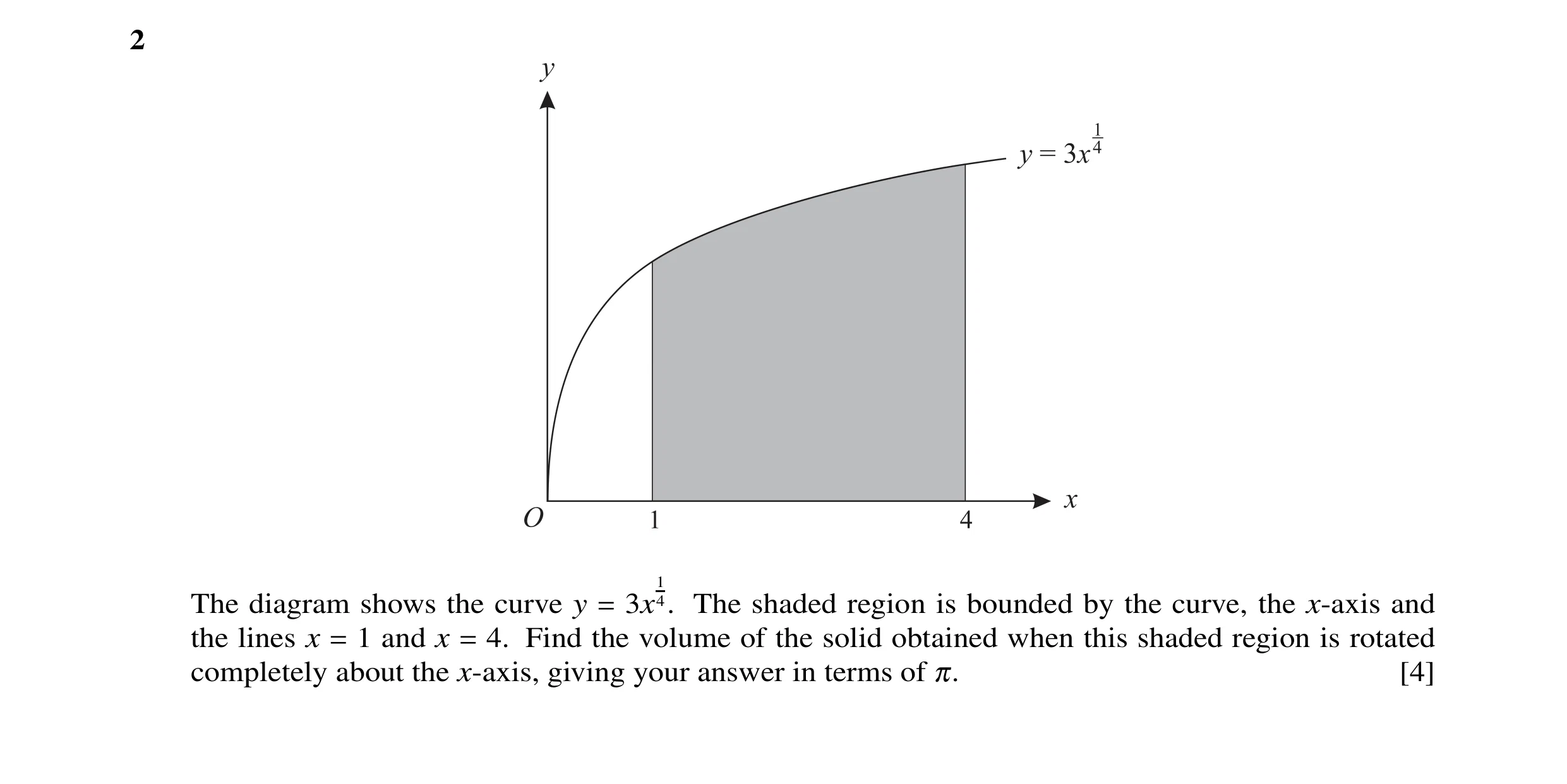
![Question 2: 10 The equation of a curve is y = 2x + x2. dy d2y (i) Obtain expressions for and . [3] dx dx2 (ii) Find the coordinates of the stationary p…](https://img.pastlit.com/crops/6f87434c-1a74-4a0a-b557-c966e5bf19a6/q10.webp) 1 / 127
1 / 127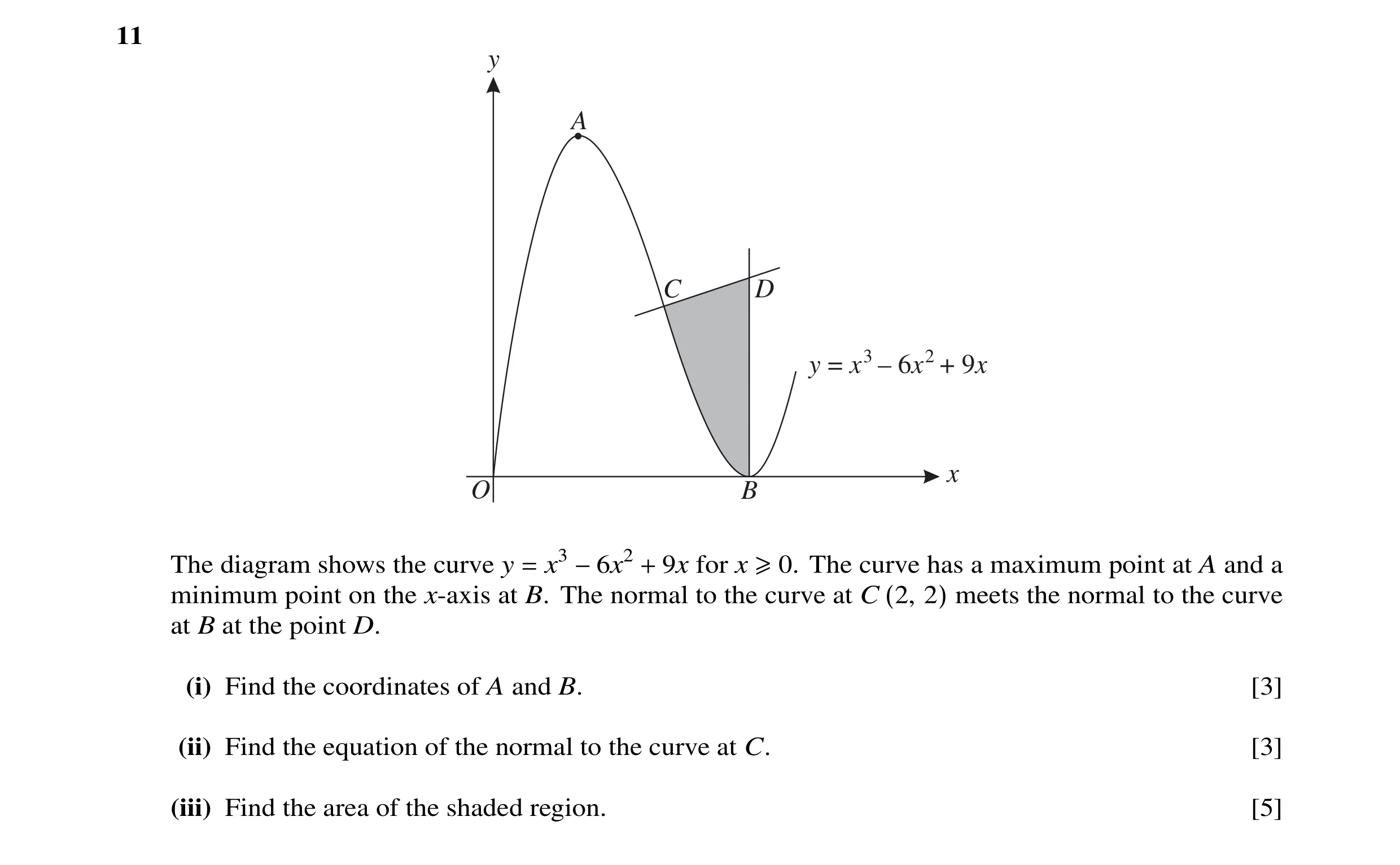
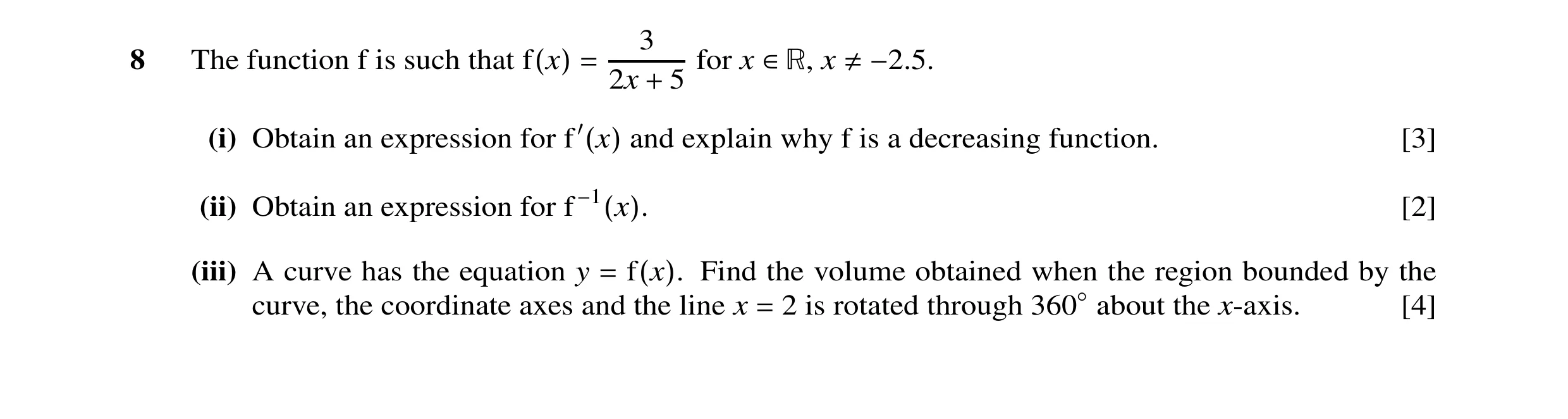
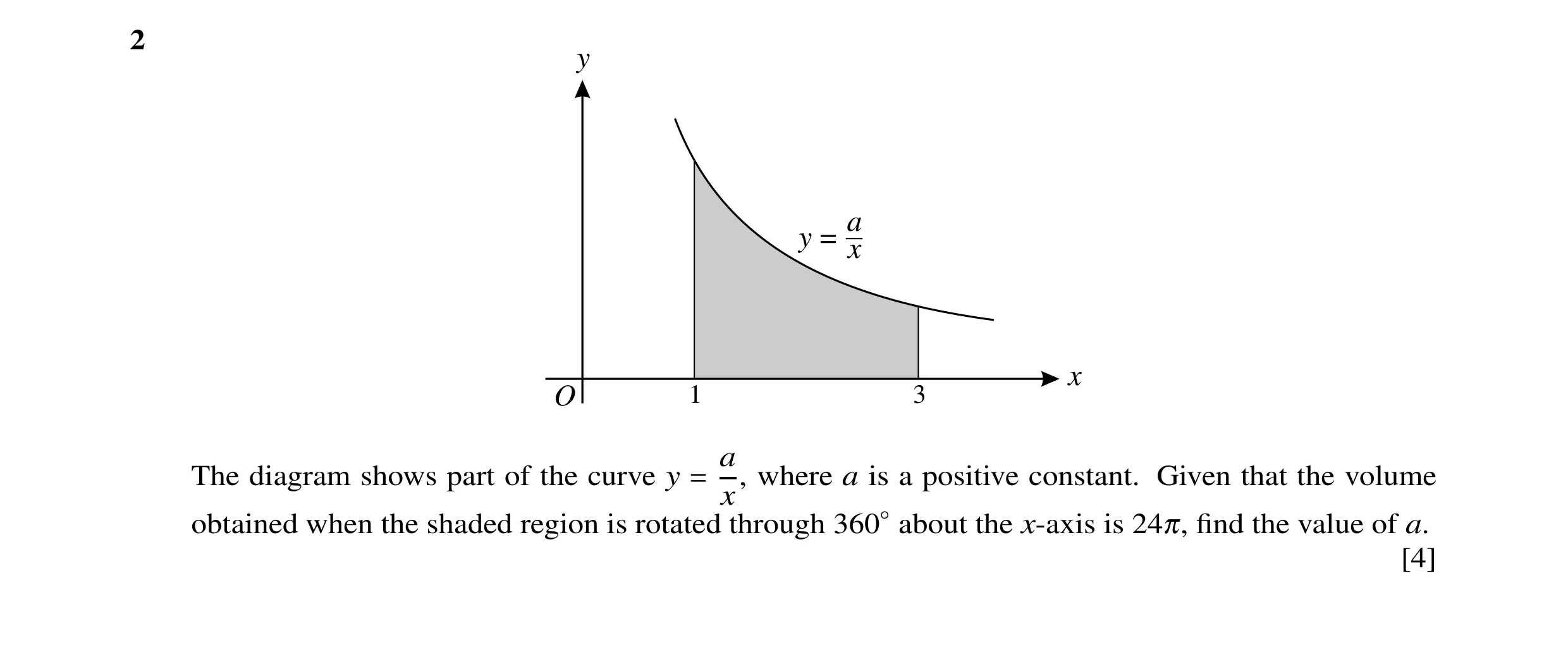 2 / 127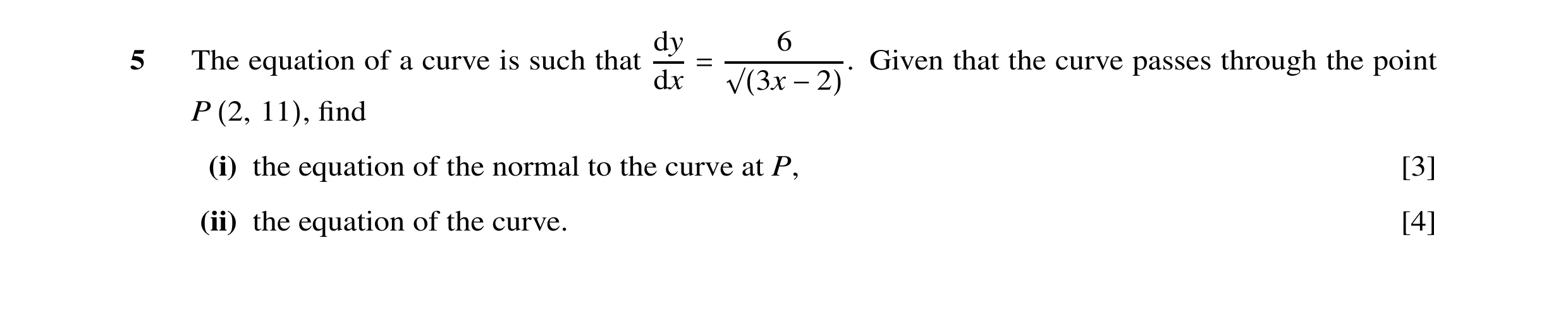
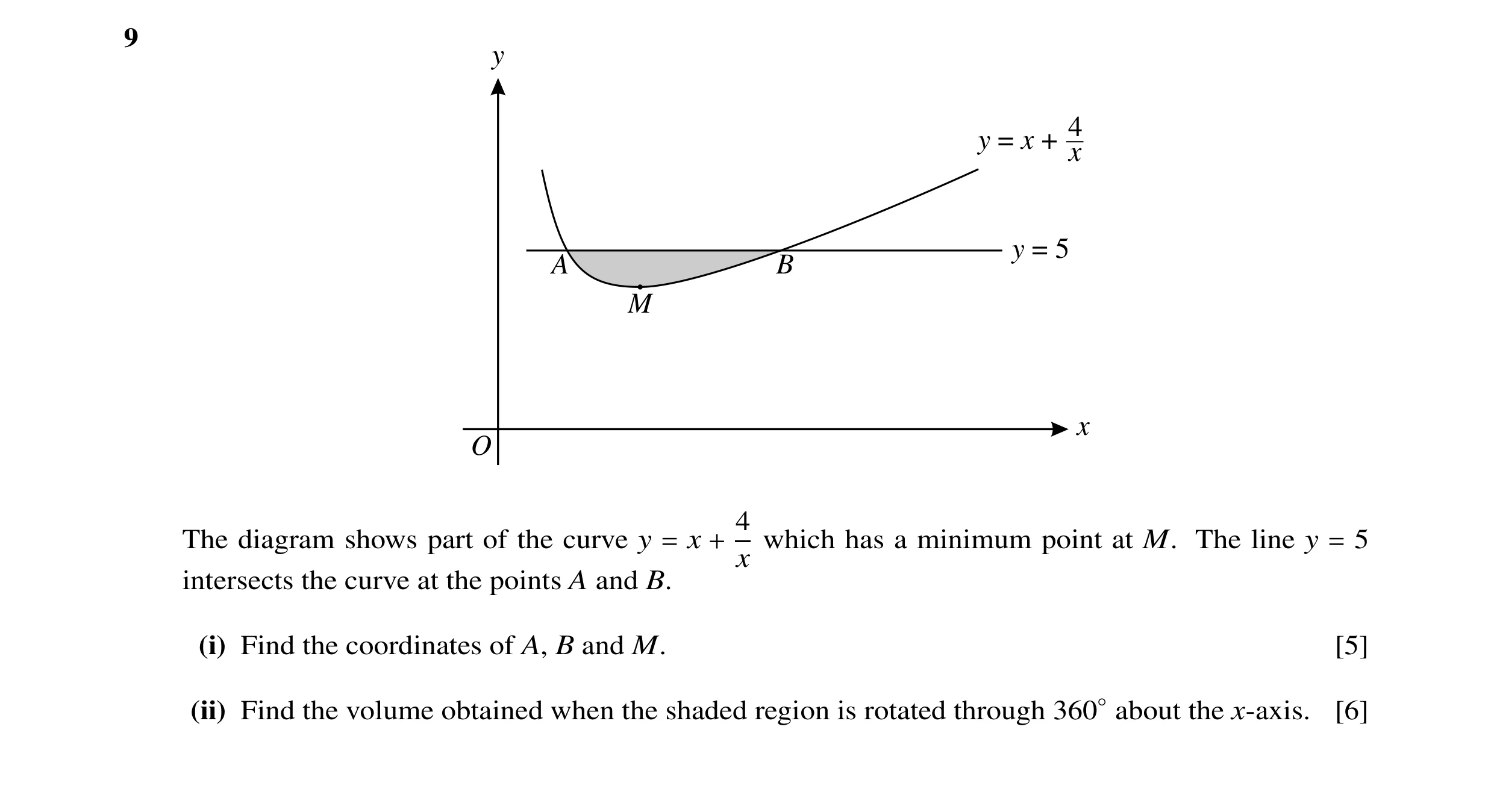
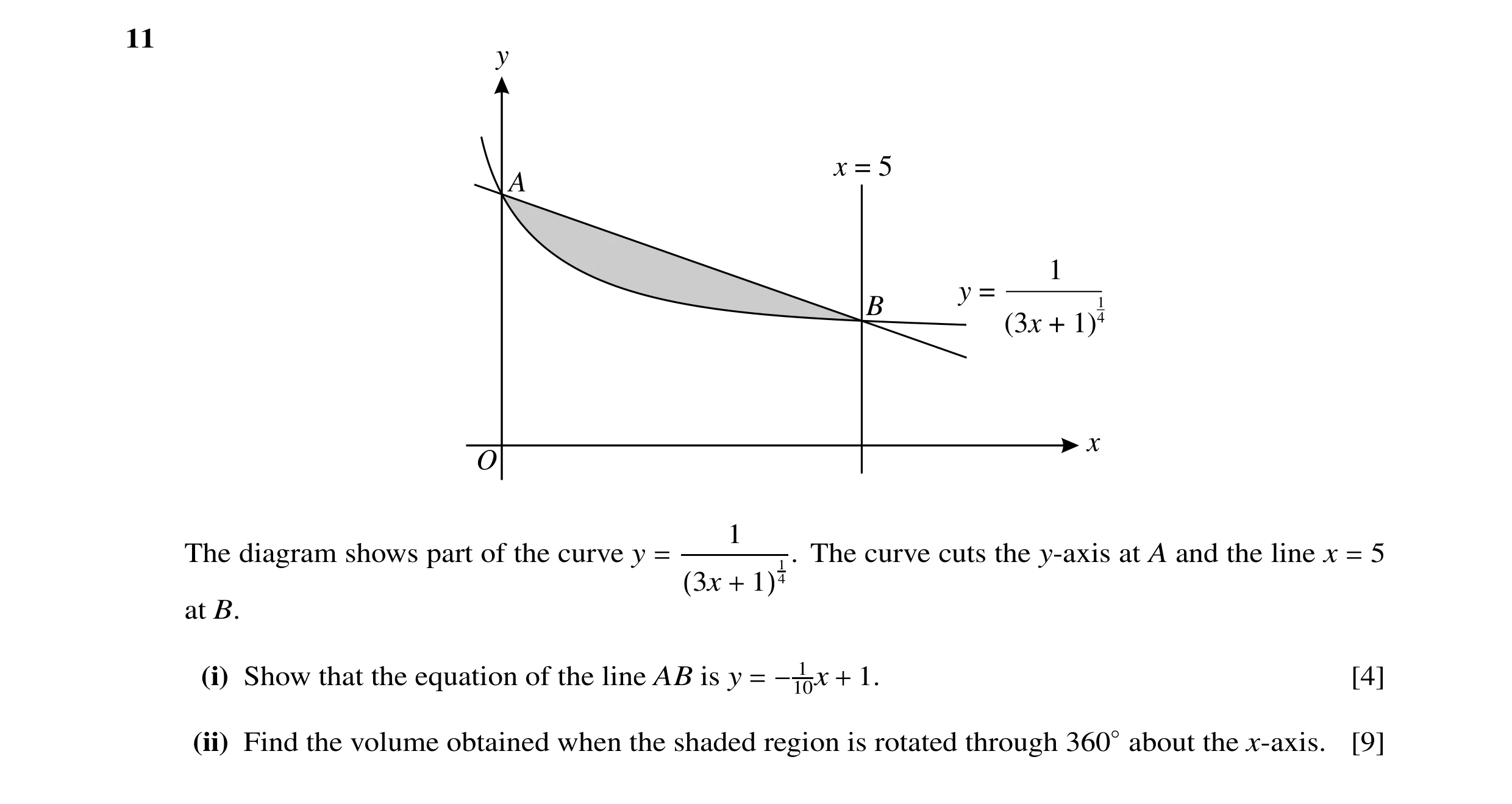 3 / 127
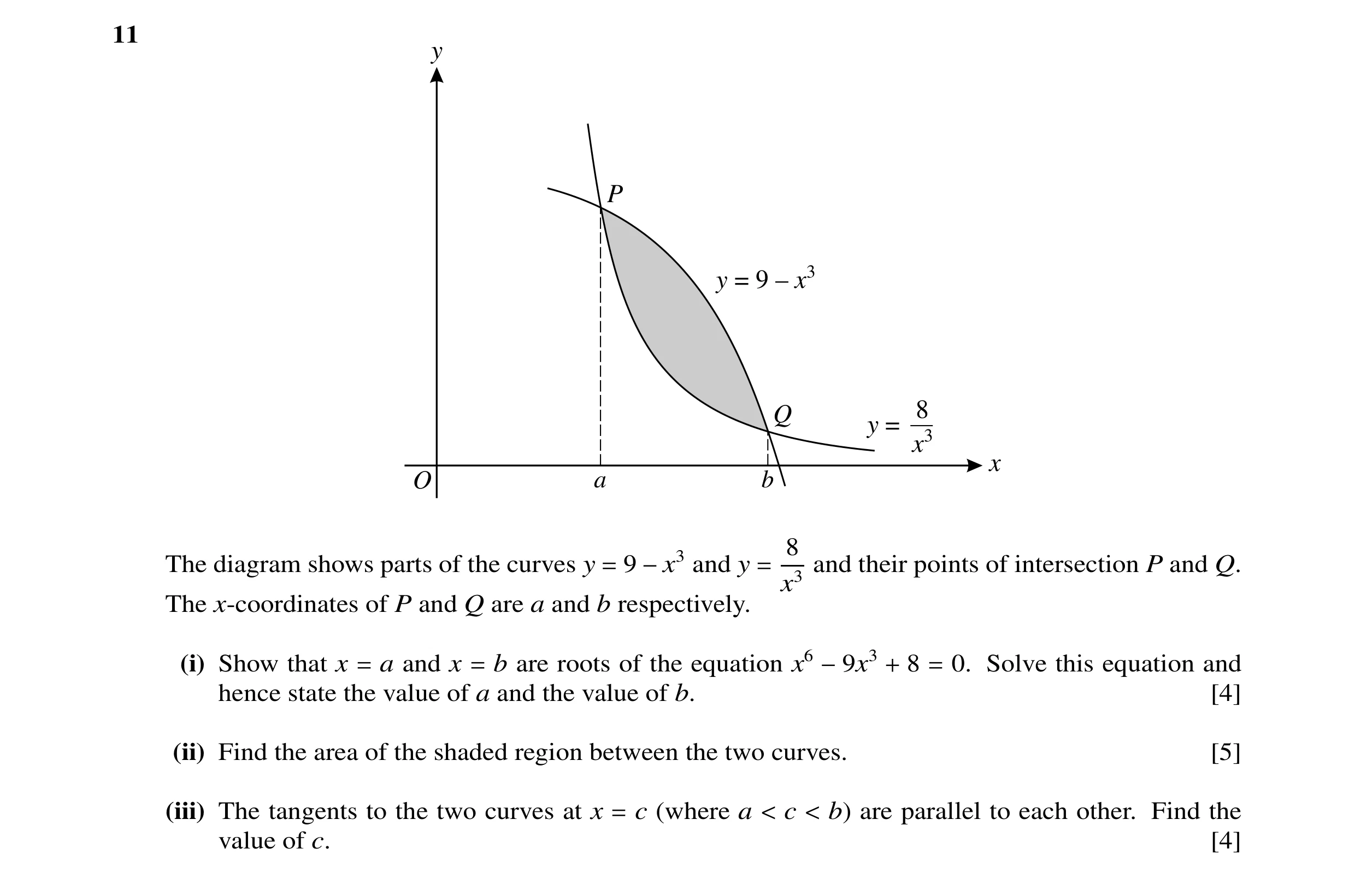
![Question 11: (i) Sketch the curve y = (x −2)2. [1] (ii) The region enclosed by the curve, the x-axis and the y-axis is rotated through 360◦about the x-a…](https://img.pastlit.com/crops/db524538-8583-4784-aabf-89f7f22dfd9b/q3.webp)
![Question 12: dy 3 17 A curve is such that dx = and the point (1, 2) lies on the curve. (1 + 2x)2 (i) Find the equation of the curve. [4] (ii) Find the s…](https://img.pastlit.com/crops/db524538-8583-4784-aabf-89f7f22dfd9b/q7.webp) 4 / 127
4 / 127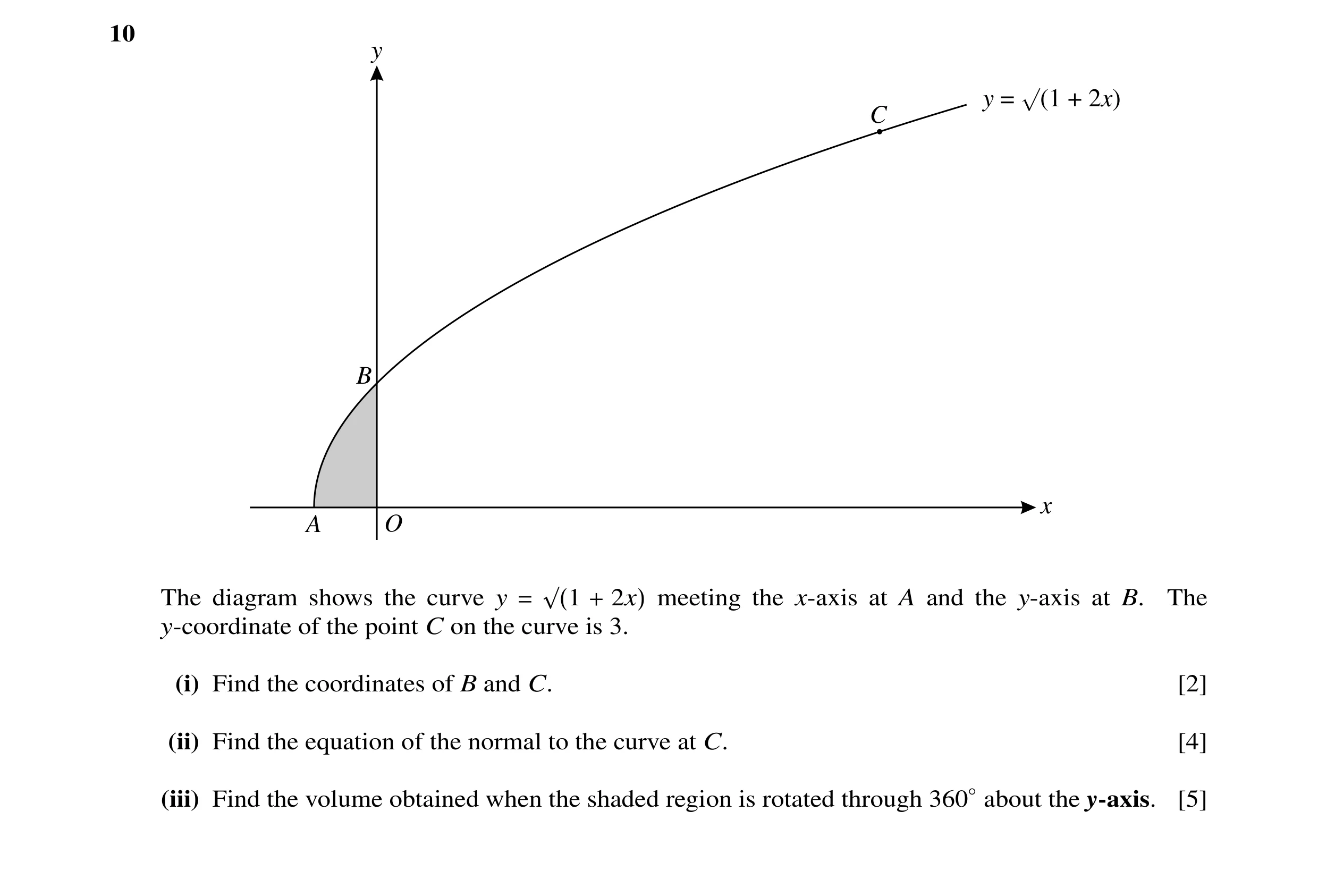
![Question 15: Find8 The equation of a curve is y = √(8x −x2). dy (i) an expression for dx, and the coordinates of the stationary point on the curve, [4] …](https://img.pastlit.com/crops/e31c5fe8-1a9d-4442-a58c-fffcca76d81e/q8.webp) 5 / 127
5 / 127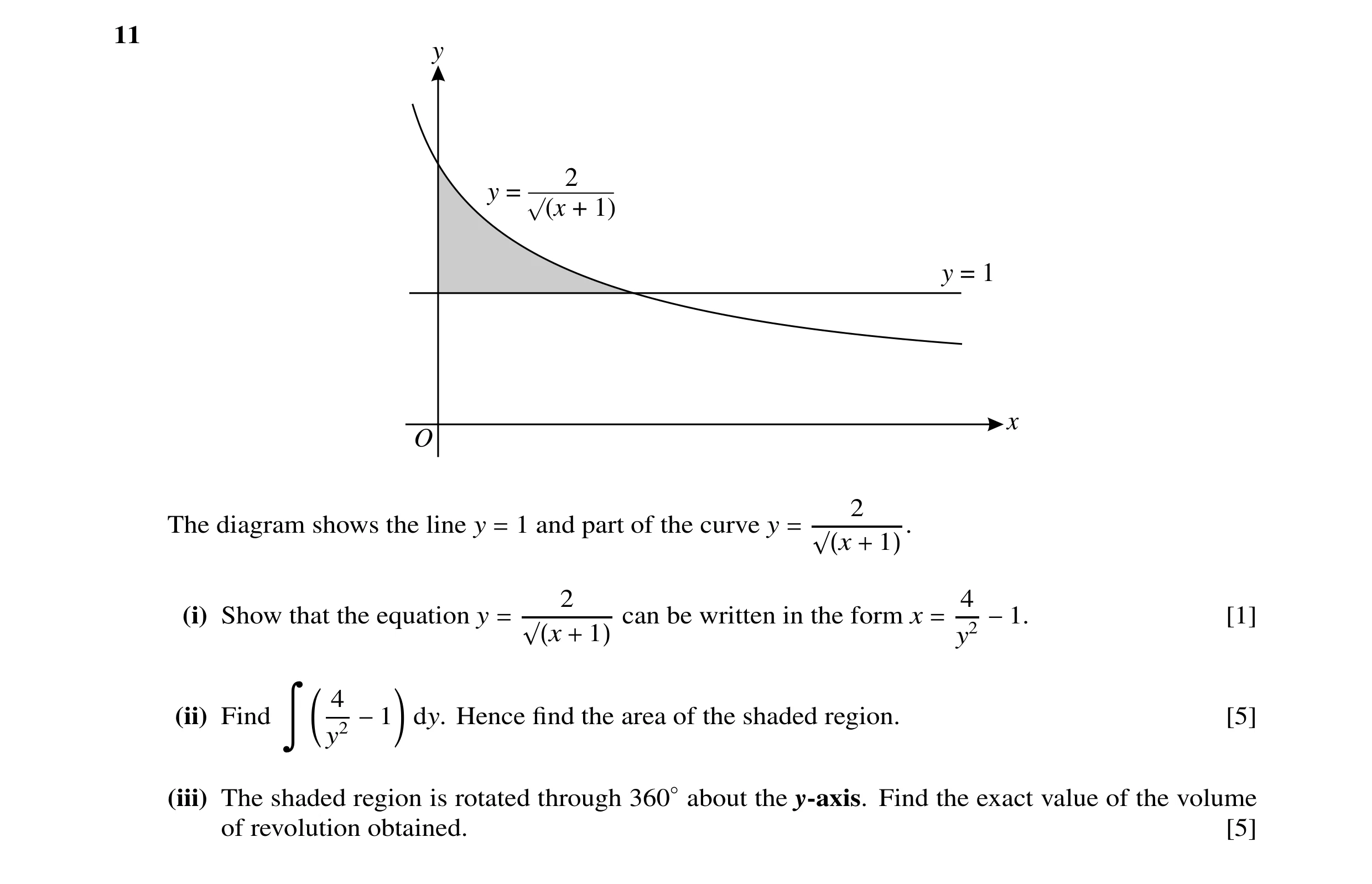
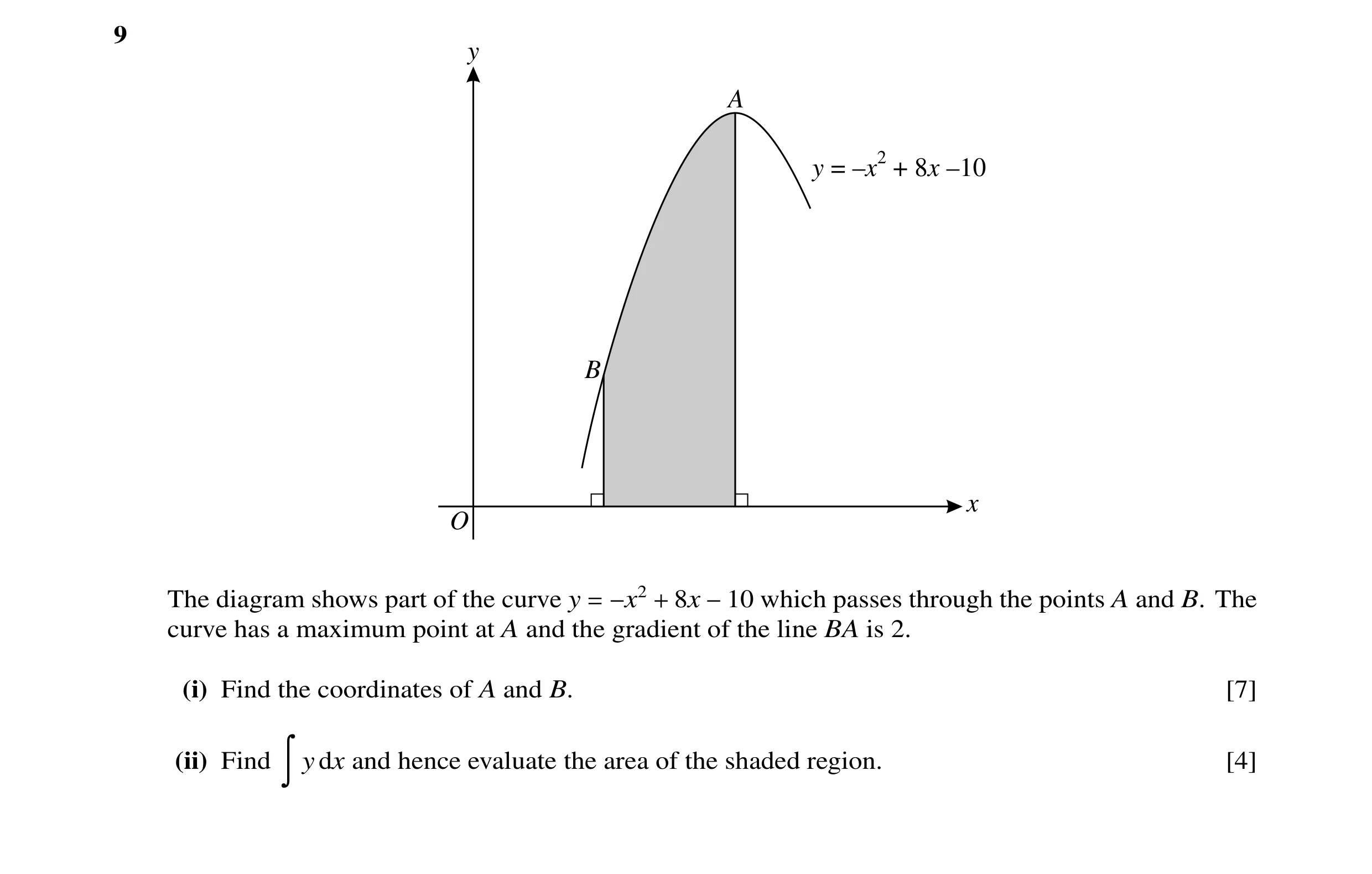 6 / 127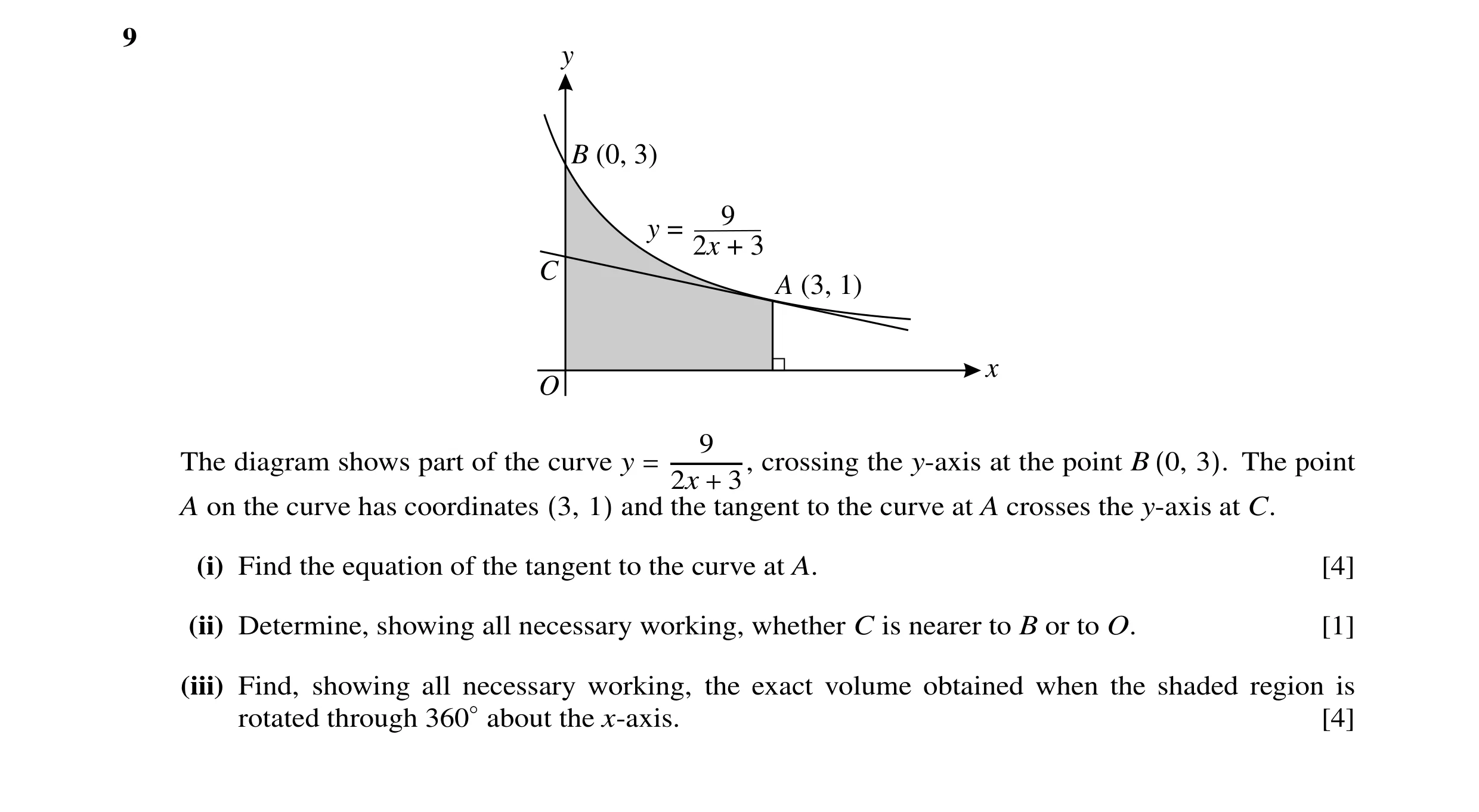
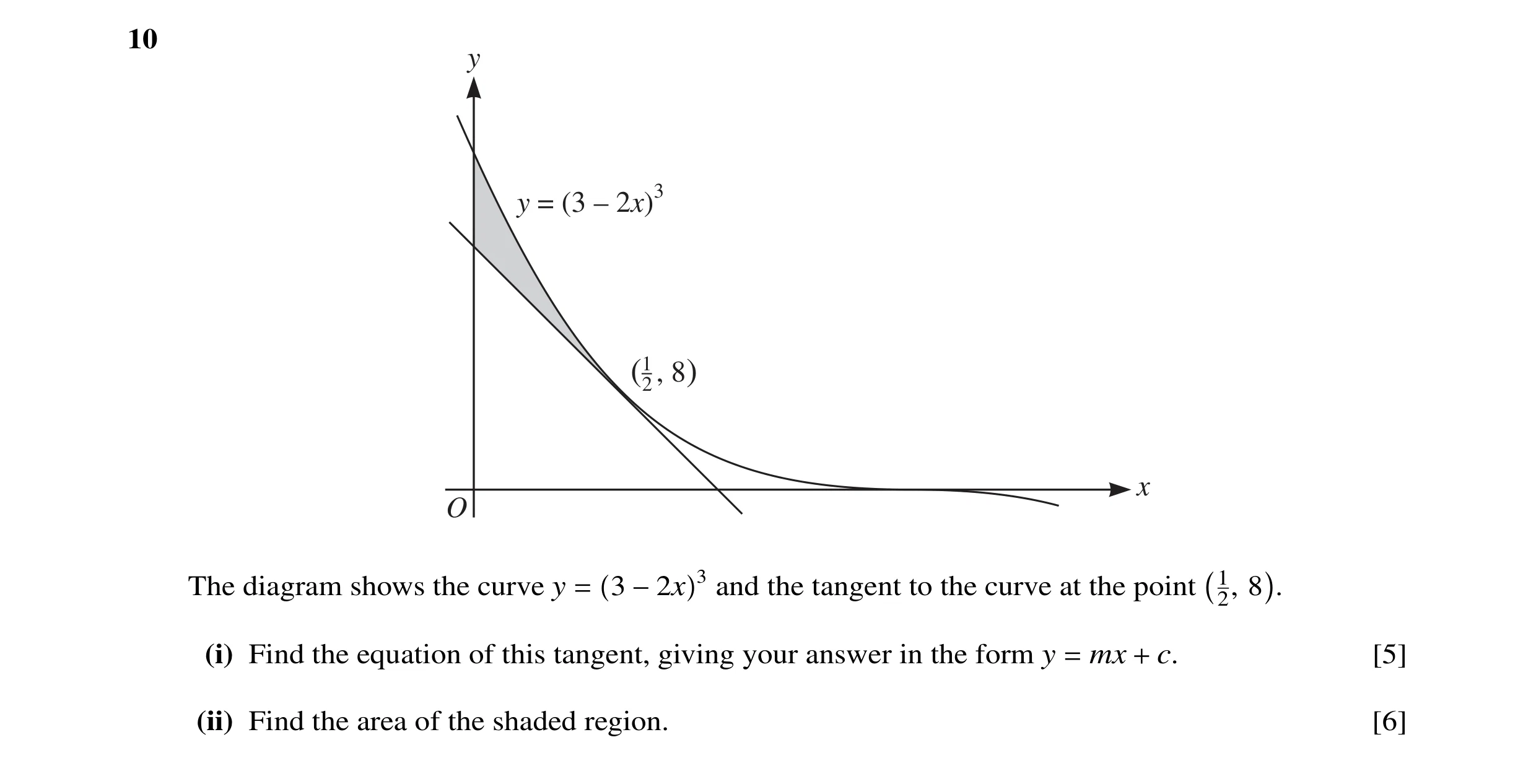 7 / 127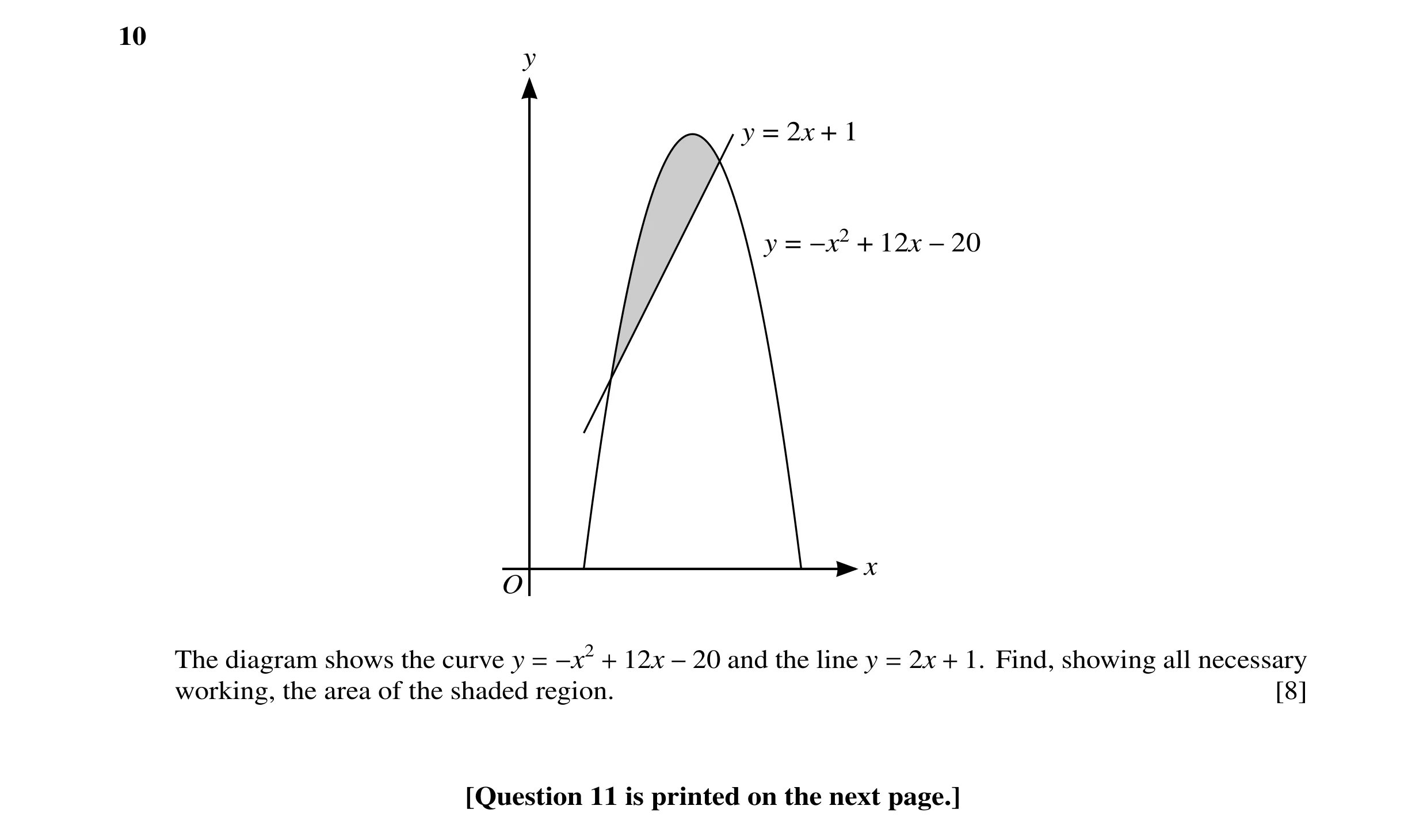
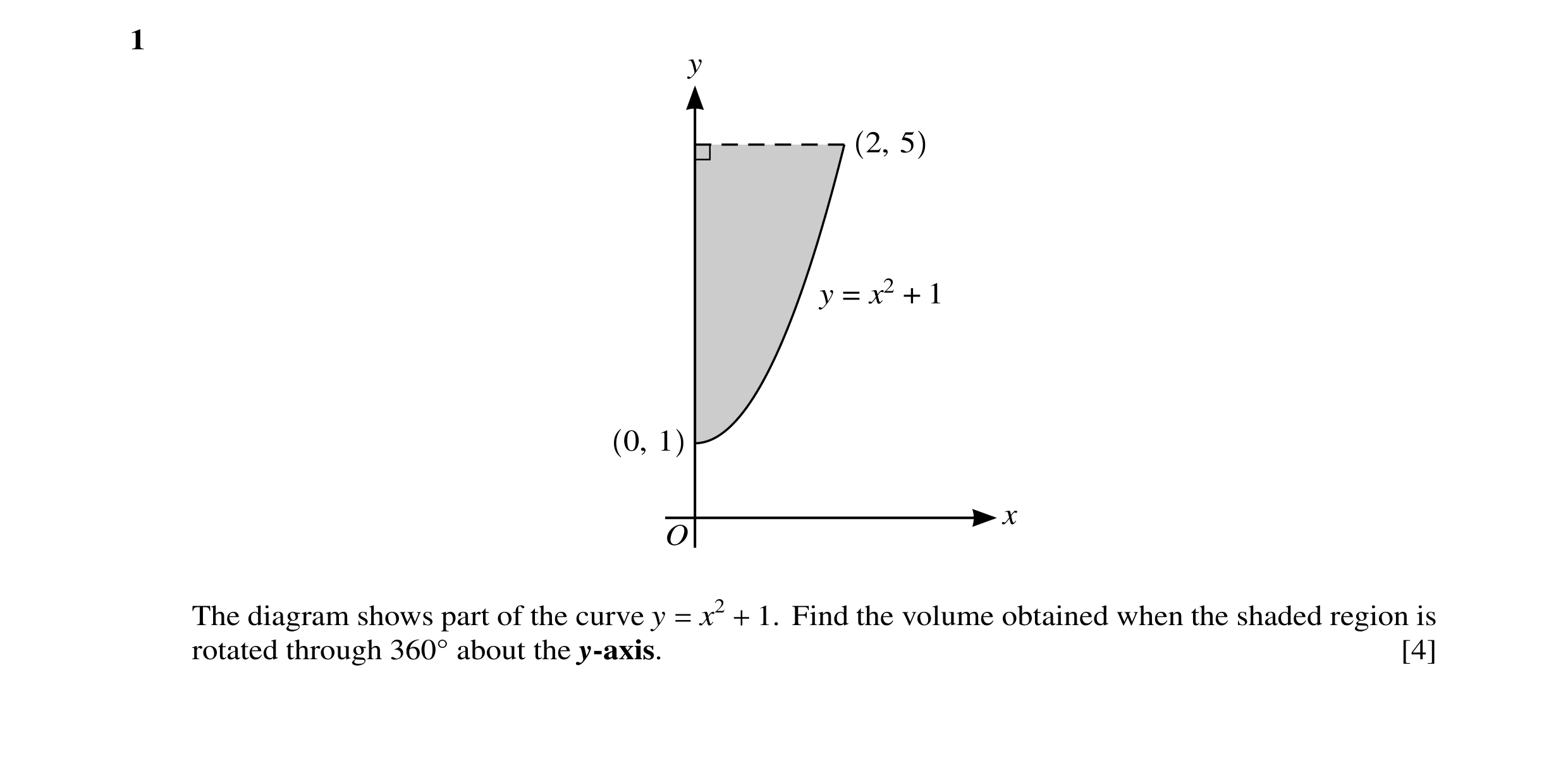 8 / 127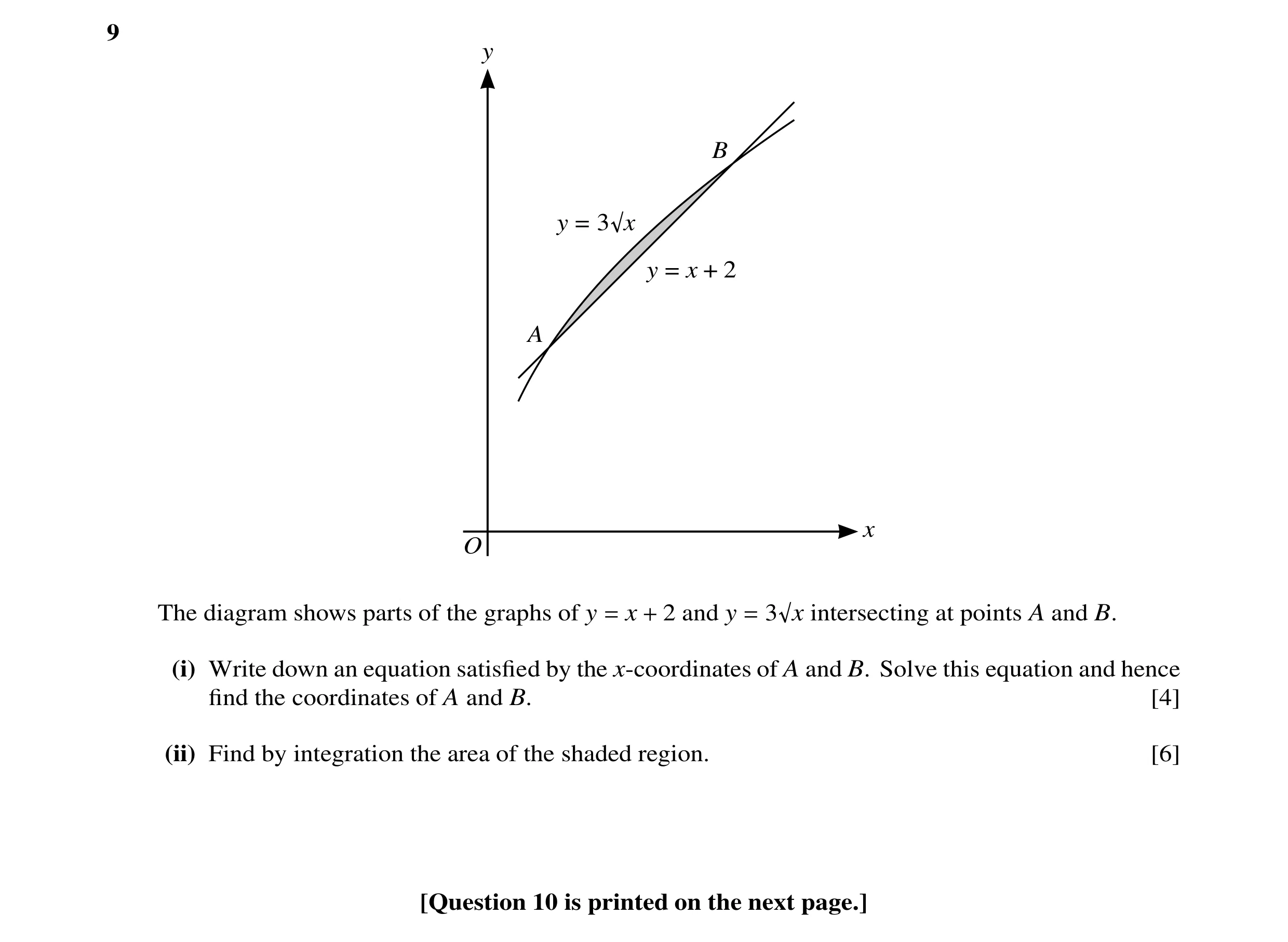
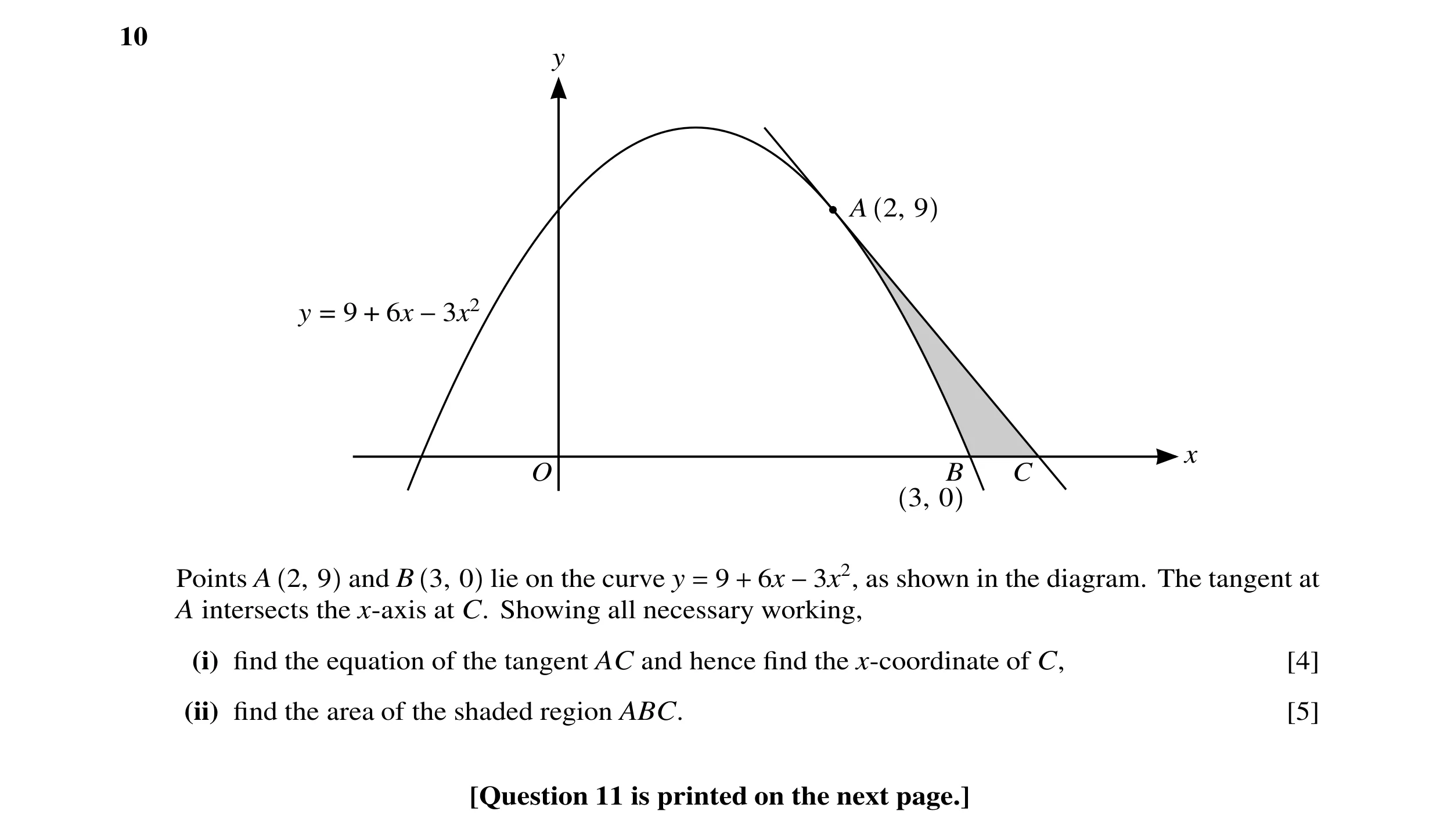 9 / 127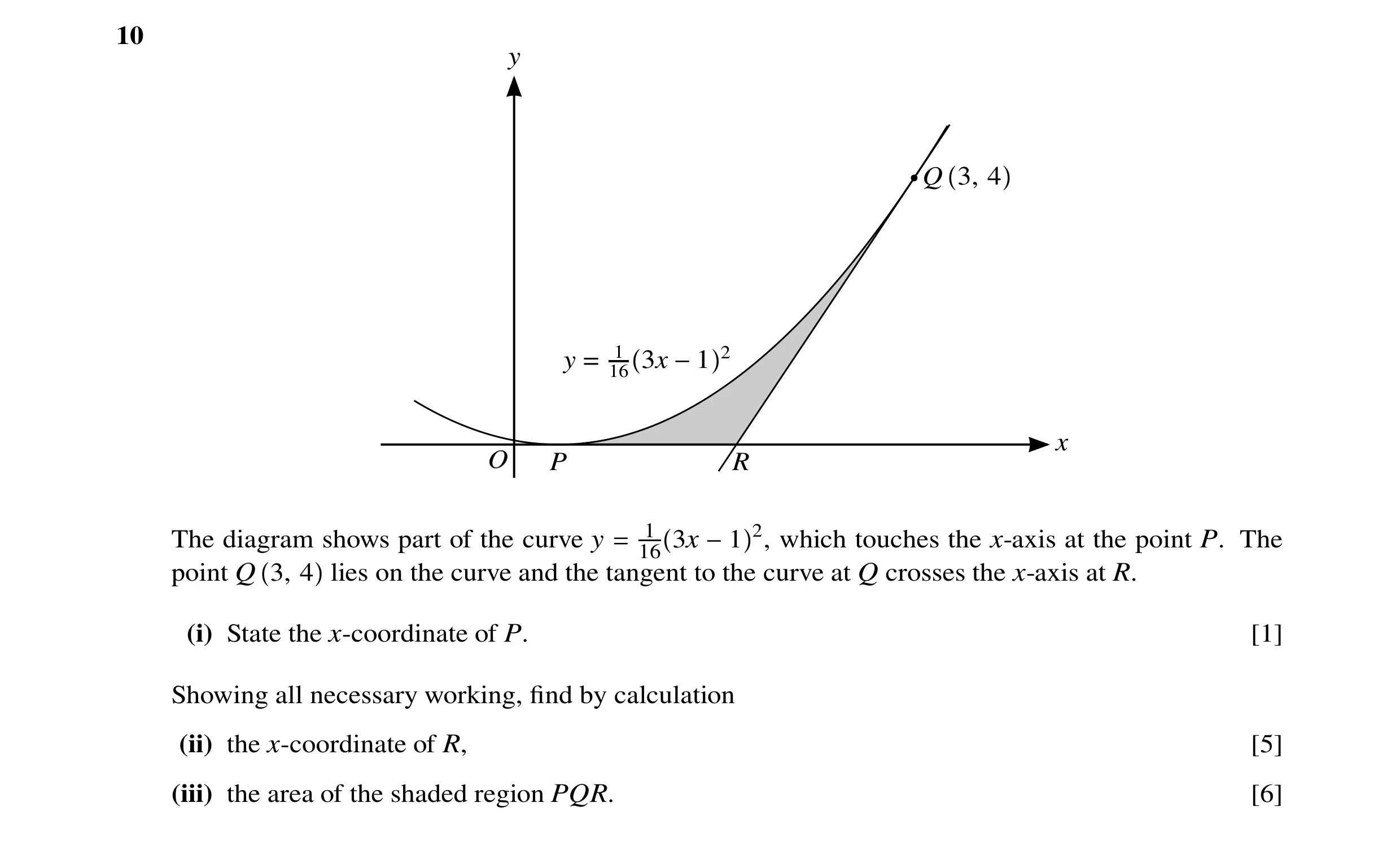
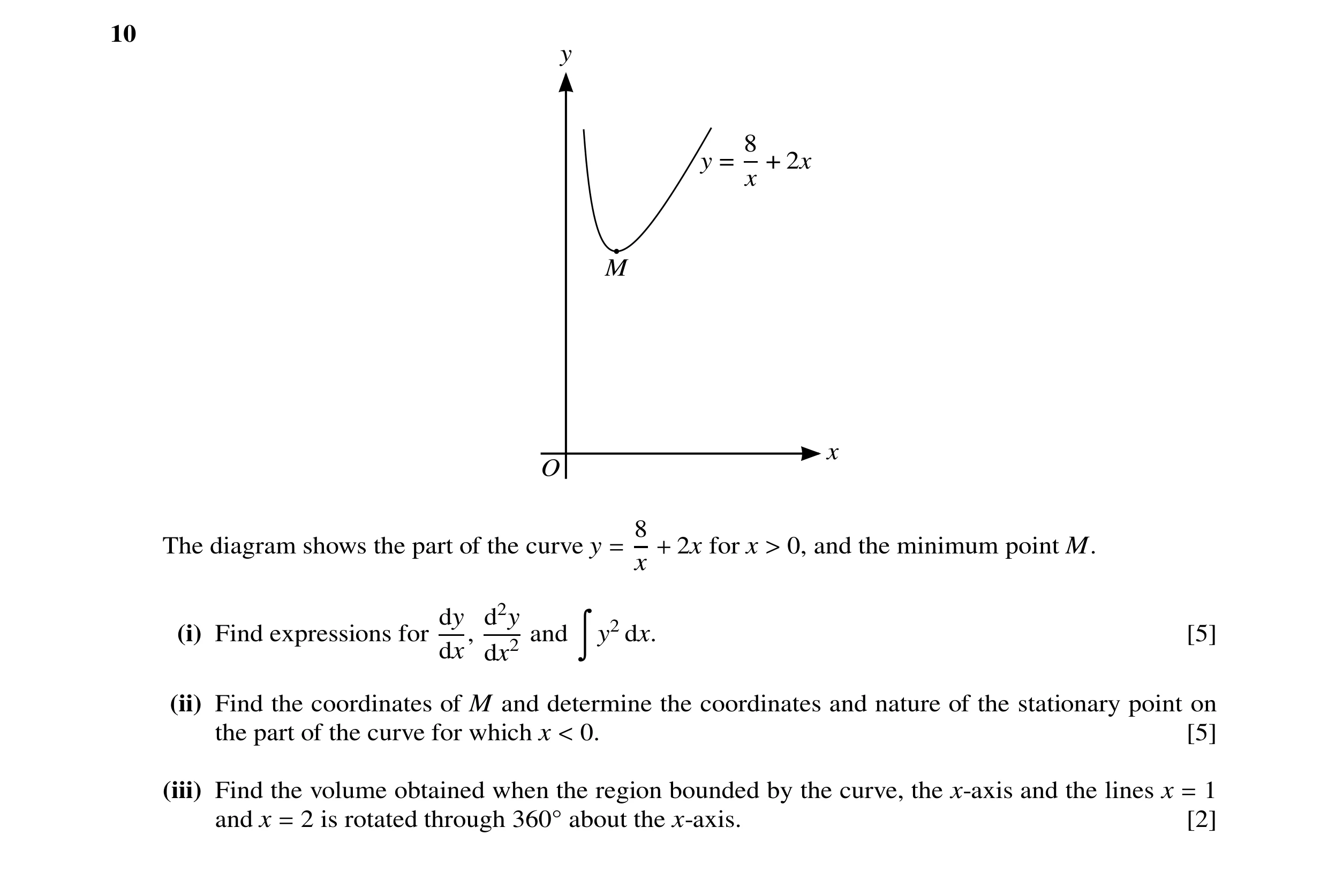 10 / 127
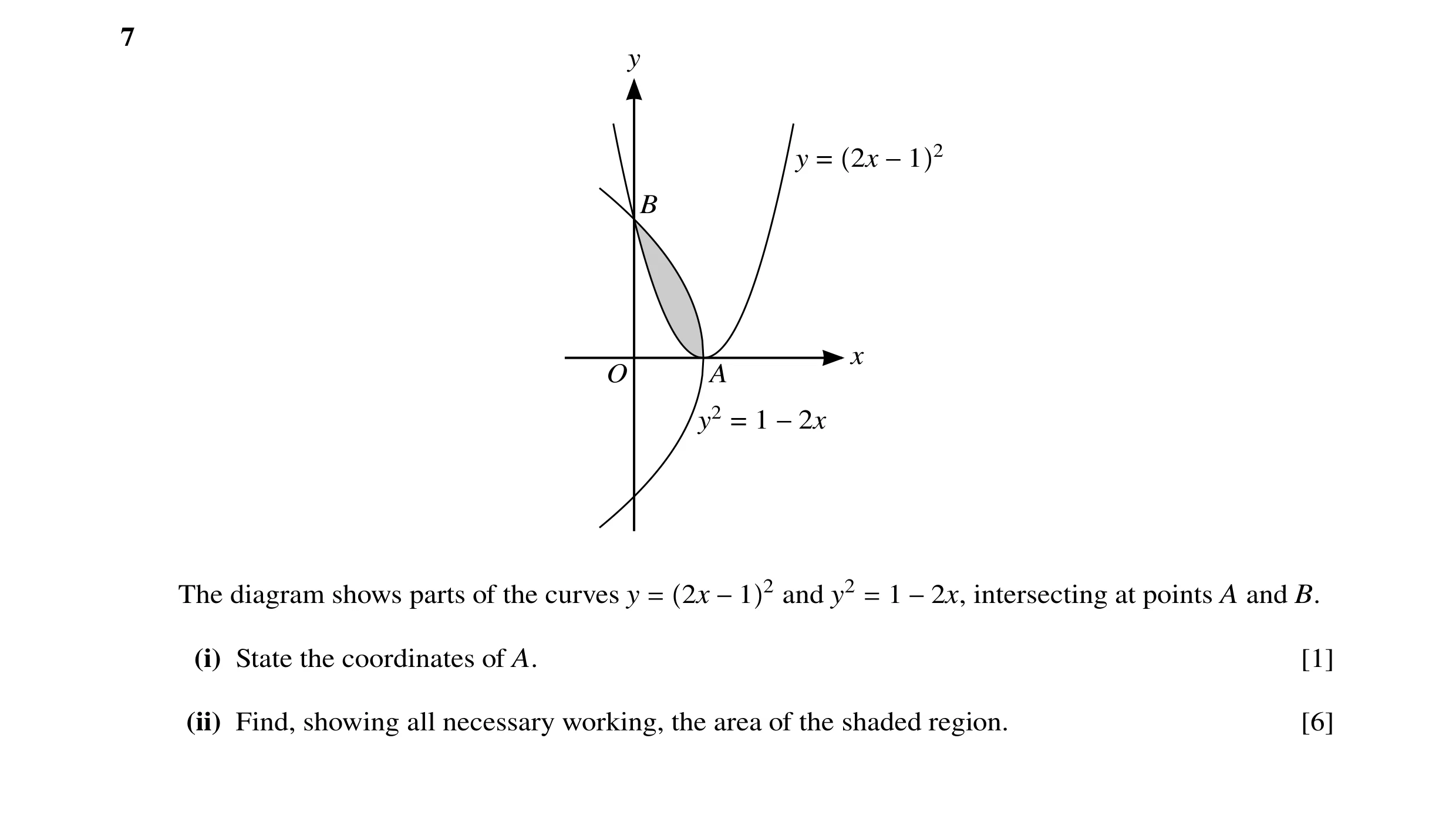 11 / 127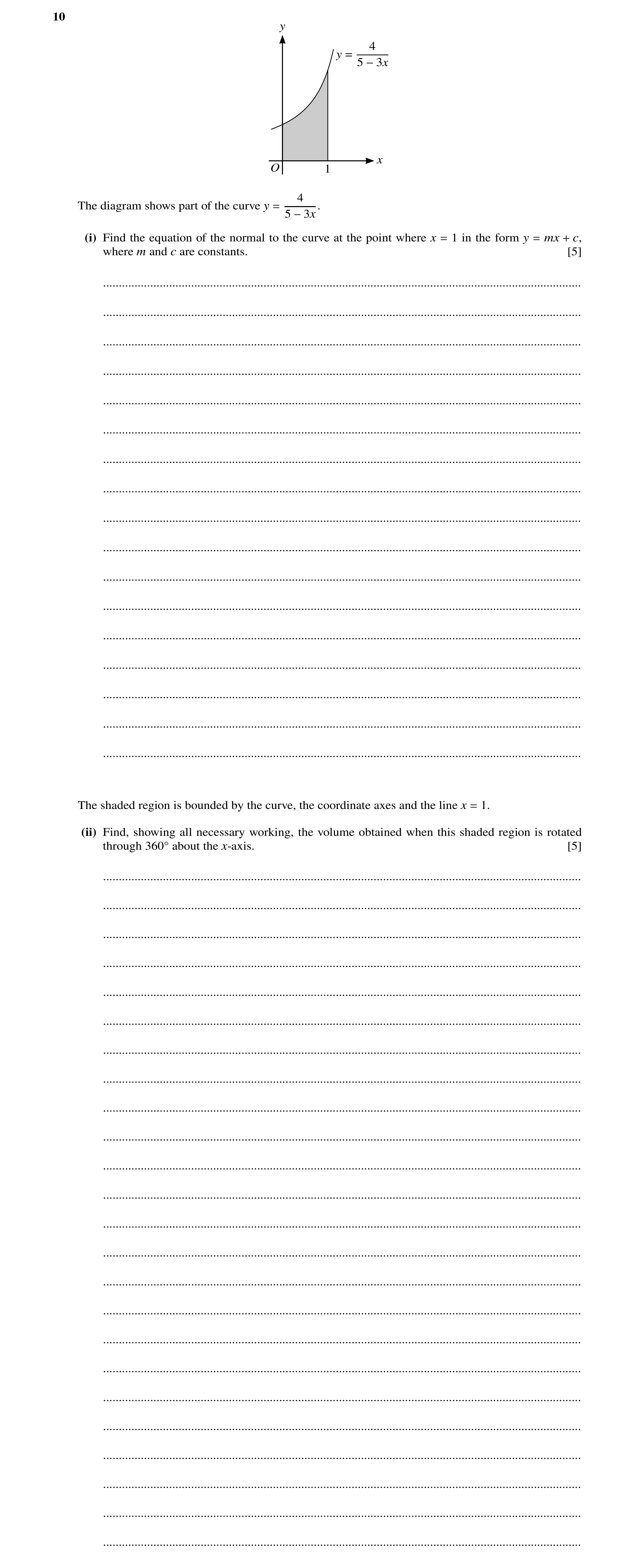
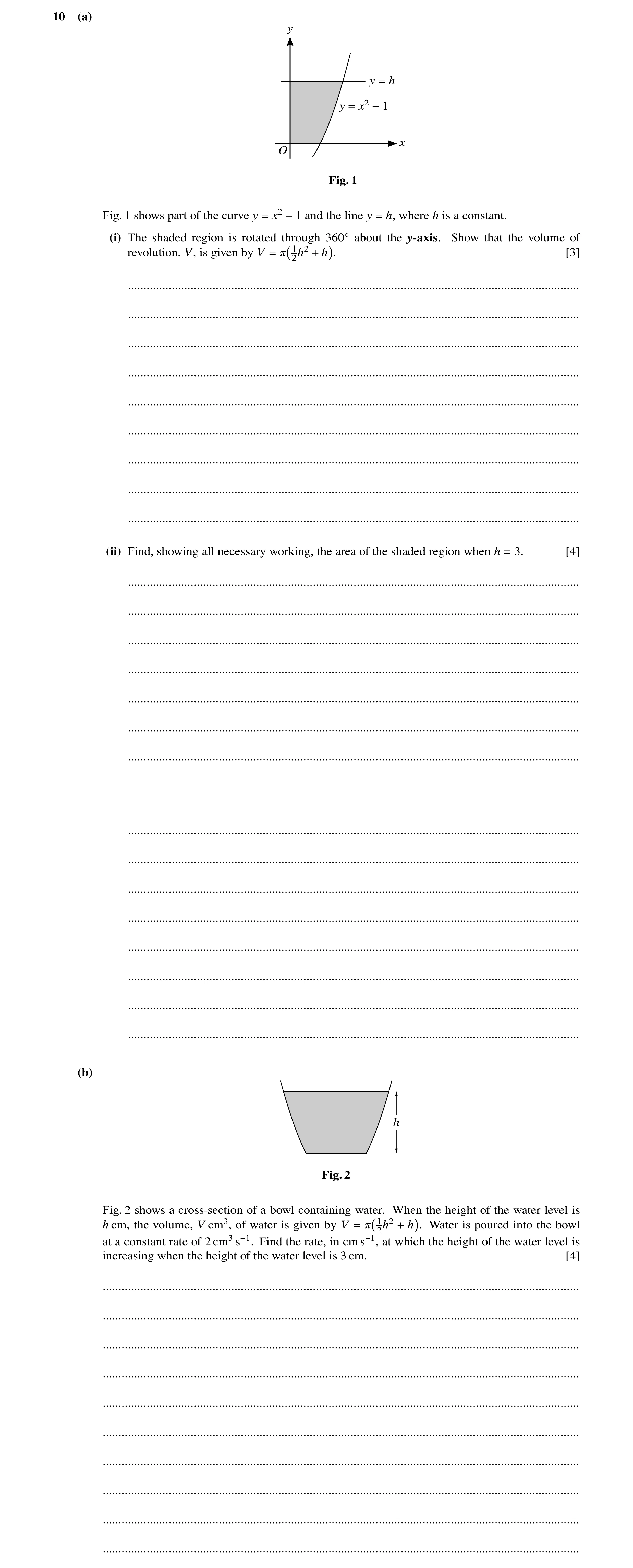
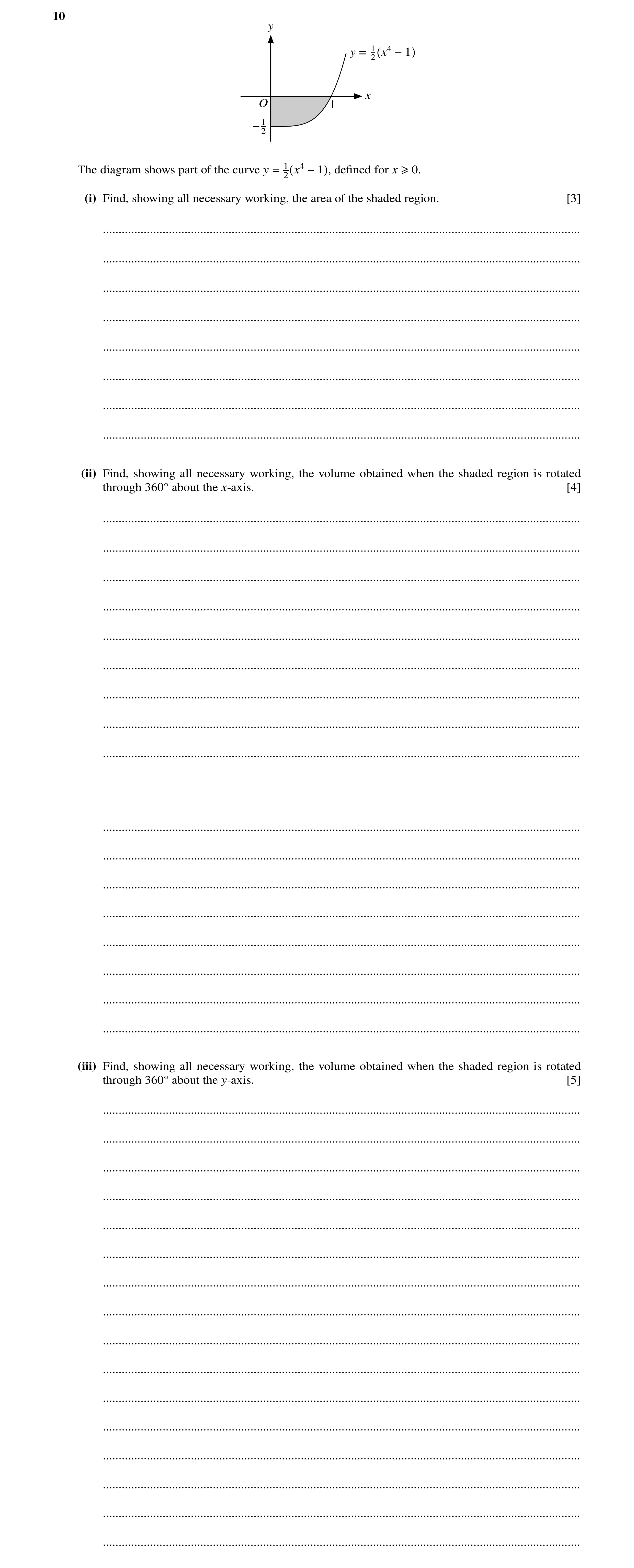
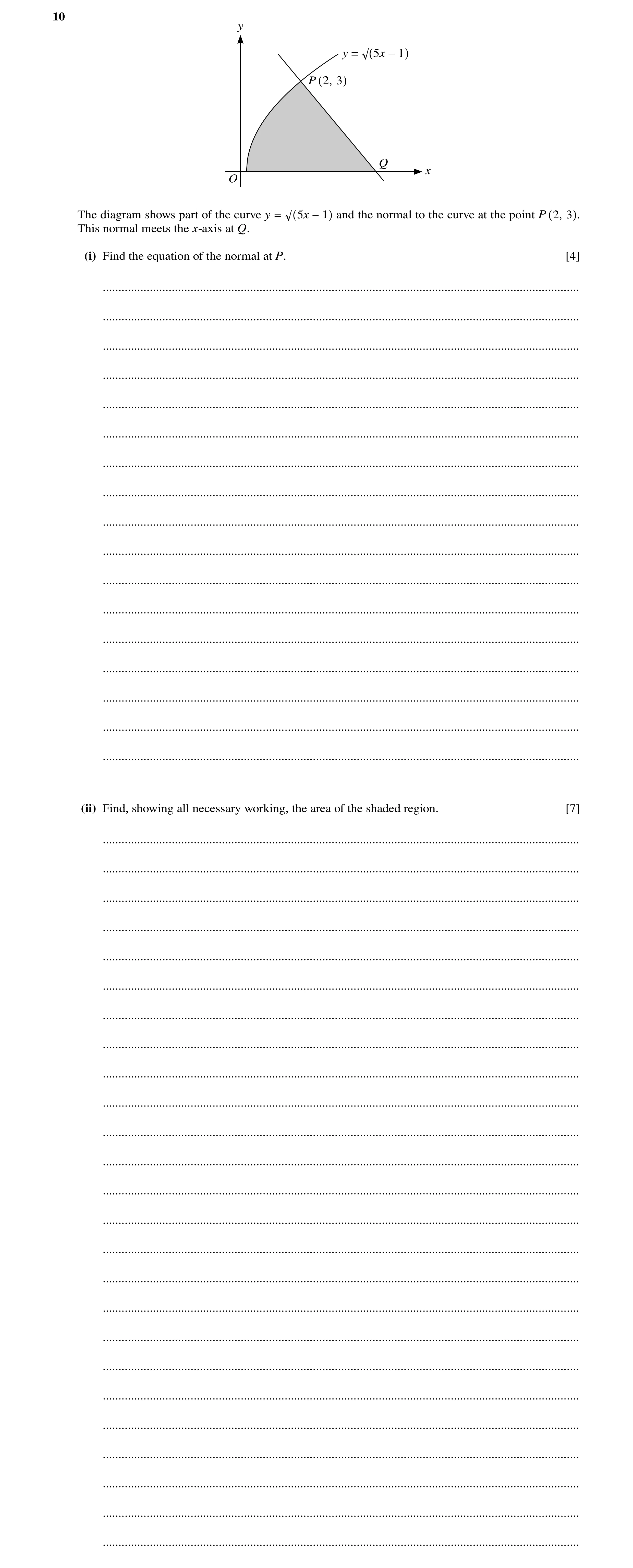
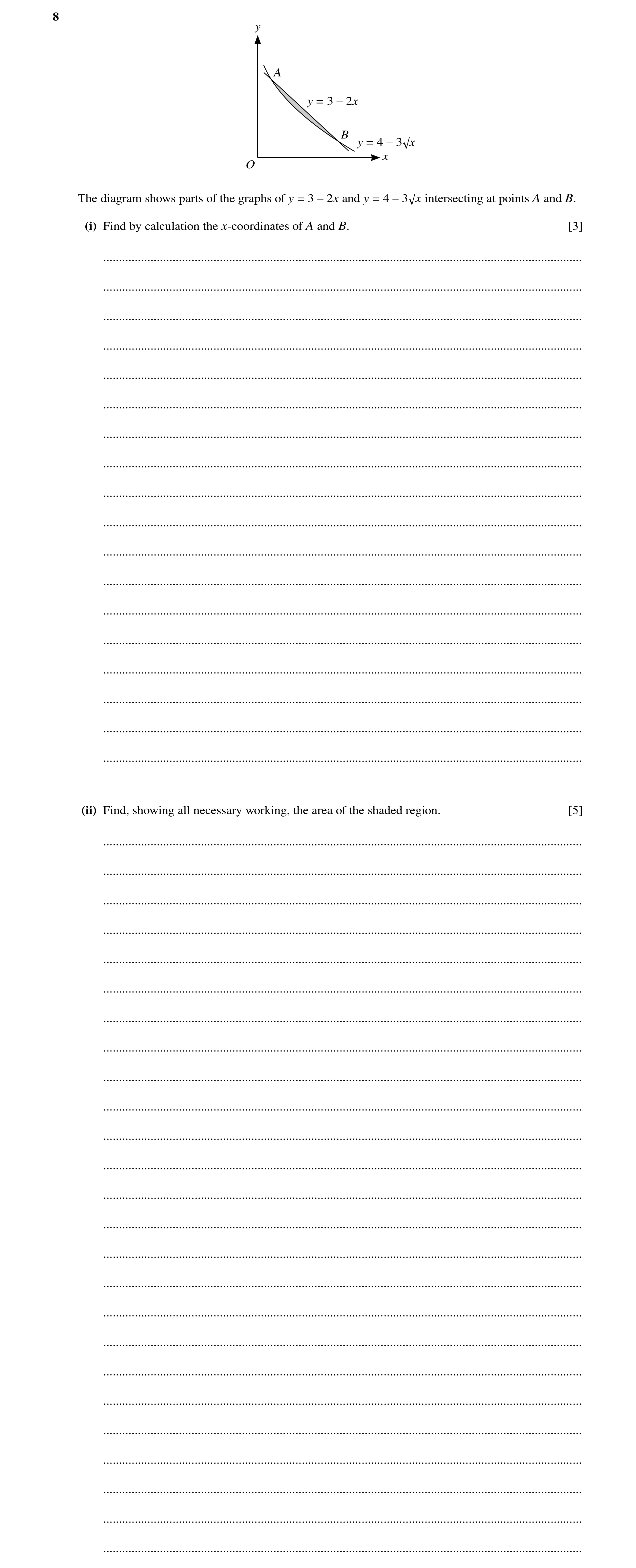
![Question 34: The curve with equation y = x3 −2x2 + 5x passes through the origin. (i) Show that the curve has no stationary points. [3] .................…](https://img.pastlit.com/crops/fa9c4f22-7212-4a9a-b042-3e9d2c4a901b/q10.webp)
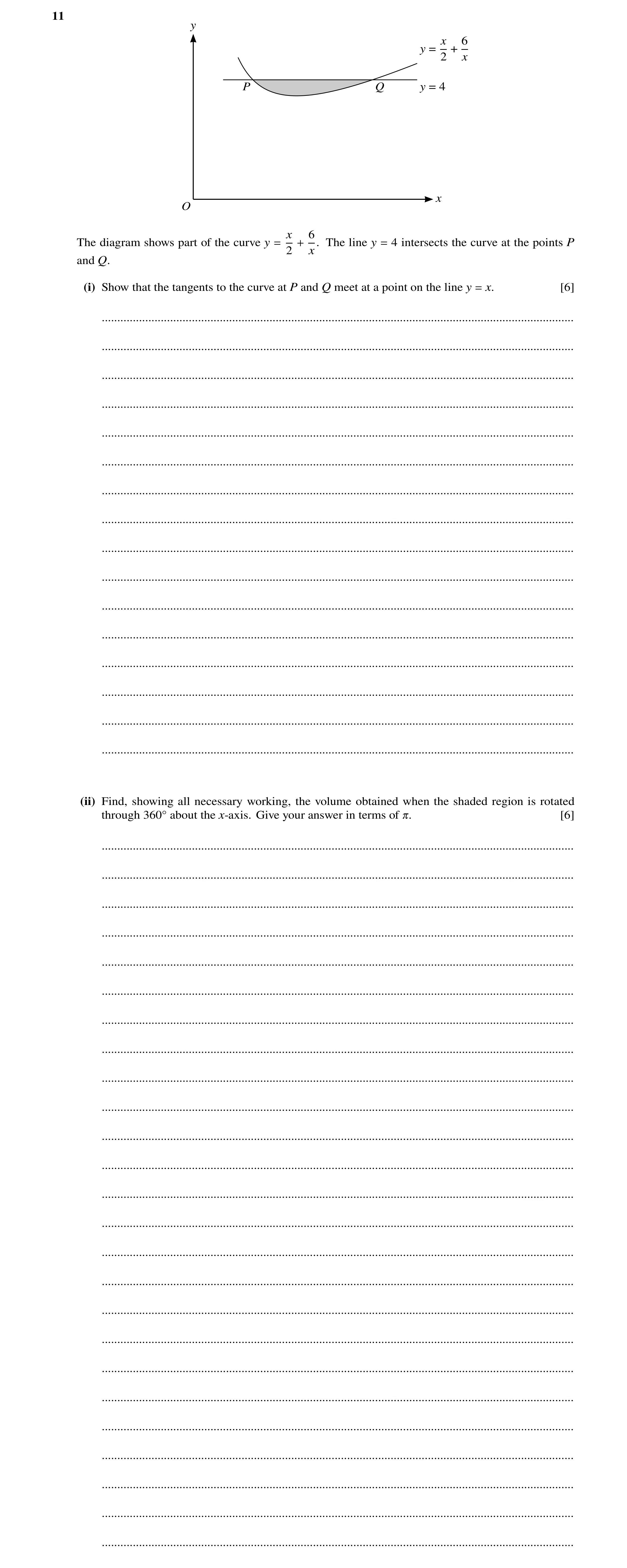
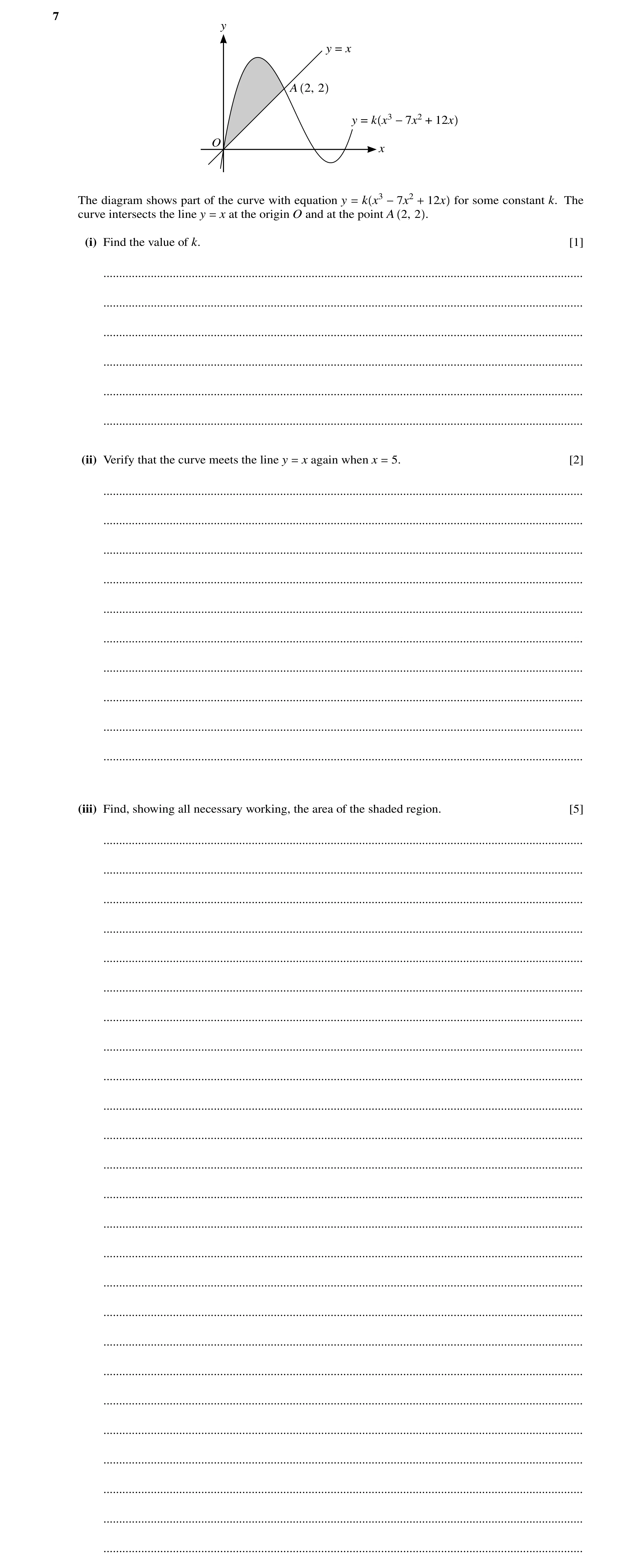
![Question 37: @ A 2 2 Showing all necessary working, find x dx. [4] x Ô1 + ...............................................................................…](https://img.pastlit.com/crops/78e7d933-604d-44cb-816a-539b81edc54a/q2.webp) 26 / 127
26 / 127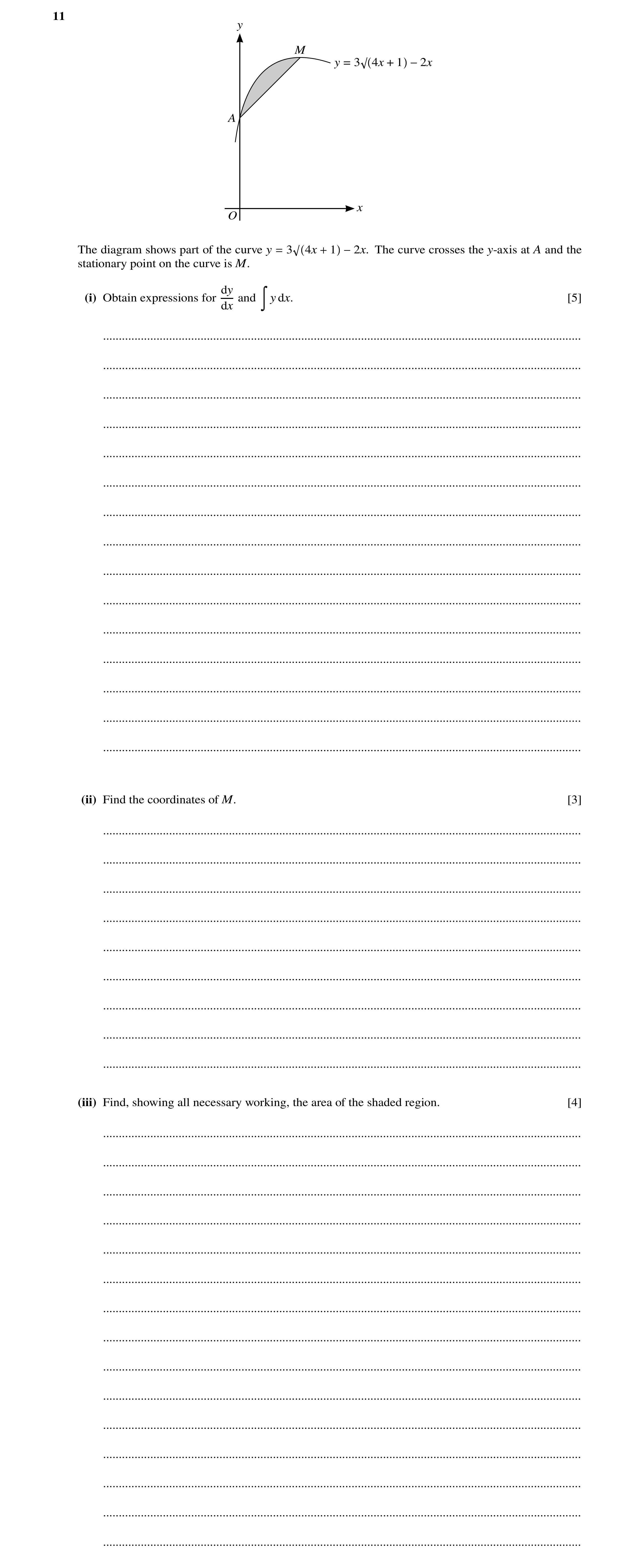
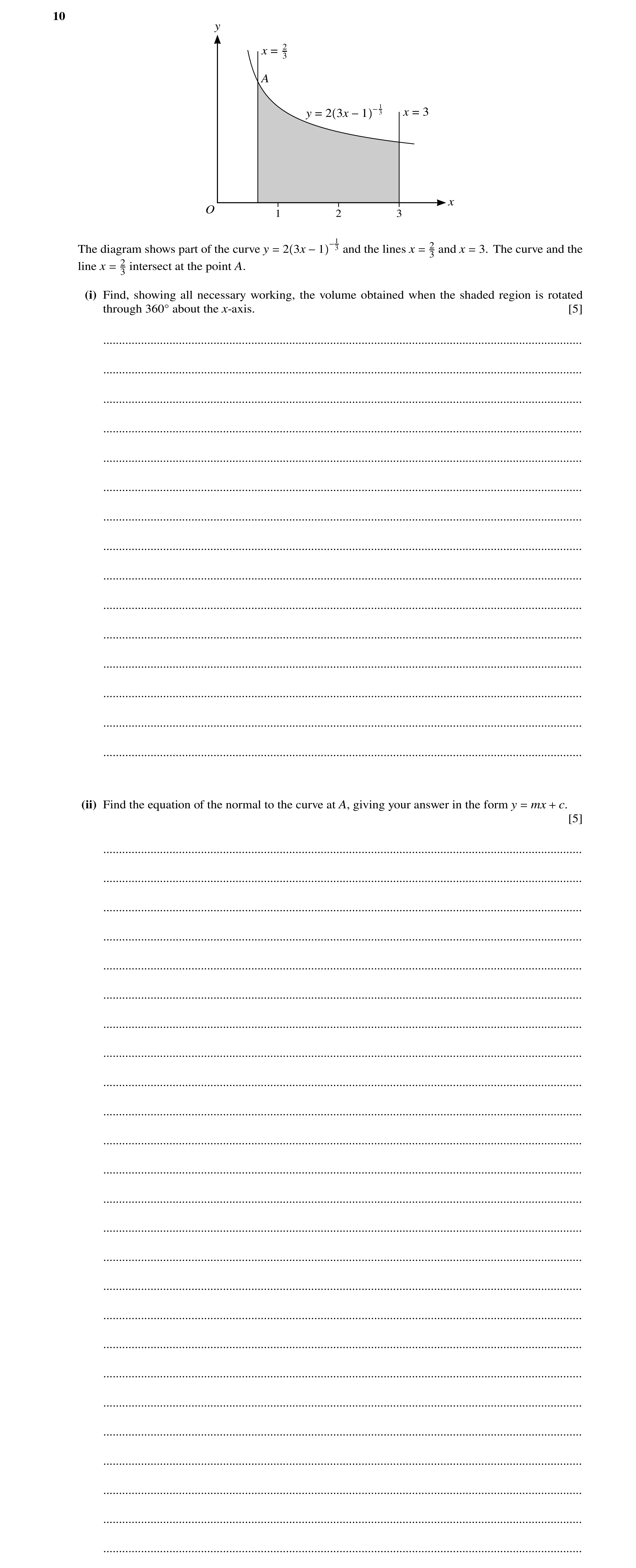
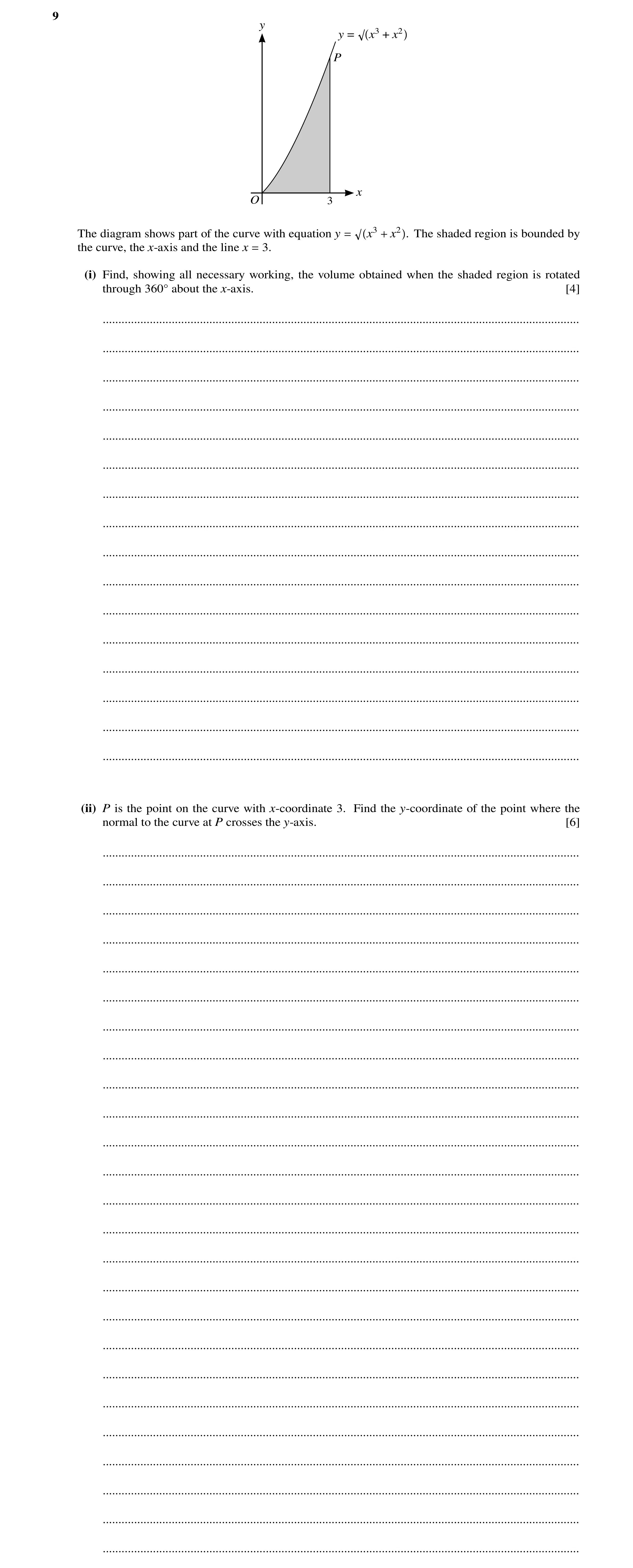
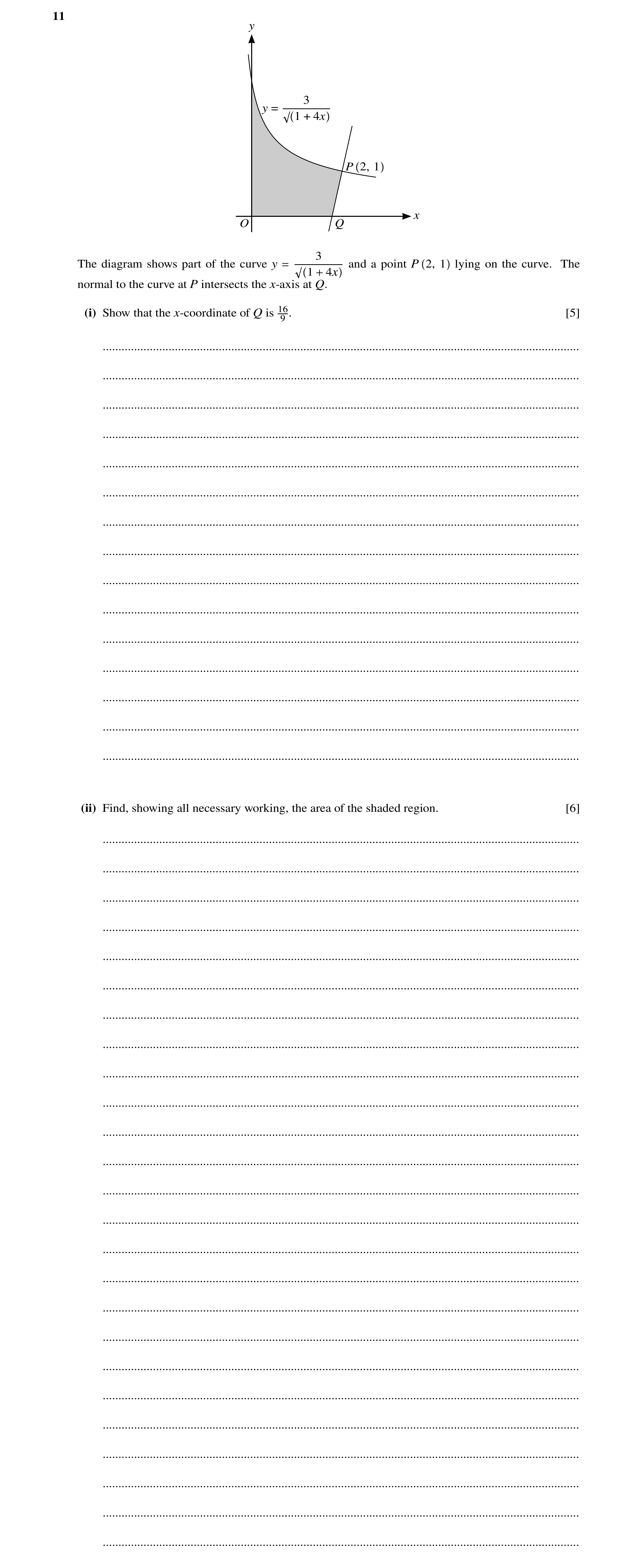
 34 / 127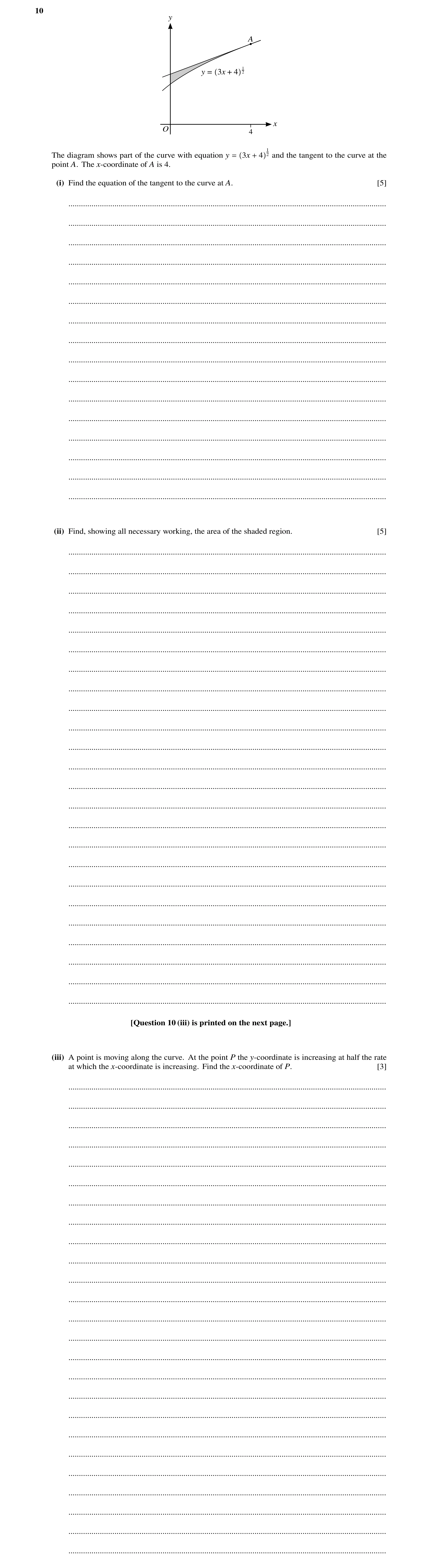
![Question 44: dy 1 9 A curve for which = 5x −1 2 −2 passes through the point 2, 3 . dx (i) Find the equation of the curve. [4] ..........................…](https://img.pastlit.com/crops/b62d7475-d359-4fb0-b9ad-e1b4314c5b9a/q9.webp)
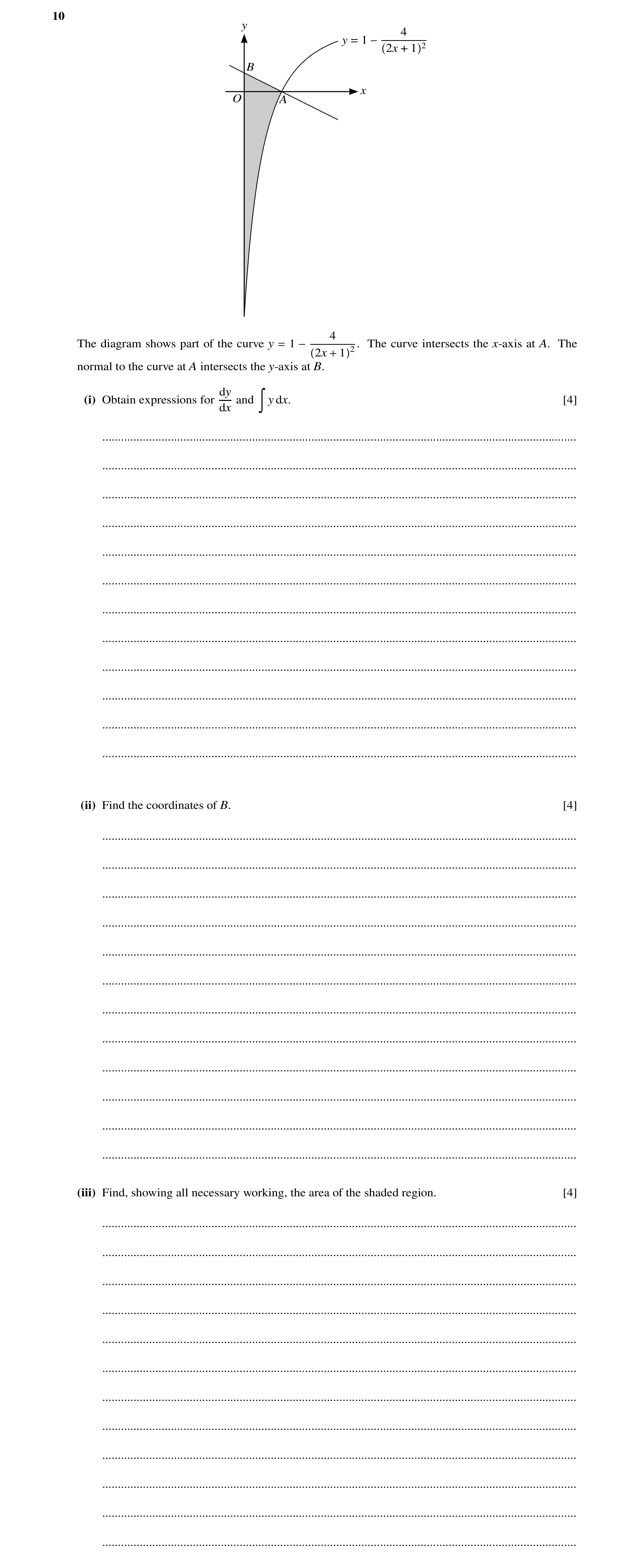
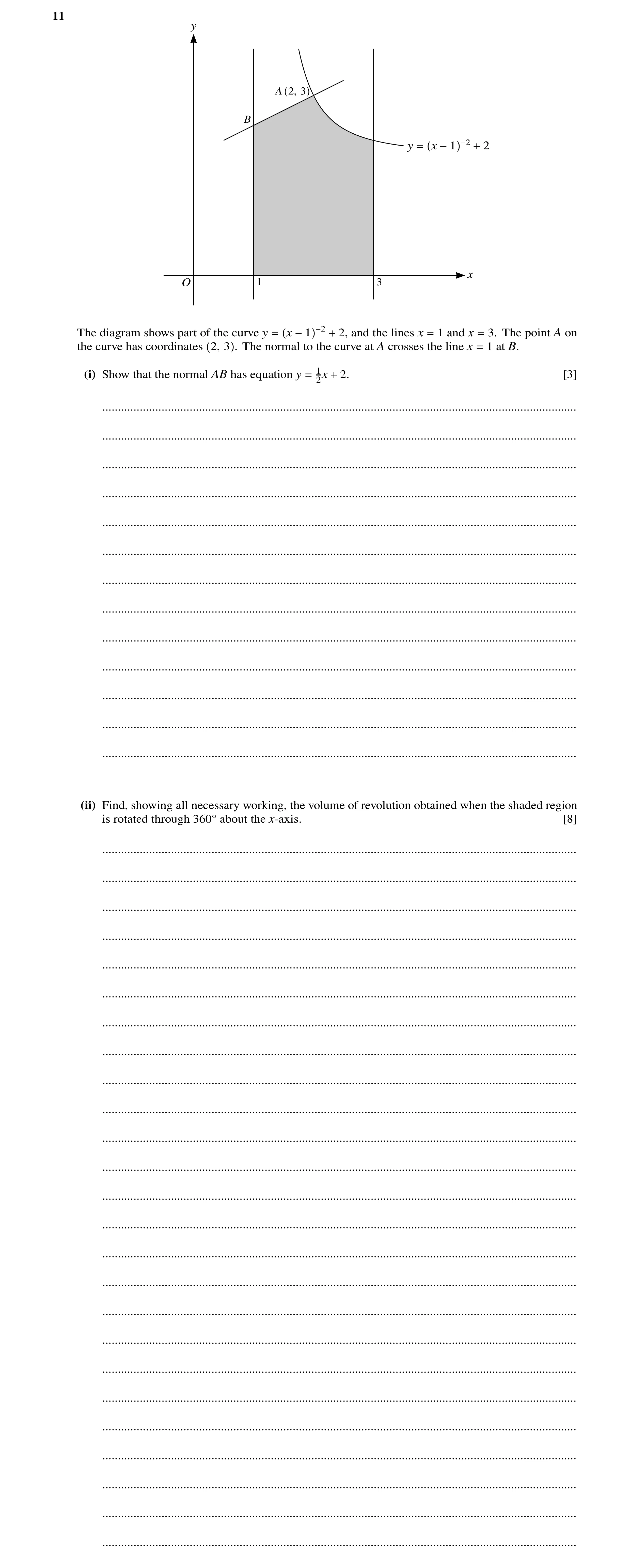
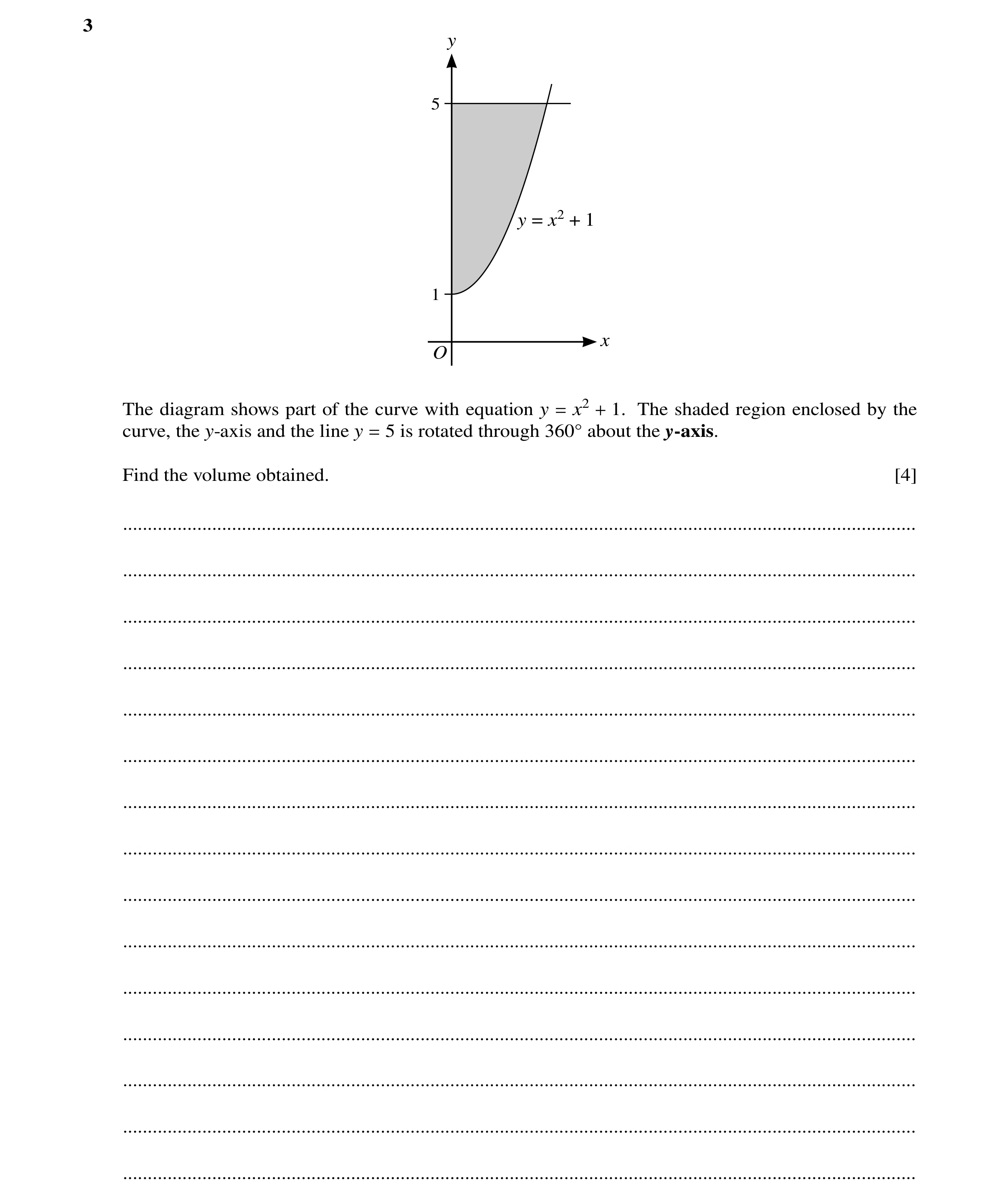 43 / 127
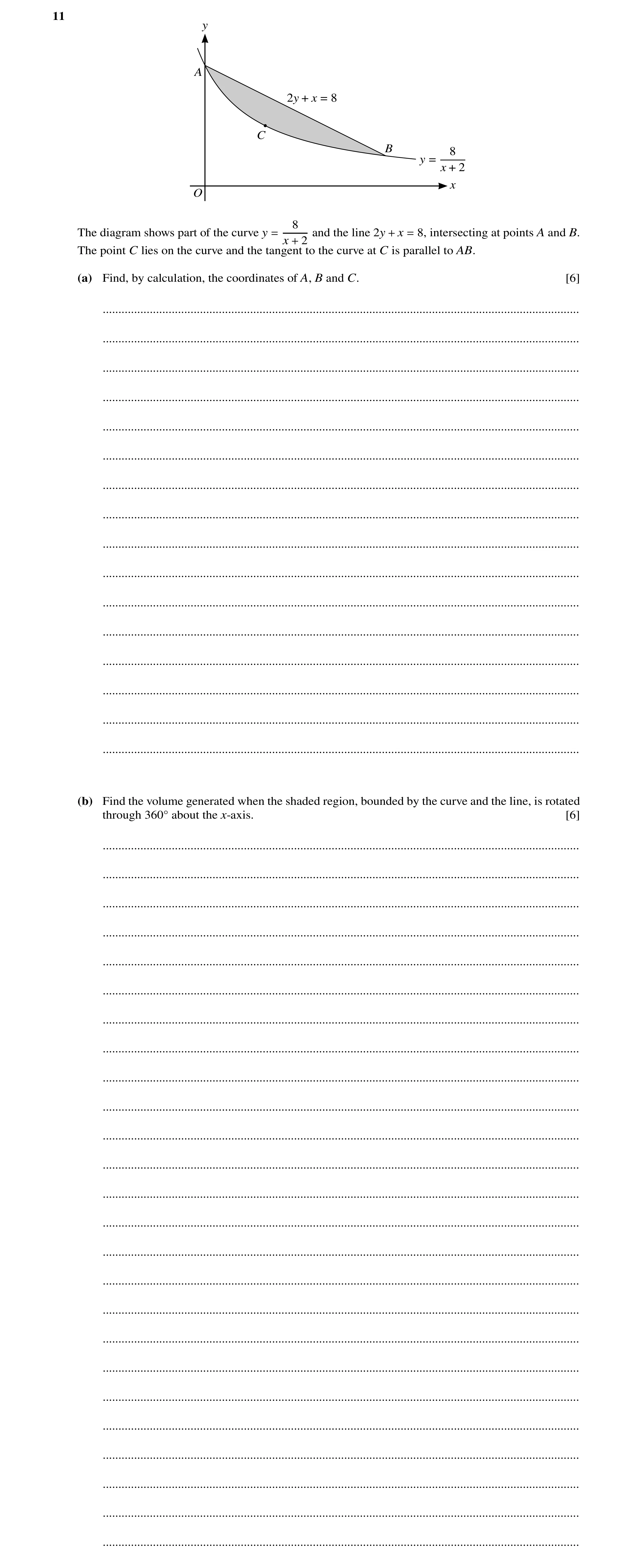
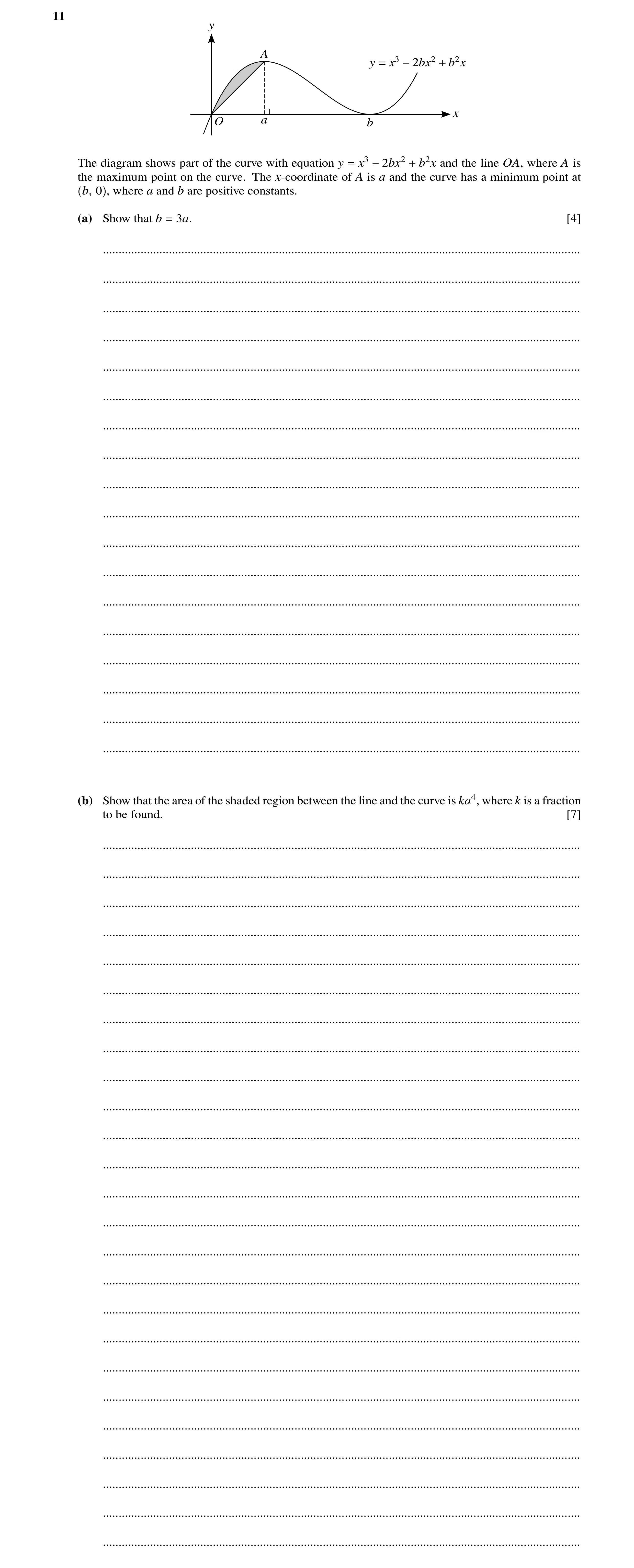
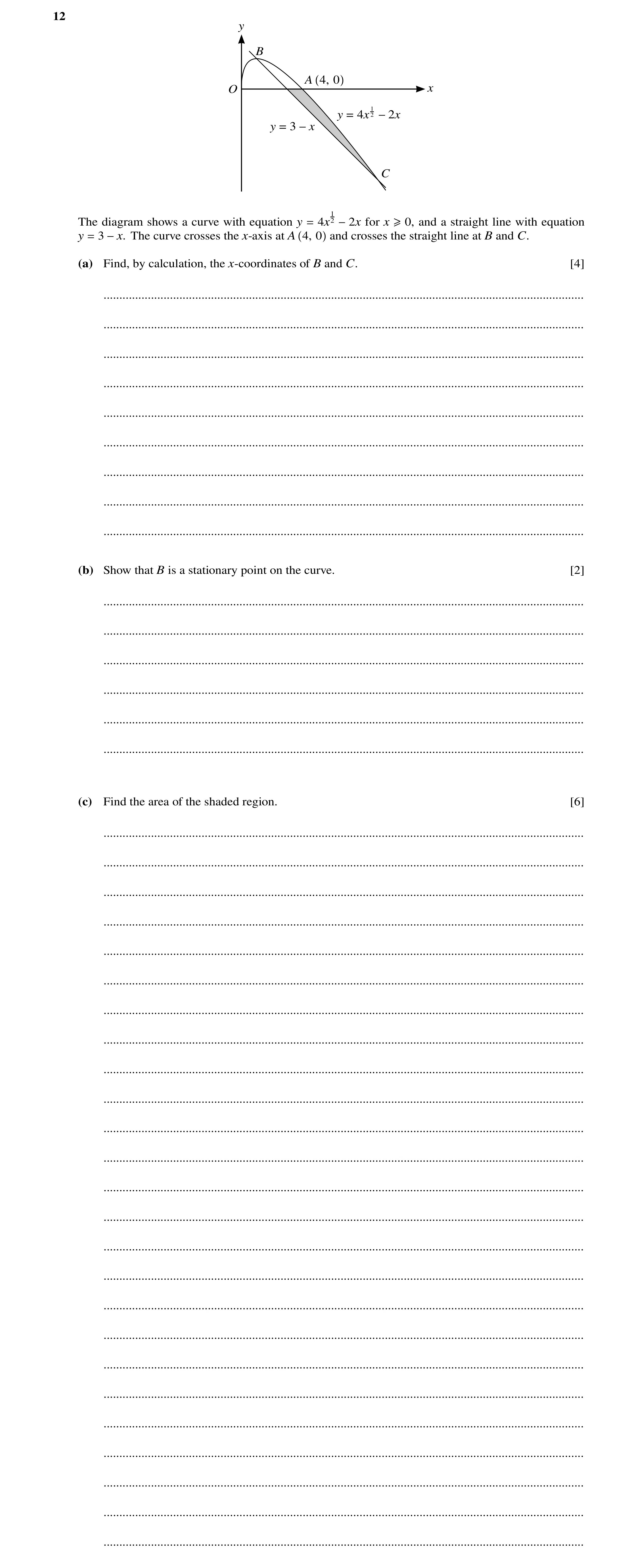
 51 / 127
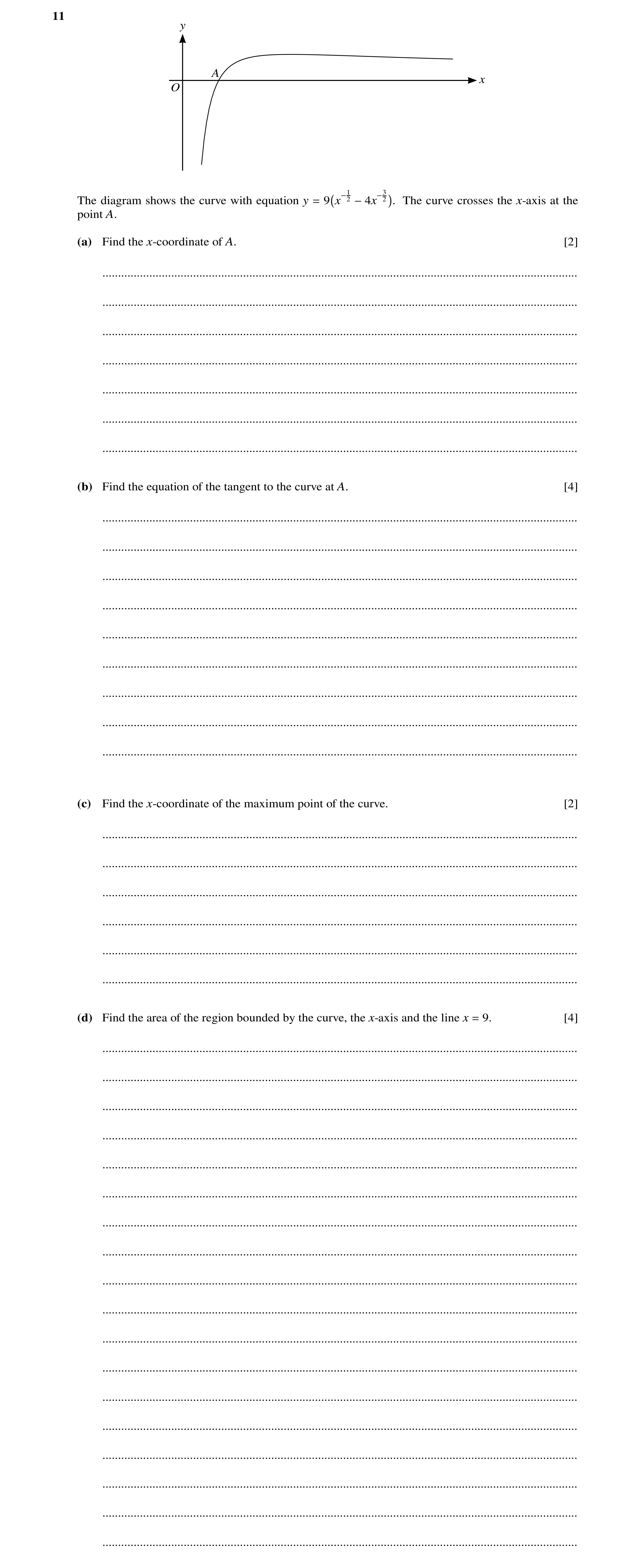
 58 / 127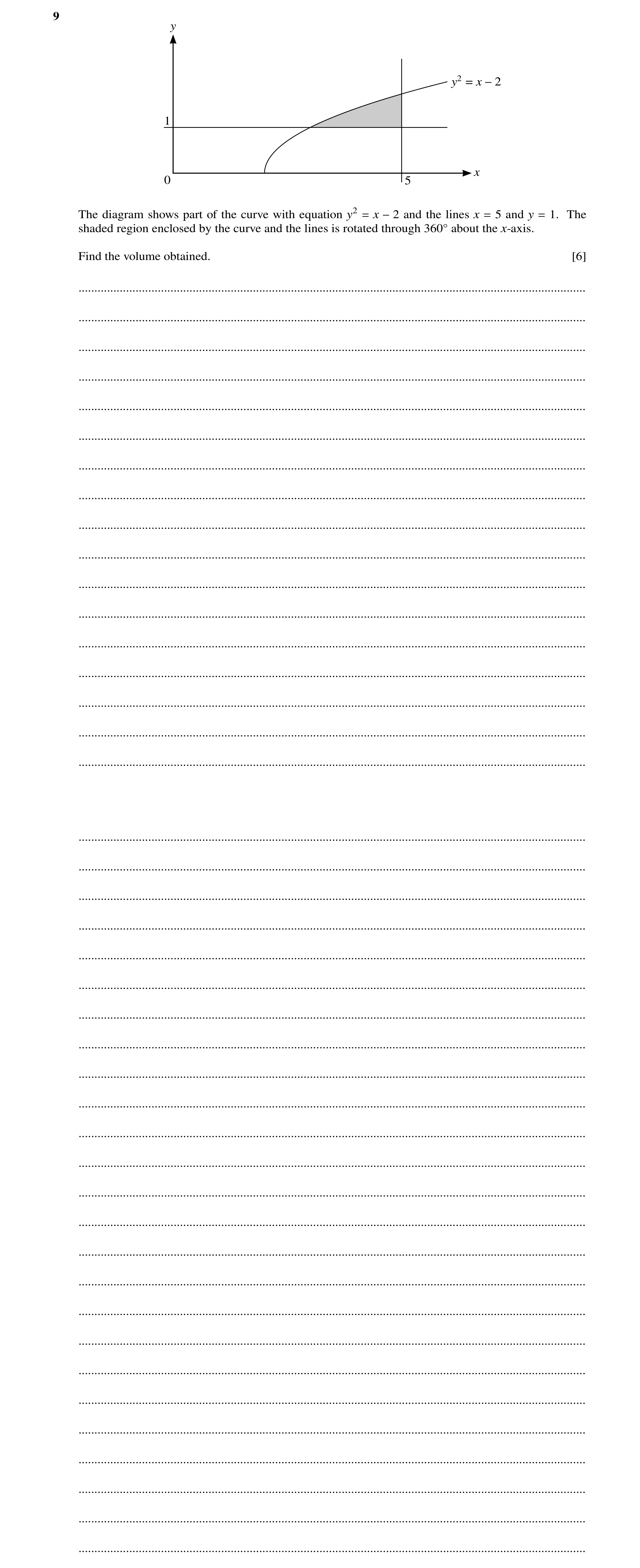
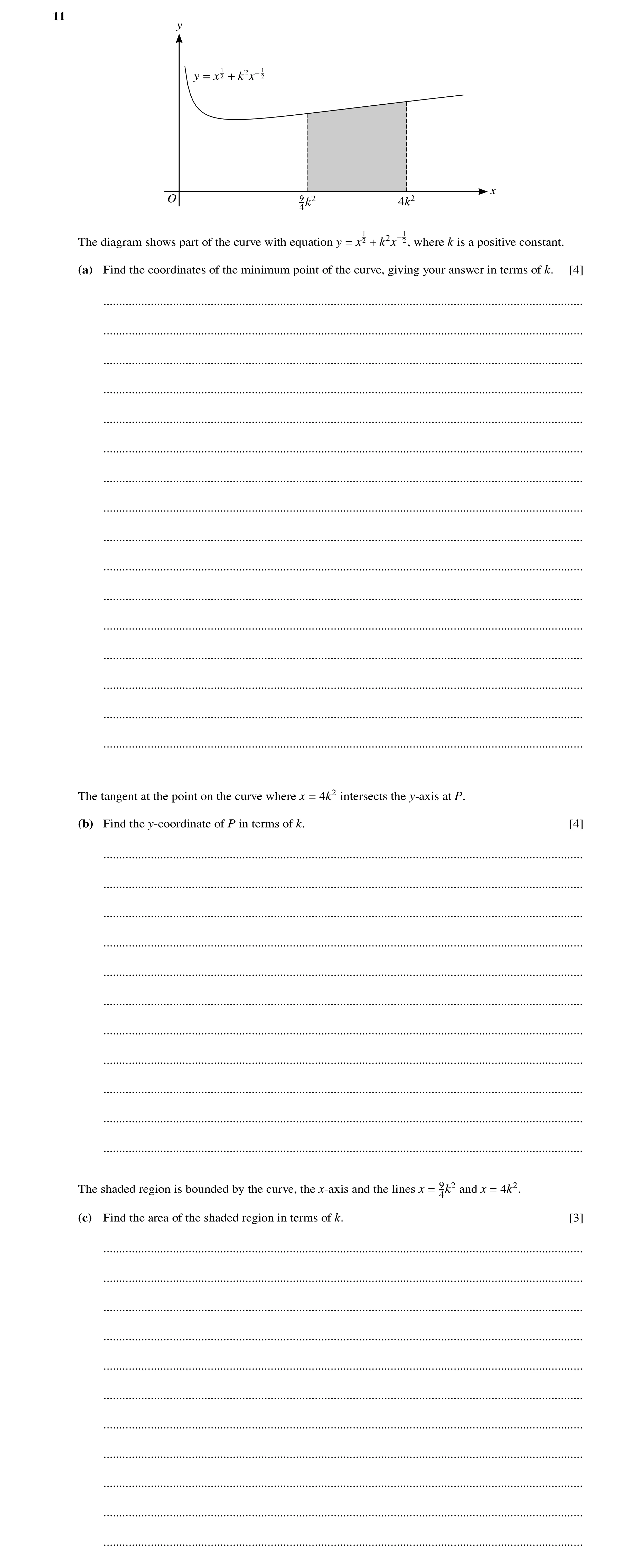
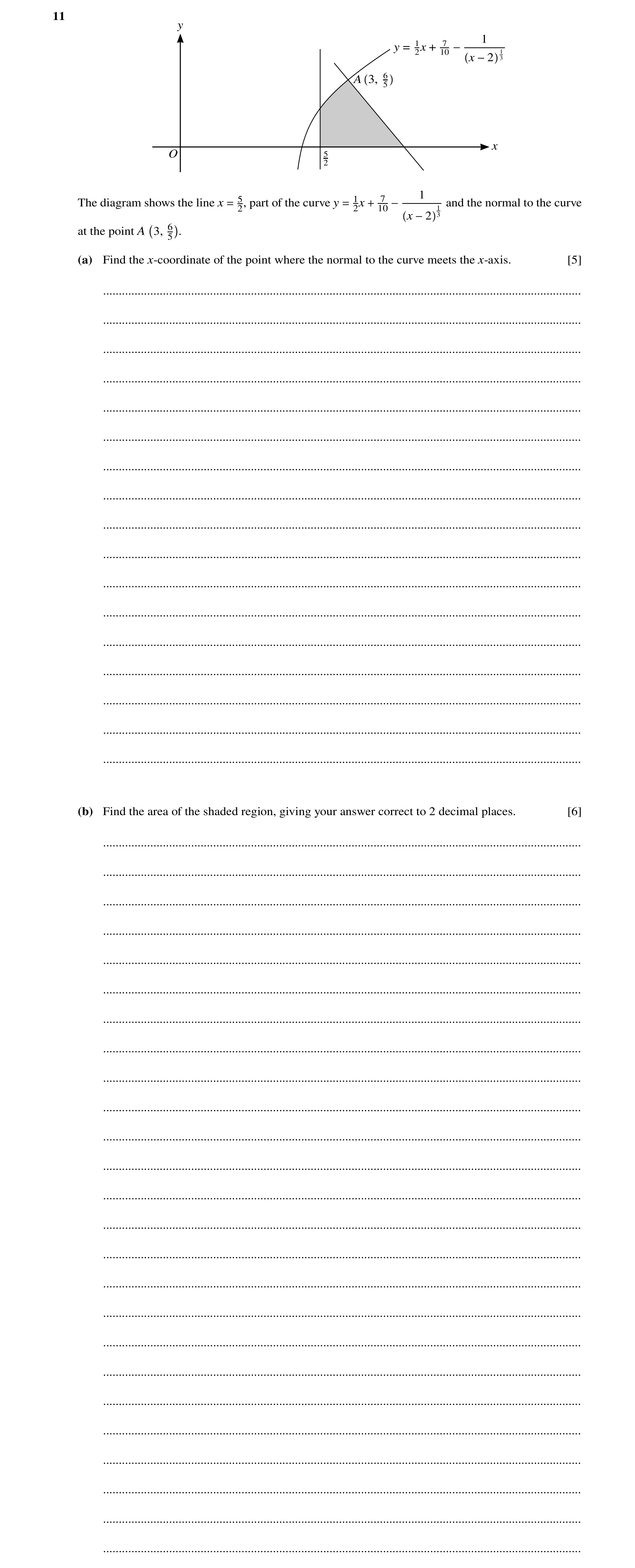
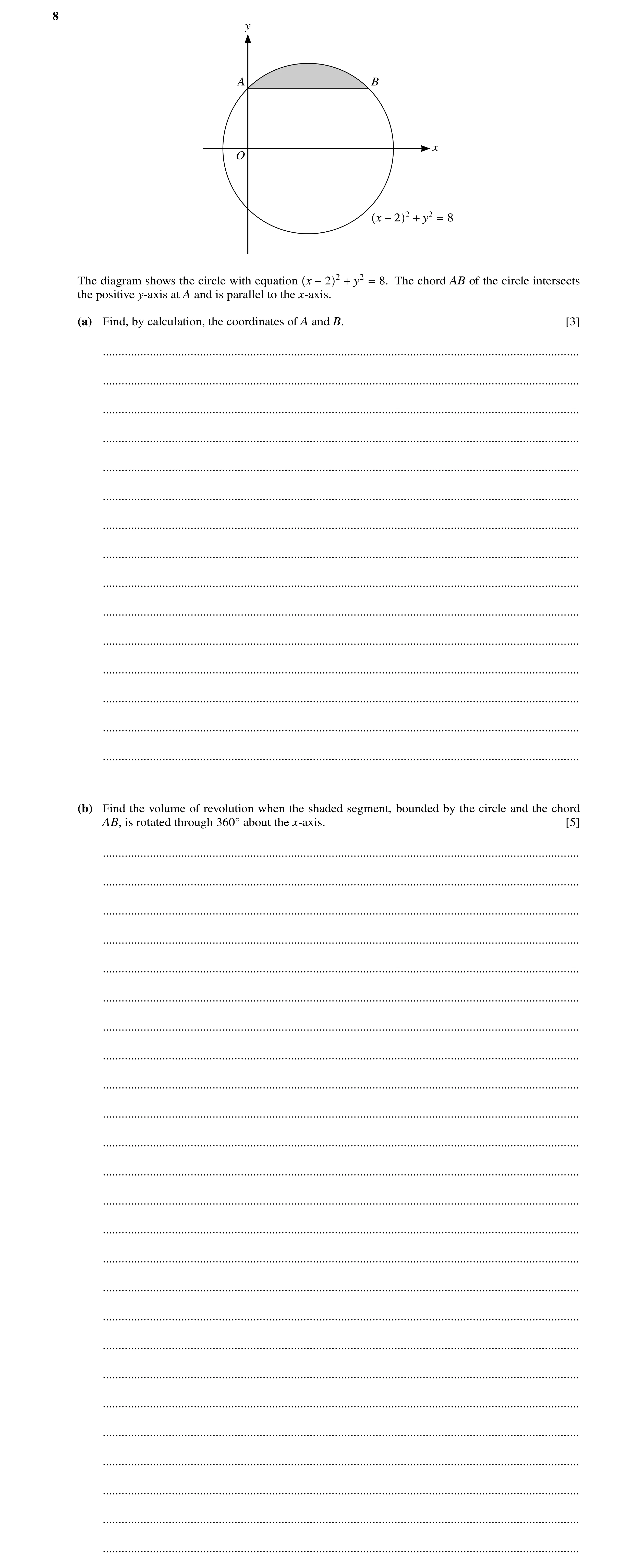
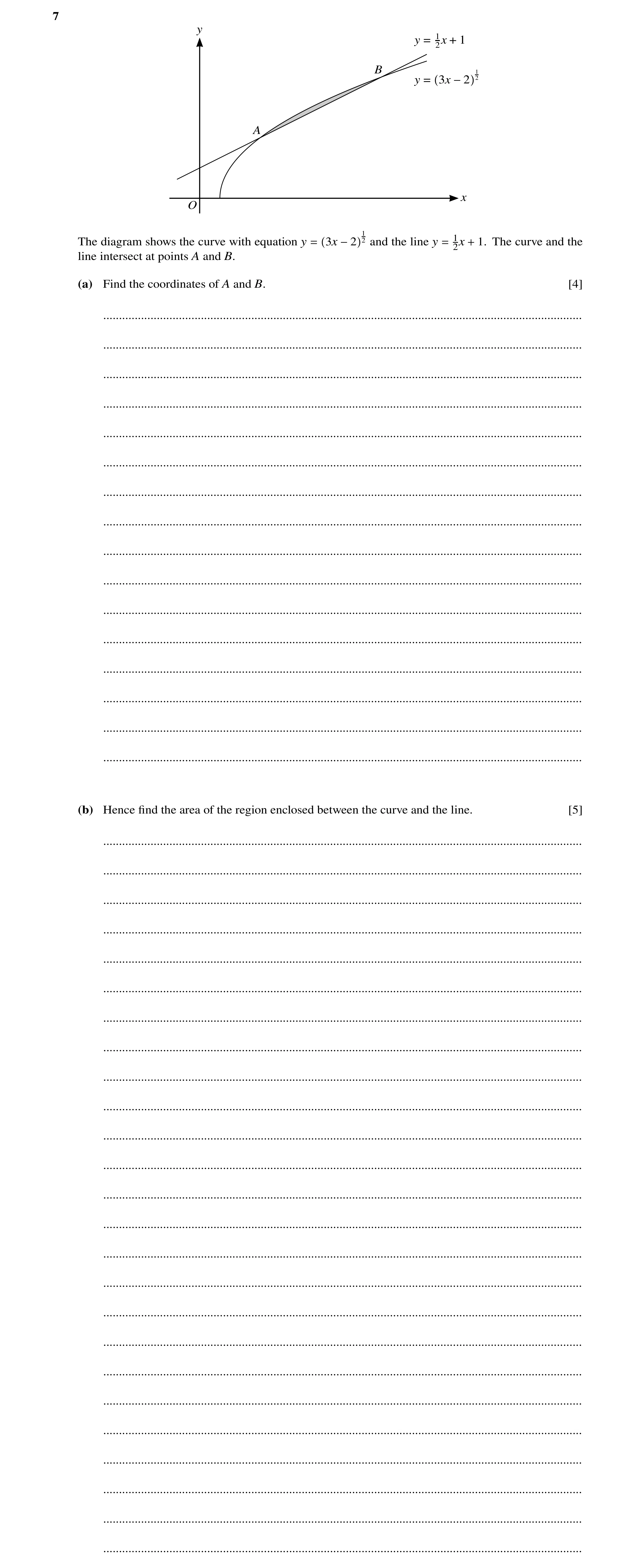
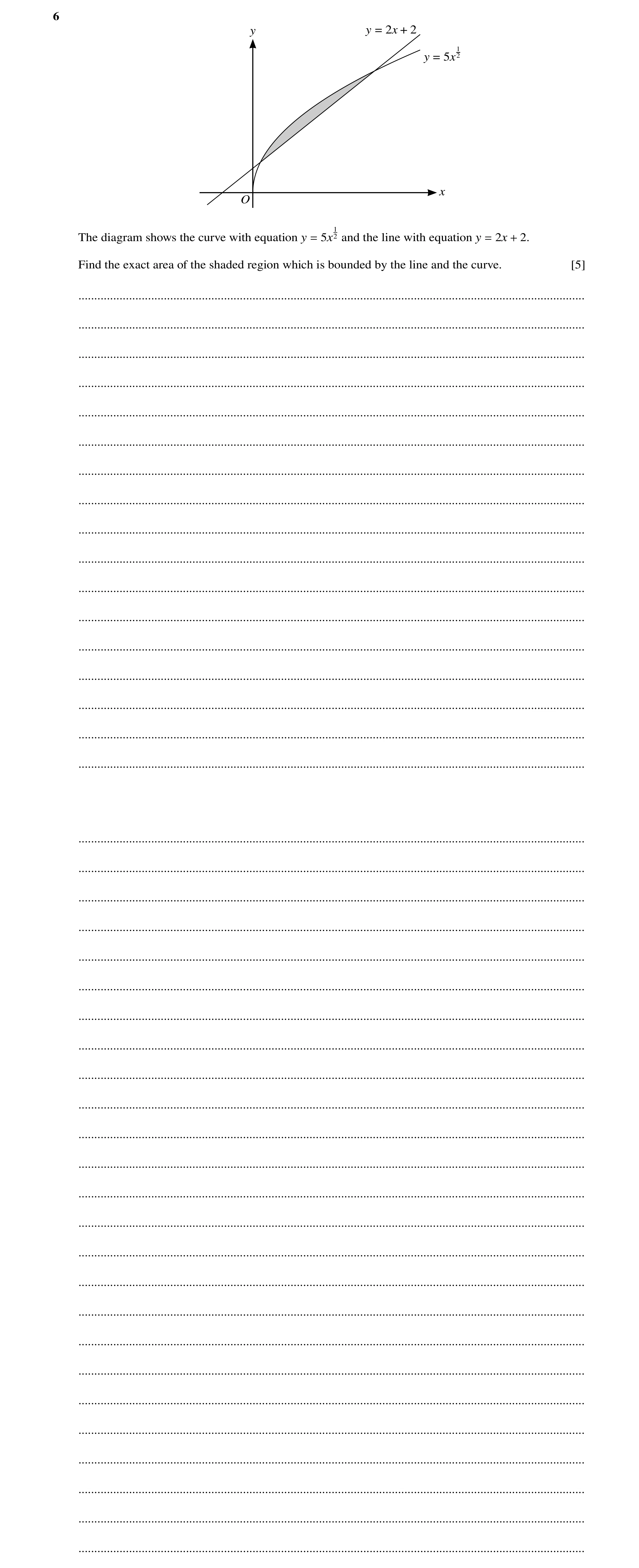
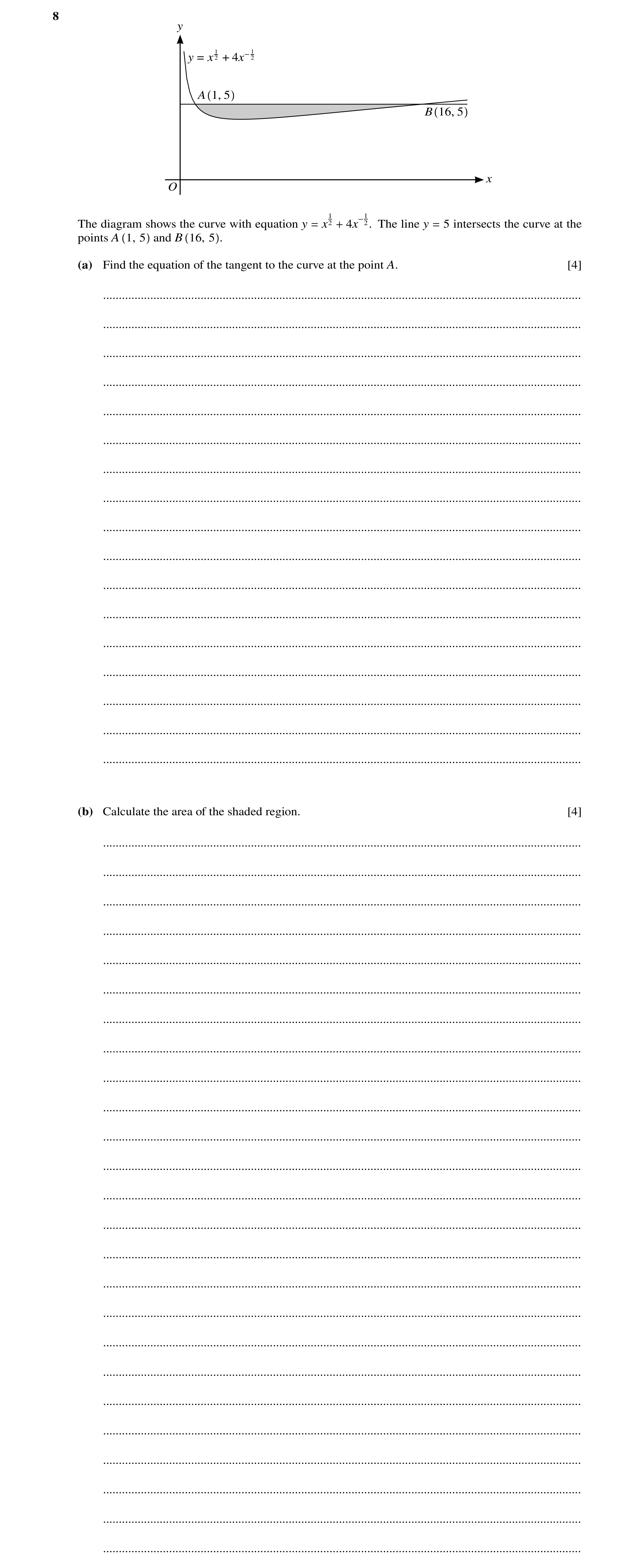
 73 / 127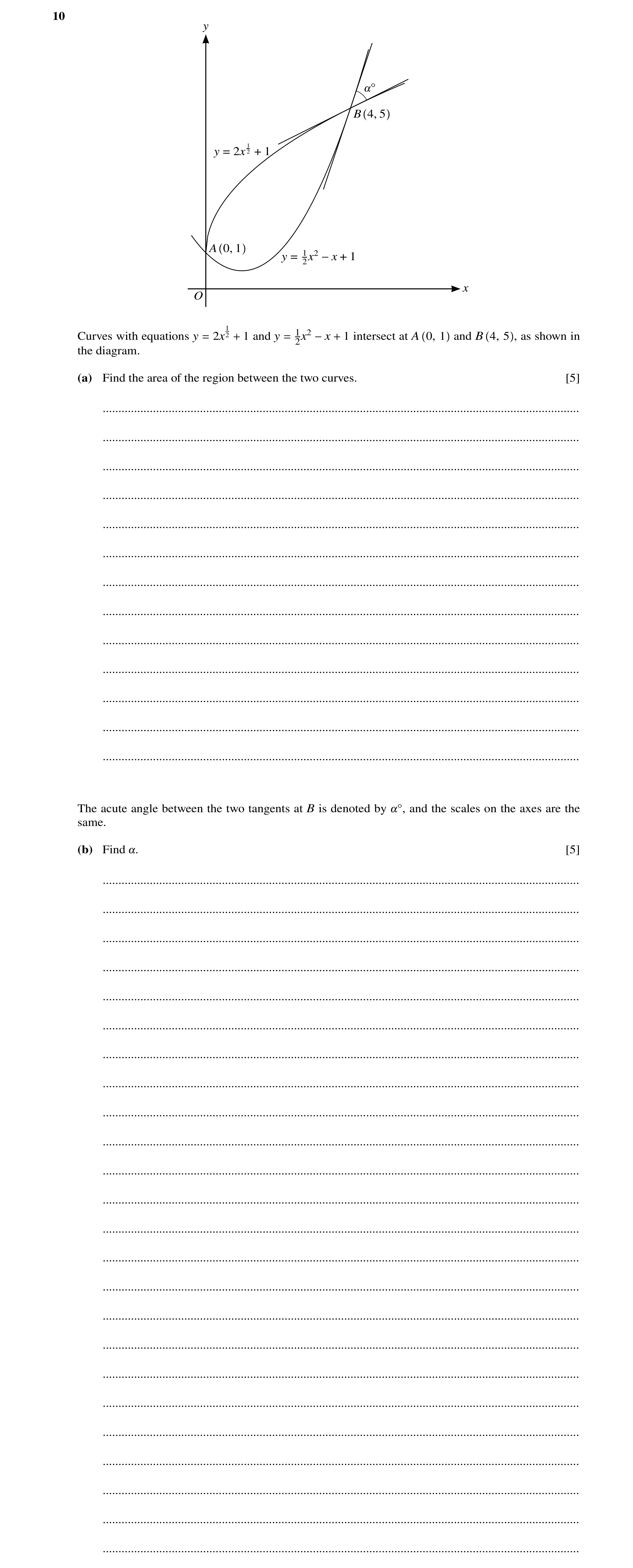
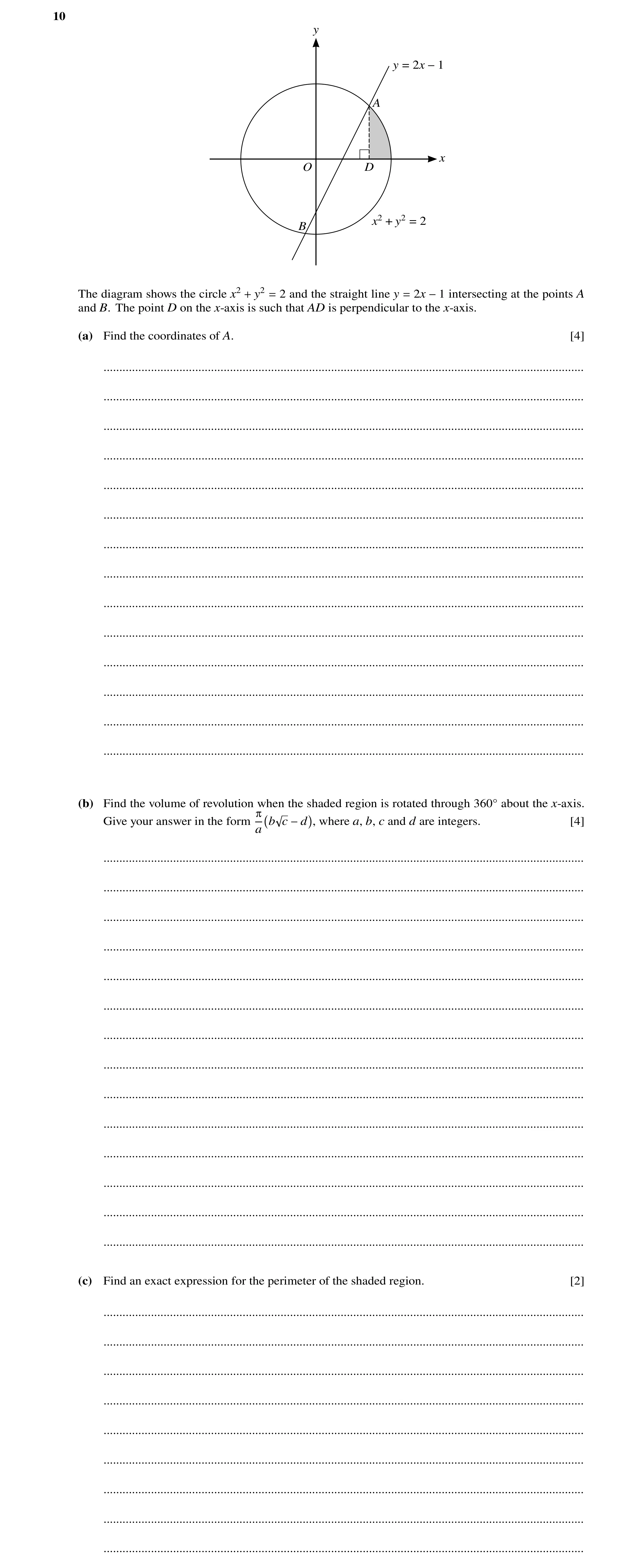
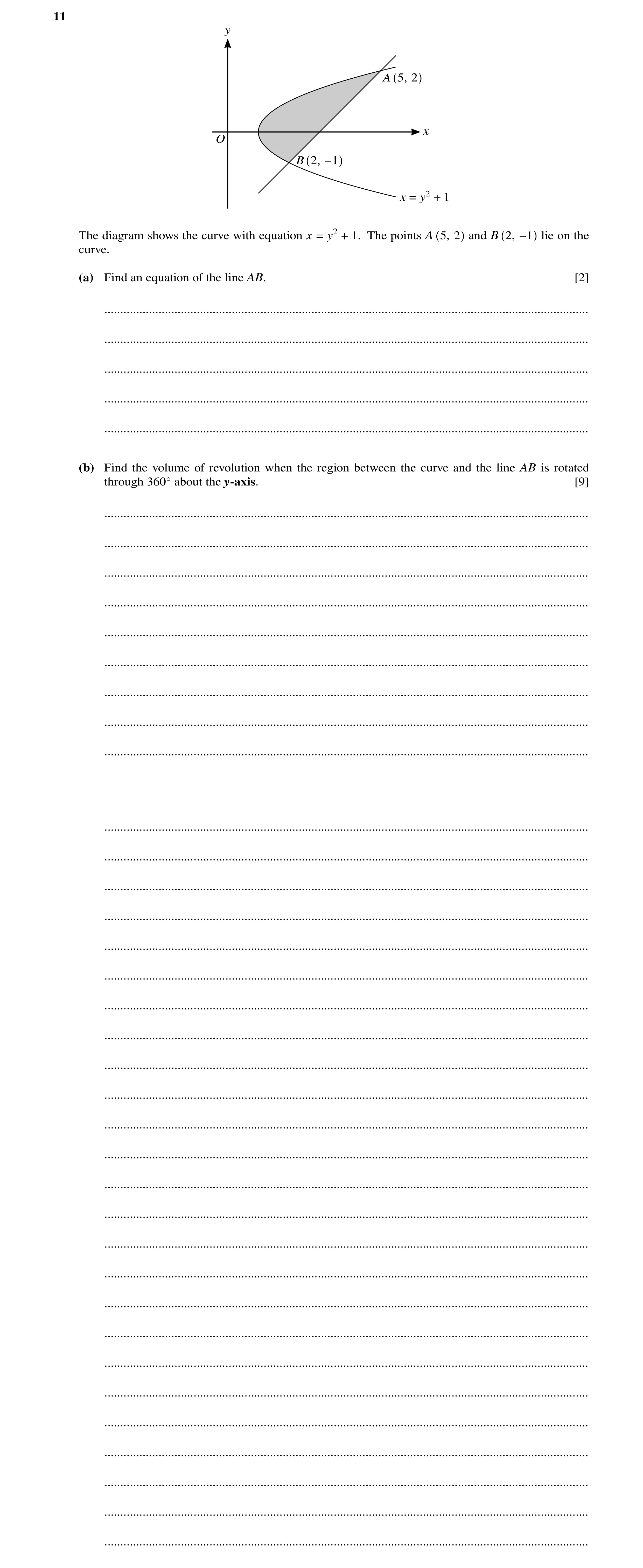
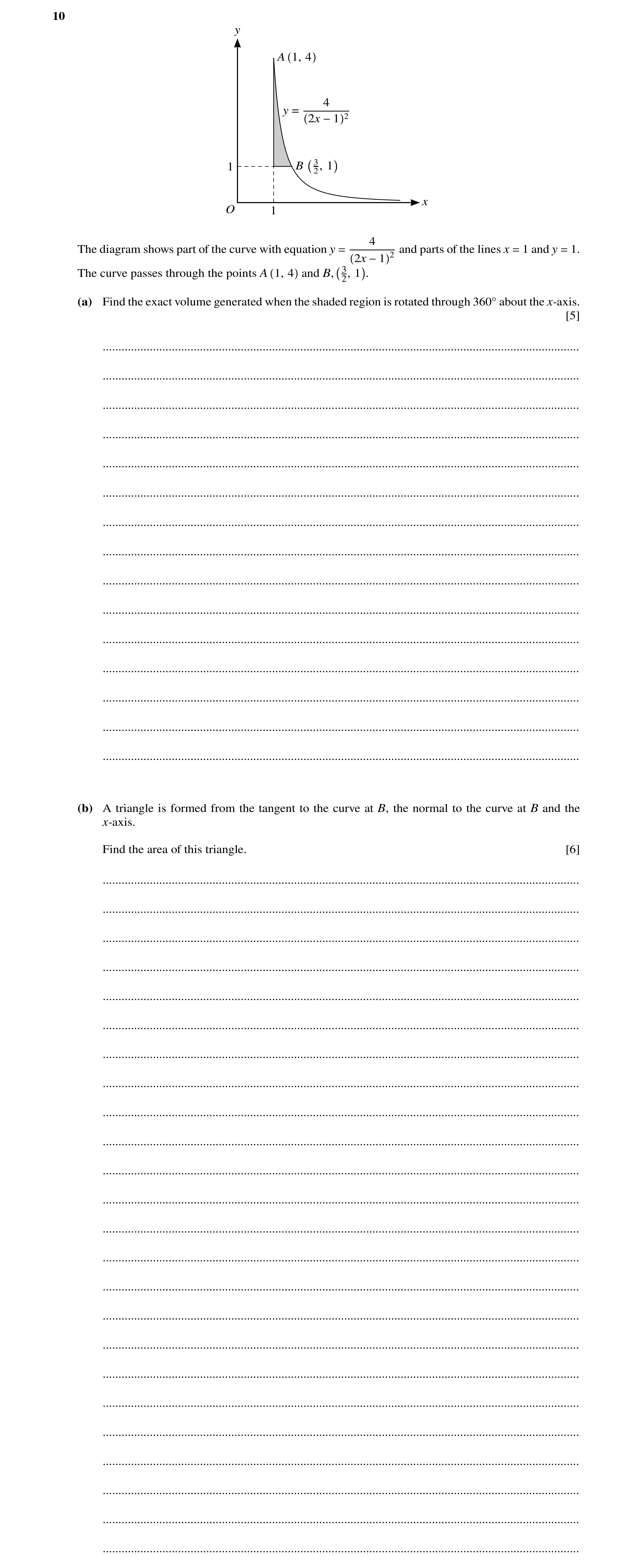
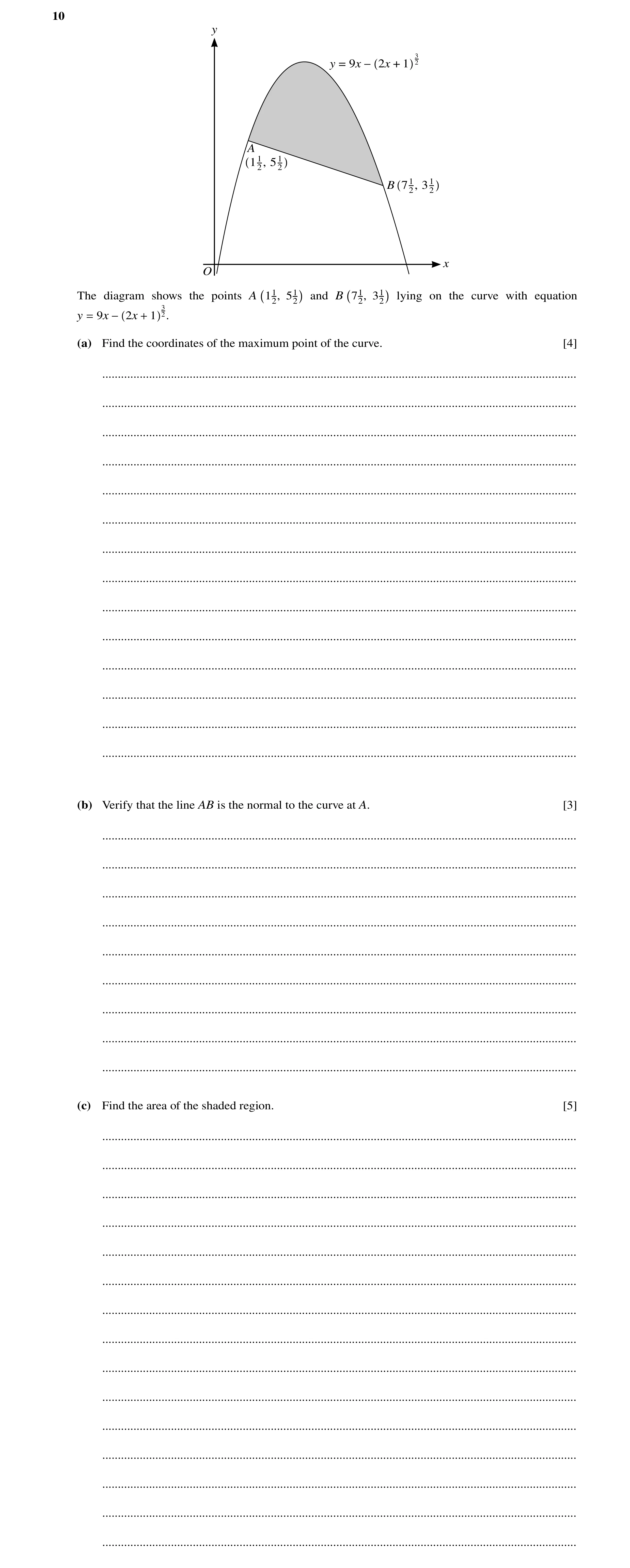
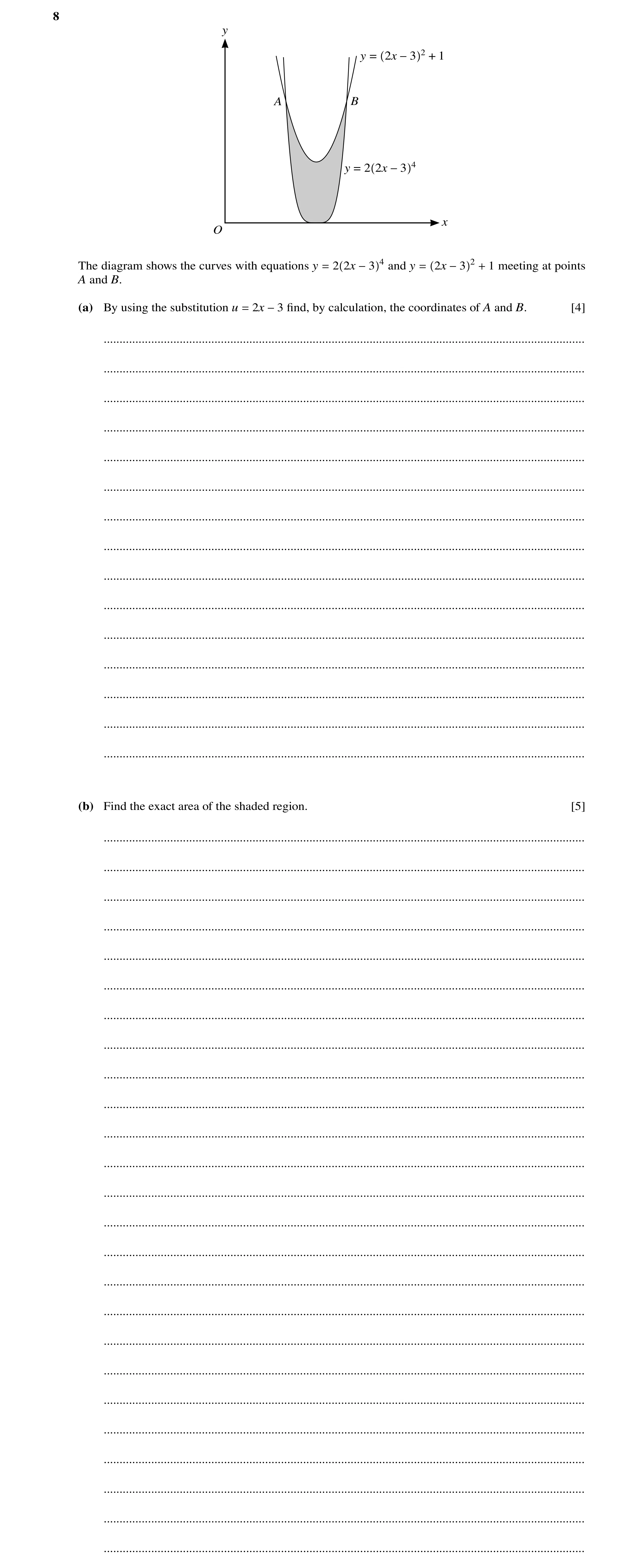
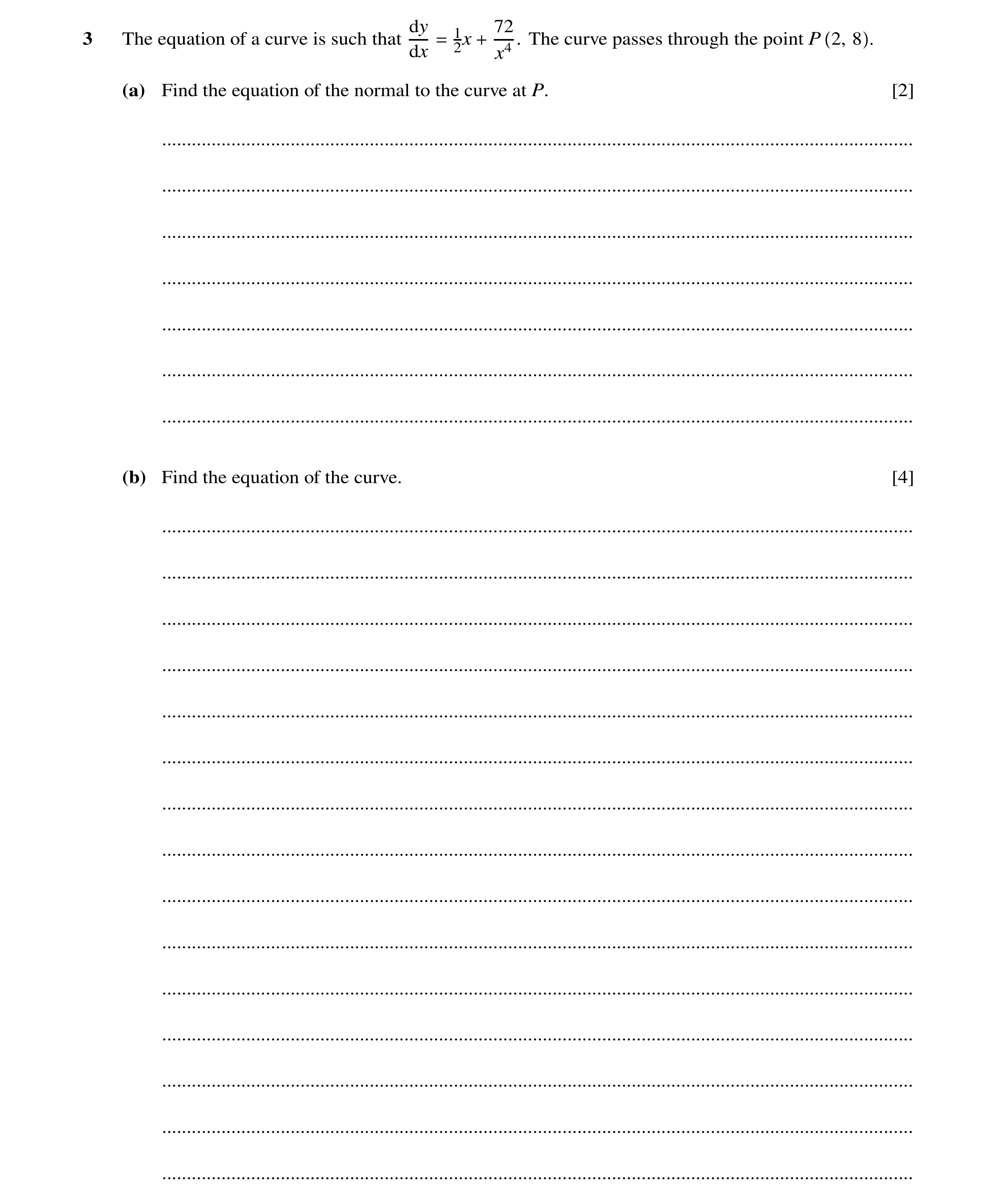 88 / 127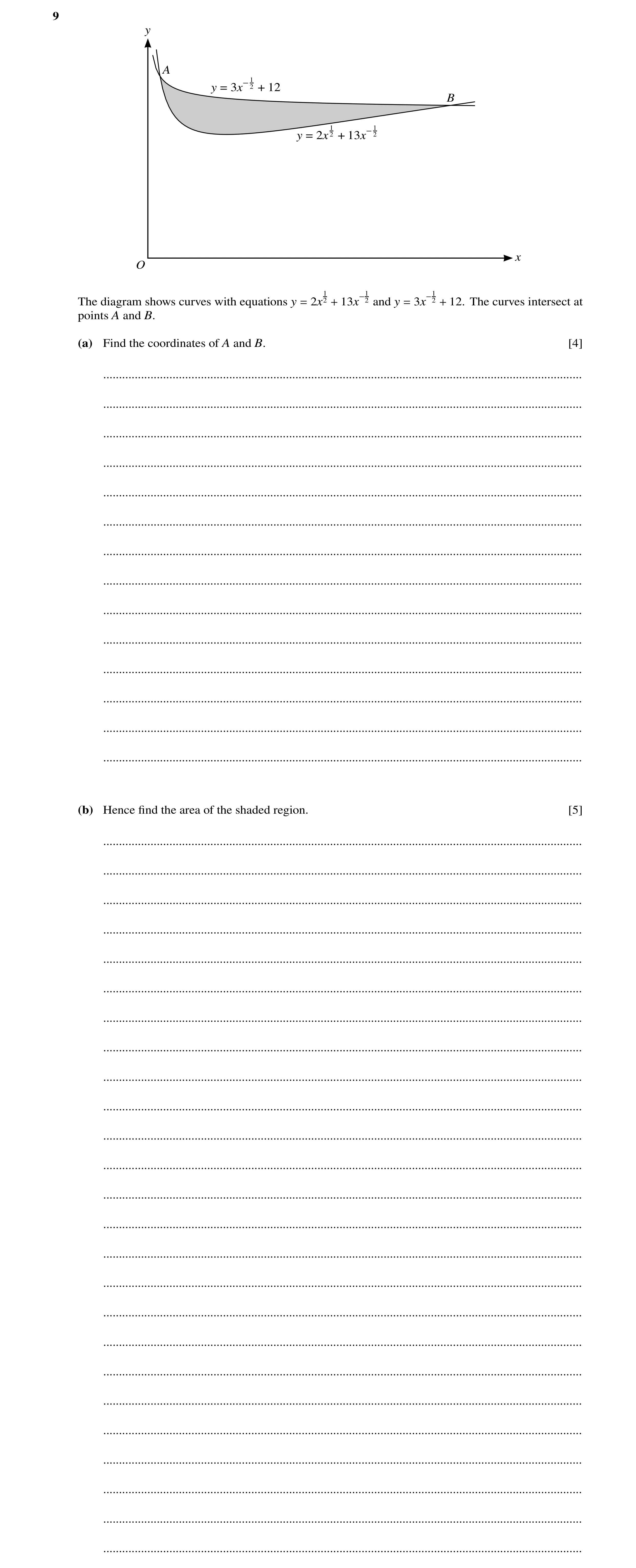
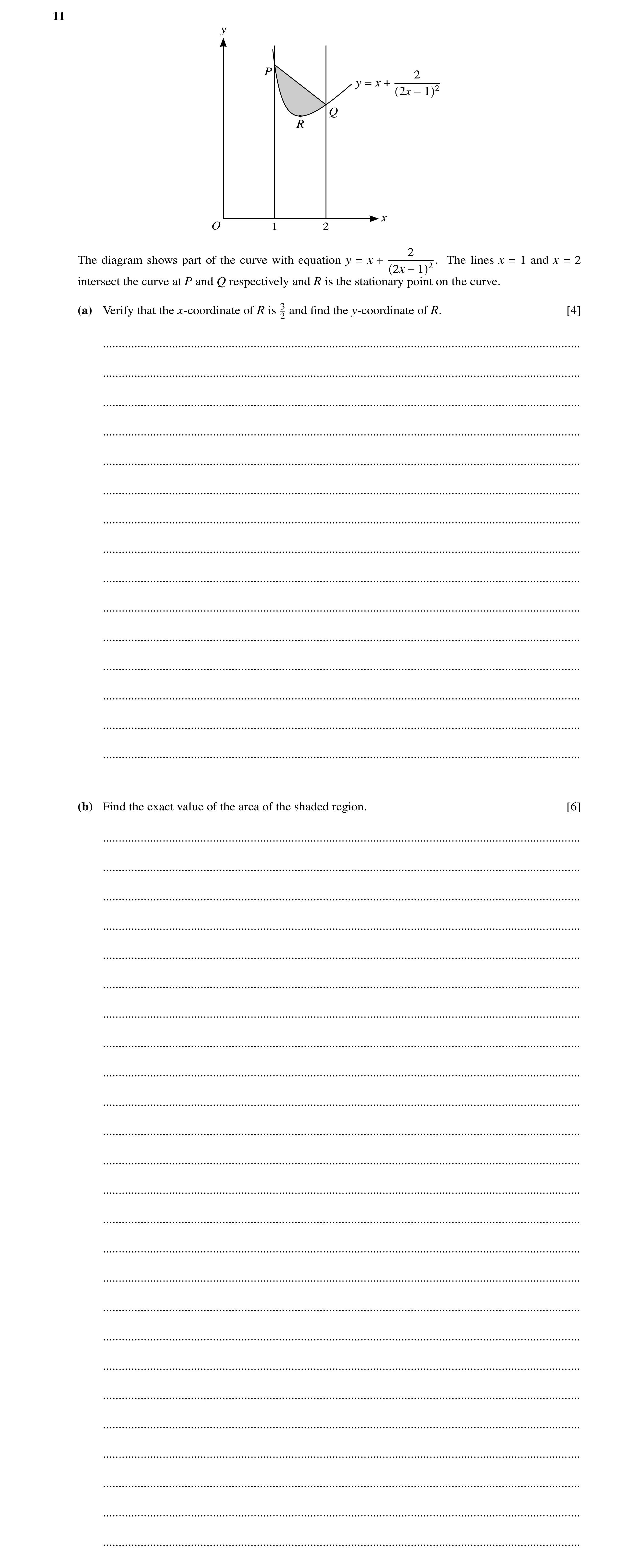
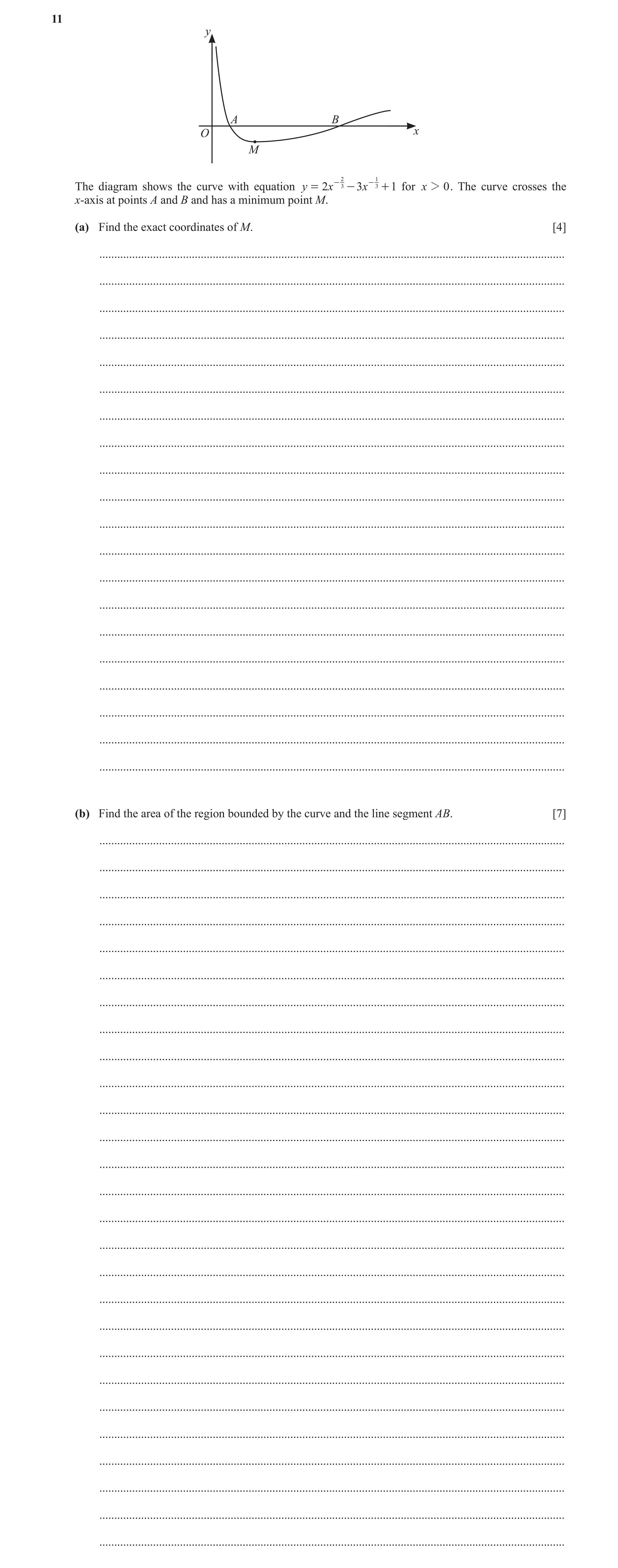
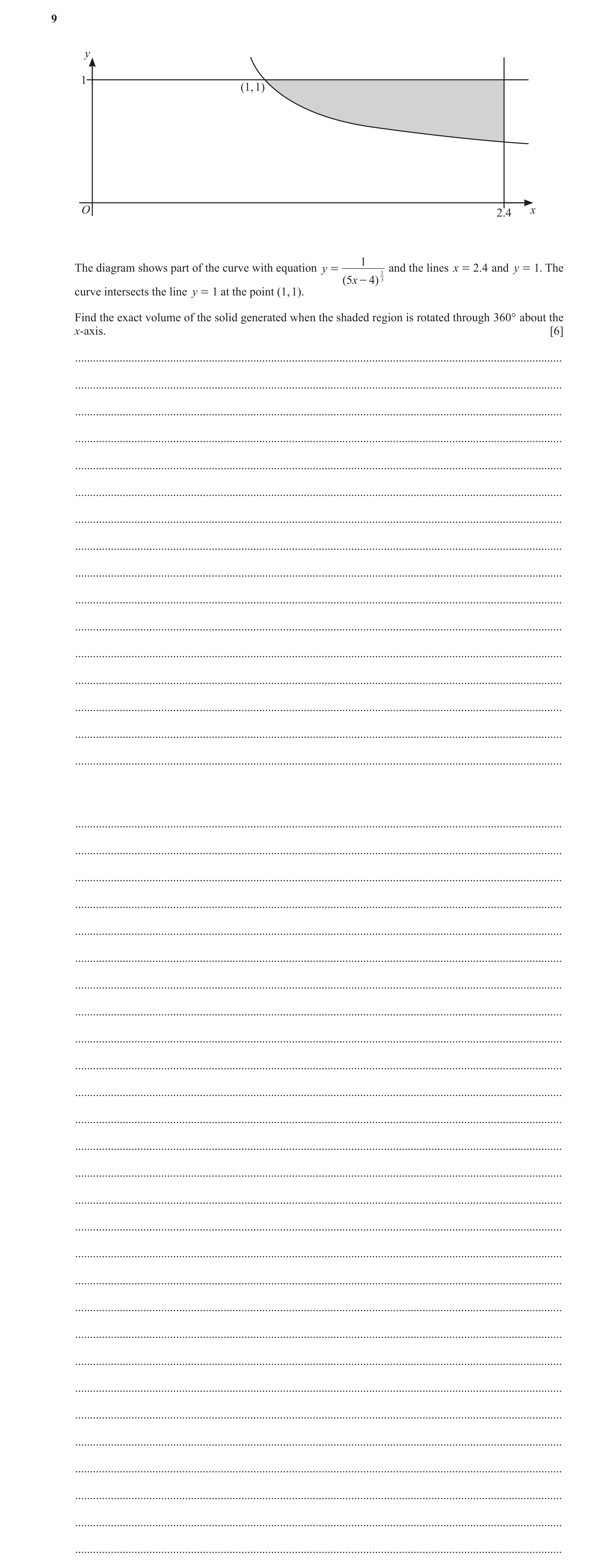
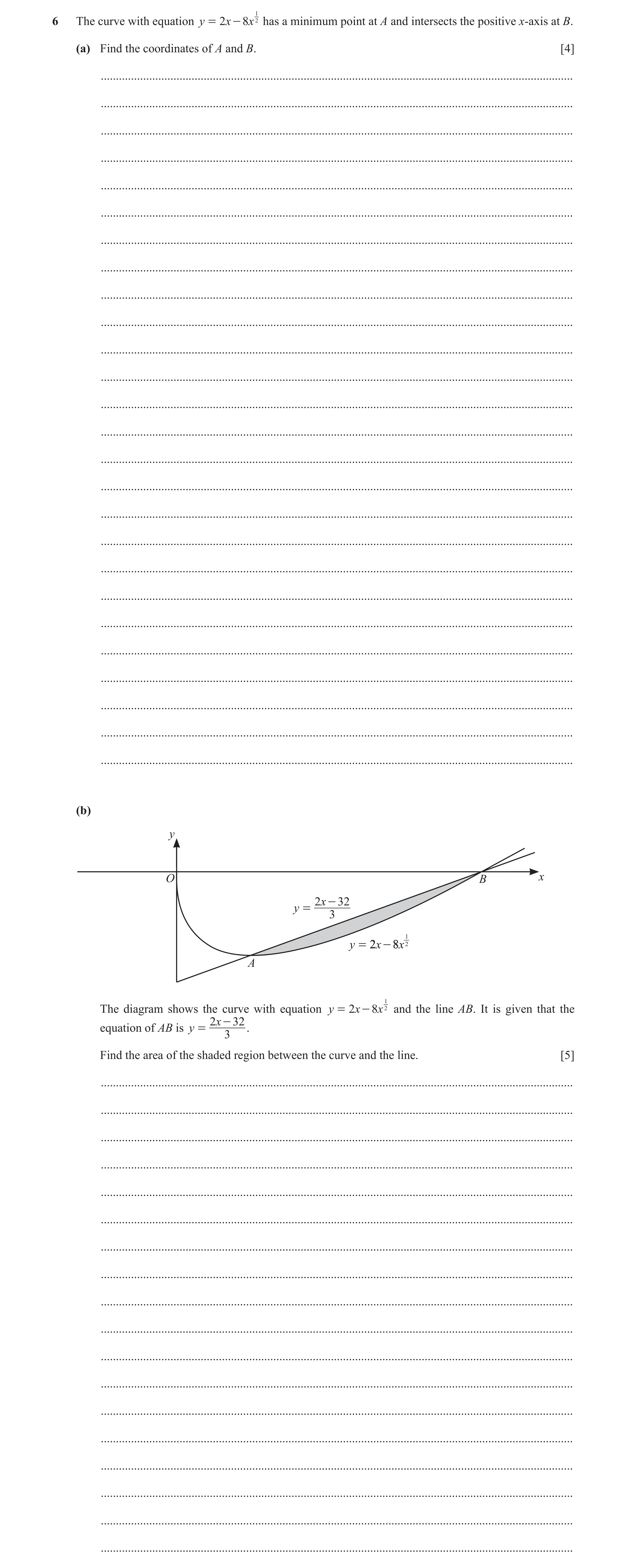
![Question 81: dy - 20 6 A curve passes through the point b , - 3l and is such that = . 5 dx ( 5 x - 3 ) 2 (a) Find the equation of the curve. [4] .......…](https://img.pastlit.com/crops/e8bdf74a-dfee-4178-bb01-4e1ec31fe5e5/q6.webp) 100 / 127
100 / 127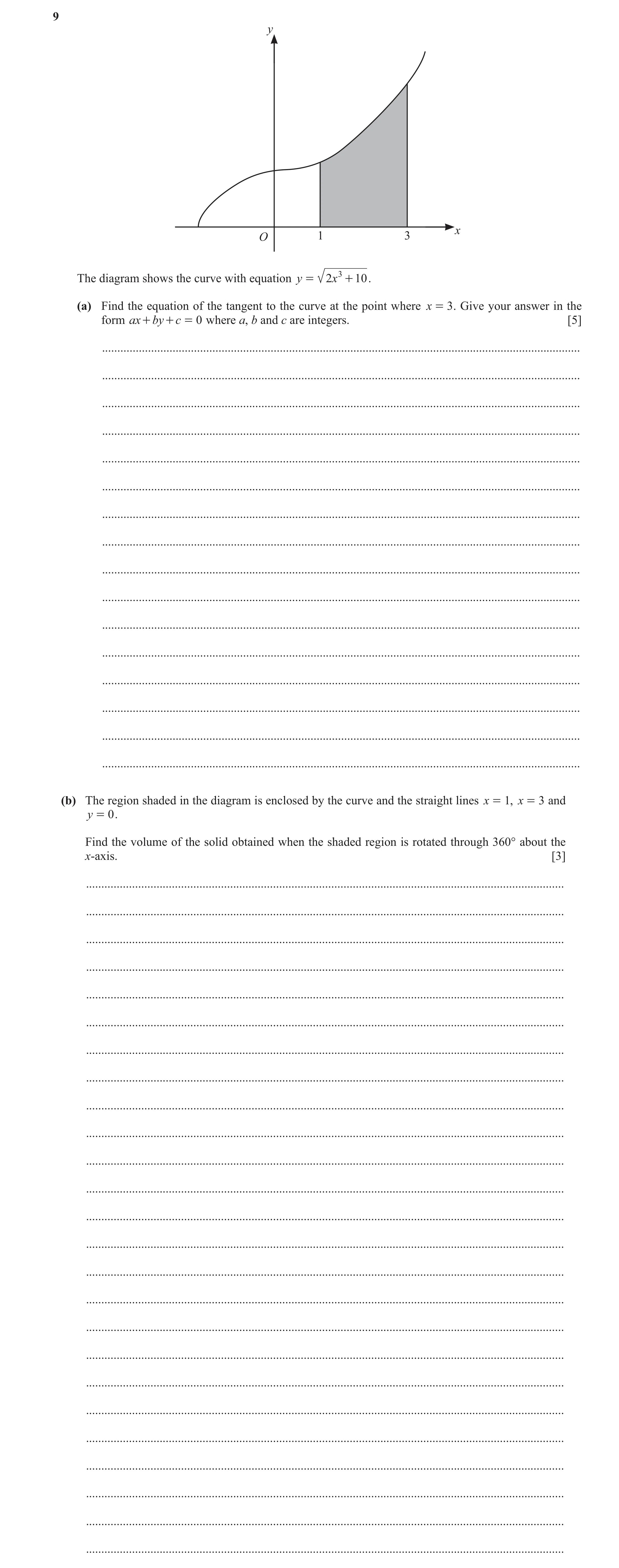
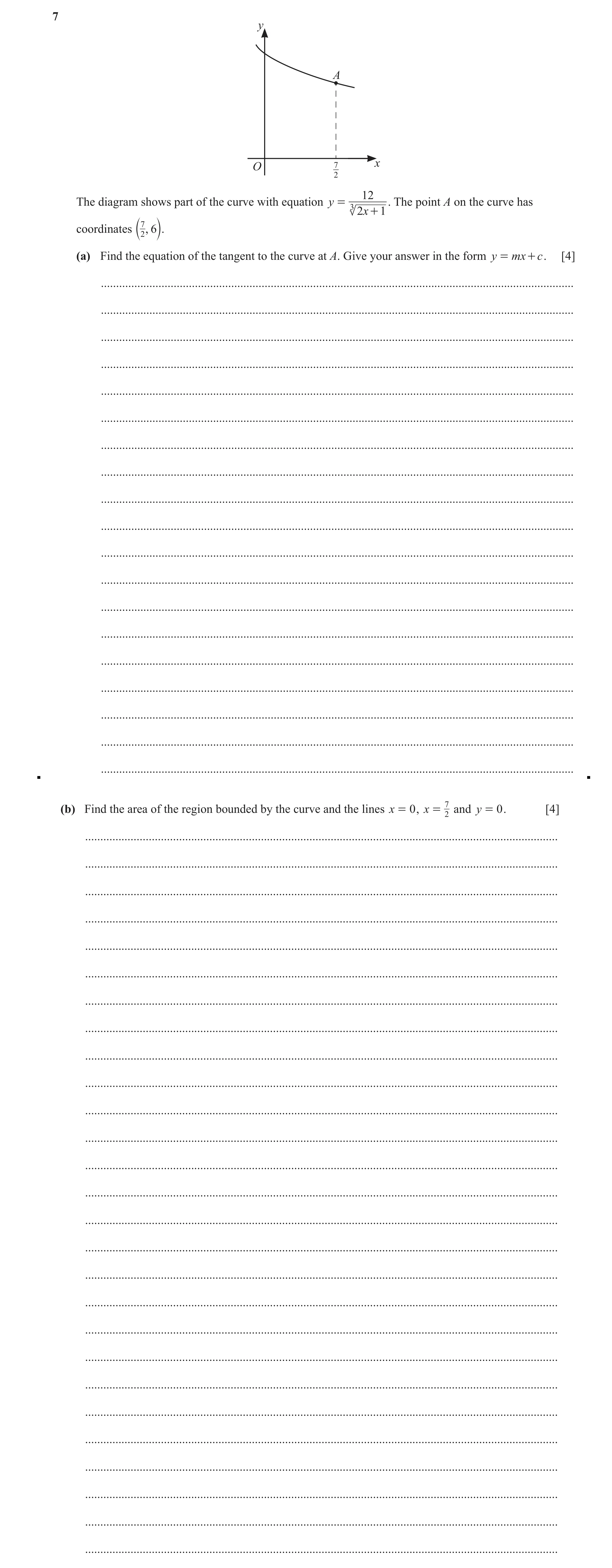
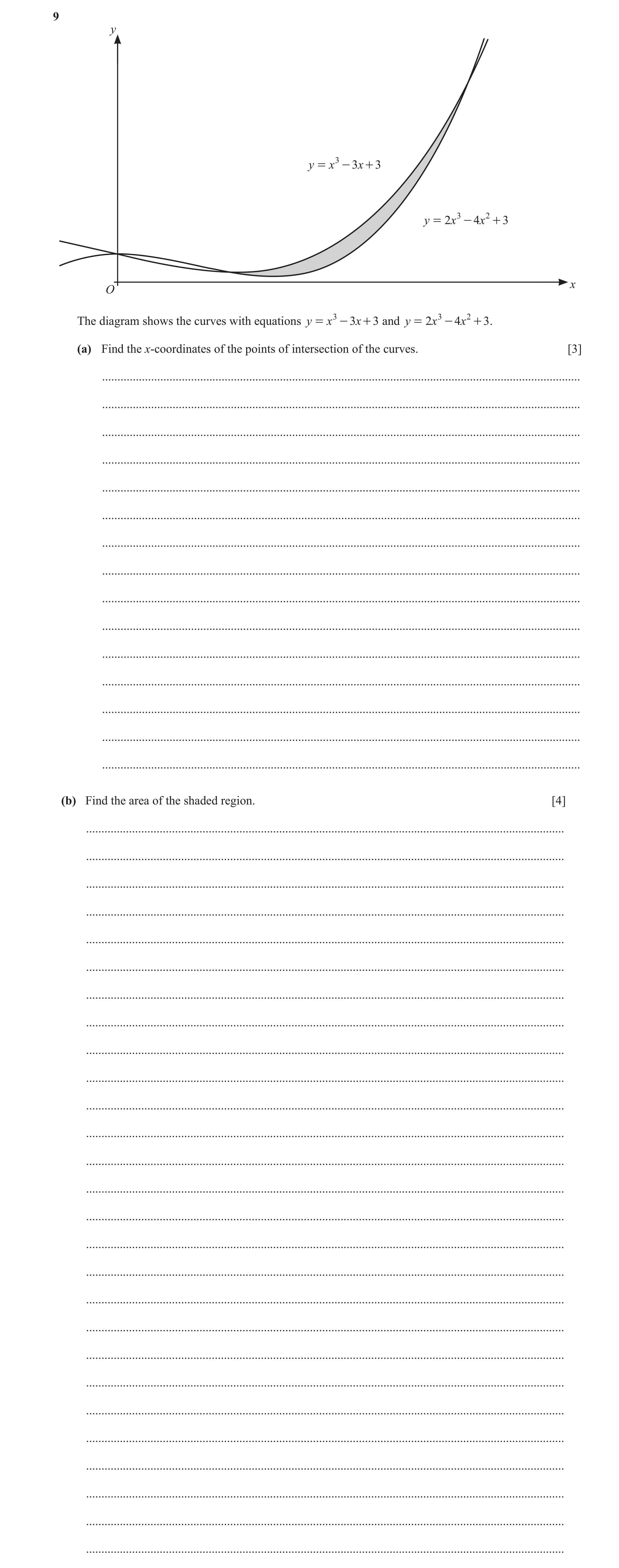
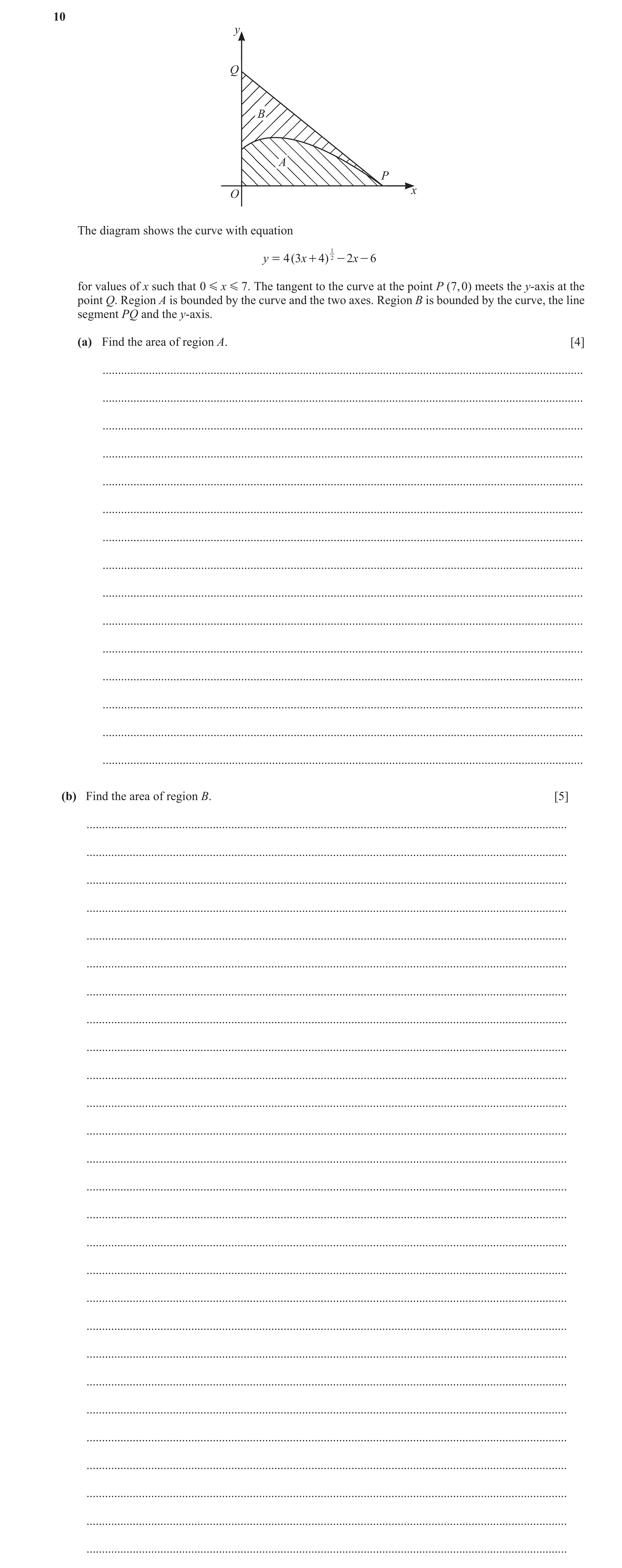
 111 / 127
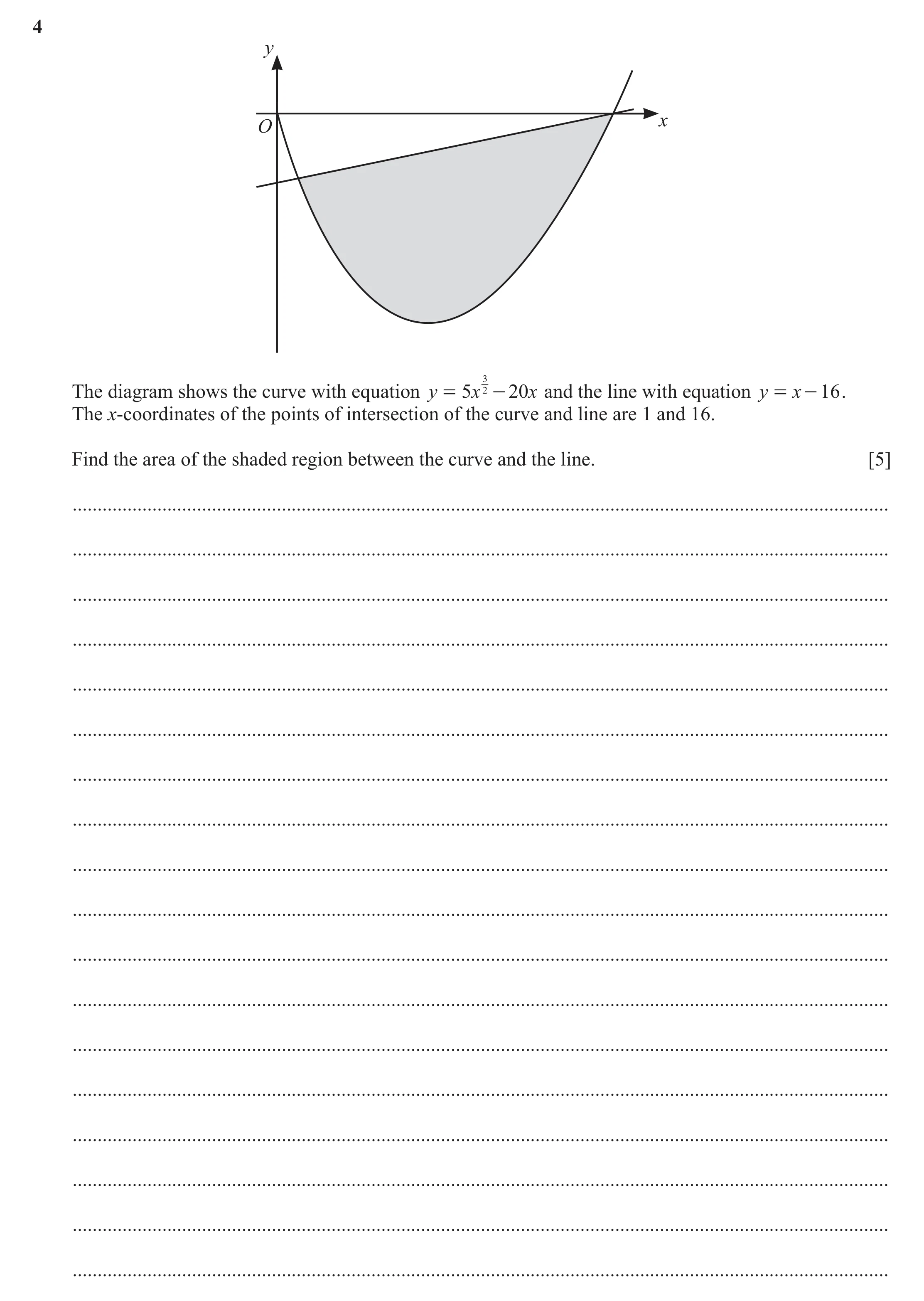 112 / 127
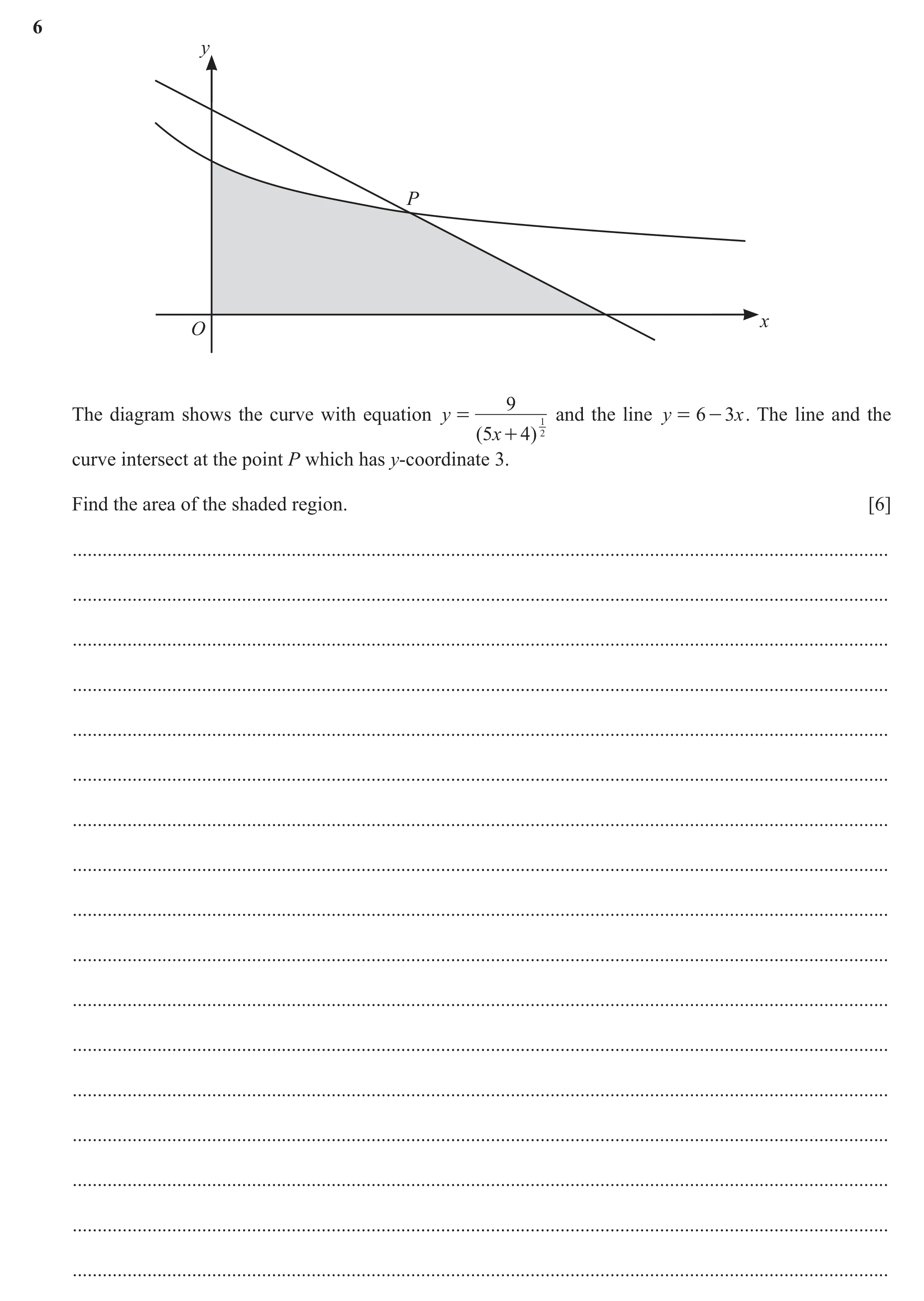 113 / 127
![Question 90: a 3 Given that e 2 + 2o d x = 12 , find the value of the constant a. [4] y 1 ( 4x - 3) ....................................................…](https://img.pastlit.com/crops/4b0c72ad-9eb0-4f13-8801-e6da23fe9a3b/q3.webp) 114 / 127
114 / 127 115 / 127
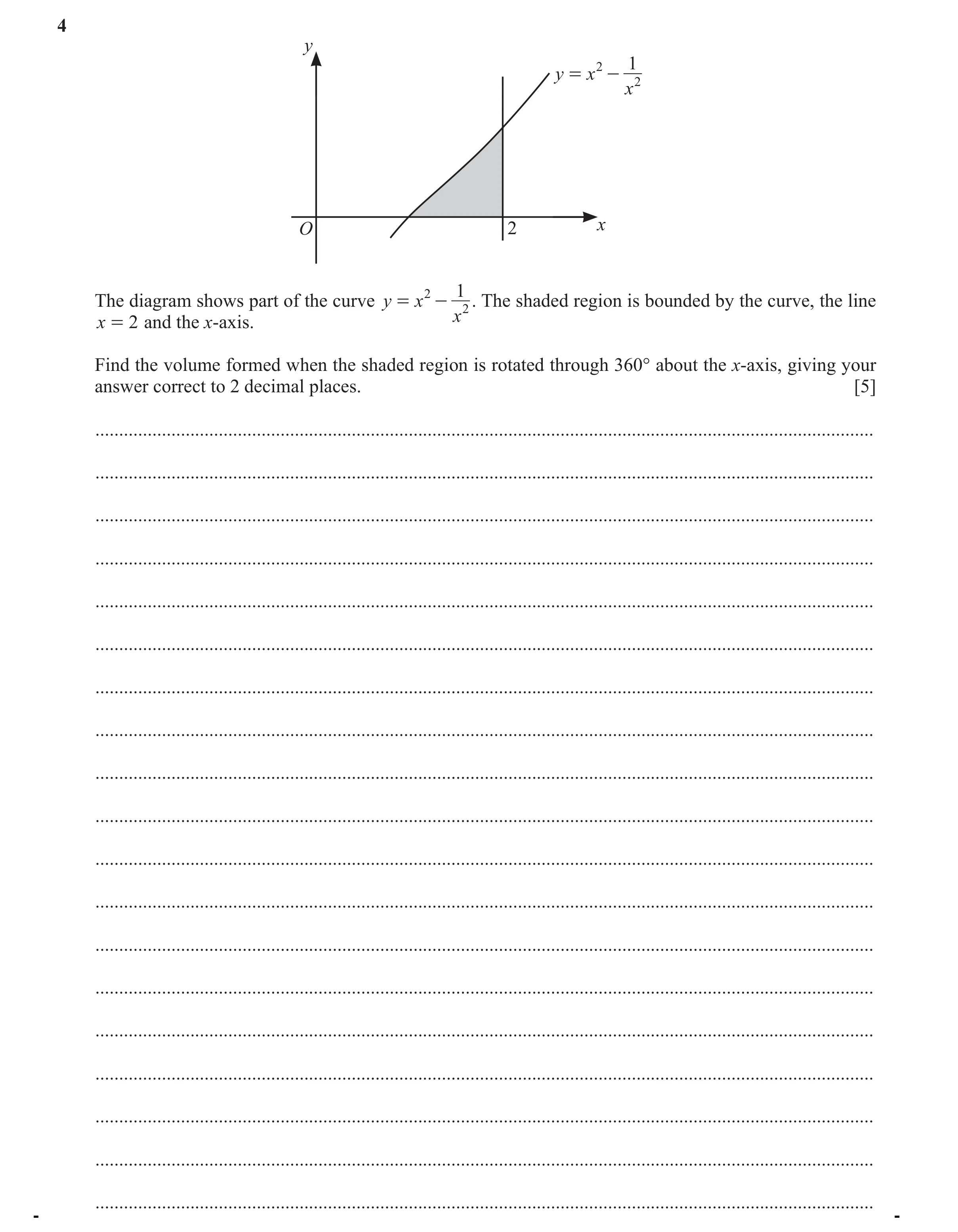 116 / 127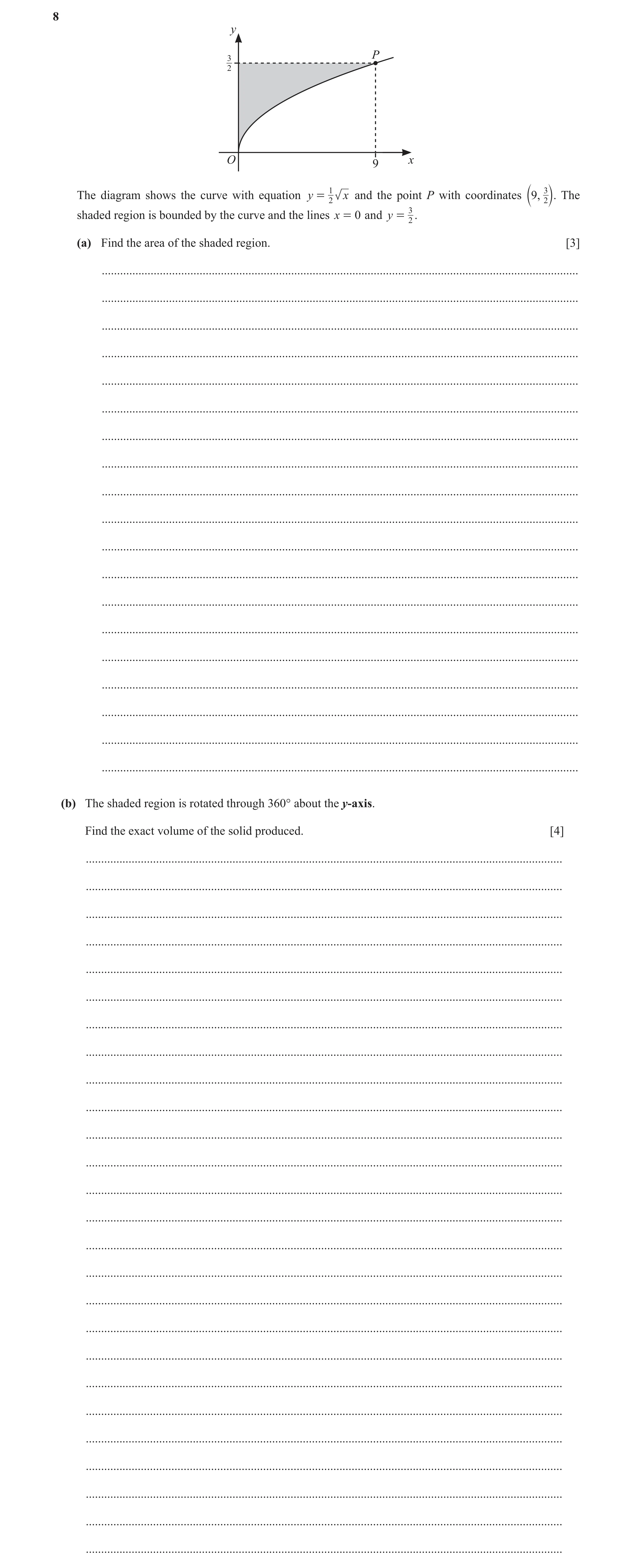
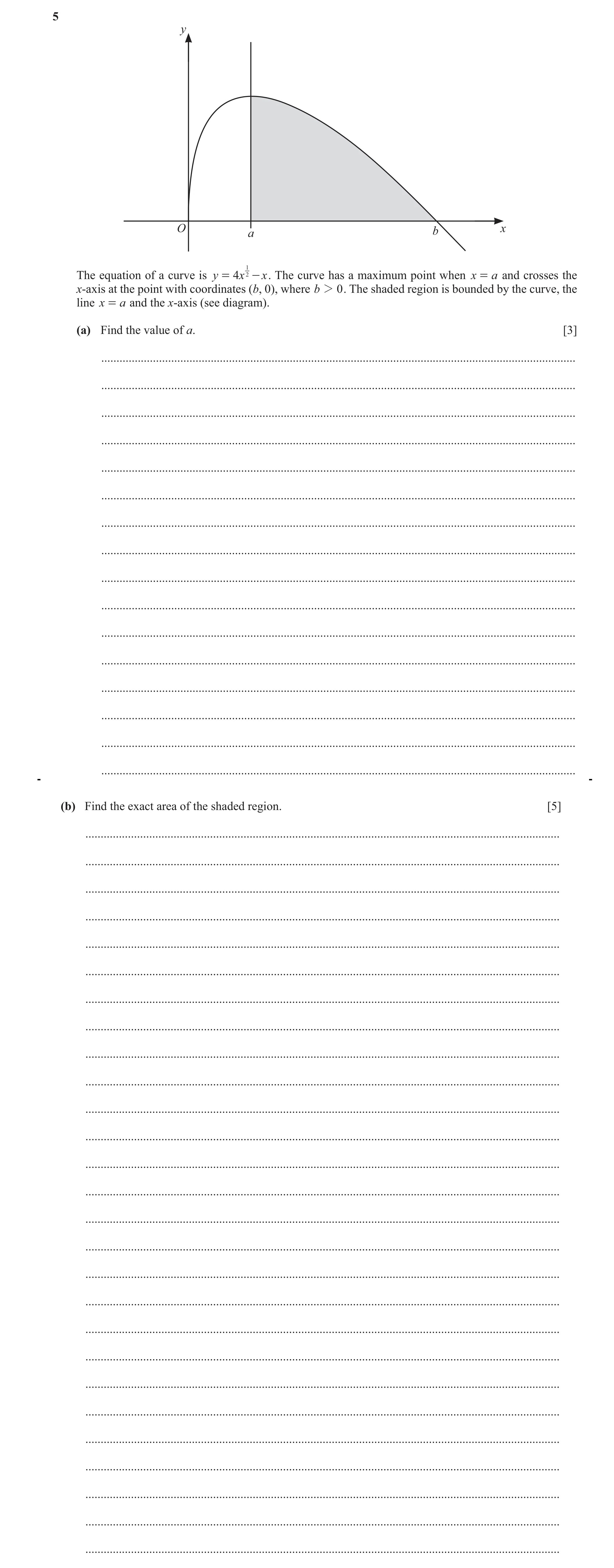
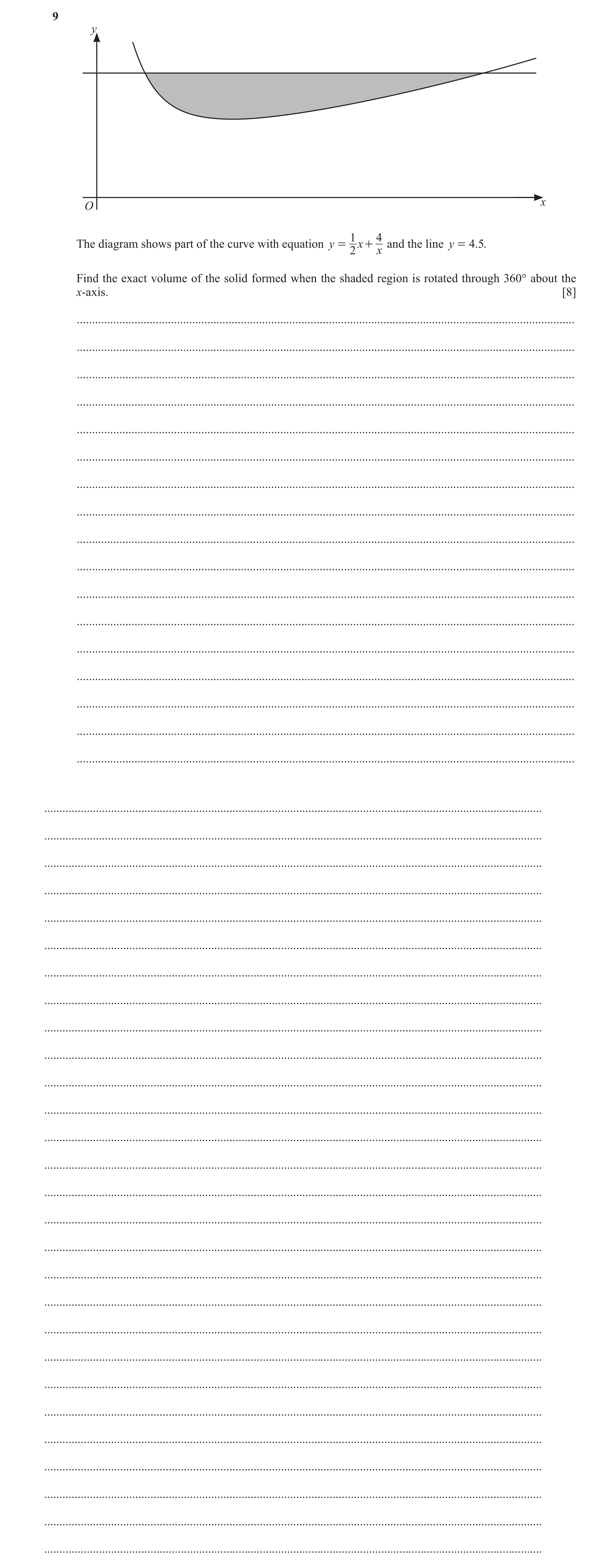
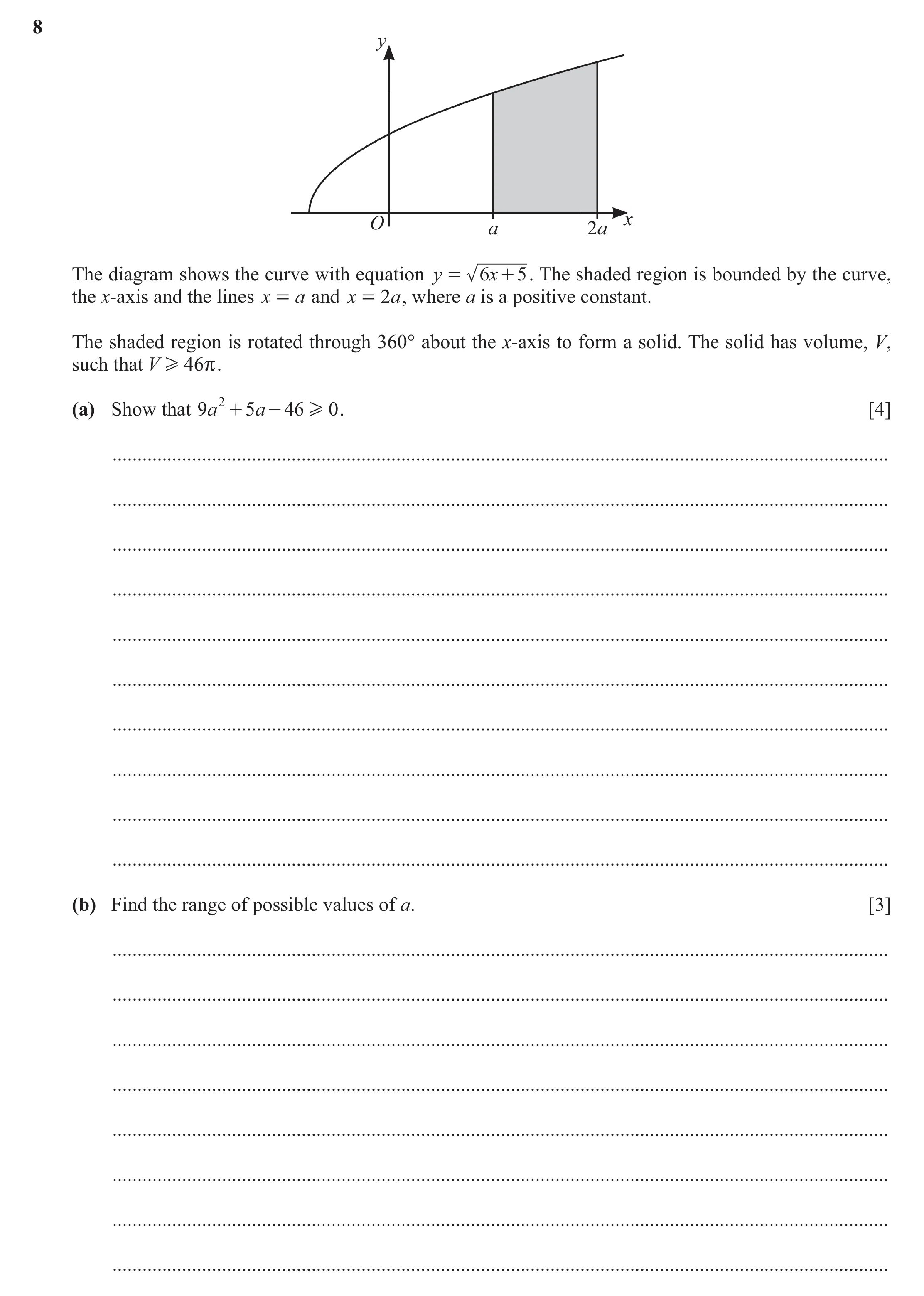 125 / 127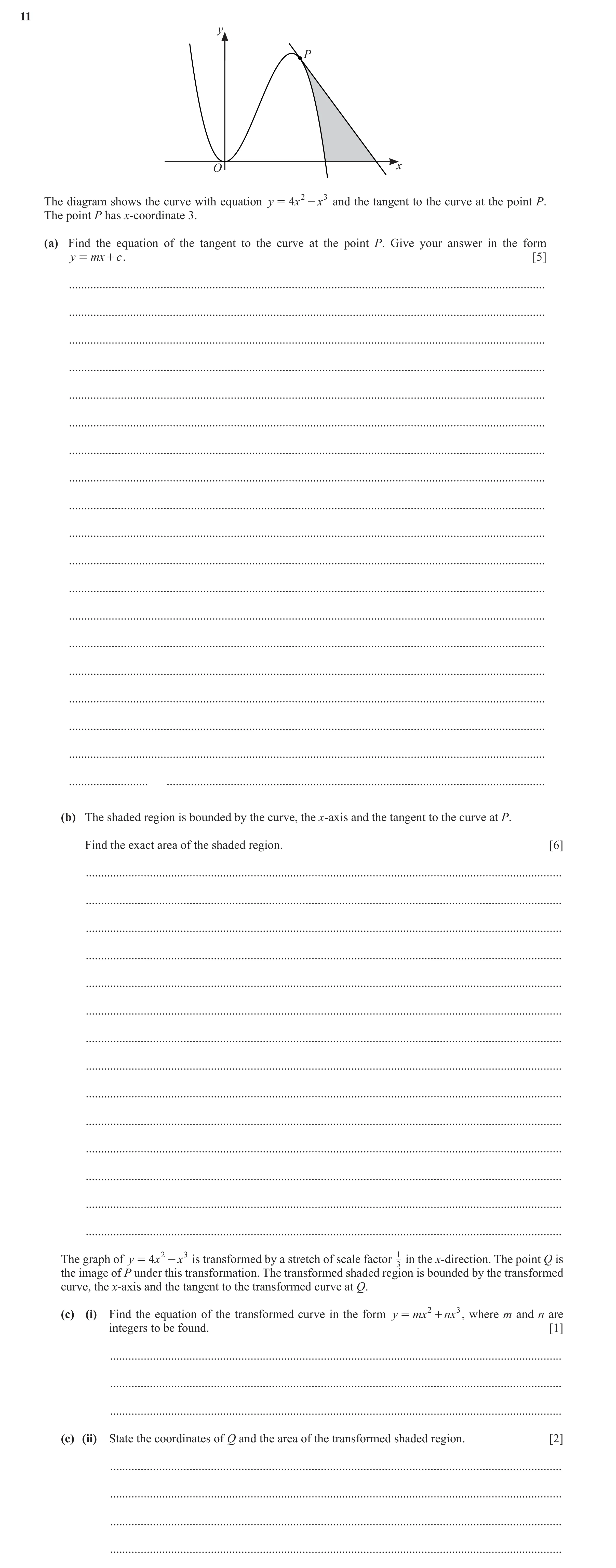
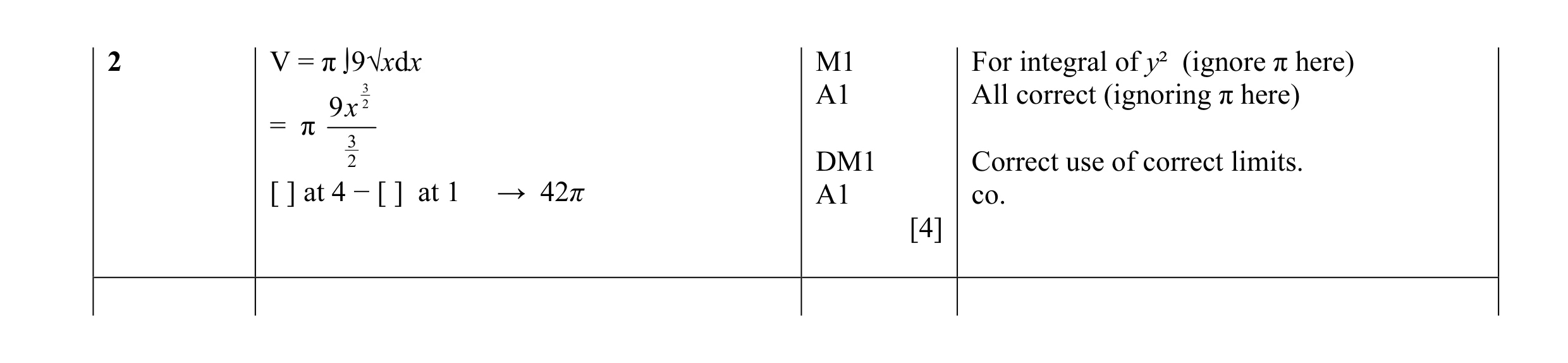 4
4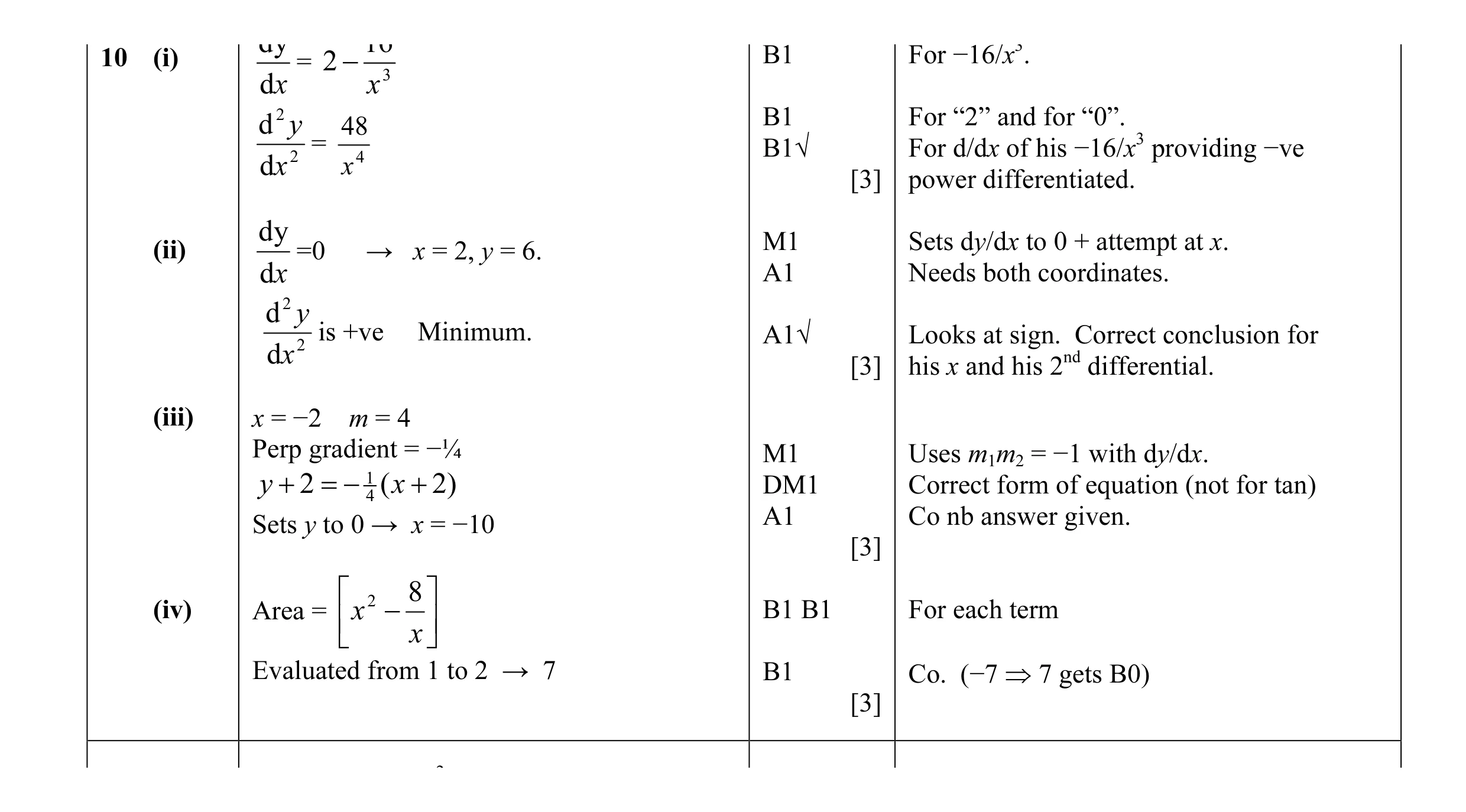 12
12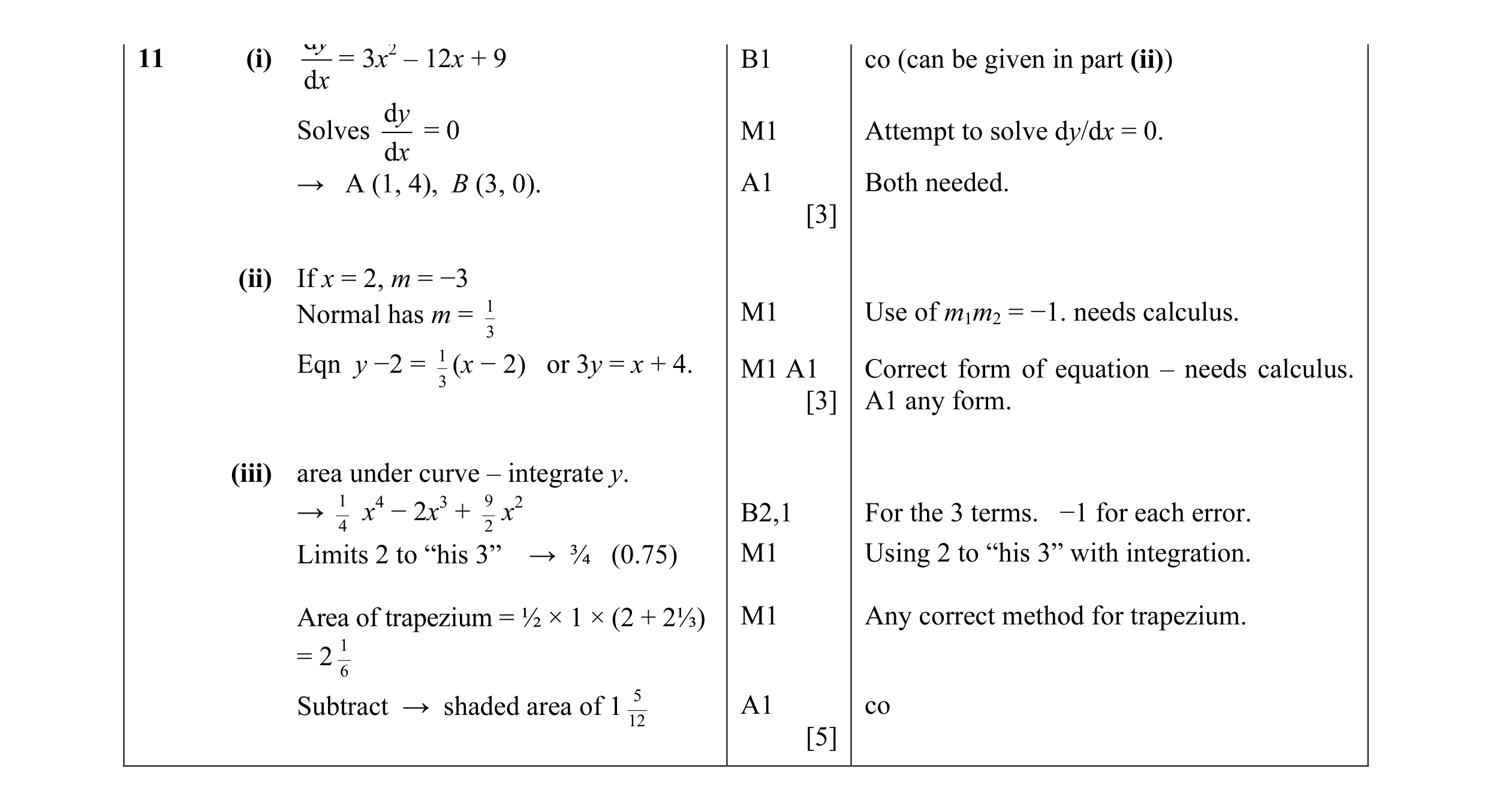 11
11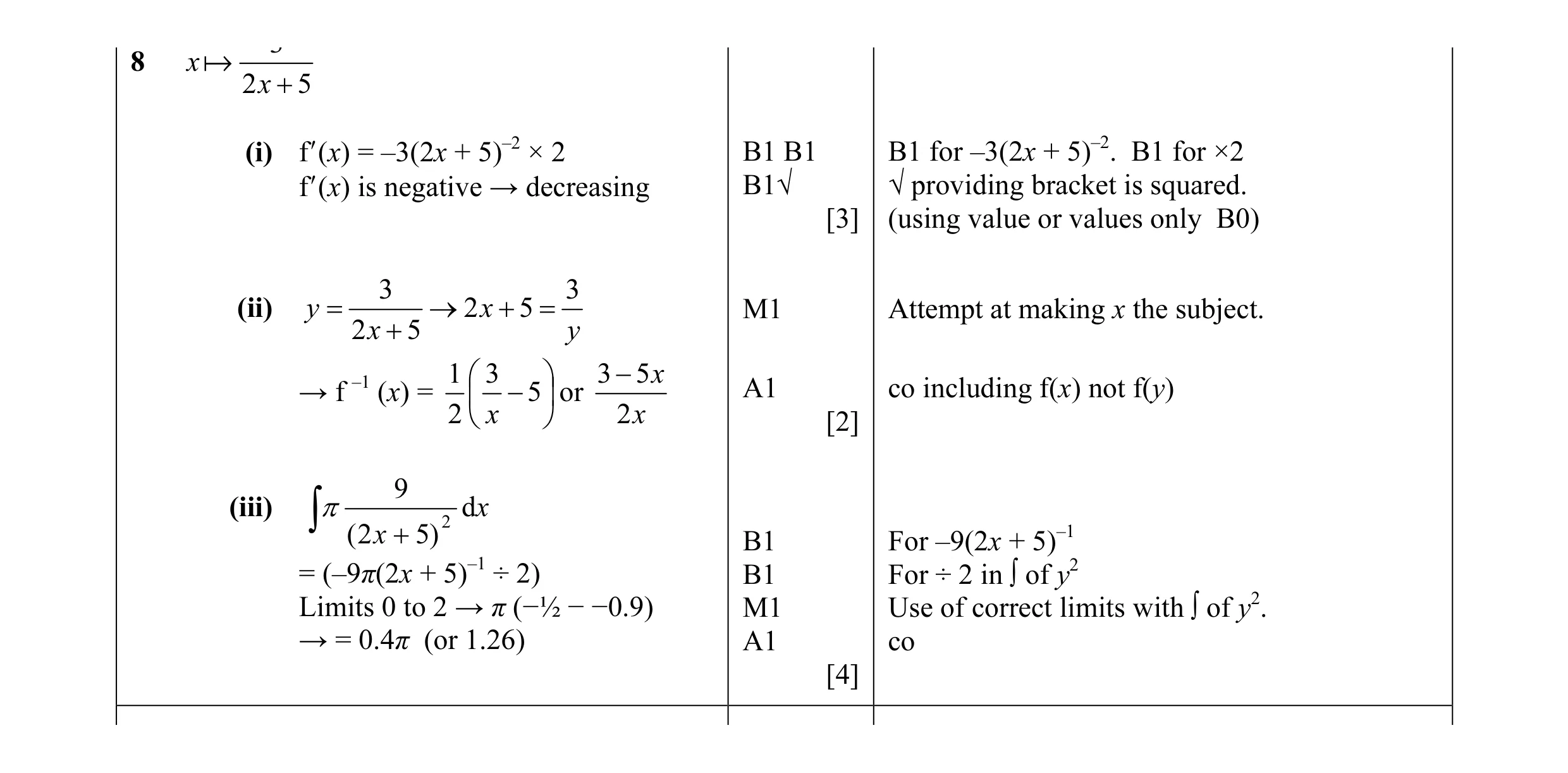 9
9 4
4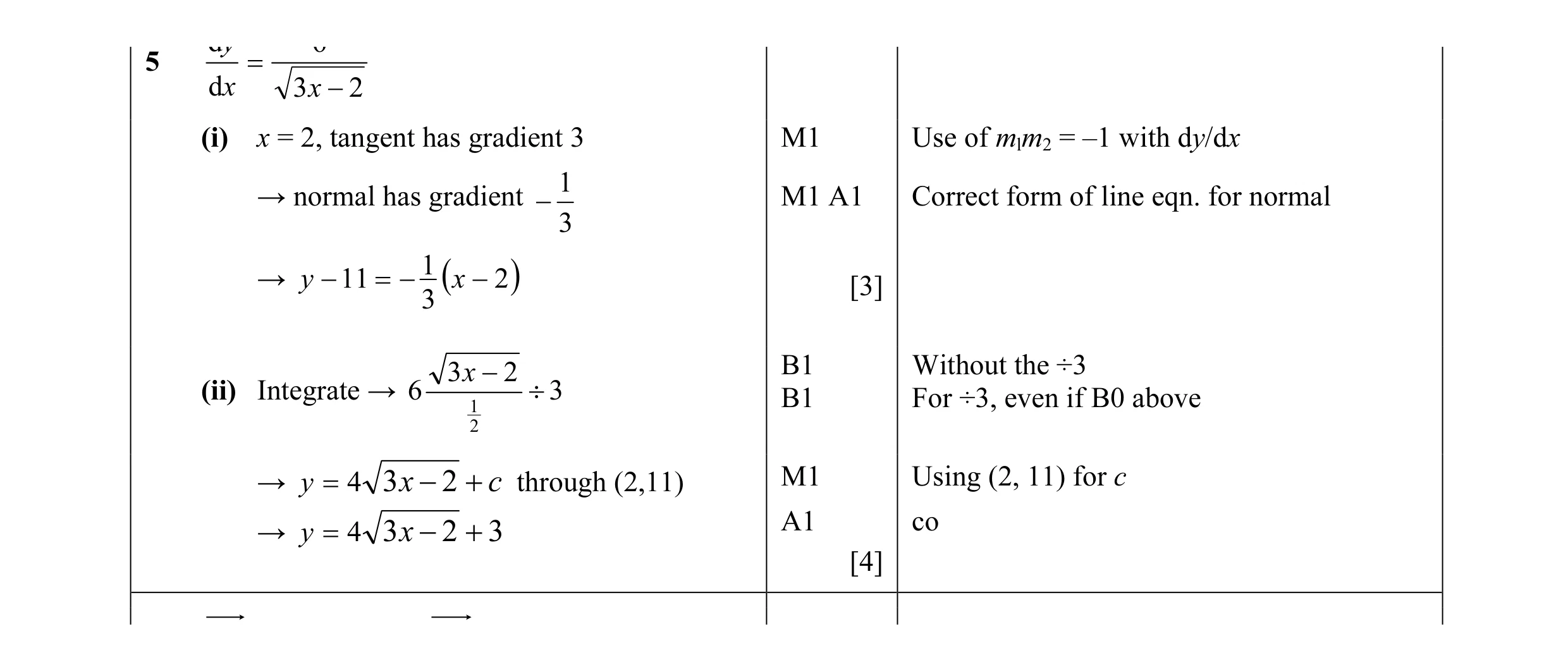 7
7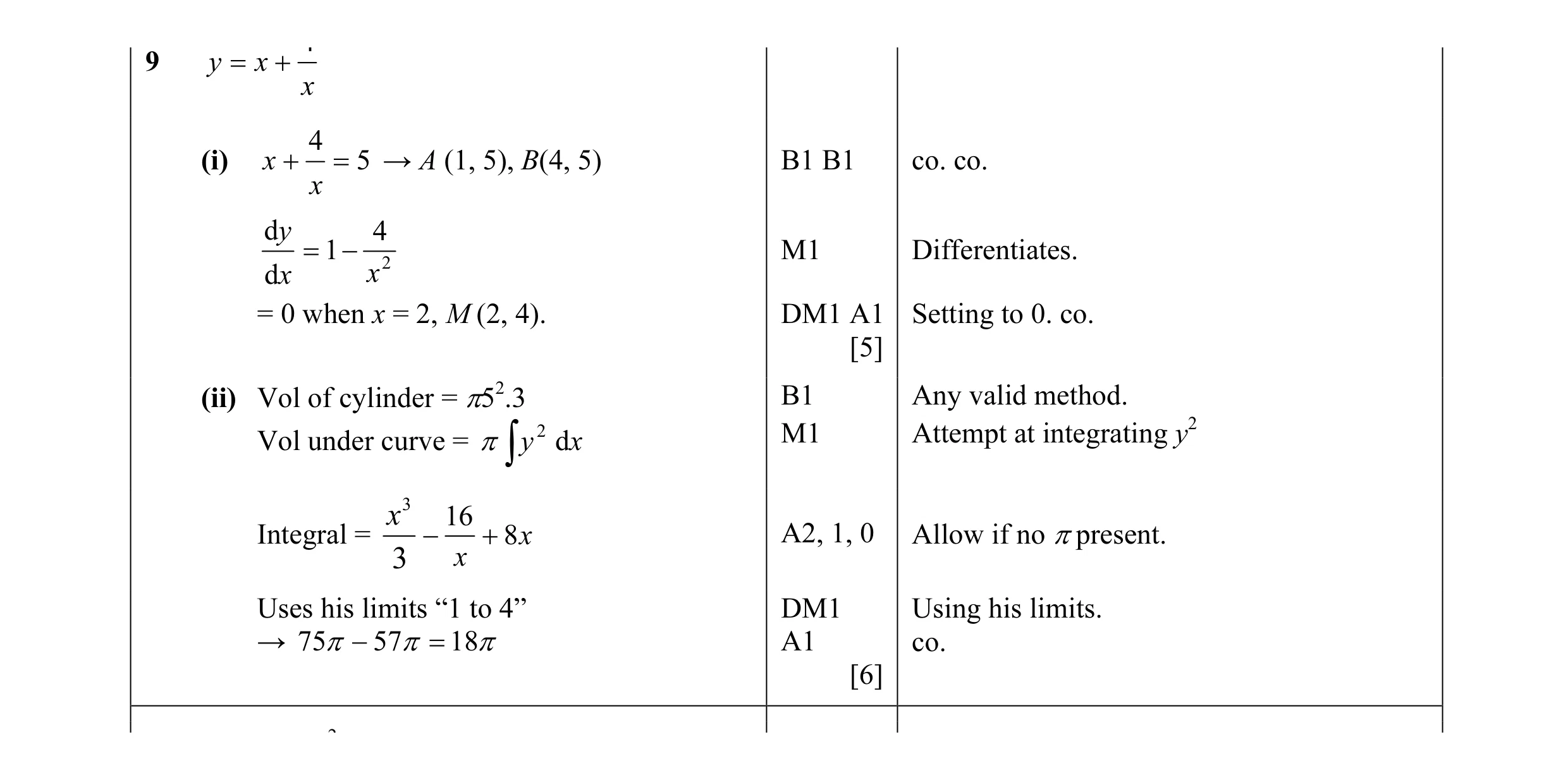 11
11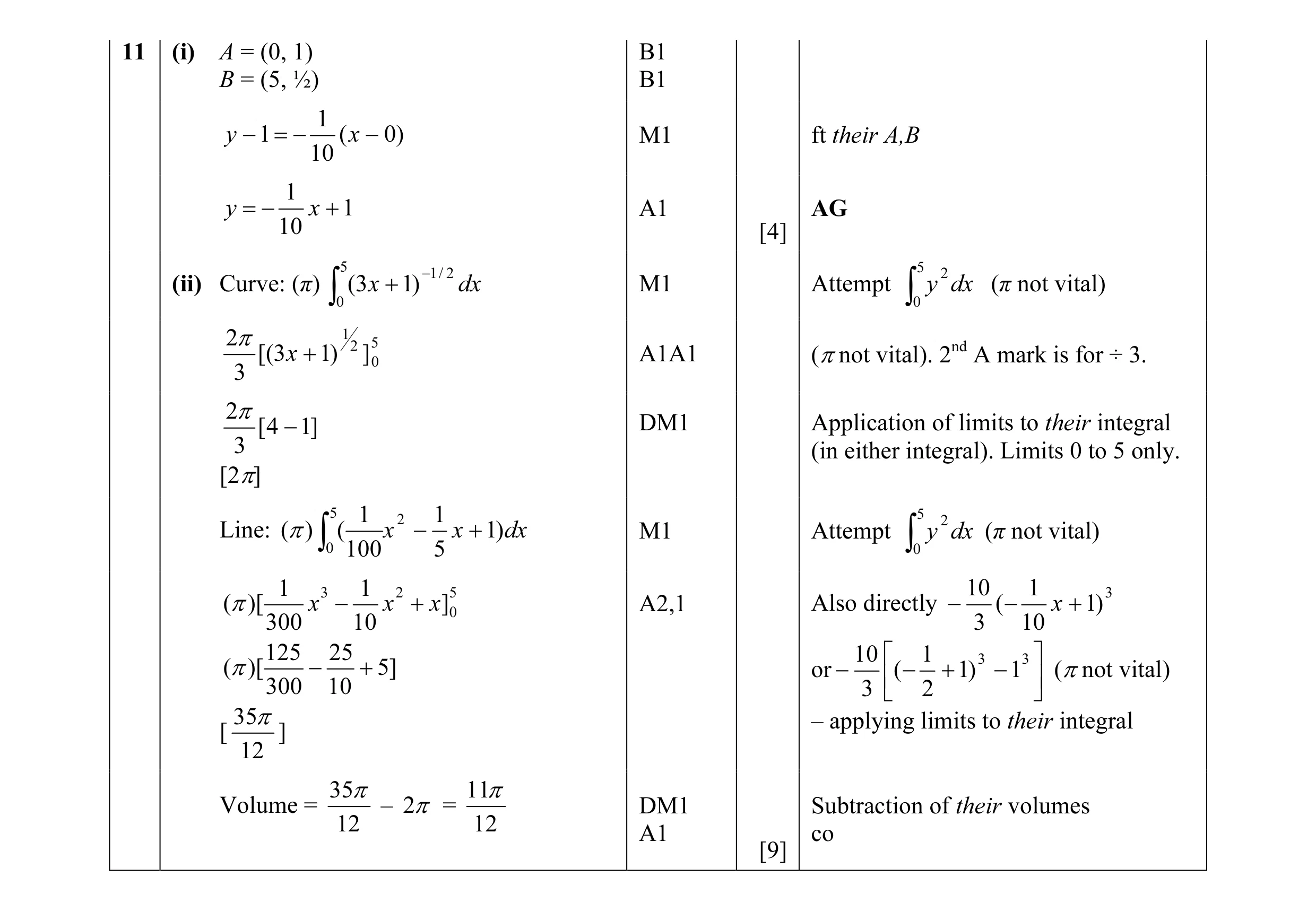 13
13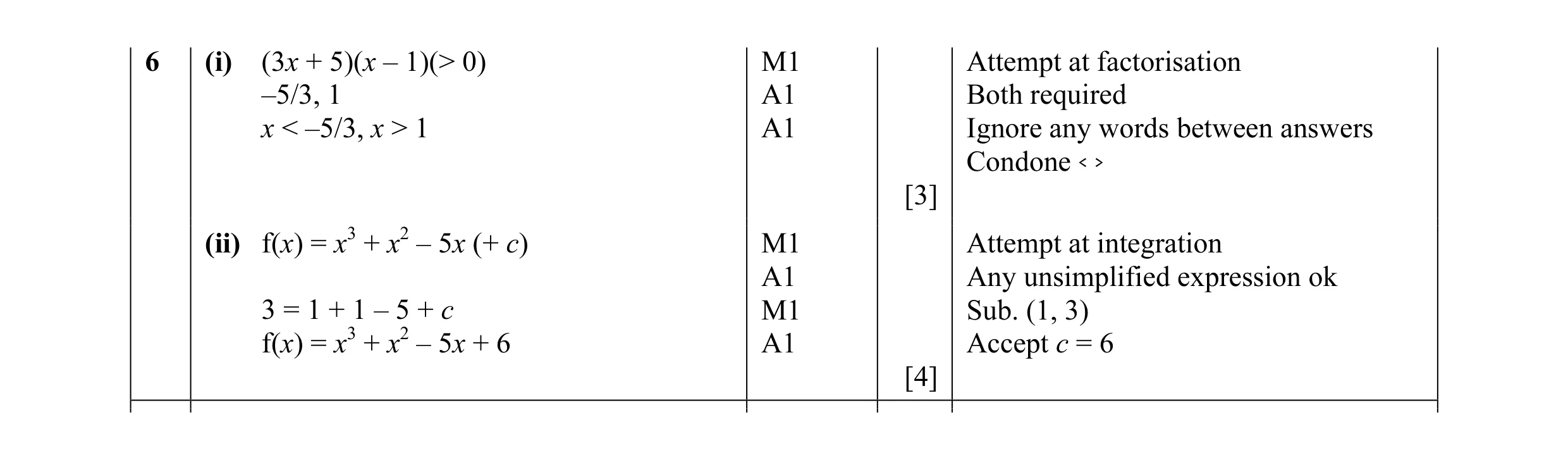 7
7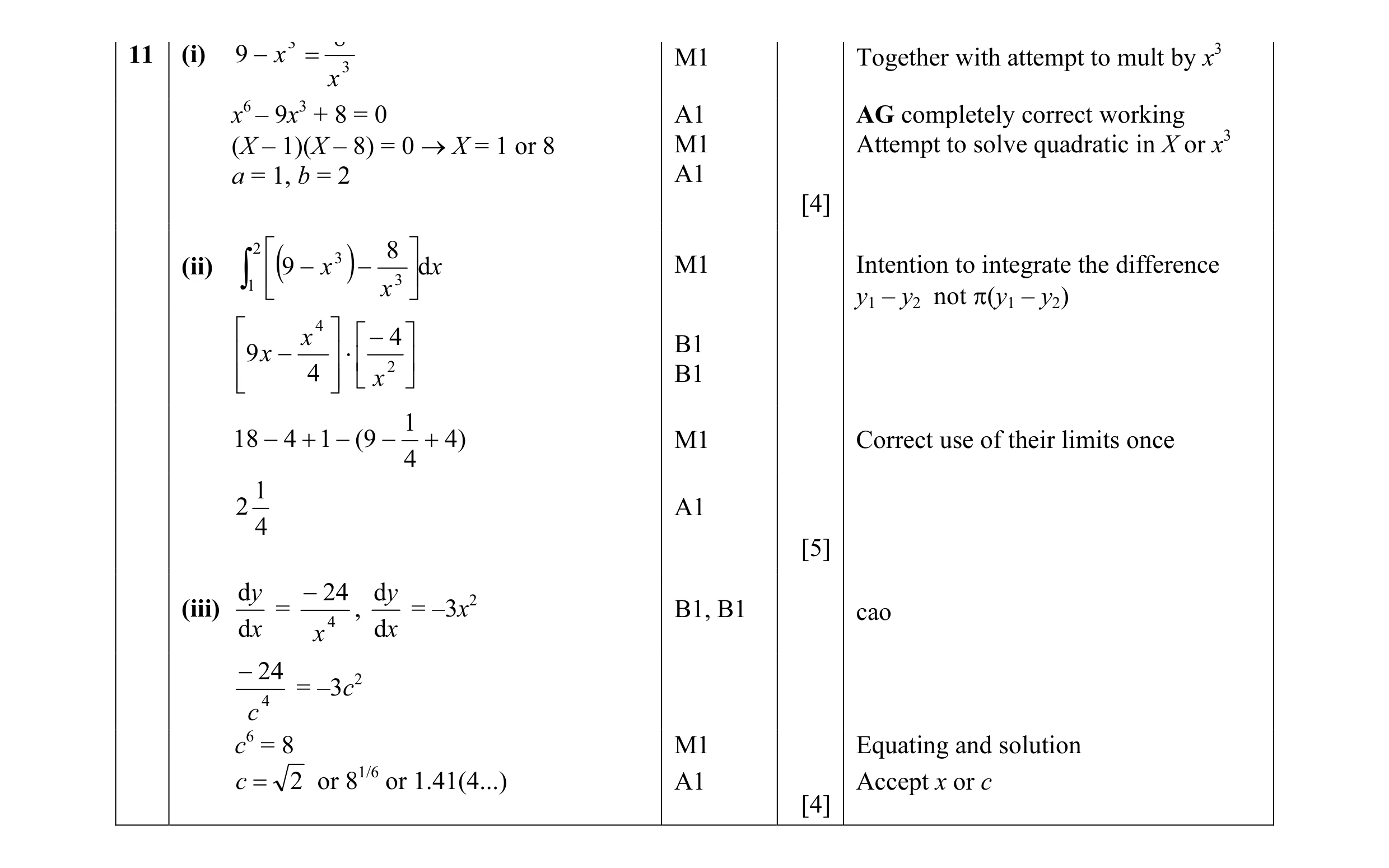 13
13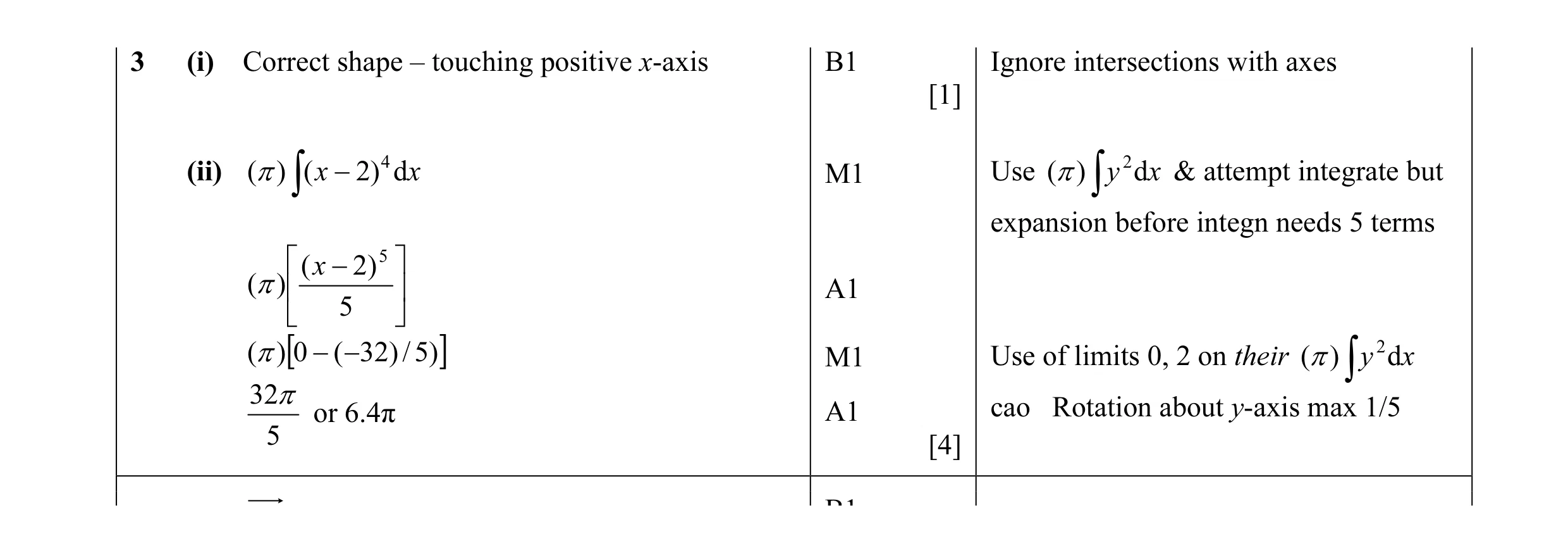 5
5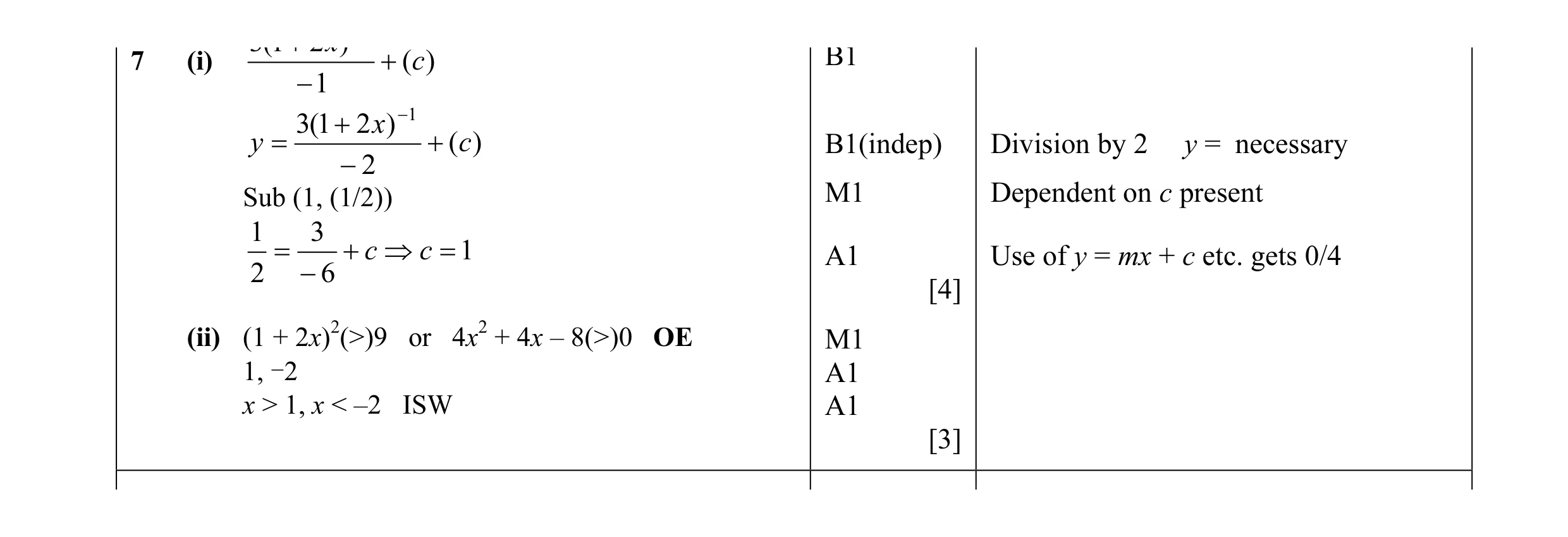 7
7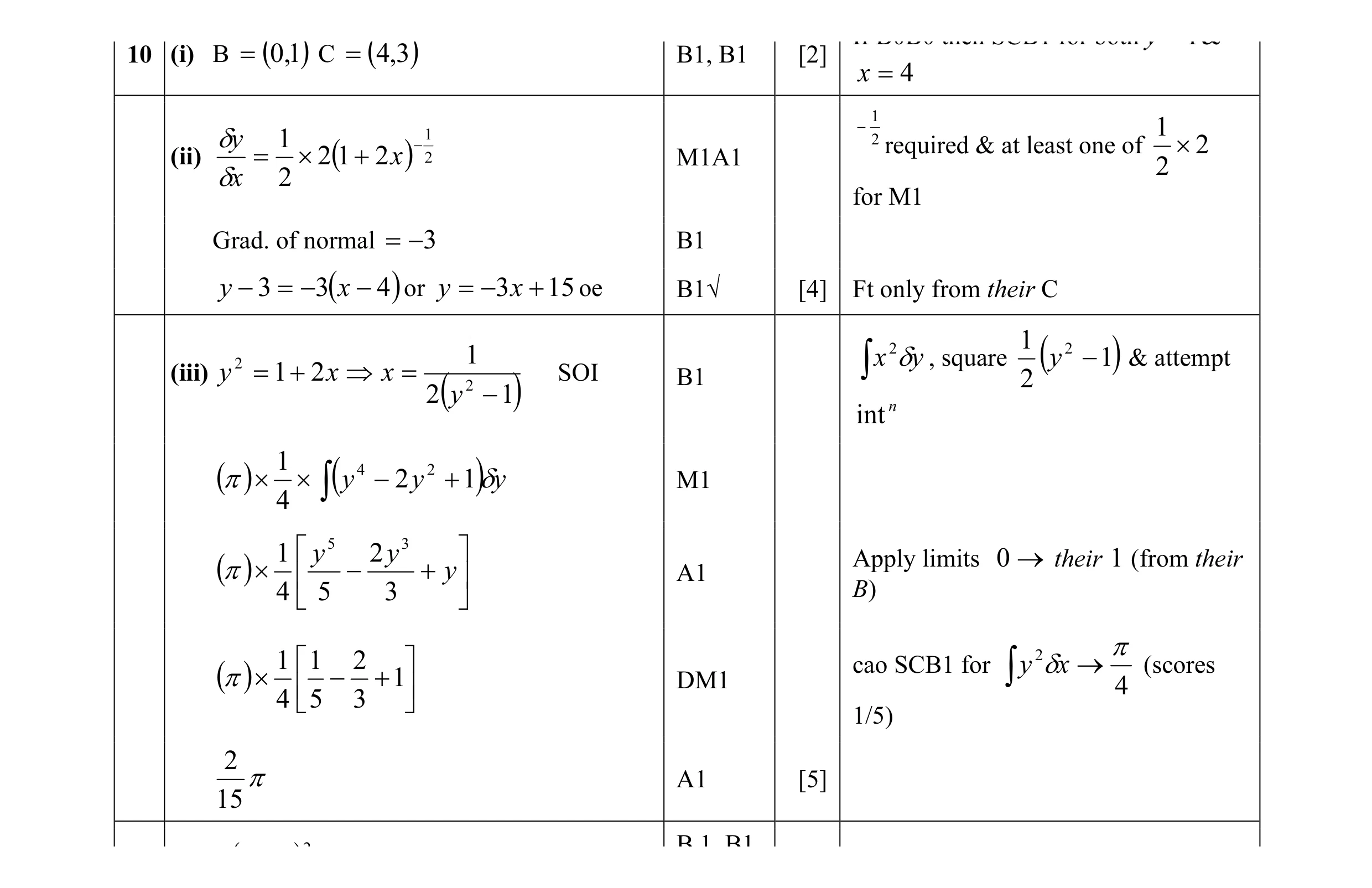 11
11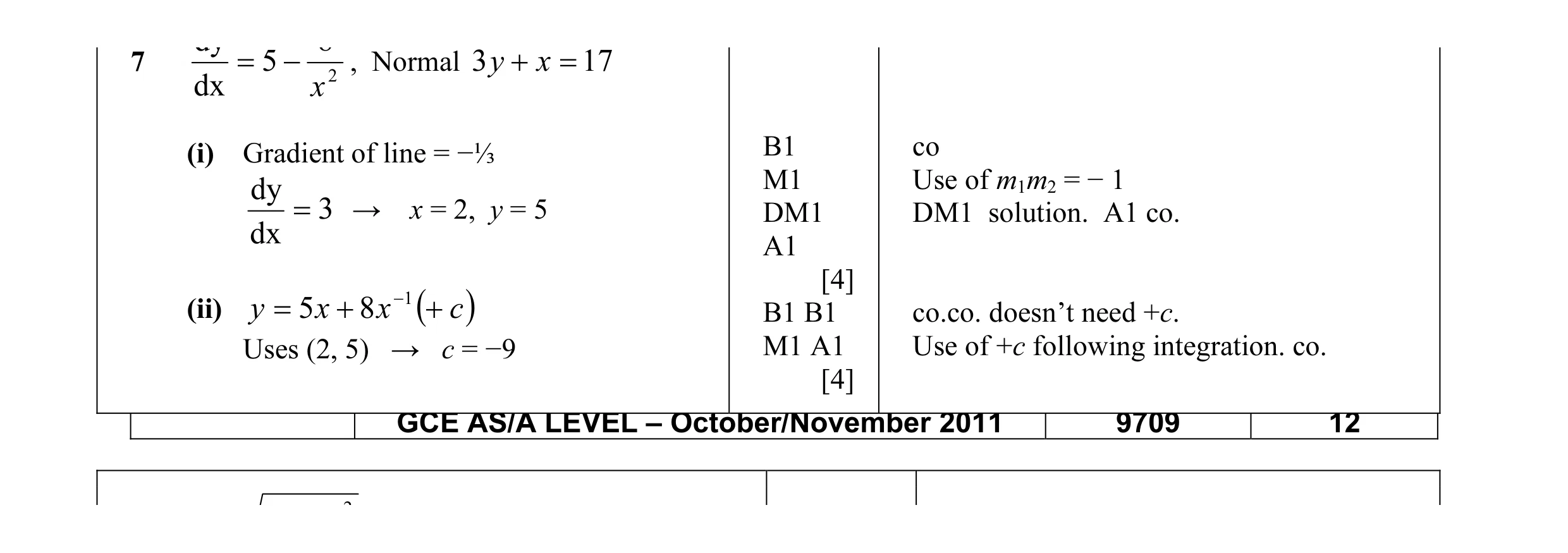 8
8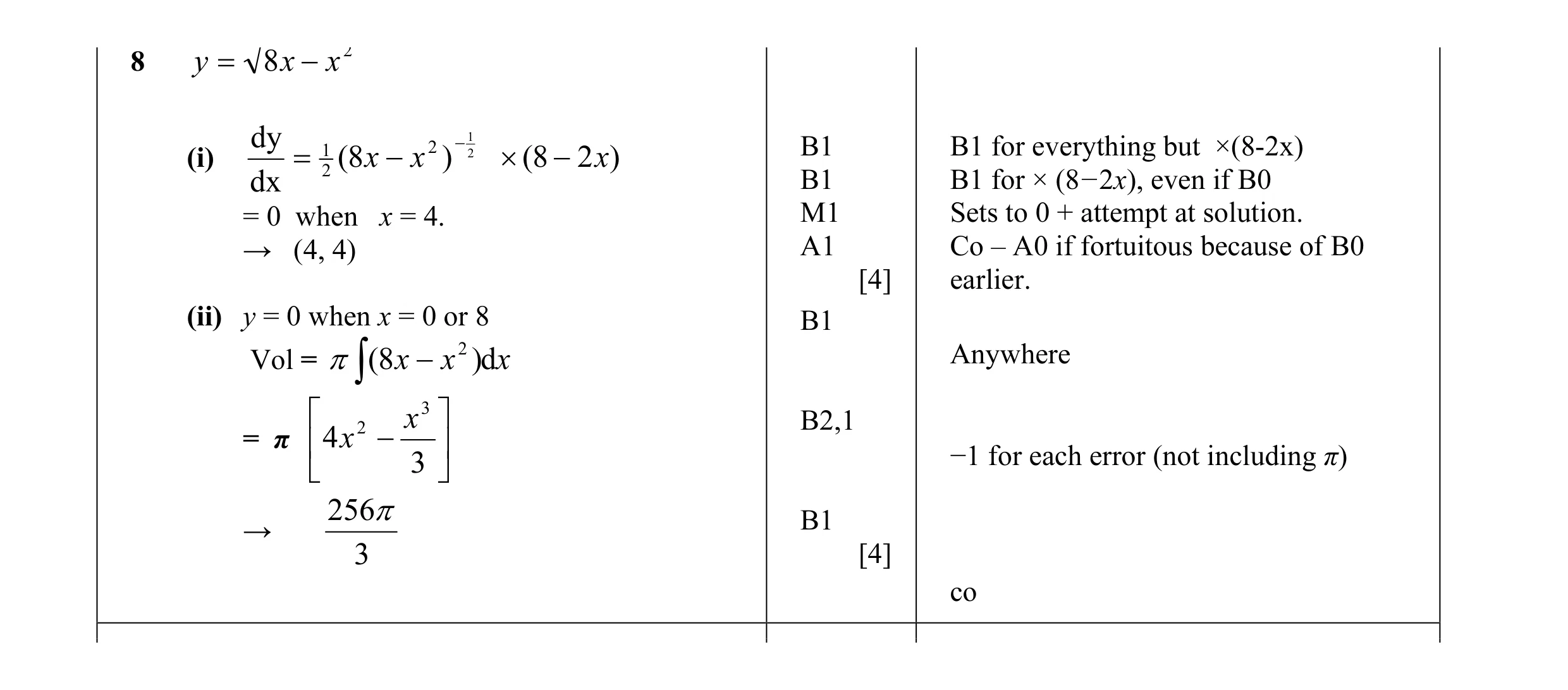 8
8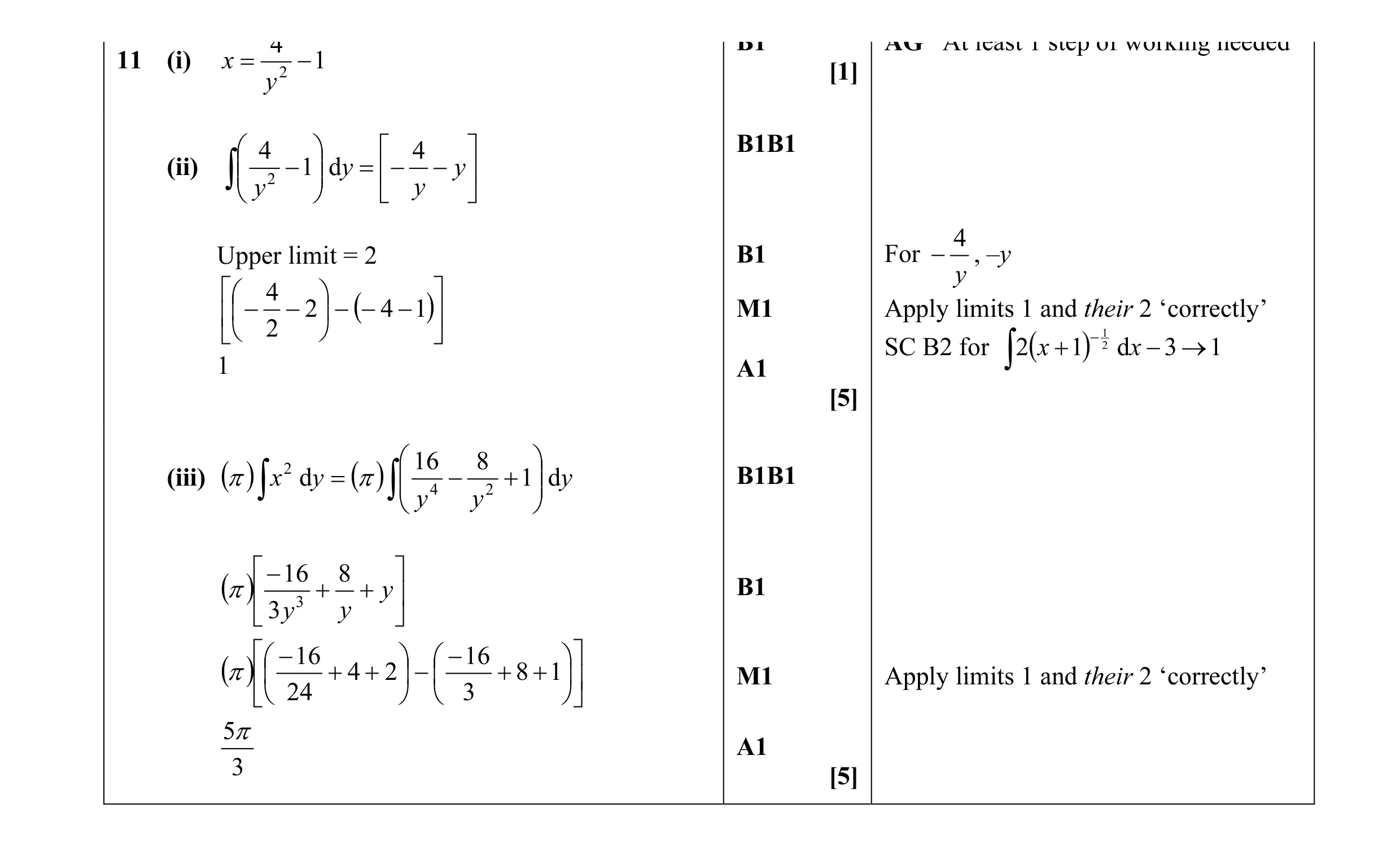 11
11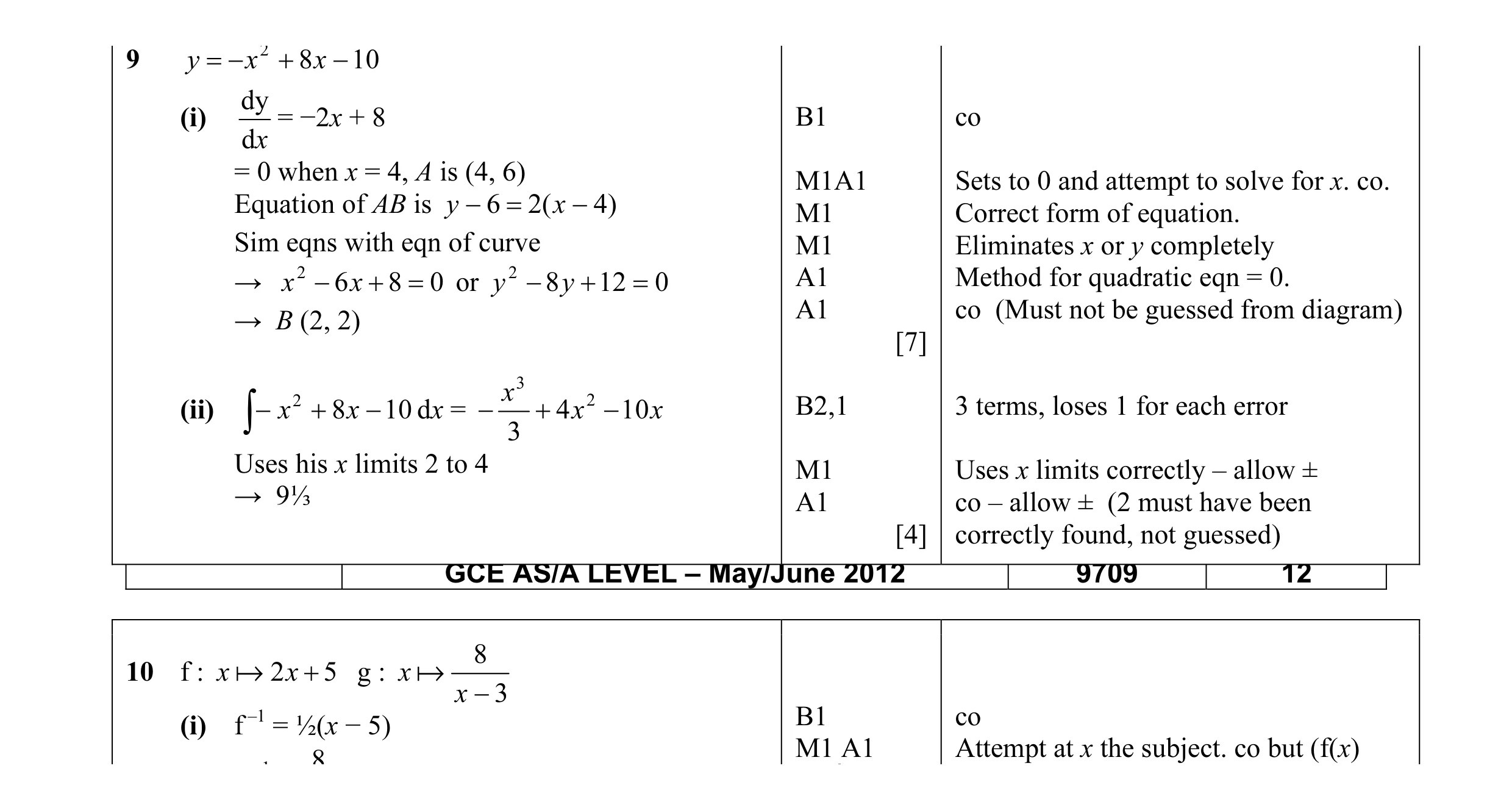 11
11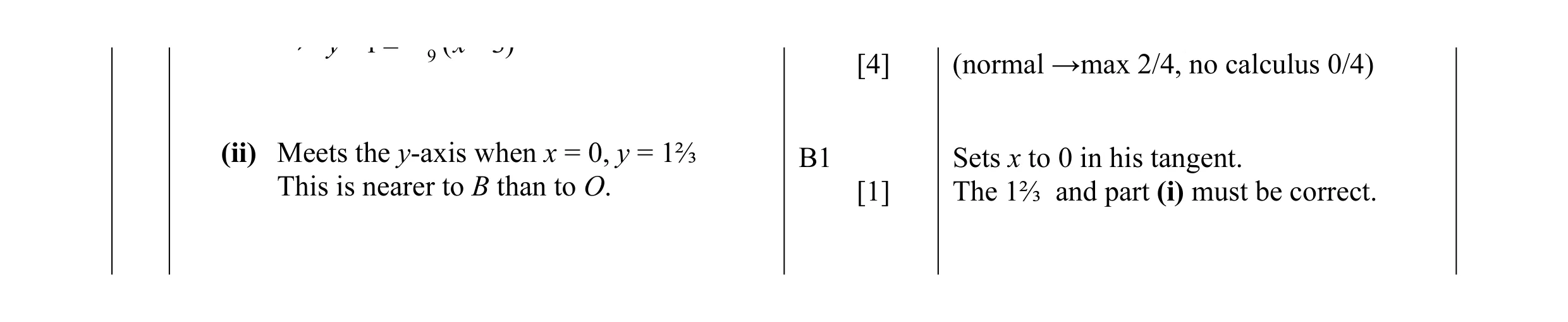 9
9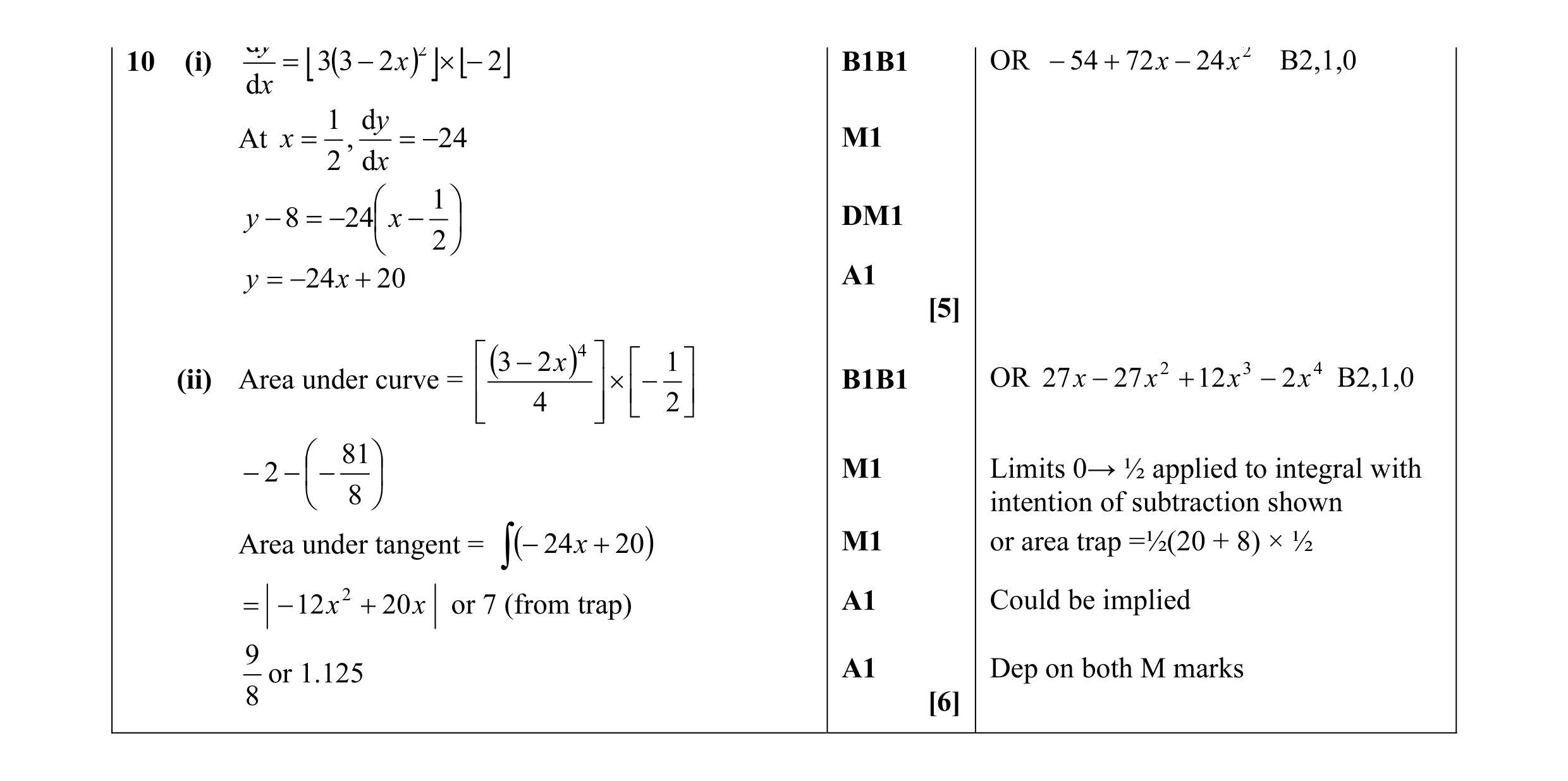 11
11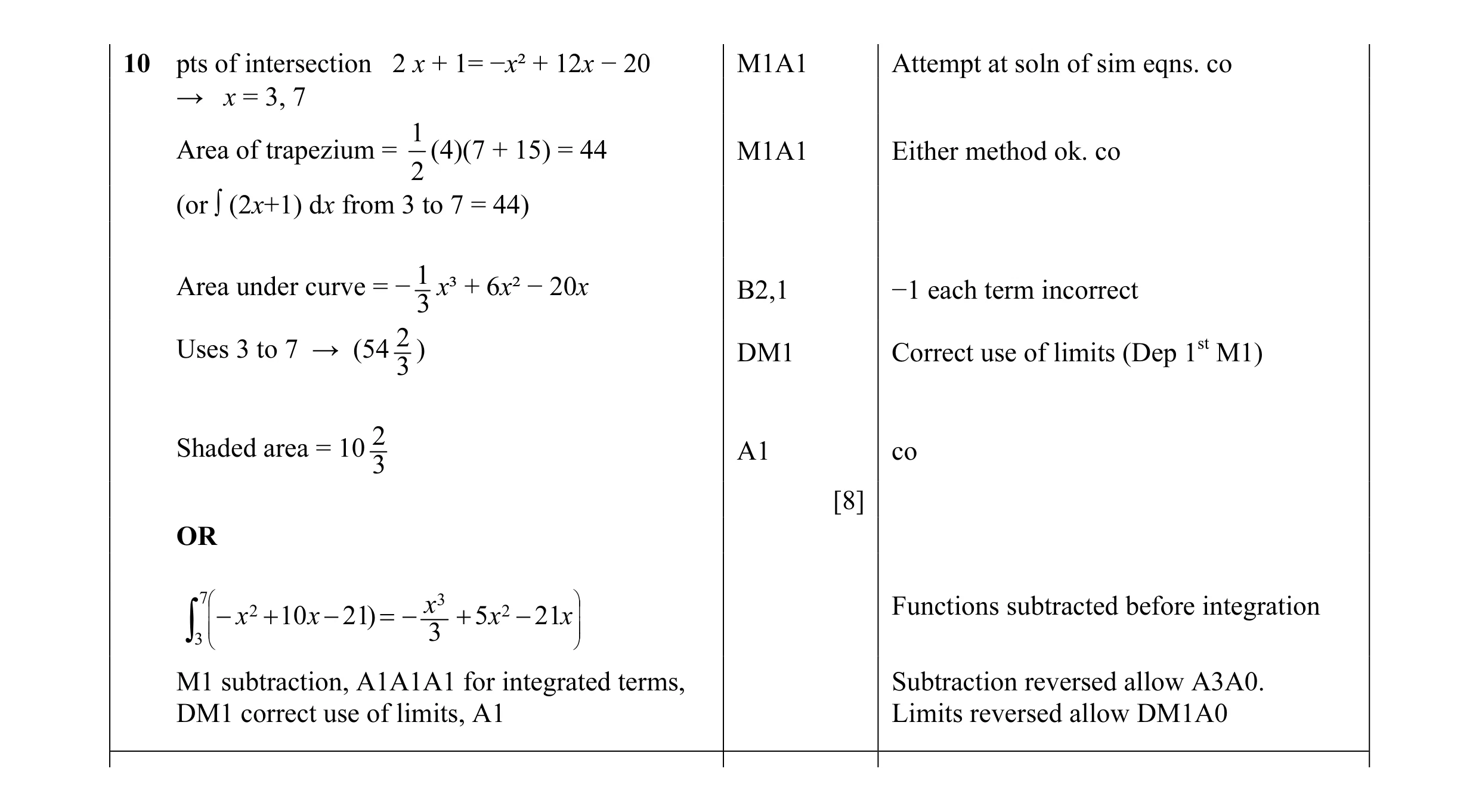 8
8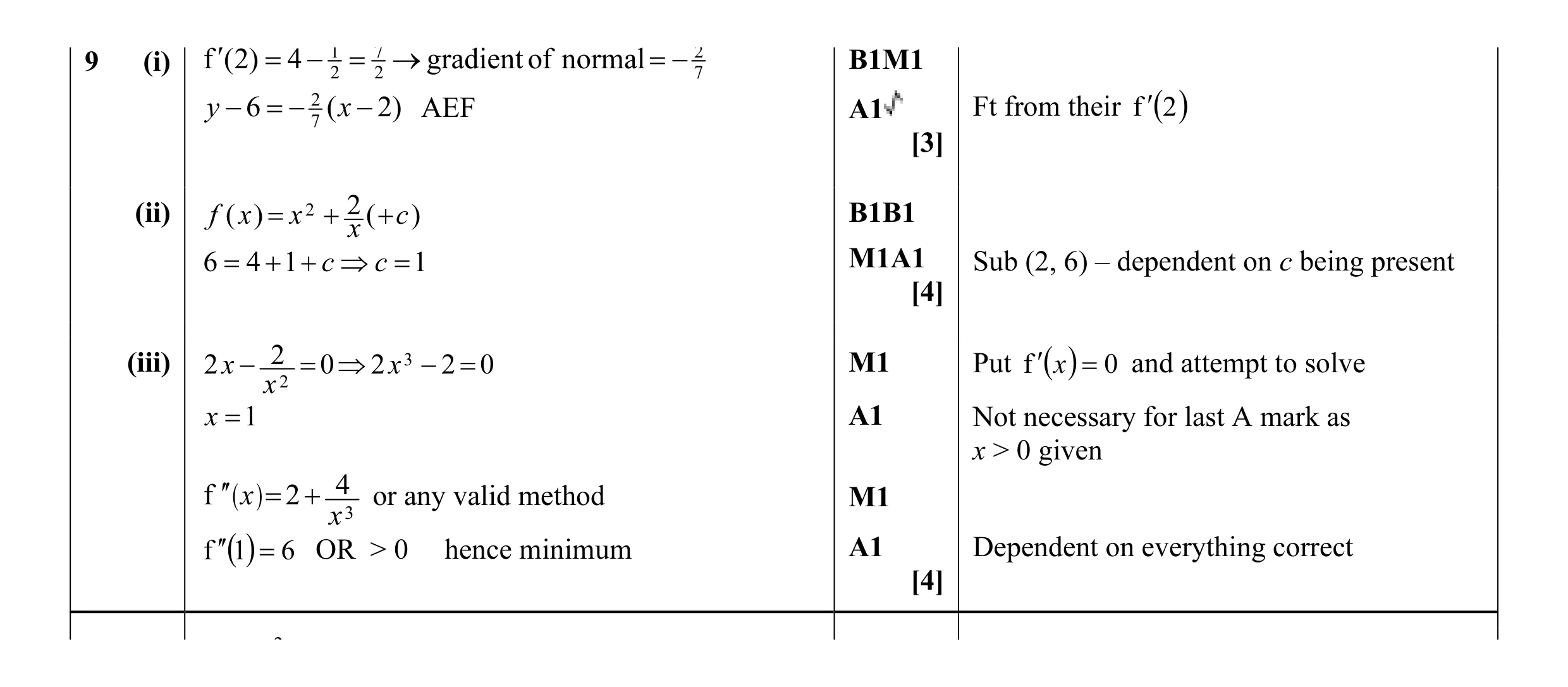 11
11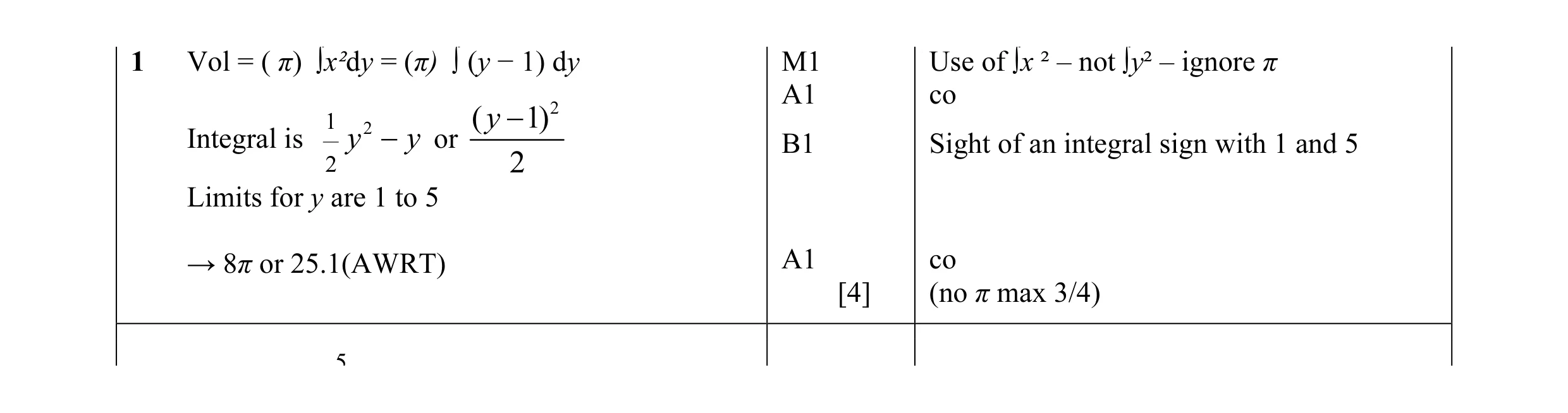 4
4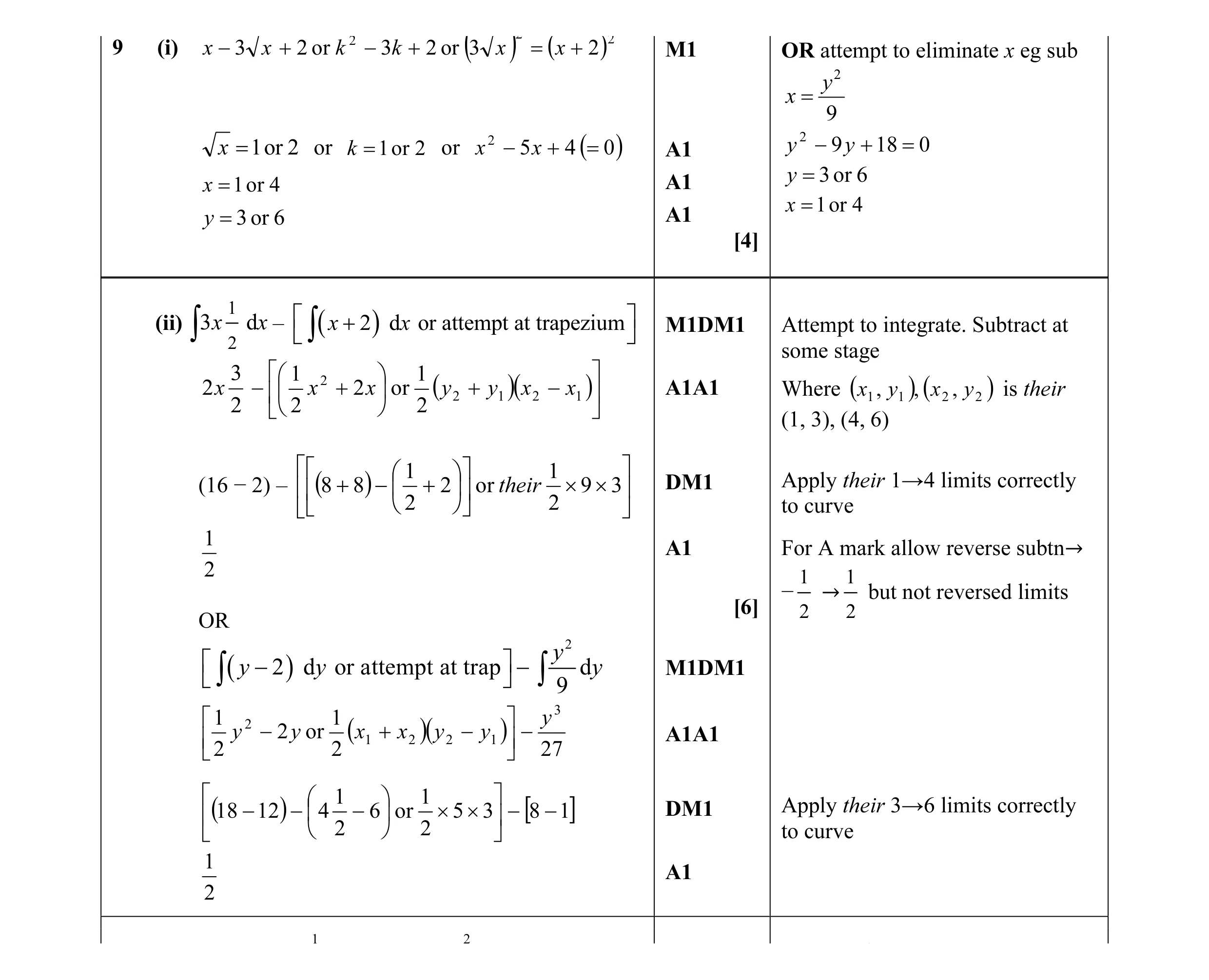 10
10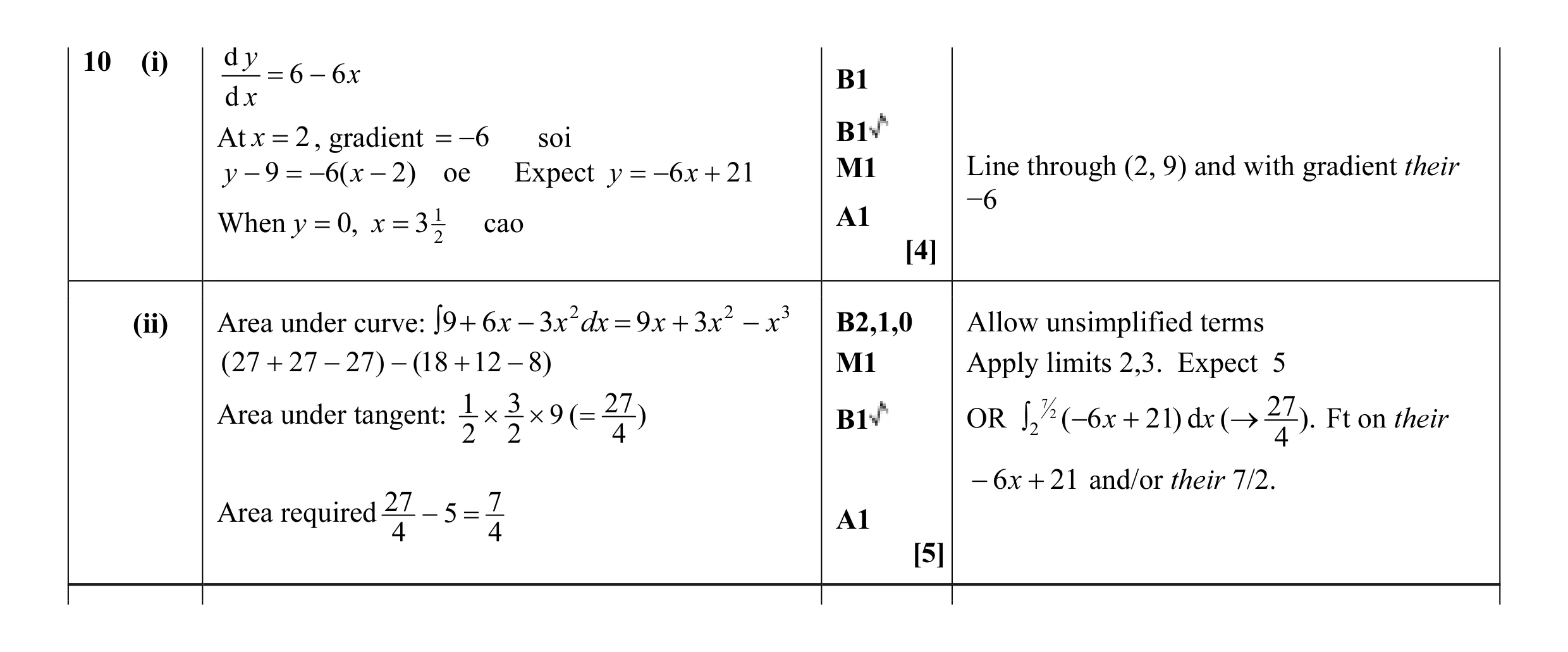 9
9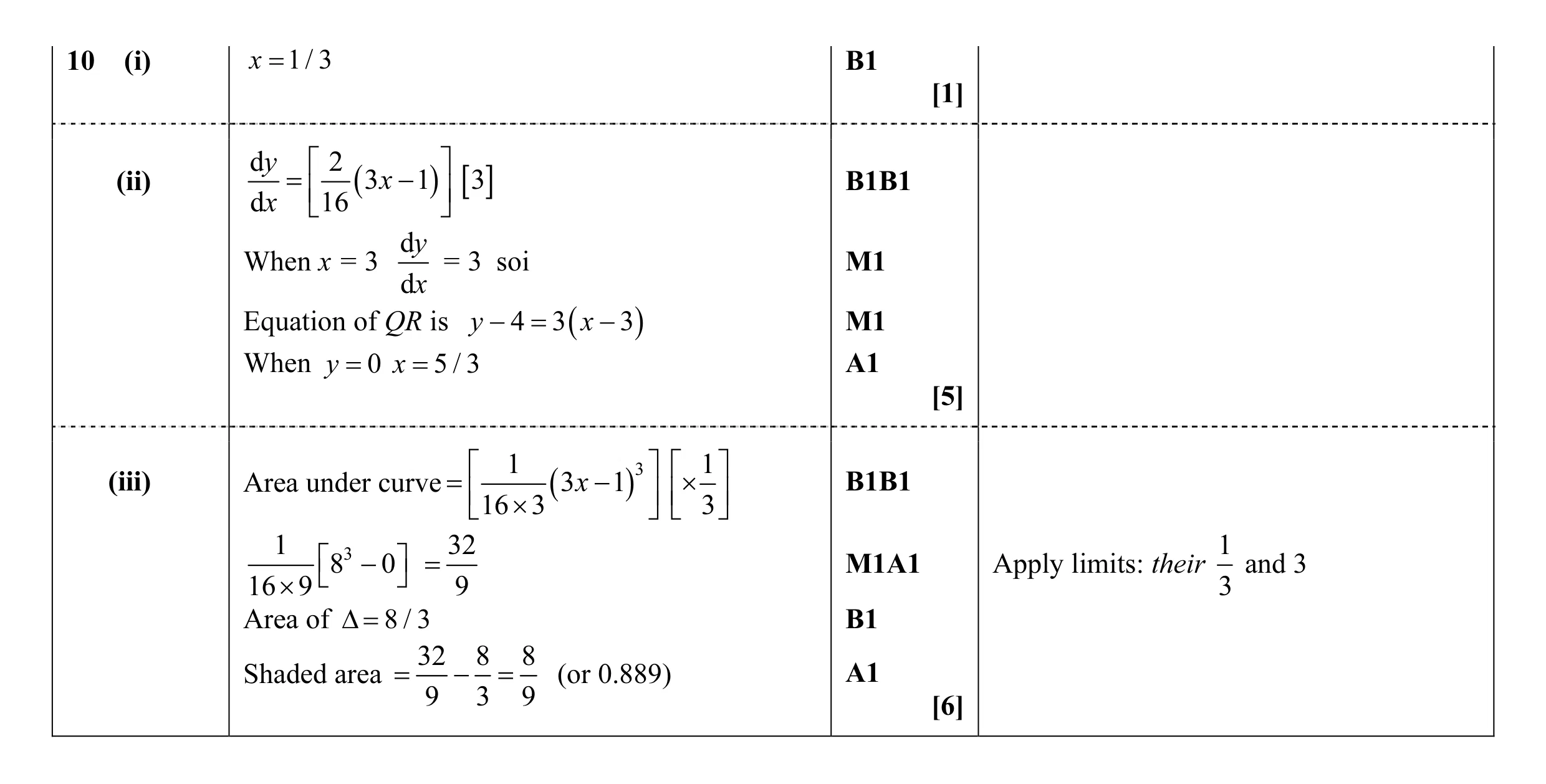 12
12 12
12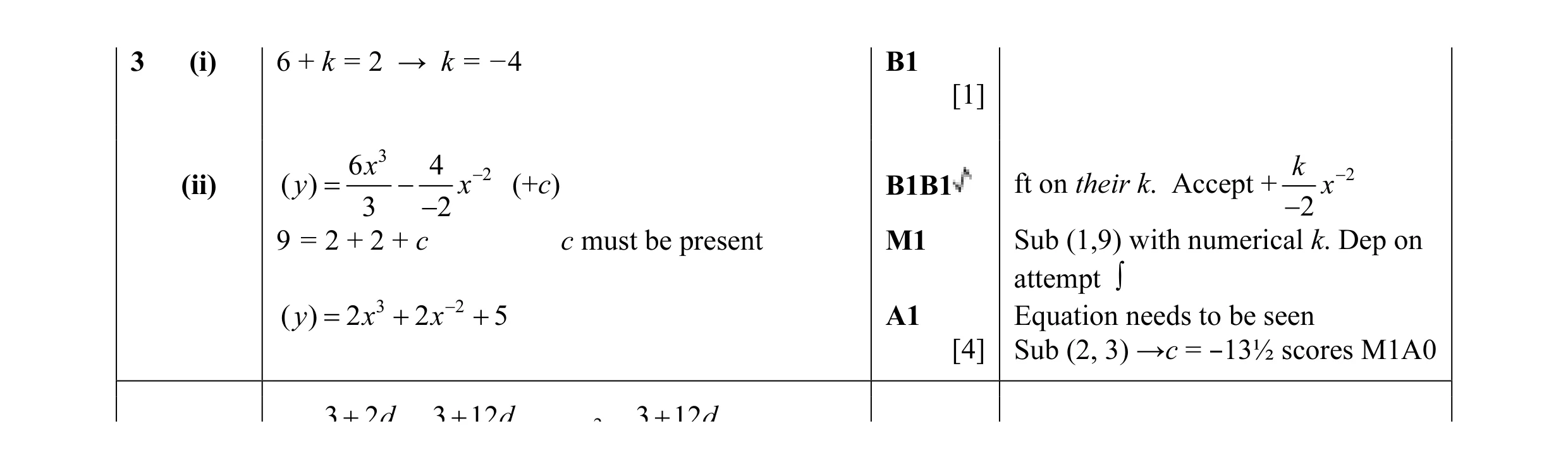 5
5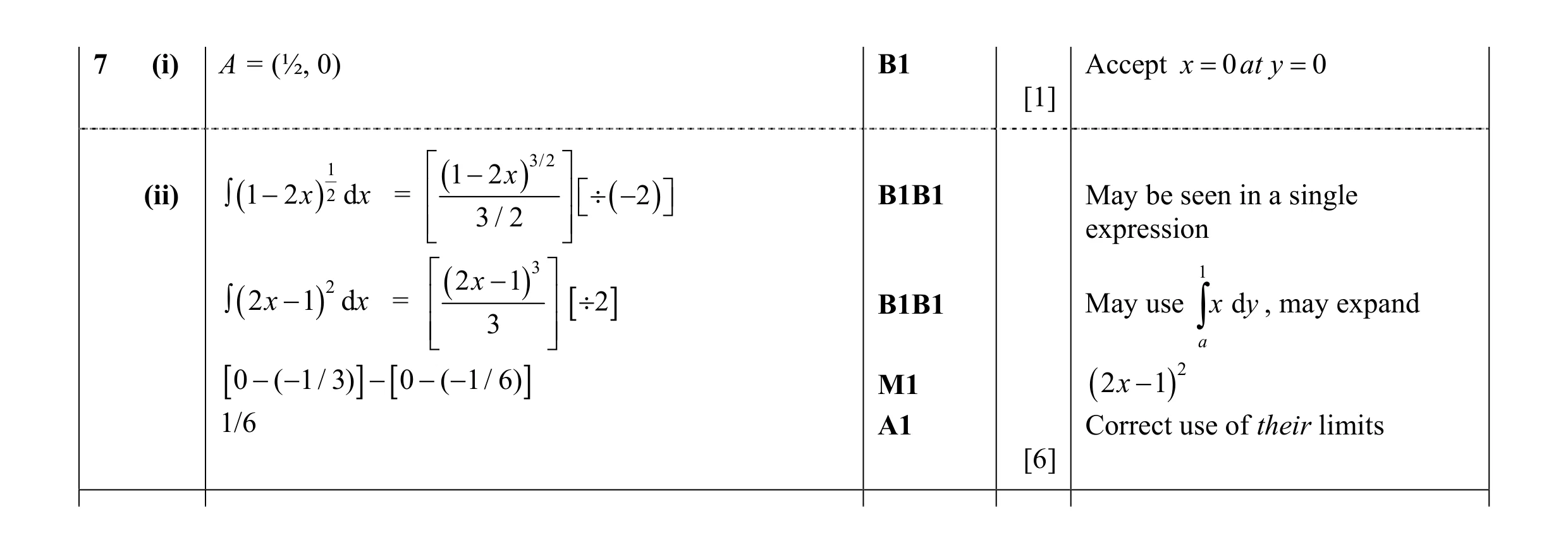 7
7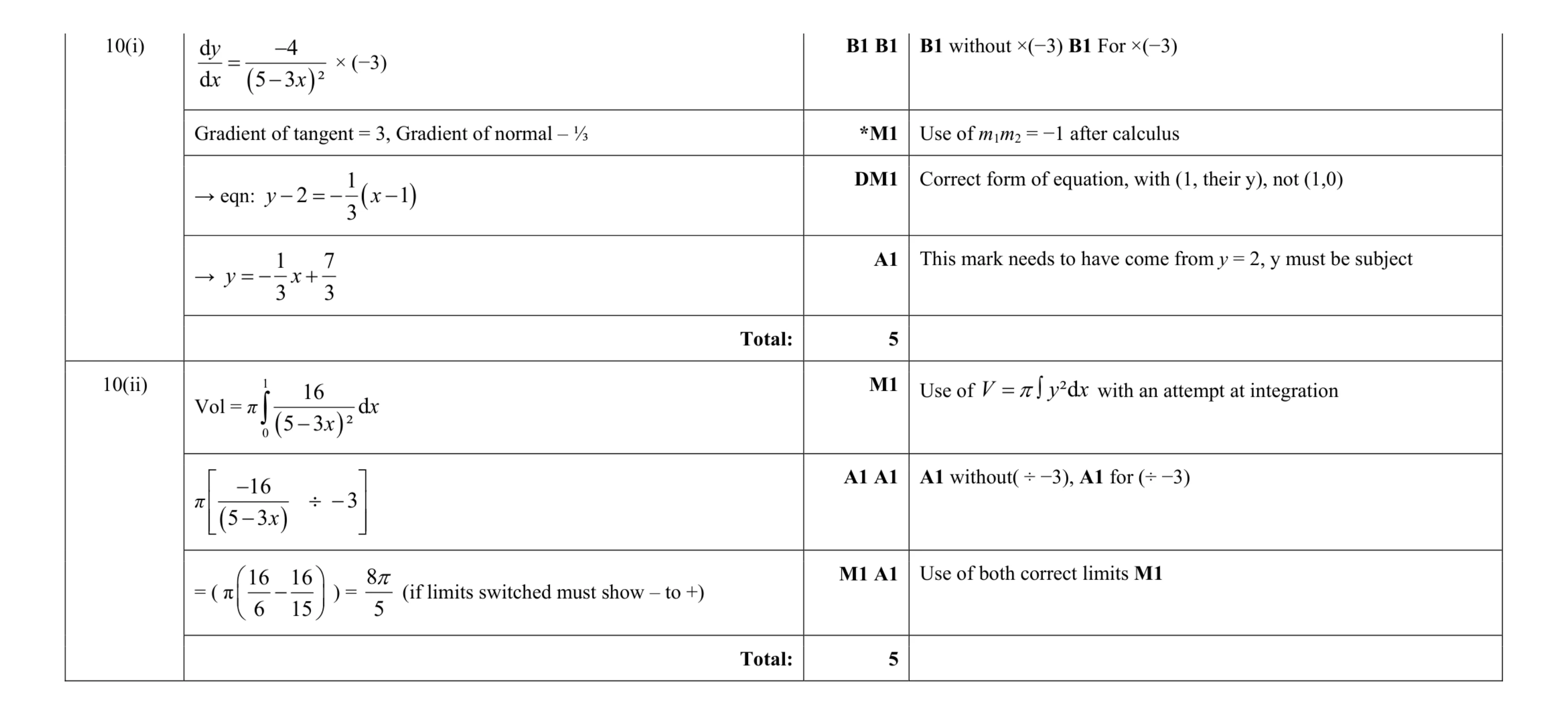 10
10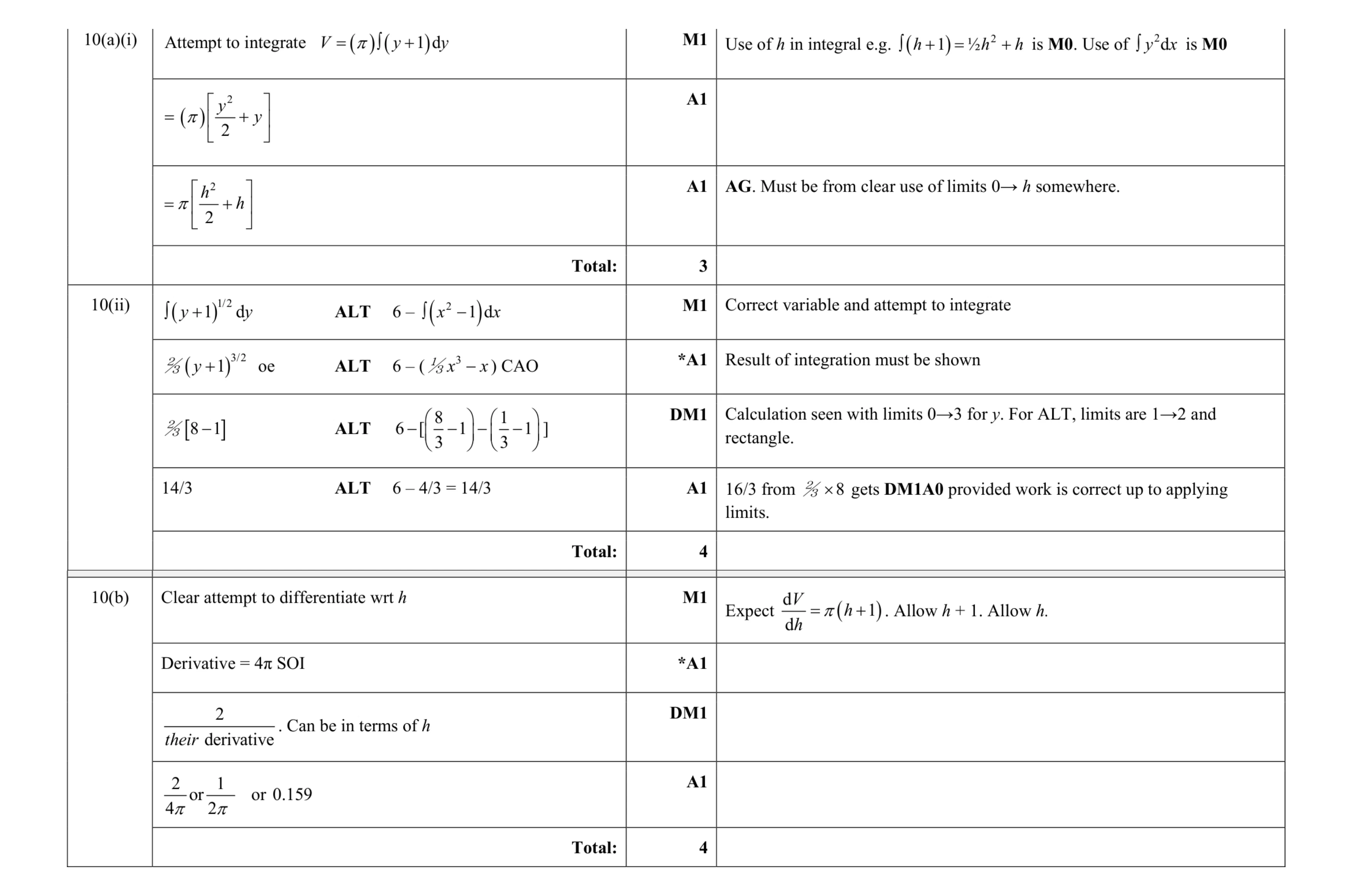 11
11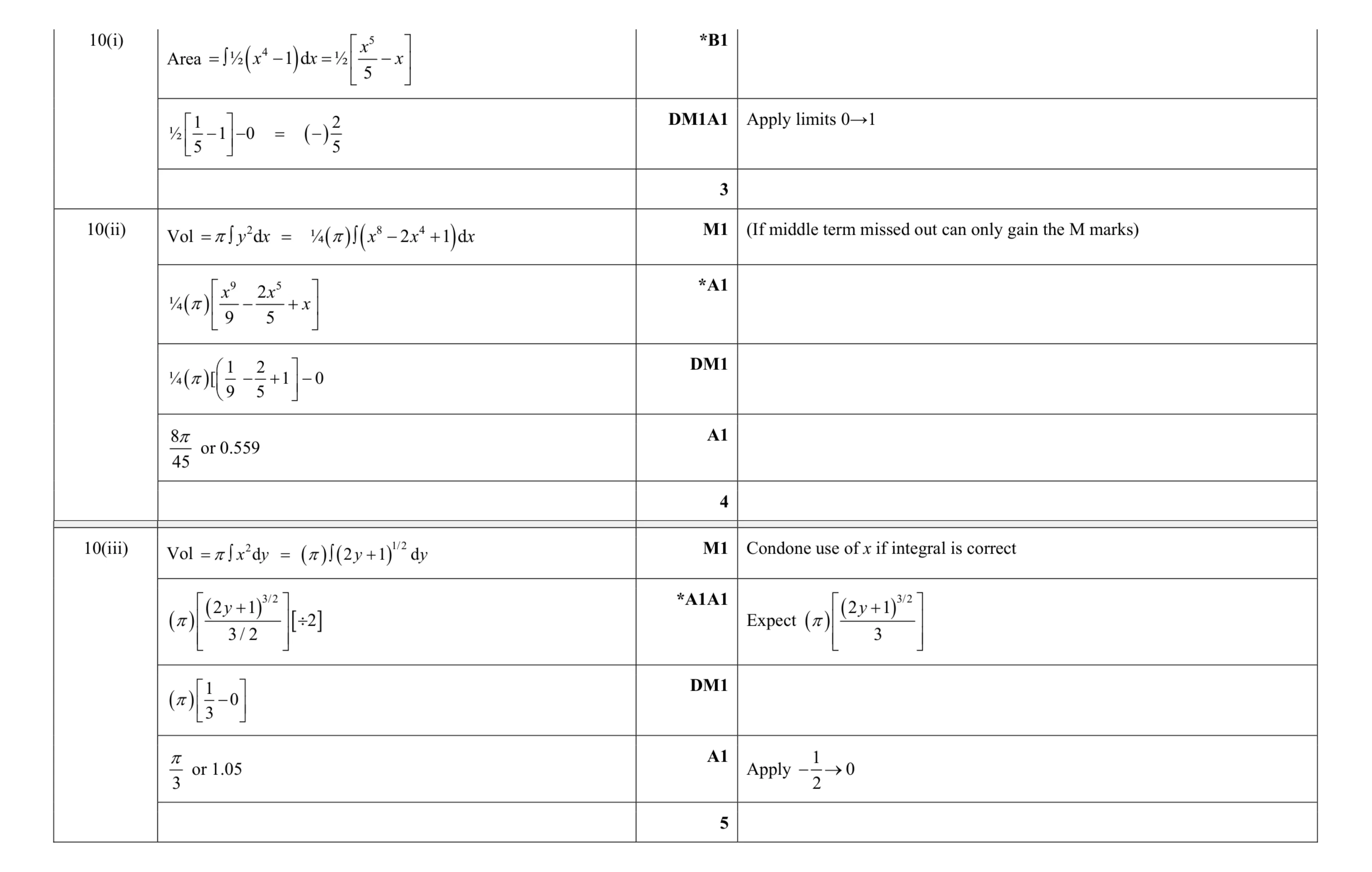 12
12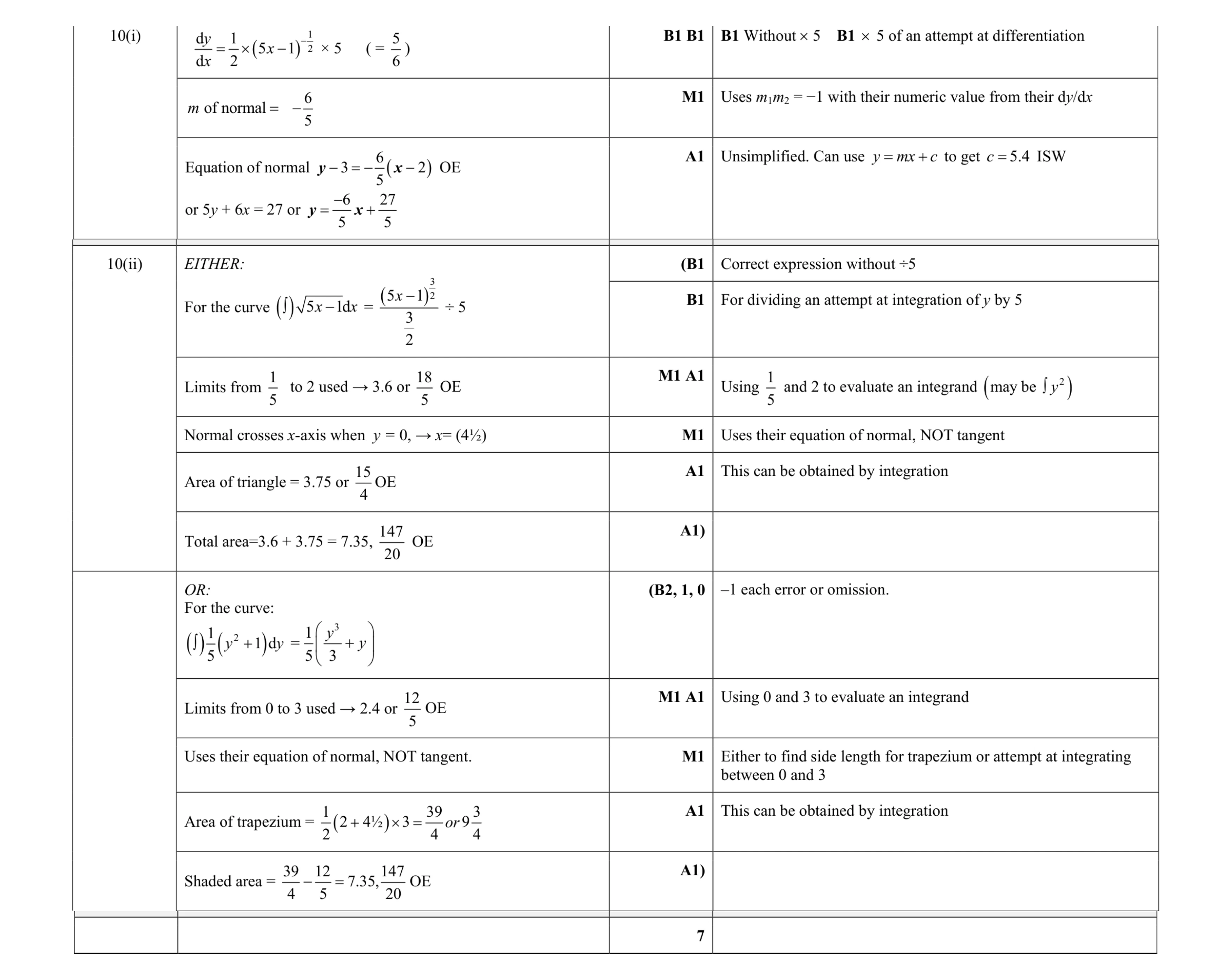 11
11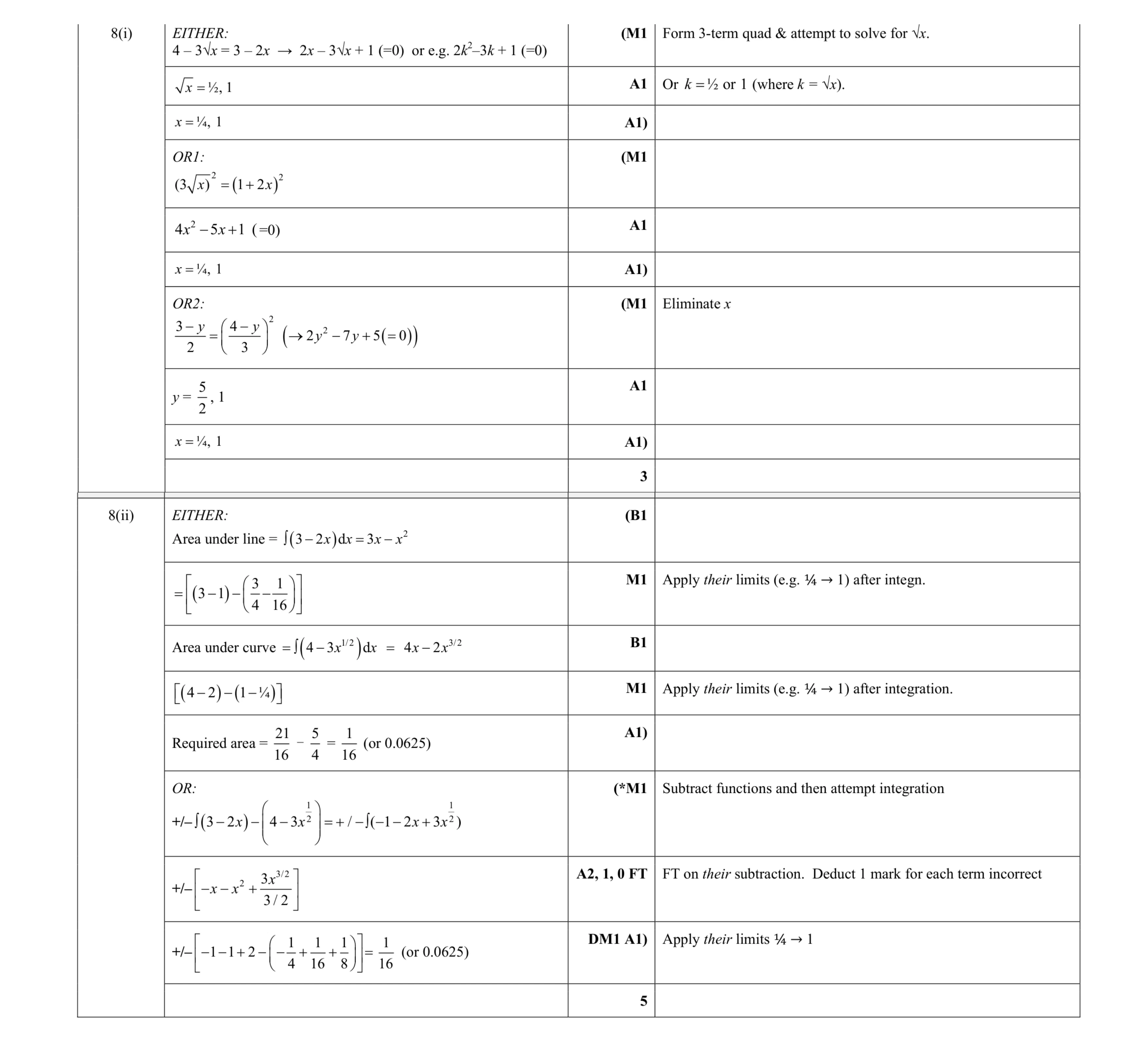 8
8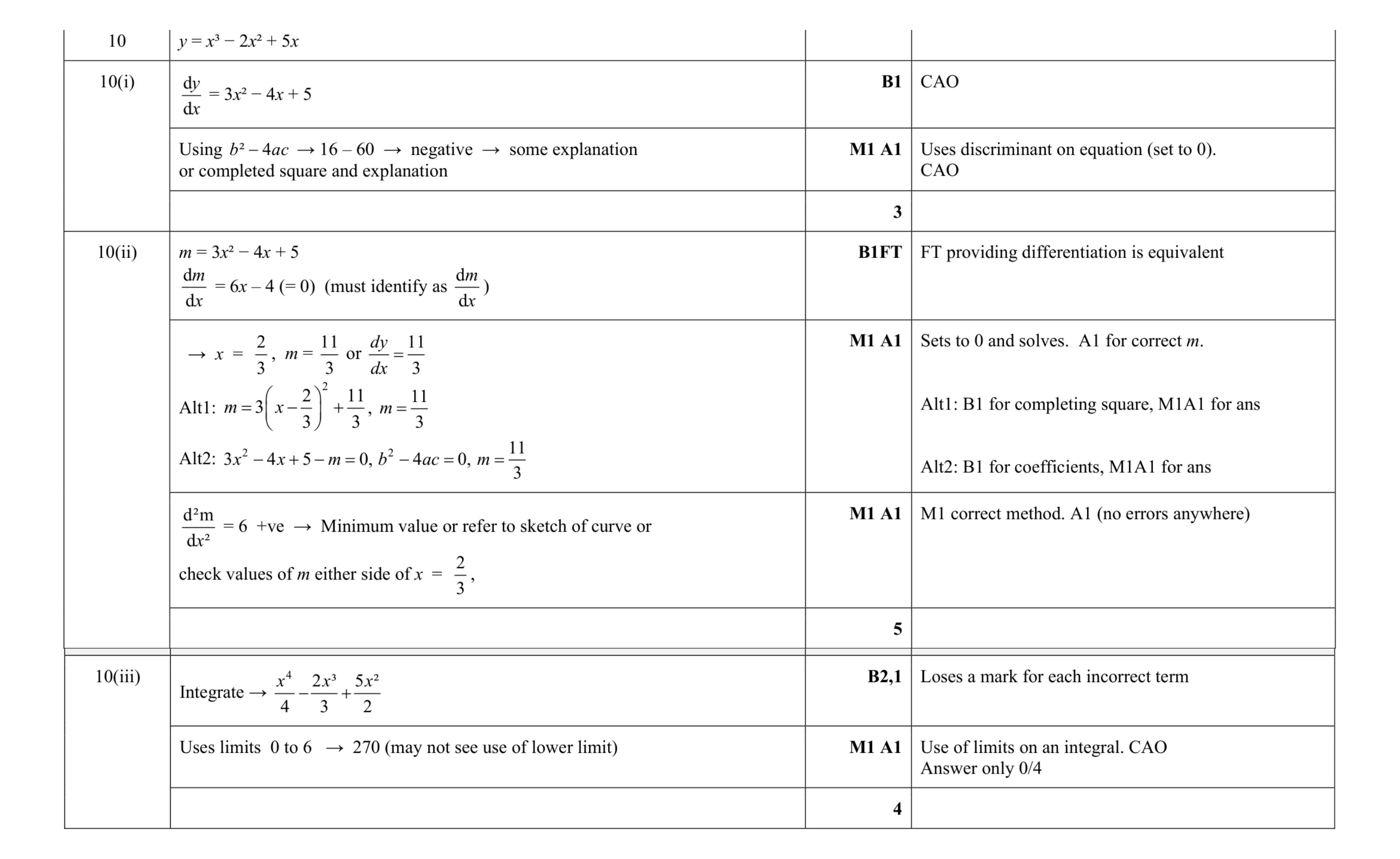 12
12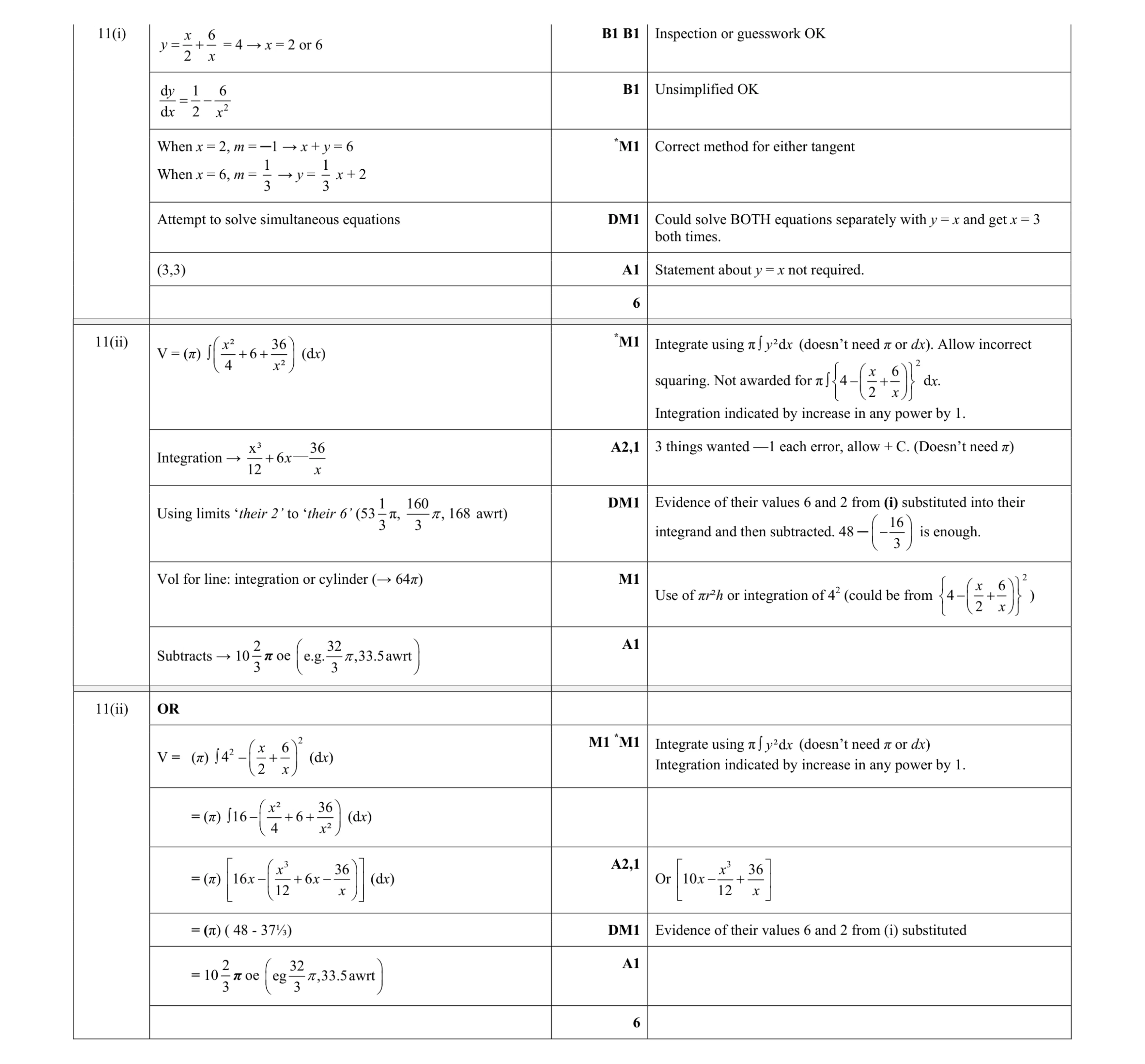 12
12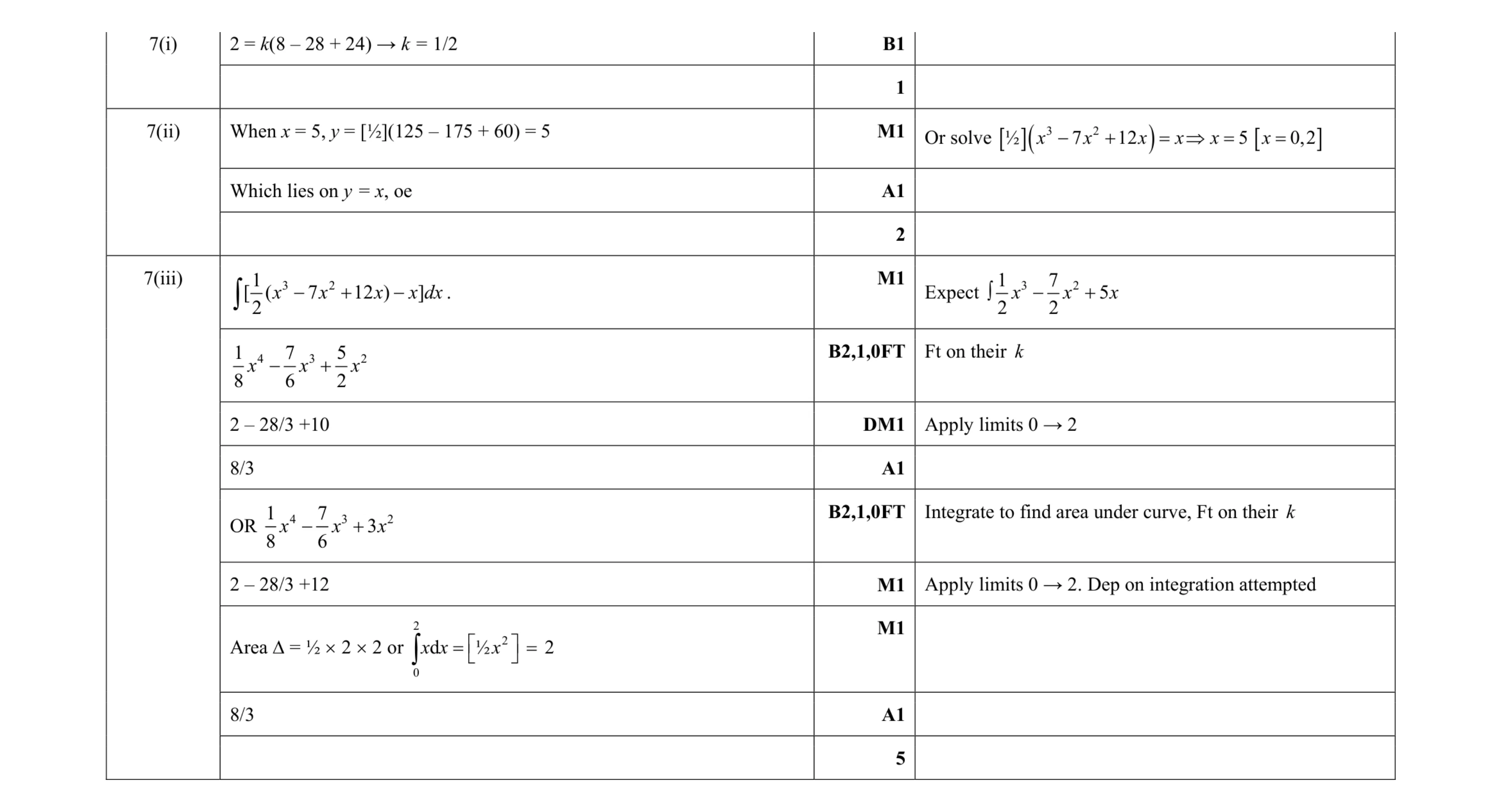 8
8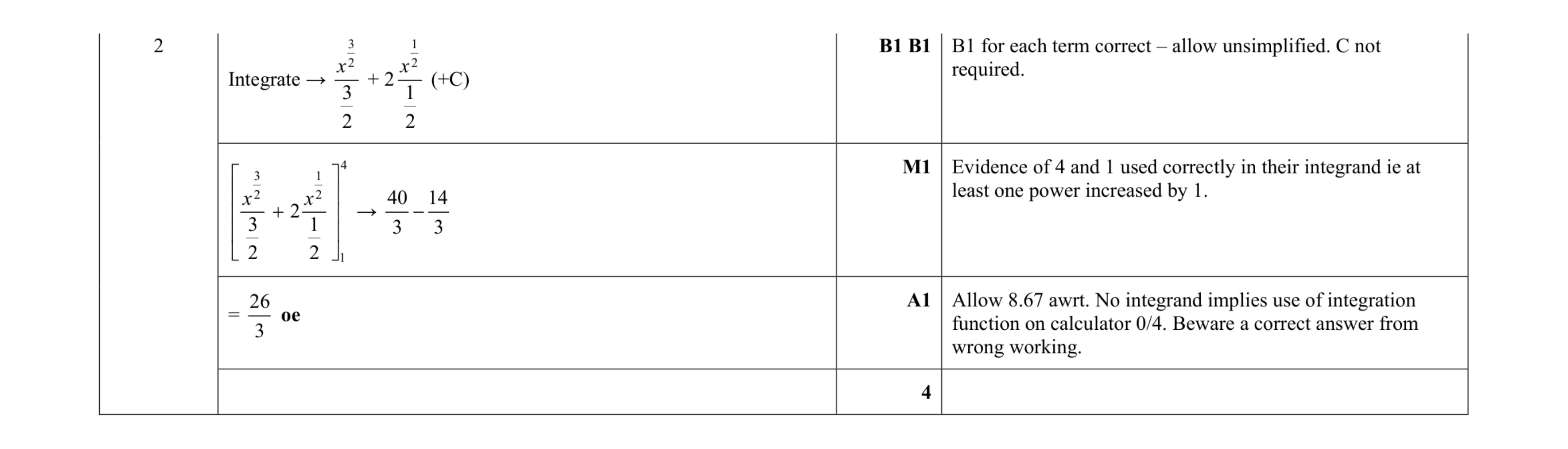 4
4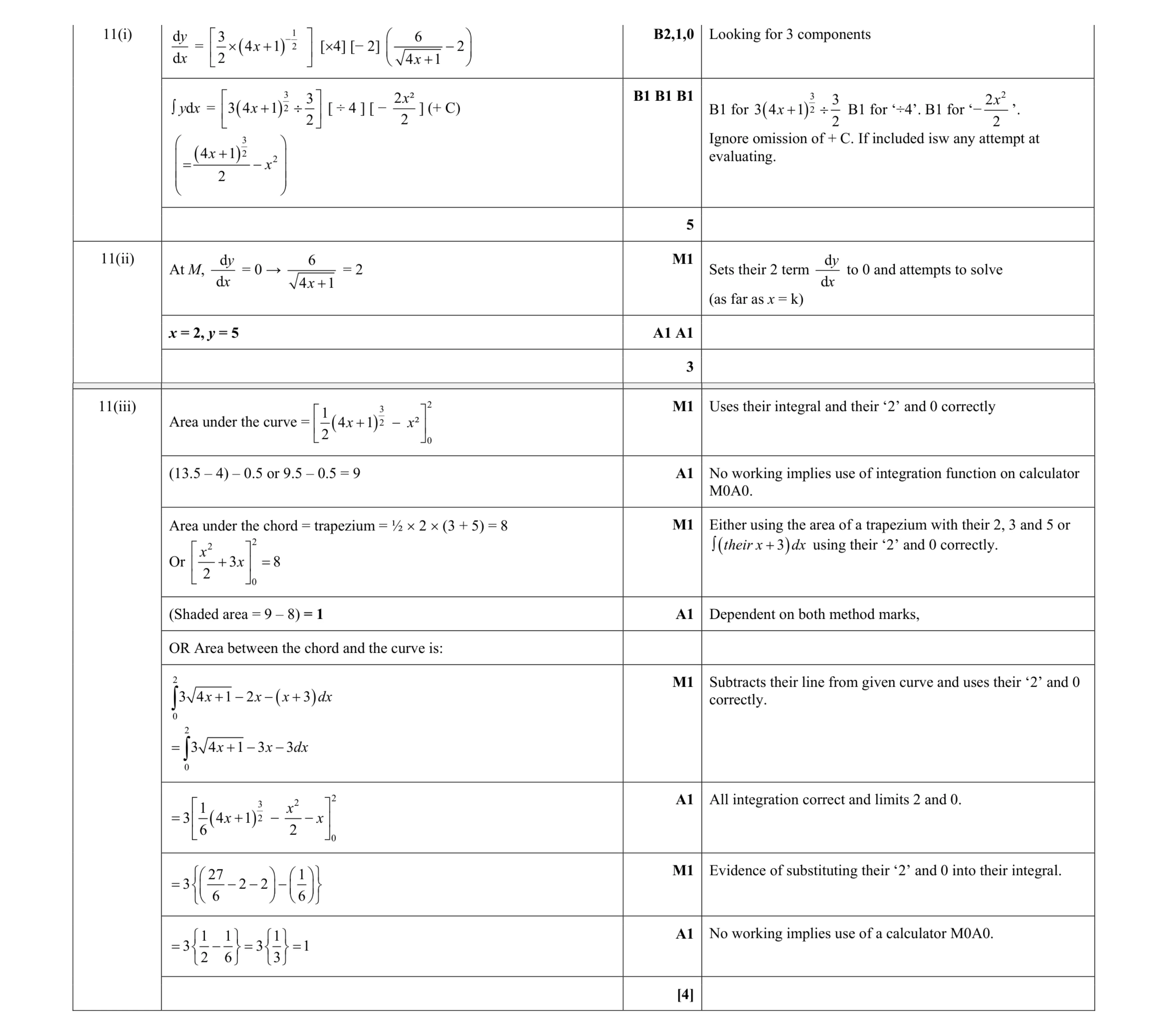 12
12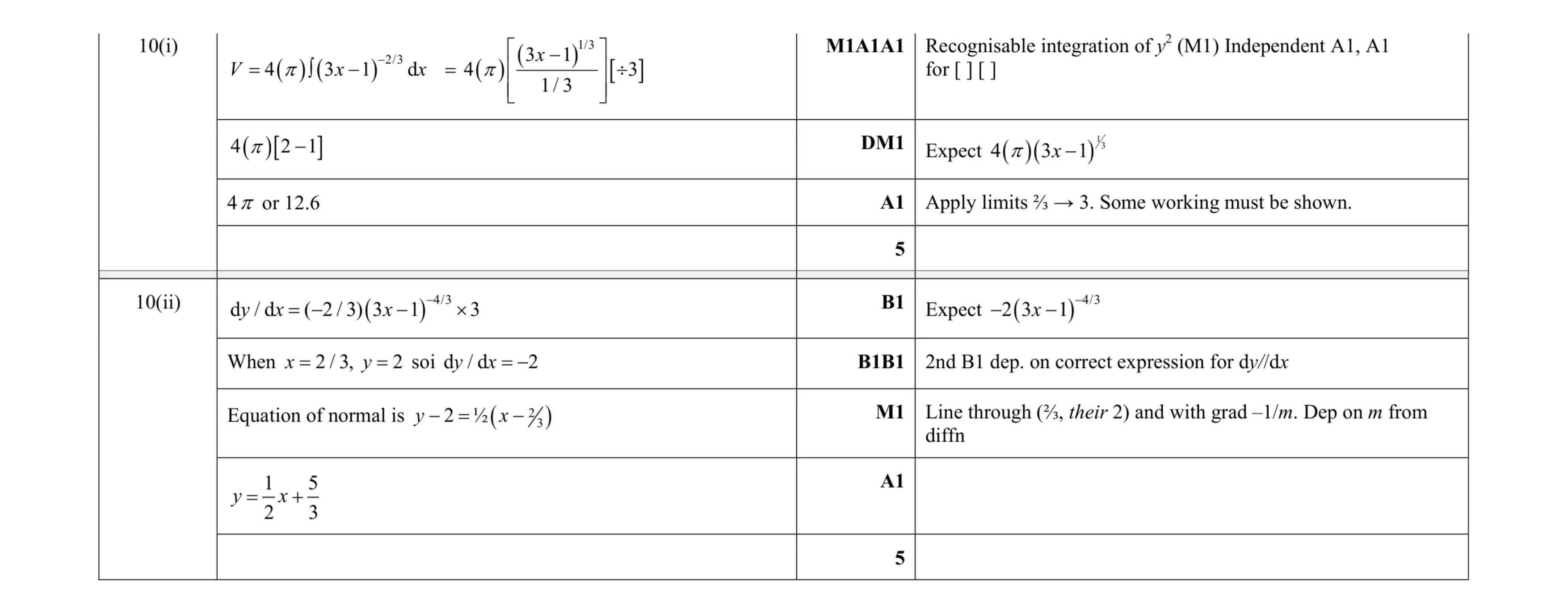 10
10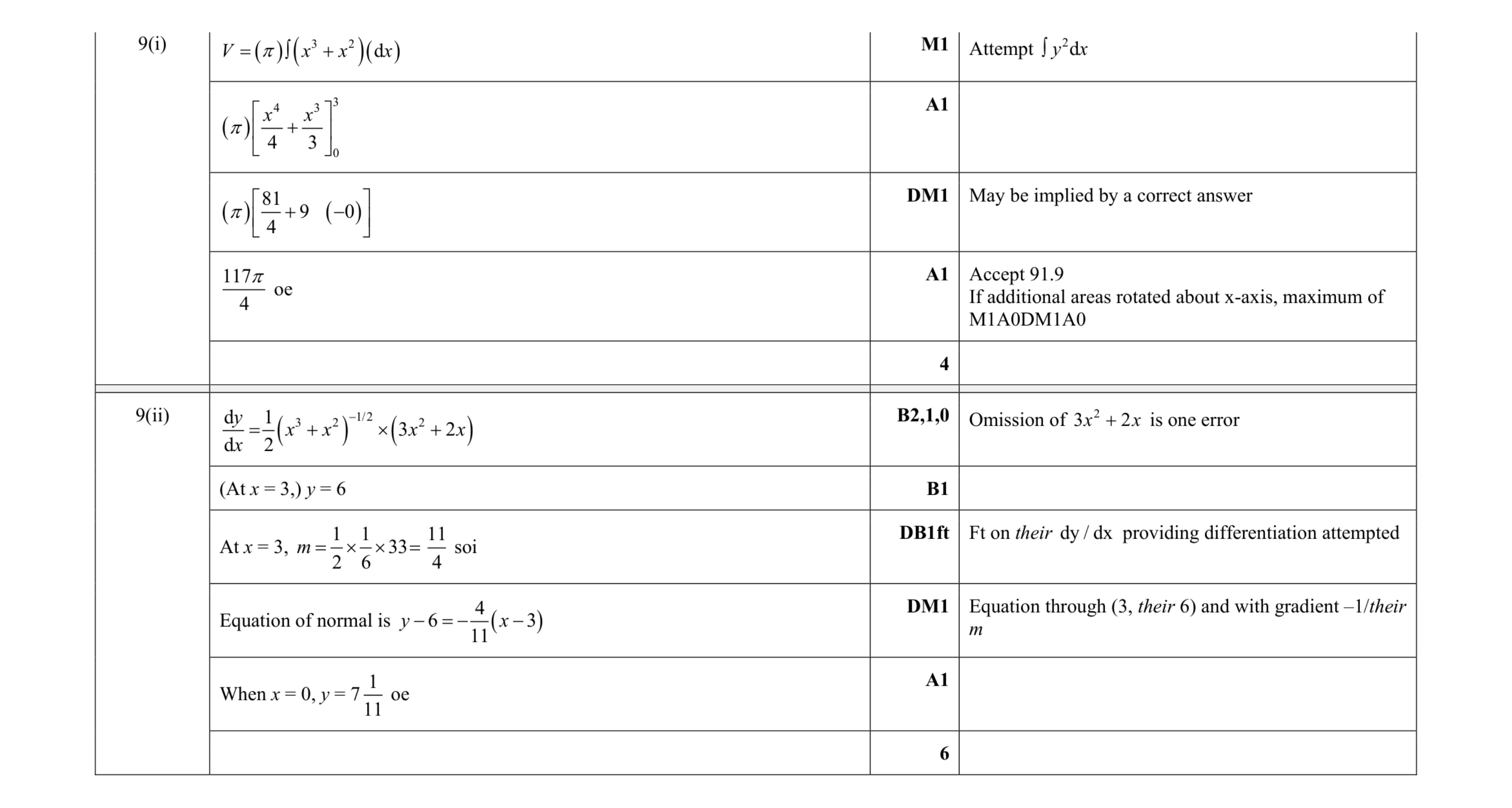 10
10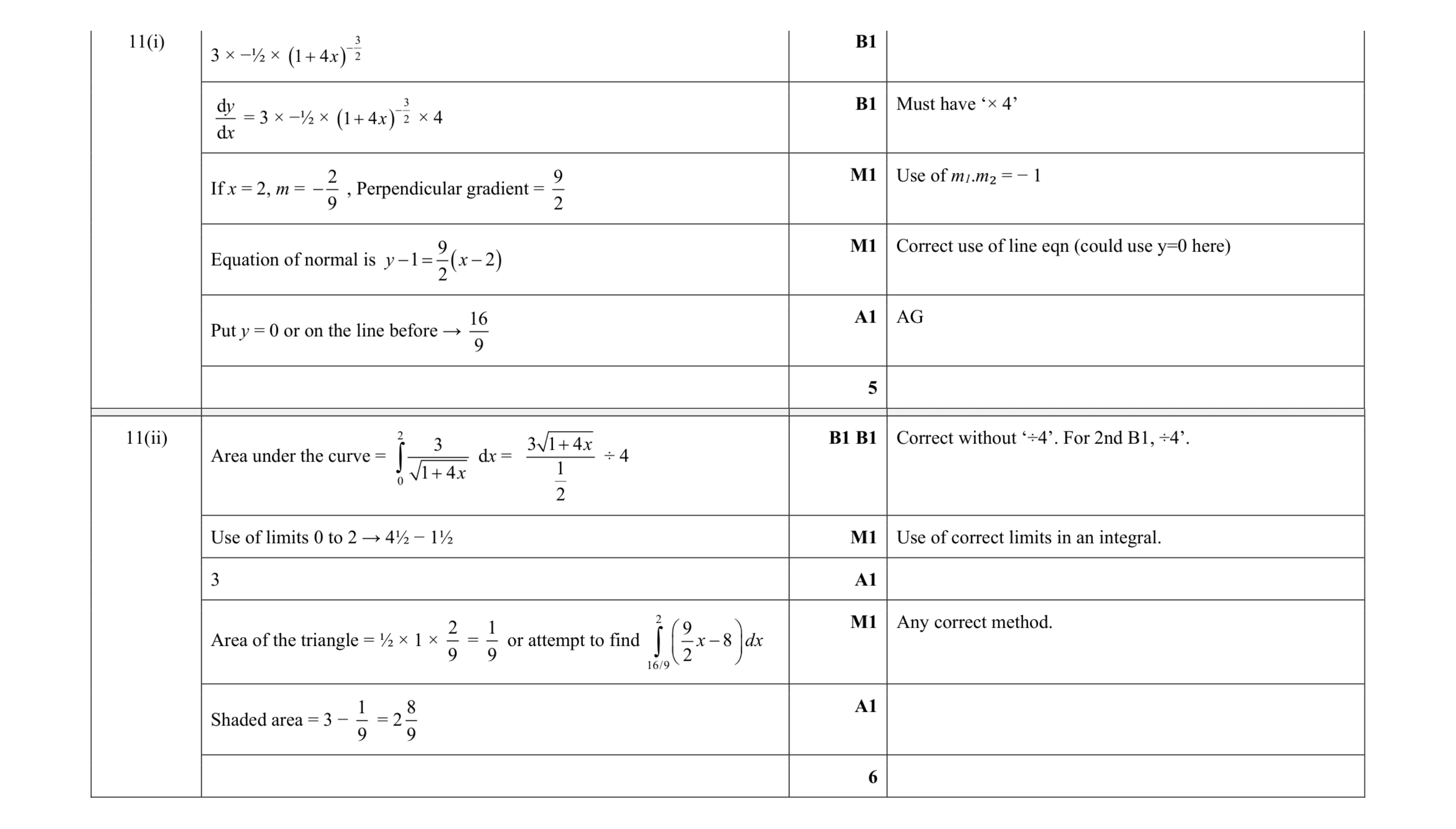 11
11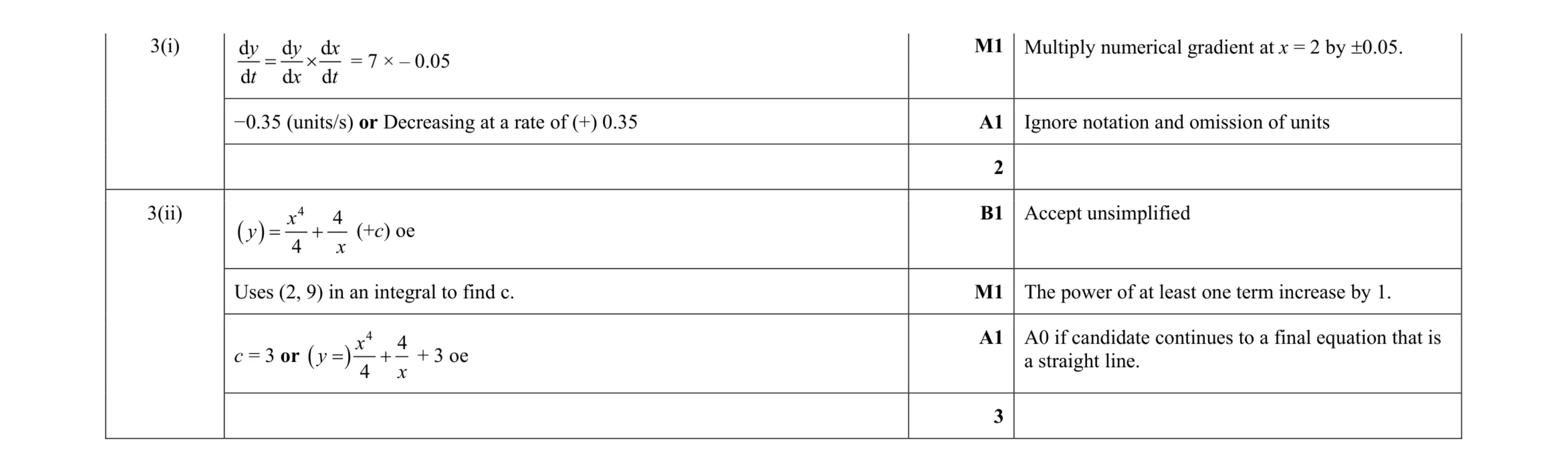 5
5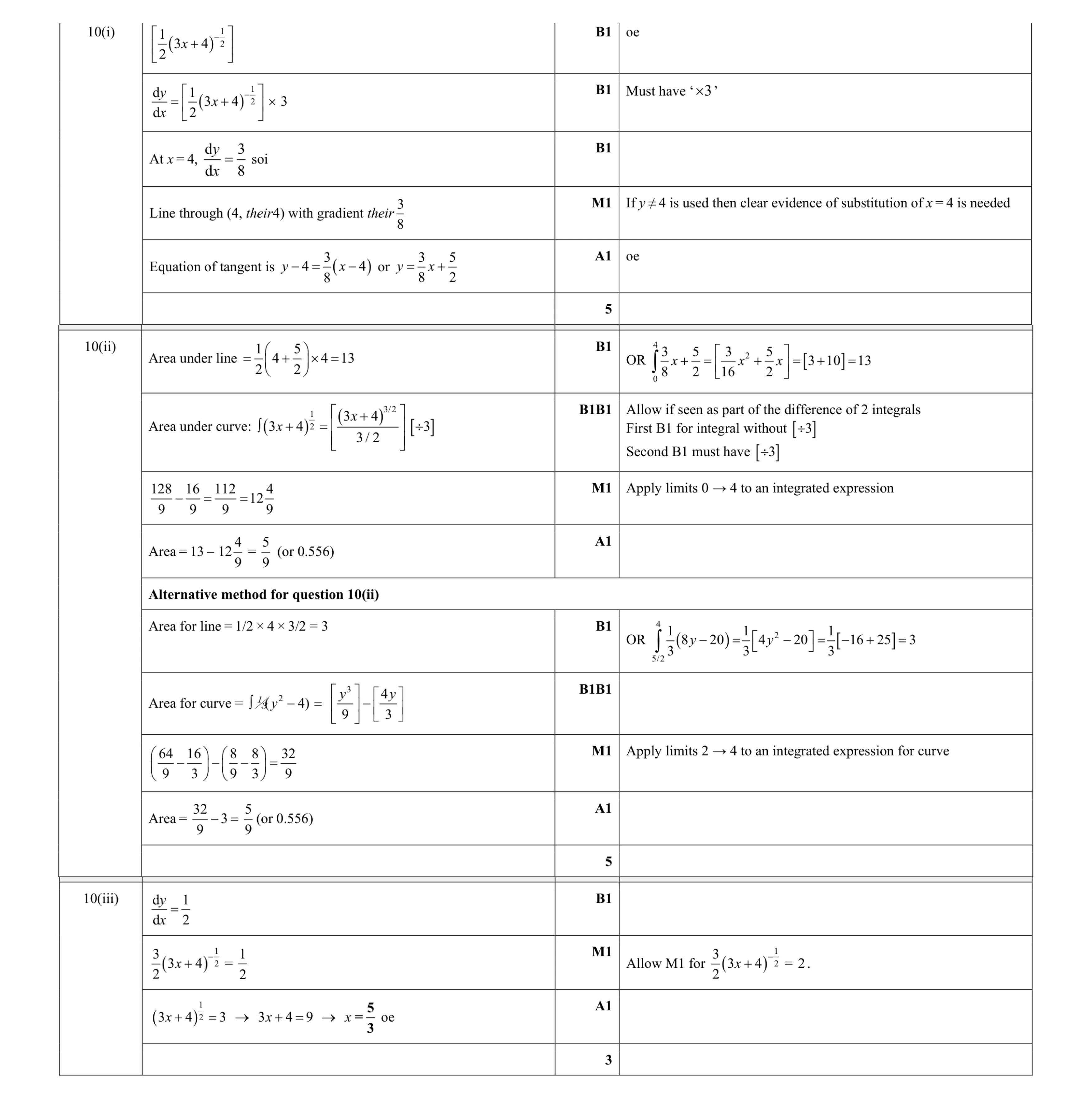 13
13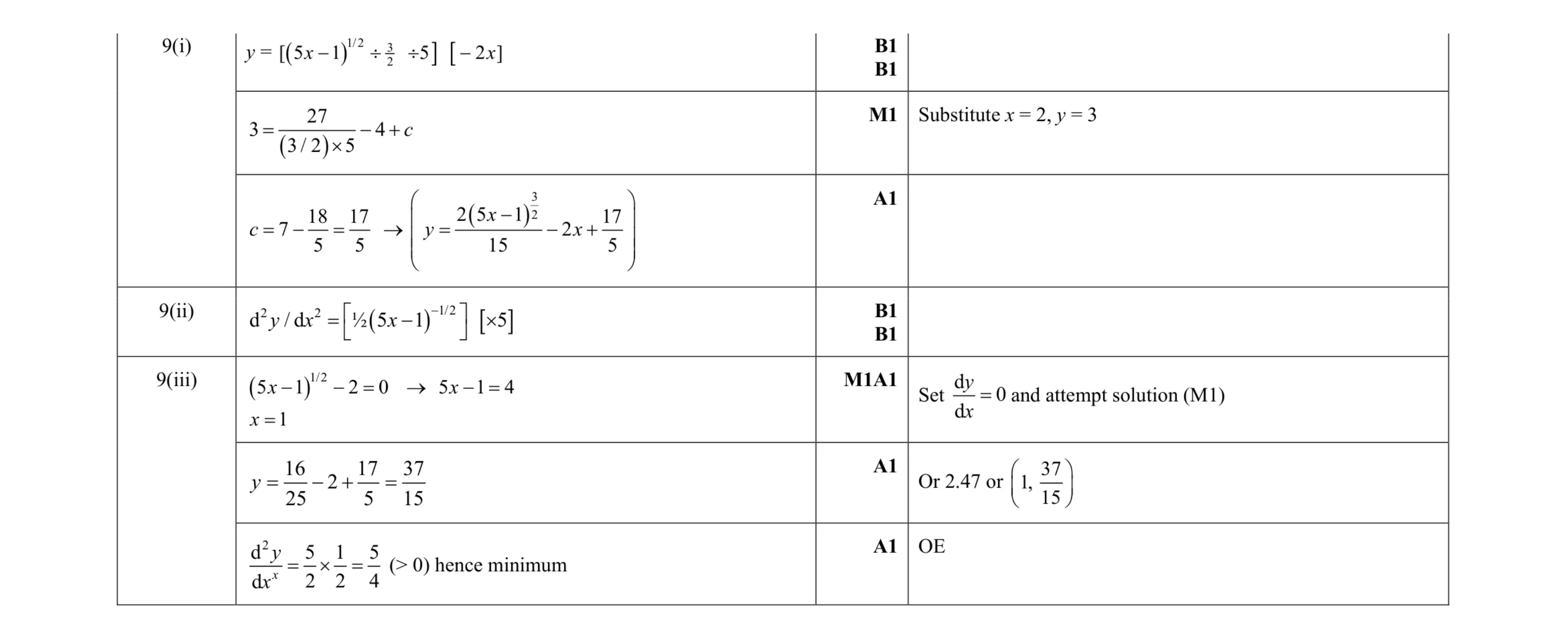 10
10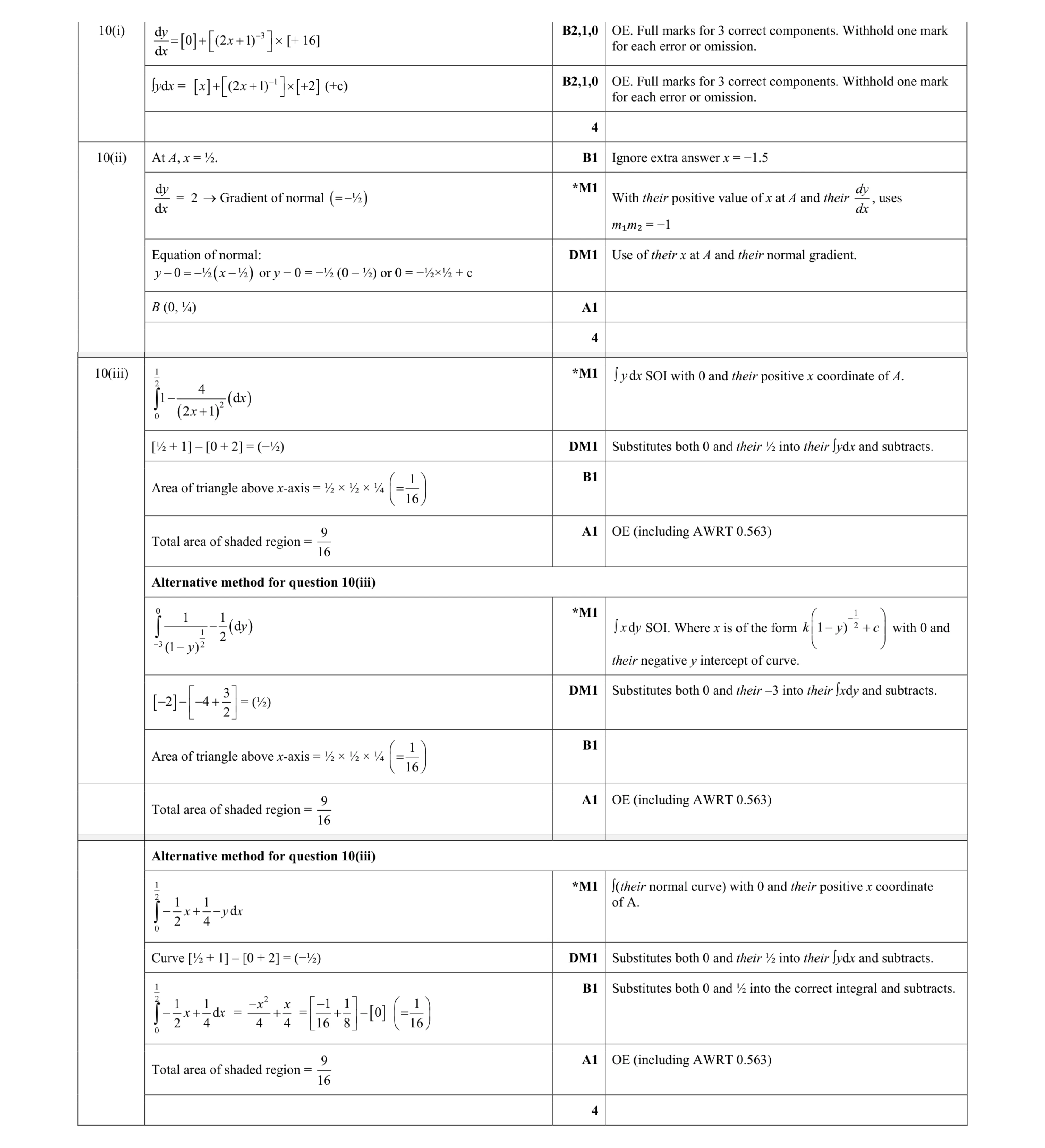 12
12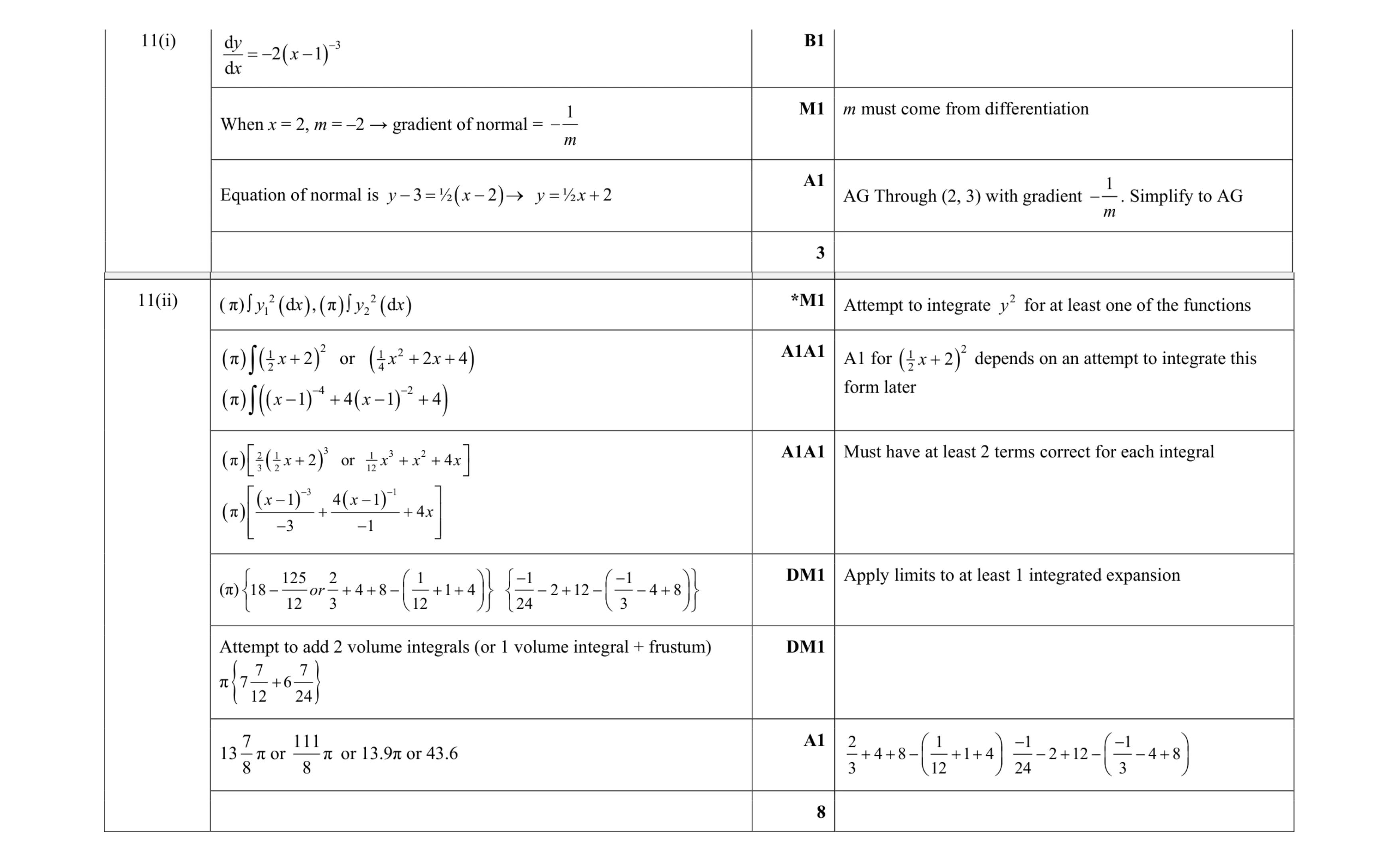 11
11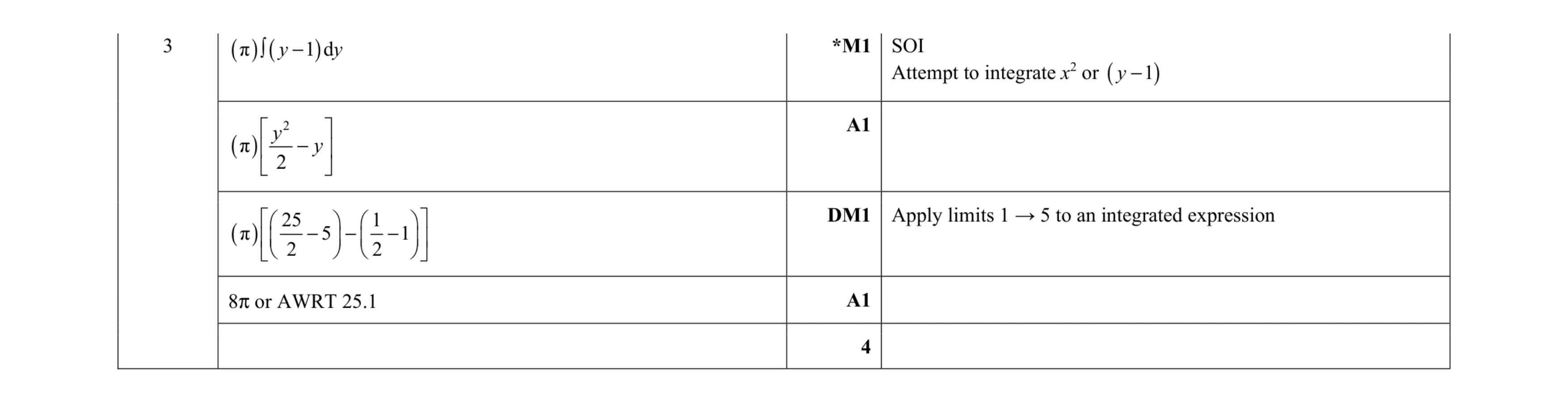 4
4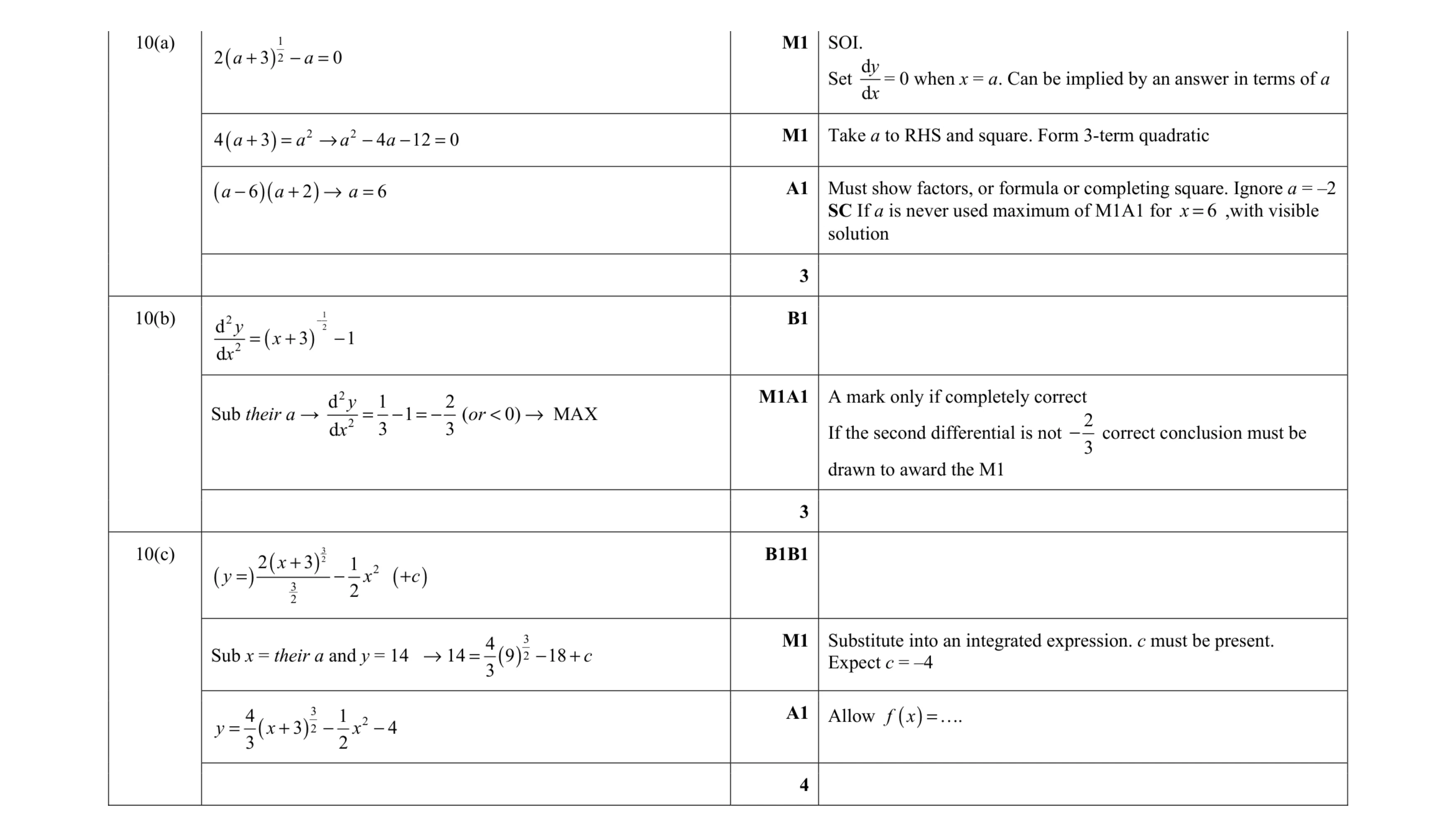 10
10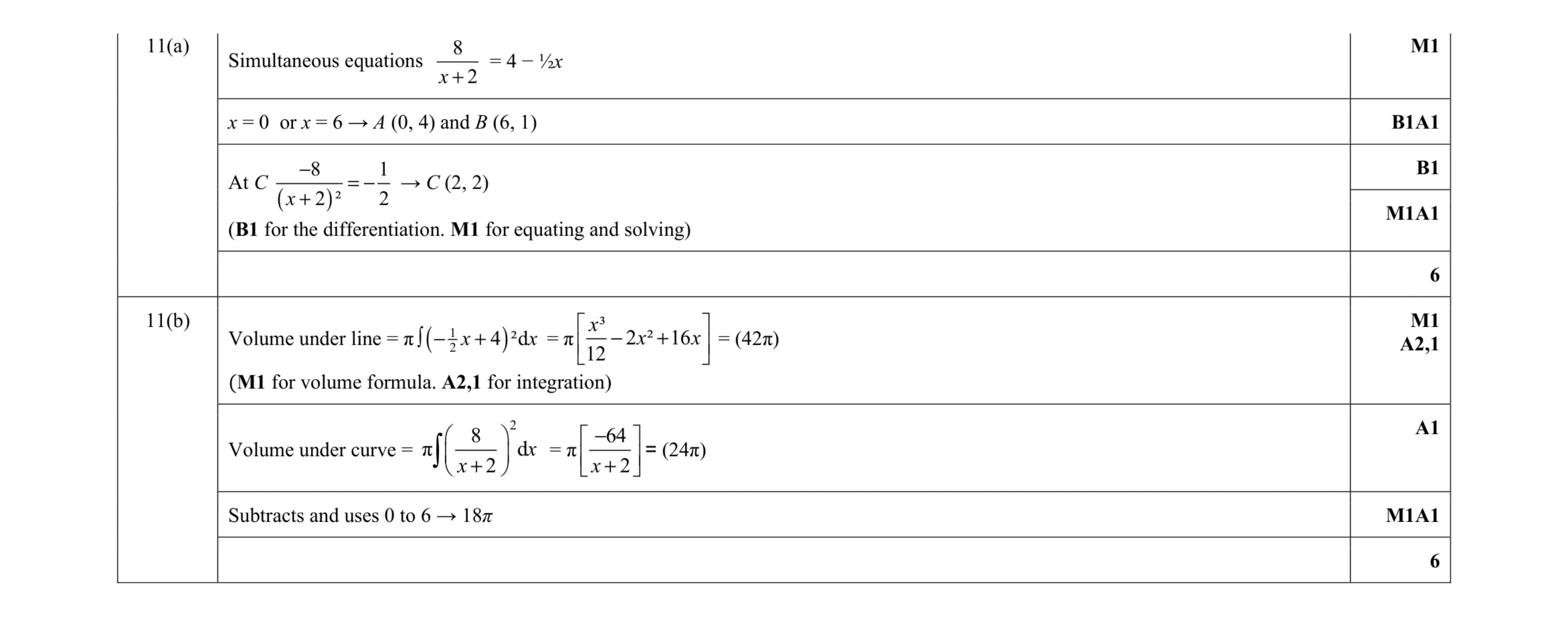 12
12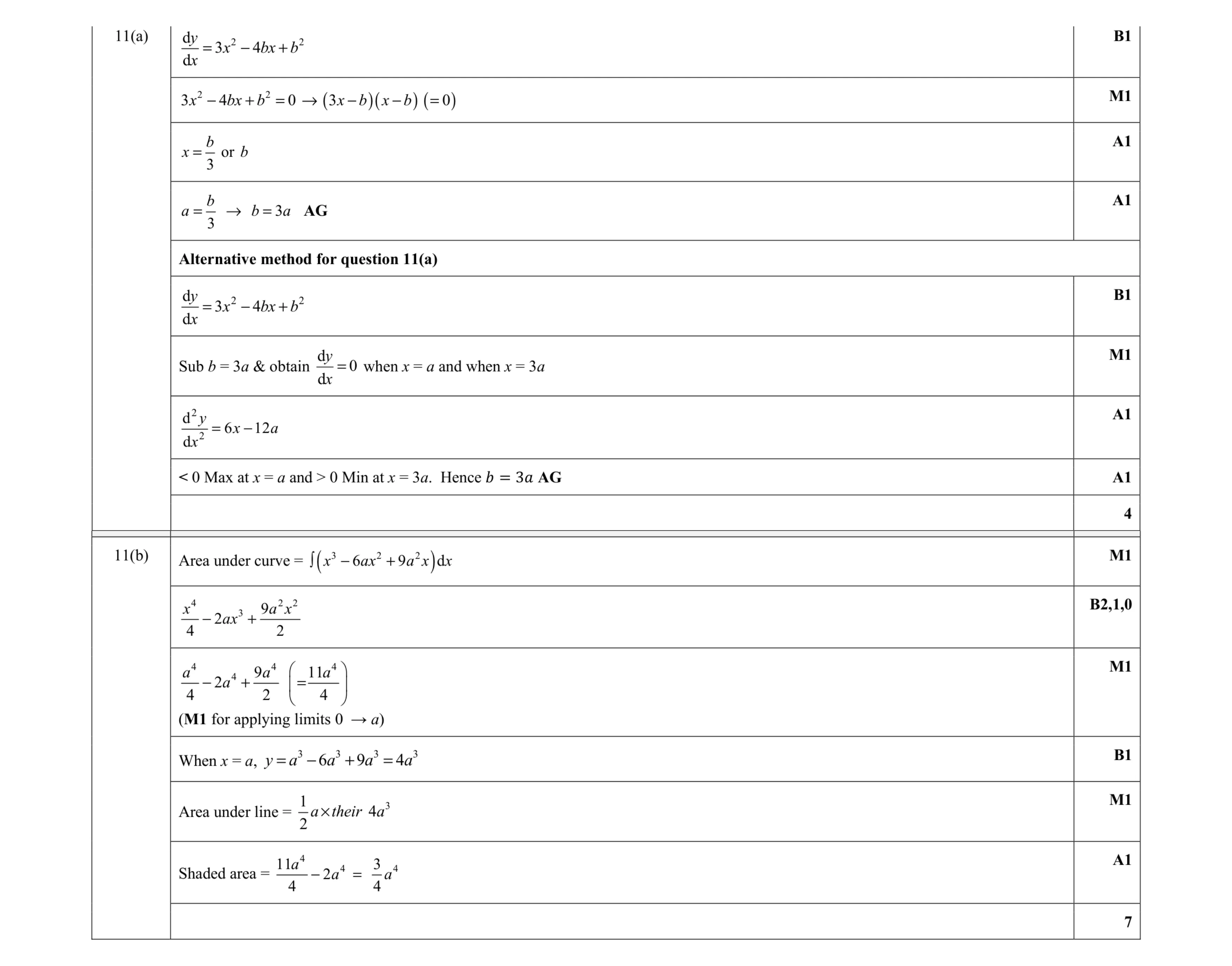 11
11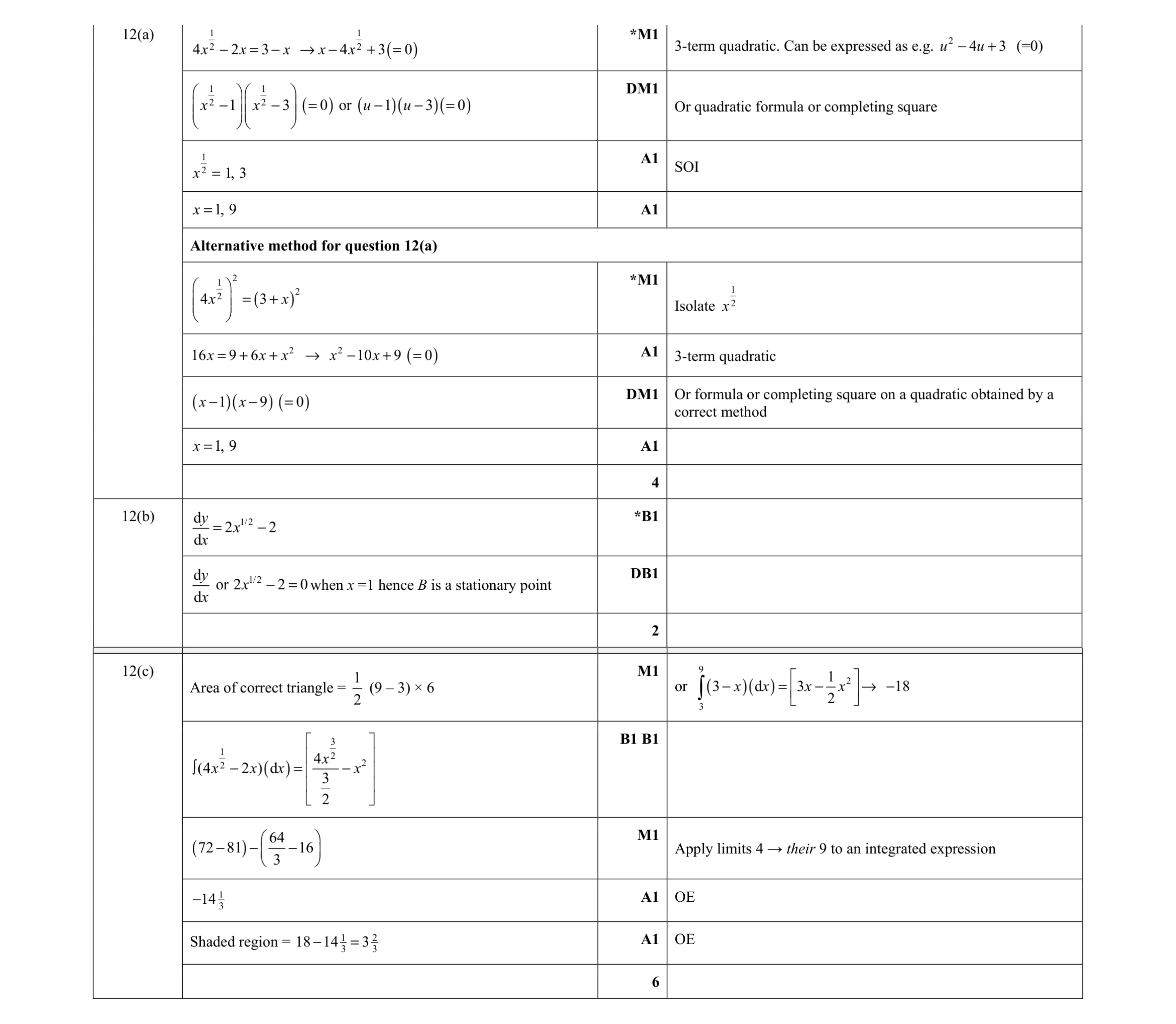 12
12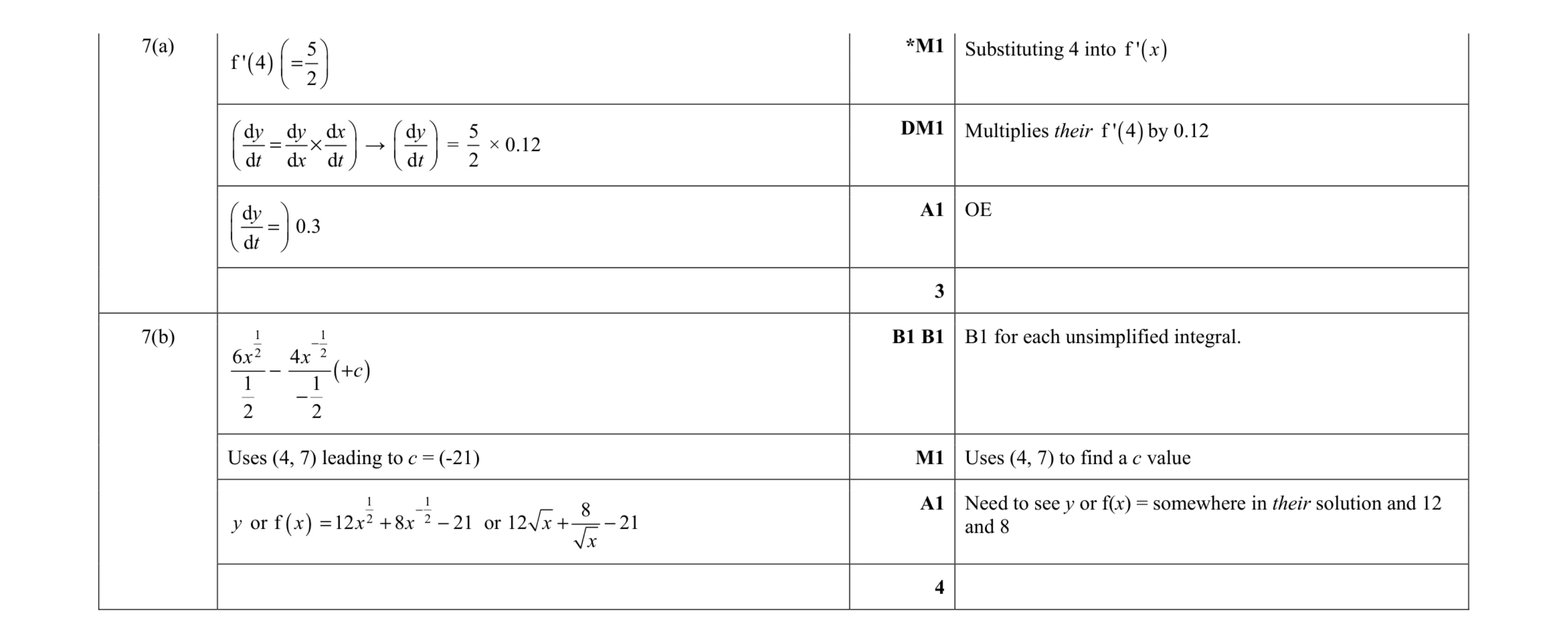 7
7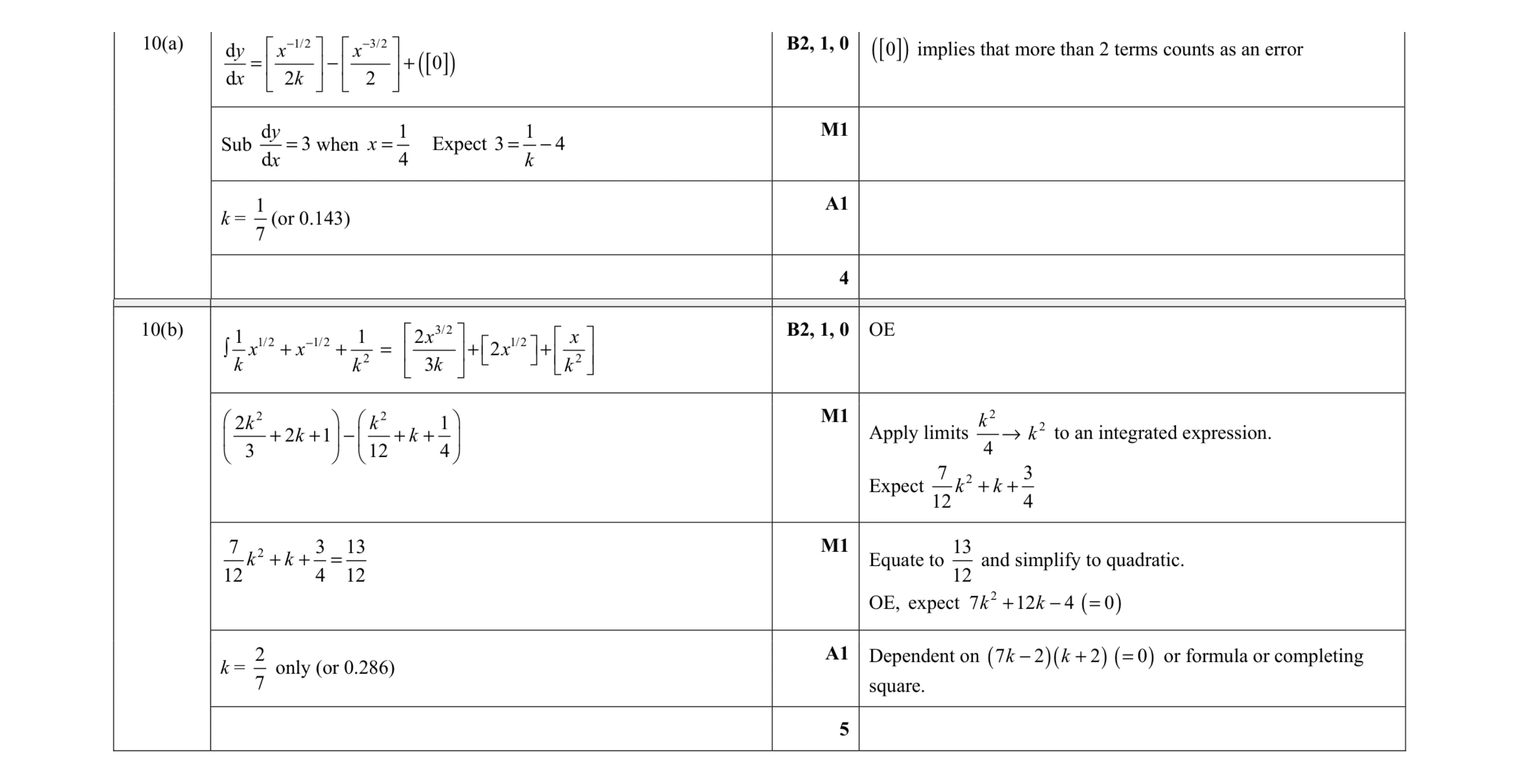 9
9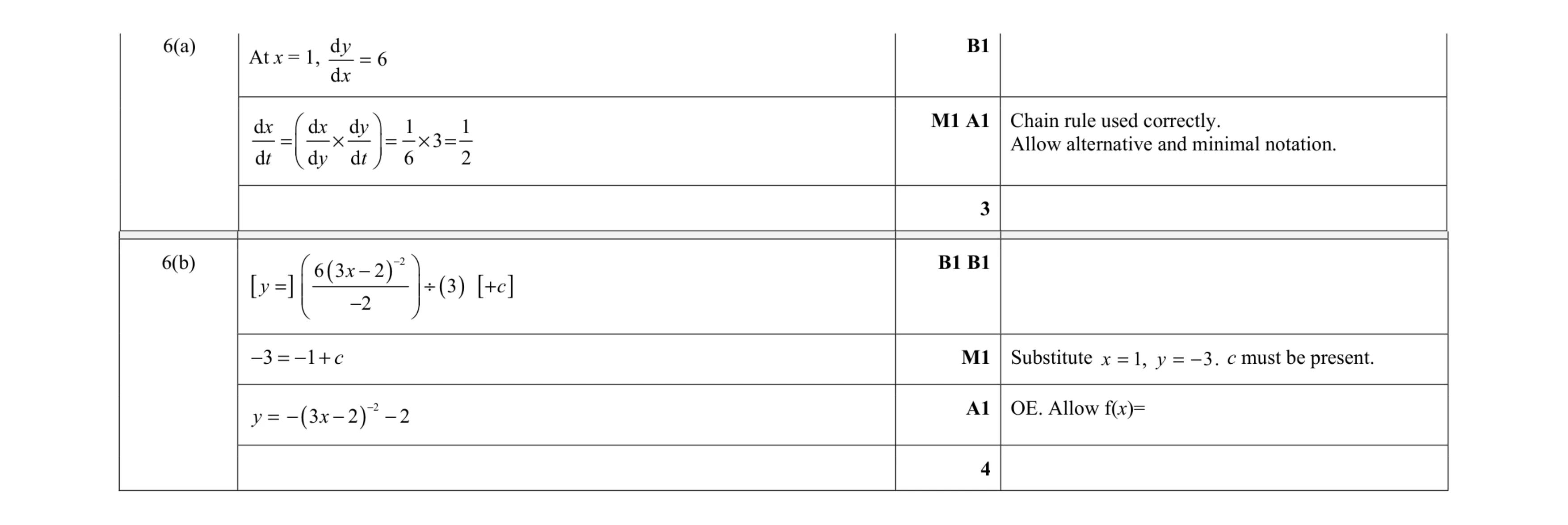 7
7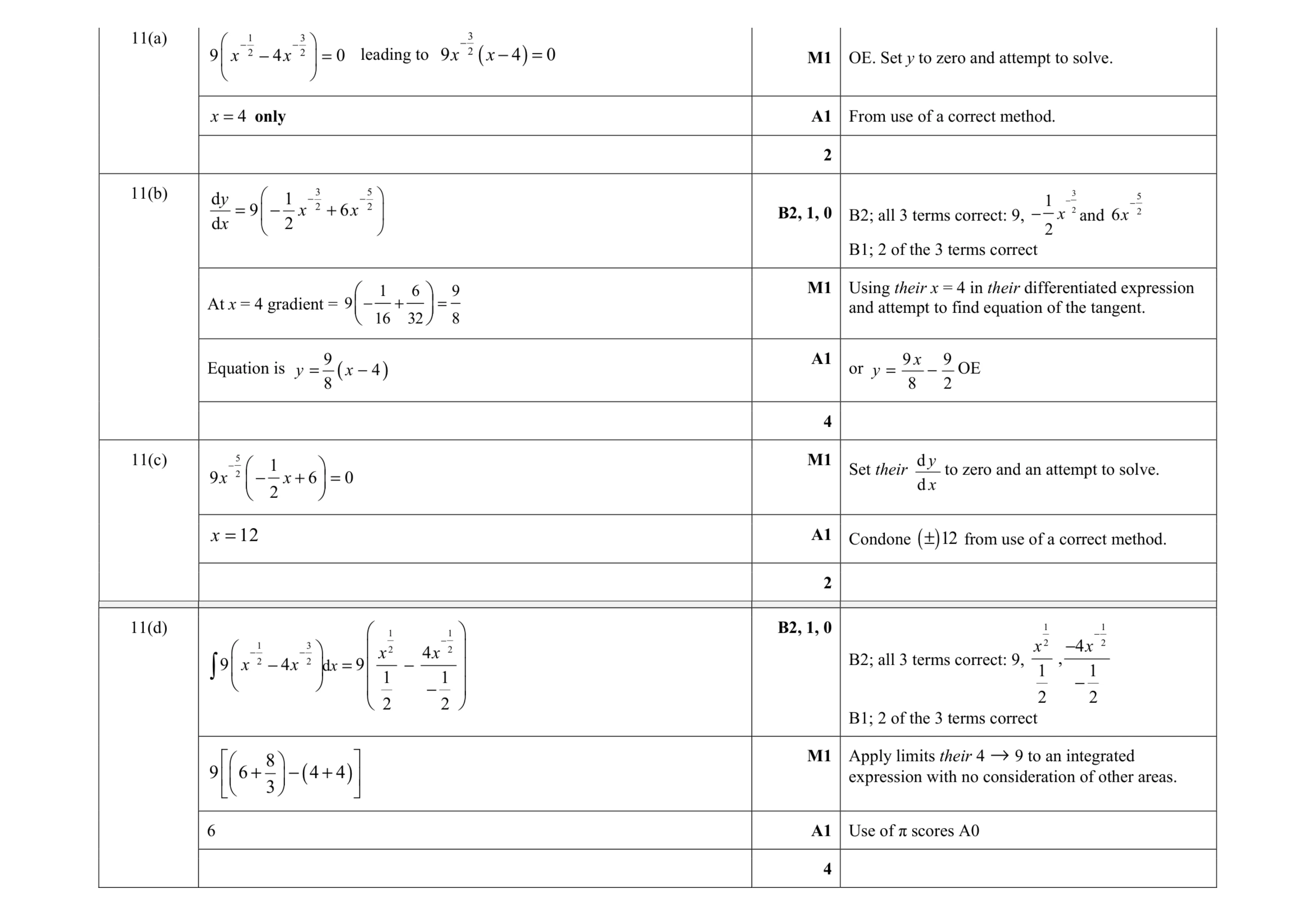 12
12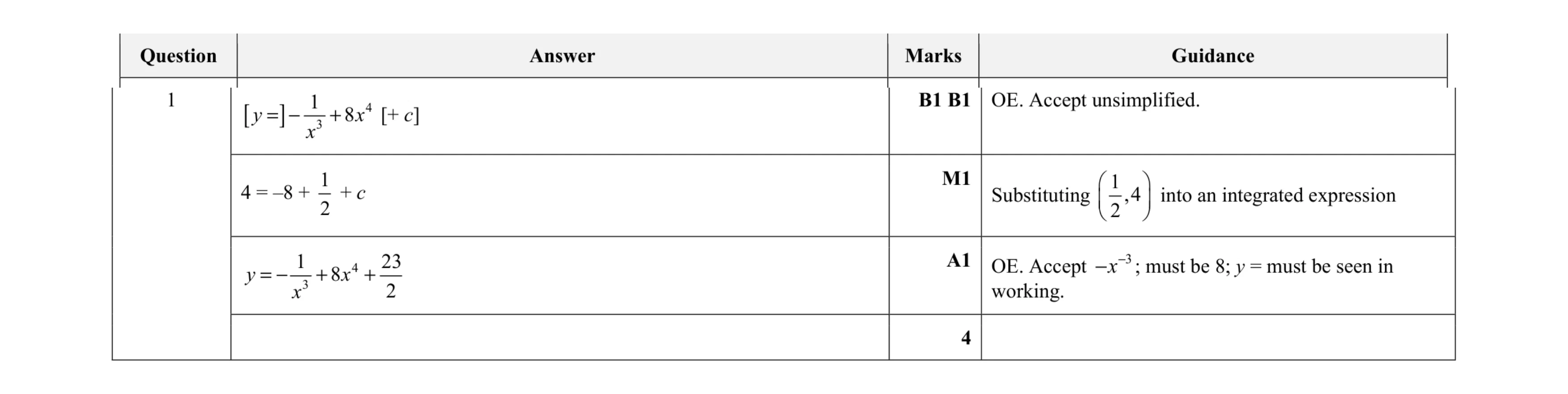 4
4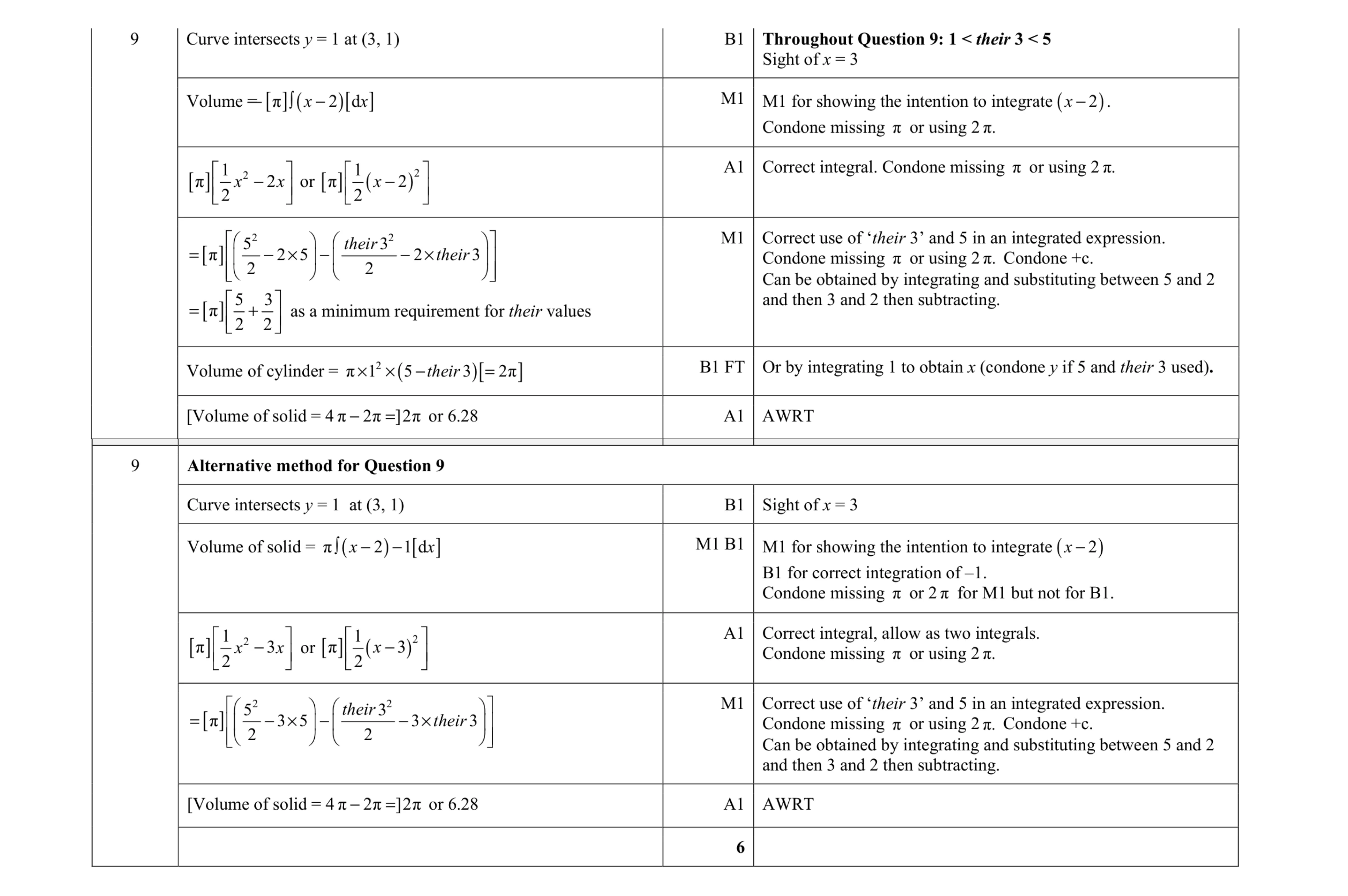 6
6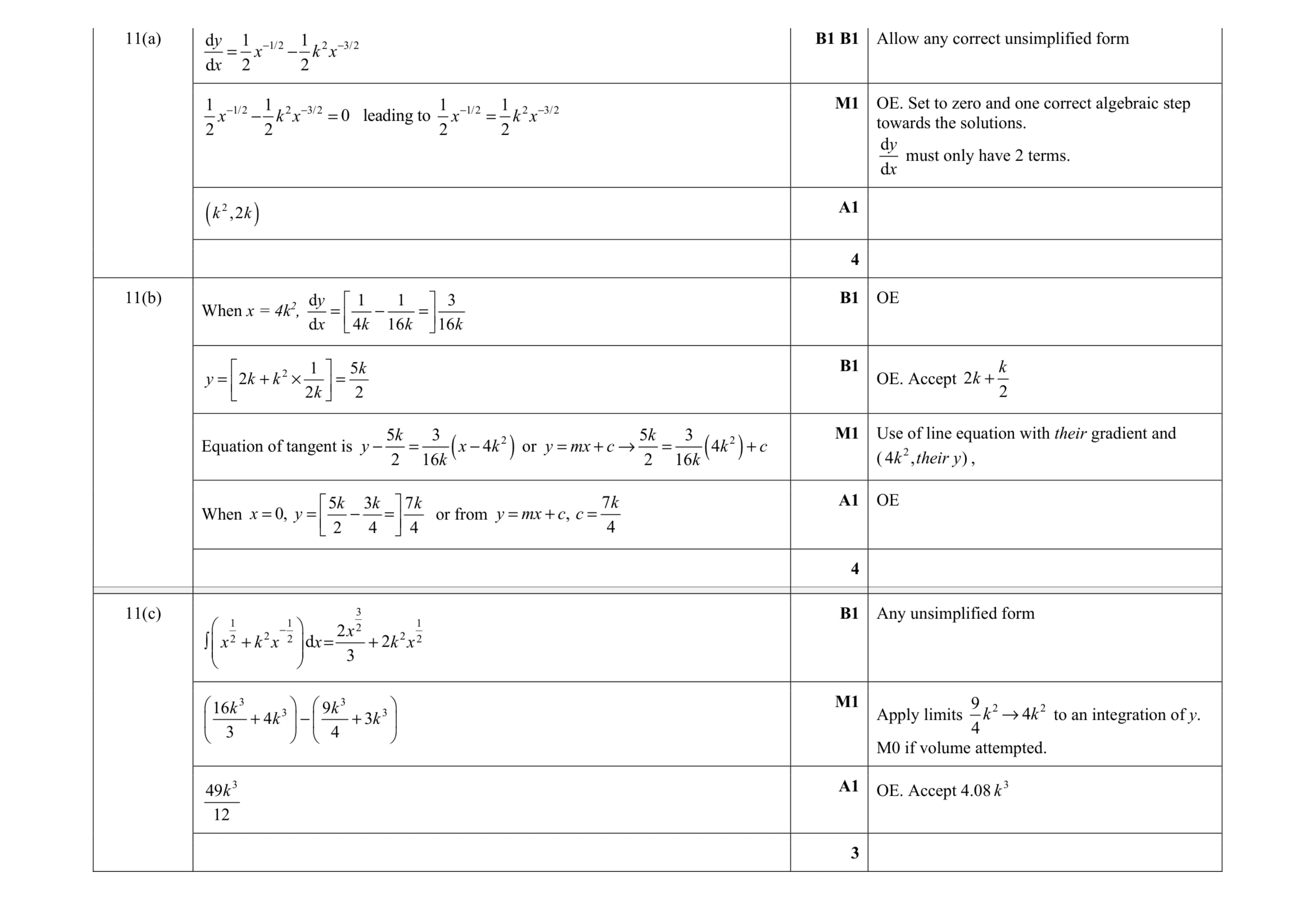 11
11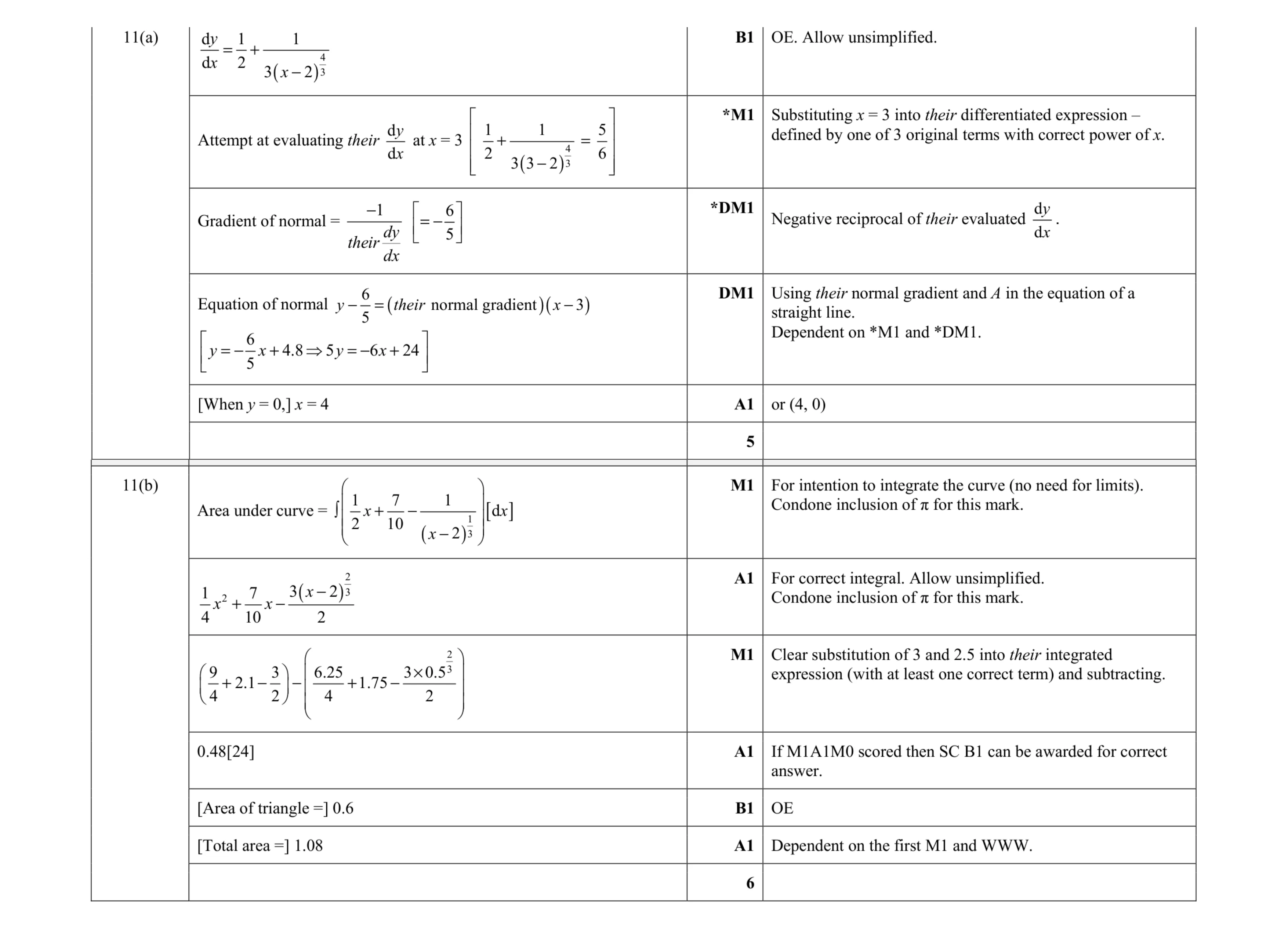 11
11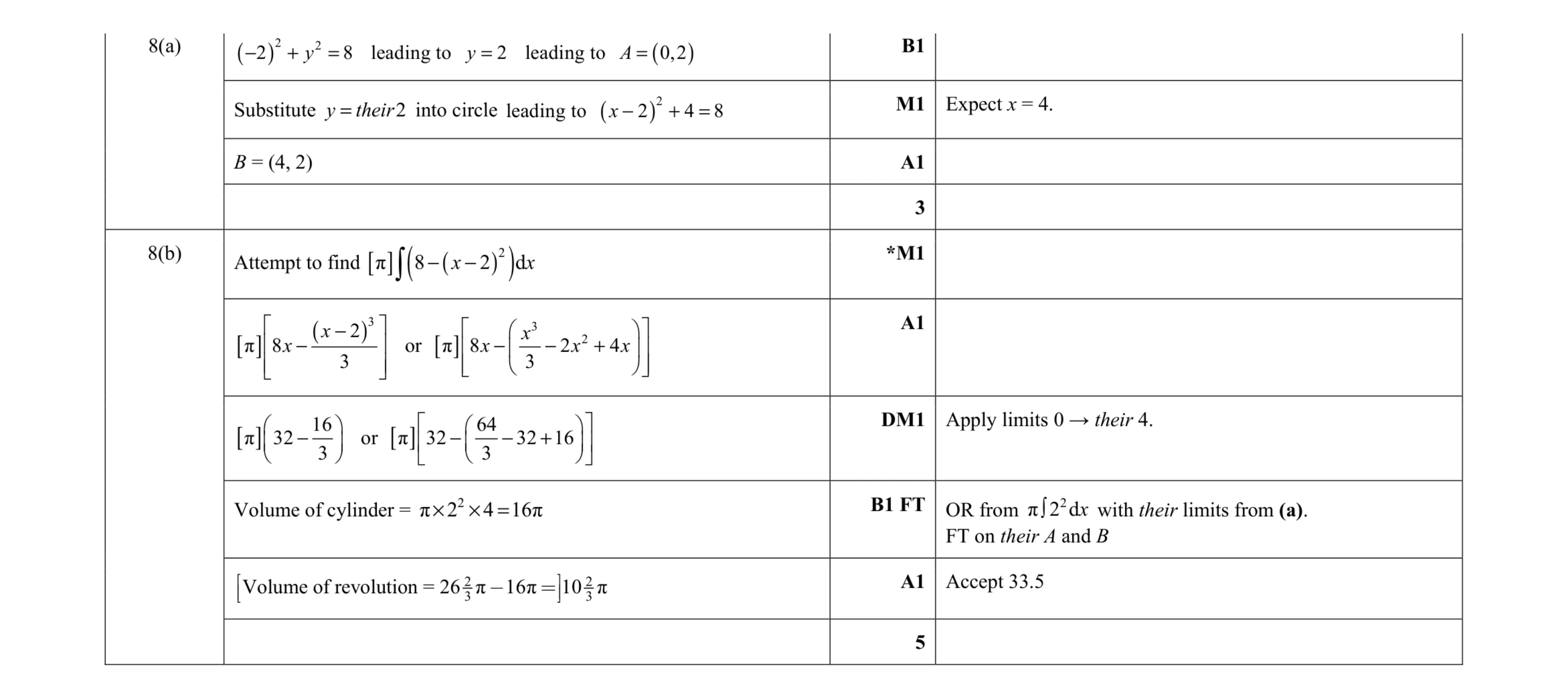 8
8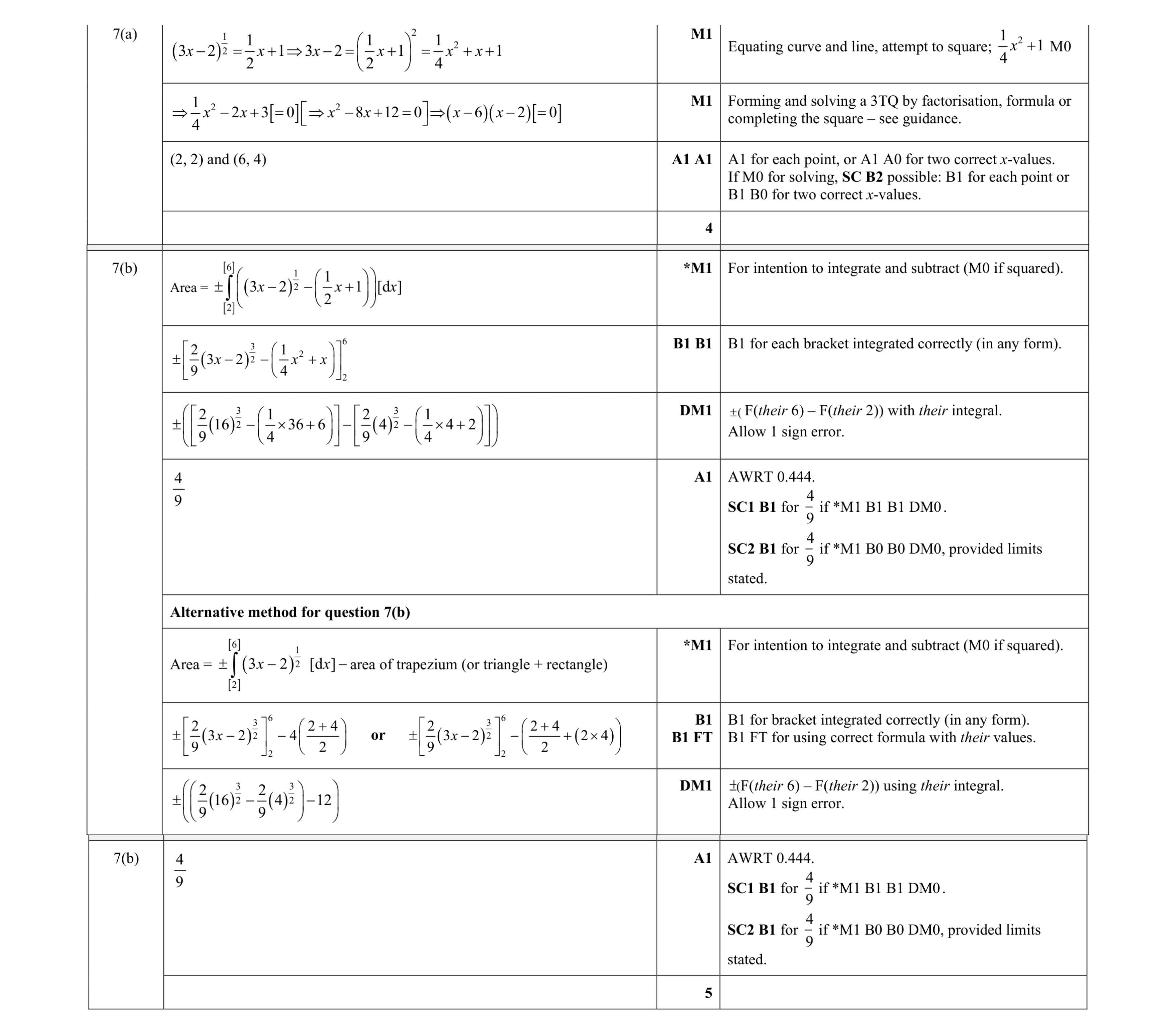 9
9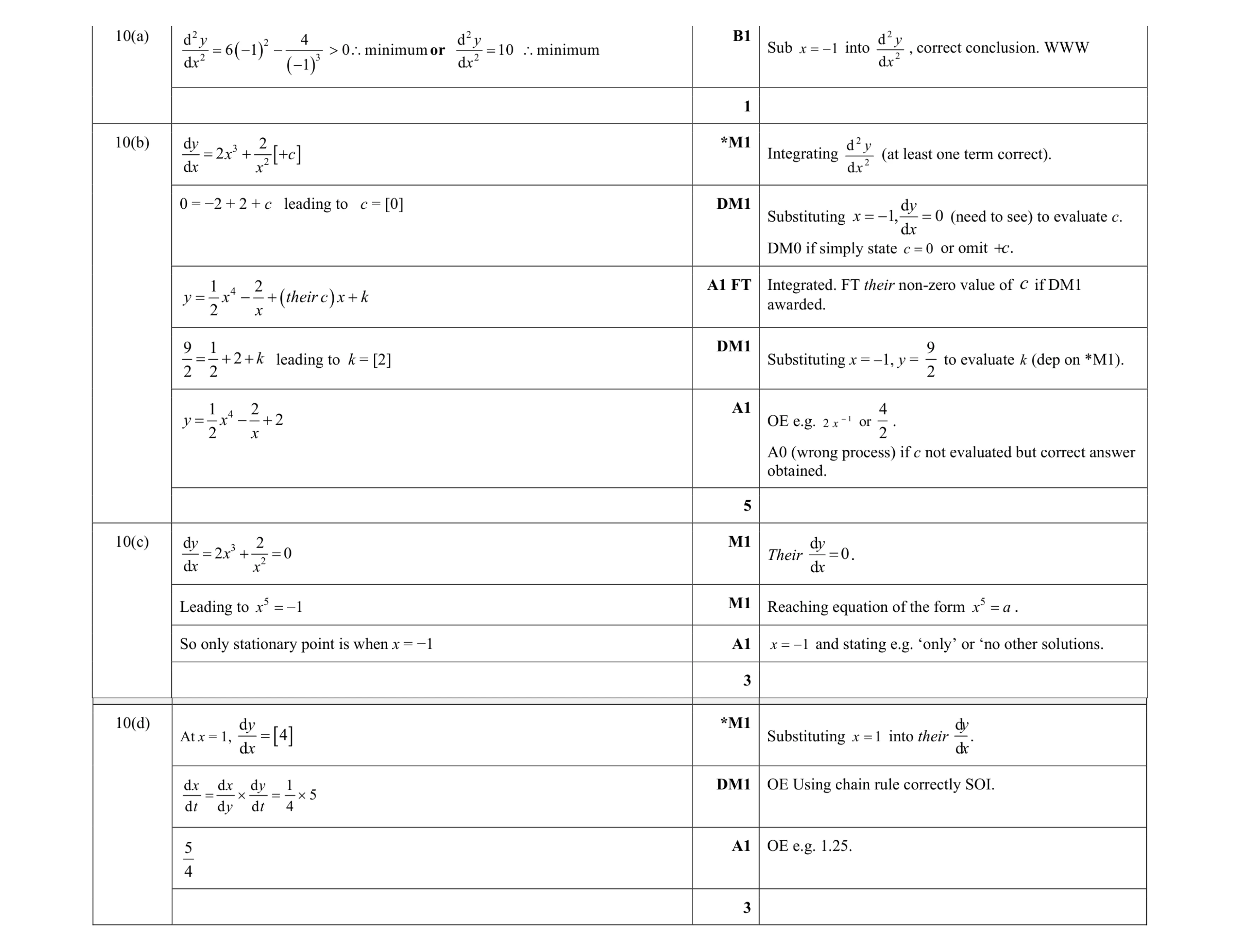 12
12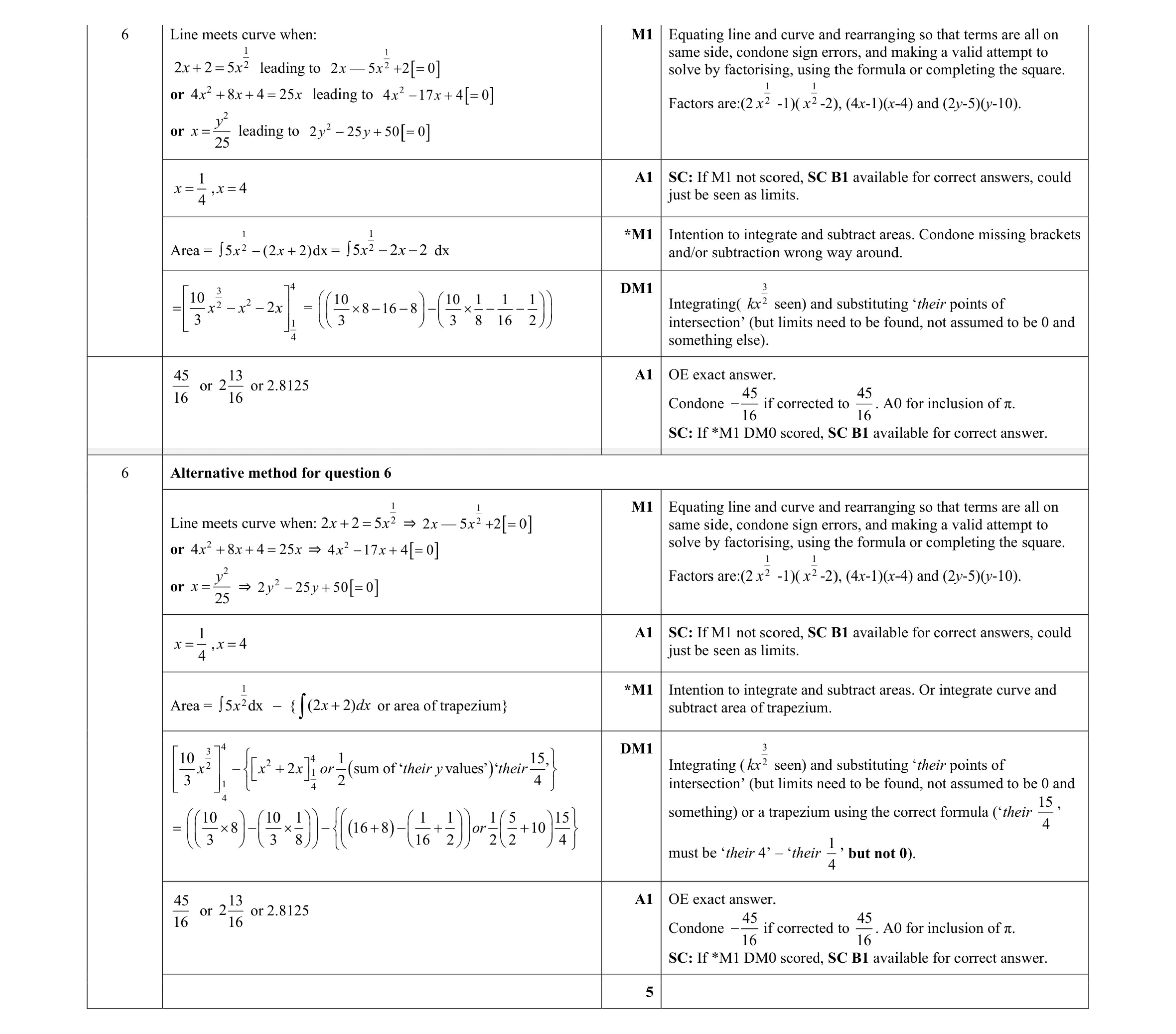 5
5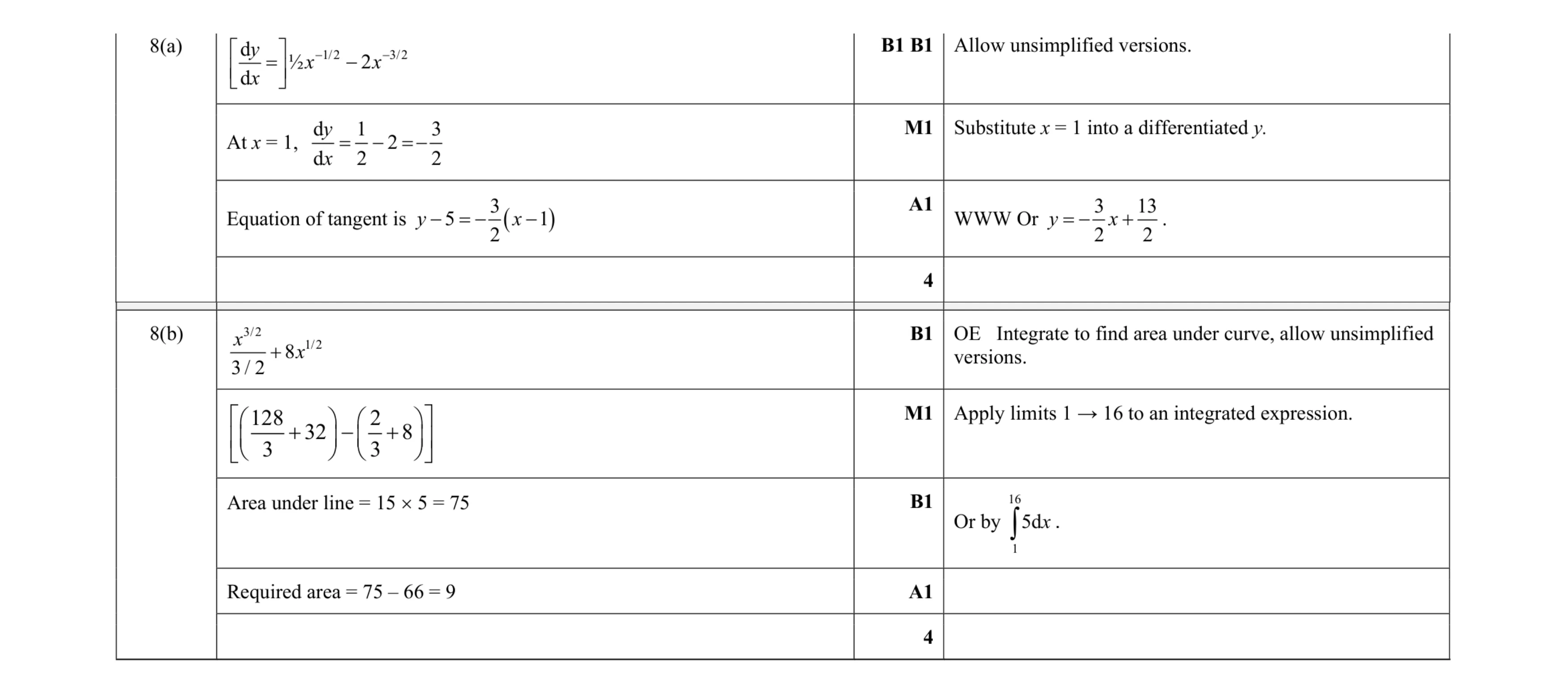 8
8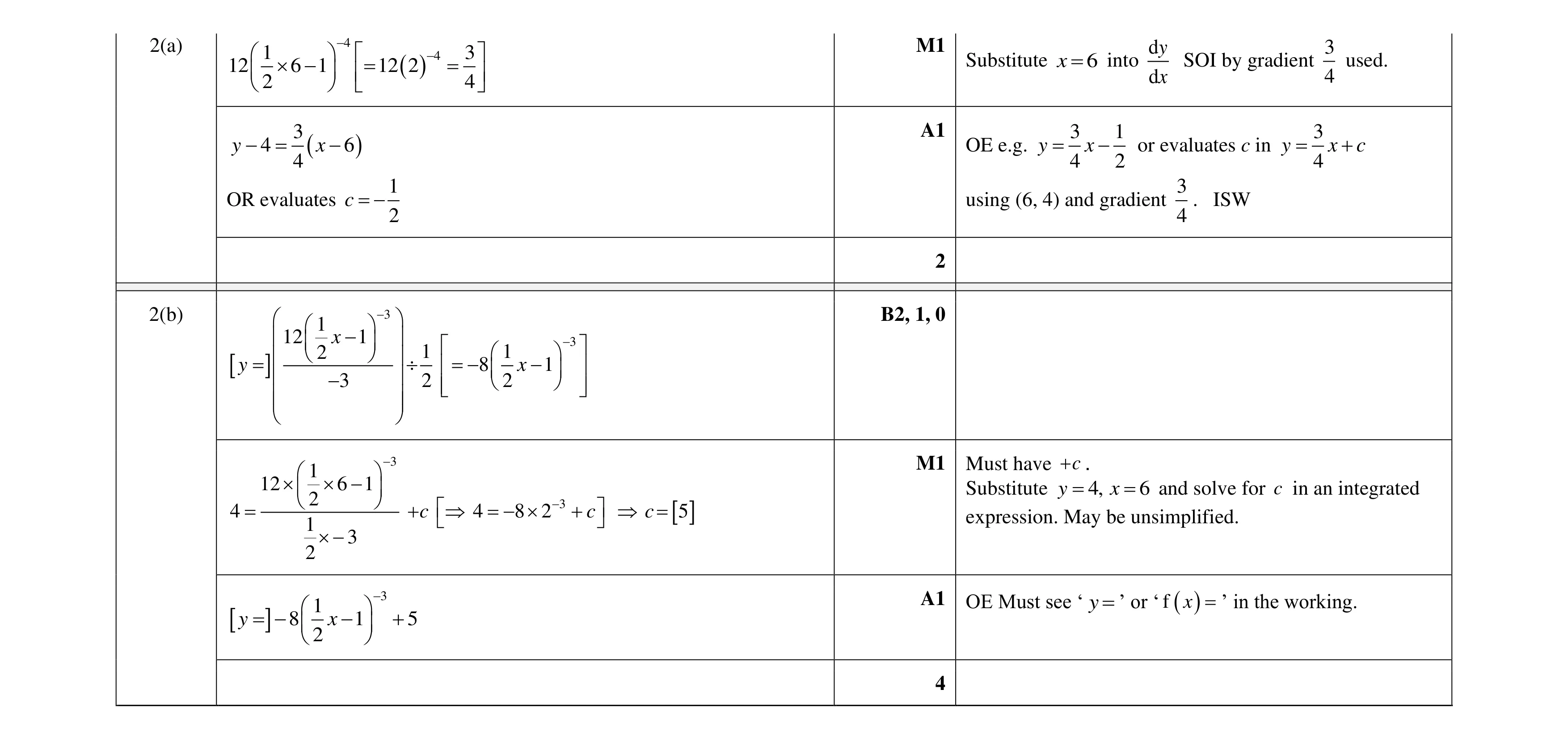 6
6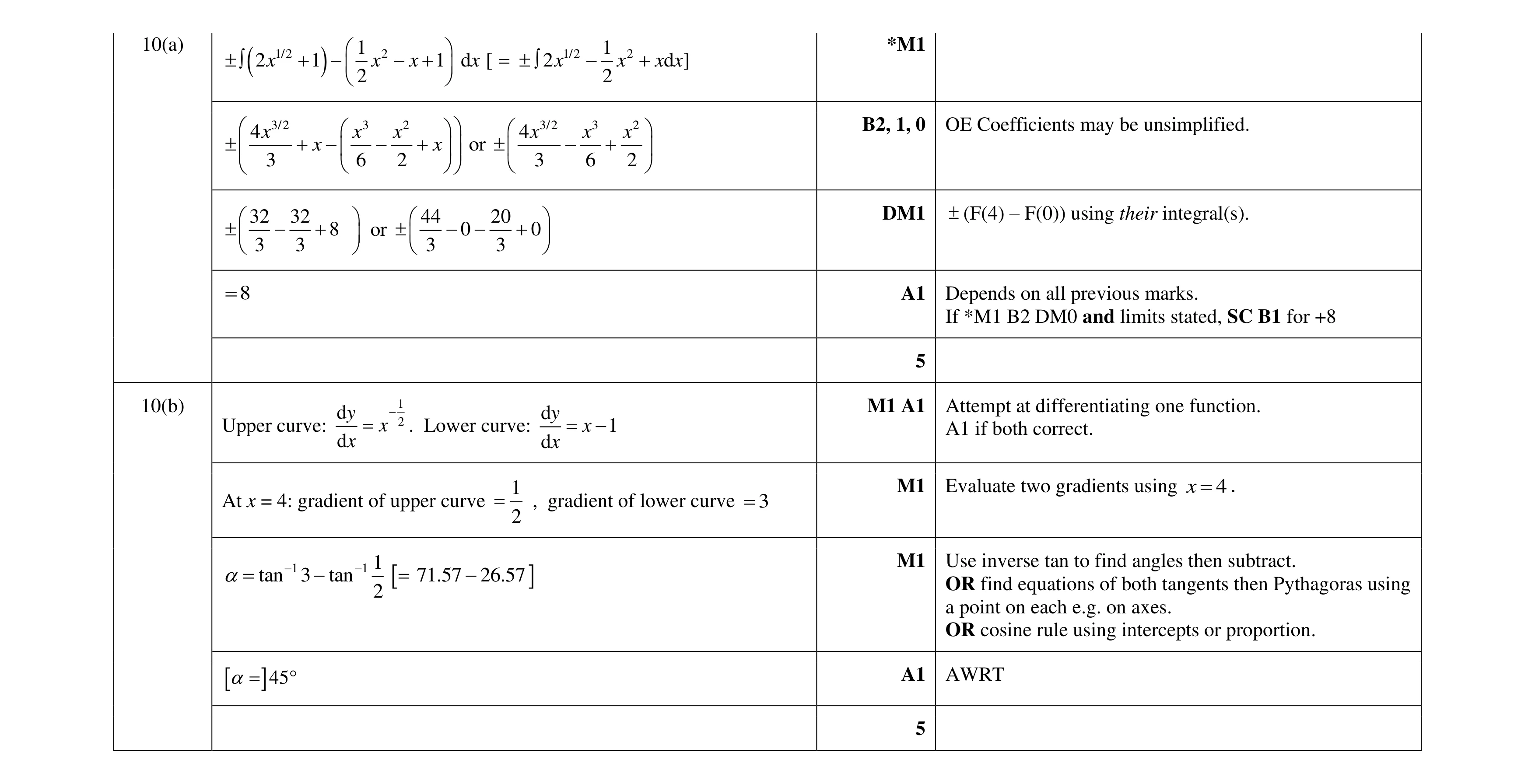 10
10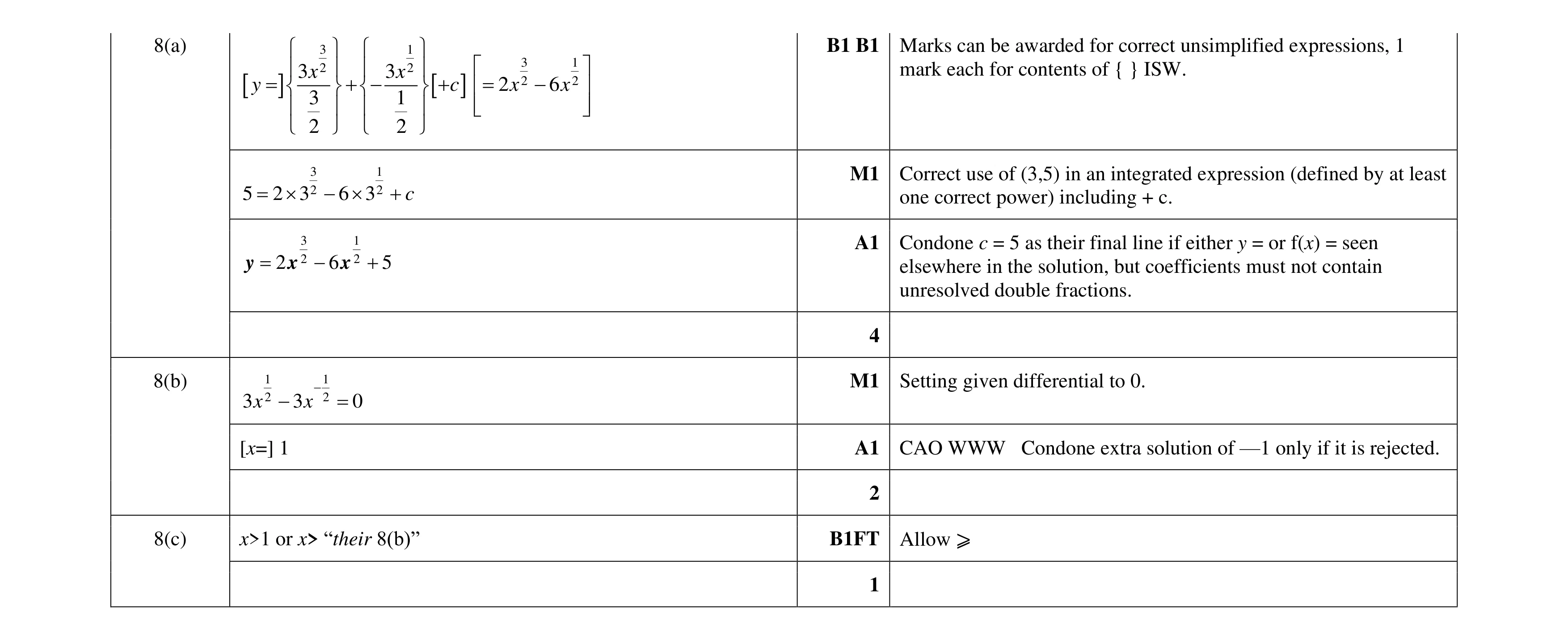 7
7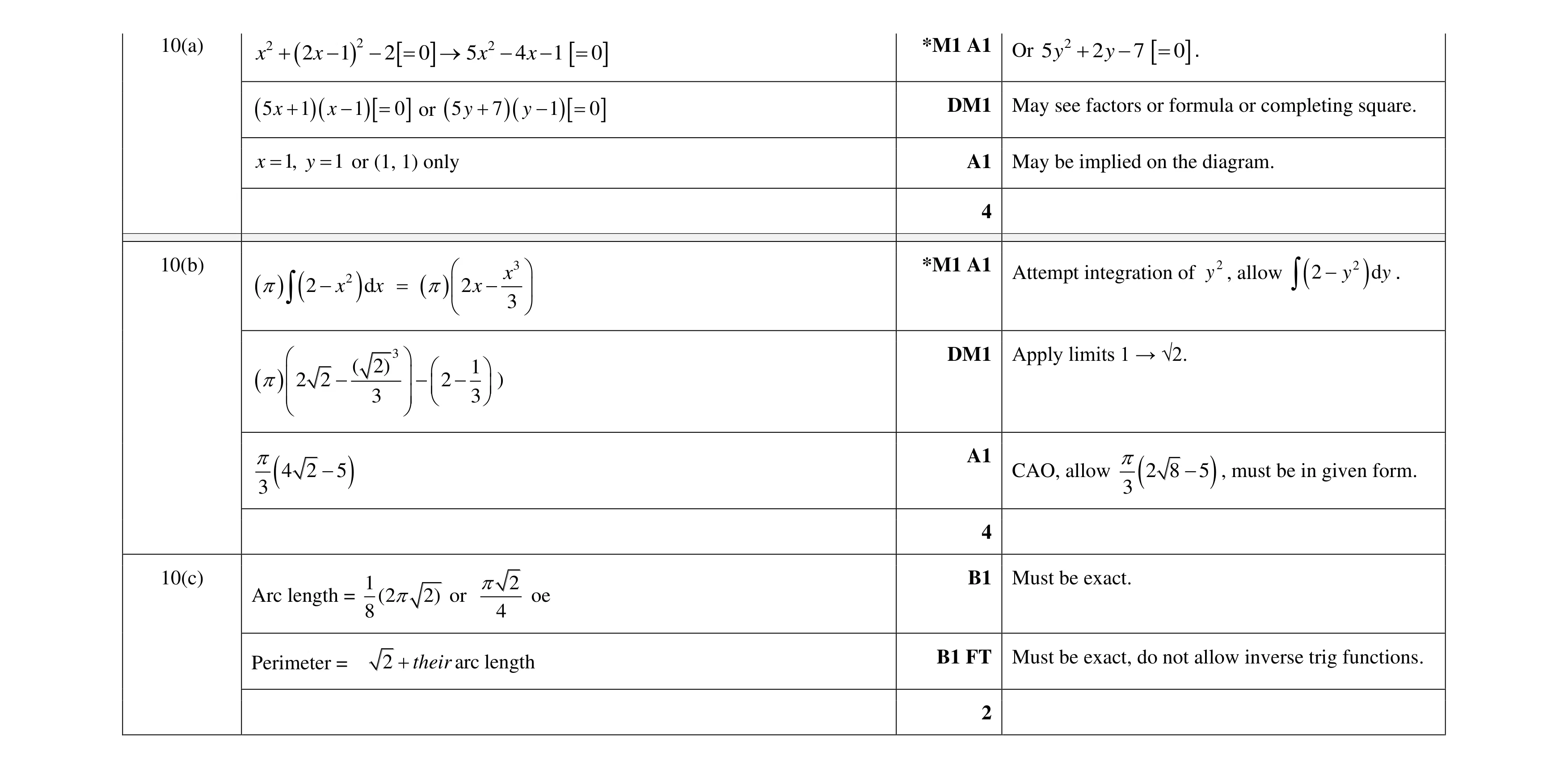 10
10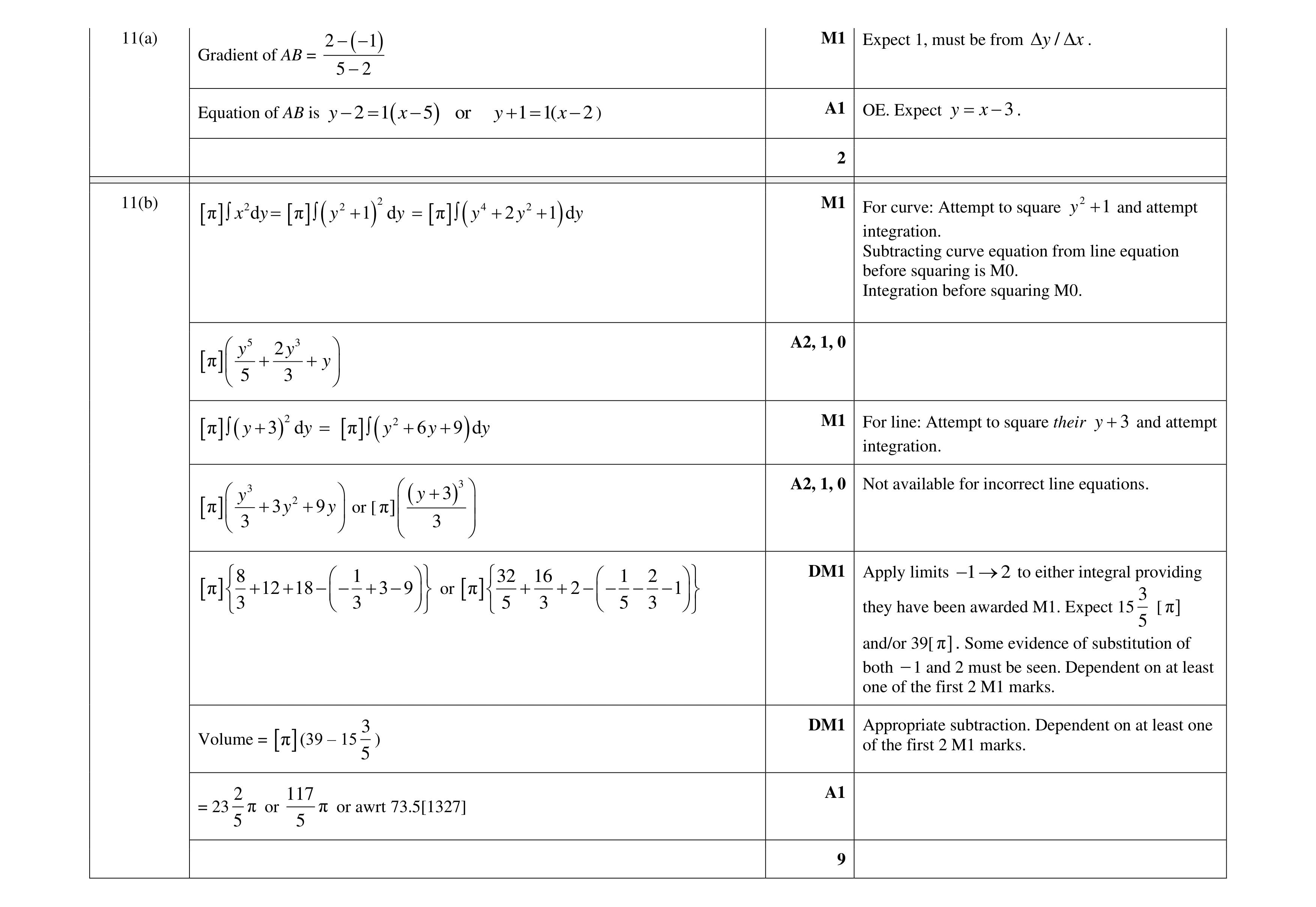 11
11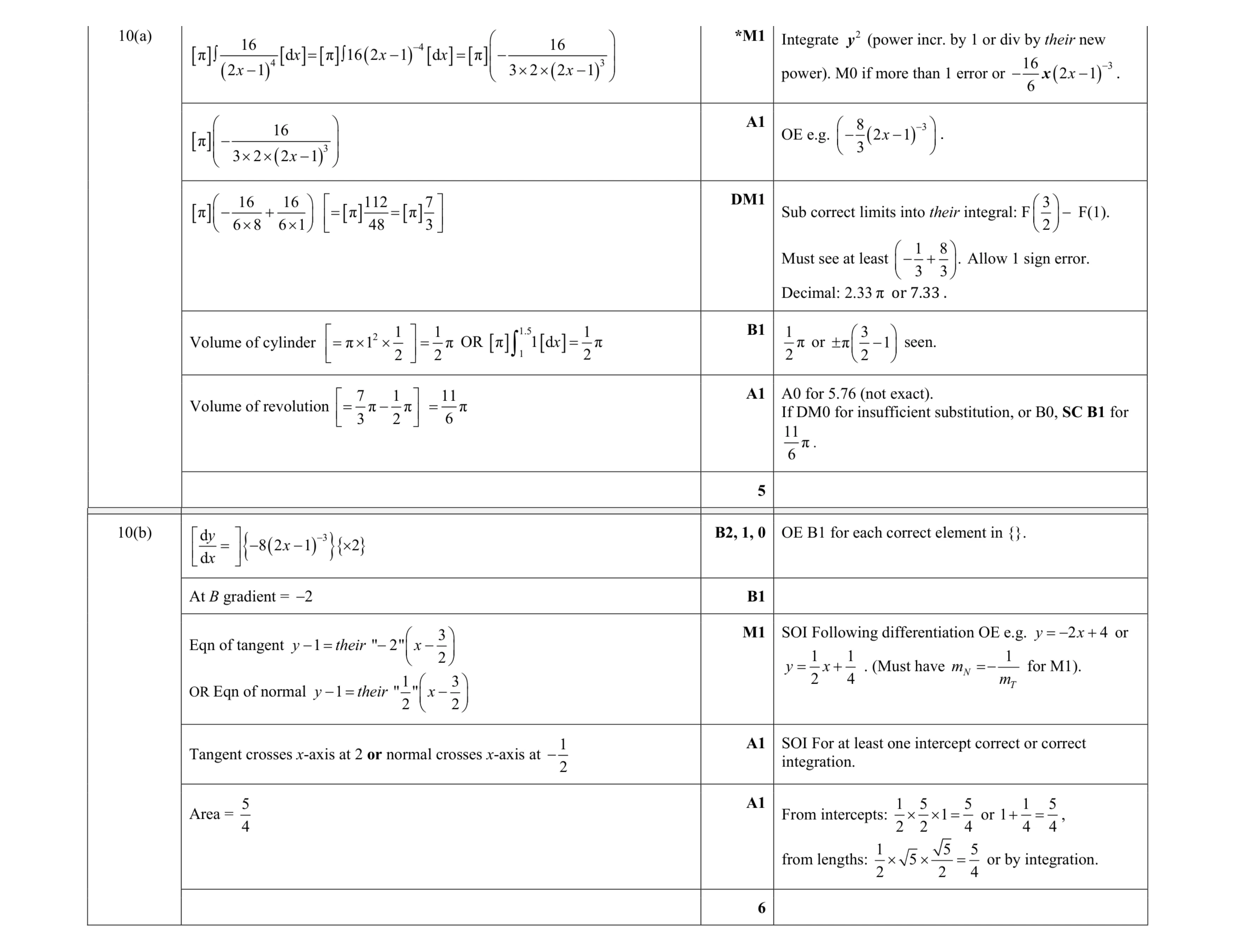 11
11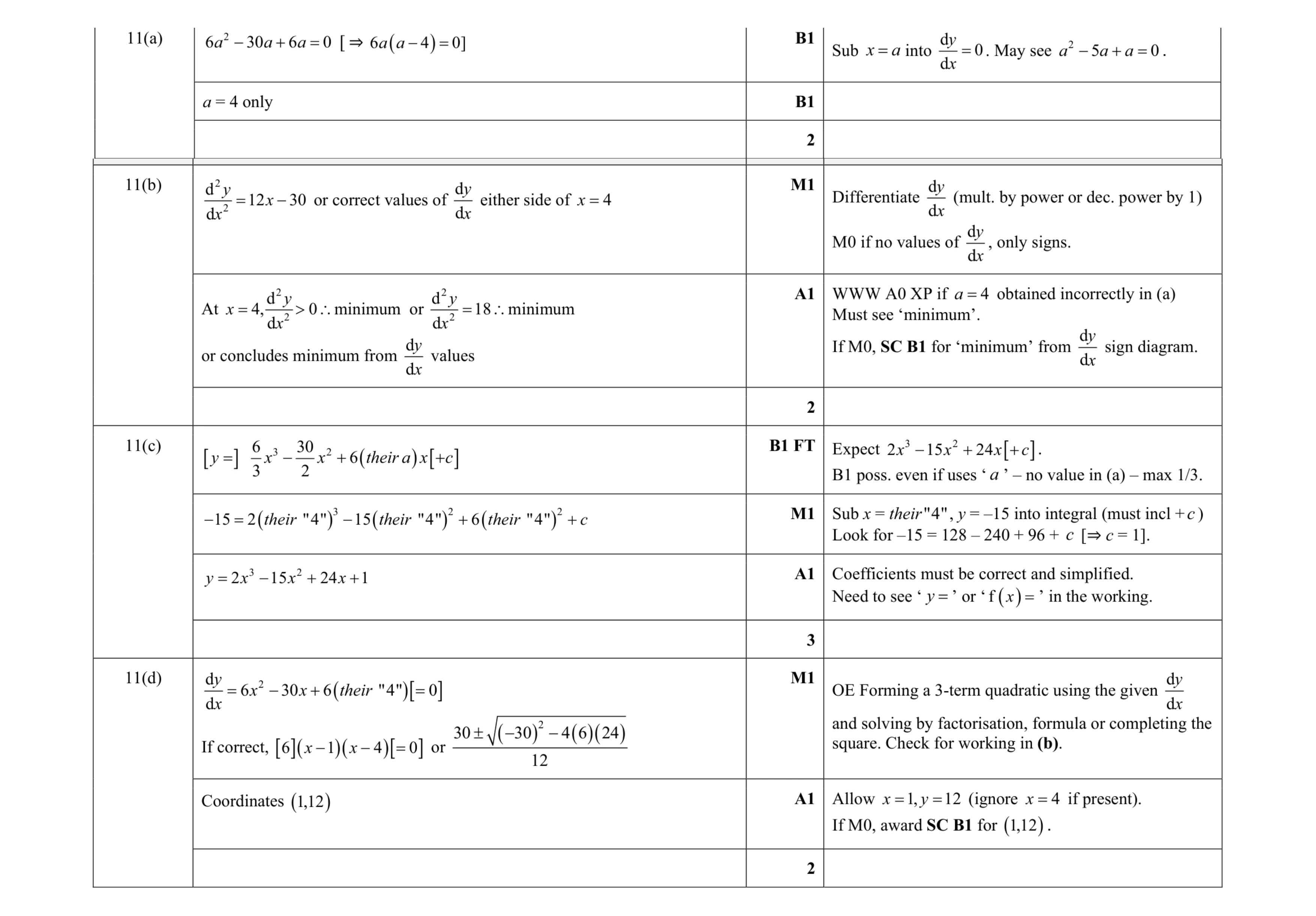 9
9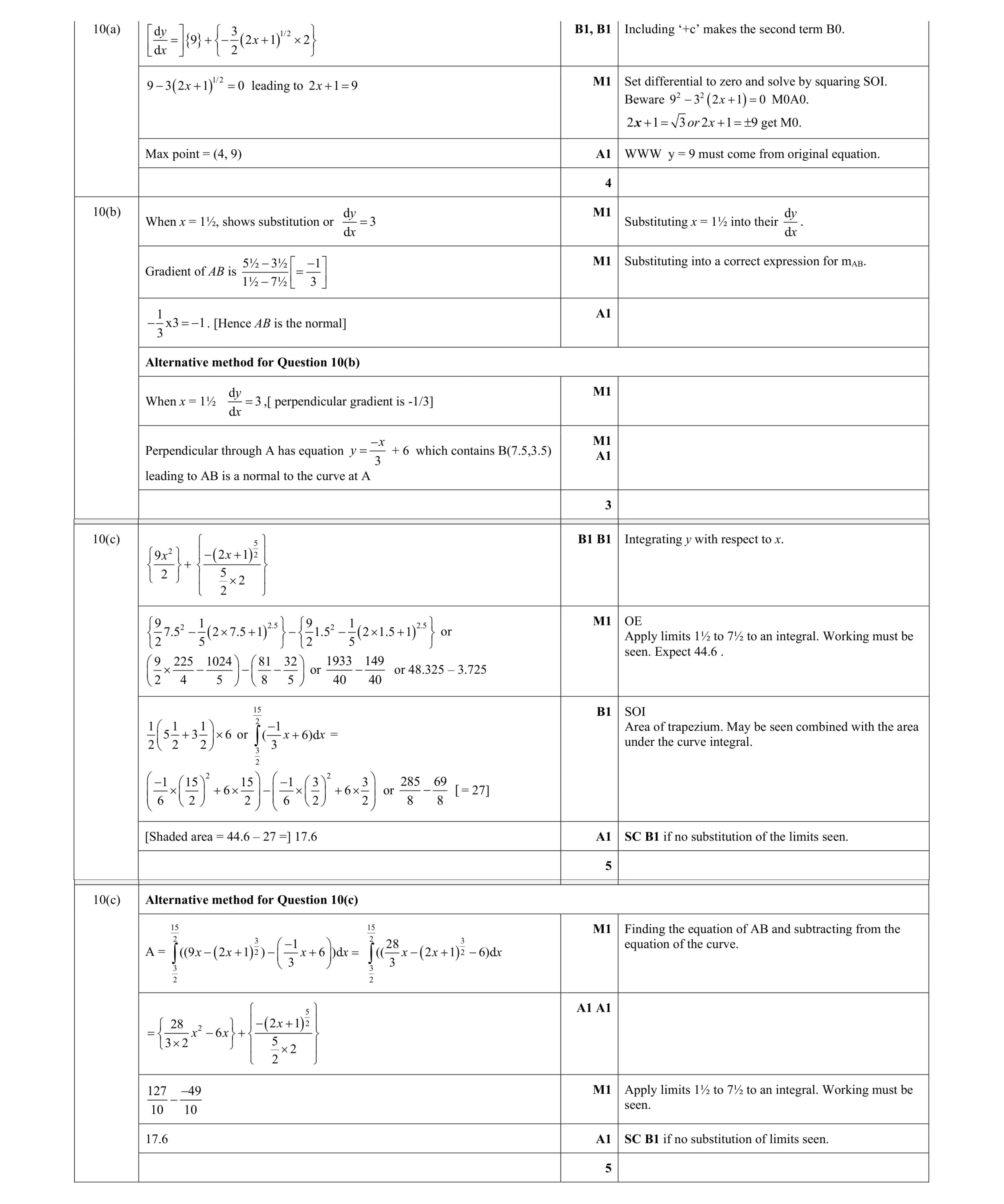 12
12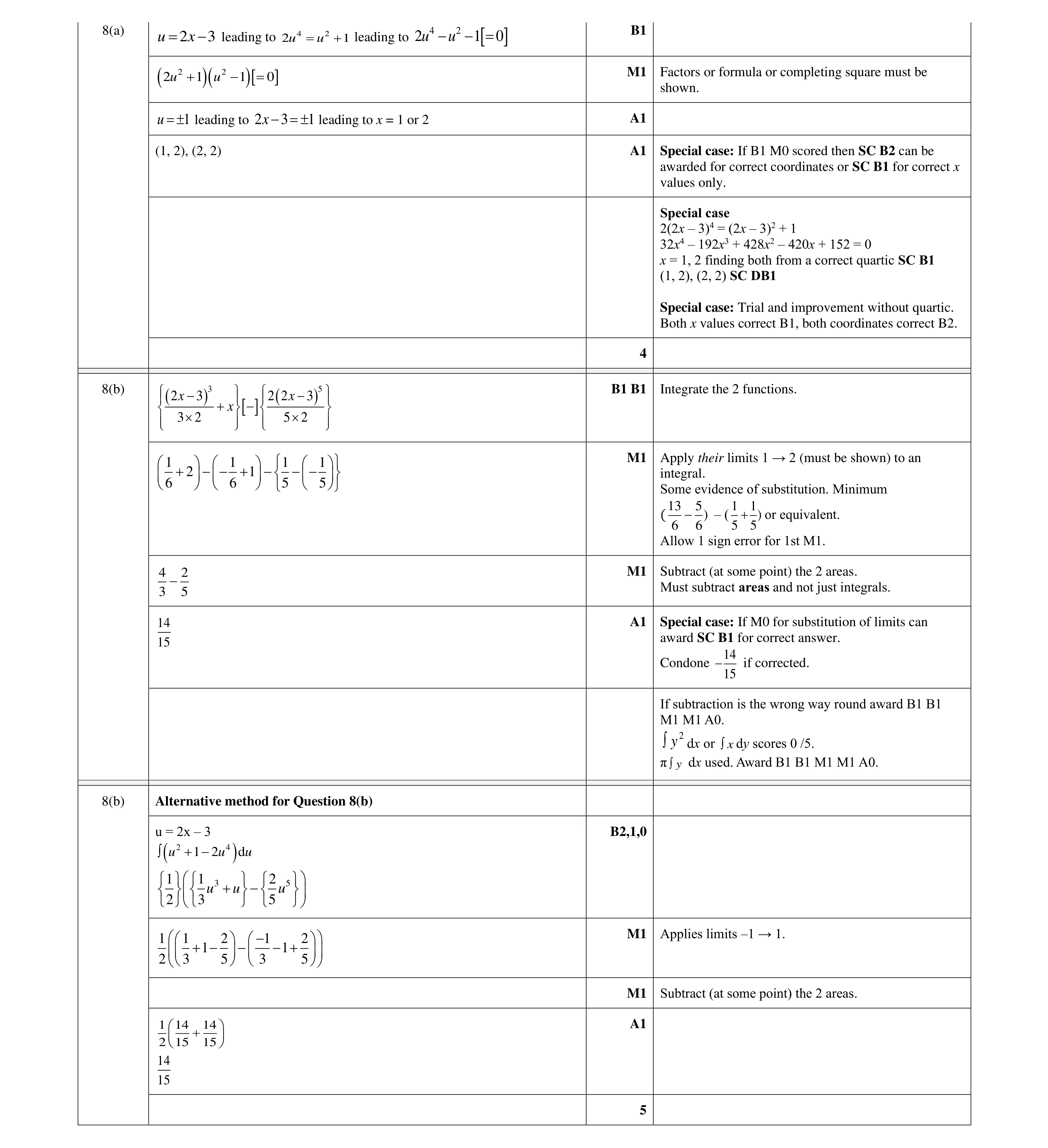 9
9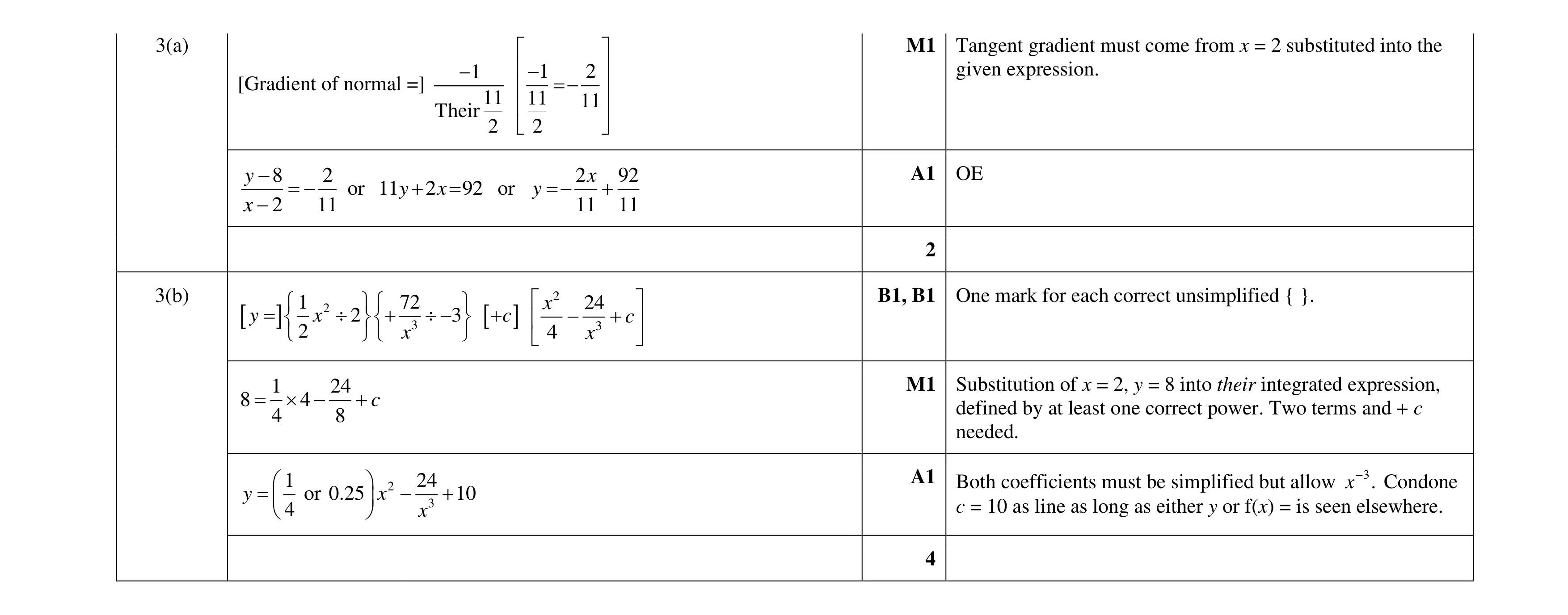 6
6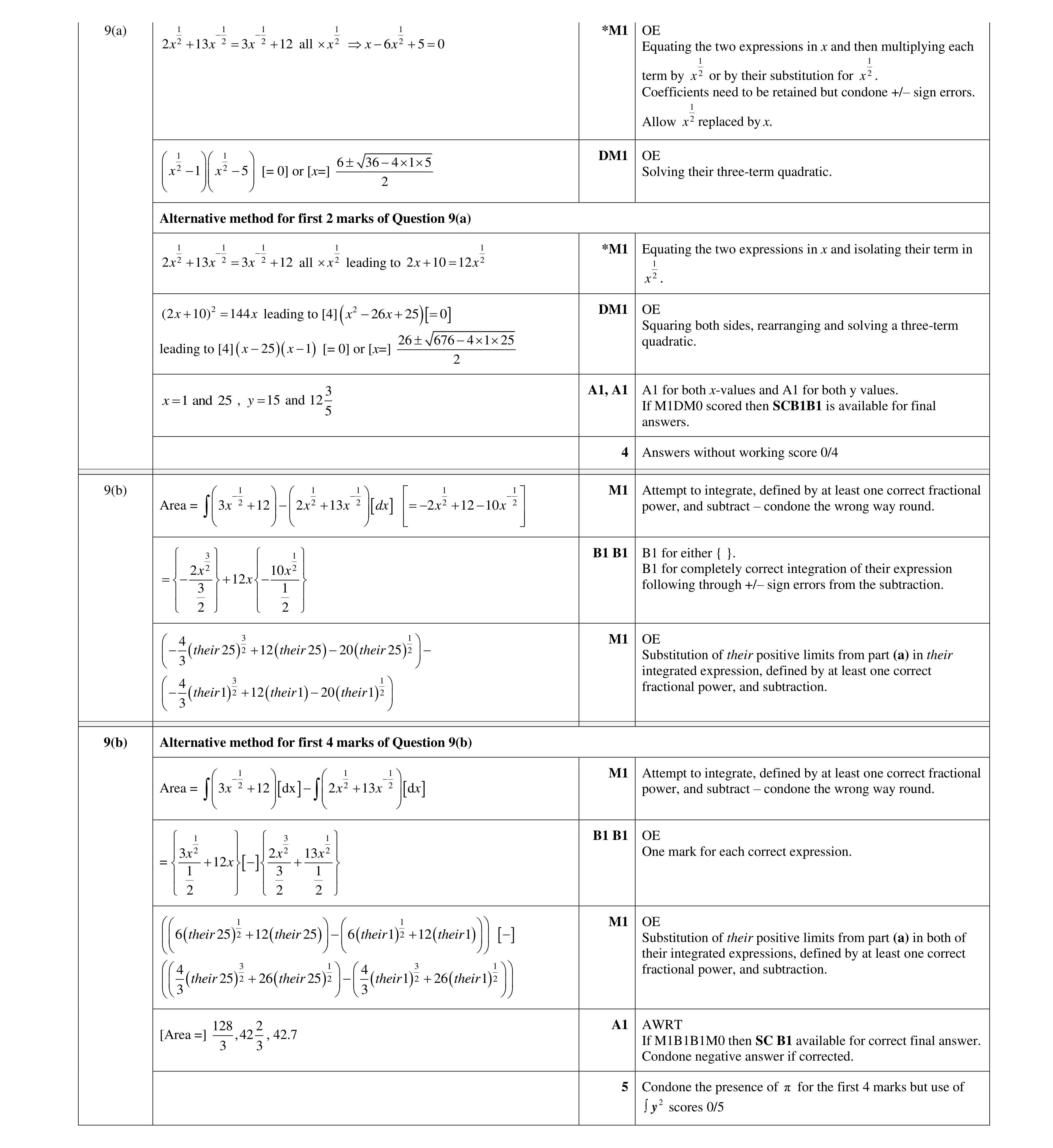 9
9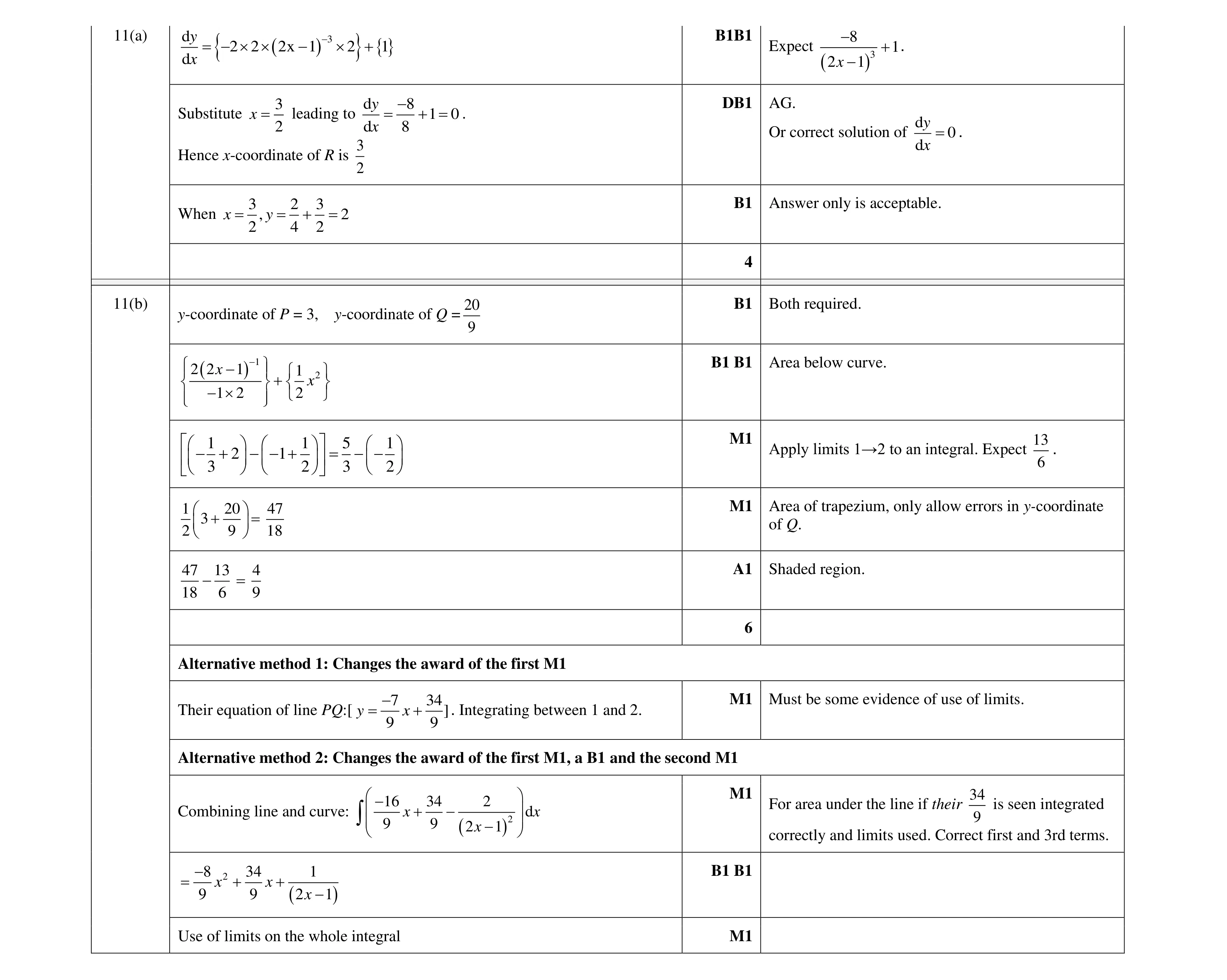 10
10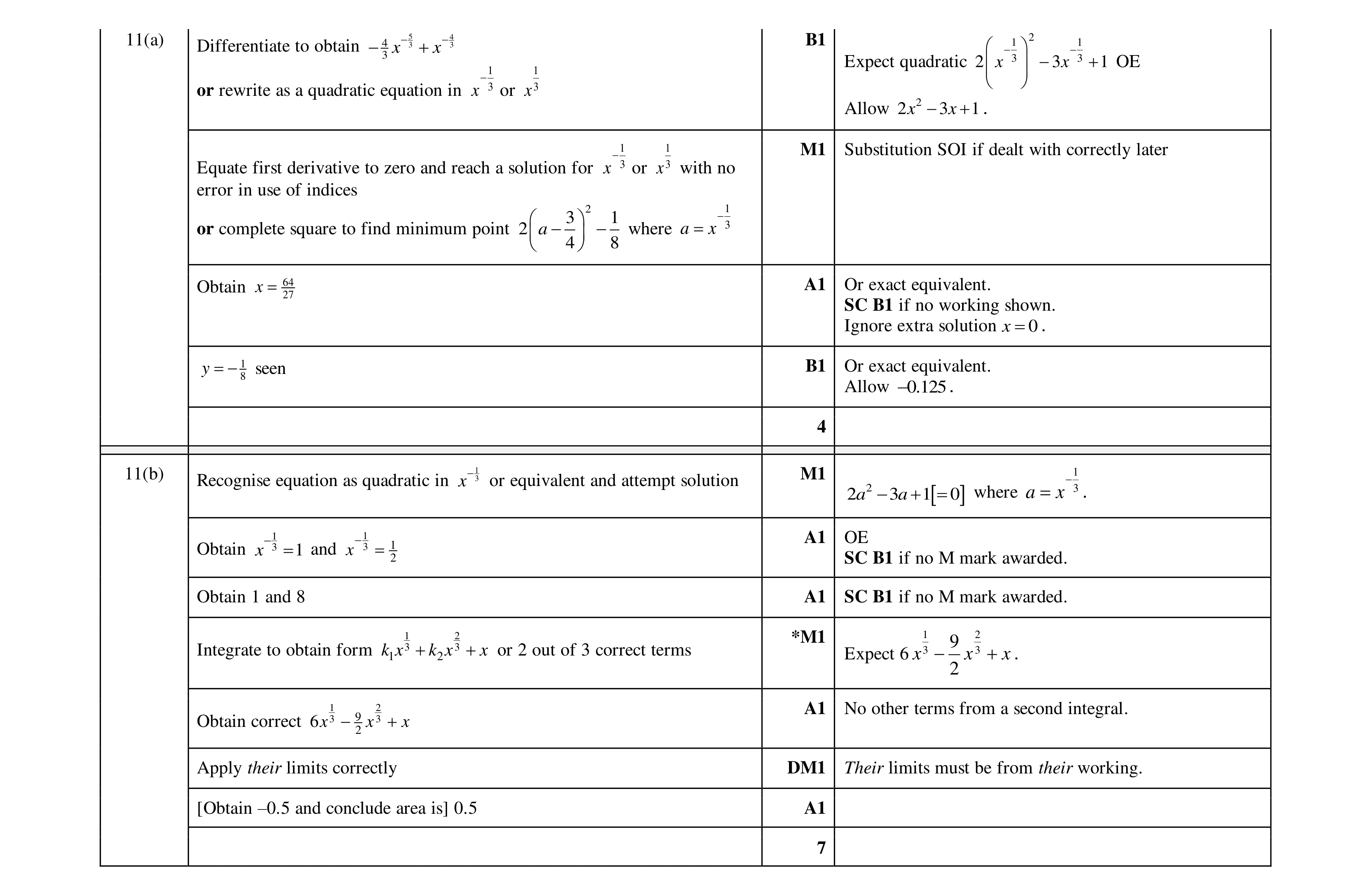 11
11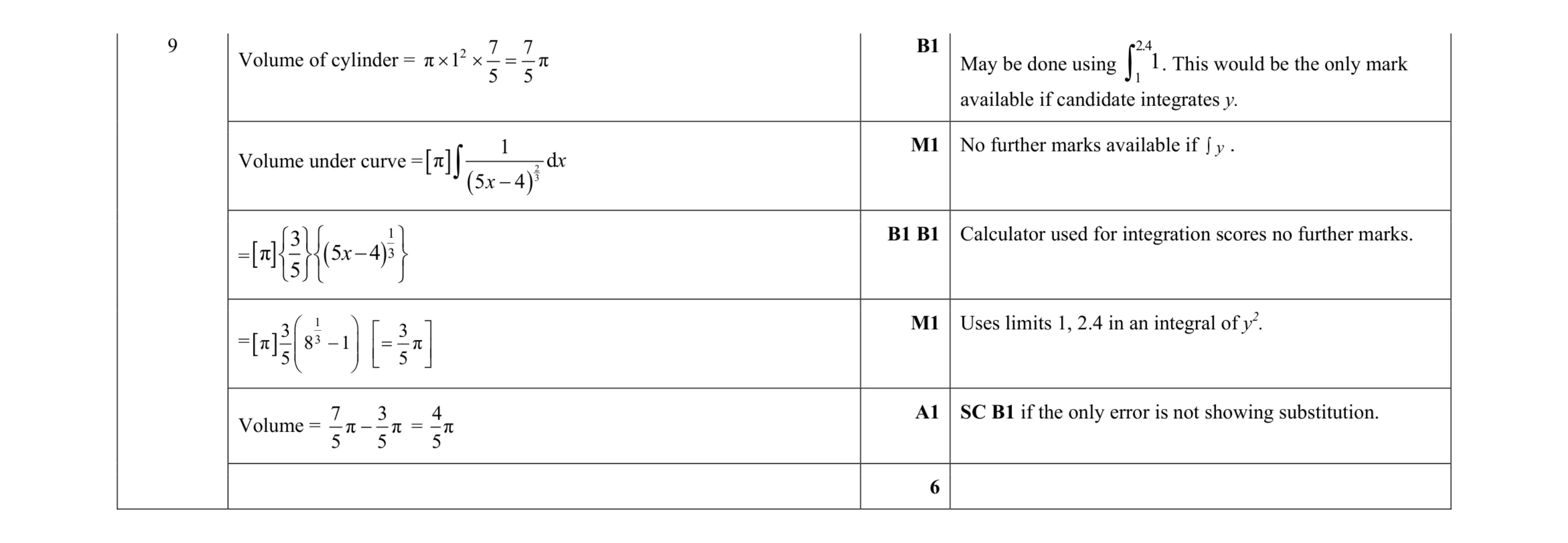 6
6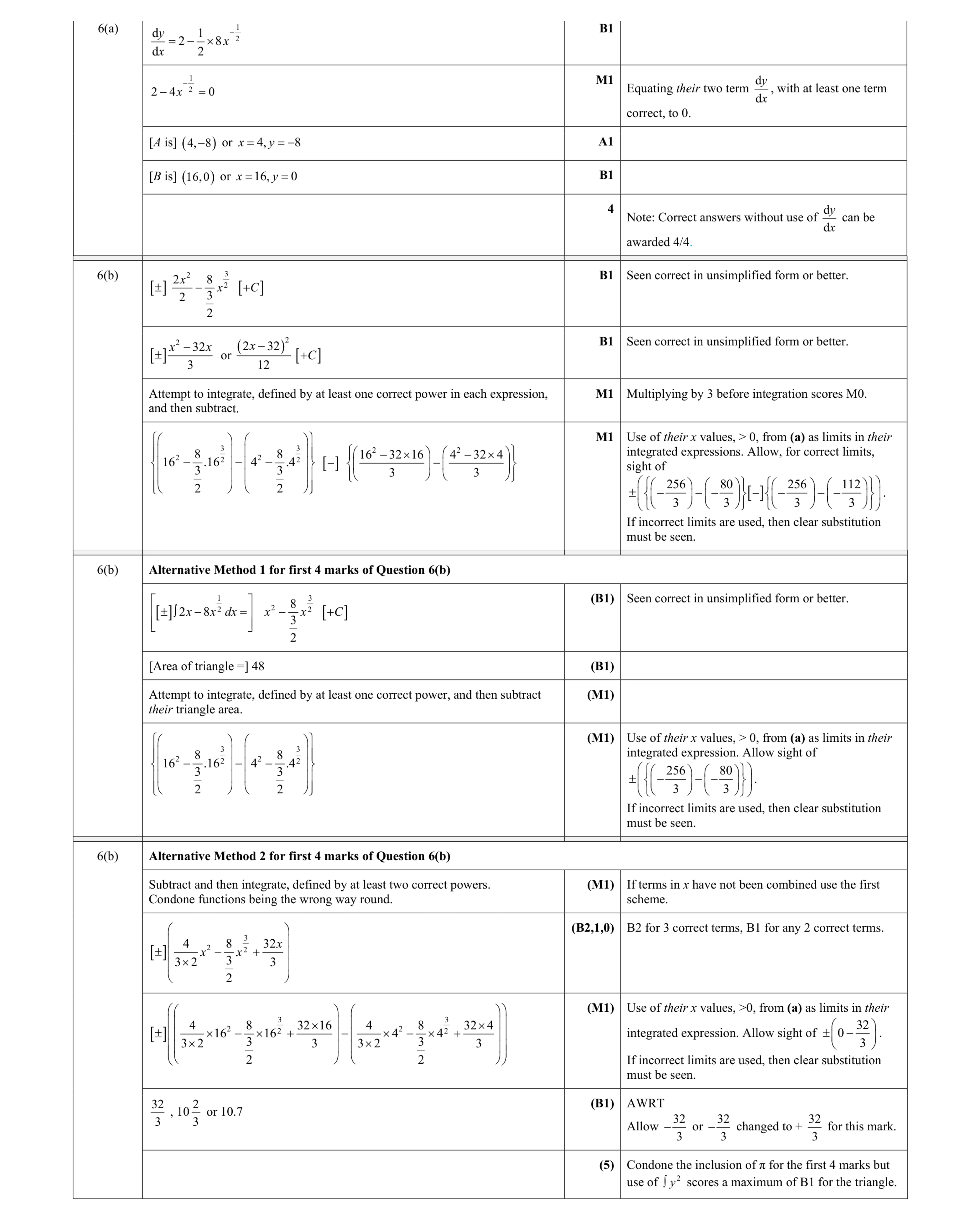 9
9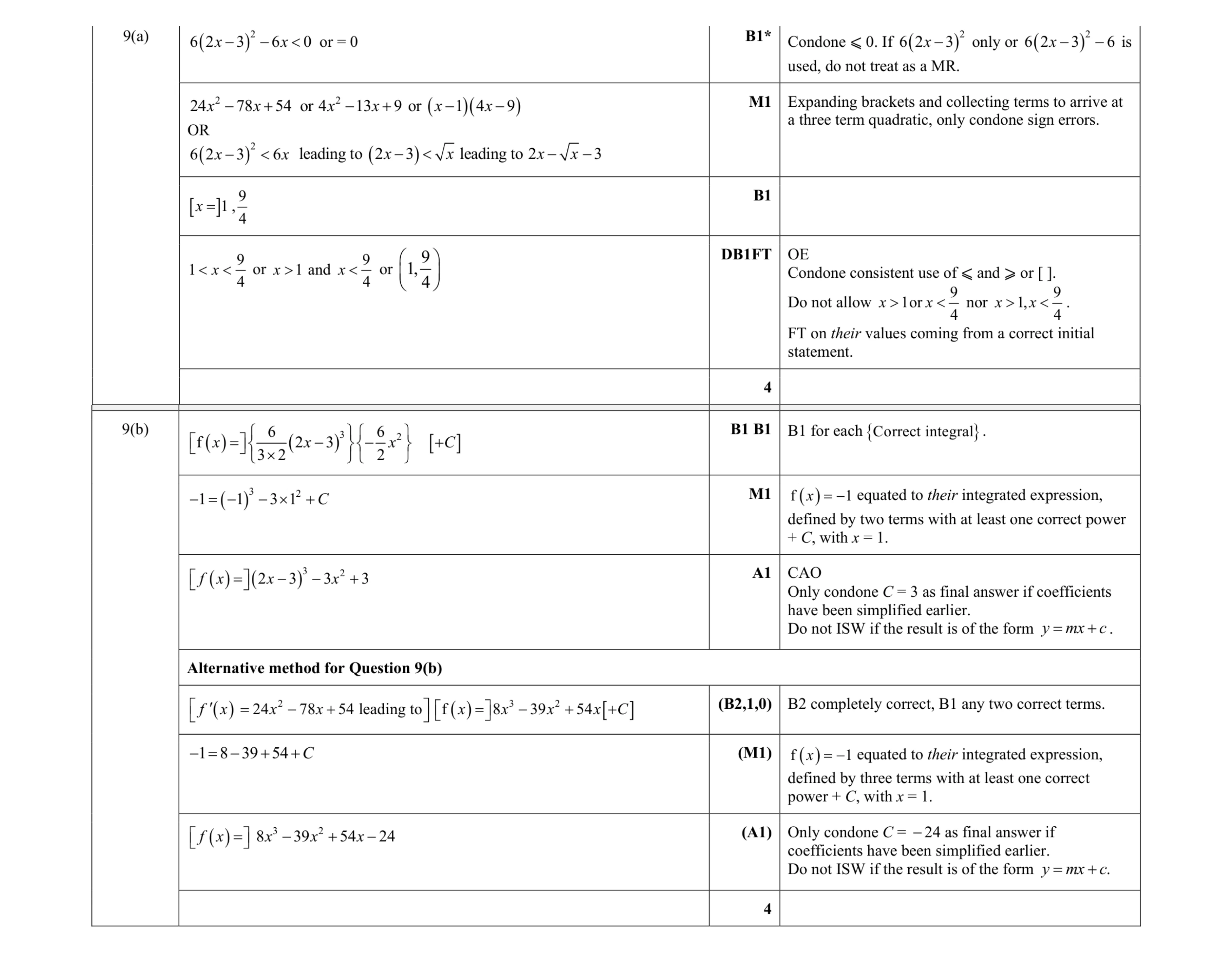 8
8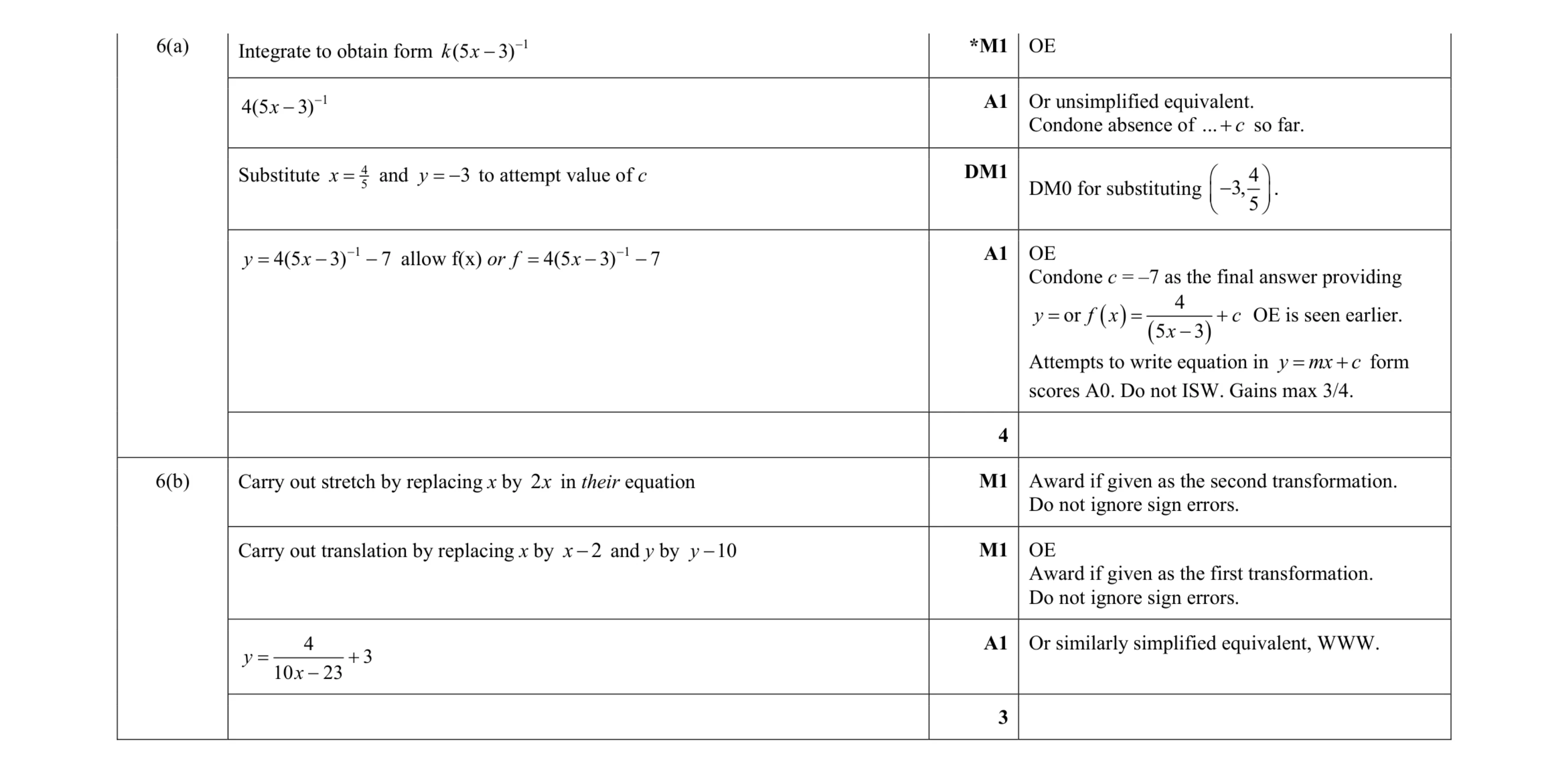 7
7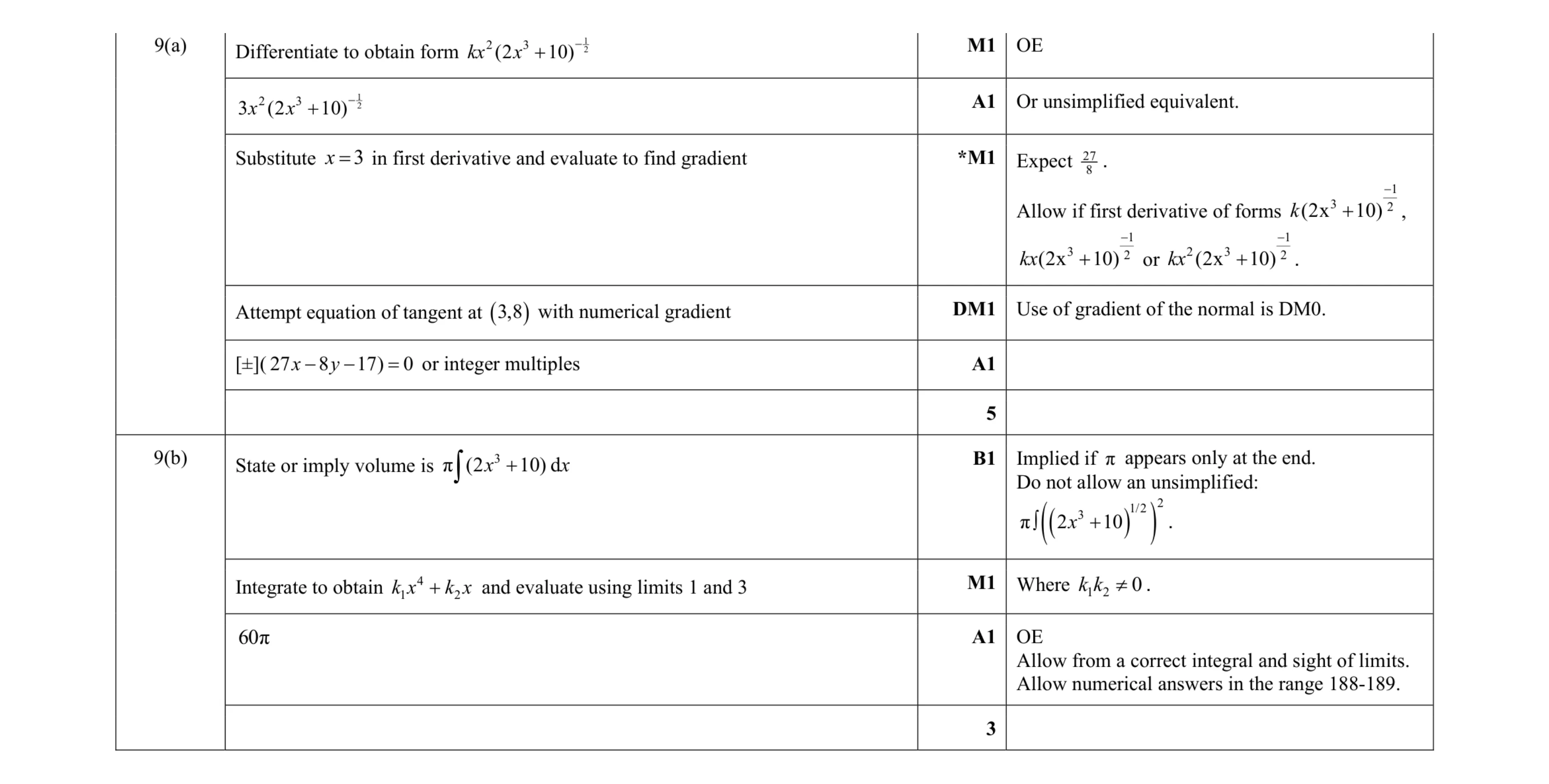 8
8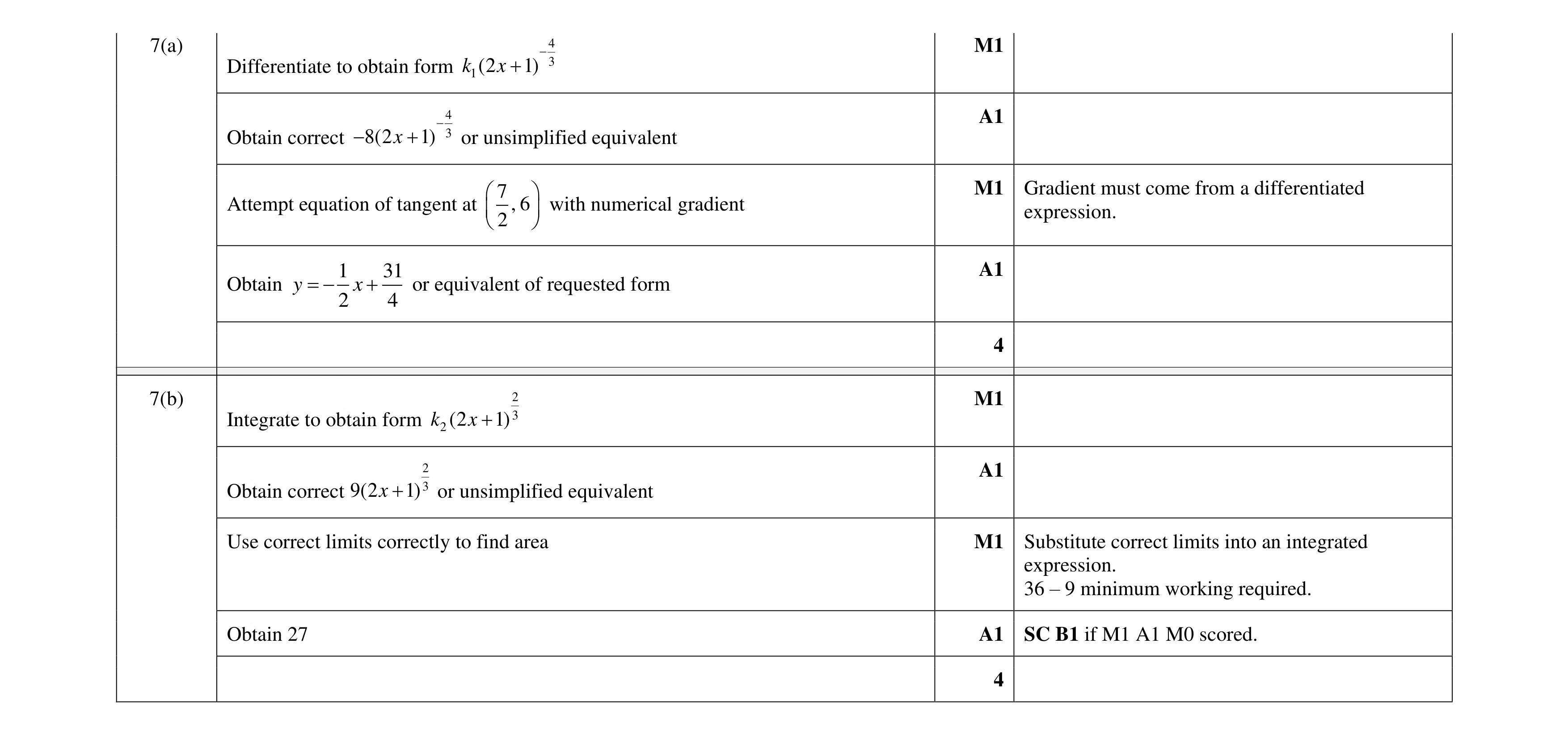 8
8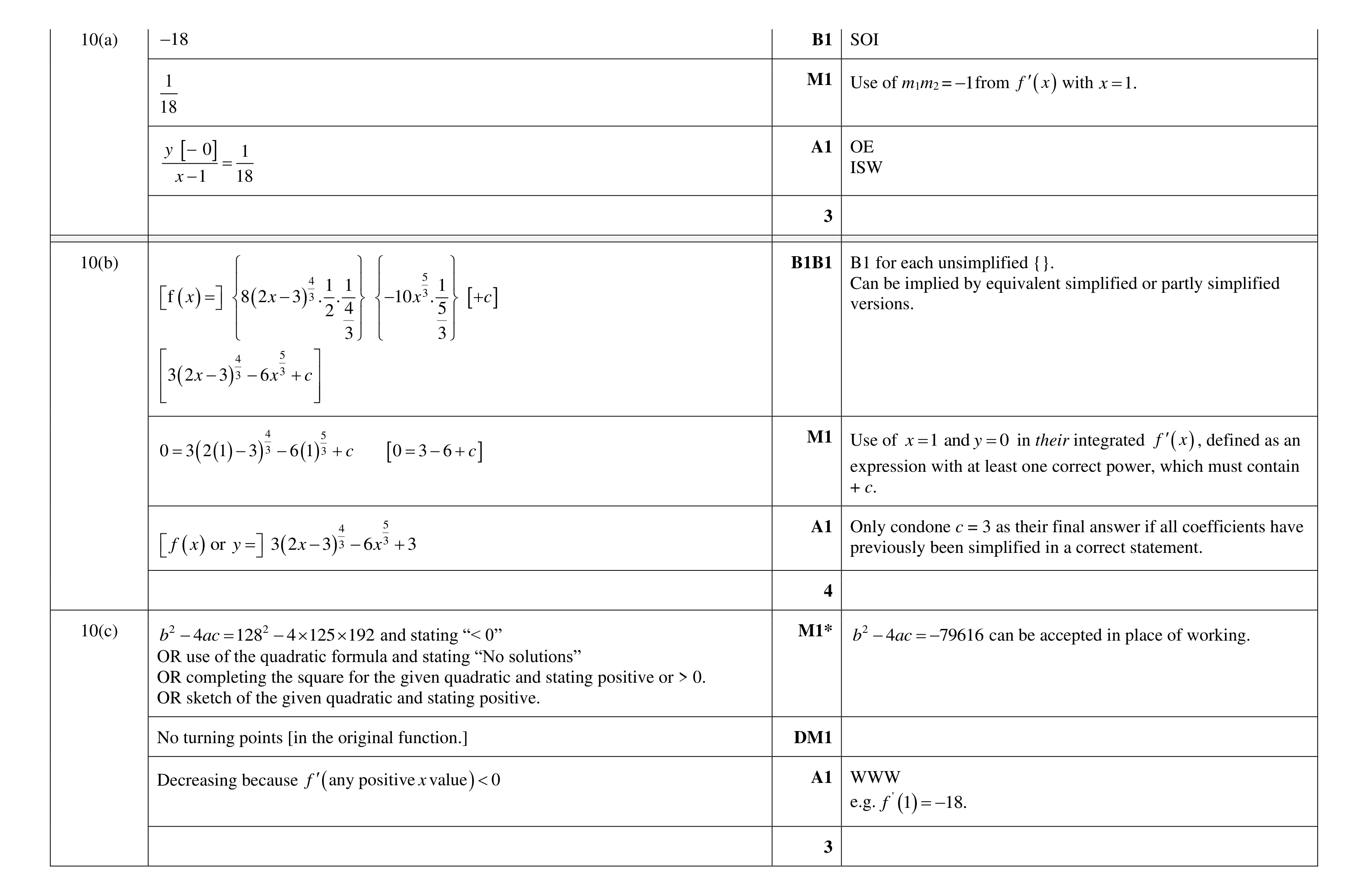 10
10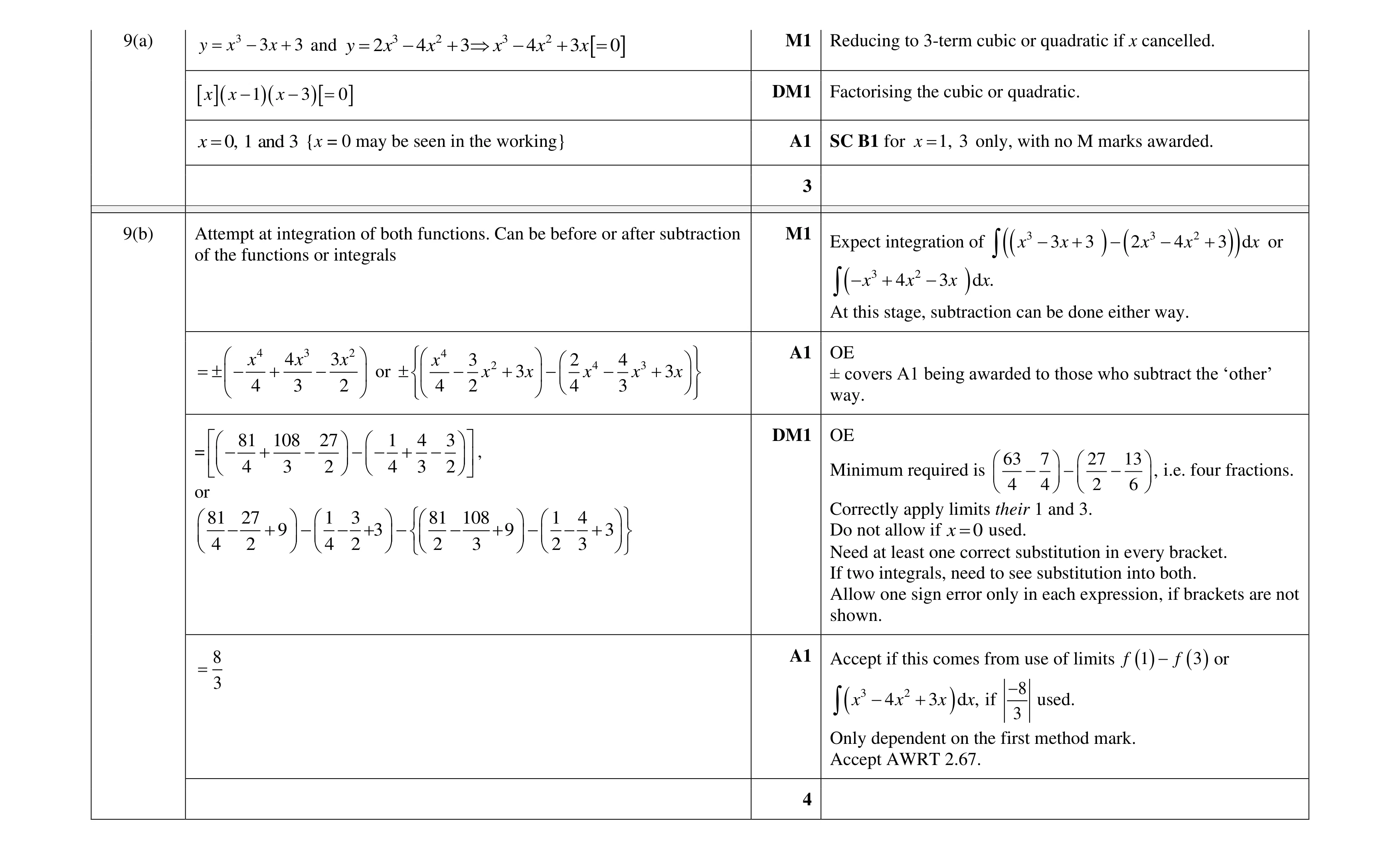 7
7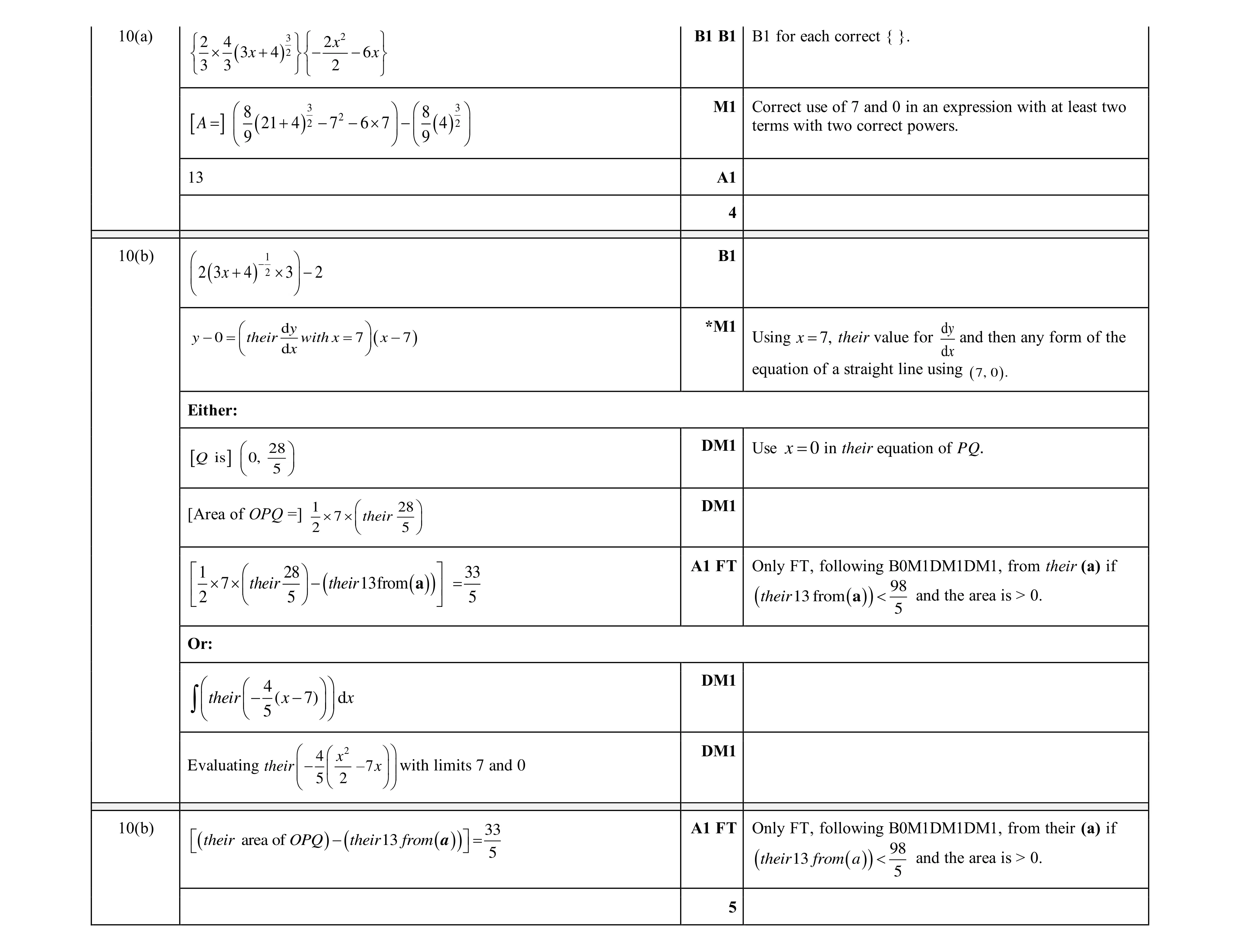 9
9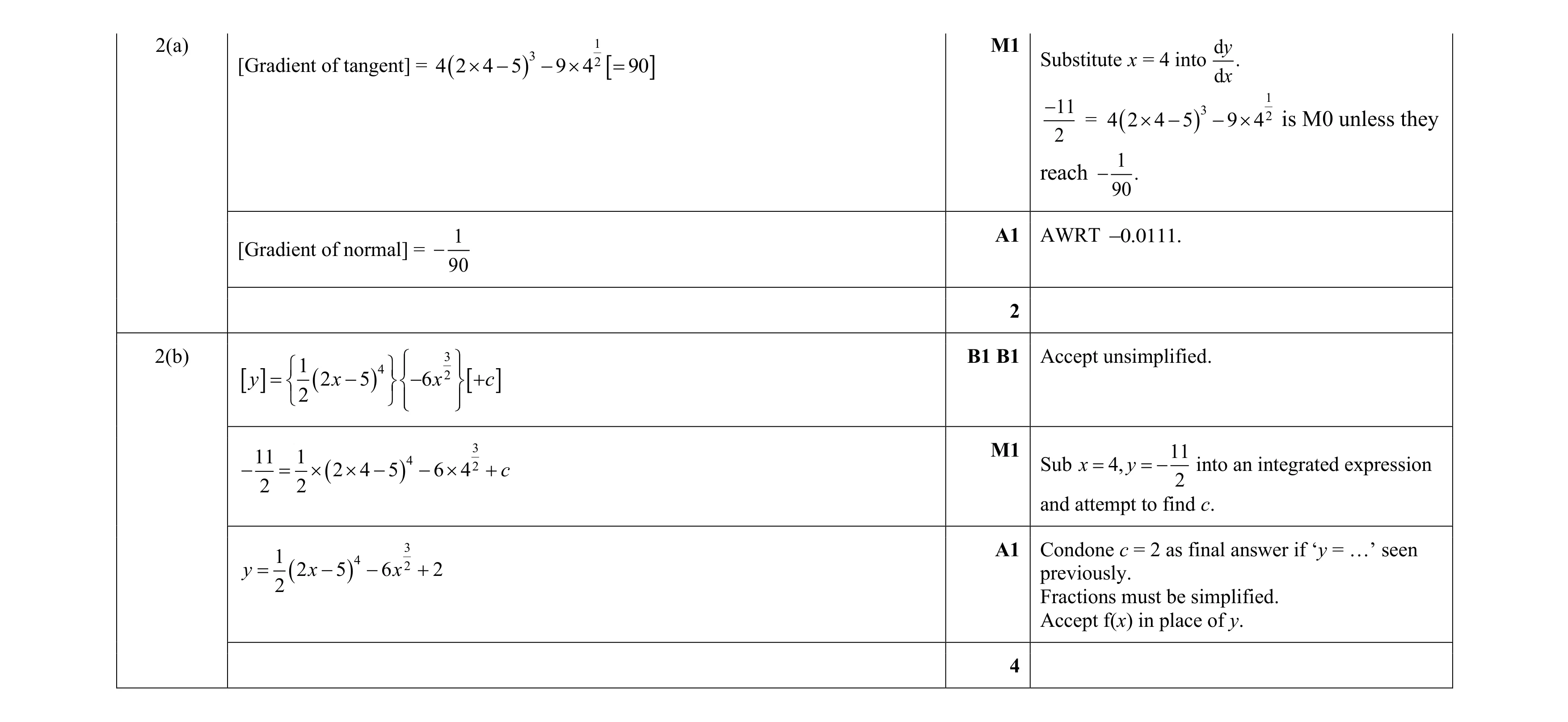 6
6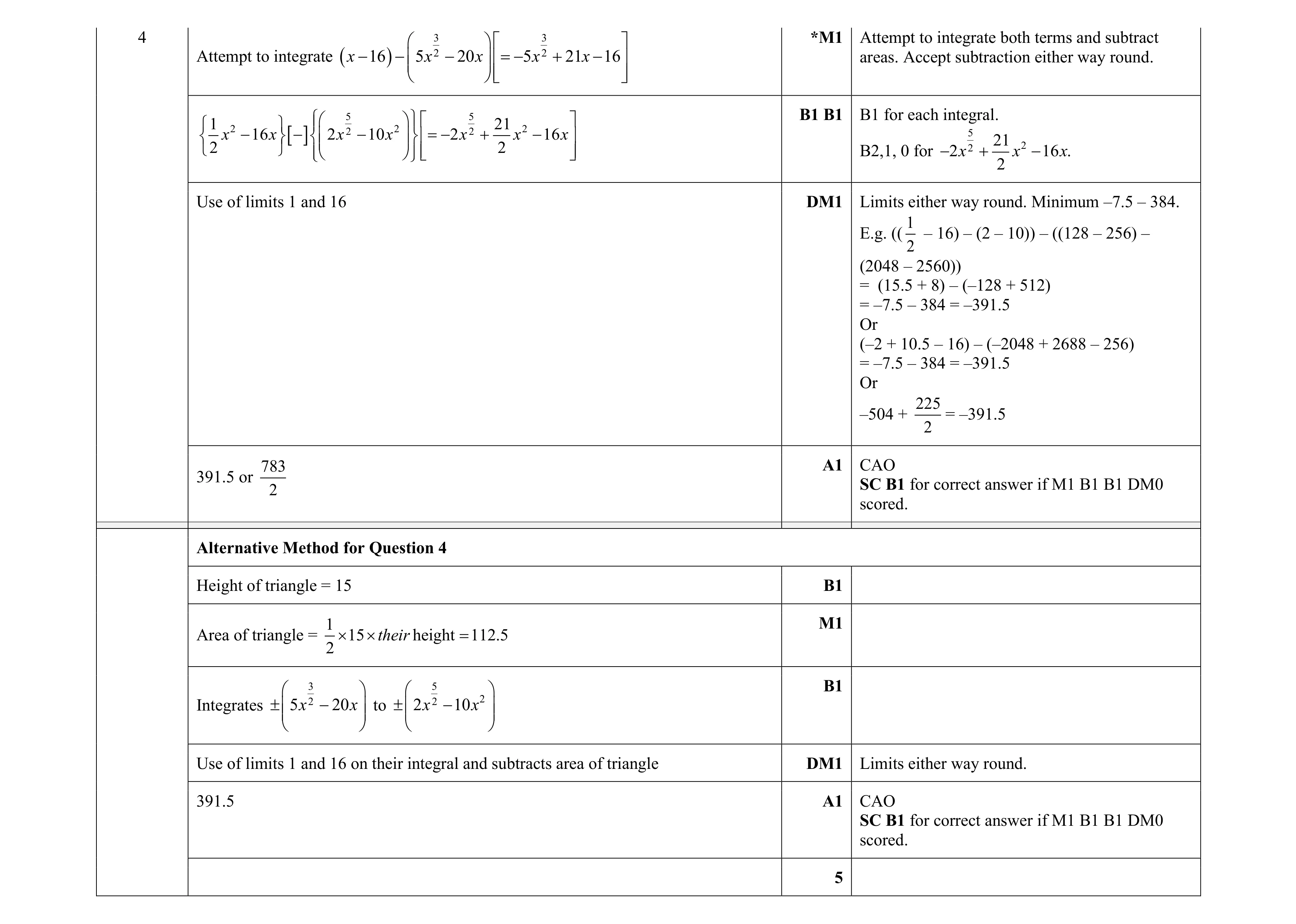 5
5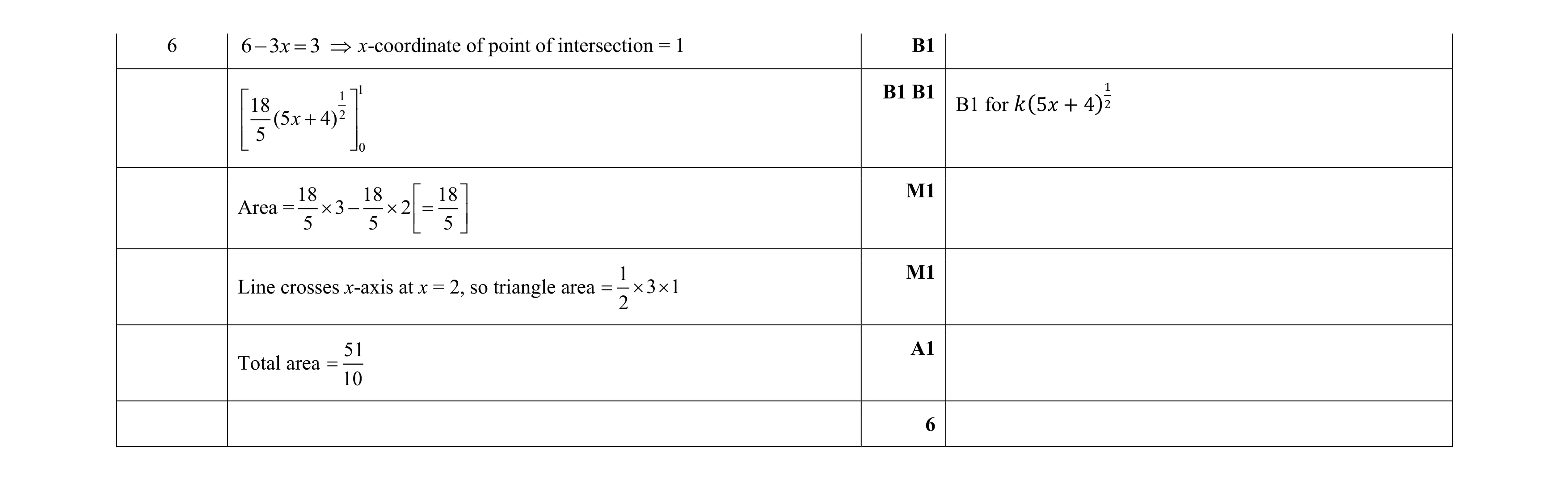 6
6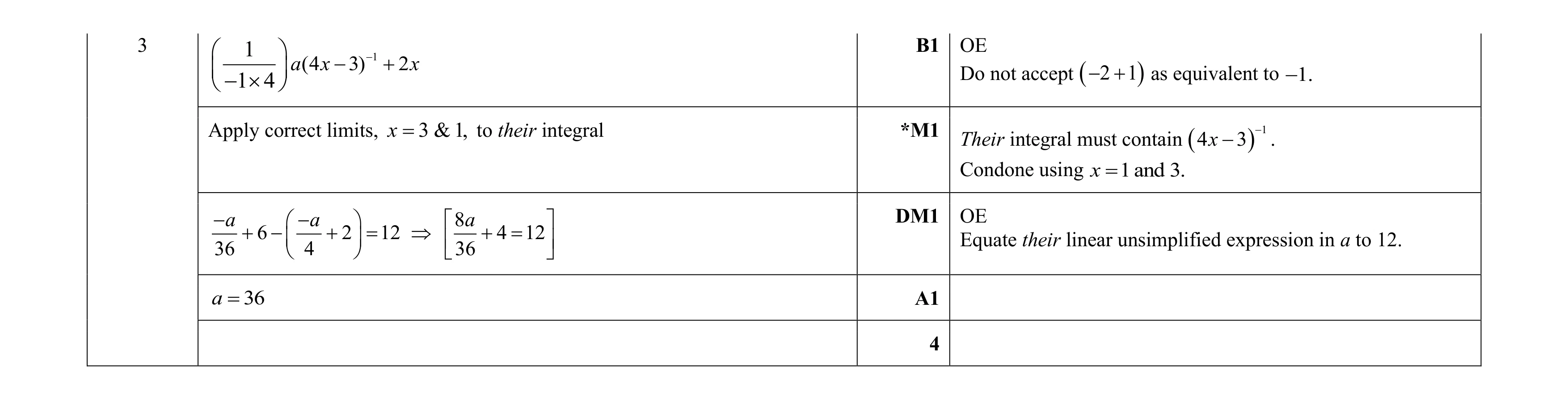 4
4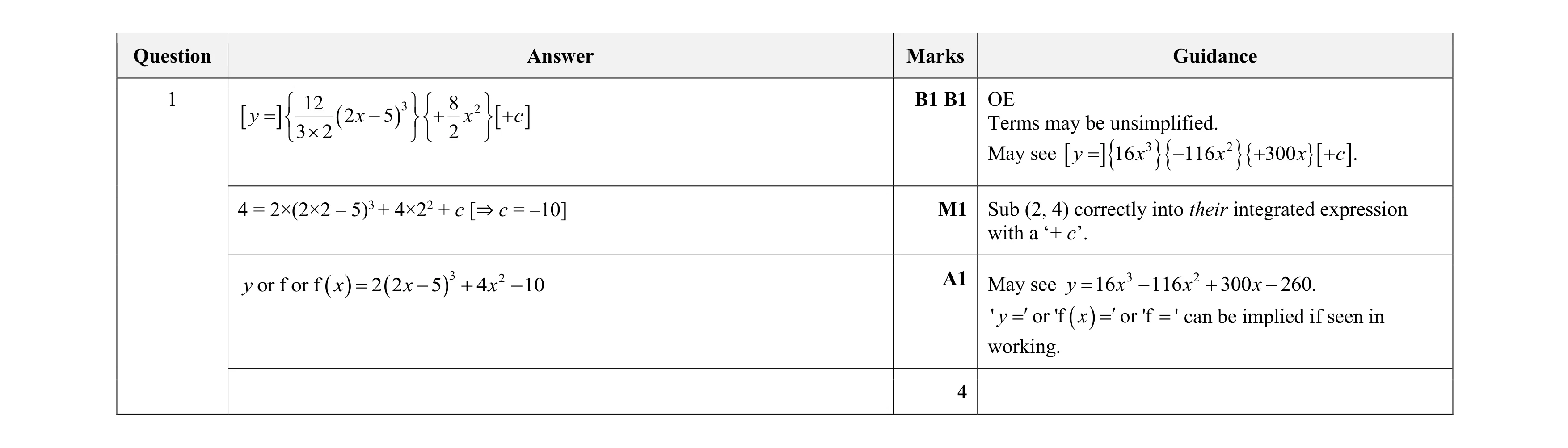 4
4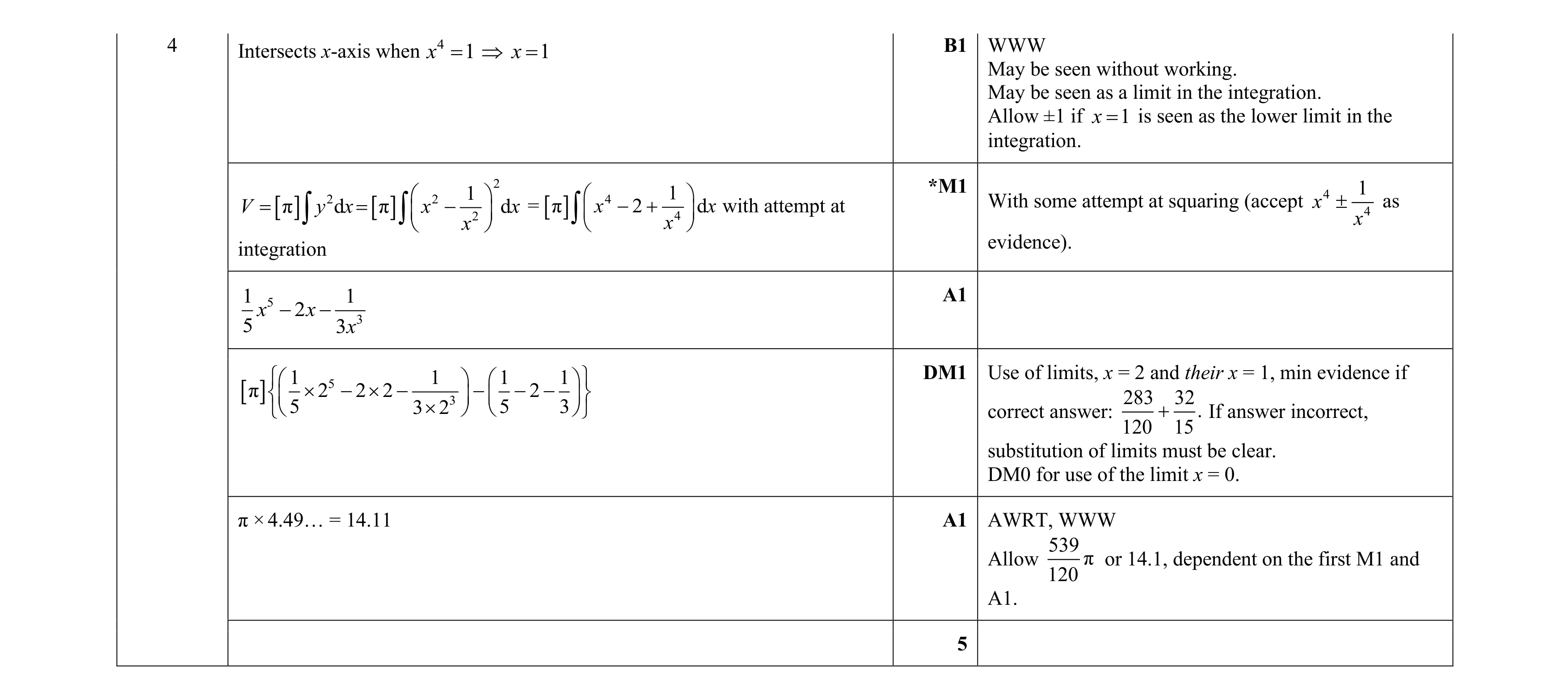 5
5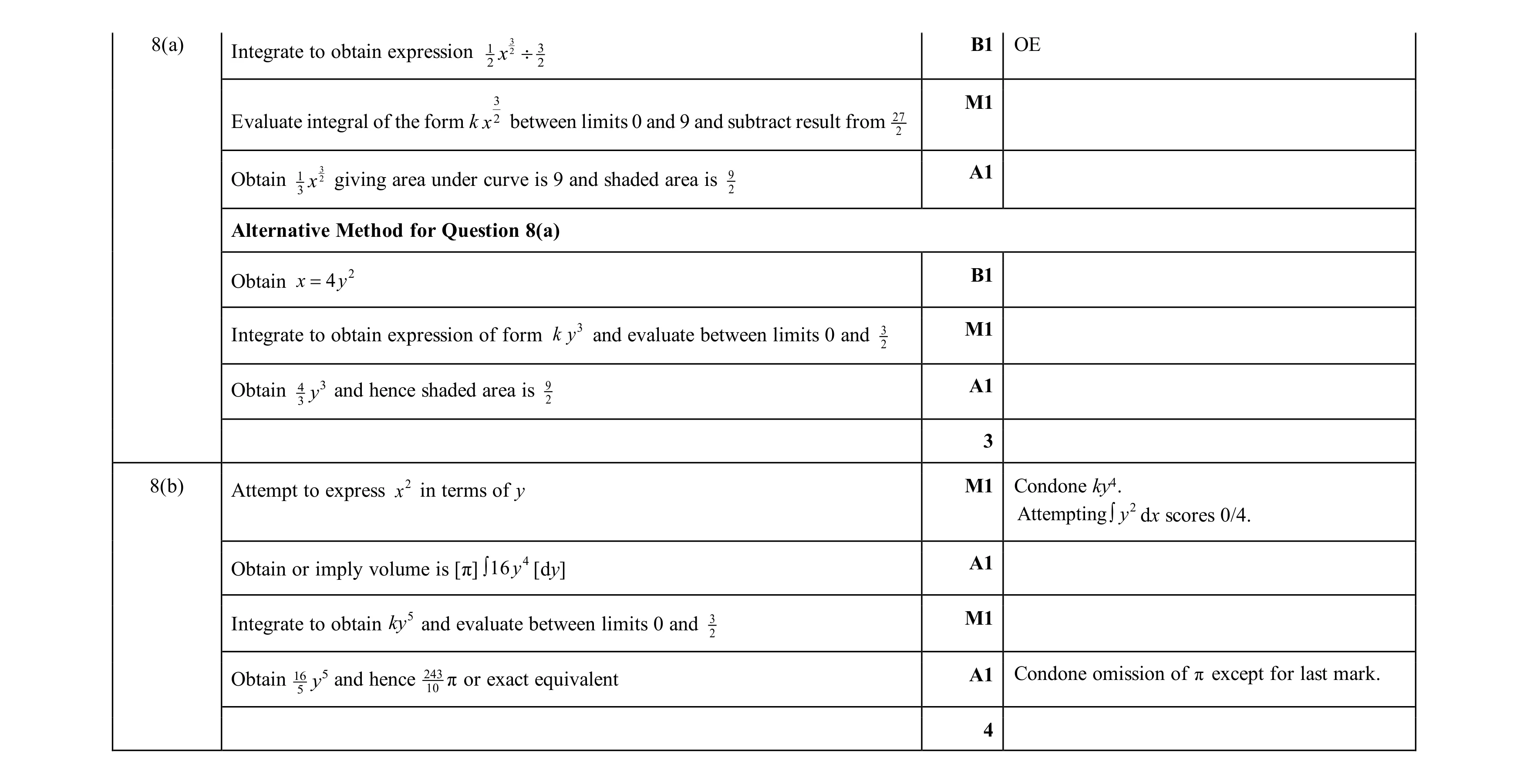 7
7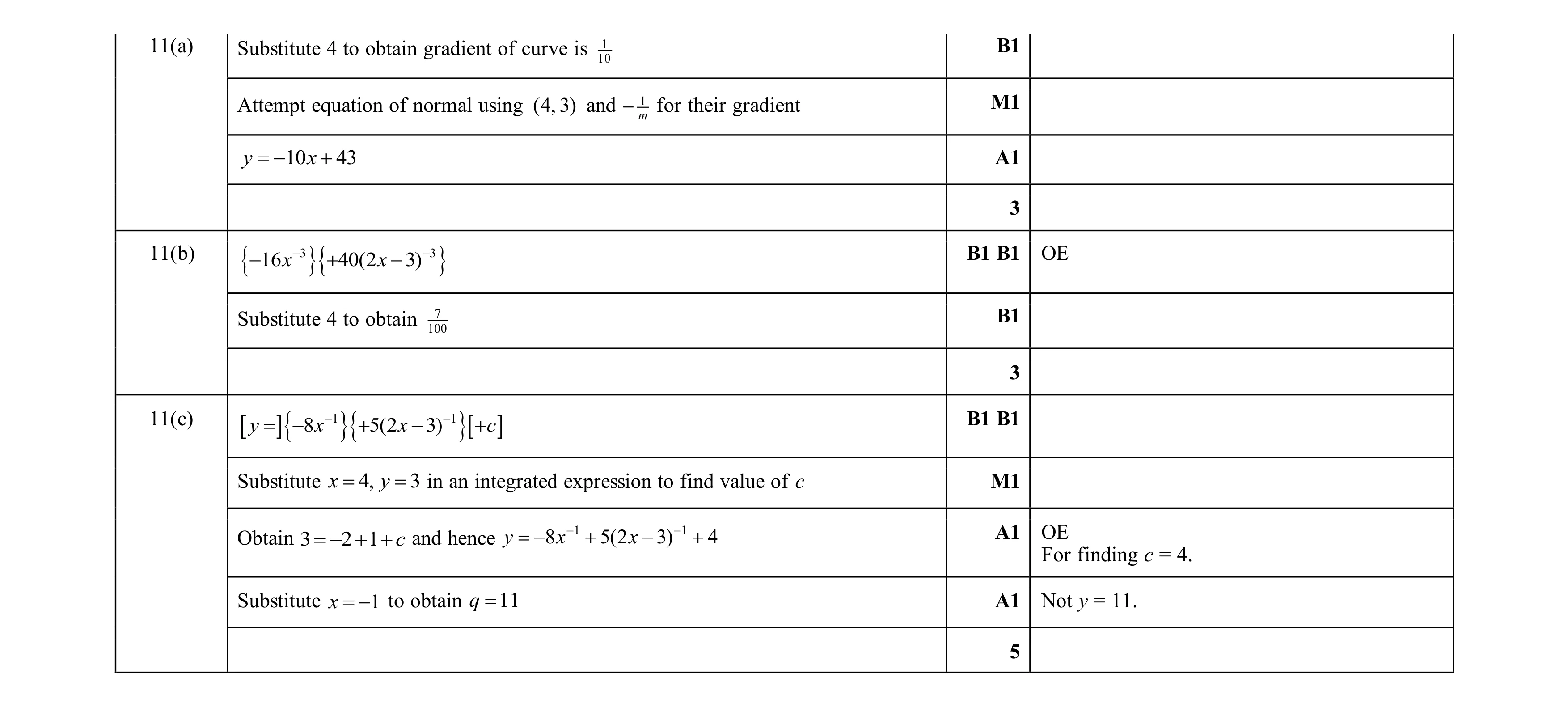 11
11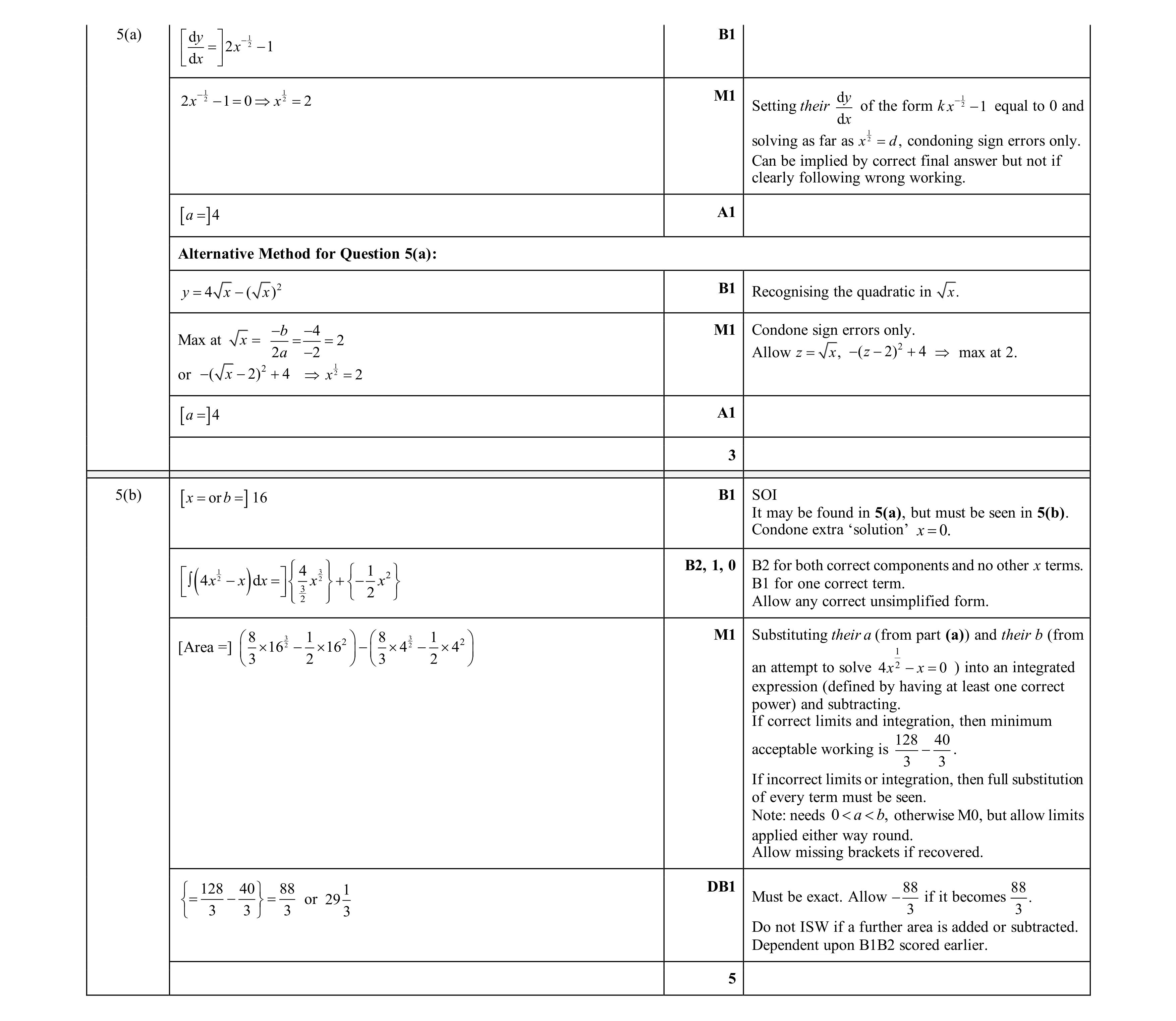 8
8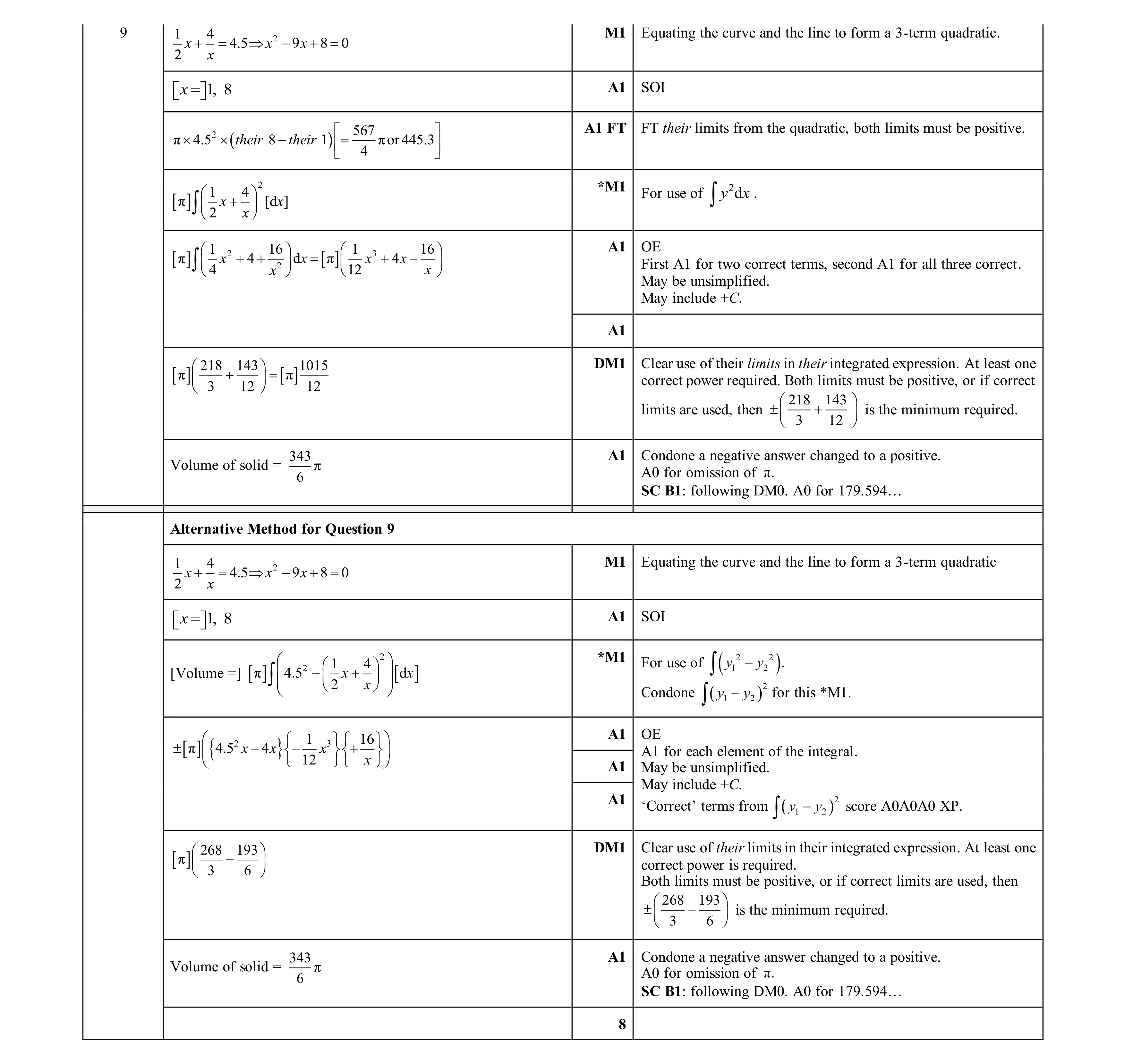 8
8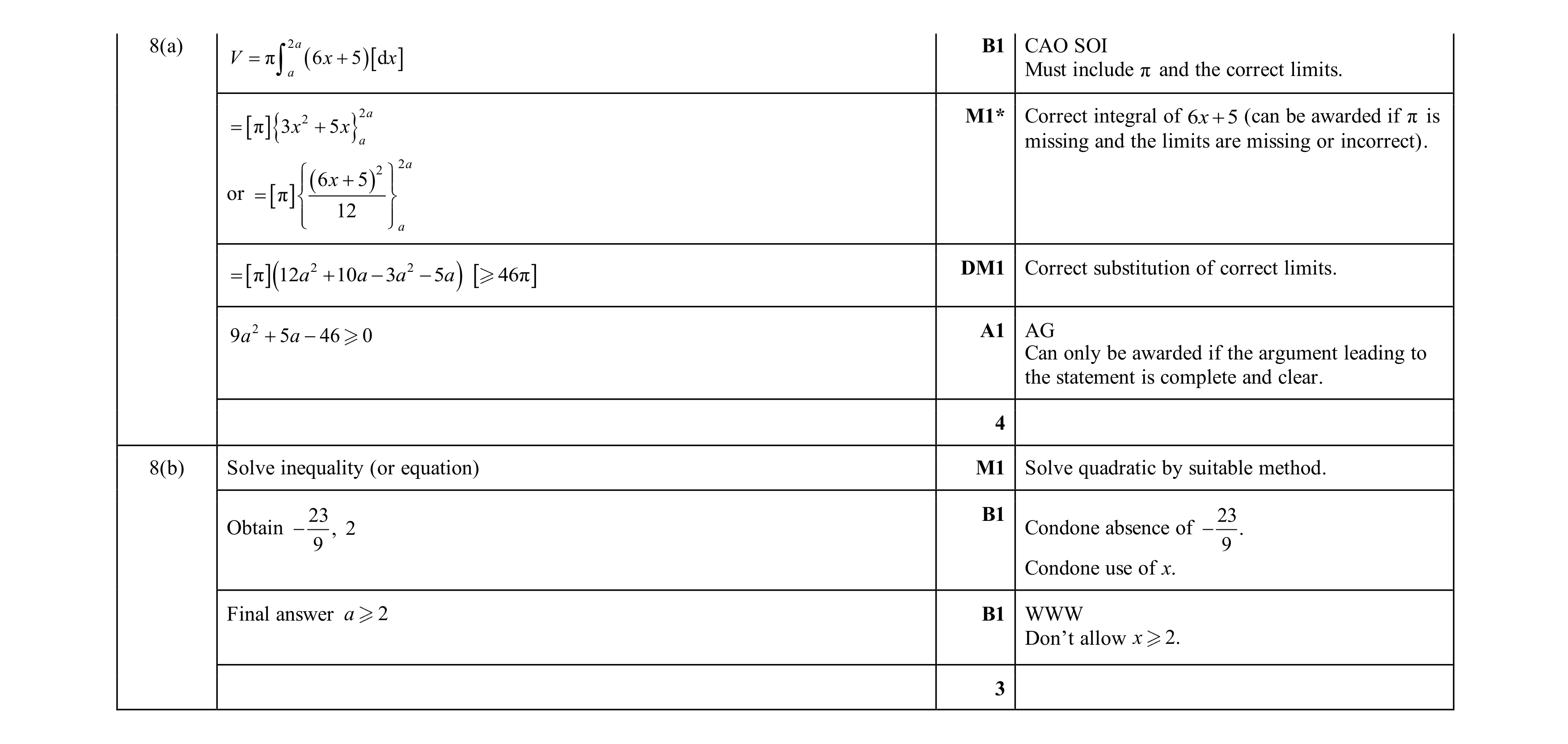 7
7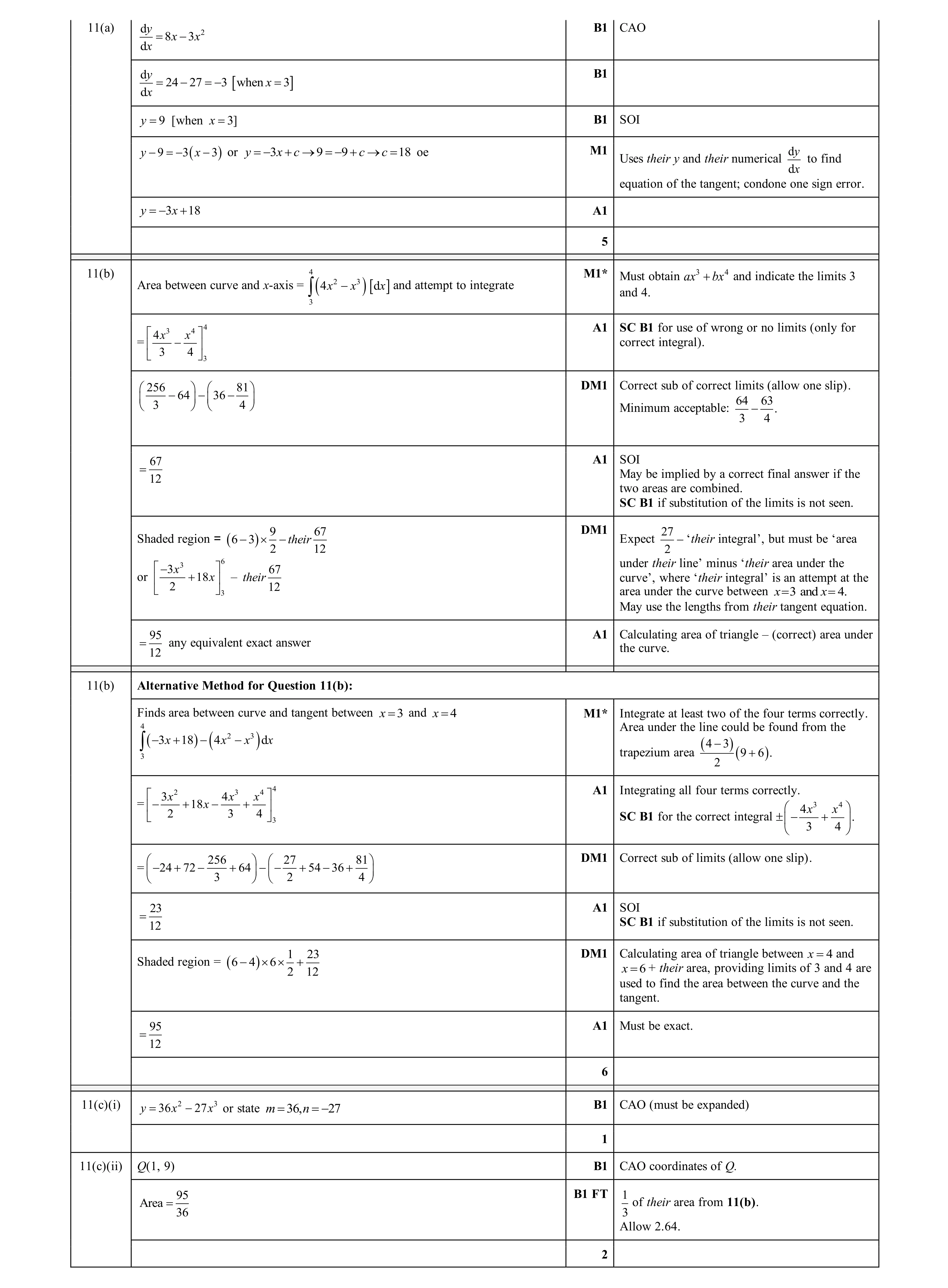 14
14